A diferencia del arte en los museos —pinturas, esculturas o fotografías que admiramos a distancia y no podemos tocar— el paisajismo se vive con el cuerpo. No solo se observa: se siente. Habita en la emoción y en la manera en que nuestros sentidos interpretan el mundo. A veces se revela en un jardín o en un parque; otras, aparece en una flor, en la textura de un tronco, en el canto de las aves o en un gesto efímero que transforma el espacio por un instante. En cualquiera de sus formas, el paisaje puede ser también una obra: viva, cambiante y profundamente humana.
En esta edición, Paisaje Artístico, abrimos una conversación entre arte y naturaleza. Un diálogo que nace de la sensibilidad, pero también de la responsabilidad: porque cuidar el paisaje es cuidar el espacio público, la biodiversidad y los vínculos que nos sostienen como comunidad.
En estas páginas hablaremos de plantas y animales como obras de arte vivas: sus colores, formas, texturas y movimientos nos recuerdan que la belleza también es parte del equilibrio. Y exploraremos proyectos e intervenciones que reafirman que el paisajismo es una disciplina artística única: el ser humano crea con seres vivos, con materia que crece, cambia y se transforma con el tiempo.
Te invitamos a vivir el paisaje como arte: a mirarlo con calma, a sentirlo con todos los sentidos y a descubrir, en cada detalle, una forma de belleza viva.
Unlike museum art—paintings, sculptures, or photographs we admire from a distance and cannot touch—landscape architecture is experienced with the body. It is not only observed: it is felt. It lives in emotion and in the way our senses interpret the world. Sometimes it reveals itself in a garden or a park; other times, it appears in a flower, in the texture of a tree trunk, in birdsong, or in an ephemeral gesture that transforms a space for an instant. In any of its forms, the landscape can also be a work of art: living, ever-changing, and deeply human.
In this edition, Artistic Landscape, we open a conversation between art and nature. A dialogue shaped by sensitivity, but also by responsibility—because caring for the landscape means caring for public space, biodiversity, and the connections that sustain us as a community.
In these pages, we will speak of plants and animals as living works of art: their colors, forms, textures, and movements remind us that beauty is also part of balance. And we will explore projects and interventions that reaffirm landscape architecture as a unique artistic discipline: we create with living beings, with material that grows, changes, and transforms over time.
We invite you to experience the landscape as art: to look at it calmly, to feel it with all your senses, and to discover, in every detail, a form of living beauty.
Fotografía / Photography : Valentina Lara Can
Director / Editor in chief: Valentina Lara Can
Portada
Fotografía / Photography Francisco Llubert
Carta Editorial Editor's Letter
Director / Editor in chief VALENTINA LARA CAN
Consejo Honorífico / Honorary Council
PEDRO CAMARENA BERRUECOS
JAVIER MUÑOZ MENÉNDEZ
MARIO A. PENICHE LÓPEZ
Socios fundadores / Founding partners
JORGE FERNANDEZ / VALENTINA LARA
LUISI LEYVA / KARLA NAVARRETE
MARIANELA PORRAZ / BETTINA VARGAS
Coordinadora de Arte / Art Coordinator
SANDRA STEPHANIE MARTÍNEZ LAGUNAS
Coordinadora Editorial / Editorial Coordinator
ANDREA BEATRIZ CONDE CORREA edicion@landuum.com
Redes Sociales / Social Media
ALEJANDRA ROLDÁN VILLEGAS contacto@landuum.com
Colaboradores / Contributors
ANA PAULA ÁLVAREZ
ARMANDO MARAVILLA
ARTURO JOSÉ CAMPOS RODRÍGUEZ
FELIPE ARATH MACÍAS
IVONNE WALLS
MARIANA ANDREA HERRERA FLORES
PATRICIA ELÍAS CALLES ROMO
TANIA L. OJEDA-LÓPEZ MESTAS
Colaboradores / Contributors
J. CRUZ GARCÍA ALBARADO
Paisajista (Universidad de Sheffield, Inglaterra, 2005) y profesor e investigador de la Maestría de Paisaje y Turismo Rural del Colegio de Postgraduados Campus Córdoba. Es su interés combinar paisaje y arte. Es académico en el ámbito del paisaje y artista plástico con más de 30 exposiciones en México y el extranjero. Diseña e investiga lo relacionado al paisajismo naturalista, así como el paisaje como atractivo turístico. Recientemente se ha especializado en el diseño de jardines para polinizadores. Pertenece al Sistema Nacional de Investigadoras e Investigadores de México. Es co-creador y profesor del curso Paisajismo online para EBAC México.
Landscape architect (University of Sheffield, England, 2005) and a professor and researcher in the Master’s program in Landscape and Rural Tourism at the Colegio de Postgraduados, Córdoba Campus. His work focuses on the intersection of landscape and art. He is both an academic in the field of landscape and a visual artist with more than 30 exhibitions in Mexico and abroad. His design and research interests include naturalistic landscaping and the landscape as a tourist attraction. Recently, he has specialized in the design of pollinator gardens. He is a member of Mexico’s National System of Researchers (SNII) and is the co-creator and instructor of the online Landscaping course for EBAC Mexico.
MIGUEL DE LA TORRE (MTA+V)
Destacado arquitecto mexicano egresado de la Universidad Iberoamericana, cuenta con casi 30 años de trayectoria, caracterizada por el uso honesto de materiales, concreto expresivo y una gran sensibilidad hacia el entorno. Fundador de Miguel de la Torre Arquitectos (MTA), ha desarrollado una sólida reputación en proyectos residenciales, habitacionales y comerciales, colaborando con firmas de renombre como Teodoro González de León y JSa.
Prominent Mexican architect and Universidad Iberoamericana alumnus with nearly 30 years of experience. His work is defined by an honest use of materials, expressive concrete, and a deep sensitivity to the environment. As the founder of Miguel de la Torre Arquitectos (MTA), he has built a solid reputation across residential and commercial projects, collaborating with renowned firms such as Teodoro González de León and JSa.
LANDUUM, Año 9, No. 34, marzo 2025 junio 2025, es una publicación trimestral editada por Paisaje Ediciones S.A. de C.V., Edificio Black, 5to. Piso No. 500 Col. Sodzil Norte, Mérida, Yuc. Mx., C.P. 97115, Tel. (999) 406- 32-68, www. landuum.com, edicion@landuum.com. Editor responsable: Valentina Lara Can. Reservas de Derechos al Uso Exclusivo No. 04-2016-091212020100-102, otorgado por el Instituto Nacional de Derecho de Autor, Licitud de Título y Contenido No. 16907, otorgado por la Comisión Calificadora de Publicaciones y Revistas Ilustradas de la Secretaría de Gobernación, Marca LANDUUM registro de marca No. 1641567. Todas las imágenes, nombres, marcas y logotipos aquí representados son Copyright de sus respectivos autores. Ninguna parte de esta publicación, incluido el diseño de la cubierta, puede reproducirse, almacenarse o transmitirse de ninguna forma, ni por ningún medio digital, electrónico, químico, mecánico, óptico, de grabación o por fotocopia, sin previa autorización por parte de Paisaje Ediciones S.A de C.V. Todos los contenidos de publicidad y artículos, son responsabilidad exclusiva de los anunciantes y los colaboradores, no reflejan necesariamente la opinión o punto de vista de LANDUUM. La información contenida en los artículos puede variar por razones ajenas a nosotros, por lo que LANDUUM no se hace responsable. Apreciamos las sugerencias, comentarios y observaciones para mejorar nuestra edición.
LANDUUM, Year 9, No. 34, March 2025 June 2025, is a quarterly publication edited by Paisaje Ediciones S.A. de C.V., Edificio Black, 5th floor No. 500 Col. Sodzil Norte, Merida, Yuc, Mx. Zip code 97115. Phone (999) 406-32-68, www. landuum.com, edicion@ landuum.com. Responsible editor: Valentina Lara Can. Reservations of Rights to Exclusive Use No. 04-2016-091212020100-102, by Instituto Nacional de Derecho de Autor. Licitude of Title and Content No. 16907, given by Comisión Calificadora de Publicaciones y Revistas Ilustradas de la Secretaría de Gobernación, LANDUUM registration No. 1641567. All images, names, trademarks and logos represented here are Copyright of their respective authors. No part of this publication, including cover design, can be reproduced, stored or transmitted in any form or by any digital, electronic, chemical, mechanical, optical, recording or photocopy means, without prior authorization of Paisaje Ediciones S.A. de C.V. All advertising content and articles are the responsibility of advertisers and contributors; they do not necessarily reflect the opinion or LANDUUM point of view. The information contained in articles may vary for reasons
Destacado arquitecto mexicano, máximo exponente de la arquitectura orgánica y la bioarquitectura en México. Egresado de la Universidad Autónoma de México (UNAM), su obra se caracteriza por estructuras curvas, formas inspiradas en la naturaleza y el cuerpo humano, buscando armonía y confort ambiental, utilizando el ferrocemento para crear espacios que se integran al entorno, como la famosa “Casa Orgánica” y el “Nido de Quetzalcóatl”.
UPA STUDIO (ROBERTO VILLARREAL) JAVIER SENOSIAIN
Prominent Mexican architect and leading exponent of organic architecture and bio-architecture in Mexico. A graduate of the National Autonomous University of Mexico (UNAM), his work is characterized by curved structures and forms inspired by nature and the human body, seeking harmony and environmental comfort. He uses ferrocement to create spaces that blend into their surroundings, such as the famous “Organic House” and the “Nest of Quetzalcóatl.”
Arquitecto, arquitecto paisajista, artista ambiental y educador que trabaja en la intersección de la práctica, la investigación y la enseñanza, a través de una amplia variedad de medios, geografías y escalas.
Architect, landscape architect, environmental artist, and educator who works at the intersection of practice, research, and teaching across a wide range of media, geographies, and scales.
Firma que se identifica con una forma de diseñar, planificar, modelar, proyectar y construir en la que la naturaleza y su preservación son prioritarias. Como equipo creativo, aspiran a encontrar soluciones originales y ecocéntricas para las necesidades de la vida cotidiana; reflexionan sobre la arquitectura y su funcionalidad para ofrecer posibilidades que incorporen la coexistencia entre lo natural y lo arquitectónico.
A firm defined by a way of designing, planning, modeling, developing, and building in which nature and its preservation are a priority. As a creative team, they aspire to find original, ecocentric solutions to the needs of everyday life; they reflect on architecture and its functionality to offer possibilities that incorporate the coexistence between the natural and the architectural.
Equipo interdisciplinario, en búsqueda constante de integración y resiliencia, que explora nuevas soluciones con asesoría de especialistas.
Interdisciplinary team in a constant search for integration and resilience, continuously exploring new solutions alongside expert specialists.
Paisajes artísticos: Arte y naturaleza. Ivonne Walls explora el paisaje artístico como un diálogo entre la sensibilidad humana y la naturaleza, desde la pintura hasta la arquitectura del paisaje, y cómo esta disciplina interpreta el mundo para convertirlo en arte.
Artistic landscapes: Art and nature. Ivonne Walls explores the artistic landscape as a dialogue between human sensibility and nature—from painting to landscape architecture—and how this discipline interprets the world to transform it into art.
Adéntrate en las Aproximaciones al paisaje desde la experiencia estética , de la mano de Iván Juárez, explorando cómo el cuerpo y el paisaje se interrelacionan a través de diversos sentidos, como el olfato, la vista y el tacto, para fomentar una conexión más profunda y consciente con el entorno natural, invitando a repensar los límites entre naturaleza y ser humano.
Dive into the Approaches to landscape from the aesthetic experience guided by Iván Juárez, exploring how the body and the landscape interrelate through various senses, such as smell, sight, and touch, to foster a deeper and more conscious connection with the natural environment, inviting a reconsideration of the boundaries between nature and the human being.
Tania L. Ojeda-López Mestas nos invita a redescubrir la profunda relación entre arte y ciencia a través de la ilustración botánica, una disciplina donde la observación minuciosa, la curiosidad y la creatividad se convierten en herramientas para comprender, representar y conservar el mundo vegetal que nos rodea en su artículo: La ilustración botánica como herramienta para la divulgación científica y la apreciación artística.
Tania L. Ojeda-López Mestas invites us to rediscover the deep connection between art and science through botanical illustration, a discipline where close observation, curiosity, and creativity become tools to understand, represent, and preserve the plant world around us, in her article: Botanical illustration as a tool for scientific communication and artistic appreciation.
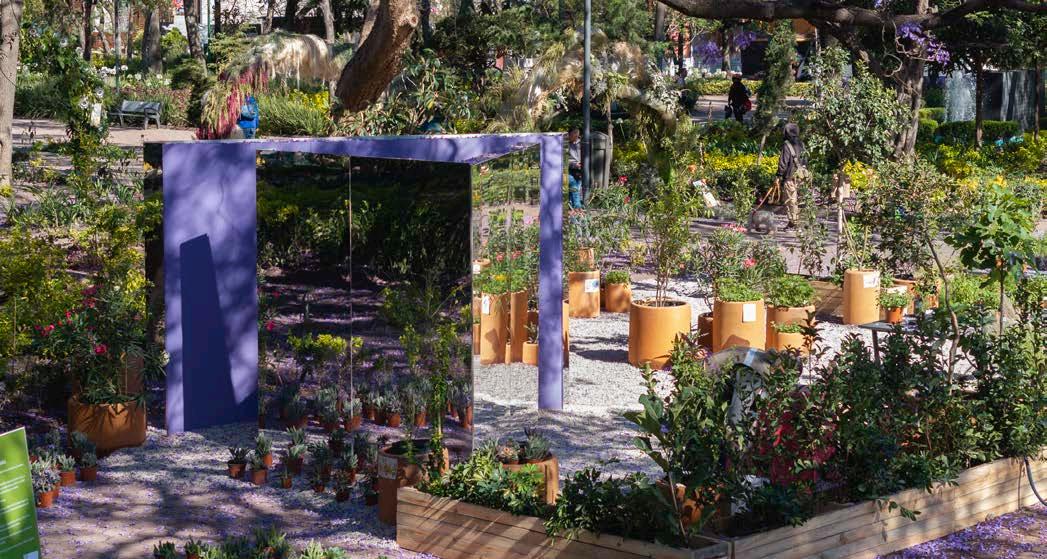
Miguel de la Torre (mta+v) nos propone descubrir Reflejos inesperados , una intervención efímera y artística que nos invita a honrar a nuestros seres queridos y nuestras tradiciones a través de un portal simbólico hacia el mundo de los difuntos. Miguel de la Torre (mta+v) asks us to discover Unexpected reflections , an ephemeral, artistic intervention that invites us to honor our loved ones and our traditions through a symbolic portal to the world of the dead.
Conoce El Nido de Quetzalcóatl por Javier Senosiain, un proyecto que desafía los límites entre arquitectura y naturaleza, invitando a habitar un espacio donde el arte, el diseño orgánico y el respeto por el entorno se fusionan en una experiencia única de vida.
Discover The Nest of Quetzalcóatl by Javier Senosiain, a project that challenges the boundaries between architecture and nature, inviting you to inhabit a space where art, organic design, and respect for the environment merge into a unique living experience.
Adéntrate en Azulik Tulum , un proyecto inmerso en la jungla de la Península de Yucatán que fusiona arte y naturaleza en una experiencia sensorial única, un proyecto por Roth Architecture. Step into Azulik Tulum , a project nestled in the jungles of the Yucatán Peninsula that merges art and nature into a unique sensory experience—a project by Roth Architecture.
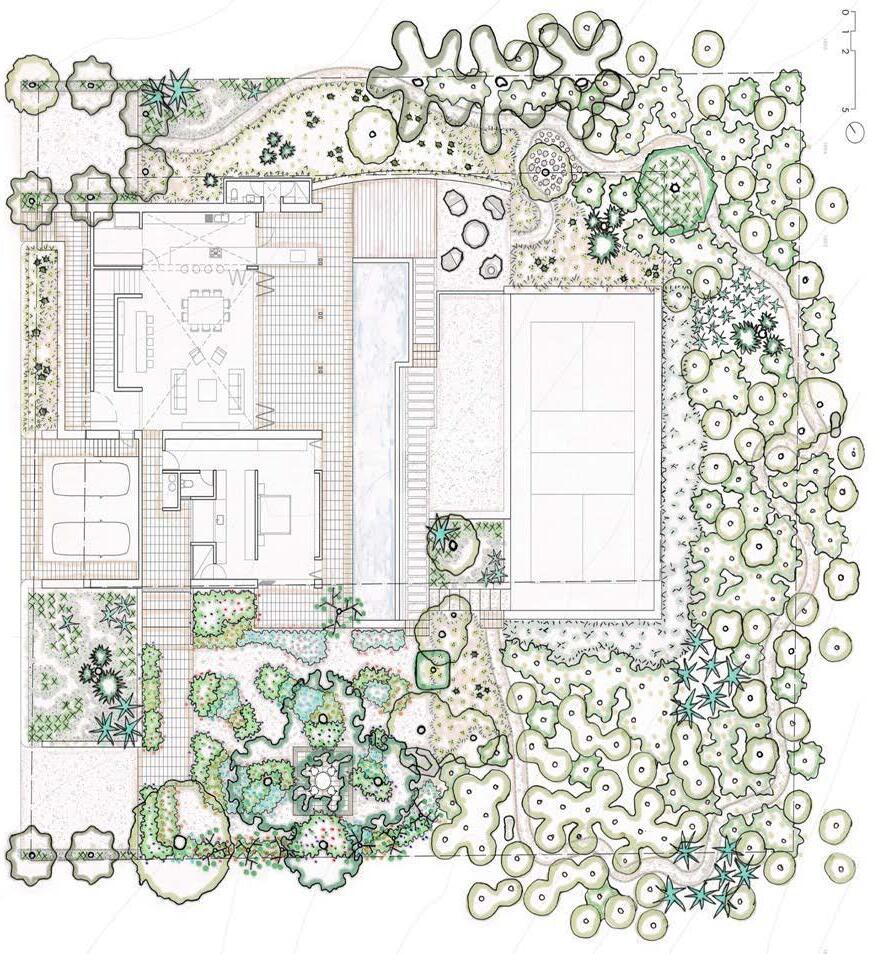
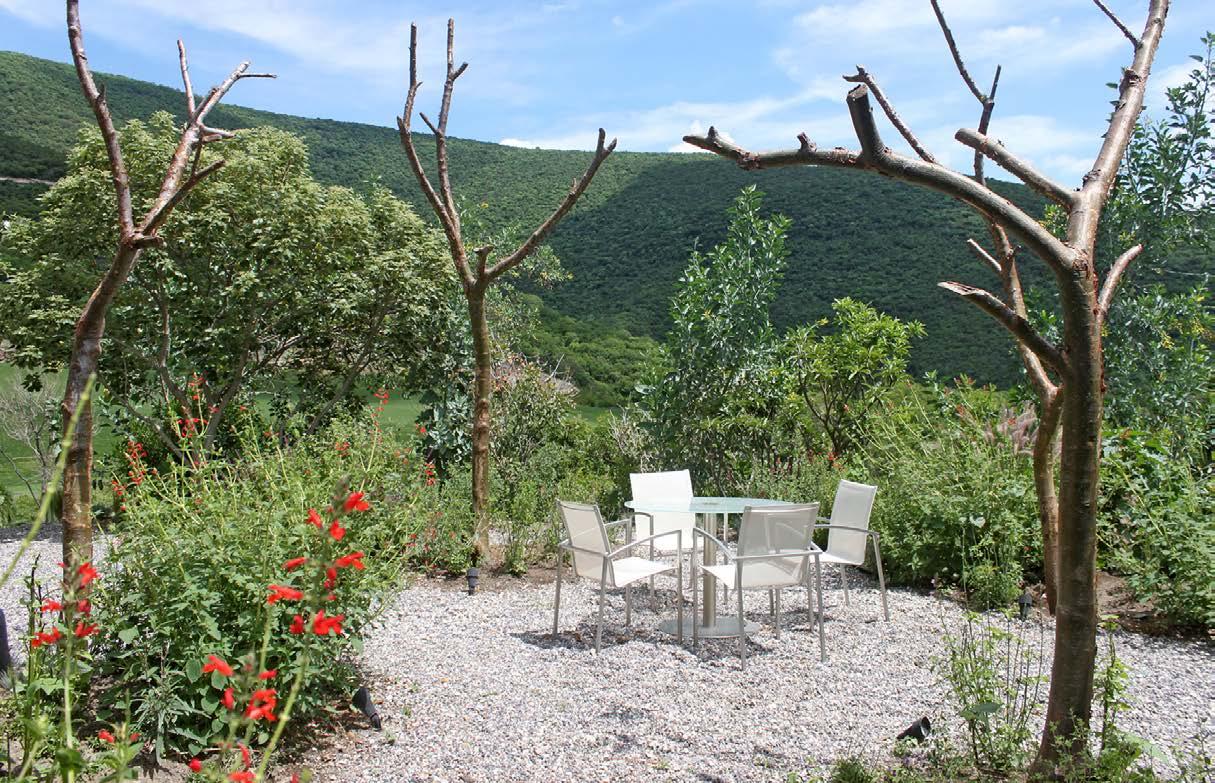
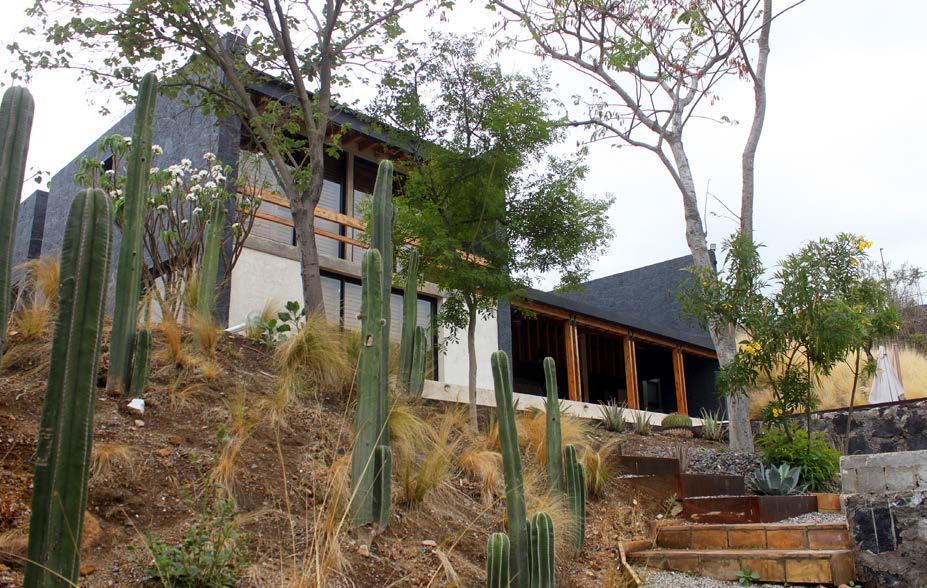
Visita Casa uno - paisaje silvestre para casa de campo de la mano de UPA Studio, un proyecto que entrelaza vegetación nativa, materiales locales y arte en piedra para crear un jardín inmersivo, resiliente y en diálogo con el entorno natural de Atlixco.
Visit Casa uno - Wild landscape for a countryside house by UPA Studio, a project that weaves together native vegetation, local materials, and stone art to create an immersive, resilient garden in dialogue with the natural surroundings of Atlixco.
Conoce con Ana Paula Álvarez el artículo Paisaje a través de la fotografía; Reflexión desde una mirada contemplativa , en donde platica sobre una forma de fotografiar el paisaje que va más allá de lo técnico: una mirada atenta, contemplativa y profundamente conectada con la luz, la sombra y el tiempo.
Learn about Ana Paula Álvarez's article Landscape through photography: A reflection from a contemplative gaze in which she discusses a way of photographing the landscape that goes beyond the technical: a careful, contemplative gaze deeply connected to light, shadow, and time.
Armando Maravilla y Felipe Macías nos comparten un recorrido por la relación entre vegetación, arte e identidad cultural, resaltando el valor estético, simbólico y ecológico de las plantas en el paisaje mexicano, en su artículo Plantas en el arte mexicano.
Armando Maravilla and Felipe Macías offer a journey through the relationship between vegetation, art, and cultural identity, highlighting the aesthetic, symbolic, and ecological value of plants in the Mexican landscape in their article Plants in Mexican art.
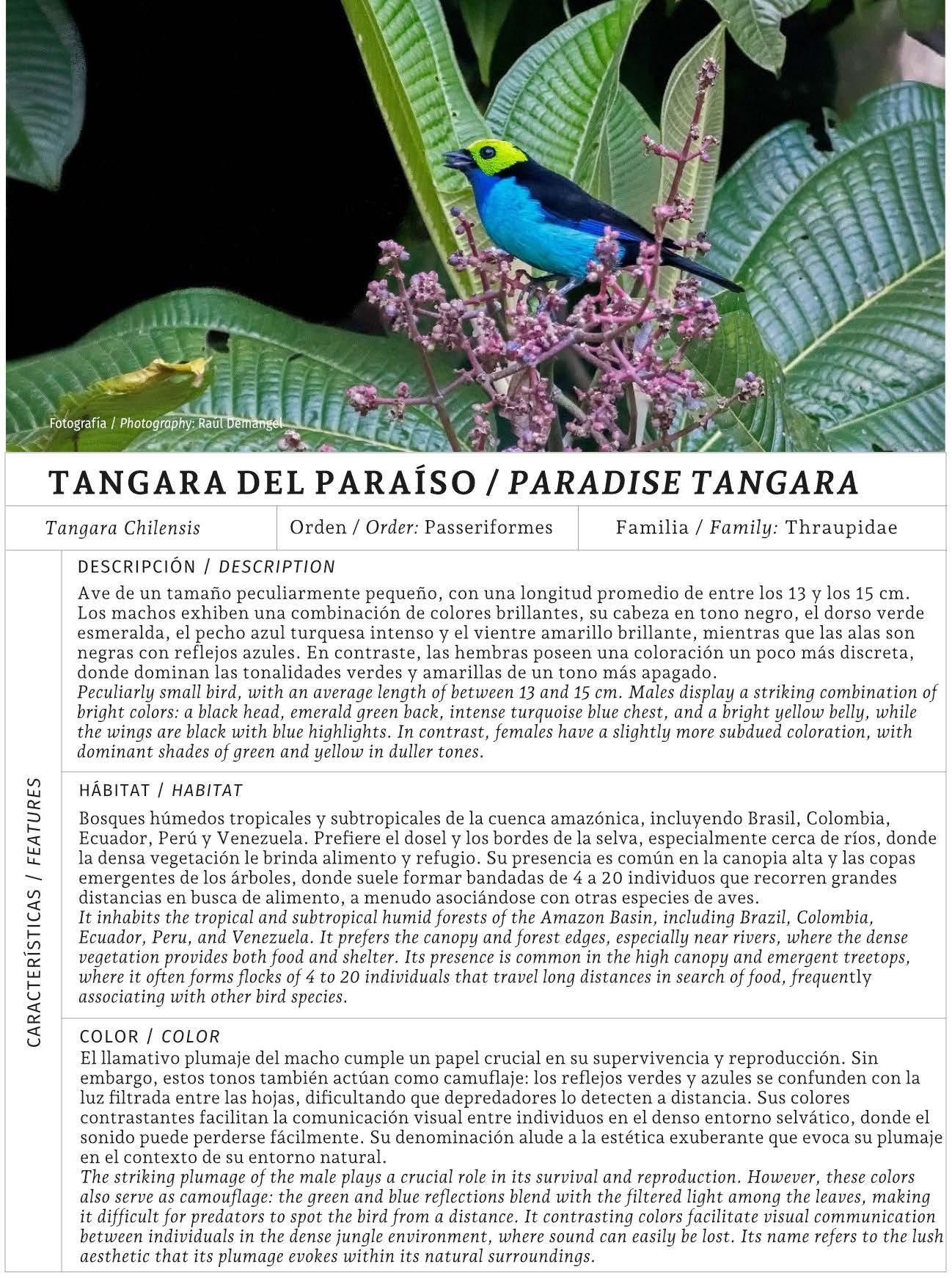
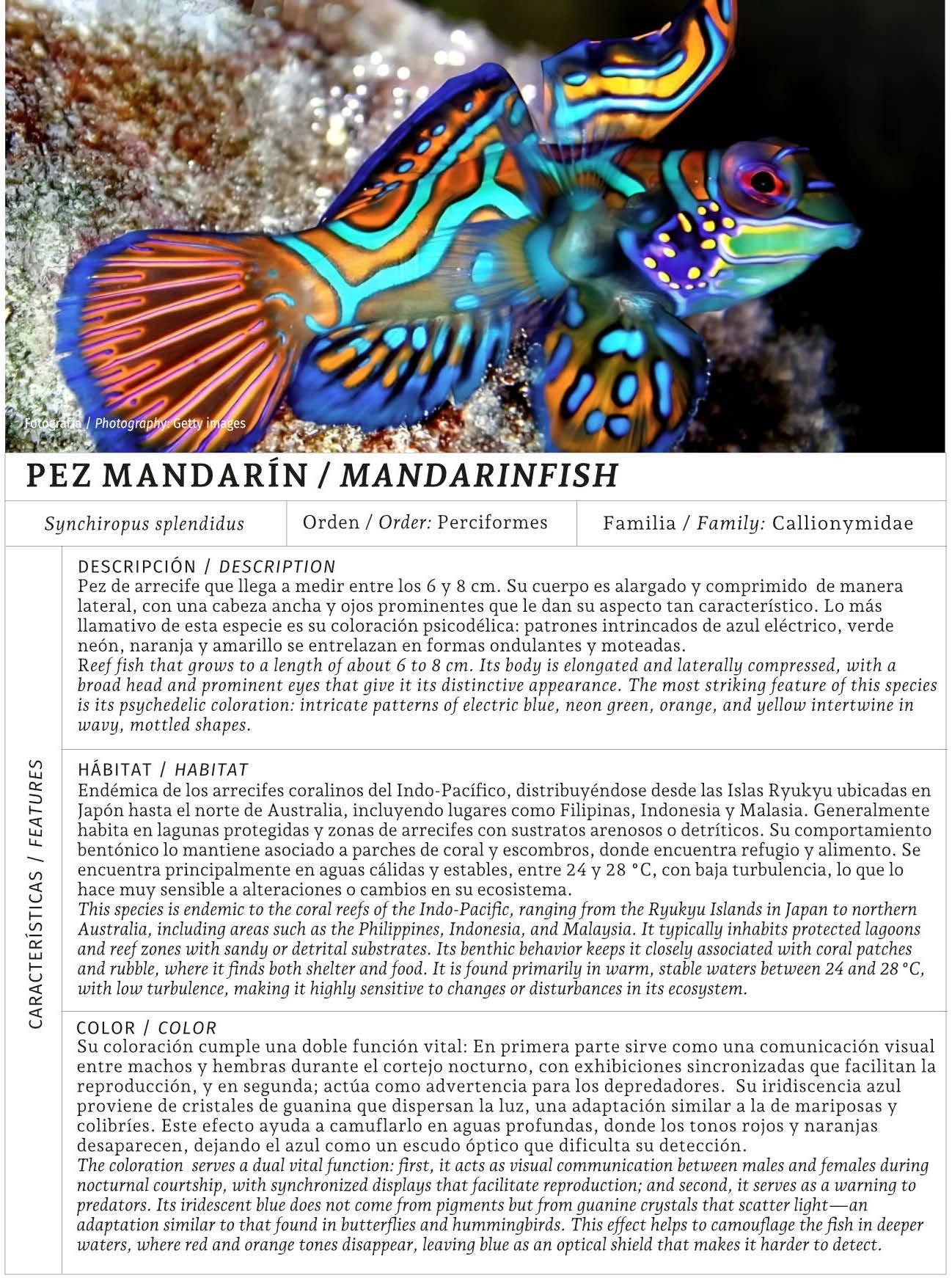
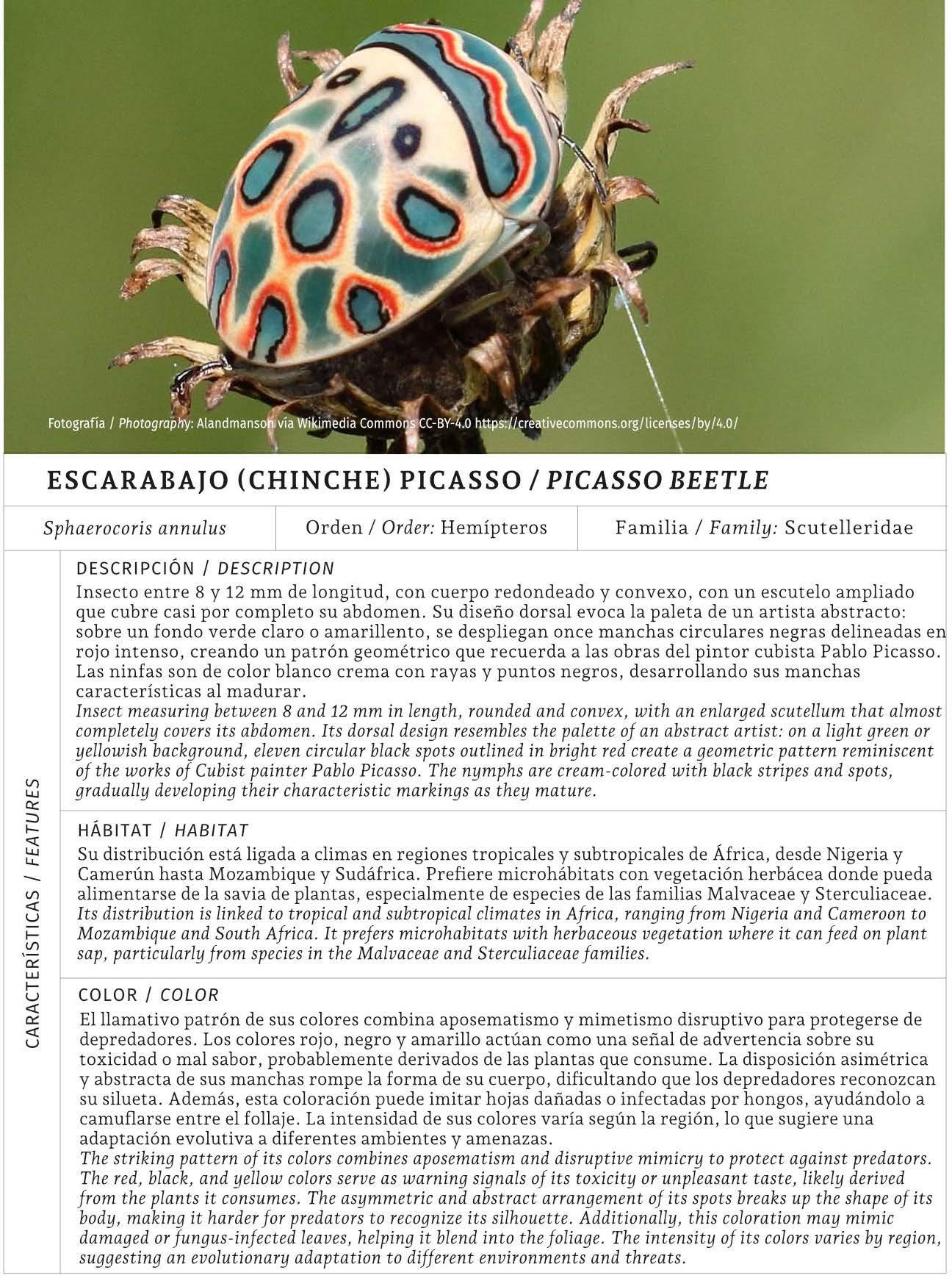
Mariana Andrea Herrera Flores te invita a profundizar en este fascinante mundo donde el arte y la biología se entrelazan, y a descubrir el gran papel que juegan los Animales artísticos en sus hábitats así como los roles que desempeñan en el equilibrio ecológico; ¿Te has preguntado alguna vez qué historias cuentan sus colores y cómo influyen en su supervivencia?
Mariana Andrea Herrera Flores invites you to delve deeper into this fascinating world where art and biology intertwine, and to discover the important role that Artistic animals play in their habitats as well as the roles they fulfill in maintaining ecological balance. Have you ever wondered what stories their colors tell and how they influence their survival?
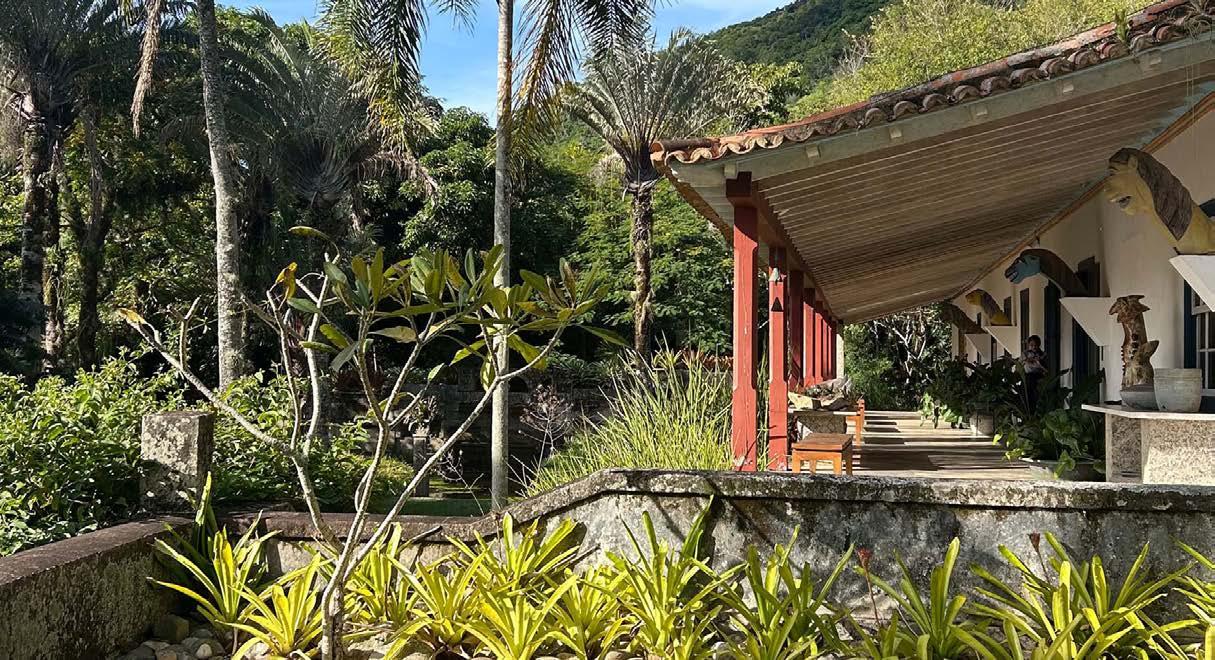
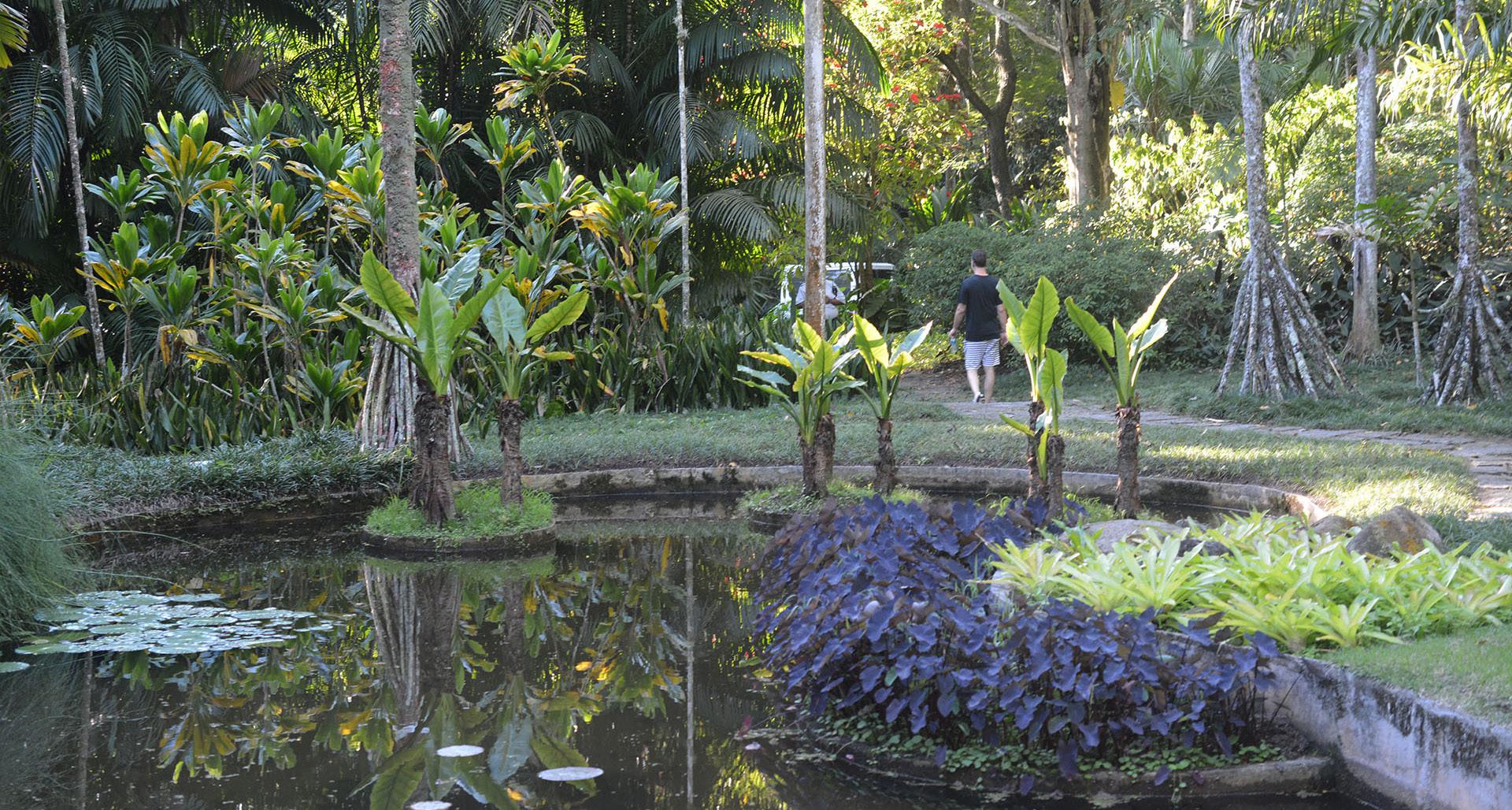
Aprende sobre el arte de conjugar naturaleza, memoria e identidad nacional en El sitio Roberto Burle Marx: un jardín de arte, memoria y biodiversidad por el Dr. J. Cruz García Albarado, un recorrido sensible por el espacio más emblemático del paisajista brasileño, donde el paisaje se convierte en una obra de arte viva y profundamente espiritual.
Discover the art of blending nature, memory, and national identity in The Roberto Burle Marx site: A garden of art, memory, and biodiversity by Dr. J. Cruz García Albarado—a sensitive journey through the most emblematic space of the Brazilian landscape architect, where the landscape becomes a living and profoundly spiritual work of art.
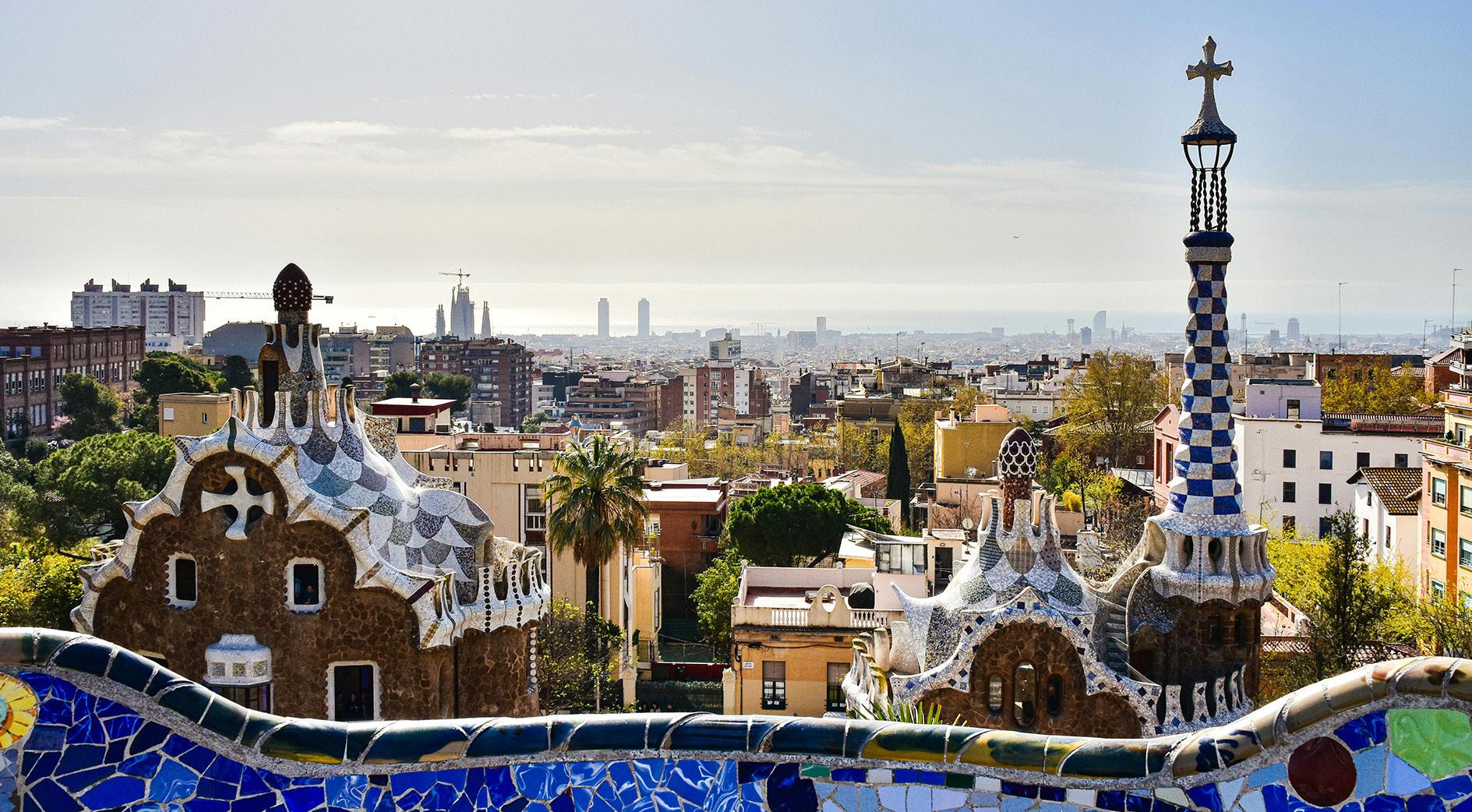
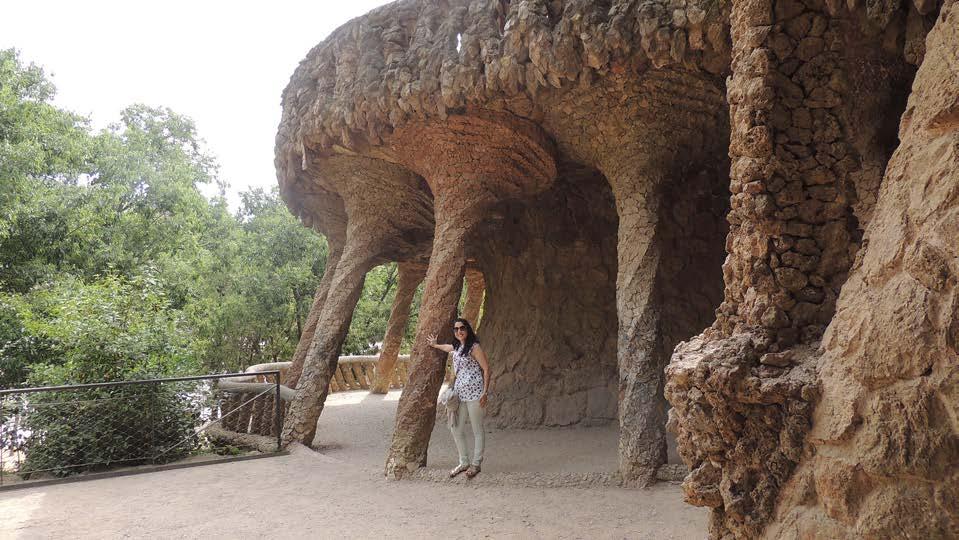
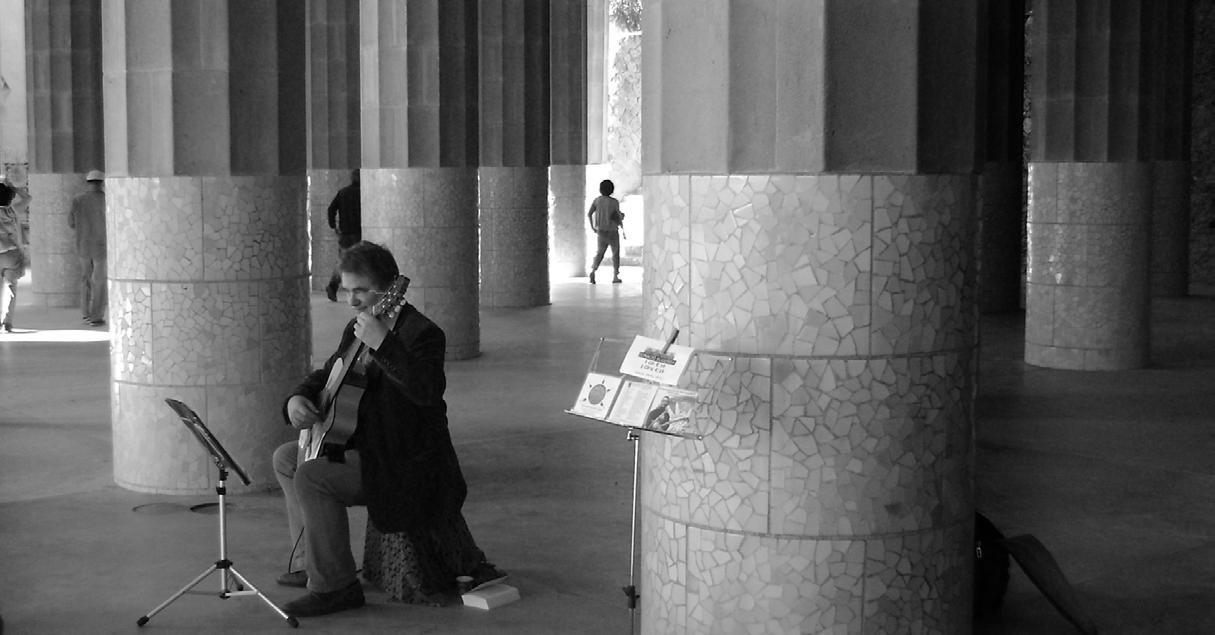
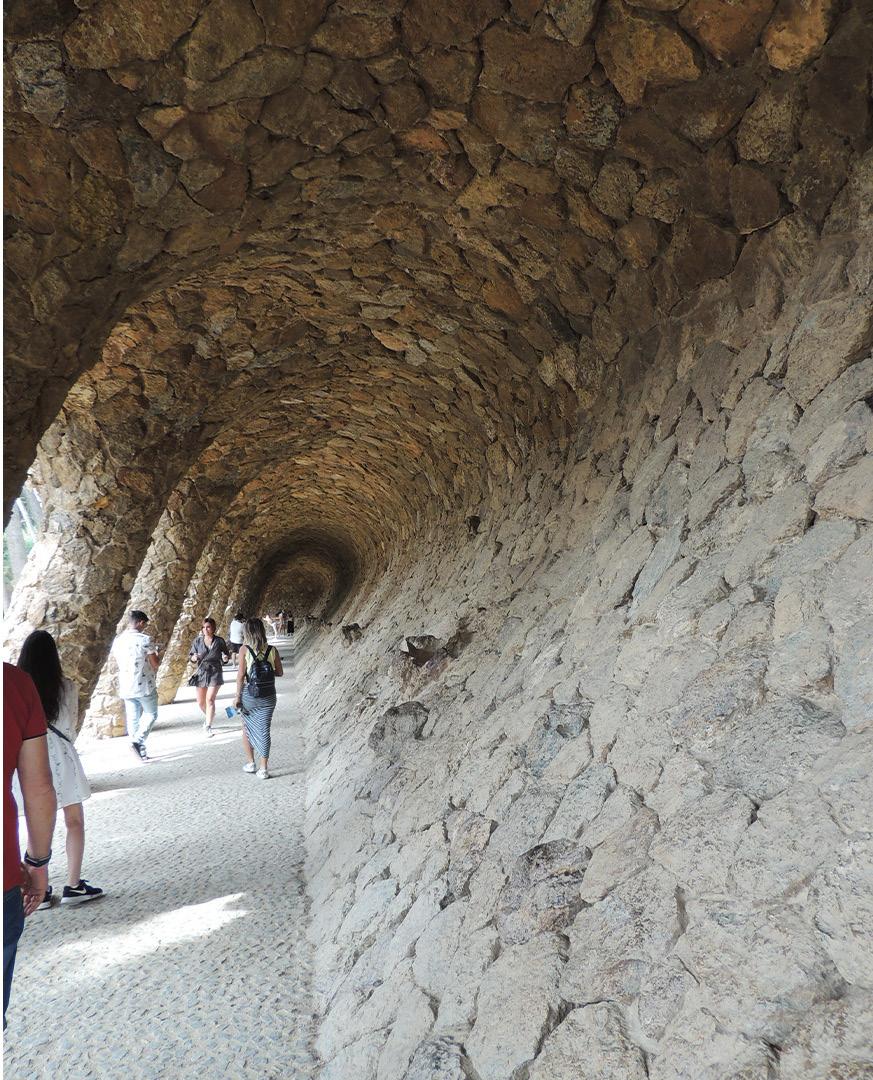
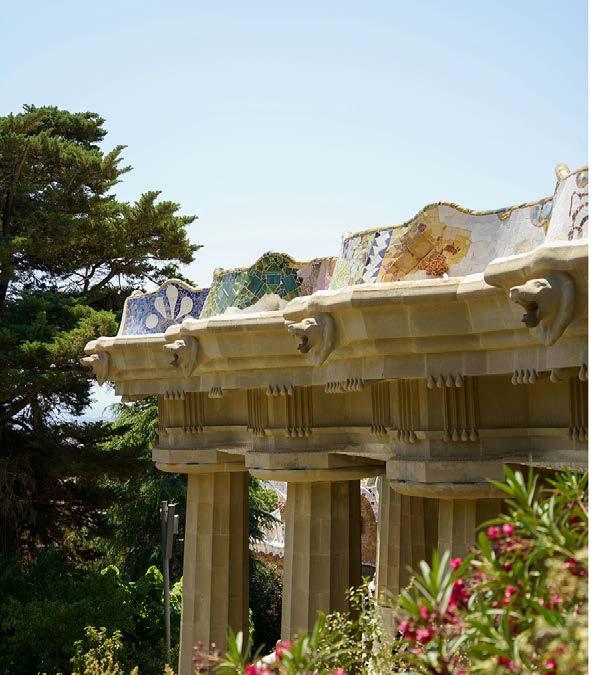
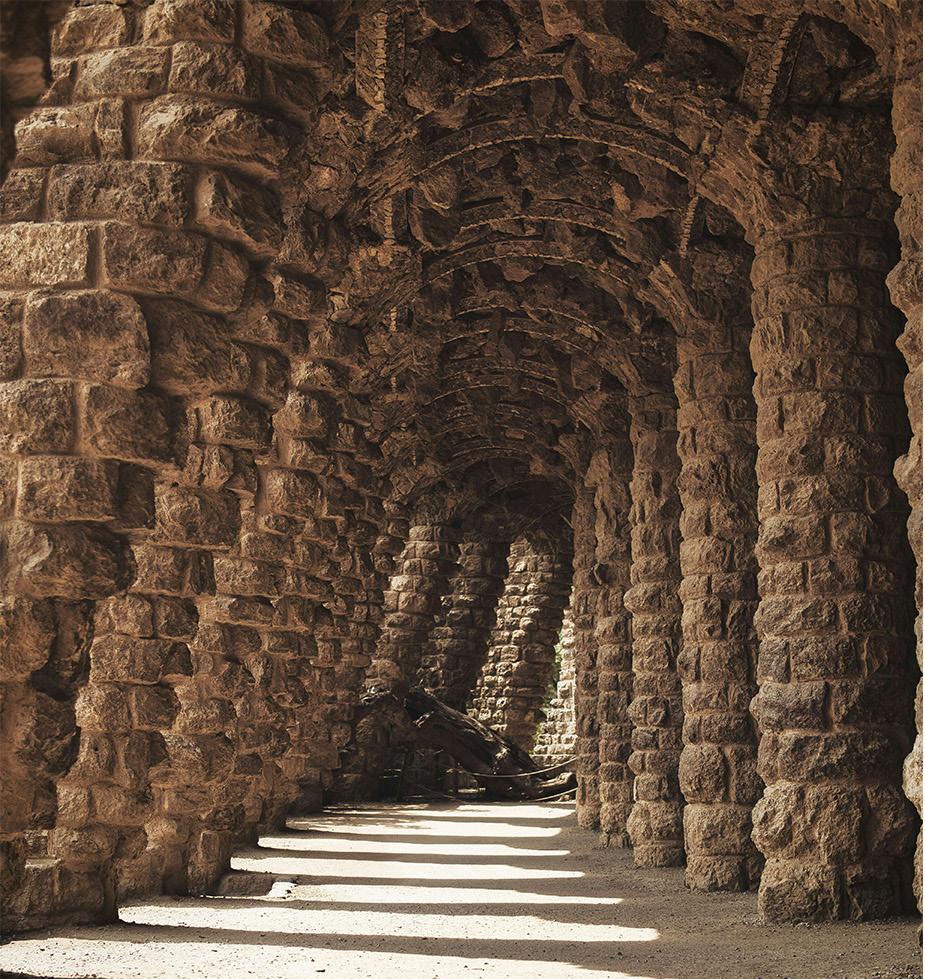
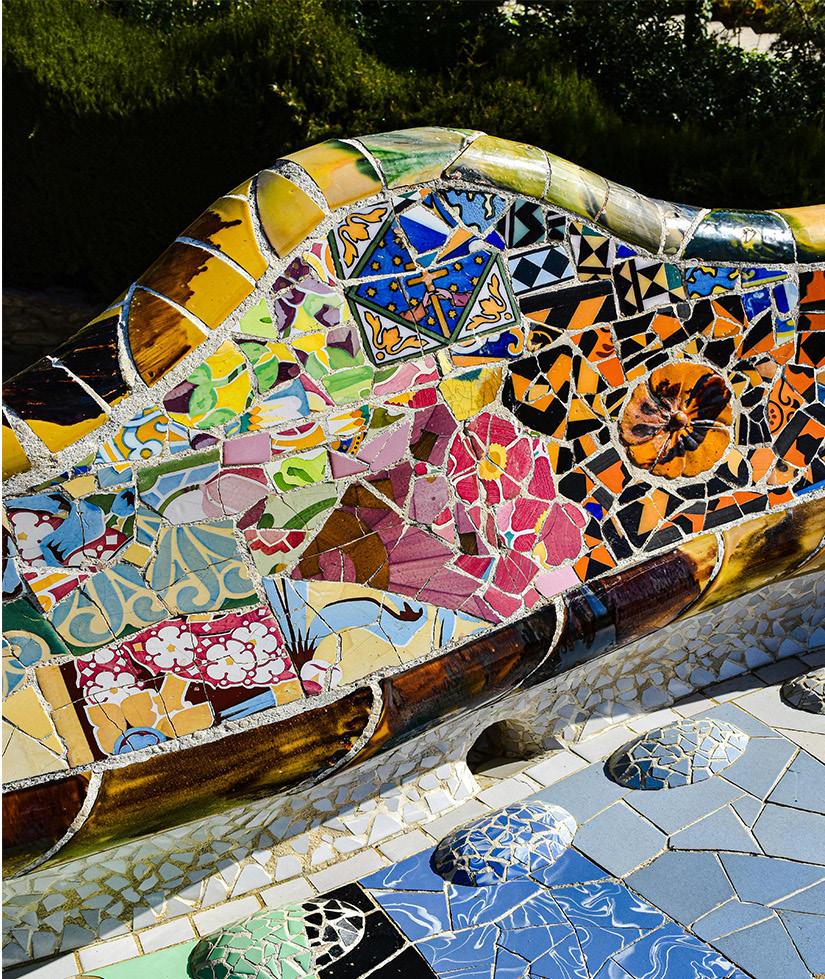
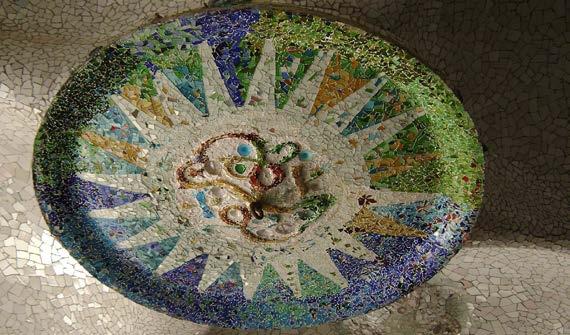
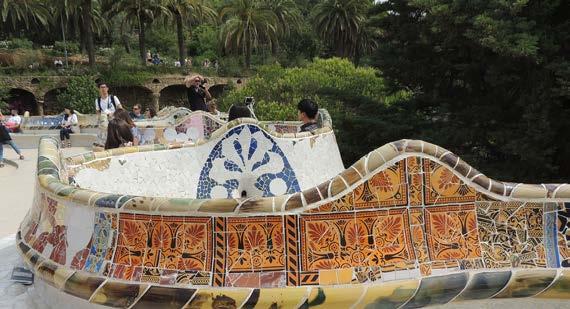
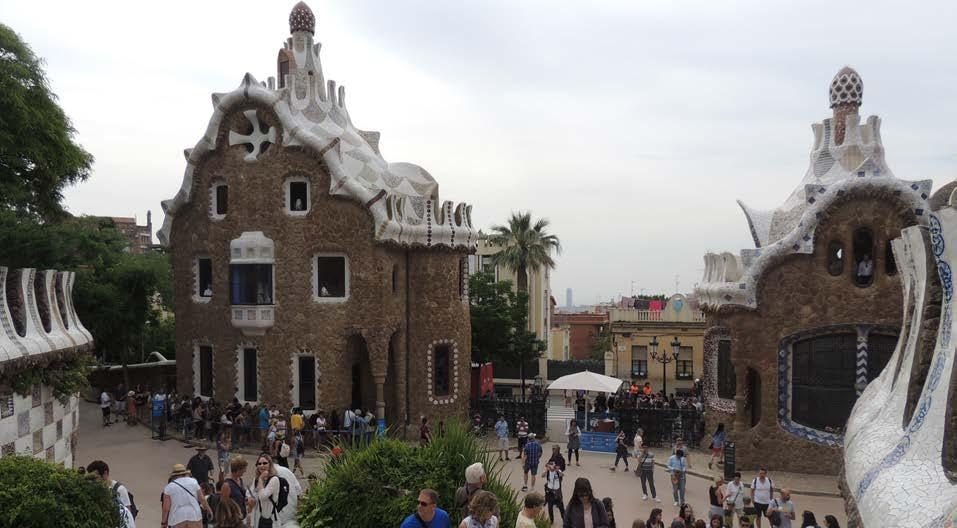
Arturo Campos nos invita a adentrarnos en su artículo El Parque Güell, los sonidos del espíritu desde una perspectiva sensorial, donde arquitectura, sonido y emoción se entrelazan para revelar una dimensión artística que trasciende lo visible.
Arturo Campos invites us to delve into his article Park Güell, the sounds of the spirit from a sensory perspective, where architecture, sound, and emotion intertwine to reveal an artistic dimension that goes beyond the visible.
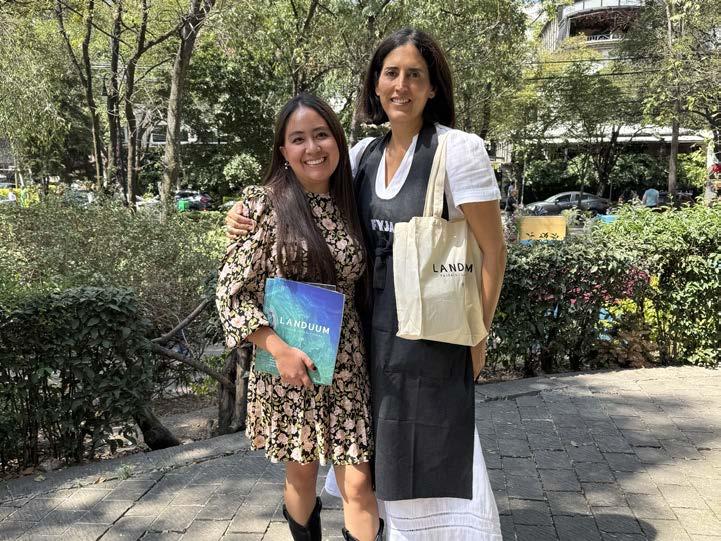
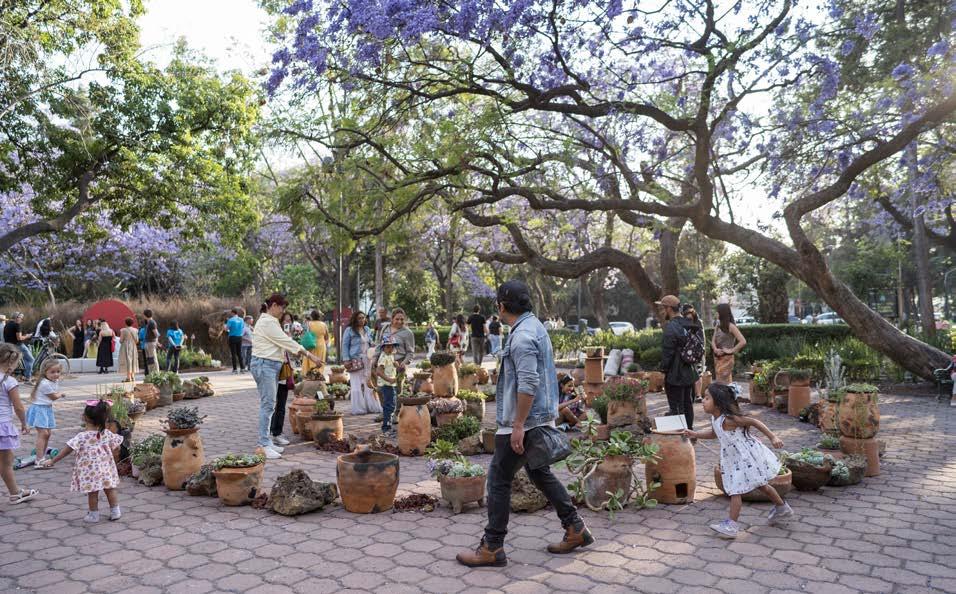
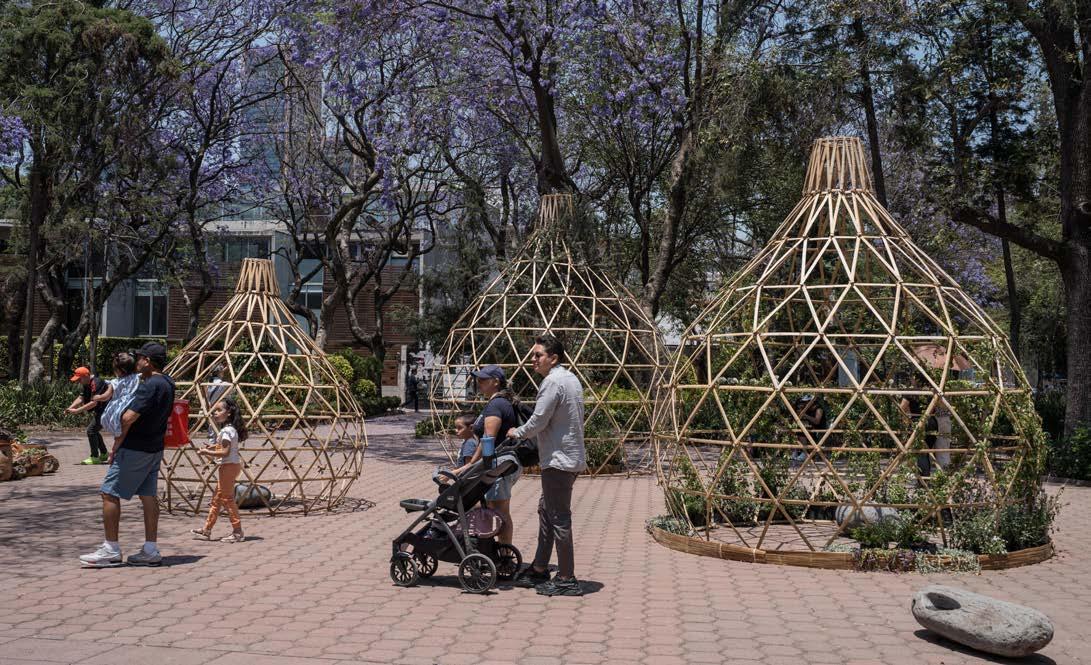
Con la llegada de la primavera, el Festival Flores y Jardines (FYJA) se prepara para su sexta edición: “Jardines del futuro”. Conversamos con Patricia Elías Calles, la mente maestra detrás de este proyecto, sobre cómo el diseño verde y los paisajistas son fundamentales en esta edición para devolver el equilibrio ambiental y la vida a las ciudades.
With the arrival of spring, the Flowers and Gardens Festival prepares for its sixth edition: “Gardens of the future”. We spoke with Patricia Elías Calles, the mastermind behind this project, about how green design and landscape architects are fundamental in this edition to restore environmental balance and life to our cities.
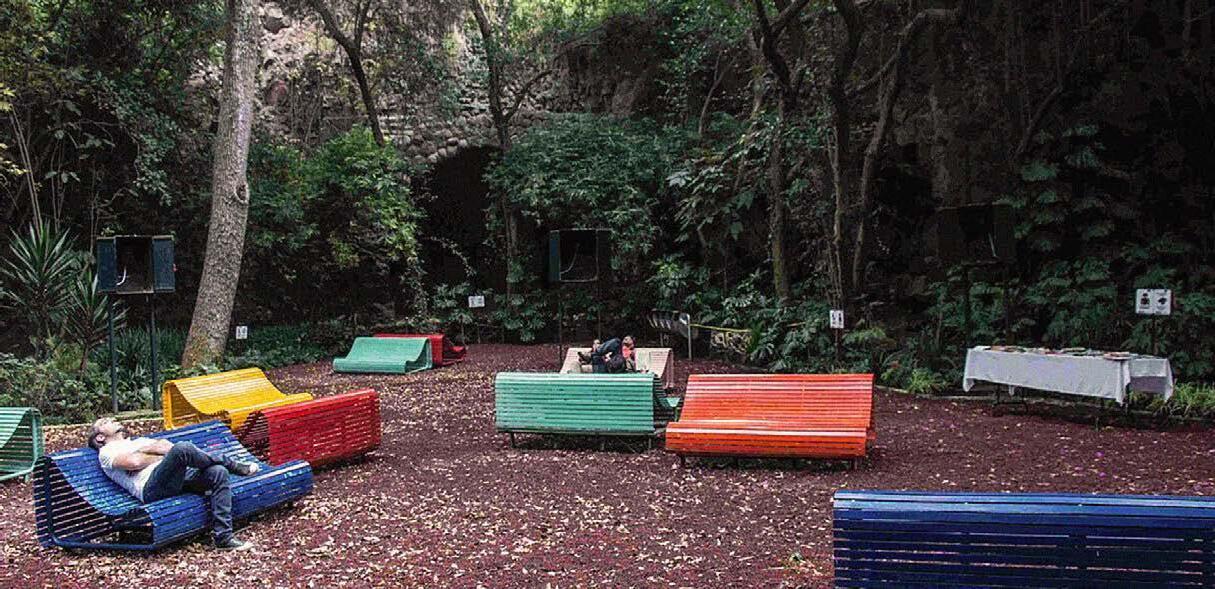
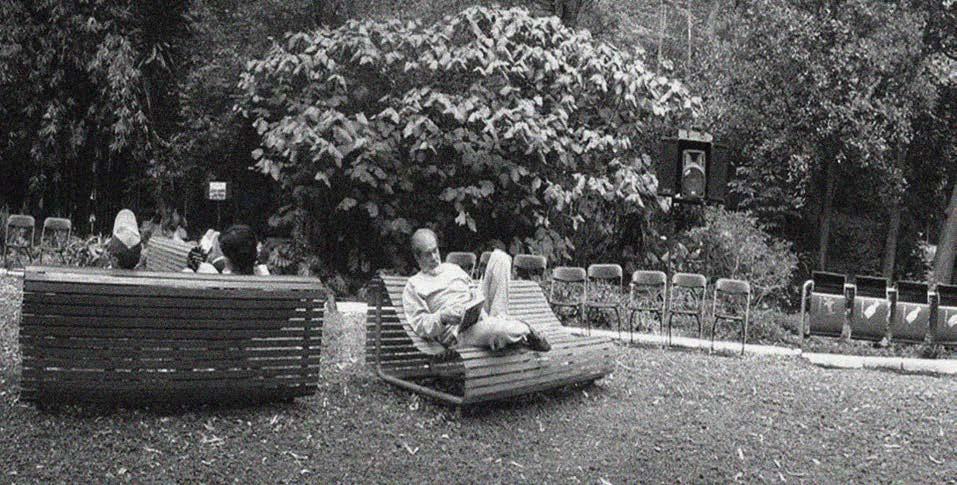
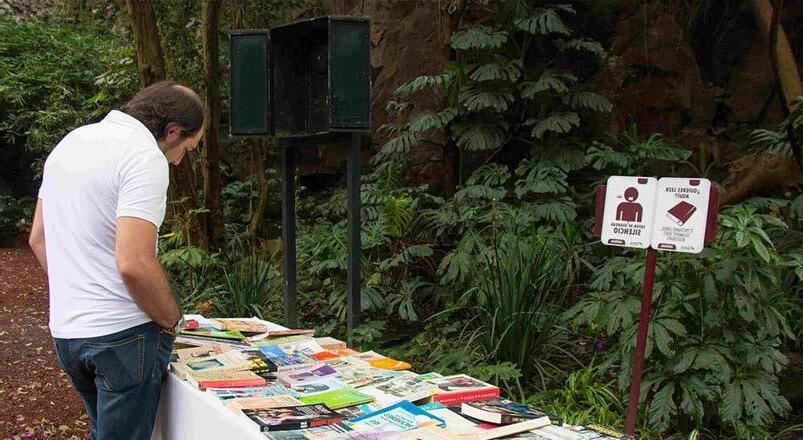
En Refugios sonoros: ¿Por qué tu ciudad necesita un audiorama?, Andrea Conde reflexiona sobre la necesidad de crear espacios públicos que funcionen como umbrales de silencio, donde música y lectura se entrelacen para generar atmósferas contemplativas que inviten a la pausa y nutran nuestra creatividad cotidiana.
In Sound refuges: Why does your city need an audiorama? Andrea Conde reflects on the need to create public spaces that function as thresholds of silence, where music and reading intertwine to create contemplative atmospheres that invite pause and nurture our everyday creativity.
Paisajes artísticos: Arte y naturaleza
Artistic landscapes: Art and nature
Por/ By: Ivonne Walls
•••
El paisaje artístico puede analizarse y entenderse desde dos puntos de vista. El primero, se refiere a su interpretación y expresión a través de otras artes como la pintura, donde ha sido una de las formas más importantes de representación dentro del mundo del arte.
The artistic landscape can be analyzed and understood from two points of view. The first is the one that refers to its interpretation and expression through other arts such as painting, where it has been one of the most important forms of representation within the art world.
Desde esta perspectiva a través de la interpretación del entorno, el artista no solo reproduce un espacio físico determinado, sino que descifra y expone, ya sea a la naturaleza o el ambiente urbano desde una perspectiva personal, emocional y cultural única, que incluso podríamos considerar íntima.
Los paisajes artísticos no pretenden representar la realidad de un paisaje “tal cual es” (como en el caso de la fotografía), sino que van más allá de la simple observación y reproducción del espacio, convirtiéndose en un medio para transmitir emociones, ideas, sentimientos y distintas visiones del mismo.
A diferencia del paisaje natural estudiado por la geografía, el paisaje artístico no busca necesariamente ser exacto o fiel a la realidad. Su objetivo principal es estético y expresivo. Consiste en percibir el valor identitario que las pinturas del paisaje puedan generar, y servir como herramienta para aumentar la conciencia del observador sobre la percepción y valoración de éstos, al vincular el paisaje con la forma de vida, tradiciones culturales y características del lugar plasmado.
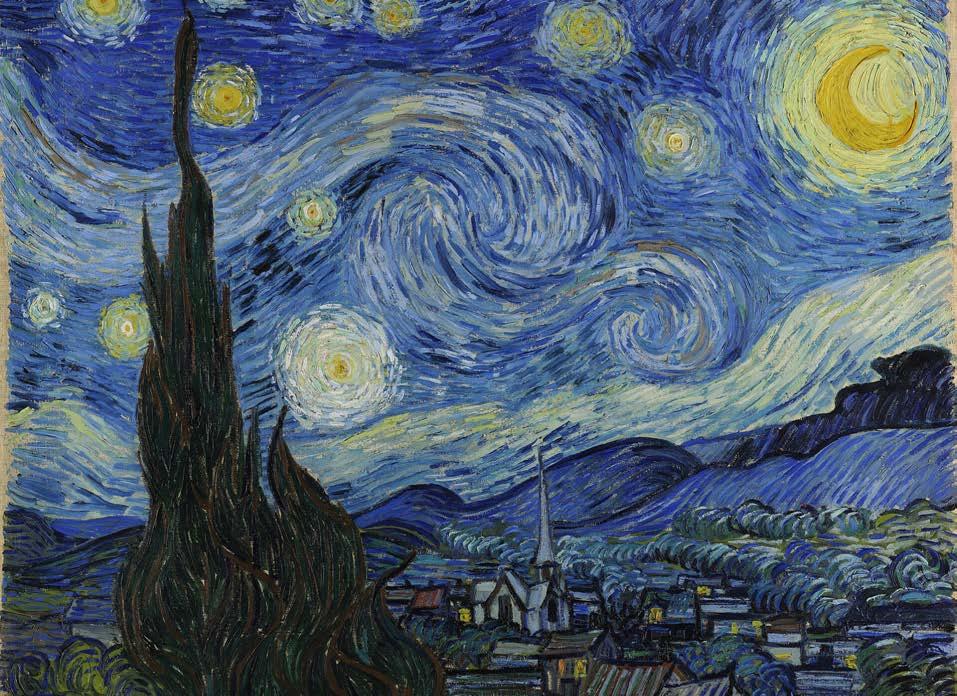
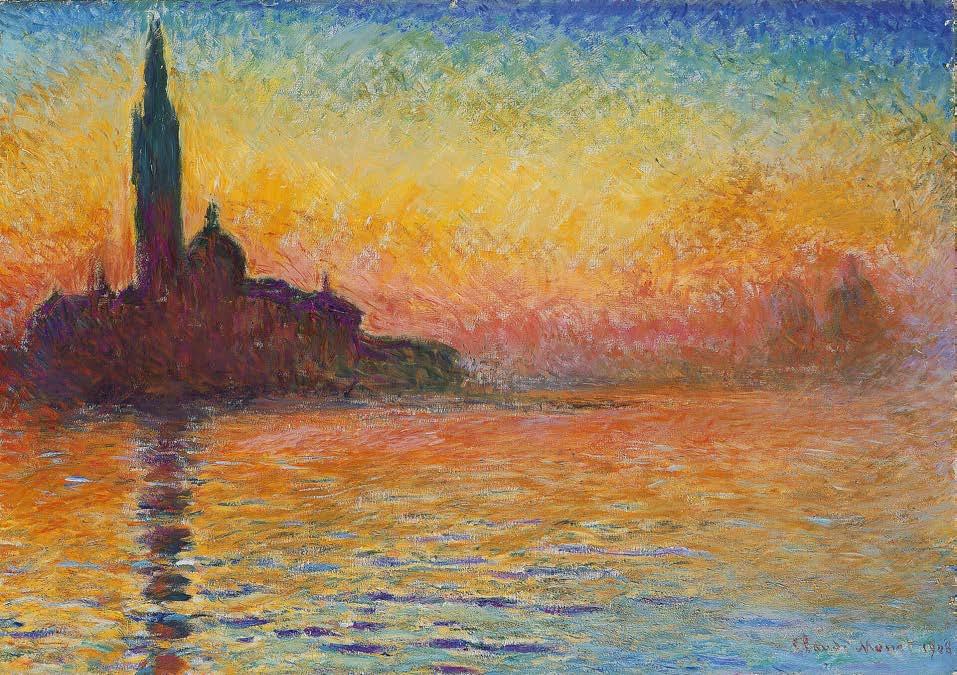
La importancia de la percepción personal e individual del artista, permite que un mismo paisaje sea representado de manera única y diferente. Por ejemplo, pintores como Dr. Atl, Van Gogh, Monet, generan un impacto estético para los espectadores, transmitiendo un mensaje de identidad histórica y cultural, ya sea nacional o local.
Desde la antigüedad, el paisaje artístico ha estado presente en distintas manifestaciones culturales, como es el caso de las pinturas rupestres, donde pueden observarse representaciones
From this perspective, through the interpretation of the environment, the artist not only reproduces a certain physical space, but also deciphers and exhibits, whether it is nature or the urban environment from a unique personal, emotional and cultural perspective, which we could even describe as intimate.
Artistic landscapes do not pretend to represent the reality of a landscape “as it is” (as in the case of photography), but go beyond the simple observation and reproduction of space, becoming a means to transmit emotions, ideas, feelings and different visions of it.
Unlike the natural landscape studied by geography, the artistic landscape does not necessarily seek to be exact or faithful to reality. Its main objective is aesthetic and expressive. It consists of perceiving the identity value that landscape paintings can generate, and serving as a tool to increase the observer’s awareness of their perception and valuation, by linking the landscape with the way of life, cultural traditions and characteristics of the place captured.
The importance of the artist’s personal and individual perception allows the same landscape to be represented in a unique and different way. For example, painters such as Dr. Atl, Van Gogh, Monet, generate an aesthetic impact for viewers, transmitting a message of historical and cultural identity, whether national or local.
Since ancient times, the artistic landscape has been present in different cultural manifestations, such as cave paintings, where representations of the environment
del entorno de los habitantes de esa época, expresadas de forma simbólica o muy básica.
Sin embargo, durante muchos siglos, el paisaje fue considerado un elemento secundario en el arte, utilizado principalmente como fondo para escenas religiosas, mitológicas o históricas. En la época Medieval el paisajismo perdió fuerza, no fue sino hasta el Renacimiento cuando comenzó a adquirir mayor importancia como tema independiente.
Durante esta época, los artistas desarrollaron nuevas técnicas como la perspectiva y el estudio de la proporción, lo que permitió representar el espacio de manera más realista. El paisaje empezó a cobrar relevancia, aunque todavía estaba subordinado a la figura humana. Con el paso del tiempo, especialmente en los siglos XVII y XVIII, el paisaje se consolidó como un género artístico propio, sobre todo en la pintura europea, donde marcó un momento
of the inhabitants of that time can be observed, expressed in a symbolic or very basic way.
However, for many centuries, the landscape was considered a secondary element in art, mainly used as a background for religious, mythological or historical scenes. In medieval times landscaping lost strength, it was not until the Renaissance that it began to acquire greater importance as an independent subject.
During this time, artists developed new techniques such as perspective and the study of proportion, which allowed space to be represented more realistically. The landscape began to gain relevance, although it was still subordinated to the human figure. With the passage of time, especially in the seventeenth and eighteenth centuries, the landscape was consolidated as an artistic genre of its own, especially in European painting, where it marked a key moment by using nature as a means to express intense emotions,
clave al utilizar la naturaleza como un medio para expresar emociones intensas, como la admiración, el miedo, la melancolía o la libertad. En estas obras, el paisaje suele mostrarse imponente y grandioso, mientras que el ser humano aparece pequeño frente a la fuerza de la naturaleza. Este enfoque refleja una visión filosófica y emocional del mundo, donde la naturaleza era vista como algo poderoso.
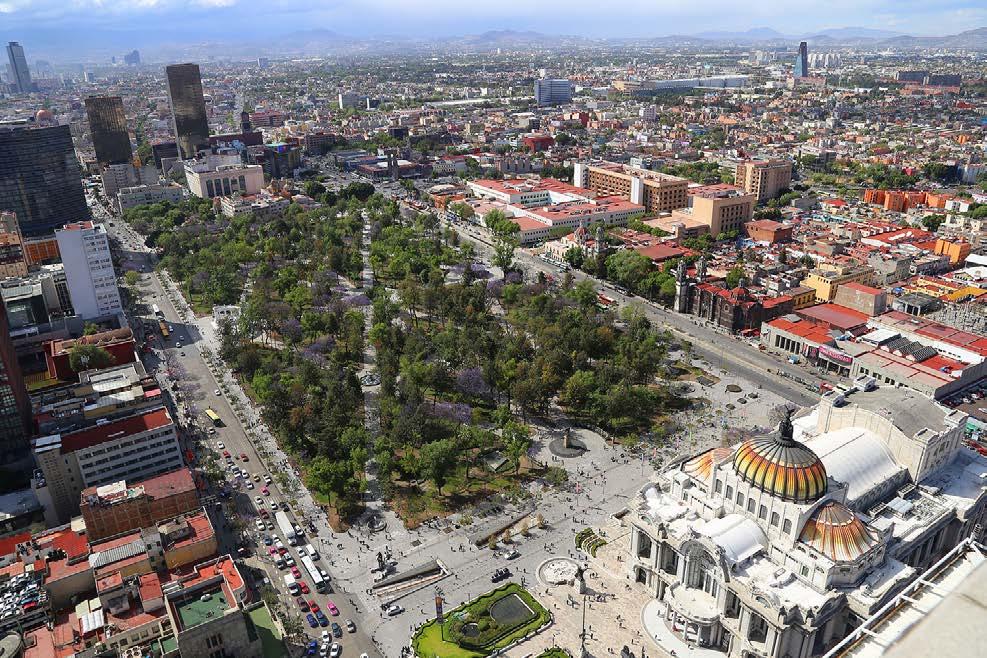
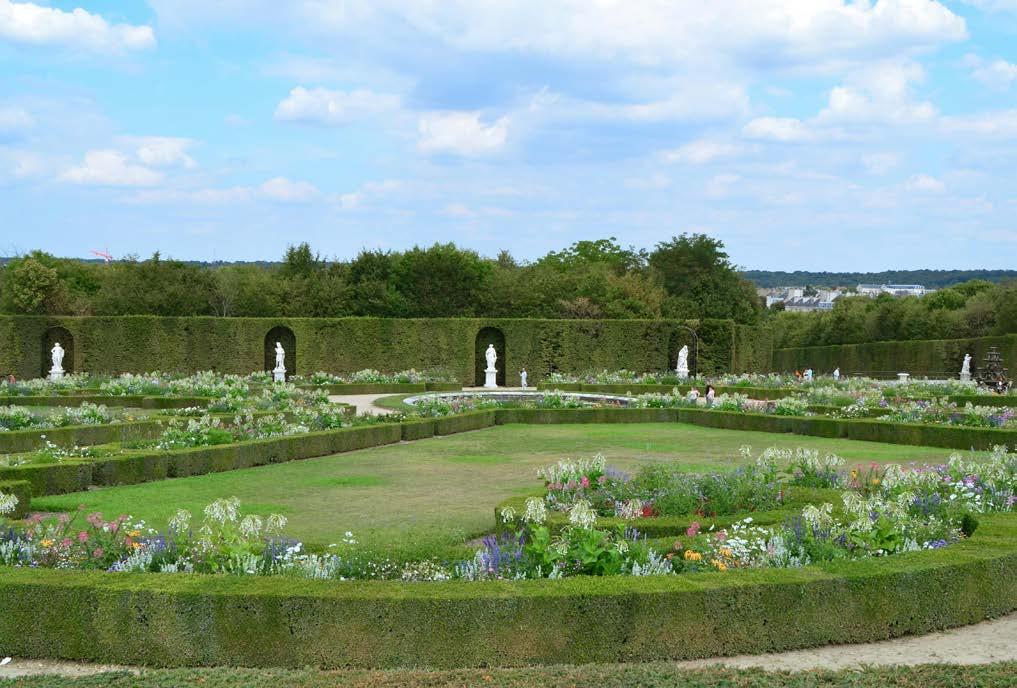
En cuanto a su relación con otras disciplinas como la arquitectura, esta época marcó el inicio del paisajismo en Europa, con la construcción de parques, jardines y plazas que se convirtieron en lugares icónicos, donde el diseño planificado de la naturaleza (generalmente utilizando formas geométricas), influyó enormemente en el paisaje. Ejemplos como los jardines de Versalles en Francia, el parque del retiro en Madrid, el Alcázar de Toledo, e incluso la Alameda Central en la Ciudad de México.
such as admiration, fear, melancholy or freedom. In these works, the landscape is usually imposing and grandiose, while the human being appears small in the face of the force of nature. This approach reflects a philosophical and emotional view of the world, where nature was seen as powerful.
As for its relationship with other disciplines such as architecture, this era marked the beginning of landscaping in Europe, with the construction of parks, gardens and squares that became iconic places, where the planned design of nature (usually using geometric shapes), greatly influenced the landscape. Examples such as the gardens of Versailles in France, the Retiro Park in Madrid, the Alcázar of Toledo, and even the Alameda Central in Mexico City.
Artistic landscapes: Art and nature
Paisajes artísticos: Arte y naturaleza
La noche estrellada / Starry Night Ilustración / Illustration: Vincent van Gogh, Public domain, via Wikimedia Commons
Alameda Central, Ciudad de México / Alameda Central, Mexico City Fotografía / Photography Gobierno CDMX, CC0, via Wikimedia Commons
Pero no es, sino hasta mediados del siglo XXI, cuando se da un giro radical en la representación del paisaje artístico: los pintores colocaron sus caballetes en el campo, improvisaron talleres sobre los botes que navegaban en el Sena, se quemaron la piel con el sol, e incluso padecieron reúma frente a estanques donde flotaban nenúfares o pantanos donde la humedad era característica.
Es decir, que conquistaron el paisaje al aire libre como parte de la gran revolución impresionista, que se convirtió en la herramienta para sacar el arte de su encierro y proclamar la fuerza de la naturaleza, como habían hecho anteriormente escuelas paisajísticas como la de Glasgow, la colonia de artistas de Worpswede y, desde siempre, los viajeros dibujantes que hacían apuntes al natural.
But it was not until the middle of the twentyfirst century that there was a radical shift in the representation of the artistic landscape: painters placed their easels in the countryside, improvised workshops on the boats that sailed on the Seine, burned their skin in the sun, and even suffered from rheumatism in front of ponds where water lilies floated or swamps where humidity was characteristic.
That is to say, they conquered the outdoor landscape as part of the great Impressionist revolution, which became the tool to take art out of its confinement and proclaim the force of nature, as had previously been done by landscape schools such as the one in Glasgow, the artists’ colony of Worpswede and, since always, the traveling draftsmen who made sketches from life.
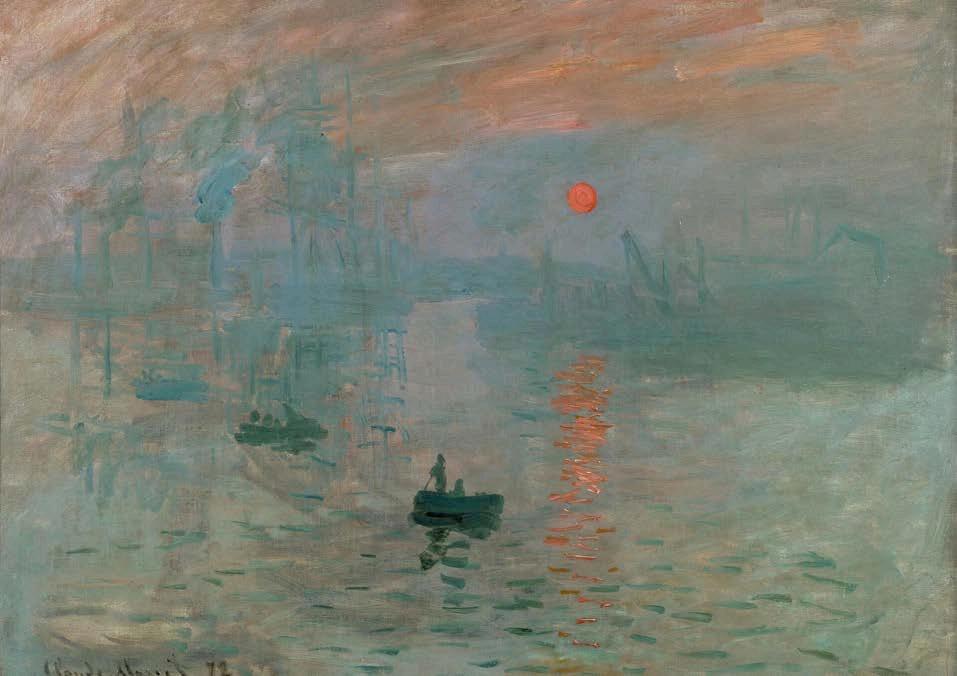
El paisaje se convertía ahora en protagonista de forma definitiva transformando la pintura desde que Monet, con su cuadro “impresión, sol naciente” dio nombre y origen al movimiento impresionista. Gracias a este movimiento, el paisaje se volvió más dinámico y subjetivo, enfatizando la percepción individual del artista.
Desgraciadamente, muchas de esas vistas naturales y urbanas han cambiado y se han deteriorado con el paso del tiempo, ya sea por cambios climáticos o por intervenciones hechas por el hombre.
Así, los paisajes artísticos son aún más relevantes, pues quedan como testimonio, y pueden contribuir a la concientización y conservación de valiosas vistas naturales que narran la historia del mundo y la forma de vida en distintas épocas.
The landscape will now become the protagonist in a definitive way, transforming painting since Monet, with his painting “impression, rising sun” gave name and origin to the Impressionist movement. Thanks to this movement, the landscape became more dynamic and subjective, emphasizing the artist’s individual perception.
Unfortunately, many of those natural and urban sights have changed and deteriorated over time, either due to climate change or man-made interventions.
Thus, artistic landscapes are even more relevant, as they remain as testimony and can contribute to raising awareness and preserving valuable natural views that tell the history of the world and ways of life across different eras.
Artistic landscapes: Art and nature
Paisajes artísticos: Arte y naturaleza
San Giorgio Maggiore al anochecer / San Giorgio Maggiore by Twilight Ilustración / Illustration: Claude Monet, Public domain, via Wikimedia Commons
Impresión, sol naciente / Impresión, sunrise Ilustratción / Illustration: Claude Monet, Public domain, via Wikimedia Commons
A partir de que el paisajismo se consolida como disciplina (arquitectura de paisaje), surge una segunda visión del paisaje artístico, la cual, está directamente relacionada con la arquitectura; ya que requiere de grandes habilidades para observar, diseñar y dar forma a la naturaleza para integrarla en el espacio que nos rodea.
As landscaping established itself as a formal discipline (landscape architecture), a second vision of the artistic landscape emerged—one directly linked to architecture. This approach requires great skill to observe, design, and shape nature, seamlessly integrating it into the space that surrounds us.
En el arte moderno y contemporáneo, el paisaje artístico continúa evolucionando. Ya no se limita únicamente a la pintura, sino que también aparece en la fotografía, el cine, la literatura, la escultura y el arte digital. Además, los paisajes pueden ser realistas, abstractos o simbólicos. Algunos artistas utilizan el paisaje para denunciar problemas sociales y ambientales, como la contaminación, la urbanización excesiva o el cambio climático.
El paisaje urbano también forma parte del paisaje artístico. Las ciudades, con sus edificios, calles y espacios públicos, se convierten en escenarios que reflejan la vida moderna, el ritmo acelerado y las transformaciones sociales. A través del paisaje urbano, los artistas pueden mostrar tanto el progreso como las desigualdades y conflictos que existen en la sociedad.
Una característica fundamental del paisaje artístico es que refleja la cultura y la época en la que fue creado. Los paisajes rurales pueden mostrar formas de vida tradicionales, mientras que los paisajes industriales evidencian el impacto de la tecnología y el desarrollo económico. De esta forma, el
In modern and contemporary art, the artistic landscape continues to evolve. It is no longer limited to painting, but also appears in photography, film, literature, sculpture and digital art. In addition, landscapes can be realistic, abstract, or symbolic. Some artists use landscape to denounce social and environmental problems, such as pollution, excessive urbanization or climate change.
The cityscape is also part of the artistic landscape. Cities, with their buildings, streets and public spaces, become scenarios that reflect modern life, the accelerated pace and social transformations. Through the urban landscape, artists can show both progress and the inequalities and conflicts that exist in society.
A fundamental characteristic of the artistic landscape is that it reflects the culture and the era in which it was created. Rural landscapes may show traditional ways of life, while industrial landscapes show the impact of technology and economic development. In this way, the artistic landscape functions as a visual and cultural testimony that allows us to understand how people have interacted with their environment over time, developing
paisaje artístico funciona como un testimonio visual y cultural que permite comprender cómo las personas han interactuado con su entorno a lo largo del tiempo, desarrollando una mayor sensibilidad hacia la naturaleza y el espacio que habita. El arte invita a mirar el entorno con atención, a valorar su belleza y a reflexionar sobre la necesidad de cuidarlo y preservarlo.
En conclusión, el paisaje artístico es una manifestación artística rica y diversa que combina observación, creatividad y expresión personal. A través de él, el artista interpreta el mundo que lo rodea y lo transforma en una experiencia estética cargada de significado. Ya sea natural o urbano, realista o abstracto, el paisaje artístico nos permite comprender mejor nuestra relación con el entorno y reconocer el arte como una forma de diálogo entre el ser humano y el espacio que habita.
a greater sensitivity towards nature and the space it inhabits. Art invites us to look at the environment carefully, to value its beauty and to reflect on the need to care for and preserve it .
In conclusion, the artistic landscape is a rich and diverse artistic manifestation that combines observation, creativity and personal expression. Through it, the artist interprets the world around him and transforms it into an aesthetic experience charged with meaning. Whether natural or urban, realistic or abstract, the artistic landscape allows us to better understand our relationship with the environment and recognize art as a form of dialogue between the human being and the space he inhabits.
Paisaje del Jardín De Versalles con escultura, París Francia Landscape of the Garden of Versailles with sculptures, París France Fotografía / Photography Pexels
Una segunda visión del paisaje artístico, se refiere a la que, a partir del surgimiento del paisajismo como disciplina (arquitectura de paisaje), es la que se ve directamente relacionada con la arquitectura, ya que requiere de grandes habilidades para observar, diseñar y dar forma a la naturaleza, para integrar en el espacio que nos rodea.
Aunque no existe una definición única, el paisajismo se considera una actividad que modifica las características visibles, físicas y emotivas de un espacio, tanto rural como urbano, para expresar valores estéticos y culturales, así como para crear o reforzar la identidad cultural del lugar.
Actividades como cultivar o dar forma a plantas específicas, dar forma a elementos
A second vision of the artistic landscape refers to the one that, since the emergence of landscaping as a discipline (landscape architecture), is the one that is directly related to architecture, since it requires great skills to observe, design and shape nature, to integrate it into the space that surrounds us.
Although there is no single definition, landscaping is considered an activity that modifies the visible, physical and emotional characteristics of a space, both rural and urban, to express aesthetic and cultural values, as well as to create or reinforce the cultural identity of the place.
Activities such as growing or shaping specific plants, shaping natural elements,
naturales, crear estructuras y elementos abstractos, se consideran parte del paisajismo, ya que este no solo recurre a lo visual sino a la multidimensionalidad del espacio.
Así, el paisajismo se considera tanto arte como ciencia, y requiere de habilidades como observación, diseño, planificación, creatividad, organización e imaginación, abarcando diferentes disciplinas como la arquitectura, el arte, la sociología e incluso la psicología, entre otras, integrando en ocasiones elementos naturales y urbanos.
Como se mencionó anteriormente, aunque el paisajismo surgió en el Renacimiento, este arte ya se practicaba en antiguas civilizaciones como la egipcia y la persa. Posteriormente, civilizaciones como
creating structures and abstract elements, are considered part of landscaping, since it not only resorts to the visual but also to the multidimensionality of the space.
Thus, landscaping is considered both art and science, and requires skills such as observation, design, planning, creativity, organization and imagination, covering different disciplines such as architecture, art, sociology and even psychology, among others, sometimes integrating natural and urban elements.
As mentioned earlier, although landscaping emerged in the Renaissance, this art was already practiced in ancient civilizations such as the Egyptian and Persian. Later, civilizations such as
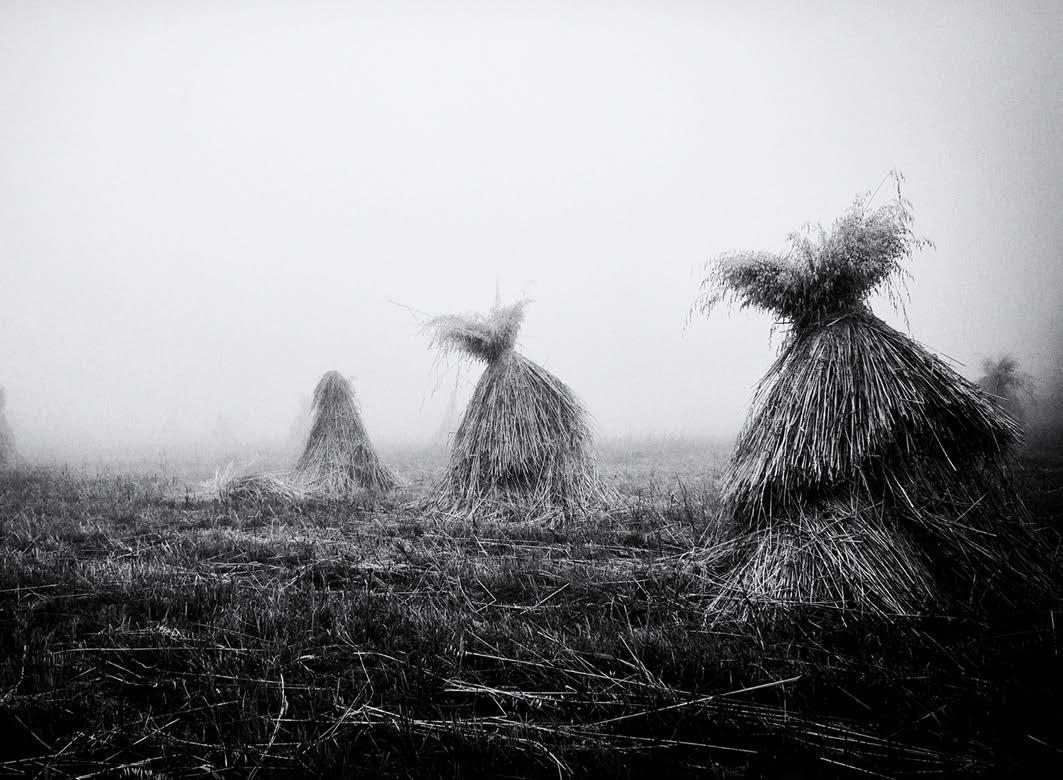
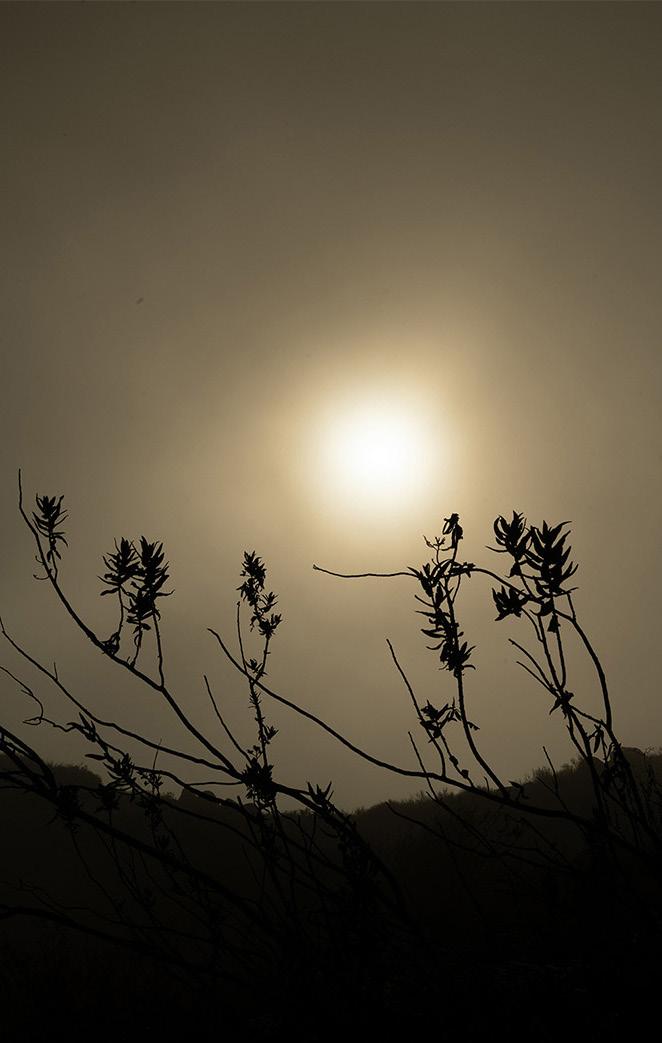
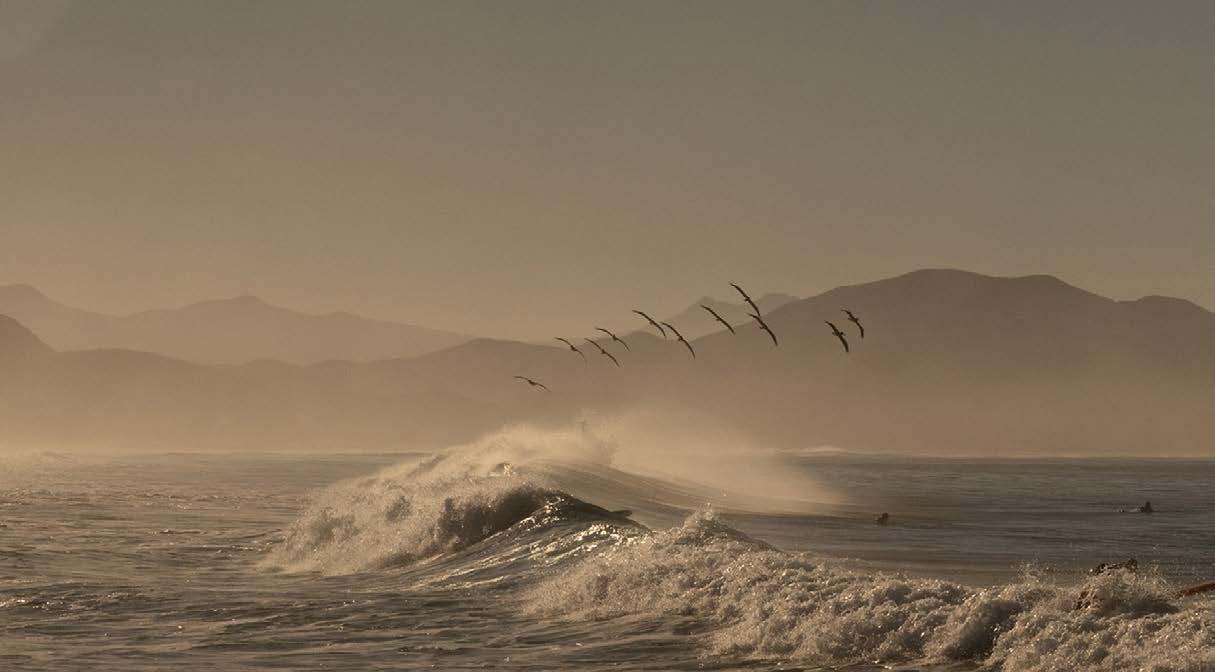
Despertar bajo la niebla / Waking up in the fog Fotografía / Photography Álvaro González González
Roma y Grecia introdujeron técnicas de jardinería que son utilizadas al día de hoy.
También, las culturas prehispánicas en Latinoamérica aprendieron a cultivar plantas medicinales, alimentos y flores que poco a poco se convirtieron en parte de la ornamentación y que con el tiempo se fueron convirtiendo en espacios diseñados con un órden específico.
Sin embargo, el paisajismo moderno surgió ante los conflictos ecológicos-sociales derivados de la Revolución Industrial, siendo el primer arquitecto paisajista el norteamericano Frederick Law Olmsted, quien en 1863 fundó un estudio moderno de esta materia.
En la actualidad, el paisajismo se considera como un método o ciencia para crear obras de arte colectivas, es decir, paisajes que integran jardines o fincas privadas con paisajes urbanos, naturales y regionales.
Rome and Greece introduced gardening techniques that are used today.
Also, pre-Hispanic cultures in Latin America learned to cultivate medicinal plants, food, and flowers that gradually became part of the ornamentation and that over time became spaces designed with a specific order.
However, modern landscaping arose in the face of the ecological-social conflicts derived from the Industrial Revolution, the first landscape architect being the American Frederick Law Olmsted, who in 1863 founded a modern studio in this field.
Today, landscaping is considered a method or science to create collective works of art, that is, landscapes that integrate gardens or private estates with urban, natural and regional landscapes.
Este arte colectivo puede ser positivo o negativo, dependiendo de si resulta de la acumulación accidental de esfuerzos individuales, o de esfuerzos controlados y planificados por el hombre.
Hoy, los arquitectos paisajistas, a través de intervenciones (muchas veces interactuando con actores de otras disciplinas) han creado espacios escultóricos, parques y jardines que han convertido el paisaje artístico en una escultura viva, orgánica que inventa nuevos paisajes, los engrandece o los modifica con motivos estéticos o funcionales.
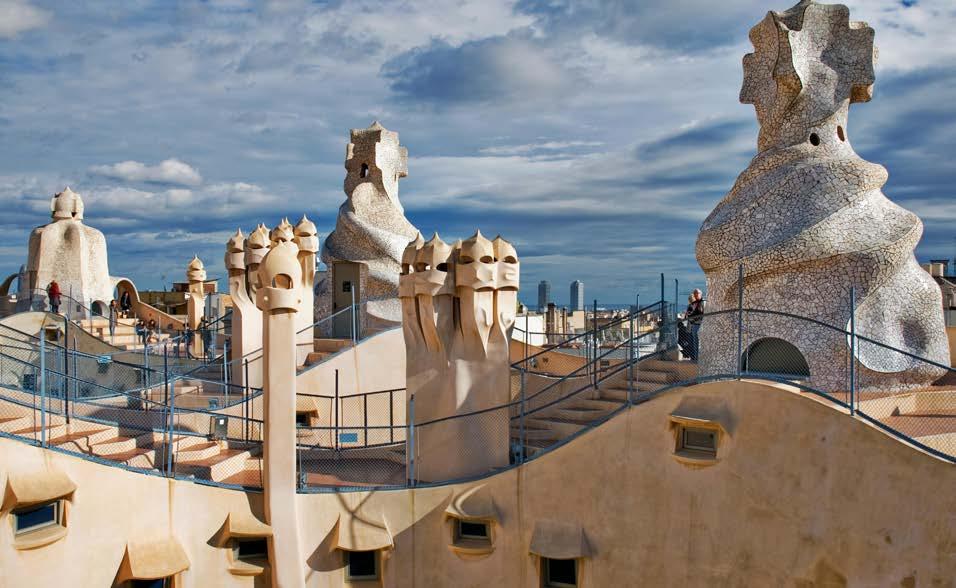
La propia escultura y arquitectura, se han inspirado en la naturaleza para plasmarla en obras inspiradas en ella, como el caso del edificio de la Pedrera en Barcelona, donde el mar se encuentra presente en la ciudad a través de sus formas.
Este encuentro entre Arte y paisaje seguramente seguirá interactuando, tanto en las ciudades, como en los espacios naturales, para beneficio de los habitantes.
This collective art can be positive or negative, depending on whether it results from the accidental accumulation of individual efforts, or from efforts controlled and planned by man.
Today, landscape architects, through interventions (often interacting with actors from other disciplines) have created sculptural spaces, parks and gardens that have turned the artistic landscape into a living, organic sculpture that invents new landscapes, enlarges them or modifies them with aesthetic or functional motifs.
Sculpture and architecture itself have been inspired by nature to capture it in works inspired by it, as in the case of the La Pedrera building in Barcelona, where the sea is present in the city through its shapes
This encounter between Art and landscape will surely continue to interact, both in cities and in natural spaces for the benefit of the inhabitants.
Dentro y fuera, de James Turrell / Within without by James Turrell Fotografía / Photography Shkuru Afshar, via Wikimedia Commons.
Aproximaciones al paisaje desde la experiencia estética Approaches to landscape from the aesthetic experience
Por/ By:
Iván Juárez | x-studio
Caminar descalzo; escuchar el viento; tocar el agua; observar y contemplar el paisaje circundante desde su escala mínima hasta su dimensión territorial. Comprender su
Walking barefoot; listening to the wind; touching the water; observing and contemplating the surrounding landscape, from its smallest scale to its territorial dimension. Understanding
Intervención-luz en huerto doméstico urbano Taipei, Taiwán Light Intervention in an urban domestic garden | Taipei, Taiwan Fotografía / Photography: Iván Juárez | x-studio
particularidad y complejidad; sus valores tangibles e intangibles. Los paisajes son capaces de transmitir emociones, experiencias, memorias y estados de ánimo.
Desde esta perspectiva, la experiencia estética adquiere un papel esencial en nuestra conexión con el paisaje, al estimular nuestra inmersión en él y activar nuestros sentidos. Escuchar el paisaje es esencial a la hora de acercarse a él, ser sensible a su temporalidad, a su estado cíclico, a sus dinámicas naturales y significados culturales; a su carácter efímero. Ser conscientes de que el paisaje se encuentra en constante transformación. Percibir y reflexionar sobre nuestro vínculo con el entorno y, al hacerlo, tomar conciencia de su significado.
Escuchar el paisaje es esencial a la hora de acercarse a él, ser sensible a su temporalidad, a su estado cíclico, a sus dinámicas naturales y significados culturales.
Listening to the landscape is essential when approaching it, being sensitive to its temporality, its cyclical nature, its natural dynamics, and cultural meanings.
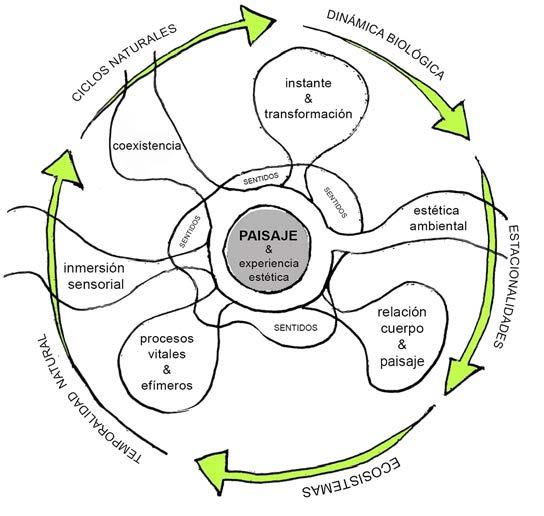
Diagrama sobre el paisaje en relación con los factores que influyen en nuestra experiencia estética / Diagram on the landscape in relation to the factors that Influence our aesthetic experience Ilustración / Illustration: Iván Juarez | x-studio
its uniqueness and complexity; its tangible and intangible values. Landscapes are capable of conveying emotions, experiences, memories, and moods.
From this perspective, the aesthetic experience plays a crucial role in our connection with the landscape, as it stimulates our immersion in it and activates our senses. Listening to the landscape is essential when approaching it—being sensitive to its temporality, its cyclical nature, its natural dynamics and cultural meanings; to its ephemeral character. Being aware that the landscape is in constant transformation. Perceiving and reflecting on our bond with the environment, and by doing so, becoming conscious of its meaning.
Archipiélago: Exploración del cuerpo y el paisaje en el escenario litoral del Mar del Norte en Suecia Archipelago: Exploration of body and landscape in the coastal setting of the North Sea in Sweden Fotografía / Photography: Iván Juárez | x-studio
¿Cómo se reflejan estas ideas en nuestra aproximación al paisaje y cómo las transmitimos para reimaginar entornos más sensibles?
Una reflexión que surge desde mi práctica está relacionada a estos conceptos, ya que me interesa fomentar el diálogo con el paisaje a través de la experiencia estética enriquecida por la estética ambiental. Me interesa explorar la interacción entre el territorio y los seres que lo habitan, y cómo a partir de esta relación recíproca, los individuos pueden vincularse activa y sensiblemente con su entorno, adquiriendo conciencia de su conexión con el medio natural. Al mismo tiempo, uno de los principales intereses se centra en explorar nuevas formas de redefinir los límites entre naturaleza-ser humano mediante intervenciones y acciones que abran escenarios hacia nuevos encuentros.
A partir de estas referencias, el enfoque que planteo respecto al paisaje se expande
How are these ideas reflected in our approach to the landscape, and how do we convey them to reimagine more sensitive environments?
A reflection that emerges from my practice is closely related to these concepts, as I am interested in fostering a dialogue with the landscape through the aesthetic experience, enriched by environmental aesthetics. I am drawn to exploring the interaction between the territory and the beings who inhabit it, and how, through this reciprocal relationship, individuals can actively and sensitively engage with their surroundings, gaining awareness of their connection to the natural environment. At the same time, one of my main interests lies in exploring new ways to redefine the boundaries between nature and the human being through interventions and actions that open up scenarios for new encounters.
Based on these references, the approach I propose toward the landscape expands
a otras disciplinas y se nutre de miradas complementarias como la literatura, la música, la danza, la pintura o el cine, entre otras. Estas visiones se reflejan constantemente en los proyectos a través de diversas exploraciones, tales como intervenciones in-situ, acupunturas urbanas, cartografías sensoriales o acciones participativas. Así como en espacios de biocohabitación, jardines, arquitecturas corporales, dispositivos sensoriales o piezas artesanales.
En este sentido, me interesa abordar la práctica como un laboratorio de experimentación, creación e investigación, y sobre esta premisa, me gustaría compartir algunos planteamientos vinculados con estos conceptos.
Primera aproximación:
Cuerpo y paisaje ¿De qué manera podemos coexistir con nuestros paisajes desde nuestra esfera corporal?
into other disciplines and is enriched by complementary perspectives such as literature, music, dance, painting, or cinema, among others. These visions are constantly reflected in the projects through various explorations, such as in-situ interventions, urban acupunctures, sensory cartographies, or participatory actions. Likewise, they appear in spaces of bio-cohabitation, gardens, body-centered architectures, sensory devices, or handcrafted pieces.
In this sense, I am interested in approaching practice as a laboratory for experimentation, creation, and research, and based on this premise, I would like to share some ideas related to these concepts.
First approach: Body and landscape In what ways can we coexist with our landscapes from within our bodily sphere?
Archipiélago: Exploración del cuerpo y el paisaje en el escenario litoral del Mar del Norte en Suecia Archipelago: Exploration of body and landscape in the coastal setting of the North Sea in Sweden Fotografía / Photography Iván Juárez | x-studio
Esta búsqueda explora conexiones entre el cuerpo y el paisaje, como correlación y metáfora, y reflexiona sobre nuestro vínculo corporal con el entorno. Examina diversas formas en las que el cuerpo percibe y está presente en el medio en el que habitamos.
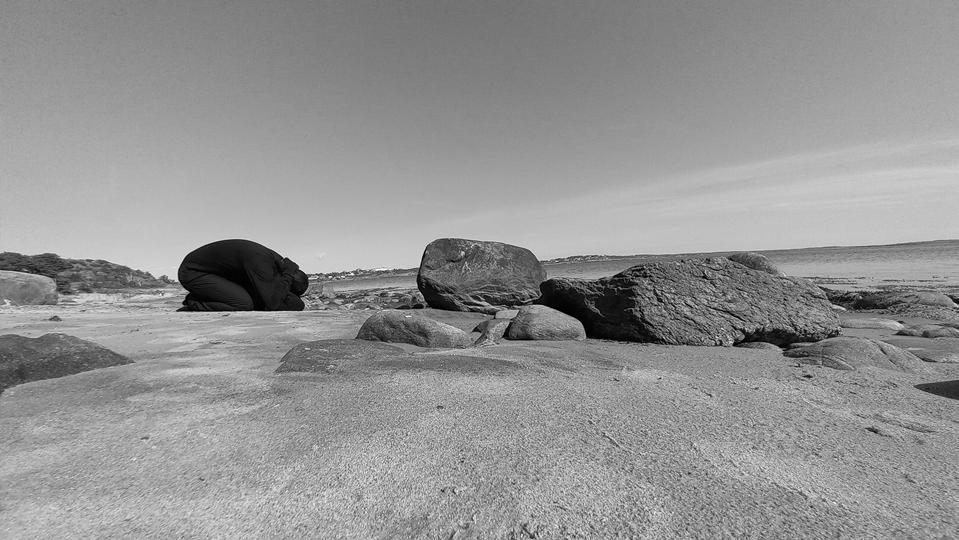
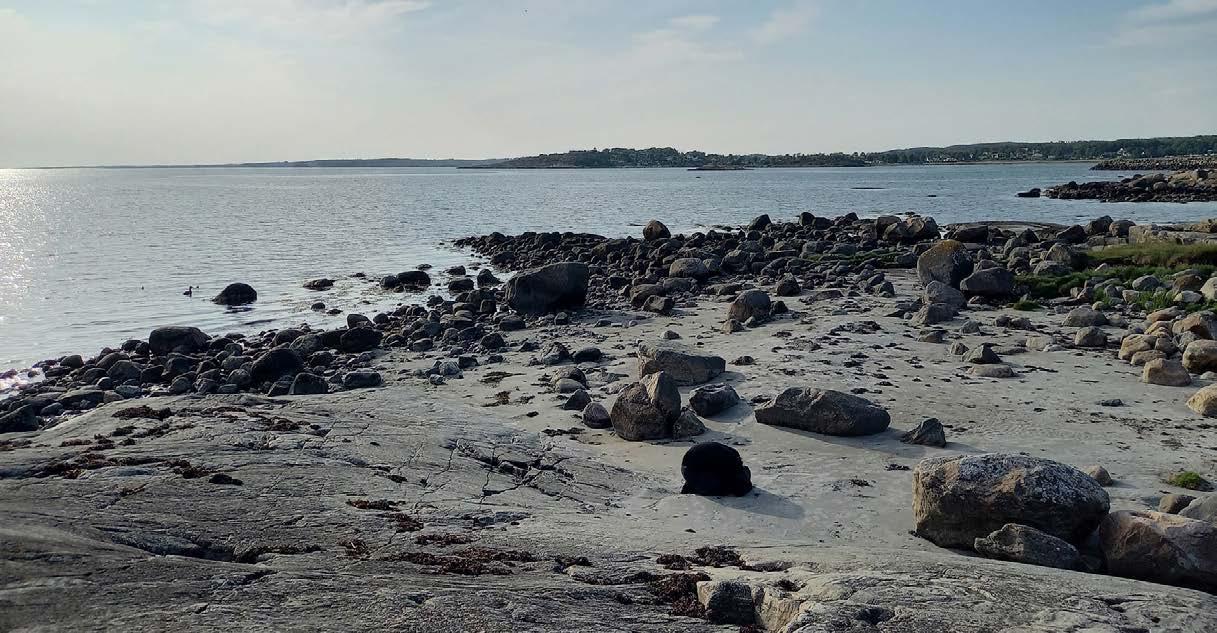
Archipiélago: Cuerpo y paisaje litoral geológico
Estrecho de Kattegat, Suecia
Teniendo como escenario natural el paisaje geológico de la costa oeste de Suecia, frente al estrecho de Kattegat en el Mar del Norte, la intervención Archipiélago rinde homenaje y reflexiona sobre este territorio líquidosólido, al hacernos parte del paisaje litoral. La intervención se lleva a cabo a través de una serie de acciones que vinculan el cuerpo y el paisaje marino, donde el cuerpo se funde y mimetiza en el escenario de rocas.
La serie reflexiona sobre conceptos como el tiempo en la naturaleza. Sobre la estabilidad
This inquiry explores connections between the body and the landscape, both as correlation and metaphor, and reflects on our bodily relationship with the environment. It examines various ways in which the body perceives and is present within the space we inhabit.
Archipelago: Body & geological coastal landscape
Kattegat strait, Sweden
Set against the natural backdrop of the geological landscape of Sweden’s west coast, facing the Kattegat Strait in the North Sea, the intervention Archipelago pays tribute to and reflects on this liquid-solid territory, making us part of the coastal landscape. The intervention takes place through a series of actions that connect the body and the marine landscape, where the body merges and blends into the rocky setting.
The series reflects on concepts such as time in nature. It explores the stability and stillness associated with the rock, contrasted with the
y la quietud asociadas a la roca, frente al movimiento constante y la condición cambiante del mar. Quietud y dinamismo; estabilidad frente a transformación. Asimismo, como metáfora del cuerpo, reflexiona sobre la interacción entre ambos elementos, que se hace evidente en la erosión, proceso en el que la roca se desgasta gradualmente y es moldeada por el movimiento del mar.
Cuerpo y paisaje cíclico: Exploraciones desde los sentidos
Baja Silesia | Polonia
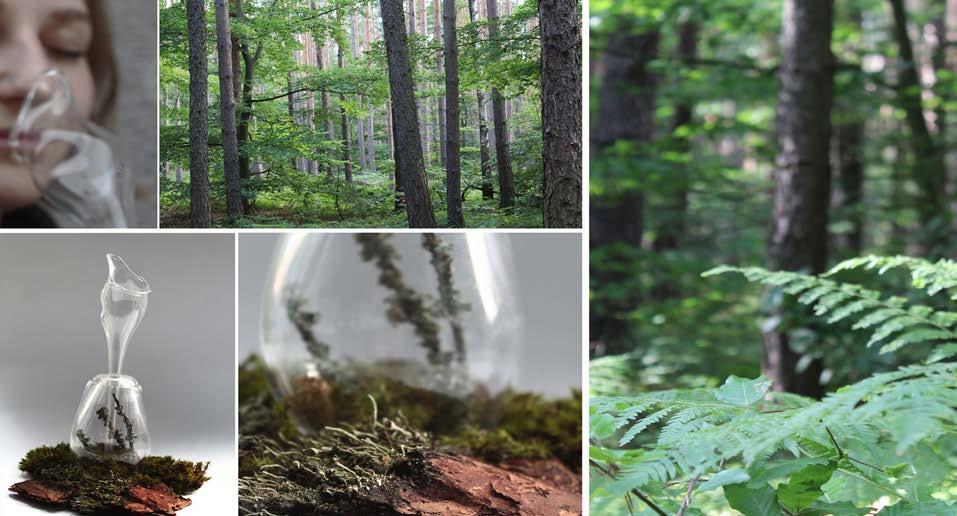
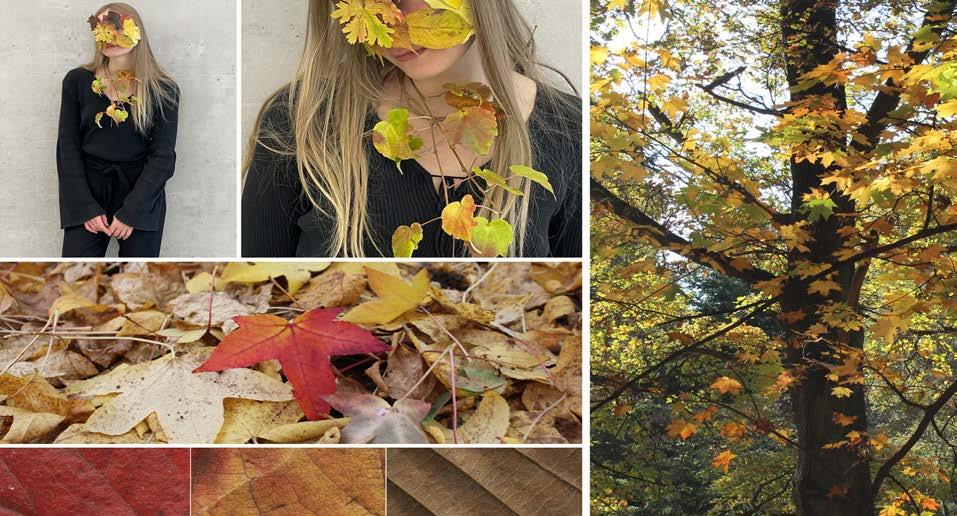
El paisaje estacional de Polonia se propone como contexto temporal y físico. Un paisaje conectado al ritmo cambiante de las estaciones del año. En verano, cuando la vegetación alcanza su plenitud, adquiere mayor exuberancia y vitalidad. En otoño, se transforma en un paisaje nostálgico, donde las hojas de los árboles comienzan a adquirir tonos ocres, amarillos y rojizos, que cubren la superficie con un manto de hojas cuando caen; y en invierno, un paisaje
constant movement and changing condition of the sea. Stillness and dynamism; stability versus transformation. Furthermore, as a metaphor for the body, it reflects on the interaction between both elements, which becomes evident in erosion, a process in which the rock gradually wears down and is shaped by the movement of the sea.
Body & cyclical landscape: Explorations from the Senses
Lower Silesia | Poland
The seasonal landscape of Poland is proposed as a temporal and physical context. A landscape connected to the changing rhythm of the seasons. In summer, when the vegetation reaches its fullness, it becomes more lush and vibrant. In autumn, it transforms into a nostalgic landscape, where the leaves of the trees begin to take on ochre, yellow, and reddish hues, covering the ground with a blanket
Verano: Exploración olfativa del paisaje estival en Polonia, Baja Silesia, mediante un dispositivo olfativo Summer: Olfactory exploration of the seasonal landscape in Poland, Lower Silesia, through an olfactory device Fotografía / Photography: Iván Juárez | x-studio
Otoño: Interpretación visual del paisaje de hojas en Polonia
Autumn: Visual Interpretation of the leaf landscape in Poland
Fotografía / Photography Iván Juárez | x-studio
Aproximaciones
silencioso, donde la vegetación se adormece y se marchita; descienden las temperaturas y el entorno se mimetiza en una superficie blanca.
A partir de estas tres temporalidades, se han realizado una serie de aproximaciones artísticas a lo largo del ciclo anual. La primera aproximación hace énfasis en la estación de verano, al explorar el sentido del olfato a través de una pieza de vidrio soplado que en su interior contiene un pequeño fragmento de bosque. La pieza funciona como un dispositivo olfativo que guarda y emite esencias del bosque.
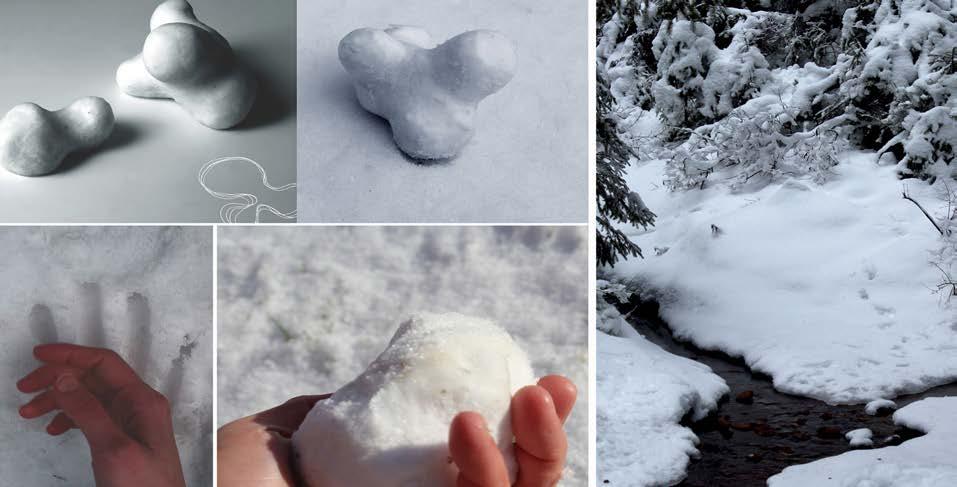
La siguiente aproximación tiene lugar en otoño, a través del sentido de la vista. La serie ilustra las diferentes tonalidades de las hojas de los árboles, y cómo éste fenómeno natural influye y se relaciona con el cuerpo humano; y por último, se explora el sentido del tacto vinculado al invierno, a través de la percepción de temperaturas y texturas. Sentir y modelar diferentes estados efímeros generados por la nieve.
of fallen leaves. In winter, it becomes a silent landscape, where the vegetation falls dormant and withers; temperatures drop, and the environment blends into a white surface.
Based on these three temporalities, a series of artistic approaches have been developed throughout the annual cycle.
The first approach focuses on the summer season, exploring the sense of smell through a blown glass piece that contains a small fragment of forest inside. The piece functions as an olfactory device that stores and releases the essences of the forest.
The next approach takes place in autumn, through the sense of sight. The series illustrates the different hues of tree leaves and how this natural phenomenon influences and relates to the human body. Finally, the sense of touch is explored in connection with winter, through the perception of temperatures and textures. Feeling and shaping the various ephemeral states created by the snow.
Segunda aproximación: Huertos domésticos en la ciudad
Taipei | Taiwan
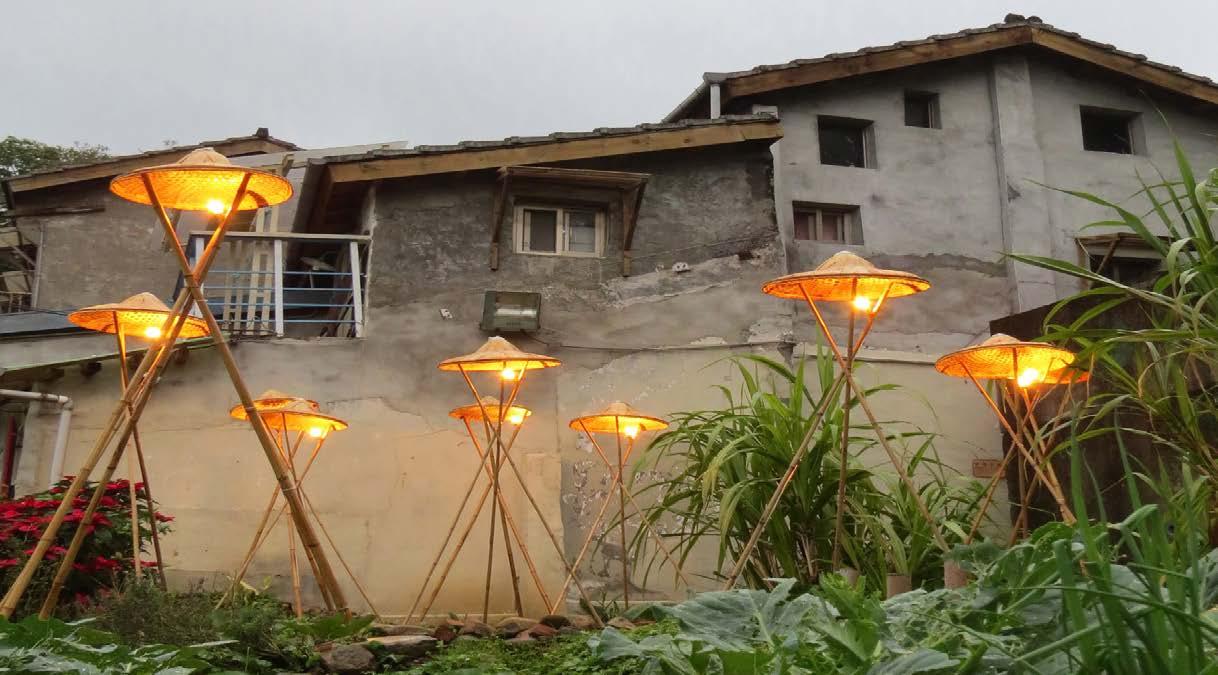
A partir de dos elementos culturales simbólicos utilizados para la práctica de la agricultura en Taiwán: el bambú como elemento de soporte y el sombrero cónico taiwanés como pantalla de luz, la intervención lumínica crea un paisaje híbrido reinterpretando ambos elementos significativos del paisaje rural taiwanés para reflexionar sobre el valor de la agricultura urbana y resaltar la importancia de esta práctica como ejemplo de acupuntura doméstica en la ciudad. Al poner énfasis sobre la práctica de la comunidad urbana vinculada a sus huertos, nos ofrece un ejemplo para repensar los límites entre la ciudad y el campo.
La intervención se llevó a cabo en un huerto doméstico de la comunidad de Treasure Hill Village, situada a orillas del río Xindian, una importante vía fluvial de la ciudad de Taipei. El río se caracterizaba por tener cultivos urbanos en sus riberas, los cuales han ido desapareciendo paulatinamente. A medida que la ciudad crecía, esta comunidad, habitada por ciudadanos que cultivaban sus propios alimentos, pasó a considerarse un asentamiento “formalmente ilegal”.
Posteriormente, mediante una planificación participativa, el sitio se ha revitalizado y consolidado como una comunidad ejemplar en Taipei, manteniendo los valores tradicionales de la comunidad urbanoagrícola, y como enclave autosustentable y resiliente inmerso en la gran metrópolis.
Estos ejemplos presentados a pequeña escala nos invitan a repensar formas de coexistir con nuestros paisajes. Al considerar los enfoques orientados a la experiencia estética y medioambiental, y tener en cuenta la sensibilidad y la reciprocidad, se puede contribuir a replantear los modelos existentes y a comprender nuestro entorno en un sentido holístico.
Second approach: Domestic gardens in
the city
Taipei | Taiwan
Based on two symbolic cultural elements used in agriculture in Taiwan: the bamboo as a support element and the Taiwanese conical hat as a light screen, the light intervention creates a hybrid landscape by reinterpreting both significant elements of the Taiwanese rural landscape. This reflection highlights the value of urban agriculture and emphasizes the importance of this practice as an example of domestic acupuncture in the city. By focusing on the urban community’s practice linked to their gardens, it offers an example to rethink the boundaries between the city and the countryside.
The intervention took place in a domestic garden within the Treasure Hill Village community, located along the Xindian River, an important waterway in the city of Taipei. The river was characterized by having urban crops along its banks, which have gradually disappeared. As the city grew, this community, inhabited by citizens who cultivated their own food, came to be considered a “formally illegal” settlement.
Subsequently, through participatory planning, the site has been revitalized and consolidated as an exemplary community in Taipei, maintaining the traditional values of the urban-agricultural community, and becoming a self-sustaining and resilient enclave within the large metropolis.
These small-scale examples invite us to rethink ways of coexisting with our landscapes. By considering approaches focused on aesthetic and environmental experience, and taking into account sensitivity and reciprocity, we can contribute to reimagining existing models and understanding our environment in a holistic sense.
Invierno: Exploración táctil del paisaje de nieve en Polonia, Baja Silesia Winter: Tactile exploration of the snowy landscape in Poland, Lower Silesia Fotografía / Photography: Iván Juárez | x-studio
La ilustración botánica como herramienta para la divulgación científica y la apreciación artística
Botanical illustration as a tool for scientific communication and artistic appreciation
Por/ By: Tania L. Ojeda-López Mestas
El estudio sistemático de las plantas y su uso como elementos en expresiones artísticas narran una historia de miles de años de relaciones entre humanos y plantas. Los motivos botánicos como elementos artísticos están presentes a lo largo de diferentes culturas y tiempos
The systematic study of plants and their use as elements in artistic expression tell a story of thousands of human-plant interactions. Botanical motifs as artistic elements have been present along different cultures and eras. They adorn the walls of prehistoric caves, as well as the murals and
El estudio sistemático de las plantas y su uso como elementos en expresiones artísticas narran una historia de miles de años de relaciones entre humanos y plantas. Los motivos botánicos como elementos artísticos están presentes a lo largo de diferentes culturas y tiempos históricos.
The systematic study of plants and their use as elements in artistic expression tell a story of thousands of humanplant interactions. Botanical motifs as artistic elements have been present along different cultures and eras.
históricos, adornando las paredes de cuevas prehistóricas, los murales y códices del Antiguo Egipto, el México Prehispánico y la Europa Medieval. Fueron de inspiración para artistas en el Renacimiento, así como herramienta para la ciencia a partir del siglo XVII.1, 2, 3
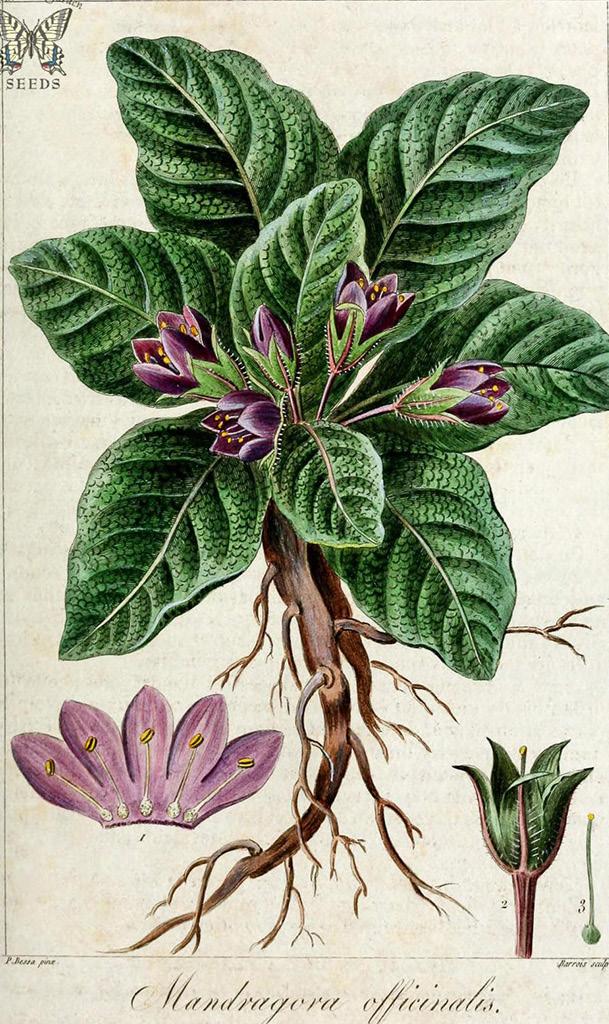
En sus orígenes, la ilustración botánica reflejaba un entendimiento medicinal de las plantas mezclado con un aura de misticismo; bestiarios medievales retratan plantas con propiedades sobrenaturales, como la mandrágora, que poseía raíces antropomórficas, asemejando rostros y piernas humanos.4
Sin embargo, la disciplina comienza a tomar tintes científicos durante el Renacimiento, aunque el mayor auge y popularidad en esta práctica se dio en el período de los siglos XVII al XIX.2 Es durante esta temporalidad que la mandrágora deja de ser asociada a leyendas sobrenaturales,5, 6, 7 y cuando
codices from Ancient Egypt, pre-Hispanic Mexico, and Medieval Europe. They were a source of inspiration for artists during the Renaissance, and later became tools for science during the 17 th century. 1, 2, 3
In its origins, botanical illustration came with a deep understanding of plants’ medicinal properties mixed with a touch of mysticism. Medieval bestiaries often presented mandrakes with human-like qualities such as roots possessing human faces or legs. 4
Although the discipline started to become more scientific during the Renaissance, the rise of scientific illustration took place from the 17 th to 19 th centuries. 2 It is during this time that the mandrake stops being so overwhelmingly associated with supernatural tales. 5, 6, 7 This era also sees the birth of artists like Maria Sibylla Merian (1640s-1700s), a pioneer in the portrayal of insect-plant host relations. 8, 9
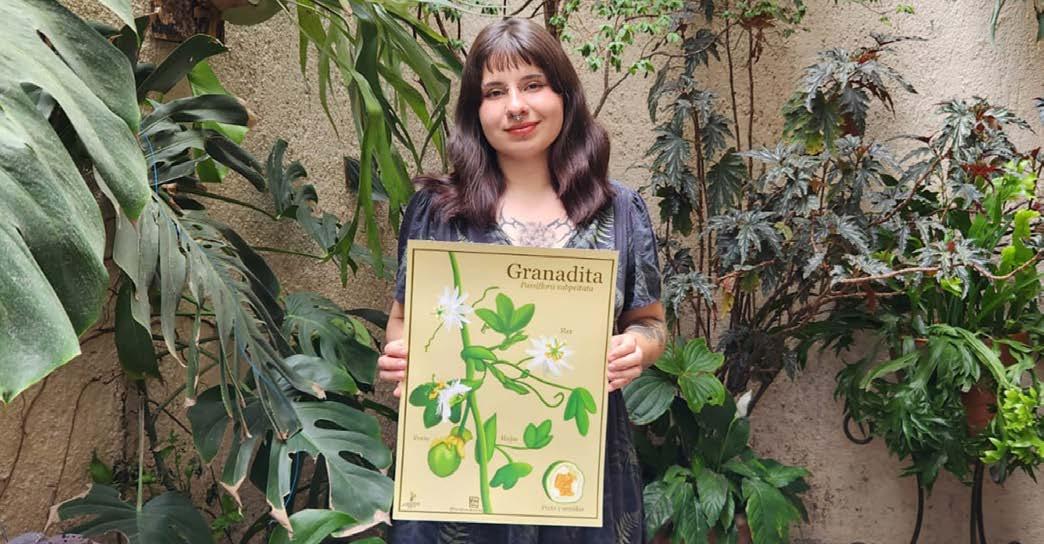
Tania L. Ojeda-López Mestas con su ilustración para el proyecto Nativas de las calles
Tania L. Ojeda-López Mestas with her illustration for the Natives of the Streets project
La ilustración botánica como herramienta para la divulgación científica y la apreciación artística
surgen artistas como Maria Sibylla Merian (1640s-1700s), quien sería pionera en la ilustración científica por comenzar a retratar las relaciones entre insectos y sus plantas hospederas (8) (9).
Mandragora officinarum (hoy Mandragora officinalis) por Pancrace Bessa, ca. 1827.
Mandragora officinarum (today Mandragora officinalis) by Pancrace Bessa, ca. 1827.
Ilustración/ Illustration: Swallowtail Garden seeds, CC BY 2.0
Hoy en día la ilustración científica continúa siendo una disciplina sumamente relevante; es común observar ilustraciones científicas en artículos que describen nuevas especies y forma parte de numerosos programas de educación ambiental. En el contexto de la crisis ambiental y la pérdida de biodiversidad masiva que experimentamos actualmente, la ilustración científica es una herramienta crucial para la sensibilización y concientización sobre la importancia de la conservación de las plantas, especialmente las plantas nativas de México.
Es importante notar que esta práctica no es únicamente llevada a cabo por biólogos especialistas en botánica, sino que, frecuentemente, también son partícipes artistas y naturalistas, desde principiantes hasta expertos en distintas técnicas artísticas.
Today, scientific illustration is all the more relevant. It is common to find botanical illustrations in articles describing new species and as a tool for environmental education. Within the context of the environmental crisis and massive loss of biodiversity that we are currently facing, scientific illustration is a needed strategy in order to bring awareness and advocacy for the cause of plant conservation. This is especially true when it comes to native plants from Mexico.
It is important to note that the practice of botanical illustration is not limited to botanists and scientists. Artists and nature-enthusiasts often participate. This is enjoyed by beginners and experts in different artistic techniques.
As a college biology student and illustrator, I am very passionate about mixing art and science by communicating the importance of taking care of the environment around us. I have participated in botanical illustration projects like Nativas de las Calles, in which
Botanical illustration as a tool for scientific communication and artistic appreciation
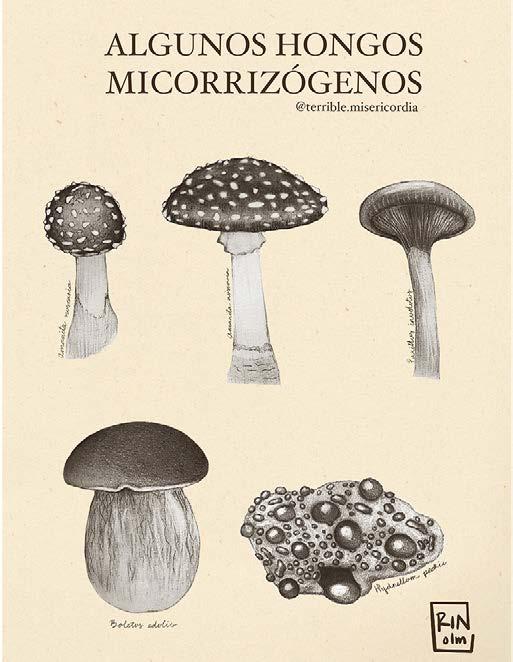
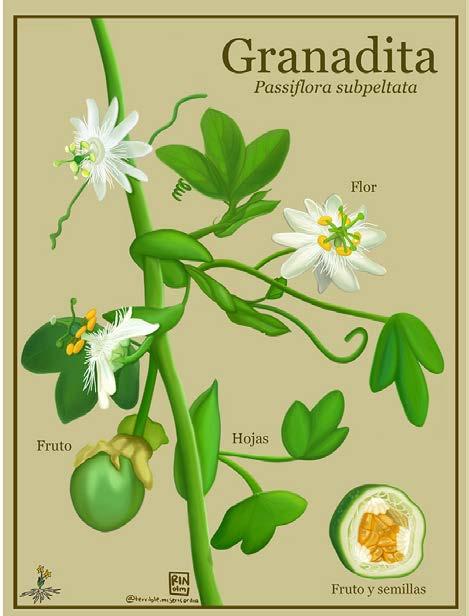
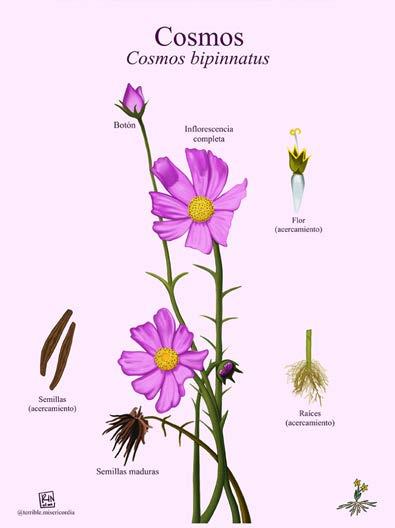
Como estudiante de biología e ilustradora, una de mis pasiones es fusionar el arte y la ciencia para transmitir la importancia de cuidar el ambiente que nos rodea. He participado en proyectos de ilustración botánica como el de Nativas de las Calles, donde dibujé la anatomía de la Granadita (Passiflora subpeltata) y el Cosmos (Cosmos bipinnatus), ambas plantas son nativas del Valle de México.
Este tipo de ilustraciones son un reto particular porque difícilmente se encuentran todas las partes de una planta al mismo tiempo y de manera reconocible. Muchas veces las semillas, flores y frutos sólo pueden ser observados en distintas etapas del ciclo de vida de la planta. Por ello, considero que, al realizar una ilustración botánica, lo primero que se debe hacer es preguntarse lo siguiente:
¿Qué tipo de información quiero representar? Esta puede ser de carácter morfológico, como la
/ Illustration
I drew the anatomy of the white-passion flower (Passiflora subpeltata). I also drew the Cosmos flower (Cosmos bipinnatus). Both plants are native from the Valley of Mexico.
These types of illustrations come with a special challenge because it is not easy to find different structures of the plant at the same time in a recognizable manner. Often the seeds, flowers, and fruits can only be appreciated in different stages of the plant’s life cycle. For this reason, I think that when it comes down to making a botanical illustration, the first thing to do is ask oneself the following questions:
What kind of information do I want to represent? This can be of the morphologic type, such as the anatomy of a flower. It can also be descriptive if it represents said flower and its ecological relations to other
Morfología de Passiflora subpeltata, proyecto Nativas de las Calles. / Morphology of Passiflora subpeltata, Natives of the Streets project.
Illustracion
: instagram, terrible.misericordia
La ilustración botánica como herramienta para la divulgación científica y la apreciación artística
anatomía de una flor; descriptivo, si se representa dicha flor junto con sus relaciones ecológicas con otros organismos; o, incluso, reconstructiva si se dibuja una flor a partir de descripciones de fósiles encontrados.
¿Qué técnica me gustaría utilizar? La ilustración botánica comprende desde medios tradicionales a modernos, como la fotografía y la ilustración digital. ¡Las opciones son infinitas!
¿Qué elementos botánicos quiero resaltar? Si se trata de una planta con flor, puede tratarse de los pétalos, sépalos, tallo, raíces, semillas y frutos, por mencionar algunos.
¿Qué fundamentos artísticos puedo aplicar? Es importante tomar en cuenta aspectos como la composición, la profundidad y la teoría del color.
Además de estas preguntas, únicamente una curiosidad innata, acompañada de una buena capacidad de observación y ganas de aprender nuevas técnicas artísticas y sobre la biología de plantas, son características necesarias para convertirse en un ilustrador botánico.
organisms. It can even be reconstructive if the flower is drawn according to the description of a recently found fossil.
Which techniques would I like to use? Botanical illustration comprehends both traditional mediums and modern ones like photography and digital. The options are infinite!
Which botanical elements do I want to emphasize? If dealing with a flowering plant, a spotlight can be placed on the petals, sepals, stem, roots, seeds, and fruits, to mention a few.
What artistic fundamentals can I apply? It is important to make use of composition, depth, and color theory, amongst others.
Beyond these questions, if anyone wants to become a botanical illustrator, it is only needed to possess an innate curiosity, a keen eye for observation and a desire to learn new artistic techniques and about plant biology.
Morfología de Cosmos bipinnatus proyecto Nativas de las Calles.
Morphology of Cosmos bipinnatus, Natives of the Streets project.
(1) Topper, David. “Towards an Epistemology of Scientific Illustration”. En Picturing Knowledge: Historical and Philosophical Problems Concerning the Use of Art in Science, editado por Brian S. Baigrie, páginas 215-249. Toronto: University of Toronto Press, 1996.
(2) Porter, Charlotte M. Review of The History of Scientific Illustration, by K. B. Roberts, J. D. W. Tomlinson, Ann Shelby Blum, and Brian J. Ford. Journal of the History of Biology 28, no. 3 (1995): 545–50.
(3) Zepeda, Carmen G. y Laura White O. 2008. Herbolaria y pintura mural: plantas medicinales en los murales del convento del Divino Salvador de Malinalco, Estado de México. Polibotánica (25): 173-199.
(4) Carter, John. 2003. Myths and mandrakes. J R Soc Med 96(3): 144-147.
(5) Matindale, William y Wynn W. Westcott. 1901. The extra pharmacopoeia: 475 London: H. K. Lewis.
(6) Bessa, Pancrace. 1827. Mandragora officinarum. En Herbier g é n é r al del’amateur, vol. 8. London: British Museum of Natural History.
(7) Benítez, Guillermo, et al. “The rise and fall of mandrake in medicine”. Journal of Ethnopharmacology 303(7915):115874.
(9) Etheridge, Kay. 2011. Maria Sibylla Merian and the metamorphosis of natural history. Endeavour 35(1): 16-22.
Reflejos inesperados Unexpected reflections
Por/ By: Miguel de la Torre mta+v
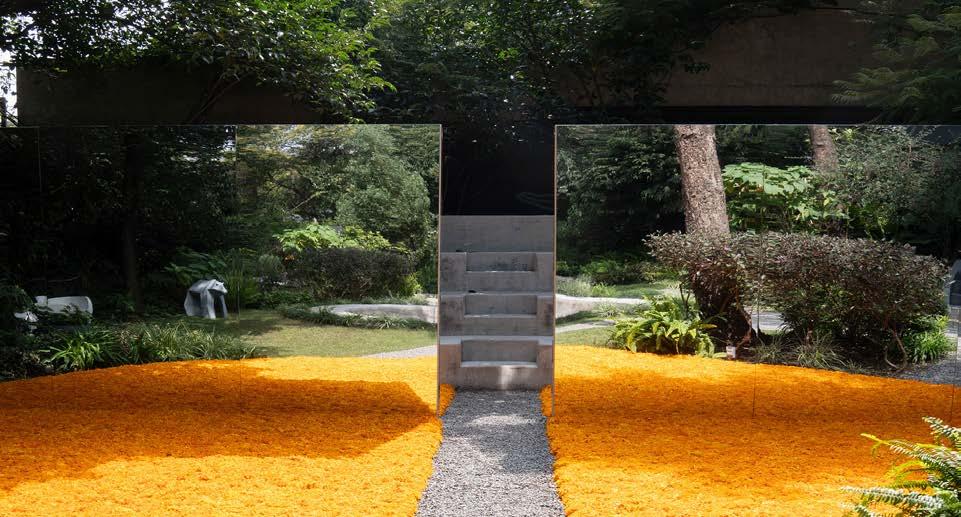
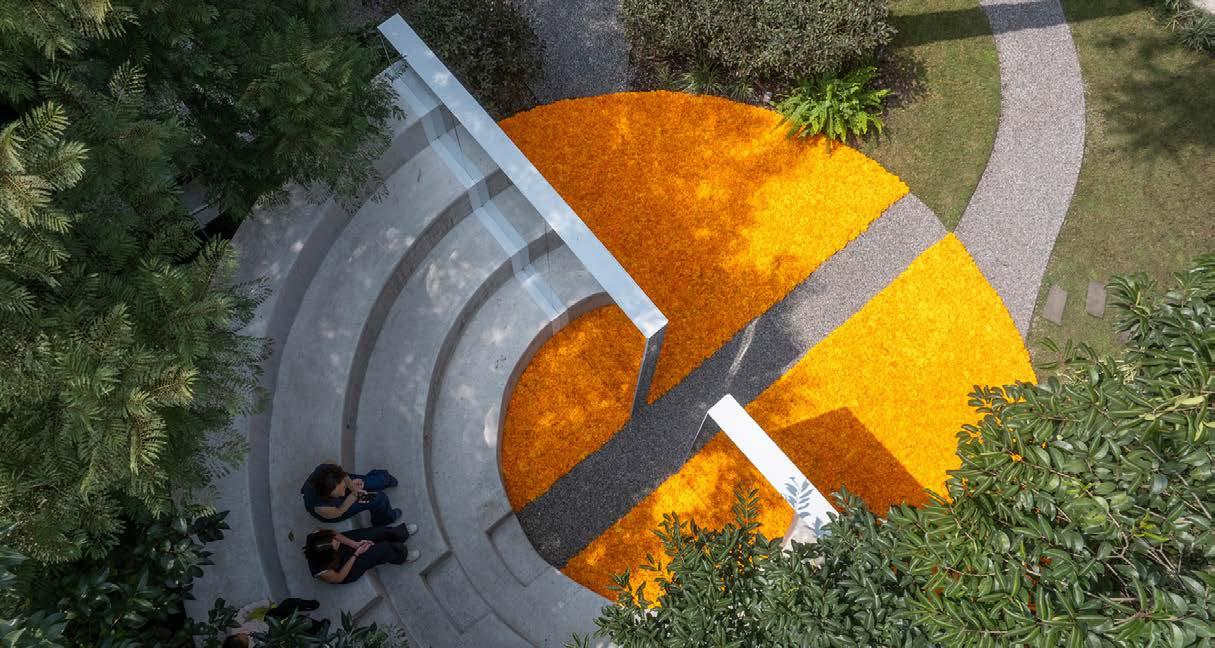
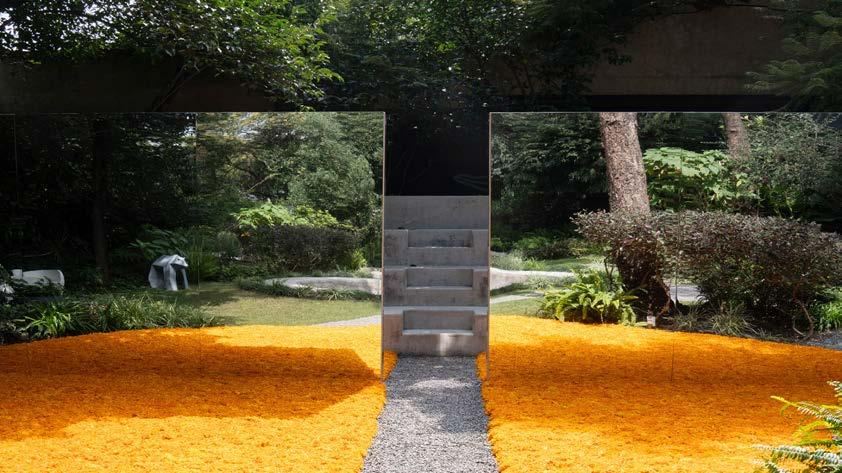
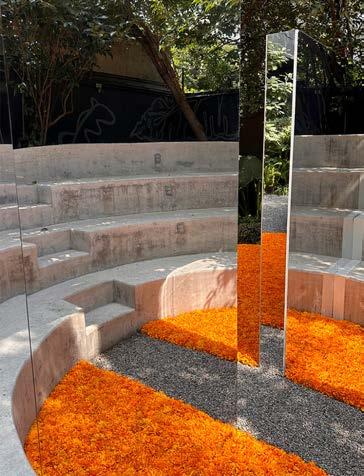
En honor al Día de Muertos, “Reflejos Inesperados” es una instalación artística que reinterpreta una de las tradiciones más queridas de México desde una mirada contemporánea, explorando la conexión profunda entre la vida y la muerte. La obra, concebida como un portal entre ambos mundos, invita a los visitantes a cruzar un umbral simbólico marcado por un muro de espejos, donde sus propios reflejos se entrelazan con la memoria de quienes ya no están.
Vista aérea / Aerial view
Fotografía / Photography: Jaime Navarro
In honor of Day of the Dead, “Unexpected Reflections” is an artistic installation that reinterprets one of Mexico’s most cherished traditions from a contemporary perspective, exploring the deep connection between life and death. The piece, conceived as a portal between both worlds, invites visitors to cross a symbolic threshold marked by a wall of mirrors, where their own reflections intertwine with the memory of those who are no longer with us.
Un portal entre ambos mundos invita a los visitantes a cruzar un umbral simbólico marcado por un muro de espejos, donde sus propios reflejos se entrelazan con la memoria de quienes ya no están.
A portal between both worlds, invites visitors to cross a symbolic threshold marked by a wall of mirrors, where their own reflections intertwine with the memory of those who are no longer with us.
La instalación cobra vida a través de la participación del público. Los visitantes son invitados a escribir los nombres de seres queridos en cubos de madera y a depositarlos en el mundo de los muertos, convirtiéndose en creadores activos de este altar colectivo. Con cada cubo, el espacio se llena de significados personales, de historias y de un vínculo que trasciende el tiempo.
Esta intervención no es solo un tributo a la memoria; es una experiencia íntima y transformadora, un lugar donde lo místico y lo moderno se encuentran. En este espacio de contemplación y respeto, se honra la tradición y se reflexiona sobre el tránsito entre la existencia y el recuerdo.
The installation comes to life through public participation. Visitors are invited to write the names of loved ones on wooden blocks and place them in the world of the dead, becoming active creators of this collective altar. With each block, the space fills with personal meaning, stories, and a bond that transcends time.
This intervention is not just a tribute to memory; it is an intimate and transformative experience, a place where the mystical and the modern meet. In this space of contemplation and reverence, tradition is honored and the passage between existence and remembrance is reflected upon.
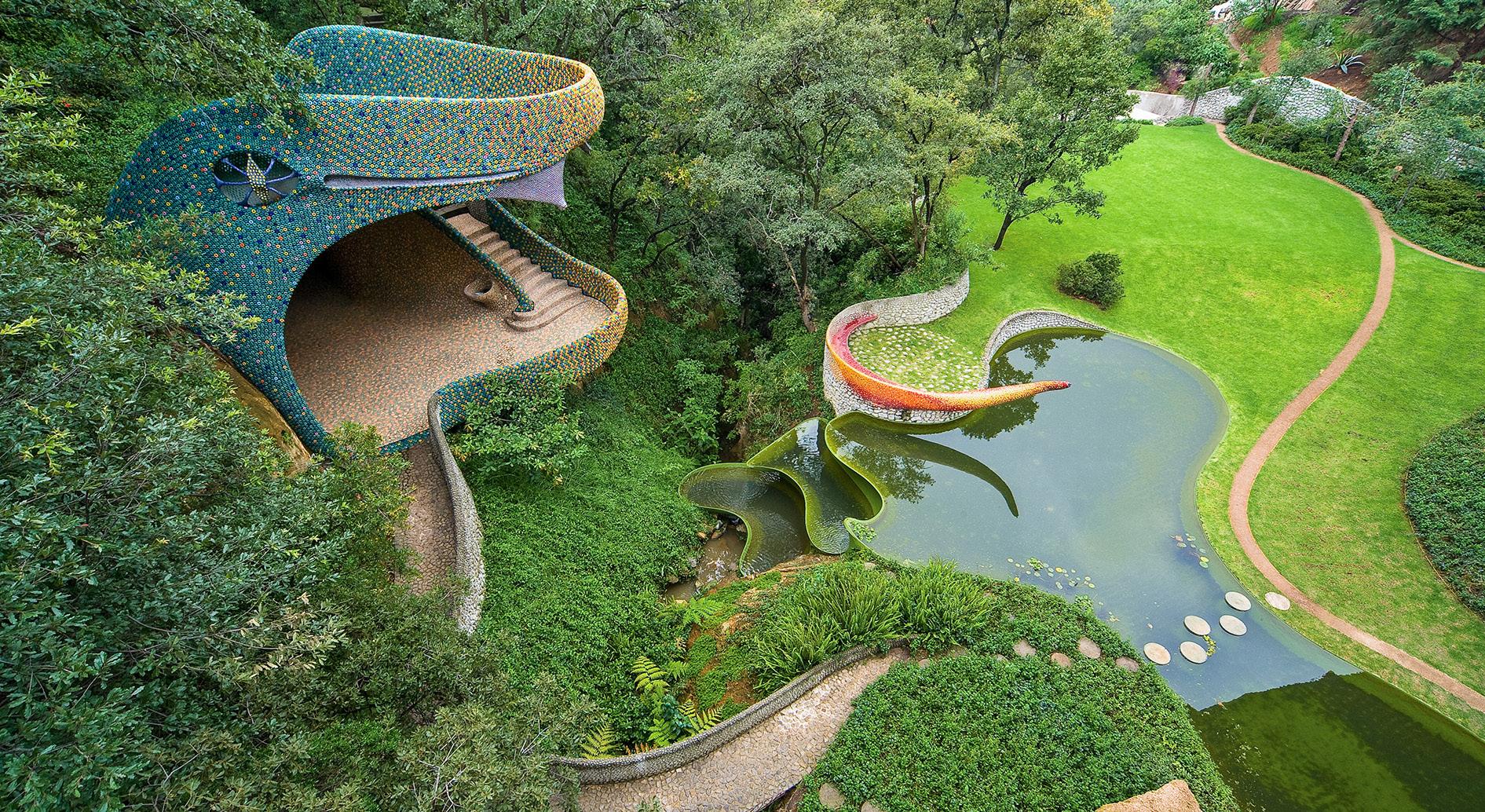
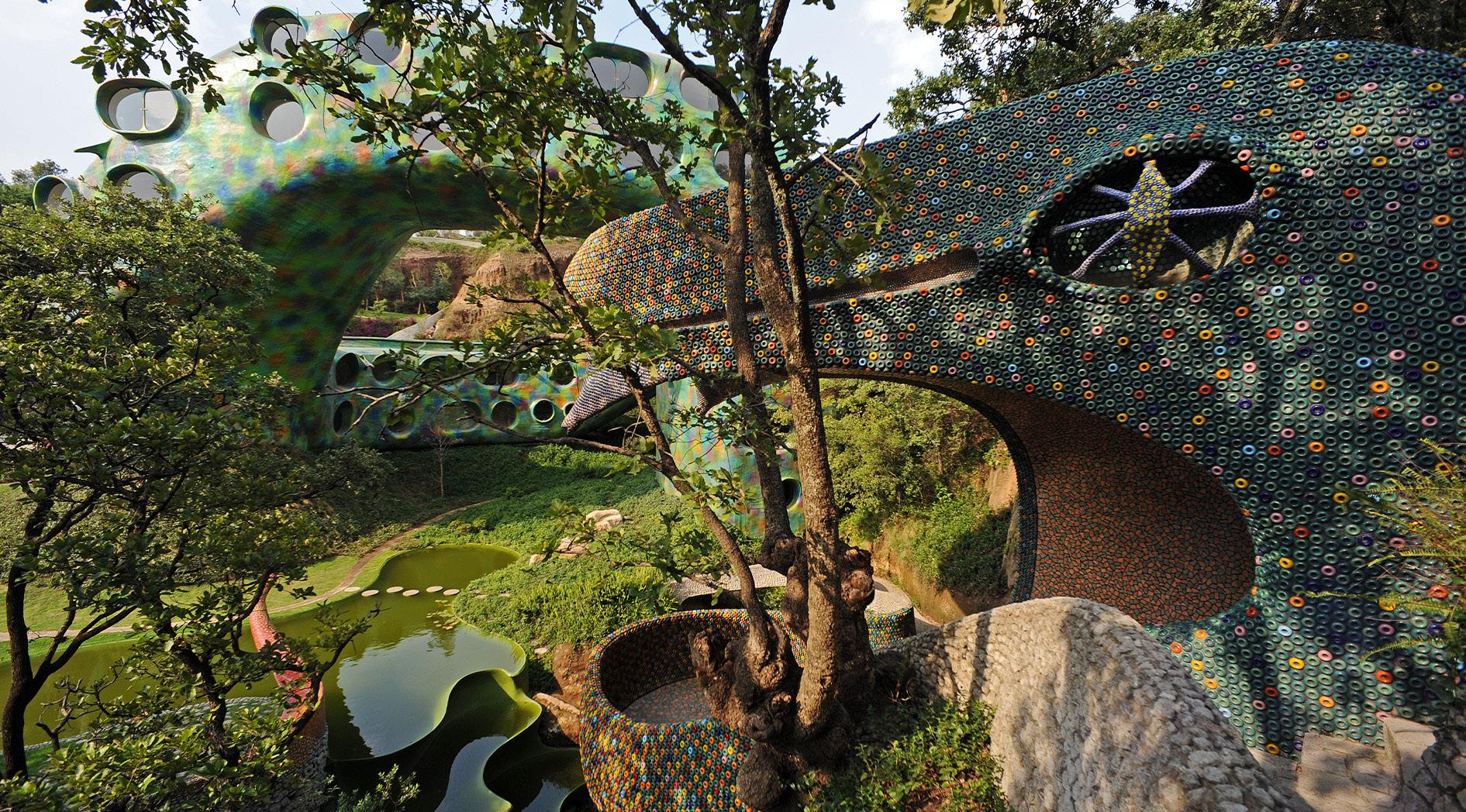
Estanque y cabeza de serpiente / Pond and snake head Fotografía / Photography: Francisco Llubert
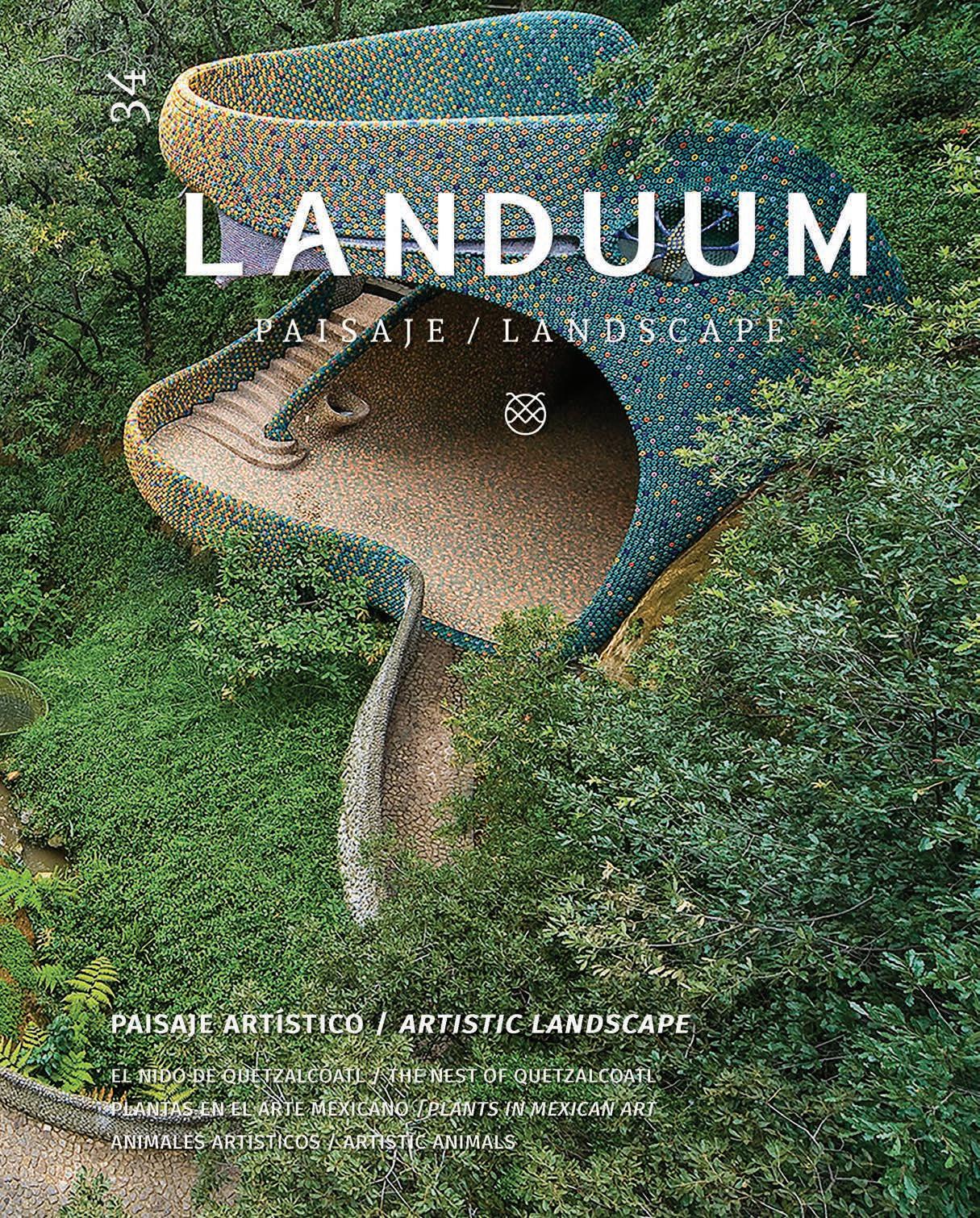
El Nido de Quetzalcóatl es un proyecto arquitectónico del arquitecto Javier Senosiain del año 2000. La creación de este espacio fue un reto a nivel de construcción debido al terreno irregular de 5,000m2 en el cual se encuentra, sin embargo, con el paso del tiempo se logró crear un conjunto habitacional de 10 departamentos, rodeado de jardines, espejos de agua y un bosque de encinos.
Localizado en Naucalpan, Estado de México, El Nido de Quetzalcóatl es un hábitat que busca integrar a los humanos a la naturaleza, evitando afectar al ecosistema local. A un costado de El Nido se encuentra el Parque Quetzalcóatl, un proyecto creado para la preservación de este pulmón verde al norponiente de la Ciudad de México.
En el terreno podemos encontrar varias cañadas que son parte indispensable del ecosistema, ya que se absorbe el bióxido de carbono, se produce oxígeno, se regula la temperatura y se mantiene la humedad. Por otro lado, el
The Nest of Quetzalcóatl is an architectural project by architect Javier Senosiain. The creation of this space was a challenge at the construction level due to the irregular terrain of 5,000 square meters in which it is located, however with time it was possible to create a residential complex of 10 apartments, surrounded by gardens, water mirrors and a forest of oaks.
Located in Naucalpan, State of Mexico, the Nest of Quetzalcóatl is a habitat that seeks to integrate humans into nature, avoiding affecting the local ecosystem. Next to it, we have Parque Quetzalcóatl, another project created for the preservation of this green lung located to the northeast of Mexico City.
On the terrain we can find several streams that are indispensable as they are key elements for the ecosystem; carbon dioxide is absorbed, oxygen is produced, the temperature is regulated and humidity is maintained. On the other hand, the water
La estructura principal es el cuerpo de Quetzalcóatl, de cuerpo maleable y hecho de ferrocemento de un colorido iridiscente; esmeralda dorada que combina con un azul violeta profundo, como las plumas del quetzal.
The main structure is the body of Quetzalcóatl, with a malleable body made of ferrocement of an iridescent color; golden emerald that combines with a deep violet blue, like the feathers of the quetzal.
agua que desechan las casas, pasa a la planta de tratamiento con la que cuenta el conjunto, después de ser tratada es enviada también al espejo de agua, para el riego de las áreas verdes.
La estructura principal es el cuerpo de Quetzalcóatl, de cuerpo maleable y hecho de ferrocemento de un colorido iridiscente; esmeralda dorada que combina con un azul violeta profundo, como las plumas del quetzal, cuerpo ondulante que se sumerge, penetra y emerge, para volver a refugiarse en el mundo interior de donde proviene.
discarded by the houses goes to the treatment plant that the complex has, after being treated it is also sent to the water mirror, for irrigation of all green areas.
The main structure is the body of Quetzalcóatl, with a malleable body made of ferrocement of an iridescent color; golden emerald that combines with a deep violet blue, like the feathers of the quetzal. Its undulating body that submerges, penetrates and emerges, to return to take refuge in the inner world from which it comes.
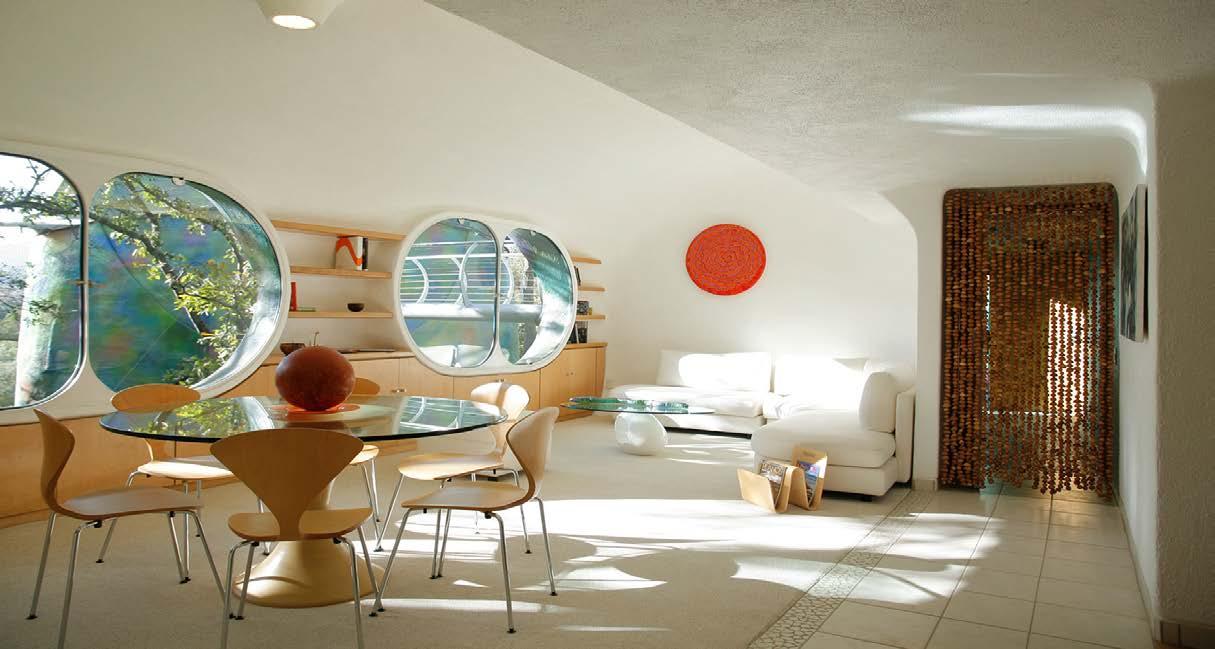
La serpiente cósmica que establece una mediación entre el cielo y la tierra, y en cuyo volumen interno que es de 6.50 m. de alto por 8.60 m. de ancho con doble nivel se encuentran las casas, de aproximadamente 200 m2 cada una; con bóvedas internas, muros de colores cálidos, terrosos y semicurvas, y distintas ventanas con vistas sorprendentes hacia los jardines.
The cosmic serpent that establishes a mediation between heaven and earth, and whose internal volume is 6.50 m. high by 8.60 m. wide with double levels are the houses, of approximately 200m 2 each. With internal vaults, walls in warm, earthy and semi-curved colors, and different windows with surprising views towards the gardens.
El Nido de Quetzalcóatl The Nest of Quetzalcoatl
El Nido de Quetzalcóatl
Fotografía / Photography Francisco Llubert
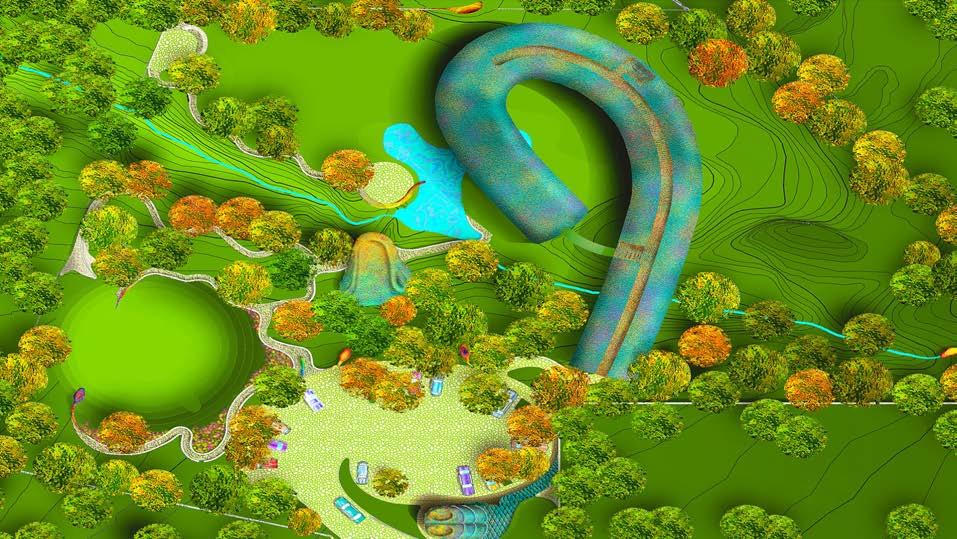
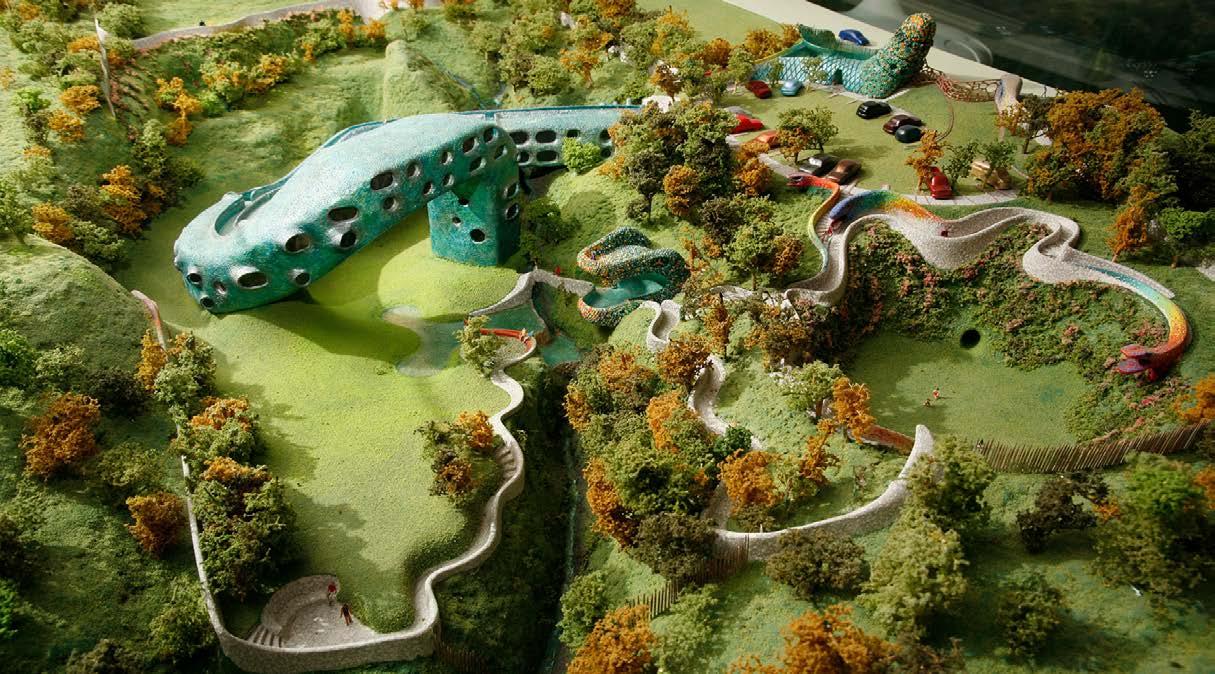
El acceso a los departamentos se logra por el lomo de la serpiente, a través de un pasillo largo se desciende a las tres primeras casas y bajando una escalera a las siete restantes. Para llegar a estas últimas, se baja a un nivel y cada lado encontramos una vivienda, debajo de éstas hay otras dos. Finalmente, en el descanso de la escalera hay un puente colgante que conecta a las últimas tres casas. Entrando al condominio, junto al acceso peatonal, aparece en el crótalo de la gran serpiente que es una construcción de tres plantas: En la superior -cascabelse encuentra el depósito de agua, debajo de ésta la caseta de vigilancia y en la interior el cuarto de máquinas y bodegas para cada uno de los departamentos.
Access to the apartments is by the serpent’s back, through a long corridor one descends to the first three houses and down a staircase to the remaining seven. After you go down to a level and each side we find a house, below these there are two others. Finally at the landing of the staircase there is a suspension bridge that connects the last three houses. Entering the condominium, next to the pedestrian access, the large snake appears on the roof, which is a threestorey construction: In the upper one -jingle bell- is the water tank, below it the guardhouse and inside the machine room and warehouses for each of the departments.
Maqueta realista a escala / Realistic scale model Fotografía / Photography Arquitectos Senosiain
Plano de conjunto / Master plan Ilustración / Illustration Arquitectos Senosiain
Interior
Fotografía / Photography: Francisco Llubert
Azulik Tulum
Por/ By:
Roth Architecture / Wish & Co
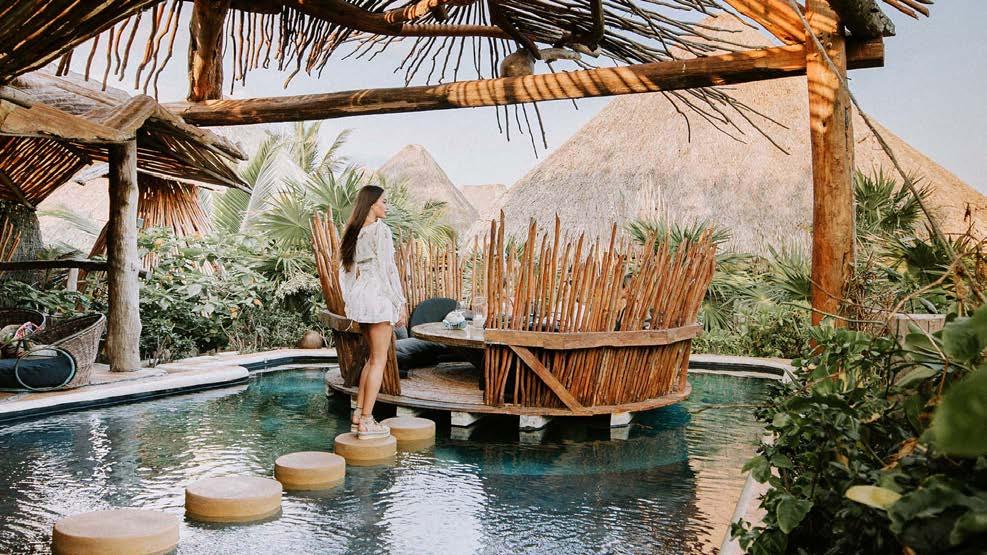
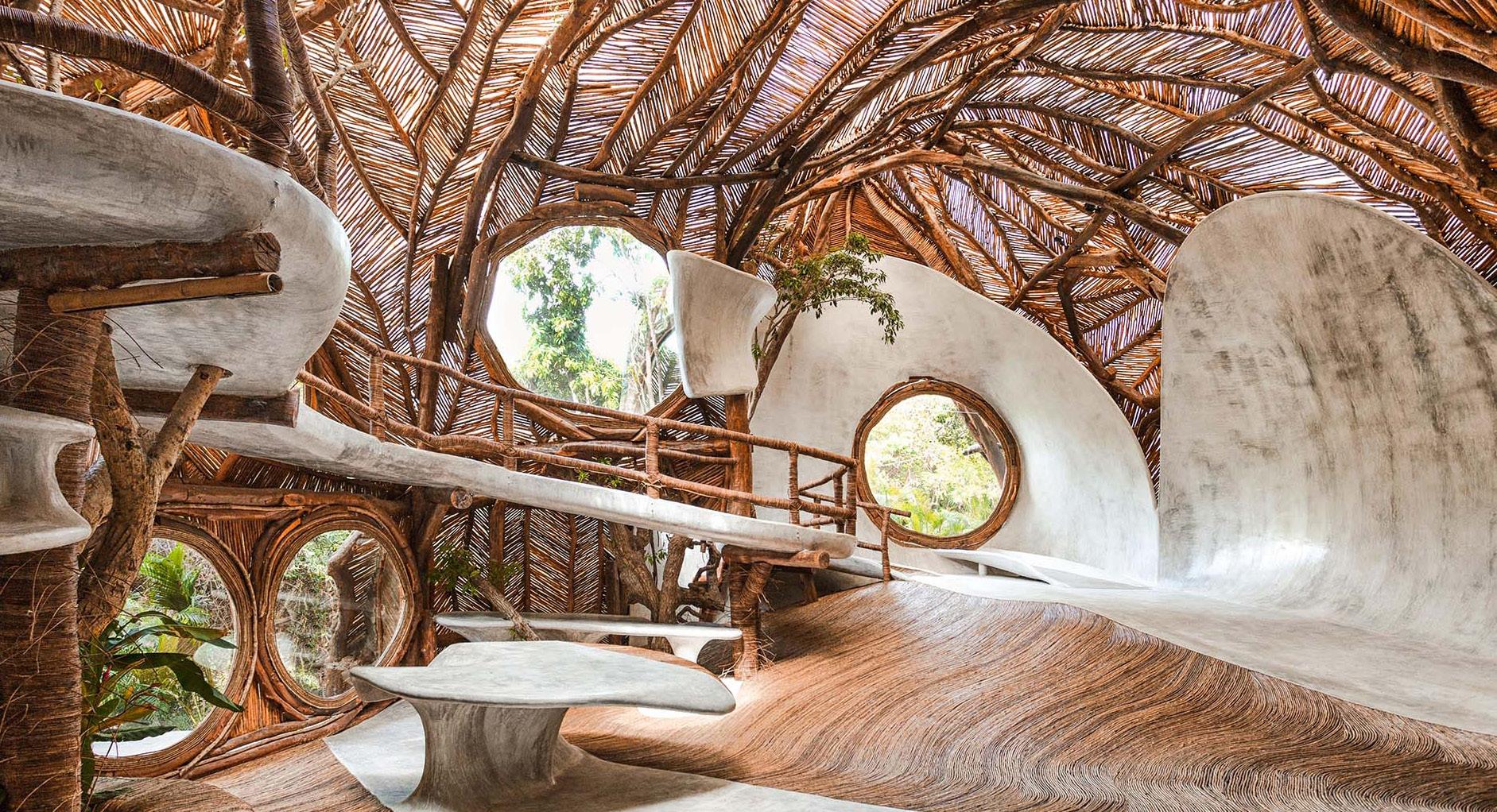
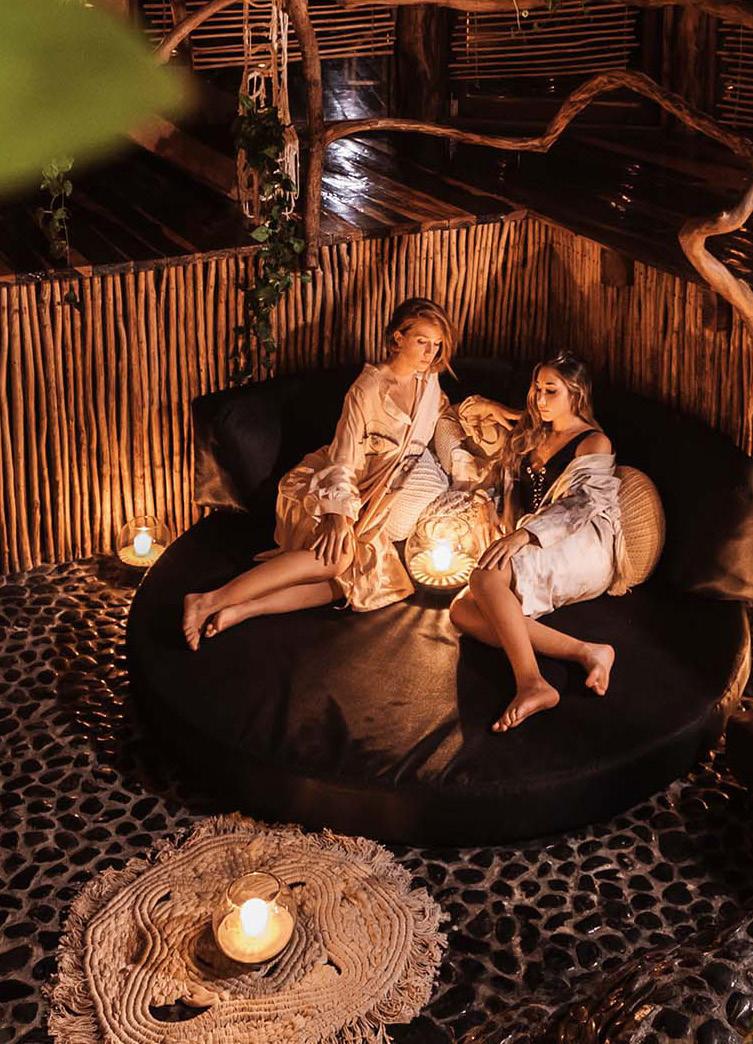
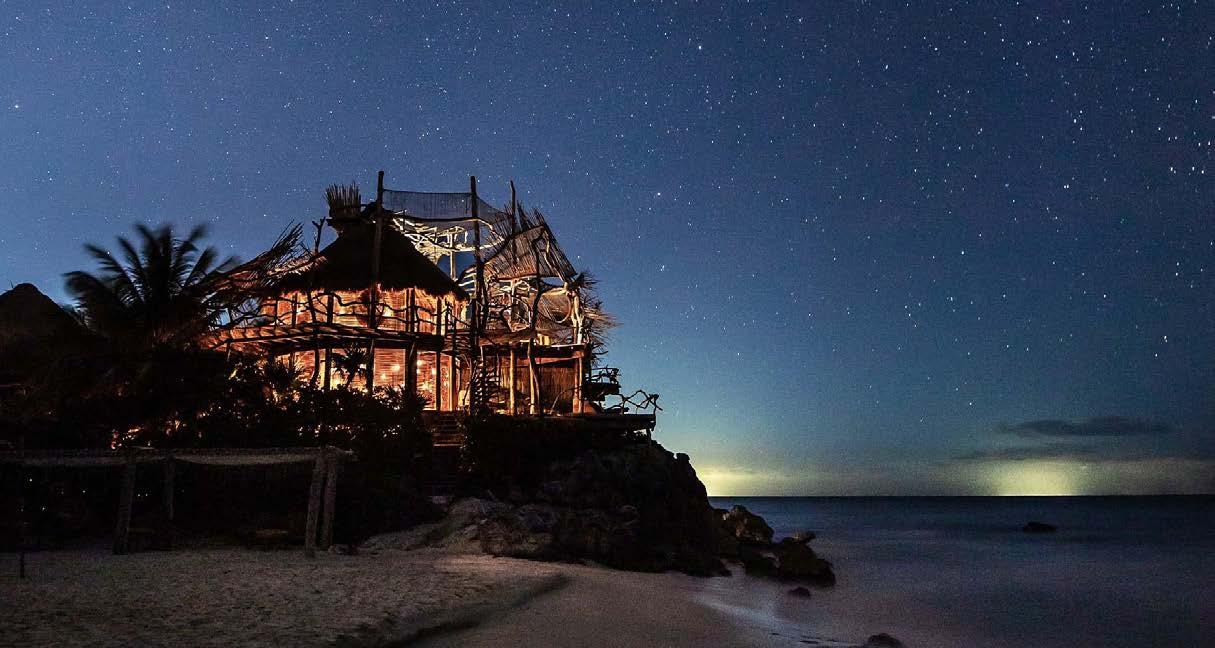
Reconocido por su arquitectura de inspiración orgánica, este hotel pionero en hospitalidad sensorial se ha consolidado como un emblema del lujo en la naturaleza. Su propuesta rinde homenaje a las tradiciones ancestrales desde una visión holística del bienestar, en diálogo constante con la creatividad contemporánea.
Interior
Fotografía / Photography: Cortesía Wish & Co
Recognized for its organically inspired architecture, this pioneering hotel in sensory hospitality has become an emblem of luxury in nature. Its vision pays tribute to ancestral traditions through a holistic approach to well-being, in constant dialogue with contemporary creativity.
Elemento de agua y naturaleza / Water feature and nature
Fotografía / Photography Cortesía Wish & Co
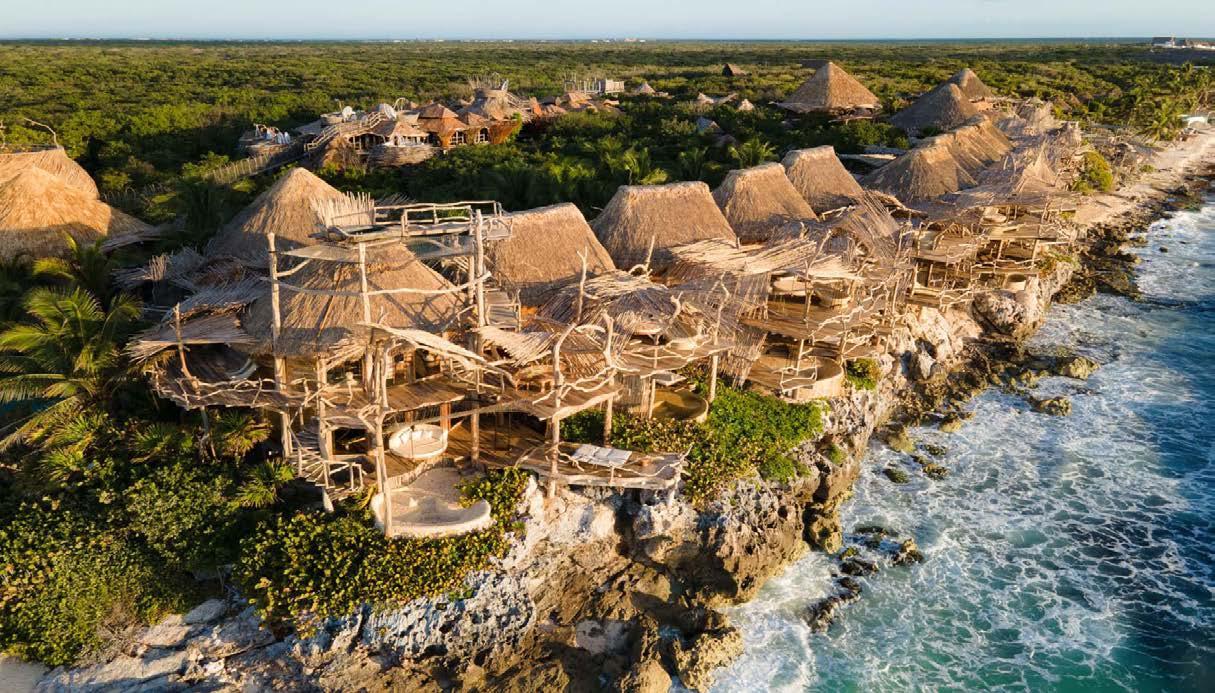
El deseo de reconectarse con lo esencial y establecer un vínculo auténtico con la naturaleza dio origen a este proyecto, un refugio arquitectónico inmerso entre las aguas turquesa del Caribe mexicano y la vegetación selvática de la Península de Yucatán.
En este paisaje, donde la arena blanca se entrelaza con los manglares, el lujo abandona lo superfluo y se convierte en una experiencia que estimula los sentidos a través de la arquitectura, el arte, el diseño y la contemplación del entorno.
Pionero del barefoot luxury y de la sostenibilidad en Tulum, Azulik (nombre que une la palabra “azul” con ik, viento en lengua maya) representa desde hace más de dos décadas un equilibrio entre el conocimiento ancestral y la innovación.
Diseñado por Eduardo Roth, arquitecto autodidacta y ecologista, el proyecto manifiesta una identidad estructural propia,
Born from the desire to reconnect with the essentials and establish an authentic bond with nature, the project is an architectural refuge nestled between the turquoise waters of the Mexican Caribbean and the lush jungle of the Yucatán Peninsula.
In this landscape, where white sand merges with mangroves, luxury sheds its excess and transforms into an experience that awakens the senses through architecture, art, design, and the contemplation of the surroundings.
A forerunner of barefoot luxury and sustainability in Tulum, Azulik—named by combining the word azul (blue) with ik, the Mayan word for wind— has, for over two decades, represented a balance between ancestral wisdom and contemporary innovation.
Azulik Tulum
Visitar Azulik es una experiencia que estimula los sentidos a través de la arquitectura, el arte, el diseño y la contemplación del entorno.
Visiting Azulik is an experience that awakens the senses through architecture, art, design, and the contemplation of the surroundings.
construida a partir de formas orgánicas, materiales naturales y un lenguaje que privilegia la integración con el paisaje.
Las villas, concebidas como santuarios para los nómadas contemporáneos, ofrecen espacios amplios, vistas abiertas y materiales que evocan lo elemental: techos de palma, terrazas de bejuco, maderas
Designed by Eduardo Roth, a self-taught architect and environmentalist, the project expresses a distinct structural identity composed of organic forms, natural materials, and a language that favors harmony with the landscape.
The villas, conceived as sanctuaries for contemporary nomads, offer generous spaces, open views, and materials that evoke the elemental: palm-thatched
tropicales y mosaicos hechos a mano. Cada una de las 48 suites se adapta al entorno con una estética artesanal y rústica que dialoga con la vegetación y el mar.
Azulik es una propuesta arquitectónica que celebra la naturaleza y la pone en el centro de una experiencia que conjuga hábitat, cultura y sensibilidad ambiental.
roofs, bejuco-woven terraces, tropical woods, and hand-crafted mosaic bathtubs. Each of the 48 suites blends seamlessly into its surroundings with a rustic, artisanal aesthetic that speaks to both the jungle and the sea.
Azulik is an architectural proposal that celebrates nature, placing it at the heart of an experience where habitat, culture, and environmental sensitivity converge.
Vista aérea / Aerial view
Fotografía / Photography: Cortesía Wish & Co
Vista nocturna / Nocturnal view Fotografía / Photography Cortesía Wish & Co
Interior Fotografía / Photography Cortesía Wish & Co
Casa uno - Paisaje silvestre para casa de campo
Casa
uno
- Wild landscape for countryside house
Por/ By:
Para este proyecto ubicado en Atlixco, Puebla, replicamos la estética original empleando plantas nativas, favoreciendo un bajo mantenimiento y aclimatación a los cambios extremos de esta selva seca caducifolia. Reforestamos los alrededores con 8 árboles endémicos floridos; trazamos entre ellos y los bosquetes existentes, un andador perimetral; serpenteando acentos estratégicos como una ceiba endémica que llaman “pochota”, biznagas y agaves.
El jardín florido es un laberinto serpenteante con un desayunador al centro a la sombra de 4 palos mulatos, que generarán un pabellón vegetal, como un domo. Además, se proyectaron 14 distintas especies de salvias, resilientes a estiaje, y atractoras de polinizadores.
For this project located in Atlixco, Puebla, we replicated the original aesthetic using native plants, favoring low maintenance and adaptability to the extreme conditions of this dry deciduous forest. We reforested the surroundings with eight flowering endemic trees; between them and existing groves, we laid out a perimeter walkway, winding around strategic highlights such as an endemic ceiba known as “pochota,” barrel cacti, and agaves.
The flowering garden is a winding labyrinth with a breakfast area at its center, shaded by four gumbo-limbo trees that will form a vegetal pavilion, like a dome. In addition, 14 different species of salvias were planned, all drought-resistant and attractive to pollinators.
Cómo acento en el paisaje, nos apoyamos en el uso de elementos de piedra y rocas como elemento decorativo y artístico, ofreciendo una atmósfera contemplativa e inmersiva.
As a focal point in the landscape, we incorporated stone and rock elements as decorative and artistic features, creating a contemplative and immersive atmosphere.
Adicionalmente, se propusieron pastizales y dedo moro consolidando taludes, así como el resto de las jardineras son reiterativas y siempre verdes. Se construyó una terraza para consolidar el acceso secundario, junto con escalinatas que dan continuidad a la materialidad previa. Constantemente recurrimos a la gravilla sello de mar como elemento unificador, un acabado permeable que reduce mantenimiento, y no escatima en estética.
Additionally, grasslands and Rhodes grass were proposed to stabilize the slopes, while the rest of the garden beds are repetitive and evergreen. A terrace was built to reinforce the secondary access, along with stairways that continue the existing material palette. We consistently used sea gravel as a unifying element, a permeable finish that reduces maintenance without compromising aesthetics.
Cómo acento en el paisaje, nos apoyamos en el uso de elementos de piedra y rocas como elemento decorativo y artístico, ofreciendo una atmósfera contemplativa e inmersiva. Incluimos colección de metates y rocas talladas; piletas de piedra distribuidas en las esquinas para generar humedad; bancas de marmol negro macizo con diseño suave y contemporaneo; así como rocas gigantes producto de excavación, intervenidas por Audino Díaz. Una de ellas es una pileta, y el resto son bancas gigantes con cortes burdos que rodean un fogatero, también de piedra.
El arte de la piedra en un jardín es el de la ubicación, y su ideal no se desvía del de la naturaleza.
As a focal point in the landscape, we incorporated stone and rock elements as decorative and artistic features, creating a contemplative and immersive atmosphere. The design includes a collection of metates and carved stones; stone basins placed in the corners to generate humidity; solid black marble benches with a soft, contemporary design; and massive rocks unearthed during excavation, artistically intervened by Audino Díaz. One of these serves as a water basin, while the others function as large benches with rough cuts, arranged around a stone fire pit.
The art of stone in a garden lies in its placement, and its ideal does not stray from that of nature.
Área / Area:
1,100m² en 1,800m²
Año / Year: 2024
Arquitectura / Architecture:
Triplet + Taller Ezequiel Aguilar
Martinez + Arquitectura
UPA: Roberto Chantres, Enrique Ramirez y Roberto Villarreal
Escalinata a cancha y andador / Stairs to court and path Fotografía / Photography: Roberto Villarreal Llamazares
Paisaje a través de la fotografía; Reflexión desde una mirada contemplativa
Landscape through photography; A reflection from a contemplative gaze
Por/ By:
Ana Paula Álvarez
Lo que aquí se expone no pretende establecerse como norma, ni desmerecer otros estilos de fotografía que exploran otros caminos. Cada mirada tiene valor en la medida en que nace de una búsqueda sincera. Este texto surge
Atardecer desértico / Desert
Fotografía / Photography: Ana Paula
What is presented here is not intended to be a standard, nor to diminish other styles of photography that explore different paths. Every gaze holds value insofar as it arises from a sincere search. This text emerges from a personal
desde una práctica personal: una forma de mirar, de vivir el paisaje, detenerse ante la luz, la sombra y el color, siendo influenciada por una sensibilidad más cercana a ciertas filosofías orientales.
No se trata únicamente de una elección estética, sino de buscar coherencia entre quien observa y lo observado. Estas reflexiones sobre la naturaleza no son verdades absolutas, sino una invitación a mirar desde otro ángulo y permitir que la imagen surja sin necesidad de ser forzada.
La naturaleza es un organismo vivo. Es dinámica y cambiante. Comprenderla requiere atención, tiempo y constancia. Volver al mismo lugar una y otra vez permite profundizar en los detalles, establecer vínculos y nutrir el proceso creativo.
Regresar no significa siempre al mismo sitio físico, sino a cualquier espacio donde se pueda seguir afinando el ojo, especialmente para anticipar las
practice: a way of seeing, of experiencing the landscape, of pausing before light, shadow, and color, influenced by a sensitivity closer to certain Eastern philosophies.
This is not merely an aesthetic choice, but an attempt to find coherence between the observer and the observed. These reflections on nature are not absolute truths, but an invitation to look from another angle and allow the image to emerge without needing to be forced.
Nature is a living organism. It is dynamic and everchanging. Understanding it requires attention, time, and consistency. Returning to the same place again and again allows for a deeper appreciation of its details, the formation of connections, and the nurturing of the creative process.
Returning doesn’t always mean going back to the same physical place, but rather to any space where the eye can continue to be refined, especially
sunset
Álvarez
Arriba y abajo: / Top and below: Nombre / Name Fotografía / Photography Ana Paula Álvarez
Paisaje a través de la fotografía; Reflexión desde una mirada contemplativa Landscape through photography; A reflection from a contemplative gaze
condiciones de luz, que pueden transformar por completo una imagen. Se trata de observar cómo cambian las superficies, volúmenes, colores y texturas a lo largo del día, y cómo la luz y la sombra interactúan con ese entorno.
La forma en la que habitamos y representamos un paisaje también habla de nuestra relación con él. Esta práctica invita a observar con mayor atención nuestro entorno cotidiano y a reconocer una conexión con sistemas aún más amplios como el cosmos.
Más allá de los parámetros técnicos (diafragma, velocidad, ISO, etc.), la fotografía de paisaje es, sobre todo, interpretación emocional. En la imagen se expresa y se filtra de forma inevitable nuestra experiencia, memoria y forma de entender el mundo. La imagen se vuelve una interpretación personal, casi un autorretrato de quien la toma. Desde mi punto de vista, esto es lo que realmente marca la diferencia. Y desde esta interpretación, la técnica nunca podrá ser considerada como el verdadero lenguaje.
to anticipate lighting conditions, which can completely transform an image. It’s about observing how surfaces, volumes, colors, and textures change throughout the day, and how light and shadow interact with that environment.
The way we inhabit and represent a landscape also speaks to our relationship with it. This practice invites us to observe our everyday surroundings more attentively and to recognize a connection with broader systems, such as the cosmos.
Beyond technical parameters (aperture, shutter speed, ISO, etc.), landscape photography is, above all, emotional interpretation. Our experience, memory, and way of understanding the world inevitably express themselves and filter through the image. The photograph becomes a personal interpretation, almost a self-portrait of the one who takes it. From my perspective, this is what truly makes the difference. And through this interpretation, technique can never be considered the true language.
Más allá de los parámetros técnicos, la fotografía de paisaje es, sobre todo, interpretación emocional.
La fotografía análoga suma a esto una dimensión manual y artesanal. El proceso más lento y limitado en cantidad de disparos genera una relación más consciente con el momento. El grano, las imperfecciones o lo impredecible del revelado aportan una textura que también comunica y se crea una armonía con las características orgánicas del revelado y del paisaje. Estos métodos invitan a trabajar con más calma y atención.
Comprender cómo la luz y el color cambian permite anticipar momentos clave. La luz del amanecer o el atardecer suele ofrecer tonos más cálidos y suaves y puede convertir lo ordinario en extraordinario, mientras que la del mediodía
Beyond technical parameters, landscape photography is, above all, emotional interpretation.
Analog photography adds to this a manual and artisanal dimension. The slower process and limited number of exposures foster a more conscious relationship with the moment. The grain, imperfections, and unpredictability of development contribute a texture that also communicates, creating a harmony between the organic qualities of the developing process and the landscape itself. These methods invite us to work with greater calm and attention.
Understanding how light and color change allows us to anticipate key moments. The light at sunrise or sunset often offers warmer, softer tones and can turn the ordinary into something extraordinary, while midday light creates strong
Nombre / Name
Fotografía / Photography: Ana Paula Álvarez
Nombre / Name
Fotografía / Photography: Ana Paula Álvarez
Nombre / Name
Fotografía / Photography: Ana Paula Álvarez
Nombre / Name
Fotografía / Photography Ana Paula Álvarez
genera contrastes marcados y brillos con fuerza y dramatismo. Ambas opciones tienen su potencial expresivo, según la intención.
La sombra no es una ausencia, sino parte integral de la composición: da forma y profundidad. Su presencia ayuda a definir la luz. Del mismo modo, el color puede usarse no solo como elemento estético, sino como herramienta para representar fielmente una atmósfera. La fotografía de paisaje, entonces, puede entenderse como una práctica y filosofía de equilibrio para revelar la totalidad de una escena.
Hay preferencias que tienden a saturar los tonos y realzar el contraste y definición para lograr imágenes llamativas y artificialmente intensas, pero desde mi punto de vista, se pierde más de lo que se gana.
Las imprecisiones pueden ser más adecuadas que la nitidez excesiva y los colores sobresaturados, que muchas veces rompen la armonía del paisaje y lo alejan de su esencia. Desde una sensibilidad más cercana al pensamiento oriental, tiene sentido poner el enfoque en una documentación que no intenta sumarle o restarle para embellecer. Como escribe Tanizaki en El elogio de
Álvarez
contrasts and highlights with intensity and drama. Both options have expressive potential, depending on the intention.
Shadow is not an absence, but an integral part of the composition: it gives shape and depth. Its presence helps define the light. Likewise, color can be used not only as an aesthetic element but as a tool to faithfully represent an atmosphere. Landscape photography, then, can be understood as both a practice and a philosophy of balance—one that reveals the wholeness of a scene.
There are preferences that tend to saturate tones and enhance contrast and sharpness to achieve striking and artificially intense images, but from my point of view, more is lost than gained.
Imprecisions can be more appropriate than excessive sharpness and oversaturated colors, which often disrupt the harmony of the landscape and distance it from its essence. From a sensitivity closer to Eastern thought, it makes sense to focus on documentation that neither adds nor subtracts to beautify. As Tanizaki writes in In Praise of Shadows, “…we delight in sinking into darkness,” valuing the
la sombra, “...nos hundimos con deleite en las tinieblas”, valorando lo opaco, lo imperfecto y lo indefinido como una forma más íntima y respetuosa de contemplar. Esta filosofía invita a apreciar la sombra no como ausencia de luz, sino como un espacio lleno de misterio.
La sombra, lejos de ser un defecto a corregir, se convierte en un valor a destacar; es ahí donde se encuentra gran parte de la poesía visual del paisaje. En lugar de eliminar las zonas oscuras para “mejorar” la imagen, se puede aprender a convivir con ellas, a dejar que hablen desde su profundidad.
También es importante considerar el contexto en el que se vincula el paisaje. No siempre es necesario eliminar elementos como la arquitectura o la presencia de personas. Estos componentes no necesariamente deben ser vistos como una interferencia; al contrario, pueden aportar información relevante, establecer relaciones visuales y ofrecer contrastes que enriquecen la narrativa.
opaque, the imperfect, and the undefined as a more intimate and respectful way of contemplating. This philosophy invites us to appreciate shadow not as an absence of light, but as a space full of mystery.
Shadow, far from being a flaw to correct, becomes a value to highlight; it is there that much of the visual poetry of the landscape is found. Instead of eliminating the dark areas to “improve” the image, one can learn to coexist with them, allowing them to speak from their depth.
It is also important to consider the context in which the landscape is connected. It is not always necessary to remove elements such as architecture or the presence of people. These components do not necessarily have to be seen as interference; on the contrary, they can provide relevant information, establish visual relationships, and offer contrasts that enrich the narrative.
Nombre / Name
Fotografía / Photography: Ana Paula Álvarez
Nombre / Name
Fotografía / Photography: Ana Paula
Nombre / Name Fotografía / Photography Ana Paula Álvarez
Incluir elementos que naturalmente existen en la escena permite ubicar el paisaje dentro de una escala comprensible y puede aportar referencias espaciales o narrativas que faciliten su interpretación. En el caso de la arquitectura, por ejemplo, su presencia muestra cómo las personas habitan e intervienen en el territorio, proporcionando información visual indirecta sobre la transformación de un entorno. Funciona como una herramienta de observación que da cuenta de esa interacción, con una atención centrada en lo que está realmente ahí, ya sea en primer, segundo o tercer plano, sin necesidad de idealizar ni simplificar la escena. Esto permite representar el paisaje como un sistema activo en el que lo natural y lo construido coexisten. La naturaleza y la cultura no se oponen, sino que forman parte de una misma realidad.
Mi intención como fotógrafa es lograr trabajar con una documentación donde el paisaje deja de ser una postal para volverse experiencia, donde la imagen no se impone, sino que se revela. Fotografiar el paisaje puede ser una forma de practicar la atención y el respeto por aquello que está más allá de nosotros.
Consideraciones técnicas generales
El lente es más importante que el cuerpo de cámara: Un lente de calidad ofrece mejor nitidez, contraste y manejo del color. Más allá del cuerpo, una buena óptica permite mayor rango de exploración sin perder información, ya sea en formato análogo o digital.
Filtros polarizadores (recomendados: Urth): Ayudan a reducir reflejos no deseados en superficies como agua y hojas, saturar de forma natural los colores, y suavizar la atmósferageneral de la imagen. Ideales para condiciones de luz intensa.
Including elements that naturally exist in the scene allows the landscape to be placed within a comprehensible scale and can provide spatial or narrative references that facilitate its interpretation. In the case of architecture, for example, its presence shows how people inhabit and intervene in the territory, providing indirect visual information about the transformation of an environment. It functions as an observation tool that captures this interaction, focusing attention on what is actually there, whether in the foreground, background, or space, without the need to idealize or simplify the scene. This allows the landscape to be represented as an active system in which the natural and the constructed coexist. Nature and culture are not opposed to each other, but rather are part of the same reality.
My intention as a photographer is to achieve a documentary approach where the landscape ceases to be a postcard and becomes an experience, where the image is not imposed, but rather revealed. Photographing the landscape can be a way to practice attention and respect for that which lies beyond us.
General technical considerations
The lens is more important than the camera body: A quality lens offers better sharpness, contrast, and color management. Beyond the body, good optics allow for a greater scanning range without losing information, whether in analog or digital format.
Polarizing filters (recommended: Urth): Help reduce unwanted reflections on surfaces such as water and leaves, naturally saturate colors, and soften the overall atmosphere of the image. Ideal for bright lighting conditions.
Diafragma (Apertura): Para paisajes se recomienda trabajar con aperturas de (f/8 a f/16), lo que permite mayor profundidad de campo y nitidez en toda la escena.
ISO bajo: Usar valores de ISO bajos (100–400) minimiza el ruido digital y permite conservar el rango dinámico de luces y sombras, sobre todo en condiciones muy iluminadas.
Disparo en RAW (digital): Para conservar toda la información posible de luces y sombras, permitiendo una edición posterior más precisa sin pérdida de calidad.
Uso de trípode: Fundamental para mantener precisión en encuadres en condiciones de poca luz. También ayuda a trabajar con mayor calma y atención.
Diaphragm (Aperture): For landscapes, we recommend working with apertures (f/8 to f/16), which allow for greater depth of field and sharpness throughout the scene.
Low ISO: Using low ISO values (100–400) minimizes digital noise and preserves the dynamic range of highlights and shadows, especially in brightly lit conditions.
Shooting in RAW (digital): To preserve as much highlight and shadow information as possible, allowing for more precise post-editing without loss of quality.
Using a tripod: Essential for maintaining precise framing in lowlight conditions. It also helps you work more calmly and attentively.
Nombre / Name Fotografía / Photography Ana Paula Álvarez
Plantas en el arte mexicano
Plants in mexican art
Por/ By:
Armando Maravilla Ramírez / Felipe Arath Macías López
Siempre ha existido una estrecha relación entre el arte y la vegetación, desde las primeras representaciones gráficas de la humanidad hasta la obra de destacados artistas que han retratado a las plantas como parte esencial de la identidad cultural del país. Uno de los referentes en este vínculo es José María Velasco, quien, en su pintura muestra fresnos, salsas y chopos, retratando a la perfección el paisaje natural del México pre-revolucionario y revolucionario. En su obra, pueden leerse las temporalidades del Valle de México: las épocas de sequía y las de lluvia, es precisamente en la temporada seca cuando los fresnos alcanzan su mayor esplendor, desplegando sus flores y dando paso a sus frutos alados, que caen suavemente sobre la ciudad.
There has always been a close relationship between art and vegetation, from the earliest graphic representations of humanity to the work of renowned artists who have portrayed plants as an essential part of the country’s cultural identity. One of the key figures in this connection is José María Velasco, who, in his paintings, depicts ash trees, willows, and poplars, perfectly capturing the natural landscape of pre-revolutionary and revolutionary Mexico. His work reflects the temporal cycles of the Valley of Mexico: the dry and rainy seasons. It is precisely during the dry season that the ash trees reach their greatest splendor, displaying their flowers and releasing their winged fruits, which gently fall over the city.
/
Obra de José María Velazco / Work by José María Velazco Fotografía / Photography: Gobierno CDMX, vía Wikimedia Commons
BIBLIOGRAFÍA / BIBLIOGRAPHY:
Comisión Nacional para el Conocimiento y Uso de la Biodiversidad (CONABIO). “Montanoa tomentosa Cerv.” Malezas de México. GBIF Secretariat. “Montanoa tomentosa Cerv.” GBIF Backbone Taxonomy. https://www.gbif.org/es/species/5406080. Universidad Nacional Autónoma de México. Zoapatle. Atlas de las Plantas de la Medicina Tradicional Mexicana.
BIBLIOGRAFÍA / BIBLIOGRAPHY
Comisión Nacional para el Conocimiento y Uso de la Biodiversidad (CONABIO). “Amaranthus hybridus L.” Universidad Nacional Autónoma de México (UNAM), Facultad de Medicina. “Quelite.” Atlas de las Plantas de la Medicina Tradicional Mexicana.
Plantas en el arte mexicano
Plants in mexican art
Animales artísticos
Artistic animals
Por/ By: Mariana Andrea Herrera Flores
Patrones geométricos perfectos, destellos metálicos que cambian con la luz y gradientes de colores imposibles adornan a estos “artistas involuntarios” del mundo natural. Más allá de su impresionante belleza, estas criaturas despliegan una paleta de colores y diseños que no son meramente decorativos, sino herramientas esenciales para su supervivencia. Cada tonalidad y forma ha sido esculpida por millones de años de evolución, adaptándose para comunicarse, defenderse o mimetizarse en su entorno.
Algunos utilizan sus complejos patrones para engañar y confundir a depredadores, mientras que otros emplean colores vibrantes como señales para interactuar con sus congéneres o advertir sobre su toxicidad. La apariencia llamativa de estos animales no es solo un espectáculo visual, sino una sofisticada estrategia que demuestra la asombrosa capacidad de la vida para innovar y prosperar en los ecosistemas más variados del planeta.
Te invitamos a profundizar en el fascinante mundo donde el arte y la fauna se entrelazan, y a descubrir sobre el gran papel que estos animales artísticos juegan en sus hábitats y los roles que desempeñan en el equilibrio ecológico; ¿Te has preguntado alguna vez qué historias cuentan sus colores y cómo influyen en su supervivencia? Sumérgete conmigo en esta apasionante experiencia y déjate cautivar por los misterios que esconden cada uno de estos.
Perfect geometric patterns, metallic sparkles that change with light, and impossible color gradients adorn these “unwitting artists” of the natural world. These creatures are very beautiful, and their colors and patterns are important for their survival. Over millions of years, the color and shape of this organism have changed to help it survive. It might change to communicate, defend itself, or blend in with its surroundings.
Some use their complex patterns to deceive and confuse predators, while others use vibrant colors as signals to interact with their conspecifics or warn of their toxicity. The striking appearance of these animals is not just a visual spectacle, but a sophisticated strategy that demonstrates the amazing ability of life to innovate and thrive in the most varied ecosystems on the planet.
We invite you to delve into the fascinating world where art and wildlife intertwine, and discover about the great role that these artistic animals play in their habitats and the roles they play in the ecological balance; have you ever wondered what stories their colors tell and how they influence their survival? Dive with me in this exciting experience and let yourself be captivated by the mysteries that each of these hide.
/ BIBLIOGRAPHY:
/ BIBLIOGRAPHY
BIBLIOGRAFÍA
El Bibliote. “El Delfín.”
Fishipedia. “Synchiropus splendidus.”
ForDivers Blog. “Pez Mandarín: Sicodelia en el Arrecife.”
Animales artísticos
BIBLIOGRAFÍA
Sain Sr., Todd. “Picasso Bug.” Our Breathing Planet. Turismo de Observación. “Tangara Paraíso.” Wikipedia. “Sphaerocoris annulus.” Wikipedia, The Free Encyclopedia. Última modificación el 5 de mayo de 2024.
Artistic animals
El Sitio Roberto Burle Marx: un jardín de arte, memoria y biodiversidad
The Roberto Burle Marx Site: A garden of art, memory, and biodiversity
Por/ By: Dr. J. Cruz García Albarado
En mi reciente visita a Río de Janeiro, Brasil, tuve la oportunidad de adentrarme en la mente y el alma de uno de los paisajistas más influyentes del siglo XX, Roberto Burle Marx (1909-1994). Además de una larga y fructífera carrera en el
On my recent visit to Rio de Janeiro, Brazil, I had the opportunity to delve into the mind and soul of one of the most influential landscape architects of the 20th century: Roberto Burle Marx (1909–1994). In addition
paisajismo, fue un artista y ecologista brasileño, reconocido por su innovador uso de plantas nativas en el diseño de jardines. A lo largo de su carrera, diseñó más de 2,000 jardines en todo el mundo, destacándose por su enfoque artístico y su compromiso con la conservación ambiental.
El Sitio Roberto Burle Marx, quizá su espacio más emblemático, está situado en Barra de Guaratiba, a las afueras de Río de Janeiro, Brasil. Este vasto espacio de más de 400,000 m2 no solo fue su residencia durante los últimos veinte años de vida, sino también un laboratorio viviente donde arte, ecología y arquitectura del paisaje se entretejen con una intensidad poética única. Aquí se desarrolló el Jardín Tropical Moderno que tuvo una gran influencia en el paisajismo en Brasil y alrededor del mundo a partir de mediados del siglo XX.
Fue una tarde del 27 de mayo de 2025 cuando tuve la oportunidad de recorrer sus jardines junto con un grupo de visitantes. Caminamos entre sinuosos laberintos y espacios íntimos, donde pudimos contemplar de cerca la esencia de su obra. No es un jardín tradicional. Aquí, cada rincón revela una
to a long and fruitful career in landscape architecture, he was a Brazilian artist and environmentalist, renowned for his innovative use of native plants in garden design.
Over the course of his career, he designed more than 2,000 gardens worldwide, standing out for his artistic approach and his commitment to environmental conservation.
The Roberto Burle Marx Site, perhaps his most emblematic space, is located in Barra de Guaratiba, on the outskirts of Rio de Janeiro. This vast site of over 400,000 square meters was not only his residence during the last twenty years of his life, but also a living laboratory where art, ecology, and landscape architecture intertwine with a unique poetic intensity. It was here that the Modern Tropical Garden was developed—an approach that greatly influenced landscape design in Brazil and around the world from the mid-20th century onwards.
On the afternoon of the 27th of May, 2025, I had the chance to walk through these gardens with a group of visitors. We wandered through winding paths and intimate spaces, where we could closely observe the essence of his work. This is not a
Vista lateral de la casa principal / Side view of the main house Fotografía / Photography: Autor
Bromelias en el jardín y Roberto Burle Marx (1909-1994) / Bromeliads in the garden and Roberto Burle Marx (1909-1994) Fotografía / Photography: Autor (2025) y BNDES (2020)
composición viva, donde las plantas se expresan como formas plásticas: masas, ritmos, contrastes de texturas, juegos de luces y sombras. Una colección vasta de plantas traídas de otras latitudes a formar parte de estos bellos jardines.
Una colección botánica como expresión artística
El Sitio alberga más de 3,500 especies de plantas tropicales y subtropicales, muchas de ellas recolectadas personalmente por Burle Marx en expediciones botánicas por Brasil y América Latina. Su enfoque no era simplemente estético: defendía el uso de flora nativa y promovía la conservación de especies amenazadas cuando ese lenguaje aún era emergente.
Sus plantaciones, lejos de la simetría clásica, revelan una lógica de abundancia y espontaneidad controlada. Helechos arborescentes, bromelias, palmas, philodendros, alocasias y otras especies conviven en armonía, agrupadas con un ojo
traditional garden. Each corner reveals a living composition, where plants express themselves as plastic forms: masses, rhythms, contrasting textures, and interplay of light and shadow. A vast collection of plants brought from other latitudes has been integrated into these beautiful gardens.
A botanical collection as artistic expression
The site houses more than 3,500 species of tropical and subtropical plants, many of which were personally collected by Burle Marx during his plant hunting expeditions throughout Brazil and Latin America. His approach was not merely aesthetic: he championed the use of native flora and advocated for the conservation of threatened species, at a time when this language was still emerging.
His plantings, far from classical symmetry, reveal a logic of abundance and controlled spontaneity. Tree ferns, bromeliads, palms, philodendrons, alocasias, and other species
entrenado no solo en la botánica, sino en la pintura, la escultura y la escenografía.
La casa: un refugio para el arte total
Más allá del jardín que recorrimos con un guía entusiasta y conocedor de la obra paisajística de Burle Marx, la que fue su casa —modesta, de arquitectura racionalista— se nos reveló como una caja de tesoros. En primera instancia me quedé pasmado con mirar el porche y el jardín frontal. Ambos por demás conocidos en múltiples publicaciones, donde se vislumbra la integración de la tradición y la modernidad (casa-paisaje), una expresión del pensamiento estético. En su interior se respira un universo profundamente ecléctico: tapices, cerámicas, pinturas, muebles diseñados por él mismo, objetos litúrgicos y arte popular latinoamericano. Cada espacio refleja su personalidad multifacética, profundamente humanista, moderna y comprometida con la identidad cultural brasileña.
coexist in harmony, arranged with an eye trained not only in botany but also in painting, sculpture, and scenography.
The house: a refuge for total art Beyond the garden, which we explored with an enthusiastic guide well-versed in Burle Marx’s landscape work, his house— modest, with rationalist architecture—was revealed to us as a treasure chest. At first glance, I was struck by the porch and front garden. Both are widely featured in publications and exemplify the integration of tradition and modernity (house and landscape), a reflection of his aesthetic thinking. Inside, a profoundly eclectic universe unfolds: tapestries, ceramics, paintings, furniture designed by Burle Marx himself, liturgical objects, and Latin American folk art. Every space reflects his multifaceted personality—deeply humanistic, modern, and committed to Brazilian cultural identity.
El Sitio Roberto Burle Marx: un jardín de arte,
y
Roberto Burle Marx Site: A garden of art, memory, and biodiversity
Estudio del artista / Artist studio Fotografía / Photography: Autor (2025)
Escena emblemática del sitio / Emblematic scene of the site Fotografía / Photography Autor (2025)
Arte, paisaje y espiritualidad
Recorrer el Sitio es entender que para Burle Marx el jardín era mucho más que un ornamento: era un acto político, espiritual y artístico. Su obra se opone al jardín domesticado de estilo europeo, reivindicando la exuberancia tropical como símbolo de identidad nacional y orgullo. Como artista multifacético —pintor, músico, escultor y botánico autodidacta— Burle Marx encontró en el paisaje un lenguaje capaz de integrar todas sus pasiones.
Es una experiencia tan grata que por sus jardines no solo se camina y contempla, sino también se medita a través de cantos sonoros y movimientos de agua proveniente de los manantiales naturales del sitio mismo. Me sentí invitado a detenerme, a percibir los ciclos de la vida, la interacción de los elementos, el canto de los pájaros. Todo está diseñado para emocionar sin imponerse, sino conectarse con nuestros orígenes de naturaleza.
Recorrer el Sitio es entender que para Burle Marx el jardín era mucho más que un ornamento: era un acto político, espiritual y artístico.
Art, landscape, and spirituality
To walk through the Site is to understand that, for Burle Marx, the garden was much more than decoration: it was a political, spiritual, and artistic act. His work stands in contrast to the manicured European-style garden, reclaiming tropical exuberance as a symbol of national identity and pride. As a multifaceted artist—painter, musician, sculptor, and self-taught botanist—Burle Marx found in landscape a language capable of integrating all his passions.
Experiencing these gardens is a delight not only for walking and contemplation, but also for meditating through the sounds of birds and the flowing water from the site’s natural springs. I felt invited to pause, to perceive the cycles of life, the interaction of elements, the birdsong. Everything is designed to move you—not through imposition, but by reconnecting us with our natural origins.
To walk through the Site is to understand that, for Burle Marx, the garden was much more than decoration: it was a political, spiritual, and artistic act.
El Sitio Roberto Burle Marx además de ser patrimonio cultural de Brasil reconocido por la UNESCO, es también un manifiesto vivo sobre cómo la naturaleza y el arte pueden convivir en equilibrio. Su legado sigue inspirando a paisajistas, urbanistas, artistas y amantes de las plantas. Y recorrerlo es, sin duda, un privilegio y experiencia transformadora y que como paisajista me inspira a evolucionar mi quehacer en la disciplina del diseño de paisaje naturalista en México.
In addition to being a cultural heritage of Brazil recognized by UNESCO, the Roberto Burle Marx site is also a living manifesto on how nature and art can coexist in harmony. His legacy continues to inspire landscape architects, urbanists, artists, and plant lovers. Visiting this place is undoubtedly a privilege and a transformative experience—one that, as a landscape architect, inspires me to evolve my practice in the discipline of naturalistic landscape design in Mexico.
Recorrido por el jardín / Garden tour Fotografía / Photography: Autor (2025)
Agua como elemento del jardín / Water as a garden element Fotografía / Photography Autor (2025)
Bibliografía Recomendada Recommended bibliography UNESCO. Sítio Roberto Burle Marx. Sitio Roberto Burle Marx. BNDES Banco Nacional de Desenvolvimento Econômico e Social de Brasil. (2020). Sitio Roberto Burle Marx. 1ra Edición. Brasil.
El Parque Güell Los sonidos del espíritu Park Güell
The
sounds of the spirit
Por/ By:
Arturo Campos
Parque Güell / Park Güell
Fotografía / Photography
AXP Photography via
Pexels
Mi cita con el Parque Güell nace cada mañana con el sol. Lo he recorrido una y otra vez hasta tal extremo que creo conocerlo como la palma de mi mano. Conozco cada camino, rincón, árbol, flor, cada escultura y por qué no, cada persona que, como yo, viene continuamente a admirarlo. ¿Qué tiene este lugar que lo hace inolvidable? Logra despertar una sensación de paz y encuentro con uno mismo. ¿Qué quiso decirnos Gaudí con este parque tan aislado de la ciudad y de su ambiente, con sus formas tan maravillosas y a la vez tan misteriosas?
Muchas mañanas me he preguntado esto mientras lo recorro sin encontrar explicación. Hoy, después de escuchar el alboroto de los niños entrando en el colegio, me detuve a contemplar la entrada del parque. En ese instante, se detuvo a mi lado un señor de edad que, aun siendo ciego, caminaba con agilidad hacia el interior. ¿Qué hacía ese señor ahí? No podía comprender cómo podía disfrutar de este sitio si no era capaz de ver lo hermoso de las flores, de los árboles y la construcción misma. Movido por la curiosidad, decidí seguir su camino y descubrir lo que él era capaz de “ver” en este lugar.
El señor pasaba hábilmente y avanzaba sin tropezar. Lo alcancé en la gran escalinata. El ruido de la gente había quedado
My date with Park Güell begins every morning with the sunrise. I’ve walked through it again and again, so much that I think I know it like the back of my hand. I know every path, corner, tree, flower, every sculpture, and, why not, every person who, like me, continually comes to admire it. What does this place have that makes it unforgettable? It manages to awaken a feeling of peace and self-discovery. What did Gaudí want to tell us with this park, so isolated from the city and its surroundings, with its forms so marvelous yet so mysterious?
Many mornings I’ve asked myself this while walking through it, without finding an explanation. Today, after hearing the commotion of children entering school, I stopped to contemplate the park entrance. At that moment, an elderly man stopped beside me. Despite being blind, he was walking briskly inside. What was that man doing there? I couldn’t understand how he could enjoy this place without seeing the beauty of the flowers, the trees, or the building itself. Curious, I decided to follow his path and find out what he was able to perceive here.
sala hipóstila, donde se reúnen los músicos por el sonido envolvente del espacio
hypostyle hall, where musicians gather for the space’s immersive sound
Gaudí buscó que el sonido de cada gota de agua que caía por esa hermosa fuente de brillantes colores representara nuestras vivencias y nos trasladara a un mundo fantástico, donde el sonido que nos rodea conforma un paisaje único.
atrás, ahora se escuchaba el ligero correr del agua de las fuentes que se mezclaba con los pasos de las personas subiendo y bajando los escalones de piedra. Era un sonar constante. La gente hablaba mientras admiraba el agua caer desde la parte más alta de la escalera pasando por las hermosas esculturas llenas de colores brillantes. El señor se detuvo frente a la fuente, se sentó en los bancos de piedra y contempló el agua como si fuera capaz de verla.
Era un sonido relajante, continuo y discreto, enriquecido con el suave susurrar de las hojas de los árboles movidas por el viento. Comenzaba a responderme mi eterna pregunta. Seguramente
The gentleman moved skillfully and advanced without stumbling. I caught up with him on the grand staircase. The noise of the people had been left behind; now I could hear the gentle flow of water from the fountains, mingling with the footsteps of people going up and down the stone steps. It was a constant sound. People talked while admiring the water falling from the top of the staircase past the beautiful, brightly colored sculptures. The gentleman stopped in front of the fountain, sat on the stone benches, and gazed at the water as if he could see it.
It was a relaxing, continuous, and discreet sound, enriched by the soft rustling of the tree
Gaudí sought to make the sound of each drop of water falling from that beautiful fountain of brilliant colors represent our experiences and transport us to a fantastic world, where the sounds that surrounded us would create a unique landscape.
Gaudí sabía que aquel sería un lugar para la contemplación, para el encuentro, y buscó que el sonido de cada gota de agua que caía por esa hermosa fuente de brillantes colores representara nuestras vivencias y nos trasladara a un mundo fantástico, donde el sonido que nos rodea conforma un paisaje único.
Parecía también que después de observar aquellas esculturas de reptiles fuéramos capaces de escucharlas y oír su mensaje como si realmente estuvieran vivas y trataran de decirnos algo. Después de un largo rato, el ciego continuó su ascenso como atraído por algo. El sonido del agua desaparecía poco a poco y
leaves moved by the wind. He was beginning to answer my eternal question. Gaudí surely knew that this would be a place for contemplation, for encounter, and he sought to make the sound of each drop of water falling from that beautiful fountain of brilliant colors represent our experiences and transport us to a fantastic world, where the sounds that surrounded us would create a unique landscape.
It also seemed that after observing those reptile sculptures, we were able to listen to them and hear their message as if they were truly alive and trying to tell us something. After a long while, the blind man continued his ascent as if drawn by something. The sound of the water gradually disappeared
El Parque Güell Los sonidos del espíritu
Viaductos de piedra / Stone viaducts Fotografía / Photography: Arturo Campos
Reverberante
Reverberant
Fotografía / Photography Arturo Campos
se confundía con el sonido ligero y melodioso de un violín que provenía de la sala de las columnas, que en una época había nacido para ser un mercado. Ahora se ha convertido en un lugar apacible donde la gente disfruta tocando instrumentos musicales y cantando.
Mi amigo se paró a escuchar. Las altas columnas estriadas y las pequeñas cúpulas en el techo recubiertas por pedazos de cerámica, platos y botellas de vidrio, difundían el sonido. Mientras tanto, los niños jugaban al escondite entre las columnas, acompañando con sus risas y sus pasos al artista.
El señor continuó caminando, sabía perfectamente por dónde ir y cómo hacerlo. Siguió por la escalinata de piedra hasta el teatro griego, este hermoso espacio con su serpenteante banco multicolor y que parece
and merged with the light, melodious sound of a violin coming from the hall of columns, which had once been a marketplace. Now it has become a peaceful place where people enjoy playing musical instruments and singing.
My friend stopped to listen. The tall, fluted columns and the small domes on the roof, covered with pieces of pottery, plates, and glass bottles, diffused the sound. Meanwhile, the children played hide-and-seek among the columns, accompanying the artist with their laughter and footsteps.
The gentleman continued walking; he knew exactly where to go and how to get there. He continued up the stone steps to the Greek Theater, this beautiful space with its winding,
fundirse con la ciudad a lo lejos. Había gente jugando al fútbol y el golpe del balón en la arena me hizo recordar cuando yo jugaba. Las personas contemplaban la ciudad sentadas y sus voces se transformaban en un murmullo. El viento movía las palmeras y los árboles, cuyas palmas y hojas se oían cantar con fuerza. Era un sitio aislado. Su gran extensión, su apertura y la vegetación que lo rodea lo protegen y lo hacen escenario de bailes, representaciones teatrales, reuniones, verbenas y grandes fiestas.
Nos retiramos de aquel sitio, el señor primero, y yo, como de costumbre, detrás suyo, callado y buscando encontrar lo que él “veía” y vivía. Escuchaba sus pasos serenos y el ruido de su bastón que dejaba ocasionalmente una puntual huella en la arena. Ascendíamos por los viaductos del parque. Con sus columnas inclinadas que enlazaban con el techo parabólico y se
multicolored benches that seemed to merge with the city in the distance. There were people playing soccer, and the thump of the ball on the sand reminded me of my time playing. People sat gazing at the city, their voices transforming into a murmur. The wind stirred the palm trees, whose palms and leaves could be heard singing loudly. It was an isolated place. Its vast expanse, its openness, and the surrounding vegetation protected it and made it the setting for dances, theatrical performances, gatherings, festivals, and grand celebrations.
We left that place, the gentleman first, and I, as usual, followed behind him, silent and seeking to find what he “saw” and experienced. I listened to his serene footsteps and the sound of his cane, which occasionally left a punctual footprint in the sand. We ascended the park’s viaducts. With their sloping columns that connected
Vista exterior y viaductos con forma curva y de piedra donde el sonido parece desaparecer
Exterior view and curved stone viaducts where the sound seems to disappear Fotografía / Photography: Arturo Campos, Mateusz Walendzik
El Parque Güell Los sonidos del espíritu Park Güell The sounds of the spirit
Explorando el parque / Exploring the park Fotografía / Photography Travel with lenses, AXP Photography
La reverberación de la Sala Hipóstila era sumamente acogedora y la música del artista parecía provenir de todas partes.
The reverberation of the Hypostyle Hall was extremely welcoming, and the artist’s music seemed to come from everywhere.
fundían con las paredes de piedra, hacían sentir que el sonido y el aire entraban por aquellas superficies porosas y se perdían dentro de ellas.
Arriba / Top :
Las formas geométricas de la sala hipóstila recubiertas de trencadís multicolor
The geometric forms of the hypostyle hall, covered in multicolored trencadís
Fotografía / Photography Arturo Campos
Abajo / Below :
Banco serpenteante multicolor en la gran explanada superior Multi Colored serpentine bench on the large upper esplanade
Fotografía / Photography Arturo Campos
En todos los sitios anteriores el sonido parecía rodearnos, era como música. Aquí quedaba absorbido por la arquitectura. De vez en cuando pasaba gente. El sonido de sus pisadas alertaba al señor que se hacía a un lado para darles paso. A lo lejos se oía el rechinar de los columpios y gritos de niños jugando. Llegamos finalmente al mirador, en la parte más alta del parque, que contempla una bella vista de Barcelona. El zumbido del viento era fuerte y la ciudad parecía muda, como si nada sucediera en ella. El parque, su espíritu y su voz dominaban la ciudad. Fue entonces cuando comprendí que aquel señor, más allá de ver, era capaz de “vivir” y escuchar lo que el parque le decía. Era capaz de emocionarse al sentir lo que podía oír e imaginar.
Seguramente para él ese era un lugar maravilloso, lleno de magia, que yo mismo nunca había descubierto porque me concentraba en ver una y otra vez lo que siempre veía. Pude sentir cada espacio, cada uno
to the parabolic roof and merged with the stone walls, they made it seem as if sound and air entered through those porous surfaces and were lost within them.
In all the previous places, the sound seemed to surround us; it was like music. Here, it was absorbed by the architecture. Occasionally, people passed by. The sound of their footsteps alerted the man who stepped aside to let them in. In the distance, we could hear the creaking of swings and the shouts of children playing. We finally reached the viewing platform, at the highest point in the park, which offers a beautiful view of Barcelona. The wind was strong, and the city seemed silent, as if nothing were happening there. The park, its spirit, and its voice dominated the city. It was then that I realized that this man, beyond seeing, was capable of “living” and hearing what the park was telling him. He was capable of being moved by what he could hear and imagine.
muy distinto y con su propia vida. Nada era casual; el agua de la entrada nos invitaba a conocernos, nos tranquilizaba. Cada forma y cada material parecía ahora cumplir una función que iba más allá de lo que se podía ver. La reverberación de la Sala Hipóstila era sumamente acogedora y la música del artista parecía provenir de todas partes. Cada rincón del parque tenía algo que decirnos y algo que debíamos descubrir con el alma.
El paseo de hoy me había hecho comprender que más allá de lo que podemos ver está lo que podemos escuchar. Durante años había creído conocer este sitio mejor que nadie pero realmente hoy lo he conocido; hoy lo “viví”. Vi entonces que el señor hacía un movimiento para descender nuevamente, y me atreví a preguntarle:
—¿Viene usted frecuentemente?
— Sí, cada mañana desde hace mucho tiempo.
¿Usted también, verdad?
— No..., es la primera vez.
Surely for him, this was a wonderful place, full of magic, which I myself had never discovered because I focused on seeing again and again what I always saw. I could sense each space, each one very distinct and with its own life. Nothing was accidental; the water at the entrance invited us to get to know each other, calming us. Every shape and every material now seemed to fulfill a function that went beyond what could be seen. The reverberation of the Hypostyle Hall was extremely welcoming, and the artist’s music seemed to come from everywhere. Every corner of the park had something to tell us and something we should discover with our souls.
Today’s walk has made me understand that beyond what we can see lies what we can hear. For years, I had thought I knew this place better than anyone, but today I truly knew it; today I “lived” it. Then I saw the gentleman make a move to get out again, and I dared to ask him:
“Do you come here often?”
“Yes, every morning for a long time. You too, right?”
— No..., it’s the first time.
Pabellones del Parque que parecen salidos de un cuento con sus fachadas de piedra Park pavilions that look like something out of a fairy tale, with their stone façades
Fotografía / Photography Arturo Campos
Festival flores y jardines (FYJA) Flowers and gardens festival
Por/ By: Equipo Landuum
El FYJA inició en el 2017 con el objetivo de conectar a los mexicanos con la naturaleza a través del diseño de jardínes en el espacio público y la difusión del trabajo de los paisajistas para otorgar estos espacios en la ciudad. Entre sus actividades relevantes a lo largo de estos años se encuentra la revitalización del Jardín Botánico del Bosque de Chapultepec, Festival en Campo en los jardines del Campo Marte y por supuesto Polanco en Flores.
FYJA began in 2017 with the goal of connecting Mexicans with nature through garden design in public spaces and by promoting the work of landscape architects to reclaim these areas within the city. Among its most notable activities over the years are the revitalization of the Chapultepec Forest Botanical Garden, the Festival in the Field at the gardens of Campo Marte and of course, Polanco en Flores.
Bajo el lema “Jardines del Futuro”, esta edición del Festival de flores no solo busca embellecer las calles de Polanco, sino plantear una reflexión profunda sobre la resiliencia urbana, la biodiversidad y el papel crucial del arquitecto paisajista en tiempos de crisis climática.
Gracias a la amable y valiosa invitación de la creadora del festival, Patricia Elías Calles Romo, la revista Landuum Paisaje tuvo la oportunidad de entrevistarla y de asistir a las pláticas en la Galería Torre del Reloj. Además, pudimos conocer los jardines en contenedores y los arcos de flores que paisajistas y estudiantes de arquitectura de paisaje construyeron en el Parque América, en Polanco.
¿QUÉ EXPERIENCIA Y QUÉ REFLEXIONES ESPERAS QUE LOS VISITANTES ADQUIERAN A PARTIR DE ESTA EDICIÓN, “JARDINES DEL FUTURO”?
Para el FYJA, “Jardines del Futuro” significa esperanza, colaboración, equipo y conexión con la naturaleza. En esta edición vamos a tener diseños sustentables, técnicas de
Under the theme “Gardens of the Future”, this edition of the Flower Festival not only seeks to embellish the streets of Polanco, but also to propose a deep reflection on urban resilience, biodiversity, and the crucial role of the landscape architect in times of climate crisis.
Thanks to the kind and valuable invitation from the festival’s creator, Patricia Elías Calles Romo, Landuum Paisaje Magazine had the opportunity to interview her and attend the talks at the Torre del Reloj Gallery. In addition, we were able to see the container gardens and floral arches that landscape designers and landscape architecture students built in Parque América, in Polanco.
WHAT EXPERIENCE AND REFLECTIONS DO YOU HOPE VISITORS WILL GAIN FROM THIS EDITION, “GARDENS OF THE FUTURE”?
For FYJA, “Gardens of the Future” means hope, collaboration, teamwork, and a connection with nature. In this edition, we will showcase sustainable designs, soil
Jardín diseñado por Devas Paisaje / Garden designed by Devas Paisaje Fotografía / Photography Jaime Navarro
regeneración de suelo y proyectos de paisaje muy conscientes de los procesos naturales, del cambio climático y de la escasez de agua. Veremos proyectos muy creativos que inspirarán a todos a tener un jardín en sus casas.
¿CUÁL ES LA IMPORTANCIA DE INCLUIR A LOS ARQUITECTOS PAISAJISTAS EN EL DISEÑO DE LAS FACHADAS DEL EVENTO Y EN EL PROGRAMA DE PLÁTICAS?
El FJYA siempre ha promovido el diseño de paisaje. Para mí, los paisajistas son fundamentales en las ciudades porque son agentes de cambio. Es una disciplina que interactúa con otros seres no humanos: insectos, hongos, microorganismos, aves y plantas, que también son seres vivos. Los paisajistas tienen la capacidad de crear espacios que no solo son estéticos y embellecen el entorno urbano, sino que ayudan a la conservación de la biodiversidad, la polinización, la salud de la tierra y la captación de agua. Son vitales para preservar los recursos naturales que aún tenemos en la ciudad.
regeneration techniques, and landscape projects that are deeply conscious of natural processes, climate change, and water scarcity. We will see highly creative projects that will inspire everyone to start a garden at home.
WHAT IS THE IMPORTANCE OF INCLUDING LANDSCAPE ARCHITECTS IN THE DESIGN OF THE EVENT’S FACADES AND IN THE LECTURE PROGRAM?
FYJA has always promoted landscape design. For me, landscape architects are fundamental in cities because they are agents of change. It is a discipline that interacts with other nonhuman beings: insects, fungi, microorganisms, birds, and plants, which are also living beings. Landscape architects have the ability to create spaces that are not only aesthetic and enhance the urban environment, but also contribute to biodiversity conservation, pollination, soil health, and water harvesting. They are vital for preserving the natural resources we still have in the city.
Intervención paisajistica: El futuro se habla en Nahuatl / Landscape Intervention: The future is spoken in Nahuatl Fotografía / Photography: Cristian Salvatierra
LANDUUM Y EL FYJA COMPARTEN LOS MISMOS OBJETIVOS DE DIFUNDIR EL PAISAJISMO, EL MEDIO AMBIENTE Y LA EDUCACIÓN. ¿POR QUÉ ESTE EVENTO ES IMPERDIBLE PARA LOS AMANTES DE LA NATURALEZA?
Tendremos pláticas gratuitas en la Galería Torre del Reloj y en el Parque Nelson Mandela. Allí podrán escuchar diálogos entre paisajistas participantes y otros expertos que aportarán sus conocimientos e ideas. Esto enriquecerá la experiencia no solo de forma visual, sino educativa, aprendiendo de biólogos, botánicos quienes son expertos en la naturaleza.
¿QUÉ TEMÁTICAS ESPECÍFICAS SE ABORDARÁN EN ESTA EDICIÓN?
El tema principal es el espacio público: la intervención, los retos y las posibilidades. Queremos involucrarnos todos, desde los expertos hasta nosotros como ciudadanos y comunidad, para cuidar los parques y jardines. Para así, tener más espacios para salir y disfrutar con nuestros hijos, padres y abuelos.
LANDUUM AND FYJA SHARE THE SAME GOALS OF PROMOTING LANDSCAPING, THE ENVIRONMENT, AND EDUCATION. WHY IS THIS EVENT UNMISSABLE FOR NATURE LOVERS?
We will have free talks at the Galería Torre del Reloj and Parque Nelson Mandela. There, visitors can listen to dialogues between participating landscapers and other experts who will contribute their knowledge and ideas. This will enrich the experience not only visually but educationally, learning from biologists and botanists who are experts in nature .
WHAT SPECIFIC THEMES WILL BE ADDRESSED IN THIS EDITION?
The main theme is public space—its interventions, challenges, and possibilities. We want everyone to get involved, from experts to us as citizens and as a community, to care for parks and gardens so that we can have more spaces to go out and enjoy with our children, parents, and grandparents.
Intervención por Semillas / Intervention by Semillas Fotografía / Photography: Cristian Salvatierra
Refugios sonoros: ¿Por qué tu ciudad necesita un Audiorama?
Sound refuges: Why does your city need an audiorama?
Por/ By: Andrea Conde
“Tengo la naturaleza, el arte y la poesía, y si eso no es suficiente, qué es?”
- Vincent van Gogh
Dentro de un ambiente urbano, necesitamos espacios donde el ruido se apague y podamos escucharnos de verdad. Lugares
“I have nature, art, and poetry, and if that is not enough, what is?”
- Vincent van Gogh
In an urban environment, we need spaces where the noise fades and we can truly listen to ourselves. Places that invite pause, where the
que inviten a la pausa, donde la mente respire, las ideas florezcan y recordemos, sin prisas, que somos humanos: únicos, sensibles y profundamente creativos.
En una sociedad donde la atención y la recepción de información es cada vez más limitada, la música (con la curaduría adecuada) en combinación con la lectura, pueden representar un dúo potenciador para mantener el enfoque en una sesión recreativa y de relajación.
Hoy por hoy, existen infinidad de tipos de espacios que nos brindan bienestar. Sin embargo, uno ha llamado mi atención particularmente, y este es el concepto del “Audiorama”. Un espacio al aire libre inmerso en la naturaleza, o bien dentro de un parque, el cual se enfoca en fusionar las áreas verdes, el descanso, la lectura y la música en un solo lugar como si se tratara de un oasis relajante.
En la Ciudad de México podemos ver varios ejemplos. El más representativo es el Audiorama del parque de Chapultepec.
mind can breathe, ideas can blossom, and we can remember, without hurry, that we are human: unique, sensitive, and deeply creative.
In a society where attention and information intake are increasingly limited, music (with the right curation) combined with reading can form a powerful duo to sustain focus during a recreational and relaxing session.
Today, there are countless types of spaces that offer us well-being. However, one in particular has caught my attention: the concept of the “Audiorama.” An open-air space immersed in nature, or nestled within a park, designed to fuse greenery, rest, reading, and music into a single experience, like a soothing oasis.
In Mexico City, we can find several examples. The most iconic is the Audiorama in Chapultepec Park. Founded in 1972, it is located where, according to the Mexicas in pre-
Gente escuchando música. Audiorama de Chapultepec / People listening to music. Chapultepec ‘s Audiorama Fotografía / Photography: Gobierno de la Ciudad de México
Gente descansando. Audiorama de Chapultepec / People resting. Chapultepec’ s Audiorama Fotografía / Photography Flickr
Refugios sonoros: ¿Por qué tu ciudad necesita un Audiorama? Sound Refuges: Why does your city need an audiorama?
Los audioramas resignifican nuestro tiempo libre, permitiéndonos desconectar, para reconectar con la naturaleza y nuestras partes más creativas.
Fundado en 1972 y ubicado en donde según los mexicas en la época prehispánica, se encontraba la cueva que conducía a Mictlán, considerado un portal entre los vivos y los muertos. Este espacio es uno de los primeros en el país y posee una selección musical que cambia cada día, la cual va desde música clásica, hasta new wave y jazz.
Dentro del mismo se pueden observar plantas silvestres, árboles frutales y arbustos de diferente tipo. A su vez, es posible pedir libros prestados de manera gratuita para leer en el lugar.
Otro gran ejemplo es el audiorama del Parque México en la alcaldía Cuauhtémoc, este espacio es muy especial pues anteriormente estaba abandonado y gracias al interés de los vecinos, fue posible rehabilitarlo y convertirlo en un lugar de disfrute y relajación. Al igual que el anterior, este espacio también cuenta con una curaduría musical, así como con una pequeña biblioteca como parte de una iniciativa vecinal y de colectivos de lectura aledaños.
Hispanic times, there was a cave believed to lead to Mictlán, a portal between the living and the dead. This space is one of the first of its kind in the country and features a daily changing music selection, ranging from classical to new wave and jazz.
Within the space, you can find wild plants, fruit trees, and a variety of shrubs. Additionally, visitors can borrow books for free to read on-site.
Another great example is the Audiorama in Parque México, located in the Cuauhtémoc borough. This space is particularly special because it was once abandoned, and thanks to the interest and efforts of local residents, it was restored and transformed into a place for enjoyment and relaxation. Like the previous one, it features curated music and a small library, part of a communitydriven initiative supported by neighborhood reading groups and collectives.
México
Audioramas give new meaning to our free time, allowing us to disconnect in order to reconnect with nature and our most creative selves.
Los audioramas resignifican la manera en la que empleamos nuestro tiempo libre, me imaginaba lo que sería tener un sitio como este en alguno de los parques más significativos de mi ciudad, pues sin duda llamaría la atención de otros jóvenes y personas de todas las edades que busquen pasar un momento de desconexión, permitiéndose reconectar con la naturaleza y nuestras partes más creativas.
Por último, creo que vale la pena abrir conversación sobre estos temas. Al poner en palabras nuestras ideas sobre la ciudad, no solo expresamos lo que necesitamos, sino que también sembramos conciencia en otros. Así, poco a poco, empezamos a imaginar colectivamente espacios que respondan a nuestros deseos de bienestar, creatividad y conexión. Porque al final, un parque también puede ser un reflejo de lo que somos y de lo que anhelamos como comunidad.
Audioramas redefine the way we spend our free time. I often imagine what it would be like to have a space like this in one of the most iconic parks in my city, it would undoubtedly draw the attention of young people and individuals of all ages seeking a moment of disconnection, allowing themselves to reconnect with nature and the most creative parts of who we are.
Finally, I believe it’s worth opening up conversations around these topics. By putting our ideas about the city into words, we not only express what we need, but also plant seeds of awareness in others. Little by little, we begin to collectively imagine spaces that reflect our desire for well-being, creativity, and connection. After all, a park can also be a reflection of who we are and what we long for as a community.
Persona observando libros. Audiorama de Chapultepec / Person looking at books. Chapultepec ‘s Audiorama Fotografía / Photography: Gobierno de la Ciudad de
Leyendo en el Audiorama del Parque México Reading at the Audiorama in Parque México
Fotografía / Photography Eneas de troya via Flickr
Hombre de la tercera edad leyendo en el espacio público Old man reading outdoors