Designed for biodiversity, sustainability and low-input management
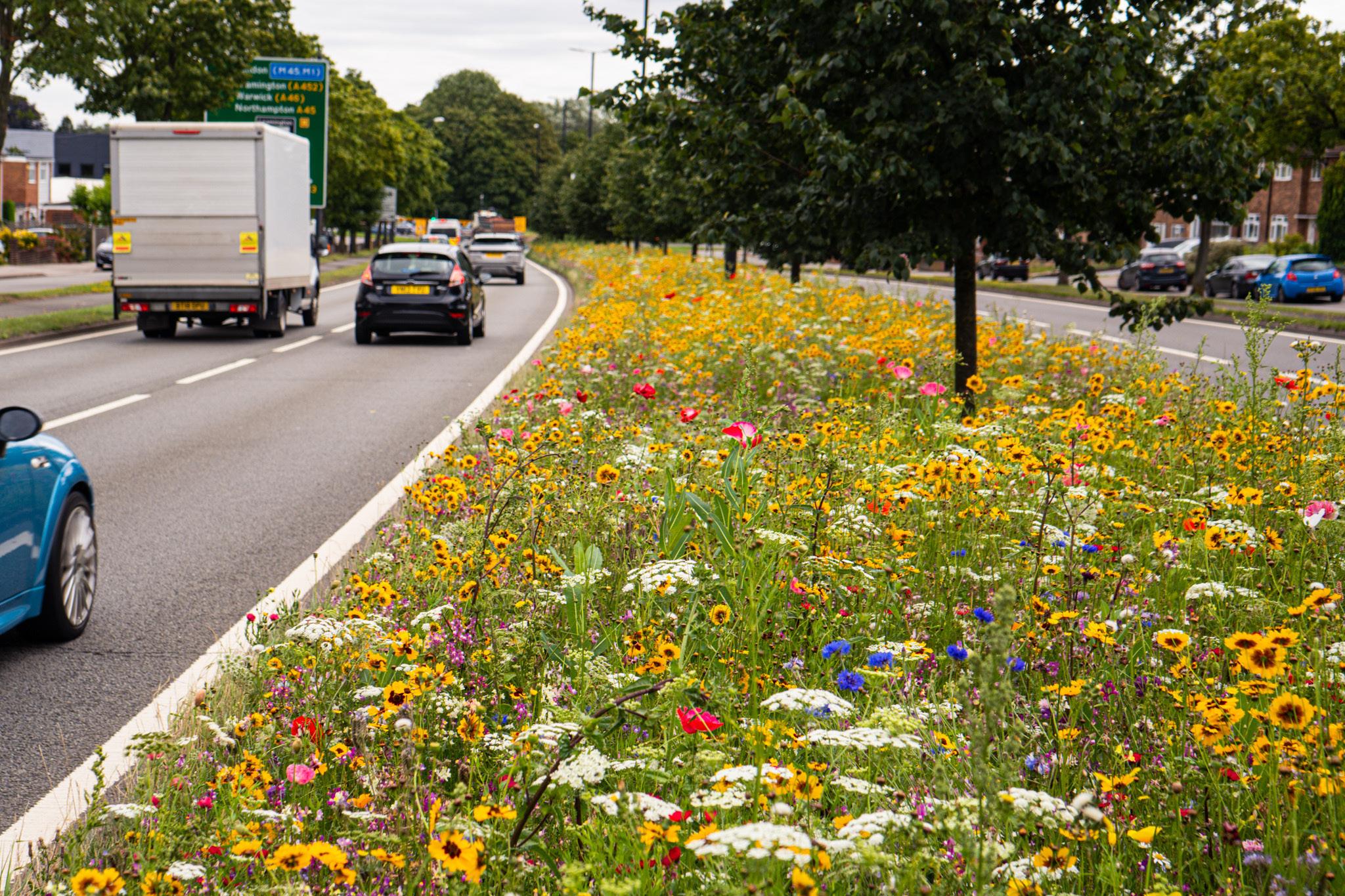
With over two decades of experience, Pictorial Meadows® specialist mixes combine aesthetic impact, ecological value and reliable performance. The UK’s largest selection of bespoke seed and wildflower turf mixes, alongside expert meadow consultation, installation and long-term aftercare options.


As landscape practitioners we are powerhouses for bringing together constraints and opportunities to mitigate losses and deliver solutions.
Find out more on page 8
We live in a heavily nature-depleted country, where the tide appears to be changing with respect to how biodiversity is regarded in policy and design development. This changing tide is a call to arms for us to work more efficiently and creatively to protect and enhance biodiversity. As landscape architects and practitioners, we are incredibly well placed to facilitate this change.
This special biodiversity edition of the Journal showcases how beautifully interwoven landscape and biodiversity are. It’s been a privilege to work with the Landscape Institute team to curate the Journal on such a critical topic.
In this edition, we explore how we can reframe our thinking around nature (page 16), how landscape professionals of all specialisms can impact biodiversity outcomes, and gain insight from a developer’s perspective on biodiversity (page 35). Key to this edition are articles from all four nations sharing knowledge of the evolving policies and approaches each is taking to tackle the biodiversity crisis (pages 48-55). Further, academic authors detail practical changes we can make to the work that we do to positively impact biodiversity and consider the implications of climate change (pages 56-63).
We need to use this excitement and ‘buzz’ for biodiversity as a ‘leg-up’ to maximise positive change. I hope this edition inspires and empowers you in the plethora of ways we, as landscape practitioners, can help reverse the biodiversity crisis in the everyday work that we do.
PUBLISHER
Darkhorse Design Ltd
T (0)20 7323 1931 darkhorsedesign.co.uk
studio@darkhorsedesign.co.uk
EDITORIAL ADVISORY PANEL
Saira Ali FLI, Team Leader, Landscape, Design and Conservation, City of Bradford Metropolitan District Council
Stella Bland, Head of Communications, LDA Design
Marc Tomes CMLI, Director, Allen
Scott Landscape Architecture
Sandeep Menon, Lecturer in Landscape Architecture, Manchester School of Architecture
Jaideep Warya CMLI, Landscape Architect, Allies and Morrison
Jane Findlay PPLI & FLI, Director FIRA Landscape Architects
LANDSCAPE INSTITUTE
Managing Editor and PR & Communications Manager: Josh Cunningham
marketing@landscapeinstitute.org
Technical Copy Editor: Romy Rawlings FLI
Proof Reader: Johanna Robinson
President: Carolin Göhler FLI
CEO: Rob Hughes
Head of Marketing, Communications and Events: Neelam Sheemar
Director of Policy & Public Affairs: Belinda Gordon
Landscapeinstitute.org
@talklandscape landscapeinstitute landscapeinstituteUK
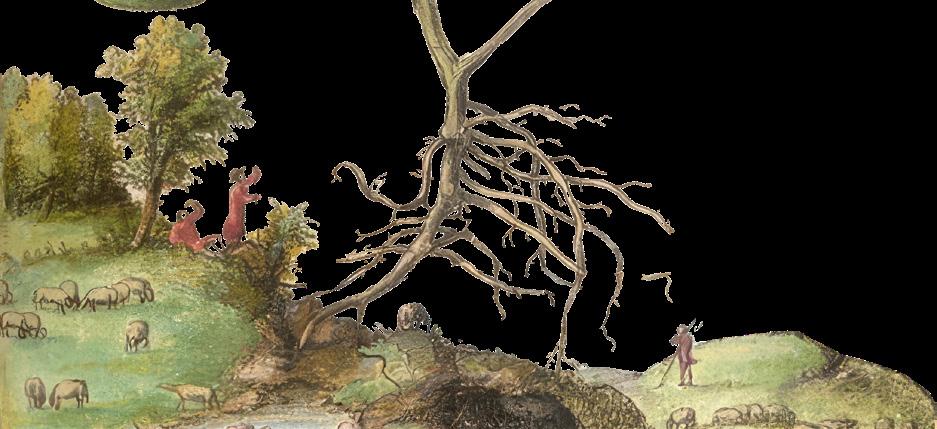
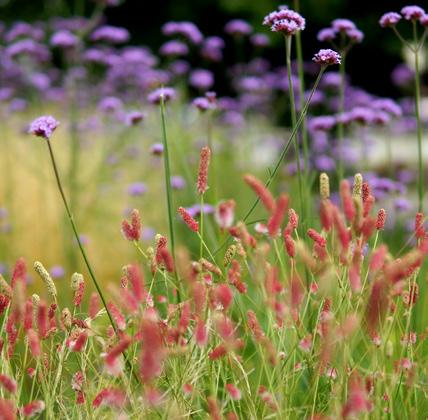
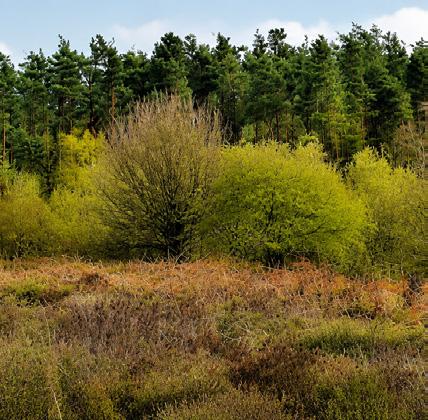
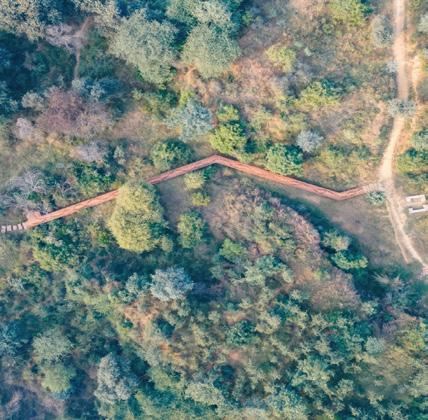
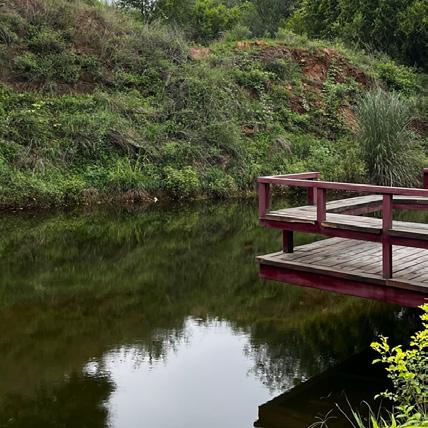


Biodiversity underpins health, resilience and meaning in landscapes. Guest editor Jazz Collier explores why it matters, how it is understood and the vital role landscape practitioners play in restoring it.



are from a
2
1

1 Centre for Biological Diversity. (2026). Elements of Biodiversity.
Available at: https://www. biologicaldiversity. org/programs/ biodiversity/ elements_of_ biodiversity/
2 IUCN. (2025). The Meaning of Nature.
Available at: https:// portals.iucn.org/ library/node/52630
3 See 2 4 UK Government. (2021). Final Report – The Economics of Biodiversity: The Dasgupta Review. Available at: https://www.gov. uk/government/ publications/ final-report-theeconomics-ofbiodiversity-thedasgupta-review
5 European Investment Bank. (2023) What is Natural Capital. Available at: https://www.eib. org/en/stories/ nature-environmentpollution
6 UN. (ca. 2026). Biodiversity Economies. Available at: https://www. unep.org/topics/ nature-action/ nature-economy/ biodiversityeconomies 2
A relatively newly defined term, biological diversity, known as biodiversity, is the variety of life forms at all different levels of biological organisation.1
The term biodiversity is often used to discuss the number of species, or individuals of a single species, within a definable area, be it a single habitat or an entire ecosystem. Biodiversity can also refer to the genetic variety within species, which contributes to the resilience of species to ecosystem change, with increasing pressures from pathogens and climate fluctuation.
As landscape practitioners we often use the term biodiversity to qualify the level of ecological value of a site or area. The challenge comes in our ability to measure biodiversity and defining the cut-off between an area that is biodiverse and one that is not. The answer is context dependent and requires us to understand what a balanced ecosystem for that particular area looks like.
There is also the issue of similar but distinctly different terms. ‘Nature’ is often used interchangeably with biodiversity. The term ‘nature’, however, encompasses more than biodiversity alone: it also includes abiotic diversity (also referred to as geodiversity).2 In 2025 the International Union for Conservation of Nature acknowledged the lack of understanding around nature and produced a report called ‘The Meaning of Nature’. This emphasised the critical value of geodiversity,3 weather patterns, hydrological flows, geology and all other nonliving factors that influence the ecosystems (a functional unit of nature) that are fundamental to creating the niches that living diversity requires.
More recently, scientists, governments and even bankers have begun to describe biodiversity and nature in monetary terms.4 Using natural capital to define the value that ecosystems provide to people,
the European Investment Bank has coined the term ‘unpriced natural capital’ to refer to the free ride businesses get when they don’t pay to rectify the damage they do to the environment.5
The United Nations states that ‘over half of the world’s Gross Domestic Product (GDP [is] dependent on nature’.6 Without
a functioning global ecosystem (that relies on biodiversity), there would be no bees to pollinate our crops, no chlorophyll to convert carbon dioxide into the oxygen that we breathe, while simultaneously reducing atmospheric carbon, and no functioning soil in which to grow food. The era in which we live has been termed the Anthropocene,

which is considered by many to be the sixth global mass extinction
The biodiversity crisis and climate crisis, often referred to as the ‘twin crises’ due to their inextricably linked nature, threaten fundamental ecosystem services such as those mentioned above. The worth of assigning monetary value to biodiversity and ecosystem service loss is that it waves a red flag to governments and businesses, shouting in their language that our systems are in crisis and business as usual is no longer an option. Our lives are inextricably linked to the health of wider
biodiversity.8 Studies have demonstrated how numerous elements of biodiversity are linked to human health, from soil microbes9 to greenspace biodiversity.10 Our cultures are founded in the natural world around us, from the food that we eat and the clothes we wear to our fundamental beliefs. Embedding biodiversity within our projects is not only logical from an environmental perspective; it also benefits the people who will use the spaces we help create and brings life into sometimes inert spaces.
When you get into the policy, guidance and reporting that exist to support our understanding and our practice around biodiversity, it can become quite overwhelming. It can be a challenge to sift through the facts, acts and notes to understand how they impact our lives and the work that we do. It can often feel like a whole lot of talk with very little action. The recent Office for Environmental Protection’s ‘Progress in Improving the Natural Environment in England’ report11 was rather uninspiring, concluding that the nation was partially or largely off track to meet the majority of the targets set out in the Environment Act 2021. Wales and Scotland have only just passed bills to set legally binding targets, which now await Royal Assent to become an act of law, while a similar bill for Northern Ireland was consulted on last year with little word since.12
It’s easy to become bogged down in it all. The penny does, however, seem to be finally dropping, with reporting on the threat of biodiversity loss and ecosystem collapse being linked to global economics and national security13,14 – albeit the details of the latter were only released following a Freedom of Information request to the UK government.15
What does this all mean for us as landscape architects, and how do we fit into the current position? Biodiversity is fundamental in landscapes. By definition, under the European Landscape Convention,
7 Barnosky et al. (2011). Has the Earth’s Sixth Mass Extinction already arrived? Nature https://www.nature. com/articles/ nature09678
8 World Health Organization. (2025). Biodiversity. Available at: https://www.who. int/news-room/ fact-sheets/detail/ biodiversity
9 Brevik, E.C. Slaughter, L, Singh, B.R., Steffan, J.J., Collier, D. Barnhart, P. and Pereira, P. (2020) Soil and Human Health: Current Status and Future Needs. Sage Journals Home
10 Fuller, R.A., Irvine, K. N., Devine-Wright, P., Warren, P.H. & Gaston, K.J., (2007). Psychological Benefits of Greenspace Increase with Biodiversity. Biology Letters
11 OEP. (2026) Progress in Improving the natural environment in England 2024/2025 Report. Available at: https:// www.theoep.org.uk/ report/progressimproving-naturalenvironmentengland-20242025
12 The Scottish Parliament. (2026). Natural Environment (Scotland) Bill. Available at: https:// www.parliament. scot/bills-and-laws/ bills/s6/naturalenvironmentscotland-bill
Senedd Cymru. (2026). Environment (Principles, Governance and Biodiversity Targets) (Wales) Bill. Available at: https://business. senedd.wales/ mgIssue HistoryHome. aspx?IId=46004 Northern Ireland Assembly. (2025). Non-Executive Bill Proposals. Available at: https://www. niassembly.gov.uk/ assembly-business/ legislation/20222027-mandate/ non-executive-billproposals/
13 HM Treasury. (2021).
Final Report – The Economics of Biodiversity: The Dasgupta Review.
Available at: Final Report – The Economics of Biodiversity: The Dasgupta ReviewGOV.UK
14 Department of Environment, Food & Rural Affairs. (2026). Nature security assessment on global biodiversity loss, ecosystem collapse and national security.
Available at: Nature security assessment on global biodiversity loss, ecosystem collapse and national security - GOV.UK
15 https:// greenallianceblog. org.uk/2026/01/29/ the-nationalsecurityassessment-onecosystem-collapseis-a-governmentwake-up-call/ 16 Council of Europe. (2000). European Landscape Convention.
Florence: Council of Europe. Available at: https://www.coe.int/ en/web/landscape
17 Lawton, J. (2010).
Making Space for Nature: A review of England’s Wildlife Sites and Ecological Network. Available at: https://webarchive.nationalarchives.gov.uk/ukgwa/201304021703
24/http:/archive.defra.gov.uk/environment/biodiversity/ documents/201009 space-for-nature.pdf
landscapes are the ‘result of the action and iteration of natural and/ or human factors’.16 As landscape practitioners, we are powerhouses for bringing together constraints and opportunities to mitigate losses and deliver solutions. We take a project’s baseline data, from ecology and hydrology to social demographics and client needs, and produce designs that align with policy and deliver for people and biodiversity. We are best placed to design for biodiversity, working more holistically than other built environment disciplines. We need to be jumping
up and down to ensure we are at the table from day one to ensure projects deliver for landscape and biodiversity.
If you’ve not already done so, arm yourself with the policy and guidance of your nation (see policy section) and forge those collaborations across project design teams so that you can deliver ‘more, bigger, better and joined’17 for biodiversity, from small-scale rear garden projects to strategic landscape plans. This will articulate the benefits of our profession being involved in the early life stages of
a project and help strengthen our connections so that we can call on the right expertise when needed. Landscape-led planning and design is vital to ensure the resilience of projects in a changing world.
Jazz Collier CMLI is an environmental professional with both a Master’s degree in Landscape Architecture and Bachelor’s degree in Conservation Biology and Ecology. She works across disciplines at Brindley Associates, Edinburgh.
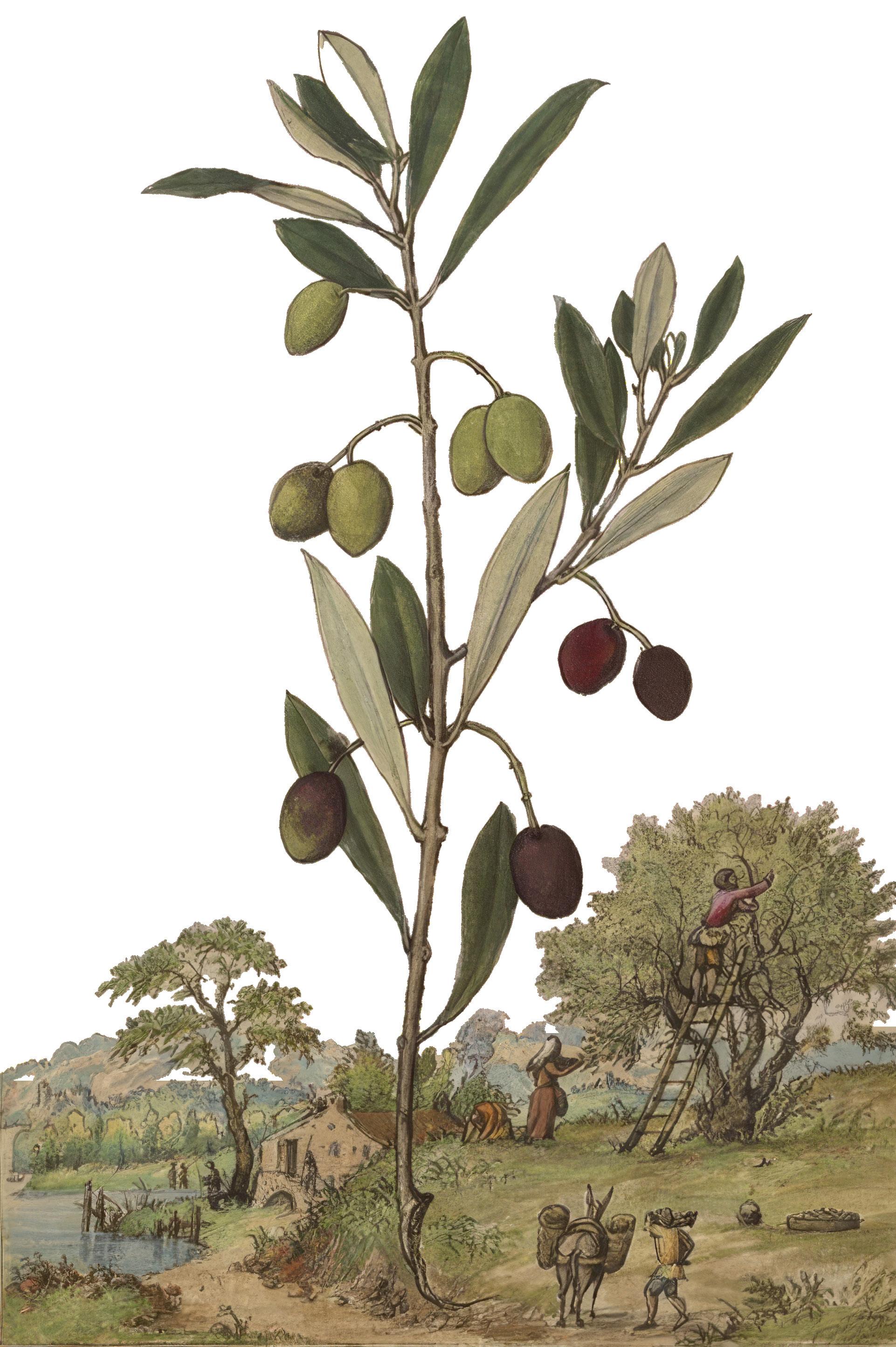
4 Plantago maior.
Credit:
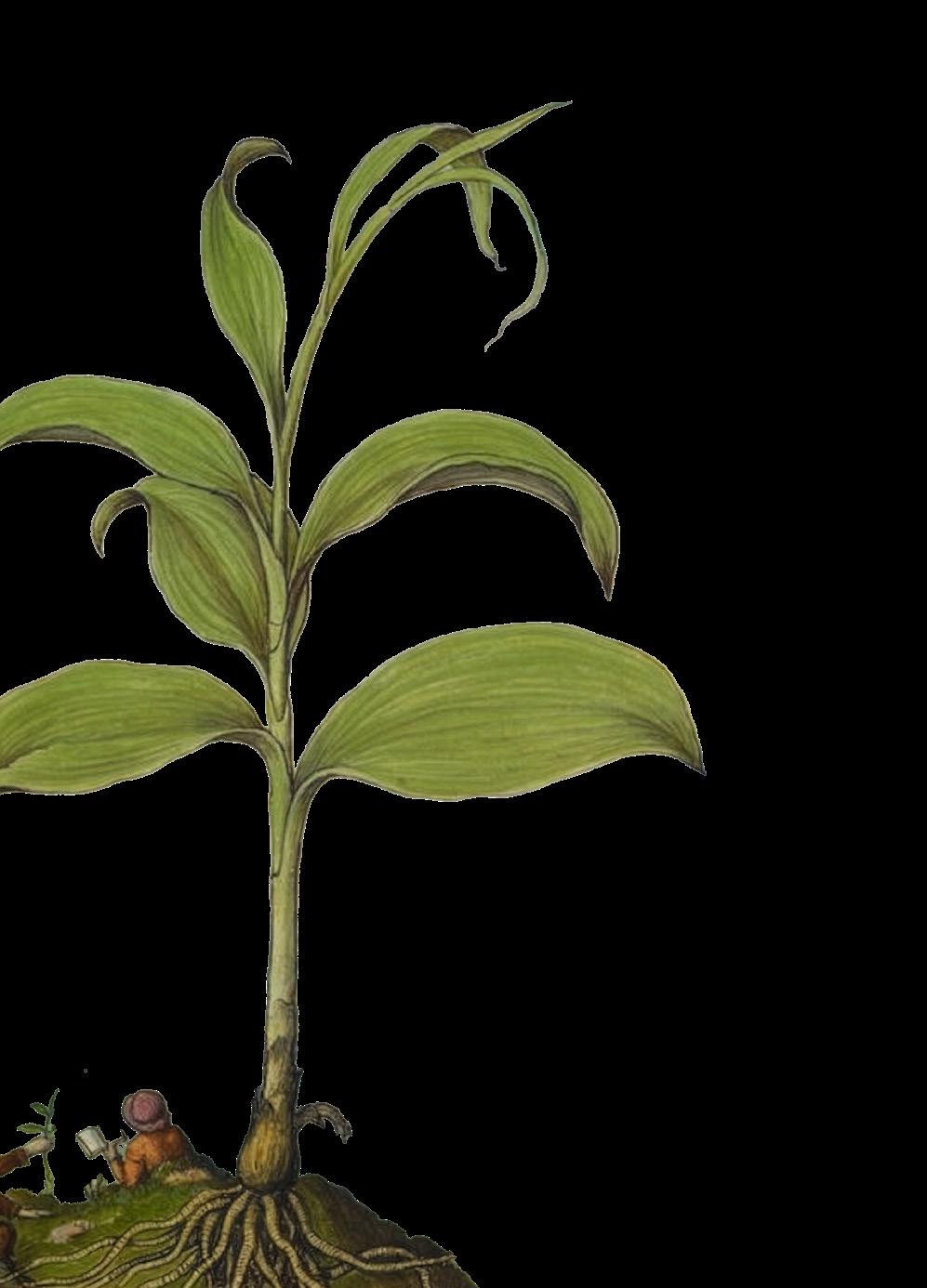
5 Polygonatum.
Credit: Gherardo Cibo / British Library
6 Galanthus and Ipheion.
Credit: Gherardo Cibo / British Library
7 Asplenium scolopendrium.
Credit: Gherardo Cibo / British Library



Embedding biodiversity within our projects is not only logical from an environmental perspective; it also benefits the people who will use the spaces we help create and brings life into sometimes inert spaces
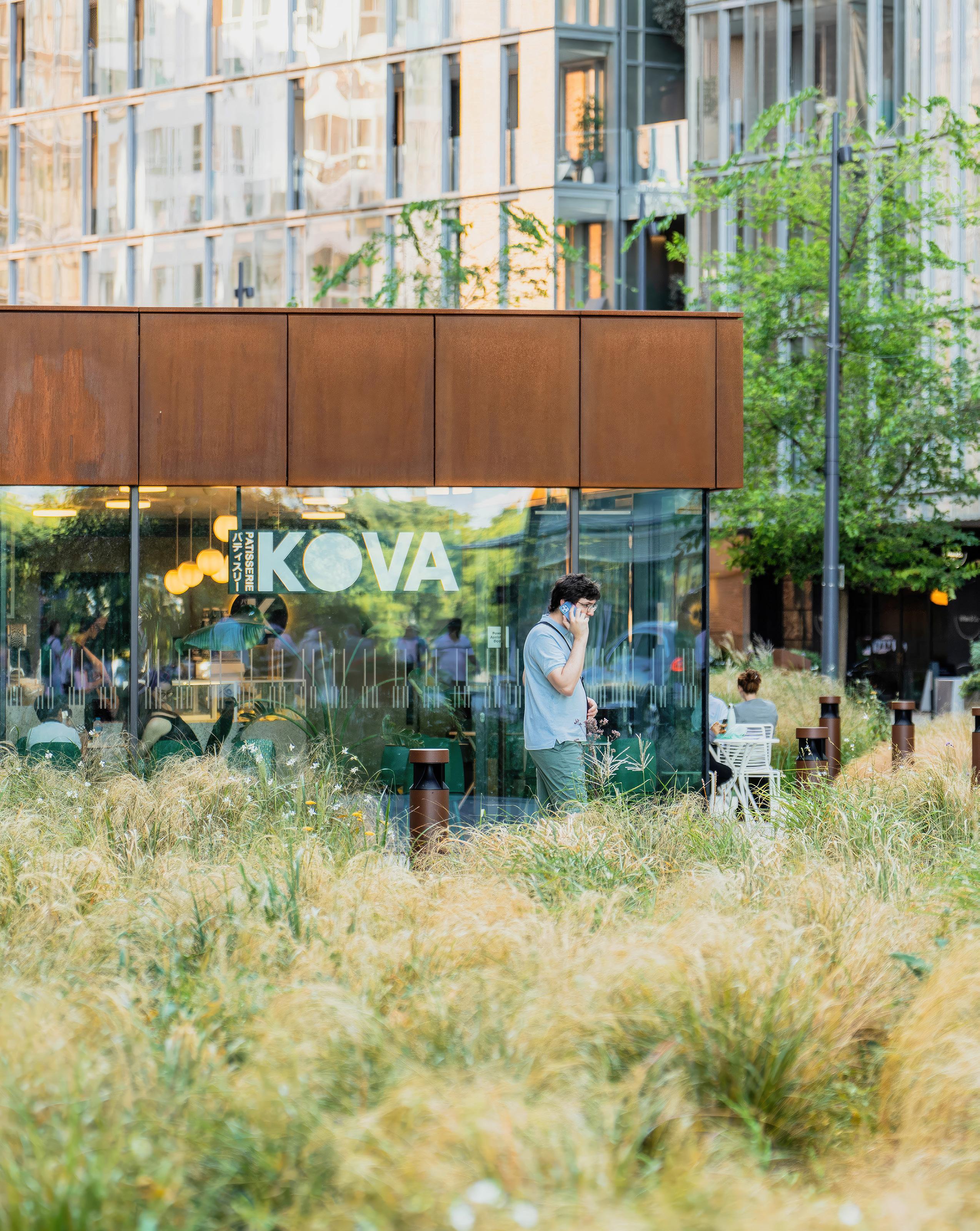
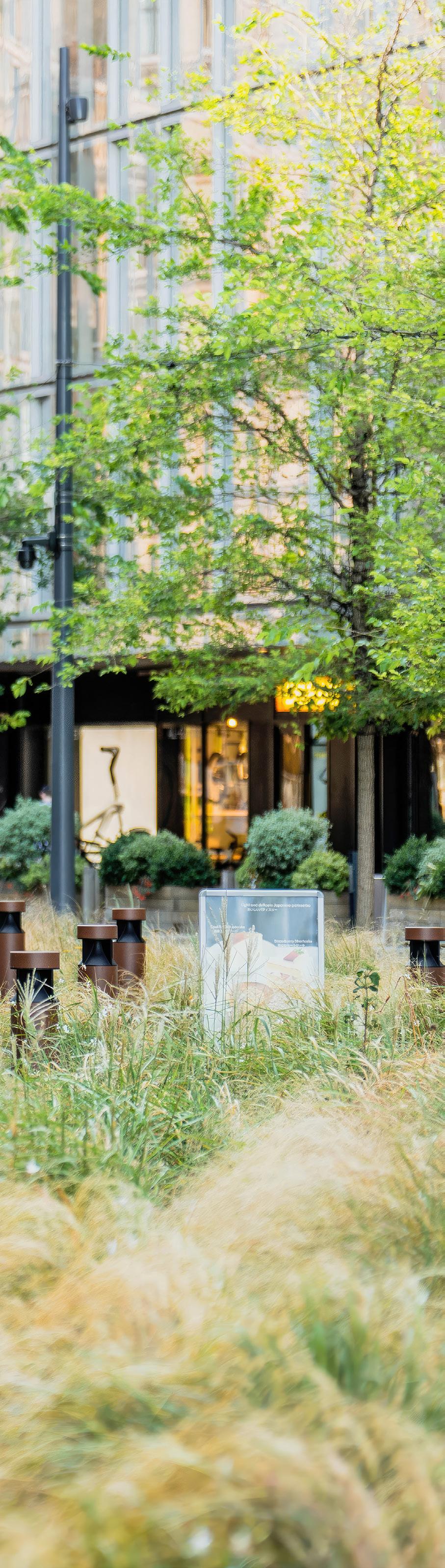
On a whistle-stop tour of Europe, Sophie Thompson, Director at LDA Design and author of a forthcoming book on wilding the city, contemplates the potential of a wilder approach to urban landscape, as well as the challenges that need to be to overcome.

Sophie Thompson FLI
The disconnect between the natural world and the people living in cities has been centuries in the making, to the extent that even parks generally offer a very narrow window onto nature and all its abundant diversity. How often, once inside their gates, do we feel immersed and intrigued? Rarely. The picturesque landscape, with its manicured lawns and serpentine lakes, was adopted as the design for Victorian municipal parks and so it has remained.
The appetite is growing, though, for nature to have more agency in cities. In part, this is a reaction against the urban greening
associated with much development, which operates firmly within conventional horticultural paradigms: peat-rich soils, plastic pots, high irrigation demands and generic plant palettes. An absence of ecological intent is worsened by maintenance that’s all about control, which is both energy intensive and reliant on chemical fertilisers and herbicides. This is greening with little concern for biodiversity, viewing autonomous ecological processes with suspicion, if not some aversion.
But urban wilding is not just about holding all these things up to the light, scattering some seeds and leaving everything to nature. It is about raising our game. Asphalt roads, polluted rivers, concrete canals, high-rise buildings and mown grass all need to be reimagined. Successful urban wilding feels part of a future that is rooted in place, layered and
meaningful. Take children’s play: it could leave behind forever the ‘Kit + Fence + Carpet’ (KFC) approach, with swings, rockers and a slide isolated on rubberised surfacing. Imagine, instead, safe streets and pathways lined by treehouses and hammocks, with dens and mud kitchens tucked beneath.
So, where should we go, to glimpse a more restorative future? One stop would have to be Berlin, the cradle of urban ecology. Here, 16,000 hectares of urban forest now allows 2,000 species of plants to flourish together with woodland birds, bats and invertebrates.
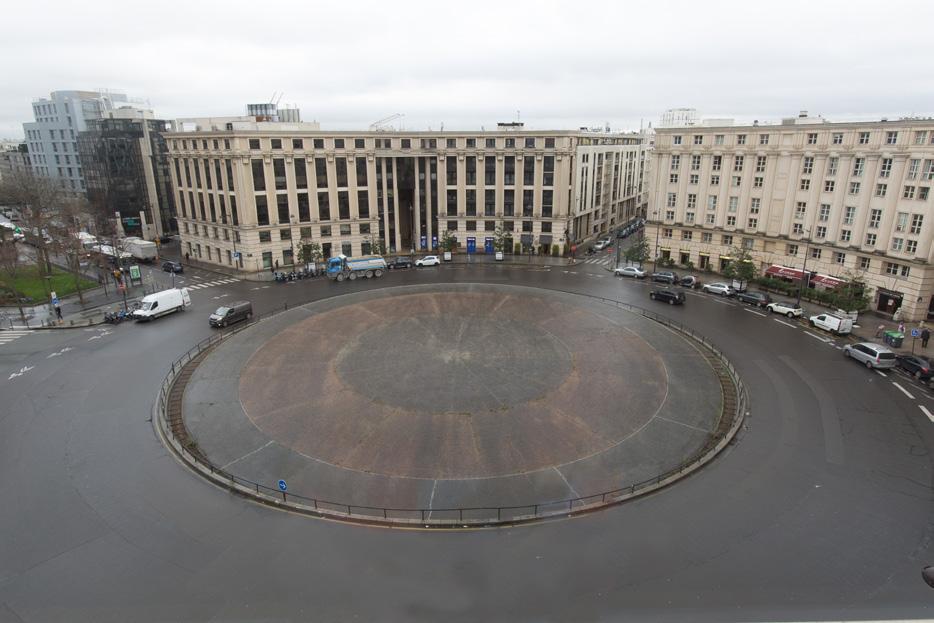
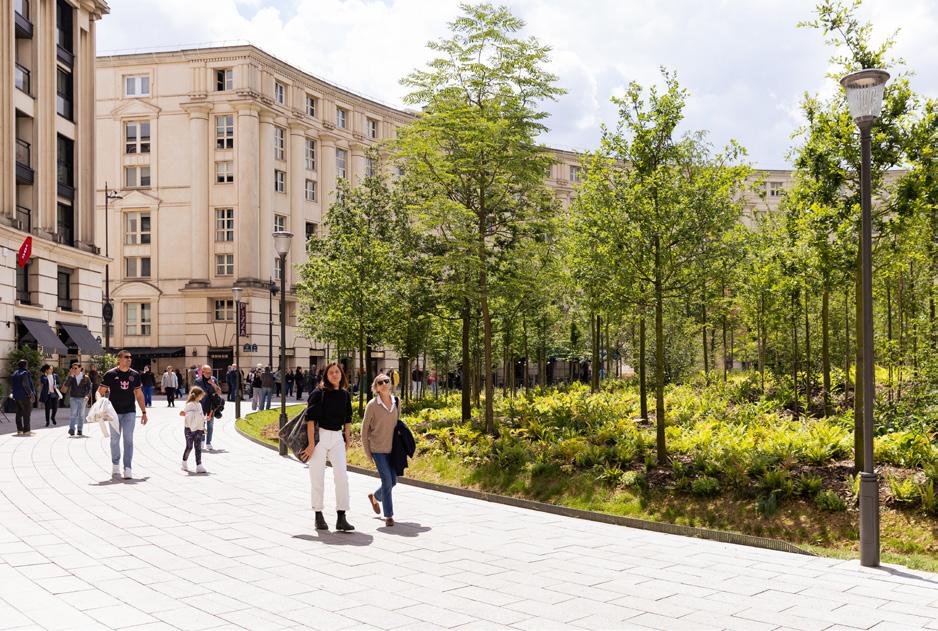
But the next stop is more surprising. Paris is energetically exploring decentred multispecies design, preserving the dark sky and managing waste, water, carbon and nitrogen cycles across a city ecosystem. While the city will always love its clipped topiary and gravelled parterres, today the ambition is for a place where nature is everywhere and unexpected, in anticipation of 50-degree summers. So, the landscape around landmarks like the Eiffel Tower and Notre Dame is being transformed, while nature, play and seating are also being integrated into hundreds of newly pedestrianised streets in residential areas, especially near schools. Biodiversity is thriving as the result of just a decade of concentrated planting, alongside a strict pesticide ban, with over 600
new species recently recorded in the city.
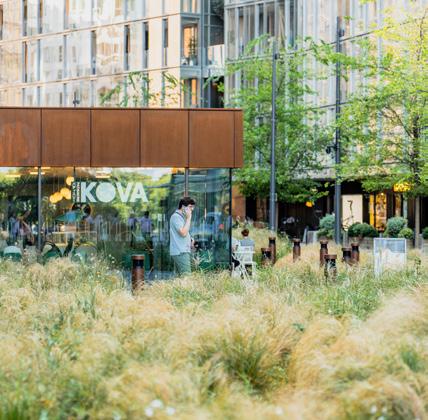
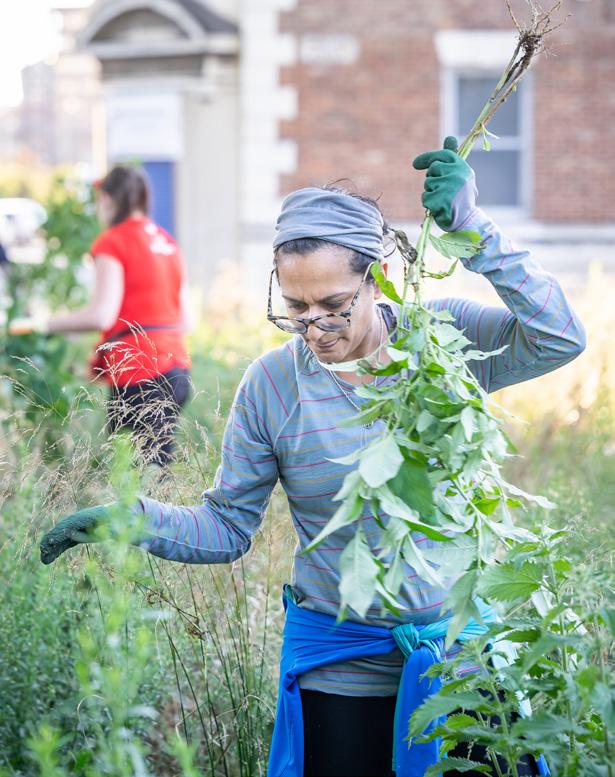
Connectivity and habitat creation are central tenets of wilding, but success depends on good design as much as scale. Even small spaces on streets, like verges, can be species-rich and serve bees and pollinators, provided they are close enough together. Liverpool is leading in the UK with a city-wide pollinator strategy and a commitment to wildflower sites. This follows a pioneering EU-funded project that increased biodiversity a thousand-fold across ten sites (see image). The project demonstrated how the presence of wild nature within urban spaces strengthens the connection between people and their environment, and the sites are actively nurtured by local people, including those experiencing homelessness. Elsewhere, though, the UK continues to lurk in the bottom 10% of nations ranked globally for biodiversity.1 So how well can our current frameworks of treaties, laws and standards support an ascent?
England was the first country to make Biodiversity Net Gain (BNG) a legal requirement, with most new developments larger than 0.2 hectares required to deliver at least a 10% uplift in biodiversity. Where this uplift cannot be achieved on site, biodiversity gains may be delivered off site, either on land controlled by the developer or through the purchase of biodiversity units or, as a last resort, statutory credits bought from the government.
BNG was designed for greenfield sites and is not without its issues. Small-scale ecosystems are often destroyed on urban sites because the metric does not recognise their value. While rain gardens, bioswales and sustainable drainage systems (SuDS) will help to futureproof new development, they are typically scored as providing low value. Some of the most ecologically rich urban landscapes, such as horticulturally complex gardens that support healthy bird and butterfly
populations and valuable Open Mosaic Habitat on brownfield sites, also fail to fit the metric and are often built over. The metric also inadvertently prompts developers to build taller to extract more value to pay for compensation and off-site gains. When nature is lost locally, to be restored far away, local people lose out.
Ultimately, the measure of success is not just how much biodiversity is gained, but where it is gained, who benefits and how it shapes daily life. This was recognised within the Kunming-Montreal Global Biodiversity Framework, which aims to secure a nature-positive future by 2030 by integrating conservation with climate action, and at the same time improving access to green and blue spaces. So how can the gap be bridged at local level between technical metrics for biodiversity and the qualitative aspects of placemaking that respond to people’s needs? One metric that is being widely adopted is the 3-30-300
1 JNCC on behalf of the Four Countries’ Biodiversity Group (4CBG). 2024. UK Biodiversity Framework.
2 Analysis commissioned by Friends of the Earth from Terra Sulis 2023 https://policy. friendsoftheearth. uk/insight/mappingenglish-tree-coverresults-ranking-andmethodology
3 https://www. terrapinbrightgreen. com/reports/14patterns/
4 Stuart Connop, ‘The Beetle Bump: Innovative Urban Habitat Creation for Rare Insects. Essex Naturalist 29 (New Series)’, The Essex Naturalist 29 (New Series) (January 2012): 89–94.
2 Liverpool’s Pollinator Project has been successful in attracting volunteer support to nurture the sites, including from GoodGym.
© Nick Harrison
3 Before: Place de Catalogne was an enormous and gloomy roundabout built as part of the redevelopment of Montparnasse in the 1980s.
© City of Paris
4 After: Road space in Place de Catalogne was halved in 2024/25 to make room for an urban forest. With hundreds of new native trees, the space now has a woodland feel, with seating, water misters and drinking fountains.
© Guillaume Bontemps / City of Paris
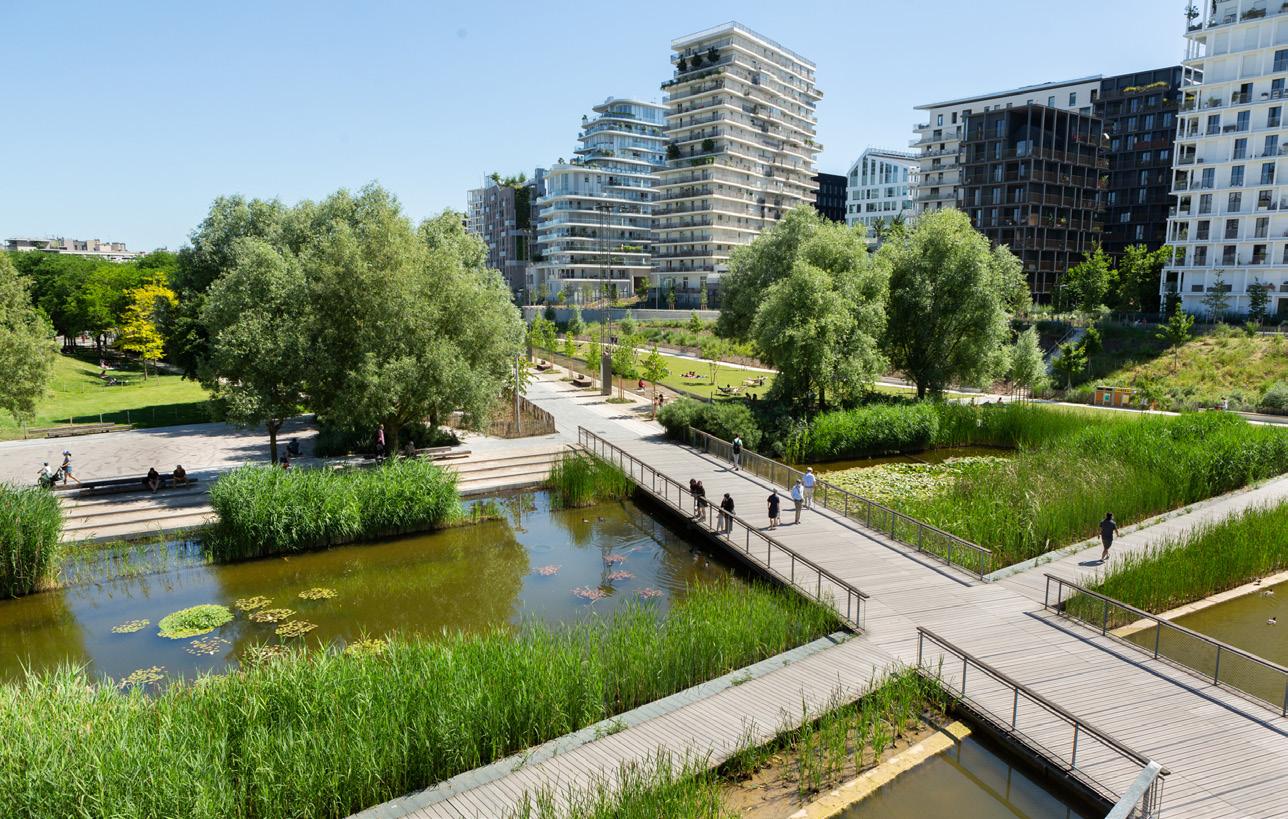
5 Martin Luther King Park in the Clichy Batignolles Eco District in Paris opened in 2021. It was designed by Atelier Jacqueline Osty for climate resilience and sustainable water management. Close adjacency to railway networks gives it an important role in improving connectivity for wildlife.
© Neil Speakman/Studio Maple for LDA Design
rule, whereby every citizen should be able to see at least three mature trees from their home, have 30% tree canopy cover in their neighbourhood, and live within 300 metres of highquality green space. It sets a pass/ fail benchmark and research shows that a fail is usually due to inadequate canopy in England, where 43% of neighbourhoods have less than 10% tree cover.2 This is the kind of statistic that galvanises grassroots organisations like London National Park City, which aim above all for equitable access to nature.
Real expertise is needed to get urban wilding right and landscape architects are critical to this. Understanding biophilic design is an important start, because it creates environments that are rich in sensory experiences. Sustainability consultants, Terrapin Bright Green, advocate the 14+ Patterns of Biophilic Design3 which, critically, incorporate perspectives from multiple disciplines. These include public health, social sciences, environmental psychology, neuroscience, anthropology and the arts.
Successful urban wilding requires landscape designers to engage more deeply with our core subjects, soil, plants and wildlife. This includes understanding more about novel ecosystems, those selfsustaining communities of native and non-native species in human-altered spaces. One study estimates that some 12-15% of nationally rare and scarce invertebrates live in novel ecosystems.4 Ruderal landscapes, for instance crushed rubble and brick, with varied conditions, support ecological communities that are as biologically exciting as rainforests.
Perhaps the most exciting challenge of all, is that landscape professionals will need to gain expertise in the interconnectedness between all things. This is the only way to avoid the best of intentions having unintended consequences. New hives on city rooftops in support of the honeybee were a positive response, for example, to the dawning realisation that urban
areas can provide better diets for bees than a countryside dominated by intensive farming. But it turns out that there are not enough flowers to also feed the wider wild native bee population, and particularly small, short-ranging foraging bees, so the net result was less local biodiversity.
Wilding is seasonal, intricate and above all responsive, meaning every site will have a different aesthetic. So, reframing cities as shared multispecies habitats means questioning cultural norms. It does not mean neglect and abandonment; no one wants overgrown shrubs creating dark corners or obstructing cycle paths, and if local people prefer a wildflower meadow with straight edges, the butterflies are just as happy.
It is interesting that gardening for wildlife is already the established approach in community gardens, and local people resisting the enclosure of open land often centre wilding in their campaigns. A space can be vibrant and exuberant or quiet and contemplative, but it always needs to be co-designed, and community involvement is not just desirable but essential for longterm success. Natural processes need space and time to thrive, and maintenance needs to become an act of stewardship and care, rather than control, so that aesthetics and ecology evolve together.
If we are to truly wild our neighbourhoods, we need to overcome tensions between planning, design, adoption and maintenance. All too often, the designer’s visions of walkable, green streets or lush waterside environments are thwarted. Highway regulations can shrink planting, for example, to a thin strip of green in a sea of grey. Wetland swales and ponds can be fenced off or hard engineered. This happens for many reasons, but collective action around a shared purpose improves the chances of success.
Finally, returning to Paris, some beautiful and moving memorial gardens have opened by the Town Hall, dedicated to the victims of the attacks on 13 November 2015. They are proof of how much people appreciate the dynamism of wilder urban spaces that are thoughtfully designed. Wagon Landscaping kept all materials on site, so undulations in the aggregates provide microniche habitats and birds bathe in the shallow stone basins. These are gardens that push boundaries and make a powerful cultural statement in their own right.
Sophie Thompson FLI is Director at LDA Design and author of a forthcoming book on wilding the city, commissioned by the RIBA

Sandeep Balagangadharan
Menon
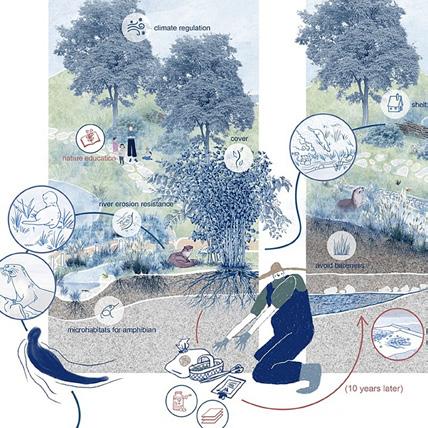
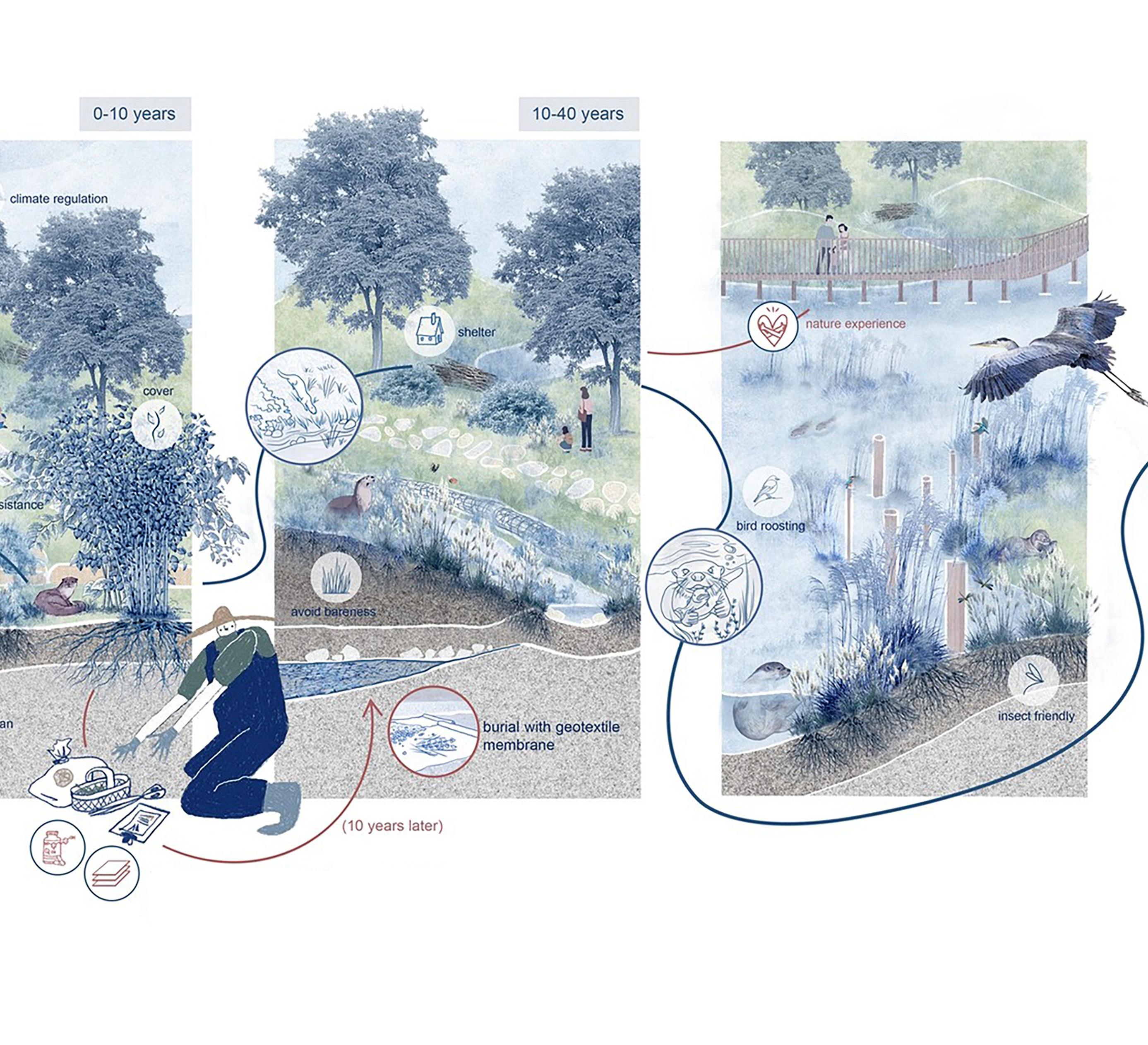
1 Spatiotemporal transitions and landscape management strategies for an urban riverine wet meadow as stepping stones for otter habitats.
Drawing on post-humanist theory, Indigenous knowledge and emerging legal frameworks, the Some Kind of Nature Atelier at Manchester School of Architecture is exploring new landscape imaginaries and new human-nature relationships.
Our worldview as landscape architects is shaped by many influences, with formal education, especially our professionally accredited courses, playing a central role. However, education itself is often grounded in historically constructed worldviews that shape both its content and pedagogical approaches.
This reliance can give rise to productive tensions and critical dilemmas in the teaching and practice of landscape architecture, as inherited frameworks are negotiated alongside diverse and evolving ways of understanding the world. This article explores that shift, tracing how nature became framed as something outside and apart from human society, and how recent
ecological, philosophical and legal developments are challenging that division.
For most of human history, the distinction between humans and nature as separate ontological realms would have made little sense. Many Indigenous knowledge systems identify humans as one agent among many in living landscapes inhabited by spirits, animals, ancestors and elemental forces. Forests, rivers and mountains are regarded as active entities, shaping and being shaped by ritual and reciprocal care. These ontologies resist the binary between culture and nature, emphasising ongoing relations, responsibilities and mutual transformation. Yet, as Robin Wall Kimmerer suggests in the book Braiding Sweetgrass, such relational understandings are

It matters what matters we use to think other matters with; it matters what stories we tell to tell other stories with; it matters what knots knot knots, what thoughts think thoughts, what descriptions describe descriptions, what ties tie ties. It matters what stories make worlds, what worlds make stories.”
Donna J. Haraway, Staying with the Trouble: Making Kin in the Chthulucene1
1 Haraway, D.J. (2016) Staying With The Trouble: Making Kin in the Chthulucene Durham: Duke University Press. Available at: https:// doi.org/ 10.1515/ 9780822373780
2 Kimmerer, R.W. (2013) Braiding Sweetgrass. First edition. Minneapolis, Minnesota: Milkweed Editions. Available at: http://site.ebrary. com/id/10819743 (Accessed: March 06, 2026).
3 Vinci, T.C. and Oxford University Press (1998) Cartesian Truth. New York: Oxford University Press. Available at: http://rave. ohiolink.edu/ebooks/ ebc/0195113292 (Accessed: March 06, 2026).
such as René Descartes formulated the cartesian dualism between res cogitans (thinking substance) and res extensa (extended, material substance).3 This dualistic framework gradually evolved into a broader moral, epistemic and political separation as philosophical thought developed. Over time, this dualistic logic positioned humans as uniquely rational and superior, while the non-human world was increasingly cast as a measurable, orderable resource available for exploitation. As scholars such as Carolyn Merchant
hastening of enclosures of common lands and the onset of industrial capitalism.4
Industrial capitalism amplified this split, as landscapes were reorganised into units of production (mines, plantations, pastures etc.), while ‘wilderness’ was simultaneously framed as an idealised realm of pure, untouched nature, ostensibly separate from human society. Early nature conservation movements often reinforced this dichotomy, most notably through the establishment
– pollution, epidemics, biodiversity loss and environmental change –began to destabilise this notion of human/nature separation. Rachel Carson’s Silent Spring made visible the ecological consequences of agricultural chemicals; the postwar era saw advancements in Earth system science, evidencing how human activities destabilise planetary cycles; and environmental justice movements highlighted how these harms are unevenly distributed along lines of race, class and colonial history.
This scientific and political period in the global North prepared the ground for a conceptual rethinking: instead of humans impacting a separate nature, we start to see the narrative of humans as an inherent force within planetary systems, and landscapes as socioecological systems in which urban, rural and wild components are entangled in a continuum rather than existing at the two ends of a spectrum. It is from this context that notions like the Anthropocene, the ‘more than human’5 worlds, and ‘entanglement’ gain traction.
The current ‘post humanist’ and ‘more than human’ approaches emerge from a convergence of fields: feminist science, environmental humanities, multispecies ethnography and critical geography. Post-humanist scholars argue that agency is distributed across humans and non-humans, and that we live in webs of entanglement rather than linear chains of cause and effect. This approach resonates with most Indigenous philosophies and knowledge
systems that have long articulated this relational perspective. Donna Haraway’s proposed concept of the ‘Chthulucene’ describes a dense interdependence (kinship) of the multispecies present. It emphasises that futures emerge through situated, shared and more than human relations.6
Ateliers at the Manchester School of Architecture are research-driven design labs that bring senior students together across programmes to explore specialised design questions through collaborative, critically informed methods. The atelier ‘Some Kind of Nature’ introduces the students to a post-humanist framework informed by feminist thinkers such as Donna Haraway, Anna Tsing and Rosi Braidotti.
The atelier emphasises the idea of ‘polyphony’: originally a musical term, later successfully used by the literary theorist and philosopher Mikhail Bakhtin, as a mode of narrative in which multiple voices, perspectives and consciousnesses coexist without
being subordinated to a single, authoritative viewpoint. Applied to landscapes, it invites students to listen for the multiple voices of a site – human and non human, past and future, visible and invisible – and to compose spaces that host diverse life systems rather than imposing a singular, homogenising order. Positioned against the climate and biodiversity crises, this approach encourages students to decentre the human authority and understand landscapes as multispecies, relational environments.
The atelier brief emphasises an in-depth understanding of the expressions of ‘relational complexities’ through space, materiality, technology and time. The importance of being contextual, collaborative and addressal of conflicts is highlighted; conflict is seen as a design driver and not as a deterrent to the process.
Over the span of the academic year, the students work through their projects as speculative resolutions, often re-examining and testing their initial research question and design gestures. The final outputs of their research journey demonstrate an in-depth understanding of the issue of their interest: a continuous experimentation and testing process leading to a grounded landscape architectural response with a critical reflection on the process and methods.
By asking students to acknowledge multispecies presences, trace soil-water movements and imagine spaces
4 Merchant, C. (2024) The Death of Nature Women, Ecology, and the Scientific Revolution HarperOne. Available at: https://ebook. yourcloudlibrary. com/library/oclc/ detail/wz1pr89 (Accessed: March 09, 2026).
5 Abram, D. (1997) The Spell of The Sensuous: Perception and Language in a More-Than-Human World. 1st Vintage books ed. New York: Vintage Books.
6 Haraway, D. (2015) Anthropocene, Capitalocene, Plantationocene, Chthulucene: Making Kin, Environmental Humanities, 6(1), pp 159–165. Available at: https:// doi.org/10.1215/ 22011919-3615934
7 https:// naturerecovery. ox.ac.uk/outputs/ rights-of-naturedifferent-legalframeworks-andimplications/ (Accessed: March 15, 2026)
8 https://www. ukrightsof nature. org/
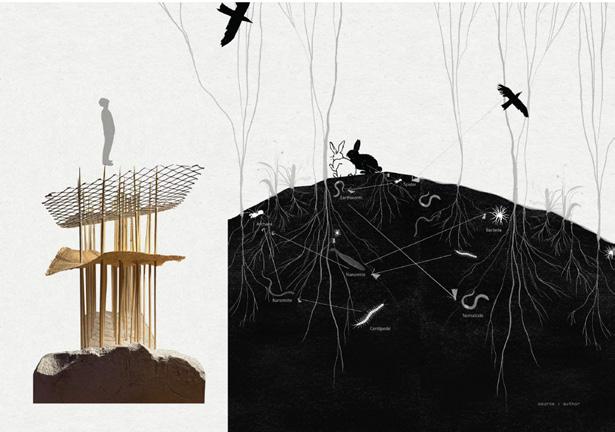
2 The project proposes regenerating floodplains as ‘Urban Borderlands’ –multifunctional spaces that mitigate flooding, support biodiverse landscape nodes, and address multispecies conflict while fostering connections between humans and more than human communities.
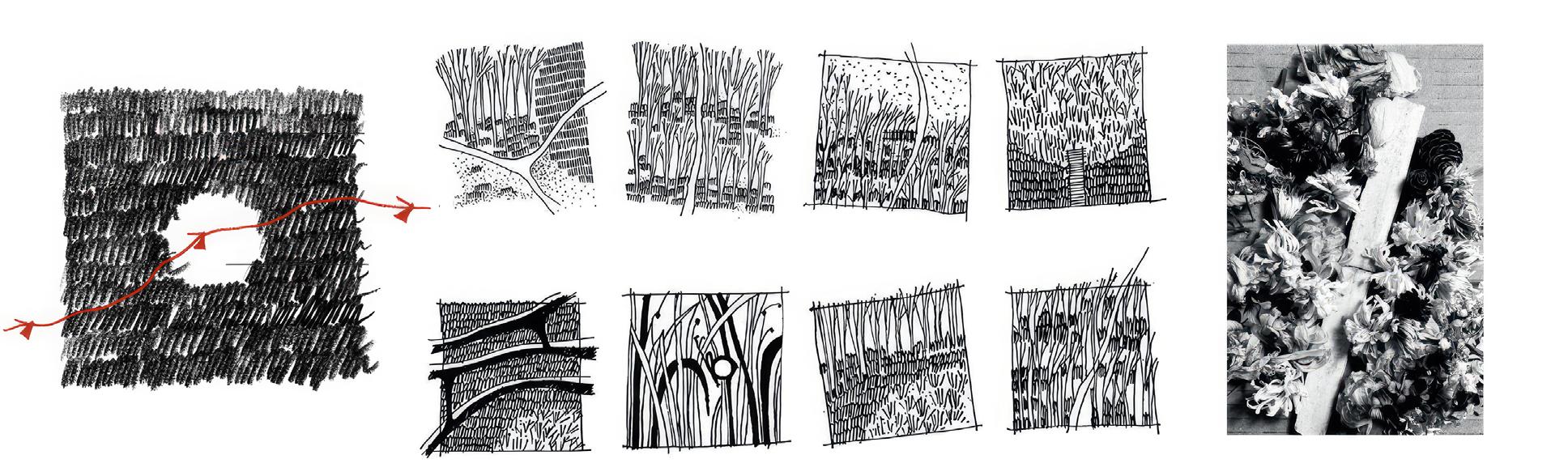
3 We Owe the Earth; A Question of Legacy – The abstract model illustrates how nature, despite being wounded, continues to endure across its various layers of habitats. Beneath the indifferent gaze of humanity, nature thrives quietly, as though relegated to an alien realm of existence.
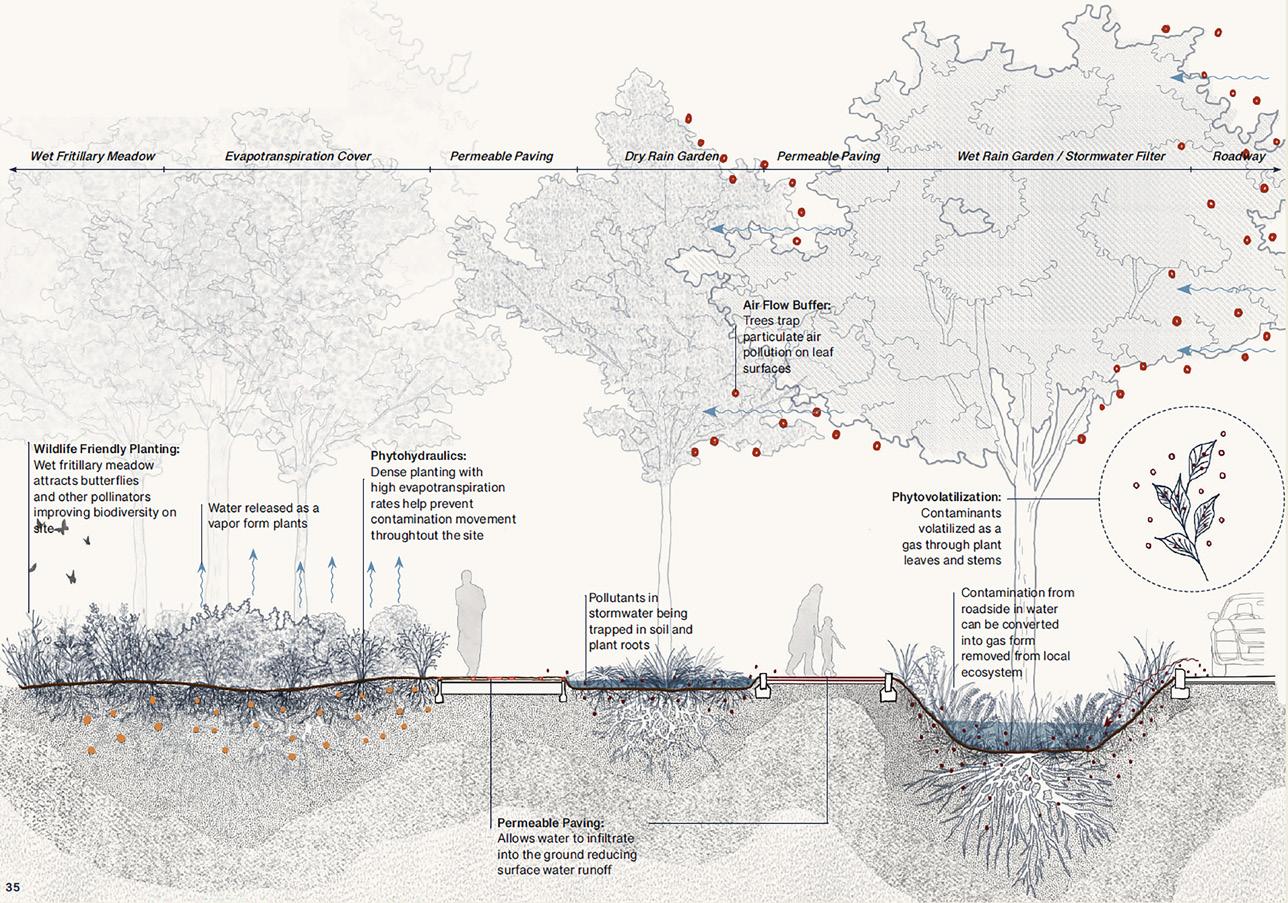
4 Blurring Boundaries – The project deals with blurring the boundaries between human and non-human relationships in a hyper-urban context using a posthuman lens. The diagram represents a dynamic network of interrelated components that remediates contamination on site, manages stormwater overflow and supports biodiversity.
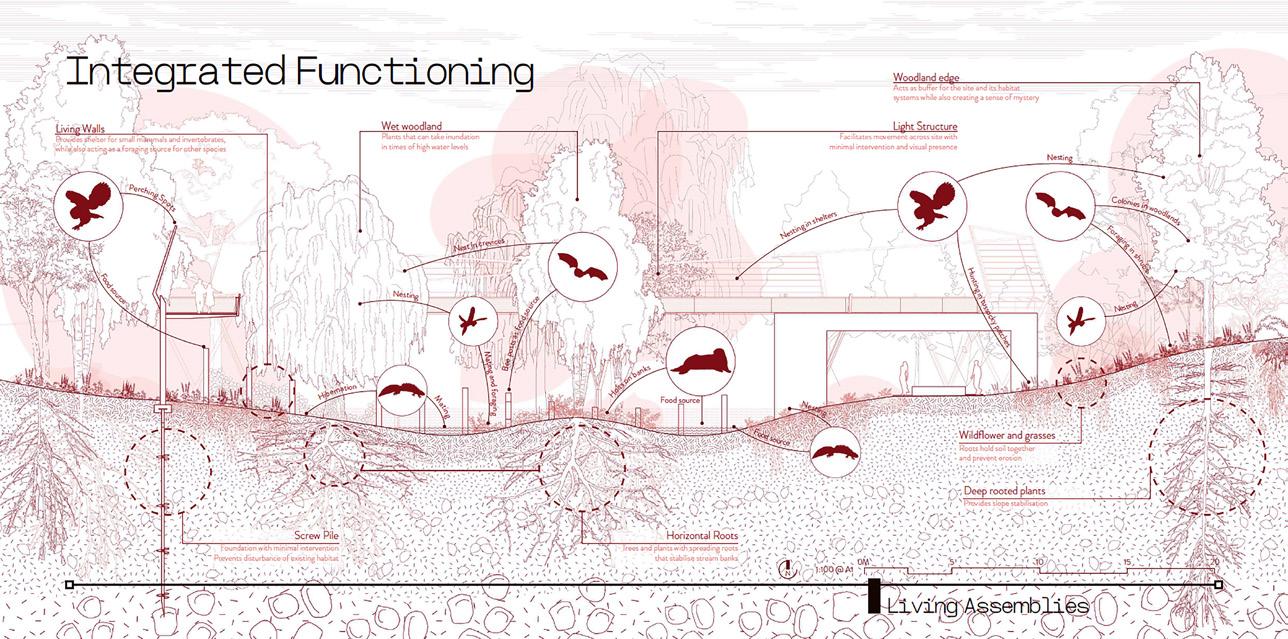
5 Mourner’s Journey –The project reimagines an existing cemetery into a sanctuary where light and shadow guide visitors through grief and renewal, and woodland habitats support a vibrant more than human ecology.
from non-human perspectives, the atelier fosters new ‘naturecultural’ imaginaries that challenge the clientcentred, aesthetics – and financedriven expectations of conventional landscape architectural practice.
A parallel transformation is visible in the worldwide emergence of the ‘Rights of Nature (RoN)’ movement, which radically reframes how human – nature relationships are conceptualised. Traditionally, legal systems have treated nature as property that humans own, manage and exploit. RoN approaches instead argue that rivers, forests and ecosystems should be recognised as legal persons with intrinsic rights to exist, flourish and regenerate. Guardians or trustees (often including Indigenous communities) act on their behalf in court.
Several countries and jurisdictions have adopted such measures, from constitutional recognition of the RoN to specific legal personhood for rivers or ecosystems. Ecuador’s 2008 constitutional recognition of nature as a legal subject has since been complemented by New Zealand’s case-specific model which, grounded in Māori principles of kinship with land and water, confers legal personhood on particular natural entities through appointed guardians.7 These innovations are
more than symbolic. They provide legal tools to challenge extractive projects, demand restoration and reframe environmental harm as a violation of nature’s own rights rather than merely a cost to human interests. The emerging ‘UK Rights of Nature Network’ is beginning to shape interdisciplinary efforts to develop legal and governance frameworks for the more than human world, and its growing presence is likely to play an increasingly influential role in advancing this discourse and practice nationwide.8
Understanding landscapes as complex, entangled, more than human systems implies a shift in methods as well as outcomes. In this sense, decentring humans in design does not mean sidelining human needs. Instead, it recognises that human wellbeing depends on the health and integrity of larger ecological systems. The task therefore is to design landscapes where these values reinforce each other.
For landscape architects and planners, this discourse raises profound questions. If a river has rights, what does that mean for how we design its banks, manage floodplains, or discharge stormwater? If a wetland is a legal subject, how do we negotiate between pressing housing needs
and habitat protection? Landscape architects may be called upon to act as translators between legal principles, ecological dynamics and spatial form, helping to give concrete expression to abstract rights.
Even with the emergence of more nuanced and attentive forms of thinking, significant questions remain. How can designers genuinely represent non-human interests without projecting human desires onto them? What institutional forms (cooperatives, trusts, commons, legal guardianships) best support long-term multispecies stewardship? How do we handle conflicts between the short-term needs of vulnerable human communities and the longterm requirements of ecosystems under stress?
For ateliers and practitioners, these questions are not abstract. They surface in every design decision regarding which species to prioritise and which stories to foreground in a site narrative. Treating landscapes as more than human, polyphonic systems does not eliminate conflicts or trade-offs; rather it reframes them as ethical and political questions that must be addressed openly, iteratively and with humility. As Haraway suggests, ‘it matters what stories make worlds; what worlds make stories.’
Sandeep B. Menon FHEA is Interim Programme Co lead for the MLA Programme at the Manchester School of Architecture, bringing expertise in socio-ecological resilience, wetland systems, and ecological planting informed by a cross-continental career in practice and academia.

Aditi Sunder Nair
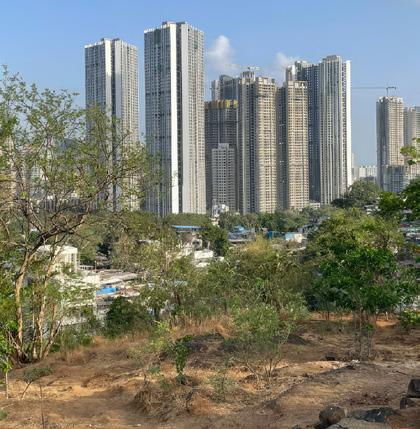
In the heart of Mumbai, where the hum and clatter of 21 million people sounds like a great machine, a silent pair of eyes often watches from the shadows. This is the extraordinary reality of Sanjay Gandhi National Park (SGNP), a 103 sq km ancient forest that hosts one of the highest densities of leopards in the world. This article, based on the author’s dissertation project, explores the unique socio-ecological relationship between Mumbai’s residents and its approximately 50 Indian leopards, arguing for a radical reimagining of urban ‘wildness’. Traditionally, we view ‘wilderness’ as a pristine space untouched by humans, but Mumbai turns this notion on its head by positioning the city as a real-world test for survival in a crowded world. Here, the wild is not seen as something distant or separate; instead, it is a characteristic that surpasses territorial limits, blurring the distinctions between what is categorised as wild and what is viewed as civilised. Using a mixed-methods approach, including academic literature, mapping and interviews with experts like Krishna Tiwari, the research argues that leopards
are not intruders but urban adaptors.1 These predators navigate the fragmented urban landscape by utilising infrastructure such as drainage lines, abandoned buildings and dense vegetation patches as corridors for movement.
Dominant urban narratives often paint leopards as bloodthirsty man-eaters,2 yet Indigenous communities like the Warlis and Kohlis tell a different story based on a philosophy of mutual accommodation. For generations, they have revered the leopard as Waghoba, a deity whose presence is institutionalised through shrines and traditional paintings. As one Warli member explained, ‘The leopard is our god,
and we know its habits. We have lived together for a long time and know how to avoid conflicts.’3 This deep-seated cultural empathy challenges fortress conservation models and aligns with Donna Haraway’s concept of ‘companion species,’4 deeply entwined in a mutual shaping process. The leopards of Mumbai perform a startling ecological service: they hunt the city’s feral dog population, which accounts for nearly 87% of their diet. By preying on stray dogs, leopards potentially reduce dog-bite incidents and the risk of rabies transmission.
Biologist Alexander Braczkowski notes that the presence of leopards in this highly urbanised area could save several human lives
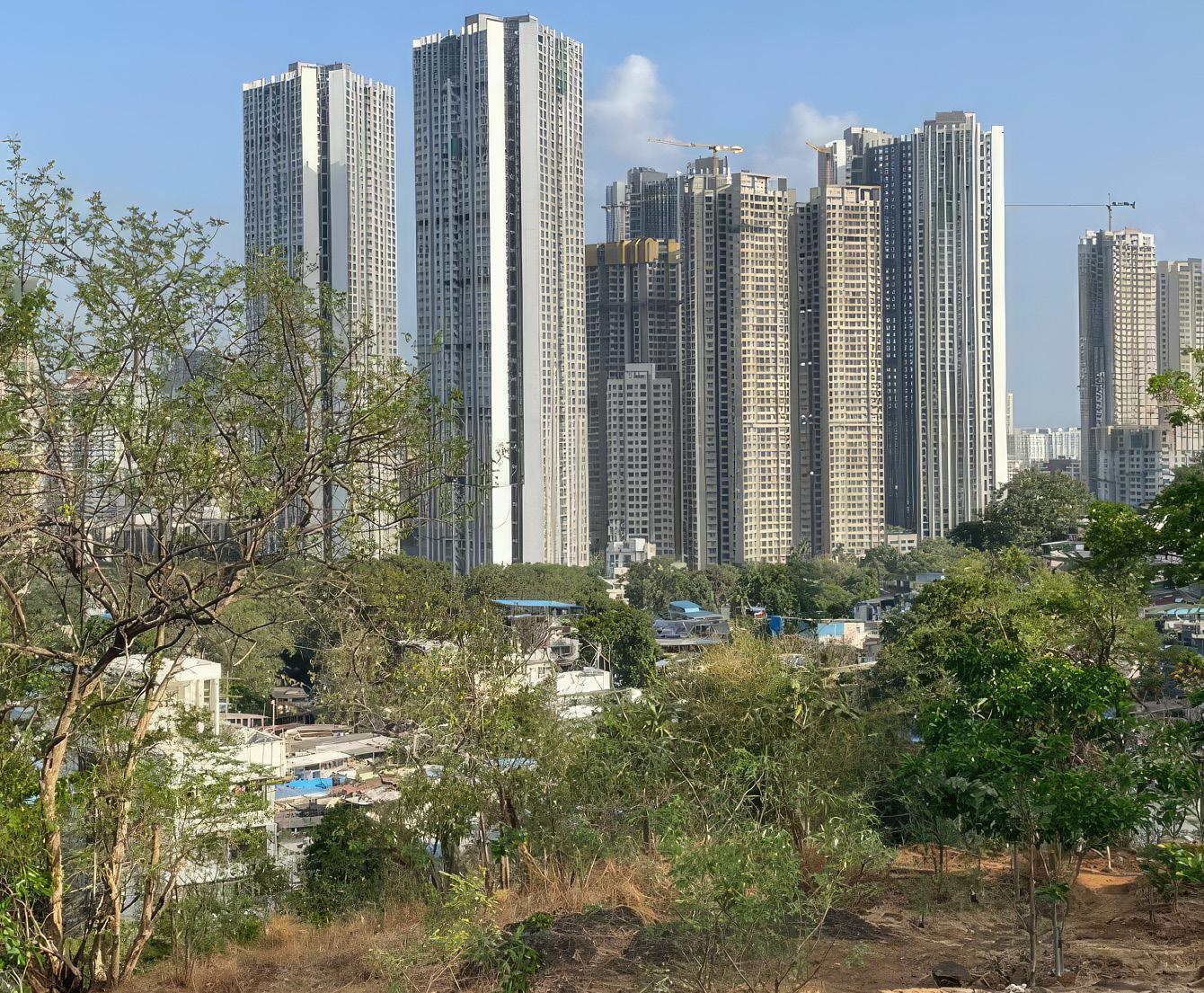
1 In Mumbai, the wild is not seen as something distant or separate; instead, it is a characteristic that surpasses territorial limits.
1 McKinney, M.L. (2006) Urbanization as a major cause of biotic homogenization. biological conservation, Biological Conservation, 127(3), 247-260. https://www. researchgate.net/. Available at: https:// www.researchgate. net/publication/223653766_McKinney_M_L_Urbanization_as_a_major_cause_ of_biotic_homogenization_Biological_Conservation
2 Soumya, E. (2014) The leopards of mumbai: Life and death among the city’s ‘living ghosts’, The Guardian
Available at: https:// www.theguardian.com/ cities/2014/nov/26/ leopards-mumbai-lifedeath-living-ghostssgnp
3 Eco India: How humans and leopards are co-existing in Mumbai (2022). YouTube. 8 April. Available at: https://www.youtube. com/watch?v=S2xIOSaXwIg&ab_channel=Scroll.in
4 Haraway, D. J. (2003). The Companion Species Manifesto: Dogs, People, and Significant Otherness. Prickly Paradigm Press.
5 Athreya, V., Odden, M., Linnell, J.D.C., & Karanth, U. (2010). Translocation as a tool for mitigating conflict with leopards in human-dominated landscapes of India. Conservation Biology, 24(2), 400-407. Available at: https://www. researchgate.net/ publication/47698535_ Translocation_ as_a_Tool_for_ Mitigating_Conflict_ with_Leopards_in_ Human-Dominated_ Landscapes_of_India
6 Tsing, A.L. (2015). The Mushroom at the End of the World: On the Possibility of Life in Capitalist Ruins Princeton, NJ: Princeton University Press.
7 Andheria, Dr. A. (2021) The Sanjay Gandhi National Park, Wildlifeconservationtrust.org. Available at: https:// www.wildlifeconservationtrust.org/ the-sanjay-gandhi-national-park/
per year. Far from being hostile to wildlife, the city’s infrastructure serves as a corridor for these ‘living ghosts’ to maintain the socio-ecological balance of the metropolis.
Despite this balance, conflicts have occurred, peaking in the early 2000s. The research highlights that traditional solutions, like translocation, often backfire; research by Vidya Athreya found that releasing leopards into unfamiliar territories led to a 325% surge in human attacks5 as displaced animals reacted with translocation-induced aggression. Today, initiatives like Mumbaikars for SGNP focus on shifting public perception from panic to understanding, emphasising
that survival requires liveable collaborations6 and working across differences.
As Mumbai continues to grow and transform, the future of SGNP, the city’s vital green lung, becomes increasingly significant. The park is not only a refuge for wildlife but also an ecological system that sustains the wider city.
As conservationist Anish Andheria warns, ‘Without exaggeration, if SGNP dies, the city itself will start dying.’7 The relationship between Mumbai’s residents and its leopards reveals that biodiversity is not confined to distant wilderness but can persist within urban landscapes shaped by coexistence, adaptation and cultural memory. For landscape professionals, this
offers an important perspective: cities must be understood as shared ecosystems, where human and non-human life remain deeply interconnected. In this sense, the story of Mumbai invites us to rethink urban biodiversity, reminding us that the wild often exists closer to home than we imagine.
Aditi Sunder Nair is a practising landscape architect and recent graduate from The Bartlett School of Architecture. Her interests explore urban biodiversity, socio-ecological systems and how cities can support coexistence between people and wildlife.
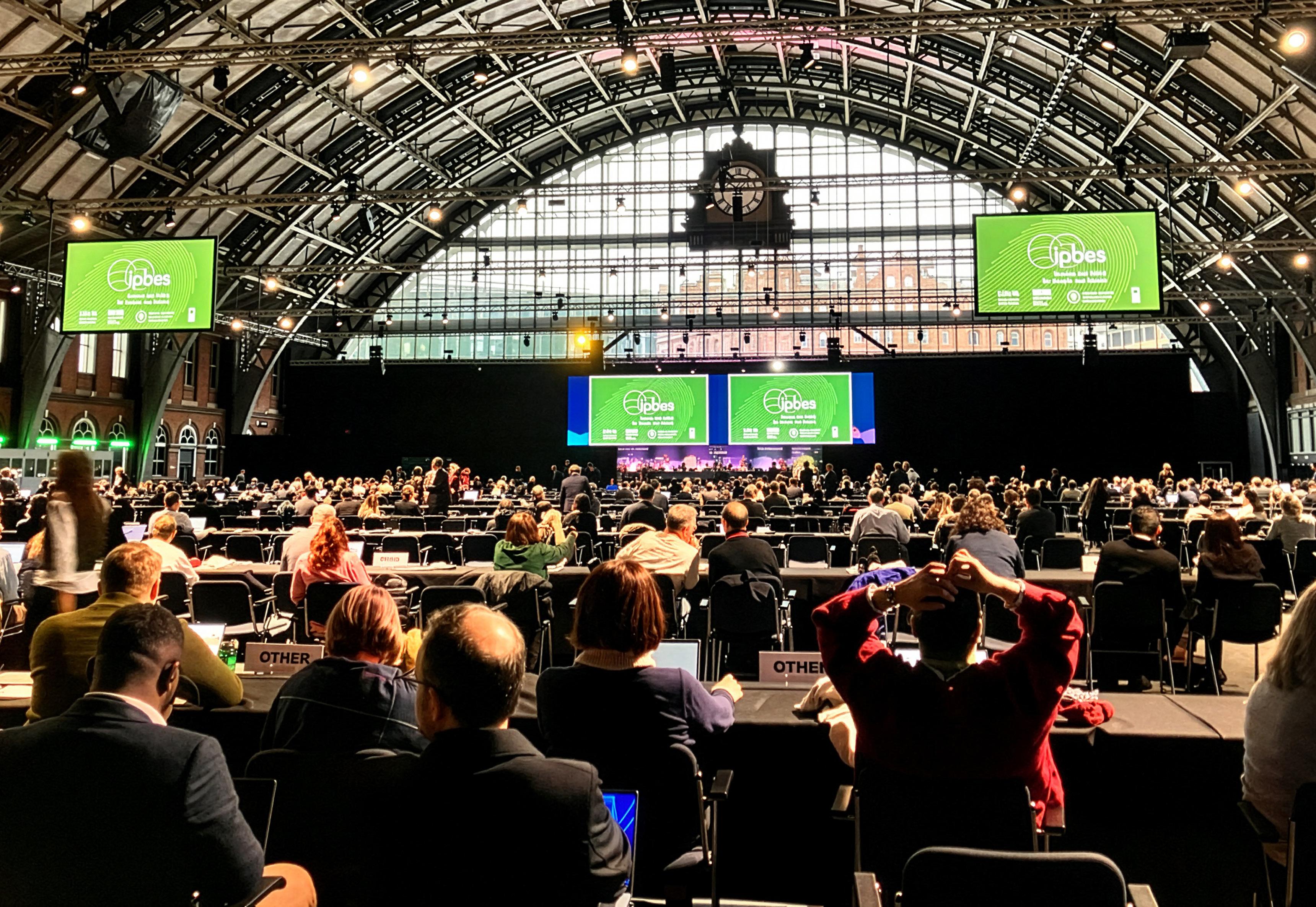
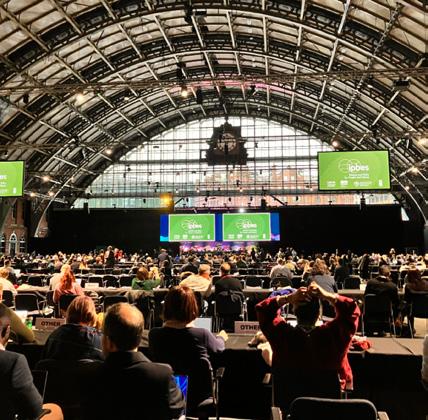
In February, IPBES brought biodiversity to the international stage in Manchester, as the UK hosted the IPBES 12 Plenary. Over 900 experts from science, research and state delegations participated, seated beneath the high arched ceilings and railway clock in Manchester Central. The agenda comprised the review of The Business and Biodiversity Assessment, to enable its publication on 9th February.1
The Intergovernmental Science-Policy Platform on Biodiversity and Ecosystem Services is an independent
organisation working to strengthen impetus for restoring biodiversity and ecosystem services, aligned with the Convention on Biological Diversity, the Kunming-Montreal Global Biodiversity Framework and the UN 2030 Agenda for Sustainable Development. Established in 2012 by 94 states, it now includes around 150 states.2 The United Nations Environment Programme (UNEP) provides secretariat services to IPBES and the IPCC,3 the parallel platform on climate change.
IPBES has a dynamic work programme, founded upon an evidence-led approach, knowledge-
sharing, stakeholder engagement and consensus.
Its work harnesses multidisciplinary expertise, drawing together multiple knowledge foundations, including Indigenous peoples and local communities, through a process of research, co-design and review with expert panels and participating states. This creates knowledge-based policies and methodologies, applicable locally and globally, for restoring biodiversity.
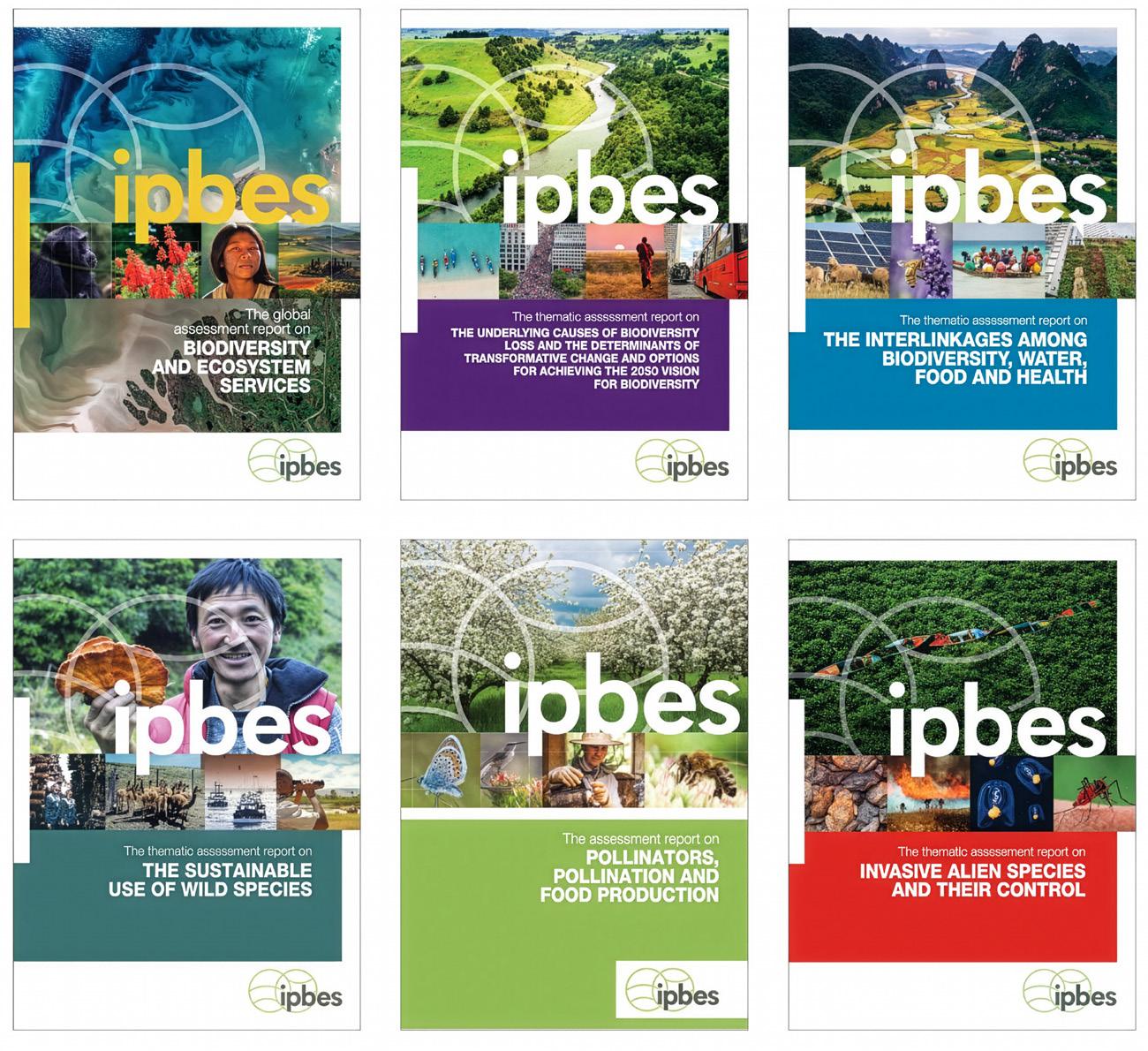
IPBES has produced a progressive series of assessments on critical topics, including Pollination; Underlying Causes of Biodiversity Loss and Determinants of Transformational Change;4 and The Interlinkages among Biodiversity, Water, Food and Health 5 Following a formal application, detailing the Landscape Institute Charter and Competencies in natural
1
1
1 https://www.ipbes. net/business-impact
2 Find out about IPBES here: https://www. ipbes.net/
3 Find out about IPCC here: https://www. ipcc.ch/
4 https://www.ipbes. net/transformativechange-assessment
5 https://www. ipbes.net/nexusassessment
6 Inger Anderson, Executive Director, UNEP encapsulated the urgent need for this Assessment. https://www.unep. org/people/ingerandersen
2 IPBES reports are packed with concise, factual, referenced information, beautiful illustrative diagrams, fact sheets and summaries.
© Lucy Jenkins FLI
3 Lucy Jenkins at the 12th IPBES Plenary.
© Lucy Jenkins FLI
7 IPBES https:// zenodo.org/ records/18538597, page 5. Key Message 2.
8 IPBES https:// zenodo.org/ records/18538597, page 5 ‘In 2023, global public and private finance flows with direct negative impacts on nature were estimated at $7.3 trillion, including environmentally harmful public subsidies and private investment in high-impact sectors. Of this total, private finance accounts for around two-thirds ($4.9 trillion). Public spending on environmentally harmful subsidies is approximately $2.4 trillion. Whereas only around $220 billion in public and private finance flows in 2023 were directed toward activities that contribute to the conservation and sustainable use of biodiversity.’
9 IPBES https:// zenodo.org/ records/18538597, page 8. Key Message 4
10 IPBES https:// zenodo.org/ records/18538597, page 1. ‘Creation of an effective enabling environment can help closely align what is profitable for businesses with what is good for biodiversity and society. An enabling environment requires coordinated, collaborative action through a wholeof-government and a whole of-society approach.’
systems, ecosystem services and sustainability, IPBES accepted the LI as ‘Observer’. Having followed IPBES since 2012, it was inspiring to write this submission and represent the LI at the Plenary.
Opening remarks from Chairs of IPBES, CBD and UNEP highlighted the importance of science, transparency and inclusive debate, which build credibility and direction. Inger Anderson (UNEP) noted the Business and Biodiversity Assessment is urgent, because ‘Nature’s role in the global economy remains significantly under-valued’.6
Prepared in three years by 79 authors from 35 countries, this Assessment provides a rigorous scientific, policy-ready document, shaped by stakeholders from all regions, and meticulously reviewed.
The ambition driving this work is innovative and practical, reframing the relationship between businesses and biodiversity. Its analysis moves beyond impacts to dependencies, demonstrating that all businesses depend on biodiversity directly or through their operations, value chains and portfolios, causing risks to themselves. ‘The current external conditions in which businesses operate are not always compatible with achieving a just and sustainable future and perpetuate systemic risks’.7 Finance flows continue towards practices which degrade biodiversity:
In 2023, global public and private finance flows with direct negative impacts on nature were estimated at $7.3 trillion, including environmentally harmful public subsidies and private investment in high-impact sectors. Whereas only around $220 billion in public and private finance flows in 2023 were directed toward activities that contribute to the conservation and sustainable use of biodiversity 8
IPBES shifts the focus towards an environment in which everyone can act, individually and collectively, to build capacity. This requires a fundamental shift, ensuring everyone takes responsibility,9 to align what is profitable for businesses with what benefits biodiversity and society. The report outlines 100 actions businesses can take today, coordinated ‘through a whole-ofgovernment and a whole of-society approach’.10
So, how does this apply to landscape practice?
1: The power of consensus, built on sharing perspectives.
IPBES demonstrates that wideranging perspectives can unite decisively behind one purpose, restoring biodiversity. Understanding requires genuine listening – a hopeful reason to join global dialogue.
2: Engagement with international research and actions.
An evidence-led approach enables us to communicate challenging baselines, objectives and measurable outcomes, connecting individual actions to collective 2030 commitments.
3: IPBES considers biodiversity and ecosystem services holistically.
Landscape Competencies, including Landscape Systems, Sustainability, Climate, Ecosystem Services and Design, enable us to integrate biodiversity within the core of planning and design frameworks, creating foundations for a just and sustainable future.
Lucy Jenkins FLI is a member of the Landscape Institute’s Knowledge & Practice Committee as well as a member of IFLA’s Climate Action Group. She is also Technical Director at Camlins.

Jeremy Penn CMLI
The delivery of new housing and the restoration of biodiversity are often framed as competing objectives. Biodiversity is essential to humanity, both for the provision of ecosystem services such as food, fuel and flood prevention, and equally for amenity and pure enjoyment. However, the ‘average abundance of native species in most land habitats [has] fallen by at least 20% since 1900’.1 Biodiversity Net Gain (BNG) requirements were made mandatory by Schedule 14 of the Environment Act 2021 and are fundamental to the response to the climate and biodiversity crises. The UK government has committed to halting the decline
A landscape-led approach must underpin the delivery of new housing, using landscape character and ecological networks to shape development from the outset and secure meaningful biodiversity enhancement rather than retrofit mitigation.
in biodiversity by 2030 while also having ‘accelerating government ambitions to build 1.5 million high-quality homes with the right infrastructure’.2 To achieve these goals simultaneously, the right infrastructure will need to include the right networks of green infrastructure. Landscape assessment is not simply a tool for evaluating impact, but a means of enabling these needs to come together creatively rather than to collide, providing a spatial framework for the design of biodiversity networks.
The industry is coming to appreciate that mitigation for biodiversity loss requires awareness of ‘the need for providing landscape
connectivity’,3 providing wildlife corridors that link habitat patches and then interconnect to form networks. Landscape texture emerges through accumulated layers: geology influences soil conditions; soils influence agricultural practice; agriculture shapes settlement; settlement determines present-day land use. Landscape Character Assessments (LCAs) and Landscape Sensitivity Assessments (LSAs) are tools for describing and evaluating change and they articulate landscape texture through physical, cultural and perceptual attributes. They also contain ecological cues that can relate to scale (such as expansive vs enclosed landscapes), land
1 CIEEM (2019) Climate Emergency and Biodiversity Crisis: The Facts and Figures https://cieem. net/wp-content/ uploads/2019/09/ Climate-Emergencyand-BiodiversityCrisis-The-Factsand-Figures.pdf
2 Dramstad, W.E. Olson, J.D. and Forman, R.T. (2013) Landscape Ecology Principles in Landscape Architecture and Land-Use Planning Island Press
3 Ministry of Housing Communities and Local Government (2025)
Housing Sec pledges to ‘go further than ever before’ to hit 1.5 million homes https://www.gov. uk/government/ news/housing-secpledges-to-gofurther-than-everbefore-to-hit-15million-homes
4 Tudor, C. (2019) An Approach to Landscape Sensitivity Assessment https://assets. publishing.service. gov.uk/media/ 5d2f005aed915d 2fe684675b/ landscapesensitivityassessment2019.pdf
cover (such as arable vs woodland) and connectivity patterns (such as joined-up woodland vs disjointed tree groups). Providing the right green infrastructure starts at the landscape scale by referencing the ecological cues embedded within the LCAs and LSAs. In this way these assessments become a framework within which design can evolve.
Biodiversity, and the need to meet BNG requirements, has become a consideration that the landscape professional grapples with on a daily basis. Biodiversity feeds into LCA as a valued attribute of the landscape. It can also contribute to greater sensitivity of a landscape, particularly where a landscape ‘with a strong and positive character in
good condition and with features worthy of conservation, will be more susceptible to change’.4 This is due to potential impacts on its legibility and the arrangement of elements, such as semi-natural habitats or valued natural features, that may be hard to replicate.
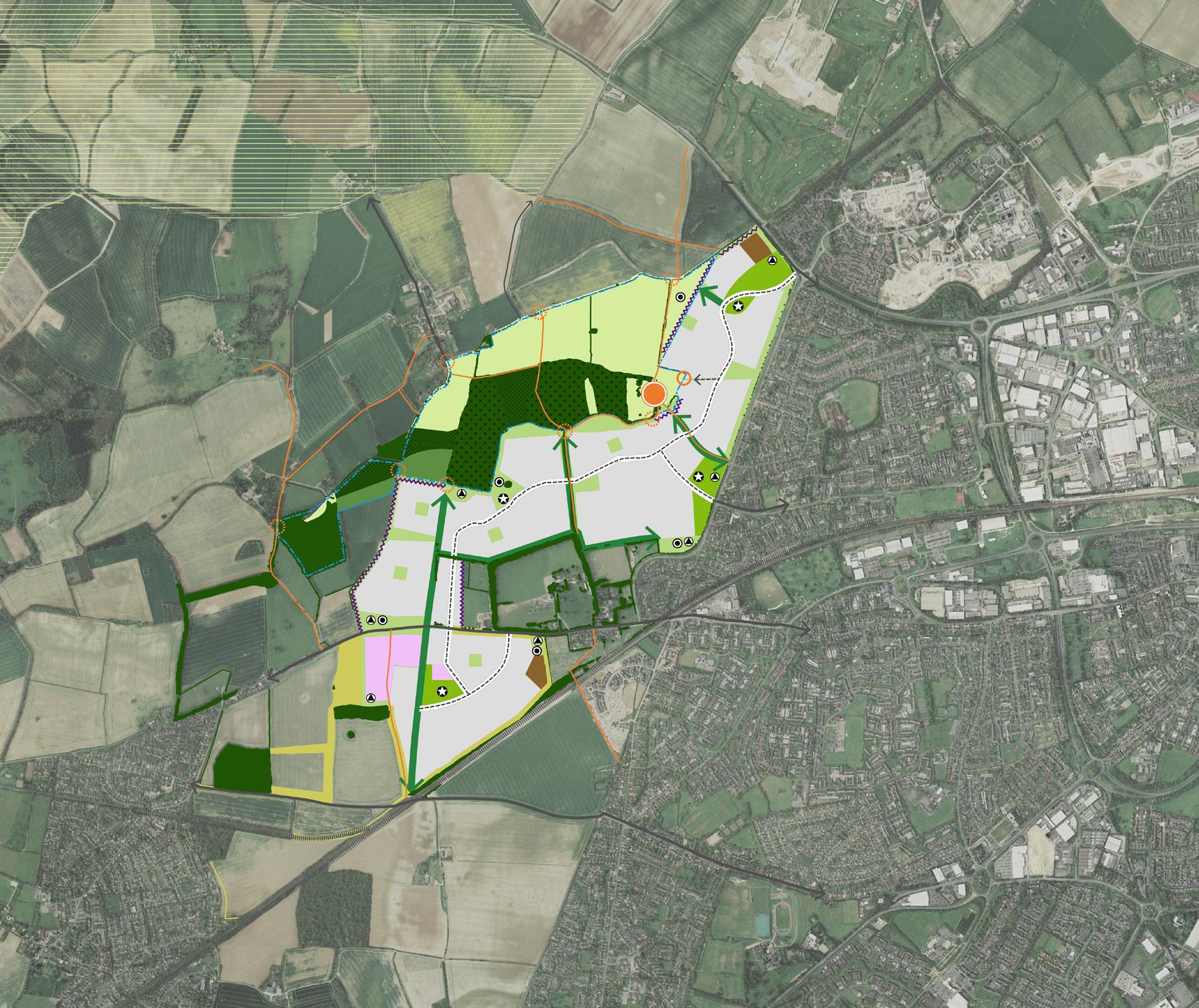
One example of landscape assessment feeding into ecological design was in the early stages of the proposed Manydown urban extension at Basingstoke. Woodland, hedgerows and tree belts are characteristic landscape features that contribute to visual amenity and ecology corridors. Landscape and visual appraisal work at Manydown identified the need for mitigation planting, to reduce
2
the visual impact of development, prevent coalescence and enhance biodiversity. Sensitive design of new woodland and hedgerow planting, consistent with local landscape characteristics, has seen the creation of 4.5ha of native mixed woodland, species-rich hedgerows and grassland, with local topography influencing the location of wetland habitats, field-corner planting and sinuous woodland margins.
1 Landscape Strategy for Manydown, Basingstoke with tree belts connecting woodland blocks.
© TEP
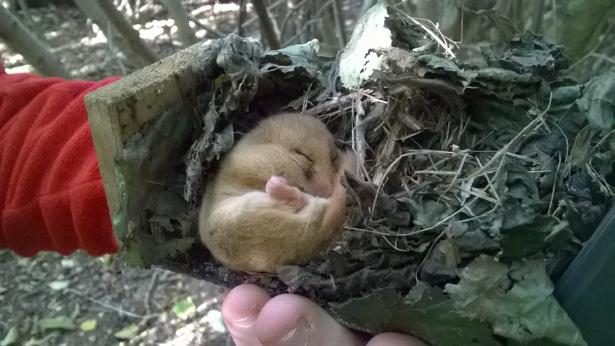
2 Dormouse in habitat created at Manydown, Basingstoke.
© TEP 1
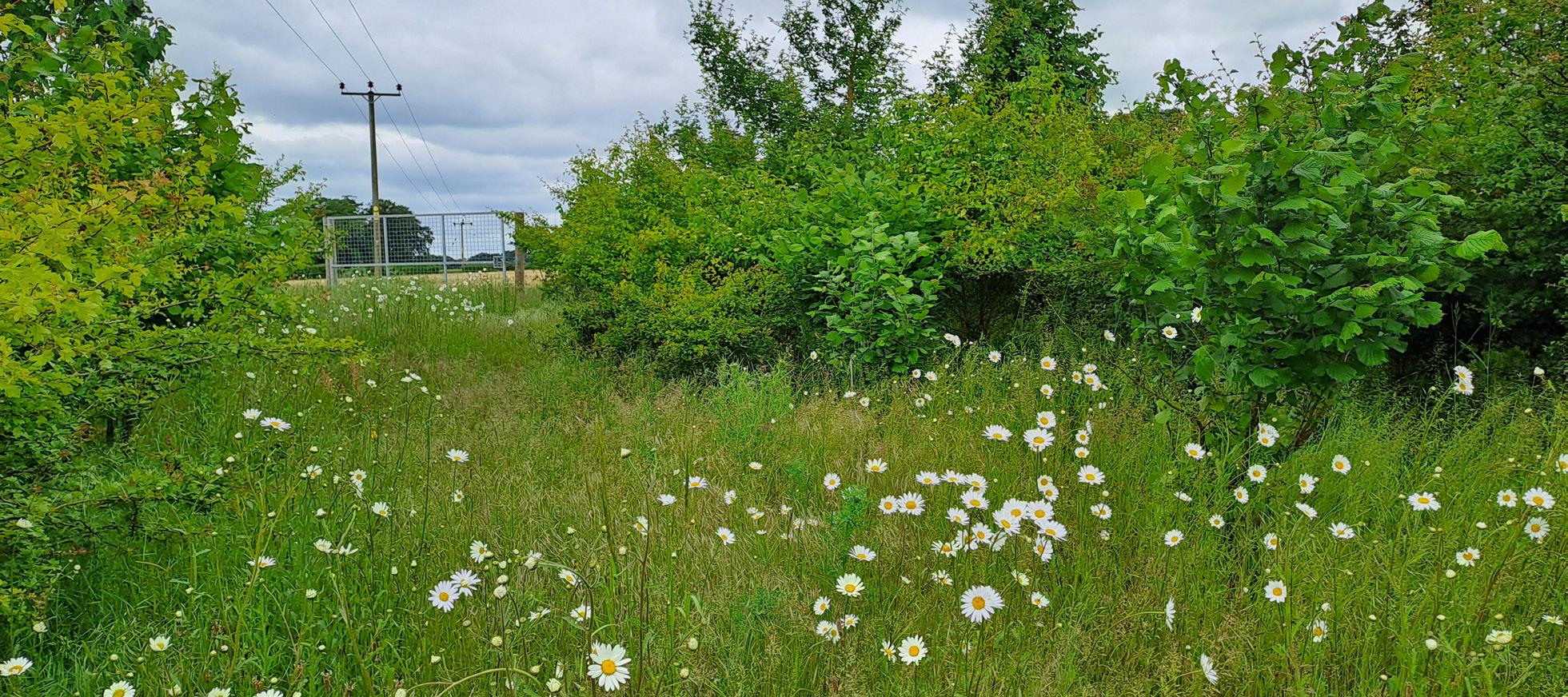
This approach met the visual impact objectives in a way that complemented and enhanced the surrounding landscape character, while also supporting biodiversity restoration that extended beyond simply achieving the BNG metric. By incorporating planting mixes that included tree species such as hazel, the design created habitats suitable for fauna like dormice, while remaining consistent with the local landscape character.
The design included bunds where a tree belt adjoined a road to support closure of the canopy across the carriageway in the long term, further strengthening habitat connectivity. In situations like this, it is important to balance the immediate and longer-term effects of planting. Although early-stage planting can initially intensify the perception of change, over time, when aligned with the existing landscape structure, it can help restore connectivity, strengthen enclosure and integrate development within the wider ecological network. A five-year management plan was implemented to ensure that the new planting successfully connected with and enhanced the surrounding habitat networks.
Local Nature Recovery Strategies (LNRSs) are often based on landscape character. For example, the Guidance for Nature Recovery
produced by the South Downs National Park (SDNP) Authority is structured around the 19 Landscape Character Types identified for the national park. LNRS guidance seeks to balance ecological, landscape and visual requirements. For example, the SDNP guidance cautions against creating habitats in straight lines that would interrupt the sinuous ancient quality of downland.
The process of landscape design of course takes place within a site boundary that has arisen through human social/commercial/ administrative activities, often through extended periods of time. However, landscape character areas and types rarely conform to administrative boundaries and certainly wildlife movements between habitats are entirely agnostic to such boundaries.
Landscape and visual impact assessment is often perceived as a post-design exercise. In fact, it is an iterative process that serves as a powerful tool for embedding biodiversity outcomes into the design process, allowing maximal connectivity through the boundary of the site and across wider networks. Testing proposals against landscape character patterns and existing habitat networks allows landscape professionals to bring together landscape character and biodiversity outcomes. The example of Manydown discussed above demonstrates this iterative process well.
These principles also have applicability in the case of townscape character. Habitat networks can be at their most fragile in townscape settings and yet biodiversity gains in
3 A five-year management plan at Manydown, Basingstoke ensured integration of planting with existing habitat networks.
© TEP
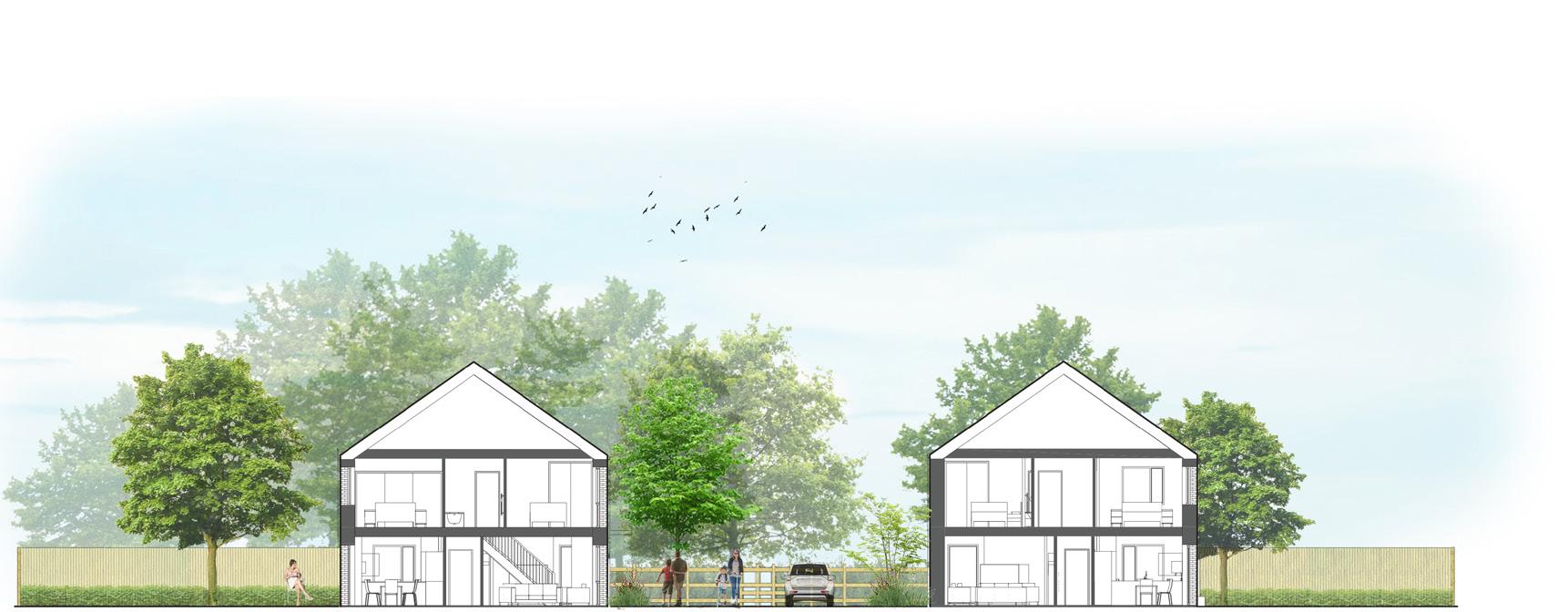
4 Cross-section of development at Fen Ditton, Cambridge showing street tree planting selected to complement existing townscape character.
© TEP
6
5
such situations can bring some of the greatest benefits. The development of a group of 21 dwellings to certified PassivHaus standards at Fen Ditton, Cambridge provided the opportunity to improve biodiversity in a more urban context, though this came with its own challenges. Street trees can make a genuine contribution to habitats in the urban environment. However, when introducing street trees into a townscape with character sensitivities, in this case including the village’s linear serpentine form and existing mature trees, regard must be given to such matters as species selection and planting configuration in order to preserve the character of the streetscape.
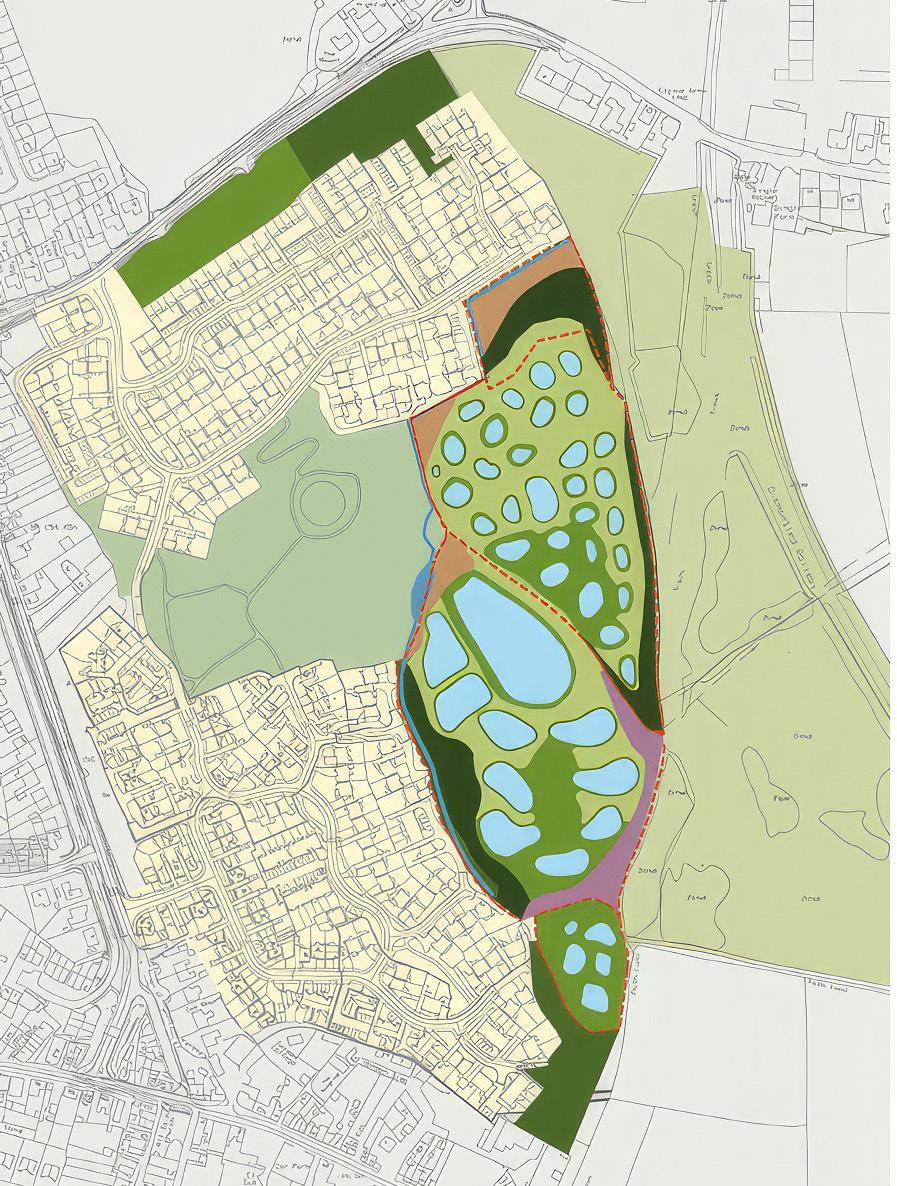
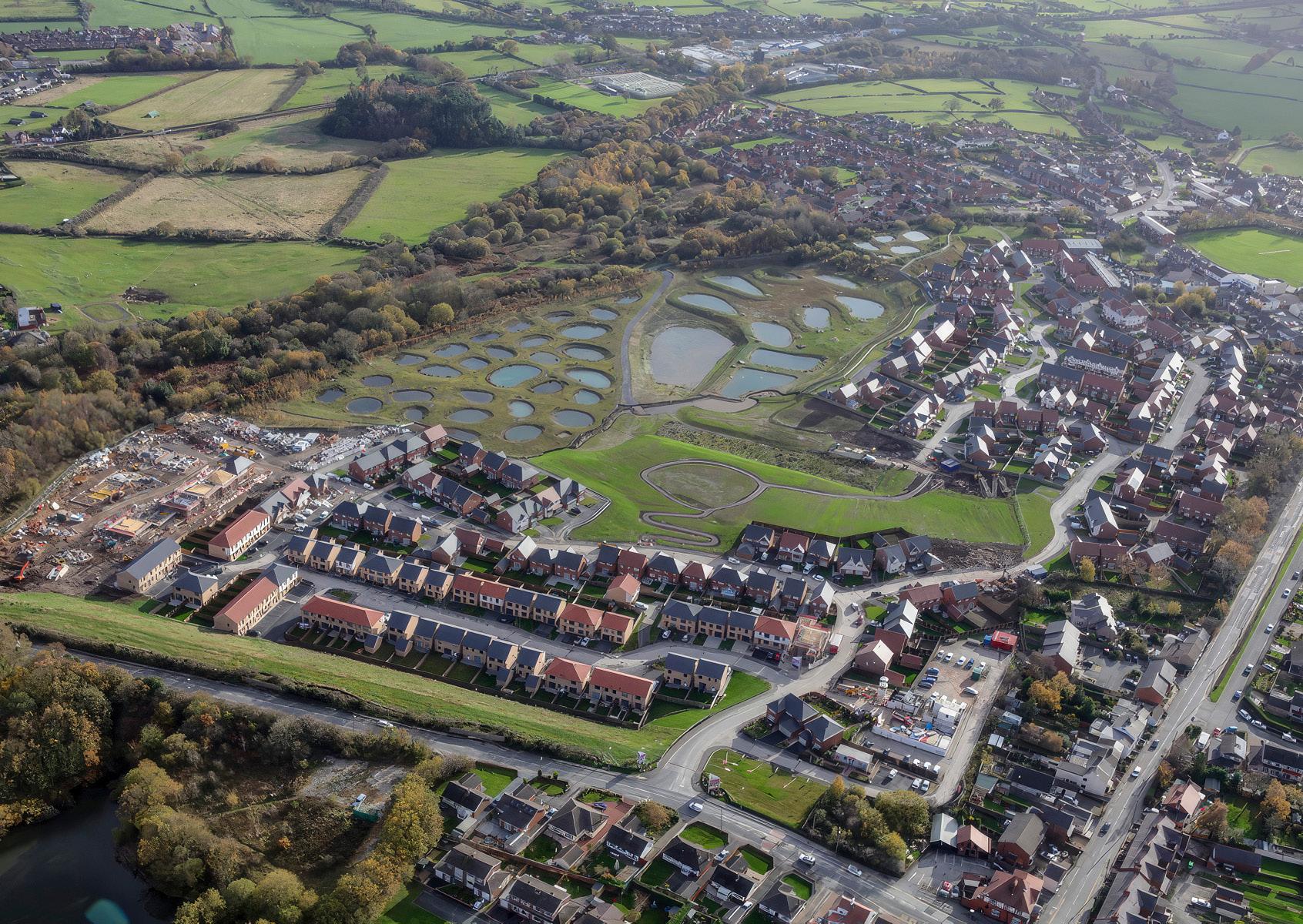
In Buckley, North Wales, the development of 300 new homes provided the opportunity to restore a former claypit. The abandoned claypit was steep-sided and unsafe but had been colonised by great crested newts and so was designated as a Special Area of Conservation for its habitat value. Consideration of the landscape character of the area, together with the need to retain this habitat, led to a design considered in layers, where the ‘moonscape’ landscape was partially infilled and revegetated to allow the creation of a network of ponds. These connect into habitats in the wider area but also allow room
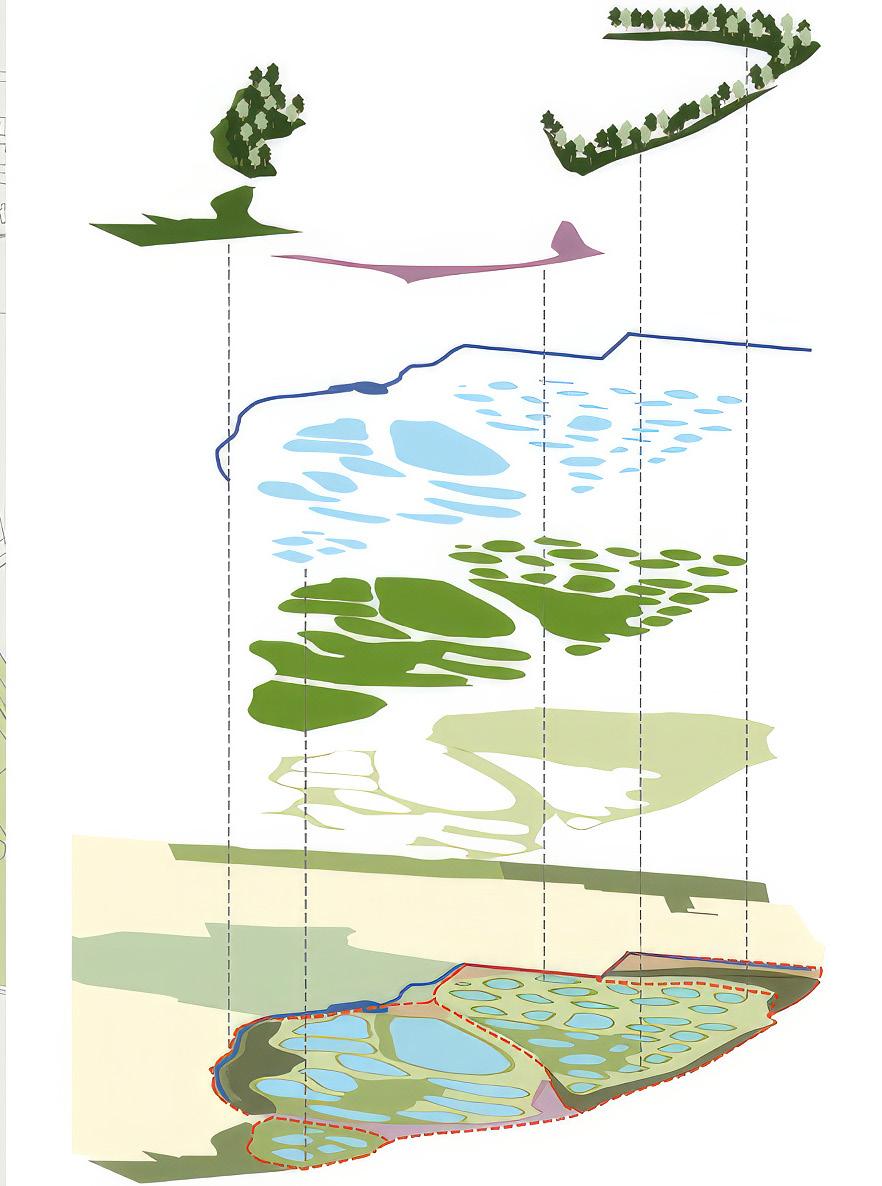
for public green open space in wider parts of the site.
Landscape Ecological Management Plans (LEMPs) and Habitat Management and Monitoring Plans (HMMPs) bridge the gap between design and delivery. These should be evolved in parallel with landscape and ecological assessment processes and have clear objectives in relation to both landscape and biodiversity targets. The ongoing management regime of a landscape plays a crucial role in the integration of a proposal into wider networks, both in terms of allowing the development of the habitats
that are intended at the design stage but also in stimulating public engagement.
To bring design and delivery together most effectively, biodiversity and landscape character considerations need to be integrated from the earliest stages. This integration must be iterative to work well in practice. Biodiversity enhancements that merely satisfy the BNG metric can risk creating fragmented habitats, whereas grounding these interventions in a landscape context enables development to actively rebuild ecological networks. When landscape character analysis genuinely informs design, biodiversity outcomes become much stronger. The appropriate use of LEMPs and HMMPs then ensures that these design intentions mature into functioning habitats over time. Landscape professionals are uniquely positioned to guide this process and to ensure that both landscape and ecological benefits are fully realised.
Jeremy Penn is a Chartered Member of the Landscape Institute and Senior Landscape Architect in The Environment Partnership’s (TEP) London office.
1 Lawton, J. (2010)
Making Space for Nature: A review of England’s Wildlife Sites and Ecological Network
2 Secretariat of the Convention on Biological Diversity (April 2000) Sustaining life on Earth
3 LLDC (2020) Local Plan 2020 to 2036
4 International Union for Conservation of Nature and Natural Resources (2020) Ensuring Effective Nature-based Solutions
5 Lawton, J. (2020) Making Space for Nature – 10 years on
6 State of Nature Partnership (2023) State of Nature
Green infrastructure has evolved from the systems thinking of early environmental planning into a central tool for delivering biodiversity and climate resilience. The legacy of Queen Elizabeth Olympic Park shows how landscape-led planning can translate these principles into functioning ecological networks within cities.

1 Park Bioblitz 2024.
© Rahil Ahmad
The London 2012 Olympic and Paralympic Games presented a unique opportunity to develop the largest new urban park in the UK for over a century as a piece of multifunctional green and blue infrastructure (GBI) serving nature, people and planet. An interdisciplinary team, led by landscape architects for a landscape architect-led client, ensured the potential of the site, as part of the catchment of the River Lea, was harnessed to maximise delivery of ecosystem services through the key objectives of sustainability, biodiversity and accessibility. Planning of the Olympic Park came at the time of the Lawton report (2010), Making Space for Nature, which found that England needed ‘more, bigger, better, and joined’ frameworks to restore England’s nature through ‘the creation of a coherent and effective ecological network’.1
The Convention on Biological Diversity, signed by the UK at the 1992 Earth Summit in Rio, states ‘the biodiversity we see today is the fruit of billions of years of evolution, shaped by natural processes and, increasingly, by the influence of humans’.2 Awareness of the link between human activity and the natural world began in the 1960s with Rachel Carson’s Silent Spring (1962) and the birth of the environmental movement. This formed the context for Ian McHarg’s Design with Nature (1969) and Nan Fairbrother’s New Lives, New Landscapes (1970). Both texts called for robust land use, ecological planning and a multidisciplinary approach, working with nature and natural systems rather than against them. A strategic planning approach was taken in the transformation of Queen Elizabeth Olympic Park (QEOP) through London Legacy Development Corporation’s (LLDC) planning powers. The role of LLDC’s landscape architects in providing design advice, supported by LLDC Local Plan policies and, in particular, BN.3 Maximising biodiversity , 3 ensured biodiversity was protected, enhanced and created throughout the LLDC area.
Nationally, the regulatory framework has been put in place to deliver GBI and nature recovery at scale. The UK is a member of the International Union for Conservation of Nature, with a commitment to the delivery of nature-based solutions to help address the global challenges of climate change, human health, food and water security, natural disasters and biodiversity loss.4 The UK agreed to the Kumming-Montreal Global Biodiversity Framework (GBF) in 2022 ‘to halt and reverse biodiversity loss’, including committing to protect 30% of land and sea for nature by 2030 (30by30). This commitment to a Nature Recovery Network is set out in the Environmental Improvement Plan 2023 and, in combination with Biodiversity Net Gain and Local Nature Recovery Strategies (Environment Act 2021) and the Urban Greening Factor in London (London Place 2021), has the potential to restore, enhance and connect our ecological network. However, in Lawton’s 10-year review (2020), despite having shaped policy, including the 25 Year Environment Plan, ‘the last ten years have seen far too little action’.5 Indeed, the UK is now one of the most naturedepleted countries on Earth.6
Design with Nature set out the process of ‘overlay mapping’ and systems thinking that forms the basis of landscape professionals’ practice today. Advances in mapping technology in the 1980s led to the emergence of ‘landscape ecology’, which recognises the impact of disturbance, whether natural or human, on ecology and ecosystems. Richard Forman, widely considered to be the ‘father’ of landscape ecology, refined the patch-corridor-matrix approach in Land Mosaics: The Ecology of Landscapes and Regions (1995), and the threat to biodiversity due to ‘fragmentation’ of these patches and lack of ‘connectivity’ or corridors between them is highlighted in Lawton’s report. The complexity of these relationships and scales requires a multidisciplinary approach and strategic planning as set out in McHarg’s and Fairbrother’s work.
As landscape professionals, we deliver work at a range of scales and understand the need to look beyond the ‘red line’ to deliver systems-thinking, landscape-led schemes. Digital, mapping and satellite technologies allow us to work with ecologists at landscape scale to enhance the ‘matrix’ and restore entire ecosystems that will deliver the level of nature recovery required, while also addressing the interlinked emergency of climate
resilience. Whole river catchment projects allow landscape planning, design and management for water quality and flood control as well as for habitat enhancement/ creation. Connectivity across neighbourhoods, through continuous tree canopy cover and connected SuDS integrated into our streets, provides ecological corridors and opportunities for human connections and movement. Maximising open space, planting and ecological improvements on site and optimising greening to buildings through green roofs and walls allows enhancements to and the provision of ‘patches’ with wider benefits for the users of the site.
The direct and indirect benefits of nature, ecosystem services, are dependent on biodiversity, and ‘truly sustainable economic growth and development means recognising that our longterm prosperity relies on rebalancing our demand of Nature’s goods and services with its capacity to supply them’.7 We need to recognise that we are part of, rather than apart from, the complex system that is nature, requiring institutional change as called for by the Dasgupta Review (2021) The Economics of Biodiversity Embedding the value of these provisioning, regulating, cultural and supporting services in the financial and insurance sectors through natural capital accounting and comprehensive risk management is key to nature-positive decisionmaking at all levels of society. This is reinforced at a business level by guidance from the Taskforce on Nature-related Financial Disclosures, enabling assessment, reporting and actions on nature-related ‘dependencies, impacts, risks and opportunities’.8
Although there are some exemplary projects, progress is not fast or substantial enough and scepticism exists within the profession due to lack of leadership. Despite the regulatory framework and the government’s recently published Global biodiversity loss,
7 Dasgupta, P. (2021) The Economics of Biodiversity: The Dasgupta Review. (London: HM Treasury)
8 https://tnfd.global/ about/why-naturematters/
2 Brown
© idverde
3 No Mow May South Park.
© idverde
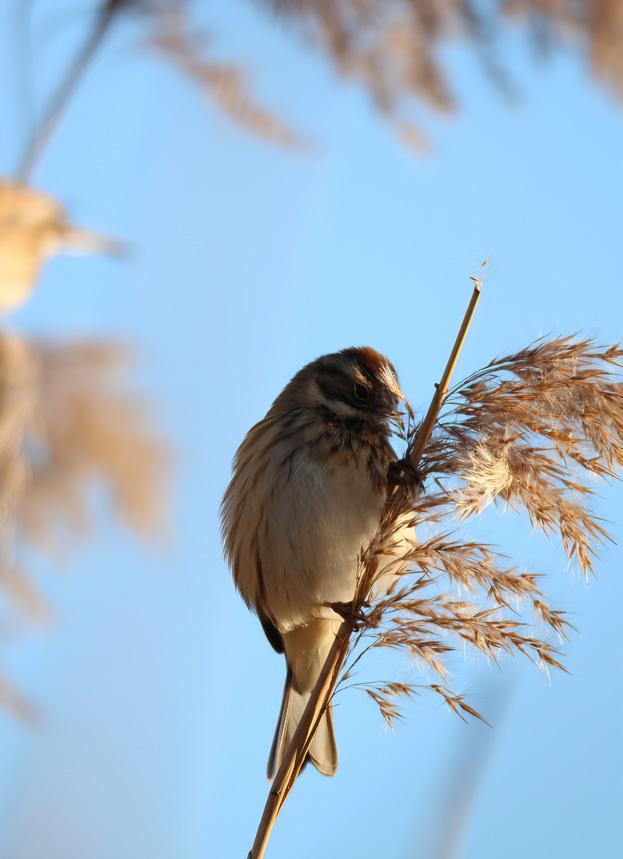
4 Reed bunting North Park reedbeds.
© idverde
9 https://www.gov. uk/government/ publications/ nature-securityassessment-onglobal-biodiversityloss-ecosystemcollapse-andnational-security
10 LLDC Green
Infrastructure Guide
QEOP Biodiversity Action Plan 20252030
QEOP Park Design Guide 2025
QEOP Park Design Guide Update
Climate Emergency Design Guidance
11 Lawson, J. (2010)
Making Space for Nature: A review of England’s Wildlife Sites and Ecological Network 4
ecosystem collapse and national security assessment, which found that ‘environmental degradation can disrupt food, water, health and supply chains, and trigger wider geopolitical instability’,9 wildlife protection is seemingly under threat from the Planning and Infrastructure Bill and the Nuclear Regulatory Review. A consistent approach from top to bottom and financial commitment as per the GBF is required to facilitate delivery. We have seen a hollowing-out of local authorities’ finances and capacity and yet it is their responsibility to
prepare the important Local Nature Recovery Strategies and implement them through Biodiversity or Nature Recovery Action Plans, among other mechanisms.
As we continue to deliver the neighbourhoods within the QEOP estate, with planning powers returned to the four neighbouring boroughs and ever present financial constraints, as landscape architects we seek to embed GBI through our own policies to ensure the delivery of landscape-led schemes with our development partners.10 With responsibility for the management and ongoing evolution of the parklands, we work to ensure they maximise their contribution to nature recovery and climate resilience. We have also sought to address the industry-wide problem of the green skills shortage through horticultural training and employment coaching programmes for local residents. Investment in these skills and the management of our green and blue spaces is vitally important for them to provide the ecosystem services that they were designed for and must be considered from the outset.
Strengthening voluntary frameworks such as Natural England’s Green Infrastructure Framework, Building with Nature and
Regular monitoring against our QEOP Biodiversity Action Plan and LLDC Climate Action Strategy, in collaboration with UCL East and citizen science projects such as Bioblitz, allows us to see how habitats and species are performing. We can then adjust management accordingly to maximise their contribution to biodiversity, ecosystem services and climate resilience:
▪ Total of approx 45ha of habitat including c.20ha grasslands, c.12ha woodland, scrub and
hedgerow, c.2ha reedbeds and 0.55ha wet woodland
▪ 82 bird species recorded on the park with a total of 113 species recorded by independent contributors
▪ 11 fish species recorded in the park’s waterways, including European eel
▪ 17 species of dragonflies and damselflies recorded within the aquatic habitats, and the smooth newt is now widespread across the park
UKGBC’s Framework for a NaturePositive Built Environment (2026) will allow the multitude of benefits that nature provides us and our planet with to come to fruition. Protecting, strengthening and connecting our existing ecological assets, and investing in nature, will save money in the long term as we resolve multiple challenges, including biodiversity, climate resilience, food security, mental and physical health, water quality and flood management and youth unemployment. The Landscape Institute’s landscape-led briefing Maximising value from built development couldn’t have come at a more important time, and the legacy of QEOP as a nature-positive and landscape-led approach to development remains. The framework and ambition are there: this now needs consensus and to be put into action, in order to, in the words of John Lawton, ‘improve our chances of achieving health and prosperity for ourselves and our children.’11
Pippa Henshall CMLI has extensive experience as a landscape architect in the private sector prior to joining LLDC in 2019 where she is Design Principal Landscape and Public Realm.
▪ 23 species of butterfly recorded to date, including the notable green hairstreak and toadflax brocade moth
▪ 65 species of bee recorded on the park, including the brownbanded carder bee
▪ The European otter has been resident in the parklands since 2022
▪ Seven species of bat recorded, including common pipistrelle, soprano pipistrelle, Nathusius’ pipistrelle and Nyctalus (noctule).

Melissa Ralph CMLI
Making Space for Nature (MS4N) was delivered in 15 towns across Cornwall, helping to reverse long-term declines in urban biodiversity, improve climate resilience and create richer, more accessible everyday green spaces. The programme was part of the Green Infrastructure for Growth project with European
An update from a 2022 LI Award winner shows how a partnership between Cornwall Council and the University of Exeter has increased urban biodiversity in Cornwall and created vibrant, wildlife-rich spaces for people.
Regional Development Fund investment and match funding from Cornwall Council and their delivery partner, the University of Exeter.
MS4N focused on increasing wildlife habitats in towns and improving public wellbeing. The initiative responded to a clear need: many formerly grassy,
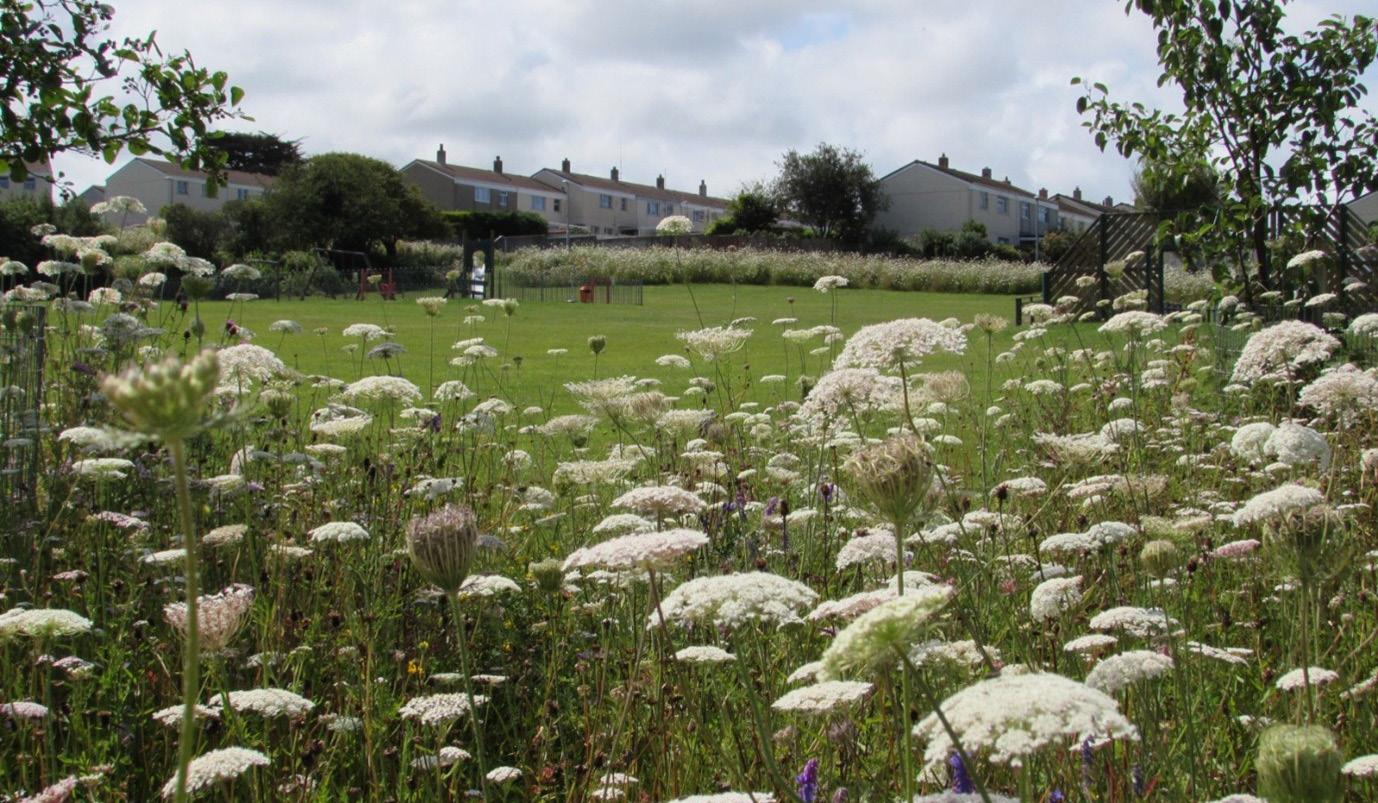
low-biodiversity spaces provided little ecological function and few opportunities for meaningful interaction with nature. The programme transformed 78 hectares of urban greenspace across 60 sites in 15 towns, creating buzzing hubs for wildlife and people. Sense of place was a key thread, encouraging a legacy of community enjoyment and stewardship.
‘I step out of my front door and within two minutes go from an estate to feeling like I’m in the countryside’ (local resident).
The project was led by Cornwall Council’s landscape architect Melissa Ralph CMLI, along with a strong project team, and in close collaboration with Dr Rosalind Shaw, researcher at University of Exeter. Civils and planting works were delivered by Cormac.
Making Space for Nature has clear environmental and social goals:
▪ Increase biodiversity and wildlife value
▪ Enhance water quality and a more flood-resilient landscape
▪ Enhance ecosystem services provided by sites, including carbon storage, sustainable drainage, healthier soils and air pollution mitigation
▪ Improve public access and nature connections
▪ Deliver community engagement and health benefits
▪ Embed environmental sustainability, equality and diversity principles
▪ Provide value for money during delivery and long-term site aftercare
MS4N applied for ‘Building with Nature’ (BwN) accreditation, a standard for high-quality green infrastructure.1 The team achieved an Excellent BwN ‘Policy’ award for project strategy and multiple ‘Full’ site awards. The strategy document created a
robust framework for policies and processes, supporting ongoing good practice, review and improvement.
Building with Nature themes:
▪ Core Standards –multifunctionality
▪ Wellbeing Standards
▪ Water Standards
▪ Wildlife & Nature Recovery Standards
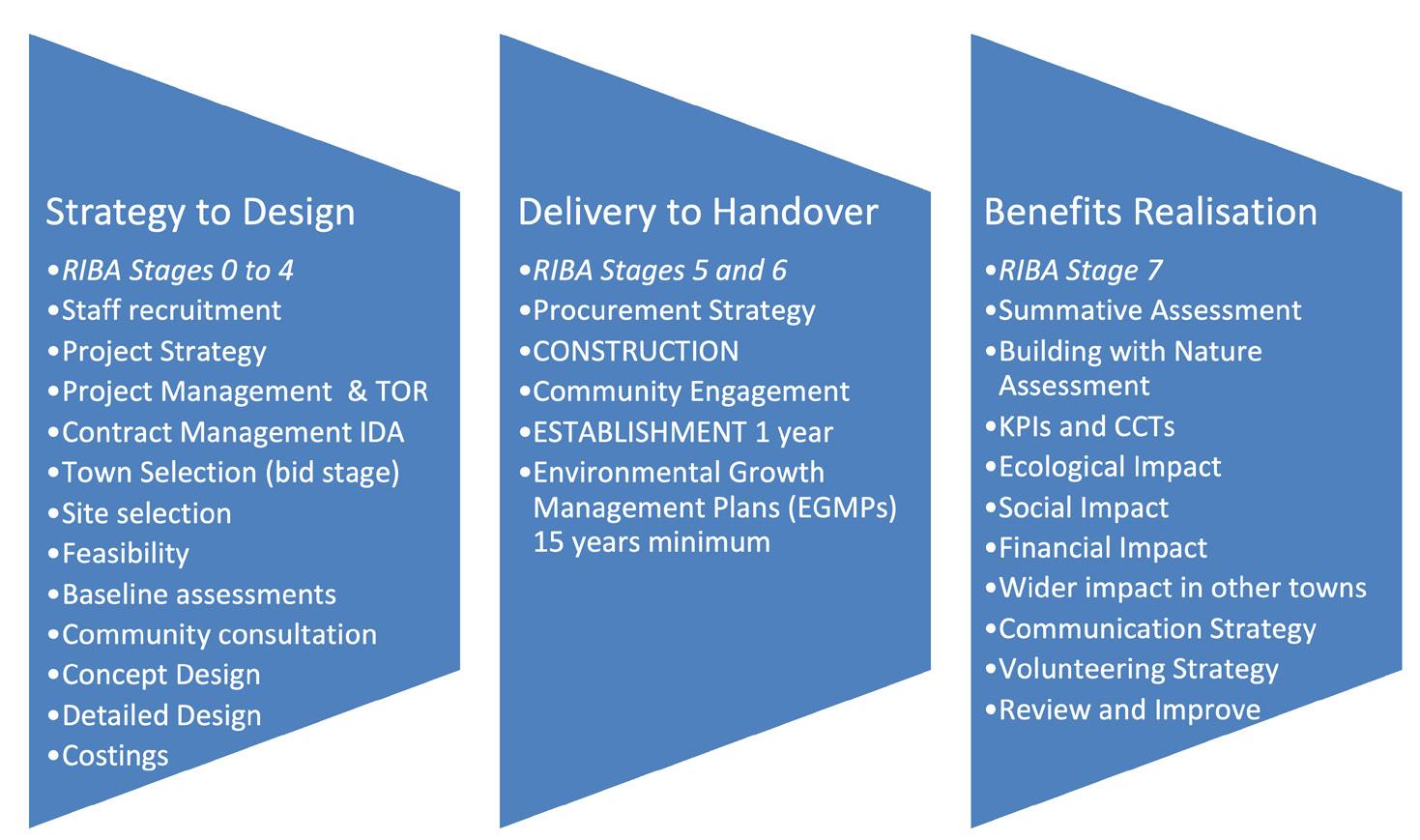
The landscape architect recruited and led the team (two project officers, an urban ranger, impact fellow and part-time project managers), liaised with the funder, led project delivery and the community and staff engagement programme, and tracked progress and budget. The project was delivered in line with RIBA Work Stages 0-7; and NEC Contract Option A.
Dr Shaw measured baseline ecology with habitat surveys, helped create a Cornish biodiversity plant palette and tracked biodiversity change. Early adoption of Biodiversity Net Gain and Environmental Benefits from
Nature2 tools provided rigour and transparency. Dr Shaw supported multiple MSc ecology and social science students, stretching project value. Biodiversity gains included an average increase in biodiversity units of 10%. Social impacts were measured through post-construction questionnaires, with 77% of people surveyed expressing positive views. Provisioning (fruit trees and berry hedges) and regulating (carbon storage, water quality improvements, flood regulation, pollination, noise regulation, urban cooling) services were included in KPIs. Research by MSc students found twice as many solitary bee and wasp visits to flowers and eight more pollinator species in the MS4N sites compared to areas with no enhancements.3 Engagement with the local community was particularly strong, fostering cultural ecosystem services including wellbeing and sense of place. Volunteers contributed 1,436 hours to caring for project sites. Each site has a 15year Environmental Growth Management Plan specifying biodiversity-friendly management such as sensitive horticultural management for overwintering invertebrates.
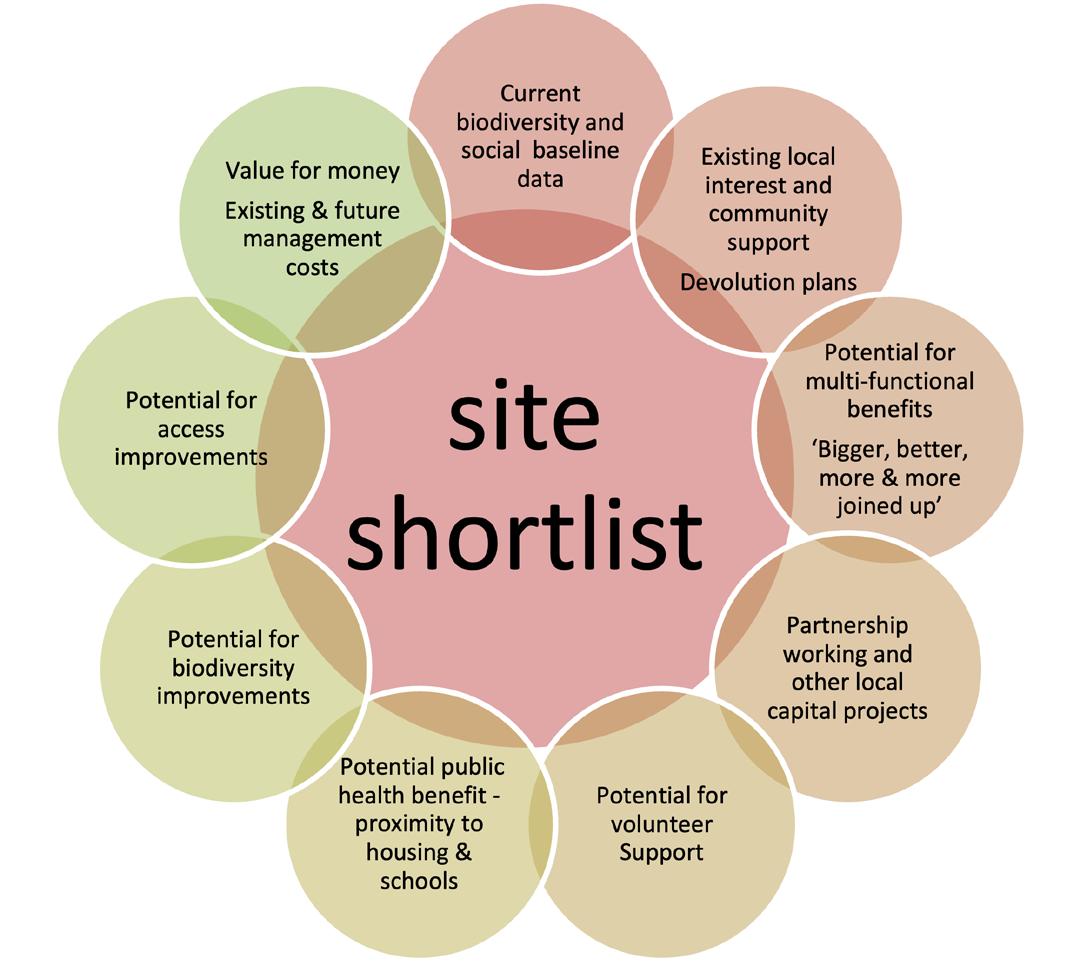
The selection of towns included reference to Cornwall Council’s Index of Multiple Deprivation 2015 and 2019. Site selection was based on robust criteria: all were Cornwall Council-owned open access, with potential for biodiversity and access improvements. Sites were longlisted via desk study and shortlisted through town walkabouts and engagement with local stakeholders. Sites included parks, playing fields, closed churchyards, cemeteries, housing estate green space and urban verges.
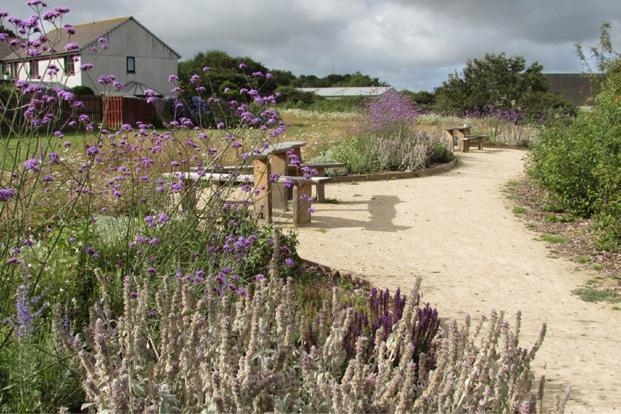
Ridgegrove Park, Launceston
Wetland, SuDS and active travel
1.3 hectares of greenspace adjacent to the River Kensey. A joint project with Cornwall Council Transport Team, to provide a safe pedestrian route from social housing to the town centre and schools, with a new footpath/ cycleway and bridge avoiding a congested narrow vehicular bridge. SuDS landscape with swales and large pond. BwN accredited.
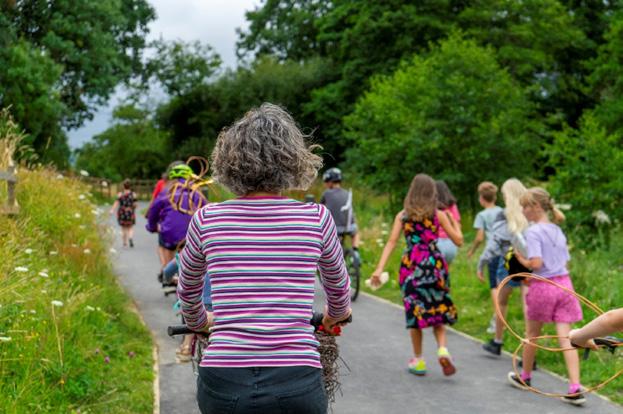
Biodiversity corridor in a residential landscape
Starting from a ‘grass desert’ with little sense of place. Wildlife meadows, pollinator planting, native hedges with an inviting path and picnic tables, create a rich experience and place for schoolchildren to garden.5
MS4N provides a nationally significant blueprint for urban nature recovery, climate adaptation and community engagement. The key has been to work boldly and collaboratively, to embed projects in the community and to keep stories and places buzzing.4
Melissa Ralph CMLI is experienced in urban nature recovery, following an early career in private practice, then mainly in local government in Cornwall. Melissa is now Making Space for Nature Manager at Cormac.
1 https://sintali.com/ building-with-nature
2 https:// designatedsites. naturalengland. org.uk/ GreenInfrastructure/ EBNT.aspx
3 Poole et. al (2025) Pollinators respond positively to urban green space enhancements using wild and ornamental flowers. Insect Conservation and Diversity vol 18, issue 1 https://doi. org/10.1111/icad.12779
Digital Object
Identifier (DOI)
4 Kahane, F., Ralph, M. and Shaw, R. (2025) Enabling effective urban green space stewardship through planning: A qualitative comparative analysis in Southwest England. People and Nature.
5 https://www.bbc. co.uk/news/articles/ cx2931grexpo
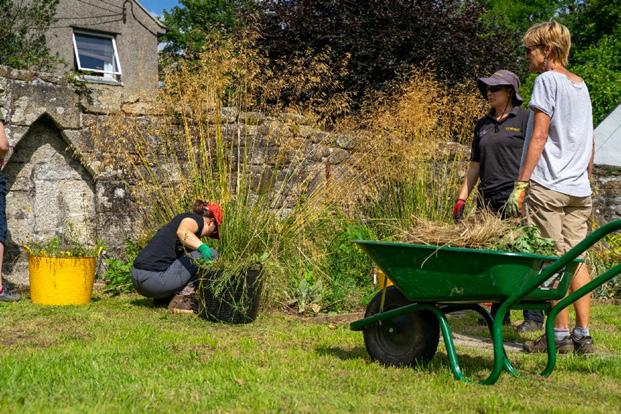
Scheduled ancient monument with remains of a collegiate college dated 1265, deemed to be a ‘no dig’ site. Seating, interpretation and sensory plants carefully added, resulting in a unique blend of heritage, habitat and recreational value with a strong legacy of community volunteers. BwN accredited.
3 Site shortlist.
© Melissa Ralph
4 Ridgegrove Park.
© Will Elliott Photography
5 Knights Way open space.
© Melissa Ralph
6 Glasney College Field.
© Will Elliott Photography
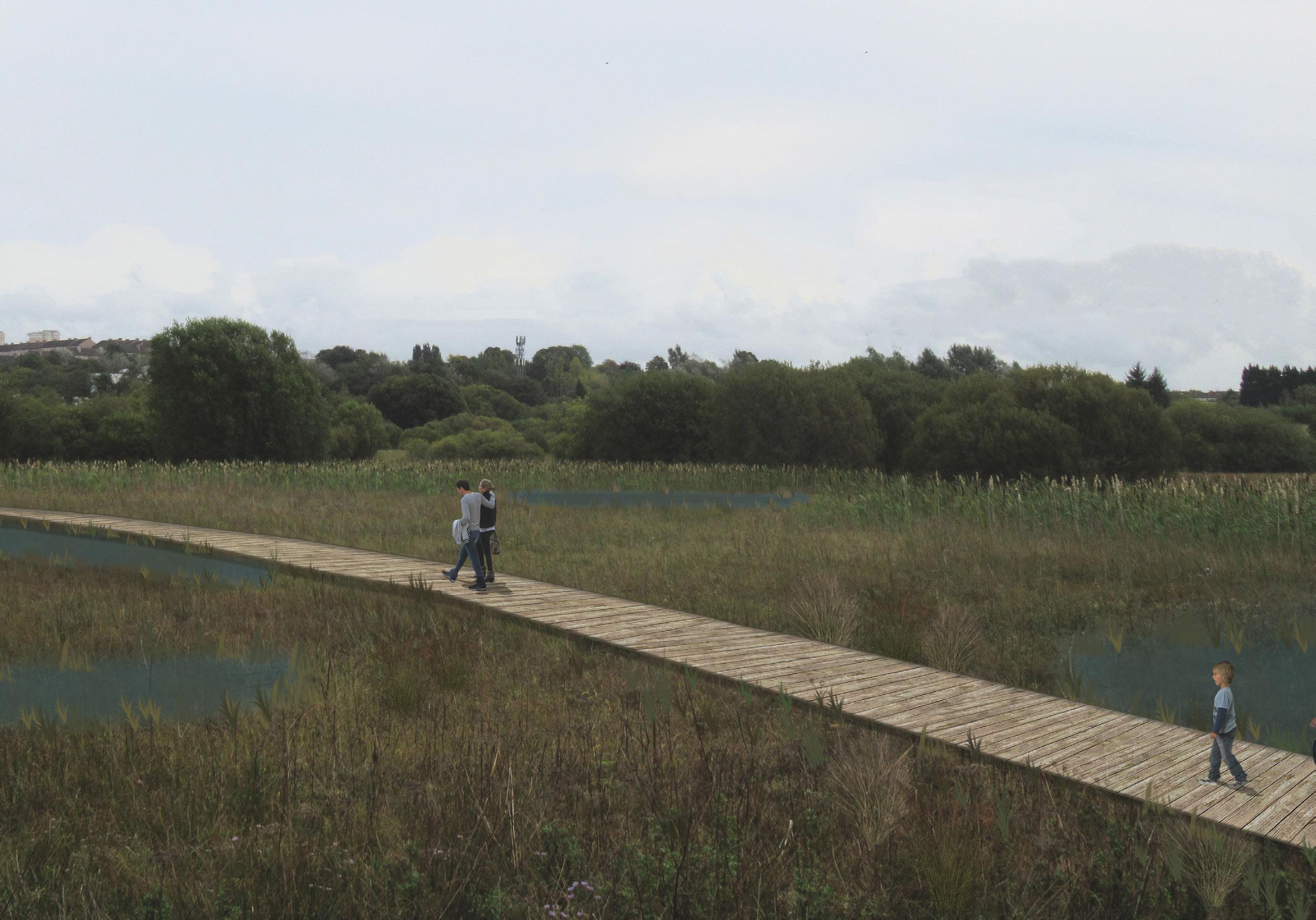

Bruce Hampton
1 The promoted development will create an accessible and biodiverse wetland landscape on the doorstep of an urban landscape.
© Mac Mic Land
2 Aspirational images for the North Glasgow promoted development.
© Mac Mic Land
As a strategic land promoter and placemaker in Scotland, landscape is not simply a setting for development; it is the framework within which new places must evolve. For years, biodiversity and landscape in new development planning have often felt like boxes to be ticked, peripheral mitigation measures rather than core design principles in placemaking. This is evident in the limited design response to these critical issues in many recent large-scale developments in Scotland.
A developer’s perspective on the value of landscape when navigating the Scottish planning system for biodiversity enhancement.
However, the adoption of National Planning Framework 4 (NPF4) has fundamentally reframed the conversation, placing the climate and nature crises at the heart of new placemaking. From initial site selection to planning strategy and detailed masterplanning, demonstrating how a site can positively respond to climate and nature policy is now central to our decision-making.
Themes of biodiversity, nature networks and blue-green infrastructure are woven throughout NPF4. In response, Mac Mic Land
has adopted a landscape and biodiversity-led approach to both our masterplans that are in preparation and those already submitted through the Local Development Plan (LDP) ‘Call for Sites’ process in Scotland.
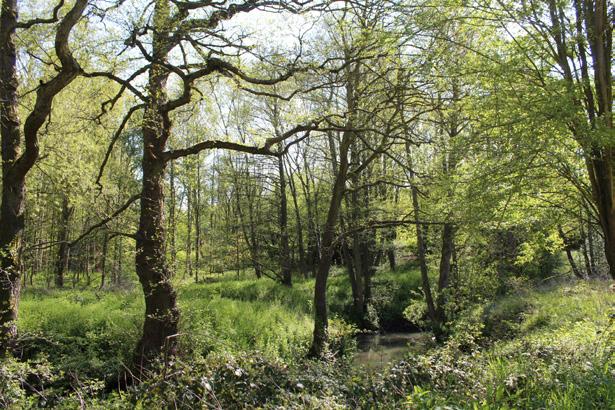
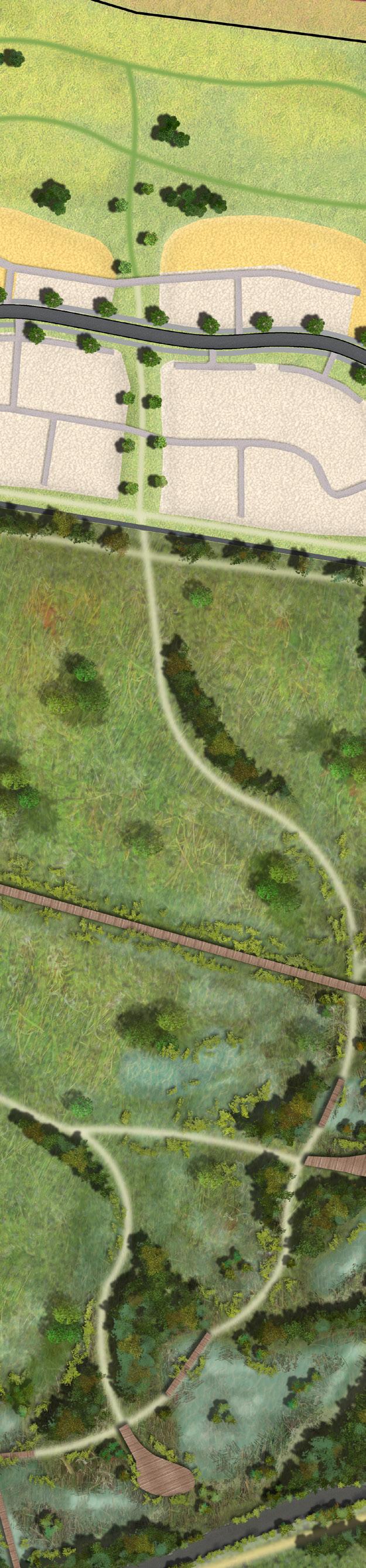
Evolving consultation on a Scottish biodiversity metric in 2026 will provide a Scotland-specific tool to inform design evolution and, by the time new Scottish LDPs are adopted, a new Scottish biodiversity metric will be in place. We will actively participate in the discussion around this new metric and believe Scotland’s biodiversity policy to be bold and powerful.
Unlike England’s more prescriptive Biodiversity Net Gain regime, Scotland’s approach seeks both qualitative and quantitative measures to evidence biodiversity enhancement, with no specific targets as to when metrics are used. As new LDPs emerge, our preference is for robust but flexible policies that can be applied to individual sites as part of a plan-led approach. New allocations will be supported by detailed and ambitious site-specific design briefs, rather than a fixed spreadsheet-based methodology.
When our business embraced NPF4 Policy 3 Biodiversity, it wasn’t viewed as just a regulatory necessity; it was seen as an opportunity to redefine what great placemaking looks like in a modern Scotland. By moving beyond simple ‘no net loss’ to a mandate for demonstrable enhancement, we are now designing future places that are ecologically richer than the empty fields or brownfield sites they replace.
This shift has required earlier and greater collaboration between Mac Mic Land, our landscape architects and ecologists.
We now treat existing habitats, whether a neglected hedgerow or a vital wetland, as the primary assets of a site. Our design philosophy has moved from imposing layouts to integrating development with landscape structure.
Key to this is appointing a design team with a strong directional brief to:
▪ Strengthen nature networks: focusing on large-scale ecological connectivity, ensuring sites function as meaningful stepping stones within wider local nature networks
▪ Nature-based solutions: Sustainable drainage systems (SuDS) have become multifunctional landscapes, incorporating vibrant ponds and wildflower swales that manage flood risk while providing vital habitat for nesting birds, invertebrates and small mammals
▪ Local distinctiveness: by prioritising native species, from rowan trees to coastal grasses, we reinforce the local character of our developments, making them feel distinctly Scottish rather than generic.
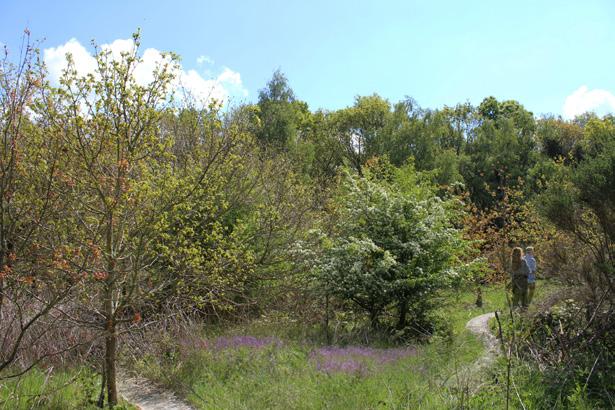
At a large mixed-use, 20-minute neighbourhood site to the north of Glasgow, we have designed in a Wetland Biodiversity Park that forms an ambitious strategy to turn seasonally flooded grazed pasture into an extensive biodiverse landscape. Natural regeneration is encouraged, to maximise ecological value and resilience from pressures such as climate change. Project ecologists and landscape architects from Brindley Associates worked closely with the wider project team to develop a sustainable design that will work with existing site conditions and habitats to maximise biodiversity value and achieve long-term benefits for the wider nature networks. The vast greenspace will connect site biota to the wider landscape,
3 The promoted development will deliver new housing resource integrated within an enhanced ecological network of wetlands, grassland and public parkland.
© Mac Mic Land
4 5 Aspirational images for the North Glasgow promoted development.
© Mac Mic Land
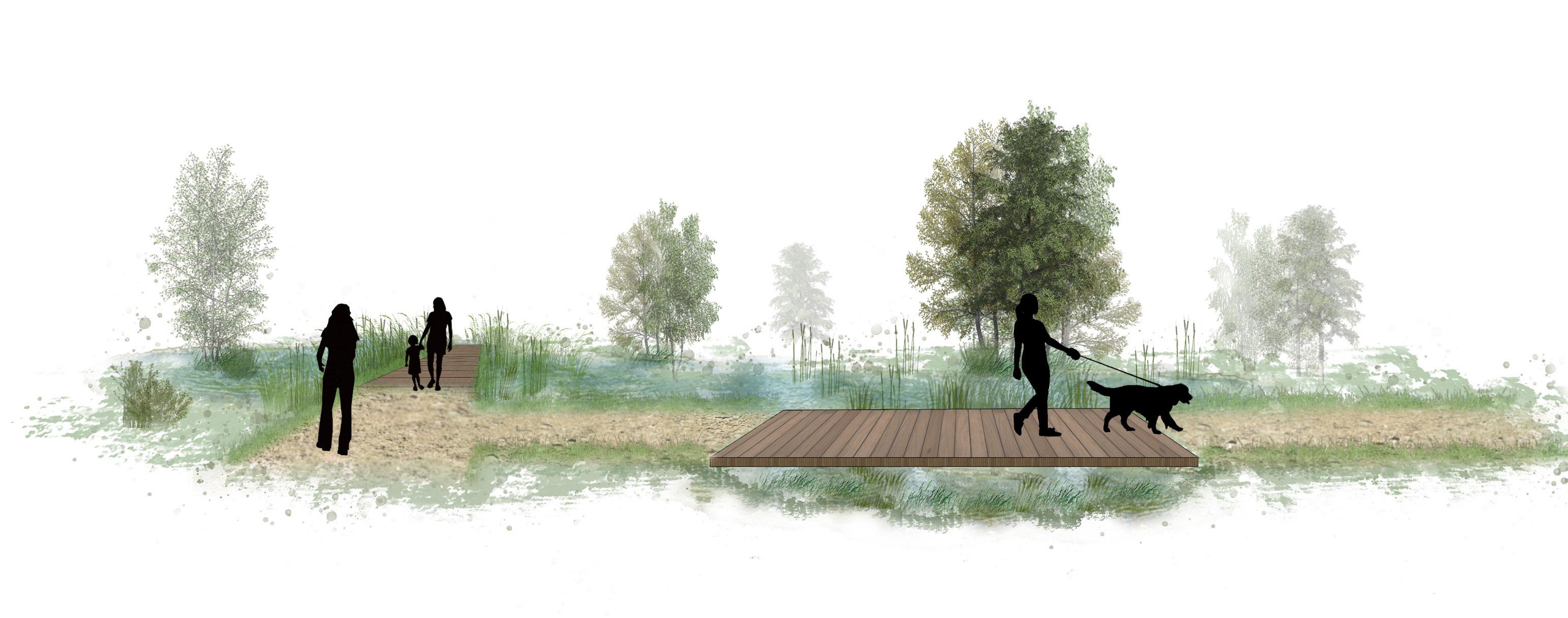
enhancing the existing green infrastructure network and appealing to a number of NPF4 policies. Wellconnected footpaths and boardwalks will provide year-round recreational access to the Wetland Biodiversity Park and beyond. Should the site be allocated in the new LDP, it will deliver:
▪ Approximately 950 new homes
▪ Over 12 km of recreational trafficfree paths; and
▪ The creation of approximately:
▪ 84 ha of wildflower meadows, including wet meadow grassland along the riparian corridor and SuDS;
▪ 7 ha of broadleaved native woodland;
▪ 11 ha of wet woodland along the riparian corridor; and
▪ 670 individual trees.
Nature-positive design can be a win-win for development, creating attractive places for investment and delivering a plethora of ecosystem services to support sustainable places. Where local authorities allocate sites at appropriate scale, and policy objectives are clear at the outset, there is significant opportunity to integrate naturepositive solutions into the six qualities of successful places
– healthy, pleasant, connected, distinctive, sustainable and adaptable. These qualities create desirable places to live and can support long-term value.
This provides developers with the opportunity to offer those in need of housing something beyond just a ‘unit’ – a home in a living landscape. Evidence shows that access to high-quality greenspace significantly improves mental wellbeing and community resilience.
Embracing NPF4 and working with the grain is not simply about compliance: it is about recognising Scotland’s landscapes as assets
rather than constraints. By aligning land promotion, planning policy and landscape design from the outset, we can help to shape a resilient, nature-rich Scotland for future generations.
If we embed landscape and biodiversity at the heart of land promotion today, we will be judged not by the number of homes delivered, but by the quality of places that endure.
Bruce Hampton is Regional Land Director at Mac Mic Land
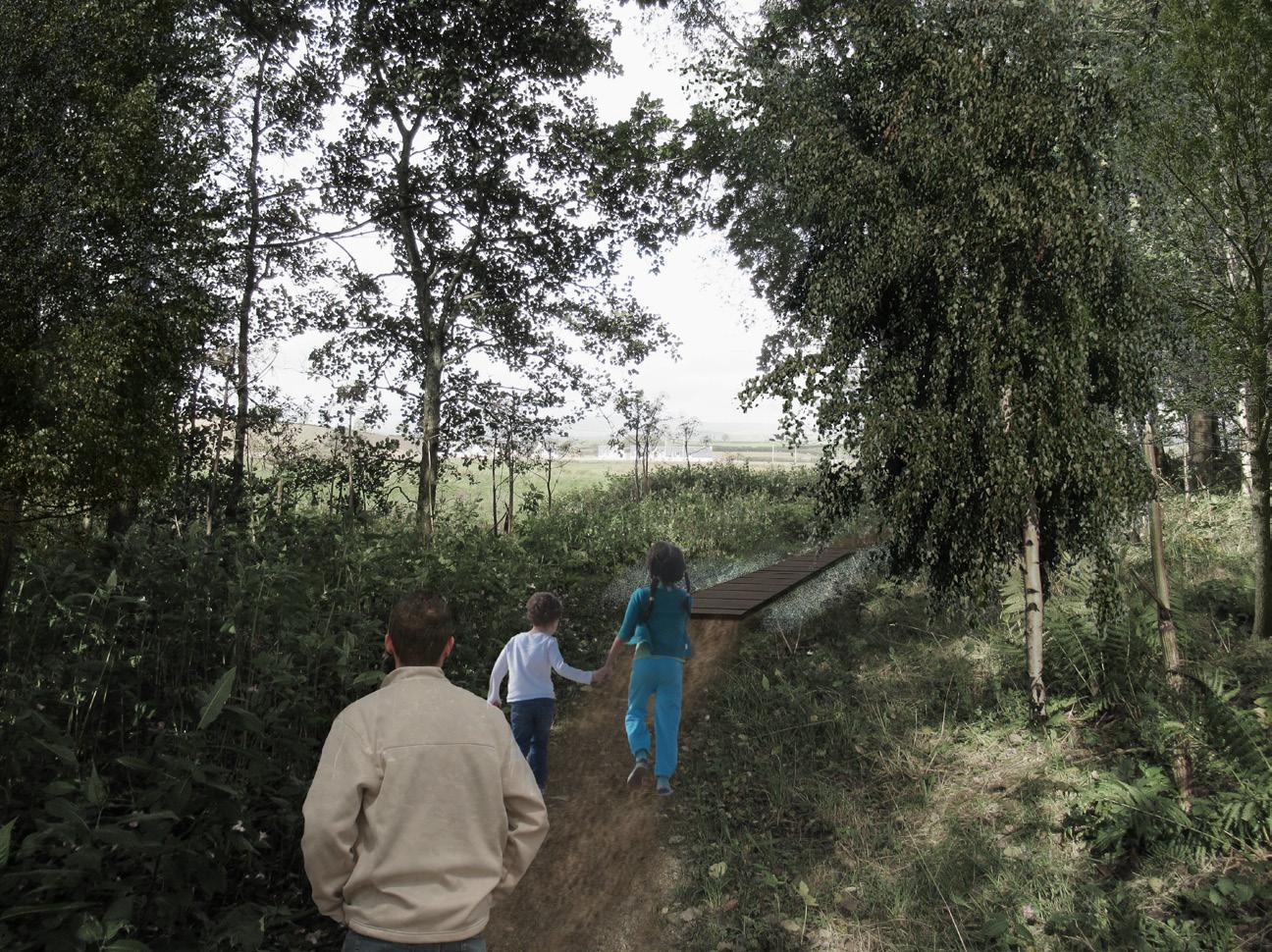
For many clients, biodiversity enhancement is no longer an optional consideration, but a fundamental part of residential garden design. Landscape architects can create resilient, multi-functional gardens that support wildlife, connect habitats, and redefine garden ecology.
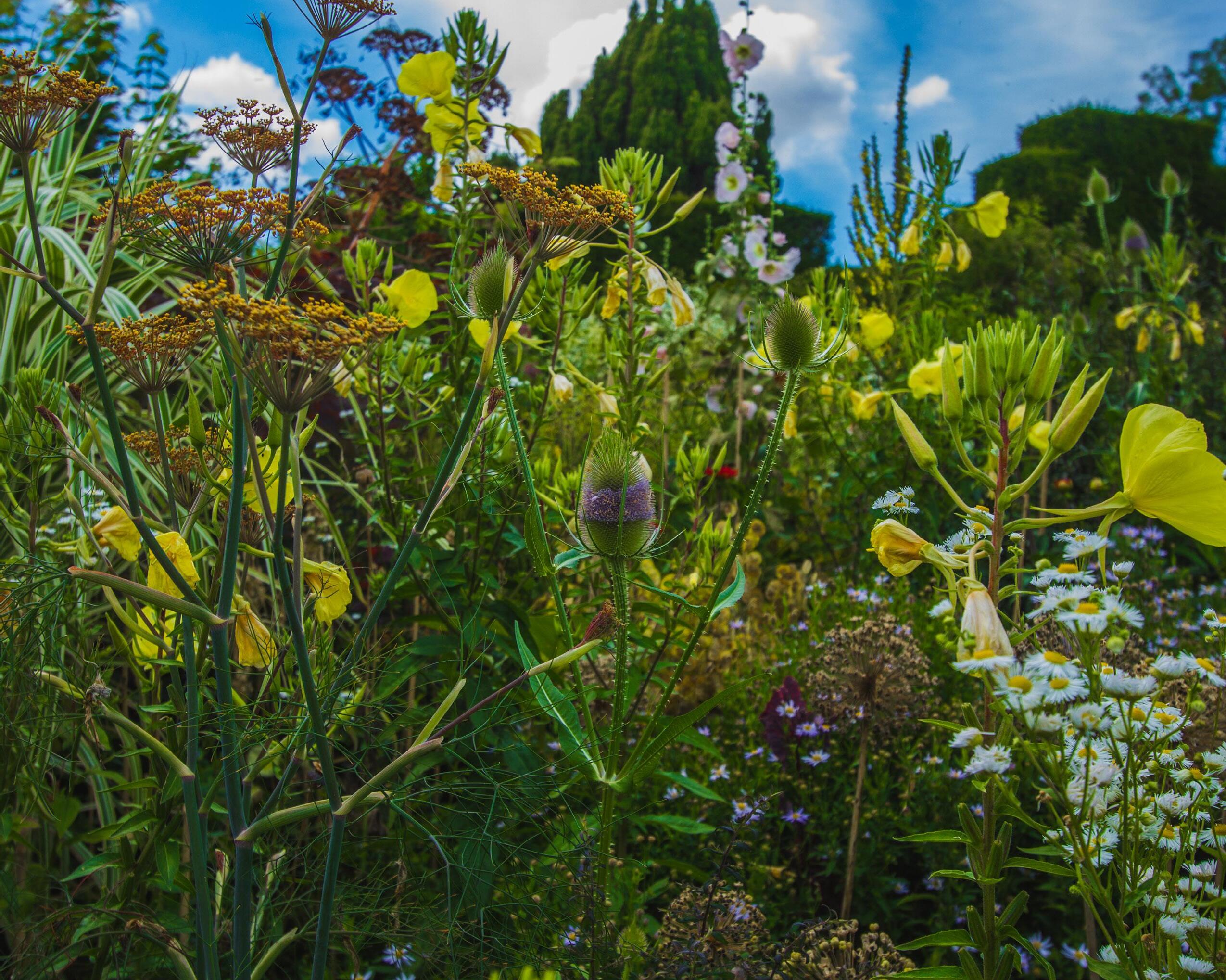

Bridgette Macilwaine CMLI
A recent statistic shared by the Sussex Wildlife Trust noted that gardens and green spaces make up around 7% of Sussex, roughly the size of 30,000 football pitches. Our residential gardens, both large and small, contribute to the patchwork of green spaces that are vital for wildlife as green corridors which link villages and towns with the wider countryside.
In the evolving world of landscape architecture, the definition of a successful landscape or garden is shifting as we’re moving away from seeing the garden as a static, purely aesthetic space, and towards it as a multi-functional ecosystem.
More frequently now, clients come to us with high aspirations for style, while also being increasingly conscious of their environmental footprint. As designers, creating spaces that support local biodiversity is no longer an optional overlay, but rather a fundamental action to bridge the gap between decoration and ecology. With residential designs,
this transition is most visible where bold, structural forms meet soft, ecological planting. Our challenge is to navigate the client’s expectations, proving that a garden can be both a well-designed extension of the home and a thriving sanctuary for the natural world.
When considering the design process and holistic approach towards creating gardens and landscapes in the context of biodiversity enhancement and resilience, the fundamental site survey must be complemented by a biodiversity audit. This
1 A garden can be both a well-designed extension of the home and a thriving sanctuary for the natural world.
2 When designing for biodiversity and resilience, ultimately, we’re prioritising longterm resilience over short-term tidiness.
will ensure we capture the full ecological picture and identify existing ecological assets, whether that includes chalk grassland, coastal habitats or woodland.
When we consider sensitivity to place, this goes beyond the selection of local stone or a nod to regional history; it includes the observation of the transition areas between biological communities, and the biodiversity audit asks how these ecological assets can be enhanced rather than erased.
As designers, we have a responsibility to challenge the idea of the landscapes or gardens we’re working with as islands, where biodiversity doesn’t stop at the fence line, but is a localised expression of the wider ecological composition. By considering nearby habitats and green corridors, we can extend local ecosystems into the private realm rather than imposing a generic landscape or design. This approach is increasingly vital following the introduction of Local Nature Recovery Strategies across the UK, where residential gardens should function as essential stepping stones within fragmented landscapes, connecting isolated pockets of nature.
We do find some clients may be quite apprehensive at the word ‘wildlife’, or the fear of a messy
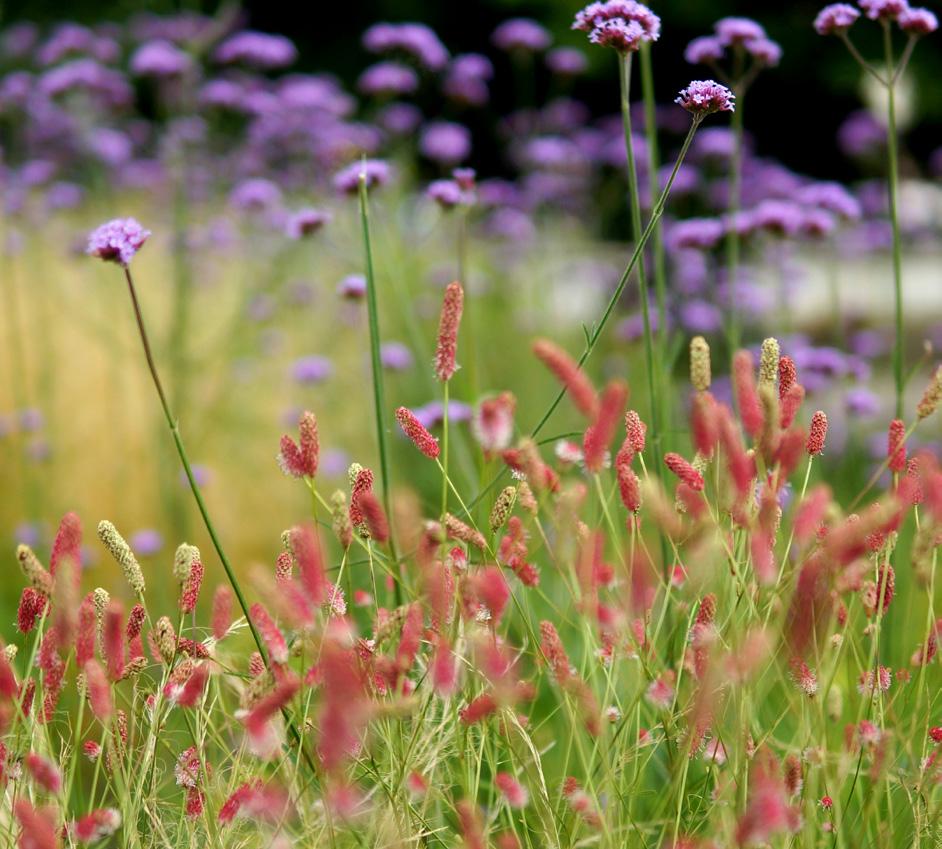
garden if they envision unmanaged chaos. An approach to resolving this uncertainty is the use of architectural lines and frames that provide the visual permission for high diversity, and sprawling planting to exist within a legible domestic structure.
Ecological corridors and connections
For us, another important element to highlight when discussing place, which is quite often overlooked by clients, is the soil microbiome, the engine of the landscape. Biodiversity begins in this complex soil web, and supporting the soil’s natural complexity is an important step in creating a resilient garden that requires fewer external inputs over time.
From the soil to the understorey and canopy layers, we also investigate the verticality of a site and move the client’s understanding from 2D eyelevel aesthetics to 3D habitat creation. These layers facilitate green corridors that are essential pathways for wildlife: whether that be a hedgehog highway at ground level, bird nesting sites within shrubs, or bat flight paths guided by treelines, the garden must facilitate movement, not just residency.
When designing residential gardens, we aim to create landscapes with a permanent structural backbone, which then allows for a more diverse, biodiverse in-filling that shifts with the seasons.
A personal inspiration for me was a visit to Great Dixter, where we walked the grounds with Fergus Garrett, as he shared a passionate description of their layered planting approach, which essentially creates several planting plans for a single area or border. This approach achieves maximum ecological impact in a minimal footprint by layering early-season bulbs, midsummer perennials, textured grasses and evergreen shrubs, ensuring that as one plant fades, another rises to provide forage or refuge.
From prototype to legacy
Over the past few years, I’ve been fortunate to have the opportunity to assist on several RHS Show Gardens, where designs are viewed as experimental prototypes, and design strategies or planting combinations can be packaged into understandable proposals for the public.
As designers, we support the client’s journey to understanding a show garden’s instant impact and finish compared with that of a private residential garden as an ever-changing growing landscape. Working with clients, we consider the varying habitats and the importance of working with time, as we stretch the plants’ performance across seasons, to create a sustainable and resilient long-term scheme.
The resilient garden
When designing for biodiversity and resilience, ultimately, we’re prioritising long-term resilience over short-term tidiness. This shift in perspective is supported by adaptive management plans, moving away from maintenance, which implies fighting nature, and towards management, which implies working with it.
We see the success of a residential landscape and garden as a balance between the architectural framing and geometry of the hard landscape, that provides the necessary contrast to make a biodiverse, pollinatorheavy scheme look intentional. The structure provides human comfort, while the ecological complexity provides the service.
Bridgette Macilwaine CMLI works across commercial and domestic projects, creating strategic and captivating naturebased designs that connect people and communities to multifunctional green spaces.

At a time of unprecedented change in our landscapes it is critical that the profession engages with the woodland creation agenda. New woodland is being planned at rapid pace to address climate change, nature recovery, water resilience, carbon sequestration and public access. England aims to increase its woodland cover from 14.5% to 16.5% by 2050.1 Meanwhile there is an increasing demand2 for timber and a need to address nature recovery on a landscape-scale. These ambitions coincide with the realities of a changing climate, emerging pests and diseases, increased wildfire pressures and shifting public expectations.
Landscape-led woodland design optimises biodiversity in new woodland creation schemes, and the skills of the profession are essential for resolving the complex issues that landscape-scale woodland creation presents.
As Landscape & Woodland Design Advisors within the Forestry Commission’s Policy Advice Team, we support colleagues across the country on complex casework, national policy development, guidance and training. We are part of a long professional lineage: landscape architecture has shaped British forestry for at least half a century, beginning with Dame Sylvia Crowe’s formative work and further refined within today’s UK Forestry Standard (UKFS).3,4 That legacy now underpins an integrated approach that brings foresters, ecologists, historic environment specialists, hydrologists, landscape architects, local communities and statutory agencies around the same table.
At its core is the recognition that woodland design is not just about trees, but about landscape, place and ecological function operating together over time.
Woodlands interact with every aspect of place, including geology, hydrology, soils, cultural heritage, settlement form, access, recreation and biodiversity. Designing woodlands means designing long-term spatial change; the dynamics of light and shade and the consequential evolving ecological mosaics. It also requires thinking in time as well as space since a young
1 https://www. forestresearch.gov. uk/tools-and-resources/statistics/ publications/forestry-statistics/forestry-statistics-2025/
2 The UK was the 2nd largest net importer of forest products in the world in 2023 (Forest Research, 2025).
3,4 Dame Sylvia Crowe (1901-1997), past president of the Landscape Institute, was engaged as landscape consultant to advise on how forest plantations could contribute towards the natural beauty of local landscapes. As she developed her ideas, she showed foresters how they could incorporate landscape design into their plans.
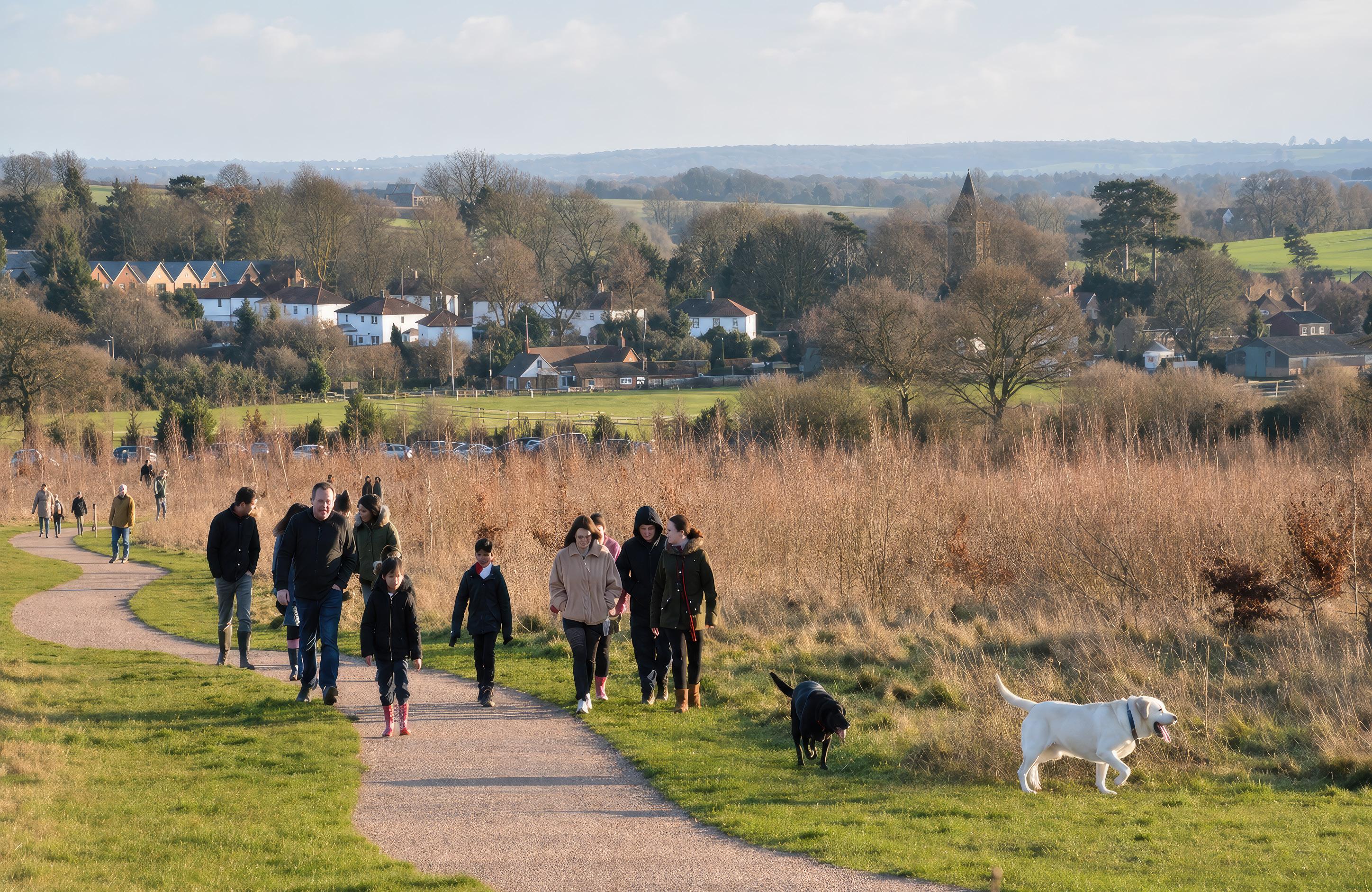
1 Community woodland on the edge of our towns and cities offers a unique example to connect with nature. Ensuring that these sites take account of different users reduces conflict and makes visitors feel safe. The design and ongoing management of open space within these schemes is critical. © Richard Hellier/Forestry Commission
woodland bears little resemblance to its 50-year form. Integrated design helps deliver a range of objectives balancing between, for example, biodiversity and recreation pressure. Whatever the scale or purpose of woodland creation, whether focused on productivity, nature recovery or, increasingly, both, three elements consistently define good practice:
1. Understanding the landscape context
A Landscape Character Appraisal (LCA) is the foundation of the Woodland Design Process outlined in the UKFS. LCAs help new schemes address the qualities that make a place distinctive: the shape of landform, enclosure patterns, settlement edges, hydrological features, cultural markers and the
visual experience of moving through the landscape.
2. Applying the UKFS
woodland design principles
The seven design principles – Spirit of Place, Unity, Landform, Pattern of Enclosure, Scale, Shape and Diversity – provide a structured lens for making complex decisions. These principles ensure new woodland feels rooted in its setting, reinforces landscape pattern, reflects the underlying geology and soils and provides a visual and ecological structure over time.
3. Following the woodland design process
The structured progression from survey to analysis, synthesis, masterplan and detailed design adds clarity and transparency. Plans,
photographs, annotated sections and illustrative perspectives make it easier to engage with stakeholders, test ideas and resolve conflicts.
A landscape-led plan will analyse the distinctive characteristics of a site. With this in mind, zoning assists concept development. For example, placing productive stands on richer, sheltered soils while fragile or species-rich habitats tend to be established on thinner soils and riparian corridors. These zones offer opportunities for natural regeneration and ghyll woodland while open, prominent or historically significant areas may be less suitable for woodland creation. Designing for heterogeneity with glades, natural colonisation, riparian buffers and mixed-species assemblages can significantly enhance biodiversity
at the appropriate scale. Planning productive forestry that incorporates open space and a strong framework of broadleaf woodland can create wildlife corridors that connect with the wider landscape.
Landscape-led design is central to delivering biodiversity outcomes. Woodland edge habitats, riparian corridors, species-rich grasslands, heathlands, fen systems and open glades all hold exceptional
value within the wider woodland mosaic. Each has its own demands for space, light and water that evolve through time.5 There is increasing evidence that structural diversity, as much as species choice, in woodland can be a key determinant of species diversity.6 Designing these systems intentionally, rather than letting them emerge by accident, helps maximise ecological function. Climate resilience must also be embedded from the outset. Selecting species for resilience, working with natural processes, incorporating diverse structural layers and planning for
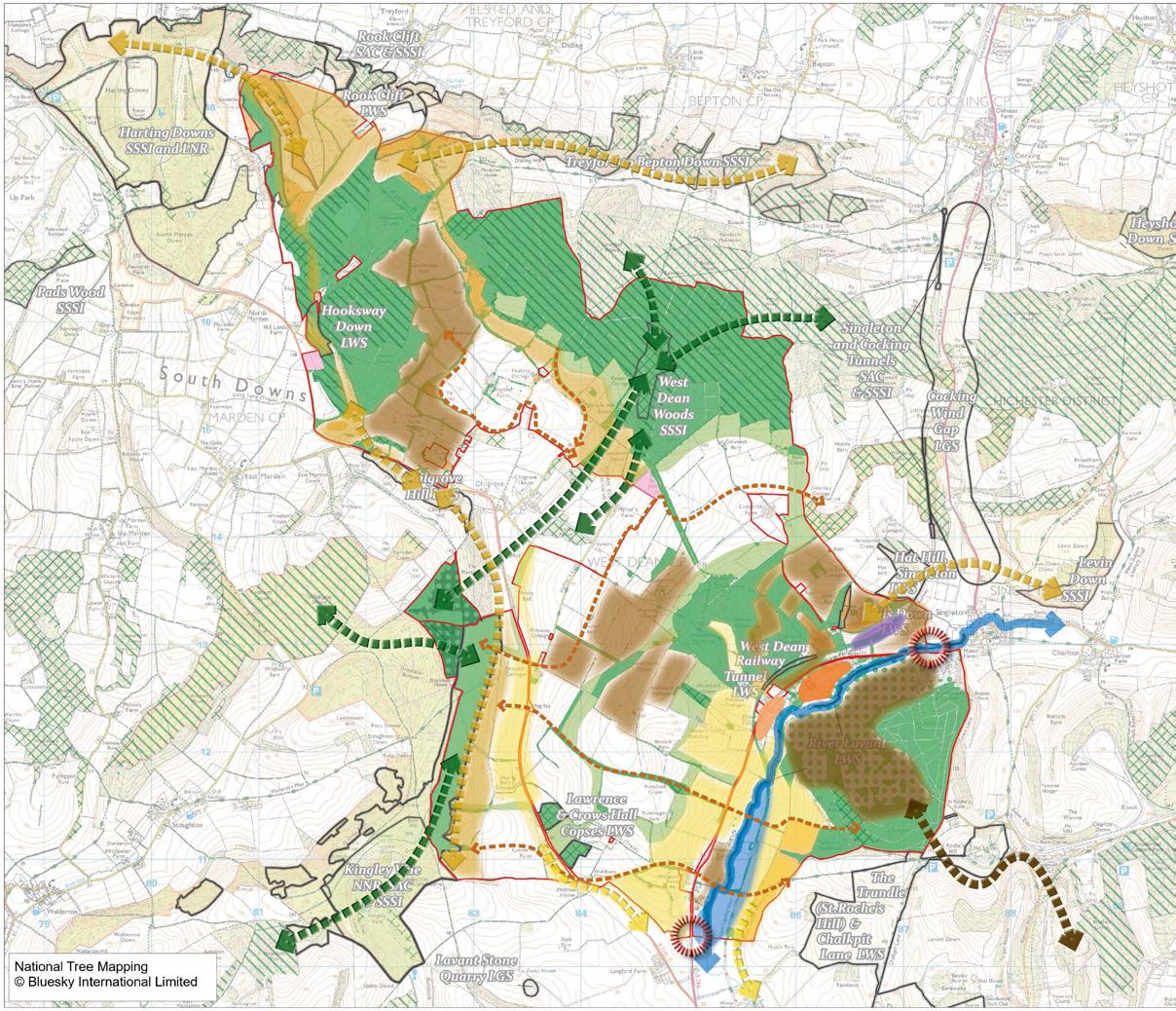
The landscape-led strategy for the 2,550 hectare West Dean estate in Sussex works with the estate’s underlying physical characteristics as well as its historic and current landscape character, ecological values and natural processes. It seeks
to protect, buffer, expand and connect characteristic habitats, while maintaining a strong productive and farmed landscape. Key interventions include conservation, enhancement and creation of habitats derived from the underlying chalk, including
disturbance all support long-term adaptability. Diversity of species, age structure, microhabitats and management regimes are increasingly tools to support biodiversity in a changing climate.7
With accelerating climate change, woodland creation requires more than simply placing trees on a map. It demands landscape-led design grounded in landscape character, ecological understanding, spatial planning and visual sensitivity. As pressures and expectations
chalk grassland, woodland, wood pasture and parkland, and valley grasslands. The strategy introduces environmentally sensitive farming and a mix of land uses that enable the estate to adapt to climate change through habitat expansion, connectivity and buffering.
Woodland has been carefully designed to sit harmoniously within the existing character and structure of the landscape, and Cookson & Tickner is actively involved in a phased programme of woodland planting of over 200 hectares over a ten-year period. Shelter belts and shaws have been sited to reflect historic patterns or strengthen existing networks. Larger woodlands will be established in in-fill sites, or along plantations with hard geometric edges to aid unity and enhance character. New woodland seeks to unify isolated existing shelter belts and blocks of woodland by establishing a connected network that responds to the rolling landform and local scale.
The project is now being used as an exemplar by Natural England, South Downs National Park and the World Wildlife Fund.
5 https://www.gov.uk/ guidance/edge-design-for-woodland-integration-resilience-and-biodiversity
6 https://www. forestresearch.gov. uk/publications/ management-creation-woodland-biodiversity/
7 A web-based decision support system to help forest managers and planners select tree species that are ecologically suited to particular sites, instead of selecting a species and trying to modify the site to suit. https://www. forestresearch.gov. uk/tools-and-resources/fthr/ ecological-site-classification/
8 https://www. northumberland. gov.uk/NorthumberlandCountyCouncil/media/ Economy-and-Regeneration/Gt%20 N-land%20Forest/ GNF-landscape-final-report_compressed.pdf
2 Spatial plan for
3 Woodland edge plays an important role contributing to landscape restoration, a valuable habitat in nature recovery, improving resilience and creating inspiring places for people. Its planning should be considered at the start of design work by connecting distinctive landscape and visual features and conserving spirit of place.
© Richard Hellier/Forestry Commission
4 5 East Kielder: Visualisations comparing year 0 and 40 showed the evolution of both woodland and productive forestry in landscapes considering cumulative impacts and overall landscapechange.
© LUC/Northumberland Forest
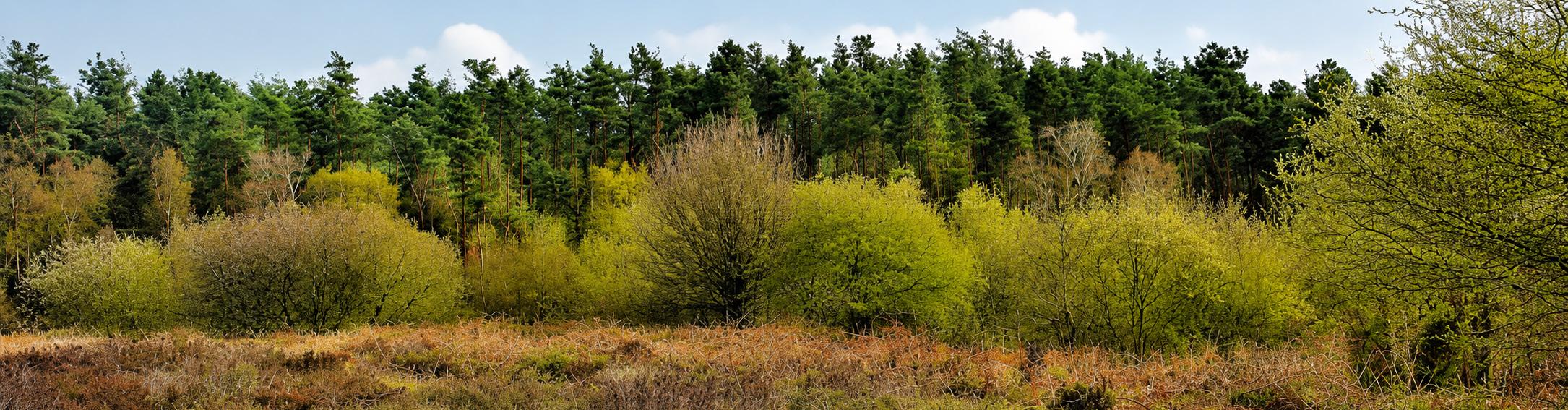
grow, interdisciplinary working will become even more essential. This integrated approach is a foundation for biodiversity enhancement, climate resilience and landscape stewardship. By
embracing this approach, we can create woodlands that feel grounded, functional, ecologically rich and deeply connected to place, helping to secure resilient landscapes for the future.
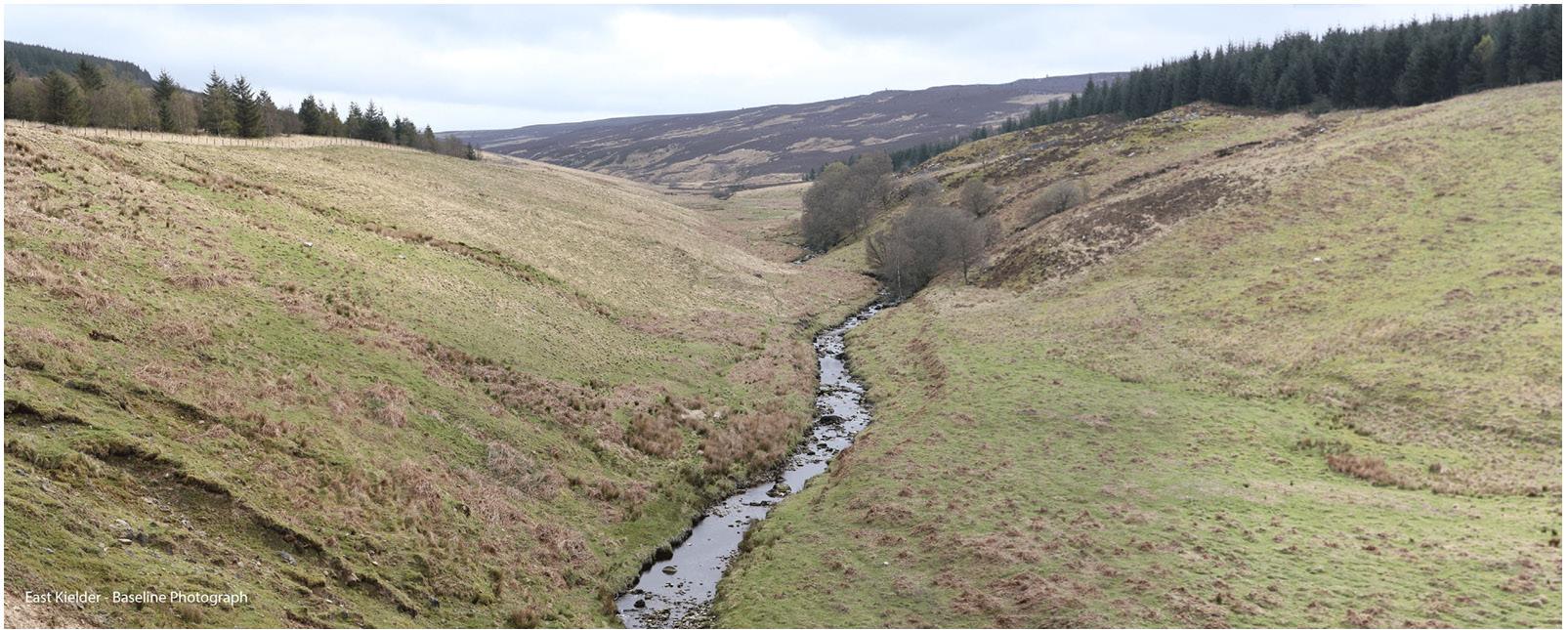
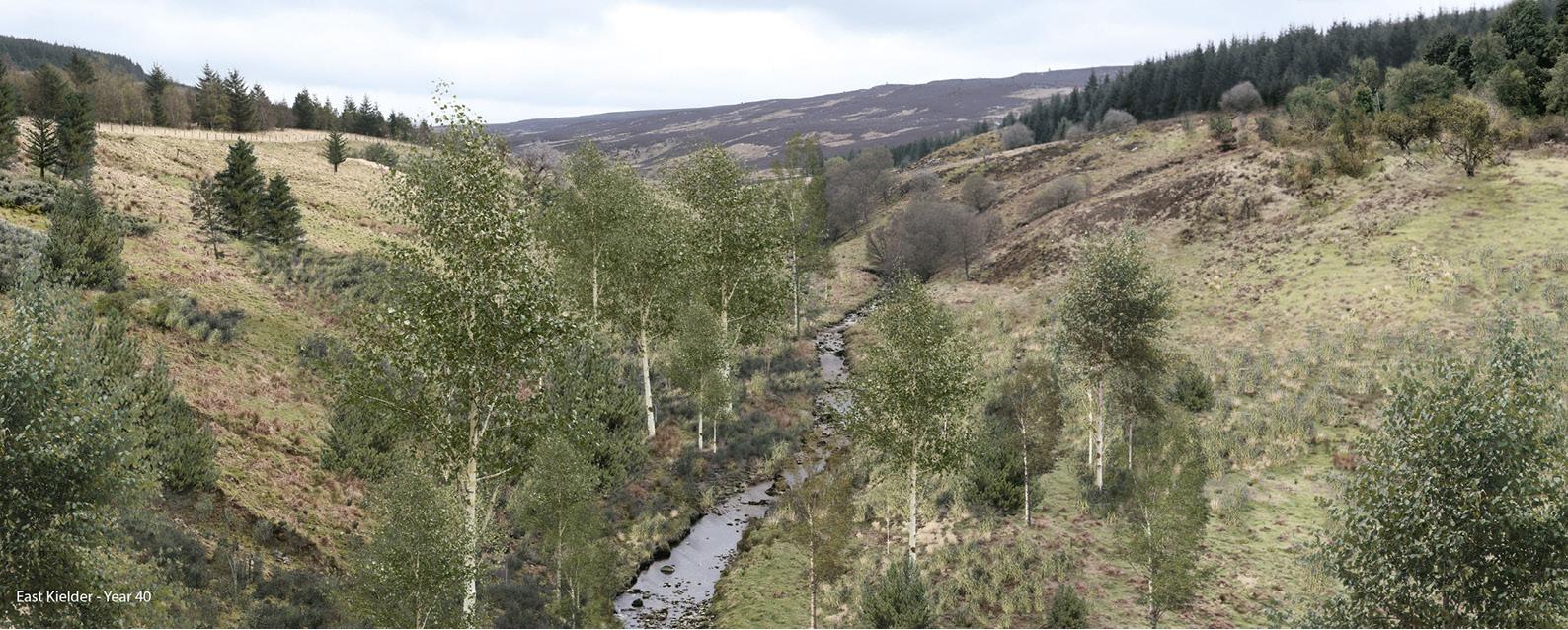
In 2023 LUC worked with the Great Northumberland Forest Partnership to support the creation of more wooded, treecovered landscapes across the county. The project created a
report8 to highlight areas with potential for tree planting and woodland creation using a range of data to show constraints and opportunities at a strategic scale. It considered the key enhancing
Robin Gray BA BSc CMLI and Richard Hellier BA BSc CMLI are Landscape & Woodland Design Advisors at the Forestry Commission.
effects of woodland, including biodiversity, nature recovery, flood alleviation and soil protection, as well as the economic and social benefits of trees and woodlands, such as employment and amenity value.
A landscape perspective highlighted opportunities and constraints by assessing the effect of woodland creation schemes on landscape character, views and sense of place. Evidence gaps and geographical differences within existing literature were identified, as well as qualitative research with key stakeholders to gather opinions. Conceptual visualisations were produced to show change over time and used to facilitate communication and engagement with communities, landowners and farmers to encourage them to consider whether woodland and tree planting would be appropriate on the land they manage or own. Finally, recommendations were made for woodland creation within the National Character Areas of Northumberland.

Pamela Conrad PLA ASLA
In 2024, I had the privilege of serving as the inaugural Biodiversity + Climate Fellow with the American Society of Landscape Architects (ASLA). That fellowship catalysed the creation of WORKS with Nature, 1 a global publication developed to illuminate how landscape architects are advancing biodiversity and climate action in tandem. The guide emerged from a simple but urgent question: how can our profession demonstrate, through built work, that nature-based solutions (NbS) are not aspirational ideals but measurable, scalable practices delivering real ecological gains?
WORKS with Nature brings together case studies from around the world, each illustrating how
A global guide developed with the United Nations, WORKS with Nature showcases how landscape architects are delivering measurable biodiversity gains and climate resilience through nature-based solutions. Editor Pamela Conrad introduces the publication and a case study from India.
landscape-led strategies are restoring habitat, strengthening ecological networks, and improving climate performance (one of which appears on the following page). The publication was conceived directly with the United Nations, as both inspiration and evidence to inform UN-mandated National Adaptation Plans2 as supplemental material3 within their library of technical guidance. While the discourse around biodiversity often feels abstract or policy-driven, this guide grounds the conversation in projects – detailing design intent, ecological outcomes, and the social contexts that make long-term stewardship possible.
For members of the Landscape Institute, particularly in this biodiversity-focused Journal edition, the guide offers a practical
knowledge-sharing resource. It can be used to:


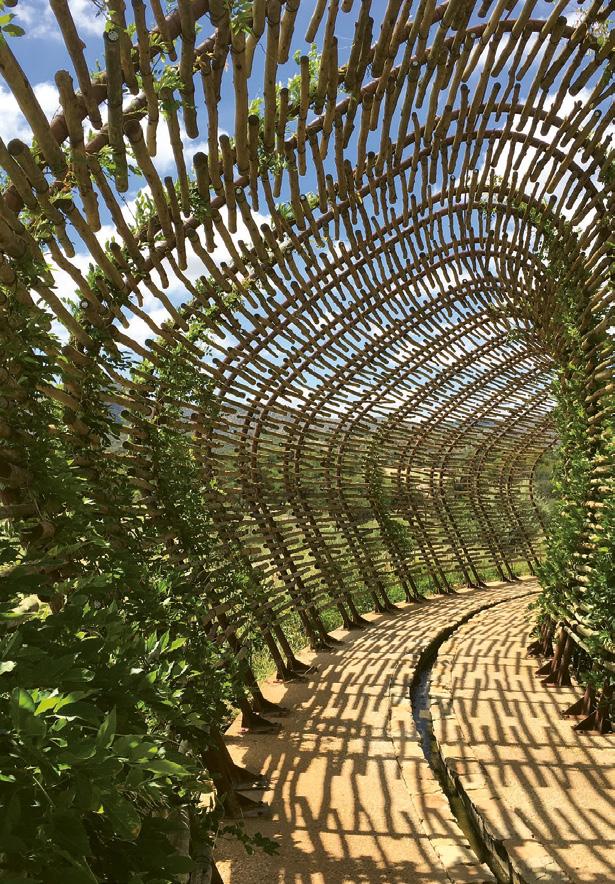
1
1 https://climatepositivedesign.org/ design/works-withnature/
2 https://unfccc.int/ national-adaptation-plans#aboutNAPs
3 https://napcentral. org/supplementary-materials/165
1 A low-carbon, vine-covered circulation network embedded with a cooling water channel, designed by GREENinc, supports comfortable passage through the harsh Namibian environment.
2
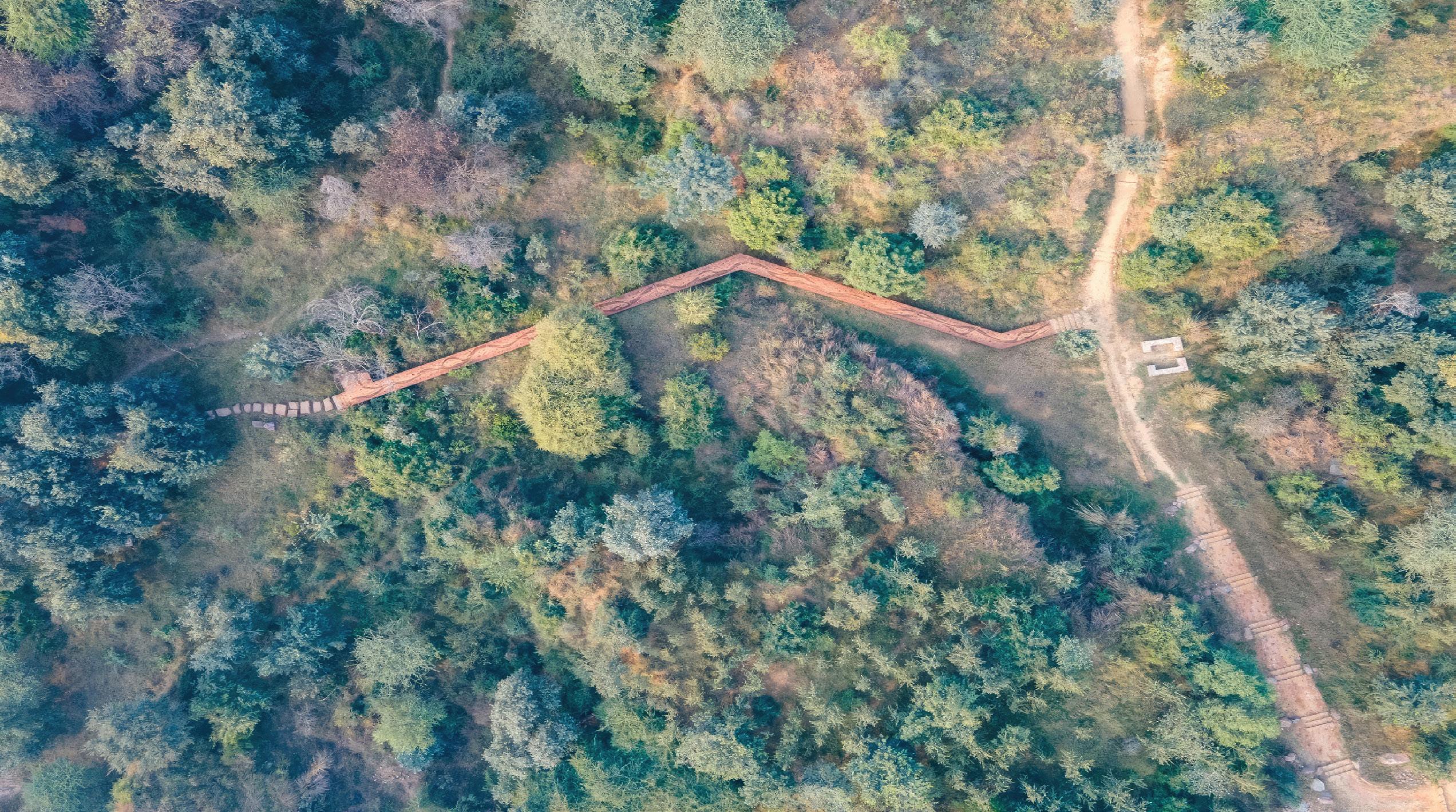
2
▪ Explore diverse global case studies demonstrating biodiversity gains in urban, coastal, and regional contexts.
the case studies emphasise multifunctionality – delivering climate mitigation, adaptation, and biodiversity uplift simultaneously.
Image credit: JRA Design
4 https://climatepositivedesign.org/ education/
▪ Understand how design decisions – from planting strategy to hydrological systems – contribute to habitat creation and resilience.
▪ Identify replicable frameworks and metrics that support evidence-based advocacy for NBS.
▪ Strengthen interdisciplinary collaboration by communicating ecological value in terms accessible to policymakers and clients.
When developing WORKS with Nature, the approach to biodiversity was not as a siloed environmental objective but was rather evaluated through a systems lens. Biodiversity intersects with carbon, water, equity, and public health. The projects selected illustrate that thriving ecosystems are linked to resilient communities. From restored wetlands that buffer coastal flooding to urban retrofits that stitch fragmented habitats together,
As noted in the publication’s closing statement, NbS are not only technical strategies; they are participatory processes. They require engaging local communities, Indigenous knowledge holders, ecologists, engineers, and policymakers. The most impactful projects demonstrate that climate and biodiversity action is strongest when co-created – when people see themselves as stewards of living systems rather than passive beneficiaries of infrastructure.
The guide also underscores that biodiversity gains must be measurable, which can now be evaluated via Pathfinder.4
To shift investment and policy, landscape architects must articulate performance outcomes – hectares of habitat restored, species richness increased, carbon sequestered, heat islands reduced. Design excellence alone is not enough; we must demonstrate ecological performance.
At a moment when
biodiversity loss and climate change are accelerating globally, the profession is uniquely positioned to lead. Landscape architects operate at the nexus of ecology, infrastructure, and community life. WORKS with Nature showcases what that leadership looks like in practice and invites continued exchange across borders.
For the Landscape Institute’s membership in the UK and beyond, I hope this publication serves as both affirmation and provocation: affirmation that the profession is already advancing meaningful biodiversity outcomes, and provocation to scale these efforts further. By sharing knowledge openly and measuring our impact rigorously, we can ensure that our work does more than respond to crisis – it restores the living systems upon which all life depends.
Pamela Conrad ASLA PLA is the founder of the Climate Positive Design faculty at Harvard’s Graduate School of Design and the American Society of Landscape Architect’s (ASLA) inaugural Biodiversity and Climate Fellow.

A forest regeneration project in Gurugram, India provides rich biodiversity enhancement alongside stormwater resilience and community health and wellbeing.
Gurugram is a classic example of rapid urbanisation occurring with little regard for landscape context. The Aravallis, one of the oldest mountain ranges in the world, extend directly into the city as ridge forests.
Historically, stormwater run-off from the hills and surrounding plains collected naturally in ponds and lakes. However, built development that disregarded landscape context filled many of these ponds, leading to severe waterlogging during monsoon periods, while groundwater levels simultaneously declined. Air pollution and the shrinking extent of green spaces have become additional concerns.
Our site forms part of this ridge forest. Formerly an abandoned stone quarry, it had deteriorated into a construction waste and rubbish dump. The objective of the project was to restore the degraded forest, protecting and enhancing biodiversity while inspiring a renewed human connection to the natural rhythms of the forest landscape.
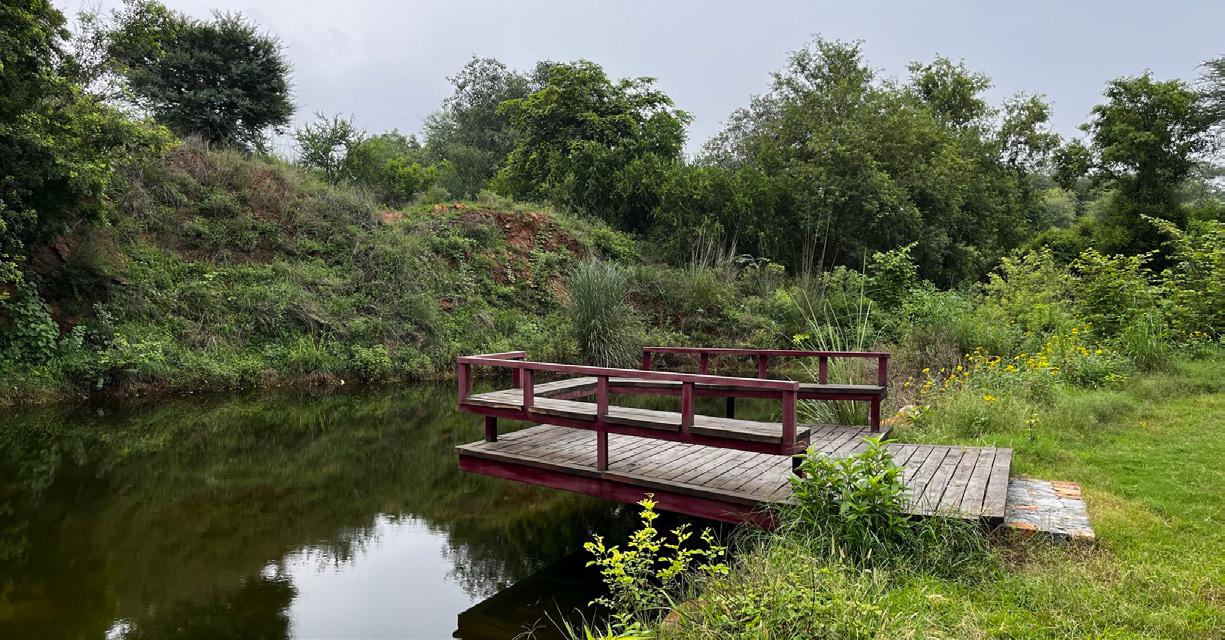
The process began with a careful study and analysis of the character of the site and its experience potential. Through this work, entry points, trails, rest points and natural water flow patterns were identified and used to structure the design.
Stormwater management formed a key part of the strategy and water from adjacent roads was diverted into the forest site, increasing its capacity to retain water and recharge groundwater. Small and large boulders found within the site were introduced into the watercourses to break
the flow of water and prevent soil erosion. As part of the wider water management and spatial strategy, a cascading system was created, allowing water to move from higher levels of the site to lower ones. This sequence leads to a large pond located within a rocky zone of the forest. From there, swales connect to a second pond with softer soil edges and, beyond this, a wide connecting water channel extends for approximately a kilometre through the site.
The strategy for biodiversity enhancement was integrated closely with the water management
1 We diverted storm water into an upper retention pond, anchoring a deck node along the trail, framing views over the rocky, rugged landscape and creating a moment of pause within the
2 Design philosophy – working with the land: Intensive site analysis guided movement, entries, and trail design. Storm water infrastructure channels urban run-off through ponds, swales, and channels, enhancing the forest's hydrological function, while strategic native planting accelerates ecological regeneration.
© JRA Design
3 Reading, responding, restoring: The ecologist responded to the landscape architect's contextual, storm water and placemaking vision with indigenous and native species through the design framework to collectively restore the forest's resilience and ecological identity.
© JRA Design
strategy, creating areas for retention ponds and swales in the valley floor, with stabilising vegetation on the slopes and native forest further up on the plateau.
Working in collaboration with ecologist Vijay Dhasmana (The Rewilders), we took a rewilding approach to ecological and biodiversity restoration. Invasive species such as Neltuma juliflora and Acacia tortilis are being gradually removed, while native saplings, shrubs and grasses are being introduced, such as salai, kullu, dhau, kaim, khirni, guggul and marodphali. Not only do these plantings enhance biodiversity and improve habitat connectivity – supporting the emergence of a resident nilgai antelope population along with many birds, butterflies,
insects and amphibians – but they also dramatically improve the resilience of the landscape in the face of extreme water and heat events.
Alongside these interventions, a series of social and spatial elements was introduced to shape how people experience the forest. A hierarchy of paths was established where some function as accessible trails that most age groups can use on a daily basis, accompanied by seating areas. Others extend deeper into the forest, allowing visitors to experience the richness of the spaces and views, with defined destinations and rest points along the way. A third category comprises exploratory trails that encourage visitors to engage with
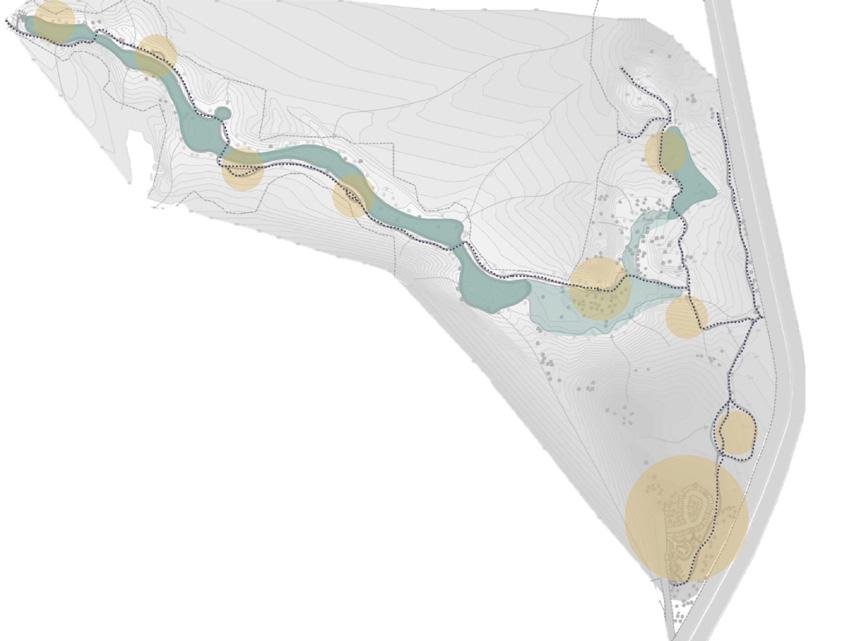
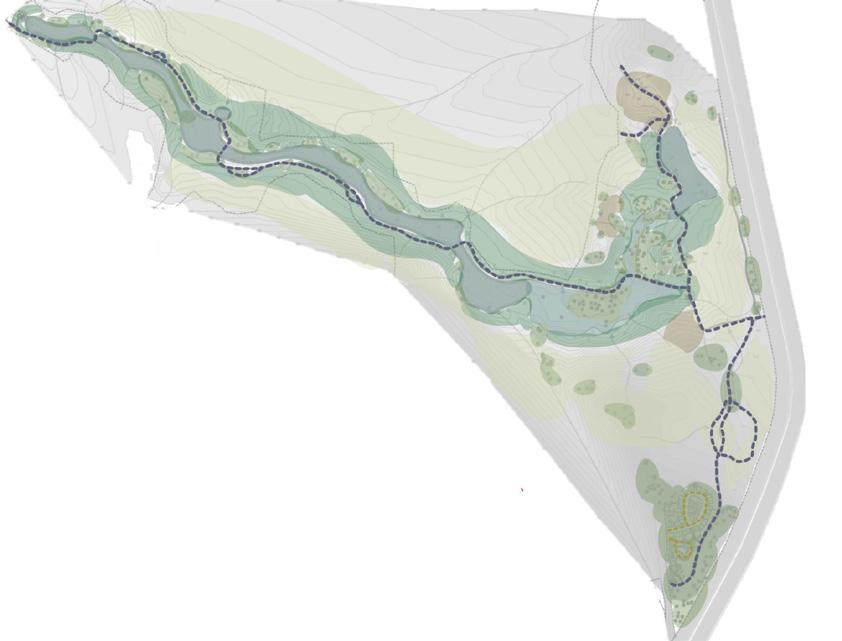







more challenging terrain. Additional structures were carefully placed to create memorable moments within the forest landscape. Decks were strategically located, including one overlooking the pond in the rocky zone and another at a sunset point reached after a short but steep climb that offers a rejuvenating experience. A picnic seating cluster was placed beneath an existing grove of sheesham trees. A corten steel boardwalk crosses a low-lying valley area, and bridges over the water channel maintain connectivity across the site even during monsoons. Other nodes were developed in response to the site’s topography and ambience. Through these strategies, the project has revitalised the forest while preserving its distinctive character and promoting a harmonious coexistence between people and nature. The transformation has been significant. People are actively using and enjoying the site, biodiversity is thriving and there has been a remarkable improvement in soil quality and moisture levels, enabling vegetation to flourish. The ground conditions have remained stable through the past couple of monsoon seasons, demonstrating the resilience of the restored landscape.
Kavita Jain is Principal Landscape Architect and Radhakrishnan Ragavan is Principal Architect at JRA Design. Their practice specialises in solutions for ecological enhancement and sustainable development, recently with a particular focus on forest restoration projects.

Jo Phillips CMLI
The iconic image of the Scottish landscape showcases raptors soaring over mountain ranges, wooded valleys populated by red squirrels, pine martens and wildcats and lochs brimming with fish, beavers and otters. In 2023 the State of Nature Report,1 prepared by a group of conservation and research organisations, challenged this iconic image by ranking Scotland a lowly 212 out of 240 countries for the state of its nature. Centuries of habitat loss, intensification of farming, persecution of wildlife and invasion of non-native species has reduced the diversity of species by 15% on average (since 1994) and left one in nine remaining species threatened with national extinction.
So, what is being done to stem our declining state of nature? At national level, the Scottish government, in its Scottish Biodiversity Strategy to 2045,2 commits to halting losses by 2030 and restoring biodiversity
Scotland’s landscapes hold extraordinary potential for nature recovery. As national policy, funding and restoration projects gather momentum, landscape architects have a vital role in shaping large-scale biodiversity restoration.
across the country by 2045.
This is backed up by its Scottish Biodiversity Delivery Plan 2024 to 2030,3 which sets out objectives around restoration, protection, nature-positive farming, nature investment, and taking action on indirect drivers of biodiversity loss.
Following the Scottish Parliament’s approval of The Natural Environment (Scotland) Bill4 and its current status pending Royal
Assent, the Bill introduces measures to protect the natural environment and statutory targets for nature restoration and provides legal authority to enforce action. It sets out statutory targets to guide the restoration and regeneration of biodiversity by 2045, along with moves to modernise the aims of the National Parks and reform deer management legislation. The targets are already being delivered
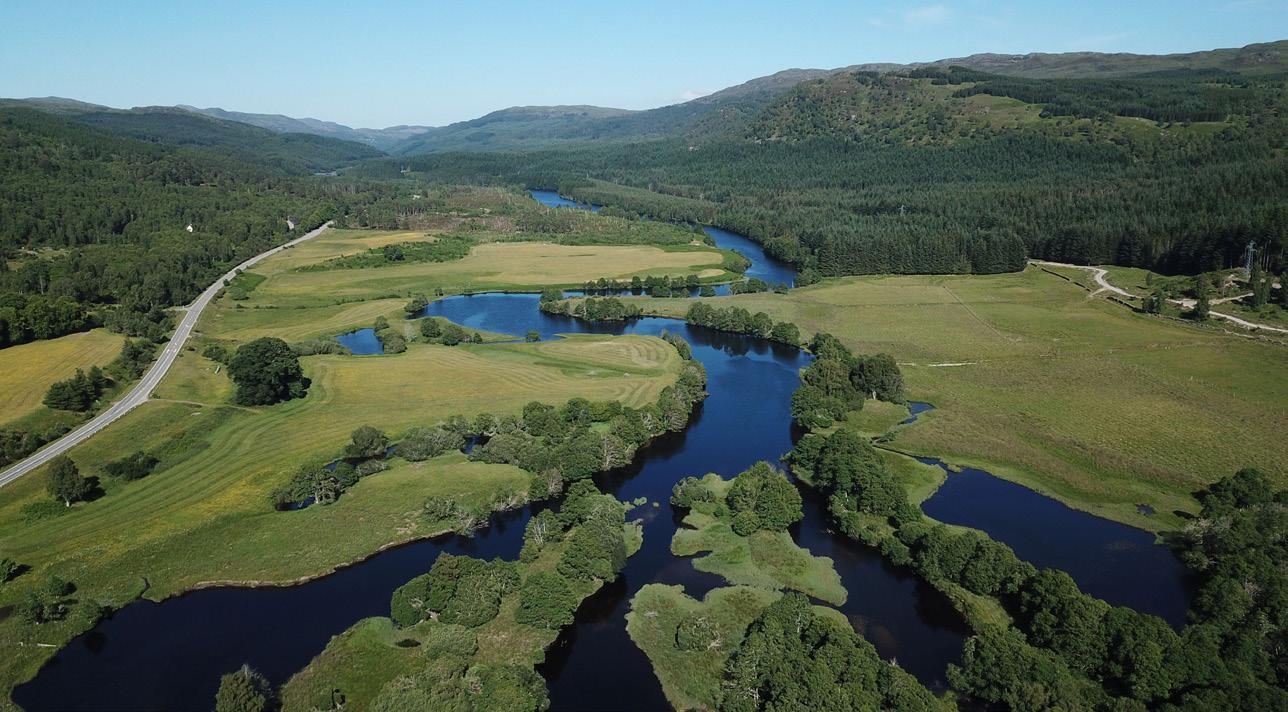
1 Available at: Scotland - State of Nature https://stateofnature. org.uk/countries/ scotland/
2 Available at: Scottish Biodiversity Strategy to 2045 https://www.gov. scot/publications/ scottishbiodiversitystrategy-2045/
3 Available at: Biodiversity: delivery plan 2024 to 2030 https://www.gov. scot/publications/ scottishbiodiversitydeliveryplan-20242030/
4 Available at: Natural Environment (Scotland) Bill | Scottish Parliament Website https:// www.parliament. scot/bills-and-laws/ bills/s6/naturalenvironmentscotland-bill
5 Available at: Annex
A – How to use this document – National Planning Framework 4 https://www.gov. scot/publications/ national-planningframework-4/ pages/4/
7 Available at:
Biodiversity Investment Plan https:// www.gov.scot/ binaries/content/ documents/govscot/ publications/ strategyplan/2025/02/ investing-natureplan-supportinvestmentbiodiversity-climateadaptation-scotland/ documents/ biodiversityinvestment-plan/ biodiversityinvestment-plan/ govscot%3A document/ biodiversityinvestment-plan.pdf
6 Available at: Regenerative Agriculture – James Hutton Institute https://www.hutton. ac.uk/scientificservices/researchcollaborations/ regenerativeagriculture/ 2
1 The Cairngorms Connect project is one of the largest nature restoration projects in the UK, with a 200-year vision to enhance biodiversity across 600km2 of the Cairngorms National Park.
© iStock
2 The Trees for Life rewilding project on the River Moriston.
© iStock
through the Peatland Action Programme, the Nature Restoration Fund (NRF) and the Agriculture Transformation Fund, among other initiatives. While discussions around biodiversity typically focus on relatively small gains relating to new development, the big gains, necessary to avert the worst of the nature and climate crises, will only be achievable through largescale nature restoration projects that revive vast tracts of degraded peatland, revitalise river catchments, expand native woodlands and restore marine habitats.
Since its establishment in 2021, the Scottish government’s £65 million NRF has been allocated through two streams: the first providing direct funding to local authorities and the two National Park Authorities and the second stream funding projects via a competitive process administered by NatureScot. National Planning Framework 4 (NPF4),5 Scotland’s national spatial strategy, ensures that Local Development Plans, prepared by national park and local authorities, protect, conserve, restore and enhance biodiversity and promote nature recovery and restoration.
Over the past five years, NatureScot has awarded funding to over 250 nature restoration projects. Spread across Scotland, these range from the disentanglement of whales
and sharks from fishing nets to the restoration of Scotland’s temperate rainforest and the establishment of pollinator networks across towns and cities. Changes to land use and land management are being implemented through a suite of complementary projects that restore peatlands and river systems, enhance and expand native woodland and promote regenerative farming, while at the same time increasing carbon stocks and securing rural livelihoods. While projects are undoubtedly setting local biodiversity on a new upward trajectory, there remains widespread recognition that the public sector cannot fund the massive transformation at the pace that the nature and climate crises demand. In response, the Scottish government has published a Biodiversity Investment Plan6 that aims to attract responsible private investment. Essentially, landscapescale projects with substantial potential for biodiversity uplift have been compiled in a prospectus, with the intention that they will draw in private investment to pay for their delivery, and in so doing develop a biodiversity market.
Despite Scotland’s current lack of biodiversity, our landscapes present huge potential for biodiversity uplift. Scotland doesn’t face the same development pressures as other parts of the
UK. Our extensive natural habitats support wide-ranging species, diversify food, shelter and breeding options and strengthen ecosystem resilience by allowing populations to grow and relocate. Furthermore, rural land uses can co-exist with biodiversity enhancements and, as is being proven through examples of regenerative farming, positively thrive as a result.7
Large-scale restoration projects benefit from strategic planning, holistic thinking, responsive design, lifecycle phasing and community engagement –skills that we, as landscape architects, pride ourselves on. These projects require an adept approach to spatial co-ordination at macro-scale through to microscale, to ensure viability at every level. My hope for the future is to see landscape architects becoming increasingly involved in these landscape-scale projects and, in so doing, apply their unique skill set to an increasingly critical cause.
Jo Phillips is founder of nubuds, a landscape consultancy specialising in nature restoration, rewilding and regenerative farming with the aim to scale up responses to climate change and biodiversity loss.

Michael Higgins TMLI
Wales has developed a distinctive and increasingly influential policy framework for biodiversity enhancement, characterised less by rigid metrics and more by an integrated, place-based philosophy. At its core lies a holistic approach that brings together planning, ecology, landscape, and community wellbeing through a unified set of duties and tools. Central to this are the requirements for Green Infrastructure Statements (GISs) and the principle of Net Benefit for Biodiversity (NBB), which together help to operationalise national ambitions within the development management process.
This approach is underpinned by a strong legislative and policy foundation. The Environment (Wales) Act 2016 establishes a statutory duty (Section 6) requiring public authorities to ‘seek to maintain and enhance biodiversity… and promote the resilience of ecosystems’.1 This duty is not framed narrowly in terms of species protection. Rather, it is
Wales has developed a holistic approach to biodiversity policy, embedding enhancement within planning through Green Infrastructure Statements and Net Benefit for Biodiversity, to link design, ecology and place.
explicitly concerned with ecosystem resilience, defined through five interrelated attributes: diversity, extent, condition, connectivity and adaptability. These principles provide the conceptual backbone for decision-making and are reflected consistently across planning policy.
At the national planning level, Planning Policy Wales Edition 12 (PPW12)2 embeds biodiversity enhancement within the wider objective of sustainable placemaking. It requires development proposals not only to avoid harm but to also actively contribute to resilient ecological networks and multifunctional green infrastructure. This is reinforced by Future Wales: The National Plan 2040,3 which links biodiversity recovery directly to economic resilience, climate action and community wellbeing. Together, these frameworks signal a shift from mitigation-led planning towards enhancement-led design.
A key mechanism through which this shift is realised is the
Green Infrastructure Statements (GIS).4 GIS are now expected to accompany planning applications and demonstrate how green infrastructure has informed the design process from the outset. Importantly, it is not intended as a retrospective justification, but as a design-led narrative that integrates landscape, ecology, water and
1 Pembrokeshire Green Infrastructure Assessment, LI Awards finalist 2023.
© LUC
2 The stepwise approach, Planning Policy Wales. © Welsh Government.
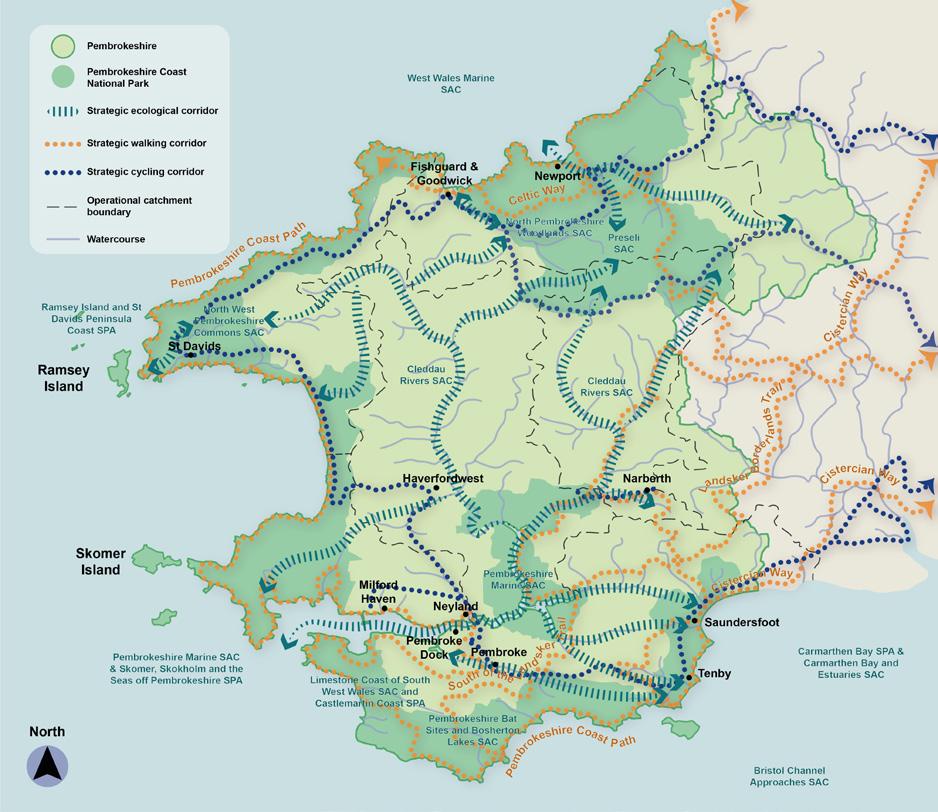
1 https://www. legislation.gov. uk/anaw/2016/3/ contents
2 https://www.gov. wales/planningpolicy-wales
3 https://www.gov. wales/future-walesnational-plan-2040
4 See 2
5 See 2
6 See 2
7 https://datamap.gov. wales/maps/new#/
8 https://ati. woodlandtrust.org. uk/tree-search/
9 https://magic.defra. gov.uk/home.htm
10 See 2
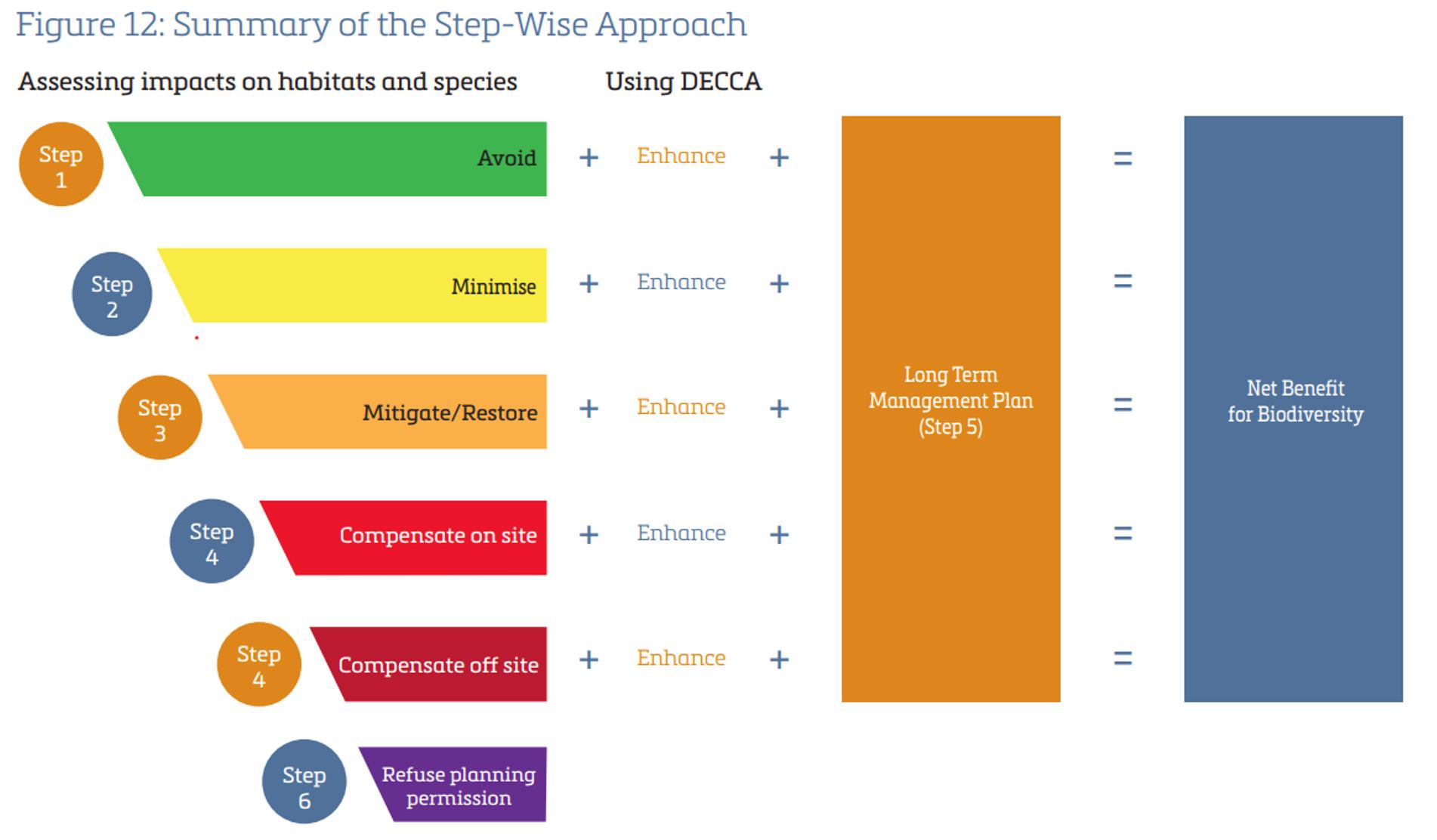
access into a coherent spatial strategy. The requirement for the GIS reflects a broader move towards embedding environmental thinking early in the planning process, rather than treating it as a constraint to be managed later.
GISs operate in tandem with the requirement to deliver a NBB.5 Unlike biodiversity metric systems used elsewhere, NBB in Wales is deliberately flexible and qualitative. While certain quantitative elements exist, such as tree replacement ratios or woodland planting densities, the overarching emphasis is on achieving meaningful ecological outcomes in context. This allows practitioners to respond to site-specific conditions, local character and wider landscape connectivity, rather than pursuing standardised numerical targets.
Both the GIS and NBB are structured around the ‘stepwise approach’ set out in PPW12.6 This hierarchy – avoid, minimise, mitigate, compensate, and enhance – ensures that biodiversity considerations are integrated systematically into project design. Enhancement is not treated as an optional add-on but as an expectation at every stage. The first priority is to avoid harm altogether, including through site selection and layout design. Where impacts are unavoidable, developers must minimise and mitigate them, before considering compensation as a last resort. Throughout this process,
opportunities for enhancement must be identified and secured.
Planning authorities and applicants are expected to draw on a range of spatial datasets, including DataMapWales,7 the Ancient Tree Inventory8 and MagicMap,9 to understand baseline conditions and identify opportunities for intervention. This spatial evidence base supports a landscape-scale perspective, enabling decisions to be made that strengthen ecological networks beyond individual site boundaries.
For example, when compensatory habitat creation is required, policy encourages a placebased approach guided by Green Infrastructure Assessments. These assessments help identify where interventions will deliver the greatest ecological benefit, whether close to the development site or within a wider landscape context. Similarly, the emphasis on connectivity, which is one of the five resilience attributes, requires practitioners to consider how habitats link together across space, rather than focusing solely on isolated features.
This integration of spatial analysis with policy objectives reflects a broader cultural shift within Welsh planning. Landscape architects, ecologists and planners are positioned not merely as assessors of impact, but as active contributors to biodiversity
enhancement. The requirement for long-term management plans further reinforces this, ensuring that interventions are not only designed effectively but also maintained over time to deliver lasting benefits.
The treatment of specific elements such as trees, hedgerows, hedgebanks and woodlands illustrates how this holistic approach operates in practice. These features are recognised not only for their ecological value, but also for their contribution to landscape character, climate regulation and community wellbeing. Policy therefore prioritises their retention and integration, with compensatory measures required where loss is unavoidable.10 Importantly, such measures are expected to go beyond simple replacement, contributing to broader ecosystem resilience and diversity.
Rather than relying solely on prescriptive metrics, Wales’ approach to biodiversity policy combines statutory duties, planning policy and spatial analysis to create a framework that is holistic and adaptable. GISs and NBB are central to this system, translating high-level principles into practical requirements that shape design and decisionmaking. The result is a planning culture that views biodiversity not as a constraint, but as a fundamental component of placemaking, one that must be considered holistically, across scales and disciplines, to deliver resilient and thriving landscapes.
Michael Higgins FArborA
FCIHort FBNA CEnv MRTPI TMLI is Principal Planning Officer at Pembrokeshire Coast National Park Authority, where he has dealt with landscape matters for over 17 years. His guidance for producing Green Infrastructure Statements aligned with the stepwise approach and Net Benefits for Biodiversity is available at pembrokeshirecoast.wales/ planning/planning-advice/treesand-hedge-management/

Tracy Whitfield
Nature is in crisis. The UK is the most nature-depleted country in Europe, with a 19% decline in species abundance since 1970.1 Statistics like these have helped to drive policy but the debate over nature vs development has continued. Nature has too often been an afterthought, a ‘nice to have’, engineered out when pitted against expenditure and lack of developer engagement, with inequalities in public access to green/blue space and ecosystems often being ignored. If measures have been implemented, commitment to ongoing management has typically been poor.
What emerged from the rise in awareness of natural capital and ecosystem services from the early 2000s was the evolution of Biodiversity Net Gain (BNG),2 through principles led by Natural England. Aimed at quantifying environmental value through a metric, the standards were designed for widespread use in planning. These voluntary standards were gradually refined, introducing broader habitat categories through
Biodiversity Net Gain is a step in the right direction but refinement and persistence are now required to ensure it fulfils its potential.
new versions, and progressing to the mandatory Metric 4.0, which was formalised to support the Environment Act 2021.3
The metric has been developed to calculate biodiversity units based on habitat size, condition, type, location and significance. As versions progressed, risk multipliers (difficulty, time to target condition) and spatial factors (distance from impact site) were introduced. Underpinning the metric was the mitigation hierarchy: avoid, minimise, restore, offset.
During its evolution, the metric moved from ‘no net loss’ in biodiversity to requiring developers to deliver at least a BNG increase of 10% relative to the pre-development value. This means there should be more, or betterquality, natural habitat than there was before development. Factored into those calculations are baseline habitat assessments and 30-year management plans.
BNG became a legal requirement for major developments
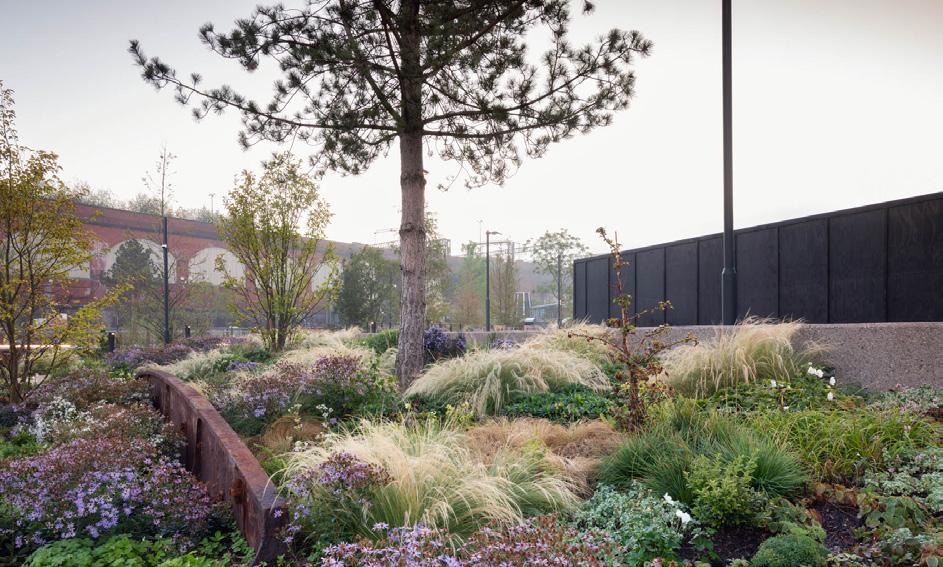
in February 2024, with small sites for minor developments following in April 2024.4 After a consultation in July 2025 the Nationally Significant Infrastructure Projects (NSIPs) outcome, originally planned for late 2025, has just been announced and BNG will become mandatory for NSIPs from 2 November 2026.
Where are we now?
There are several mechanisms for delivery of a net gain, but not all are necessarily onsite via habitat creation or enhancement. Offsite delivery should be the next best alternative, ideally delivered through local habitat banks. Natural England
Credit:
2
1 https://stateofnature. org.uk/
2 https://www.gov.
uk/guidance/ biodiversity-net-gain
3 https://www. legislation.gov.uk/ ukpga/2021/30/ notes/division/3/ index.htm?utm_ source=chatgpt.com
4 https://www.gov.
uk/government/ publications/ statutorybiodiversity-metrictools-and-guides
5 https://www.gov.uk/ guidance/searchthe-biodiversitygain-sites-register
6 https://www.gov.uk/ guidance/statutorybiodiversitycredits#overview
7 https://www.gov. uk/government/ publications/ local-naturerecovery-strategies/ local-naturerecovery-strategies
8 https:// landscapeinstitute. org/consultation/ improving-theimplementationof-biodiversitynet-gain-forminor-mediumand-brownfielddevelopment/
9 https://www.gov.
uk/government/ news/housing-secpledges-to-gofurther-than-everbefore-to-hit-15million-homes
maintains a biodiversity gain sites register5 where developers can search for sites or landowners can register a biodiversity gain site. A last resort is statutory credits,6 purchased by developers and delivered through governmentled conservation programmes which create or enhance habitats elsewhere when BNG cannot be achieved on site or through off-site provision. Pricing is structured to encourage the first two measures. There could be ecological benefits to off-site delivery, as it may enable larger, more strategic habitat creation, or support local nature recovery strategies,7 giving developers more flexibility on sites where BNG is difficult to deliver. But this method is not without its critics and comes with caveats: there is a risk that developers may rely too heavily on off-site solutions, without prioritising on-site and avoidance, which could seriously damage irreplaceable habitats.
Another essential part of the process is delivery and long-term stewardship. While this growing new market has several uncertainties such as regulation and commercial, it also offers the potential for new skills, jobs and protected green spaces. However, there are concerns about the significant impact on already stretched local authorities and their capacity to monitor the installation and management of sites.
There are worries too about the exemptions being used to avoid BNG. The Landscape Institute (LI) holds a strong view that every site contributes cumulatively to BNG, as noted in our response to the consultations of July 2025 regarding minor, medium and brownfield development and the de minimis exemptions.8 More unease was raised when the government made further announcements in late 2025,9 potentially introducing an exemption for residential brownfield developments up to 2.5 hectares. This would overlook the often thriving ecosystems present on
previously developed land, which support a mosaic of habitats and provide vital benefits for local communities. For these reasons there have been criticisms that the metric is overly complicated, does not always deliver the best outcome and is confusing when it concerns small sites.
However, many would argue that the situation is better than before and this is the first iteration that can be improved, hence the LI supports the BNG metric but appreciates it needs refinement. It strengthens the importance of biodiversity, provides standardisation and a framework for comparing sites and schemes and encourages
early decision making in ecology and design. Simplification for small sites and a more nuanced, site-specific approach linked to habitat value, as well as size, would be positive steps. Priorities should be streamlining implementation, supporting local planning authorities and ensuring that all developments – including smaller sites – achieve measurable biodiversity gains.
Tracy Whitfield is Technical and Research Manager at the Landscape Institute
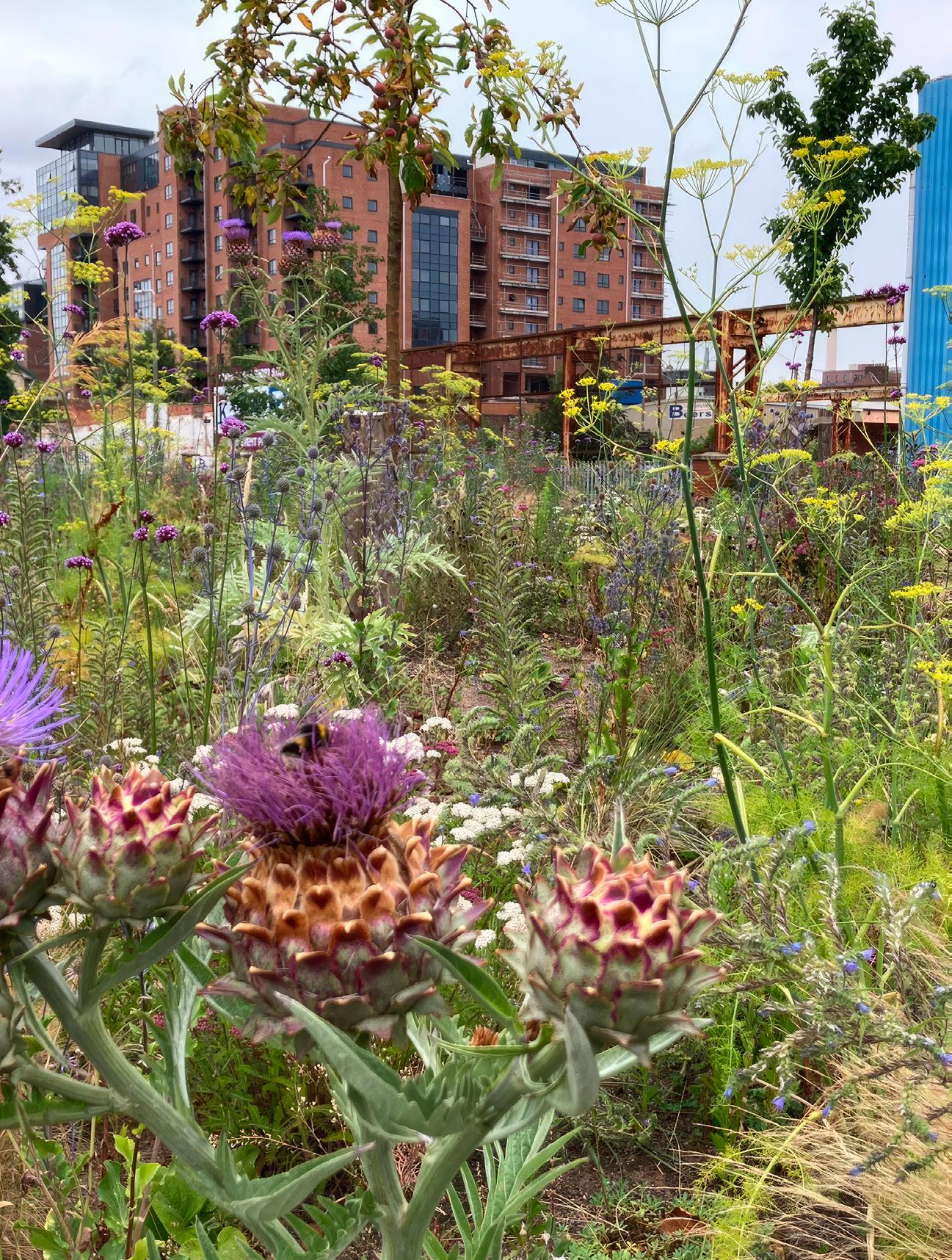

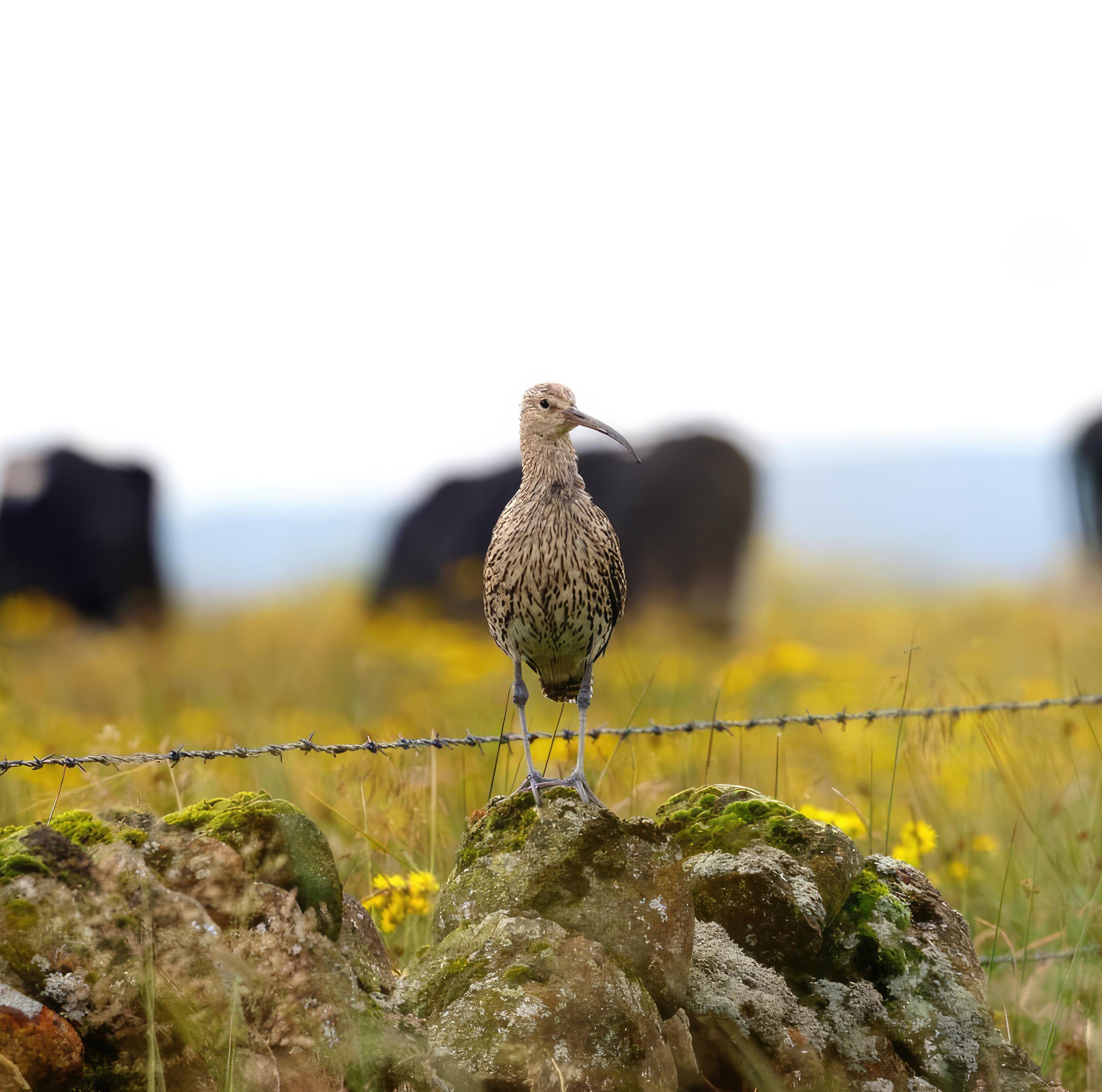
New policy in Northern Ireland is signalling a decisive shift from protecting nature to restoring it, with a new strategy for Nature Recovery setting a pathway forward.
2 Slemish mountain in County Antrim.
Warnock
1 https://www. daera-ni.gov.uk/ sites/default/ files/2026-01/ Draft%20Nature%20 Recovery%20 Strategy%20for%20 Northern%20 Ireland%20to%20 2032.pdf
2 see 1
3 see 1
4 https://www. ulsterwildlife. org/saving-ourpeatlands
5 https://www. woodlandtrust.org. uk/state-of-ukwoods-and-trees/
6 https:// stateofnature.org. uk/wp-content/ uploads/2023/09/ TP26055-SoN-N_ Ireland-summaryreport-v4-1.pdf
7 see 1
8 https://www. daera-ni.gov.uk/ sites/default/ files/2026-03/ Northern%20 Ireland%20 Environmental%20 Principles%20 Policy%20 Statement%20-%20 2%203%2026.PDF
9 https://www. daera-ni.gov.uk/ sites/default/files/ publications/daera/ biodiversity-dutyguidelines-forpublic-bodiesmay-2016.pdf
10 https://www. daera-ni.gov.uk/ sites/default/ files/2025-02/ Update%20 on%20the%20 Proposed%20 Ammonia%20 Strategy.PDF
11 https://curlewlife. org/project-sites/ antrim-plateau/
Northern Ireland’s draft Nature Recovery Strategy represents a significant policy shift from environmental protection to environmental restoration. Halting and reversing biodiversity loss by 2030, and achieving a ‘net zero nature positive future’ by 2050,1 will be a significant challenge for Northern Ireland.
To date, Northern Ireland’s environmental policy framework has relied on designating sites, species and habitats to protect a sample of biodiversity. Unsurprisingly, this approach has not halted biodiversity decline, and new policy measures are urgently needed.
Despite being one of the most geologically diverse areas on the planet, Northern Ireland’s biodiversity pool is smaller than, and distinct from, its neighbouring island, and 12% of its species currently face extinction.2
Approximately 10% of Northern Ireland’s land area and 38% of its sea area is protected by environmental designation, yet 36% of these protected areas are in such poor ecological condition they cannot be considered as contributing to the Global Biodiversity Framework target for effective nature conservation and management of 30% of land and sea by 2030.3 Twelve per cent of Northern Ireland’s land area is peatland, which is mostly degraded and actually releasing carbon rather than storing it.4
In addition, despite significantly low levels of tree and woodland cover in Northern Ireland (8.6% of land area vs UK average of 13.5%), tree planting rates since 2020 have been less than 20% of the target required to meet Northern Ireland’s Climate Change Act obligations.5
Agricultural intensification is recognised as the most significant factor impacting UK species decline. Northern Ireland produces 12% of the UK’s total ammonia emissions: 77% of Northern Ireland’s land area, and 97% of its ammonia emissions, are agricultural, and an ‘improvement’ in recent decades of 50% of this agricultural land has been
accompanied by a 43% decline in farmland bird species.6, 7
Northern Ireland’s Environmental Principles Policy Statement embeds proactive and upfront, rather than reactive, environmental protection.8 It strengthens Northern Ireland’s statutory Biodiversity Duty, which already requires every public body to further biodiversity conservation through exercising any function.9
The strategic objectives of the draft Nature Recovery Strategy include: urgent restoration and meaningful protection of nature; urgent removal and reduction of pressures on biodiversity; and embedding as ‘mainstream’ the value of nature to government and society. An integral stewardship and recovery plan seeks at least ‘favourable condition’ status for Northern Ireland’s protected sites, habitat and species, and measures outside protected designations (e.g. 9% tree cover by 2030). Commitment to the All-Ireland Pollinator Plan and the All-Island Climate and Biodiversity Network is embedded. The draft Nature Recovery Strategy also collates actions already agreed or proposed, for example, practical farm-based measures to reduce ammonia emissions by 40%, alongside considerable restoration action for habitats and species.10
Northern Ireland’s draft Nature Recovery Strategy finally
The RSPB Curlew LIFE project was a four year farmland project near Slemish mountain in County Antrim. The project worked to restore natural land water levels, by blocking drainage channels and removing conifer tree plantations, managing rush growth with tracked-wheel tractors and managing grazing and predators with fencing or provision of diversionary food. The project’s success is a 400% increase in curlew chicks fledging annually at the Antrim Hill Farm during
promises development of Natural Capital, Ecosystem Services, and Biodiversity Net Gain approaches integral with planning, alongside a Land-Use Framework and a Living Map to communicate ecosystem extent, condition, functioning and connectivity. These measures should beneficially reinforce the essential and fragile balance between our societal impact and upholding the nature that serves us.
Legend has it that St Patrick stood on the summit of Slemish and banished snakes from Ireland. Recent simple practical actions on that same mountain have brought astonishing increases in the population of one of UK’s most endangered birds.11 The strands of the Strategy are not complex. The key is to be ‘urgent’, ‘meaningful’ and ‘mainstream’. Delay is not an option to make our prayer reality.
Emily Smyth is Senior Landscape Architect at Soltys Brewster Consulting. She was founding member of the Ministerial Advisory Group for Architecture and the Built Environment in Northern Ireland, member of DAERA statutory advisory Council for Nature Conservation and the Countryside, Course Director for Landscape Architecture at Ulster University, and has held Branch and Committee roles with LI.
the four years of the project, starting to shift the curve against biodiversity loss at St Patrick’s legendary hill.
https://curlewlife.org/projectsites/antrim-plateau/
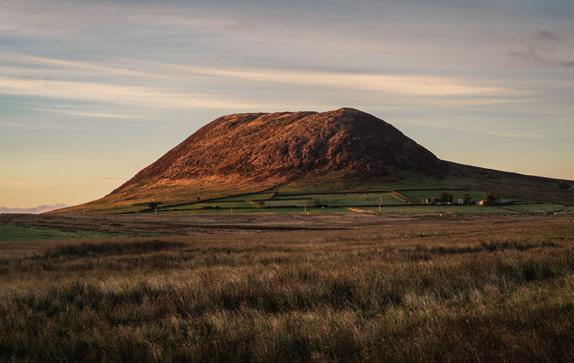

Ross Cameron
Habitat loss, climate change, over-exploitation and pollution are diminishing the world’s biodiversity. The Living Planet Index report 20241 indicated a 73% decline in wildlife populations (abundance) since 1970. Species threatened by extinction include 13% of birds and as much as 41% of all amphibians and conifers.2 As humans rely on this ‘tangled web of life’ for our own existence (take oxygen as an example, which is a by-product of photosynthesis), we need to preserve biodiversity, irrespective of any wider moral agendas around sharing the planet with other species. Landscape architects should be at the vanguard of conserving the planet’s biodiversity. After all, who understands better the interactions between the
Through diversity in species, form and function, landscape architects can create resilient, multi-layered planting systems that enhance biodiversity and resilience, strengthen ecosystem services and deepen people’s connection to place.
physical world, nature and human engagement? But we need to think and act more ambitiously, and we need to change the paradigm of ‘business as usual’. Unless we get a handle on climate change soon, it will radically change the natural world. We need to recognise climate change will not simply mean the UK moves to a warmer Mediterranean-type climate (with more prominent heat stress, drought and fire), but the additional turbulence in atmospheric processes will induce more regular periods of flooding, high winds and greater herbivore and pathogen pressures on plants. Promoting plant diversity is part of the solution to these multifaceted and compounding stress factors. Moreover, our landscapes should be sustainable and linked to flood intervention and
water harvesting systems (Fig 1).
In terms of plant composition, we need plants and plant communities that are multifunctional, providing food and shelter for wildlife, promoting ecosystem services and ensuring enjoyment or recreation for citizens. In some locations it may be appropriate to let the plants do the work! We can select a spectrum of taxa that allows some species to establish quickly but ensures others are given the space and time to find their own niche over a longer period. The planted landscape is dynamic and, in these situations, we want to celebrate and publicise its evolution, promoting understanding of biological systems and helping educate residents about vegetational succession and the arrival of a new suite of flora and fauna over time (Fig 2). Elsewhere,
1 https://livingplanet. panda.org/en-GB/
2 Pimm, S.L., Jenkins, C.N., Abell, R., Brooks, T.M., Gittleman, J.L., Joppa, L.N., Raven, P.H., Roberts, C.M. and Sexton, J.O., 2014. The biodiversity of species and their rates of extinction, distribution, and protection. Science, 344(6187), p1246752.
1 2 Climate resilience, biodiversity support and aesthetic appeal can go hand in hand. A gardenscale sustainable urban drainage system is used to divert water away from the house, and irrigate a wet meadow system.
© Ross Cameron
3 The barn owl (Tyto alba) is a meadow and open grassland specialist. As vegetational succession takes place and tussockforming grasses establish, the habitat improves for voles and shrews, attracting in owls.
© Ross Cameron
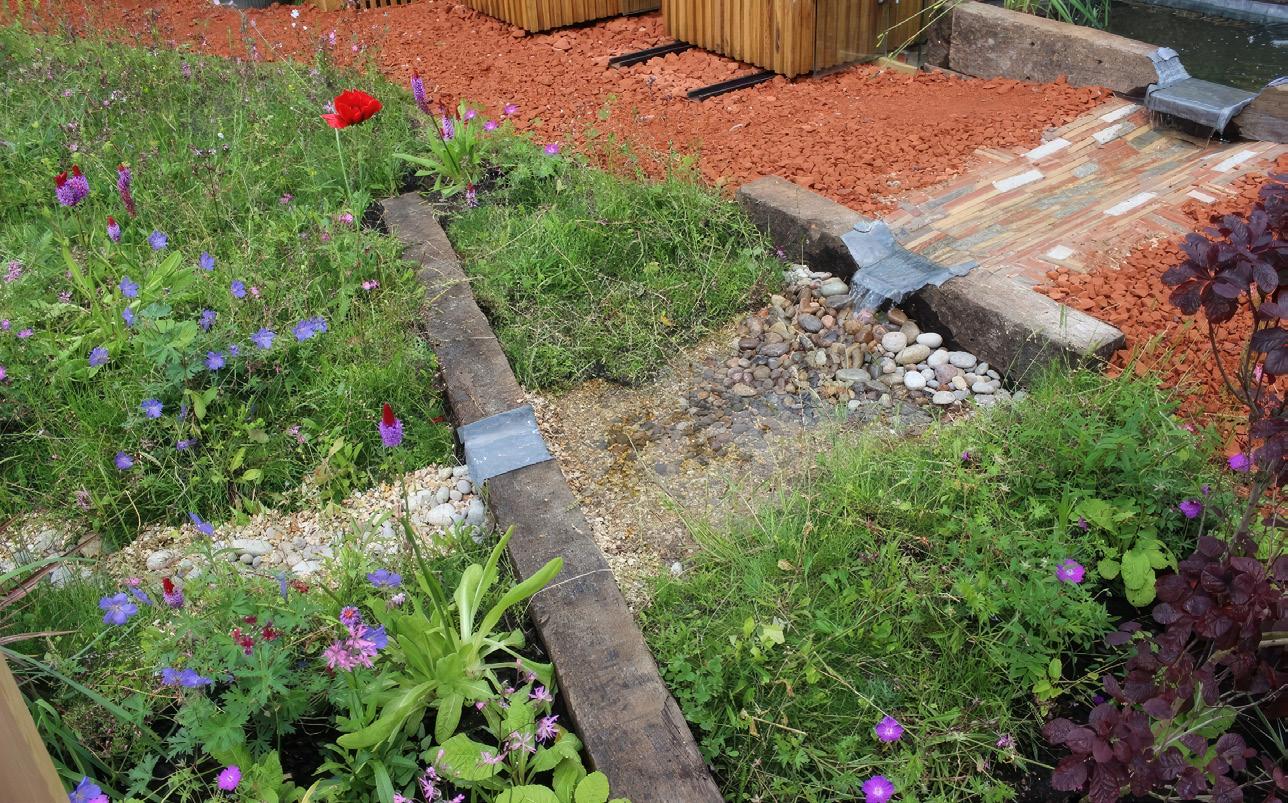
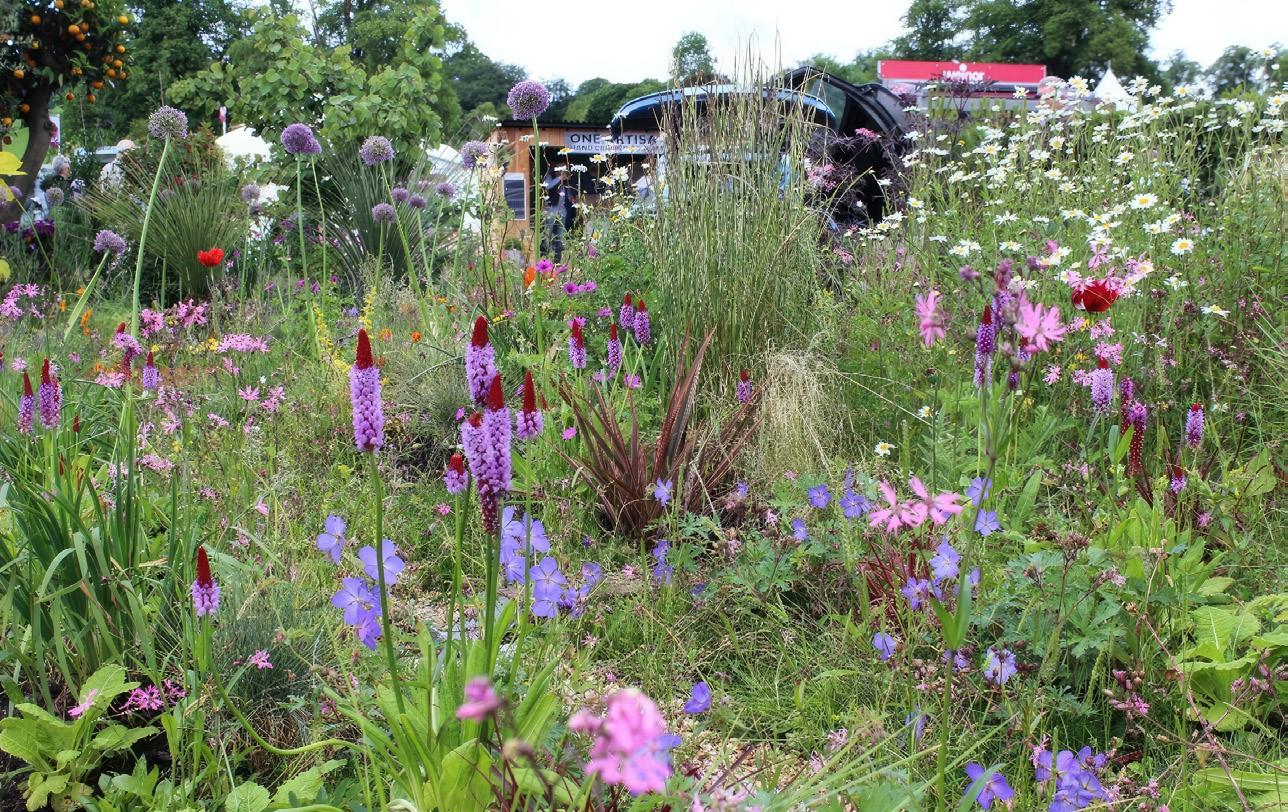
landscape architects should not be afraid to use interventions, for instance cutting, scraping, introducing browsing animals and even employing fire (intentional or otherwise) to provide ecological stresses that promote diversity and change.
There are several principles we can adopt to improve habitat for wildlife, enhance ecosystem service provision and increase the resilience of plantings to a changing climate.
Key aspects include:
The greatest challenge for most wildlife is landscape fragmentation, so how can we better link green/ blue spaces for species movement
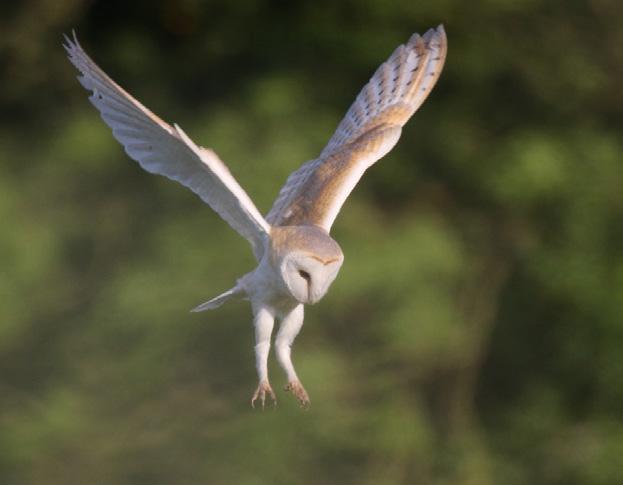
at all scales? Landscape-scale ecological corridors are important for species migration from lower to higher latitudes as equatorial regions become excessively warm. At the medium scale, and where space allows, hedgerows can be used to link discrete patches of woodland and it is worth considering including
climbers, stand-alone trees, and basal flowering plants to add variety and maximise resources.
Perhaps it is at the smaller scale that we really need to think ‘outside the box’, especially in an urban context. Here one needs to develop the perspective of an insect! For instance, how does the violet ground beetle (or other insect of choice) get from point A to B? Strips of vegetation running alongside pavements, using ‘living drains’ where the water flow is bordered by plants and exploiting living walls (including ones that mimic different natural habitats), can all provide improved ecological connection at an intimate scale.
Spatial heterogeneity
Biodiversity and complexity go hand in hand. Whether in woodland or perennial meadows, layers of vegetation provide different microclimates and ecological niches (Fig 3). It is notable that our native songbirds often take up a slightly different vertical zone in woodland, with wrens (Troglodytes troglodytes) at the base and song thrushes (Turdus philomelos) at the top of the shrub layer.
Complexity also provides resilience, with rainwater capture for example being improved when there are layers of branches and leaves acting as traps and deviations before the raindrops impact the soil. In herbaceous plant communities, three layers can be applied: low (e.g. shadetolerant Primula vulgaris), medium (Symphyotrichum novae-angliae) and tall (eg Silphium integrifolium). To avoid over-shading of the lower layer, these are planted in a ratio of 10:2:0.5 respectively. Variation in plant heights, leaf morphologies and location of invertebrate ‘food bars’ (flowers, palatable leaves and fruit) helps provide resources and refuge spots for wildlife. Variation across the horizontal landscape is also important as transition zones between one type of vegetation and another
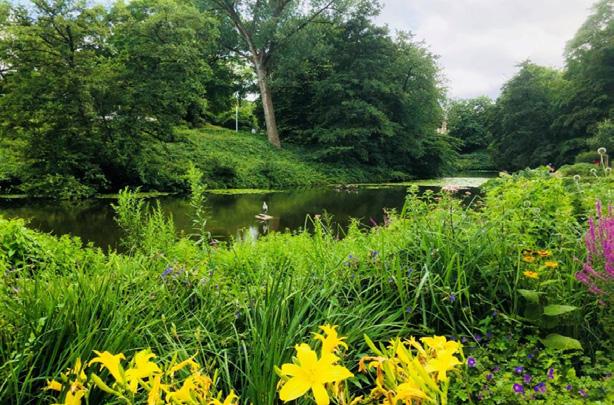
are often the richest in species diversity, e.g. the woodland edge can accommodate both woodland specialists and open glade species.
Ecological functionality
To support pollinating invertebrates, plant communities should provide a continuity of open (simple), nectar and/or pollen rich flowers (Fig 4), ideally from January (e.g. Daphne odora ‘Aureomarginata’, Daphne mezereum var rubra or Lonicera x purpusii ‘Winter Beauty’) through to November (eg Fuchsia spp, singleflowered Cosmos and Rudbeckia, whose flowers will survive until the first frosts). This is because many insect species are now entering hibernation later and emerging earlier due to a warming climate.
Native plant species won’t necessarily provide this spectrum of flowering times, so in urban conditions we can support natives with appropriate non-native plants that also provide a functional nectar/ pollen service. Some non-native taxa are very attractive to pollinating insects; e.g. Ceanothus attracts a range of bee and hoverfly species (Fig 5).
Despite this emphasis on plants for pollinators, we also need to think about the animal’s complete lifecycle and habitat requirements, and include plant taxa that feed the larval stages. Shrub and tree species with high numbers of associated insects are useful here; Salix, Quercus spp, as well as the occasional specialist plant; e.g. the brimstone butterfly (Gonepteryx rhamni), relies specifically on buckthorn (Rhamnus cathartica) and alder buckthorn (Frangula alnus).
Lifecycle is important too when considering trees, since

deadwood and leaf litter is almost as much a resource as the living boughs. Similarly, with herbaceous plantings, we want to leave the dead stems and seed heads in place for as long as possible to retain refuge micro-sites and food sources. When meadows and borders are cut, the arisings and stems can be tidied up into neat stacks and used as architectural features in their own right. This also allows carbon to be recycled in situ.
In terms of climate adaptation, again, we need to build in variety. Some species are effective at cooling surfaces via shade while others do it better by evapotranspiration. Some taxa are ‘supercoolers’: under the same environmental conditions Hedera helix provided 250C of surface cooling (compared to an open sun-exposed surface) whereas Griselinia littoralis only provided 110C of cooling.3
Diversity is also important over the long term. Native plants are
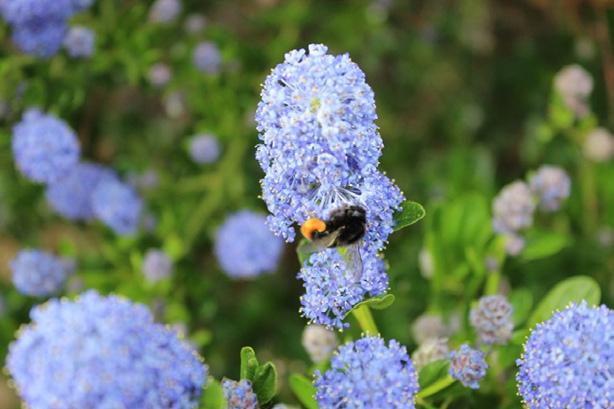

usually best for native wildlife, but what happens when those plants (and the wildlife) struggle with a warmer or more turbulent climate?
A pragmatic approach is therefore to spread the risk: when planting street trees that will provide an effective urban forest for the future, the author advocates a tree palette composed of 1/3 native trees, 1/3 pseudo climate-adapted species (e.g. species currently distributed across central and south-eastern Europe, so called ‘near natives’) and 1/3 taxa that are familiar and have a cultural value to residents (e.g. flowering cherries). This last group is often an important component if you wish to retain public acceptance of new plantings.
Not all taxa will do well in a changing climate but spreading the load across a broader range of species will help minimise risk. A wider plant choice may also aid
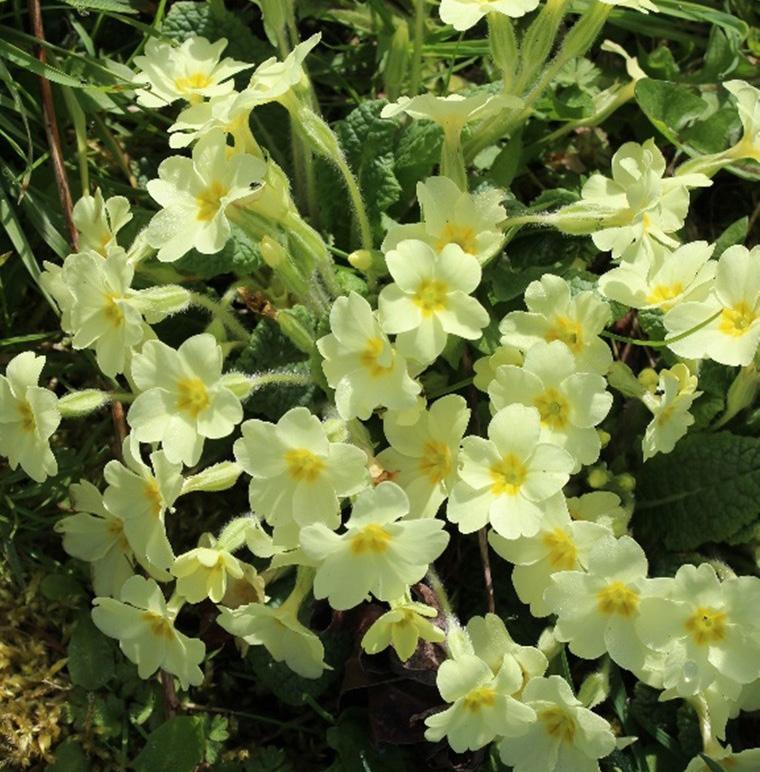
3 Kunasingam, P., Clayden, A. and Cameron, R., 2024. How does plant taxonomic choice affect building wall panel cooling? Building and Environment, 256, p111493.
4 Both native and non-native plants can be used to provide spatial heterogeneity, both vertically and horizontally.
© Ross Cameron
5 6 Simpler flower forms tend to have fully formed nectaries and be better accessed by pollinators (left), than more complex hybridised flowers (right).
© Ross Cameron
7 Non-natives, such as this Ceanothus, also provide nectar and pollen to native invertebrates, and should be considered in the planting palette, especially in an urban context, where there may be fewer native plants present.
© Ross Cameron
8 Species with wide natural distributions, and that can be found across different vegetation stands or habitat types, such as primrose (Primula vulgaris), may have more resilience to the impacts of a changing climate.
© Ross Cameron
4 Zhang, L., Dempsey, N. and Cameron, R., 2023. Flowers–Sunshine for the soul! How does floral colour influence preference, feelings of relaxation and positive up-lift?
Urban Forestry & Urban Greening, 79, p127795.
5 Lewis, E., Phoenix, G.K., Alexander, P., David, J. and Cameron, R.W., 2019. Rewilding in the Garden: are garden hybrid plants (cultivars) less resilient to the effects of hydrological extremes than their parent species?
A case study with Primula. Urban Ecosystems, 22(5), pp841-854.
6 Cameron, R.W.F. (2026). Environmental Horticulture, Science and Management of Green Landscapes
2nd Ed CABI, UK. p362p
ecosystem services; where some taxa work hard to improve air quality, others provide better rainwater infiltration to the soil (via deep tap roots). Another suite attends to human psychological wellbeing.4 Those species with a wide natural distribution or that are found in a range of natural habitat types may also be worth considering with respect to climate adaptation. When tested against a range of stresses,
we found the more catholic primrose (Primula vulgaris, Fig 6) to be more resilient than either oxslip (P. elatior, which is damp loving) or cowslip (P. veris, which is more dry-adapted).5
We are still researching what it means to be climate resilient, but promoting diversity appears to be a logical starting point. Diverse plant communities increase the spectrum of ecological niches available, and this is one of the aspects hard-
▪ What are the current ecological conditions – are there habitats or species you need to protect?
▪ What are the opportunities for wildlife on site?
▪ Are there any specific taxonomic groups or guilds that it would be appropriate to focus on? Other plants and animals will find a niche, but having a focus at the outset can help provide the right habitat structure, provision of keystone species etc.
▪ What is the site’s aspect and soil type?
▪ Do you need to clear the site of weeds? Is there herbivore pressure (from slugs, snails,
rabbits etc.) and how will you manage this, e.g. with sand mulches, tree guards etc.?
▪ What resources exist for longer-term maintenance, e.g. skilled labour or volunteer groups?
▪ How do plants complement each other in terms of flowering time and duration, shade or shade avoidance, threedimensional form and winter survival traits.?
▪ Although more expensive, perennial plantings tend to have better success when planted as a 9cm or larger pot size.
Biodiversity loss and climate change pose huge ethical dilemmas for long-term green space planning. Not least, what exactly are we planning for? An important aspect, when you consider a forest tree species could live for 600–700 years,6 Much of our current philosophy and policy around nature conservation (preserve and protect what is currently here, i.e. native species) may become obsolete unless human society curtails climate
change very quickly. Many of the equatorial regions may become too hot for the species they currently host. Likewise, if the UK experiences a hotter, drier and more tempestuous climate, many native species will be forced to migrate north or die out. This leaves us with a difficult question: to retain some degree of ecosystem functionality, should we start moving ecosystems artificially around the planet to find more conducive climates for them?
pressed wildlife desperately needs.
Ross Cameron is Professor of Environmental Horticulture, School of Architecture and Landscape, University of Sheffield. His research programme investigates climate change adaptation in landscape plants, and how plant choice influences the delivery of ecosystem services.
▪ In the UK, planting is best in September and can also be carried out in February or March. Moisture is important to allow roots to explore the new parent soil, but mid-winter can often be too wet to work the ground without compression and compaction occurring.
▪ Irrigate if required for the first year.
▪ Monitor progress regularly, e.g. fortnightly at the outset – are there bare patches or weed invasion? Is any remedial action required?
▪ Note animal species beginning to use the site.
Surrey in 2150 will be much more appropriate for sandgrouse, skinks and servals than slow worms, snipe and starlings. If you thought re-introducing the lynx to the UK was controversial, how about lions, hyenas and elephants? Yet future conservation of such species (and many others) probably means providing suitable habitat 2–3,000 miles further north of their current range.
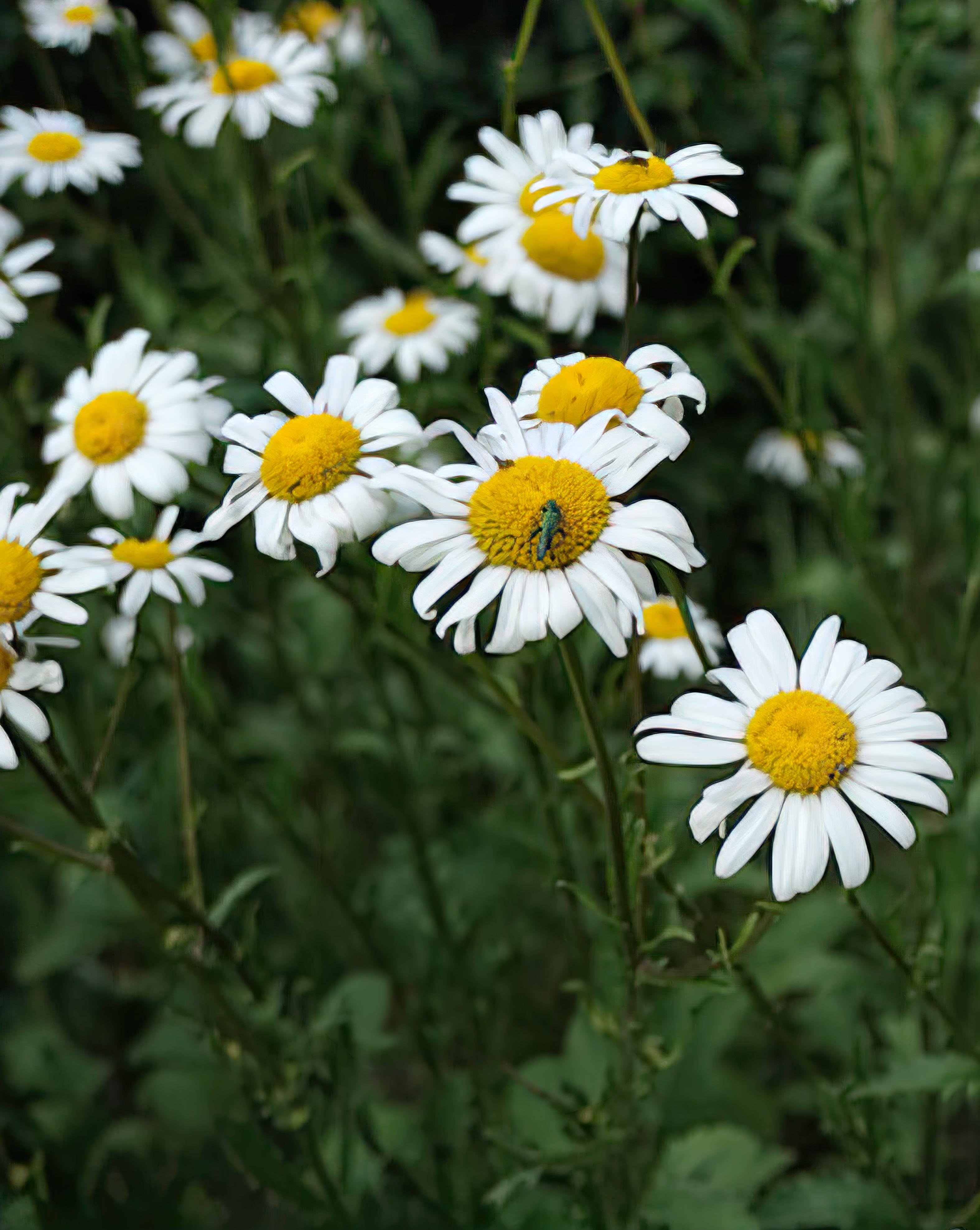
Is BNG’s weighting towards native planting limiting climate resilience?
3 Tall verbena (Verbena bonariensis), native to Argentina and Brazil, spotted in Queen Elizabeth Olympic Park. Credit: Charlotte Zaininger
Two landscape projects with different approaches to planting highlight an ongoing debate in this student research project.

1 UK Government (2024) Biodiversity Net Gain. Available at: https://www.gov. uk/government/ collections/biodiversity-net-gain
2 UK Government (2019) Environment Act 2021. Available at: https://www. legislation.gov.uk/ ukpga/2021/30/ contents
3 Natural England (2023) Statutory Biodiversity Metric 4.0. Available at: https://publications. naturalengland.org. uk/publication/ 6049804846366720
4 Baker, J., Hoskin, R. and Butterworth, T. (2019) Biodiversity Net Gain: Good Practice Principles for Development. A Practical Guide (Part A) and Case Studies (Part B), CIRIA, pp. 127.
5 Tallamy, D.W. (2009) Bringing Nature Home: How You Can Sustain Wildlife with Native Plants, Timber Press.
6 Garland, L. (2020) Native versus non-native: which plants are best for biodiversity? The Nature of Cities. Available at: https:// www.thenatureofcities.com/ TNOC/2020/05/18/ native-versusnon-na tive-which-plantsare-best-for-biodiversity/
Charlotte Zaininger
The UK’s Biodiversity Net Gain (BNG) policy, implemented in England in 2024, aims to meaningfully improve biodiversity by mandating a 10% uplift on all new developments.1 However, the meaning of ‘biodiversity’ in this context can be quite specific, with many considering that the policy metric has an embedded bias towards habitats composed of UK native species. But as climate and natural ecosystems rapidly change, does it make sense to prioritise nativeness over ecological function?
BNG policy relies on the Statutory Biodiversity Metric, which assigns value to habitats based on type, condition, area and strategic significance, with gains legally secured for 30 years.2,3 The metric can award higher scores to native habitats than to mixed native/non-native schemes, even when ecologically functional.4 This
creates tension: although BNG assumes ecological stability over three decades, native species may struggle to adapt to rapidly shifting temperature and precipitation conditions. Non-natives that could offer better climate resilience are disincentivised.
This article examines two London case studies, Cator Park and the Queen Elizabeth Olympic Park (QEOP), to assess native versus climate-adaptive planting strategies and explore BNG’s strengths and limitations in practice.

7 Seitz, N., VanEngelsdorp, D. and Leonhardt, S.D. (2020) Are native and non-native pollinator-friendly plants equally valuable for native wild bee communities? Ecology and Evolution, 10(23), pp. 12838–12850. 2
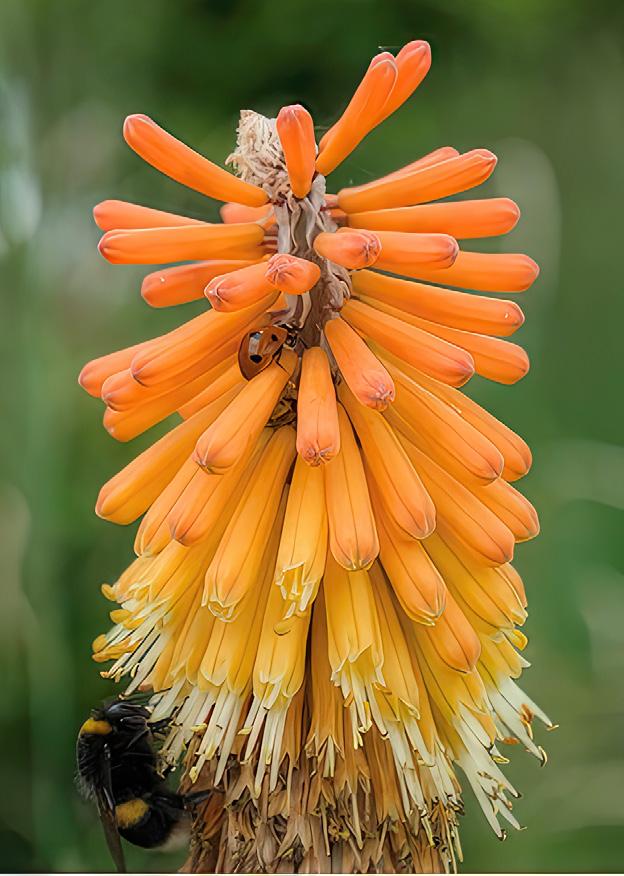
Supporters of native-only planting often invoke coevolution: the idea that native plants and their associated fauna have evolved together, forming tightly integrated ecological relationships. Douglas Tallamy, in Bringing Nature Home (2009),5 argues that native plants support biodiversity by sustaining co-evolved insect populations. Meanwhile the ‘enemy release hypothesis’ suggests non-natives may escape predation and disease in new environments, enabling unchecked proliferation that threatens native biodiversity and contributes to biological homogenisation.6 At the extreme, non-native species could become invasive, causing ecological or economic harm to a region. However, as urbanisation and climate instability accelerate, many ecologists question whether origin alone should guide planting. UK research shows non-native plants can boost bee abundance and diversity during seasonal gaps, without harming native pollinators.7 Davis et al observe that non-natives fill ecological gaps rather than displace native residents.8 They often dominate urban, island and disturbed environments, sometimes making up over 50% of local biodiversity.9 Climate change intensifies these dynamics. Non-natives often show
greater phenological plasticity, flowering earlier and maintaining synchrony under warming.10 Scholars have proposed ‘novel ecosystems’ as a conceptual alternative: hybrid assemblages that emerge in humanshaped environments.11
Despite this ongoing debate, the UK’s BNG policy focuses on the conservation of native species. To explore whether recalibration is needed, particularly in an urban context, two case studies from London offer insight. Cator Park (2019) and the 2012 gardens at QEOP (2014) provide large-scale examples of ‘native-only’ and ‘mixed’ planting strategies in urban London. Though both predate BNG’s 2024 enforcement, biodiversity surveys and practitioner interviews reveal how each approach has performed ecologically and offer insights into BNG’s potential successes and challenges. In June 2025, biodiversity audits were conducted by the author using 1m² quadrats across both sites. These assessed species richness, diversity, pollinator activity and climate resilience. The findings were supplemented by interviews with project designers, exploring how planting decisions were made and how the planting has developed.12
Cator Park, designed by HTA Design with the London Wildlife Trust, weaves native planting through a sinuous wetland corridor in South London. The park was commissioned by Berkeley Homes,
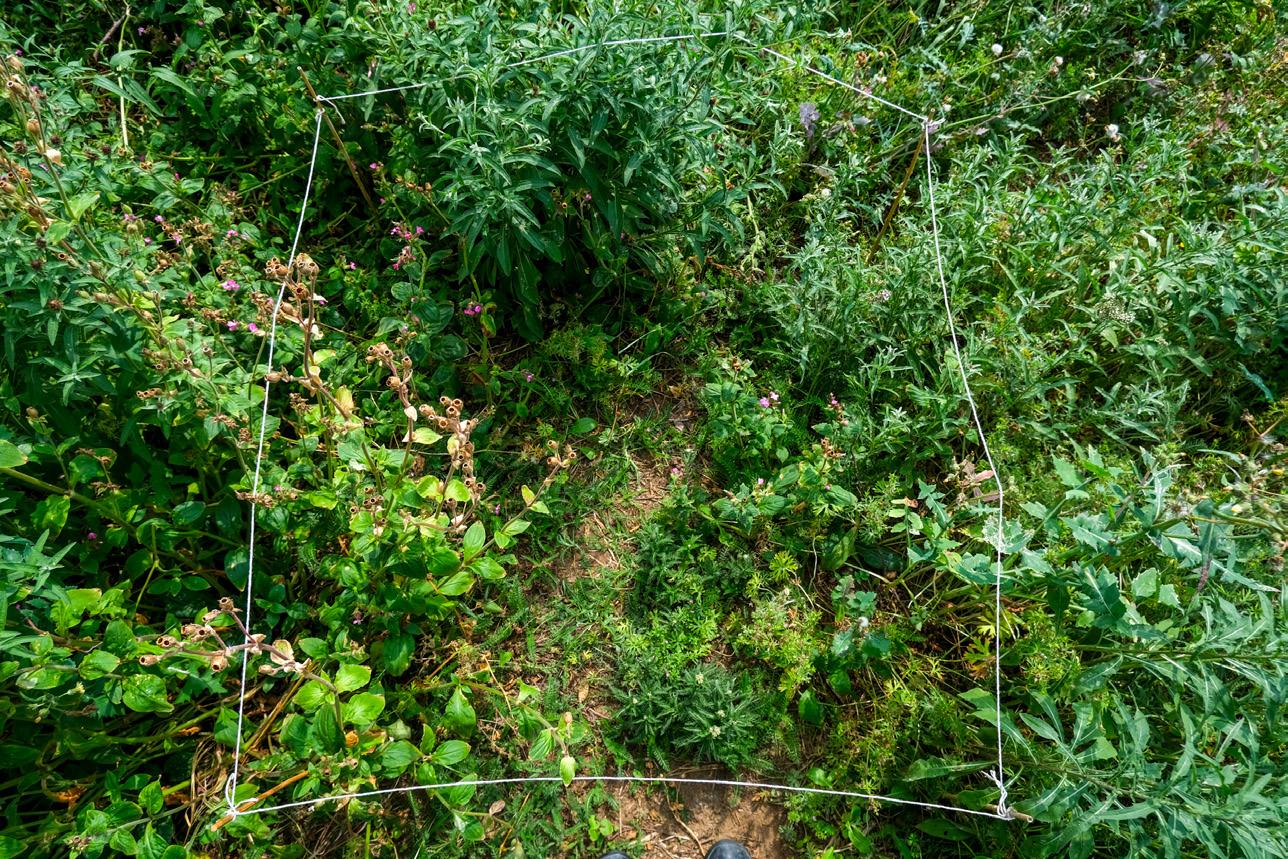
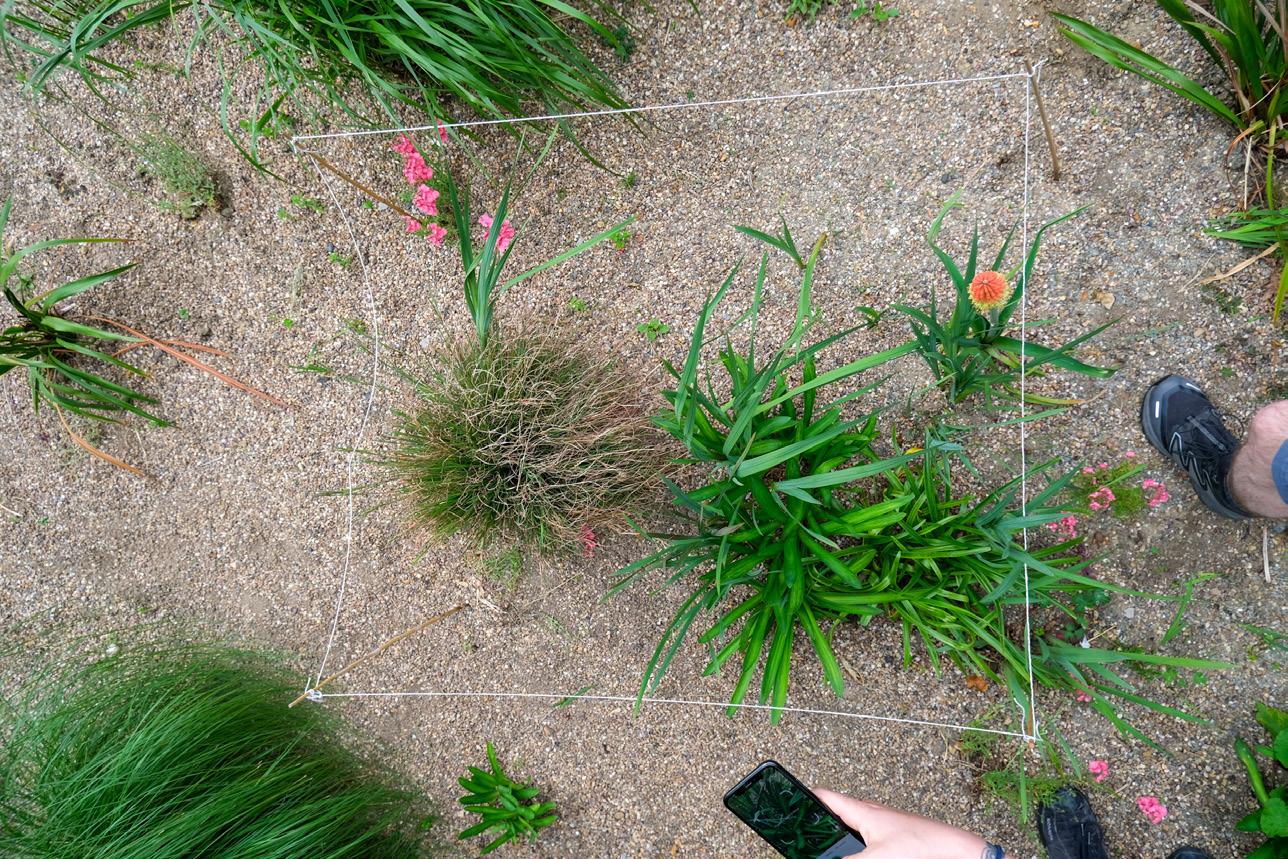
as the centrepiece greenspace of their Kidbrooke Village development. Cator Park applied BNG principles ahead of regulation, achieving a 161% gain through native-led design, and winning multiple environmental awards.13 According to project lead, Natalia Roussou, Berkeley Homes saw fostering biodiversity and placemaking as key to their mission and business model. Cator Park succeeded because of ‘a really dedicated client’, but not necessarily because the native-only strategy is universally applicable. In fact, the commitment to 100% native species came directly from the London Wildlife Trust, and HTA’s design team acknowledged that native-only
planting isn’t always compatible with inner-city soils, drought conditions or maintenance regimes.
By contrast, the 2012 gardens at QEOP were designed as a flagship, resilient landscape for the 2012 Olympic Games: at once a planting experiment, public spectacle and celebration of cultural diversity. Pippa Henshall, Design Principal, Landscape and Public Realm at London Legacy Development Corporation (LLDC) described the planting design as a historical homage: ‘It’s a celebration of the plant hunters who went out and brought all these amazing plants back that we now have in our gardens’. Designed by Hargreaves
Associates in collaboration with James Hitchmough and Nigel Dunnett, the design team embraced the concept of ‘future nature’. This approach moved beyond native/nonnative binaries, blending traditional meadow species with carefully selected exotics that offered visual drama and optimised ecological function. The four geographicthemed gardens (Europe, Asia, North America and the Southern Hemisphere) are composed of overtly non-native, yet biodiverse and resilient, planting strategies that would not score well under the current BNG metric.
The quadrat survey data collected from both case studies suggest that provenance is irrelevant to biodiversity performance. Cator Park and QEOP showed nearly identical Shannon-Wiener indices (1.58 and 1.59), and the highest diversity quadrat was recorded in QEOP’s North America garden. By contrast, the lowest diversity quadrats occurred in Cator Park, with native white clover (Trifolium repens) at 75% cover (H’ 0.86) and non-native toothpick plant (Visnaga daucoides) at 80% in another.
Signs of invertebrate presence were higher in Cator Park (observed on 43% of species vs 27% at QEOP), but QEOP outperformed in climate resilience: 18% of its species could survive a 43°C heatwave vs 0.8% in Cator Park, and its species showed higher average drought tolerance, suggesting Cator Park’s native palette is less adapted to future weather extremes.
For both projects, the greatest challenge was long-term management. Though Cator Park’s native planting scheme requires less frequent maintenance, it demands more specialised ecological knowledge. ‘Your bog-standard maintenance contractor can’t look after it’, said Katharina Erne, Senior Landscape Architect at HTA Design.¹² Contractors need to distinguish between weeds, early successional species and intentional biodiversity. By its fourth year, a biodiversity audit
8 Davis, M.A. et al. (2011) Don't judge species on their origins, Nature, 474(7350), pp. 153–154.
9 Schlaepfer, M.A. (2018) Do non-native species contribute to biodiversity? PLoS Biology, 16(4), e2005568, p.3.
10 Zettlemoyer, M.A. et al. (2019) Phenology in a warming world: differences between native and non-native plant species, Ecology Letters, 22(8), pp. 1253–1263.
11 Hobbs, R.J., Higgs, E.S. and Hall, C.M. (eds.) (2013) Novel Ecosystems: Intervening in the New Ecological World Order, John Wiley & Sons.
12 Semi-structured interviews conducted by author with project practitioners, June 2025. Interview subjects: Natalia Roussou (HTA Design, Landscape Design Director and Project Lead), Katharina Erne (HTA Design, Associate Landscape Architect), Pippa Henshall (LLDC, Design Principal, Landscape and Public Realm), Ruth Holmes (LLDC, Head of Landscape and Public Realm), Peter Massini (Future Nature Consulting, Director).
13 HTA Design (n.d.) Cator Park. Available at: https://www.hta. co.uk/cator-park/
4 Cator
Credit: Charlotte Zaininger
5 Queen Elizabeth Olympic Park quadrat samples, taken June 2025.
Credit: Charlotte Zaininger
6 Emergent novel ecosystem on urban land designated for development, near Cator Park.
Credit: Charlotte Zaininger
7 Emergent novel ecosystem on urban land designated for development, near Cator Park.
Credit: Charlotte Zaininger
reduced Cator Park’s improvement score to 99%.¹² Nonetheless, the project continues to evolve. Cator Park South (phase two) introduces climate-adaptive planting, at the client’s request, signalling a shift from purist native strategies to more resilient, mixed systems.
Like Cator Park, maintenance of the 2012 QEOP gardens has proven an ongoing struggle. Because of the gardens’ bespoke plant compositions, Ruth Holmes (LLDC’s Head of Landscape and Urban Design) stressed the need for contractors to ‘take ownership [of the garden], almost curating it’. In response, QEOP launched an in-house training programme to upskill gardeners.¹² Each species substitution is carefully vetted to avoid invasive risk, and interestingly, QEOP is now cautiously reintroducing natives to enhance biodiversity.
The gap between BNG’s framework and urban reality can be traced back to the policy’s origins. ‘It’s framed around standard housing models: greenfield, edge-of-town development. It doesn’t address urban margins well’, explains Peter Massini, Director of Future Nature Consulting and author of London’s Urban Greening Factor policy.¹²
While the policy preserves longestablished biodiversity in rural habitats, it’s ill-suited to cities where novel ecosystems are already
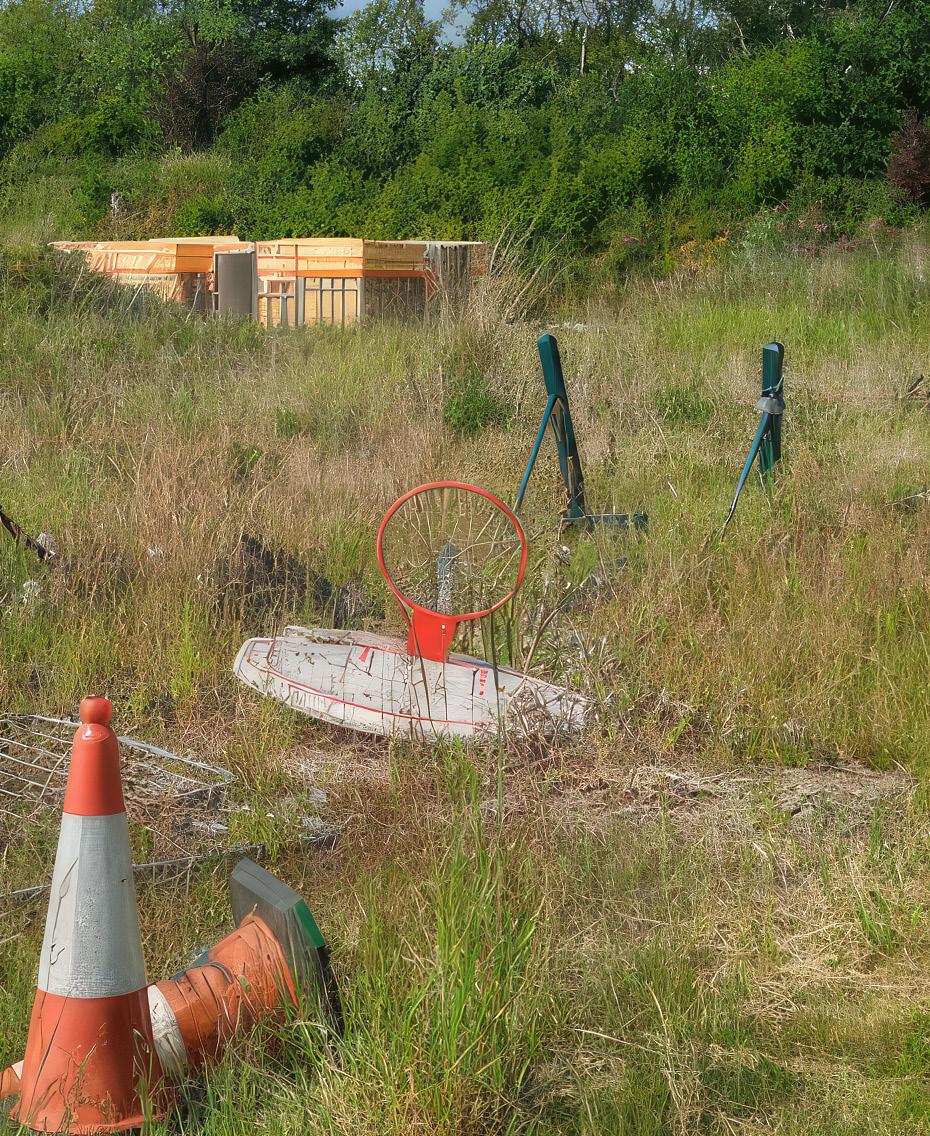
turbulent and rapidly evolving.
Many practitioners emphasised how BNG reduces living systems to point-scoring exercises. ‘You don’t want to take the joy and the creativity out of the process’, warned Pippa Henshall. ‘But number crunching does have a tendency to do that’.¹² The metric often downgrades progressive proposals that incorporate non-natives, with the most common casualty being layered herbaceous schemes replaced by blocks of ‘Other Neutral Grassland’, regardless of context.
Perhaps the most farreaching constraint is BNG’s 30-year management requirement. While aiming to guarantee long-term results, it’s pushed the industry towards safe, unambitious choices. Developers default to low-distinctiveness habitats that are easier to quantify and maintain. At worst, habitats are intentionally held back (e.g. keeping scrub from progressing to woodland) to meet compliance targets.
This idea of static habitats ignores natural succession and climate realities. ‘If we have a three-degree rise, will any of [those native habitats] survive?’, asked Ruth Holmes.¹² As the policy is currently structured, this consideration cannot be factored in since BNG calculates biodiversity goals in relation to the past, not projected climate futures. Although the policy includes an ‘adaptive management’ clause for climate contingencies, this concern should be a core feature, not an afterthought.
Despite its flaws, BNG is reshaping the landscape industry by redistributing power and responsibility across the development process. With planning consent now contingent on demonstrable biodiversity outcomes, BNG has elevated the roles of both landscape architects and ecologists. However, the current policy (and its habitat metrics) lacks the nuance required to reliably improve biodiversity in urban contexts. As the case studies
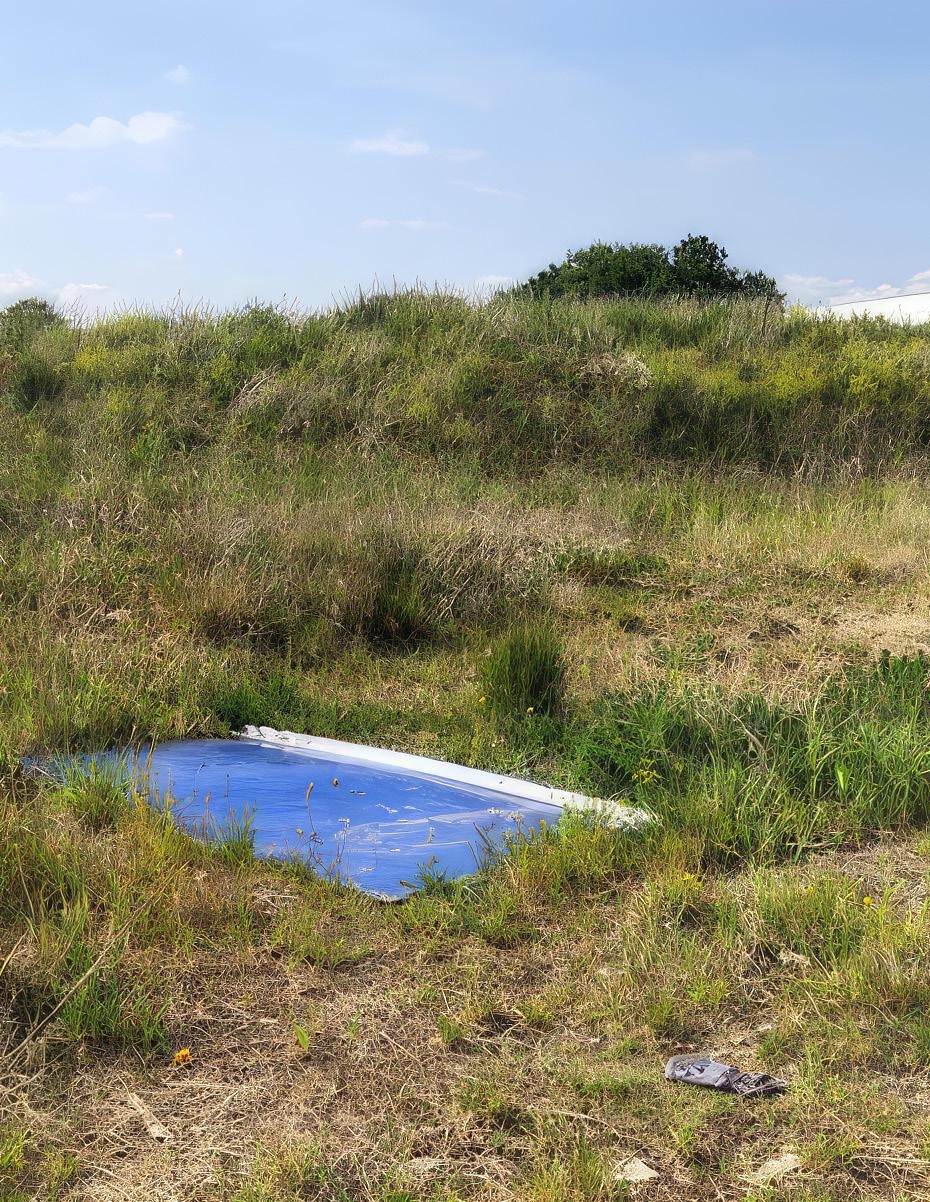
7
of Cator Park and the QEOP 2012 gardens demonstrate, there is no correlation between native species habitats and sustained biodiversity improvements. Moreover, the prioritisation of native species often comes at the cost of climate adaptability and design ambition. In short, biodiversity today does not have to come at the cost of biodiversity tomorrow.
The solution is not to abandon BNG, but to amend and expand its Statutory Biodiversity Metric. The metric should reward structurally diverse schemes, including species proven to support invertebrates, promote climate resilience and function as a community, regardless of origin. Professional judgement from landscape architects and ecologists provides adequate safeguards against invasive risk. With these adjustments, BNG could become a tool for future-proofing urban biodiversity, rather than a constraint on design innovation.
Charlotte Zaininger MLA is a landscape architect at Turkington Martin, with degrees from UCL Bartlett and McGill University. Her background spans biophilic design, urban residential landscape, and ecological planting.


Mark Loveless Nigel Dunnett RDI FLI FRSA

How can artificial intelligence (AI) be integrated into naturalistic planting design workflows? It is vital to ask such questions if landscape professionals are to remain informed in a rapidly evolving built environment industry.
Curious to understand how AI could address barriers to the practice and provision of naturalistic planting design, landscape architect Mark Loveless explored this alongside Professor Nigel Dunnett at the
University of Sheffield. Through the award-winning master’s dissertation, two specific applications of AI were investigated: large language models (LLMs) in plant selection, and diffusion models in visualising planting designs. The outputs of both were applied to a conceptual regeneration of Redcar Steelworks.
Naturalistic planting design and AI Naturalistic, designed plant communities are stylised
versions of naturally occurring plant communities. They utilise ecological principles to reflect the processes and patterns of those in the wild, ensuring compatibility between species and with site conditions. Such communities offer immense benefits for biodiversity, climate resilience and low-input management, and can also be maximised for aesthetic benefit.1,2
The design, implementation and management of such communities,
2
1
1 Visualisation of the above (Redcar Steelworks ‘dunescape’ project), created with Nano Banana.
Credit: Mark Loveless
2 Conceptual regeneration of Redcar Steelworks (masterplan).
Credit: Mark Loveless
3 Braiden et al. (2025) surveyed 722 North American landscape architects (ASLA and CSLA members) on their engagement with AI. See reference 4
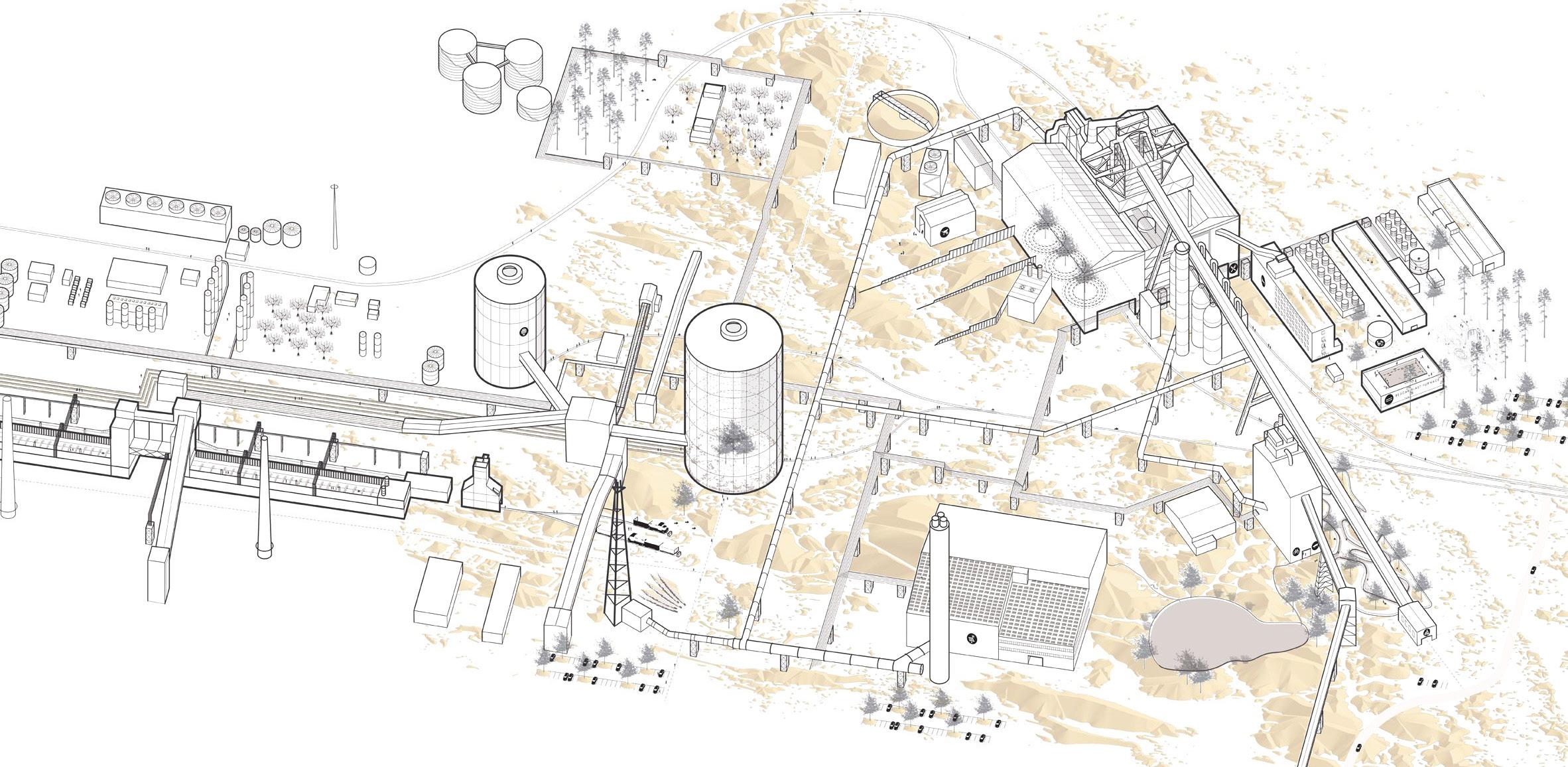
2
however, require significant ecological expertise, time and investment. Consequently, such planting is not commonplace in the public realm.
Randomised mixture planting was developed as a solution, improving access to naturalistic plantings through standardised, repeatable and therefore more affordable mixes.3
Recent developments in AI have the potential to further this ‘democratising’ trajectory; while the development of randomised mixture planting still requires advanced ecological expertise, AI could further lower barriers to the practice and provision of naturalistic planting design.
3 Oudolf, P. and Kingsbury, N. (2013) Planting: a new perspective. London; Timber Press.
4 Braiden, H., Chamberlain, B., George, B. H., and Fernberg, P. (2025) ‘AI in Practice: Professional Survey Findings from Landscape Architects in North America’, Journal of digital landscape architecture, 2025(10), pp. 626–633. Doi:10.14627/ 537754059.
5 https://www. architecture. com/knowledge-and-resources/resources-landing-page/ riba-ai-report-2025
Landscape professions & AI
Continuing developments in AI
mark a ‘technological paradigm shift’ for landscape professionals and the built environment industry.4 Both the potential benefits and concerns are extensive: the benefits to architectural professions centre on productivity and creativity, while the main risks relate to accuracy and reliance, copyright, confidentiality and personal data.5 Widely debated ethical concerns range from job security and reduced connection with design to the growing carbon cost of AI.
Proponents of AI advocate for a hybrid approach that augments human creativity rather than replacing it,6 integrating ‘nuanced generative AI functions with the irreplaceable qualities of human creativity, intuition, and insight’.7 They argue that critical adoption of AI is vital to prevent the proliferation of
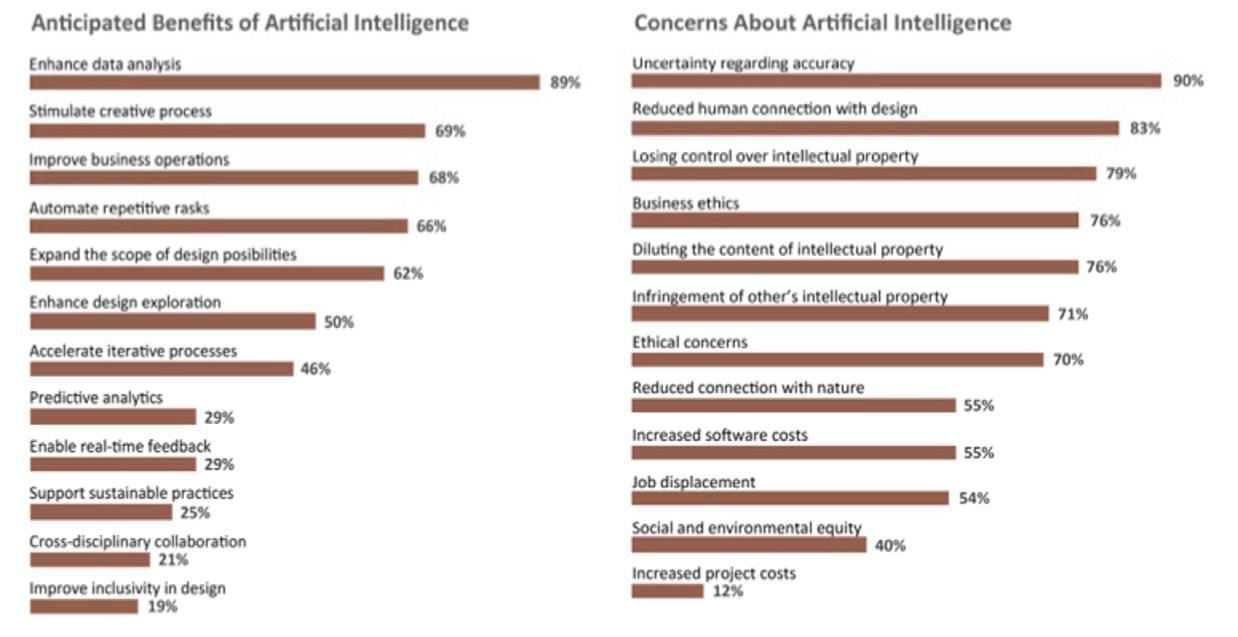
superficial landscape designs and ‘AI slop’,9 and that ignoring it in practice will become difficult and high-risk.
Despite this, AI adoption in landscape architecture is nascent.8 It is increasing but more so within multidisciplinary or architectural than landscape practices.5, 6 Landscape architects predominantly utilise AI in the early phases of design, but few employ it in planting design.5 Most rely on self-directed learning, highlighting a need to understand AI-integrated workflows in landscape professions.5
Potential applications of AI in naturalistic planting design workflows span all RIBA stages: from site analysis, bid-writing and brief development (stages 0-1), through concept visuals, plant selection and distribution (stages 2-3), to planting schedules, installation and management plans (stage 4), planting, seeding and earthworks (stage 5) and autonomous monitoring and management (stages 6-7).
While much of the literature regarding AI in landscape professions lacks application, the dissertation applied two of the most accessible and widely used AI models by landscape architects.5 A large language model (LLM), ChatGPT, was integrated into a plant selection workflow, and a diffusion model, Nano Banana, into a planting visualisation workflow.
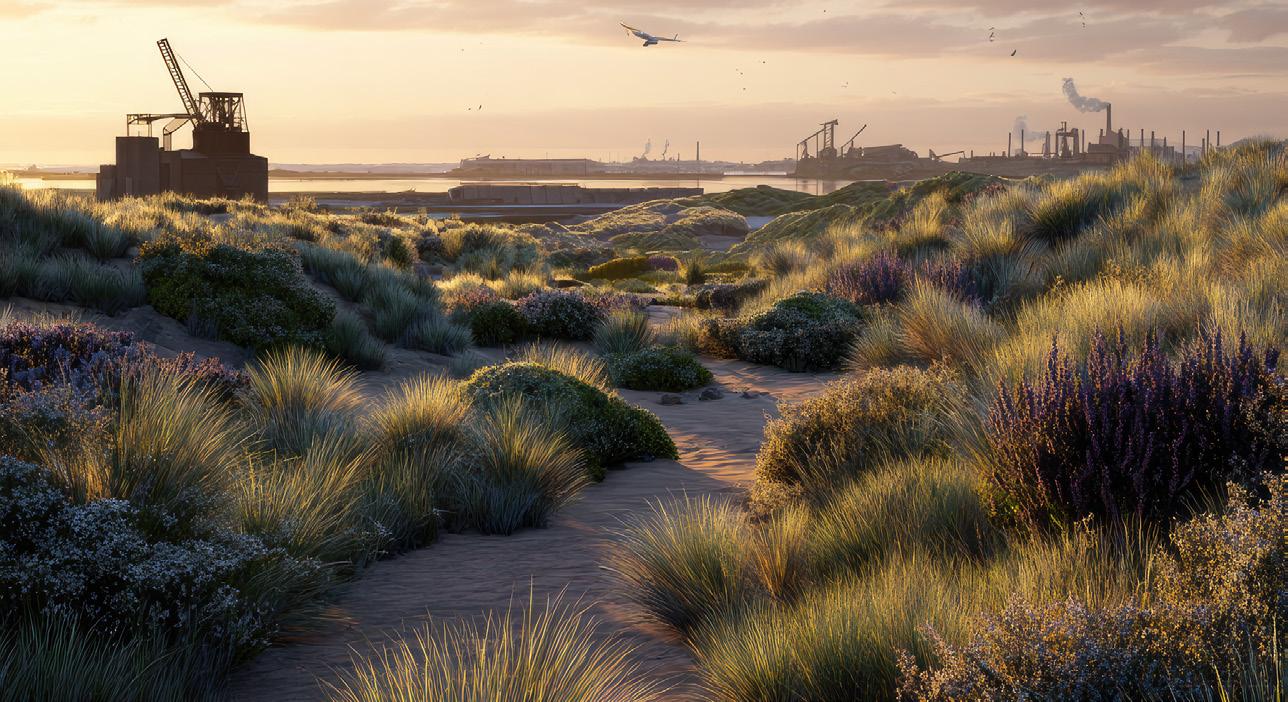
LLMs & plant selection
To assess the capability of OpenAI’s ChatGPT as a collaborative tool in selecting a naturalistic planting mixture, Loveless built a custom GPT by configuring the model with specific knowledge and instructions: a detailed naturalistic planting design workflow and select sources were embedded into its persistent instructions and retrieval system. The aim was that the GPT would consistently utilise and align its outputs to the uploaded principles, methodologies and resources, and efficiently utilise its ‘context window’. Following an iterative process that considered the environmental, ecological and social parameters of the Redcar Steelworks project, a biogeographically designed mix was generated. Referencing Great Lakes and Baltic-Scandinavian alvar plant communities, the mix featured species such as Castilleja coccinea, Koeleria macrantha, and Geum triflorum. It was organised by layers and accompanied by seasonal colour information and an implementation and management plan including seeding quantities.
As instructed, the custom GPT prioritised innovation, combining appropriate species both within and outside the uploaded material. The multi-prompt process was intuitive and fitting for the iterative nature of plant selection. However, careful prompt engineering proved critical to prevent the GPT from bypassing the ideation phase
without collaboration, known as ‘end-to-end’ operation.9 Other issues encountered included copyright, liability and limitations in the base model’s horticultural training data. Nevertheless, as corroborated by others, LLMs can be valuable tools in plant selection and, if utilised well, could enable smaller practices to design more and larger-scale plantings and in less familiar ecosystems.10
Diffusion models and planting visualisation
To explore how diffusion models can streamline the visualisation of naturalistic planting designs, the second explorative enquiry focused on Google’s Nano Banana (v1, 2 & Pro available within Gemini). Hybrid image-and-text prompts were used to edit images of Redcar Steelworks to visualise planting concepts. The workflow demonstrated how many issues associated with diffusion models just a year ago are being resolved as they rapidly develop. Such issues included limited control and species-specific understanding, and inconsistencies in materials, scales, geometry and lighting.11,12 Now, precise edits can be made through natural language or imageimage prompts, multiple images can be merged seamlessly and objects maintain consistency across multiple iterations.13 As a result, Nano Banana could follow complex instructions, for example responding to photographic language to
visualise the same scene in different lighting or from different angles.
A useful application of this was generating frames for use in image-to-video tools (e.g. Google’s Veo) to further enhance visual communication. Informed, iterative prompt engineering was again critical in optimising outputs, ensuring artistic intent, mitigating visual bias12 and compensating for limited species-specific and ecological understanding by using reference images. Other issues encountered included training data transparency and copyright, and lack of spatial reasoning; diffusion models lack the ability of other generative vision models, such as Generative Adversarial Networks, to generate planting plans.14 They do, however, have the potential to simplify the creation, rendering and editing of planting design visualisations, compressing workflows into natural language prompts and improving accessibility, efficiency and iterative potential.
Similarly to randomised mixture planting, LLMs and diffusion models have the potential to improve efficiency and reduce expertise barriers within plant selection and visualisation. Both can also enhance iterative design processes, strengthening creative exploration and client communication. However, AI applications must be adopted critically and in collaboration with human creativity, intuition and insight. Informed prompt engineering is therefore vital, as is
6 Er, B.E. and Bozkurt, M. (2025) ‘Artificial Intelligence and Learning from Nature in Landscape Architecture: An Innovative Approach that Shapes the Analysis and Design Process’, Journal of digital landscape architecture, 2025(10), pp. 394–402. Doi: 10.14627/537754038.
7 Shaikh, H. (2025) Image Generation: Artificial intelligence, creativity and design. London: RIBA Publishing.
8 Fernberg, P. and Chamberlain, B. (2023) ‘Artificial Intelligence in Landscape Architecture: A Literature Review’, Landscape journal, 42(1), pp. 13–35. Doi: 10.3368/ lj.42.1.13.
9 Schroth, O. and Maier, A. (2025) ‘Integrating Generative Artificial Intelligence into the Landscape Architecture Design Process’, Journal of digital landscape architecture, 2025(10), pp. 665–675. Doi: 10.14627/5377 54063.
10 George, B., Chamberlain, B., Fernberg, P., and Gardner, P. (2024) ‘Assessing the Value of Artificial Intelligence in Plant Selection’, Journal of digital landscape architecture, 2024(9), pp. 277–284. Doi: 10.14627/ 537752026.
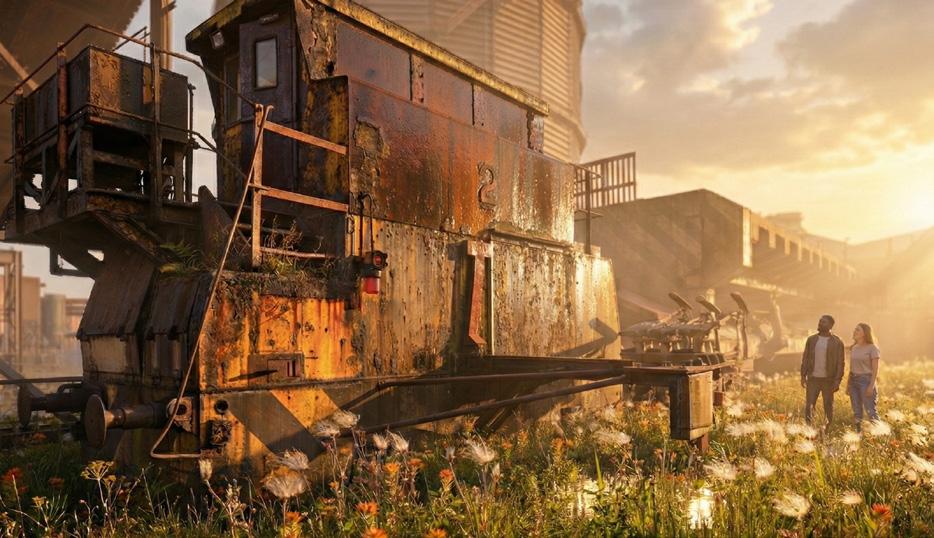
4 Created with Midjourney, concept visualisation of an industrial ‘dunescape’.
Credit: Mark Loveless
5 Redcar Steelworks alvar mix, an alternative to the original ‘dunescape’ concept explored using the custom GPT. Visualised with Nano Banana.
Credit: Mark Loveless
human validation, and AI must only be utilised when the output can be critically evaluated (the ‘competency principle’).15 The dynamism of AI development highlights a need for industry-wide strategies and policies. The subjects of ongoing training, evaluation and research should be transferable across such developments and focus on, for example, prompt engineering,
functioning, risk mitigation and fine-tuning. Applying and refining these specifically to designing naturalistic plant communities could address issues such as limitations in related training data.12 If done thoughtfully and safely, in a bestcase scenario, integrating AI into planting design workflows could increase the scale and frequency of beautiful, functional and
biodiverse naturalistic plantings. Mark Loveless is a landscape architect at Ares Landscape Architects.
Nigel Dunnett RDI, FLI, FRSA was Professor of Planting Design, Urban Horticulture, and Vegetation Technology at the University of Sheffield.
Sadly, Nigel Dunnett passed away before the publication of this article. We will have a special feature to commemorate his extraordinary life and legacy in the next edition of Landscape.
Best practices for LLMs:16
▪ Be specific and concise
▪ Provide context and objectives
▪ Iterate and refine
▪ Assign a role (eg ‘experienced landscape professional’)
11 Li, M. and Amoroso, N. (2023) ‘An Early Look at Applications for Artificial Intelligence Visualization Software in Landscape Architecture’, Journal of digital landscape architecture, 2023(8), pp. 543–553. Doi: 10.14627/ 537740057.
12 Ashari, A. and Shafaghati, R. (2025) ‘Customizable AI Tools for Landscape Architecture: Tailored Processes Compared with Traditional Rendering’, Journal of digital landscape architecture, 2025(10), p. 653. Doi: 10.14627/ 537754062.
13 https://cloud.google. com
14 Liu, X., Yang, N. and Tian, R. (2024) ‘Reinventing Planting Design in Landscape Architecture: A Generative AI Approach’, Journal of digital landscape architecture, 2024(9), pp. 202–209. Doi: 10.14627/ 537752020.
15 https://www.ribaj. com/intelligence/ ai-in-architectural-workflows-and-practice/
▪ Include (‘few-shot’) examples of inputs with desired outputs
▪ Utilise ‘chain of thought’ prompts to encourage
Common AI terms
Generative AI: a type of deep learning that can create new content, including text, imagery, audio, 3D models and video.
Agentic AI: a subset of generative AI, Agentic AI is a system made up of AI ‘agents’ that can act
Loveless’ personal reflections
The exponential development of AI is alarming. Predicted this decade, artificial general intelligence would ‘sense, think, and act’ like humans, while artificial super-intelligence (ASI) would surpass us entirely,16 posing severe societal and existential threats. Conversely, safely aligned ASI could solve humanity’s
explanation of reasoning
Specific to diffusion models, use prompts to control:16
▪ Photography (referencing aperture, shutter speed, camera angle, lens type)
▪ Lighting (eg golden hour, ray-tracing, global illumination, ambient occlusion)
▪ Style and effects (e.g. ‘photorealistic, volumetric fog’)
▪ Planting (utilising image references and prompts for vegetation style and maturity, seasonality and organic imperfections in distribution and details)
▪ The ‘entourage’ (eg ‘silhouetted scale figures’)
autonomously towards a goal.
Diffusion models: systems that iteratively refine random visual ‘noise’ into coherent images, guided by prompts and learned patterns in data.
Large language models (LLMs): predictively generate text based on probabilities learned from massive datasets. Text is converted into numbers called ‘tokens’. The number of tokens that a model can process at once is its ‘context window’.
most complex challenges. My reflections are therefore mixed: I fear job displacement and recognise the crucial importance of human stewardship in landscapes and communities. I am simultaneously cautiously optimistic that democratising botanical knowledge through AI could empower such stewardship,
although over-reliance is a conceivable risk. Designing effective workflows and prompts that enhanced innovation and ideation was satisfying, although collaborating with AI somewhat sullied my sense of authorship, leading to introspection about my value as human designer.




A look back at the second event in our national tour connecting people, place and nature
The Landscape Institute’s National Housing and Regeneration Conference in Edinburgh brought together landscape professionals, policymakers, developers and specialists from across the built and natural environment to explore how a landscape-led approach
Meeting, networking and discussing with professionals who may be from different disciplines, but who have the same goals.
can help deliver the homes the UK needs while creating places that are resilient, sustainable and people-focused. As part of the Landscape Institute’s series of National Housing Conferences held across the country, the event provided an important platform to examine how housing growth can be shaped by the principles of good landscape planning and design. With housing delivery continuing to be a national priority, the conference focused on how landscape professionals can play a central role in ensuring that new development responds positively to environmental challenges, community needs and long-term stewardship. Discussions throughout the day emphasised that landscape should not be viewed as an optional enhancement to housing projects, but as essential infrastructure that underpins successful placemaking.


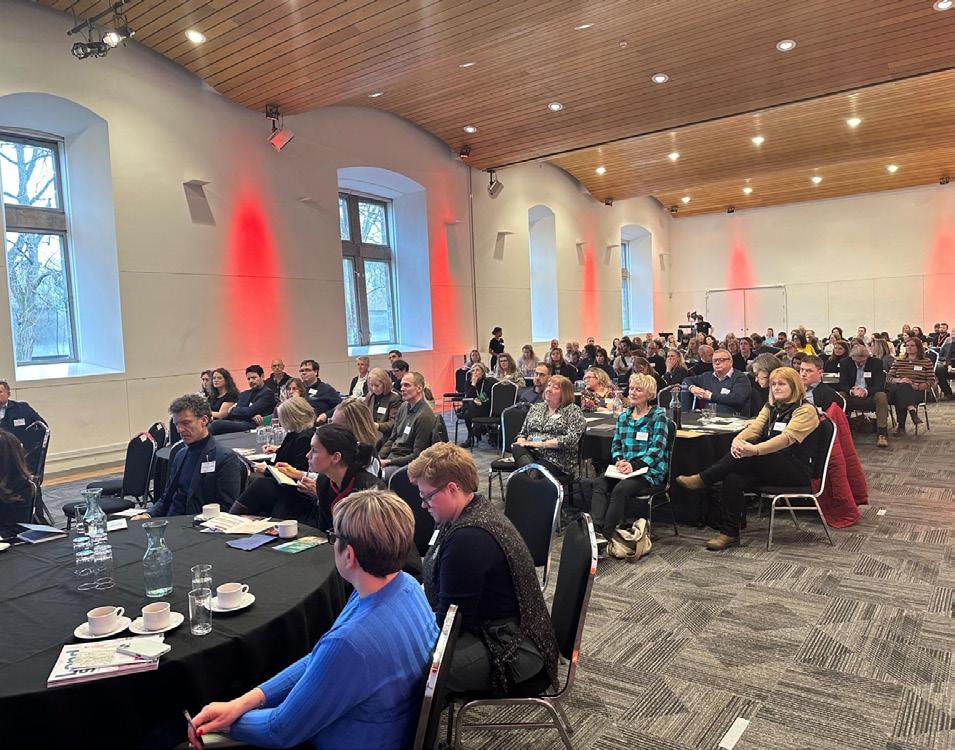
1 LI President, Carolin Göhler FLI, with conference keynote speaker Ivan McKee, Minister for Public Finance in the Scottish Government
© Neelam Sheemar
2 Attendees gaining insights into the landscape-led approach to development.
© Neelam Sheemar
3 LI President, Carolin Göhler FLI, opens the conference
© Neelam Sheemar
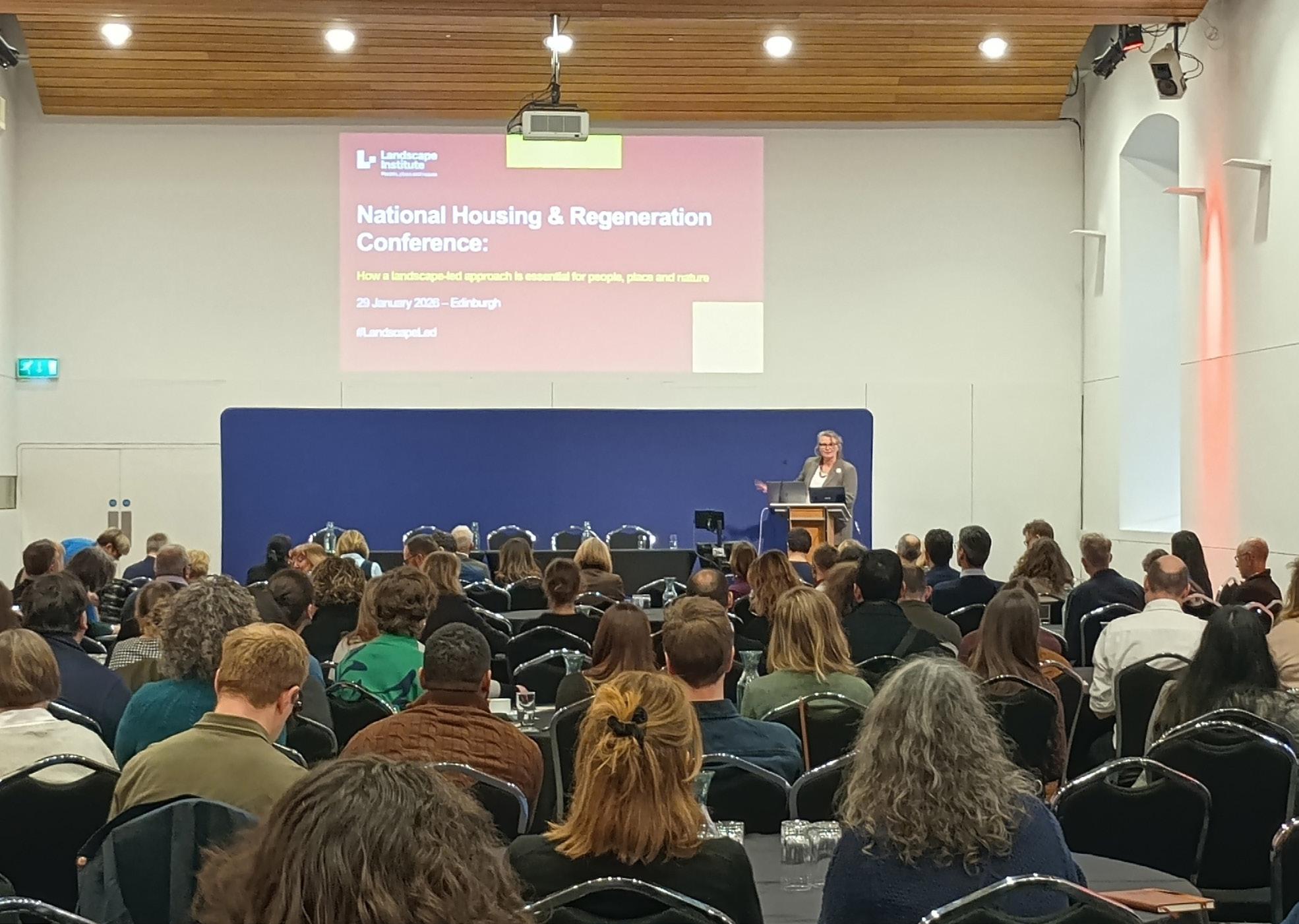
Speakers highlighted the opportunity for landscape-led thinking to help address some of the most pressing issues facing housing delivery today. From climate resilience and biodiversity loss to access to green space and healthy communities, landscape professionals bring the skills and perspective needed to shape developments that work for people, place and nature. By integrating landscape expertise from the earliest stages of planning and design, housing developments can deliver stronger environmental outcomes while also creating more attractive and liveable communities.
Echoing the previous conference in Birmingham, a central theme throughout the conference was the importance of collaboration across disciplines. Delivering high-quality housing requires close partnerships between all built
environment professions, developers and policymakers. Delegates heard how early collaboration can help ensure landscape considerations are embedded into masterplanning and site design, leading to more coherent and sustainable development.
Delegates were encouraged to actively contribute to discussions throughout the day, sharing their perspectives and experiences from projects across the country. The exchange of ideas highlighted the diversity of approaches being taken to integrate landscape into housing delivery, while reinforcing the shared ambition to raise standards across the sector.
As the UK continues to address the challenge of delivering new housing at scale, the discussions in Edinburgh reinforced the importance of embedding landscape at the heart of development. The Landscape Institute would like to
Good to catch up with colleagues and discuss the state of the market and interesting to hear about projects other people are working on.
thank all speakers, chairs, sponsors and partners who contributed their expertise and insight to the conference. Their contributions helped create a programme that demonstrated the value of landscape-led thinking in shaping the homes and communities of the future.

Tracy Whitfield Technical & Research Manager
Your role at the LI I lead the development of technical guidance, research and briefing papers that support landscape practice and resources for the LI. I collaborate with experts and crosssector partners to strengthen knowledge, standards and professional practice, providing tools to address technical challenges, environmental issues and public wellbeing, and representing the LI externally.
Andrew Rylah Policy & Public Affairs Manager –England & Wales
Your role at the LI I support the development of landscape policy and advocate for its recognition as critical infrastructure. I work to influence decision-makers in ways that benefit people, place, and nature. Managing diverse topics – from biodiversity to water – I collaborate
How you work with members
I oversee the Knowledge & Practice Committee, working with members to provide strategic insight and influence on the development of materials, tools and technologies that advance landscape practice. I also manage specialist groups of members and external experts to deliver best-practice guidance, information and tools, liaising with multiple stakeholders and LI committees.
Your career experience
I began my career in finance, managing operations and compliance for national finance companies and establishing procedures and standards. I later moved into education, using these skills to run specialist groups for children with complex needs. I then followed my passion for nature, plants and landscape, developing
across teams to deliver outputs that also support the environment and public well-being.
How you work with members
I provide secretariat support for the Policy & Public Affairs Committee and other groups. I work extensively with members and partners, facilitating expert input into authoritative consultation responses and policy briefings. This requires managing stakeholder relationships and navigating deadlines to ensure timely, technically robust outputs that reflect our members’ voices.
Your career experience
I started work as a European Tour Director and English Language teacher using my Modern
my technical interests in landscape installation and design.
Your favourite landscape/ interests
I’m fascinated by the intersection of art, science, history and plants, which perhaps explains my eclectic career. I previously set up a volunteer art group for women and families experiencing depression, and now spend my time learning, exploring and walking in all weathers. My favourite landscapes are often found in cities where I grew up, observing the tiny organisms and plants creating miniature habitats in the smallest cracks
Languages degree and PGCE. I then moved into business and project management, completing a Masters in Business Administration in the process. Later on, I transitioned into policy management within local government and membership organisations.
My favourite landscape
The dramatic Machu Picchu scenery, perfectly landscaped for Inca societal needs, is certainly high on the list – as is the rugged, natural beauty of Norwegian mountains and fjords. I’ve always loved travel, learning about and experiencing other cultures and histories – and have a long bucket list of planned future destinations!
The Landscape Institute (LI) has launched the Landscape Institute Awards 2026. Open to nonmembers and members across the built and natural environment, the Awards showcase the very best in landscape planning, design, management and research in the UK and internationally.
One of the industry’s most anticipated annual celebrations, the Landscape Institute Awards recognise the powerful connection between people, place and nature.
From tackling climate challenges to supporting nature recovery and improving health and wellbeing, the shortlisted projects demonstrate how landscape-led thinking can create better places for people everywhere.
The awards ceremony will take place on Friday, 13 November 2026 at The Brewery, one of London’s most distinctive venues in the heart
of the city. This beautifully restored 18th-century building will form the backdrop to an exciting evening of celebration, recognition and networking.
Tickets are now available for what promises to be a memorable night. Book soon to get your earlybird discount on top of further discounts for members and anyone working at an LI Registered Practice.
Join your peers, decisionmakers and leading voices from across the natural and built environment, in celebrating the incredible work being done in the sector.
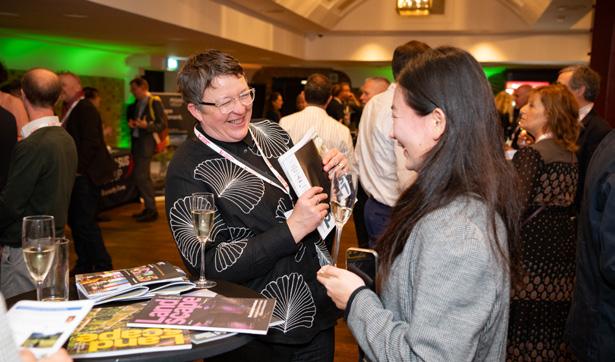


THE JOBS BOARD FOR THE LANDSCAPE PROFESSION
The LI Jobs Board is the best way to get your landscape role or project opportunity in front of a wide audience of qualified applicants.
We have a range of advertising packages available to suit your requirements.
• Listed on our job site, visited by over 2,000 professionals each month.
• Tweeted from LI’s @talklandscape account on X (Twitter) with 34,000 followers.
• Sent in job seeker alerts for relevant keywords.
• Same as above plus…
• Pride of place at the top of the job listings.
• Shared in LI newsletter read by over 6,000 landscape professionals.