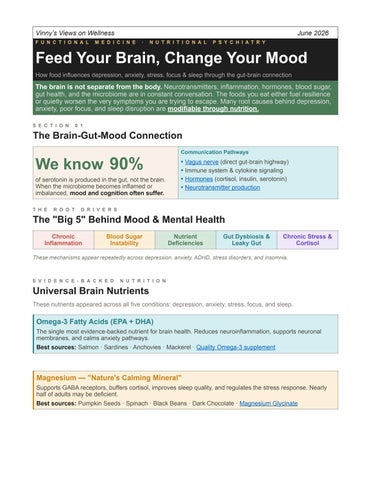
How food influences depression, anxiety, stress, focus & sleep through the gut-brain connection
The brain is not separate from the body. Neurotransmitters, inflammation, hormones, blood sugar, gut health, and the microbiome are in constant conversation. The foods you eat either fuel resilience or quietly worsen the very symptoms you are trying to escape. Many root causes behind depression, anxiety, poor focus, and sleep disruption are modifiable through nutrition.
SECTION 01
The Brain-Gut-Mood Connection
We know 90%
of serotonin is produced in the gut, not the brain. When the microbiome becomes inflamed or imbalanced, mood and cognition often suffer.
THE
ROOT
DRIVERS
Communication Pathways
• Vagus nerve (direct gut-brain highway)
• Immune system & cytokine signaling
• Hormones (cortisol, insulin, serotonin)
• Neurotransmitter production
The "Big 5" Behind Mood & Mental Health
Chronic Inflammation
Blood Sugar Instability Nutrient Deficiencies
Gut Dysbiosis & Leaky Gut
These mechanisms appear repeatedly across depression, anxiety, ADHD, stress disorders, and insomnia.
EVIDENCE-BACKED NUTRITION
Universal Brain Nutrients
These nutrients appeared across all five conditions: depression, anxiety, stress, focus, and sleep.
Omega-3 Fatty Acids (EPA + DHA)
Best sources: Salmon Sardines Anchovies Mackerel Quality Omega-3 supplement
Chronic Stress & Cortisol
The single most evidence-backed nutrient for brain health. Reduces neuroinflammation, supports neuronal membranes, and calms anxiety pathways.
Magnesium — "Nature's Calming Mineral"
Supports GABA receptors, buffers cortisol, improves sleep quality, and regulates the stress response. Nearly half of adults may be deficient.
Best sources: Pumpkin Seeds Spinach Black Beans Dark Chocolate Magnesium Glycinate Vinny’s
Vitamin D3 with K2 — The Neurosteroid
Acts more like a hormone than a vitamin. Low levels linked to depression, anxiety, poor sleep, low motivation, and immune dysfunction. Because this is a fat-soluble vitamin, please test your levels before adding into your supplement routine.
B Vitamins (B6, Folate, B12)
Essential for producing serotonin, dopamine, and melatonin. Support healthy methylation pathways are critical for mood and cognition. Many people unknowingly have a genetic mutation called MTHFR and this could prevent the breakdown of folate. Try a quality methylated folate to ensure you are getting adequate amounts without the genetic testing.
Best sources: Eggs Liver Leafy Greens Legumes Methylated Folate
THERAPEUTIC FOODS
The Most Powerful Brain Foods
Fatty Fish
Omega-3s, Vitamin D, selenium, B12: the most therapeutic food for the brain.
WHAT TO LIMIT
Eggs
Choline, DHA, B vitamins, tryptophan, tyrosine: a complete neurotransmitter builder.
Fermented Foods
Kefir, kimchi, sauerkraut support the microbiome and regulate serotonin & GABA.
Nutrient-depleting, inflammatory, and damaging to the microbiome that regulates mood.
Excess Alcohol
Disrupts REM sleep, depletes magnesium and B vitamins, worsens anxiety rebound.
Blueberries
Anthocyanins reduce cortisol, oxidative stress, and support dopamine signaling. Green Tea L-theanine, low caffeine supporting calm focus. Reduces anxiety and sharpens attention.
Skipping Meals
A leading overlooked cause of anxiety, brain fog, and stress hormone surges.
Nutritional Psychiatry Functional Medicine Guide
Excess Caffeine
Elevates cortisol, depletes magnesium, worsens anxiety and impairs sleep quality.
5 Daily Rules for Better Mental Health
Simple, evidence-backed habits that support mood, focus, stress resilience, and sleep.
The Five Foundational Daily Habits
Stabilize Blood Sugar
1
Include protein + healthy fat + fiber at every meal. Blood sugar swings are one of the fastest ways to destabilize mood and energy throughout the day.
Eat Omega-3 Rich Foods Regularly
2
3
Aim for fatty fish several times per week. Discuss omega-3 supplementation with your provider if dietary intake is low.
Eat 30+ Different Plant Foods Weekly
Microbiome diversity matters. Variety feeds beneficial gut bacteria that directly influence mood, immunity, and neurotransmitter production. Sprinkle microgreens on salads or other meals for an easy way to add variety each meal!
Prioritize Protein at Breakfast
4
5
Skipping protein in the morning can starve dopamine production and worsen cravings, focus, and mood stability later in the day. Try a quality protein shake for a quick morning breakfast!
Test, Don't Guess — Know Your Levels
Functional medicine looks deeper at nutrient status. Key labs to consider: Vitamin D · Ferritin/Iron · B12 & Folate Omega-3 Index Magnesium Zinc
BIGGER PICTURE
Food as Information
Every meal sends signals to your hormones, brain chemistry, immune system, gut bacteria, and nervous system. Small daily choices compound over time.
- Disrupt sleep architecture and deplete key minerals
- Damage gut lining and impair serotonin production
- Create nutrient deficiencies that block brain chemistry
Important: Functional medicine does not claim food replaces all medical or mental health care. But it does recognize: the brain is profoundly influenced by what we eat.
QUICK REFERENCE
Simple Functional Medicine Takeaways
✓ Prioritize protein at breakfast to fuel dopamine and focus
✓ Build every meal around whole, minimally processed foods
✓ Reduce ultra-processed foods and refined sugar daily
✓ Support the microbiome with 30+ plant foods per week
✓ Don't underestimate sleep and stress as nutritional issues
✓ Test key nutrient levels — don't assume they're adequate
✓ Think "feed the brain," not just "fight symptoms"
✓ Every meal is an opportunity to support your mental health