The opinions expressed in this publication are not necessarily those of the editor nor any other organisation associated with this publication. No liability can be accepted for any inaccuracies or omissions.
Uganda Marketing Office Plot No. 688, Kampala Industrial Business Park, Namanve Mukono, Uganda
Tel: +256 (0) 417425600, 707 280630
Email: salesug@madahotels.com www.madahotels.com
The Mada story continues
Welcome to the 16th edition of Reflections
On 30 April 2024, I boarded a flight from Nairobi to Marrakesh via Paris. While transiting through Charles de Gaulle Airport, I received an urgent message asking me to call the office immediately. The news was devastating – the Talek River in the Masai Mara had burst its banks, and much of Fig Tree Camp had been swept away by flooding.
I changed my ticket straight away and was back on the same flight to Nairobi, travelling on to the Mara early the following morning.
Despite the severity of the situation, our team had responded with remarkable professionalism. As river levels rose to concerning heights, they ensured that all guests and their belongings were moved to safe, higher ground well in advance. By the time the Talek broke its banks, every guest was secure. The river claimed a large part of the camp, but most importantly, everyone was safe and unharmed.
It took several weeks to fully absorb the extent of the damage. Once we had done so, we sat together as a team and made a clear resolve. We could not change what had happened, but we had one option – to rebuild Fig Tree Camp stronger and better than before.
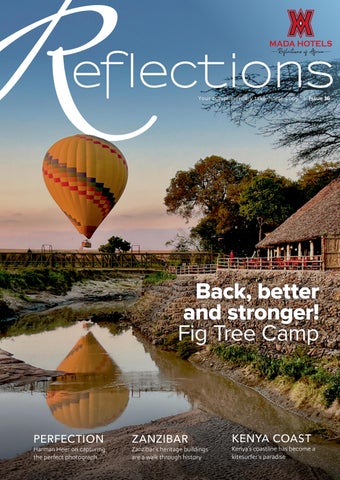
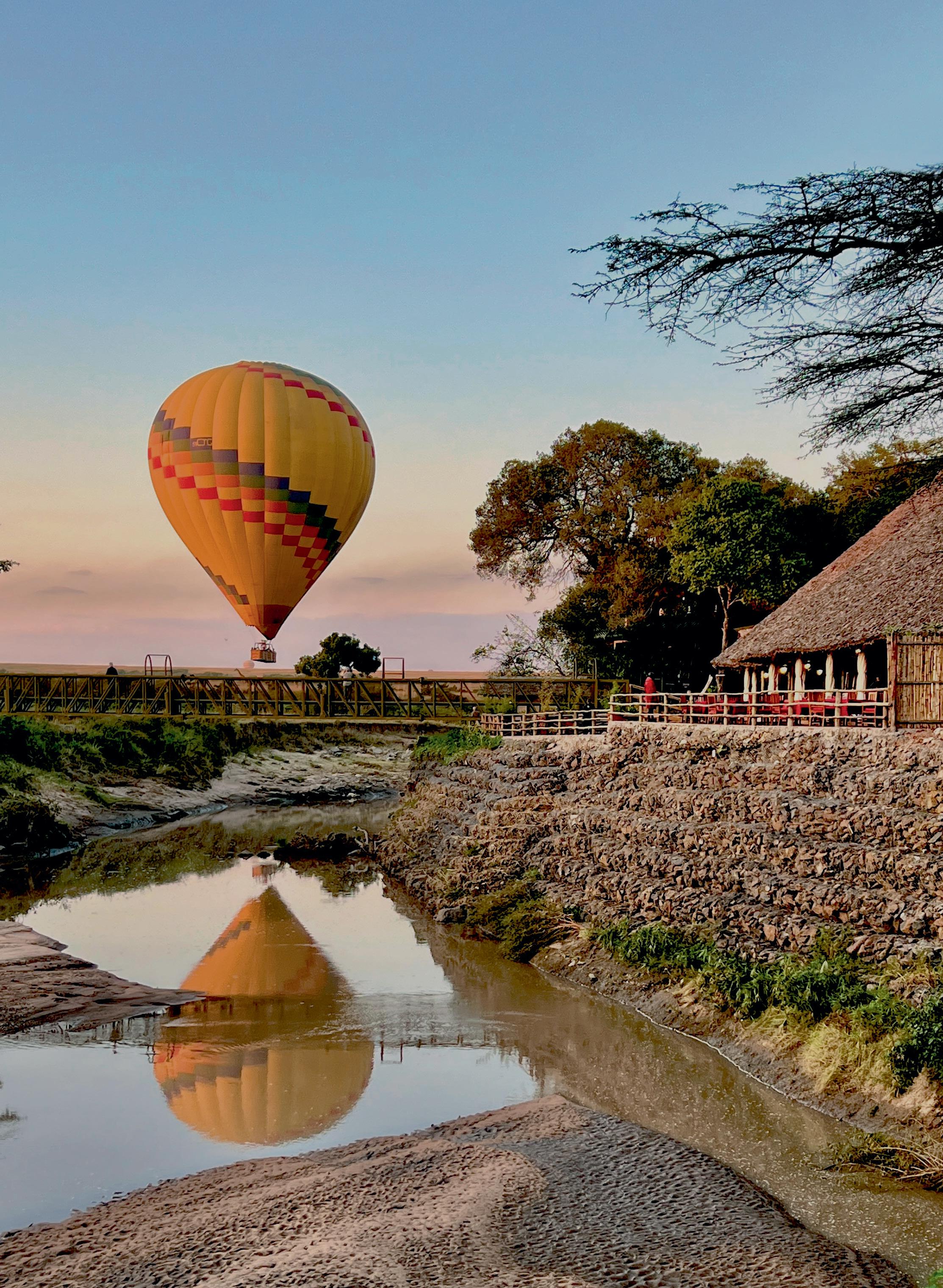
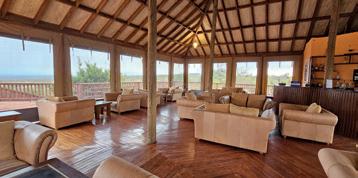
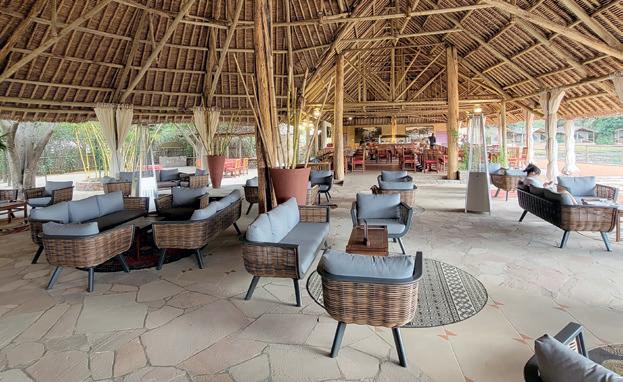
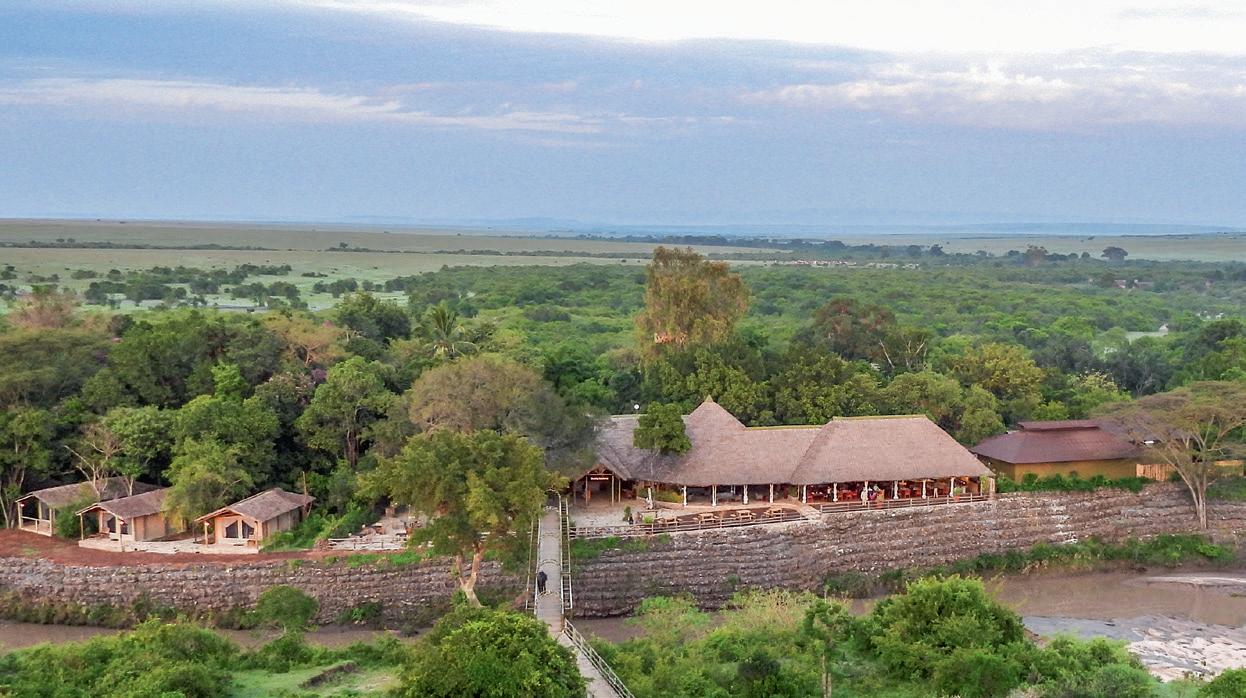
What followed was nothing short of extraordinary. Led by our camp manager, Mr Kerore, the team committed themselves to a 15-month restoration and improvement project. By August 2025, the work was complete, and the results exceeded all expectations. Fig Tree Camp returned in full splendour, now enhanced with a new bridge, new tents, and a modern restaurant and coffee lounge offering incredible views over the Masai Mara.
The response from our guests has affirmed these improvements, and we proudly acknowledge that Fig Tree Camp remains a leading luxury safari camp in the Mara. This remarkable journey of recovery makes it a fitting cover story for this year’s Reflections magazine.
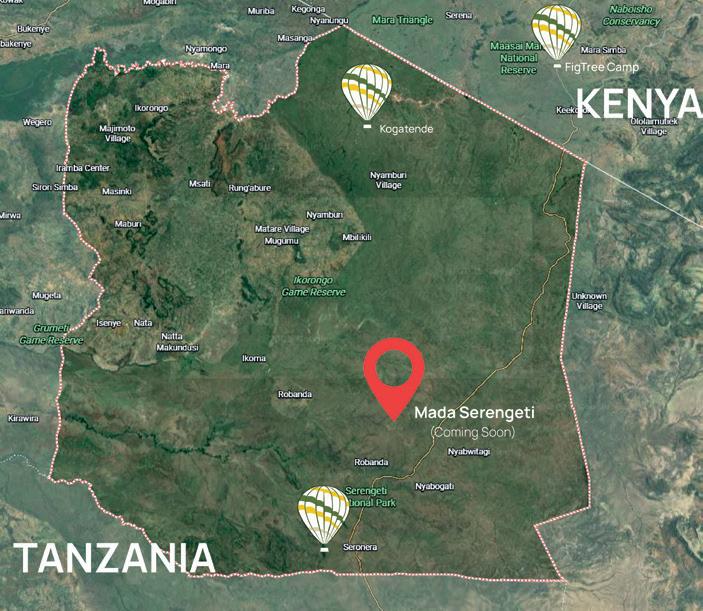
Across our portfolio, the Mada Collection continues to grow and evolve. We have broken ground on a new luxury camp in the Serengeti, with construction planned for completion within 18 months. The site overlooks the vast plains and is already renowned for sightings of large lion prides. Following Elephant Rock in Tarangire, this will be our second safari camp in Tanzania.
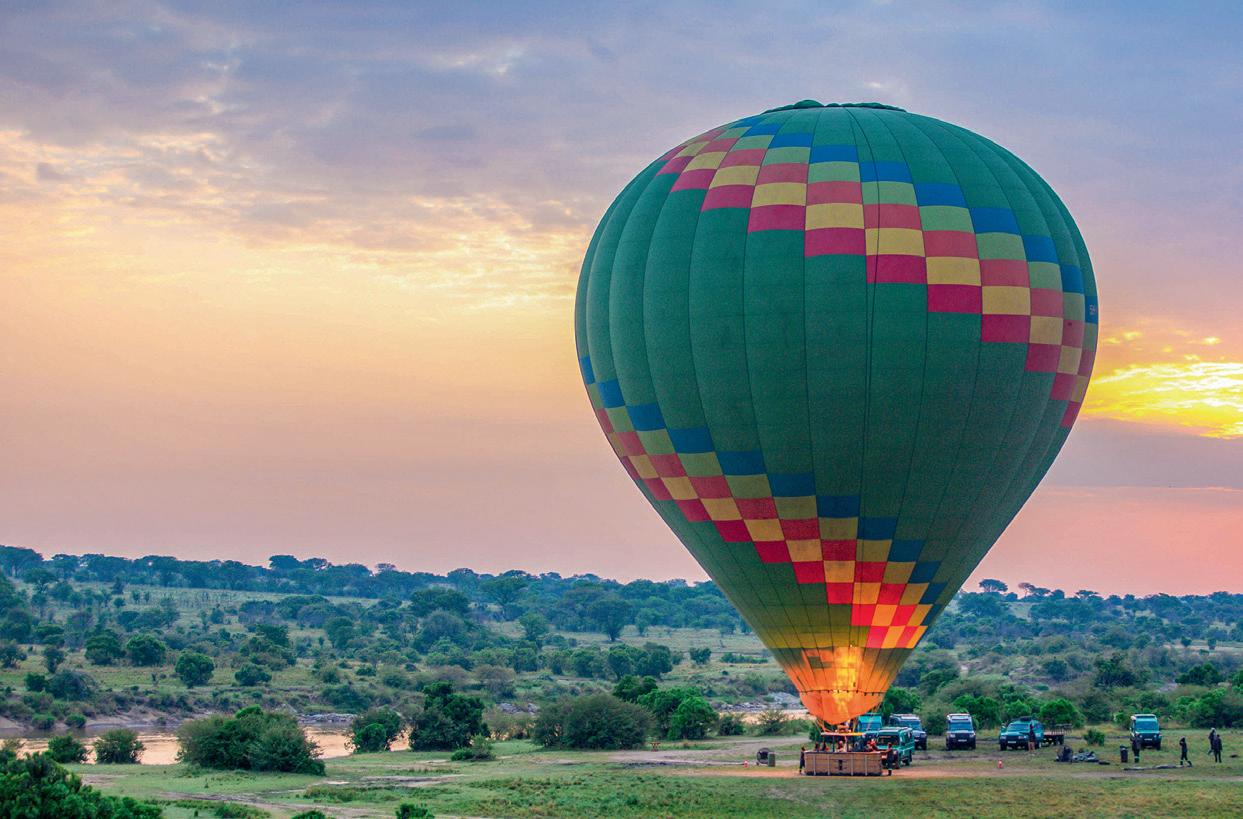
Adventures Aloft, our ballooning company, is now successfully operating from six locations across East Africa. We are actively exploring additional bases in the Serengeti and have committed to expanding our fleet further in 2026.
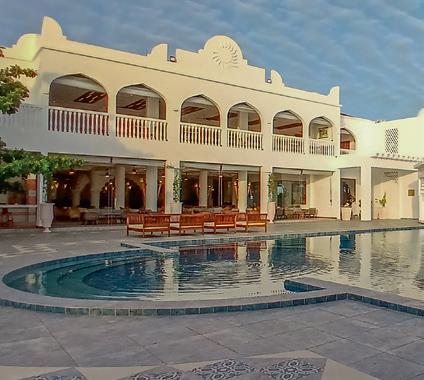
Shukran Palace, Zanzibar, has enjoyed an exceptional start to operations. In a short time, it has hosted grand weddings, international conferences, and guests from around the world. We take great pride in having established Shukran as the island’s only truly luxury palace-style property.
A new feature in this issue is the Waterfront Collection, showcasing several of our properties located along seas, rivers, springs, and water features. Through a pictorial journey, we celebrate the unique beauty of these settings.
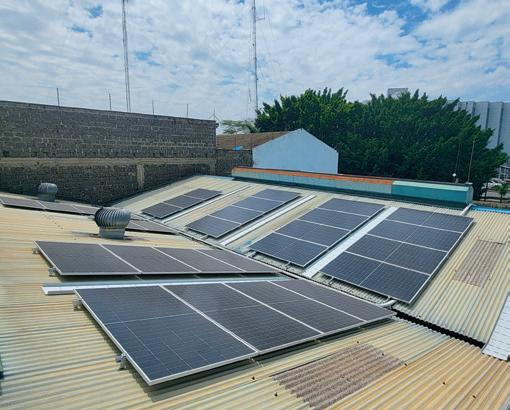
As part of our commitment to sustainability, we have begun investing more significantly in clean energy. Our head office in Nairobi is already powered by expanded solar installations, with plans to roll this out across other properties in 2026.
With a footprint spanning Kenya, Uganda, and Tanzania, Mada Hotels has grown into a leading East African hospitality brand. I have always believed our greatest strengths lie in two things: exceptional locations and a dedicated team that genuinely believes in delivering outstanding service. Together, these strengths have enabled us to consistently offer memorable guest experiences and to grow stronger each year.
Thank you for your continued support of Mada Hotels, and I hope you enjoy this edition of Reflections.
Tinu Mhajan Chief Executive, Mada Group
Adventures Aloft expands Serengeti operations
Due to high demand, Adventures Aloft is expanding its Serengeti operations by increasing its fleet to nine 16-seater hot-air balloons.
Adventures Aloft currently operates from launch sites in Ndutu (Ngorongoro), central Serengeti (Seronera), and northern Serengeti (Kogatende).
Fresh water for Talek schools
Mada Hotels is proud to support education and community well-being by providing clean, safe drinking water to Talek Boys and Talek Girls Schools in Narok County. Through the donation of a reverse osmosis water purification system, students now have daily access to fresh, purified water.
This initiative improves students’ health and enhances the learning environment by reducing the risk of waterborne illnesses. More than a single contribution, it reflects Mada Hotels’ long-term commitment to making a meaningful difference in the communities it serves.
At Mada Hotels, hospitality goes beyond service – it is about caring for people and helping to build a better future together.
Mada goes off grid
The Mada Group has a strong commitment to sustainability, with a clear strategy to reduce its environmental footprint across all operations and its energy sourcing. In 2025, the central reservations office went off grid, with solar panels now powering all office energy requirements.
This initiative continues in 2026 with the rollout of solar power across Mada’s Kilifi properties, followed by further implementation at additional properties in 2027 and 2028.
Mada Serengeti
Mada Serengeti is a contemporary luxury safari camp located approximately 49.6 kilometres north of Seronera, in the heart of the Serengeti ecosystem.
The camp will feature 25 luxury tents, offering guests an intimate yet refined safari experience. Facilities will
New rooms at Kilima Safari Camp
Kilima Safari Camp continues to be one of the leading properties for visitors to Amboseli National Park.
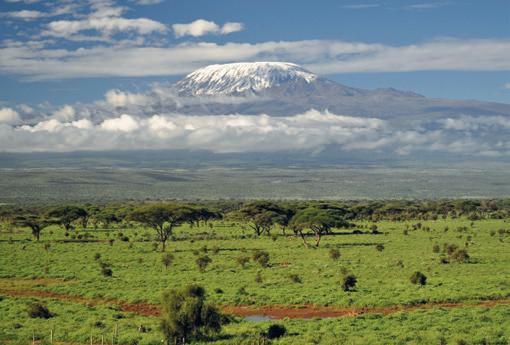
In 2026, the camp will introduce 20 new guest rooms, further enhancing its accommodation offerings. All rooms will feature Kilimanjaro-facing views, overlooking the iconic waterhole located in front of Kilima Safari Camp.
Each guest room will be approximately 65 square metres and will include a private balcony, offering uninterrupted views.
include a dedicated spa and gourmet dining, designed to blend comfort with the surrounding wilderness.
Constructed in a modern luxury safari style, Mada Serengeti is scheduled for completion by September 2027.
Shukran hosts a prestigious global event
Shukran Palace in Zanzibar proudly hosted the Royal Civility Hall of Fame Induction Service, a distinguished event honouring global leaders who exemplify dignity and honour. The inaugural major induction was held in Zanzibar 24-27 October 2025.
The ceremony recognised Royal House delegates, nobles, cultural historians, and spiritual leaders. Guests of honour included HRH Princess Emmily Nguyen the great granddaughter of Emperor Gia Long Prince Nguyen Anh and Dr Shannon Cox. The 2025 inductees were Omar Jumanne Bakari and HRE Duke Patrick Businge.
The art of the wait Harman Heer on capturing the perfect shot
HARMAN HEER
ELEVEN YEARS AGO, HARMAN HEER PICKED UP HIS MOTHER’S CANON CAMERA ON A FAMILY SAFARI TO THE MARA AND FOUND HIS CALLING. TODAY, HE’S KNOWN FOR HIS INTIMATE PORTRAITS OF AFRICAN WILDLIFE – IMAGES THAT DEMAND PATIENCE, SOMETIMES WAITING EIGHT HOURS FOR A SINGLE SHOT. WE SAT DOWN WITH HIM TO TALK ABOUT ART, ANIMALS, AND WHAT IT REALLY TAKES TO CAPTURE THE PERFECT MOMENT.
You grew up in Nairobi – what role did those early safaris play in your life?
I grew up with parents who loved spending time on safari. We would go on short weekend trips to the Masai Mara. Over time, I grew a strong love and passion for Kenya’s wildlife and safaris. It was 11 years ago in the Mara when I picked up my mum’s Canon 450D and decided I was to be the “photographer” of the safari. That was the day I discovered my calling, and since then I always have my camera with me when I’m on safari.
When did this shift from passion to profession?
It became more than a hobby in 2023 when I co-founded Mzuri Safaris. I co-hosted and co-guided my first photographic safari and that’s when I also started working towards monetising my art. I’m grateful that I now get to share my
craft with like-minded people and teach them photography in the field.
What is it about wildlife specifically that keeps drawing you back?
Growing up on safari is what first drew me to wildlife as my main subject. Over the years, my love for nature and time spent in the bush has only deepened that connection. I’m especially drawn to wildlife photography because it is unscripted, raw, and real. You can’t force a moment, rather you have to wait for it to unfold, and sometimes that means waiting months, or even years, for the image you’ve envisioned.
How would you describe the way you approach your work now?
Artistic and intimate. I find myself increasingly focused on the aesthetics –composition, light, and colour – rather than the technicalities. That may be because the
technical aspects have become so familiar that I no longer need to think about them consciously. I also find myself more focused on portraits, shooting from an eye-level perspective and with direct eye contact to create a strong level of intimacy with the viewer.
Walk us through a typical day. 5:30am wake up. 6:00am depart for morning drive. 11:00am return to camp for rest and lunch. 3:30pm depart for afternoon game drive. 7:00pm return to camp for dinner. 9:00pm downloading and editing. 11:00pm sleep.
Patience seems central to what you do. How much does it matter?
I would argue that patience is the most important value when it comes to wildlife photography. I often spend hours waiting for the “perfect” shot, the longest probably
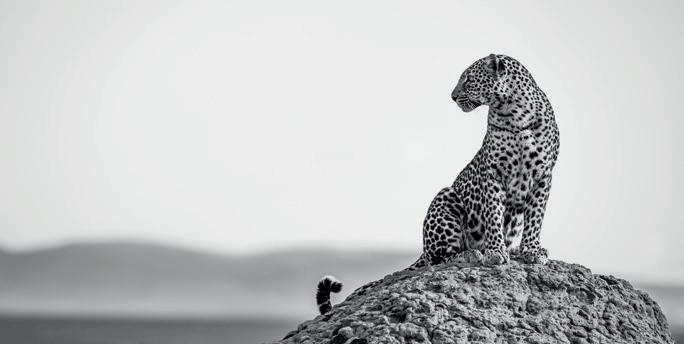
being approximately eight hours at the base of a balanite tree as we waited for a leopardess to descend. The main challenge I usually face when having to wait for a shot is the thought that the animal might not actually do what we are anticipating. Another challenge is the thought that we will lose light before the animal does what we anticipate it to do. These voices in my head make staying motivated difficult, but once I make my mind up to sit and wait there is no giving up. More often than not, I have been rewarded for my patience, and I think that is what keeps me waiting.
Your time at Kilima Camp in Amboseli –how did that shape your experience?
My time at Kilima Camp was perfect because of the camp’s location, situated just outside Kimana Gate. This allowed us to be the first vehicle inside the park every morning and enhance our chances of having exclusive sightings.
How do you prepare before heading out?
Technically, I always have my cameras ready – this means out of the bag, lens caps off, ready to go. I even adjust them to be on a “base” setting that will work for the light at that specific time, so that in case I need to just pick up the camera and start shooting, I know that my settings will be good enough. Sometimes with wildlife you really do need to be that quick, and taking an extra few seconds to adjust your settings or switch on your camera might mean missing out on a dream shot.
Where does the animal fit into all of this?
The animal comes first, always. If there are signs that the animal is uncomfortable with us, we will leave. If there are too many vehicles at the sighting, we will leave. It’s as simple as that.
What do you hope people take away from your images?
I hope they develop a deep appreciation for wildlife, and that this, in turn, shapes their perspective on conservation.
Any advice for aspiring wildlife photographers?
Practice is everything. Learn your camera. Learn animal behaviour. Photograph and edit your images in ways that stand out. Do not be afraid to do things differently than the mainstream, edit your work the way you want your viewers to see the world. At the end of the day, you are creating art.
Tw enty Twenty Four was a year that will be etched in the history of Fig Tree Camp forever. It began like many others, with the annual long rains arriving in April. They came heavier than usual, but initially there seemed little cause for concern. The Mara has always been a land of dramatic seasons, and similar years had occurred in the past. It appeared to be just another season of heavier downpours, the kind that brings the plains to life and draws the great herds northward.
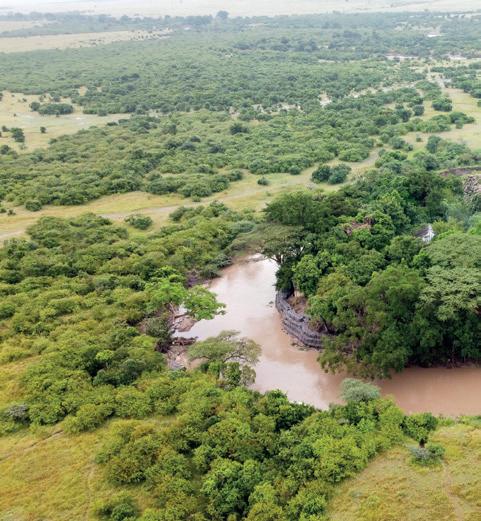
But as April 2024 progressed, the telltale signs began to emerge. The Talek River, which winds its way through the heart of the camp, started behaving differently. Day after day, the water levels crept higher, sometimes alarmingly so. Reports filtered in of several camps in the region experiencing flooding, yet Fig Tree remained secure. The river stayed well below the bridge, and none of the tents appeared to be in any danger. There was cautious optimism that the worst had passed.
Then came May 1 – a night that would change everything.
From 10:00 PM onwards, the team observed something they had never witnessed before. The Talek River began surging with unprecedented force, its levels rising not gradually, but rapidly, relentlessly. At close to midnight, the inevitable happened: the banks broke. Within minutes, water had entered the bar area.
Immediate action was taken. The priority was, of course, the safety of every guest. The camp team worked with remarkable calm and precision, evacuating all visitors to higher ground behind the camp and ensuring their belongings were secured.
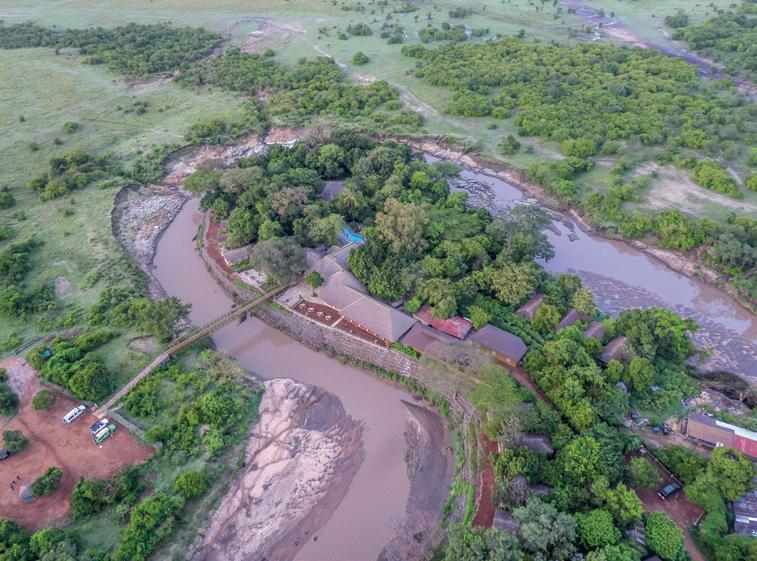
But the river had other plans. The water levels continued to rise at an alarming pace. Before long, the Talek had broken across in an oxbow formation, completely cutting the camp off and transforming it into an isolated island. The restaurant now sat beneath a metre of water. Perhaps most symbolic of all, our beloved bridge – a fixture of Fig Tree Camp for over 30 years –was swept away.
When dawn broke and the river finally began to subside, the team could at last assess what had happened. The scene was both humbling and devastating. The damage to the camp was considerable: structures compromised, facilities destroyed, years of careful maintenance undone in a single night.
Yet amid the destruction, there was profound relief. Everyone – every guest, every member of staff – remained safe and well.
What followed was an extraordinary recovery effort. Over the course of the year, more than one hundred dedicated staff members worked tirelessly on the reconstruction and rebuilding of all damaged areas and facilities. Mada Hotels made the decision to seize this opportunity – not just to restore the flagship property to its former glory, but to enhance it, to create new spaces that would elevate the guest experience.
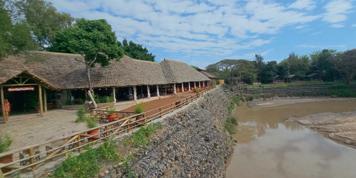
The transformation has been nothing short of remarkable. A stunning new bridge, engineered two metres higher than its
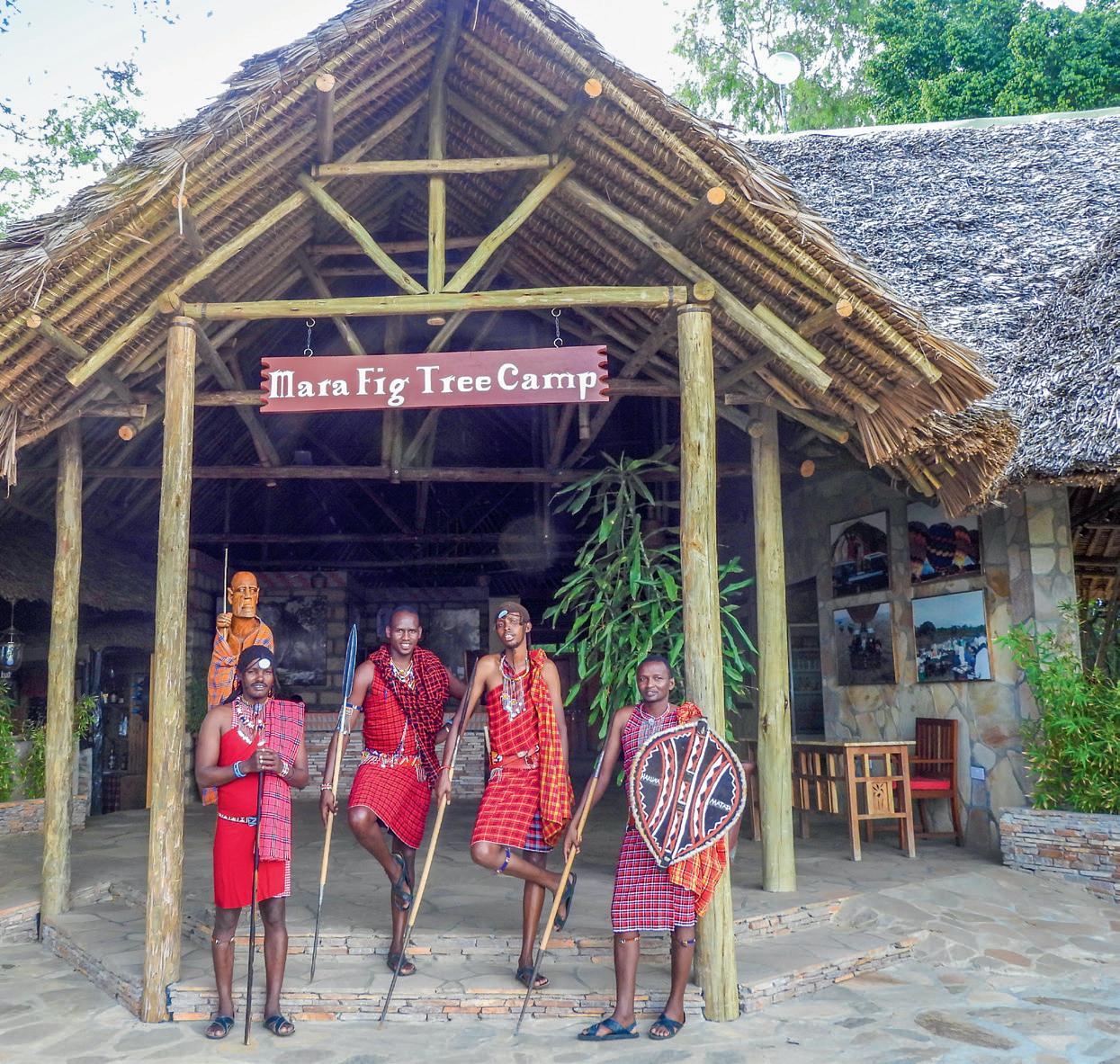
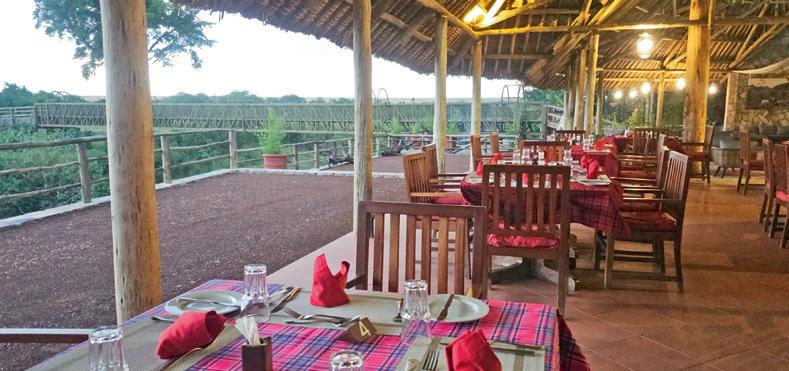
predecessor, now stands alongside a completely reimagined reception area, offering guests a warm and contemporary welcome from the moment they arrive. The restaurant has been rebuilt, while a beautiful new lounge area now opens onto spectacular views across the Masai Mara. Guest reviews since the reopening have been outstanding. Visitors speak not only of the physical improvements but of something less tangible – a renewed spirit.
As challenging as the recovery has been, the dedicated team at Fig Tree Camp has succeeded in restoring it to its position as the Masai Mara’s most celebrated tented camp. That essence remains unchanged. What has changed is everything else – stronger foundations, elevated experiences, and an even deeper commitment to the guests who choose to make Fig Tree Camp part of their African story.
Mada Hotels welcomes you to the new Fig Tree Camp.
THE BEAT GOES ON: East African artists shaping the sound
Ea st Africa’s music scene is buzzing with creativity and energy. Artists are mixing local sounds like bongo flava, singeli, taarab and dansi with contemporary
BIEN – AFROBEATS / POP (KENYA / SOMALIA)
styles like Afrobeats, rap, Gengetone and pop – and thanks to streaming platforms and social media, these songs are reaching bigger and wider audiences than ever before. Below is
MARIOO BONGO FLAVA (TANZANIA)
What Makes Him Worth Listening To: Marioo has emerged as one of Tanzania’s most streamed artists. His music blends catchy Swahili melodies with contemporary rhythms and themes, making it both radio-friendly and streaming-friendly.
Top Tracks to Listen: Nairobi (feat. Bien), Mvua
What Makes Him Worth Listening To: Bien has solidified his solo career with music that resonates across East Africa and beyond. His emotive voice and melody-driven pop help bridge Kenyan, Somali, and broader East African sounds.
Top Tracks to Listen: All My Enemies Are Suffering, Safari
ABIGAIL CHAMS AFROBEATS / BONGO FLAVA (TANZANIA)
What Makes Her Worth Listening To: Abigail Chams is one of the most exciting voices on the East African pop and bongo flava scene. Her music combines Afrobeats and bongo flava with confident, expressive vocals, making it both danceable and emotionally engaging.
Top Tracks to Listen: Me Too, Lala
a snapshot of artists making waves –from seasoned performers to rising stars – with a guide to their music and the tracks to get you started. Ge t your headphones ready!
TOXIC LYRIKALI GENGETONE / RAP (KENYA)
What Makes Him Worth Listening To: Toxic Lyrikali blends rap, Gengetone, and rhythmic energy that reflects Nairobi’s urban music pulse, resonating strongly with youth audiences.
Top Tracks to Listen: Back Bencher, Chinje
X PLASTAZ – RAP / HIP HOP (TANZANIA)
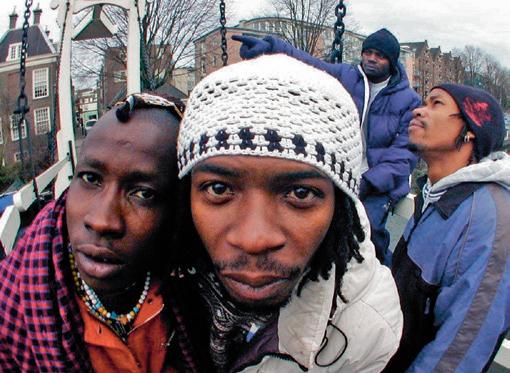
What Makes Them Worth Listening To: X Plastaz are a veteran rap collective known for blending hip hop with Maasai chants and Swahili lyricism, helping define an early Tanzanian rap sound. Their influence on East African hip hop is undeniable, and they continue to inspire artists blending culture with modern rhythms.
Top Tracks to Listen: Aha!, Dunia Dudumizi, Msimu Kwa Msimu
RAYVANNY – BONGO FLAVA (TANZANIA)
What Makes Him Worth Listening To: Rayvanny’s album The Big One features several popular tracks that have gained traction across streaming platforms and video channels. His versatility –from emotive ballads to danceable hits – keeps his music fresh and widely appealing.
Top Tracks to Listen: Nesa Nesa, Nitongoze
JOSHUA BARAKA – SOUL / AFRO POP (UGANDA)
What Makes Him Worth Listening To: Ugandan singer Joshua Baraka has made an impact with Wrong Places, a soulful and expressive track that showcases his emotional depth and songwriting growth. His music blends pop and soul with authentic storytelling.
Top Tracks to Listen: Wrong Places
DJ TRAVELLA SINGELI (TANZANIA)
What Makes Him Worth Listening To: DJ Travella represents the new wave of singeli, a fast, electronic Tanzanian genre rooted in local dance culture. His production showcases singeli’s raw energy and experimental edge, making his music exciting for listeners who want something hightempo and dance-ready.
Top Tracks to Listen: Mr Mixondo, Singeli Funk, Twende
KING SAHA – POP / URBAN (UGANDA)
What Makes Him Worth Listening To: King Saha continues to capture the energy of Ugandan pop and contemporary life, with TikTok Life gaining traction for its catchy hook and social media presence. His music mixes traditional melodies with contemporary pop and urban vibes, making it both relatable and current.
Top Tracks to Listen: TikTok Life
ZUCHU – BONGO FLAVA (TANZANIA)
What Makes Her Worth Listening To: Zuchu continues to command attention with tracks like Hujanizidi featuring D Voice, which have garnered millions of views and reminded fans why she remains one of Tanzania’s leading female artists. Her vocals and production are polished and appealing, giving her music cross-regional resonance.
Top Tracks to Listen: Hujanizidi, Zawadi, Siji
East Africa’s music scene is alive, diverse, and constantly evolving. Whether you’re a longtime fan or just discovering East African music, there’s plenty here to explore and enjoy.
East Africa’s best street food
IF YOU WANT TO TASTE EAST AFRICA, START ON THE STREETS. FROM NAIROBI TO DAR ES SALAAM TO KAMPALA, STREET FOOD TELLS A STORY OF LOCAL LIFE, CULTURE, AND FLAVOUR – WITHOUT NEEDING A FANCY RESTAURANT. HERE ARE SOME MUST-TRY DELICACIES FROM ACROSS THE REGION:
KENYA
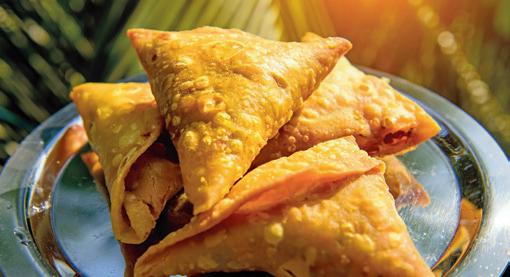
SAMOSAS
Who doesn’t love a samosa? Triangular pastries filled with spiced meat, lentils, or vegetables. Introduced by Indian traders on the coast, samosas are now a Kenyan street staple. You can find them almost anywhere – from busy bus stations to markets in Nairobi, Kisumu, or Mombasa. Crispy, hot, and flavourful, they’re ideal for a quick bite on the move.
OTHER STREET FOODS TO TRY
• Bajias (Kenya): Chickpea fritters, fried until golden and crispy.
• Uji (Tanzania): A porridge made from millet or sorghum, usually eaten for breakfast.
• Katogo (Uganda): Plantains cooked with beans or beef, sold in small breakfast portions.
• Mandazi (Kenya/Tanzania): Sweet, fried dough spiced with cardamom.
• Mahindi choma (Kenya/Tanzania): Roasted corn, brushed with butter or chili.
• Chapati with beans (Uganda): Simple, filling, vegetarianfriendly, often served as a breakfast or light meal.
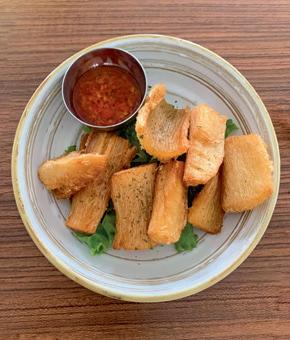
Deep-fried cassava sticks, crispy on the outside and soft inside, with a slightly sweet, nutty taste. Mogo comes from the Swahili coastal kitchens and is popular across coastal towns like Mombasa, Kilifi and Malindi, as well as in Nairobi and other major cities. Vendors often serve it with chilli or tamarind sauce. It’s inexpensive, filling, and perfect as a snack or side with a larger meal.
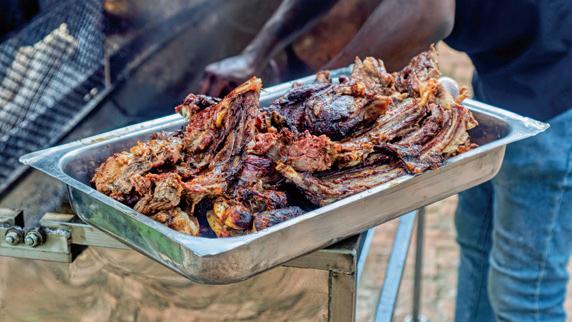
NYAMA CHOMO
Literally “grilled meat,” usually goat or beef, cooked over charcoal. Nyama Choma is often served with kachumbari (tomato and onion salad) and sometimes ugali (maize porridge), turning it into a hearty meal. You’ll find roadside grills and open-air restaurants in most towns and cities across Kenya, Eating Nyama Choma is as much about the social experience as the food itself – locals gather, chat, and share meat straight from the grill.
MOGO CHIPS
TANZANIA
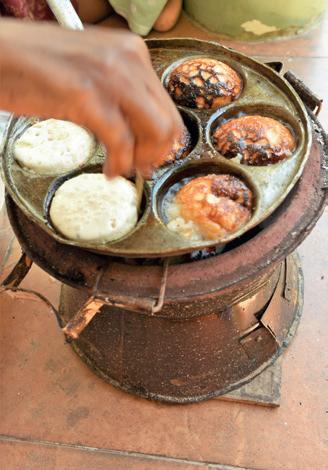
VITUMBUA
Small, fluffy rice flour pancakes usually made with coconut milk. Soft, slightly sweet, and lightly spongy, vitumbua is a common breakfast or mid-morning snack across Tanzania, particularly in coastal towns and Zanzibar. Vendors sell them in batches, perfect for enjoying with tea or coffee.
UGANDA
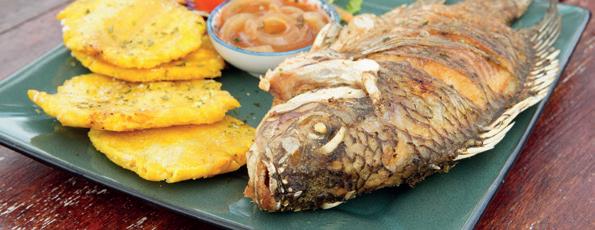
LAKE VICTORIA FISH FRY
Fresh tilapia or Nile perch, lightly seasoned and fried, often served with fried plantains. This is a common street meal in lakeside towns such as Entebbe, Jinja, and beyond. Simple, fresh, and satisfying, it’s an easy way to sample the region’s freshwater fish.
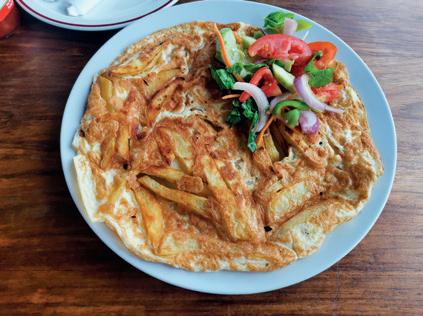
French fries folded into a thick omelette, often with onions, tomatoes, and chili. Popular throughout Tanzania, it’s a staple at street corners, markets, and roadside stalls, especially in the evening. Filling, easy to eat with your hands, and utterly satisfying.
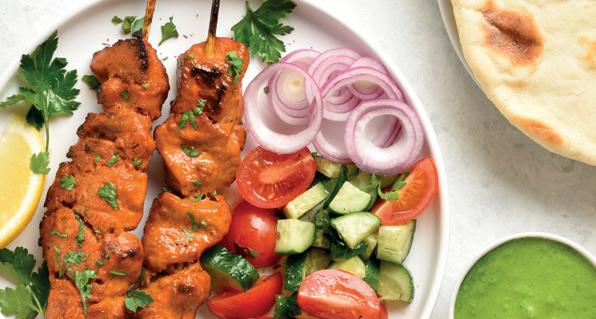
MISHKAKI
Skewers of marinated meat or fish, grilled over charcoal. mishkaki shows the influence of Indian and Arab traders and is widely available in cities, towns, and coastal areas. Often paired with flatbread or a small salad, it’s a quick, flavourful meal on the go.
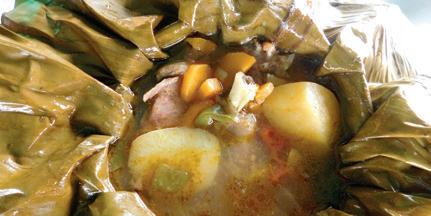
Traditionally a slow-cooked dish, luwombo has street adaptations where meat, chicken, or fish is cooked in a rich, spiced sauce and wrapped in banana leaves. Available in markets and food stalls in many towns, it’s a take-away version of a traditional Ugandan meal.
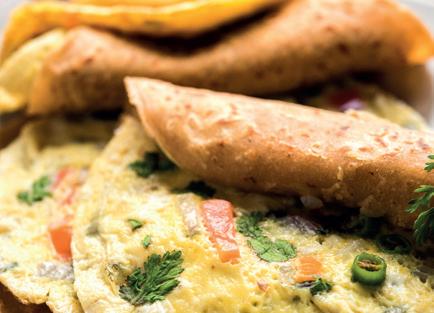
Uganda’s most famous street food. It’s a chapati rolled around a fried egg and often filled with vegetables like cabbage, tomatoes, and onions. The name comes from “rolled eggs.” Found in virtually everywhere –rolexes are cheap, portable, and perfect for breakfast, lunch, or a late snack.
Street food in East Africa is all about flavour, affordability, and local culture. From grabbing a rolex in Kampala to munching on mishkaki in Dar es Salaam or biting into crispy mogo in Mombasa, these meals are a fast, tasty way to experience the region. You don’t need a fancy reservation – just real food, made by people who know what tastes good.
CHIPSI MAYAI
LUWOMBO (STREET VERSION)
ROLEX
The trees of East Africa
DISCOVER FIVE REMARKABLE SPECIES FLOURISHING ACROSS MADA HOTELS’ DESTINATIONS.
EAST AFRICAN TREES
Ac ross Mada Hotels’ properties, guests can encounter some of East Africa’s most iconic trees –species that have shaped landscapes, supported wildlife, and fascinated people for centuries.
BAOBAB
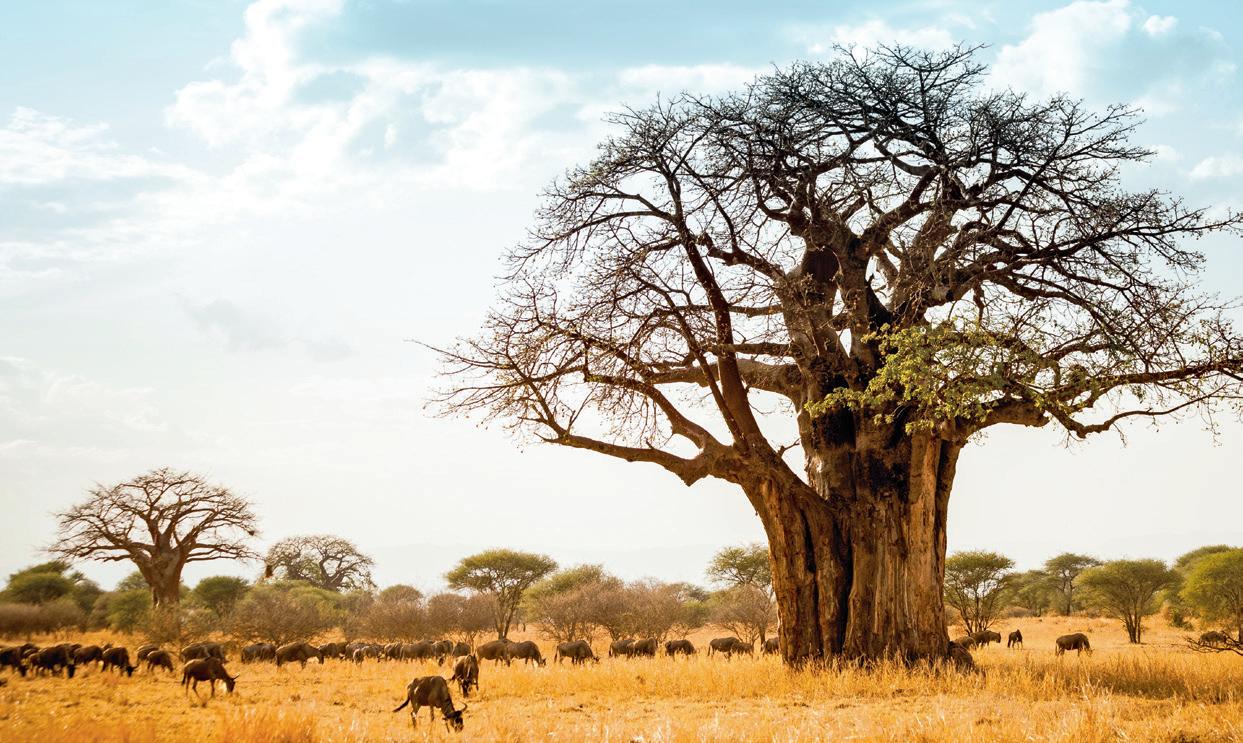
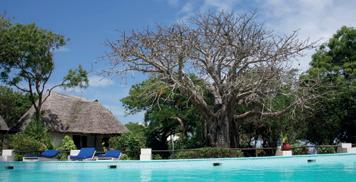
Often called the “upside-down tree,” the African baobab is renowned for its enormous trunk and extraordinary longevity. Scientific studies using carbon dating have confirmed individual trees more than 1,000 years old, making them among the longest-living flowering plants on Earth.
Their swollen trunks act as natural reservoirs, capable of storing tens of thousands of litres of water during the rainy season – an adaptation that allows them to survive prolonged droughts. Mature baobabs can reach up to nine metres in diameter.
Found at: Kilifi Bay Beach Resort, Baobab Sea Lodge (its namesake tree!), and Elephant Rock Tarangire.
YELLOW FEVER TREE
Easily recognised by its smooth, powdery greenish-yellow bark, the yellow fever tree typically grows 15–25 metres tall and
is commonly found near rivers, lakes, and seasonal wetlands.
Early European settlers wrongly associated the tree with malaria, believing it caused “fevers.” In reality, mosquitoes breeding in nearby swampy areas were responsible –giving the tree its enduring name.
UMBRELLA ACACIA
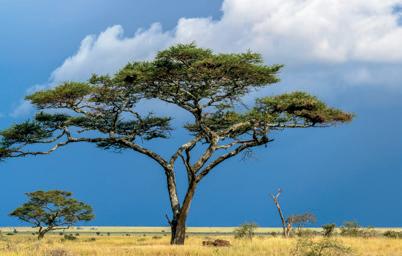
The umbrella acacia, often seen dotting East Africa’s savannahs, is famous for its distinctive flat-topped canopy. This classic silhouette has become one of Africa’s most recognisable natural images, especially at sunset.
Beyond its beauty, the tree provides essential shade and shelter for wildlife in open grasslands.
Found at: Kilima Safari Camp and Elephant Rock Tarangire.
MVULE
Mvule is a large deciduous tree that can grow up to 50 metres tall, with its first branches often appearing more than 20 metres above the ground. Highly valued for its durable, termite-resistant timber –often compared to teak – it has long been
an important construction wood across East Africa.
Due to extensive historical harvesting, mvule is now listed as ‘Near threatened’. Found at: Kampala Nile Resort and Jinja Nile Resort.
WHISTLING THORN ACACIA
Native to East Africa, the whistling thorn is known for its swollen, hollow thorns that house ants in a remarkable symbiotic relationship. The ants fiercely defend the tree from browsing animals, while the tree provides them shelter and nectar.
When wind passes through abandoned chambers in the thorns, it can produce a soft whistling sound, giving the tree its name.
Zanzibar’s Heritage Buildings A walk through history
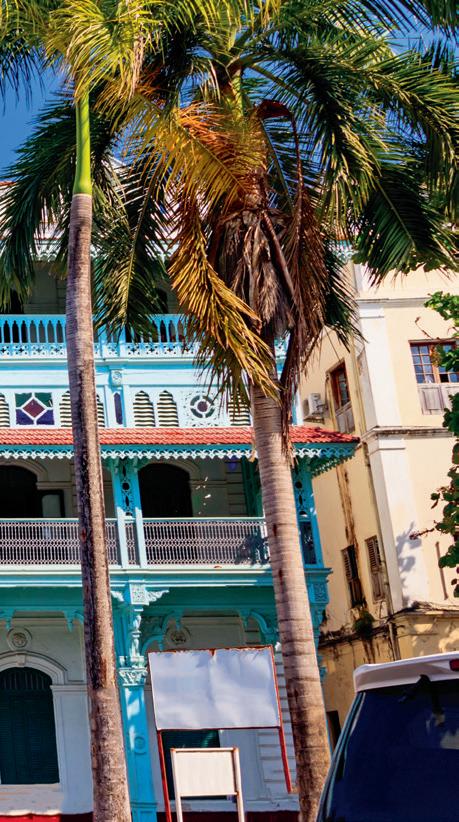
Zanzibar’s historic buildings tell the story of an island shaped by trade, faith and empire.
Most are found in and around Stone Town, a UNESCO World Heritage Site, but others sit along the coast or inland and are often overlooked by visitors. Together, these buildings trace Zanzibar’s past as a Swahili settlement, an Omani capital and a colonial outpost.
BEIT AL-AJAIB (HOUSE OF WONDERS)
Beit al-Ajaib stands on the seafront in Stone Town and remains one of Zanzibar’s most recognisable landmarks. Built in 1883 by Sultan Barghash bin Said, it was intended as a ceremonial palace and symbol of modernity. It was the first building in East Africa to have electricity and an elevator. Despite its name, the “wonders” were largely technological.
The building later served as government offices under British rule. Today it functions as a museum focused on Swahili and Zanzibari culture, although parts have been under restoration in recent years.
THE PALACE MUSEUM (BEIT EL-SAHEL)
Located next to the House of Wonders, the Palace Museum was once the residence of
the Omani sultans. It offers a more personal view of royal life, with exhibits covering daily routines, ceremonies, and the role of the palace in Zanzibar’s political history. The museum also addresses the 1964 Revolution, which ended centuries of Arab rule.
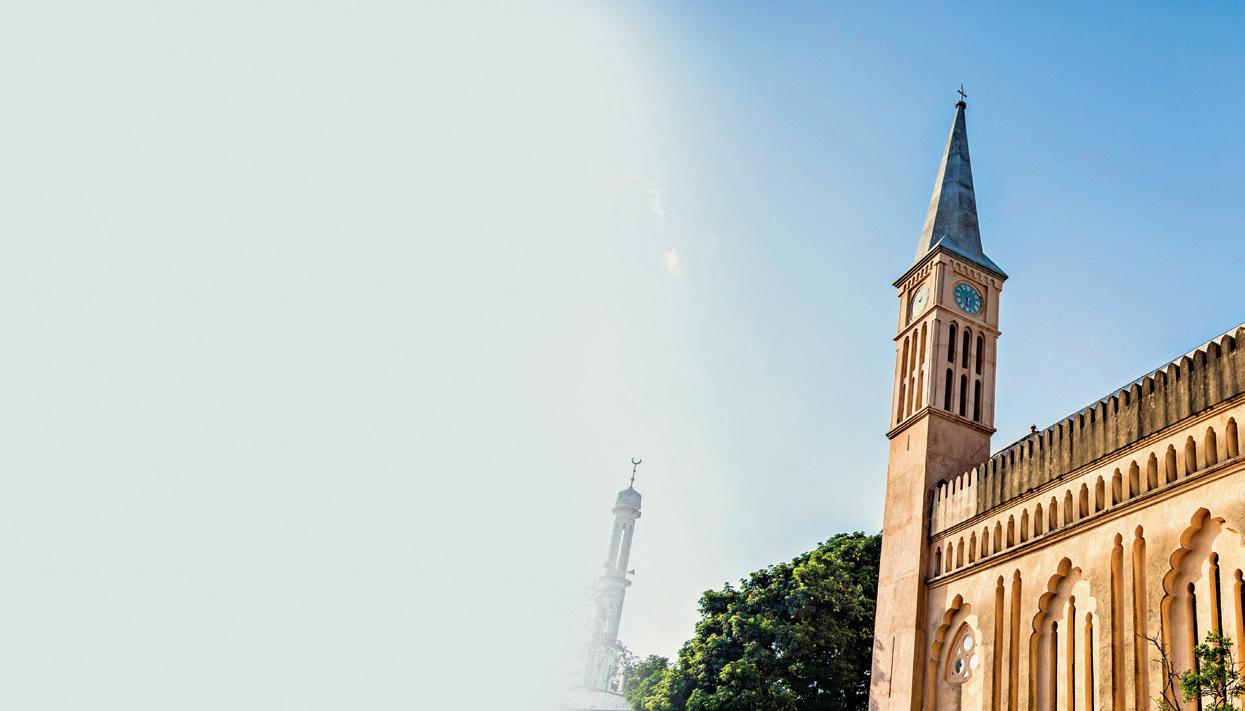
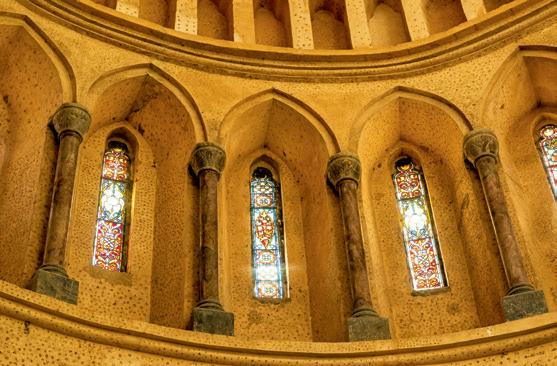
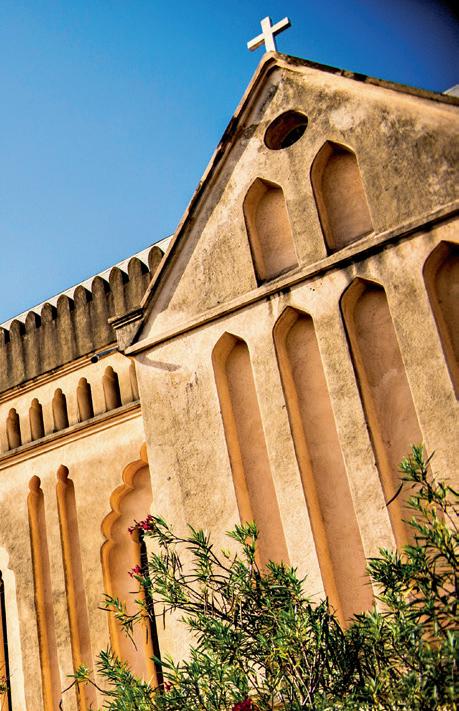
THE OLD ANGLICAN CHURCH (CHRIST CHURCH CATHEDRAL)
Built in the 1870s, Christ Church Cathedral stands on the site of Zanzibar’s former slave market. The church was commissioned by Bishop Edward Steere as a direct response to the abolition of the slave trade. The altar marks the location of the whipping post used on enslaved people.
Today, the cathedral is still an active place of worship. Beneath it are chambers that once held enslaved men, women, and children. Visitors should allow time for the guided tour.
THE ARAB FORT (OLD FORT)
The Old Fort sits opposite the House of Wonders and is the oldest structure in Stone Town. Built by the Omanis in the late 17th century, it was constructed on the site of a Portuguese fort after the Omanis expelled the Portuguese from Zanzibar.
The fort was never used heavily for defence. Over time it served as a prison, a railway
Hamdan Yoshida
depot, and eventually a cultural space. Today it houses shops, small galleries, and an open-air amphitheatre that hosts events and festivals.
OLD INDIAN DISPENSARY (ITHNASHIRI DISPENSARY)
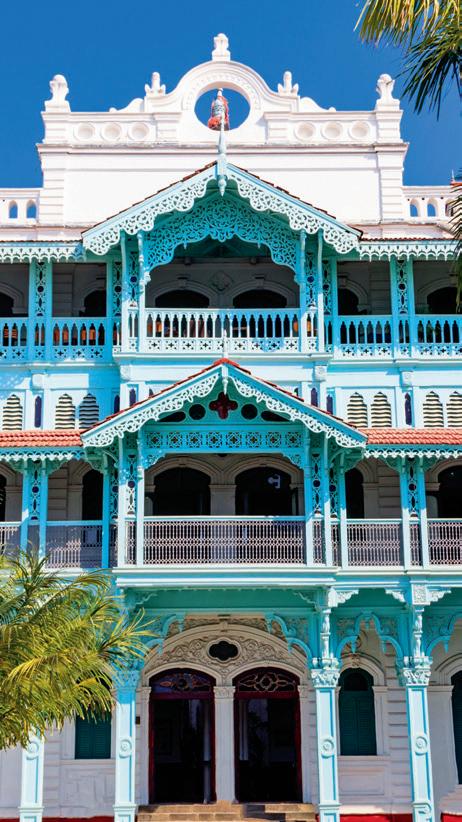
This ornate building on the seafront was completed in 1900 and funded by a wealthy Indian merchant, Tharia Topan. It reflects the strong influence of the Indian trading community in Zanzibar.
Originally built as a charitable dispensary, it later became residential space and offices. After restoration, it now functions as a cultural centre with exhibitions on Zanzibar’s multicultural history.
ST JOSEPH’S CATHEDRAL
Located in Stone Town’s narrow streets, St Joseph’s Cathedral was built by French missionaries between 1897 and 1902. Its design reflects European church architecture, with twin spires visible above the rooftops.
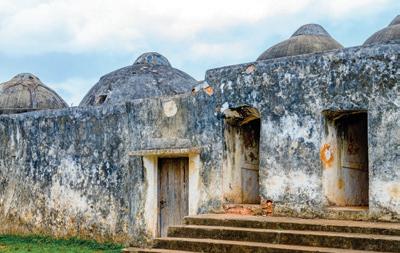
MARUHUBI PALACE RUINS
North of Stone Town lie the ruins of Maruhubi Palace, once the residence of Sultan Barghash’s harem. Built in the late 19th century, the palace was destroyed by fire in 1899.
What remains are columns and walls that hint at the scale of the original structure. The site is quiet and rarely crowded, making it a good stop for visitors interested in lesser-known royal history.
KIDICHI PERSIAN BATHS
Also outside the city, the Kidichi Baths were built by Sultan Said bin Sultan in the 1850s for his Persian wife, Sheherazade. The baths combine Middle Eastern design with local construction methods.
The complex is no longer functional but remains well preserved. Visitors can still see the changing rooms and water channels used to regulate temperature.
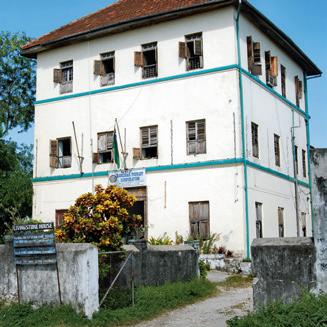
LIVINGSTONE HOUSE
Located in Stone Town, Livingstone House is associated with Dr David Livingstone, the Scottish explorer and missionary. Although he did not live here for long, the building became a base for missionary and exploration activities.
Today it houses offices, but its historical significance lies in its connection to European exploration and missionary movements in East Africa.
KIZIMKAZI MOSQUE AND MANGAPWANI SLAVE CHAMBER
Further south, Kizimkazi Mosque is one of the oldest Islamic structures in East Africa, dating back to the 12th century. Its inscriptions confirm early Islamic settlement on the island.
North of Stone Town, the Mangapwani Slave Chamber consists of underground rooms used to hide enslaved people after slavery was officially abolished. The site is stark and educational, best visited with a guide.
• Best seafront buildings: House of Wonders, Old Fort, Palace Museum
• Sites linked to slavery history: Christ Church Cathedral, Mangapwani Slave Chamber
• Religious landmarks: Old Anglican Church, St Joseph’s Cathedral, Kizimkazi Mosque
• Outside Stone Town: Maruhubi Palace Ruins, Kidichi Persian Baths
• Best for quiet exploration: Maruhubi Palace, Kidichi Baths
ZANZIBAR HERITAGE HIGHLIGHTS (Quick Guide)
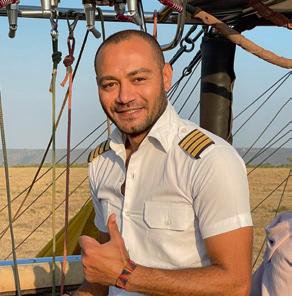
Hego Hassan
Age: 40 years
Position: Chief pilot
Duration with the Organisation: Four seasons
Passion at Work:
Sharing the profound silence of a sunrise with guests while watching the Great Migration unfold beneath us, it’s a daily lesson in humility and the beauty of nature.
Passions & Interests Outside Work:
Nature photography, wildlife conservation, quiet time in the bush , watching the stars in clear skies.
Martin Kimani Mwaura HUNTERS LODGE
Age: 36 years
Position: Pizza Chef
Duration with the Organisation: 15 years
I have been part of the team for 15 years, growing with the organisation and contributing consistently to its success.
Passion at Work:
I am deeply passionate about pizza cooking and take pride in preparing quality dishes with precision and care. I value cleanliness and believe a clean kitchen is essential to great food and excellent service.
Passions & Interests Outside Work:
Outside the kitchen, I enjoy jogging and playing football, which help me maintain discipline, energy, and a healthy lifestyle.
Felix Zhao
MADA HOTELS (FRONT OFFICE)
Age: 21 years
Position: Front Office Trainee
Duration with the Organisation: 1.5 months
I am a Front Office Trainee at Mada Hotels, with prior internship experience at the Central Reservation Head Office.
Passion at Work:
I am passionate about guest interaction and enjoy greeting guests and delivering excellent service.
Passions & Interests Outside Work:
Outside work, I enjoy driving, barbecues, and travelling.
James Mohagachi Nyakorema
KILIMA CAMP
Age: 28 years
Position: Front Office Receptionist
Duration with the Organisation: 4 years
I have four years of experience as a Front Office Receptionist and am passionate about creating great first impressions through warm and genuine hospitality.
Passion at Work:
I enjoy meaningful guest interactions and ensuring every guest feels welcomed and valued.
Passions & Interests Outside Work:
I love football and play as a striker. I proudly support Chelsea and am the champion of Kilima FC, bringing confidence, teamwork, and discipline both on and off the field.
Julius Kereto
FIG TREE CAMP
Age: 27 years
Position: Tour Guide
I am a dedicated tour guide in the Masai Mara, known for creating memorable safari experiences through my deep knowledge of wildlife, nature, and conservation. I ensure guests not only enjoy the beauty of the reserve but also understand the importance of protecting it.
Passion at Work:
As a spotter guide, I have a sharp eye for wildlife, from lions hidden in the grass to leopards resting in trees. My enthusiasm for discovering animals makes every game drive exciting and educational.
Passions & Interests Outside Work:
I am passionate about conservation and birdwatching. I enjoy observing birds such as the lilac-breasted roller, secretary bird, African fish eagle, and grey-crowned crane. I also create conservation awareness by engaging schools and youth groups to protect wildlife, water sources, and natural habitats.
Lucy A. Omondi
OAKWOOD HOTEL
Age: 29 years
Position: Front Office Assistant
I serve as the first point of contact for guests and invest my time and energy in ensuring they feel valued and well taken care of throughout their stay.
Passion at Work:
I have a keen eye for detail and ensure nothing is overlooked. I find satisfaction in positive guest reviews, revenue generation, and working as part of a strong team to achieve the company’s vision and mission.
Passions & Interests Outside Work: When not on duty, I enjoy spending time with my young family and going on safari walks to create lasting memories. I also love my native music, which keeps me connected to my African culture, and my favourite artist is Prince Indah.
Mary Kanjiku Kiambui
KILIFI BAY BEACH RESORT
Age: 28 years
Position: Accounts Clerk
Duration with the Organisation: 4 years
I am highly passionate about problemsolving and take pride in supporting other teams to achieve shared goals.
Passion at Work:
My commitment to efficiency and attention to detail helps ensure internal processes run smoothly while supporting a positive guest experience.
Passions & Interests Outside Work: Outside work, I enjoy reading and travelling, which allow me to learn continuously, gain new perspectives, and maintain a healthy work-life balance.
Suneel
Chaudhary
SHUKRAN PALACE
Age: 38 years
Position: Executive Chef
Duration with the Organisation: 4 years
I am passionate about culinary excellence and creative leadership in the kitchen.
Passion at Work:
I enjoy exploring global cuisines and crafting dishes that inspire and delight while maintaining high standards.
Passions & Interests Outside Work: Outside work, I enjoy boxing, fitness, and music, which keep me energised, focused, and creatively balanced.
Abhishek Kumar Gaurav
HOTEL LA MADA
Age: 31 years
Position: Pastry Chef
Duration with the Organisation: 3 months
I am driven by the art of transforming simple ingredients into refined creations.
Passion at Work:
My passion drives everything I do, from early preparation to final garnish and presentation. I pour care, patience, and creativity into each creation, and the kitchen is where I feel most inspired to learn and improve.
Passions & Interests Outside Work:
On my off days, I enjoy visiting new places, exploring new things, and trying different dishes. My hobbies include playing cricket and chess.
Ravinderjit Singh Maan
ELEPHANT ROCK LUXURY CAMP
Age: 40 years
Position: Camp Manager Duration with the Organisation: 1 year
I am passionate about creating a safe, welcoming, and wellorganised environment for both guests and staff.
Passion at Work:
I take pride in leading by example, maintaining high service standards, and ensuring daily operations run smoothly. I am committed to teamwork,
problem-solving, and continuous improvement, always aiming to exceed guest expectations while supporting and motivating my team.
Passions & Interests Outside Work:
I enjoy outdoor activities, fitness, and learning new skills, which help me stay motivated and focused.
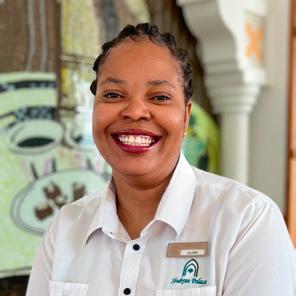
Lilian Allen Muller
SHUKRAN PALACE
Age: 33 years
Position: Receptionist
Duration with the Organisation: 1 year
I am passionate about communication and creating positive guest experiences.
Passion at Work:
I enjoy connecting with people through respectful communication and positive energy.
Passions & Interests Outside Work:
I value calm environments, continuous learning, and personal growth. I enjoy discovering new cultures through travel, stories, and films.
KENYA COAST
A kitesurfer’s paradise
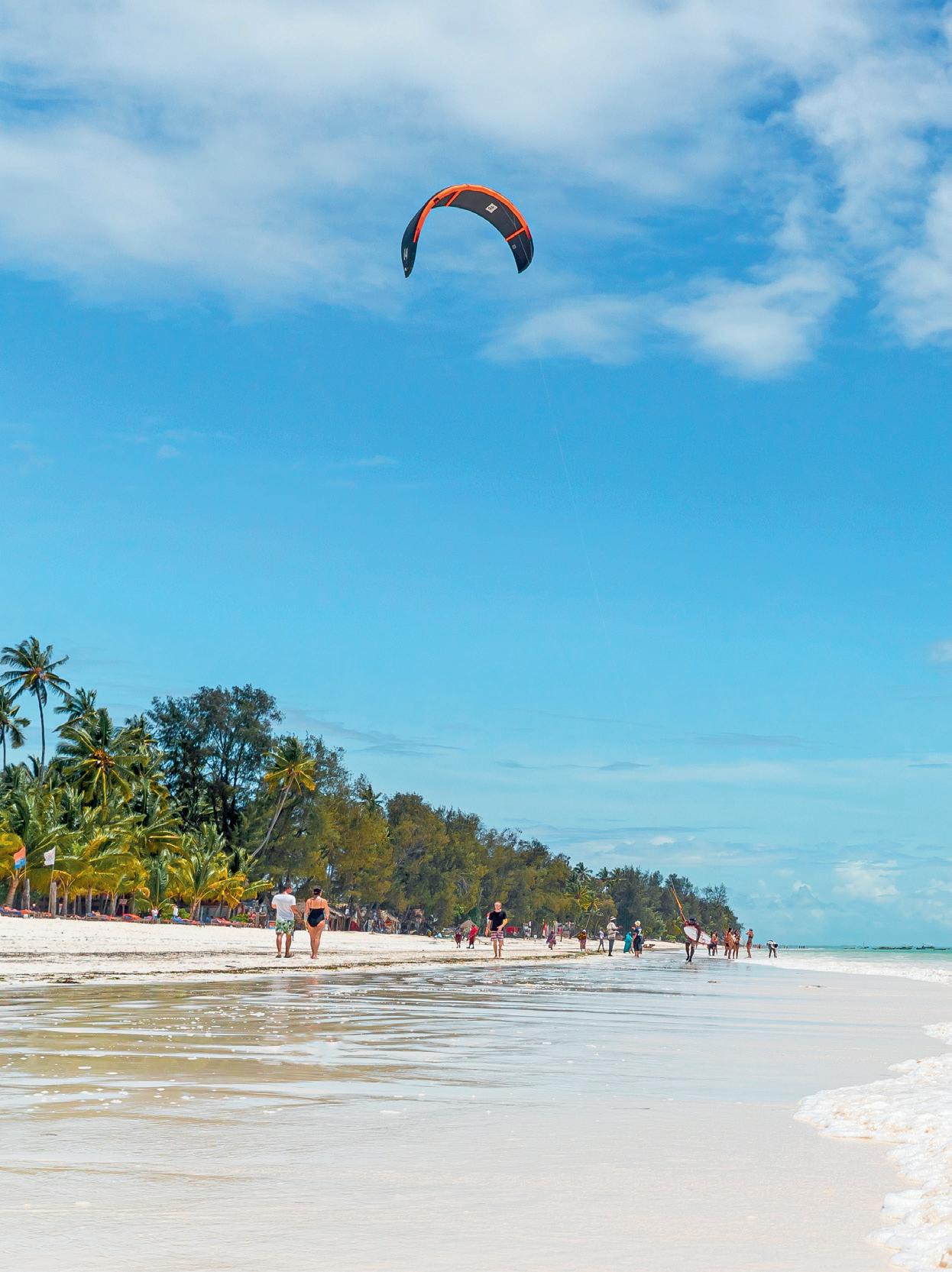
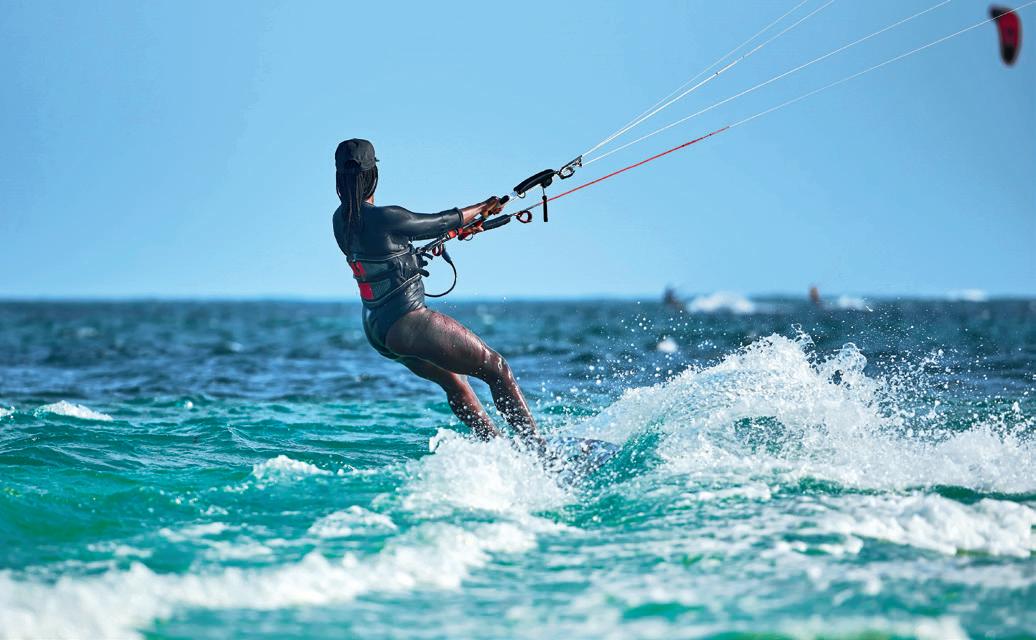
Ke nya’s coastline has quietly established itself as one of the most consistent kitesurfing regions in the western Indian Ocean. Trade winds, warm water and a string of beaches that work across different tides and wind strengths make it a dependable choice for both travelling and resident kiters. From Diani in the south to Watamu and Kilifi in the north, the coast offers variety without long travel times – and conditions that reward local knowledge.
Two main wind seasons define the year. The Kaskazi (north-easterly) runs roughly from December to March, delivering steady, lighter winds that suit freeride and progression. The Kusi (south-easterly), from June to September, is stronger and more consistent, attracting experienced riders and competition events. Water temperatures stay between 24–28°C year-round.
DIANI BEACH –ESTABLISHED KITESURFING BASE
Diani remains the country’s most established kitesurfing destination, and for good reason. A wide lagoon protected by an offshore reef creates workable conditions across a range of tides, with flatter water inside the reef and wave riding further out. Access is straightforward, the beach is long enough to avoid crowding, and there’s a mature ecosystem of training schools, repair services and accommodation.
Diani is also where Kenya’s competitive kite scene is most visible. The Kenya Kite Cup, held annually in January, has become a fixture on the regional calendar, combining racing, freestyle and community events. While it attracts international riders, it also plays an important role in developing local talent and maintaining Kenya’s profile as a serious kitesurfing destination rather than a novelty stop.
Off the water, Diani’s advantage is choice. From casual beach bars to long-standing venues like Nomad, riders can easily move between afternoon sessions and social evenings without leaving the beach environment.
KILIFI – RELIABLE WIND AND OPEN WATER
For kiters who prefer fewer riders on the water and a more understated scene, Kilifi (where Mada has two properties) offers a compelling alternative. The main riding
area around Bofa Beach works particularly well during the Kusi season, with strong, clean wind and plenty of launch space. Conditions suit freeride, freestyle and big-air riding, and the beach handles higher wind days without becoming congested.
Kilifi’s appeal lies partly in its layout. Riders can kite on the open ocean, then retreat inland to the calm of Kilifi Creek, which shapes the town’s social life. The area attracts a mix of long-stay travellers, Nairobi residents and international kiters who value consistency over hype.
Salty’s Kitesurf Village has become a focal point for the local scene, offering lessons, rentals and a reliable place to regroup post-session. Evenings tend to be informal – food, drinks, and conversation rather than late nights.
For those staying at Kilifi Bay Beach Resort and Baobab Sea Lodge, the location works particularly well. The resort provides a quiet base within easy reach of Bofa Beach
and the wider Kilifi coastline, making it well suited to kiters who want strong sessions during the day and a calmer setting in the evenings.
WATAMU – TIDES AND VARIETY
Further north, Watamu offers some of the most technically interesting riding on the coast. Multiple bays – including Turtle Bay, Garoda and the Blue Lagoon – a create options depending on wind direction and tide. The presence of reef systems means conditions can shift quickly, rewarding riders who understand timing and positioning.
Watamu works across both wind seasons, though the Kusi brings the most reliable strength. Wave riders tend to gravitate here, particularly when swell combines with wind, while flatter sections inside the bays suit freeride and cruising.
OTHER CONSISTENT SPOTS
• Galu Beach, just south of Diani, offers similar wind patterns with fewer people.
• Nyali and Shanzu, close to Mombasa, provide convenient after-work or weekend sessions for city-based kiters.
• Vipingo, north of Mombasa but south of Kilifi, is increasingly popular during strong Kusi days thanks to open beaches and clean wind.
BAOBAB SEA LODGE
FIG TREE CAMP
JINJA NILE RESORT
KAMPALA NILE RESORT
SHUKRAN PALACE
HUNTERS LODGE
KILIFI BAY BEACH RESORT
KILIMA SAFARI CAMP
HOTEL LA MADA
Legendary Tusker
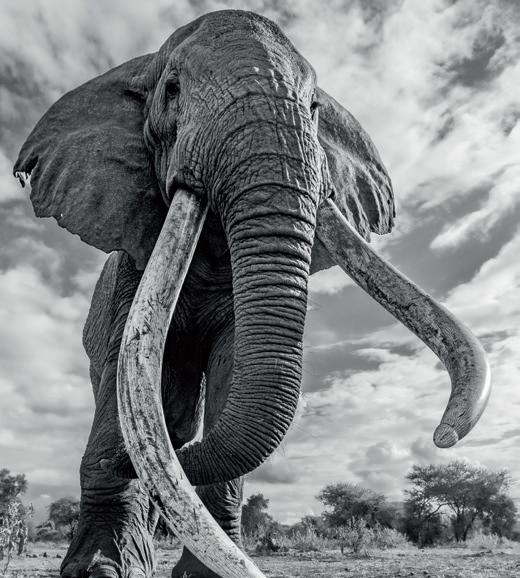
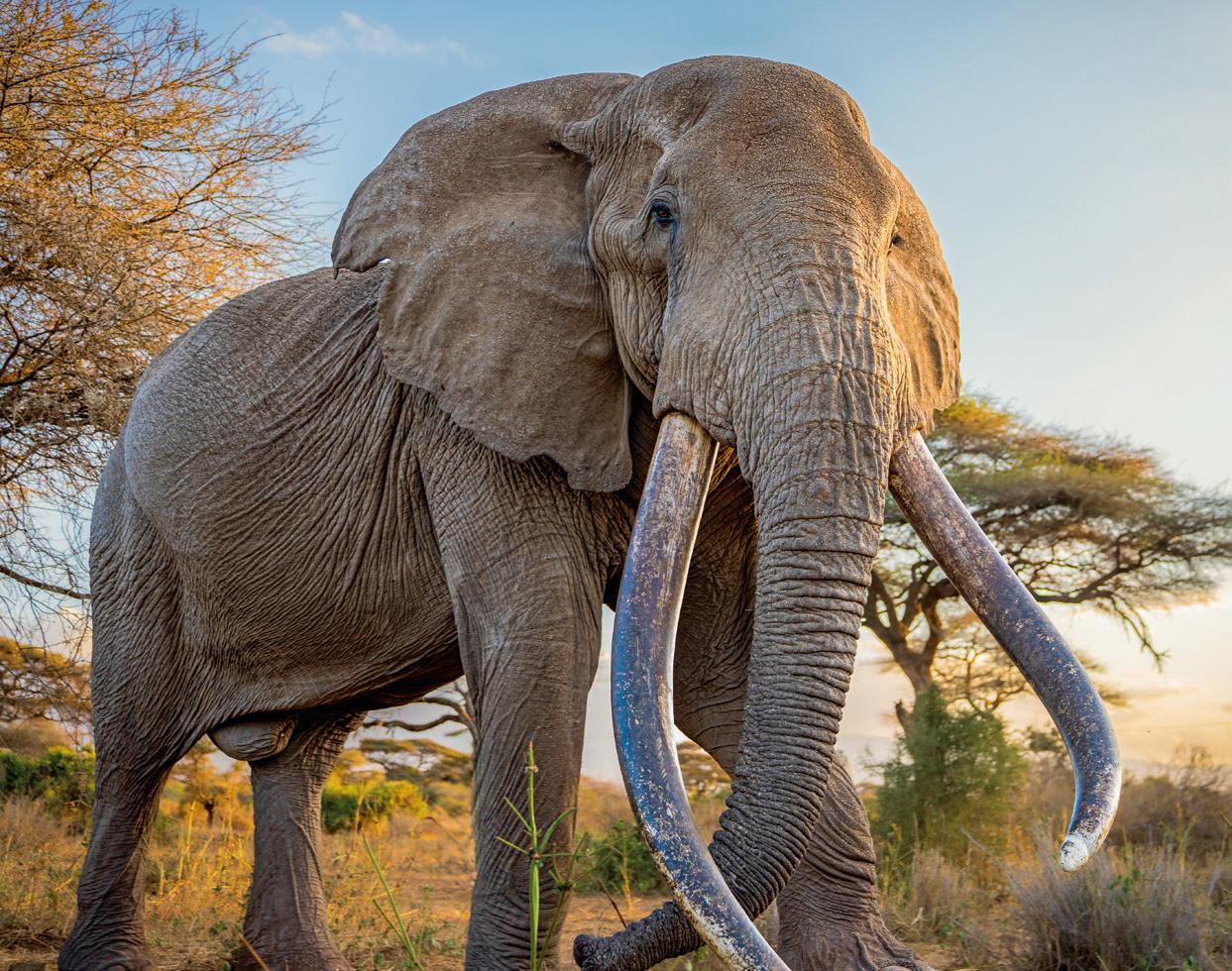
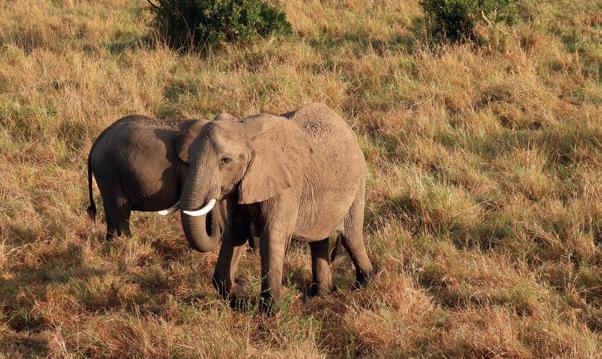
Wh en I first heard that Craig, Amboseli’s legendary super tusker, had passed away, I felt a pang of loss that surprised me. Amboseli has close to two thousand elephants roaming its plains, but seeing Craig always felt like a talismanic moment. He stood large and patient, his ivory tusks nearly touching the earth, sometimes framed against the distant silhouette of Mount Kilimanjaro.
Photographers would hold their breath when they saw him. Craig had always seemed more than just another elephant but was a symbol of survival, a living testament to what decades of protection and careful conservation could achieve.
I remembered vividly the early morning game drive when our goal was to find him
among the herds. I woke before sunrise, eager to capture that golden light with the surreal backdrop of Mount Kilimanjaro. The awe of searching for him was entwined with the beauty of the park itself.
While we were enjoying a bush breakfast break, we were notified that Craig had been spotted. We set off immediately. Despite our vehicle getting stuck in the mud, calm, patient Craig was still there when we arrived.
My guide whispered to me: “Tuskers are male elephants with exceptionally large tusks, typically weighing over 45 kilogrammes each. They are extremely rare, with only a handful left in the wild.”
Craig’s story is inseparable from Amboseli itself. Born in January 1972 to the matriarch Cassandra of the CB elephant family, he
grew into one of Africa’s few super tuskers. In a continent where ivory poaching decimated elephant populations, Craig’s longevity and survival were remarkable.
Craig’s death is significant because each super tusker represents not only genetic diversity but also a cultural and ecological legacy. However, his life also stands as clear proof that concerted conservation achieves lasting outcomes.
Craig sired several calves over the years, ensuring that his powerful genes and gentle temperament continue to shape elephant families within the Amboseli ecosystem. Kenya’s elephant population has been growing, rising from around 36,280 in 2021 to over 42,070 in 2025. These are not merely numbers but symbols of resilience in a world where ivory poaching once devastated elephant numbers.
HARRIET JAMES PAYS PERSONAL TRIBUTE TO AMBOSELI’S LEGENDARY TUSKER
The Mada Hotels group comprises 12 properties –seven in Kenya, two in Uganda and three in Tanzania/Zanzibar. In addition, the group operates balloon flights from several locations in both Kenya and Tanzania.
The current Mada properties consist of tented camps in the Masai Mara, Amboseli and Tarangire; a pair of oceanfront hotels in Kilifi; two city hotels in Nairobi; a resort in Jinja, Kampala and Zanzibar; and a lodge located just off the Nairobi-Mombasa highway.
For more information visit www.madahotels.com ADVENTURES
MAP LOCATIONS KEY
1 KILIFI BAY BEACH RESORT AND CONVENTION CENTRE | KILIFI
2 BAOBAB SEA LODGE | KILIFI
3 KILIMA SAFARI CAMP | AMBOSELI
4 THE OAKWOOD HOTEL | NAIROBI
5 HOTEL LA MADA | NAIROBI
6 FIG TREE CAMP | MASAI MARA
7 JINJA NILE RESORT | JINJA
8 KAMPALA NILE RESORT | KAMPALA
9 ADVENTURES ALOFT | MASAI MARA
10 ADVENTURES ALOFT | SERENGETI
11 ADVENTURES ALOFT | TARANGIRE
12 ELEPHANT ROCK | TARANGIRE
13 HUNTERS LODGE | KIBOKO
14 SHUKRAN PALACE | ZANZIBAR
15 PRIDE HILL, SERENGETI COMING SOON
ALOFT KENYA & TANZANIA 34
HOTEL LA MADA NAIROBI 40
KAMPALA NILE RESORT 48
SHUKRAN PALACE ZANZIBAR 36
HUNTERS LODGE KIBOKO
KILIFI BAY BEACH RESORT KILIFI 45
BAOBAB SEA LODGE KILIFI 52
FIG TREE CAMP MASAI MARA 57
JINJA NILE RESORT JINJA 64
ELEPHANT ROCK TARANGIRE 54
THE OAKWOOD HOTEL NAIROBI 42
KILIMA SAFARI CAMP AMBOSELI 61
Experience Africa’s wildlife from above
Location: Tanzania & Kenya: Masai Mara, Tarangire, Serengeti, Ngorongoro Conservation Area
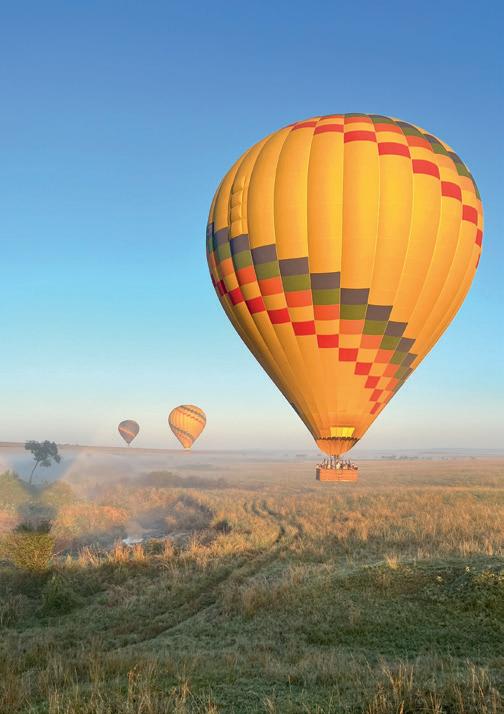
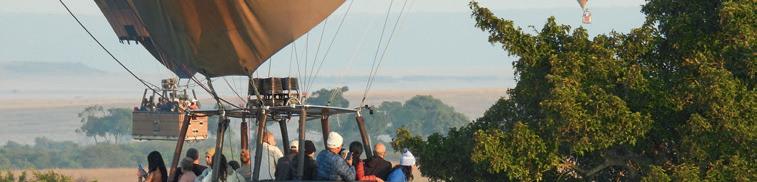
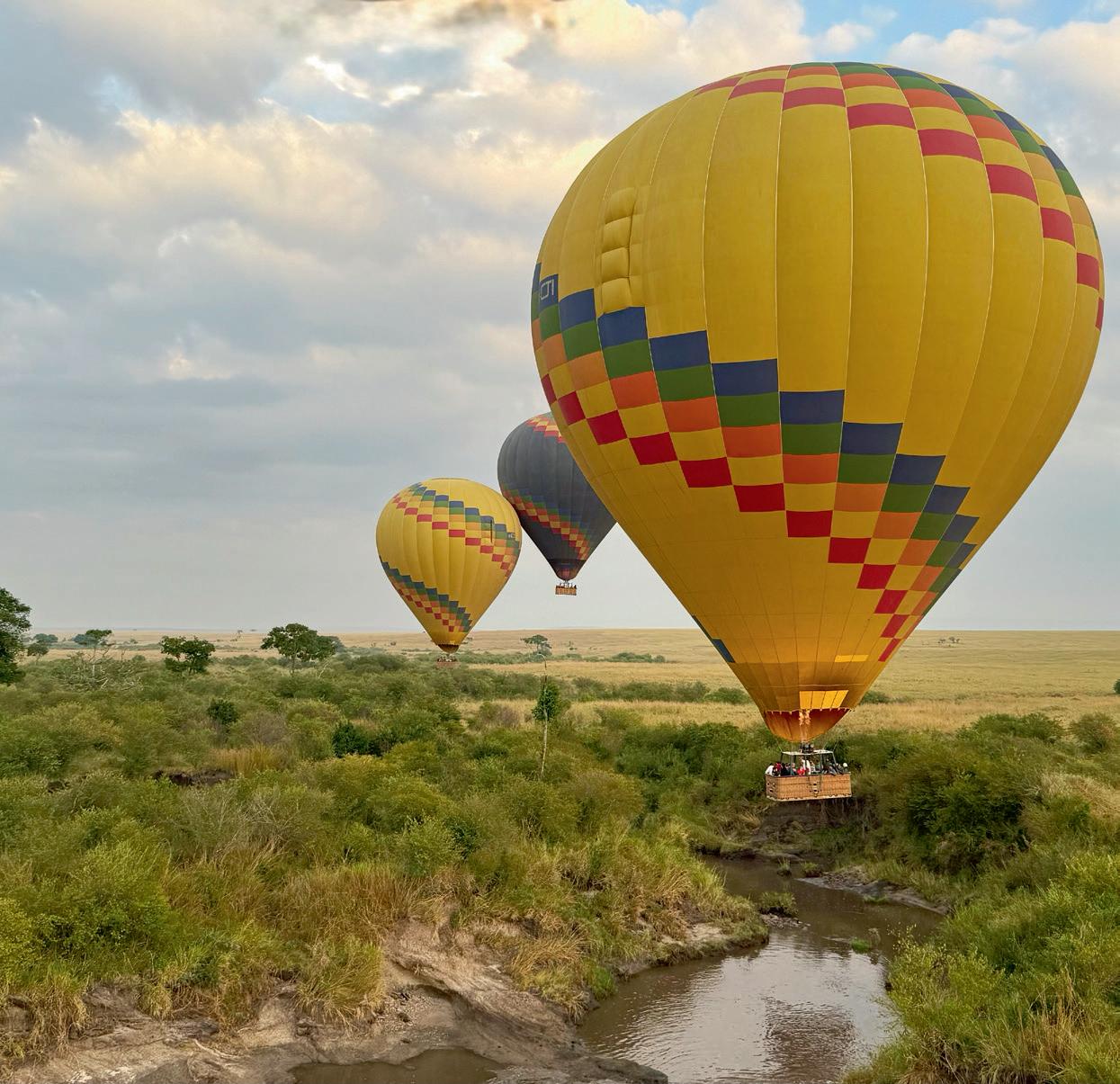
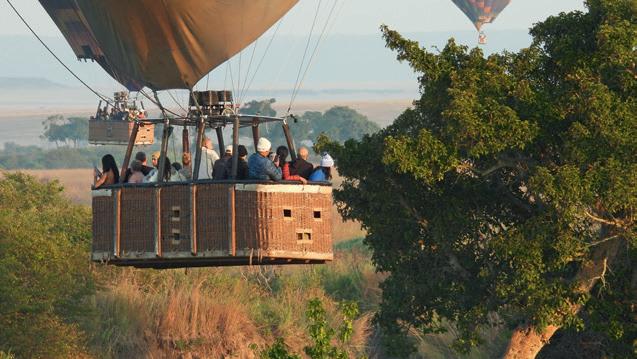
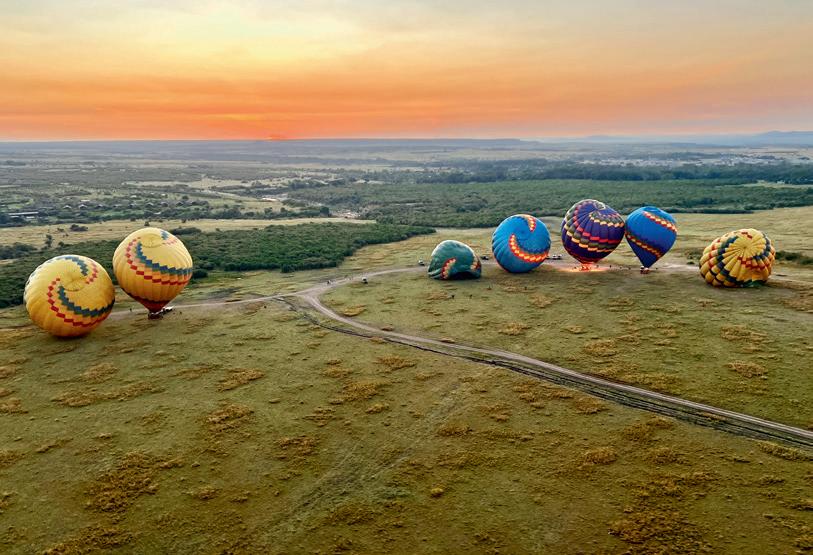
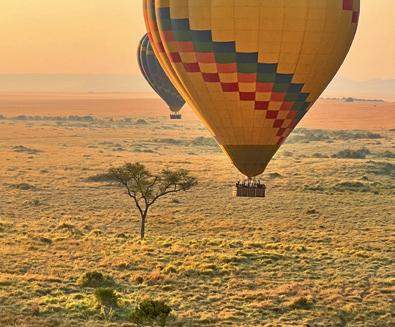
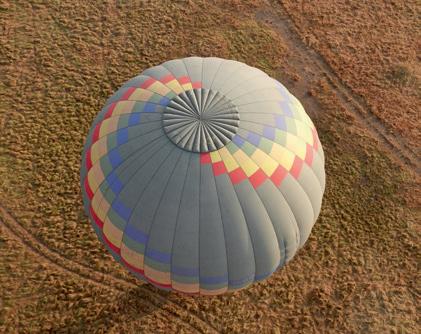
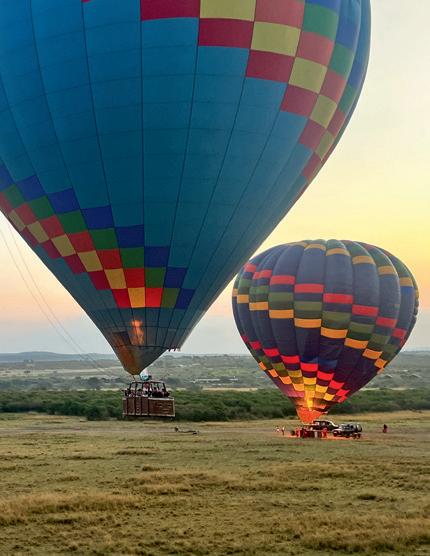
Fo r four decades, Adventures Aloft has delivered unforgettable hot-air balloon safaris across East Africa’s most iconic wilderness areas. Flights depart at sunrise, when wildlife activity is at its peak, and conclude with a champagne-style breakfast, an open bar, and attentive butler service. A leisurely game drive back to the lodge or camp completes each morning adventure.
TARANGIRE
Operating a 12-passenger A-315 Cameron balloon, Adventures Aloft has flown Tarangire’s skies for ten years. Guests depart directly from park accommodations to launch sites, with routes typically following the Tarangire River to see wildlife on both banks. After landing, a riverside breakfast is served, followed by a scenic game drive back. Limited daily capacity makes advance booking essential. Reservations can be made through Adventures Aloft, tour operators, or your camp.
SERENGETI
A fleet of 16-passenger Z-425 LW Cameron balloons serves three Serengeti bases: Togoro, Kogatende, and Seronera (central region). This diverse terrain provides year-round Big Five sightings and seasonal opportunities to witness the Great Migration from above, offering a unique perspective on one of the world’s most extraordinary wildlife events.
NGORONGORO
Balloon flights lift off at 06:00 from the Ngorongoro Conservation Area, with transfers available from surrounding camps and lodges. Guests enjoy aerial views of the Ngorongoro Crater, Olduvai Gorge, and the area’s abundant wildlife. Environmental stewardship remains a priority, with minimal ecological impact and guidance for passengers to respect wildlife and habitats.
MASAI MARA
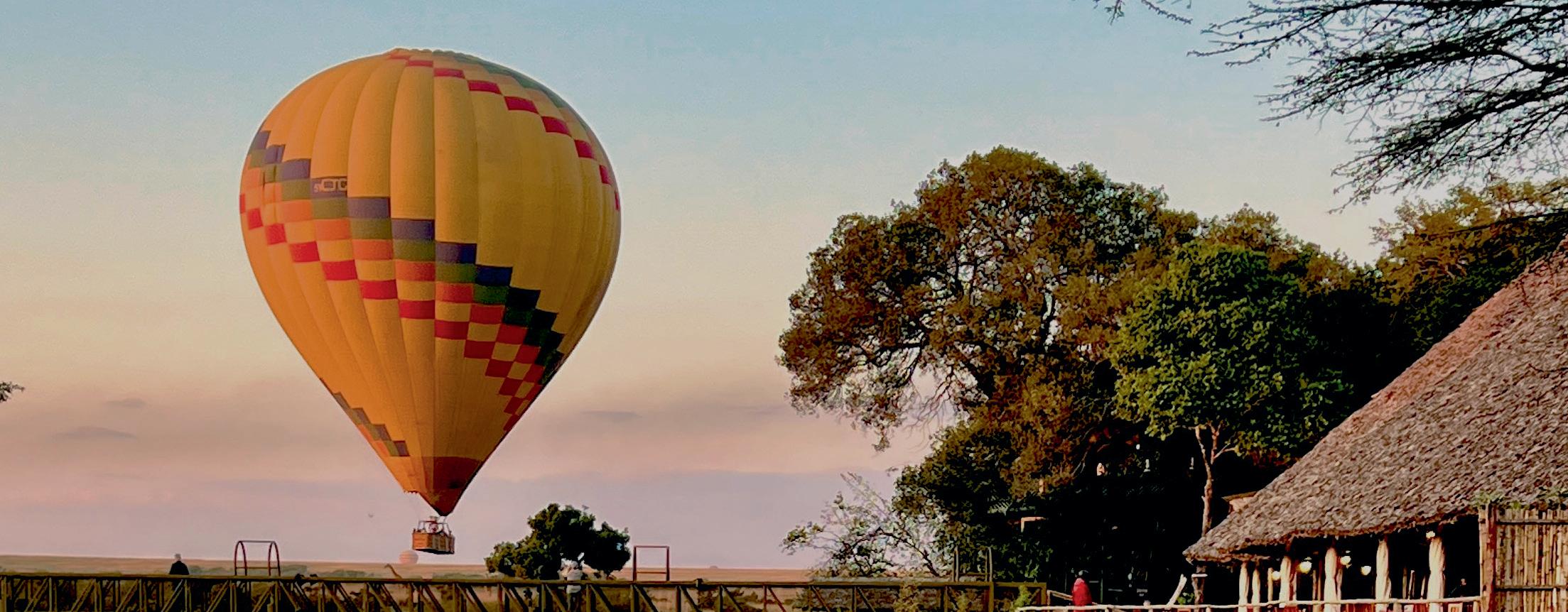
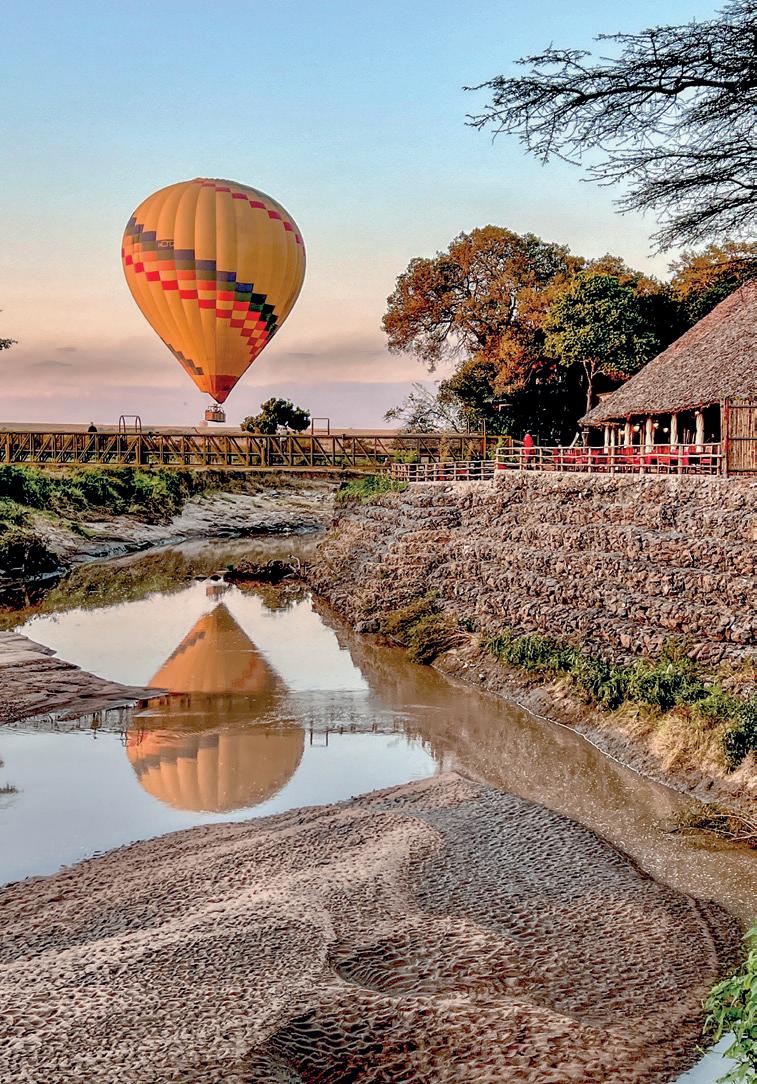
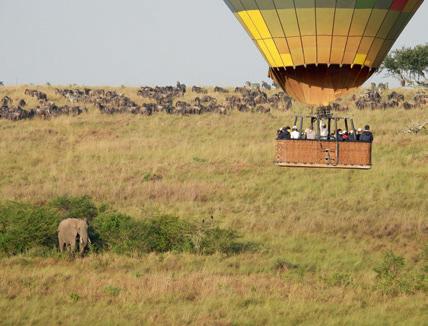
For more than 20 years, Adventures Aloft has operated in the Masai Mara, offering unique views of the annual wildebeest migration. Flights launch from Mada’s Fig Tree Camp, with convenient transfers available from most area lodges and camps.
FACT FILE
LOCATION: Masai Mara, Tarangire, Serengeti, Ngorongoro Conservation Area
FLEET: 20 balloons – 17 are16-passenger, two are 12-passenger, one is 8-passenger
DEPARTURE: 06:30
FLIGHT DURATION: Approximately 1 hour
ADDITIONAL SERVICES: Post-flight breakfast, transfers to/from park accommodation
BOOKINGS: www.madahotels.com/balloon-safaris
Palatial Zanzibar resort with private beach
Location: Michamvi, Zanzibar
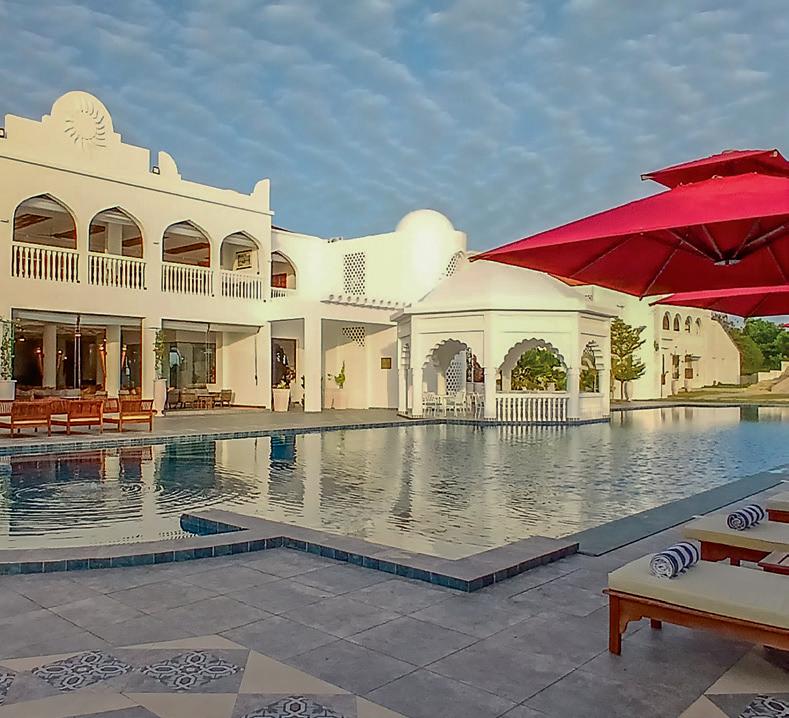
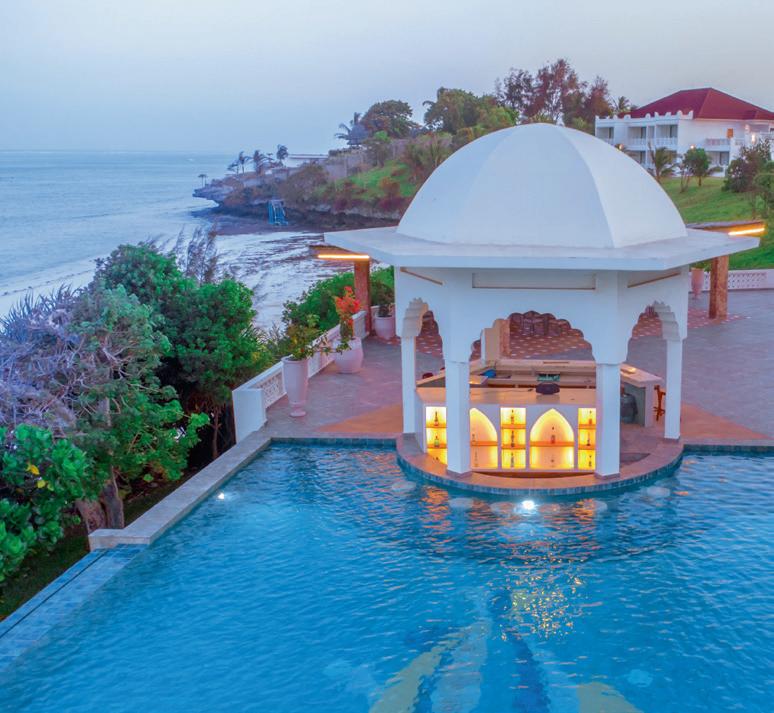
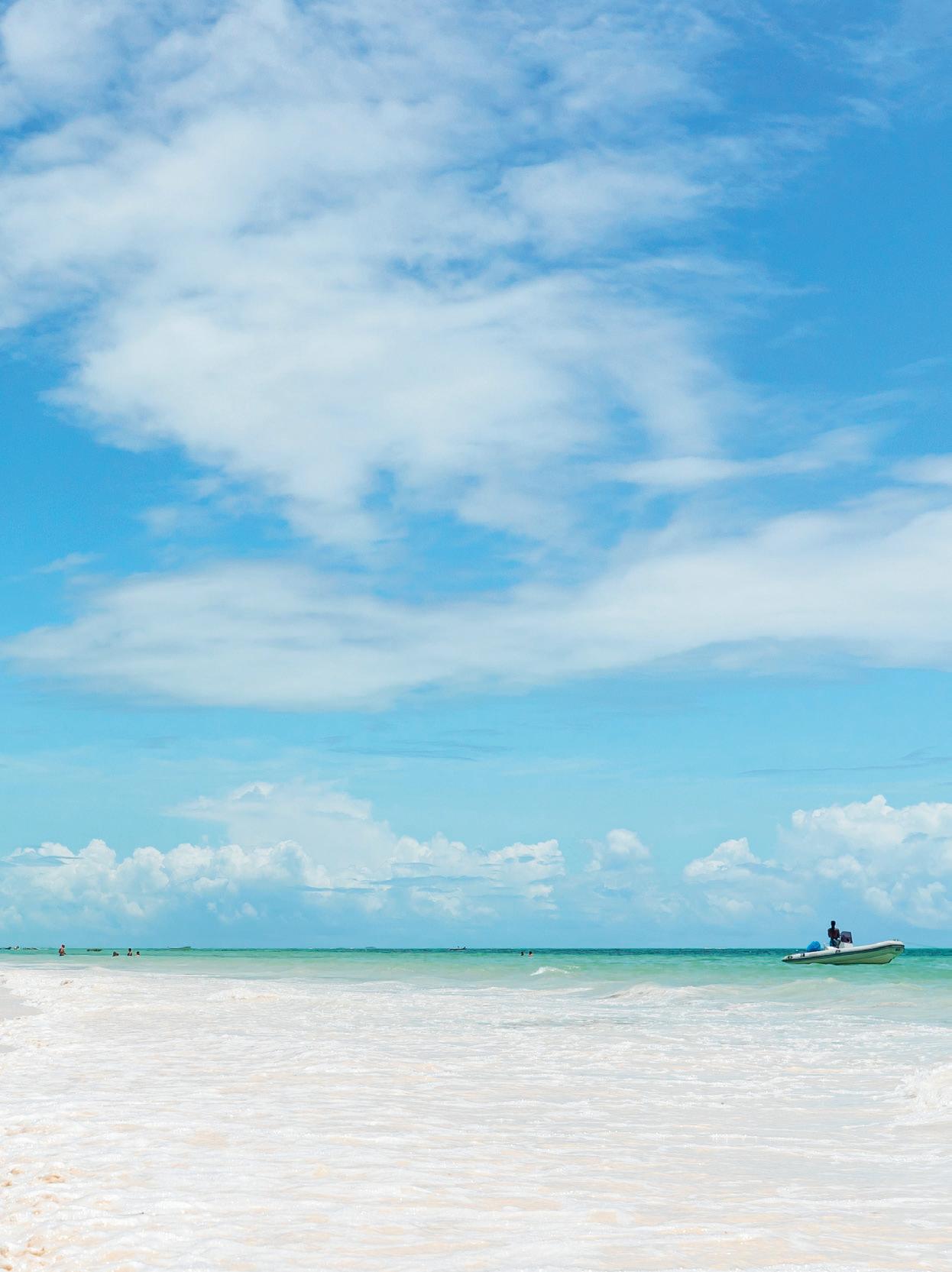
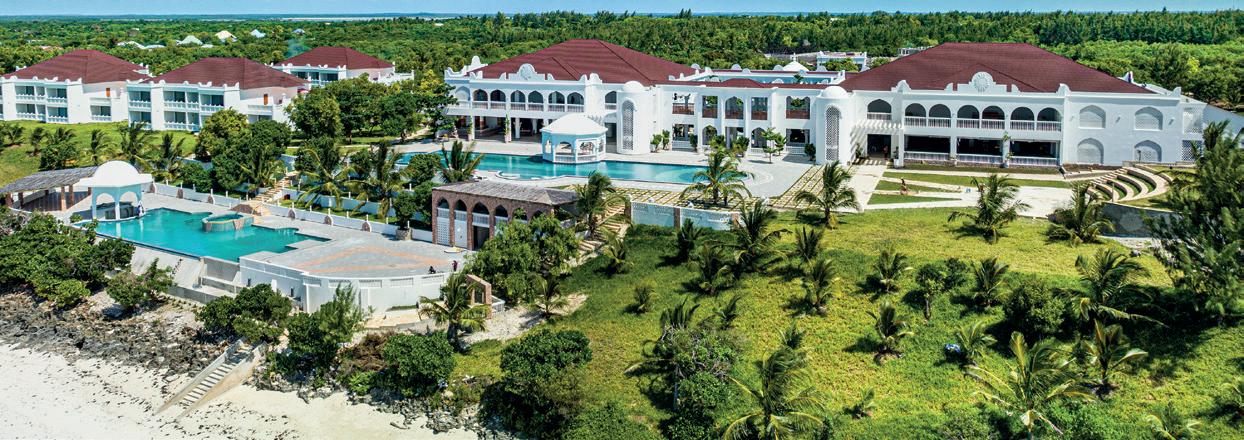
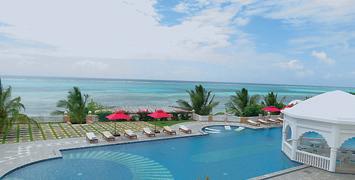
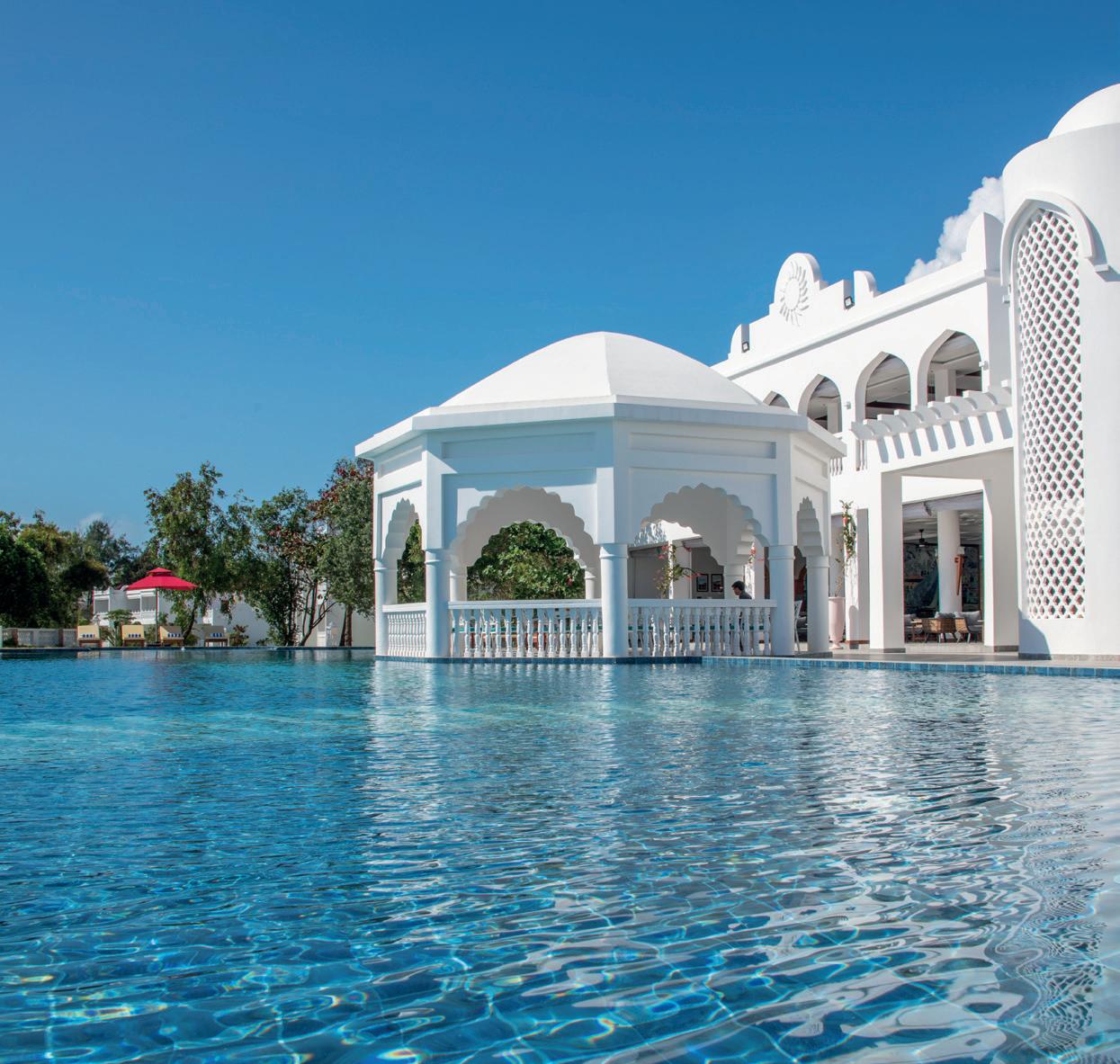
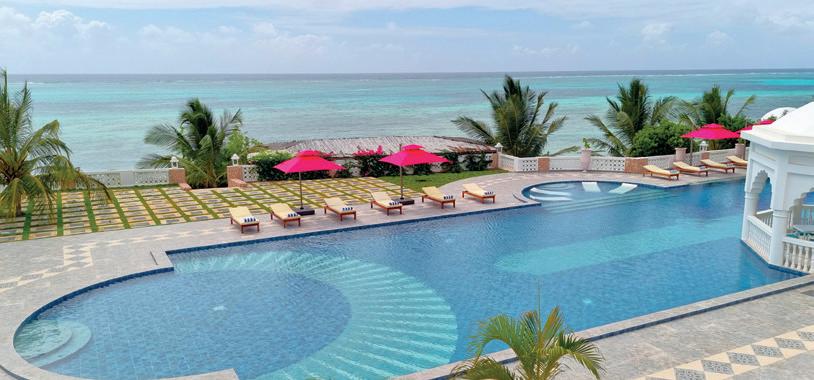
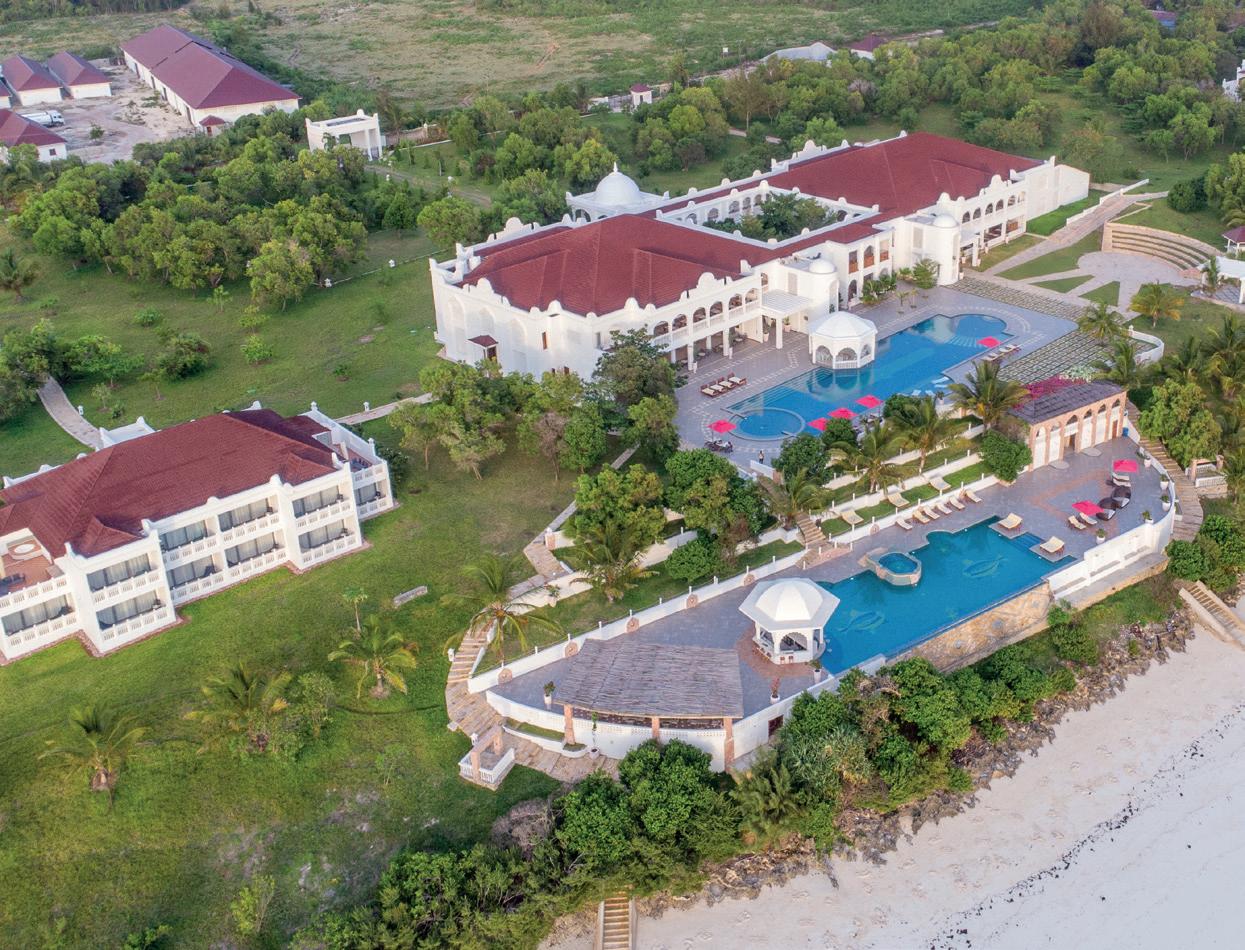
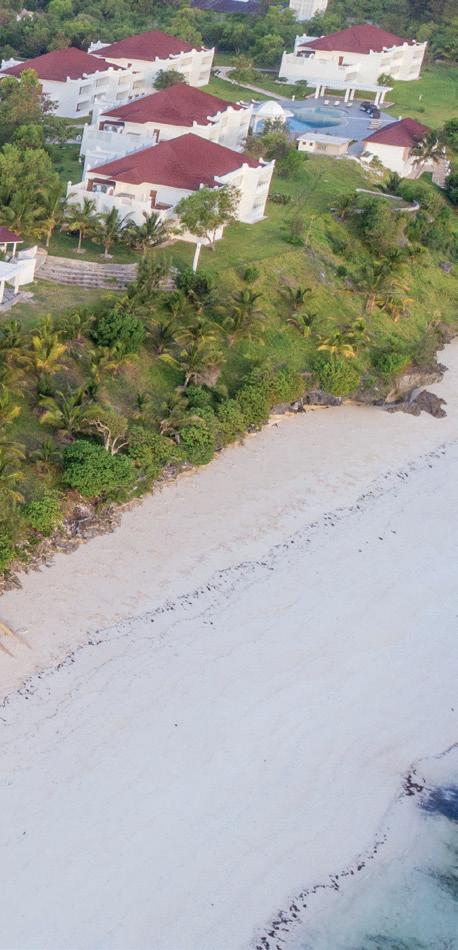
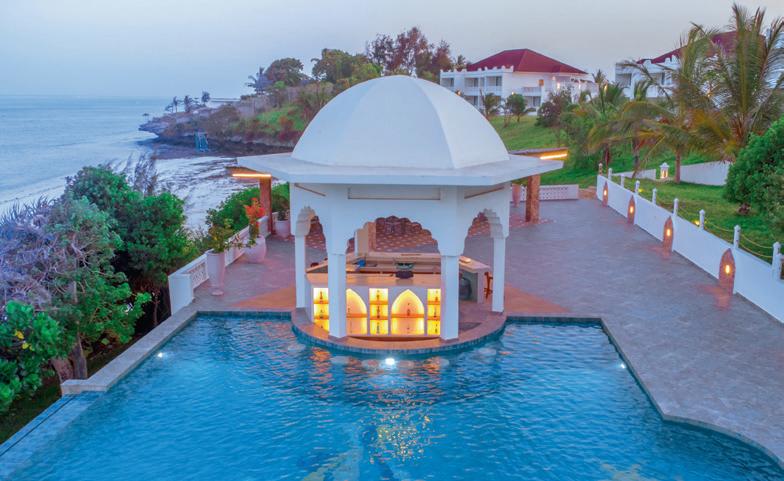
Th e Shukran Palace stands as a crown jewel along Zanzibar’s coastline, a five-star resort that combines palatial luxury with island serenity. Spread across 25 acres of pristine beachfront, the property offers an unparalleled escape where sophisticated comfort meets the natural beauty of the Indian Ocean.
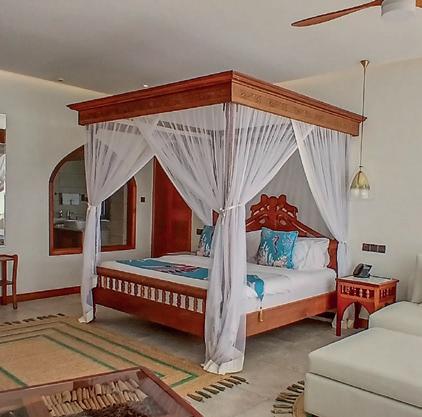
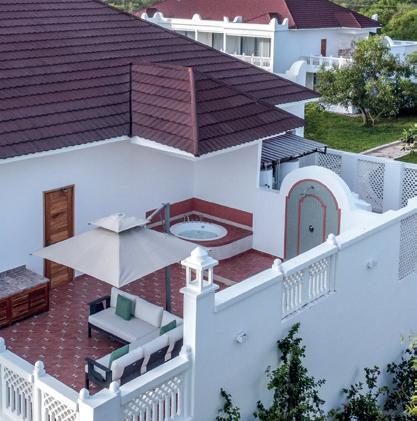
The resort’s architecture reflects Zanzibar’s rich heritage, blending ornate details with modern amenities to create spaces that are both visually striking and inviting. At its heart are 100 thoughtfully designed rooms and suites. Palace Rooms, at 85 square metres, feature floor-toceiling windows framing sweeping ocean views, while the 20 Palace Suites, at 130 square meters, offer private Jacuzzis and a heightened sense of space and privacy. Each accommodation is furnished with attention to detail, ensuring a refined yet welcoming environment.
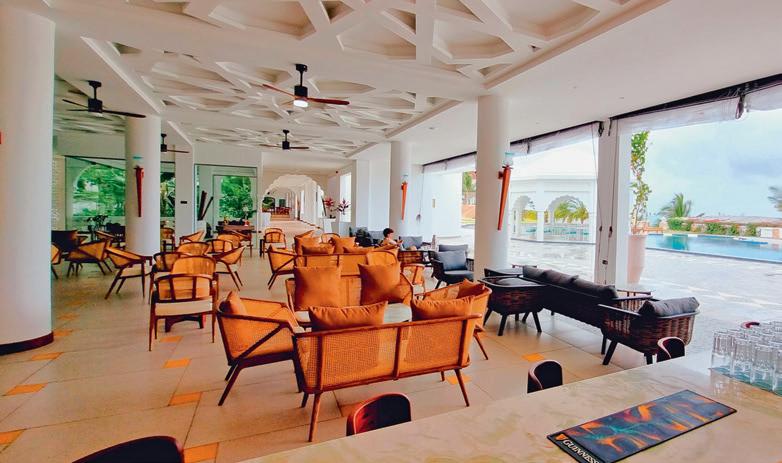
Dining at Shukran Palace is a highlight. The main restaurant serves an extensive selection of international and local dishes, while two specialty restaurants offer distinctive culinary experiences. A coffee shop provides a casual setting for breakfast, light lunches, or artisanal coffee and pastries. Three bars cater to different moods: the main bar is a social hub for cocktails, the pool bar delivers refreshments poolside, and the Italian bar offers Mediterranean-inspired drinks in a relaxed, elegant setting.
Three swimming pools are surrounded by sun loungers, where attentive staff ensure comfort and service. The resort’s spa, with three treatment rooms, blends international wellness techniques with local practices, offering massages, facials, and signature therapies. A fully equipped gym overlooks the tropical gardens, making exercise a pleasure rather than a chore.
The Shukran Palace in Zanzibar is the newest addition to the Mada Collection and its
first property on Zanzibar
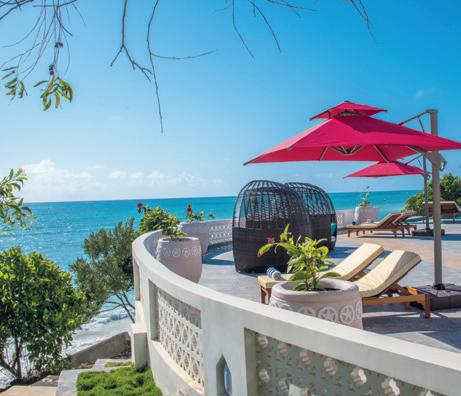
The private beach, stretching 500 metres along Zanzibar’s shoreline, is one of the island’s finest. Guests can stroll along the shore, swim, or unwind under palmthatched umbrellas, enjoying peaceful seclusion even when the resort is full. Shukran Palace caters to all types of travellers. Families benefit from a kids’ club, while active guests can play beach volleyball and table tennis , use the pool table. The resort also accommodates events and celebrations, with conference facilities for up to 250 delegates – ideal for corporate retreats, weddings, or special gatherings. Its location provides easy
access to Zanzibar’s treasures. Stone Town, a UNESCO World Heritage Site, is just 64 km away, approximately an hour and 25 minutes by road. Convenient airport shuttle service connects guests to Zanzibar’s Abeid Amani Karume International Airport, 65 km from the property.
As the newest addition to the Mada Collection and the group’s first Zanzibar property, Shukran Palace represents a fresh chapter in island hospitality. It is a place where palatial luxury meets the rhythms of the Indian Ocean, where every sunrise offers new experiences, and where guests can craft lasting memories.
FACT FILE
STAR RATING:
NUMBER OF ROOMS: 100 (80 Palace Rooms / 20 Palace Suites)
LEISURE: Three swimming pools, gym, spa
RESTAURANTS: Main restaurant, two specialty restaurants, coffee shop
BARS: Main bar, pool bar, Italian bar
BEACH FRONTAGE: 500 meters
CONFERENCING: Up to 250 people
ENTERTAINMENT: Live shows
NEARBY ATTRACTIONS: Stone Town (UNESCO World Heritage Site)
OTHER FACILITIES: Airport shuttle
GPS: Latitude: 6.136569° S | Longitude: 39.512618° E
DISTANCES: Stone Town 64 km / 1 hr 25 mins, Zanzibar Airport 65 km / 1 hr 25 mins
Urban tranquillity near Nairobi’s Karura Forest
Location: Nairobi, Kenya – Thika Road, near Karura Forest
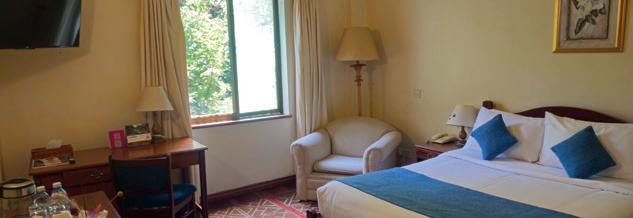
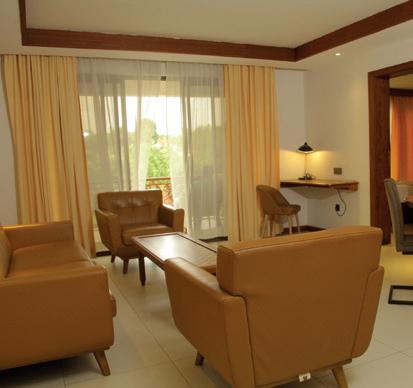
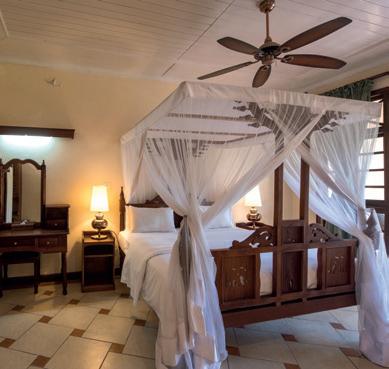
Lo cated on the edge of the Karura Forest, Hotel La Mada offers a tranquil retreat from Nairobi’s bustle. This contemporary four-star hotel features 35 spacious en-suite rooms, including 30 Deluxe rooms and five Executive suites, all furnished with classic wooden beds and crisp white linens for a comfortable stay.
Dining options include an à la carte restaurant for fine dining and the relaxed Lion’s Den for barbecued lunches. A coffee shop and pool bar provide refreshments in a scenic woodland setting. The swimming pool, surrounded by lush greenery, offers a space to unwind, while free Wi-Fi and an airport shuttle add convenience for both leisure and business guests.
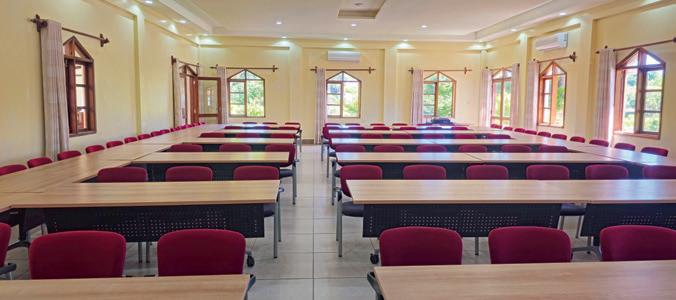
Hotel La Mada is well suited for business events, with four conference halls accommodating 10–380 delegates, an executive boardroom, and secretarial services. The Lion’s Den can also be adapted for cocktails, live entertainment, or special events.
LOCATION
GPS: 1°14’42.2” S | 36°51’31.9” E
CITY CENTRE: 10 km | 15–20 mins
JOMO KENYATTA INTERNATIONAL AIRPORT (JKIA): 25 km | 20–40 mins
WILSON AIRPORT: 18 km | 25–35 mins
FACT FILE
STAR RATING:
LOCATION: Thika Road, Nairobi, Kenya
NUMBER OF ROOMS: 35 (30 Deluxe / 5 Executive suites)
LEISURE: Swimming pool
DINING: Two restaurants
BARS: Main bar, pool bar
POWER SUPPLY: 220V
CONFERENCING: Four halls for 10–380 people; meeting room and boardroom; PA systems and LCD projectors
ENTERTAINMENT: Live bands
NEARBY ATTRACTIONS: Karura Forest
OTHER FACILITIES: Airport shuttle service, business centre, Wi-Fi
PIPELINE
PIPELINEESTATE ROAD
Historic boutique hotel in Nairobi
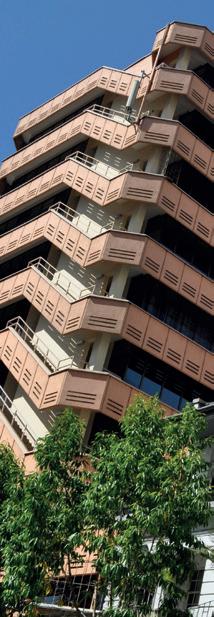
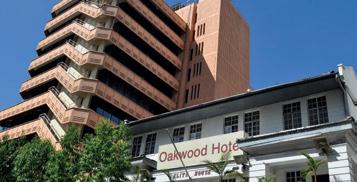
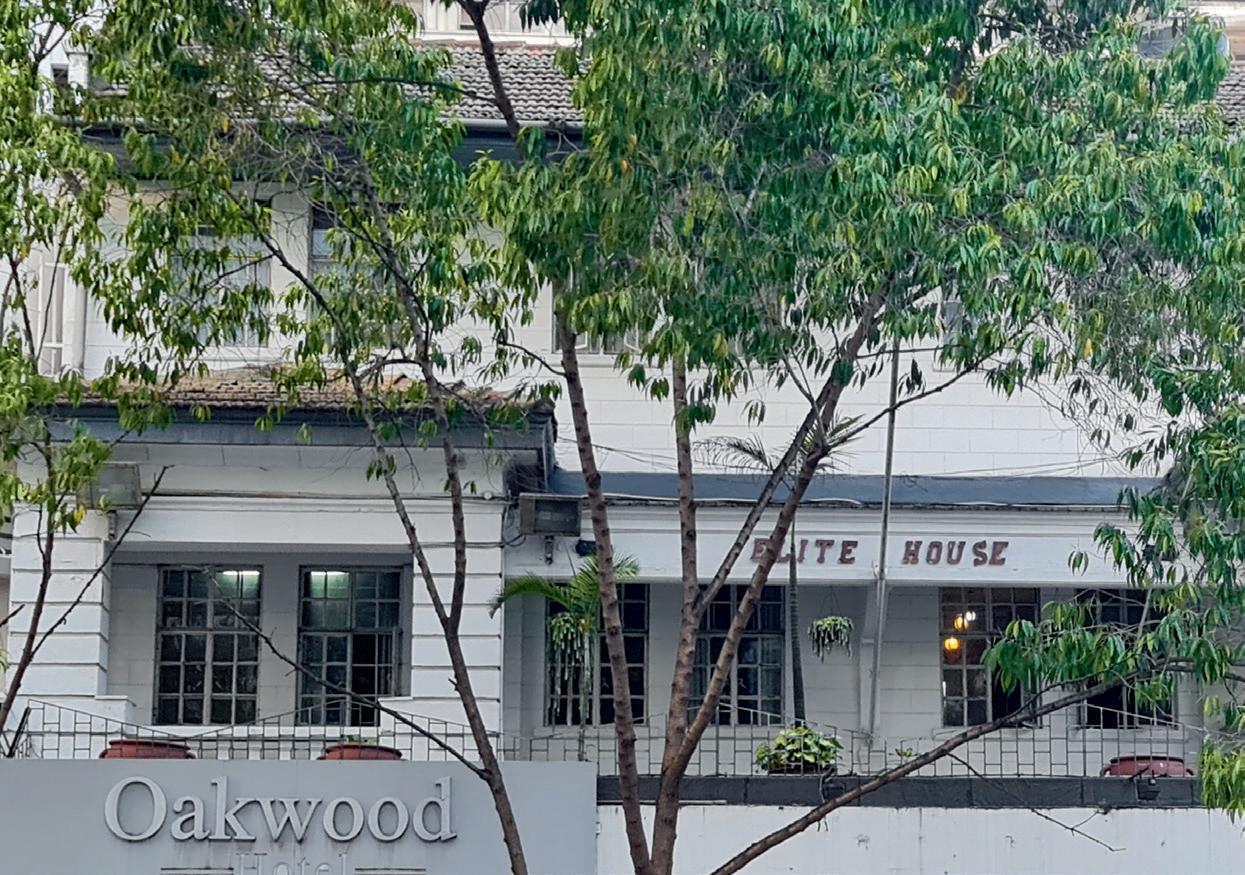
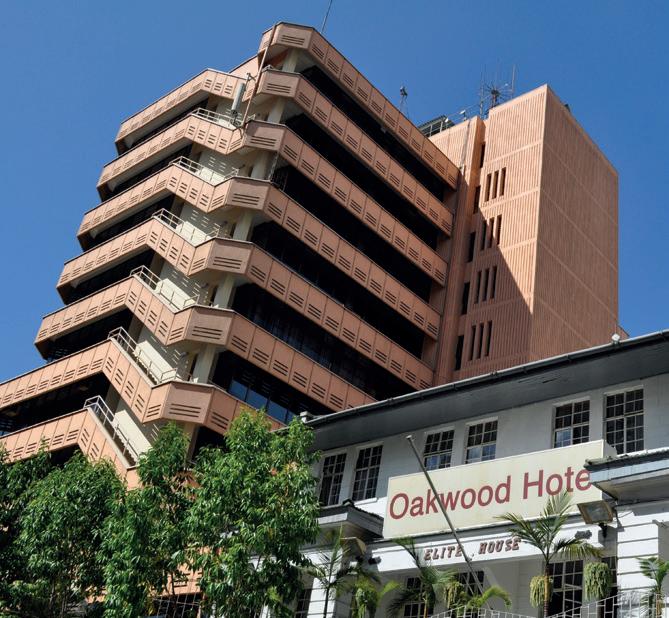
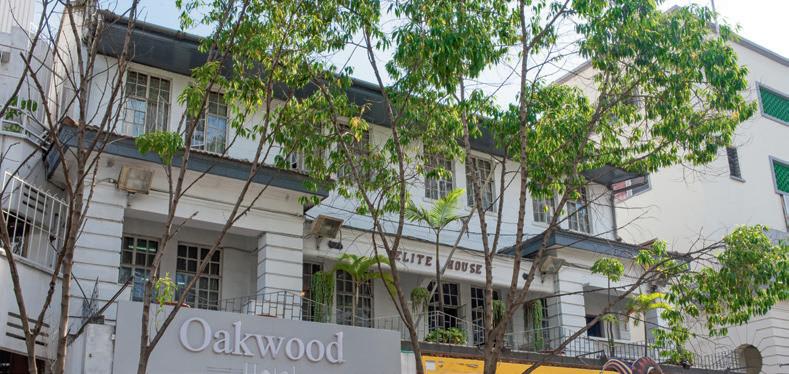
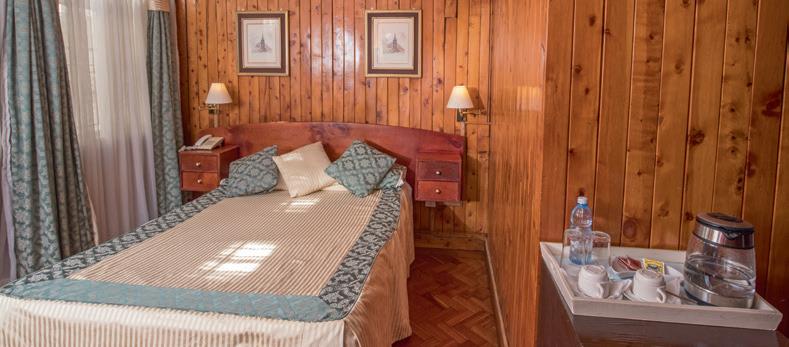
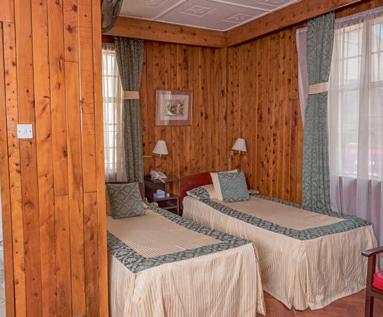
Oakwood Hotel, named for its distinguished oak wood panelling, combines timeless elegance with modern comfort in the heart of Nairobi.
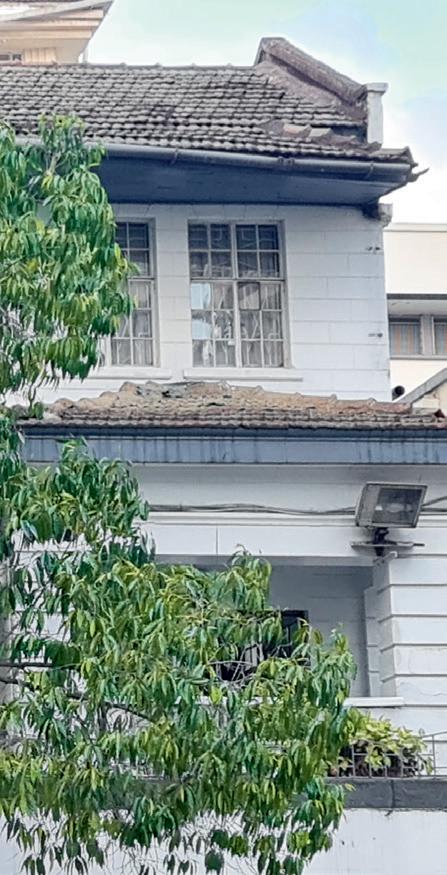
Housed within the iconic Elite House building, the property exudes historic charm while offering thoroughly contemporary amenities.
The hotel features 19 self-contained rooms, each thoughtfully designed to provide a warm, inviting atmosphere. Rooms include, television with in-house entertainment, mini-refrigerator, and tea and coffee-making facilities.
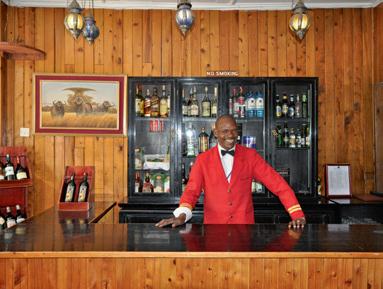
Business travellers benefit from the on-site business centre with Wi-Fi connectivity and a versatile meeting hall, ideal for intimate gatherings or corporate events. After a busy day, guests can relax at the welcoming bar, enjoying panoramic views of bustling Kimathi Street, or dine in the hotel’s restaurant with expertly prepared à la carte dishes. A complimentary full English-style breakfast is included in the room rate.
Centrally located, the Oakwood Hotel offers effortless access to Nairobi’s shopping districts, cultural attractions, and its commercial heart. The nearby railway station connects guests to Mombasa, Naivasha, and other destinations via Kenya’s high-speed SGR line.
Experience the perfect blend of heritage, comfort, and convenience at the Oakwood Hotel.
Location: Central Business District, Nairobi, Kenya
KIMATHISTREET
KIMATHILANE
CABRALSTREET
GOVERMENTLANE
KIMATHILANE
KIMATHISTREET
KIMATHISTREET
FACT FILE
STAR RATING:
NUMBER OF ROOMS: 19
DINING: 1 restaurant
BARS: 1 bar
FACILITIES: Wi-Fi, business centre, meeting hall
POWER SUPPLY: 220V
GPS: Latitude: 1.2921° N | Longitude: 36.8219° E
DISTANCES: City Centre – walking distance; JKIA – 12 km / 20–30 mins; Wilson Airport – 8 km / 20 mins
MOIAVENUE
KENYATTAAVENUE
KENYATTAAVENUE
KAUNDASTREET
KENYATTAAVENUE
STANDARDSTREET
MAMANGINA
Tropical coastal resort with conference facilities
KILIFI BAY BEACH RESORT
Location: Kilifi, Kenya – North of Mombasa
Kilifi Bay Beach Resort is a four-star coastal retreat set along Kenya’s pristine Kilifi coastline. The property is renowned for its beachfront position, tropical gardens, and relaxed atmosphere, offering guests a serene escape for both leisure and business stays.
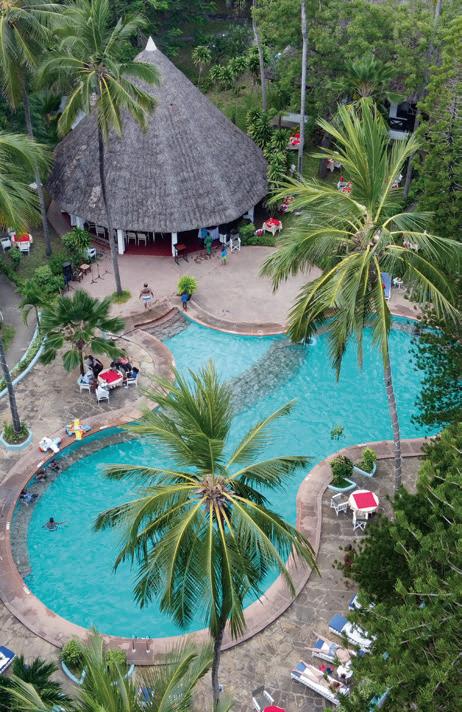
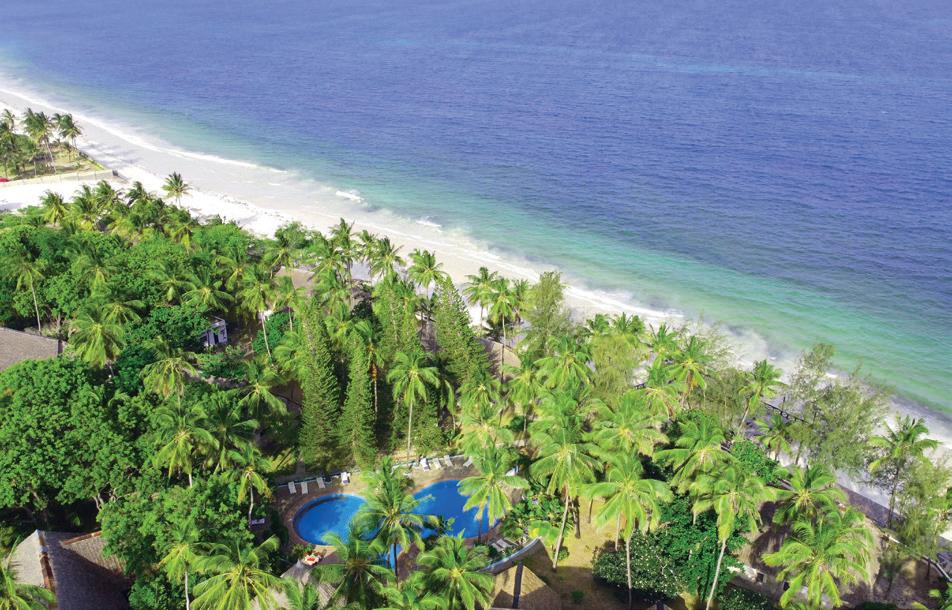
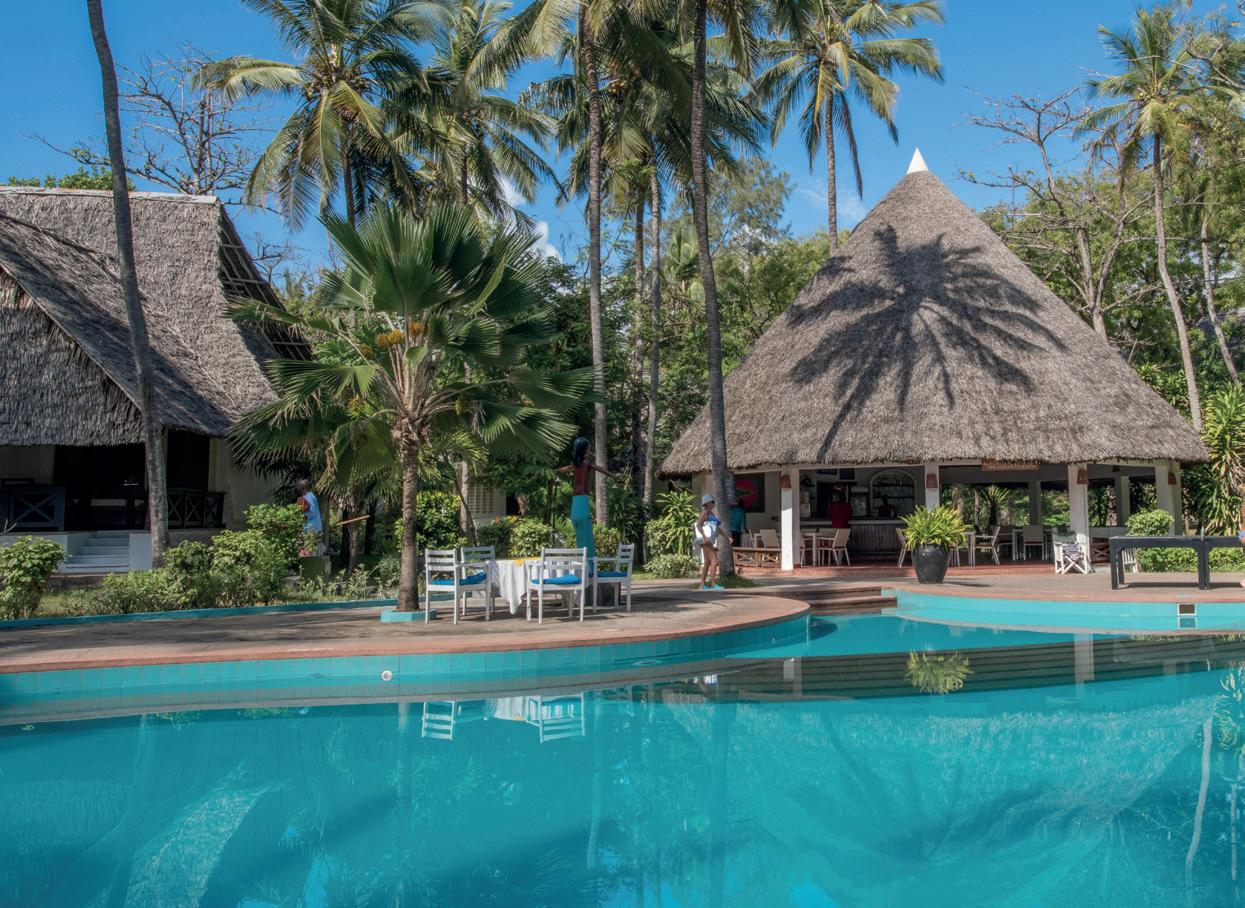
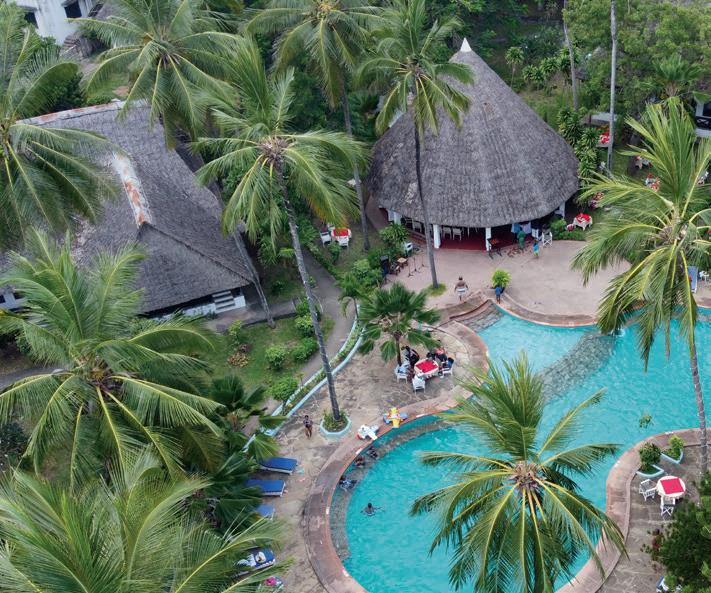
The resort features 49 elegantly appointed rooms, each with a private balcony overlooking the Indian Ocean. Modern amenities include television, telephone, and complimentary Wi-Fi, while complimentary massage services and two swimming pools enhance the guest experience. Dining options include the main restaurant, serving international cuisine with themed dinners and beachside barbecues, and the Coconut Bar, offering poolside refreshments. The newly renovated beach deck provides a tranquil setting for relaxation with expansive ocean views.
Adventure opportunities abound, with guided boat excursions along Kilifi Creek, snorkelling, diving, canoeing, and other water sports available directly from the beach. The Kilifi Convention Centre provides stateof-the-art facilities for corporate events, featuring four conference rooms capable of accommodating up to 500 delegates.
LOCATION GPS: 3°36’20.1” S | 39°52’59.6” E
DISTANCE | ESTIMATED TIME:
MOMBASA AIRPORT: 64 km | 1 hr 20 mins
MOMBASA RAILWAY STATION: 58 km | 1 hr 15 mins
MOMBASA TOWN: 56 km | 1 hr 15 mins
MALINDI TOWN: 55 km | 1 hr 15 mins
MALINDI AIRPORT: 50 km | 1 hr
FACT FILE
STAR RATING:
LOCATION: Kilifi, Kenya
NUMBER OF ROOMS: 49 (Ocean Front 11, Garden 22, Pool Side 16)
LEISURE: Two swimming pools, snorkelling, windsurfing, scuba diving, glass-bottomed boat, deep-sea fishing, creek cruises, table tennis
DINING: Two restaurants
BARS: Three bars
CONFERENCING: Facilities for up to 500 people; PA systems and LCD projectors
ENTERTAINMENT: Acrobatic shows, discos, live music, traditional African performances
NEARBY ATTRACTIONS: Kilifi Harbour and Kilifi Creek
OTHER FACILITIES: Massage service, Wi-Fi, curio shop
Modern business and leisure hotel in Kampala
Location: Kampala, Uganda –Namanve Business Park
The elegantly appointed and well-located property draws inspiration from Uganda’s vibrant natural beauty
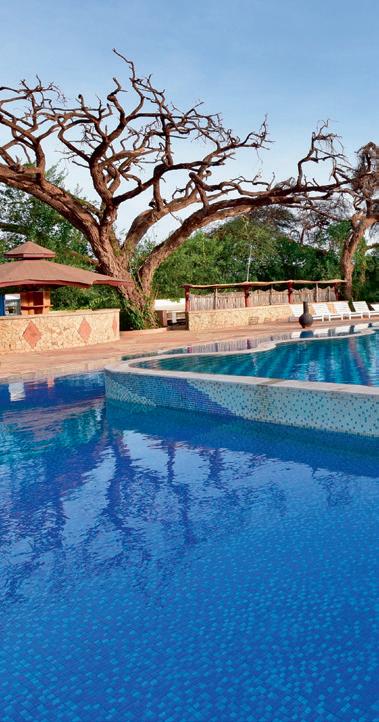
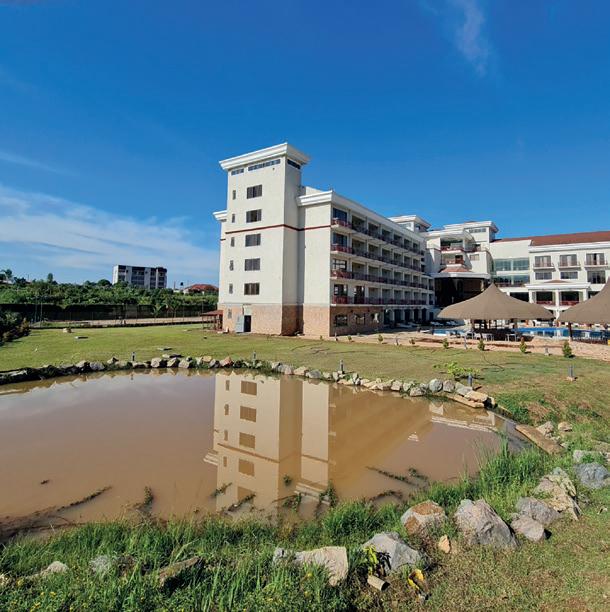
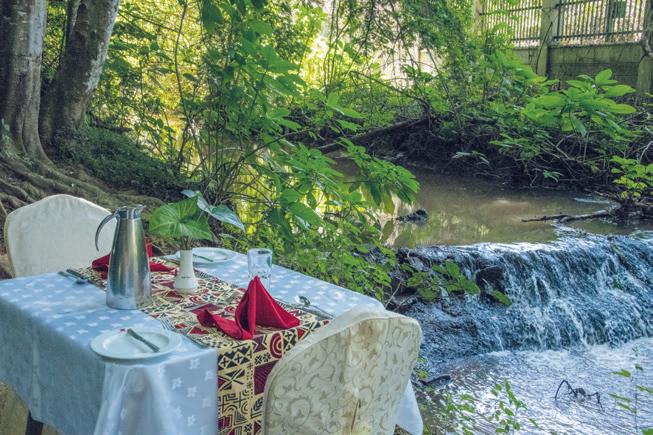
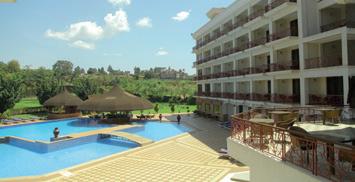
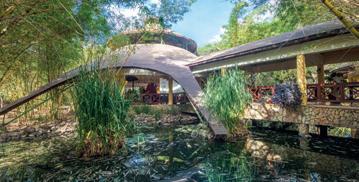
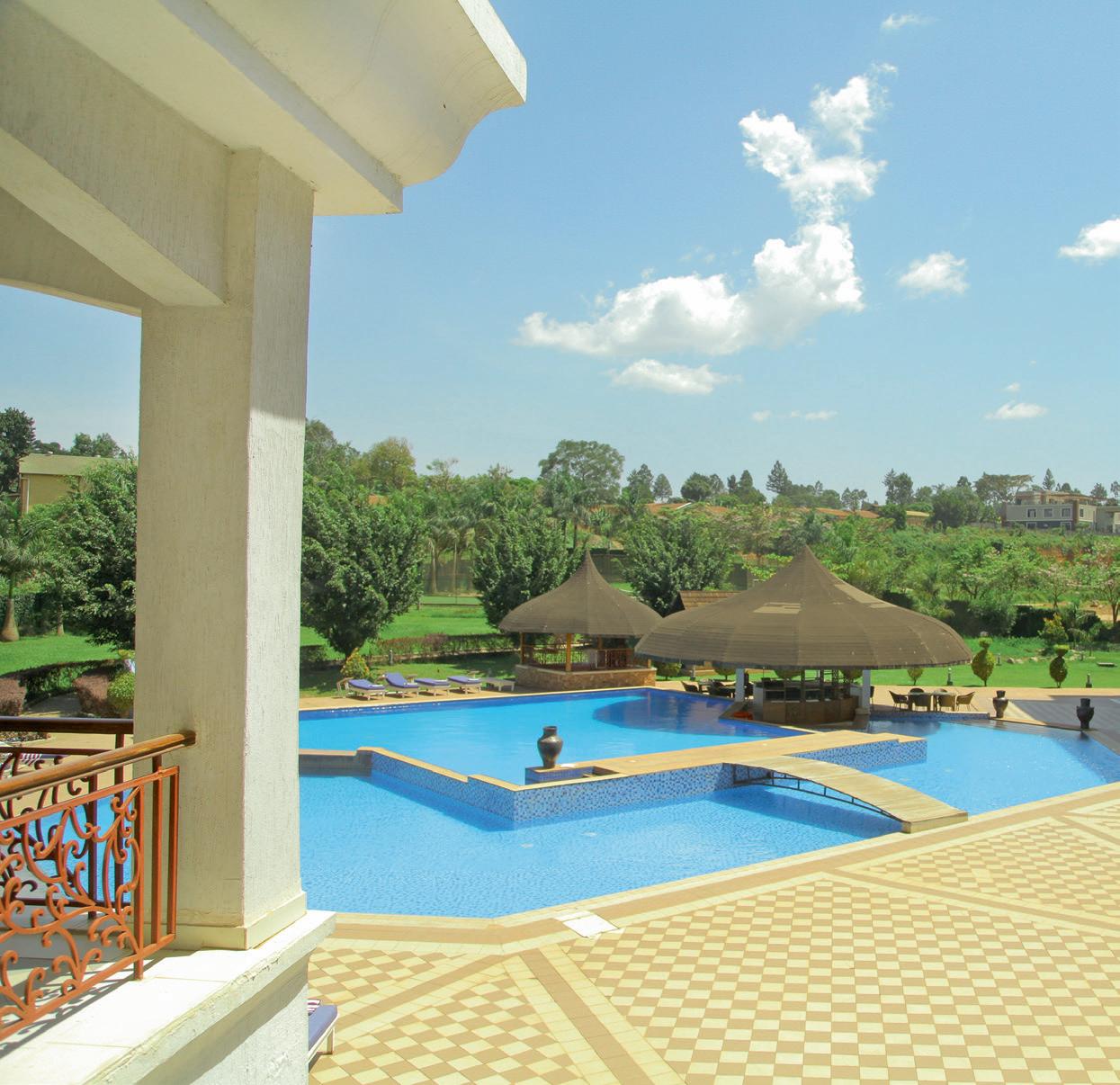
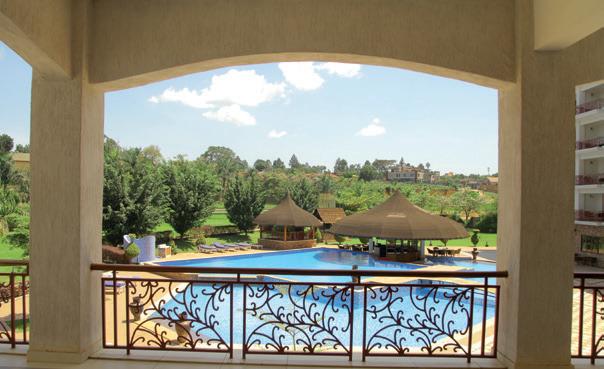
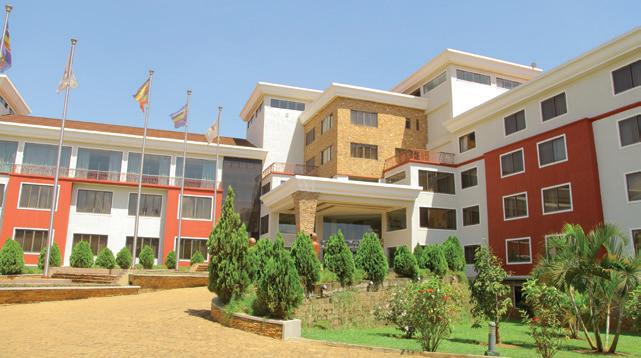
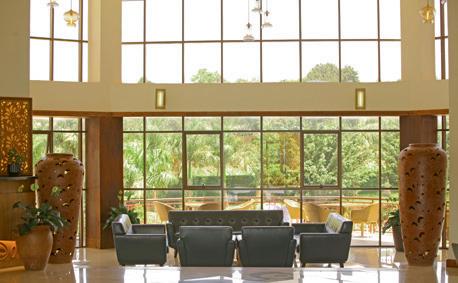
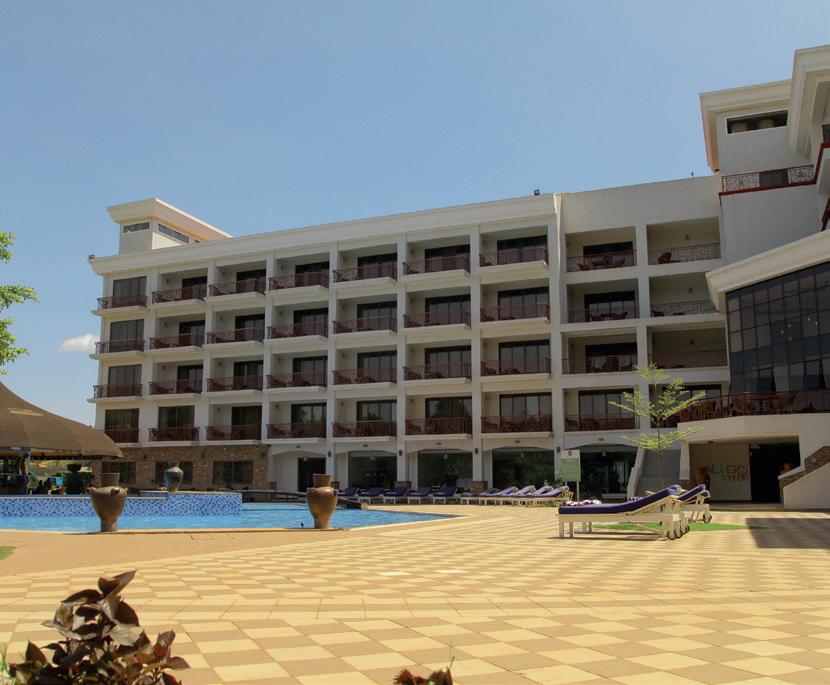
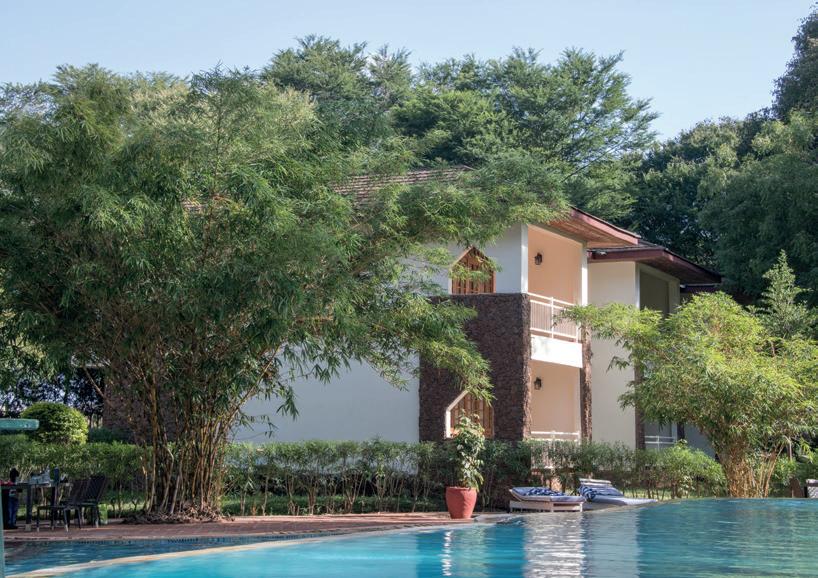
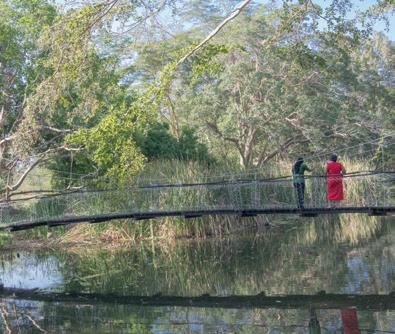
Kampala Nile Resort is a luxurious four-star hotel set within the impressive Namanve Business Park, offering a peaceful escape from the city while remaining conveniently close to Kampala’s centre. Spread across six acres of landscaped gardens, the property features a natural freshwater spring that enhances its serene atmosphere.
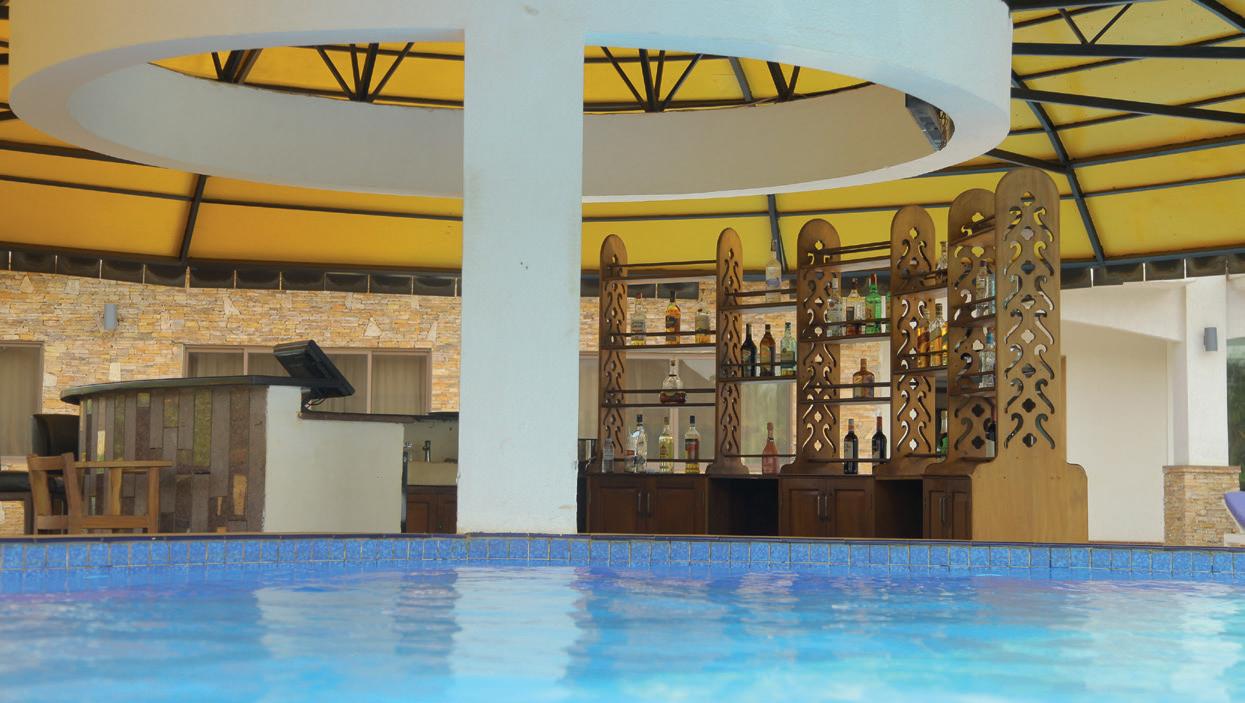
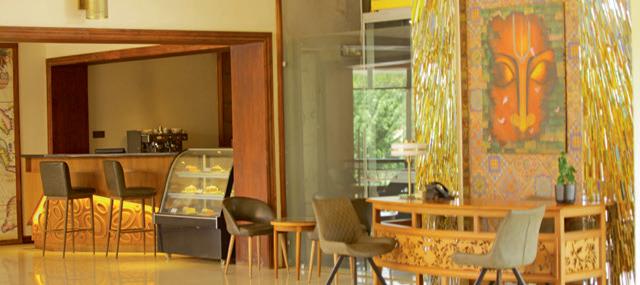
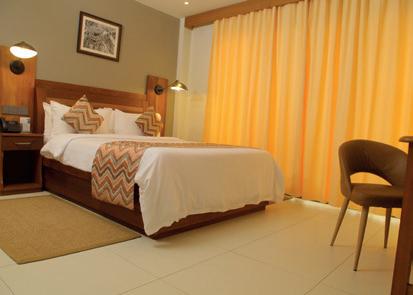
The resort has 125 elegantly appointed rooms, ranging from deluxe rooms to presidential suites and penthouses. All rooms include high-speed Wi-Fi, air conditioning, 43-inch smart televisions with DStv, hairdryers, and laundry services. Guests can enjoy four all-day restaurants, 24-hour room service, three bars, and a coffee shop, providing both convenience and a range of dining experiences.
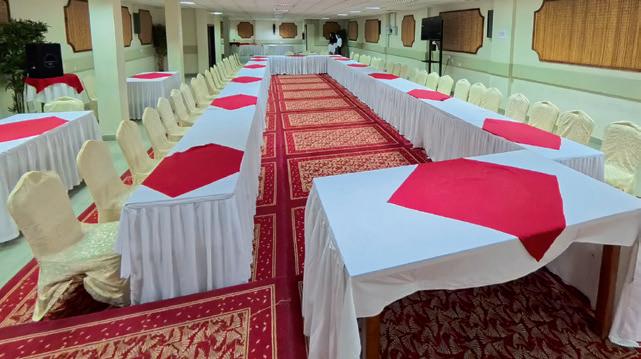
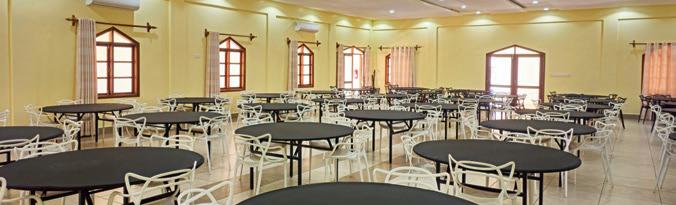
Business facilities include five conference halls, three meeting rooms, a banquet room, and a boardroom, all equipped with modern technology and Wi-Fi, making it suitable for corporate events and meetings. Leisure options include a spa with sauna, steam bath, and massage services, a gym, outdoor swimming pool, tennis courts, and a football pitch. The landscaped gardens also serve as an ideal setting for weddings and special occasions.
GPS: 0°21’39.553” N | 32°41’53.339” E CITY CENTRE: 14 km | 40 mins ENTEBBE AIRPORT: 55 km | 1 hr 40 mins
STAR RATING:
SOUTH SUDAN KENY E
LOCATION: Namanve Business Park, Kampala, Uganda
NUMBER OF ROOMS: 125
LEISURE: Swimming pool, spa, gym, tennis courts, football pitch
DINING: Four restaurants, 24-hour room service
BARS: Four bars
CONFERENCING: Five conference halls, three meeting rooms, banquet room, boardroom
ENTERTAINMENT: Live bands, traditional dances, in-house disco system
NEARBY ATTRACTIONS: Independence Monument, Garden City
OTHER FACILITIES: Concierge service, luggage storage, lockers, tour desk, currency exchange
KIDEPO
KAMPALA
KAABONG KOTIDO
Serene beachfront retreat with tropical gardens
Location: Kilifi, Kenya – North of Mombasa
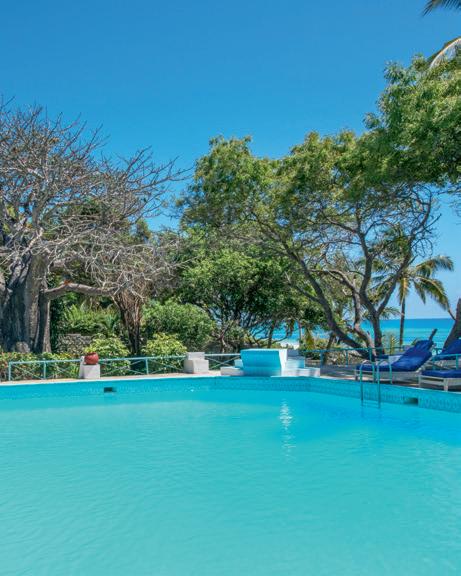
The Baobab Sea Lodge is located close to the coastal town of Kilifi –equidistance between Mombasa and Malindi
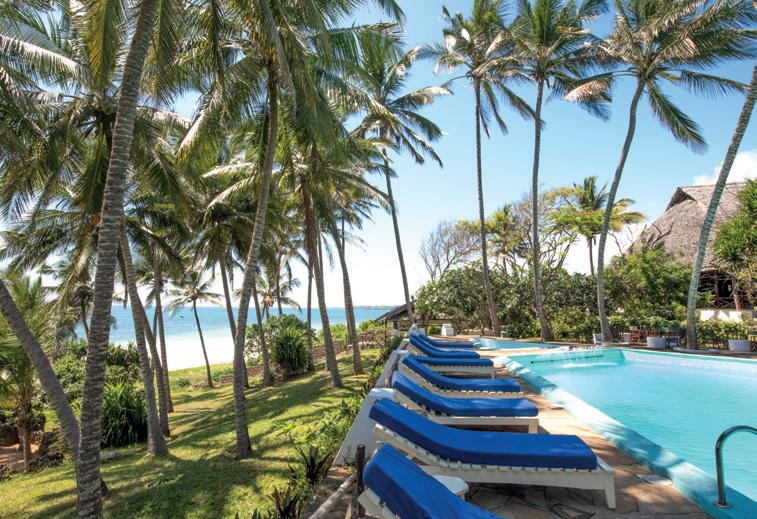
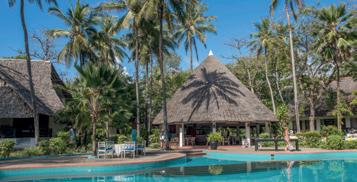
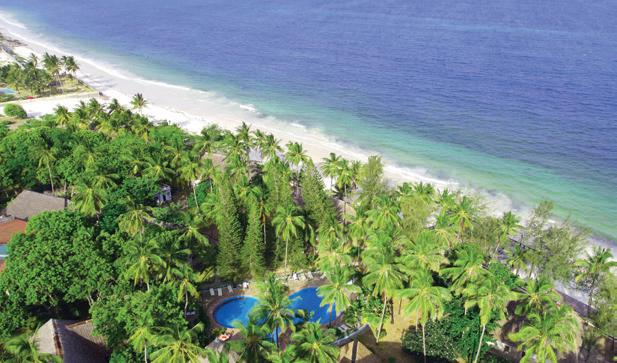
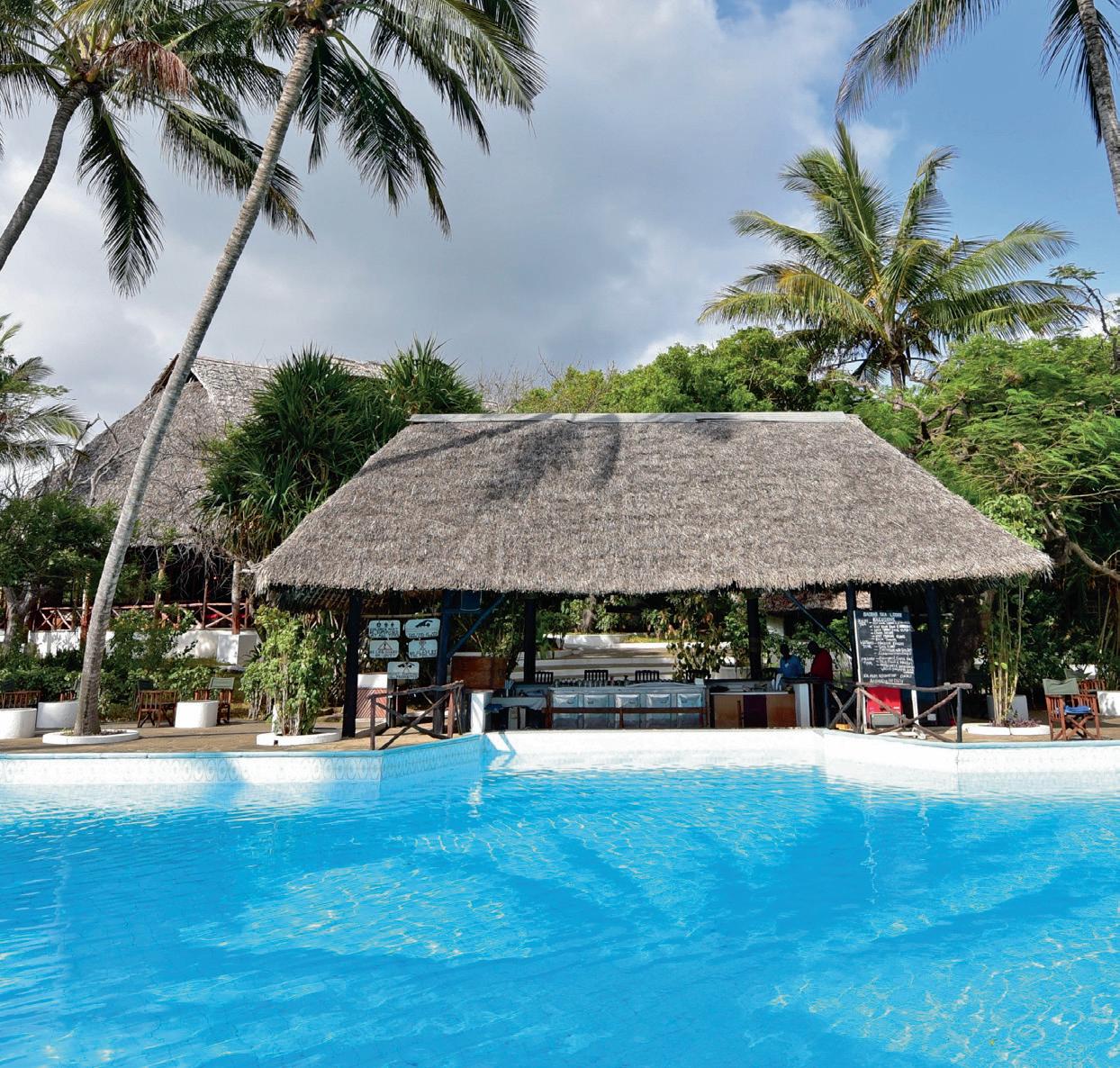
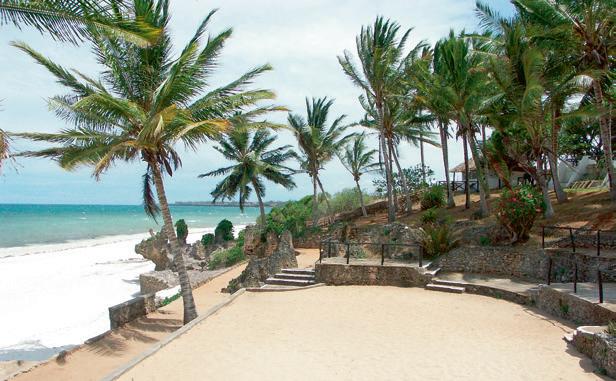
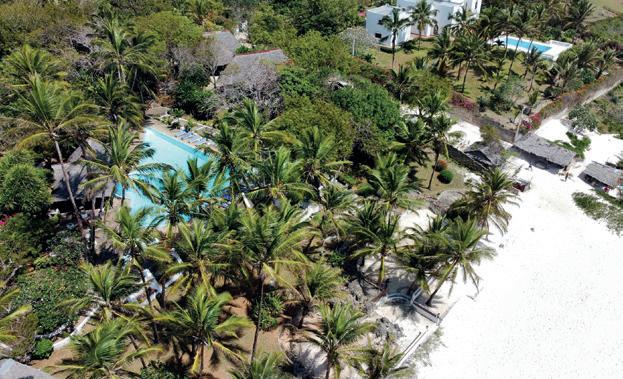
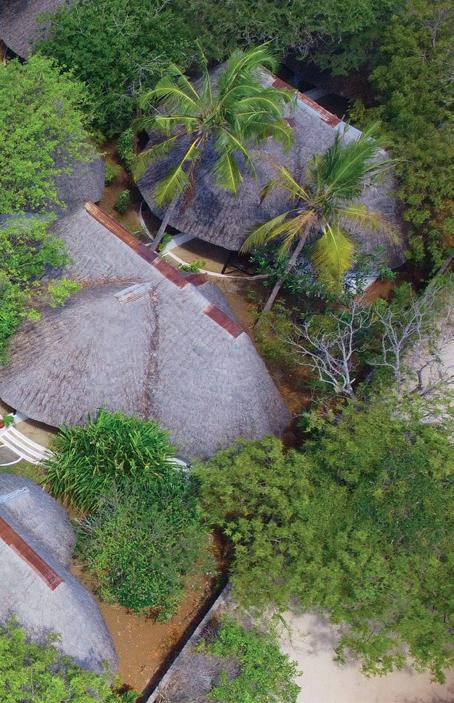
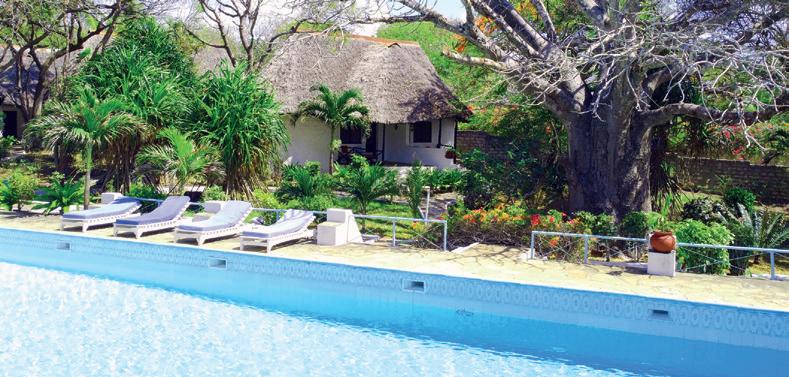
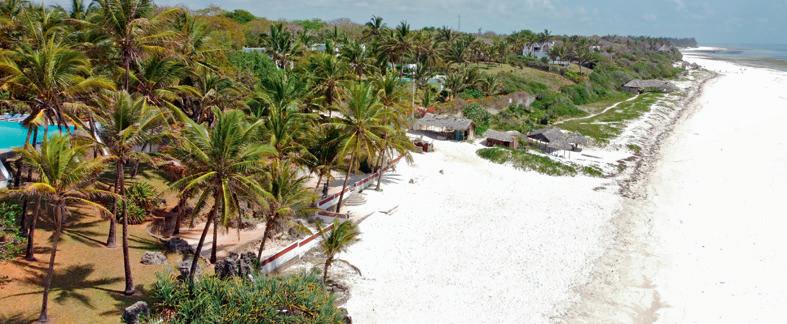
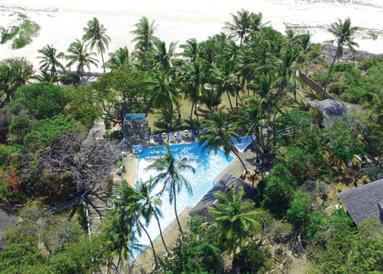
Ba obab Sea Lodge is a serene coastal retreat located on Kilifi beach, roughly equidistant between Mombasa and Malindi. Set within seven acres of tropical gardens and featuring a 60-metre stretch of pristine Indian Ocean shoreline, the lodge offers a budget-friendly escape for travellers seeking comfort with coastal character.
The lodge’s 30 rooms are designed in contemporary Swahili style, blending relaxation with authentic coastal charm. Guests can choose from various meal plans, including all-inclusive options or bed and breakfast, which allows for exploring local dining or enjoying the lodge’s own fresh seafood offerings.
Evening entertainment brings the property to life with themed nights, live music, traditional dance, and acrobatics.
For quieter moments, the two bars provide a relaxed setting for cocktails, while the television lounge offers a cosy retreat.
Adventure and water sports are central to the Baobab Sea Lodge experience. Activities include snorkelling, scuba diving, windsurfing, deep-sea fishing, canoeing, and glass-bottomed boat trips. A private boat is also available for scenic excursions around sheltered Kilifi Creek.
Baobab Sea Lodge caters to corporate events and gatherings, with a theatre-style room accommodating up to 200 delegates. Customised banqueting services and PA systems can be arranged to suit any occasion. As part of the all-inclusive package, guests can enjoy a complimentary massage, enhancing the coastal retreat experience.
LOCATION
GPS: 3°37’20.1” S | 39°52’59.6” E
FACT FILE
STAR RATING:
MOMBASA AIRPORT: 63 km | 1 hr 20 mins
MOMBASA RAILWAY STATION: 55 km | 1 hr 15 mins
MOMBASA TOWN: 53 km | 1 hr 15 mins
MALINDI TOWN: 52 km | 1 hr 15 mins
MALINDI AIRPORT: 47 km | 1 hr
NUMBER OF ROOMS: 38 (Family Garden Suite 5, Pool 5, Superior Garden Room 18, Ocean Front 2)
LEISURE FACILITIES: Two swimming pools (one for children), tennis, snorkelling, windsurfing, scuba diving, glass-bottomed boat, deep-sea fishing, creek cruises
DINING: One restaurant, banquets on request
BARS: Two bars and a swim-up pool bar
CONFERENCING: Room for 10–60 delegates; PA systems, LCD projector, computers
ENTERTAINMENT: Live music, themed nights, traditional African shows
NEARBY ATTRACTIONS: Kilifi Harbour, Kilifi Creek, fruit markets
OTHER FACILITIES: Wi-Fi
Luxury Safari Camp with stunning park views
Location: Tarangire National Park, Tanzania
Guests can look forward to a fabulous views in one of Tanzania’s finest parks
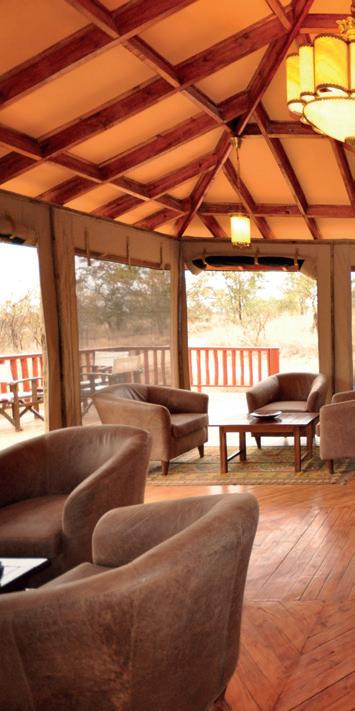
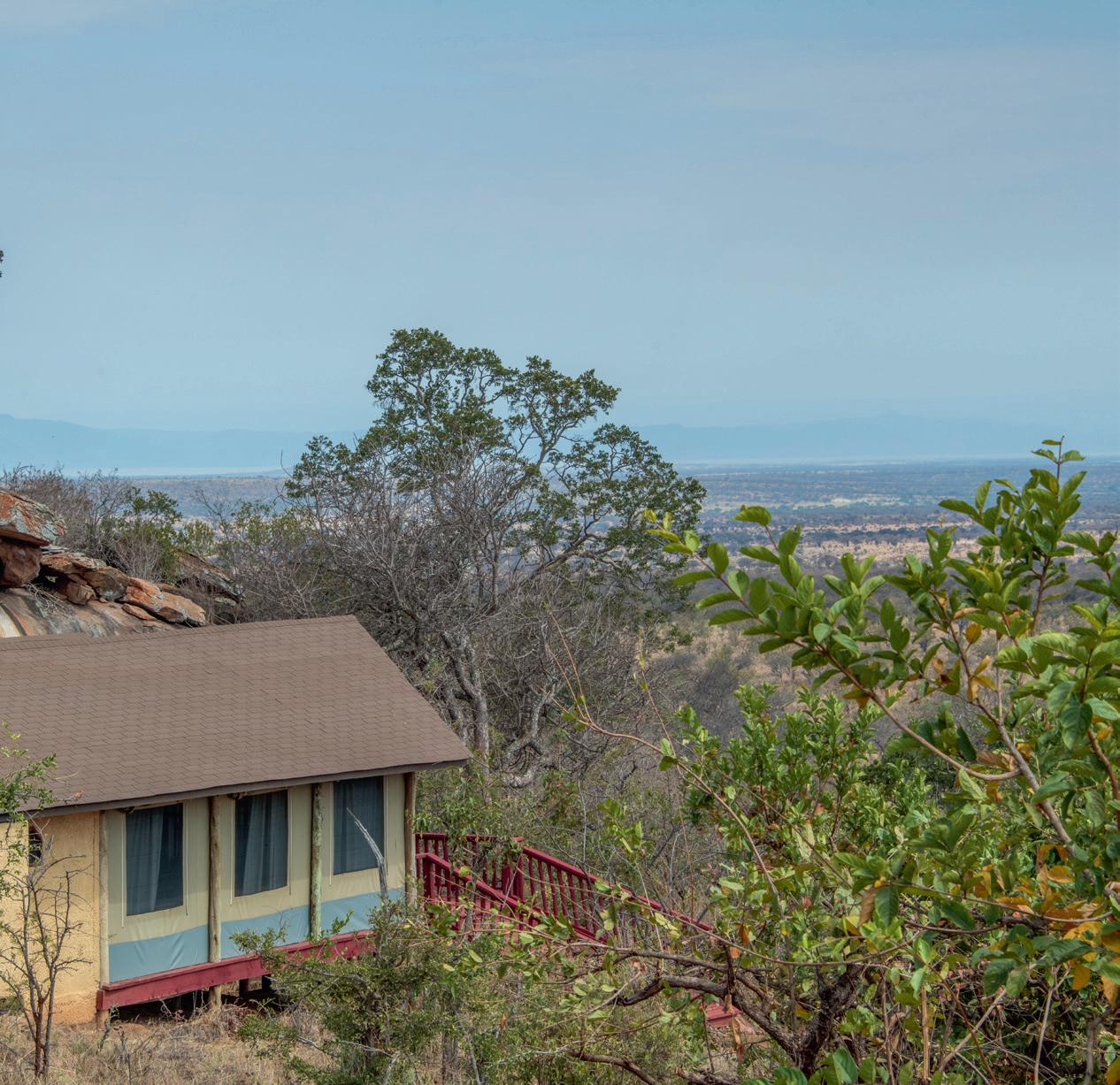
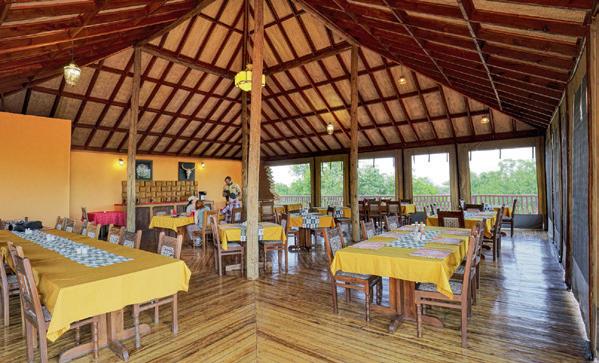
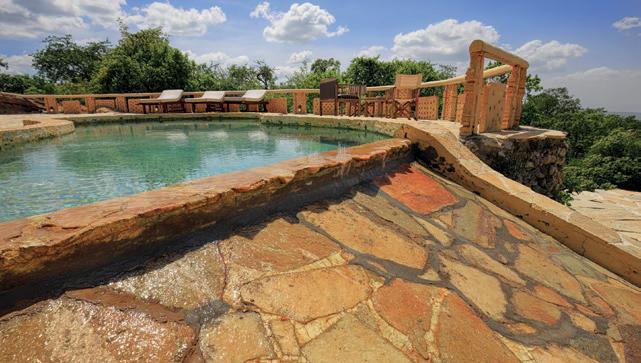
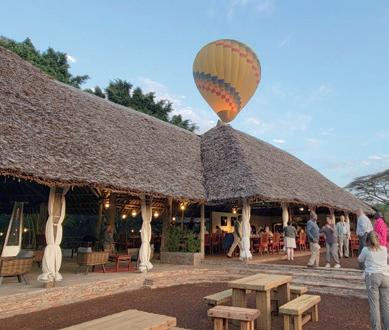
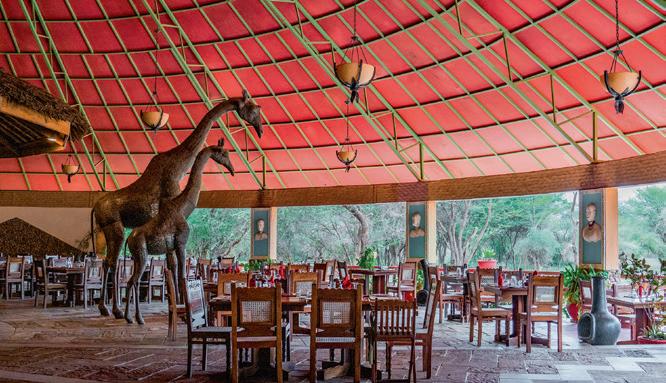
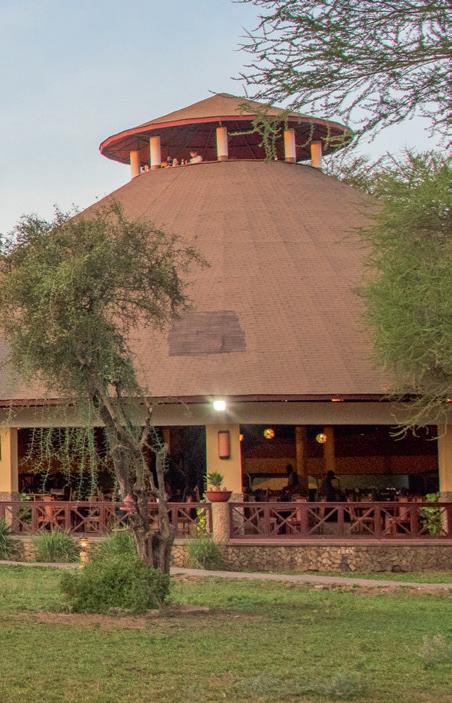
Pe rched atop Boundary Hill in Tarangire National Park, Elephant Rock offers elevated luxury and sweeping views across the horizon. Formerly known as Balloon Camp Tarangire, the camp has been enhanced with a new bar and dining area, providing a refined safari experience while maintaining its connection to the natural surroundings.
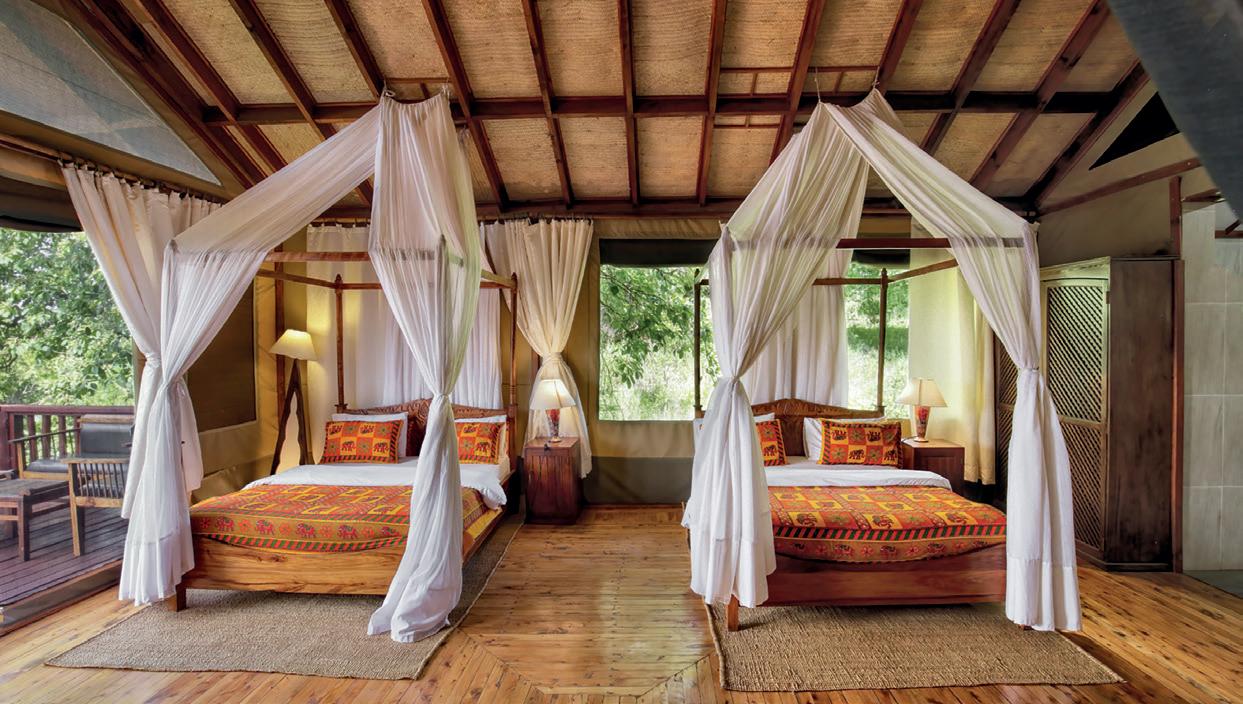
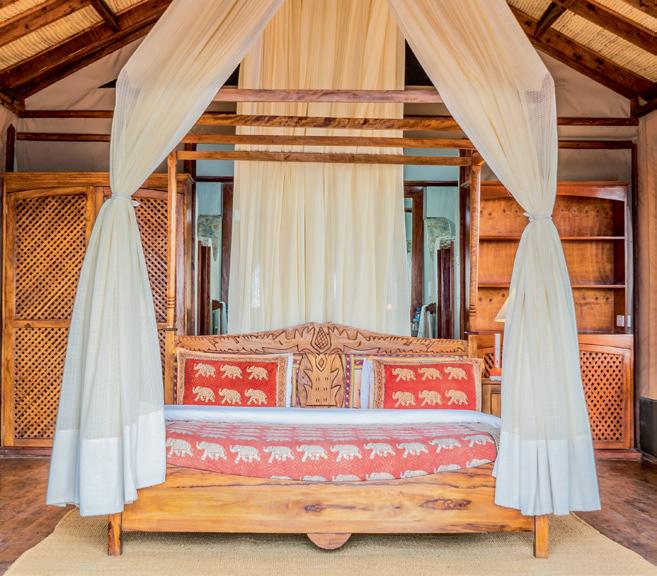
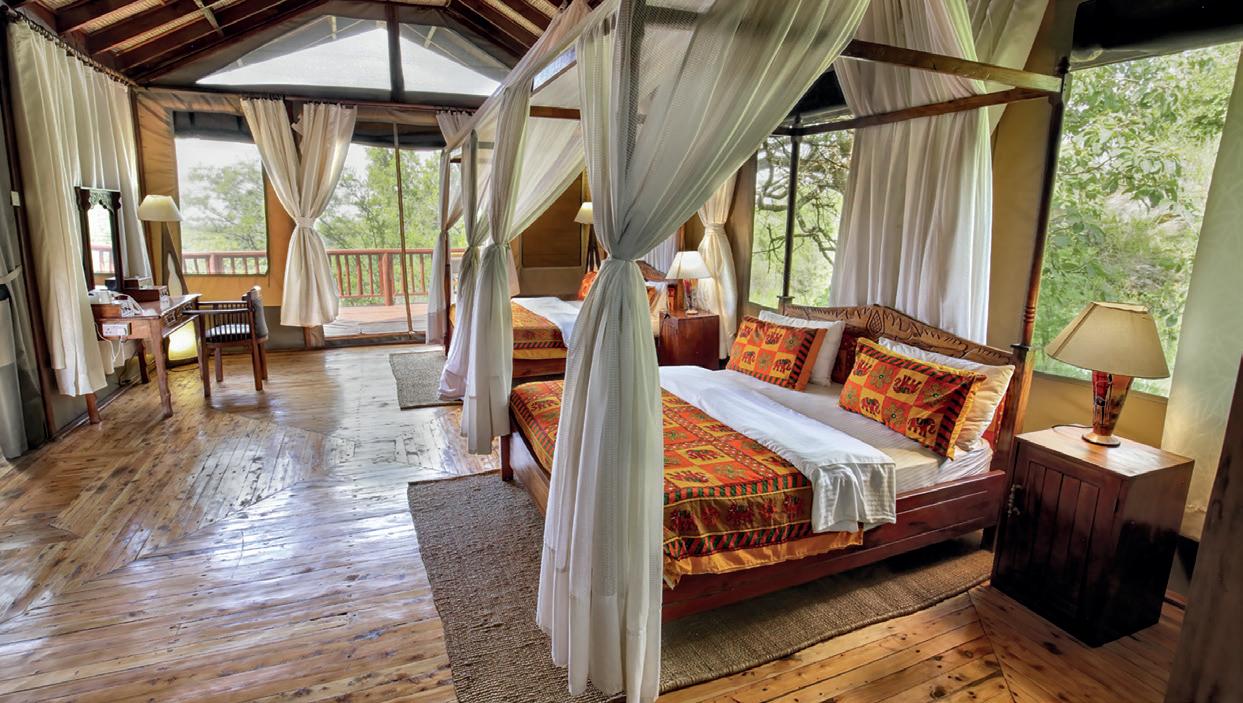
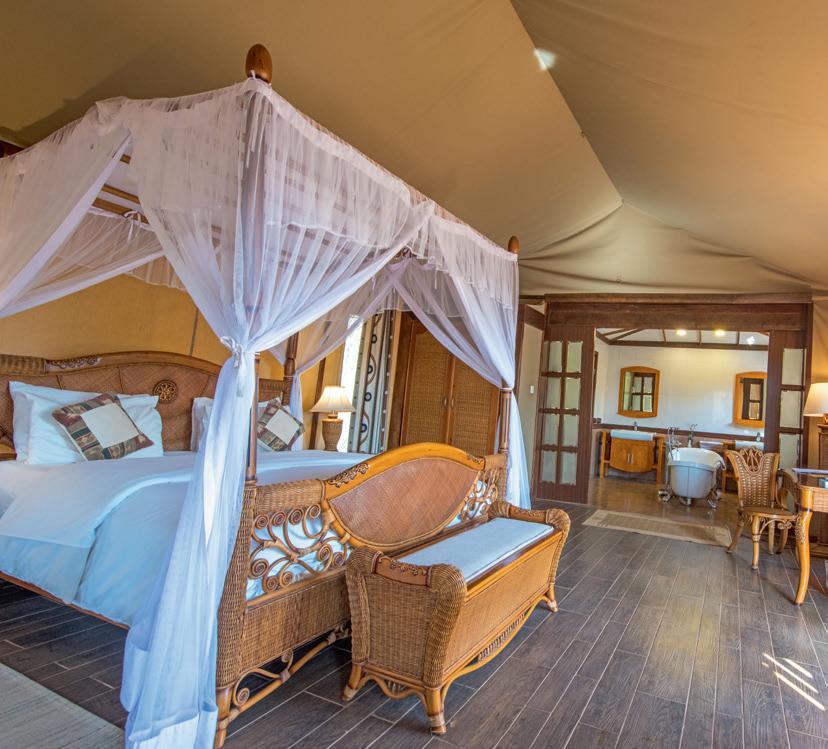
The camp features 16 grand safari tents, each with four-poster beds, spacious bathrooms, and a private veranda. Two interconnecting family tents share a sitting room, allowing families to enjoy both privacy and shared space while overlooking the park.
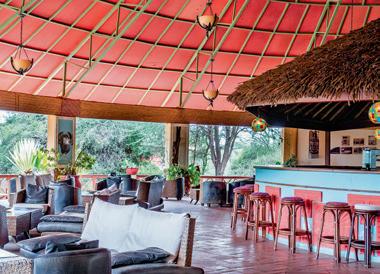
Guests can enjoy game drives through Tarangire National Park in comfortable 4x4 vehicles with experienced guides. Encounters with elephant, giraffe, and other wildlife form part of the park’s diverse landscapes. After a day in the bush, the swimming pool offers a relaxing retreat, while the lounge bar and dining area provide pre-dinner drinks and gourmet meals under the African sky.
ELEPHANT ROCK TARANGIRE
LOCATION
FACT FILE
GPS: 3°52’48” S | 35°58’42” E
ARUSHA: 115 km | 2 hrs
KURO AIRSTRIP: 15 km | 30 mins
LOCATION: Tarangire National Park, Tanzania
NUMBER OF TENTS: 16
LEISURE: Balloon safaris, nature walks, bush dinners
DINING: Restaurant, champagne-style breakfast in the park
POWER SUPPLY: 220V
FACILITIES: Swimming pool, Wi-Fi
Tarangire National Park
ARUSHA NABERERA
Mt Kilimanjaro National Park
Arusha National Park
MOSHI BABATI
lake Manyara National Park
BOMA NGOMBE
KINGORI
Authentic Masai Mara experience
Location: Masai Mara National Reserve, Kenya
Fig Tree Camp offers the chance to organise special gatherings in a unique setting
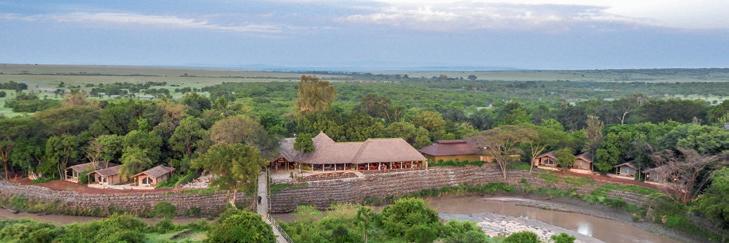
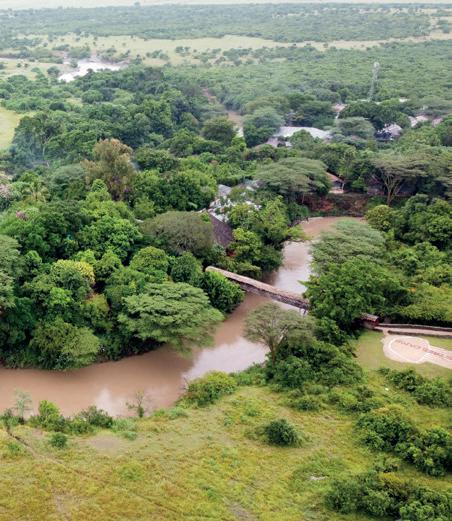
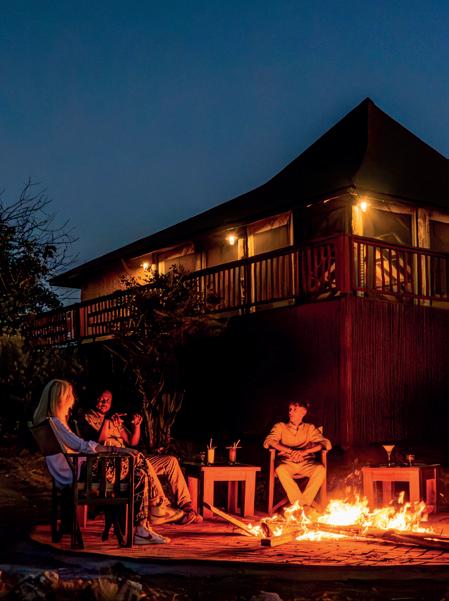
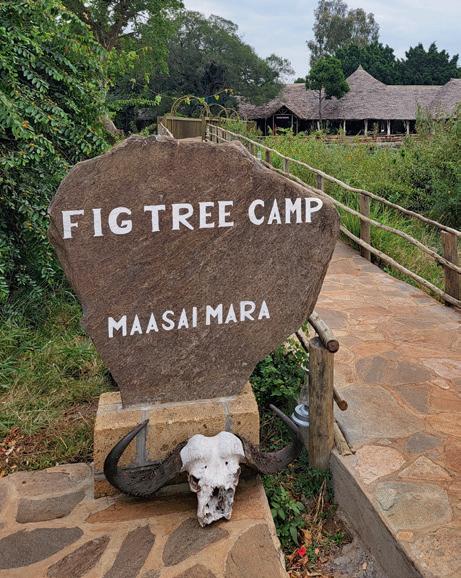
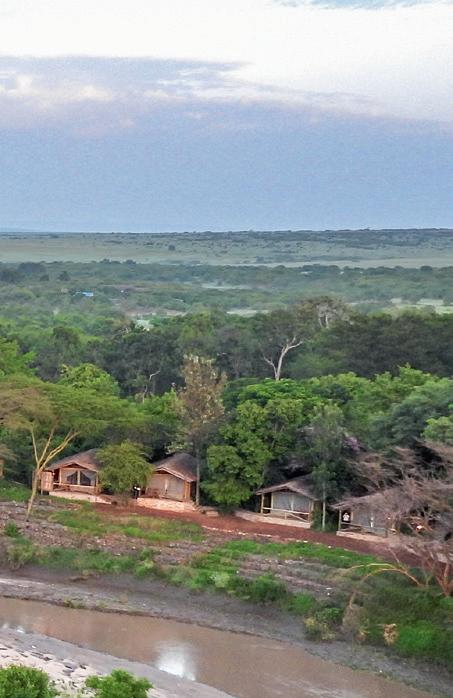
Si tuated on the banks of the Talek River, Fig Tree Camp offers a classic safari experience in the heart of the Masai Mara. Following extensive renovations in 2024, the camp combines its long-standing reputation with thoughtfully upgraded facilities, ensuring comfort while retaining its traditional tented charm.
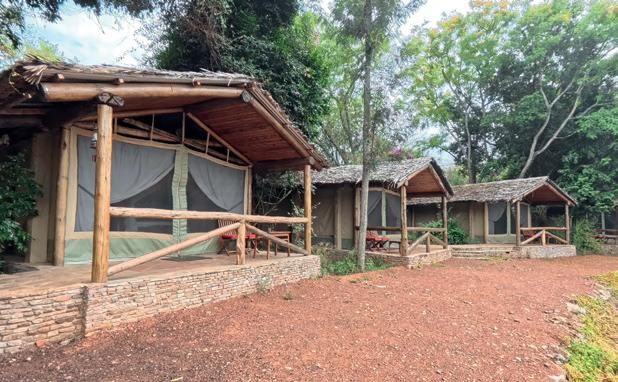
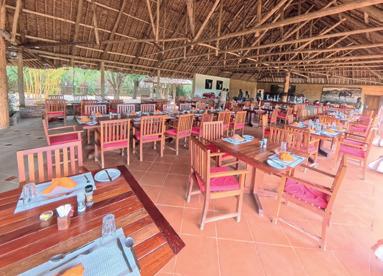
Guests can choose from spacious Deluxe/Ngamboli tents with private patios overlooking the river or Superior chalets, each with a balcony providing views across the Mara landscape. The newly rebuilt restaurant serves breakfast, lunch, and dinner, while the lounge area offers a relaxed setting for sundowners with panoramic views of the reserve. Evenings feature traditional Maasai performances, and romantic bush dinners can be arranged under the stars.
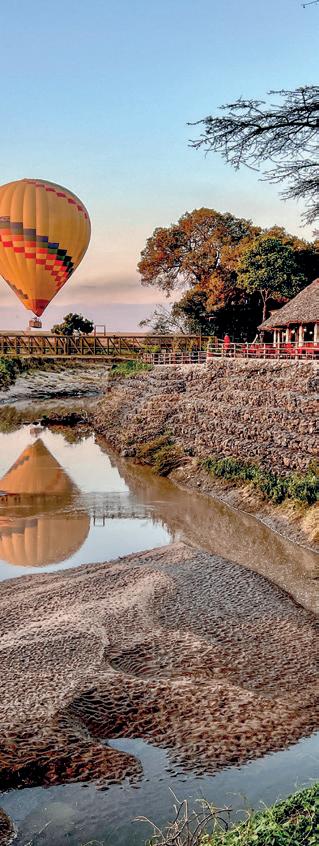
Adventure options include game drives, guided nature walks, and hot-air balloon safaris above the savannah as Fig Tree Camp serves as the base for Adventures Aloft balloon operations. A newly constructed bridge, raised two metres from its predecessor, ensures reliable access year-round. For a deeper connection to the landscape, guests can attend lectures by a resident naturalist or join guided game walks with Maasai moran guides. The camp is also equipped for business events and special occasions, with conference facilities and communal spaces suitable for corporate or private gatherings.
UGANDA G
KEEKOROK AIRSTRIP: 24 km | 40 mins OL KIOMBO AIRSTRIP: 14 km | 30 mins
LOCATION: Masai Mara National Reserve, Kenya
NUMBER OF ROOMS: 80 (River Front Tents, Bush Lodge Rooms 32)
ACCOMMODATION: Deluxe/Ngamboli tents and Superior chalets with private patios or balconies
DINING: Restaurant serving breakfast, lunch, and dinner
LEISURE & ACTIVITIES: Game drives, guided nature walks, hot-air balloon safaris, traditional Maasai performances, bush dinners
FACILITIES: Conference spaces, communal areas, lounge, panoramic viewing areas
Amboseli safari camp with Kilimanjaro views
Location: Amboseli National Park, Kenya
Ten Deluxe/Milima Safari Tents – each positioned to capture views of Africa’s highest mountain
Kilima Safari Camp is set within 360 acres of pristine wilderness in Amboseli National Park, offering an exceptional base to experience Kenya’s wildlife while enjoying unparalleled views of Mount Kilimanjaro. The camp blends comfort with adventure, making it ideal for both wildlife enthusiasts and seeking an authentic safari experience.
The camp features 72 thoughtfully designed rooms, including Superior Safari Tents, Deluxe/Milima Tents, and Superior Rooms, each with a private veranda to maximise views of Mount Kilimanjaro and the surrounding savannah. A central lookout tower near the dining area provides panoramic vistas of the mountain and park, all from the comfort of the camp.
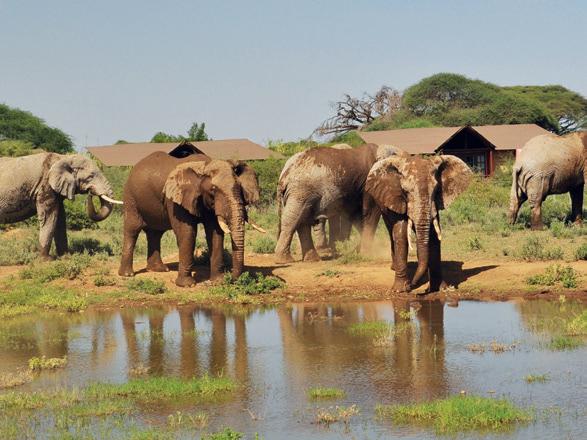
Guests can explore the park with guided game drives in 4x4 vehicles or intimate nature walks with Maasai guides. Wildlife at a nearby waterhole includes elephant, giraffe, zebra, and impala. After a day of exploration, unwind by the swimming pool, enjoy a massage, or relax around the campfire. Dining options include the main restaurant, bush breakfasts, and romantic private dinners under the stars.
235 km | 4 hrs
80 km | 2 hrs AMBOSELI AIRSTRIP: 12 km | 20 mins
YA A K
LOCATION: Amboseli National Park, Kenya
NUMBER OF ROOMS: 92 (Milima Tents 60, Superior Rooms 20, Bush Lodge 12)
DINING: Main restaurant, bush dinners, bush breakfasts
RECREATION: Game drives, guided
nature walks
LEISURE & ENTERTAINMENT: Swimming pool, campfire, Wi-Fi, Maasai cultural or wildlife talks, curio shop
NEARBY ATTRACTIONS: Mount Kilimanjaro
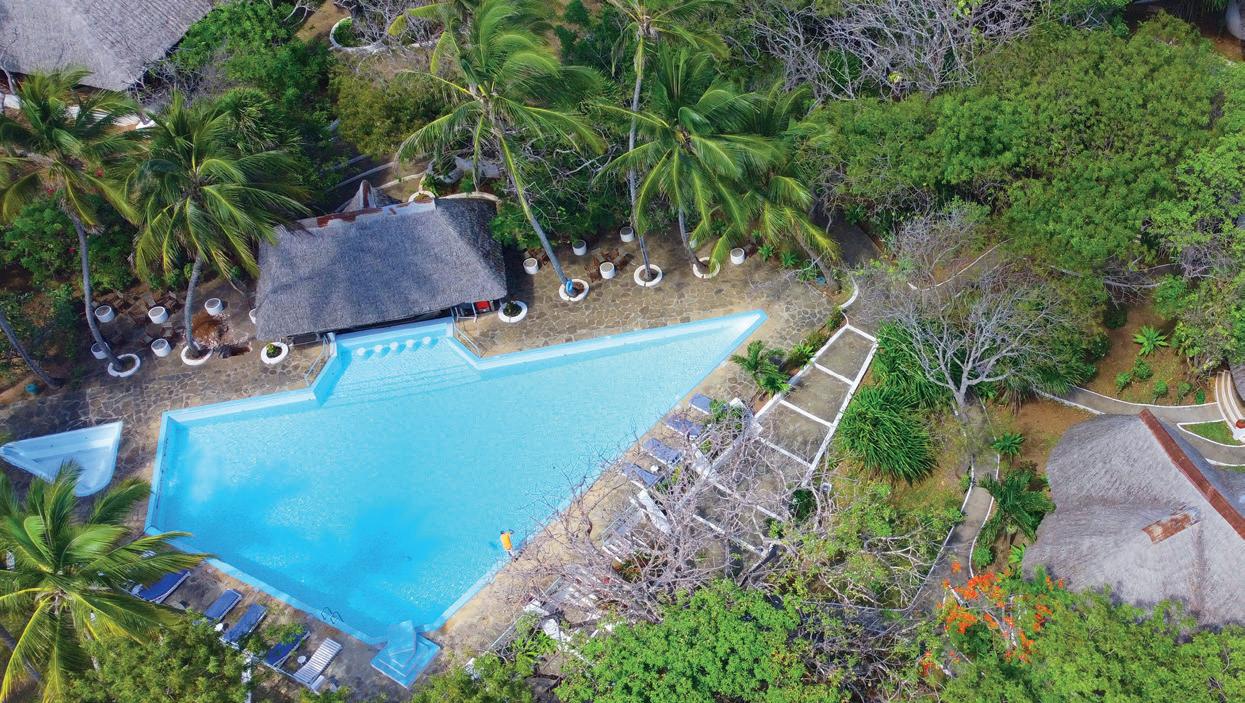
Colonial luxury on Uganda’s River Nile
Location: Jinja, Uganda –River Nile
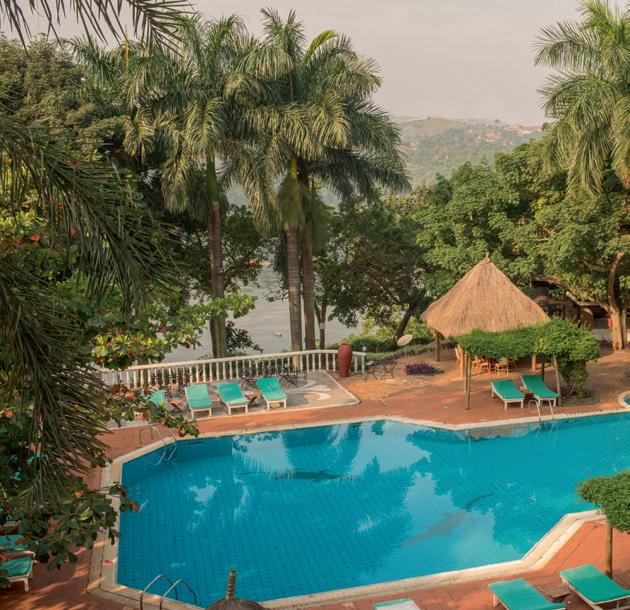
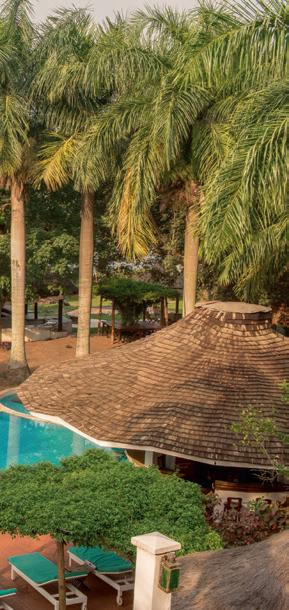
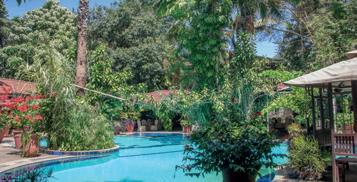
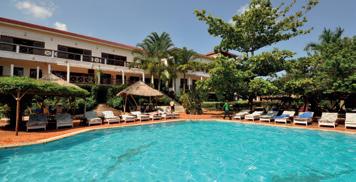
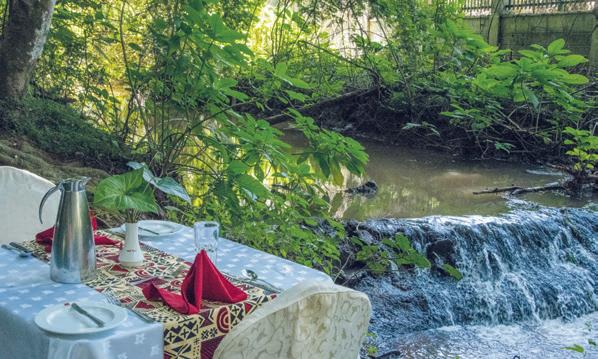
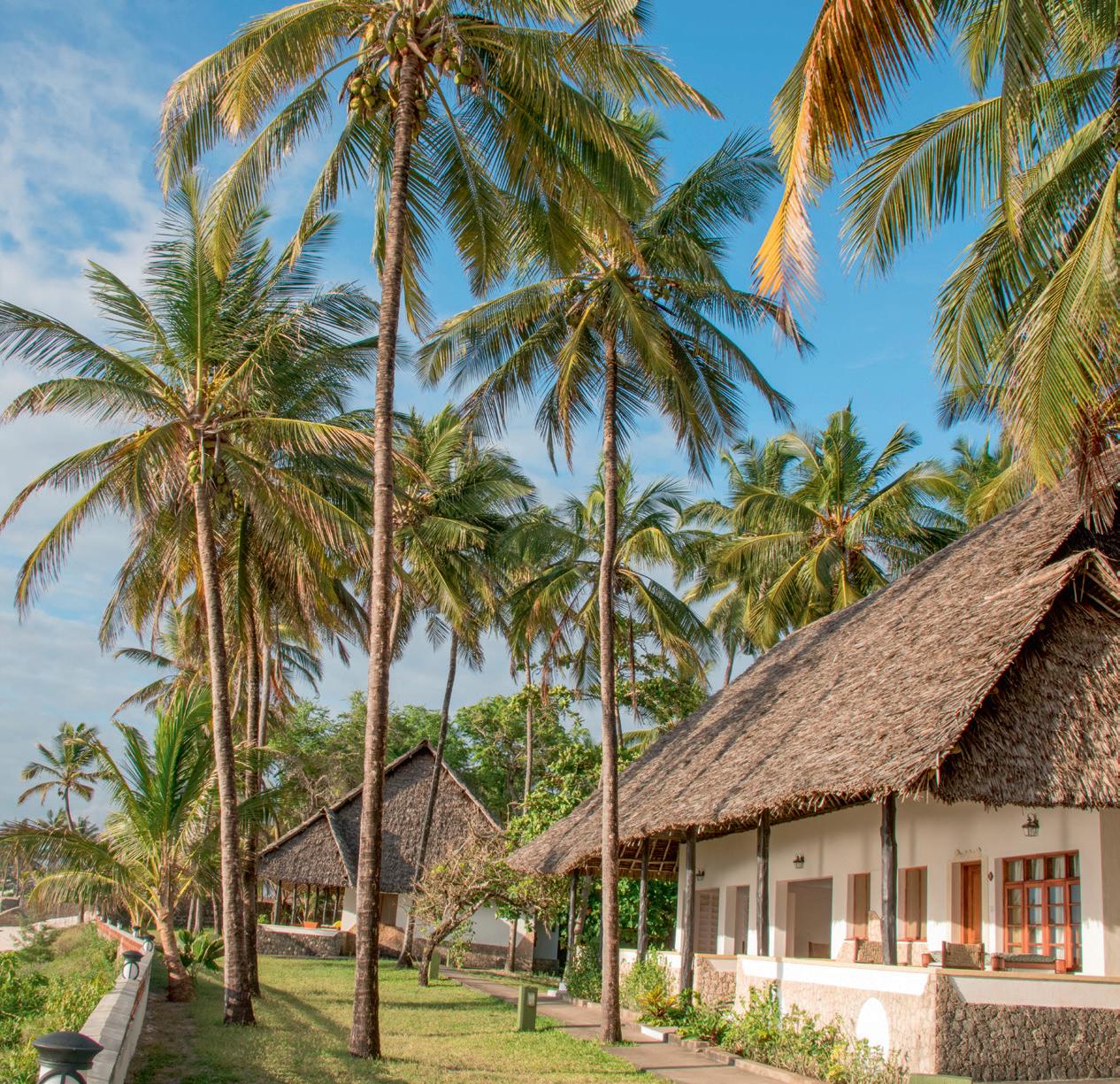
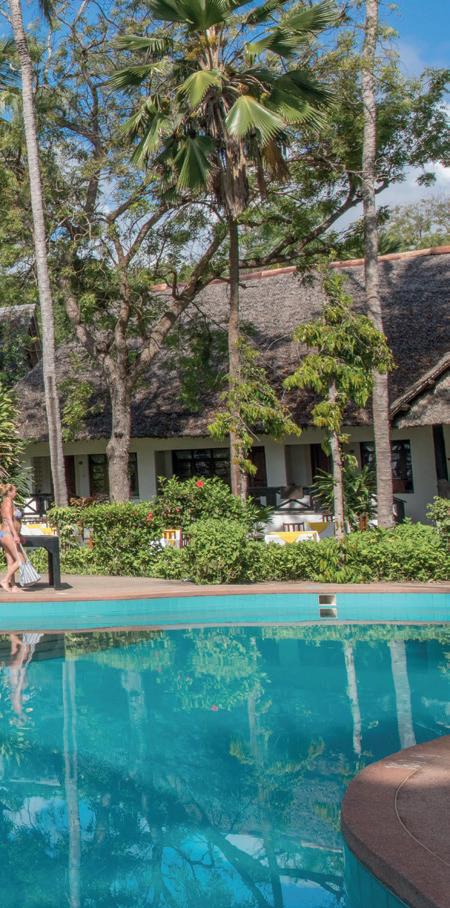
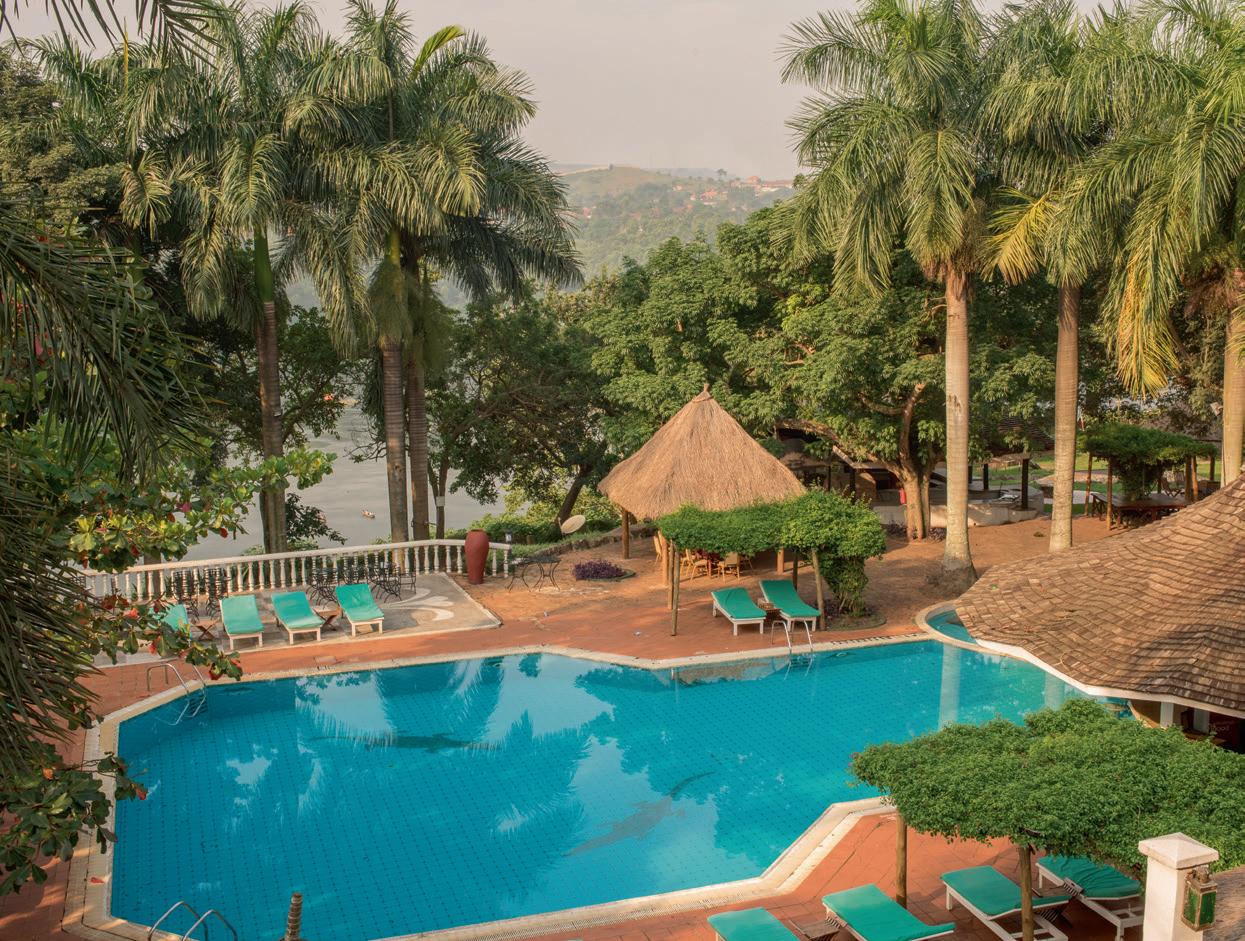
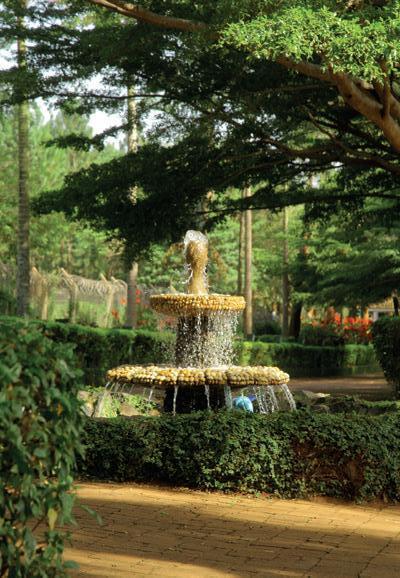
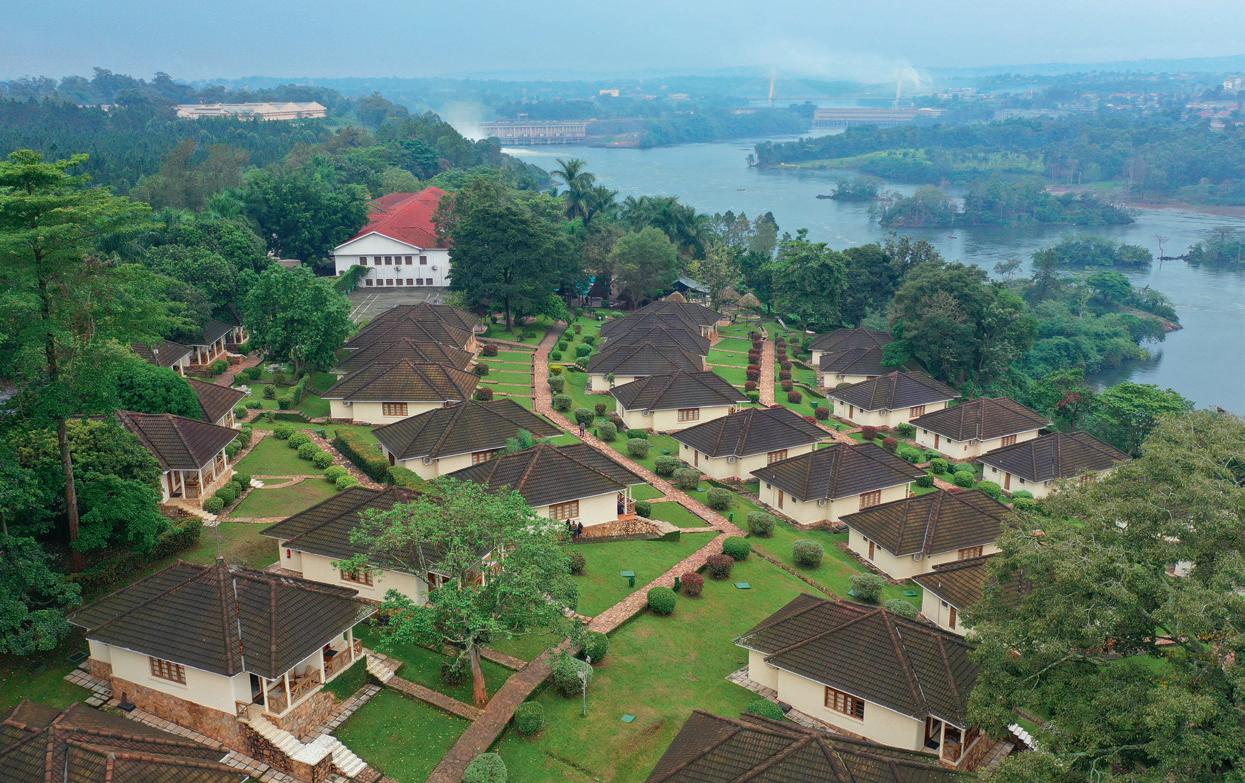
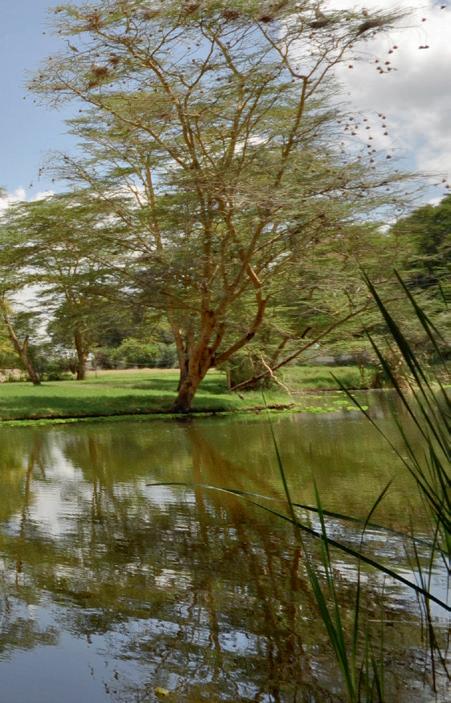
Set in lush tropical gardens with neatly tended lawns dotted with tall swaying palms
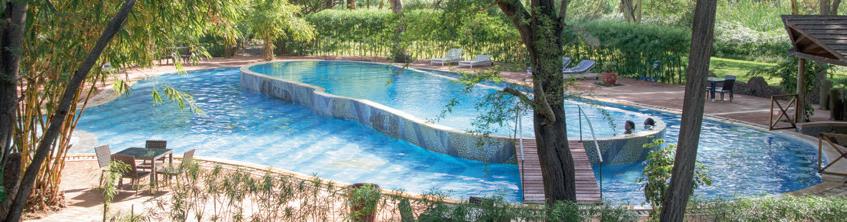
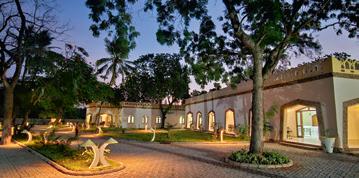
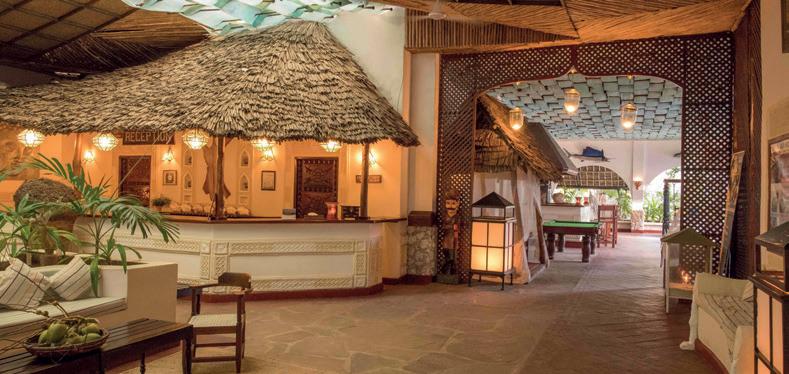
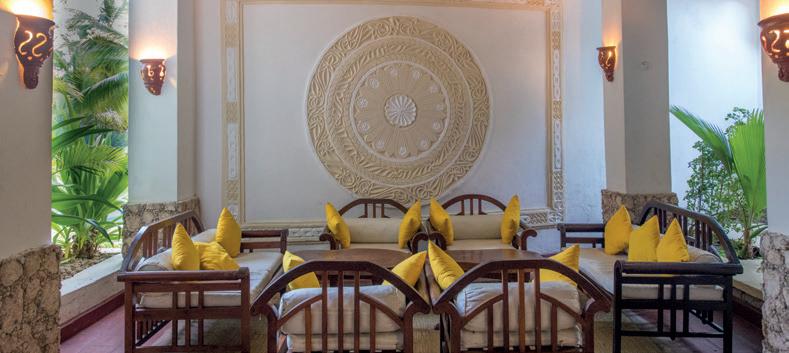
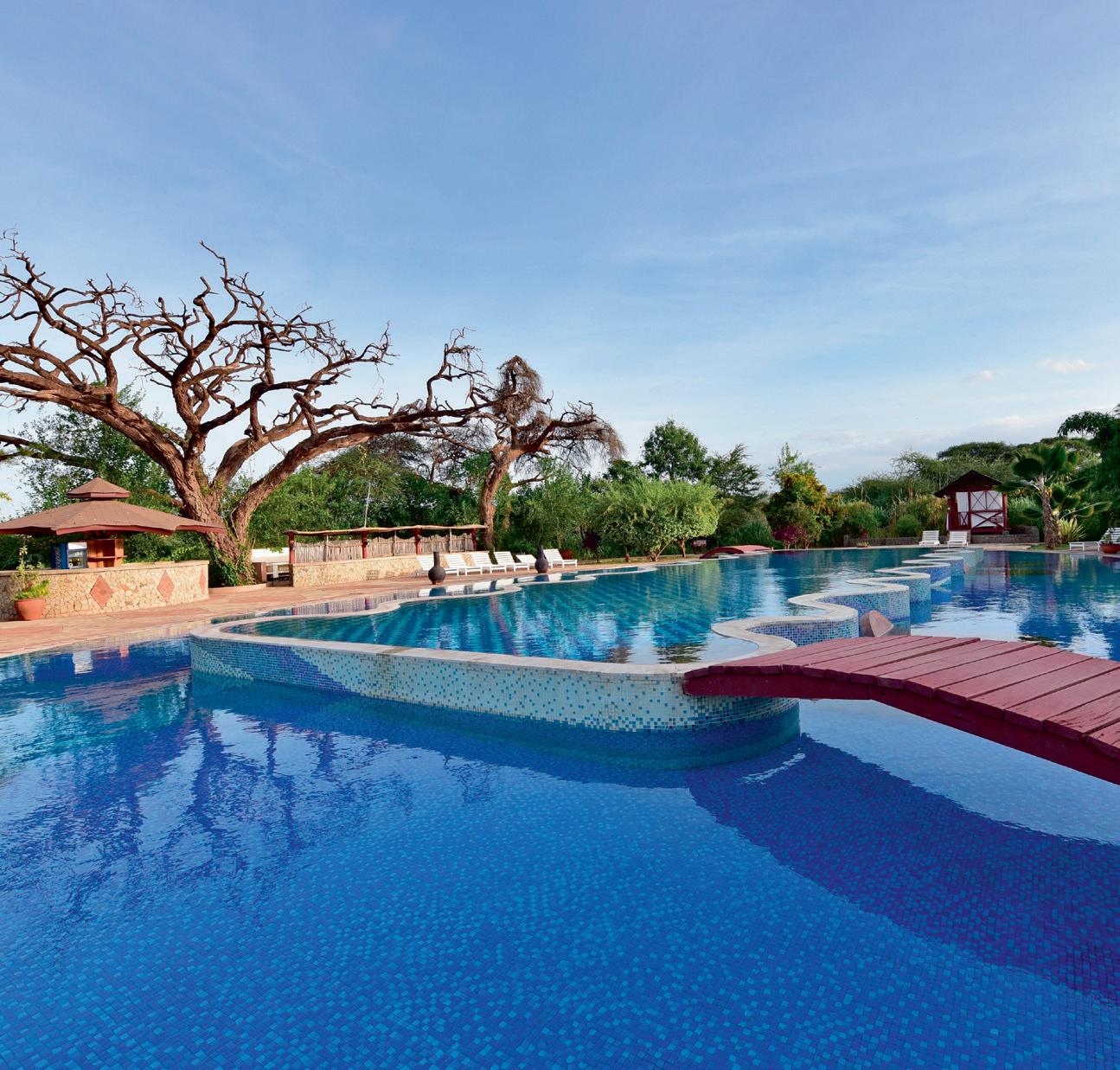
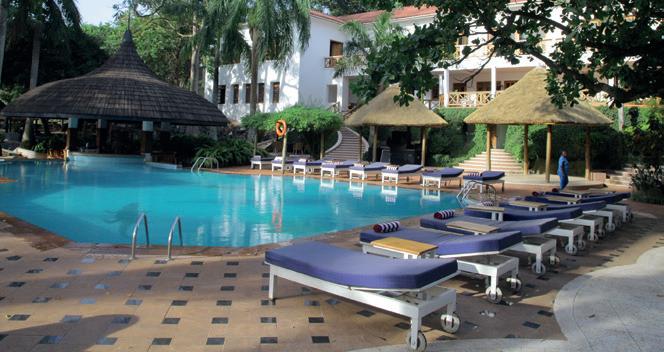
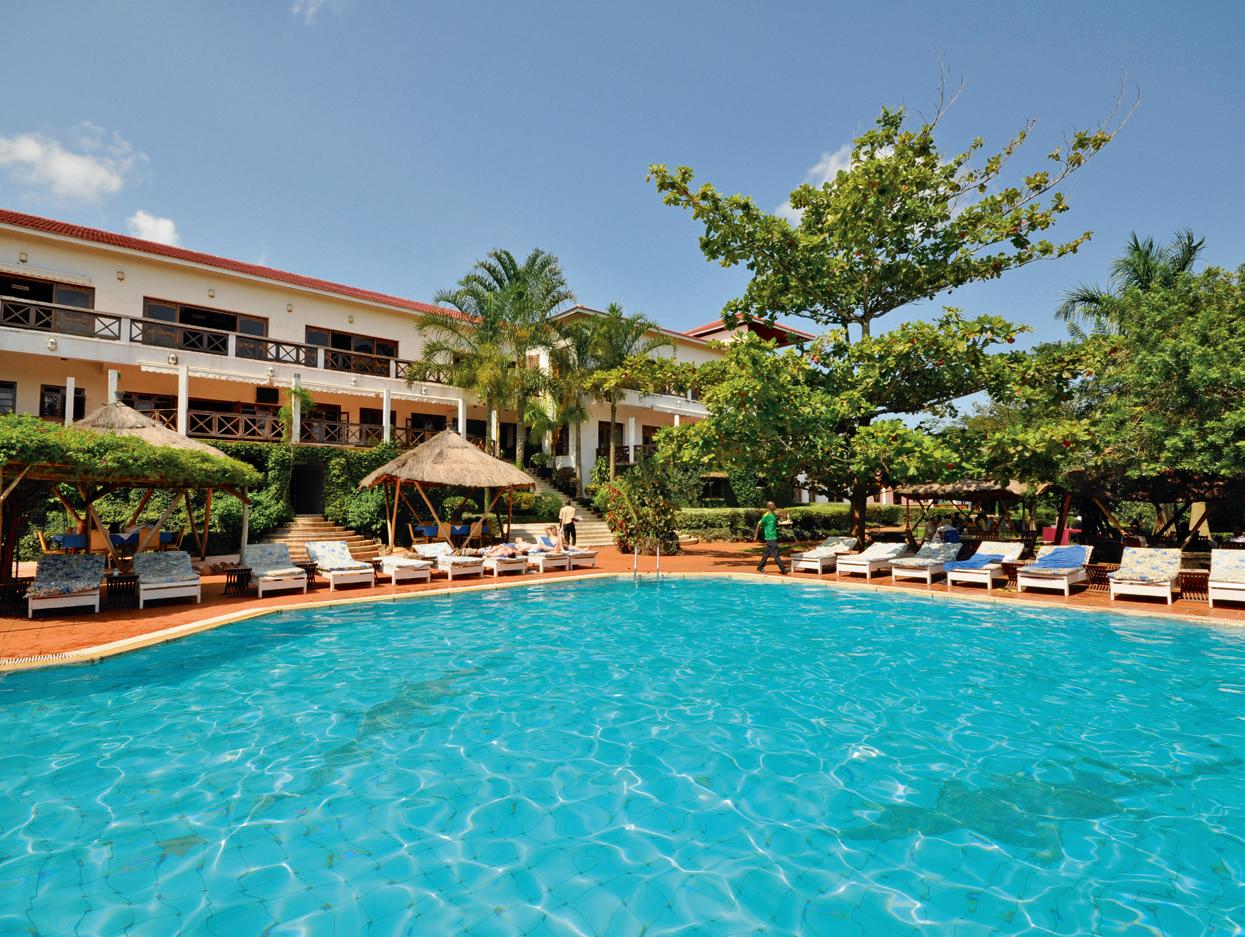
Se t directly on the River Nile, Jinja Nile Resort offers a luxurious five-star escape for both leisure and business travellers. The property features colonial-style architecture and lush tropical gardens, providing tranquil views of the river and a tranquil atmosphere for relaxation.
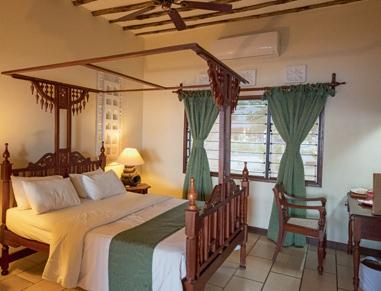
The resort has 140 spacious rooms, including presidential and honeymoon suites, designed for comfort and privacy. Dining options include the Nile Palace Restaurant, private dining rooms, and multiple bars, ensuring a range of culinary experiences with panoramic river views.
Business facilities include three conference halls, three meeting rooms, a boardroom, and a spacious amphitheatre overlooking the Nile, ideal for corporate events or outdoor gatherings. Leisure facilities include a health club with gym equipment, sauna, steam bath, massage room, swimming pool, tennis court, squash court, badminton, and pool tables, providing multiple ways to unwind.
The resort is located 4 km from Jinja town, with easy access to local attractions such as white-water rafting on the Nile, an 18-hole golf course at Jinja Club, and other recreational options.
| 15 mins MALABA: 135 km | 2 hrs
STAR RATING:
SOUTH SUDAN KENY E
LOCATION: 4 km from Jinja, Uganda
NUMBER OF ROOMS: 140
LEISURE: Gym, health club, swimming pool, badminton, three pool tables, squash court, sauna, steam bath, massage service, tennis court
DINING: Four restaurants, two private dining rooms
BARS: Five bars
CONFERENCING: Three halls for up to 500 delegates; three meeting rooms; boardroom; PA systems and LCD projectors
OTHER FACILITIES: Children’s park, nanny service, gift shop, Wi-Fi
KIDEPO
KAABONG
Coastal convention venue with flexible spaces
Op ened in mid-2023, the Kilifi Convention Centre provides state-of-the-art event facilities on Mombasa’s North Coast. Located beside the scenic Kilifi Bay Hotel, the venue combines modern business amenities with a relaxed coastal setting, making it ideal for conferences, workshops, and exhibitions.
The Centre features flexible spaces, allowing multiple events to run simultaneously without interference. Meeting rooms and expansive halls are equipped with advanced video conferencing technology, ensuring seamless in-person and hybrid gatherings. On-site catering is provided by the Centre’s restaurant, offering a variety of options for delegates. Its location near pristine beaches, water sports activities, and two nearby Mada Hotels ensures a balanced mix of work and leisure.
NEARBY HOTELS: Kilifi Bay Beach Resort, Baobab Sea Lodge
NEARBY ATTRACTIONS: Beaches, water sports, coastal leisure activities
Retreat halfway between Nairobi and Mombasa
Hunters Lodge offers tasty business and lunch menus and provides a welcome stopover for those taking the long drive between Nairobi and the coast
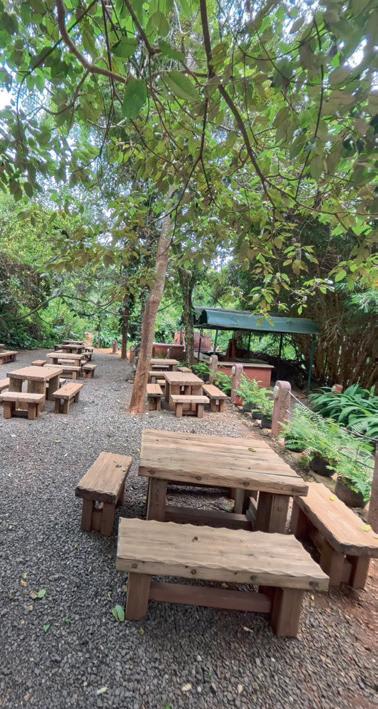
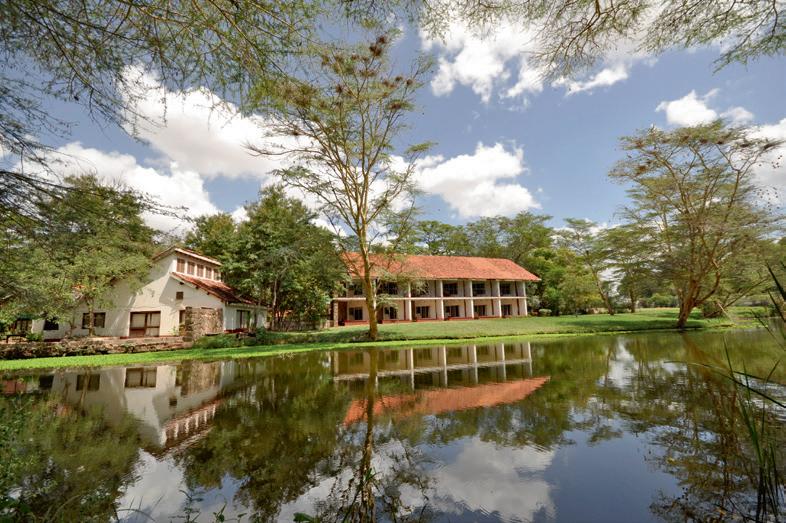
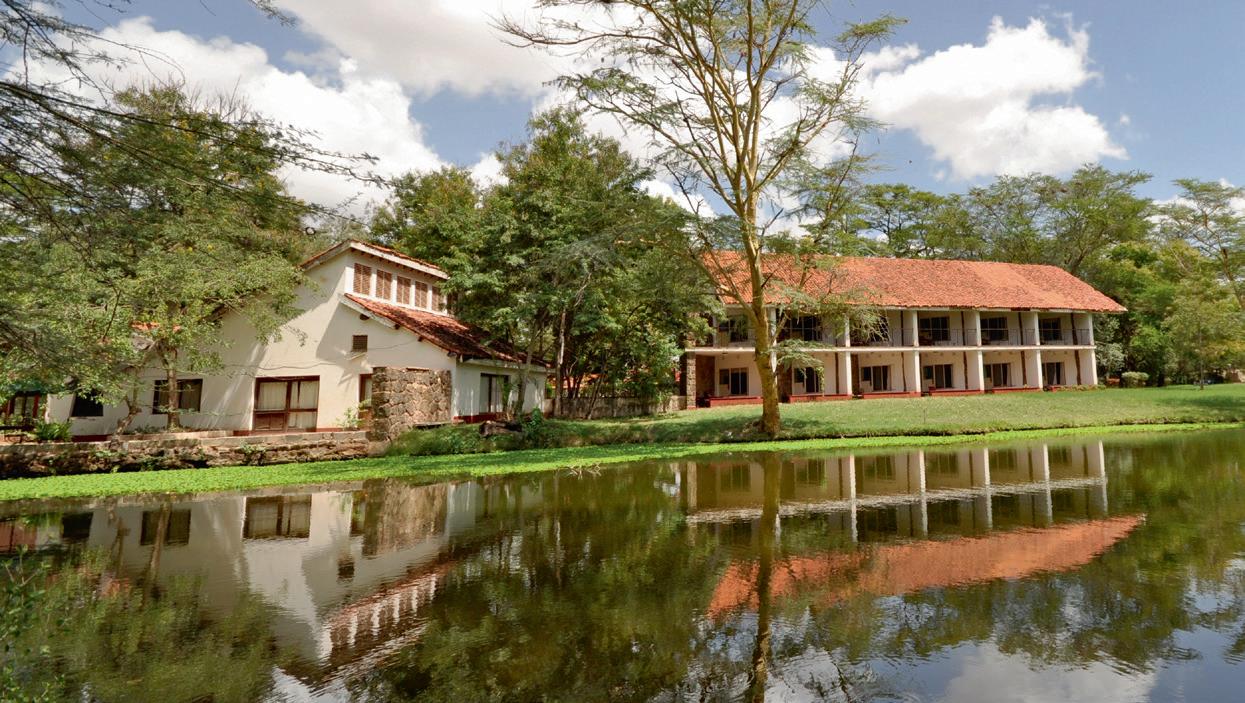
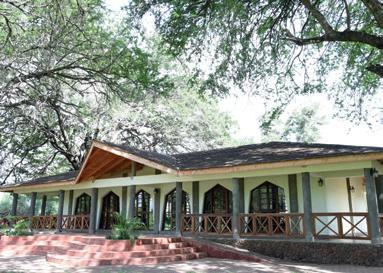
Hunters Lodge is a historic retreat set amid the scenic landscapes of Kiboko Springs, offering a blend of colonial charm and modern comfort. Originally built in 1958 by colonial adventurer J.A. Hunter, the lodge has been carefully restored by Mada Hotels to provide an inviting stopover for travellers between Nairobi and the coast.
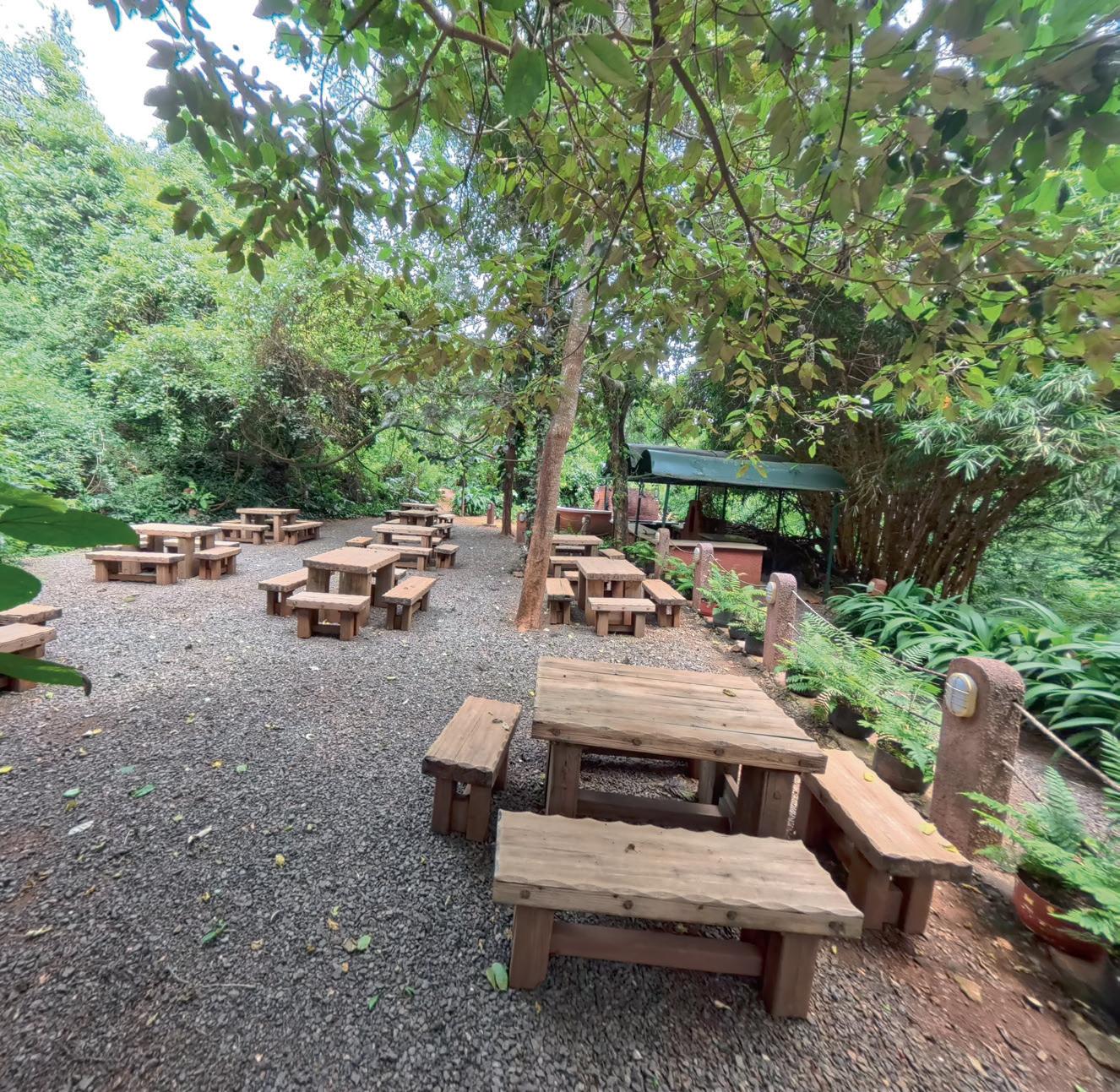
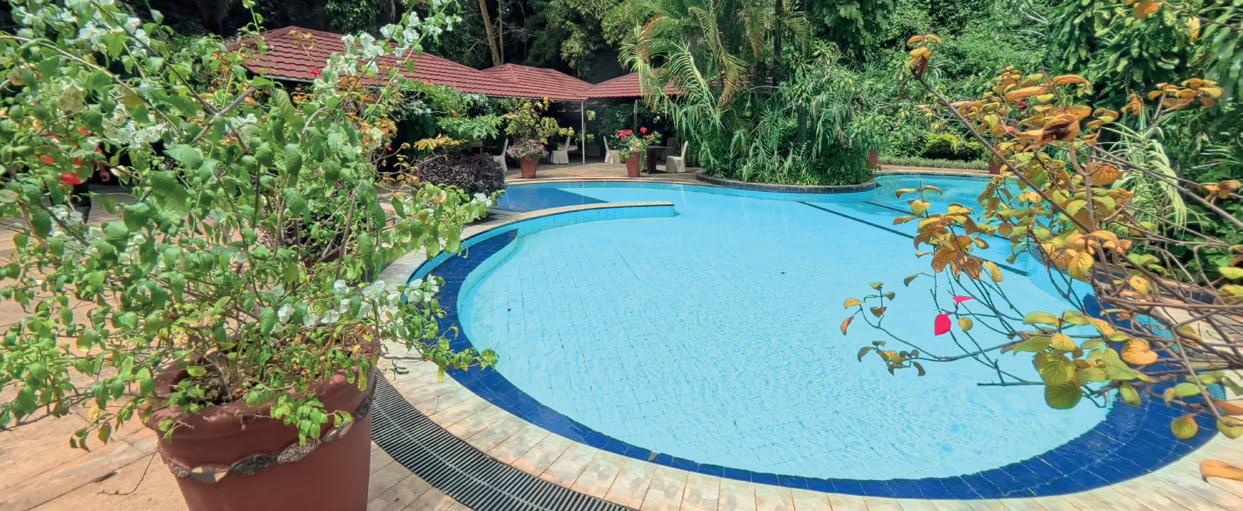
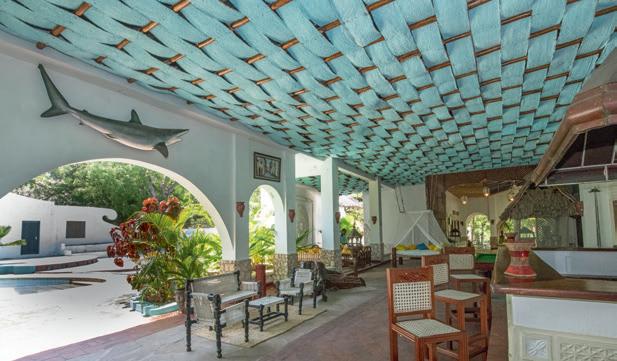
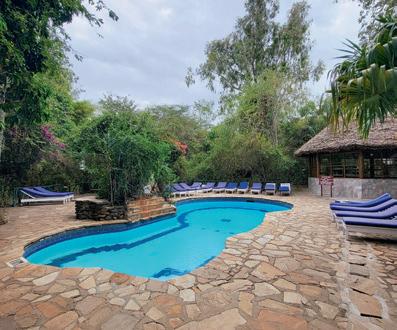
The property sits on 25 acres of landscaped grounds, home to over 100 bird species, with the delightful Kiboko Spring flowing through the estate. Guests can relax by the swimming pool, enjoy meals at the restaurant or coffee shop, and unwind with attentive service in a tranquil setting.
Corporate events are well catered for, with a conference centre accommodating up to 200 delegates, equipped with PA systems and LCD projectors. The Lodge also provides a convenient base for exploring nearby lava caves or embarking on safaris to Chyulu Hills National Park.
Location: Kiboko Springs, Kenya – Between Nairobi and Mombasa
GPS: 3°52’48” S | 35°58’42” E
NAIROBI: 160 km | 2 hrs 15 mins
MOMBASA: 340 km | 5 hrs
YA A K
LOCATION: Kiboko Springs, Kenya – 160 km from Nairobi, 340 km from Mombasa
NUMBER OF ROOMS: 50
POWER SUPPLY: 220V with backup generator LOCATION
LEISURE: Birdwatching, boating at Kiboko Springs
DINING: Restaurant and coffee shop
BARS: One bar
CONFERENCE: Rooms for up to 200 people; PA systems and LCD projectors
NEARBY ATTRACTIONS: Lava caves, Chyulu Hills National Park
OTHER FACILITIES: Swimming pool, Wi-Fi
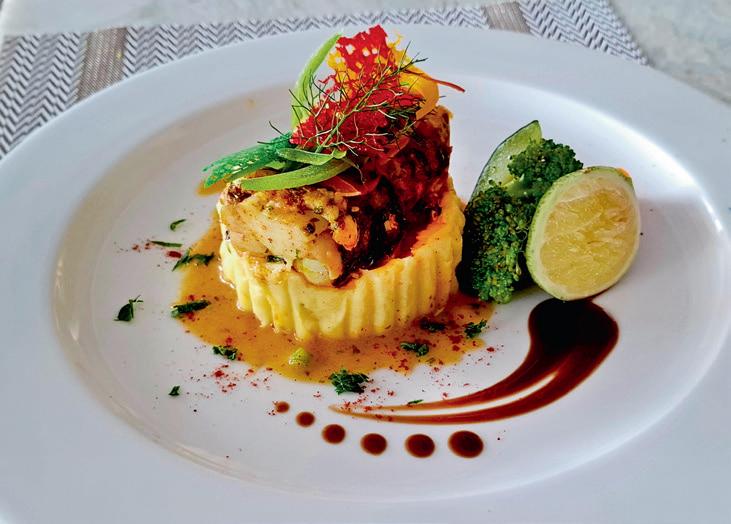
Lobster Tail with Saffron Mash
INGREDIENTS
For the Saffron Mash
• 50 g potatoes, boiled and mashed
• 1 cup fresh cream
• ½ cup milk
• A pinch of saffron strands
• 1 tbsp butter
• Salt, to taste
• 1 tbsp grated Parmesan cheese
For the Lobster
• 2 lobster tails
• 1 tbsp olive oil
• Salt and freshly ground black pepper, to taste
INSTRUCTIONS
Prepare the Vegetables
Cut all vegetables into similar-sized pieces to ensure even cooking. Bring a pot of salted water to a rolling boil, add the vegetables, and cook until just tender. Drain immediately. If desired, toss lightly with butter or olive oil and season with salt and pepper.
Infuse the Saffron
Warm 2 tablespoons of the milk, add the saffron strands, and allow to steep for 5-10 minutes until aromatic and golden.
Make the Saffron Mash
Mash the boiled potatoes until smooth. In a saucepan, gently warm the butter and cream, then stir in the saffron-infused milk. Add the Parmesan cheese, season with salt, and mix until creamy and richly coloured.
• 1 tsp paprika
• Juice of ½ lemon
• 2 tsp mustard sauce
• 2 cloves garlic, minced or made into a paste
• 1 tsp fresh dill, finely chopped
• A pinch of saffron strands
For the Steamed Vegetables
• Broccoli florets
• Carrot sticks
• French beans
• Zucchini slices
• Cauliflower florets
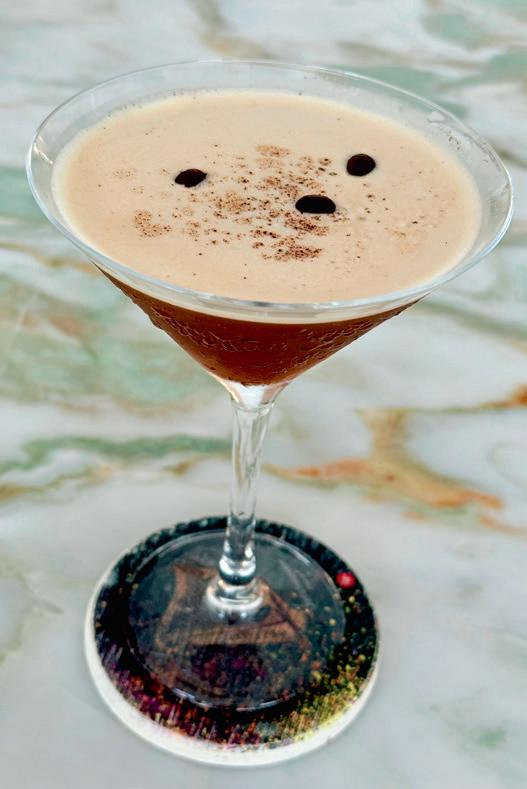
Kahawa Martini
INGREDIENTS
• 50 ml vodka
Prepare the Lobster Tails
Using kitchen scissors, cut lengthwise through the top of each lobster shell. Carefully lift the meat and rest it on top of the shell. Pat dry with paper towels. Marinate the lobster with olive oil, garlic, mustard, lemon juice, dill, paprika, saffron, salt, and pepper.
Cook the Lobster
Preheat the grill to medium-high. Place the lobster tails meat-side up and grill for 5–6 minutes. Turn and grill for a further 2–3 minutes, until the meat is opaque and just firm. Baste frequently with garlic butter during cooking.
To Serve
Drizzle the lobster tails with the remaining garlic butter and garnish with fresh parsley and lemon wedges. Serve alongside the saffron mash and steamed vegetables.
• 25 ml coffee liqueur
• 25 ml freshly brewed espresso, cooled
• 10 ml simple syrup
• Ice cubes
• 3 coffee beans, to garnish
INSTRUCTIONS
1. Brew a fresh espresso and allow it to cool.
2. Add the vodka, coffee liqueur, espresso, and simple syrup to a cocktail shaker.
3. Fill the shaker with ice and shake vigorously for 10-15 seconds until well chilled and frothy.
4. Double strain into a chilled martini glass for a smooth finish.
Plot No 688, Kampala Industrial Business Park, Namanve, Mukono, Uganda +256 (0) 417425600, 707 280630 salesug@madahotels.com www.madahotels.com/kampala-nile-resort
ELEPHANT ROCK CAMP, TARANGIRE
Tarangire National Park, PO Box 17019, Arusha, Tanzania +255 (0) 746 364709 | 685 250153 salestz@madahotels.com www.madahotels.com/balloon-camp-tarangire
OAKWOOD HOTEL, NAIROBI
Elite Hse, Starehe, CBD, PO Box 40683-00100, Kenya +254 (0) 722 208905 oakwood@madahotels.com www.madahotels.com/oakwood-hotel
HOTEL LA MADA, NAIROBI
Pipeline Estate Road, Nairobi, PO Box 40683-00100, Kenya