Flightlink, Zebra Stripes, issue 9

Page 1


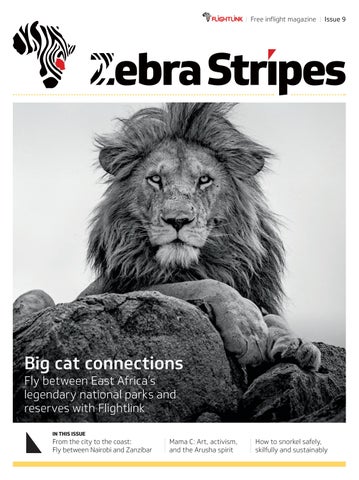
Fly between East Africa’s legendary national parks and reserves with Flightlink

IN THIS ISSUE

From the city to the coast: Fly between Nairobi and Zanzibar

C: Art, activism, and the Arusha spirit

How to snorkel safely, skilfully and sustainably

Mama

Foreword

Welcome to this new edition of Zebra Stripes Magazine.

As we turn the page toward the second half of 2026, we do so with great excitement, renewed commitment, and a clear vision for the future of regional air travel. At Flightlink Limited, we have always believed that connectivity transforms lives, businesses, and communities. This belief continues to guide every decision we make.

Advancing Toward a Seamless, Cashless Experience

Since March, Flightlink has been operating a fully cashless payment system, reflecting our ongoing commitment to improving the way our passengers travel with us. By removing cash transactions, we have streamlined the payment process, enabling quicker service and a more efficient experience at our airports and service points.

New Horizons: Kilimanjaro – Zanzibar – Dar es Salaam

We are thrilled to announce that from 1st July 2026, Flightlink will launch a brand-new route connecting Kilimanjaro, Zanzibar, and Dar es Salaam. This triangular service is designed to meet growing demand from tourism operators, business travellers, and leisure guests alike. Whether you are heading from the snows of Kilimanjaro to the spice islands of Zanzibar, or onward to the commercial heartbeat of Dar es Salaam, we are proud to offer you a seamless, scenic, and efficient journey.

Double Daily from Nairobi (Jomo Kenyatta International Airport)

Also starting 1st July 2026, we are doubling our presence in Nairobi. Flightlink will operate double daily flights from Jomo Kenyatta International Airport – one in the morning and one in the evening. This enhanced schedule gives our partners and passengers greater flexibility, whether you need an early start or a late return. Expect the same reliability, safety, and warm onboard service, now at more convenient times.

Interline with a Kenyan airline: Wilson –Maasai Mara, daily.

From 1st June 2026, we are proud to begin an interline partnership with a Kenyan Airline for daily flights between Wilson Airport (Nairobi) and the Maasai

Mara. Combining their deep local expertise with Flightlink’s network and service standards through this collaboration. For safari operators and travellers, this means smoother bookings, better connections, and a truly integrated experience into one of Africa’s most spectacular wildlife destinations.

Addressing Fuel Price Increases – Openly and Responsibly

In a time of fluctuating fuel prices, Flightlink remains committed to working closely with its partners to manage surcharges and ensure your journeys to holiday and safari destinations remain both accessible and affordable.

We understand that any additional cost is unwelcome to our loyal partners and passengers. Know that this decision was not taken lightly. However, we ask you to look at the positive side: we are still flying. We are still connecting cities, supporting tourism, moving cargo, and keeping East Africa mobile – just with a small extra contribution toward the rising cost of fuel. We remain committed to transparency, efficiency, and minimizing the impact wherever possible.

Looking Ahead

Change is constant. Growth is a choice. Flightlink Limited chooses growth – responsibly, together with you.

Thank you for being part of our journey. Welcome to the new edition of Zebra Stripes Magazine.

With sincere thanks and best wishes,

3rd floor‚ Oyster Pearl Galleria‚ Chole Rd Masaki‚ PO Box 2858, Dar es Salaam‚ Tanzania.

For the latest flights, information and to book online, visit: www.flightlink.co.tz

Reservations:

E: centralreservations@flightlink.co.tz

E: customerservice@flightlink.co.tz

Marketing:

T: +255 748 505 627

E: customerservice@flightlink.co.tz

Zebra Stripes is published by: Land & Marine Publications (Tanzania) Ltd

5th floor, Josam House plot Number 16, Mikocheni Area Along Coca-Cola Road, Dar es Salaam

T: +255 686 118 816

Head Office: Land & Marine Publications Ltd

6 The Square, Ipswich, Suffolk, IP5 3SL, UK

T: +44 (0)1206 752902

E: publishing@landmarine.com www.landmarine.com

Editor: Mark Edwards

E: markedwards@landmarine.com

Advertising sales: Godfrey S. Urassa M: +255 (0) 686 118 816 (WhatsApp)

E: godfreyurassa@landmarine.com

Printed by Jamana Printers Ltd, Dar es Salaam

The

What’s new at Flightlink

Bringing you the latest need-to-know developments and updates

MAASAI MARA CONNECTIONS

LAUNCHING JUNE 2026

From June 2026, Flightlink will expand its safari network with new scheduled connections to the world-famous Maasai Mara. These services will link the Mara with key regional gateways, making it easier than ever for travellers to combine East Africa’s most iconic safari destinations in a single journey.

Flights will connect the Mara with Nairobi Wilson, Arusha, and Zanzibar, while additional routes will link the Mara with Lake Manyara/Ngorongoro and the Serengeti.

Fuel surcharge notice

In light of the significant increase in domestic and regional fuel prices, a fuel surcharge has been implemented with effect from April 13, 2026. This measure has been introduced to support operational sustainability while maintaining the reliability of our services. Surcharge levels will be reviewed on the 15th of each calendar month, based on prevailing fuel price conditions, and adjusted where necessary.

BOOK YOUR FLIGHT TODAY

Book your flight with Flightlink today through our website www.flightlink.co.tz or mobile app, available on Android and Apple devices.

Flightlink Goes Cashless

Flightlink’s shift to a fully cashless payment system, launched in March, marks a significant step toward improving passenger convenience. By removing cash handling, the airline can offer faster, more efficient transactions, reducing queues and speeding up service at airports and service counters.

New Kilimanjaro routes

Flightlink is set to expand its network with the introduction of new scheduled flights to Kilimanjaro from Zanzibar, Dar es Salaam, and Nairobi, with all services expected to commence in July.

HARMAN HEER

and the magic of East Africa

A photographer’s journey through the Serengeti, Ngorongoro, and the Maasai Mara

Harman Singh Heer

Flightlink connects its passengers to the Serengeti, the Ngorongo Crater, and the Maasai Mara: a triptych of East African safari attractions that wildlife photographer Harman Heer knows well. He has captured incredible images in these iconic destinations working with a rare mix of patience, intimacy, and deep respect for the natural world.

Raised in Nairobi, Heer’s connection to the wild began long before he ever thought of himself as a photographer. “We would go on short weekend trips to the Maasai Mara as a family,” he says. He discovered his calling when he picked up his mother’s Canon 450D on a family safari – an act that quietly set the course for his future.

What began as childhood curiosity evolved into a profession in 2023, when Heer co founded Mzuri Safaris and began guiding photographic tours. “I now get to share my craft with like minded people and teach them photography in the field,” he says.

Today, his images – mostly portraits of African wildlife –have become known for their careful compositions, eye level intimacy, and emotional depth.

Serengeti: a landscape of immensity

For many travellers landing with Flightlink, the Serengeti is a defining destination. For Heer, the Serengeti’s appeal lies not only in its famous migration but in its quiet expanses and dramatic granite kopjes.

“The distinct photographic appeal of the Serengeti lies

in both its vastness and the scattered kopjes – granite rock formations that rise dramatically from the plains.”

He cherishes the solitude the park still offers: “You can often drive for hours without seeing another vehicle… that kind of solitude allows you to slow down, observe animal behaviour more closely, and photograph wildlife without interference.”

One of his standout Serengeti images features a male lion

surveying his territory from on top of a kopje. “The perspective of the image is powerful, as it has been captured from below the lion as he surveys his kingdom.”

Ngorongoro Crater: photography inside a natural amphitheatre

Descending into Ngorongoro Crater feels like entering a self contained kingdom of wildlife – an ancient volcanic caldera

Harman
Singh Heer
The Ngorongoro crater's steep forested walls create a unique sanctuary for wildlife

teeming with life. Heer finds the Crater both unique and photographically rich.

“The layers of the rolling hills coupled with the oasis of wildlife can make for striking images, especially early morning when there is some mist.”

Among his favourite images is a lone wildebeest standing in a lake, set against a backdrop of layered hills. “This is likely my favourite image from the crater because of the sheer scale of the landscape.”

Maasai Mara: a playground of light and life

While the Serengeti offers solitude and the Crater offers structure, the Maasai Mara –especially its conservancies – gives Heer creative flexibility. “The Mara is creatively different for me largely because of its incredible wildlife density… it gives you the freedom to be more selective and creative with the kind of art you want to create.”

The light, too, is extraordinary. “Mara’s beautiful sunrises and sunsets are some of the best I have ever experienced, and if you know how to use it to your advantage, it opens up a range of creative possibilities. Shooting into the light allows you to experiment with backlit scenes and silhouettes of animals against the horizon, giving your photography an artistic dimension.”

One of Heer’s favourite Mara moments involved waiting with the Rekero Pride beneath a

lone balanite tree, anticipating a perfect silhouette. “Our patience paid off when one of the lionesses climbed up and sat perfectly on top of a mound, watching the sunset.”

The moment was fleeting, but for Heer, capturing the moment is the essence of wildlife photography.

The art of good wildlife photography

At the centre of Heer’s philosophy is patience – a virtue shaped by long days in East Africa’s parks. “I often spend hours waiting for the ‘perfect’ shot. Once I make my mind up to sit and wait there is no giving up.”

Serengeti is renowned for its large lion population
Harman
Singh Heer
You can often drive for hours without seeing another vehicle… that kind of solitude allows you to slow down, observe animal behaviour more closely, and photograph wildlife without interference.

Technical readiness matters too. “I always have my cameras ready… sometimes with wildlife you really do need to be that quick.”

But above all, ethics come first: “If there are signs that the animal is uncomfortable with us, we will leave. The animal comes first, always.”

For aspiring photographers, he offers simple but profound advice: “Practice is everything… do not be afraid to do things differently… at the end of the day, you are creating art.”

Whether you’re heading to the Serengeti, Ngorongoro, or the Maasai Mara on this Flightlink journey, Harman Heer’s work is a reminder to slow down, look closer, and allow the wilderness to unfold at its own pace. Because in the wild, as in photography, the perfect moment is rarely rushed – only received.

All accompanying images were taken by Harman Singh Heer. For more of Harman’s wildlife images and tips on how to improve your wildlife photography go to his Instagram page @hshphotos

Which National Park

is right for you?

Tanzania is a safari dreamland, but with so many incredible parks, how do you choose? Whether you’re chasing big cats, craving solitude, or yearning for a mix of beach and bush, here’s your ultimate guide to finding the perfect park for your travel style.

For the best big cats experience…

Where? Serengeti National Park

What? The Serengeti is Tanzania’s most iconic park, famous for its vast plains and the annual Great Migration. It’s a predator hotspot, with lions, leopards, and cheetahs all thriving here.

Why? If you want to witness nature’s drama –lions hunting, cheetahs sprinting, and leopards lounging in acacia trees – this is the place. The sheer abundance of wildlife means you’re never far from the action.

Must-see: Time your visit for the Great Migration (June to October or December to March) to see thousands of wildebeest and zebras on the move, with big cats in close pursuit. Don’t miss the Seronera Valley for classic predator sightings.

For the best birdwatching…

Where? Lake Manyara National Park

What? Nestled at the base of the Rift Valley escarpment, Lake Manyara is a birdwatcher’s paradise, with over 400 species recorded.

Why? The park’s alkaline lake attracts huge flocks of flamingos, pelicans, and storks, while the forests and woodlands are alive with hornbills, kingfishers, and bee-eaters.

Must-see: Visit the lake’s edge for a pink spectacle of flamingos and keep an eye out for the park’s famous tree-climbing lions and large troops of baboons.

For a safari free from human traffic…

Where? Ruaha National Park

What? Tanzania’s largest national park, Ruaha is wild, remote, and blissfully uncrowded.

Why? Ruaha’s rugged landscapes are home to massive elephant herds, rare antelope, and a healthy population of big cats. With far fewer visitors than the northern parks, you’ll often have the wilderness all to yourself.

Must-see: Explore the Mwagusi River area for excellent game viewing, and don’t miss a sundowner overlooking the baobab-studded plains.

For the best jungle adventure…

Where? Mahale Mountains

National Park

What? Set on the shores of Lake Tanganyika, Mahale is a lush, mountainous park best known for its wild chimpanzee population.

Why? Trek through dense rainforest to observe chimpanzees in their natural habitat – a truly unforgettable experience. The park’s remote location means you’ll feel like a true explorer.

Must-see: Join a guided chimp trek, then cool off with a swim in the crystal-clear waters of Lake Tanganyika. The sunsets here are legendary.

For the best mix of beach and bush…

Where? Saadani National Park

What? The only park in East Africa where the bush meets the beach, Saadani offers a unique blend of wildlife and Indian Ocean coastline. Why? Watch elephants and giraffes stroll along the sand, then relax on a deserted beach. It’s the ultimate “two holidays in one” destination.

Must-see: Take a boat safari on the Wami River for hippos and crocs, then enjoy a beach picnic.

Observe chimpanzees in their natural habitat in Mahale Mountains National Park

Where to eat in

MWANZA

A vibrant fusion of Tanzanian and Indian flavours, made with fresh produce from the fertile surrounding farmland and fish straight from Lake Victoria, makes Mwanza a foodie’s paradise. Here’s our pick of the second city’s must-try places to eat.

Hotel Tilapia

Hotel Tilapia is found in the exclusive Capri Point peninsula – known as the ‘Beverly Hills of Tanzania’ for its opulent lakeside homes. Within these glamorous surrounds, diners can choose from three restaurants. Built over the lake on a jetty, Teppenyaki, Mwanza’s only Japanese restaurant, is a romantic choice.

Diners can watch the chefs prepare the food as they wait with a set menu that includes grilled chicken, fish, beef, vegetables, prawns, squid, rice, salads and desert.

Opening hours: Friday to Sunday 9am to 11.30pm, Monday to Thursday 9am to 11pm.

Rooftop Restaurant & Café

Head to the top floor of the Almasi Tower – a landmark on the Nyerere Road in the heart of Mwanza – for one of the city’s most memorable dining destinations. The food here is just as spectacular as the panoramic views across Mwanza and over the lake afforded to diners. Much of the halal menu reflects the city’s strong and historic Indian heritage with dishes such as chicken mughlai and mutton masala. There are also plenty of Indian-inspired vegetarian dishes, Tanzanian favourites such as mishikaki along with a host of international staples like burgers and buffalo wings. Popular for parties as well as more intimate get-togethers, the lively atmosphere usually experiences an awestruck hush at dusk. Sunsets seen from up here are something special.

Opening hours: Weekdays: 11am to 10pm. Weekends: 11am to 11pm.

Instagram: rooftop_restauranttz

The Cask Bar & Grill

Based at Rock City Mall, this lively, modern venue known for grilled meats, pizzas, fresh fish and a wide drinks menu. Its upbeat ambience, live music and open air seating attract both locals and tourists. A great spot for casual dining, social evenings and enjoying Mwanza nightlife.

Opening hours: Sunday to Wednesday 9am to 11pm, Thursday to Saturday 24 hours

Malaika Restaurant

Located on the shore of Lake Victoria near the airport, Malaika Restaurant offers serene views and a menu of African and Indian dishes, with fish being a standout. Diners praise its calm atmosphere, scenic sunsets and outdoor seating. It caters well for vegetarian, vegan, halal and gluten free diets, making it versatile for many visitors.

Hasfu Food Empire

Hasfu Food Empire in the bustling Kishamapanda neighbourhood near the ferry terminals is a vibrant, casual restaurant offering Tanzanian dishes, grilled meats, stews and local desserts. Open all day, it’s popular with families and travellers seeking authentic flavours at moderate prices. The warm atmosphere and friendly staff make it a reliable choice for breakfast, lunch or dinner.

Opening hours: Daily 6.30am to 11pm.

From the CITY to the COAST

Flightlink’s route connecting Nairobi to Zanzibar offers quick access to the sun-soaked, scenic island getaway.

For travellers seeking to transition effortlessly from the energetic pulse of Nairobi to the calm, balmy shores of Zanzibar, Flightlink’s direct service from Jomo Kenyatta International Airport (NBO) offers one of East Africa’s most appealing travel experiences. Designed for both international visitors connecting through Kenya’s capital and Nairobi residents yearning for a breezy island escape, this route has quickly become a favourite for its convenience, comfort, and the promise of adventure on the other side.

The route’s rise in popularity owes much to its simplicity. Flightlink now operates direct flights connecting Nairobi’s major international hub to the tropical haven of Zanzibar, a move described as “a bold step in expanding regional air connectivity” with daily, well timed schedules that effortlessly link international passengers to the Tanzanian coast.

Using modern ATR 72-500 aircraft, Flightlink combines comfort and capacity, offering a generous baggage allowance and smooth onboard experience – ideal for travellers carrying beachwear and snorkelling gear, safari photographers with equipment, or families packing for a long-awaited holiday.

Some of the majestic architectural examples in Stone Town

Landing in Zanzibar feels like stepping into another world

A gateway to the magic of Zanzibar

Landing in Zanzibar feels like stepping into another world – a warm blend of spice laden air, turquoise seas, and centuries old culture. Flightlink’s decision to strengthen links between Nairobi and Zanzibar taps directly into the island’s enduring charm. What awaits travellers in Zanzibar.

Stone Town –a living museum

Wander through labyrinthine alleyways where Swahili, Persian, Arab, and European influences intersect. From the bustling Forodhani night market to the storied House of Wonders, Stone Town offers a sensory immersion into centuries of Indian Ocean trade and culture.

World class beaches

Zanzibar’s coastline is synonymous with soft white sands and azure waters. Popular stretches such as Nungwi and Paje invite swimming, kite surfing, dhow trips, and lazy days under palm fronds. Whether you’re seeking quiet relaxation or watersport thrills, the island’s beaches deliver.

Spice plantations – the island’s fragrant heart

Known as the “Spice Island,” Zanzibar’s plantations offer tours where visitors can smell, touch, and taste cloves, vanilla, cinnamon, and nutmeg just as traders did hundreds of years ago.

Vibrant marine life

From Mnemba Atoll to the private eco-island Chumbe Island, Zanzibar offers some of East Africa’s premier snorkelling and diving locations. Expect coral gardens, colourful reef fish, and, if you’re lucky, encounters with dolphins or sea turtles.

Why the Route Matters

Flightlink’s NBO-Zanzibar service is a significant step forward in regional tourism development. By simplifying East African travel, the route supports both leisure and business travellers while strengthening ties between Kenya and Tanzania. The airline’s wider expansion –including additional regional routes – reflects a strategic commitment to making East Africa more accessible than ever.

The perfect escape – just 90 minutes away

For Nairobi residents, the accessibility of this island escape is irresistible. International travellers arriving in Kenya for safaris can now add Zanzibar to their itinerary with minimal hassle, transforming a wildlife adventure into a multi destination East African experience.

Convenient, scenic, and deeply rewarding, the Flightlink Nairobi-Zanzibar route is a trip from the urban to the unbelievable.

10 things to know ABOUT THE MAASAI MARA’S ‘GREEN SEASON’

Your Flightlink guide to the Maasai Mara from March to May

If you’re flying with Flightlink and planning a safari in May, you’ll be visiting the Maasai Mara during what’s known as the green season. This month follows the long rains, when the reserve shifts into a greener, more vibrant landscape. It’s a different kind of safari – quieter, dramatic, and full of wildlife activity.

Here are 10 key features of the Maasai Mara at this time of year, and why many travellers now consider it one of the best moments to visit.

1. The Mara turns green – fast

After the rains return, the dry plains transform into lush grasslands. This growth creates a fresh, green backdrop across the reserve.

2. Afternoon rains, clear mornings

Most days start bright, with showers coming in the late afternoon or evening. This means dry, calm hours for game drives and dramatic skies later in the day.

3. Ideal conditions for photography

The rain removes dust from the air, giving excellent visibility and stronger colours. Storm clouds often build behind sunlit animals, creating striking photographic conditions.

The superb starling is among the diverse bird life in the Mara

4. ‘Birthing season’ for many herbivores

March through May aligns with calving for species such as impala, warthog, zebra, topi, and gazelle. Young animals are abundant across the plains.

5. Increased predator activity

With many newborn animals around, predators like lions, cheetahs, and leopards take advantage of the easy prey. This leads to frequent sightings and more natural behaviour on display.

6. Excellent big cat sightings

The Mara holds one of Africa’s highest densities of big cats. This time of year in particular offers strong chances of seeing lions, cheetahs, and leopards, often with cubs.

7. Spectacular birdlife

The green season attracts migratory species and brings many resident birds into breeding plumage. European rollers, storks, and falcons are commonly seen.

8. Fewer tourists and crowded vehicles

Visitor numbers drop at this time of year, meaning quieter sightings, less traffic around animals, and a more relaxed overall experience.

9. Comfortable temperatures

With rain-cooled days and pleasant evenings, MarchMay offers more comfortable conditions for game drives than the hotter dry season.

10. A more affordable time to travel

Because it’s considered a shoulder or off peak season, accommodation and safari packages are often cheaper. Visitors benefit from lower rates without sacrificing wildlife viewing.

Why it’s called the ‘green season’

The name comes from the long rains that fall between March and May, which rapidly change the landscape from brown and dusty to green and full of new growth. Grass becomes short and vibrant, wetlands refill, and wildflowers appear across the plains.

How the safari experience is different – and often better

More personal: fewer vehicles at sightings.

More natural behaviour: predators hunting young prey, mothers with newborns, and active birdlife.

More colour and contrast: better for photography and visibility.

More space: quieter lodges and less crowded parks.

MAASAI MARA

Must-see MARKETS

Markets are the commercial heartbeat of Tanzanian life. Whether you’re a culture enthusiast, a foodie, or a just looking to pick up a bargain, a visit to these local markets is an unforgettable experience.

Zanzibar

Darajani Market

What is it? Tucked in the heart of Stone Town, Darajani Market is a feast for the senses with stalls piled high with locally grown spices, fruits and vegetables, and freshly caught sea food. Originally built in 1904 during the British Protectorate era, the market was financed by Seyyid Sir Ali bin Hamoud, the eighth Sultan of Zanzibar. Over the decades, it has expanded into the island’s largest and busiest market – locals know it as ‘Marikiti Kuu’ or ‘main market’ – featuring a large, covered main hall for fish and meat, surrounded by a sprawling open-air market for produce, clothes, spices, and electronics.

Where is it? You can’t miss Darajani. It’s like a town in itself on the edge of the ancient lanes of Stone Town. Head towards the Anglican Cathedral and you’ll soon by engulfed by the market’s bustle.

Specialities to look out for: Fresh spices (cloves, cardamom, cinnamon), tropical fruit (jackfruit, mangoes, bananas), fresh Indian Ocean seafood (octopus, tuna, lobster), and colourful Tanzanian textiles like kangas.

Opening times: Visiting: The market is open every day from 6am until 9pm. Get there

between 7am and 9am when it is at its most active, and to catch the fish auction.

Forodhani Gardens

What is it? A vibrant evening market where locals and tourists gather to sample Zanzibar’s famous street food. The market is renowned for its lively atmosphere, with the aroma of grilled seafood and spices filling the air.

Where is it? Located on the waterfront of Stone Town, right opposite the Old Fort and House of Wonders, Forodhani Gardens is impossible to miss. Just follow the crowds and the scent of sizzling seafood as dusk falls.

Olha Solodenko / Shutterstock.com

Specialities to look out for:

Zanzibar pizza (a unique, savoury pancake), freshly grilled seafood (lobster, prawns, calamari), sugarcane juice and urojo (Zanzibar mix soup), local sweets and samosas.

Opening times: The market comes alive in the early evening, typically from 5pm until late.

Kweta

Kwenu Famers’ Market Fumba Town

What is it? A community-driven market focused on fresh, locally grown produce and artisanal products. It’s a gathering place for farmers, food producers, and eco-conscious shoppers, offering a taste of Zanzibar’s agricultural bounty in a relaxed, family-friendly setting. Where is it? Situated in Fumba Town, a modern eco-community on the southwest coast of Zanzibar, the market is easily accessible for residents and visitors alike.

Specialities to look out for: Organic fruits and vegetables

Homemade jams, honey, and baked goods, handcrafted items and natural cosmetics, workshops and community events

Opening times: The market is usually held on weekends, with stalls open from morning until early afternoon. Check local listings for specific dates and times.

What is it? The largest and busiest market in East Africa, serving as the commercial heart of Dar es Salaam. It’s a sprawling labyrinth of stalls and shops selling everything from fresh produce and spices to clothing, electronics, and household goods. The market is a sensory overload – noisy, colourful, and always bustling.

Where is it? Located in the Kariakoo district, just west of the city centre, the market is easily reached by taxi or dala-dala (minibus). Its sheer size makes it a landmark in its own right.

Specialities to look out for: fresh fruit and vegetables, spices and dried fish, Tanzanian textiles (kitenge and kanga fabrics), everyday essentials at bargain prices

is the city’s main seafood market, where fishermen bring in their catch at dawn. The market is a hive of activity as buyers haggle over fresh fish, prawns, octopus, and more. It’s a must-visit for seafood lovers and those wanting to experience the authentic hustle of Dar’s waterfront.

Where is it? Situated near the ferry terminal in the Kivukoni area, right on the Indian Ocean shoreline.

Specialities to look out for: freshly caught fish (snapper, kingfish, tuna), shellfish and octopus. Fish auctions and lively bargaining scenes.

Opening times: Best visited early in the morning (from 6am) to catch the freshest seafood and the lively auctions.

Oyster Bay Farmers’ Market

What is it? A popular weekend market known for its relaxed vibe and focus on organic, locally sourced products. It’s a favourite among expatriates and locals alike, offering a wide range of fresh produce, gourmet foods, and handmade crafts. Where is it? Located in the leafy Oyster Bay neighbourhood, the market is set in a pleasant outdoor space, perfect for a leisurely Saturday morning.

Opening times: Open daily from early morning until evening, with the busiest hours between 8am and 5pm

Kivukoni Fish Market

What is it? Kivukoni Fish Market

Specialities to look out for: organic fruit and vegetables, artisanal breads and cheeses, fresh juices and international cuisine, handmade jewellery and crafts.

Opening times: typically held on Saturdays from 9am to 2pm.

Kariakoo Market
Realphotos83 / Shutterstock.com
Anton Yulikov / Shutterstock.com
Get up early for the Kivukoni Fish Market
(Above) Kariakoo Market is a sprawling labryinth of stalls and shops

SHOP IN THE SKIES WITH SKYBOUTIQUE

Passengers can now enjoy a unique onboard shopping experience with Sky Boutique, Flightlink’s exclusive inflight merchandise collection. Available only on board, these items make the perfect keepsake or gift to remember your journey with us.

90,000

Flightlink ATR 72-500 model aircraft

The ATR 72 500 holds a central place in the Flightlink fleet, operating key domestic and regional routes. Recognised for its efficiency, reliability, and comfort on short haul sectors, it represents the modern face of regional air travel. Flightlink describes the ATR 72 500 as a state of the art turboprop noted for sustainable performance and stable handling on the network’s busiest routes. high-quality, contemporary pieces using African Kitenge wax fabric. Men’s and women’s styles available.

The Sky Boutique model captures the aircraft’s lines with clean, detailed craftsmanship. Its scale, finish, and proportions make it suitable for display on a desk, shelf, or collector’s cabinet. For passengers who appreciate aviation design, this replica offers an accurate and elegant representation of the aircraft that carried them across Tanzania’s varied landscapes.

Why

it stands out:

A precise, high quality model that appeals to enthusiasts and travellers who value the engineering and modernity behind their Flightlink journey.

Flightlink Keychain

The Flightlink keychain offers a compact, understated option for travellers who prefer a subtle souvenir. Its lightweight design makes it easy to add to keys, bags, or luggage pulls. The branding is clear but unobtrusive, allowing the keychain to serve as a simple reminder of the airline and the journey taken.

Because it occupies virtually no space, it works well as a small gift for friends or colleagues, especially those with an interest in aviation or travel.

Why it stands out:

A straightforward, easy to carry keepsake that adds a discreet touch of Flightlink branding. Price: US$ 35

Flightlink water bottle

The Flightlink water bottle is designed as a practical, long lasting travel companion. Its construction supports repeated daily use, whether during commutes, long workdays, or outdoor activities. The branding reflects the airline’s clean, contemporary visual identity, making it both functional and visually aligned with the Flightlink experience.

Flightlink places emphasis on offering simple, reliable inflight service and supporting local products on board. A reusable bottle complements that approach by reinforcing thoughtful, sustainable travel habits.

Why it stands out:

A useful, everyday item that brings Flightlink’s design into a passenger’s routine while encouraging a more sustainable approach to hydration.

Free onboard treats

Chocolate cashew clusters

These bite sized clusters use Tanzania’s well known cashew harvest.

Flightlink Maua premium ice cream Maua

The ice cream is produced in Tanzania using local dairy ingredients and reflects the airline’s commitment to featuring Tanzanian made products. Passengers can enjoy familiar flavours –vanilla, chocolate and strawberry – prepared by local makers

Flightlink pure drinking water

Bottled water is available on all services to ensure comfort and hydration during our flights.

SAUTI’S NEWEST STAR AT 75

Mama C brings a lifetime of art, activism, and Arusha spirit to the big stage

‘I’ve always wanted to be on stage at Sauti za Busara, and now here I am, at 75 years old!”

Artist and activist Charlotte Hill O’Neal – best known in Tanzania as ‘Mama C’ – can’t hide her delight at appearing before a rapturous crowd at Zanzibar’s celebrated annual festival of African music. It is some surprise that this is Mama C’s Sauti debut. The two seem such a good fit. Since 2003 the pan-African music festival has been showcasing a diverse range of live music from across the continent and the diaspora, and Mama C – an African American by birth – has for half a century fostered a cultural cross-pollination of the arts and spiritual advancement from her adopted home of Arusha.

Musical fusion

Music has been a primary tool in that cultural connection.

Mama C is the lead vocalist and creative anchor of Mama C and the Fusion Band, the Arushabased musical collective she brought to Sauti za Busara. As its name suggests, the six-piece band’s sound is a hybrid form that blends traditional African music with soul, funk, jazz, and hip-hop. It’s a mix of genres that reflects Mama C’s deep

connections to her Tanzanian home as well as her US roots.

Mama C left Kansas City for Arusha in her early 20s, but the honeyed drawl of America’s heartland is still evident in her speech when we talk after the Sauti show. “Do you get my accent,” she teases. Her performances use that voice as a dynamic instrument. Part spoken word – Mama C is a published poet with works including 2008’s ‘Warrior Woman of Peace’ and ‘Homage’ in 2021 – and part improvisational, jazz-influenced singing, it gives her a powerful, in-the-moment presence on stage.

Mama C’s parting words to the cheering crowds after an impassioned one-hour set are: “A-Town in the house”, a reference to the nickname for Arusha that is popular among the city’s thriving hip-hop community. For all Mama C’s cosmopolitanism, ‘A-Town’ has a special place in her heart.

In 1972, Mama C and her husband Pete O’Neal sought sanctuary overseas when their involvement with US revolutionary civil rights movement the Black Panthers – Pete was the chairman of the Kansas City chapter – led to the prospect of imprisonment. They were welcomed by Tanzania’s first President Julius Nyerere, who

Rapper D'wee shared the stage with Mama C

was building the newly independent country on pan-African ideals in alignment with the Panthers’ struggle against racism. When the couple’s first stop Dar es Salaam proved literally too hot to handle – Pete found the humidity of the coastal city detrimental to his health – they relocated to the cooler climes of altitudinous Arusha.

Arrival in Arusha

The O’Neals were soon smitten with Arusha and the feeling was mutual. “I love A-Town,” Mama C says. “We’ve lived there for more than four decades. It is not just the physical environment and the peace, but the people. It’s lush and full of love and friendliness.”

The couple set about integrating themselves into this welcoming environment. Just outside the city in Imbaseni Village they co-founded the United African Alliance Community Centre (UAACC) dedicated to community, art, and youth empowerment. It’s a tranquil haven open to everyone – from the disadvantaged

children who live on the grounds full-time at the centre’s Leaders of Tomorrow Children’s Home to tourists passing by. “The first thing that people say they notice when they walk through our gates is the peace,” says Mama C.

The centre has an onsite art workshop and music recording studio. Mama C – a visual artist, filmmaker, and musician – is among those sharing her skills, but the centre has welcomed creatives from all over the world as volunteers offer free arts, education, and vocational training for local youths.

They are taught skills that Mama C believes can help lift them out of poverty – a word she uses not to denote a lack of financial resources, but more a poverty of purpose. Learning can unlock innovative, low-cost solutions to daily survival.

She says: “We try to show them the best way to elevate not only themselves, but the community is to try to make them understand they can be farmers, making clothes, being an entrepreneur. If you educate yourself not just with book

learning but about life, then that can lift you up. You can make your own jewellery, sell clothes you’ve made, or grow your own food.”

For Mama C there is a lineage to this model of empowerment that can be traced back to her activism in the US. “With the Black Panthers we tried to elevate the people to learn their history, to learn to be entrepreneurs, to learn how to build the community with unity.

Cultural connections

“We still do that at the centre. We are still very international we deal with people from all over the world. We don’t care about race.

We talk about people’s hearts. We were taught that when we were members of the Black Panther party. We have never forgotten that lesson. That’s the way to change the world.”

The O’Neals acted as a major cultural conduit between the US and Tanzania. Among the artistic exchange they fostered between the two countries it was US hip-hop took hold – and

Mama C at Sauti za Busara 2026

nowhere more so than A-Town.

“Arusha is the capital of hip hop,” Mama C says. “It’s been there from the very beginning It has spread like wildfire, and I believe its rise was meant to be. What I like is there is a sense of unity in the Arusha hip-hop community. People these days are competing with each other, but here it is more about lifting everybody up. I hope that never changes.”

Mama C has been around since the very start of the hip-hop scene in Arusha. She can remember brothers GSan and Faza Nelly – founding members of Tanzanian ‘Maasai rap’ group X-Plastaz – as teenagers trying out their first raps.

GSan and Faza Nelly are hip-hop legends in Arusha with the music of X-Plastaz drawing a following across Tanzania and globally. Tragically, both died far too young. It is indicative of Mama C’s standing in the local hip-hop community that when the body of GSan was flown back to Arusha from the US in 2025, she was a pivotal, charismatic figure whose speeches

I still want to inspire people. If I can do these things at my age why not a young person?

provided comfort and unity to a city in mourning.

Mama C’s deep, long-standing affinity for the hip hop community continues today. “The hip-hop community keeps it real,” she says. “They talk about issues and not just talk, they also come up with methods to elevate the community through their words and their actions.

I’m the same way.”

Ageless influence

The UAACC holds workshops with the hip-hop artists providing a space for youth to express themselves. Hip-hop is also a key component of the Mama C and the Fusion Band’s music. The current line-up includes D’wee – one half of influential Arusha hip-hop duo Watengwa – who plays ngoma drums but also steps forward to share centre stage with

some stirring Swahili rapping. Mama C doesn’t look or seemingly feel her age – “Let me take of my shoes and dance,” she says at one point on stage, swept up in her band’s rhythms – but she sees older and younger generations as still having much to teach each other. With a playful wish that this is not her “last Sauti” she looks to continue her artistic exchange. “I still want to inspire people. If I can do these things at my age why not a young person?”

To follow the latest developments and events at the United African Alliance Community Centre, go to @uaacc on Instagram

Top see a video stream of the full Mama C and the Fusion Band show at Sauti za Busara 2026, visit https://www.youtube.com/ watch?v=FHgrQ1rwhfQ

SNORKELLING SKILLS

Tips from a Tanzanian dive master on how to snorkel safely and sustainably.

Flightlink connects its passengers to some of East Africa’s premier snorkelling locations. Dar es Salaam offers several accessible off-shore islands within its marine reserve – specifically Mbudya, Bongoyo, and Sinda – with white sand beaches, turquoise waters, and vibrant coral reefs. In the Zanzibar archipelago, main islands and Flightlink destinations Unguja and Pemba are both ringed with world-renowned reefs that are home to diverse marine life including green turtles, dolphins, and over 350 fish species.

Gerfrida Luvuya is a Tanzanian dive master. She grew up in Kigoma where she was drawn to the rivers that feed Lake Tanganyika. “It was a calling,” she says. “As soon as I started swimming, I felt a sense of peace. There was never any fear.” When she moved to Dar es Salaam to study wildlife science and conservation at university she had the Indian Ocean as her playground. She learned to snorkel and scuba to dive master level and went on to launch her own conservation-minded tourism company Marine Adventures.

As soon as I started swimming, I felt a sense of peace. There was never any fear.”

Gerfrida enjoys sharing her love of the water and specialises in creating a safe and encouraging environment that allows nervous swimmers to see the underwater world. Women with cultural or modesty-based barriers to swimming – something Gerfrida experienced and fought against in her youth – are also welcome with the company creating a private, safe and female-only environment.

Marine Adventures conserves as well as explores

the marine environment. The price of each trip includes a 10 per cent donation to the company’s marine conservation projects such as reef restoration and promoting sustainable fishing practices in the Kunduchi beach area north of Dar es Salaam.

Who better than Gerfrida then to share some snorkelling tips with Zebra Stripes readers to ensure they move efficiently and safely in the water without damaging the fragile environment.

Snorkel sustainably

1. Use reef friendly sunscreen

Chemical sunscreens can damage coral reefs and marine life. Choose reef safe, mineral based options containing non nano zinc oxide or titanium dioxide to protect both your skin and the ocean.

2. Never stand on the seabed

Coral breaks easily under pressure. Stay afloat using slow, controlled fin kicks so you do not rest on rocks, coral heads, or seagrass beds.

3. Maintain a fully horizontal body position

Staying flat and streamlined on the surface keeps your fins away from coral formations beneath you, reducing the risk of accidental breakage or sediment disturbance.

4. Keep a respectful distance from coral and marine life

Avoid touching or getting too close to fish, turtles, and corals. Even gentle contact can stress animals or destroy fragile reef structures.

Snorkelling skills

1. Kick from the hips

Many first-time snorkellers kick from the knees, but that creates splash (scaring away fish) and hampers your thrust in the water. Instead, keep your legs relatively straight and use your large hip and thigh muscles for power.

2. Wear flippers and let them do the work

Keep your arms relaxed at your sides, tucked behind your back, or pointed straight ahead to stay streamlined. Using your hands to paddle actually creates more resistance and can slow you down.

3. Maintain a ‘floating log’ position:

Snorkellers should adopt a horizontal, face-down position on the surface of the water. Keep your body flat with your face tilted downward at a roughly 45-degree angle. This streamlined posture reduces drag and ensures your snorkel stays above the water line.

4. ‘Flutter kick’ your fins

Your fins should stay just below the surface to avoid breaking the water and creating turbulence.

5 Breathe deeply and slowly

Take long, steady breaths through your mouth to lower your heart rate and keep your body calm. Panicked, shallow breathing is a primary cause of fatigue and anxiety in the water.

5. Secure all loose gear

Camera accessories, masks, or snorkel attachments can fall off and become marine debris. Ensure everything is clipped or strapped securely before entering the water.

A NEW STAR SAFARI OVER ARUSHA

Mount Meru Astronomical Observatory launches nightly astro tourism tours, opening East Africa’s best dark skies to visitors.

When most people mention the Big Five in Arusha it relates to the headliner animals– lion, elephant, buffalo, rhino, and leopard – that are the most prized spots in game drives from the ‘safari city’.

However, look up into the dark skies at night in this part of northern Tanzania and there is another Big Five to be seen. Arusha offers exceptional stargazing due to low light pollution, often revealing the ‘Big Five of the African Sky’. These include the Southern Pleiades, Omega Centauri, the Eta Carinae Nebula, the Coal Sack, and the Milky Way.

The Mount Meru Astronomical Observatory (MMAO) make she most of the dark skies afforded to its location away from the city in the foothills of Tanzania’s second-highest mountain on the edges of Arusha National Park. Since 2019, the observatory has been revealing celestial wonders to school groups and pre-arranged public visits through its 12 inch fixed mount Cave Cassegrain telescope. However, from May this year the non-profit educational organisation and community science centre will be launching an astro-tourism programme and running nightly stargazing tours.

The publicly accessible observatory – the largest of its kind in East Africa – features a variety of stargazing equipment. The permanent-mount telescope, which is housed in a dedicated observatory dome, has been recently refurbished. Secondary telescopes include a Celestron-AWB 5-inch telescoping reflector, a 3-inch Celestron

spotting scope (refractor), and a 2.5-inch Meade refractor.

Thanks to its position next to the national park, the observatory enjoys naturally dark skies far from Arusha’s city lights – ideal for seeing the Milky Way and other deep sky objects. Clear weather on most nights and the observatory’s higher elevation create excellent viewing conditions. And unlike higher latitude destinations, Tanzania’s equatorial location means visitors can see stars from both the northern and southern skies throughout the year.

Since its founding, MMAO has focused on astronomy education, running teacher workshops, school programmes and astro science clubs that have inspired thousands of young Tanzanians to pursue science and STEM careers.

The new astro tourism programme builds on this foundation, creating a visitor experience that supports the

observatory’s mission while offering a unique attraction for locals and tourists.

These experiences bring a fresh dimension to a trip to Arusha – an opportunity to complement a daytime wildlife safari with an exploration of the universe above it.

To learn more or book a stargazing tour, contact MMAO: Email: contact@mmao.space

Phone: +255 767 996 444 (Zacharia) / +255 759 669 933 (Elineema).

• The Moon’s craters and phases

• Planets including Mars, Jupiter and Saturn.

• Bright star clusters, nebulae and even the occasional galaxy.

• Satellites, meteor showers and rare events such as alignments or eclipses.

photos by Kai Staats

Chapati

The best SWAHILI SNACKS

Get a taste of Tanzania on-the-go with these street-food favourites.

Kashata

What is it? A pan-fried flatbread that originated in the Indian subcontinent and was brought to East Africa by traders. The Africanised version is thick, flaky, and indulgent. What does it look like? A warm, golden-brown with patches of dark brown or charred spots, indicating it was cooked on a hot pan (tawa). Tanzanian chapatis are typically made by coiling the dough, resulting in multiple, flaky, and distinct layers. What does it taste like? Rich and slightly salty with a comforting, buttery, and nutty flavour.

Who would love this? Anyone after a satisfying start-of-theday snack. Usually, chapatis are cooked in vegetable oils so they are suitable for vegetarians or vegans. To be sure, check with the seller whether ghee or butter is used for the frying. When and where to buy? Chapatis are considered a breakfast snack in Tanzania and usually paired with a cup of chai (tea). Freshly cooked chapatis are best found at local street food stalls in the early morning.

What is it? Sometimes referred to as the ‘African Snickers’, Kashata are irresistible little peanut brittle bites. The sugary hit is often used to undercut the bitterness of a cup of super-strong Tanzanian coffee. What does it look like? Small, golden to deep caramel squares or clusters, studded with peanuts and glistening with hardened sugar. What does it taste like?

Sweet, nutty, and satisfyingly crunchy. Think peanut brittle’s cheeky, snackable cousin

Who would love this? Coffee lovers with a sweet tooth. When and where to buy?

Vendors can often be seen on bicycles carrying flasks of hot coffee along with bags of kashata. A classic Tanzanian combination.

Zanzibar Pizza

What is it? A culinary curveball: not a pizza at all! Instead, it’s a savoury stuffed pancake filled with egg, mayonnaise, and whatever extras you fancy –from minced meat to chocolate

spread – before being fried on a hot plate.

What does it look like? A folded, square parcel sizzling on a metal griddle, with crisp golden edges and a soft, gooey interior.

What does it taste like?

Creamy, rich, indulgent, and slightly crispy – like a cross between a French crêpe and an omelette.

Who would love this?

Adventurous eaters who enjoy customisable, comforting street food.

When and where to buy?

Iconic in Zanzibar’s night markets – especially Forodhani Gardens – where stalls whip them up fresh to order.

Urojo

What is it? A unique potato and mango soup known lovingly as “Zanzibar mix.” A bright, tangy, slightly spicy broth served with crispy potato dumplings, potato crisps, and toppings like egg or meat

What does it look like? A vibrant yellow orange bowl brimming with crunchy toppings floating over a silky soup.

Kashata
Urojo or ‘Zanzibar Mix’

What does it taste like?

Slightly sour, slightly spicy, deeply comforting – with a playful contrast of creamy broth and crispy add ins. Who would love this? Soup lovers and spice seekers.

When and where to buy?

Widely available in Zanzibar’s local eateries and street stalls, especially in Stone Town.

Ubuyu

What is it? Baobab seeds boiled to preserve the fruit, dyed red, then coated in a magical blend of sugar, salt, black pepper, cardamom, and vanilla. Tell-tale signs of anyone who has recently indulged in this sweet snack are bright red lips and tongue.

What does it look like? Small, raspberry-like clusters – bright red and dusted with spice. What does it taste like?

A wild mix of sweet, sour, aromatic, and spicy all at once. The zingy sour kick is legendary. (Don’t eat the seeds – just suck the coating!)

Who would love this? Fans of sour candy and lovers of bold flavours.

When and where to buy?

Commonly sold in markets and small shops across Tanzania –often in colourful packets.

Mishkaki

What is it? East Africa’s answer to kebabs – skewered and grilled beef or goat, often served alongside fish and other street foods.

What does it look like? Juicy chunks of marinated meat sizzling on giant barbecues that glow into the evening.

What does it taste like?

Smoky, savoury, meaty, and irresistibly charred – a street food favourite.

Who would love this?

Meat lovers and barbecue aficionados.

When and where to buy? Mishkaki stalls come alive around 5pm, filling the air with mouth-watering aromas

Maindi (Grilled Corn)

What is it? Grilled snacks are not just for the carnivores. Barbecued corn on the cob is also a Tanzanian classic

What does it look like? A whole ear of corn charred over open flames. What does it taste like?

Smoky, slightly chewy, and extremely fiery (the corn is often rubbed with pili pili spice before grilling).

Who would love this? Anyone who enjoys grilled vegetables or simple, rustic snacks. When and where to buy? As with the mishkaki stalls, sellers set up around 5pm every day and grill into the night. A cheap and chewy treat.

Maandazi

What is it? The ‘African doughnut’, but far less sweet than its US counterpart. A breakfast staple.

What does it look like? Golden pillows or triangles of fluffy dough, sometimes slightly crisp on the outside.

What does it taste like? In a word, heavenly. Soft, warm, lightly sweet, and comforting. Who would love this? Anyone craving a doughy treat to start the day.

When and where to buy?

Small roadside stands that open early to cater for morning commuters. Also look for ‘mama ntilies’ – casual, women-run stalls often near bus stops and workplaces.

Vitumbua

What is it? Chewy, delicious little fried dough balls made from rice flour, coconut milk or water, and cardamom.

What does it look like? Round, golden-brown bite-sized cakes with a slightly crisp shell and soft interior.

What does it taste like?

Fragrant, slightly sweet, and warmly spiced.

Who would love this? Vegans, gluten-free eaters, and anyone who loves coconut-based snacks.

When and where to buy?

Common across East Africa, usually sold fresh and hot at morning and evening street stalls.

Maindi on a roadside grill
Vitumbua

MUST-SEE MOVIES AT ZIFF 2026

The 29th edition of the Zanzibar International Film Festival (ZIFF) takes place from June 24 to 28. This year’s celebration of African cinema features an exciting slate of world premieres. From intimate documentaries to powerful dramas, here are the standout films we’re most excited to catch.

The Zanzibar International Film Festival (ZIFF) was founded in 1997 by Martin Mhando. The academic and filmmaker – Maangamizi: The Ancient One, which he co-directed, was the first Tanzanian film submitted for an Oscar – established the annual event to keep local cinema culture alive in the wake of the widespread closure of commercial movie theatres across Tanzania and Zanzibar.

Three decades on ZIFF has become a globally respected event showcasing the best in African cinema from filmmakers across the continent and the diaspora. It’s a key event for those exploring African cinema’s evolution attracting thousands of international visitors each year while remaining true to its mission of spreading the magic of cinema among the Zanzibari community. Local schoolchildren are admitted free to the screenings in Stone Town, the festival’s hub, while pop-up screenings are arranged that bring films to more remote areas of the islands.

This year’s event has received more than 400 films from over 100 countries. Some of the

films have been selected in mind of this year’s theme, ‘AI and the Art of Storytelling’, with priority given to works that focus on global cultural interaction, sociopolitical commentary, and the integration of digital technology in cinema.

Many of the chosen films will have their African and World Premiere during ZIFF as they begin their first festival circuit worldwide. Films in competition will be in the running for 12 awards with the winners selected by a jury of international film experts, with the coveted Golden Dhow awarded to the Best Feature Film.

Here are 10 films we can't wait to catch at ZIFF when the festival kicks off on June 24.

We are Hadza (Tanzania)

Set in northern Tanzania’s Lake Eyasi region, We Are Hadza offers a rare, quietly immersive portrait of the Hadza, one of the last remaining hunter gatherer communities in the world. Filmed over three years, the documentary observes daily life, traditions, and generational change without intrusion. The film weaves together narratives

A scene from Tanzanian historical drama Kilwa Kisiwani

from interviews with Hadza members – from X'ox'a, a strong hunter who would rather die than leave the bush, to Upuune, a young boy who yearns to discover the outside world. An intimate portrayal of Hadza life as the tribe confronts its uncertain future.

Aisha Can’t Fly Away (Egypt)

Aisha is a 26-year-old African immigrant caregiver residing in Ain-shams, a Cairo neighbourhood with a large African migrant community. Through her eyes, the film explores the intricate dynamics of a world where the authorities’ indifference to the violent tensions between Egyptians and various African nationalities has allowed different gangs to seize control. The situation quickly turns sour after one of them offers Aisha security in exchange for a favour. Anchored by a restrained central performance, the film is a tense and atmospheric depiction of contemporary urban Egypt.

We Are Hadza offers a rare, quietly immersive portrait of the Hadza, one of the last remaining hunter gatherer communities in the world

Out of School (Morocco)

Filmed in rural Morocco, Out of School follows two siblings coming of age as economic realities threaten to cut short their education. The film is a sensitive treatment of childhood adolescents caught between two worlds: the one they imagined they could reach, and the one they must learn to live in.

Kikuyu Land (Kenya)

In Kenya’s tea highlands, one man’s claim to his family’s stolen land sets him against a multinational giant. His fight draws a local news producer into a battle that exposes buried histories, family secrets, and the unfinished business of colonial power.

Adam to Eve (Kenya)

When a curse transforms a Nairobi playboy into a woman he teams up with his geeky twin for a comically enlightening journey into ideas of gender, empathy, and identity. Light on its feet but pointed in its observations, Adam to Eve stands out as a rare mainstream African comedy willing to tackle social roles without losing its sense of fun

Longing to Belong (Uganda)

In this Ugandan race-againsttime ransom drama, Molly’s fiveyear-old son vanishes without a trace during a birthday extravaganza. As panic sets in, accusations fly; Molly’s motherin-law believes she orchestrated the abduction to reunite with the child's biological father, her husband questions her loyalty, and her ex-lover reappears claiming he is the father of the missing child. A neat twist on the thriller genre to explore family power dynamics.

Cotton Queen (Sudan)

Set in a rural Sudanese cotton growing community, Cotton Queen follows a teenage girl awakening to her own agency as tradition, technology, and outside influence collide. The film blends coming of age drama with political subtext, examining who benefits from “progress” and at what cost. Its strength lies in its young protagonist and its ability to frame global economic forces through an intimate, local story.

Molly vs the Machines (UK)

In keeping with the ZIFF 2026 theme of ‘AI and the art of storytelling’ this powerful documentary examines how algorithm-driven social media

platforms can push teenagers toward harmful content in light of the tragic death of UK teenager Molly Russell, who took her own life in 2017 after viewing content relating to self-harm and suicide on social media. From a suburban bedroom to Silicon Valley boardrooms, the film exposes the systems shaping a generation online – and the question of who is accountable.

My Father and Qaddafi (Libya)

In 1993, Mansur Rashid Kikhia, Libya’s former diplomat and peaceful opponent to Qaddafi vanished in Cairo. This documentary follows the efforts of his daughter, Jihan, to get to the truth of what happened. Blending memory, archival material, and reflection, this is

a political story told through the lens of family, loss, and identity as Jihan tries to understand the country that both created her father and killed him.

Kilwa Kisiwani (Tanzania)

This historical drama revisits the Swahili Coast in the 15th century, when Kilwa Kisiwani stood as a major East African trading power. Beneath its prosperity, the film uncovers political intrigue, moral compromise, and resistance. Richly atmospheric, the film provides a rare insight into a formative stage of Tanzanian history while exploring how power is built – and challenged – from within.

My Father and Quaddafi charts the life and mysterious disappearance of human rights advocate Mansur Rashid Kikhia

Earn your stripes Flightlink quiz

Chance to win a return Flightlink ticket

We know Flightlink customers are smart – you chose to fly with us for a start – but just how smart? Well, here’s the test:

10 questions to occupy your minds during your flight. Answer them all correctly – you’ll find all the answers within the articles in this issue of Zebra Stripes if you need help – and you could win a return ticket between Dar es Salaam and Zanzibar on us.

HOW TO ENTER

To be in with a chance of winning a return flight between Dar es Salaam and Zanzibar international airports, email your answers along with a picture of yourself holding this issue of Zebra Stripes on your flight today to competition@landmarine.org

Closing date for entries is 10 June 2026.

Here are the questions!

1

Which Tanzanian park has the highest density of lions in the world?

2 What is the name of the biggest and busiest market in Stone Town, Zanzibar?

3Which mountain in Northern Tanzania has its own astronomical observatory?

4

Mama C made her debut this year at an influential music festival in Zanzibar. What is the festival’s name?

5

What Swahili snack is considered the ‘African doughnut’?

6What are the three gifts available to buy from Flightlink’s onboard Sky Boutique?

7 Flightlink now connects two premier Northern Tanzania destinations. Can you name them? Clue, they both have soda lakes.

8 When snorkelling you should work your flippers without breaking the water’s surface. What is this technique known as?

9 What is the theme of this year’s Zanzibar International Film Festival?

10 When is the green season in the Maasai Mara?

Our destinations

The Flightlink network

Our growing network includes eight Tanzanian destinations and is now international with the recent additions of Mombasa and Nairobi in Kenya. Here’s a brief guide to each to help you plan your next trip with Flightlink.

Dar es Salaam

Dar es Salaam (meaning ‘haven of peace’ in Arabic) is Tanzania’s largest city and its commercial capital. Dar is the third fastest growing city in Africa and home to a thriving arts, music and food culture. It is also a coastal city with beautiful beaches, including Coco Beach, which is known for wealth of beach bars and nightclubs. Soak up the city's bustle at its markets. Kariakoo Market is the pulse of the city's traditional commerce with fresh fruit, vegetables and spices, second-hand clothes and bargains galore. Make an early start to catch the fishermen laden with the night's catch at Kivukoni Fish Market on the waterfront. It's a great place to see daily life and enjoy seafood. For a more tranquil shopping experience head to The Slipway shopping centre overlooking Msasani Bay.

Zanzibar

Zanzibar is an archipelago of more than 47 islands off the east coast of Tanzania. Unguja (also known as Zanzibar Island)‚ Pemba and Mafia are the main islands and attract visitors from all over the world. The islands are known for their rich history, spectacular beaches and diverse marine life. Unguja is just a 20-minute flight from Dar es Salaam and is famous for its

historic port Stone Town, which is home to a cosmopolitan community shaped by centuries of trade with the Middle East, Europe and Africa, The island is ringed with coral reefs with diverse marine life. An incredible underwater world awaits divers here while kite surfers will love the idyllic conditions of the south-east coast.

Arusha

Arusha in northern Tanzania is the gateway to the world-famous national parks of the ‘Northern Safari Circuit’. It is also the place from where hikers set off to ascend Mount Kilimanjaro. Getting to the top of ‘Kili’, as Africa’s highest peak is affectionately called, is a bucket-list experience for climbers the world over. With close to 760,000 inhabitants‚ Arusha region is one of the most developed in Tanzania‚ not only due to its tourism infrastructure‚ its business community‚ but also because the city serves as home to the diplomatically important East African Community.

Kilimanjaro

Home to the iconic Mount Kilimanjaro, Africa’s highest mountain, as well as many more adventures that blend epic adventure with rich culture. Wander coffee farms, chase hidden waterfalls, enjoy

welcoming mountain towns, and explore nearby safaris.

Serengeti airstrips

One of Africa’s seven natural wonders, the Serengeti National Park covers an area of over 30,000 sq km and boasts massive wildlife populations, including the Big Five. It is best known for its Great Migration in which millions-strong herds of wildebeest, zebra and antelope move from the Ngorongoro region in the south east‚ westwards into the Serengeti and then north over the border into the Maasai Mara and back again in a cyclical search for green pastures to feed on. Lying in wait on this perilous journey are predators including around 4,000 lions.

Dar es Salaam is Tanzania's commercial capital
Kehinde Temitope Odutayo / Shutterstock.com
Africa’s highest mountain, Kilimanjaro

Pemba

Pemba‚ often referred to as ‘The Green Island’, is part of the Zanzibar archipelago‚ and is renowned for its lush‚ tropical landscapes‚ including dense forests‚ spice plantations‚ and pristine beaches. The island offers a quieter‚ more authentic experience compared to its larger, more developed Zanzibar Island. Visitors can explore historic ruins‚ vibrant markets‚ and traditional Swahili culture. Pemba is famous for its thriving spice trade‚ particularly cloves. Diving and snorkelling enthusiasts are drawn to the crystal-clear waters surrounding Pemba‚ which host a diverse marine ecosystem‚ including coral reefs.

Maasai Mara

The Maasai Mara National Reserve is one of Africa’s most celebrated and enchanting wildlife sanctuaries. It is home to all members of the ‘Big Five’ along with a dazzling array of other animals, including cheetahs, hyenas, giraffes, and more than 450 species of birds.

The Great Migration reaches the Mara from July to October. More than 1.5 million wildebeest, accompanied by hundreds of thousands of zebras and gazelles, continue their perilous journey that includes dramatic river crossings at the Mara River, where hungry crocodiles lurk beneath the surface, and predators roam the banks.

Mombasa

Kenya’s oldest city and second largest after Nairobi is the gateway to the magnificent beaches of southern Kenya and the Mombasa National Marine Park. Nearby beaches such as Kilifi‚ Watamu and Diani are among the most beautiful of the East Africa coastline. The cosmopolitan Old Town is a rewarding destination for a walk.

Nairobi

Nairobi‚ the capital and largest city of Kenya‚ is a dynamic metropolis. It serves as the political‚ economic‚ and cultural

centre of Kenya‚ and it's known as the Green City in the Sun due to its pleasant climate and lush greenery. It boasts a mix of modern skyscrapers and colonial-era architecture. It is the only capital city in the world with a national park in it where wildlife roam against a backdrop of the city’s spectacular skyline.

Mwanza

Tanzania’s second city hugs the southern shore of Lake Victoria. Mwanza is nicknamed ‘Rock City’ because it’s overwhelmingly beautiful coastline features hundreds of massive boulders. Visitors can explore Africa’s largest lake on fishing trips, sunset cruises and ferry rides to island national parks. Surprising to some, is that Mwanza is a gateway to animal adventures. It is the closest city to the Serengeti with the world-famous national park’s scenic Western Corridor just a two-hour drive away.

The 'green island' of Pemba is renowned for its pristine beaches
A leopard on the look-out from a tree in the Maasai Mara National Reserve

ATR72-500

Number in fleet: Three

Twin-engine turboprop aircraft

Passenger capacity: 72 seats

Maximum cruising speed: 275 knots per hour (510 km/h)

The ATR 72-500 is a modern turboprop aircraft designed for comfort and efficiency on regional routes. With spacious seating for up to 70 passengers, large overhead bins, and quiet, fuelefficient engines, it’s built to make short flights smooth and enjoyable. Its excellent performance on shorter runways also means it can take you closer to East Africa’s most unique destinations.

Tanzania HQ

3rd Floor, Room number No 3 Oyster

Pearl Galleria, Chole Road Masaki, PO Box 2858 Dar es Salaam.

Kenya HQ

Wilson Business Park, Wilson Airport, Langata Road, Karen, Nairobi.

DASH-8 Q100/200

Number in fleet: One

Twin-engine turboprop aircraft

Passenger capacity: 37 seats

Maximum cruising speed: 252 knots per hour (467 km/h)

Compact, reliable, and built for regional flying, the Dash 8 Q100/200 is perfect for connecting East Africa’s shorter routes. Seating around 37 passengers, it offers a comfortable cabin and the ability to operate from smaller airstrips, bringing you closer to safari parks, islands, and remote destinations. With its smooth performance and quiet ride, the Dash 8 makes every journey as enjoyable as the destination.

Cessna Grand Caravan G1000

Number in fleet: Two

Single engine turbo prop aircraft

Passenger capacity: 13 seats

Maximum cruising speed: 185 knots per hour (343 km/h)

The Cessna Grand Caravan G1000 is a true explorer’s aircraft—rugged, dependable, and perfect for East Africa’s skies. Seating up to 12 passengers, it combines modern Garmin G1000 avionics with the ability to land on shorter runways, making it ideal for safari airstrips and island getaways. Comfortable and reliable, the Grand Caravan connects you seamlessly to adventure.

Beechcraft 1900C

Number in fleet: One

Twin-engine turboprop aircraft

Passenger capacity: 19 seats

Maximum cruising speed: 284 knots per hour (526 km/h)

The Beechcraft 1900C is a versatile 19-seat aircraft designed to connect travellers to destinations where larger planes can’t reach. Its compact size makes it ideal for short runways and remote airstrips, while still offering a safe, comfortable, and reliable flight. Perfect for regional hops, the 1900C gets you closer to East Africa’s hidden gems with ease.

Travel Information

Our goals and mission

About us

Established in 2001, Flightlink is a Tanzanian-owned airline, fully licensed and certified to operate in both Tanzania and Kenya. Our core objective is to facilitate convenient travel, bridging the gap between major international airlines and domestic or safari destinations within Tanzania.

Principles

At the heart of our operations are three key principles: safety, punctuality, and exceptional customer service. We are deeply committed to upholding stringent safety standards, ensuring that our passengers reach their destinations both safely and on schedule. Our focus on quality service aims to make every journey with us a memorable experience.

Our Mission

To connect tourists with the diverse wonders of East Africa, from its iconic wildlife destinations to its stunning coastal regions, through a dedicated fleet and a passion for exceeding expectations.

Our Vision

To be the premier airline in East Africa recognised for connecting tourists with the region’s most extraordinary experiences.

Safety

Flightlink's commitment to your well-being and safety is the foundation upon which we operate. We provide the highest levels of safety for our passengers and crew‚ fostering a culture of safety awareness throughout our organization.

Our commitment to safety is reflected in our strict adherence to both local and international standards . We operate in accordance with the standards set by the European Union Aviation Safety Agency (EASA)‚ the Federal Aviation Administration (FAA)‚ the International Civil Aviation Organization (ICAO)‚ and the Tanzania Civil Aviation Authority (TCAA). In addition to the above standards ‚ TCAA conducts regular inspections and audits to ensure our continued compliance.

Flightlink takes pride in its fleet of modern‚ eco-friendly ATR-72-500 turboprop aircraft. These twin-engine planes are known for their fuel efficiency and are meticulously maintained to meet the highest safety standards.

We have implemented a robust Safety Management System (SMS) that aligns with ICAO guidelines and best practices. This comprehensive system is fully approved by the TCAA. By prioritising safety‚ we aim to earn your trust and provide you with a peace of mind whenever you choose to fly with Flightlink.

Our Promise

Dreams Delivered, On time, every time.

The larger ATR72-500 and Bombardier Dash 8 have stand up pressurized cabins, 2 pilots with 2 cabin crew

1 pc of 20kg on domestic services including Nairobi Wilson and 1 pc of 23kg on regional services.

5Kg hand baggage allowance

Free on board snacks and drinks on selected routes

Flightlink is a cashless airline. We accept payment with all major currencies and cards. LIPA number and mobile payment accepted

Convenient and timely connections to the tourism circuits

Safe, reliable and on-time performance

Everything you need, on-the-go — book, pay, and check in via the Flightlink App

Turn static files into dynamic content formats.

Create a flipbook