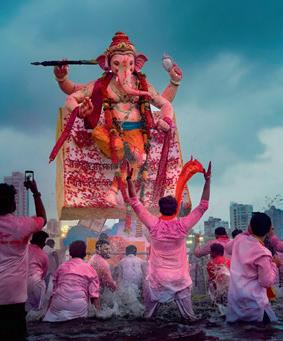
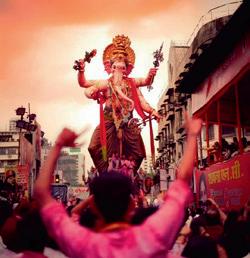
How celebration Ganesh Chaturthi takes over Mumbai
Regulars
Foreword 10 Air Tanzania news
51 My Tanzania Rachel Kessi
62 Faysal’s blog
62 Sound and vision
The best new releases in books, film and music
63 Arts column
Features
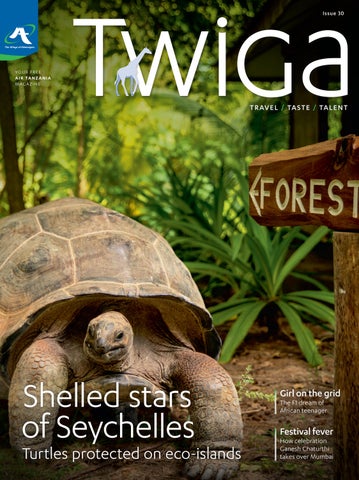
12 Sustainable Seychelles
We pick the best hotels for an eco-conscious stay on the islands
18 Mothers of music
Msafiri Zawose's field recordings tell Tanzanian women's stories
25 Jovenchi K
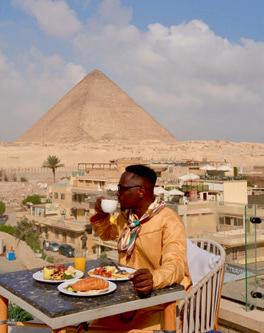
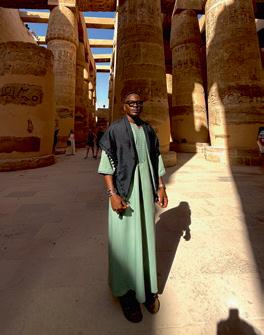
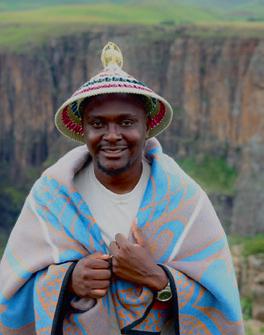
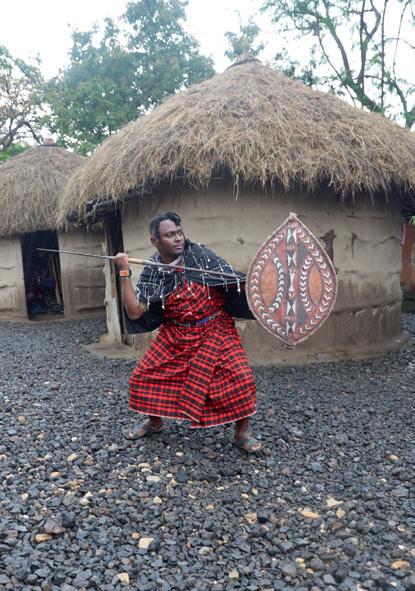
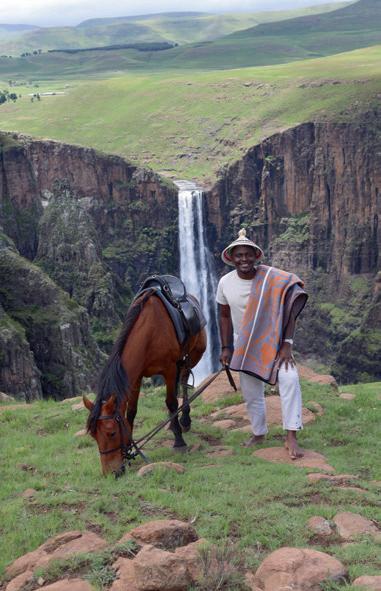
Tanzanian travel influencer embarks on epic African adventure
29 Ganesh Chaturthi
The ten days Mumbai lives for
33 Gianna Pascoal
Trailblazing teen looking to be the future face of Formula 1
36 Africa to Antarctica
A five-star adventure at the bottom of the earth
42 The perfect host
How to attract tourists to your guest house or homestay
47 Conference of the Great Lakes Region (ICGLR)
Connecting a ‘regional sisterhood of legislators’
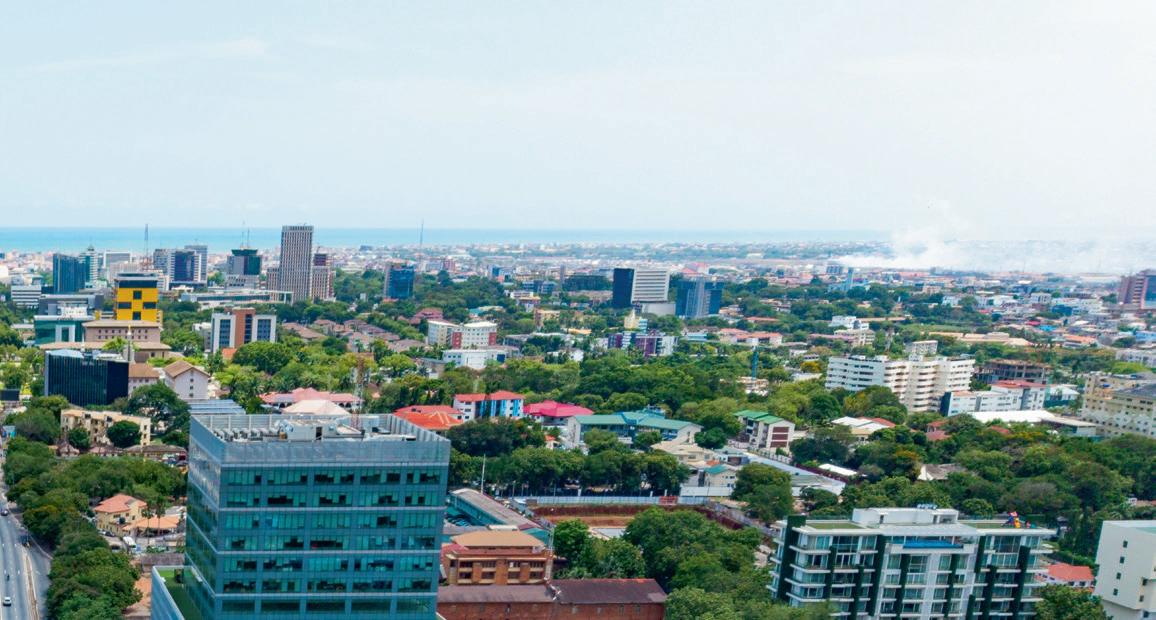
55 Feel the pulse of Accra
What's hot in the Ghana capital
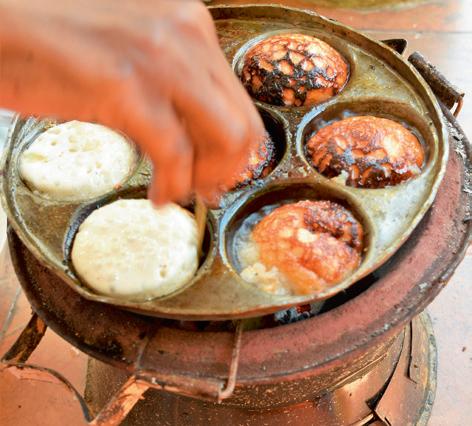
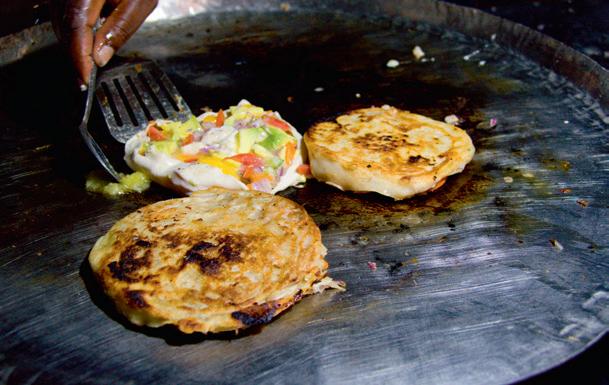
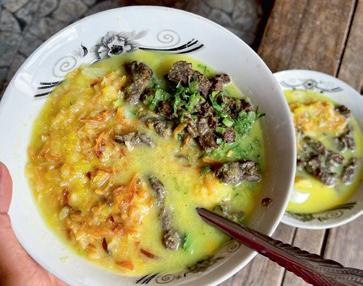
60 Swahili snacks
Get a taste of Tanzania on-the-go
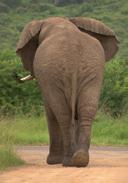
64 A fence of bees
Tackling elephant-human conflict
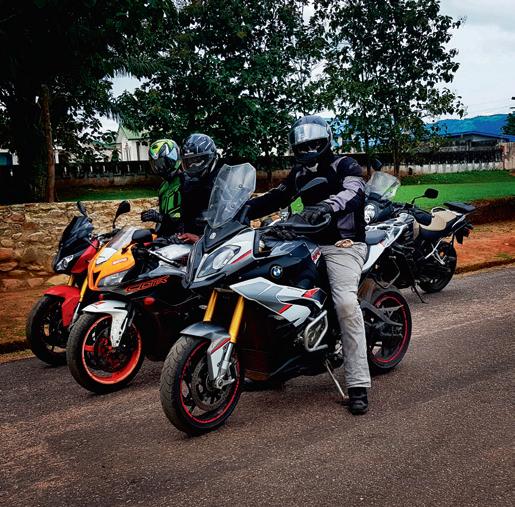
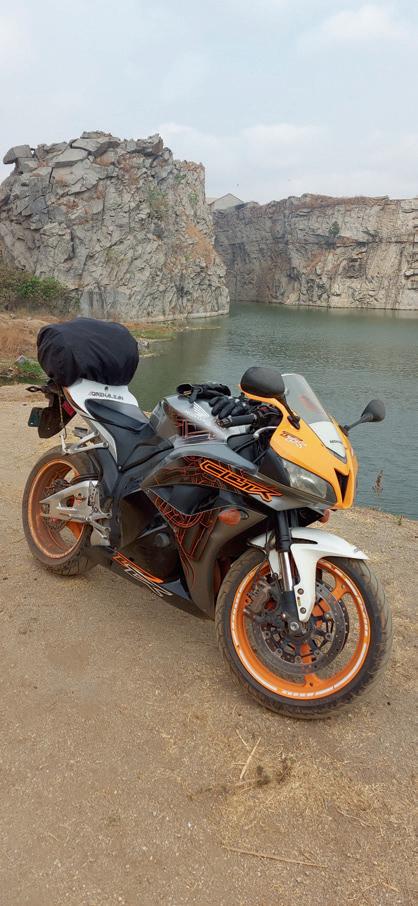
69 Adrenalean
The superhero bikers of Lagos
72 From conflicts to clinics
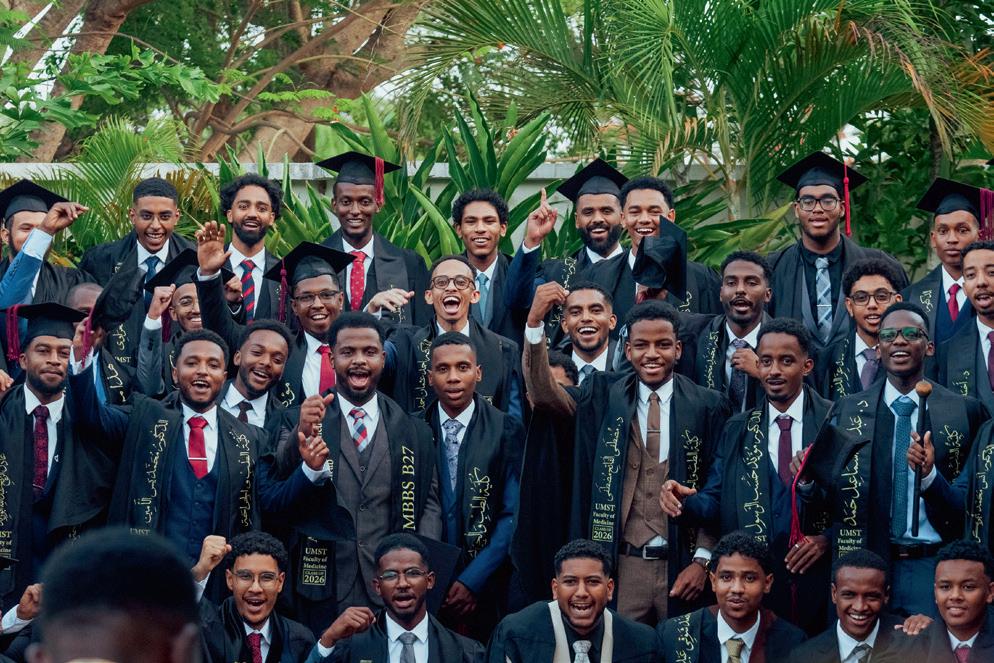
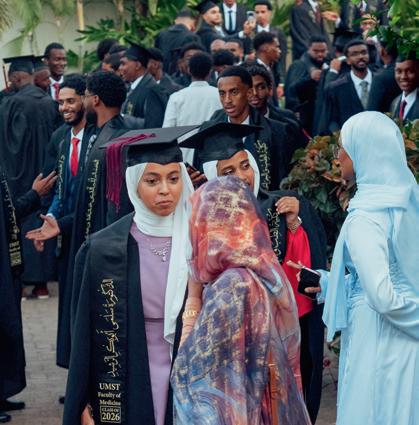
Sudanese Doctors Graduate in ‘Second Home’ Tanzania
Twiga is published by:
Land & Marine Publications (Tanzania) Ltd
5th floor, Josam House Plot Number 16, Mikocheni Area
Along Coca-Cola Road, Dar es Salaam
Tel: +255 686 118 816 www.landmarine.com
Head Office: Land & Marine Publications Ltd
6 The Square, Ipswich Suffolk, IP5 3SL, UK
Tel: +44 (0)7714 448059
Email: publishing@landmarine.com
Read Twiga online: qrs.ly/qdbooco
Editor: Mark Edwards markedwards@landmarine.com
Advertising sales:
Godfrey S. Urassa
Tel: +255 (0) 686 118 816 (WhatsApp)
Email: godfreyurassa@landmarine.com
Printed by Jamana Printers Ltd, Dar es Salaam
On behalf of: Air Tanzania Company Ltd (ATCL) Second floor, ATC House, Ohio Street Dar es Salaam. Email: info@airtanzania.co.tz Office (JNIA) Telephone: +255 222113248 Call: +255 748 773 900
International customers: +255 748 773 900 @AirTanzania @airtanzania airtanzania_atcl
For the latest flights, information and to book online, visit: www.airtanzania.co.tz
EDITOR’S NOTE
Welcome aboard and welcome to the latest edition of Twiga, your Air Tanzania inflight magazine. In this issue, we follow the airline’s growing international network to bring you stories from near, far and even farther afield. A journey to Cape Town becomes the starting point for an unforgettable adventure to the bottom of the world: Antarctica. In Mumbai, we guide you into the colour, devotion and energy of Ganesh Chaturthi, the festival that fills the city with celebration each August and September. You’ll also meet South African teen racing talent Gianna Pascoal as she chases her Formula One dream, and discover the cultural attractions currently creating a buzz in Ghana’s capital, Accra. With Moscow next on the horizon, Air Tanzania continues to bring more of the world within reach – and we’re delighted to have you travelling with us.
Mark Edwards markedwards@landmarine.com
Karibu – Welcome Aboard Air Tanzania
It is my pleasure to welcome you aboard Air Tanzania and to thank you for choosing to fly with us.
As Tanzania’s national airline, we are proud to be writing a new chapter in our journey –one defined by growth, greater connectivity and an unwavering commitment to safety, reliability and exceptional service. From our hub in Dar es Salaam, we continue to strengthen Tanzania’s position as a gateway to Africa and the world.
In recent months, we have expanded our network with new services to Cape Town, Accra and Lagos, operated by our modern Boeing 737 MAX 9 aircraft. Through Dar es Salaam, our passengers now enjoy seamless connections to Guangzhou and Mumbai, with Mumbai now served daily, further enhancing links between Africa and Asia.
This July, we proudly launched our first-ever service to Europe with direct flights to Moscow, marking another historic milestone for Air Tanzania. As we continue our journey as A Pan-African Airline with Global Ambitions, preparations are also underway to introduce services to Muscat, creating a new gateway between Tanzania and the Middle East.
Closer to home, we remain committed to strengthening domestic connectivity by restoring services to Geita and introducing new links between Dodoma and Mwanza, Kilimanjaro and Mwanza, and Dar es Salaam and Sumbawanga, making travel across our country even more convenient.
With these additions, the Wings of Kilimanjaro now extend to more than 36 destinations across Africa and Asia, while opening new horizons in Europe and the Middle East. This growth reflects our commitment to connecting people, promoting tourism and trade, and contributing to Tanzania's economic development.
Thank you for choosing to fly with Air Tanzania. Karibu safari – and enjoy the flight.
Eng. Peter Rudolf Ulanga Managing Director & CEO Air Tanzania
Karibu ndani Air Tanzania
Ni furaha kubwa kukukaribisha ndani ya ndege ya Air Tanzania na kukushukuru kwa kuchagua kusafiri nasi.
Kama shirika la ndege la taifa la Tanzania, tunajivunia kuandika ukurasa mpya katika safari yetu, ukurasa unaoakisi ukuaji, kuimarika kwa mtandao wa safari, pamoja na dhamira isiyotetereka ya kuhakikisha usalama, kutegemewa na utoaji wa huduma bora kwa wateja.
Kutoka katika kitovu chetu cha shughuli kilichopo Dar es Salaam, tunaendelea kuimarisha nafasi ya Tanzania kama lango la kuunganisha Afrika na dunia.
Katika miezi ya hivi karibuni, tumepanua mtandao wetu wa safari kwa kuanzisha huduma mpya za ndege kuelekea Cape Town, Accra na Lagos, zinazohudumiwa na ndege zetu za kisasa aina ya Boeing 737 MAX 9. Kupitia Dar es Salaam, abiria wetu sasa wanafurahia miunganiko rahisi ya safari kuelekea Guangzhou na Mumbai, ambapo safari za Mumbai sasa zinapatikana kila siku, hivyo kuimarisha zaidi uhusiano kati ya Afrika na Asia.
Mwezi huu wa Julai, kwa fahari kubwa tulizindua safari yetu ya kwanza kabisa kuelekea Ulaya kwa safari za moja kwa moja kwenda Moscow, hatua iliyoweka historia mpya kwa Air Tanzania.
Tunapoendelea kutimiza maono yetu ya kuwa Shirika la Ndege la Kiafrika lenye Dhamira ya Kimataifa, maandalizi yanaendelea kwa ajili ya kuanzisha safari kuelekea Muscat, zitakazofungua lango jipya la usafiri kati ya Tanzania na Mashariki ya Kati.
Ndani ya nchi, tunaendelea kujizatiti kuimarisha usafiri wa anga kwa kurejesha safari za Geita na kuanzisha njia mpya kati ya Dodoma na Mwanza, Kilimanjaro na Mwanza, pamoja na Dar es Salaam na Sumbawanga, ili kufanya safari ndani ya nchi yetu ziwe rahisi na zenye urahisi zaidi kwa wasafiri.
Kwa nyongeza hizi, Mbawa ya Kilimanjaro sasa yameenea katika zaidi ya vituo 36 barani Afrika na Asia, huku yakifungua fursa mpya za safari kuelekea Ulaya na Mashariki ya Kati. Ukuaji huu unaakisi dhamira yetu ya kuunganisha watu, kukuza utalii na biashara, pamoja na kuchangia maendeleo ya uchumi wa Tanzania.
Asante kwa kuchagua kusafiri na Air Tanzania. Karibu safarini, na tunakutakia safari njema.
Eng. Peter Rudolf Ulanga
Mkurugenzi Mtendaji na Afisa Mkuu
Moscow on the horizon
Plans are in place for Air Tanzania to launch a new route to Moscow in 2026. This exciting development would link Dar es Salaam to the Russian capital via Seychelles.
Tanzania has become an increasingly popular holiday destination for Russian tourists, especially since 2021 when the country was one of the few to remain open during the pandemic. The route should prove a massive boost to East African tourism.
The ambitious plan aims to be the latest in a series of significant expansions to the Air Tanzania destination network with recent additions including Accra and Lagos in West Africa, Victoria Falls in the south of the continent, and, closer to home, Sumbawanga in Western Tanzania.
Fly with ease and book your next adventure with the Air Tanzania mobile app
To book flights or gain more information, visit airtanzania.co.tz or download the Air Tanzania Mobile App at the App Store or Google Play.
Get set for Sumbawanga
Latest addition to our domestic network connects remote farmlands to major markets and offers intrepid tourists a chance to explore the littleknown natural treasures of the Rukwa region.
In June, Air Tanzania launched flights to Sumbawanga in Western Tanzania, bringing one of the country’s most productive yet remote regions closer to major markets and new travel opportunities.
Air Tanzania’s new service to Sumbawanga – a triangular route from Dar es Salaam via Tabora – marks a major step forward in connecting western Tanzania to the wider national economy. Sumbawanga sits at the heart of the Rukwa region known for its strong agricultural output. Until now, distance and long overland journeys have made access to commercial centres slower and more difficult.
The new flight creates a far quicker link to the commercial capital through Tabora, helping shorten travel times and improving the movement of people,
produce and business opportunities.
For farmers, traders and agribusinesses, that stronger air connection could be transformative. Rukwa is one of Tanzania’s leading food-producing regions, and faster access to key commercial markets can support trade in time-sensitive produce, open new buyer relationships and make regional business travel more efficient.
The route should also catch the eye of intrepid tourists eager to discover a less-travelled side of Tanzania.
Sumbawanga makes an excellent base for exploring unspoilt natural attractions in the west, from forest landscapes to waterfalls and scenic viewpoints. Nearby Mbizi Forest Reserve is known for birdlife, caves, forest trails and waterfalls, offering visitors a rewarding alternative to the country’s better-known circuits.
TWIGA MILES BONUS POINTS
Passengers can really rack up reward points through our loyalty scheme in the run-up to the festive season. We will double the Twiga miles earned on any domestic or international flights booked during this period. On top of this there are 500 Twiga Miles bonus points to be had if you book through the Air Tanzania Mobile App. Twiga Miles can also be used to secure seating upgrades.
CONTACT CENTRE
ATC House, Ohio Street, Dar es Salaam Email: info@airtanzania.co.tz
For the latest flights, information and to book online, visit: www.airtanzania.co.tz
Follow us on:
@AirTanzania
@airtanzania
airtanzania_atcl
Air Tanzania ATCL
From remote, low impact escapes to beach chic resorts, Twiga picks eco luxury accommodation options, Seychellois style.
A sustainable stay in the SEYCHELLES
Almost half of the Seychelles’ land area is protected as conservation zones and nature reserves, complemented by five marine national parks. It is therefore little wonder that ecotourism thrives, attracting visitors keen to minimise their environmental footprint in this remote and largely unspoilt paradise. Reflecting this ethos, the archipelago’s hospitality sector places a strong emphasis on sustainability. Here’s our pick of the beachfront hotels and resorts offering environmentally conscious yet exclusive experiences.
Denis Island
Why you should visit
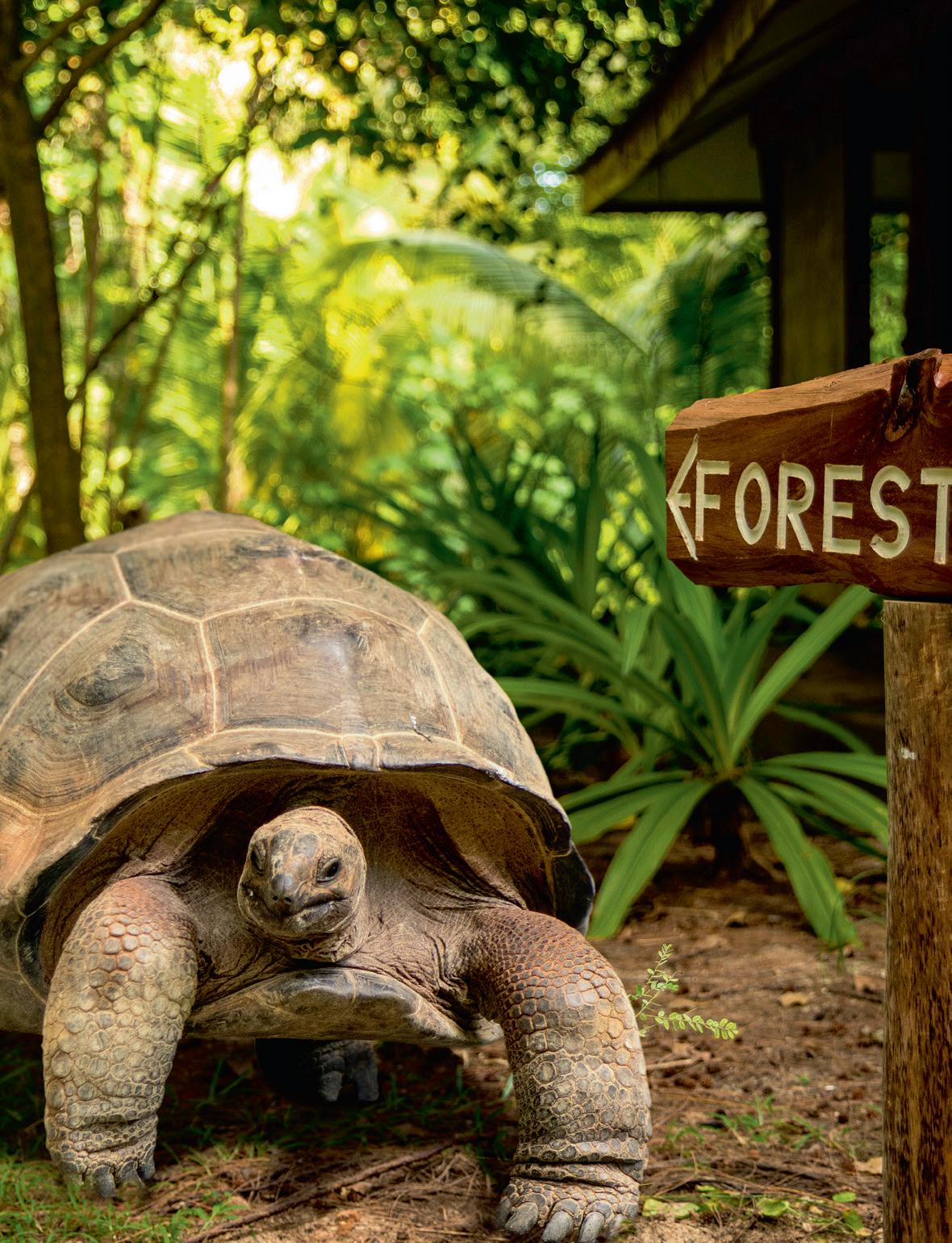
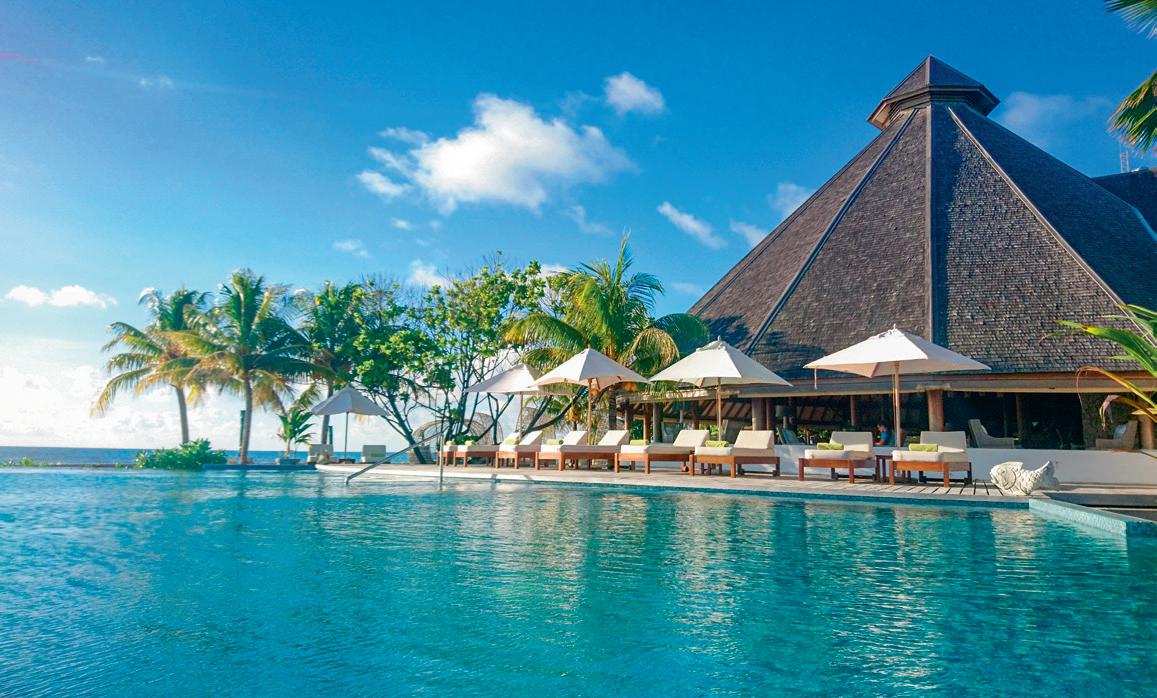
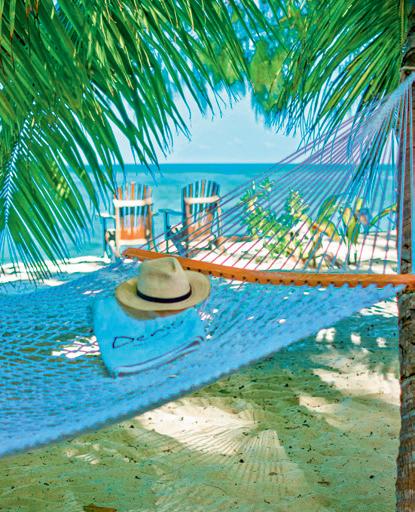
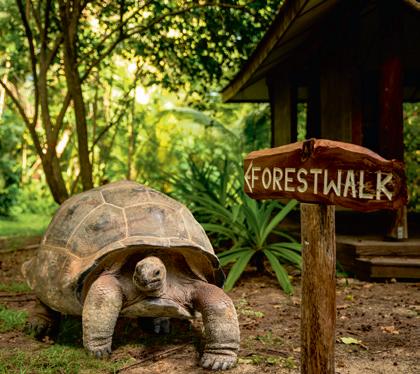
This tiny 1.4 sq km private island, ringed by powder fine white sand beaches and a shallow lagoon where coral gardens teem beneath the surface, feels almost lost in the vastness of the surrounding Indian Ocean. Visitors arriving via the grass runway that bisects the island are welcomed into a self sufficient micro community that combines low key luxury with the chance to truly unplug, within a sanctuary for endemic birdlife, rich marine ecosystems and more than 100 giant tortoises.
Location
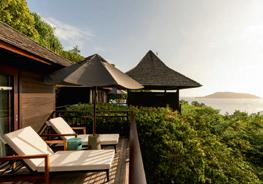
Denis Island is the second most northerly island in the Seychelles, lying around 80 kilometres from Mahé. Dotted along its halo of powder white beaches are just 23 spacious beachside cottages, complemented by discreet luxury touches including an infinity pool for those moments when guests prefer something other than the sapphire lagoon that surrounds the island.
Eco-friendly features
Denis Island has created a self-sustaining sanctuary for rare wildlife and its guests. A large area of woodland has been rehabilitated to provide a haven for endemic bird species such as Seychelles magpie robin and Seychelles warbler. The coral reefs of the lagoon – known for their rich biodiversity – will soon be strengthened further using sand-coated steel webs known as Reef Stars. The island also has its own lumber mill and carpentry workshop to repurpose wood for furniture and resort maintenance. Organic waste is used as compost to help grow the on-island farm’s fruits and vegetables. The farm’s cows and goats are fed with coconut palms. Nature tours give guests insights into these restoration initiatives and the organic farm-to-table journey.
Value for money
Double rooms from US$ 1,352 in low season; and from £1,700 in high. Breakfast, lunch and dinner included.
Cosmoledo Eco Camp
Why you should visit
An ultra remote eco escape comprising just eight stylish eco pods – refurbished shipping containers set directly on the sand – offering guests exclusive access to one of the Seychelles’ most pristine and uninhabited outer islands. The emphasis is firmly on low impact luxury, with outstanding diving, birdlife and fishing in a virtually untouched environment.
Location
Cosmoledo lies in the far flung Outer Seychelles, some 640 miles from Mahé, and is reached via a combination of domestic flights (via Alphonse
and Astove islands) and an extended boat transfer. Its isolation is intrinsic to the experience, rewarding visitors with a rare opportunity to immerse themselves in a natural ecosystem largely undisturbed by human activity.
Eco friendly features
Sustainability underpins every aspect of the camp. The eco pods are furnished with recycled wood, biodegradable cleaning products are used throughout, and there is no bottled water – instead, fresh drinking water is supplied by an on site desalination plant. Fishing is strictly catch and release, ensuring marine life is protected, while meals feature sustainably sourced deep water fish that mature quickly and have shorter life cycles. Most fruit and vegetables come from organic gardens on the sister island of Alphonse, keeping food miles to a minimum, with only select items such as wines and meats imported from South Africa.
Value for money
Eco pods start from US$950 per person per night (based on two sharing), with single occupancy from US$1,450. Rates are fully inclusive of board, with Wi Fi available in selected communal areas.
Six Senses Zil Pasyon
Why you should visit
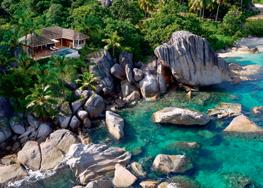
An all villa luxury resort set on the private island of Félicité, Six Senses Zil Pasyon combines barefoot indulgence with a strong eco conscious ethos. Villas are tucked among white sand beaches, dramatic granite outcrops and tropical vegetation, offering private plunge pools, exceptional snorkelling and a serene spa experience in a gasp inspiring island setting.
Location
Six Senses Zil Pasyon occupies the private island of Félicité in the Seychelles, accessible via a 20-minute helicopter ride from Seychelles International Airport on Mahé. It stands out from other Seychelles islands in its dense, forested hills and massive, weather-sculpted granite boulders. The resort spread across this dramatic terrain with multiple stairways connecting to the island’s three pristine natural beaches, all suitable for swimming.
Eco friendly features
Sustainability is central to the Six Senses philosophy. The resort operates plastic free initiatives, including on site water bottling plants, and places a strong emphasis on locally
sourced, organic and plant based ingredients. Dining focuses on fresh seafood drawn from surrounding waters, with ingredients grown on the island or sourced locally wherever possible, reinforcing a low impact, environmentally responsible approach to luxury hospitality.
Value for money
All villa accommodation with private pools, multiple dining venues, a spa and extensive facilities. Prices vary seasonally and by villa type; dining and wellness experiences are available à la carte alongside inclusive packages. Prices typically range from US$ 1,300 to over US$ 5,000 per night.
Les Lauriers Eco Hotel
Why you should visit
A small, intimate eco hotel on Praslin island, Les Lauriers offers an authentic Seychellois experience rooted in sustainability, community engagement and locally inspired hospitality. The atmosphere is understated and welcoming, with an emphasis on cultural connection and
environmental responsibility rather than overt luxury.
Location
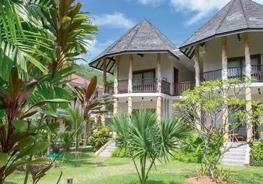
Les Lauriers is located on Praslin, within easy reach of iconic natural attractions including the Unesco listed Vallée de Mai, Anse Lazio beach and the Côte d’Or coastline. The hotel provides a convenient base for exploring the island’s beaches, forests and marine environments by car or bicycle.
Eco friendly features
Sustainability is woven into daily operations. Herbs, fruits and vegetables are grown on the hotel’s green garden roof and in surrounding grounds, significantly reducing food miles. Glass bottles replace plastic, with refillable water provided in rooms. The hotel partners with local eco solutions providers to implement solar panels, water recycling systems and toxin free biotechnology cleaning products. Social responsibility is also prioritised through local employment, artisan partnerships and community initiatives such as beach clean ups and environmental campaigns.
Value for money
Rates typically start from around US$ 186 to US$ 375 per night, depending on the room type, and season. The hotel features superior double rooms, family rooms, and deluxe suites with rates often including breakfast
Constance Ephelia
Why you should visit
This five-star is the largest resort in the Seychelles, set across a vast headland on Mahé and offering a wide range of rooms and villas. While large scale in design, the resort positions itself as environmentally aware, with extensive leisure facilities and access to two contrasting beaches framed by the island’s signature granite boulders.
Location
Located on Port Launay Road on Mahé, the resort occupies almost an entire headland adjacent to Port Launay Marine National Park. It is approximately a 40 minute drive from the international airport and benefits from both calm southern cove waters and a more dramatic northern beach setting.
Eco friendly features
Constance Ephelia makes efforts to protect surrounding mangroves and minimise plastic waste, including the provision of drinking water in refillable glass bottles. Family friendly environmental activities include tree planting, mangrove visits and educational experiences involving giant tortoises. Despite its scale, the resort promotes awareness of local ecosystems and marine environments through guided activities and non motorised watersports.
Value for money
Rates start at between US$ 300 and US$ 500 per night for suites with villas with their own pool at least double that.
FROM THE MOTHERS,
THE MUSIC
Msafiri Zawose’s Asili ya Mama honours maternal lineage, documenting women’s voices at the root of Tanzanian traditional music and culture.
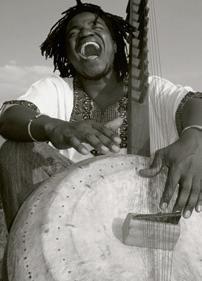
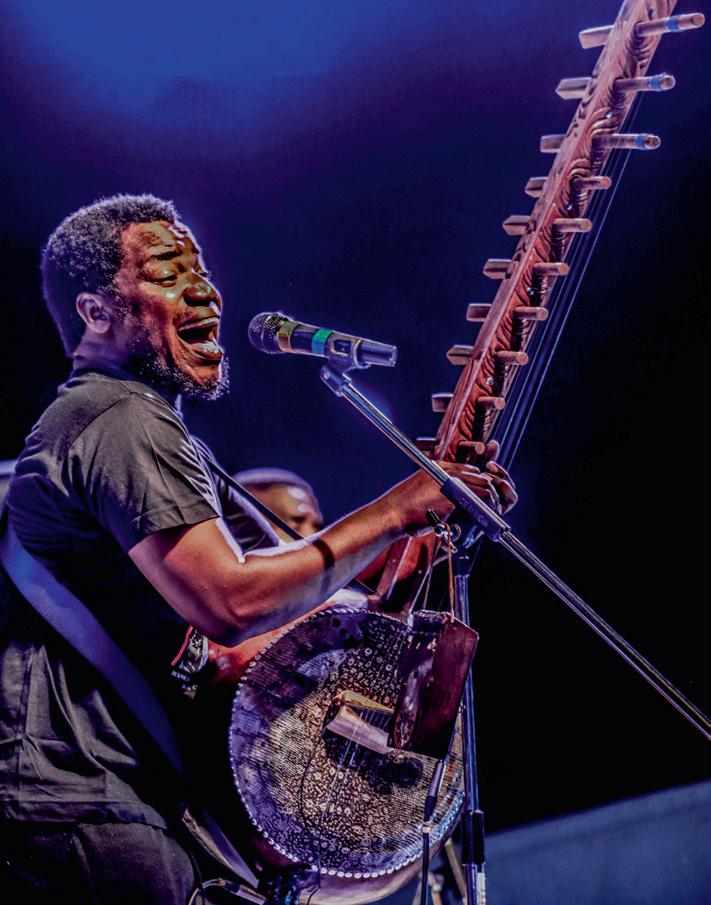
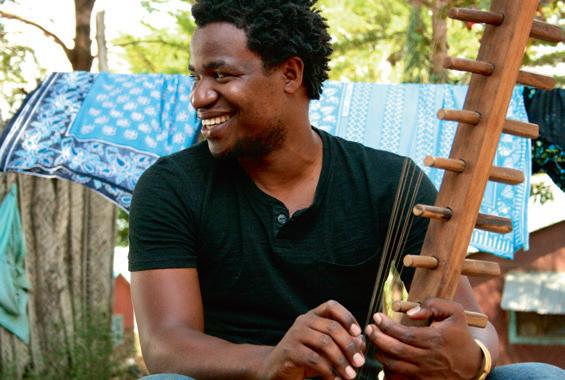
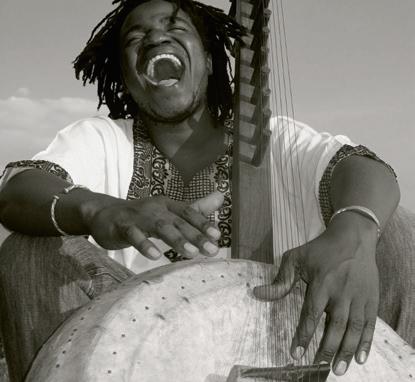
Msafiri Zawose, the fifth of 17 children of the late Dr Hukwe Zawose – a towering figure in Tanzanian traditional music – was immersed in the family’s musical world from an early age. Trained by his father to play and build the handcrafted instruments central to their renowned sound, he was touring and performing alongside him by the age of 12.
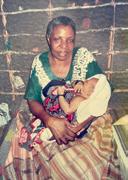
Now a respected solo artist whose work blends the traditional Gogo music he inherited with contemporary influences, Msafiri is also looking beyond the most visible source of that legacy. His latest project, Asili ya Mama – a compilation of field recordings performed by women – honours a quieter but equally formative force: his mother, and by extension the often unacknowledged role of mothers in carrying culture across generations.
He says: “When people speak about Hukwe Zawose as my influence, of course that is true. But inside me there is also Erika Kalima Zawose. She is another fire inside my music – quieter perhaps, but equally powerful.
“My mother shaped my musical life directly and emotionally. She sang a lot at home, during family gatherings, and carried a joyful spirit. Over the years, I watched that joy slowly become quieter. Life changed, the family structure changed, and she carried many
responsibilities. She ailed for a very long time. Still, she always kept warmth and love for us as her children.”
Mother's guidance
When Msafiri sought guidance after his father’s death in 2003 – when he was just 22 – it was his mother who reminded him that music is “spirit and emotion given by God,” and that each individual must build their own vision with persistence, rather than dependence on favour or hype.
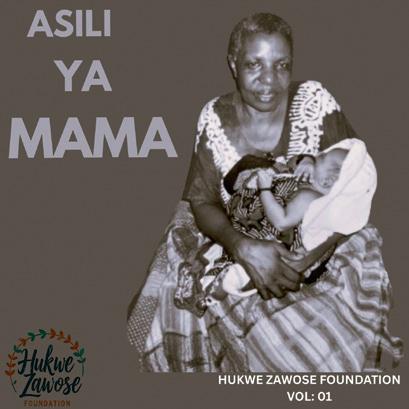
Asili ya Mama – which translates as “The Origin of Mother” – honours
“My mother shaped my musical life directly and emotionally. She sang a lot at home, during family gatherings, and carried a joyful spirit.”
the foundational role of his mother, and of mothers more broadly, as custodians of cultural memory.
“Without origins there is no culture, no identity,” Msafiri says. “A mother is the first source of life, the first teacher, the first person to shape
Msafiri
Zawose
/ Msafiri
/ Msafiri Zawose
us. Before we understand language or community, we already know our mother’s voice and her care.
“For me, culture is passed down first through mothers. They nurture it, protect it, and carry it into the next generation through everyday life. When I started this project, which is about preserving traditional music and culture, I felt we had to begin at the very source – the mother.”
The album is a collection of
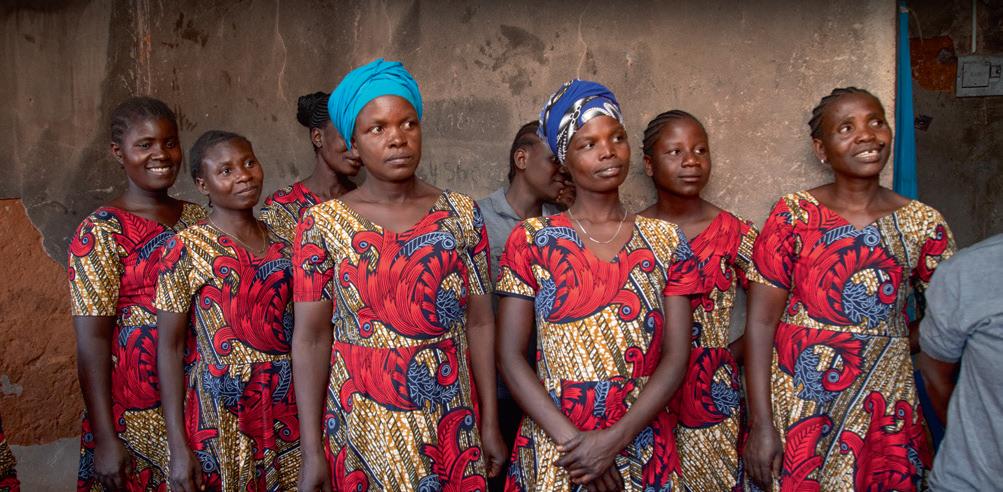
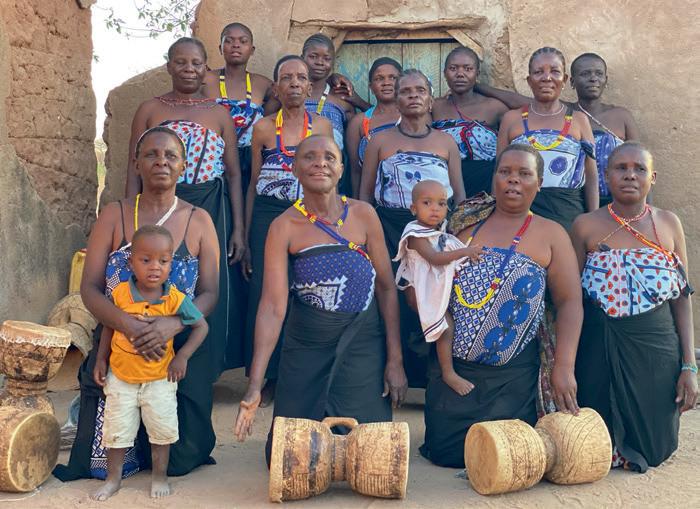
traditional Tanzanian music performed by women in village communities, curated and recorded by Msafiri over an eight year period beginning in 2017. The songs were captured live in courtyards, homes, and open village spaces across Dodoma, Tanga, and Morogoro.
Live recordings
The recordings span ceremony, daily life, and women led traditions. All of the songs are long standing
traditional works passed down through generations, recorded either as raw field recordings or with minimal studio reinforcement limited to percussion already typical to each community’s style.
Lyrical themes include relationships, family roles, respect, social responsibility, and life transitions such as marriage and initiation. Msafiri says he feels a particular connection to the message behind the infectious call and response track Kuku Mnywa Maji (“A Chicken Drinking Water”). “It describes how a chicken must lift its head repeatedly to drink water,” he says. “It carries a meaning about effort and action. If you need something in life, you must act.”
A celebration of music
The project was entirely self financed, and financial constraints partly shaped the choice to record in villages rather than professional studios. But the decision was also philosophical. Traditional music, Msafiri explains, is inseparable from daily life.
Women sing while carrying children, cooking, feeding babies, and gathering communally. Recording within these environments allowed the music to remain grounded in its original context.
The album captures songs performed by women in communities in Dodoma, Tanga, and Morogoro
Asili Ya Mama Press
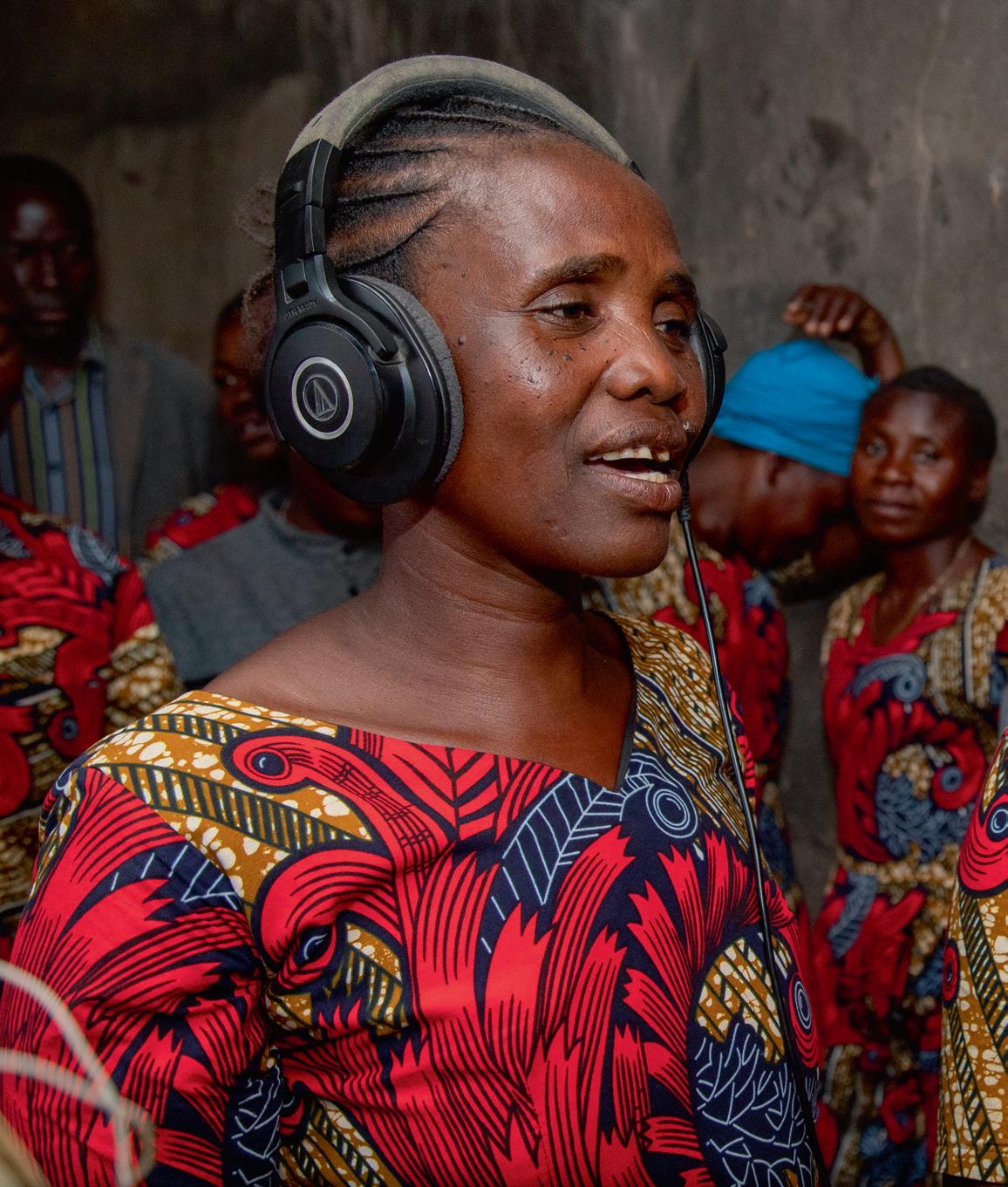
The sessions often became informal celebrations. Women enjoyed the novelty of the headphones and microphones, passers by joined in, and gatherings formed naturally. “Sometimes people gathered around to watch and sing along, and the recordings became community moments rather than formal sessions,” Msafiri says. “The women became stars within their own spaces – surrounded by familiar people, relaxed and confident. That feeling would have been difficult to recreate inside a modern studio.”
The album also challenges a persistent narrative surrounding Zawose and Wagogo music – that men occupy the centre while women remain at the margins. Msafiri insists that Asili ya Mama is not a corrective gesture, but rather a reflection of how women have always played leading roles within Tanzanian musical traditions.
In his own family, musical authority was never divided strictly by gender. Commitment, discipline, and excellence determined who performed. His father actively encouraged women to learn instruments, and Msafiri’s sister, Mariam Zawose, became one of the strongest women solo performers of Wagogo traditional instruments – chizeze (a single stringed fiddle) and ilimba (thumb piano) – by the early 2000s.
“My father was guided by discipline and ability rather than gender,” Msafiri says. “He was very strict about musical standards. Anyone who
wanted to perform or tour with him had to prove themselves through rehearsals and auditions, regardless of gender. Some women made the touring groups; some men did not.”
Women in the spotlight
Over time, Msafiri reflected on why fewer women appeared visibly on
melodic instruments – not because of a lack of ability, but because family responsibilities and childcare often limited the time required for training and performance. That realisation later shaped his work through the Art Promoters Foundation, which created opportunities and employment for
Album was a race to preserve remarkable voices
Kenyan cultural documentarian and musician Ruth Ndeto assisted Msafiri Zawose in putting together Asili ya Mama. Here she shares how the two artists first met and what the project means to her as an African woman.
Q: From your perspective, how did the Asili ya Mama project begin?
I first met Msafiri Zawose in Kenya during one of his performances. It was my first time seeing him perform live, and I was immediately fascinated, especially seeing a younger generation continuing such a deep traditional musical heritage.
After the performance, I went to speak with him because I was curious not only about the music itself, but also about how these traditional instruments and cultural practices are preserved.
That was really the beginning of many conversations around preservation, culture, and documentation. Later, he shared with me his vision for Asili ya
Mama. It immediately spoke to me very deeply as a woman.
Q: What did you learn through your involvement in the project?
I learned that there are incredible singers, musicians, storytellers, and tradition bearers whose work may never be heard beyond their immediate communities.
I also realised how urgently this documentation work is needed. Many elders carrying this knowledge are aging, and with modernisation a great deal of cultural knowledge is disappearing very quickly without being archived or preserved.
/ Msafiri Zawose
Msafiri Zawose has built an international renown for his masterful singing and his playing of the zeze
Msafiri
Zawose
/ Msafiri Zawose
young women and girls to engage in traditional music through teaching and performance.
“From my experience growing up in the family, I never really saw music as something divided between men and women,” he says. “The bigger issue was never whether women played major roles in music – because they always did. The issue was visibility and recognition.”
Preserving a rich heritage
Asili ya Mama emerged from a long held awareness rather than as a reaction to recent success. Most of the recordings predate the release of the 2024 debut album by the Zawose Queens – a duo made up of Msafiri’s sister and niece, both of whom he has mentored – which marked the first time female members of the famous Tanzanian musical dynasty took the lead as performers, songwriters, and lead vocalists. With Asili ya Mama, Msafiri says his aim was to document
women’s voices before they disappeared, honouring both his mother and generations of female tradition bearers.
Through Asili ya Mama, Msafiri hopes listeners – both in Africa and internationally – will hear traditional Tanzanian music not merely as a foundation for contemporary genres such as Bongo Flava and Singeli, but as a complete and sophisticated art form in its own right, rich in communal meaning.
“For me, fusion only becomes meaningful when the roots are understood and respected first,” he says. “Asili ya Mama is important because it presents traditional music in a direct and honest form, without trying to reshape it into something else.”
The album forms part of a larger preservation initiative, Muziki Asili, under the Hukwe Zawose Foundation, which focuses on documenting, archiving, preserving, and sharing traditional music
across communities throughout Tanzania.
Women have always been part of those traditions – singing, teaching, remembering. Asili ya Mama simply listens back, placing those voices where they have always belonged: at the origin.
Q: How did you choose where to make the recordings?
We focused initially on communities where there were already relationships, local contacts, or easier access. Dodoma was naturally central because of the Wagogo connection, while places like Morogoro and Tanga were also relatively accessible from Bagamoyo where some of the work was coordinated.
At the same time, the selection was guided by the types of songs and traditions being preserved. We wanted to document different forms of women-led traditional music connected to ceremonies, teachings, labour, celebration, and social life.
This is really only the beginning. Tanzania has more than 120 ethnic communities, and there is still an enormous
“This is really only the beginning. Tanzania has more than 120 ethnic communities”
amount of cultural material that remains undocumented.
Q: Do you have plans to work with Msafiri again?
Musically, we are developing collaborative work that brings together my Kikuyu roots and Msafiri’s Wagogo heritage among other tribes within a contemporary sound. Alongside this, we are also co-authoring a book exploring Wagogo culture and musical traditions as part of the broader preservation work of the Hukwe Zawose Foundation.
We are also involved in environmental and cultural preservation initiatives connected to traditional instrument-making materials. One important project focuses on preserving indigenous tree species used in traditional Wagogo instruments, especially the Mheme tree used to make the sacred mheme drum traditionally played by Wagogo women. During fieldwork we observed that some of these trees are becoming increasingly scarce. We have already begun small-scale propagation projects in Dodoma and Bagamoyo to help preserve these species.
Documentarian, filmmaker and musician Ruth Ndeto
One continent, 54 countries and one deadline
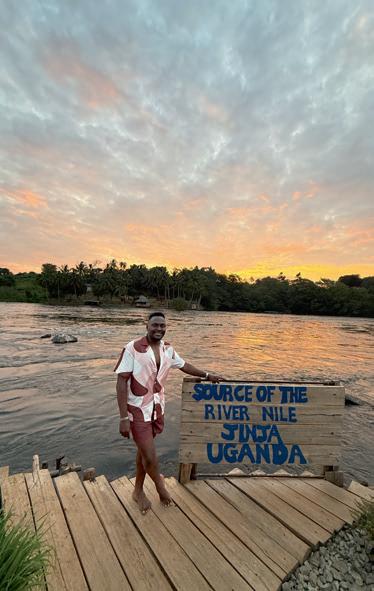
Ahead of his 30th birthday, Tanzanian travel influencer Jovenchi K is racing to visit every African country. Along the way, the journey has reshaped how he sees the continent and himself.
John Kalanje will be 30 in August 2026. For many, it’s a milestone age accompanied by significant societal pressure to meet traditional markers of adulthood: marriage, homeownership, and a stable career. John, however, has set himself a more unconventional goal to achieve before the launch of his fourth decade on earth – to visit every country in Africa.
The Tanzanian, better known to his 40,000 plus online followers as travel influencer Jovenchi K, has already stamped 29 countries on his passport. Reaching the remaining 25 in just five months is, he admits, “ambitious”, but he is determined to see it through.
Fuelled by a deep love of travel, the challenge has reshaped his understanding of the continent he calls home – and, along the way, inspired other Africans to look beyond their borders and redefine what adventure can mean.
Travel has always shaped how Jovenchi understands both himself and the world, but it was his time in South Africa that transformed a childhood fascination into something tangible. After winning a university place there, borders that once felt impossibly distant suddenly became accessible, thanks to visa free travel across much of southern Africa. “Living in Tanzania, travel felt much less accessible,” he says. “Growing up, I always believed you could only travel for work or if you were very rich – which I wasn’t.”
He began to wonder whether he could channel that passion into something larger and more lasting than content creation alone.
“I wanted to use travel to create something meaningful – not just for myself, but for other people too,” he explains. “If there’s one thing I’d want to be remembered for, it’s inspiring people to explore, especially within Africa.”
That desire is also rooted in frustration with the way the continent is often portrayed. Despite Africa’s diversity and beauty, global narratives still tend to frame it through
crisis and instability.
“A lot of people immediately associate Africa with poverty or corruption,” he says. “Yes, we have challenges – but Africa is also incredibly beautiful, full of culture and amazing people. I wanted to experience every country myself and share those stories firsthand.”
What travel has taught him
Each country, he says, offers a quiet lesson in adaptability. “Every new place pushes me out of my comfort zone – different cultures, languages, ways of life,” he reflects. “It changes the way I think.”
Much of that growth comes from human connection. Whether navigating language barriers or sharing everyday moments with strangers, he has found that travel breaks down assumptions far more effectively than observation from a distance.
“You find common ground with people in the most unexpected ways,” he says. “It reminds you how connected we all are.”
Travelling solo has intensified those experiences. Without the comfort of familiar companions, he
is forced to engage more deeply with his surroundings. “When I’m alone, I connect more with locals, I observe more, I’m more present,” he explains. “It’s been one of the biggest contributors to my personal growth.”
Jovenchi K's travels have taken him to 29 African countries so far
Inspiring others to explore
As Jovenchi’s journey has gained visibility online, the response from audiences across the continent has surprised him. Many people, he says, are intrigued not only by the scale of the challenge, but by its focus.
“The most common question I get is ‘why Africa?’” he laughs. “A lot of people would use that money to travel to Europe or elsewhere.”
Those conversations, however, often open the door to pride and reflection. Locals he meets along the way are eager to share their cultures, histories and hidden gems – and grateful to see their homes represented through an African lens. “Sometimes people tell me they feel seen,” he says. “That doesn’t happen often in global narratives.”
Demand from followers eventually led him to launch his own travel company, Unlock Duniya, offering curated trips for Africans who want to explore the continent but feel uncertain about safety, logistics or travelling alone.
“People trusted how I travelled,” he explains. “They felt safer booking with someone they knew.” The
venture now supports his own travels while encouraging others to take their first steps beyond their borders. Highlights along the way While landscapes and landmarks have left lasting impressions, Jovenchi insists that people remain the true highlight of his travels.
“Human beings are some of the most incredible creations,” he says. He recalls strangers offering him places to sleep to help him save money, an Airbnb host who surprised him with a birthday breakfast, and everyday acts of kindness from people he had just met.
Favourite destinations in the Air Tanzania network, he says, include Comoros, Accra and Victoria Falls –each memorable for very different reasons.
Comoros stands out to him as “the definition of a hidden gem”. During a 10-day trip across Mohéli and Moroni, he says he was often the only tourist, with some of the islands’ most beautiful beaches entirely to himself.
Jovenchi was in Accra during ‘Detty December’, a month-long celebration of music festivals, food and partying to see out the year. “Watching artists like Asake and Rema perform was unforgettable, but my biggest highlight was trying local street food beyond jollof –especially waakye served on banana leaves,” he says.
As for Victoria Falls, he is unequivocal: “I’ll end the debate – the views of Victoria Falls are better from the Zimbabwean side.” Still, the real adrenaline rush came from Devil’s Pool on the edge of the falls, which he describes as “terrifying, daring, and such a thrilling experience. I can’t wait to go back.”
The challenges of crossing borders
Travelling across Africa as an African passport holder has not been without difficulty. Visa regulations, he says, are often inconsistent.
“Sometimes official sources say you don’t need a visa, but when you arrive, the rules are different.”
Overland travel can be slow, uncomfortable and unpredictable. On a recent West African road trip, he endured journeys lasting more than a full day on severely damaged roads. Safety concerns in certain regions have also shortened some stays.
Yet he approaches those obstacles with patience and perspective. Even during brief visits, he makes a point of connecting with daily life – through food, conversation and observation. “It’s not about ticking boxes,” he says. “It’s about depth.”
Redefining the journey
As he races toward his August deadline, Jovenchi is careful not to frame success purely in numbers. Whether or not he reaches every remaining country in time, the challenge has already achieved what he hoped it would.
“It’s about the stories, the intention, and the impact,” he says.
To keep up with Jovenchi’s African adventures, go to his Instagram page @jovenchi.k
Jovenchi’s travel tips
y Start small and explore what’s close to you first. Incredible experiences can be found nearby
y Immerse yourself in local culture, try the food, attend festivals, and listen to people’s stories
y Research safety and logistics in advance, but stay open to spontaneous experiences
y Be patient with transport and infrastructure, because delays or unexpected challenges are part of the journey
y Respect the environment and communities, and travel responsibly
y Embrace the diversity and richness of each country, because Africa is full of unique cultures, landscapes, and people waiting to be discovered.
GANESH CHATURTHI
The ten days Mumbai lives for
How to not just see but become part of a city-wide celebration involving around 20 million Mumbaikars.
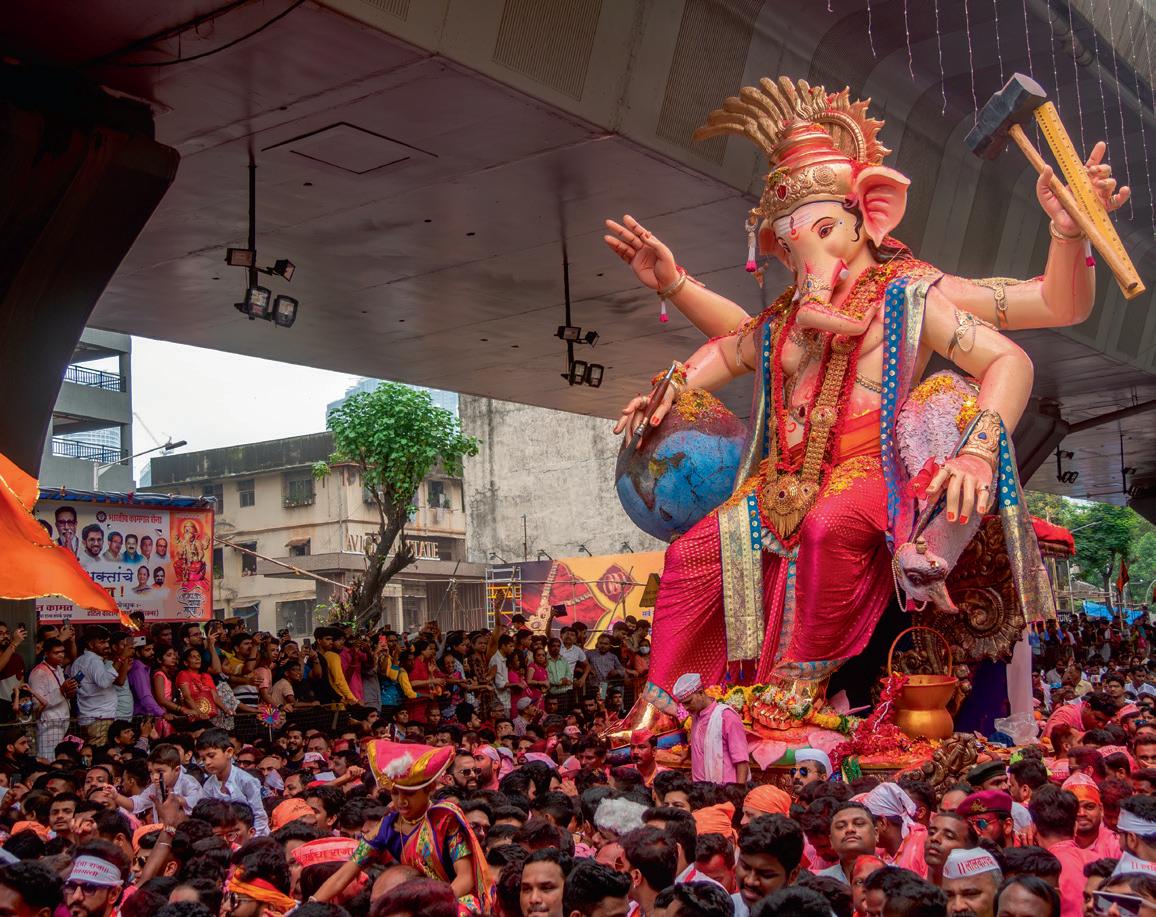
Ganesh Chaturthi – a ten-day festival between August and September marking the birth of Lord Ganesha, the Hindu god of beginnings – is celebrated across India, but it is in Mumbai that it reaches its fullest expression.
Across the city, an estimated 150,000 or more idols are installed –in homes, on street corners, inside elaborately constructed pandals or pop-up pavilions. The beaches and waterways draw millions. Mumbai does not simply celebrate; for ten days, it becomes the celebration.
Since 2005, Reality Tours & Travel has guided visitors into the centre of this experience. The journey begins in Dharavi, one of Mumbai’s most densely populated neighbourhoods, and ends at Chowpatty Beach at dusk. Along the way, guests encounter ritual and history, enter homes rarely open to outsiders, and experience both spectacle and stillness.
Who is Ganesha?
Ganesha is the elephant-headed god associated with beginnings,
knowledge, and the removal of obstacles. His image appears across India, from household altars to temple entrances, marking auspicious starts.
Ganesh Chaturthi celebrates his birth on the fourth day of Bhadrapada in the Hindu lunar calendar. Over ten days, devotees welcome Ganesha into their homes and communities as a guest. Daily prayers culminate in visarjan – the immersion of the idol in water –symbolising departure, renewal, and return.
Jeevan
Lighting oil lamps (diyas) is part of celebrations
/ Ganesh Chaturthi
Why Mumbai?
The answer lies in history. In 1893, independence activist Bal Gangadhar Tilak transformed Ganesh worship from a private ritual into a public festival. Under colonial rule, large gatherings were restricted; the festival created a space for unity and shared identity.
Mumbai became the centre of that transformation. Areas such as Girgaum and Dharavi – both part of the Reality Tours experience – were among its earliest hubs, and the model spread across the city.
Over the following 150 years, Mumbai’s identity as a migrant city deepened the festival’s character. People from across India – Tamil Nadu, Gujarat, Uttar Pradesh, Karnataka and beyond – brought their own traditions. Today, these coexist in close proximity: a Maharashtrian-style pandal next to a south Indian shrine, or a simple household idol beside an elaborate community installation.
Mumbai’s beaches – Girgaum, Juhu, Versova – become collective spaces of farewell during visarjan, where processions converge and the city gathers to return the idols to the Arabian Sea.
A city transformed
To understand the scale is to understand the city itself. During the festival, tens of thousands of idols are installed across homes, apartment blocks, chawls, and street corners. Community groups organise public pandals, while families host their own celebrations.
The festival follows a clear rhythm. The first day marks installation. Over the following days, morning and evening pujas and aartis structure daily life, accompanied by offerings of modak, coconut, flowers, and incense. Key moments occur on specific days, leading to Anant Chaturdashi – the final day.
Visarjan is the emotional climax. From early morning until late into the night, processions move through the city toward the sea. At Chowpatty Beach, the scale
Ansh Chopra
becomes visible: an unbroken stream of processions stretching as far back as the eye can see.
What to expect
The Reality Tours experience runs for approximately four hours, moving from the intimate to the immense.
It begins with a brief orientation at Churchgate or Mahim, where guests learn the basics of the festival and its etiquette. The first stop is a community pandal in Khumbharwada, Dharavi’s pottery district, where the communal nature of the festival becomes clear. The guide explains how these pandals are organised and sustained by neighbourhood effort.
From there, the experience enters private homes. Guests visit families who have installed their own Ganesha idols – an unusual level of access made possible by long-term relationships.
A local train journey to Charni Road follows, placing the experience within Mumbai’s everyday rhythm. During the journey, the guide introduces the historical roots of the modern festival.
Near Charni Road, guests visit the site associated with the earliest public celebrations, connecting the present-day festival to its origins in Tilak’s movement.
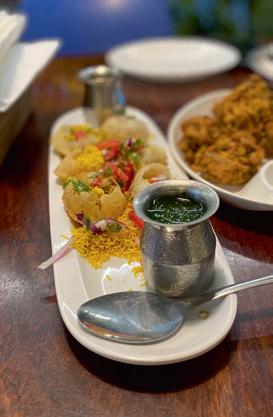
At Chowpatty Beach, there is a pause for street food favourites such as sev puri, pav bhaji, kulfi as the energy shifts toward the evening’s main event. As dusk sets in, guests witness visarjan.
Practical Information
Duration: 4 hours (3:30 pm–7:30 pm from Mahim)
Start points: 2:45 pm at Churchgate / 3:30 pm at Mahim
Walking: Moderate (narrow lanes and open streets)
Physicality: Low – suitable for most visitors
Group size: Maximum 6 guests
Language: English
Where to Go: Key Sites
LALBAUGCHA RAJA, LALBAUG
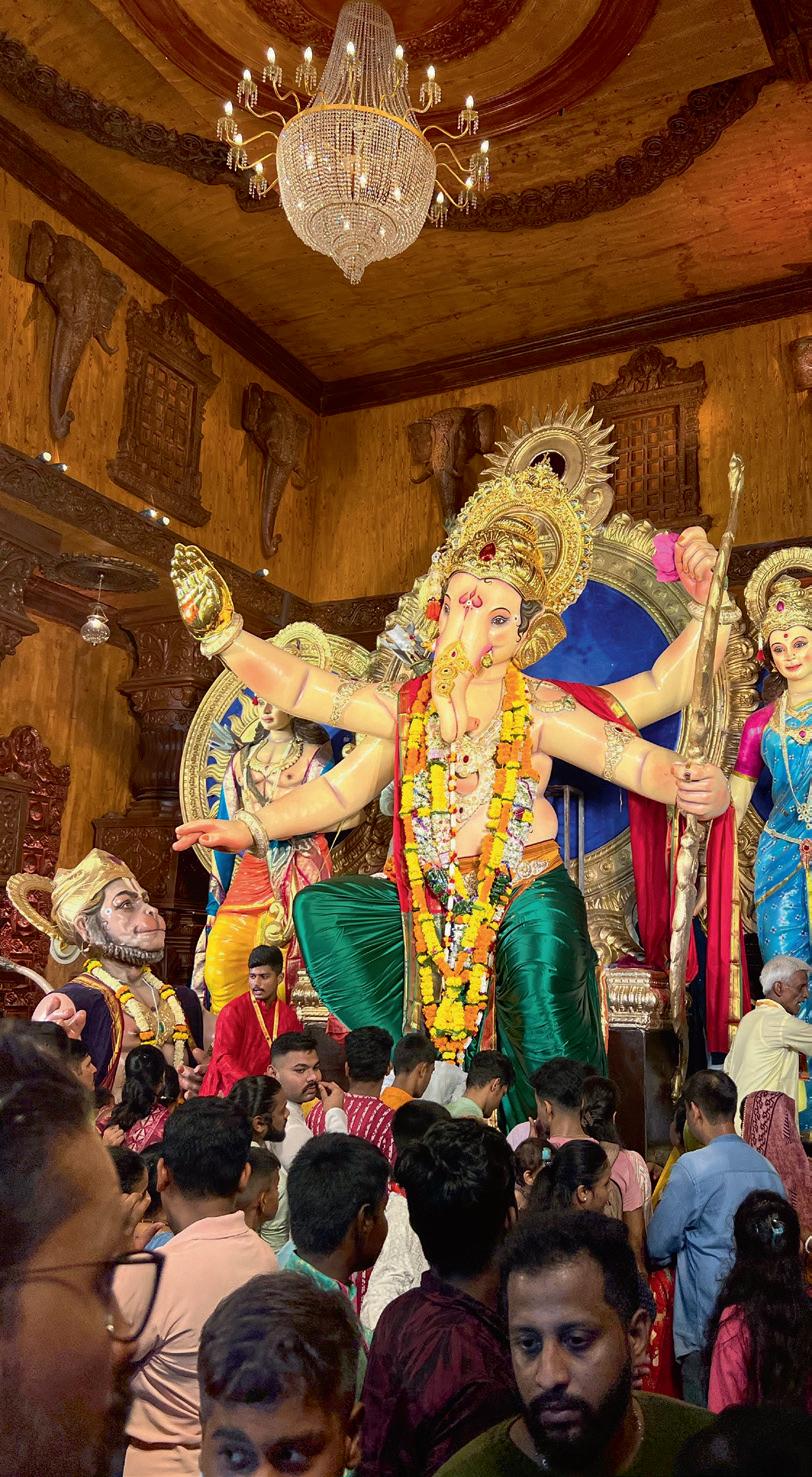
Perhaps the most famous idol in Mumbai, attracting long queues and believed by many to grant wishes.
GANESHGALLI (MUMBAI CHA RAJA), LALBAUG
Known for themed decorations that change annually, combining devotion with spectacle.
GIRGAUM CHOWPATTY BEACH
The principal immersion site. On the final day, processions continue from dawn until late at night, creating a continuous flow toward the sea.
KESHAVJI NAIK CHAWL, GIRGAUM
Associated with the first public Ganesh festival organised in 1893, offering historical context more than spectacle.
GSB SEVA MANDAL, KING’S CIRCLE
A five-day festival known for intricate decoration and a quieter, more devotional atmosphere.
A few words every visitor should know:
Darshan: Respectful viewing of the deity; for devotees, a spiritual encounter.
Aarti: Ritual waving of a lamp before the deity, with song and bells.
Prasad: Food offered to the deity, then shared as a blessing.
Visarjan: Immersion of the clay idol in water, symbolising renewal.
Pandal: Temporary structure housing a community Ganesha idol.
Modak: Sweet dumpling commonly offered to Ganesha and shared with visitors.
GANESH CHATURTHI TOUR DETAILS:
The experience runs during the festival period (AugustSeptember), lasting four hours and departing at 2:45 pm from Churchgate or 3:30 pm from Mahim. Groups are limited to six guests and are conducted in English. Visit realitytoursandtravel.com for current dates and booking.
/ Ganesh Chaturthi
TRAILBLAZING TEEN LOOKING TO BE THE FUTURE FACE OF FORMULA 1
South African schoolgirl
Gianna Pascoal accelerates from karting prodigy to Formula racing’s global fast lane.
In many ways Gianna Pascoal is your typical South African 16-year-old. She loves hanging out with her friends in her free time and is studying hard in readiness for school exams.
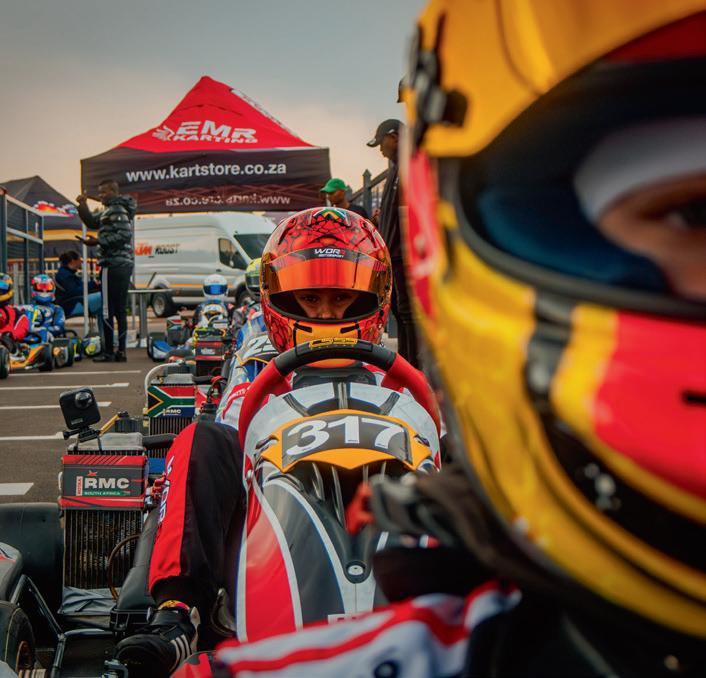
What sets her apart is that much of the rest of her life is spent behind the wheel of a 160 horsepower racing car, reaching speeds of up to 220 kph. Widely regarded as one of motorsport’s most promising young talents, Gianna is being carefully prepared for the highest levels of Formula racing. After excelling against some of the world’s best drivers in competitive karting, the Bedfordview-born teen is now set to make her debut in the Investchem MSA Formula 4 Championship later this year.
As an African and a woman, Gianna is an outlier in the world of Formula racing – a sport dominated since its inception by men and money. There has not been an African driver on the F1 starting grid since 1980 and it has been 34 years since a woman was entered for a Formula 1 Grand Prix.
But the sport is changing. Gianna is among a clutch of young female driving talent selected for the More Than Equal Driver Development Programme – a global high-performance initiative created to identify and prepare elite female drivers for Formula-level racing.
Like most of today’s Formula 1 stars, Gianna’s first taste of racing came in a kart. But she arrived comparatively late: while elite drivers such as Lewis Hamilton and Max Verstapen were karting by the time they started primary school, Gianna’s first try was aged 11, joining her father for a fun day out near her home on the eastern edges of Johannesburg.
Go-karting beginnings
“My cousins took my dad racing, and he really enjoyed the sport, so he decided to take me along,” she says. “At first, I didn’t really enjoy it, but I loved spending time with him. As I got quicker and started to feel the thrill of speed, I discovered my passion for racing.”
That rush suited the sporty youngster, who had already thrown herself into a string of other highstakes disciplines. She was a standout diver, good enough to be touted as an Olympic prospect.
“Before karting, I tried lots of different sports,” Gianna says. “My mom loves telling people that I was, and still am, an all-rounder. But my main sport was diving. I became a two-time South African champion and was preparing for the Junior Olympics.”
Racing won out. “What drew me in was the speed and the adrenaline,” Gianna says. “There is nothing quite like the feeling you get when you are behind the wheel and pushing
yourself to go faster.”
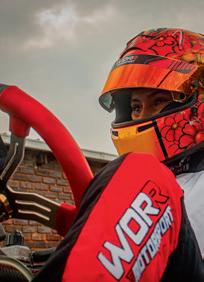
Mum and dad supported her choice and Gianna’s skills on the track were soon recognized by Wesleigh Orr, a four-time world karting champion and the founder of Worr Motorsport, a premier South African karting team and academy dedicated to nurturing African racing talent with the goal of producing an African Formula 1 driver.
Thriving under Orr’s tutelage, Gianna climbed her way to the top of Africa’s karting circuit and become a consistent front-runner in international competitions. “Wesleigh has helped me develop the most as a
driver,” she says. “He has been with me every step of the way, and I know he will continue to be part of my journey going forward.”
The fun, casual way she started in the sport and the friendship network of the South Africa karting community meant Gianna rarely had to challenge assumptions about herself as a driver when competing in mixed fields. As she rose through the ranks, she reports encountering increased scrutiny, gendered comments, and a more challenging atmosphere.
She says: “For most of my career so far, many of the drivers on the grid have been my friends, so I didn’t always feel the need to challenge any assumptions. There was always fun banter between us. But when it came down to the championship, it became clear that many people were not happy to see a girl win. That was a difficult reality to face, but it also motivated me even more.”
In the five years she has been racing, Gianna has noticed more girls are taking up the sport. “When I first started racing, I was one of only three girls. Over the years, I have started to see more women and young girls coming into the sport,
Gianna excelled on the South African go-karting circuit
“There is nothing quite like the feeling you get when you are behind the wheel and pushing yourself to go faster.”
which is really exciting.”
Recently, Gianna has been lining up with many of the world’s most promising women drivers at the More Than Equal development programme in Manchester in the UK. It’s an experience that is revealing the dedication – both physical and mental – demanded by elite-level motorsport. “I would say the most demanding part is the physical profiling camps, where they push our bodies to the limit and compare our performance to top drivers. It is all about making sure we are developing at the highest possible level.”
The honing of her skills in readiness for her transition to single-seater Formula 4 racing has also included an intensive training block focused on vehicle handling in Vienna, Austria. Even for the garlanded kart driver renowned for her smooth driving, this has proved an
exhilarating challenge. “The biggest adjustment for me has been learning to feel the car differently, especially the suspension and the turbo. The car control sessions were intense but also so much fun. I learned a lot, including how to drift and how to catch the car in wet conditions.”
F1 ambitions
Gianna hopes this high-performance coaching and tailored physical training combined with elite talents will ultimately cut a path to becoming a Formula 1 driver. “I think every racer’s ultimate ambition is to become a Formula 1 driver, and that is definitely where I want to go,” she says. “By the end of the year, I hope to be in the F1 Academy and competing in an FIA Formula 4 championship, with the goal of being noticed and eventually picked up by an F1 team.”
Balancing school, a social life
and her sport means Gianna has to be very organised. She says: “On Mondays, Tuesdays and Thursdays, I go to the gym and then come home for online classes. After school, I spend time on the simulator, watch videos and study onboard footage. On Wednesdays and Fridays, we usually go to the track where I will be racing next, and I try to do as many laps as possible while testing different setups to make sure the car is performing at its best. Weekends are usually race weekends. When I am not racing, I use Saturdays to catch up on schoolwork and studying, while Sundays are normally my rest days, where I either relax at home or spend time with friends.” Not your average teen then, but Gianna wouldn’t have it any other way. “It is part of the commitment that comes with chasing this dream.”
/ Gianna Pascoal
Gianna uses Saturdays to catch up on schoolwork
A five-star ANTARCTIC ADVENTURE FROM AFRICA
Ben Mack flies from Cape Town to Antarctica for a week of ice caves, abseils and surprisingly luxurious nights at White Desert’s Echo camp.
Antarctica from Africa? Before this trip, I wouldn’t have believed it either.
Yet the journey begins in Cape Town, where you board a flight and head due south over the Southern Ocean, bound for an ice runway carved from the continent itself. It’s a simple idea that feels impossible – until you’re stepping down into a world of white.
I didn’t realise the ice could form such fantastical shapes: curves and slopes and swoops and straight edges that defy description. Nor did I realise how shiny everything could be; the snow positively glistens, as if made of glitter. Above, the cloudless sky is a glowing sapphire blue.
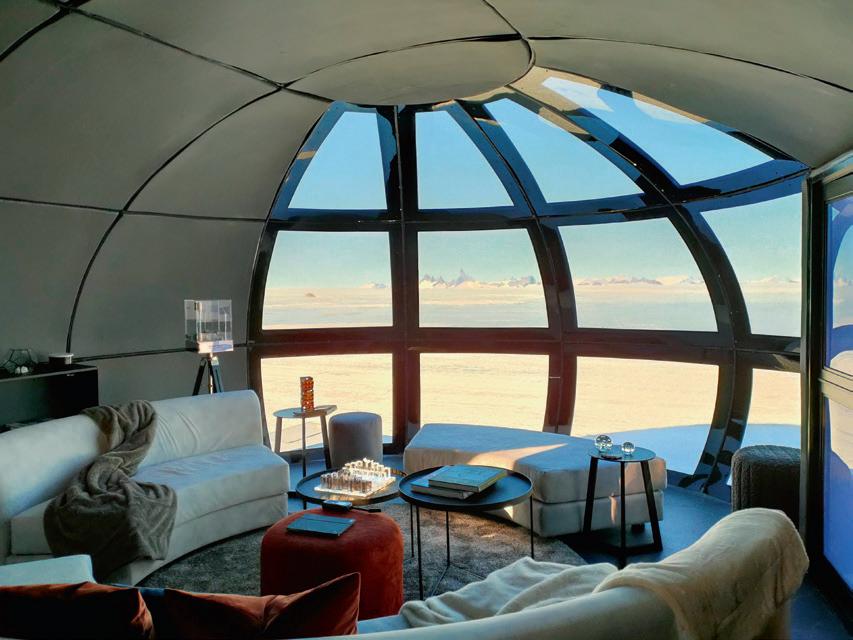
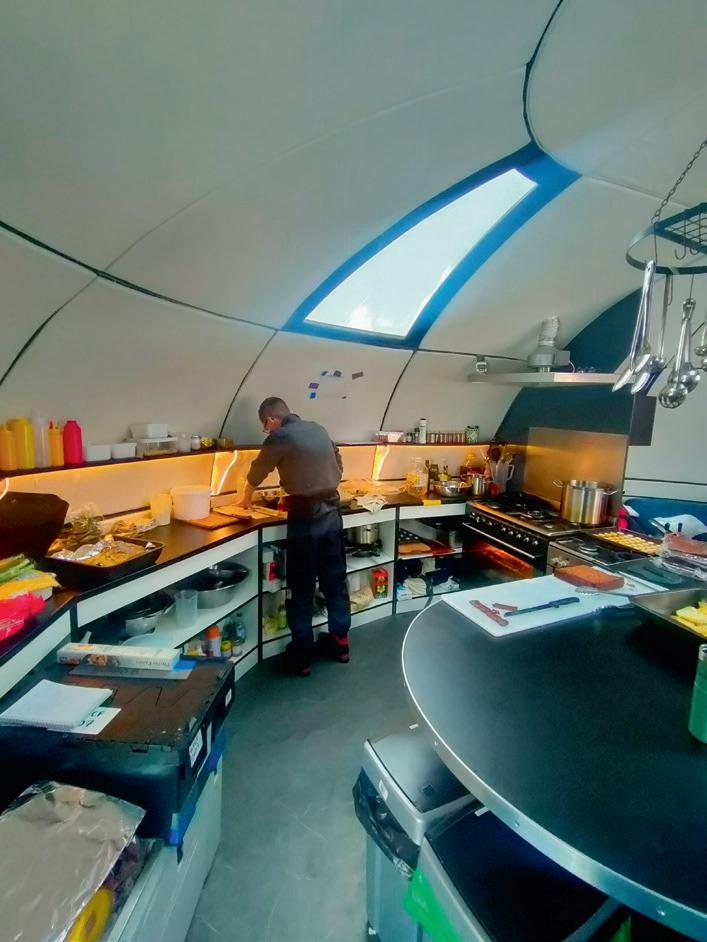
And I certainly didn’t expect to wake each day in a soft, toasty king bed inside a heated, igloo-like pod, then stroll next door for a hearty cheese omelette, followed by a piping-hot walk-in shower.
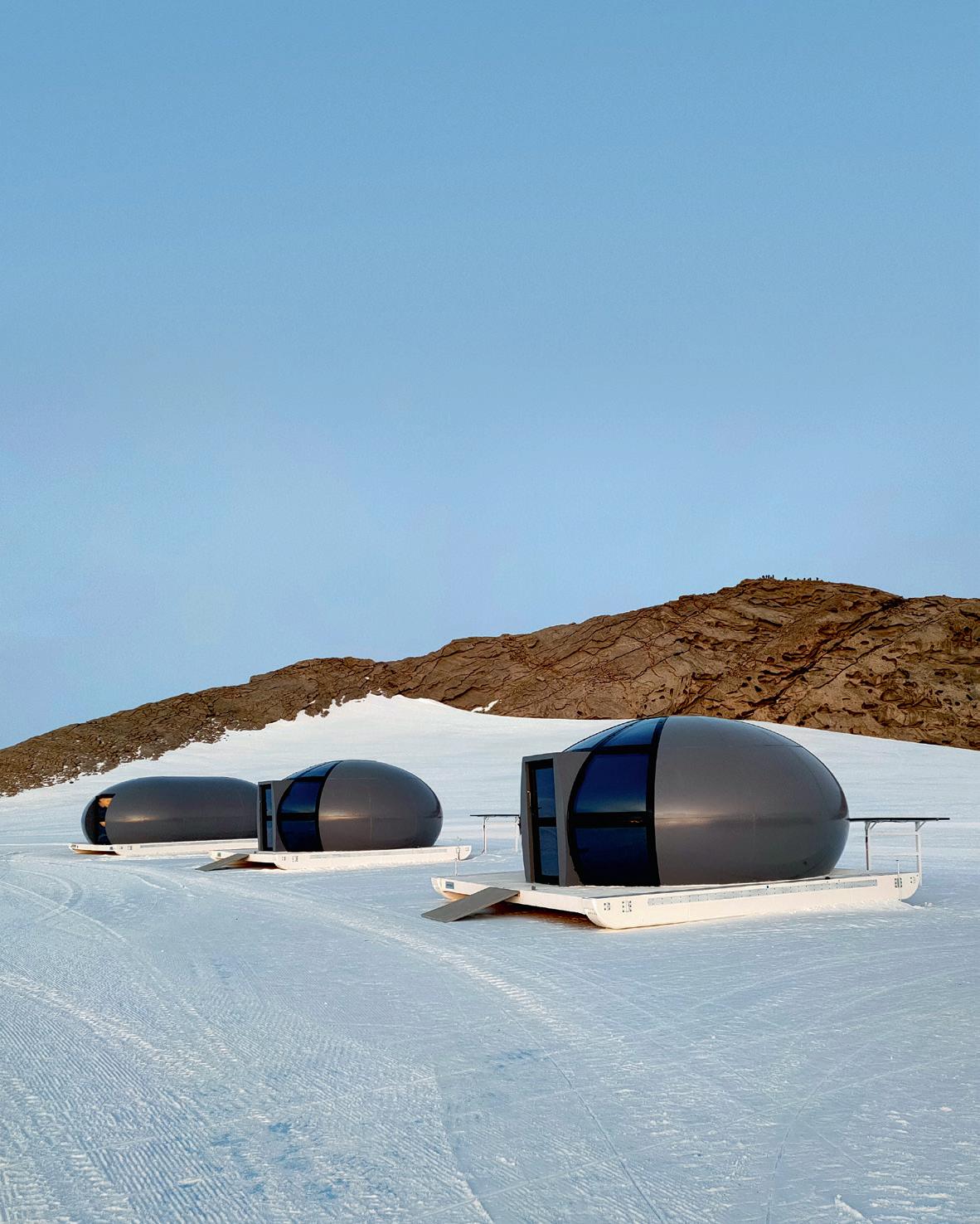
What White Desert offers in Antarctica is as otherworldly as the terrain. My pod is among several at Echo – a camp the company operates several hundred kilometres inland. This means encounters with penguins are uncommon (though guests can visit a colony of many thousands of the waddling birds).
Life in pods
The solar-powered guest pods – which also have USB ports for charging devices and their own toilets – are grouped around a main complex of larger pods, connected by corridors that look as if they belong in space. The aesthetic is deliberate: as co-founder Patrick Woodhead explains, a White Desert trip is the closest thing to leaving Earth’s orbit.
The main complex holds the showers, with wonderfully warm, steaming water (made by melting
snow) and Cape Town cosmetics company Charlotte Rhys toiletries. There’s a dining pod and kitchen, a bar/lounge with a huge kaleidoscopic sculpture that wouldn’t be out of place in a five-star hotel, and even a library pod filled with curios such as fossilised shells.
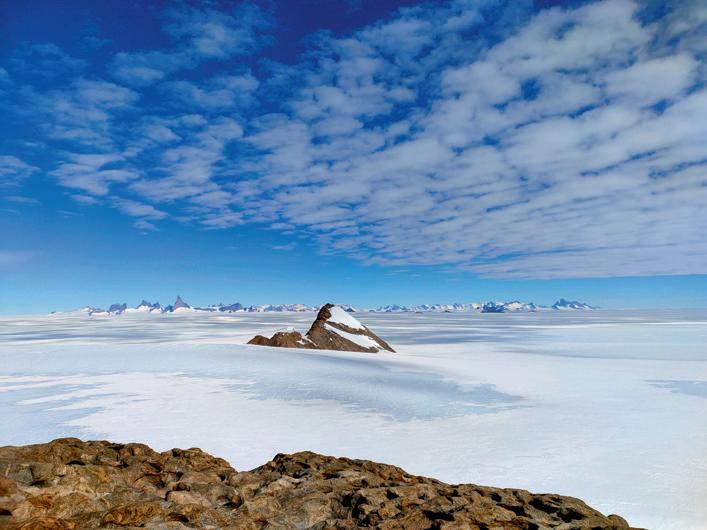
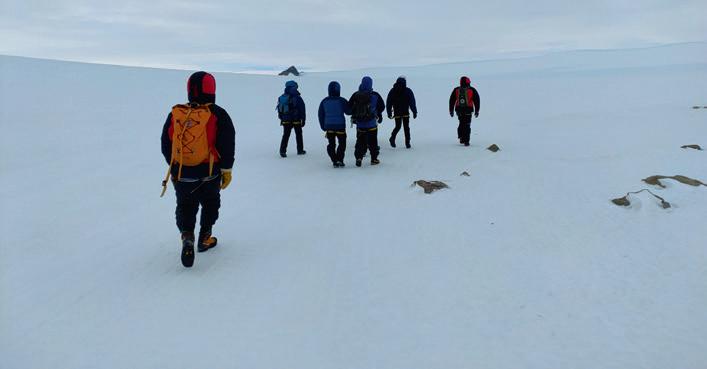
But this is Antarctica, and the star is the place itself. The views make the imagination run wild. Glass-smooth ice stretches out around the camp, like a sparkling white meadow. Dark, jagged mountains in the distance seem the kind of place a fire-breathing dragon or wicked witch might live. Between two of the mountains is a large gap. Pass between them, I’m told, and eventually, after an epic quest, you’ll reach the South Pole. I can feel the cold air (though it’s not as cold as I’d feared, just a few degrees below freezing in summer), and hear the crunch of ice under my thick boots (most of my gear, like
my boots, I bought before the trip, though some clothing, such as a thick jacket, is provided). It’s tactile and grounding; and yet the sense of the surreal never leaves during my week-long stay.
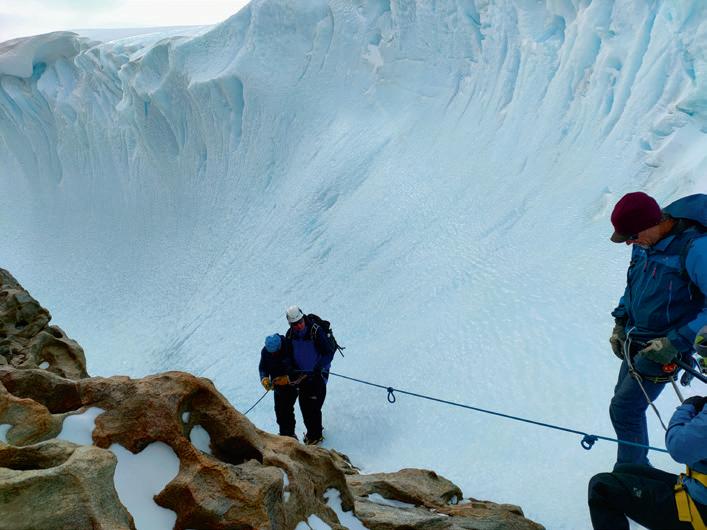
“Stand proud and walk confidently!” shouts Philipee, one of three expert guides, as I crawl along a narrow rock ledge. Attached to a
rope for safety, I’m near the top of a nunatak – the top of a mountain sticking out of a snowfield or glacier – called Snowbird.
I reach the edge. A wide chasm is below, dozens of metres deep, becoming blacker the further down I look. The wind howls.
I say a quick prayer. Then I step over the edge.
I scream with every step as I’m slowly lowered down. But it’s a tremendous adrenaline rush – so much so, I scramble back up Snowbird to do it again.
Abseiling is just one of many possible activities. There’s also hiking, climbing, cross-country skiing, riding special orange “fatbikes” with wide, studded tyres, even hitting golf balls – though it’s important to retrieve them, since sustainability is taken seriously here and nothing is left behind.
One day we explore an ice cave. The walls of the twisting passages twinkle, like we’re inside a huge crystal.
Adrenaline-fuelled activities
Another day we climb a nunatak called Cheesegrater, named because its exposed rock is marked with holes. The view at the top seems more expansive, more cinematic than anything AI could create – our camp far below appears as tiny, dark dots.
We drink in the view, and open thermoses of hot tea and coffee. As we relax, dark birds soar and swoop overhead. These are skuas who sometimes build nests around the tops of nunataks. I’m surprised any animals live here – and even more surprised some of the rocks have green moss and lichen.
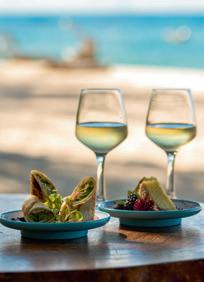
No matter the activity, it’s followed by Michelin-star-worthy meals. Omelettes made to order feature at breakfast, while lunches include dishes like roast beef and aubergine wraps with Greek pesto. One evening, dinner is duck with honey and Dijon mustard sauce, followed by gooey chocolate mousse. There’s even a wide selection of international wines, including those from South Africa and my home country, New Zealand. It’s all served on bone china, with Sola silverware and Luigi Bormioli glasses.
Philipee and the guides are French, but most of the staff are African. That is to be expected as trips begin and end in Cape Town, reaching Antarctica after a smooth 5.5-hour
(Top) Scaling 'Snowbird' and (below) one of the fossils in the library
flight south and landing on a specially made ice runway that takes about 24 hours to prepare for each take-off and landing.
Endless days
Chefs Jenna and Sarah – whom I assist to learn what it’s like to cook in such a remote place – are from Cape Town. Richard, who keeps the camp running by doing things like looking after the solar panels and shovelling snow to be melted for water, is Zimbabwean. Caitlin, the camp manager; Samantha, who looks after front of house; Brittney and James, the camp assistants; and Luke, the Antarctic operations manager, are also South African.
The sun never sets in summer. But days pass surprisingly quickly because of the activities, the people to talk to, and of course the polar views. A week is over in seemingly the blink of an eye.
It’s with a heavy heart that I load my gear into the back of a Ford pickup truck to be driven to the ice runway, ready to fly back to Africa. Already, it’s easy to see why many guests return as advocates for protecting Antarctica’s fragile ecosystem.
As we fly north over the Southern Ocean, I can’t stop thinking of something Patrick told me, which summarises the experience perfectly: “There’s adventure out there, and it’s important to foster it.”
For more information, visit white-desert.com
Guest's exertions on the ice are fuelled by plenty of freshly prepared meals
How to be the host with the most in tourist-target TANZANIA
As tourism surges, hospitality entrepreneur Barry Nyororo (right) is showing everyday Tanzanians how to transform their homes into welcoming Airbnb spaces – and claim their place in the country’s travel success story.
Tanzania’s tourism sector has hit record highs in 2025, with more than 5.9 million visitors arriving in the country.
While luxury hotels, lodges, and resorts continue to dominate the landscape, a growing number of travellers are seeking something different: authentic, immersive, and more personal local experiences.
For Tanzanians with spare rooms or small guesthouses, this presents a real opportunity—but one that isn’t always easy to access. Knowing how to present a home, price it correctly, and appeal to international guests can be a challenge. That’s where hospitality entrepreneur Barry Nyororo comes in.
Through a practical framework he calls the BusyBee 4Ps, Nyororo
BusyBee Café and Chicken Run
is helping everyday homeowners upgrade their spaces and turn them into high performing Airbnb stays.
Nyororo speaks from long, hands on experience. He began hosting more than 15 years ago through global hospitality exchange service Couchsurfing, initially driven by curiosity and a desire to meet people and share culture. Over time, he realised that hospitality is about creating an emotional connection, turning a routine stay into a memorable experience. “Hospitality is really about understanding how people feel in a space,” he says.
Since then, he has built and operated a diverse range of hospitality and food concepts, including BusyBee Cabins, Mango Village Hostel, Satosangara Restaurant,
Bar. Alongside this, he has worked closely with tour operators and safari lodges, giving him a wider perspective on how visitors move through Tanzania, what they expect, and what shapes their overall experience of the country. Today, his businesses operate in Dar es Salaam and Mwanza, with a high end concept in development in the Manyara Region.
Creating a 'hospitality mindset'
It was through reviewing property listings and working with lodge operators that Nyororo began to spot a recurring pattern. “I kept seeing the same issue,” he says. “Good product – but weak performance.” In his view, the problem was not a lack of quality, but a lack of strategy. “Most people were entering the space with a real estate mindset, not a hospitality strategy mindset. They had assets, but no positioning.”
Hosts, he explains, often tried to appeal to everyone at once – blending luxury, budget, social and private concepts into a single listing. “When
A picture paints a thousand words. Eye-catching images of your property are a must
you mix concepts, you confuse the guest,” he says. “And when the guest is confused, they don’t book.”
Those observations, alongside mistakes Nyororo admits to making himself early on, led him to develop the BusyBee 4Ps – a practical framework he now teaches through masterclasses across Tanzania. The system focuses on four structural elements: clear positioning around who the space is for; strong presentation that creates emotional connection; pricing strategies aligned with demand and guest type; and consistent perception, which builds trust and brand feel over time. “The issues weren’t
random,” he says. “They were structural.”
Masterclasses
Through his masterclasses in Dar es Salaam, Arusha, Zanzibar and increasingly Mwanza, Nyororo tailors these principles to very different local markets. Dar es Salaam, he notes, is often driven by investors seeking quick returns, while Arusha and Zanzibar are shaped by intense tourism competition. Mwanza, by contrast, is less saturated but increasingly aware of the opportunity. Despite these differences, one message resonates everywhere. “People are realising this is not
passive income,” he says. “It’s a business that needs structure.”
Images are instant
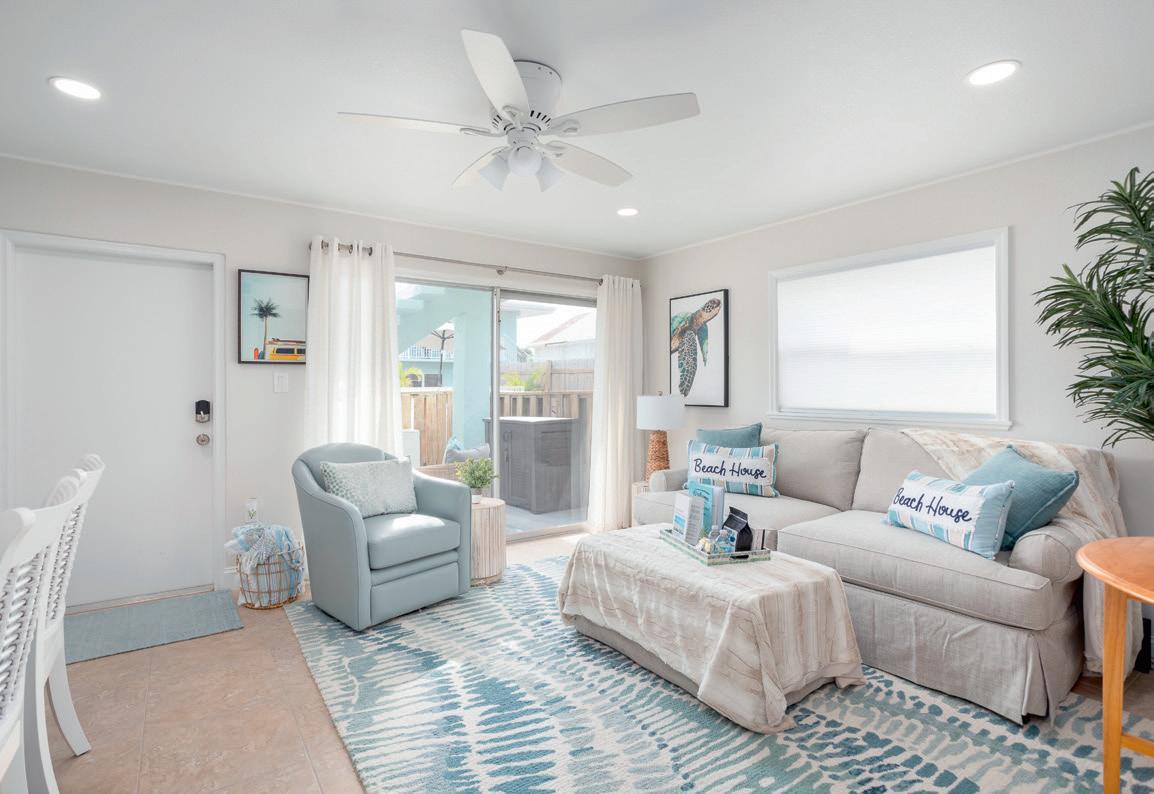
One of the fastest ways hosts can improve performance, Nyororo argues, is through photography. Guests, he says, make decisions in seconds. “Use your most emotional image first – not just a picture of a room,” he advises. Natural light, clutter free spaces, lifestyle details and a sense of openness all matter.
“Your first image should answer one question: ‘Do I want to be here?’ If not, the guest scrolls.”
The same thinking applies to how listings are written. Too many hosts, Nyororo says, focus on describing features rather than feelings.
“Instead of saying ‘two bedroom apartment with WiFi’, you describe the experience: a calm, private space designed for you to slow down, reset and enjoy your stay.” That shift, he believes, is fundamental. “You’re not selling accommodation – you’re shaping expectation.”
For more information, visit www.barrynyororo.com
Five
quick ways to make your guest space stand out online:
1. Pick your guest – and commit
Decide exactly who your space is for. Clear positioning beats trying to please everyone.
2. Sell the feeling, not the features
Describe how the space feels to stay in, not just what it contains.
3. Lead with one strong photo
Your first image should be emotional, well lit and clutter free. If it doesn’t spark interest, guests scroll on.
4. Price with confidence
Align your price to your guest type and experience – not fear or competitors.
5. Think hospitality, not property
A successful listing is a small business. Consistency, trust and presentation matter.
Connecting a ‘regional sisterhood of legislators’
The International Conference of the Great Lakes Region (ICGLR) will stage its first Women’s Parliamentary Conference in Dar es Salaam from November 2-5. In an exclusive interview, the ICGLR Secretary General His Excellency Ambassador Dr Deo Mwapinga tells Twiga why Tanzania is a fitting host country for this landmark event and how official conference airline Air Tanzania will play a key role.
Q: Why do you think the theme of this year’s conference, ‘For a peaceful and developed Great Lakes region’, is particularly important at this moment in the region’s history?
A: This theme could not be more timely. Our region has lived through decades of cyclical conflict, displacement and underdevelopment and we have learned, often at great cost, that peace and development are not separate goals but two sides of the same coin: durable peace creates
the stability that communities and investors need in order to develop, and inclusive development removes many of the grievances that fuel conflict in the first place. It is a call to action.
Q: Women parliamentarians are described as playing a critical role in bridging divides and promoting inclusive governance – how do you see their influence shaping peace and security in the Great Lakes region?
A: In my experience, women parliamentarians tend to approach conflict through the lens of community and family security – access to food, health care, protection from violence, the safety of children –alongside questions of state security. This grounds policy debates in lived realities. The Women’s Parliamentary Conference is designed to strengthen this role by giving women MPs a dedicated platform to coordinate, learn from each other and speak with one voice.
Left: Dr Deo Mwapinga with Rt Hon Mussa Zungu (Speaker of the National Assembly of Tanzania) and Baraka Leonard (Clerk of the National Assembly of Tanzania) at the signing of the host agreement in Dodoma.
Q: Current data shows that women make up only around 28 per cent of parliamentarians in the region – what are the implications of this under-representation?
A: Women’s perspectives remain a minority voice in decisions that affect them directly. We are supporting peace processes, drafting national development plans and shaping the next generation of laws on governance and security. If women are not adequately represented at that table, we risk designing policies that overlook half the population’s needs and experiences. Closing this gap is a matter of designing better, more durable policy.
Q: This year’s conference is being billed as historic. Why is that?
A: This will be the first time women parliamentarians from across all 12 ICGLR member states come together under one roof. It sends a strong political signal that the Great Lakes Region considers women’s leadership central, and not peripheral, to its peace and development agenda.
Q: What tangible outcomes do you hope will emerge from bringing these nations together?
A: We have designed the conference to produce two concrete deliverables: a Declaration that captures our collective political commitments, and a Regional Action Plan that translates those commitments into specific, time-bound actions for parliaments, governments and partners. Our hope is that delegations return home and use the Regional Action Plan to push for concrete reforms.
Q: Why is the choice of Tanzania as host country so fitting?
A: Tanzania has long been recognised as one of the more politically stable countries in our region, with a tradition of peaceful transitions and a strong record of mediating conflicts between other countries. It has also made real strides in women’s political representation, partly through its system of special parliamentary seats reserved for women, which gives Tanzanian legislators direct, practical
Beyond the symbolism, the Tanzanian Government and Parliament have been exceptionally supportive partners in preparing this Conference
experience to share with their counterparts. Beyond the symbolism, the Tanzanian Government and Parliament have been exceptionally supportive partners in preparing this Conference.
Q: Tanzania played a historic role in the founding of the ICGLR and has long positioned itself as a regional anchor for peace – how does this legacy influence the upcoming conference?
A: Tanzania’s connection to the ICGLR is not incidental – it is foundational. It was in Dar es Salaam, in November 2004, that the first Summit of Heads of State and Government of the Great Lakes Region adopted the Dar es Salaam Declaration on Peace, Security, Democracy and Development – the document that effectively launched the entire ICGLR process.
Hosting the Women’s Parliamentary Conference here reminds us that our region’s institutions were built on the conviction
that peace and development must be pursued together, and it situates women’s leadership squarely within that founding legacy.
Q. How do you envision this conference shaping long-term collaboration in the region?
A. My hope is that this conference marks the beginning of a sustained regional platform, not a one-off event. We also hope to see a lasting network of women parliamentarians who speak collectively on peace and security issues at regional and continental forums.
Q. How is Air Tanzania supporting the conference?
A: We are pleased to partner with Air Tanzania as the official conference airline for the inaugural Women Parliamentarians Conference of the Great Lakes Region. Through this strategic partnership, Air Tanzania is supporting the movement of delegates, speakers, parliamentarians, development partners, and invited guests travelling to and from Tanzania for the conference. As Tanzania’s national carrier, Air Tanzania plays a critical role in connecting the Great Lakes Region, facilitating regional integration, and fostering economic development, which is one of the core objectives of our Forum.
ICGLR Secretary General His Excellency Ambassador Dr Deo Mwapinga
MY TANZANIA
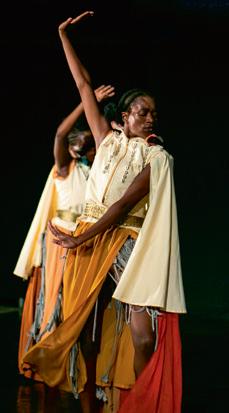
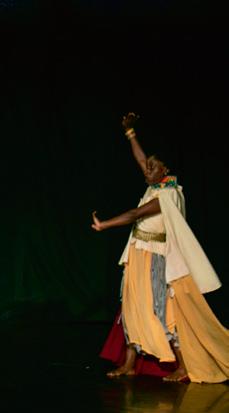
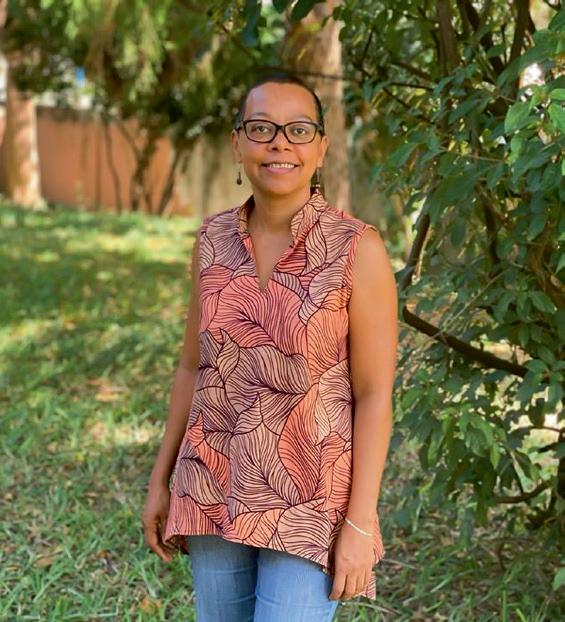
Rachel Kessi, the executive director of Dar es Salaam contemporary dance school Muda Africa, talks to Jal Patel about her love of bargainhunting at markets and why Dar needs more green spaces.
Q: Where is home for you?
A: Home is wherever I am with my husband and kids.
Q: What is your earliest memory of Dar es Salaam?
A: The YMCA. That is where we used to stay whenever we visited Dar from my dad’s village in Kilimanjaro. They used to have the best chapatis in town.
Q: What was your first job here?
A: I opened a visual art gallery called Mawazo. I focused on sculpture mainly, but we also had paintings, etchings, prints as well as a small room for handicrafts.
Q: Where would you suggest for a first date?
A: A sundowner drink at Slipway is always a good choice.
Q: How would you describe the personality of a typical Dar es Salaam resident?
A: Friendly. Takes the time to greet you properly. Never leaves the house without looking sharp. Loves street food. Scared of dogs. Laughs and jokes a lot. Celebrates everything with a dance. Gives everyone a nickname. Walks slowly because…. why rush? Never goes to a nightclub before midnight. Says “yes” by lifting their eyebrows. And if there’s a
street incident, everyone passing by becomes a panel of expert commentators within seconds.
Q: Which shops do you regularly visit?
A: Second-hand clothes markets. And random second-hand furniture dumps you come across on the street. It’s incredible what you find… or what people throw away. It satisfies my hunter-gatherer spirit.
Q: What’s the best meal you’ve had here?
A: All food is delicious at ‘Chili and Lime’ restaurant along Kisutu street. My tip for first-time visitors would be
to consult with the restaurant owner before choosing some dishes. They’ll give you a great selection.
Q: What is your transport of choice in the city and why?
A: A bajaji because they can weave between the cars during crazy traffic.
Q: Classy restaurant meal or picnic on the beach?
A: I prefer both, depending on my mood.
Q: Favourite hotel?
A: Southern Sun. It is in the centre of town, is a close walk to great restaurants, looks out onto the botanical
gardens of Dar, and has a clean swimming pool and friendly staff.
Q: If you could change anything about the city, what would it be?
A: I would add more sidewalks for pedestrians. Flyovers for pedestrians would also be good. And more parks with shaded trees and greenery.
Q: What is your favourite building in the city?
A: St Peter’s Catholic Church in Oysterbay. It is built for the tropics with high ceilings and natural ventilation. You hardly even need a fan in there.
Q: Where do you go to escape the city?
A: Marangu, situated on the slopes of Kilimanjaro. It’s lush and green, with a dry heat and great home-grown, home-cooked food. Really quiet nights, with so many visible stars in the sky. Fresh, clean mountain air. You can expect to find waterfalls and cold river swimming just about everywhere. In the colder months of June and July, we all huddle around the kitchen or chimney fire every evening. And you can catch glimpses of the Kibo and Mawenzi peaks now and again.
Q: What are you up to right now for work?
A: Right now, I’m focused on
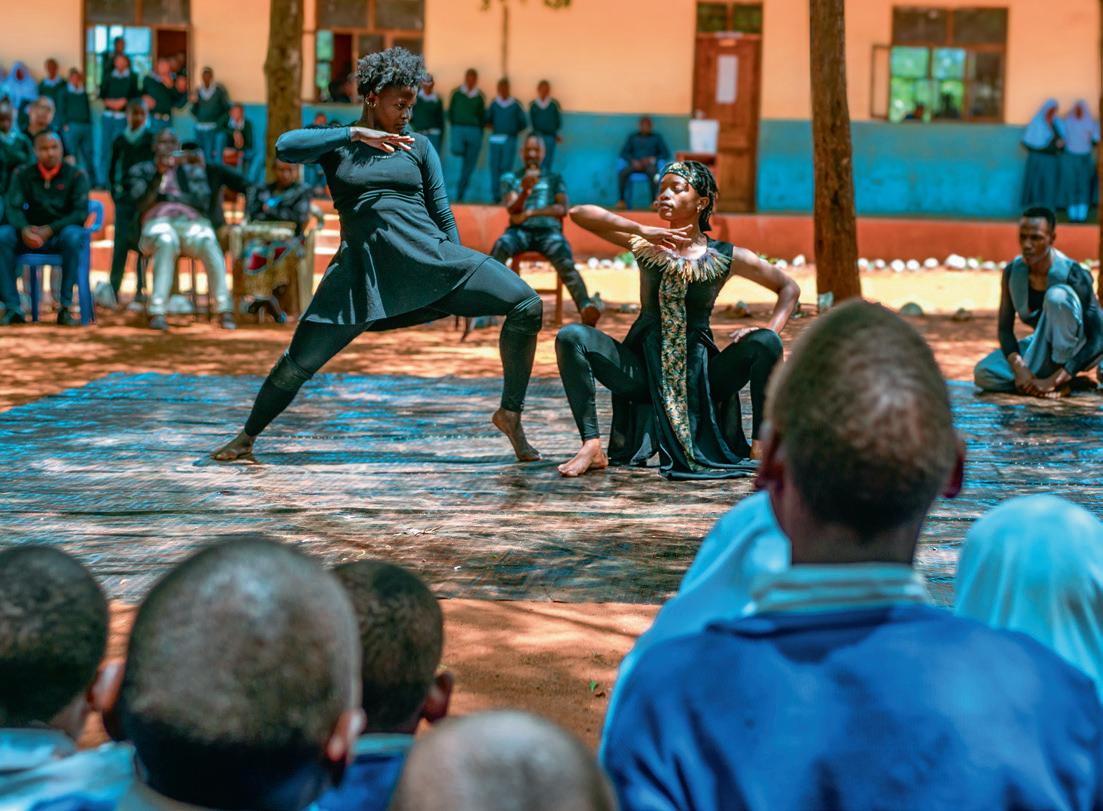
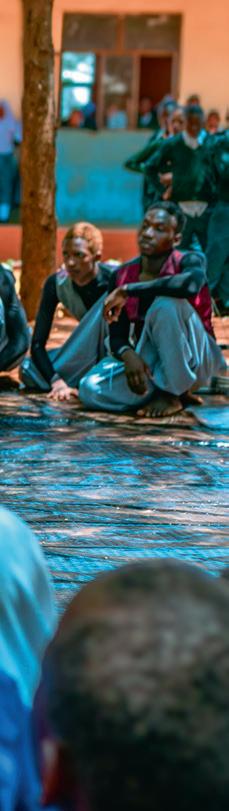
expanding our dance centre. I co-founded Muda Africa with my husband, who is the artistic director, and I lead the finance and administration side of the organisation. Together, we train young people through an intensive three-year professional dance programme, transforming raw talent into career dance artists. We also host public performances and open classes. So, come experience the energy yourself.
Q: Who is your biggest Tanzanian inspiration?
A: Godchance Eben, who is one of the Muda Africa alumni. He was still a street kid when he joined. Now he is a professional dance artist who has performed in South Africa, Germany and the Netherlands. Through his dance earnings he has bought a plot, built a house and he has recently become a father. He enrolled himself in an online music production course
in the USA – waking up at 3am for six months because of the time difference. Now he is also a professional music composer for dance.
Q: Can you let us into a secret about Dar es Salaam?
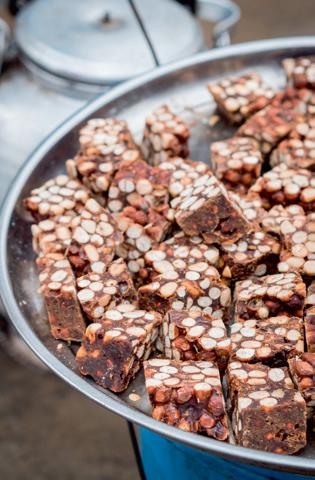
A: Listen out for coins rattling – that is the coffee seller trying to catch your attention. We have some of the world’s best arabica coffee. Try some with ‘kashata’ – a diamond-shaped sweet crunchy snack made with crushed peanuts.
Q: What do you miss most about Tanzania when you are away?
A: Friendliness. The easy street connections with people. The food. The sun. The warmth.
To find out more about Muda Africa visit the website mudaafricadance.org or @muda_africa on Instagram.
The pulse of
ACCRA
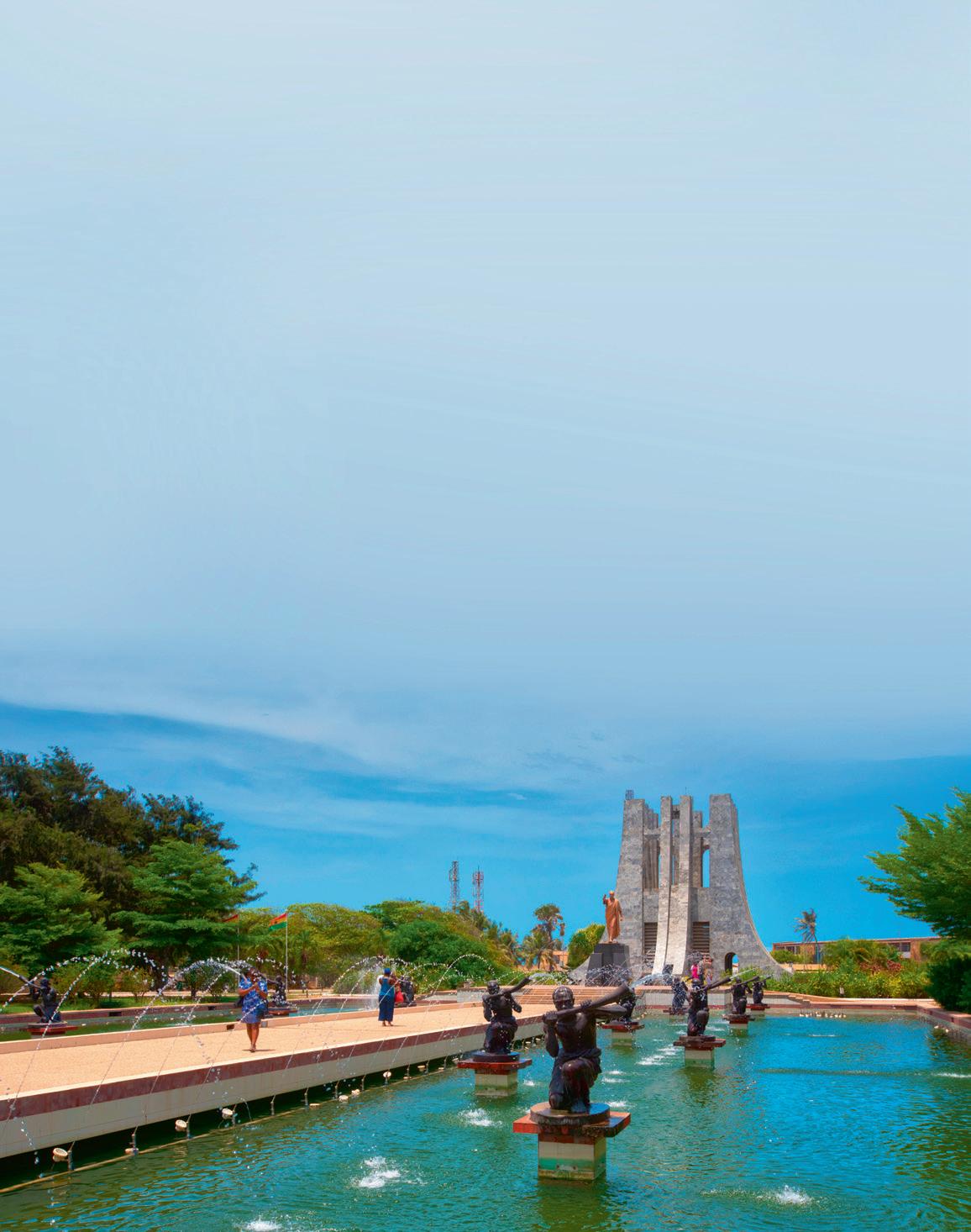
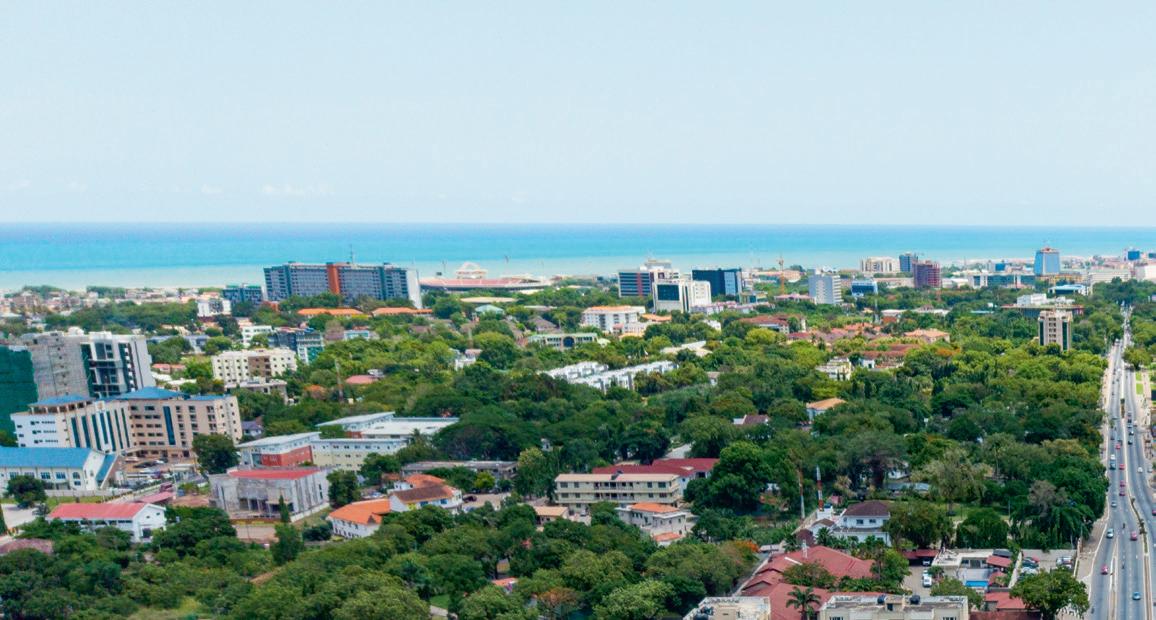
Accra, Air Tanzania’s exciting new West African destination, is a city where culture never stands still. From thought provoking reads to unforgettable nights out, Twiga rounds up some of the latest cultural attractions capturing the soul of Ghana’s vibrant capital.
What to see…
ORIGINS GALLERY
Origins Gallery is one of Accra’s newest and most exciting additions to its growing art scene. Located within the Accra Arts District in the central neighbourhood of Osu, the gallery forms part of a wider, community driven network of creative spaces championing contemporary expression. Origins provides a dedicated platform for both emerging and established artists, showcasing work across painting, sculpture and photography. Its recent exhibition,
African Spaces Redefined, brought together 16 emerging West African artists, offering diverse perspectives on place, identity and everyday life. Beyond exhibitions, Origins also hosts regular workshops and presentations, reinforcing its role as a space for dialogue, skill sharing and creative exchange within the city.
Opening Hours: Tuesday to Sunday, 11am to 6pm.
Social media: @origins.accra on Instagram
What to read…
'THE WORLD NEEDS MORE LOVE' BY Y'AKOTO
After an upbringing in Tema, just east of Accra on the Ghana coast, Y'akoto moved to Europe and rose to fame as a singer-songwriter with a string of well-received jazz, folk and soultinged albums. By 2019, she was back in Accra with the return significantly influencing her sound with new music that spanned pop, Afrobeats and collaborations with the city's underground DJ scene. In 2024 the musician and dancer released the 10-track album Part 4: The Witch. In 2026, her career took another twist as she swapped the mic for the manuscript. The World Needs More Love is part memoir, part self-help guide that champions human connections in an increasingly automated and isolating world.
Here, Y'akoto shares some of her inspirations for the book with Twiga.
Q: What inspired you to write The World Needs More Love?
A: Humans are disconnecting from each other while thriving digitally. I find it a concerning concept that we keep finding solutions for our problems through digitisation and AI but somehow we are also about to face a loneliness epidemic that we are not prepared for. When I studied dance and movement at the Lola Rogge School [in Hamburg, Germany] I witnessed first-hand how interaction with other humans on a movement based level influences people positively. I worry that humans don’t have enough physical stimulation anymore outside of their phones.
Q: You returned to Accra in 2018 after years of living and working in Europe. What do you love about the Ghanaian capital?
A: Ever ything. It’s growing expanding and evolving. Everyone has their own favourite version of Accra. It’s a powerful city that will
test your character patience and resilience. I move between Accra and London – another city I love unconditionally with all my heart. I wouldn’t have it any other way.
Q: On your Instagram page you describe the book as “a Bible for outsiders”. Do you feel it is rebellious these days to follow a path of love?
A: Not really. Love should be the baseline for all philosophical questions surrounding life and purpose. I don’t think I reinvented the wheel here and I don’t look at it as rebellion. What I am providing is the perspective of an artist and multinational mixed raced woman who inherently represents a multitude of cultures and artistic experiences through her self-expression. People relate to me because I don’t mask my emotions and thoughts. I’m not looking to change the world. I know that only works if I commit to changing myself from within.
Q: Fans of your music may be concerned that the book signals a career change. Are you still playing, writing and releasing
songs?
A: Rest assured that I will always provide my audience with music. I am music. I embody it. There is no other way for me to exist.
Q: You are a songwriter, but writing a book works different creative muscles. How challenging was the process?
A: I lost all my friends. I didn’t have time for them anymore. I couldn’t pretend anymore because I had to peel back layers of myself and look deep down into the horrible dungeons of my past. I had to face it while still making sure the book does not overwhelm or overload. Being a writer is lonely and time consuming. Next to writing this book I also launched two other companies and went on tour with my latest album Part 4: The Witch. I have no work-life balance.
Q: You also say that the book is for anyone that has felt out of place in the world. Was returning to Accra, in Ghana, the country of your birth, an important part of reconnecting with a sense of belonging?
A: The saga continues for me. As a mixed race person I am not seen as a Ghanaian by most Ghanaians. My complexion, the way I speak the way I dress the music I make feels ambiguous to them. That’s fine. What I’m not going to do is adapt or mask in order to be accepted by anyone. I’m fiercely myself even if that means to not be included or liked.
Q: The book is part memoir. Do you draw on early memories of growing up in Tema (a port town close to Accra)? How do you look back on that time now?
A: I have very positive feelings thinking about myself growing up in Tema. I was a wild, curious, strong little girl. No shoes- always runningnever walking. Even though growing up in a broken home was tough –which I discuss in my book – it was also magical.
Accra-based music star Y'akoto released her first book this year
What to listen to…
KOJO BLAK
If visitors want to tap into Accra’s sound right now, Kojo Blak is the name to know. The 24 year old Afro fusion singer has become the city’s breakout star, winning Best New Artiste at the 27th Telecel Ghana Music Awards in May 2026 and racking up seven nominations in his debut year. Blending Ghanaian rhythms with slick Afrobeats and flashes of French language romance, his music reflects a confident, outward looking generation shaping the capital’s nightlife. Recent hits such as ‘Excellent’ and ‘Mali’ are snapshots of Accra’s energy, ambition and evolving musical identity.
Social media: @kojoblak on Instagram
What to eat…
SIMPLE BUTTER
Opened in the leafy Cantonments neighbourhood last July, Simple Butter has quickly become a favourite with Accra’s young, style savvy crowd. The menu leans towards rustic French comfort food, with the restaurant’s signature butter boards taking centre stage: generous platters of steak, lamb cutlets or fish served with salad, fries and freshly baked
baguettes on oversized wooden boards. Fries can be swapped for a spicier, unmistakably local jollof rice. Floor to ceiling glass panes draw in the surrounding garden greenery, making this an easygoing spot to linger — especially if you save space for dessert.
Opening hours: 12pm–12am
Social media: @simplebuttergh
What to drink…
KOKOROKO
Sobolo — Ghana’s popular hibiscus drink — gets an adults only rework at Republic Bar and Grill, the long standing Osu institution that still defines Accra’s after hours scene. Its signature cocktail, Kokoroko, blends the deep red purple infusion with local palm spirit, lime, mint, brown sugar and plenty of ice. The result is a cocktail that’s as striking as it is potent — and a favourite in the city for over a decade.
Republic Bar and Grill opening hours: 12pm–4am
Social media: @republicbarghana
Where to dance…
ULA BEACH CLUB
In Accra, music and dance are woven into everyday life – and when it’s time to party, many locals head south from neighbourhoods like Osu and Cantonments towards the beaches, where club sound systems compete with the roar of Atlantic waves. The latest hotspot is ULA Beach Club on Laboma Beach, which opened in May 2026 and has quickly established itself
as a premium nightlife option. Expect beachfront views, resident DJs, plush outdoor seating and a polished surf and turf menu that keeps the party fuelled long into the night.
Get a taste of Tanzania on-the-go with these street-food favourites.
MAINDI (GRILLED CORN)
What is it? Grilled snacks are not just for the carnivores. Barbecued corn on the cob is also a Tanzanian classic What does it look like? A whole ear of corn charred over open flames.
And the taste? Smoky, slightly chewy, and extremely fiery (the corn is often rubbed with pili pili spice before grilling). When and where to buy? As with the mishkaki stalls, sellers set up around 5pm every day and grill into the night. A cheap and chewy treat.
ZANZIBAR PIZZA
What is it? A culinary curveball: not a pizza at all! Instead, it’s a savoury stuffed pancake filled with egg, mayonnaise, and whatever extras you fancy – from minced meat to chocolate spread – before being fried on a hot plate.
What does it look like? A folded, square parcel sizzling on a metal griddle, with crisp golden edges and a soft, gooey interior.
And the taste? Creamy, rich, indulgent, and slightly crispy – like a cross between a French crêpe and an omelette.
When and where to buy? Iconic in Zanzibar’s night markets –especially Forodhani Gardens – where stalls whip them up fresh to order.
UROJO
What is it? A unique potato and mango soup known lovingly as “Zanzibar mix.” A bright, tangy, slightly spicy broth served with crispy potato dumplings, potato crisps, and toppings like egg or meat
What does it look like? A vibrant yellow orange bowl brimming with crunchy toppings floating over a silky soup. And the taste? Slightly sour, slightly spicy, deeply comforting –with a playful contrast of creamy broth and crispy add ins.
When and where to buy?
Widely available in Zanzibar’s local eateries and street stalls, especially in Stone Town.
VITUMBUA
What is it? Chewy, delicious little fried dough balls made from rice flour, coconut milk or water, and cardamom.
What does it look like? Round, golden-brown bite-sized cakes with a slightly crisp shell and soft interior.
And the taste? Fragrant, slightly sweet, and warmly spiced.
When and where to buy? Common across East Africa, usually sold fresh and hot at morning and evening street stalls.
CHAPATI
What is it? A pan-fried flatbread that originated in the Indian subcontinent and was brought to East Africa by traders. The Africanised version is thick, flaky, and indulgent.
What does it look like? A warm, golden-brown with patches of dark brown or charred spots, indicating it was cooked on a hot pan (tawa). Tanzanian chapatis are typically made by coiling the dough, resulting in multiple, flaky, and distinct layers.
And the taste? Rich and slightly salty with a comforting, buttery, and nutty flavour.
When and where to buy? Chapatis are considered a breakfast snack in Tanzania and usually paired with a cup of chai (tea). Freshly cooked chapatis are best found at local street food stalls in the early morning.
MISHKAKI
What is it? East Africa’s answer to kebabs – skewered and grilled beef or goat, often served alongside fish and other street foods.
What does it look like? Juicy chunks of marinated meat sizzling on giant barbecues that glow into the evening.
And the taste? Smoky, savoury, meaty, and irresistibly charred – a street food favourite.
When and where to buy? Mishkaki stalls come alive around 5pm, filling the air with mouth-watering aromas
UBUYU
What is it? Baobab seeds boiled to preserve the fruit, dyed red, then coated in a magical blend of sugar, salt, black pepper, cardamom, and vanilla. Tell-tale signs of anyone who has recently indulged in this sweet snack are bright red lips and tongue. What does it look like? Small, raspberry-like clusters – bright red and dusted with spice.
And the taste? A wild mix of sweet, sour, aromatic, and spicy all at once. The zingy sour kick is legendary. (Don’t eat the seeds –just suck the coating!)
MAANDAZI
What is it? The ‘African doughnut’, but far less sweet than its US counterpart. A breakfast staple. What does it look like? Golden pillows or triangles of fluffy dough, sometimes slightly crisp on the outside.
And the taste? In a word, heavenly. Soft, warm, lightly sweet, and comforting.
When and where to buy? Small roadside stands that open early to cater for morning commuters. Also look for ‘mama ntilies’ – casual, women-run stalls often near bus stops and workplaces.
KASHATA
What is it? Sometimes referred to as the ‘African Snickers’, Kashata are irresistible little peanut brittle bites. The sugary hit is often used to undercut the bitterness of a cup of superstrong Tanzanian coffee. What does it look like? Small, golden to deep caramel squares or clusters, studded with peanuts and glistening with hardened sugar.
When and where to buy? Commonly sold in markets and small shops across Tanzania – often in colourful packets.
And the taste? Sweet, nutty, and satisfyingly crunchy. Think peanut brittle’s cheeky, snackable cousin When and where to buy? Vendors can often be seen on bicycles carrying flasks of hot coffee along with bags of kashata. A classic Tanzanian combination.
The silent pressure on young Tanzanian men
Blogger and content creator
Faysal Alao – the founder of Arusha-based tour company All Day In Africa – shares his take on life in Tanzania.
A few weeks ago, I met a young man at a café in Dar es Salaam. He looked successful; clean clothes, confidence in the way he spoke, two phones on the table, car keys placed carefully beside his iced coffee. The kind of person many would assume had life under control.
As we spoke, however, the image slowly began to crack. He told me he was supporting younger siblings through school, helping his parents with rent back home, paying off a car loan, maintaining appearances for social media, and trying to keep a relationship alive at the same time.
Then he said something that stayed with me: “In Tanzania, as a man, you feel like you are never allowed to pause.”
That sentence captures a reality many young Tanzanian men silently live with every day.
Across the country, there is an invisible timeline society expects men to follow. By a certain age, you are expected to be financially stable, respected, independent, emotionally strong, and ready for marriage.
What makes this pressure even more complicated is that modern life has changed the definition of success. Social media constantly raises the standard. Young men wake up every morning scrolling through images of luxury apartments, international trips, designer clothes, successful startups, weddings, and expensive lifestyles. Everyone appears to be progressing quickly.
Some work exhausting hours to maintain lifestyles they can barely afford. Others remain trapped in jobs they dislike because failure feels embarrassing. Some avoid speaking openly about mental stress because vulnerability is still too often mistaken for weakness.
In many Tanzanian communities, men are raised to solve problems quietly. You continue moving regardless of stress, heartbreak, financial pressure, or emotional exhaustion. Rest can feel like laziness. Asking for help can feel like failure.
This does not mean young Tanzanian men are weak. If anything, it reveals how much they are carrying without spaces that allow honesty.
Because behind the appearances of success or struggle, many are doing the same thing: trying to keep moving in a world that rarely allows them to pause.
Sound and vision
Mark Edwards rounds up the latest releases to stream, screen and read
MISYONNER
Jean Jahrimba
New Air Tanzania destination Seychelles has a vibrant music scene that blends African, Malagasy, and European influences. One of the islands’ most recognised artists Jean Jahrimba released Missioned this year. The album – its title means ‘missionary’ in Creole (Seselwa), the primary native language among Seychellois – is the local reggae icon’s first release for some time. Fans will find much that is familiar, though, with tracks exploring themes of community and resilience powered by modern dancehall beats.
FILM REVIEWS
THE DEVIL WEARS PRADA 2
Two decades after the original became a cultural touchstone, this sequel to the 2006 fashion world comedy reunites its principal players. Ruthless editor in chief Miranda Priestly once again locks horns with her former assistant – now rival executive – Emily Charlton. The film leans into the sharp wit, camp excess and icy rivalries that made the original iconic, while fresh A list cameos from Lady Gaga, Donatella Versace and Sydney Sweeney add contemporary sparkle.
Benni McCarthy with Mark Gleeson
This authorised biography of South African footballer and coach – he is currently in charge of the Kenyan national team – chronicles his journey of resilience from a childhood of poverty and gang violence in Cape Town to becoming one of the most respected figures in global football. His decorated playing career included a pivotal role in FC Porto’s 2004 UEFA Champions League triumph – the first time a South African player had been part of the competition’s winning team.
BENNI
ASILI YA MAMA
This album of field recordings made in villages across Tanzania offers further proof that the Zawose family is bringing its women out of the shadows and into the spotlight. Following on from the success of the Zawose Queens – the family’s first femalefronted group – Asili ya Mama features women singing and playing together in courtyards, homes, and community spaces in Tanga, Morogoro and the Zawose spiritual home of Dodoma. The tracks were curated and recorded by Msafiri Zawose – an internationally admired musician and leading (male) light of the family – in a project conceived in tribute to his late mother. The result is 10 energetic tracks steeped in tradition and community.
EAST WEST LOVE
This romantic comedy directed by Seko Shamte – the Tanzanian’s previous work includes 2021 hit Binti – officially opened this year’s Nollywood Week Film Festival in Paris. The film follows a self made Nigerian businesswoman who finds herself alone in Mombasa after a romantic getaway with her lover unravels. Left to rediscover the Kenyan coastal town on her own, she is soon seduced by the beauty of the Swahili port city – and the attentions of a charming local. Glossy and good humoured, East West Love celebrates the sophistication of contemporary African cinema while offering a potent showcase for the allure of magical Mombasa.
THE SHIPIKISHA CLUB
Mubanga Kalimamukwento
Set in Kabwe, Zambia, this powerful novel follows Salifyanji (Sali), a mother of three, as she stands trial for the murder of her husband, Kasunga. At its core is an interrogation of the Zambian cultural concept of shipikisha – the expectation that wives must endure all hardship in marriage – which is still highly prevalent, though contested, cultural norm in the country today. Told through the shifting perspectives of Sali, her daughter Ntashé, and her mother Peggy, the story unfolds as a gripping family and courtroom drama, blending intimate emotional tension with searching questions of duty, endurance, and personal agency.
Lilian Hipolyte is the executive director of Dar es Salaam creative community Nafasi Arts Space. In her latest column she reveals that the best Tanzanian artists, no matter the level of their personal success, find time to share their skills.
The invisible price African artists pay
The internet was supposed to erase borders. And for a while, it felt that way. An artist in Dar es Salaam could reach an audience in Berlin without a single stamp in his or her passport. Then came the algorithm. Then came the visa office. And the distance turned out to be exactly as wide as it had always been.
The digital age delivered access, on conditions. Algorithms became the new gatekeepers, rewarding consistency over depth, speed over intention. Art that once lived in a room, between people, now had to survive a scroll. Spaces like Nafasi’s Dhahabu Friday, Lete Stori and open Gallery platforms exist precisely as a refusal of that logic – remaining slow, intentional, and stubbornly human.
But even artists who build audiences, earn invitations, and do the work still hit another barrier: visas. Applications are denied without explanation, residencies are missed, and premieres go ahead without the artist present. Since 2019, nearly 62 per cent of African artists have faced at least one visa rejection –most without a reason given, despite legal requirements to provide one.
One curator travelled to Europe on a professional invitation, documents complete, purpose clear, work undeniable. The visa came back with an error. While it was being corrected, a question arrived that had nothing to do with the paperwork:
"Are you an important person?"
She went. She did the work. And on her way out of the country she had been formally invited into, her bags were thoroughly searched.
Her work reached the room. But that is not the same as moving freely.
This is the invisible price – paid digitally, paid at borders, paid quietly. Not for lack of talent, but simply for where the artist is from.
Creativity and freedom should not cost this much.
A bee fence as DEFENCE
How a 1km wall of beehives is tackling elephant-human conflict in the wildlife corridors of south-western Tanzania
The remote wildernesses of Katavi National Park and the Rukwa Game Reserve teem with predators – from lion prides on the floodplains to stealthy leopards in the forests and massive river crocodiles. It is little wonder the region’s tens of thousands of elephants are wary. Yet the animal that strikes the most fear into them may come as a surprise: the bee.
While elephants appear impervious to stings thanks to their 2.5cm-thick hide, they are acutely vulnerable in soft, sensitive areas such as their eyes, mouth and the
insides of their trunks. This susceptibility has led to a species-wide fear so instinctive that even the scent of pheromones released by swarming bees can trigger a panic-stricken flight response, from the largest bulls to the smallest calves.
Now an ingenious project is harnessing that instinctive aversion to tackle human-elephant conflict in villages in Mpimbwe District, where farms on the edges of wildlife corridors are frequently raided by hungry elephants.
Wild Survivors, a Tanzania-based NGO, is putting the idea into practice
with a nature-based solution: fences of beehives around village perimeters. Founder and executive director Francesca Mahoney says Wild Survivors has so far installed 6km of beehive fences in communities within the region. The latest stage, a 1km-long fence protecting villages near the edge of Rukwa – is a collaboration with UK charity Bees Abroad. “Each 1km beehive fence consists of approximately 50 active beehives and 50 dummy hives, alternating along the fence line,” Francesca explains.
“The dummy hives reduce costs and loading capacity of bees in a concentration area, while maintaining the appearance and movement of a continuous fence to the elephants.”
Defensive swarm
Suspended between posts and connected by wires, the hives sway when disturbed. If an elephant attempts to push through, the movement agitates the colonies, triggering a defensive swarm.
The hives are intended to attract African honey bees, a native species that is highly territorial. “They are particularly protective of their queen and honey stores, and naturally more
Elephants can sense bees even before they hear the first buzz and will go to great lengths to avoid them
defensive than the European honey bee,” Francesca says.
That defensive instinct is key to the fence’s success. Elephants can sense bees even before they hear the first buzz and will go to great lengths to avoid them. “They may pick up on the smell before they have even heard a swarm nearby,” Francesca explains. “As soon as they identify bees are nearby, the matriarch makes a signal to the herd to move away … elephants will pause, assess the situation and then slowly retreat.”
Crop losses
Across much of rural Tanzania, elephants regularly move between protected areas and community land, drawn by nutrient-rich crops.
“Farmers experience repeated elephant visits nightly with large herds during peak growing seasons,” Francesca says. “Crop losses can have serious impacts on food security and income.”
By placing beehive fences along known entry routes into farmland, the project intercepts these movements before damage occurs. “Accurate placement is key to positioning fences where elephants regularly enter farms and where communities are ready to manage
them,” she says.
The hives themselves are built locally, reinforcing the project’s emphasis on sustainability and ownership. “They are built in Tanzania by carpenters using locally available materials,” Francesca says, adding that Kenyan Top Bar hives are used because they are well suited to community beekeeping.
Filling the hives
Once installed, the fences rely on natural cycles. Colonisation by bees depends on rainfall, flowering seasons and habitat conditions.
“Occupancy can begin within weeks or take several months,” she explains, with a target of 40 per cent occupancy in the first year and 60 per cent in the second.
Even at relatively low occupancy, the results are significant. “In other sites we have achieved a 60 per cent decrease in elephant crop-raiding at 40 per cent occupancy, and an 80 to 90 per cent decrease where occupancy has reached between 60-90 per cent,” Francesca says. Beyond protection, the fences also
bring economic benefits. As colonies establish themselves, they begin to produce honey and wax that can be harvested and sold.
“Beekeeping can become both a coexistence solution and an income source,” Francesca says. “Women’s groups are developing honey, wax and value-added products that help strengthen livelihoods.”
Training is central to this approach. Communities are supported over several years through practical, hands-on learning. “Training is delivered through community-based learning … in classrooms and at active beehive fences,” she explains, covering bee biology, hive management and enterprise skills.
Long-term vision
This dual purpose – protecting crops while generating income – lies at the heart of the project’s long-term vision. “Our model for self-sufficiency is rooted in communities benefitting economically through honey and wax products,” Francesca says.
The initiative forms part of a wider, landscape-scale strategy. Wild Survivors works across multiple villages within interconnected wildlife corridors, recognising that elephant movements extend beyond individual communities. “We work with multiple villages and district partners … because elephant movements and conflict extend beyond village boundaries,” she says.
Ultimately, the aim is coexistence rather than confrontation. “Humanelephant conflict creates risks for both people and elephants,” Francesca notes. “Our approach focuses on non-harmful, community-led solutions … ensuring safer coexistence for people and wildlife.”
In the shared landscapes of south-western Tanzania, that balance is vital – and it may be the fiercely protective nature of a small, territorial bee that is helping to achieve it.
For more details on the project and the wider work of Wild Survivors and Bees Abroad, visit www.wildsurvivors.org and www.beesabroad.org
(Main picture) The locally built hives are put in place on the fence
ADRENALEAN: NIGERIA’S SUPERHERO BIKERS
The Lagos motorcycle club redefining biker culture through discipline, brotherhood, and epic journeys across Nigeria.
Encased in a second skin of leather and hidden behind helmets with smoked visors, the riders of Lagos motorcycle club Adrenalean cut superhero-like figures – glamorous, anonymous, and impossible to ignore.
The superhero resemblance goes beyond appearance. With great bikes comes great responsibility. Biker groups carry a stereotype of being a bit anti-establishment and dangerous. Not Adrenalean. You won’t find any of its 12 members driving recklessly through the busy streets of Nigeria’s megacity. That’s not to say they don’t open up the engines of their gleaming 1000cc BMWs,
Hondas and Yamahas when a clear stretch of road appears outside the city. But you’re just as likely to see them helping a stranded motorist or sharing travel tips to strangers drawn from their multi-day biking adventures across Nigeria and beyond.
One of Adrenalean’s founding members, Sola Alonge, is a brand storyteller. Behind the mask, like the other members, he is far removed from the edgy biker image. “When kitted to ride, we are fearless and command presence, but in real life we are introverted dads who don’t want any attention.” he says. “For the first few years of us existing, most bikers were unable to point us out in
a line-up because we built our brands behind our biking persona and rarely took off our helmets.
These fun-loving fathers and professionals are, Sola says, “the opposite of every stereotype the average person has about bikers” –and Adrenalean has played a pivotal role in changing those perceptions.
Sola says: “Adrenalean was created by a group of biker friends who wanted to change the narrative around bikers and motorcycles in Nigeria. We set out to look a certain way, ride a certain way, and populate the Nigerian social media space with content to share our passion and set a clear example to every biker.”
The club was founded in busy Lagos where traffic routinely grinds to a standstill. Sola spends much of his time in Dubai, but he still recalls seven years of riding to work, when his bike proved invaluable in weaving
through gridlock and dramatically cutting his commute. “It made me far more productive, as I got to the office sooner than most,” he says.
Those stop-start commutes soon left Sola and his fellow Adrenalean riders craving escape. Weekend rides out of the city opened up Nigeria – a vast nation of 36 states – to them.
What began as a break from traffic turned into something more: epic journeys that revealed the country’s striking diversity of landscapes and cultures, both within its borders and beyond to neighbouring countries such as Benin, Togo and Ghana..
Riding Nigeria
“We have been everywhere and back across all the states in Nigeria,” Sola says. “One of the most remotes single day rides will be from Lagos to Gembu [in the southeast near the border with Cameroon].
“We go on multiple-day rides across the country taking the most scenic back roads for up to a week or more riding 12 to 15 hours a day.”
The epic adventures also reveal the diversity of terrain in Nigeria and the varying quality of its road surfaces. “You experience everything from smooth highways to exciting mountain twisties to dirt roads and
Adrenalean bikers, including Sola Alonge (top left) pride themselves on their friendship and brotherhood
everything in between,” says Sola. “That’s the thrill of riding across country on different terrains, through storms and exploring new towns every time. Sometimes the terrains are difficult when you encounter mud, sand and so on, but if you are a Nigerian biker with any experience, this shouldn’t be an issue at all. Riding in other countries with smooth roads starts to seem boring.”
Even so, Sola still has a particular fondness for the wide, smooth roads that are part of the modern infrastructure connecting Nigeria’s capital. “Abuja is a great destination because it has some of the best and widest roads in the country,” he says. The country’s South Western states offer a more challenging but no less enjoyable experience. “Riding here is interesting because it has great vegetation, mountains and twisty roads that let you ride for hours pushing your bikes and your mind to the limits. It also has great food at every stop,” says Sola.
Rides to nowhere
Often, the riders set out with no fixed destination at all. “The journey is more important than the destination,” says Sola. The group have even
come to describe their adventures as ‘Rides to Nowhere’– a phrase born from the familiar question from family and friends: Where are you going? “We often don’t know –anywhere, nowhere. We’ll figure it out as we go.”
Wherever they go, the riders end up learning plenty about their country, and about themselves.
“Riding frequently outside of Lagos reveals Nigeria is blessed with great scenery and natural resources,” Sola says. “The country is diverse in culture and tradition, but we have found all Nigerians are helpful and kind by default. Against the vast backdrop of Nigeria everything becomes small and insignificant. It gives perspective on life and your internal struggles.”
The riders have also forged an unbreakable bond on the road. “We have learnt brotherhood and how to look after one another no matter what happens,” says Sola.
Such vigilance is vital in a country notorious for road accidents. In the first quarter of 2026 alone more than 1,300 people were killed in crashes across Nigeria. Motorcyclists are especially vulnerable with more than a million commercial motorcycle taxis –known locally as okadas – often navigating the sprawling metropolis in a daredevil fashion.
That’s not how the Adrenalean crew ride. “We are fun-loving professionals who pay a great deal of attention to the delicate balance between the safety and glamour of riding motorcycles.,” says Sola. “We train ourselves endlessly to be more attentive and intelligent riders but at the same time make sure we have the fastest, cleanest and most beautiful bikes you can find in the country.
Safety standards
“We hold each other to the highest standards of safety and encourage anyone who wishes to ride with us to do the same.”
The hope is that crew’s scrupulous standards will protect them from less safety-minded motorists. “Everything a biker does is generally to protect themselves from dangers posed by most motorists,” says Sola.
Any intimidation motorists may feel by the Adrenalean riders’ leathers and machine-like personal behind the visor is mutual. “We fear you more than you fear us because you don’t see us coming, and when you do see us coming you panic and put us in more danger,” says Sola.
“We are aware of the stereotypes, and we pose no danger to anyone. We just want to get back to our family in one piece.”
To follow Adrenalean’s latest road adventures, visit @adrenalean_ on Instagram
Adrenalean bikers ride in style on some very classy and powerful machines
SUDANESE DOCTORS Graduate in ‘second home’ Tanzania
War-displaced Sudanese medics graduate at University of Medical Sciences and Technology in Dar es Salaam. Kayonga D Ruti reports from the celebrations.
Earlier this year joy spilled into every corner of the University of Medical Sciences and Technology (UMST) study centre in Dar es Salaam as Sudanese medical students celebrated their graduation as newly qualified doctors. The ceremony symbolised more than academic success, it was a victory over war, displacement, and uncertainty. Families travelled from far and wide to witness the event – some crossing
borders and continents. Parents who had endured sleepless nights during the conflict in Sudan stood shoulder to shoulder, cameras in hand, watching their sons and daughters walk proudly in white coats. This was not just a graduation. It was a reunion. A homecoming. A triumph.
The students’ journey began in Sudan, where their medical studies were abruptly interrupted by war. Classrooms fell silent, hospitals became
unsafe, and dreams were put on hold. But instead of surrendering to the chaos, the students pressed on continuing their education through UMST’s study centres in Tanzania and Rwanda, supported by institutions and communities that opened their doors and hearts.
A celebration of resilience
Speaking to the crowd, Professor Mamoun Homeida, Chairman of the UMST Board of Trustees, said: “We started this journey in Sudan, but conflict forced us to continue elsewhere. Tonight, we celebrate not only graduation, but resilience. We thank the Government of Tanzania, its academic institutions, and its people for giving our students safety, peace, and the chance to keep dreaming.”
He highlighted the crucial role of Muhimbili University and Muhimbili National Hospital (MNH), where students received hands on clinical training during one of the most difficult chapters of their lives.
For the graduates, the night was filled with reflection. Qutb Osama Elhag, smiling broadly as he posed for photos with friends and family, described a journey he would never forget.
“We paused our studies because of the war. We didn’t know what would happen next,” he said. “Then we came to Tanzania. For two years,
this country became our home. The people were kind, generous, and welcoming. Today, we graduate. We truly love Tanzania.”
His colleague Sara Omer echoed the sentiment, calling Tanzania a second home that helped heal more than just academic disruption.
“From the moment we arrived, we felt safe,” she said. “The environment was peaceful, the education was strong, and the support was real. I hope to return one day maybe for further training or to volunteer. For now, I’m going home with a full heart.”
Throughout their stay, students rotated between classrooms and hospital wards, studying late into the night, supporting one another, and rebuilding routines that war had shattered. Some trained in Tanzania, others continued portions of their studies in Rwanda bound together by a shared story of perseverance.
Students welcomed
At MNH, they were not treated as outsiders. Dr Verdiana Byemelwa, an internal medicine specialist at the hospital, spoke proudly of the students’ integration into the hospital’s clinical programs.
“Medicine is learned through practice, compassion, and experience,” she said. “We welcomed these students not just as learners, but as
colleagues in training. After all they had been through, they deserved that chance.”
As the evening came closed, the hall glowed with celebration. Graduates lifted their certificates high. Parents embraced their children tightly. Friends laughed, danced, and snapped endless photos determined to capture every second of a night shaped by hardship, hope, and international solidarity.
From Sudan to Rwanda to Tanzania, the journey was anything but easy. But on this night, surrounded by love and applause, these young doctors stood tall ready to serve humanity, carrying with them a powerful reminder: even in the shadow of war, dreams can survive, grow, and shine.
Sudanese medicine graduates are presented with their certificates at UMST
YOUR ULTIMATE TRAVEL COMPANION
Fly
with ease and book your next adventure with the new Air Tanzania mobile app
FEATURES INCLUDE:
• Book a flight
• Change or cancel your flight and purchase extras such as additional baggage allowance
• Check in, view your boarding pass and add it to Apple Wallet.
• View or change your seat.
• Check the latest flight status and receive flight and gate change notifications.
• Join Air Tanzania’s rewards programme Twiga Miles and earn points every time you travel to enjoy premium services
• Book Twiga Miles award tickets.
• Check your Twiga Miles account balance and current tier status.
• Manage your trips, profile and customise your travel preferences.
Download the Air Tanzania App now on Play Store and App Store
Travel information Before take-off
Taking your first flight is certainly exciting, but can also become a source of stress for those who are unfamiliar with the rules, procedures and customs of flying. To prepare yourself for your first flight, it is therefore important to get information on everything you need to do before and during your journey. Here is a useful pre-departure checklist.
1 Before departing, it is important to check the airline’s website for its hand luggage rules: weight, sizes and types of objects you can take on board. For example, as regards liquids, you are advised to carry these in your hand luggage, only in transparent, reseal able, plastic containers, not exceeding 100 ml. If you have connection flights, we advise that you also check the websites of other airlines.
2 Arrive at the airport in advance (at least two hours for domestic flights and three hours for international flights).
3 Check in online, if possible. If travelling with hand luggage alone, you can check in online and print or download your boarding pass which you must take with you directly to security checks.
4 Set your mobile to flight mode, as well as other devices connected to the internet that you are taking on board. Cabin crew will remind you of this step before take-off. With flight mode set, you can still take photos of your unforgettable journey and you can also enjoy the in-flight entertainment system!
AIR TANZANIA FLEET
BOMBARDIER DASH 8-Q300
Number of aircraft
available: 1
Seat capacity: 56
Number of flight-deck crew: 2
Range: 1,711 km (1,486 Nm)
Typical cruising speed: 271 knots (502 km/hr)
Wingspan: 91 ft 8 in (28 m)
Length: 82 ft 4 in (25 m)
5 To prevent sickness from ruining your first flight on a plane, we advise you to take natural remedies, such as, for example, ginger tablets or gum to chew.
6 Enjoy the view! By choosing a seat near the window, you will see breath-taking landscapes and you can take photos of the exquisite white clouds you will be flying above.
7 Try to take a nap. Sleeping on the plane will make time pass faster and you will arrive at your destination calm and rested.
8 Lastly, especially during take-off and landing, the change in pressure inside the cabin may cause discomfort in your ears. Chew gum or wear earplugs to combat this.
National carrier Air Tanzania is justifiably proud of its revamped six-strong fleet. Here we take a close-up look at our aircraft with technical data and specifications.
DE HAVILLAND CANADA
DASH 8-Q400
Number of aircraft available: 5
Seat capacity: (3 De Havilland Canada) Business Class 6, Economy 70, (1 De Havilland Canada) Business class 10, Economy 68
Number of flight-deck crew: 2
Range: 2,063 km (1,362 Nm)
Typical cruising speed: up to
360 knots
(414 mph or 667 km/hr)
Wingspan: 93 ft 3 in (28.4 m)
Length: 107 ft 9 in (32.8 m)
AIRBUS 220-300 (CS300)
Number of aircraft available: 4
Seat capacity: Business Class 12 and 120 Economy Class
Number of flight-deck crew: 2
Range: 6,112 km (3,300 Nm)
Typical cruising speed: 470 knots (541 mph or 871 km/hr)
Thrust per engine at sea level:
23,300 lbf / 103.6 kN
Wingspan: 115 ft 1 in (35.1 m)
Length: 127 ft (38.7 m)
Interior cabin width: 129 inches (3.28 m)
BOEING 737-MAX 9
Number of aircraft available: 2
Seat capacity: Business Class 16 and 165 Economy Class
Number of flight-deck crew: 2
Range: 6,570 km (3,550 Nm)
Wingspan: 117 ft (35.9 m)
Speed: 853 km/h
Length: 138 ft (42.1 m)
Fuel capacity: 25,800 litres
BOEING 787-8 DREAMLINER
Number of aircraft available: 3
Seat capacity: Business Class 22 and 240 Economy Class
Number of flight-deck crew: 2
Range: 13,621 km (7,355 Nm)
Typical cruising speed: 488 knots (561 mph or 903 km/hr)
Thrust per engine at sea level:
64,000 lbf / 280 kN
Wingspan: 197 ft 3 in (60.12 m)
Length: 186 ft 1 in (56.72 m)
Interior cabin width: 18 ft 0 inch (5.49 m)
FREE BAGGAGE ALLOWANCE
Air Tanzania has a free allowance for passengers’ baggage across economy and business class. For full details and rates please see our website www.airtanzania.co.tz or contact booking enquiries
+255 748 773 900
Passports and visas
A valid passport or travel document that is valid for at least six months is required to enter the United Republic of Tanzania.
Visitors will also require a valid visa upon arrival. There are a range of visas available depending on the nature and frequency of your visits, but a single entry visa can be obtained on arrival in Tanzania subject to the fulfilment of all immigration requirements. There is a US$ 50 charge for the visa.
Those travelling to Zanzibar require an inbound health insurance policy, which is mandatory for all
BOEING 767-300F CARGO
Number of aircraft available: 1
Seat capacity: N/A
Range: 6,025 km (3,253 Nm)
Typical cruising speed:
488 knots (561 mph or 903 km/hr)
Cargo volume:
438 cubic metres
Cargo weight: 52.7 tonnes
Thrust per engine at sea level:
60,600 lbf / 270 kN
Wingspan: 156 ft 3 in (47.57 m)
Length: 180 ft 3 in (54.94 m)
foreign visitors. The insurance can be purchased in advance online or at check-in when departing for Zanzibar. The insurance is charged at $44 per person.
For a full list of visas available and for countries for which special terms exist, visit the Air Tanzania website.
Check-in
Check in online, if possible. If travelling with hand luggage alone, you can check in online and print or download your boarding pass, which you must take with you directly to security checks. You should check in two hours ahead of your flight time for domestic flights and three hours for international flights.
Family travel
Fares for infants and children
As a general rule, children up to two years old are not required to have their own seat and are allowed to travel on parents’ lap. An infant tickets costs 10 per cent of the regular fare. Depending on the destination, taxes and fees may apply. Please note that only 1 baby per adult is accepted. You can choose to buy a seat for your baby at the reduced rates for children if any children’s rate is applicable.
If your child is older than two years or turns two while you are travelling, you will have to book a separate seat for him or her and book the children fare for the entire journey. If a child travels with an accompanying adult in the same class of cabin, the child should be seated in the same seat row as the accompanying adult. Where this is not possible, the child should be seated no more than one
ECONOMY
BUSINESS
seat row or aisle away. Reduced rates apply for children aged two to 11 on most routes, depending on the travel class. Children turning 12 years en route need to be booked as adults for the entire journey.
Expectant mothers
Our priority is always your safety and that of your unborn child.
To avoid unnecessary risks to you and your baby, we recommend that all expectant mothers consult a doctor before booking their ticket and inquire about their fitness to fly the length of the trip they intend to take.
Depending on the stage and circumstances of your pregnancy, you may be required to present certain medical forms before flying. For your own safety and the well-being of your child, Air Tanzania will not accept expectant mothers who are pregnant from their 34th week or beyond.
UMNR (children travelling alone)
If you’re planning for your child to travel alone, we’re here to make sure they enjoy their trip and that they are well taken care of throughout their journey.
When you book our unaccompanied minor service, your child will be received at the originating airport, taken care of during transit and while on board the aircraft. He or she will be handed over to the person designated by the parents/guardians upon arrival at the final destination.
Cost
To avail the unaccompanied minor service, an adult fare needs to be purchased for the child. Please contact us to book the flight and the service.
Infant fare checked baggage allowance
Infants travelling on an infant fare are allowed 10 kg as baggage allowance.
Child fare baggage allowance
Children and infants travelling on a child fare are eligible for the same baggage allowance as adults.
Wheelchairs
If you need wheelchair assistance at the airport, you must advise Air Tanzania of this at the time of booking. You can request wheelchair assistance through our Call Centre or at Air Tanzania Sales offices.
Inflight Wi-Fi
On board Wi-Fi
Enable Wi-Fi on your laptop, tablet or smartphone, and select AirTanzaniaWifi
You will need to launch your web browser, which will display the log-in web portal. From the portal, simply select your preferred price plan.
Portable electronic devices (PEDs)
You can use your e-readers, tablets and smartphones from gate to gate – including taxiing, take-off and landing – without a risk to safety.
Note that on-board Wi-Fi is only available on certain aircraft. Please follow cabin crew instructions at all times.
Zanzibar
Those travelling to Zanzibar require an inbound health insurance policy, which is mandatory for all foreign visitors. The insurance can be purchased in advance online or at check-in when departing for Zanzibar. The insurance is charged at $44 per person.