THE MATT COX
REAL ESTATE REPORT
When the Feds decided to start ramping up the current interest rates, there was a lot of speculation that the prices of homes and property would decrease by as much as 18-20%. This prediction is interesting given that homes and land values increased by that amount from 2021 through 2022. What has happened in the real estate market has been a little different than what was predicted. Many homeowners and landowners have simply decided to hold on to what they currently own because they were likely locked into a long-term lower interest rate, and they are reluctant to sell because they know they can’t buy another place without facing higher interest payments. This reluctance to sell has reduced the number of available homes and properties to buy, which, in turn, has kept the overall values very similar to what they were. I saw a report that homes have decreased in value by about 6%, but the overall number of sales has decreased by 16% compared to last year.
What this means for you as a property owner is that property values are still holding strong because of the reduced number of properties available to buyers. On recreational land, I have seen an increased number of “Cash” buyers as they are reluctant to pay the higher interest rates. In general, there are still a good number of buyers in the market looking to buy, just fewer available properties for them to look at.
In reality, the 8% interest rates are more of an inconvenience to buyers, but it is not stopping them from moving forward with a purchase. Agricultural values have seemed to soften a bit, but the 18-20% reduction that was predicted certainly is not an accurate number. Now is still a good time to sell, as the lack of available properties has kept the prices near steady compared to what they were a year ago.
ABOUT YOUR REAL ESTATE REPORT
If you are receiving this newsletter, congratulations! You are already a rural landowner!
Owning a piece of land is, to many people in this great country, a wonderful part of “The American Dream.” In many cases, land and real estate, in general, are often the most valuable assets that an individual or a family owns. This report will provide expert advice and insights on how you, as a landowner, can protect, manage, and maintain this important asset.
In each report, there will be topics that will hopefully help you as a landowner make important decisions on how to manage your property and increase its overall value in the future. Whether you own recreational property, tillable land, or a home in the country, there will be a topic in here that will hopefully give you some insight and understanding of things you can do to improve and protect your property or home.
If you have requests for future topics that you would like to see featured, send your email request to matt@landguys.com
BEHIND THE SCENES OF A RURAL LAND BROKER
If you have ever used a broker to sell a property, it was obvious that the largest seller-side debit on the closing statement was likely the commission owed to the brokerage company. I catch a lot of heckling and teasing from my friends. It’s all in good fun, but they call me nicknames like “Easy Money” or say things like “Did you do anything today”? Believe me, I am no stranger to hard physical labor, and I often miss the days of pouring concrete. I was always physically tired at the end of the day, but it was physically rewarding. Real estate sales are full of mundane tasks and chores. I would venture to say that most of my clients or friends don’t see or realize the level of work I am putting in behind the scenes.
The first thing to know about any broker is that in most cases, they are “self-employed” “independent contractors” working under a contract with their affiliated brokerage firm. In most cases, brokers are paid on a commission basis. If I am not selling properties, I am not getting paid. No guaranteed salary is a pretty strong incentive for me to stay busy and focused on doing my job. For instance, I chose to be a part of LandGuys, even though I had other offers and opportunities with other brokerage firms. I chose LandGuys because they were a new up-and-coming brokerage that had the best pictures, videos, media, and overall marketing presence at the time (In my opinion, we still do). It was also a simple choice after meeting with the owner and realizing how motivated he was to grow the brand and the company. He was very dedicated to helping his brokers grow and become more successful. The more successful the brokers are, the more successful the company is.
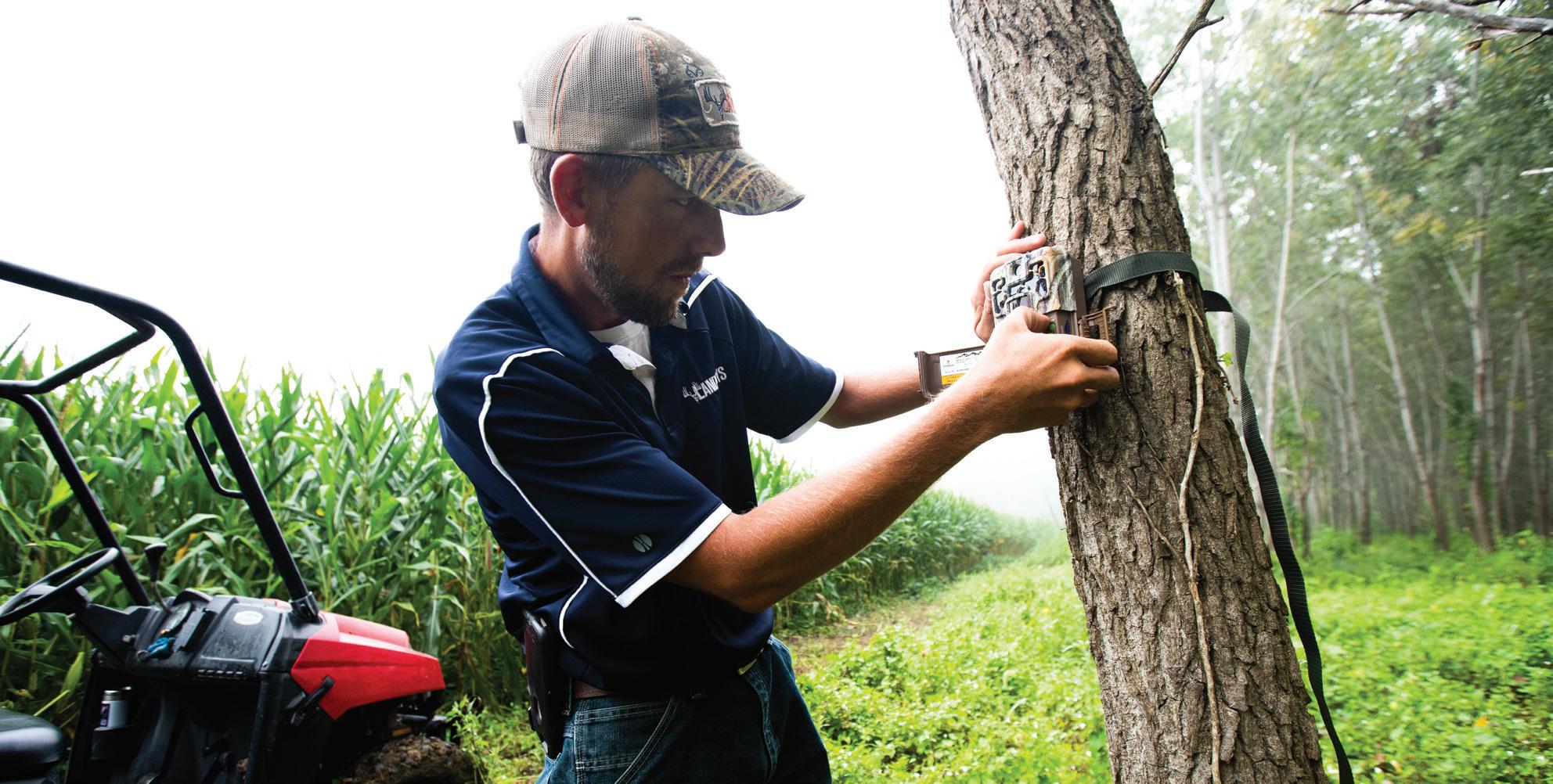
marketing presence. It is probably the least understood, least recognized, and undervalued part of my daily routine.
What do I mean by that? For each commission I earn, LandGuys keeps a certain percentage, and I am paid the rest. LandGuys then uses their portion of the money to hire “salary-based” support staff that helps me keep paperwork in line, understand and develop my marketing material, and grow the company, the brand, and the overall recognition for the company. A stronger company brand makes it easier for me to market myself, as many people already recognize the company name and brand, and they know it to be a trustworthy and reputable company. I then take my portion of the money and allocate a certain percentage into marketing myself and name recognition as an individual broker. I pay for individual properties to be marketed on various websites and platforms, and I am constantly behind the scenes trying to increase my
I am also the guy that tends to be on my phone, A LOT! It’s not that I am addicted to being on my phone; it turns out that it’s necessary. Constant communication is a must in my line of work. On any given day, I will likely screen 20-30 different phone calls from potential sellers, new buyers, current clients, attorneys, bankers, other brokers, and title company staff. Those phone calls often result in just as many or more emails and text messages. These phone calls are not always easy to make, as there is usually a lot of emotion involved in buying or selling a piece of land or a home. In many cases, the property that is selling is the most valuable asset the seller owns and potentially the most money that a buyer has ever spent. So, in many cases, I am trying to navigate potential problems, minimize delays in the processes, and make sure everything is handled in a timely fashion to ensure these properties sell. Constant communication with clients is one of the most important roles I play as a broker. So, if you see me on the phone, I’m probably just doing my job.
The real estate industry is highly regulated by local, state, and federal laws and agencies.
Another mundane part of my job is constant continuing education to make sure that I am conducting business legally and ethically for my clients. If any rules or regulations change, it almost always results in updated changes to my contracts and forms, which means that I need to stay in tune with the changes and how they can negatively or positively impact my buyer or seller clients. I spend countless hours a week trying to stay ahead of these changes.
I could honestly write an entire book about all the mundane work that I do. I have yet to mention the countless hours on Multiple Listing Services and various websites searching for new listings or recently sold property values. The real estate market is very fluid and seems to be changing by the minute. I am constantly trying to stay in touch with these values and analyzing why certain properties might have sold higher or lower than other comparable properties. In many cases, these are very much thankless jobs, but necessary for me to serve my clientele properly.
Although mundane, these tasks are crucial and necessary to ensure that I am representing my clients properly. Don’t get me wrong, I have a wonderful job. Walking new properties and seeing new things on each property is very much my cup of tea. That is a minimal amount of what I do daily. In the next article, I will touch on individual tasks and performances that I do for individual clients. This job is not always unicorns and rainbows, but it can be very satisfying when I help a client achieve their goals or dreams.
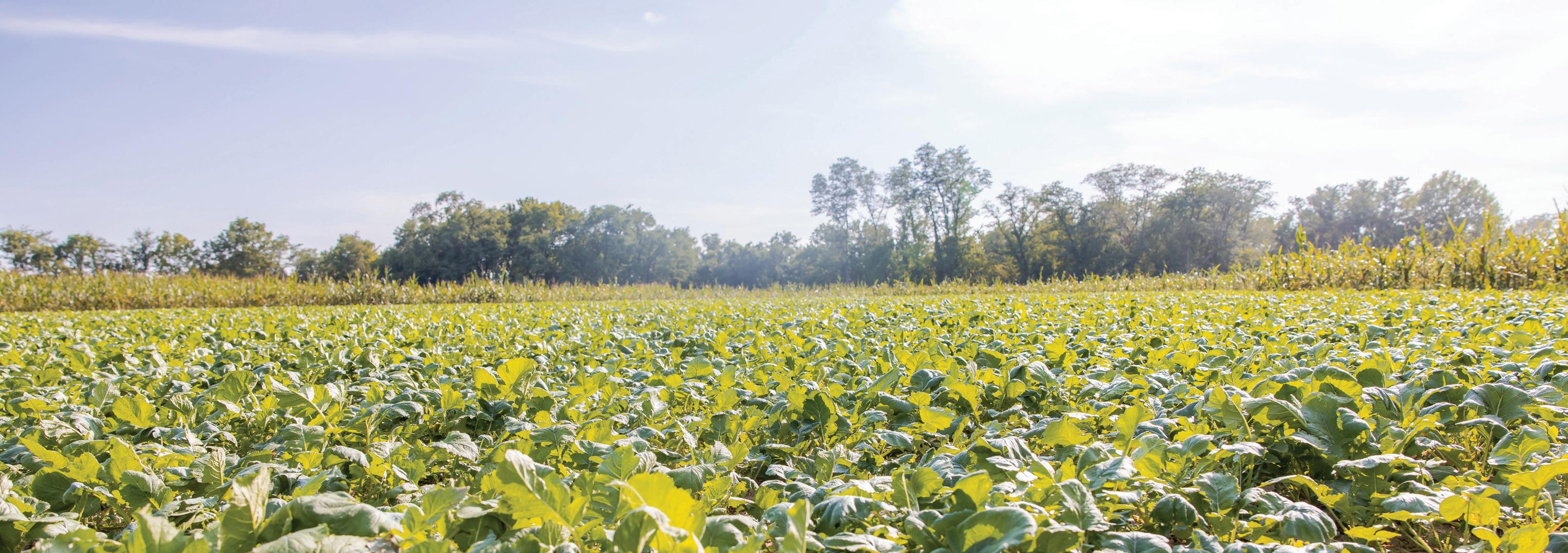
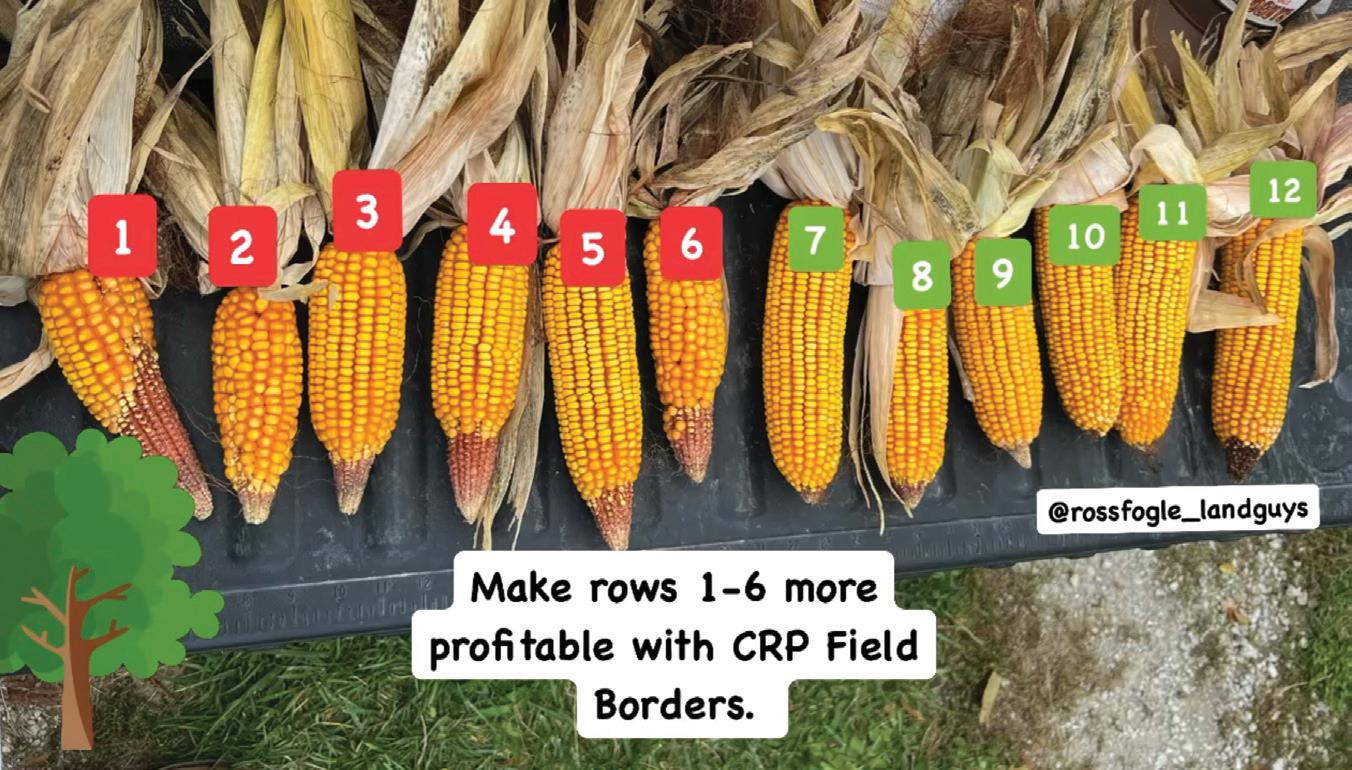
As a landowner, it is safe to say that you would want to optimize your income from your tillable land, and hopefully, part of that goal includes optimizing habitat for your wildlife. There are ways to do both. In many cases, the lowest yield of any tillable acreage is usually along the standing timber and in the “end-rows,” which are planted along the outside perimeter of the field. These yields are affected for multiple reasons, but wildlife depredation and a lack of nutrients to the crop due to shade and competition with tree roots are likely the two biggest limiting factors for your crops in these areas. If you want to see what I am talking about, jump in the combine with your tenant farmer and watch the yield monitor as you harvest the corn or beans along the timber edges.
In many cases, the first 30 feet of crops in the end rows perform much worse than the rest of the acreage in an agricultural field. Depending on the layout of your tillable acreage, this could account for a significant amount of acreage, and the tenant farmer will certainly keep that in mind when negotiating a suitable cash rent payment. The tenant farmer obviously needs his cash rent to reflect a profitable margin for him to operate within, and for the landowner, you are interested in generating the best possible return on investment. There may be a way to accommodate both in this scenario.
Conservation Reserve Programs (CRP) are a great way for the landowner to increase potential income and provide the tenant farmer an opportunity to focus on the more productive tillable acreage, which might be an incentive for them to pay a slightly better cash rent. There is a new program available through the USDA Farm Service Agency called State Acres for Wildlife Enhancement (SAFE Program) now
offered to eligible landowners and eligible acreages. Unfortunately, there seems to be minimal information online regarding this program. Like most CRP programs, there are specific requirements for each property and landowners to meet. The overall initiative is to increase habitat for endangered species and species that have suffered major declines in population over the years (for example, Bobwhite Quail and Pheasants). The other focus is to help reduce erosion, which in return will help keep your tillable soils intact and more productive.
This photo illustrates the yield difference in the first 12 rows of a corn field. Notice that the first six rows are not fully filled out. The photo illustrates that crops planted up against standing mature timber really affect the yield. What this photo does not illustrate is the amount of wildlife predation on the crop. There are likely many areas along the timber that are completely void of any ears at all.
state that extends to most counties in the Northern part of the state. There is also an Illinois Quail SAFE Initiative area that encompasses all Southern Illinois and then extends into the West Central and Western part of the state (see map for reference).
Your first step is to contact your local FSA (Farm Service Agency) and discuss your eligibility for the program. The SAFE program is a CRP contract that can be enrolled in 1015-year lease agreements. There are different enrollment types, all of which focus on establishing or restoring native grasses and forbs in critical areas. You will want to work directly with your tenant farmer to ensure that you are implementing these leases in the proper spots on your property. The lease payments seem to be aggressive based on some of the annual payment numbers I have heard. Often the CRP payment will be more than your tenant farmer would be willing to pay for those same acres. At the end of the day, this can be beneficial for the landowner, the farm operator, and the wildlife on your property.
It is my understanding that there are two different SAFE Initiative areas in the state of Illinois. The area that your property is located in will determine the programs you are eligible for and the types of grasses and forbs that will be planted in the CRP areas. There is an Illinois Pheasant SAFE Initiative area that is in the East Central part of the
I personally like the idea behind this program, and I think it really helps landowners, farmers, and wildlife on many different levels. To play devil’s advocate, there are a few things to consider prior to enrollment. These programs are designed for wildlife and erosion problems; they are not designed to be ATV access routes for you to drive around. For that reason, there are contractual restrictions on motorized vehicle use and similar activities. Some of the programs allow for turning equipment around on them, but they are not designed as road access for grain carts, combines, ATVs, or somewhere to store round bales. Driving on them, especially in the spring and fall, somewhat defeats the purpose of the program, which is to provide springtime nesting habitat and wintertime shelter for small upland game. This is a lease agreement that you will be held responsible for adhering to the agreement terms and restrictions.
All in all, I feel this is a program that can benefit many landowners. If you feel your farm could benefit from a program like this, give your local FSA office a call to discuss your eligibility and different options available to you.
MANAGING HABITAT FOR QUAIL TO IMPROVE YOUR DEER HERD
In some of the other articles, I have explained some of my daily routines, and I also highlighted CRP options to increase tillable land returns and habitat improvement options. Habitat management is one of my absolute passions. My job gives me an opportunity to walk on a lot of different farms and properties. It’s interesting to see how different each property can be and how each property is managed differently by different landowners. It is safe to say that most landowners in this area focus most of their management goals on the whitetail deer.
in North America by approximately 85% since 1966. Those numbers are very sobering for a guy like me, as I just love these little birds for various reasons. There are multiple guesses as to why the quail population has deteriorated; regardless of why, the decline is real and very sad. One contributing factor is undoubtedly the differences in farming practices and basic habitat for wildlife because of those changes in farming practice improvements. I’m certainly not advocating to change the technology and regress in how we are now farming, but I am advocating to
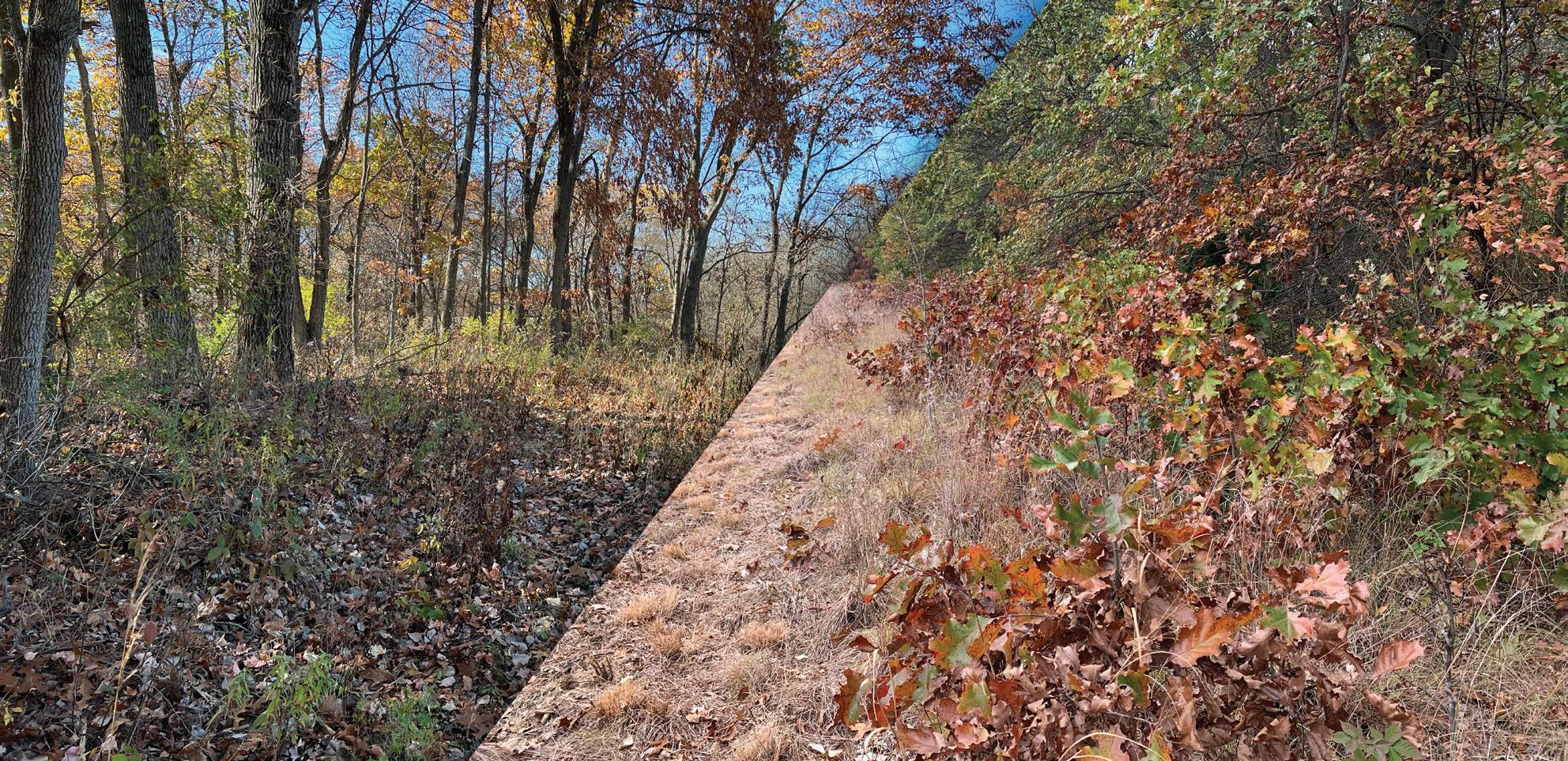
HARD EDGE
SOFT EDGE
This photo depicts the common hard edge along a field. Notice the field edge butts up to hardwoods timber. There is no habitat in between the two.
SOFT EDGE: Photo credit to Mark Alessi former buyer client of Matt Cox This is the classic example of a feathered edge. We meet all classifications of timber growth. Grass and forbs blending into the shrub sapling stage of oak trees, just inside that is the pole stage, and the mature timber is hardly noticeable in the background do to the dense habitat created by the soft edge.
I bet it would shock many of the landowners out there to hear that they could grow bigger deer and a healthier deer herd if they would focus their management goals to benefit the Bobwhite Quail.
Any habitat improvement done to benefit the Bobwhite will ultimately have a positive benefit for all other wildlife on your property. To manage a property for quail, you need to see things from their perspective, which is quite literally at ground level. The average adult quail will only get to be six to seven inches tall. The average life expectancy of a quail is 6 months, so these fragile little birds are at a major disadvantage from the start. Quail really need a lot of diversity in their habitat.
I’ve read multiple articles that estimate that the Bobwhite Quail population has declined
MEET MATT COX
Matt is a full-time Licensed Realtor, with LandGuys of Illinois. He lives in Fulton County with his wife Ashley and two sons Easton and Camden. Matt specializes in rural land sales which include recreational land, tillable land, rural home sales, and waterfowl property sales. Over the years of selling rural properties, Matt has helped countless clients navigate unique circumstances and obstacles that are exclusive to owners of rural real estate. With this newsletter, Matt is hoping to help rural landowners make important, educated, and
change our mindsets and thoughts about how we work around those improved farming practices to create better habitat for wildlife.
Hard Edges vs Soft Edges
With all the properties I have walked in the past, I am surprised to say that I do not see much emphasis on people managing their edge habitats. It is no secret that most walks of wildlife flourish on edge habitat, where one type of habitat adjoins another. I look at these edges as a buffer and a great spot to focus some of your management goals. In one of the other articles, I talk about a CRP program called SAFE. It stands for State Acres for Wildlife Enhancement, and it is a great way to take an otherwise “Hard Edge” around field edges and create a more wildlife-friendly “soft edge.” The idea of “Edge Feathering” is not a new concept for wildlife managers; the idea behind it is to create a buffer from bare
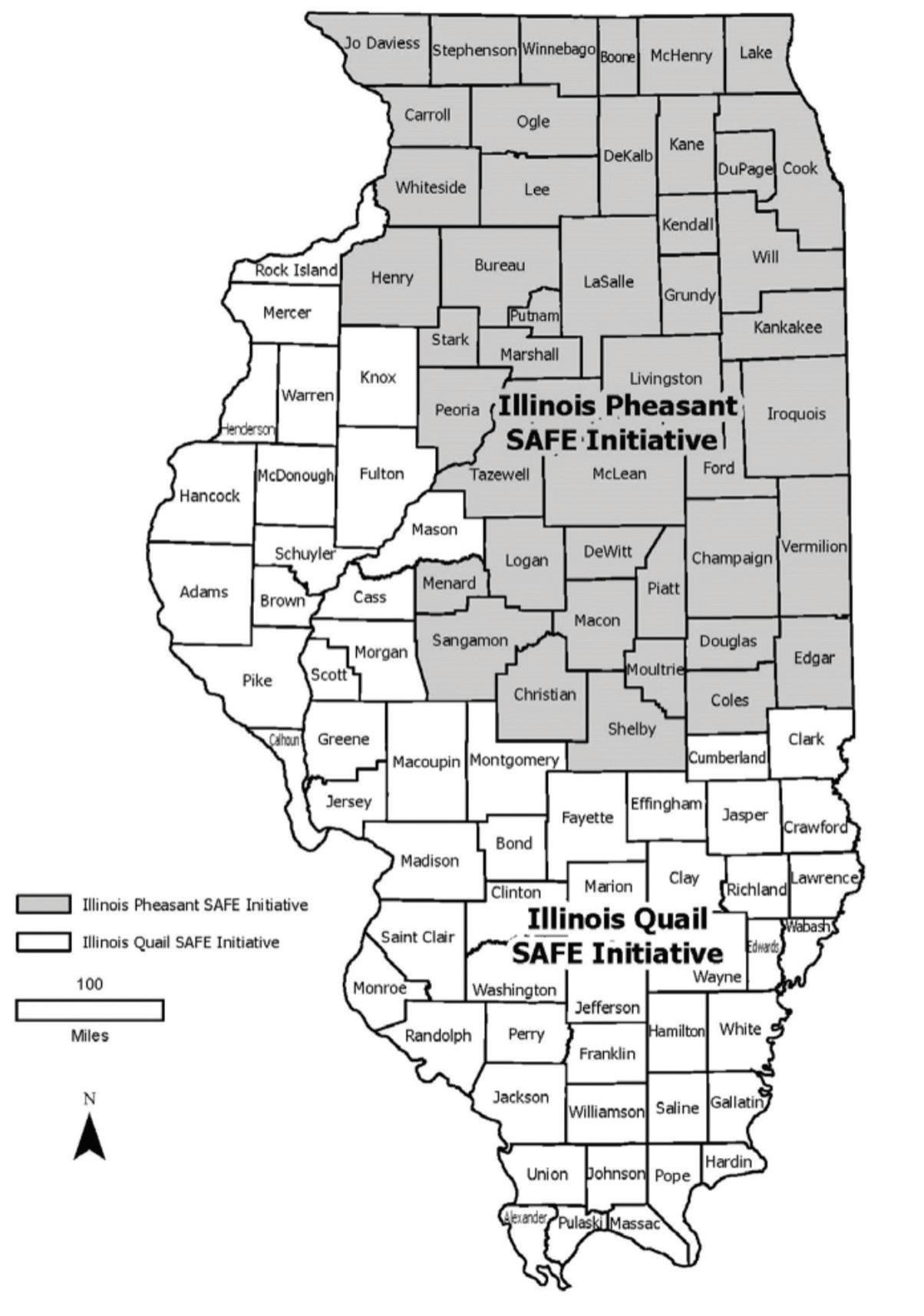
Illinois has two SAFE Initiative zones. This map highlights the areas by county to which program you could qualify for. The major difference in these two zones is the types of seed blends you will be eligible to plant. The pheasant SAFE zones call for a tall grass blend (Big Blue Stem, Indian Grass, Switch Grass, and a variety of forbs). The quail SAFE zones call for a short grass blend (Little Blue Stem, June Grass, Love Grass, and a variety of forbs such as Side Oats Grama and Partridge Pea). Make sure your seed blends are compliant with the FSA requirements.
ground and slowly transition it to the mature timber with a variety of successional habitat between the two. The idea is to stack the 4 stages of timber succession between the field and the Mature timber, and usually, this development is approximately a 150-foot strip between the two. Those succession stages are grass and forbs stage, shrub and sapling stage, pole stage, and mature forest stage.
By feathering the habitat between the crop ground and the mature timber, you are essentially benefiting wildlife in ways that many other properties cannot. For quail, you can create the proper habitat for them to survive year-round. This soft edge can also increase your recreational activities on the property by minimizing how much you disturb your deer and other wildlife. The proper soft edge should create optimum escape cover for deer and other wildlife. If you want to take a walk on your farm and you spook some deer, the properly feathered edge will offer somewhere for a spooked deer to bound off 50 yards and then they will just stop and let you pass by. They won’t have to flee to the neighbor’s property to escape your presence.
calculated improvements to their properties so they can maximize their enjoyment, improve their return on investment, and help ensure that the land maintains its value both aesthetically and financially.
HARD EDGE: