2026 PORTFOLIO

AN EDUCATIONAL RESTAURANT THAT EXPLORES THE HARVESTING PROCESS OF FISH AND RICE ROOTED IN THE SOCIAL ASPECTS OF EATING A MEAL IN THAILAND.
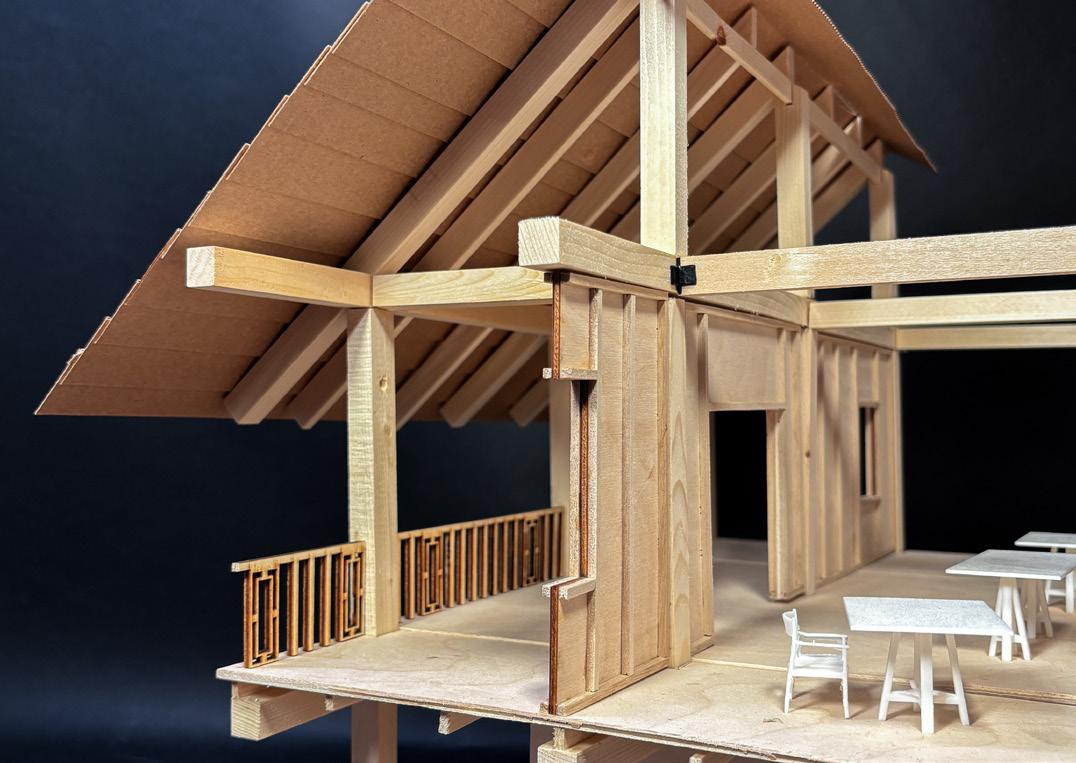
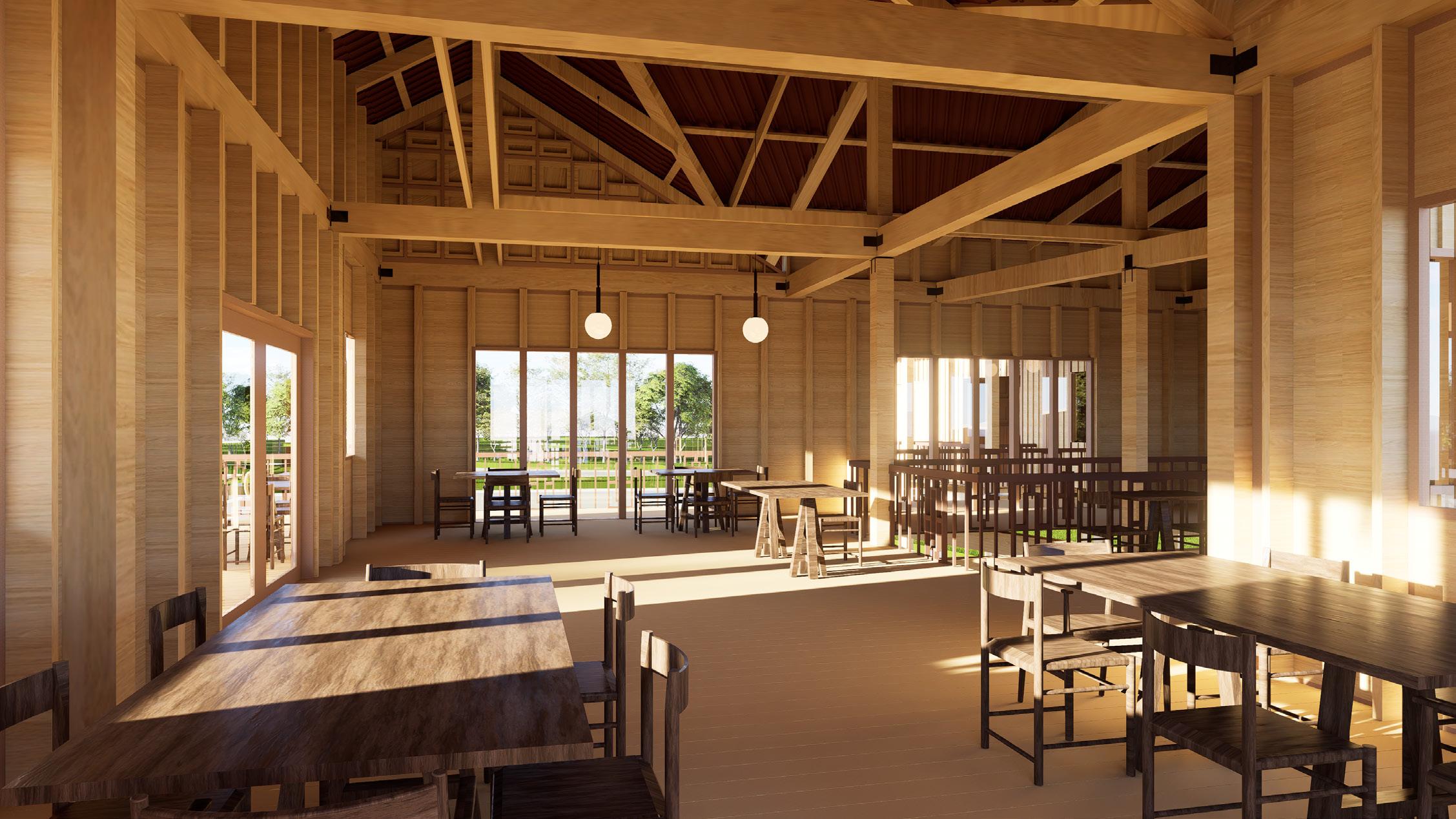
Embedded within the current city of Chiang Mai was a kingdom from the 13th to 19th century called Lan Na. Celebrating Lanna culture, The Ontology of Pla investigates the traditional cuisine of Northern Thailand and the practices involved within these traditions. Following in the footsteps of a small restaurant on Phaw Pheeyin’s Compound in Ban Yang Phrathaat, this project aims to create a space that is open and available to teach its visitors the practices involved in making a meal. All farmers, villagers, and visitors are welcome whether they are looking to learn, eat, or retreat.
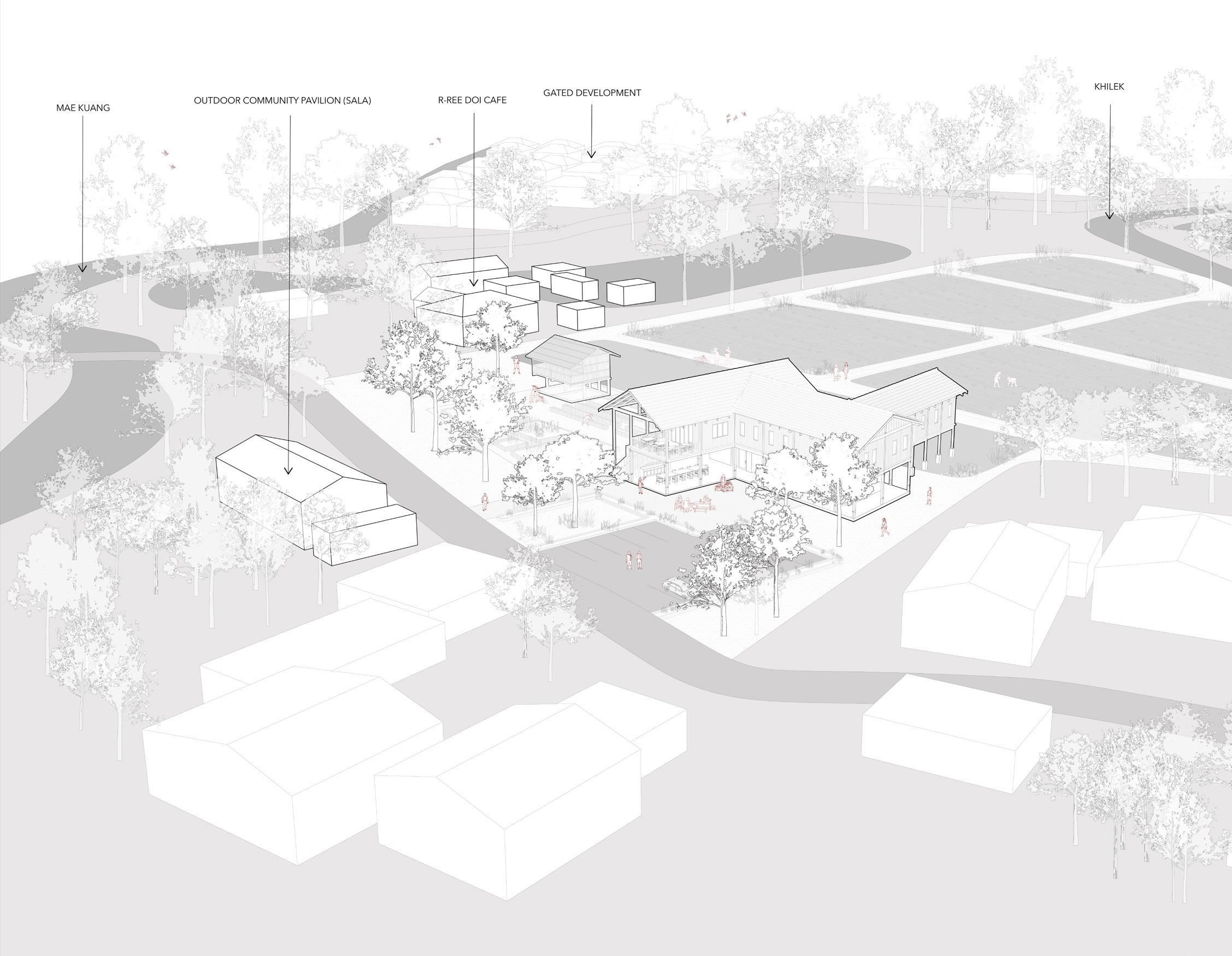
Axonometric drawing of the building and surrounding site
INSTRUCTORS : TOMMY CHEEMOU YANG
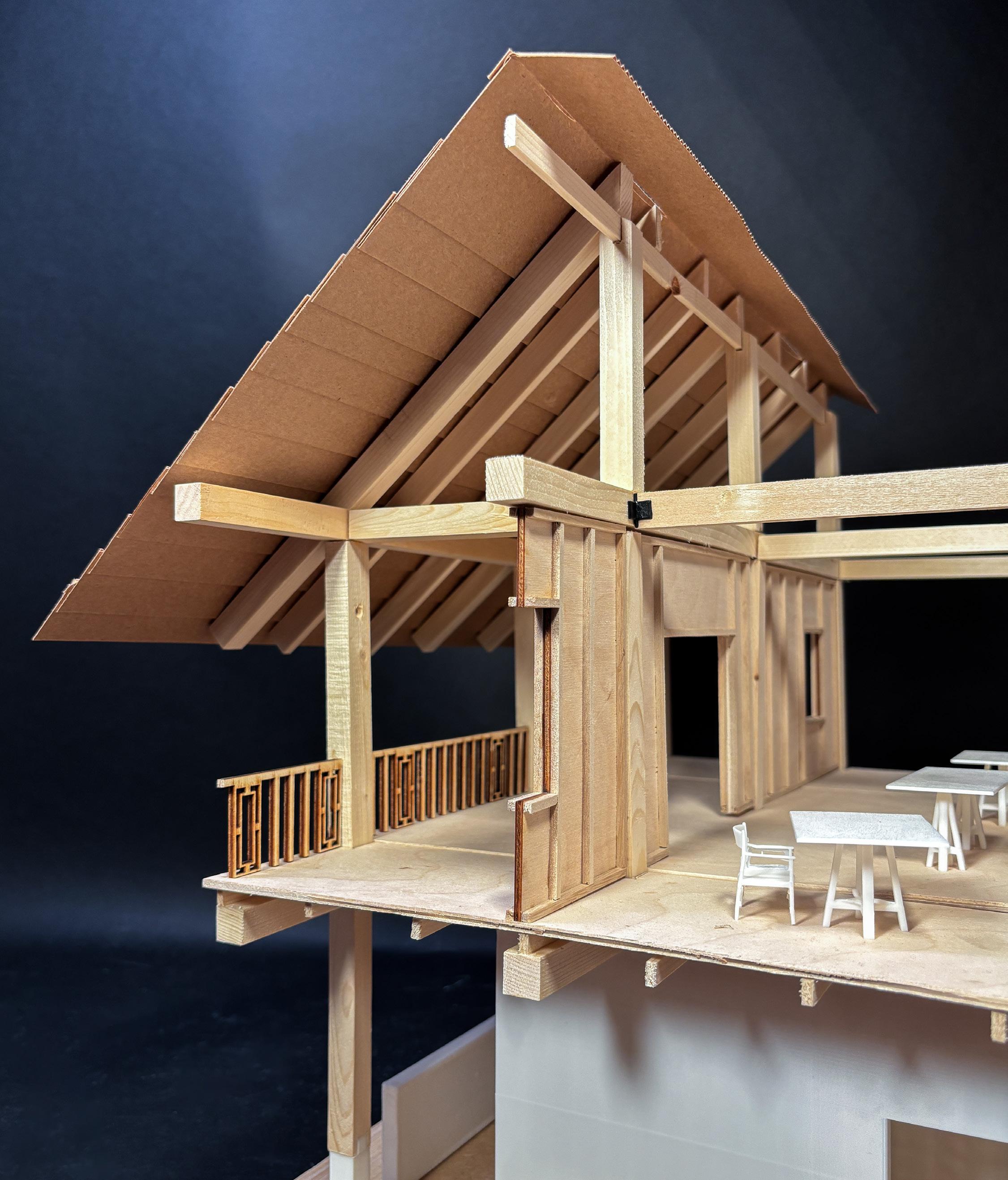
sectional model from the Southwest
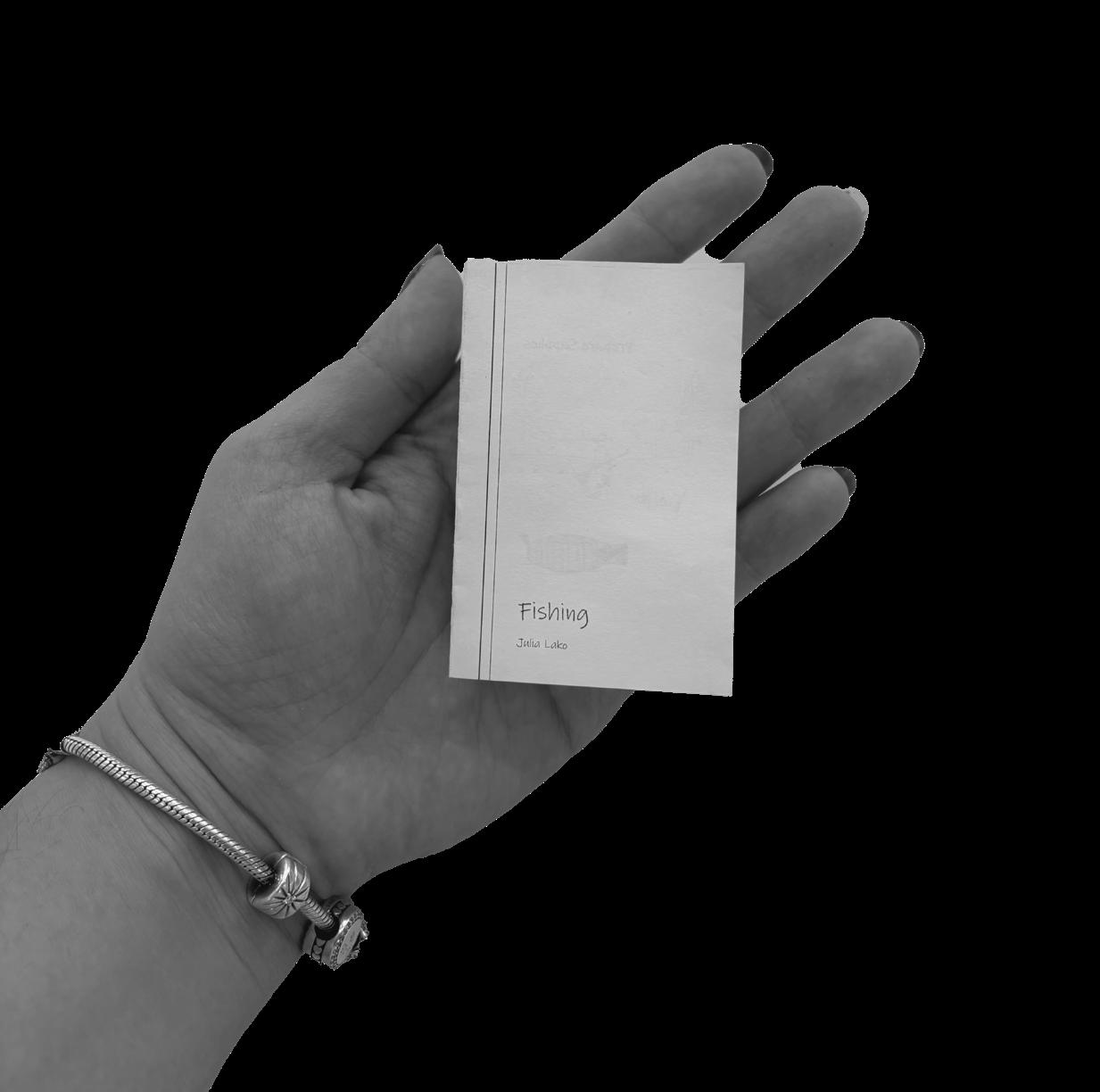
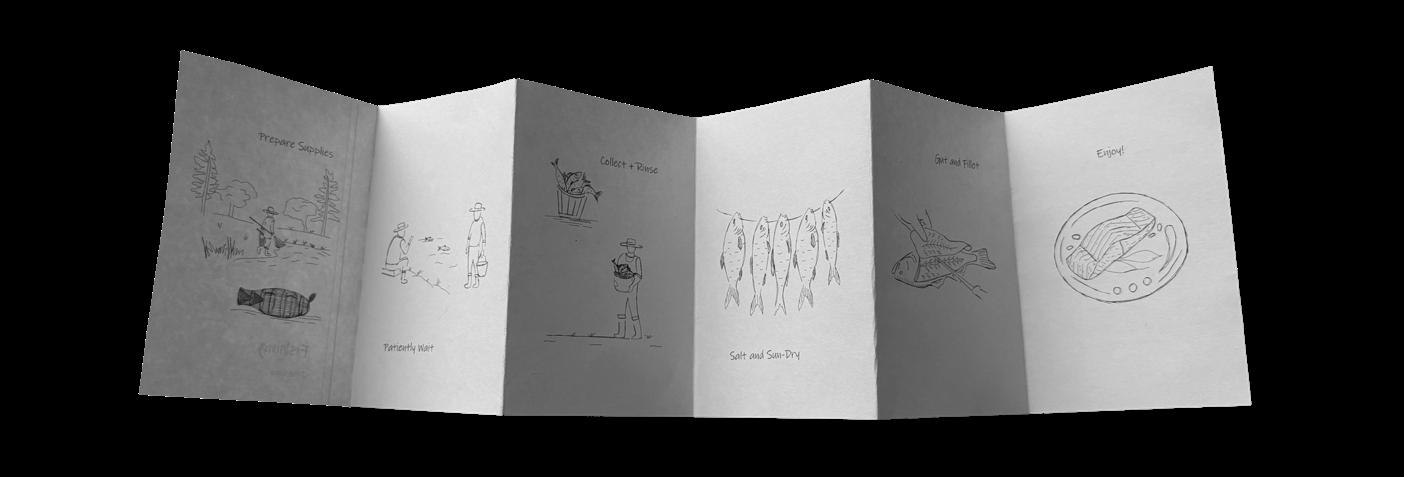
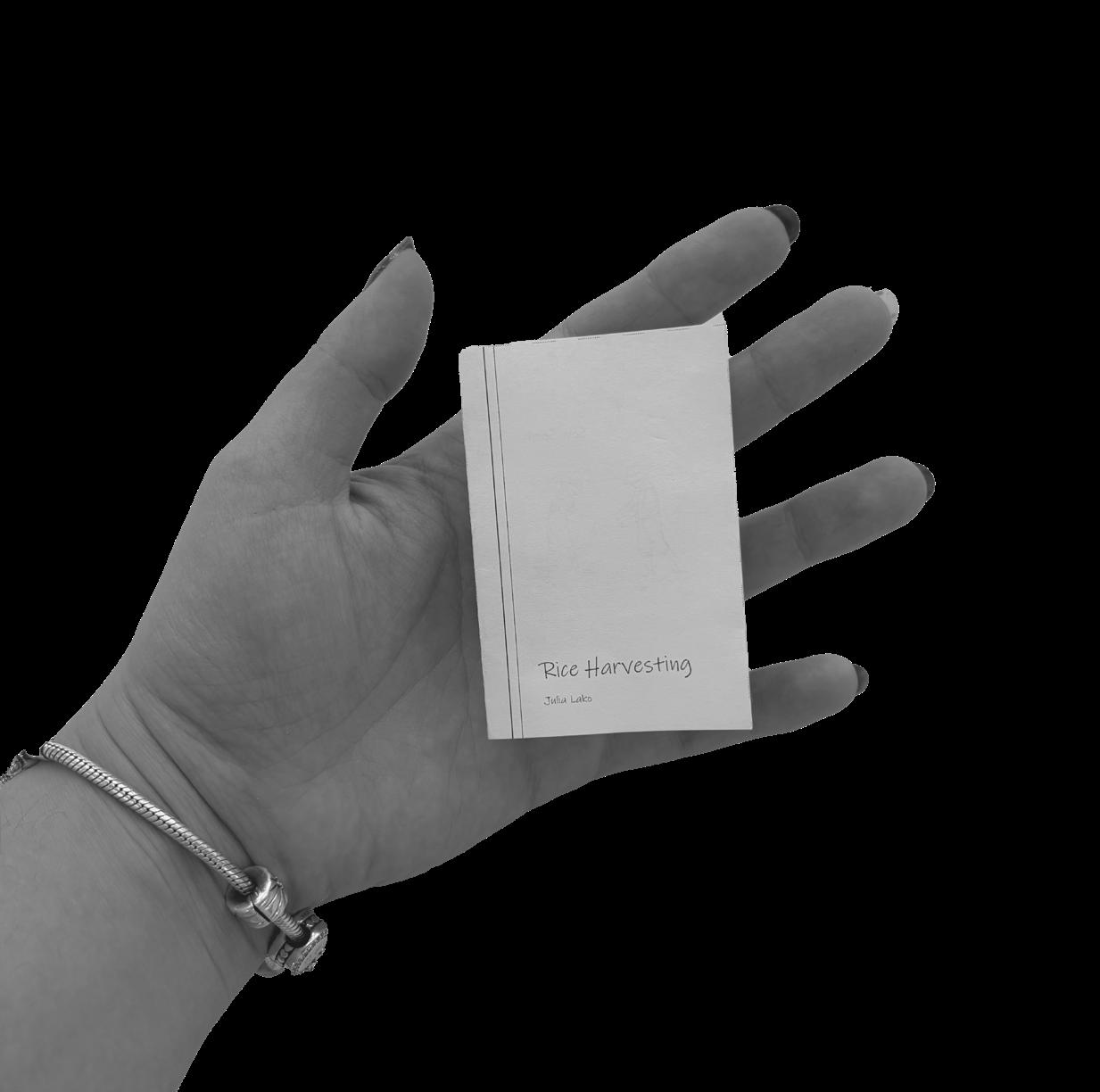
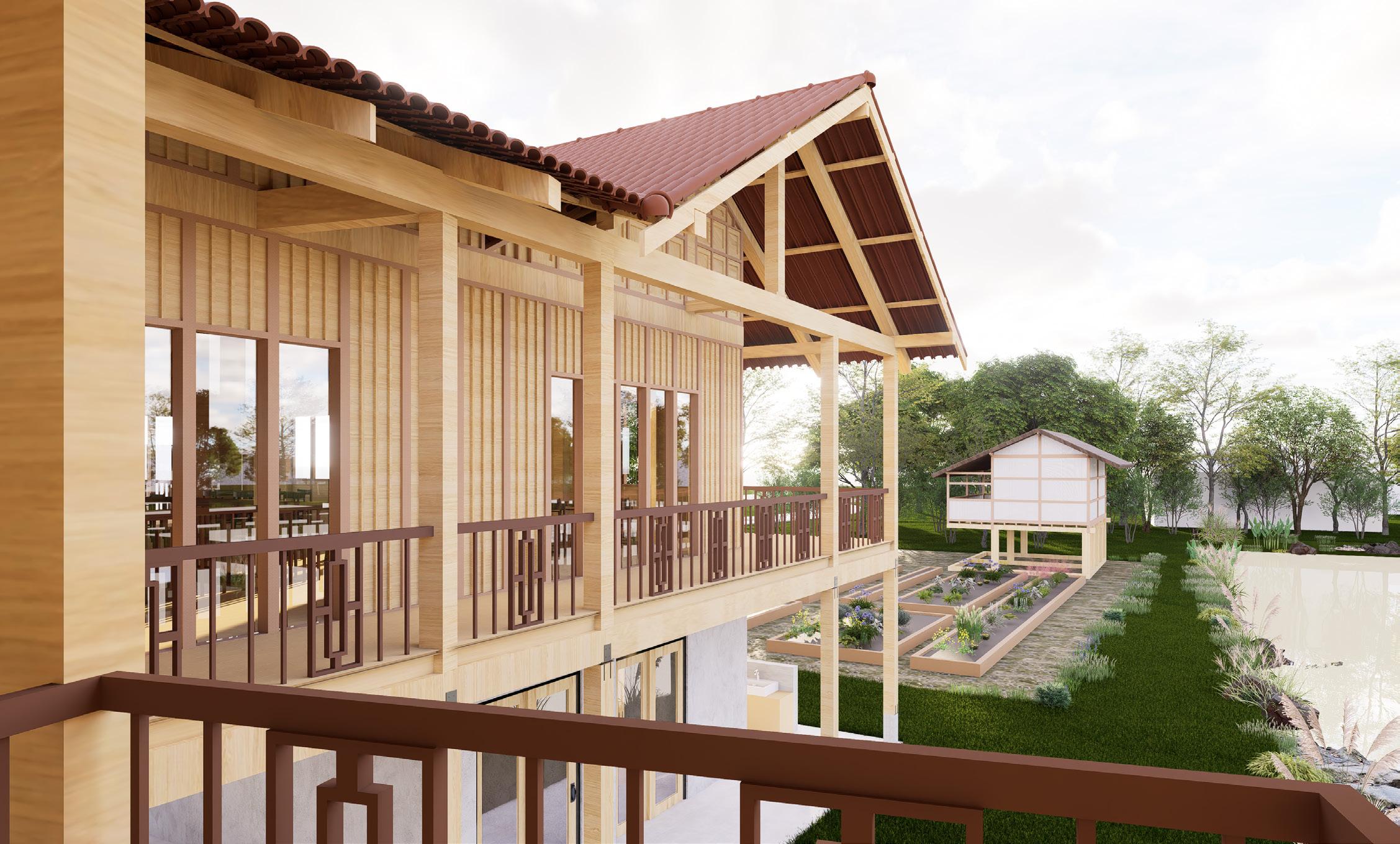
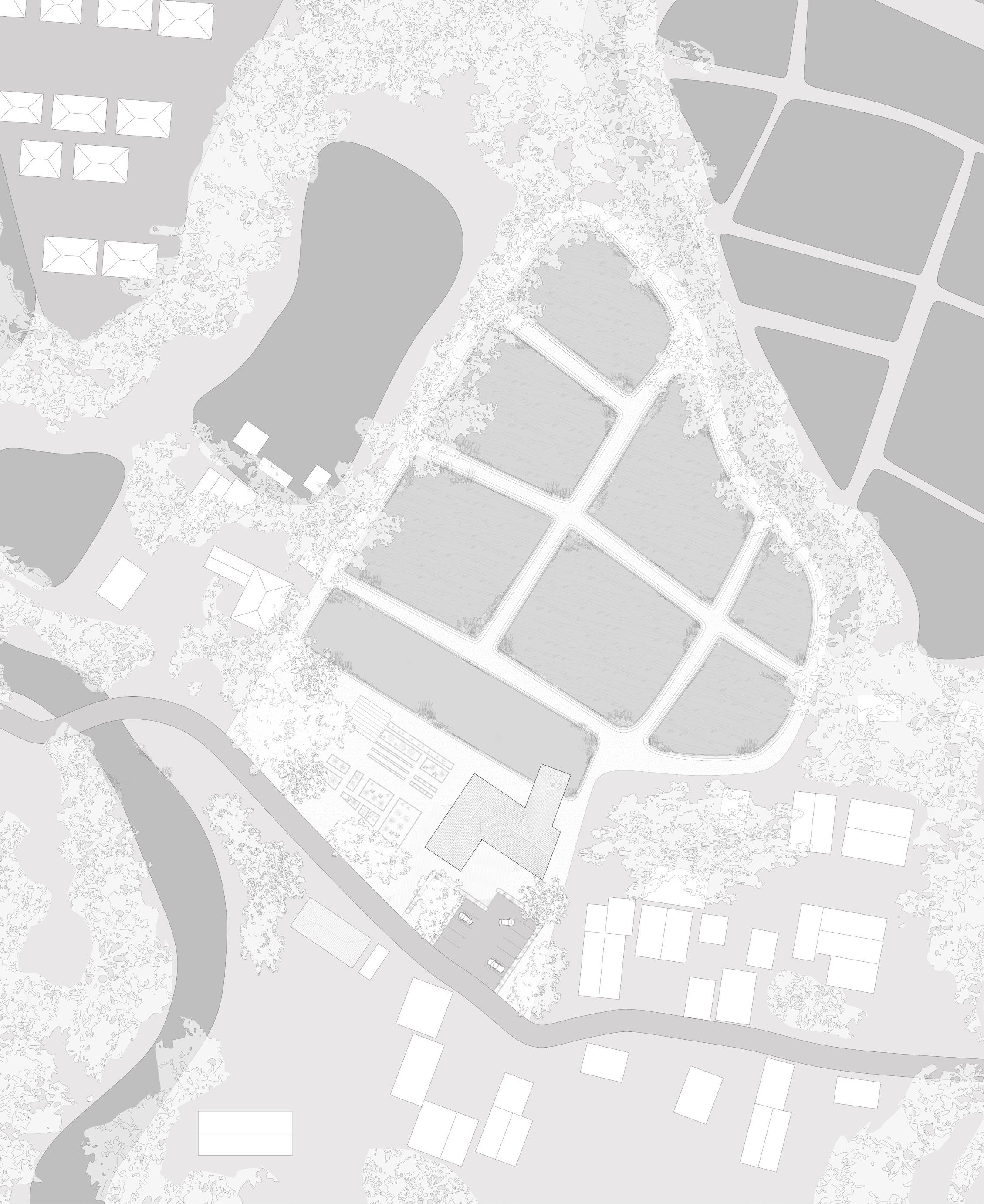
Research focused on the harvest of fish and rice facilitated the inclusion of rice paddies, a fishpond, and a produce garden within the project. The landscapes created by these three harvest sites work in tandem with the restaurant above and the educational spaces on the ground level to connect the community to local ecologies.
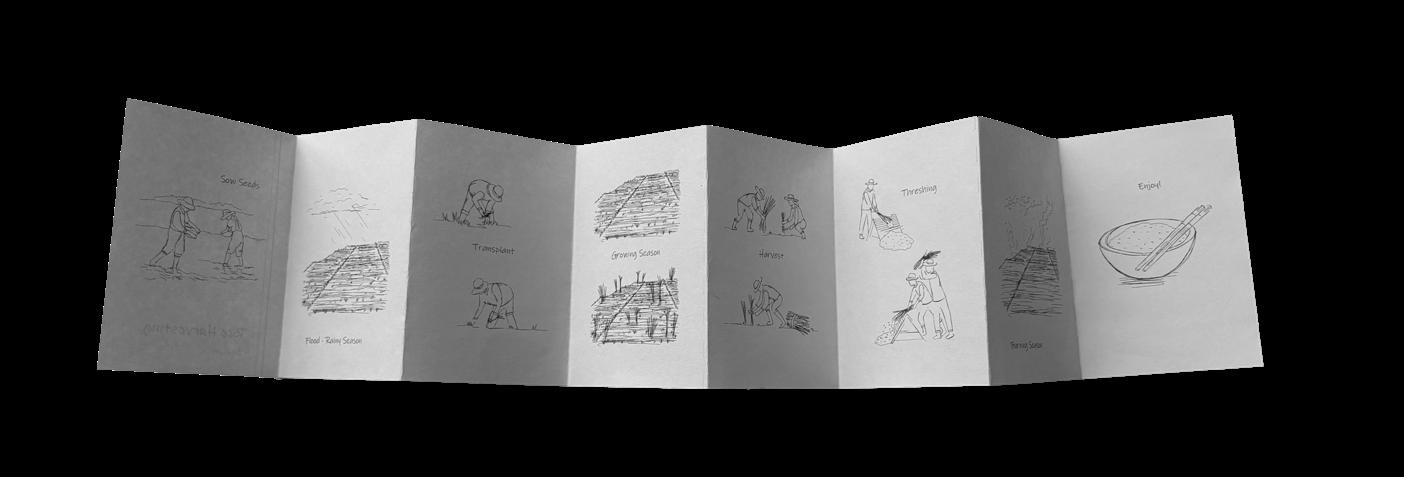

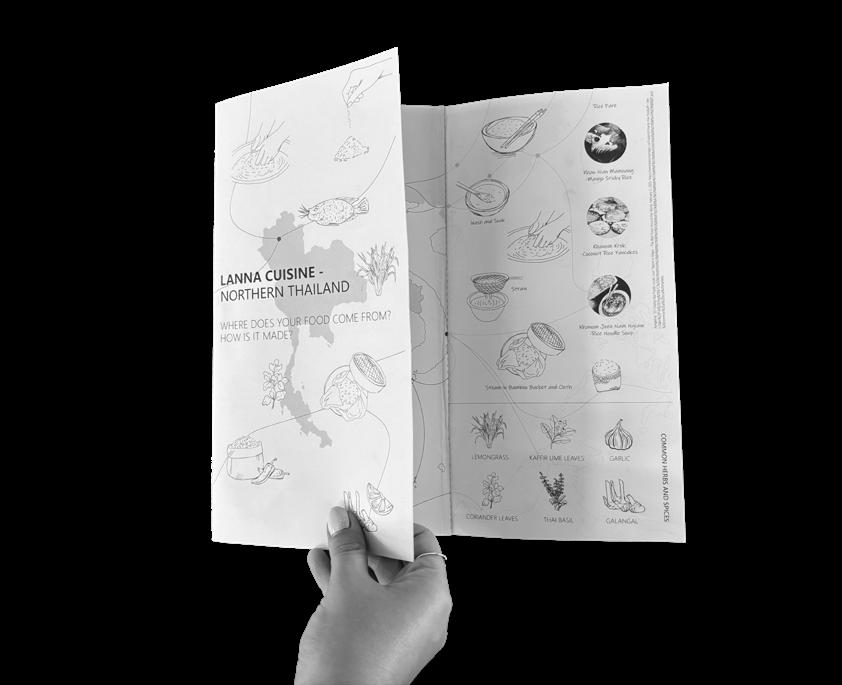
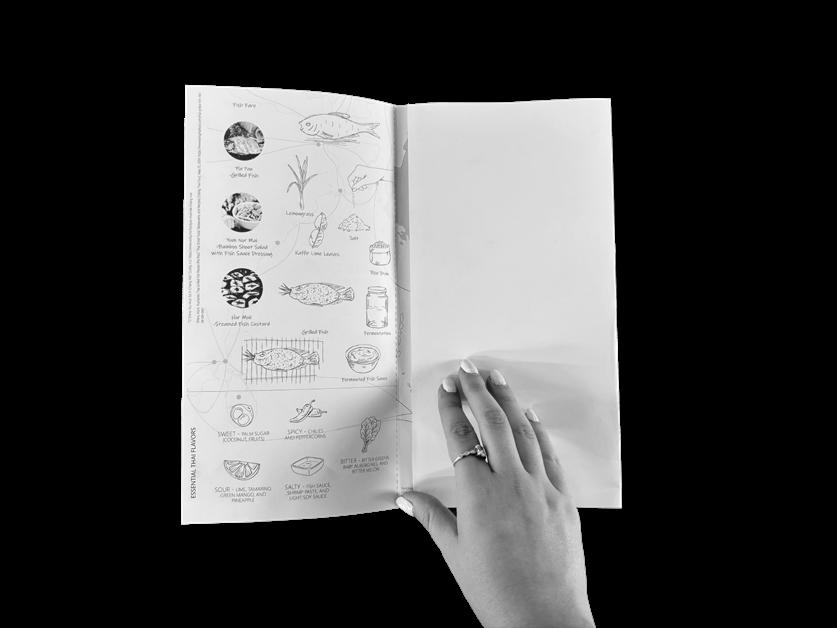

Map of restaurant locations created with QGIS Pamphlet about Lanna cuisine
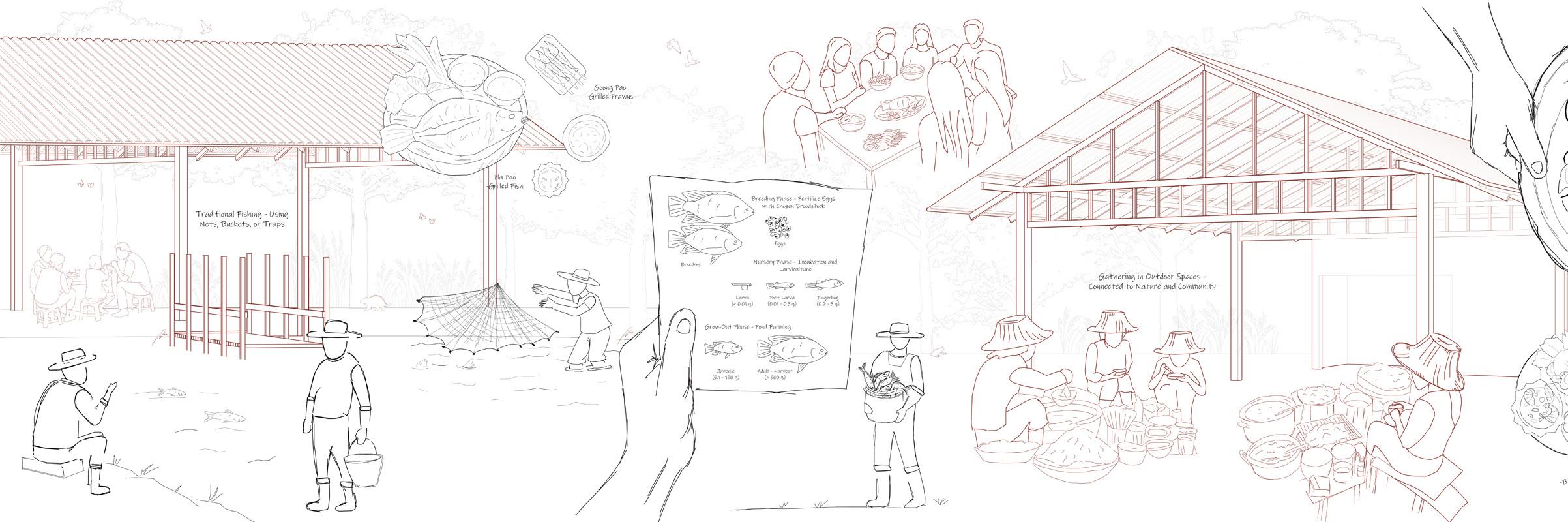
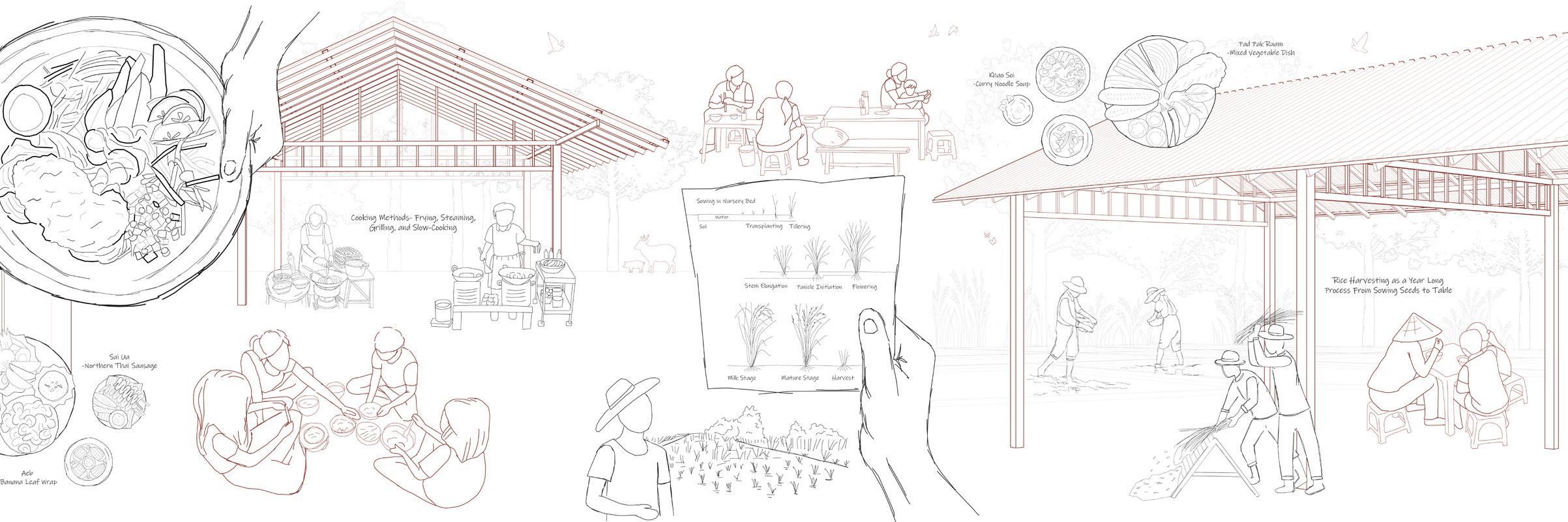
Sketched and digital collage outlining fishing, eating, cooking, and rice harvesting
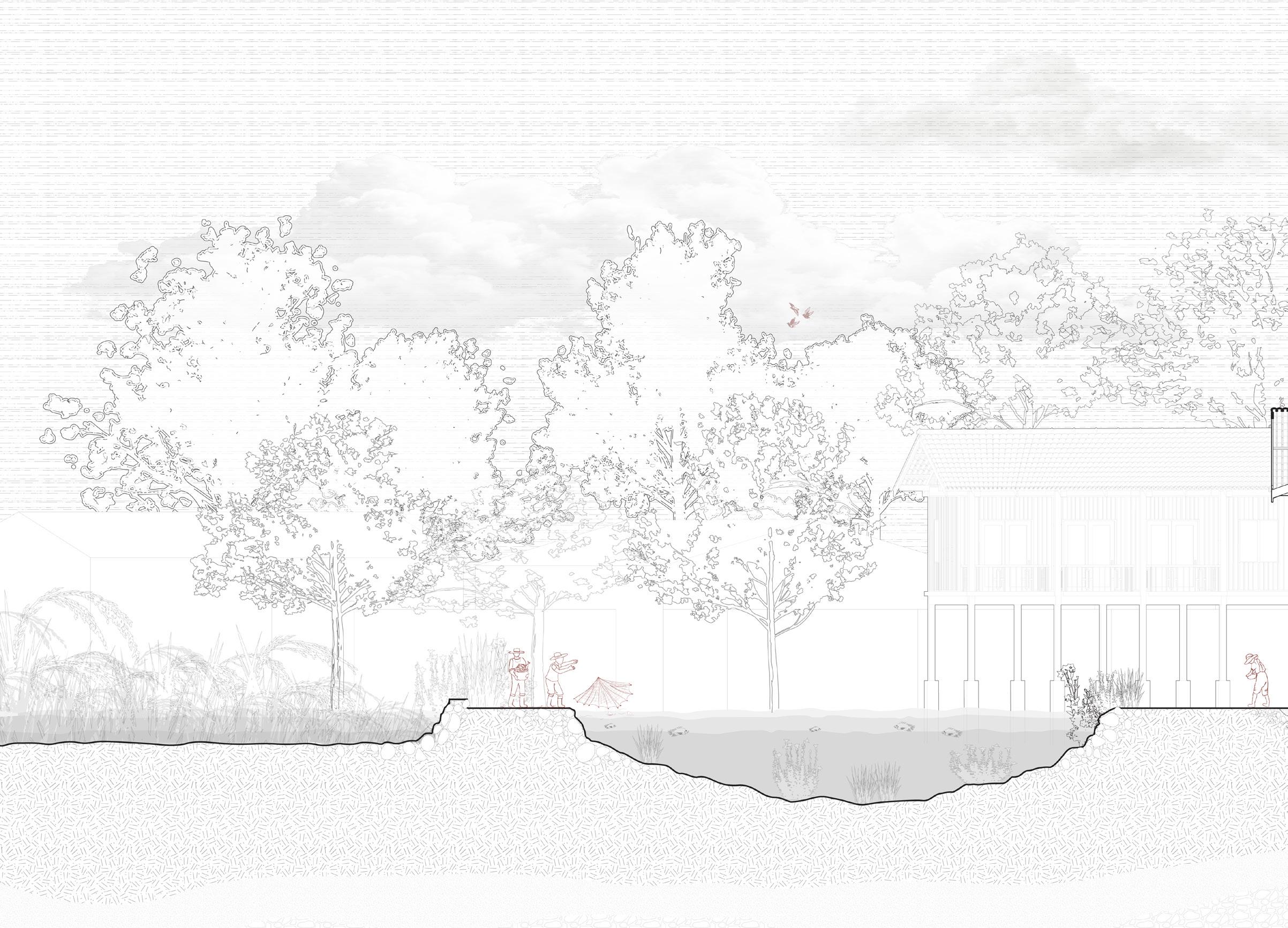
Section facing Southeast
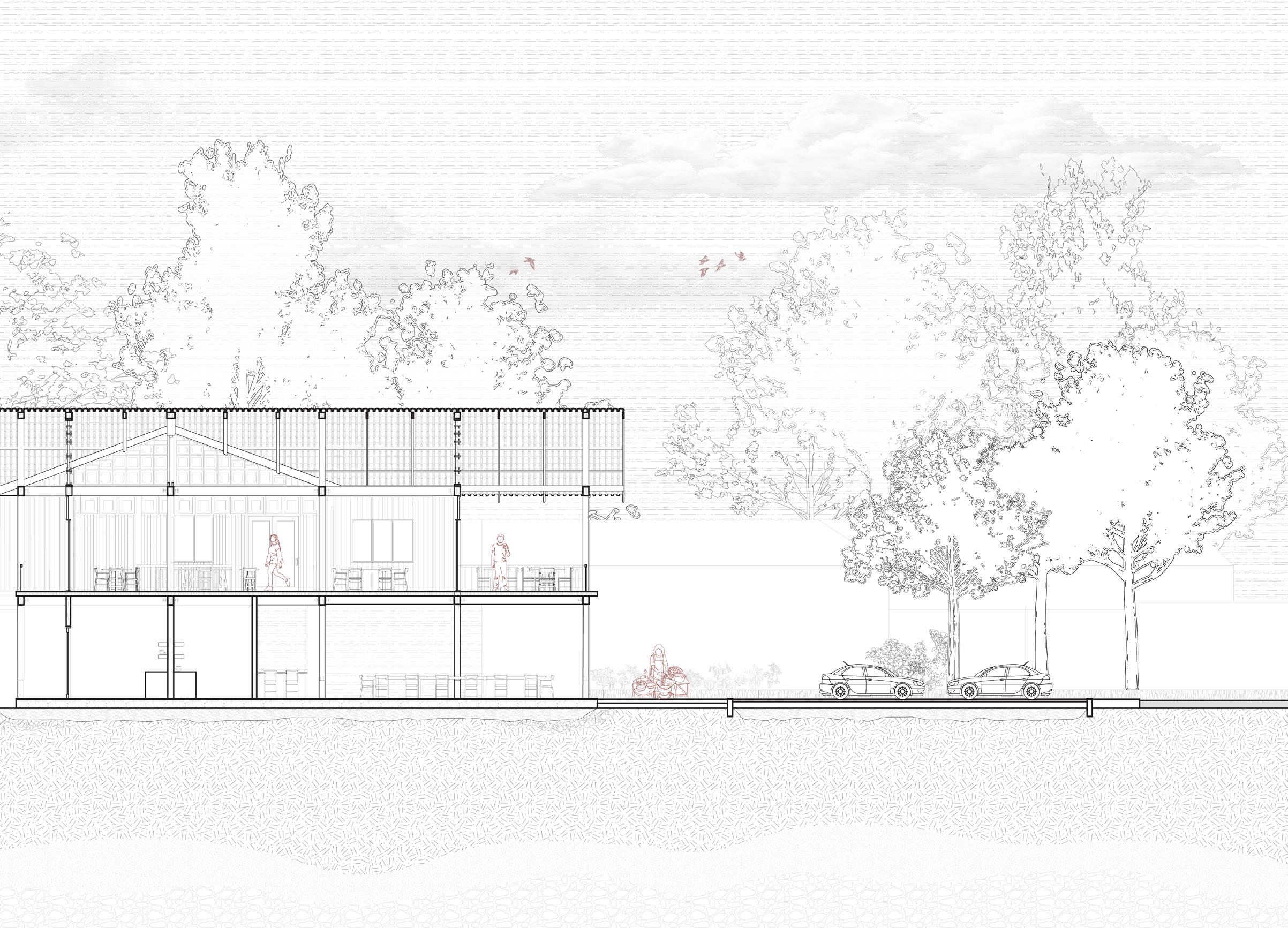
The architecture remains humble on the site as it situates itself between the Mae Kuang river, an irrigation canal, rice paddies, ponds, and nearby roads. The surrounding sites feature an outdoor community pavilion; or sala, used to host festivals for the village and an existing café to the east. By fostering conscious development on the chosen site, this project intends to grow into the landscape of the community and provide another outlet for culture and tradition.
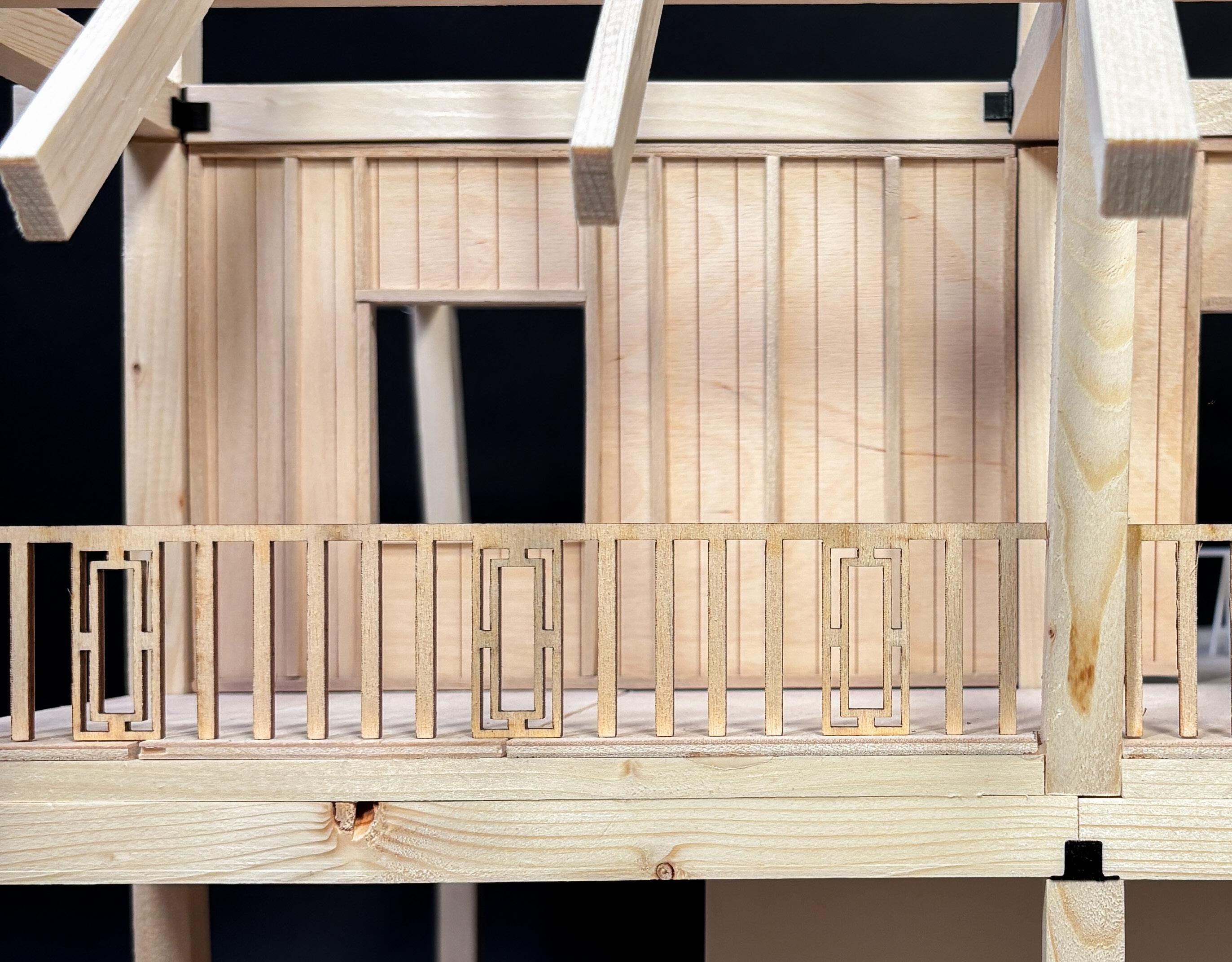
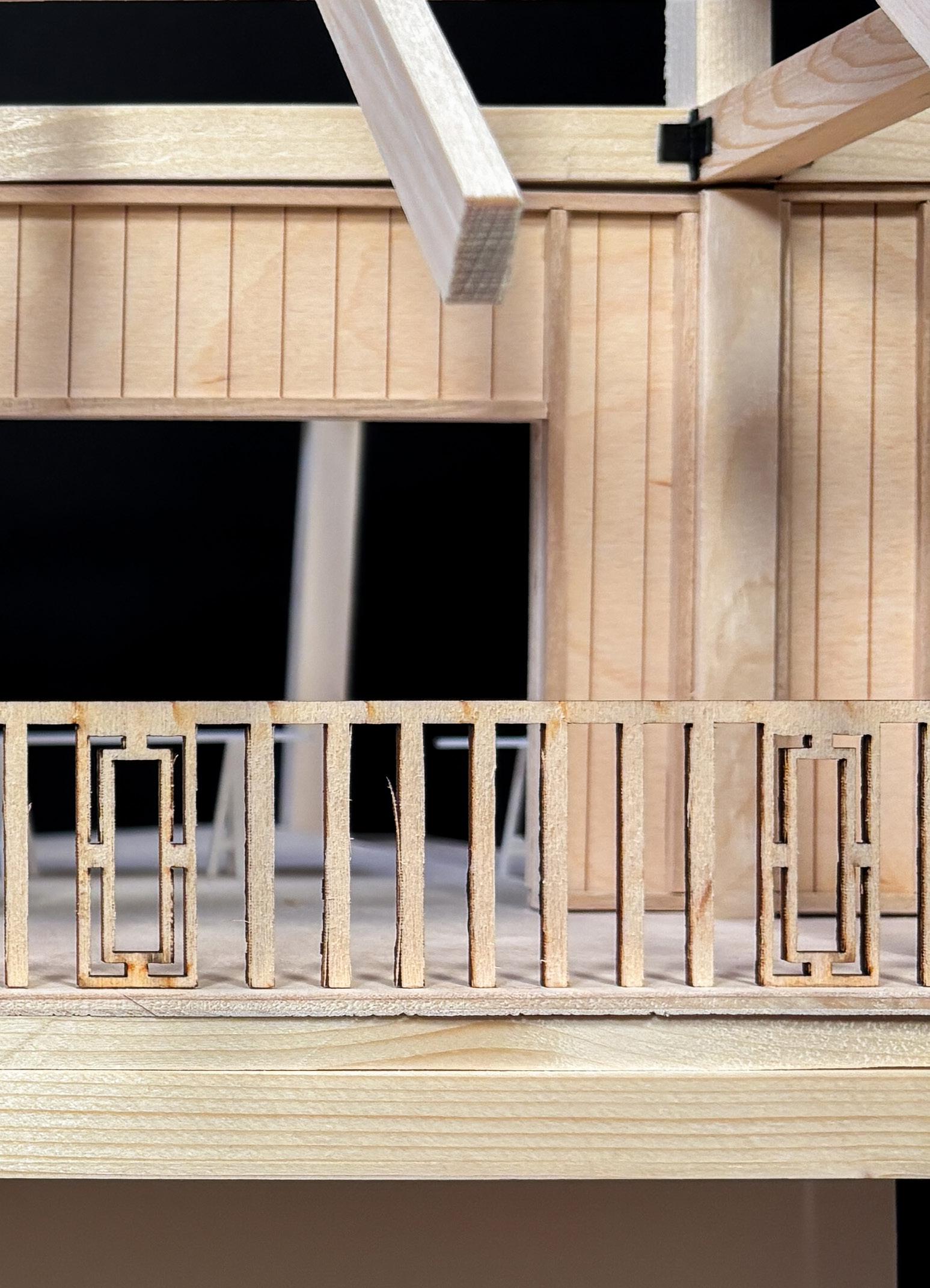
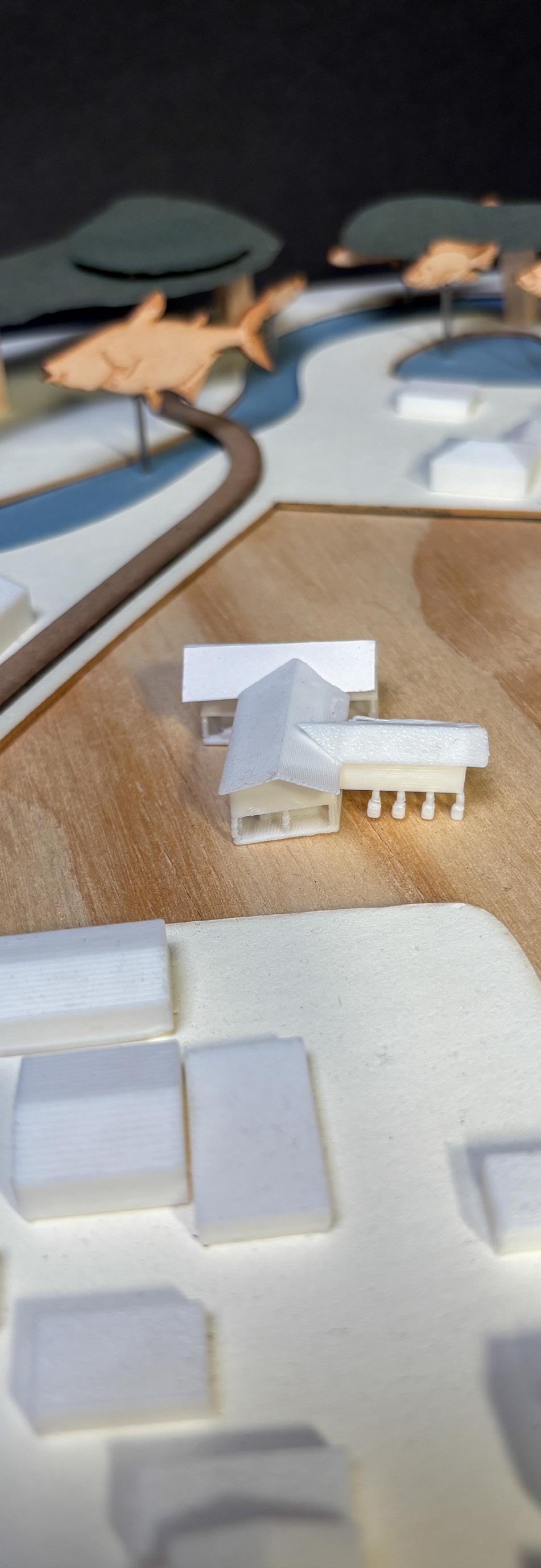
Final site model with building massing

A COMMUNITY RESOURCE AND LEARNING CENTER FOR THE SUSTAINABLE DEVELOPMENT INSTITUTE AT THE COLLEGE OF MENOMINEE NATION.
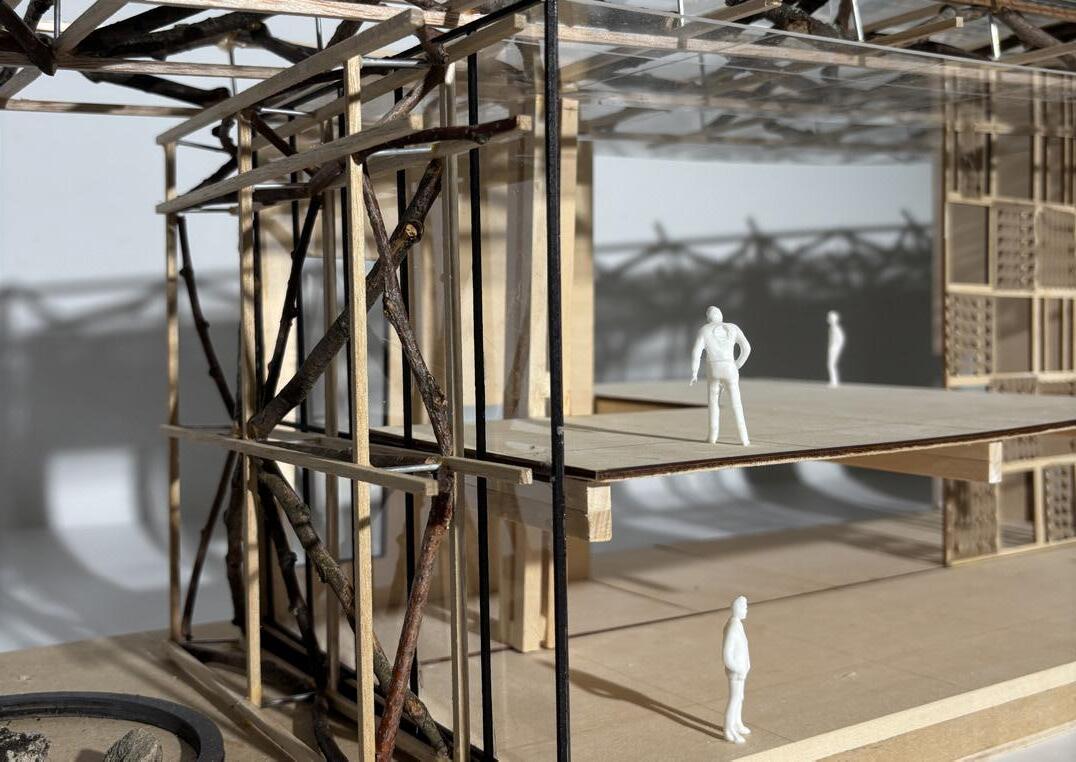
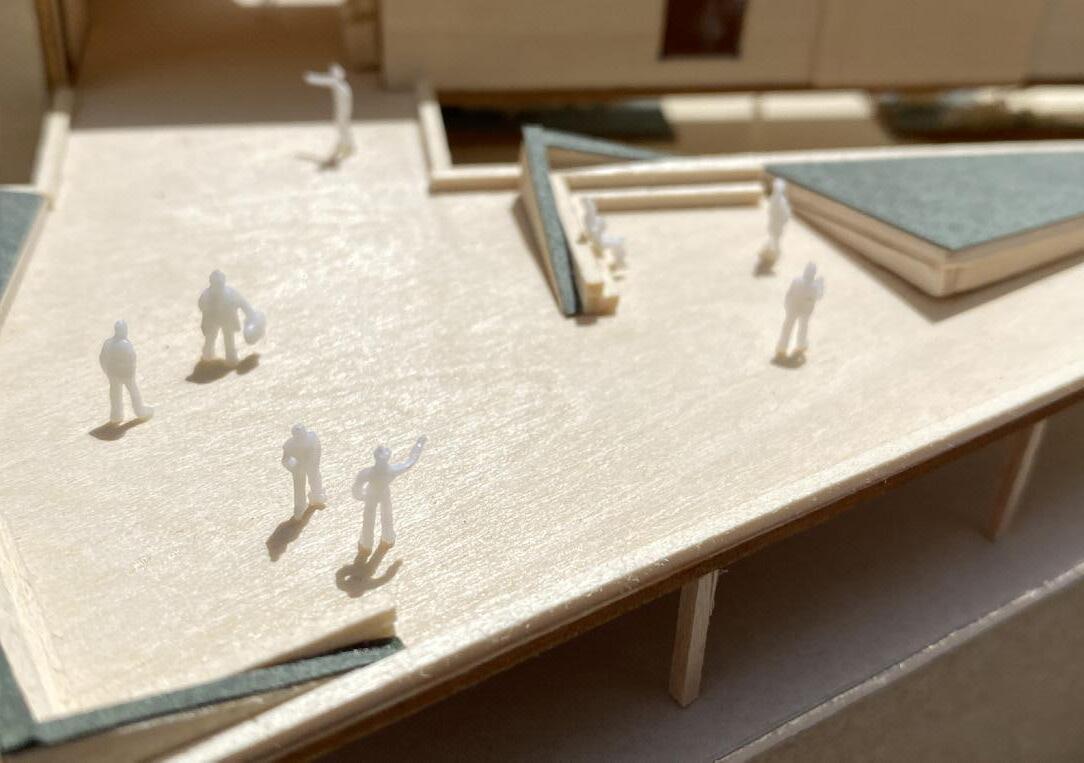
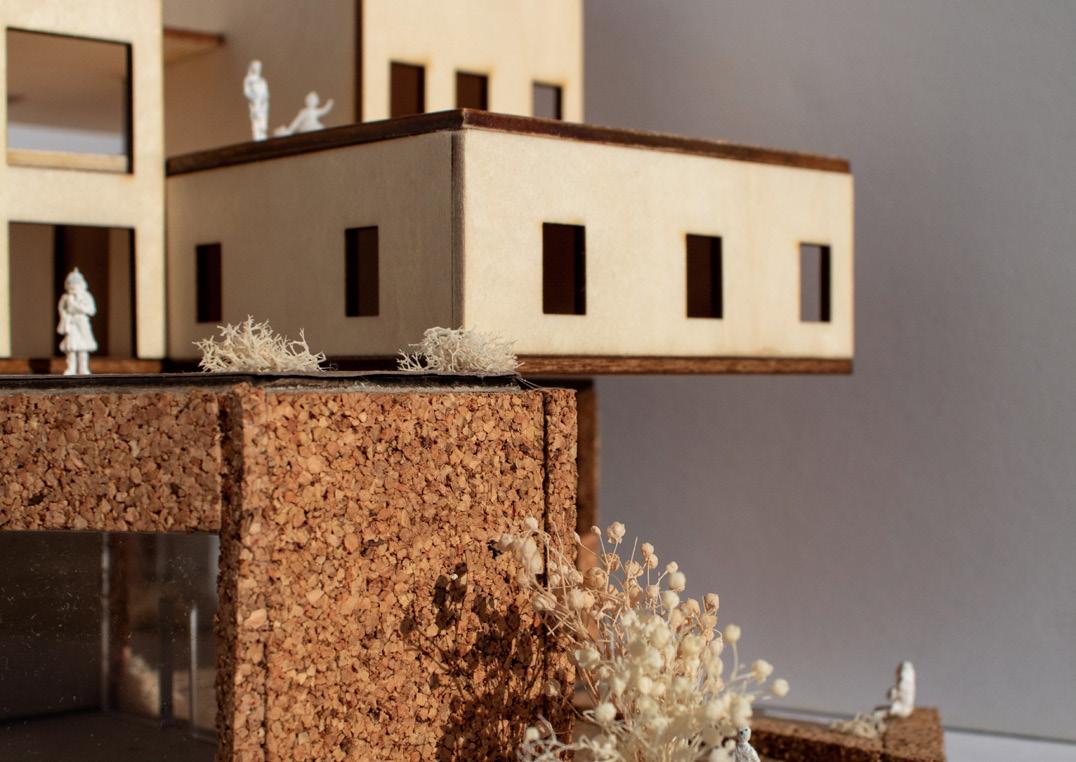
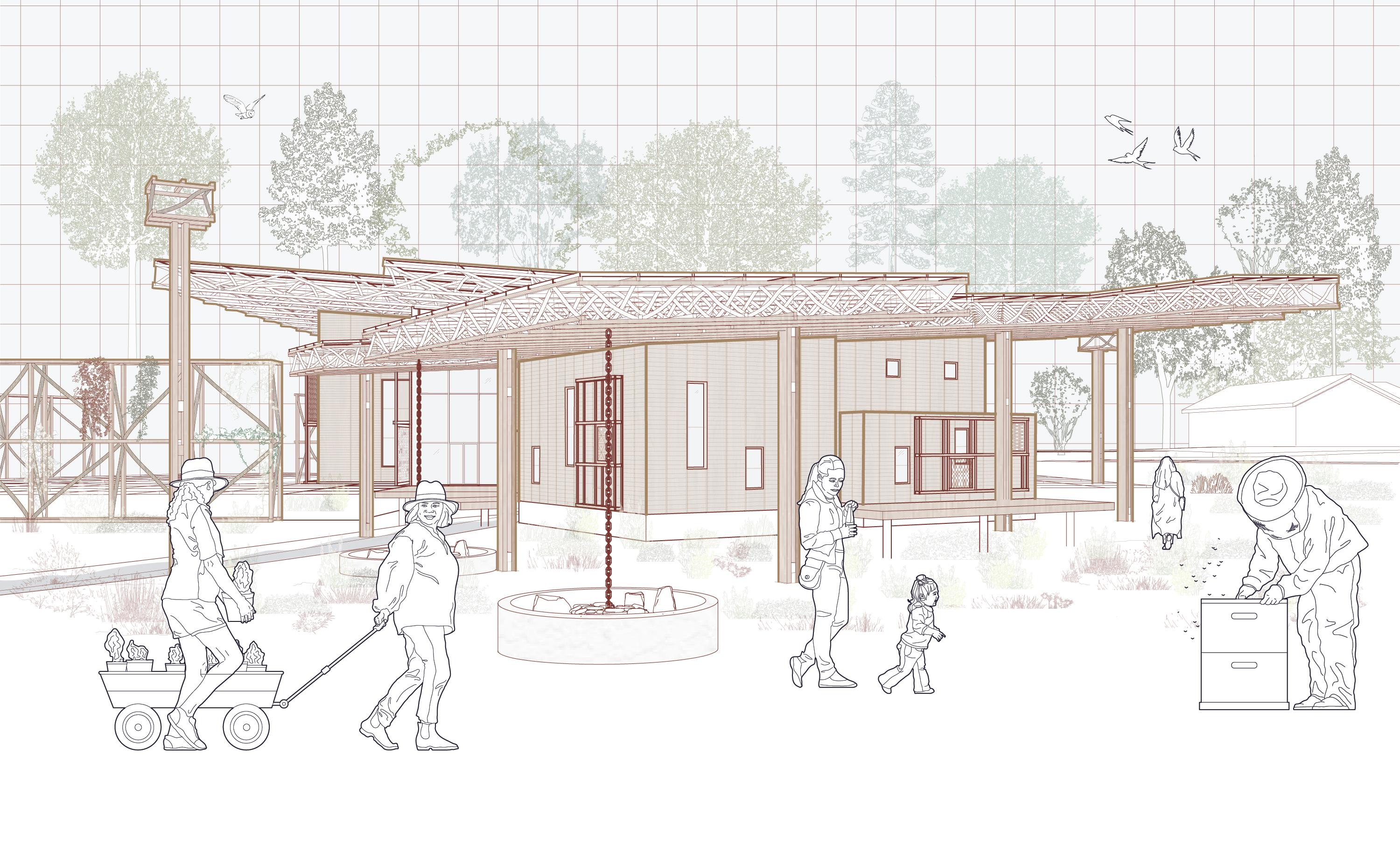
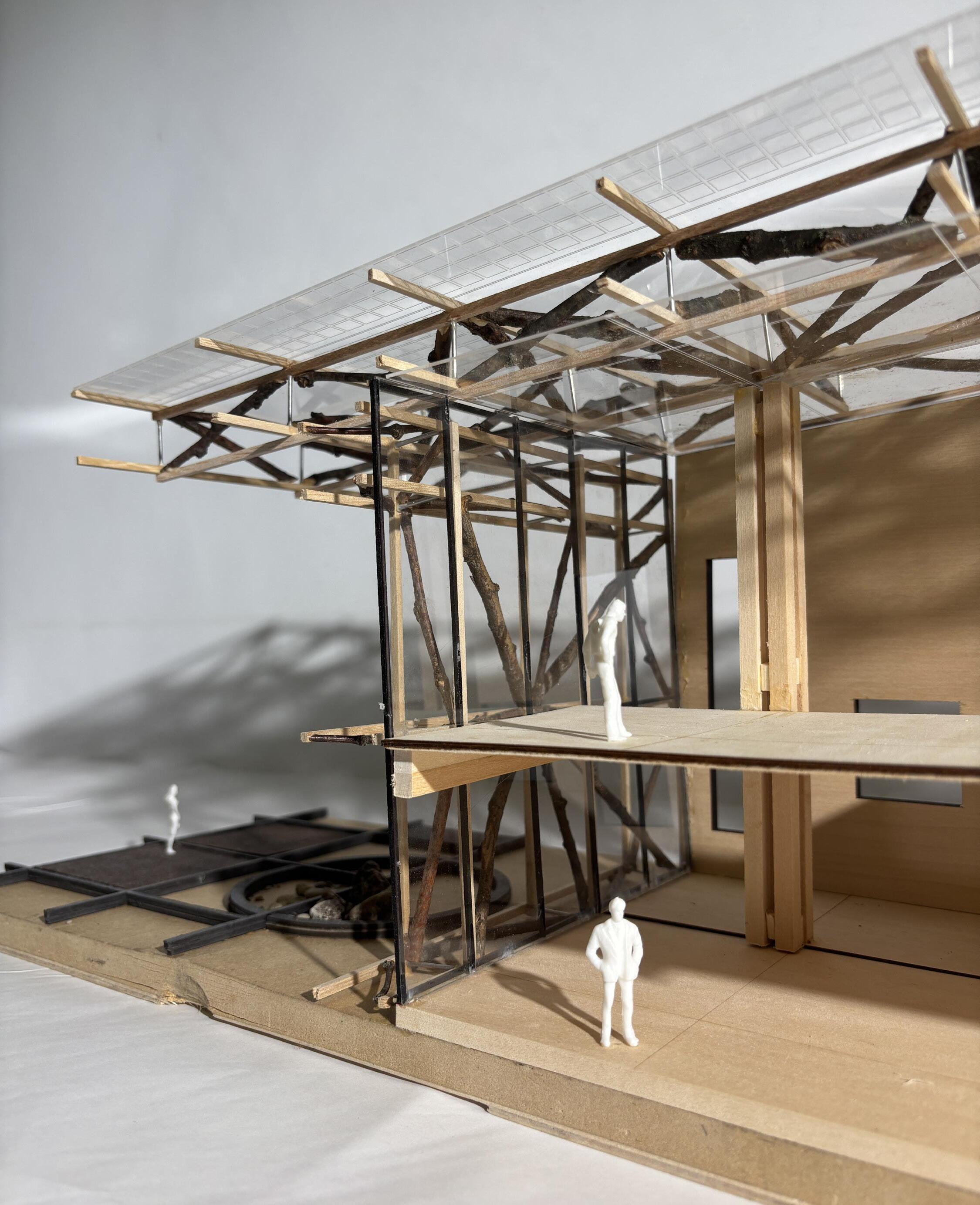
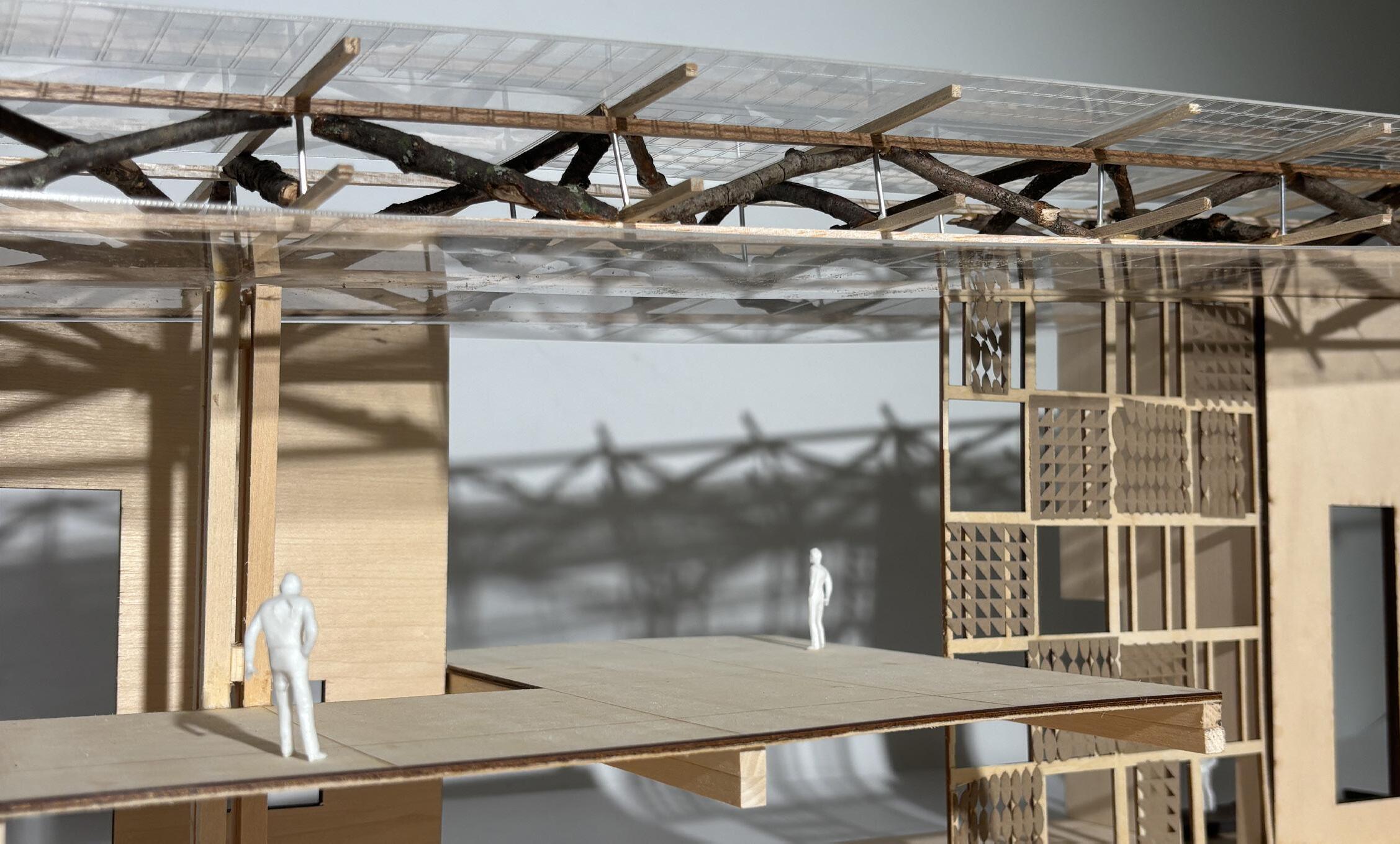
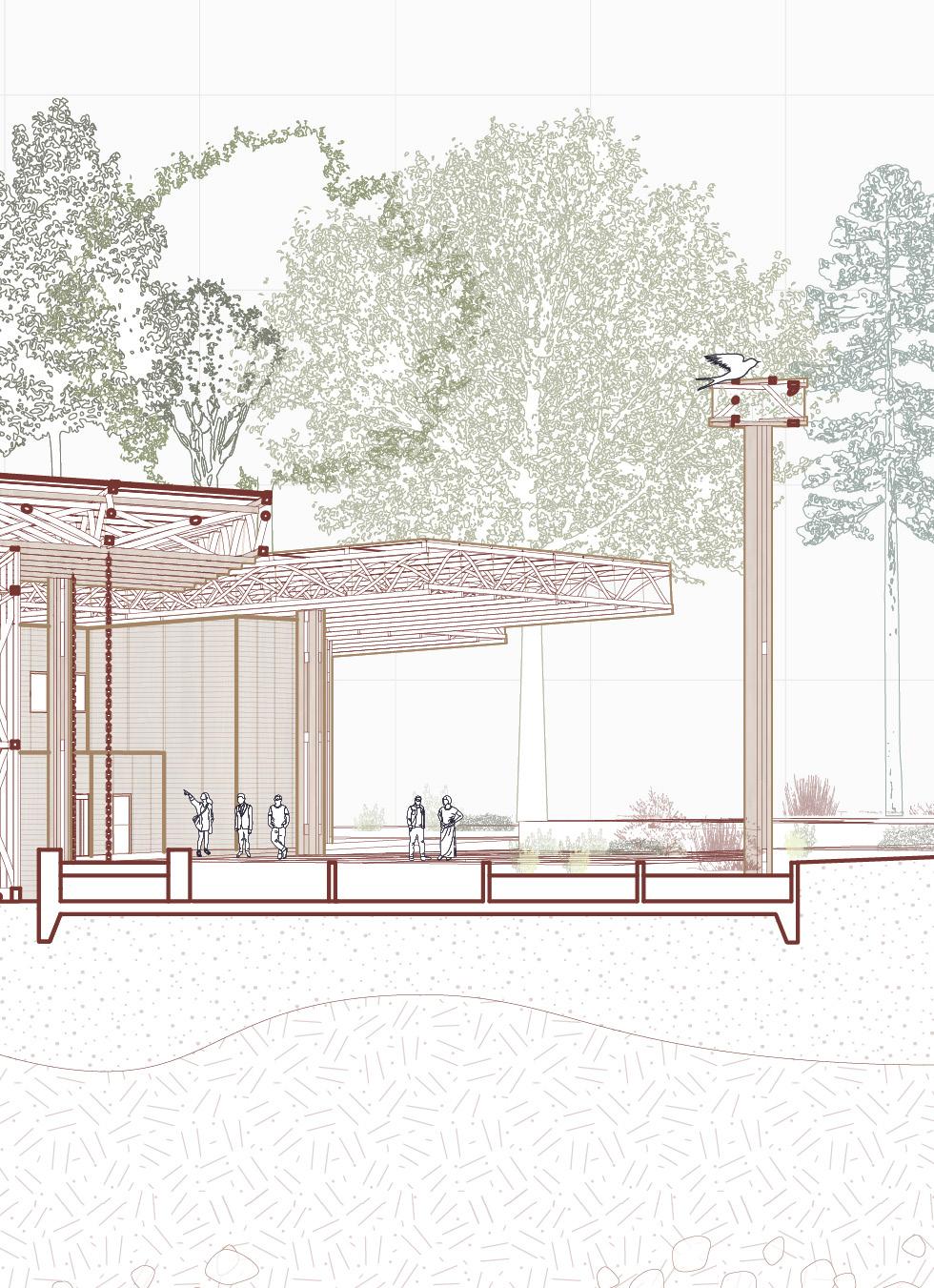
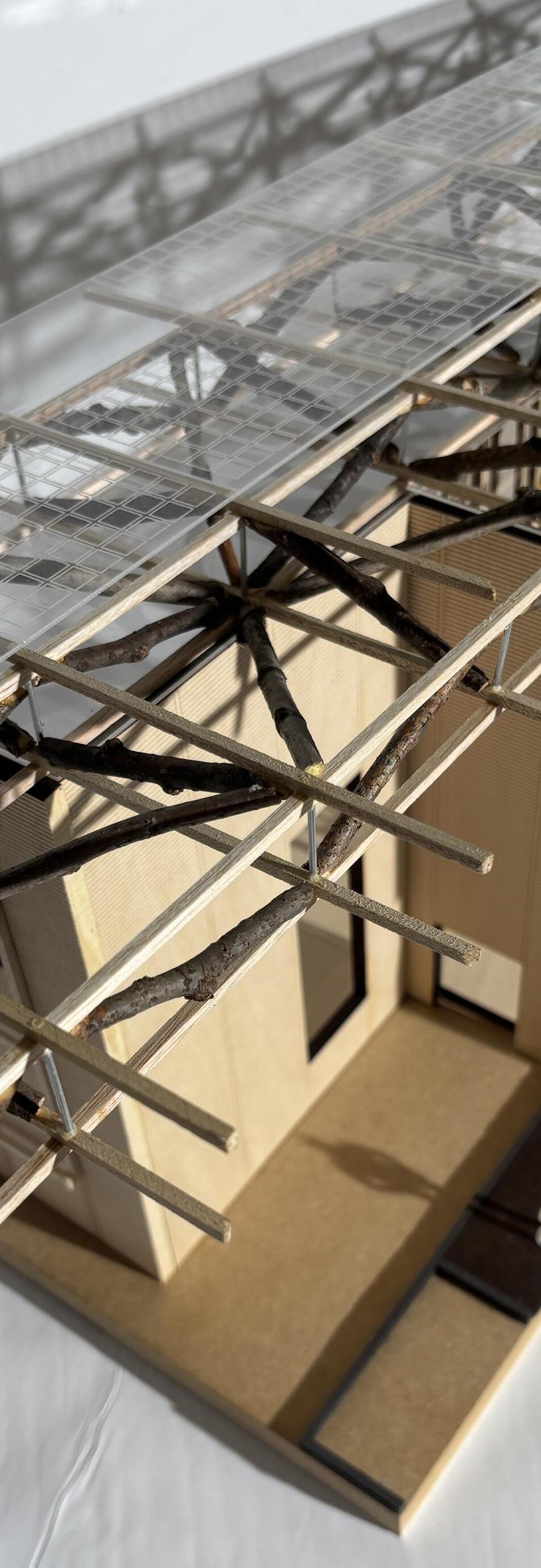
Working together with the Menominee Reservation in Shawano, Wisconsin, our team understood the importance of “relationships” in the community’s culture. It is believed that we have a relationship with everything our eyes touch. Interconnected Relationships aims to interlock program, structure, and experience to create a vessel for commoning and gathering. Here, architecture becomes an active participant in the cultivation of relationships; reinforcing the idea that space is not something we merely inhabit, but something we build together through shared experiences over time.
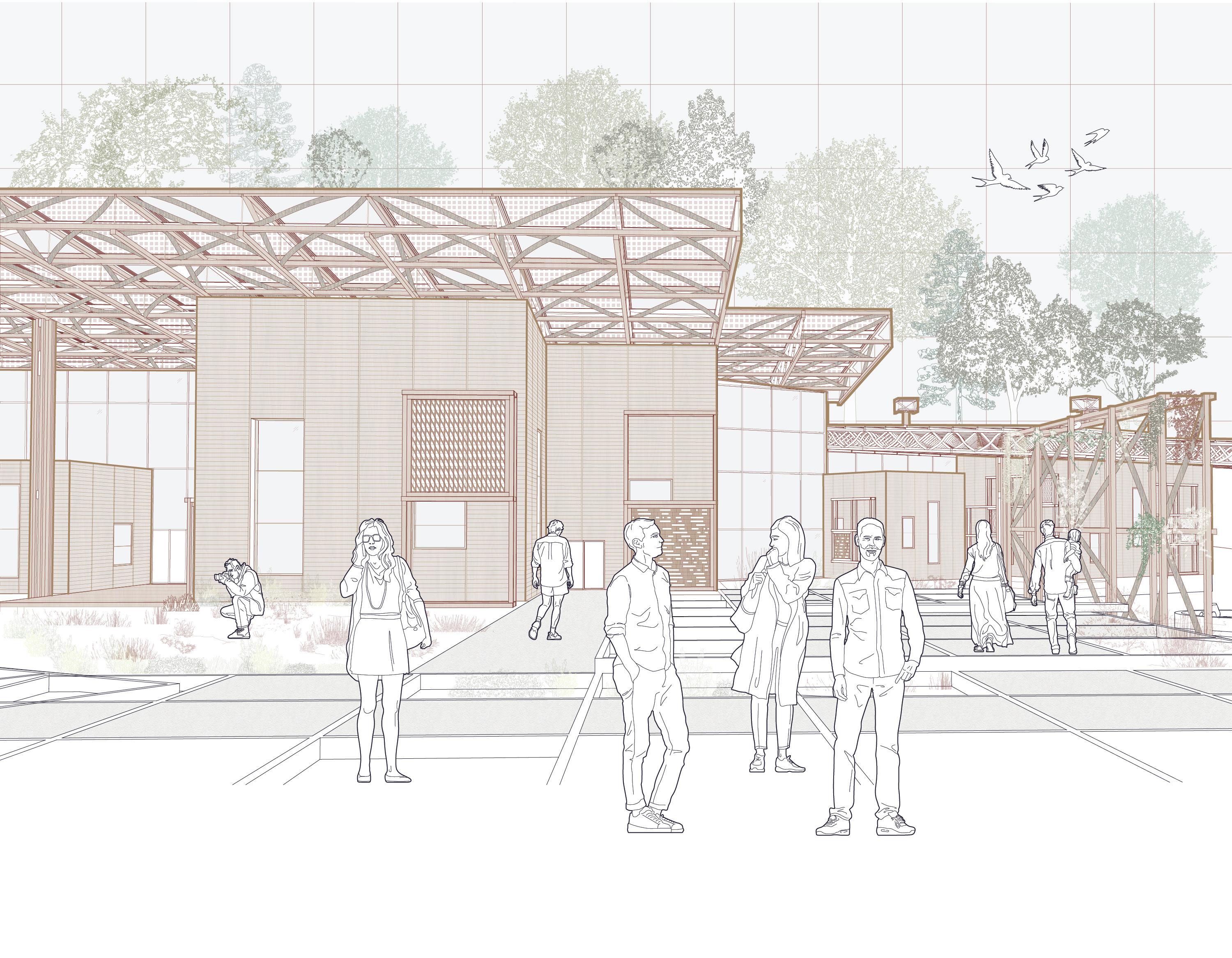
Perspective vignette from the South: Julia Lako
INSTRUCTORS : MATTHEW HUBER, LIZA BOFFI, JEFFREY DAVIS, AND BRAD GROFF
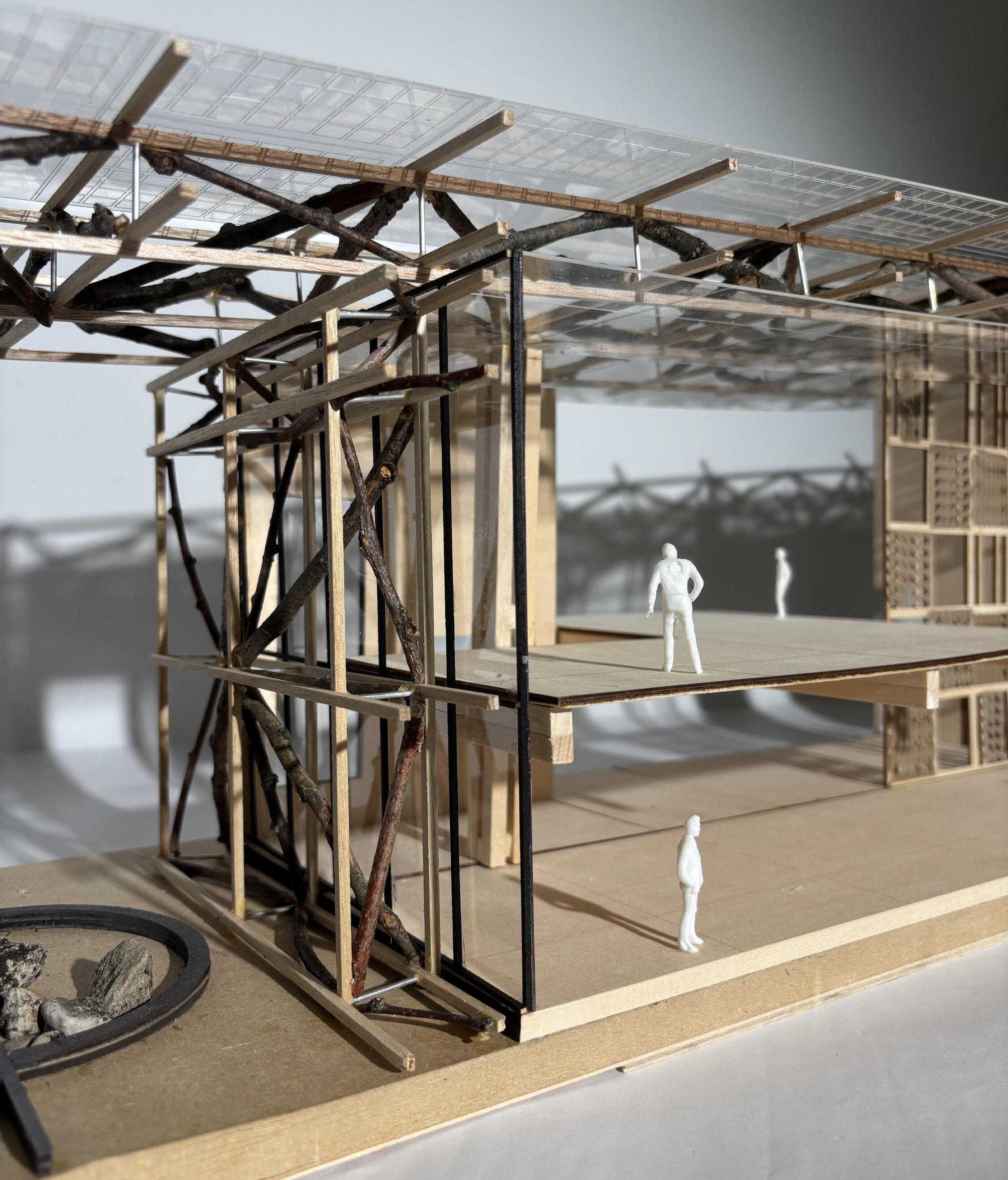
Final sectional model from the Northwest: Julia Lako and Sharvi Shah
PARTNERS FOR TERM: SARAH MOLINA AND SHARVI SHAH
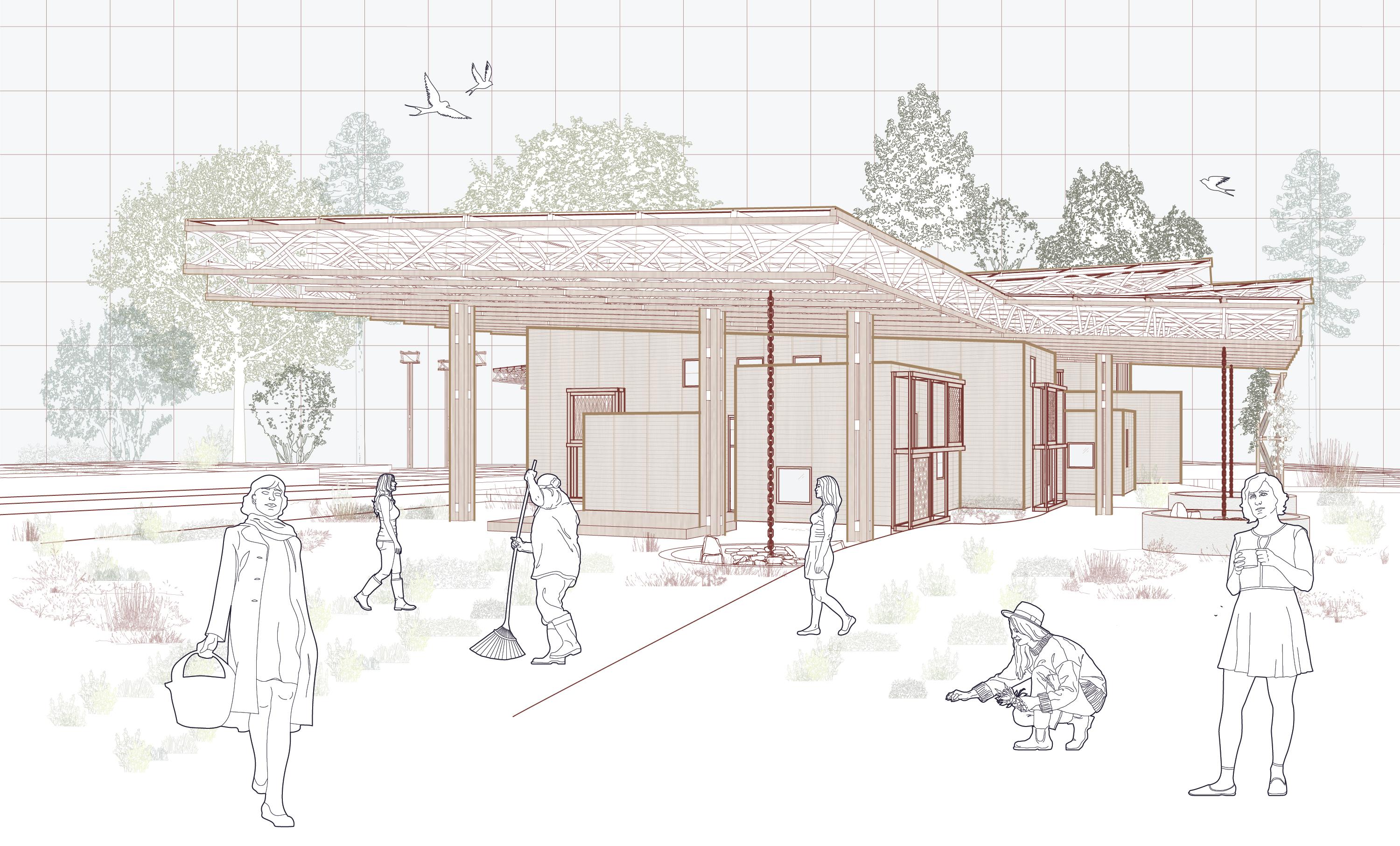
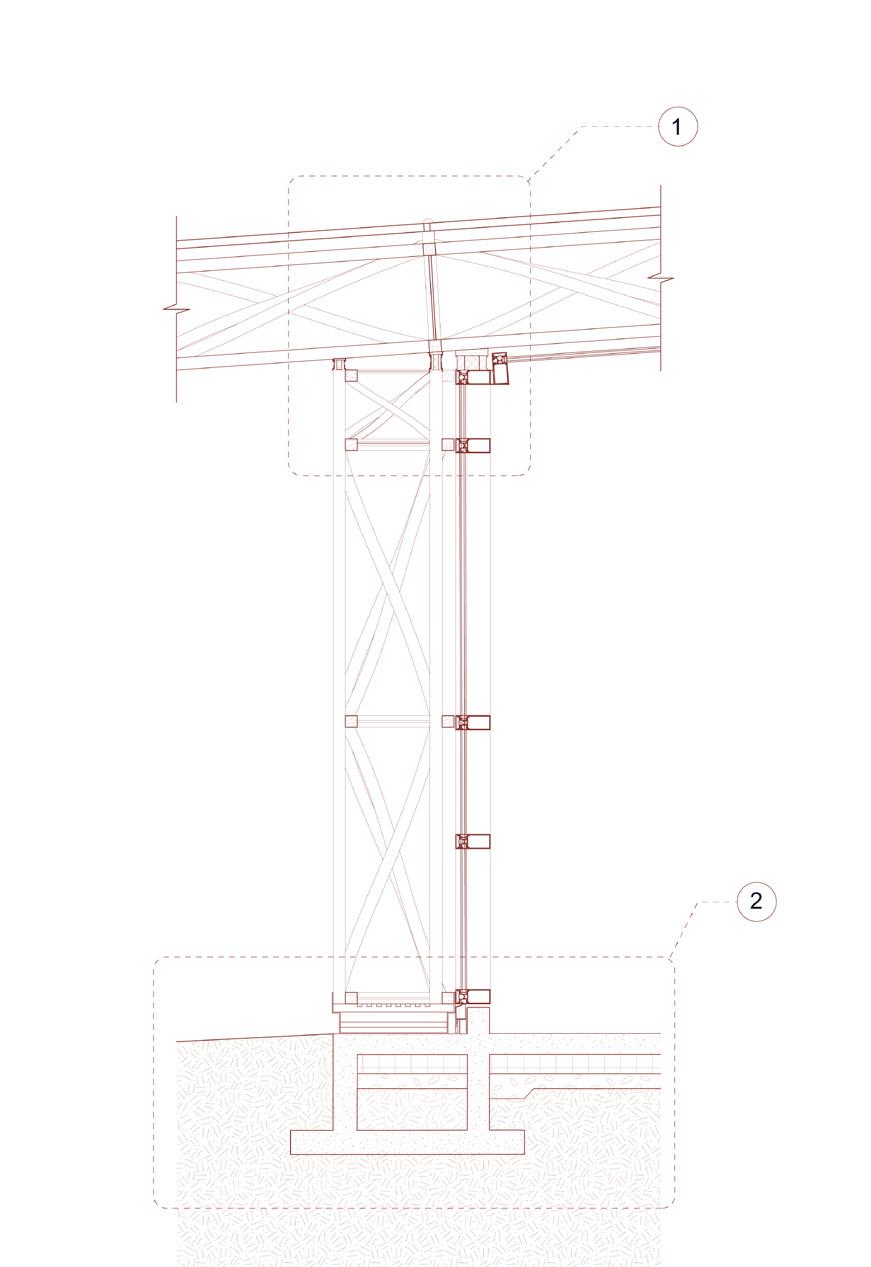
from
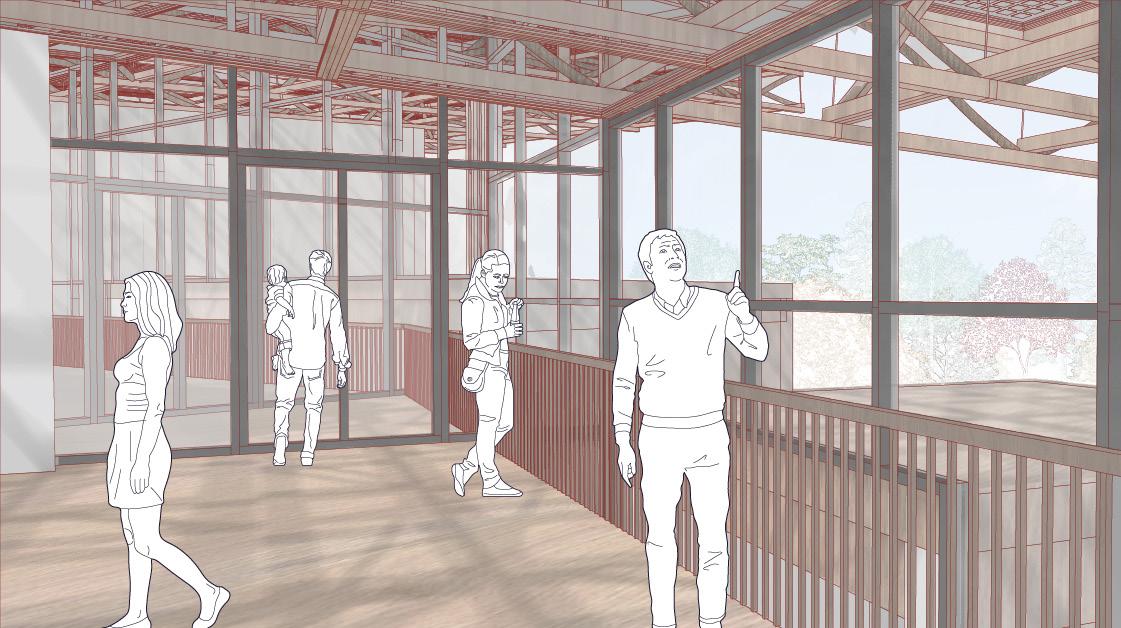
Perspective vignette in transitional hallway space:
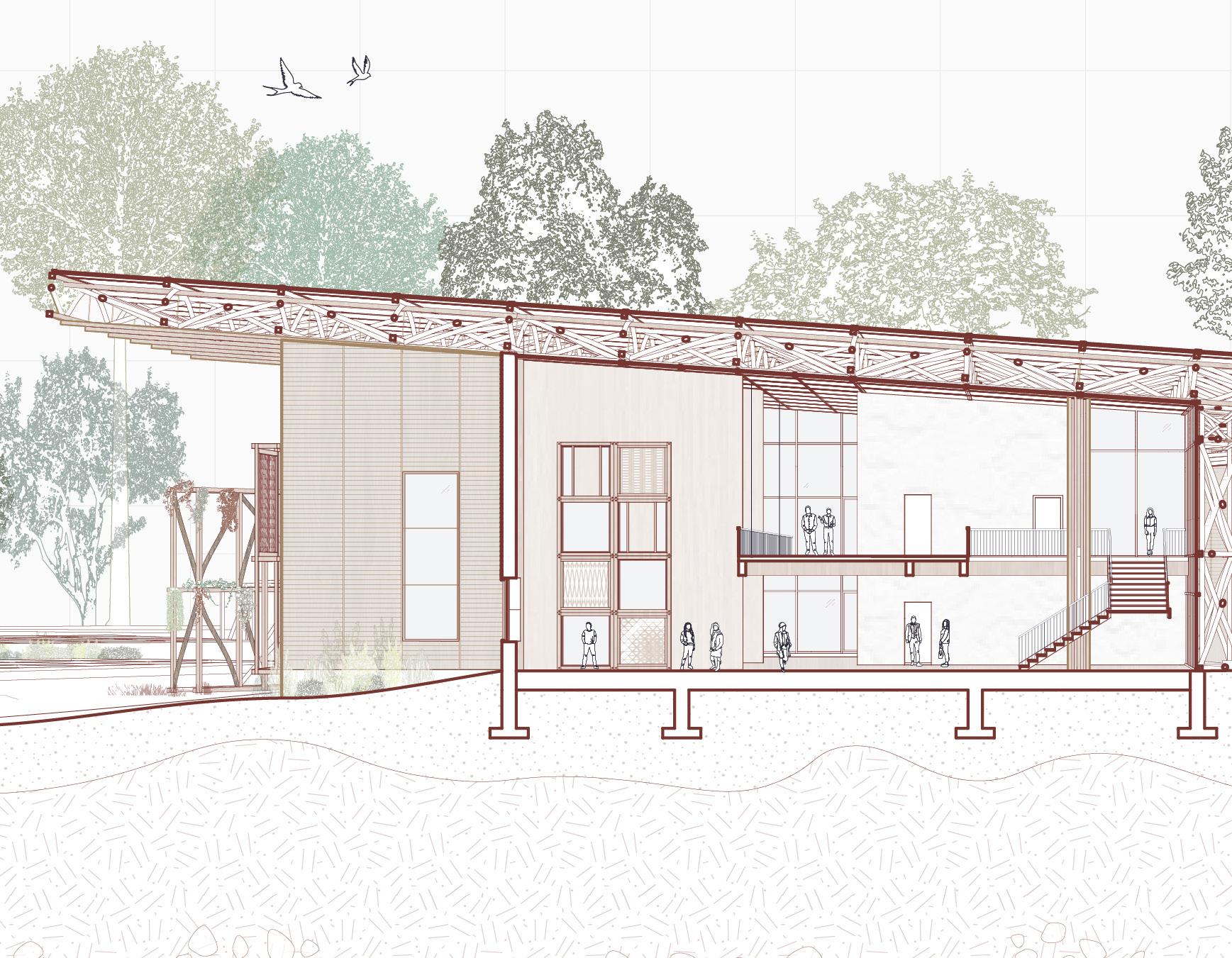
Using the program requested by the Menominee Nation, our team categorized the spaces to encourage different types of relationships for its visitors between them and the following categories: Craft and Tradition, Food and Cooking Process, Human and Non-Human, and Identity. These spaces are enclosed by three timber space frames that appear to float above the programs below. These space frames are not autonomous objects, but interconnected frameworks that unify the learning center’s diverse programmatic elements.
A COOPERATIVE LIVING BUILDING WITH PUBLIC SPACES ON THE SITE OF A CURRENT HIGHWAY THAT DIVIDES TWO NEIGHBORHOODS; CHATEAU AND MANCHESTER.
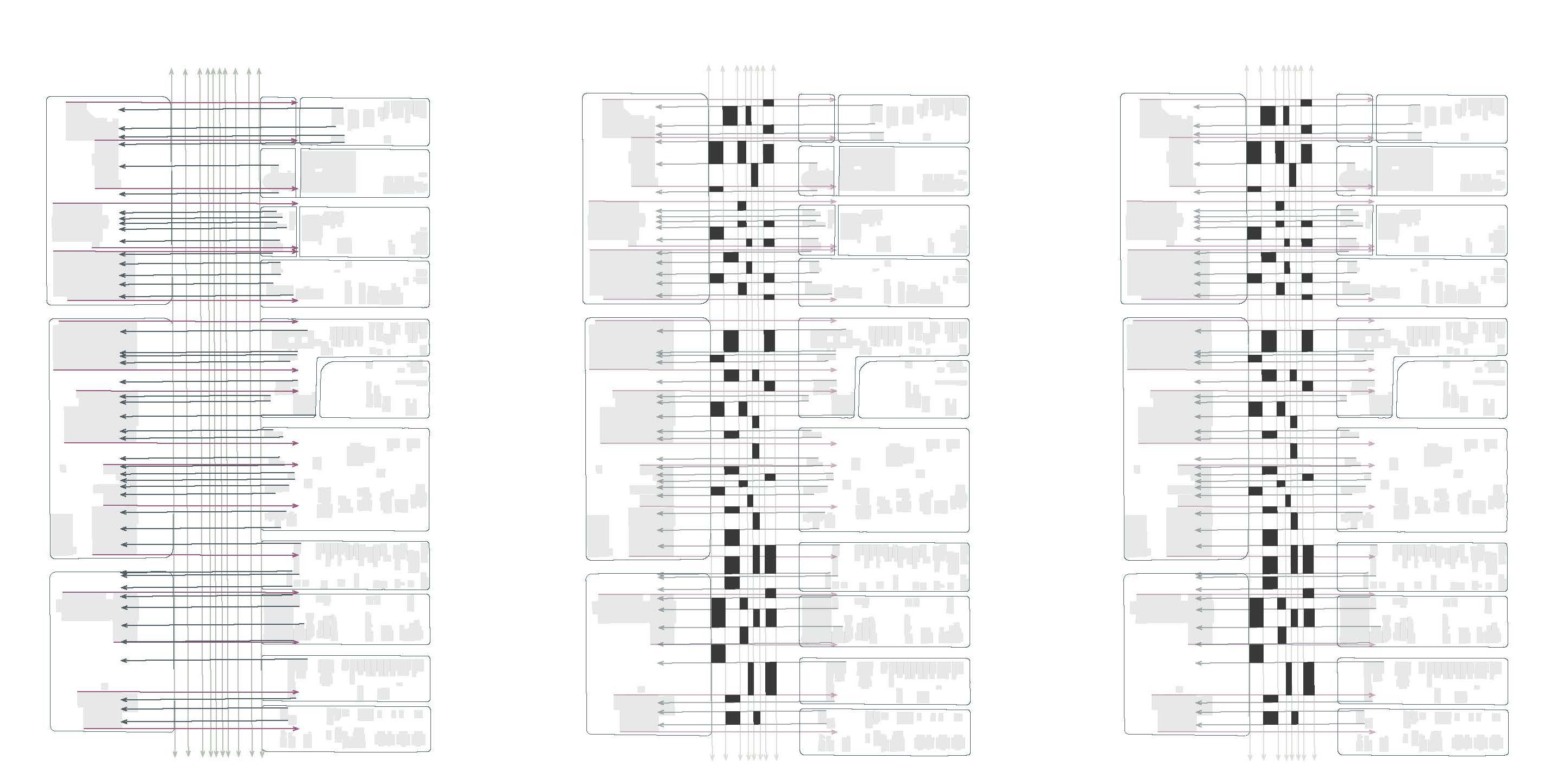
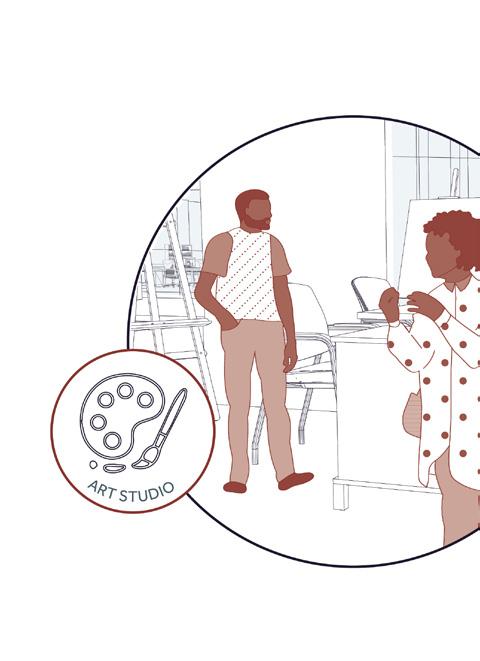
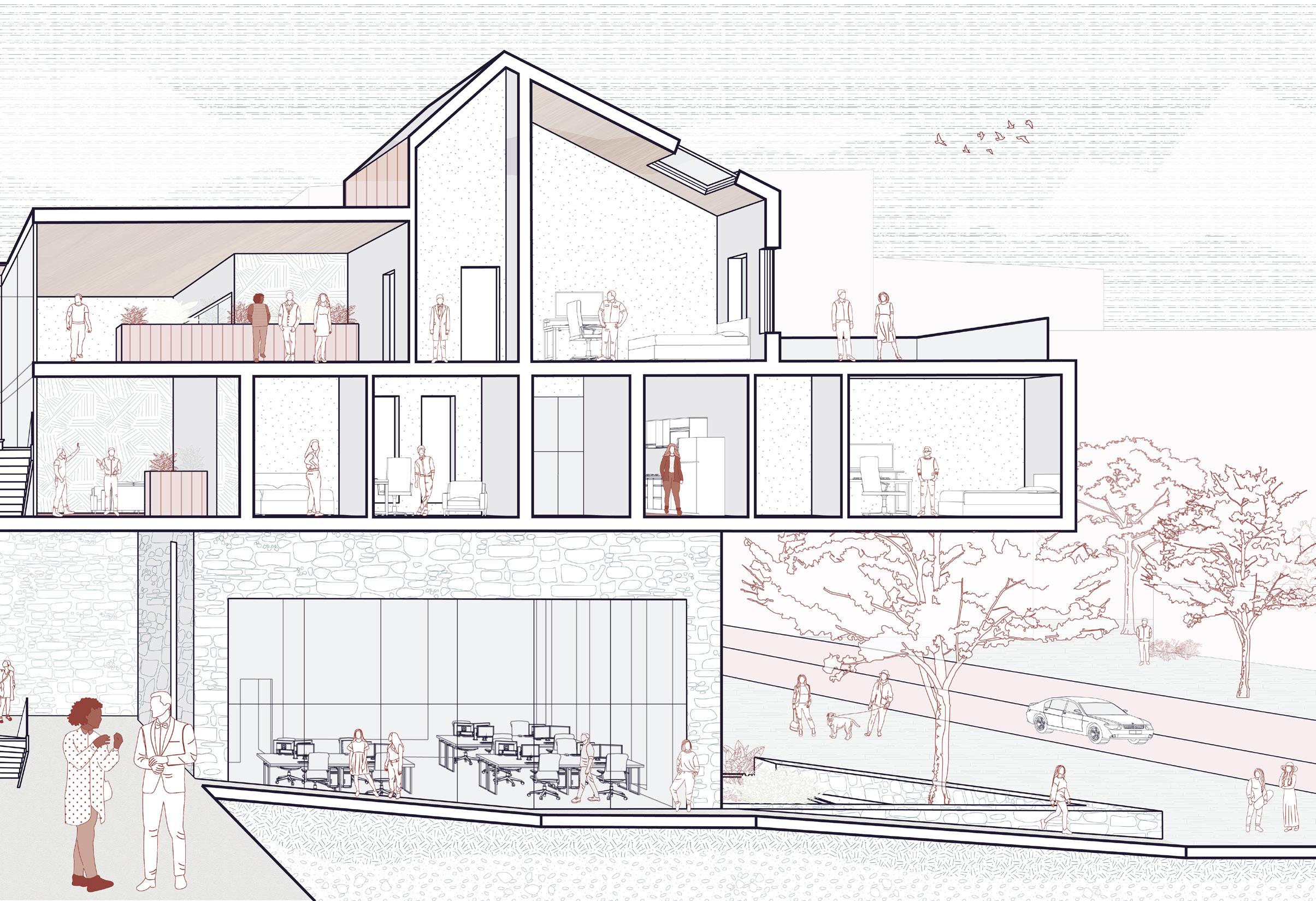
Pennsylvania Route 65 currently serves as an intense barrier between two local neighborhoods: Chateau and Manchester. In attempts to dissolve this boundary, Woven Community proposes the development of a vibrant, village-like system in its place. Using modular and convivial spaces that are geared towards living, working, and community development, diffusing the existing linearity on the site and tying Manchester and Chateau back together.
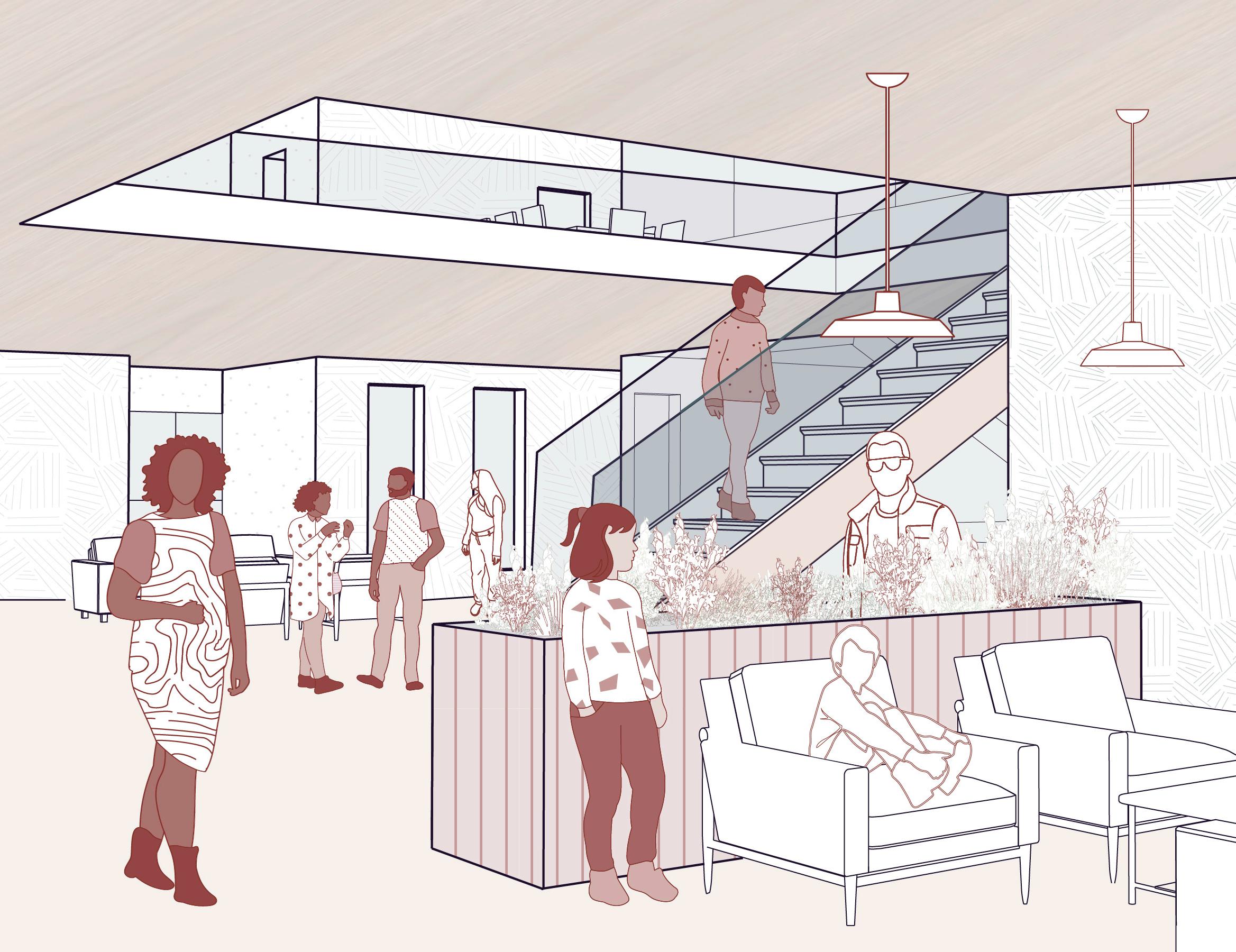
Perspective vignette in a co-living space: Julia Lako and Abigail Feldmann
INSTRUCTORS : SAROSH ANKLESARIA, JONATHAN KLINE, AND NILOUFAR ALENJERY
TERM:
1.
EXTRACT GRID FROM EXISTING HIGHWAY, AND THE NEIGHBORHOOD CONTEXT
Architectural Diagrams: Julia Lako
OFFSET MASSING FOR NEW ROAD AND LIGHT RAIL EXPANSION
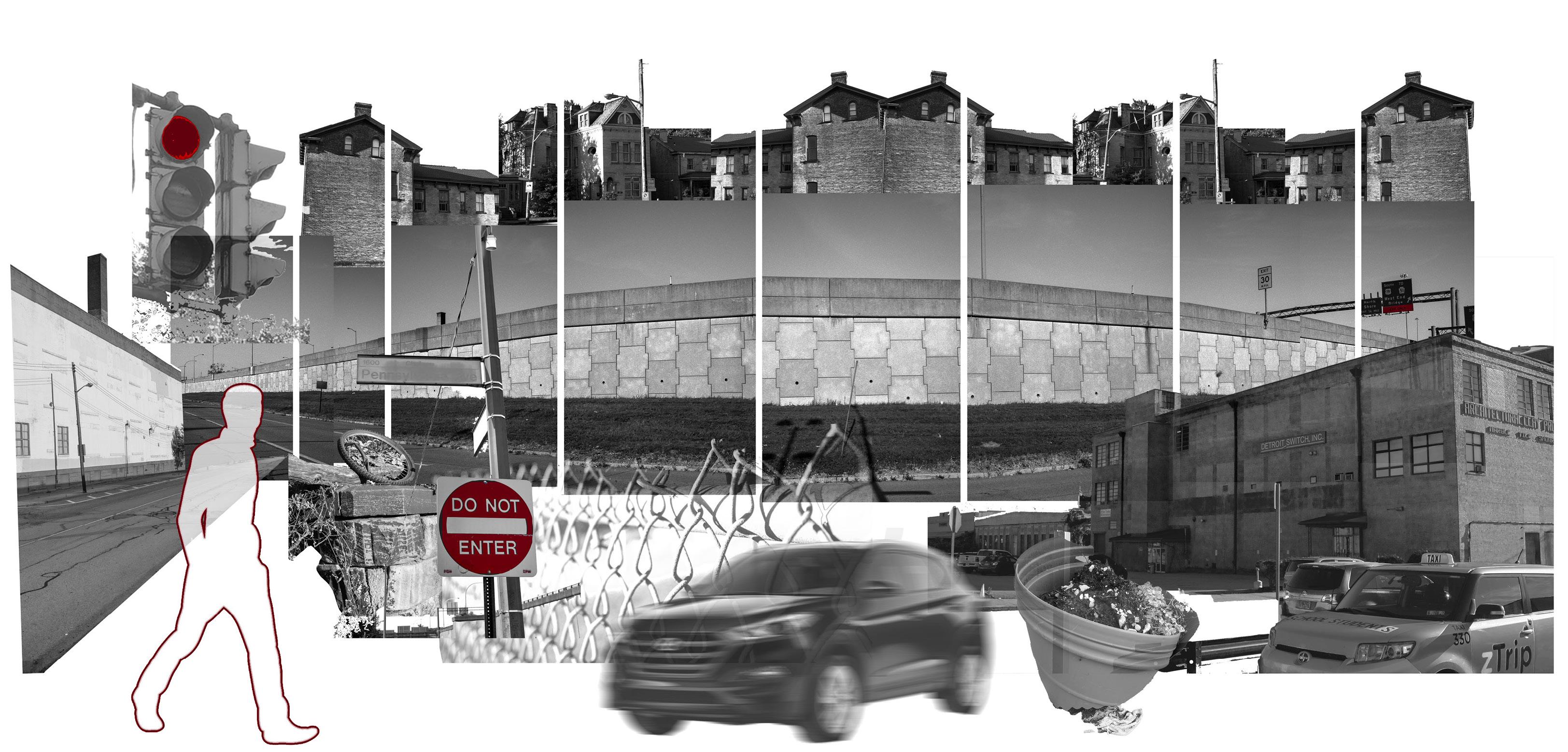
Experiential collage before development: Sanjana Bandaru
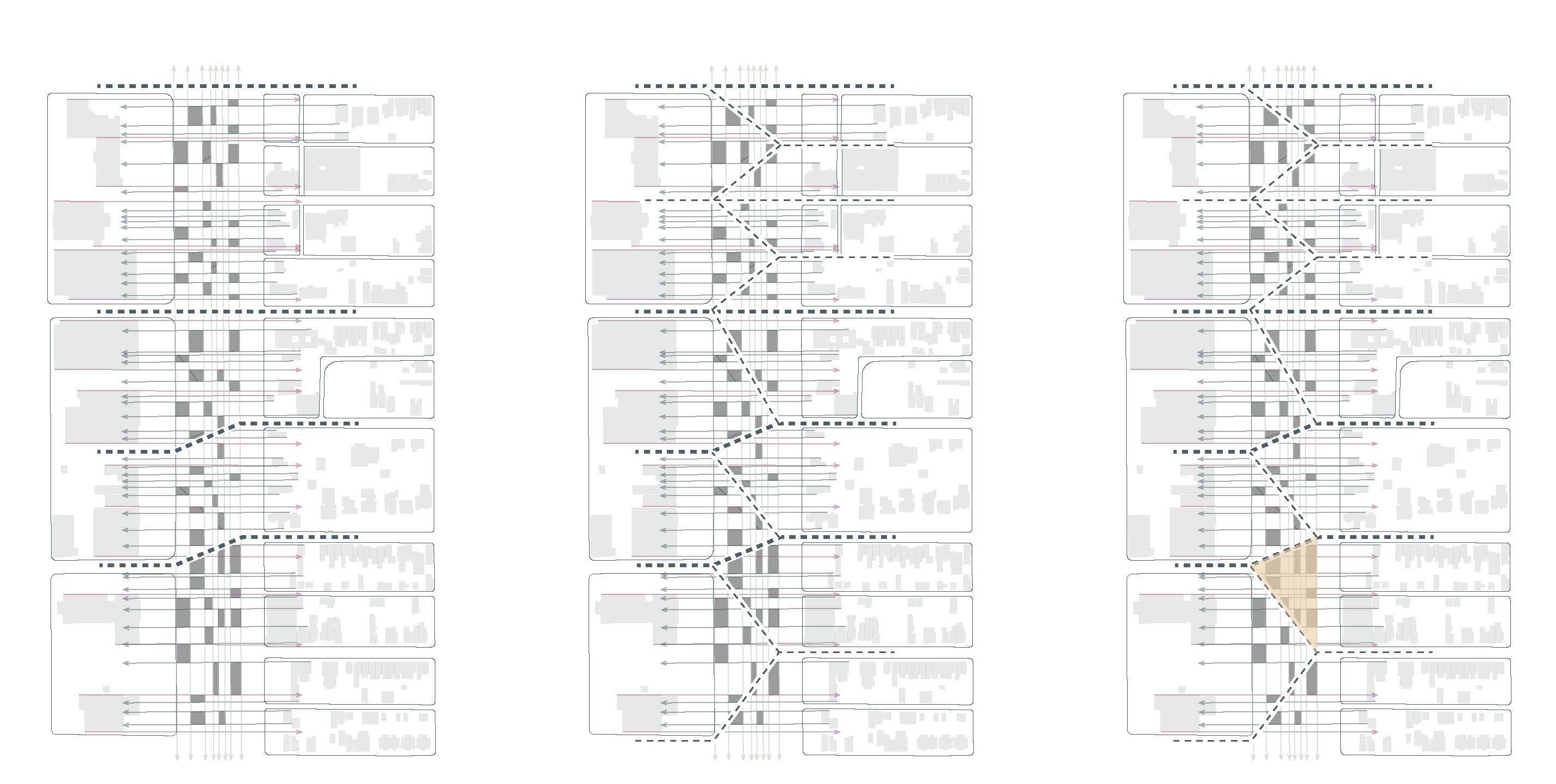
CREATE PRIMARY CONNECTIONS BETWEEN THE NEIGHBORHOODS 5.
CREATE SECONDARY CONNECTIONS BETWEEN THE NEIGHBORHOODS 6. TEST CO-LIVING DESIGN ON ONE PARCEL
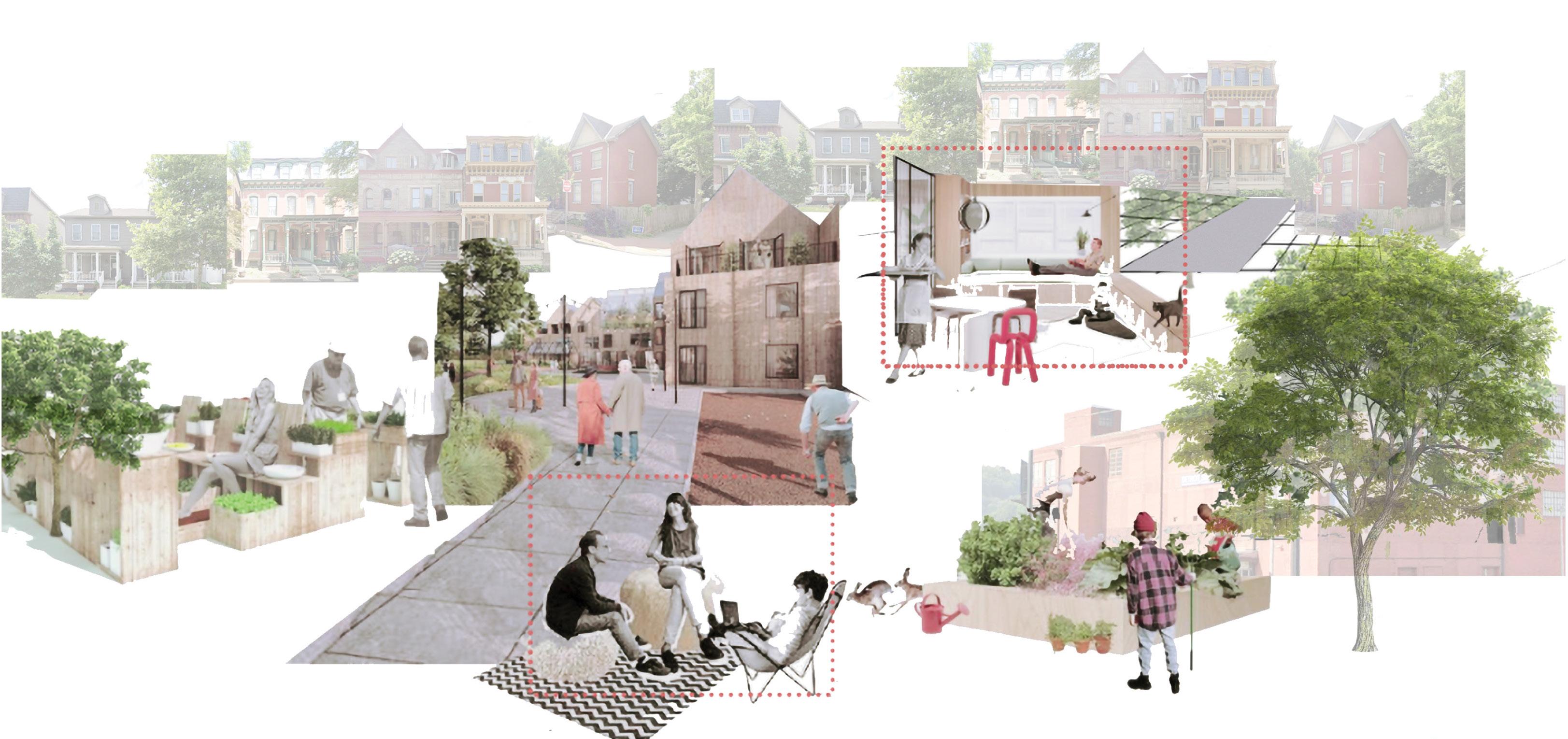
Ideals of commoning and conviviality are paramount within this new housing structure, but our project also employs strategies of reuse as a resistance to “tabula rasa” thinking. As the proposed co-living parcels expand down the corridor, the materials from the old highway reappear as interactive pixels on each new site - the rubble becoming embodied energy and a memory of the past for communities new and old.
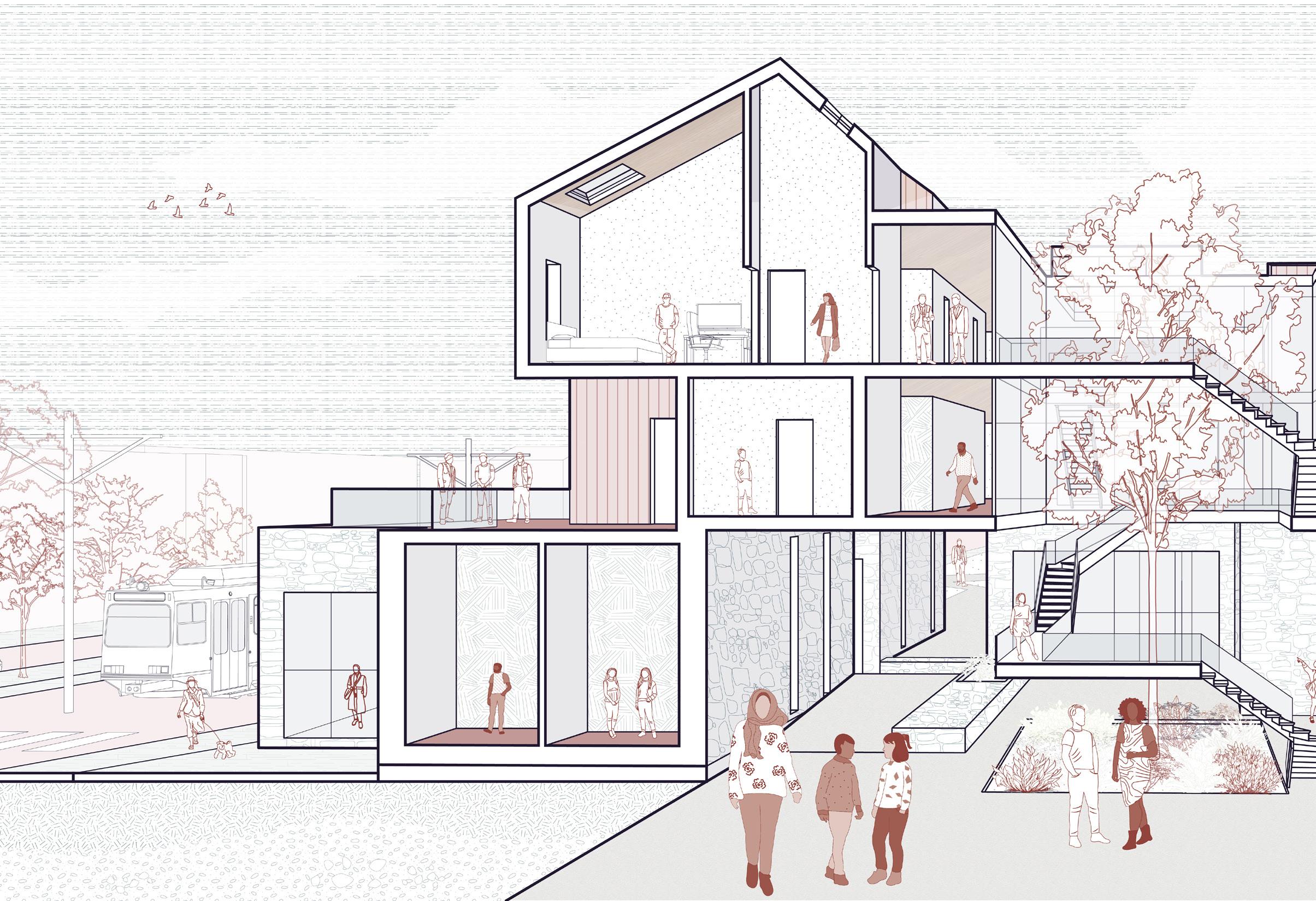
Section perspective facing Southeast: Julia Lako
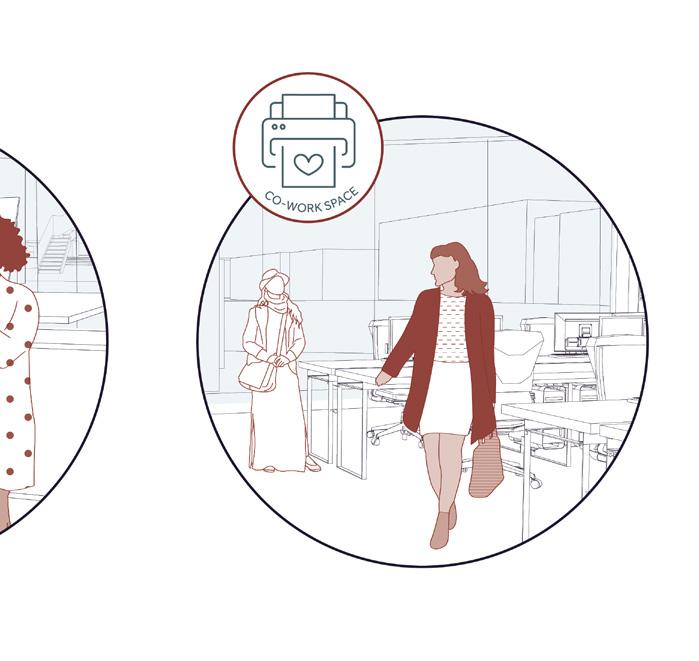
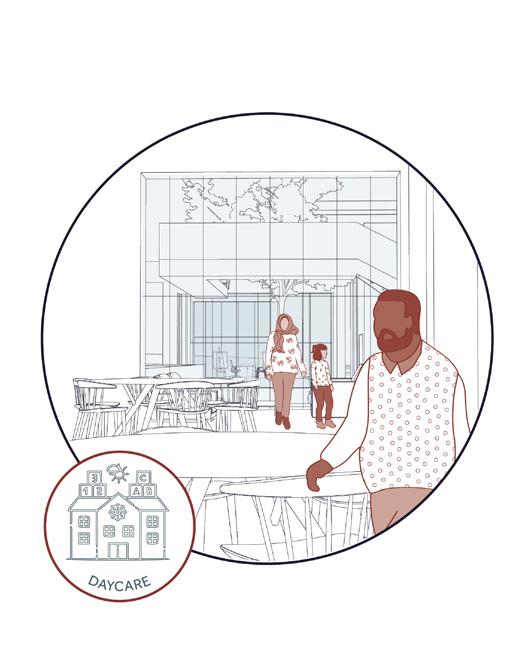
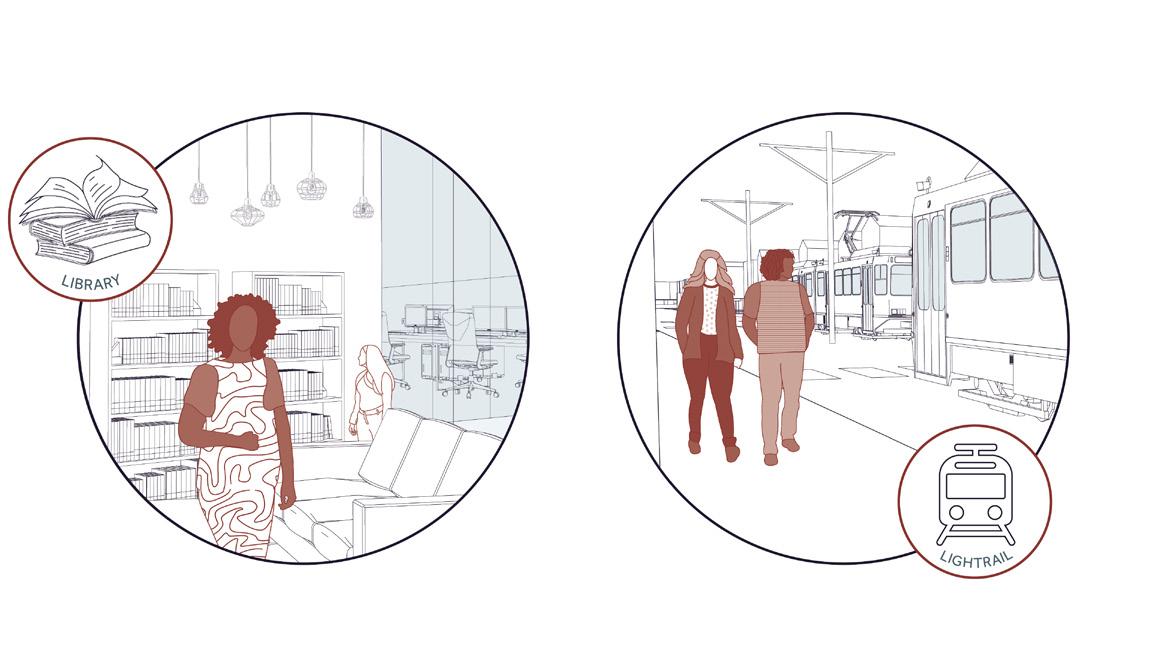
Perspective vignettes of public spaces: Abigail Feldmann
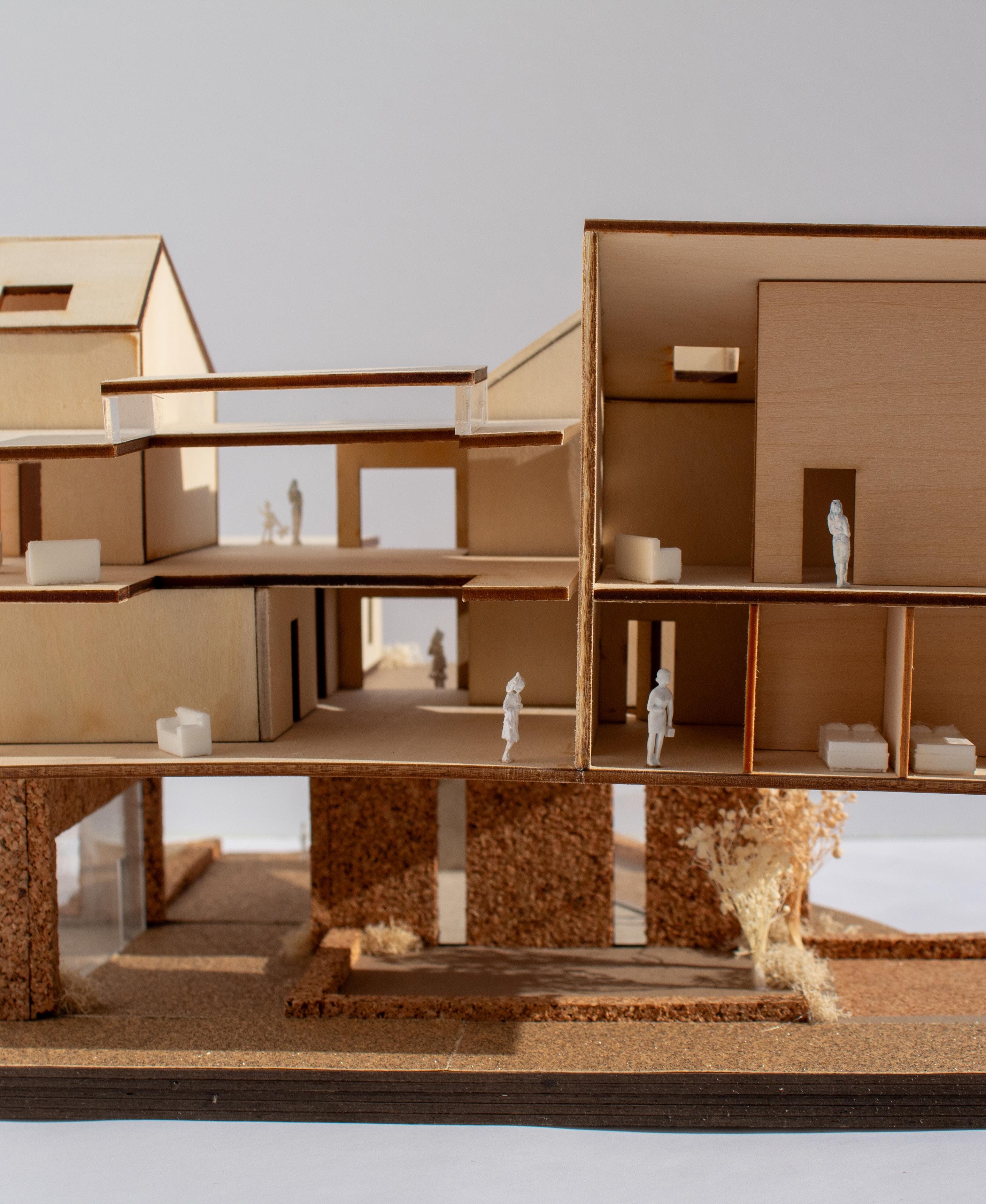
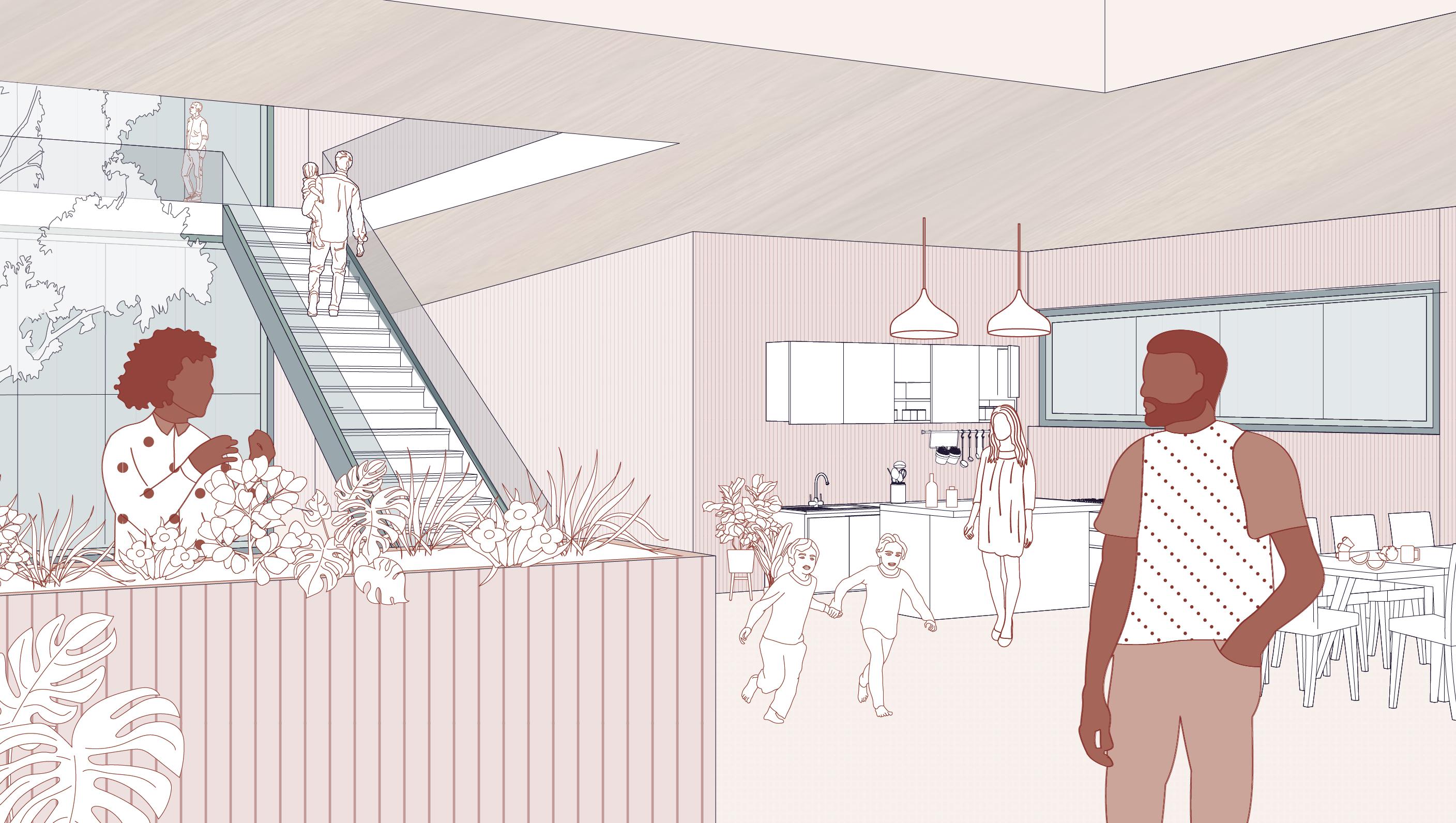
Perspective vignette in a co-living space: Julia Lako and Sanjana Bandaru

A SMALL COMMUNITY CENTER IN THE REGENT SQUARE NEIGHBORHOOD OF PITTSBURGH WITH CAREFULLY CHOSEN MATERIALS AND A COMPLETE CONSTRUCTION DRAWING SET.
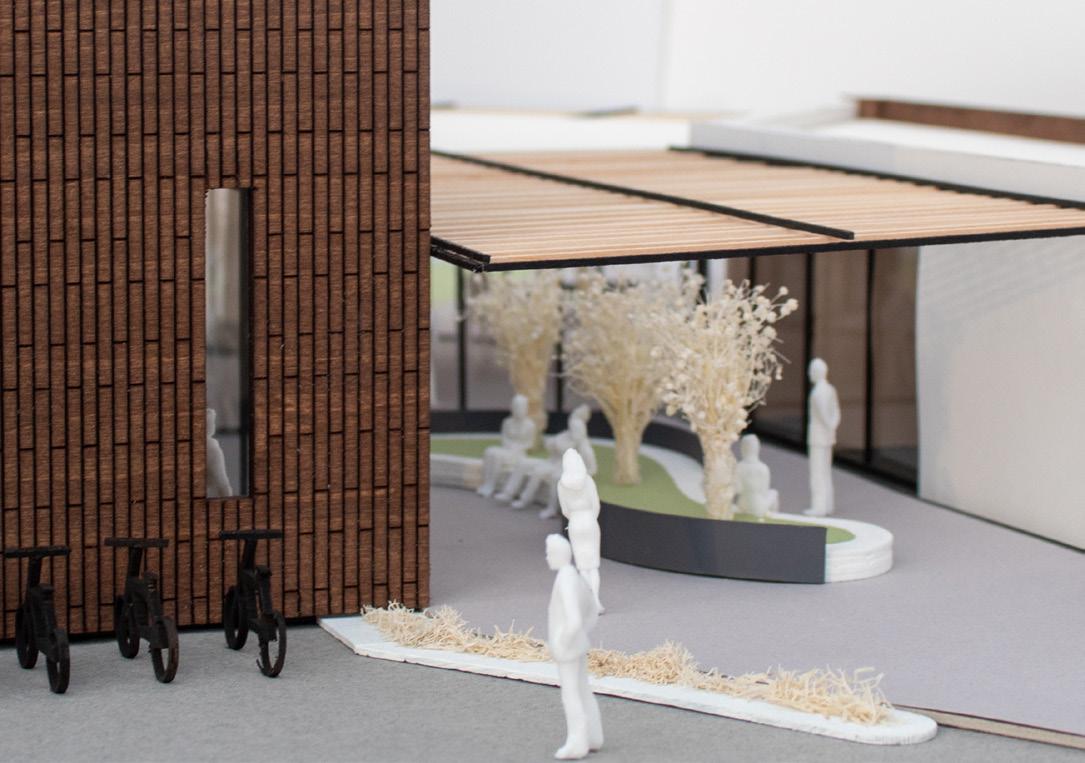
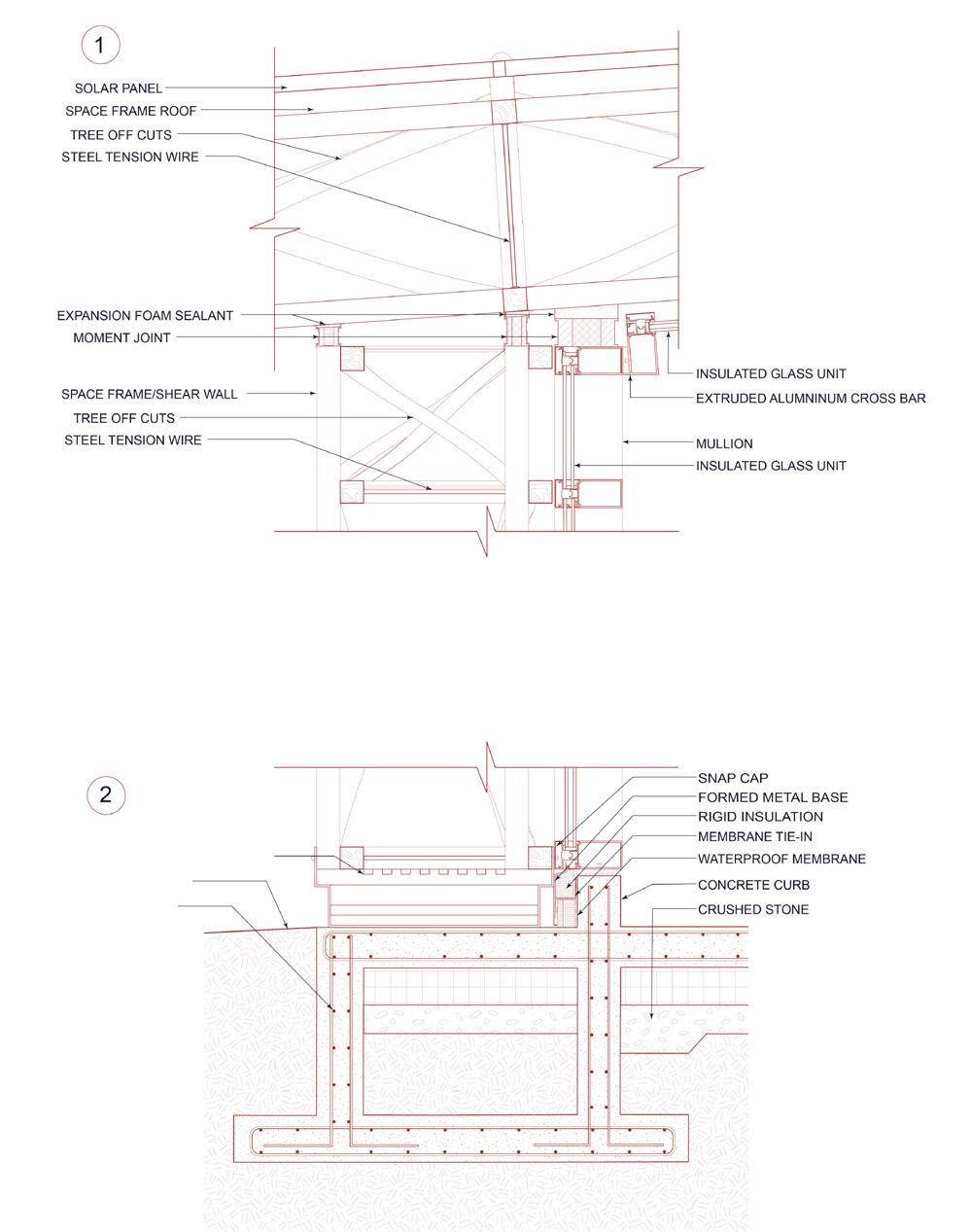
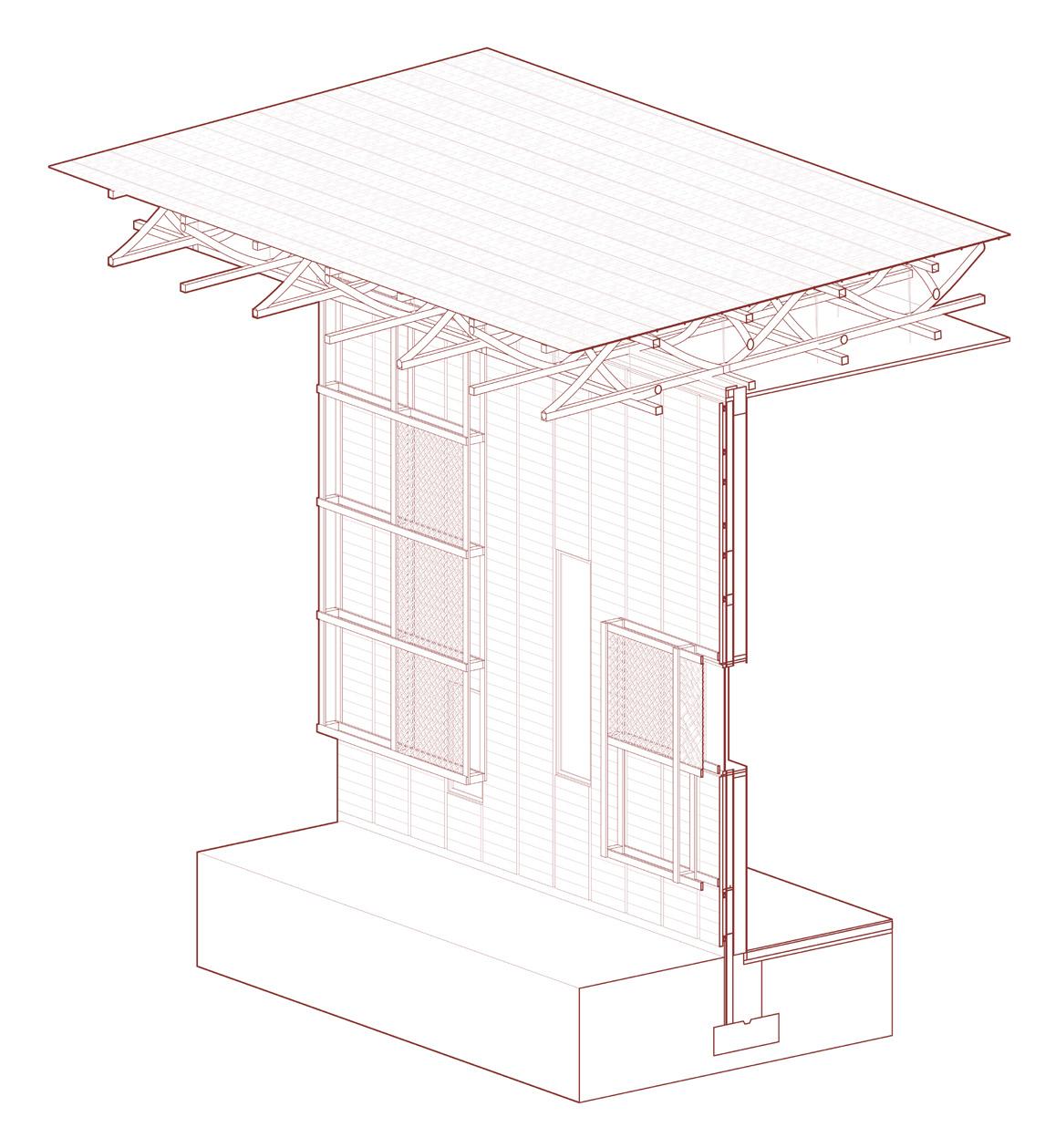
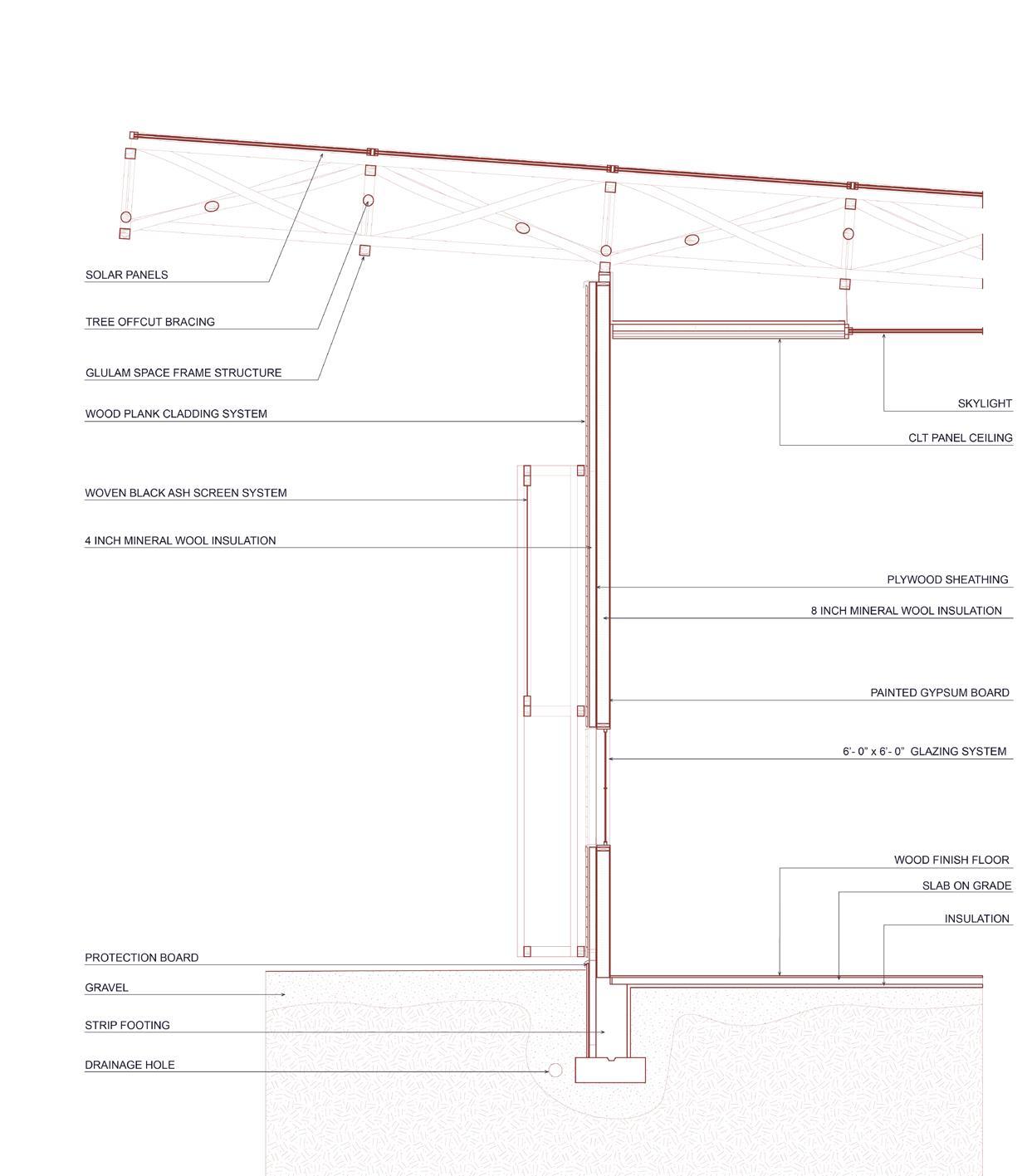
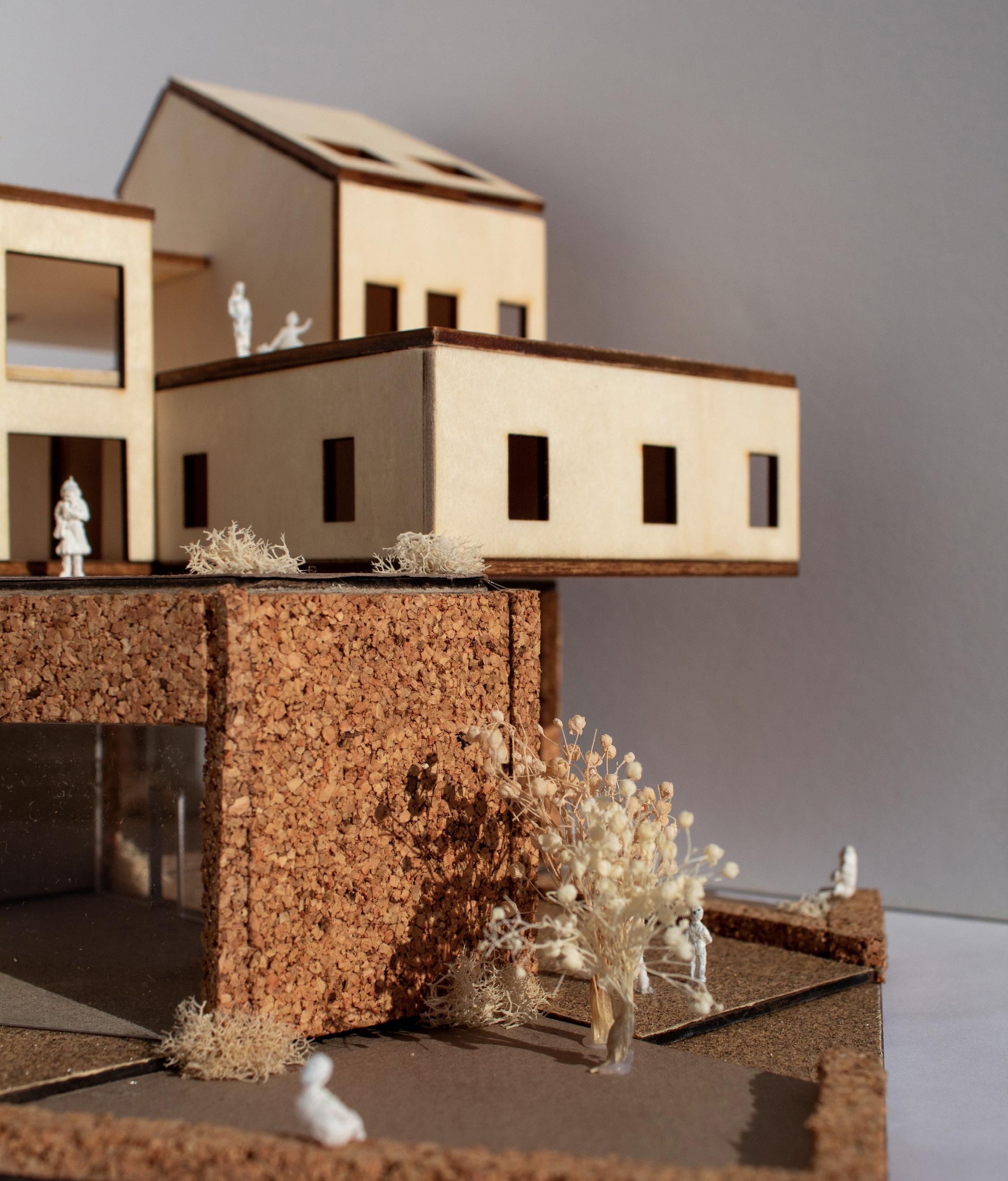
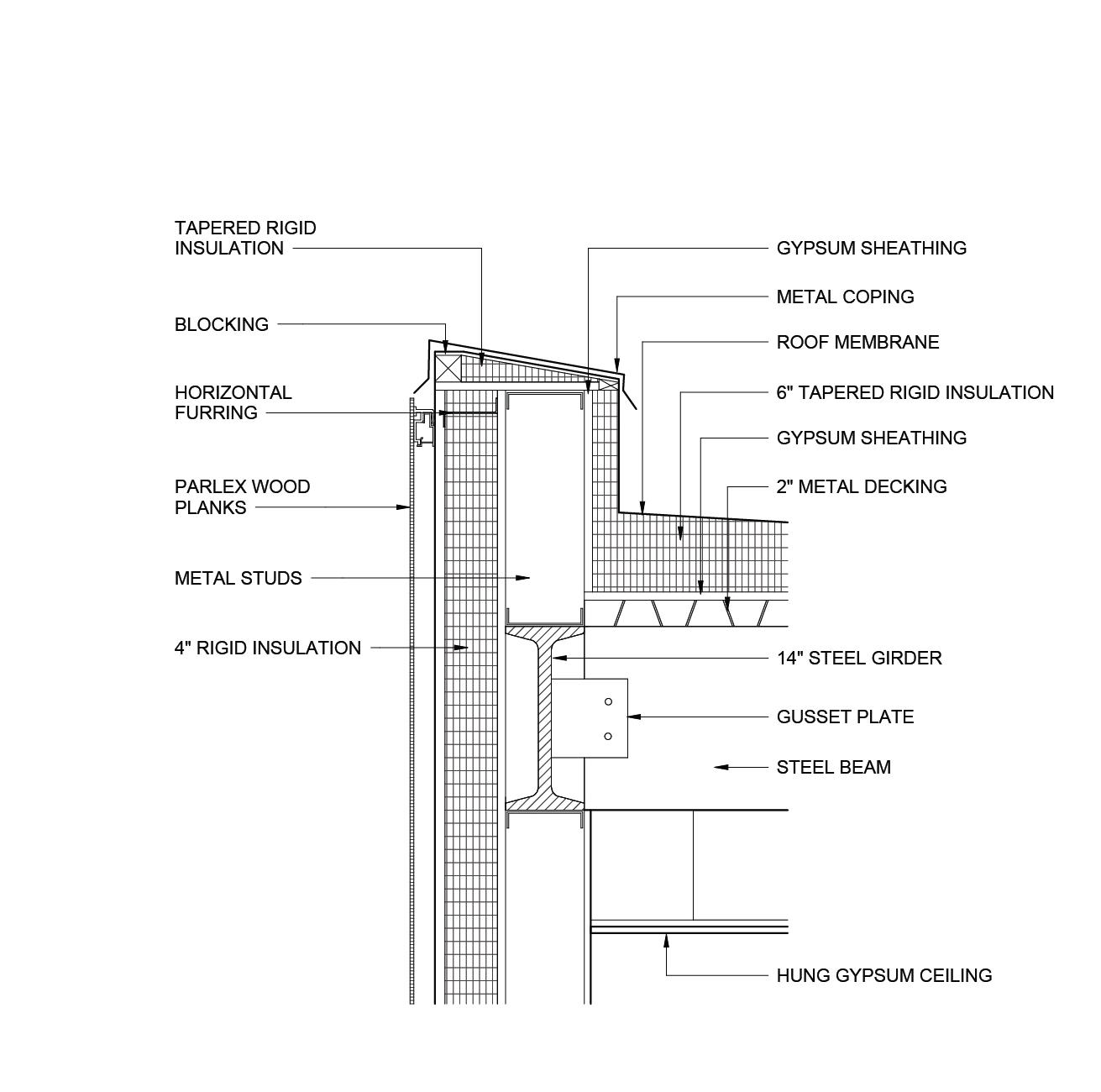
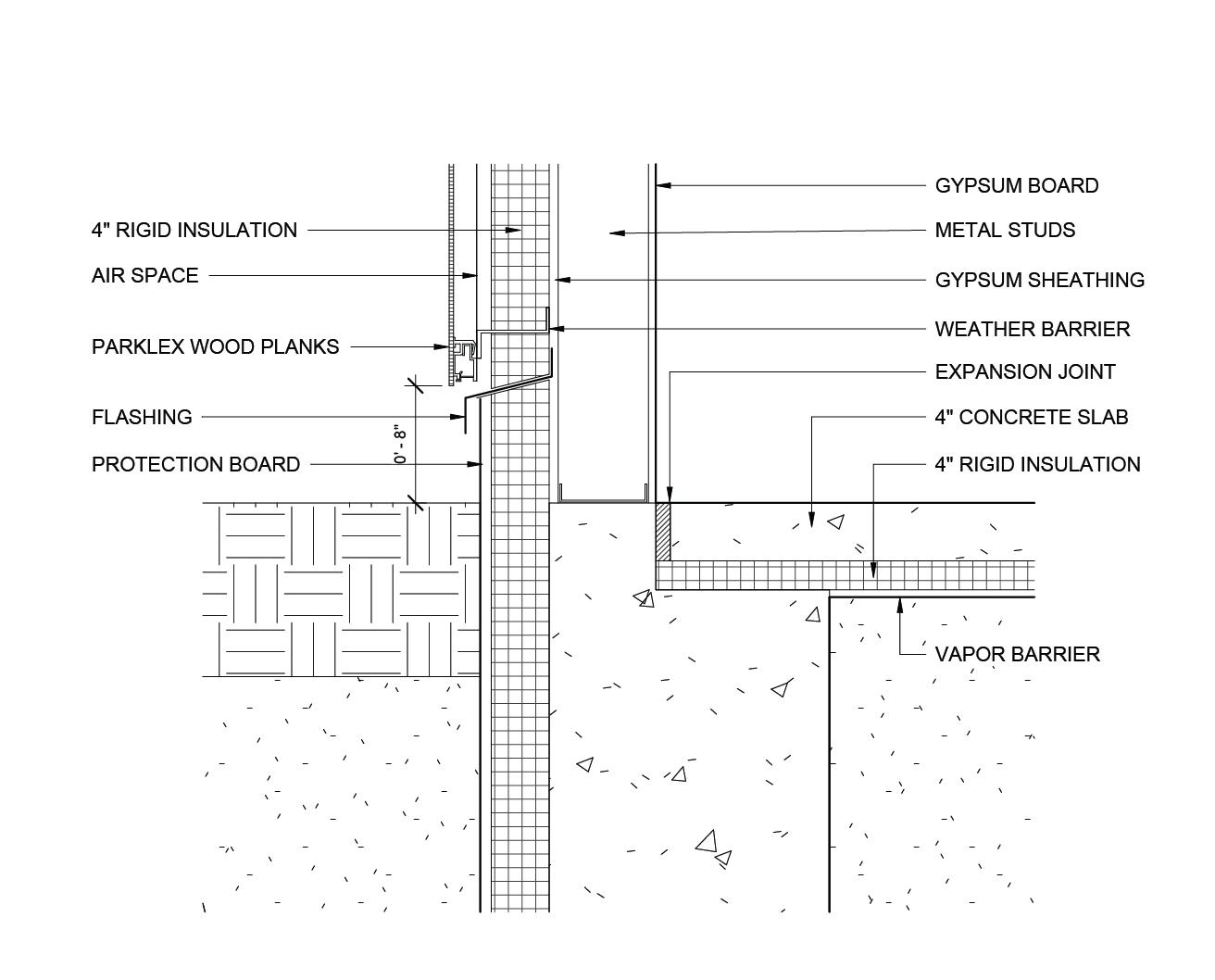
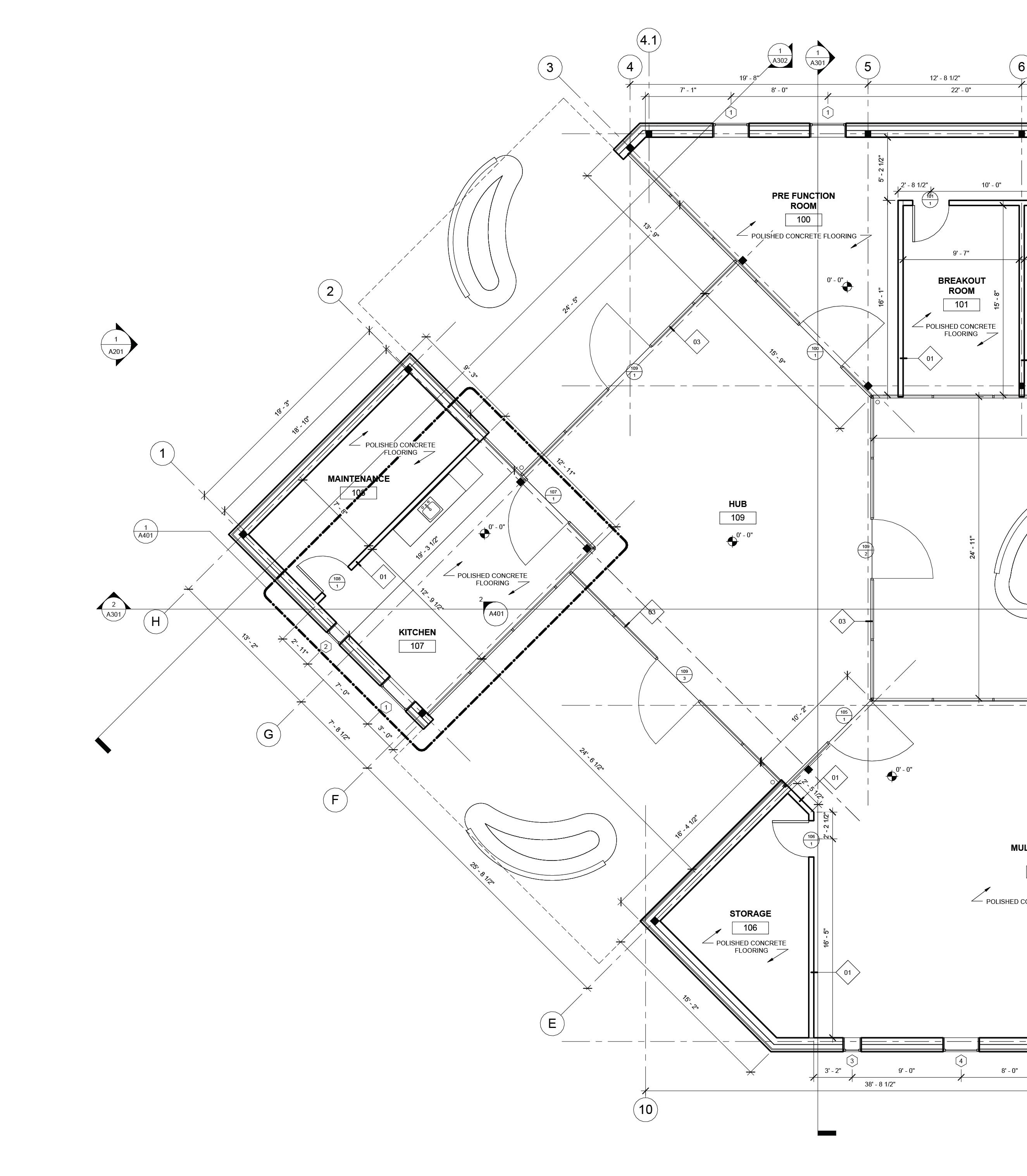
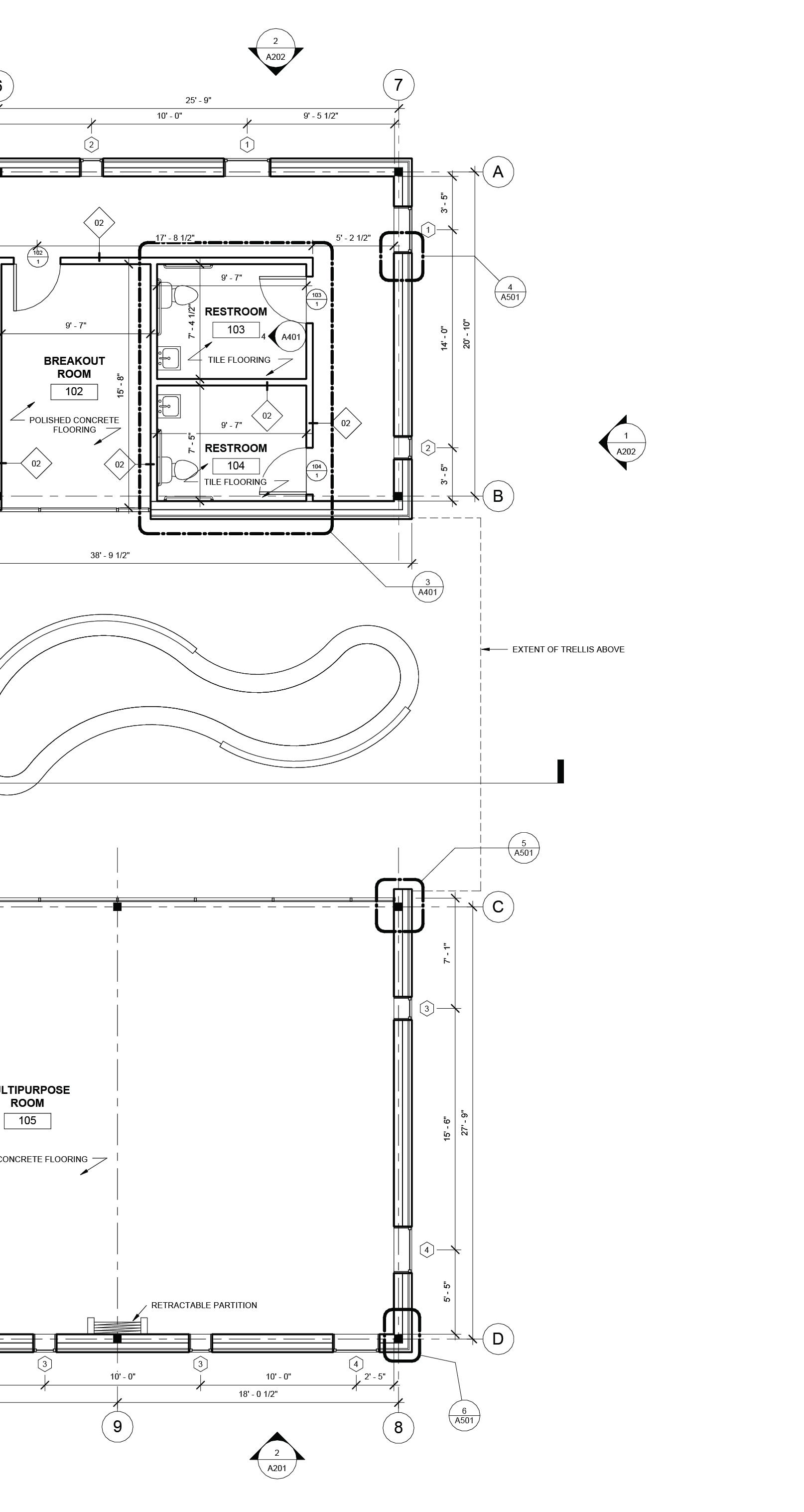
Situated on a small parking lot within Frick Park, Connection Hub aims to generate physical, visual, and emotional connections. Carefully designed circulation patterns, fenestration systems, and spatial organization encourage visitors to connect with each other as well as the architecture itself. Central to the project is the use of trellises to create outdoor spaces that act as connective tissue for the community. As a learning objective for this project, we focused on learning Revit to create a set of construction documents and how to detail a small-scale building.
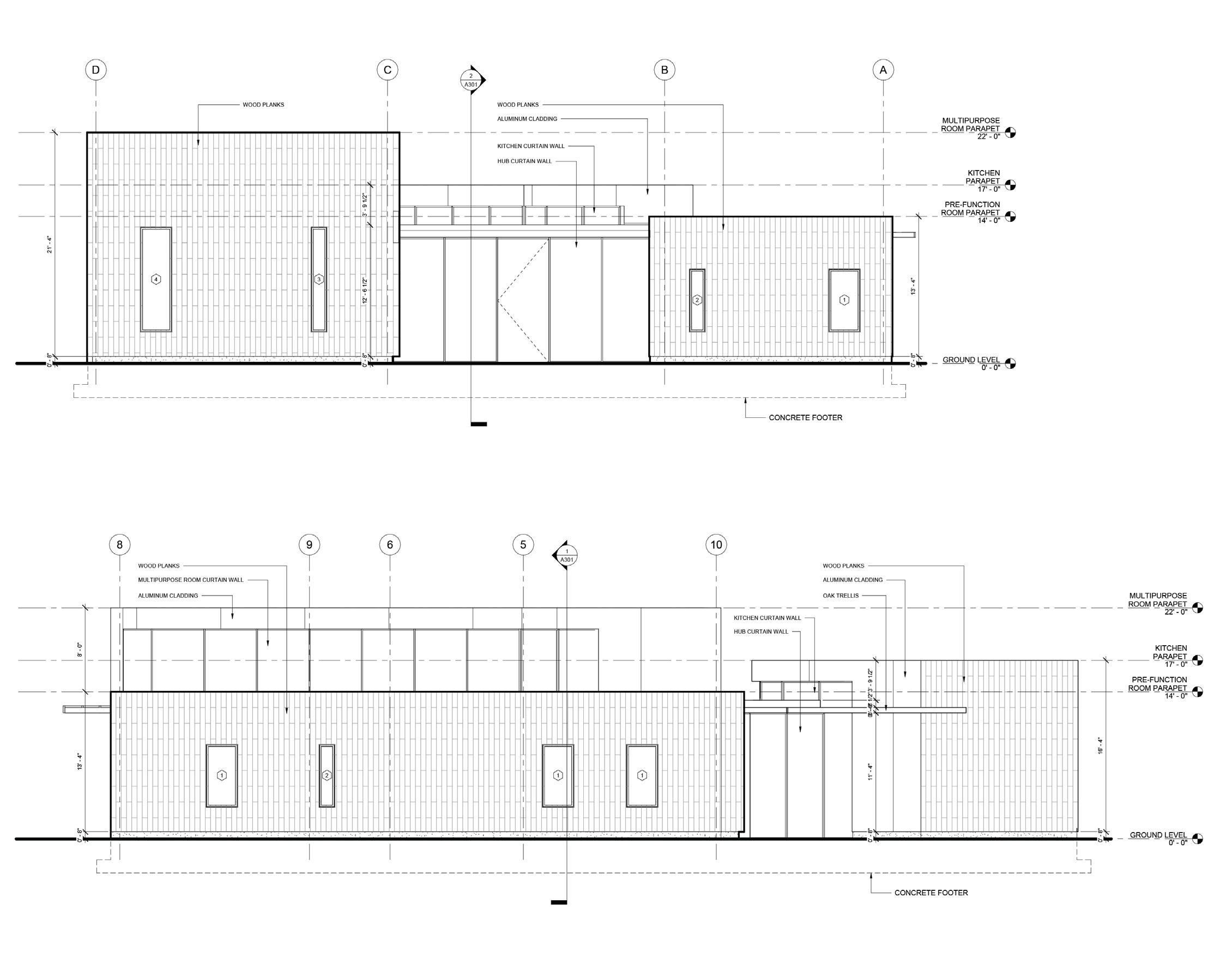
South Elevation
East Elevation
INSTRUCTORS : CHRISTOPHER GUIGNON AND JOZEF PETRAK
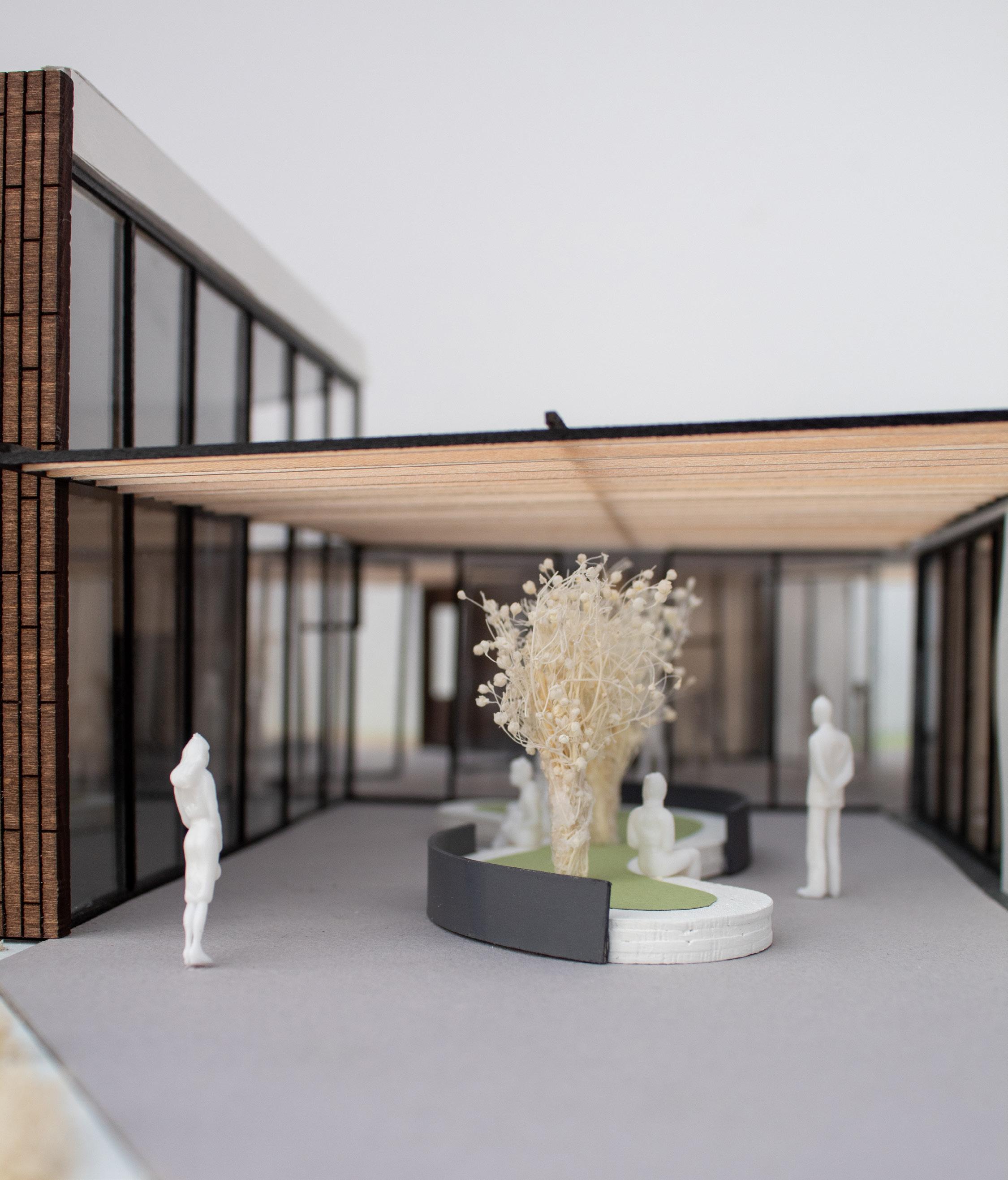
Final model from the East
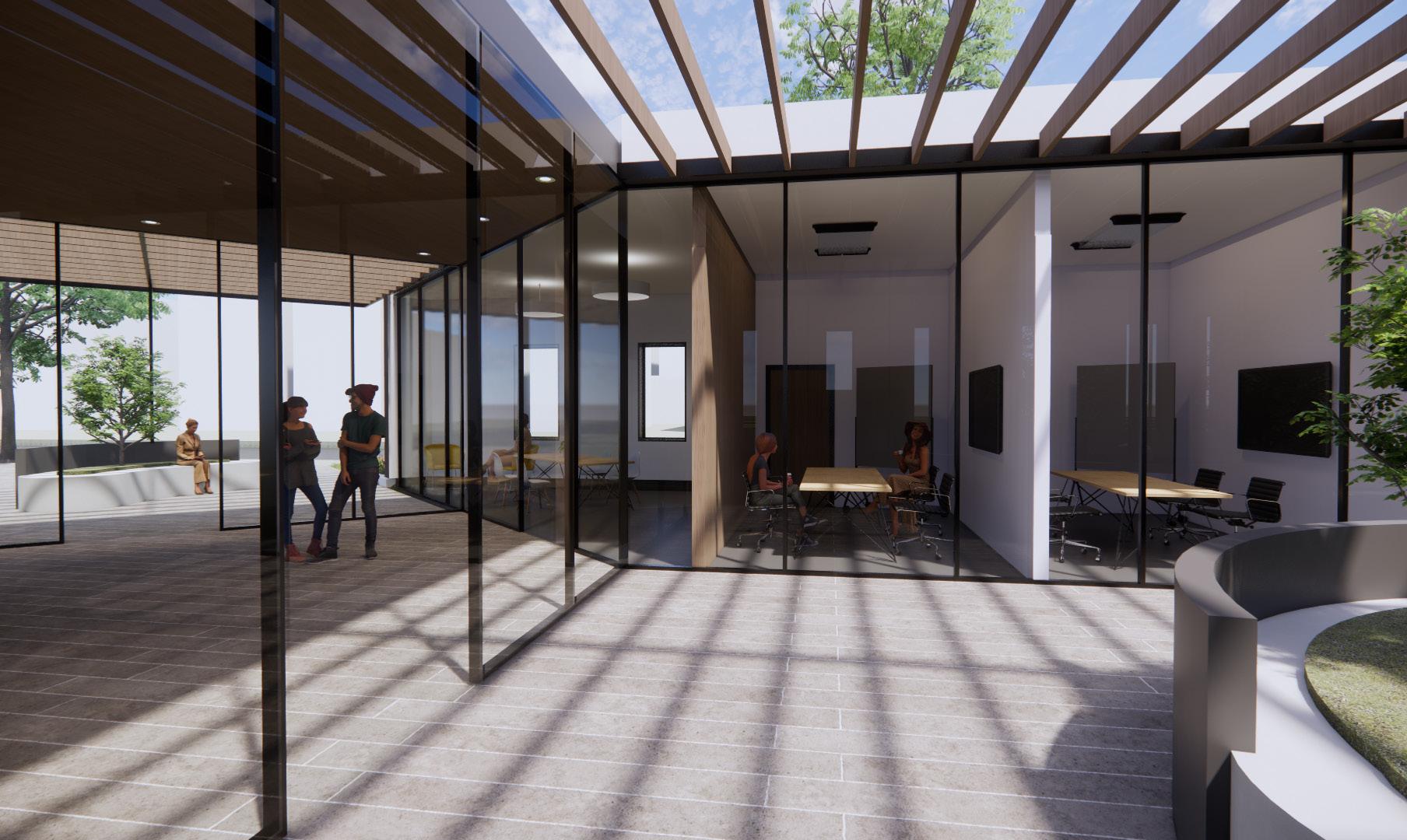
Enscape rendering from outdoor area looking into offices

Enscape rendering at night from outdoor area looking into the hub
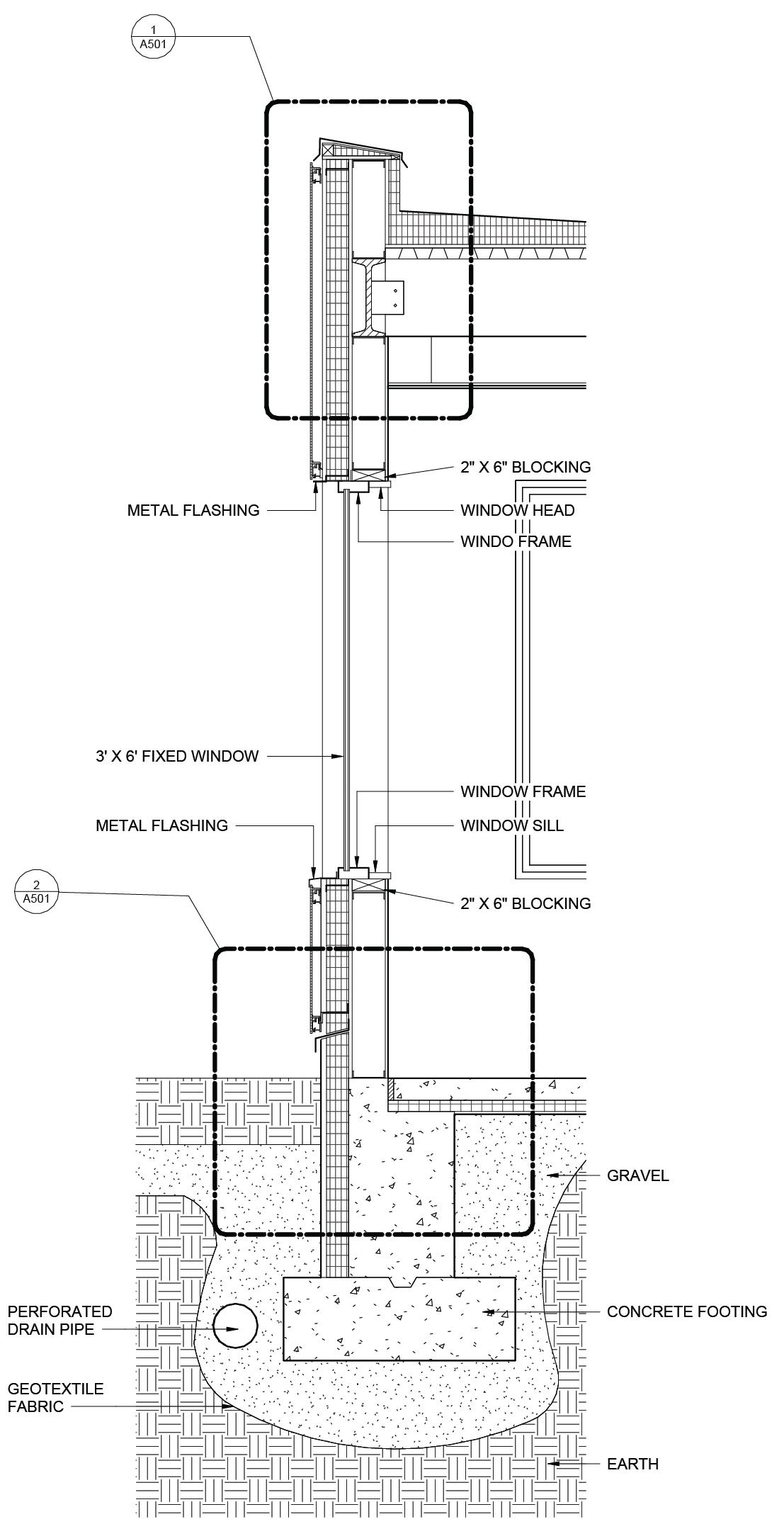
Wall section and details
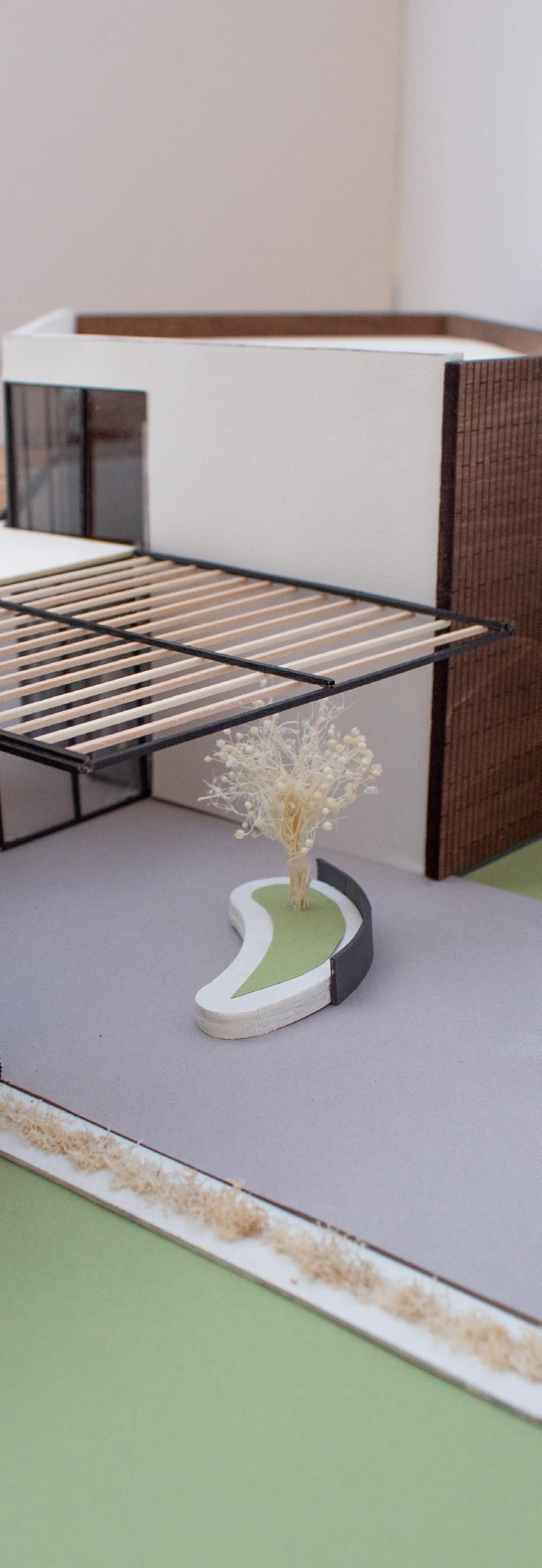
Final model from the Northwest
LOW RISE HIGH DENSITY RESIDENTIAL COMPLEX FOR UNIVERSITY OF PITTSBURGH STUDENTS AND REFUGEES UTILIZING SIX SUSTAINABLE DESIGN STRATEGIES.
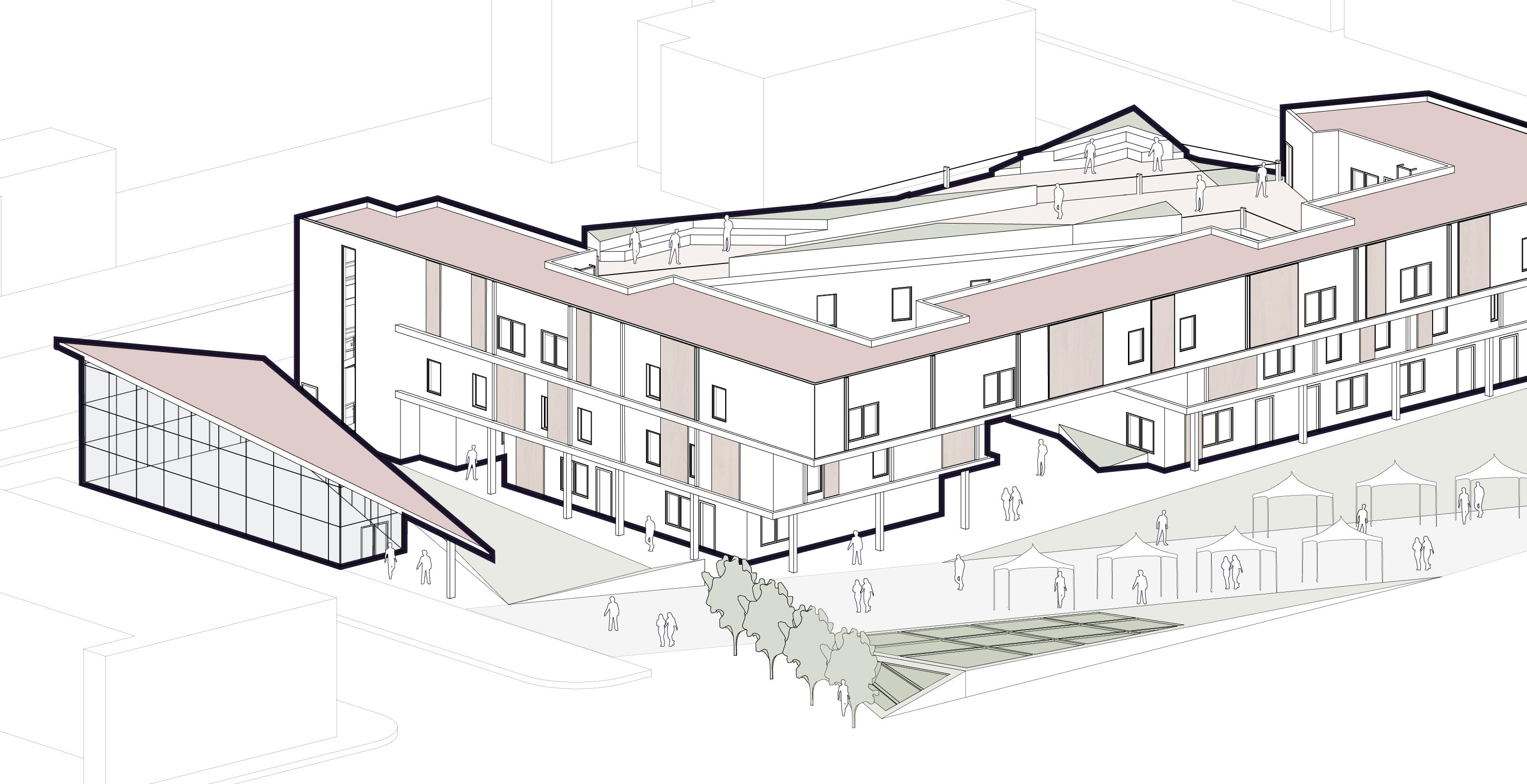
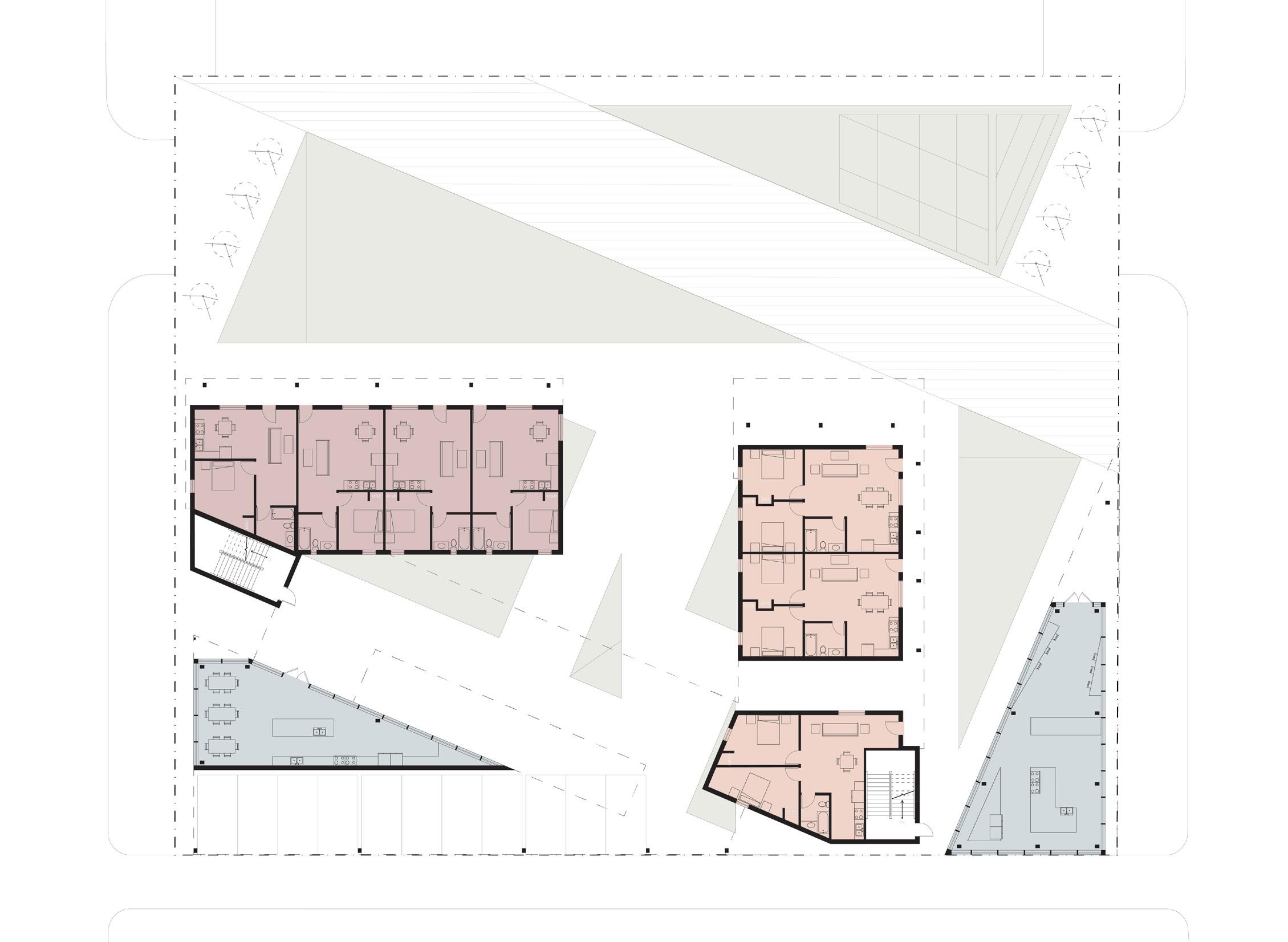
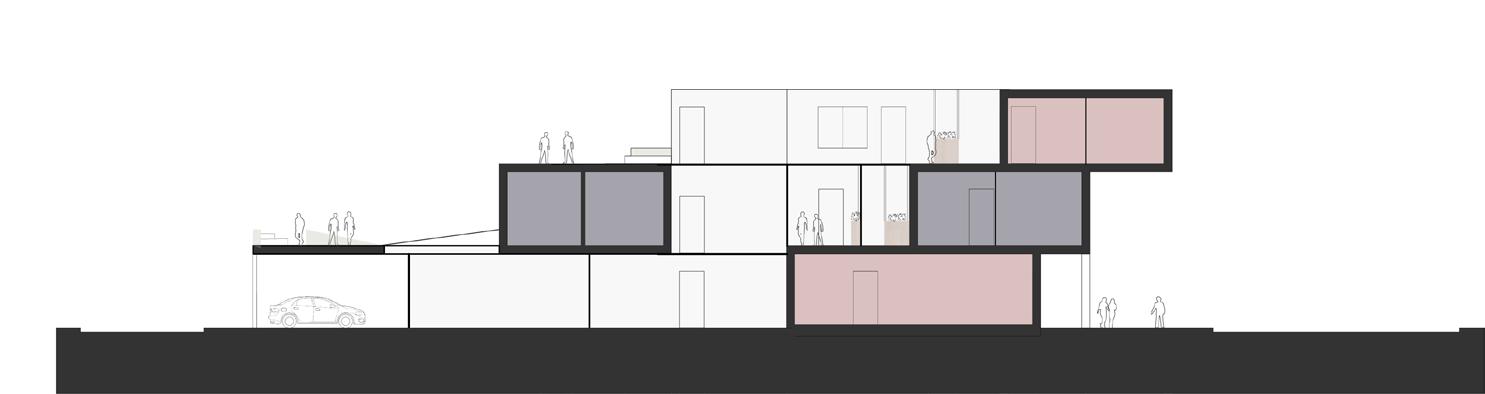
Through the introduction of terraced green spaces, private courtyards, and diverse gathering spaces; Respondent Oasis serves as a hidden retreat for the Oakland community, shielded from the businesses on Atwood Street to the West of our site. Our outdoor gathering spaces are intentionally placed along Atwood Street to create a buffer transition zone between the residents and the public. Due to the projected demographic being a variety of students and refugees, we had to consider different types of units and how the priorities would shift from resident to resident.
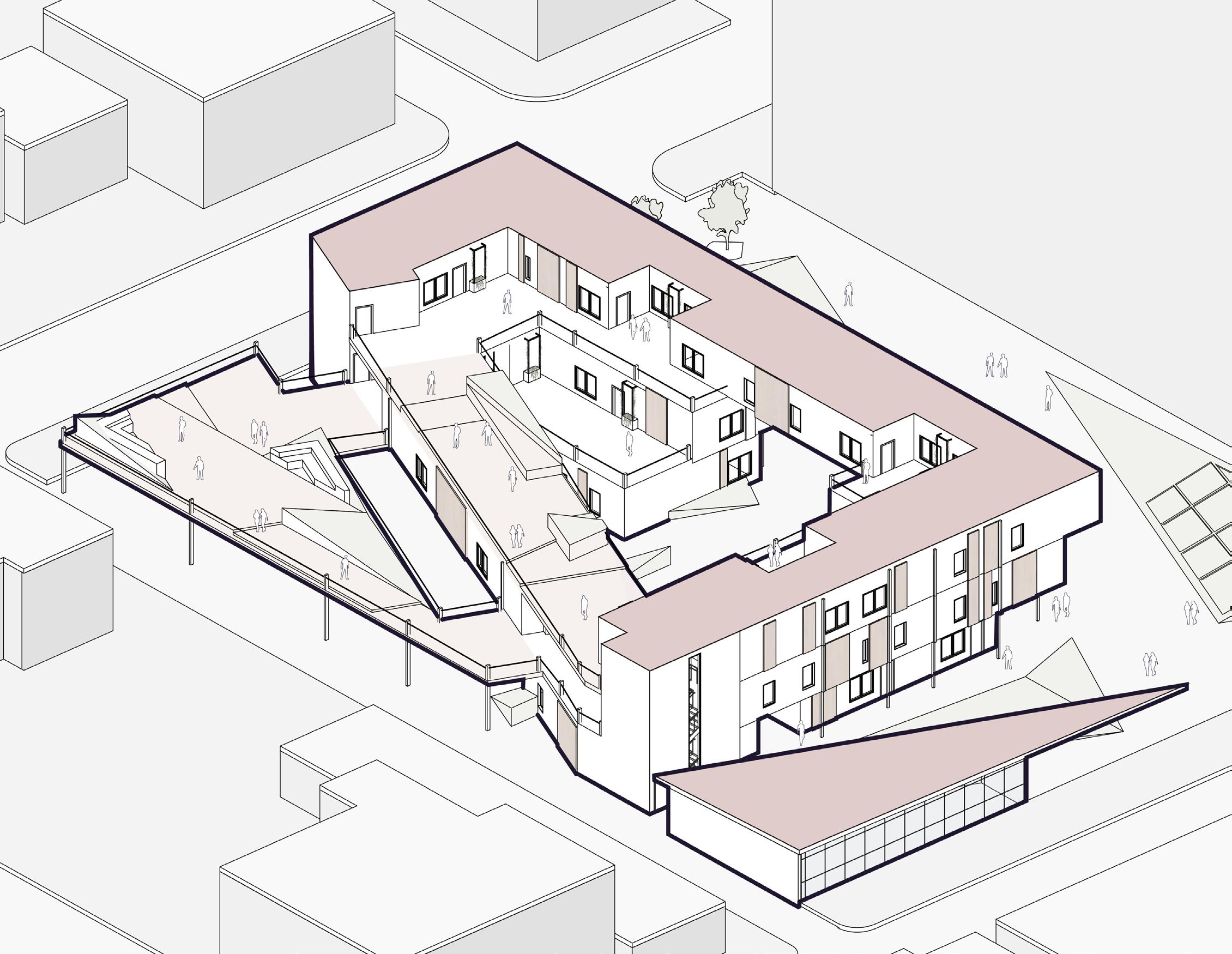
Axonometric drawing from the Southeast
INSTRUCTORS : CHRISTOPHER GUIGNON, TIAN LI, AND EMILY PIERSON-BROWN
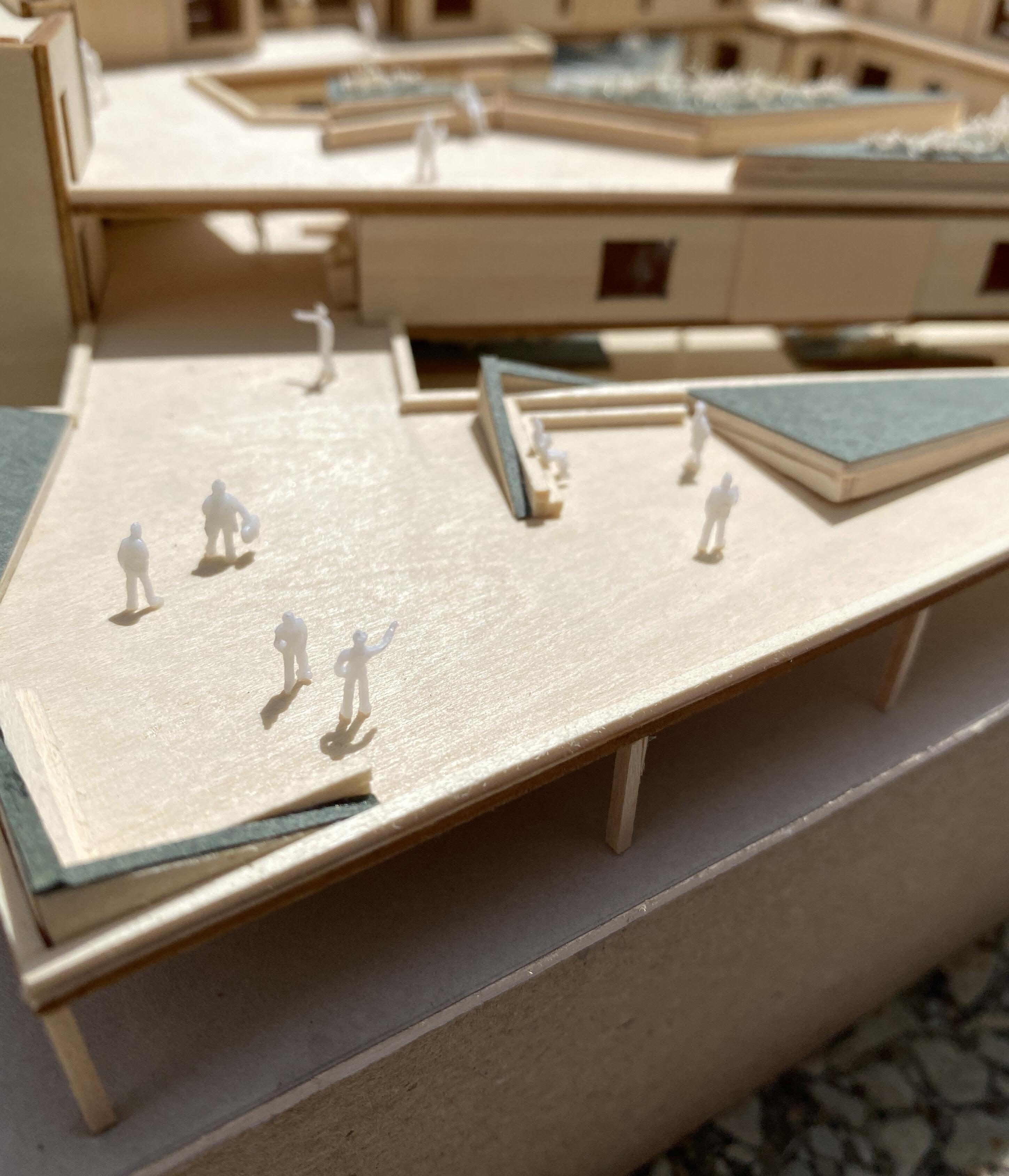
Final model from the Southwest
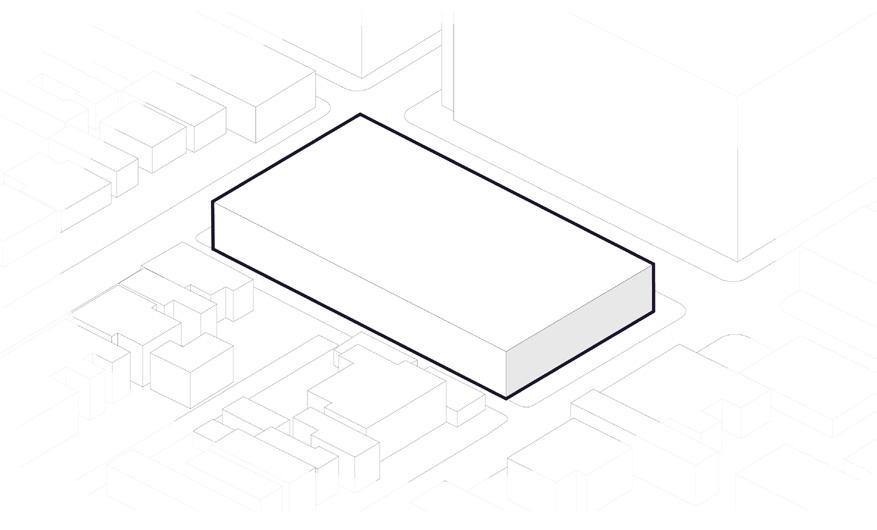
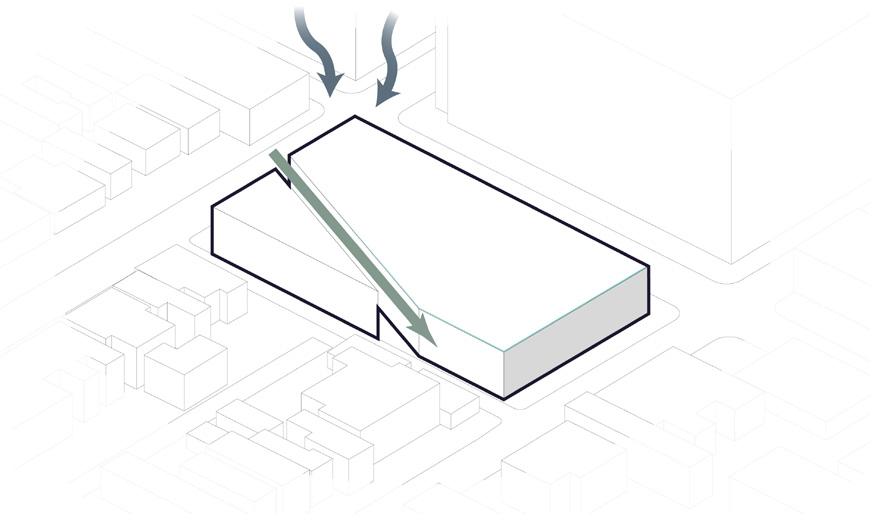
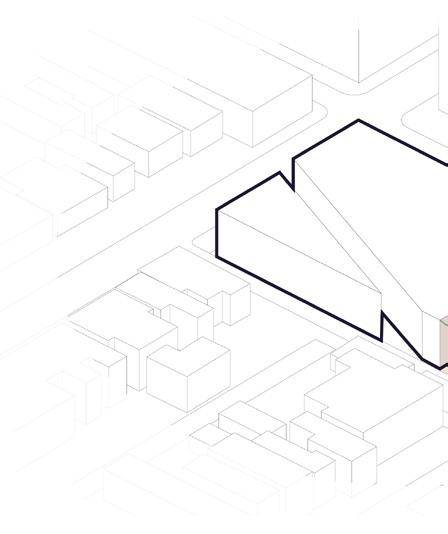
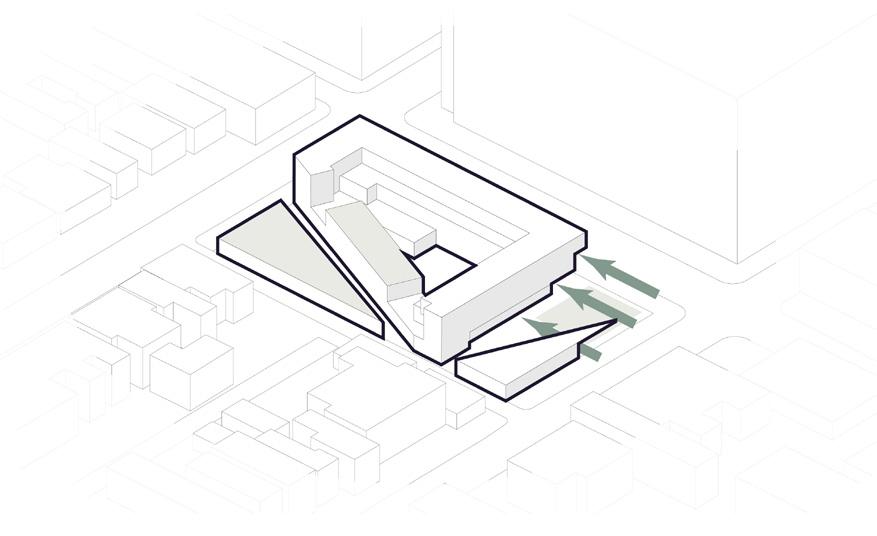
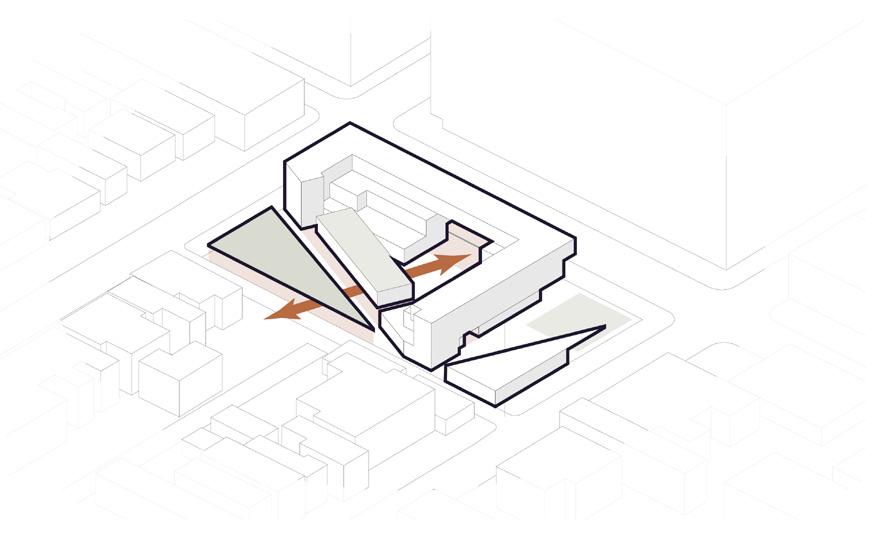
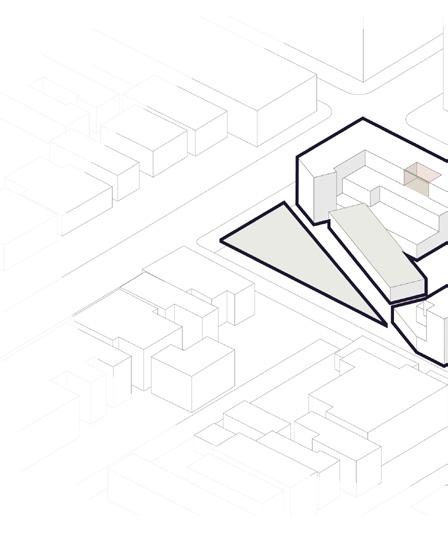
Architectural diagrams from the Southeast and axonometric drawing from the Northeast CUT OUT TO CREATE PUBLIC COMMUNITY CARVE FOR PRIVATE
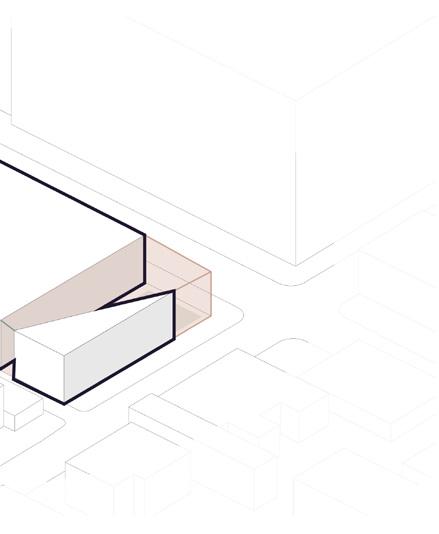
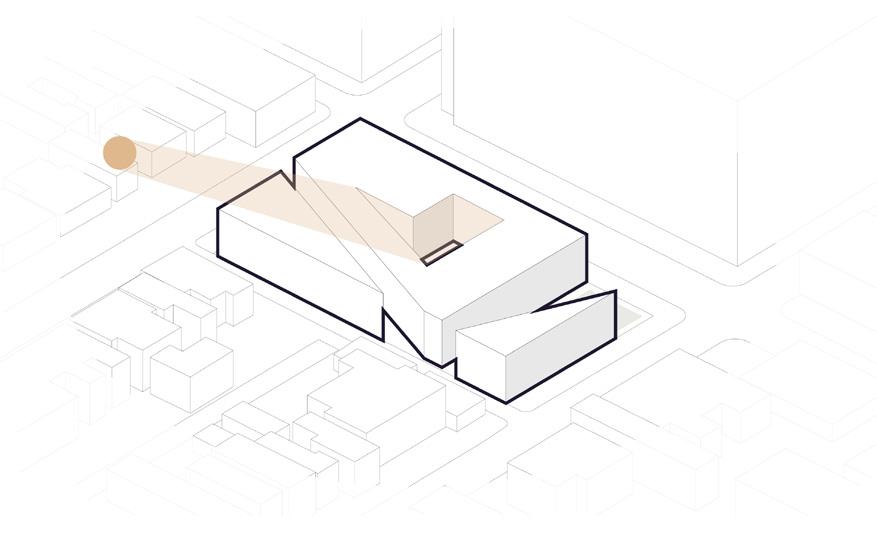
SUBTRACT FOR INTERNAL SUNLIGHT
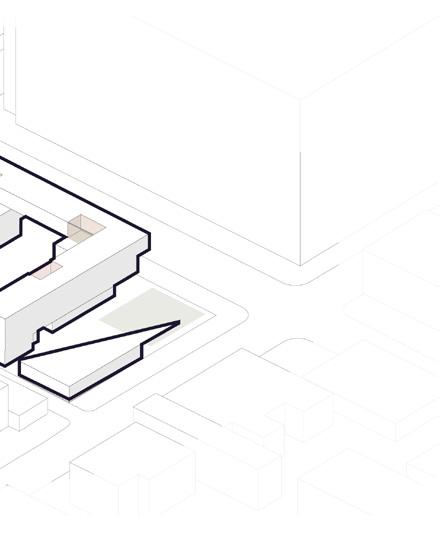
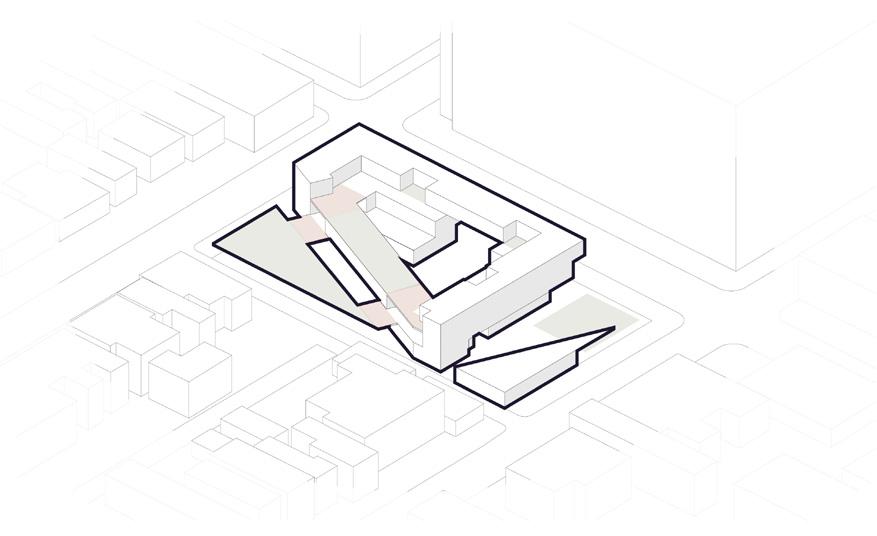
GREENSPACE 9. CONNECT FOR GREENSPACE ACCESS
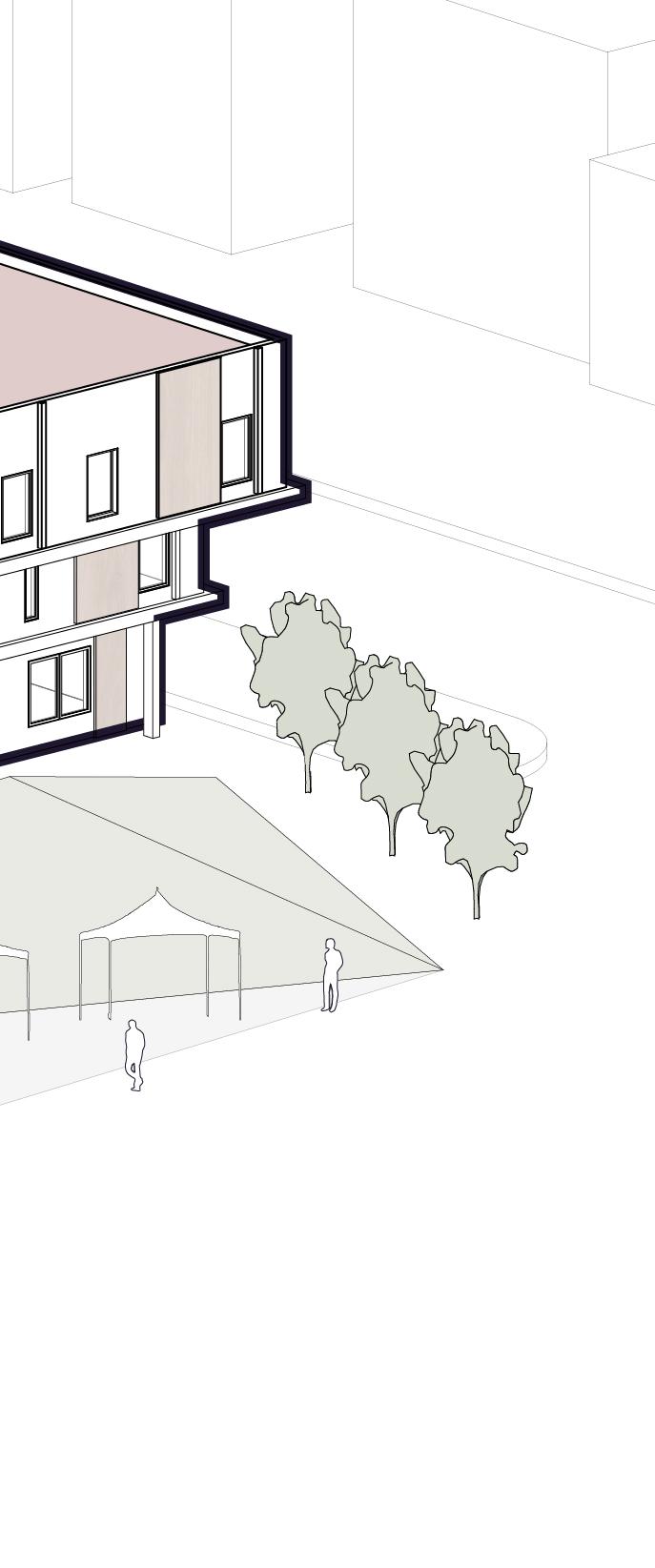
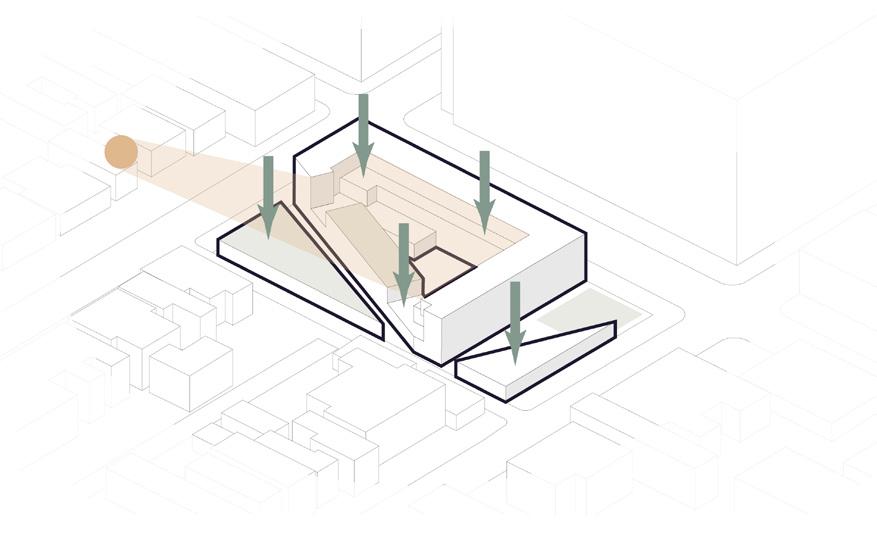
TERRACING TO MAXIMIZE SUNLIGHT AND CREATE CIRCULATION

PITCH ROOF OF COMMUNITY SPACE
Using operational diagraming, we created a form that focused on sustainable strategies of passive heating, passive cooling, passive ventilation, daylighting, site and water, and envelopes. Passive daylighting and heating drive this design, with special attention given to orienting along the southern facade. In addition, the massing intends to develop a strong community by utilizing varied thresholds of public to private spaces.
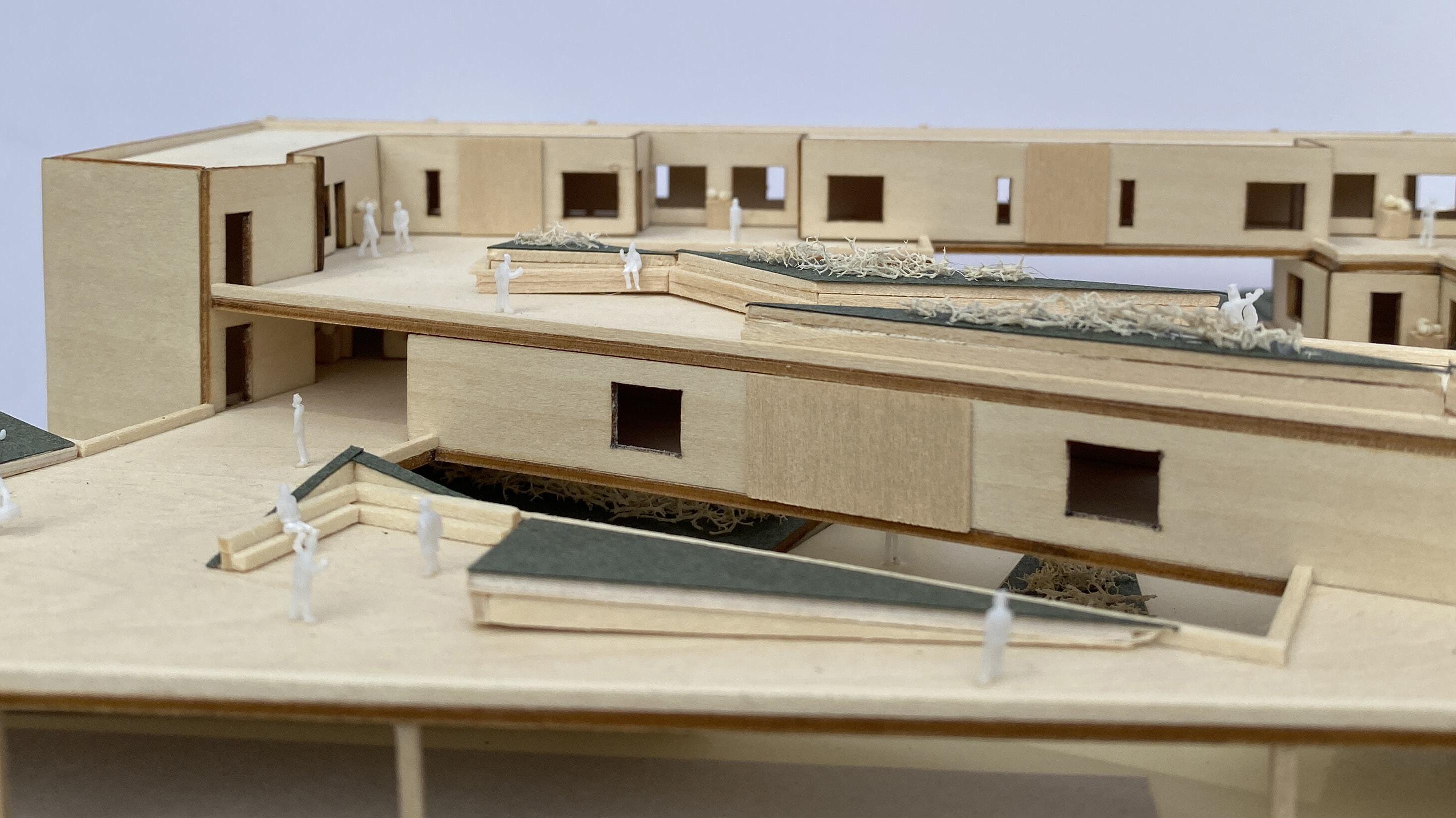
Final model from the South
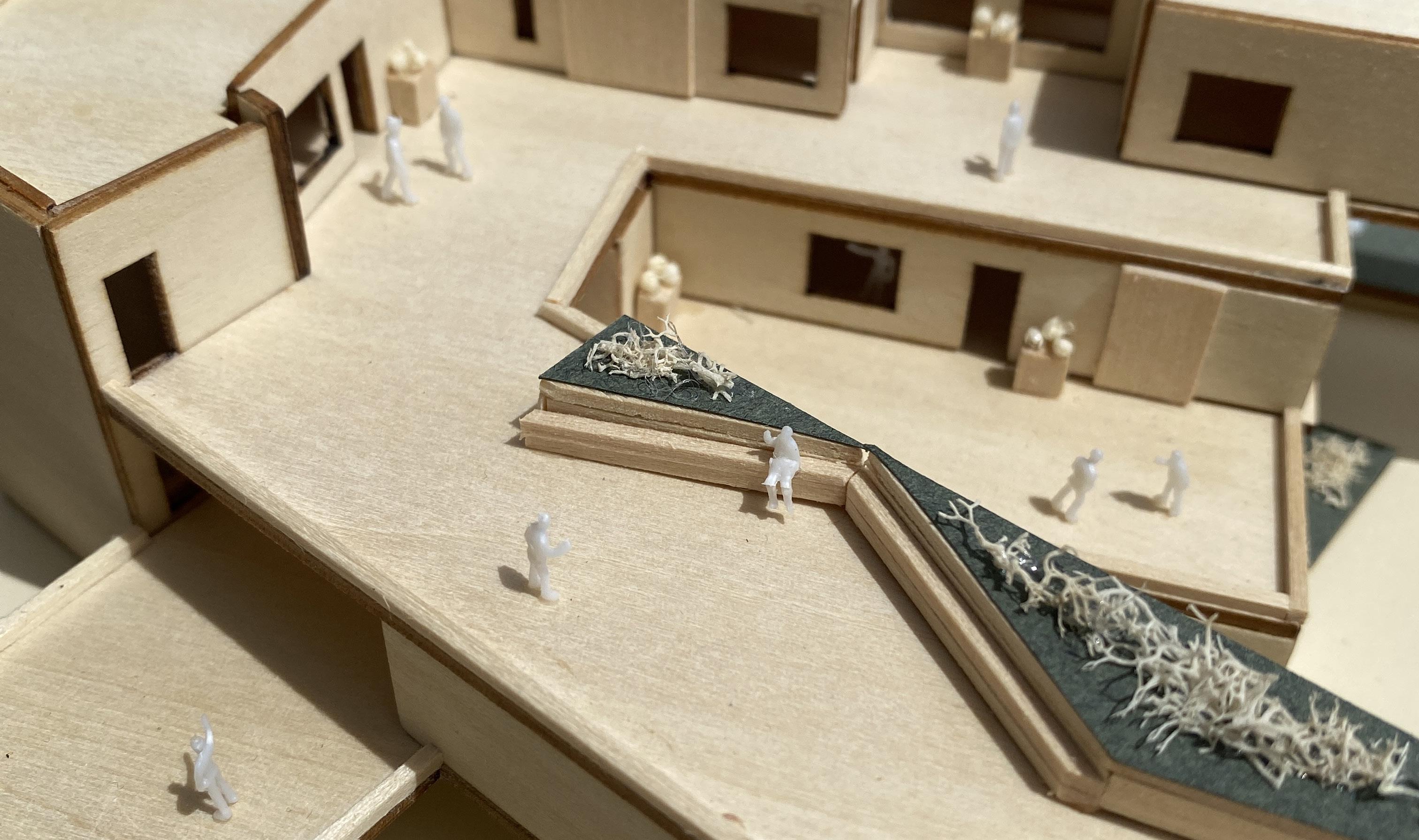
Final Model

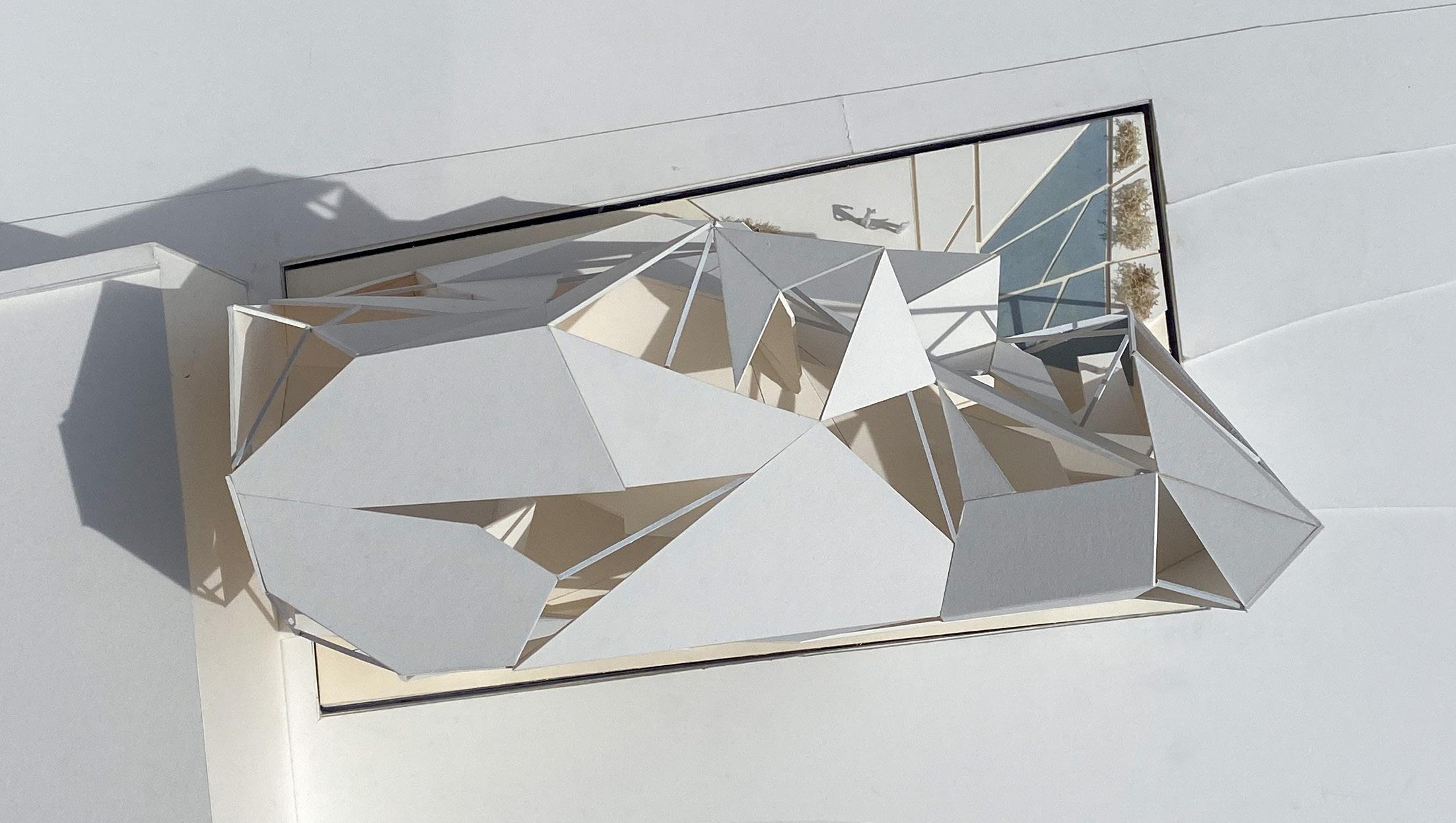
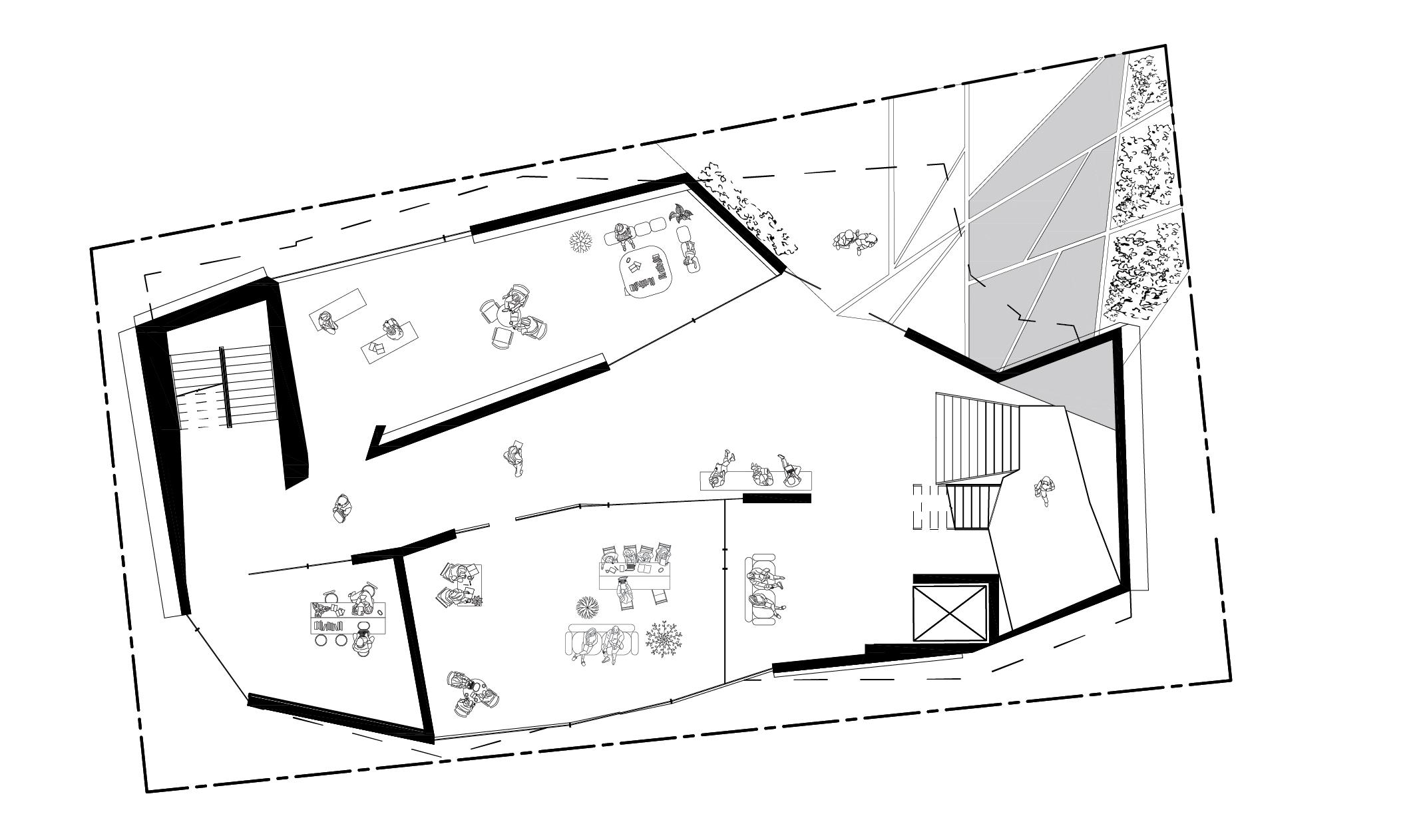
A DISTANCE LEARNING CENTER AND MAKERSPACE DESIGNED USING CONTEXTUAL MAPPING FOR THE HAZELWOOD COMMUNITY.
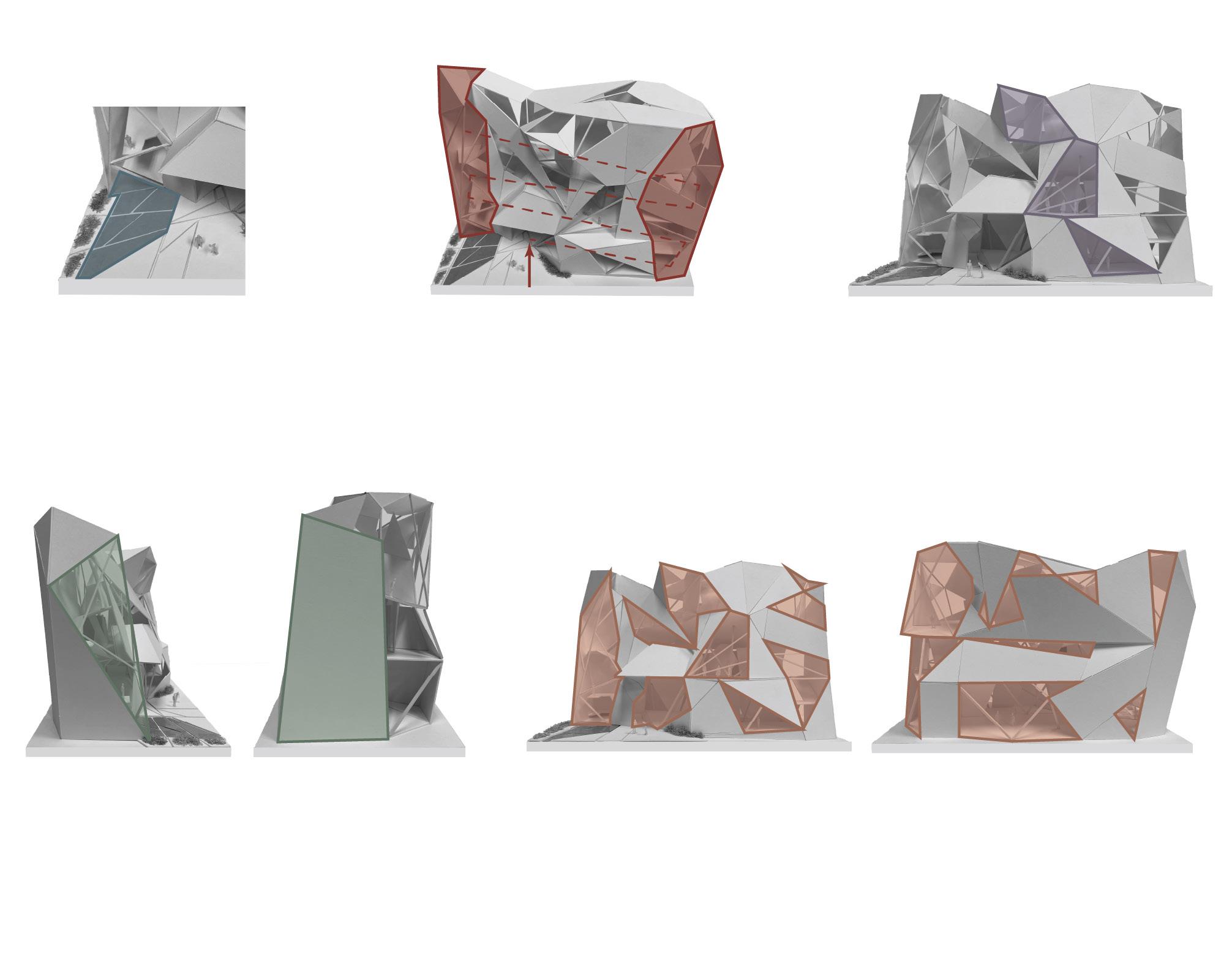
Using contextual mapping, Interactive Village investigates the neighborhood of Hazelwood in Pittsburgh, PA. The folded formal logic of the building, created through data point connections, encourages serendipitous interactions between different user groups. Through deliberate programmatic connections, the project fosters new ways of learning for business professionals and adult community members. Distance and alternative learning classrooms as well as makerspaces for start up businesses allow for users to further their education outside traditional schooling methods or brainstorm new ideas within an active community space.
SITE
RESPONSE TO STREET AND ADJACENT BUILDING
Architectural Diagrams
INSTRUCTORS : JOZEF PETRAK AND NICKIE CHEUNG
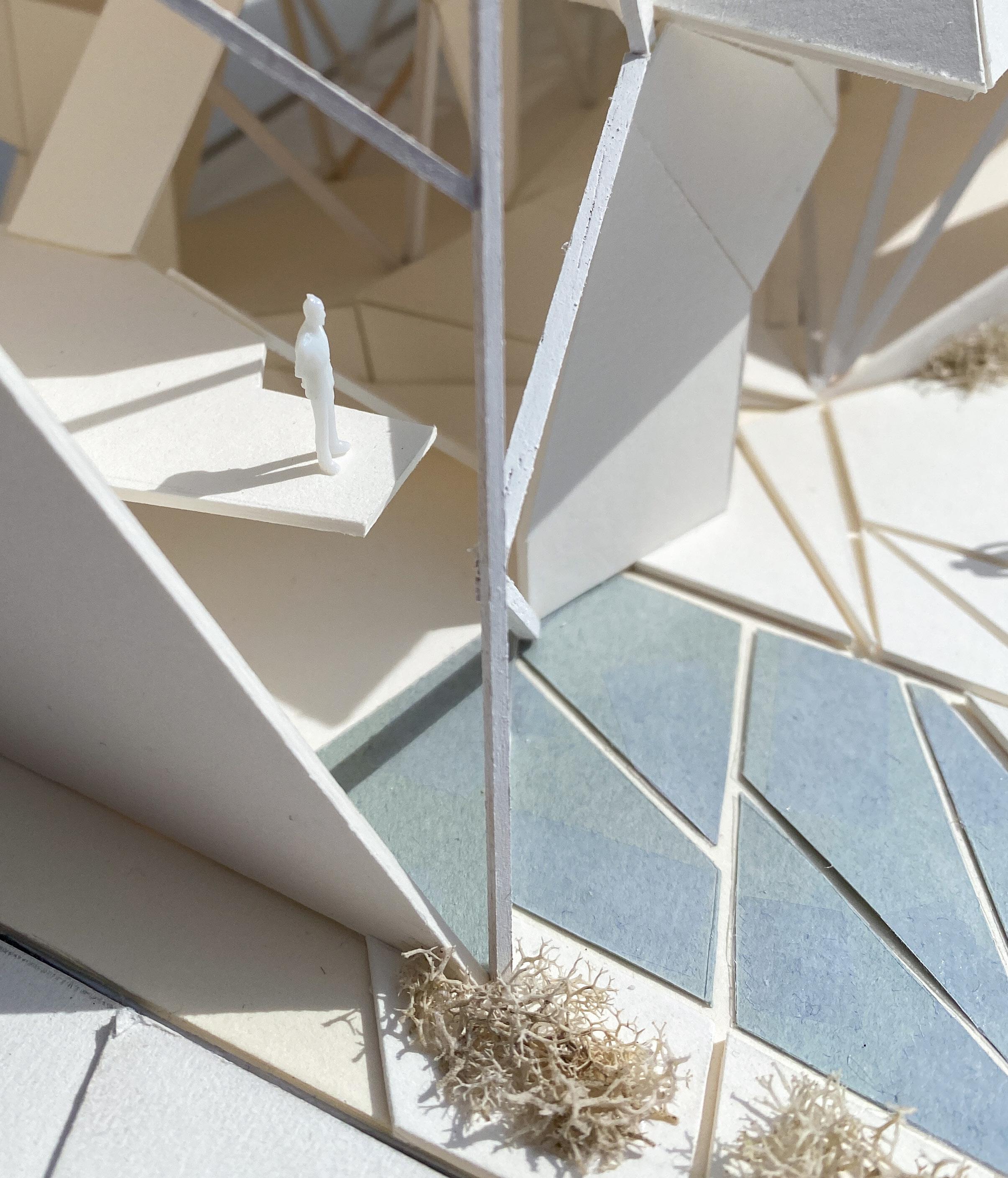
Final model from the Southeast
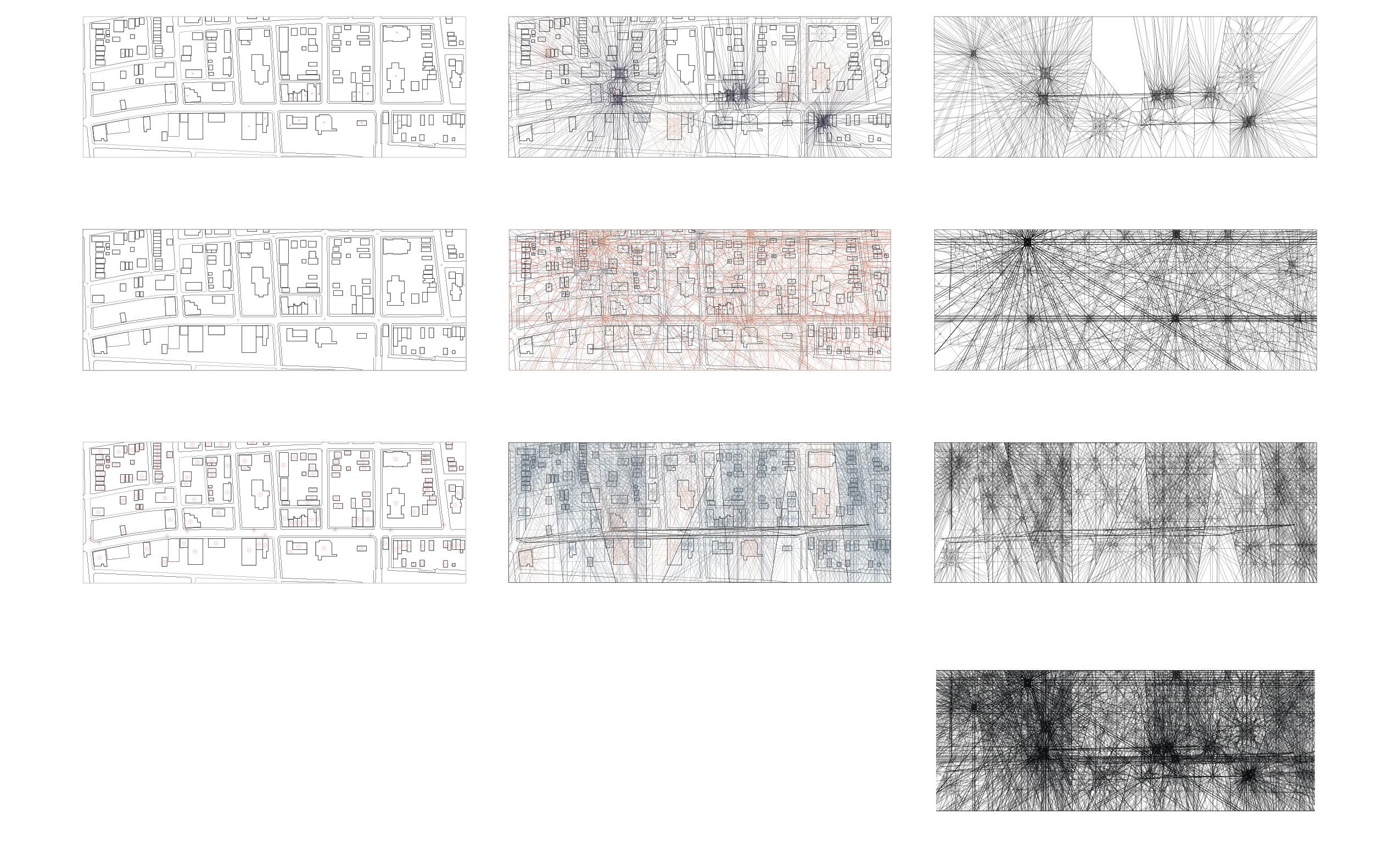
After careful site analysis, the bus stop locations, street intersections, and building usage in Hazelwood were identified as points of interest. Through a process of tessellation and triangulation in Rhino 7, lines were derived from the data points and overlaid on the site. Using these lines, the building form was folded into an abstract form to host the program.
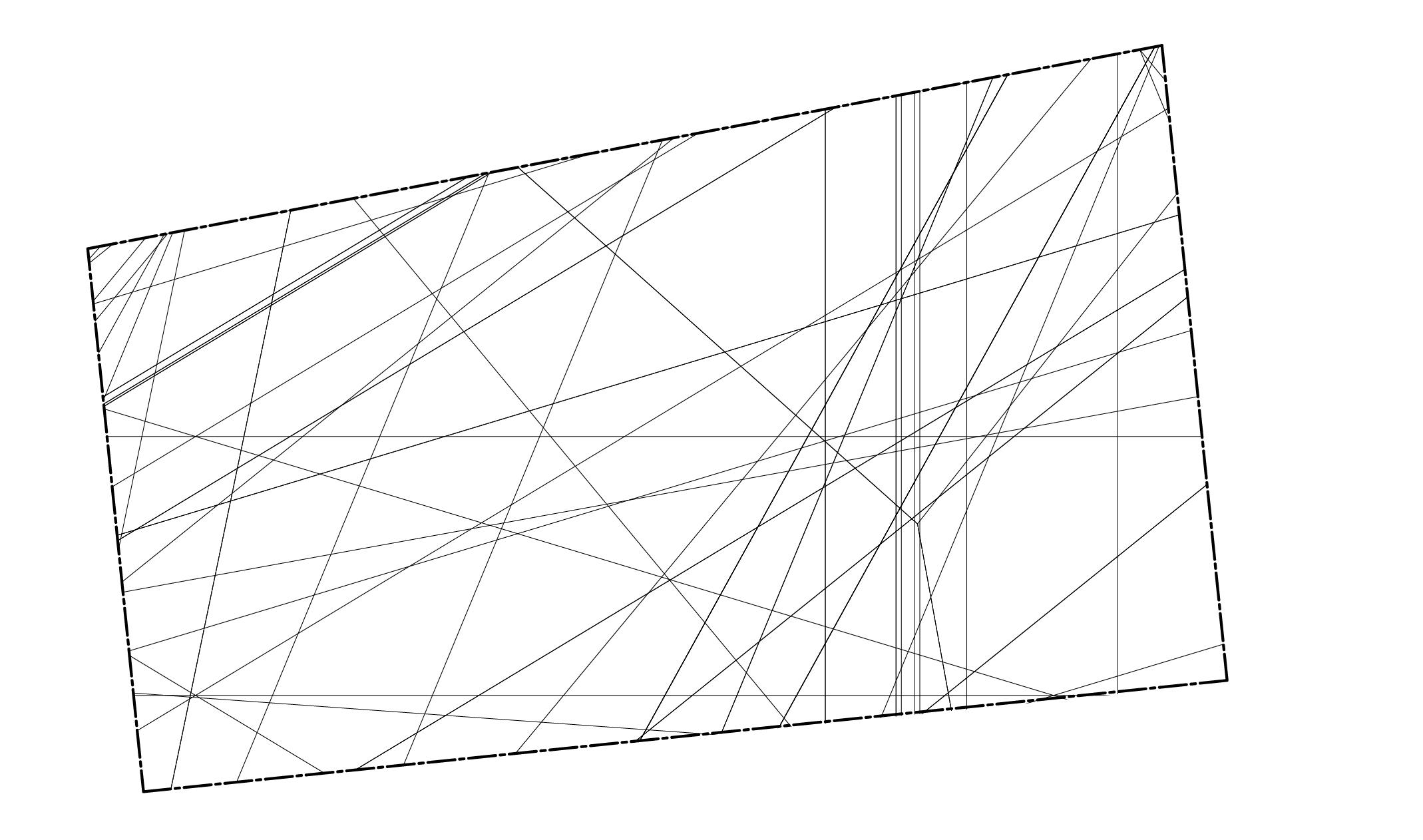

Final contextual lines from data points on site
PUBLIC AND PRIVATE PAVILION WITH A PATIO AND BOAT DOCK ON THE YOUGHIOGHENY RIVER FOR A FAMILY OF FOUR.
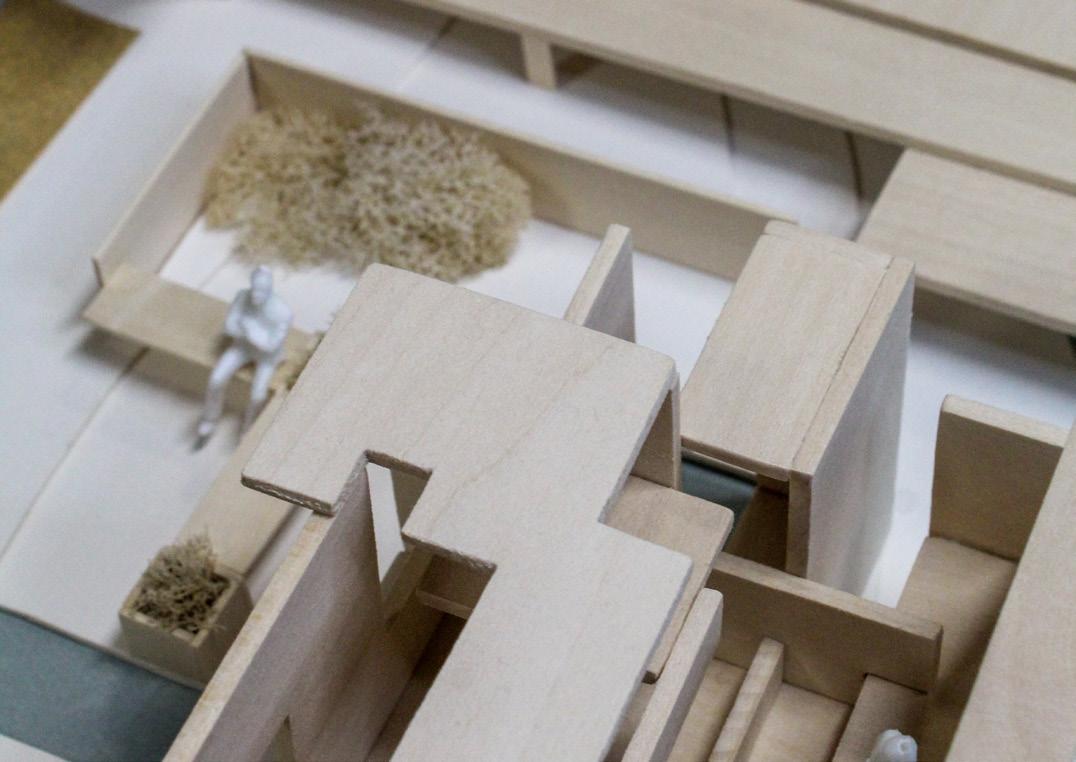
Hidden within the beautiful nature of Ohiopyle, PA, Waterfront Pavilions provides a relaxing space for a family of four along the water. While one pavilion is more open and connected to the outdoor patio and boating dock, there are also spaces created for an individual. From understanding the use of zoning, a grid system, views, thresholds, and travel paths, this project creates a variety of spaces for the whole family on vacation. To create the form for the two pavilions, we had five “moves” to deconstruct a simple box focusing on concepts of light, movement, openness, proximity, and scale.
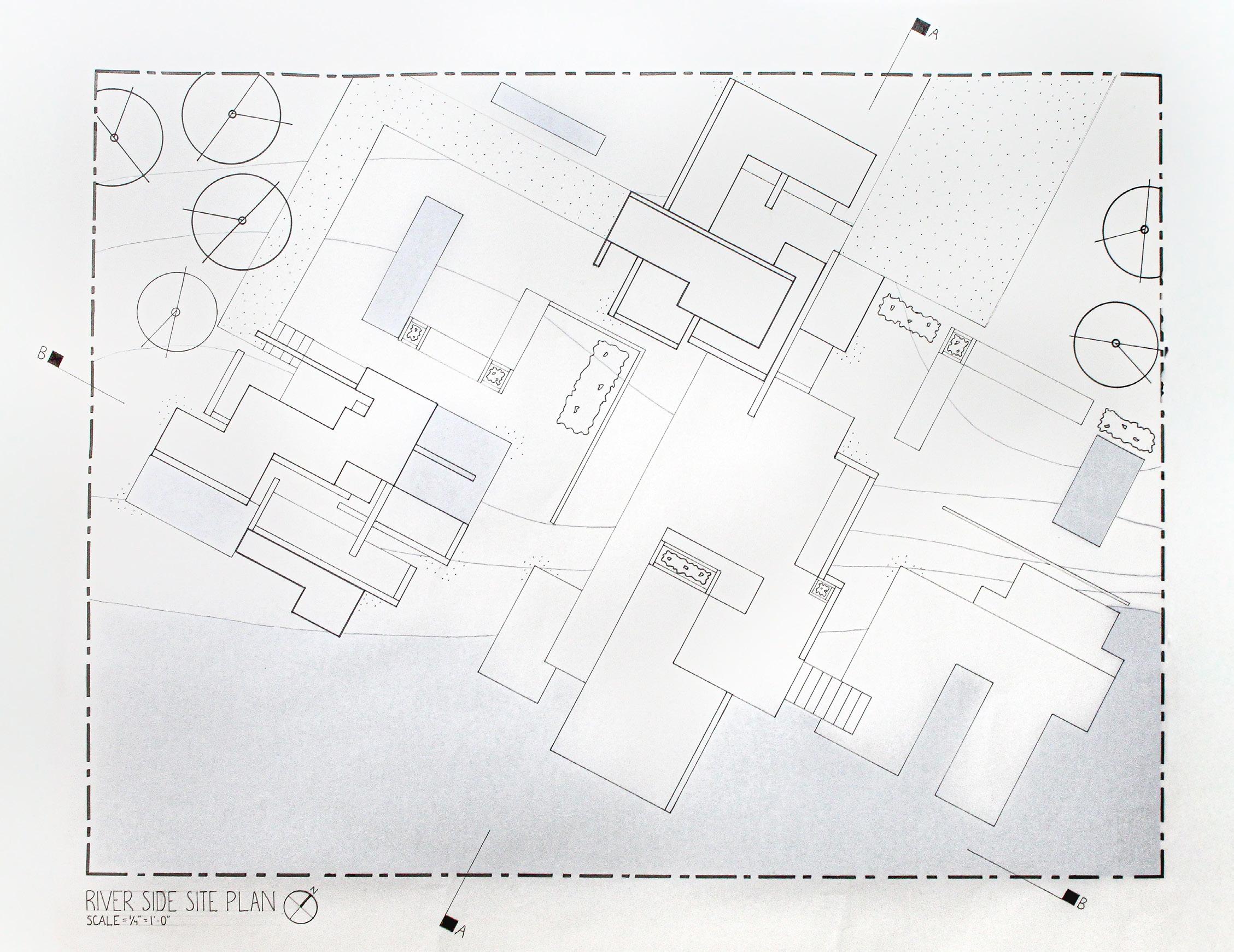
Site Plan
INSTRUCTORS : JOZEF PETRAK
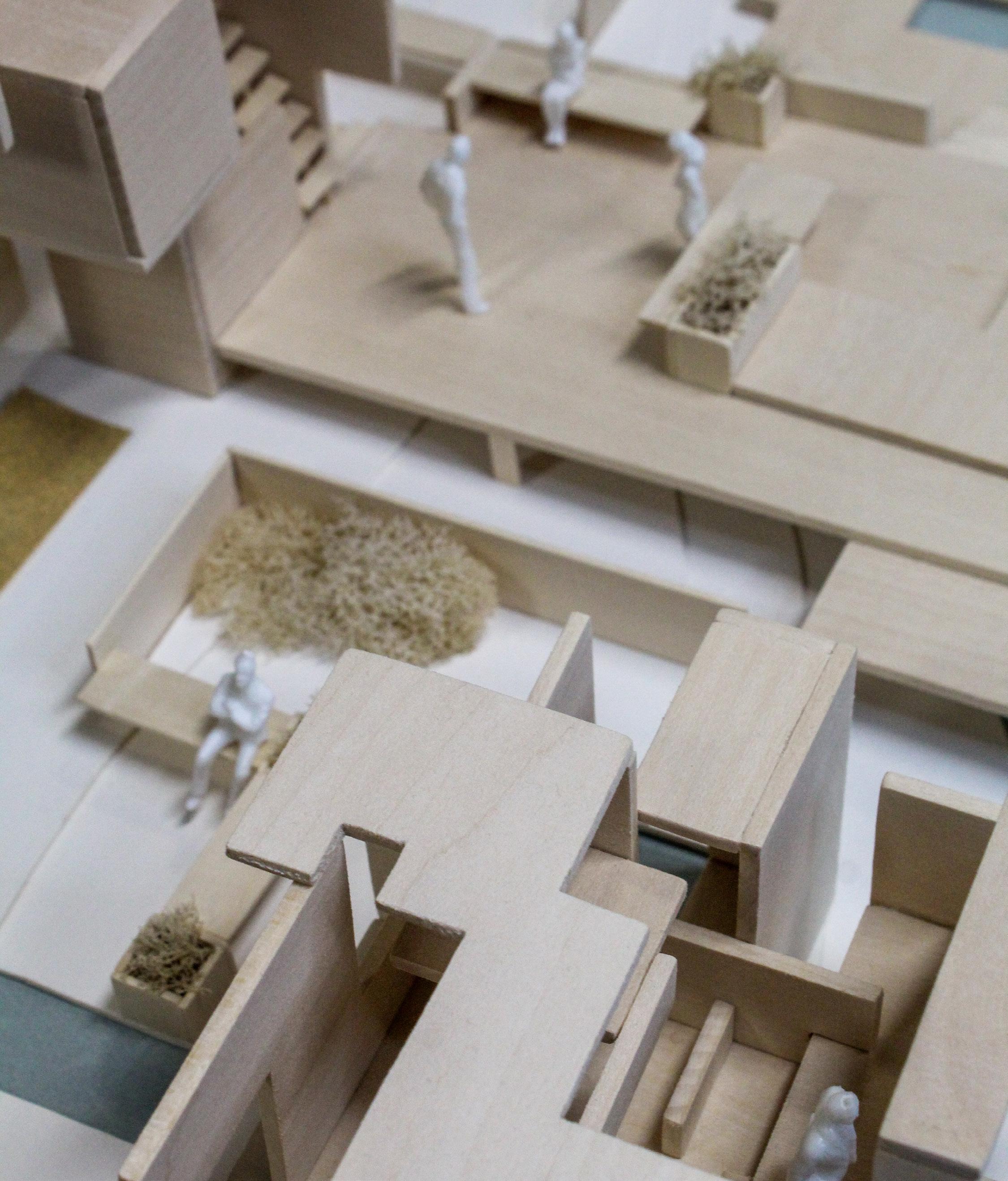
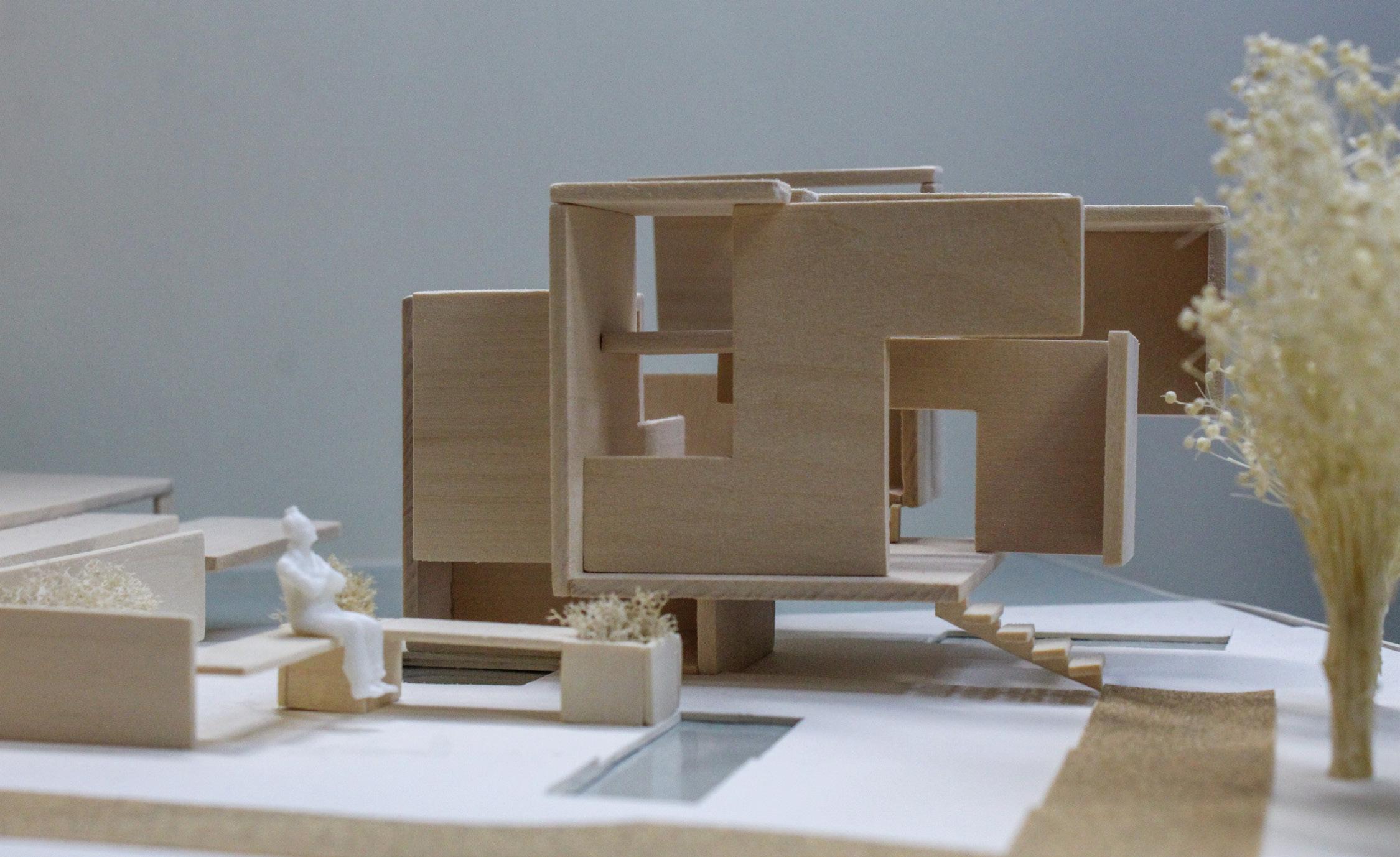
private pavilion model from the West
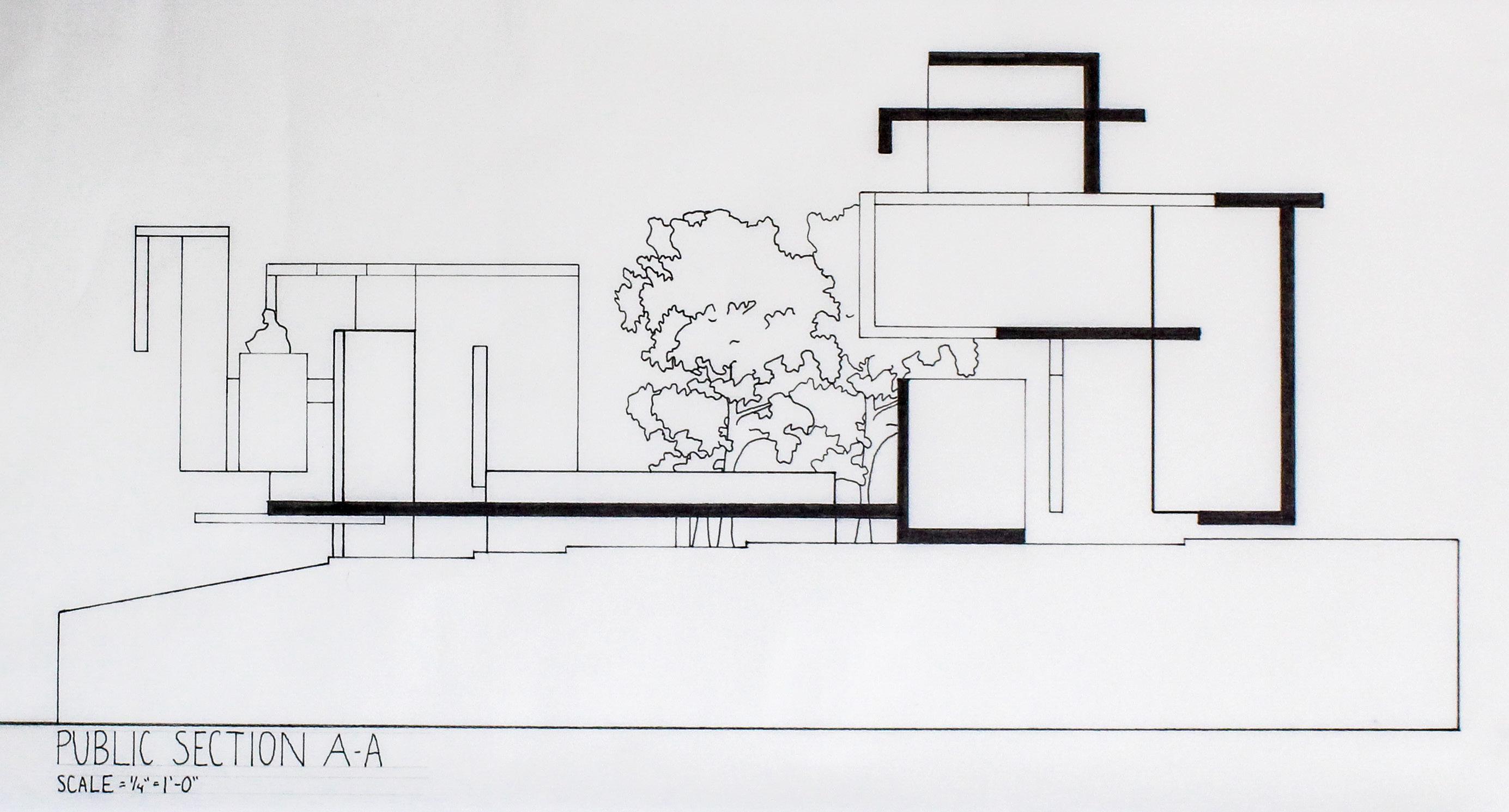
Section through public pavilion
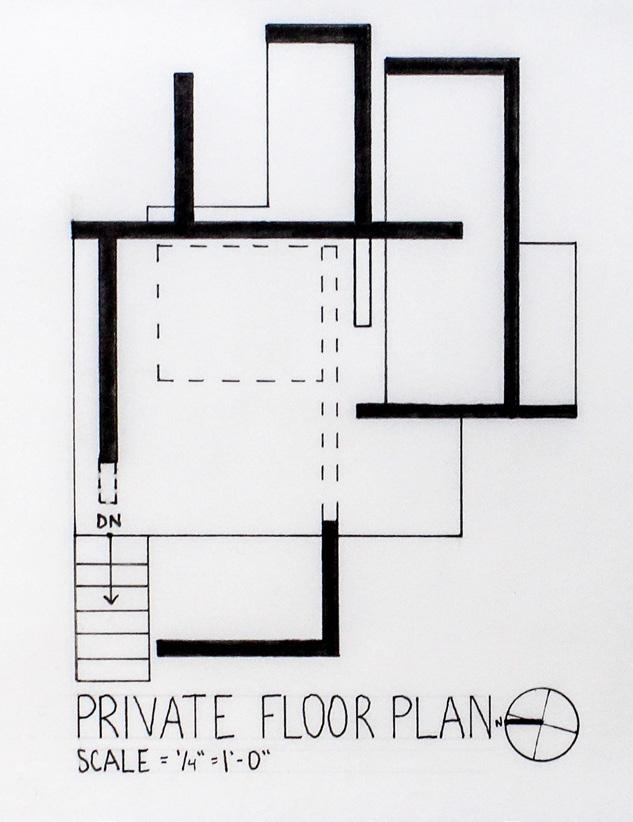
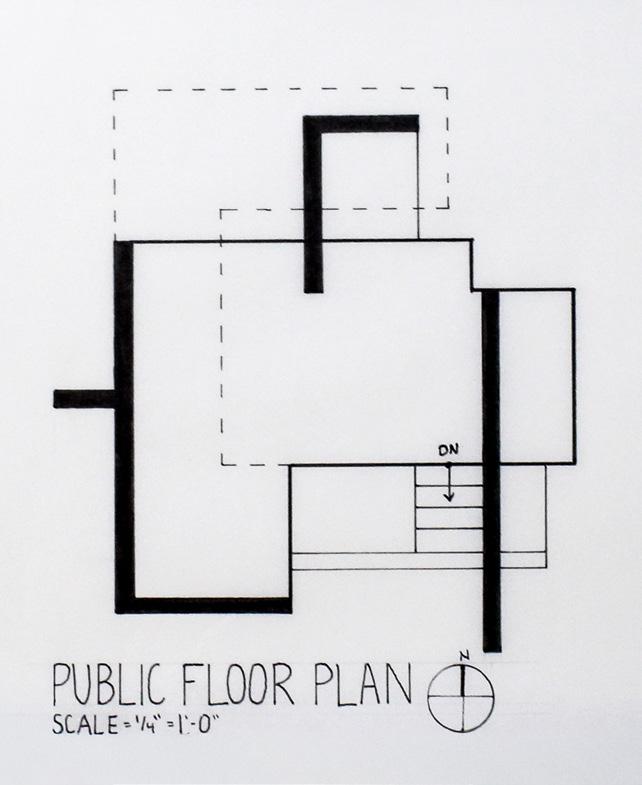
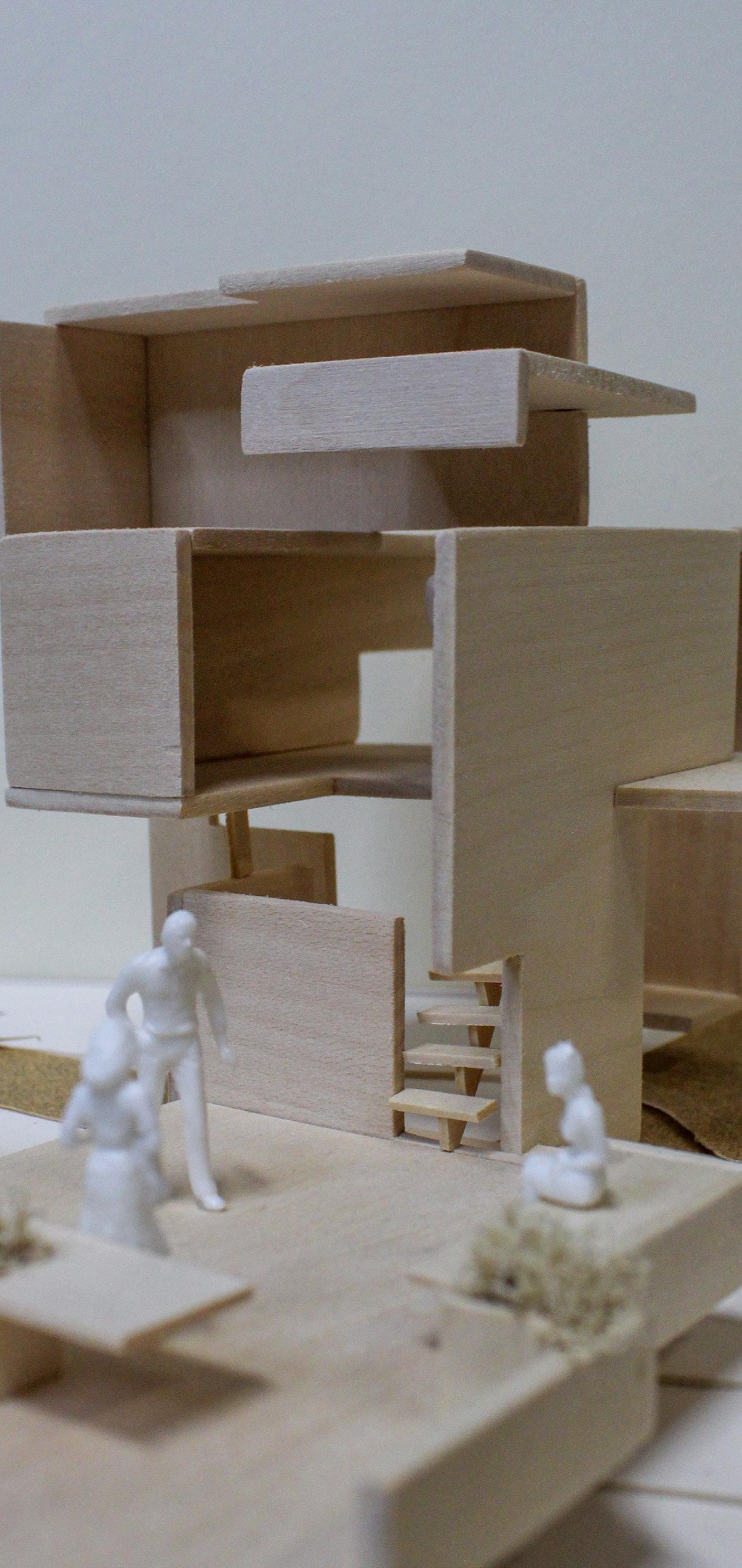
A key learning objective for this project was to learn how to hand draft drawings and use sketching to understand space. Due to this objective, all the final drawings were hand drawn on vellum with micron pens. In addition, there was no fabrication allowed for the physical model, everything was cut with X-Acto and utility knives.
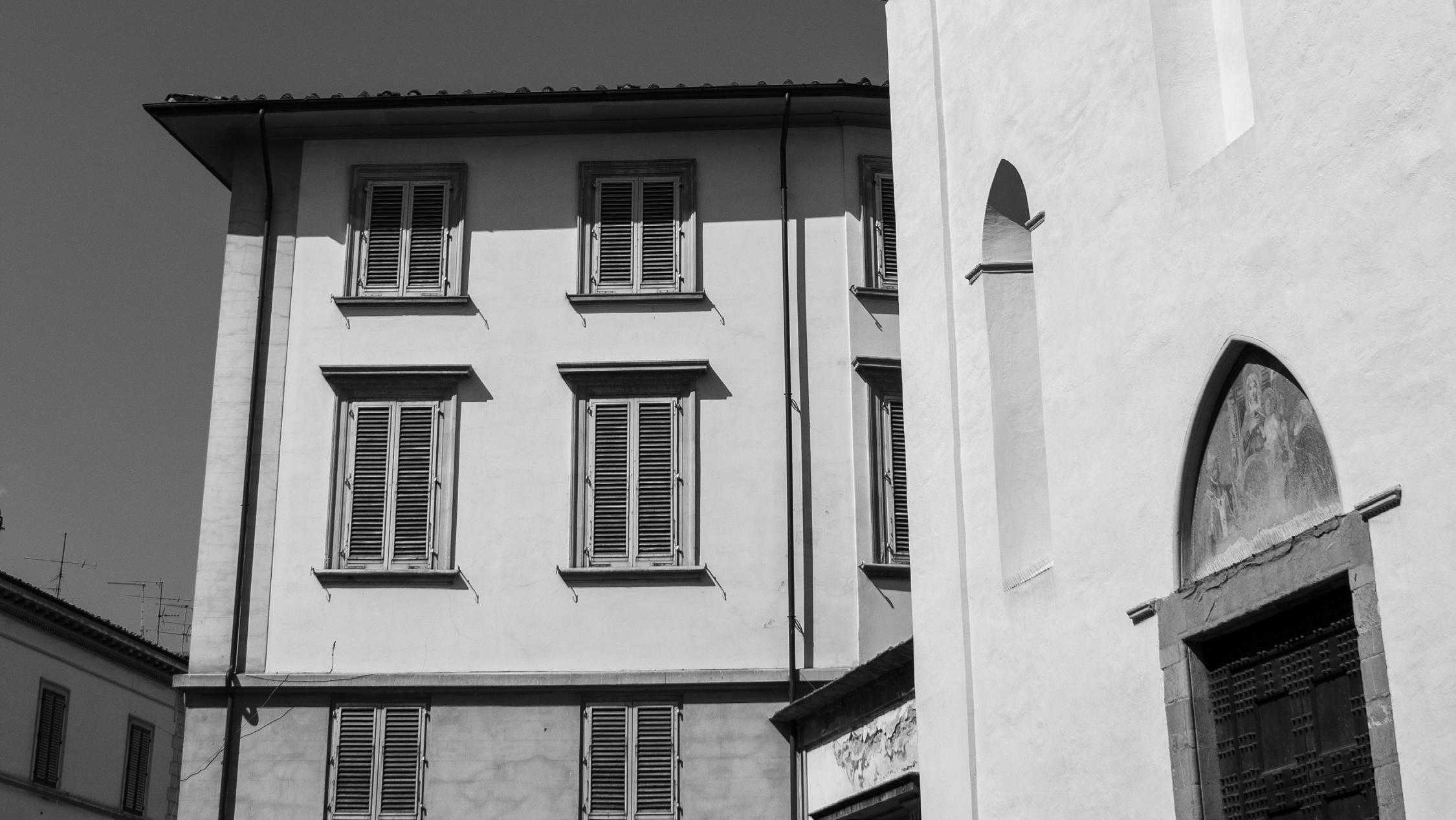
A SELECTION OF PHOTOGRAPHS CREATED FOR PERSONAL USE OR AS PART OF MY STUDIO ARTS MINOR AT THE UNIVERSITY OF PITTSBURGH.
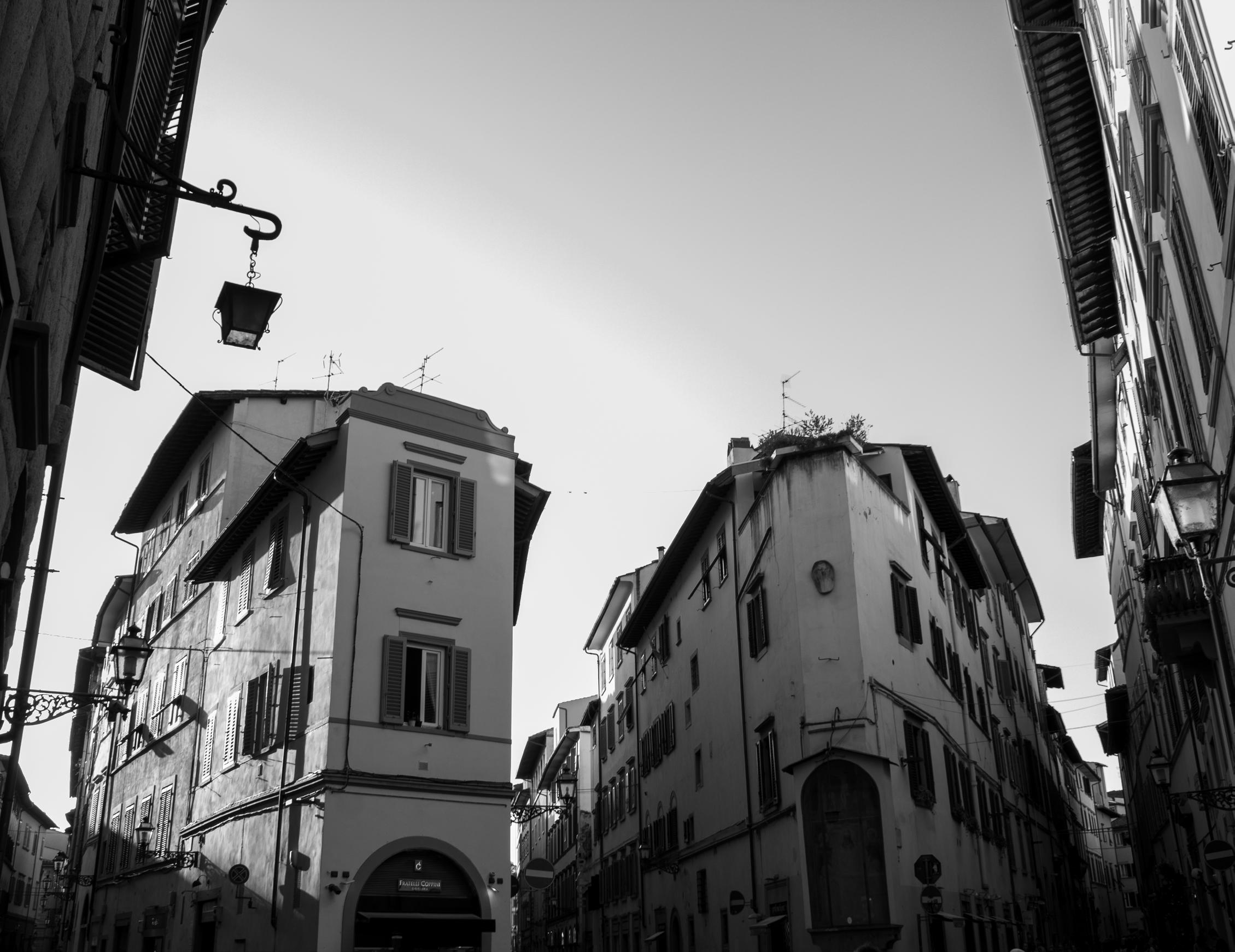
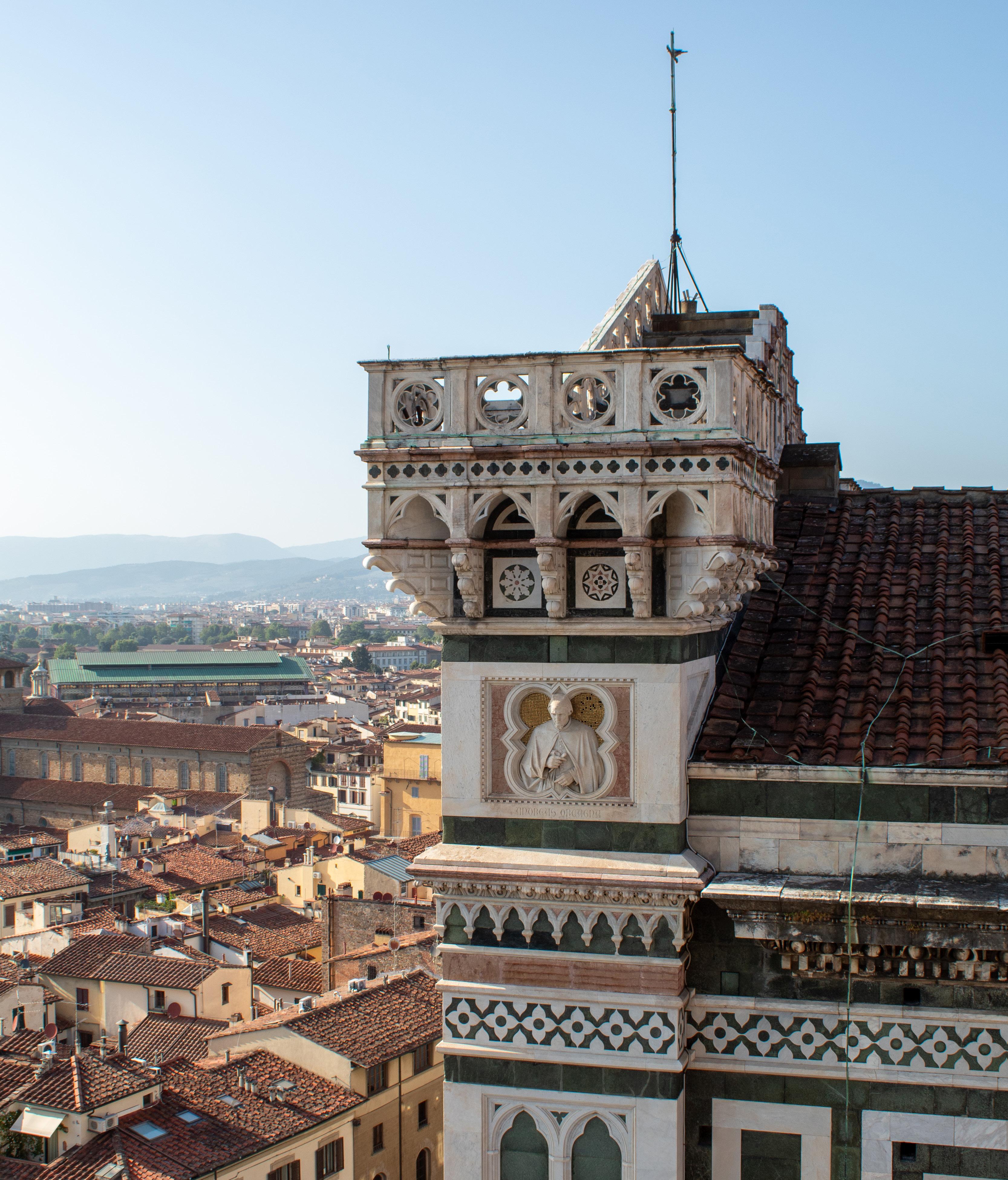
Since 2017, photography has been an important part of my life. The following section highlights photos taken throughout years as I learned more about composition, lighting, color, camera settings, and Photoshop editing. Taking photography classes in high school and at the University of Pittsburgh has strengthened my skills and allowed me to explore different subjects and environments. Due to my personal interests, there is a focus on portrait photography ranging from the beginning of my experience to my most recent photos.
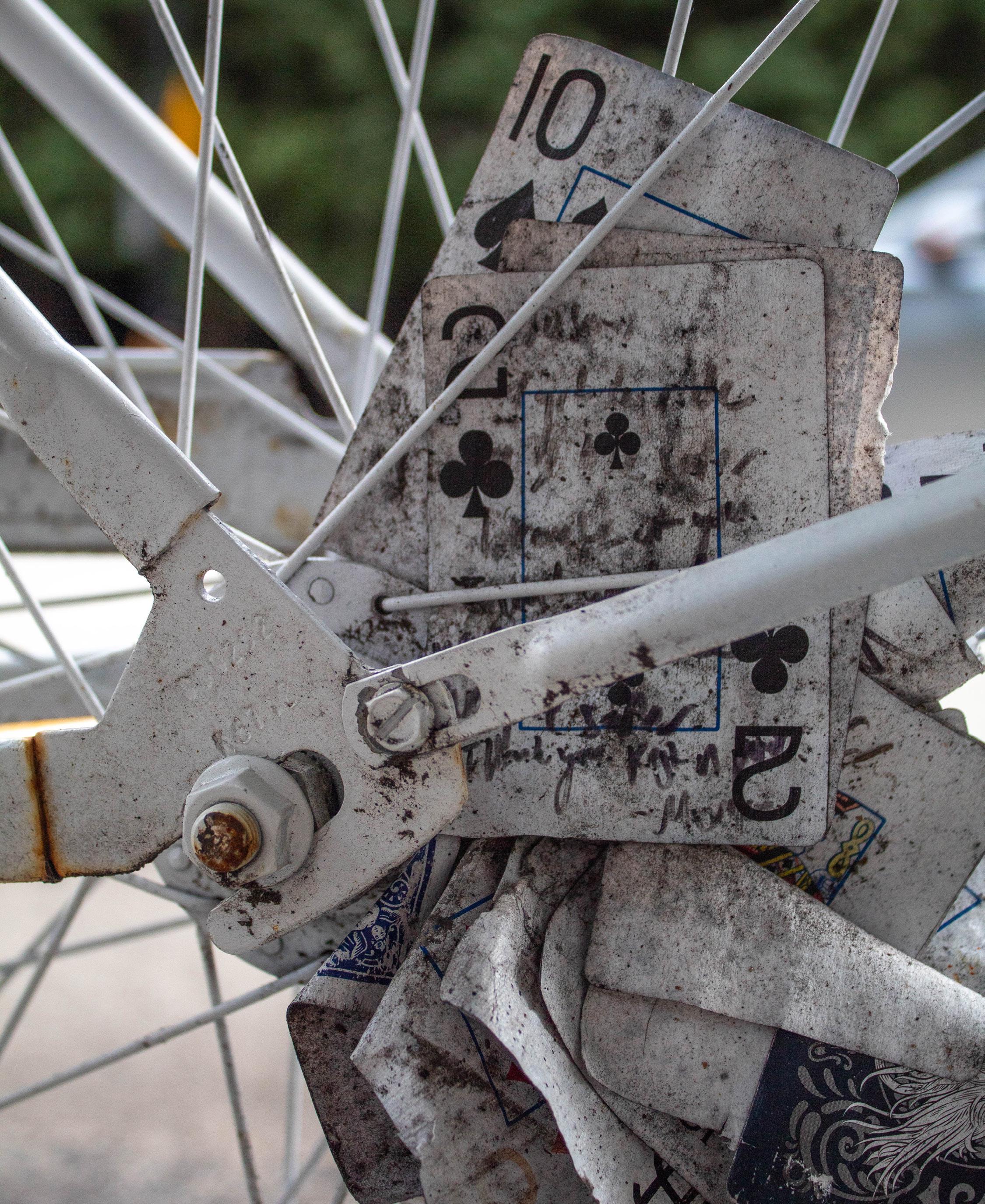
Emotion without a Face (Photography 2 at the University of Pittsburgh)
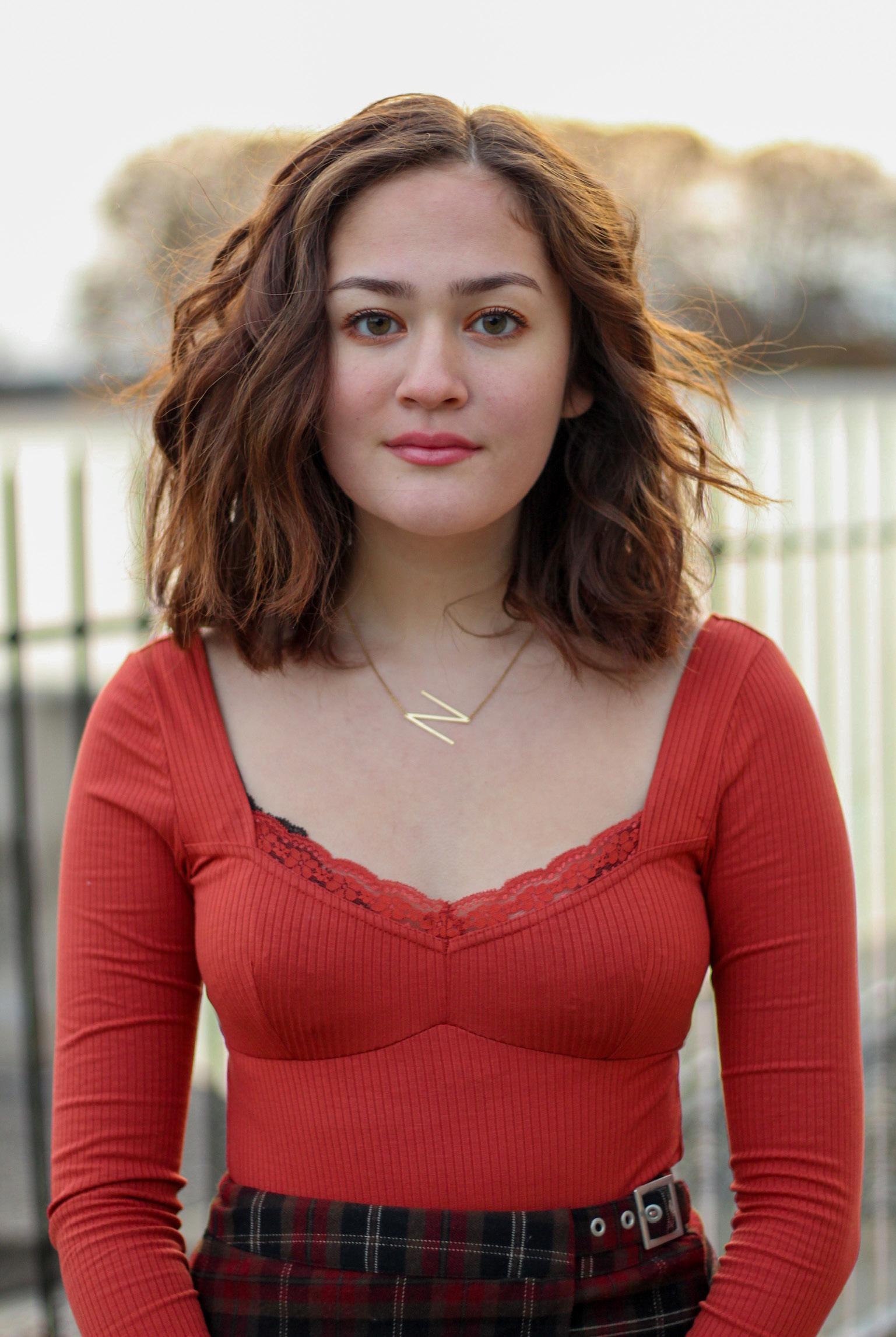
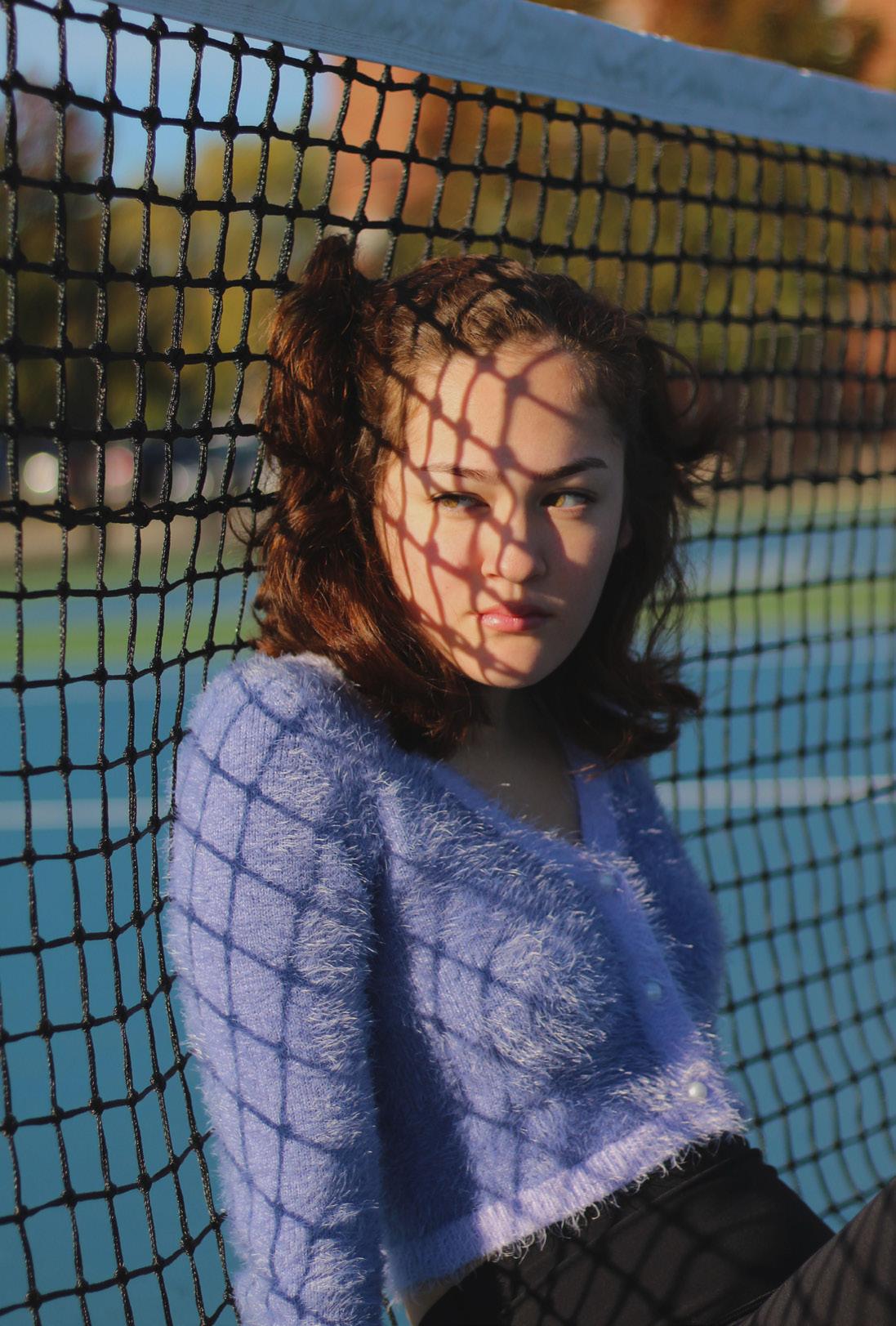

Engagement Photoshoot: Rachel Denton and Jacob