LAKES WEEKLY
LOCALLY OWNEDSINCE FOREVER BULLETIN



Targeted Solutions required for Housing Crisis
Our local tourism economy is in full-swing recovery, Queenstown Airport arrivals are back to pre-COVID levels, our roads back to the familiar crawl, the global hospitality worker shortage continues to bite, more homes slide into the visitor accommodation market, and the reality of a failed worker accommodation market worsens by the day.
Meanwhile QLDC’s proposed inclusionary zoning policy has got people talking about how we can deal with the crisis more effectively. While the almost 200 submissions to the proposed policy support the intent of the policy, they do not support the perverse tax on housing aspect of it. Most submissions suggest a broader-based approach, with all aspects of the district’s economy contributing to the cost of affordable housing. Several, like mine, suggest that a targeted rate would be a more effective, equitable, and legally defensible approach than a levy on subdivisions and housing development.

Meanwhile small and larger employers are talking about the homes they are leasing so they can hold onto key staff, more former backpacker’s hostels are becoming exclusively longer-term worker accommodation, and the chamber of commerce is holding workshops on what employers can do to help accommodate their staff. We need more of this!

Despite the mayor trying to recover from his earlier claim that the council has done all it can, nothing more has been suggested than a collaborative housing conversation. A step in the right direction, but real action is what is needed now.
Wicked problems like this require multiple solutions. An RMA-based levy on housing, like that proposed, is not only inadequate but is poorly targeted, and will be stuck in the Environment Court for years, with the council likely to lose in the end.
Extending the policy to a new targeted rate to be applied to all future developments is essential to achieve the outcomes intended – while reducing the financial impact on housing developers, increasing the funding for worker housing projects, and helping to manage growth.
The most appropriate approach would be a rate based on the number of new beds any new development would generate, rather than the proposed square-metre or value-based model.



A new rate could be remitted on developments that provide their own permanently affordable working accommodation or make contributions to a worker accommodation trust.




While we’re at it, a differential rate on the 27% of homes that are empty most of the year, and a significantly higher differential rate on residential visitor accommodation, would send the right signals and help build a meaningful worker accommodation fund.
Let’s keep the pressure on the council to provide and enable lasting solutions to this crisis, meeting its statutory responsibility to provide for the social, environmental, and economic well-being of our communities.
Jon F Mitchell
FEATUREINSIDE LAKESBUSINESS








No 890 28 Feb6 Mar
$
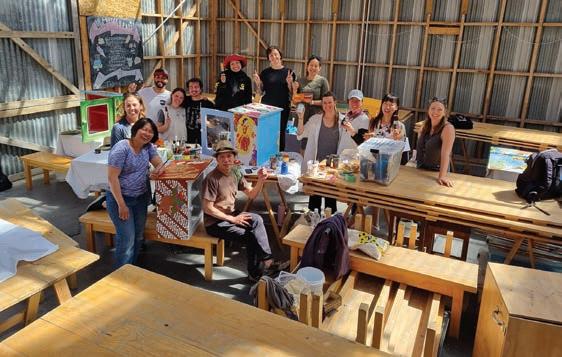
Six beautiful Lilliput Library boxes decorated by local artists will reveal books written in languages from every continent in the world on Saturday at Frankton Library. Local artists groups gave up their time at a community painting weekend recently. Read more on the launch in Community Notes on page 16
Artificial

and

can be so amazingly realistic, come and see for yourself.


Bring your own container and photo to show placement, then select your favourite flowers/colour and I can work within your budget (no arranging fee). Many
LAKES WEEKLY BULLETIN Page 2 CONTENT LIST 17 Lakes Weekly Poll Results 18 Digging Deep for Cyclone-Ravaged North 19 Business Airport’s record payment to shareholders 22-23 Hospo Guide 24-25 Goings On About Town 26 QLDC Libraries Monthly Picks 27 Sit Vac - Jobs News 14 Train Your Brain 4 Seven Day Weeks Taking Their Toll 6 E-bike popularity increases, as do ACC claims 15 My Life Story Jan Maxwell - A remarkable multitasker 20-21 Arts+Culture - First Thursdays March - join Queenstown’s favourite late night art crawl - Starkwhite Artists Explore The Psychology of Safety 16-17 Community Notes Frankton Library: World Languages Lilliput Libraries 8 Wilding trees for the chop 9 News in Brief 10 Pay determined for local elected representatives 12 Men charged over alleged assaults
to my Emporium!
Welcome
flowers
greenery
specials instore! Opening Hours: Mon-Fri, 10am-4pm Unit D/1091 Frankton Rd (BP Roundabout. Next door to Post Office) Phone: 03 441-4689 or 021 326 793 or email: dibowbyes@everlastingdaisies.co.nz

Seven Day Weeks Taking Their Toll
By Sue Fea
The constant pressures of working seven days amid a severe labour shortage have been starting to take their toll, mentally and physically, on some local business owners and staff with local doctors now calling for more resources.

While the peak of summer may have eased off slightly, many employers and staff have been left feeling utterly exhausted, physically and mentally, because of the immense pressures.
The problem’s so bad that Queenstown Medical Centre’s lead doctors have approached Te Whatu Ora Southern for “additional and higher levels of support” for patients through local GPs, who have a special interest in mental health, spokesman Ashley Light says. “We’re seeking that higher level of care, rather than these people just seeing a counsellor or therapist.”
The doctors, who contacted Te Whatu Ora on Tuesday (February 21), want more funding to address mental health issues. “As a group we keep raising the issue at the appropriate level,” says Ashley. They want local GPs with that special interest to be allowed to assess patients locally, rather than those patients needing to go to Invercargill or Dunedin to access psychiatric services.
“Our clinical services manager and lead GP say it’s an ongoing trend arising from multiple sources, whether that be stress, housing costs and shortages, work pressure, employers not being able to find staff,” he says. “Government funding is not responding to that need.”
“We’re seeing that mental health stretch in the community for multiple reasons and we need to ensure more funding’s available.”
“This community is in distress because of a lack of workforce,” says Ashley. Stress can manifest in various forms – physical, emotional, mental and environmental. “They all affect well-being,” he says. “Reach out to someone to talk to and if you need help see a GP.”
Buzzstop Honey Centre and Café owner Nick Cameron says he worked seven days a week for months leading up to Christmas when he finally had to close two days a week to retain his skeleton staff. “We were all exhausted.” He was easily clocking up 100 hours a week, working all day, doing administration at night. “It was just awful and stressful. I was the most tired and rundown I’ve ever been in my life. I felt like I’d lost touch with my kids,” he says. Forced to close for two weeks during the peak Christmas break after spending
thousands of dollars advertising jobs with no replies, Nick says things changed in January with applications rolling in. “I have great new staff, but three of them can’t find accommodation and are sleeping in vans, etc. It’s crazy. We finally have staff and they’re contemplating leaving as they can’t find anywhere to live,” he says. “Queenstown has itself in a right pickle.” However, with Country Lane expanding and tours busy again Nick’s positive about 2023.
A Queenstown tradie says up until mid-February he’d clocked 45 days in a row, he was so busy. He’s finally found someone he can train to give him the odd day off, but it took a long time. Some days he’d worked 15 hours to keep up until he finally became extremely tired. “But I always stop if I feel I’ve crossed the line. The busyness is just the reality of Queenstown right now.”
One local caregiver says she was close to collapse one day recently after doing many seven-day-a-week shifts. “It’s very exhausting, heavy work,” she says. “People are so exhausted they need to take holidays and then that workload falls on those who are left.”
Arrowtown restaurateur PJ Johnson says she’s been fortunate, hiring five staff through the new Immigration NZ employer-led, accreditation system. However, that involves a lot of paperwork which takes a lot of time and energy for those already stretched.
Blue Kanu owner Karen Hattaway, also a life coach, says staff are all aware of their well-being and the most they work is 50 hours, with days off to compensate. “There’s an influx of new people coming into town and as long as people manage their expectations and are a little patient there is accommodation around,” she says. They’ve managed to place two staff and existing staff have been great at offering a bed for others in their 34-strong team. “Managing people has changed. It’s not about running a company, but about looking after people,” says Karen.
Anna Dorsey, CEO of HeadLight, a Queenstown charity which encourages mental well-being, says with all that’s going on it’s important to look after our mental health and keep an eye out for those under increased pressure. “If you’re worried about how someone is coping, check on them, and ask how they’re doing. Knowing that people care can make a huge difference to someone’s well-being and help them know that they’re not alone,” she says.
If you or someone you know is struggling with their mental well-being, there’s support available locally and nationally. See Headlight website: www.headlight.org.nz for local and national contacts for support, or visit the QLDC website community well-being page to find out what support is available: https://www.qldc.govt.nz/community/community-wellbeing
LAKES WEEKLY BULLETIN Page 4
Beating the Burnout
By Sue Fea
Long-time Queenstown clinical psychologist Annette Ryan-Fea says she’s seeing the real risk of burn-out with so many business owners under immense pressure due to the severity of the labour shortage. Business owners and staff are having to work longer hours without days off, just to stay open. Financial stress is then a problem with so many forced to limit hours and offerings.
“There’s an inevitable psychological cost to all that stress and the rollercoaster ride, which seems to lurch from one kind of difficulty to another,” she says. “The risk is burnout – absolute mental and physical exhaustion caused by exposure to incessant work demands often threatening to overwhelm.”

She’s seeing people feeling swamped, either on the brink, or having already suffered from burnout. They’ve lost perspective on what is important in life. “They’re no longer smelling the roses. They’ve forgotten there are any roses,” says Annette.
Psychological resilience has been lowered and there’s a disconnect from extended family, friends and hobby groups, because there’s no time or energy, she says. For many there’s an obsessive focus on work issues, more pessimism, and they’re feeling defeated.
She’s concerned too about family relationships being compromised and truancy, as already overloaded parents working long hours opt for the “anything for peace” approach at home. “There’s a truancy crisis in New Zealand. Only 60 percent of New Zealand children attend school regularly,” says Annette. “In some homes boundaries have become poorly defined, screen time has escalated and if children are oppositional about going to school, parents may take the path of least resistance.”
Intimate relationships can also be compromised.
“Many of those in these situations have very few options. Even visiting the clinical psychologist can create stress because it means time off work,” she says.
Annette’s Top Tips:
• If possible, take time off, even a very short break.


• If not, make plans / lists of what wonderful things you’ll do once this crisis passes. Imagine it, talk about it, even simple things like a day by the river reading a book.
• Substitute a walk for screen time.
• Watch caffeine, limit alcohol, eliminate all illicit drugs.

• Do exercise that makes you puff, do some yoga at home, be mindful and grateful.
• Treasure important relationships. Look for small opportunities, happiness in the moment.

• Prioritise getting your children to school and ask for help with that.
• Eat healthy, schedule enough time for sleep.
• As much as you can - keep it simple.

LAKES WEEKLY BULLETIN Page 5 OPEN NOW Phone: 021 081 25523 In Remarkables Park Shopping Centre Hours 11.30am to 8.30pm
Highland Real Estate Group Ltd Licensed Agent REAA 2008 03 441 0777 FOR A RENTAL? SCAN QR CODE TO VIEW OUR LATEST LISTINGS! Looking Queenstown P 03 441 0777 E rentals.queenstown@harcourts.co.nz ST JOHN HEALTH SHUTTLE Operates from Queenstown to Invercargill, (returning the same day) Monday to Friday for health related appointments for more information and bookings please call: 0800 103 046
E-bike popularity increases, as do ACC claims

 By Jess Allen
ACC is reporting that e-bike-related injury claims reached a new high last year with the 60 – 74 age bracket with the highest number of reported injuries. In the Queenstown Lakes District, claims have risen over the past five years from approximately ten up to 89. Locals and councillors have recognised a rise in traffic on bike paths, which has contributed to the increase in claims.
Lauren Prebble is a local e-bike owner who has noticed more riders out an about, some of whom aren’t always fully aware how to ride to the conditions of the track. She herself had an incident on her e-bike when the track was particularly dry and she took a corner with some speed ¬– she slipped off and injured herself, ending up with stitches and a black eye. She says that the community is really passionate about the tracks and aren’t necessarily wanting strict regulations at this stage.
“In the future if we’re doing this modal shift into more public transport and active transport, there’s going to be more traffic on the tracks. Are people fully aware how to ride to the conditions of the tracks – especially when it’s multi-use as well. I think what Waka Kotahi really need to look at for the active commuter is actually streamlining a bike lane on the road. How they’ve done it now is just on footpaths where you’ve got so many transitions from footpath to road and back, whereas the reality is that the active commuter wants to get from A to B fast,” says Lauren.
Alexa Forbes is a councillor elected to the Dunstan Constituency is part of the Otago Regional Council Transport Committee. She’s passionate about transport of the future with a focus on active and public transports. She says that e-bikes are an efficient mode of transport that is beneficial for health and reducing road traffic.
“E-bikes are just brilliant in terms of getting people around quickly without having to be in different clothes – they don’t have to be in lycra – they can carry a lot of stuff and the bikes are super-efficient. At the moment they’re expensive – not compared to a car, but they can move you similar distances. As an e-biker you need very little end-of-trip infrastructure such as showers, but you do need better on-road or on-trail infrastructure.
“The really big importance of e-bikes is that they go pretty fast, and that can be scary for people who are walking in the same space. So we need to think about how on-road and on-trail infrastructure separates pedestrians and e-bikes in particular. It would be nice to separate all bikes from e-bikes.
I think now on Frankton Track it’s starting to get quite busy with e-bikes commuting twice a day and in the same place where people are running their dogs – so there needs to be a bit of courtesy from the e-bikes,” says Alexa.
Another problem that Alexa agreed with Lauren about was the transitions throughout Queenstown Lakes been problematic, especially for children. The transitions across major roads, moving between footpaths and tracks, and off trails are dangerous and sometimes totally unexpected. With the rise in the e-bikes popularity unfortunately comes the rise in ACC claims – last year they cost the ACC more than $4 million. While the bikes are heavier than traditional bikes, and can take a little getting used to, with improved trails, a wee bit of regulation, and education, the number of claims could improve.
LAKES WEEKLY BULLETIN Page 6


























































LAKES WEEKLY BULLETIN Page 7 qldc.govt.nz/recreation @QLDCSportRec 6STARTS MARCH Challenge yourself to attend 5 group tness classes each week, for 5 weeks. Prizes up for grabs. SIGN UP NOW! WATCH REPAIRS NOW For all your repairs, watches, clocks, batteries, key cutting & straps. Level One, Stratton House (Below Sky City), 24 Beach Street, Queenstown Mon - Fri, 9:30am till 5:30pm. Closed on Saturdays. Phone/ text: 027 217 0442 XS STORAGE Secure self storage units – various sizes available Phone: 0800 297 786 www.xsstorage.co.nz RENTING NOW QUEENSTOWN 5A Howden Drive Hanley’s Farm 1 Partly furnished $525 1 BEDROOM Licenced under the REAA 2008 41 Shotover Street | 03 442 7777 rentals@qac.nz | tacc.nz For more listings, scan the QR code 3 BEDROOMS 1 Von Place Fernhill 2 Partly furnished $700 19 Coopworth Road Hanley’s Farm 2 Part Whiteware $850 16 Ellesmere Road Jack’s Point 2 Partly furnished $1100 13 Denbigh Street Arrowtown 2 Partly furnished $1200 4 BEDROOMS + 6B Limerick Lane Queenstown Hill 3 Part whiteware $1500 280 Tucker Beach Road Tucker Beach 3 Partly furnished $3500 Licenced under the REAA 2008 Are you looking for up to 40% OFF regular prices on local activities and tours? Download the Queenstown App and start saving today!
Wilding trees for the chop
By Paul Taylor
Scores of trees between One Mile and Sunshine Bay are among hundreds facing the axe across Queenstown Lakes.
Whakatipu Wilding Conifer Control Group (WCG) wants to remove all large wilding trees from reserve land along that section of the Glenorchy-Queenstown Road.
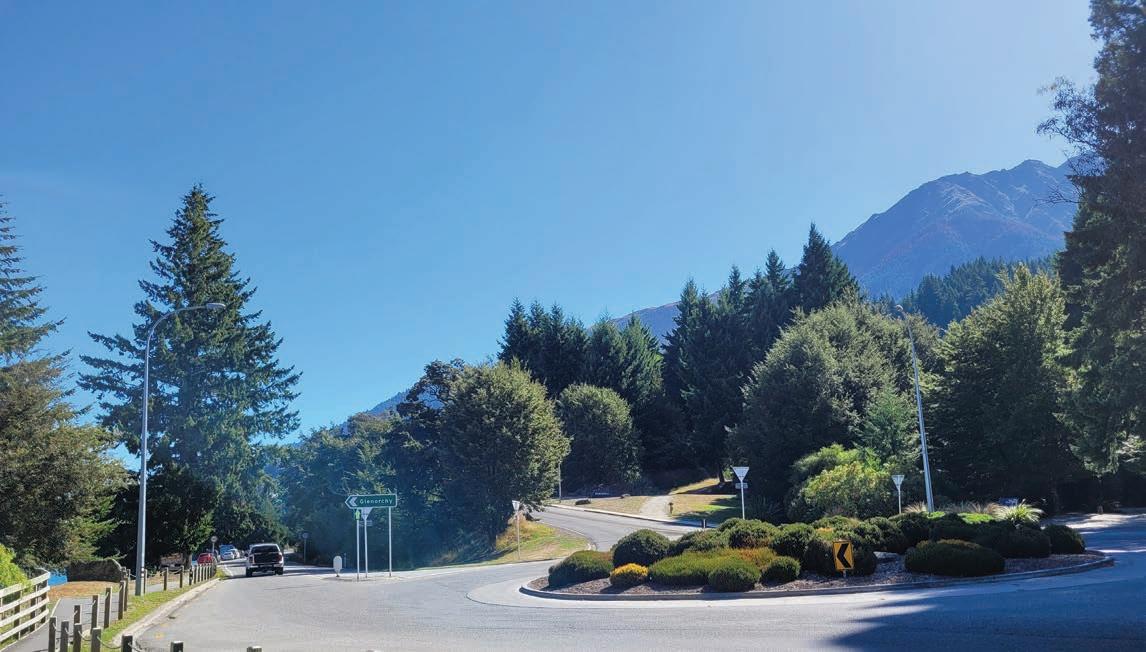
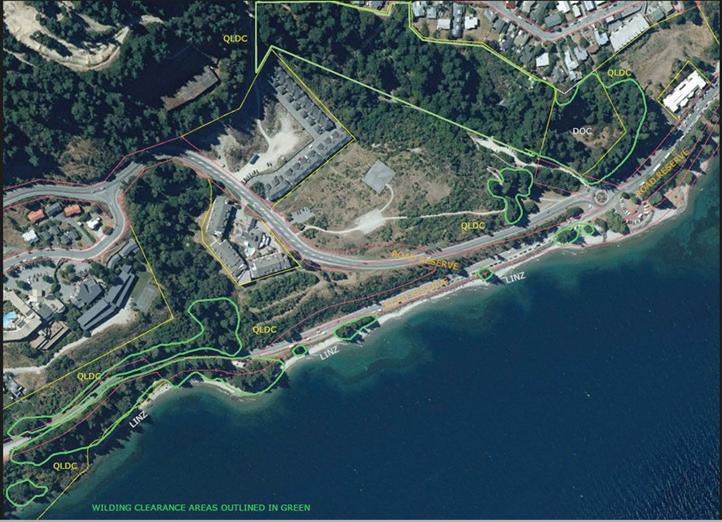
The majority of the trees surround the path up through the woods from the roundabout to Fernhill, and there are also dozens more along the side of Lake Wakatipu.
Chopping then down will help reduce seed sources for wildings and promote natural regeneration.
Queenstown Lakes District Council Community Services general manager Kenneth Bailey says the Department of Conservation (DOC), Land Information New Zealand (LINZ) are collaborating on the ongoing project, which supports the NZ Wilding Conifer Management Strategy. Queenstowners can have their say on the tree-chop request, along with three other requests, via the council’s Let’s Talk website.
“Council is proposing to support native replanting where suitable,” Bailey says.
WCG is also collaborating on Arrowtown Golf Club’s plans to remove about 170 trees from land it leases from QLDC. Some 75% of the trees are larch, with the rest Douglas fir.
The plans include the removal of large larch trees along Centennial Avenue to and from Arrowtown. The club propose replanting these with another avenue of trees, with two trees for every one removed.
That’s in line with the QLDC Tree Policy 2022 adopted by Council last August. The request also aligns with the Arrowtown Wilding Strategy in working towards the goal of removing the local seed source of such trees.
Elsewhere, the Wakatipu Croquet Club has submitted a request to remove eight mature established Eucalyptus trees growing on QLDC reserve land at Jardine Park, Kelvin Peninsula. This is to reduce damage and regular maintenance to the croquet club green as a result of debris dropping onto the green and tree roots growing into the green. The club also plans to replant two natives for every tree removed.
And the Wanaka Golf Club (WGC) wants to remove 70 trees, the majority wilding species, on the Back 9 hole of the course to the northeast of the intersection of Ballantyne Road and Golf Course Road. It wants to build two reservoirs there, to store water for irrigation.
Last year, QLDC faced public backlash after chopping down mature Eucalyptus trees on Brecon Street, as part of the streetscape project. Similar plans to remove dozens of trees to build a cycle path outside Queenstown Resort College were abandoned after complaints.
QLDC now makes all requests for tree removals open for community feedback.
“Sharing removal requests in advance gives everyone the opportunity to find out more about the reasons behind them and any plans for revegetation. I encourage people to take a look at the information on our Let’s Talk website and then share their thoughts,” Bailey says. Feedback closes at 5pm on Monday, 13 March.
LAKES WEEKLY BULLETIN Page 8
Some of the trees earmarked for the removal, near the One Mile roundabout
IN BRIEF
Police drills on Ladies Mile
Don’t be concerned if you hear gunshots or see police running around 516 Ladies Mile. The toxic mould has not become sentient.
Instead, NZ Police’s frontline responders are running a series of drills on the council-owned property, every fortnight through to Wednesday, 19 April 2023.
There’ll be a maximum of 21 participants on site at any time and some scenarios will involve the firing of blank rounds (i.e., no projectile).
“Blank rounds aren’t as loud as a live firearm, but properties surrounding 516 Ladies Mile have been informed as there may be some unexpected noise,” New Zealand Police Lead Tactical Coach, Sergeant Ben West, says. West says police are always looking for appropriate venues for training.
“It’s important that our frontline responders are well equipped to take on the wide range of challenges they face while carrying out their duties,” he says.
“The scenario training at the Ladies Mile venue will enhance the tactical capability of the frontline ensuring they can continue to keep the public and themselves safe.”
QLDC Property Director, Quintin Howard said New Zealand Police approached the council about using the $14 million property, which was to be turned into a community centre before toxic mould was confirmed to be in the walls.
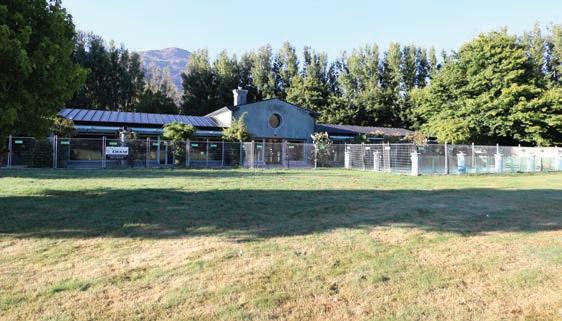
“We approved this use of 516 Ladies Mile as it’s short-term, and New Zealand Police has a detailed safety plan in place for any potential hazards on the site.
QLDC and New Zealand Police have signed a Licence to Occupy for the use of 516 Ladies Mile.
Queenstown’s direct support to cyclone victims
Queenstown Lakes residents able to support the relief effort following the devastating Cyclone Gabrielle can now donate directly to one of worst hit areas.
The district has been matched with Central Hawke’s Bay through the Adopt a Community initiative, run by Ko Tatou Local Government NZ.
“Like many affected areas Central Hawke’s Bay District Council has set up a Mayoral Relief Fund,” Queenstown Lakes District Council (QLDC) Chief Executive Mike Theelen says.

“Being matched in this way provides an additional opportunity for our community to support another in their time of greatest need.
“It’s not difficult to think of a time when the boot might be on the other foot and we’d be reliant on other parts of the country helping us, so I would encourage anyone who has the means to consider making a donation in this way.”
In addition to this initial boost, QLDC will look at how it can offer Central Hawke’s Bay medium and long-term support too.
“It will take many months for a disaster of this scale to be resolved at a practical level, let alone the years it will take for people to come to terms with its effects.”
“Your generosity will be hugely appreciated,” Theelen says.
Donations to the Central Hawke’s Bay Mayoral Relief Fund is the preferred method via Adopt a Community: use bank account number 01-07770038665-00 with the reference ‘Relief’. (If you bank with KiwiBank you may be asked to enter a property valuation number; if so simply enter ten zeros.) Alternatively, donations can also be made to Hawke’s Bay Disaster Relief Trust (02-0700-0010824-002).
Regional council rates rise
Otago Regional Council is forecasting an 18.8% average increase in rates across Otago, which works out at $84 per household.
ORC approved its draft Annual Plan, with new rates forecast, last week and is now seek public feedback.
ORC Chair Gretchen Robertson says there’s no change to the council’s longterm plans but the rise, above the forecast 12%, accounts for inflation. “We understand that any rates increase is a very difficult message at this tough time for people,” Robertson says. “However, the council is also affected by inflation on wages and goods and services, which is also a national problem.”
In 2021, the council absorbed inflationary pressures.
“Unfortunately, that is no longer an option, given significant rising costs similar to many other local authorities. Inflation has been the wild card since the initial 12% forecast was made and has been building over the past year.

“We are committed to the work our communities have asked us to do, to raise Otago’s environmental standards, and provide for public transport services, and so we are proposing to stick to this year’s work programme.”
From mid-March, Otago residents will be able to download a copy of the draft annual plan from the council’s website and work out the impact on their households and businesses rates compared to the previous year’s rates. Ratepayers and stakeholders will also be able to comment whether they are supportive of the direction of the current work programme.
But as there is no substantial change to the Long-Term Plan Year 3 (2023/24) work programme, which has already been consulted on, the council only needs to communicate and seek some feedback on this draft Annual Plan.
“We don’t want to duplicate effort and would rather keep the process of full consultation with Otago’s communities for the next long-term plan, which we will begin building this year and into next year.”
LAKES WEEKLY BULLETIN Page 9 NEWS
516 Ladies Mile
Cyclone Gabrielle flooding in Hawke’s Bay. Photo: Central Hawke’s Bay District Council
Pay determined for local elected representatives

 By The Wanaka App



Have you ever wondered what our elected representatives are paid and who decides what they should earn?

Queenstown Lakes District Council councillors signed off on remuneration rates for current elected members at a council meeting earlier this month. They approved annual remuneration of $56,308 for deputy mayor Quentin Smith; $52,675 for the councillors who serve as committee chairs, $45,410 for the remaining councillors.
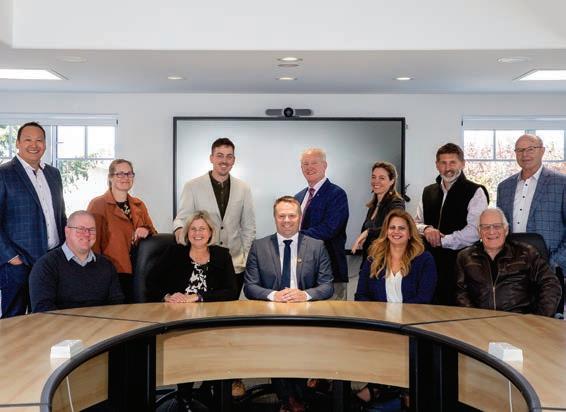
Remuneration is set by the Remuneration Authority on an annual basis but councils can make some decisions regarding how the remuneration pool for each of the above positions - in this case with a total of $532,201 - is allocated.
The amount in the authority’s pool of money is decided by several factors, including the size of the district’s governance role, operating expenditure, and asset values, its population, and how much time they estimate an elected representative will spend on the job.
The local council doesn’t have any discretion to pay elected members less than the total pool, and must pay more than a set minimum ($40,710) for each councillor.
The pay for the mayor, Wanaka Upper Clutha Community Board (WUCCB) chair and WUCCB members is also set entirely by the authority.
It has assigned annual remuneration of $143,734 for mayor Glyn Lewers, $24,659 for Wanaka Upper Clutha Community Board (WUCCB) chair Simon Telfer and $12,329 for WUCCB members.
Pay for other senior roles - like the chief executive - is not set by the remuneration authority.
QLDC chief executive Mike Theelen received a pay rise, following a standard annual review, in August last year, which brought his salary to $383,814

LAKES WEEKLY BULLETIN Page 10 HOUSE ELECTRICAL for all your electrical needs new builds | renovations | maintenance rob harvey rob@houseelectrical.co.nz 021 115 5637 www.houseelectrical.co.nz GET CASH FOR YOUR UNWANTED VEHICLES Kiwi owned and operated DAMAGED, MECHANICAL ISSUES DEREGISTERED, CRASHED NO WOF - NO PROBLEM WE BUY ALL CASH FOR YOUR UNWANTED CAR, VAN, UTE, TRUCK, 4WD ETC. Call today for a free Quote 0800 333 422 | 027 233 3533 WE ALSO SELL A WIDE RANGE OF CAR PARTS FOR MOST MAKES AND MODELS INCLUDING ENGINES, WINDSCREENS AND TYRES
Left to right: Matthew Wong, Quentin Smith, Niki Gladding, Lisa Guy, Cody Tucker, Mayor Glyn Lewers, Craig (Ferg) Ferguson, Esther Whitehead, Neeta Shetty (resigned), Gavin Bartlett, Lyal Cocks and Barry Bruce
Everything Else For Rent
FOR RENT
CDB STORAGE LEVEL 1 UPPER BEACH STREET. 40m2 ideal for CDB retail or other businesses needing easily accessible space. Email: steve@fergfoods.com
TRADES & SERVICES
Trades & Services
PETSITTER AVAILABLE LATE APRIL TO MID-SEPTEMBER 2023. Mature, experienced lady providing loving care for your pets, and a presence in your home giving peace of mind. Personalised service for minimal fee. References available. Contact Sheree 02102667110
COMMUNITY
Community
FREE ENGLISH CONVERSATION CLASSES AVAILABLE AT KIWI English Cafe on Mondays between 6pm - 8pm at St Andrews, 26 Stanley Street, Queenstown. Call 020 4189 9160 for free registration now.
FREE IMMIGRATION CLINIC. IF YOU NEED IMMIGRATION information or advice the Citizens Advice Bureau run an immigration clinic every Wednesday from 7pm. To make an appointment call them on 03 442 6679
BE A BIG BUDDY - MAKE A BIG DIFFERENCE to a child in the Wakatipu Basin. This is for children aged between 4-12yrs who are in need of extra adult support and friendship. You will be matched with a child with whom you spend a couple of hours each week. Email your interest to BPW@familyworkssld.nz
SPCA OP SHOP – 51 GORGE RD. Open Monday – Saturday 9.00 – 5.00. Pre-loved goods and clothing at great prices. Help support the ongoing work done by the SPCA. Your old goods, or your time, could help save a life. Accepting donations (no electrical at the moment) and volunteers now. Volunteers wanted!
COMPASSIONATE FRIENDS OFFERS FRIENDSHIP, SUPPORT AND UNDERSTANDING to bereaved parents, grandparents siblings to help with coping and dealing with grief that has come about through the loss of a child. For further information please call Pauline Trotter on 0273960611 or email centralotagocf@ gmail.com
WSCA – ROOMS FOR HIRE - SPACIOUS, sunny rooms are available for hire to Queenstown Community Groups. The rooms hold up to 90 people, with seated dining for 40. Located on the 1st floor of Malaghan House, 10 Memorial Street, Queenstown with lift access. There are kitchen facilities, toilets, Wi-Fi, media equipment for projection onto large screen plus large screen TV. Contact us on 03 4429214 or info@wsca.org.nz for more details.
QUEENSTOWN DINNER CLUB IS TURNING 30! WE are inviting past members to contact us if interested in attending an anniversary dinner on Monday, April 3rd. Please email: Isabel on dinnerclubqtn@gmail.com or on 021 376 736.
EVERYTHING ELSE
WĀNAKA FESTIVAL OF COLOUR RETURNS MARCH 26-APRIL 2, 2023. Visit www.festivalofcolour.co.nz for the full programme and bookings. Tickets on sale now.
QUEENSTOWN DHARMA CENTRE, 12 LAKE ST. WED (1 Mar) @ 6:30pm, “Nurturing Peace” with Grant Rix. SUN (5 Mar), from 2:30pm - 5:30pm, Amnyi Trulchung Rinpoche’s guidance on “A Guide to the Way of Life of a Bodhisattva” Sessions are free with dana for the centre/teacher gratefully accepted. For more info, see dharmacentre.org.nz or FB.
DID YOU KNOW? DESPITE THE REPUTATION OF trees as the most important source of oxygen on Earth, the bulk of atmospheric oxygen (50-85 percent) is produced by marine plants.
VOLUNTEERS WANTED FOR THE THE NEW ZEALAND Open. There are a few last-minute replacements required for the Volunteer team to help support the delivery of this year's tournament. Positions include Driving range attendants, short game area support, and course marshals. All Volunteers receive an Official Tournament Cap & Official Tournament Shirt, lunch & drinks each day you volunteer, a chance to play in the 2024 New Zealand Open as an amateur and a complimentary round at Millbrook Resort. If you would like an inside-the-ropes experience at one of New Zealand's premier sporting events please visit www.nzopen.com
NEED AN IDYLLIC SPOT IN KINGSTON TO rent for your tiny home or caravan? Please text 022 404 3545.
HAVE THAT NIGGLING ACHE OR PAIN THAT just won’t go away? A recurring condition, or maybe you’re looking for something to assist alongside your more traditional treatments to speed up recovery? Two Feathers can help, an Alternative & Holistic Health Service including Tuning Forks, Energy Healing & Reiki Master. For more info contact Amy on: healing@ twofeathers.co.nz or 022 454 8288
QUOTE OF THE WEEK: "I'LL TELL YOU what freedom is to me— no fear." - Nina
Simone
DID THIS AD GET YOUR ATTENTION?
THAT IS THE POWER OF BUSINESS LINE ADS
Contact the Lakes Weekly Bulletin today 03 409 2800 or email enquiries@qmg.co.nz and take the first step to successful advertising.
Heart Kids Central Otago AGM
Tuesday 28 March 2023, 7.00pm
Five Stags Bar & Restaurant, Cromwell
All current members & prospective members welcome RSVP Cate 021 1133877 by 17 March 2023
LAKES WEEKLY BULLETIN Page 11 • Upholstery • Loose Covers • Furniture • Marine • Automotive • Boat Covers • Blinds • Headboards • Fabrics Central Lakes Upholstery Ltd. 022 372 56 49 centrallakesupholstery@gmail.com centrallakesupholstery.co.nz20b McNulty Road, Cromwell
AA Queenstown Driver & Vehicle Licensing Agent


From Monday 20 February 2023
AA Driver & Vehicle Licensing Agency will be opening at the new location of Remarkable Motorcycles, 4/27 Glenda Drive, Frankton
Monday - Friday 8:45am - 4:30pm (OVC only - 9:00am-4:00pm) Closed for lunch 1:30pm-2pm
Available services:
• Driver licensing (incl. overseas conversions)
• Motor vehicle licensing – Rego's and RUC
• AA Membership
• International driving permit

• Identity verification

• RealMe
• Personal IRD number
• Kiwi Access card
For any enquiries regarding Driver Licensing please call toll free on 0800 822 422
WHAKATIPU DRIVE MY LIFE ARE SEEKING VOLUNTEERS to become mentor buddies to help our vulnerable people achieve their drivers licence. If you are interested or have any questions contact Louise Ward louise@reap.co.nz

SC PLASTERING LTD.
Craftsmen exterior plasterers - 20yrs local experience. Phone Shawn Cruise: 021 539 138 or skcruz@outlook.com

Men charged over alleged assaults
By Paul Taylor
Queenstown Police arrested two men after several alleged assaults in the CBD in the early hours of Friday morning.
One is facing a charge of assault with intent to injure, with the other has been charged with wounding with reckless disregard and injures with intent. Both men, 22 years old, were arrested on Friday afternoon. Their alleged victims were hospitalised, one with serious injuries, the other with moderate injuries.
But Detective Constable Tim Risstrom, on Friday, says police are still appealing for any further victims or witnesses to incidents to come forward.
“So far in our investigation we have identified two further assaults that occurred in the CBD following a serious assault near Shotover Street.
“At this stage we have not identified the two men in those additional incidents, and we would like to speak with them further, as well as any other victims.
“Police ask that they get in contact so we can also check on their welfare.”
Those members of the public in the area at the time, and witnessed these incidents, are still asked to contact Police.
Detective Risstrom says the man earlier hospitalised with serious injuries has since undergone surgery and is recovering.
The second man hospitalised has since been discharged and is recovering at home.
Anyone with information is asked to contact Police via the105 phone service or online at https://www.police.govt.nz/use-105, using ‘Update My Report’.
FREE
IMMIGRATION CLINIC
If you need immigration information or advice the Citizens Advice Bureau run an immigration clinic every Wednesday from 7pm. To make an appointment call them on 03 442 6679
How to advertise
Ph: 03 409 2800
Email: info@qmg.co.nz
Place your ad online: www.lwb.co.nz

Advertising Deadlines
Display Advertising: 12pm Friday
Situations Vacant: 12pm Friday
Queenstown Media Group
2nd Floor, The Mountaineer Building
Cnr Beach and Rees Street
PO Box 1546, Queenstown 9300
Meet the team
David Gibbs General Manager
Kendalle McLeod Finance
Catherine Mercer Account Manager 027 777 2785 | cat@qmg.co.nz
Kylee De Suza Account Manager 021 044 2968 | kylee@qmg.co.nz
Ana Paula Salvi Graphic Designer
Patricia W. Becker Graphic Designer
Paul Taylor Editor/Journalist
Sue Fea Journalist
Bethany Rogers Contributor
Lauren Prebble Contributor
Jay Cassells Contributor

LAKES WEEKLY BULLETIN Page 12
Tit bits Tit bits
FROM AROUND THE WORLD
Work less, get more
A trial of a four-day workweek in Britain, billed as the world’s largest, has found that an overwhelming majority of the 61 companies that participated from June to December will keep going with the shorter hours and that most employees were less stressed and had better work-life balance.
That was all while companies reported revenue largely stayed the same during the trial period last year and even grew compared with the same six months a year earlier, according to findings released this week.

“We feel really encouraged by the results, which showed the many ways companies were turning the four-day week from a dream into a realistic policy, with multiple benefits,” said David Frayne, research associate at University of Cambridge.
AP

Rolling Stones Recording with Paul McCartney — and Ringo?
Almost 60 years since first meeting, it looks like the Rolling Stones and the two surviving Beatles may come together on a new Stones album. Variety hears that Paul McCartney has recorded bass parts for a forthcoming Rolling Stones project being helmed by 2021 Grammy producer of the year Andrew Watt. Ringo Starr is also slated to play on the yet-to-be-announced album.
Recording sessions took place in Los Angeles in recent weeks and, while it’s unclear which tracks will make the final cut — or whether McCartney and Starr would end up on the same song — the album’s production is nearing the mixing phase.
Rolling Stone Germany’s ‘Düsseldorf Patient’ cured of HIV
Researchers have reported a third case of a person being cleared of HIV after undergoing a stem cell transplant aimed at curing his leukemia. The study, published last week describes the case of a 53-year-old male patient who underwent a bone marrow (stem cell) transplant to treat his leukemia. Like the “London” and “Berlin” patients, the donor had a rare mutation that confers resistance to certain strains of HIV, like HIV-1.
“This underlines that these approaches are promising and also reproducible, since it does not remain an isolated case,” said Jürgen Rockstroh, a professor and head of infectiology at Germany’s University Hospital Bonn. However, researchers pointed out, the treatment has not been successful for several other patients who have received it. The new case adds to the two previous cases of HIV cure using the same type of stem cell translant as the Berlin patient and the London patient.
DW
Sealed Original iPhone Sells for Over $63,000
A sealed original iPhone model from 2007 has sold at auction for over $63,000 – the most ever for the device to date. The lot, held by LCG Auctions, opened on February 2 and ended on February 19. After receiving 27 bids, the iPhone sold for $63,356.40, over 105 times the device’s original $599 retail price.
According to Business Insider, the iPhone’s original owner was given the device as a gift from her friends in 2007, but never used it since iPhones at the time could only be used on AT&T’s network. She simply left the phone unopened for the following 15 years.
MacRumors
The Council Word
Arrowtown-Kawarau by-election

We’ll soon be launching a by-election for the vacant ArrowtownKawarau Ward Council seat. For starters we’re calling for nominations to be received by noon on Thursday 9 March. Find out more at qldc.govt.nz/2023-by-election
Sign up and Let’s Talk
We’ve got another busy year ahead with heaps of topics and projects on which we’d love your input including the forthcoming Annual Plan. The best way to stay informed and have your say is via our dedicated website Let’s Talk. Register now at letstalk.qldc.govt.nz/register
The doggy events of the year are back!
Tails are wagging about the return of our Dog Walks in Queenstown (25 March) and Wānaka (26 March). Both events feature giveaways, sausage sizzles, stalls and plenty of pooches! Check @QLDCinfo on Facebook for more details.
Calling all mural artists
We’re looking to brighten an external wall at Queenstown Events Centre with something sporty, colourful and fun. Mural artists keen to involve the community in this project can send expressions of interest until 26 March. For more info search ‘mural EOI’ on qldc.govt.nz
Stay wai wise
Small changes can have a big effect on how much water we use. Did you know turning off the tap while brushing your teeth can save up to 12 litres a day? And you can save up to 20 litres for every minute less you spend in the shower! Find more simple tips at qldc.govt.nz/wai-wise
Free yoga in the park
To celebrate Parks Week and International Women’s Day we’re putting on a free community yoga class in Queenstown Gardens. All abilities welcome. Please bring a mat or towel. 5.30-6.30pm, Wednesday 8 March on the croquet lawn. To reserve a space email samantha.saccomanno@qldc.govt.nz
Pop-up fun at the park
Summerdaze events are popping up at parks across the district. Our trailer is packed with free games and activities, and our mini library will feed your mind. See us at Frankton Beach, 3.00-5.00pm on Thursday 9 March. More info at qldc.govt.nz/summerdaze
www.qldc.govt.nz
LAKES WEEKLY BULLETIN Page 13
TRAINBRAIN YOUR


1. Which actor’s autobiography was entitled The Moon’s a Balloon (1972)?
2. What was the dog’s name in the Famous Five children’s books?
3. Which actress starred in the 1987 comedy film Overboard?
4. Which girl’s name comes from the Greek word for “peace”?



5. In the Old Testament, which priest was teacher to the prophet Samuel?
6. Which part of the body is affected by Méniére’s disease?
7. Which figure of Greek mythology was said to be the mother of Helen of Troy?
8. Ferdinand, King of Navarre, is the main character in which of Shakespeare’s plays?
9. Which European city is nicknamed “La Serenissima”?
10. What Jane Austen novel features Jane Fairfax and a vicar named Elton?

11. Sword lilies are another name for which tall garden flowers?
12. Which Japanese city is famed for its beef?
13. Which Formula 1 team was featured in a 2017 documentary film?
14. Which famous bell can be seen at Lloyd’s of London?
15. Bitter Sweet Symphony was a 1997 hit for which group?
16. Which rope is attached to the top of a mast?
17. Which Torchwood actor went on to appear as Malcolm Merlyn in the TV series Arrow?
18. In which National Park is Malham Tarn?
19. In which country is the city of Shiraz?
20. What is the national fruit of India?
LWB QUIZ CAPTION COMPETITION 3B Searle Lane www.hellpizza.com THE BEST DAMNED PIZZA IN THIS LIFE OR THE NEXT Comment in our facebook post your funniest Caption to be in the chance to WIN 1 x Double Pizza Voucher from Hell Pizza! Submit your entry by Sunday prior to the last day of this edition (check dates on the cover) Answers in next weeks LWB SUDOKU 1 4 5 5 2 8 3 3 9 7 5 9 2 3 1 6 4 7 2 8 6 What belongs to you, but other people use it more than you? RIDDLE 154637982 926458731 387129654 273815496 618294375 549376128 465783219 791542863 832961547 QUIZ ANSWERS: 1. David Niven | 2. Timmy | 3. Goldie Hawn | 4. Irene | 5. Eli | 6. Inner ear | 7. Leda | 8. Love’s Labours Lost | 9. Venice | 10. Emma | 11. Gladioli | 12. Kobe | 13. Williams | 14. Lutine Bell | 15. The Verve | 16. Mainstay | 17. John Barrowman | 18. Yorkshire Dales | 19. Tran | 20. Mango. RIDDLE: Your name. Winner of the last Caption Competition is Clarice Congratulations you won 1x Double Pizza Voucher from Hell Pizza. Collect your voucher from the LWB office.
hairstyle
COMPETITION CAPTION Trending
SUDOKU ANSWER
by Sue Fea
My Life Story
JAN MAXWELL A REMARKABLE MULTITASKER
When you’re the eldest of nine kids it’s all about pitching in and being organised, something Jan Maxwell has modelled her life on.
A busy mother of five, Jan grew up in Gore in a happy blended family, after her first father died when she was five. Theatrics and music were in the blood with Jan’s mother a talented ballerina and choreographer.
Speech and drama became Jan’s thing and the family took turns at travelling with their parents on cruise ships around Australia and the Pacific. “Mum and Dad saved up and took half of us at once,” she says. On one trip her father brought back the first microwave oven for Gore. “My sister’s home economics class all came around to see how it worked and we all stood on the other side of the kitchen,” smiles Jan. “We’d been told it may have weird waves.”
A strong hockey player, she played for the Dunedin Teacher’s College team while studying there, also picking up basketball at 32. Late husband Ewan was the College hockey coach and initially put paid to Jan’s teaching career. They married in her final year having their first baby a year later. “Then we moved to Christchurch and had another baby, to Invercargill and had another baby. We had three under three – a busy time, but we loved it,” says Jan. Ewan left teaching to become assistant manager at Whitcoulls until an opportunity arose to partner in Paper Plus Gore. Ewan became operations manager for four branches and Jan started teaching. Then came their chance to own a Paper Plus in Queenstown, with Jan about to give birth to their fifth child during the move. “I arrived very pregnant and starting a new business with four other kids. It was head down and tail up to make it work. People in Gore expected us to be back in a year. That was 28 years ago,” says Jan. “We found this community amazing.” It was winter in Queenstown and people were skiing to work from Queenstown Hill, streets were iced over, pipes were frozen, and the Maxwells walked everywhere, Jan with a new baby and four kids.
“The nuns at St Joseph’s Convent let me have hot showers and the community, and families, heard about us. People dropped off meals and Owie O’Connell arrived after Day 5 and got our water going, refusing to send a bill,” she says. “People were so lovely and I felt I’d found a really good community.” She’s always made an effort to give back to that community.
Jan has chaired the St Joseph’s School Board of Trustees and Wakatipu High School’s PTA, also coaching hockey.
Music was always a big part of Maxwell life, all, including Ewan, talented singers and performers, with sons Tom and Sam now renowned locally, and having scored gigs overseas with their bands.

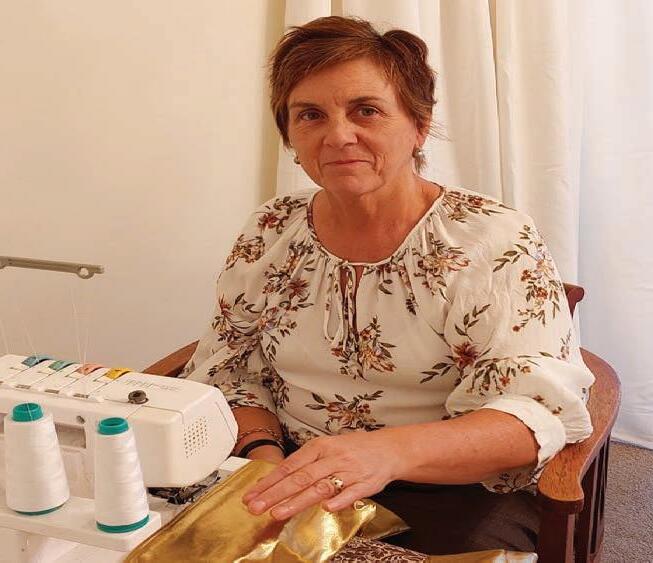
A great sewer, Jan was in hot demand as wardrobe creator for high school and community musicals, which she still is for Showbiz Queenstown and Remarkable Theatre. Apart from a few local cameo roles, she’s always preferred being behind the scenes, making things happen.
Somehow she and Ewan juggled five kids with seven day a week, 15-hour days in retail until selling Paper Plus in 2005.
They survived the record 1999 floods, and supplied reading material to Vertical Limit and Lord of the Rings movie stars.

Jan and other Mall business owners like Doug Champion and John and Ann Mann formed the Mall Committee, organising Mall events and activities. Then in 2011 tragedy struck with Ewan passing away at 55 in a hunting accident – a huge shock and difficult time for the family, but one when they felt the love of Queenstown yet again.
By then Jan was arts and events facilitator for Queenstown Lakes District Council, a role she’s become renowned for, for almost 20 years, organising many a great downtown New Year’s Eve celebration.

The Maxwells could be likened to Queenstown’s own von Trapp family, Tom and Sam inheriting their grandmother’s unique ability to play by ear. Sam wasn’t always destined for the stage though, that was until Jan made the boys dashing blue Blues Brothers costumes for the local Arts and Variety Show. “Sam was five and he wasn’t keen, but when he got out on that stage he shoved Tom aside and took off down the catwalk,” laughs Jan. Needless to say, they won.
She has many proud Mum moments, and as her own family grows – seven grandkids already, she still loves her theatre roles, meeting amazing young people from around the world. “I’m still blown away by the level of creativity in this town, so many talented people.”
Jan also serves on Creative Queenstown’s committee, and is a Baby Box and Wakatipu Youth Trust trustee and volunteer.
 The Maxwell clan enjoying a wonderful Christmas celebration in 2021
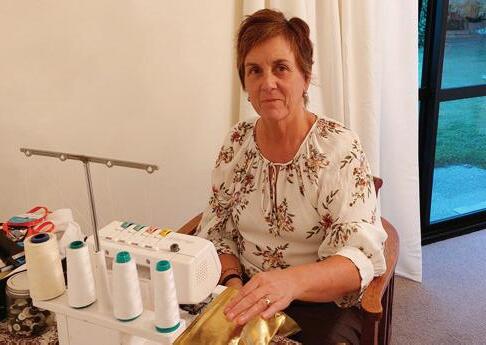
Jan, busy at the sewing machine, making a costume for Remarkable Theatre’s recent Gardens show ‘Space Oddities’
The Maxwell clan enjoying a wonderful Christmas celebration in 2021
Jan, busy at the sewing machine, making a costume for Remarkable Theatre’s recent Gardens show ‘Space Oddities’
COMMUNITY NOTES
Frankton Library: World Languages Lilliput Libraries
by Juliette Hicks, Volunteer South
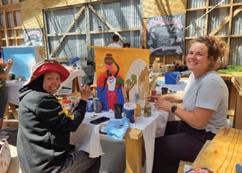
Something magical is happening in the garden at Frankton Library from March 4. Six beautiful Lilliput Library boxes decorated by local volunteer artists will pop up to reveal books written in languages from every continent in the world. They will give our richly diverse community access to books in their own language and all readers with the opportunity to connect with other cultures.
A collaborative, co-design project the World Languages Lilliput Libraries project comes from many community-minded people donating their time and resources. “It’s a result of the community telling us what they wanted. We are just the facilitators” says Project Leader, Jess Payne from Frankton Library.
A team of creative migrant volunteers have created the colourful artwork on each library box. Jess and her team rounded up fourteen local artists from around the globe to bring flair and imagination to the project. The result is six libraries each depicting a culture of every continent. “These volunteers have done an incredible job to give each library its own personality and visual story,” says Jess.
Adeline Toso from France has been in Queenstown for 4 years and knows the comfort of books in her own language when away from her homeland. “Books in French have given me a little bit of home since arriving in New Zealand, so a library with books in languages from all over the world seemed like an amazing idea to me.” She teamed up with volunteer Katarzyna Hebda from Poland to design the European liliput library. Both are book lovers and relished the chance to design a library showcasing Europe’s colourful culture of stories including mythical creatures and fantasies. “And food too” says Katarzyna “ We love food so you might find some polish dumplings, pizza, strudel and waffles.”
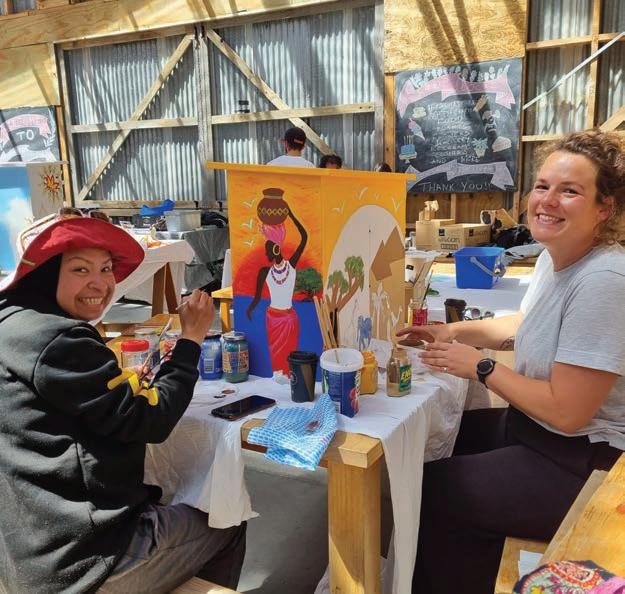
Esdira Aijalida from Malaysia has been in New Zealand for 8 years and was part of a team designing the Middle Eastern and African library. Connection with community is close to the heart of this social activist. “I had so much fun meeting the other artists,” says Esdira. “It was great to connect and learn about their cultures. Of course we went with bright and bold colours to illustrate this library because of the rich cultures in these regions.” Mosques, pyramids, Arabic letters and deserts represent the Middle East and an African woman, animals and deserts depict Africa.
Self-described Illustrator, designer and day dreamer Rona Jia from China teamed up with Japanese artist and music arranger Meg Hirata to design the Chinese/Japanese library.
Meg says that it was a real privilege to be involved and meet with the other artists. Their library features one of Rona’s favourite subjects, Jojo the Dragon. “JoJo is adventurous and extroverted. She loves meeting people from all over the world, reading and appropriately she sleeps with books at night.”
Originally from Malaysia Rebecca Koe has been a Queenstown resident for 22 years. She loved the collaborative aspect of the project. “It’s been an astounding experience meeting these wonderful artists in the community.” Working on the Central Asian and South East Asian/Pacific islands library box she was able to learn numerous painting techniques and styles from her other team members. “I made new friends and I am very thankful to have been part of this project.”
Jess Payne says that the World Languages LIlliput Libraries Project has been “wildly successful.” Thanks must go to the inspiring volunteer artists from around the world who have added their own brand of enchantment to the libraries.
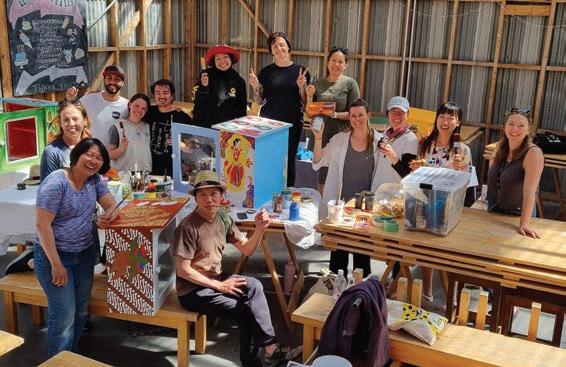
At Volunteer South - Central Lakes, we can discuss your skills and goals for volunteering and help make the perfect match. For more information visit www.volunteersouth.org.nz
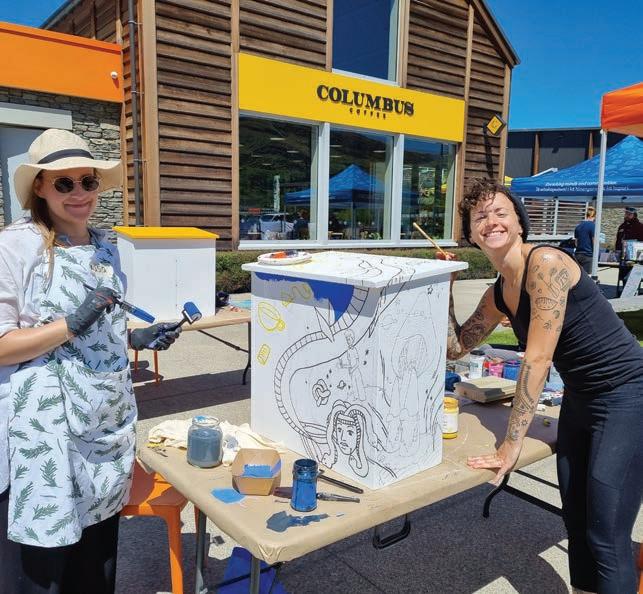 Katarzyna Hebda from Poland (left) and Adeline Toso from France (Right) painting the Europe Library at the Mitre 10 MEGA Community Painting Day.
Esdira Aijalida from Malaysia (left) and Wilene De Wete (South Africa) painting the Africa & Middle East Library.
Volunteer Artists Group at the end of the community painting weekend.
Katarzyna Hebda from Poland (left) and Adeline Toso from France (Right) painting the Europe Library at the Mitre 10 MEGA Community Painting Day.
Esdira Aijalida from Malaysia (left) and Wilene De Wete (South Africa) painting the Africa & Middle East Library.
Volunteer Artists Group at the end of the community painting weekend.
Community News
Connecting Communities funding opens for autumn wellbeing initiatives
A fifth round of funding for local mental wellbeing initiatives is set to close on Thursday. The funding is designed to give Southern Lakes communities a boost during the autumn season.
Run by Te Hau Toka Southern Lakes Wellbeing Group, the Connecting Communities fund supports community-led activities and events across Queenstown, Wanaka, Cromwell, and Te Anau/Fiordland which encourage people to connect, look after themselves and each other, and have some fun.
The current funding round closes on 2 March. Eligible not-for-profit organisations and groups can apply for up to $1,000 to assist with funding their activity or event.
Broadly, the criteria includes positively engaging with the local community; supporting mental wellbeing; aligning with one or more of the Five Ways to Wellbeing and Te Whare Tapa Wha; and being locally delivered in Queenstown, Wanaka, Cromwell or Te Anau/Fiordland
Te Hau Toka Southern Lakes Wellbeing Group Chair Adell Cox believes the autumn months will be a great opportunity for communities to take some time out after a busy summer season and really focus on their wellbeing.
“We’re moving into a new normal but are still experiencing significant challenges which are impacting on people’s mental health. Now more than ever it’s important to keep people well and support initiatives that build social connection and resilience and help our communities not just survive, but thrive,” Ms Cox said.
Details about the next Connecting Communities funding round, including the criteria and how to apply, can be found at www.southernhealth.nz/tehautoka.
NZ Open Volunteers needed
The New Zealand Open is on the lookout for a few last-minute replacement volunteers to join the volunteer team to help support the delivery of this year’s tournament. Positions include Driving range attendants, short game area support, and course marshals.
All Volunteers receive an Official Tournament Cap & Official Tournament Shirt, lunch & drinks each day you volunteer, a chance to play in the 2024 New Zealand Open as an amateur and a complimentary round at Millbrook Resort.
If you would like an inside-the-ropes experience at one of New Zealand’s premier sporting events please visit www.nzopen.com
Free underground bike parking in Church Street
Did you know there’s underground bike parking in the Church Street carpark smack bang in the middle of Queenstown?
QLDC through its active transport support have set it up and it’s totally FREE to use and you’ll also find free charging stations here for your e-bike if you need a bit of extra juice! There are 6 power points but you’ll need to BYO charger to make sure it’s the right fit for your ride.
Slow Fashion month Fashion Show
Calling all Sustainable Clothes Lovers, Designers and Creators. Do you have a passion for slow fashion? Do you love developing your style through op shop treasure hunting? Do you create beautiful clothes out of repurposed material?
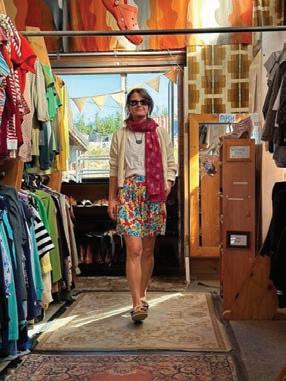
Then Wastebusters want you!
Wastebusters is collaborating with Fabricate and The Wanaka Community Workshop for Slow Fashion month in March. They’re putting together a fashion parade to showcase what the community can do with slow fashion in mind - it’s about celebrating our love for clothes in ways that don’t harm our people and planet!
They’re are keen to hear from; People to submit moodboards, along with your clothing size & shoe size, so the reuse team can collate a thrifted catwalk outfit for you, they are also keen to talk with local clothing creators and fashion designers to showcase their sustainable masterpieces on the runway
To get involved or for more information, please contact catrin@wastebusters.co.nz
LAKES WEEKLY POLL
LWB regularly polls locals on issues affecting our region. This weeks responses are below.
Should all new developments in Queenstown Lakes contain at least a contribution payment to social, worker or low-cost homes?
When a councillor resigns should the role be offered to the second-placed person from the previous election before going to a by-election?
Should hybrid vehicles be eligible for the same tax breaks as fully electric vehicles?
Do you have an emergency plan for the eventuality that a disaster strikes the region?
Do you agree with buying a ticket for Luma for a particular night makes the event sustainable?

There were 144 respondents this week.
If you would like to take part: you can sign up on the LWB Facebook page.
LAKES WEEKLY BULLETIN Page 17
Absolutely
No
Unsure -
Yes - 52% No -
Unsure -
Yes
No
Unsure -
Unsure Yes No Unsure No Somewhat Prepared Completely prepared Don’t know - Unsure No, I don’t Yes No Unsure Absolutely Completely prepared -
Somewhat
No, I don’t
Don’t know
No
- 65%
- 18%
17%
31%
17%
- 55%
- 25%
20%
8%
Prepared - 56%
- 35%
- Unsure - 1% Yes - 50%
- 28% Unsure - 22%
Yes No Unsure
Digging Deep For Cyclone-Ravaged North
By Sue Fea
The hearts of Queenstown hospitality operators have been moved with compassion for those in the north left in the fall-out of the recent devastating floods and Cyclone Gabrielle.
Many have already joined a national Emergency DineAid Appeal launched nationwide from Auckland with the hope of collectively raising more than $200,000 for the Government Emergency Relief Fund.
In another initiative Sky City’s local Wild Thyme Restaurant generously gave all of Friday’s food takings to the appeal, with the total likely to be known by Tuesday. “We hope to raise at least a couple of thousand dollars,” says general manager Jono Brown. The company is donating everything spent on food in its restaurant that day. “If a meal costs $20 we’re donating the lot,” says Jono. It was a last minute move and customers had been steady at the 80-seater restaurant throughout the day, but they felt they needed to do something to help. “The need is just exorbitant, more than we can fathom. It’s so sad, just awful,” he says.
DineAid NZ founder, highly-decorated international Kiwi chef Mark Gregory agrees and says they’ve already got between 150 and 200 restaurants, cafes and eateries around the country on board with the appeal. From Logan Brown in Wellington and The Grove in Auckland to Aosta in Arrowtown, more and more eateries, from the simplest of cafes to the most highly ranked fine dining restaurants, are putting up their hands to help, says Mark.
Queenstown’s Cookie Time is even on board.
Despite having just come out of a trying few years, local hospitality hearts have been moved to help fellow Kiwis in what is an astronomical clean up and recovery operation.
By Friday evening 15 local restaurants and eateries had confirmed with more confirming every day, says Mark. This appeal doesn’t cost the business any money. There’s just a service team task involved.
Blue Kanu owner Karen Hattaway is a big southern supporter of DineAid and will be leading the charge when the appeal is officially launched locally from Monday (February 27).

Customers will have the choice to add either $2 or $3 per table to their bill, or add $1 onto one special dish on their menu, or offer a coin bowl or box to collect donations.
Already the list includes Blue Kanu, Aosta, Little Aosta, The Bathhouse, Wolf Hospitality’s Brazz, London, Pier, Boardwalk and The Crown, and Republic’s nine establishments including Winnies and Ballarat. Other major players in Queenstown’s restaurant and café industry are expected to get on board. Karen’s hoping local bars can work out some sort of system to contribute too.

“We’d love to see as many local operators on board as possible,” she says. “We appreciate people here are still recovering from the effects of Covid restrictions but we’re hoping as many as possible can help.”
“It’s a very simple and easy way to help with so much devastation in the cyclone regions,” says Karen. “We’re asking that all restaurants participate and we’re looking forward to raising those much-needed funds.”
There are some 270 restaurants and eateries in the Queenstown Lakes, Central Otago region.


Republic CEO and director Blair Impey says they’re absolutely behind the move and keen to support anything that helps the cyclone-ravaged north. Mark first got the idea for DineAid, which has raised almost $1 million for good causes in 10 years, after returning from London where he worked with some of the world’s most elite chefs for 20 years. He was part of a similar Christmas appeal there raising money to help feed the homeless during winter. That was founded by Marco Pierre White, who trained Gordon Ramsay.
Other local initiatives are emerging to help cyclone-affected areas. Jono says Sky City nationally is planning a dinner fundraiser for its venues around the country on March 20. That’s likely to be a per head dinner with all proceeds from the night going to the appeal.
His Millbrook cricket team is also holding a big fundraiser next Sunday while the NZ Open is on. The local team, dubbed ‘The Southland Development Squad’ does an annual cricket exchange with a similar Gisborne team. They’ll be playing cricket non-stop for 12 hours at the Millbrook ground and, through sponsorship, hope to raise between $11,000 and $12,000 between the 12 of them. Donations will also be collected on the day.
LAKES WEEKLY BULLETIN Page 18 Contact Andrew for a free quote: Phone: 0210 416 912 Email: andrew@pounamultd.co.nz LAWNCARE GARDENING EXCAVATION FENCING RETAINING WALLS TREE SERVICES Get in touch today for a free, no obligation quote. Phone: 027 209 8455 | Email: alex@remarkablecoatings.co.nz www.remarkablecoatings.co.nz
Blue Kanu kicks off the southern DineAid Appeal for cyclone victims
Airport’s record payment to shareholders
by Paul Taylor
What a di erence a year makes.
Queenstown Airport will pay a record interim dividend to its shareholders a er its revenue was boosted by the steady recovery of passenger numbers. With the travel restrictions linked to the COVID-19 pandemic li ed, there were 1,224,179 passenger movements (arrivals and departures) through the airport over the six months to 31 December 2022.
Revenue hit $30 million and the net pro t, a er tax, was $11.5m.
Queenstown Airport Corporation board Chair Adrienne Young-Cooper says Australian and domestic visitors had steadily returned to Queenstown during those six months.

“ e great snow conditions during winter, combined with the upli in passengers taking the opportunity to reconnect with friends and family, made the Southern Lakes a popular destination,” Young-Cooper says.
“In addition, the Queenstown Lakes District population has grown by 10.5% since 2019 and is now close to 50,000. With a larger population base and more New Zealanders working remotely, the airport remains an important link for residents of the region.”
Given the strong performance, and a er an extended period with very limited dividend payments, the board has announced an interim dividend payment to shareholders of $5.98 million.
e airport is owned by Queenstown Lakes District Council, the majority shareholder, and Auckland International Airport. QLDC will receive $4.49 million, which equates to about $150 per ratepayer.
It’s also anticipated the total dividend for FY23 will be the highest ever paid. e highest full-year dividend to date was $8.3 million paid in FY19.
QAC paid a $1 million interim dividend in the 2020 nancial year and none in FY21 and FY22. A nal dividend of $1.3 million was paid for FY22.
Businesses and airlines operating at the Queenstown and Wānaka airports were also severely a ected by the pandemic and QAC implemented a broad programme of support, including rent relief.
In total, 68 tenants received support valued at $12.38 million, of which $129,742 was during the reporting period.
“To date, all operators at Queenstown Airport continue to operate, which was the objective of the rent relief provided,” Young-Cooper says.
Total operating expenditure was $7.5 million.
“Capital expenditure in this period included investment in the ZQN terminal refresh project to create a more attractive and accessible interior space to enhance the customer experience and to better re ect the unique character of the region we represent, as well as improving seismic performance,” airport Chief Executive Glen Sowry says.

e project is continuing and is due to be completed in 2023.
QAC con rmed its 10-year Strategic Plan during the reporting period and the key project for the rest of the nancial year is the development of a dra Master Plan.
Stakeholders and the community will be consulted on the dra Master Plan late in the nancial year and a nal Master Plan will be presented to shareholders for endorsement early in FY24.
“Queenstown Airport plays a crucial role in enabling the economic and social wellbeing of our region and will be an essential infrastructure asset in the event of a natural disaster,” Sowry says.
“ is means we must invest in our airport to ensure it is t for purpose and continues to meet these needs in the future.”
Enabling the decarbonisation of aviation is central to the airport’s strategy and long-term planning and will be critical to achieving the Queenstown Lakes District’s bold ambition to be the world’s rst carbon-zero tourism destination, which QAC supported, Sowry says.
A full sustainability report, including climate-related nancial and legal risks, will be included with QAC’s FY23 annual results.
e details:
Interim dividend to shareholders of $5.98 million
Revenue of $30.0 million
Net pro t a er tax (NPAT) of $11.5 million
Earnings before Interest, Tax, Depreciation and Amortisation (EBITDA) of $22.5 million
Passenger numbers (arriving and departing) totalled 1,224,179
QT BUSINESS Page 19
Queenstown Airport Corporation board Chair Adrienne Young-Cooper
QAC Chief Executive Glen Sowry
Arts+Culture
First Thursdays March – join Queenstown’s favourite late night art crawl


 by Kelly Carmichael
First Thursdays Queenstown is a free community event that celebrates the diversity of arts and culture in Queenstown. This Thursday 2 March join in for a fun and friendly art crawl across six exhibition spaces showing a wide range of work.

Bringing together Starkwhite, Milford Galleries, Romer, Artbay, and Lightworx, First Thursdays seeks to connect people with creativity across our town centre. Based around Earl Street and Marine Parade, the evening event sees six art spaces offer exhibitions, talks, and opportunities to meet like-minded individuals during a special late-night opening from 5–7pm. Maps are available at the participating galleries and on the First Thursdays Queenstown instagram – @firstthursdaysqt – and facebook pages. Make sure to take note of the talk offered this month at Starkwhite and enjoy a glass of the region’s best thanks to Akarua Winery as you take in the art works.
March brings new exhibitions to Queenstown including SAFE, a full gallery exhibition at Starkwhite that explores illusions of safety both psychological and actual. Created by Canterbury artist Amanda Newall (NZ / UK) and Olav Westphalen (GER / US), the exhibition is accompanied by two weekend workshops and a short talk by both artists at 6pm on the evening of First Thursdays.
Artbay’s upstairs exhibition space is opening a new show by New Plymouth based painter Jasmine Middlebrook. Fables and the realm of the fantastic are familiar and inspirational ground for this artist whose portrayals of the animal kingdom are often set within a New Zealand landscape, echoing and amplifying the call of the wild. Architecture, still life, and portraiture are woven into Middlebrook’s narratives, as are symbols and metaphor that offer triggers for personal experiences or understandings of culture and society.
Romer Gallery are debuting a new work titled Hooker Lake into their collection of Southern landscape, one that offers a fresh approach to photographer Stephan Romer’s practice. This image shows glacial debris littering the lake, situated in the Aoraki / Mount Cook National Park, where the retreating Hooker Glacier has carved a fascinating landscape. Milford Galleries are continuing their Studio 9A group exhibition. A rare opportunity to see the work of Maori artist Lisa Reihana in Queenstown, several stills from her celebrated moving image art work Ihi are on display. Ihi is a reimagining of the mythology of Papatuanuku and Ranginui, not only a creation story but also a narrative of mother and son, and the transfer of mana from one generation to another.

Also exhibiting as part of First Thursdays Queenstown is Lightworx, offering innovative combinations of light, colour, and space.

From 5pm: Exhibition Openings at Artbay Upstairs and Starkwhite
At 6pm: Artists’ Talk by Amanda Newall and Olav Westphalen at Starkwhite, 1–7 Earl Street
 Artist Jasmine Middlebrook
Stephan Romer, Hooker Lake, 2022
Lisa Reihana, Adorning Rangi, 2021
Artist Jasmine Middlebrook
Stephan Romer, Hooker Lake, 2022
Lisa Reihana, Adorning Rangi, 2021
Starkwhite Artists Explore The Psychology of Safety
This March Starkwhite Queenstown is opening a must-see exhibition titled SAFE which promises as many surprises as questions.
Featuring the work of Amanda Newall (NZ/UK) and Olav Westphalen (GER/US) SAFE explores the psychology of safety and illusions of protection. Offering a cultural geography of time, place, and collective anxiety, the exhibition takes a deep dive into billionaire bunkers and childhood toys alike.
Working across costume, drawing, video, and installation, the artists’ collaboration offers an intriguing exploration of one of our fundamental needs: safety. But how has this basic need been commodified, taken to extreme expressions, and projected into objects? Alongside a selection of antique velvet capes, hoodies, and drawings Newall has included a costume that casts back to her childhood. “Blue Ted is from memory, a human scale replica of the first teddy bear my grandmother purchased for me when I was newly born” the artist tells. But how does super-sizing a teddy into a wearable costume of human scale change its intentions… when does cute become creepy, or overwhelming?
As the mythology of New Zealand as an unaffected paradise teeters, Olav Westphalen’s project Bolthole Down considers the rumoured billionaire hideaways in the Queenstown-Lakes region and the growing phenomenon of survivalist prepping. Across a series of drawings Westphalen depicts vertical cross sections showing imagined bunkers infiltrating the land. Hung in a group on the gallery wall they take on the feeling of a crime scene investigation, an evidence board of place, motive, and logistics.
Join the artists at the exhibition opening of SAFE from 5pm on Thursday 2 March at Starkwhite Queenstown. Amanda and Olav will give a short artists’ talk at 6pm.
Originally from Canterbury but now living in London, Amanda Newall is an interdisciplinary artist and educator. She is the current recipient of the Olivia Spencer Bower Foundation Award. Her collaborator Olav Westphalen is Professor of Drawing at Hochschule für Künste, Bremen, Germany and will be joining Amanda in Queenstown for the exhibition opening and artist workshops.
10am, SATURDAY 4 MARCH: Olav Westphalen – Inside Drawing

Join Olav Westphalen for a practical drawing workshop. This workshop is based on the principles of his project the Palliative Turn as well as ideas borrowed from Hans Hofmann, Paul Cezanne, Paul Klee, Kinesiology and other sources.

10am, SUNDAY 5 MARCH: Amanda Newall and Megan Dunn – The Serious Side of Care Bears: A creative workshop to tempt the inner child
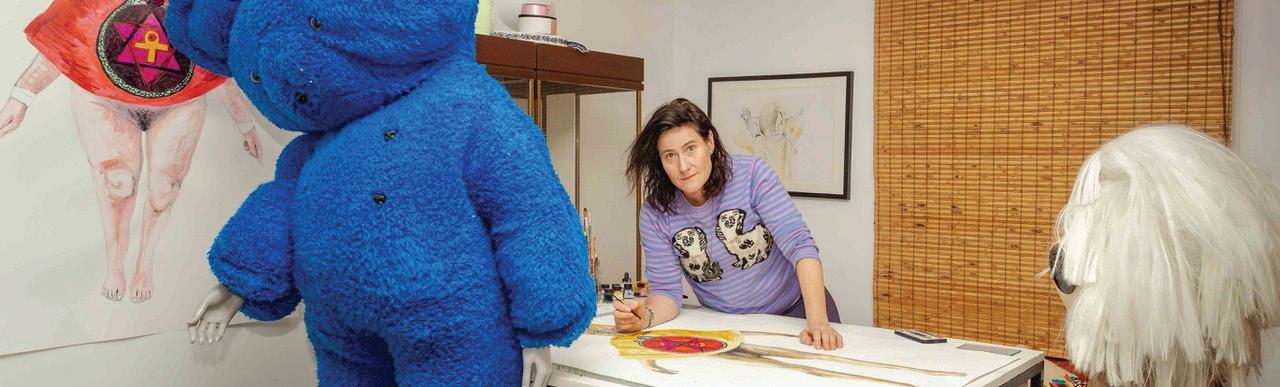

Childhood is often associated with creativity and imaginative play. Adulthood not so much. In this workshop artist Amanda Newall (NZ/ UK) and author Megan Dunn (NZ) will use creative writing prompts and collage to guide participants towards conjuring a version of their ‘inner child’ or ‘artist self.’
Places for both workshops are limited, email kelly@starkwhite.co.nz to book.
SAFE runs from 2 March – 1 April at Starkwhite Queenstown
Olav Westphalen portrait
Olav Westphalen, Cross Section Air Defence, 2022
Amanda Newall
HOSPOGUIDE
SPECIALS, $6 HOUSE BEERS, WINES & SPIRITS ALL

EVERY

The The Bunker
Saturday DJ MAD from 9.30pm

Taco Tuesday $3 tacos
Wing Wednesday 20c wings
Thursday 1/2 price fajitas
Mad Monday $5 tacos & $1 wings
HAPPY HOUR FROM 4-6PM EVERY DAY! $12 MARGARITAS AND BEERS FROM $7
Wednesday ‘TGI Wednesdays’
Happy Hour all night + DJ ‘Just Bill’ from 9pm till late
Friday & Saturday DJ Tom Kotahi both nights
Wednesday - Sunday Happy Hour 5-6pm $16 margaritas and $10 selected tap beers



Tuesday Now open on Tuesdays from 5PM Happy Hour from 4pm – 7pm, with drinks from $7 Available Tuesday - Saturday
Quiz Night 7pm start, free entry, 2 hours of fun, Email info@ lokalqt.co.nz to register your team
Wednesday $37 Export Gold Towers (minimum 3 people)
Thursday 20% off pizzas
Dine in or takeaway
2 for 1 Woodfired Pizzas
Friday Live music with Nic from 7PM
Friday, Saturday, Sunday Happy hour 4-6pm
Sunday Open for lunch from midday
Friday $18 Double cheeseburger, fries & a house drink
Saturday Signature Cocktail Specials
Open 4pm - 10pm
Tuesday – Saturday 47 Camp Street misslucys.co.nz
1876
OPEN FROM 4PM DAILY PIZZAS SERVED ALL NIGHT OPEN WED - SUN 5PM TILL LATE - COW LANE OPEN FROM 11AM - 7 DAYS A WEEK! OPEN EVERYDAY FROM 5PM! Wednesday FREE Pizza Night Friday DJ JT 10-4am Thursday DJ Zahn 10-4am Sunday Karaoke from 9pm – 1am with FREE spicy chicken wings from 8pm-12am. FREE Pool and Shuffle Board Game. FREE Bull Riding. Or just relax and enjoy a night out at Cowboys. Saturday DJ Foz 10-4am Sunday DJ Charlie 10-4am Wednesday
Healy live from 9pm! Thursday Danny Atkinson
from 9pm! Friday John and Jamie live from 9pm! Saturday Treble Trouble live from 9pm! Sunday Sunday Roast Served all Day! Sunday trad session from 5pm! Wednesday Ladies night $10
Tuesday $10 Food specials every day Thursday DJ Mo 6pm Friday Ribera 6pm Saturday Jah Fire 6pm Every Day from 3pm-8pm Free Bar Snacks Tuesday Hospo night DJ MAD Drink Specials all night and $4 Tacos Tuesday $12 Classic Pizzas Wednesday Open Mic Night from 9.30pm Wednesday Doubles Pool Tournament Monday Free Chicken Wings* *T’s & C’s apply DJ JUST BILL from 9.30pm Saturday Live Sports Monday Singles Pool Comp Thursday Quiz from 7pm then TJ live from 9:30pm Friday Live music from 9.30pm Sunday DJ MAD from 9.30pm Sunday UFC 284 1pm Live music 3pm Dj Risk 6pm $10 FOOD
John
live
pornstar martini’s Brett Walker
DAY
DAY!! Wednesday
Thursday
DINE ● WINE ● COCKTAILS ● LATE NIGHT COW LANE, QUEENSTOWN Est. 1997
FREE VENUE HIRE
Tuesday $1 Buffalo Wings*
Wednesday All-You-CanEat Meat $35pp*
Thursday $12.95 Schnitty with fries*
28 FEBRUARY- 6 MARCH


Every Day Happy Hour 4-6pm and Bavarian Fest!

2 hours beverage package + All-YouCan-Eat Meat, $89pp*

Monday $12.95 Burgers*
9.30pm Three Colours, Three Channels, Three Djs
Live sky sports every day!
Thursday Beats n’ Bao’s 5pm Yonde’s Classic Beats and half price boa’s are back! Open Mic Night 9pm Bring your mates, play whatever!

Wednesday Hospo Night with DJ Ribera 10pm-Late | $8 Basics

Dannika Peach 10pm - Late
Friday DJ Stubacca 5pm

Saturday DJ Tess 9pm
Sunday Risk & Friends Sunday Session 3pm

Tuesday - Sunday NEW MENU FROM MOJO KAI!
Available 12-9pm
Remarkables Park
The bottle store with something more
OPEN 7 DAYS: 9am - Late
T&Cs apply, contact us on 03 442 9995 or email queenstown@lonestar.co.nz to plan your next function.
T&Cs apply, contact us on 03 442 9995 or email queenstown@lonestar.co.nz to plan your next function.


Corner Tex Smith Lane & Hawthorne Drive, Frankton www.superliquor.co.nz | 03 442 9801 | info@slremarkables.co.nz

LIVE MUSIC DJ’S SPORTS BAR SPECIALS EVENTS *T&CS APPLY OPEN TIL 3AM WEDNESDAY - SUNDAY! ALL SPORTS. ALL DAY. LIVE & LOUD | OPEN FROM 12PM | FOLLOW US ON FB + INSTA FOR ALL UPCOMING SPORTING EVENTS Tuesday TACO TACO HALF PRICE TACOS UNTIL 9PM Wednesday WING IT half off wings until 9pm smothered or dry rubbed | 15 flavours until 9pm Sunday CAESAR SUNDAYS $2 OFF CAESARS & BLOODY MARYS ALL DAY LONG Monday HOSPO NIGHT 7PM - 11PM LATE NIGHT HAPPY HOUR & FREE POOL Thursday BIG DAWG DAY half price any big dawg until 9pm Friday BURGER DEAL $2 off any burger 12pm5pm Saturday BREWDAY $5 off selected jugs 12pm5pm
Saturday
Stooked
Entry Friday DJ
Saturday DJ Stevie Tom
Sunday Electric
+
Friday
Thursday
Thursday
13 Taps of local and NZ craft beer and cider!
Pretty
9pm Free
Risk 10pm-Late
10pm-Late
Rush ft Yaya
Support Tickets available online
Yonder’s Bar Bash 5pm $15 cocktails all night
HAPPY
Wednesday
Bangers with DJ Tess 9pm
HOUR 3-5pm EVERY DAY! $9 Whakatipu Brewing pints & $9 house wines!
Silent Disco
Our Services: - Business IT Solutions - Wifi / Network Support - IT Equipment Supplier - Email, Domains & Websites - Antivirus & Security Email: support@qttech.nz or phone 03 441 0507 Local IT Support
EVENTS
GOINGS ON ABOUT
EVENTS - MUSIC - ART

THEATRE - AT THE GALLERIES
Author Talk with Leila Tovo Larsen
First Thursdays - Queenstown’s favorite late night art crawl

AUTHOR TALKS
Hear local-migrant author, Leila Tovo Larsen as she discusses her new book, Naedekov War.
Naedekov War book summary:
Few survived the atomic disaster and humanity has built new civilizations with what they remembered and what they found. On the Continent, technology is banned as it’s believed to have caused the Great Devastation. Naedekov, Lixia and Luanlamn are the three noble kingdoms that rule the middle lands, while the Varegan tribes populate the north, and the empire of the Odras controls the south. Only on the Island of the Living Dead people freely study the past and the lost technology; a refuge for those who are dead for the Continent.
After the mysterious deaths of his family, Hel Ikengard inherits the throne which means the end of his freedom. Hel, however is in imminent danger. An entire Noble city has been massacred and the tribes cannot survive on their own.

When: Saturday March 4 between 12:30pm – 1:30pm
Where: Frankton Library, 26 Hawthorne Drive Frankton
The Art of Your Life: Megan Dunn on life, death and video art
Listen to acclaimed art writer, critic, and performance artist Megan Dunn discuss her life as a practicing artist and writer. Megan Dunn is the author of Things I Learned at Art School (2021) and Tinderbox (2017.)
She is a regular arts correspondent on RNZ’s Saturday morning with Kim Hill.

When: Saturday 4 March at 3pm | FREE
Where: Te Atamira, Remarkables Park Town Centre
EXHIBITIONS
Jasmine Middlebrook - After glow launch
Artbay Gallery is presenting Jasmine Middlebrook’s newest collection - After glow as their newest exhibition. Jasmine Middlebrook is a full time artist for almost a decade now. She has a Bachelor ofFine Arts from Otago Polytechnic School of Art in 2010 and has been a finalist in the Adam Portraiture and Molly Morpeth Awards numerous times
The launch and exhibition take place in the upstairs exhibitions space with canapes and bubbles.
When: Thursday, 2 March between 1:00 pm and 3:00 pm
Where: Artbay Gallery - Upstairs Exhibitions space, 13 Marine Parade
Queenstown
Starkwhite SAFE exhibition

Starkwhite Queenstown is opening a must see exhibition titled SAFE which promises as many surprises as questions. Featuring the work of Amanda Newall (NZ/UK) and Olav Westphalen (GER/US) SAFE explores the illusion of safety and psychology of protection. Offering a cultural geography of time, place, and collective anxiety, the exhibition takes a deep dive into billionaire bunkers and childhood toys alike.
When: SAFE opens from 5pm on Thursday 2 March and runs until 1 April
Where: Starkwhite Queenstown, 1–7 Earl Street, Queenstown
First Thursdays Queenstown is a free community event that celebrates the diversity of arts and culture in the region. First Thursdays is a family friendly art crawl where you chose the route and the amount of time spent at each exhibition. Bringing together Starkwhite, Milford Galleries, Romer, Artbay, and Lightworx, First Thursdays seeks to connect the community with creativity and offers exhibitions, talks and opportunities to meet like minded individuals during a special late night opening from 5pm-7pm. See this week’s Arts and Culture for more.
When: Thursday 2 March 5:00pm – 7:00pm
Where: Earl Street and Marine Parade, Queenstown
Discussion- Aspen Summer Series 2023: Geopolitical Challenges

Our relationship with the South Pacific is deeply rooted, and NZ has strongly supported the Asia Pacific regional order for the past 30 years, but will we continue to have a significant influence? Are we in the revival of the Great Powers period or not?
This is one of the pressing geopolitical challenges present in our neighbourhood. Some of NZ’s top experts, including Sir Don McKinnon, Rosemary Banks, Prof Robert Patman, Suzannah Jessep, Dr Alan Bollard will be challenged by expert panellists’ with differing points of view, presenting diverse perspectives and allowing for freedom of expression and discussion.
When: Thursday 2 March - Great Power Rivalry from 5:00pm
Where: Te Atamira, Remarkables Park Town Centre 12 Hawthorne Drive, Frankton
Motatapu
The Motatapu is set for Saturday and is a bucket list event for many in the community.
The events this year include: a 47km UDC Mountain Bike, 42km Off-Road Marathon, 15.7km Miners Trail, 52.5km Ultra Run, 56km Coronet Loop Mountain Bike and a 4km Jennian Homes Junior Trail Run
Held on one epic day, it is the one chance to experience the breathtaking high country terrain and traverse the Motatapu, Soho and Glencoe Stations between Wanaka and Queenstown. Head over to the website motatapu.com to find out more or enter.

When: Saturday 4 March 6:00am – 8:00pm Where: Motatapu Track, Macetown Road, Arrowtown
CLUBS
Queenstown Windsurf and Kitesurf Club
Wednesdays is Windsurf Wednesdays @the Frankton club. The club invites anyone keen on windsurfing to bring all your toys and some beers and hang out with other likeminded surfers.

The season runs January through to early March. Some rentals and lessons may be available and the sailing is weather dependent so it may to check first. Give Sue a call on 0276408596.
When: Wednesday nights January-March between 4:00pm and 8ish Where: Frankton Beach
COMEDY
Remarkable Comedy Open Mic Comedy
The first Wednesday of every month is Open Mic Comedy in Queenstown. Featuring local and visiting comedians keen to hone their skills or even try out new material. If you’ve always wanted to give standup comedy a try, now’s your chance!

When: Wednesday March 1 at 8:00 pm
Where: Yonder 14 Church Street, Queenstown
Queenstown Combined Funding Clinic
Are you responsible for a community group or a not for profit who are either looking for funding or have questions around the funding process.

The teams at Department of Internal Affairs, Community Trust South, Aotearoa Gaming Trust, Central Lakes Trust and the Queenstown Lakes District Council will be on hand to help. Drop in and see your local funders at the upcoming clinic on Thursday.
Enquiries: 0800 001 137 or info@clt.net.nz
When: Thursday, 2 March between 1:00 pm and 3:00 pm
Where: Queenstown Events Centre Joe O’connell Drive, Frankton
Lilliput Libraries Launch Day

Frankton Library celebrates the ribbon-cutting of Aotearoa’s First World Languages Lilliput Libraries Lane with games, book swap and plenty of cultural performance and activities on Saturday. The launch day runs from 11am to 4pm with all events and activities FREE and open to all.
Events and activities include.
Traditional Green Tea Ceremony
Choir Performance
Salsa Dancing
Children’s Multi-languages Storytimes
Author Talk - Leila Tovo Larsen at 12.30pm
Chinese Calligraphy Workshop
For more information, please contact the Frankton Library at frankton.library@qldc.govt.nz or via phone at (03) 441 3680
When: Saturday March 4 11:00am – 4:00pm
Where: Frankton Library, 26 Hawthorne Drive Frankton
Digital Drop In

Do you need a helping hand with your digital devices? Pop in, call, email or join a drop in session. The team might ask a few questions about your issue beforehand so that they can plan to get the most out of your session. The team at the libraries are not tech experts, just friendly librarians with good IT skills. They’ll do their best to fix your problem, but on occasion they will direct you to the experts. Sessions are free.
For Queenstown appointment email: queenstown.library@qldc.govt.nz
For Frankton appointment email: frankton.library@qldc.govt.nz
For Wanaka No need to book, just drop on in on the day!
Bring your digital device and your questions.
When: Every Thursday between 4pm and 5.30pm
Where: Frankton and Queenstown Library by appointment and at the Wanaka Library
Employment Law Seminar - What’s on the horizon for 2023

This Employment Law Seminar is a 1-hour paid workshop for business. The seminar will explore legislation changes and case law, including legislative changes on the horizon and what this means for businesses at all levels, some of the changes passed recently includes fair pay agreements, restraints of trade, sexual harassment claims and income insurance protection plus the recent immigration changes and what is on the horizon for 2023.
When: Wednesday 1 March at 11:00am
Where: Copeland Ashcroft, 13 Camp Street, Queenstown
Fundraising Cello Recital
Fundraising Concert Tour - Tomas Hurnik on Baroque Cello
Tomas Hurnik will be performing a Solo Baroque Cello Concert Tour featuring Bach and other Baroque gems with the profits from the concerts going directly to raise funds for 14 string instruments to create a small string chamber ensemble.
The Baroque Community and Educational Trust along with the University of Canterbury is on a mission to build a collection of period instruments for students to have the opportunity to rehearse and perform on period instruments so that they can more authentically explore the roots of western music.
Ticket sales at the door before the concert – cash only.
Wanaka: Monday 6 March at 7:00pm at Rippon Vineyard, 246 Mount Aspiring Road
Queenstown: Tuesday 7 March at 7:00pm at St Peter’s Anglican Church, 1 Camp St
“1984” the year I left America - Margaret
In 1984 Margaret O’Hanlon left her home in yuppie infested New York for a better mantra in Europe. It was a time where the punk movement, little more than a fashion statement in the US, was a political genre in the UK and Europe. Her travels made such an impact on her, she decided later to leave America and never returned.

Margaret, known for her comedy woven stories and outstanding vocals weaves another group of stories to iconic songs in this show. Margaret started her career in NY piecing together comedy/music shows in Greenwich Village, and is delighted to be able to come full circle with Tiny Room Concerts at the Blue Door.
When: 2 shows Thursday 9 March 6:30pm & 8:30pm Where: The Blue Door 18 Buckingham Street Arrowtown
WORKSHOP
Olav Westphalen – Inside Drawing
Olav Westphalen is Professor of Drawing at Hochschule für Künste fur Kunste, Bremen, Germany and he will be conducting a practical drawing workshop on Saturday. This workshop is based on the principles of his project the Palliative Turn as well as ideas borrowed from Hans Hofmann, Paul Cezanne, Paul Klee, Kinesiology and other sources.

Places limited. Book by emailing kelly@starkwhite.co.nz
When: Saturday 4 March 10am–12pm
Where: Starkwhite Queenstown, 1–7 Earl Street
Amanda Newall and Megan Dunn – The Serious Side of Care Bears

The Serious Side of Care Bears is a creative workshop to tempt the inner child. Childhood is often associated with creativity and imaginative play. Adulthood not so much. In this workshop artist Amanda Newall (NZ/ UK) and author Megan Dunn (NZ) will use creative writing prompts and collage to guide participants towards conjuring a version of their ‘inner child’ or ‘artist self.’ Places limited. Book by emailing kelly@starkwhite.co.nz
When: Sunday 5 March 10am–12pm
Where: Starkwhite Queenstown, 1–7 Earl Street

If you would like your show, event, exhibition or meeting promoted in Goings On drop me a line at davidgibbs@qmg.co.nz with the details.
COMMUNITY BUSINESS
MUSIC
O’Hanlon
QLDC Libraries Monthly Picks

It’s time again for our monthly picks where we choose just five of our many new arrivals and favourite books to share with you all. Remember, if you can’t regularly make it in to one of our branches you can use your library card to reserve these (or any of our many items across fifteen branches) online, and we have many online resources you can access 24/7 with just your library card number – film, books, audiobooks, magazines and newspapers.
We hope to see you soon!
Fiction
Greta and Valdin by Rebecca K. Reilly

Valdin is still in love with his ex-boyfriend Xabi, who used to drive around Auckland in a ute but now drives around Buenos Aires in one. Greta is in love with her fellow English tutor Holly, who doesn’t know how to pronounce Greta’s surname, Vladisavljevic, properly. From their Auckland apartment, brother and sister must navigate the intricate paths of modern romance as well as weather the small storms of their eccentric Maori–Russian–Catalonian family.
Set in a world that is deeply familiar (but also a bit sexier and more stylish than the real one), Greta and Valdin will speak to anyone who has had their heart broken or has decided that they don’t want to be a physicist anymore or has wondered about all of the things they don’t know about their family.
Non-Fiction
The Bookseller at the End of the World Ruth Shaw weaves together stories of the characters who visit her bookshops, musings about favourite books, and bittersweet stories from her full and varied life. She’s sailed through the Pacific for years, been held up by pirates, worked at Sydney’s Kings Cross with drug addicts and prostitutes, campaigned on numerous environmental issues, and worked the yacht Breaksea Girl with her husband, Lance. Underlining all her wanderings and adventures are some very deep losses and long-held pain
Rich, immersive, funny and heartbreaking memoir of the charming bookseller who runs two tiny bookshops in the remote village of Manapouri in Fiordland, this book will make you weep, laugh and want to read more books - and of course, make you want to visit Ruth and her two wee bookshops.

Children’s
Dawn Raid Pauline (Vaeluaga) Smith
Like many 13-year-old girls in 1976, Sofia’s main worries are how to get some groovy go-go boots, and how not to die of embarrassment giving a speech at school! But when her older brother Lenny starts talking about marches and protests and overstayers, and how Pacific Islanders like them are being bullied by the police for their passports and papers, a shadow is cast over Sofia’s sunny teenage days. Through her heartfelt diary entries, we witness the terror of being dawn-raided and gain an insight into the courageous and tireless work of the Polynesian Panthers in the 1970s as they encourage immigrant families across New Zealand to stand up for their rights.
Loop Track by Sue Orr
It’s 1978: the Auckland abortion clinic has been forced to close and sixteen-year-old Charlie has to fly to Sydney, but the plane is delayed on the tarmac. It’s 2019: Charlie’s tightly contained Wellington life with her grandson Tommy is interrupted by the unexpected intrusions of Tommy’s first girlfriend, Jenna, and the father he has never known, Jim. The year turns, and everything changes again.
How to Be a bad Muslim by Mohamed Hassan

From Cairo to Takapuna, Athens to Istanbul, How To Be A Bad Muslim maps the personal and public experience of being Muslim through essays on identity, Islamophobia, surveillance, migration and language. Traversing storytelling, memoir, journalism and humour, Hassan speaks authentically and piercingly on mental health, grief and loss, while weaving memories of an Egyptian immigrant fighting childhood bullies, listening to life-saving 90s grunge and auditioning for vaguely-ethnic roles in a certain pirate.
Funny, elegiac, and chilling, these essays from award-winning New Zealand writer Mohamed Hassan blend storytelling, memoir and non-fiction to map the experience of being Muslim in the 21st century.

@qldclibraries Queenstown Lakes District Libraries

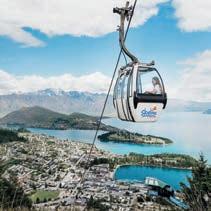
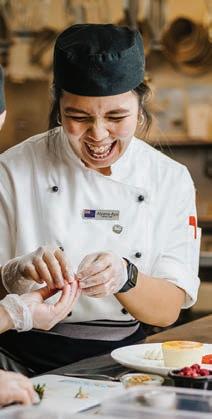









Join aninternationalteamona mission tobring realfun tolife. skyline.co.nz/careers See our jobs: Join us and deliver real fun to the world. We’re looking for: Photo Sales Guest Services Host Luge Operators Revenue Manager Sushi Chef Come for a season, Stay for the fun! Gondola Operators Kitchen Hand Cleaner F&B Attendants If this sounds like you, jointhe fun and workwhere othersholiday! Whetheryou are a long-time local, arecent graduate or in town for a season, we’re o ering development and opportunity in a stunning location. Plus, you'll enjoy gondola and luge rides for family and friends, complimentary sta meals, a minimum of 30 hours and a great work life balance.
QUEENSTOWN
Come and immerse yourself in the 1,500+ wines and spirits we stock and help us showcase the 80+ wines, gins, whiskies & spirits we have for tasting everyday with customers who come from all over the world.
VACANCIES
Wine Sales Role
This could be an ideal step up if you have experience at a cellar door or if you have enthusiasm for wine, hospitality and retail with a great customer service attitude. You would bring additional value if you have your Duty Managers Certificate and/or WSET qualifications.
We have Part Time (15-30 hours/week) and Full Time (40 hours/week) positions at our Queenstown store with shifts from 2pm - 9:30pm.
Enquire confidentially to: delaney@thewinery.co.nz or come & chat with Delaney at The Winery, 9 Ballarat St, Queenstown.
Jucy Snooze Queenstown are looking for energetic and enthusiastic people to join us in our re opening!


You don’t need experience to work with us! We offer staff benefits from staff accommodation to car rentals and Food & Beverage discounts!
Housekeeping Room Attendant
(Starting from $25.00 an hour)
Chef roles (at all levels)
Night Manager
Please send through your resume to marcos_diniz@jucysnooze.co.nz
Class 2, 4 or 5 Truck Driver Queenstown/Wanaka

Are you looking for a change in lifestyle and to work for a great company?


Surrounded by beautiful mountains, great walks and pristine lakes and offers a wealth of activities that could be perfect for your days off!
AllWaste is seeking Drivers to join our team for full-time or part-time
The role involves picking up commercial wheelie, skip and open top gantry bins and interacting with customers and members of the public. Our range of vehicles means we welcome applications from people with Class-2, Class-4 or Class-5 licences.
To be successful, you will need to be a team player with great customer service and a positive attitude. Be physically fit, keen to work outdoors and ok with being hands-on.
Full training will be provided and you will work with a great team of people, in a great environment.
The successful applicant may be required to take a pre-employment alcohol and drug test as part of our recruitment process.
For further information before applying, please contact: Martyn Bryant on 027-256-8163 or email to martyn.bryant@allwaste.co.nz
Treespace is looking to employ a few SEASONAL PLANTERS to help carry out native planting on our ecological project at Mt Dewar. This role would include hand planting, fertilising, staking and guarding multiple nursery grade trees in open back country areas. Training will be given in all aspects of planting and be supervised by our staff.

The successful applicant will have a strong work ethic and be able to operate both independently and within a team. Ideally they should have a background in horticulture and a love of the outdoors.
The season for us starts at the end of march running for 6 weeks. Additional work is available weeding and mulching after this on a short term basis.
Please forward your application to John Thomssen / Mountain Manager and we will be in touch.
Email: mountain@treespace.co.nz
Page 28 Ph: 03 409 2800 info@qmg.co.nz jobfix.co.nz
LAKES WEEKLY BULLETIN | 28th February 2023 - 6th March 2023
Finance | Admin
We are looking for a part or full time experienced Finance / Admin team member




















Do you have experience with MYOB payroll, cashflow, Xero, GST, tax filings and are you incredibly detail orientated, love to keep things moving and work with terrific fast paced team this role could be for you?
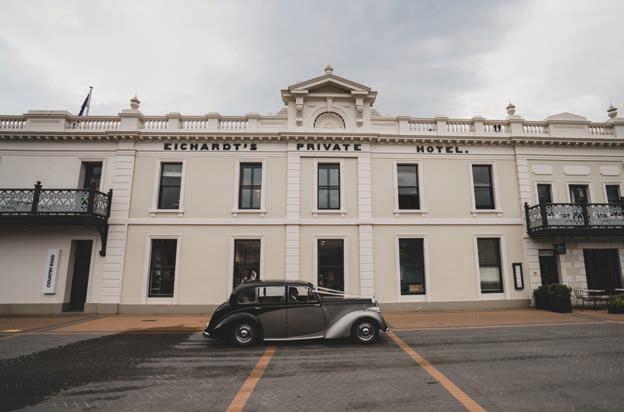






You’ll enjoy being involved with a busy media environment where no two days are the same.

This role commences in April allowing for plenty of cross over with our wonderful team member who is leaving us to head overseas.


The role can be part time and fit in with school hours for the right candidate.




Please apply in writing by forwarding your CV and cover letter to davidgibbs@qmg.co.nz








LAKES WEEKLY BULLETIN | 28th February 2023 - 6th March 2023 SITUATIONS VACANT Ph: 03 409 2800 | info@qmg.co.nz | jobfix.co.nz Page 29
We’re looking for superstars! kitchen THE BALLARAT VACANCIES INCLUDE : creatingunique andmeaningful experiences forour exclusiveguests GUESTS SERVICES AGENTS HOUSEPERSON HOTEL ASSISTANT NIGHT AUDIT EMAIL: Your CV to recruitment@imperiumcollection.com STOP BY: Drop off your CV and meet us in person! FIND OUT MORE: www.imperiumcollection.com APPLY TODAY! We can offerpermanent & casual roles,with competitivehourly rates,and asociable environment. We arean accredited employer and can provide fulltraining and career-growthopportunities
RESTAURANT MANAGER
If you have a passion for great service, great cocktails and great food, this is the role for you!
The ideal candidate would have experience with the following:
- Running large scale functions and events

- Advanced knowledge of wine and food


- Hospitality management experience
- Administrative abilities
- Leadership and interpersonal skills
- Valid Managers Certificate
Please email operations@wolfgroup.nz with your CV and cover letter.
AVIS & Budget Queenstown
RENTAL SALES AGENT
Do you enjoy working in a fast paced environment where the days go quickly?



Do you enjoy meeting and talking to people from all over the world?
Do you appreciate a consistent working roster because your life outside of work is important too?
If you answered yes to any of these then maybe this customer service, sales and office administration based role is the new job for you.
Full Time & Part Time contracts available with set days off, Shifts are mostly 8am to 5.30pm with at least one evening shift per week. The role also requires you to work weekends or at least one weekend day per week. You'd be based out of our Queenstown Airport office in Frankton.
What you need:
• Full drivers licence
• Good command of the English language
• Working rights in New Zealand

Please send a CV to: luke.dennington@abgroup.co.nz
WEARE HIRING
Scarer and Sale Assistant
Fear Factory Queenstown are looking for an experienced Sales Assistant and Scarer. Average of 25-30 hours a week (full-time), mainly evening work. You will be working with a fun, hard working, scary team, passionate about horror, making people laugh and scream.
• Excellent customer service skills
• Minimum 6 months wih full availability
• Stock management skills
• Cash, eftpos, till and computer skills

• Excellent team player
• Problem solving and communication skills to brief guests and sell merchandise
Interested?
Please email your CV and a cover letter telling us a bit about yourself to queenstown@fearfactory.co.nz
Senior
Sport Physio & Massage Therapist

Wanted to join our enthusiastic team. Full and Part time position available. We also have a lifestyle and activity management role with fitness classes available
A minimum of 3 years’ experience. Good manual therapy and exercise based rehabilitation skills required. Weekly IST and mentoring programme. Must have full NZ registration and work visa. Please send a cover letter and CV to info@proactivephysio.co.nz
DRIVERS REQUIRED
Full-time & Part-time Positions Available
NEW OWNER/ OPERATORS REQUIRED

Self Employed Opportunity operating under the Corporate Cab Brand Corporate Cabs are NZ’s Premiere Taxi Company operating fleets in Auckland, Wellington, Christchurch, Dunedin and QUEENSTOWN.


Join Team Devil!!
We are looking for Food Prep / Front of House and Duty managers. Full and Part-time positions available. Drop your C.V to Blair at the restaurant or email devilburgerqtn@gmail.com

Our modern fleet of Sedans include Skoda Superbs, Holden Calais’s and VW Multivans. Professional well presented Drivers who have a strong focus on delivering an exceptional level of service.
Interested, then please send an email expressing your interest to ian.paterson@corporatecabs.co.nz
LAKES WEEKLY BULLETIN | 28th February 2023 - 6th March 2023 SITUATIONS VACANT Ph: 03 409 2800 | info@qmg.co.nz | jobfix.co.nz Page 30
your CV to ethan@arrowauto.co.nz or, come an see us at 220 Glenda Drive, Queenstown Apply Now! Competitive rates Real career development opportunities Great working environment
ExperiencedMechanic Send
musculoskeletal/
SEEKING STORE SUPERVISOR

Seeking a diligent, committed and enthusiastic individual to lead our A-MAZE-ING customer service team. The successful applicant should be willing to go above and beyond to ensure the best possible experience for our customers and the team; plus take great pride in their work. Previous customer service roles and experience leading a team are highly desired. Applicants must also be able to work flexible rostered hours.
Pop into store with your CV or email it to: jobs@odysseysensorymaze.co.nz

Must be able to commit to a minimum of 6 months.
Are you a Chef looking for daytime hours?
The Dishery Bistro in Arrowtown are looking for a Chef or Experienced Cook Working hours are generally 7am-4pm leaving your evening free! If this sounds like an attractive proposition, do not delay, express your interest now.


We offer a great working environment with flexible hours and competitive rates of pay.

Full Time and Part Time, Permanent or Casual. Please email manager@thedishery.co.nz or call/txt 021 664 553

Duty Manager
Part or Full Time Available
Come work in our busy little supermarket in Arrowtown with great customers.
A current Duty Managers Certificate or LCQ is desirable but not essential - as for the right person we will assist with this
• A team player & customer focused
• Punctual, reliable and honest
• Passionate about delivering excellent customer service
• Taking responsibility for supervising evening shifts and organising resources to ensure that Store presentation standards are met and exceeded
Please email your resume to Amanda Colmore-Williams at: Amanda.colmore-williams @foursquare-si.co.nz
We are looking to expand our small friendly team of stylist to accommodate our ever growing clientele.
If you are a reliable team member with a good work ethic and takes pride in your work,then I would love to hear from you.
I offer a great hourly rate + commission, in a Relaxed modern environment.
Hours negotiable.
Contact Megan 0274136466 or at Studio5hairqt@gmail.com

Positions available:
ROOM ATTENDANTS HOUSEPERSON
PUBLIC AREA CLEANER HOUSEKEEPING SUPERVISOR

Starting Rate $25 per hour
Shared staff accommodation is optional
Please apply to kim_haynes@evt.com
Full time, part time or casual bartenders
• Previous cocktail experience preferred
• Competitive pay
• Staff Perks
• $25+ per hour
Please email Dianna via dianna.kelly@goodgroup.co.nz
QUEENSTOWN NZ
DUTY MANAGERS, BARTENDERS & IN-HOUSE SECURITY WANTED
We are looking for Bartenders, Security and Duty Managers to work in our busy bar in Queenstown. You must have current working Visa and speak excellent English for all roles.
The positions are on a roster that will vary from week to week. You must be able to work weekends and evenings.
For the In-House Security position, you must have current COA. Duty Managers must have their LCQ and Managers Certi cate.
PART-TIME (WEEKENDS FRI-SUN) AND FULL-TIME WORK
Please send your CV to queenstowncowboys@gmail.com
RETAIL ASSISTANT CASUAL EMPLOYMENT

For a large, busy gift and souvenir shop in Arrowtown. You must:
• Have great costumer service
• A fantastic work ethic
• Can work weekends
Please phone Lara 027 480 8804 or email thegoldnuggetarrowtown@gmail.com

LAKES WEEKLY BULLETIN | 28th February 2023 - 6th March 2023 SITUATIONS VACANT Ph: 03 409 2800 | info@qmg.co.nz | jobfix.co.nz Page 31
Studio 5 Hair Kawarau Park Senior Stylist
REQUIRED NOW!!!!!!

Skilled and Unskilled Labourers
Traffic Controllers

Looking for casual, temporary or long term work??


Queenstown Personnel and Labour Hire are looking for labourers for a variety of jobs around Queenstown with an immediate start.
Contact Sharleen - 027 778 7377 or email sharleen@qtplabour.co.nz
Queenstown's home of Sport and Pool is looking for:
Part time or Full time bartenders
• Starting rates of $23+



• Staff Perks
• Early finishes


• Fun team
Please email or Andy via email or phone: 022 406 1707
Andrew.moore@goodgroup.co.nz



Full-time and part-time positions available. Chefs/Cooks, Baristas, Front of House and Kitchen Hands for Marmolada & Odelay cafe. Call or email Ed Devereux on odelaycafe@yahoo.co.nz or 021 280 2425 anytime to discuss.
Queenstown’s home of house music is looking for:
Duty Managers & Bartenders
• Competitive Pay


• Staff Perks
• Part time/full time hours available
Please email or Andy via email or phone: 022 406 1707 Andrew.moore@goodgroup.co.nz
Is this you?


Flexible 3 x 2hour gym support needed per week.



Paid by ACC $27.28 per hour at Frankton gym.
For more info call David on 0272298681
AIRPORT CAFÉs
Come join our fun team and work in an exciting airport environment!
PERKS OF WORKING FOR US:
•Discounted accommodation within walking distance


•Daily sta meals
•Competitive wage
•Flexible roster to spend more time exploring Queenstown









•Free co ee all day everyday

•Professional career path



•Relocating support
THE FOLLOWING ROLES ARE AVAILABLE:
• Cafe Manager

• Barista
• Duty Manager


• Grill Chef
We have full-time, part-time, and seasonal positions available.
APPLY NOW
Scan QR or email justin@airspresso.co.nz

Waitstaff,




• Full time, part time or casual
• $24+ per hour
• Great tips
• Staff perks
Please email Dianna via dianna.kelly@goodgroup.co.nz




Front of House
The Dishery is looking for a friendly, hardworking and reliable person to join our fun FOH team. We employ people of all skill levels. While we are always on the lookout for experienced staff, we also believe in hiring people without experience, but with the right 'can do' attitude and work ethic. We offer lots of opportunities to develop and train.
Please email manager@thedishery.co.nz or call/txt 021 664 553
LAKES WEEKLY BULLETIN | 28th February 2023 - 6th March 2023 SITUATIONS VACANT Ph: 03 409 2800 | info@qmg.co.nz | jobfix.co.nz Page 32
Food Runners &
Bartenders
YOUR JOB VACANCY FIND THE PERFECT CANDIDATE
FOR
Hulbert House is one of Queenstown's original residences. The building has been lovingly restored to match its Victorian heritage and offers accommodation that is the perfect mix of timeless elegance, with contemporary touches and services. To complement our luxury boutique 5-star accommodation, we are recruiting for skilled and passionate individuals to join our small team in the position of:
Duty Manager / Host
(minimum 30 hours- full time)
The role of the Duty Manager / Host is to act as the manager on Duty in the absence of the Assistant Manager and General Manager. Your role will encourage and support a team of General Lodge Assistants and Housekeeping Attendants to host our guests, delivering an exceptional guest experience. This is a hands on role that will require team work and multi-tasking, this role will is suited to an aspiring Duty Manager, Front Office Manager or a Head of Department
It is essential that the successful candidate for this position will possess the following attributes:





• Previous experience hosting guests in a 5star environment, housekeeping, food & beverage service, managing shifts unsupervised, and the responsible service of alcohol
• A desire to deliver and exceed expectations in guest service

• High motivation and energy levels
• A pride in their personal grooming
• A high level of organisation and communication skills and great attention to detail

• The ability to work independently
• Flexibility to work morning and evening shifts, split shifts, including weekends and public holidays


Duties will include:
• Final check on all housekeeping duties (room checks and hotel inspection pre guest arrival)
• Checking on hotel guests and managing concierge duties
• Taking guests luggage to room and valet parking guests’ vehicle
• Preparing and hosting guests during our evening cocktail period
• Managing and assisting general assistants for turndown service


• General housekeeping, laundry and close of hotel



• End of night reports, checking or emails and organising following day activities
• Attending to guests at breakfast and assisting during breakfast service
• Attending to guests' requests, preparing guests vehicles for departure
• End of day procedures
• Hosting breakfast
• Assisting housekeeping in morning duties
• Checking out guests
• Front office duties (pre-arrival emails, concierge duties)
Your wellbeing is important to us, we provide healthy staff meals daily (morning tea & lunch), you will have the same 2 days off per week, you will enjoy a positive team environment, you will experience some of the kindest guests and be part of an award-winning hotel experience. We will encourage your growth and personal development; this role also has the potential in a couple of months to lead into an Assistant Manager position for the right candidate.
Applications should include a cover letter and should be addressed in the first instance to:




 Jade Errington General Manager manager@hulberthouse.co.nz
NOW HIRING – Restaurant Manager –
We are looking for a Restaurant Manager who is experienced, resilient and proactive. You’ll need to be a welcoming host, focused on ensuring our guests have an exceptional dining experience while also leading our team by example with your calm and friendly manner.
You will have solid food and wine knowledge and be a hands-on leader, happy to get stuck in during service, always demonstrating our core values of being a team player and maintaining an excellent standard of friendly service. We o er competitive pay rates, sta meals, sta discounts across our venues, guaranteed 2 days o a week, quarterly bonuses and sta social events.
PERFECT OPPORTUNITY
Set on three acres of alpine hillside in Queenstown overlooking Lake Wakatipu, Sherwood offers a 78-room hotel, 120 seat restaurant and bar open for breakfast, lunch and dinner, live music venue, kitchen garden, yoga studio and co-working space - all powered by the sun.
Assistant Housekeeping Manager

We are looking for a housekeeping champion wishing to progress from supervisory to management level.

This role will support the management and delivery of all housekeeping and room experiences for hotel rooms, apartments and public areas. This will include supervision and some sole responsibility in conjunction with Head Housekeeper. Minimum 2 years’ experience preferred. This is a permanent position requiring rostered hours across weekends and public holidays. Remuneration will be hourly plus seasonal bonus payments. Rate from $28 to $30 per hour, dependant on experience.
Please apply with CV and cover letter detailing Why Sherwood? and email work@sherwoodqueenstown.nz

LAKES WEEKLY BULLETIN | 28th February 2023 - 6th March 2023 SITUATIONS VACANT Ph: 03 409 2800 | info@qmg.co.nz | jobfix.co.nz Page 33 For more information about this role or to apply please email qtcollectivejobs@gmail.com ACCOMMODATION AVAILABLE
FOR YOUR CAREER FIND THE
CROMWELL IS CALLING!
Five Stags Bar & Restaurant, Cromwell at The Gate Hospitality & Tourist Centre welcome is a family friendly place to grab a cold pint, a glass of wine or a great feed and share stories about their day or week. We are seeking to appoint an enthusiastic and professional Restaurant & Bar Manager with history of great customer service and ability to grow our culture. Joining Five Stags, Bar & Restaurant Cromwell, you will be responsible for leading the team in ensuring the efficient running of the restaurant & function service in line with service standards, whilst meeting employee, guest and outlet expectations. You will ensure services provided are in accordance with the approved sequences of service and ensure every customer has a personalised experience.
What you need:
Great new family French Bakery is opening soon in Remarkables park shopping centre.
Great Family French Bakery is waiting for you. We are looking for :
We can offer you the possibility to learn more about french bread and pâtisserie.
Great new family French Bakery is opening soon in Remarkables park shopping centre. We can offer you the possibility to learn more about french bread and pâtisserie. You must be motivated, smily and friendly.

- 1 Cashier/Barista (Serving customer, making coffee, cleaning,…)
- 1 Baker assistant (Making sandwiches, Baking goods, making products, making bread, cleaning,…)
- 1 Pastry-chef (Making pastries, Baking goods, making products, cleaning,…)
• Proven leadership experience within a fast paced, relaxed dining restaurant
• Ability to motivate staff and provide leadership/training and support while managing wage Costs.
• Willingness and ability to work a rotating roster including weekends and public holidays

• Exceptional customer service skills

• Experience with Microsoft Office – Word, Excel and Outlook, advantageous
• Manage Cost of Sales via weekly Stocktakes

• Work with the Executive Chef with Menu Design & costing

• Understand Social Media and Marketing
• Current Manager certificate or ability to get it.
Email CV & Covering Letter to: Tia Gable, Operations Manager Tia@thegate.nz
You should have NZ residency or a valid NZ work visa We have a lot of option available for you. We are looking for cashiers, baristas, (assistant) bakers, (assistant) pastry and everyone else who want to take part of this new adventure. Just let us know what you are capable of. email : marion@maboulangerie.co.nz to apply or for further information
You must have previous experience and you will be working every weekends and public holidays. You must have legal right to work in NewZealand.
You must be motivated, smily and friendly. You should have NZ residency or a valid NZ work visa. We have a lot of option available for you. We are looking for cashiers, baristas, (assistant) bakers, (assistant) pastry chefs and everyone else who want to take part of this new adventure. Just let us know what you are capable of.
Email : contact@maboulangerie.co.nz
Email: marion@maboulangerie.co.nz to apply or for further information
We are looking for a reliable, fun, responsible person to join our team at Queenstown airport Paper Plus. To work 5 days a week including weekends mostly 12-8.30pm Retail experience is a plus but not essential. You must be able to work in a busy team environment.

Accommodation can be provided. If this sounds like you and you think you can add to our great team please send a CV with a Cover Letter to queenstownairport@paperplus.co.nz

LAKES WEEKLY BULLETIN | 28th February 2023 - 6th March 2023 SITUATIONS VACANT Ph: 03 409 2800 | info@qmg.co.nz | jobfix.co.nz Page 34
email your CV and covering letter to kitchen@sasso.co.nz 442 5288 or dine@primerestaurant.co.nz
Please
Are you looking for up to 40% OFF regular prices on local activities and tours? Download the Queenstown App and start saving today!
JointheteamatNewZealand’sultimatecollectionoffinedining,consistingof TheGrille&No.5ChurchLane.

Wearelookingforconfident,energeticandexperiencedprofessionals,whostriveto deliverahighstandardofservicetoourguests.

Withpermanentandparttimepositionsavailable,wecanalsooffercareergrowth opportunitiesthroughsponsorshipfortherightcandidate.
We are recruiting new Food & Beverage team members!


We are looking for:
•Sous Chef

•Senior Chef de Partie
•Commis Chef, and a


•Fixed Term Cleaning/Kitchen Hand
We can offer:
•Full time & part time roles
•Visa sponsorship
•Paid overtime & time and a half
•Various staff incentives & benefits!
If you want to join an amazing and inclusive team, with career opportunities to work at our other SkyCity NZ and Adelaide properties, then don't hesitate to contact us at employment@skycityqueenstown.co.nz

(Applicants must be aged 20 years or older due to government legislation and be legally able to work in New Zealand)

LAKES WEEKLY BULLETIN | 28th February 2023 - 6th March 2023 SITUATIONS VACANT Ph: 03 409 2800 | info@qmg.co.nz | jobfix.co.nz Page 35
WE'REHIRING!
EMAIL:YourCVtorecruitment@imperiumcollection.com STOPBY:DropoffyourCVandmeetusinperson! FINDOUTMORE:www.imperiumcollection.com VACANCIESINCLUDE: WAITERS BARTENDERS SUPERVISORS RESTAURANTHOST DUTYMANAGERS SOUSCHEFS KITCHENHANDS WORKINQUEENSTOWN'SMOSTICONICVENUES Applytoday! dine@primerestaurant.co.nz
chefs
pâtisserie.
JOINTHETEAMAT EICHARDT'SBAR
WORKINQUEENSTOWN'SMOSTICONICBAR
We'relookingforexperiencedbartenderstojointheteamat Eichardt'sBar.Therightcandidateispassionateaboutcocktails, craft-focusedwithanabsoluteeyefordetail,andcandelivera polishedfoodandbeverageexperienceforourguests.Thisrole requiresflexibilitytoworkeveningsandweekends.

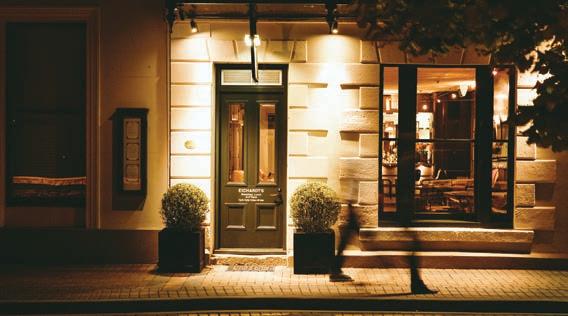
STAFFPERKS&DISCOUNTS

COMPETITIVEHOURLYRATES

THEBESTWORKVIEWSINTOWN

FUN&SOCIALENVIRONMENT
Thinkyouhavewhatittakes?Applytoday! EMAILTOAPPLY: RECRUITMENT@IMPERIUMCOLLECTION.COM

LAKES WEEKLY BULLETIN | 28th February 2023 - 6th March 2023 SITUATIONS VACANT Page 36
MARINEPARADE,QUEENSTOWN|IMPERIUMCOLLECTION.COM
MANAGER
A fantastic opportunity to take the reins of one of Queenstown’s longest standing venues.
Looking for a candidate who:
- Loves their locals
- Passionate about food service
- Has a can do attitude
- Keen to jump into a varied role
- Valid Manager's Certificate
- Previous experience essential
Please email operations@wolfgroup.nz with your CV and cover letter.
AVIS & Budget Queenstown
CAR GROOMERS

We are looking for fun and motivated people to join our team of car groomers. The role is non-customer facing, shifts are 8am to 5.30pm and transport from the city to the place of work in Frankton can be arranged if necessary.

Casual, Part Time and Full Time roles available, all you need is a full drivers licence and an eye for detail.
Estamos buscando personal para unirse a nuestro grupo de Car Groomers. Ingles no es necesario, puede aprender mientras trabajas. Solo debes tener predisposicion, ojo para el detalle y licencia de conducir. Casual, tiempo parcial y tiempo completo
Apply via email in English or Spanish to luke.dennington@abgroup.co.nz
MANAGER
A FANTASTIC OPPORTUNITY TO TAKE THE REINS OF OUR FUN AND FAST PACED VENUE IN THE HEART OF QT.
LOOKING FOR A CANDIDATE WHO:
- LOVES QUEENSTOWN’S ICONIC NIGHTLIFE
- PASSIONATE ABOUT FOOD SERVICE



- HAS A CAN DO ATTITUDE
- KEEN TO JUMP INTO A VARIED ROLE
- VALID MANAGER'S CERTIFICATE
- PREVIOUS EXPERIENCE ESSENTIAL




PLEASE EMAIL OPERATIONS@WOLFGROUP.NZ WITH YOUR CV AND COVER LETTER.
ESL teacher/s needed for part-time

The international students are coming back, so come and join our awesome team. CV and cover letter to dos@lsnz.co.nz
HOUSEKEEPERS
Part-time / Full-time Positions
Spinnaker Bay Apartments has consistently been rated highly by its Guests for its high standards in Cleanliness, Comfort, Facilities & Staff.
Its time to expand our Housekeeping Team. If you are available for as little as 1 day per week or for as many as 5 days per week we welcome your application.
As an added extra, we will provide additional training in Reception Duties for those interestedin expanding their skills
Interested then please email Jude Paterson at info@spinnaker.co.nz
NOW HIRING!!
FULL TIME OR PART TIME BARTENDING SUPERSTARS
Arrowtown’s newest cocktail & live music venue is looking for people with great customer service skills and personality.
Experience with cocktail bartending is desired but not essential. Full training can be given by our experienced team.


• Competative hourly rates.
• Drink & food discounts across multiple venues.


• Guaranteed set days off weekly.
• Become part of an awesome community! Forward your cv to info@hydebar.co.nz or speak with a manager in person.
We look forward to hearing from you!
Sh��� Y��� Fu���� Wi�� U�

We have incredible opportunities in a variety of roles with shifts and hours that will suit whatever you are looking for across our 3 Queenstown properties.
EXECUTIVE CHEF – MILLENNIUM HOTEL


HOUSEKEEPING SUPERVISOR –RESTAURANT SUPERVISORS

FRONT OFFICE
Duty Manager, Receptionist, Porter FOOD & BEVERAGE F&B Attendants,Kitchen Attendants




CHEFS
Sous, Chef de Partie, Apprentice Chef HOUSEKEEPING & LAUNDRY Room Attendants
LAKES WEEKLY BULLETIN | 28th February 2023 - 6th March 2023 SITUATIONS VACANT Ph: 03 409 2800 | info@qmg.co.nz | jobfix.co.nz Page 37
Job Vacancy
Office Manager
Bradley and Cook Electrical are looking for a fulltime Office Manager to join our friendly team in Queenstown.

Experience:
• Administrative/Customer Service experience. Excellent written and oral communication skills.

• Competent computer literacy, including Xero, MYOB Essentials Payroll, Outlook, Excel, Word and Tradify.
• Ability to mulitask to a high level
• Be able to self-manage your own time
• Some knowledge of trade would be beneficial also but not necessary.
• Someone who takes initiative and shows flexibility and adaptability. Able to learn new skills and knowledge.
• H & S Knowledge
Tasks & responsibilities
• Payroll
• Entering all supplier invoices

• Charge out relevant invoices
• Bank Reconciliation in Xero
• Managing emails
• Entering jobs into Tradify
• PAYE
• GST
• Managing Health and Safety Policies
Please apply in writing by forwarding your CV and cover letter to dave@bradleyandcook.co.nz
Public Kitchen and Bar, Finz Seafood and Grill, and Bella Cucina are looking for superstars who genuinely care and want to join an amazing team to help deliver memorable experiences for our guests.
We are hiring in the following positions:
Bartenders
Waitstaff
Duty Manager
Restaurant Manager
Commis Chef
Chef de Partie
Sous Chef Head Chef
Kitchenhands
Apply NOW at:
We offer:
• Amazing pay rates.
• Bonus's.
• Exceptional team spirit.
• Professional development and opportunities for growth.
• Accommodation available.
https://waidininggroup.bamboohr.com/jobs

Sales and Marketing Executive
This is a wide variety role including delivering both in resort and online presence as well as driving sales across a variety of mediums. This role involves a limited amount of travel. Experience in Sales and Marketing is essential. Head over to our Jobs page for a full Job description and to apply.
Guest Services Agent
We are looking for someone who’ll brighten anyone's day with a smile and is excited and enthusiastic to connect with others and works well within a dynamic team. Are you...
• Highly organised with excellent attention to detail?
• Passionate about selling a sustainable product?
• An enthusiastic team player?
Apply
LAKES WEEKLY BULLETIN | 28th February 2023 - 6th March 2023 SITUATIONS VACANT Ph: 03 409 2800 | info@qmg.co.nz | jobfix.co.nz Page 38
NZ’s #1 Original Zipline company is looking for adventurous people to join our team.
online at ziptrek.co.nz
We are looking for passionate and energetic people to join us to help deliver a great all round experience for our customers.
We offer competitive pay rates, staff meals, staff discounts across our venues, guaranteed two days off a week, quarterly bonuses and staff social events.









At Queenstown Collective, we believe in looking after each other, enjoying your work and maintaining a good work/life balance.

We have accommodation options available
find out more or
on
qtcollectivejobs@gmail.com 28 Buckingham Street, Arrowtown www.bendixstables.com Steamer Wharf, 88
Street,
www.ivyandlolas.com Steamer Wharf, 88
Street, Queenstown www.atlasbeercafe.com – CHEFS –– DUTY MANAGERS –– FRONT OF HOUSE –– KITCHEN PORTERS –NOW HIRING
To
apply for one of the roles
offer please email to
Beach
Queenstown
Beach
JOIN THE MOVEMENT
and be a part of Republic Hospitality Group
•Tired of being bored at work?
•Want to make your Queenstown life epic!
•Looking to meet a fun and friendly crew?
Republic Hospitality Group has 10 venues in Queenstown, and we o er casual, part-time and full-time work. So whether it’s bar, restaurant or kitchen work you’re interested in, we’ve got it available at all levels


Our perks are pretty hard to beat:
• Sta pricing (did someone say great deals on food & drink?)
• Sta accommodation options
• Epic sta parties
• Great sta incentives
• A trusting culture
• Competitive pay
• Free sta meals
• Training and upskilling
• A welcoming and friendly team
Republic is a finalist in the NZ Hospitality Awards for Excellence in People & Culture for a reason. Get in touch and join us today, email HR@republicqt.co.nz and tell us what you’re looking for.
Check out our venues at www.republichospitality.co.nz
Executive Assistant - Queenstown Full-time
If you are seeking an exciting new opportunity within executive administration, then we may have the ideal role at New Zealand’s premier residential real estate company, based in our Head O ice in central Queenstown.
The role is key to supporting the Executive team, specifically focusing on direct support for the Managing Director(s) and General Manager of Operations, by acting as the conduit across all key projects, deadlines and strategies which impact the business.
The EA will be required to o er high level confidential, administration support across a wide breadth of tasks, therefore excellent attention to detail, strong communication and task management skills & solid IT capability is required.
We are excited to commence our search to find the ideal candidate for this role, therefore if you feel the above matches your skill set and experience and you are looking for both variety and the opportunity to work in a dynamic, fun and fast paced role, then please contact rachel.exell@nzsir.com for further details today.
This is a permanent full-time position based in our Queenstown Head O ice.
The role will ideally be starting in late February / March 2023. Applications will be held in the strictest of confidence. Please contact us for a full copy of the job description.
MARKETING AND DESIGN
An exciting opportunity to join the team at Wolf Hospitality.

About the role:
A dynamic role in a fast-paced and expanding hospitality group.
Key focus on building partnerships and customer relations. Emphasis on graphic design and branding. Business marketing via social media and online platforms.
Must have:
An exceptional eye for detail.
Excellent interpersonal skills.
A can-do attitude.
Previous experience in a similar role.
Experience using Adobe Illustrator preferred. Experience using Hootsuite and Mailchimp.
To apply please email your CV and cover letter to operations@wolfgroup.nz
BLUEKANU RESTAURANT & BAR, QUEENSTOWN
Come and work with the team at Bluekanu!!
We are a fun, energetic award-winning team who are all striving for the same results, “the best hospitality” – great atmosphere, lots of laughs, good vibes, delivering amazing food and beverage!
We have the following positions available - (full time and part time)
• Front of House Servers
• Bar Manager/Bar Persons
• Chef de Partie
• Kitchen Hand
So, what is in it for you?
- Market leading rate for the right person
- No split shi s
- Fantastic team environment
- Guaranteed hours
- Sta perks
- Training and Management support provided

If you are looking to take the next step forward with a thriving restaurant, please get in touch. Send your CV through to warren@hhgroup.nz
Check out our website www.bluekanu.co.nz

LAKES WEEKLY BULLETIN | 28th February 2023 - 6th March 2023 SITUATIONS VACANT Ph: 03 409 2800 | info@qmg.co.nz | jobfix.co.nz Page 40
2557744A
Browns Real Estate Limited (licensed under the REAA 2008) MREINZ.
ARROWTOWN
Come and immerse yourself in the 1,500+ wines and spirits we stock and help us showcase the 100+ wines, gins, whiskies & spirits we have for tasting everyday with customers who come from all over the world. We have Part Time (15-30 hours/week) & Full Time (40 hours/week) positions at our Arrowtown store in various roles.
Wine Sales
This could be an ideal step up if you have experience at a cellar door or if you have enthusiasm for wine, hospitality and retail with a great customer service attitude. You would bring additional value if you have your Duty Managers Certificate and/or WSET qualifications.
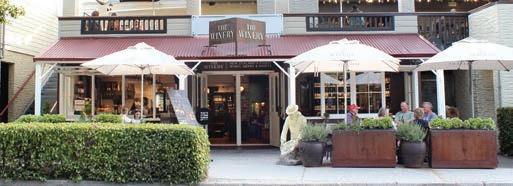
Baristas (full training provided)
We are looking to train a couple of coffee and wine loving locals who want to work school hours (10:15am – 3pm) for 2-3 days a week.
Kitchen Hand
This is a great entry into hospitality, we will train you in preparing and serving our cheeseboard and tapas menu, and all our kitchen operations. Ideal if you are looking for 20-40 hours, 3-4 days a week. Enquire confidentially to: henry@thewinery.co.nz or come & chat with Henry at The Winery, 27 Ramshaw Lane, Arrowtown.
Networks Operator - Queenstown or Wanaka
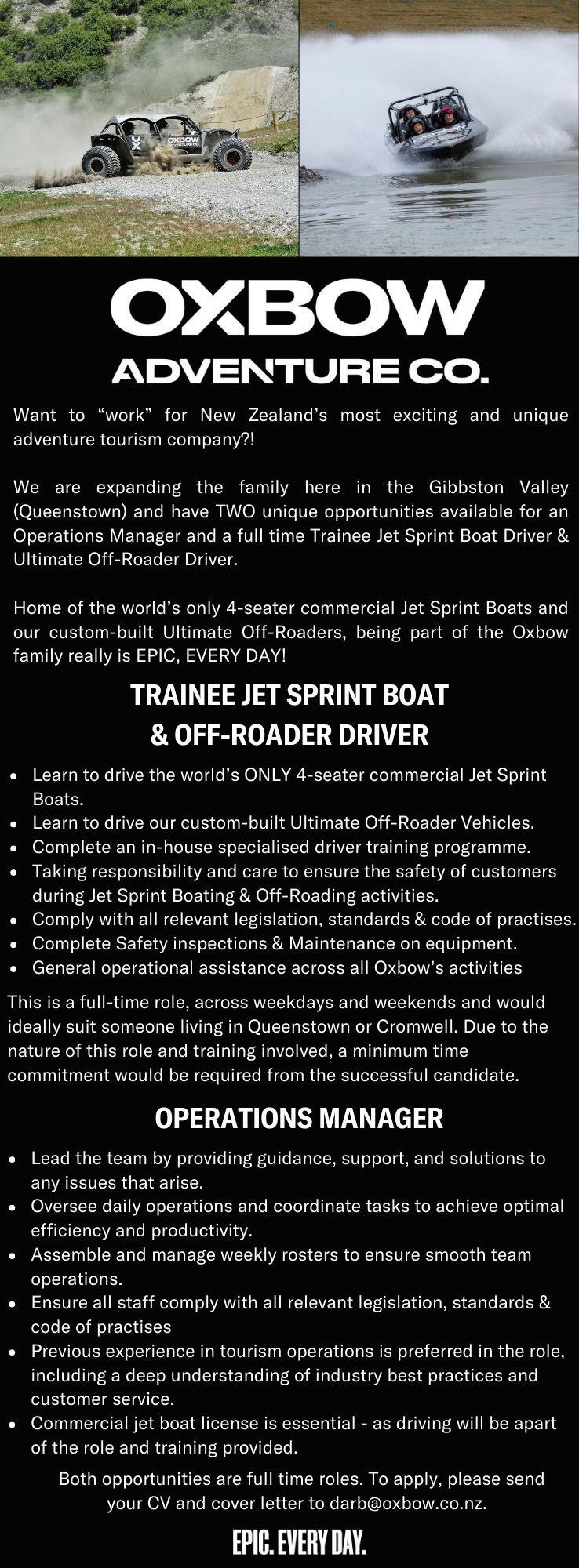
We are currently seeking network operators for our Queenstown and Wanaka contract.
What we offer:
● On the job training and development
● Competitive hourly rate + increased overtime rate
What you will do:
● Maintenance and repairs of the 3 waters networks: water, wastewater and stormwater

● Be part of an on-call roster
You will need:
● Class 1 licence required, a class 2 licence will be an advantage
● Complete training is provided however, experience in drain laying, plumbing, irrigation, wastewater maintenance or civil works will be an advantage
If this sounds like you, send your CV to qtadmin@veolia.com


LAKES WEEKLY BULLETIN | 28th February 2023 - 6th March 2023 SITUATIONS VACANT Ph: 03 409 2800 | info@qmg.co.nz | jobfix.co.nz Page 41
Where Youwant to be
FIND A WORLD OF OPPORTUNITIES!
Hilton brand to choose from: Hilton Queenstown Resort and Spa and DoubleTree by Hilton Queenstown and all of our Team Members get to work across both brands

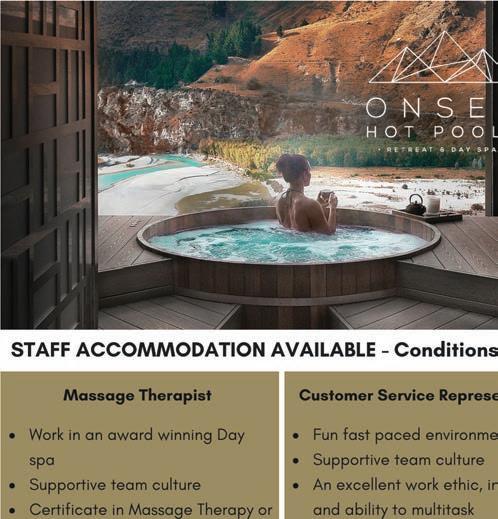
We are currently seeking the following roles:
-Commis Chef

-Food & Beverage Attendant (Hospitality Professional)

-Food & Beverage Supervisor

-Guest Service Agent
-Housekeeping Attendant (Hospitality Professional)


We know that Team Members experience is just as important as our Guest experience and we are committed to helping our Team Members reach their full potential with great training, development opportunities and exclusive benefits:

•Starting rate $25/hour
•Free Lunch/Dinner Meal
•Global discounted Food & Beverage and Accommodation rates

•Discounted Transport Option to/from Hotel
Let us help find the right career for you! For applications and more information visit: www.jobs.hilton.com
Advertise
Upload
LABOURER / PLANT MANAGER
We’re looking for an enthusiastic, hard-working all-rounder to become a valuable part of the Trinity team. While you might be asked to help the crew, this is not a building/construction role. The position is 35-45 hours per week covering the areas below, across all sites.
• Cleaning up rubbish, waste materials etc on job sites both inside and out
• Cleaning of site offices, portacoms, on-site toilets
• Moving supplies around on site and between sites
• Pick up and deliveries from the main office and suppliers
• Support and help as required for carpenters eg lifting, unpacking, stowing materials and supplies
• Plant and equipment duties
• Drive JCB as required (training provided)
You need to be a New Zealand resident or citizen, already living in the Queenstown/Cromwell/Alexandra area, with a clean driver’s licence. Organised, proactive, efficient, able to work both unsupervised and to take direction, you’ll work to a high standard and take pride in your work. While a reasonable level of physical fitness is required as this is an active role, this could suit anyone from a recent school leaver to an active retiree.
LAKES WEEKLY BULLETIN | 28th February 2023 - 6th March 2023 SITUATIONS VACANT Ph: 03 409 2800 | info@qmg.co.nz | jobfix.co.nz Page 42
your job vacancy
We offer competitive remuneration, a work vehicle for use on sites + to take home and back, and a great working environment + people to work with. Apply now with your CV/resume and covering email to guilia@trinityqt.com or call Guilia Porrelli 0274 967 488 for more details. All applications treated in confidence. online at jobfix.co.nz
Real careers, real purpose