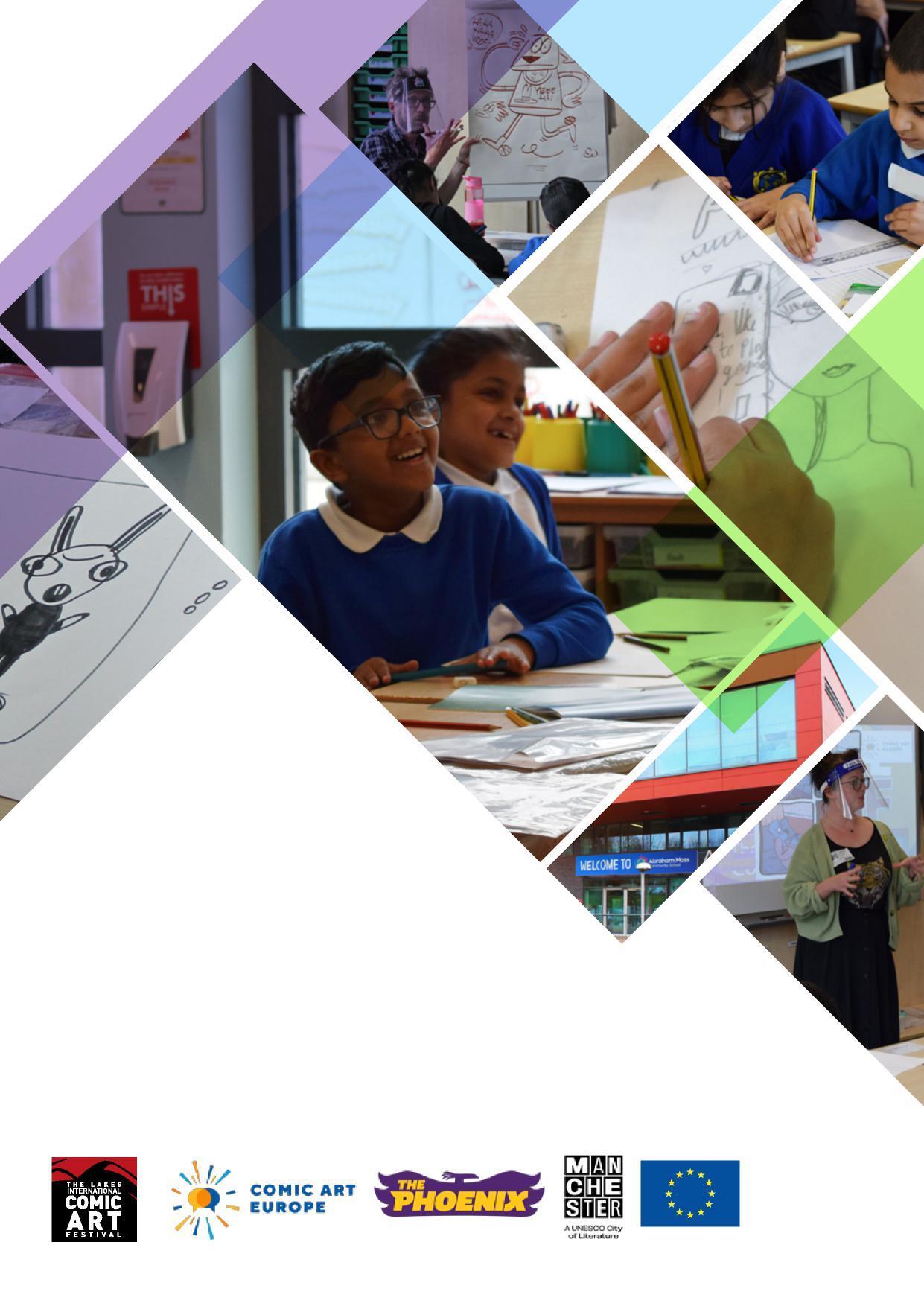
COMICS AND LITERACY
FINAL REPORT ON THE EU COMIC ART
EUROPE RESEARCH PROJECT 2020-2
PROFESSOR ANDREW MILES
UNIVERSITY OF MANCHESTER
NOVEMBER 2023
1.Introduction
The aim of the Comic Art Europe (CAE) pilot project has been to examine the potential for exchange and capacity building across the European comics sector in order to boost the sector’s profile in relation to its East Asian and North American counterparts. The project has involved a collaboration between four organisations - Escola Joso in Barcelona, The Belgian Comic Strip Centre (BCSC) inBrussels, Lyon BD and the Lakes International Comic Art Festival (LICAF) in the UK – across several strands of work, including training, residencies, dissemination and research.
The research theme chosen for the project was the transformational potential of comics as a tool to promote and enhance literacy. This report summarises the activities and findings of the work carried out by the four participating organisations to explore the relationship between comics and literacy. It begins with a description of the contexts in which the research projects they coordinated took place, moving on to discuss their methodological approaches, before outlining and evaluating their findings. Further details on each project are available in the separate research reports that have been produced by the four participating organisations.

2. Projects and Contexts
The research strand to the CAE project took place at various points across 2020-22. While the initial ambition was to achieve consistency in focus and approach across the strand, this proved impossible to achieve, and the four research projects developed quite independently of one another. As a result, while each project produced important insights in their own terms, direct comparison of their outputs and findings is restricted.
Broadly speaking, all of the projects were either wholly or in part concerned with the promise of comics to mediate access to literacy among socially disadvantaged and culturally minoritised groups. There were particular similarities between the Belgian and French projects in their focus on the social inclusion of adult immigrants from, in the main, former French colonies.
Meanwhile, the Catalan project, working with homeless people in Barcelona, shared with the Belgian project a particular concern with the social isolation and vulnerability of women. The UK project, which focused on school children, took place in a strongly contrasting setting to the other interventions, but also addressed issues of ethnic diversity in a context of economic disadvantage. In detail, however, the four projects comprised an eclectic mix of interest, expertise, capacity and approach, in which there were variations in the way literacy was conceptualized and addressed, comics were used, data were collected and evaluated and, ultimately, in the type and amount of impact that was achieved
2.1 The Maison des Femmes Project in Brussels
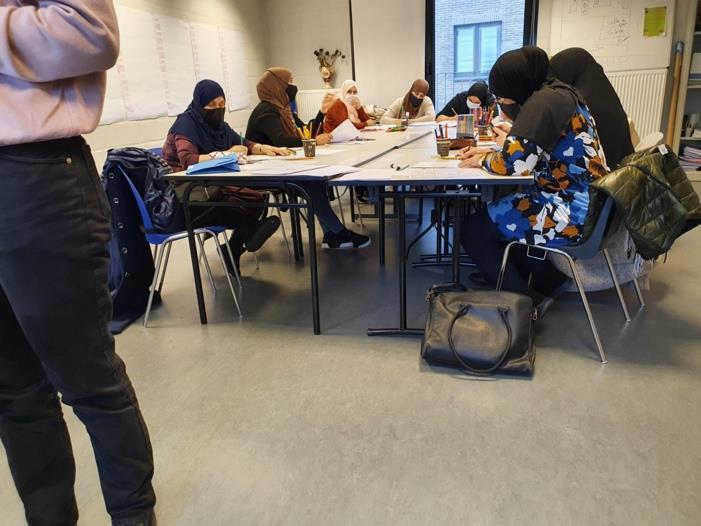
BCSC worked with 32 women aged between 33 and 67, all but one of whom are originally from Morocco but have been resident in Belgium for at least 8 years, who were participants in the Maison des Femmes. This is an initiative created by the Molenbeek Vivre Ensemble (MVE) social and legal services association, located in the densely populated Molebeeke-St-Jean municipality in Brussels, that aims to support immigrant women’s personal development and participation in civic life through literacy courses in French and various socio-cultural activities. These women are considered to be particularly vulnerable due to their cultural isolation, poor socioeconomic circumstances, their relative lack or absence of schooling, and the fact that French is not their mother tongue.
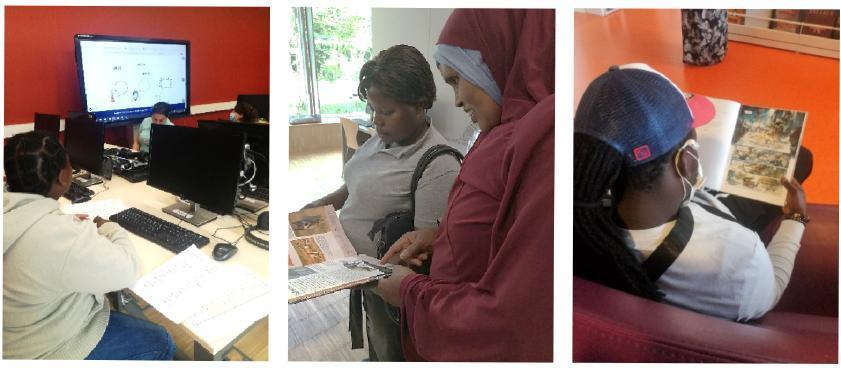
BCSC is a museum that also carries out educational outreach work connecting comic artists to community groups. For the CAE project its aims were to examine the effect of comics both as a learning tool and a way of promoting well being. Working with MVE literacy instructors, a comic artist delivered five morning workshops over five weeks in 2021 to two groups of women, distinguished by educational level. The workshops first introduced the medium by participants being asked to fill out gaps in speech bubbles and drawing characters to go with them which led on to the production of a comic book in which the women were invited to draw themselves based on positive memories drawn from their personal experiences. In 2022 anotherseries of workshops was conducted with the lowest level literacy group followed by a visit to the museum and an exhibition of the participants’ work.
2.2 The Langues Comme Une Project in Lyon
The comics and literacy project in Lyon was organised and delivered, on behalf of Lyon BD, by Langues Comme Une (LCU). LCU is an independent voluntary sector association led by two trained instructors that provides access to learning, including functional literacy, by offering literacy modules for anyone unable to access the public or private sector training systems. LCU took on the CAE project because of the trainers’ professional pedagogical interest in experimenting with comics as an educational support for pathways into reading and writing.
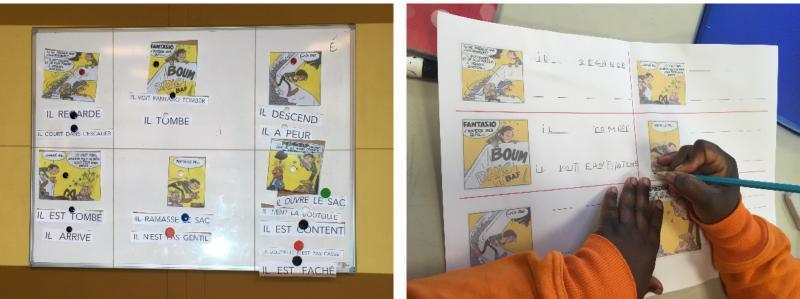
Followingscoping sessions involving two groups of fivepeoplein 2021, which werelimited by CV19 restrictions, the main part of the comics and literacy programme in Lyon took place from March to June in 2022. It involved 48 hours of classes over 10 weeks with a subject group of 12 adults (alsopredominantly female) fromseven countries amongst which 16 languages were represented. The classes were delivered by the two LCU instructors supported by a trainee teacher studying for a Masters degree at Lyon 2 University. Comic strips were progressively integrated into the classes in the form of extracts of increasing complexity to support five developmental learning objectives: acquiring chronological ordering and reading direction; developing visual literacy; connecting oral and written language; building graphomotor skills; encouraging lexical memory.

2.3 The Llar Impuls Project in Barcelona
The Catalan component of the CAE research strand was rooted in a collaboration between Escola Joso and the ASSÍS Homeless Reception Centre, located in the Sarrià neighbourhood of Barcelona. The rationale of this project was to surface the particular risks, circumstances and consequences of homelessness for women, which are often rendered invisible because of a focus on those living on the streets and in shelters, where males predominate.
The project involved the collective production of a comic volume - a ‘graphic witness’ to the issues and experiences of homelessness among women – based on the life histories of six participants living in the ASSÍS Centre’s Llar Impuls housing complex for women. The book was produced over an 18 month period between November 2020 and January 2022 from a series of nine introductory, storytelling and collaborative illustration workshops, co-ordinated by a student intern conducting her final year dissertation for a degree in social education at the University of Barcelona.
While the comic format was deemed to be more accessible for the migrant women involved because of their limited proficiency in Catalan, this project was something of an outlier in that it wasn’t concerned with literacy in any conventional sense, Rather, it sought to explore how the process of shared visualstorytelling could mediate in the recovery of the women’s sense of identity and self worth.
2.4 The Abraham Moss Community School (AMCS) Project in Manchester
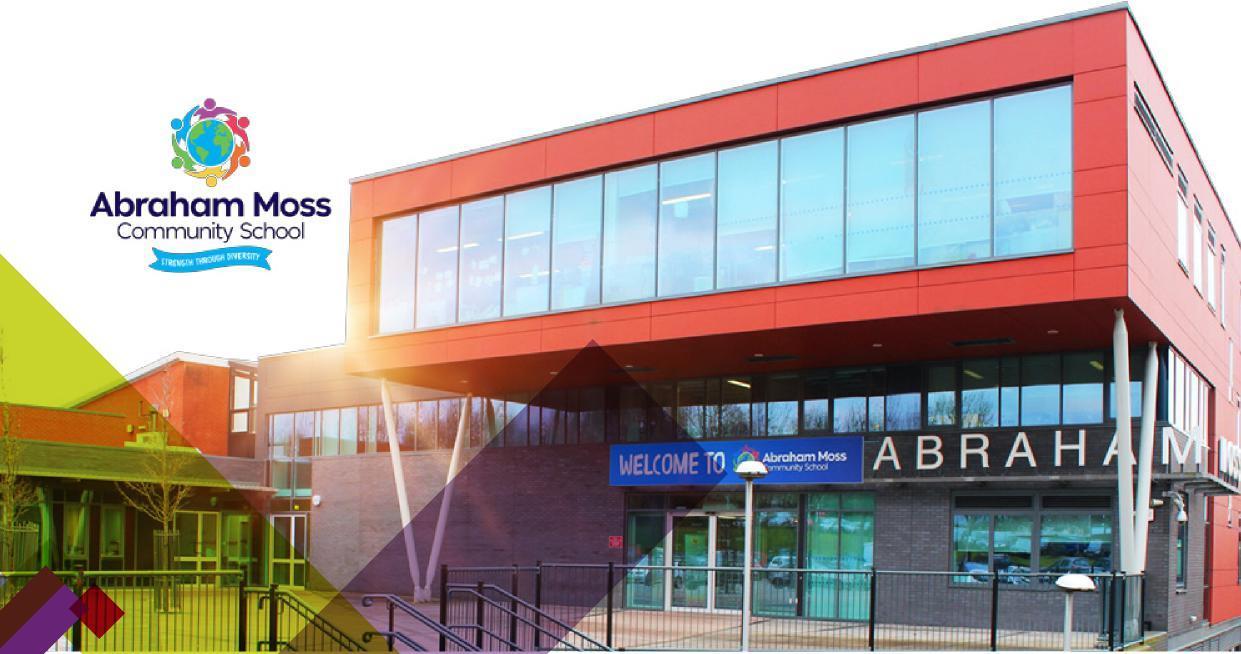
The UK research project was conducted by LICAF, an annual international comic art festival based in the UK Lake District, which also runs a year-round development and engagement programme. The LICAF project was based in a primary school in North Manchester which has a large proportion of pupils from ethnic minority backgrounds and a higher than average number who are in receipt of the ‘Pupil Premium’ subsidy given to economically disadvantaged students. In the UK, literacy is highlighted as an essential foundation for all learning, while reading is considered a vital underpinning for children’s personal and social development. The UK’s national school inspection agency Ofsted identified reading as an area in need of improvement at AMCS. Teachers cite a lack of parental engagement and the fact that English is for most students and their parents an additional or secondary language as barriers to children developing more of an interest in reading.
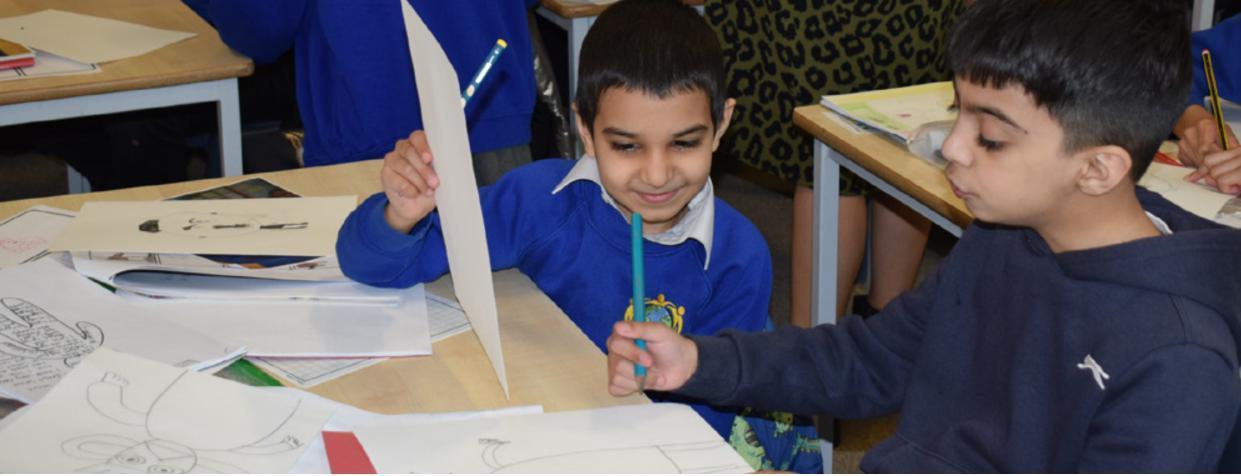
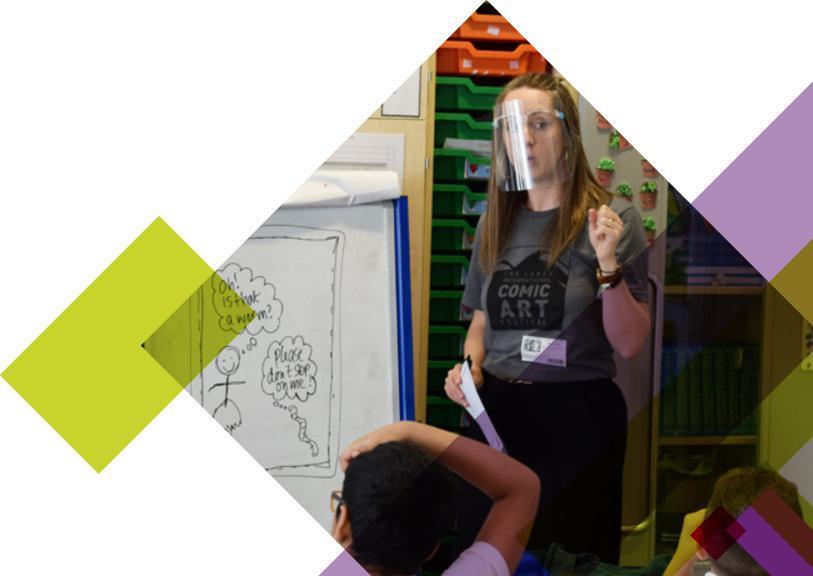
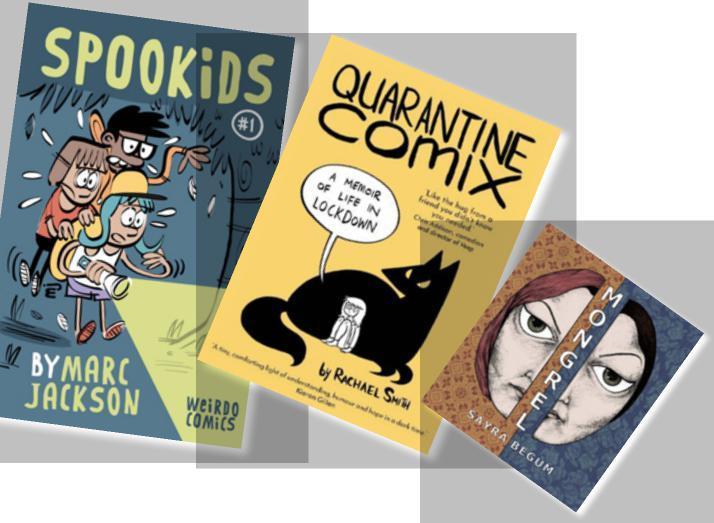
LICAF’s project at AMCS aimed to explore the potential of comics in the classroom and at home to enhance pupil’s enthusiasm for reading and, by extension, their well being and theircreativity. The project involved more than 50 pupils who were in two Year 3 (aged 7-8) classes when it began, though the comics intervention involved only one the class groups. This was delivered across two academic years between April 2021 and May 2022, each consisting of 40 half-day workshops led by two LICAF producers, who are both qualified teachers, and five professional comics creators. The first set of workshops sought to convey the basic mechanics of comics and to develop confidence in drawing through, for example, caricaturing, storyboarding, and sequencing using panels. The second part of the programme included modeled reading, reading comics communally, visits to the school library and working collaboratively to produce and promote comics. Throughout the project, children were supplied with a temporary library of comics in class and a subscription to The Phoenix comic delivered directly to their homes
3. Conduct of the Research
Different models of research were adopted in the four settings, reflecting the particular issues and circumstances of the different interventions. The conduct of the research in each setting also reflected the variable research experience of and expertise available to the project teams. The author of this report, who also designed the UK project and coached its researcher, offered advice to the other projects on how to frame and mobilise their research questions with the data they had collected, although this happened after the projects were under way and their format was fixed.
The UK research project was the most comprehensive and wide-ranging of the four, in part because it took place in very structured and controlled environment. This allowed for the implementation of a quasi experiment whereby the reading development of one class of students in the year group, which received the comics intervention, was compared with that of another demographically similar or ‘matched’ class in the same year group, which didn’t receive the intervention. The assumption here is that because the two groups are matched in all respects except their exposure to the comics intervention, is likely that is the intervention alone that is responsible for any changes in reading development that are observed.
The project drew on a body of established theory and literature to develop a set of outcome indicators by which to measure changes in reading behaviour, attitudes, identities, motivation and confidence, along with well-being and creativity, and to evaluate thelinkbetween outcomes and the activities in the comics workshops.
This was used to conduct a ‘baselining’ survey for both sets of sets of students and their parents before the intervention began. The survey was then repeated after the project had finished. The project was also able to draw on the School’s own measurement data on pupil’s literacy levels (including reading age), which are routinely collected annually, as an independent indicator of change. These quantitative approaches were mixed with a range of qualitative methods designed to tease out the mechanisms underlying changes in indicated reading development, well being and creativity. These methods included classroom observations conducted by workshop leaders and the project researcher, session feedback forms completed by students, individual and group interviews with students, interviews with teachers, and focus groups with workshop leaders and artists. All data management and analysis at AMCS was carried out by the project researcher, who was embedded in the project by dint of also being the school’s librarian.
Theco-ordinatorof the Maison des Femmes researchattemptedtoreplicatethebroadstructure of the UK research project. However, she was unable to identify a comparison group, while the vulnerable situation of the participants made them reluctant to or, because of comprehension issues, incapable of filling out pre intervention questionnaires and tests designed to baseline their literacy levels, reading behaviour, attitudes to comics and their emotional feelings about reading and writing. Instead pre and post intervention interviews based on these areas were used to evaluate the effects of the 2021 intervention, supplemented by feedback from trainers and attendancedata. 75% of participants tookpart in interviews before theworkshops and 55% after but the circumstances of the participant group meant that only 15 minute interviews with individuals were possible, and the post project interviews had to be conducted collectively. During the 2022 intervention the coordinator struggled to get participants to engage with the interviews at all.
The LCU project used structured classroom observation to evaluate the efficacy of the didactic workshops delivered by the association’s two instructors and the project’s teacher-training student intern. The instructors drew on their own professional training and previous practice to integrate comics into their teaching, identifying then structuring the workshop programme and the content of the classes around five comics-enabling learning objectives. Each of the graphic stories they introduced was approached in the same step-wise manner - with students being encouraged to recognise and order the visual content of panels, vocalise the actions represented in them, and then connect the panels to the correct written statements that describe each part of the comic strip’s narrative - to deliver ten key skills underpinning literacy development. Observation was informed by the specification of indicators of progress in particularskills linked to thelearningobjectives. Theassessmentof individuallearners’ progress and the instructors’ approach was done by repeating the steps with each new comic. Observation data were supplemented by photography and video, student testimony, weekly written reviews of workshops by the teaching team, and a final practical assessment exercise.
The particular context and objectives of the Catalan project with the women of Llar Impulse in Barcelonaledtoaratherdifferentapproachtotheotherprojects.Herethestartingassumptionwas that the artistic practice itself communicates meaning making and that in order to interpret and understandthisanethnographicapproach using a narrative research methodology is required. In this the researcher engages in an iterative process of facilitation, watching, listening to and discussion with the research participants as - in the case of the Catalan project - they collective generate their stories - orally and visually through the production of the comic book.
4. Findings
circumstances of the different interventions. The conduct of the research in each setting also reflected the variable research experience of and expertise available to the project teams. The author of this report, who also designed the UK project and coached its researcher, offered advice to the other projects on how to frame and mobilise their research questions with the data they had collected, although this happened after the projects were under way and their format was fixed.
The findings of the Catalan project speak somewhat indirectly to the original aim of the CAE research strand because, as already noted, the project did not set out to address the issue of literacy in any commonly accepted sense. However, the collective process of making the graphic witness comic book, particularly the illustrative element, did provide a vehicle of expression for the Llar Impuls women, for whom the culturally specific practice of writing was forbidding and, in the case of the migrantwomen involved, for those who have limited facility in the host language of the project. In these senses, working with images helped to overcome barriers in communication and drawing in a group created a more relaxed atmosphere as the results were immediately visible.
It is difficult to make an objective evaluation of the workshops because they aimed to promote a process of personal re-discovery through collective endeavour that was not finished at the end of the project. However, from a starting position of uncertainty, the women developed trust and reciprocity in the telling of their stories and expressed pleasure and pride in the results of their work. The finished comic book itself is evidence of success in the project’s own terms: testament to the process of self-understanding among the women participants, while also providing a new understanding of women’s homelessness for the reader. Yet, from the perspective of comics and literacy, the project ultimately offers limited insight.
The BCSC’s research in Brussels found that a large majority of women in the Maison des Femmes workshops had positive attitudes towards learning. Most were attending the workshops because they realised the value of literacy for their independence; particularly in dealing with practical matters around health and children’s education. The value of the workshops for socialising was also as, or even more, important to some participants.
The baselining of the two Year 3 groups was performed using school reading assessment data and two question sets; one online and one completed by hand. A separate online survey was issued to parents. The children’s data was collected in school in small groups, introduced and supervised by the LICAF researcher. Parental input was requested via school channels of communication, then answered and submitted from home. Statements on both classes’ overall enjoyment of school, engagement with reading activities and receptiveness to new ideas and experiences were provided by their teachers.
The BCSC’s research in Brussels found that a large majority of women in the Maison des Femmes workshops had positive attitudes towards learning. Most were attending the workshops because they realised the value of literacy for their independence; particularly in dealing with practical matters around health and children’s education. The value of the workshops for socialising was also as, or even
In terms of progress, little technical change was observed by the instructor of the class rated officially as having a very low starting rates of literacy (able to write less than five words in French, but progress was steady in the group containing women that knew how to read and to write simple sentences in French. There is little clear sense of how far the introduction of comics impacted the outcomes of the workshops. While the majority of participantshada positiveview of comics, the instructors saw little or no change in reading development, and none of the women made use of the library of comics that made available to them outside of the sessions. 25% of the participants expressed reservations about the use of comics as a pedagogical tool, feeling that they distracted from the serious business of learning, and failing to see the usefulness of drawing alongside writing. However, others expressed appreciation of the way the comic artist used drawings to simplify complex associations. 70% of the women made a positive link between the creative expression encouraged in the comics-based workshops and their wellbeing, and a similar proportion wanted the workshops to continue with a comics format.
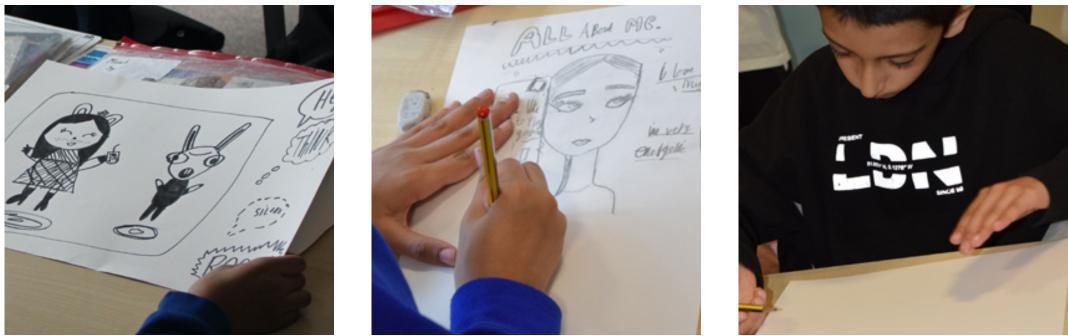
In the online survey for pupils, answered by all participants, information was collected in relation to each of the seven expected reading, creativity and wellbeing outcomes and constructed using predominantly quantitative, ‘scale’ questions derived from academic research, government-run surveys and teaching practice.5 Where pre-existing frameworks were adapted, it was to make questions comprehensible to the subjects. Where relevant pre-existing questions could not be sourced, original queries were devised. The handwritten question sheet, completed by 50 participants, was designed to gather an overview of pupils’ exposure to and experience of comics as well as their cultural consumption. It was presented in such a format to enable pupils to submit a drawing in answer to the instruction, ‘Draw what you think a comic looks like.’ The parental survey covered similar ground to that of the children’s, with added enquiries into their own reading habits and public library use. Uptake of this was survey was lower, with only 28 parents submitting a response. All three question sets will be revisited with participants once the intervention has concluded.
In the Lyon project, LCU found that comic images made access to meaning easier for students as they could first understand a situation that could then help them decipher what was written or what to write. Vocabulary also became easier to remember when associated with drawings and the comics strip also helped students memorise the graphic form of the writing system. Working on the observation and description of a comic’s panels improved their ability to identify visual and graphic information and the link between the images and writing made it easier to for them attribute a meaning to graphic signs. The comic medium introduced humour and playfulness that that lifted people out of their day-today concerns and motivated them to learn. The discovery and telling of a story sparked enthusiasm and created pleasure.
Overall, the instructors found that reproducing the eight-step approach in the case of each comics extract introduced in the workshops enabled students to create new references, identify the particular difficulties they faced and to work out their own learning path, thereby making them more autonomous. In visits to the library instructors could observe some participants moving on to becoming book readers. Beyond writing, comics led to the acquisition of socio-linguistic skills, which have great practical value in enabling students to interpret and negotiate everyday environments. The process of engaging with the production of a comic sponsored people’s imagination and creativity and contributed to the development of social interaction that promoted group cohesion.
For theinstructors, theheterogeneous nature of the comics format, allowing for participants to engage according to their ability, made the variations in skills across their participant group easier to manage pedagogically. It also allowed them to observe and assess progress in learning behaviour without the need for a shared formal understanding of language. Less positively, they stress the considerable time costs involved for instructors in gaining a proper understanding of such a large and varied new field of literature from which then to select and mobilise appropriate material for use in teaching. They also point out that working with speech bubbles – a central graphic element of most comics –entails a level of technical and interpretive complexity that is beyond those with only a basic understandingof language. Theyconclude, therefore, that while the comics medium is a highly promising support to literacy development its use requires considerable pedagogical reflection.

The BCSC’s research in Brussels found that a
At AMCS in Manchester the LICAF research found that there were strongly positive effects on most indicatorsof readingdevelopmentforthestudents participating in the comics workshop programme. Withoneortwoexceptions,theseeffectswerenot, or not as strongly, evident among the nonparticipating comparison group.
5.1Readingbehaviour
According to the School’s own measurements, the average reading age of the class involved in the comics intervention rose by 18 months in the 12 months after the workshops started in contrast to a rise of 11 months for the matched comparison group. Members of the intervention group sensed they had become better readers while, in class, teachers recorded that thegroup’s reading choices broadened and that there was a noticeable development in pupils’ language. At home, two thirds of the parents of this group noted specific changes in reading habits and related outcomes, including interest, independence and confidence in learning.
Pre-activity: 80% of the intervention group had never chosen their own comic to buy, never been given a comic as a present and never borrowed a comic from a library. 70% said they never or almost never read comics or graphic novels outside of school. Fiction and non-fiction books were the materials read most frequently by the class, observed also by their parents. Reading before bed, choosing a book to read and listening to a story read by someone else were the activities most liked by the class. Nine pupils said they read for fun every day or almost every day. The most popular response to the question, ‘How long do you read for, each time you read outside of school?’ was ‘for as little time as
Measuredenjoymentofreadingroseamongboth classes in the group, but considerably more among the intervention group.
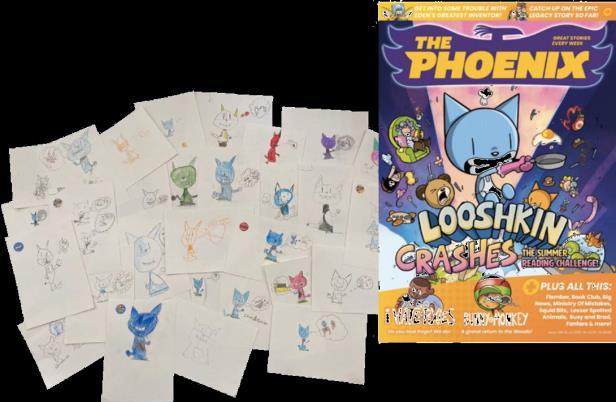
A large majority among the latter agreed that their feelings about reading had become more positive and both they and their parents spoke enthusiastically about receiving and reading The Phoenix comic at home, where it was often read also by participants’ siblings. The class teacher noticed a significant shift in positive attitudes to reading-based activities in class more generally, also noting that sequential art helped break down complex material. There was a complementary rise in the percentage of students who felt that comics had made reading less difficult. By the end of the project, the number of students agreeing that being given a book as a gift would make them happy had risen by 13 percentage points while there was a decline of 14 points among the comparison group. Production activities like the mini comic festival curated by the intervention groups elicited enthusiasm and pride among ordinarily disinterested male students and the ‘cool’ factor associated with comic characters allowed more disruptive influencers within the intervention group to identify as readers. After the workshops had finished, the number of children who listed reading as one of their favourite leisure activities doubled in the intervention group, while it reduced in popularity among the comparison group. Parents’ survey responses revealed that the proportion of children in the intervention group who talked about reading every day or nearly every day rose by 22 percentage points compared to just 3 percentage points in the non intervention groups.

Bringing specialist arts teachers professional illustrators into class strongly influenced students’ creativeprocesses. 70% of pupils in the intervention groups said that the way they came up with ideas had changed over the course of the intervention. Artists and facilitators noticed them making connections between workshops, becoming more reflective, and taking more risks in their work. Teachers noted how students began to transfer skills they had learned in the workshops to other areas of the curriculum. Parents associated with the intervention group noted an uplift in pupils’ excitement towards school and how much they talked about their school day at home over the course of the project, both of which diminished in the comparison group. Sharing the comics they had produced with each other made the children feel excited, proud, selfconfidentand supported.
5. Conclusions
As noted above, the differences in focus, setting, approach and the type of quality of data produced by the four projects that comprised CAE research strand make it difficult to make direct comparisons between them or to draw common conclusions about the relationship between comics and literacy from the work they carried out. Given this fact, any attempt to do so becomes somewhat superfluous, as more can be gained from reading about and understanding the projects in their own terms.
Each project started from the premise that there are specific features about the comics format – its accessibility, the combination of words and images, its directional panel structure, the artistic process involved in its construction – that might work to sponsor positive change in the acquisition of particular skills and capacities that relate to learning development in the different contexts that the projects operated in. These include changes in cognition, motor skills, independence, motivation, co-operation, creativity, affect and well being. In most cases, although sometimes with ambivalence, these assumptions were largely borne out.
With respect to the concept of literacy development as it is most commonly understood (improvement in formal reading and writing skills) it is the highly structured British and the French projects that stand out for being able to measure or calibrate the effects of introducing comics into formal learning environments whilst also explaining the mechanisms that underlie these effects. In contrast, the Belgian project highlights how difficult it can be to conduct research into acomplexrelationshipwhentheparticipantgroup is vulnerableandwary, starting levels of literacy are very low, and the project infrastructure is fluid and unpredictable. The Catalan project also stands out, but for the different reason that it doesn’t really confront the question of comics and literacy. However it, too, demonstrates, how a comic book, as an arts objects borne of a particular combination of creative processes, can sponsor learning development in unorthodox ways and challenging settings.