Lake Macquarie New South Wales a Maritime History
The Maritime Museums of Australia Project Support Scheme is funded by the Australian Government through the Australian National Maritime Museum and the Department of Communications and the Arts.
Lake Macquarie Maritime History
The traditional owners of the Lake Macquarie area, the Awabakal people, referred to the lake as Awaba, which translates to ‘flat or plain surface’. In 1800, Europeans called it Reid’s Mistake. Captain Reid, on his ship the ‘Martha’, travelled from Sydney in search of the Hunter River to collect coal. He had mistaken the lake’s entrance for the mouth of the Hunter River after taking his bearings from the following description of the Hunter River mouth:
with a small island to one side and a noticeable coal seam along the southern coast line .
He successfully entered and collected coal, but it was only on his return to Sydney that the error was discovered and a new source of coal established. This was the beginning of Lake Macquarie as a colonial settlement.
In 1826, the name was changed to Lake Macquarie in honour of the Governor of the day, Lachlan Macquarie. Small settlements were built around coal mines, and as the communities grew, suburbs emerged. This saw the area declared a municipality in January 1977, eventually evolving into a city in 1984.
The area of Lake Macquarie is estimated at over 110 square kilometres. It is the largest saltwater lagoon in Australia and is four times the size of Sydney Harbour with 175km of shoreline.
Researched and written by
Judith Adnum.

Aboriginal and Torres Strait Islander maritime history
All of Lake Macquarie lies within the traditional country of the Awabakal nation. The lake has important traditional Awabakal spiritual and cultural meanings and values, respected by local Aboriginal people. Across the area are more than 500 archaeological sites and places which demonstrate the relationship between Awabakal people and their country over thousands of years. i Apart from the abundance of food on the land, the Awabakal enjoyed the food teeming from the lake. Fish, oysters, crab, cockles, giant water lilies and lobster were available. The Awabakal people gave inland tribes access to their country at least once a year for fishing and the attainment of salt. ii
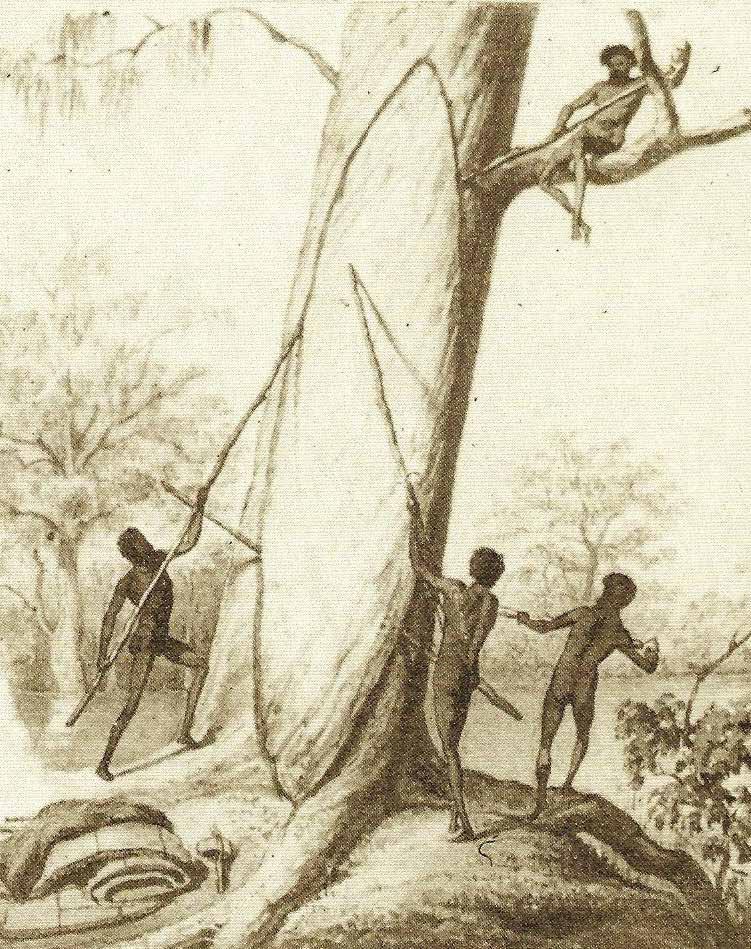
Awabakal would craft canoes from gum trees so they could spear fish from the water. Each canoe housed a small hearth so bait as well as the fresh catch could be cooked as soon as it was caught. iii Canoes could hold as many as eight people but usually only two or three occupied them as they could easily tip when the wind came up. The physical appearance of the indigenous people attested to the abundant and healthy diet they enjoyed. Reverend Threlkeld mentions they often towered over the European settlers. iv
Boats were one of the earliest forms of transport in Lake Macquarie. Initially these were used for transporting goods‐ mainly coal and timber‐ but over time, passenger services developed. Ferries were an important form of transport around Lake Macquarie right up until the 1950s when adequate roads became more established.
Public Transport
Boats were one of the earliest forms of transport in Lake Macquarie. Initially these were used for transporting goods- mainly coal and timber- but over time, passenger services developed. Ferries were an important form of transport around Lake Macquarie right up until the 1950s when adequate roads became more established.
The earliest passenger services began in 1876 at the northern end of the lake, now known as Edgeworth. In 1887 Mr. W.W. Johnson commenced a Steam Ferry Service from a wharf near Cockle Creek Railway Station, setting down
Ferries
The earliest passenger services began in 1876 at the northern end of the lake, now known as Edgeworth. In 1887 Mr. W.W. Johnson commenced a Steam Ferry Service from a wharf near Cockle Creek Railway Station, setting down at Speers Point, Toronto, Belmont and other southern parts of the lake. Later, the service was extended to Miller's Wharf on Brush Creek at Young Wallsend (Edgeworth). A hinged funnel was fitted to ferries to enable them to pass under the railway bridge at Cockle Creek and later Watkins Bridge at Boolaroo. Travelling by ferry to Toronto Hotel was a popular excursion, and Toronto Hotel was a favourite dining venue. Initially run to attract tourists, these commercial services were also used by residents into the 1890s.
at Speers Point, Toronto, Belmont and other southern parts of the lake. Later, the service was extended to Miller’s Wharf on Brush Creek at Young Wallsend (Edgeworth). A hinged funnel was fitted to the ferries to enable them to pass under the railway bridge at Cockle Creek and later Watkins Bridge at Boolaroo. Travelling by ferry to Toronto Hotel was a popular excursion, and Toronto Hotel was a favourite dining venue. Initially run to attract tourists, these commercial services were also used by residents into the 1890s.
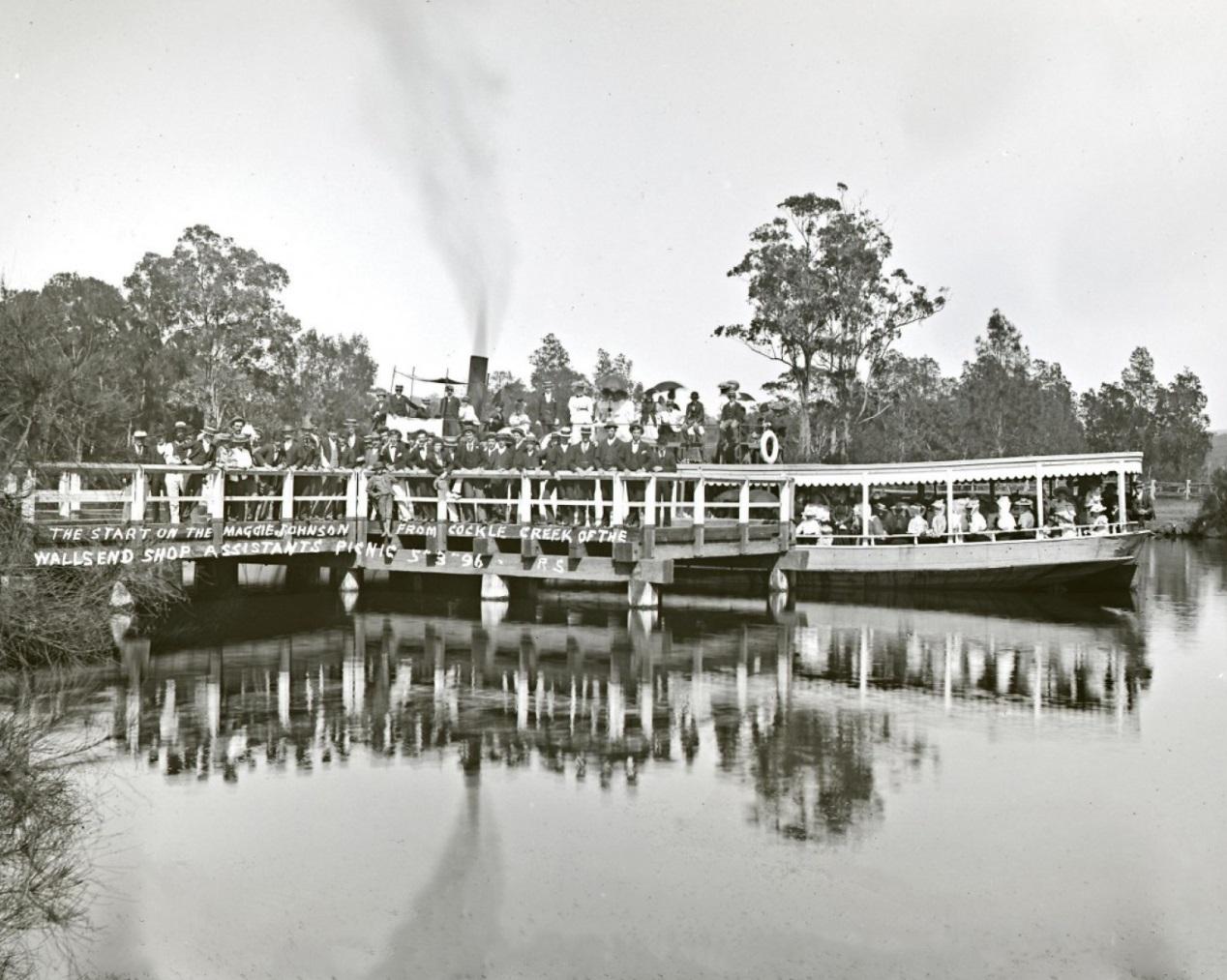
Wallsend Shop Assistants picnic party with ‘S.S. Maggie Johnson’, Cockle Creek, NSW, 5 March 1896
Source: Ralph Snowball photograph, Norm Barney Collection, Cultural Collections, Auchmuty Library, University of Newcastle.
between Swansea and Cockle Creek.
In 1888, ‘Cora’ transported cargo and passengers from Newcastle to Swansea. This run was on alternate days. In the same year ‘Helen Taylor’ operated between Pelican Flat and Cockle Creek.
During World War II, boats, including the ferries, were removed from the lake. Initially, larger boats and ferries were impounded at Cockle Creek. Many were sent to Sydney or other places as part of the Navy’s complement or to supplement ancillary service. v
The Wangi Wangi Ferry Company ran three ferries, meat and bread. They were; the ‘Wangi Wangi’
In 1889, three ferries, ‘Pinafore’ No. 1 and No. 2, and ‘Maggie Johnson’ ran daily between Swansea and Cockle Creek.
The Wangi Wangi Ferry Company ran three ferries, delivering groceries, mail, papers, meat and bread. They were; the ‘Wangi Wangi’; the ‘Wangi Pioneer’ and perhaps the most well known ‘The Wangi Queen’. Built in 1922, originally named the ‘Ettalong’, it was registered as the Ettalong Star in 1938. From the 1940s to the 1970s, the ferry was used in Sydney Harbour and changed companies twice. The name was changed to Profound in 1951.
Les Cox took over the Wangi Ferry Company about 1930. His ferries were ‘Joclyn’, ‘Wangi Pioneer’ and ‘Awa’. He offered special Saturday night trips to the Belmont Melvic Theatre. A piano was on board, with passengers enjoying a sing-along to and from the movies.vi
After WWII, Navy surplus boats were bought and converted into ferries by ‘Lake Macquarie Ferries’, formed around 1946. This service ran for about 10 years. vii
the most well known ‘The Wangi Queen’. Built ‘Ettalong’, it was registered as the Ettalong Star 1970s, the ferry was used in Sydney Harbour name was changed to Profound in 1951.
By the late 19th Century, ferries were running from Speers Point to Coal Point. When the railway was extended to Toronto, a regular ferry service operated to Coal Point and Carey
Evidence of old jetties around various parts of the lake indicates people used water transport to get to a ferry terminal. viii
With so much industry around the lake shore, ferries, wharves and boats used for both leisure and cargo made the lake a hive of activity from
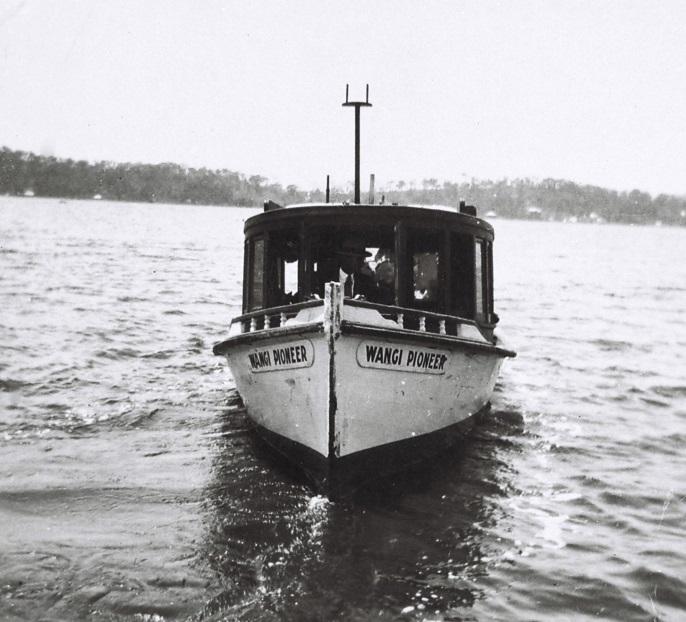
‘Wangi Pioneer’ Source: Lake Macquarie History Online
plied to and from Cooranbong during the period ketches were gradually replaced by steam‐powered designs.
The Newcastle Almanac of 1883 reported that employed in the
Lake Macquarie timber trade. Ship Building
It should be noted that the first boat builders on Lake Macquarie, the Awabakal, fished and navigated Lake Macquarie using bark canoes.
After European settlement was well established in the area, eastern Lake Macquarie supported several shipyards for the transportation of coal and later timber for the Sydney markets. The steam sawmills in and around Cooranbong about 1875 resulted in a sudden increase in the quantity of timber available for export. Prior to this time, no more than half a dozen ketches had been simultaneously engaged in the trade, but now this number was inadequate. This encouraged a number of Cooranbong residents to enter the shipping industry, and at least ten new cargo vessels were built within a period of about three years. Matthew Kenah was one of the first ship builders in the area. He opened a shipbuilding yard in 1874. The first vessel launched at his shipyard was probably the large ketch ‘Sea Bird’, described as ‘the fastest ketch on the coast’ soon after it was launched. ‘Sea Bird’ boasted a 50ft keel, a 16ft beam, and a hold of five feet. It was built for the Tobin brothers of Mandalong and Cooranbong.
An even larger boat came from Mr Kenah’s shipyard in late 1877. This was the ‘Emily and Mary’, built for the Coulter brothers who also managed the Heart and Hand Hotel at Cooranbong. The ketch measured 60ft in length, had a 16ft beam, and a hold of five and a half feet. Samuel and Edwin Coulter operated a small fleet of ships in partnership with the Blackford family, also from Cooranbong. Two years before the ‘Emily and Mary’ was launched, the two families were together operating at least four vessels on Lake Macquarie. Two of these craft, the ‘Maggie Scott’ and the ‘Queen’, seem to have been used mainly to take hardwood from Cooranbong to Newcastle. Kenah moved his works to Swansea, where he was in business from 1883. ix From the late 1800s through to 1952, the Boyd family expanded shipbuilding at Swansea. x
Two other small ketches, named ‘Star of Peace’ and ‘Sea Gull’, made regular trips to Sydney. They carried a cargo of oak shingles averaging approximately 65,000 shingles for each vessel. The ‘Sea Gull’ met with an untimely end in the spring of 1876, while endeavouring to cross the lake entrance bar. A newspaper report of the incident states that the two vessels left Sydney together at three o’clock one morning, bound for Lake Macquarie. The ‘Star of Peace’ outsailed the other and arrived at the lake heads in time to have the benefit of a flood tide. The ‘Sea Gull’ arrived two hours later, and her skipper decided to wait outside the bar for the next high tide. A gale blew up and the vessel was driven onto a reef and wrecked. All hands on board drowned.
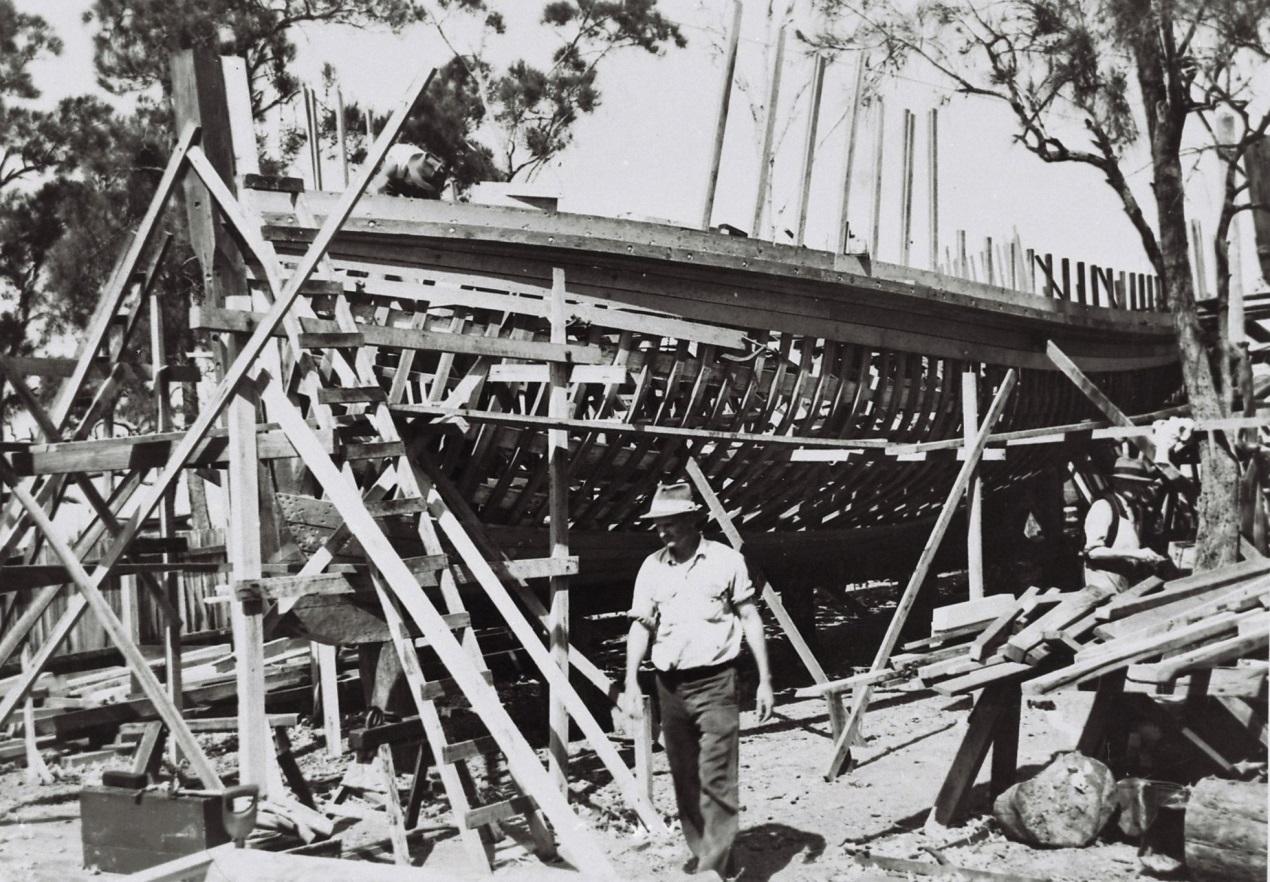
Other ketches assisting in the export of timber from Cooranbong after 1875 included the ‘Free Trade’, ‘Leo’, ‘Alfred Edwards’ and ‘Agnes Rose’. The last three were first registered in 1876, and the ‘Free Trade’ a year earlier. The ‘Growler’, built by a man named Rinah, could have been one of the last of the ketches to enter the lake trade, in 1879. Fifteen or more vessels plied to and from Cooranbong during the period from 1875 to 1880. Sail-driven ketches were gradually replaced by steam-powered vessels of various sizes and designs. The Newcastle Almanac of 1883 reported that 12 vessels were at that time employed in the Lake Macquarie timber trade.
The building of boats in Lake Macquarie was itself an important facet of the timber industry. William Batten constructed a number of small boats at the northern end of the lake. The one he built for Mr Speers was the largest vessel he ever attempted, and it was named ‘William Brooks’ in memory of the original landholder of the Speers Point estate. Patrick Moynahan and son Cornelius built vessels at Cardiff Point for the lake and trade with NSW and New Zealand. xi William Batten built a 90ft ship using local timber. Apart from the Monaghan brothers shipyards, the Cardiff sawmill also had facilities for building and launching small ships. xii
time to have the benefit of a flood tide. The ‘Sea Gull’ arrived two hours and her skipper decided to wait outside the bar for the next high tide. A gale and the vessel was driven onto a reef and wrecked. All hands on board drowned. ketches assisting in the export of timber from Cooranbong after 1875 included ‘Free Trade’, ‘Leo’, ‘Alfred Edwards’ and ‘Agnes Rose’. The last three were first registered in 1876, and the ‘Free Trade’ a year earlier. The ‘Growler’, built by a man Rinah, could have been one of the last of the ketches to enter the lake trade, Fifteen or more vessels plied to and from Cooranbong during the period 1875 to 1880. Sail‐driven ketches were gradually replaced by steam‐powered of various sizes and designs. The Newcastle Almanac of 1883 reported that vessels were at that time employed in the Lake Macquarie timber trade.
James Lewis Boyd and Son ship building yard
Source: Lake Macquarie History Online
Regattas
have a long tradition on Lake Macquarie. At the
Macquarie Park
Recreational Sailing
(now Speers Point Park) was the most
Macquarie and around
Newcastle. It was referred to as the
townships of
gale included first man trade, powered that
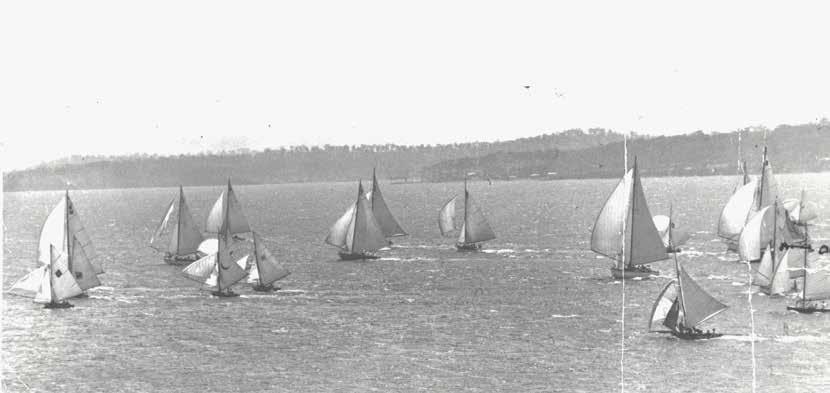
Regattas have a long tradition on Lake Macquarie. At the turn of the 20th Century, Lake Macquarie Park (now Speers Point Park) was the most popular spot on Lake Macquarie and around Newcastle. It was referred to as the ‘lungs’ of the mining townships of Wallsend, Plattsburg, West Wallsend and Minmi. Camping was permitted and visitors flocked to the lake’s shore. A fresh water spring was located near the jetty, supplying the needs of the campers and visitors.
Wallsend, Plattsburg, West Wallsend and Minmi.
permitted and visitors flocked fresh the jetty, supplying the needs visitors.
Foreshore gathering, Speers Point, 26 January 1900 Source: Ralph Snowball photograph, Norm Barney Collection, Cultural Collections, Auchmuty Library, University of Newcastle.
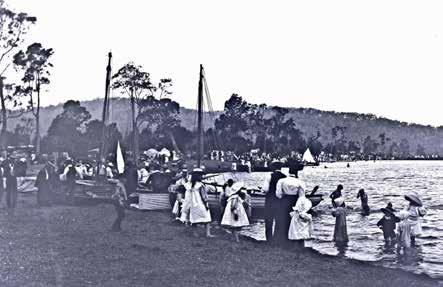
Description: Foreshore gathering, Speers Point, 26 January 1900 Source: photograph, Norm Barney Collection, Cultural Co llections, Auchmuty Newcastle.
To attend the Speers Point regatta, many walked from Cockle Creek of vehicles including steamers, bullock wagons, buggies, sulkies, water craft ‘from a tiny canoe to a lugger’xiv. In 1903, increased event led to an annual passenger train between Wallsend and 1912, the tramline was extended to Speers Point Parkxvi By 1939, ferries, buses and cars brought over 12,000 people to the regatta 1940s, the Anniversary Day Regatta disappeared with the growth neighbouring clubsxviii.
In the mid‐20th Century, recreational boat building flourished. Les yachts that won the Sydney to Hobart race, with his vessel, Rani, ever race in 1945.xix
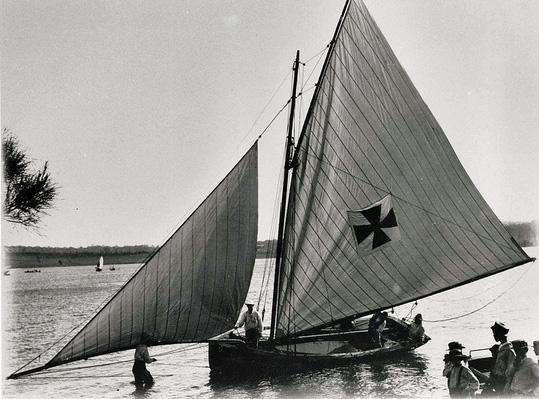
The yacht ‘Vera’ on Lake Macquarie won many regattas in the late 1890s and early 1900.Source: Snowball photograph, Norm Barney Collection, Cultural Collections, Auchmuty Library, University of Newcastle.
As the road improved, crowds arrived in horse drawn buses and drays for the Sailing and Sculling Regattas held each year on Anniversary Day, 26th January, the first having been held with Mr Spiers’ permission in January 1880. At this time there were even horse races held in the park. All traffic entering the park had to pass through Mr Speers’ sliprails, now the site of Lake Macquarie Council Administration Building. In 1904 the Annual Regatta saw 10,000 people and hundreds of horses and vehicles in the park, pointing to the need for additional land.
To attend the Speers Point regatta, many walked from Cockle Creek or used a variety of vehicles including steamers, bullock wagons, buggies, sulkies, horses xiii and any water craft ‘from a tiny canoe to a lugger’. xiv In 1903, increased popularity of the event led to an annual passenger train between Wallsend and Cockle Creek. xv In 1912, the tramline was extended to Speers Point Park. xvi By 1939, trains, trams,
ferries, buses and cars brought over 12,000 people to the regatta. xvii By the late 1940s, the Anniversary Day Regatta disappeared with the growth of regattas at neighbouring clubs. xviii
In the mid-20th Century, recreational boat building flourished. Les Steel built three yachts that won the Sydney to Hobart race, with his vessel, Rani, winning the first ever race in 1945. xix
The Lakefest Aquatic Week is now an annual event held on Lake Macquarie. A number of events occur during the week-long celebrations which run in February. The event is a collaborative effort involving the Royal Motor Yacht Club Toronto, Lake Macquarie Yacht Club, Wangi Amateur Sailing Club, Belmont 16’s and Toronto Rotary Sunrise. xx
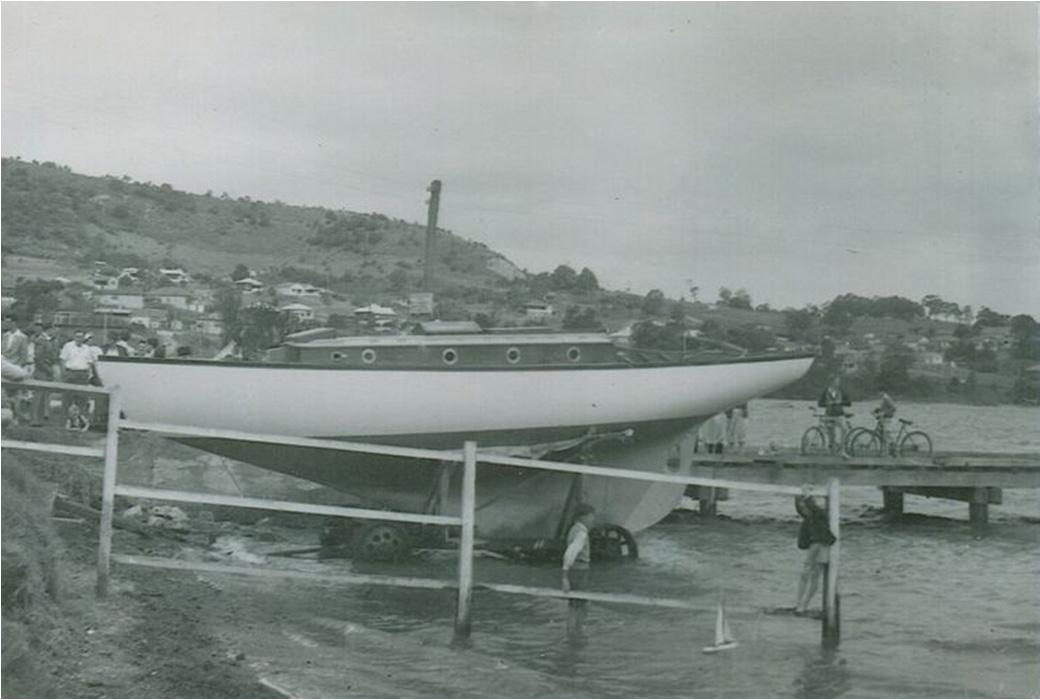
Struen Marie’ Sydney-Hobart Race Winner 1951 at Speers Point, built by Les Steel Source: Gary Steel collection
Military (RathminesuseCatalina WWII Air Base)
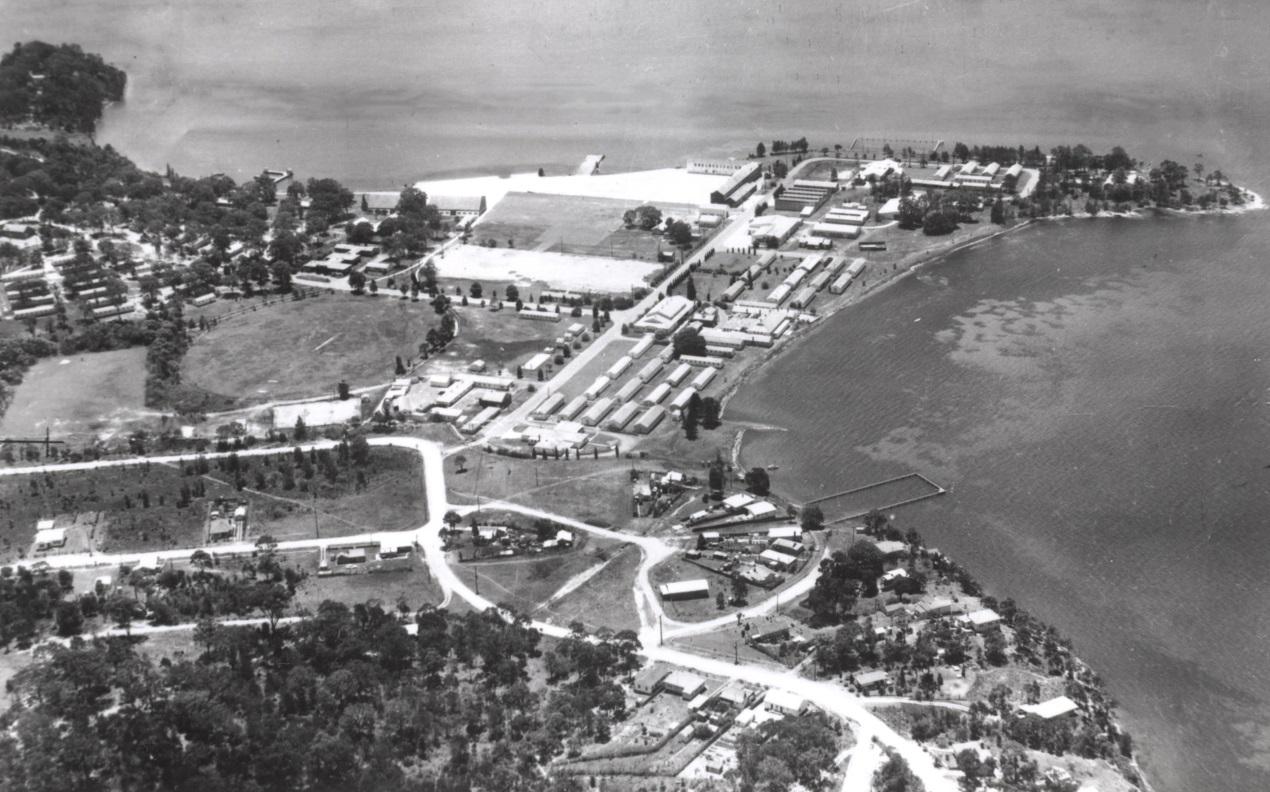
With the advent of WWII in 1939, the RAAF chose 32 hectares in Rathmines as the site for their new Flying Boat Base and Pilot Training School. Royal Australian Air Force (RAAF) World War II Flying Boat Base became operational when 9 Squadron transferred with Seagull flying boat from Point Cook to Rathmines. xxi xxii The RAAF Base at Rathmines became the largest RAAF flying boat base in the Southern Hemisphere and was a training and repair base and a key communications centre. xxiii
In February 1941, Catalina ‘Flying Boats’ arrived at the base, and by September 1943 the base comprised 14 Catalinas, two Seagulls, a Dornier and a Dolphin. An important centre for the Catalina seaplanes, Rathmines Air Base played a pivotal role in Australia’s defensive operations during the war. xxiv The Catalina possessed an extensive range, enabling crews to call in the Navy while still maintaining contact with Japanese forces. xxv The Rathmines RAAF seaplane base played a pivotal role in the defence of Australia in World War II, and its flying boats, specifically the Catalinas, were
Aerial photograph of Rathmines air base taken by Dalkeith Hilder
Source: Lake Macquarie History Online
involved with the mining of Manila Harbour and played an important part in the Battle of the Coral Sea as well as sending supplies to the Changi prisoners of war in Singapore after the Japanese surrender. It provided training to over 200 crews during the war. xxvi Catalinas were also responsible for recovery operations, retrieving Allied survivors drifting in dinghies and boats from sunken ships and downed aircraft. xxvii
Post war, the base continued operating as a ground-training base and an officers’ training school from 12 April 1950. Rathmines continued as a military base and was used in the 1950s as a military training base when National Service was introduced.
Post war, the base continued operating as a ground‐training base and an officers' training school from 12 April 1950. Rathmines continued as a military base and was used in the 1950s as a military training base when National Service was introduced.
The base reached its peak strength of almost 3,000 RAAF personnel in 1944-45. This resulted in the tiny location becoming a larger centre as crews brought their families to live near them. Famous artist Sir William Dobell was commissioned to camouflage the base. xxviii
Catalinas were eventually phased out, but from the mid to late 1950s, Rathmines RAAF Base continued to be staffed by RAAF personnel and used as a National Service training base. It officially closed in 1960. xxx In 2005, the former Rathmines Air Base was heritage listed by the New South Wales State Government. xxxi xxxii
Catalinas were eventually phased out, but from the mid to late 1950s, Rathmines RAAF Base continued to be staffed by RAAF personnel and used as a National Service training base. It officially closed in 1960.xxx In 2005, the former Rathmines Air Base was heritage listed by the New South Wales State Government.xxxi xxxii
During this time, the lake was out of bounds for all non-military persons or those without a permit. For added security, a boom net was placed at the mouth of the lake near Black Ned’s Bay east of the channel. xxix
In January 1952, the Catalina was declared surplus to requirements but there is still immense interest in the Catalinas. The annual Rathmines Catalina Festival is held to commemorate the rich history of the base.
January 1952, the Catalina was declared surplus to requirements but there is still immense interest in the Catalinas. The annual Rathmines Catalina Festival is held to commemorate the rich history of the base.
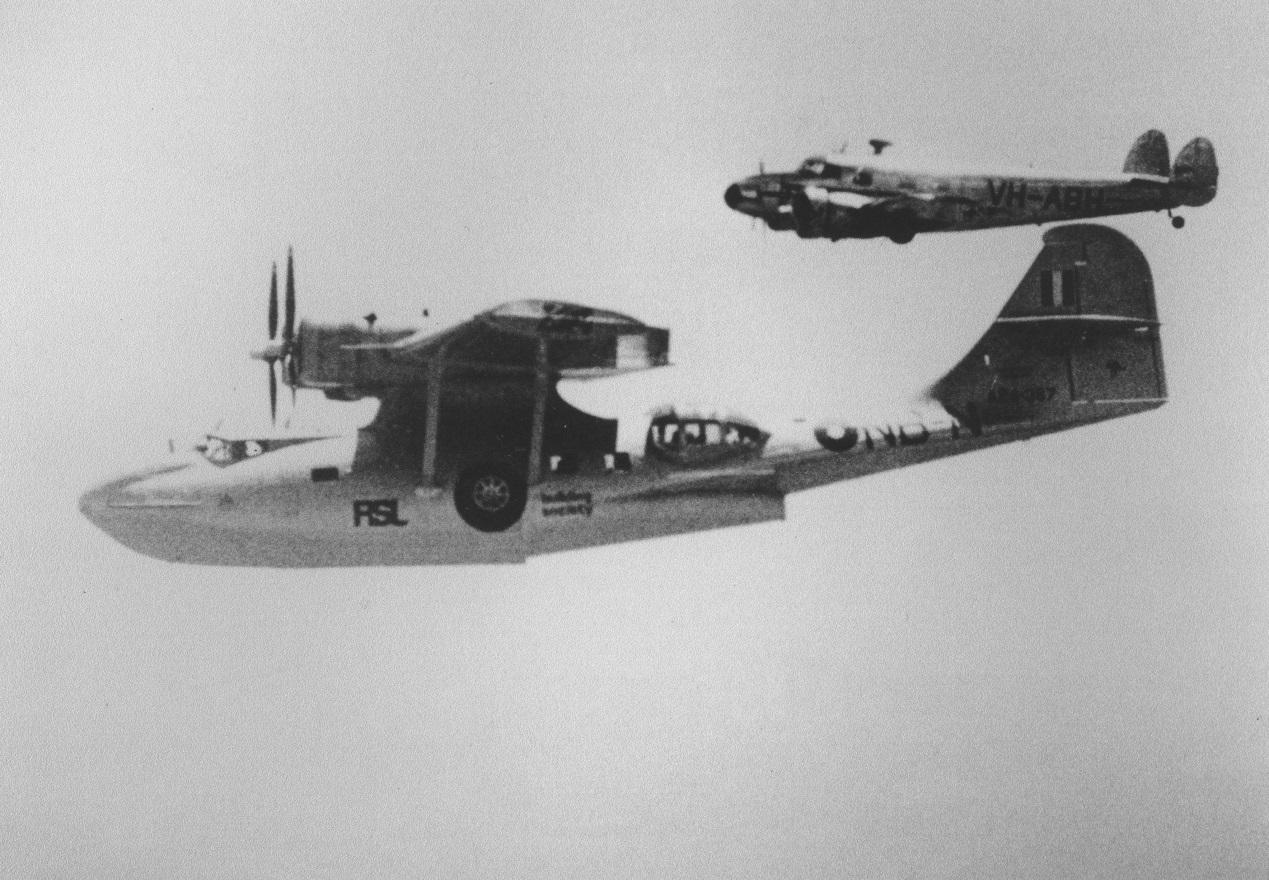
Catalinas in flight. Source: Lake Macquarie History Online
Fishing Industry
Fishing in Lake Macquarie has been occurring for as long as the history of the lake has been recorded. People of the Awabakal nation enjoyed the plethora of seafood found in the lake. A commercial fishing industry developed about 1850, and expanded during the second half of the 20th Century. A report in the Newcastle Chronicle xxxiii illustrates the abundance of fish and the industry evolving around fishing during this time. Lake Macquarie Fish Curing Establishment, situated around the current Brightwaters area, was producing cooked and hermetically sealed fresh tins of fish for both the domestic and export markets. They were able to produce about ‘half a ton per diem’. It is unclear how long this business continued.
Further north, two Chinese fishermen operated their own fishing concerns at Pelican Flats using large nets. These fisheries operated from 1863 until about 1873.
Fishing operators were becoming more prolific between Belmont and Swansea during these years as the demand from Sydney, Melbourne and China increased.
Further north, two Chinese fishermen operated their own fishing concerns Flats using large nets. These fisheries operated from 1863 until about 1873.
Fish were netted or caught on hand lines from boats or the shore for pleasure or profit. There were established and renowned fishing dynasties – often also involved in shipbuilding. xxxiv Prawning and squid fishing were, and continue to be, lake pursuits. An annual ‘mullet run’ still occurs around Easter. It is common knowledge that marine life has diminished but this does not deter keen anglers from trying their luck.
Fishing operators were becoming more prolific between Belmont and Swansea during these years as the demand from Sydney, Melbourne and China increased.
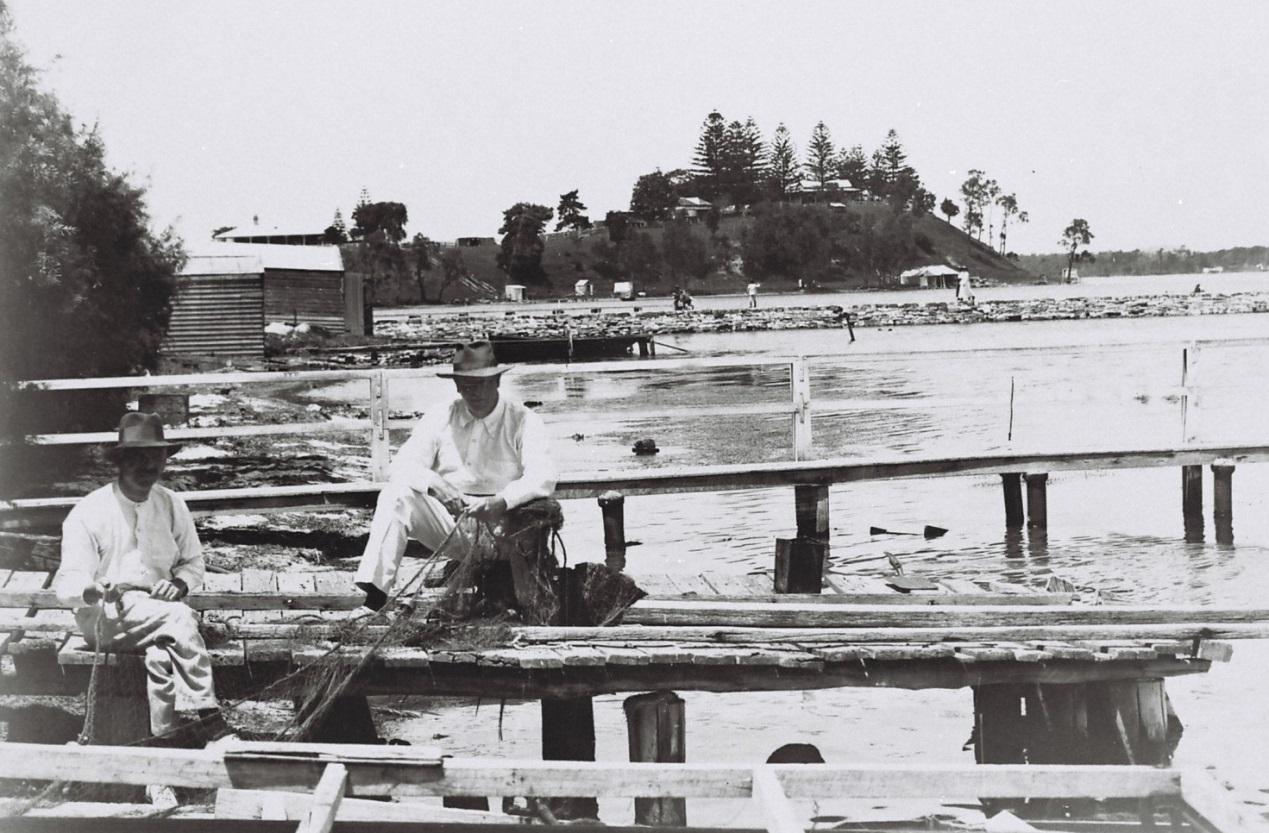
Repairing fishing nets, Belmont 1917 (photographer Mr May)
Source: Lake Macquarie History Online
Industrial (coal loading, transportation of miners and coal)
The first official coal discovery in Australia was in 1791 by escaped convicts just south of the Hunter River mouth – possibly at Glenrock Lagoon.
The colonial government controlled attempts at mining for the first part of the 1800s. Until 1838, private mining was not allowed unless a permit was obtained from the Governor.
Reverend Lancelot Threlkeld moved his mission for the local Awabakal people from Belmont to Coal Point. He began to mine coal and won mining rights in 1841 after challenging the monopoly of the Australian Agricultural Company.
Threlkeld began mining coal at the Ebenezer pit on the south-west side of Coal Point at the present Threlkeld Reserve. The mine was worked without machinery and the skips were run on wooden rails, with coal loaded into schooners from a wooden jetty. Mining
operations were restricted owing to the shallow channel at Swansea. Threlkeld had difficulty attracting miners, as the government refused to supply convicts and the A. A. Co. sought to stifle competition. By 1844, Threlkeld’s estate was severely in debt and was sold. The mine was worked under lease by Henry R. Whittell and later by R.M. Robey, although it was often idle. It was worked as South Hetton Colliery as late as 1906.
Catherine Hill Bay became a place of significance in both mining and maritime history in Lake Macquarie. Two Sydney merchants, Jacob Levi Montifiore and Thomas Hale, purchased 265 acres of land which bordered the southern part of the bay. It was here they discovered a great source of coal and, under the name of New Wallsend Coal Company, mined the seam until 1877.
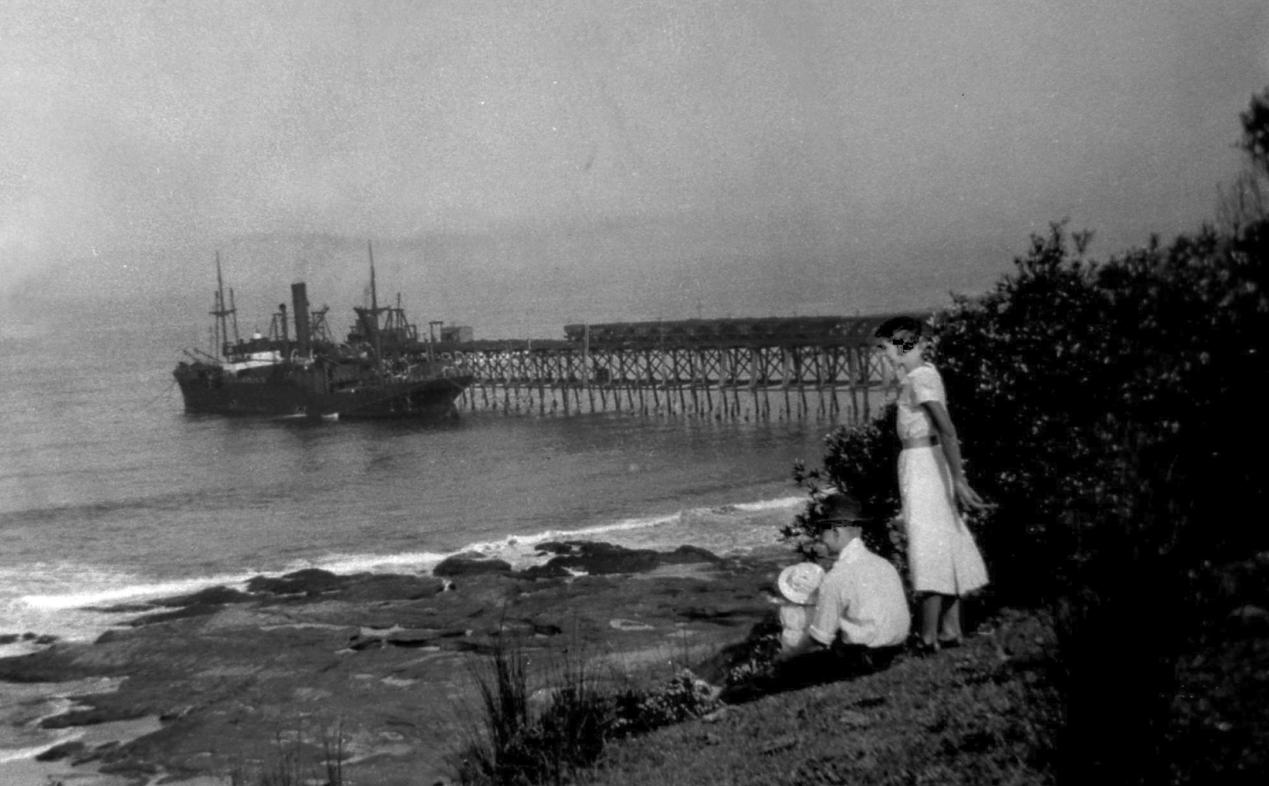
Wallarah [launched 1903] at Catherine Hill Bay.
Source: Lake Macquarie History Online
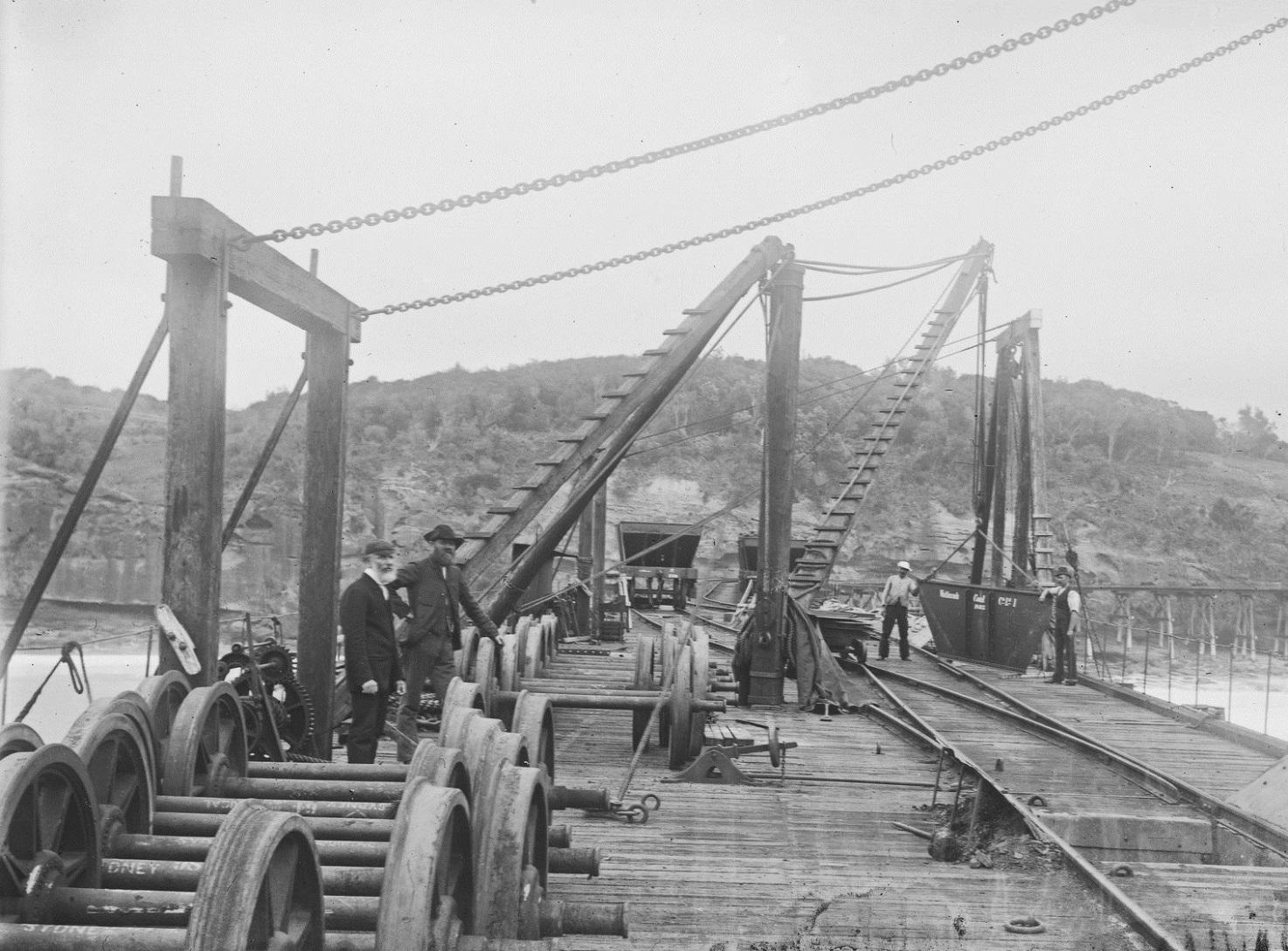
This is significant in that the seam was close to the water’s edge, and Thomas Hale in 1873 built a pile jetty for the transportation of coal via the company-owned steam collier. xxxvi
After laying dormant for approximately 11 years, part of the land was purchased by the Wallarah Coal Company. Thomas Parton was appointed mine manager, and immediately commenced construction of a wharf roughly in the same place. The new wharf extended to a distance of 1020 feet and 30 feet above the high-water mark, which enabled vessels of 3000 tons to dock. xxxvii
In January 1890, the first shipment of coal was loaded from the wharf. The Newcastle Morning Herald and Miners’ Advocate in January 1894 asserted that ‘having their own wharf, their own ships and their own railway’, the Wallarah
Coal Company ‘enjoyed special advantages’. xxxviii One of the company colliers, the ‘Wallarah” blew ashore onto nearby rocks in April 1914 and was totally wrecked.
J & A Brown Abermain Seaham Collieries Ltd took over the Wallarah Coal Company in 1956 and continued mining and shipping coal until the late 1990s when the mine finally closed. There was some talk in 2013 that mining would resume, but this has not eventuated. xxxix
The jetty remains a tourist attraction, though it is in need of serious repair after a fire raged through the area in 2013. As well as damaging the jetty, the fire destroyed the mine manager’s cottage which stood at the top of the hill overlooking the jetty. xl
Coal loading jetty, Catherine Hill Bay, NSW, 1894Ralph Snowball photograph, Norm Barney Collection, Cultural Collections, Auchmuty Library, University of Newcastle.
Shipwrecks
There have been numerous incidents of shipping accidents, though few have resulted in fatalities. The first notable shipwreck in Lake Macquarie was that of the schooner ‘Catherine Hill’, in 1867. The mate and the steward drowned. The place where this occurred is now known as Catherine Hill Bay after the ship.
Twelve years later five lives were lost when the ‘Barrabool’ rammed ‘Dundee’, sinking it immediately. One body was recovered at the Brown), another a few days later 12 miles away from the scene almost three weeks later the remains thought to be that of Cabin were found inside a shark captured at Barrenjoey, approximately the original site. The bodies of ship’s stewardess Abigail White and daughter, Margaret, were never found. Three inquests were held, captain of the ‘Bonnie Dundee’ at fault, the next exonerating him again citing him as responsible. xli
Twelve years later five lives were lost when the ‘Barrabool’ rammed into the ‘Bonnie’ ‘Dundee’, sinking it immediately. One body was recovered at the time (Sarah Brown), another a few days later 12 miles away from the scene (Ellen Dugdale) and almost three weeks later the remains thought to be that of Cabin Boy George Pardell were found inside a shark captured at
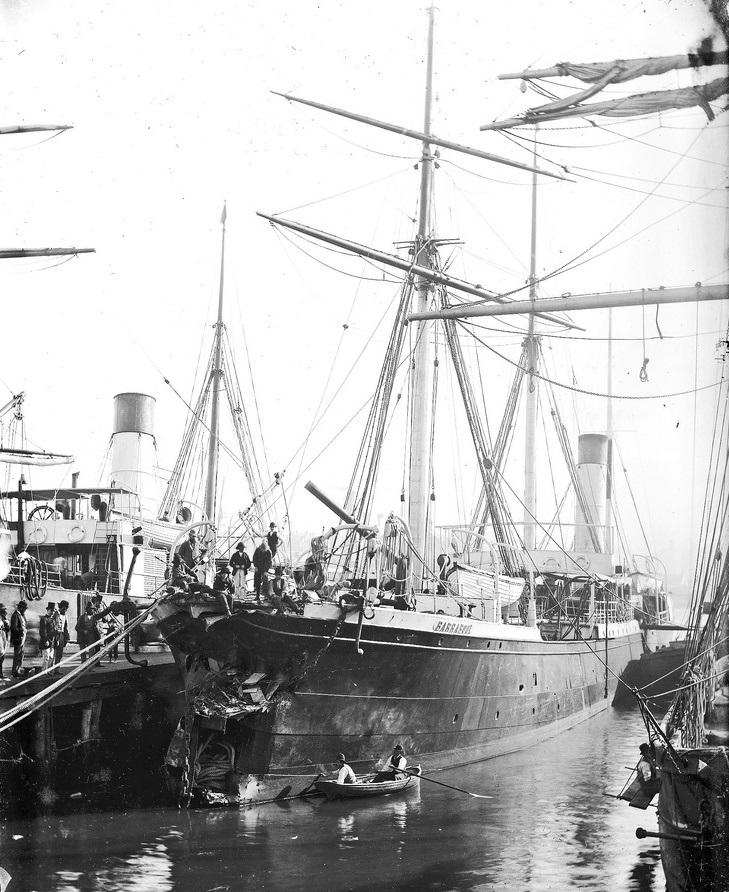
The ship ‘Barrabool’ [March], 1879. Ralph Snowball photograph, Norm Barney Collection, Cultural Collections, Auchmuty Library, University of Newcastle.
the time (Sarah scene (Ellen
Cabin
Dugdale) and
Boy George Pardell
approximately 35 miles south of and Sarah Brown’s held, one finding the him and the final one
Barrenjoey, approximately 35 miles south of the original site. The bodies of ship’s stewardess Abigail White and Sarah Brown’s daughter, Margaret, were never found. Three inquests were held, one finding the captain of the ‘Bonnie Dundee’ at fault, the next exonerating him and the final one again citing him as responsible. xli
In 1908, seven men drowned when the steam tug Advance and the barque ‘Iverna’ collided at Bird Island Point. The sole survivor, mate Alfred Thomas Willis, washed ashore at Redhead Beach suffering abrasions and shock. The inquest found that Alexander MacKenzie, the ships captain was in error and responsible for the collision. xlii
Conclusion
The Lake has been a source of sustenance, livelihood and pleasure for the people of Lake Macquarie from the earliest time of the Awabakal people, through colonial settlement and the tough times of the Great Depression.
While the depths of its waters and the richness of the resources found on its vast shores had the potential for industry and the transportation of goods to outside markets, the narrow ocean entrance provided a significant barrier to growth and expansion. The eventual development of road and rail transportation opened up the Lake Macquarie region to settlers, businesses, tourists and pleasure seekers, though it brought an end to commercial boat building and a significant decline in ferry transportation.
The waters of Lake Macquarie continue to provide enjoyment for boating enthusiasts and tourists. It is a mecca for aquatic sports of all kinds, producing a number of outstanding sportsmen and women who have achieved international success. Our maritime history in the second half of the twentieth century has centred on these recreational aspects and the tourism it brings to the city, making Lake Macquarie a much desired area for residents and visitors.
Bibliographic references
Aboriginal and Torres Strait Islander maritime history
i Sustainable Management of Aboriginal Cultural Heritage in the Lake Macquarie Local Government Area: Lake Macquarie Aboriginal Heritage Management Strategy. Boolaroo, Lake Macquarie
ii Brown, Paul (2015) Belmont: from the Dreaming to Federation
iii Threlkeld, Lancelot E. (1974) Australian Reminiscences and Papers. Ed. Niel Gunson, Canberra.
iv In Brown, Paul (2015) Belmont: from the Dreaming to Federation ( p 10)
Public Transport – Ferries
v Lee, Nola, Myra Burgess and Lorna Pearson. (1987). Wangi Wangi and its people: a local history. Wangi Wangi, NSW: Southlakes Christian Women’s Group.
vi https://history.lakemac.com.au/page-local-history. aspx?pid=1085&vid=20&tmpt=narrative&narid=3967
vii Ferries of Lake Macquarie / researched & compiled by Doreen Phillips for the East Lake Macquarie Historical Society. 2008
viii https://history.lakemac.com.au/page-local-history. aspx?pid=1085&vid=20&tmpt=narrative&narid=79
Shipbuilding
ix Hartley, Dulcie Shipping on Lake Macquarie [Fennell Bay, NSW :Dulcie Hartley, 2001] p.5
x Hartley, Dulcie Shipping on Lake Macquarie [Fennell Bay, NSW :Dulcie Hartley, 2001]Ibid
xi Ibid p. 4
xii https://history.lakemac.com.au/page-local-history. aspx?pid=1085&vid=20&tmpt=narrative&narid=5086
Recreational Sailing
xiii Hartley, Dulcie Lake Macquarie Memories: Fennell Bay, NSW: Dulcie Hartley,1998, p.75.
xiv Wallsend & Plattsburg Sun, 1893
xv Newcastle Morning Herald and Miners’ Advocate, 19 January 1903. Retrieved July 2018 https://trove.nla.gov. au/
xvi Ibid, 26 December, 1913
xvii Ibid, 31 January, 1939
xviii Ibid, 12 &16 January, 1940 & 26 January,1945
xix Thomas, Fred Boat-builders of Lake Macquarie and beyond [Toronto, NSW] ; Lake Macquarie & district Historical Society, 2006.p. 25
xx https://www.nabo.com.au/whats-on/event/lakefest-2017toronto
Military Use (Rathmines Catalina WWII Air Base)
xxi Vincent, David, 1950- (1978). Catalina chronicle: a history of RAAF operations. D. Vincent, [Paradise, S.A.]
xxiixxii Newton, John (John T.) & Haslam, P. A, (ed.) RAAF Rathmines: an authentic history of this famous wartime flying boat base. Readon Publishing, Boolaroo, N.S.W, 1978.
xxiii Howard, Alec 2014, Rathmines…revisited: former WWII Flying Boat Base [Alec & Joy Howard] Rathmines, NSW
xix xxivHoward, Alec N & Howard, Joy (2009). Rathmines - not forgotten: the story of the World War II Flying Boat Base,1939-1961 (1st ed). Resonant Media & Design], [Newcastle, N.S.W
xxv Riddell, Jack (1995). Catalina squadrons, first and furthest: recounting the operations of RAAF Catalinas, May 1941 to March 1943 (Rev. ed). J. Riddell, Murwillumbah, N.S.W
xxvi Howard, Alec 2014, Rathmines…revisited: former WWII Flying Boat Base [Alec & Joy Howard] Rathmines, NSW
xxvii Vincent, David, 1950- (1978). Catalina chronicle: a history of RAAF operations. D. Vincent, [Paradise, S.A.]
xxviii Howard, Alec 2014, Rathmines…revisited: former WWII Flying Boat Base [Alec & Joy Howard] Rathmines, NSW
xxix Ibid
xxx Newton, John (John T.) & Haslam, P. A, (ed.) (1978). RAAF Rathmines: an authentic history of this famous wartime flying boat base. Readon Publishing, Boolaroo, N.S.W
xxxi Howard, Alec N & Howard, Joy (2009). Rathminesnot forgotten: the story of the World War II Flying Boat Base,1939-1961 (1st ed). Resonant Media & Design], [Newcastle, N.S.W
xxxii https://www.catalinaflying.org.au/rathmines.htm
Fishing Industry
xxxiii https://history.lakemac.com.au/page-local-history. aspx?pid=1085&vid=20&tmpt=narrative&narid=3623
xxxiv https://www.theherald.com.au/story/3171722/lakemacquaries-fishing-dynasties/
Industrial (coal loading, transportation of miners and coal)
xxxv https://history.lakemac.com.au/page-local-history. aspx?pid=1085&vid=20&tmpt=narrative&narid=3564
xxxvi Architectural Projects Pty Limited & Lake Macquarie (NSW). Council 1999, Heritage assessment conservation plan for Catherine Hill Bay, Architectural Projects Pty. Ltd, Surry Hills, NSW
xxxvii Ibid
xxxviii Newcastle Morning Herald and Miners’ Advocate (NSW: 1876 - 1954) The Wallarah Colliery an enterprising company. The Miners’ Earnings. No. II. Tue 23 Jan 1894 Page 3
xxxix https://www.theherald.com.au/story/1625002/poll-newplan-to-mine-coal-at-catho/
xl https://www.theherald.com.au/story/1849734/firedestroys-wallarah-house-at-catherine-hill-bay-photosvideo/
Shipwrecks
xli Sydney Morning Herald (NSW: 1842 - 1954), Saturday 22 March 1879, page 6
xlii Newcastle Morning Herald and Miners’ Advocate (NSW: 1876 - 1954), Thursday 4 February 1909, page 4
Acknowledgements
Researched and written by Judith Adnum from funding provided by the Maritime Museums of Australia Project Support Scheme.
Contributors
Special thanks to Ann Crump, Judy Messiter, Lyn de Sylva.
by
Macquarie City Council 126-138 Main Road Speers Point NSW 2284 Box 1906 Hunter Region Mail Centre NSW 2310 (02) 4921 0333 council@lakemac.nsw.gov.au lakemac.com.au facebook.com/lakemaccity twitter.com/lakemac instagram.com/ourlakemac
ISBN-13: 978-0-646-99397-3