




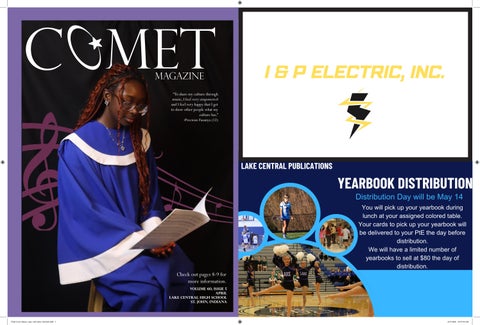
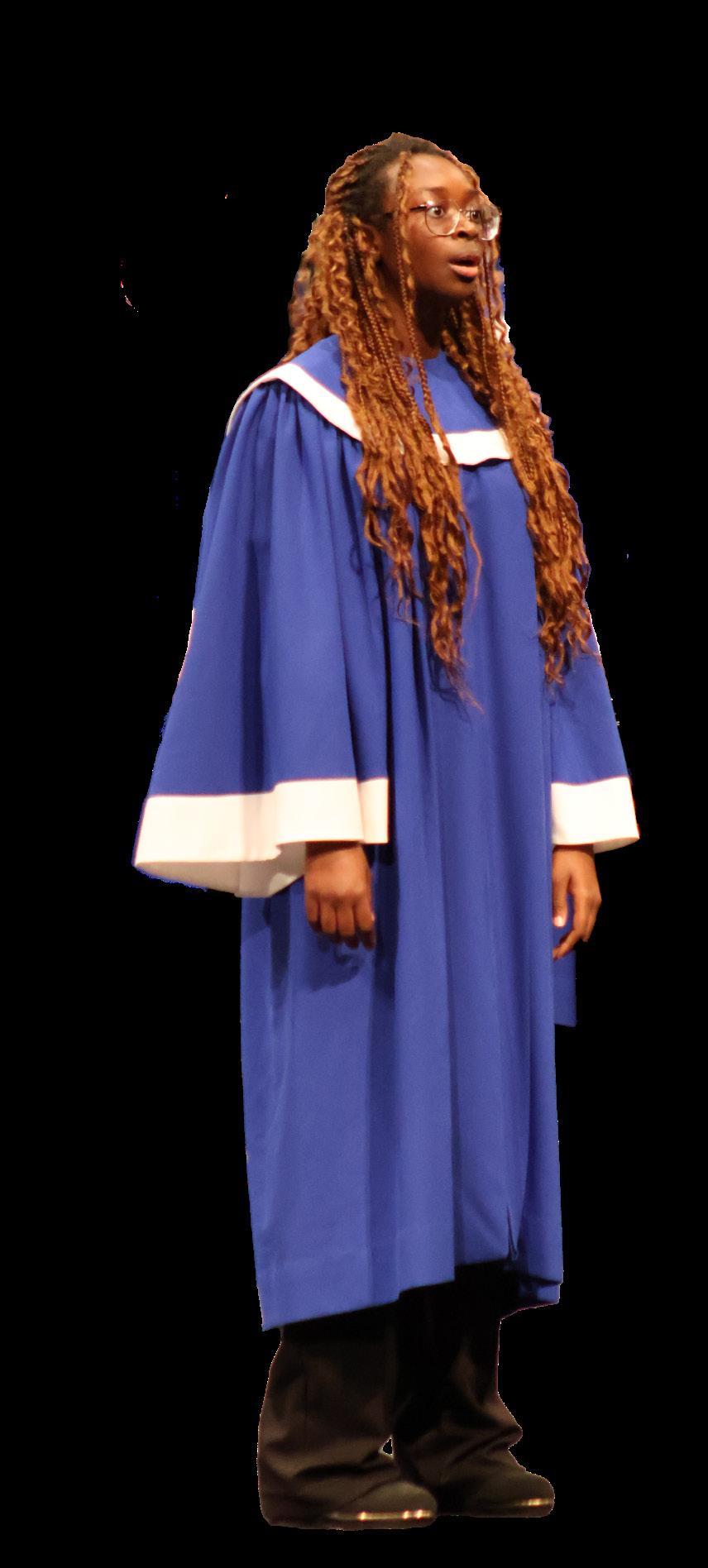
On the cover, Precious Fasanya (12) poses in her choir robe, which is exactly what she wore for the Classics Concert on March 5. Fasanya and choir director, Mr. Nathaniel Jones, worked with a composer named Dr. Chukwuebuka Ezeakacha who created an orginal African song for them to perform at the concert. Learn more on pages 8-9. 8-9

CO-EDITOR-IN-CHIEFS
Zainab Mohiuddin & Katie Poncin
MEDIA CHIEF
Madelynne Bush
PHOTO EDITORS
Abigael Brennan
Ivan Carey
DESIGN EDITORS
Sky Simmons
Mia Legaspi
COPY EDITORS
Izabel Ontiveros
Madeline Ross
Josina Nye
ADVISER
STAFFERS
Josephine Amenta
Jocelyn Dunkerley
Isabella Magallanes
Lillian Hobbins
Kayla Blackman
Aubrey Walker
Sophie Lapointe
Piotr Zarozny
Jessica Salerno
Elaina Gromala
Carrie Wadycki-Cruz

Hey LC! Welcome back to the fifth Comet Magazine. As the year wraps up, students spend time reflecting on their school year, and often look into the past. Throughout recent years there has been an upscale of trends that stem from 2016. Discover more details in “That’s So 2016!” We also looked at the pattern of country music throughout recent years and the change the genre has gone through. On a more serious note, looking in the past is also important to recognize remarkable individuals; especially those who have made efforts in science and innovation who are featured in “Voices of Strengths.” Speaking of impact, in this issue we talked about how individuals
in the region have shared their opinions on ICE through different protests. Even though this issue has divided the country in certain ways, the Winter Olympics this past semester brought people together again with renowned performances and unique sports. Now, at the school level we recognized two hardworking groups at the school including the choir program’s new song written especially for them and the cooking classes in this issue. Another underrated program at the school we chose to recognize is the bowling team who made it very far in their season. Only a month left! You got this LC!
-Katie Poncin & Zainab Mohiuddin
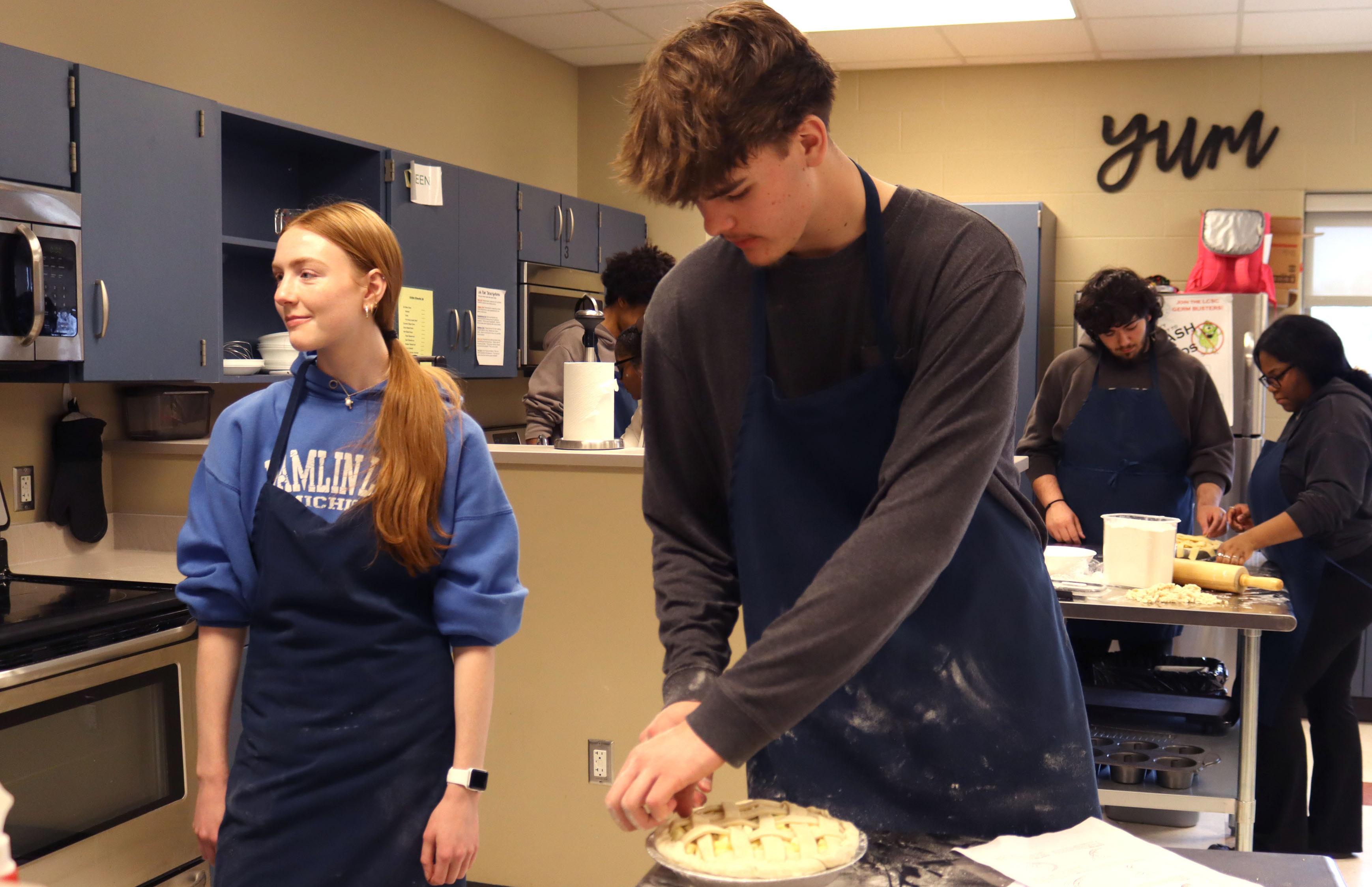
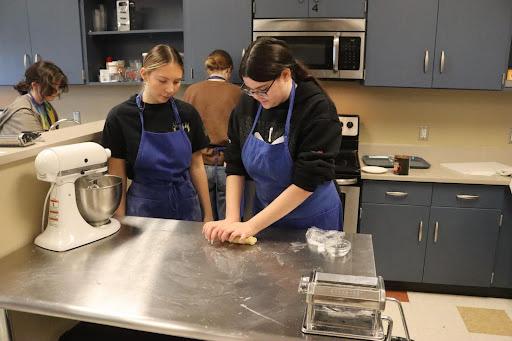
First, the pizza dough must be divided into separate portions.
Add chosen toppings, such as cheese, pepperoni or green peppers. Fold it over and seal it by pressing the end of the dough together. Cut the top of the dough so it allows steam to escape when it bakes.
Brush the top of the dough with olive oil and sprinkle it with any seasoning (garlic powder, red pepper flakes and oregano are typical).
Bake at 475 degrees until the dough is golden brown. The bake time depends on the size of the calzone.

Culinary students share their favorite dishes and the recipes on how to make them.
Start off by preheating the oven to 400 degrees and preparing a muffin pan with cupcake liners.
In a large bowl, mix in two cups of flour, one cup of sugar, baking soda and ½ teaspoon of salt.
In a medium bowl, whisk two eggs until smooth, then add ½ cup of melted butter. Then, whisk in milk and vanilla. After all is mixed, combine the two bowls. Then, fold in blueberries.
favorite culinary class recipe (not a direct quote)
For the streusel topping, in a small bowl combine ¼ cup of flour, two tablespoons of brown sugar, two tablespoons of granulated sugar, cinnamon and a teaspoon of salt.
Fill each cupcake liner with batter and top it off with streusel topping, about one tablespoon each.
Bake for about 18-22 minutes.
Working as one, Lucas Embrey
and
Alexzander Schuller
(12) focus on their work to get everything done. The class, as an elective, allowed students of mixed grades to work together, as a way to meet unexpected people. “I just thought of it as an extra way to make more friends. I started in my sophomore year and it was just a good way of meeting new people,” Collin Meyers (12) said.

OAll about how the culinary classes in the building can benefit students in their futures Design by: Sky Simmons & Katie Poncin
Page by: Abigail Brennan & Piotr Zarozny
n second floor C and D hall, students can often smell the creations that were made in the culinary classes. With these classes, students are able to learn the basic skill of baking or cooking and learn life skills to prepare themselves for their future and living on their own.
“Taking a culinary class is important because at some point in life, you’re going to need to know how to cook since you’re not always gonna have somebody to cook for you, whether that’s your parents or if you have a partner. When you get out of high school, you’re gonna have to cook for yourself at some point,” Savannah Toh (10) said.
Students have also learned skills other than cooking or baking. culinary classes can teach social skills such as group work, compromising or time management that will better prepare them for their upcoming adulthoods.
“Culinary class is beneficial for many because it is handson, so it is an outlet for activity and social interaction during their day. It also focuses on nutrition and cooking skills that will be valuable throughout life. In addition to these, students learn to collaborate with others, manage conflict and manage their time effectively,” Mrs. Jennifer Schmidt (Family & Consumer Science) said.
In the classroom, students are able to express their own individuality through food and are allowed to be experimental with their recipes.
“I enjoy the class since it allows me to be able to be creative with my plating styles, and gives me more freedom to try out new recipes and experiment with them,” Adam Thompson (12) said.
The class is also beneficial for health reasons, as students can learn more about what they eat in their daily lives. They can use this knowledge to develop healthier diets, based on what they learned about processed foods in the class.
“I think it is imperative for good health and nutrition. Students who know the basics surrounding what the body needs to function and perform and how to prepare foods to meet their needs, are more likely to live a healthy life and feel good. They are less likely to rely on packaged convenience foods and
Rolling the dough, Madison Duda (12) prepares a dish for her baking class, an apple pie cupcake. Every class brought new challenges for the students and helped them discover new tastes.
“I chose [culinary classes] just because I thought it would be a very good skill to have, and a way to expand the things I can do without much help from other people. So just to be more independent,” Duda said.
fast food options that will make them feel sluggish,” Mrs. Schmidt said.
At the end of the semester, as well as for finals, they are able challenge themselves with the format of the show ‘Chopped’. Using their abilities that they learned over the year, they are able to apply that to their final grade.
“My favorite lab is the final. It’s in the same format as ‘Chopped’. Students get a mystery box and without recipes or technology, they need to make a final dish. That lab is always interesting. The most interesting ingredient is definitely cow tongue,” Mr. Michael Peters (Family & Consumer Science) said.
Even through the Career Center, future chefs or bakers can further their skills and are able to attend field trips to expand their minds and learn more about the future that they dream to pursue.
“We went on so many field trips. We went to the [Gordon Food Service (GFS)] Food Show. That was awesome to experience. There was so much to see that is not even open to the public. You have to be affiliated with some kind of chef to go, and there were a lot of instructions to follow. We saw the demonstrator do a seminar on how to make a smash burger which we got to eat and it was delicious. We also got to see Chef Jerek Blevins demonstrate how to [make] alligator in different ways. We also went behind all of the restaurants and saw how they were making everything. Then we went into the basement and they made a ton of pico de gallo,” Kayden Minter (12) said.
specially arranged Yorùbá
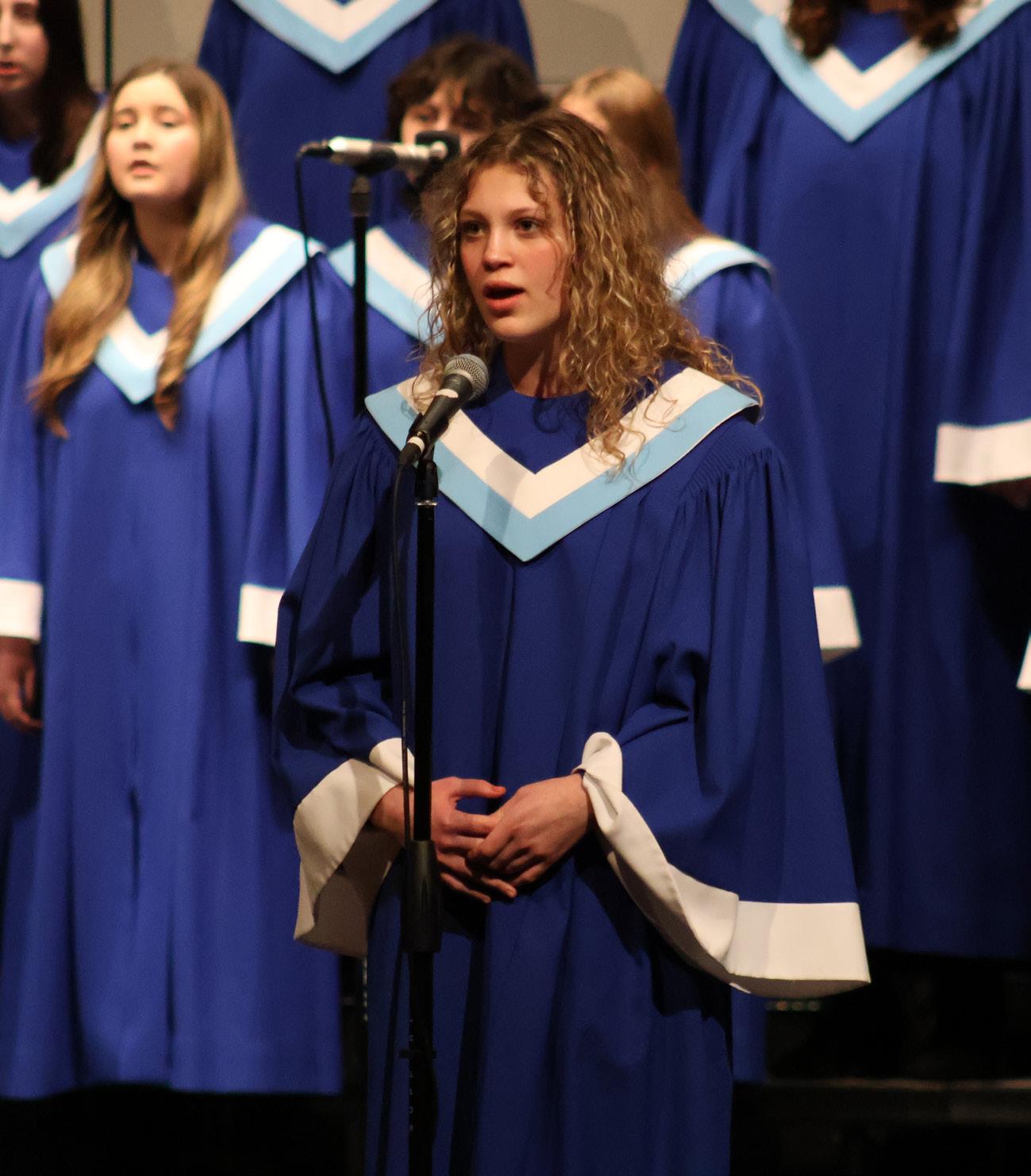
Lake Central’s Senior Treble, one of the advanced choirs, was given the opportunity to perform a song specifically arranged for them by Dr. Chukwuebuka Ezeakacha, a professor at Langston University in Oklahoma. They performed the piece at the Classics Concert on March 5.
“I connected with [Dr. Ezeakacha] a few years back when we were working on another African piece. We had a professional relationship working back and forth and sharing resources. I reached out to him looking for a song in the Yorùbá language and he helped me look. When he couldn’t find anything, he was like, ‘Well, I’ll just write one,’” Mr. Nathaniel Jones (Music) said. Occasionally, the choir will perform songs in other languages, but hardly do they ever sing any African songs.
“The song, [Ise Oluwa]. is different because it’s in another language and we normally don’t do many African songs. We did one from South Africa, like two years ago, but we don’t really find much African music that is really easily accessible. Everyone, including me, was excited and surprised that Mr. Jones actually found someone to write a song just for our choir,” Precious Fasanya (12) said.
The choir recognizes the honor they have been given to be able to perform a song composed just for them, along with the reason for even wanting this song.
“The main inspiration for the song in Yorùbá is because we have a student named Precious Fasanya who is from Nigeria and her family is Yorùbá. We were looking for a piece that we could do that represents her culture,” Mr. Jones said. Songs in the Yorùbá culture are often focused around religion and God.
“The song represents my culture because it talks a lot about how God’s work can never be destroyed and that’s very common in Yorùbá culture. We really are centered around God in songs in Yorùbá,” Fasanya said.
While the song was composed specifically for them, the original piece has been around for many years.
“This song is an old religious song that has been around in Yorùbá culture for a long time. The way [Dr. Ezeakacha] talked about the song, is that it was originally written when Nigeria and the Yorùbá tribe was under British control. The melody that was written wasn’t sensitive to the tonal language, which is a little complex, meaning like tonal languages have pitch inflection when speaking them,” Mr. Jones said. “Whether the inflection goes up or down, it changes the meaning of the word.
The original melody didn’t take that into consideration with the words that were in the song, so he used that original melody, but modified it slightly to better represent the original language and put it into a more modern setting. It’s a long-existing song and a long-existing melody, but the melody has been slightly reworked and recontextualized outside of the post-coloniza tion.”
Learning a song in a new language can be difficult at first to students, but through practice, it becomes easier and allows students to learn about different cultures.
“The pronunciation can be confusing when learning a song in a new language and you don’t always know what the words mean.
I think it’s important to learn songs in other languages though because it helps you understand different cultures and connect with more people,” Ila Stacker (10) said.
Though there are struggles, Fasanya is able to assist the choir due to her willingness to show her culture off.
“I’m helping with the pronunciation. I say the pronunciation before class, before we sing the song, then everyone repeats after me. I make sure that if I do hear anything while we’re singing the song that sounds wrong, to correct them,” Fasanya said.
For Fasanya, sharing her culture is important to her, especially through music.
“To share my culture through music, I feel very empowered and I feel very happy that I get to show other people what my culture has,” Fasanya said.
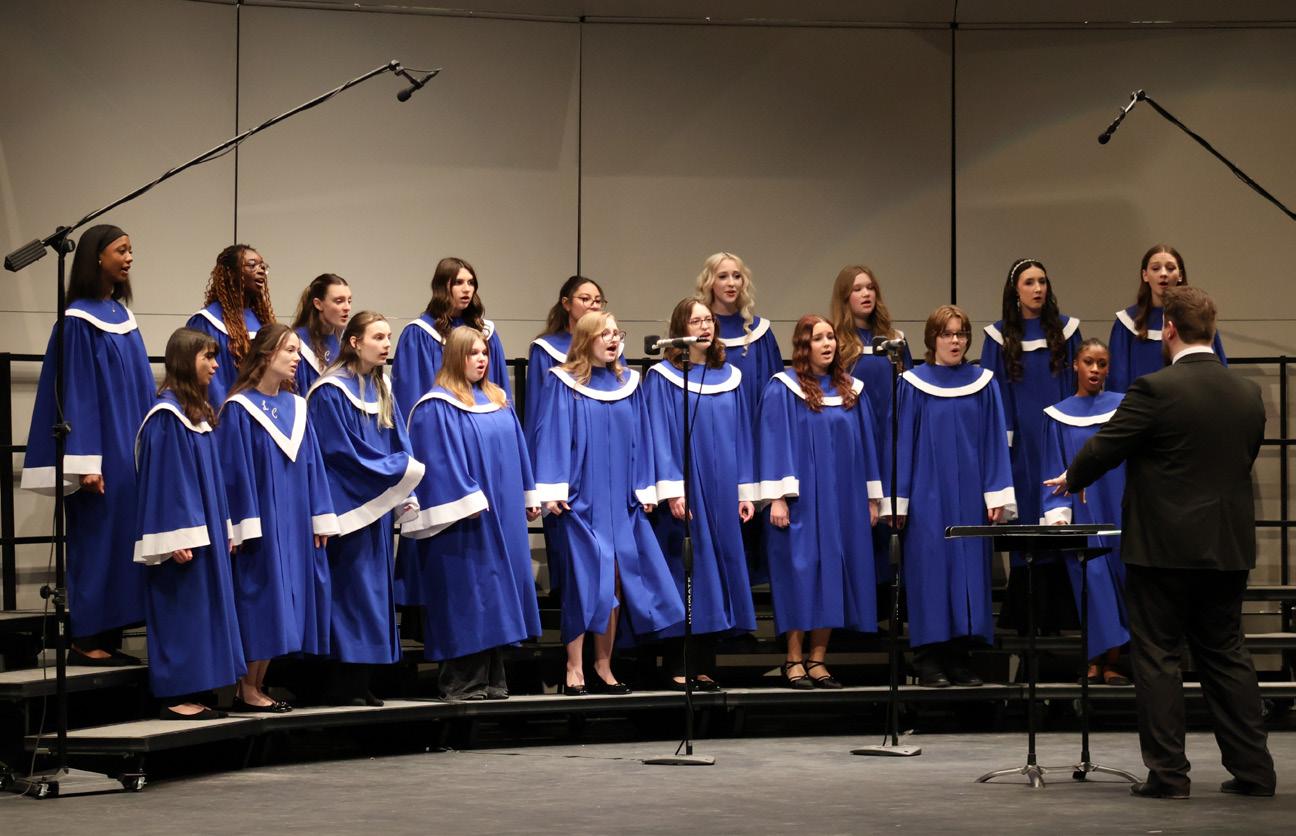
Swaying with the music, the Senior Treble Choir performs their special song at the Classics Choir Concert. They were accompanied by a flutist and percussionist as they enunciated each word in Yorùbá. “I think the audience will be surprised in a good way and appreciate the effort we all put into singing in Yorùbá,” Ila Stacker (10) said.
“Ise Oluwa ko le baje o”
God’s work can never be spoilt, destroyed or bad.
with Dr. Chukwuebuka Ezeakacha (Composer)
Why did you decide to arrange this piece for this specific choir?
I decided to arrange this piece for the Senior Treble in order to meet the need for Nigerian choral music for gendered ensembles. Majority of Nigerian art music are written for SATB (mixed) ensembles. Only a few are arranged for male/female or Soprano-Alto (SA)/Tenor-Bass (TB) choruses. Arranging this piece for Lake Central Senior Treble affords me the opportunity to contribute to enlarging the repertoire base for indigenous Nigerian art music for gendered choirs.
Why is it important for students to perform songs in indigenous languages?
It’s important for students to perform songs in indigenous languages because language is a core part of culture, and respectfully engaging in aspects of other indigenous cultures such as language is a more of an appreciation than appropriation. More importantly, when this indigenous language is transmitted through indigenous music, it radiates a double effect for the learners/performers. Essentially, engaging in indigenous musics/languages opens up the minds of the performers to experience artistic ambiance through the cultural lens of other cultures. In the long run, non-indigenous performers find something that they can identify with from other cultures and responsibly appreciate them, even without having directly (geographically) visited those cultures.
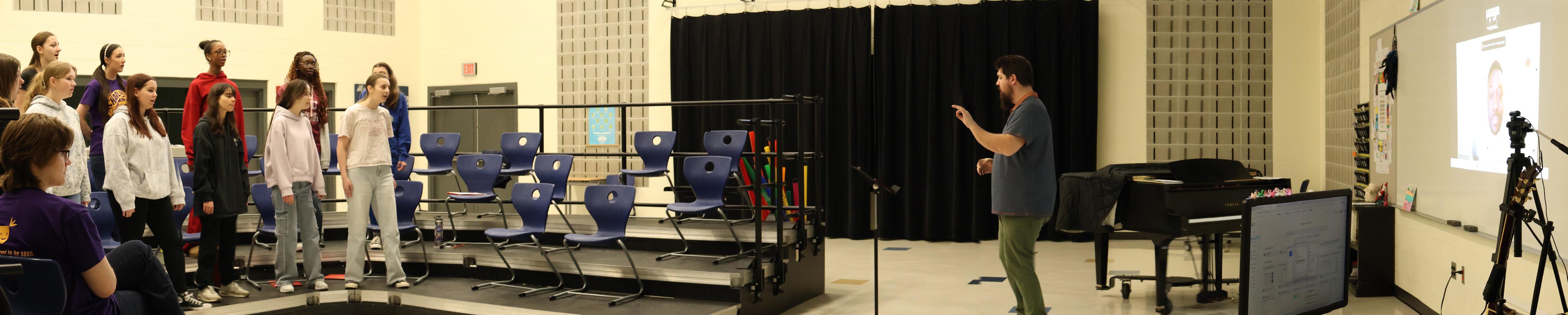
During fifth hour, members of senior treble perform the song for the arranger, Dr. Chukwuebuka Ezeakacha via Zoom. Dr. Ezeakacha worked at University of Langston in Oklahoma. “[Dr. Ezeakacha] gave us a lot of resources and I met with him via Zoom and he pronounced the words. We have been using Precious [Fasanya (12)] as someone who speaks the language to help coach us through and echo back and forth,” Mr. Nathaniel Jones (Music) said.

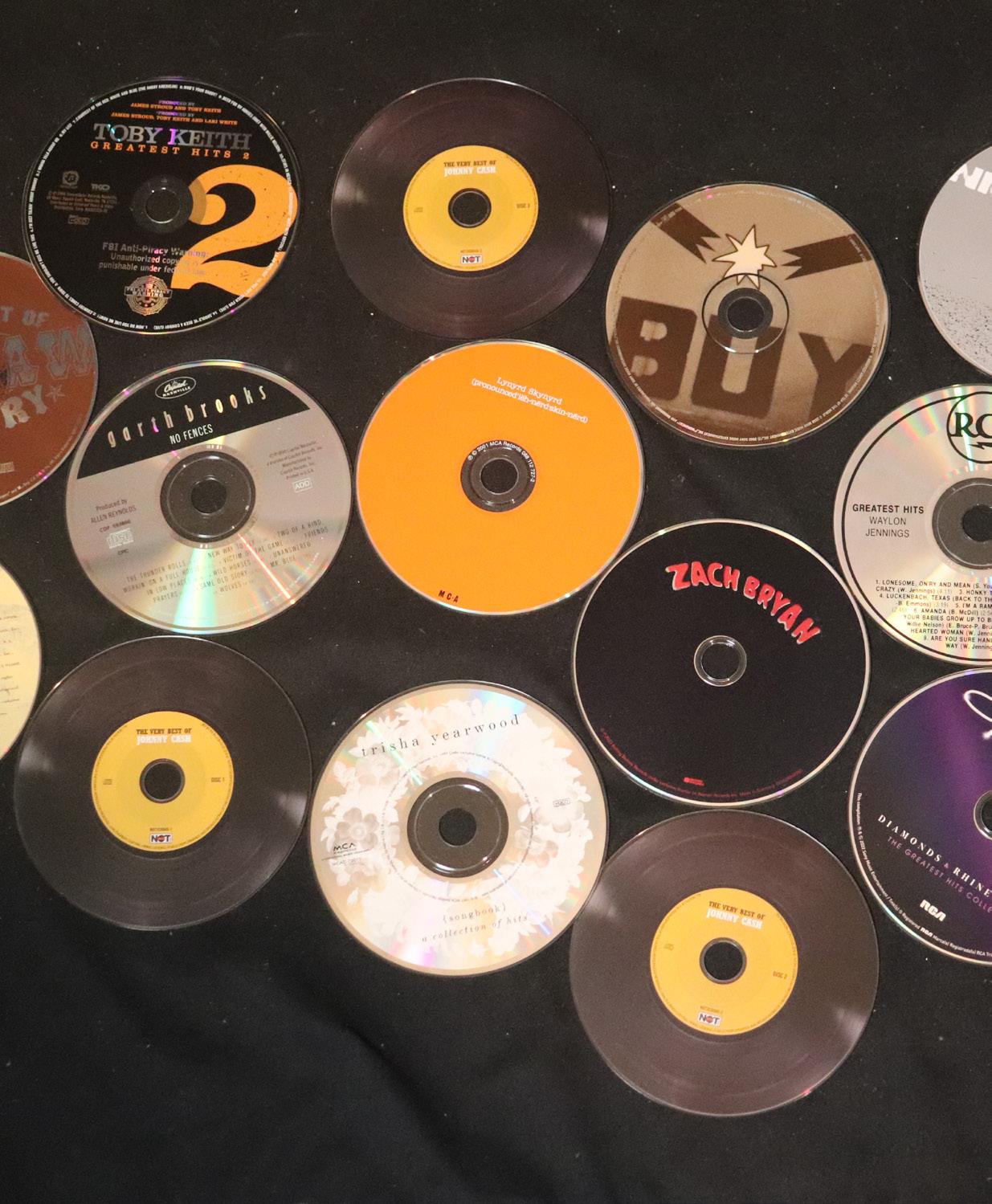
Against a background, a variety of country CDs, ranging from classic albums to more recent country pop hits, lay in an arrangement. Certain country fans, such as Genevieve Cosgrove (12), believed that there was a change in country music during the 21st century. “Country music has definitely taken a more pop approach. Most of the songs are now pop compared to what it used to be like. For the most part, I don’t think it sounds as good as it used to. I definitely like the classics more instead of the new, current music,” Cosgrove said.
Page by: Josina Nye & Isabella Magallanes
Design by: Sky Simmons, Mia Legaspi & Isabella Magallanes
How Gen Z is recreating that nostalgic feeling based on their childhoods in 2016
Trends that keep coming back, specifically from 2016
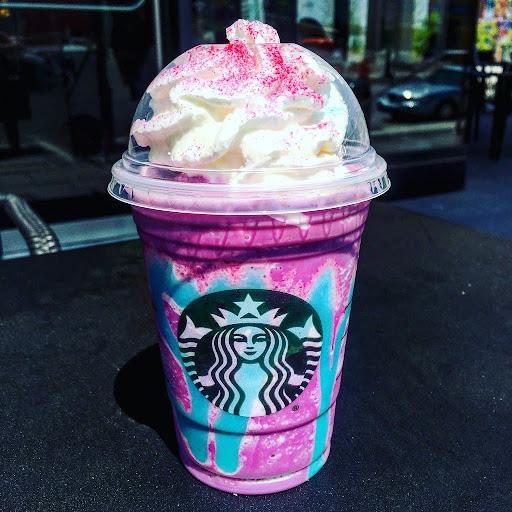
“One trend that I saw that is coming back was the unicorn pink drink from Starbucks. I heard it tasted like the worst thing ever, but I really want to try it,” Manuel Apuyod (10) said.


“The filters on TikTok that make everything look brighter and happier [are coming back. Also] brighter clothes and cartoon character shirts,” Brie Grady (9) said.




Artists who were popular in 2016 and made a huge comeback in 2026
“Fetty Wap, he just got out [of jail]. He’s doing a lot of old songs, there’s a lot. The [popular] songs are ‘D.A.M.’, ‘My Way’, ‘679’, ‘Jimmy Choo’ and ‘Trap Queen’. It’s coming back, and I don’t really know all the names, but you know those songs. When you hear them, you automatically know all of the lyrics,” Makylah Fitzpatrick (11) said.
“I remember in 2016 Sabrina Carpenter had her music videos playing on Disney channel, and she was super popular for my age group. Now, in 2016 she is one of the most popular female pop artists of the time I reall like her because her songs are super catcy and her performances are always really put together and have an old Hollywood vibe to them,” Megan Reed (12) said.

“I think Charli XCX is getting more popular because all of her songs with Taylor Swift have come back out. Her voice sounds good, and she’s getting popular on tiktok,” Samiyah Dillard (10) said.


“Bruno Mars is coming back, he’s been making music for a while and his songs are good,” Jordan Johnson (10) said.
“The dance that [Zara Larsson] made, ‘Lush Life’. Her old songs from 2016 are trending again, and she’s doing a lot more concerts and tours,” Aubree Lee (10) said.

“I’m the Problem” by Morgan
After its release in May of 2025, Morgan Wallen’s “I’m the Problem” rockets to number one on the Billboard Country Music charts and surpasses Luke Combs’ “This One’s for You”, becoming the most streamed country album of all time. Wallen’s album featured fan favorites like the titular “I’m the Problem,” “Just in Case” and “Don’t We.” Wallen was finally surpassed on the country charts by Zach Bryan’s “With Heaven on Top” in early 2026.
Country sales (via billboard) the last few years
Morgan Wallen surpassed Luke Combs as the highest-certified country artist of all time, while Zach Bryan broke the record for largest ticketed concert for any genre in the United States.
Megan Moroney’s “Cloud 9” has held Billboard’s number 1 spot across all genres for multiple weeks. Albums to watch for are new releases from Luke Combs, Morgan Wallen and Zach Bryan.

Country music is suffering from an identity crisis as it chases popularity and awards
“Songs for the Saints” by Kenny Chesney
Featuring hits like “Get Along” and “Better Boat,” Chesney releases “Songs for the Saints” in July 2018, following the devastating wake of Hurricane Irma. Chesney donated proceeds from the album to victims of Hurricane Irma in the US Virgin Islands through his charity, the Love for Love City Fund.

Country music has never been the most well-liked genre, especially in Northwest Indiana. Sure, US 99.5 plays Morgan Wallen and Cole Swindell over the radio at all hours of the day, but I would consider Cole Swindell just about as country as Harry Styles. Gone are the days where country meant Brad Paisley and Shania Twain, replaced by cheap albums riding off of the nostalgia from artists that haven’t released albums in years. Take HARDY’s “That’s my Favorite Country Song” for an amazing example of a modern lifeless song. The song references hits from the past two decades, like Zac Brown Band’s “Chicken Fried,” Eric Church’s “Sinners like Me” and Alan Jackson’s “Country Boy,” among others. The problem isn’t entirely the obviously desperate reach at classic country fans. There aren’t clever nods or subtle lyrical inclusions that only fans of the original songs would notice. No, HARDY just
“9 to 5 and Odd Jobs” by Dolly Parton
Released on Nov. 17, 1980 and peaking at number 1 on Billboard’s Top Country Albums chart, the album was responsible for introducing Parton’s classic song, “9 to 5,” to the world.

puts the song titles in the opening few lines and moves on without anything other acknowledgement. Of course, HARDY is not the only repeat offender that insists on turning country music into something it is not. Artists like Morgan Wallen, who started their careers during the peak of the ‘bro country’ subgenre, have started including trap beats in tracks that have absolutely no need for a trap beat. There are pop artists like Post Malone shoeing their way into country music circles for whatever contrived reasons. With them, they are bringing fans that do not care about the genre. The phenomenon only contributes to the country music’s growing identity crisis. As people chase streams and views for money and clout, the genre has slowly drifted more into pop circles than ever before. Case in point, the single most streamed country album of all time is Morgan Wallen’s “Dangerous: The Double Album,” which contains songs with just about as much autotune as a Kanye West album. Country music used to have an identity unique from most other genres. Singers like Dolly Parton and Kenny Chesney wove feel-good guitar tunes with themes of hard work, a simple life and being good to one another with classics like Parton’s “Working 9 to 5” or Chesney’s “Get Along.” Garth Brooks and Brad Paisley released songs like Brooks’ “If Tomorrow Never Comes” and Paisley’s “We Danced” as testaments to the kind of love a classic country ballad could express. Not to mention Tracy Chapman, the original artist behind the song “Fast Car,” which only started getting award nominations after Luke Combs covered the song (to his credit, in a duet with Chapman). Welcome to the modern age, where country means Sam Hunt’s tacky electronic beats and Cole Swindell’s lackluster lyricism. It’s no wonder country music has such a bad reputation; modern country music is ninety-nine percent greedy cash-grabs and that isn’t going to change anytime soon.
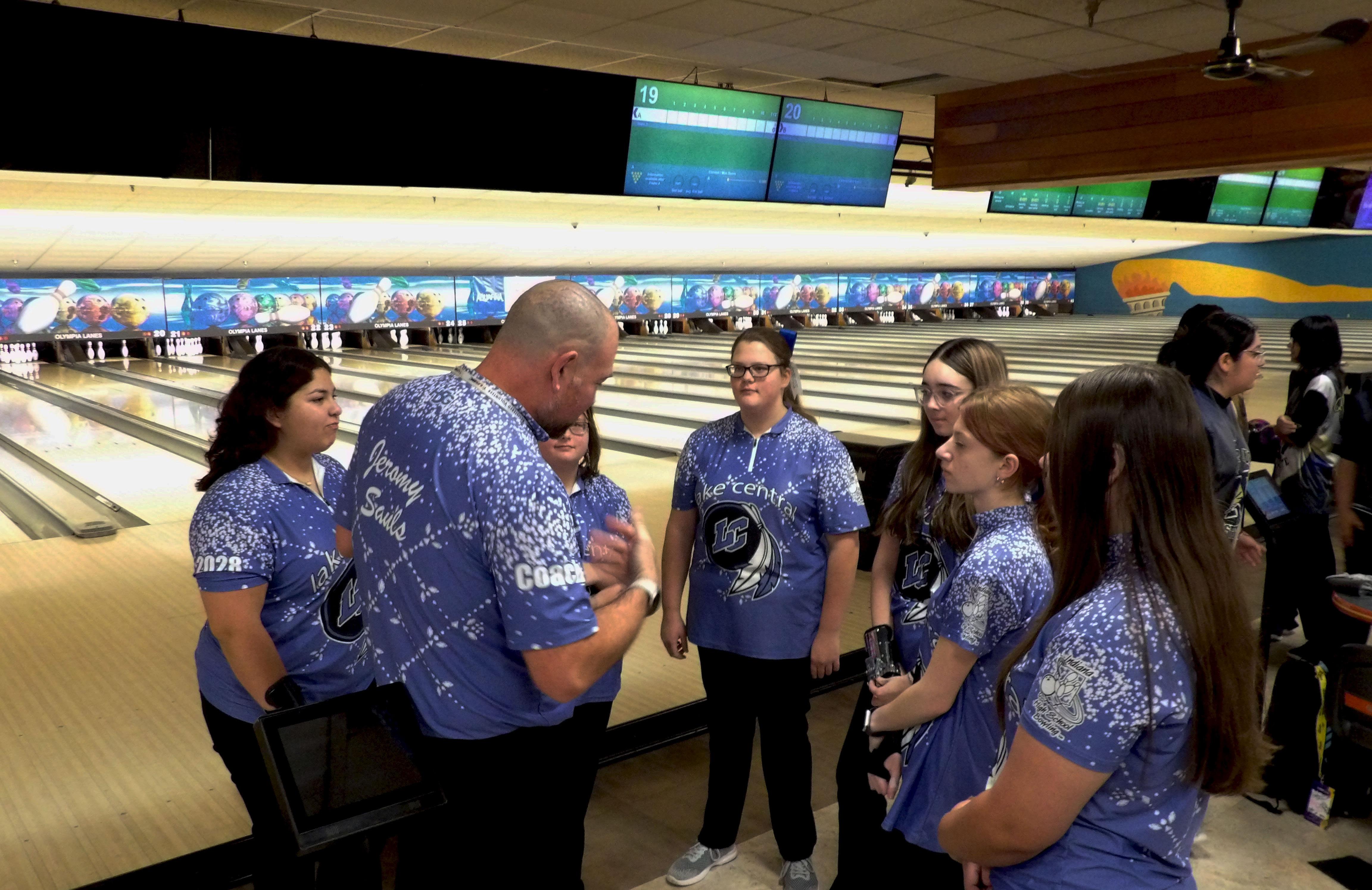
Circling up, the varsity bowling team looks towards coach Jeromy Sauls as he guides the team’s focus session before their match. The team took 10 minutes before every varsity match to debrief with what their mindset and expectations should be for that day. “[What made us so successful] was mainly my teammates. We all have improved and we just had a great team this year. [The best part] is definitely the people you meet along the way,” Riley Jackson (10) said.
Review the 2026 Milano Cortina Winter Olympics’ defining moments and lasting achievements
Page by: Maddie Bush & Mady Ross
Design by: Katie Poncin & Zainab Mohiuddin
From Feb. 6 to Feb. 22, people from around the world tuned in to watch the largest event in winter sports. Hosted in Milan and Cortina d’Ampezzo, over 90 countries and 2,800 athletes competed in 116 events in an attempt to win a coveted gold medal.
“Overall, I think the Olympics were great.
I think the fact that it was hosted across two different cities was sort of interesting. Having the two cities probably helped the congestion and traffic a lot because not all the business was in one area,” Taylor Thrasher (11) said.
For two weeks, everyone in America seemed to be on the same team, rooting for athletes and sports that represent us as a country. One of the most anticipated events coming into the Winter Olympics was the men’s and women’s ice hockey. The women’s team won against Canada in the finals, continuing their 28-year medal-winning streak, while the men beat Canada to win their first gold medal in 46 years.

States won three figure skating medals.
“I thought that the U.S. figure skating team was really cool because of all the tricks and jumps that they were doing on the ice, especially the ‘Quad God’ who could do a backflip in his skates,” Murzyn said.
REUTERS/Aleksandra Szmigiel
Though this Olympics was relatively free of controversy and accusations, one event in curling caused some questions. On Feb. 13, during a curling match against Sweden, Canadian Marc Kennedy was accused of “double-touching”, which is the illegal act of touching the stone once it is released, especially if it already passed the hog line. However, curling doesn’t use video replayed during games, so no cheating repercussions were taken during the match, ending in a Canadian victory. World Curling would later release a statement explaining that touching the granite part of the stone is not allowed and would result in the stone being removed from play.

“I felt like the men’s and women’s hockey teams winning the gold medals was the biggest moment to remember from this Olympics. I thought that it was very memorable because the men’s team hasn’t won in a really long time,” Tessa Murzyn (11) said.
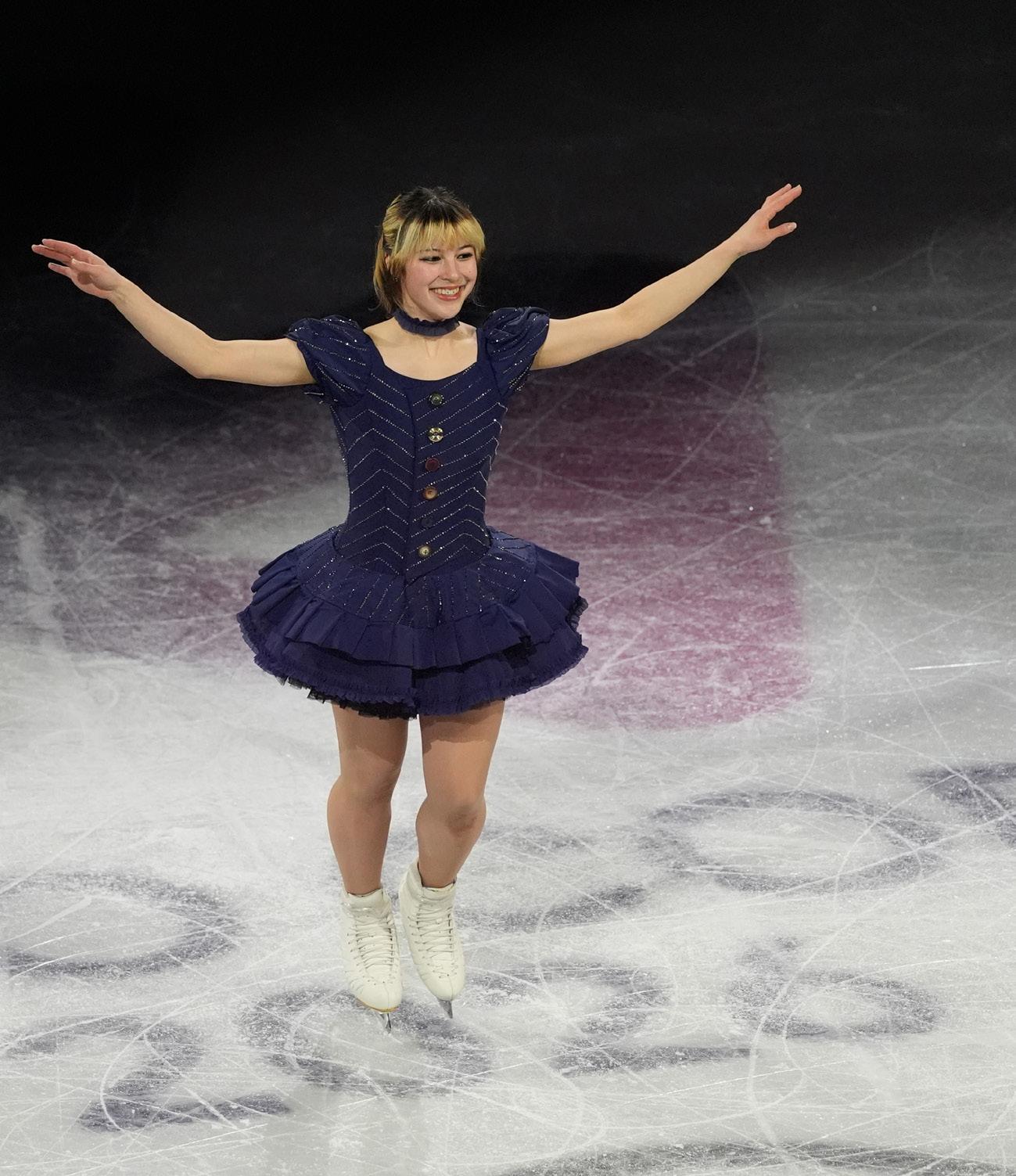
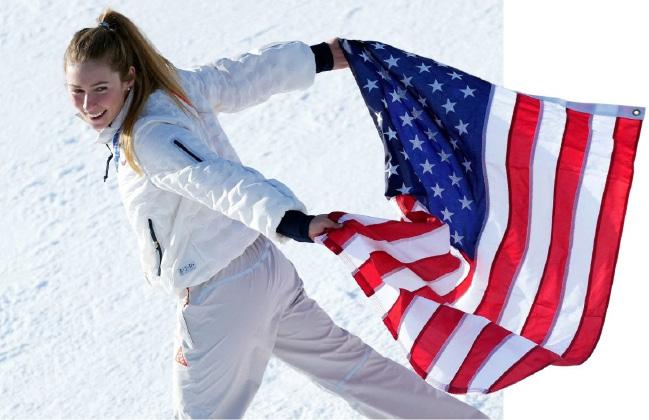
Another very popular sport was figure skating. Coming into this Olympics, “Quad God” Ilia Malinin was the heavy favorite to win the men’s gold medal after becoming the first person to land a quadruple axel in competition and leading the scoreboard during the short program. However, during his free skate, Malinin experienced several falls, dropping to eighth place. A few days later, another figure skating highlight occurred when Alysa Liu won the women’s gold after a two-year break from skating, beating the three-time world champion, Kaori Sakamoto who was the heavy favorite coming into the event. In total, the United
“There was one thing that happened in curling where, I believe it was Canada, was accused of cheating. The guy competing left his finger on the stone, and it caused a lot of attention. That was memorable,” Jason Mann (12) said.
The Olympics happen every two years alternating between winter and summer. The next Olympics, which is set for July 14-30, 2028, will be hosted in Los Angeles, marking the first Olympics held in the United States since 2002, which was hosted in Salt Lake City. LA 2028 will include/ return new sports such as flag football, softball/baseball, cricket, lacrosse and squash. In addition, LA 2028 is projected to be one of the largest games ever held, with the planners expecting about 14 million tickets to be available.
“I am planning on going to the next Olympics that will be held in Los Angeles. I am so excited because it is the summer Olympics and I really like to watch the gymnastics. I think it will be really cool,” Thrasher said.

Encouragement from teammates in sports is crucial to the team’s overall performance. It leads to greater success by fostering a welcoming environment, a support system and the right mindset.
“[Our way of encouragement is] basically high-fives, making each other happy, even if you miss a spare or split. Coming together outside of bowling is definitely nice. I definitely have [made friends through the sport]. Some friendships maybe not be as close as others, but I’ve definitely made a lot of friends throughout,” Riley Jackson (10) said.
Practicing together as a team helps each member improve their game and grow in confidence. Additionally, it shows what they can accomplish through hard work and dedication.
“I mainly wanted to join a club for Lake Central because I needed to join a club. I saw it because I wanted to bowl one time and then ended up seeing an advertisement for it, so I joined. Bowling for LC is great because of how far we made it this season, and you really see how capable everybody is when you come together and do well,” Jackson said.
The materials used for bowling can play a major role in a player’s success. For some bowlers, guidance from experienced players helps them find the perfect ball for them.
“My coach assigns the balls, but you can bring your own, too. My uncle bowls. He gave me that ball because he told me that it’ll be better to help me rotate the ball so I can get to pin openings,” Ny’Elle Bell (9) said.
After missing a shot, it is common for players to get down, however, staying in frame paves the way to winning the game.
“If you’re looking to improve, practice more often and always take your time between shots and don’t rush anything. Focus on your mentality. Don’t get in your head after you mess up a shot and take your time. For the team, keep the energy up. If you mess up a shot, make sure you pick each other up because it could bring everyone else down if one player is upset,” Miranda Munoz (10) said.
Although they are all playing the same sport, bowling alleys themselves may vary greatly, requiring members to learn how to manage each alley’s conditions.
“Olympia has sensors; if you go over the line, it will mark you off, and you won’t get the point. You have to start over and do it. Stardust doesn’t have that. So you can go over in line, but it doesn’t mark you,” Bell said. However, competitions all share a similar atmosphere, as various schools attend, making them crowded and loud.
“A lot of different schools are there, and there are a lot of announcements. It gets very packed and stinky. You can do competitions separately and not just for school, it’s like a league,” Bell said. The nerves felt during competitions can be intense, but they often lessen as the season goes on and members become familiar with what to expect.
there. The boys and girls are separated. For girls, there are six teams, so after every game we move over a pair. For four tournaments and bakers games, there are five bowlers, and each bowler bowls two frames, and we move over one lane. The state [competition was bakers, and for singles it was four games,” Munoz said. For players, success in their sport also brings a sense of pride and the excitement of being given a new opportunity.
“We placed six out of eight, and we qualified for nationals, so we’ll be doing that. I’ve never been in that type of environment, so it’ll definitely be different,” Jackson said.

“For a spare, you throw the ball the first time, and then the second time you try to knock down the remaining pins. The spare adds on to the first part of the next frame, and then the strike adds on to the whole frame,” Riley Jackson (10) said.
“Spares are more important because it’s good to strike, but you’re not going to strike all the time, so you have to be more confident in making spares and okay with making spares,” Madison Sauls (9) said.

“I’m gonna say spares [are more important than strikes] because you can get a spare more often than you can get a strike. If you have a good strategy and you get strikes all the time, that’s great. But if you don’t know how to pick up a spare, that is so bad for you, because you’re gonna lose points rather than gaining them,” Kara Voorhis (12) said.
How do these girls maintain an in-lin state of mind?
We usually practice at the Stardust in Dyer. Sometimes I practice outside of time with my team,
Miranda Munoz (10) said

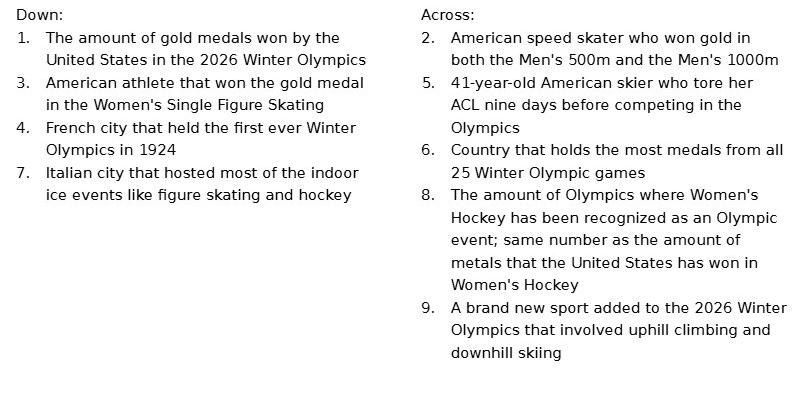
At a competition, Lake Central’s varsity bowling team stands together, grinning ear to ear. Although a sport, bowling was only recognized as a club by the school.
Photo by: Angel Matthews
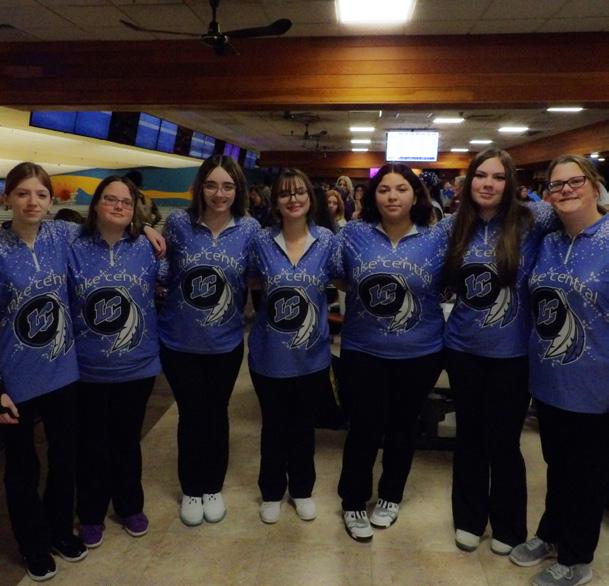
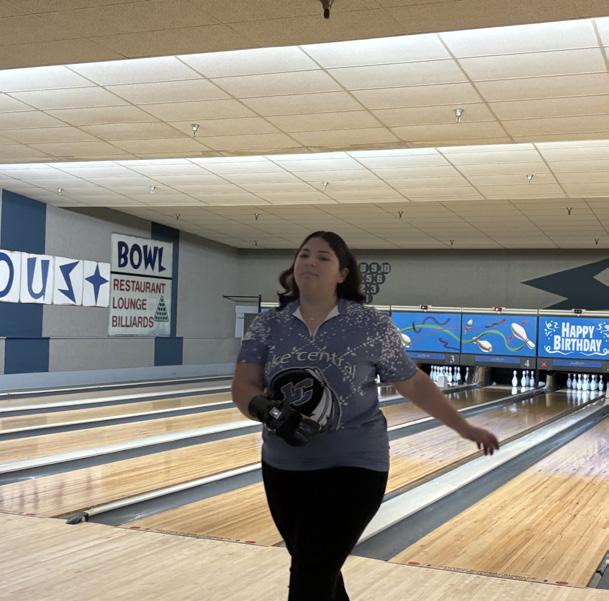
After securing a strike, Miranda Munoz (10) heads back from the lane with a look of pride. Half of the team was made up of sophomores, with four.
Photo by: Lyndsay Jackson
Highlighting the team’s strengths and weaknesses, Mr. Jeromy Sauls (Head Coach) provides the team with advice for the upcoming match. Lake Central’s girls bowling team competed and placed second at the Indiana High School Bowling State Finals.
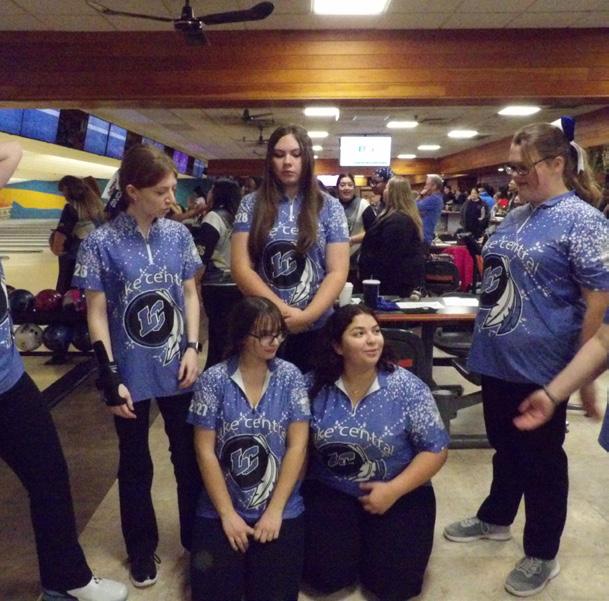
Photo by: Angel Matthews
If you want to improve, I think you should do other leagues. You should practice by yourself instead of with a group. When you’re with a group, you are less focused.
Ny’Elle Bell (9) said
In my bowling bag, I have a small little pouch. It has New-Skin, a bunch of patches, I have my athletic tape that I put on my wrist, I usually have a snack or two, a shammy and rosin balls so I can dry my hand off so my ball doesn’t drop. That’s it, besides my bowling ball. New-Skin is a liquid, a little patch goes with it, so when you slice open your finger, you put the liquid on, and you place the patch on really quickly,
Kara Voorhis (12) said.
“ ” “ ” “ ” ” “
If you go in with a bad mindset you’re going to have a bad day. It’s about showing up and making sure you’re in a good mindset and a good mood. Then, your day should be fine,
Madison Sauls (9) said.
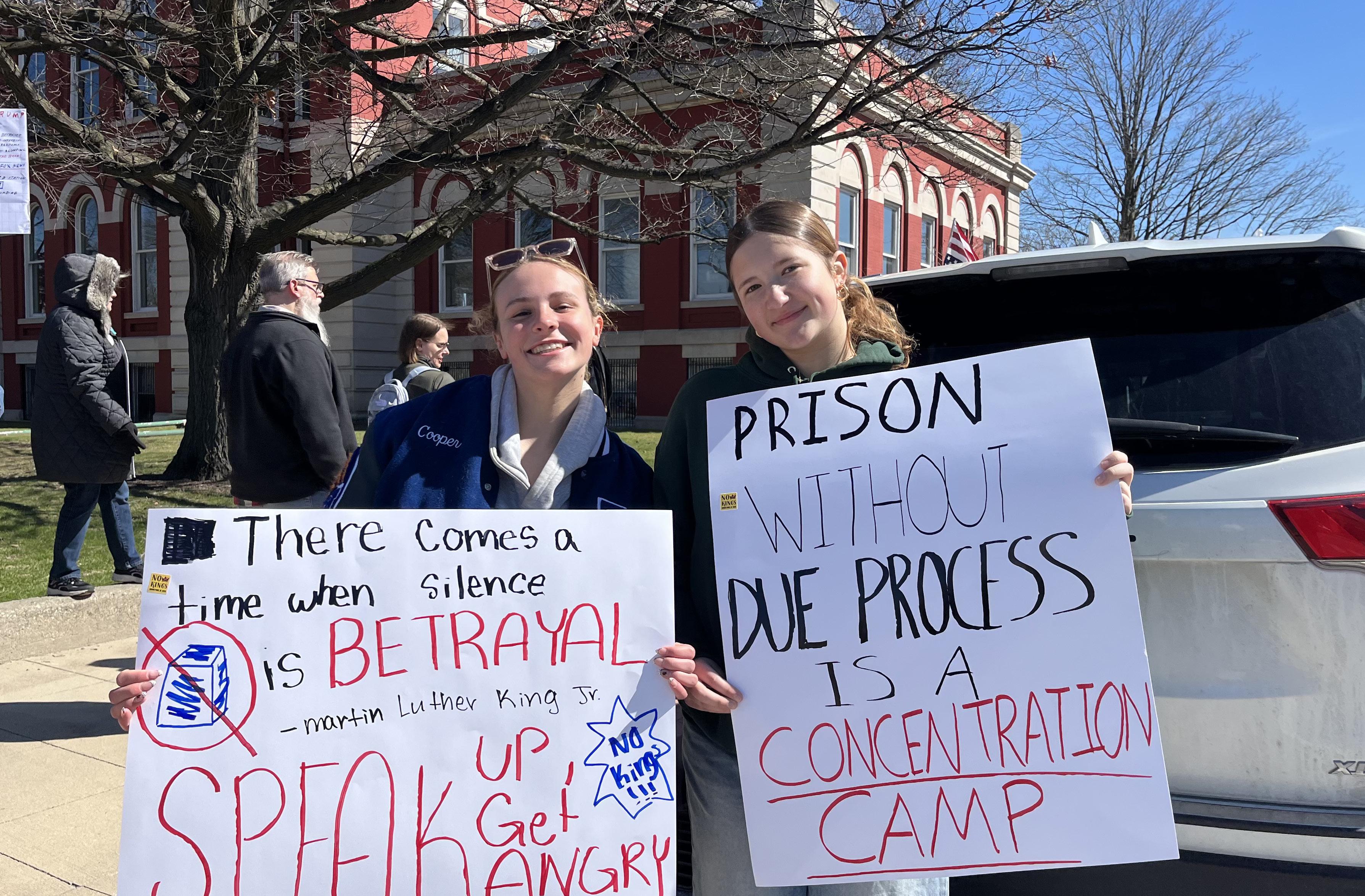
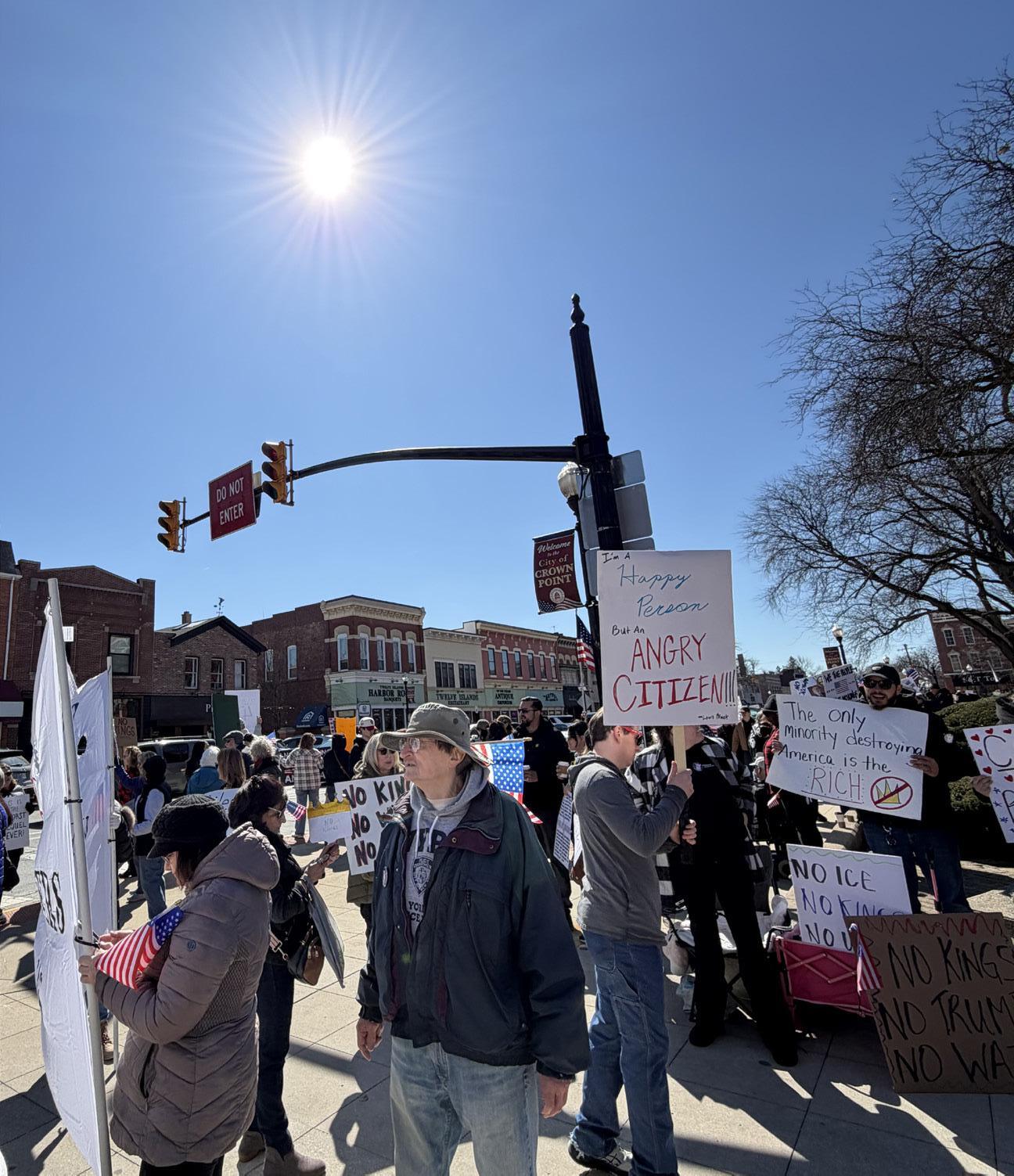
At the No Kings Protest on March 28, Lyla Cooper (11) and Laci Church (12) pose for a picture with their signs. The No Kings Protests happened nationwide and were a part of the largest ever single-day demonstration in U.S. history. “I chose to participate in this protest because I wanted to do something to help change things that are important to me. Local protests are important because they spread awareness about issues that people might not have thoguht of,” Cooper said.
Gladys West from Sutherland, Virginia, is an American mathematician. West was known for her contribution to the development of the Global Positioning System (GPS).
(1930-2026)
Lyda Newman created an improved hairbrush design that was easier to clean and more durable. The hairbrush revolutionized Black hair care. Newman also fought for women’s voting rights.
Marie Van Brittan Brown invented the first home security system. It included cameras and two-way communication, laying the foundation for modern security systems.
Patricia Bath advanced medical research and laser eye surgery. Bath was the first Black woman doctor to receive a medical patent, opening doors for women in medicine and STEM.
Together, they helped start the global movement, Black Lives Matter, which advocated for racial justice, changing conversations about police reform and equality worldwide.
Lisa Price founded Carol’s Daughter. Price popularized natural haircare products for textured hair and built a multimillion-dollar beauty brand.
For generations, women of color have had to fight to be heard. Today, that legacy of resilience is shown in the school and others around the world. During Women’s History Month, their stories highlight the importance of representation and lifting one another up.
“Women’s empowerment is doing things that they never thought women could do and were specifically for men. I think women’s empowerment is like feminism in a way,” Atira Anekwe (12) said.
Women’s empowerment is more important in schools than most realize. Without the original suffrage protests, women would never be able to get past a high school education today.
“I think women’s empowerment is important because it shows how hard women can work, and even though sometimes we don’t get the credit for it, we still continue to push forward. Also, how strong we are as a community group, and at the end of the day, there’s always gonna be another girl there to lift you up,” Arielle Carter-Reed (11) said.
There is a natural unity with women and girls in public spaces, meaning safety, sharing feminine hygiene, giving advice, and overall girlhood.
“Women empowerment looks like taking leadership and helping each other out or helping others. Women’s Empowerment shows that women could do things as well, that they should be given equal opportunities,” Bryony Torres (9) said.
Women aren’t the only marginalized group that have fought stereotypes over time and dealt with oppression. Black women have been a huge part of women’s history, breaking records and pushing past generalizations
“I would say a role model I look up to is Simone Biles. I saw her story about how she struggled with getting into her sport and with her family. I just love how she persevered and is a strong black woman that a lot of people look up to today. I think she empowered little girls who see her to believe that they could do anything and become a gymnast just like her,” Kaitlyn Ballenger (12) said.
Many students admire role models who show strength and determination through their experiences. Their stories inspire others to keep pushing forward even when things get difficult, and these everyday influences can have just as strong of an impact as public figures.
“My mom [is someone I look up to]. She is a woman, she’s black and she grew up pretty poor. Now she has like three degrees from college, and she went back and got another one. She is just really smart and powerful, I really look up to my mom,“ Anekwe said.
In addition to overcoming challenges, education and determination also play a big role in why students admire their role models. Seeing someone pursue their goals despite obstacles can be especially inspiring. Many students look up to individuals who worked hard to improve their lives and opportunities. These examples remind them that success is possible with persistence and dedication.
Kamala Harris was the first woman, Black and South Asian Vice President. Harris showed historic representation in the United States government.
In March of 1955, Claudette Colvin, a 15-yearold girl, boards a segregated bus and refused to give up her seat. Colvin was the first to do this, and Rosa Parks followed her footsteps a few months later, in Dec. of 1955.
Bessie Coleman is the first African American woman to hold a pilot license, and is the earliest known black person to earn an international pilot’s license. Coleman performed aerial stunts while using her fame to advocate for civil rights and encourage African Americans to pursue aviation.
In 1862, Mary Jane Patterson became the first African American woman to receive a bachelor’s degree. Patterson attended Oberlin College, a liberal arts school in Oberlin, Ohio for a four-year program in the “Gentleman’s Course.”
Mae Jamison is an American engineer and a former NASA astronaut. Jemison became the first African American woman to go to space in 1992 while aboard the space shuttle Endeavor.
Gabby Douglas is the first African American to win an Olympic individual all-around title. Douglas has a total of six Olympic and World Championship medals. Douglas was the 11th most decorated U.S. female gymnast of all time.
Students in the Lake County area are banding together to protest against ICE

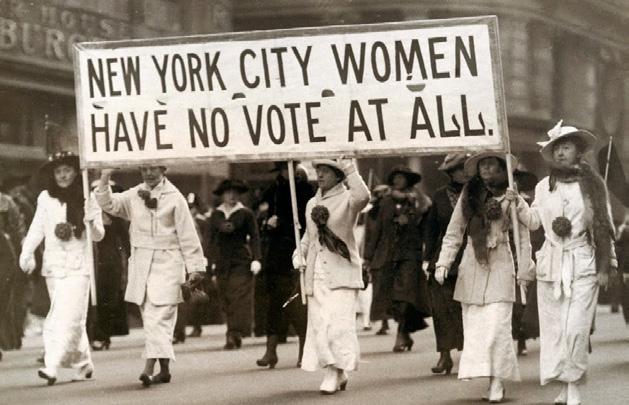
Protesting has been around since the dawn of America, fighting personal beliefs has been a key value that America was built on. Recently, students at Lake Central and in the surrounding high schools have been holding or attempting peaceful walk-out protests against U.S. Immigration and Customs Enforcement (ICE).
Taking place on Feb. 19 and 27, students planned a walk-out protest against ICE. They were scheduled to happen at 9:30 a.m. during PtE in which all students willing to participate were to walk out of the class and stand in front of the school sign.
“It kind of just started with me seeing Hammond doing a protest. I was like, oh it would be nice to see if our school would like to do it too and see how [many] people would show up. I picked a date that wasn’t too close so it [could] be organized, and people [could] actually process what was happening, and to prepare,” Aniya Cassanova (12) said.
The protests were supposed to be taking place during school day. However, on Feb. 18, a day before the first protest, administration sent out an email explaining the
trative team is aware that some students have expressed interest in participating in a walkout. According to Tinker v. Des Moines School District students have the right to express their opinions as long as their speech does not cause a ‘substantial disruption’ to the educational environment,” said Mrs. Erin Novak’s (Head Principal) email. “A student walkout during instructional time (PtE included) would be a substantial disruption to the educational environment. Students who walk out of the building on any day without permission are considered truant. The consequence for a student’s first truancy, according to the LCHS Handbook, is a consequence of two Alternate to Suspension Plans (ASP), which are 6 hours of detention. These ASPs do count as suspension days on a student’s record.”
Students are not covered by their First Amendment rights when it comes to doing school walkouts as it disrupts school learning according to the Tinker v. Des Moines case of 1969. Nevertheless, many students still felt strongly about the email.

“It’s important because I mean, we’re the future of the nation. As corny as it sounds, we’re the ones who are inside on who we want to vote for and what policies they want to put in place,” Brody McLaughlin(10) said.
“I think it really shows where the school stands on the issue. I feel like the fact that they cited it as disrupting class time didn’t make very much sense to me. Since PtE is almost a free period for almost everybody, nobody’s being forced to go outside. I feel like disrupting class time didn’t really have anything to do with it, and I think that if they were more open to letting students voice their opinions in the first place then it wouldn’t have to be an issue,” Leah Jones (12) said.
Some students feel that since PtE is mostly a free period, they wish that administration could have come to an agreement about the protests taking place during PtE. The protest organizer for the Feb. 27 protest, Cassanova, had come to a realization about how to handle the student-led protest.
“We plan on just doing it after school on Friday, because of what they said about the suspensions, and it’s not during school hours and people are less busy. I feel like after school on Friday is a better date and the administration can’t really give out consequences for that, because we won’t be at school. I’ve been trying to tell people who want to participate in the protest that the new time is now after school, but it hasn’t been getting out as much,” Cassanova said.
Due to this slight misunderstanding, the protest on the 27th ended up being cancelled. Many students knew this was coming because of how events were taking place.
“Personally, I think it shows that students care, which I think is really good, and I think that’s really important. But I do think that there are some more impactful things that people could be doing like more important things. Honestly, I think if there was a bigger turnout for it, it probably would have been more effective. I don’t think people really took it too seriously,”
Alexandra Zarris (12) said.
Despite Lake Central’s failed attempt at protesting, it is still very important for this generation to use their collective voice to speak out against social justice issues we feel strongly about.
“It’s important because I mean, we’re the future of the nation. As corny as it sounds, we’re the ones who are inside on who we want to vote for and what policies they want to put in place. Whether they tell the truth or tell them not to do their election campaign, we have the voice. I mean, so many kids are now turning 18 who are eligible to vote in the midterms. When we’re seniors, we’re going to be able to vote for the next presidential election. So it’s our opinions that will matter,” Brody McLaughlin (10) said.
How protests have evolved and changed over the centuries in America A revolutionary movement of Great Britain’s 13 North American Colonies due to unhappiness with taxes from Britain to pay off war debts. These colonies started what is now known as the Revolutionary War and formed the United States of America.
Abolitionist Movement (1688-1865)
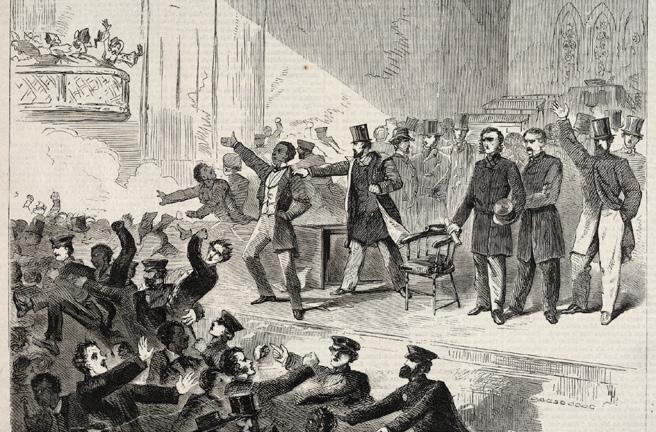
The first official abolitionist protests against slavery started with mostly religious quakers in the colonies, however the more serious shift happened in the 1830s due to more evangelical religious concerns over the country’s morale and the cruelty of the slave industry. The movement ended with slavery being abolished in 1865 after the Civil War.
The dos and don’ts of peaceful protests
Dos-Tell someone where you are going, what the plans are and when you will be back
-Have a backup plan if things go wrong
-Memorize important phone numbers or write them on your arm
-Bring an ID card, high protein snacks, water, a small first-aid kit, goggles in case of tear gas or any personal medications
-Be respectful of the surrounding people and environment
-Turn off all biometric authentication such as face and touch ID on your phone
-Fully encrypt the data on your phone
In July of 1848, a large group of women held a convention in which they created a list of demands in terms of women’s rights. This eventually led to many protests and marches, while not all of them peaceful, many of the women did gain the rights they fought so hard to obtain. Black Americans began to organize many non-violent, peaceful protests to fight against the effects of racism and the Jim Crow Laws inflicting on their constitutional right to vote. This sparked many others to lead in non-violent protests in the footsteps of leaders such as Martin Luther King Jr.
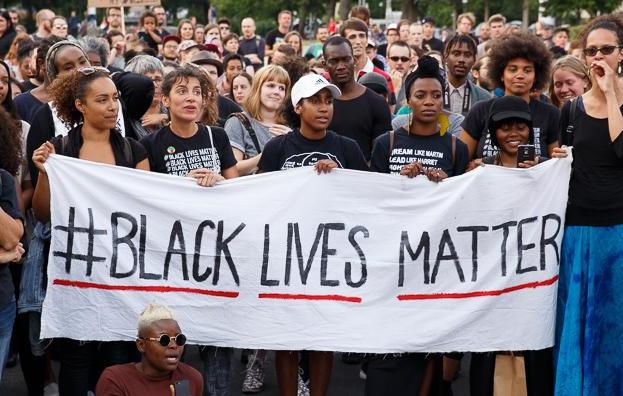
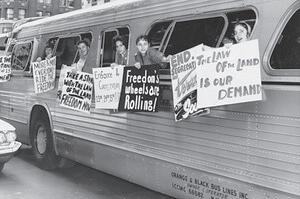
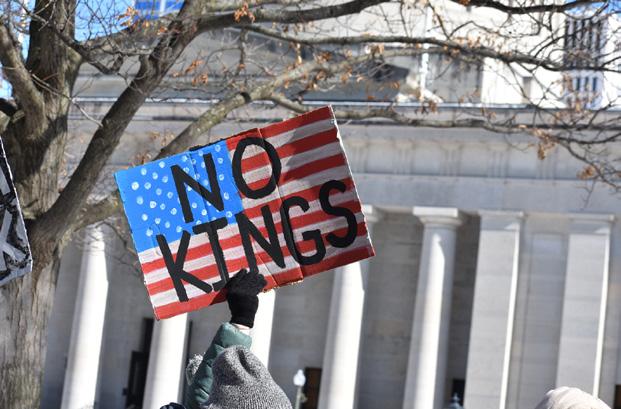
a protest against the policies and actions of President Donald Trump and his administration.
-Don’t engage with police unnecessarily
-Don’t egg on opposing protestors
-Don’t go off the protesting route
-Don’t participate in criminal activity taking place in the cover of the crowds
-Don’t cause illegal public disruption
-Don’t consent to searches by police
-Know the environment, protesting becomes illegal when it turns violent
-Don’t wear contact lenses, they can trap tear gas