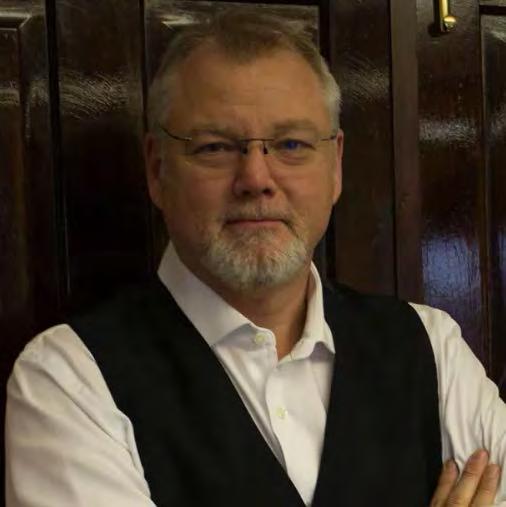
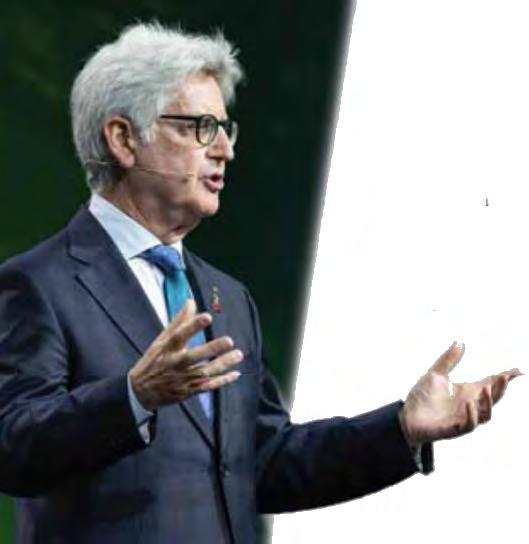
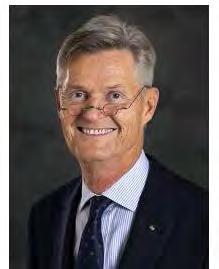
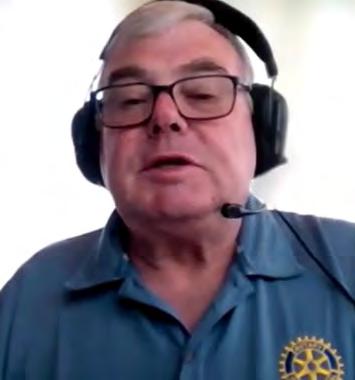
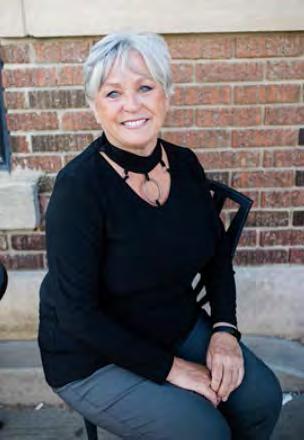
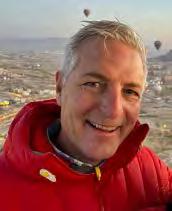
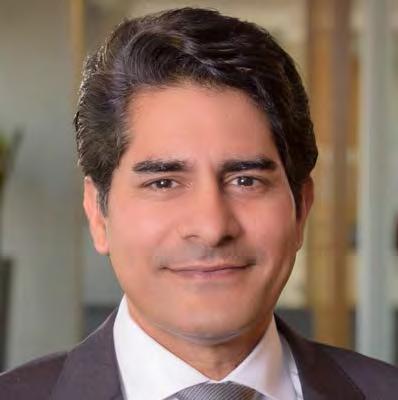
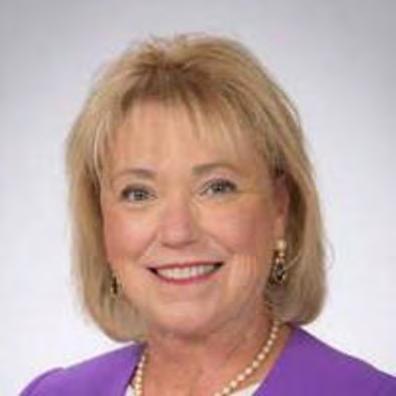
Rotary International President, Francesco Arezzo (Rotary Club of Ragusa, Italy) District 6330 Governor Jeff Ferweda, (Rotary Club of Genessee Valley, MI) Club Newsletter Editor, Kitty Bucsko
District website: https://rotary6330.org/ Club website: http://www.6330passport.org
The Calendar below shows Rotary’s 2025-26 monthly themes.
ROTARY CALENDAR and THEMES
Month
Theme
July Maternal and Child Health
August Membership and New Club Development
September Basic Education and Literacy
October Economic and Community Development
November The Rotary Foundation
December Disease Prevention and Treatment
January Vocational Service
February Peace and Conflict Prevention/Resolution
March Water, Sanitation, and Hygiene
April Environment
May Youth Service
June
Rotary Fellowships
. MONTH OF MAY
Our Environment RYLA May 8 to 10
REGULAR MONTHLY MEETING
Wednesday,May 6 at 7:00p.m. Eastern Time
HAPPY CHATS ONLINE – JOIN US!
Every Wednesday at 6:30 p.m. Eastern Time
UNITE FOR GOOD
MONTH OF JUNE
Focus on Rotary Fellowships
Rotary Anthem
Right click here to open the link and listen to the Rotary Anthem!
Click here for We are the World.
THE ROTARY INTERNATIONAL PRESIDENT
MAY MESSAGE 2026
Follow the youth
Shoki Wafula did not know what to expect when he was forced to leave his birth country of Uganda for South Africa. What he found was a Rotary community that welcomed him with warmth and friendship. That experience inspired him to help create a Rotaract e-club where young leaders from around the world could connect, develop their skills, and serve together.
Today, that community includes members across multiple continents who collaborate on leadership development, peacebuilding and service initiatives. For Wafula, the experience reinforced the lesson that meaningful service begins with people who feel connected, valued, and empowered to lead.
His story reminds us why Youth Service Month is so important. Through Rotaract and programmes like Rotary Youth Exchange, young people build leadership skills, develop global understanding, and discover the impact they can make through service.
Rotary’s Action Plan calls on us to enhance participant engagement. At its heart, that goal asks a simple question: How can we ensure that participation in Rotary is meaningful and fulfilling for everyone? Youth programmes and Rotaract provide a powerful answer.
When clubs mentor Rotaractors, host exchange students, or support youth leadership initiatives, they create opportunities for members to share their experience in ways that feel personal and rewarding. These connections deepen members’ sense of purpose and strengthen the bonds within our Rotary family.
They also create lasting pathways into Rotary. Thousands of young people complete Rotary programmes each year, and they carry those experiences with them throughout their lives. Many remain eager to stay connected.
Organisations such as Rotex International, an association of former Youth Exchange students, help Rotary programme alumni continue serving as mentors, leaders, and advocates for our youth programmes. As Rotex cofounder Hans Lee wrote in a recent reflection on Youth Exchange alumni, “exchange doesn’t end when you return home.”
When we welcome these young leaders into our clubs and activities, we strengthen the continuity of Rotary across generations.
During Youth Service Month, I hope every Rotary club reflects on how youth programmes can enhance engagement for new and longtime members. Collaborate on service projects and invite youth voices into your planning and decision making.
Rotary’s message to the world is that we can Unite for Good. Youth programmes show us how that happens in practice — when generations come together, share ideas, and work side by side in service.
FRANCESCO AREZZO President, Rotary International
THE ROTARY FOUNDATION TRUSTEE CHAIR
A shot at the future
MESSAGE MAY 2026
Our largest programme at The Rotary Foundation is PolioPlus, followed by a significant new initiative called the Rotary Healthy Communities Challenge, which emerged from the first Programs of Scale initiative in Zambia. Through this work, we are combating malaria, pneumonia, and diarrhoeal diseases — the three leading killers of children under 5 in Africa.
A healthy child still needs an education, and education is where futures are built.
Rotary is finding ways to invest in the next generation through partnerships and creative approaches. Johan Denolf, of the Rotary Club Damme, Belgium, and Nirmal Rijal, of the Rotary Club of Kathmandu MidTown, Nepal, share one remarkable example:
In the mountains of Nepal, the children of Melamchi Ghyang village had no school. In 1985, a teacher named Purna Gautam set out to change that, founding a school on the promise that no child would ever be turned away. For many girls and boys, it became a lifeline against threats such as child labour, early marriage, and human trafficking.
In 1999, Hilde Kuypers, a Belgian humanitarian, was so moved by Gautam’s mission that she founded KetaKeti, a nonprofit, to support it. KetaKeti and the Rotary Club of Damme built a partnership while the club helped the community recover from a 2015 earthquake.
In 2024, the Rotary Club of Damme — working with the Rotary Club of Kathmandu Mid-Town and 15 clubs from Belgium and Germany, with support from District 2130 — united for around $175,000 global grant.
The project brought solar energy to the school, eliminated dependence on firewood for cooking, powered a medical post, and launched reforestation and environmental education.
By 2025, enrolment had climbed to 440 students. Rotary clubs committed to three years of teacher salary contributions. By 2027, the school aims to be self-sustaining through an alumni fund, matched dollar-for-dollar by KetaKeti Belgium. What began as one teacher’s promise has become a story of global friendship and the power of education.
Through a Rotary Foundation global grant, hundreds of Nepalese children now have a genuine shot at the future they deserve. Most remarkable of all: The school’s own alumni are now helping secure that future for the next generation. That is the sustainable, generational impact Rotary endeavors to create.
There are countless such stories waiting to happen. With your commitment and The Rotary Foundation behind you, you can be part of one.
HOLGER KNAACK Foundation Trustee Chair,
2025-26
ROTARY INTERNATIONAL NEWS & INFORMATION
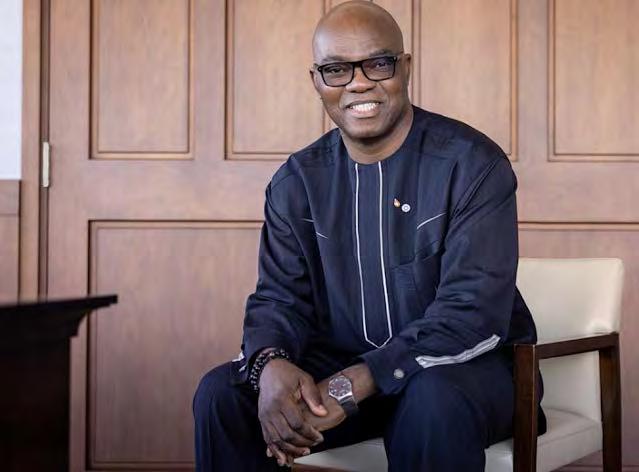
Meet your 2026-27 Rotary president, Olayinka Hakeem Babalola
Olayinka “Yinka” Hakeem Babalola is sitting on the wrong side of his desk, staring at the tiny squares on the laptop perched in front of him. He’s just finished speaking on a call with 300 Rotaractors from the African continent and other parts of the world, Rotary’s president-elect explains as he turns down the volume.
“They held a celebration for me because I’m a past Rotaractor,” he says. By seeing Babalola, himself once in their shoes, embarking on the highest position in Rotary, who knows how many of the 300 he will inspire.
It’s early October, less than two months since the Rotary International Board of Directors selected Babalola to lead Rotary, in a special session in late August after the resignation of RI President-elect SangKoo Yun, who died shortly after, following months of cancer treatment.
It’s only the second trip to Rotary headquarters for Babalola, of the Rotary Club of Trans Amadi in Nigeria, since his selection. His office is nearly empty, void so far of all the gifts Rotary leaders tend to accumulate during their travels as an incoming president.
Click here to read the rest of the article.
ROTARY’S MAY FOCUS –YOUTH SERVICE
By Dody Priambodo, former Rotary Youth
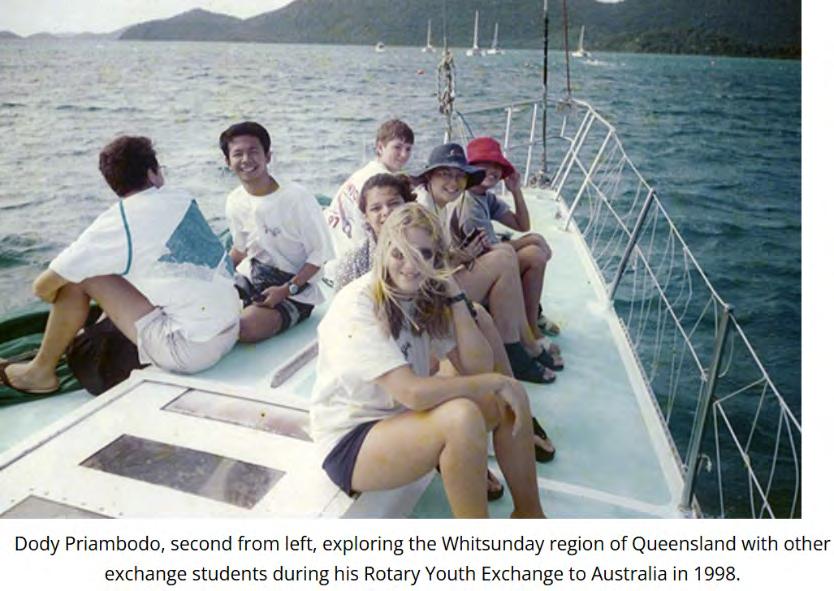
In 1997, I arrived in Australia as a Rotary Youth Exchange student. What began as a simple opportunity to improve my English skills quickly became a blueprint for a life-long commitment to service.
My host families, predominantly Rotarians, provided me with powerful lessons. I watched in awe as these busy professionals with demanding, fulltime jobs relentlessly carved out time, energy, and resources to serve their community through fundraising events and hands-on projects, both locally and around the world.
This inspired a question that became my calling: “How does a person with a full-time job manage to find time to serve the community?” With that powerful seed planted in my mind, I resolved that I, too, would dedicate my time to service once I had a career. During Outbound Orientations, exchange students were encouraged to join Rotaract upon their return. I immediately joined my local Rotaract chapter freshman year, quickly deepening my involvement by attending the first-ever Rotary Youth Leadership Awards in Indonesia and assisting Rotarians the following year.
Years later, I was spurred to further action when my youth exchange chair and mentor delivered a pivotal message to 15 alumni: “Rotary Youth Exchange has been instrumental in your good fortune. Now is the time to serve the community with your experience.”
In 2014, we acted, chartering a new Rotary club — the first e-club in the area. Ninety percent of the 19 charter members were former exchange students. Their shared history created a powerful bond, driving meaningful projects from literacy to breast cancer awareness.
Their passion for the program led to an additional role: managing the district Youth Exchange program. I became a committee member in 2015, and the committee quickly grew to be 100% youth exchange alumni from different clubs.
Exchange student and member of the Rotary E-Club of Jakarta Gunawarman
Dody Priambodo
Together with my friends, we are now actively recruiting for a major reunion we want to hold for exchange students from the 80s, 90s, and early 2000s, using the power of the exchange experience to attract the next generation of Rotarians. The experience of my year in Australia continues to have a ripple effect through my life.
Youth Exchange doesn’t just send kids abroad; it creates an army of globally aware, committed community builders who embody the profound power of giving back.
Dody Priambodo is Indonesia’s country representative to the East Asian Youth Exchange Network. He is actively looking to establish connections with Rotary clubs in other countries that have exchange student members.
Below - a list of short videos focusing on Youth –Rotary Youth Exchange, Rotaract, Interact – Just click the links to view!
About Interact
https://www.youtube.com/watch?v=dXr8san2s5A
What is Interact
https://www.youtube.com/watch?v=9EOIvRMnKxc
Connection between Interact and Rotary
https://www.youtube.com/watch?v=Ju9_uS976Os
Rotary Youth Exchange
https://www.youtube.com/watch?v=-J_bVzF2OyE
What is RYLA?
https://www.youtube.com/watch?v=N0SCSbIJ07g
RYLA 2023
https://www.youtube.com/watch?v=M4W8_R8X-mQ
Inspiration from Rotary Club of Flint
Miracle League Provides Opportunity for Youth to Experience the Joy of Baseball
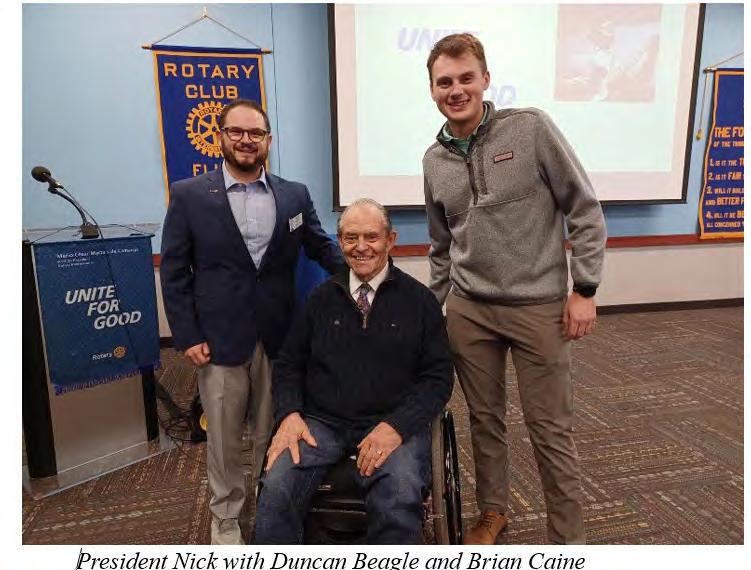
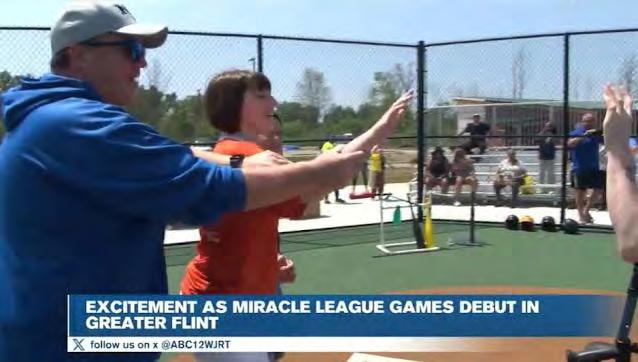
On April 10, Brian Caine of the Miracle League of Greater Flint shared about a passion project of his that he has been working on since he was 15 years old. Growing up, he played baseball and also volunteered with kids with special needs. After learning about a Miracle League program in Lansing, he was inspired to start one in the Flint area. In the last two years, that vision has come to fruition with the Miracle League field at Munday Miracle Commons just south of Flint.
The Miracle League provides both an accessible baseball field and a supportive environment where children of all abilities can thrive. Participants who may not have had the opportunity to play sports before are able to play using whatever assistive device or support person they need. Games are two innings and everyone has the opportunity to bat and field each inning.
According to the Genesee Intermediate School District, there are approximately 9,000 children in the county who could be eligible for the program. Last year, which was the first year of the program, 100 youth participated. This spring, Miracle League of Greater Flint hopes to serve 150 young people. Registration is open until April 20 and is open to any young person age 4 and up with a physical or cognitive disability.
The Rotary Club of Flint has two connections with this program. One is that Brian's mom, Roxanne Caine, is one of our past presidents! The other is that our club teamed up with other Rotary Clubs in our region to provide a grant to help support the cost of constructing the field.
Brian invited Rotarians to see the program in action at any of their upcoming games. With the exception of the 4th of July weekend, the Miracle League of Greater Flint will host games from 10 am- 1 pm each Saturday from June 13 to August 23. The ballpark is located at Mundy Miracle Commons behind the Home Depot on Hill Rd.
Click here to view a short video.
By Haresh L. Ramchandani, Past District Governor and member of the Rotary Club of L.I.F.E, Jamaica
Prominently displayed on my office door is a small sign featuring The Four-Way Test.
It recently caught the eye of a customer, sparking a 15minute-deep dive into morals and ethics. That conversation stayed with me because, while our world is changing at breakneck speed, this 24-word code remains one of the most powerful ethical guides ever written.
But where did it come from, and why does a test written nearly a century ago still feel so relevant today?
From Bankruptcy to Breakthrough
The story begins in 1932, during the darkest days of the Great Depression. A businessman named Herbert Taylor was asked to save the Club Aluminum Company of Chicago from certain bankruptcy. The company was $400,000 in debt — a staggering amount at the time. Taylor risked everything, taking an 80% pay cut and lending the company his own savings just to keep the lights on.
He knew he couldn’t out-spend his competitors on advertising or price. Instead, he decided to build a “corporate character” so dependable that it would become his competitive advantage. He turned to prayer and reflection, eventually distilling a 100-word guideline down to just four questions.
The result? Within five years, the debt was paid in full. Within the next 15 years, the company distributed $1 million in dividends to stockholders while its net worth climbed to more than $2 million. Taylor proved that even in the worst economic climate, simple ethical guidelines could provide a clear path to success.
More Than Just Words
What makes The Four-Way Test unique is its design. It doesn’t bark orders at you; it asks questions. It invites us to search for our own answers and constantly examine our own behavior. It’s also broad and inclusive, highlighting values of truth and fairness that resonate across every culture and religion. It’s so universal that honorary Rotarian Buzz Aldrin even planted a Four-Way Test pin on the moon’s surface!
So let’s break down the four pillars of this “prescription for living:”
Is it the TRUTH?
Truth is the bedrock. Without it, society would dissolve into chaos. We live in an era of “white lies,” “political truths,” and situational ethics. This first question asks us to strip away the smokescreen and face the reality of our actions. When we stop meaning what we say, trust collapses.
Is it FAIR to all concerned?
If truth is about reality, fairness is about morality. This question protects our relationships from bias and exploitation. In an “everyone for themselves” world, this test charges us to remember the humanity of others before making a move.
Will it build GOODWILL and BETTER FRIENDSHIPS?
In this test, “friendship” is treated like a verb — something we do. It’s the most democratic of relationships because it’s available to everyone, rich or poor. By adding “goodwill” to the mix, Taylor reminds us that to have a friend, we must first be one.
Will it be BENEFICIAL to all concerned?
Taylor chose the word “beneficial” very carefully. He could have said “profitable,” but he wanted to emphasize a commitment to the greater good. To be beneficial means to add something good to the world that wasn’t there before. It moves us away from the “what’s in it for me?” mentality and toward a life of integrity.
Bringing it all together is the spoke of the wheel that rotates it in harmony: “Of the things we think, say, or do,” ensuring a positive outcome for Rotary’s most conspicuous gift to the moral climate of the modern world.
A Compass for the everyday
The Test isn’t just for philosophical debate though; it’s for practical use. For decades, Walgreens drugstores used The Four-Way Test as a “compass” for their corporate culture. Former president Charles R. Walgreen Jr. saw it as a literal prescription for how to treat customers and employees alike.
Our world may be more complex than it was in 1932, but our human need for trust and fairness hasn’t changed. These 24 words might not solve every global crisis, but they are a perfect place to start.
The next time you’re faced with a tough decision — in business or in life — ask yourself these four questions. You might be surprised at how much clarity they bring.
Haresh L. Ramchandani is a past governor (2016-17) of Rotary District 7020, a member of the 2026 Rotary International Taipei Convention Committee, Communications Action Plan Chair for Rotary Zones 33-34, and 2024-2025 Rotary International Membership Growth Committee Chair.
Click this link to view the Four-Way Test recited by Rotarian Neil of Rotary E-Club of Canada One.
https://www.youtube.com/watch?v=cPs2B8ZBNec
NEWS & INFORMATION IMPORTANT TO ROTARIANS
In District 6330, Rotary leadership – past, present, future
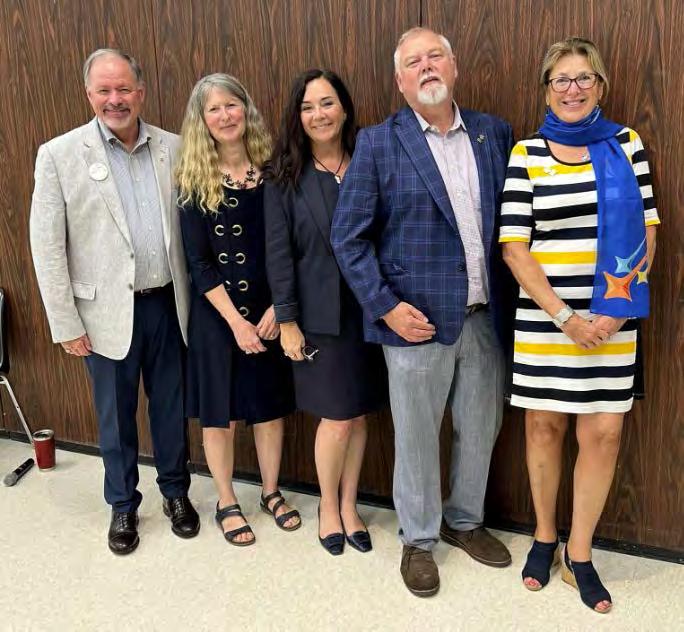
Above (left to right) PDG Mike Chaffee (2022-2023 - PDG Sonja Glass (2023-2024) –PDG Katherine Hahn (2024-2025) – DG Jeff Ferweda (2025-2026 – DGE Lorna Gunning Fratschko (20262027)
Above left – DGN Dawn Kennedy (2027-2028) Above right – DGND Peter Maranger
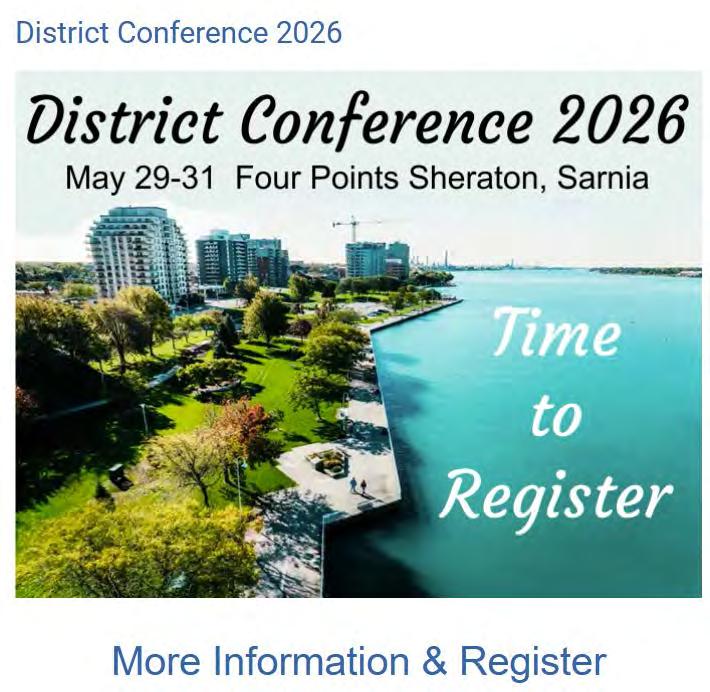
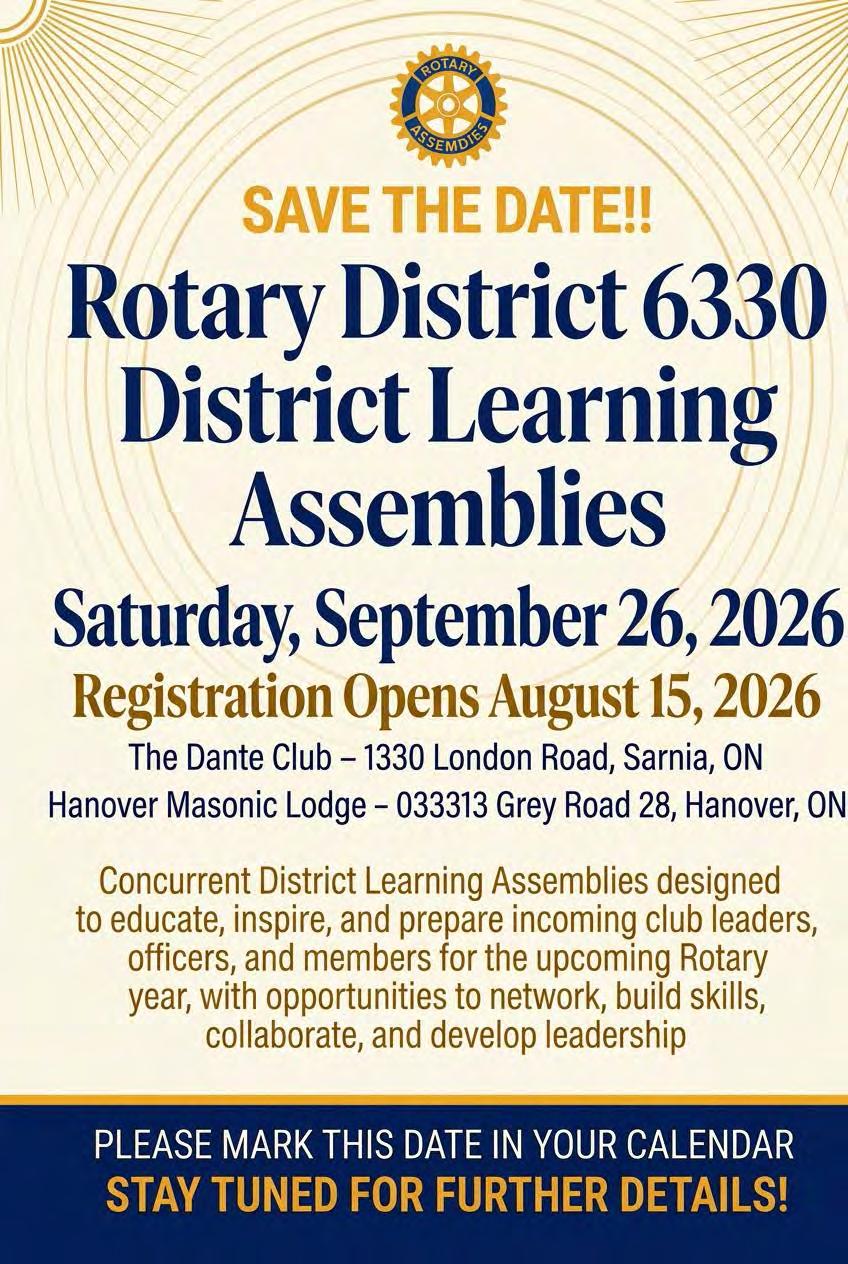
This event is more than a date on the calendar; it’s an opportunity for Rotarians across our district to connect, collaborate, and inspire by the impact we are making in our communities and around the world.
Whether you're a longtime Rotarian or brand new to your club, this experience is designed to strengthen leadership, deepen relationships, and celebrate the work we do together.
Let's find our "WHY" together.
This year we are fortunate to have booked three amazing keynote speakers, see below. In addition, we will be featuring a series of 20-minute presentations by clubs in our district and district leaders – and we are calling these learning moments.
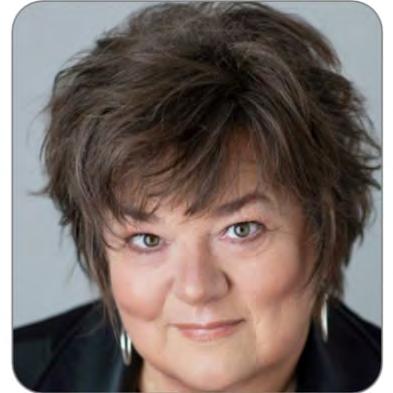
Foundation trustee Brenda and membership expert Louisa will be with us for the entire weekend so there will be plenty of time to meet and converse with them.
To read and learn more about each of these guest speakers, click here.
Summary of new polioviruses this week:
• Pakistan: two WPV1-positive environmental samples
• DR Congo: one cVDPV2 case
• Malawi: one cVDPV2-positive environmental sample
• Namibia: one cVDPV2-positive environmental sample
• Somalia: one cVDPV2-positive environmental sample
• Sudan: two cVDPV2 cases and one cVDPV2-positive environmental sample
We’re at the brink of eradicating polio. Click here to view the short video. Ramesh Ferris is Rotary District 5370 Governor 2025-26!
17 April 2026
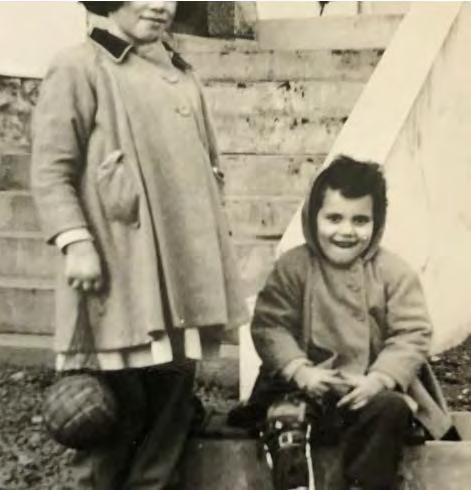
Éliane Fuseau † was born in a small village in rural France in 1948. When she was 3 years old, she contracted poliomyelitis (polio), a highly infectious disease caused by the poliovirus, which largely affects children under 5 years of age. While most poliovirus infections are asymptomatic, others lead to flu-like symptoms, followed within hours to days by weakness and acute flaccid paralysis of the muscles. For Éliane, the infection led to paralysis in her leg.
At the time, Éliane was the only child in her village with a polio diagnosis and, due to the area’s limited medical facilities, she was sent to a paediatric hospital in Tours in central France, where she stayed for 3 months.
“My memories of that time are very sparse, but I shared a room with another girl and an ‘iron lung’, in case either of us would need it.”
In some polio patients, the virus paralyses the muscles responsible for breathing, so in the past they had to lie inside a negative-pressure ventilator shaped like a large tube, an ‘iron lung’, which acted as an artificial respirator, forcing air into and out of the lungs of patients who could not breathe on their own.
Fortunately, Éliane never needed to use the iron lung. However, she still could not walk, and so, along with her sister, who had a form of osteoarthritis, she was sent to live in a rehabilitation hospital in the French Basque Country, over 600 kilometres from her parents’ home.
Living at the hospital
Éliane lived at the Centre de Herauritz full-time until the age of 7, and then part-time until she was 11. “We were 10 or 12 kids in 1 big room. Most of us children in this hospital had 1 paralyzed leg. One girl also had paralysed arms. We had nurses taking care of us, and people from the village were cooking, making the shoes and making the orthotics.”
Since the children came from all over France, and trains were expensive, many saw their parents infrequently. “I think my father came only twice in 7 years to the hospital. My mother must have come a few more times because she made friends locally,” remembers Éliane. “It was a long time to be apart, but the rehabilitation facility was like a second family. We were just embedded into the village.”
A photo from the time shows her standing with canes, heavy shoes and a brace on her right leg. She remembers swimming for rehabilitation and doing exercises that used a pulley system and sandbags to build up muscles in the limbs.
“By the time we left the hospital, we had gained so much movement. After a few years there, we all managed to get around, using crutches, our legs, wheelchairs, whatever. We all had a totally integrated life. There was never any idea that we could stay home.”
A shared childhood
The doctor who opened the hospital in 1952, Dr Anne Barriere, had contracted polio as a child and walked with canes. “She always said that we just had to work harder than anybody else,” Éliane says. “It was very, very clear to us that there was no big obstacle. We could do whatever we wanted.”
Encouraged and inspired by Dr Barriere, Éliane went on to study biochemistry and had a successful career in pharmaceuticals. Two years ago, the facility that became a second home for Éliane hosted a reunion. From that celebration, an association of former patients was formed, to meet and exchange memories.
Éliane explains that this group of former patients works endlessly to create a place in the Centre de Herauritz that will tell their stories about polio for generations to come.
“Because new cases of polio are so rare now, it is very important to keep a clear record of our hardships, so that parents do not neglect or forget to provide vaccination to their kids.”
“Most of us are in our 70s and 80s, and most of us are in wheelchairs now. Many of the helpers, the medics, the nurses and the physicians, are also still alive. Some are still working. My old physical therapist, Cécile Dubois, is well past 90 years of age and part of the association.”
“The distance between having a vaccine available and no vaccine is so huge. I don’t even know how to cross it, how to make this intelligible for someone. I would probably refer to all that is around me: my wheelchair; the big, adapted van I have to drive; all the complications of my life. I can live with my disability because I earn enough money. People who don’t have money, some of them can’t even leave their homes.”
Progress against polio
In France, large-scale polio vaccination campaigns began in the late 1950s, which means that all generations since then have been protected from the hardships faced by Éliane and her peers. Globally, major progress has been made towards ending polio, with only 2 countries still endemic for wild poliovirus. In the WHO European Region, the achievement of polio-free status has been maintained since 2002 through high routine immunization coverage, laboratory-supported surveillance for acute flaccid paralysis, and environmental surveillance in selected sites. However, as long as poliovirus is circulating anywhere in the world, all countries are at risk of importation and possible transmission.
WHO/Europe works with national authorities to assess risks, close immunity gaps, support preparedness plans, and respond to detections of poliovirus through targeted vaccination and intensified monitoring – helping protect every child and prevent re-establishment of transmission.
Story Written By: Rotary International Mar. 10, 2026
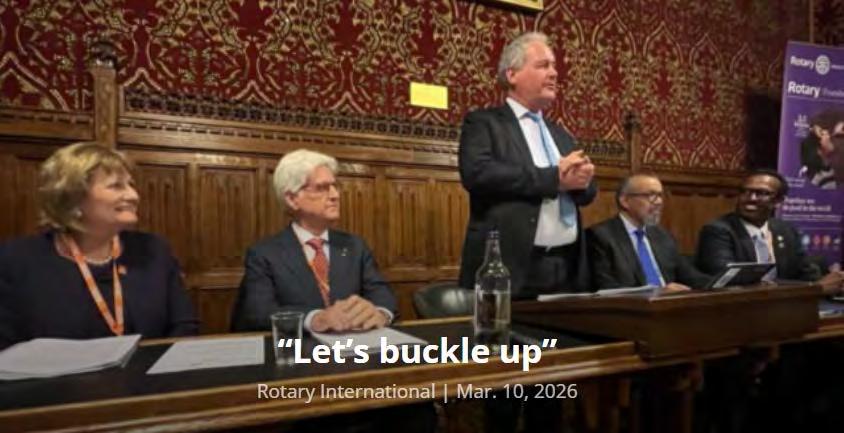
Global health leaders, parliamentarians and civil society advocates gathered at the UK House of Commons this week to reaffirm their shared commitment to finishing the job of polio eradication.
Hosted by Member of Parliament Bob Blackman at the Palace of Westminster and organized in partnership with Rotary International, the event brought together representatives from government, the World Health Organization, Rotary International and the broader global health community to discuss how to sustain momentum toward a polio-free world.
Opening the event, WHO Director-General Dr. Tedros Adhanom Ghebreyesus expressed deep appreciation for the United Kingdom’s long-standing leadership in the global fight against polio.
“Since the Global Polio Eradication Initiative was launched in 1988, cases of polio have fallen by more than 99%. Millions of children are walking today who would otherwise have been paralysed,” said Dr. Tedros. “This extraordinary progress has been made possible by governments, international organizations, civil society, foundations and volunteers working together across decades and across borders.”
Dr Tedros highlighted the United Kingdom’s pivotal role in this achievement, noting that the country has combined financial support embedded in its core contribution to WHO, diplomatic leadership and sustained advocacy to advance the eradication effort.
“For decades, the UK has been one of the strongest supporters of polio eradication. Its leadership has helped drive global progress and remains essential as we push toward the finish line.”
Drops of life
Speakers throughout the evening emphasized the powerful role played by Rotary, whose volunteers, advocates and donors have helped keep polio eradication high on the global agenda for more than four decades.
Francesco Arezzo, President of Rotary International, reflected on meeting a little girl in Pakistan recently, who could not walk as her legs had been paralysed by the virus, as she carried herself forward in quiet determination on her hands. “If only we could have worked a little faster,” Arezzo reflected, “this girl would not be paralysed.”
Clearly moved by the memory of meeting her, he urged everyone in the room to further strengthen their efforts. “We owe it to that little girl,” he told the audience. “And to millions just like her.”
Participants also heard from Dr. Jamal Ahmed, WHO Director for Polio Eradication, Lord Collins of Highbury, UK Minister of State at the Foreign, Commonwealth & Development Office, and Anne Wafula Strike, Paralympian and Rotary Polio Ambassador.
Strike’s personal story as a polio survivor underscored the devastating human impact of the disease and the importance of ensuring that no child suffers from polio again. “The virus does not see race or religion,” she said.
“It attacks the innocent child who missed drops of life.” Drawing on her experience as a Paralympian, she compared the eradication campaign to the closing stages of a long-distance race. When the finish line comes into view, exhaustion can set in. But that is precisely the moment when athletes must summon their final strength. “We are almost there,” she said. “So let’s buckle up.”
Opportunity for success… if we all buckle up!
Today, wild poliovirus transmission remains endemic in only two countries — Pakistan and Afghanistan — bringing the world closer than ever to eradication. At the same time, speakers stressed that outbreaks of variant poliovirus serve as a reminder that until the disease is eradicated everywhere, children everywhere remain at risk. “History shows that if we ease up now, polio will come roaring back — at a far greater human and financial cost than finishing the job,” Dr. Tedros said.
The event also highlighted the broader importance of global cooperation at a time of increasing geopolitical fragmentation. Polio eradication, speakers noted, remains one of the clearest examples of what sustained multilateral partnership can achieve — bringing together governments, international organizations, civil society and communities around a shared mission to protect every child from paralysis.
With the tools, knowledge and partnerships in place, participants stressed that the world is closer than ever to consigning a second human disease to history.
“The world has eradicated one human disease before,” said Dr. Tedros. “Together, let us make polio the second.” “As we leave here today, let us carry with us a renewed sense of purpose. Polio eradication is within reach, but only if we continue to champion it – through political will, through financial commitment, and through unwavering support for the communities and health workers on the frontlines,” concluded Judith Diment, Vice Chair of Rotary's International PolioPlus Committee, who was instrumental in bringing this event together.
THE POLIOPLUS SOCIETY
JOIN THE POLIOPLUS SOCIETY IN D6330
Donations are matched annually 2-to-1 by the Gates Foundation up to US$50 million, generating a potential total of US$150 million toward polio eradication.
Raise awareness in your community by planning events or projects that support the fight against polio.
Visit endpolio.org to find the latest information and tools to help you share the story of our fight against polio and raise support.
Ending this disease forever remains our top humanitarian priority and needs our full commitment.
How can you take action?
Donate to End Polio.
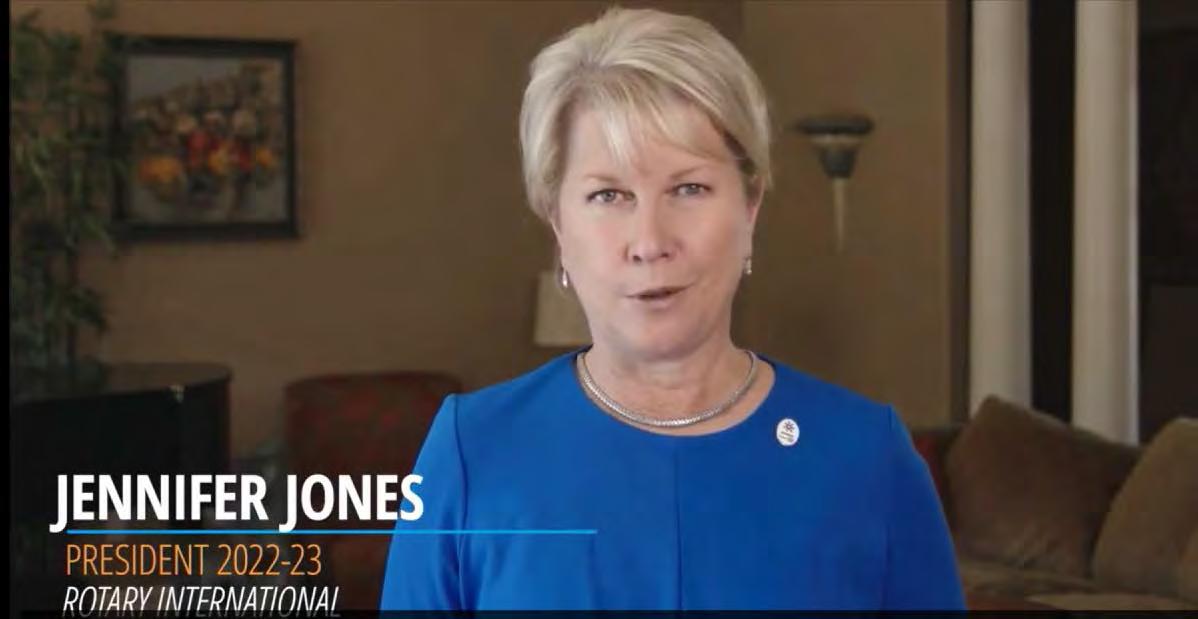
Click here to view a short video and message from Past RI President, Jennifer Jones
These numbers were published at the 13th of April, 2026
Click here to view the complete case count.
SUPPORT THE ROTARY FOUNDATION
Supporting The Rotary Foundation: Turning Good Intentions into Lasting Change
Multiplying the Good We Do
One of Rotary’s greatest strengths is that when individual Rotarians care enough to act, The Rotary Foundation allows those efforts to grow into projects that can change entire communities.
Each year, Rotarians contribute to The Rotary Foundation, and those contributions do something quite remarkable. They do not simply sit in an account or disappear into administration.
Instead, they return to districts and are combined with funds from other clubs, districts, and Rotary’s World Fund to support projects that address real needs around the world.
Through this unique model, even a modest contribution from a Rotary club can become part of a much larger initiative.
An individual club might contribute $1,000, but when that amount is combined with district support, partner clubs, and matching funds from The Rotary Foundation, the total project budget can grow to $30,000 or more
What begins as one club’s idea can become a partnership between Rotary clubs in different countries—working together to provide clean water, education, disease prevention, maternal and child health, and community development.
This is the power of The Rotary Foundation.
By pooling resources and working cooperatively, Rotarians can accomplish far more together than any one club could do alone.
And in working on an international project, Rotarians will make lifelong friendships along the way.
Supporting The Rotary Foundation ensures that when Rotarians see a need and choose to act, they have the resources and partnerships needed to make a lasting difference.
INTERNATIONAL DATES TO NOTE (plus links)
May Rotary’s Focus – Youth Service
Saturday, May 9
World Migratory Bird Day (UNEP)
Tuesday, May 12
International Day of Plant Health (WAO) https://www.youtube.com/watch?v=tgyo9tg9o_s – View a short video
Friday, May 15
International Day of Families
Saturday, May 16
International Day of Living Together in Peace
International Day of Light (UNESCO)
Sunday, May 17
World Telecommunication and Information Society Day
Tuesday, May 19
World Fair Play Day
Wednesday, May 20
World Bee Day
Friday, May 22
International Day for Biological Diversity
No pollinators, no SDGs!
The diversity of pollinators have a direct and positive impact on crop yields. Bees and other pollinating insects are, in fact, improving the food production of 2 billion small farmers worldwide, helping to ensure food security for the world's population. Honey hunting of wild bee colonies also remains an important part of the livelihoods of forest-dependent peoples in many developing countries.
Conversely, the decline of these species has many consequences on our ecosystems and on the quality and quantities of food crops, with a direct consequence of an imbalance in diets and a depletion of natural resources, as well as an impoverishment of populations. The health and even the lives of billions of people will be affected and, therefore, many sustainable development goals (SDGs), such as the one aiming at ending world hunger and the one aiming at preserving and restoring terrestrial ecosystems, will no longer be attainable.
Learn about other Rotary clubs! Make an effort to attend some of the online meetings available -
The Passport Club members are encouraged to join local (and other) clubs to learn more about Rotary, get to know other Rotarians, gain a new perspective and appreciation for Rotary and Rotarians. Here is a list of online clubs where you can earn a make-up along with learning a whole lot more about Rotary! Why not visit them all?
• Rotary E-Club of Canada One – Rotary On Demand, Where you want, When you want!
• Rotary Club of One World
• Rotary E-Club of World Peace
Click here to attend this week’s posted meeting of E-Club of Canada One.
These meetings are posted online and available 24/7!
President 2025-26 – Mariann Timmers
Club
NEWS & INFORMATION IMPORTANT TO ROTARIANS
Get involved! Join us!
CONTINUING SUCCESS – CUP OF KINDNESS
To some this is just a cup.
To members of the Rotary Club of District 6330 Passport this is A CUP OF KINDNESS
…as we support local food banks in our local communities
We are reminded to continue to support the local food banks in our area.
London Food Bank - Strathroy - Sarnia – Inn of the Good Shepherd - Stratford
SHARING OUR KINDNESS
Rotarians from our club have made a difference in these past years!
Altogether, our efforts reflect the quiet generosity, creativity, and community spirit of our members—making a meaningful difference in many ways, both seen and unseen.
Thanks to all who have contributed to helping our communities!
Click here to view a short video on the Inn of the Good Shepherd, Sarnia.
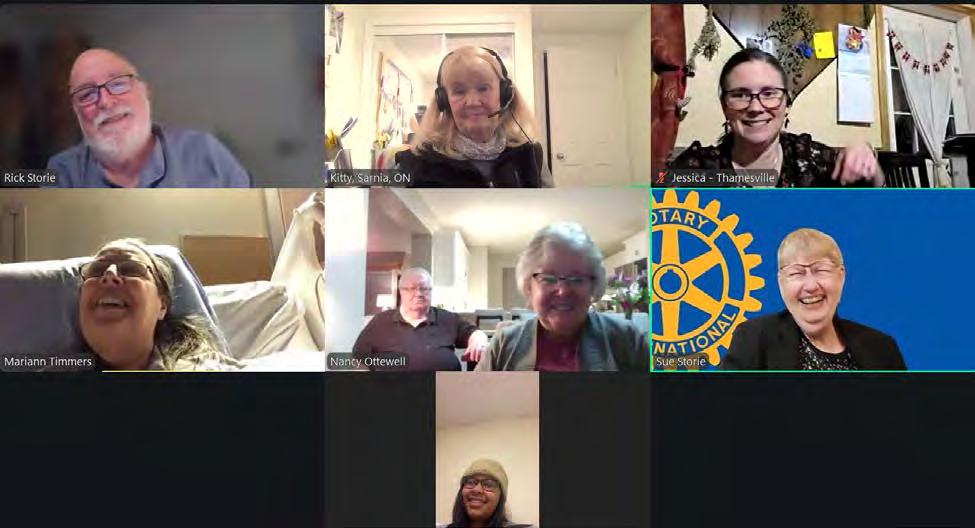
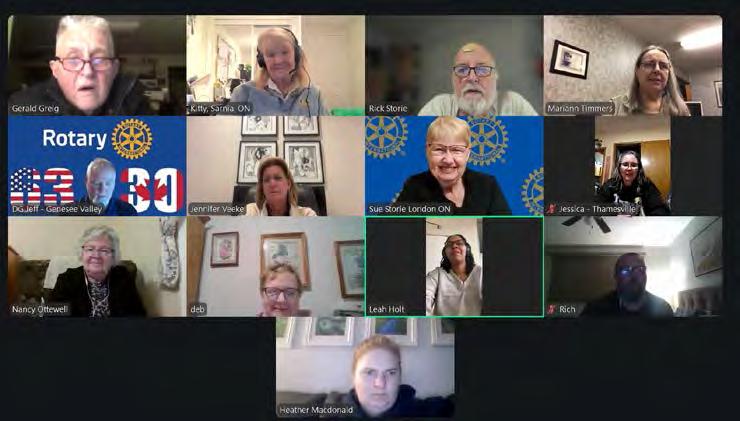
Remember our Happy Chats – get to know our club members!
Join the Happy Chats – get to know our club members!
Happy Chats are online every Wednesday. Every Wednesday at 6:30 p.m. - 7:00 p.m. -ish – Join us!
Join your Rotary friends for an informal 30-minute get together.
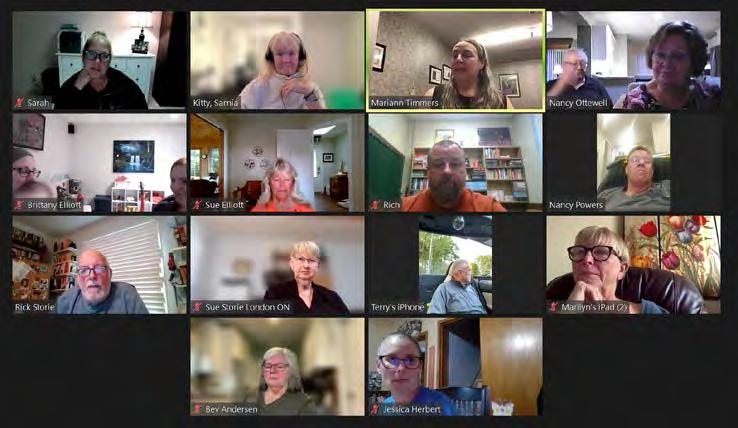
Plan to join our Zoom Meetings! Click here.
And our Monthly Online Meeting!! Plan to join us!
View the video of our monthly meeting of Wednesday, April 1, 2026
Click here to view April’s meeting video.
ROTARIAN RICH’S RACE TO ERASE IS SET
TO GO MAY 30 !
The 20th Anniversary Race to Erase Sarnia-Lambton is scheduled for Saturday, May 30, 2026, featuring a "not-a-running race" format where teams of four complete local, untimed challenges to raise funds for area charities. This community-focused, "savvy and smarts" event celebrates two decades of supporting local nonprofits.
From the Sarnia Journal -
Key Details for Race to Erase Sarnia (May 30, 2026):
• Format: Teams of four participate in unique puzzles and challenges at various locations, testing creativity rather than athletic speed.
• Goal: The 2026 event aims for higher participation, looking for 40 teams to surpass the 29 teams that raised over $25,000 in 2024.
• Charity Focus: Participants choose from eight local charities, including the Inn of the Good Shepherd and Literacy Lambton, with all money raised staying in the region.
• Registration: Teams are encouraged to form early, with no entry fee, but a fundraising requirement for charity.
To read and learn more, click here.
The Race to Erase was founded by Scott McKay and Rich Bouchard. They had two connected goals in mind: they wanted to create a fun and creative event for people to take part in, and they wanted it to positively enhance the community. First discussed over a game of golf, both agreed that it would be fun to send teams of four on a road rally fundraiser throughout the community, competing in timed challenges along the way.
Due to safety concerns (and a high Insurance price tag), the driving would not be timed, only the actual challenges.
The first Race to Erase was held in October 2006. The Race committee partnered with Sarnia's Inn of the Good Shepherd for the Race to Erase Hunger. The event was an immediate success with 30 teams participating and more than $38,000 raised.
In the second year, the Race to Erase again raised funds for the Inn of the Good Shepherd, but this time the Race was called the Race to Erase Homelessness as the funds went to building the Good Shepherd's Lodge, a homeless shelter in Sarnia.
More recently, the Race has evolved to allow more charities to participate and receive a portion of the funds raised. The Race has also expanded its scope. While the first Race Days were held in Sarnia and London, the Race expanded to Cambridge in 2014, and will soon appear in a number of other communities across Ontario. To date, the event has raised $766,544.
Click here to read more about how the race got started!
LAMBTON COUNTY SCIENCE FAIR 2026
April 10-11, 2026
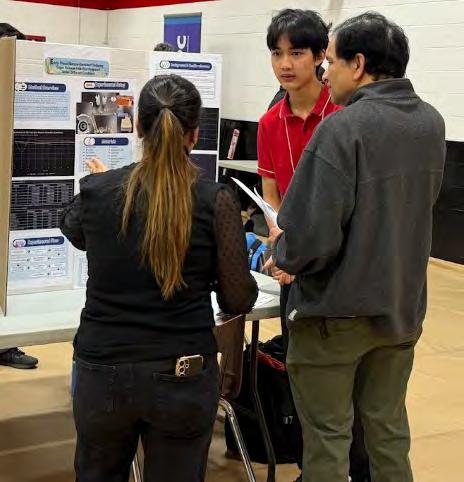
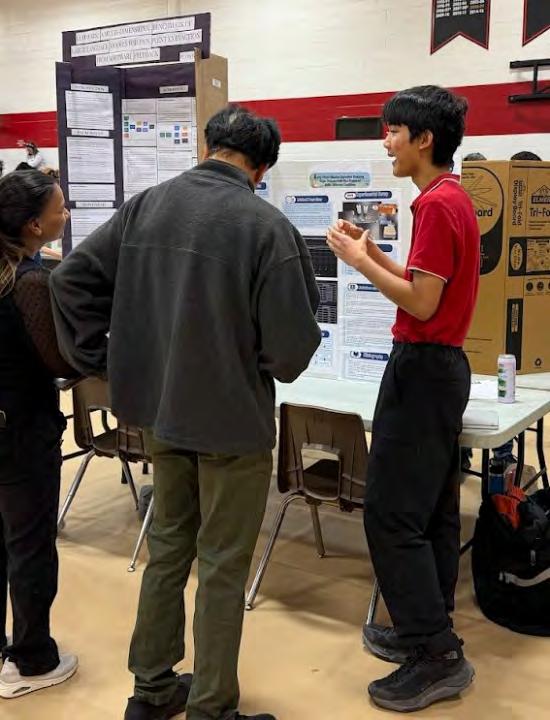
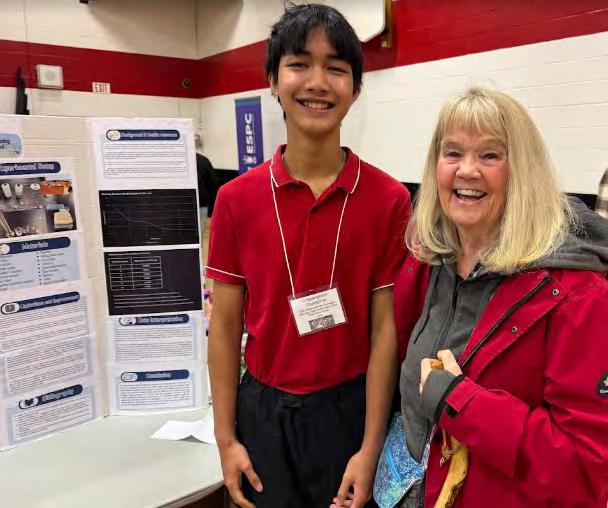
Rotarian Mike Elliot (Rotary Club of Sarnia) has been a vital part of the Lambton County Science Fair for many years. And this year, our Rotary Exchange student, Gong, was interested enough to participate as well.
Wonderful representation from Rotary!
Kitty visiting Gong at the Science Fair. His project explored how carbohydrates in cooked rice break down into sugars that provide energy for the body. An interesting and very worthwhile project for a Science Fair!
Mike has shared his participation in the Science Fair and I want to share that with the readers!
Mike writes –
I have been on the science fair committee since 1998 for all but 2 years since then. Most of the members of the committee have been with us for 10-30 years.
The committee has existed in some form since 1973.
I started as the NOVA representative, and have done publicity and donations prior to my current role as Treasurer. That is why you did not see me. I was hidden away signing cheques.
We raise about $20,000 each year from Corporations that support STEM, and provide cash prizes of around $5000 to the 50-75 students Grade 3-12 who participate annually. The big winners (top 5) are taken to the Canada wide science fair which is in late May in Edmonton this year.
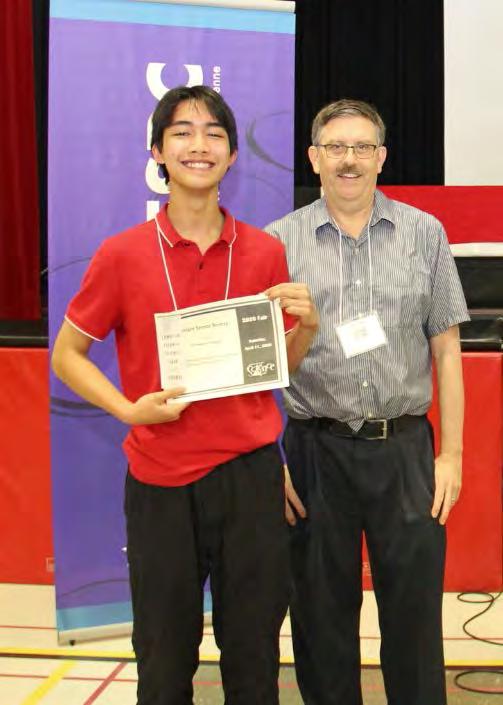
Gongs award was a Senior bronze. His topic involved rice and how much sugar rice contains and its impact upon our systems.
We award Gold, Silver, and Bronze in each age category based on the scoring he gets from judges on the Friday night. Not everyone who enters gets an award.
Gong is the second exchange student I can recall who entered and won awards in the science fair. The last one was pre-covid.
Grant Management in D6330 - Your Donations Are
Clubs must qualify first! The Rotary Foundation requires Clubs that want to participate in the District Grants program to qualify. To qualify, the club must:
• Be in good standing
• May not have any grant reporting that is overdue
• Have at least 2 members complete the District’s Qualification Training course and quiz
The Certification is valid for One Rotary Year only! Clubs must be re-certified for each Rotary Year.
Rotary Foundation Grants – There are two kinds of grants. -Global Grants and District Grants:
Global Grants
• Must be in (at least) one of Rotary's Areas Of Focus
• Must be International projects involving at least 2 clubs in 2 different countries. One of these clubs is the "host" club - the club where the project will take place. The other is the "international partner" - the club that provides funding and possibly some expertise to help implement the project.
• Must have a minimum budget of USD $30,000
• Club funds are supplemented by the District Designated Funds as, and if, available
• Funds donated to the project from District Designated Funds are supplemented by The Rotary Foundation (World Fund) to fund these grants.
District Grants
• May be local or international in scope.
• Are usually smaller in scale. There is no minimum budget requirement.
• Will usually involve active participation by Rotarians.
• District 6330 clubs may apply for more than one District Grant in a single Rotary year but are limited to a maximum of USD $3,000 per year in District Grant funding.
• Projects must be started and completed within one Rotary year - July 1 to June 30 of the next year.
Ready to Apply for A Grant? Will it be a District or a Global Grant?
3 simple questions to help you decide:
• Is the project in one of the areas of focus? – No? Consider applying for a District Grant.
• Is the project between Clubs/Districts in separate countries? – No? Consider a District Grant.
• Is the total budget for the project less than USD $30,000? – No? Consider applying for a District Grant.
• If you answer YES to all the above, consider applying for a Global Grant.
CLUB OFFICERS 2025-26
President Mariann Timmers
Secretary
Treasurer
Membership Chair
Project Chair
Directors
The Rotary Foundation (TRF) Communications
Sue Storie
Jessica Herbert
Deb Beaupré
Sue Storie
Rick Storie
Kitty Bucsko
MEMBERSHIP LIST BELOW –
CLUB MEMBERS’ LIST WITH EMAIL ADDRESSES
A.C. Alrey
acalrey@gmail.com
Deb Beaupré debmarjean@gmail.com
Rich Bouchard rbouchard@racetoerase.com
Kitty Bucsko ladykitt@gmail.com
Lynn Coates lynn.coates.1@outlook.com
Sue Elliott susan@sutherlandelliott.ca
Gerald (Gerry) Greig captaingeraldgreig@gmail.com
Heather Macdonald heathermac@BMTS.com
Jessica Morrow jessicaherbert2023@gmail.com
George Ottewell george.ottewell@gmail.com
Nancy Ottewell nottewell@gmail.com
Rick Storie rick.storie@sympatico.ca
Sue Storie sue.storie@sympatico.ca
Lynne Ternosky lynneternosky@gmail.com
Mariann Timmers gtimmers@aol.com
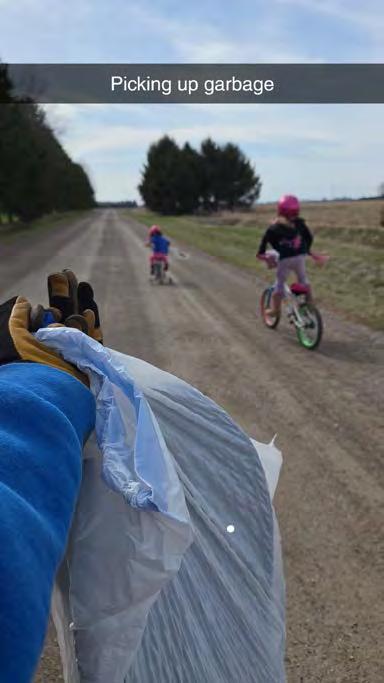
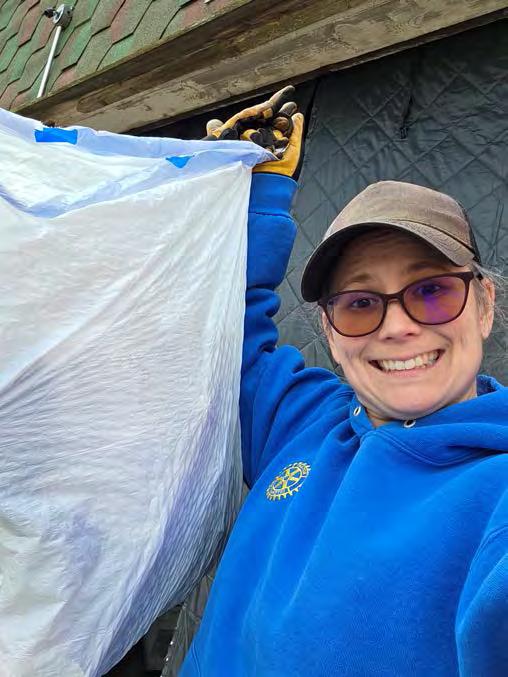
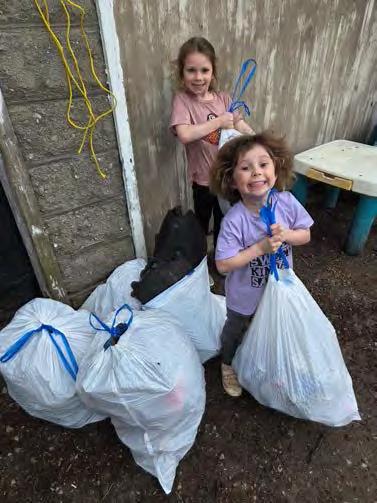
Rotarian Jessica and her two wee daughters!
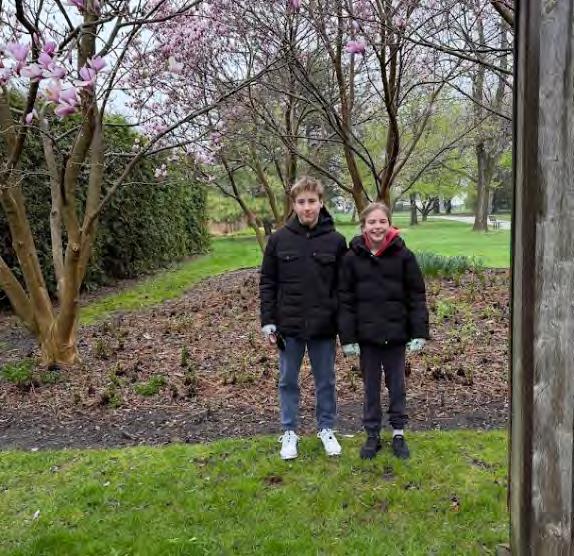
SARNIA – April 25, 2026
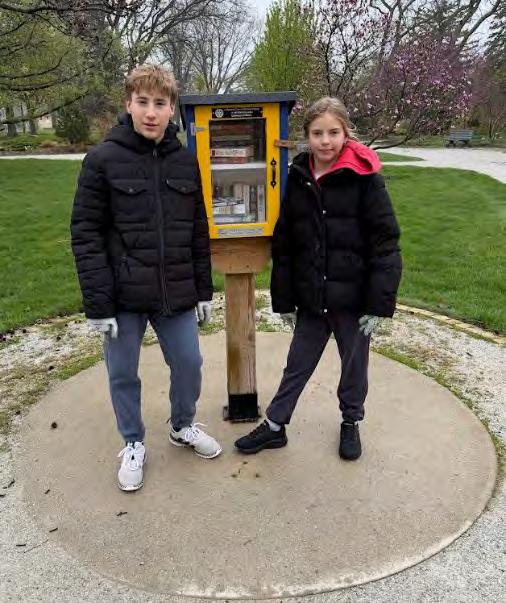
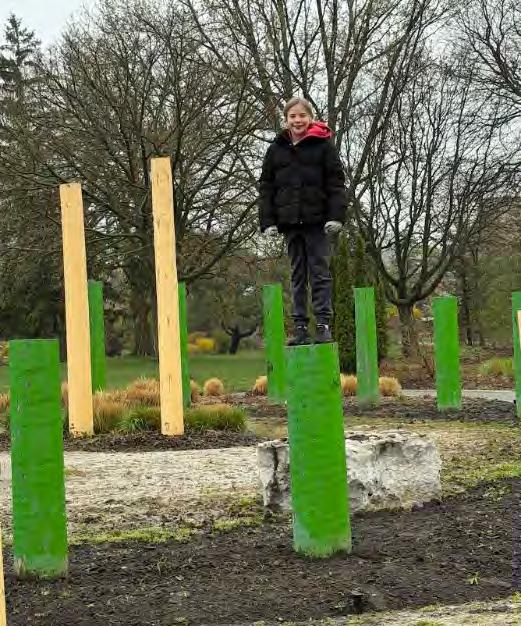
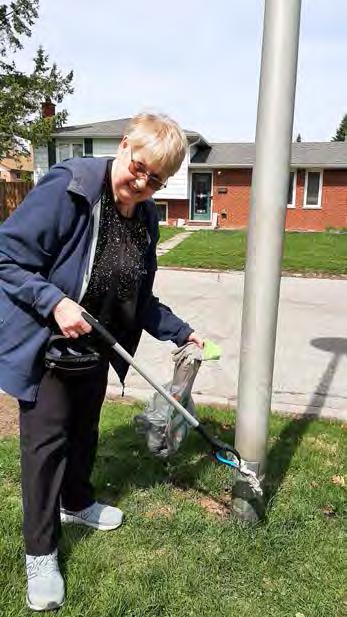
We started at Germain Park – Tennyson, True, and I - lost the others, and discovered that Germain Park was far too clean. A few pictures and some climbing – noticing a RC of Sarnia Little Library and then it was off to Plan B.
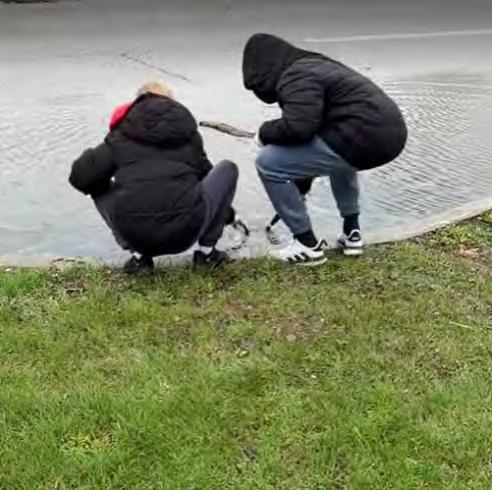
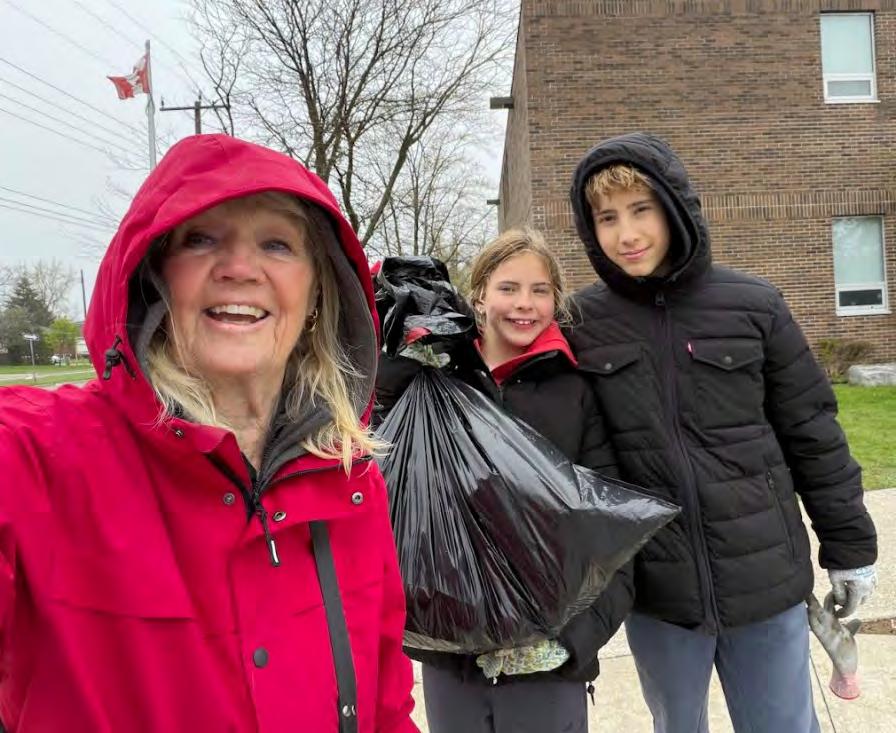
Plan B was to move to the north – by Northern Collegiate. I knew there was garbage along Indian Road by the school fence and that is where we left our mark – or to be more precise, removed the marks left by others. We filled a garbage bag in no time and also cleared a sewer drain of garbage and leaves to get rid of a huge lake that had formed over half of Indian Road. So that was a major coup for us – even though we did not last long at Germain Park. Home to get dried and warm again!
Happy Earth Day – April 22 – every year!
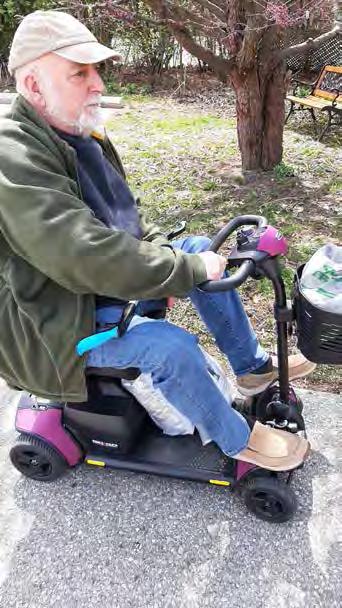
Rick & Sue out celebrating Earth Day in London!
THE ROTARY FOUNDATION
EREY – Every Rotarian Every Year
Click here for a short video.
Our Every Rotarian, Every Year (EREY) initiative encourages all Rotary club members to contribute something each year to The Rotary Foundation. We hope that you can consider at least $100 USD every year to help us reach our goal to support the Rotary Foundation financially each year
Sustaining member. One who contributes $100 USD every year is a Sustaining Member. With EREY, we encourage you to contribute an amount you can afford every year.
Click here to listen to We are the World.
A LITTLE HUMOUR
Theme parks can snap a crystal-clear picture of you on a roller coaster going 70 mph, but bank cameras can't get a clear shot of a robber standing still.
Every box of raisins is a tragic tale of grapes that could have been wine.
I know it's time to clean out my purse when my car assumes it's an extra passenger who isn't wearing a seat belt.
Some people seem to have aged like fine wine. I aged like milk ... I got sour and chunky.
Why do we need pollinators?
Pollinators allow many plants, including many food crops, to reproduce. Indeed, the food that we eat, such as fruits and vegetables, directly relies on pollinators. A world without pollinators would equal a world without food diversity – no blueberries, coffee, chocolate, cucumbers and so much more. They also serve as sentinels for emergent environmental risks, signaling the health of local ecosystems.
Pollination, a pillar of our ecosystems
Pollinators not only help ensure the abundance of fruits, nuts, and seeds, but also their variety and quality, which is crucial for human nutrition. Beyond food, pollinators also contribute directly to medicines, biofuels, fibers like cotton and linen, and construction materials. The vast majority of flowering plant species only produce seeds if animal pollinators move pollen from the anthers to the stigmas of their flowers. Without this service, many interconnected species and processes functioning within the ecosystem would collapse.
Pollination is therefore a keystone process, in both human managed and natural terrestrial ecosystems. It is critical for food production and human livelihoods and directly links wild ecosystems with agricultural production systems
But no -
When tomorrow comes, this day will be gone forever. In its place is something that you have left behind. Let it be something good. ‡