PANORAMA NEWSMAGAZINE
FEBRUARY 2026
VOL. 75, ISSUE 5
LADUE HORTON WATKINS HIGH SCHOOL 1201 S. WARSON RD. ST. LOUIS, MO 63124
Sports betting legalization has led to a teen gambling epidemic

Photo by Vincent Hsiao
PANORAMA NEWSMAGAZINE
FEBRUARY 2026
VOL. 75, ISSUE 5
LADUE HORTON WATKINS HIGH SCHOOL 1201 S. WARSON RD. ST. LOUIS, MO 63124
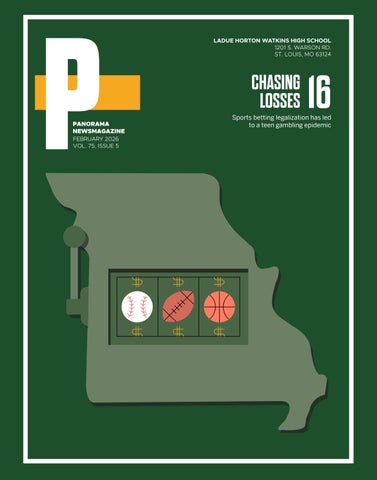
Sports betting legalization has led to a teen gambling epidemic
Camaraderie, quality time, laughs and human engagement: all things that used to be the center of watching professional sports. Now, the bonding that comes with enjoying sports alongside peers has taken a turn, becoming mere background noise to a vigorous engagement in sports betting. With a couple of clicks and a jump over an age restriction, students can bet hundreds of dollars on various aspects of live sports. For many, Missouri’s recent legalization of sports betting has turned every game into a personal investment.
In this issue’s In-Depth, we chose to explore how sports betting becoming legal has led to countless impacts within our community.
While some students may see sports betting as a way to turn a quick profit, these actions can quickly turn into large-scale debt in addition to gambling addictions. As sports betting has become more accessible for underage students, we see teachers, parents and peers left to witness the fallout: potential debt and an inability to separate a sports game from a financial thrill.
Sports betting has become far more than just a casual pastime activity for many students, veering into a dangerous reflection of how our generation interacts with technology, risk taking and rewards. To participate in online sports betting is to be a part of a high-stakes connection, which can spiral into a cycle of desperation while chasing a thrill that can never be won back.

Josh Devine

Ladue Media is an openforum for students at Ladue High School. In order to ensure the news we report is accurate, important and relevant to our students, we do not operate under prior review. All content decisions are made by student editors.
EXECUTIVE EDITORS-INCHIEF
Josh Devine
Celina Zhou
MANAGING EDITOR-IN-CHIEF
Madeline Awad
COPY EDITORS-IN-CHIEF
Katie Jansen
Grace Kweon
Ira Rodrigues
ART EDITOR-IN-CHIEF
Fiona Van Allen
PHOTO EDITOR-IN-CHIEF
Vincent Hsiao
NEWS EDITOR-IN-CHIEF
Cindy Liu
SPORTS EDITOR-IN-CHIEF
Mason Eastman
NEWS EDITORS
Amelie Lock
Jane Scheffel
FEATURES EDITORS
Tiya Kaul
Josie Stout
IN-DEPTH EDITORS
Loukya Gillella
Isaac Zelinske
OPINIONS EDITOR
Frank Chen
HEALTH & SPORTS EDITORS
Victoria Derdoy
Meg Myckatyn
ARTS & ENTERTAINMENT
EDITORS
Medha Chode
Adela Gingrich
ASSOCIATE EDITOR
Aaron Lin
DIGITAL MEDIA EDITORS-INCHIEF
Madeline Fong
Nathan King
NEWS STAFF
Sydney Gao
Ryan Nolan
FEATURES STAFF
Claire Zhang
IN-DEPTH STAFF
Adelaide Flintrop
Emery Mao
OPINIONS STAFF
Cami Welsh
Emily Tinnin
ARTS & ENTERTAINMENT
STAFF
Elisa Cormier
Sabrina Tagunkova
HEALTH & SPORTS STAFF
Henry Madden
Ellie Lercher
COVERAGE EDITOR
Emily Pan
ARTISTS
Nora Brunnquell
PHOTOGRAPHERS
Caroline Cobaugh
Alex Du
Sarmistha Pulagam
Eva VonAllmen
ID EDITORS-IN-CHIEF
Marie Demkovitch
Maya Mathew
Annabelle Reagan
ID STAFF
Reva Chadalavada
Sophie Cowlen
Elsa Flores-Tamayo
Irene Murphy
Angella Zhang
Gabriella Beltranena
ADVISERS
Abigail Eisenberg
Sarah Kirksey
David Von Allmen
Nicholas Reding
Profusion Private Asset Fund
The Demkovitch Family
Ladue Blue
Allison and Terence Myckatyn
Bruce and JoAnne Vieweq
Donna Freeman and Mike Heyne
Ed Tanyag
Katie Myckatyn
Mr. and Mrs. Charles Cobaugh
The Awad Family
The Chode Family
The Derdoy Family
The Devine Family
The Fong Family
The Kaul Family
The King Family
The Lock Family
The Nolan Family
The Nolan Family
The Pisarkiewicz Family
The Stout Family
The Strauss Family
The Warwick Family
The Zwibelman Family
Theresa Tanyag
Wendy Tinnin
Gold
Anonymous
Arti Jain
Desta Gingrich
Jean Hayne
Kurtis and Katie Van Allen
Lillian Jansen
Mark Heyne and Rachel Abroms
Michael & Jamica Johnson
Mike and Elaine Stout
Ms. A Jansen
Ms. Elizabeth Welsh
Pam and Matt Cobaugh
The Cummings Family
The Jansen Family
The Liu Family
The Mathew Family
The Tenenbaum Family
The Witt Family
The Yeoh Family
The Zhao Family
The Zhou Family
“Uncle Blake” Baraks
Silver
Amy & Kevin Fischer
Anonymous
Bill and Cathy Scheffler
Bill and Sharon Hunn
Bremer Family
Gary & Shana Singer
Gillella Family
Hello Garage
John Gingrich
Juli and Bernie Plassmeyer
Kathy Bucholz
Laurie Family
Louise Flick & Bill True
Meera & Barry Bryant
Megan Gingrich
Mr. & Mrs. Brissette
MW Interiors
Myles Leonard
Pedro Beltranena
Sara Serati
Steve and Liz Van Allen
Tass Padavan
Taylor Stone
The Bowen Family
The Cormier Family
The Flores-Tamayo Family
The Gandra Family
The Gebrehiwet Family
The Guyton Family
The Haines Family
The Larrew Family
The Mayer Family
The Provine Family
The Scheffel Family
The Sheldon Family
The Solomon Family
The Turner Family
The Varvares Family
The Zotos Drobak Family
Friendly
Alena Tartouskaya
Amanda & Ryan Reagan
Amy Moglen
Anonymous
Anonymous Ladue Alumni
Berman Chiropractic & Wellness
Candice Bellinger
Clarissa Joyce
Edward Zhang
Ella Bender
HaugenHaus.com
Johnny Zhang
Julie Walther Scheibel
Lindsay Turner
Matthew Kweon
Mohamad Yaacob
Nancy Scheberle
Nithin Kumar Gattu
Olivia Cornelison
Salsbury Family
Shanthi Priya D
Sharon and Louis Hill
Sneha Vadlamudi
The Arora Family
The Choe Family
The Denman Family
The Ganni Family
The Gu Family
The Guthrie Family
The Hanes Family
The Hofer Family
The Lohse Family
The Mao Family
The Murphy Family
The O’Neal Family
The Pandian Family
The Poremba Family
The Reagan Family
The Rhodus Family
The Shi Family
The Silver Family
The Swillinger Family
The Taylor Family
The Wang Family
The Yang & Zhang Family
Tim Armstrong
Venkata Pulagam
Vivek Manohar
Walton Family
Will Kodner
Yan Sun
Zhenyi Liu
Zia Mahmood


BOYS’ VARSITY HOCKEY DEFEATS
WEBSTER GROVES 9-0 DEC. 6
“The boys battled hard and we kept our heads up the whole game,” Henry Olschansky (12) said. “Everyone played really well.”
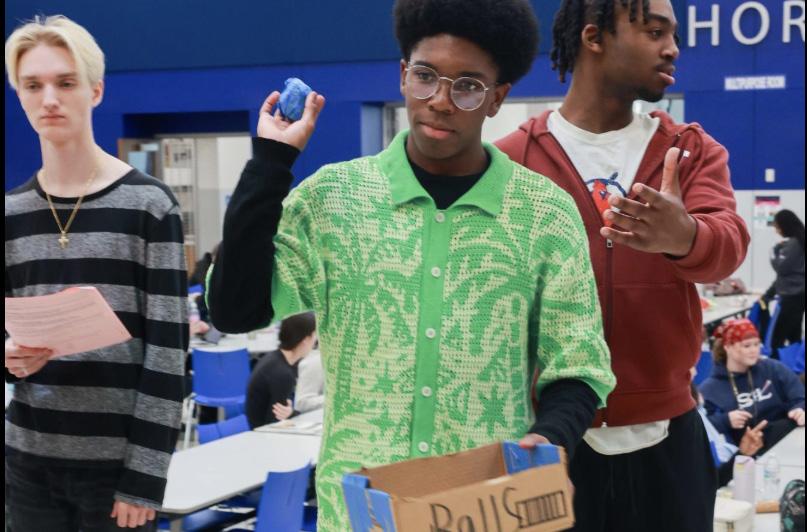
STATISTICS CLASS HOSTS STATISTICS CARNIVAL JAN. 20
“My favorite part of making the game was finding the materials for the table,” Marc Proskey (12) said.

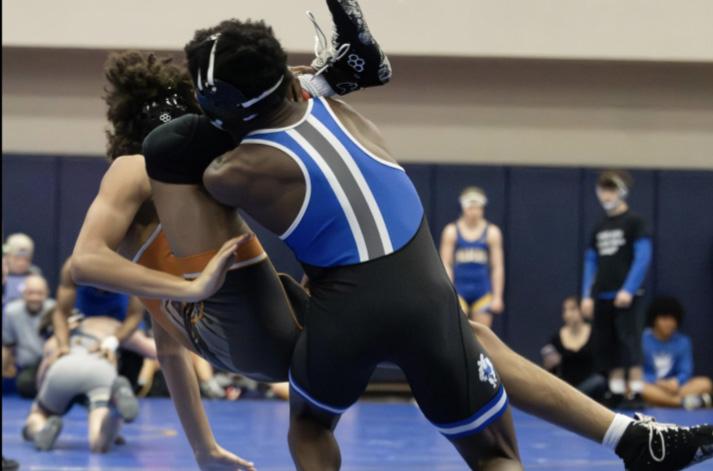
VARSITY WRESTLING BRINGS HOME TROPHIES FROM THE JOHN BURROUGHS TOURNAMENT DEC. 5-6
“It’s nice to get [the team’s] motivation up,” Robert Caito (12) said.
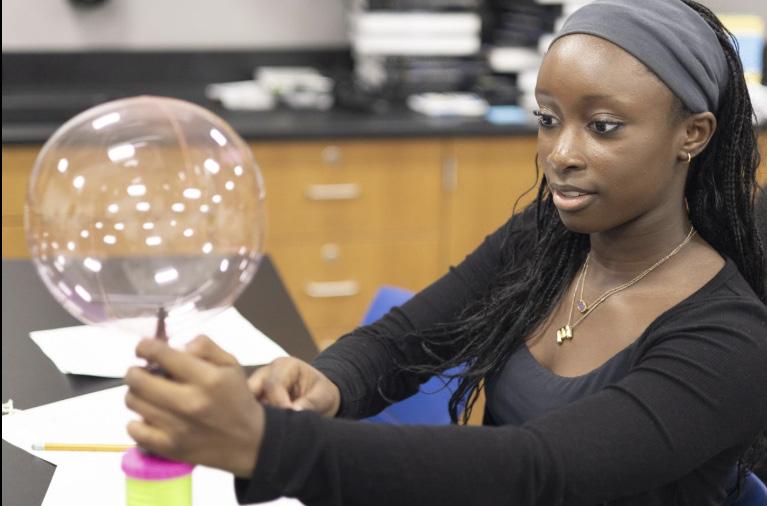
ASTRONOMY STUDENTS CONDUCT BIG BANG LAB DEC. 9
“We have to get precise measurements for the lab to be successful,” Esther Badmus (10) said.

CHECK US OUT
Scan for galleries, daily stories and updates
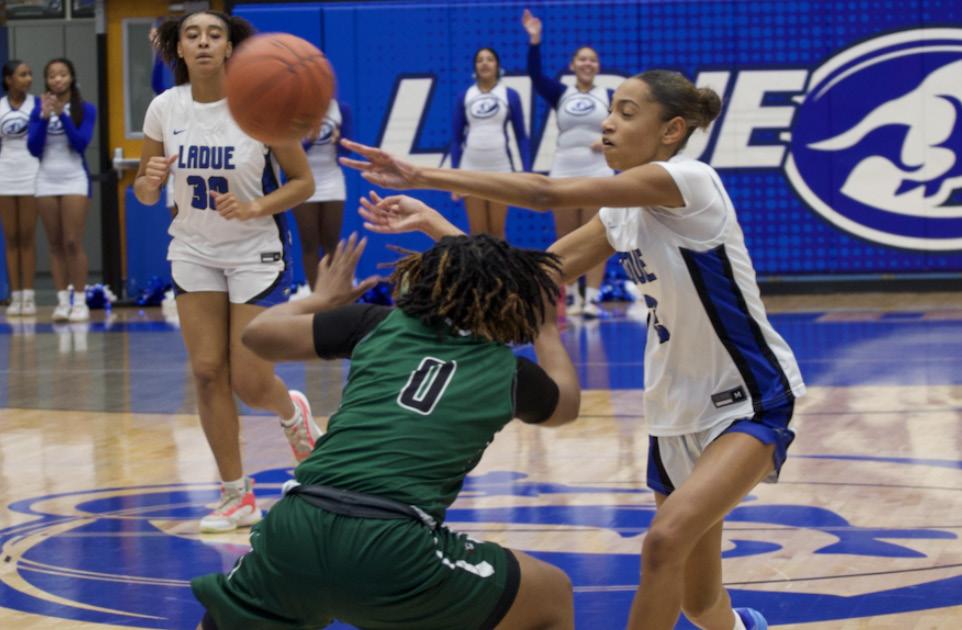
GIRLS’ VARSITY BASKETBALL DEFEATS PATTONVILLE 50-35 DEC. 9
“I always go into games thinking my team and I will win, which helps me,” Taylor Gase (11) said.
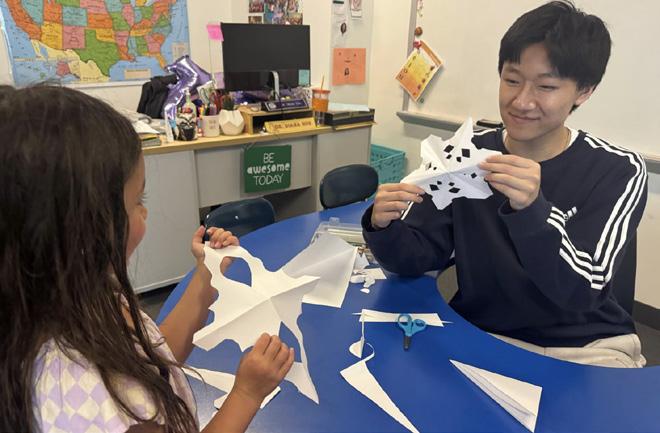
ENGLISH CLUB HOSTS WINTER OLYMPICS ACTIVITY STATIONS AT SPOEDE JAN. 14
“[My favorite part of leading my activity] is the creativity,” Kai Chen (11) said. “I love helping kids create stuff because it’s really fun.”

Help the Ladue African American Student Alliance (LAASA) celebrate 100 years since the recognition of Black History Month by buying commemorative bracelets and shirts. All proceeds will fund the LAASA Scholarship.
Bracelets: $15
Shirts: $25
The Photo Challenge: Send in photos wearing BHM attire to be featured in the LAASA program.
The Dome at America’s Center will host a vintage clothing festival Feb. 28-March 1. Vendors specializing in 80s, 90s and even Y2K era clothing will act as the main event, but the free-to-play vintage arcade or the rad rewind museum also offer nostalgic and fun experiences.
Enjoy Ballpark Village during the Cardinals’ off season for Busch Lights Hot Country Nights every Friday from Feb. 13-March 20, along with live music from a new country singer each week.
St. Louis Dance Theater Winter Series will take place at the COCA Berges theater Feb. 27-March 1. The piece explores how “boundaries shape and reshape human relationships” as dancers interact with a living wall set piece.
Art in Bloom, the St. Louis Art Museum’s annual festival and exhibit, returns Feb. 27–March 1. Students can see multiple works from the museum’s collection that depict flowers and spring. Along with the art, there will be family activities, dining and shopping.
BY AMELIE LOCK news editor
Two district competitions are held at Clayton Courthouse this winter
MOCK TRIAL ATTENDED
a district-level competition Jan. 13. Four teams are competing this season, a record number for the club. Every year, a team of Missouri attorneys develops a new mock case for competitions, complete with witness depositions and tangible exhibits for students to admit into evidence.
“We learn tons of concepts that will be applicable in the legal field,” Zoe Warticovsci (11) said. “I have lawyers in my family, and they are always extremely impressed by the accuracy [of the competition].”
The record number of participating students is not the only thing that changed for Mock Trial this year. Social studies teacher Jeff Miller is returning as a coach after a break.
“We go top down, so there are coaches meetings that are happening to discuss strategy for the next round for the ballots,” Miller said.
“We analyzed [the ballots] when we got them back and shared that with the students so they could reflect on their performance.”
The case is officially released in October, so students can prepare for three months leading up to the first trial. The second trial, however, arrives quite soon after the first.
“The students use their previous materials as a baseline so they don’t have to start from scratch,” returning coach Allen Stringer said. “It is harder to only have three weeks between trials for your mindset.
Only one of the four Ladue teams must qualify for regionals for every student to have a chance to move on.
“I am so glad we had so many people join this year,” Warticovsci said. “I’ve been in Mock Trial since Freshman year, and the coaches give upperclassmen lots of opportunities to help out new people.” P
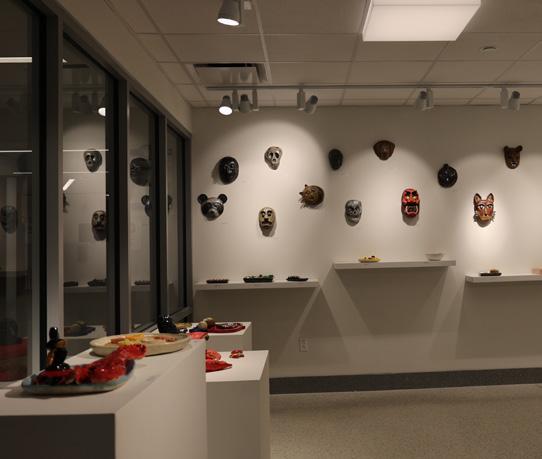
The Spirtas Family Art Gallery holds the ceramics show “Taste of Ladue,” which shows different ceramics pieces made in Ceramics 1 and Ceramics 2. The preparation for the show first started in August 2025 by Ceramics teacher Jonathan Robbins. “People have to see art,” Robbins said. “It’s cool to see how creative people are and it motivates students to try hard [in their artwork].” (photo by Jane Scheffel)
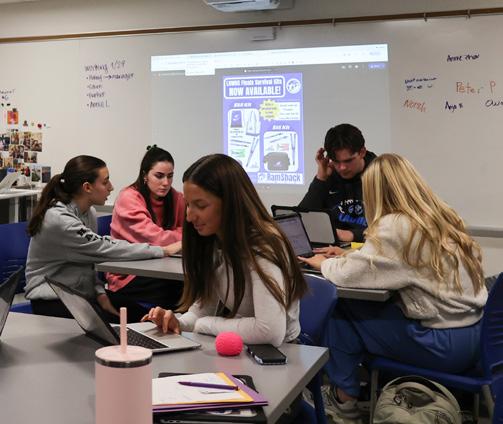
Ladue RamShack prepares new inventory and selects students to run the store on blue day lunches. (photo by Jane Scheffel)
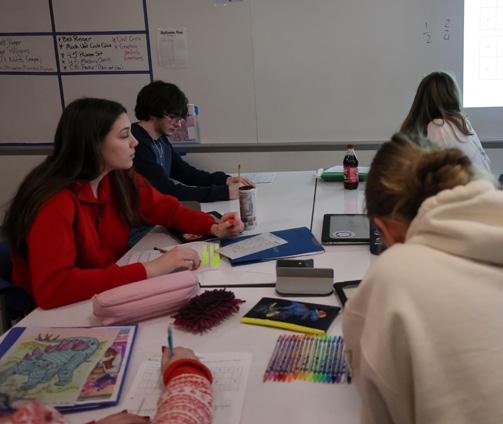
Math teacher Danielle Moushey’s precalculus class makes colorful unit circles to be used on future tests. (photo by Jane Scheffel)
“ERIC HURT (12)
My friends and I just wanted to make something that would be helpful for people our age. A lot of [aid] is targeted to older or younger people, [so] we wanted to help [teens].”
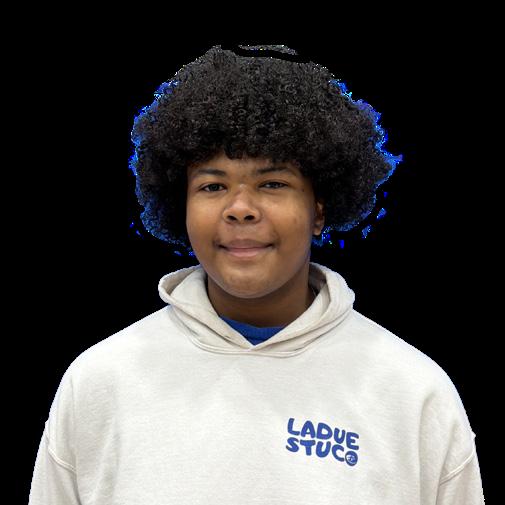
Teens for Teens is an organization that collects donations such as clothes for local organizations such as the Annie Malone foundation. They aim to help students and families that are struggling in their local community through donation drives and charity work.
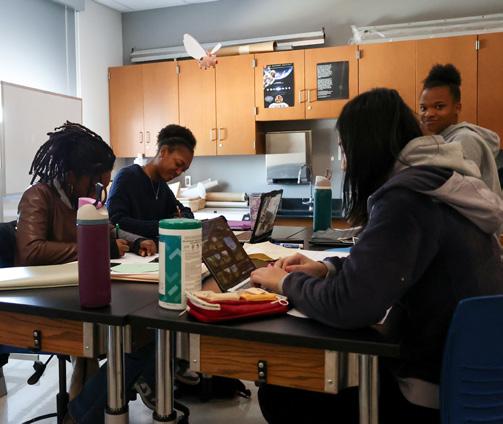
Physics works on a lab conclusion and write up. The teacher was absent, so students watched a video. (photo by Jane Scheffel)
Students create unique ways to make a difference in the community
My grandma is in a nursing home, and it inspired me to formulate a program for older people to connect with people who they usually wouldn’t connect with.”
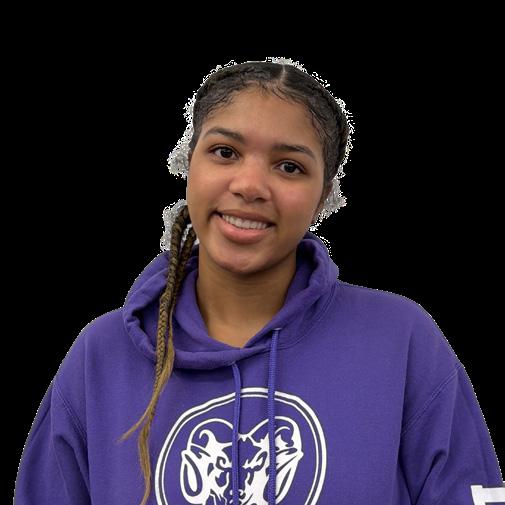
Pens, which matches residents at a Webster Groves nursing home with students, is in its inaugural year. While not an official club at Ladue, Cienna Johnson (10) works with multiple student members. Her initial inspiration for Pens came from a connection with her grandmother.
I help parents navigate their lives with an autistic child, giving them reassurance and discussing with the children how they go through their daily life with the disorder.”

Initally inspired through HOSA and her experience with her own autistic sibling, Roopa Maddela (12) works with a speech and language therapist at Acorns Childrens Therapy, specializing in language, OT, physical, and ABA. A mentor guides Maddela in her work.
BY SYDNEY GAO staff
SSTUDENTS LEARNED HOW TO provide initial support to peers facing mental health and substance abuse challenges and during PreventEd’s Teen Mental Health First Aid course Jan. 8, 12 and 14.
PreventEd, a local nonprofit focused on preventing substance abuse through education, intervention and advocacy, held three sessions during Home Lab and seminar.
Teen Mental Health First Aid was targeted at empowering students to reach out for help — both for themselves and their peers.
“PreventEd is one of our community partners offering counseling services to students,” Sophomore Counselor Leah Jones said. “We [implemented] the Teen Mental Health First Aid program two years ago because we saw a greater need in our
student body. Freshmen who take health class participate in a program [about] signs of suicide, so we thought it would be nice to continue the mental health discussions through PreventEd.”
PreventEd Community Strategist and Counselor Emily Wilkerson helpedteach training sessions at Ladue. She emphasized the organization’s views on mental health education as crucial for preventing long-term substance abuse.
“
is the best way to overcome mental health challenges. You don’t have to go through the challenge alone because there’s always helpful resources who won’t judge at all.”
As students navigate high school, stress can become prevalent. However, PreventEd provides skills and tools to manage those challenges beyond graduation.
“Teaching students how to handle everyday stresses is so important because that feeling is going to be present in high school,
[At PreventEd], we believe that when communities understand mental health, they are better equipped to support one another.”
Emily Wilkerson, PreventEd Counselor
“PreventEd takes a multi-pronged approach,” Wilkerson said. “By holistically approaching substance use prevention, our vision is to have a community free of alcohol and other drug misuse and related problems. We believe that when communities understand mental health, they are better equipped to support one another.”
For students like Austin Singer (10), PreventEd’s approach proved worthwhile in shifting perspectives on mental health.
“I noticed that [PreventEd] went into depth talking about many types of mental health challenges, especially the reasons behind them,” Singer said. “Reaching out
a job, a college setting and all throughout life,” Jones said. “Teaching people how to navigate those are important skills.”
Educators hope these standards will form what is to become a lasting change in societal views on youth mental health.
“My hope is that raising awareness about mental health challenges and protective factors will create a wave of change,” Wilkerson said. “The only way things will improve in the world is by supporting and encouraging young people to be exactly who they are. I hope by seeing an adult passionate about mental well-being, the ripple will continue in our communities.”
32%
37%



LEFT: Participants at the Stop ICE Terror protest Jan. 20 organized by the Party for Socialism and Liberation demonstrate their opposition to Immigration and Customs Enforcement at Aloe Plaza. PSL organized many protests regarding ICE, several of which Ladue students attended.
“It’s important that you’re always confident in your voice and in your beliefs,” Brockden Miller (11) said. “I think that high schoolers should understand that anybody has an opportunity to go out and protest for what they believe in.” (photos by Caroline Cobaugh)
BY CINDY LIU news editor-in-chief
A SCHOOLWIDE WALKOUT LED by Ladue students Jan. 20 protested immigrant detainments and the killing of Minnesotan resident Renee Nicole Good by Immigration and Customs Enforcement Agents. After a surge of reported violent, forceful acts by ICE agents, protests have circulated nationwide and recently hit the St. Louis area. Amongst those taking action by protest are several students passionate about making a change in their community and in the future of their country.
Brockden Miller (11) attended a protest march Jan. 15 organized by the Party of Socialism and Liberation to address recent events of both Good’s killing and the arrival of ICE agents in St. Louis.
“What drew me [towards protesting] was that earlier that day, we were having a discussion in my history class about current events,” Miller said. “My sister is always talking about trying to get out in the world and actually do something, and that inspired me to realize that there are things people can do to actively make a change and have their beliefs be represented.”
Besides walkouts and marches, another form of protest that students like Reese Dickhaus (11) participated in is advocacy events. Most recently, Dickhaus attended a vigil Jan. 9 to honor the life of Good.
“Since it was a vigil, the atmosphere was rather peaceful but also sad,” Dickhaus said. “Not a lot of people thought that it would get this bad. Most people were talking quietly and holding up candles, with some offering their extra candles to people without one.”
Miller recognizes limitations of transportation and welfare for younger protesters, but continues to emphasize the importance of youth action and involvement.
“It’s important for high schoolers to have a voice on this type of thing because this is our generation,” Miller said. “This is our future that’s being taken into consideration. It doesn’t matter how old you are, the idea of what ICE does and families being torn apart affects anybody at any age. There doesn’t have to be a limit on that.”
While Miller stresses the importance of fighting for a cause, he also offers advice on how to protest safely and ensure confidence in a time of controversy.
“One piece of advice is to make sure you’re going somewhere you’re familiar with and going with people you’re familiar with,” Miller said. “Don’t go alone. If you’re nervous about what people would think of you or whether or not it’s your place, I would say be passionate about what you believe in. Spread the word to others if you want to.”
Alongside safety, another concern involves impact. The belief that protesting should produce immediate change rather than gradual progress can cause some students to doubt the effectiveness and hesitate to take action. However, Dickhaus debunks this ideology, believing that any action is better than none at all.
“Some people think that protesting does nothing, but that’s not true,” Dickhaus said. “There’s a reason that people have been protesting throughout history. The government has to know that people are upset, and remaining silent will only make them more confident in their violence. While there is some risk in protesting, there is more risk in doing nothing. Living in Ladue, most of us aren’t going to be a target, so we need to be there for those who are.” P
Students and staff prepare for the upcoming winter musical, Legally Blonde, in the Black Box theater
BY JANE SCHEFFEL news editor PHOTOGRAPHY BY SARMISTHA PULAGAM photographer
ing at Ladue High School, he was given three play choices due to the late start.
“The first part of the process was actually working with the music department to figure out what show to do, figure out what [the] talent pool was, what would fit our community and where we would be able to provide enough roles for everyone,” Scheuer said.
Student involvement was brought in during November, led by set crew co-managers Jane Carrico (11) and Eliza Yawitz (10). A couple of weeks later, auditions were held. Since then, the cast has met after school five times a week to rehearse.
“[Jane and I] talked and mapped out what each scene needed, if there’s anything scene specific that was a set requirement,” Yawitz said. “We started sketching out some designs. I went into my CAD software, Onshape, and just started making models of ideas.”
The musical is split into multiple departments, each group in charge of their designated job. But in order to make the play cohesive, consistent communication is needed between each department.
Performing Arts Center 1201 S Warson Road
Dates
Feb. 19 Feb. 20 Feb. 21 7:00 pm 7:00 pm 7:00 pm
Senior Discount (people over the age of 65)
Thespian (members of the International Thespian Society)
Ladue Student or Staff (bring school ID) General Admission
WANT MORE?
Scan to buy tickets to the musical Location
STUDENTS WILL PERFORM THE winter musical, Legally Blonde, in the Performing Arts Center Feb. 19-21.
Legally Blonde is the story of Elle Woods, a stereotypical 2000s sorority girl, who follows her ex-boyfriend to Harvard Law School in hopes of getting back together. Through the process, she finds a passion for law. Woods learns that staying true and embracing who she is allows her to redefine what a great lawyer is.
“[The musical is] an adaptation of the movie, so if anyone’s seen the movie, it’s basically the same storyline,” Musical Director Justin Scheuer said. “I feel like there’s more character development, especially with Elle and Emmett in the musical, versus in the movie.”
Preparation for the musical began over the summer with Scheuer and other school administration. Typically, the search for the winter musical starts the school year prior, but since it was Scheuer’s first year direct-
“Jane [and I] have a lot of meetings with Scheuer because he blocks everything,” Yawitz said. “We’ve met with a couple of departments. Like with the costumes department, we had a meeting the other day about how we could match some of the costumes to some of the set pieces.”
Through all the hard work and long hours working on the winter musical, a community has been formed. It can often be stressful, but the whole crew has learned to rely on and help each other out.
“I was really surprised by the community that’s in theater,” Carrico said. “I went into it not expecting anything, and I’ve made so many close friends, and everybody is just so welcoming and just genuinely funny, and it makes it a really great experience.”
While Scheuer is new to Ladue, he and the cast collaborated to make the musical the best it can be. Most of the cast have been in theater at Ladue for multiple years, and they’ve pushed themselves to work with Scheuer and improve the show.
“I feel it needs to have full student ownership,” Scheuer said. “Students should feel this is their show. It’s not my show and it’s not the school show, it’s the department show. And students should feel like, when it’s all said and done, they did this.”
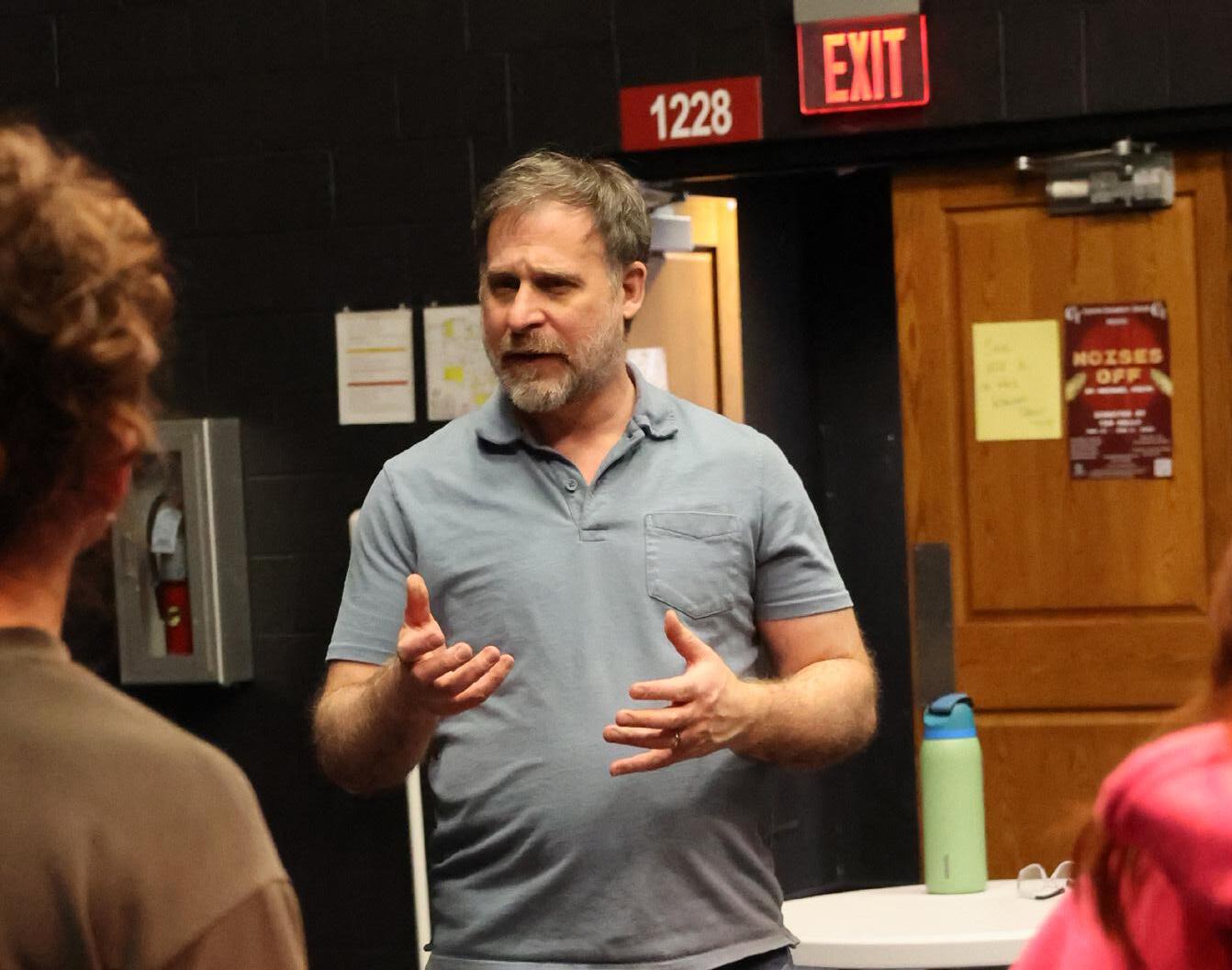
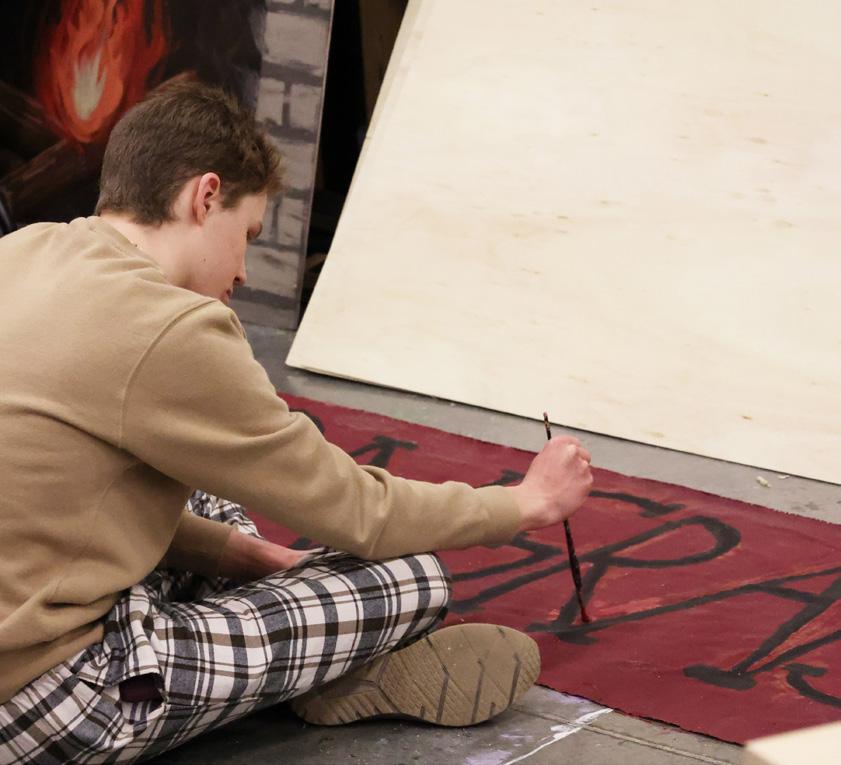
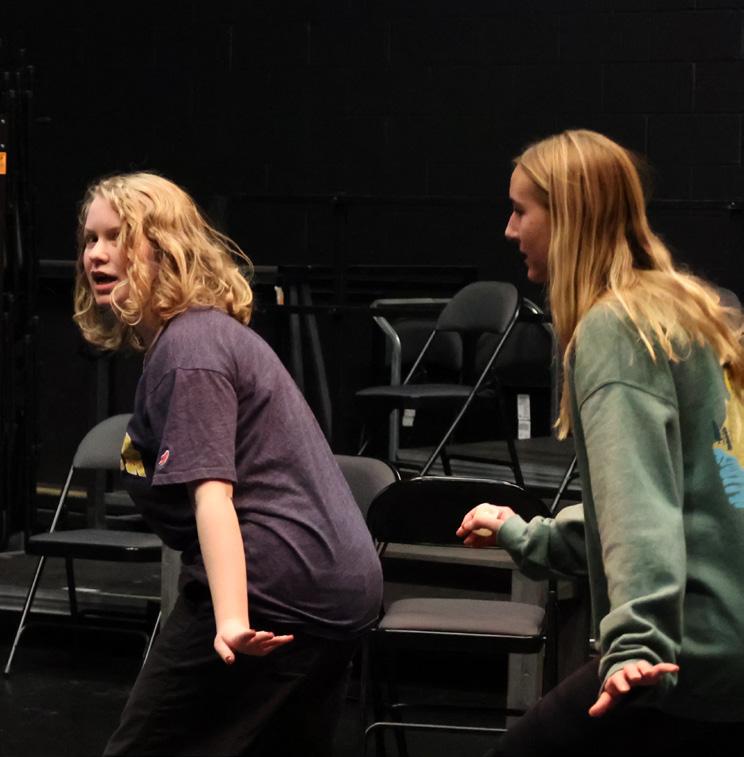
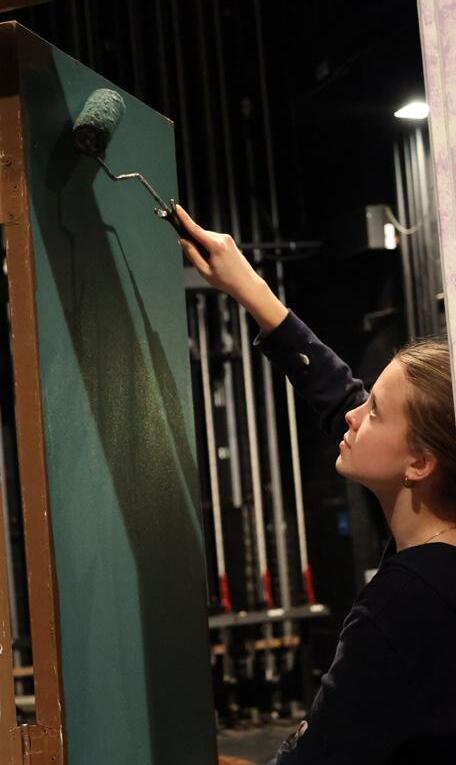
The cast and crew prepare for the winter musical, Legally Blonde, after school. Since November 2025, almost every day after school, students and teachers work on producing the musical. “We’ve got the set crew building this set,” Director Justin Scheuer said. “We’ve got the lighting crew that’s hanging the lighting equipment. There’s a lot of props in the show and a lot of costumes. We have a publicity area, and they’re putting together the poster and the program and getting the word out so people can come see the show. It’s a lot of plates spinning at once.”
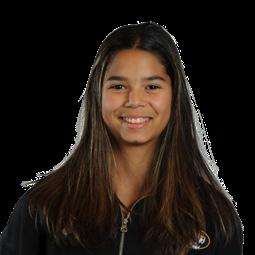
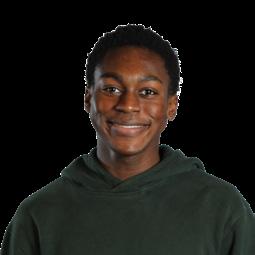
Learn about some of the students and teachers who helped make the musical









BY JOSIE STOUT features editor
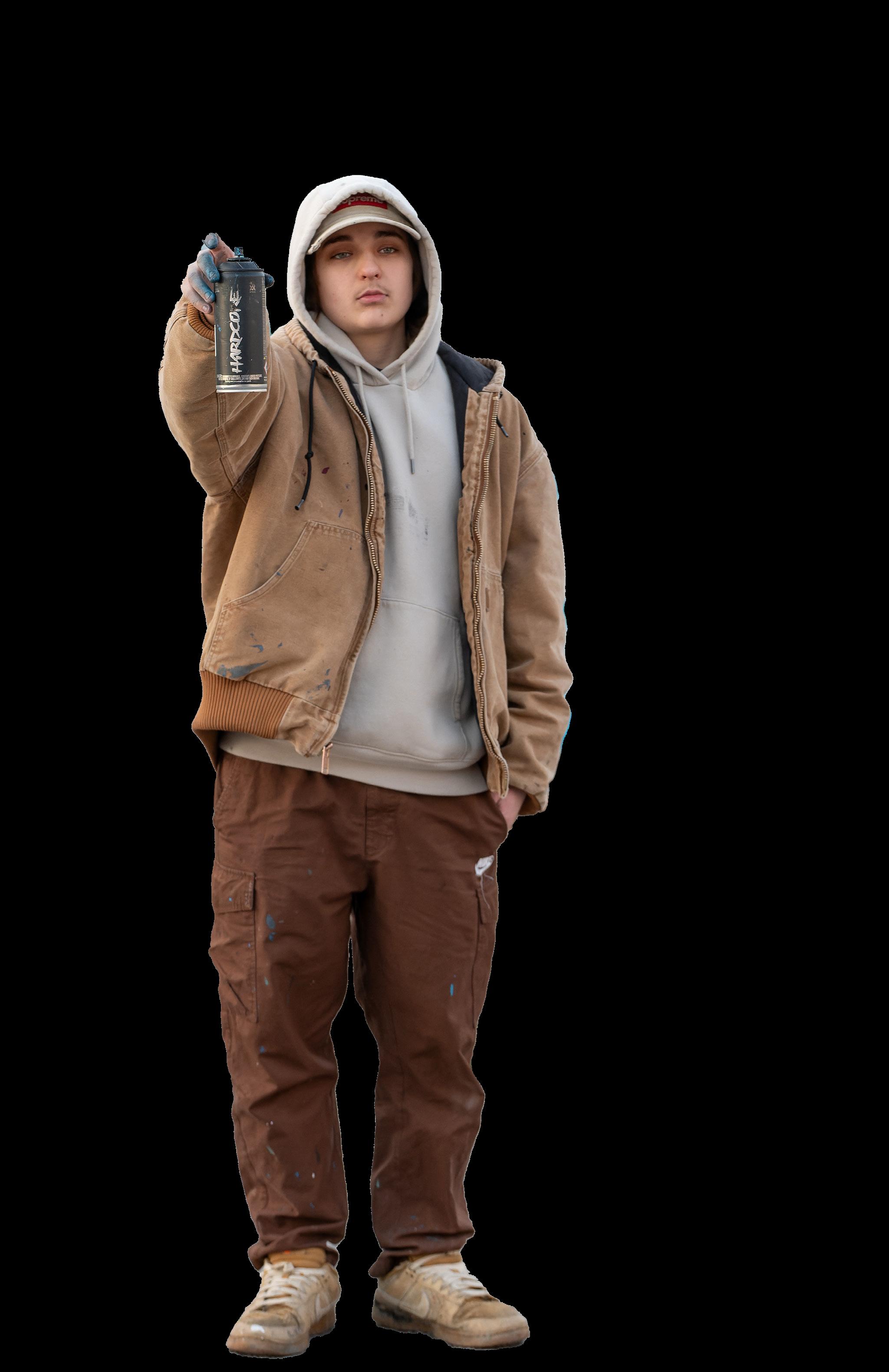

IIN CITIES ACROSS THE UNITED states, a unique and vibrant form of art stretches across walls and buildings. Big, bold bubble letters form words illegible to some. But to those who know what to look for, they’re intentional bits and pieces of the artist’s legacy left behind. Most of the words are names. Not government names, but entirely new ones forged from lots of experimentation with the flow and style of the words. For Ryder Schmitz (11), “Nunes” is the tag of choice that marks his art. Anytime he paints, he leaves behind the tag: proof that he was there and left a little bit of his artistic legacy behind.
“Something [important] about graffiti, at least for me, is it will outlast you,” Schmitz said. “When you die, you’ll still have graffiti up everywhere.”
Schmitz’s own personal legacy is one that has been years in the making. As his passion for art is lifelong, it’s no mystery
as to why he has such an affinity for graffiti. In elementary school, Schmitz often attended baseball games where he’d see graffiti painted around the stadium. It was this exposure to graffiti that kick-started his love for art and his artistic journey.
“I was looking at all the graffiti, and I asked my art teacher to help me draw some bubble letters,” Schmitz said. “I just kept drawing [bubble letters] over and over. By fifth grade, I was making a lot of tags in my notebook.”
Like all art, graffiti isn’t a craft that anyone can be good at right away. It takes a ton of time, energy and consistent practice to develop a distinct style worth painting.
“The thing with graffiti that I think a lot of people wouldn’t understand is, even just the little tags that you see, it takes years to get a good hand style,” Schmitz said. “It’s definitely just a lot of practice, a lot of trial and error.”
While Schmitz is meticulous when it comes to perfecting his craft, he doesn’t hesitate when he sees a blank canvas.
“His art style is really intuitive,” art teacher Patricia Chavez said. “He doesn’t always plan a lot of what he’s going to do, he just dives in. It’s very graphic, bold and very textured.”
Schmitz has gone through four different tags, with Nunes being the one he currently uses. The practice and repetition ingrains the tag into him until it becomes an integral part of his artistic identity and graffiti.

“I’ve been doing [graffiti] for so long,” Schmitz said. “I’ve drawn the same design probably thousands of times. So whenever I walk up to the wall, it’s just natural. I know exactly what I’m gonna put on it.”
Even with years of practice, not everything goes to plan all of the time. Despite this, Schmitz maintains an impressively upbeat and positive attitude, especially when he’s painting with other people.
“He usually stays really optimistic and always tries to find the best in situations,” Schmitz’s friend, Johan Bergman (11), said. “If something goes wrong, no matter what, it’s the same mindset: stick together, and try to persevere our way around it.”
A huge part of Schmitz’s journey is the inspiration he draws from his peers, specifically those with more skills than him so they can push him to grow and improve.
“I prefer to go out and paint with other people that are better than me, just because they boost me up,” Schmitz said. “It looks good when your name is next to [someone else’s] who is better than you.”
While some people view art as a very individual endeavor, Schmitz sees it as an opportunity for connection. People reach out to him with accolades for his art, and beyond simply gaining recognition, he pulls a huge sense of pride from that.
“I’ve been getting recognized,” Schmitz said. “People reach out and say that they like what I’m doing, that they want to paint with me. It’s a good feeling.”


Ryder Schmitz (11) paints on the Mural Mile, a legal graffiti wall in St. Louis. He has attended events like Paint Louis, which draws people from all over. “It’s the biggest graffiti event in the world,” Schmitz said.
“I’ve painted on that wall many times.” (photos by Vincent Hsiao) P

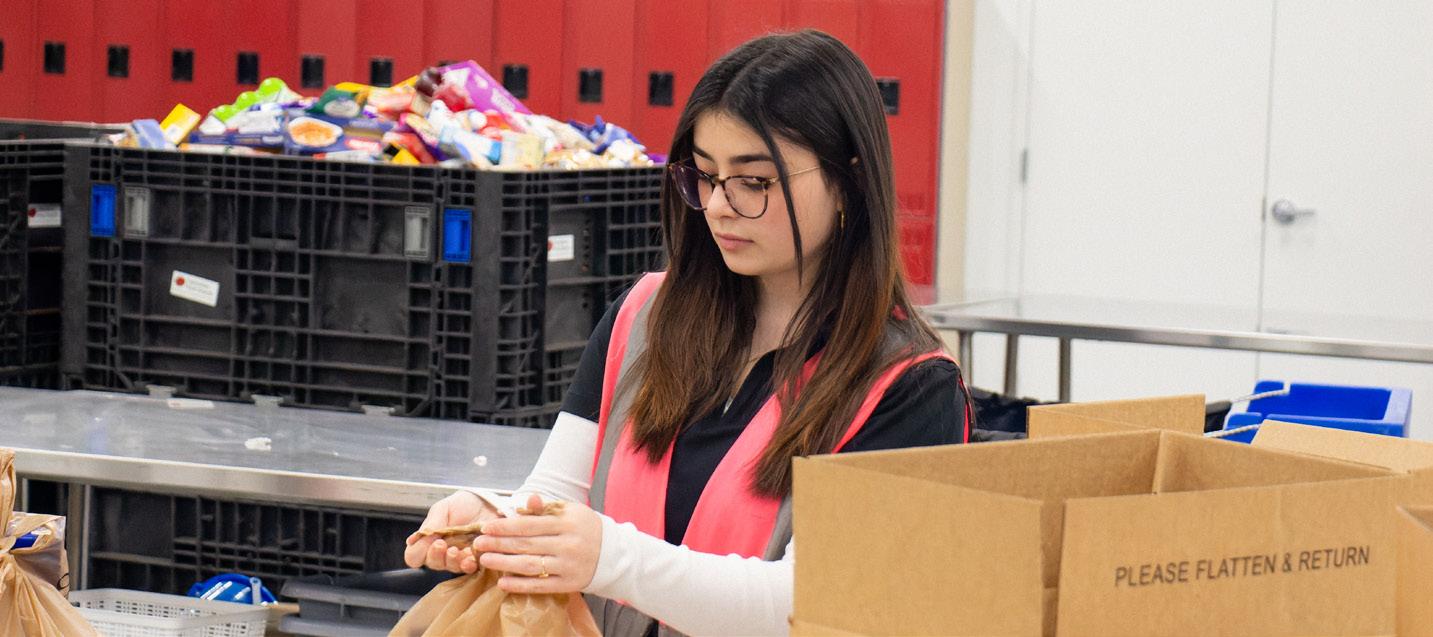
RIGHT: Sophia Anton (12) volunteers with NHS, packaging food at Operation Food Search
Jan. 22. She obtained over 40 volunteer hours in the past year, which inspired her to apply for NHS president.
“My role as president is to set expectations and cycles for the new year,” Sophia said. “One of my really big expectations and goals has been to introduce volunteer opportunities that are meaningful and help people in really urgent need.”
(photo by Alex Du)
BY CLAIRE ZHANG staff
rush down the stairs on Christmas morning, eager to open presents beneath the tree, there are others who don’t have the luxury of gifts or a family to celebrate with. Rather than spending the holidays at home, 10-year-old Sophia Anton (12) and her parents purchased hundreds of toys for a local orphanage, where they spent the entire day playing games with the children. This experience, which began as a simple act of kindness, sparked Sophia’s lifelong passion for community service.
As an adopted child, Sophia had a personal connection to children in orphanages and gained a strong sense of appreciation for volunteers.
“The most rewarding thing is knowing that if I was that person, I would be so grateful and thankful because I was that person at a time,” Sophia said. “Being that volunteer for other people has really changed my perspective in life.”
From a young age, Sophia faced hardship. She grew up with a single mother who was diagnosed with stage four cancer and passed away when Sophia was 10 years old.
“Watching people help my mom and watching my mom help people in turn really gave me this passion to help other people,” Sophia said. “Because I saw what my mom went through, I made it my goal in life to do that for other people.”
After her mom passed away, Sophia was adopted by her uncle, Joe Anton. He introduced her to important family values that shaped Sophia’s character from an early age.
“As a parent, I have tried to instill in Sophia the importance of empathy and compassion,” Joe said. “We have had many discussions about the value of giving to those in need and her community. I think the most important [are] the examples her mother showed her.”
1
The National Honor Society recognizes high school students for their excellence in the four pillars: scholarship, service, leadership and character.
2 The Young Scholars Tutoring Program provides free online tutoring to elementary school students across Missouri who were impacted by Covid-19.
Sophia currently serves as president of the National Honor Society and collaborates closely with her fellow NHS officers to find new volunteer opportunities for members.
“[Sophia’s] enthusiasm about service and volunteering always stands out,” NHS Vice President Jacob Kaufman (12) said. “She is very involved and willing to try something new when related to [community] service.”
Additionally, Sophia serves as vice president of the Young Scholars Tutoring Program. She helps coordinate tutors, track volunteer hours and supervise tutoring sessions.
“I really love tutoring,” Sophia said. “The really nice thing about the tutoring program is that [students] can have help in anything. It doesn’t even have to be a class.”
As an active volunteer, Sophia has learned to balance her time wisely with schoolwork and adapt to any challenges that may arise.
“I’ve gained a whole lot of patience,” Sophia said. “I’ve gained even more understanding for others, just adapting and throwing yourself into a situation where you [have to] figure it out as you go along.” P
Miriam Gewirtz helps students as an occupational therapist
BY AARON LIN associate editor
EIGHTY STUDENTS TO HELP.
Eighty lives to improve. Helping students improve their legibility, tie shoe laces, organize their backpack and more, Special School District Occupational Therapist Miriam Gewirtz spends her time working with students on everyday tasks. Having worked at the Ferguson-Florissant R-II School District for six years and the Ladue School District for another seven, Gewirtz is a veteran at helping students, particularly those with disabilities, with daily struggles.
“We monitor their progress very closely,” Gewirtz said. “It’s so great to see when a student feels confident and happy with the way they do things and when they’re so excited that they achieved the goal where it’s really tangible, let’s say, when a student learns how to tie a shoe.”
In addition to directly working with students, Gewirtz also consults with other teachers, discussing possible solutions and strategies in a classroom setting. Once the
PHOTOGRAPHY BY ALEX DU photographer
student can generalize that skill, they will no longer need her direct service. A goal that Gewirtz has always hoped to achieve is to help educators and parents better understand the challenges and struggles that students often deal with every day.
I“I work really hard to help [educators] understand what it means to have ADHD and learn in the classroom, what it means to have autism and learn in the classroom, what it means to have dyslexia and be a bright student,” Gewirtz said. “And then how could teachers make classrooms friendly and accommodate for these students so that school isn’t torture for them.”
For an occupational therapist, working on the social aspect of student interaction is key to bringing out growth. To Gewirtz, building a really strong relationship is the first step that should be taken before working on any specific skills or tasks.
“I had some siblings who struggled in school,” Gewirtz said. “I know it was a rough, rough ride for them, and I felt like being able to help kids in school would really make a very big difference in their lives. That’s really what made me drawn to the school environment.”
In her time outside of working directly with students, Gewirtz documents therapy sessions, tracking students’ progress and needs. In addition, she also has paperwork, IEPs and progress reports, leaving nearly no time for breaks during the day.
“Her superpower is her ability to deeply understand the ‘whole picture’ when it comes to student needs,” Special School District Occupational Therapist Lyndsey Krebs said. “Miriam has a talent for breaking down challenges into meaningful strategies in order to support student success.”
“I wanted to do a helping profession. Occupational therapy really spoke to me; [it] gives you a good purpose.”
Miriam
Gewirtz,
SSD Occupational Therapist
Parents and teachers often have a hard time letting go of Gewirtz’s services. In fact, occupational therapists are working themselves out of a job: succeeding means that students no longer require their valuable services.
“A big part of my passion is that I feel so much of this should just be happening in the classroom to begin with — that students shouldn’t need to be given that specialized instruction necessarily outside [of the classroom],” Gewirtz said. P
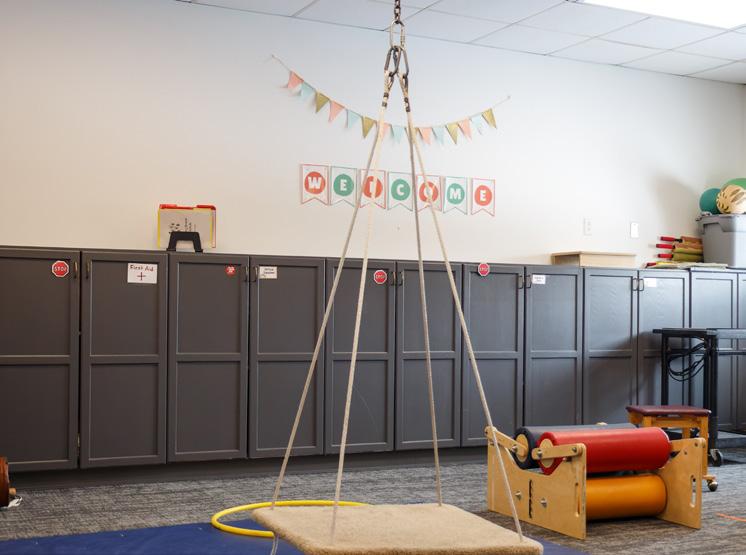
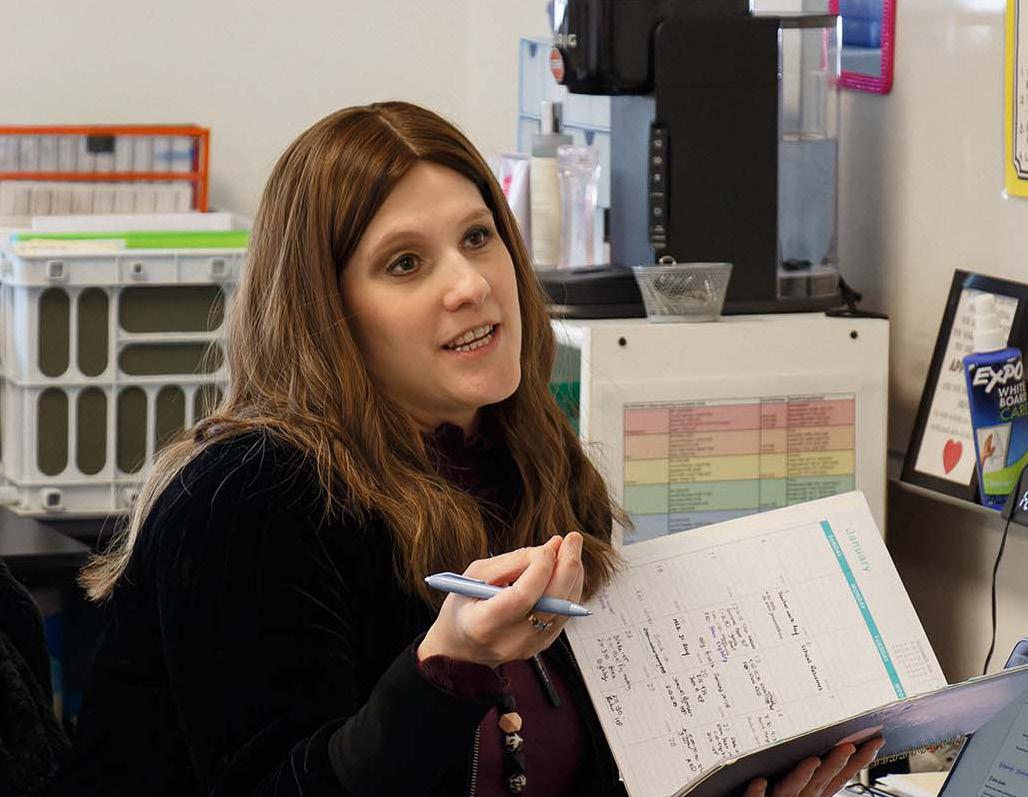
LEFT: Miriam Gewirtz talks with a colleague while working on her schedule in her office at Old Bonhomme Elementary School. A workday has usually consisted of working with 10 to 14 students. “[A] big thing we work on is sensory motor skills,” Gewirtz said. “What that includes is a child’s ability to self-regulate and remain attentive throughout the day.”
(photos by Alex Du)
* Indicates a false name to protect the identity of an anonymous student or teacher
BY ISAAC ZELINSKE in-depth editor
BY ADELAIDE FLINTROP staff
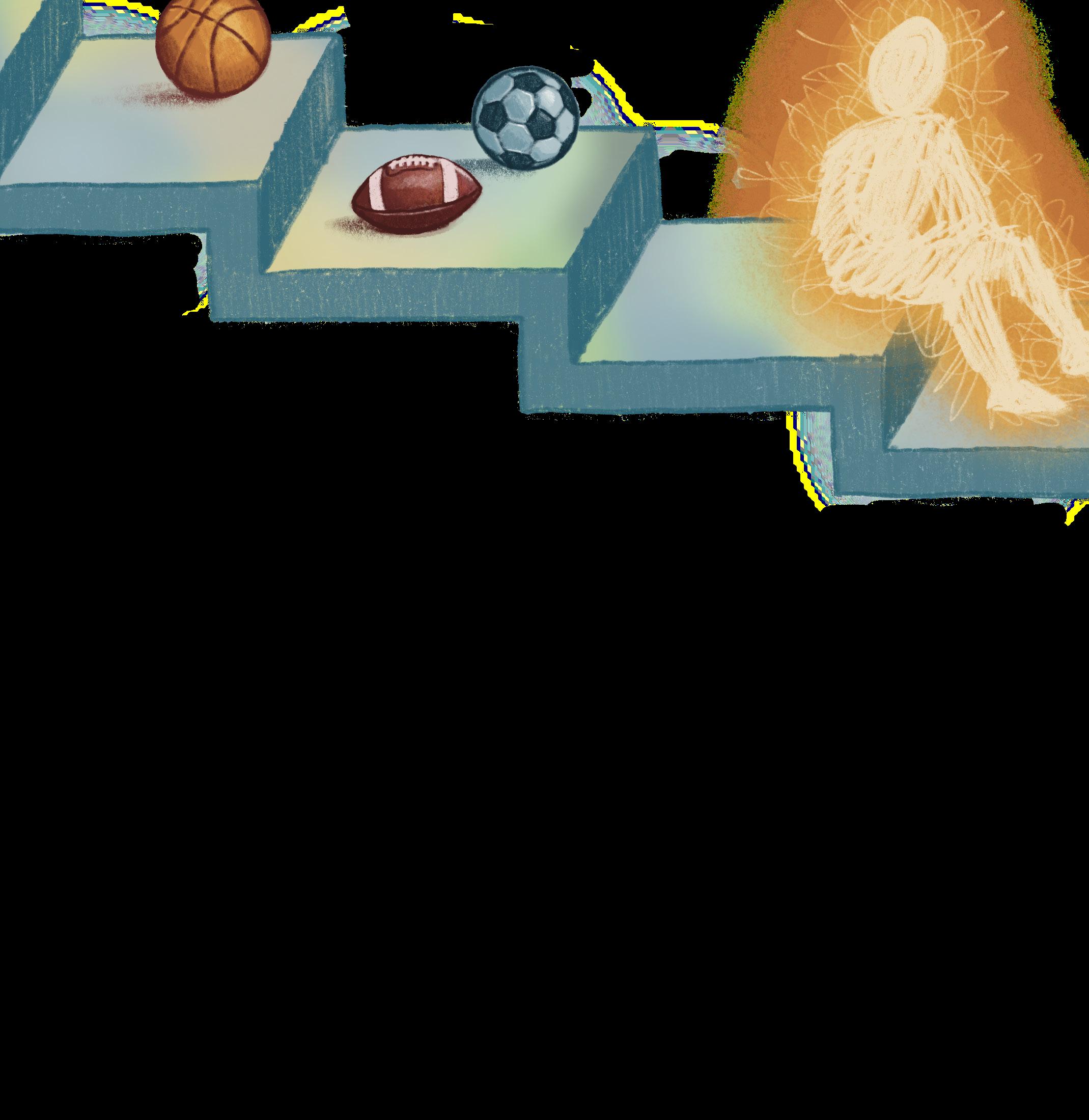
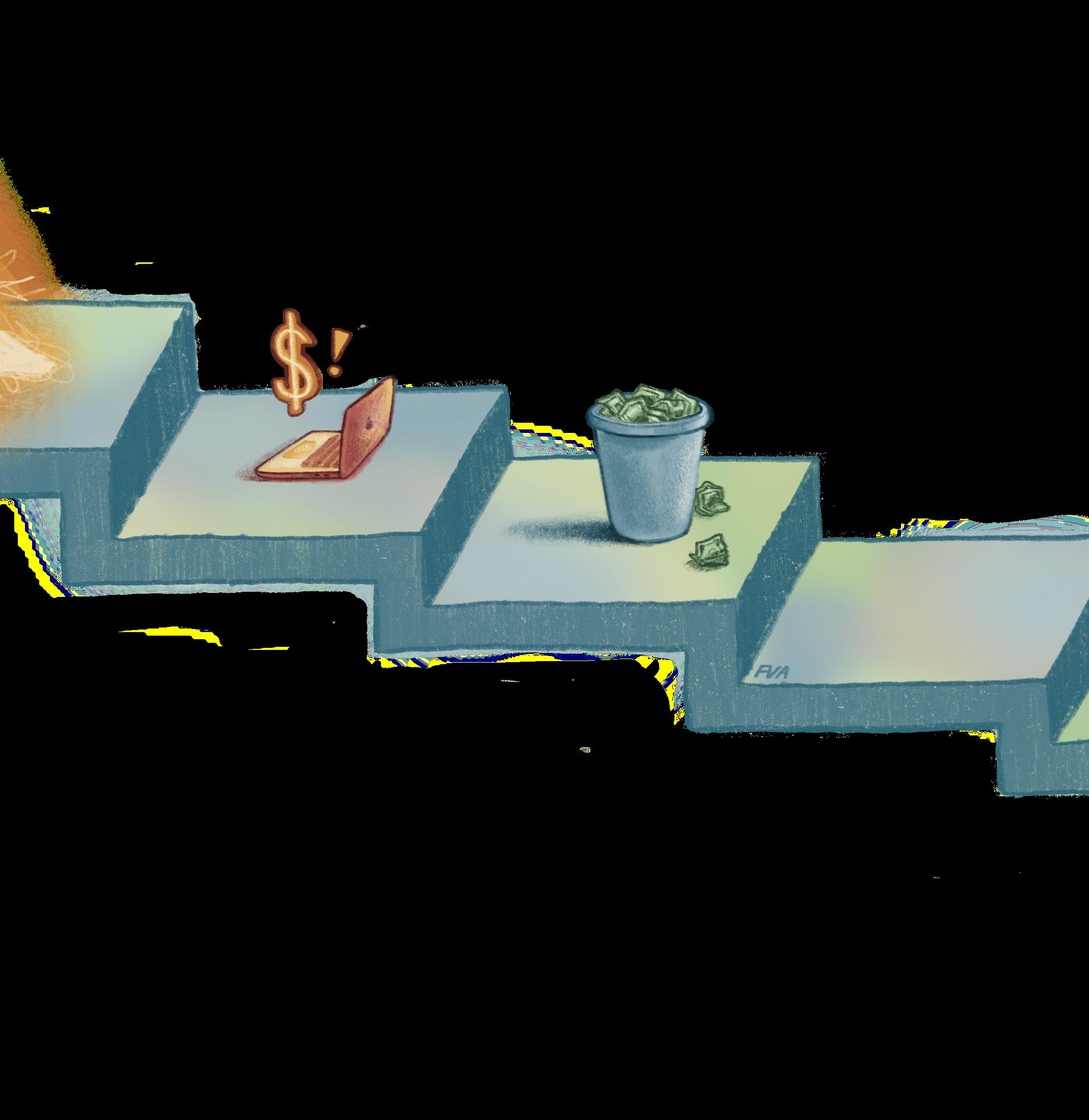
AA GAMBLING ADDICTION RElies on one simple principle: chase the loss. Listen to any gambling addict and it becomes obvious they are no longer trying to make money. They have wagered themselves into a hole and are now forced to bet and bet until they can get out. Much as an alcoholic will have a drink to ease a hangover, many gamblers see their addiction as
ILLUSTRATION
Sports betting legalization has led to a teen gambling epidemic
BY FIONA VAN ALLEN art editor in chief
the solution to that same vice. This is what makes a gambling addiction so dangerous. The drug they rely on is not a chemical substance; they aren’t just urged on by dopamine or an artificial high, they continue to bet out of desperation – out of necessity.
Prior to 2018, sports betting addictions were relatively limited. In order to place a bet, you had to contact a bookie who would set odds, balance your money and overall, make sports gambling a whole ordeal. But recently, this changed. Following the 2018 Supreme Court decision to allow sports betting in each state, the key to a crippling addiction has been placed in the pockets of every single American. Apps like DraftKings and FanDuel allow people to bet whenever, wherever and on whatever they want. This change has not gone without consequence. The Journal of the American Medical Association found that searches for help with gambling addiction have gone up 23% since the Supreme Court decision.
As Americans legally tumble towards a nationwide gambling crisis, the teenage population is following suit. Although locked behind ID verification, sports betting apps are being accessed by America’s youth en masse. These teens lack the
impulse control of the adult population, leading to fast addiction and fast loss. Due to the recency of this issue, little is being done to curb it, leading to millions of adolescents being forced to learn for themselves that the house always wins.
Since the first legal online sportsbooks went live in Missouri Dec. 1, 2025, sports gambling has risen rapidly in prevalence among all age ranges. Though it is a legal requirement that gamblers are 18 and older on all apps and 21 and older on others, teens have circumvented this system.
“I started sports betting about two years ago,” Ladue student Mitchell Teal* said. “I started with PrizePicks because I had my brother’s login. He was 18 at the time, which is how old you had to be.”
Nearly every app has some variation of a “free cash” offer to entice brand new users. Those who first join will be given a small amount of money to place their initial bets. While this may seem good, what they’re really being given is a push down the slippery slope of sports betting while maintaining an illusion that they won’t lose any “real” money. For most, the illusion shatters, and that slope carries them straight into the bank account negatives.
NEITHER 50%

Do adults view sports gambling
SOURCE: Pew Research Center
SOURCE: American Gaming Association billion dollars on sports in 2024
“You can’t win,” Teal said. “I lost about $200 [on one app] and then about two months ago, I got DraftKing because I got my parents’ login. At the start, you get that free $300 [in starting money], then you miss all those bets, then you just keep putting in money.”
If it has become commonplace to lose in perpetuity when sports gambling, the question arises: why do people keep doing it? One answer is simple — money.
“I wasn’t thrillseeking,” Ladue teacher John Fish* said. “It was just to simply make money. That’s why I didn’t bet every game. I didn’t bet every week. I stick with NFL, and I only bet selectively on games that I felt very, very comfortable with and games that I had done research on.”
I“My dad and my brother started sports betting a couple months ago,” Ladue student Marina Bay* said. “I felt left out, so I joined. Me and my best friend really just bet on college football games. We bet like $2 a game, so it’s not very high stakes.”
“If you [put in $10] once a week, that’s already 40 bucks a month. Then, what if one of the bets you put $50 or $100? There’s no stopping that snowball from rolling quickly. It is inherently addictive.”
Even though most sports gamblers know that statistics say they’ll end up in the red with all the others, some still do it for the hope of raking in the green. Other gamblers get into sports betting for the potential to make friends and build community.
No matter why someone starts, the fact is, sports gambling apps are just like traditional casinos. Their end goal has no end; they want to perpetually enthrall the gambler, keeping them pouring in money that they don’t have a hope of earning back. Many methods keep sports bettors glued to apps.
“Sports Network broadcasts it,” Ladue teacher Bennett Copes* said. “We have stadiums that are named after the [betting sites]. When you watch a hockey game, and they’ve got FanDuel printed around the ice, it’s like the whole game is sponsored by a betting organization.”
As sports gambling has become more accessible through apps and sites that facilitate it, many have begun targeting their advertisements toward young people.
“They have these promotions,” Teal said. “[They’re] for kids, because they have stuff like Barstool on there. I know that old people are not watching Barstool.”
Bennett Copes* Ladue teacher
“Advertisements are very appealing,” Ladue student Steve Marsh* said. “They really entrap you and make you interested to support your favorite team and make money quickly.”
With all of the advertising that sports gambling platforms do, betting has become synonymous with the sports fandoms.
A lot of the problems students are now facing are not unique to sports gambling; losing money and becoming so hooked that it becomes hard to stop are problems that all gamblers face. In spite of all the commonalities, sports gambling is a different type of ballgame for many gamblers.
“I always feel like poker is a lot more skill than chance,” Marsh said. “In poker, you really play the player, rather than relying on chance, like sports betting.”
Student poll demonstrates the realities of sports betting at Ladue

Because it’s not based on their own perceived skill, gamblers maintain the idea that a win could still happen at any moment, despite the odds being in anyone’s favor but theirs. It’s not just the odds stacked against them; it’s advertisements, illusions of community and the falsified future of coming out on top.
“There is a very dark side of gambling,” Marsh said. “You can get into very crippling addictions, mental health issues, where you decide to bet all your money and just
the mechanism



Gambling, along with sports betting, has always been seen as a somewhat seedy pastime. However, states have recently begun to pass laws legalizing sports gambling. The negative nature of gambling is not lost on the voters. This can be seen with Missouri’s sports betting law passing with only 50.05% of votes. Many are against the legalization of sports betting, the number one factor being the addictive nature of sports betting.

“It’s the same dopamine release [as other addictions],” Bellagio said. “You’re just doing it differently. You’re not doing an activity that releases actual dopamine; it’s this fake excitement, even though you know you’re about to lose money.”
Along with the release of dopamine, wins provide assurance from the fear of a near miss. Although this may feel good in the moment, it often leads to even more crushing loses that confirm anxieties.
“Winning [brings] relief,” Fish said. “I don’t typically celebrate the wins as much as losing feels absolutely awful.”
The disastrous reality of losing money often leads to even further desperation. The cycle ultimately continues, with higher and higher bets being placed in an attempt to win back the previously lost money.

y“About a year ago, [I started on] Fliff,” Ladue student
Parker Bellagio* said. “I did the daily free dollar and always lost it. Then I put my mom’s account on there and said I was 21 and lost 100 bucks. And then I tried to earn it all back. I just kept losing. I had to get a job so I could pay my mom back.”
The addictiveness of gambling is not a baseless claim. The National Council on Problem Gambling cites that 16% of online sports bettors show behavior that points towards addictive gambling. Although it may appear to function differently compared to other substance-based addictions, gambling releases similarly rewarding chemicals in response to winning money.
“You’re not doing an activity that releases actual dopamine, it’s this fake excitement, even though you know you’re about to lose money.”
Parker Bellagio* Ladue student
“It’s called ‘chasing your losses,’” Fish said. “If you are constantly trying to chase your losses, because [in your mind] you think that eventually ‘it’s going to turn out right for you, you’re going to win one of these,’ I think [that’s] incredibly dangerous for people.”
Along with the ruthless self-fulfilling cycle of sports betting, the recent legalization has made it easier than ever for many to fall into that cycle.
“I’ll go somewhere to watch a game, and see particularly young men just on their phones, on their betting apps,” Ladue teacher Maggie Grand* said. “I was just somewhere a couple weeks ago, and I saw a couple of guys just sitting at a table together, not even speaking. They had their jerseys on, they were watching the TV and they’re not even talking to each other. They’re just scrolling on their DraftKings app.”
This recent prevalence is far from just an observed phenomenon
Kalshi: a predictive-market style gambling site where people bet on current events
Kalshi is a gambling platform that extends past normative structures of sports betting and traditional casino games. On Kalshi, you’re not betting on cards or players – you’re betting on real world events. With “yes” or “no” bets ranging from economic ups and downs to the once secretive plots of world leaders, gamblers place bets ranging from 1¢ to 99¢ based on probability. The less probable, the cheaper it is and vice versa. The return? Always $1 exactly.
Siena Research Institute found that 22% of all Americans have an active sports betting account. Along with this, 52% of men aged 18-49 had an active sports betting account. Many factors have led to the observed increase in sports betting, one of the most important being just how easy it now is to place bets on games.
“It’s so frictionless to make [bets],” Copes said. “It is just so simple. It’s not like, I can just place [the bet] at the start of the game, and [then] I can’t do anything else either. You can [bet on] every single thing throughout the entire game.”
Tied in with this ease of use is the increase in advertisements, leading to more eyes being on these apps. These ads often bolster deals that are ‘too good to pass up.’
“What I see a lot of are these deals [that try to] pull you in,” Grand said. “You sign up for this [app], and you get free money, or you [bet on] this and you get extra money to bet with. And so I do think that it’s just like any other business. They’re trying to make as much money as possible.”
One of the criticisms of these advertisments have been their tendencies to appeal to younger people.
“Seeing ads on television, with famous people and highly recognized faces, it’s got to be incredibly difficult for some young people to say no to that,” Fish said.
The earliest gambling houses, equivalent to modern-day casinos, appear in Italy.
1638
The first gambling machine is developed by Messrs Sittman and Pitt in New York, designed as slots.
1891
With gambling apps being so present in modern sports, sports betting companies have put forth an extreme effort to make their presence known to every potential customer.
“We’re in a society where every kid has a cell phone,” Marsh said. “Every game they [watch] is gonna have some type of [gambling] advertisement. I assume we’re gonna see an increase of gambling apps on [kids’] phones.”
All of these aspects work together to foster the current reality of teenage gambling—the unfortunate truth is that addiction does not go away, it grows and grows for these students until it consumes them.
“The [team I bet on] were playing, and I was like, ‘I have homework, or I could sit and watch this game’,” Bellagio said. “Then, I’d sit and watch the game.”
For adults at or above the legal age of gambling, it can be easy to see signs of addiction, but for an underdeveloped teenage brain, these indicators can go fully undetected.
“It’s just that first 300 you get, and you’ll put in five bucks and you get 300, that’s a really good deal,” Teal said. “But after that, it’s just downhill. So you just put in more money, because obviously you’re gonna lose that 300. Unless you [win], but eventually, even if you [win] you will lose the next one. It just keeps drawing you back in.”
Across the globe, internet users are have gone mobile with gambling on apps like DraftKings and Fanduel.
2026
2300 B.C.E.
The Chinese “Book of Songs” makes references that suggest that tiles were used for a lottery game.
500 B.C.E
The first mention of dice in Greek history, while all forms of gambling are banned in ancient Rome.
1829
English actor Joseph Crowell reported the first recognizable form of poker played in New Orleans.
1930
Gambling is legalized in the U.S. for the first time, creating gambling hubs like Las Vegas.
SOURCES: Gambling.net, Pause Before You Play
1in2
Americans participate in some form of gambling
SOURCE: American Gambling Association
Most popular sports that American gamblers bet on
SOURCE: statista
51% of Americans who sports gamble bet on football 38% of Americans who sports gamble bet on basketball 25% of Americans who sports gamble bet on soccer
Americans have an active online sports betting account 1in5
SOURCE: Siena Research Institute
Pay fines between $500 and $1000 Driver’s license suspension
1 0 2 0 3 0 4 0 0 4 0 3 0 2 0 1 0
A price to pay
Consequences of underage and illegal gambling
SOURCE: Law Offices of John W. Tumelty
Community service
Serve jail time

Data shows the rise and legalization of sports gambling over the years
SOURCES: Sportsbook Review and American Gaming Association tracing it out
ILLUSTRATION BY
Statistics reveal the impact of legalized gambling on Americans
0 2 0 1 0 1 0 2 0 3 0 4 0 5

EEVERY SINGLE DAY OF SCHOOL, students end a familiar recitation with the words “liberty and justice for all.” Germinated from the aching backs of millions of huddled masses, these ideals can be found on any shortlist of what it means to be an American. However, we lose these values when we fail to properly engage with our government. Without adequate education on current events and civics, students are destined to be less able to participate in the government that sustains, upholds and protects our essential freedoms.
At present, many Americans lack a fundamental understanding of the U.S. government. A study from the U.S. Chamber of Commerce Foundation discovered that one in three Americans don’t even know how many branches of government there are. In Missouri, at the high school level,
Astudents are required to pass a state-mandated civics exam. However, a passing grade can be as low as a 60%, meaning that students can leave high school without actually understanding various vital civics topics. This lack of standards is particularly concerning since students are also given multiple resources during the test. When looking at Ladue, 112 students were surveyed Jan. 22, and less than 10% felt “very confident” in their understanding of the U.S. government. Therefore, Ladue’s administration should make an effort to improve the education that students receive in the way of civics and current events. This can first be done by integrating more information from current events into coursework. At the moment, few students truly engage with the news in the classroom. Over 75% of students surveyed had teachers that discussed current events only once a week or less, even though 90% of students thought that current events should be discussed more when relevant. While Ladue offers a Current Events class, not every student will
Editorial note: Each editorial, Panorama selects an issue that the staff thinks is important to address and expresses a view that belongs to the majority of the editorial board. Panorama welcomes the opinions of its readers and encourages letters to the editors. Panorama reserves the right to revise submissions for length so long as original intent remains unaltered.
Civics and current events should be prioritized to a greater extent in Ladue’s curriculum so students can become better citizens
28 LADUE MEDIA EDITORS AGREE
0 LADUE MEDIA EDITORS DISAGREE
have the opportunity or motivation to take it. For that reason, teachers should spend more time focusing on current events in class, so students receive more exposure than present infrastructure allows.
“As individuals who are likely to be living in this country for the rest of our lives, we deserve a civic education that is as thorough as possible.”
As the National Council for Social Studies explains, discussion of current events boosts media literacy and other relevant skills. These skills have become essential in a society where presidents can utter thousands of false or misleading statements and misinformation online can spread six times faster than the truth, according to PBS. As the world around Ladue evolves, so should our education.
When it comes to government courses, there are multiple ways that Ladue can improve. At the moment, some students who end up taking U.S. Government and Politics in the spring semester of their senior year will have the opportunity to vote prior to receiving any major degree of civic education. Therefore, more emphasis should be placed on civics prior to senior year. Given that voting is what defines the state of our country, students should be ed-
Scan here for more on letters to the editor, guest essays, submitting correction and the full editorial policy.
ucated in who or what they’ll be voting for, why they should be voting, and the like. It’s not just voting though. Knowing how to engage with the political establishment is more important than being able to solve any math problem or annotate any difficult passage –– especially when that establishment dictates the education that students receive… and just about everything else.
All students should have some degree of education on civics so they can be more
capable of using their constitutionally ordained voice. As individuals who are likely to be living in this country for the rest of our lives, we deserve a civic education that is as thorough as possible — not one crammed into a semester, or a year in the case of the AP course. Since those as young as 18 have been afforded the opportunity to vote, our school system should aid us as much as possible in making informed decisions when voting. Since we have been
afforded the right to various vital freedoms, our school system should help us in understanding how those freedoms can be used. Education is not an end in itself. The purpose of education is not to simply know enough that a high-paying job becomes attainable. Learning is a process that should shape and build students’ minds so they can actively contribute to society, and understanding our government and the world we live in is a critical part of that.
P

Currently, Missouri’s high school civics test is based on the U.S. Citizenship and Immigration Services naturalization test. The test was updated in 2025 with a different structure. Examples of test questions have been reproduced so you can test your knowledge.
2. John Roberts 3. Out of many, one 4. Mike Kehoe 5. 27 Amendments 6. To force the Iraqi military from Kuwait Why did the United States enter the Persian Gulf War? 1. 2. 3. 5. 4. 6.
What is the name of the Speaker of the House of Representatives now?
Who is the Chief Justice of the United States now?
The Nation’s first motto was “E Pluribus Unum.” What does that mean?
Who is the governor of your state now?
How many amendments does the U.S. Constitution have? 1.

BY EMILY PAN coverage editor
PHOTOGRAPHY BY VINCENT HSIAO photo editor-in-chief
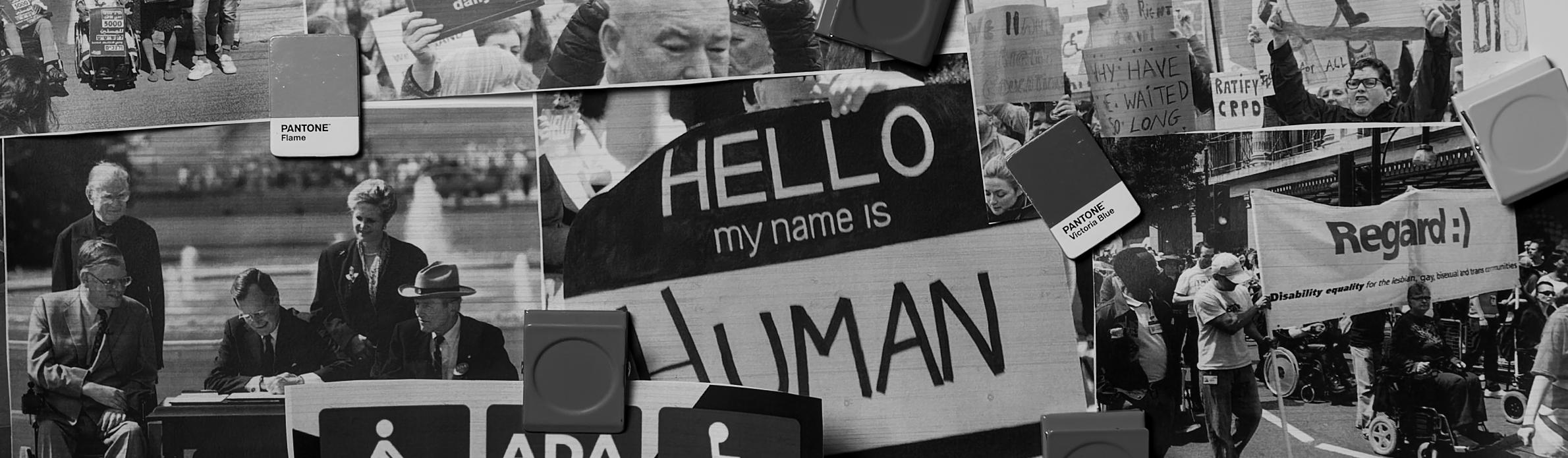
Ttal disabilities and promoting an accessible environment. In addition, true allyship is treating individuals with disabilities in a balanced way — not as heroic or inspiring for simply living their lives, and not as a source of pity or a project to be fixed.
Being an ally to the disability community means going beyond performative inclusion
people need to be ‘fixed’ in one form or the other.” Ableist beliefs are wrong on so many levels because they reflect the medical model of disability, which teaches society to view disability as something that is wrong with a person. Instead, individuals should focus on becoming allies to the disability community.
What is being an ally? The World Institute on Disability stated that an ally is someone who actively supports a marginalized group without being a member. The keyword here is active. Being a good ally takes more than just expressing sympathy, performative social media posts and words of affirmation. While awareness is important, true allyship is shown through actions. This includes but is not limited to treating individuals with disabilities with respect, actively pushing against infantilizing individuals with intellectual and developmen-
of U.S. adults have disabilities
THAT GUY IS CRAZY. YOU’RE so special. I am super OCD about everything. These are just a few examples of ableist phrases that have been normalized in everyday language. This normalization points to a broader issue embedded within society’s misunderstanding of disability. Many words we use without a second thought have negative connotations with offensive origins — phrases related to disability are no exception. According to the Center for Disability Rights, ableism is “a set of beliefs or practices that devalue and discriminate against people with physical, intellectual or psychiatric disabilities and often rests on the assumption that disabled P
While many members of the disability community prefer Person-First Language, it is important to understand that there is no single correct way to refer to everyone as individuals, and different people may have different personal preferences. Some people see their disability as an essential part of their identity and prefer Identity-First Language; others prefer Person-First Language, which puts the individual before their disability. This helps avoid dehumanizing the person with the disability. The best way to determine is to ask the person. Another important facet of being an ally is amplifying the voices of people around us; society should be more accepting of talking about and accommodating disabilities. A notable political figure within the disability community is Tammy Duckworth, an Army National Guard veteran who now serves as a U.S. Senator of Illinois. Duckworth has used her voice to point out internalized ableism.
SOURCE:
Centers for Disease Control and Prevention
Being an ally goes beyond listening to voices with prominent platforms like Duckworth: it is supporting individuals with disabilities in the communities we live in. We can all start by making behavioral changes like removing offensive language from our lexicon, stopping with the condescending euphemisms and normalizing being around disability in our attitudes and everyday lives.
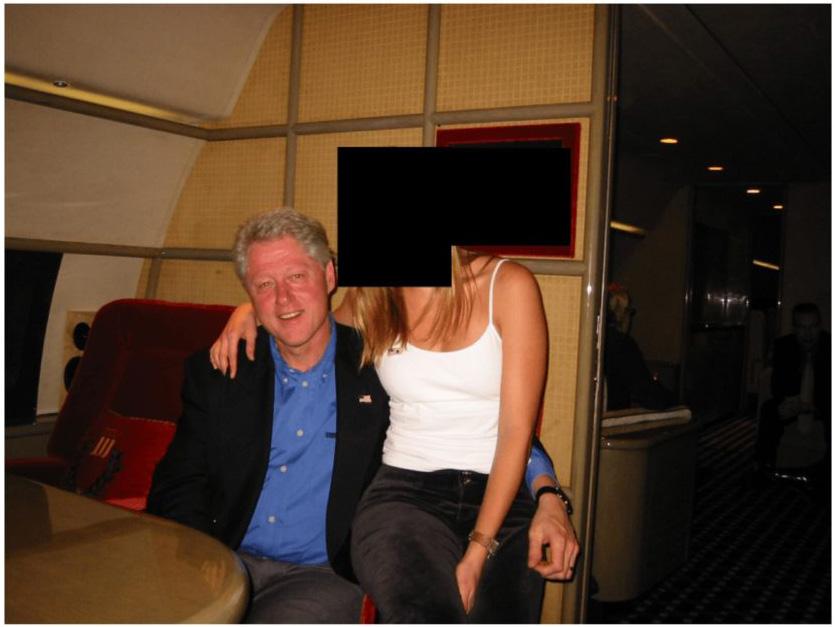
A. Former President Bill Clinton with an unnamed victim in the Epstein files.
Source: Department of Justice.
B. Images of Epstein files released from 2025-26.
Source: DOJ
C. A doodle of a female chest allegedly sent to Jeffrey Epstein by President Donald Trump in 2003.
Source: House Oversight Committee.




D. President Trump and First Lady Melania Trump pose with Epstein and Ghislaine Maxwell at a party in the 2000s. Trump claims to have broken with Epstein shortly after.
Source: DOJ.
E. Andrew Mountbatten-Windsor, formerly Prince Andrew, crouches over a victim.
Source: DOJ




SO FAR, THE DEPARTMENT OF JUSTICE AND THE FBI HAVE DECLASSIFIED MORE THAN 3,500,000 PAGES OF TRANSCRIPTS, FLIGHT LOGS, FEDERAL AGENCIES HAVE WITHHELD 200,000 PAGES OF ADDITIONAL EVIDENCE. 2,500,000+ NEVER BE RELEASED. EPSTEIN FILES. LETTERS AND EMAILS FROM THE REMAINING PAGES MAY


The Trump administration’s panicked mishandling of the Epstein files shows its unprofessionalism

THE RELEASE OF THE EPSTEIN
files has been one of the most mishandled moments of President Trump’s current term. The release of these files has been long awaited since they were brought to attention in 2019. Since then, the commotion grew into conspiracies that floated through social media as Americans predicted which celebrities, politicians and other public figures would make an appearance. On his campaign trail, Trump expressed willingness to declassify the Epstein files. When asked about the subject in a 2024 podcast with Lex Fridman, he said that he would “certainly take a look at it” and that he would “be inclined to do the Epstein [files].” Since Attorney General Pam
BY CAMILLE WELSH staff
Bondi reminded Trump that he himself appeared in the files, however, the president’s relaxed demeanor quickly shifted into panic for what would become a long stretch of coverups, workarounds and lies.
After Epstein’s conviction in 2019, Trump repeatedly assured the public that he had little to no association with the sex offender. He even claimed to dislike him and insisted that they hadn’t been on good terms for years. This definitely contradicts Trump’s own words in a New York Magazine story from 2002: “Terrific guy. He’s a lot of fun to be with. It is even said that he likes beautiful women as much as I do, and many of them are on the younger side.”
There is a striking difference between Trump’s stance before Epstein’s conviction and after. Unfortunately for the president, plausible deniability doesn’t work when you’ve been on the record for decades.
In an attempt to defend himself, Trump approached the Epstein controversy with aggression. He released tirades on X (formerly Twitter) and Truth Social, his own social media platform, referring to the entire subject as a Democratic hoax. He brushed it off as “boring” and avoided probing questions from reporters.
By November, Trump had signed off on releasing the files, which he seemed to take pride in… yet he continued to identify them as a hoax. The Trump administration gave occasional reassurances that they were handling things step-by-step. Feb. 27, the White House claimed to have declassified the first phase of files, a way of breadcrumbing the public. It was revealed later that the information in this phase had already been declassified. The Department of Justice withheld content about the underage victims, claiming to respect their privacy, but illegally redacted information that protected perpetrators as well.
Overall, the sloppy cover-up and unfinished release of the Epstein files has been historically unprofessional. Less than half of the files have been declassified, and 200,000 of those files have been blacked out or withheld. Not to mention, these redactions were able to be uncovered with a few easy clicks by TikTok users, showing the DOJ’s negligence. Looking at how the Trump administration has handled this matter, it’s difficult to maintain hope for our country. Society has criticized past presidents for failures that would be mild by today’s standards. The Trump administration lacks many professional factors, and their handling of the Epstein files proves that accountability is one of them. P

F. President Trump with Jeffrey Epstein sometime in the 2000s. Source: DOJ
G. Representatives Ro Khanna (D-CA), Thomas Massie (R-KY) and Marjorie Taylor Greene (R-GA) present a law to release the Epstein files. Source: Heute.at, CC BY 4.0
H. Multiple pages of the Epstein files printed out and arranged on a floor.
Source: Heute.at
The DOJ was allowed to redact victim information. That’s not all they did — and we have examples.
EFTA00005586, also known as “Grand Jury-NY,” is a record of the case brought against Jeffrey Epstein and Ghislaine Maxwell in 2019. The first fifteen pages of that document look like this:
In 2016, Epstein victim Virginia Giuffre was called to testify against Alan Dershowitz, one of Epstein’s friends. Her testimony, released in 1218-12.pdf, reads like this:
Q: What other powerful business executives were you sexually trafficked to?
...
McCawley (Giuffre’s lawyer): Take your time. Take a deep breath.
A:
Q: Who else?
McCawley: To the extent you recall.
...and they just keep going. All 119 pages of the jury proceedings are completely blacked out from margin to margin.
Dec. 19, 2025, the Department of Justice began uploading troves of declassified photos to its website. Just one day later, however, 16 of those photos looked like this:
When questioned, the DOJ claimed that the deletions were to protect victims. “The 16” were known to have depicted several former Presidents and a pope.
A: I’m just trying to think. This is all very confronting for me. So at the same token I’m just trying to recollect everybody...
Who these “powerful business executives” were — and why they were never prosecuted — remain concealed to this day. Giuffre was found dead in 2025, and her death was ruled a suicide.
READ MORE
Scan here to read the Epstein files for yourself
The label “conspiracy theorist” is weaponized and overused

BY FRANK CHEN opinions editor
JEFFREY EPSTEIN. THAT got your attention, didn’t it? A private island, unspeakable crimes and America’s most powerful politicians — Epstein’s horrors are clearly a generational scandal, and both parties will likely be marred by the fallout. It’s almost dizzying to reflect on how quickly it exploded onto the national scene — up until recently, no one had known about it.
Well, that’s not quite true. Questions about the case — How did a high school math teacher befriend multiple world leaders and buy a private island? How did such a large child abuse ring go unnoticed for so long? And why have none of his powerful friends been investigated? — have floated around since Epstein died before facing trial in 2019. Even so, these questions were never answered; instead, people were mocked, ostracized, deplatformed, banned and arguably censored for daring to question official narratives. They were “conspiracy theorists.”
Originally coined after JFK’s assassination in 1967, the term “conspiracy theorist” has ballooned in use — disturbingly so. Once reserved for people who’d blame climate change on space lasers, it’s now used to shut down anyone who goes off-script on foreign wars, internet surveillance or even the national debt — pressing, realistic issues that directly affect us all.
In Cultish: The Language of Fanaticism, cult expert Amanda Montell describes “thought-terminating cliches” — insults used to squash independent thinking. If “conspiracy theorists” really are what we call them, why are we afraid?

BY ADELA GINGRICH arts & entertainment editor
IN ST. LOUIS, CHICAGO AND even Toronto, art teacher Daniel Raedeke exhibited his artwork in galleries across the continent. This journey continues as his newest collection, “Outside”, is on display at Bruno David Gallery in Clayton. This showing, which opened Jan. 16 and stays until Feb. 21, marks Raedeke’s sixth solo exhibition at Bruno David Gallery.
The gallery serves as an abstract interpretation of nature, exploring the line between viewing nature simply through
Art teacher Daniel Raedeke brings his art students to view his collection “Outside”; from left to right, the pieces are titled “Illusions in the Sky,” “Countryside,” “Winter,” “Seaside” and “Ecosystem.” The collection communicated a deeper message to its viewers about the significance of observing art in its natural form. “It’s important to remember to just stop and look outside,” Raedeke said. (photo courtesy of Daniel Raedeke)
Daniel Raedeke displays his art at local gallery Jan. 16—Feb. 21
a screen and seeing it in the real world. It shows us how an increasing use of digital media can cause people’s connections with nature to warp and change accordingly.
“So much of our relationship to nature is filtered through photos and apps,” Raedeke said. “It’s good to get outside and look again.”
“Outside” has a deeper personal tie to Raedeke than one would know by viewing the collection. The art was inspired by a childhood memory in which he examined nature through artistic expression.
“I remember when I was in sixth or fifth grade, I had to design a poster of the birds
CHAMBER CONCERT
Coming Feb. 24 at 7 p.m. in the orchestra room, high school band students will perform in small chamber groups playing various pieces at the High School Chamber Concert. The purpose of the Chamber Concert is to be a smaller and more close-knit performance, as students are broken into various duets, trios and a woodwind choir.
that we were going to see on a field trip to a nature camp,” Raedeke said. “I loosely based [the gallery] on that experience, but it’s a little bit more like an exploration of paint and nature.”
For Raedeke, each collection he creates poses a “creative challenge” to his art journey, giving him the opportunity to explore different themes, techniques and styles.
“I always like to do something new that I haven’t done before,” Raedeke said.
“The work is definitely related to things I’ve done before stylistically, but I like to experiment and try to innovate inside of whatever theme I’ve chosen.”
NIGHT OF JAZZ CONCERT
The band will be performing the High School Night of Jazz Concert Feb. 26 at 7 p.m. in the Performing Arts Center. The concert features band students from both high school and middle school who not only learn the style of jazz music through practice, but learn to improvise as they play a melody which they come up with on the spot.
Where: The Link Auditorium
Price: $56-$76
The Listeso String Quartet will be performing twice at the Link Auditorium during Valentine’s Day. The 60-minute performances will feature an arrangement of romantic songs in a candlelit ambiance, making it a perfect Valentine’s date.

Where: Foundry Food Hall
Price: Free Admission
Musical artist Colt Ball will be performing his unique blend of reggae, folk, hip hop, soul and improv jam. People can enjoy live music while tasting a diverse selection of foods, including barbecue and poke, from over 17 kitchens throughout the Foundry Food Hall.

Where: Bissinger’s Candy Kitchen
Price: $49
Run or walk a 5k through the historic streets of St. Louis on Valentine’s Day. The chocolate-themed race will include chocolate finisher medals, chocolate treat bags and drink stops filled with rich hot chocolate.
Where: Not Just Paint
Price: $45
Paint a portrait of your partner in Picasso style with the guided help of an instructor. Listen to music, eat snacks and take photos in the selfie room while creating a unique memory with your valentine to cherish and take home.

Where: Cinemas throughout St. Louis
Price: ~$12
Experience a tragic and compelling love story and Margot
Events happening around St. Louis Feb. 14 for Valentine’s Day
BY ELISA CORMIER staff
ILLUSTRATIONS BY NORA BRUNNQUELL artist
Rating new Valentine’s candies of 2026
Reese’s Unwrapped Chocolate Peanut Butter Creme Mini Hearts

These bite-sized, ready to eat hearts put a fun Valentine’s spin on the creamy Reese’s candy.
Snack Size Kit Kat Friendship Exchange Milk Chocolate Bears

The chocolate wafers deliver a nice crunch while the bear shapes add a cute charm.
Jolly Rancher Awesome Reds Gummies Pouch

The mixture of flavors ensures that each bite is interesting, even if the gummies themselves are fairly simple overall.

Snack-Size Friendship Exchange Twizzler Twist
Robbie as Catherine Earnshaw in a just over two-hour film based on the classic 1847 novel written by English author Emily Brontë.

The rubbery texture creates an unpleasant chewiness while the flavor is artificially dull.
Hershey Valentine’s Shapes Snack Size Assortment

This candy blend brings two delicious flavors together with shapes that match the Valentine’s theme perfectly.
Source: Hersheyland
What’s gonna get you?
1) You hear a rustling sound in the middle of the night, what do you do?
a. Grab a weapon and go investigate
b. Climb onto the roof; getting to high ground is the way to go
c. Lure it out with food
d. Lock all the doors and try to ignore it
e. Quietly hide in the nearest closet
2) What weather do you thrive in?
a. Sunny
b. Cloudy
c. Windy
d. Thunder
e. Snowy
3) What does “fear” feel like to you?
a. A weight on your chest
b. Needles pricking your skin
c. Hypervigilance
d. A trance state where you can’t move
e. Total sensory overload
Mostly Bs:
DEMOBAT
Considering these rarely show up, you have to be really lucky to somehow get killed by them. Good job...?

4) If you had one of these superpowers, which one would it be?
a. Super strength
b. Flight
c. Super speed
d. Telekinesis
e. Mind reading
5) Which of these is your biggest weakness?
a. Recklessness
b. Being self-sacrificial
c. Curiosity
d. Dwelling
e. None of these, I’m perfect
6) Pick an aesthetic:
a. ‘80s nostalgia
b. Grunge
c. Single mother of six with perfect hair
d. Dark academia
e. Indie

DEMOGORGON
You stood your ground but got swept up with one hand. Unfortunately, you’re not Karen Wheeler. Mostly As:
Mostly Cs:
DEMODOG
You thought it was cute and harmless... until it charged at you so fast that there was no time to run.


Mostly Es:
MIND FLAYER
Even if you escape the others, chances are the colossal, 700foot shadow creature will probably get you.

Mostly Ds:
He snapped your bones –but don’t worry, it means you’re an interesting person.
“I thought it was entertaining and wellconcluded.”

Andrea Jeliazkova (9)

“Holy plot holes. And yep, El definitely died.”
Nora Bangert (10)
“I thought it was good, and I was happy when Kali died.”
Owen Bullock (11)

“[It] finalized well, but the last episode [was] rushed.”
Sahasra Mandalapu (12)
“How do you ruin [everything in] just one episode?”
Franco Van Well (10)
BY FIONA VAN ALLEN art editor-in-chief
BY SABRINA TAGUNKOVA staff
Stranger Things used their LGBTQ+ characters as a marketing technique and yes, it matters
SSPOILERS AHEAD
STRANGER THINGS IS MANY
people’s favorite show. With a main message of “stay true to yourself,” it shaped many people into who they are today. It became loved not just for cool monsters and nostalgia, but for giving emotional shelter to anyone who ever felt like something was wrong with them. That is, until season five.
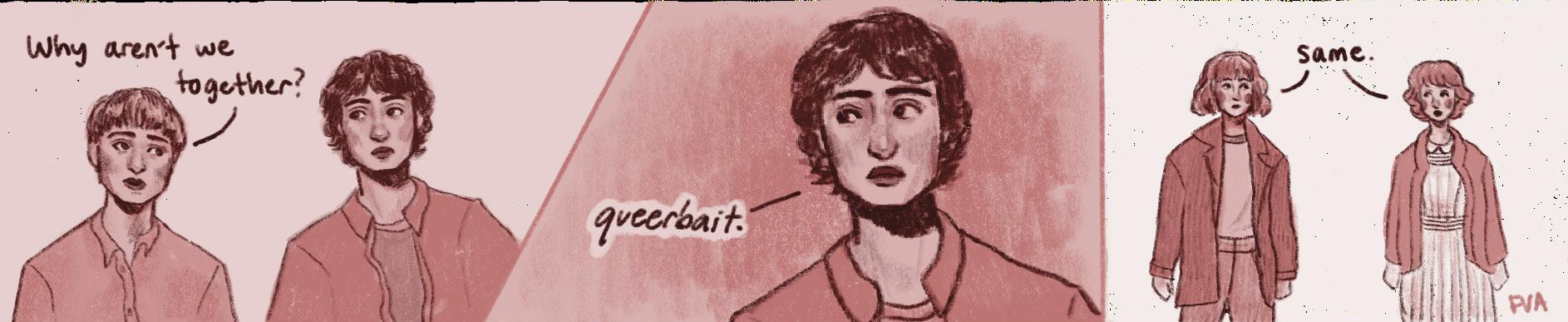
The final season had great potential to create one of the strongest LGBTQ+ representations in media. The Duffer brothers, the show’s creators, gave us two amazing confirmed queer characters — Will Byers and Robin Buckley. Both have a unique personality, and I personally found comfort in them learning to love themselves. However, this isn’t where the problem lies.
A huge category of fans who strongly believe childhood best friends Mike Wheeler and Will Byers are in love, also known as Bylers, have expressed their disappointment in how the show handled this relationship. Though it’s easy to dismiss
this as a silly, common fan experience of being upset about a story not going the way you wanted, this is far deeper. The Duffers aren’t oblivious. From the start, they purposefully hinted at the two having strong feelings for each other. They made conscious choices like having Mike and Will recreating specific scenes to parallel confirmed couples in the show and using songs known to be prominent in the queer community. To put it plainly, every single interaction was scripted to look suggestive.
In volume one, Robin and Will share a truly beautiful scene where they talk about sexuality and identity. It resonated with many fans. Robin brings up a short-lived crush she had on Tammy Thompson in high school and tells Will that she needed to move on and focus on herself instead.
In volume two, Will’s coming out scene had a beautiful monologue, but aside from that it was a disaster. Not only does it look like he’s holding a press conference with a dozen people in the room (some of whom he doesn’t even know), but the fact that his coming out was forced by his fear of Vecna, the show’s villain, is just disgusting. Will refers to Mike as his “Tammy.” Why is this problematic? Will has been deeply in love with Mike since they were young. They know each other better than anyone. This doesn’t seem like a silly, quick crush. It being quickly dismissed like it never mattered basically tells the audience that queer love isn’t really meaningful.
And really, why is every single queer character’s one objective self-acceptance?
Of course, it’s incredibly important. But can they never just end up happy?
The events of season five happen after a long time jump, and we barely see Mike and Eleven interacting. Until the very last episode, none of the couples, including them, kiss. On the other hand, who does Mike have a huge amount of scenes with? That’s right, Will Byers. Many fans just assumed that El and Mike had amicably broken up during the time jump. This way, the Duffers were able to keep people believing that Byler might happen while simultaneously catering to homophobic audiences by mocking queer relationships. No viewers lost, both sides engaged. This is too good a marketing strategy to be an accident. For this same reason, they made Robin and Vickie break up in the epilogue. What was the point of introducing Vickie’s character and getting her involved with the Upside Down if she was just going to completely vanish at the end? Why did we get absolutely no storyline for this couple, and they just mysteriously get together during the pre-season five time-jump? Even worse than poor writing choices, this once again belittles queer relationships. And of course, keeping the two happy together until the last minute helped the show keep viewers. Regardless of what some think, it’s completely justified for people to be unsatisfied with where the ending leaves the queer characters: alone. This isn’t just a terrible way to represent queer relationships; the show seems to have intentionally used the characters to get attention.
As of Jan. 28, the girls’ swim & dive team has a 3-2 overall record. They will compete at the district meet, hosted by Ladue, starting Feb. 13. Those who perform well at districts can qualify for the state tournament, which will take place at the end of February.
Both teams have had several athletes place well individually at various tournaments; the boys placed first at the John Burroughs Tournament Dec. 5-6, 2025, and the girls placed second. They are now shifting focus to the upcoming district tournament, beginning Feb. 20.
The boys’ basketball team has a neutral record, with eight wins and eight losses. They face off against rival Clayton High School Feb. 27 for the awaited annual Coaches vs. Cancer Game fundraiser. After that, they will gear up for districts, which are set to start March 3.
BY VICTORIA DERDOY health & sports editor
THE SOUND OF SNEAKERS still squeaks against the hardwood floor and the whistle rings through the air, just like 10 years ago. But things are different this time around, as Coach Courteney Neier leads the varsity basketball team from the sidelines rather than the court.
Despite their small roster, the girls’ basketball team has maintained a winning record. Neier became the varsity coach after coaching JV for the past several seasons and even playing for Ladue herself.
“This is a full circle moment,” Neier said. “I graduated from Ladue in 2016 and was a part of the program here. Ten years later, it’s crazy to believe I’m on the other side of it, helping players develop their game and personalities.”
The girls are young but talented, working together to grow their game IQ and step outside of their comfort
The girls’ basketball team reflects on the season and prepares for districts
zones. The first semester concluded with a second place finish at the MICDS Winter Tournament.
“It was a first for my players and myself,” Neier said. “To be sixth seed in the tournament and come out with second place, we learned a lot and became better players and coaches. It was the cherry on top to finish the 2025 year.”
However, this season has not been without challenges. This year, significantly fewer girls showed up for tryouts, and the team has struggled with injuries and illnesses across the board. In spite of this, the girls have remained optimistic about the team’s future this season.
“These games mean so much because we want to work up to the best seed in districts,” shooting guard Marley Robinson (10) said. “Having only one senior, our goal is to try to win districts for that senior.” P
officially sign to play sports in college at the signing ceremony Feb. 4



RIGHT: Martin Tsygankov (12) faces off against a Clayton High School player Jan. 10. The Rams beat the Greyhounds 8-1.
“My favorite part of the Clayton game was the energy of the game and getting revenge for a fluke loss to them earlier in the season,” Tsygankov said. “I am really looking forward to the playoffs because we are in the spot to receive first seed in the Wickenheiser Playoffs, and this year we have the team that can actually win it.”
(photo by Risa Fingerman)
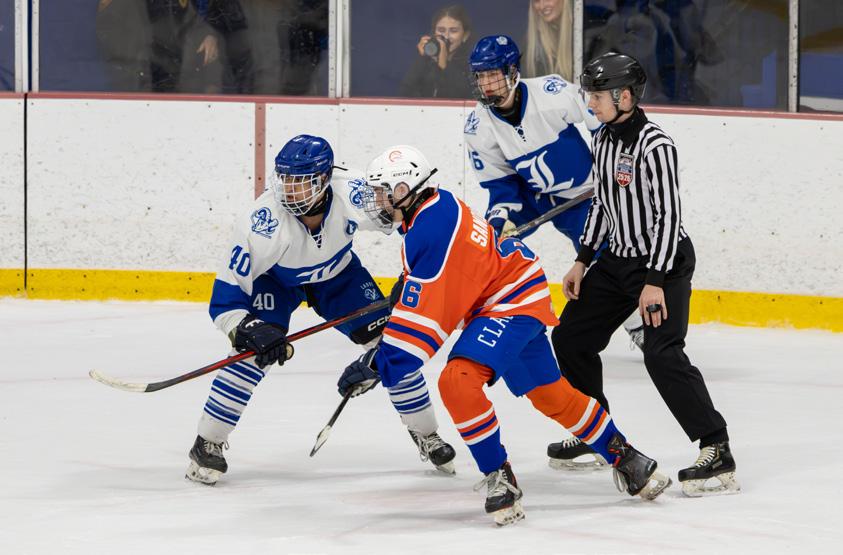
“During the first semester, we did band work, some baseball-specific med ball exercises [and] core exercises. As we are moving more into the second semester, we are doing more baseball-related stuff, like fielding drills and hitting drills.”
Athletes share how the spring sports teams are starting to prepare for tryouts the week of March 2
“For preseason lacrosse, we are doing practices twice a week. We’re trying to get more girls to try out for the team this season and [are] working to build our skills during the off season to get us ready for a good season in the spring.”
“For soccer preseason we’re trying to practice weekly. We go over a typical game warm up and spend time doing fun games that also enhance technique. We’re trying to get more girls to try out, so we’re mostly doing enjoyable games”


LEFT: Helena Haines (12) perfects her form as she raises a dumbbell at the Barre3 studio Jan. 28. Haines started attending pilates regularly two years ago. “The music and ambience of the studio is really important,” Haines said.
RIGHT: Anya Calfee (11) and Haines workout side by side with Barre3’s various equipment. Calfee has been to numerous different exercise studios over the years. “It’s a lifelong activitiy,” Calfee said.

Most Popular Class: Tru Hot Pilates (95 degrees)
Crowd Size: 30-40 people
Must Bring: Yoga mat
Cost: First class free; $115/ month for students; $28 drop-in
Most Popular Class: Signature 60 (full-body balanced workout)
Crowd Size: 20-25 people
Must Bring: Water bottle
Cost: First class free; 15% off for students; $25 drop-in
“SET YOUR INTENTIONS FOR class. Say hello to your neighbor,” the instructor leads as Helena Haines (12) pivots towards the chatter around her. After a quick exchange, she steps onto her mat and settles in, waiting for music to erupt from the speakers. Seconds later, colorful lights pulse with the beat. As the room snaps into synchronized motion, Haines and the rest of the eager bodies move together as one.
Haines, a frequent workout class attendee, has found a strong difference between the environment of group workouts and individual ones. When working out alone, motivation and effort have to come from within. However, in a group class, that effort is shared and built through the energy within the room. Haines finds that the physical demands of the class are no match for the mental hurdle of simply taking the step to show up to class.
“The discipline of going back every day [is a challenge] because it can be hard with a busy schedule,” Haines said. “Planning out when you’re going to do it is helpful in sticking to your plan, because the actual workout isn’t as hard as actually making yourself go.”
Most Popular Class: Orange 60 (20 mins running, 20 mins rowing, 20 mins weights)
Crowd Size: 24-36 people
Must Bring: Running shoes
Cost: First class free; $28 drop-in
Haines originally joined workout classes for the exercise, yet her consistency has been shaped by something else: the connections she has built around classes. Smiles from friends met in class and shared routines with other members have become a central reason she shows up.
“I feel like the connections I’ve made within the classes really stick out to me,” Haines said. “Meeting the instructors, learning each other’s names, seeing them every week, and just even having a little five-minute conversation brings your mood up, and makes you feel better before you go into your workout or even after. I love all the people I see there rather than just going to the gym by myself and not really talking to anyone.”
Haines is not alone in her love for workout classes. In fact, in recent years, there has been a boom in group workout class popularity, such as HIIT, Barre, Pilates and yoga. Even local studios are seeing these patterns, like Barre3 owner and Barre instructor Melissa Stolze. She confirmed these recent workout trends in her barre studio, including increased participant engagement from the younger generation.
“We have seen a 20% increase in enrollments year over year as group fitness continues to gain traction,” Stolze said. “We are seeing a shift where younger generations view these classes as a consistent part of their lifestyle. For example, we have several mother-daughter duos working out together, and my 17-year-old daughter even works at the studio and loves taking classes.”
The popularity of group workout classes is not simply due to the movements performed during class, but rather a strong
Most Popular Class:
Total body (uses the “Megaformer”)
Crowd Size: 12-15 people
Must Bring: Grip socks
Cost: First class $15; 15% off for students; $30 drop-in
combination of physical intensity and environment. For Anya Calfee (11), the community built around the class cultivates a supportive but competitive environment.
“I definitely think more about what I’m doing [during class] and probably push myself harder because I don’t want to be the only one in there that can’t do something,” Calfee said.
Dance Marathon is an organization focused on raising money for the Children’s Miracle Network. Although the club has no connection to exercise, they have seen the community and support built around these classes and choose to use them as fundraising and team-building events.
“With all of my friends from Dance Marathon at the class, it was a fun vibe because we knew we were getting a good workout in for a great cause,” Dance Marathon executive board member Gabe Fields (12) said.


BY ELLIE LERCHER staff
wWITH THE CROWD BOOMING, cheerleaders chanting and players shouting, William Becker (11) runs across the court, making every last second count while the clock ticks down to the end of the fourth quarter. Getting past St. Dominics’ defenders, Becker shoots with one second on the clock, scoring a 3-pointer to put his team in the lead and ultimately win the game. The crowd erupts wildly in roars and cheers, and the boys’ varsity basketball team, filled with excitement, lifts Becker up in celebration of his talent.
Becker has been playing organized basketball since he was 4 years old. His interest in the sport was initially inspired from his mother’s love for college basketball. Ever since he started shooting baskets into the hoop his mother put in the driveway, basketball has left a remarkable and deep impact on Becker’s life.
“[My favorite aspect of basketball] is meeting the people you meet while you play the sport,” Becker said. “I’ve met so many people over my whole life playing
basketball, and I’m still friends with people that I met in grade school [from basketball] to this day.”
Not only has Becker gained meaningful relationships and friendships from basketball, but he has also gained personal qualities from the game. These characteristics he’s achieved affects both his performance as a captain on the court and his personality off the court.
“I would say I’m being more understanding of everyone, especially this year, since I’m a leader for our team,” Becker said. “Last year, the seniors taught me how to be more mature on and off the court. I’ve seen people struggle and go through ups and downs, and I feel like I’ve been there for a lot of them to help them through those times.”
Y“I’ve had [many] one-on-ones with [Becker], whether it may be [me] approaching him or [him] approaching me,” Anderson said. “He’s a smart kid. He’s a deep thinker, and he brings some good ideas to [the team].”
Though Becker has excelled in his performance and being a leader on the court, he has struggled with putting pressure on himself. However, this has further helped Becker become both a supportive and strong teammate, which highlights his leadership characteristics.
“[You have to have] the mind of a goldfish. You gotta forget about the bad things that happen. If you let those things carry with you, it will negatively impact you for a long time.”
William Becker (11)
“I feel like I’m in competition with myself to do better,” Becker said. “It inspires me to get other people involved and help them get through the hard times.”
Becker, through his knowledge of the game and his critical thinking on the court, has earned his role as a captain for the team. Boys’ basketball head coach Chad Anderson has noticed these leadership qualities in him ever since he began coaching Becker in his freshman year, and admires his willingness to step up and voice his ideas for the sake of the team.
Despite the different struggles that he encounters, Becker has found various ways to get past them. Doing this, he’s able to keep preforming his best and also able to keep showing up for his team every game.
“[You have to have] the mind of a goldfish,” Becker said. “You gotta forget about the bad things that happen. If you let those things carry with you, it will negatively impact you for what can be a very long time.”
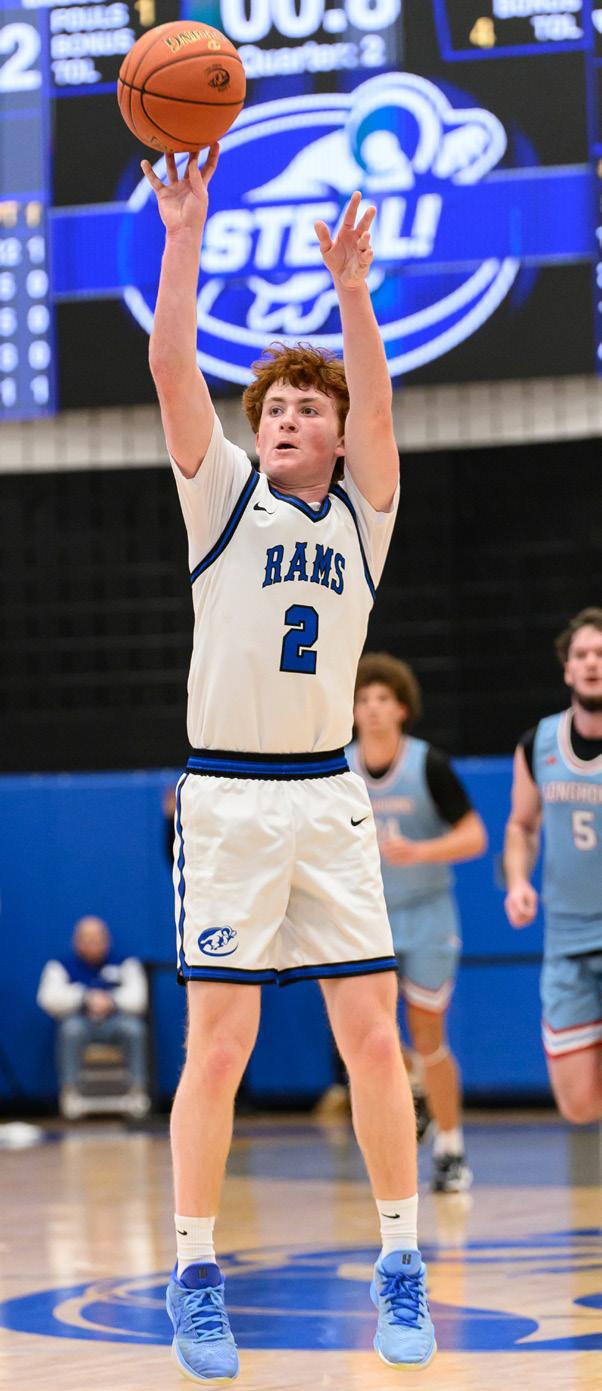
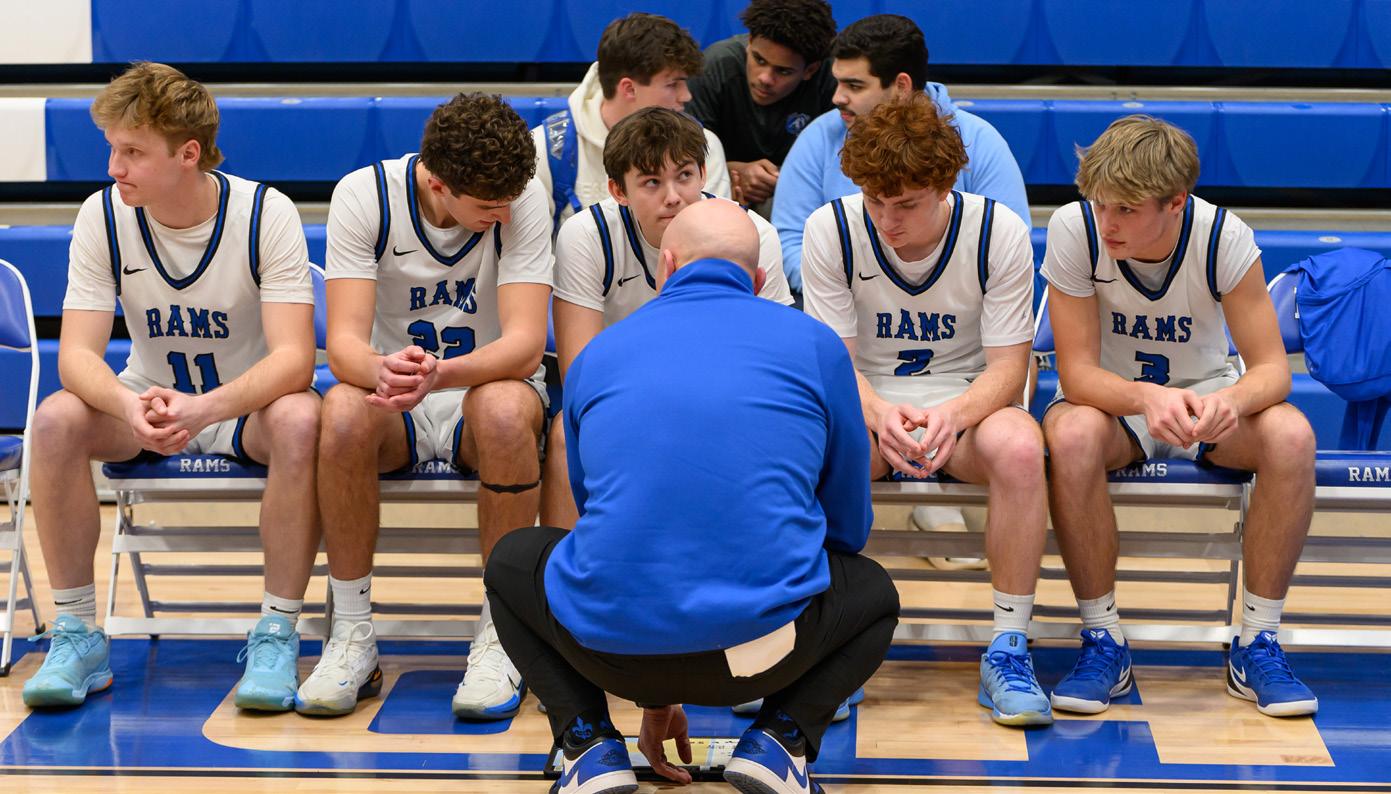
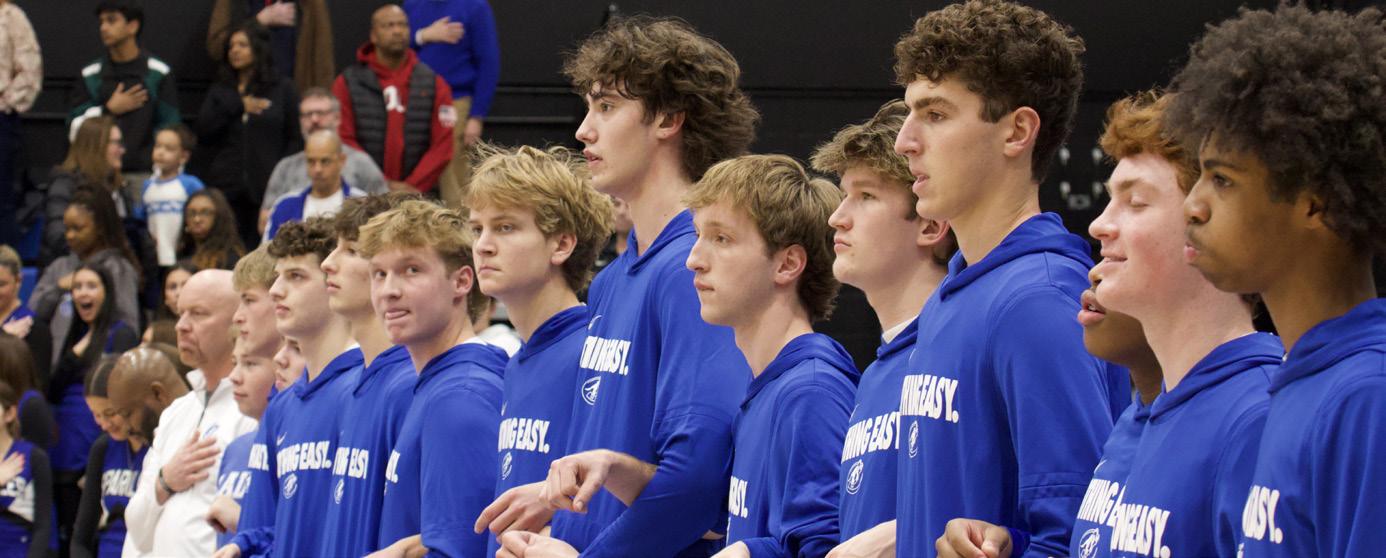
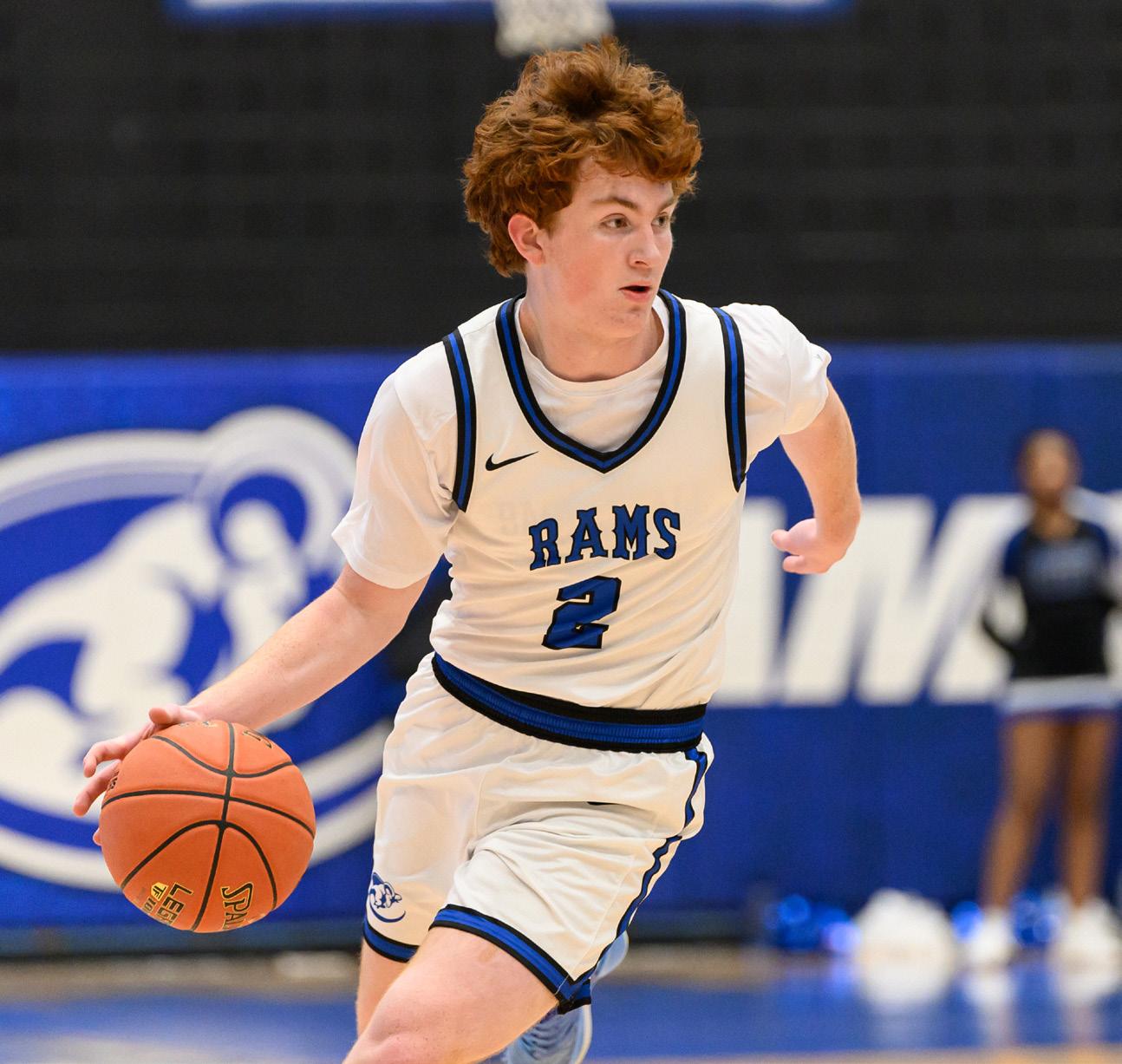
TOP LEFT: Becker shoots a 3-pointer at a Ladue home game against Parkway West. Becker was voted as one of three captains for the boys’ varsity basketball team. “To jump from an underclassman to an upperclassman this year, my role was bigger,” Becker said. “I had to fill in the shoes of the seniors who left last year.” (photo by Vincent Hsiao)
TOP: Boys’ basketball head coach Chad Anderson reviews the game plan with his players before their game against Parkway West. Ladue won during overtime with a score of 74-73. (photo by Vincent Hsiao)ww
ABOVE: The boys’ varsity basketball team stands while linking their arms for the playing of the national anthem before their game. They played MICDS Dec. 12, 2025 and lost 64-50. (photo by Emily Rosen)
LEFT: William Becker (11) dribbles across the court during their game Jan. 20 against Parkway West. Becker scored a season high of 36 points. (photo by Vincent Hsiao)

ILLUSTRATION BY
NORA BRUNNQUELL artist
BY HENRY MADDEN staff
Influenza season slams Ladue and the world
Cars have seatbelts. You can still die in a car crash. However, seatbelts still lower the risk of death tenfold. Vaccines work the same way. Generally, when they are first created, vaccines are based around flu strains in the southern hemisphere. By the time the flu makes its way north, it has radically shifted into different strains than what the vaccine was built on. Because of this, the vaccine isn’t 100% effective.
There are a couple medications that, if taken early, can combat flu replication. Tamaflu and Xofluza are the two primary treatments, and if given within 48 hours of symptoms starting, they can decrease duration of illness by a day. However, they’re recommended only for patients who are at an increased chance of complications, like those with asthma or other pre-existing conditions. These treatments often come with fairly nasty side effects, like nausea and vomiting, which is why doctors like to avoid them.
While the best defense against the flu is vaccination, once you’re actually sick, the only thing you can really do is take symptomatic medication. For the flu’s main symptoms, there are tons of over-the-counter medications available for treatments. These include Tylenol, Motrin and Advil for pain and fever; Robitussin and Delsym for cough; Benadryl for congestion; and DayQuill, Mucinex and Theraflu for more general symptoms.



Q: What do you recommend to prevent the flu?
A: Hand washing because that keeps your germs to yourself, ideally wearing a mask if you have symptoms and then staying home when you’re sick.
Q: When should I stay home from school?
A: If you’re too sick to be at school without having to take medicine and you can’t be in class because you don’t feel [well], it’s best to stay home, rest and come back when you’re feeling better.
Q: What treatments do you recommend?
A: The recommendations are to treat the symptoms with fluids, and if there’s a fever, to take medicine for that, or the body aches, just treating the symptoms as they come with mostly over-the-counter treatment.
Panorama surveyed 124 students Jan. 22 Were you sick over winter break?
The greatest killer of the Great War is the flu
Avian influenza jumps to humans for the first time













1 1 1 WINNER!














AT THE END OF 2025, THE GLOBAL SPORTS BETTING INDUSTRY WAS WORTH BILLION DOLLARS. in 4 sports bettors missed bill payments because they bet the money. 45% have stopped saving emergency funds. 15% have taken out loans to fund wagers. 1 in 3 blame gambling for their debts. 39% bet to pay off existing debts.