Acquihire_ The Complete Guide Every Tech Founder Should Read Before Considering a Talent-Driven Exit
Acquihire: The Complete Guide Every Tech Founder Should
Read Before Considering a Talent-Driven Exit
Building a successful startup is rarely a straight path Founders invest years developing innovative products, building talented teams, acquiring customers, and attracting investors While many companies aim for rapid expansion or a high-value acquisition, changing market conditions can alter those plans. Venture funding may slow, competition may intensify, or scaling independently may become increasingly difficult In these situations, an Acquihire can emerge as a strategic alternative that benefits founders, employees, investors, and acquiring companies alike.
Unlike a traditional acquisition, where buyers primarily evaluate revenue, profitability, and market position, an acquihire places exceptional value on the people behind the company The startup's engineering talent, leadership, product expertise, and collaborative culture often become the main reasons for the acquisition As demand for experienced software developers, AI engineers, and product specialists continues to rise, acquihires have become an increasingly important part of the technology M&A landscape
Understanding how acquihires work, how they differ from conventional acquisitions, and how they affect every stakeholder can help founders make better decisions when evaluating potential exit opportunities.
What Is an
Acquihire?
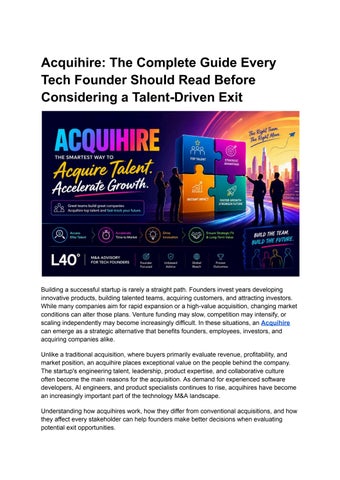
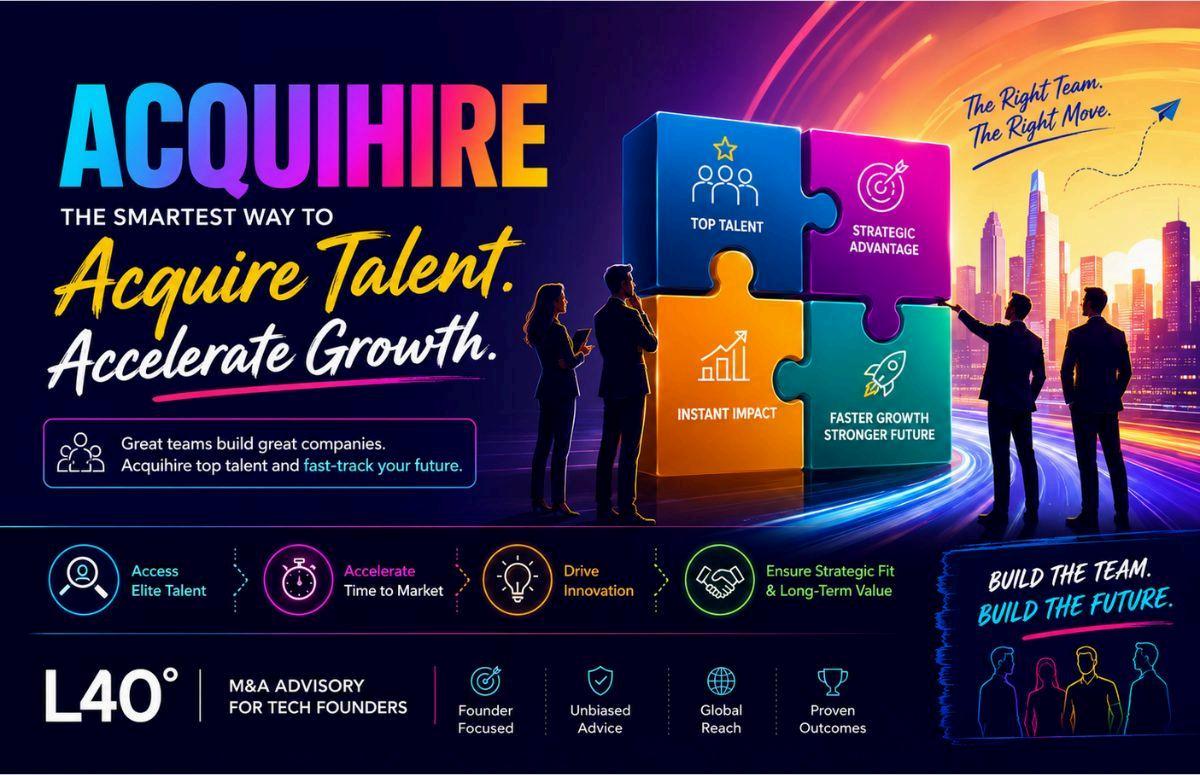
An acquihire is a business acquisition in which the acquiring company is primarily interested in hiring the startup's employees rather than purchasing the business solely for its products, customers, or financial performance. The founders, engineers, product managers, designers, and technical specialists become the central asset in the transaction because they possess knowledge and expertise that would be difficult to build through traditional recruitment.
This does not mean the startup's technology lacks value Intellectual property, proprietary software, technical infrastructure, internal tools, and product architecture all strengthen the acquisition by demonstrating the team's capabilities. These assets often provide the foundation for future innovation inside the acquiring organization
The difference is simple In a traditional acquisition, the business creates value because of its commercial success. In an acquihire, the people create the greatest value.
Why Acquihires Have Become More Common
The technology industry has experienced enormous changes over the past decade Companies now compete aggressively for highly skilled software engineers, artificial intelligence researchers, cybersecurity experts, cloud architects, and experienced product leaders
Hiring these professionals individually has become increasingly expensive and unpredictable Recruitment cycles can stretch over several months, and even after making successful hires, companies still need time to build effective teams and establish productive working relationships.
An acquihire provides a faster solution
Instead of recruiting one employee at a time, buyers gain immediate access to an experienced team that has already built products together, solved technical challenges, and developed efficient collaboration
The rapid adoption of artificial intelligence has accelerated this trend even further. Organizations investing heavily in AI recognize that acquiring experienced engineering teams often delivers results much faster than relying solely on conventional hiring
Although large AI talent acquisitions frequently dominate industry headlines, the majority of acquihires involve early-stage or mid-stage technology startups with exceptional teams but limited commercial traction
Why Buyers Pursue Acquihires
For acquiring companies, an acquihire offers benefits that extend well beyond hiring talent
The first advantage is speed
Building an engineering organization requires recruiting, interviewing, onboarding, training, and integrating new employees into existing teams This process consumes significant financial and management resources while offering no guarantee that the final team will work effectively together.
An acquihire dramatically shortens this timeline Buyers acquire professionals who already understand each other's strengths, development processes, communication styles, and technical capabilities.
The second advantage is reduced hiring risk
Every startup provides evidence of what its team can accomplish. Buyers can evaluate the quality of engineering, product execution, software architecture, and innovation before making an acquisition decision
Finally, acquihires help companies remain competitive
Technology markets evolve quickly Acquiring an experienced engineering team enables businesses to accelerate product development, enter new markets, strengthen existing platforms, and respond to competitive threats much faster than recruiting individual employees
What Makes a Startup Attractive for an Acquihire?
Not every startup becomes an acquihire candidate.
Companies that attract interest usually possess several common characteristics
The team demonstrates exceptional technical expertise and has successfully delivered innovative products
Founders have built a positive engineering culture that encourages collaboration and problem solving
The startup operates in a sector experiencing strong demand, such as SaaS, artificial intelligence, cloud infrastructure, cybersecurity, fintech, or enterprise software.
The business may also own valuable intellectual property or proprietary technology that supports the team's expertise.
Interestingly, many acquihire candidates generate only modest revenue Their commercial performance may not justify a traditional acquisition, but their technical talent remains highly valuable to strategic buyers.
Understanding the Structure of an Acquihire
One of the biggest misconceptions surrounding acquihires is that the announced purchase price represents the amount shareholders receive.
In reality, these transactions often contain several distinct financial components
The first component is the purchase price for the company or selected assets. This amount is distributed according to shareholder ownership, investor rights, and liquidation preferences
The second component involves employment compensation.
Founders and selected employees frequently receive attractive salary packages, signing bonuses, stock options, restricted equity, and long-term incentive plans
These employment agreements exist separately from the acquisition itself
Retention arrangements form another important part of the transaction. Buyers want confidence that the talent they acquire will remain with the business after the deal closes. Consequently, much of the financial reward depends on continued employment over an agreed period
Some transactions also include agreements covering intellectual property ownership, software licensing, consulting arrangements, or performance-based incentives
Looking beyond the headline valuation is therefore essential when evaluating an acquihire offer
How Acquihires Are Valued
Valuing an acquihire differs significantly from valuing a traditional acquisition.
For startups with limited revenue, buyers often calculate the cost of hiring and retaining an equivalent engineering team independently Recruitment costs, onboarding expenses, lost productivity, and market competition all influence this calculation.
If acquiring the startup represents a faster and more efficient solution, the buyer may consider the transaction financially attractive
Companies with stronger commercial performance continue to be evaluated using more traditional business metrics
Recurring revenue, profitability, customer retention, gross margins, competitive positioning, and long-term market opportunity all influence valuation
In these situations, talent complements financial performance rather than replacing it.
Every acquihire therefore represents a combination of commercial value and human capital
How Different Stakeholders Benefit
One reason acquihires can be difficult to evaluate is that every stakeholder experiences the transaction differently.
Founders often receive the largest employment packages because buyers want leadership continuity and technical expertise These packages may include competitive salaries, stock awards, signing bonuses, and retention incentives.
Employees selected by the buyer benefit from career stability, expanded professional opportunities, improved resources, and long-term compensation
Employees who are not retained generally depend on the value of their existing equity Their financial outcome largely depends on investor preferences and the overall purchase price
Investors recover their investment through acquisition proceeds. While some acquihires generate attractive returns, others simply provide a responsible exit after challenging market conditions
Understanding these different outcomes helps founders negotiate more effectively on behalf of everyone involved
Acquihire Versus a Traditional Acquisition
Although both transactions involve selling a business, they pursue very different objectives.
Traditional acquisitions evaluate the company itself
The acquiring company believes the startup's engineers, founders, designers, and product specialists represent greater strategic value than current financial performance
Companies with strong recurring revenue often achieve higher valuations through conventional M&A processes
Businesses with outstanding engineering teams but limited commercial traction frequently generate greater interest through acquihires
Choosing the right approach requires an honest assessment of the company's strengths.
When Should Founders Consider an Acquihire?
Timing can significantly influence the success of any acquihire
Founders should consider this option when fundraising becomes increasingly challenging, growth slows considerably, or market conditions reduce the likelihood of scaling independently
Acting early often creates stronger negotiating leverage
If key engineers begin leaving the company before acquisition discussions start, much of the startup's strategic value disappears
However, founders should avoid assuming that every acquisition offer represents the best available opportunity
Businesses with healthy customer growth, predictable recurring revenue, and strong market demand may generate substantially higher valuations through a structured sale process involving multiple buyers
Every opportunity should therefore be evaluated carefully rather than accepted immediately
Common Mistakes Founders Should Avoid
Many founders focus almost entirely on the headline acquisition value while overlooking other critical factors
Employment agreements, retention schedules, equity treatment, intellectual property rights, tax implications, and investor preferences all influence the final outcome
Another common mistake is negotiating with only one interested buyer.
Creating competitive interest frequently strengthens negotiating power and improves financial terms
Founders should also communicate openly with employees whenever appropriate Because the team represents the core value of an acquihire, maintaining trust throughout the process is essential.
Finally, founders should avoid delaying discussions until the company begins losing key employees Once the team starts breaking apart, buyer interest often declines rapidly
Why Experienced M&A Advisors Add Value
Acquihires involve far more complexity than many founders initially expect
They also introduce competitive buyers into the process, increasing the likelihood of stronger financial outcomes
Most importantly, advisors help founders evaluate the total economic value of a transaction instead of focusing solely on the purchase price announced in the acquisition agreement.
Their expertise often makes a significant difference between an acceptable outcome and an exceptional one.
Conclusion
An acquihire has become one of the most important talent acquisition strategies within the technology sector As demand for experienced engineering teams continues to grow, these transactions provide buyers with immediate access to proven talent while offering founders an alternative exit when traditional growth paths become more challenging
However, a successful acquihire requires careful planning, realistic expectations, and a complete understanding of how value is created and distributed. Founders should evaluate the structure of every offer, understand how different stakeholders are affected, compare alternative exit opportunities, and seek experienced professional advice before making any commitment.
When approached strategically, an acquihire is more than simply selling a company It is an opportunity to preserve a talented team, reward years of innovation, and create a strong foundation for the next stage of growth within a larger organization.