
As Kentucky’s workforce landscape continues to evolve, the Statewide Workforce and Talent Team (SWATT) remains committed to strengthening alignment between leadership across communities, state partners, and employers.
In 2025, SWATT advanced a coordinated, employer-driven approach to workforce development — centered on practical solutions, regional collaboration, and measurable outcomes.
Across the Commonwealth, communities expanded access to talent pipelines while supporting employer needs. Partners strengthened the systems connecting education, workforce, and industry, creating clearer pathways to opportunity for Kentuckians and greater certainty for employers. Regional convenings and shared planning helped accelerate that progress.
This annual report reflects the collective efforts of leaders, educators, workforce professionals, and business partners building sustainable solutions rooted in community insight and supported by statewide infrastructure. The progress highlighted here demonstrates what is possible when communities are empowered, partners are aligned, and accountability is shared.
Looking ahead, SWATT will continue strengthening regional capacity and deepening employer engagement while scaling practices that support long-term economic growth. We are grateful for the collaboration that makes this work possible and remain committed to advancing a workforce system that is responsive, broad, and results-driven.
Thank you for your continued leadership and partnership in this important work.


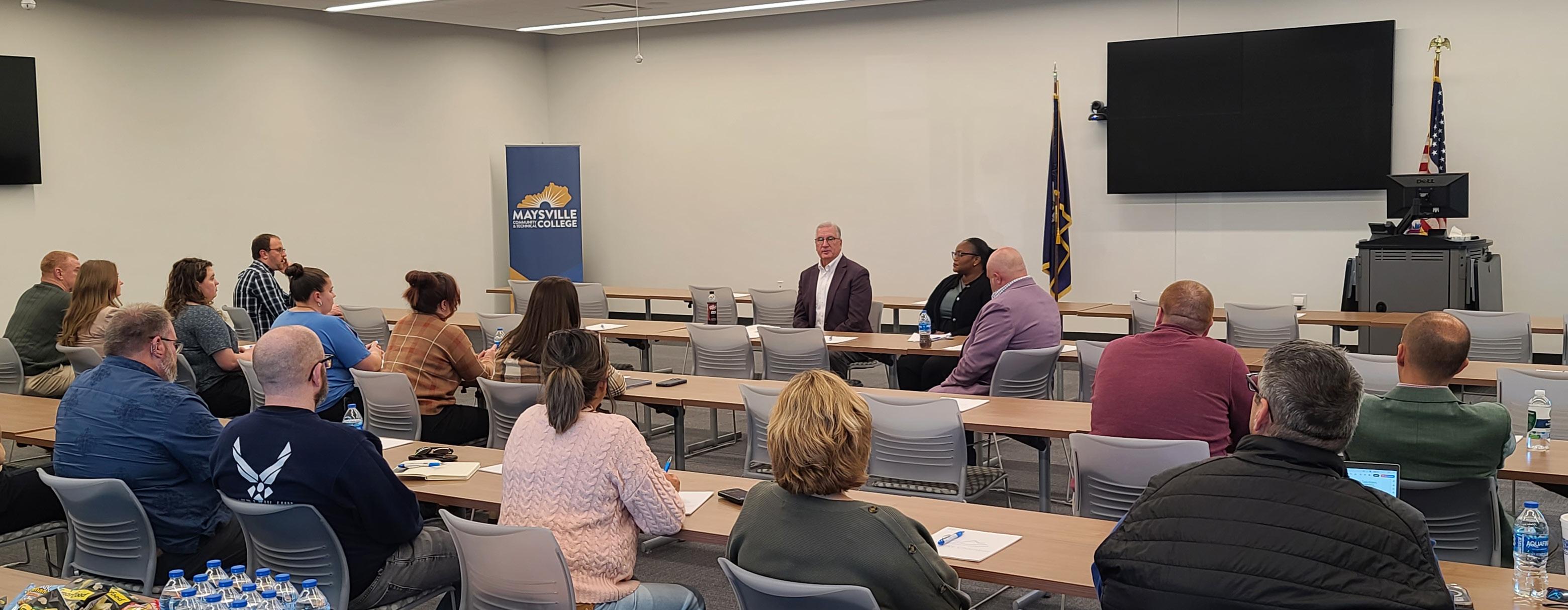
Currently, fewer than 3% of Kentucky businesses are meaningfully engaged with the workforce system. This presents a challenge and an opportunity to strengthen connections between employers, education, and workforce partners. By learning from regions with strong engagement and scaling those practices, SWATT is helping communities build a more coordinated and accessible system statewide
Utilizing the SWATT method, partners have deployed multiple prototypes to show the process in action. These prototypes revealed several lessons learned:
• Engage Multiple Perspectives: It is critical to engage more than just HR professionals during business needs assessments. Ideally, leadership and "boots-on-the-ground" front-line supervisors should be included to ensure a comprehensive view of the company's needs.
• Address Misdiagnoses: Companies often misidentify the root causes of their pain points (e.g., claiming "no one knows our sector" when the issue may be a misaligned credential or pathway).
• Audit Workforce Resources Across Organizations and Regions
• Identify Early Solutions Before Creating Strategy: Employer partners should be presented with potential solutions/ tactics before finalizing next steps to avoid duplicating services or creating unnecessary "new" strategies when existing assets could be used.
• Bridge Communication Gaps: A lack of direct communication between employers and resource providers can prevent successful solution implementation, even when they already exist.
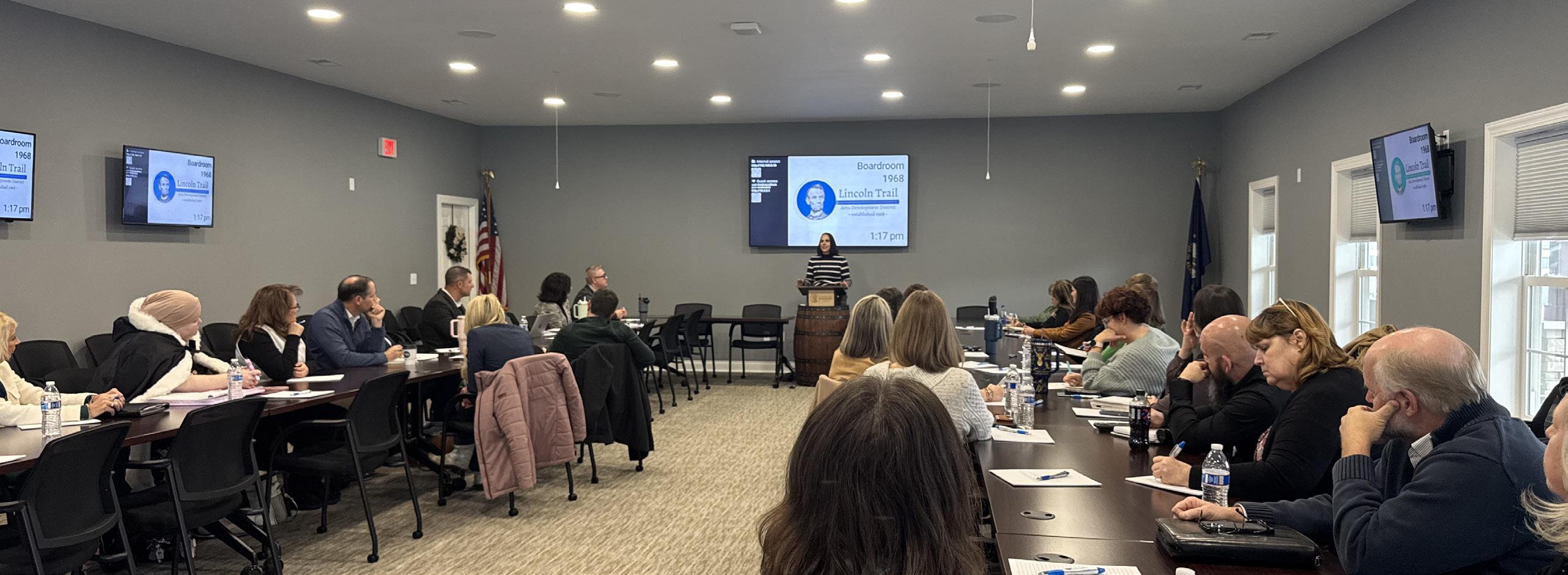
In 2025, select employers partnered with SWATT regions to test and refine coordinated business service strategies. These employers helped inform local processes, identify barriers, and shape approaches that are now being shared statewide.
Challenge: Recruitment and Retention
Partners Engaged: Cabinet for Economic Development, Education and Labor Cabinet, Jefferson Community and Technical College (KCTCS), and Kentuckiana Works
Difference: Coordinated response with Cabinet for Economic Development and Education and Labor Cabinet leadership meeting with the company, identifying needs, and engaging partners to deliver on the company timeline.
Challenge: Retention and Incumbent Training
Partners Engaged: Cabinet for Economic Development, KCTCS, local economic developers, local workforce board, Kentucky Chamber Foundation, Education and Labor Cabinet
Difference: Partnered with the employer to assess workforce needs not only at their urban headquarters, but also among employees in communities across the state. Developed a regionally organized menu of wraparound support organizations and resources, making it simple for the employer to connect employees, no matter their location, with the services they need. By centralizing and organizing these connections, the approach reduces the time and administrative burden on HR, while also plugging their team into an expanding network of regional and local business service providers and community resources they can continue to leverage as needs evolve.
Challenge: New Economic Development Project
Partners Engaged: Cabinet for Economic Development, Education and Labor Cabinet, three KCTCS campuses, local economic developers, and three local workforce boards
Difference: Leveraged shared NDA to coordinate recruitment and training plan to maximize TRAINS and Bluegrass State Skills Corporation incentives on the company's timeline. Created a company-approved communication plan for workforce partners to streamline connections for the HR team. Ongoing follow-up to meet needs and timing.
Challenge: WARN/Layoff
Partners Engaged: Cabinet for Economic Development, Elizabethtown Community and Technical College (KCTCS), Education and Labor Cabinet, Governor's Office, local industrial authority, Lincoln Trail Workforce Board, Kentucky Personnel Cabinet, South Central Workforce Board, Hardin County Chamber, and Kentucky Chamber Foundation
Difference: Daily meetings coordinating state and local resources to deliver unified rapid response services and a job fair with 60+ employers and 675+ participants.
Challenge: Retention and Hiring
Partners Engaged: Cabinet for Economic Development, Gateway (KCTCS), Education and Labor Cabinet, local industrial authority, and local workforce board
Difference: Unified workforce proposal that addressed included child care and transportation barriers, essential skill gaps, and difficulty filling entry-level roles quickly.
Challenge: Health Care Education Completion and Employer Engagement
Partners Engaged: KCTCS, Kentucky Chamber Foundation, Cabinet for Economic Development, Education and Labor Cabinet, TENCO Workforce Development Board, Eastern Kentucky Concentrated Employment Program, health care providers, and Shaping Our Appalachian Region
Difference: Partners and students convened to identify barriers. The work group will continue meeting and seek solutions to overcome challenges.
HR is constantly being pulled in 20 different directions. What I have loved most about SWATT is that the team really listened to me and then took my feedback and combined resources for me in one directory, with hyperlinks and warm introductions. The fact that the initial work has been done for me means that when I do have a moment to focus, I know where to go, who to reach out to, and can move more quickly and efficiently. Just knowing there are legitimate lifelines out there is huge.
“It's really impressive. I'm sure the coordination across the departments can be a nightmare from a bureaucratic standpoint. But when everybody's bought in, and you see it moving forward, like that's when you know, this is a really awesome thing for Kentucky and for businesses because it's been so siloed.”
• Define 5-7 statewide metrics
• Measure status quo and set improvement goals
• Increase 3% engagement across the state
• Jointly define processes and workflows
• Build shared infrastructure system State and Local Integration Marketing and Communications
• Elevate and refine best practices statewide
• Design resources for site visits, business retention and engagement, unified workforce services delivery
Professional Development and Training
• Statewide training on tools, processes, and systems

