





The Local Government Business Network (LGBN) had great success at the annual Public Sector Week (PSW 2018) taking place in Cape Town during the Opening of Parliament Week. The Public Sector Golf Invitational that featured golfers from all corners of South Africa during PSW 2017 was also a great success with the Cape weather providing perfect conditions for the golfers to play this wonderful game. The Golf Invitational was graced by many government officials and the private sector, ending off with a prize giving dinner. The Atlantic Beach Golf Estate was the perfect host.
The Public Sector Week also hosted The Smart Cities Local Government Roundtable Discussion, that was applauded for the best content in discussing the future of local government in South Africa. The Next Smart Cites Local Government Roundtable will take place in Gauteng and then KwaZulu Natal during the week of the Durban July and in August. Our new LGBN website will update you on the full programme of event for 2018. The new LGBN website will be up by end of June.
LGBN will continues to play its role in facilitating a strong connection between government and business, to ensure that there is alignment towards reaching economic and social development goals. Parliament continues to draw huge attention as it has become a hotspot for robust debate on the issues facing
the country.
As we come to the end of government fiscal and roll up our sleeves to tackle the next fiscal for LGBN is very excited by the prospects that is has for its members as the new programmes it has put in place to improve relations between local government and its stakeholders.
The most exciting networking platform for the LGBNis the newly revised Government Business week 2018, that kick's off on Thursday evening, 06th July 2018 with a Meet and Greet at the Hilton Hotel, A networking cocktail that welcomes everyone participating in the Government Business Week 2018, as well as providing information about the various activities and schedules to all guests and delegates.
The official programme then kicks off with the Public Sector Innovation and Local Economic Development Roundtable on the eve of the Durban July at the Hilton Hotel on 5 July 2018, where the Department of Cooperative Governance and Traditional Affairs will be anchoring the discussions to host this roundtable with its MEC set to deliver a keynote address on the Future of Local Economic Development in South Africa. Various departments of government and state owned entities involved in technology and infrastructure development will be invited.
On Saturday 7 July 2018, the LGBN will participate in the Corporate Lifestyle Village where its stakeholders will be hosted with a Jazz experience. Members of the LGBN

are invited to host their clients in their own branded or shared lounges. This is a great networking lounge at the Durban July, where government officials and captains of industry network, while enjoying the ultimate horseracing event in South Africa.
The new mobile app of the LGBN will be launched at the Smart Cities Local Government Roundtable 2018 during the Government Business Week, where our delegates will be able to be updated about the annual activities of the LGBN. All those who want to join the LGBN as members or interested in participating in the LGBN events and platforms, can download the LGBN app at the Apple Store or from any Android smart mobile phone, and they will have full access to the LGBN services.
The LGBN is proud to announce that Municipal Focus, the official publication of the LGBNhas become bi-monthly due to demand and increased circulation. This is a good sign for LGBN and its partners Uhuru Publishing that there is indeed a need for the publication.
LGBN would like to congratulate Honourable Cyril Ramaphosa on his election as President of the Republic of South Africa. May he take our country forward.
A special thanks to our members and clients for their continued support for 2018 and beyond.
Thank you.
Lebo Gunguluza








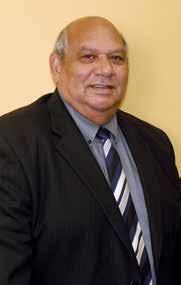
Publishing Editor Desmond Sampson
We are now in the second quarter of 2018. Once again
South Africans have been promised a “new dawn” whenever a new State President takes the over the helm as the first citizen. After the euphoria of the spirited State of the Nation Address and the war talk on corruption by President Cyril Ramaphosa, we find that local violent service delivery protest marches have not abated, investigations into corruption are still proceeding at a snail’s space, municipalities are still flouting their constitutional mandates and council chambers are mired in political spates as opposed to getting on with providing communities with much needed basic services.
Indeed intense political dramas are still taking centre stage in South Africa
to the detriment of the development of our socio-economic mandates. We are now in the throes of extinguishing the fires that have flared up throughout the communities in the Northwest Province as a result of the political infighting within the African National Congress. Votes of no confidence are taking up the energy, time and financial resources in the Cape Town City Council as well as the Mandela Bay Metro.
The report card clearly shows that municipalities are failing to discharge their constitutional mandates. In fact if we take a pragmatic view of all reports, including those from the auditor general and Local Government SETA it appears as though most municipalities are in a state of collapse. Thus despite the promise of a “new dawn” it appears as though we are in for an early sunset. To avoid further

destruction the time has come for civil society to become active citizens in the march for change. We need to heed the State President’s call for all South Africans to help him bring about change in our troubled country. In the feature article we examine the state of municipalities in South Africa.
Solutions are being examined and developed to assist local government in providing basic service delivery to their communities. Local Government SETA has researched this much -vexed subject and in this edition we feature their results.
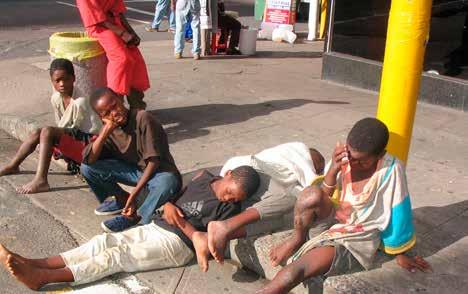
The housing problem has been one of the burning issues affecting the majority of South Africans. Many of the service delivery protest marches are centered around the lack of housing, water and sanitation. When confronted with this matter, the different tiers of government departments have been extremely skillful at “passing the buck”. In this edition we focus on the constitutional obligations and responsibilities of national, provincial and local government.
We have still not been able to find a sustainable solution to our water woes. As we have a serious problem in our water management systems we find ourselves being confronted with controversy from the top. It has been reported that the Department of Water and Sanitation is bankrupt. Yes, the very department that oversees bulk water supply to local government cannot discharge its mandate. We look into this disturbing report.
Enjoy the read
Desmond











Having been in the Publishing, Advertising and Design Service Industry for 14 years we would like to share with you how we appreciate our Mutual partnership and welcome your support thus far. We can be of value to your business. Do you need to advertise your products and services? Or do you require researched articles, facts and figures about health, thriving businesses and the activities of our municipalities and government in our beautiful country? Uhuru is proudly South African and celebrates its heritage and various cultures.
We are excited about the wealth of knowledge and expertise in our country. All our products and services aim to showcase this to thousands of readers in SA.
We can also ensure that your advertisements and articles reach your target audiences through our product and service offerings.
EDITORIAL TEAM
Publishing Editor

Desmond Sampson
Email: desmond@uhurucom.co.za
LGBN EDITORIAL BOARD
Lebo Gunguluza – Director
Bainang Mpolokeng – Director
DESIGN
Digital Pixels info@digitalpixels.co.za
Production Co-ordinator
Viola Josephs
CONTACTS
LGBN office
Tel: +27 11 807 5359, Email: bainang@lgbn.co.za
Editorial desmond@uhurucom.co.za
Advertising desmond@uhurucom.co.za
Production studio@uhurucom.co.za
Administration shirley@uhurucom.co.za
Subscriptions / Distribution
Viola Josephs
Email: viola@uhurucom.co.za
of Cooperative and Tradditional Affairs
DISTRIBUTION
LGBN Summits, municipal conferences, national departments, municipalities, mayors, managers, heads of procurement, tenders and purchasing officers, SALGA, COGTA, public and private Sector
DESIGNED BY:
Digital Pixels Pty Ltd

www.digitalpixels.co.za
PUBLISHED BY Impressions Publishing 3 Braefield Road
Plumstead, Cape Town Tel: +27 21 761 1279
Website: www.uhurucom.co.za



Th
e South African subsidiary is supported by Inyatsi Construction Group Holdings, a Civil and Building construction group, which operates through local entities in 7 of the 15 SADC member countries for the past 35 years, focusing on the roads, earthworks, water works, pipe lines, dams, hospitals, airports, retail and office centres, low cost housing, mining and town infrastructure. Over the past 10 years its revenue has grown from R100 million to nearly R 1,5 billion, with a considerable list of completed projects.
Supported by the central management services of the Group, the South African subsidiary is able to draw from these resources to compete with the best contractors in the South African construction sector, while delivering on the empowerment goals of the South African Government.
The Group place utmost importance on developing not only our employees, but also the communities and the

environments in which we work. Hence, we identify local projects which we support and out lend assistance to initiate projects where need is identified.
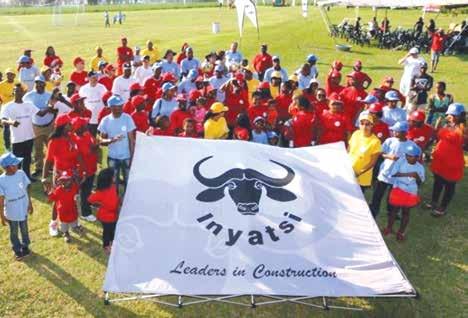
The Group has an excellent reputation with regard to our Corporate Social Investment (CSI) programmes. The

norm in the construction industry is to invest 1% of profit in CSI, however, we live up to our CSI Wellness slogan “Inyatsi Cares” by going the extra mile and investing approximately 2.5% since 2013 and have won several recognition rewards.

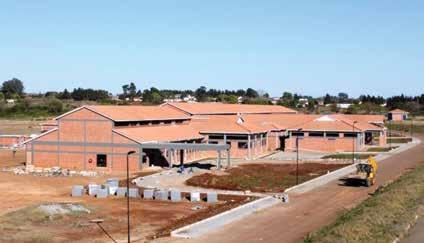


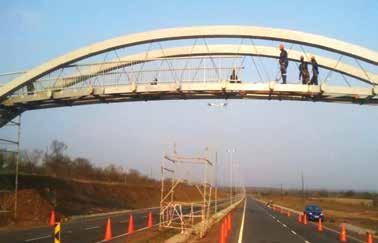

Inyatsi Construction Ltd was first registered in Swaziland in 1982. Due to a number of factors, including changes in shareholding, expansion into new markets, growth and diversification, Inyatsi Construction Group Holdings (Pty) Ltd (ICGH) was formed in 2007 as the holding company of Inyatsi and its regional subsidiaries in Southern Africa. In September 2009, Construction Associates was taken over by Inyatsi Construction Group Holdings to become the building construction organ of the Group.
With a world-class team of professionals, Inyatsi is competing with the best, and doing so successfully. This is a true Swazi success story: from small beginnings to a truly multinational, Inyatsi is a company to be reckoned with in Africa South of the Sahara. The company has operations in Swaziland, South Africa, Zambia, and Mozambique as well as registered companies in Botswana and Namibia.
Inyatsi Construction is a CIDB 9CE 9GB company. Also registered with the HBRC.
• Quality – Do it right the first time.
• Control – Control every last little detail to ensure we do it right the first time.
• Discipline – The discipline to continuously do this every time.
As we usher in 2018 with a brand new state president and a new cabinet, South African communities have become watchful for the “new dawn” promised by the new president.
Since 1994 South Africans have been waiting patiently for a better life that has eluded them for the past 24 years.
Local government is at the coalface of improving the lives of South Africans. Local government has been entrusted by the constitution to provide basic services to South African communities. Local government therefore forms the building blocks for a thriving country.
However the development of local government that should be in line with the constitution has taken an unchartered detour with the result that the state of local government is in disarray.
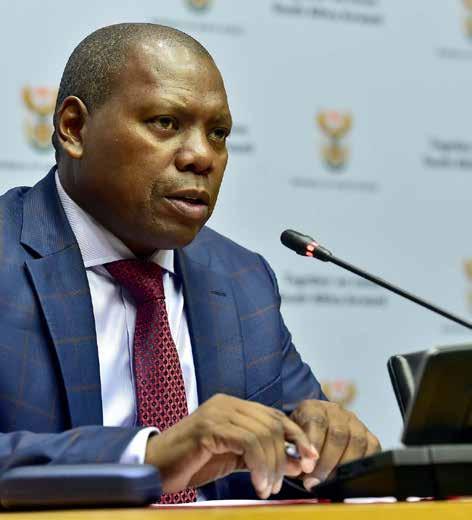
In many cases it is in crisis. National government has finally recognized the dire straits that local government finds itself in and the new state president’s maiden State of the Nation Address (SONA) the issue around local government was highlighted. He promised to urgently address the detour and redirect the direction local government so that it discharges its constitutional mandate. So serious is the situation that a new minister of Cooperative Government and Traditional Affairs (COGTA) has been appointed. (We profiled the new minister, Zweli Mkhize, in our last edition). The new minister has hit the ground running in this regard and kicked off with the week long summit on the Future of Cities as it relates to the Integrated Urban Development Framework that commenced on 9 April and
ended on 13 April. By the time of going to press the report on this summit was not yet available. Municipal Focus will feature the report in the next edition.
This summit, hosted by the minister representing the government and city leaders, will be engaging on the Integrated Urban Development Framework. Topics such as Urban Youth Unemployment, City Mobility and Public Space Leadership Programme (ELP, is a joint initiative by the National Treasury, Department of Cooperative Government, South African Cities Network and the Gordon Institute of Business Science (GIBS) will be discussed. ELP, which hosts representatives from eight municipalities and pilot cities in COGTA’s intermediate cities programme is aimed at identifying the challenges faced by cities
and creating sustainable solutions to these issues.
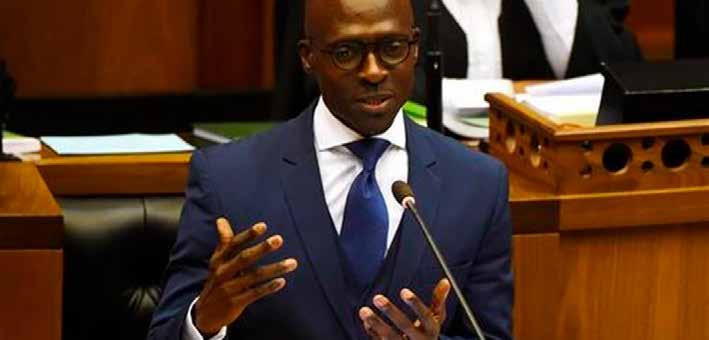
In his budget speech the former minister of finance, Malusi Gigaba said, “cities are at the heart of the national economy and hold the potential to drive our economic renewal”. This clearly illustrates the important role local government plays in the development of the nation. So where are municipalities getting it wrong?
The most critical issue that needs to be addressed before a thriving nation can emerge is to find a solution to the serious debt problem municipalities have been able to create for themselves. Parliament heard from the Auditor- General, Kimi Makwetu that municipalities are drowning in debt of about R43bn. This state of debt is unprecedented and threatens the livelihood of businesses that supply services to them. The briefing to parliament was dominated by reports of sordid affairs at local government level that according to treasury officials can only be resolved through political will. Financial allocations to local government have grown faster than other spheres of government. However over the state’s 2018 medium-term expenditure framework period, municipality’s debt service costs were the fastest growing category of spending. Municipal debt continues to grow and is exasperated by a culture of non-payment. The report revealed that outstanding debt in terms of bulk electricity amounts to R16bn, bulk water at R6.8bn and debt in terms of trade





Helping preser ve a precious commodit y
Our proudly South African water management produc ts boast the highest quality standards ensuring water is conser vatively and consciously managed to ensure no wastage or leakages.




creditors R11.9bn.
The dire straits of the finances of municipalities have been clearly illustrated by the Auditor-General when he reported that only 49 out of 263 municipalities achieved clean audits. He identified the lack of compliance by municipalities and the culture of non-payment. The lack of compliance includes irregular and wasteful expenditure together with corrupt conduct of officials. A very recent and glaring example of the consequences of non-compliance is that of a Northwest municipality that contravened treasury regulations by diverting R50 million from a grant meant for water infrastructure and bank it with the troubled VBS Mutual Bank.
The municipality in question, the Moretele Local Municipality confirmed that they made this deposit. Last month the SA Reserve Bank placed VBS under curatorship due to a liquidity crisis, after treasury instructed municipalities to stop banking with VBS Mutual Bank. This municipality that has its seat in Mathibestad in northern Pretoria has been marred by violent protests over the water provision.
The water provision issue has been at the center of service delivery protests as the community was left without water supplies. The municipality hit the headlines when a resident of Ngobi village sent an email to former president Jacob Zuma, pleading with him to intervene so that her area could get water. The municipality is on record as confirming that they took R50 million meant for nothing else but water and invested it with VBS. This would not have been a problem had the municipality invested reserves in VBS, but in terms of treasury regulations they cannot invest money from a grant. This is a clear case of non -compliance of the regulations. Early last year treasury instructed municipalities to stop banking with VBS. They were doing so in violation of the Municipal Finance Management Act that prohibits them from depositing their money with mutual banks. It appears as though this municipality is not the only municipality that has violated this regulation. Several others are also in transgression of the regulation. It is reported by City Press that they have seen a document showing that Dr. Ruth Segomotsi
Mopati District Municipality, based in Vryburg allegedly banked more that R82 million with VBS.
This blatant transgression of the regulations has led to a serious collapse of service delivery in the municipality. The inability to provide the community of this municipality the basic right of clean quality water due to its non-compliance of treasury regulations and transgression of the constitution has caused socio-economic regression in the area through violent service delivery protests. This example of non –compliance has become the norm in different forms throughout the country leaving South Africans deprived of socio economic development.
As far as the culture of non-payment is concerned, national treasury has flagged the non -payment for public services as a threat to the financial stability of municipalities. The non- payment culture has become endemic in South African society. The majority of communities receiving services from municipalities avoid paying for the services. Due to these non- payments municipalities are unable to pay ESKOM and the bulk water suppliers thus they are unable to provide basic services and pay service providers. The situation is exacerbated, as government is also indebted to municipalities. As at 31 December 2017 provincial government owed municipalities R3.7bn and national government owed R2.9bn. Majileng Mgqaleni, deputy director general of intergovernmental and fiscal relations also spoke on the issue of non-payments at the briefing to members of the standing committee on appropriations recently, “it is a societal problem. Government owes municipalities, municipalities owe ESKOM,” she said. “We believe it is a political issue to be addressed on a political level. Everyone as citizens has the responsibility to pay for services for government to work.
As we scan the news wires and social media platforms we are informed of the negative activities taking place in almost every municipality in the form of fisticuffs in council chambers, votes of no confidence in mayors, violent service delivery protest demonstrations, political killings of councilors, uncovering of corrupt dealings of government officials and businesses and the list seems endless we are left without any doubt that the state of most municipalities in South Africa is on the
verge of collapse.
As has been repeated over and over again by civil society and government leadership South Africa is in urgent need of a political intervention to steer local government away from total collapse.
However it will require every member of the South African community to take responsibility and hold the political leaders accountable to stop the rot. We have ourselves to blame as our constitution makes provision for civil society to hold councilors accountable. Public participation is a vital part of our democracy and allows for citizens to get involved in how their communities are governed. At local level the Government Structures Act 1998 requires amongst others municipalities to develop mechanisms to consult communities and community organizations in performing their functions and exercising its powers. These structures are commonly known as Ward Committees and provide a vital link between ward councilors, the community and the municipality. They allow for members of the communities to influence municipal planning in a manner that best address their needs. The system of ward committees was introduced in 2005. According to legislation the first meeting of the newly elected council must take place within 14 days after the election results are gazetted.
In view of the important role that local government plays in the development of the people of South Africa it is critically
important that municipalities are functioning optimally and sustainably. The ward committee system is designed to play a critical role in the giving meaning to the principle that “the people shall govern”. This is so because local government is regarded as the level of government closest to the people and ward committees are one way to ensure that citizens give input to the decisions that local councils make. Participation in the ward committees would go a long way in holding the political leaders to account and to improve the state of municipalities in South Africa. The state president has appealed to South Africans to assist him in turning the fortunes of local government around so that all of us can start becoming economically and socially integrated in the development of the country.
Source: Fin24.
The LANXESS Liquid Purification Technologies (LPT) business unit is one of the world’s foremost suppliers of products for treating water and other liquid media. With production sites in Leverkusen and Bitterfeld, Germany, and in Jhagadia, India, the specialty chemicals company also holds a leading position in the development and production of ion exchange resins and are very active in our new business line for reverse osmosis membrane elements.
Purifying our most precious resources
LANXESS’ high-performance products are used in numerous industries to treat and purify water and processing streams, and to recover valuable ions from solutions. Their products include the Lewatit ion exchange resins, Lewabrane reverse osmosis membrane elements, and Bayoxide ironoxide absorbers. The ion exchange resins (IX) and reverse osmosis (RO) membrane elements help desalinate water and other liquids and remove undesirable substances. They therefore play an essential role in conserving one of the most important prerequisites for life on our planet. Clean water needs strong technologies.
WASTEWATER TREATMENT& REHABILITATION
Bayoxide E33 helps to treat drinking water, with an additional application in wastewater treatment, particularly in the mining sector, or the treatment of contaminated groundwater in the vicinity of abandoned industrial plants. These products are based on nanoparticularferric oxide hydroxide, offering a very high surface area, advanced mechanical stability and superior absorption capacity. Important applications include the removal of arsenic and phosphate from potable and waste water.
Ion exchange is used intensively in the power industry for the de-mineralisation of water, as well as condensate polishing for recycling. It is mainly used in the mining industry for the primary recovery of valuable metals such as platinum group metals (PGMs), gold, uranium, copper, and others; for the purification of PGMs, copper, cobalt and nickel streams for production of premium grade metals; and for scavenging

or secondary recovery of valuable species from waste streams. Ion exchange technology also increasingly plays a significant role in purification of water where heavy metals, nitrates, ammonium, or other harmful substances have to be removed from the water in order to render the water potable or recyclable.
LANXESS’ Lewabrane line of products are spirally-wound, thin-film, composite reverse osmosis membranes. Reverse osmosis is used to filter out undesirable substances from water, such as salts, pesticides, herbicides, viruses, bacteria and particulates. The range includes elements for all the main reverse osmosis applications, including desalination of seawater, brackish water, and lowsalinity industrial water. Among the most important applications for reverse osmosis membranes is the treatment of process water for power plants and the generation of ultrapure water in the microelectronics sector. It can also be used in the production of drinking water from both brackish water and seawater. This method is used on a large scale in cities and municipalities, and on a small scale in restaurants, hotels and on cruise ships. The membranes lower the salt content of the water and are often combined with ion exchange resins to form a highly efficient, very powerful purification and de-mineralisation system. In South Africa, reverse osmosis plays a major role in the recovery of water from acid mine drainage in the gold and coal mining areas. The reverse osmosis permeate or product stream can be of potable water standards, or to supplement water supplies from municipalities.
The innovative products, technologies and processes developed by LANXESS are used worldwide to treat water, and to enable companies and communities to handle this resource efficiently. By assisting customers to create progressive and efficient solutions for the use of their specific water resources, LANXESS plays a major role in supporting the preservation of this life-giving, strategic resource.
WHAT SOLUTIONS DOES THE CHEMICAL INDUSTRY HAVE TO LIMIT ITS USE OF WATER?
As a result of all the changes in industrial production processes and the continuing improvements in water treatment, water consumption has continued to fall over the years with the increased use of recycled water. Chemical industry products have played a crucial role in the recycling of water. In the mid-1950s, for example, water was recycled 2.4 times in the manufacture of paper; it is now reused 12 times. In the chemical industry itself, water is recycled on average 28 times before it is fed into the downstream purification stage, cleaned and returned to the water circulation.The overall trend is towards zero liquid discharge, i.e. that no waste water is generated in production. This is achieved by examining in each process what quality of water can be reused in a particular process stage and how heavily contaminated water can be treated and fed back into the process. We are ourselves working on just such a concept for our own production sites.
For more info, visit www.lanxess.com





The efficient and sustainable treatment of water plays a decisive role in many industries, especially as zero liquid discharge is becoming the license to operate. As one of the world’s leading manufacturers of products for the purification of water and other aqueous effluents, LANXESS has been providing innovative, costeffective water treatment solutions for more than 80 years. Lewatit® ion exchange (IX) resins are used for the purification of water, or to selectively remove or recover specific ions. LANXESS’ Lewabrane® reverse osmosis (RO) membrane elements are used to recover water from brackish and sea water, or to recycle water from effluent streams. The LewaPlus® design software is a comprehensive, powerful software design tool for RO membrane and IX resin systems. Bayoxide® iron oxide adsorbers bind specific impurities quickly and reliably, and round off our product portfolio of solutions for water treatment.












In a previous article in this edition of Municipal Focus it was said that local government is at the coalface of socio-economic development. It is at local government level that the citizens of the country experience the impact of the constitution. Section 7(2) of the constitution imposes four different types of obligations on the state when it comes to the fundamental rights entrenched in the Bill of Rights: the obligations to respect, protect, promote and fulfill. These obligations exist with regards to rights to both a civil and political nature and with regard to economic, social and cultural rights. The obligation to respect these rights means that the state must refrain from interfering with their enjoyment.
The obligation to protect means that the state must prevent violations of third parties. The obligation to promote fundamental rights means the state must encourage and advance the realization of these rights that includes public awareness. The obligation to fulfill fundamental rights means that the state must take appropriate legislative, administrative, budgetary, judiciary and other measures towards their realization. In an individual case of an infringement of a right

the question is whether all three spheres of government that make up ‘the state’ are jointly responsible for all four of these obligations or whether the distinctions can be made between them. This issue is important, especially with regard to the social, economic and cultural rights that often require positive state action with substantial budgetary consequences. Who must do what?
National government can devolve powers and decentralise the effort to realize economic, social and cultural rights but it remains fully accountable to its own citizens for their realization. Despite this the state can and should be held accountable for the realization of socio-economic rights and is obliged to provide basic social services to fulfill them. The South African constitution contains an intricate system of allocation of responsibilities to various spheres of government. Yet the state must uphold and promote these rights. It therefore should be interpreted that provincial and local government are, together with national government jointly responsible for the realization of economic, social and cultural tights.
Local government shares with provincial and national government the responsibility to respect protect and promote all the fundamental rights of the Bill of Rights, including the economic, social and cultural rights. Local government’s aggregate budget consists mainly of moneys raised by municipalities themselves


ORBIT College is one of the 50 public Technical Vocational Education and Training Colleges (TVET) countrywide that specialises in priority skills development. We are situated in the North West Province with campuses in Rustenburg, Brits and Mogwase. TVET Colleges are part of the Department of Higher Education and Training (DHET). Students who study at ORBIT TVET College get a head start to a great career due to the
Engineering Studies N1 - N3 (Artisan Development Programmes)
Engineering Studies N4 - N6
Business Studies N4 - N6
Utility Studies N4 - N6
Educational Studies N4 - N6
Performing Arts N4 - N6
Art and Design N4 - N6
focus on responsive, relevant programmes that develop critical and scarce skills
NATIONAL CERTIFICATE (VOCATIONAL) NQF LEVEL 2 - 4
Engineering related & ICT programmes
Business & Services-related programmes
OCCUPATIONAL AND ACCREDITED SKILLS PROGRAMMES (Accredited by SETAs)
For more information on programmes offered please visit http://www.orbitcollege.co.za
ue to a severe skills shortage in the Engineering Sector, the Department of Higher Education

(DHET)


needs to produce 30 000 artisans a year to help the economy grow. N2 Certificate with trade theory and 3 years’ relevant work experience


Relevant National Certificate (Vocational) Level 3 Engineering qualification & 3 years’ relevant work experience
Technical Trade Theory quality-assured by a SETA and a minimum of 3 years’ relevant work experience (NQF Level 3)
DHET TVET College bursaries - Available to students who have registered for NC(V) or Report 191 (NATED) programmes

Relevant National Certificate (Vocational) Level 4 Engineering qualification & 18 months’ relevant work experience
College bursaries – Available to compliant students who do not qualify for the DHET TVET College bursaries
For more details on bursary information please visit http://www.orbitcollege.co.za/bursaries.html
and supplemented by national government grants and payments for the performance of agency functions. Local authorities raise revenue and receive grants based on their powers and functions determined by the constitution.
The right of access to housing
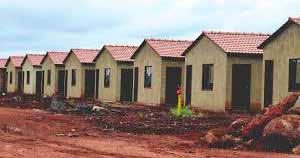
Section 26 of the constitution states that everyone has the right of access to adequate housing and that the state must take measures to achieve the realization of this right. The question is which sphere of government carries the primary obligation for taking administrative, legislative and budgetary measures with regard to the right to housing? The National Housing Act provides the national framework for housing including the roles and responsibilities of the three spheres of government.
The national Minister of Housing has the overall responsibility for a sustainable national housing development process in consultation with all the provincial MEC’s for housing and the national organisations representing municipalities. The Minister must ensure that the national department has delivery goals as well as facilitate provincial and local delivery goals. In addition the Minister must assist provinces to develop their capacity to facilitate housing development and also support the capacity of municipalities to do the same.
Sections nine and 10 of the Act are critical for reviewing government’s strategy on the role of local government. In section nine, the Act places housing development squarely within the realm of each municipality’s integrated development
plan (IDP). In fact housing development will undoubtedly be one of the most pertinent areas of each municipality’s IDP. Municipalities must take all reasonable and necessary steps within the framework of national and provincial housing legislation to achieve the following:
• Enabling residents of the municipality to have access to adequate housing on a progressive basis
• Preventing or removing conditions that are not conducive to health and safety
• Provide a package of water, sanitation, electricity, roads, storm water drainage and transport services in an economical and sustainable way.
Further the municipality must set housing delivery goals for its area and designate land for housing development. It must plan and manage land use and development and create and maintain a public environment conducive to housing development that is also financially and socially viable.
The municipality is best placed to solve housing disputes and is therefore instructed by the Act to promote the resolution of these conflicts. The Act further expects municipalities to initiate, plan and coordinate appropriate housing development in their area of jurisdiction.
Any municipality may participate in a national housing programme. It can do so in a variety of ways. For example, it can enter into a joint venture with a developer or establish a business entity for
a housing project. It can also administer a national housing programme in its area in accordance with Section 10 of the HA 1997. A municipality can apply to its MEC for housing to be accredited for the purposes of administering a national housing programme. If it complies with the criteria, the municipality must be accredited. An accredited municipality can administer the programme and for that purpose exercise the powers and perform the duties of the provincial housing development board. However, the municipality remains subject to the directions of the MFC.
The MFC can, alter consultation with the provincial housing development board; allocate money for the administration of the national housing programme to an accredited municipality. The municipality must maintain separate accounts of that money. The municipality has a reporting duty towards the provincial accounting officer. The MEC regularly reviews the performance of an accredited municipality and can intervene if it fails to so perform. What then are local government’s obligations?
If one concludes that local government does not bear the primary obligation to fulfill these rights, what, then, are its obligations with regard to housing, given the fact that it does bear the obligation to respect, protect and promote them? It is clear from the Constitution that local authorities cannot simply ”shrug off” any responsibility for the right to housing or for children’s right to shelter. The obligations to respect, protect and promote these rights are there for local authorities to uphold
Section 9 of the HA 1997 is instructive here. It makes clear that local government has distinct duties with regard to housing. The duties exist notwithstanding the facts that local government is not in the sphere primarily responsible for housing and that it can participate in national housing programmes. They flow directly from the obligation to promote the right to housing. The HA 1997instructs local authorities to contribute to the realization of the right to housing, within their constitutional mandate, by making land available by ensuring provision of services such as water, sanitation, electricity, roads, storm water drainage and transport by ensuring access to housing for its inhabitants etc. Without local government performing these tasks, the right to housing is meaningless. The inclusion of these functions in the HA1997 is meant to combine the efforts of national and provincial governments with the efforts of local government to realize a meaningful right to housing. These duties are also relevant in the context of realising children’s right to shelter, because many of these more or less ancillary aspects relate to the meaningfulness of both the right to housing and children’s right to shelter. The minimum obligations of local government in he process of realising the right to shelter therefore include matters such as:
• Making land available, a “site” on which the provision of shelter can take place – in many cases, municipalities have greater access (through ownership) than provinces to land in their jurisdiction that is appropriate for causes like these.
• Providing basic water services,
• Providing basic sanitation: and

• Facilitating the realization of the right to shelter, by
- Facilitating communication between the residents and the provincial housing department, including the resolution of conflicts; and
- Assisting the provincial housing department on any relevant matter This may include playing a coordinating role in the implementation of the realization of the right to shelter. These minimum obligations flow directly from local government’s obligation to promote the right to housing and shelter. The local authority is therefore not only responsible for ensuring the provision of these services, but must also carry the cost for them, within its available resources.
Conclusion
Our constitution makes it clear how

local government, together with national and provincial government should jointly act in concert to ensure that the basis right to adequate housing is made available to all South Africans. Local government plays a pivotal role in creating a conducive environment to overcoming the tremendous problem of housing. South Africa has a very large and ugly informal squatter sector that has become a melting pot of service delivery protests for housing. The constitution together with many constitutional court judgments has spelt out how the various tiers of government should work together to ensure that the housing problem in South Africa should be addressed. It now needs political will to solve the problems of housing.
Acknowledgement: Sabinet Gateway
The duties exist notwithstanding the facts that local government is not in the sphere primarily responsible for housing and that it can participate in national housing programmes.
Many municipalities in South Africa have encountered difficulties in sustained service delivery, face increasing debt and political and administrative instability.
The Minister of Cooperative Governance and Traditional Affairs (CoGTA), Dr Zweli Mkhize, recently identified 55 municipalities as being dysfunctional . A previous minister in the same portfolio, Pravin Gordhan, had indicated in 2014 that a third of the country’s municipalities were doing well, a third had the potential to do well and a third were dysfunctional . Many local governments struggle to realise their mandates.
The Local Government SETA has recognised this challenge to local government and embarked on a research project with Palmer Development Group (PDG) to examine the challenges facing local government councillors in achieving their mandates and improving governance in municipalities. The project examines the political-administrative interface, the level of expertise and experience councillors have and the pressures that they face from their parties and communities.
The last comprehensive review of the political-administrative interface at local government level in South Africa was the 2009 State of Local Government report, produced by CoGTA and the
By Kevin Foster and Nazreen Kola
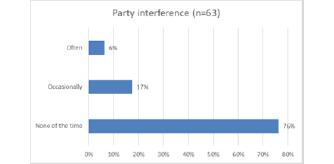
Community Law Centre (now the Dullah Omar Institute) . The review identified a lack of political leadership and patronage as recurring themes in local government, as well as an incoherent reporting framework that created weakened institutional and organisational abilities in municipalities. Political instability, political interference and unstable governance were also identified as factors contributing to service delivery failures, with ill-defined roles and responsibilities between councillors and municipal managers leading to fractious working relationships in local government.
The study also found that a lack of skills in the leadership of councils was also creating problems, leading to ineffective supervision of municipal administrations, and an inability to hold administrations to account.
As part of the LGSETA’s 2018 research project, PDG has tested the current state of some of these 2009 findings through an online survey administered to members of executive committees and mayoral committees throughout the country. Eighty leadership councillors responded to the survey providing insight into the current levels of capability, accountability and responsiveness in the political and administrative leadership in local government.
This article presents interim findings of
the Local Government SETA’s research project into the challenges facing local government leadership councillors in achieving their mandate and good governance.
Kevin Foster and Nazreen Kola are both associates of Palmer Development Group (PDG), the consultant appointed to undertake the LGSETA’s research project.
Mkhize Z (2018) The ANC shall turn municipalities around. Daily Maverick, 26 March 2018. https://www.dailymaverick. co.za/opinionista/2018-03-26-the-anc-shallturn-municipalities-around/#.WthWhohubcc Quintal G (2014) Third of municipalities doing well: Gordhan. IOL, 18 September 2014. https://www.iol.co.za/news/politics/third-ofmunicipalities-doing-well-gordhan-1753143 De Visser J, Steytler N and May A (2009) The Quality of Local Democracies: A study into the functionality of municipal governance arrangements. Report by the Community Law Centre for the South African Local Government Association and the German Agency for Development Cooperation. Community Law Centre: Cape Town.
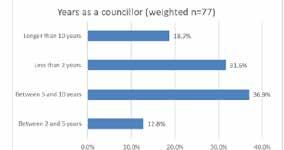
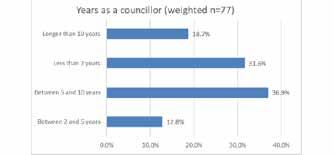
Looking firstly at skills and experience, there was evidence that, despite continuity and experience in council leadership being identified as important factors in improving council performance in 2009 and in research conducted by PDG in 2013 , over 40% of responding leadership councillors had been a councillor in local government for 5 years or less. Over 30% had been councillors for less than two years (figure 1). This suggests little continuity in council leadership and the lack of experience and institutional knowledge remain significant challenges.
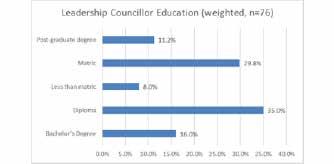
In terms of skills, of the responding leadership councillors, over a third of councillors had a matric or less as their highest level of education, whereas less than a third had a bachelor’s degree or higher. Just under a quarter of the respondents had been a councillor for five years or fewer and had a matric or less as their highest level of education (figure
2). For this cohort of leadership councillors, it is likely to prove very difficult to oversee their administration, with limited experience and education. Limited experience and education are somewhat ameliorated by training. Among respondents, 92% received some form of training on being a councillor in local government, mostly from SALGA.
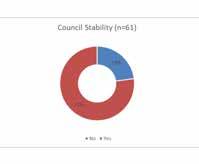
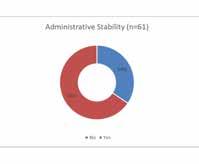
Most leadership councillors felt that there was sufficient political stability in their councils to achieve their mandate, but nearly one quarter did not think their council was stable enough. Just over one third of respondents felt that their municipal administration was not stable enough to achieve its mandate (figure 4), with over half saying that filling vacancies in their administration is a problem. Nearly 20% of the time, council stability and administrative stability were both a problem; which is to be expected. Previous research, confirmed by stakeholder interviews for this project, shows that political stability is an important driver of administrative stability. Skilled and experienced officials are able to move to more stable environments when political instability interferes with their ability to do their work.
Conclusions
Skills and experience remain a challenge in local government leadership. Despite the opportunity over the last ten years to build experience in councils, councillor turnover remains high with many in leadership having less than five years of experience on council. Political parties need to find more councillors committed to a long-term career in local government.
Training is being provided, mainly by SALGA and seems to be reaching most councillors, which will help ameliorate the challenges. However, despite this, it will still be difficult for councillors to hit the ground running in their portfolios. Beyond the technical skills required, it is also important that councillors are adept at stakeholder management, have passion for serving the people, have high levels of ethics and integrity, and a have a longer-term vision for their portfolio.
For a constructive and functional politicaladministrative interface, trust, mutual respect and a clear understanding of the differing roles and boundaries of leadership councillors, the municipal manager and senior managers in the administration, are not only essential but critical.
There remains a need to ensure that all councillors have defined roles in terms of reference and delegations and for political parties to allow councillors to implement their mandates. The consequence of neglecting this are low levels of political and administrative stability. It will be impossible for councillors to achieve their mandates, without stable administrations to implement them.
References
De Visser J, Steytler N and May A (2009) The Quality of Local Democracies: A study into the functionality of municipal governance arrangements. Report by the Community Law Centre for the South African Local Government Association and the German Agency for Development Cooperation. Community Law Centre: Cape Town.
Mkhize Z (2018) The ANC shall turn municipalities around. Daily Maverick, 26 March 2018. https://www. dailymaverick.co.za/opinionista/201803-26-the-anc-shall-turn-municipalitiesaround/#.WthWhohubcc
PDG (2013) Research study into the lessons learnt from, and the impact of, linking contracts of Municipal Managers to a municipal electoral term. Report prepared for the Department of Co-operative Governance. Quintal G (2014) Third of municipalities doing well: Gordhan. IOL, 18 September 2014. https:// www.iol.co.za/news/politics/ third-of-municipalities-doing-wellgordhan-1753143

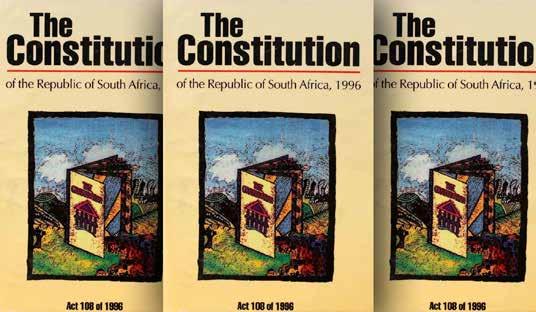
Professionalism imbues its practitioners with a municipal service ideal and code of ethics, that is, internalised standards. To this way of thinking, professionalism becomes the basis for a version of character ethic. Professionalism can also offer a basis for the external version of ethics, i.e. often local public administration practices have been directed at external control. These controls include the Constitution of the Republic of South
Africa, 1996 and the national legislation such as the Public Protector Act, 1994 (Act 23 of 1994). The depth and breadth within local public administration literature on external controls should be applauded. However, it is unclear whether such theoretical formulations make an appreciable difference in the internal standards and norms of practising local public administrators.
Characteristics of Profession:
The Case of Local

There is no short answer to the question as to whether local public administration is a profession. This part of the discussion attempts to establish whether it is a profession or not, using some of the characteristics of a profession as points of departure.
Intensive compulsory training at recognised training institutions
A professional person has mastered a body of knowledge and acquired
operational skills through specialised education enriched by career experience. This body of knowledge combines theory and practice (Esman, 1991:149).
For an occupation to be called a profession, professionals should have received intensive training or education at recognised training or educational institutions. The compulsory education and training must serve as a prerequisite for entry into the profession. This characteristic of a profession is in most
part lacking in local public administration. There is no general post-school qualification recognised as the minimum requirement necessary for entry to any post in any department of any public service.
Existence of a code of conduct enforced by a statutory body
A code of conduct is a statement of principles and standards about the acceptable conduct of municipal employees. Professionals should maintain
A code of conduct is a statement of principles and standards about the acceptable conduct of municipal employees. Professionals should maintain a code of conduct that requires them to behave towards clients with the objectivity essential to protect the public interest and consequently to protect a particular profession. In the case of South African local government, written codes of conduct for municipal councillors and staff members are provided for in Schedule 1 and 2 of the Local Government: Municipal System Act, 2000 (Act 32 of 2000).
Professionalism in local public administration can be promoted by ensuring strict but cautious application of the prescribed code of conduct in a manner that will enable the local community to note that those who violate the code of conduct are acted against.
Monopoly in a particular field of work
Professionals largely monopolise the activities of their profession (Hanekom & Thornhill, 1986: 87). Local public administrators do not have the monopoly of administrative functions. The administrative functions are policy making, organising, financing, staffing, and determining work procedures and control. Professionals recognised in most parts of the world, as such, use the administrative functions in giving effect to co-operative action. Thus, it could be argued that administration is a generic function and thus universal. The diagnosing, treatment and prevention of diseases by medical doctors are functional activities, but performing the administrative functions serves as a support function. Administration for all professionals is to a large extent limited in scope. In most cases the support service is clerical. Clerical work refers to the work of bookkeeping, registration, accounting, internal communication and recording. Intellectual rather than manual work
Professionals generally perform intellectual rather than manual work. Public administrators deal with intellectual rather than manual work (Hanekom & Thornhill, 1986:89). Local public administrators’ tasks focus on the administrative and auxiliary functions. The latter functions include planning and research. These functions are required to ensure that functional activities, which require, for instance, manual labour, in the construction of public buildings, are carried out. The latter level of labour may also require a particular mental ability, but
is aimed at utilising skills to achieve a goal that is most often of a physical nature, e.g. construction or building.
At some point in an occupation’s progression to professional status an association is formed. The functions of such professional associations are to organise their members, raise the status and enhance the service potential of their members through the development of education, research and the conditions of service, undertake research into all aspects relating to the profession, and communicate the findings to members and the authorities (Searle & Pera, 1992:79).
At its establishment in 1996, the Institute for Local Government Management (ILGM) had, as its core focus, the empowering of municipal employees with the necessary financial management, human resources management, administrative and leadership skills. The ILGM was at the time touted as a successor-in-title of the Institute of Town Clerks (ITC), its predecessor. However, developments in subsequent years showed that the foci of the two organisations were not in tandem. Whereas the ITC was a professional body of town clerks, who were the then chief executive and administrative officers of municipalities, the ILGM is more of a voluntary association for municipal employees who are not necessarily administrative heads of their respective municipalities.
In spite of the recognition bestowed upon ILGM as a professional body for the purposes of the National Qualification Framework (NQF) by South African Qualifications Authority in November
2013 it is not “professional” as was the case with the former ITC. The ILGM also claims to be representing section 56 and 57 managers (provided for by the Municipal Systems Act, 2000). Two pieces of legislation regulated, thus “professionalising”, the position of the town clerks, namely, the Profession of Town Clerks Act, 1988 (Act 75 of 1988) and the Remuneration of Town Clerks Act, 1984 (Act 115 of 1984). In terms of the former Act, membership of the ITC and registration with the Town Clerks Council, were requirements for appointment to the position of town clerk. Both Acts were repealed in 1996 which effectively “deprofessionalised” the profession.
Over the years, various professionalisation initiatives have been embarked upon by SALGA and a number of other institutions operating within the local government sector, such as the Institute of South African Municipal Accounting Officers (ISAMAO), ILGM and Chartered Institute of Government Finance Audit and Risk Officers (formerly the Institute of Municipal Finance Officers). SALGA has created a municipal managers forum, which deals with municipal managers’ interests within SALGA. These arrangements cannot be understood to be “fully” professionalising local government unless, of course, the term “professionalising” is given a loose meaning, bearing in mind the clarification of the term “profession” discussed above. In this sense, only municipal employees could be regarded as pursuing and practising a profession strictu sensu. Councillors as elected public representatives are not pursuing a profession but a political career.
It can be argued that the professionalisation of local public
administration should be regarded as both a challenge and opportunity in the promotion of effective service delivery by municipalities (Mashitisho, 2014:8081 & Mashumi, 2013:636). However, as far as professionalising the position of the municipal manager is concerned, the path of recognition, rather than the legislation route along the lines of the Profession of Town Clerks Act, 1988 should be preferred. A professionalising body will be invaluable as the institute will act as a valuable medium and influence towards a high uniform standard of service throughout the country (Evans 1991:185). This route has been effectively used by bodies such as the South African Institute of Chartered Accounts (SAICA) and the law societies that govern the legal profession.
It could be deduced that although local public administration does not possess all the characteristics associated with a profession, in some areas progress has been made to such an extent that professionalism has been established. The Local Government: Municipal Systems Act, 2000 (Act 32 of 2000), which provides for codes of conduct for municipal councillors and employees, serves as an example of efforts to promote professionalism in local public administration.
Role-players in Professionalising the Local Government Sector
To ensure effective professionalization, any stakeholder who provides support, capacity building and training initiatives (which include professionalisation activities) aimed at local government should compile an Integrated Capacity Building Plan annually, indicating differentiation and reporting progress against predetermined impact (outcomes) measures and then submit such to the National Municipal Capacity Coordination and Monitoring Committee (NMCCMC), on a quarterly basis. National departments
The core national departments that have a direct impact on municipalities should, through the National Municipal Capacity Co-ordination and Monitoring Committee (NMCCMC), establish a working relationship as members of the NMCCMC and should jointly address matters such as the strengthening of a local government ethos, identify professional bodies that are operating within municipal occupational categories and disciplines with a view to linking them more effectively to
the development and registration of appropriate qualifications (under the HEQC and QCTO frameworks) and training and professional development programmes, the on-going professional development of elected and appointed officials in the local government sector, standardise and synergise the capacity-building policies and systems that are aimed at promoting the professionalisation in local government, include professionalisation initiatives in the annual capacity building plans that are to be integrated at a national level and provide quarterly progress reports on such plans, monitor, evaluate and guide the implementation of the professionalisation framework.
The core national departments that have a direct impact on municipalities include the National Treasury, Department of Economic Development, Department of Human Settlements, Department of Water and Sanitation, and the Department of Public Works. Provincial departments
Provincial local governments should play a vital role in the implementation of the professionalization framework as their mandate is to support municipalities. They can assist national department in terms of coordinating the implementation modalities/mechanisms affecting local government, addressing the strengthening of a local government ethos, identifying professional bodies that are operating within The core national departments that have a direct impact on municipalities should, through the National Municipal Capacity Coordination and Monitoring Committee (NMCCMC), establish a working relationship as members of the NMCCMC and should jointly address matters
such as the strengthening of a local government ethos, identify professional bodies that are operating within municipal occupational categories and disciplines with a view to linking them more effectively to the development and registration of appropriate qualifications (under the HEQC and QCTO frameworks) and training and professional development programmes, the on-going professional development of elected and appointed officials in the local government sector, standardise and synergise the capacity-building policies and systems that are aimed at promoting the professionalisation in local government, include professionalisation initiatives in the annual capacity building plans that are to be integrated at a national level and provide quarterly progress reports on such plans, monitor, evaluate and guide the implementation of the professionalisation framework.
Other stakeholders at a provincial level that have an important role to play in the provincial structures are the Premiers’ Offices, provincial academies, municipal training institutions, municipalowned entities and SALGA HR Forums. For an effective professionalisation process, provincial quarterly meetings should be held so that they inform the NMCCMC.
Metros form part of the NMCCMC as they represent the majority of municipal employees who receive support, capacity building and training. Districts should be mandated to represent their local municipalities on provincial structures. However, should the province feel comfortable with local municipalities also being represented in their structure, the practice should be supported.
Municipalities will need to implement the professionalisation framework, identify and prioritise those occupational categories that need to be professionalised (and subsequently cascading this to other categories), provide information on professionalisation initiatives as part of their support, capacity building and training initiatives, provide financial assistance towards membership fees (under criteria to be developed) to enable and encourage employees to join appropriate professional bodies in accordance with capacity-building policy provisions.
Systems Act, 2000 and ensure that their members adhere to the provisions of the code; promote and ensure professional development so as to ensure continuous professional development and life-long learning; conduct on-going research and disseminate good practice among members; develop a collective and collegial ethos; set and enforce ethical work practices and behaviour; set relevant competence criteria for admission into the profession and accreditation of educational programmes; oversee the certification and licensing of professionals, and assist national and state level authorities in the setting of legally
enforceable occupational standards; ensure that the supply and demand of technical and professional competence in key sectors are met; develop a clear set of norms and standards for the relevant occupational category in the local government sector; establish minimum competence levels based on national competence frameworks and job profiles; and develop Recognition of Prior Learning (RPL) procedures, through which professional bodies can assist employees in obtaining accredited qualifications after the RPL process is completed.
Key partners in the professionalisation
The Local Government Sector Education and Training Authority (LGSETA) and the South African Local Government Association are two key partners in the professionalization of the local government sector. The following stakeholders may contribute to the implementation of the professionalisation framework: unions active in local government, the Development Bank of Southern Africa, donors, parastatals, and higher and further education institutions. Conclusions and Recommendations
To ensure effective professionalization of the local government sector, the CoGTA must develop a professionalization framework. This framework, like any other framework, should be regarded as an attempt to regularise, standardise and formalise a process. A framework can never be regarded as a rigid document. It should be understood in the context of being a vehicle to operationalise what has been put in a document. It will need to be reviewed on an on-going basis, and to put in place a mechanism to incorporate lessons learnt in order to improve it. Furthermore, the strategic focus of the professionalisation framework is to be a management and implementation tool to assist local government in delivering on its constitutional and legislative mandates.
In closing, following are some of the final recommendations for the study on professionalising the local government sector in South Africa.
1. It was established that patronage, lack of political leadership and political interference are some of the governance challenges faced by South Africa’s local government. It is recommended that political leaders with relevant skills and behaviours must be elected to positions in municipalities. They must be informed of their roles and responsibilities during induction
of the newly elected councillors. Disciplinary steps must be taken against councillors who interfere with the work of officials.
2. The assessment points to a general lack in the opportunities provided for employees to practise new competencies in the event of a skills development intervention. It is recommended that employees who attended a training course must be provided with an opportunity to practise the skill provided to him/her in the training intervention. Further, when choosing training courses, ensure the training is specific to the skills the employee needs to develop. For example, it is a waste of time for the manager to send an employee to a general communications course, when in fact the employee needs training on dealing with customer complaints. Make sure training is customised to meet the immediate learning need.
3. An assessment of the skills development support received by other municipal stakeholders such as senior management, the local trade unions, the LGSETA and SALGA shows that there is a general lack of active support from senior management in skills development needs analyses and implementation initiatives, in many municipalities.
It is recommended that management be capacitated on management principles for them to manage their juniors and resources effectively, economically and efficiently. The management training to be provided to senior municipal employees must include planning, organising, leading and controlling. Leadership training must include the attributes
of a leader, leadership styles and theories of motivation. It is the duty of the municipality to also ensure that the planning skills, organisational skills, communication skills and coordination skills learned by the senior municipal employees in the learning or training environment must also be transferred and applied to the work environment.
4. It was established that one of the major challenges facing South African municipalities in terms of service delivery is the political-administrative interface. It is recommended that municipal managers should be mindful of the fact that local public administration operates within the public sector and therefore has to work within the prevailing political system. They should manage the interface between councillors (politicians) and officials with utmost diplomacy. It is, therefore, logical that the person who performs such a critical role should himself/herself be a well-rounded professional.
5. It was established that there is no established culture for the development of constitutional values such as the promotion of professional ethics in municipalities. The success of the professionalisation process can also be measured by how much of a sector wide culture, ethics and values will emerge to guide leaders and employees alike in a journey towards new beginnings. This will require a concerted and co-ordinated strategy and approach of soliciting the views of all who are involved in the professionalisation process. In the end the sector must define for itself the kind of culture, values and set of ethics that will be in line with the
provisions of the Constitution, 1996.
6. The many issues surrounding the adoption of professionalisation are seen as major stumbling blocks in the global advancement of quality municipal service delivery. This is often the case in developing countries such as South Africa, where this process of professionalisation cuts across every unit of local government, including core professional staff involved in both administrative and political office. Some of the international experiences identified in this study could be meaningfully incorporated into South Africa’s existing Batho-Pele principles and other service delivery initiatives to strengthen local governmenty capabilities to deliver effective and efficient services. Local government should always endeavour to seek best practices wherever they can be obtained throughout the world.
7. It was established that the implementation plan for the professionalisation of local government, owned by all stakeholders does not exist. A co-ordinating committee for the professionalisation process must be established. This committee must be composed of all stakeholders, including national and provincial departments, metros and other municipalities, sector departments, and labour forums and professional bodies. It is suggested that this committee meet quarterly. The mandate of the committee will be to determine what has already being addressed, gaps that need to be addressed and the way forward as well as the official who will lead and determine the timelines.

As South Africa grapples with the water crisis affecting most parts of South Africa it now emerges that the national Department of Water and Sanitation is on the verge of bankruptcy. Reports indicate that the department has a R2.9 billion overdraft. Given the state of our water situation this news is unpalatable.
This is the department entrusted with the responsibility of ensuring that every South African has access to clean, quality drinking water. As matters stand they have transgressed the provisions of the constitution and have failed to discharge its constitutional mandate. This matter has reached crisis proportions and this has prompted parliament’s standing committee on public accounts (Scopa) to consider plans to lodge criminal complaints
against the department. This shocking and disgusting revelation has had a profound affect on all South Africans who have been urged to contribute to water conservation measures in order to save and conserve water. This is a knockout blow to all levels of government that depends on bulk water provision and management to provide communities with the basic right to access to clean, quality water.
Scopa chairperson, Themba Godi said: “This department has a long history of instability and financial mismanagement, and Scopa has resolved to open a criminal case against the department because of the R2.9 billion overdraft. Scopa is concerned that it is ordinary people who are affected by the instability and financial mismanagement in this department, because South Africa is a water stressed country”.
Municipal Focus has in past editions highlighted the alleged irregular conduct of this department and due to a lack of government intervention we are now confronted with this crisis. However we welcome the decision of Scopa and trust that the investigations will be with the haste and seriousness it deserves as it affects us all.
The financial mismanagement of this national department has had an impact on almost all the provinces, more so in the Western, Northern and Eastern Cape where the recent drought has had a devastating affect on all sectors of society with very little solutions forthcoming from the national department. It is
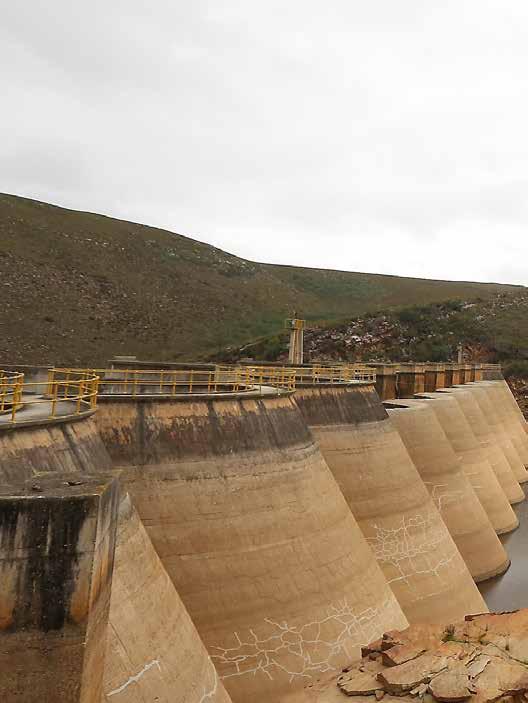
reported that the Western Cape alone needs R6 billion to help combat the crisis.
The dilemma the department is now faced with is that treasury has provided only R6 billion for drought relief this year.
The municipalities are now faced with having to cope with the mammoth task of providing clean, quality water to their communities while the national department is on the verge of collapse. The citizens in Cape Town are feeling the most serious impact of the situation. It has now emerged that the water crisis has shown that municipal financing has become the most serious problem that
all municipalities are faced with.
The huge water price hikes in the City of Cape Town council’s draft have highlighted what environmentalists say is a flaw in the process of municipal financing.
Under the present system, there are only so many ways a municipality can bring in money. Charging residents for services such as water, electricity and refuse removal brings in on average 47% of the revenue of South African municipalities according to the Chartered Institute of Government Finance, Audit and Risk Officers (CIGFARO). In Cape Town
services account for 49% of revenue, and property rates 23.7%.
A problem now arises when there is a shortage of resources such as water or electricity and municipalities encourage or instruct residents to use less. In doing so they cut deeply into one of their biggest sources of income. They now have to make up the shortfall so they increase tariffs.
As a result of the three-year drought in the Western Cape became more acute, national government told users to use less water. In turn the City of Cape Town told residents in January to use 50 liters
per person per day or face the prospects of taps running dry. The so -called “
Now after living for months in water -stress mode, saving shower water in buckets, sponge –bathing, wearing clothes multiple times to save on laundry, letting gardens die and urine build up in loos. The council for cutting consumption from 900 million litres a day last year to around 520 million litres a day this year has congratulated Capetonians.
Now the bad news! Capetonians were told that they will have to cough up 29% more on their water and sanitation
bills. Thus in this case the city fathers say “thank you very much for saving so much water but now we have collected some R2 billion less and we will have to charge you more” This has caused an uproar and if allowed we can brace ourselves for more service delivery protests.
It is clear that the whole system of municipal funding needs to be overhauled. Cities need to look at new ways of municipal funding, particular new ways of getting revenue from water.
The Latest on Our Water Woes. Nelson Mandela Bay.
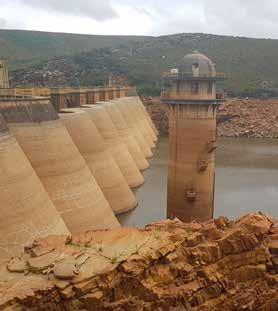
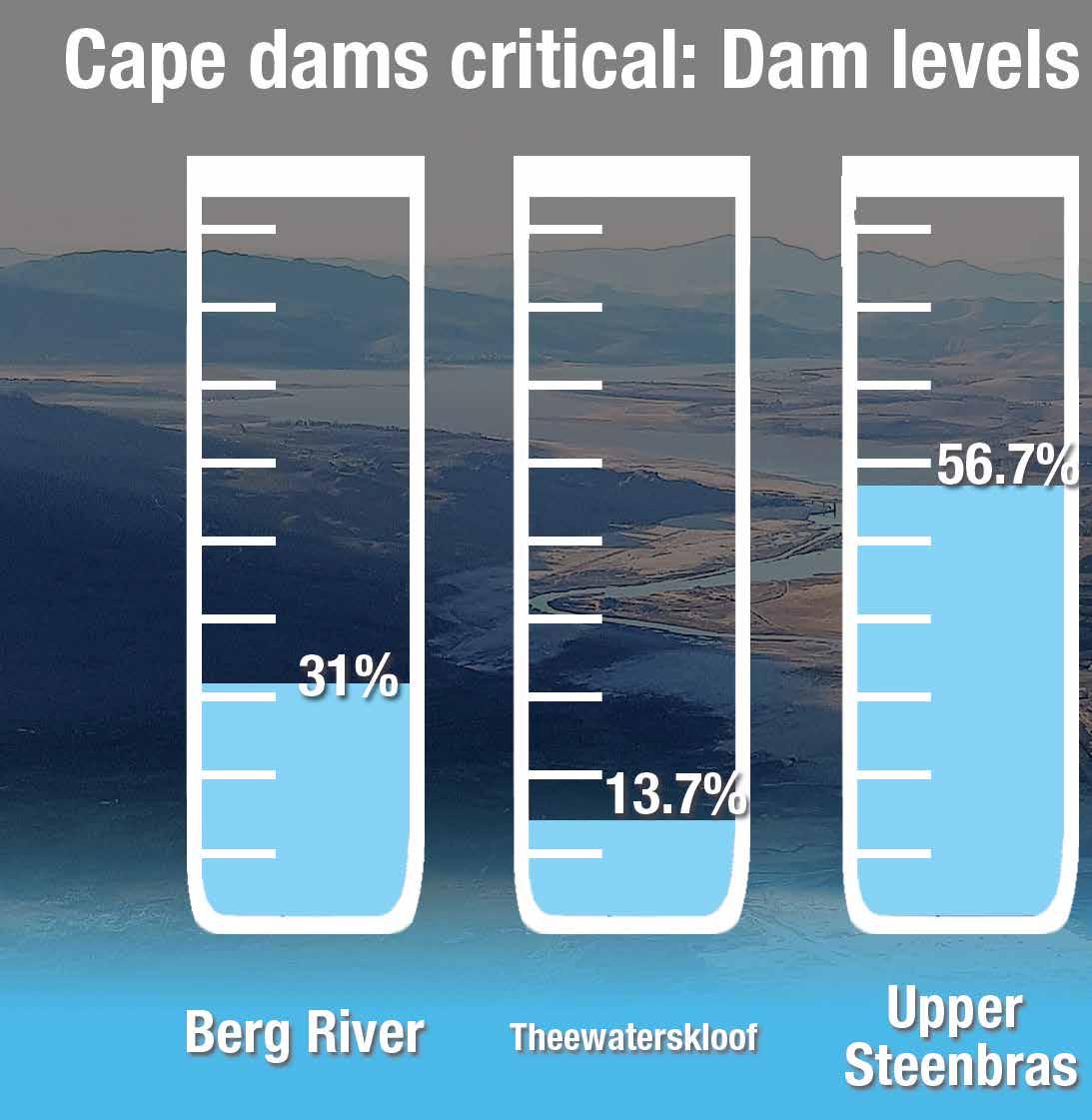
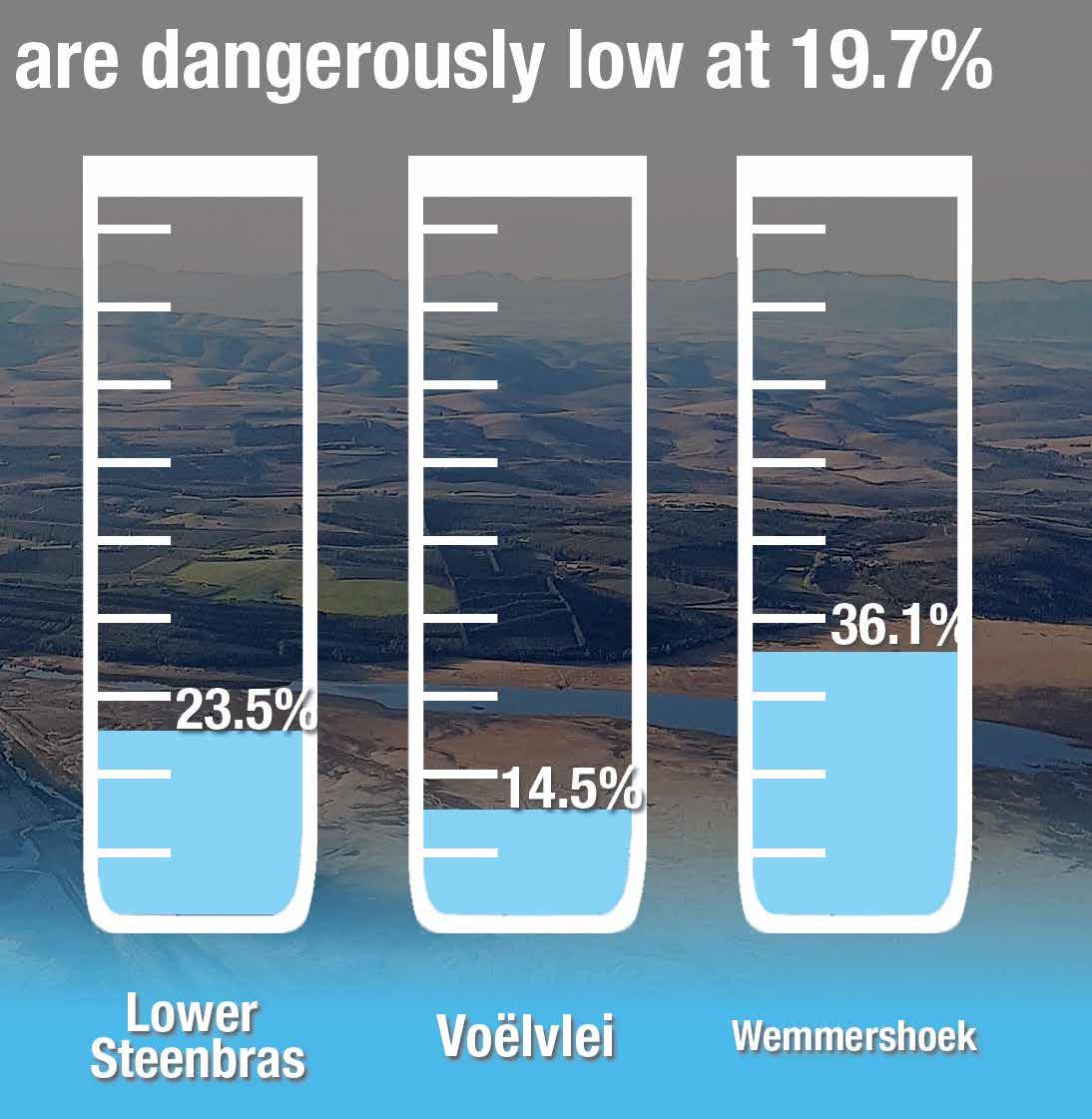
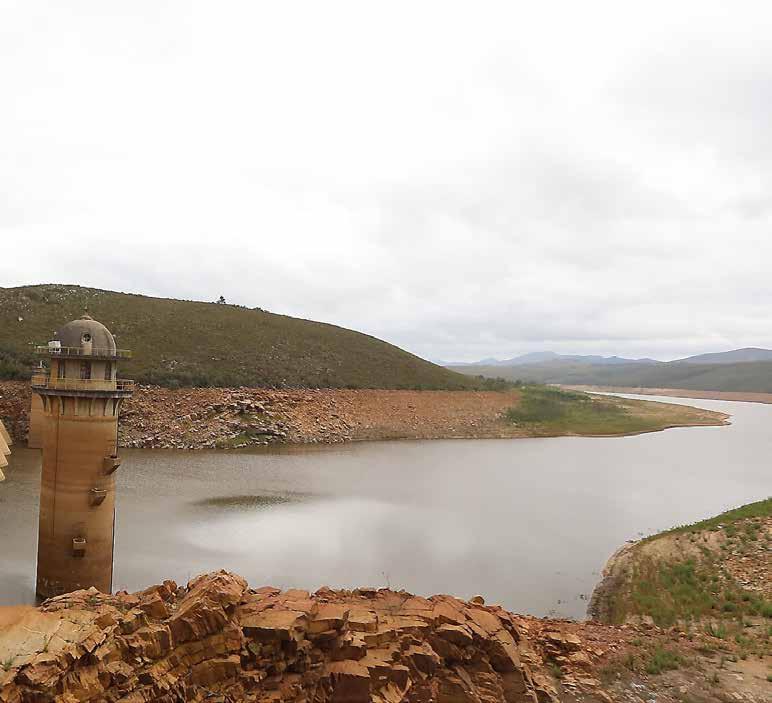
Dam levels are fast approaching 20%.
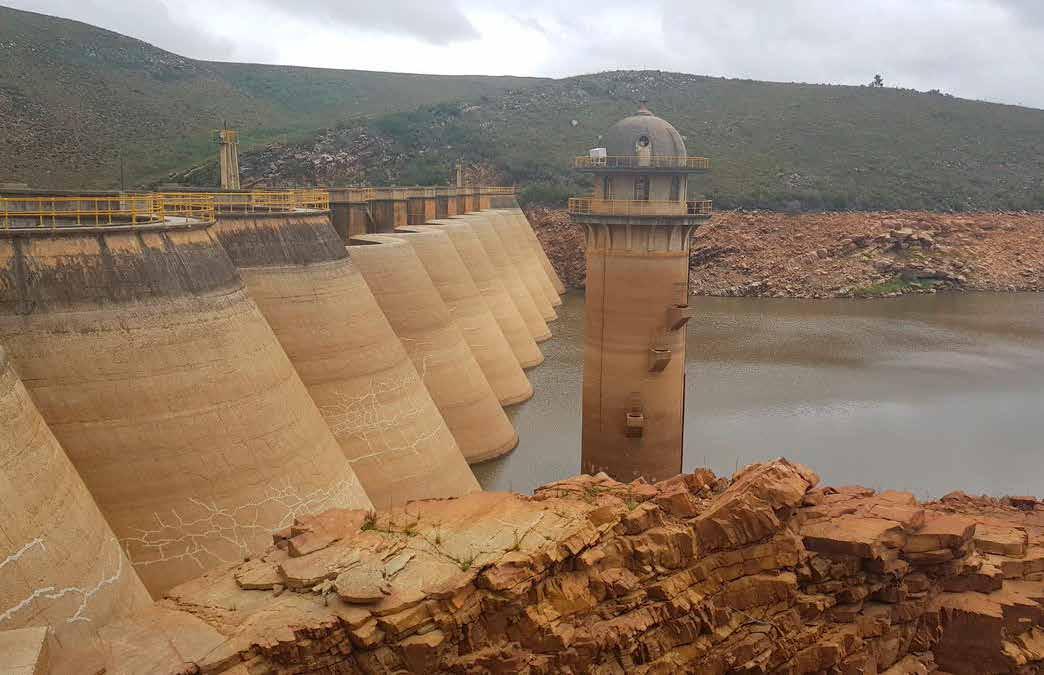
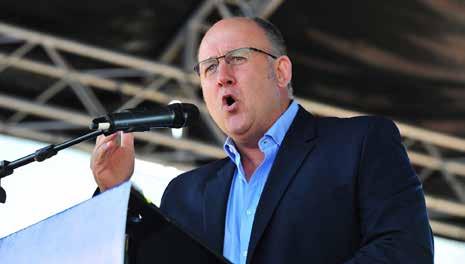
According to the Mayor, Athol Trollip, “the city will need to strengthen its water conservation efforts to avert a looming disaster”. The Nooitgedaght Low Level Water Scheme is expected to provide extra water, but not all supply sources can be supplemented from the same water system, he explained. “With only 10.37% of recorded water supply, Kouga Dam is the most affected, while Churchill Dam languishes at 18.08%” said Trollip. With no prediction of meaningful rain soon, the municipality is seeing continued high water consumption from domestic and business users. “As the administration, we wish to make a clarion call on residents to assist in preventing a drought disaster by monitoring their household consumption and further tightening their water conservation efforts” he said.
Saldanha Bay
The Saldanha Bay Local Municipality managed to dodge disaster when the catastrophe was delayed after the Department of Water and Sanitation released more than 5 million cubic metres
of water from the Berg River Dam, that started trickling in a day shy of the town’s predicted “Day Zero”. Saldanha Bay is the centre of one of the country’s industrial zones and up to 60% of its water is for commercial use.
Lucky Star, is fish canning factory that employs approximately 1200 and has been the mainstay of employment for more that 50 years, has been drastically impacted by the drought. The plant used more than a million litres of water
per day was forced to cut down on this usage, threatening the livelihood of many families. After being instructed by the municipality to reduce consumption a year ago, the company decided to invest in a desalination plant. The plant has been completed and will be commissioned in the next few days. Once it is up and running the plant will only use 20% of its water from the municipality.
Source: News 24.





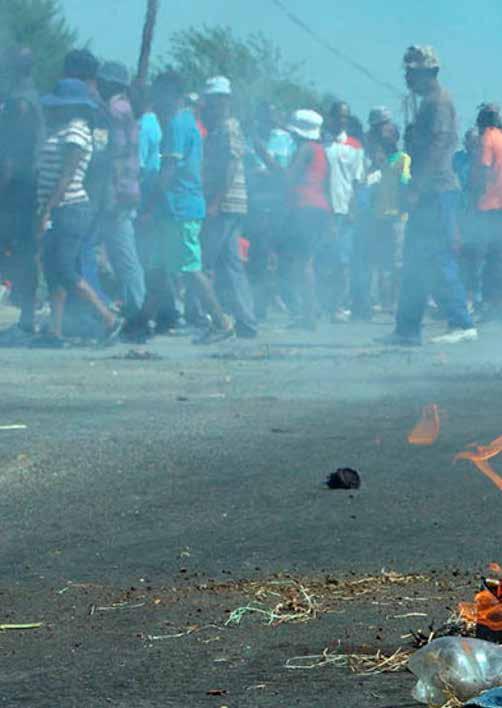
As we tune into the different news channels on our television sets and read our local newspapers we cannot help but ask ourselves the question “Is South Africa burning?”
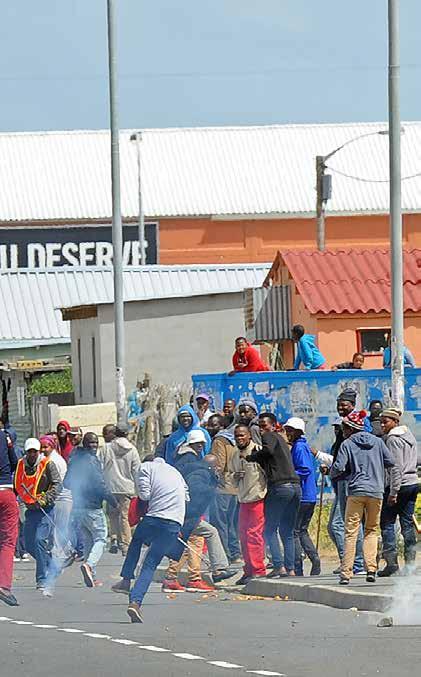
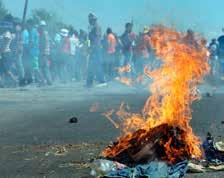
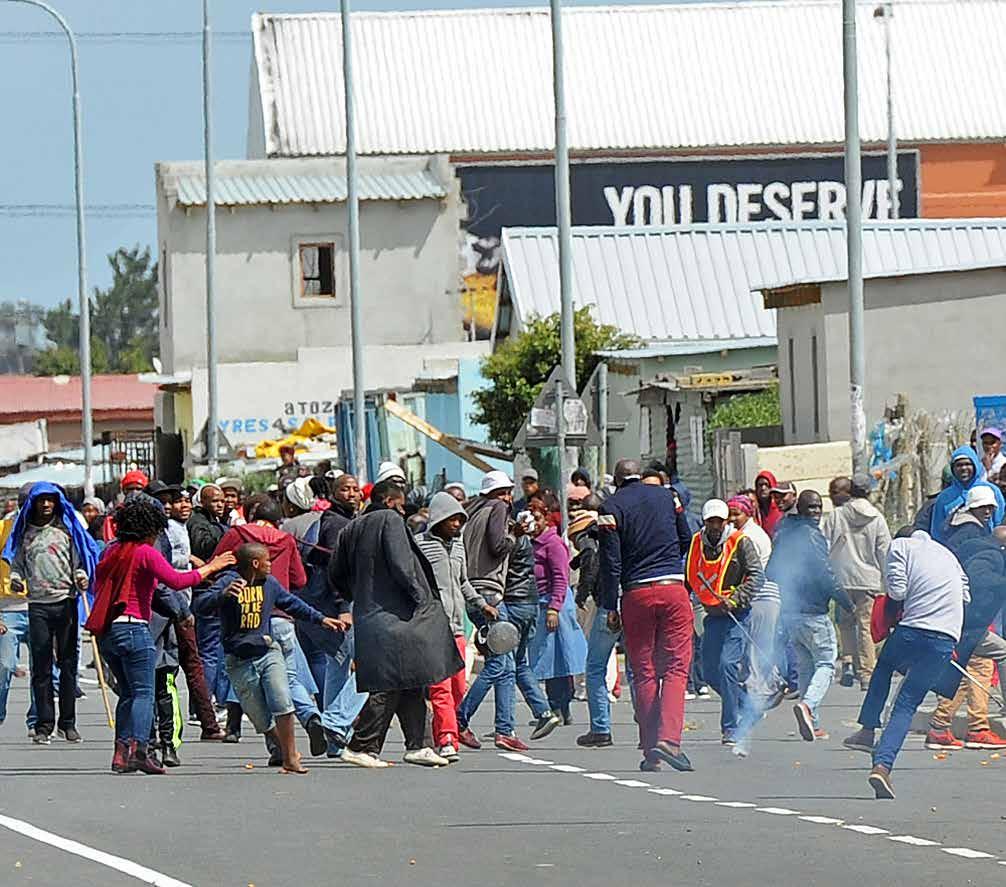
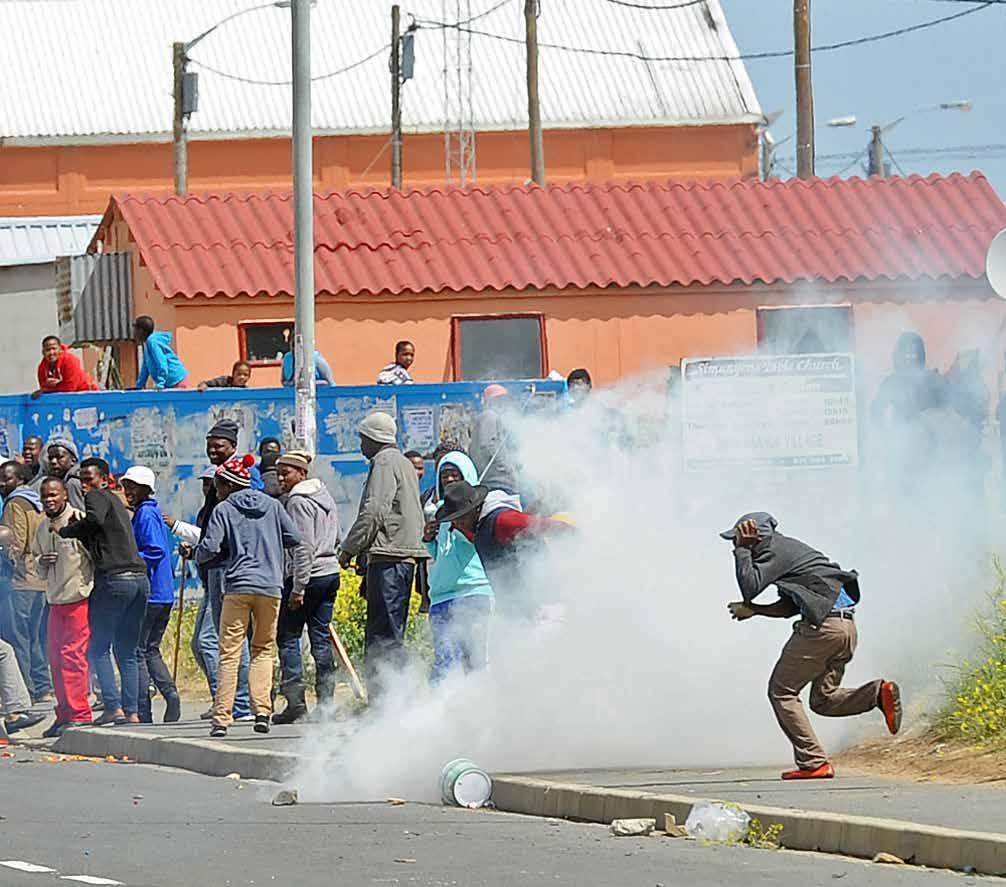
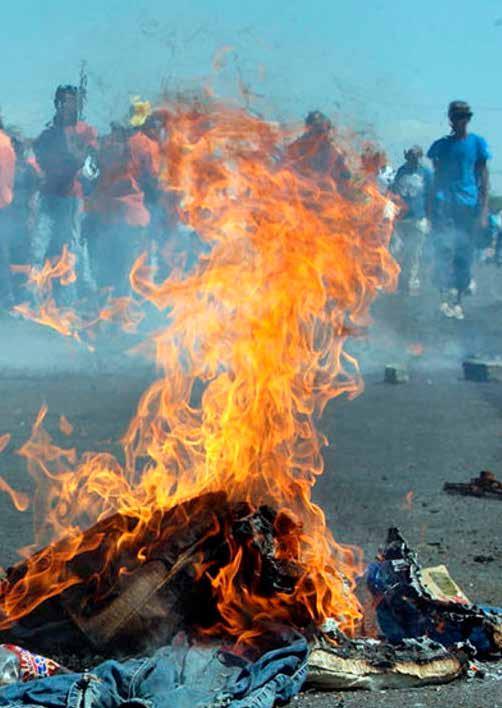
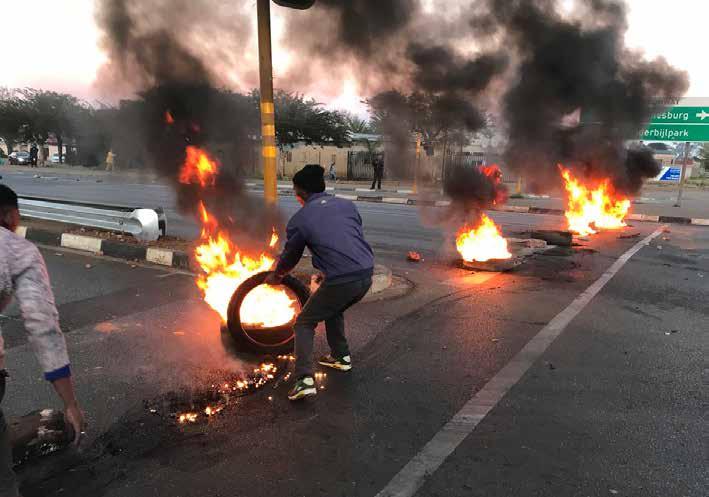
This question is justifiable as the cameras on the news channels reveal flames bellowing from burning tyers that are strewn on busy roads causing havoc with traffic. Motor vehicles are seen smashed and some shouldering while shop fronts is smashed. Our local newspaper front-page pictures portray the aftermath of a war. Many towns and city’s appear as though they have been torn apart by bombs.
It is said that we should not generalize and cause alarm. We should not assume but gather facts before we offer opinions. However we cannot but offer an opinion as we see destruction as it occurs on television and social media platforms. We now live in an age of instant communication through the various platforms that make up social media. As events occur they go “viral” and within minutes everyone with a smart phone is made aware of these events. It is within our common sense and information at our disposal that we cannot but conclude that service delivery protests are on the rise. More concerning is the fact that these protests are becoming more violent.
As the service delivery protests escalates, civil society is becoming more troubled at the lack of leadership in efforts to de-escalate these violent service delivery protests. Our politicians
have not provided us with a strategy as to how they are going to deal with this most serious problem. Our police have shown that they are ill equipped to manage the outbreaks of violence and have often been seen as inflaming the situation with brutal responses in order to disperse the protesting communities by using excess force.
The usual rhetoric by ministers condemning the violence and threatening the perpetrators with the full might of the law have done absolutely nothing to stem the tide. Communities have reached such high levels of anger and emotion that they have brazenly appeared on camera warning the authorities that if their demands are not met they will take further action. In some cases they have carried out these threats as councilors houses have been torched and some have been held hostage. Whist it is correct that lawlessness should be condemned in the strongest terms, plans should be unveiled as to how the legitimate demands of the communities will be addressed. It most disturbing that no sustainable strategies have been developed by our politicians to stem the rise in service delivery protests.
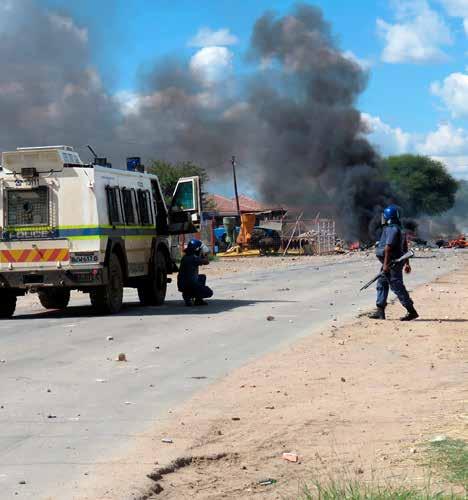


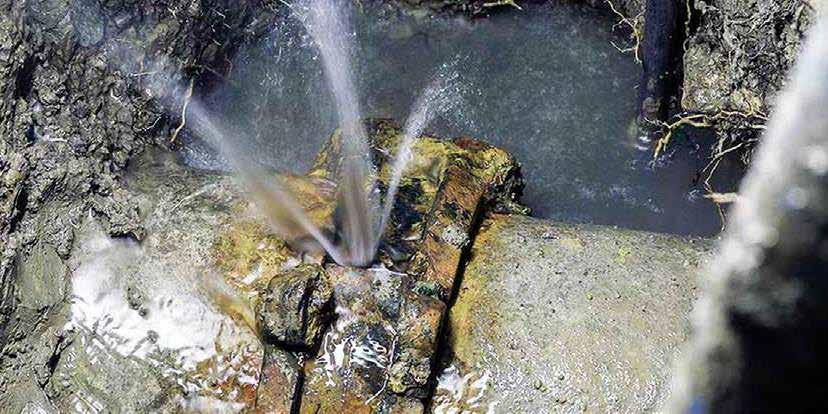
Wate r Loss I nsurance provi de s mu ni ci pal itie s w i th a gre at sol uti on f or managi ng uni nte nded unde rground w ate r le aks at pri vate home s, tow nhous e s and comple x e s.
The Ins urance provi de s cov e r to a cons ume r w ho may be s urpri s e d by a huge muni ci pal w ate r bil l cause d by a le ak on thei r pre mi s e s w hile the Muni ci pali ty at the same time i s assure d of i ts i ncome , thus av oi di ng di spute s be tw e en the consume r and the muni ci pal ity.

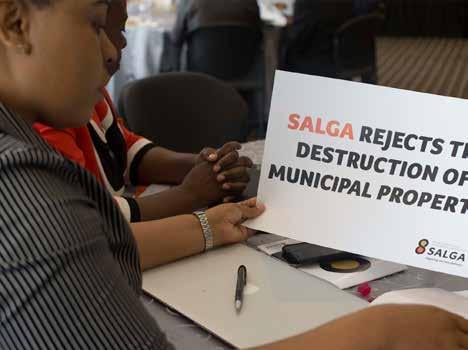
by our politicians to stem the rise in service delivery protests.
Due to the sight of flames, smoke and destruction that the media has fed us we have been focused on these aspects of protest. The media has failed to investigate the root causes of the protests. It is clear that the notion of a “better life for all” and the “rainbow nation” has lost its significance on the vast majority of our people. If we ask the serious simple question “has your life changed since the
South Africa has become the most unequal society in the world. This in itself will inevitably trigger discontent To the protesters the fact that their lives have not changed despite the high expectations that was created by government,
birth of democracy” the vast majority of the population will respond with a resounding “NO”. We know that protest is born out of dissent and discontent. We must therefore remind ourselves that it was our dissent and discontent with apartheid that we protested to such an extent that our country was burning. We must further remind ourselves that it was the failure of the apartheid government to address this discontent that led to the fall of apartheid. South Africa has regressed as far as socio-economic
development is concerned yet we fail to address government’s consistent failure to deliver basic services timeously and its failure to communicate effectively with the people it serves. The community has to endure incompetent government official’s intent on self- gratification and misuse of power.
South Africa has become the most unequal society in the world. This in itself will inevitably trigger discontent. To the protesters the fact that their lives have not changed despite the high expectations that was created by government, should send an urgent message to all South Africans that they have a responsibility to respond in a more responsible manner to arrest these protests that have the potential to escalate to uncontrollable levels. At the heart of the problem is fact that the privileged white minority is still stubbornly resisting transformation. This is illustrated by reports from the department of labour recently that showed that almost all the top posts in the country are still held by white men. 21 companies, more that half of which are listed on the JSE have been fined for noncompliance with equity provisions. There is thus an unwillingness by this group of the population to voluntary contribute to the development of the county by assisting government in its transformation efforts to bring about stability at local level.
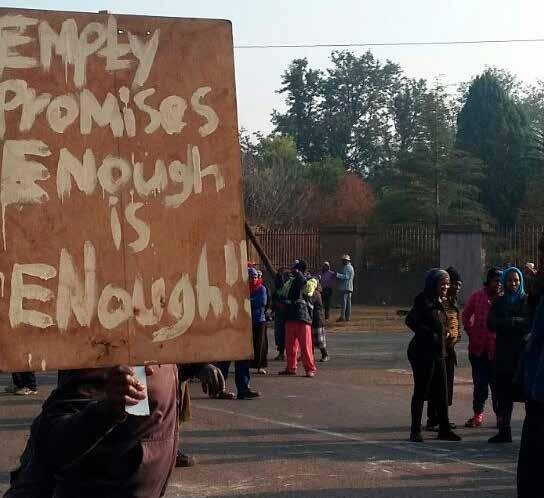

• Master of Public Administration
• Bachelor of Public Administration
• Higher Certificate in Public Management
• Higher Certificate in Public Sector Procurement
• Higher Certificate in Local Government and Development Management


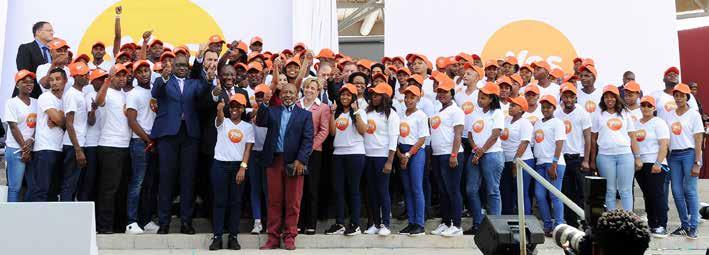

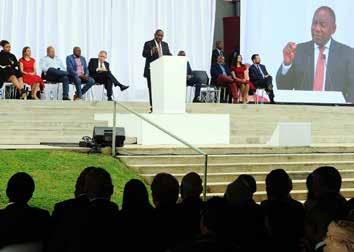
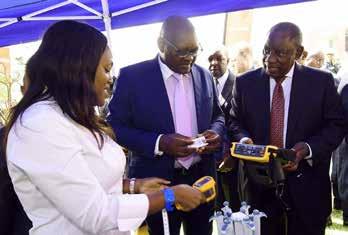
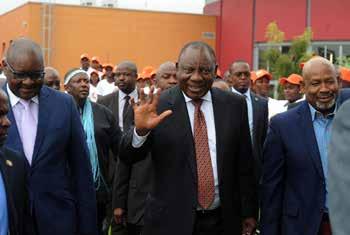


For a number of years Uhuru has partnered with LGBN, producing their monthly magazine, Municipal Focus – from content to design, print and distribution; as well as the creation of the Municipal Focus website, electronic mailers and a monthly eMag.
This magazine is widely read and reaches a database of 15,000 municipal and community leaders.
The publication helps municipalities to empower their communities with the latest news and developments.

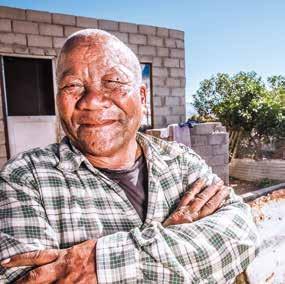

It also gives corporates and other interested parties insights into the workings of local municipalities; and our advertisers derive great benefits as their products and services are showcased to a captive audience.


If you are looking for a communications partner to help empower your business, look no further than Uhuru.
To learn more about us and our services, contact Desmond Sampson.



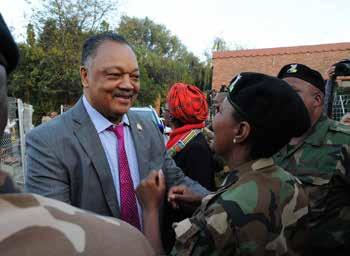


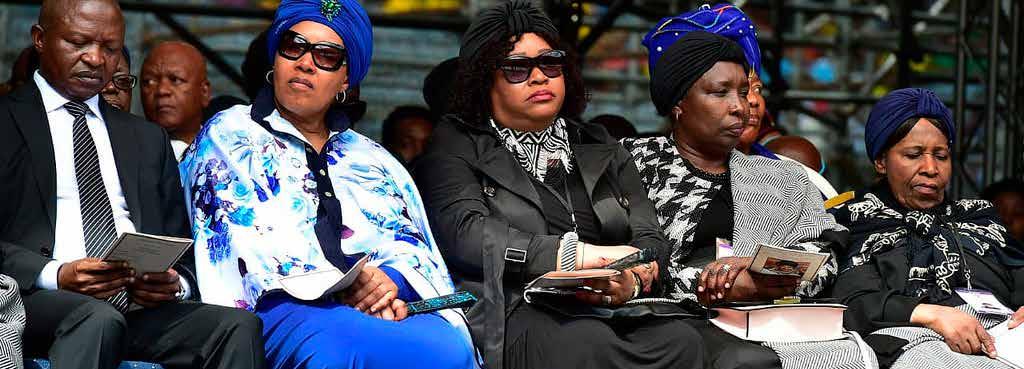



skills development Bitou and George municipalities to be Investigated Government identifies land for previously disadvantaged Municipal wage bill could hit nearly R100-billion a year





The Department of Trade and Industry (dti) has launched the Lesedi Skills Development Academy in Atlantis in the Western Cape to give youth from the area a better chance in the job market.
“Government is aware that skills development in the past was limited to the minority and the majority of the people had less access, yet it is a critical requirement for the majority to get jobs. This is the reason every time we engage with business, we insist on skills development which is non-negotiable for all.
“To underpin the importance of skills development government launched the Youth Empowerment Service (YES) Programme. This programme aims to improve the grim employment outlook for young job seekers by offering work opportunities and therefore inclusion in the economy,” said Minister Davies at the launch on Tuesday.
Minister Davies indicated that business agreed to partner and create 300 000

internships per year for the unemployed youth for the next three years.
“Every bit counts as a means to address the issue of skills development and unemployment. We therefore cannot compromise if we need more people to participate meaningfully in the economy. The skills that the academy develops
will assist the Atlantis people to tap into the proposed Atlantis Special Economic Zone [SEZ] amongst others. The SEZ is anticipated to be designated by the end of 2018,” said the Minister.
The academy was established to address the need for skilled artisans and to close the skills gap in the nuclear and broader
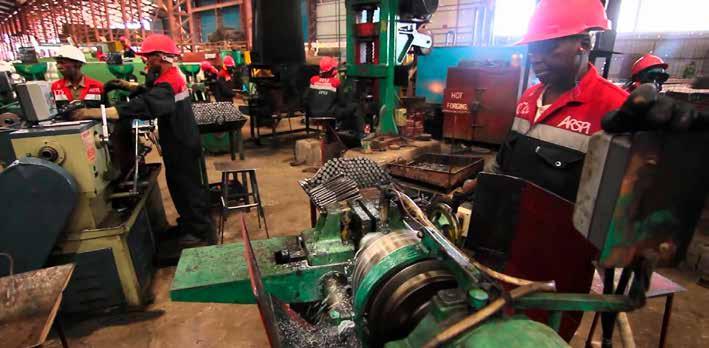




energy sector as well as associated industries.
Chief Executive Officer of Lesedi, Francis Carruther, said to date, the academy has employed 35 learners, who are at various stages of training within their respective programme. He said 33 of these learners are from Atlantis.
Lesedi was established in 2015 to address challenges in providing skilled artisans with appropriate training and qualifications to meet the ability to execute projects. The learners engaged with apprenticeship, learnerships and short skills programs among others.
Viable township economies
Speaking at an Industrial Breakfast Session earlier in the day, Minister Davies said the Department of Trade and Industry (dti) has been working on creating viable rural and township economies.
The objective of the session held in Atlantis was to create a platform for collaboration between the public and
the private sector in developing support mechanisms for the rural and township economy.
The Minister said programmes such as the revitalization of Industrial Parks and the Special Economic Zones (SEZ) Programme are enablers to drive the economy and create sustainable jobs.
He said Atlantis is on the right track to be designated as an SEZ and also take a lead in the renewable energy space. Investment.
“Between 2014 to 2016, Atlantis attracted investment of about R680 million from both local and international investments which has led to jobs in the wind, solar energy efficiency and in other technologies created,” said Minister Davies.
He said the SEZ would have attracted investments worth R3.7 billion by 2030 and this excludes gas to power and other sectors. More than 20 investors have shown significant interest in the zone and ongoing engagement facilitated.
SEZs are geographically designated areas of a country that are set aside for specifically targeted economic activities.
The Special Economic Zones and Industrial Parks Programme is run by the dt
At the launch of the Black Energy Professionals Association (BEPA) on Thursday, South Africa’s minister of energy, Jeff Radebe, stressed the importance of this platform for “black professionals to share ideas, forge closer working relationship with government, to influence government energy policy, and collaborate”.
The Minister said that government, public and private sector need to work together towards a radically transformed and inclusive economy: “This is a nonnegotiable for our country.”
“My recent approval and sign off of the Renewable Energy Independent Power Producers Projects supports an increase in black participation through increase not only at ownership level, but at operational and manufacturing level towards the creation of black industrialists,” he added.
Local participation
According to Radebe, the government’s IPP Programme “remains the only vehicle that progressively enables participation by black investors and industrialists in electricity generation. Through its unique programme design, the Renewable Energy IPP Programme requires a mandatory 40% of South African Entity Participation and black enterprise and broad-based black participation in the form of ownership, economic and socio-economic benefits.”
“With these latest projects, black shareholding of 64.2% of local ownership has been achieved, and shareholding by black South Africans has also been secured across the value chain.
Black ownership and participation in Engineering, Procurement and Construction (EPC) and Operating and Maintenance (O&M) Project Companies have improved under this new round of projects.
“Around 86%, or 1 748, of the top management jobs of the new IPP Project Companies will be filled by black professionals,” the Minister added.
Black-owned enterprises
“The IPPs have committed to an average of about 40% or R8.90 billion of the local goods and services spend to be procured from black-owned enterprises during the construction period,” Radebe said adding that a key focus for the Programme is to ensure rural communities receive sustainable benefits.
“The Renewable Energy IPP Programme is embracing local community socio-economic and enterprise development and through an inclusive geographic approach it has
created opportunities across the country – in all 9 provinces – in mostly lagging rural areas,” he said.
According to Radebe, “local community shareholding (total equity) in the newly signed projects amount to 7.1% (or R1 627 million). The local community shareholders for these projects will receive R5.9 billion net income over the 20 year life of the projects. In addition, the IPPs will enable local communities to further benefit directly from the investments attracted to the area and IPP commitments in the areas of education and skills development social welfare, healthcare, general administration and enterprise development.”
The Minister concluded: “The newly signed projects will contribute a total R9.8 billion to socio-economic development initiatives and R3.39 billion to enterprise development over the 20 year life time of the projects.”
The Hawks have confirmed that they have launched and investigation into alleged irregularities in the Bitou and George municipalities in the Western Cape.
Local Government, Environmental Affairs and Development Planning MEC
Anton Bredell said “we welcome the Hawks investigation, acting on my request for their intervention in these two municipalities. My department has a long history of not fearing to step in when there are concerns about the way municipalities are being run”
“We have seen similar investigations in the Oudtshoorn and Kannaland municipalities by the Hawks in the past. It is a pity that these types of matters seem to repeat themselves and it is a real pity that public officials seem to forget in whose interest they serve. Our message has always been that if your hands are caught in the till in this province, then we will not hesitate to chop them off, no matter whose hands they are. We want to urge officials and public representatives in all our municipalities to remember their duties and responsibilities. We will cooperate fully with the Hawks
in this matter as we have always done. Investigations were also underway into allegations of water being extracted illegally from rivers in the Western Coast Region. The latest reports relate to water that has been released from the Bergriver dam with the
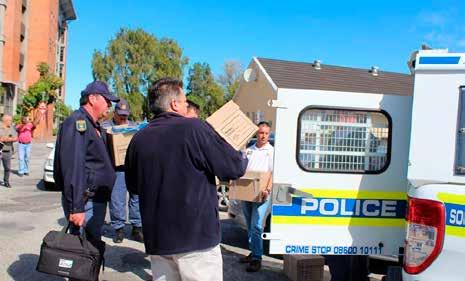
end goal of supplementing the Misverstand weir that serves 22 towns in the West Coast district,” Bredell said.
“We understand that there have been attempts by some to extract water irregularly at it heads towards Misverstand. This includes attempts to channel water from the river to off stream dams. Those considering this activity should be warned that a coordinated law enforcement response is in place”.
Bredell said the province was in a severe drought and required dedicated management of the system to ensure all communities had water to drink. “We need the cooperation of everyone. We want to also urge the public to report concerns about possible irregular water extraction to their nearest municipalities. They can also contact the department or National Department of Water and Sanitation to report any concerns”
Over 7000 households in Diepsloot will now have access to a constant water supply thanks to a new 25 mega litres reservoir.
It was launched on Tuesday by Councillor Nico De Jager, Member of Mayoral Committee, Environment and Infrastructure Services, and Ntshavheni Mukwevho, Managing Director of Johannesburg Water.
Dedicated storage
Diepsloot was previously supplied directly through a Rand Water bulk main which was connected to the Pretorius Rand reservoir. This feed did not provide storage for Diepsloot and the surrounding areas including Dainfern and the new Steyn City and could only supply to 7425 households.
The new reservoir, which has been in construction since May 2015 at a cost of R55 million, will address these issues thanks to a storage retention capacity of 28 hours.

“The absence of a dedicated storage to supply these demands was a risk in terms of continuous water supply and security to the area,” De Jager noted.
“This reservoir will ensure that Johannesburg Water is able to do maintenance without having to suspend service in the area and this will improve

lives for the better,” he continued.
Delivering on infrastructure projects
He further added, “As the Municipality of the City of Johannesburg, we strongly believe that we are turning the corner with regards to the capacity to deliver on infrastructure projects timeously and ensure that scarce resources are directed towards economic development.”
“We all know that incapacity and under-spending in infrastructure projects deprives communities of essential amenities. It is for this reason, therefore, that we will continue building an effective project management capacity and leverage from strategic partnerships.”
The Reservoir is also critical and strategic for Johannesburg Water’s water supply and distribution to comply with the new requirements by Rand Water to ensure JW distributes water directly into its network as opposed to previous arrangement where most water supplies into Diepsloot was directly fed by Rand Water.
Power utility Eskom has presented its case to the National Energy Regulator of South Africa’s public hearings, which kicked off in Cape Town on Monday.
At the first of the countrywide public hearings to be heard at the Cape Town ICC, Eskom presented its case to recover costs already spent in the provision of electricity totalling R66.6 billion, while allaying fears that this application would lead to a 30% tariff increase.
“Our sustainability as Eskom depends on a sound regulatory environment that is aligned with existing Nersa rules and other legislative requirements. We therefore rely on Nersa to review our application in line with the multi-year price determination (MYPD3) methodology, which is a globallyaccepted regulatory principle that reconciles variances between the projected and actual revenue, and costs that Eskom incurred for certain elements,” said the utility’s interim Group Chief Executive, Phakamani Hadebe.
The regulator began its hearings into Eskom’s Regulatory Clearing Account (RCA) applications for financial years 2014/15 to 2016/17 from 16 April to 11 May 2018. Eskom’s applications total R66.6 billion.
The RCA is a monitoring and tracking mechanism that compares certain uncontrollable costs and revenues assumed in the MYPD decision (made by Nersa) to actual costs and revenues incurred by Eskom.
Hadebe said the application is based on the decision already taken by Nersa on the utility’s first RCA application for 2013/14.
“We have spent the money in the implementation of our mandate of

providing electricity to South Africans by raising debt, as it was not included in the revenue decision and need to repay those loans accordingly in order to ensure credibility with our lenders,” he said.
Hadebe further emphasised that Eskom’s application only covers costs that were incurred efficiently and prudently as allowed by the RCA mechanism.
“We are aware and mindful of people’s concerns. It is therefore important to note that Eskom is on a path of recovery on governance issues that have marred our organisation in the recent past. The new board appointed in January 2018 has been embraced by the public and investor, and is focusing on operational and financial stability and clearing governance issues by bringing all those engaged in fraud and corruption to account.”
Hadebe said internal processes have resulted in disciplinary hearings, suspensions and resignations of implicated executives.
“Continued focus and effort will be placed on combating corruption and pursuing justice within the legal framework.
“We also welcome various investigative interventions that are underway to get
to the bottom of recent acts of fraud and corruption, and we are in a process of claiming back monies owing to Eskom, including money that was fraudulently paid to McKinsey and Trillian,” said Hadebe.
Phased-in approach
Meanwhile, the utility’s acting Chief Financial Officer, Calib Cassim, said Eskom is not expecting a once-off adjustment but rather a phasing-in of the liquidation over a few years to make it fair and manageable for electricity consumers.
“We need to emphasise that this is a retrospective process where we apply to recover costs that have already been incurred by Eskom, but cover what the Regulator deems efficient and prudent and also cover sales volume variances.”
Eskom has made the application in terms of the RCA balance for the second, third and fourth year (2014/15; 2015/16 and 2016/17 period) of the third multi-year price determination (MYPD3).
The second leg of Nersa’s public hearings will move to the Eastern Cape Training Centre (ETC) in Port Elizabeth on Wednesday.
The public hearings are expected to conclude at Gauteng’s Walter Sisulu Square in Soweto on 11 May.
The Department of Environmental Affairs and stakeholder within the environmental sector are identifying 10 million hectares of suitable land for previously disadvantaged individuals and communities to participate as owners of sustainable wildlife-based business ventures.
“Support programmes such as infrastructural development (game fence, ecotourism facilities etc), game donation/ loaning, skills development and training, access to markets and funding will be facilitated to ensure sustainable businesses,” the Deputy Minister of Environmental Affairs, Barbara Thompson, said.
She said the environmental sector is ideally placed to increase the ownership percentage of black women, youth and communities in the country’s economy. The Deputy Minister was addressing the launch of the Mayibuye Game Reserve Wildlife Economy Pilot Project in the Umkhambathini Local Municipality on Thursday.
“To give you some perspective of the enormous potential of the South African wildlife sector, I have been informed that the sector currently employs approximately 100 000 people across the value chain,” Deputy Minister Thompson said.
The sector’s value chain is centred on game and wildlife farming/ranching activities that relate to the stocking, trading, breeding and hunting of game, and all the services and goods required to support this value chain.
The key drivers of this value chain include domestic hunters, international hunters and a growing retail market demand for wildlife products.
“It is believed that the domestic hunting market was approximately R6.4 billion, while the international hunting market
was approximately R1.4 billion in 2013. In addition to hunting, game farmers can generate income from the sale of game meat, wildlife products and live game,” she said.
The retail and export game meat market was estimated at R230 million in 2013.
Deputy Minister Thompson said the sector also has little domestic and international market multiplier effect and the job creation characteristics of the tourism industry, making it a sector with large economic transformation potential.
“Unfortunately, the structural inequalities characterising our economy has placed several barriers, including insufficient access, ownership and inefficient utilisation of land and lack of infrastructure development support for entrepreneurs on black South Africans.
“In particular, the high capital costs for acquiring land, fencing and game species are major barriers to entry and transformation. Overcoming these barriers to entry or challenges requires coordinated efforts from the government, private sector and communities,” she said.
Mayibuye Game Reserve received R10 million funding from the Department of Environmental Affairs.
Deputy Minister Thompson said the game reserve has made significant progress since the R10 million funding, as a 35-kilometre wildlife fence has been erected, a gate house and offices are being built, two houses have been refurbished, 15 field rangers have been trained and employed while a commercial “Business for Good” site has been refurbished and wildlife introductions (zebra and wildebeest) have been initiated.
“In terms of employment, 76 temporary
Environmental-Affairs-deputy-minister-BarbaraThomson
I have been informed that the sector currently employs approximately 100 000 people across the value chain,” Deputy Minister Thompson said.
Expanded Public Works Programme (EPWP) jobs have been created through erection of the fence. This has unlocked a further R100 million private investment for the development of the eco-estate,” she said.
The local community, the Ximba people, were awarded a land restitution claim in terms of a settlement agreement in April 2007.
The Mayibuye Community Trust formed by the community entered into a 99-year lease with the developer and the strategic development partner, whereby the land would be developed into a game reserve with a component of residential property, commercial sites and hotels.
In a bid to cut down on snaking queues at Home Affairs offices, Minister Malusi Gigaba has set the process of implementing short term interventions to deal with long queues in motion through a War on Queues campaign.
The campaign follows an assessment report conducted by the department following queries from members of the public and journalists about the time spent at Home Affairs offices.
The department has already started with the implementation of some of its short-term interventions which harps on the need to improving management of its offices and streamline workflow to ensure efficiency.
“Segmentation of offices into green, yellow and red based on their performances. This was achieved. Performance ratings and performance management interventions of all red offices.
“A report on interventions to be taken immediately in the remaining red offices, to address long queues,” said Minister Gigaba at a briefing in Tshwane on Sunday.
In addition to segmenting the underperforming offices and conducting reports on performance of these offices, the following interventions will be rolled-out:
• An analysis of geographical footprint showing which areas of the population are underserved based on reasonable benchmarks of (1) distance to one of our offices, and (2) Front Line Officers in relation to surrounding population.
• Proposals on how to measure customer experience and waiting times in offices, and on how to deal with structural challenges of long waiting times.
• A report on immediate interventions in Orlando West, Wynberg in Alexandra, Pietermaritzburg, Centurion, East London and Umgeni offices, showing reductions in waiting times and what has been done in ensuring people are
not waiting outside offices to be served.
• Visits to the four offices by Executive Committee members and Provincial Managers.
• Pilot of a one-stop workstation that takes fingerprints and photographs, to streamline processes and reduce time clients spend in Home Affairs offices.
• The 78 mobile units are currently being refurbished and we are confident that during the second half of this year they will be deployed across the country.
The interventions will be rolled-out as short, medium and long term interventions with some of the short term interventions set to kick in from Monday, 23 April 2018.
The report which aimed to knit pick some of the causes of the snaking queues highlighted that long queues emanate from high client volumes, possible discontinuation of Saturday working hours, unstable systems, inefficient work flow process, leadership issues and front office space issues.
In addition to these the assessment report highlighted that following factor compound the problem of long queues:
• Poor management in some office
• Ineffective utilization of staff (over and under supply)
• Lack of an appointment system
• Inefficient management of queues
Concurrent running of manual and automated systems
• Uneven distribution of offices based on demographics
• Misinformation and discontinuation of green barcoded IDs
Poor signage at offices
While the Minister pleaded for patience while efforts are carried out to reduce lines, he added that the department is in talks with the banking sector to increase the rollout of ehomeaffairs services.
“Ultimately, to be able to serve all South Africans efficiently, we need to expand our footprint. This will need to be addressed through the budget process.
“To complement our office footprint, we are in the advanced stages of establishing a public private partnership with the banking sector to roll out the ehomeaffairs service to branches of four major banks – Absa, FNB, Nedbank and Standard Bank – around the country over the next year,” said the Minister Gigaba.
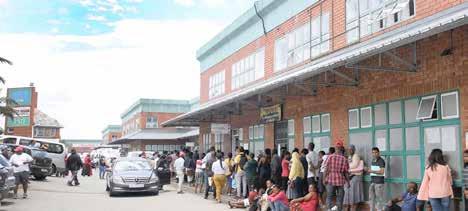
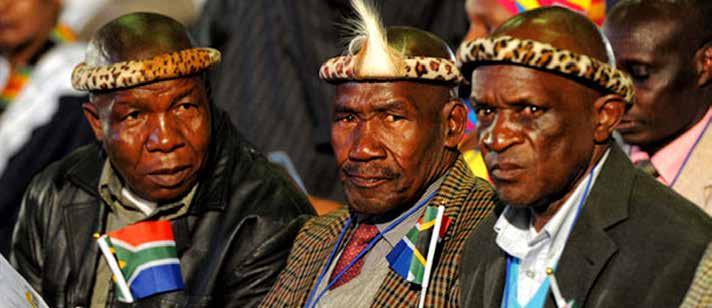
Cooperative Governance and Traditional Affairs (COGTA) and Human Settlements, MEC Dikgang Uhuru Moiloa, has promised the Amandebele ba Lebelo tribe to improve service delivery and fast track development in the Hammanskraal area.
“Government will work together with traditional council to improve the quality of lives. After here, I will go back to the office to develop a policy on how government will develop this place,” said MEC Moiloa.
The MEC made his first appearance at the Amandebele ba Lebelo Annual General Meeting (AGM) on Saturday after his appointment as the MEC COGTA and Human Settlements.
The MEC donated a Nguni cow and 15 mini-tablets to senior traditional leader Kgosi KC Kekana and his traditional community at Majaneng in Hammanskraal.
The Nguni cow, according to African tradition, shows the MEC’s recognition of Amandebele ba Lebelo nation and also
encourages Kgosi Kekana to start and breed his own kraal. The laptops will be a tool of trade to make sure that the council is professionally managed.
Stakeholders who attended the event included Amandebele Ba Lebelo Council of Elders, the royal families, Amakhosana, traditional councils, Amandebele Ndzundza Sokhulumi, civil society organizations, provincial government, City of Tshwane Metropolitan Municipality and religious organizations.
MEC Moiloa also called upon the community under the chieftaincy to desist from vandalising public property and to raise their issues of concern with the Chief.
“Please don’t burn something that you have for something that you don’t have,” said the MEC Moiloa.
He assured residents that rural areas will get the same service level as urban areas.
Hosting an annual general meeting is a legislative requirement in terms of the
“his would assign new responsibilities to the Minister of Water and Sanitation to issue regulations and directives in dealing with the drought.
Traditional Leadership and Governance Framework Act No. 41 of 2003 and the Gauteng Traditional Leadership and Governance Act No. 04 of 2010 that encourages community participation, reports on and plans for service delivery for the community.
The annual general meeting is also a platform for the senior traditional leader to report on the finances of the community, while allowing community development workers, councillors and the municipality to share municipal plans and progress of development and the level of service delivery for the community.
Following community protests in the North West, Police Minister Bheki Cele engaged the community of Danville, Mmabatho, on Friday.
The Minister, who was accompanied by Provincial Commissioner Lieutenant General Baile Motswenyane, listened to the community’s concerns ahead of President Cyril Ramaphosa’s expected visit.
The President has convened an urgent meeting to ‘lend a hand’ in Mahikeng where protests against North West Premier Supra Mahumapelo have brought the town to a standstill.
“I am here to listen more than talk. The President, together with the Deputy President, will be having a meeting in the area at 12pm with the leadership of the ANC in the province to see what decisions need to be taken to make the situation better. After the meeting, the leadership will be able to brief you about the decisions of the meeting,” Minister Cele told the community.
In turn, the community told the Minister that the provincial government has failed them.
They emphasised that their protest is not politically motivated, rather they are pushed by the dire need for change and
service delivery in the area.
“We are a community in need. We are in 24 years of democracy but nothing has changed for us. As a community we are asking the national government to intervene because the provincial has failed us,” said one community member.
Furthermore, the community raised several issues such as brutal force used by the police and other policing issues such as racist words used against the Coloured community.
Minister Cele made a personal commitment to return to the community within two weeks to address all other police issues that were raised.
“I will come back, sit down with this community and resolve all policing
matters. As the police, we cannot allow our members to ill-treat the communities they serve. Working with the SAPS leadership we will sit and resolve issues to make our working relationship better. I take it upon myself to find a solution.

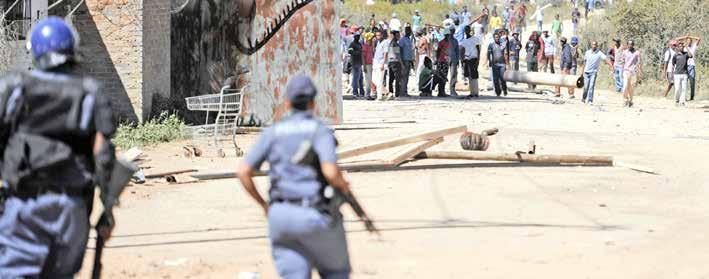
South Africa’s municipal wage bill could increase to just under R100-billion a year - if worker unions get their way.
This comes amid a deadlock in wage negotiations between municipal labour unions and the South African Local Government Association (Salga). Both parties have agreed to go back to their constituencies to talk over the two competing wage offers - as well as a proposal from an independent facilitatorin the hope that the current stalemate can be resolved.
The final round of salary and wage negotiations started in Durban on Monday and finished on Wednesday.
Trade unions want: - An 8% increase; - A minimum wage of R7393.00; - “Significantly above inflation increases” for the second and third year of the three year wage agreement; - A R378 non-pensionable allowance for employees that do not qualify for mortgages‚ but earn too much to get RDP (Reconstruction and Development
Programme) houses; and - Increase the threshold for these employees from R8‚000 to R15‚000.
Salga spokesperson Sivuyile Mbambato said these demands will increase the municipal wage bill from the current R87.3billion a year to R94.9-billion.
Salga is offering a 6.6% increase with inflation-linked increases over the next three years. Salga represents the country’s municipalities at the South African Local Government Bargaining Council (SALGBC).
A facilitator has proposed the following: - 7% salary and wage increase from July 1 this year; - Employees who earn R9000 or less per month shall get a further 0.5% increase from January 1 next year; andThe minimum wage‚ the homeowner’s allowance and the medical aid employer contribution will be adjusted by the percentage of salary increases for the three year period of the salary and wage agreement.
South African Municipal Workers’ Union

(SAMWU) said in a statement they will tell SALGBC whether it accepted or rejected the facilitator’s proposal.
“The Special Central Executive Committee is the structure which would mandate the union to either accept the offer or to lodge a dispute and sanction as strike action in line with the union constitution as the agreed number of negotiation rounds he now been exhausted‚” it said.
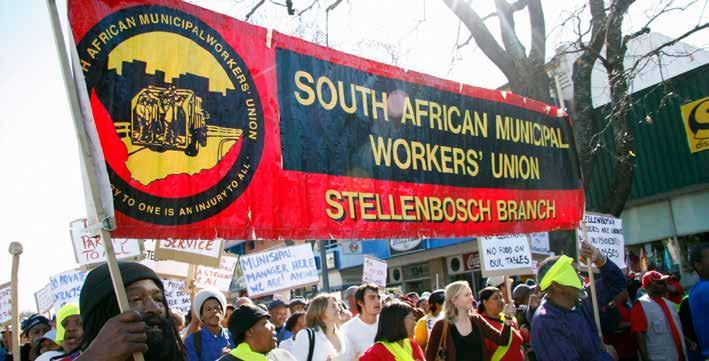









Having been in the Publishing, Advertising and Design Service Industry for 14 years we would like to share with you how we appreciate our Mutual partnership and welcome your support thus far. We can be of value to your business. Do you need to advertise your products and services? Or do you require researched articles, facts and figures about health, thriving businesses and the activities of our municipalities and government in our

beautiful country? Uhuru is proudly South African and celebrates its heritage and various cultures.
We are excited about the wealth of knowledge and expertise in our country. All our products and services aim to showcase this to thousands of readers in SA.
We can also ensure that your advertisements and articles reach your target audiences through our product and service offerings.

PLEASE TICK THE APPROPRIATE BOX (SOUTH AFRICA ONLY)
Individual subscriptions of six (6) issues of Municipal Focus @ R205.00 per annum.
Bulk subscription rates are available upon request.
SEND SUBSCRIPTIONS TO – Attention: Viola Josephs Municipal Focus, PO Box 44292, Claremont 7735
Tel: +27 21 003 5080 · Fax: 086 575 1561
Email: viola@uhurucom.co.za
PAYMENT CAN BE MADE BY CHEQUE, PAYABLE TO: Uhuru Design Studio Pty Ltd Or
Direct bank deposit to BANK: Standard Bank · BRANCH: Claremont BRANCH CODE: 025109 · ACCOUNT NAME: Uhuru Design Studio Pty Ltd
ACCOUNT NUMBER: 332251187 · Reference NB: Please use your name as a reference (please print clearly). Fax a copy of the deposit slip to: 086 575 1561.




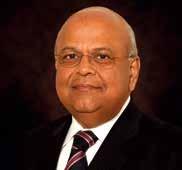

Register as a member of LGBN at www.lgbn.co.za for more municipal contacts
Alfred Nzo District Municipality Mr M Z Silinga Municipal Manager 039 254 5009 gxashin@andm.gov.za
Amahlati Local Municipality Mr Balisa King Socikwa Municipal Manager 043 683 5000 bsocikwa@amahlati.gov.za
Amathole District Municipality Mr Chris Magwangqana
Baviaans Local Municipality Mr Jama Vumazonke
Municipal Manager 043 783 2257 joelenel@amathole.gov.za
Municipal Manager 044 923 1004 jama@baviaans.gov.za
Blue Crane Route Local Municipality Mr Moppo Audrey Mene Municipal Manager 042 243 1333 bcrm.munmanager@lgnet. org.za
Buffalo City Local Municipality Andile Fani Municipal Manager 043 705 2000 fania@buffalocity.gov.za
Cacadu District Municipality Mr Ted Pillay Municipal Manager 041 508 7115 tpillay@cacadu.co.za
Camdeboo Local Municipality Mr Monde Gerald Langbooi Municipal Manager 049 807 5700 Monde.Langbooi@lgnet. org.za
Chris Hani District Municipality
Mr Moppo Mene Municipal Manager 045 808 4600 mmene@chrishanidm.gov.za
Elundini Local Municipality Mr Khayalethu Gashi Municipal Manager 045 932 8106 khayag@elundini.gov.za
Emalahleni Local Municipality Mr Nkosinathi James Kwepile Municipal Manager 013 690 6208 kwepilen@emalahleni.gov.za
Engcobo Local Municipality Silumko Mahlasela Municipal Manager 047 548 5601 xanax@engcobolm.org.za
Gariep Local Municipality Mr Thembikosi Mawonga Municipal Manager 051 653 1777 gariepmm@jgdm.gov.za
Great Kei Local Municipality
Mr VZ Mapukata Municipal Manager 043 831 1028 zmapukata@greatkeilm. gov.za
Ikhwezi Local Municipality Mr Thembani Gutas Municipal Manager 049 836 0021 mm@ikwezimunicipality.co.za
Ikwanca Local Municipality Mr Galliot Sigojo Municipal Manager 045 967 0021 galliot.sigojo@gmail.com
Ingquza Hill Local Municipality Mr Mluleki Fihlani Municipal Manager 039 252 0131 mluleki.fihlani@lgnet.org.za
Intsika Yethu Local Municipality Mr Zamxolo Shasha Municipal Manager 047 874 0575 shashaz@intsikayethu.gov.za
Inxuba Yethemba Local Municipality Mr Mzwandile Sydney Tantsi Municipal Manager 048 801 5000 sonja@iym.gov.za
King Sabata Dalindyebo Local Municipality Mr Zama Mnqanqeni Municipal Manager 047 501 4238 ksd@ksd.org.za
Kouga Local Municipality Mr Sidney Fadi Municipal Manager 042 200 2200 jreed@kouga.gov.za
Kou-Kamma Local Municipality Mr Sabelo Nkuhlu Municipal Manager 042 288 7200 nkuhlus@koukamma.gov.za
Lukhanji Local Municipality Mr Gideon Judeel (Acting) Municipal Manager 048 807 2606 mantashek@yahoo.com
Makana Local Municipality Dr Pravine Naidoo
Municipal Manager 046 603 6111 pravine@makana.gov.za
Maletswai Local Municipality Mr Patrick Nonjola Municipal Manager 051 633 2441 nonjolam@maletswai.gov.za
Matatiele Local Municipality Dr Tshepang Nakin
Municipal Manager 039 737 3135 manager@matatiele.gov.za
Mbhashe Local Municipality Ms J Nxumalo Municipal Manager 047 489 5800 jabnxumalo@gmail.com
Mbizana Local Municipality Mr Luvuyo Mahlaka
Municipal Manager 039 251 0230 mm@jgdm.gov.za
Mhlonto Local Municipality Mr Sibongile Sotshongaye (Acting) Municipal Manager 047 553 7000 sg648@yahoo.co.uk
Mnquma Local Municipality Mr Sindile Tantsi Municipal Manager 047 401 2400 fbooi@mnquma.gov.za
Ndlambe Local Municipality Adv Rolly Dumezweni Municipal Manager 046 624 1140 rdumezweni@ndlambe.gov.za
Nelson Mandela Bay Municipality Mr Mpilo Mbambisa Municipal Manager 041 506 3209 mm@mandelametro.gov.za
Ngqushwa Local Municipality
Nkonkobe Local Municipality
Ntabankulu Local Municipality
Nxuba Local Municipality
Nyandeni Local Municipality
O R Tambo District Municipality
Port St Johns Local Municipality
Sakhisizwe Local Municipality
Sunday’s River Valley Local Municipality
Tsolwana Local Municipality
Ukhahlamba District Municipality
Ms V Mbelani
Mr Khanyile Maneli
Mr Monde Sondba
Mr Siphiwo Caga
Mrs N Nomandela
Mr Tshaka Hlazo
Mr Ncedile Jakuja
Mr Thembeni Samuel
Mr Lonwabo Ngoqo
Municipal Manager 040 673 3095 vmbelani@ngqushwamun. co.za
Municipal Manager 046 645 7451 bganyaza@nkonkobe.co.za
Municipal Manager 039 258 0056 mondesondba@ ntabankululocalmunicipality. gov.za
Municipal Manager 046 684 0034 cagasiphiwo@yahoo.com
Municipal Manager 047 555 5000 nomandela@nyandenilm. gov.za
Municipal Manager 047 501 7000 tshakahlazo@yahoo.com
Municipal Manager 047 564 1207 fmshiywa@psjmunicipality. gov.za
Municipal Manager 047 877 5200 tsamuel@iafrica.com
Municipal Manager 042 230 0077 lonwabon@srvm.gov.za
Mr Similo Dayi Municipal Manager 045 846 0033 similo.dayi@lgnet.org.za
Mr Zolile Williams Municipal Manager 045 979 3006 zwilliams@jgdm.gov.za
Umzimvubu Local Municipality Mr Thobela Gladstone Municipal Manager 039 255 6000 tobela.nota@yahoo.com
Dihlabeng Local Municipality
Mr Thabiso Tsoaedi Municipal Manager 058 303 5732 municipalmanager@ dihlabeng.co.za
Fezile Dabi District Municipality Ms Lindi Molibeli Municipal Manager 016 970 8607 lindim@feziledabi.gov.za
Kopanong Local Municipality Ms Lebohang Moletsane Municipal Manager 051 713 9203 lebo@kopanong.gov.za
Lejweleputswa District Municipality Mme Nontsikelelo Aaron Municipal Manager 057 391 8906 aaronn@lejwe.co.za
Letsemeng Local Municipality Mr Itumeleng Pooe Municipal Manager 053 205 9210 itumeleng@mweb.co.za
Mafube Local Municipality Mr Isaac Radebe Municipal Manager 058 813 9702 mm@mafube.gov.za
Maluti A Phofung Local Municipality Mr Ratolo Stephen Kau Municipal Manager 058 718 3762 kau@map.gov.za
Mangaung Local Municipality Mr Sandile Joseph Msibi Municipal Manager 051 405 8621 nthabiseng.matsoake@ mangaung.co.za
Mantsopa Local Municipality Mr Selby Selepe Municipal Manager 051 924 0654 selby@mantsopa.co.za
Masilonyana Local Municipality Mr Sipho Mtakati Municipal Manager 057 733 0106 mm@masilo.co.za
Metsimaholo Local Municipality Mr Steve Molala Municipal Manager 016 973 8313 stephen.molala@ metsimaholo.gov.za
Mohokare Local Municipality Mr T C Panyani Municipal Manager 051 673 9603 tpanyani@yahoo.com
Motheo District Municipality Mr Henk Boshoff (Acting) Municipal Manager 051 407 3363 sellor@motheo.co.za
Nala Local Municipality Mr David Shongwe Municipal Manager 056 514 9204 shongwe@nala.co.za
Naledi Local Municipality Mr Modisenyane T. Segapo Municipal Manager 053 928 2201 municipalmanager@naledi. local.gov.za
Ngwathe Local Municipality Mr Norman Selai Municipal Manager 056 811 2131 norman@ngwathe.co.za
Nketoana Local Municipality Mr L Mokgatlhe Municipal Manager 058 863 2811 limokgatlhe@nketoanafs. co.za
Phumelela Local Municipality Mr Bruce William Kannemeyer Municipal Manager 058 913 8300 mm@phumelela.gov.za
Setsoto Local Municipality Mr Tshepiso Ramakarane Municipal Manager 051 933 9302 tshepiso@setsoto.co.za
Thabo Mofutsanyane District Municipality
Mr Bennett Molotsi Municipal Manager 058 718 1036 mm@thabomun.co.za
Tswelopele Local Municipality
Mr Tshemedi Lucas Mkhwane Municipal Manager 051 853 1111 skaza@tswelopele.org
Xhariep District Municipality Mr Martin Kubeka Municipal Manager 051 713 9300 martyr@xhariep.gov.za
City of Johannesburg Metropolitan Municipality
City of Tshwane Metropolitan Municipality
Ekurhuleni Metropolitan Municipality
Mr Trevor Fowler City Manager 011 407 7309 ntswakih@joburg.org.za
Mr Jason Ngobeni City Manager 012 358 9999 citymanager@tshwane.gov.za
Mr Khaya Ngema City Manager 011 999 0765 khaya.ngema@ekurhuleni. gov.za
Emfuleni Local Municipality Sam Shabalala Municipal Manager 016 950 5102 shabalalas@emfuleni.gov.za
Kungwini Local Municipality Mr Nava Pillay Municipal Manager 013 933 6505 d.shongwe@metsweding.com
Lesedi Local Municipality Ayanda Makhanya Municipal Manager 016 340 4305 mm@lesedilm.co.za
Merafong City Local Municipality
Mr George Seitisho Municipal Manager 018 788 9500 mmsecretary@merafong. gov.za
Midvaal Local Municipality Albert De Klerk Municipal Manager 016 360 7412 municipalmanager@midvaal. gov.za
Mogale City Local Municipality Mr Dan Matshitiso Municipal Manager 011 951 2013 mm@mogale.gov.za
Randfontein Local Municipality Mr Mpho Mogale Municipal Manager 011 411 0051 lana.olivier@randfontein. gov.za
Sedibeng District Municipality Mr Yunus Chamda Municipal Manager 016 450 3249 yunusc@sedibeng.gov.za
West Rand District Municipality David Mokoena Municipal Manager 011 411 5221 dmokoena@wrdm.gov.za
Westonaria Local Municipality Thabo Ndlovu Municipal Manager 011 278 3000 tndlovu@westonaria.gov.za
Abaqulusi Local Municipality
Amajuba District Municipality
City of uMhlathuze Local Municipality
Mr Bonga Evert Ntanzi Municipal Manager 034 982 2230 municipalmanager@ abaqulusi.gov.za
Mr Linda Africa Municipal Manager 034 329 7200 mpumes@amajuba.gov.za
Dr Nhlanhla J Sibeko City Manager 035 907 5023 SibiyaFN@umhlathuze.gov.za
Dannhauser Local Municipality Mr Bonginkosi Nkosi Municipal Manager 034 621 2666 municipalmanager@ dannhauser.gov.za
Edumbe Local Municipality Mr T V Mkhize Municipal Manager 034 995 1650 edumbekz261@mweb.org.za
Emadlangeni Local Municipality Mrs G N Ntshangase Municipal Manager 034 331 3041 stephaniej@emadlangeni. gov.za
Emnambithi-Ladysmith Local Municipality
Endumeni Local Municipality
Ethekwini Metropolitan Municipality
Mr Madoda P Khathide Municipal Manager 036 637 2231 mm@ladysmith.co.za
Mr R Bijraj Municipal Manager 034 212 2121 james@endumeni.gov.za
Sibusiso Sithole City Manager 031 311 2100 dovec@durban.gov.za
Ezinqoleni Local Municipality Mr M Mabece Municipal Manager 039 534 1582 ezinq@venturenet.co.za
Greater Kokstad Local Municipality
Harry Gwala District Municipality
Hibiscus Coast Local Municipality
Mr Zamokuhle Mkhize Municipal Manager 039 797 6601 nomzekelo.selani@kokstad. org.za
Mr Nhlanhla Maxwell Mabaso Municipal Manager 039 834 8700 mabasonm@sisonkedm. gov.za
Mr Maxwell Sihle Mbili Municipal Manager 039 688 2000 mm@hcm.gov.za
Hlabisa Local Municipality Ms NZ Ndlela (Acting) Municipal Manager 035 838 8500 info@hlabisa.org.za
Ilembe District Municipality
Mr N G Khumalo (Acting) Municipal Manager 032 437 9300 salora.pillay@ilembe.gov.za
Imbambazane Local Municipality
Impendle Local Municipality
Indaka Local Municipality
Mr Mthetheleli Moses Ndlela Municipal Manager 036 353 0693 moses.ndlela@lgnet.org
Mr Sibusiso Mabaso Municipal Manager 033 996 0771 impendle@futurenet.co.za
Mr Sinatra Khumalo Municipal Manager 034 261 1000 khedarik@indaka.gov.za
Ingwe Local Municipality Mr N C Vezi Municipal Manager 039 833 1038 mm@ingwemunicipality.co.za
Jozini Local Municipality Mr S Dondo (Acting) Municipal Manager 035 572 1292 sdondo@jozini.org.za
Kwa Sani Local Municipality Ms N C James Municipal Manager 033 702 1060 mm@kwasani.co.za
KwaDukuza Local Municipality Mr Nhlanhla Mdakane Municipal Manager 032 437 5003 municipalmanager@ kwadukuza.gov.za
Mandeni Local Municipality Mr L Mapholoba Municipal Manager 032 456 8200 ceo@mandeni.gov.za
Maphumulo Local Municipality Mr Bheki Ngubane (Acting) Municipal Manager 032 481 2047 bheki@maphumulo.gov.za
Mbonambi Local Municipality Mr Khulumokwakhe Gamede Municipal Manager 035 580 1421 gamedek@mbonambi.co.za
Mkhambathini Local Municipality Mr Deven Pillay Municipal Manager 031 785 9300 mkhambamune@telkomsa. net
Mpofana Local Municipality Mr Muzi Madlala Municipal Manager 033 263 1221 muzi.madlala@mpofana. gov,za
Msinga Local Municipality Mr Fanosi Bethuel Sithole Municipal Manager 033 493 0761 fanosi.sithole@lgent.org.za
Msunduzi Local Municipality Mr Mxolisi Nkosi Municipal Manager 033 392 3000 municipal.manager@ msunduzi.gov.za
Mthonjaneni Local Municipality Mr R P Mnguni Municipal Manager 035 450 2082 meltlc@mweb.co.za
Mtubatuba Local Municipality Mr Siyabonga Ntuli Municipal Manager 035 550 0069 ceo@mtbtlc.co.za
Ndwedwe Local Municipality Ms Thembeka Cibane Municipal Manager 032 532 5000 mm@ndwedwe.co.za
Newcastle Local Municipality Mr Kebone Masange Municipal Manager 034 328 7750 kmasange@newcastle.gov.za
Nkandla Local Municipality Mr Sthembiso Mthembu Municipal Manager 035 833 2000 smthembu@nkandla.gov.za
Nongoma Local Municipality Bonga Ntanzi Municipal Manager 035 831 7500 reception@nongoma.org.za
Nquthu Local Municipality Mr Bonginkosi Paul Gumbi Municipal Manager 034 271 6103 paul@nquthu.gov.za
Ntambanana Local Municipality Mr Phiwamandla Raymond Mnguni Municipal Manager 035 792 7093 raymondm@lgnet.org.za
Okhahlamba Local Municipality
Mr S D Sibande Municipal Manager 036 448 8000 siza.sibande@okhahlamba. org
Richmond Local Municipality Mr Sibusiso Sithole Municipal Manager 033 212 2155 sibusiso.sithole@richmond. gov.za
The Big Five False Bay Local Municipality
Mr A M Dhlomo Municipal Manager 035 562 0040 dhlomo@bigfivefalsebay. org.za
Ubuhlebezwe Local Municipality Mr Gamakulu Sineke Municipal Manager 039 834 7700 corporatem@ubuhlebezwe. org.za
Ugu District Municipality Mr Luvuyo Mahlaka Municipal Manager 039 688 5704 info@ugu.org.za
Ulundi Local Municipality Princesss Buthelezi Municipal Manager 035 874 5800 info@ulundi.co.za
Umdoni Local Municipality Mr X S Luthuli Municipal Manager 039 976 1202 mmoffice@umdoni.gov.za
Umgungundlovu District Municipality
Umhlabuyalingana Local Municipality
Umkhanyakude District Municipality
Mr T L S Khuzwayo Municipal Manager 033 897 6763 mm@umdm.gov.za
Mr Sibusiso Bukhosini Municipal Manager 035 592 0665 bukhosinis@ umhlabuyalingana.org.za
Mr Sbu Gwacela Municipal Manager 035 573 8600 mmchunu@umkhanyakude. org.za
Umlalazi Local Municipality Mr Thembinkosi Simon Mashabane
Municipal Manager 035 473 3342 mm@umlalazi.org.za
Umngeni Local Municipality Dr M B Ngubane Municipal Manager 035 239 9210 manager@umngeni.gov.za
Umshwati Local Municipality Mr Vincent Cebekulu Municipal Manager 033 502 0282 vcebekulu@umtshwati.org.za
Umtshezi Local Municipality Ms Nonhlanhla Njoko Municipal Manager 036 342 7800 umtshezimuni@intekom.co.za
Umuziwabantu Local Municipality Mr S D Mbhele Municipal Manager 039 433 1205 sazi@umuziwabantu.org.za
Umvoti Local Municipality Mr B A Xulu
Municipal Manager 033 413 9100 mm@umvoti.gov.za
Umzimkhulu Local Municipality Zweliphantsi Sikhosana Municipal Manager 039 259 5000 zsikhona@umzimkhululm. gov.za
Umzinyathi District Municipality Mr W J Mngomezulu Municipal Manager 034 215 1500 mm@umzinyathi.gov.za
Uphongolo Local Municipality Mr M N Mabaso Municipal Manager 034 413 1223 mm@uphongolo.org.za
Uthungulu District Municipality Mr Mandla Nkosi Municipal Manager 035 799 2501 sceo@uthungulu.co.za
Vulamehlo Local Municipality Mr Msizi Zulu Municipal Manager 039 974 0450 msizi@venturenet.co.za
Zululand District Municipality Mr Johan De Klerk
Aganang Local Municipality Ramakuntwane Selepe
Municipal Manager 035 874 5503 mm@zululand.org.za
Municipal Manager 015 295 1415 rselepe@aganang.gov.za
Bela Bela Municipality Sam Ngoetjana Bambo Municipal Manager 014 736 8052 munmanager@belabela.co.za
Blouberg Local Municipality Mr T M Kgoale Municipal Manager 015 505 7120 kgoalep@blouberg.gov.za
Elias Motsoaledi Local Municipality Mr W Phala Municipal Manager 013 262 3056 wphala@emlm.gov.za
Fetakgomo Local Municipality Motlanalo Lebepe Municipal Manager 015 622 8000 lebepem@fetakgomo.gov.za
Greater Giyani Local Municipality Gezani Isaac Masingi Municipal Manager 015 811 5542 gezanim@greatergiyani.gov. za
Greater Letaba Local Municipality Mr Tsakani Mashaba Municipal Manager 015 309 9246 greaterletaba@greaterletaba. co.za
Greater Tubatse Local Municipality Simon Malepeng Municipal Manager 013 231 1000 simonm@tubatse.gov.za
Lepelle-Nkumpi Local Municipality Mr Obakeng Mashiane Municipal Manager 015 633 4500 obakeng.mashiane@lepellenkumpi.gov.za
Lephalale Local Municipality Mr A S Naidoo Municipal Manager 014 762 1409 bob.naidoo@lephalale.gov.za
Makhado Local Municipality Mr I P Mutshinyali Municipal Manager 015 519 3000 municipal.manager@ makhado.gov.za
Makhuduthamaga Local Municipality Mr M E Moropa Municipal Manager 013 265 8644 mogobadim@ makhuduthamaga.gov.za
Maruleng Local Municipality Refilwe Jonath Ramothwala Municipal Manager 015 793 2409 ramothwalar@maruleng. gov.za
Modimolle Local Municipality Khupa Salthiel Lekala Municipal Manager 014 718 2077 lekala@modimolle.gov.za
Mogalakwena Local Municipality Willy Kekana Municipal Manager 015 491 9604 kekanasw@mogalakwena. gov.za
Molemole Local Municipality Mr David Nkoana Municipal Manager 015 501 0243 nkoanad@molemole.gov.za
Mookgophang Local Municipality Mr N P Magwala Municipal Manager 014 743 6600 mephoka1@gmail.com
Musina Local Municipality Mr Johnson Matshivha Municipal Manager 015 534 6181 musinamm@limpopo.co.za
Mutale Local Municipality Thiathu Godfrey Netshanze Municipal Manager 015 967 9601/2 netshanzet@mutale.gov.za
Polokwane Local Municipality Ms T C Mametja Municipal Manager 015 290 2000 thibulek@polokwane.gov.za
Thabazimbi Local Municipality Adv M E Ntsoane Municipal Manager 014 777 1525 ntswetswele@thabazimbi. gov.za
Thulamela Local Municipality
Chief Albert Luthuli Municipality
Dipaleseng Local Municipality
Dr JS Moroka Local Municipality
Dr Pixley Ka Isaka Seme Local Municipality
Ehlanzeni District Municipality
Emakhazeni Local Municipality
Gert Sibande District Municipality
Govan Mbeki Local Municipality
Lekwa Local Municipality
Mbombela District Municipality
Msukaligwa Municipality
Nkomazi Municipality
Makondolele Helton Mathivha
Mr Vusimuzi Nelson Mpila
Mr D V Ngcobo
Mr N Busane
Mr P B Malebye
Adv Hugh Mbatha
Mrs Thandi J Shoba
Mr C A Habile
Mr F Mahlangu
Mr Linda Tshabalala
Municipal Manager 015 962 7589 mathivhamh@thulamela. gov.za
Municipal Manager 017 843 4000 mm@albertluthuli.gov.za
Municipal Manager 017 773 0055 ngcobov@dipaseleng.com
Municipal Manager 013 973 1101/1270 mahlangub@moroka.gov.za
Municipal Manager 017 734 6100 mayor@pixleykaseme.co.za
Municipal Manager 013 759 8655 hmbatha@ledc.co.za
Municipal Manager 013 253 7628 shobat@emakhazenilm.co.za
Municipal Manager 017 801 7000 cahabile@gsibande.gov.za
Municipal Manager 017 620 6000 mm@govanmbeki.gov.za
Municipal Manager 017 712 9600 jsindane@lekwalm.gov.za
Mr David Shabangu Municipal Manager 013 759 2004 Xolani.Mzobe@mbombela. gov.za
Mr Thami Dlamini Municipal Manager 017 801 3504 tdlamini@msukaligwa.gov.za
Mr M D Ngwenya Municipal Manager 013 790 0245 nkzmun@mweb.co.za
Thaba Chweu Municipality Mr Surprise Maebela (Acting) Municipal Manager 013 237 7300 mokale@thabochweu.org.za
Thembisile Hani Municipality
Mr J S Sindane
Umjindi Local Municipality Mr Patrick Msibi
Victor Khanye Local Municipality
Bojanala Platinum District Municipality
City of Matlosana Local Municipality
Ditsobotla Local Municipality
Dr Kenneth Kaunda District Municipality
Dr Ruth Segomotsi Mompati District Municipality
Greater Taung Local Municipality
Kagisano-Molopo Local Municipality
Kgetleng River Local Municipality
Lekwa-Teemane Local Municipality
Madibeng Local Municipality
Mahikeng Local Municipality
Mamusa Local Municipality
Moretele Local Municipality
Moses Kotane Local Municipality
Manager 013 986 9100 SindaneJ@thembisilehanilm. gov.za
Manager 013 712 8800 mm@umjindi.gov.za
Mr R M Maredi Municipal Manager 013 665 6000 info@victorkhanyelm.gov.za
Mr Innocent Sirovha Municipal Manager 014 590 4502 innocents@bojanala.gov.za
Mr E T Motsemme
Mr M J Bhine
Manager 018 487 8009 dnkosi@klerksdorp.org
Manager 018 633 3880 moiloag24@gmail.com
Ms Matlakala Irene Matthews Municipal Manager 018 473 8016 matthewsm@kaundadistrict. gov.za
Mr Zebo Tshetlho Municipal Manager 053 928 1423 tshetlhoz@bophirima.co.za
Mr Lepodisi Tong (Acting) Municipal Manager 053 994 9418 mccordc@taunglm.co.za
Mr A Khuduge Municipal Manager 053 998 4455 khudugea@kagisanolm.co.za
Mr Sipho Ngwenya Municipal Manager 014 543 2004 mm@kgetlengrivier.gov.za
Mr Andrew Makuapane Municipal Manager 053 441 2206 makuapanea@lekwateemane.co.za
Mr Monde Juta Municipal Manager 012 318 9212 munman@madibeng.gov.za
Mr Kgotso Rabanye Municipal Manager 018 389 0212 munman@mafikeng.gov.za
Mr Ruben Gincane Municipal Manager 053 963 1331 gincancer@mamusalm.gov.za
Mr T S R Nkhumise Municipal Manager 012 716 1301 roger.nkhumise@moretele. org.za
Ms Nono Dince Municipal Manager 014 555 1307 municipalmanager@ moseskotane.gov.za
Naledi Local Municipality
Ratlou Local Municipality
Rustenburg Local Municipality
Tlokwe Local Municipality
Tswaing Local Municipality
Ventersdorp Local Municipality
Mr Modisenyane Segapo Municipal Manager 053 928 2201 segapod@gmail.com
Mr Glen Lekomanyane Municipal Manager 018 330 7000 riaht@ratlou.gov.za
Dr M K Mako
Municipal Manager 014 590 3551 munman@rustenburg.gov.za
Mr Laws Mohlomi (Acting) Municipal Manager 018 299 5003 joeym@tlokwe.co.za
Mr K S Mere
Municipal Manager 053 948 9413 dionmere@mweb.co.za
Mr Joel Makadi Municipal Manager 018 264 8503 jmakade@ventersdorp.co.za
!Kheis Local Municipality Mrs Teresa Scheepers
//Khara Hais Local Municipality
Dikgatlong Local Municipality
Emthanjeni Local Municipality
Municipal Manager 054 833 9500 teresascheepers@vodamail. co.za
Mr Daluxolo Ngxanga Municipal Manager 054 338 7001 manager@kharahais.gov.za
Mr M H Robertson
Mr Isak Visser
Gamagara Local Municipality Mr Clement Itumeleng
Municipal Manager 053 531 0671 simone@dikgatlong.co.za
Municipal Manager 053 632 9100 visser@emthanjeni.co.za
Municipal Manager 053 723 2261 mm@gamagara.co.za
Ga-segonyana Local Municipality Mr Edward Ntefang Municipal Manager 053 712 9418 eddie.ntefang@gmail.com
Hantam Local Municipality Mr Charl du Plessis Municipal Manager 027 341 8500 municipalmanager@hantam. gov.za
Joe Morolong Local Municipality Mr Tshepo Bloom Municipal Manager 053 773 9300 bloomt@joemorolong.gov.za
Kai !Garib Local Municipality Mr J G Lategan Municipal Manager 054 431 6328 mm@kaigarib.gov.za
Kamiesberg Local Municipality Mr Joseph Cloete Municipal Manager 027 652 8011 mm@kamiesberg.co.za
Kareeberg Local Municipality Mr W de Bruin Municipal Manager 053 382 3012 kareeberg@xsinet.co.za
Karoo Hoogland Local Municipality
Kgatelopele Local Municipality
Khai Ma Local Municipality
Magareng Local Municipality
Mier Local Municipality
Nama Khoi Local Municipality
Namakwa District Municipality
Phokwane Local Municipality
Renosterberg Local Municipality
Richtersveld Local Municipality
Siyancuma Local Municipality
Siyathemba Local Municipality
Sol Plaatje Local Municipality
Thembelihle Local Municipality
Tsantsabane Local Municipality
Ubuntu Local Municipality
Umsobomvu Local Municipality
ZF Mgcawu District Municipality
Mr M K Botha Municipal Manager 053 391 3063 karooadmin@telkomsa.net
Mr Gilbert Lategan Municipal Manager 053 384 8600 municipalmanager@ kgatelopele.gov.za
Mr Edward Cloete Municipal Manager 054 933 1000 boet@khaima.gov.za
Mr Tebogo Leeuw Municipal Manager 053 497 3111 mm@magareng.gov.za
Mr M Makibi (Acting) Municipal Manager 054 531 0019 miermun@lantic.net
Mr Aubrey Baartman Municipal Manager 027 718 8121 springbok@namakhoi.org.za
Ms Madeleinne Brandt
Mr Moeketsi Dichaba
Mr G Nieuwenhuizen
Mrs D Farmer
Mr H F Nel
Mr HEE Nieuwenhuizen (Acting)
Municipal Manager 027 712 8000 info@namakwa-dm.gov.za
Municipal Manager 053 474 9703 dichaba@phokwane.gov.za
Municipal Manager 053 663 0041 gladwin@thecricket.co.za
Municipal Manager 027 851 1111 dalene@richtersveld.gov.za
Municipal Manager 053 298 1810 douglas@siyancuma.gov.za
Municipal Manager 053 353 5300 mmsec@siyathemba.gov.za
Mr Goolam Akharwaray Municipal Manager 053 830 6911 goolam@solplaatje.org.za
Mr Mpho Mogale Municipal Manager 053 203 0005 mmogale@ thembelihlemunicipality.gov.za
Mr Gilbert Lategan (Acting) Municipal Manager 053 313 7300 tsantsabane.mm@lgnet.org.za
Mr Martin Fillis
Mr Amos China Mpela
Mr E Ntoba
Municipal Manager 053 621 0026 mfillis@mweb.co.za
Municipal Manager 051 753 0777 mpela@umsobomvumun. co.za
Municipal Manager 054 337 2800 admin@zfm-dm.gov.za
Beaufort West Local Municipality
Bergrivier Local Municipality
Bitou Local Municipality
Breede Valley Local Municipality
Cape Agulhas Local Municipality
Cederberg Local Municipality
Central Karoo District Municipality
City of Cape Town Metropolitan Municipality
Drakenstein Local Municipality
Eden District Municipality
George Local Municipality
Hessequa Local Municipality
Kannaland Local Municipality
Knysna Local Municipality
Laingsburg Local Municipality
Mr Jafta Booysen Municipal Manager 023 414 8020 jaffie@beaufortwestmun. co.za
Adv Hanlie Linde Municipal Manager 022 913 6000 bergmun@telkomsa.net
Mr Allen Paulse Municipal Manager 044 501 3000 apaulse@plett.gov.za
Mr Gerrit Matthyse Municipal Manager 023 348 2600 mm@bvm.gov.za
Mr Dean O’Neill Municipal Manager 028 425 5500 info@capeagulhas.gov.za
Mr Ian Kenned Municipal Manager 027 482 8000 iank@cederbergraad.co.za
Mr Stefanus Jooste Municipal Manager 023 449 1000 manager@skdm.co.za
Mr Achmat Ebrahim City Manager 021 400 1330 city.manager@capetown. gov.za
Mr Johann Mettler Municipal Manager 021 807 4500 ceo@drakenstein.gov.za
Mr Godfrey Louw Municipal Manager 044 803 1300 mm@edendm.co.za
Mr Trevor Botha Municipal Manager 044 801 9111 mreception@george.org.za
Mr Johan Jacobs Municipal Manager 028 713 8001 johan@hessequa.gov.za
Mr Morné Hoogbaard Municipal Manager 028 551 1023 municipalmanager@ kannaland.co.za
Ms Lauren Waring Municipal Manager 044 302 6590 lwaring@knysna.gov.za
Mr Predo Williams Municipal Manager 023 551 1019 pawilliams@laingsburg.gov.za
Langeberg Local Municipality Mr Soyisile Andreas Mokweni Municipal Manager 023 615 8001 mm@langeberg.gov.za
Matzikama Local Municipality
Mr Mark Bolton Municipal Manager 027 201 3301 cfo@matzikamamun.co.za
Mossel Bay Local Municipality Dr Michelle Gratz Municipal Manager 044 606 5000 admin@mosselbay.gov.za
Oudtshoom Local Municipality Mr Ronnie-Peter Lottering (Acting) Municipal Manager 044 203 3106 rowayda@oudtmun.gov.za
Overberg District Municipality Mr D P Beretti Municipal Manager 028 425 1157 mm@odm.org.za
Overstrand Local Municipality Mr Coenie Groenewald Municipal Manager 028 313 8003 cgroenewald@overstrand. gov.za
Prince Albert Local Municipality
Saldanha Bay Local Municipality
Mr Heinrich Mettler Municipal Manager 023 541 1320 mettler@pamun.gov.za
Mr L A Scheepers Municipal Manager 022 701 7000 louis.scheepers@sbm.gov.za
Stellenbosch Local Municipality Mrs Christa Liebenberg Municipal Manager 021 808 8025 municipal.manager@ stellenbosch.gov.za
Swartland Local Municipality Mr Joggie Scholtz Municipal Manager 022 487 9400 mmanager@swartland.org.za
Swellendam Local Municipality Mr C M Africa (Acting) Municipal Manager 028 514 8500 info@swellenmun.co.za
Theewaterskloof Local Municipality Mr Stan Wallace Municipal Manager 028 214 7500 stanwa@twk.org.za
West Coast District Municipality
Witzenberg Local Municipality
Mr Henry Prins Municipal Manager 022 433 8410 hfprins@wcdm.co.za
Mr David Nasson Municipal Manager 023 316 1854 david@witzenberg.gov.za




Mainstream media more often than not reports on events in a way that depicts our country as a failed state with corrupt government departments and officials.
The good news stories are largely ignored.
Our highly skilled in-house writers and other contributors do not have to search too far to fill SOE Review with good news stories; stories reflecting a country that is moving forward in leaps and bounds and a government that is committed to eradicating the iniquities of our past.
It is stories such as these that make us proud to be South Africans. And, at Uhuru
we are proud to partner SOE Review in this endeavour.
We take each edition of this esteemed publication from concept to design to print and distribution. What’s more we have created an eMag and web blog and we spread the good news via Facebok, Twitter and Linkedin.
If you are looking for a communications partner to help empower your business, look no further than Uhuru.
To learn more about us and our services, contact Desmond Sampson.
We are wholly black-owned and fully BBEE compliant.


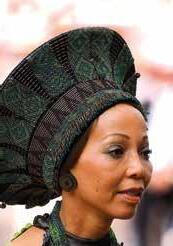

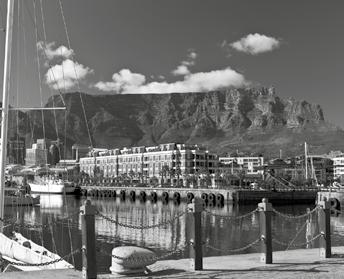




To build a great country, you have to start with the communities and municipalities that form it. The Investec Balance Sheet Management team with our out of the ordinary approach, high-level expertise and competitive rates, will continue to partner with you in building better municipalities together, forming a great country as we do.
For more information, please contact Jeanine Polley on 011 286 4824 or email jeanine.polley@investec.co.za