Shemagh Kufiya Colors Patterns and Their Meanings
Introduction
The shemagh kufiya is far more than a patterned scarf. This square of woven cotton is a map of history, a banner of identity, and a language of symbolism spoken through thread. While globally recognized for its distinctive checks, few understand the profound stories told by its colors and patterns. This guide will take you beyond the fabric, exploring the rich cultural significance, decoding the meanings behind each hue and motif, and offering respectful guidance on how to understand and wear this powerful symbol.
What Is Shemagh Kufiya and Its Cultural Significance?
Definition and Cultural Roots
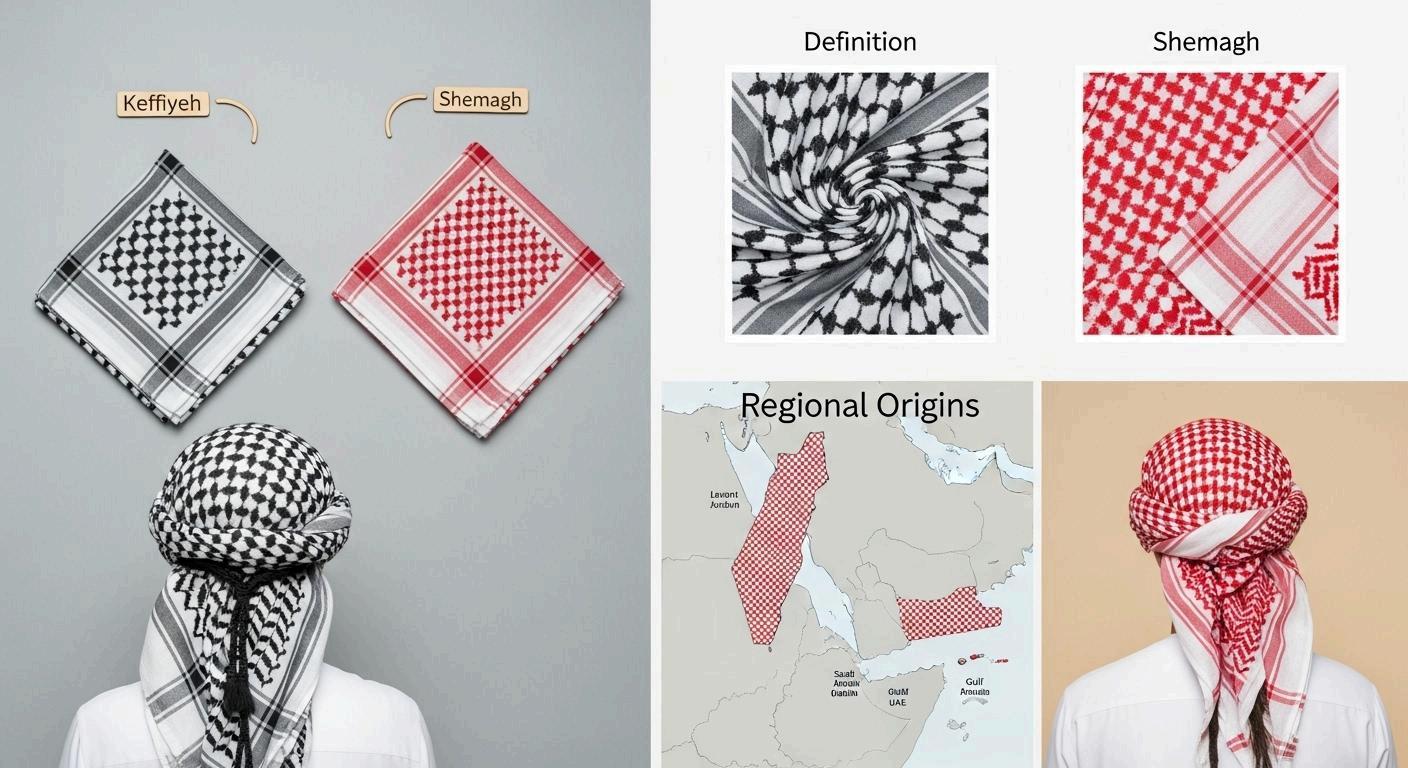
Known by many names, keffiyeh, hatta, ghutra, the shemagh kufiya is a traditional square headscarf, most often made from cotton. Its origins are deeply practical, born from the necessity of life in arid regions where it provided essential protection from the relentless sun, dust, and sand for Bedouin communities and farmers. Worn across
the Middle East, it is traditionally secured on the head with an agal, a black cord. From this utilitarian beginning, it has evolved into one of the world's most potent emblems of cultural heritage and identity.
Cultural Identity and Pride
For many across the Arab world, the shemagh is a non-verbal declaration of belonging. It represents a tangible connection to land, history, and community In Palestine specifically, the black and white scarf transformed from practical peasant wear into a unifying national symbol. During the 1936-1939 Arab Revolt, it was adopted to conceal identities and demonstrate solidarity, marking a pivotal shift from a class-based garment to a symbol of collective resistance. Today, wearing it is often an act of cultural pride, a statement of solidarity, or a quiet acknowledgment of a deep-rooted heritage.
Traditional Colors and Their Meanings
1. The color of a shemagh is its most immediate and powerful communicator Each palette carries historical, regional, and political weight, transforming the scarf from an accessory into a statement. Below is a breakdown of the primary colors and their associated meanings:
2. Red & White
a. Primary Regions & Associations: Jordan, some parts of Palestine.
b. Core Symbolism & Meanings: A Jordanian national symbol; linked to the Hashemite dynasty; represents honor, tribal belonging, and resistance.
3. Black & White
a. Primary Regions & Associations: Palestine (globally recognized).
b. Core Symbolism & Meanings: Palestinian identity and resilience; a symbol of resistance and solidarity; represents unity against oppression.
4. Green
a. Primary Regions & Associations: Worn across the region, with religious significance.
b. Core Symbolism & Meanings: Deeply tied to Islam, symbolizing paradise, life, and spirituality; historically worn by respected figures.
5. White (Ghutra)
a. Primary Regions & Associations: Gulf States (Saudi Arabia, UAE, etc.).
b. Core Symbolism & Meanings: Purity, dignity, and piety; a marker of respectability; common for formal and religious occasions.
Red and White Shemagh Symbolism
The vibrant red and white checkered pattern is most strongly associated with Jordan. The colors are linked to the Hashemite royal family, and the scarf is a traditional symbol of honor and heritage among Bedouin tribes. Beyond its regal connections, it has also been adopted as a symbol of resistance within certain political contexts. Practically, the bold red pattern offers high visibility in the desert landscape.
Black and White Pattern Meanings
The Palestinian keffiyeh, with its stark black and white checks, is a globally recognized emblem. Its journey from peasant headgear to political icon began during the 1936 revolt and was cemented by the leader Yasser Arafat, who made it his signature. Today, it universally represents Palestinian identity, resilience, and the pursuit of self-determination. The quality of the pattern matters; authentic Original Palestinian Keffiyehs feature a woven, not printed, design that carries this heavy symbolism with integrity
Green Shemagh Cultural Significance
Green holds profound spiritual importance in Islam, commonly associated with paradise and life. A green shemagh, therefore, often carries religious connotations and may be worn during significant religious occasions or by individuals expressing their faith. Historically, respected religious figures or sayyids (understood as descendants of the Prophet Muhammad) have been noted wearing dark green headdresses.
Other Color Variations
Regional variations abound. In Syria and Lebanon, the hatta may incorporate blues or greens into its patterns. Oman's mussar is famously colorful and ornate, featuring floral and paisley designs as a point of national pride. In modern fashion, the scarf's pattern has been reproduced in various colors like purple or mauve, often divorcing it from its traditional meanings and sparking debates about cultural appropriation.
Pattern Types and Their Symbolism
Beyond color, the woven patterns tell their own detailed stories. While some interpretations have evolved through oral tradition, they are deeply felt and widely recognized.
Checkered Pattern Significance
The checkered pattern itself is instantly recognizable. The size and density of the checks can vary by region and maker Most importantly, in authentic shemaghs, this checkered pattern should be woven into the fabric, creating a breathable mesh that has practical cooling benefits. This is a key mark of quality and tradition, as opposed to cheaper printed versions, which lack texture, depth, and cultural authenticity
Fishnet Pattern and Variations
One of the most discussed patterns within the keffiyeh and shemagh is the distinctive "fishnet" design. Common interpretations link it to the Mediterranean Sea, representing the fishing heritage and connectivity of the Palestinian coast. Others see it as a symbol of unity and collectivism, individual threads knotted together to form a stronger whole. Some contemporary views even interpret the pattern as resembling barbed wire, reflecting themes of occupation and resilience.
Embroidered Patterns and Motifs
Traditional shemaghs often feature additional symbolic motifs woven into their borders or fields. A common one is the olive leaf pattern, paying homage to the olive tree—a centuries-old symbol of peace, steadfastness, and economic life in Palestine. Bold lines running through the scarf are sometimes said to represent ancient trade routes or, in more modern readings, the walls and borders that define current geopolitics. These motifs transform the scarf into a narrative tapestry.
Regional Variations in Shemagh Kufiya
The scarf adapts beautifully to the culture of each region that embraces it. In Yemen, styles may favor particular draping methods. On the Arabian Peninsula, the white ghutrah secured with a black agal is standard formal wear. It's valuable to understand these nuances; the keffiyeh (often black and white) and the shemagh (often red and white), while structurally identical, can signal different regional and cultural affiliations based on their color and context.