Discover Kuopio –
The Everyone Guide –For Locals, Visitors & Global Talent
By Angelika Krieger
By Angelika Krieger
By Angelika Krieger
Copyright © 2025 by Angelika Krieger. All rights reserved.
Text copyright © 2025 by Angelika Krieger. Images © their respective creators and copyright holders, as credited throughout the book.
All rights reserved, including the right to reproduce this book or portions thereof in any form or by any means—electronic, mechanical, photocopying, recording, or otherwise—without prior written permission from the copyright holder, except for brief quotations in critical reviews or articles.
This is a work of non-fiction. While every effort has been made to ensure accuracy, the author and publisher assume no responsibility for errors, omissions, or interpretations of the information contained herein.
Free Personal-Use E-Book Notice
This e-book is made available free of charge for personal use. You may download and store a copy on your device. Any commercial use, redistribution, or modification is strictly prohibited without prior written permission from the copyright holder.
This book is dedicated to my husband, Matthias, and our son, Alexander.
Author
Angelika Krieger
Visual Design
Reetta Airaksinen
Talent First / The City of Kuopio
Cover
Wille Markkanen
Images
Wille Markkanen, Angelika Krieger, City of Kuopio
(Vicente Serra, Tiina Kilvensalmi, Raimo Pesonen),
Tuula Pantzar, Tatu Ahonen
Drawings (pages 11, 43)
Iina Huttunen
In cooperation on design and marketing with Talent First project and The City of Kuopio
Acknowledgements
On page 145

Dear reader,
The year 2025 marks the 250th anniversary of the City of Kuopio. Over a journey that spans two and a half centuries, Kuopio has grown into the vibrant city it is today. Minna Canth has walked down its alleys, one of Finland’s most influential writers, as has J V Snellman, who was central in the awakening of Finnish national identity and the Finnish language.
Kuopio is known today for many things. It is an epi-center of education, culture and innovation. It has also won prestigious awards such as having been selected as the European Region of Gastronomy in 2020-21. Kuopio is
considered Finland’s second most attractive city. It ranks first in safety.[1]
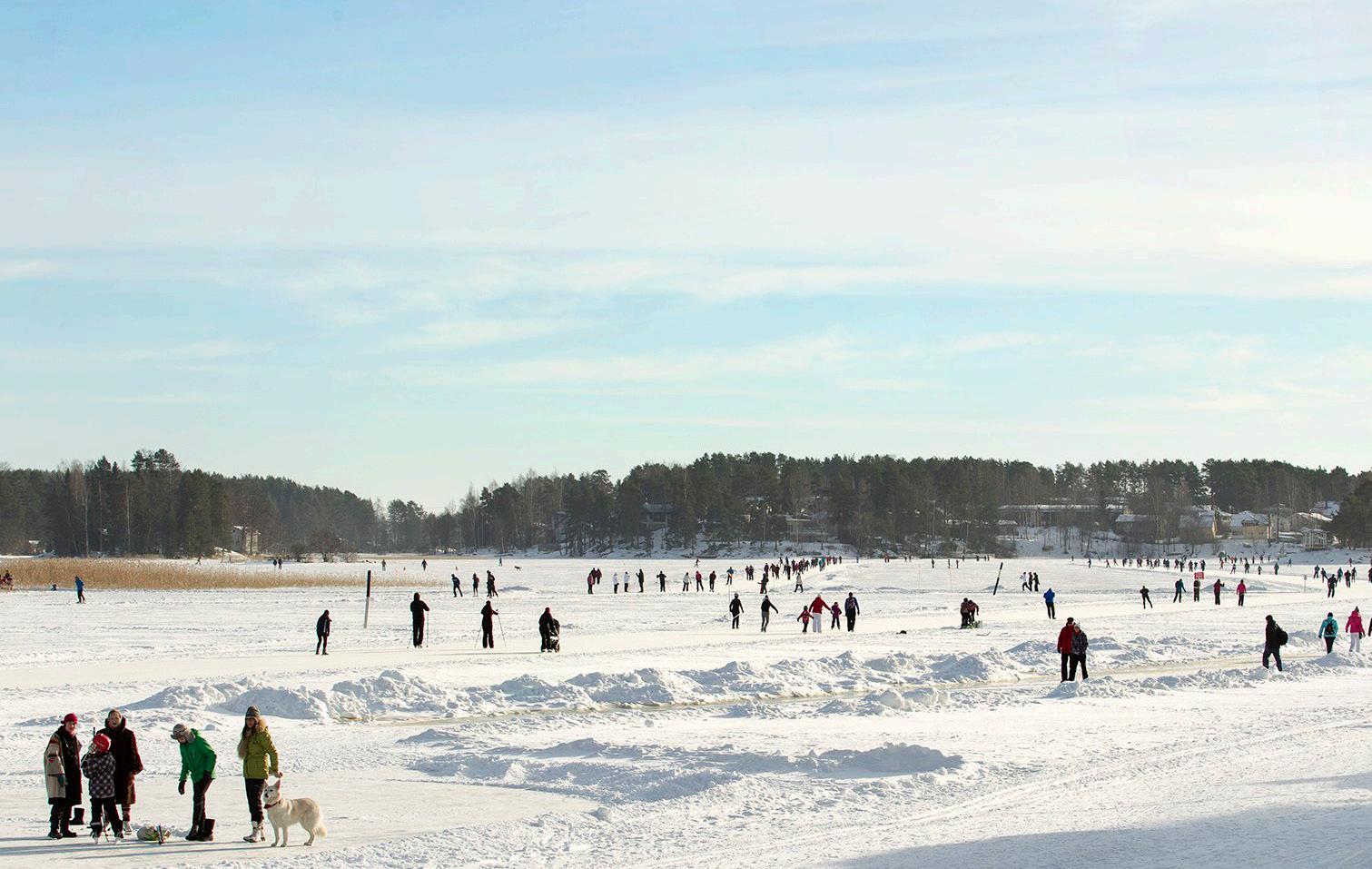
Nestled in the heart of the Finnish Lakeland, it boasts stunning nature, making it a popular destination year round. Kuopio is a dream for lovers of winter sports hosting the annual Finland Ice Marathon on the frozen Kallavesi lake. It offers up to 600km of cross-country skiing tracks in beautiful natural terrain in a snow rich winter.[2] In summer, the lakes are a popular destination for boating, swimming and all kinds of water sports, and much more.
In 2023, my husband was offered a position in the cutting-edge pharmaceutical industry in the City of Kuopio, and we came to learn more about the area for the first time. I write this book for everyone interested in Kuopio, whether you are local, visiting for a few days or considering a relocation. For Kuopio veterans and newcomers alike, may this book deepen your connection to the city, as you celebrate its quarter millennium birthday.
I hope you enjoy your time in Kuopio.
With best wishes,
Angelika Krieger holds an MBA from University of Stuttgart-Hohenheim and has a career in a Fortune 500 IT company. A German native, she has lived and worked in the United States, the United Kingdom, Italy as well as the Slovak Republic before. She has embarked on multiple international moves previously. She decided to write this book as Kuopio was unknown to her, with the aim of helping anyone who wishes to learn more about the city.
This book covers a wide range of topics from interviews with prominent people in Kuopio to a presentation of Kuopio’s history.
You will find interesting facts about what makes Kuopio special, including key highlights and figures about the city. If you are looking for ideas what to do during your leisure time, you can find suggestions in this book ranging from cultural, sports and music events to recommendations for dining, to sight-seeing as well as tips for experiencing Kuopio’s breath-taking nature.
Additionally, international visitors and expats will find an overview of Finland in this book, inviting you to experience the unique fascination of the country, its culture, history, language, cuisine and much more.
International expats will further find information on setting up life in Kuopio, which ranges from topics such as immigration, international taxes, healthcare, pension, all the way to practical items in day-to-day life.
Concludingly, this book was written for everyone wanting to learn more about the city and its surrounding areas - whether you are a Kuopio veteran or a newcomer. I hope you find it useful, dear reader.
Which sections for whom
Finnish Residents
Are you local or visiting Kuopio from within Finland?
Chapters 1, 3 and 4
International Visitors
Visiting Kuopio as a tourist?
Chapters 1-4
Global Citizens
Considering a relocation from abroad?
Chapters 1-5
1: Faces of Kuopio 10
2: An introduction to Finland 24
2.1 Fascinating Finland
2.2 Finland in Facts & Figures
2.3 Origins of the Finnish Language
2.4 History of Finland
2.5 Finnish Culture Bonus: Only in Finland
2.6 Cuisine à la Finlande
3: An Introduction to Kuopio 46
3.1 What Makes Kuopio Special
3.2 Kuopio in Facts & Figures
3.3 Local History of Kuopio
3.4 Kuopio Historic Figures: Minna Canth and Hanna Partanen
4: What to do on a Weekend 56
4.1 Exploration of Food & Tastings
4.2 Annual Events
4.3 Outdoor Activities & Sports
4.4 Indoor Fun for Rainy Days
4.5 Culture
4.6 Wellness
4.7 Exploring the Area Outside of Kuopio
5: Practical Aspects when Relocating to Kuopio 112
5.1 Kuopio Logistics
5.2 Immigration & Taxes
5.3 Finnish Pension System
5.4 Finnish Healthcare
5.5 Schools and Kindergartens
5.6 Dressing Adequately for Winter
5.7 Safety First
5.8 How to Recycle
5.9 General Helpful Information & Quiz
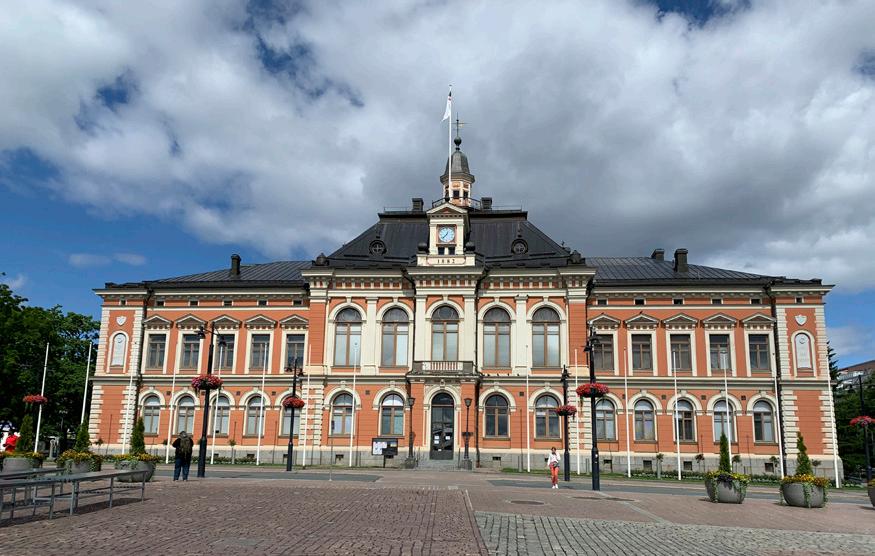
What does life in Kuopio look like? Three top voices shaping the city speak out, featuring a leading politician, a world class sports star and the Chairman of the Board of Directors of one of Kuopio’s largest commercial employers.
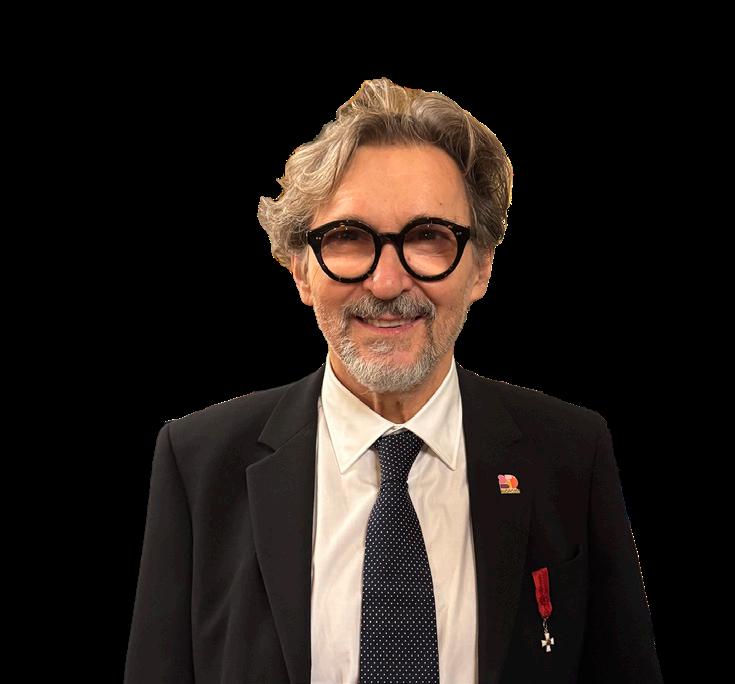
Giuseppe Carloni
Chairman of the Board of Directors in the biotech industry in Kuopio
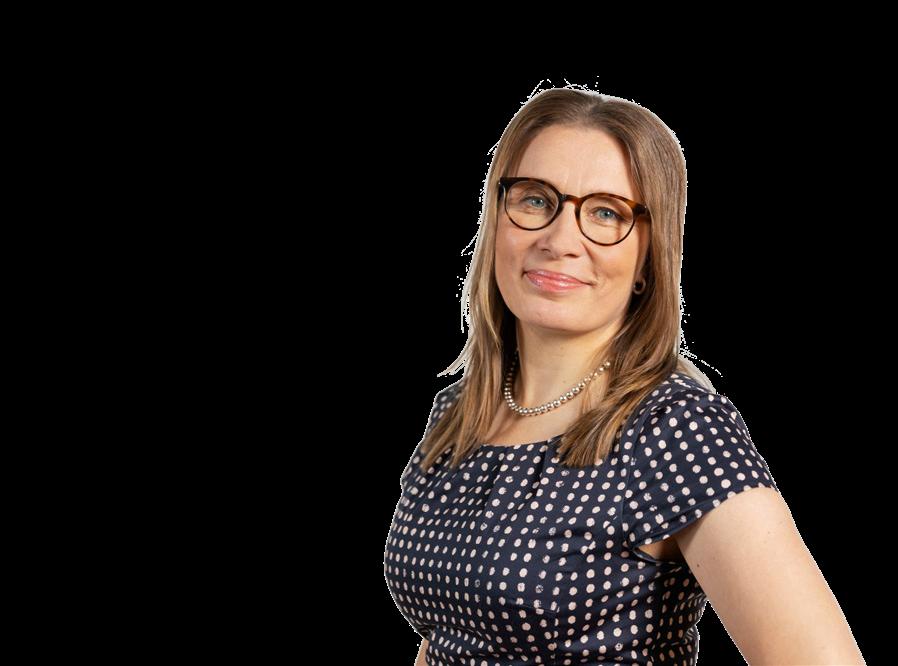
Kaija Savolainen
Head of the Kuopio Region Chamber of Commerce
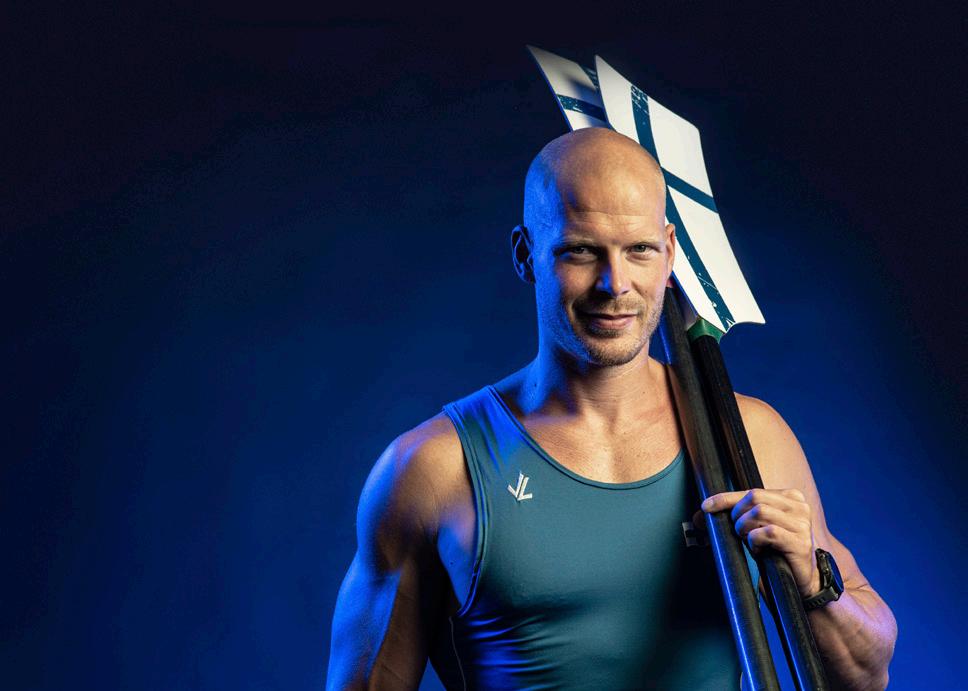
Joel Naukkarinen
World Class Athlete in Rowing and Medical Doctor
Giuseppe Carloni, Chairman of the Board of Directors in the biopharmaceutical industry
Giuseppe, it is a great pleasure conducting this interview with you. You are the Chairman of the Board of Directors at one of Kuopio’s largest commercial employers in the cutting-edge biopharmaceutical industry. Previously you were living in Kuopio. What brought you here? And how long were you in Kuopio for?
I have worked in Kuopio for FinVector in different capacities, most prominently I was as the Managing Director from 20202021. Originally, I went to Kuopio on a two-week consulting arrangement. I ended up staying in Kuopio for 2.5 years. I enjoyed my stay very much. And I picked up a few things from the locals.
That sounds intriguing. Can you give an example?
I appreciate good and high-quality food, as do the Finns. In Finland, the forests are a source of ingredients to feed people. In local tradition, I have therefore picked up collecting wild edible mushrooms from the forests.
That’s fantastic. And I imagine it is rather difficult.
I have specialized in only collecting two types of mushrooms. The best places to hunt for mushrooms are family secrets and often handed down - not even to all family members. But I have found a few places of my own.
Very impressive. Based on my own research, I have found that Finns have a variety of quirky and unique competi-
tions competitions they engage in, like wife-carrying contests, or swamp football. What is the most entertaining and unusual activity you have come across while living in Finland?
Hobby horse championships. Do you remember the hobby horses kids used to play with? It is a children’s toy with the model of a horse’s head attached to a wooden stick. Children use it to simulate horseback riding.
In Finland, there are competitions where people jump over obstacles holding hobby horses. It looks like show jumping or equestrian, but with hobby horses instead of real horses.
Wow, that’s creative.
It is. You can easily find a demo on YouTube. Lots of things to smile and be happy about in Finland.
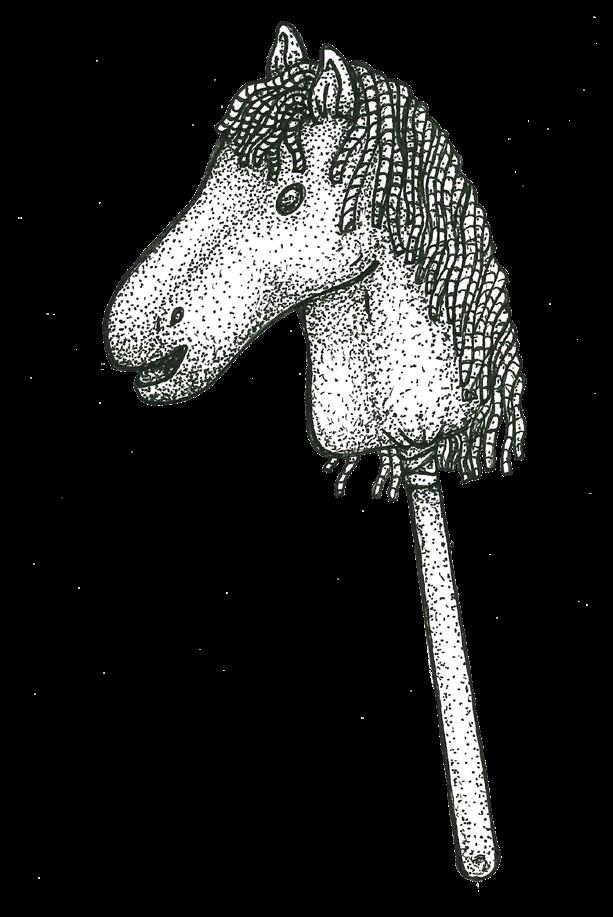
drawing by Iina Huttunen
Speaking of happiness, Finns are the happiest nation on the planet according to a recent survey, already for the 8th year[3] in a row. What do you think is behind that?
I think it has a lot to do with attitude. The Finns practice Sisu, an ancient tradition of mind set, which gives them an inner calm. They also highly value honesty and believe in their administration. Overall, a very admirable, healthy, and content way of living.
Very interesting. Finland and its peers in the Nordics have the world’s lowest levels of corruption. So, it all goes hand in hand. What else did you enjoy while living in Finland? Any ideas for leisure activities perhaps?
I highly recommend Kuopio music hall, a modern building that stands right beside the water. As an Italian living in Verona, I have the world’s best operas at my front door. So musical performances do not easily excite me. But the acoustic sound at Kuopio music hall is fantastic. I highly recommend it.
Great tip. Any other advice you can share? A book recommendation perhaps?
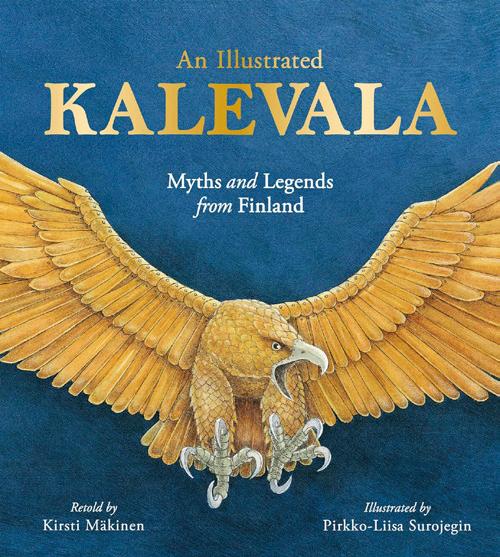
When I moved to Kuopio, I read a book called ‘Kalevala’.[4] It gives great insight into Finnish mythology. Reading ancient myths was not only a good story to read, I also discovered connections to everyday life.
The Finns were under Swedish rule for centuries. Often only being used for their resources, the Finns struggled to find their own identity. Eventually, when Sweden lost one of its wars against Russia, Finland became an autonomous state of the Russian Empire, until it was finally able to free
itself. The ‘Kalevala’ is one of the first sagas written down in Finnish, which formed part of the Finnish identity, and one of the key literatures. There is for example the story of a wishing box that was found. The box would grant any wish to the person holding it in their hands. Soon a fight ensued over it. The battles got so fierce that the wishing box fell into the water. Unable to retrieve it, the people gathered on shore. And the unimaginable happened: The box would still grant wishes to anyone standing on the beach. People of all ages and social status would come to have their wishes made true. Whether someone was rich or poor did not matter. And the rich man did not feel more entitled than a poor man. This still holds true today with the social system Finland has created.
Wow, that’s a beautiful story. And kudos to you for creating parallels behind the ancient saga to today’s cultural mindset. So, how is the city of Kuopio in today’s world different vs other cities in your view?
The integration of nature is what distinguishes Kuopio from cities elsewhere. A few years ago, the mayor of Shanghai came to visit the mayor of Kuopio. The event was broadcast. One detail I recall is the mayor of Shanghai said, ‘’In Shanghai we struggle to build parks in the city. In Kuopio you just built the city in the park.”
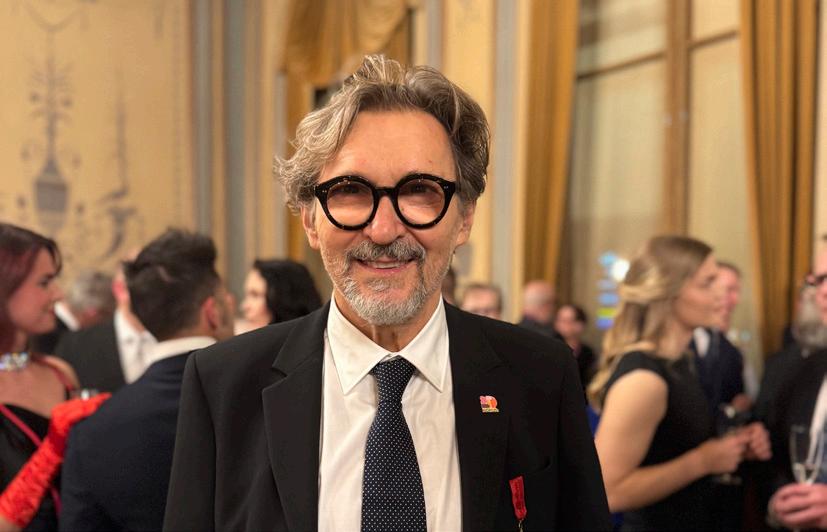
Giuseppe, we are coming to an end of this interview. I have very much enjoyed it. Do you happen to have a last hands-on advice for expats freshly arriving in Kuopio?
As an Italian, I was not used to very cold winters. For winter, I recommend to everyone to protect their ears.
Very helpful advice. Thanks very much for sitting down with me and sharing your stories and experiences about living in Kuopio.
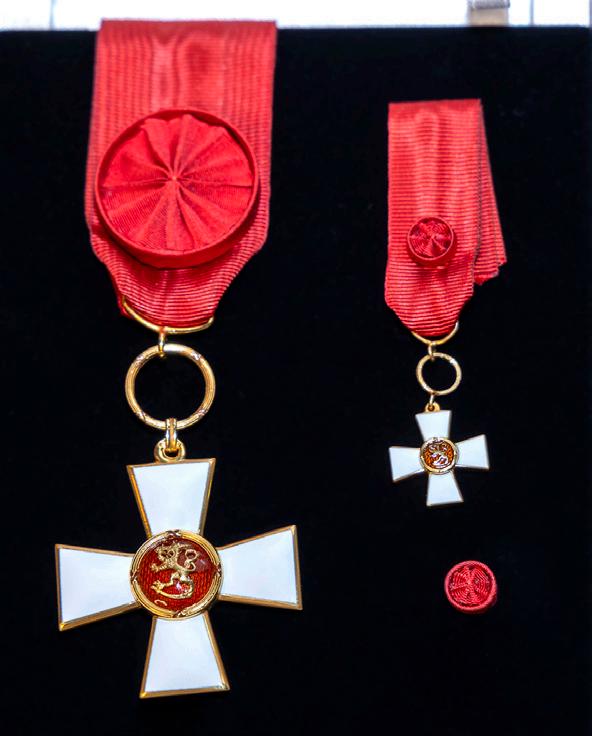
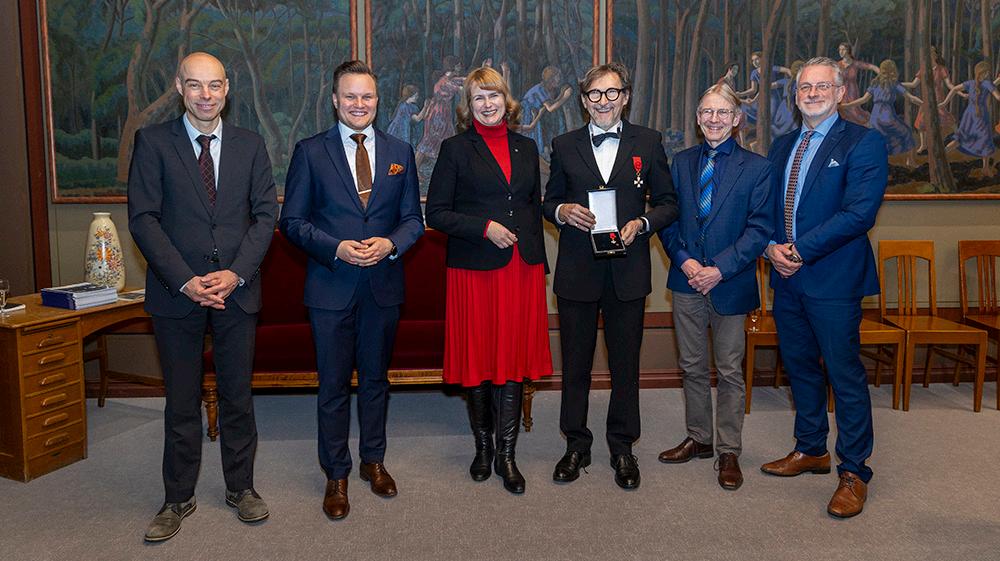
Giuseppe Carloni was awarded the Order of the Lion of Finland, 1st Class, by the President of the Republic for his significant economic contributions to the city and the region.
Giuseppe had been nominated by the City of Kuopio, and the event of his knighting was celebrated in Kuopio City Hall on February 3rd, 2025. It was the first time that foreign citizens have been honoured with the highest medals in Kuopio. ‘I feel like I am from Kuopio’ were some of Giuseppe’s words in his thank you speech, being visibly moved.[5]
Parliament)
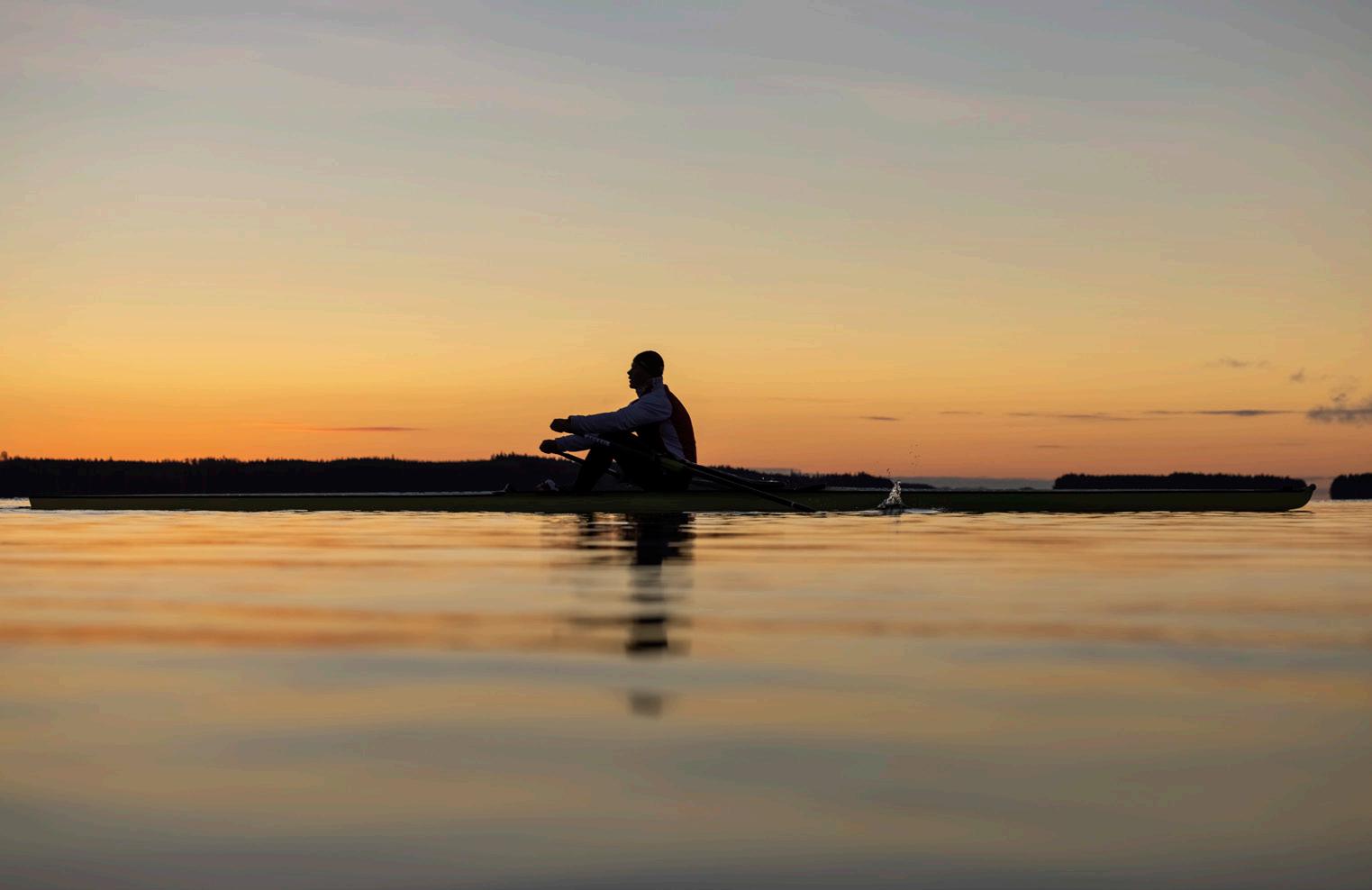
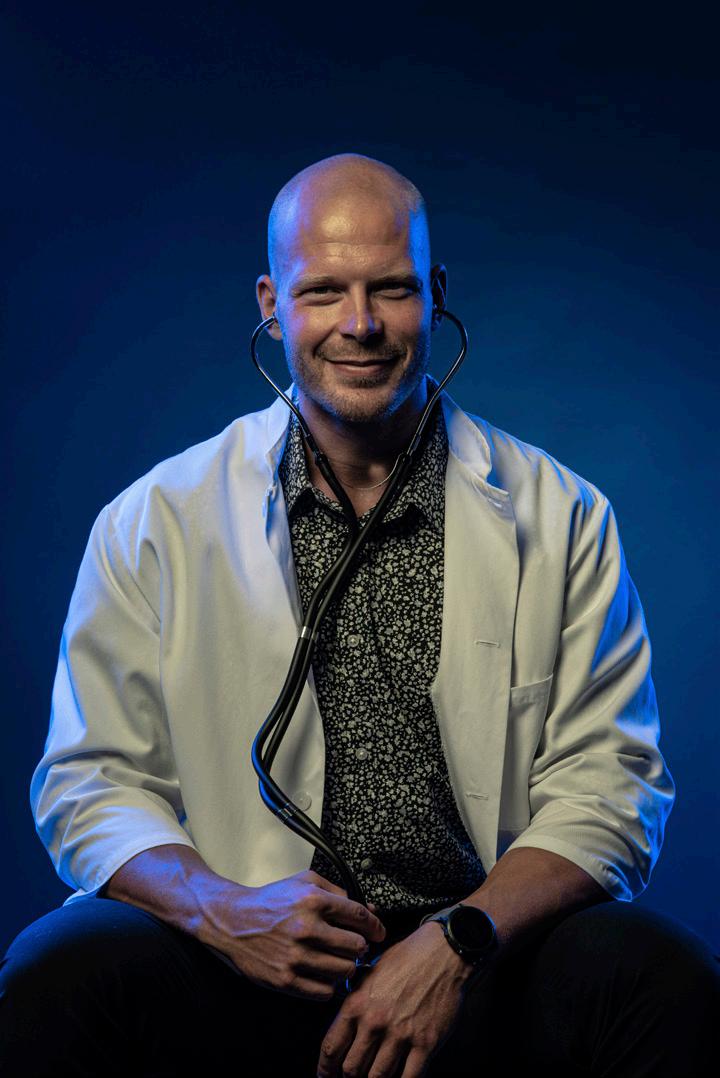
Joel Naukkarinen, Doctor and World Class Athlete in Indoor Rowing and Coastal Rowing
Joel, you are a scientist, a medical doctor and a world class athlete. You have won an impressive number of competitions: more than 200 Finnish Championship medals and 22 European and World Championship medals in two different sports. You have set multiple world records. With your vast achievements and ambitions, what made you decide to choose Kuopio as your home?
I moved to Kuopio in 2013 to study medicine at the University of Eastern Finland. From the very beginning the city felt like home. Kuopio combines the best of both worlds: world-class research and medical facilities with an environment that supports recovery and balance. Even though I do not row here as much as people might
think – because competitions take me around Finland and abroad, and nowadays also to Spain for coastal rowing, which has recently become an Olympic discipline – Kuopio has become the anchor for my research, my academic life, and my community.
That sounds fantastic.
I feel very fortunate, yes. During my studies, I had the unique experience of studying across four different year groups, which gave me around 600 classmates in medicine, and I built strong networks in the academic world as well. Over the years I have also gained many friends in Kuopio and have been supported by several local companies and the city itself, which has recognized my sporting achievements. I see myself staying connected to Kuopio long-term. It is not just where I live – it has become part of who I am.
What does a typical day of training look like for you? And how do the surroundings in Kuopio contribute to your rigorous daily routine?
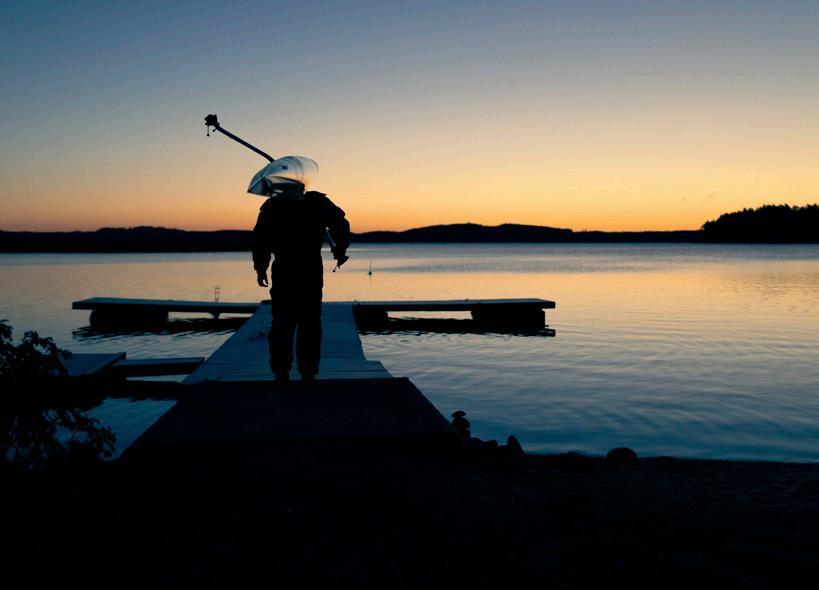
My days usually start early with the hardest training session of the day – often long endurance rowing or interval work. After that, I dedicate time to research or medical projects, followed by recovery and a second training session in the evening. Kuopio’s calm environment supports my ability to recover and focus on study and research. The stability of Kuopio helps me sustain such a demanding lifestyle, while Spain has recently added an important dimension to my training – giving me access to the sea for coastal rowing, which is part of my preparation towards the Los Angeles 2028 Olympics.[6]
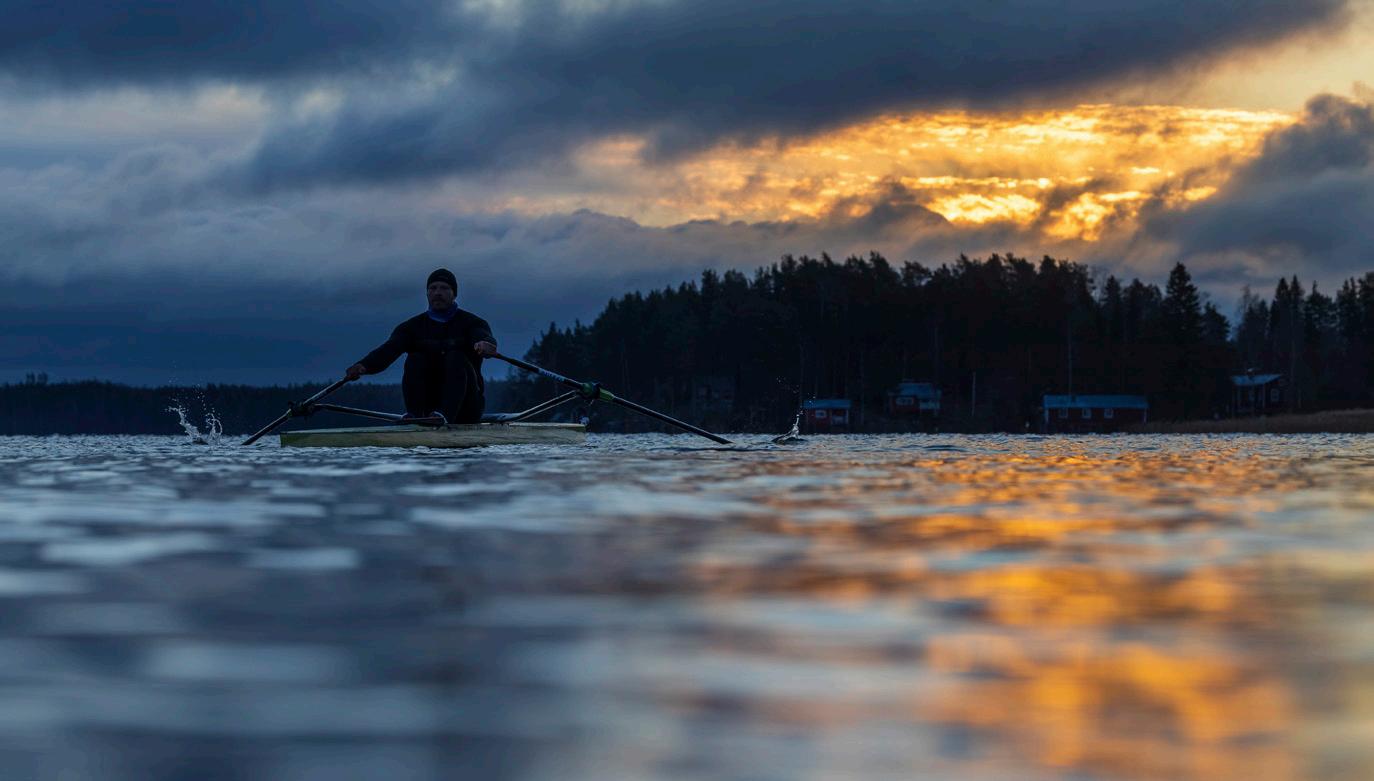
Do you row on Kallavesi lake when in Kuopio? And what do you do in wintertime when the lake freezes over?
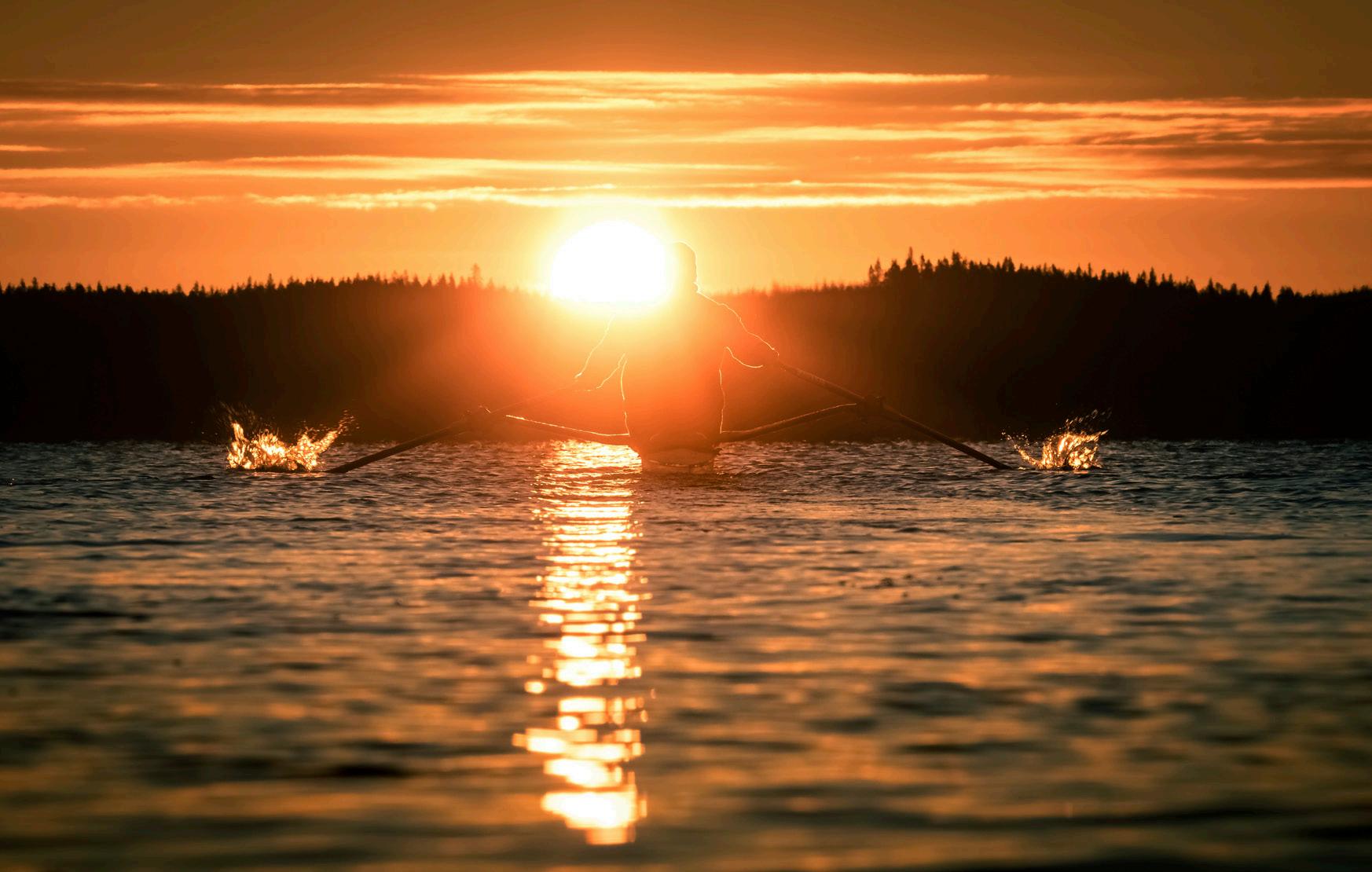
Kallavesi is a beautiful place to row when I do get the chance, but my water training often takes place elsewhere. In winter, my focus shifts to indoor rowing, cycling, and strength work. Seasonal change isn’t a limitation but an opportunity to build variety and resilience. During my ten years of studying medicine and doctoral research, I grew as an athlete in this environment. Summers I spent competing, but during the academic year I built the foundation of fitness that has allowed me to break multiple world records and push human performance further than anyone before.
Speaking of pushing human limits, you have broken several world records. The 100 km world record in indoor rowing of 6:06:06.1 (average speed 1:49.8/500 m) is still standing from when you rowed at the Kuopio Market Square at the opening of the Christmas season in November 2018. That must have been challenging to deliver such performance with large crowds watching you. How are you able to focus under pressure?
For me, pressure sharpens focus. I prepare so thoroughly that when the big moment comes, I know exactly what I need to do. The crowd gives me energy, but once I start rowing, my attention is fully on rhythm, technique, and strategy. I train my mind to block out distractions – whether it’s pain, noise, or nerves. I think of it as entering a tunnel where only the goal exists.
What’s been the most memorable moment of your athletic career?
I can’t choose just one, but the event that I want to highlight here is the 100 km world record, which you mentioned, which I set in Kuopio’s Market Square in 2018. It wasn’t only about the performance itself but the atmosphere: hundreds of people gathered in the cold November evening to cheer
me on. It felt like the whole city was rowing with me. That moment crystallized the bond I have with Kuopio and showed me the power of community in achieving something extraordinary.
That’s magnificent. Joel, they call you the ‘Rowing Finn’. What mental techniques do you use to stay sharp?
Mental sharpness for me comes from preparation and presence. Before a major race or record attempt, I map out the physical and mental challenges: when the discomfort will hit, what thoughts will try to slow me down, and how I will respond. During a performance, I narrow my focus to the next stroke, the next breath. I have trained myself to block out the body’s negative signals and to stay in a flow state where nothing else matters but moving forward. It’s a combination of science, practice, and something very Finnish –sisu.
Finland is the nation with one of the highest - if not the highest number -
of Olympic medals per capita. Finland holds an impressive 54 Olympic medals per 1 million inhabitants in the Summer Olympics (based on long term data from 1896 to 2024). Other nations do not even come close. What makes Finnish athletes so successful? Can you share the secret of how you apply Sisu?
I believe Finland’s strength lies in our culture of perseverance. We grow up in an environment where nature constantly tests us – the cold, the darkness, the distance. From early on, we learn that challenges are part of life. Sisu is not about ignoring hardship but about embracing it and moving forward despite it. For me, applying sisu means being willing to go beyond comfort, to push through the moments when the body and mind are telling me to stop. That mindset has carried me through world records and championships, and I believe it is the Finnish secret to consistent success in sport.
How do you balance sport with other areas of life, such as family, friends and
hobbies as well as your academic achievements of being a medical doctor and a scientist?
Balance does not mean doing everything equally. It means being fully present in whatever I’m doing. I am very good at immersing myself, focusing, and being present even in demanding situations where others might find it difficult. I consider that one of my decisive strengths in endurance sports as well. When I am training, I give everything to training. Research and medicine are passions too, but I have learned to structure my days so that there is time to rest and recover. I believe the people around me – including the wide network I built during my studies and the support I receive from friends and companies in Kuopio – make me a better athlete and person. They keep me grounded and motivated. At the same time, I admit it is a bit of a pity that my lifestyle limits how often I can meet all my friends. But I think warmly of them. I know they remember me as I remember them. I trust we will still find time together in the future.
What is something only your family and friends know, and which people would be surprised to learn about you?
People often see me as extremely focused and serious, but I have a playful side too. I enjoy experimenting, even in unusual ways – like building an altitude chamber at home to simulate training at high altitude. If I need to study in Kuopio and we do not have mountains for altitude training, then I think: let’s build one ourselves. As the saying goes: “If Muhammad won’t go to the mountain, then the mountain must come to Muhammad.” I am curious by nature. For me it is part of the fun of combining science with sport.
Speaking of joy, what season do you enjoy most?
I am a summer person. Light and warmth bring out the best in me. When I have had the chance to spend summers in Kuopio, I have really enjoyed those aspects – long bright evenings, the lake landscape, and the energy of the city. Summer is when Kuopio feels most alive, and for me it is also the season of competitions, travel, and coming back to recharge.
What is your favourite food? And is there a traditional Finnish meal which you enjoy? Any guilty pleasures?
As an athlete, I eat a lot – and I enjoy it. My favourite meal is often something simple but hearty, like salmon with potatoes and rye bread. I enjoy many sources of protein, but I eat a very large amount of carbohydrates because I need them for energy. My diet has been fine-tuned with the help of several experts. I enjoy eating at buffets, but even more important than the food is the company. Many of my most memorable meals have been with friends. Food for me is both fuel – the building blocks of becoming the fastest rower in the world – and joy.
You mentioned becoming the fastest rower in the world, and you have set multiple world records already. What is your biggest dream?
My biggest dream is to win an Olympic gold medal. I have already won so many medals in other competitions, but that one is still missing. I cannot even put into words how determined I am to pursue it.
Are you looking forward to the Summer Olympics 2028?
Absolutely. Los Angeles 2028 is a big target for me. The prospect of Olympic gold keeps me motivated every day, but I also know that the journey itself is what will
shape me the most.
What did you want to become as a child when growing up? Have you always dreamed of becoming a medical doctor and a world class athlete?
As a child, I dreamed of becoming a scientist. I loved asking questions and experimenting. Sport came later. I consider sports a natural extension of that curiosity – testing limits, learning about the body and mind. Medicine grew from the same roots: a desire to understand and to help. In that sense, both dreams merged. I want to make meaningful contributions in medicine and research, especially understanding human endurance and resilience. Ultimately, my dream is to show that it is possible to pursue excellence in more than one field and to inspire others to aim high in their own lives.
That’s wonderful. What advice would you offer to a young person who is considering relocating to Kuopio for studying or for a sports career?
Kuopio is a place where you can focus, find balance, and build something meaningful. Professors and mentors are supportive. The community is open and encouraging. It’s big enough to offer opportunities, but small enough that you feel connected. If you are serious about your studies or your sport, Kuopio is a great choice.
Thank you, Joel. It has been a pleasure speaking with you. I wish you all the very best for the Olympics 2028 in Los Angeles, and most of all Olympic gold. As we conclude this interview is there anything else you would like to share?
I believe the spirit of Kuopio – its people, its nature, and its balance of tradition and innovation – has shaped me profoundly. I am grateful for the friends I have here, the companies that have supported my journey, and the city itself for recognizing my achievements. At this stage in my career, it is especially important for me to find sponsors with whom I can reach my final big goal of winning an Olympic gold medal, a dream that requires collaboration. Thank you for the opportunity to share my story.
Find out more about Joel Naukkarinen on Instagram @rowingfinn or rowingfinn.fi
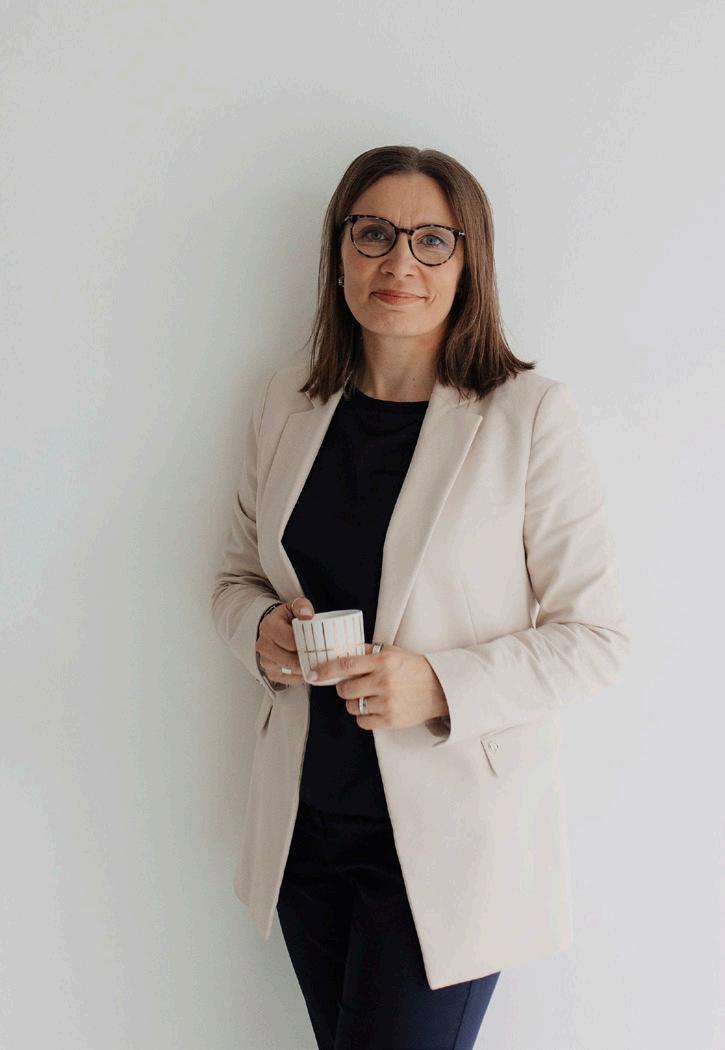
Kaija Savolainen, Managing Director of the Chamber of Commerce for the Kuopio Region.
Kaija, you are the Managing Director of the Chamber of Commerce for Kuopio Region. From where within Finland are you originally?
I am originally from Rantasalmi in South Savo, where my mother still lives. My family and I still nowadays spend a lot of time there, as we have a summer cottage in the area. I have always considered Savo a wonderful region, and I completed my university studies in Kuopio. After spending about 15 years in Helsinki, I felt a strong desire to give something back and take social responsibility for the region I come from. I was therefore very delighted to be chosen as the Managing Director of the Kuopio Region Chamber of Commerce.
Kuopio lies in North Savo. Is your name Savolainen derived from the name of the region?
Yes, my surname is quite common, and it indicates that you are from the North Savo region. Quite often I hear that I am a “double Savolainen” — both because of my surname and my place of birth. And to be honest, I am very proud of this heritage.
That is wonderful. How long have you been the Head of Commerce for the Region of Kuopio?
I started at the Kuopio Region Chamber of Commerce during a rather challenging time — in March 2020, when the COVID-19 pandemic began. The entire decade of the 2020s has been tough for people and businesses. I am very pleased that, despite the challenging operating environment, we have adapted quite well. People have found new ways to work, communicate, and do business, while companies have discovered new markets and business opportunities. At the Kuopio Region Chamber of Commerce, we always say that #menestystehdäänyhdessä / #success-is-achieved-together.
Speaking of success, what has been your proudest achievement in your role so far?
The most important goal given to me by the Kuopio Region Chamber of Commerce’s Board was to promote improvements to the National Road 5 (also called Valtatie 5). National Road 5 is a major north-south highway that is over 900 km long. One of our greatest achievements has been receiving €180 million in funding for this major infrastructure investment between Kuopio–Leppävirta. Now, we are working together to obtain funding for an Off Air-
field Landing site for the Finnish Airforce along the route. Another key goal, backed by local businesses, is to establish a master’s degree programme in engineering at the University of Eastern Finland.
It is very impressive that the Chamber of Commerce is operating across such a large spectrum from infrastructure investments that serve military and civilian aviation to topics such as education for young people. What do you see as the most rewarding aspect of leading commerce efforts in the city of Kuopio?
Without a doubt it’s the people. It is a great honour to meet and work with individuals who have great passion and are devoted to their own specialties and to this region. I truly appreciate that. Every day, I get to hear new perspectives and learn from others — and that makes me very happy.
Shifting to the strategy, what are the top priorities for the city’s commerce now at its 250-year-milestone? And how do you see the long-term vision for the city?
At the Kuopio Region Chamber of Commerce, we have excellent cooperation with the City of Kuopio – for instance, in the areas of strategic land acquisition and business zoning, particularly related to the green transition, the energy sector, and logistics. We firmly believe that success is achieved together by utilizing everyone’s expertise and knowledge.
Kuopio Region Chamber of Commerce’s long-term vision is that Kuopio will be the best place for people, businesses, and investments — a vibrant region with 200,000 inhabitants, around 12,000 companies, and 60,000 workplaces. Our ambitions and goals are set high, and we are all committed to achieving them.
Great goals. What do you believe sets Kuopio apart already today in terms of commerce and economic growth from other cities?
Kuopio has a long history in medicine and health technology, both of which are crucial for the future. The industrial sector – especially machinery and military technology – is growing rapidly, as are software and data technology, along with the food industry.
Kuopio and its business community have many competitive advantages to offer global markets. At the same time, people here are able to live happily close to nature, with excellent opportunities for leisure. The city’s success lies in the balance where businesses, nature, and people all flourish together.
I like the harmony you portray between people and businesses on the one hand side, and nature on the other. How does the city plan to incorporate sustainability into its commerce strategy, especially considering environmental impacts globally?
Kuopio’s valid city plan strongly highlights the environment and sustainability — both for people and for businesses. Kuopio has set ambitious goals for climate action and resource wisdom. The new city plan emphasizes that Kuopio aims to be the best place for businesses and investments, and the city has reserved and zoned 585 hectares of land for business use. At the same time, the City of Kuopio has set a target to protect an additional 500 hectares of forest area.
One of Kuopio’s specialized business sectors is the circular economy and water cluster, which combines education, research,
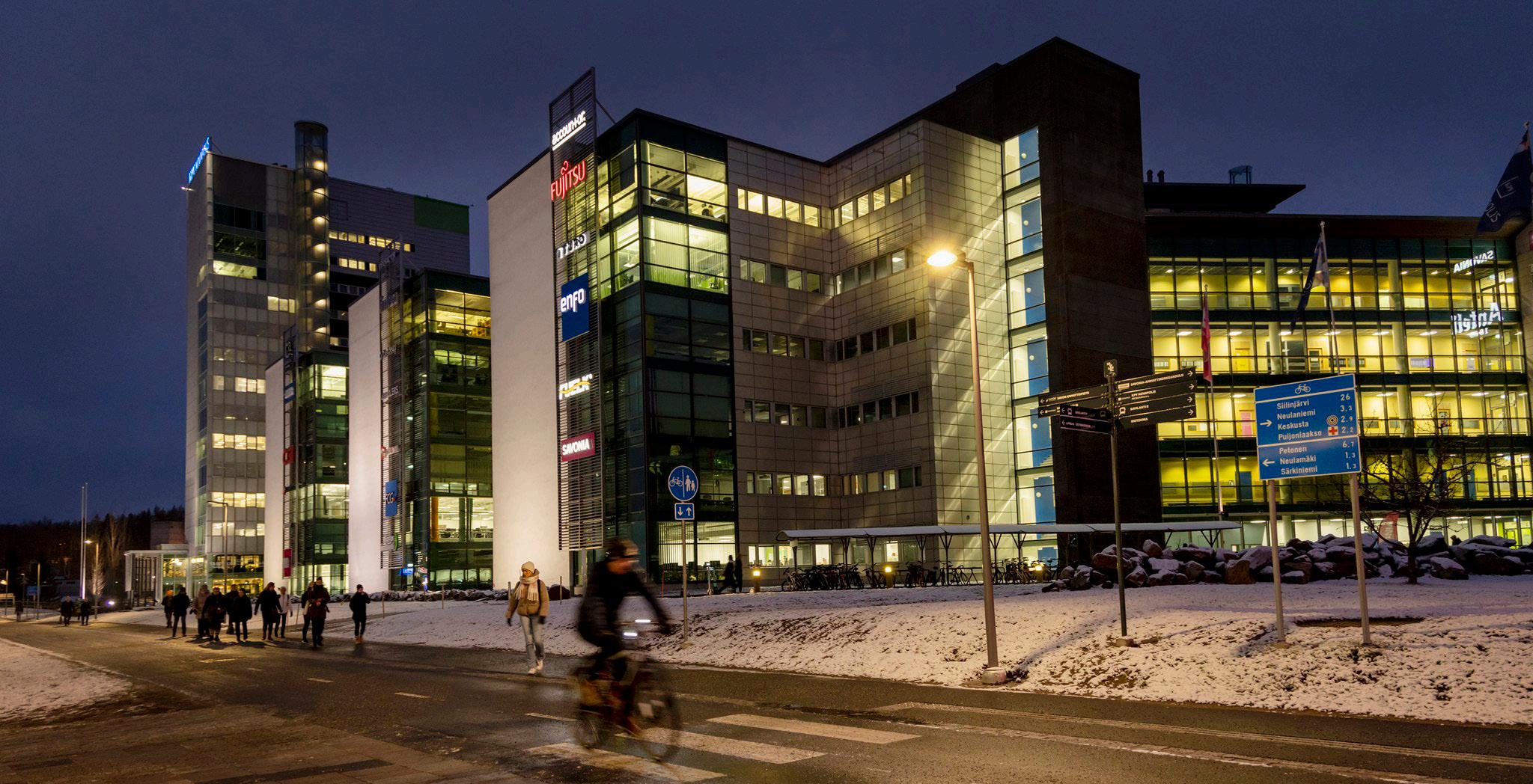
business, and resource-wise urban development in the Savilahti and Hepomäki areas — the latter being a 100-hectare business area dedicated to the circular economy
The energy sector in Kuopio, together with the city, is focusing on and investing in sustainable energy solutions — for example, how to utilize excess heat in district heating, whether small nuclear power plants could become next-generation heating solutions, and how green industrial carbon dioxide can be used as a raw material for hydrogen and its derivative fuels.
It is highly commendable that more than 50% of Fins already live in homes connected to district heating. I suppose small modular reactors will pose security challenges that need to be solved and still produce radioactive waste. But it is very exciting that the city is exploring the usage of green industrial carbon dioxide and investing in green projects. Shifting to another topic of business development, how is the city adapting its policies to encourage entrepreneurship, innova-
tion and attract companies from outside Finland? Can you highlight any successful collaborations between the city and local businesses or private investors?
At the Kuopio Region Chamber of Commerce, our Board and team are very pleased with the strong cooperation we have with the City of Kuopio. We maintain an excellent dialogue, for instance, in developing the new city strategy, where business is placed at the very core – alongside people.
This means that the city and all its stakeholders focus on specialized business sectors and work together to build long-term competitive advantages. Businesses and people are supported in finding the best possible solutions and assistance for their challenges.
The City of Kuopio has invested significantly in ensuring that people enjoy living here. There is a wide variety of places to live, work, and be active. We are very proud that Kuopio has been ranked Finland’s second most attractive city for the fifth consecutive year!
Another great example of Kuopio’s development is the Savilahti area. Savilahti is shaping the future as a climate-smart and intelligent neighbourhood with a strong learning and innovation ecosystem. The area is home to around 300 companies, a vocational school, a university of applied sciences, a university, nearly 10 research institutes, the university hospital, almost 20,000 students, and over 16,000 workplaces.
Savilahti brings together people, science, research, innovation, entrepreneurship, and business. One of the best examples of long-term cooperation between different stakeholders is FinVector; a university spin-off from research at the University of Kuopio that has since grown into a global biotechnology company – now operating in international markets with over 500 employees from 50 different nationalities.
Thanks for sharing this great example of a home grown business. What are some of the biggest challenges facing local businesses overall right now, and how are you addressing them?
Despite the geopolitical and geoeconomic challenges that businesses in Kuopio, Finland, and across Europe are facing, the Kuopio Region Chamber of Commerce continues to work to enrich the region’s economic life and to draw attention to local opportunities for development.
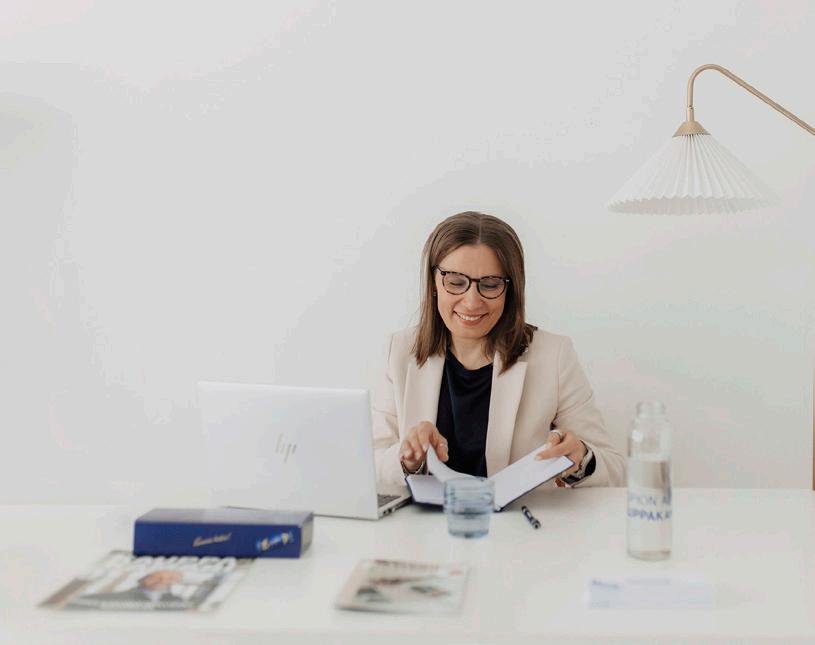
Our work focuses broadly on influencing not only infrastructure, industry, internationalization, and business growth, but also the service sector, as well as the development of competence and the availability of skilled labour in the region.
Kaija, this has been a very insightful interview. Thank you very much for taking the time and sharing your perspective. As the City of Kuopio celebrates its 250th anniversary, I wonder what the future holds. From your perspective, what are some of the most exciting upcoming projects or developments that will drive the city’s economic growth? And can you give a sneak peek how Kuopio will look like in 10 years from now?
Kuopio’s new strategic plan, management system, and ambitious goals are truly inspiring — calling on stakeholders to participate, enhance, and accelerate Kuopio’s economic growth. The city’s specialization in selected business sectors will help develop even higher expertise and strengthen its sustainable competitive advantage.
I strongly believe that by 2035, Kuopio will be an even more appealing and attractive place for both businesses and people. Kuopio is on its way to becoming a metropolis — in terms of population, international significance and connectivity, economic and political influence, education and RDI activities, urban structure and infrastructure, as well as culture and diversity.
I am sure we will see many great things to come in the city’s future that lies ahead. Thank you, Kaija, for all your insights. This has been very inspiring.
2.1. Fascinating Finland
2.2. Finland in Facts & Figures
2.3 Origins of the Finnish Language
2.4 History of Finland
2.5 Finnish Culture
Bonus: Only in Finland
2.6 Cuisine à la Finlande
Finland is a North European country bordering Sweden, Norway and Russia. Its capital, Helsinki, occupies a peninsula and surrounding islands in the Baltic Sea. Finland is known for its vast wilderness, with national parks and ski resorts. It is known for its midsummer nights, where the sky practically does not get dark for several months. Finland is also known for its Northern lights, a unique & fascinating display by nature visible in spring, autumn and winter. But did you also know about Finnish culture and the history of Finland? Or the excellent Finnish cuisine, which uses locally sourced products? This chapter will provide an overview of this fascinating Nordic country.
Everyone will have associations with Finland, whether one has visited this Nordic country before or not. Located in Northern Europe, it is known for its long winters, but also its endless days in summer. One of the least densely populated areas in Europe, it is a dream for adventure seekers, outdoor enthusiasts as well as those who simply appreciate its quiet and undisturbed nature. Finland is known to be the country with the happiest people. But is it true? And what are the things that make Finland special?
• Finland is the Land of the Midnight Sun. The longest day is called ‘Juhannus’ (Midsummer) and celebrated each year in June. Finland has two public holidays to mark this special occasion: Midsummer’s Eve and Midsummer Day. Since 1955 Midsummer Day is celebrated on the first Saturday after June 19th. Midsummer’s Eve is celebrated accordingly a day earlier. Astronomically midsummer always falls on June 21st, the longest day in terms of daylight hours in the Northern hemisphere. On this day, the sun does not set at all north of the Arctic Circle.[7]
• Finland is the birthplace of the sauna. It is estimated that there are approximately 3 million saunas[8] in Finland for a population of 5.5 million inhabitants. Big companies and state institutions sometimes have their own saunas. Saunas can often even be found in small spaces, such as city apartments.
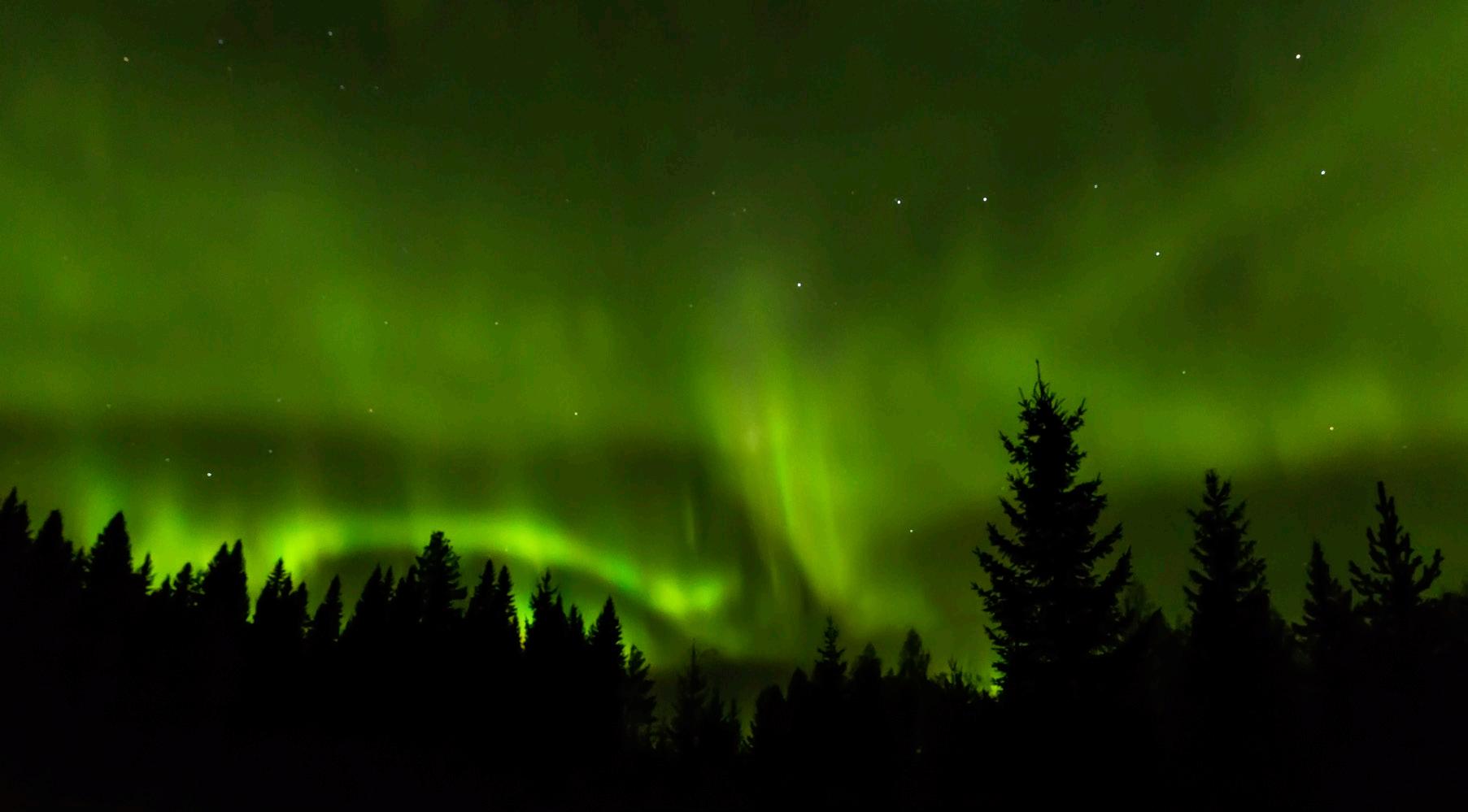
• Finland is known for its Northern lights. According to Finnish folklore, the Northern lights are caused by a mystical arctic fox running north. He causes the skies to ignite by touching the mountains with his fur.[9] Scientifically, Aurora borealis is
caused by geomagnetic storms. Auroras can best be seen from Lapland, which offers this spectacle on more than 50% of nights per year. But also Kuopio boasts Northern lights. During a dark cloudless night, the chances of seeing Northern lights is 25% in Central Finland (Oulu, Kuusamo) and once per month along the Southern coast (Helsinki, Turkuu). Kuopio’s occurences of this nightly spectacle fall somewhere in the middle, given its central location. While Northern lights occur throughout the year, they are hardly visible during summer since the sky is too bright. Spring and autumn have slightly higher occurrences of viewings than winter.[10]
For getting live info on Aurora borealis sightings visit: https://rwc-finland.fmi.fi or download an app on your phone, which will send you automated alerts.
• Finland - the land of a Thousand Lakes. In fact, it has 188,000 of them. Most notably Tampere, Jyväskylä and Kuopio are located near large lakes, and are all part of the Finnish Lakeland. This is a popular area where Finns come on holiday. Statistically speaking there is one lake in Finland for every 29 residents.[11]
• Finland, and specifically its Northern most part, Lapland, is home to Santa Claus. Forget what you have been told about the North Pole, because Santa’s official home is in Lapland. You can visit him at Santa Claus Village, just 8 km north of Rovaniemi[12] year around. A world of fairytales awaits. You can even cross the Arctic circle there, which runs right through the middle of the main square of Santa Claus Village. A magical experience for the whole family. More info can be found at: https://santaclausvillage.info
• Finland is also one of the safest countries in the world. Crime rates are very low, adding to the country’s charm as a haven when considering relocation.[13]
• Finland has the freshest air. The World Health Organization has measured air quality in 134 countries and 7,800 locations. In the 6th Annual World Air Quality Report[14] Finland ranked best in cleanest air together with 6 other countries. Unsurprisingly, Finland’s superior air quality is a result of its numerous trees. Forests make up 75% of its surface on land. And this is not just statistics, the air smells fresh, like pine needles, when heading into the woods. Overall Finland has more than 40 national parks. So, you can enjoy clean air, while hiking in beautiful wilderness too. In Finnish, there is even a word for getting some fresh air: happihyppely, which literally means “oxygen hopping”. And studies have linked clean air to happiness. Which leads to the next topic and the most important question:
• Finland has the happiest[15] people. But what is the secret behind it? And is it true? This superlative has made me the most curious of all. I have heard that the Finns are generally content with their surroundings. Finland is very safe, the educational system is very good, and the surrounding nature is intact. But what is really behind this state of being happy? When researching more, I came behind the concept of ‘Sisu’. Sisu is a unique Finnish way of living, which has been intertwined with the country’s culture for centuries. While it cannot be fully translated into any language, the gist which I got is: It stands for extraordinary resilience paired with a strong mindset. Sisu[16] means pushing through in the face of adversity, even when the odds are nearly impossible. Sisu is not just courage, but the ability to sustain courage
over time. Sisu is used to describe the Finnish people, and what sets them apart. Perhaps in the centuries of hardship which Finns endured under Swedish rule and later Russian rule, it is something that kept the Finnish people going. It sounds very philosophical and has sparked my interest in exploring more. A state of mind that enables the individual to tap into strength beyond their perceived mental and physical capabilities. Who would not want to be interested?
Concludingly, it does not come as a surprise that Finland is a Lonely Planet top destination for 2026.[17] Finland is nice. Or in Finnish: Suomi on kiva.
• Chasing Northern Lights in Lapland
• Sleeping in a glass igloo
• Experiencing husky & reindeer sledding
• Experiencing a Finnish smoke sauna followed by ice swimming
• Eating salmon soup
• Exploring Santa Claus Village
• Snowmobiling and walking on a frozen lake
• Reading the Moomin stories to your children
• Grilling a sausage on a campfire
• Swimming in one of Finland’s beautiful lakes
• Boating on a lake and discovering hidden islands
• Enjoying the long midsummer nights
• Seeing a bonfire at Juhannus
• Smelling the scent of a summery pine forest
Population: 5,6 million inhabitants (in 2024)
Total Area: 338.363 km²
Life expectancy: Men 80 years, women 85 years (in 2024)
Languages: Finnish and Swedish are both official languages. Since 1992 also Sámi is recognized in Finland as an official language in the Sámi native region.
In Finland, Finnish is spoken by 4,9 million people as a first language and 0,3 million people speak Swedish as their native language.
The Sámi, who are members of the indigenous people of northern Lapland, have a total population of 60,000 -100,000 people, of whom 10,000 live in Finland. There are three Sámi languages spoken in Finland: Northern Sámi, Inari Sámi, and Skolt Sámi, all of which are considered endangered.
Religion: Christianity; 62% Lutheran, 1% Orthodox. 35% do not belong to any church. All other religions represent less than 1%.
Foreign Relations
Finland is part of …
• the European Union (since Jan 1995)
• the Euro area (i.e., EU countries who have adopted the Euro) (since Jan 1999)
• Schengen (since March 2001)
• part of NATO (since April 2023)
A parliamentary republic with a head of government - the prime ministerand a head of state - the president.
Finland ranks 9th in the European Union in terms of GDP per capita with 40.700 € (well above the EU average of 37.600€).
In 2024, its total imports were valued at US$ 78,43 billion vs total exports of US$ 75,58 billion, leading to a trade deficit of US$ 2,85 billion.
Finland’s exports split out into 58% to the EU, and 42% to the rest of world.
Main partners: Germany 12%, Sweden 12%, US 10% Netherlands 8%, China 5%
Finland’s imports split out into 71% from the EU, and 29% from rest of world.
Main partners: Germany 14%, Sweden 12%, China 10%, Norway 8%, US 5%
National Food: Rye bread
National Animal: Brown Bear
National Bird: Whooper Swan
National Insect: Seven-spot Ladybird
National instrument: Kantele
National sport: Pesäpallo (‘Finnish baseball’)
National composer: J. Sibelius
National tree: Silver Birch
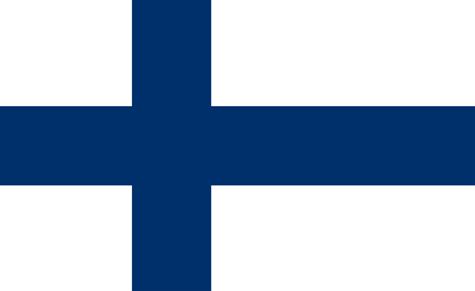
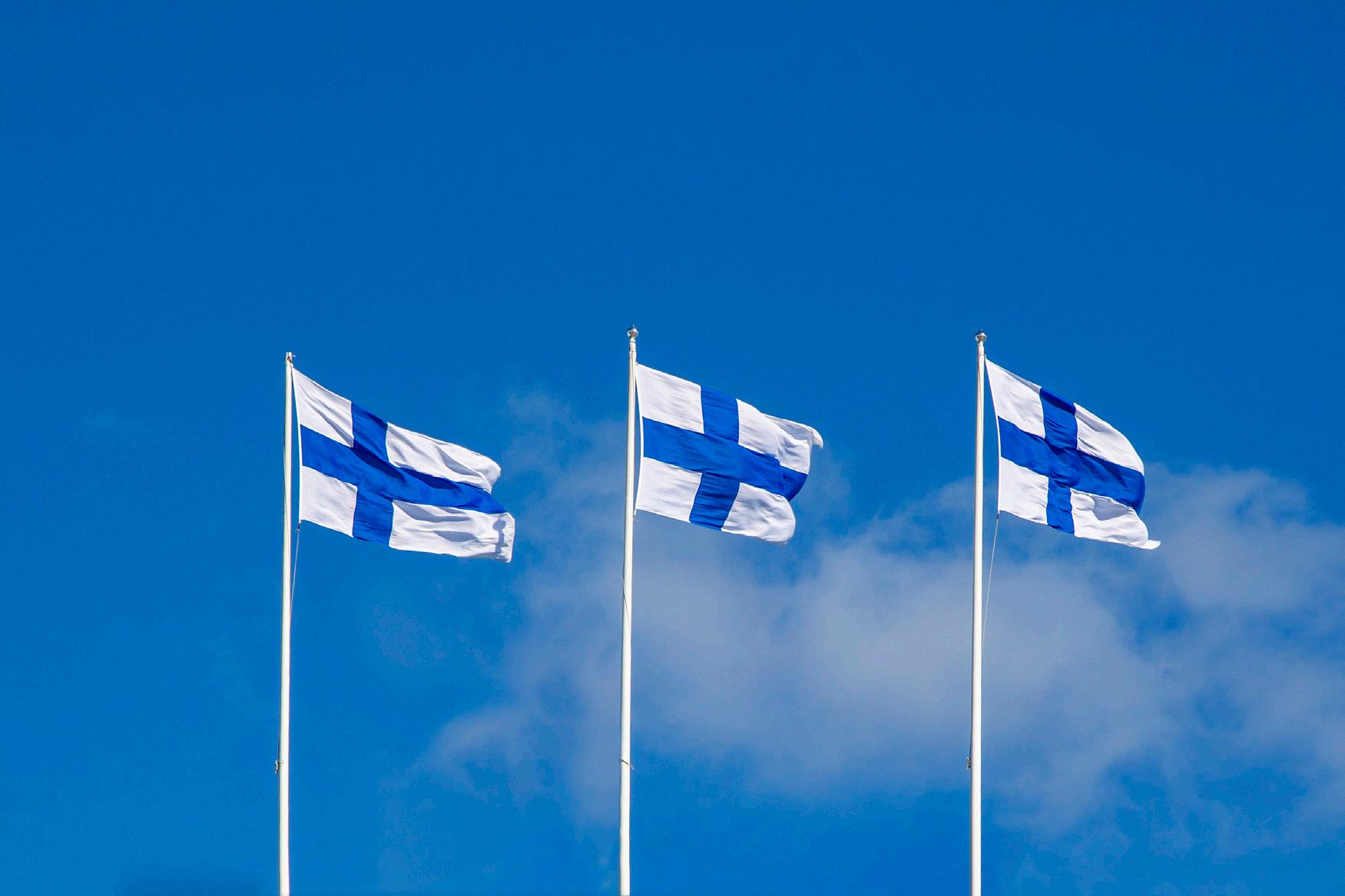
Flag:
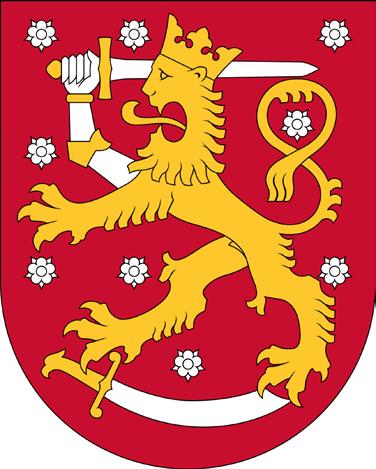
Coat of Arms:
Most expats will say that the Finnish language is difficult to learn. But why is that the case? And where does the Finnish language originate from?
Modern research tracks Finnish along with other Uralic languages back to what is believed to be a single ancestor language termed ‘Proto-Uralic’, spoken sometime between 8,000 and 2,000 BE (estimates vary) in the vicinity of the Ural Mountains. The Ural Mountains form the border between the European and Asian continent, running from the Arctic all the way to northwestern Kazakhstan. Over time, Proto-Uralic split into various daughter languages, which themselves continued to change and diverge, yielding even more descendants. Around 1500 – 1000 BC it is believed that the languages split into Proto-Finnic and Proto-Samic. The former is the ancestor to Finnish and Estonian. The latter is an ancestor to Sámi, the language spoken by the people of Lapland. From there Proto-Finnic split out into multiple dialects, forming new paths where the ancestor languages for Finnish and Estonian would split. This happened during the first millennium BC.[19]
Did you know that Finnish and Hungarian are closely linked? Hungarian and Finnish are both Uralic languages. In fact, of the Uralic languages still spoken today Hungarian accounts for more than 60% of speakers, Finnish 26% and Estonian 5%. Sámi, which is spoken in Lapland is also a Uralic language, spoken by less than 1%.
Over centuries Finnish was only spoken but not used in writing. During medieval times, Swedish was the official language used in the administration of Finland. Finnish was considered infe-
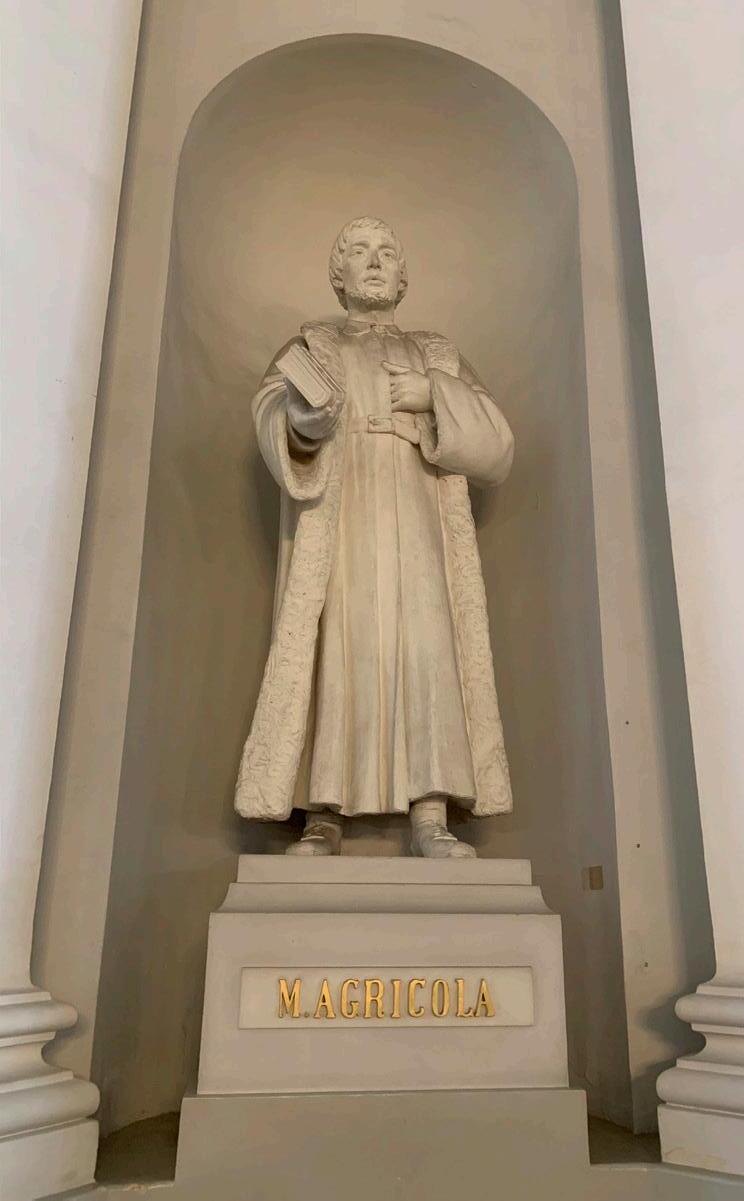
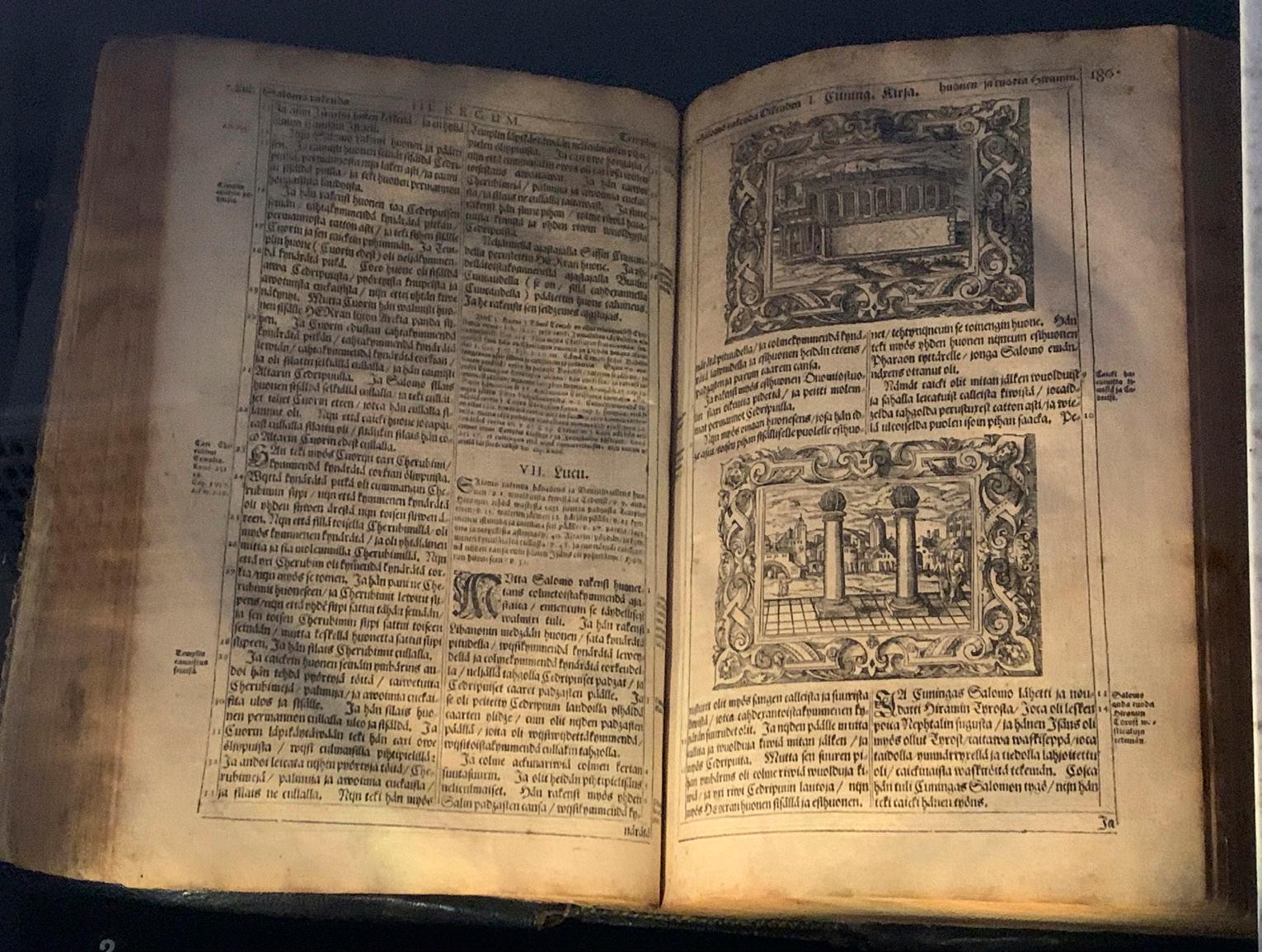
rior. In churches, Latin was used. The language of commerce was Middle Low German. It was not until the 16th century that a Finnish bishop of the name Mikael Agricola created the first comprehensive writing system for Finnish. Agricola looked to existing languages when defining the spelling, namely Swedish, German and Latin. His ultimate plan was to translate the bible. While the Finnish language has evolved, and spelling has been transformed to be more systematic, the Finnish standard language still relies on Agricola’s innovations.
Photograph: A statue of Mikael Agricola, the inventor of the writing system for the Finnish language, displayed in Helsinki Cathedral
The Finnish alphabet today has 29 letters:
On a scale of 1 (relatively easy) to 4 (very difficult), the Finnish language has been assessed a ‘3’ in terms of learning complexity for English native speakers by the Defense Language Institute in Monterey California in the US. The only languages harder to study are: Arabic, Japanese, Chinese (Mandarin and Cantonese) and Korean. (For a full comparison: German, which is my native language and which I always thought to be a difficult language for non-native speakers was assessed only a ‘2’. Other languages such as French, Spanish, Italian and Swedish were all assessed ‘1’.)[20]
Finnish also has multiple dialects. The dialects are divided into distinct groups: Western and Eastern. In Kuopio the dia-
lect spoken locally is called ‘Savo’ or Savonian dialect. The dialects are mutually intelligible.
Additionally, there are two main registers of Finnish. ‘Standard Finnish’ is used in formal situations, such as political speeches, news broadcasts and other formal communication. It is also referred to as the ‘book language’ in its written form. Colloquial Finnish is used in informal, natural speech. Examples are casual settings in daily life with friends, family and coworkers. It is also used in entertainment media (such as most TV shows, comedies, informal radio shows). In personal communication either the Colloquial Finnish or a local dialect may be used.
The below chart explores the history of Finland, from the first Stone Age, over Christian Crusades, Swedish and Russian rule to today’s day and age.[21]
8,000 - 9,000 BC
Stone Age cultures present in Finland at the end of the last glacial period
1,500 BC – 500 BC
Finnish Bronze Age
500 BC – 1,300 AD
Finnish Iron Age
12th Century
12th Century
First mention of Finland in earliest written sources when Catholic Church began to gain a foothold in Southwest Finland
12th Century
Finland became part of the Swedish Kingdom and was under the realm of the Catholic Church due to Northern Crusades by Christian military orders and Swedish colonization
13th Century
1249
Swedish rule in Finland through the Second Swedish Crusade
1278
The Republic of Novgorod in Northwest Russia (which existed from the 12th – 15th century) gained control in Karelia in Eastern Finland
1293
Sweden gained control of Western Karelia with the Third Swedish Crusade
East and West Karelia would form the border between Western (Christianity) and Eastern hemisphere (Orthodoxy)
14th Century
August 12th, 1323
Treaty of Nöteborg between Sweden and Novgorod, which defined the border between the two regimes, mostly in the area known as Finland today
15th Century
15th century
Prosperous times with population growth and economic development
End of 15th century
Tensions on Finland’s East border arise between Sweden and Russia. The Principality of Moscow had conquered Novgorod and aimed for a unified Russia.
1495 - 1497
War between Sweden and Russia. Vyborg Castle withstood Russian siege only by a miracle.
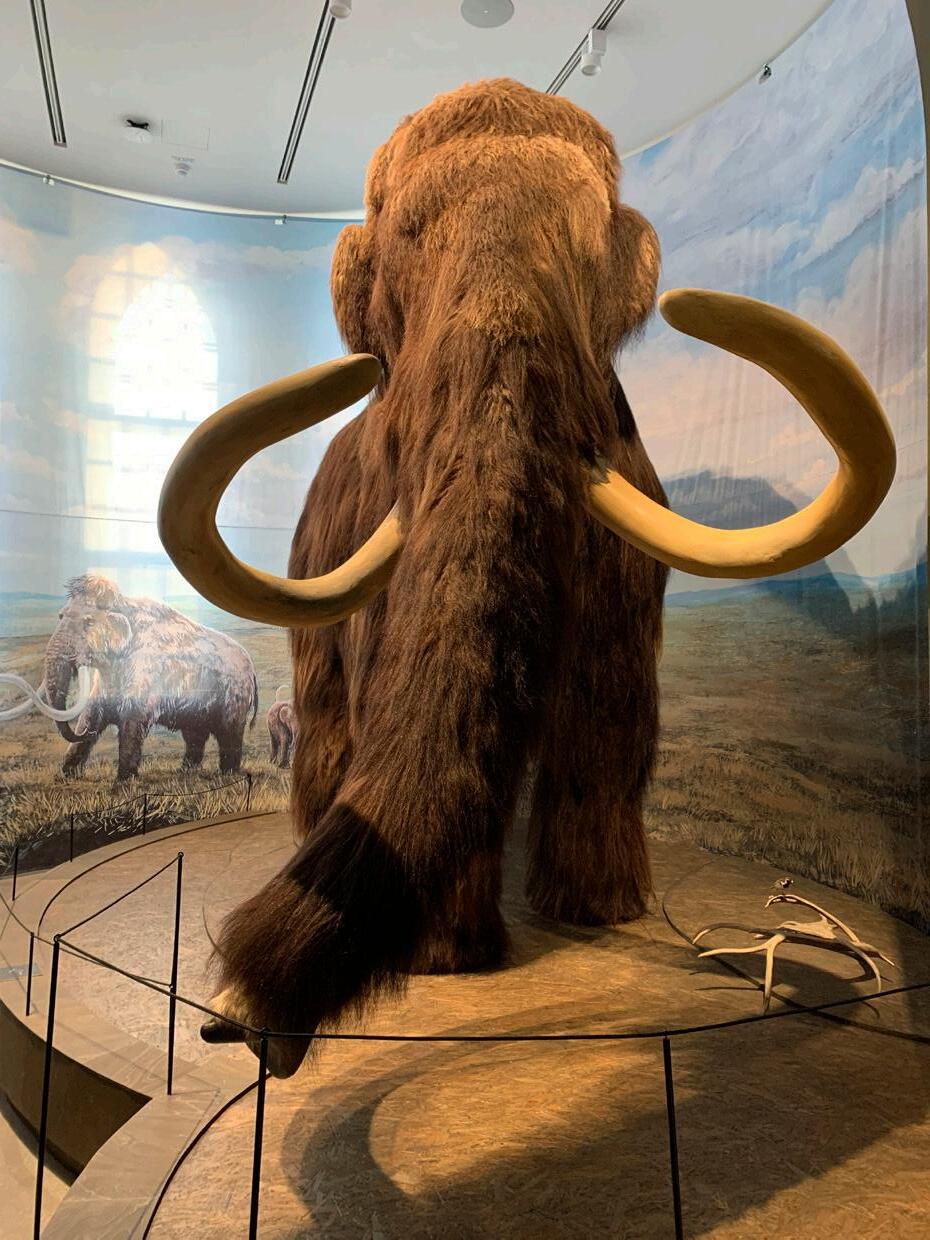
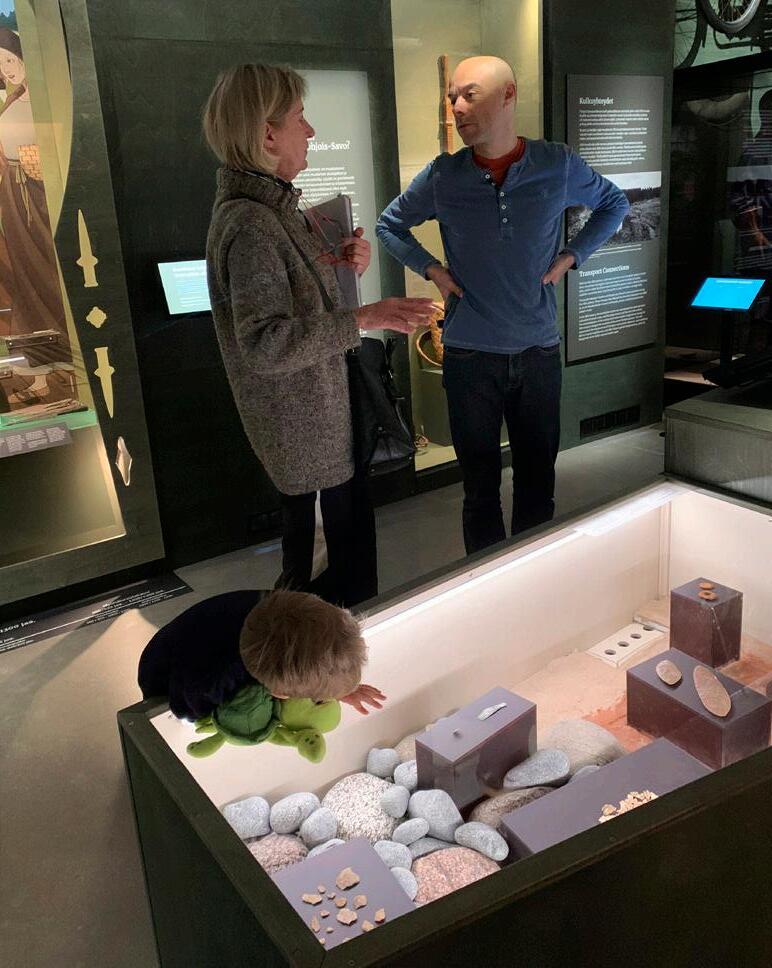
Finland’s history from prehistoric times as shown in Kuopio Museum. A mammoth that roamed Finland’s plains in the Pleistocene (see left handside). Photo also of our son, studying the Stone Age, while Matthias listens closely to our tour guide.
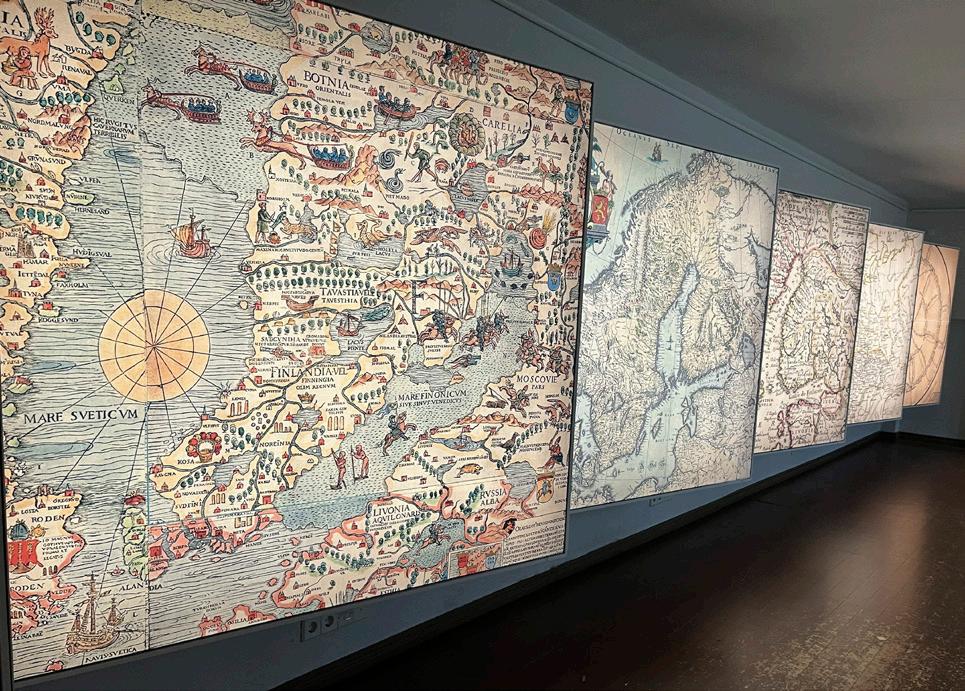
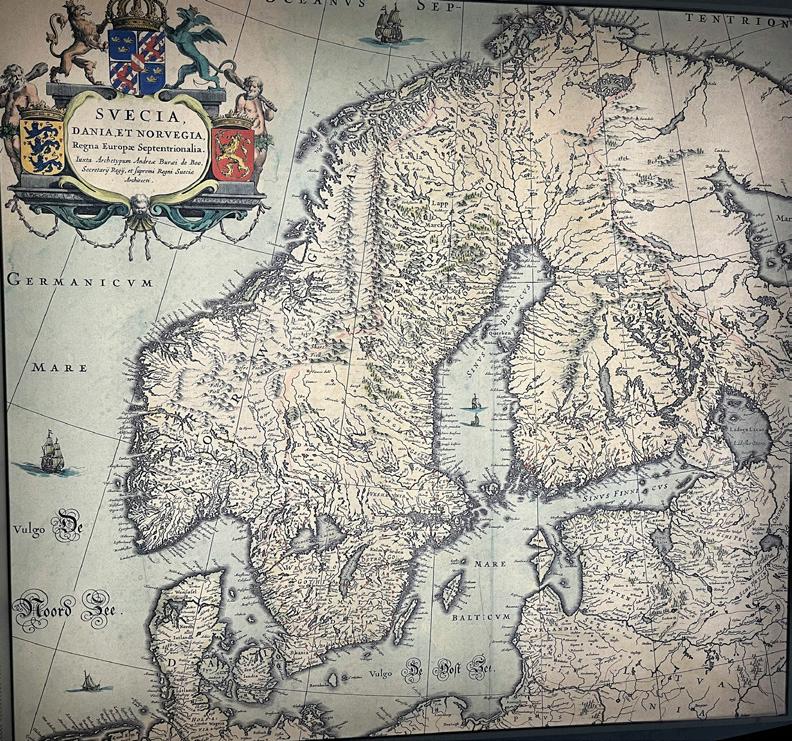
Finland’s maps have been changing over time due to crusades and wars, as displayed in the National Museum of Finland in Helsinki
1550
Helsinki was founded by Swedish King Gustav Vasa but remained a fishing village for more than 2 centuries. Turku was the most important Finnish city with a Bishop in place.
King Gustav Vasa died in 1560.
Under new leadership, Swedish expansion started leading to a warlike era that would last for 160 years.
Livonian War (1558-1583) also known as First Northern War[22]
Cudgel War of 1596–1597[23]
The common people of Finland suffered because of drafts, high taxes, and abuse by military personnel. This resulted in a desperate peasant rebellion, the Cudgel War. It was suppressed brutally and bloodily.
1595
Treaty of Teusina between Sweden and Russia moved the Finnish border further to the East and North, closer to where the modern border lies
17th Century
Early 17th century
Sweden completed conquest of Livonia, and transformed its military from peasant militia into an efficient fighting machine, possibly the best in Europe
1630
Swedish (and Finnish) armies marched into Central Europe to participate in the struggle between Catholic and Lutheran forces in Germany, which will become the Thirty Years’ War.
The Swedish Empire now became one of the most powerful forces in Europe.
During the war, important reforms had been made in Finland: (1.) Per Brahe functioned as Governor of Finland and founded multiple cities, among others also Kuopio (2.) The Bible had been translated into Finnish.[24]
Imperial Sweden was tough on Finnish population with high taxation, continuing wars and cold climate (Little Ice Age).
1655 – 1660
Northern Wars took Finnish soldiers to battle fields in Livonia, Poland and Denmark.
1638 – 1655
Emigration to the New World took place. In the area of Pennsylvania and Delaware today, Sweden had a colony, with a significant part of the population from Finland
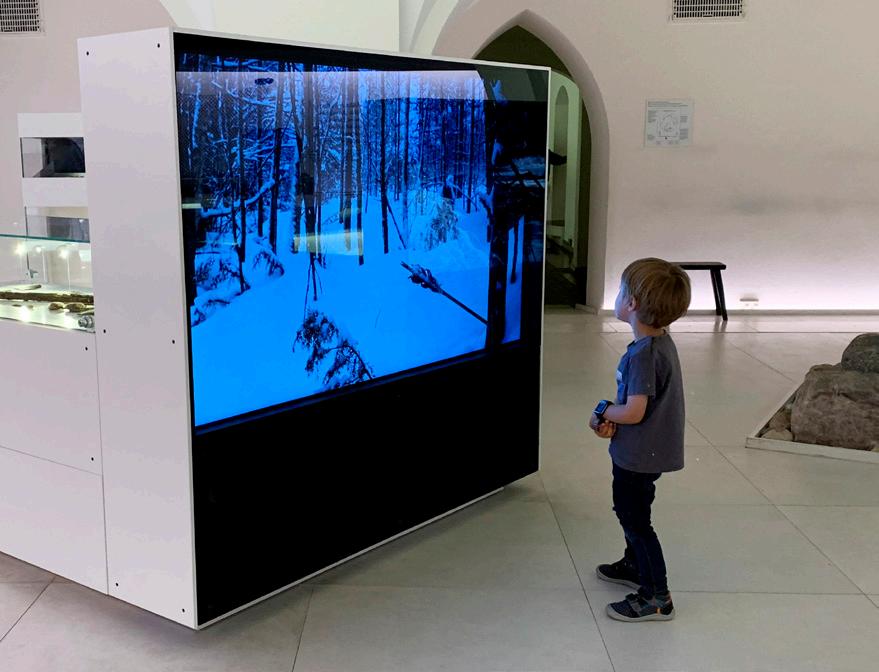
When researching the chapter on Finland’s history, I went to the National Museum of Finland in Helsinki, to get a better understanding of the topic. The walk through the museum chambers allowed us to step through thousands of years of Finnish history. Our son, Alexander, was just as keen to explore it himself too. The National Museum of Finland closed its doors in October 2023. We saw the exhibition just two months prior to its closure. It will reopen to the public in 2027, after major renovations and expansions have been made.
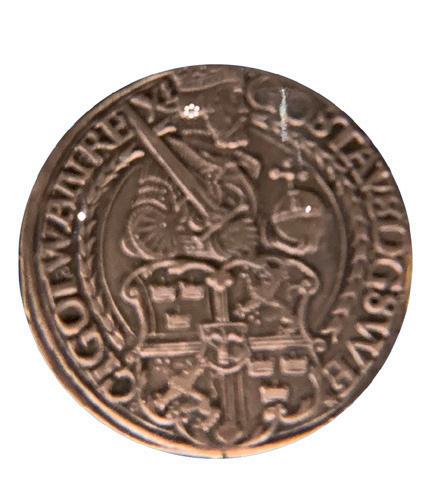
Coin showing Gustav Vasa, who founded Helsinki and reigned from 1523-1560.
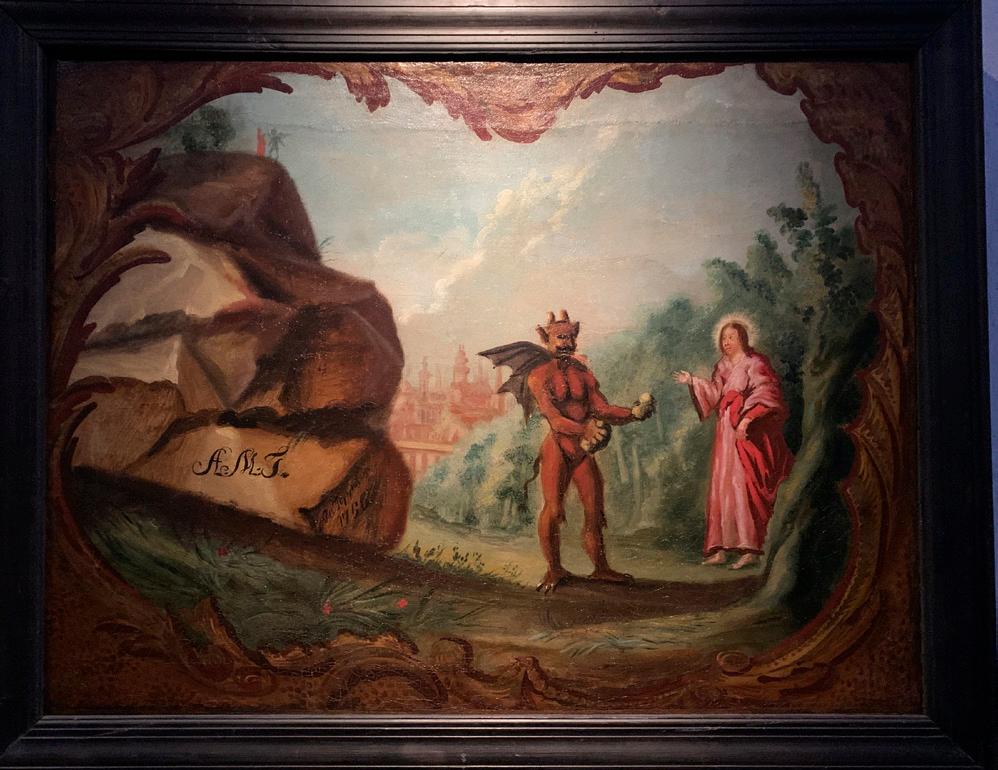
Painting in the National Museum of Helsinki. The devil can have many meanings. In the Age of Enlightenment, the devil often symbolized ignorance and superstition that Enlightenment thinkers sought to challenge. With the push toward scientific discoveries, and the rejection of religious and metaphysical explanations for natural phenomena, the devil was sometimes used as a metaphor by Enlightenment thinkers for the forces of irrationality and the obstacles to human progress.
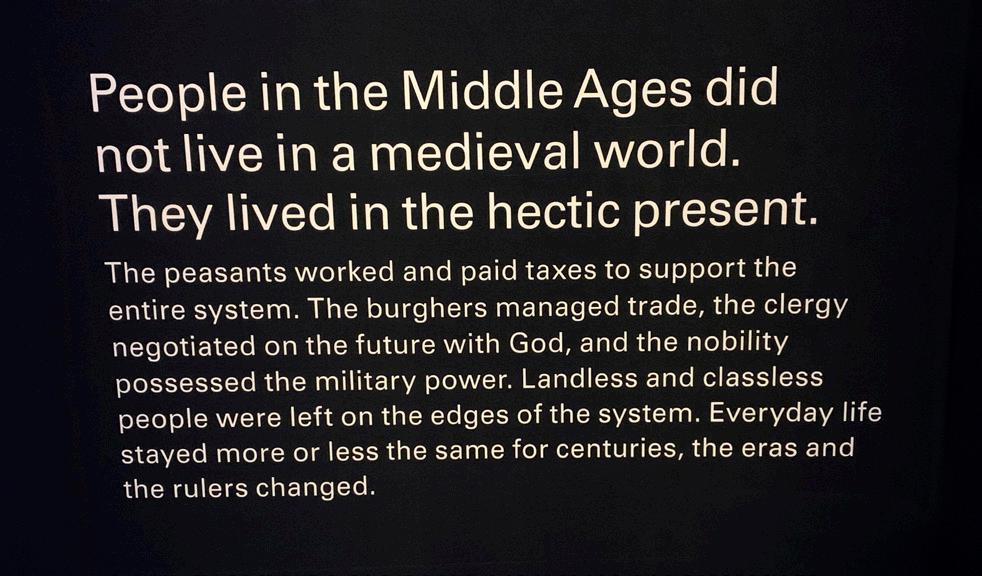
Sign found in the National Museum of Finland in Helsinki – a reminder that each period was once the present and that life comes with challenges – then, now and in future.
Photographs by Angelika Krieger
1695 – 1697
A great famine spread. This period also known as “The Years of Many Deaths“ resulted in 25% - 33% of Finns losing their lives.[25]
1700 – 1721
The Great Northern War erupted between Sweden and Russia over Baltics 1721
Finland suffered demographic collapse due to the Great Northern War, the Great Famine and the Great Plague Outbreak (1710-1711)[26]. The population which was estimated at 400,000 - 430,000 at its peak, is now at 250,000.
Russia was declared the winner in the Treaty of Nystand and now became an Empire.
The Great Wrath which followed the Great Northern War left deep, traumatic scars on Finland, regarding its relations to Russia. Many Finns were abducted and enslaved, e.g. to build St. Petersburg or to serve in the Russian army. Some historic resources cite almost a whole generation of young men was lost.
The Greath Wrath fueled a persistent fear of Russian expansionism, which impacted Finnish politics for centuries, e.g. to invest in a strong national defense.
1742
A lesser-known chapter of history: Attempts were made for a Kingdom of Finland.
Mid 18th Century relatively good time & more peaceful 1743
Treaty of Åbo (Turku) was signed conceding more Finnish territory to Russia, after the brief 1741-1743 Russo-Swedish war.
1788 - 1790
Gustav III of Sweden started a new war against Russia. Finnish Officers aimed to create an independent state with Russian support.
Late 18th century
Phase of development and growth in Finland with new inventions (e.g. 1st hot air balloon, etc)
1775
Gustav III declared Kuopio to be a city.
1792
Assassination of Gustav III
Under Russian rule, the governing laws inherited by Sweden were gradually abolished.
Landownership was taken from Finnish peasants, for the benefit of Russian noblemen.
1808-1809
Finnish War between Sweden and Russia as part of the Napoleonic Wars and Coup in Sweden (in 1809) brought an end to the absolute monarchy.
Finland ceded from Sweden to Russia after the Finnish War, becoming an autonomous Grand Duchy within the Russian Empire. The Grand Duchy existed until 1917.
Russia assigned Karelia (Old Finland) to the Grand Duchy
Under Russian rule: the Finnish peasantry remained free (in contrast to the Russian serfs), as the old Swedish law remains effective
Finns remained free of obligations connected to the empire, such as the duty to serve in tsarist armies, and they enjoyed certain rights that citizens from other parts of the empire did not have.
Phase of growth with the early industrialization as well as investment in infrastructure (ports, railroads and telegraph lines).
Finnish national awakening, and promotion of Finnish language. First publication of the Kalevala in 1835.
Great Hunger Years (known as Suuret nälkävuodet). Due to adverse weather events and agricultural challenges, approx 8-10% of the Finnish population died. A series of crop failures caused by exceptionally cold and rainy summers in 1866 and 1867, followed by a very hard winter left many lakes and rivers frozen as late as June. In North Savo, Lake Kallavesi remained frozen until June 17th, 1867.[27]
Finnish became an equal official language to Swedish in Finland
(Snellman who had a house in Kuopio was the leading philosopher behind establishing the Finnish language in schools see chapter 4.5)
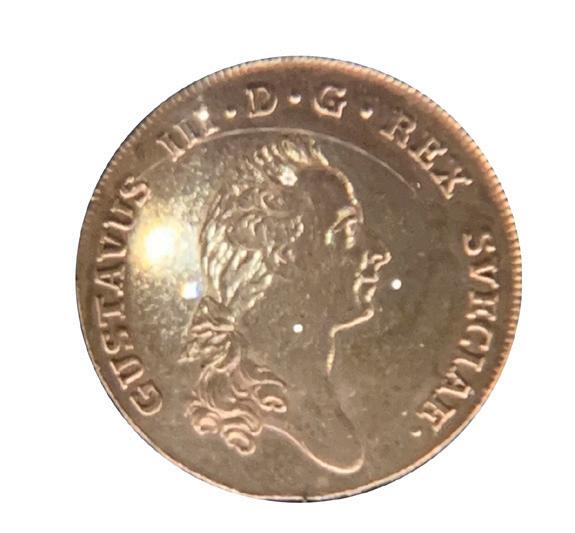
Coin showing Gustav III who declared Kuopio and Tampere to be cities. He also implemented provinces within Finland. Photograph by Angelika Krieger
1899 – 1917
Russification of Finland:
In the last 2 decades of the Grand Duchy, Russian czars limited the special rights of Finland over time by
(1.) establishing imperial government rights to rule Finland without consent of local legislative bodies
(2.) making Russian the official language in administration
(3.) integrating the Finnish army in the imperial army
As the result of a Finnish General Strike and the Russian Revolution a new Parliament of Finland was formed. Universal suffrage was given to all Finns. Women in Finland could vote as the first in Europe.
6 December 1917
Finnish Parliament voted for the independence of Finland inspired by the October Revolution in Russia.
The Soviet government, Germany and Scandinavian countries signed to approve.
1918
Finnish Civil War between nationalists (Whites) and Socialist-Communist (Reds). The Whites rose to power, who were supported by Germany, creating subsequent political shifts in Finland.
1919
Finland became a Republic, with Kaarlo Juho Ståhlberg elected as its first President
1920’s
Alcohol prohibition. Agricultural Reform in Finland broke up large estates from Swedish noblemen.
Relations with Russia hardened
WWII
October 1939
As WWII broke out, Russia gave an ultimatum to Finland to establish Russian military bases on its soil. It had previously done the same to other Baltic countries. Finland declined.
November 1939
Russia invaded Finland, starting the Winter War
1940
Finland successfully defended its independence but had to sign over 9% of its territory to the Soviet Union in the Moscow Peace Treaty.
Weakened by the Winter war Finland made weapon deals with Germany during WWII and occupied East Karelia from 1941-44. Finland fought against Germany in the Lapland Wars from 1944-45.
The leaders of the Allied Forces concluded Finland to be fighting its own war against Russia, and that it was not hostile towards Western nations, as documented in the Tehran Conference 1943. Also, Finland had not been a formal Axis power.
Finland aimed to maintain neutrality in the Cold War that followed between East and West.
In 1952 Finland entered into a passport union with its Nordic peers that allowed free work and travel across borders.
From then on, Finland has joined the EU (1995), the Eurozone (1999), Schengen (2001) and NATO (2023).
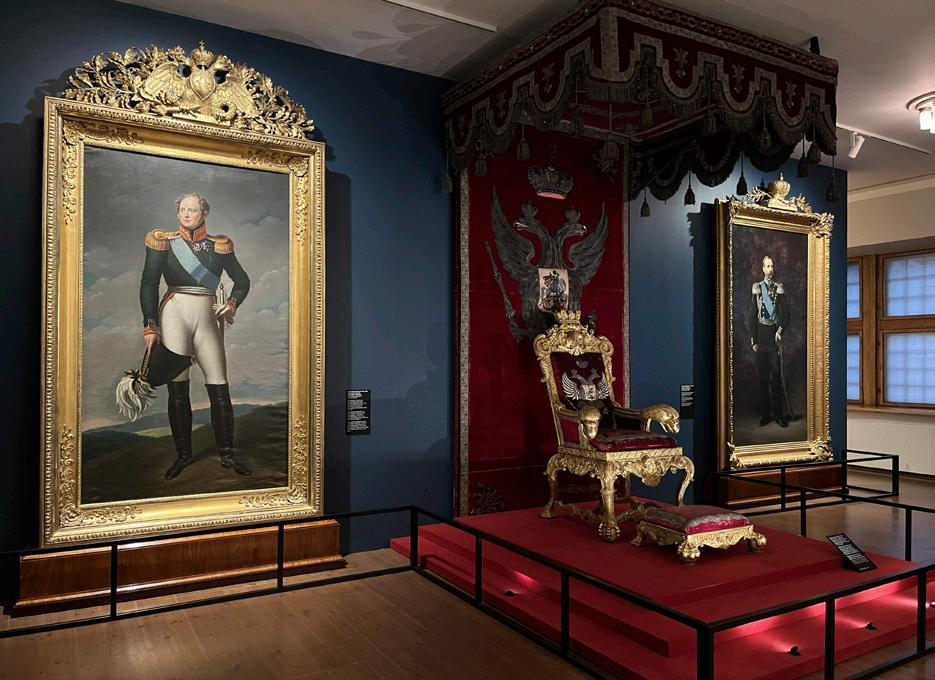
Dedicated Space is given to Finland’s History with Russia in the National Museum in Helsinki
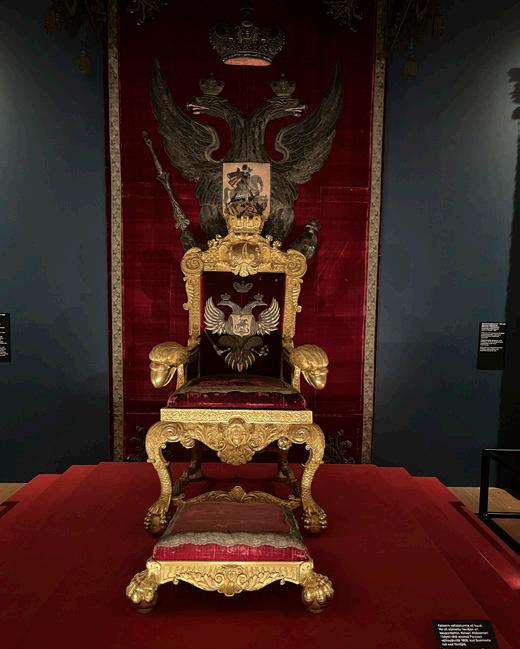
There were six thrones of the Russian Emperor, which were placed in different cities across Russia. Emperor Alexander I (pictured on the left) used this seat during the Diet of Porvoo in 1809 when Finland became part of Russia.
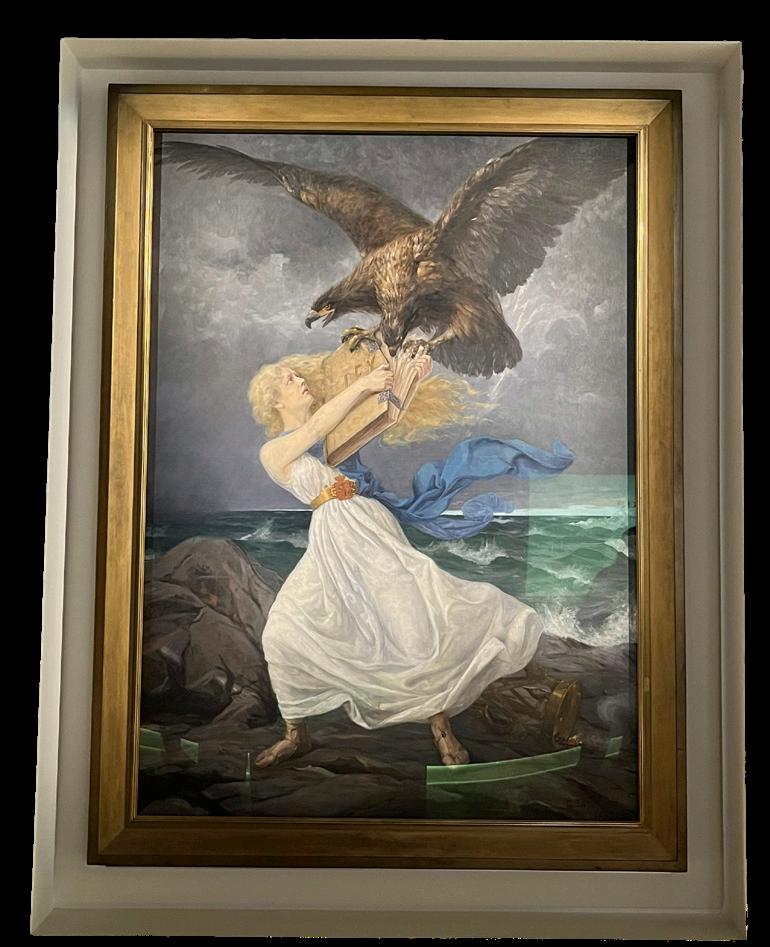
The Attack (‘Hyökkäys’) by painter Edvard
‘Eetu’ Isto is one of the best-known Finnish paintings. It depicts the two-headed eagle of Russia harassing the Maiden of Finland, trying to snatch the lawbook from her hands. The painting was completed in 1899. That same year, Emperor Nicholas II issued the decree known as the ‘February Manifesto’.
Photographs by Angelika Krieger
#1 The Nordic Model
Finland, Norway, Denmark, Sweden and Iceland are commonly known as the Nordic countries. In addition to their geographical location, these nations share a common concept of economic and social policies as well as cultural practices also known as the ‘Nordic Model’. Some of the characteristics include:
• A state that takes care of the social needs of its inhabitants, including an elaborate social safety net
• Public services such as free educa tion and free universal healthcare.
• Significant public spending and so cial investments for the overall ben efit of the population.
• Lowest levels of corruption.
Finland, Norway, Denmark and Sweden were ranked among the TOP 10 of the least corrupt countries out of 180 nations evaluated in the 2024 Corruptions Perception Index.[28]
• High focus on protecting workers and high density of trade unions (e.g., 67.0% in Denmark, 65.2% in Sweden, 58.8% in Finland, and 50.4% in Norway. In comparison, trade union density was 16.3% in Germany.[29]
• Highly democratic as documented in the annual Freedom in the World report with a score of 100 out of 100.[30] Plus, proportional representation in the electoral systems.
• All Nordics countries rank among the Top 10 in the World Happiness Report.
Finland even ranked number 1 for eight consecutive years in a row (as per the 2025 World Happiness.[31]
Some of these concepts can also be observed at the local level. For example, in Kuopio the city administration is making an active attempt at providing the best health, wellness and fitness offerings through its initiative ‘Happy & Healthy Kuopio 2030’. World class cross-country skiing tracks, Finland’s second largest swimming hall and an elaborate, award-winning e-biking system are some examples of what you will find in Kuopio (learn more in chapter 3.1)
Fins value honesty. This is visible in many ways. One of the unique features of trusting in people’s honesty are Finland’s open prison systems, available to approx. one-third of prisoners. These inmates do not spend their days being locked up. Rather inmates are allowed to head into the local town, visit their family & friends, and can even hold jobs in the community. Reoffending rates have dropped by 20% overall, as open prisons promote a more fluid integration back into society. The downsides of open prisons are obvious: an escape is seamlessly easy. A funny statement I came across illustrates this:
If Finland remade the film ”Escape from Alcatraz,” it would be a ten-second YouTube clip of person walking away to the local bus station.[32]
Indeed, about one tenth of prisoners try to escape. But luckily, most get caught, and receive extra time on their sentence,
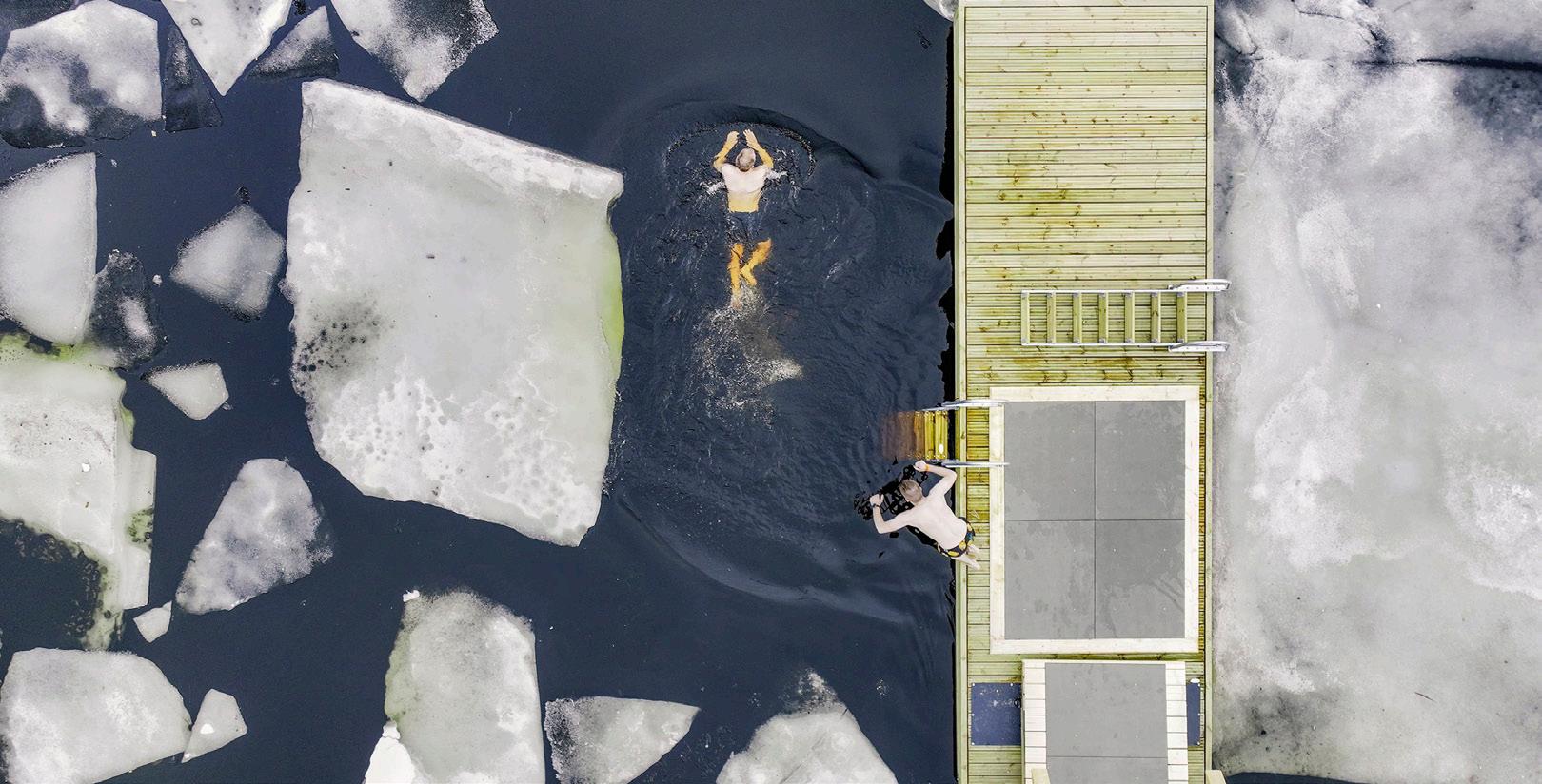
making it unattractive to aim for an escape in the first place.
Reader’s Digest published an article in 2018 (2) after its reporters had ‘lost’ 192 wallets across 16 cities around the globe. In each city 12 wallets were ‘dropped’ for this social experiment. Helsinki rated best in terms of honesty - 11 out of 12 wallets were returned. Hopefully, you will never lose anything. But if you do, the chances for retrieval in Finland could not be higher.[33]
Paired with honesty, Finns also tend to be very direct. Want to know how that brand new jacket fits you? You may not get the diplomatic answer, you can typically expect.
Fins tend to follow rules very diligently. This is visible in all aspects of life. An everyday situation is e.g., pedestrians not crossing a red traffic light even if no car is around.
Finland is very accommodating towards children. As a mom of a young child, I appreciate the higher density of playgrounds vs any other country I have ever been to. In restaurants, it is not uncommon to have a whole children’s corner, such as a small house, a wooden construct or a dedicated space for children to play in, often equipped with all sorts of toys, books and drawing materials. (e.g., in Kuopio: Puijo Lodge, Frans & Sophie, Sokos hotel, etc.) Now, when we travel outside of Finland, we are missing this.
Overall, Finnish culture emphasizes nature, equality, simplicity, and honesty, blending Nordic traditions with unique elements like saunas and a deep connection to the outdoors, as visible in Everyman’s Right for foraging (or in Finnish: Jokamiehenoikeus). This grants everyone the right to access nature - regardless of land ownership - for activities such as berry picking in the forests, swimming in the lakes, camping in the wilderness, etc. as long as it’s done respectfully.[37] Finnish culture is also characterized by reserved communication (silence is valued), and a strong sense of personal space, often appearing modest and direct, with deep respect for honesty and personal responsibility.
Moreover, younger children even eat for free in some restaurants.
Personally, I would like to see cities around the globe make children a high priority when planning their infrastructure, keeping the Finnish model in mind.
Nordic countries (incl. Norway, Sweden, Finland and Denmark) have a reputation of having a long-standing history with complex challenges around alcohol. But is this image true? In today’s world, Nordic countries have mastered their alcohol levels to be among the lowest in Europe. In fact, Finland’s alcohol consumption is 8.23 pure litres of alcohol per person per year, making it number 41 in the worldwide ranking. In comparison, Austria (11.9 l), France (11.4 l), Germany (10.6 l), the UK (9.8 l) and the US (8.9 l) all rank higher.[34] The government has been aiming to curb back on alcohol consumption for decades with a series of measures. For example, in Finland, alcohol can only be purchased between 9.00 AM and 9.00 PM. Additionally, state run liquor stores close at 6.00 PM on weekends. So, if you are heading to a party and need a last-minute gift for the host, plan ahead.
In addition to restricting trading hours for alcohol, many Nordic countries (incl. Finland) also have high excise duty on alcoholic beverages. For example, a wine with 8-18% alcohol content will have an excise duty of 4,56€ per litre in Finland. This is on top of VAT of 25,5%.[35]
Personally, on one of my first trips to Finland, I made an interesting observation. When I was getting into a taxi once, the driver performed an alcohol self-test,
and waited for the result, which he documented, before getting behind the wheel. A standard protocol for safety reasons, I was told. This so called ‘alcolock’ is a breathalyzer device that will prevent the vehicle from starting if the alcohol level in air exhaled by the driver exceeds the permitted level. The device requires the driver to repeat the test at random intervals while driving.
Good to know: Finland’s drink-driving limit is a blood alcohol content (BAC) of 0.5 per mille. The safe limit for driving is zero.
Fins are sports lovers. Finland holds 305 medals in the Olympic summer games across all time, making it the number 1 nation together with Hungary in terms of medals per capita. Overall, there is one medal per 17,845 people. In terms of medals for Olympic winter games, Finland ranks number 3 in relative size of its population.[36]
Finns are very inclusive when it comes to sports. When counting overall memberships, football is the most common sport played as a hobby, by 400,000 players. Floorball, volleyball, and ice hockey are very popular too. In Finland, all wins are being celebrated, whether they are in major sports or niche categories. So, while the country’s favourite leisure activities include traditional disciplines such as running/ walking, cycling, gym and home workouts, as well as swimming and Nordic walking to stay fit, Finland has also invented a variety of unique sports like swamp soccer, wife carrying, or boot throwing. Learn more about this on the next page ‘Only in Finland’.
There are some traditions you will find only in Finland. Whether funny, entertaining, unique, quirky or unusual, let’s explore a few: swamp soccer, wife carrying, or boot throwing.[38]
A tradition you will find only in Finland is the annual celebration of National Sleepy Head Day. Every year on July 27th, the last person caught sleeping at home is woken up in a rather peculiar way. They are lifted from their bed and thrown into a nearby lake or into the sea. If their family and friends are more polite, they will just pour water over them instead. All this is done in the name of washing the evil of laziness away. The last person to wake on this day is seen as having an unproductive year ahead of them.
National Sleepy Head Day honours the Seven Sleepers of Ephesus, which is a Christian myth about seven people who escaped impeding persecution under King Decius in 250 AD. They fled to the outskirts of the city of Ephesus, where they hid inside a cave. When King Decius heard of this, he ordered the cave to be sealed, locking up the men for two centuries. When the cave was re-opened in 450 AD they were still asleep. This led the Finnish people to celebrate National Sleepy Head Day and to tease each other they would sleep for 200 years if they did not wake up on time.
All of Finland celebrates this day, but it is especially a big happening in Naantali. In this city a celebrity is thrown off the docks each year. The name is only announced at the last moment, so it is highly recommended to wake up before 7am on July 27th. Well known politicians, artists, and every mayor of the city have all taken the plunge.
For decades, top Finnish cross-country skiers have been practicing their basic level of fitness at the swamp during the summer. This is where the idea of combining the wetlands and the world’s most popular sport, football, came from in 1998 in Hyrynsalmi. The rest is history: Swamp Soccer was born.
World Championships in Swamp Soccer are held annually in July. The sport has also spread across the world, with football matches in the mud being carried out in Iceland, Germany, Scotland, Russia and India. Perhaps an idea for the next team event?
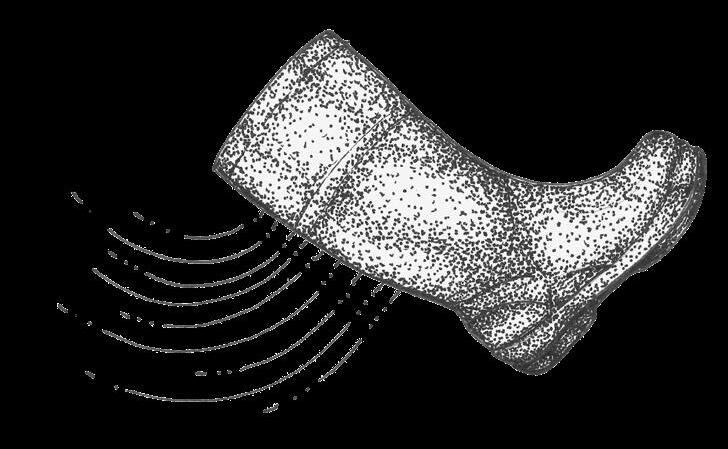
This sport revolves around throwing a boot as far as you can. The first championship was held in Finland in 1992. Throwing a boot as a sport started as early as the beginning of the 20th century in Finland. Different variations of the sport have also originated across the world, e.g., welly wanging in the UK dating back to the 1970’s, which even the British Royals have participated in.
Drawing by Iina Huttunen
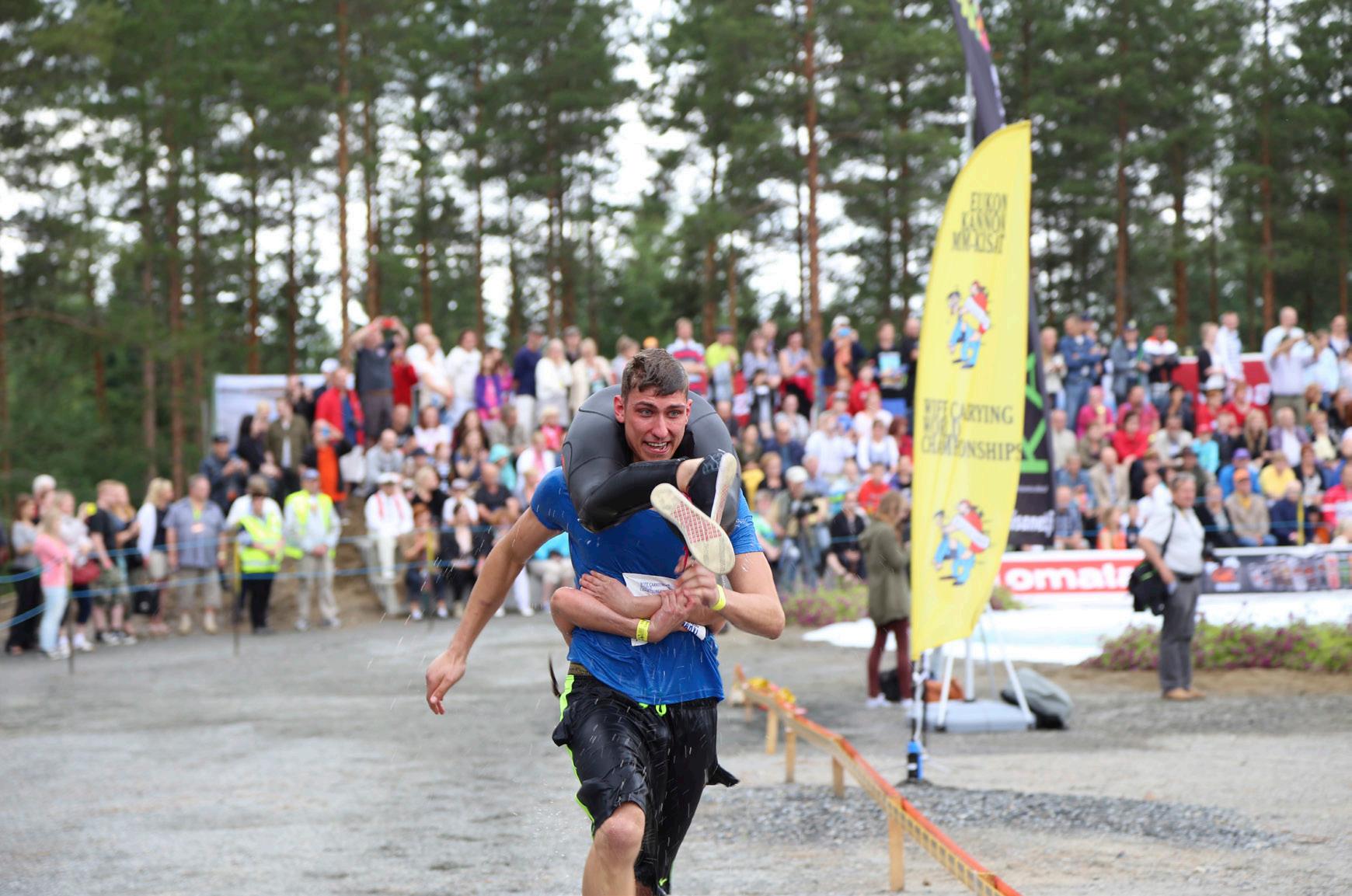
Finland hosts the annual wife carrying competition. Men need to carry their wives through an obstacle course, for a chance to win their partner’s weight in beer. The 2-day festival is held annually in the small town of Sonkajärvi, about 1 hour 20 minutes north of Kuopio. Although the sport is often considered a joke, contestants take it very seriously like any other sport. Wife carrying contests are enjoying increasing popularity and have taken place in Australia, the United States, Hong Kong, India, Germany, the UK, as well as nearby Sweden, Estonia and Latvia. The sport even has a category in the Guinness Book of World Records.
Air Guitar World Championships (AGWC) is an annual event taking place in Oulu, Finland. AGWC was arranged for the first time in 1996. Playing air guitar is based on mimicking guitar playing. Music genres may vary, but the most common ones are heavy metal and rock. The judges represent professionals of performing arts and culture. The winner is awarded a custom-made guitar. National championships are now held in more than 10 countries (incl. USA, Iceland, UK, Japan, Canada, France, Germany, Thailand, Australia, Belgium, Poland, Chile and Taiwan). The AGWC motto is ”Make Air Not War”. The purpose of the contest is to promote world peace. After all, if you are holding an air guitar, you cannot be holding a weapon at the same time.
When travelling to Finland for the first time, I was very pleasantly surprised by the excellent food. The best Finnish cuisine uses locally sourced ingredients which makes for high quality, healthy food. The restaurant on top of Puijo Tower in Kuopio for example even informs its clientele that all ingredients used in their kitchen have been supplied from an area no further than the eye can see from its viewing platform. The Finnish cuisine is a hidden gem; it is not well known and not much talked about outside of Finland, but a real delight once you have come to enjoy its delicacies.
The fact that Kuopio was awarded the ‘European Region of Gastronomy for the Years 2020-21’ is further testimony to its celebration of good food. Personally, being German, I have a love for medium to dark bread, best mixed with lots of seeds. If you like the same, you will be in for a real treat in Finland, with its freshly baked traditional breads. Not surprisingly, the rye bread is Finland’s national food.
A personal favourite for breakfast of my husband are Karelian pies, also known as karjalanpiirakka.
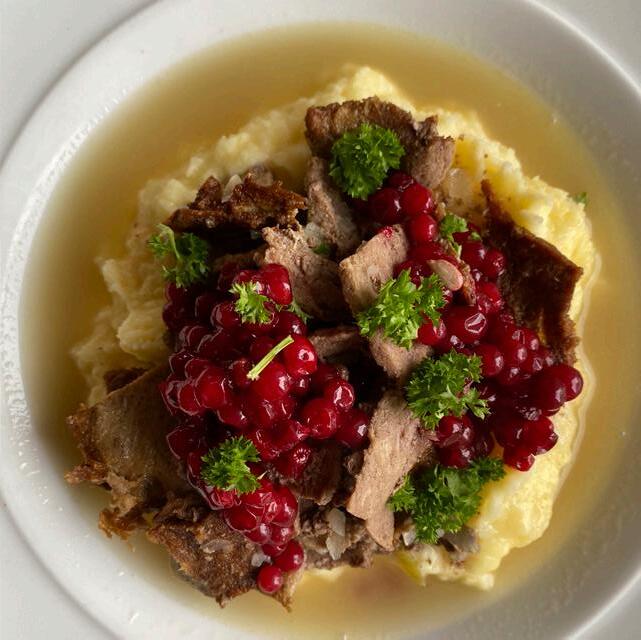
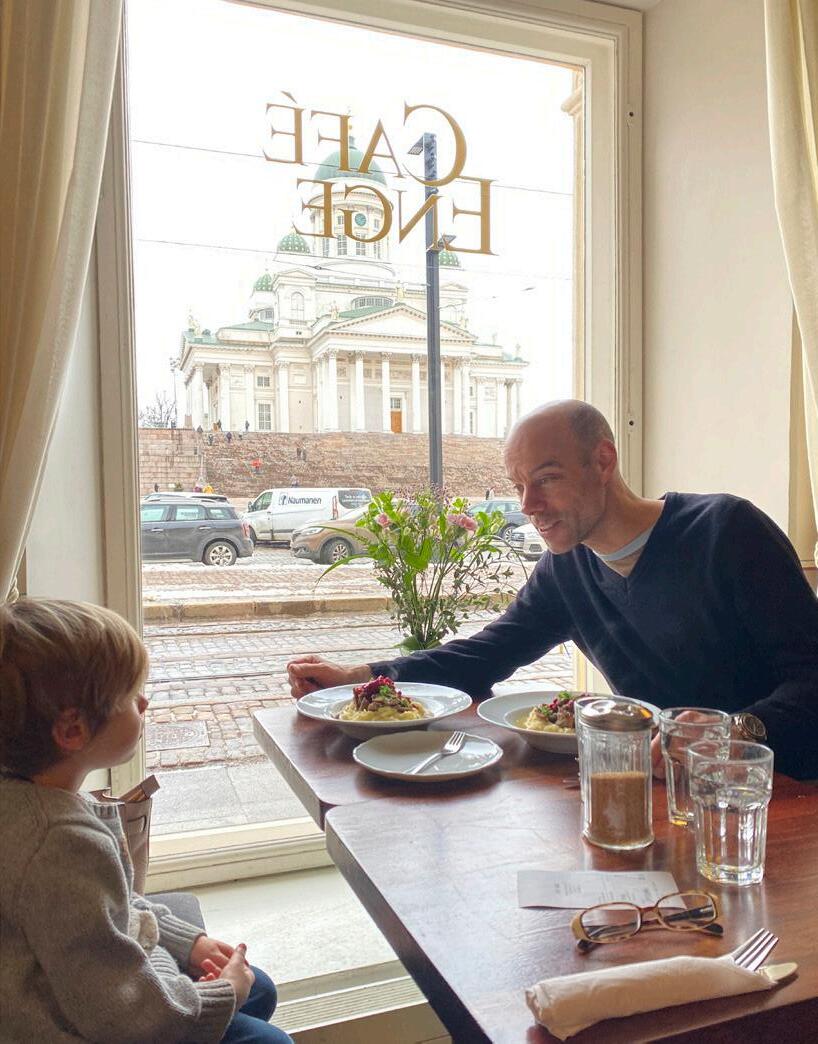
Photographs: Our family enjoying reindeer ragout with cranberries at Café Engels in Helsinki, by Angelika Kireger
Dating back to 1600 – 1700 these pastries are salty, not sweet. Made of rye flour and in some regions of a mix of wheat and rye flour, their origins go back to Eastern Finland. Nowadays they are popular across all the country and have also reached Sweden.
Reindeer is excellent in Finland too, and served in different variations, for example as ragout (pictured). In Kuopio try Gallá restaurant (chapter 4.1) for world class reindeer dishes.
A tip I got from a local resident is to visit ‘Sampo Muikkuravintola’ – a local restaurant offering Kuopio food culture at its best. A top item on the menu is paistetut muikut (a small fried fish).
Of course, there is much more food culture to explore. Visit SATOA or Kalaryssäys Festival in Kuopio (chapter 4.2) to get inspired, and enjoy a journey of good, healthy food.
3.1 What Makes Kuopio Special
3.2 Kuopio in Facts & Figures
3.3 Local History of Kuopio
4.3 Kuopio Historic Figures: Minna Canth and Hanna Partanen Bonus: Artisan Products
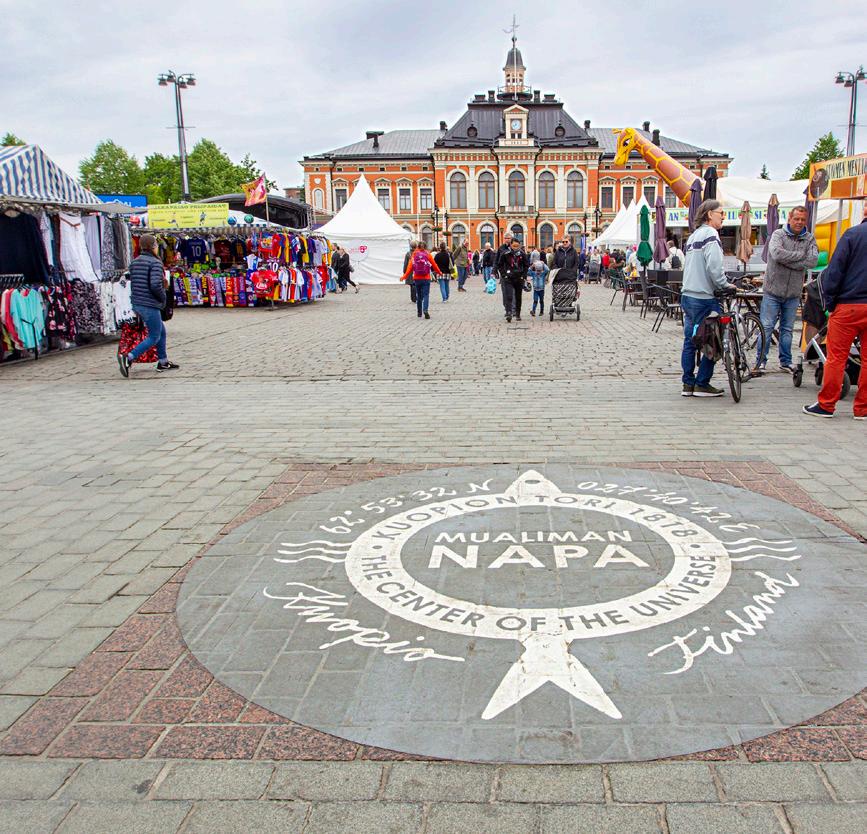
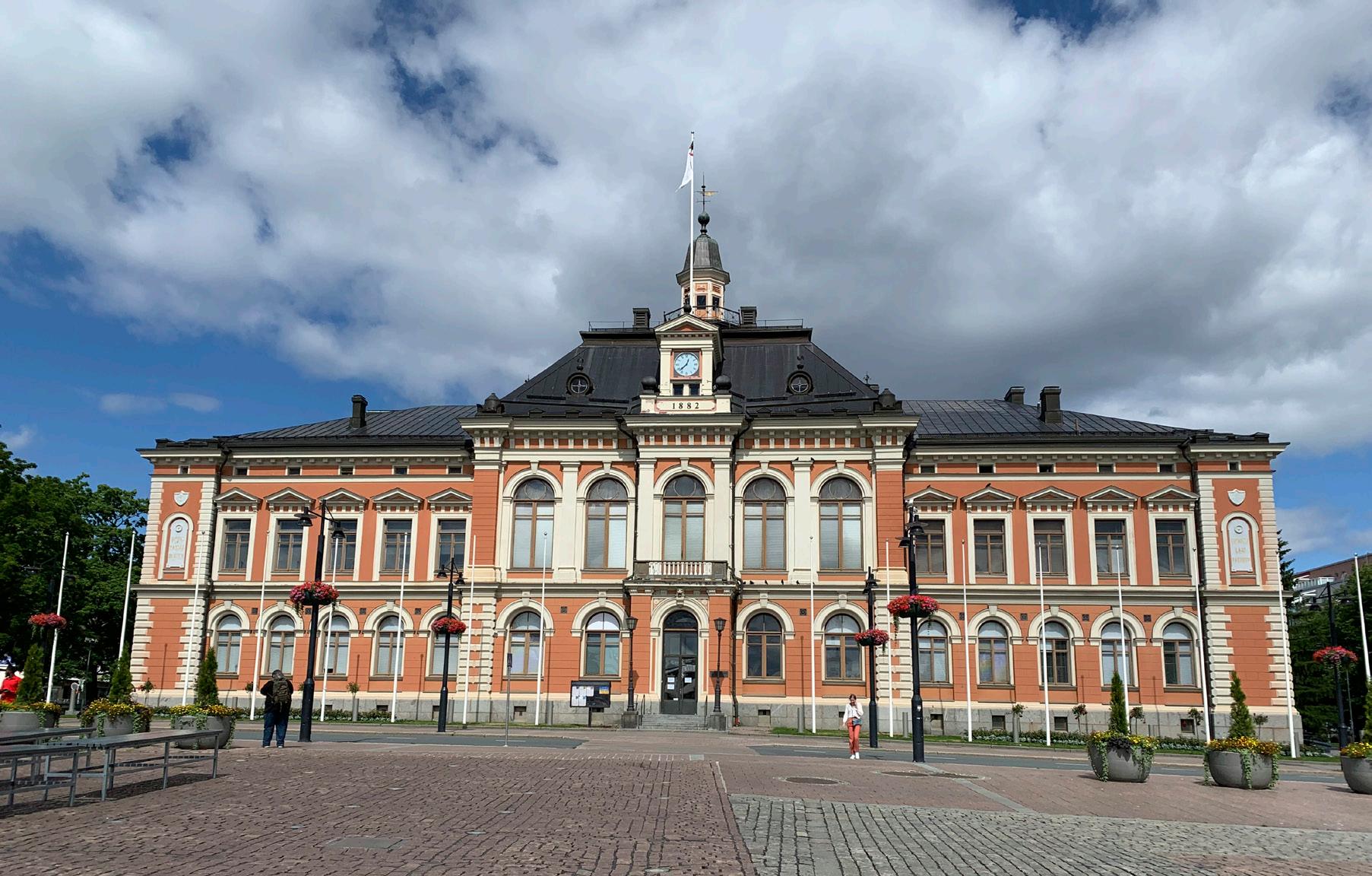
This chapter introduces the city of Kuopio. It provides an overview of key facts and figures, as well as the city’s history, and the features that make Kuopio special.
Kuopio is Finland’s second most attractive city. In T-Media’s Annual Reputation & Trust survey 2025, Finland’s largest cities were evaluated based on cost of living, safety, general comfort of life, location and economic vitality. Kuopio ranked second, after Tampere. In the category of safety, Kuopio even outranked all other cities.[39] But there is even more to Kuopio. Here a selection of interesting facts that make Kuopio special:
Kuopio is a university city and an epicentre for education. In fact, its origins in education are deeply rooted in Finnish history. Some of the country’s first schools offering education in Finnish were opened in Kuopio. The University of Eastern Finland is renowned for being the most multidisciplinary university in the nation. Its research is ranked among the best in the world in several fields. The university has four faculties: (1.) the Philosophical Faculty, (2.) the Faculty of Science, Forestry and Technology, (3.) the Faculty of Health Sciences, and (4.) the Faculty of Social Sciences and Business Studies. It offers education in more than 100 major subjects.
Kuopio is the Winter City 2023 of Finland. The national public service broadcasting company YLE held a public voting contest to determine the Winter City of the year 2023. Kuopio received almost 39% of the votes, making it the winner in the contest. Other popular winter cities in the final were Kurikka and Joensuu. Overall, 25 cities and municipalities participated in the competition.[40]
Kuopio is the Capital of the Finnish Lakeland. It is therefore not just popular for winter tourism, but an attractive destination for summer holidays as well. Kuopio and its surrounding offer a variety of water sports, hiking trails, mountain biking and other outdoor sports with its vast lake scenery and forest landscapes.
Kuopio calls itself the Capital of the Good Life.[41] But what is behind this? Kuopio has been part of the World Health Organization European Healthy Cities Network since 2005. Under the initiative called ‘Happy and Healthy Kuopio 2030’ the city’s goal is to establish worldclass facilities to support the health and wellbeing of Kuopio’s residents. Kuopio has invested a lot in new sports facilities, such as a new football hall, a new floorball hall, an artificial ice rink for speed skating and world cup level cross-country skiing tracks. The latter are named after its own Olympic gold medallist, Iivo Niskanen.
To further top it off, Kuopio won an award by the Finnish Cycling Council 2022. This recognition was based on Kuopio’s investment of 10 million Euro to make biking more attractive. Among others Kuopio has invested into an e-bike system (Vilkku-fillarit) where e-bikes can be rented throughout the city. Biking routes have also been further built out. Did you know that there are 275 km of biking routes available in the city?
Moreover, Kuopio is home to the 2nd largest indoor swimming facility in Finland, Kuntolaakso, which opened its doors in August 2020. The swimming pool was designed involving different user groups to ensure the best diving and swimming experience for all ages and skill levels.
Kuopio offers an excellent cuisine. It was awarded a prestigious title for the best regional gastronomy in Europe in 2020-21. Read more about this award and other items about Kuopio on the next pages.
Most recently, Kuopio’s ice hockey team, Kalpa, won the Finnish Championship in the 2024-25 season for the first time. Kalpa are now the reigning champions of the Liiga. And KuPS won back to back titles in 2024 & 2025, being the winner of the Finnish top football league - a great cause for celebration in the year which coincides with the city’s 250th anniversary.
• Population of 125,000 inhabitants in the City of Kuopio, or 147,000 in the Kuopio sub-region, 600.000 inhabitants when including its neighbouring municipalities and commuters who work in Kuopio
• 8th largest city in Finland
• 2nd most attractive city in Finland
• Part of Northern Savo Region
• Founded in 1653, became a city in 1775.
• Celebrating 250 years in 2025.
Kuopio has always been a city of education. Some of the first schools offering education in Finnish were established in Kuopio. Currently the most important institutions are the University of Eastern Finland, the Savonia University of Applied Sciences, Vocational College of Northern Savonia and the and the Kuopio department of the Sibelius Academy.
Kuopio is the title holder of the European Region of Gastronomy for the year 2020-21. This recognition is given every year to a region in Europe with the best food. The title is awarded by the International Institute of Gastronomy, Culture, Arts and Tourism (IGCAT).
• Kuopio is known as the cultural centre of Eastern Finland.
• Kuopio’s most important cultural venues are the Kuopio Museum, the Kuopio Art Museum, the Music Hall and the Kuopio City Theatre in the city centre.
• Cultural life is active. Notable events include ANTI – Contemporary Art Festival, Kuopio Dance Festival, Kuopio Rockcock, Kuopio Wine Festival, Kuopio Marathon and Finland Ice Marathon in winter.
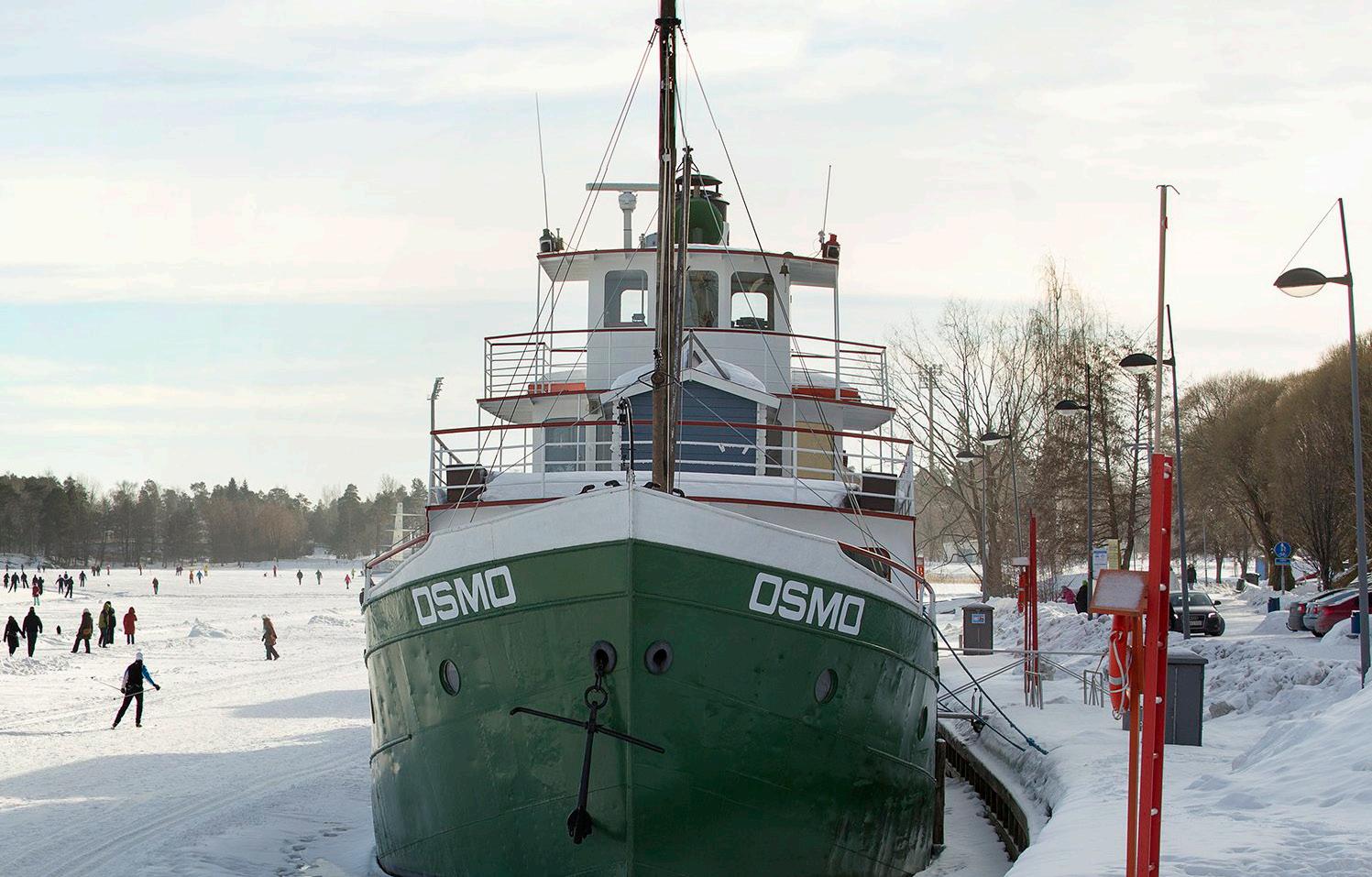
• Kuopio is a city in Eastern Finland at 62°53’33’’N 27°40’42’’E.
• Kuopio is in the subarctic climate zone, but closely bordering continental climate, due to its warm summers.
• Kuopio has a total area of 4,326 km2, of which half is forest. Surrounded by Lake Kallavesi from almost all sides, Kuopio boasts a shoreline of 4,760km. Lake Kallavesi (with an area of 472 km2) is the tenth largest lake in Finland.
• The influence from the lake makes Kuopio much warmer on summer nights than in areas away from water. In winter, maritime moderation is eliminated as the lake freezes over.
• Kuopio is the Capital of the Finnish Lakeland with overall 900 lakes in its municipality.
Original 1823 Drawing of the Coat of Arms has been approved for use in 1823 by the Kuopio Magistrate in accordance with the order of Alexander I of Russia, and depicts Kuopio Cathedral but is often mistaken for Kuopio City Hall (which was finished much later, in1886)
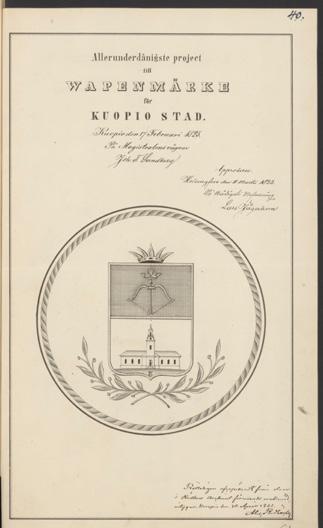
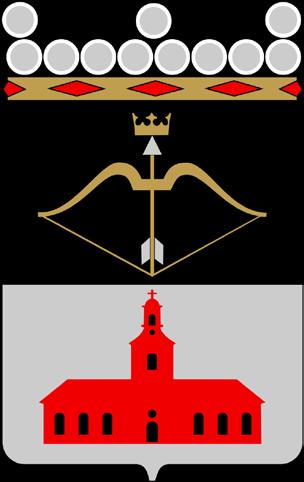
Current Design (on the right) approved by Kuopio City Council in 1957 and the Ministry of the Interior in 1958
Kuopio’s written origins go back to the 1550s, when a church and parish were founded in Kuopionniemi. About a century later, Swedish Governor Per Brahe founded the city in 1653. But it took another 122 years, until Kuopio was officially recognized as a city by King Gustav III of Sweden on 17th November 1775. The latter is decisive in the city’s anniversary celebrations. Kuopio is now celebrating its 250th anniversary in 2025.
It is not precisely known where the name Kuopio comes from. There are three explanations – two relating back to prominent persons from the Middle Ages, one explanation relating back to a horse, whose hooves ‘paw’ the ground. (The verb kuopia means ‘paw’). The most likely version, which is also supported by the Research Institute for the Languages of Finland, is that it derived from a man named Prokopij, who was a trader, settled down at Kallavesi lake and gave his name to the region.
Kuopio has deep roots into developing cultural life. In presumably 1788, the first trivial school in Kuopio was established. Additional schools were established over time. By the end of the 19th century Kuopio had a secondary upper school, an industrial school, a business school and a nursing school. In 1966 Kuopio opened up the doors to its first university.
Kuopio played a significant role for Finland’s emerging national identity and the developing Finnish culture during the 19th century. A Kuopio-based headmaster J.V. Snellman began to publish a Finnish-language newspaper Maamiehen ystävä (lit. ‘Farmer’s friend’) in 1844. Snellman is recognized as an important figure in the movement for the adoption
of Finnish as the mother tongue and he insisted that Finnish be allowed in government offices and schools. His home in Kuopio can still be visited today (see chapter 4.5). By strengthening the Finnish language, with its infrastructure of schools and a developing business life, Kuopio flourished. Authors Minna Canth, Juhani Aho, and Maria Jotuni, as well as artists Juho Rissanen and brothers von Wright or Family Järnefelt all made Kuopio their home.[43] By the end of the 19th century Kuopio had therefore become the center for Finnish cultural life.
Overall, during the period of Russian rule (1809–1917) Fennophile interests developed and emerged. Particularly important for Kuopio and the whole of Eastern Finland was the crucial improvement in transport connections: the Saimaa Canal opened up a waterway connection to the sea. The Savo railway line, completed in 1889, facilitated access to the south of Finland.
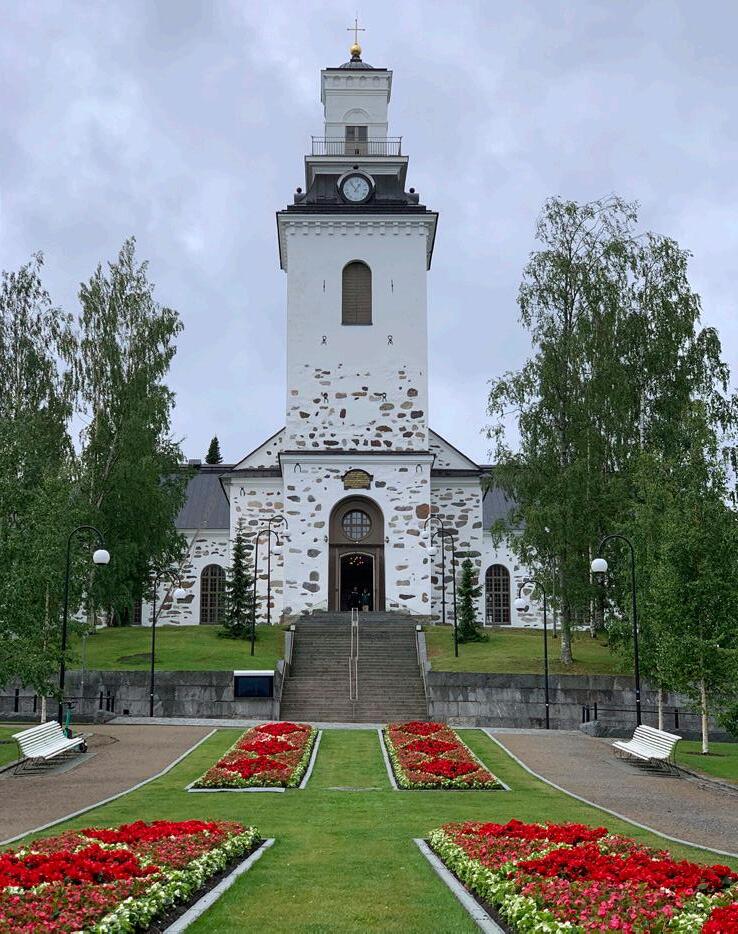
In the 1920’s motor traffic began in Kuopio. Kuopio residents had growing leisure time. A theatre, cinema, Väinölänniemi sports grounds, and Puijo ski resort (see chapter 4.3) were opened. Kuopio also elected its first mayor in 1929. During World War II, Kuopio experienced bombings, leaving many families with grief over loved ones that had been killed.
After the war, Kuopio received many evacuees and with birth rates at a peak, the city soon reached 30,000 inhabitants in 1946. The second half of the century constituted a period of rapid development. The city’s appearance changed as wooden buildings made way for more modern constructions. With mergers of several smaller towns, Kuopio reached 86,000 inhabitants by 2000. In 2005, 2011, 2013, 2015 and 2017 more mergers followed, bringing the city’s population to approx. 125,000 residents today.
Kuopio’s first marketplace was located by the Kallavesi shore, what is now known as Kuopio harbour. It then moved its location to today’s area in 1818. Kuopio’s marketplace has been nicknamed ‘Mualiman napa’, which is Finnish dialect for the Center of the Universe. In 2018,
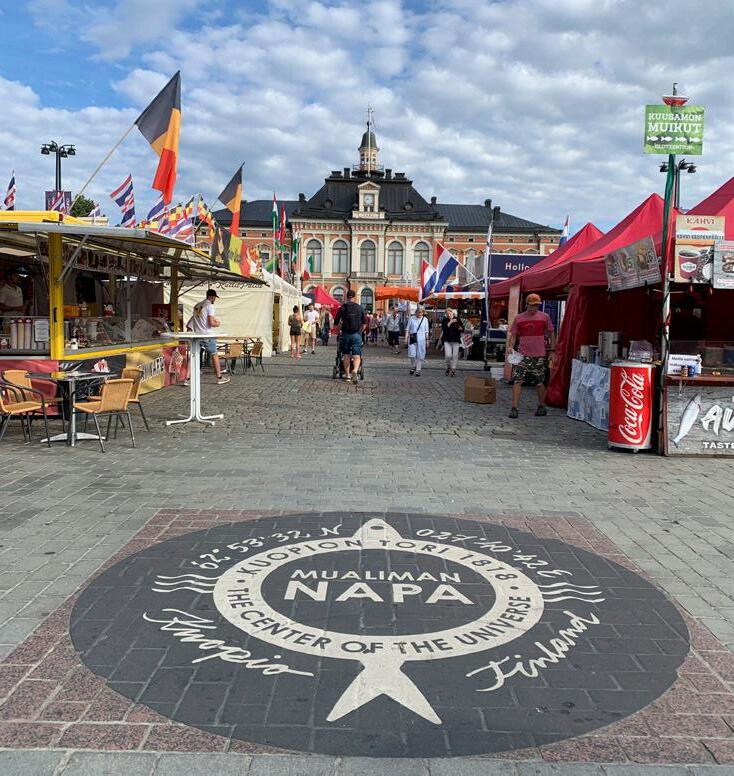
Kuopio Marketplace with its ‘Mualiman napa’ (Center of the Universe) emblem, photo by Angelika Krieger
the Market Place celebrated its 200th anniversary and Kuopio residents very much liked the temporary sign in the center of the square. The more heavy-duty sign (see image) was put in place shortly thereafter and is still there at present.
Today, you cannot just purchase fresh produce at Kuopio Market, but also enjoy warm meals, purchase freshly cut flowers, or handmade goods such as high quality-wooden chopping boards in the various stalls on the Market Square. The quaint Kauppahalli market hall (opposite of the town hall) offers pastries, fish, and cheeses. It is always worth a visit.
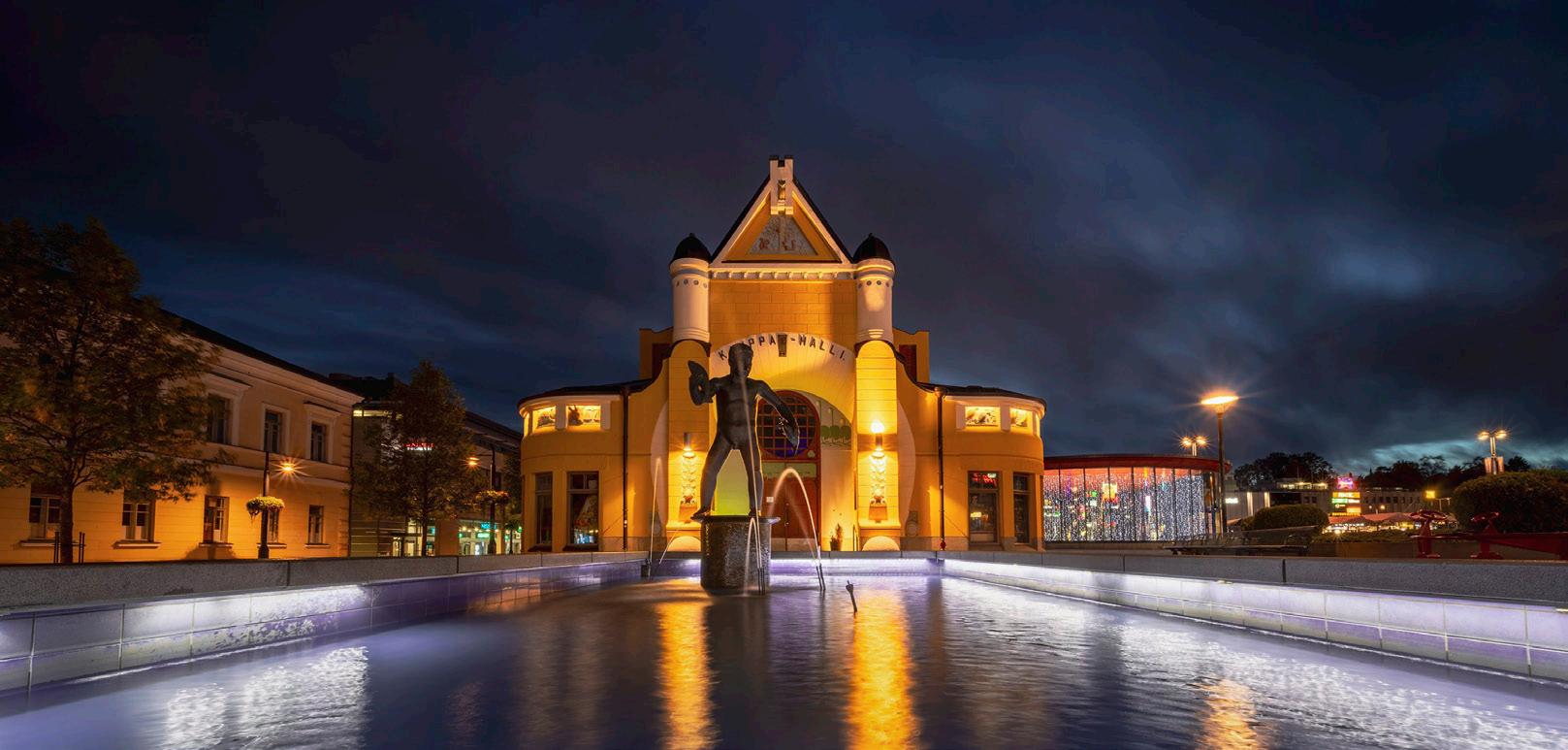
Minna Canth was a Finnish writer, journalist, businesswoman and social influencer. She is the first Finnish woman to have her own flag day, March 19th. Canth lived in Kuopio for most of her life. She promoted the status of women by working to improve girls’ educational opportunities. She was also a pioneer in Finnish-language education. Additionally, Canth’s contributions as a Finnish-language playwriter and prose writer are especially noteworthy and helped establish Finnish national identity. Minna Canth was also the first Finnish-language newspaper woman. As a liberal young Finn, Canth helped Kuopio flourish as an epicentre for education. Her contributions are recognized nationwide, and her thoughts and ideology influenced writers internationally as well.
Minna was born in 1844. She grew up in Tampere in a poor area. Her father worked in a cotton factory. Her mother was a domestic helper. The family’s situation improved over time. In 1853 the family moved to Kuopio, when her father took over a yarn shop. Canth continued her schooling in Kuopio, which had begun in Tampere. The school was dedicated to educating children of the working class.
Eventually, Minna moved to a state school for daughters of the most civilized (gentlemanly) parents, an institution which catered to students well above Minna’s social status. However, since her father’s business was going well, he could afford her education there. Canth moved away from Kuopio for the school. But even there, girls’ education opportunities were limited, unlike boys’. Girls were protected from too much information. This
was to Minna’s distaste and later formed her motivation for change.
Minna married in 1865 and had 7 children. Her husband died young, just 12 years into the marriage, leaving her in financial shambles. Her father had passed away just two years earlier. Canth went through a tough phase and decided to move her children back to Kuopio, taking over her father’s yarn shop, which had suffered since his death. Minna got the store running with success, and the family’s financial position improved. This marked the phase of a new beginning. Canth was now in a position to afford international literature. Minna Canth was a bold thinker, driving reform. She was religious but soon had a fall-out with the local church, since their views on women clashed. Many people interested in literature started gathering around Minna. Even guests from abroad arrived. She opened a salon for thought exchange open to philosophers, writers and cultur-
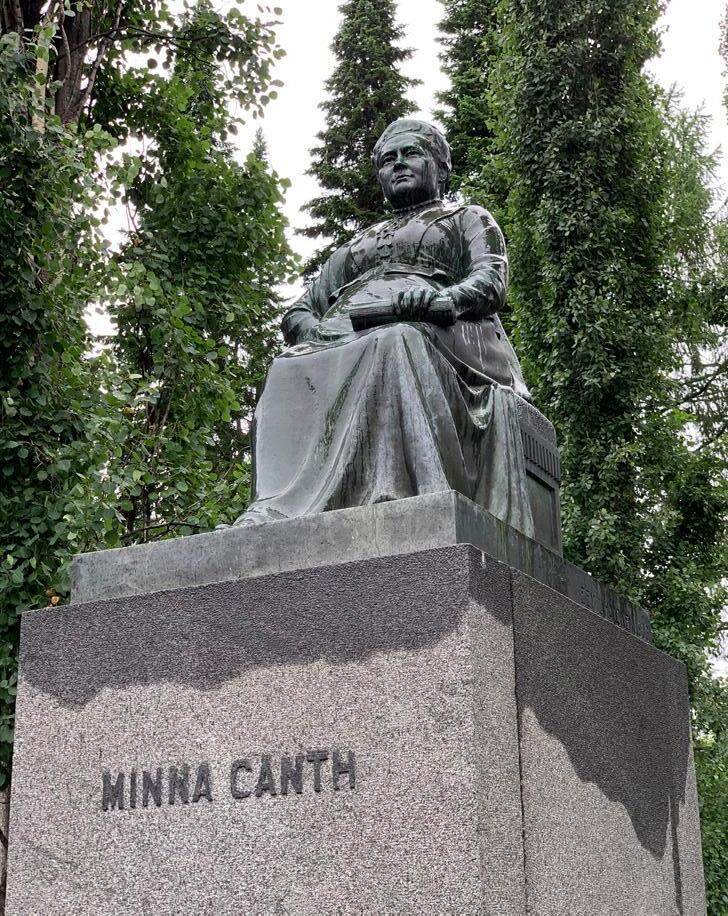
al influencers who were like-minded in their worldly views. The salon soon was met with disapproval from conservative thinkers. But Canth continued.
Canth was interviewed in Finland’s first newspaper interview and appeared on the front cover, which was a sensation. Using a photograph was a journalistic novelty at the time. Canth also became an editor herself. However, sometimes her efforts were hindered by conservatists, e.g. when a newspaper edition got confiscated. Canth was also influential in the opening of new schools in Kuopio.
Another historic female figure, you will come across as you roam the streets of Kuopio is Hanna Partanen. Hanna’s name is to be remembered for innovative female entrepreneurship.
Hanna Partanen ran a bakery in Kuopio, and she was famous for the ‘Kalakukko’ - a dish attributed to the City of Kuopio. It consists of fish and meat baked into a loaf of bread, all made from locally sourced ingredients. The rye dough held the dish warm for hours. The BBC and other international news outlets have reported on her story.
Hanna Partanen grew up in Lehtoniemi, a rural municipality in Kuopio, as the firstborn child of a large family. Her mother, Wilhelmiina Kerman, instilled a sense of entrepreneurship into Hanna at a young age. Mother and daughter both went to Kuopio market together to sell products along with her sisters. According to Hanna’s own storytelling, she was so small that she had to sit on the market table
Minna Canth published plays, newspaper articles and continued to run her salon as well as her business. In May 1897, she died unexpectedly of a heart attack at the age of 53.
Canth has been commemorated in Finland with numerous landmarks, publications, commemorative coins, stamps, paintings, exhibitions and events. In many Finnish cities, including Helsinki and Kuopio, there is a street that bears her name. The flags are raised every year on March 19th in her honour.
to be able to sell goods and hand them to customers. With her mother as a strong role model, Hanna learned how to make ‘kalakukko’ from scratch which involved making the dough, preparing the meat and the fish, and finally baking the dish for 8 hours.
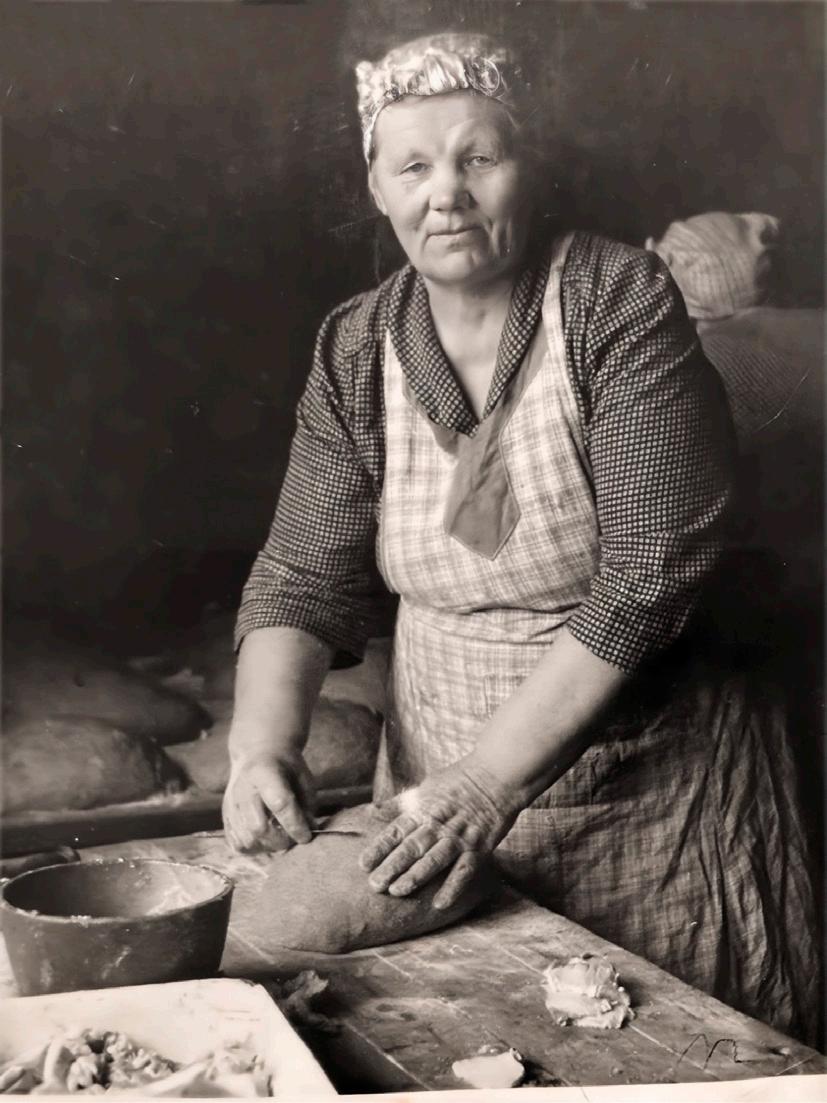
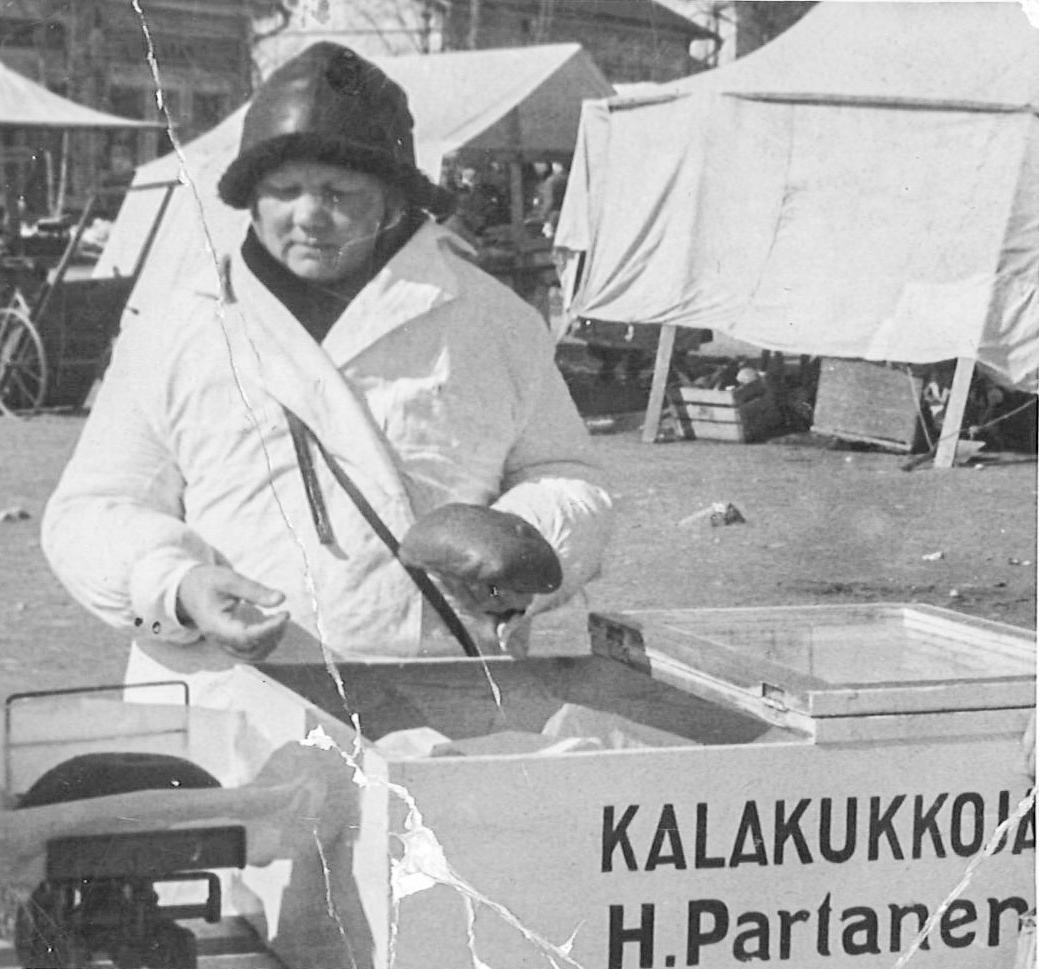
When Hanna reached adolescence, her mother encouraged her to open her own business. In the mornings Hanna had to row on a boat over the shores of lake Kallavesi to get to the Kuopio marketplace, taking her young children with her. She left her eldest son at a kindergarten in Kuopio. This portrays Hanna Partanen as a modern woman, managing both her own business as well as her growing family. Overall, she had 6 children, 4 of whom reached adulthood.
In the late 1920s Hanna Partanen and her family moved to the current bakery site. Eventually, the bakery grew in operations requiring more workers. More space was rented as well. The initial selling point shifted from the farmer’s market to her own bakery and the business flourished. Multiple generations were involved in the bakery. Hanna’s grandchildren helped in the business and after Hanna’s death it is still operated in the 4th generation today. Hanna Partanen was a generous woman, sometimes giving away food for free to those who were poor.
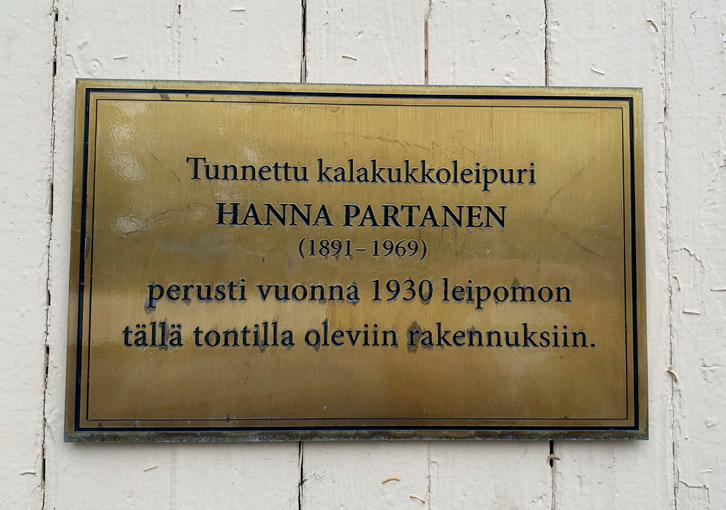
Photograph provided by Tuula Pantzar, granddaughter of Hanna Partanen
The ‘kalakukko’ gained fame across Finland and is known internationally today. The bakery which Hanna Partanen opened is still operating today on the same premises, offering a variety of baked goods.[44]
Pay her bakery a visit at:
Kasarmikatu 15, 70110 Kuopio, Tel: +358-(0)17 282 1609, email: hanna.partanen@saunalahti.fi, www.hannapartanen.com
Further reference materials:
Article in the BBC: https://www.bbc.com/travel/article/20171109-where-loaves-of-breadare-baked-with-fish
Booklet about Hanna Partanen, written by her granddaughter, Tuula Pantzar (in Finnish language) available here: https://heyzine.com/ flip-book/93bee228c8.html#page/
Are you looking for some original Finnish products for yourself? Or do you want to purchase some artisan products from Kuopio as a gift for relatives and friends? No matter whether you are looking to treat yourself or others, some high-quality hand-made products can be found at Pikku-Pietari market alley (see image). Situated in old stables, these log buildings take you back in time. There are a variety of shops with different products and also a café. This market alley of craftsmen is easily accessible and located just a few hundred metres from Kuopio market square.
Another option is Kuopio Marketplace itself which has one stall dedicated to handmade wooden products. Or you can buy local products at Puijo Tower, ranging from Kuopio honey to organic ingredients for a sauna infusion, locally sourced ‘dog beer’ or more classic souvenirs. Last but not least, underneath Kuopio Marketplace there is a whole shopping areal ‘par terre’, where one can find natural soaps, organic hair care, sauna scents and herbal bath ingredients.
If you are in a hurry and wish to make an online purchase try: www.tundranatural.com or www.luonkos.fi/en/.
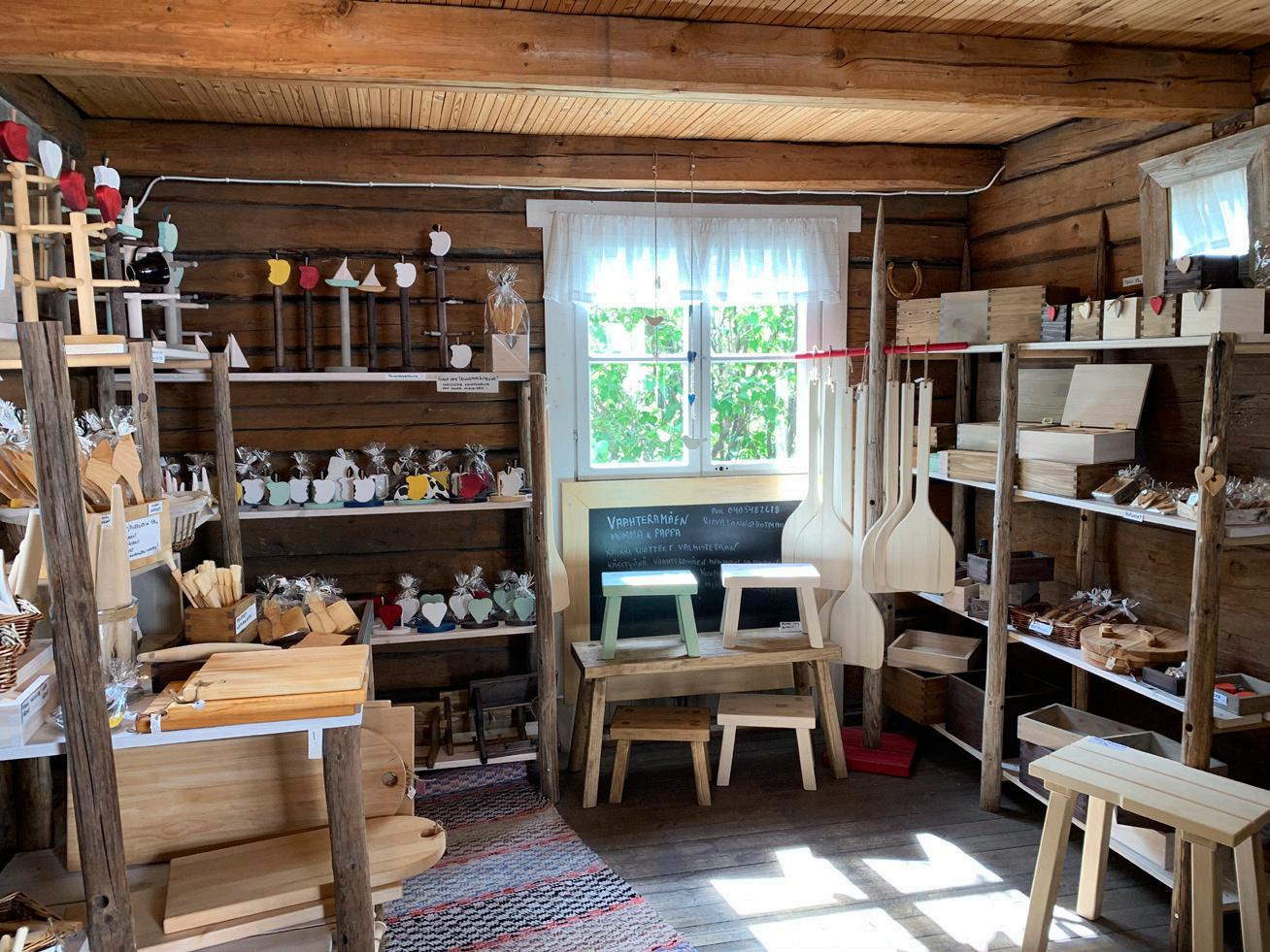
Visit: www.pikkupietarintorikuja.fi/
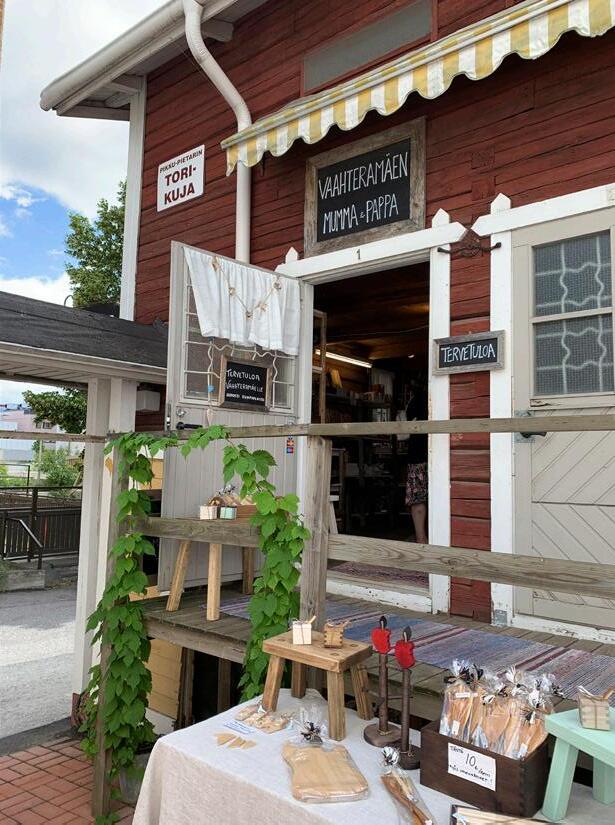
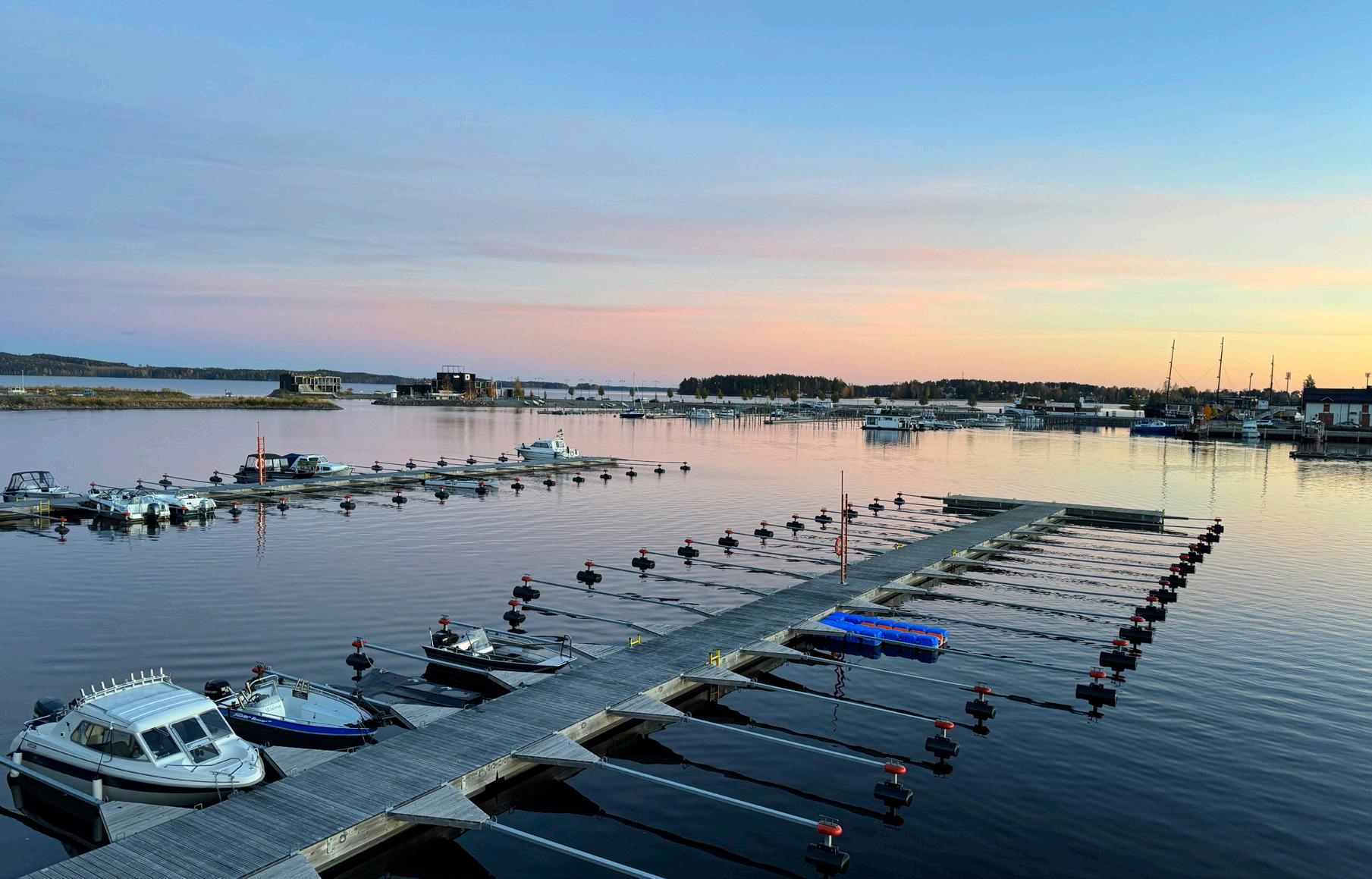
Kuopio aspires to be the Capital of Good Life. Therefore, a whole chapter is dedicated to the enjoyment of life in Kuopio and its surrounding areas. No matter whether it is summer or winter, a bad weather day or a good weather day, there is always something exciting to do. Kuopio is a vibrant city with plenty to offer to regardless of whether you are single, or exploring the city as a couple, whether you have children, or if you wish to entertain friends coming to see you.
Eating out is always an opportunity to get to know the local infrastructure, as well as the heritage. So, let’s explore a few select restaurants in Kuopio, as well as tasting venues for alcohol, which date back as far as 170 years ago.
Here are a few of my personal suggestions:
Kuzina
A very short menu with excellent food can be found at Kuzina. Run by a Greek owner and his Finnish wife, you will instantly feel warmly welcomed in this small restaurant. The passion for quality food and wines is at the heart of this restaurant. While there is no official wine list, 200 – 300 wines are available through recommendation. This restaurant is worth a visit if you love good food and high engagement with the owner.
Kuzina Wine & Daily open all days except Sundays & Mondays
Kauppakatu 13, 70100 Kuopio
+358-(0)44 973 5877
https://kuzina.fi/en/
Isä Camillo
Beautifully situated next to Snellman Park, just a few steps from the Kuopio Museo, the building of this venue already makes for an impressive entrance. In the summertime an outside deck is available. Isä Camillo offers European cuisine in line with the seasons, and the restaurant is an all-time favourite.
Isä Camillo
Kauppakatu 25-27, 70100 Kuopio
+358-(0)17 5810 450
https://isacamillo.ravintolamestarit.net/
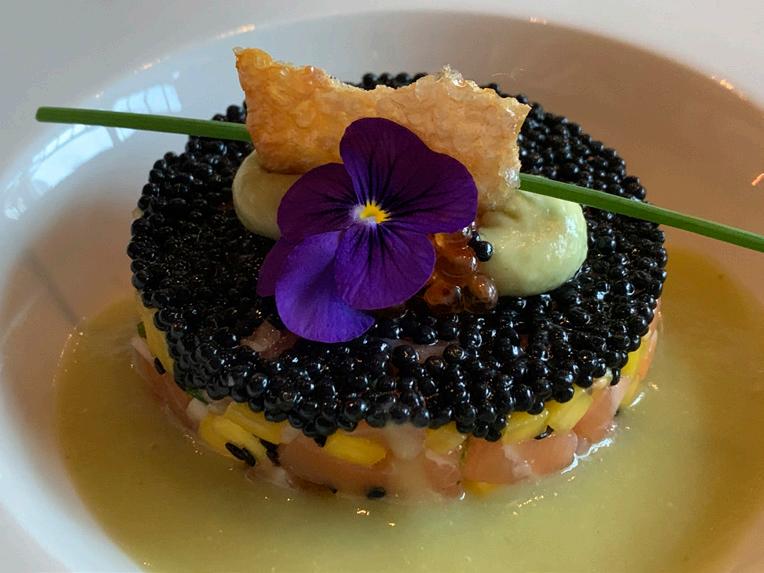
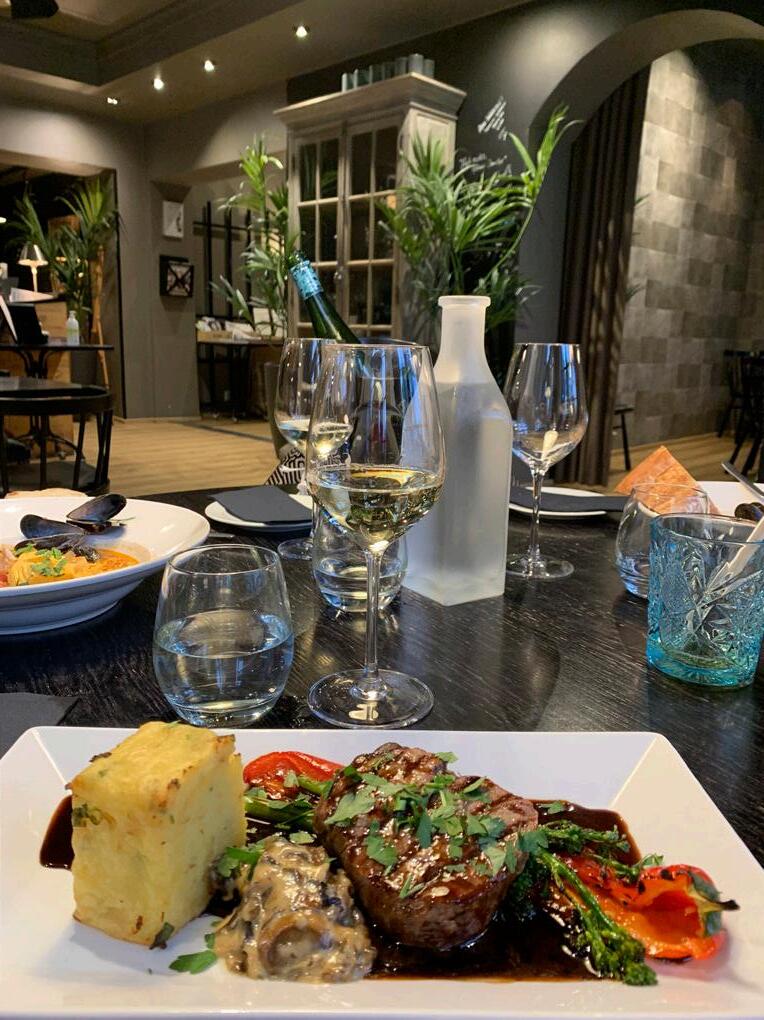
Gallá has a truly Nordic flair. On the front porch outside the venue, furs are decoratively being displayed. Inside the restaurant, a dark wooden interior, a few stone walls and the usage of sleek design elements give inspiration for decorating a modern Nordic home. My personal favourite at Gallá is reindeer. Especially the ‘Reindeer of the Day’ at the top of the menu is highly commendable: a dish that changes frequently, always leaving a bit of mystery but each time a true sensory delight.
Gallá Puijonkatu 32, 70110 Kuopio, +358-(0)17 5528 803 https://www.kitchengalla.fi/
Ravintola Musta Lammas
An exquisite restaurant in Kuopio is Musta Lammas, which literally means ‘Black Sheep’. Located in sturdy cellar vaults built in 1862, the facility was first used as a brewery by its original owner Gustav Ranin. In 1982 the gourmet sign was lifted upon the cellar vaults, and the restaurant was renamed to Musta Lammas.
Musta Lammas prides itself in creating an unforgettable dining experience in Kuopio. World-class ingredients from the forests, fields and clean lakes in the Kuopio region are at the forefront.
Musta Lammas https://mustalammas.ravintolamestarit.net/ en/
Satamakatu 4, 70100 Kuopio Puijo Restaurants
In the mood for an extraordinary location? Treat yourself for a meal at Puijo restaurant. Named after Kuopio’s TV tower, with its 75 metres in height, this revolving restaurant offers stunning views of the city and its surrounding scenic lakes. The first of its kind in Scandinavia, travellers come from all around the world for its unique dining experience. It takes about 60 minutes for a 360° rotation. So, you can enjoy all views, no matter where you sit initially.
Puijo Restaurant offers world-class cuisine and has a unique concept: All ingredients served in the restaurant have been sourced from an area no further than the eye can see from its viewing platform. Enjoy.
Puijo Restaurant https://www.puijopeak.fi/en/puijo-tower-restaurant-cafe/
Sorrento
Do you fancy Italian food? Nice pasta (but not pizza) can be enjoyed at Sorrento Trattoria. If you wish to enjoy pizza, try Sorrento Pizzeria.
Sorrento
Different locations in Kuopio https://sorrento.fi/
Blocco
Italian-style artisan pizza but with a Savonian twist can be found at Blocco. Gluten free pizza is also available.
Blocco
Puijonkatu 17, 70100 Kuopio
+358-(0)44 716 5556
https://blocco.fi/
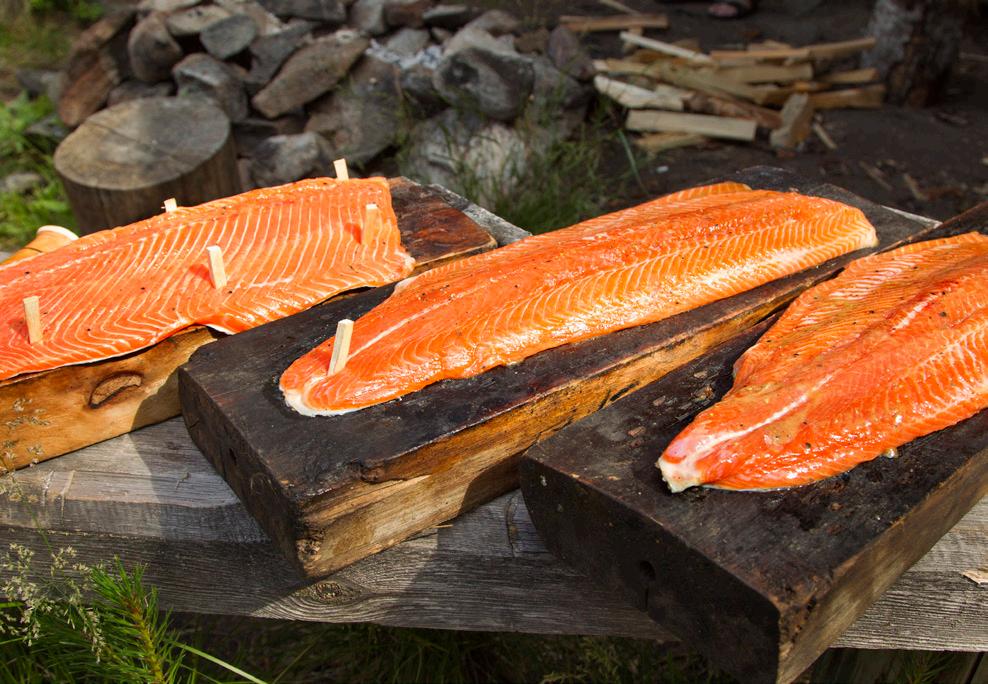
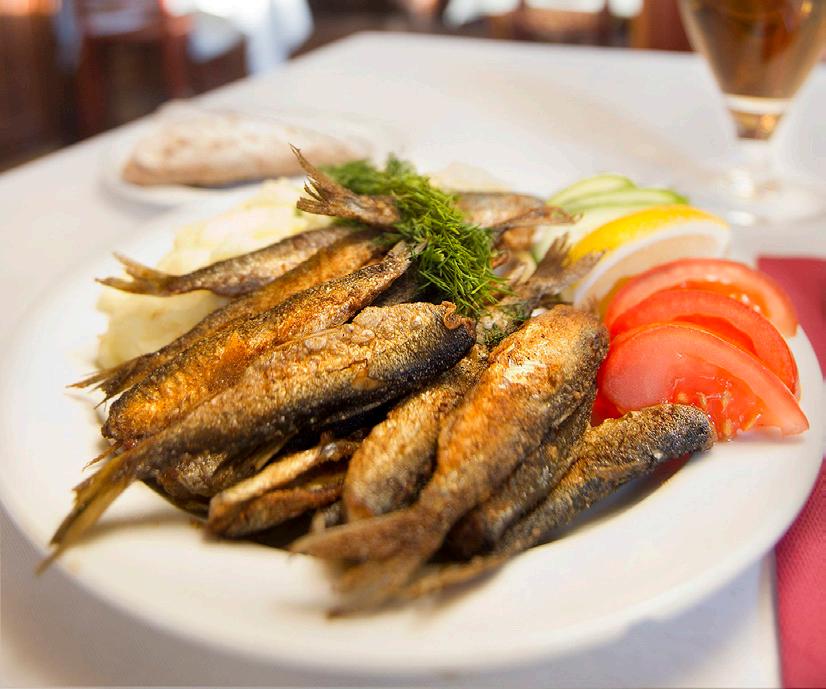
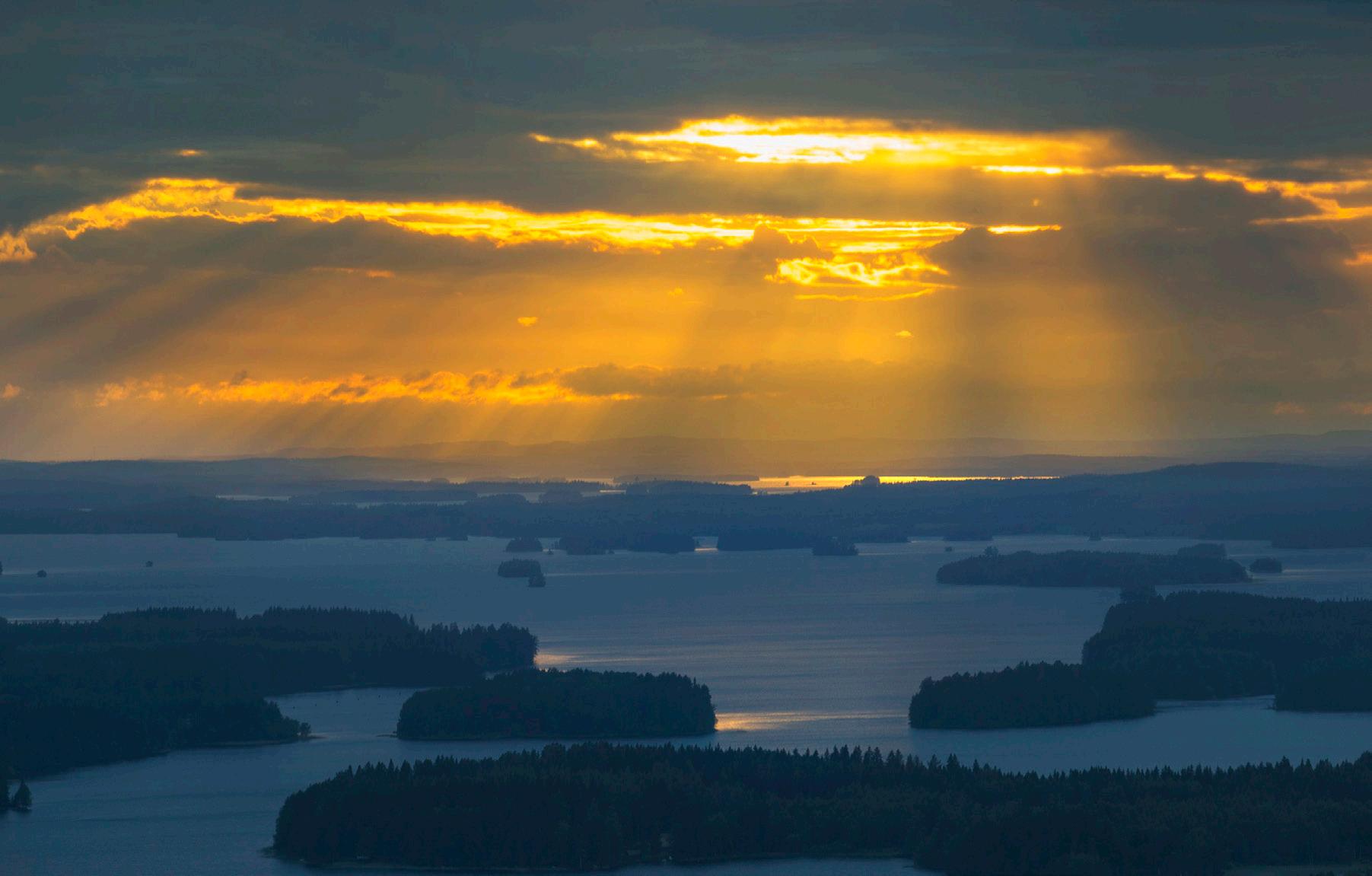
Bona BBQ
In the summer pay a visit to Bona BBQ. Located by Kuopio harbour this venue opened only in 2023. The views over the bay are stunning. The menu is uncomplicated and short with BBQ, salads, sandwiches and a few side dishes. All food is served on an outside terrasse, overlooking Kuopio harbour. There is no indoor dining, and hence Bona BBQ is open seasonally, from May to Sept.
Bona BBQ
Tulliportinkatu 1, 70100 Kuopio
https://www.raflaamo.fi/en/restaurant/kuopio/bona-bbq
Ehta
Looking for the great burgers in town? Visit Ehta just across from Snellman Park.
Ehta
Minna Canthin katu 16, 70100 Kuopio
+358-(0)10 7853 911 www.raflaamo.fi/fi/ravintola/kuopio/ehta
Ravintola Boka
Ravintola Boka has two venues: one in Helsinki and one in Kuopio. Consistently rated highly on Tripadvisor, give this restaurant a try if you like food from the Balkan area.
Ravintola Boka
Koljonniemenkatu 2, 70110 Kuopio
+358-(0)50 5707103 https://ravintolaboka.fi/
Restaurant Urban
Urban is a small and personal venue. Noteworthy is that this restaurant is part of the ‘Chaîne des Rôtisseurs’, an international Gastronomic society founded in Paris in 1950. The Chaîne is based on the traditions and practices of the old French Royal Guild of Goose Roasters, dating back to 1248 under King Louis IX. Under the centuries under various kings the activities and privileges were extended to preparing other variety of meat as well, until they were even granted a royal charter and their own coat of arms.
During lunch time, Urban has a mixed table practice, where you can enjoy the company of other guests.
Urban Restaurant
Puijonkatu 15, 70100 Kuopio
+358-(0)40 552 24 39 https://www.ravintolaurban.fi/
Kreeta
Kreeta is a Greek restaurant, that also has lunch menus available. The Greek salad with wine leaf rolls, pita bread, tzatziki and grilled Halloumi cheese makes for an enjoyable lunch in a comfortable setting.
Ravintola Kreeta
Maaherrankatu 23, 70100 Kuopio
+358-(0)17 2828337 varaukset@ravintolakreeta.fi https://ravintolakreeta.fi/
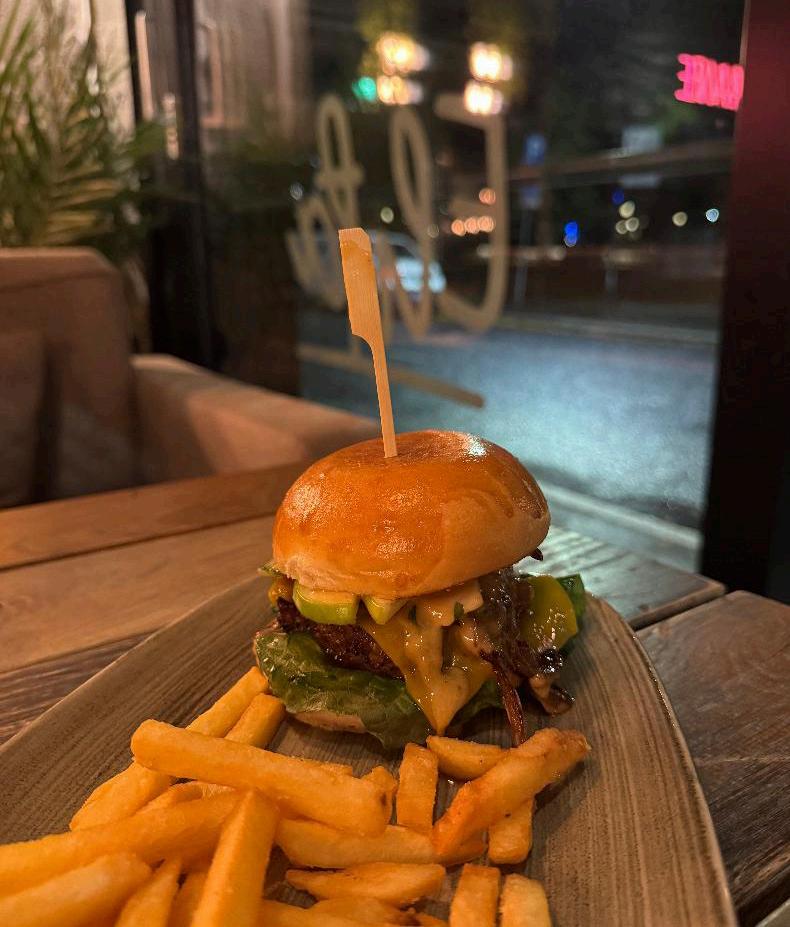
Tipping in Finland:
What is the tipping culture in Finland? In some countries, e.g. the US tips make up a substantial portion of income for the waiter. It is therefore rude not to tip in these countries. What about Finland? The basic tipping rule in Finland is that nobody is expecting you to tip. On the other hand, nobody will object if you do. If you tip, you can do so in cash or via card.
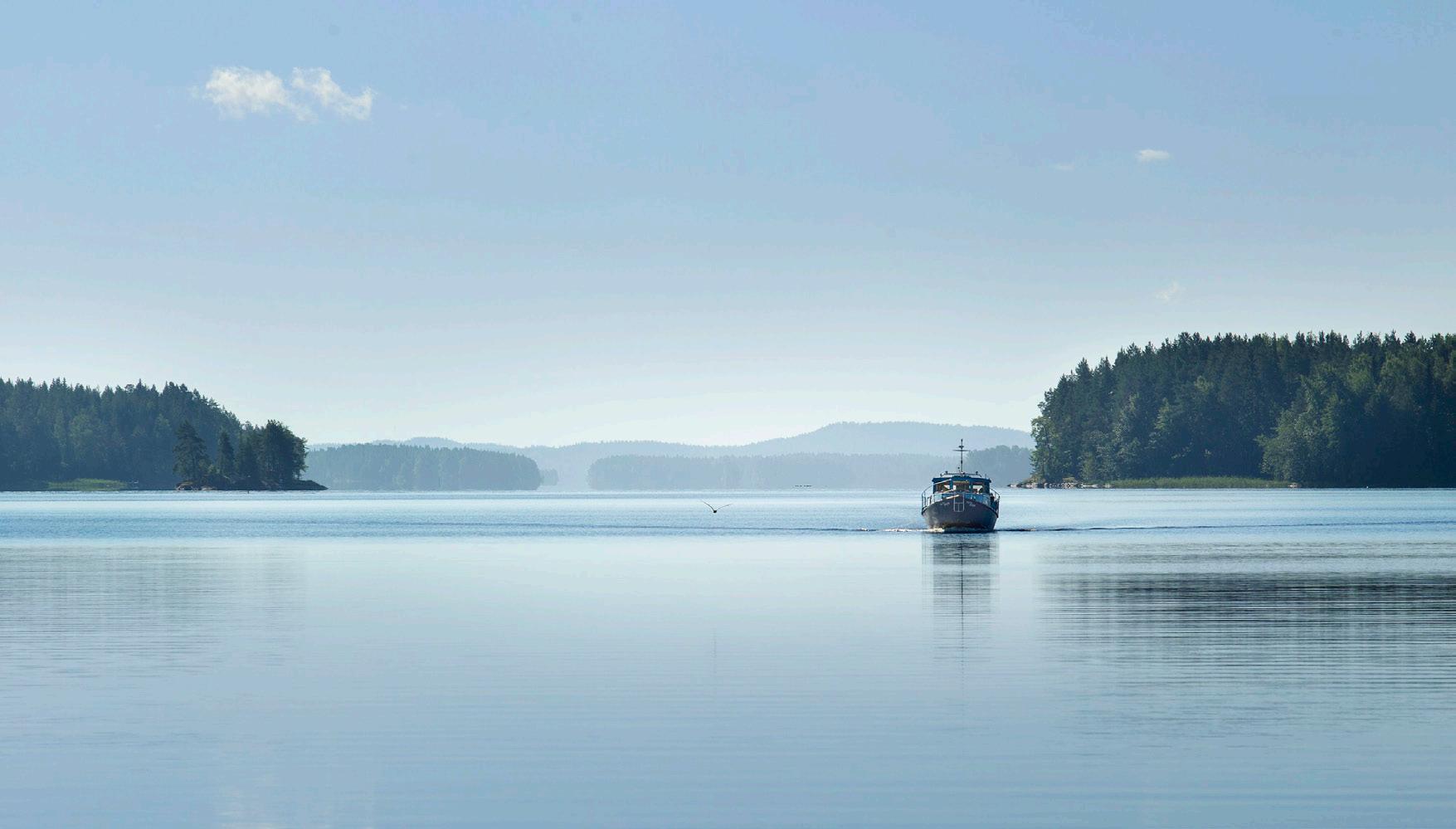
Ravintolalaiva Toivo
This venue is very popular in summer. Located on a ship that is anchored in Kuopio harbour, you can unwind to the music and the fantastic views of Kallavesi lake. Ravintolalaiva Toivo offers a wide range of drinks as well as burgers, salads, pasta, muikut (a small local fish) and a few dishes from the grill.
Toivo
Makasiininkatu 1, 70100 Kuopio +358 (0)45 189 4943 http://ravintolalaivatoivo.fi/

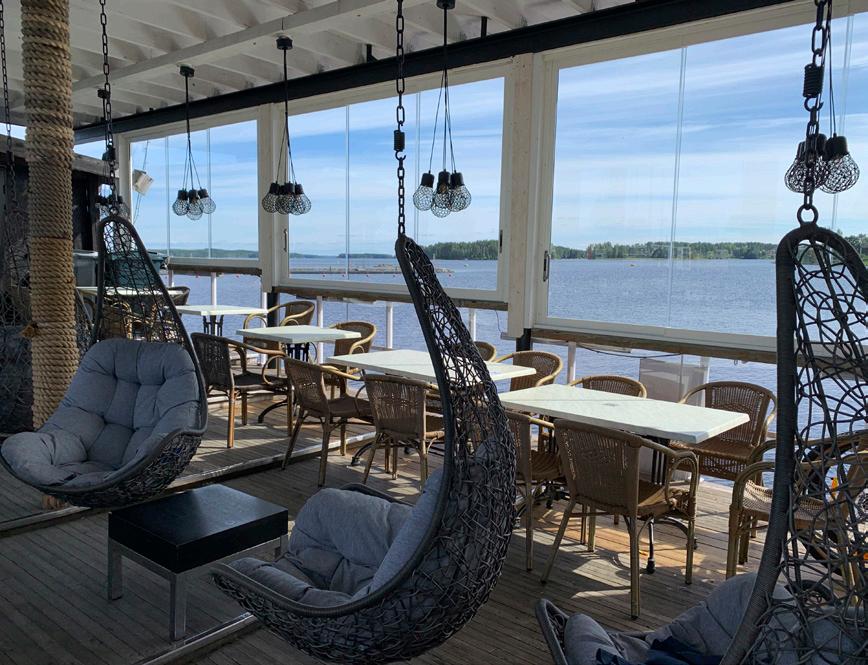
History of the Ship
Toivo’s history goes back over 150 years. Its prototype was built by J V Snellman in 1869-1871. Under Snell- man’s ownership the ship embarked on various journeys to different corners of the world. It was sold to a Nor- wegian company in 1888 and sank in the 1890s. Toivo was built in 1908 initially transporting sand and grain. Since 2021 it is permanently an- chored in Kuopio Harbour.
Want to enjoy a drink or a meal with stunning views of Kallavesi lake? Two venues that offer a breathtaking setting right by the water are Saana and Luoto. Both settings can also be booked to host your events or meetings. As a special bonus both also have wellness offerings, if you want to relax and unwind while taking in the beautiful lake scenery.
If you are unsure which one to try, enjoy both, as they are located on different parts of Kallavesi lake, each with different views, that will take your breath away.
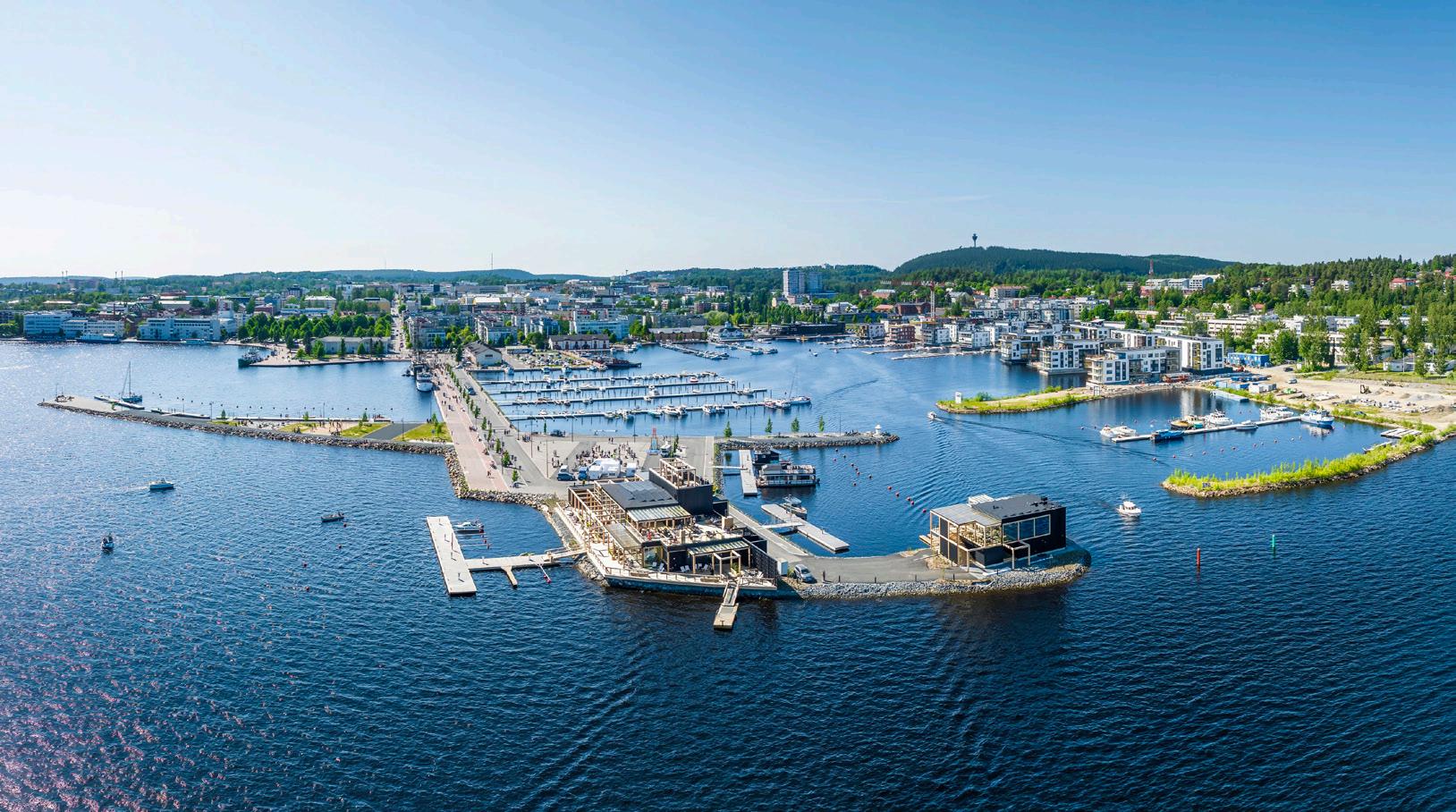
The spa offers of Saana include a smoke sauna, an electric sauna, heated outdoor pools, a hot tub, a pool bar and the opportunity to jump into lake Kallavesi for a swim, and much more. In winter there is ice swimming. Saana also offers two restaurants: Fisu (for more formal dining) and Wings restaurant (for a more casual setting).
Siikaranta 12, 70620 Kuopio +358-(0)17 7784220 https://www.kuopionsaana.fi/
Luoto boasts a wood fired sauna and an electric sauna. For those seeking fitness, there are also Pilates classes. You can enjoy drinks from the sauna reception while standing on the outside terrace of the spa, from where you can also access Kallavesi lake for a cool, refreshing swim. Luoto’s restaurant accomodates those that wish a long formal meal, as well as guests, who wish to have just a quick bite.
Makasiininkatu 5, 70100 Kuopio +358-(0)41 3190 181 https://www.luotokuopio.fi
Want to go for a walk and enjoy beautiful countryside flair just 2,8 km from Kuopio City Centre?
The 250-year-old farmhouse, Kontilla, in the heart of the woods on Puijo hill appears to be from a fairytale. Go back in time to experience this historic farmstead, which is a protected heritage site, dating back to the same time when Kuopio was founded. You can enjoy warm salmon soup, pizza, hot chocolate or cake from mid-morning until afternoon. Kontilla even offers sleigh rides, or you can ski and build a snow man.
Kontilla Farm
Antikkalantie 114, 70300 Kuopio
Tel.: +358-(0)44 2361505 https://www.elamystilakonttila.fi/en/
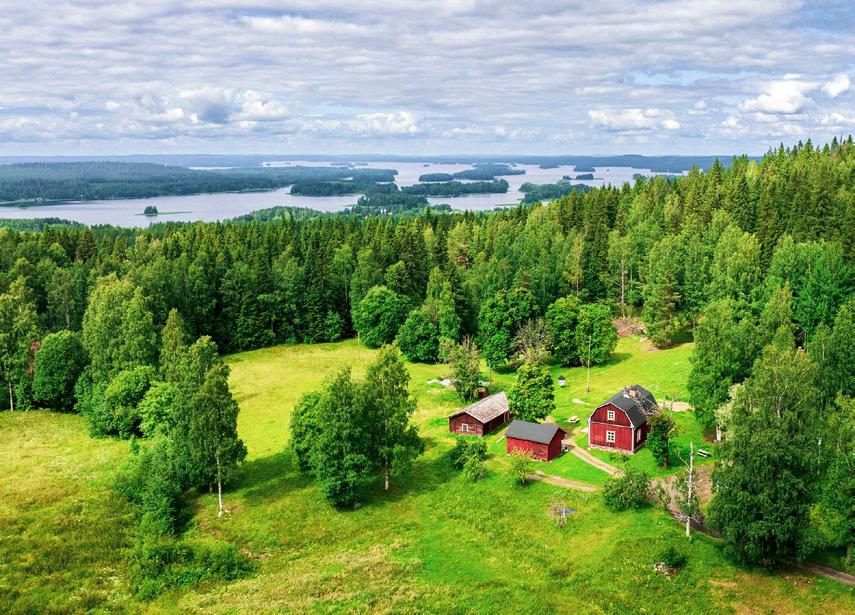
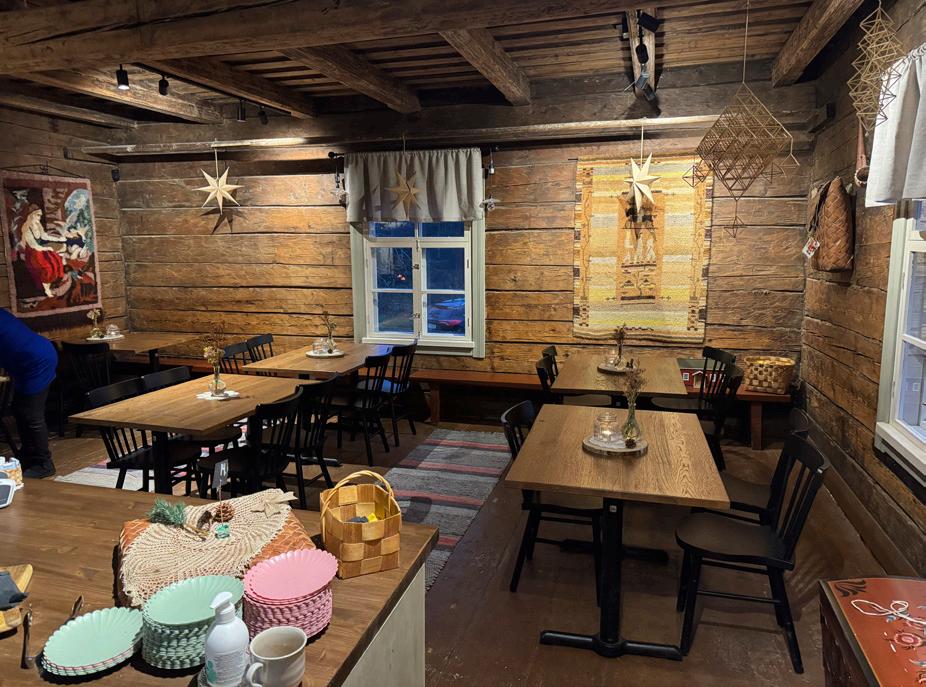
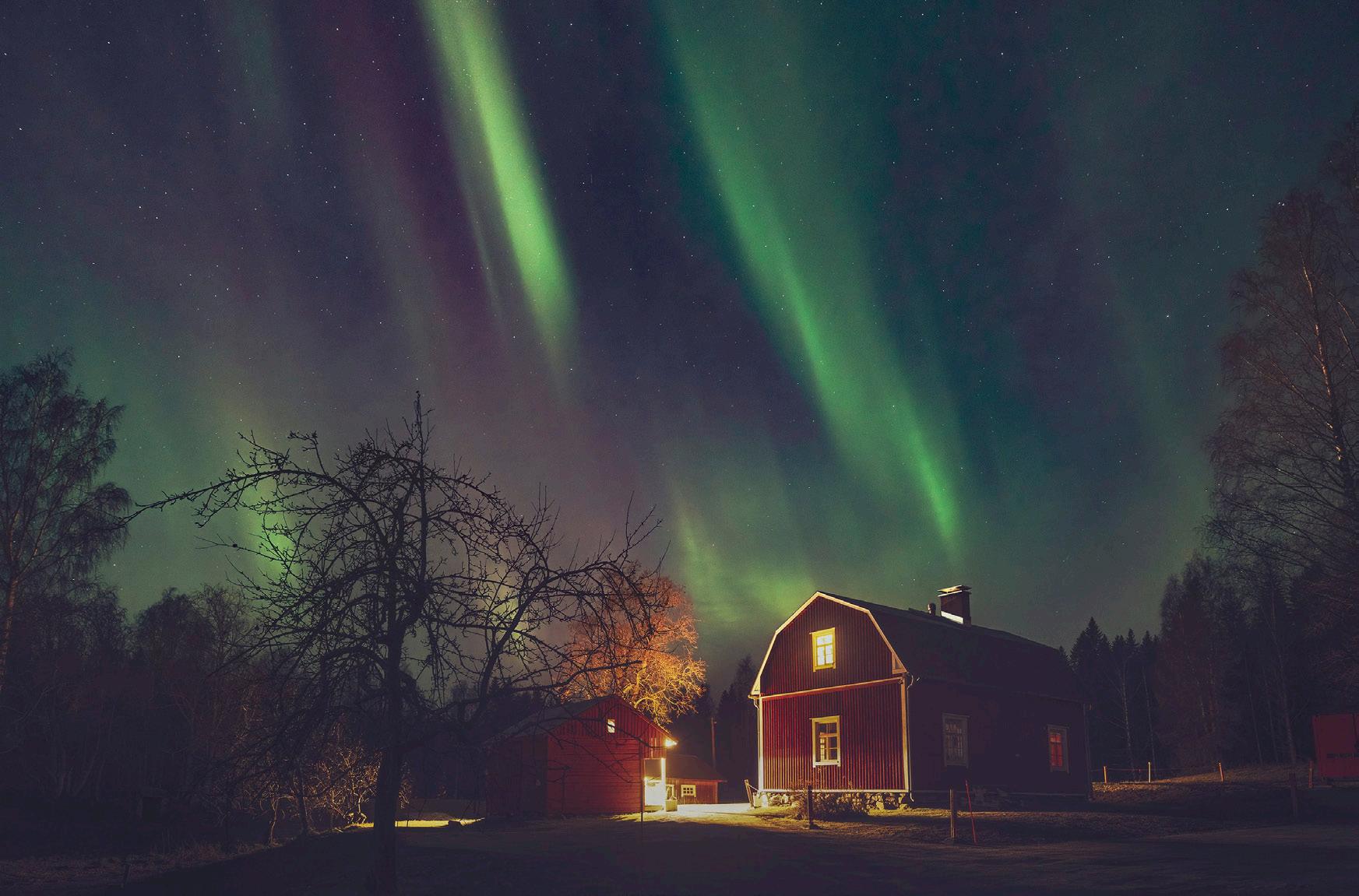
Food and drink are an integral part of a country’s culture and its heritage. This section therefore features alcohol tastings available directly in Kuopio.
Lignell & Piispanen prides itself of being the world’s oldest Savonian family business. Its craftmanship has a tradition of over 170 years, dating back to 1852. The company writes on its website that they ‘create unique award-winning brands using natural berries & Nordic design’. Everything is ethically sourced, creating transparency and sustainability in the distilling process. The best berries and plants are being hand-picked from the pristine forests and marshlands of the Northern Hemisphere, as a raw material for their alcoholic beverages.
Currently being run in the 6th generation, the business was founded by the current owner’s great-great-greatgrandfather, Gustav Ranin. Initially, the facility was founded in 1783 as a royal distillery. Gustav Ranin turned it into a family business in 1852 by purchasing the Crown Distillery in the city of Kuopio. Gustav Ranin’s legacy lives strong in the family. Ever since the day he acquired the king’s distillery, from generation to generation, the experience and knowledge has been handed down and increased over the years with the aim of creating the finest liqueurs and vodkas from Mother Nature with its arctic splendour.
Indeed, Gustav Ranin’s influence more than 170 years later is still felt in the city today. Two restaurants (Musta Lammas and Pannuhuone Gus. Ranin) take pride in their origins leading back to Gustav Ranin as well. If not just for the taste, a visit is a must for experiencing history too.
Another option for alcohol tasting is RPS Brewery. RPS, which stands for ‘Rock Paper Scissors’, is an award-winning brewery. It has successfully won first place for its wheat beer in the 2024 Suomen Paras Olut (Finland’s Best Beer Competition). A factory tour can be booked directly in Kuopio, where one can also sample the products, which also include long drinks. Additionally, RPS also has its own restaurant in the city centre, which serves New York style pizza and other food.
Iso-Kallan Panimo is a renowned Kuopio based brewery, as well having received multiple awards for different beers. It produces beer, long drinks and lemonade. In Finland’s Best Beer Competition (Suomen Paras Olut) it has been recognized most recently for its beer Tuco 7,0 % (in 2022) and Savu Kekri 5,5% (in 2023), both of which ranked in the Top 3 in the category ‘other beer’ (Muut oluet). It also has an award winning beer (Groteski) which ranked ‘Best Beer of Finland’ overall in 2019 – the highest possible award in the competition. A store and taproom welcome visitors. In summer a fresh pint can be enjoyed in the sun on the outside terrace of the premises.
Lignell & Piispanen visitor centre:
Siikaranta 20, 70620 Kuopio
+358-(0)44 301 9325
https://lignellpiispanen.com/en/
RPS Brewing:
Siikaranta 3b, 70620 Kuopio
+358-(0)44 491 9039
www.rpsbrewing.fi
RPS Brewhouse
Kauppakatu 20, 70100 Kuopio
Address for Iso-Kallan Panimo
Siikaranta 5, 70620 Kuopio
+358-(0)40 164 6560
https://www.isokallanpanimo.fi/
Kuopio offers a wide range of events throughout the year, whether business & networking events, sports events & competitions, culture, music and dance festivals as well as culinary happenings. Get inspired by a selection below.
Keep a look out for advertisements and visit kuopiotahko.fi/en/home/ for more events to happen.
#SYNTY
Business Event in Kuopio where participants get inspired and explore their creativity and hear personal stories and experiences from various professionals.
www.synty.fi
Sessions
Organized by the City of Kuopio together with Novapolis the event provides a networking platform between students, companies and the public sector.
www.sessionstalents.fi/en/
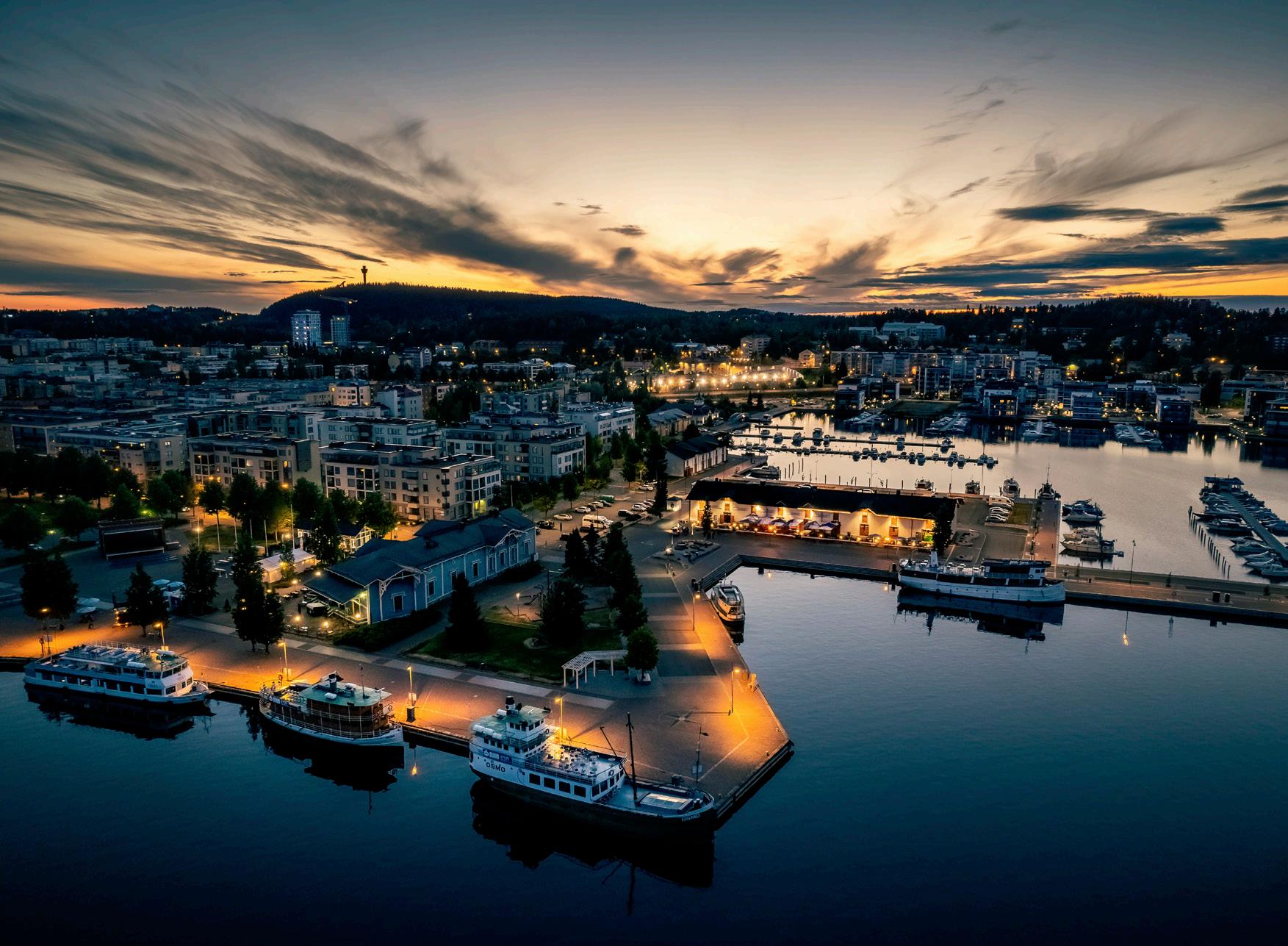
Finland Ice Marathon
Hosts a variety of ice skating competitions in various distances and by age groups, as well as fun events, e.g. Ice Skating for Children.
www.finlandicemarathon.com
Tahko MTB
Mountain bike event with ~2,000 participants every year, ranging from first-timers to pros.
www.tahkomtb.fi
Kuopio Swim & Run
A challenging competition event, which involves cross-country running and open-water swimming.
www.kuopioswimrun.fi
Sunsets Kuopio
A sports and entertainment event in the Kuopio harbour area, with lots of sports to participate in or to watch (beach volleyball, darts, tennis, twerking, Finnish baseball on the beach.
https://sunsetskuopio.fi/ Kuopio Marathon
Kuopio Marathon offers multiple distances: a full marathon (of 42,2 km), a half and quarter marathon distance. From 2026-2028 the event will start at Matkus Shopping Centre. More details incl. route in the link below.
https://www.kuopiomaraton.com/in-english/
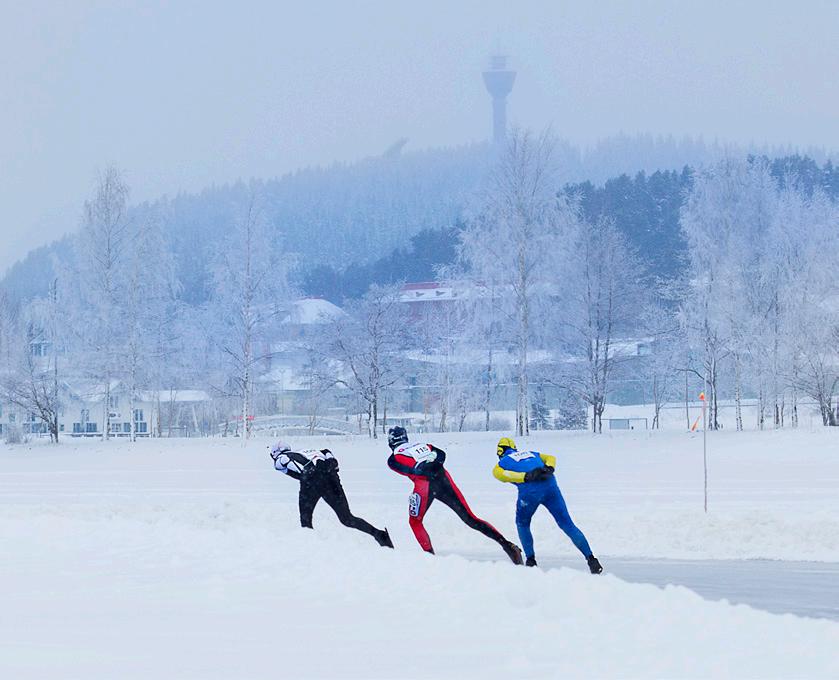
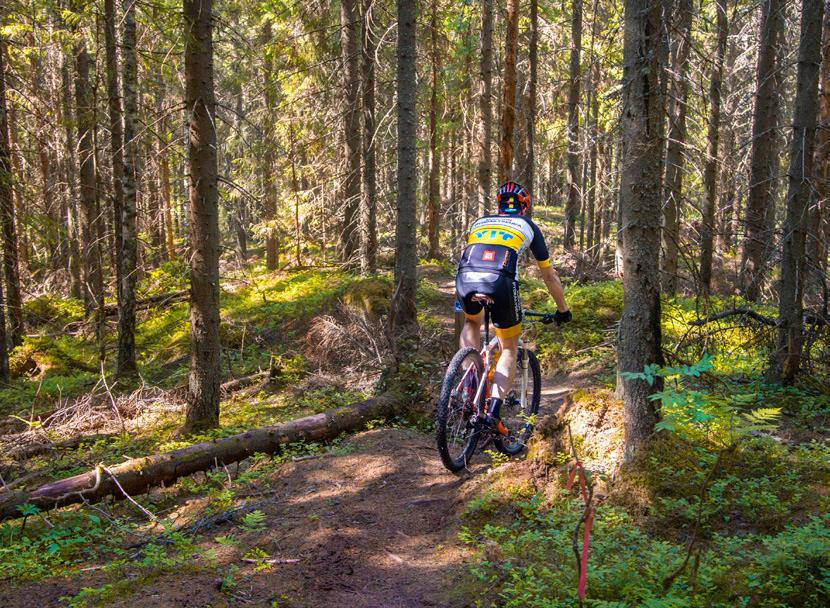
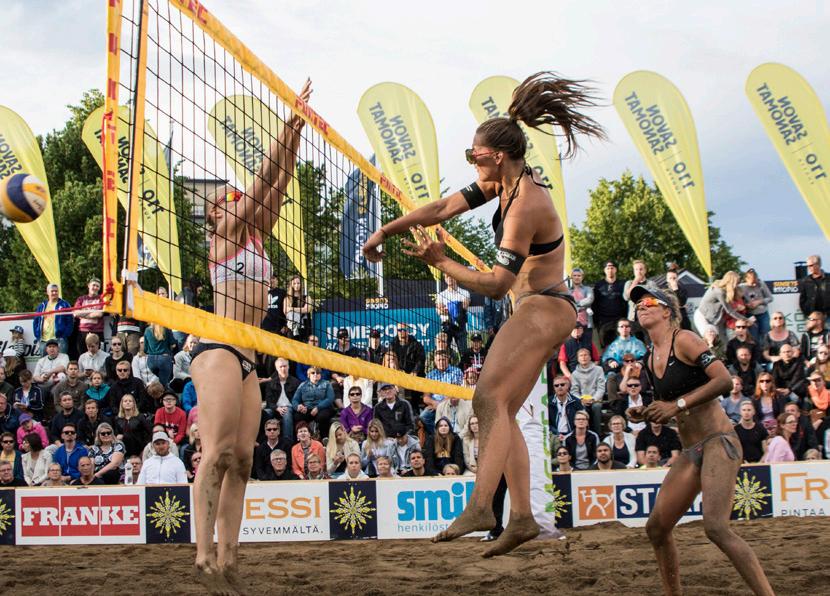
Young Culture Festival
Multi-art event by and for young people, consisting of performances, workshops, street art &fringe events
https://nuorikulttuuri.fi/en/etusivu/
Kuopio Dance Festival
Largest international dance art event in the Nordic countries, with professional and amateur dancers
www.kuopiodancefestival.fi
KUOPIO ROCK
Selected in the top ten festivals out of hundreds in Finland, year by year
www.kuopiorock.fi
Hoodfest (Hip Hop Festival)
Thousands of visitors each year celebrate hip hop with top names in domestic and international scene.
www.hoodfest.fi
ANTI – Contemporary Art Festival
International contemporary art festival presenting site specific works throughout public spaces in Kuopio. ANTI is Finnish and stands for ‘gift’. Event is free of charge.
www.antifestival.com/en
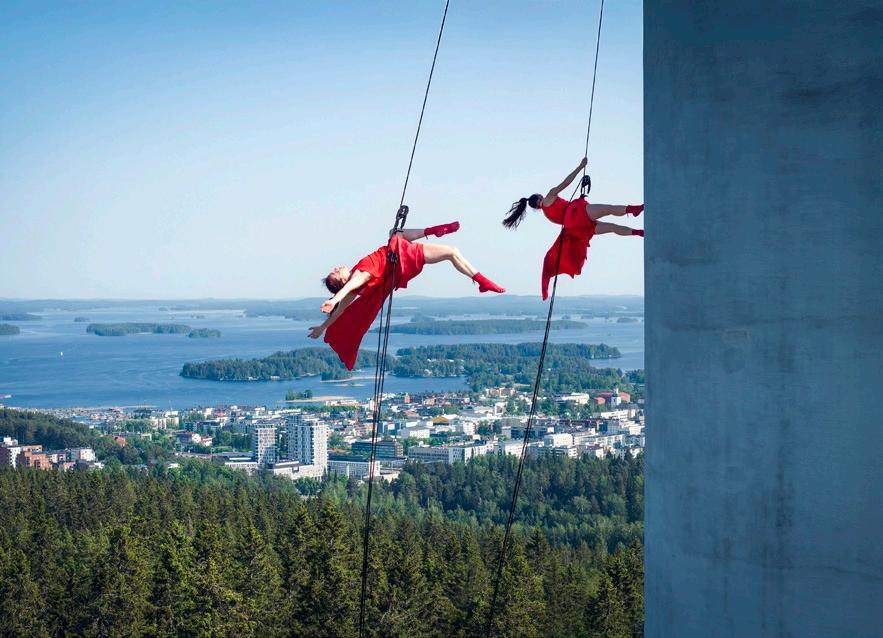
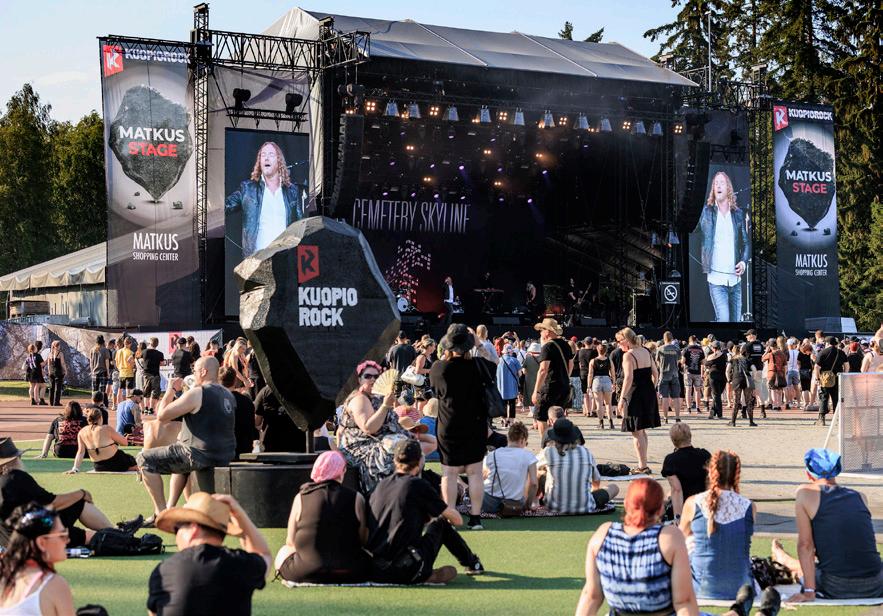
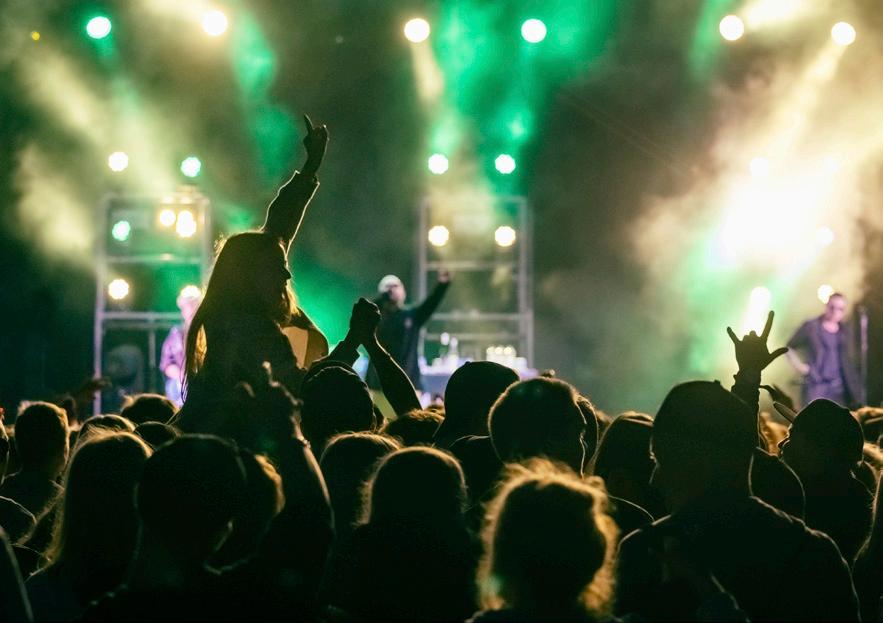

Kuopio Wine Festival
Biggest wine and food festival in Finland for lovers of good food, wine and music. Held in beautiful backdrop of Kuopio harbour area.
www.kuopiowinefestival.fi
SATOA Food Festival
Restaurants from North Savo use high-quality local ingredients for gourmet dishes. Would you like to taste smoked vendace, tar ice cream, tacos from freshwater fish, the best burgers or beers in Finland or Thai food with wild herbs from nearby forests, then visit SATOA.
www.satoa.fi/en/front_page/
Kalaryssäys event
Feast for the whole family where domestic fish and local delicacies are served. Inaugurated in 1993, the event celebrates 30 years in 2023, and attracts ten thousands of visitors every year.
www.kuopiotahko.fi/tapahtuma/kalaryssays/
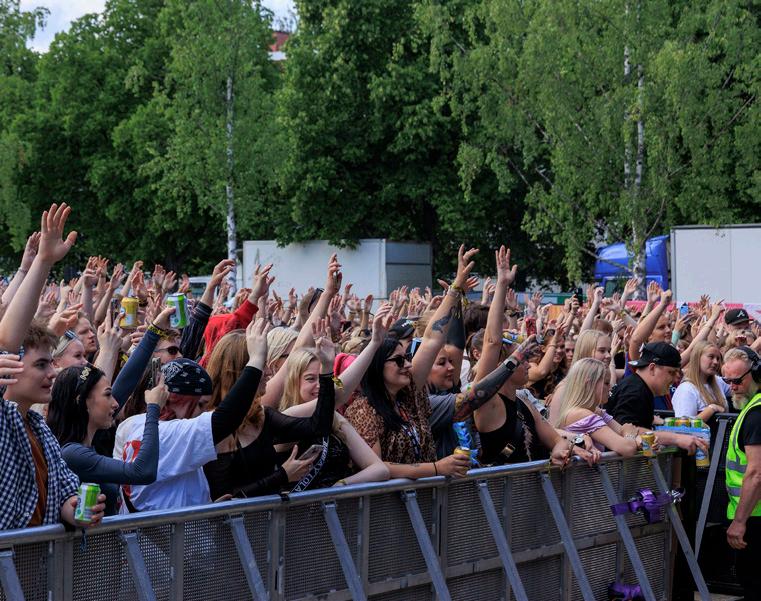
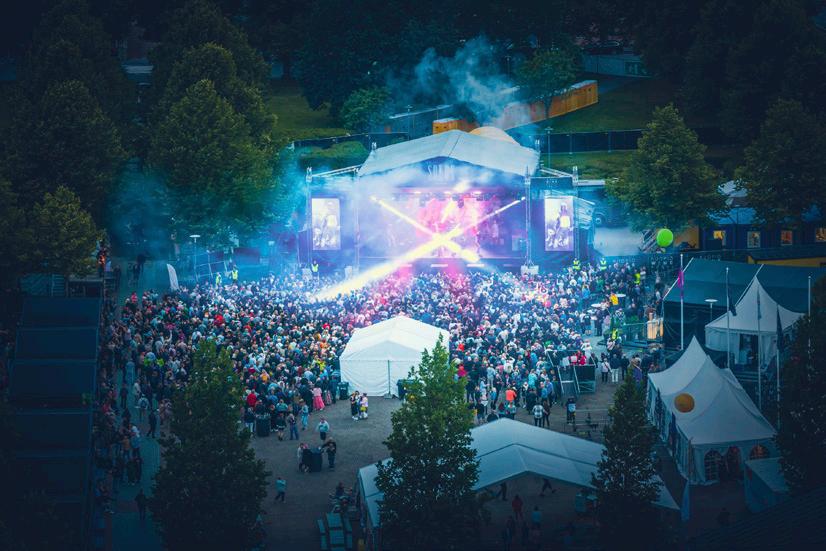
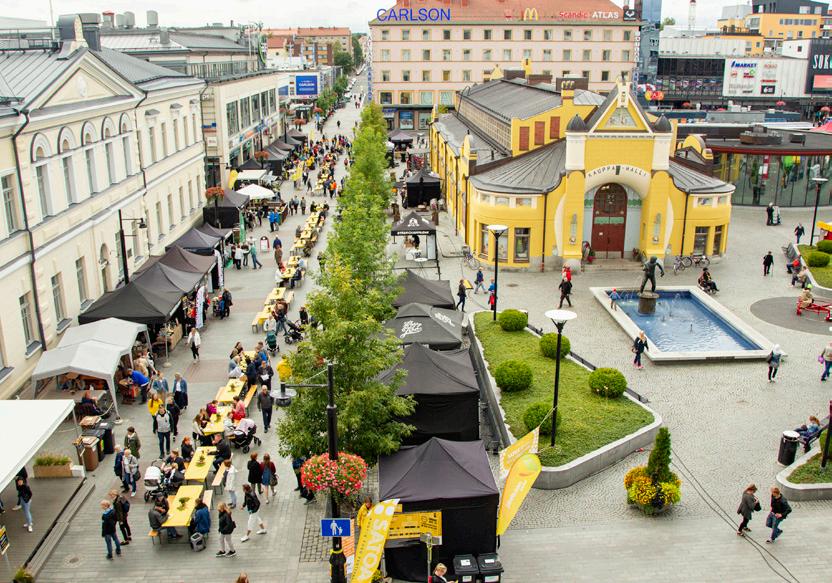
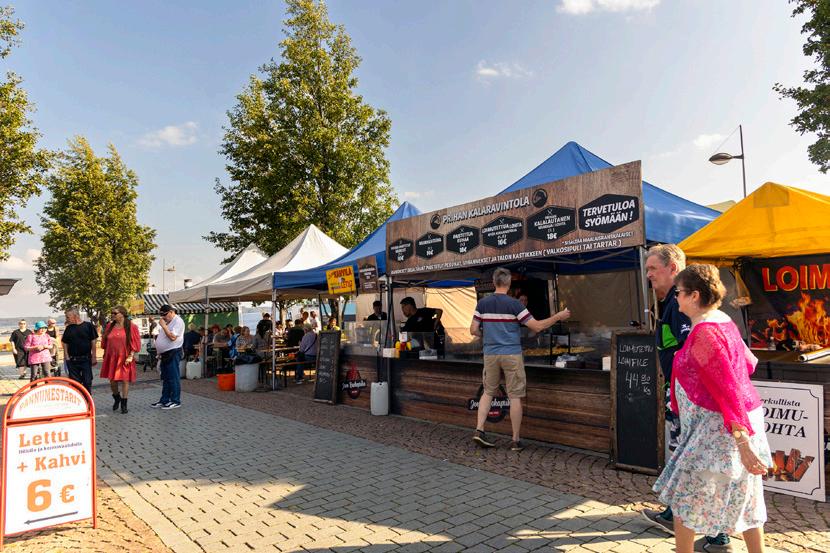
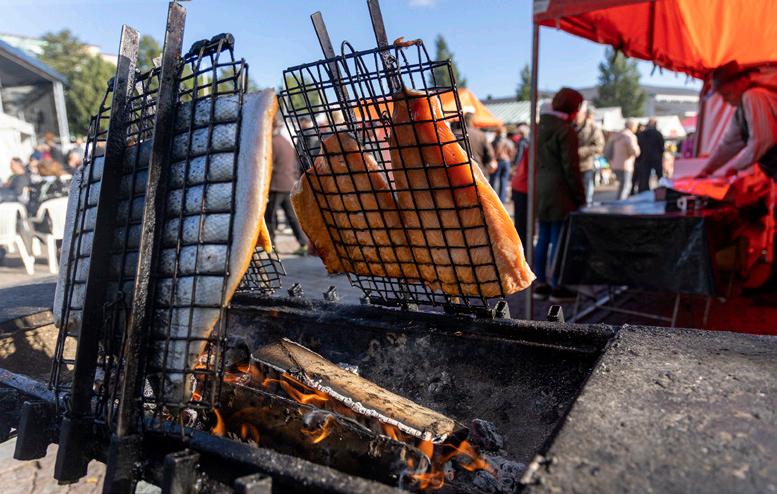
An international food festival held on Kuopio Market Square or at Kuopio Harbour, with stalls from various countries.
Try some fudge from the UK, German pretzels, cheese from Switzerland, Belgium waffles, French crêpes, American donuts, and much more (see photographs)
www.eurooppamarkkinat.fi/kuopio/
Harvest Festival
Fresh produce sold on Kuopio Market square to celebrate the start of autumn and the richness of harvest.
You can purchase organic, local food. The occupations on a farm are also presented, as well as machines and animals, appealing to the youngest members of the family.
Check www.ilovekuopio.fi a few days in advance of the event
One of the most traditional markets in Finland, the Autumn Market at Rautalampi has been established in 1821. In nice weather it has attracted up to 15,000 visitors. Be aware though it is in Kuopio Region, not in Kuopio city directly.
www.tastesavo.fi/autumn-market-rautalampi
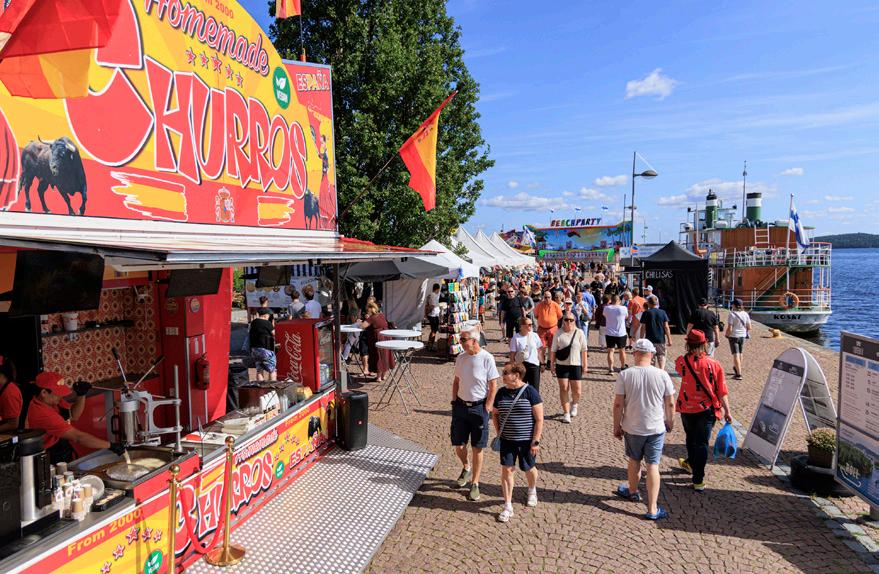
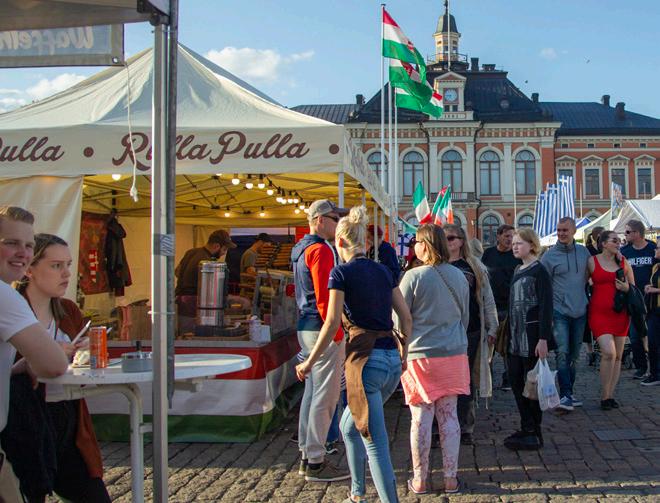
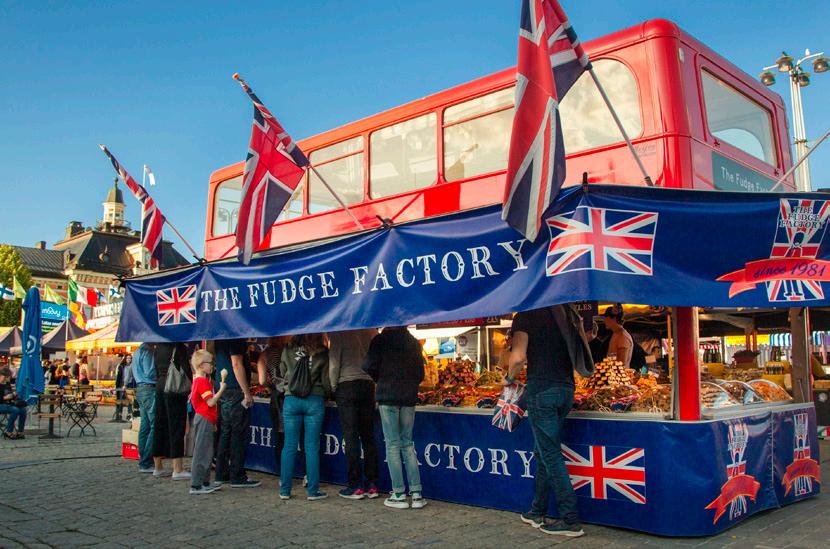
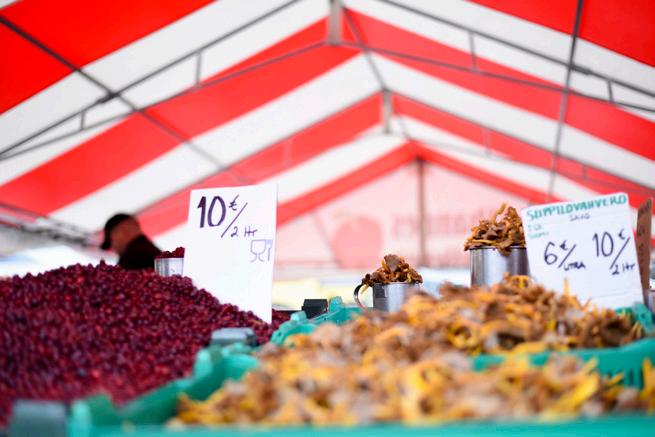

At Kuopio Main Square with Christmas lights, mulled wine, pancakes, kids’ carrousel, to get into the holiday spirit. Of course, there will be a big Xmas tree.
www.kuopionjoulu.fi/en/
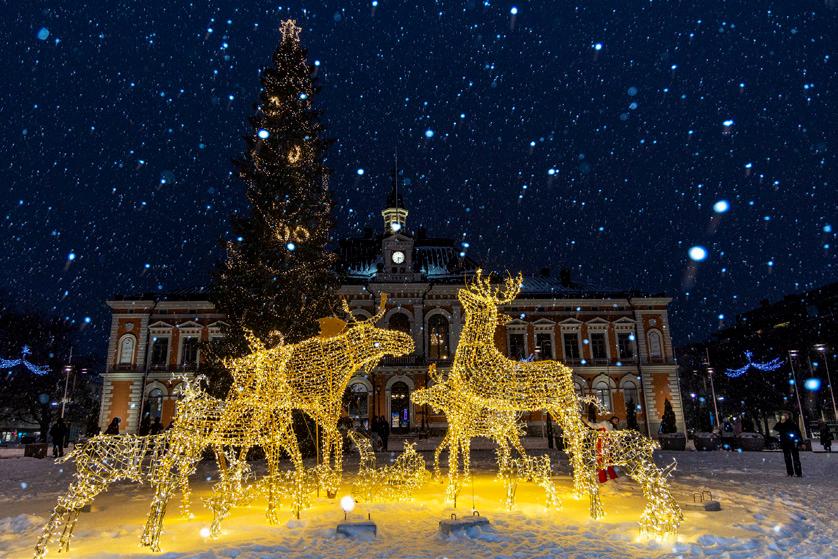
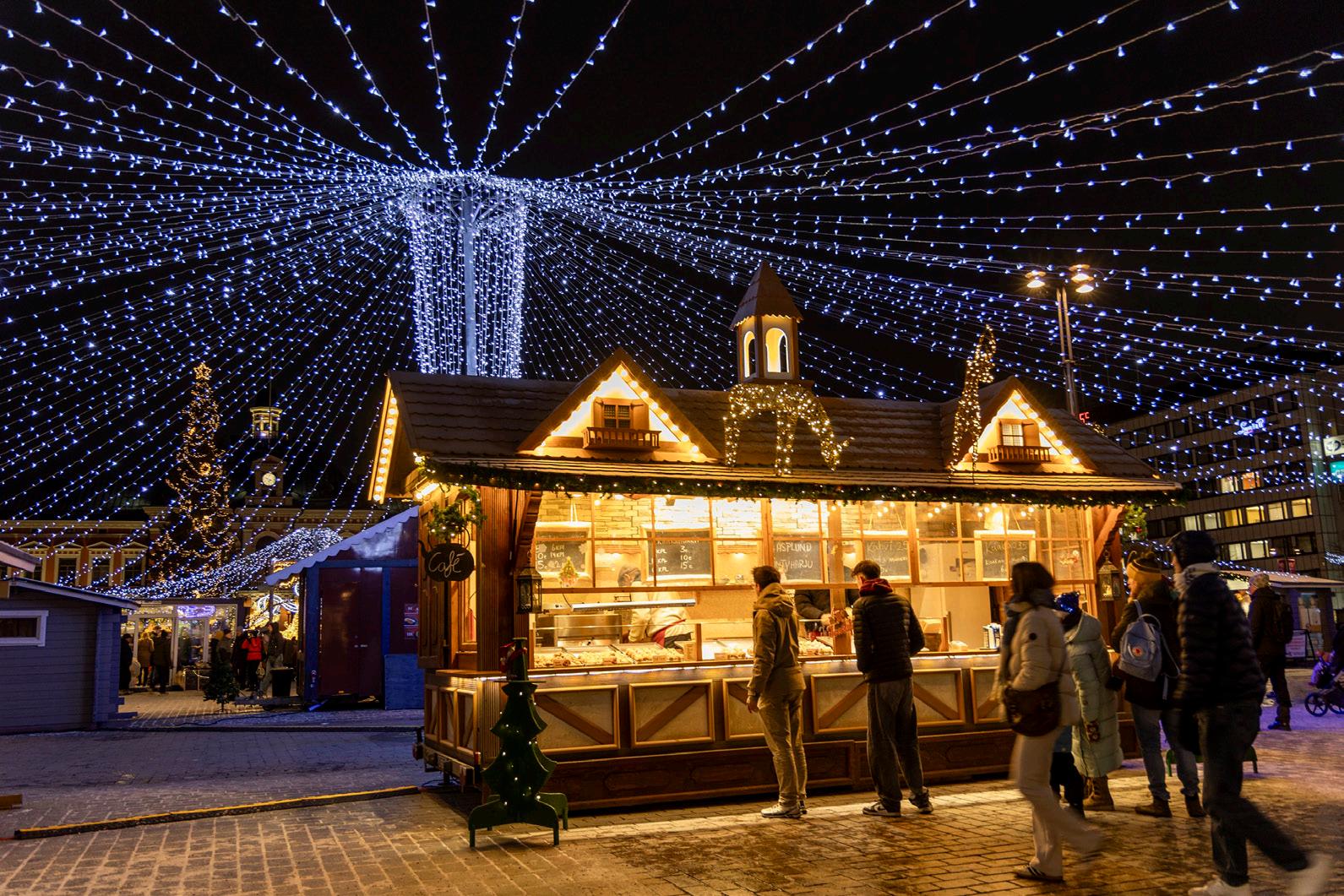
Kuopio Horse Races Races
A variety of horse races take place in Kuopio year around in all months except July. Check the calendar at www.kuopionravirata.fi
Kuopio Dog (Sawo) Show (Sawo)
Dog show held annually in Kuopio. www.sawoshow.fi/info.html
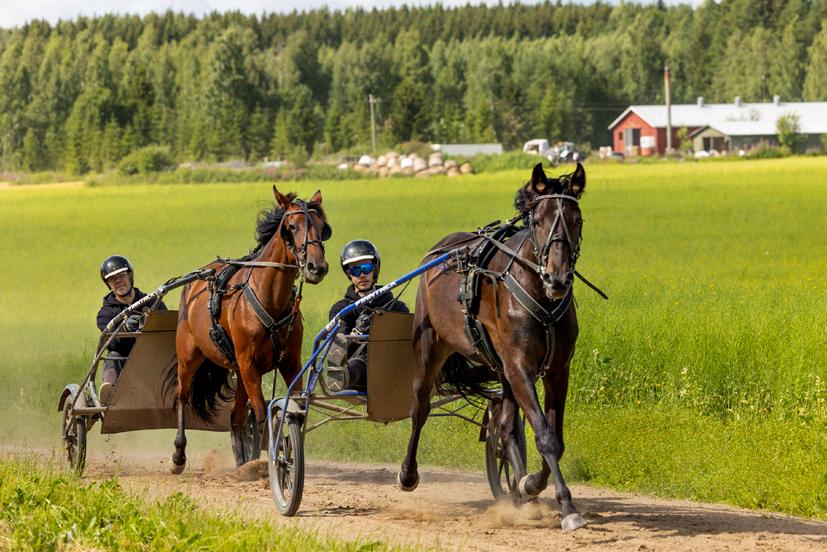
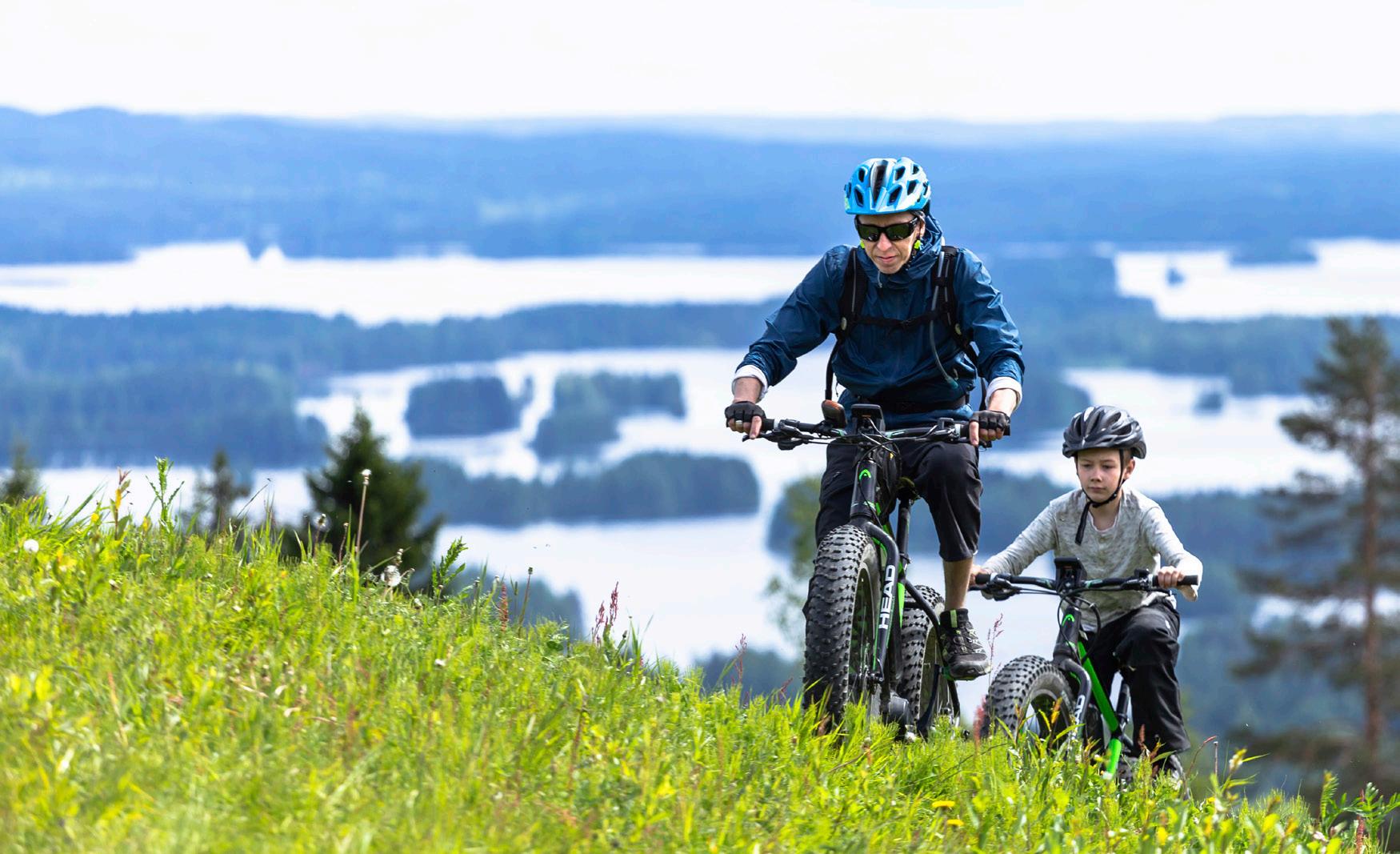
Kuopio, which is situated in the heart of the Finnish Lakeland, offers a variety of things to do outdoors.
In the summer, hiking and cycling are among the popular sports, as is swimming in the freshwater lakes. Fans of boating, canoeing, stand-up paddle and other water sports can take advantage of the vast lake scenery. Fishing is another popular leisure activity to relax in nature taking in the tranquillity. There are also various scenic golf courses located
close by. Another option is to give disc golf a try - a new sport gaining increasing popularity. The possibilities are endless. If you do need some inspiration, make sure to visit ‘Sunsets Kuopio’ Event in the Kuopio Harbour, which features multiple outdoor sports, that you can watch or participate in (see chapter 4.2). If you want to try something different watch a match of Pesäpallo, the Finnish variant of baseball, which is also the country’s national sport.
General info also on hiking trails in Kuopio: www.kuopio.fi/en/leisure-and-well-being/kuopio-in-motion/outdoor-activities-and-hiking/hiking-and-nature-trails/#
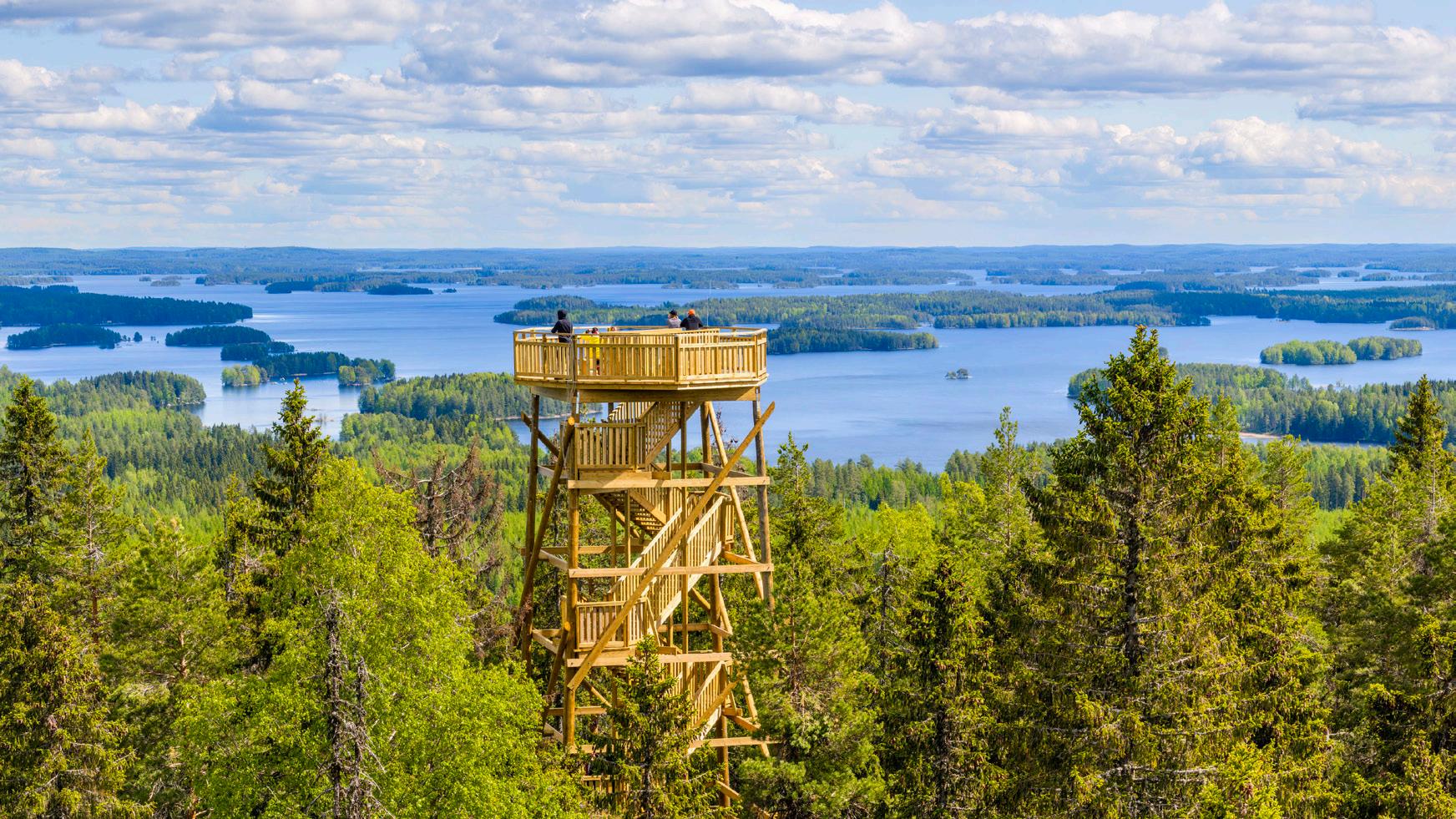
If you enjoy hiking and wish to be rewarded with a bird’s eye view, visit Vanuvuoren näköalatorni, a wooden tower that is 20 m high. Vanuvuori nature reserve spans approx. 125 hectares in size and is part of the European Union’s Natura 2000 net-work. More info to plan your trip to Vanuvuori Observation
Tower can be found here: https://www.kuopio. fi/en/destinations/vanuvuori/
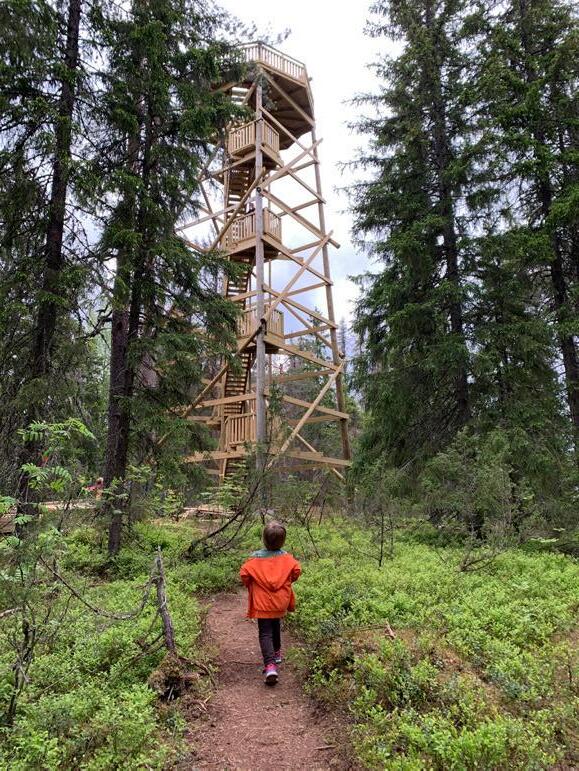
Our 3-year-old eager to get to Vanuvuori Tower
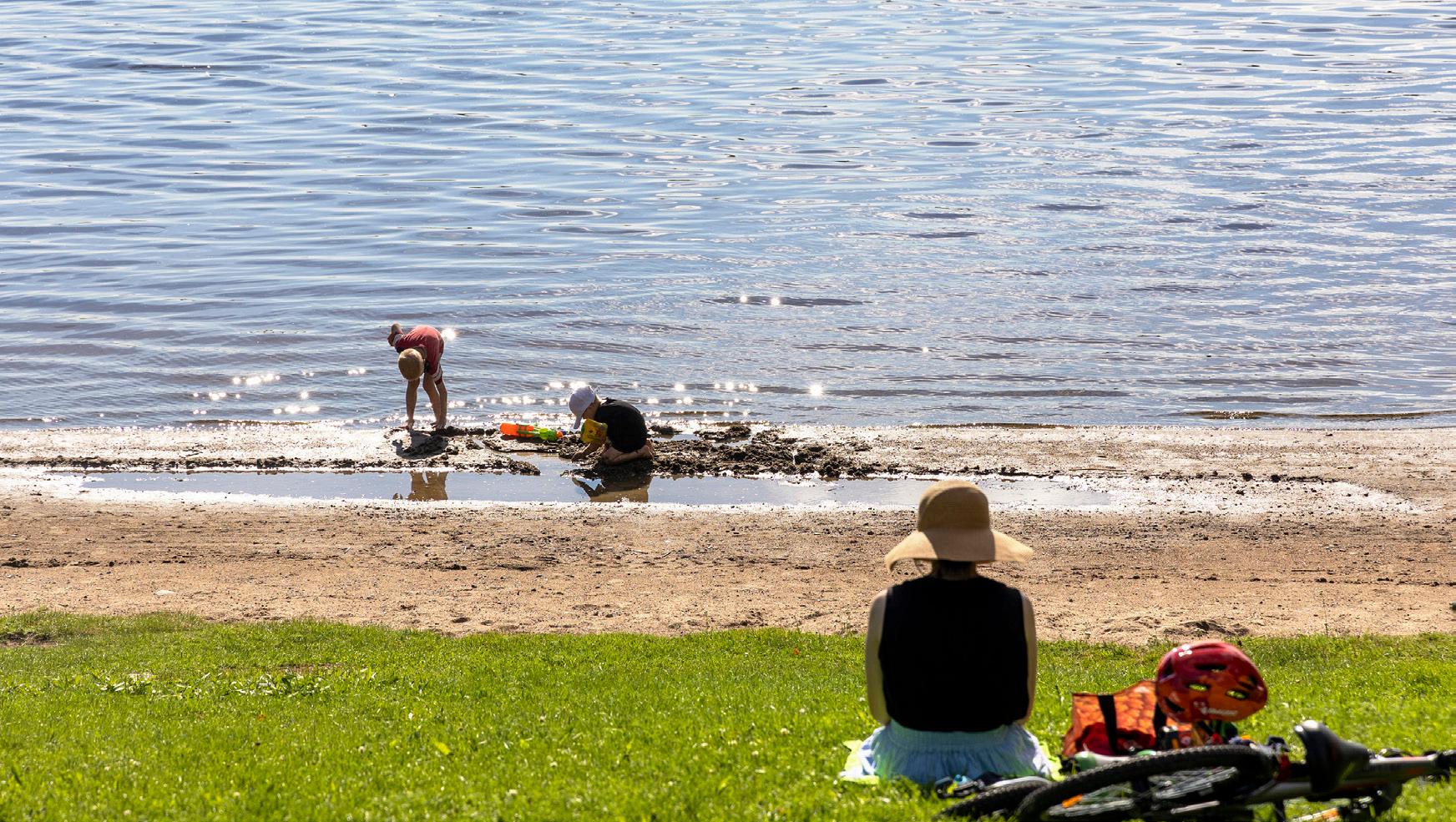
A personal family favourite leisure activity of ours is mountain-biking in the scenic nature.
A long tour which we very much enjoy is a loop around the South part of Kallavesi lake, which is approx. 100 km long. The route starts and ends in Kuopio and is picturesque, mostly leading through pristine nature, including lush forests with plenty of views of Kallavesi lake including some stunning beaches. There is a ferry crossing in Puutossalmi. The ferry operates free of charge. It runs daily from morning until evening.
If you want do this tour in full or in part, consider stopping at Koivumäen Kartano, an 18th-century manor which has a café and a restaurant. It is located in the idyllic countryside overlooking a farm with horses that are also on the estate. Just a few hundred metres away is Hiltunlahti Uimaranta, a sandy beach, where you can cool off by swimming. The
ferry ride itself is another highlight of the tour. Close by is a small kiosk offering drinks and food. You can also head into the water there. After the ferry crossing the forests get even lusher and you will have views over smaller bays of Kallavesi lake. The path soon splits, and you can decide to follow the main road or go on a gravel road if you have a mountain bike. There is another beach, Syvähiekka beach, just before crossing the bridge to Vehmersalmi, from which you can see Puijo Tower in the distance. You can go north (on Vehmersalmentie, rd 539) toward Kuopio or take a short detour to Vehmersalmi for lunch. Spare clothes are recommended on the tour, if you want to enjoy the beaches and to be prepared for changes in weather. And lastly pack plenty of water, since there are stretches of the tour that are remote.
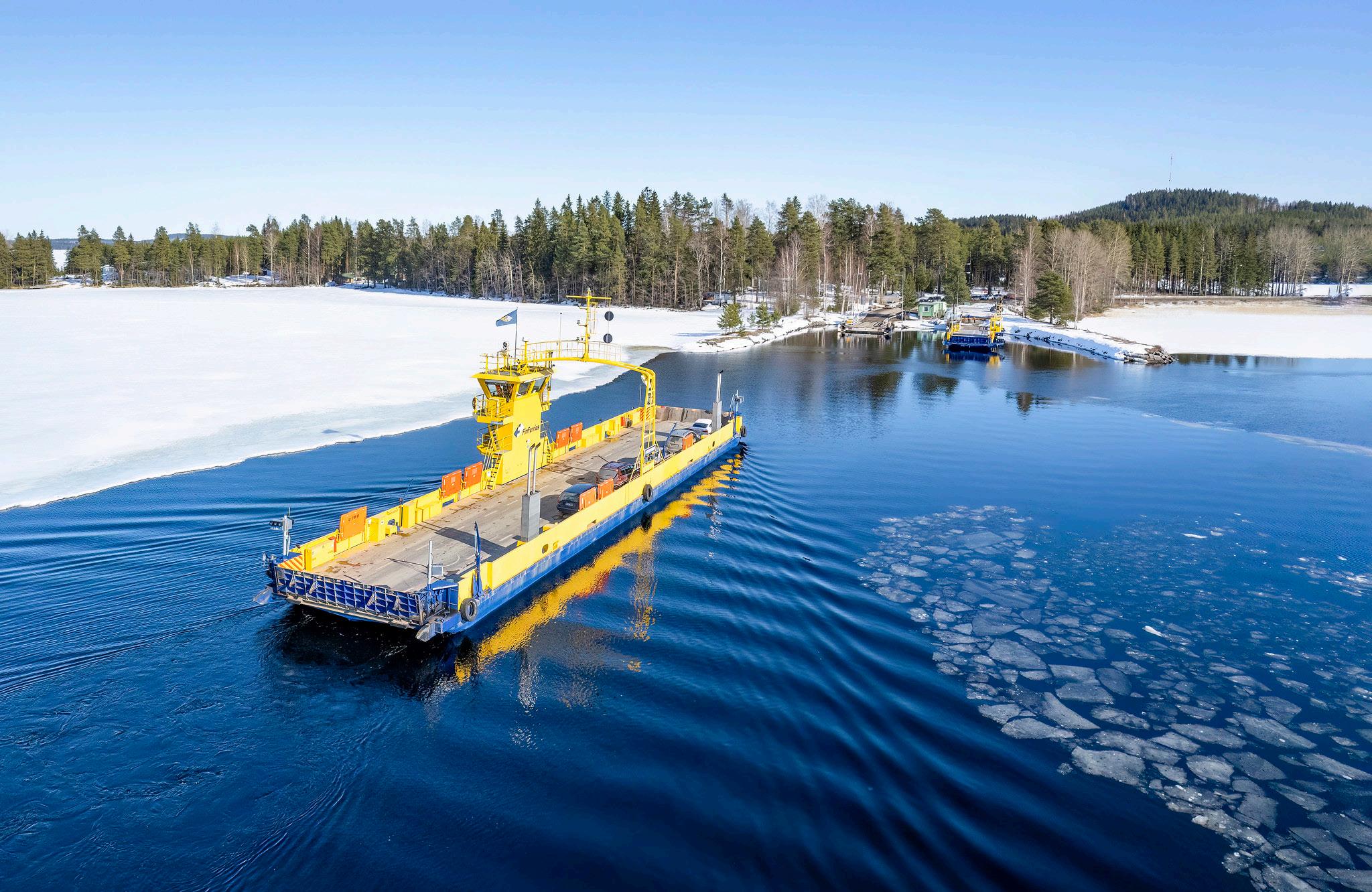
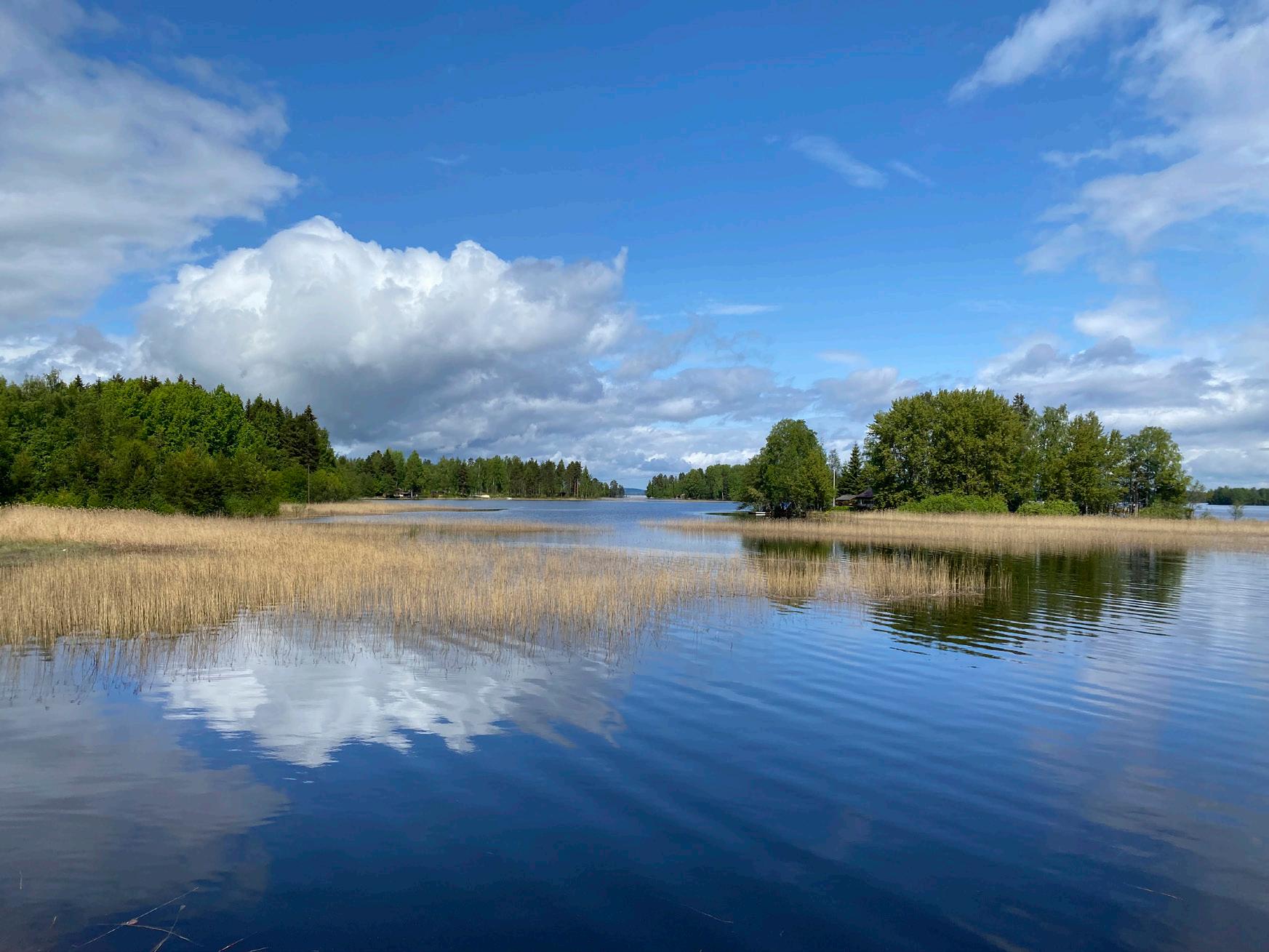
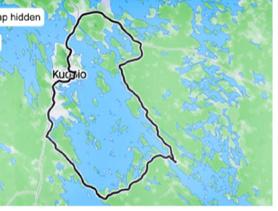
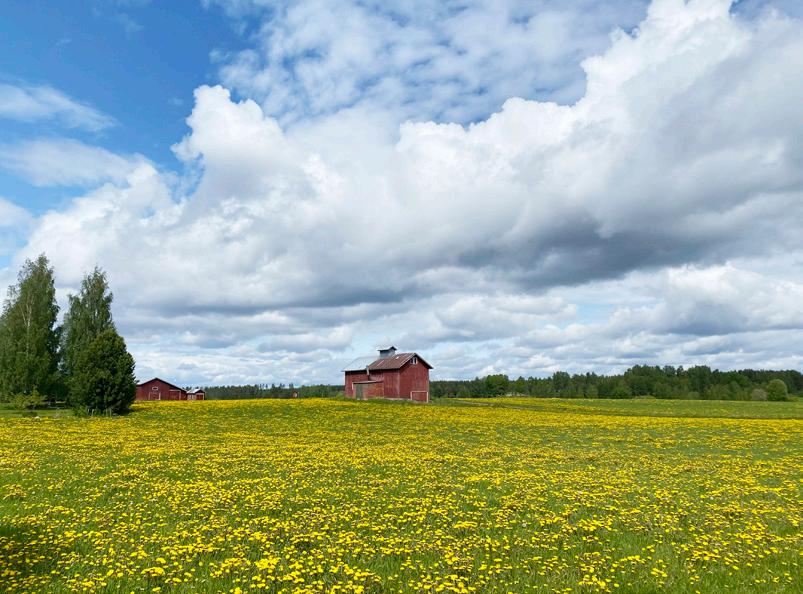
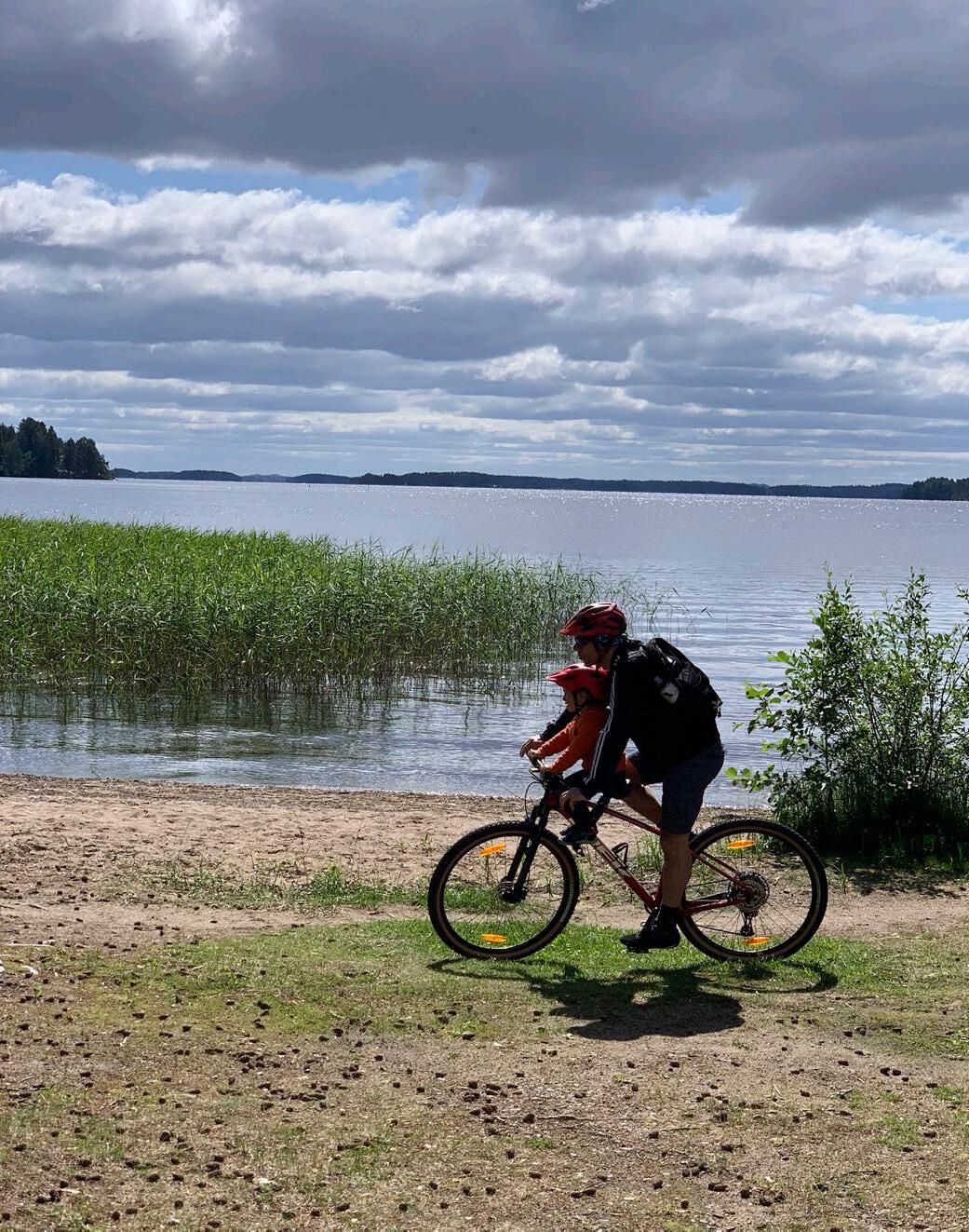
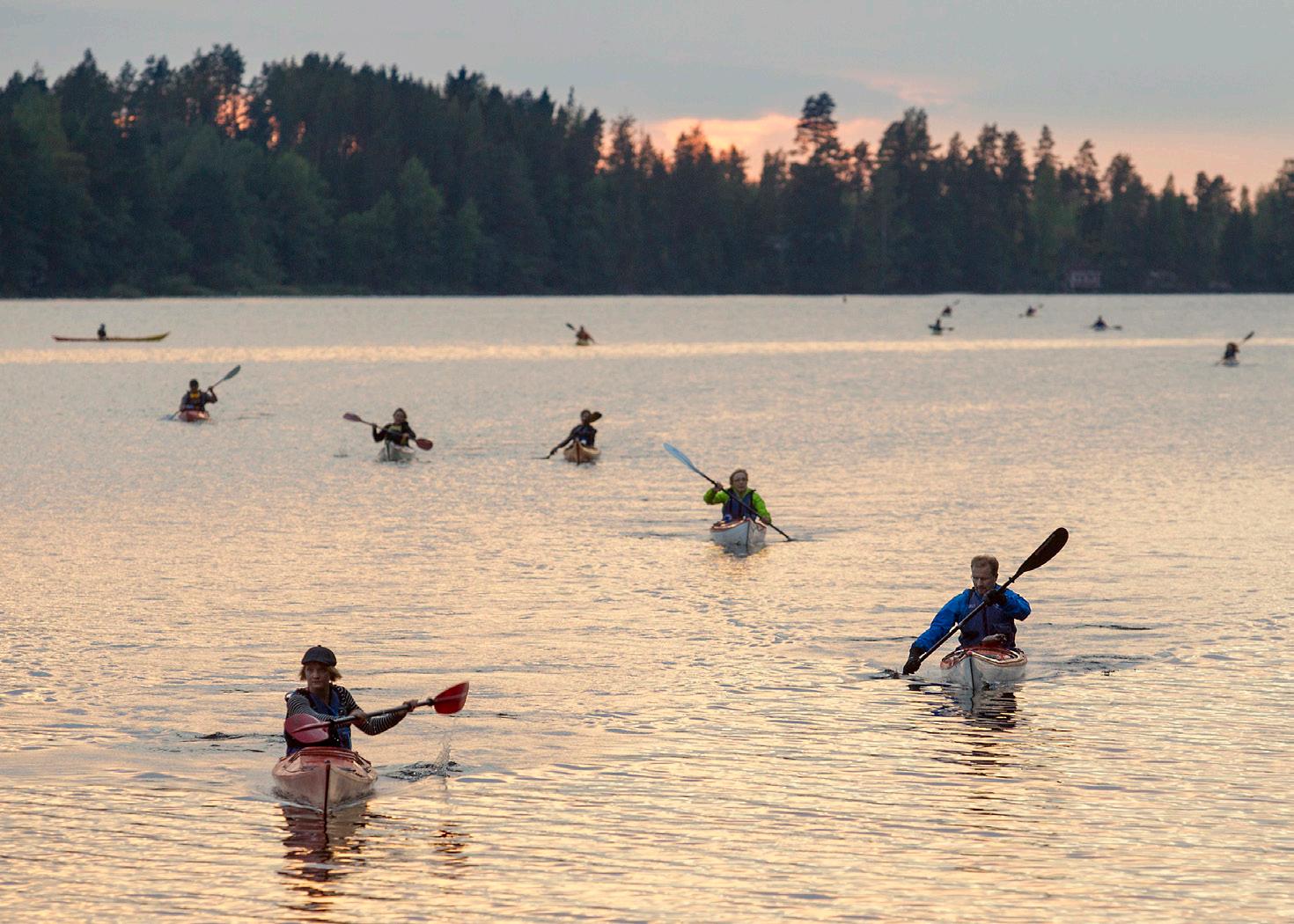
Boating Info: https://www.hellokuopio.fi/en/things-todo/activities/boating/
Rentals for kayaks, canoes, SUP and much more: https://seikkailukeskus.johku.com/ or https://www.kwsc.fi/rentals
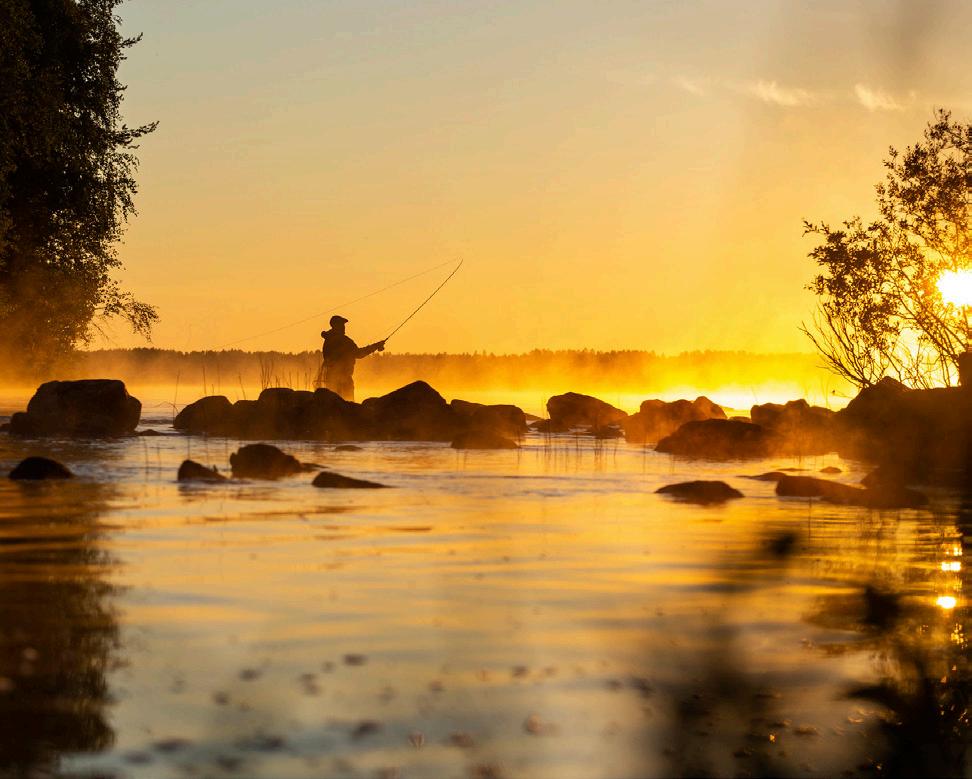
Visit one of Kuopio’s 59 public beaches for a swim or sunbathing. More info here: www.kuopio.fi/en/environment-and-housing/beaches-and-harbours/beaches/
Below: Väinölänniemen beach from the air, photographed by Wille Markkanen.
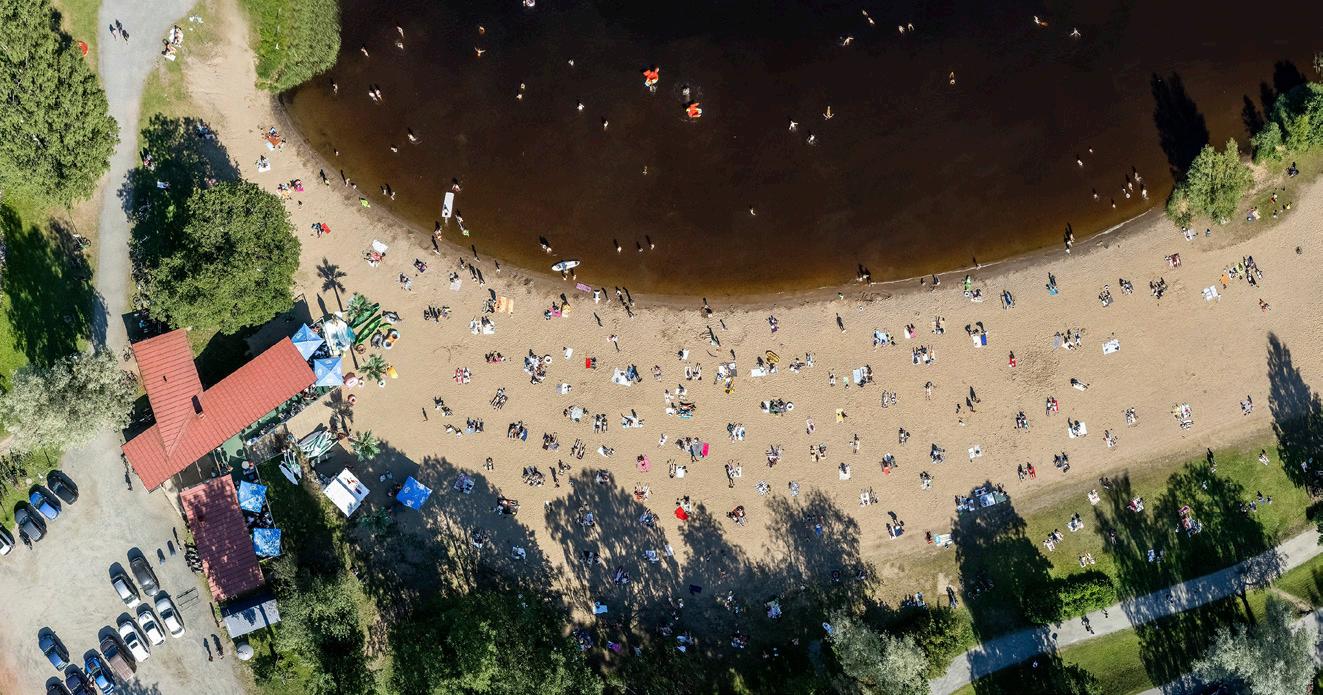
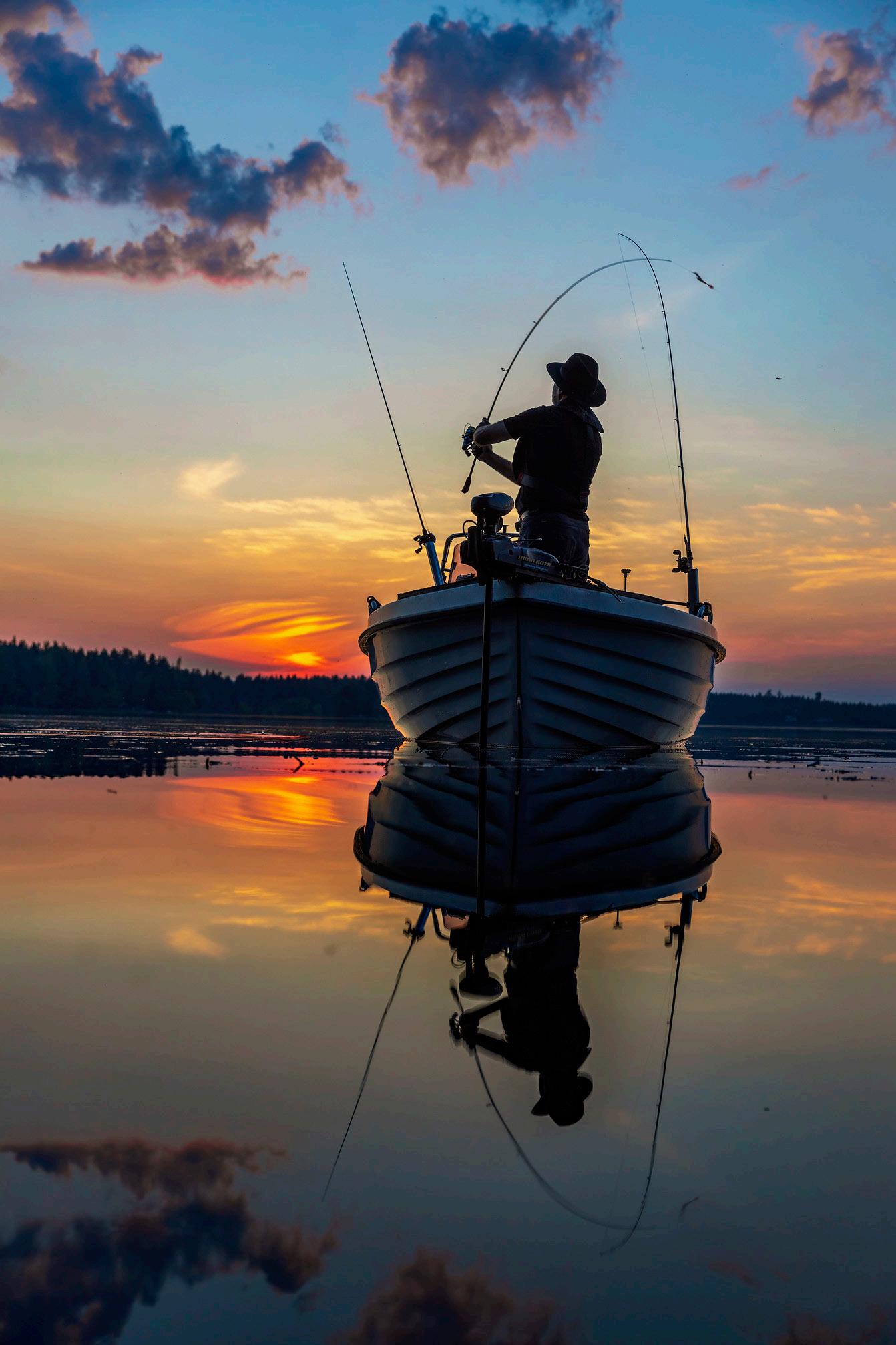
Fishing information: https://www.hellokuopio.fi/en/things-to-do/activities/fishing/ or book a guided fishing excursion: https://kuopiofishing.fi/
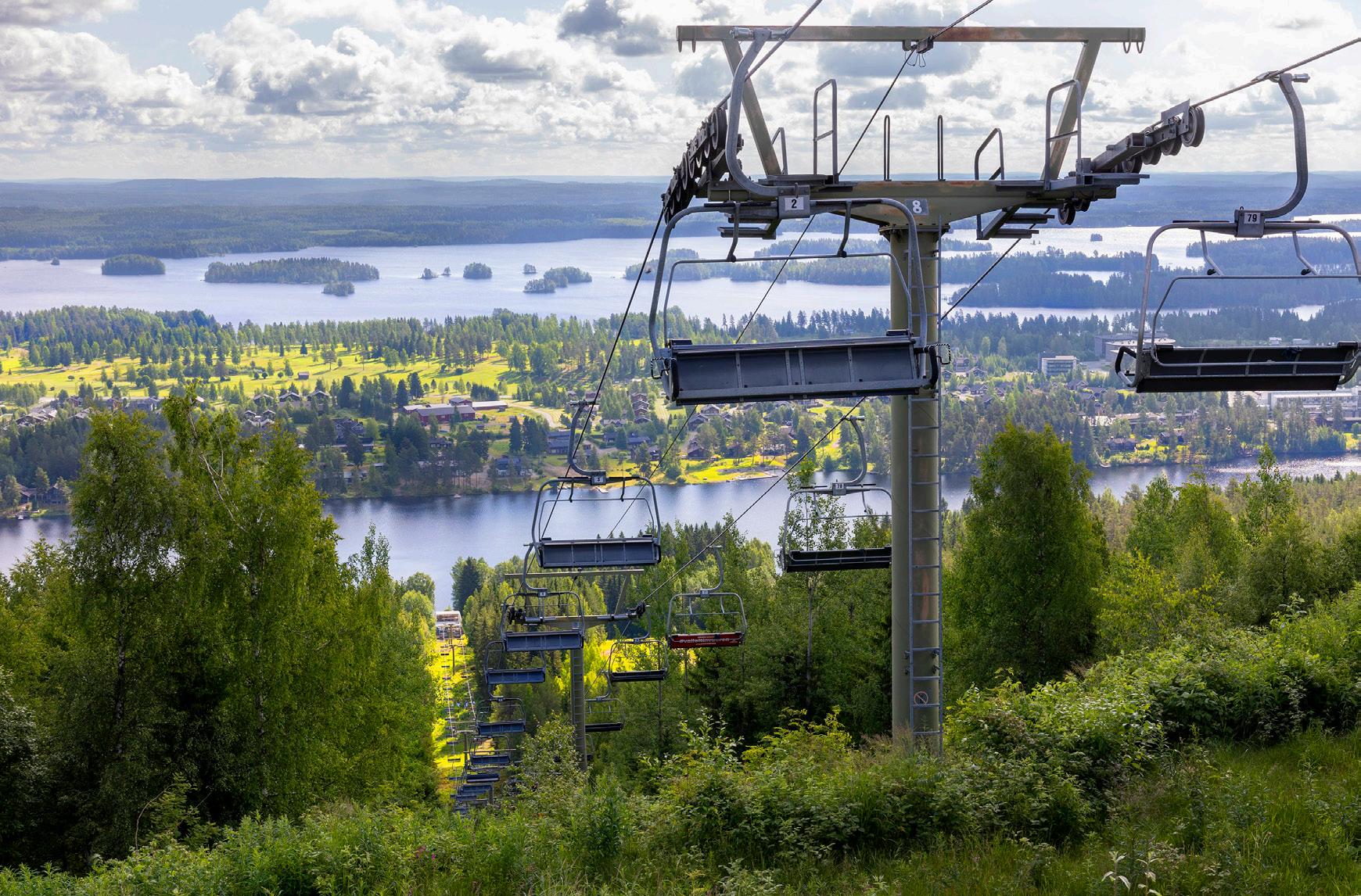
Consider Visiting Kuopio-Tahko in the Summer for a day trip or weekend
General info: https://www.tahko.com/en/ inspiration/summer
In Tahko you can experience the Finnish outdoors, less than 1 hour’s drive away from Kuopio city centre. Climb up Finland’s longest outdoors stairs (1054 steps, 800 metres from top to bottom). Info on Tahko Stairs: https://www.tahko. com/en/place/tahko-stairs/
If you seek a thrill, try ATV driving, mountain biking or ziplining.
Hiking trails in Tahko: https://www.tahko.com/en/things-to-do/activities/hiking-trails-and-natural-attractions/
Finland’s longest zipline: https://www. tahkozipline.fi/
Tip: Download the Kamoot app and get many more ideas for hiking and biking routes for all skill levels. You can even upload and share your own.
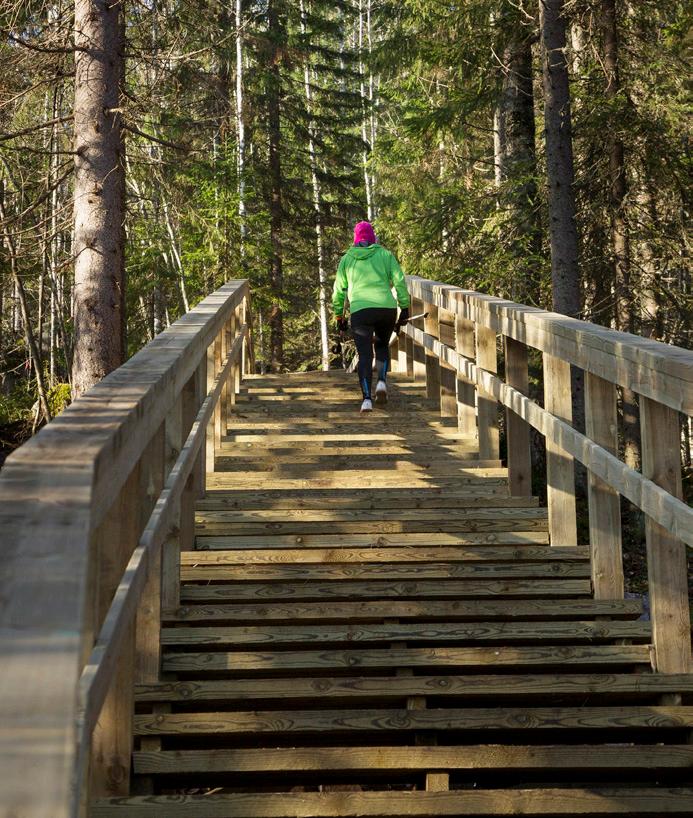

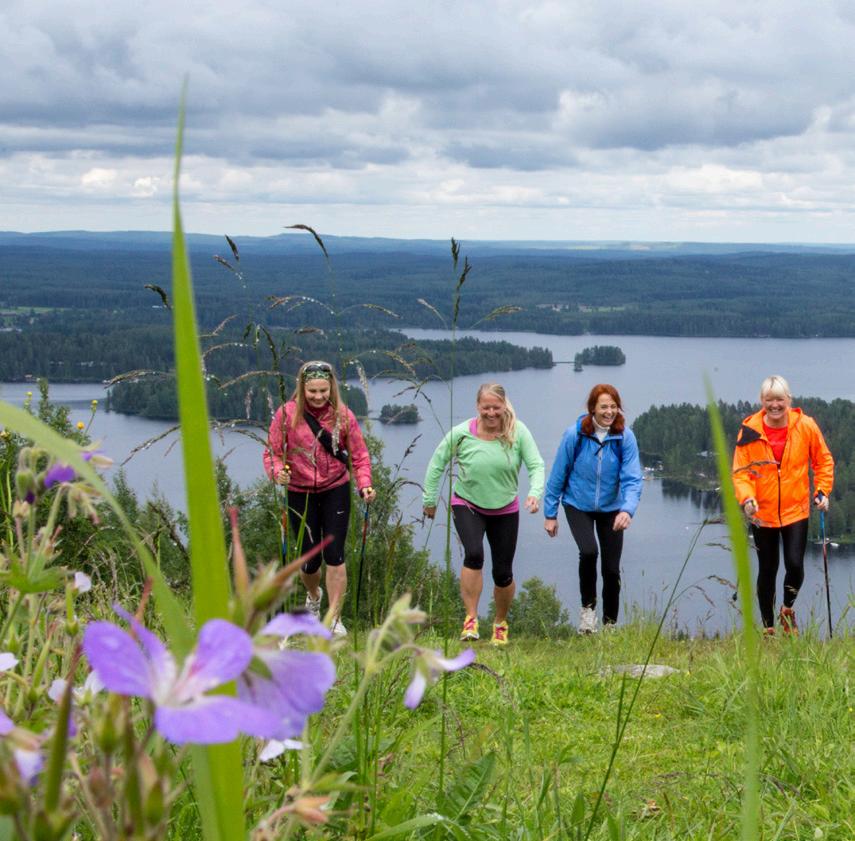
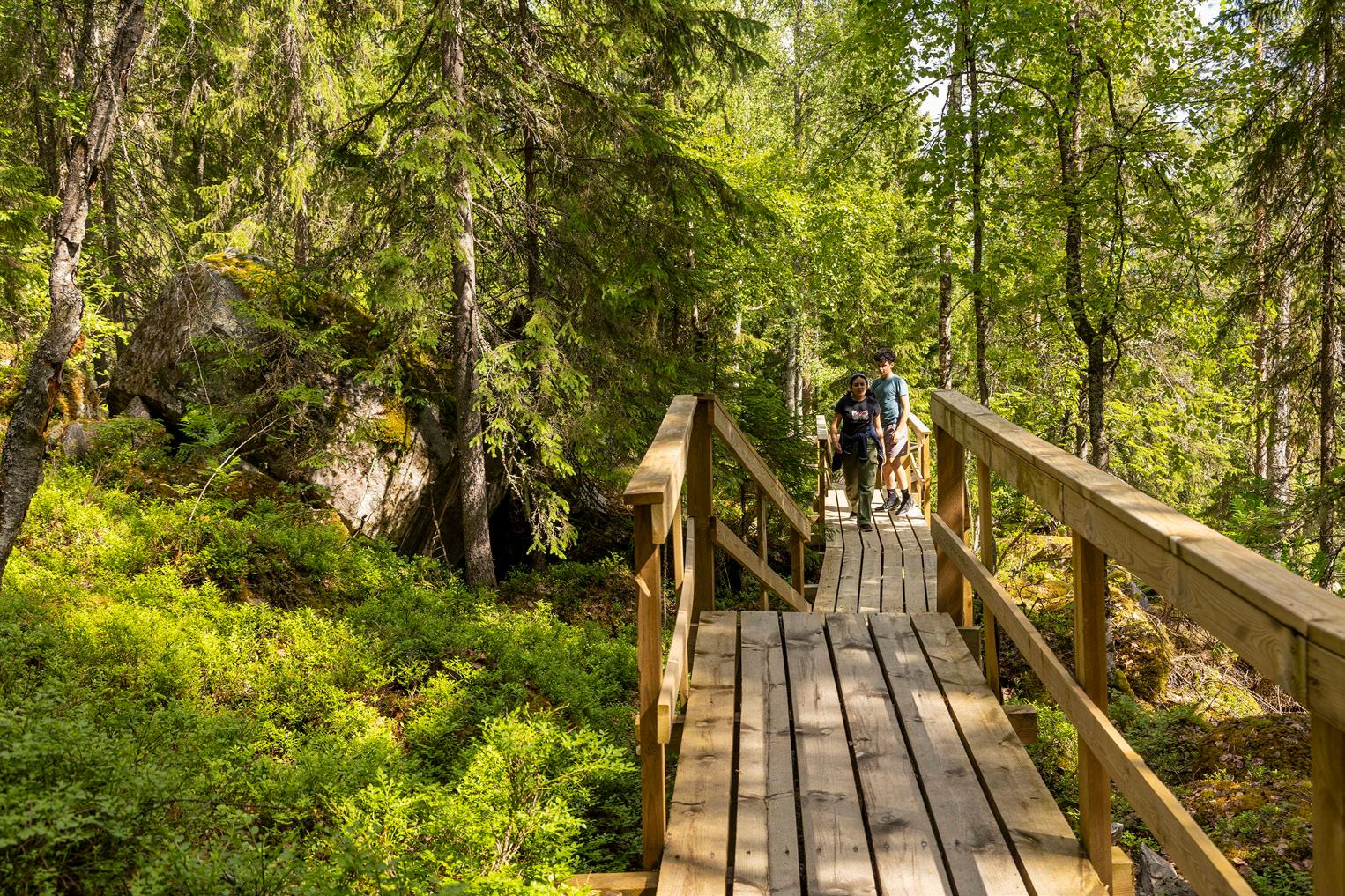
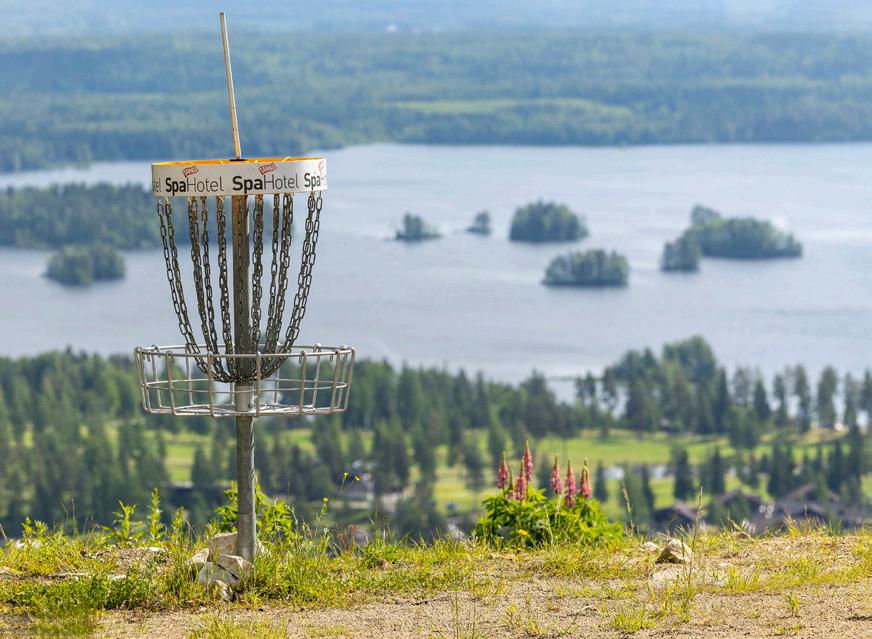
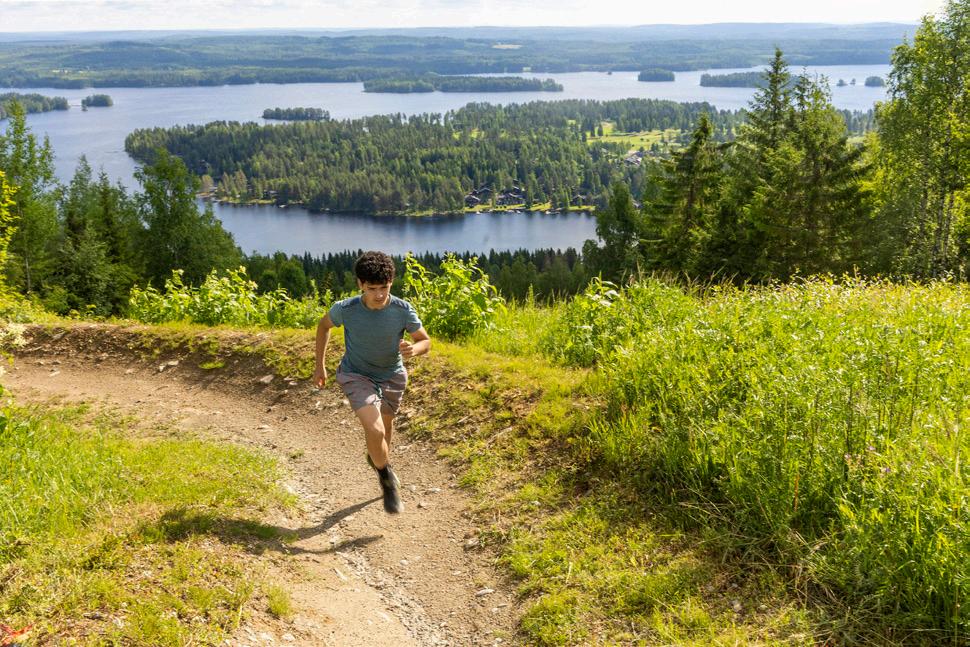
In the Nordic countries, the summer season is shorter, but nevertheless nature is vibrant, with wildflowers in gorgeous coulours, by Angelika Krieger
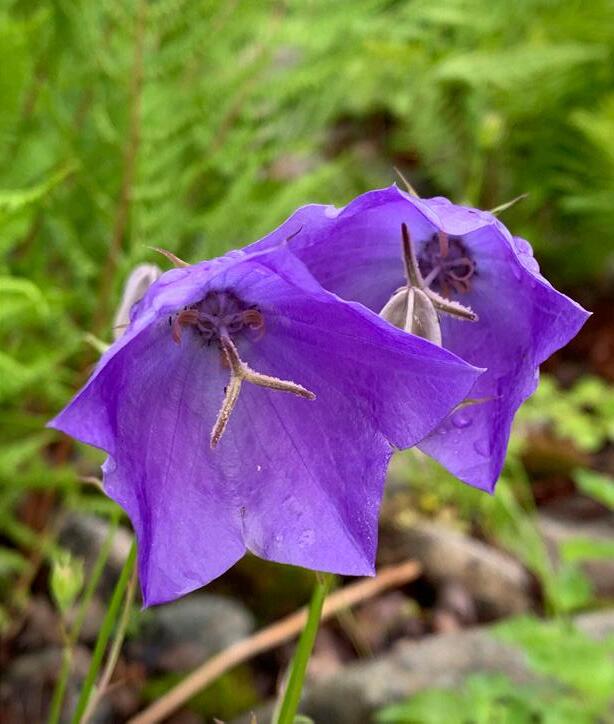
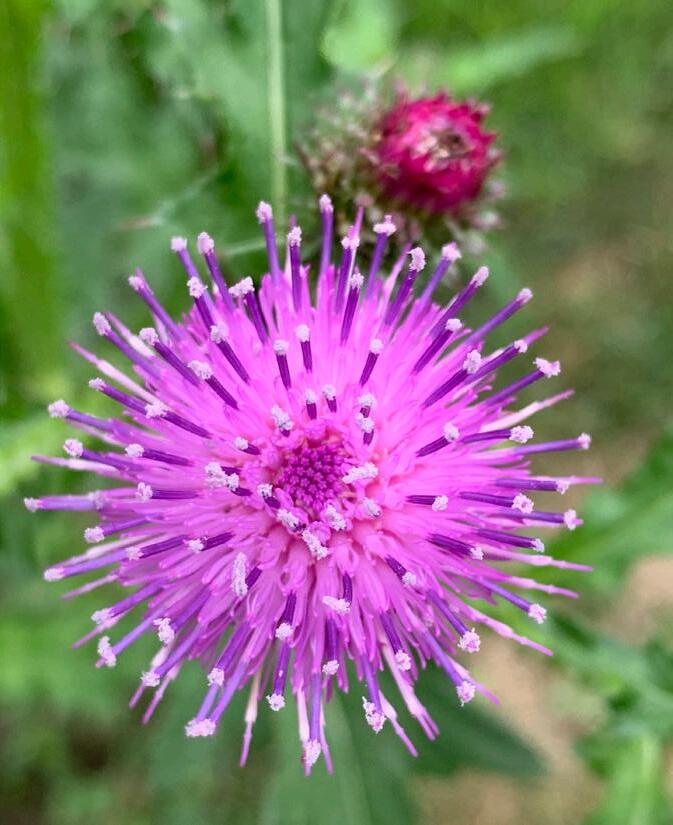
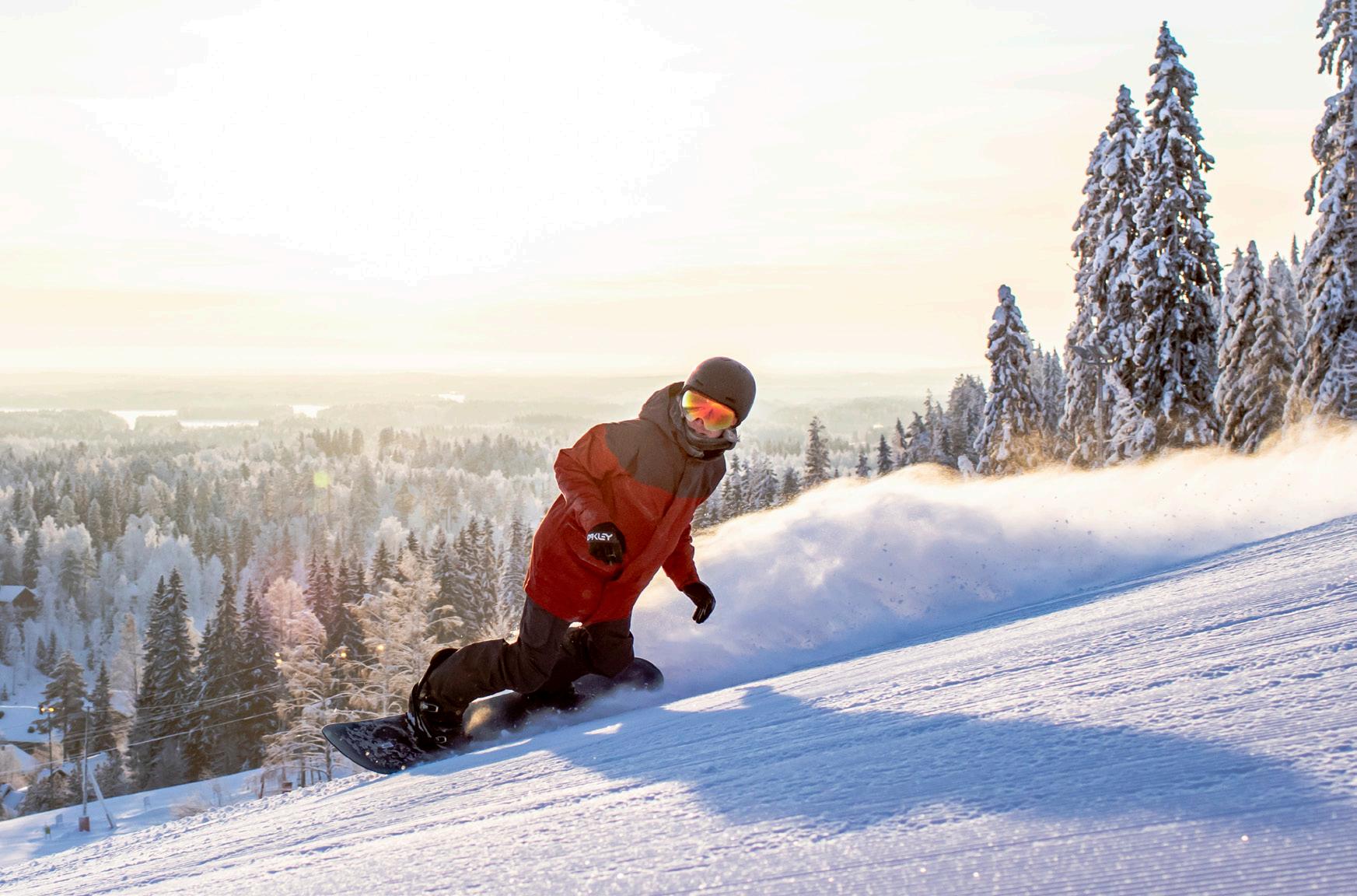
In wintertime, lots of fun awaits in the snow. Cross-country skiing is a big hit in Kuopio-Tahko and its surrounding areas. In fact, 600 km of cross-country skiing tracks are available in a typical winter. Tracks run on land, but also on the lake once it has frozen over. There is even an interactive map that can be used to plan how to get from one place to another using skis. It also shows current conditions of each track.
Snowmobiling, snowtubing, karting, dogsledding, ice skating, ice fishing and snowboarding are other popular activities in the winter, where snow can last as long as December to early April. Some facilities such as Luoto and Saana offer ice swimming.
More info on ice swimming can be found here: https://www.hellokuopio.fi/en/thingsto-do/activities/ice-swimming/
Along some skiing tracks one can find cabins offering shelter. Pilpan Maja skiing cabin is a popular place to stop, with ski-
https://www.tahko.com/en/inspiration/winter/ https://www.tahko.com/en/things-to-do/onsnow-and-in-slope/
ing tracks leading to the doorstep of the cottage. Guests can purchase a warm drink or a snack there.
More info: https://www.hellokuopio.fi/en/ places/pilppa-hut/
The most variety of offerings can be found in Tahko, a popular holiday destination for locals and tourists alike. A true winter lover’s dream, Tahko can be experienced as a daytrip if you are staying in the city of Kuopio. Or indulge with an overnight stay in one of the many hotels and holiday cottages there. Kuopio-Tahko has a vast number of offerings, which can be found on its dedicated website:
Activities in Tahko include Reindeer Rides, downhill skiing, riding mountain fat bikes on ice, ice karting and much more.
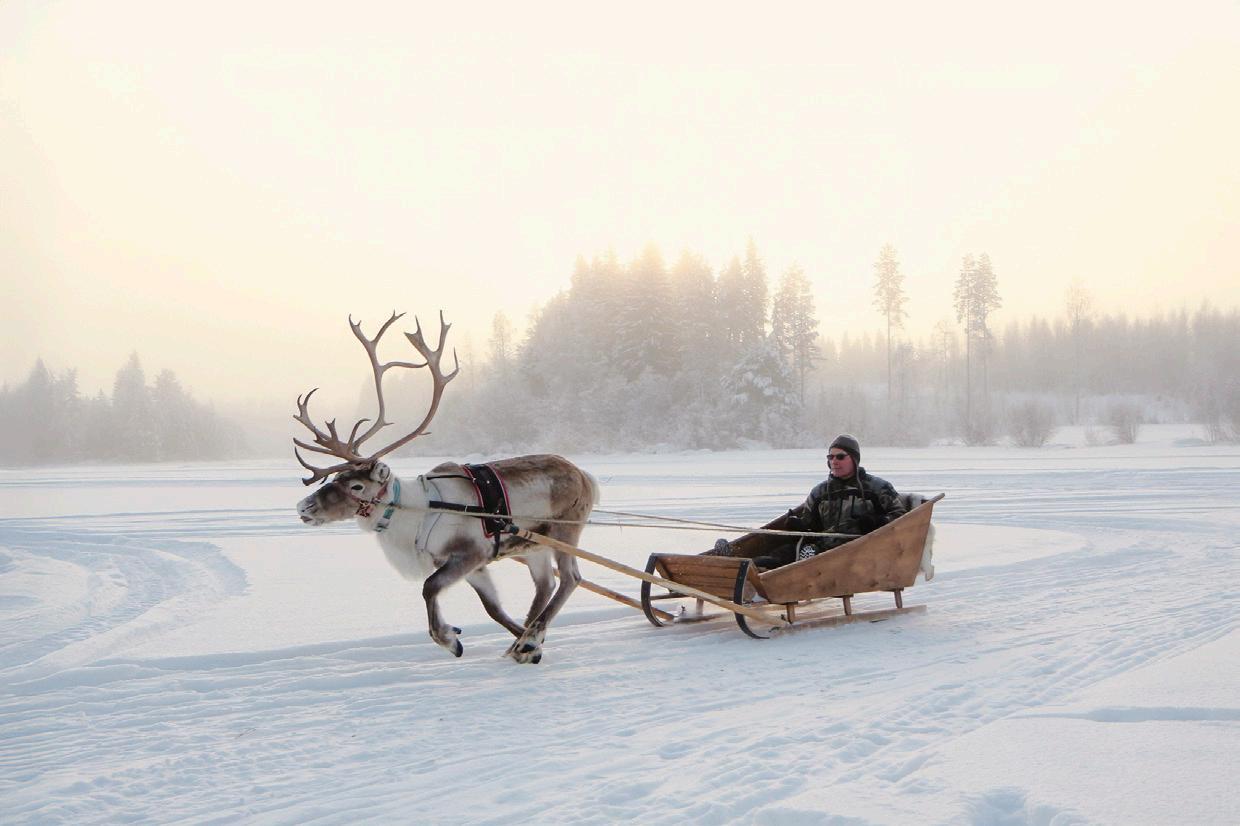
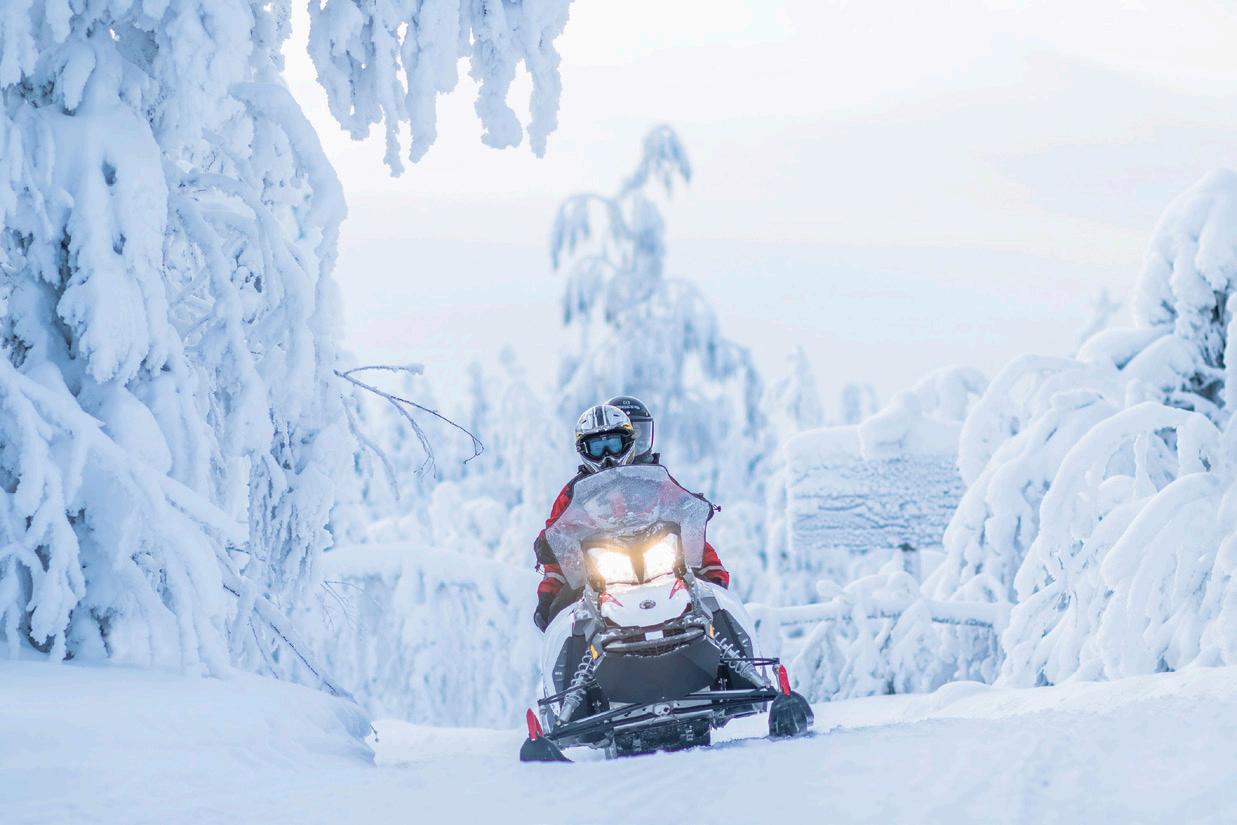
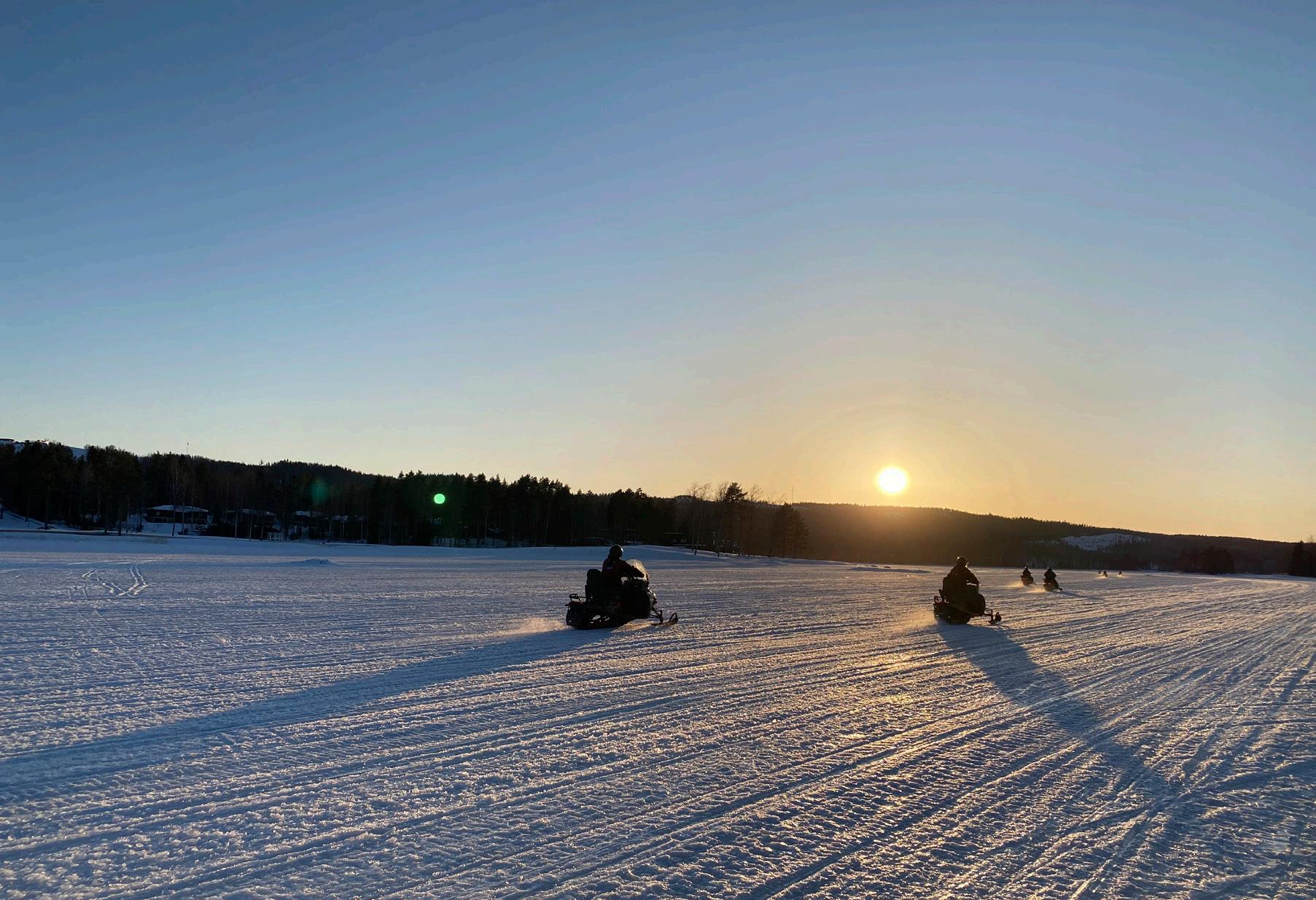
If you want to stay close to the City of Kuopio and still wish to have a magical experience, a few recommendations: Horse Sledding can be experienced at Kontilla on Puijo hill, less than 3km from Kuopio market square. For husky sledding give Sawo Husky a try, just 30 minutes South of Kuopio city centre. At both locations, Kontilla and Sawo Husky, you can enjoy a warm meal as well as hot drinks after your sledding adventure in a wooden cottage. The most romantic way to experience the Finnish countryside.
If you seek more of a thrill, you can give ice floating in a thermal survival suit a try. You will need to travel a further for this experience.
Konttila https://www.elamystilakonttila.fi/
Sawo Husky https://www.sawohusky.fi/
Ice Floating, offered e.g. in Savonlinna, Varkaus and Puumala
https://lakelandgte.fi/en_US/winter/ice-floating-savonlinna
https://lakelandgte.fi/en_US/winter/ice-floating-in-puumala
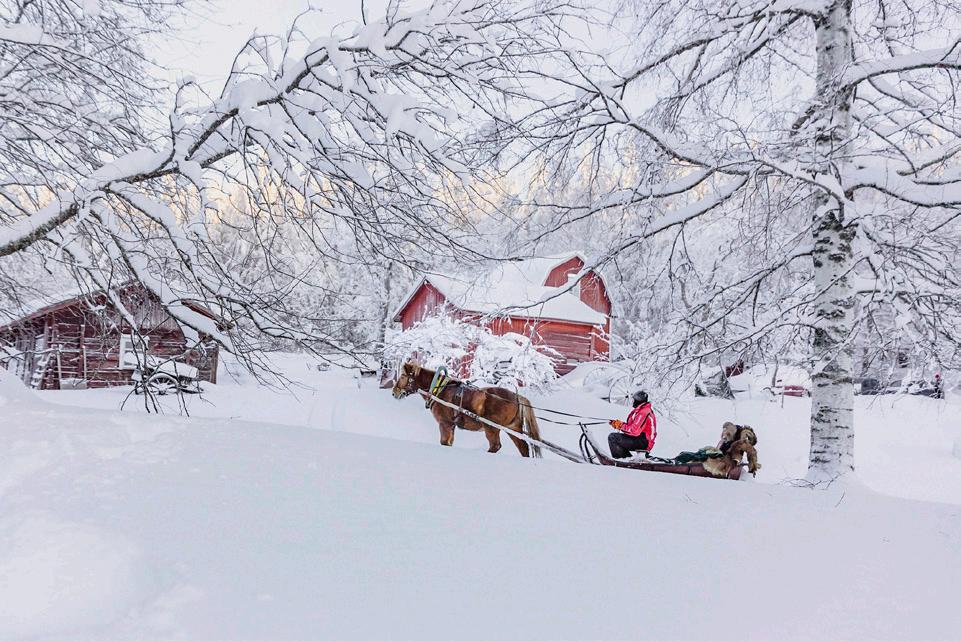
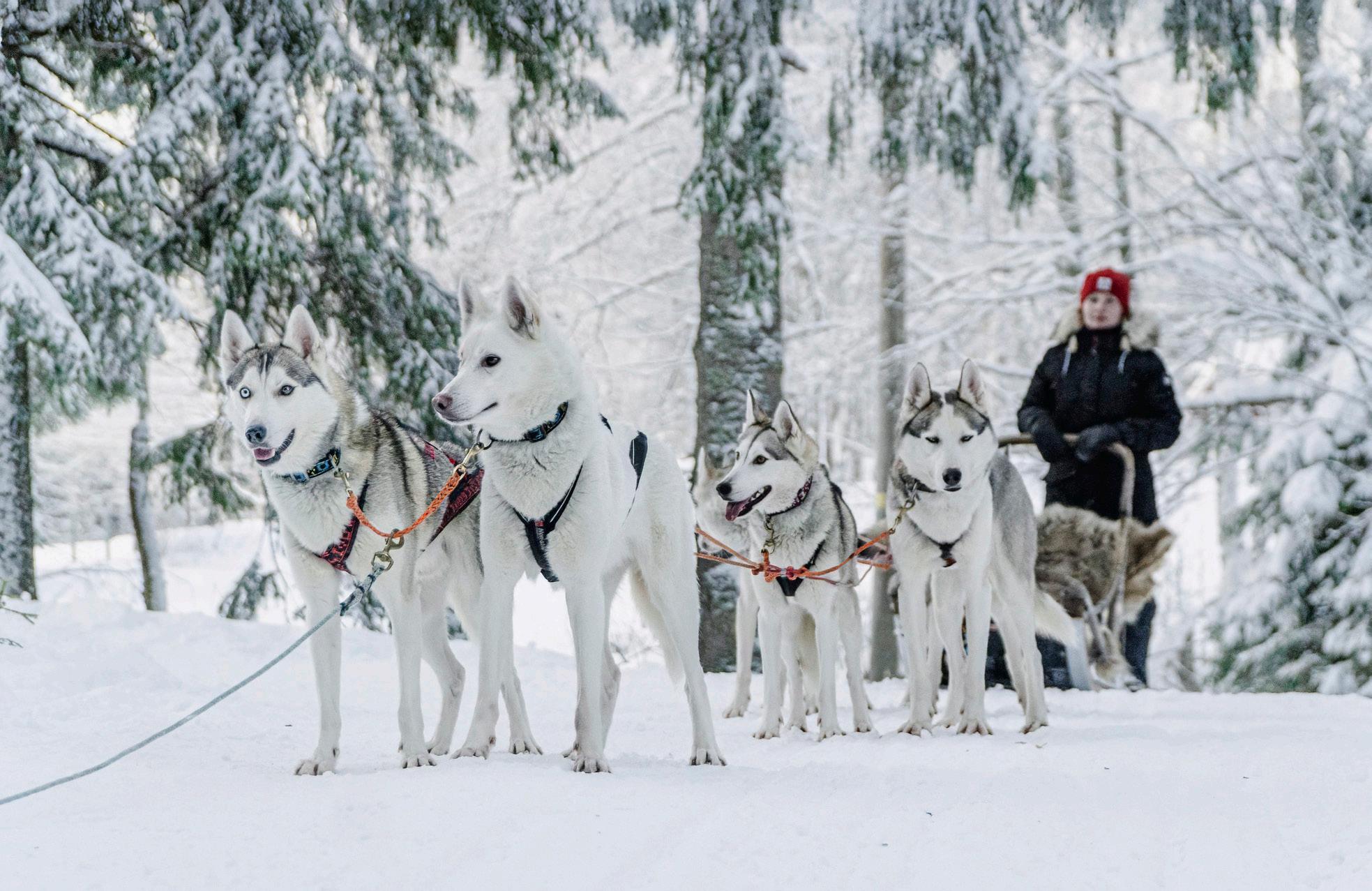
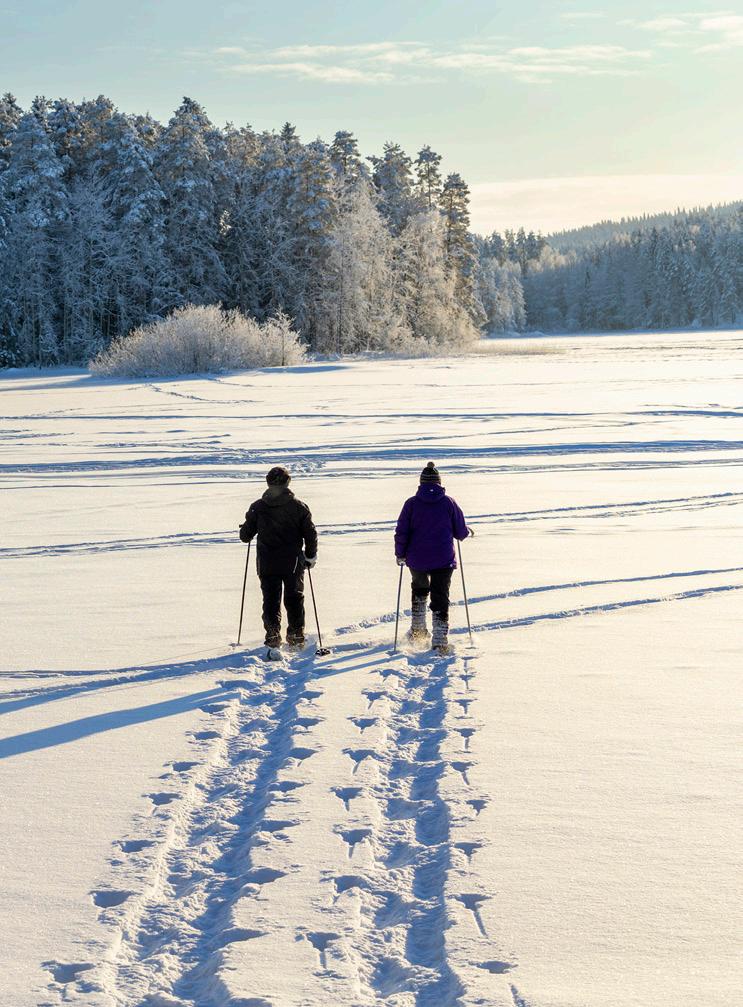
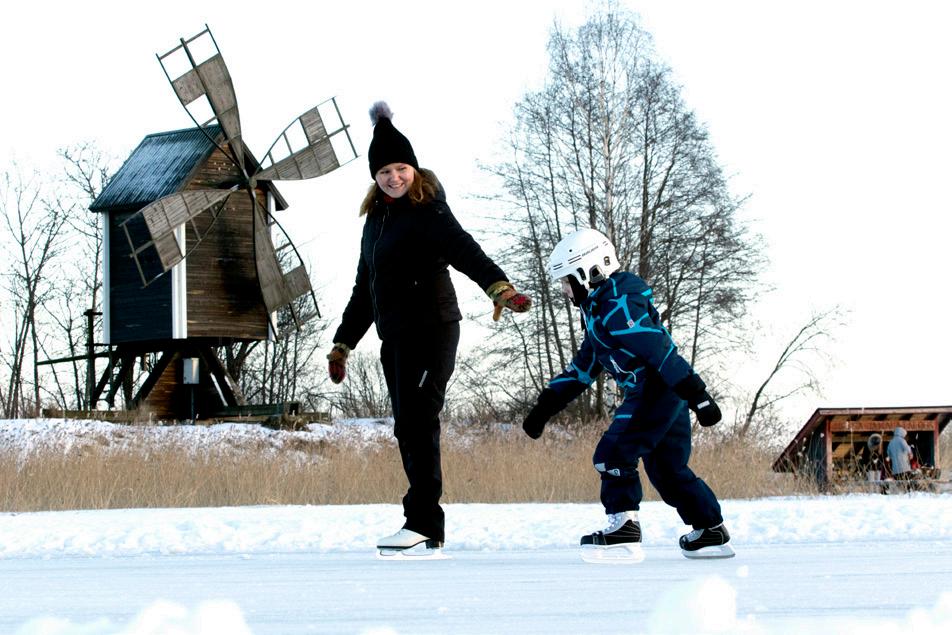
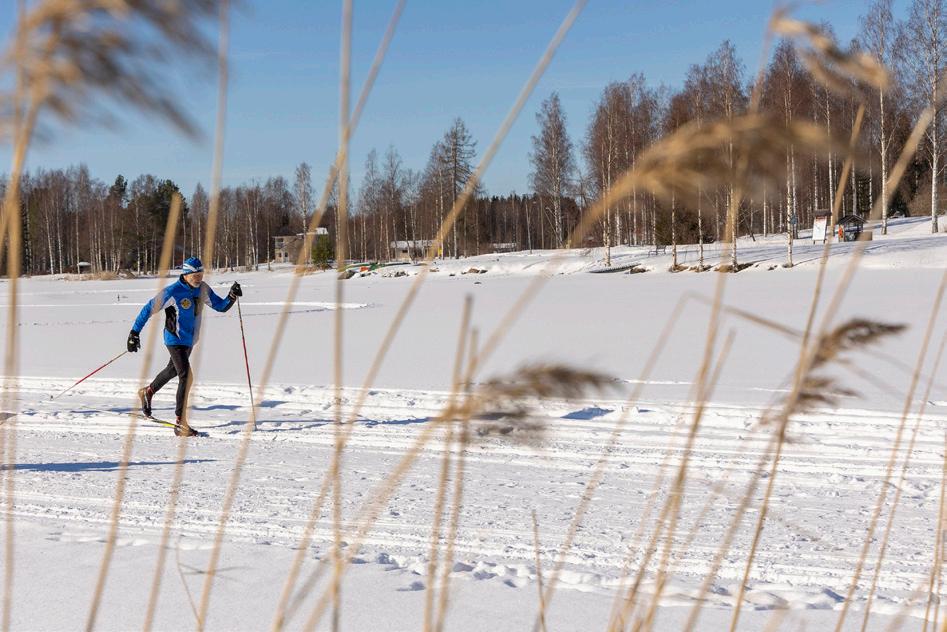
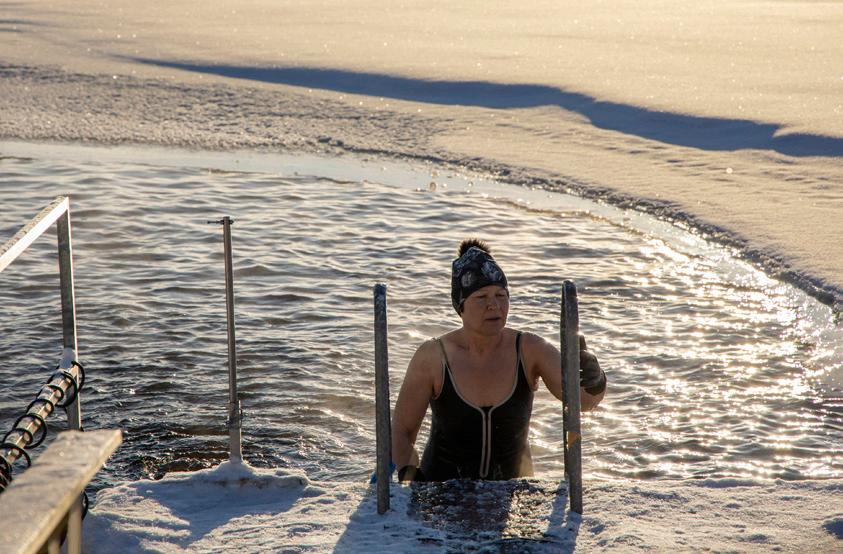
Up-to-date status on skiing tracks: https://kuopio.fluentprogress.fi/outdoors
Overview of skiing tracks: https://www.kuopio.fi/en/leisure-and-well-being/kuopio-in-motion/sports-facilities/winter-sports-facilities/cross-country-skiing-tracks/
General Info:
https://www.hellokuopio.fi/en/things-to-do/activities/cross-country-skiing/
Puijo Peak is the highest point in Kuopio. It offers a wide range of activities. If you want to integrate a walk into your daily routine while not leaving the city, you may want to hike up Puijo Hill. Different nature trails lead to the peak through the woods, or you can walk along the road.
On top of the hill, you find parking, a lodge with an outside deck, a small gift shop with local specialties and of course Puijo Tower. The tower is 75 m high. It offers a viewing platform, a restaurant with world class cuisine and also a café with locally baked goods, all while enjoying the gorgeous views. Everything you can eat on Puijo Tower has been sourced locally. In fact, all ingredients only come from as far as the eye can see. This concept guarantees healthy, regional food.
In summertime, ice cream will be sold in an ice cream stand next to Puijo Tower. Did you know that Finns consume more ice cream per capita than any other Eu-
ropean country?[45] A tradition our son is only too happy to adopt. There are lots of ice cream flavours, ranging from well known scents to unique flavours. For example, among the many varieties to choose from on Puijo Hill, you can also find a raspberry-licorice ice cream. Finns love licorice.
Puijo Hill is a hub for winter sports too. Cross country-skiing, riding winter fat bikes and snow shoeing are just some of the fun activities that can be done in wintertime.
Puijo Hill offers extreme sports, such as ski jumping. If that sounds too risky, you can try the digital alternative wearing 3D glasses. Fly 130m from Puijo Ski Jumping Hill, all while your feet are safely on the ground. Or give snow tubing a try, lots of fun not just for little ones. At Puijo, forest adventures are guaranteed year-round for the whole family.
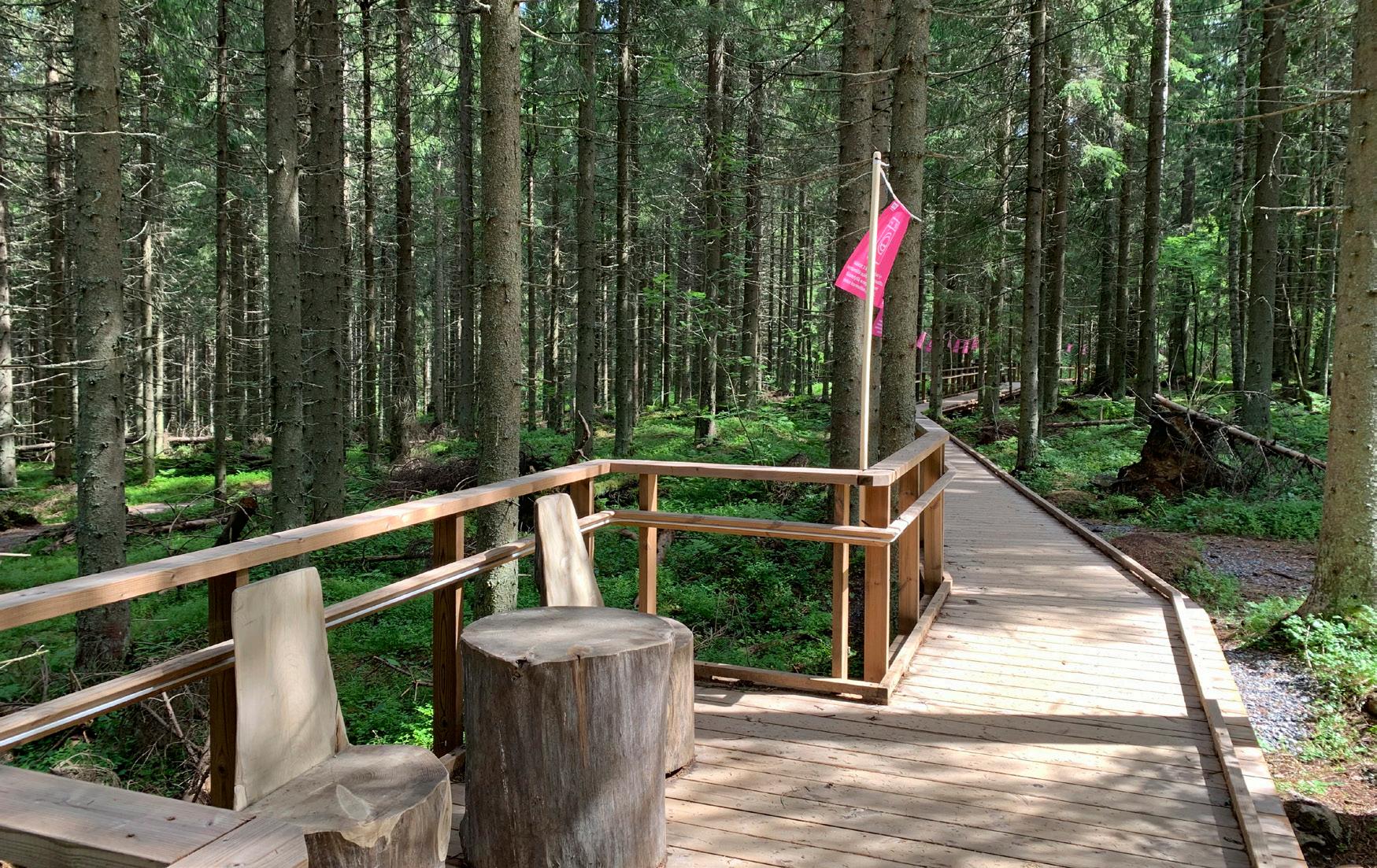
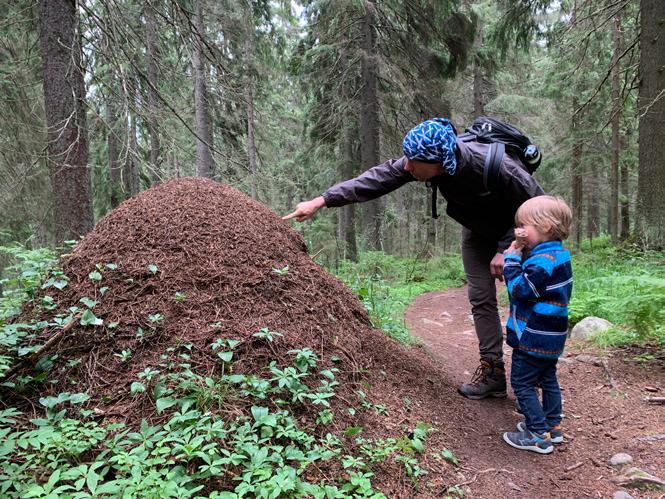
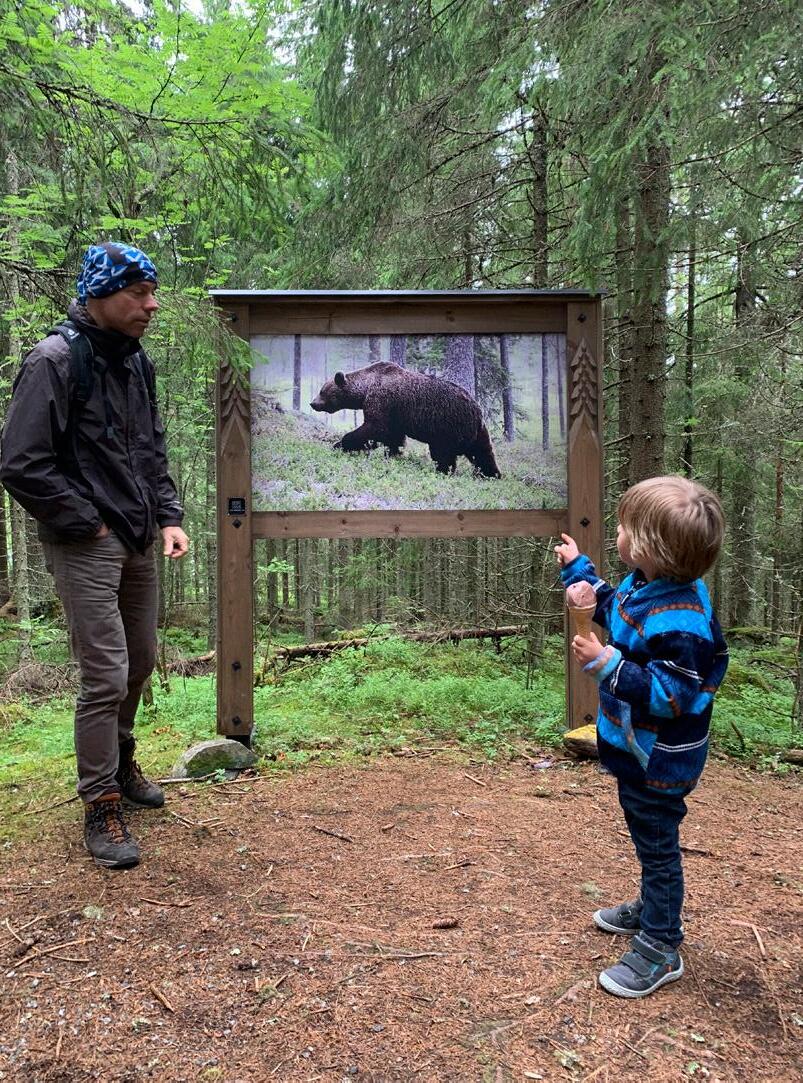
Pictured: Family time on the nature trails on top of Puijo Peak. A variety of animals are being featured, all of which call Northern Savo their home. Photos by Angelika Krieger
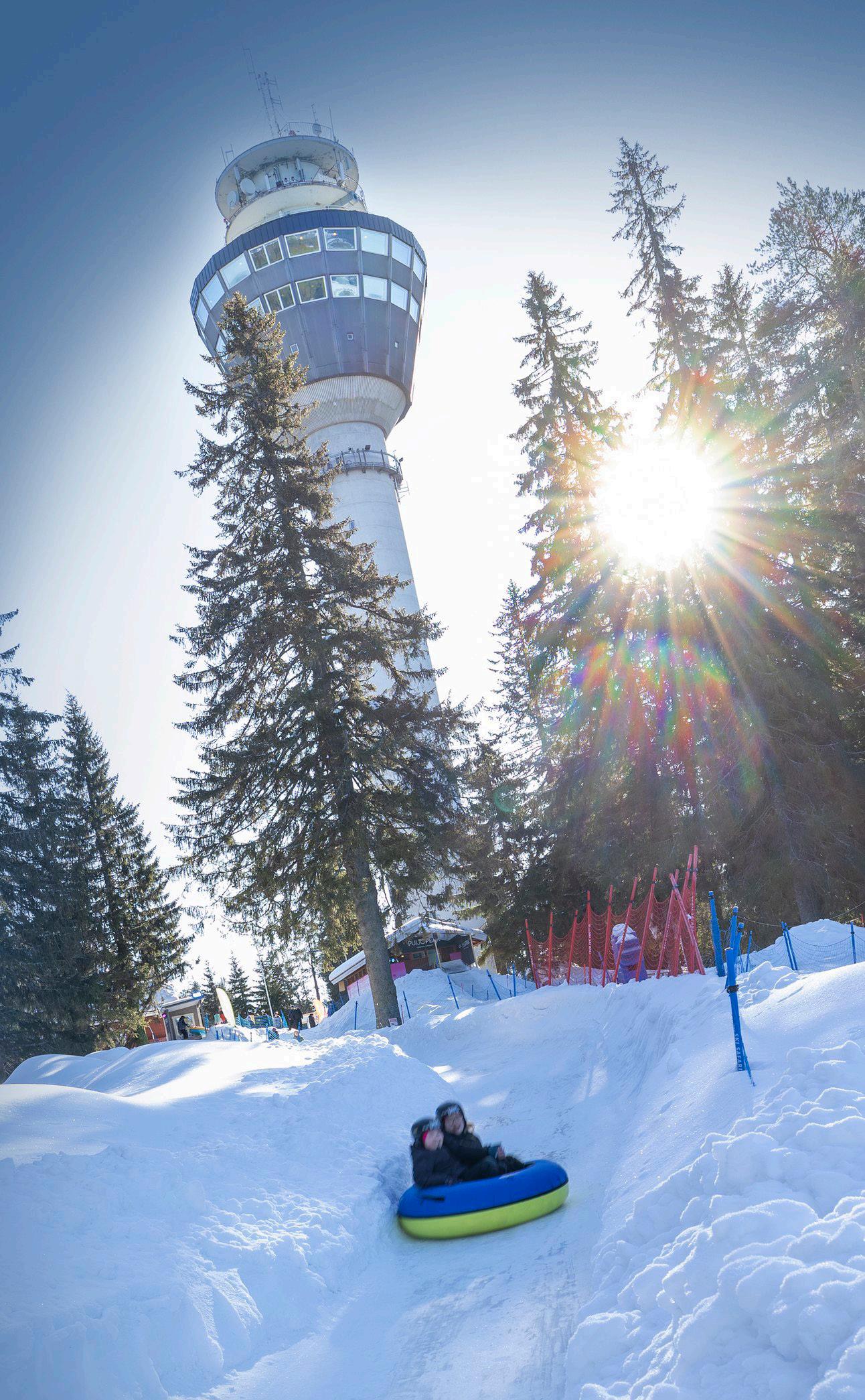
Tip: At Puijo Tower different winter sports can be done such as snow tubing, which is offered for adults & children alike. Photo by Vicente Serra
Puijo Peak
History of Puijo Tower[46]:
• The first Puijo Tower was built of wood in 1856. It was 16 m high.
• The second Puijo Tower was erected 50 years later. It was a stone tower with 24m in height.
• The present Puijo Tower dates back to summer of 1963, and is 75 m high.
• The highest viewing level is 306 m above sea level and 224 m above Lake Kallavesi.
visit: www.puijopeak.fi
Hiking Trails on Puijo Hill can be found here: https://www.hellokuopio.fi/en/places/nature-trails-in-puijo/
If you would like to watch a sports game, consider visiting a live match. Kuopio’s most prominent sports clubs are KuPS, its football team, and Kalpa, its ice hockey team. Both teams have been awarded gold medals recently: KuPS for being the winner in the Finnish top-tier football league ‘Veikkausliiga’ in 2024 and getting the title again in 2025, as well as Kalpa for being the winner of Finland’s top-tier ice hockey league, the Liiga in the 2024-25 season. Phenomenal wins for Kuopio, which was celebrating its 250th anniversary in 2025.
Kuopion Palloseura (KuPS)
Sport: Football (Soccer)
League: Veikkausliiga (Finnish top-tier football league)
Stadium: Väre Areena
Overview: KuPS is one of the most successful and popular football clubs in Finland, founded in 1923. The club has a rich history and has been a regular contender in the Finnish top division.
Achievements: KuPS is one of the most successful football clubs in Finland. 68 seasons in the main league, seven Finnish championship wins, thirteen silver and three bronze medals entitle them to fourth place in the all-time Finnish Premier league honorary table (‘marathon table’ or in Finnish ‘maratontaulukossa sijaan’). After their league title success in 2024, KuPS added a star above their badge in April 2025 in recognition of the club achieving 10 league titles (7 for the men and 3 for the women’s team).
More information of KuPs history: https://kups.fi/historia-galleria/
All Time Premier League Honorary Table: https://www.rsssf.org/tablesf/finalltime.html
Official Website of the Club: https://kups.fi/
KalPa (Kuopion KalPan jääkiekkoseura)
Sport: Ice Hockey
League: Liiga (Finnish top-tier ice hockey league)
Arena: Niiralan Monttu or Olvi Arena (Kuopio)
Overview: KalPa is an iconic and successful ice hockey team in Finland. The team has a long and proud history, dating back to 1929, and has been a regular participant in Liiga, Finland’s top ice hockey division. They have earned a loyal fan base and are well-known for their strong performances, especially in recent years.
Achievements: Kalpa has won the Liiga Championship in the 2024-25 season, leading to four medals overall in the Liiga: gold in the 2024–25 season, silver in the 1990–91 and 2016–17 seasons and bronze in the 2008–09 season.
At an international level, Kalpa has won the 2018 Spengler Cup, where it beat Team Canada 2–1 in a shootout final. The tournament took place in Davos, Switzerland.
Official Website of the Club: https://kalpa.fi/en-gb
Other prominent sports teams include the Kuopio Steelers, an American Football team, founded in 1991 in Varkaus, which moved to Kuopio in 2006. The Steelers have won the Maple League (i.e. the top professional American football league in Finland) three consecutive years in a row: 2020, 2021, 2022.
https://www.hellokuopio.fi/en/featured/kuopio-steelers/ or https://steelers.fi/
Kuopio also has a basketball team called Linkki: https://linkki.fi/
Kuopio’s volleyball teams are called Savo Volley (men) and Puijo Wolley (women).
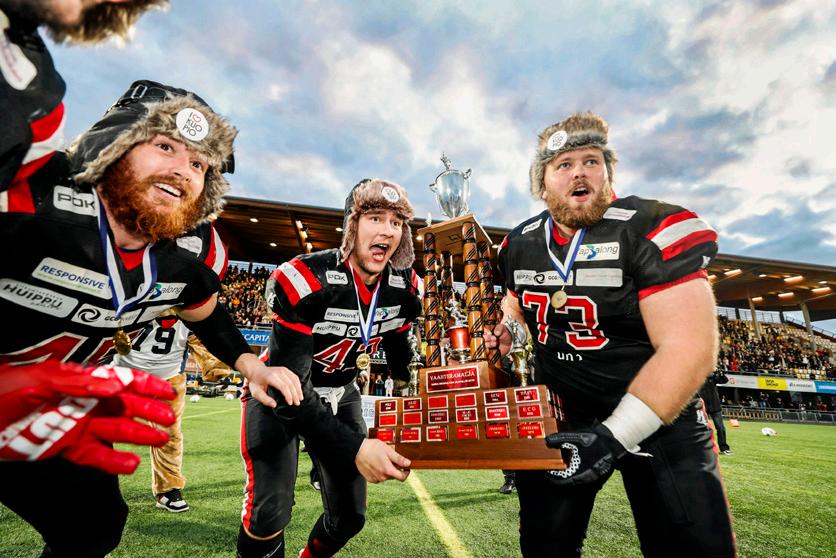
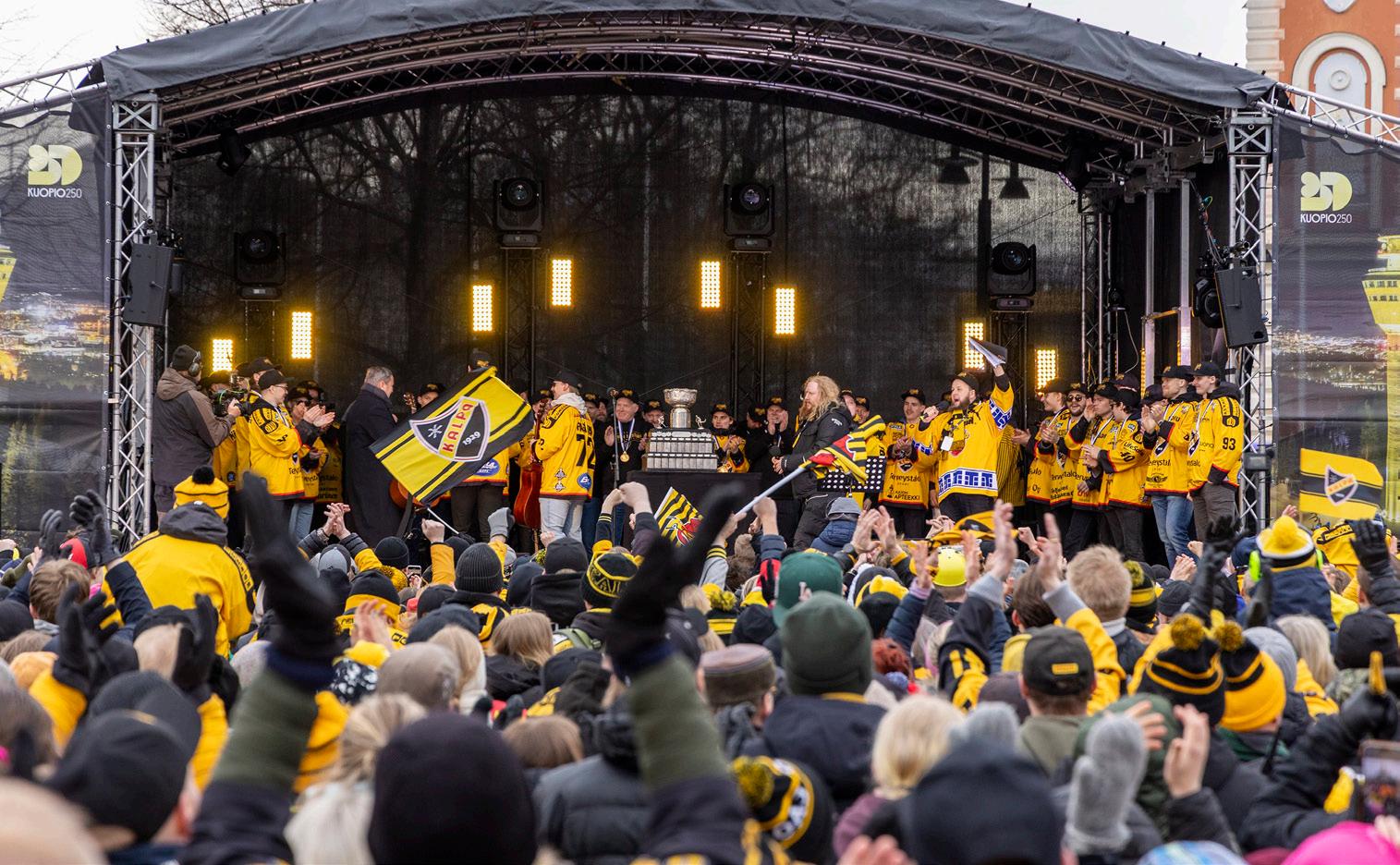
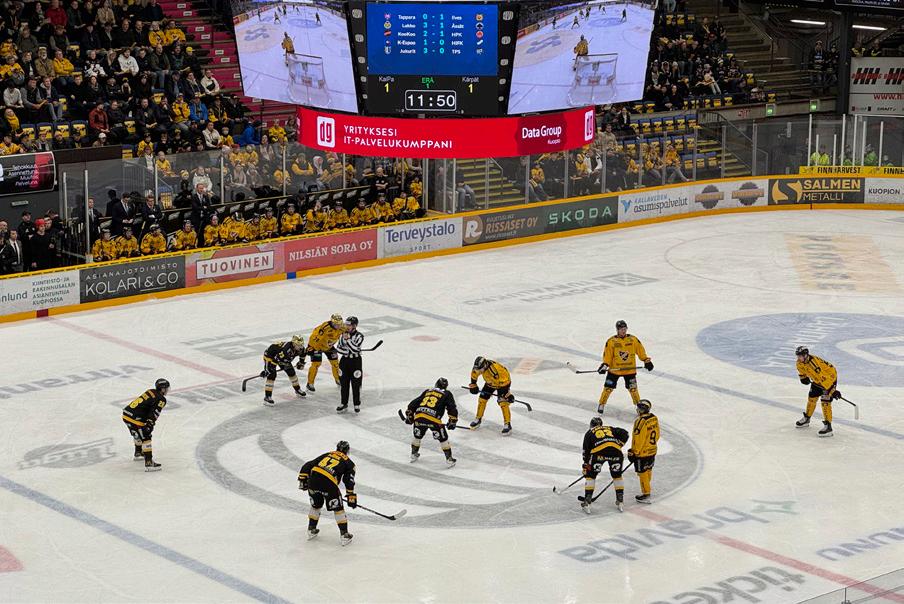
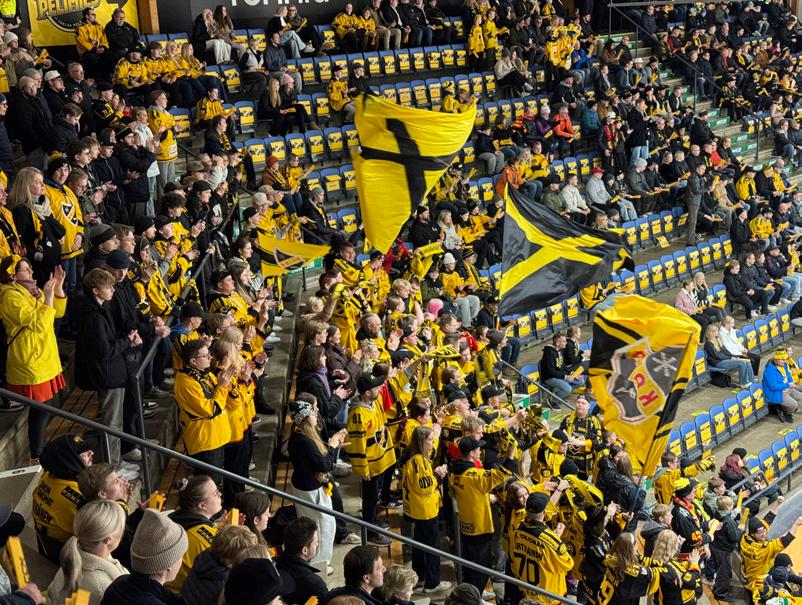
Kuopio has a lot of outdoor play activities for kids to offer. I have never lived in a country before that has such a high density of playgrounds per km². Attached a link with information: https://www.kuopio.fi/en/leisureand-well-being/kuopio-in-motion/sports-facilities/outdoor-sports-fields-tracks-and-exerciseareas/nearby-sports-facilities/
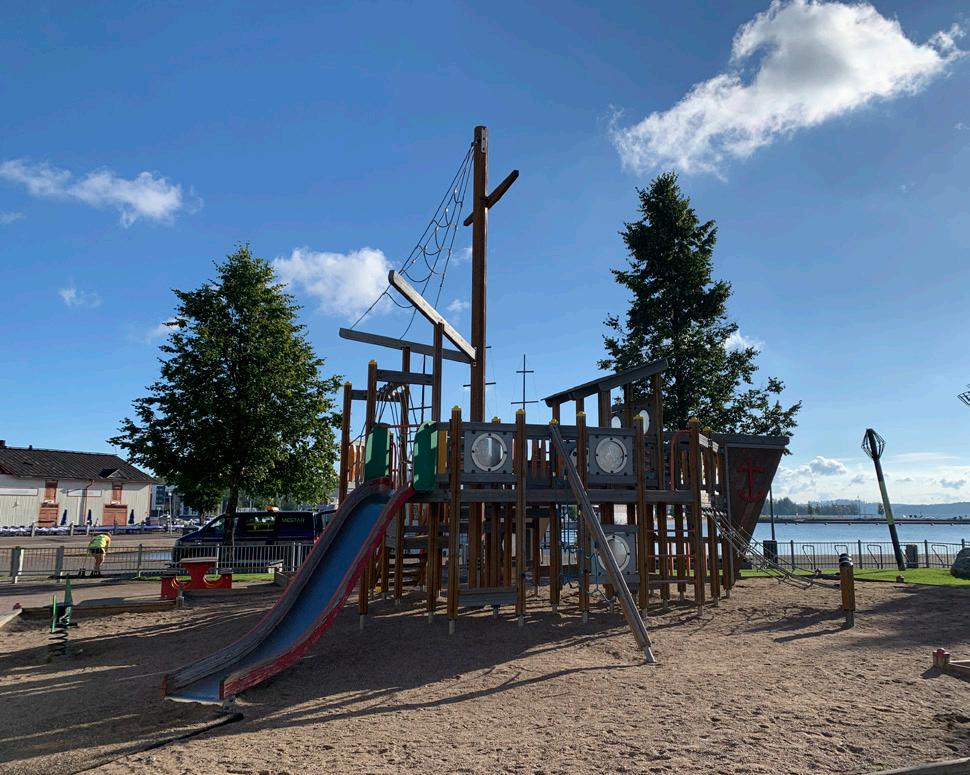
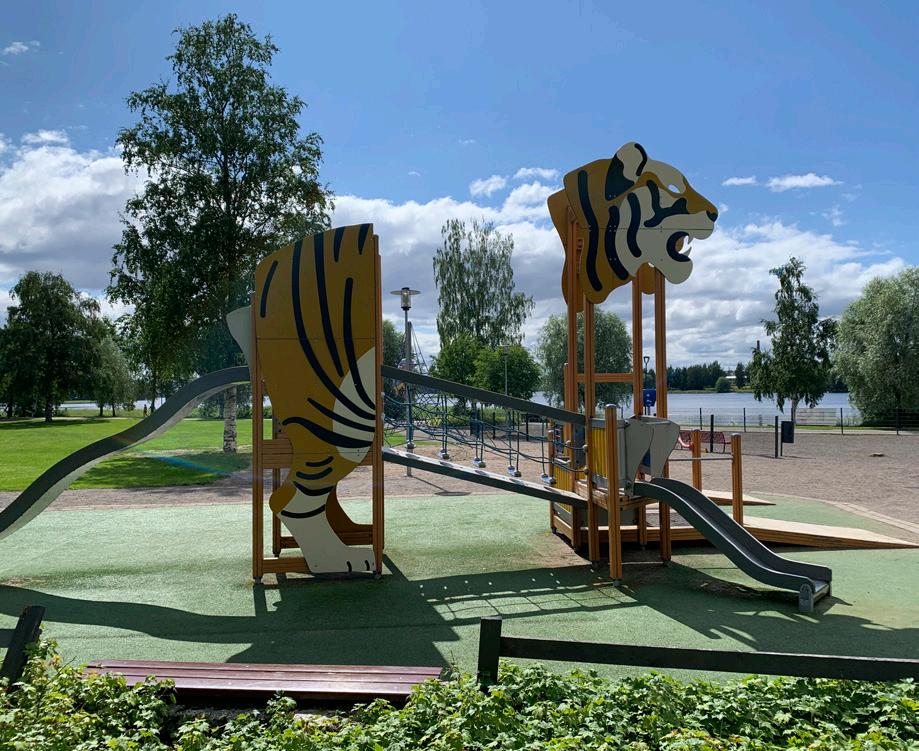
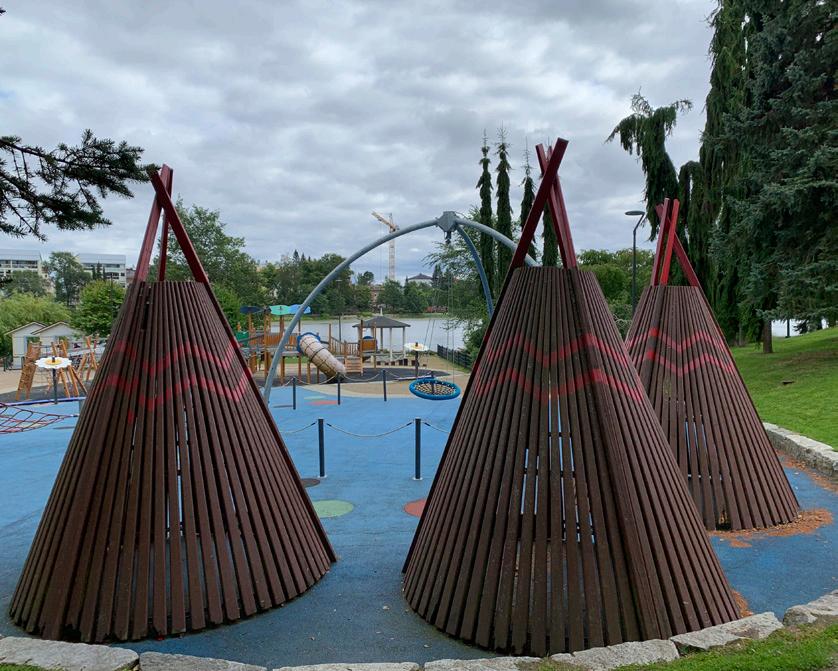
Not in the mood for a museum, an art performance or the movie theatre? No festival or culinary event coming up? And the weather is simply too uninviting for an outdoor activity? Check out the below ideas for some indoor fun, not just for bad weather.
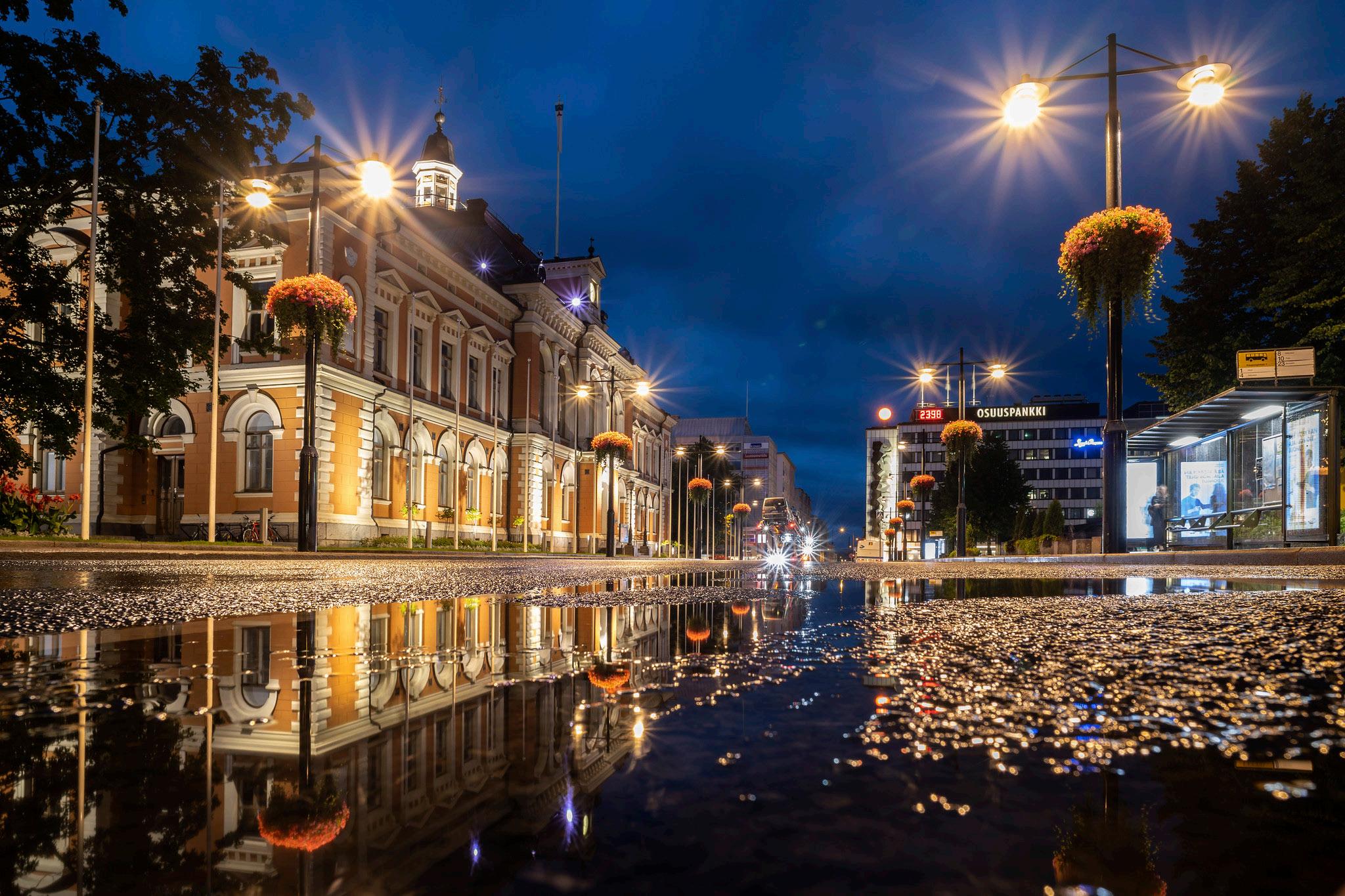
For lovers of cars and motor sports, the perfect place to escape the rain can be found at the Kuopio Auto Museum.
Explore a collection of old cars, motorbikes and motoring-related gadgets, for example taxi meters and license plates.
In the same building there is a café (Cafe Herkku Mobiili), where you can enjoy lunch and pastries. The café is also for rent for private events, celebrations and meetings.
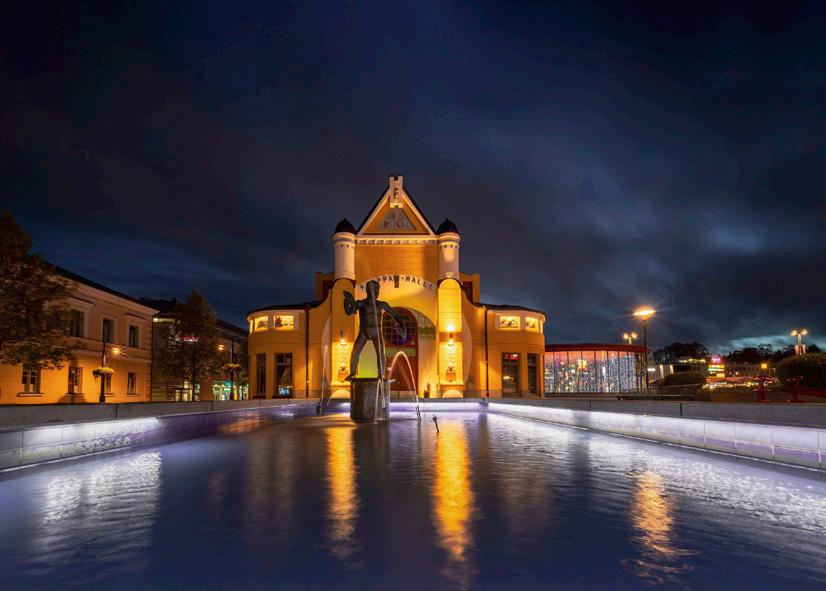
Kuopion Automuseo SA-HK Savon kerho ry Puistokatu 22, Kuopio http://www.kuopionautomuseo.fi/English/ index.html
Another option for a rainy day is always Keilakukko, a brand-new facility, located underneath Kuopio Market. Formerly known as Kuopio Bowling Hall, lots of fun awaits whether you wish to go with your family, friends or colleagues. Team up for bowling, playing pool or throwing darts. You can also play board games in the cozy sitting area. Or book your own event, party or Christmas gathering. Even meeting rooms are available.
Bowling Lanes | 8 Diamond
Tables | 4 Dart Areas | Sauna Facilities |
History: The original bowling hall was built in 1974 and soon became legendary. In 2018, three young entrepreneurs took over. Realizing the potential but also recognizing the lease was coming to an end, a major investment was made into a state-of-the-art facility underneath the city centre.
Located under Kuopio Market, simply head to Puijonkatu 19 / Vihtori Shopping Center and go down via elevator to the ‘K’ floor.
0172824003
https://www.keilakukkokuopio.fi/
Want to unleash your inner artist? Be inspired or simply learn about design? Come to the Kuopio Design Academy, and enjoy evening courses, or a workshop over the weekend.
The Academy is open to all, and offers courses for adults, children and teens. The programs offer a wide range of experiences – from self-expression and critical thinking through art, to learning techniques to process different materials. The Academy intends to spark interest, create joy, find inspiration and have fun while working together.
For example: In autumn 2023 the children’s program focuses on: ‘The Stone Age & The Birth of Design’. Lots of learning, but more fun than school.
Kuopio Academy of Design Kuopion Rouvasväenyhdistys ry
Piispankatu 8, 70100 Kuopio info@muotoiluakatemia.fi https://www.muotoiluakatemia.fi/en/1/1/0/ frontpage
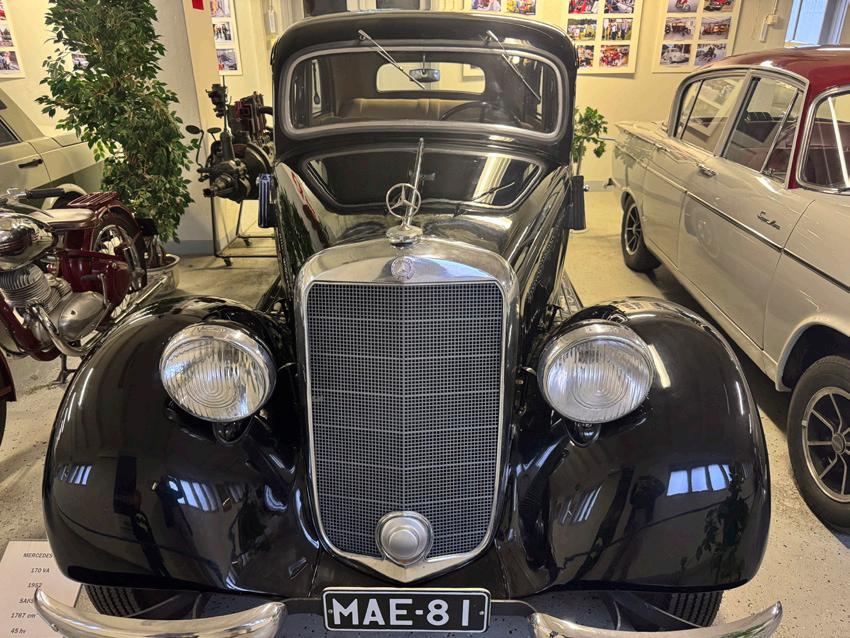

If you are interested in problem solving and working together, you should head to Arwoitus or Metkapakopelit.
Arwoitus offers multiple escape rooms. The rooms are designed from anywhere of 2 – 20 people playing together. Go there with your spouse, colleagues, friends, or your family (the age recommendation is 12 years and up, but younger children will also be admitted). While there you will be locked in a room, with riddles, mysteries and challenges to solve. You must complete the task within 60 minutes to escape from the room. The website claims that the games are exciting, engaging but not scary. Enjoy.
Escape Rooms:
• Risto’s Cruise
• Kalle’s Village Shop
• Elli in the South
Asemakatu 1, 70100 Kuopio, Finland
+358 44 7732738
https://arwoitus.fi/en/home/#tietoa
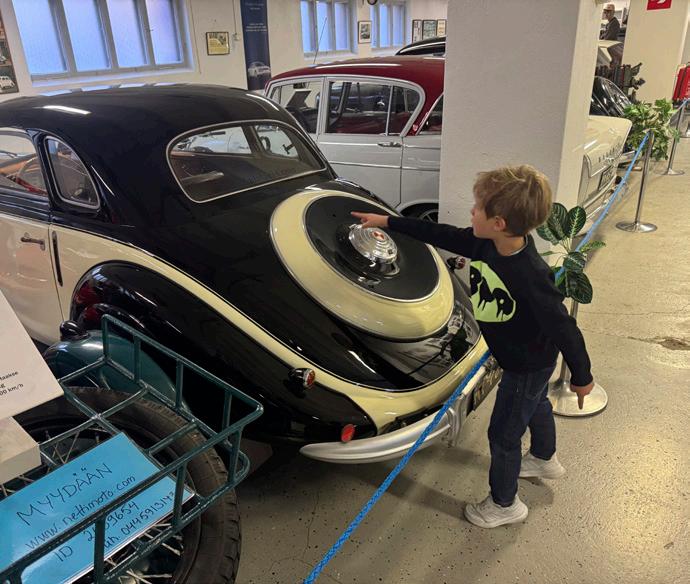
Metkapakopelit
Founded in 2022 by a woman who is enthusiastic about escape rooms, the whole family can be entertained. There are 6 escape rooms, 2 of which are suitable for children. Therefore, this can be an option, if you have little ones.
• Operation Toy Story: can be played at two difficulty levels, to adjust it for younger children.
• Adventure Tale in the Fairy Forest: suitable for the whole family but challenging.
• Lost in the Shadows: age restriction of 12 years in place
• Nightmare on Puijonkatu: age restriction of 16 years in place
• The Secret of the Golden Skull: pending, not yet released
• The Attic: pending, not yet released
Asemakatu 14, 70100 Kuopio, Finland
+358-40 1241394
https://www.metkapakopelit.com/
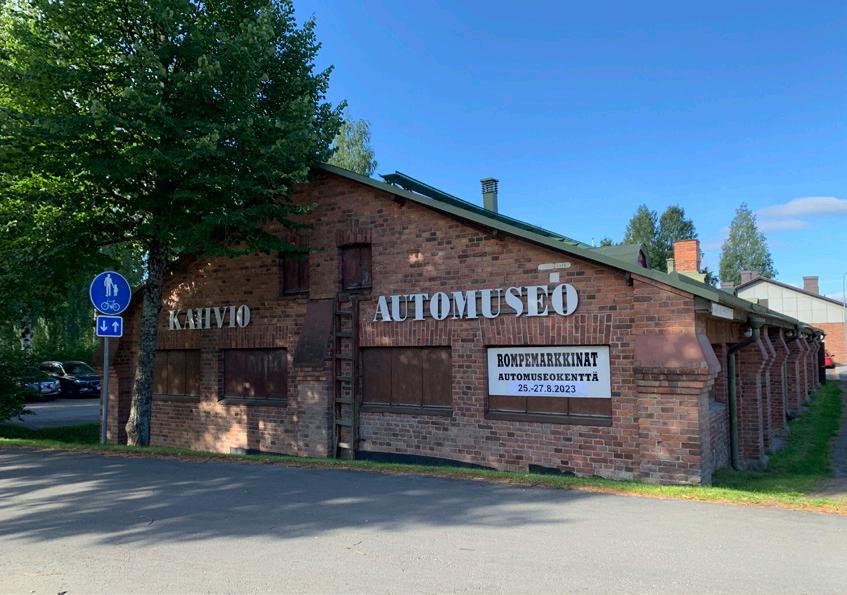
In 2023, a new attraction has been inaugurated. The Enchanted Forest is a children’s world open to everyone. The fantastic looking fairytale world offers a magical forest, a sea of balls, a climbing corridor and various games to play. In addition, there is a nursery room and a separate breastfeeding room. While at the Enchanted Forest, you can also visit a toy store (Lelukauppa Partane) and a children’s clothing store (Kaiku Kids).
Background Story:
Minna consists of two buildings, a shopping center and an entertainment center, which merged in 2018 to become the shopping and entertainment center Minna.
Location: in the basement of shopping center Minna, floor ‘H’
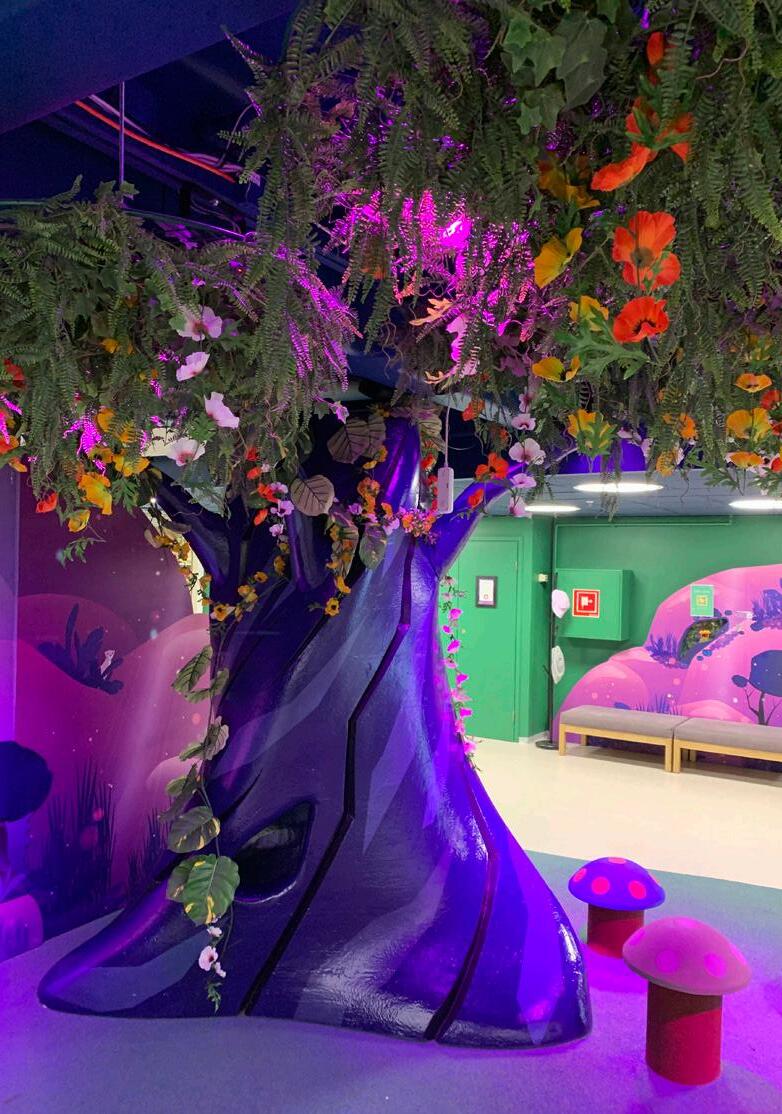
Leo’s Leikkimaa
The best for last: If you have children, the most fun thing to do on a rainy day is visiting Hop Lop – a gigantic indoor park full of activities, obstacles, climbing possibilities presented in a fantasy world full of play. For example, there is an enormous volcano that can only be accessed by climbing to the top, with a very long slide leading down, a jungle pathway high up above the ground and so on. There is no end to imagination. Overall, there are 17 Hop Lop Parks in Finland, three of which in Helsinki, one in Kuopio.
Siikaranta 9 B, 70620 Kuopio https://www.leosleikkimaa.fi/
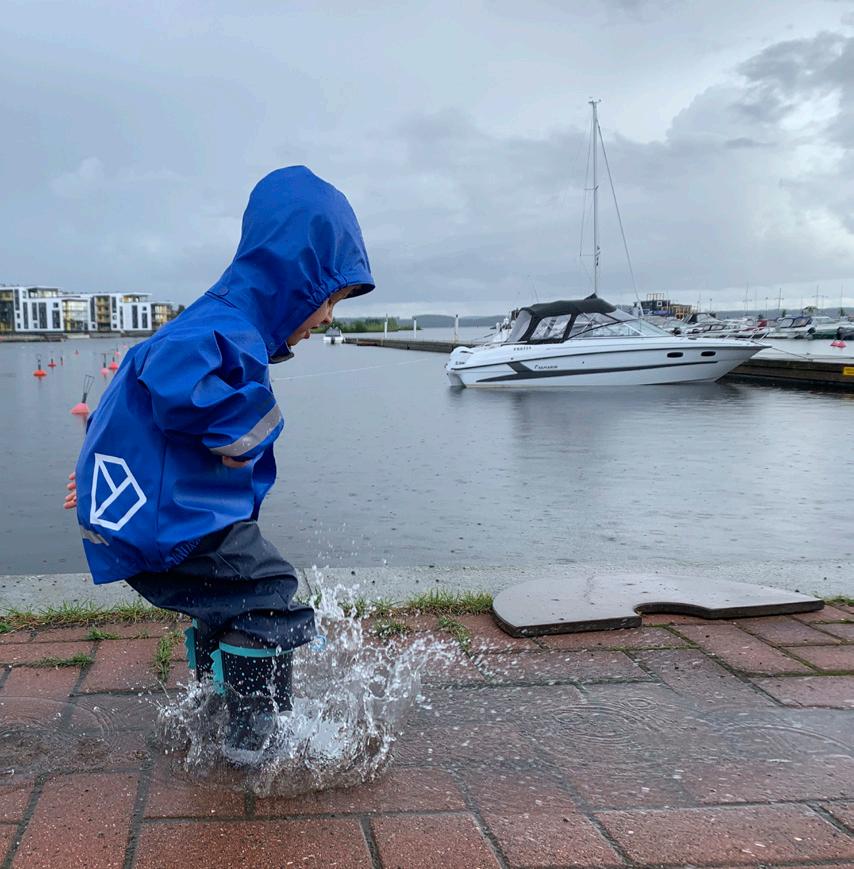
Rainy Days can still be fun!
Pictured: Our son jumping in puddles. Wearing rubber gear is a must for children: 100% waterproof, it is suitable for rainy autumn weather.
Museums & Exhibitions
Kuopio is home to a variety of museums.
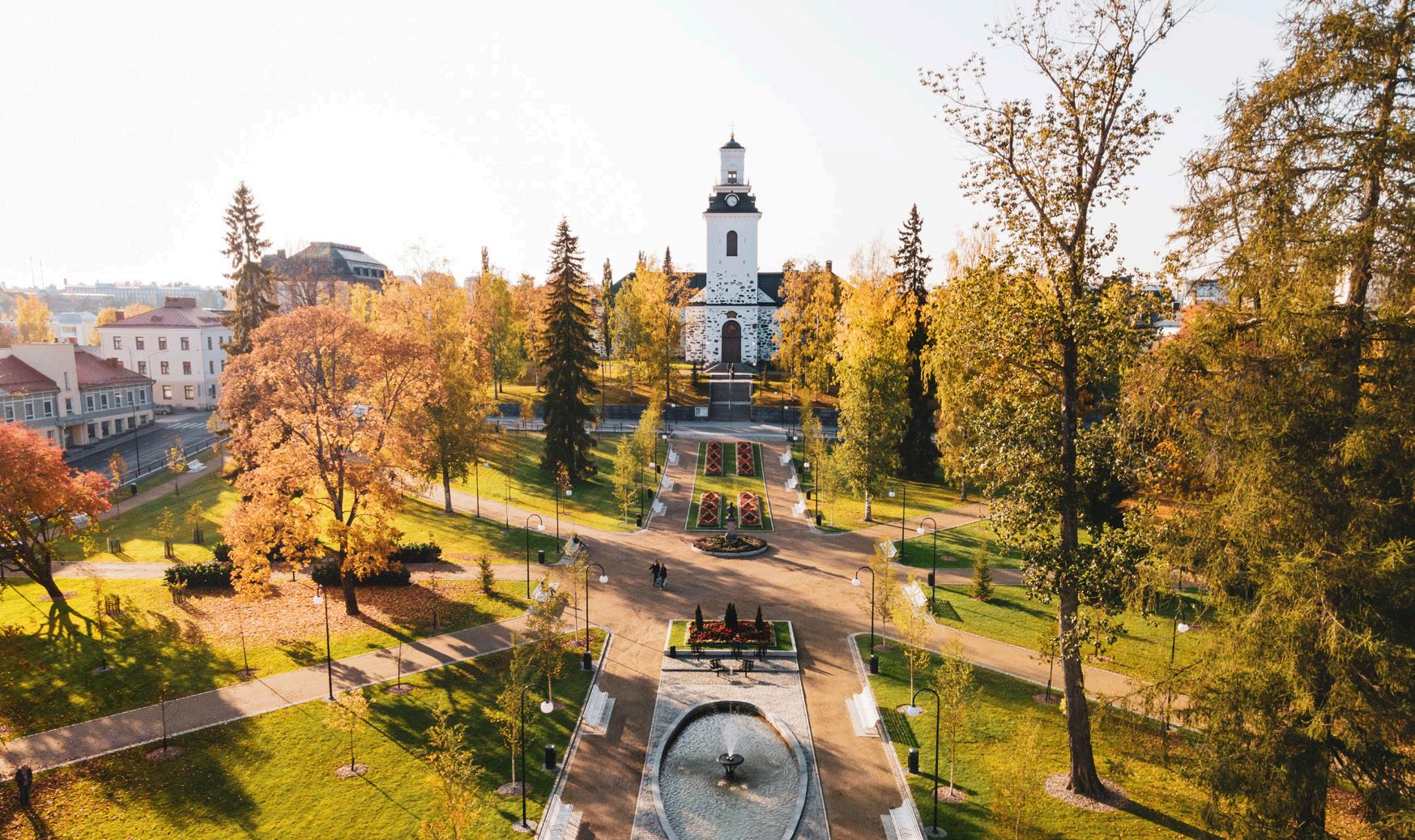
JV Snellman’s Home Museum
Johan Vilhelm Snellman (born May 12, 1806, in Stockholm Sweden, died July 4, 1881, Kirkkonummi, Finland), was a Finnish nationalist philosopher and statesman who was an important figure in the movement to establish Finnish as a national language.
JV Snellman’s home museum operates in the house where Snellman lived most of his time in Kuopio, the years 1845-1849. The museum is open to the public every year on JV Snellman’s birthday, May 12. Alternatively, groups (of min 10 people) can enter year around by appointment.
Snellmaninkatu 19, 70100 Kuopio 017 182625
korttelimuseo@kuopio.fi www.snellmaninkotimuseo.fi
Old Kuopio Museum (Kuopion Korttelimuseo)
Old Kuopio museum consists of a block of eleven old wooden houses. The buildings range from the 1700’s to the 1800’s. All the buildings along Kuninkaankatu and Kirkkokatu are the original building stock of the block.
Kirkkokatu 22, 70100 Kuopio 017 182625 korttelimuseo@kuopio.fi https://www.kuopionkorttelimuseo.fi
Find all events at Kuopio museums: https://kuopionmuseot.fi/tapahtumat
Kuopio Museum
Completed in 1907, the Kuopio Museum is one of the jewels of national romantic Art Nouveau architecture and is the third oldest museum in Finland.
Museokatu 1, 70100 Kuopio 017 182 603 kuopionmuseo@kuopio.fi https://kuopionmuseo.fi/
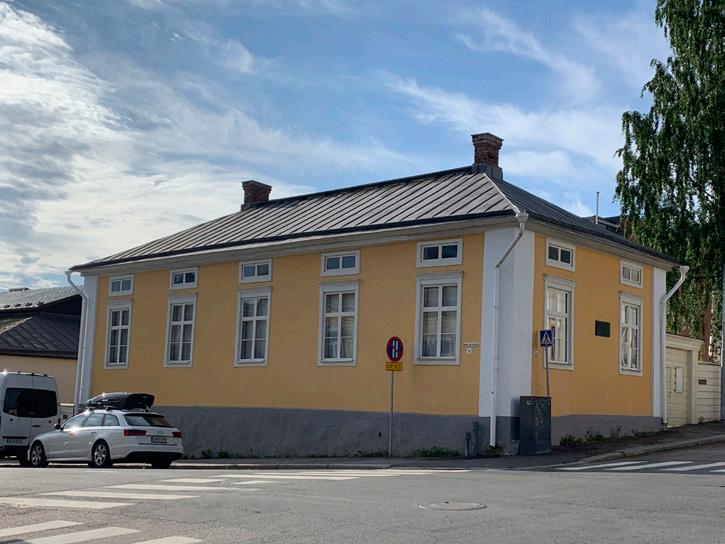
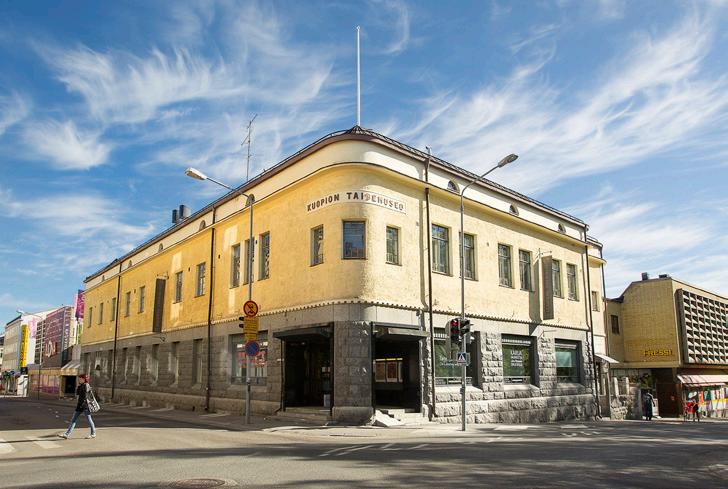
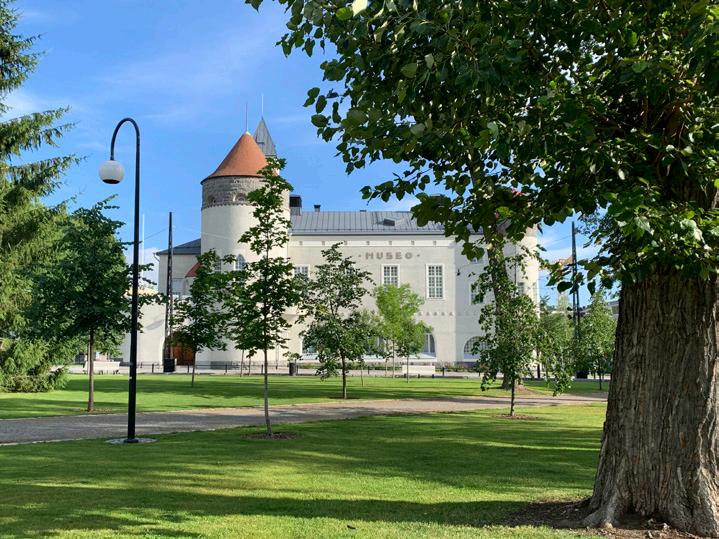
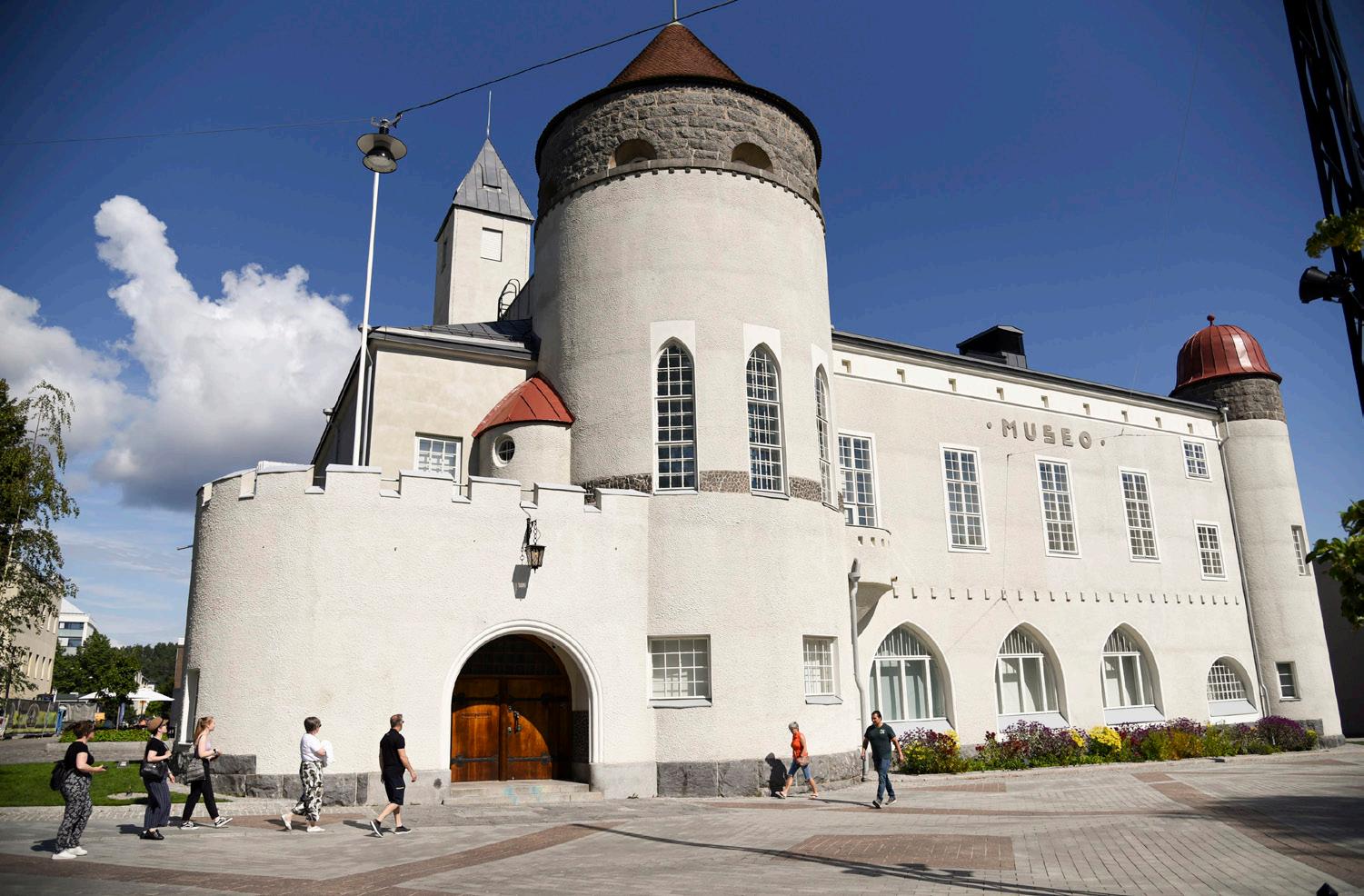
Kuopio Art Museum
Operating since 1980, Kuopio Art Museum contains regional art of Northern Savo. The main themes of the museum’s collections and exhibitions are landscapes and nature, as well as the human–environment relationship.
Kauppakatu 35, 70100 Kuopio 017 182633 https://kuopiontaidemuseo.fi
Kuopio War Veterans Museum
The Kuopio War Veterans Museum is located in the headquarters of the sniper battalion, Tulliportinkatu 41 - in the old barracks area.
Tulliportinkatu 37 D, Rak. 7, 70110 Kuopio 017 281 1130 kuopion.sotaveteraanit@dnainternet. net www.kuopionsotaveteraanit.fi/museo
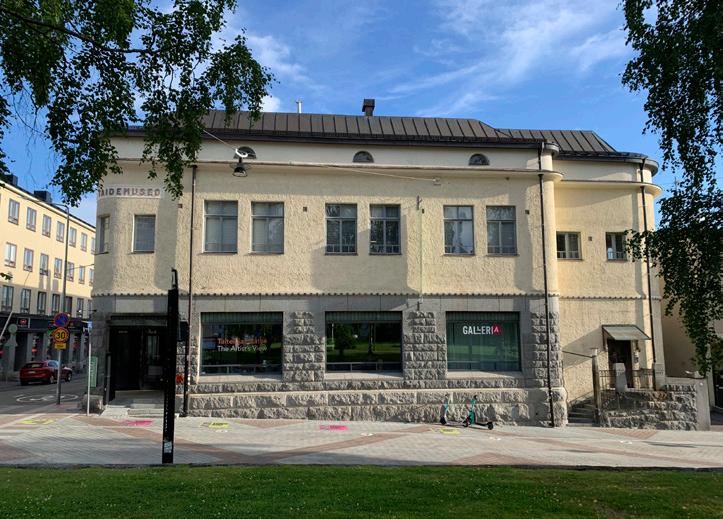
RIISA - Finnish Orthodox Church Museum
RIISA is a treasure. It is a nationally and internationally significant museum, that continues the Antiquities Collection established in Valamo Monastery in 1912.
Karjalankatu 1, 70110 Kuopio 020 6100266 info@riisa.fi https://www.riisa.fi
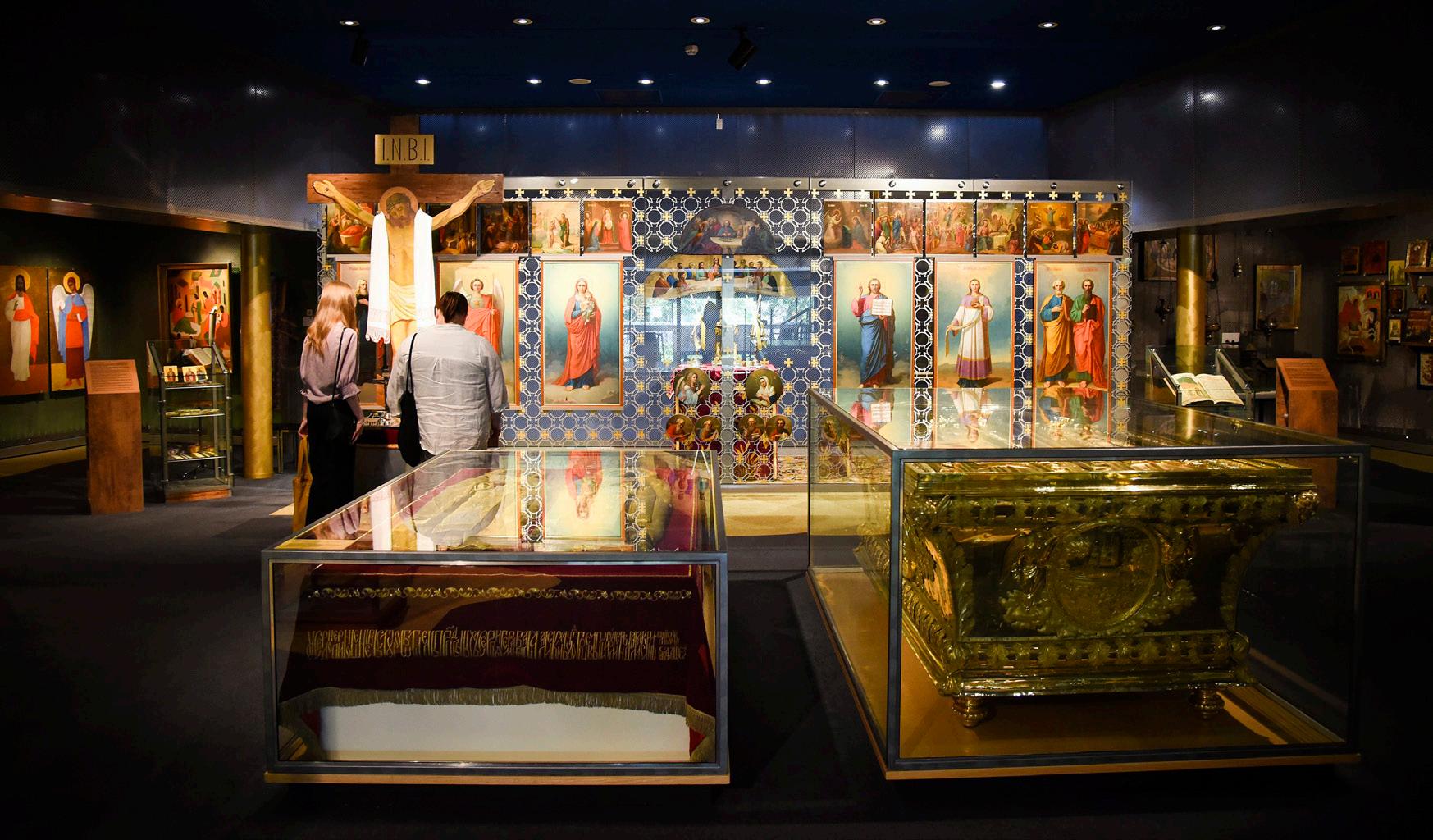
Eastern Finland Regional Dance Center
Eastern Finland Regional Dance Center (ITAK) is one of the seven regional dance centers in Finland.
Suokatu 42/2, 70110 Kuopio 050 581 6300 itak@itak.fi www.itak.fi
Kuopio City Theatre
The current building of the Kuopio City Theater was completed according to the drawings of Risto-Veikko Luukkonen and Helmer Stenros, who won an invitational competition for the design of the theater building. The construction of the house began in 1961 and its opening was celebrated on 29 September 1963 as the opening play Klaus Louhiko’s Mr. by Maria Jotun.
Niiralankatu 2, 70110 Kuopio 0600 413 143 teatteri@kuopio.fi www.kuopionkaupunginteatteri.fi
Dance Theatre Minimi
Tanssiteatteri Minimi is a multidisciplinary performing arts community that makes physical performances that disobey genre boundaries, looking for new ways to put ideas into motion.
Niiralankatu 2, 70600 Kuopio 044 066 7338 minimi@minimi.fi https://minimi.fi/
Music
Kuopio Music Center
Designed by Esa Malmivaara and Raimo Savolainen, the Kuopio Music Center was completed in August 1985 on the shore of the beautiful Kuopio Bay, just a few blocks away from Kuopio’s famous market. More than 300 events are organized in its facility each year, with visitor numbers varying between 100,000 and 150,000 guests.
Kuopiolahdenkatu 23, 70100 Kuopio 0600 96100 musikkikeskus@kuopio.fi https://www.kuopio.fi/en/leisure-and-wellbeing/culture-kuopio/music/kuopio-music-centre-2/
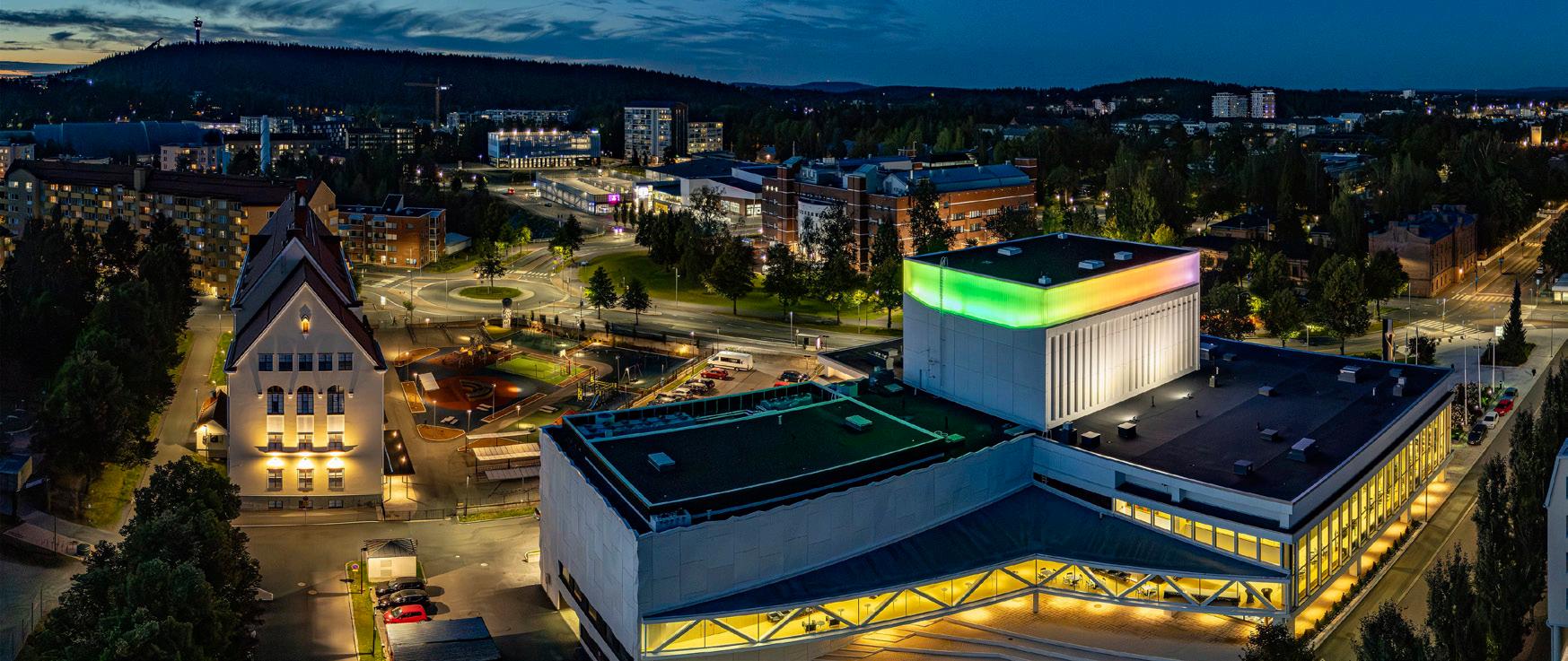
Kino Kuvakukko
Kino Kuvakukko offers high-quality and versatile movie experiences for movie lovers
Vuorikatu 27, 70100 Kuopio 017 182 470 www.kuvakukko.fi
Finnkino Scala
Opened in 2013, Finnkino offers movie lovers the best picture and sound technology in the industry. The theatre is completely digital and uses 3D technology. It boasts 7 auditoriums.
Ajurinkatu 16, 70110 Kuopio https://www.finnkino.fi/teatterit/finnkino-scala/
Library
Kuopio City Library
Kuopio city library - Pohjois Savo county library. The library was founded in 1872, and is one of the largest public libraries in Finland. The Kuopio city library includes the main library, 12 local libraries and three library cars.
Maaherrankatu 12, 70100 Kuopio 017 182 314 kirjasto@kuopio.fi kuopio.finna.fi
Women’s Association of Kuopio
The Women’s Association of Kuopio is an important Kuopio cultural association founded in 1860. The background of its creation was the awakening to social activities, fueled by the idea of nationality. Explore the Design Academy of the Women’s Association below, which also offers design courses for children.
Piispankatu 8, 70100 Kuopio info@muotiluakatemia.fi https://www.muotoiluakatemia.fi/en/305/1/0/ association
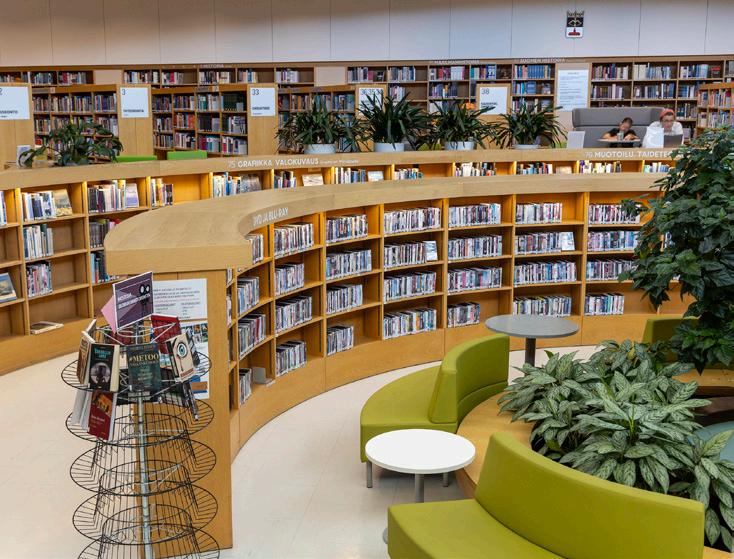
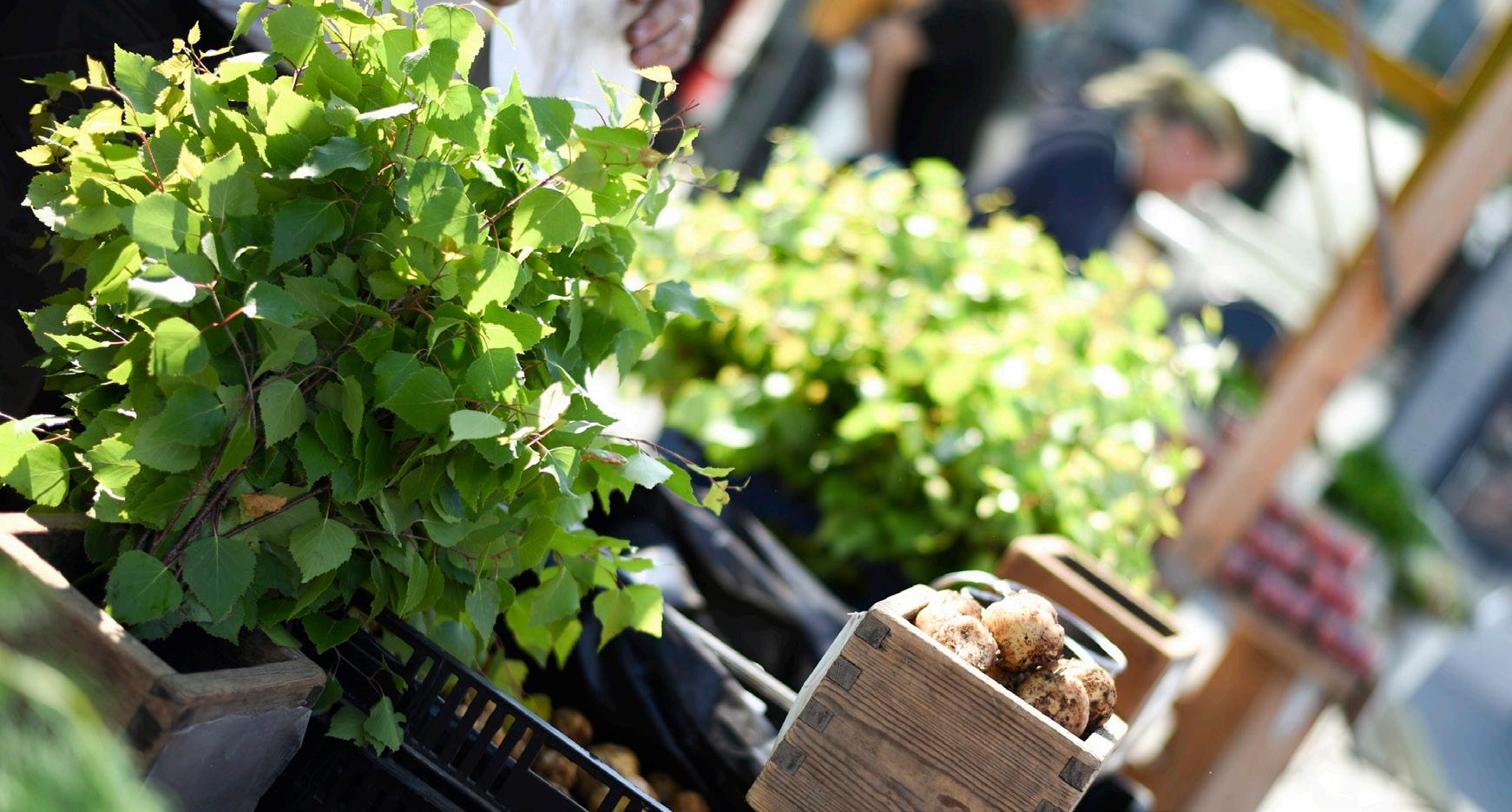
We have explored many activities so far. Time to start thinking about wellness and relaxation as well. Saunas are ideal for unwinding and rejuvenating.
The World’s Biggest Smoke Sauna is in Kuopio
Finland is the birthplace of the sauna. But if you think there is only one type of sauna, you will be surprised. There are modern versions, such as electric saunas (which are predominantly installed in private homes) and infra-red saunas (which some Fins do not consider to be real saunas). There are steam saunas (usually tiled, due to the humidity). But the most traditional of all are wood-burning saunas. The latter date back thousands of years. As the name indicates, they are fired by wood and have relative low humidity. These traditional Finnish saunas are also often referred to as ‘smoke sauna’. Curious? You are in luck; the world’s biggest smoke sauna is in Kuopio.
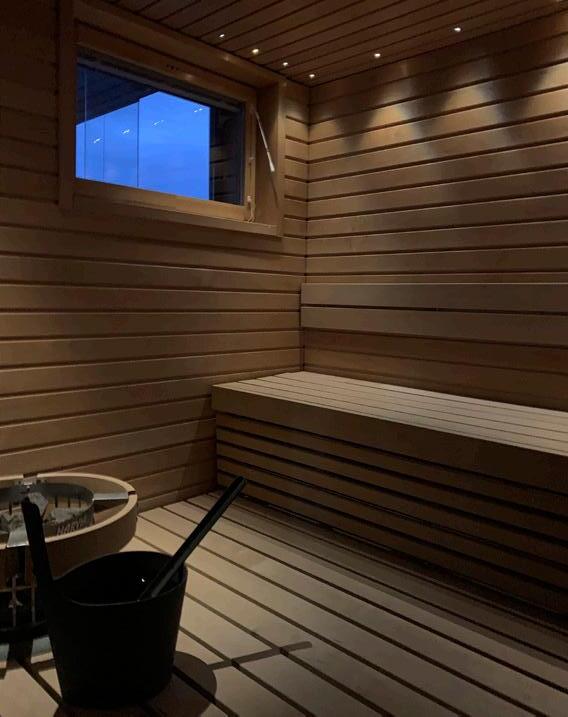
Visit Jätkänkämppä, an authentic lumberjack lodge, that dates back to the 1950s. At Jätkänkämppä (jätkä = a lumberjack, kämppä = a lodge), public sauna evenings are organized Tuesdays (year around) and Thursdays (in the summertime). Before you visit the sauna, check the website, as some exceptions apply. The smoke sauna is situated 600 meters from the Spa Hotel Rauhalahti (address below). In addition to the smoke sauna, the Spa Hotel is equipped with a spa, a restaurant, and numerous other traditional activities. You can also engage in indoor sports there such as indoor climbing, padel, squash, tennis, etc.
Katiskaniementie 8, 70700 Kuopio +358 30 608 30 myynti@rauhalahti.fi https://www.rauhalahti.fi/
Kuopio is home to the second largest indoor swimming pool of Finland, located in a state-of-the-art facility, which opened its doors only in August 2020. Various user groups and their needs were considered when designing this new facility. The aquatics centre includes a 50-meter main pool with 10 lanes, a diving pool with diving platforms in various heights suitable for competitions, a teaching pool, a kid’s pool, a multi-purpose pool, a cold pool and more.
There are also massaging showers, a jacuzzi, and an aroma sauna to relax the body & mind. Additionally, there are various service offerings such as body composition measurements, swimming and jumping lessons and virtual aqua gym devices, and much more. The playground connected to the café guarantees that even the youngest in the family will have fun in the swimming complex.
Address: Hannes Kolehmaisen katu 4, Kuopio
www.kuopiotahko.fi/en/places/kuntolaakso-swimming-hall/
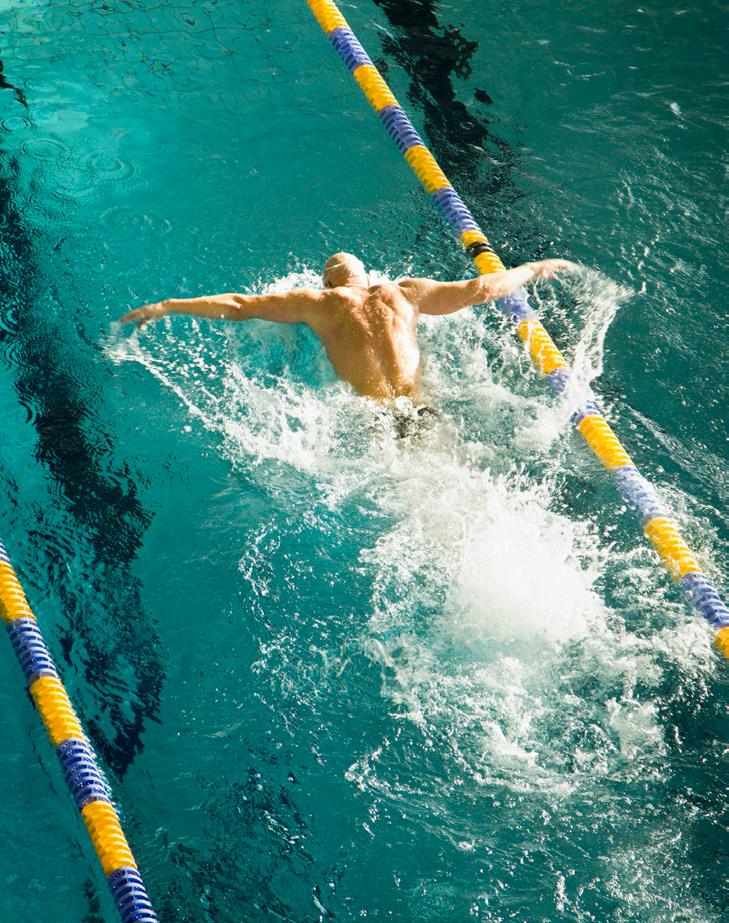
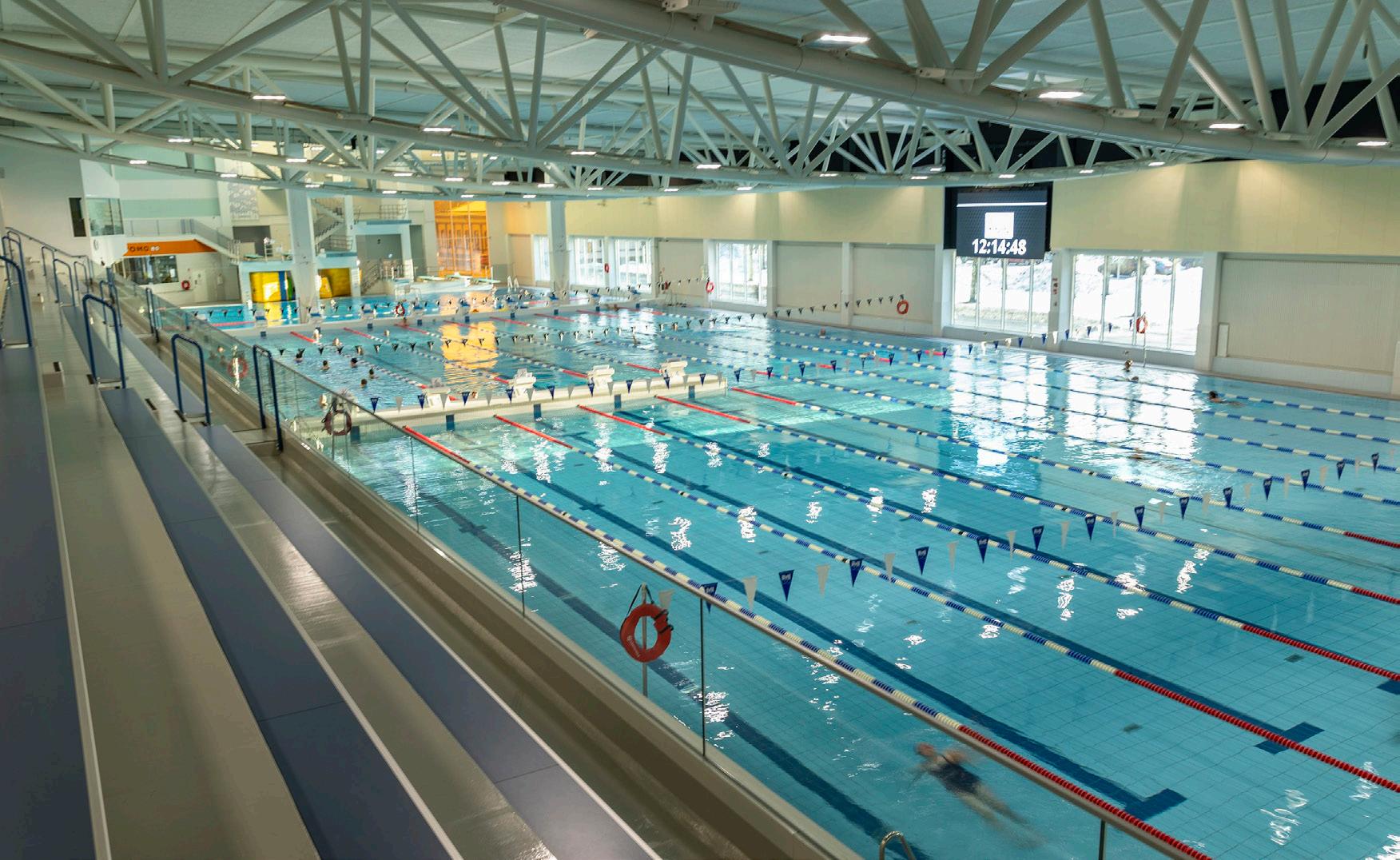
Perhaps you are considering planning some day trips around Kuopio during the weekend. After all, exploring nearby areas can be a great way to get to know the region. Here are a few suggestions to get you started.
Located about 45min south of Kuopio by car, in the town of Leppävirta you can visit the world’s biggest ice cave with sculptures. The ice cave is 30 metres below the ground. The exhibit shows Moomin characters as well as various animals sculpted in a frozen world of beauty. In fact, the Ice Carving World Championships of 2017 and 2018 were hosted here.
The ice used here is not just any ice. It is carefully selected for its exceptional quality. It comes from a pond in Lapland, where the water flows into the Lainio River. Lainio is a word from the Sámi language meaning rendezvous point where creatures from the underground world (often thought to be gnomes in mythology) can meet the people aboveground. So who knows—perhaps you might even spot one during your visit. From a scientific perspective, natural ice harvested in this area contains just the right amount of air bubbles. This makes the ice reflect light giving it a soft, bluish tint. Artificial ice, on the other hand, is clear. Visit:
Sport & Spa Hotel Vesileppis
Vokkolantie 1, 79100 Leppävirta +358 29 170 0170
myynti@vesileppis.fi https://www.icecave.fi/frontpage
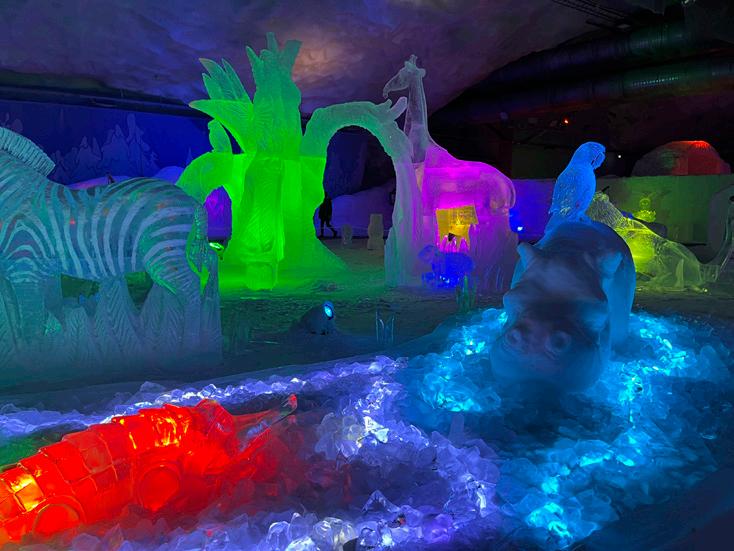
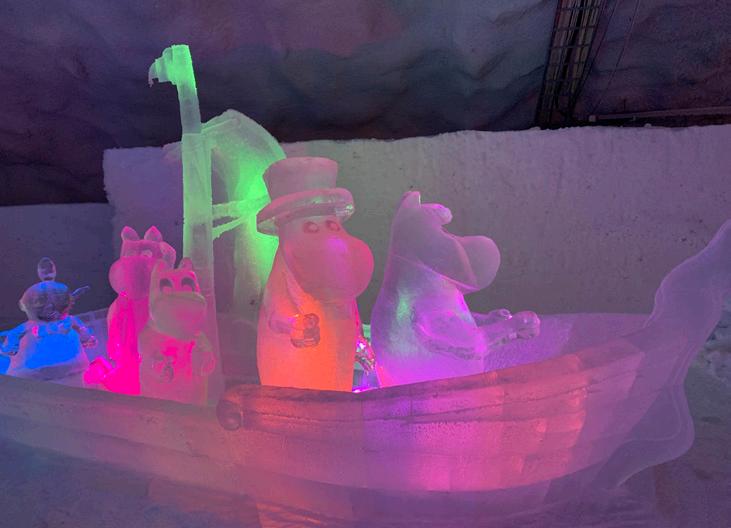
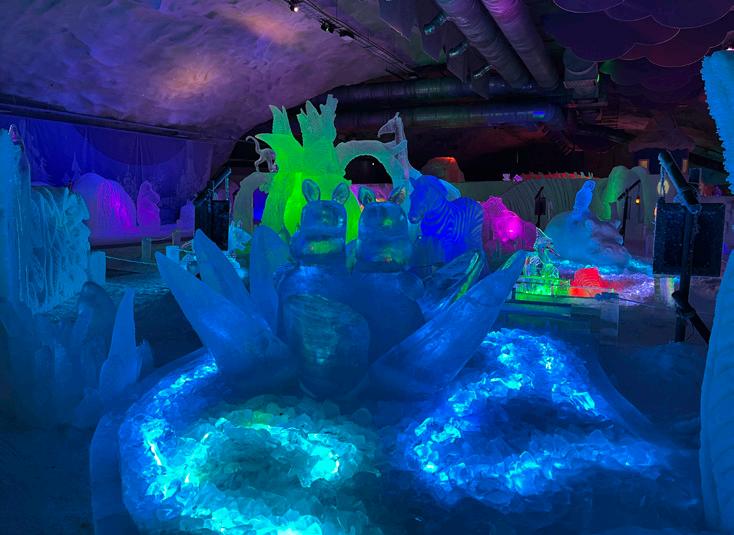
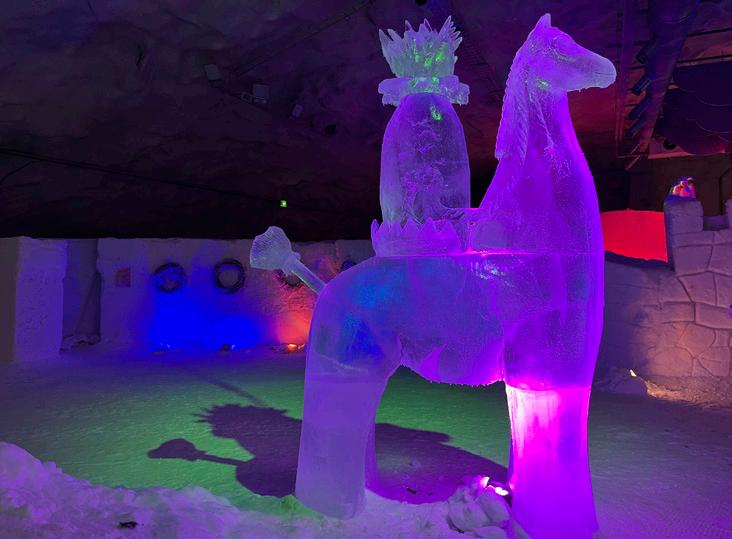
If you wish to explore the nature of Northern Savonia, a few highlights include:
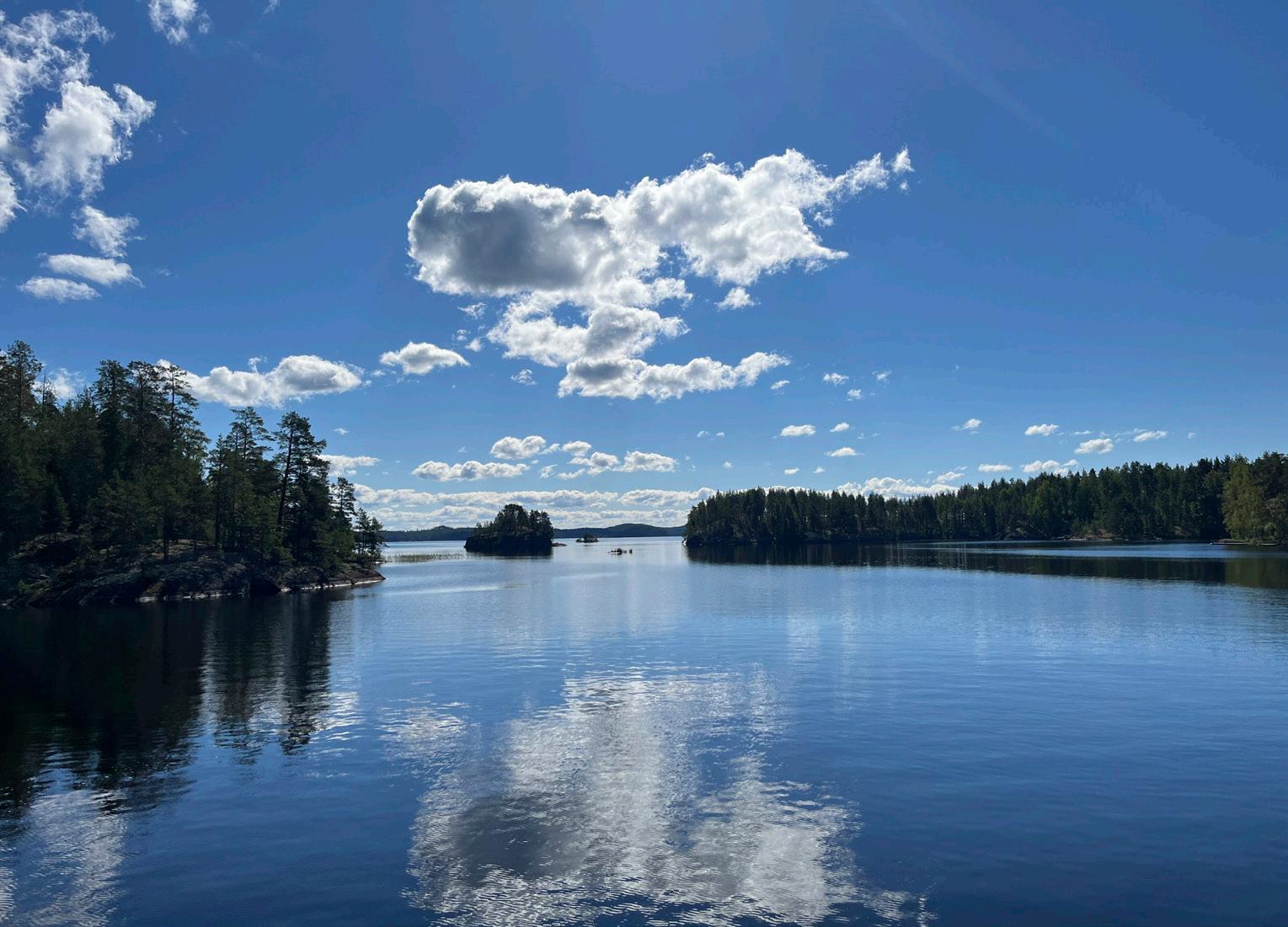
a visit to Orinoro Gorge. which is located just under an hour south of Kuopio, not far from the village of Leppävirta. This canyon is approx. 200 metres long with a maximum depth of roughly 20 metres. It can be integrated into a 7km hike on nature trails, that provide learning opportunities of Finnish nature. The trail also passes two ponds and a fireplace suitable for BBQ, Beware: In wet or icy conditions it can become slippery.
Download the leaflet at: https://visitleppavirta.fi/sites/default/files/lataukset/orinoro_kartta_englanti_2023_0.pdf
National park Southern Konnevesi which extends into North Savonia and Central Finland, and is described on the next pages.
National park Tiilikkajärven Kansallispuisto which spans mostly across North Savo, but also extends into the Finnish district of Kainuu. More information can be found on the next pages.
Seinävuoren rotkolaakso or Seinävuori Gorge located 90 min east of Kuopio https://www.tuusniemi.fi/seinavuoren-rotkolaakso
Did you know that Finland has a total of 41 national parks?
Two of them (Southern Konnevesi National Park and Tiilikkajärven Kansallispuisto National Park) are located in Northern Savo.
You can find more information on all of them at: https://www.luontoon.fi/en/articles/ national-parks
If you wish to experience untouched forests and pittoresque lakes, and you don’t mind rugged terrain visit the National Park Southern Konnevesi. This national park spans across two major regions: Northern Savo and Central Finland. It is about a 50 min to 1h 20 min drive from Kuopio in the direction WSW, depending upon your point of entry. The park can be explored via boat, canoe or by foot. The western part of the park has more open waters and islands and is suitable for watersports. Narrower lakes and steeper hiking routes can be found further east. The hiking trails there are classified as demanding due to steep ascents. Our three-year old loved the challenging route. We hiked the Kallajan Kieros Trail.
More Information on the park, incl. trails, maps and services visit: https://www. luontoon.fi/en/destinations/southern-konnevesi-national-park
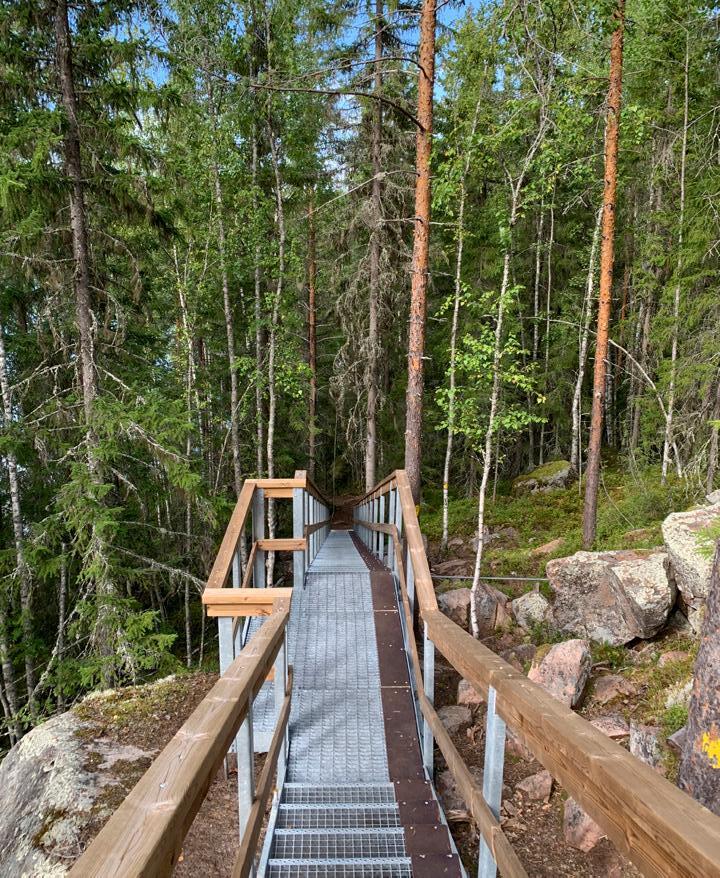
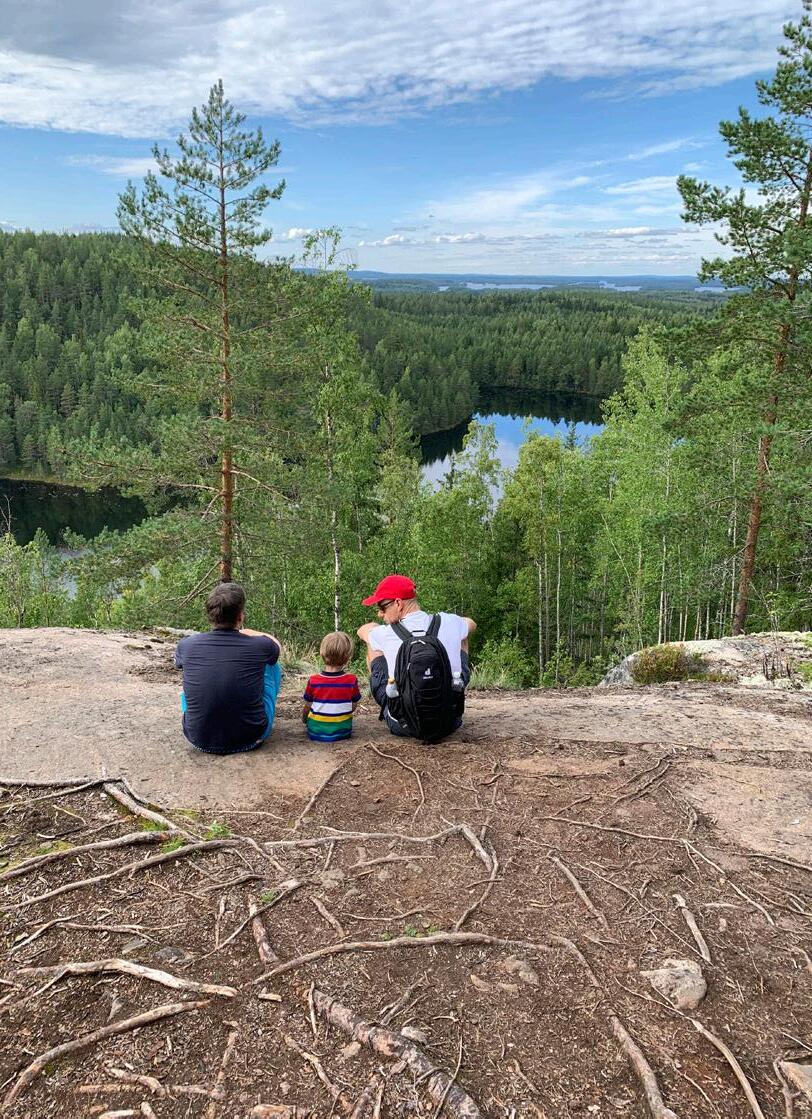
Nature Trails with protruding tree roots, rock scrambles and viewpoints up high are part of the fun. Photographs by Angelika Krieger
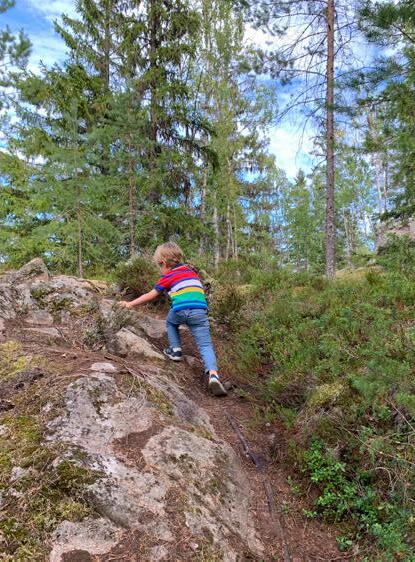
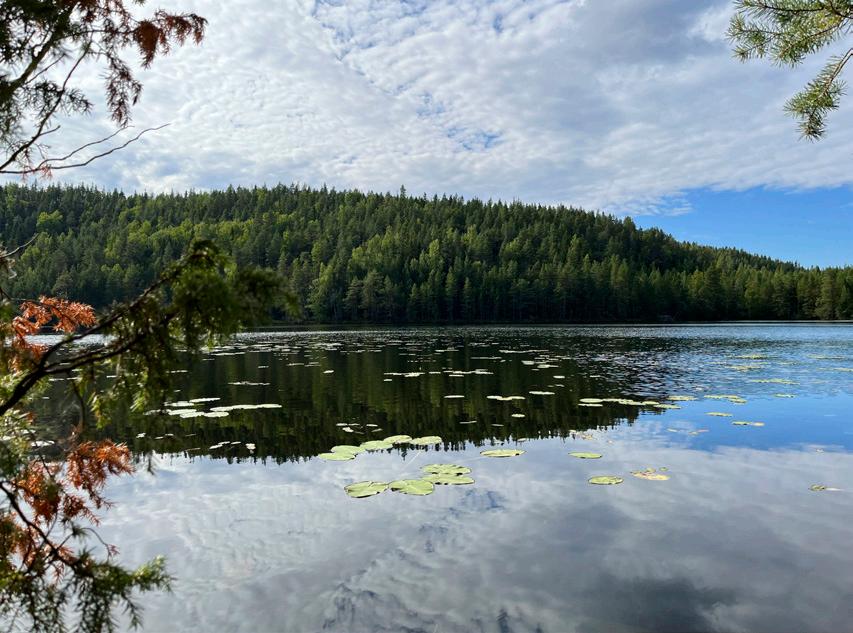
Consider visiting the Konnus channels, which are part of Konnuslahti Nature Reserve on the eastern shore of Lake Kallavesi. The reserve plays an important role in protecting the region’s aquatic ecosystems, birdlife, and diverse flora. It is located approximately 8 kilometers north of Leppävirta and 50 minutes south of Kuopio, especially on a clear, sunny day. Take a stroll along the water. There are 3 channels and 5 rapids. And enjoy lunch in a rural setting.
More information: https://visitleppavirta.fi/fi/palvelu/konnuksen-kanava-alue
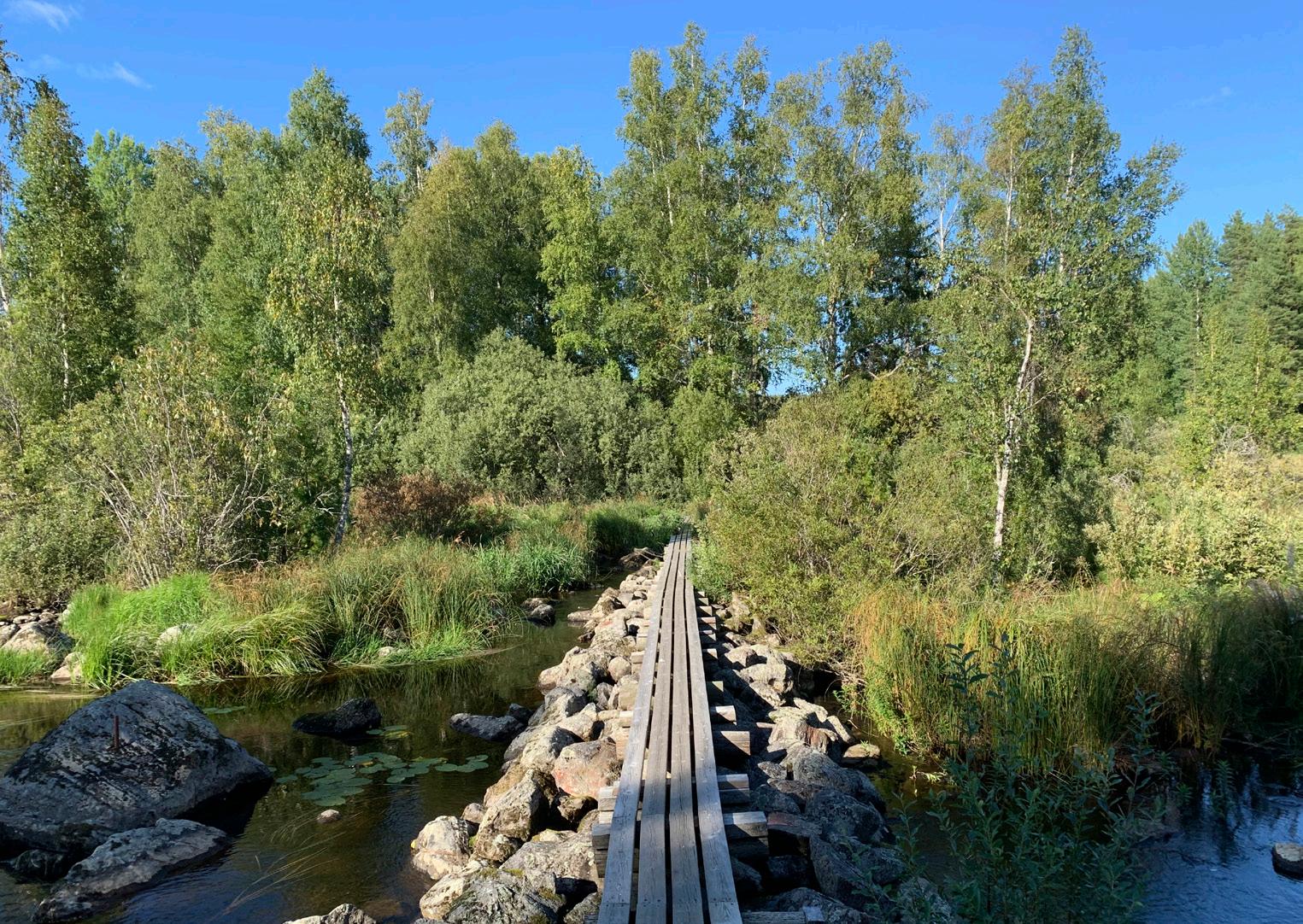
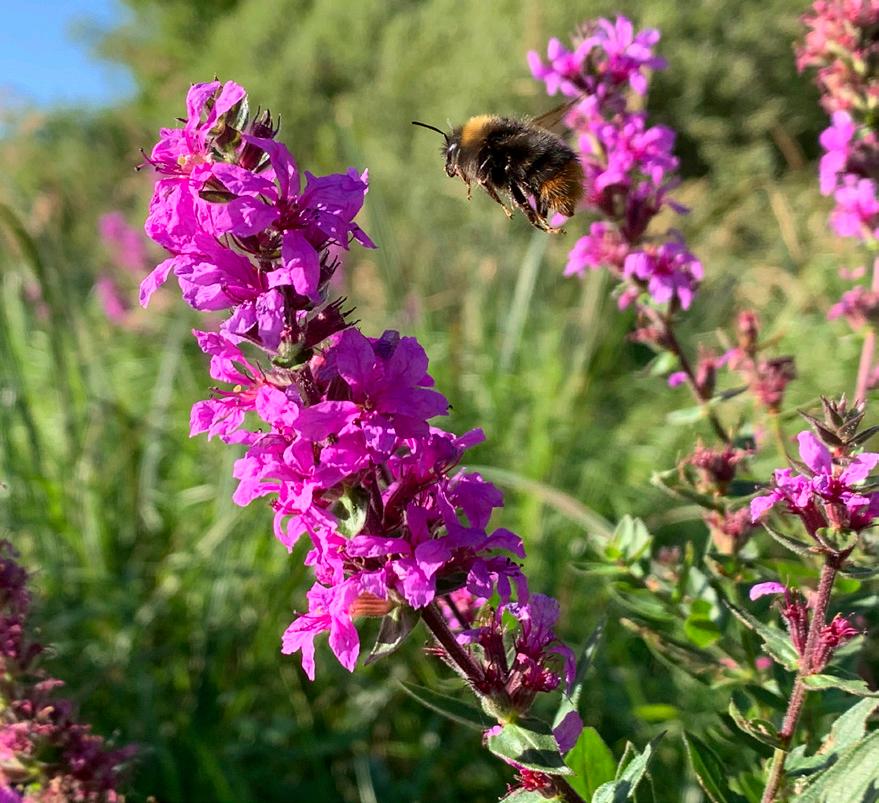
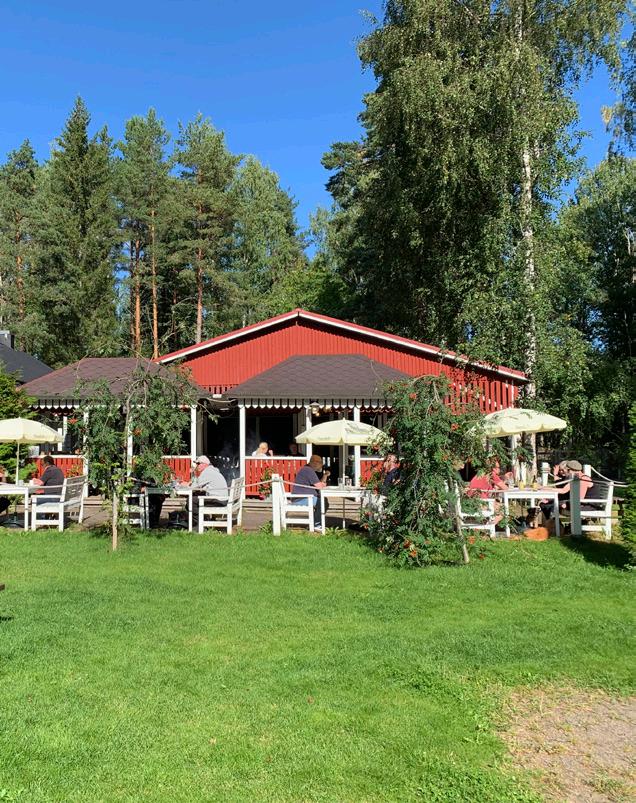
The national park Tiilikkajärven Kansallispuisto spans mostly across North Savo but also has a smaller area which extends into the Finnish region of Kainuu. It is reachable via car in approx. 90 minutes north of Kuopio. We have been in Tiilikkajärven NP, and enjoyed cutting timber with a handsaw, chopping wood, as well as making a fire in a nearby cabin. We also embarked on a night hike, an adventure for the whole family.
https://vuokatti.fi/en/place/tiilikkajarven-kansallispuisto/ https://www.luontoon.fi/en/destinations/tiilikkajarvi-national-park
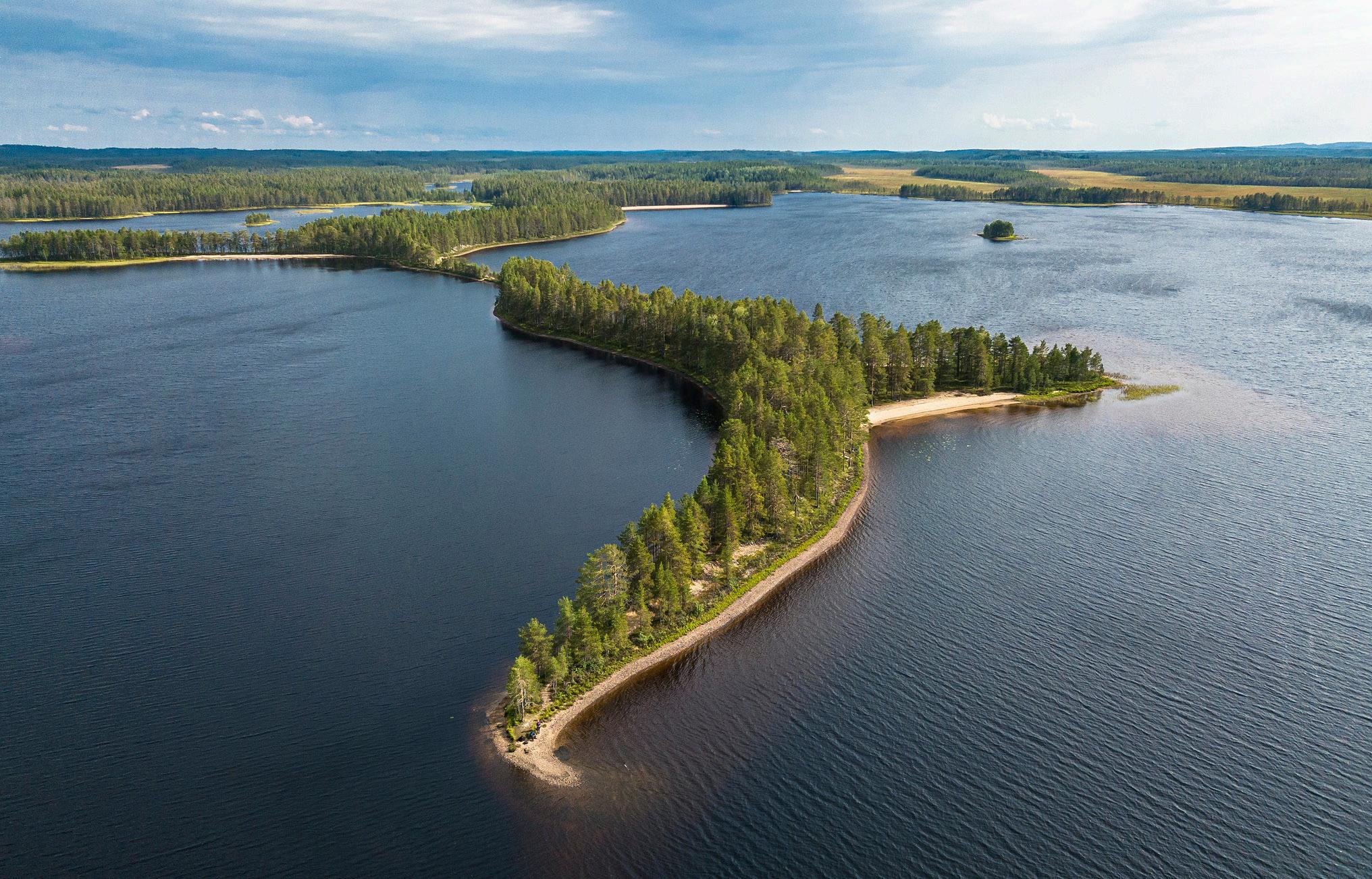
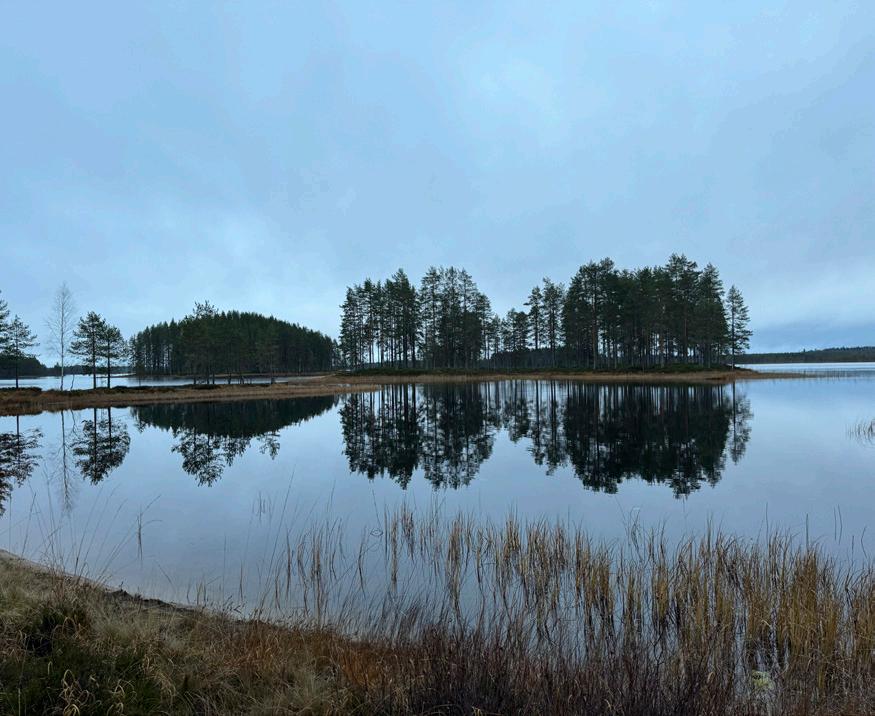
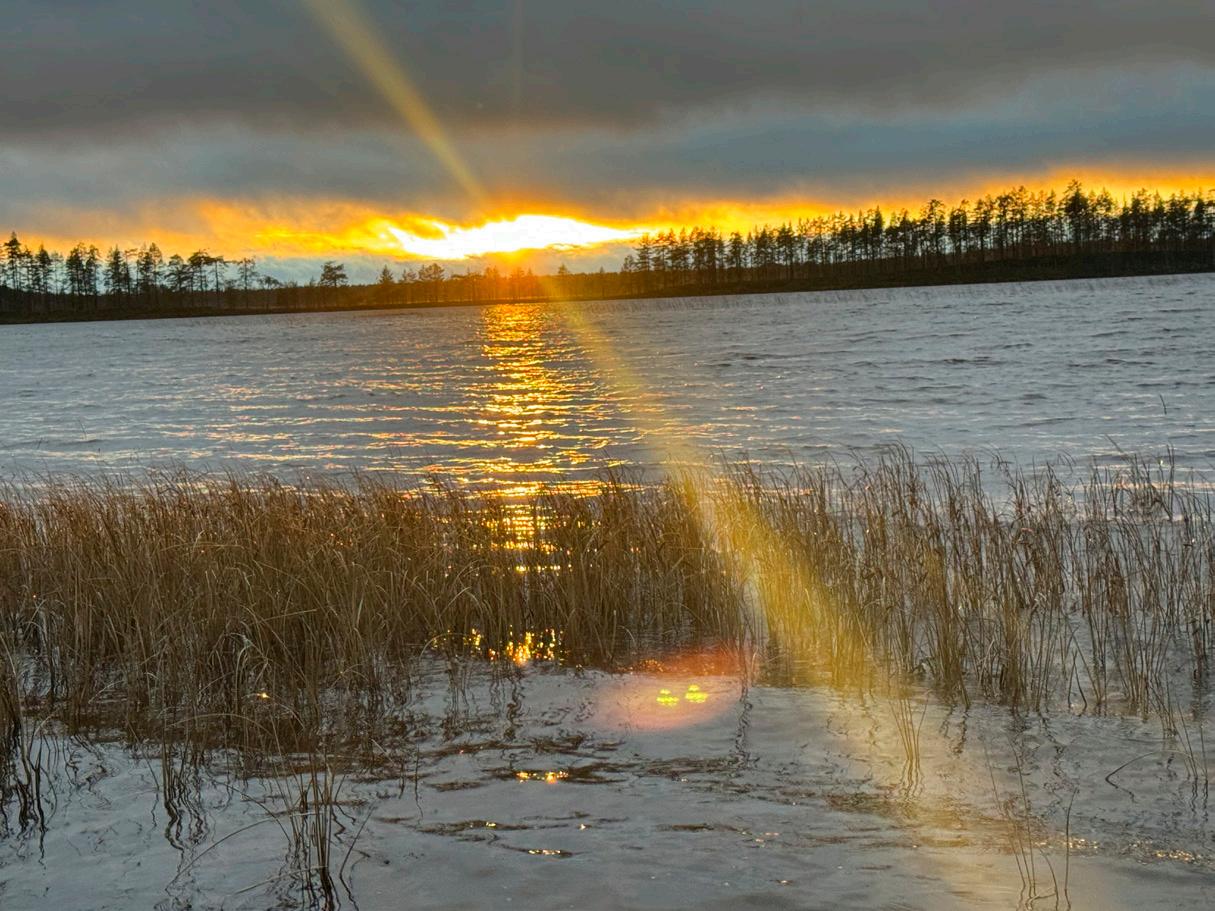
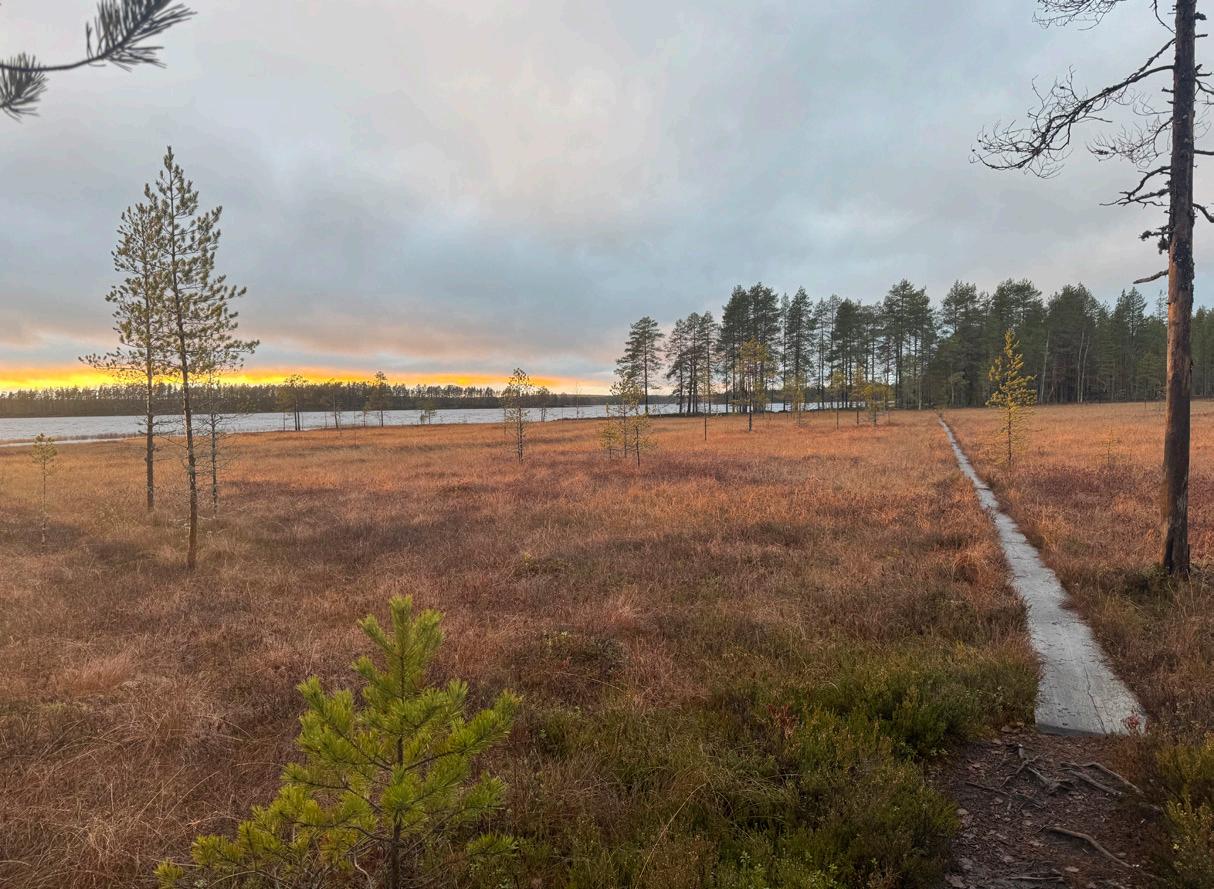
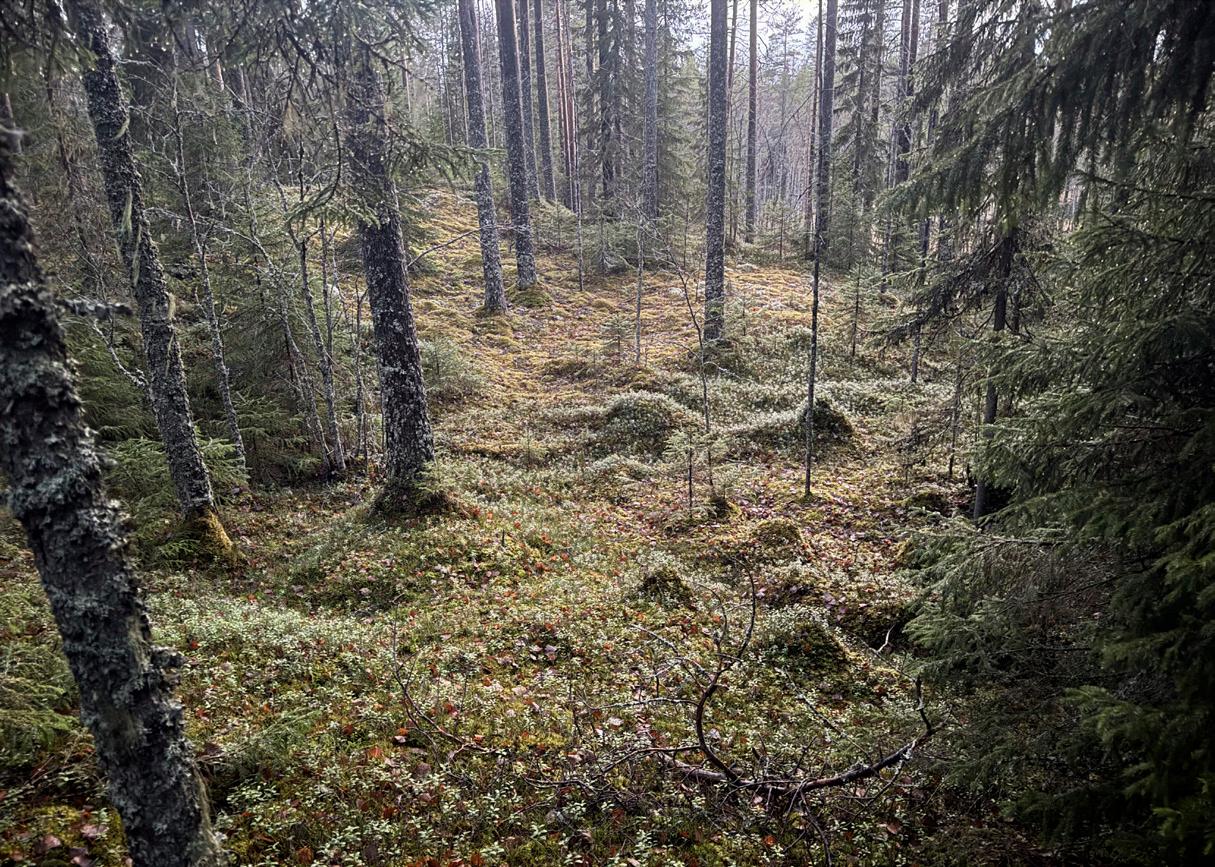
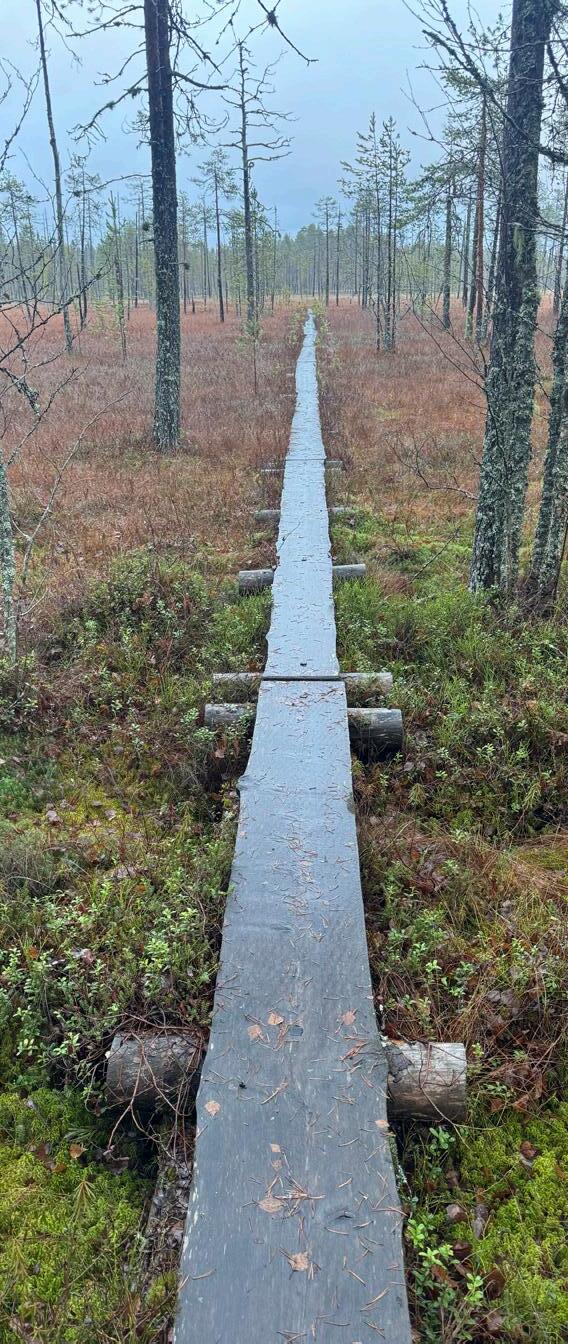
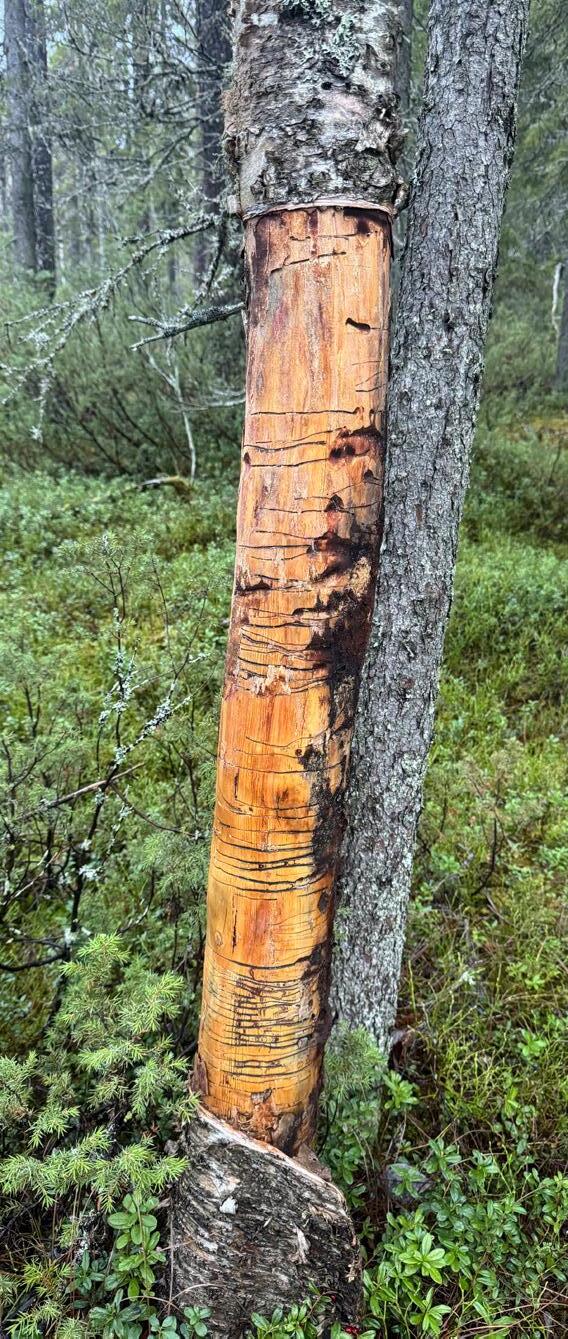
Tahko is a ‘must see’ while living in Kuopio. It is a small tourist town located approx. 60 km north of Kuopio and is reachable via car within 50 minutes. It is known as a popular destination among locals and tourists for its many restaurants, hotels, spas and outdoor activities.
• Tahko is well renowned for its wintersports. The slopes of the legendary Tahko Mountain – Finland’s fourth largest ski resort – attract crowds of winter sports enthusiasts year by year. Nearby Nilsiä and Northeast Savonia have hundreds of kilometers of marked routes for snowmobile use. It is also perfect for skiing, cross-country-skiing, snowboarding, snowshoeing, as well as winter cycling and snowmobiling. Or enjoy a sleigh ride down a slope. The traditional toboggan run is also a highlight of winter, attracting people of all ages. (More details on page 80.)
• Tahko is also popular in summer for hiking and mountain biking, see more details on pages 78-79.
• Those who like the water will be able to enjoy watersports. Nilsiä has a wellequipped marina; Lake Syväri and Lake Vuotjärvi are renowned for their fish stocks. One may also fish in the Lastukoski rapids.
• Furthermore, Tahko has many sports offerings for people of all skill levels, a modern sports field, two full-length golf courses, a sports hall, tennis courts, and other sports premises.
• An abandoned strip-mining area nearby is nowadays repurposed as a venue for opera performances.
At Tahko the world is your oyster. You can bring your own equipment for your own adventure. Or rent equipment and book guided tours. Everything is possible.
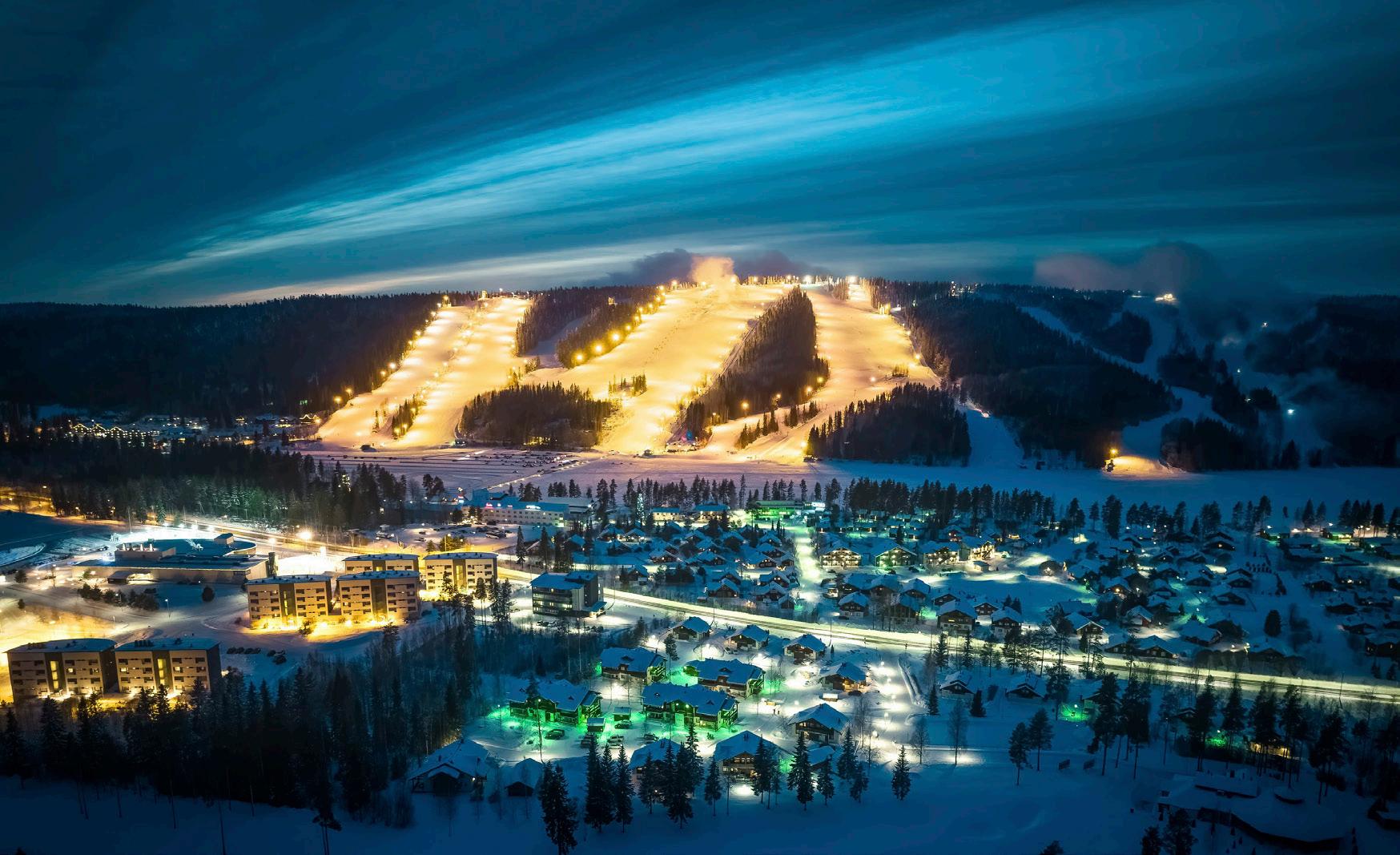
Link: https://www.tahko.com/en/
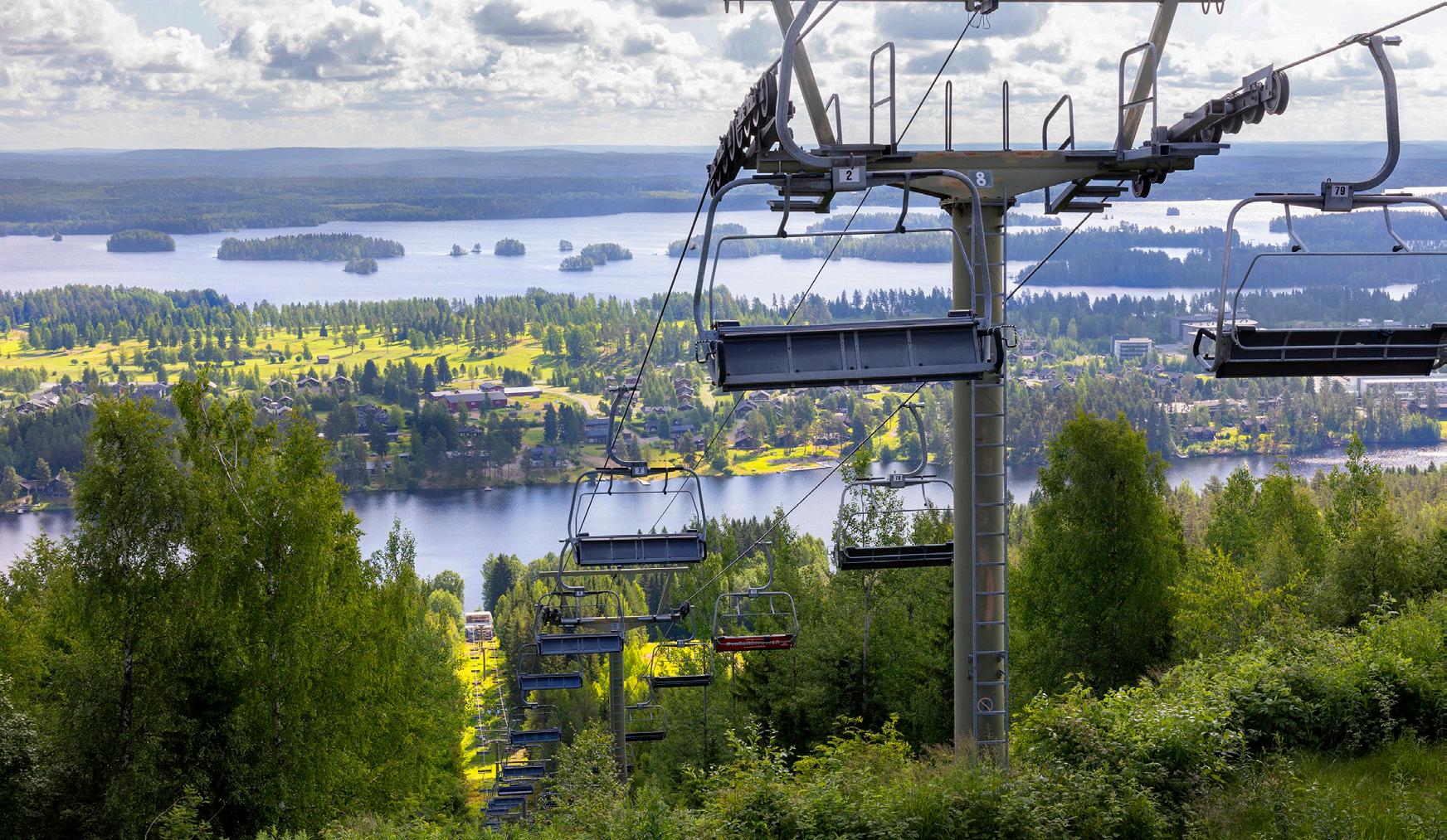
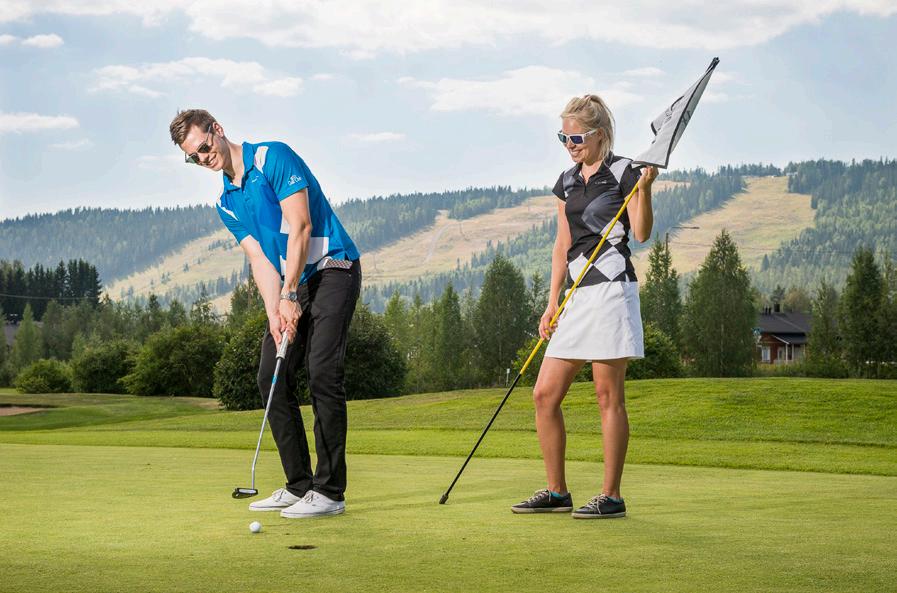
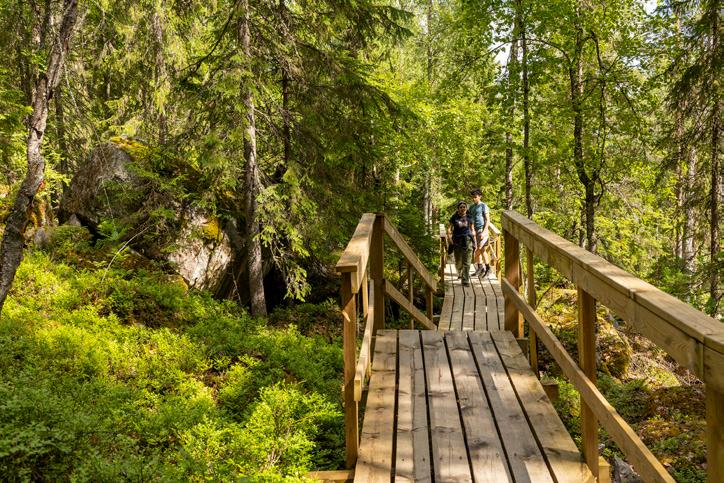
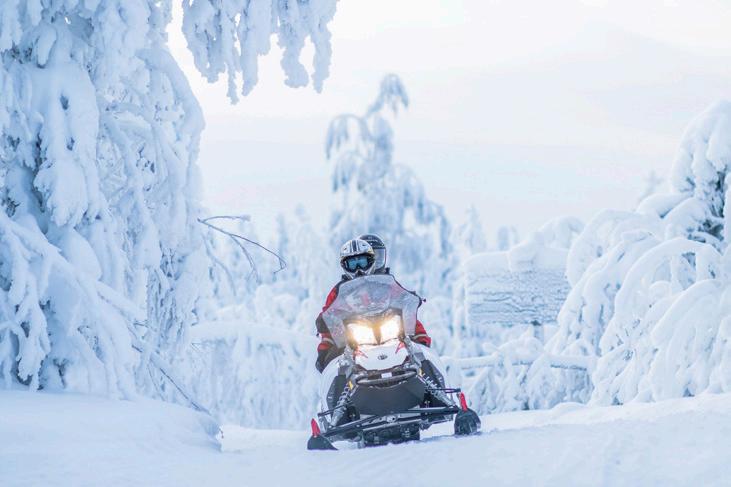
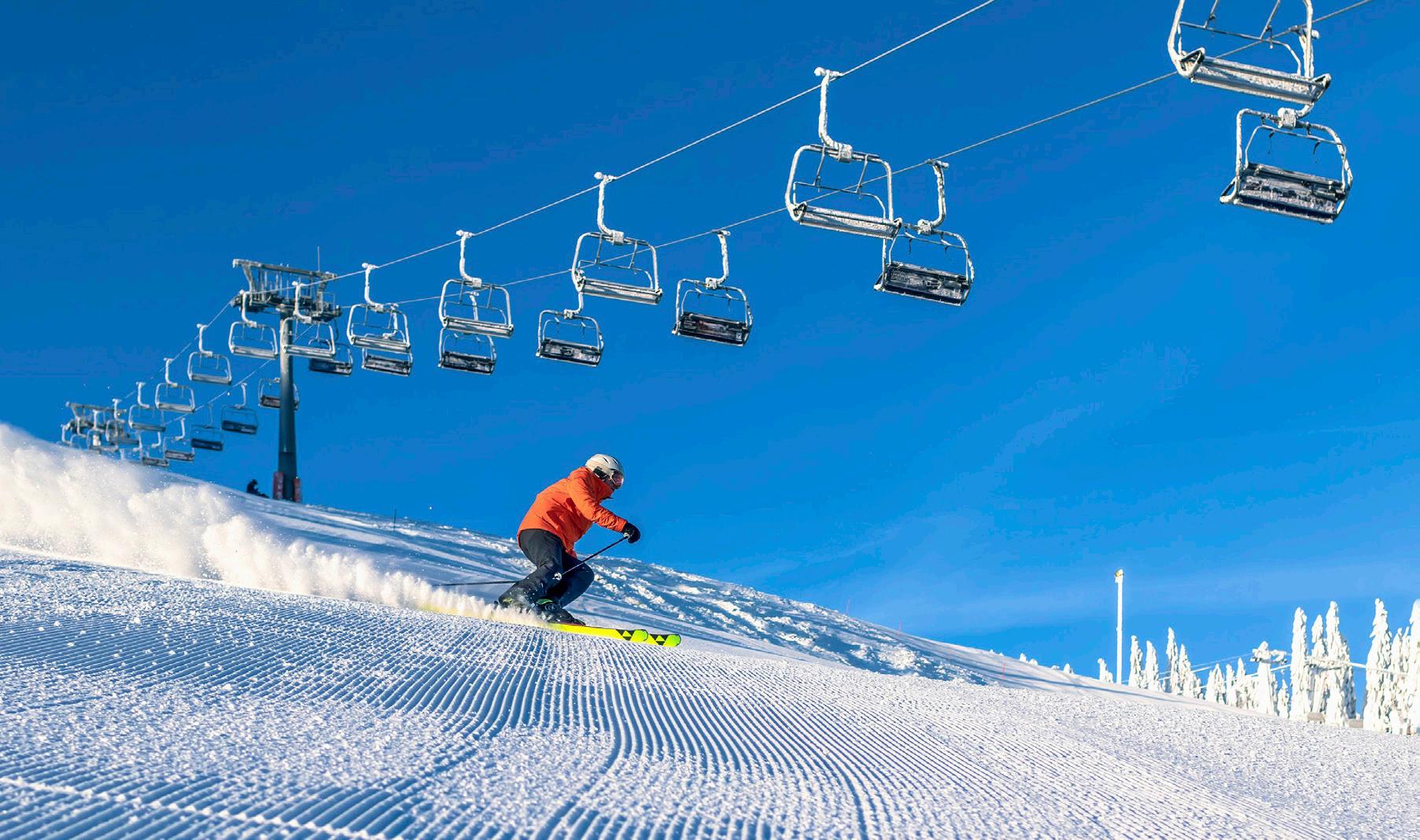
If you wish to stay a bit closer to Kuopio, visit Suonenjoki with its Strawberry Carnival in the summer. Suonenjoki is known for its strawberries and farming. It is located approx. 35 – 40 min southwest of Kuopio. Children can pick strawberries from the fields and eat them fresh for free. The Strawberry Carnival was inaugurated in 1970, and is Finland’s longest running summer event.
Want to stay close to Kuopio, but still escape the hustle and bustle of the city?
Visit the Animal Park at Vehmasmäki or Rauhalahti. Both located in a rural country setting, the whole family can enjoy a variety of local animals. There are different breeds of horses, ponies, donkeys as well as alpacas to see. Additionally visit the goats, highland cattle, sheep and lamb, pigs, guinea pigs, hares, hens and rooster there. Of course, large birds such as pheasants and peacocks live in the animal park as well. Reindeer can also not be missed in a Nordic animal park.
The animal parks are open in the summer months. You can buy a single-entry ticket, or a summer pass. While visiting the park, enjoy a snack in the traditional café, or bring your own food for a barbecue, and experience the country-side feeling. Multiple fireplaces and picnic tables are available. Little ones can also experience horseback riding on ponies, a treasure hunt, and a guided animal care tour.
Links: www.tastesavo.fi/strawberry-carnival and www.mansikkakarnevaalit.fi/ohjelma-2022/ mansikkalauantai/
https://www.kuopionelainpuisto.com/
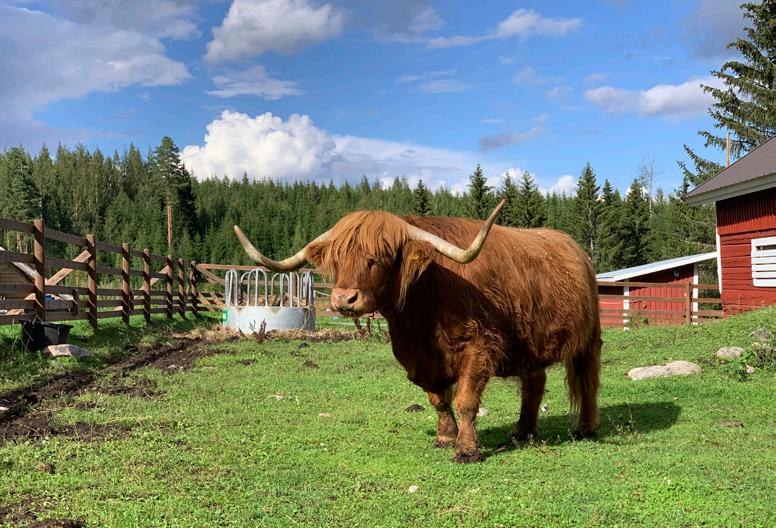
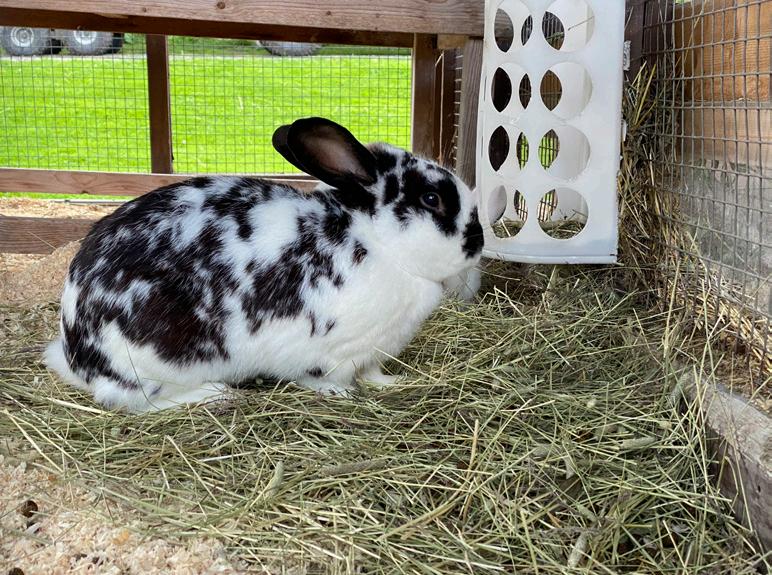
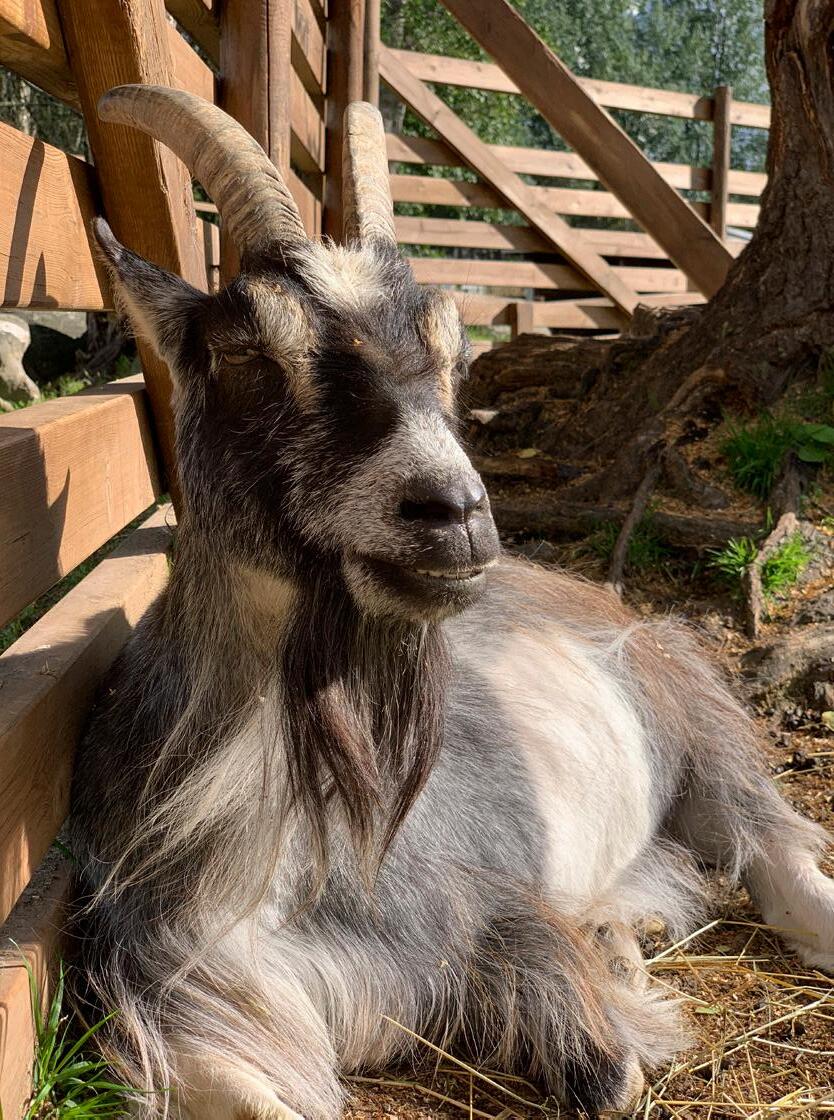
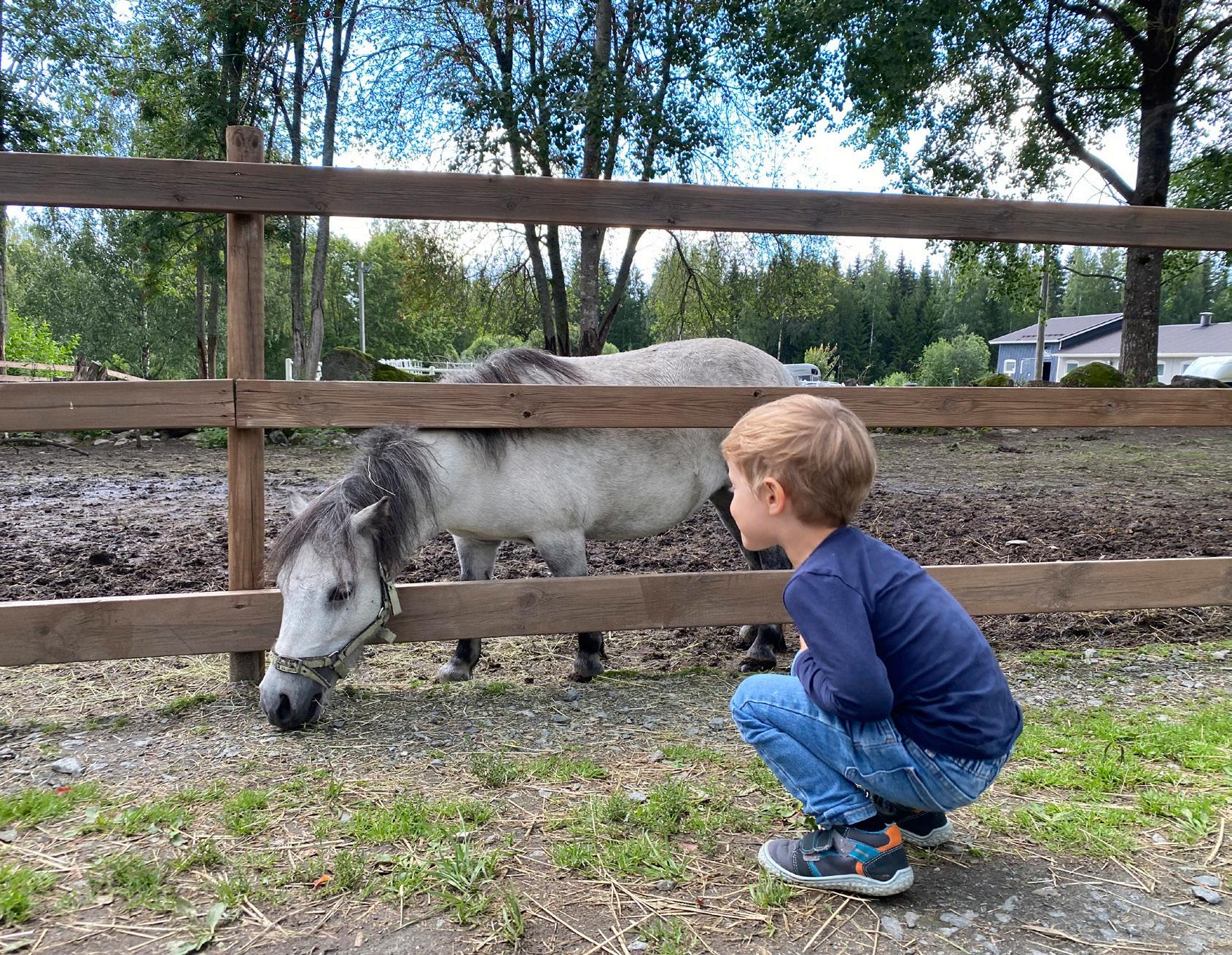
Savonlinna
Another option, if you wish to leave the city of Kuopio behind, is to explore Savonlinna, a historic town located just under 2 hours south of Kuopio. Savonlinna is beautifully situated in an archipelago. Its historic town centre boasts a majestic medieval castle of the name Olavinlinna. It is the world’s northernmost stone fortress still standing. Built in 1475, the castle received its name from St. Olaf, a Norwegian Viking King from the 11th century, who converted to Christianity.
While there are many attractions to explore year-round in Savonlinna and its surrounding villages, the highlight every year is the famous Savonlinna Opera Festival, celebrated annually in July. Worldclass Opera held in the medieval lakeside castle of Olavinlinna – now that is what I call enjoying a summer in style. The festival is Finland’s premier cultural event, attracting 70,000 visitors each year from around the globe. In 2024 for example, the program included Verdi, Mozart, Wagner, Saariaho, all performed by Finland’s as well as some of the world’s finest opera singers.
We visited Savonlinna in late summer and enjoyed a guided tour of the castle. During the tour we climbed up narrow medieval stone staircases to the top of Chapel tower. You get to see how residents and guests of the castle lived in historic times, incl. the central hall, their sleeping quarters and the King’s hall (used for the most exquisite dining festivities) to name a few.
The mascot of Olavinlinna is a black ram. According to legend during a siege, the ram got frightened and started running along with the crowd. The invading sol-
diers believed they had just seen the devil and left for the hills. The black ram has been celebrated as a hero ever since. It has its own statue situated within the castle walls.
While you are enjoying Savonlinna, you can also relax on a boat tour on lake Saimaa for an unforgettable holiday. We did a boat tour of 1h 20 min, where we got to see many beautiful islands and shores. We did not see the endangered Saimaa ringed seals, which are native to the region, but perhaps you will. A good spot for seeing them are the national parks Linnansaari and Kolovesi close bya must for nature lovers. You can also do more sight-seeing, e.g, Kerimäki Church, which is the largest wooden church in the world. The Lake Saimaa region has been awarded the prestigious, international European Region of Gastronomy title 2024. Dining will therefore also be an exquisite experience while enjoying the remoteness of Saimaa in Eastern Finland. We had dinner at Huwila Bar & Kitchen and lunch at Kahvila Saima, both of which served excellent food.
Planning your trip to Savonlinna: https://visitsavonlinna.fi/en/
Savonlinna Opera Festival: https://operafestival.fi/en/
Taste Saimaa: https://www.tastesaimaa.fi/en
Olavinlinna Castle: https://www.kansallismuseo.fi/en/olavinlinna/ info
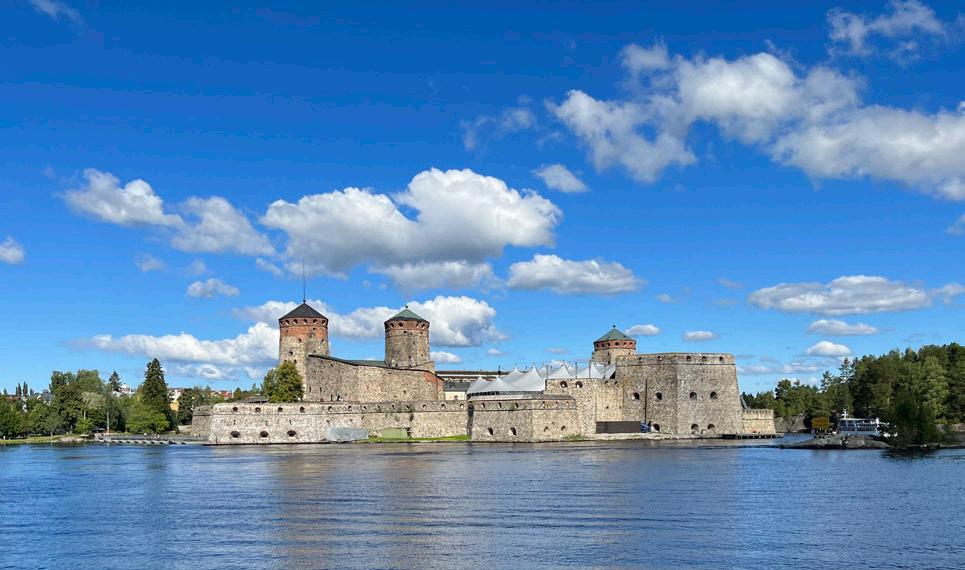
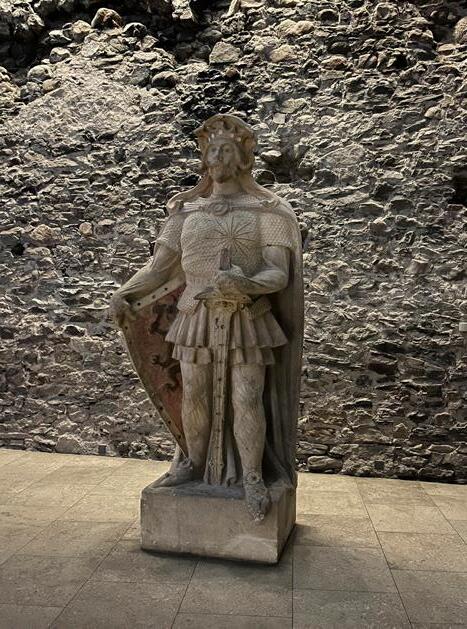
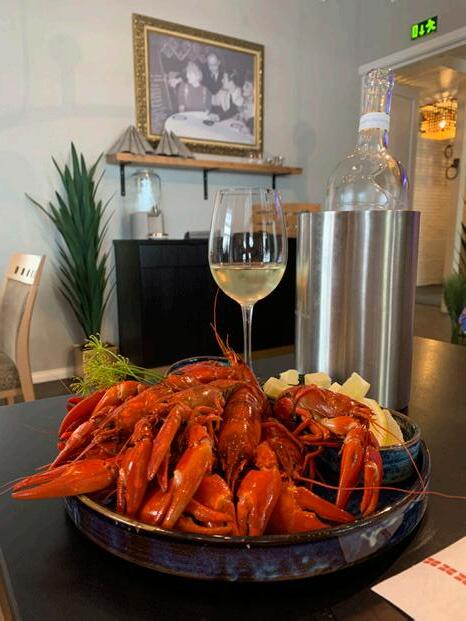
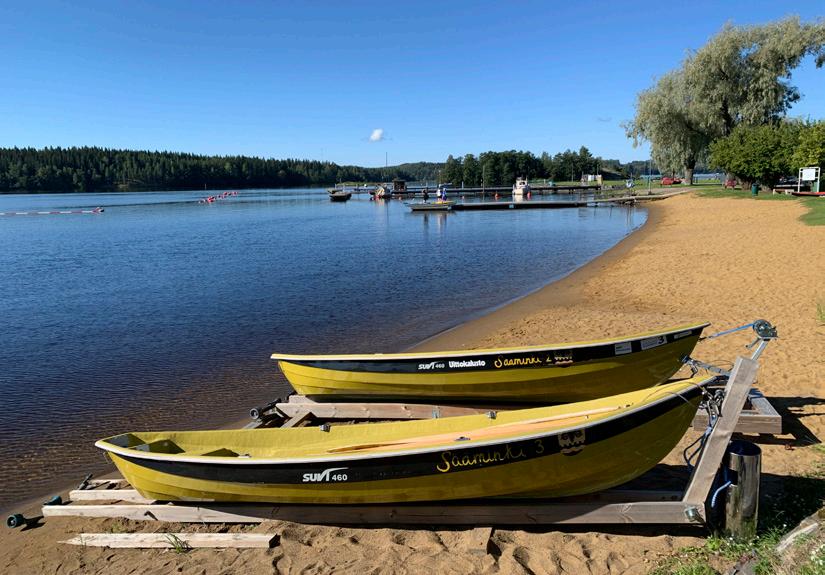
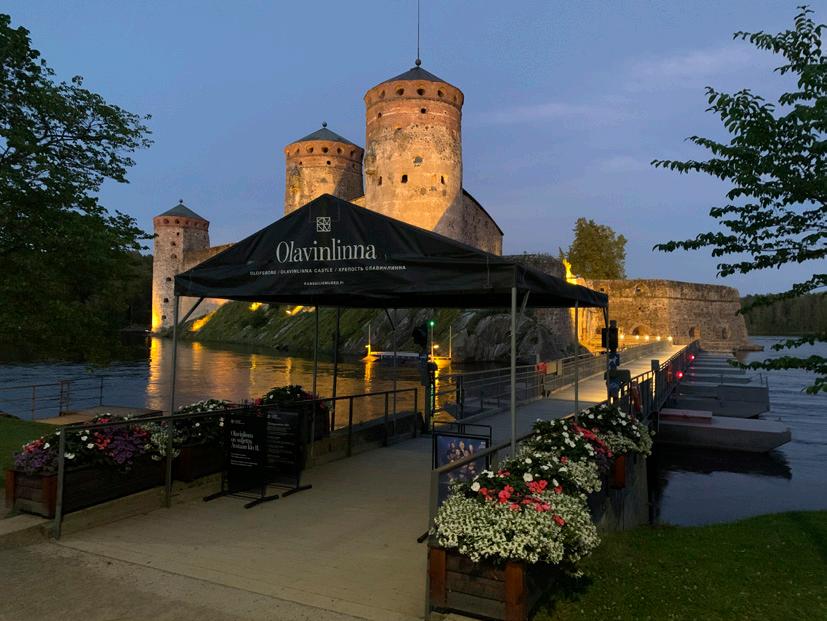
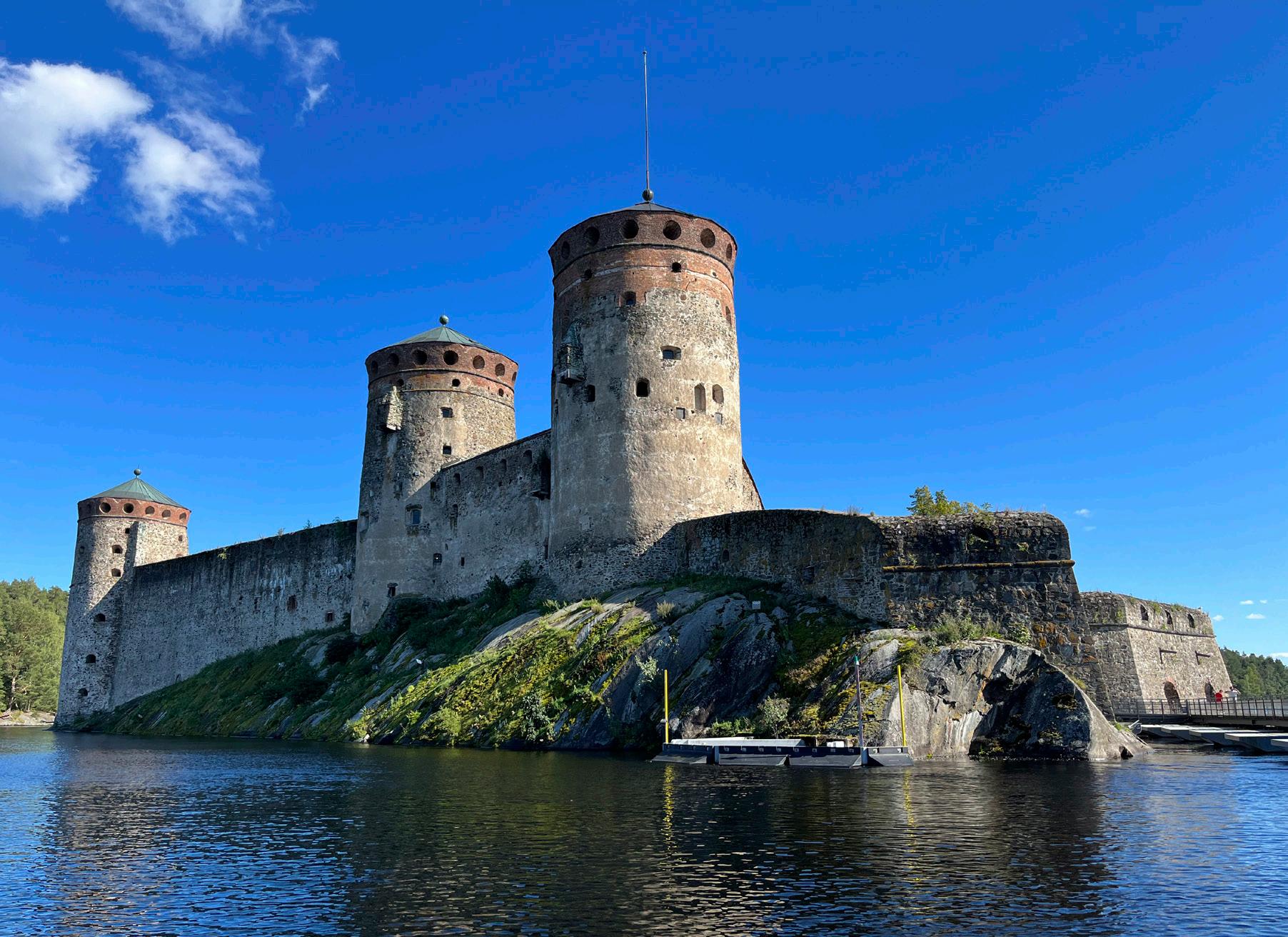
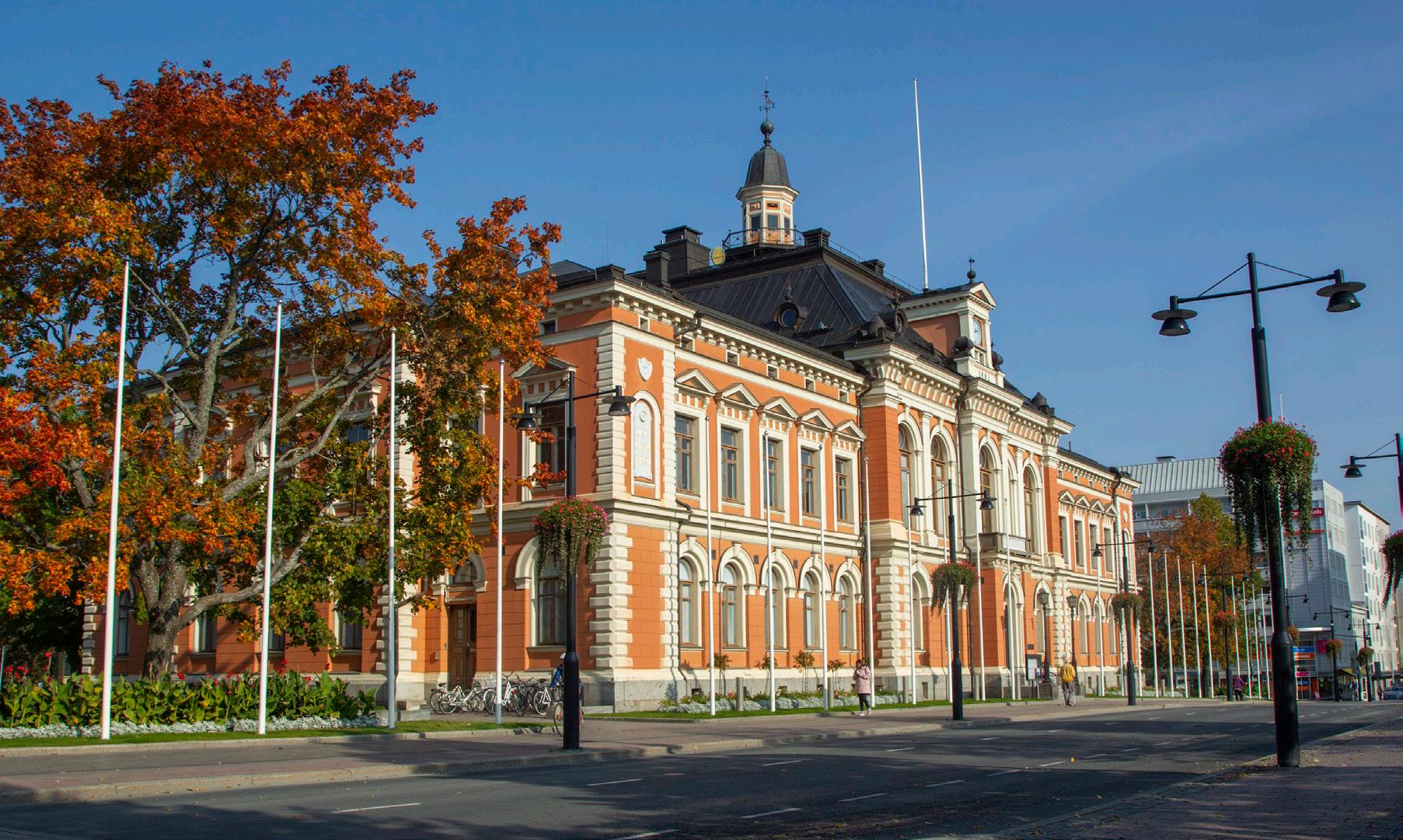
5.1 Kuopio Logistics
Immigration & Taxes
Finnish Pension System
Finnish Healthcare
Making Kuopio your new home goes further than visiting Kuopio as a traveller. Therefore, a whole chapter will be spent on what it means to set up life in the second most attractive city of Finland. You will need to find a home to live in. You will need to go through the Finnish immigration / registration process. If you are working in Finland, you will need to understand the Finnish taxation system, as well as the pension system. Perhaps you want to send your child(ren) to a local school and need information about the education system. Other practical aspects include dressing for Finnish winters, understanding the recycling system as well as which emergency phone numbers to call, if you have an accident. This chapter is here to help you get life in Kuopio organized.
For global talent coming to Kuopio, one of the first to do’s will be finding a flight connection. Kuopio has an airport which means it is accessible internationally if you plan a layover in Helsinki. FinnAir operates six flights daily (i.e. three in each direction) between Kuopio and Helsinki. The Finnish Capital is well connected. Helsinki airport serves as a gateway with direct flights by FinnAir to many European cities, and to select destinations in Asia, the Middle East and North America. This enables a smooth journey from many locations worldwide via the Finnish Capital to Kuopio.
Table showing direct flights between Helsinki and select international destinations
The table on the right lists connections with FinnAir for the flight from Helsinki to select destinations. Travel times for flights into Helsinki, or with different airlines may vary slightly.
* FinnAir offers direct flights seasonally from Helsinki to select travel destinations in North America (e.g. direct flights from HEL to Chicago (ORD) from MarOct 2026; HEL to Miami (MIA) from Dec 2025 - Mar 2026; HEL to Toronto (YYZ) from May - Aug 2026)
Status: Finnair October 2025
Europe
North America
Asia
Once you are in Kuopio, there are a variety of hotels to choose from. If you wish to be in the city centre Scandic Atlas (by the main square) is a good choice or Sokos (long name: Original Sokos Hotel Puijonsarvi) which is also centrally located by Kuopio Cathedral and Snellman Park. Another popular choice is Lapland Hotel, which offers fabulous dining in its restaurant Gallá (see chapter 4.1). If you wish to have direct access to the lake, Bella Lake Resort is a popular stay boasting beachfront luxury cabins. Perfect for an early morning swim directly from your cabin, before you start your day.
After an initial look-and-see-trip to Kuopio, finding a more permanent home will be one of the next steps. The real estate market for finding rentals in Kuopio can be challenging, as the market is primarily focused on the sale and purchase of real estate. It is therefore best to work with a realtor. Overall, you can choose a home in the city centre, or closer to the pristine forests (if you enjoy nature), or of course by Kallavesi lake (if you enjoy the water). As a high-level rule of thumb, if you wish to be in proximity by the lake, there are large residential areas south of the city boasting family homes with gardens. If you wish to be by the lake in an apartment, you may find something closer to the city (e.g. in the Kuopio Harbour area, where new construction has recently taken place.
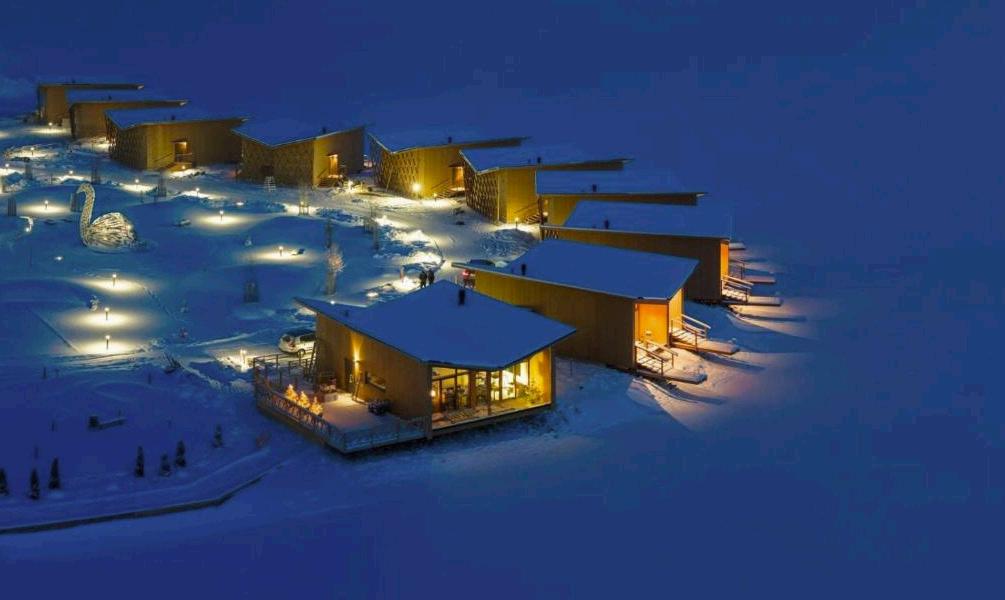
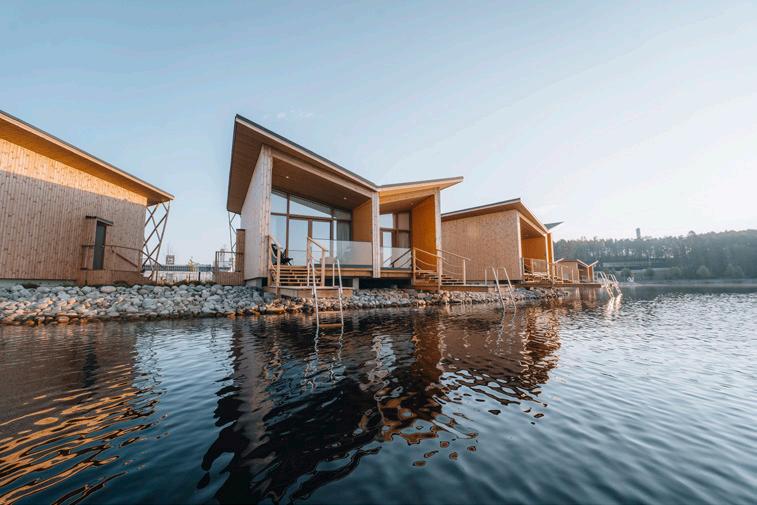
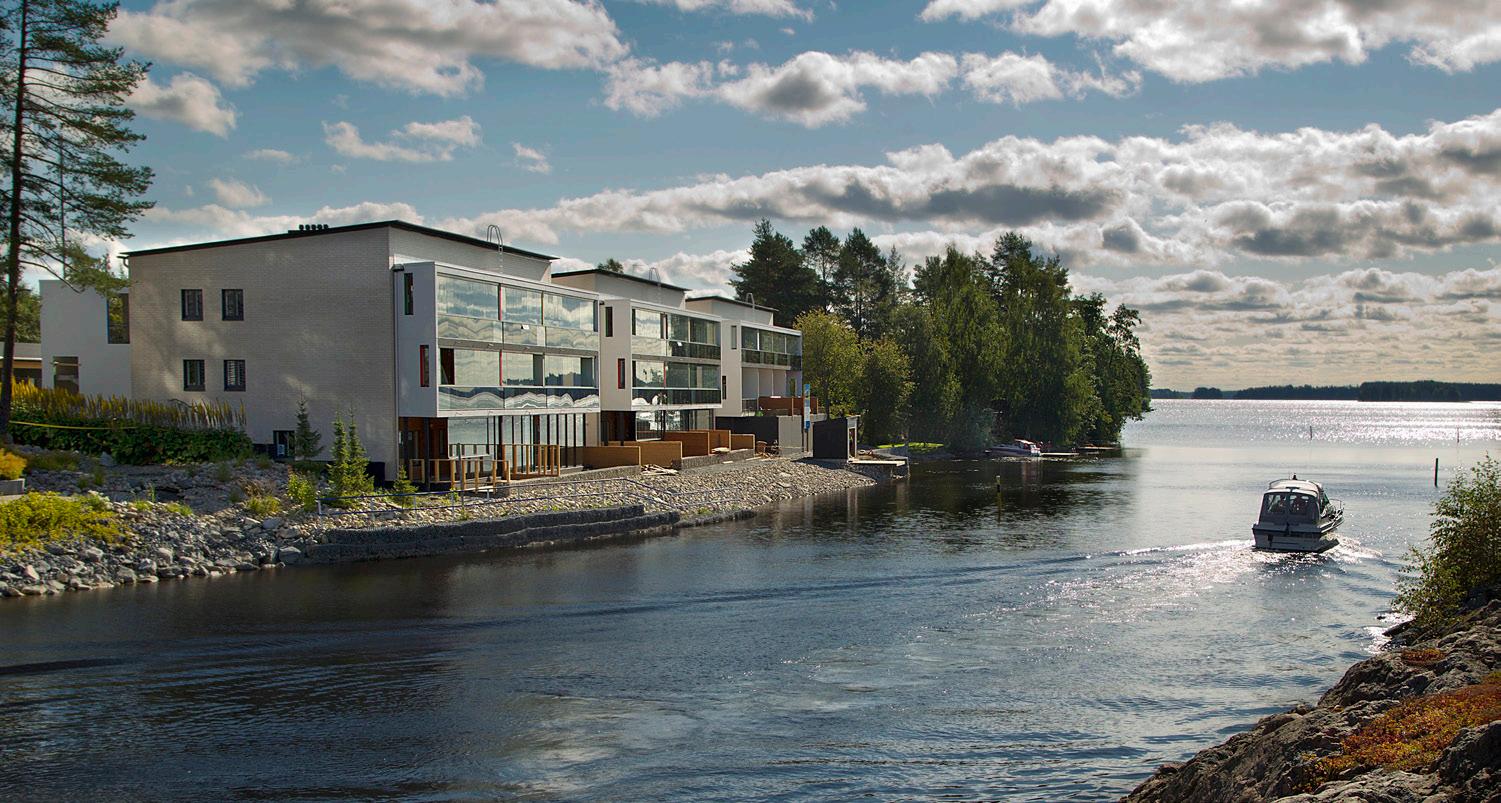
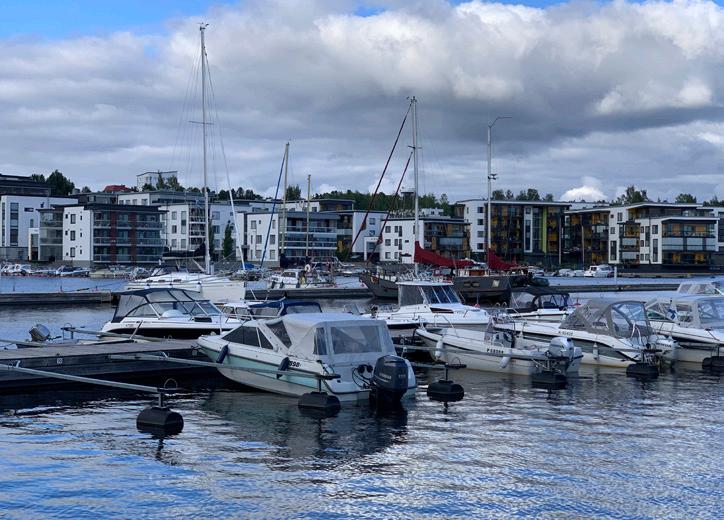
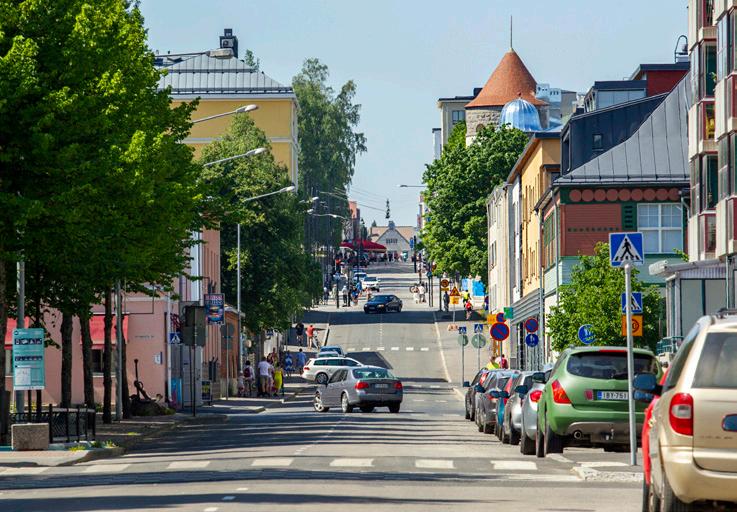
More comprehensive information on the residential areas in Kuopio and its surrounding can be found here:
https://www.kuopio.fi/en/city-of-kuopio/moving-to-kuopio/types-of-housing-and-residential-areas/
“Think like a wolf, and tackle your immigration matters early on.“
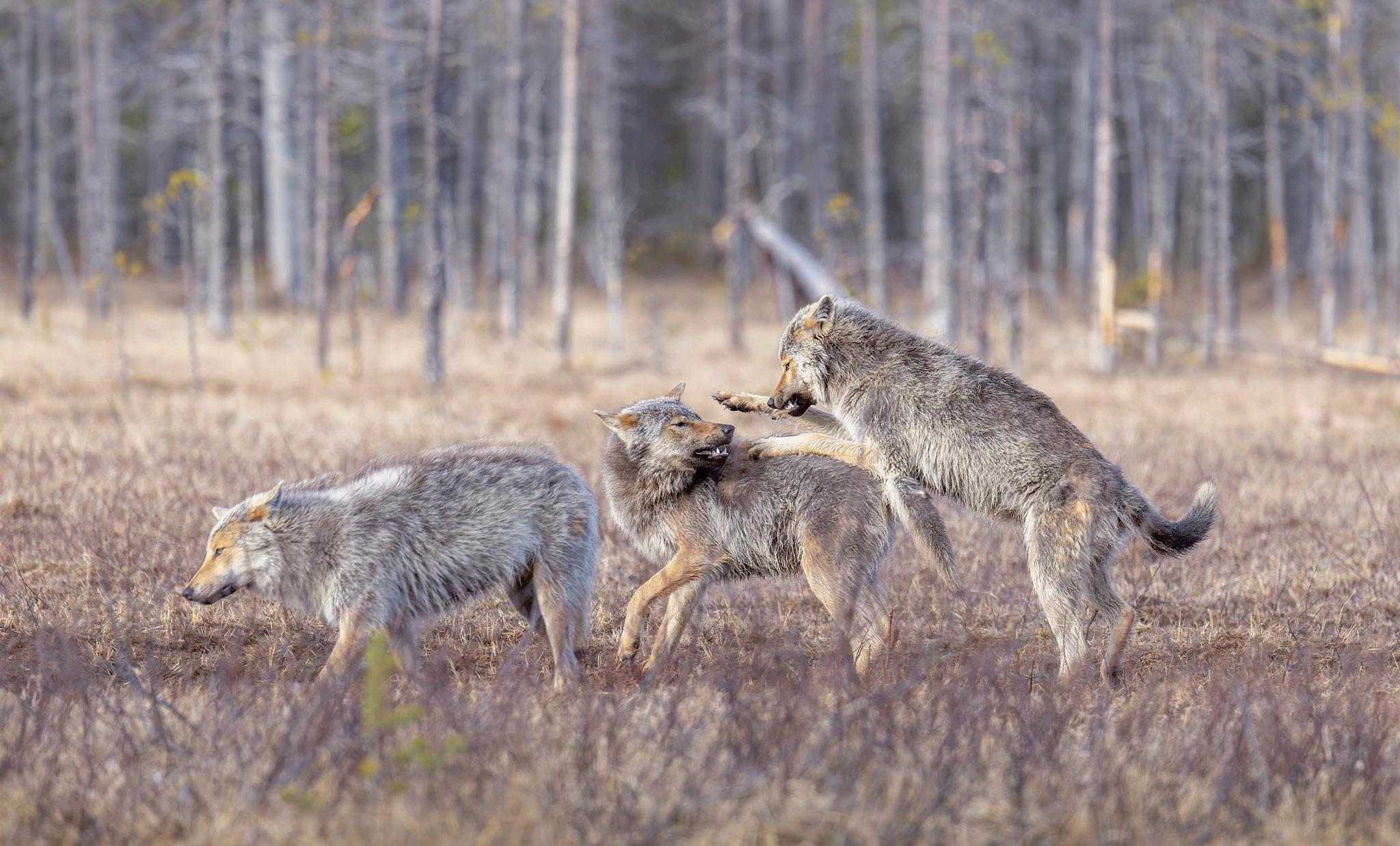
While only 400-500 individual wolves are estimated to live in Finland, and they remain a rare sighting, wolves have been attributed to strategic alliance and foresight. Similarly, being smart and planning your immigration matters carefully will help you avoid delays and unnecessary rework.
Depending upon your nationality you may need to complete certain steps already in your home country prior to your relocation. Therefore planning this process timely is key.
An overview of the topic of immigration can be found below. The requirements will vary depending upon your nationality and the length of your stay. Other factors may potentially have an impact as well.
Therefore, always consult with an immigration law firm for your specific case.
Overview
If you are a citizen of an EU member state, Liechtenstein or Switzerland, and your stay in Finland exceeds 90 days, you must go through a process called EU registration. This is an administrative process to register your right of residence in Finland.
Please note: As an EU national you do not need a residence permit to stay in Finland. If you are moving to Finland due to your employment, you can ask your employer to sponsor an immigration professional to assist you with this process. The immigration professional should support
you with filling out the necessary application forms and providing you with a list of documents you will need. You can submit these online via Enter Finland (www. enterfinland.fi). Additionally, you must visit a Finnish Immigration Office within the first 3 months of entering Finland, to complete the process and to verify your identity. This step must be completed in Finland at a service point of the Finnish Immigration Office and cannot be done at an embassy abroad.
Nordic citizens (of Norway, Sweden, Denmark or Iceland) need to register for stays longer than 6 months at the Digital and Population Data Services Agency. A residence permit is not required, but the appropriate administrative process to register needs to be adhered to. Norway, Denmark, Sweden, Finland and Iceland are part of the Nordic Council, which al-
General Advice for everyone:
lows free movement and cooperation between Nordic citizens.
If you are a non-EU national, you will need a residence permit if your stay in Finland exceeds 90 days. Typically, applications need to be submitted already while abroad by visiting a Finnish Embassy or Finnish Consulate in your home country. Therefore, it is strongly advised to plan this process early on – ahead of your relocation - and to consult with an immigration professional.
More information can be found here: https://migri.fi/en/first-residence-permit
Where to find the Finnish Immigration Authorities in Kuopio: Address: Ajurinkatu 45, 70110 Kuopio Website: https://migri.fi/en/home
The immigration / registration in Finland is a two-step process:
Step 1
Step 2
EU registration (for EU nationals)
Outcome:
Residence Permit (for non-EU nationals)
Authorities will make a formal decision. Upon approval of your request:
• Issuance of Finnish Personal Identity Code
• Issuance of Residence Permit Card (for non-EU nationals)
• Registration in Finland’s Population Information System, municipality will be left blank
Municipal registration (for all)
Outcome:
‘Municipality of residence’ as well as ‘registration authority’ will be added to your record in the system
Once your EU registration is complete or your residence permit has been approved you will be given a Finnish Personal Identity Code, and you will be entered into Finland’s Population Information System. Afterwards you can register at the municipal level. Registering at the municipal level has several benefits, such as being able to receive services provided by the city, the municipality or generally at the local level. This includes being eligible to receive reduced kindergarten rates for children, immigrant integration services, health and social services, and much more.
More information can be found on Enter Finland at: https://enterfinland.fi/eServices/
The Finnish Personal Identity Code (henkilötunnus or in short HETU )
The Finnish Personal Identity Code was implemented in the 1960s. It is unique to a person – meaning no two individuals will have the same code. It consists of 11 characters, that contain the birthdate (in the format DDMMYY), followed by a dash or letter A, a three-digit serial code that identifies your gender (an odd number for males and an even number for females), and a final verification letter.
Starting 2024 the system has started to be transformed to contain more characters (apart from dash or ‘A’), because new identity codes are running low. In future the consideration is also to make codes gender neutral.
The Finnish Personal Identity Code is permanently assigned. This means existing Finnish Personal Identity Codes will remain unchanged and changes may come into effect for new applications. By
permanently assigning these to individuals, the personal identity code can also be used if you leave Finland and return years later.
Your Finnish Personal Identity Code will open numerous doors in Finland. It is used
• in documents issued by different authorities and institutions, including the police.
• by financial institutions / banks as well as insurance companies
• when requesting medical services, e.g. in hospitals and the Social Insurance Institution of Finland (Kela).
• when requesting social services
• when setting up a new work contract with your employer
More information on the logical composition and sequencing of Finnish Identity Codes can be found here: https://cran.r-project.org/web/packages/hetu/vignettes/hetu. html#introduction
A few personal experiences when going through the EU registration/ residence permit
Tip no 1:
Finnish immigration authorities generally require apostilles on documents. A certified copy by a notary is often not sufficient. You might want to consider having your documents apostilled ahead of time.
Tip no 2:
Typically, Finnish authorities will want to verify source of income evidenced through the work contract. Spouses will need to provide a marriage certificate (if
the spouse does not have a Finnish employer as well). Children require birth certificates. Other documents might be needed in addition, as advised by your immigration professional.
Tip no 3:
When our family went through the EU registration process, the authorities had noted down the birth date of one of us incorrectly. For another family member the first name was misspelled. Always check the paper print-out which you are given at the end of the appointment for typing errors. Identifying inaccuracies immediately on the spot helps avoid time-consuming rework later on.
Tip no 4:
Finland requires all documents in Finnish, Swedish or English language. If your documentation is in another language an authorized translator must translate it. Speak to your immigration professional.
An example of a Kela card. Image: Kela
Next Steps:
Once you have a Finnish Personal Identity Code, you can open a bank account, request a health insurance card, and much more. While the process of opening a bank account can vary from one financial institution to another, the process for requesting a health insurance card is the same for everyone. It is therefore described below.
How to register with Kela:
Step 1:
Go to Kela’s website at www.kela.fi and change language to English at the top. Then click on ‘forms’. Enter ‘Y77e’ into the search bar.
Step 2:
Download and fill out the form ‘Y77e –Notification Moving to Finland’. Send it via post to the Social Insurance Institution in Helsinki (address is visible on the form). If you came to Finland for work, don’t forget to include a copy of your employment contract. Please note: One form needs to be filled out per adult. Children can be added on the same form of their parent or legal guardian. You can additionally request a Kela insurance card and the European Health Insurance Card. Just comment accordingly under section 8 of the form.
Step 3:
If you have a child and wish to claim child benefits you will need to submit form ‘LL1e’. Again, you can find the application in the section ‘forms’ via the search bar.
Download and print form ‘LL1e – Application Child Benefit’ and send it to Kela at the address listed on the form.
“Thunder and lightning might be very frightening. Your taxes don’t have to be.“
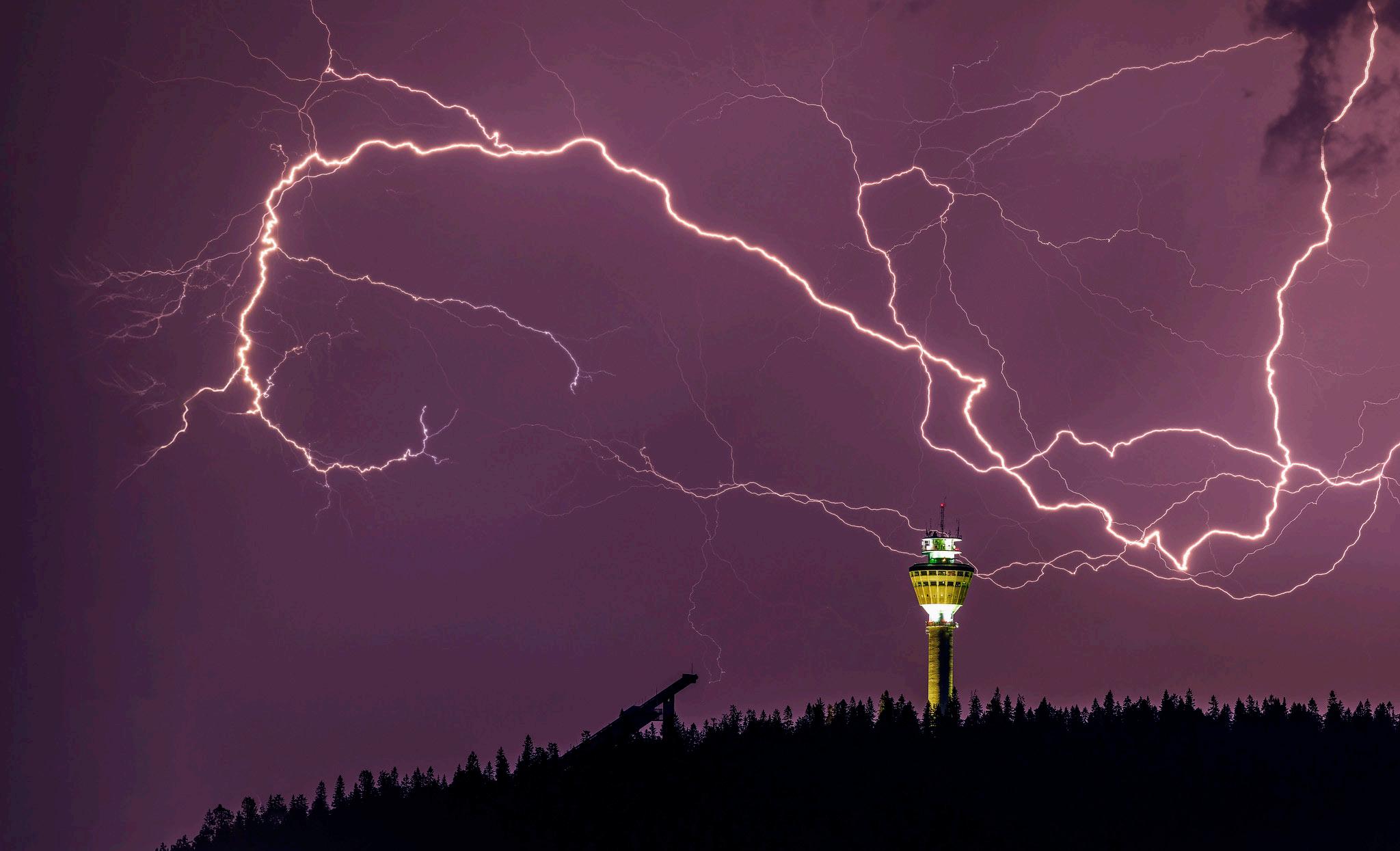
When I met Wille Markkanen, I asked him how long it had taken him to take this photograph. ‘Two years, 30.000 shots’ was his answer.
This is one of my favourite pictures in his collection. It took ultimate precision and endurance to take this stunning photograph but rest assured your tax filings will be perfect with much less effort. Understanding international taxation might be as daunting as the storm pictured above. Therefore, let’s break it down.
Tax laws can be complex. I was therefore debating with myself whether to write a chapter about taxation at all. Having relocated internationally before, I have had plenty of international tax briefings
myself. I always found it helpful to have a base understanding prior to going into a consultation.
I therefore want to share some basics. This chapter cannot substitute professional tax consultation. The intent is rather to provide you with an overview. As you read the below, keep an open mind that your case might be specific and not follow the general rule.
When you move to Finland, it is likely that you will need to file taxes in two countries at once: your home country as well as your host country (Finland). To avoid double taxation (i.e., being taxed for the same item by two different country jurisdictions) many countries have dou-
ble taxation treaties in place. These tax treaties are bilateral agreements between countries. Make sure that your tax team is well versed with the taxation in Finland, the taxation of your home country, as well as the underlying bilateral tax treaty.
Finland belongs to the countries with the highest income taxation rates in the world. But before you start to worry, rest assured Finland wants to attract talent into its country and thus make taxes attractive for international talent.
While Finland can have tax rates on personal income as high as ~55-57 %, hardly anyone pays an effective tax rate in this magnitude. The personal income tax will depend on the municipality, the personal income situation, other factors such as whether you belong to a church, etc. Therefore, there is not one tax rate that fits all. Also note that Finland has a progressive taxation system, meaning the highest tax rate will only be applied to the highest portion of income earned in that respective bracket. I will illustrate with a math example later in this chapter.
(under the Foreign Expert Tax Regime)
If you are an expat in Finland, you can benefit from special taxation, which follows a flat-rate taxation system, described below:
In a first step, you must determine whether you are a tax resident or a tax non-resident of Finland. Please note: Residency under taxation is very differ-
ent than residency from an immigration perspective. Your tax professional can assist you in assessing your specific case.
IMPORTANT: If you are a resident taxpayer, you will be taxable in Finland with your worldwide income. If you are a non-resident taxpayer, you will be taxable only on your Finnish sourced income.
Example for illustrative purposes:
Person A has a Finnish employer and spends 6 months or more in Finland (i.e., a temporary absence from Finland will not interrupt this 6-month-timeline). Or alternatively A has a permanent home or habitual abode in Finland, regardless of their length of stay. These are all strong indicators, that A is a tax resident of Finland. If A further relocates with their spouse and / or family, it further strengthens the ties to Finland. Therefore, person A will be considered a tax resident.
Person B on the other hand is less than 6 months in Finland, travels back and forth in this time frame to their home country. And does not have a permanent home or habitual abode in Finland. While a tax professional will always need to assess the specific case, the indicators point towards B as a non-resident taxpayer.
In a second step, once the tax residence status has been determined, the taxation system can be explored in more detail.
• Person A as tax resident can choose between two taxation principles for their salary: (1.) a flat rate taxation system under the Foreign Expert Tax Regime of 32% (which might be reduced to 25% in
future, per the Press Release from the Finnish Ministry of Finance, link below) or (2.) the regular taxation with progressive rates.
Please note: Certain criteria must be met to qualify under the Foreign Expert Tax Regime which can be found here: https://www.vero.fi/en/individuals/taxcards-and-tax-returns/arriving_in_finland/ work_in_finland/specific-instructions-for-different-occupations/key_employees_from_ other_countrie/
• Person B as a non-resident taxpayer will pay a flat rate of 35% on their Finnish sourced employment income. Alternatively, the non-resident taxpayer can request to be taxed at progressive rates. This option is only open to residents of the European Economic Area (EEA) or countries with whom Finland has a specific agreement, and certain restrictions may apply.
Please note: These tax rates are applicable to the tax year 2025.
Taxable income bracket for 2025
In the progressive system, the first 21.200€ of income will be taxed at 12,64%, the next 10.300€ (i.e. 31.500 minus 21.200) at 19% and so on. Additionally, in the progressive system a municipal tax will be levied between 4,36% - 10,86% of income, depending on the municipality and church tax (if applicable) leading to a max tax rate of ~55-57%. No municipal taxes will be paid on salary in the flat taxation system of the Foreign Expert Tax Regime.
(A.) Expert Tax Regime
Certain criteria must be met to qualify under the Foreign Expert Tax Regime which can be found here: https://www.vero.fi/en/individuals/tax-cards-and-tax-returns/arriving_in_finland/work_in_ finland/specific-instructions-for-different-occupations/key_employees_from_other_countrie/
Press Release Finnish Ministry of Finance from April 2024, on lowering the flat rate taxation for foreign key persons: https://valtioneuvosto.fi/en/-/orpo-government-decisions-in-mid-term-policy-review-session-will-strengthen-finland-s-competitiveness-and-security
And also related articles e.g. by Northern Partners: https://www.npgroup.eu/finlands-expat-taxregime-2025-guide/
(B.) Info for Non-Resident Tax Payers
https://nordisketax.net/pages/en-GB/taxation/?country=finland&topic=limited-tax-liability
Let’s illustrate with a math example. If Person A were to earn an annual salary of 140,320€, the personal income tax at the national level would be 44,902€ in both the progressive system as well as in the flat rate approach. However, the Foreign Expert Tax Regime is still more beneficial, as no municipal tax is being levied. Additionally more benefits may apply in the Foreign Expert Tax Regime regarding social contributions. Speak to your tax advisor.
Several websites of the Big 4 Accounting Firms additionally offer explanations of the Finnish taxation system in English language.
Please note that some countries allow spouses to jointly file their taxes (e.g., Germany, Switzerland, USA, etc). Other countries require each person to file their own taxes (e.g., UK). Please note that Finland falls into the latter category. This means: If the global talent and their spouse are both working, two separate tax filings will need to be made.
Resources:
If you want to look up the latest progressive rates visit:
Original webpage, in Finnish language: https://www.vero.fi/henkiloasiakkaat/verokortti-ja-veroilmoitus/tulot/ansiotulot/#tuloveroasteikko
Also, if you wish to have more specific information for your case, a tax calculator is available: https://www.vero.fi/en/About-us/ contact-us/calculators/
Please note two important tax deadlines:
The annual tax filing deadline in Finland is typically in April – May timeframe. The specific date will be communicated in a letter by the tax authorities.
If you are a foreign expert resident taxpayer, the timeline for choosing between the progressive tax system and the flat rate tax is within 90 days of starting employment in Finland. If you do not proactively decide, the progressive tax system will be applied as a standard.
Please note there can be further taxes (church taxes, etc), which may which may potentially be applicable. Please consult with your tax advisor.
The flat rate for expats is applicable to salaries. The progressive tax rates are applicable to personal income taxes. Capital gains (e.g., dividends, etc.) have different taxation rates. Consult with your tax professional.
Another tax to be considered when relocating to Finland is the VAT. The standard VAT rate in Finland is 25,5%.
A reduced rate of 14% (which will be lowered to 13,5% in 2026) applies to products such as food items, books, public transport, cinema, restaurants and catering, hotels, entrance to cultural and sporting events.
A reduced rate of 10% applies to newspapers, magazines and pharmaceuticals.
Understanding your pension might be an item to give you a headache. With this overview there is light at the end of the tunnel.
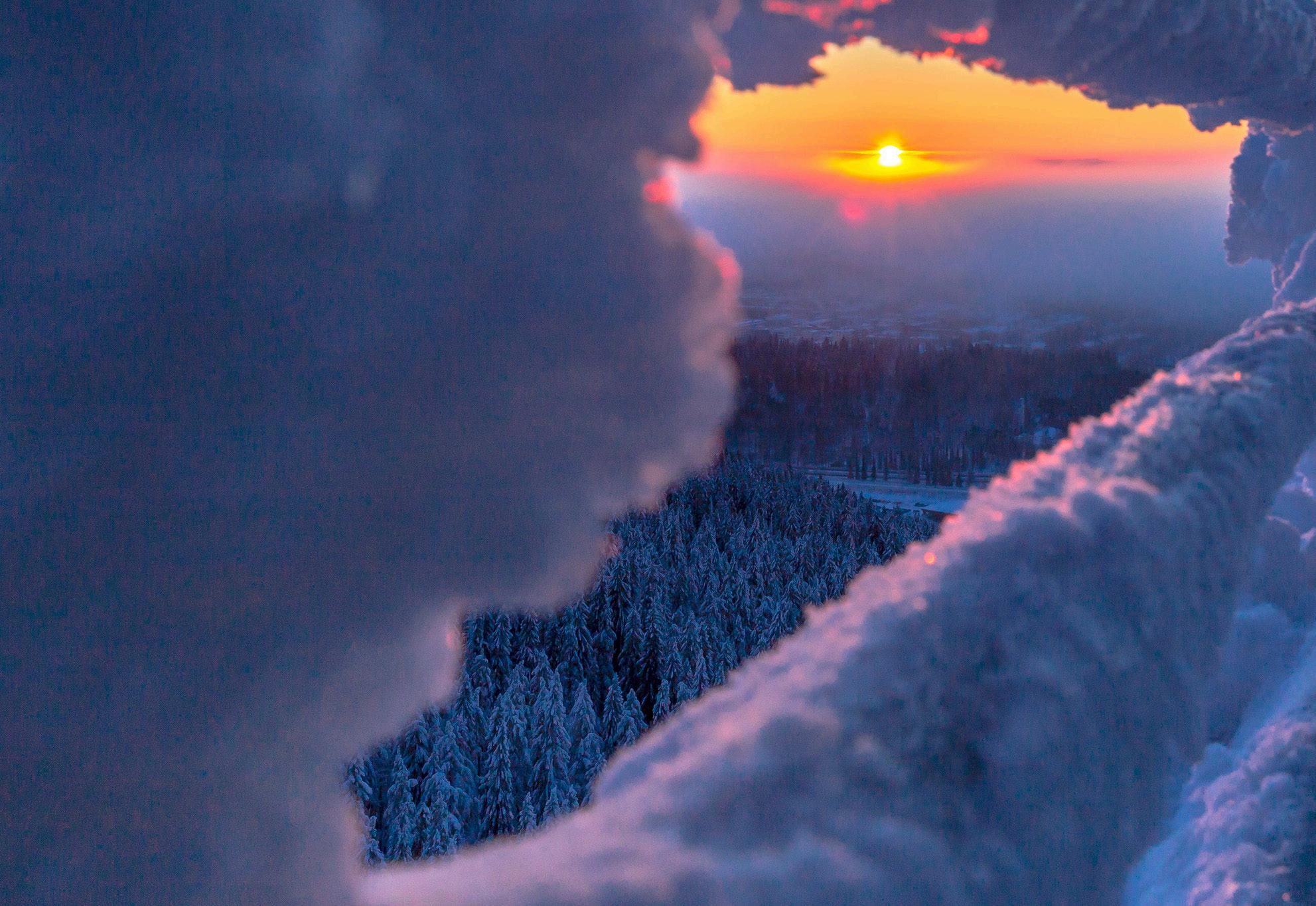
How does the Finnish pension system work? What contributions will you make once you accept a career opportunity in Finland? What will your employer contribute? And what benefits will the system provide in old age?
In Finland, every employee contributes towards the Finnish pension system that is calculated as a percentage of their salary. The contribution in 2025 is
• 7,15% on average if the person is under the age of 53 or over the age of 63
• 8,65% on average for persons between the age of 53 – 63
These percentages are newly defined every year. However, the adjustments are usually minor.
The overall pension payment in the calendar year 2025 on average is 24,85% (of which 24,15% on average based on earnings and 0,7% on average for an employer-specific disability pension contribution). Apart from the above-mentioned employee contributions of 7,15% respectively 8,65% on average, the employer funds the remaining portion. Please check the specific pension contribution by your employer before accepting work in Finland.
When can pensions be accessed? This is dependent on the birth year and adjusted regularly over time. Per 2025, the pension age is as follows : Pension Age by Birth
1960
1961
1962
1963
1964
1965
1975
1980 66 years and 8 months
1990
7
Target retirement age is not calculated for people born after 1992.
The age for receiving partial pension allows an individual to receive a certain percentage of their pension (e.g. 25% or 50%), while still working at reduced hours. The retirement age indicates the earliest age when a person can retire in Finland without a reduction. However, the pension amount will be lower than retirement at the target retirement age, because a life expectancy adjustment will be made for those that retire before the target age.
In addition to pension contributions there are also contributions to the:
• statutory health insurance (managed by the Tax Administration, www.vero.fi. The contribution is: 1,87% by the employer, 1,90%* by the employee. The employee’s share is higher because it also contains medical care contribution and daily allowance contribution)
You can look up your own birth year here to verify your age for partial old age pension, your retirement age and your target retirement age:
https://www.tyoelake.fi/en/different-pensions/old-age-pension-your-retirementage-is-based-on-your-year-of-birth/
• unemployment insurance (managed by Employment Fund, www.employmentfund. fi/. The contribution is: 0,2% respectively 0,8% for the employer**, and 0,59% for the employee.)
• accident insurance fee (managed by private companies, https://www.tvk.fi/en/ )
• group life insurance (often paid by employers based on collective labour agreements, also depends on a risk assessment of the work)
The listed figures are for the calendar year 2025.
Important Websites:
Finnish Centre for Pensions Customer Service: +358-(0)29 411 2110 www.tyoelake.fi
The Finnish Centre for Pensions references several educational videos (on YouTube, by Elaketurvakeskus):
‘Make sure you get your pension from Finland’
‘The Finnish earnings-related pension system in twenty minutes’
Unemployment Insurance
The Employment Fund phone + 358 75 757 0500 www.tyollisyysrahasto.fi
Workers Compensation Insurance and Group Life Insurance
The Finnish Workers’ Compensation Center (TVK) phone +358 409 222 900 www.tvk.fi or the accident insurance companies
Resources and Footnotes:
(1.) Pension
https://www.tela.fi/en/pension-system/
https://www.tyoelake.fi/en/different-pensions/old-age-pension-your-retirement-age-is-basedon-your-year-of-birth/
https://www.etk.fi/en/international-affairs/working-abroad/social-insurance-contributions-and-salary-for-insurance-purposes-for-work-abroad/
https://interjuris.fi/en/artikkelit/work-related-social-insurance-contributions-in-finland-2024
https://www.vero.fi/en/businesses-and-corporations/taxes-and-charges/being-an-employer/ social-insurance-contributions
https://www.etk.fi/wp-content/uploads/2025/01/lakisaateiset-sosiaalivakuutusmaksut-suomessa-2025-englanti.pdf
*) Please note employees with a yearly income below 16.862 € pay 1,06% instead of 1,09%.
**) Contributions are 0,2% if employer pays less than 2.455.000 € in annual salaries, 0,8% above this threshold.
Finnish nature makes you healthy. The air quality is one of the best in the world. But if you ever feel ill, excellent healthcare is available.
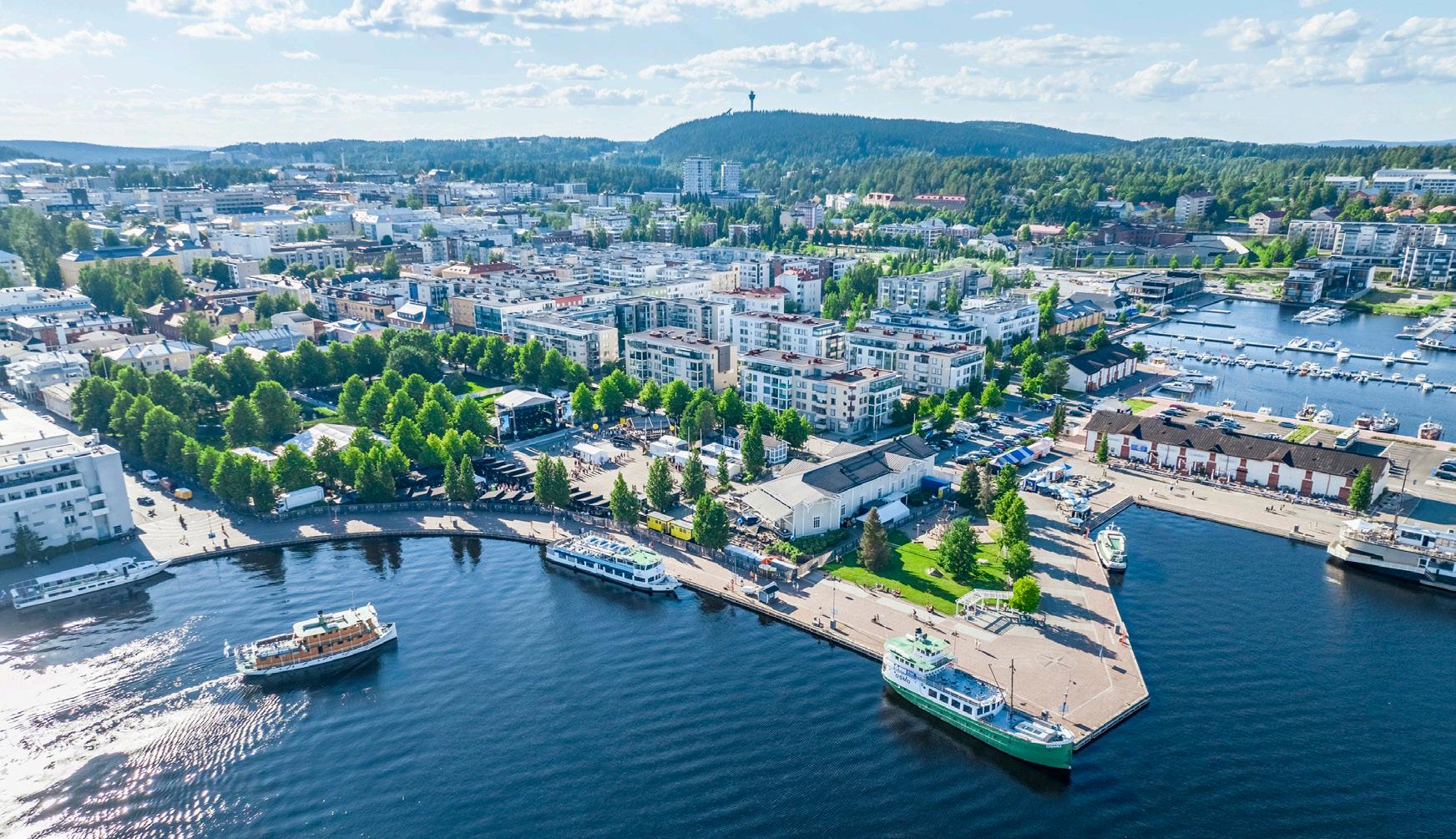
How does the Finnish Healthcare system work? And what do you do if you need medical care? This chapter will provide insight.
According to the Constitution of Finland, the public authorities shall guarantee for everyone adequate social, health and medical services. Therefore, everyone permanently residing in Finland is entitled to free universal healthcare. In addition to the public health services, there are also numerous private healthcare services which operate in Finland.
Health Care Reform effective Jan 1st, 2023
A major reform took place in Finland at the start of 2023 which moves the re-
sponsibility of public health care from the municipalities to wellbeing services counties. The key objective of the reform is to improve the availability and quality of basic public services throughout Finland. Smaller service providers at the municipal level are being consolidated into larger service providers, who will be better equipped to provide an equal distribution of such services and have more critical mass to better deal with cost struggles of an ageing population.
The municipality of Kuopio is covered by the ‘Well Being Services County of North Savo’. A map which cities are covered by the 21 well-being services counties can be found at: https://stm.fi/en/wellbeing-services-counties-on-the-map1
Additionally, each wellbeing services county also belongs to one of the five collaborative areas, each of which has one university hospital. The five university hospitals are in: Helsinki, Kuopio, Oulu, Turku and Tampere.
A well-being services county can
• provide the services by itself
• provide the service in collaboration with other wellbeing services counties
• procure services under certain conditions from private companies and organisations
• also procure treatment from abroad, if necessary.
Healthcare services are divided into primary healthcare and specialised healthcare. Primary healthcare services are mainly provided at health and social services centres and specialised healthcare usually at hospitals.
When seeking medical treatment in Finland, the health care provider will update the medical records with any necessary information electronically, in the socalled Patient Data Repository. The Patient Data Repository is maintained by Kela whose website can be accessed at: https://www.kanta.fi/en/
Highest standards apply to the safety and privacy of medical records. You can view your own medical information using the My Kanta service. You can also manage access restrictions and data sharing with other service providers there. Medical records will be stored for all residents of Finland – no matter whether they are
Finnish citizens or have arrived from abroad.
The scope of medical care you can receive is dependent on whether you are staying temporarily or permanently in Finland.
• Urgent medical care will be provided to anyone who is staying in Finland regardless of whether their stay is temporary or permanent.
• Additionally, residents of the EU/ EEA, the United Kingdom, Switzerland or Australia, who are temporarily in Finland can also receive other medically necessary treatment that cannot be postponed until their return home.
• Everyone permanently living in Finland has full access to the public health care services, same as the locals. To qualify the registration or immigration process (as described in chapter 5.2.1) must be complete. When you notify the Digital and Population Data Services Agency (DVV) of your permanent move to Finland, they decide on your municipality of residence and record it in the Population Information System. The municipality of Kuopio will be covered by the Well Being Services County of North Savo.
When living in Kuopio what phone number do you call when you need medical help?
• In an emergency, there is a general help hotline across Finland. The number is 112.
• In the event of a non-emergency, the first point of contact is the Well Being Service. The phone number can be found under chapter ‘5.9 General Helpful Information’. When you need a same day appointment, call this phone number between 8 AM and 10 AM.
• If you need a same day appointment outside the 8AM - 10AM window, there are walk-in slots available at Kuopio Hospital (in the ‘C’ building), though it is still recommended to call in advance. Please bring your Finnish Personal Identify Code or your European Health Card along and enter your information at the check-in terminal. The contact details of the Kuopio hospital can be found in chapter ‘5.9 General Helpful Information’.
• There is also a medical help hotline at 116 117 for counselling or if you wish to speak to a physician when the health centre is closed (which operates 24/7).
How do you receive a Finnish Personal Identity Code? This is covered in chapter 5.2.1
How do you receive a European Health Card? You can receive a European Health Card already in your home country if you are relocating from Europe. The process is different by country. For example: German nationals will find the European Health Card printed on the back of their health insurance cards. If you are moving to Finland from an EU member state, Iceland, Liechtenstein, Norway or Switzerland you can request the European Health Card already in your home country. The European Health Card was launched in June 2004 to simplify access to necessary medical care when travelling in the EU. If you already own one, bring it along to Finland. A picture how the health insurance card looks like for
your EU member state can be found here: https://employment-social-affairs.ec.europa.eu/policies-and-activities/moving-working-europe/eu-social-security-coordination/ european-health-insurance-card/how-recognise-card_en
But please note: The European Health card only helps you initially (see 5.4.2 Health Coverage when Moving to Finland). To be able to access the full coverage of medical services, you need to register and follow the process for those permanently living in Finland.
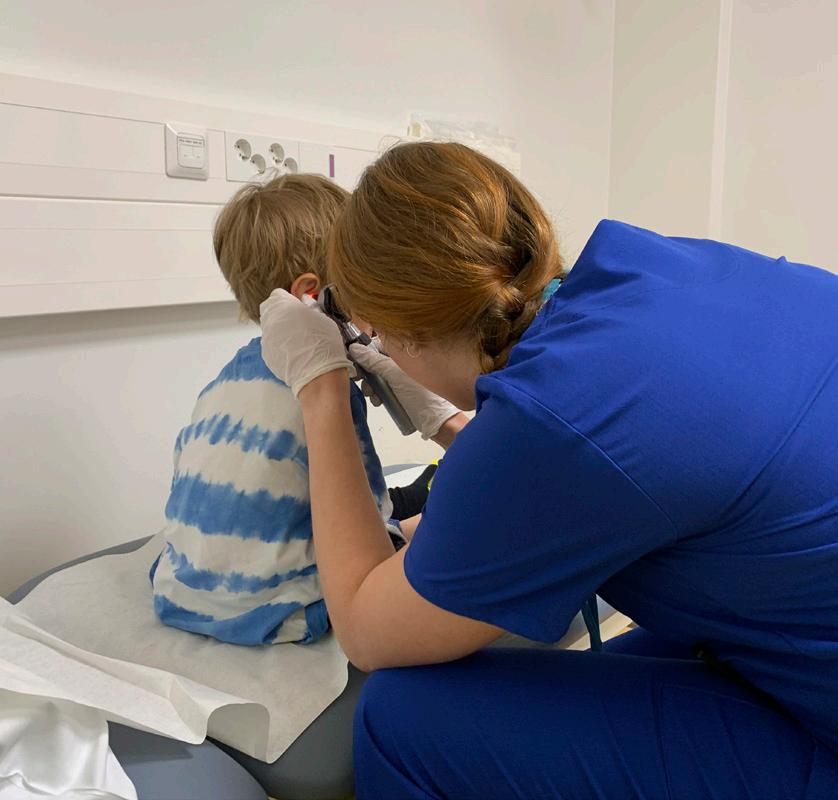
Further References:
https://www.eu-healthcare.fi/healthcare-in-finland/healthcare-system-in-finland/
https://www.eu-healthcare.fi/healthcare-in-finland/moving-to-finland/
https://www.eu-healthcare.fi/healthcare-in-finland/using-health-services-in-finland/medical-records-in-finland/
https://stm.fi/en/wellbeing-services-counties
Smart cubs grow into wise bears.
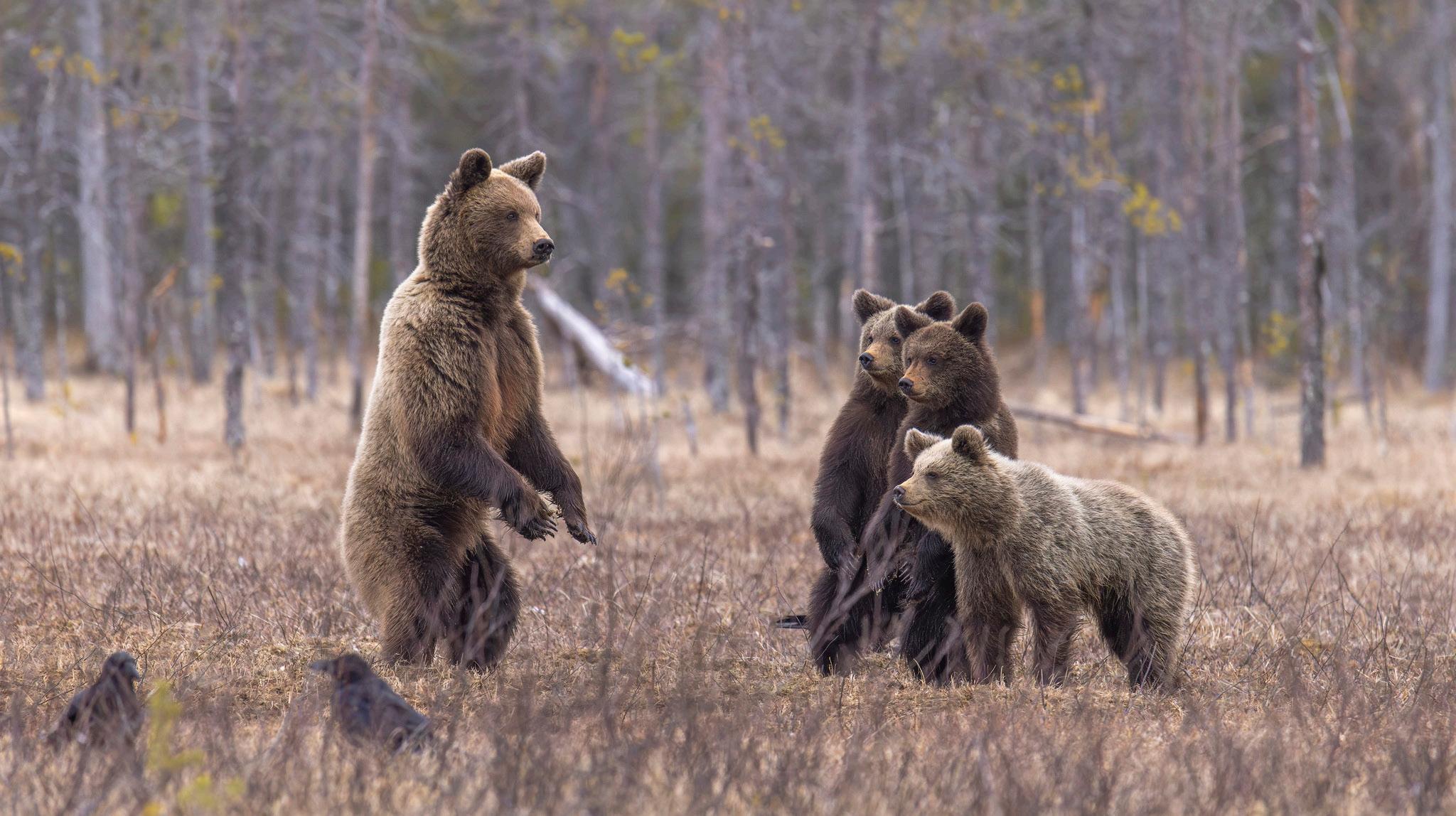
Relocating to Kuopio with children will imply sending them to a local school or kindergarten. What are the characteristics of the Finnish education system? And what schools are available in Kuopio?
1. Education System in Finland
Finland structures the education system into stages:
• Early Childhood Education & Pre-Primary Education
• Comprehensive school
• Upper Secondary School
• Tertiary education
Early Childhood Education & Pre-primary Education
In Finland, a child is entitled by law to early childhood education at the age of
9 months. However, since the parental leave is 320 working days (~ 14 months), the average child starts daycare at 1.5 – 2 years.
There are day care centres, family day care centres and family group day care centres. These can be public or private. The family and family group day care centres take place in a homely setting at the carer’s home or child’s home.
At the age of typically 6, children must attend a one-year pre-primary education’ to prepare them for school (i.e., comparable to pre-school).
Comprehensive school is mandatory and runs for 9 years from 1st grade to 9th grade. The Finnish term is ‘peruskoulu’ which means ‘basic school’. For this rea-
son, the education received in comprehensive schools is often referred to as ‘basic education’.
New Finnish legislation, which came into effect in September 2021, requires children to attend school from the age of 7 – 18. Therefore, upper secondary school has since become mandatory.
Upper Secondary School runs for 3-4 years and is comparable to the last 2 years at an American high school plus the first two years of college (i.e. freshman year and sophomore year).
At Secondary School, students have three choices: attend (1.) a vocational school to prepare them for a specific occupation, (2.) a polytechnic institute or (3.) an academic upper school. The latter enables them to attend university and is required if one wishes to pursue a post-graduate professional degree in fields such as law, medicine, science, education, and the humanities.
Up until 2017, public universities in Finland did not collect tuition fees. Since 2017, students from outside the EU/EEA must pay tuition fees for courses taught in English, while students from the EEA continue to study for free. The tuition fees for students from outside Europe are at least 1,500 € per year (per statutory requirements) to study in Finland for English taught classes. (The actual cost however is typically much higher with average ranges around 8,000 – 20,000 €, based on the university and the programme). Courses taught in Finnish and Swedish remain free of charge for all students, regardless of nationality.
• Pre-primary education, comprehensive education and upper secondary education are generally free of charge.
• Private schools are rare in Finland. Why is this the case?
Private schools are given a state grant comparable to that given to a municipal school. However, even in private schools, the use of tuition fees is strictly prohibited. Selective admission is also prohibited. Private schools must admit all its pupils on the same basis as the corresponding municipal school. In addition, private schools are required to give their students all the education and social benefits that are offered to the students at municipal schools. Because of this, existing private schools are mostly faithbased or Waldorf schools, which are comprehensive by definition. A child that attends private school will still benefit from discounted rates, if they are registered at the municipal level (see chapter 5.2.1). A service voucher will then be sent by the municipality, which can be handed over to the academic institution directly.
• Classes are small, typically with no more than 20 students.
• Reading for pleasure is actively encouraged (Finland publishes numerous children’s books in Finnish language each year.)
• Comprehensive school students enjoy a variety of social entitlements, such as school health care and a free lunch every day.
• Additionally, if a student’s school journey exceeds 5km, they are entitled to free school transport. Pupils in pre-pri-
mary education and grades 1 & 2 are entitled to free transport if the distance from their homes to school is longer than 3km.
• Finland’s education system ranked number 1 in 2003 in the PISA studies, which compares school systems globally. Back then Finland was first in science, first in reading and second in mathematics. However, in the PISA study 2022, Finland’s education system ranked 14th in reading, 20th in mathematics and fifth in science.
When relocating to Finland, children from grades 1 – 9 first attend Finnish Transitional Class for about one year, depending upon the child’s individual need, before moving to bilingual instruction.
The Transitional class is intended to integrate children from abroad, with an own tailorized learning plan for the individual child. The teaching will be done in both the English and Finnish language. The Finnish school system and legislation
strongly believe in the rights of the children, their well-being as well as equality of education – meaning every child should be adequately supported. An important aspect of a child’s integration is their ability to communicate with peers in their own age group. Therefore, the goal of Transitional Class is to achieve level A1.2 Finnish language proficiency as described in the Common European Framework of Reference for Languages.
Once children have mastered the Transitional Class, they move to bilingual instruction, which in Kuopio is taught by Rajala School (grades 1–6) and Hatsala Classical School (grades 7–9). Afterwards, Kuopio Lyseo is an academically prestigious upper secondary school in Finland. It originates back to 1534 and moved to Kuopio in 1777. Classes are primarily taught in the two main languages: Finnish and English. Pupils of Kuopio Lyseo can pursue the International Baccalaureate (IB) Diploma Programme which is mainly taught in English, or the traditional Finnish high school programme ‘National Program (Finnish Lukio)’ in Finnish language. Vocational schools in English are available in Kuopio.
Academic Institutions Available in Kuopio
German speaking Kindergarten (2-6 years)
https://kuopionsaksalainenpaivakoti.wordpress.com/
English Speaking Kindergarten (3-6 years) (founded in 1969)
http://enkkukuopio.fi/en/
Rajala School (Lower Comprehensive School) (7–12 years) (founded in 1971)
https://peda.net/kuopio/p/rajala
Hatsala Classical School (Higher Comprehensive School) (13-15 years)
https://peda.net/kuopio/p/hatsala
Kuopio Lyseo (IB program in English available) (Upper Secondary School) (16-19 years) https://kuopionlyseo.fi/web/ib-world-school/ib-in-english/
Kindergarten
Play groups (2-6 years) and Pre-School (age 6-7)
School age in Finland is 7 years
Lower Comprehensive school
Higher Comprehensive school
Upper Secondary school
Grades 1-6 (age 7-13)
Grades 7-9 (age 13-16)
Children (age 16 – 19)
Another Illustration of the Finnish Education System by Antikainen, Ari; Luukkainen, Anna (2008).
“Twenty-five Years of Educational Reform Initiatives in Finland”. University of Eastern Finland.
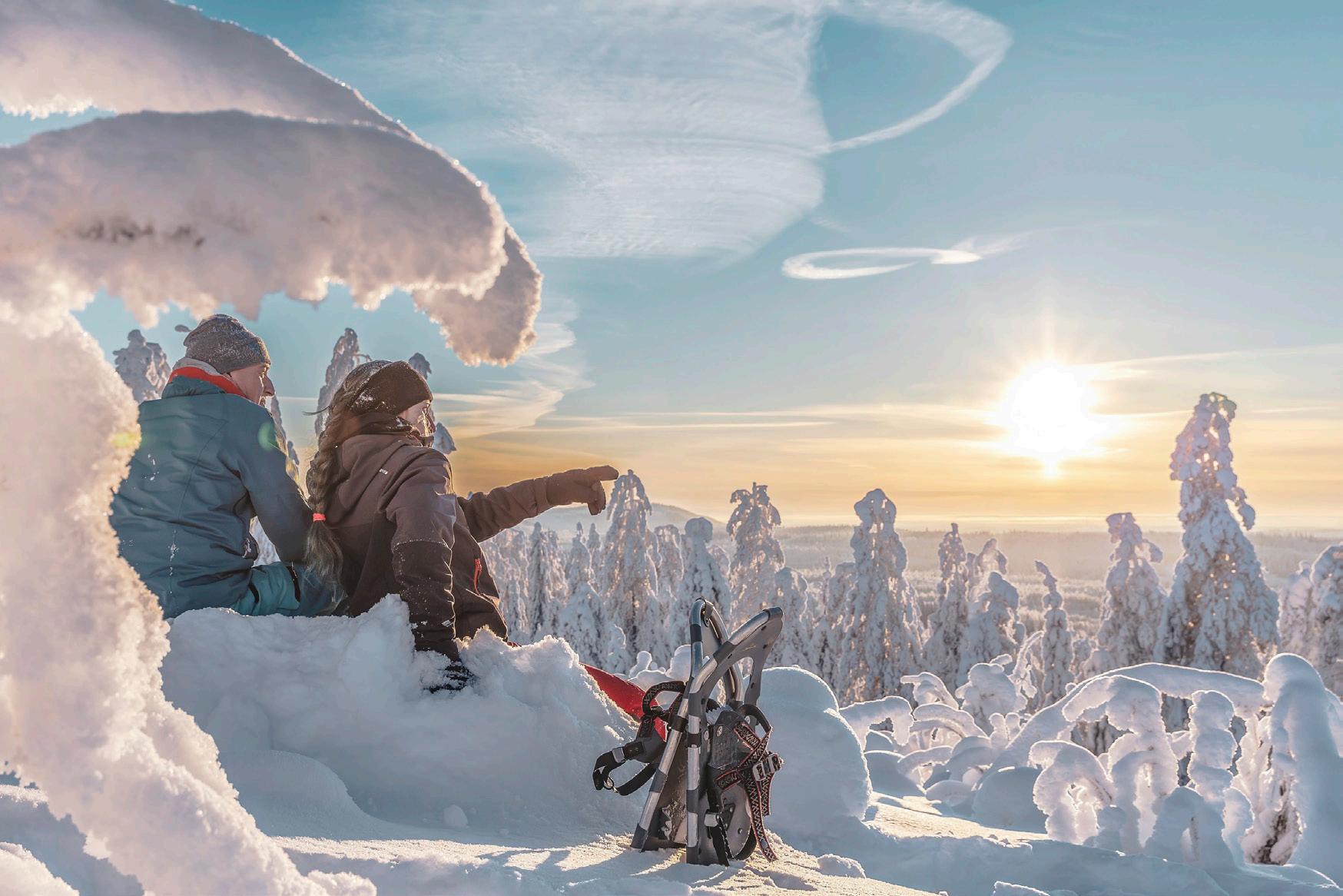
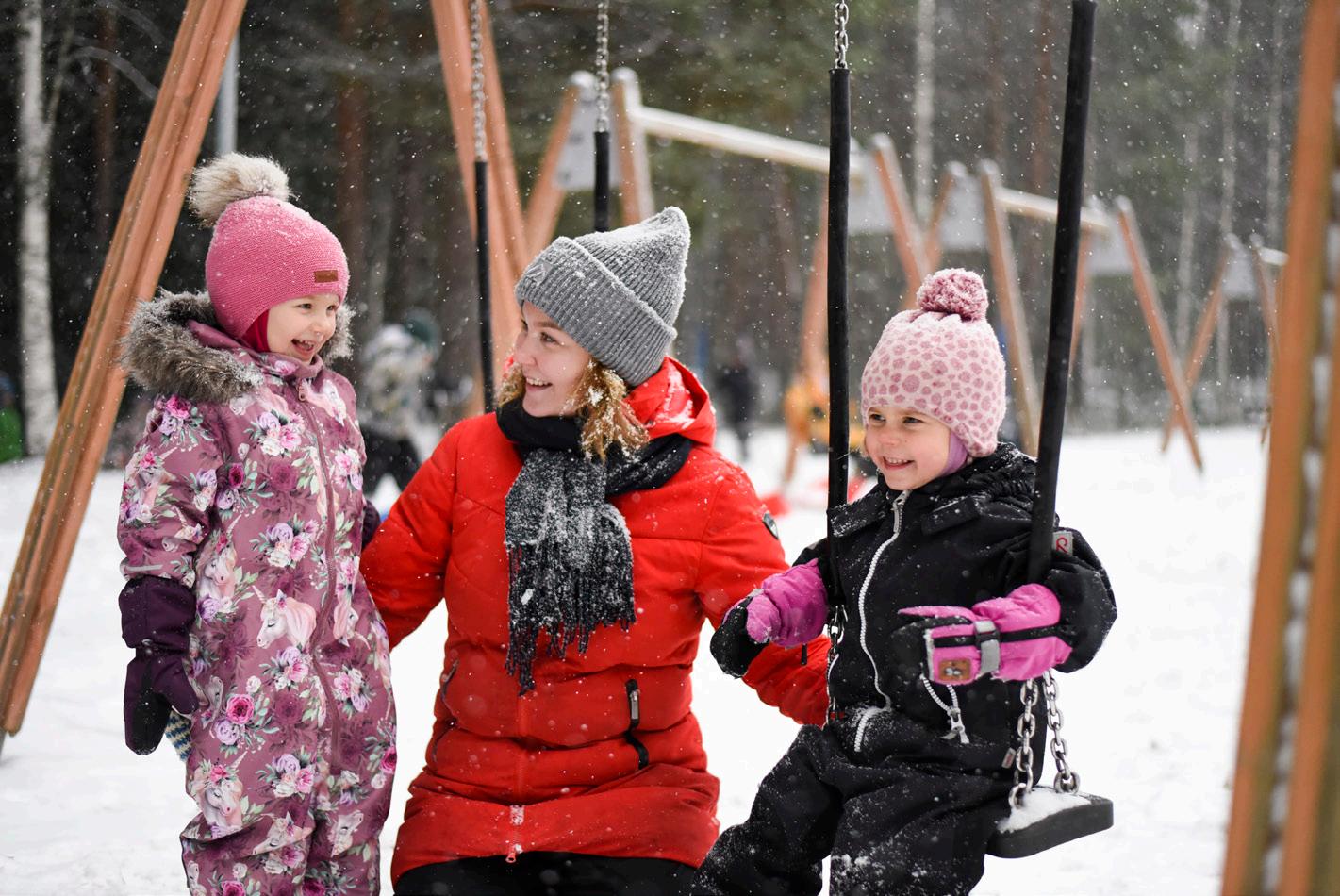
Don’t forget the common rule that layers of clothing are your friend in cold weather.
Dressing adequately for winter in subarctic temperatures can be a challenge if you are new to Finland. Luckily, the stores are well equipped, and Finns are friendly and very helpful. If you are a parent, it is essential to not only understand how to dress yourself but also your child. The guide below is designed for children based on national guidance. It may be used for adults as well.
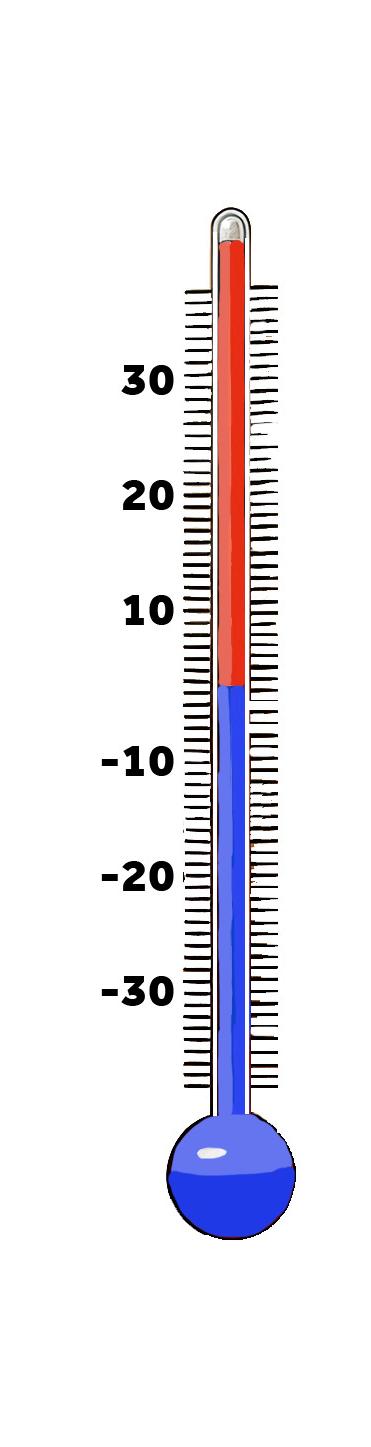
30 °C protective summer hat, light summer shoes / sandals or flip flops, shorts, t-shirt or top with short sleeves.
20 °C t-shirt, long trousers made of light fabric or shorts, socks, shoes.
10 °C top with long sleeves or sweater, long trousers or jeans, socks, shoes and jacket.
0 °C warm sweater, long trousers, a scarf, hat, gloves, socks, boots with inner lining, warm jacket, snow pants
-10 °C same as above but replace socks with wool socks, replace gloves with mittens, replace hat with Nordic hat, and add long underwear
-20-30 °C merino wool underwear or alternatively thermal leggings and thermal top, add tights as extra layer, wool socks on top of regular socks, mittens on top of gloves, Nordic hat or hat and separate face mask, snow overall
Here a shopping checklist:
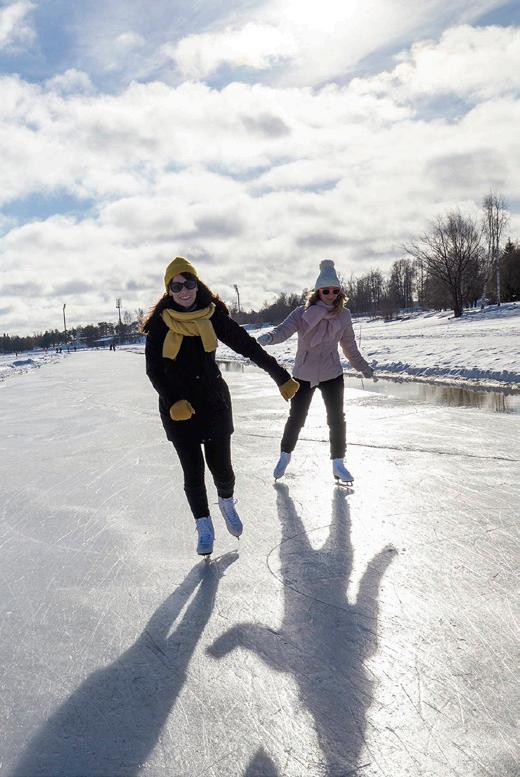
Long underwear: The fabric closest to the skin should be comfortable and breathable. If you like natural fabrics, try underwear made of 100% merino wool. Otherwise thermal leggings and a thermal top.
Socks: Wool socks to be worn on top of regular socks for added warmth. Alternatively try moisture wicking thermal socks.
Children are recommended to wear a full body suit made of terry cotton for added warmth. This suit is worn on top of the regular clothes, but underneath the rubber gear or the snow overall.
The outer most layer should be rubber gear or Gore-Tex, to protect moisture from coming through. For our son, I have purchased rubber gear already for autumn (see photograph chapter 4.4). Snow overalls and rubber gear for winter is available in stores only later and consists of a thicker fabric with a warm interior lining. Rubber gear can be bought as a one-piece suit (for smaller children) or as separate trousers and jacket (for older children, pictured).
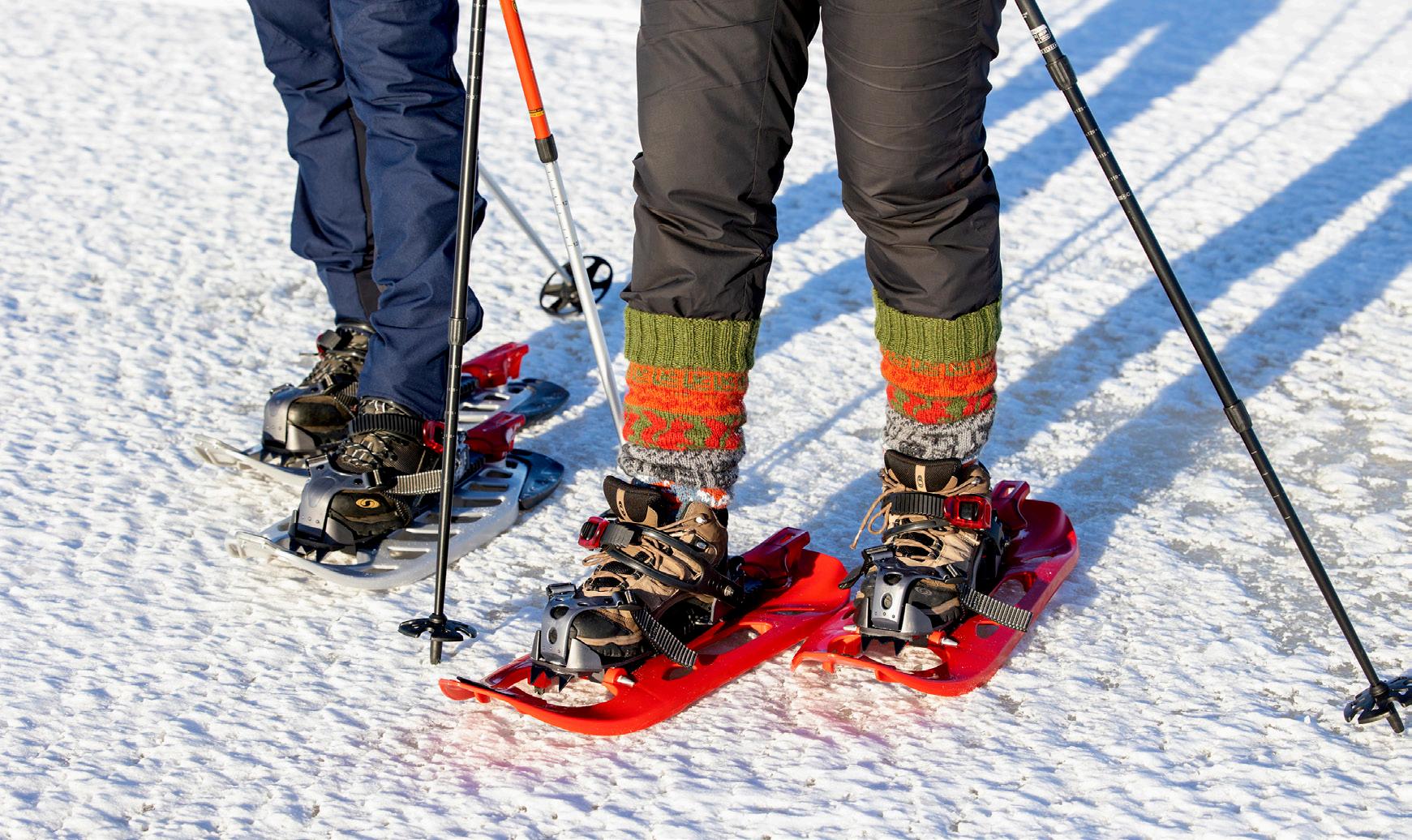
While there are safety rules that generally apply everywhere, this is to discuss a few select topics that might be helpful for anyone moving to Finland for the first time. The previous chapter discusses safely dressing for winter (chapter 5.6). Here are some more general safety tips to get you through your first Nordic winter (and summer):
Finland is the land of a thousand lakes. In summertime it is refreshing to take a dip in the waters. In wintertime, lots of outdoor activities can be done on the lake once it freezes over - from classic activities such as ice skating, snowshoeing, cross country skiing and dog sleigh riding to newer sports such as snowmobiling or riding winter fat bikes on the ice.
Stepping on ice is never 100% safe. If you ever feel unsure, do not take risks. This book provides general guidance only to get you started when researching the topic. Always consult local resources before going onto the ice. Generally speaking, a person should never walk on ice that is less than 10 cm thick . If you have a group of persons, or heavy equipment (e.g. a snowmobile), the ice must be even thicker. In Kuopio cross-country tracks will be prepared when the ice is minimum 15 cm thick . At 20-30 cm thickness the ice can hold a car. At 30-38cm it is even suitable for a van or light pickup truck. However, ice will not have the same thickness throughout a body of water, and therefore extreme caution needs to be taken. Breaking into the ice is extremely dangerous, as the body cools out rapidly in the icy waters. Sadly, fatalities happen every year. If you ever fall through the
ice, your best survival chance is to swim back to the direction you came from. While you fell through a thin point in the ice, the area you came from was thick enough to support you before. It therefore has the highest odds of supporting your body weight again. Once you come in contact with ice that is solid enough, stay as horizontal as possible while kicking your legs to push yourself out of the water. Roll away from this spot, rather than walk away. Your weight distribution is more favourable when lying vs standing.
It also pays off to take safety precaution, before heading out on the ice:
• Pack a waterproof bag with spare clothes, hand and foot warmers, and an emergency blanket. Don’t forget a beanie hat, warm gloves & warm (knitted) socks.
• Wear a flotation device.
• Carry an icepick which can give you a grip if you ever do fall into the water and an ice spud to measure its thickness
• Ideally do not go on the ice alone. But if you do, inform others in advance about your whereabouts
For added safety, there are survival courses available.
In the summertime when swimming in Finland’s lakes, the safety rules are different. It is recommended to never jump into the water headfirst. Why is this the case? In the past, tree logs were often transported via waterway. They were frequently tied to a boat and floated on the water, rather than being loaded onto the boat. Occasionally some logs would get lost. While there has been much effort to search Finnish lakes for any such
logs and to do a clean-up, one can never be 100% sure that all have been removed. It is therefore recommended not to jump headfirst into a lake as an extra safety precaution.
In the cold temperatures don’t forget your car. It wants to be ‘dressed’ for winter too.
From November 1st to March 31st winter tyres must be used across Finland on passenger cars up to 3.5 tonnes, if weather conditions so require them. Additionally, depending upon region, studded car tyres may be necessary or even mandatory. Moreover, appropriate tyres should also be used outside these periods if required by weather or road surface conditions. The exact dates can vary from region to region, so it is best to check a local website for the precise timelines every year. As a general rule of thumb, when moving to Kuopio, you need to be prepared to invest in studded tyres. But do not leave them on too long once spring arrives, as they damage the roads. Check local websites for more information.
General Information by the Finnish Police:
https://poliisi.fi/en/-/winter-tyres-required-in-wintry-conditions-the-police-will-assess-whether-use-is-necessary
General Info by the Finnish Transport & Communications Agency:
https://www.traficom.fi/en/news/remember-check-condition-and-symbols-wintertyres-non-studded-winter-tyres-must-have-three
Finland’s forests are pristine. Let’s keep it this way by recycling properly.
Finland has the freshest air of any country. The water tastes especially pure. Nature is well preserved. To keep the environment clean, it is essential to understand the recycling system. Overall, the first time when standing in front of the recycling containers, it can be confusing. There are containers titled ‘Lasi’, ‘Muovi’, ‘Sekajäte‘. In some languages it might be possible to guess the meaning, but that is difficult in Finnish. Attached an overview with some vocabulary to remember:
The following materials should never be thrown into household waste. Dedicated centralized collection points are available for:
• Hazardous waste (Vaarallinen jäte): (batteries, accumulators, paint, adhesives, fluorescent lamps, energy-saving light bulbs, chemicals whose packages have a warning symbol)
• Batteries (Paristot): (small and large household batteries, mobile phone batteries)
• Electrical equipment (Sähkölaitteet) and electronics (Elektroniikka): all electric or battery-powered devices and toys
WHERE to recycle:
Batteries should be returned to red battery collection containers, that can be found in stores and kiosks.
Hazardous waste and large electronic devices should go to special collection points, see the kierratys.info website. Small electronics devices can be brought to stores that sell electronics,
Source: https://www.infofinland.fi/en/housing/ waste-and-recycling
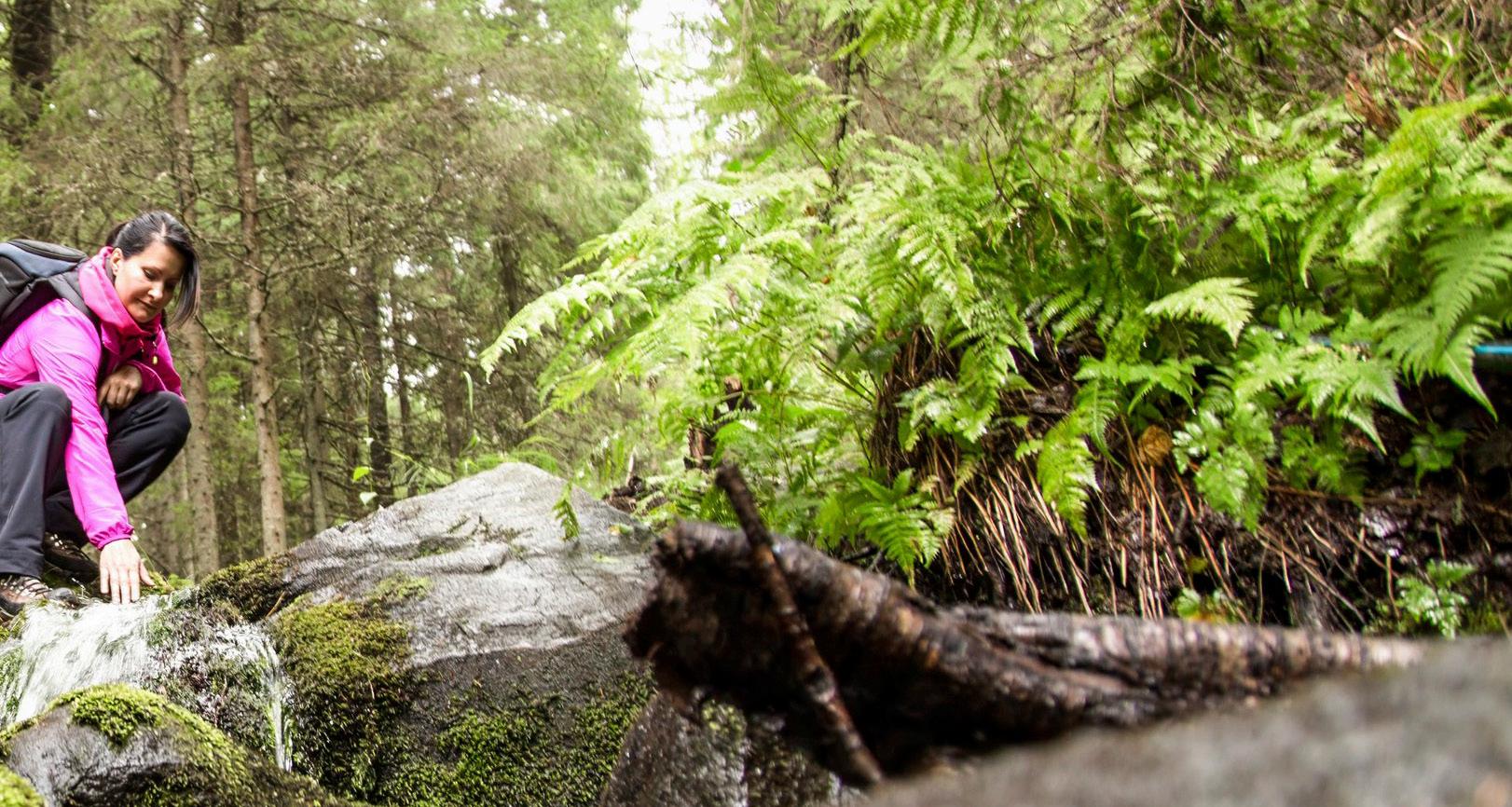
to put in)
Do’s (of what toput in)
not to put in)
Don’s (opf what not to put in)
glass containers (bottles and jars) all sorts of paper such as newspapers and magazines, advertisement flyers, envelopes etc.
glass objects, glassware, mirrors, porcelain, bottle caps, jar lids
wet or very dirty paper, books, gift wrapping paper, cartons, cardboard
YES: milk cartons, cardboard, paper bags, carton packages
metal items and packages whose main material is metal
wet or very dirty cardboard, gift wrapping paper
electrical devices, batteries, large metal objects that do not fit in the collection container
When moving to a new country, having emergency phone numbers is key. Additionally, it is essential to have the addresses and phone numbers of health care facilities, rescue services, the hospital as well as the police available.
Kuopio University Hospital – KYS
Address: Puijonlaaksontie 2, 70211 Kuopio
Switchboard: 017 173 311
Northern Savo (Kuopio) Rescue service
Address: Volttikatu 1 A, 70100 Kuopio Kuopio City Switchboard: 017 182 111 http://www.pspelastuslaitos.fi
The Main Health Centre = Pääterveysasema
Address: Tulliportinkatu 15, 70100 Kuopio
Switchboard: 017 173 311
Open: Mon – Thu 08.00 – 16.00 and Fri
08.00 – 15.00
There are different teams covering different parts of town. Find out what team is in charge for you by asking your employer, neighbours or locals (e.g., Centre team 1A tel. 017 186 231 or Centre team 1B Tel. 017 186252), for non-urgent cases.
Available from 08.00 -10.00 pm.
There is an option to have the service in English.
Kuopio Main Police Station
Address: Suokatu 44 B, 70100 Kuopio Switchboard: 0295 450 311
https://poliisi.fi
The general emergency helpline number is 112
In an emergency (e.g. traffic accident, etc.) it locates your position, from where you are calling.
The Medical Helpline number is 116 117
For acute non-life threatening health problems.
The help hotline 116 117 is designed for patients who need urgent medical care outside of the opening hours of the health centre. It is intended for those that have non-life-threatening emergencies, but who cannot wait with their medical concerns until the next office hours.
For life threatening emergencies or severe accidents always call 112.
For general information on health care in Kuopio, visit:
https://www.kuopio.fi/en/kuopios-social-andhealth-services-can-be-found-on-the-northsavo-wellbeing-region-website/
Links with information on updates in Kuopio: Find out about important happenings on Kuopio International facebook page
Visit the website www.ilovekuopio.fi
Leisure Activities:
Visit the website https://www.hellokuopio.fi/en/home/
Public Transportation:
Kuopio Buses: https://vilkku.kuopio.fi/en Trains (across Finland) VR Matkalla available via app or website: www.vr.fi



Ordering food
Order food for home delivery from Kuopio restaurants
Smart Parking
Effortless parking based on number plates in various Finnish cities: Moovy App and EasyPark
General Info on Moving to Finland for Expats https://infofinland.fi/en
Government Website
Info for Finnish citizens & residents www.suomi.fi
… and much more.




Welcome to Finland. Enjoy your stay in Kuopio
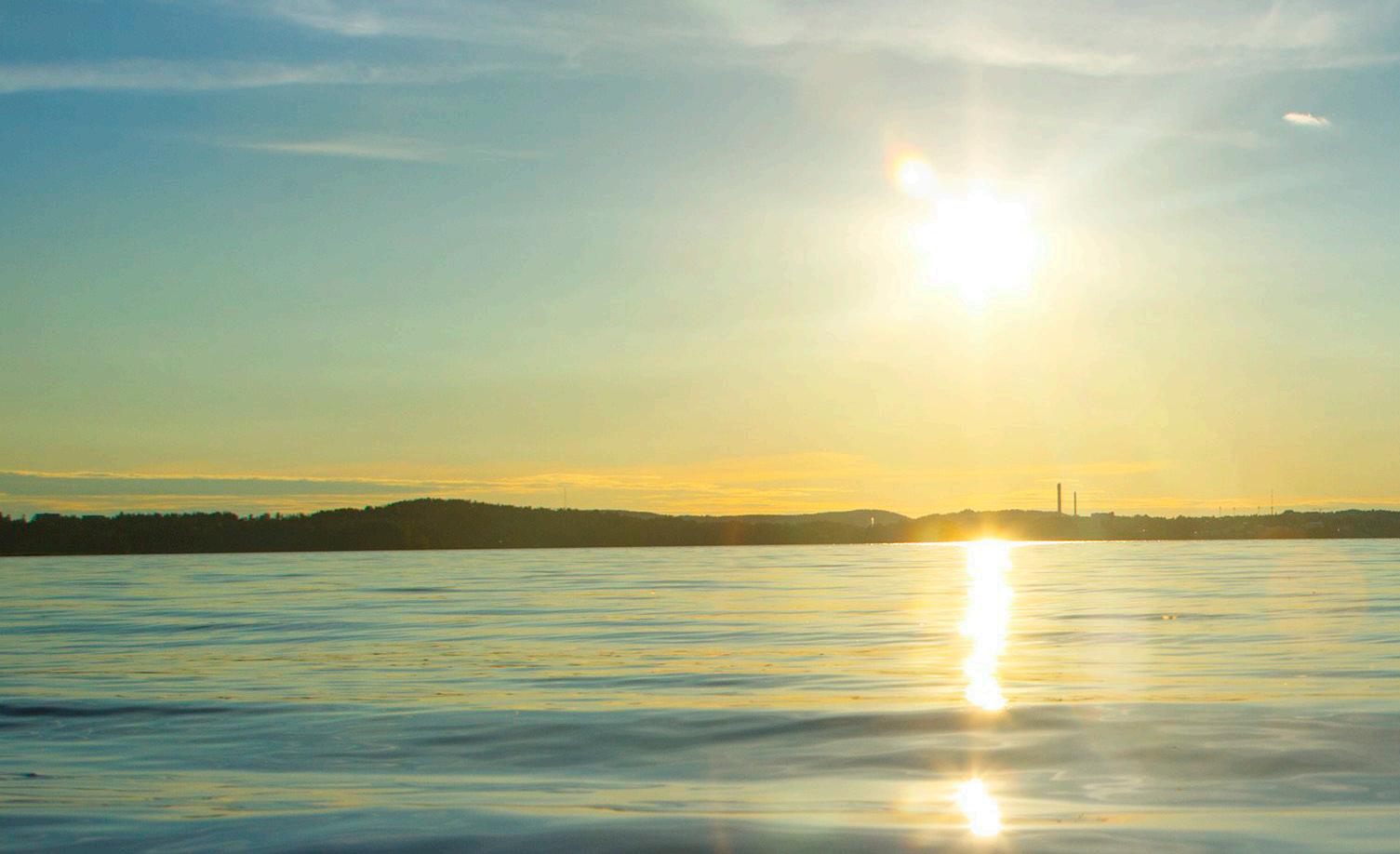
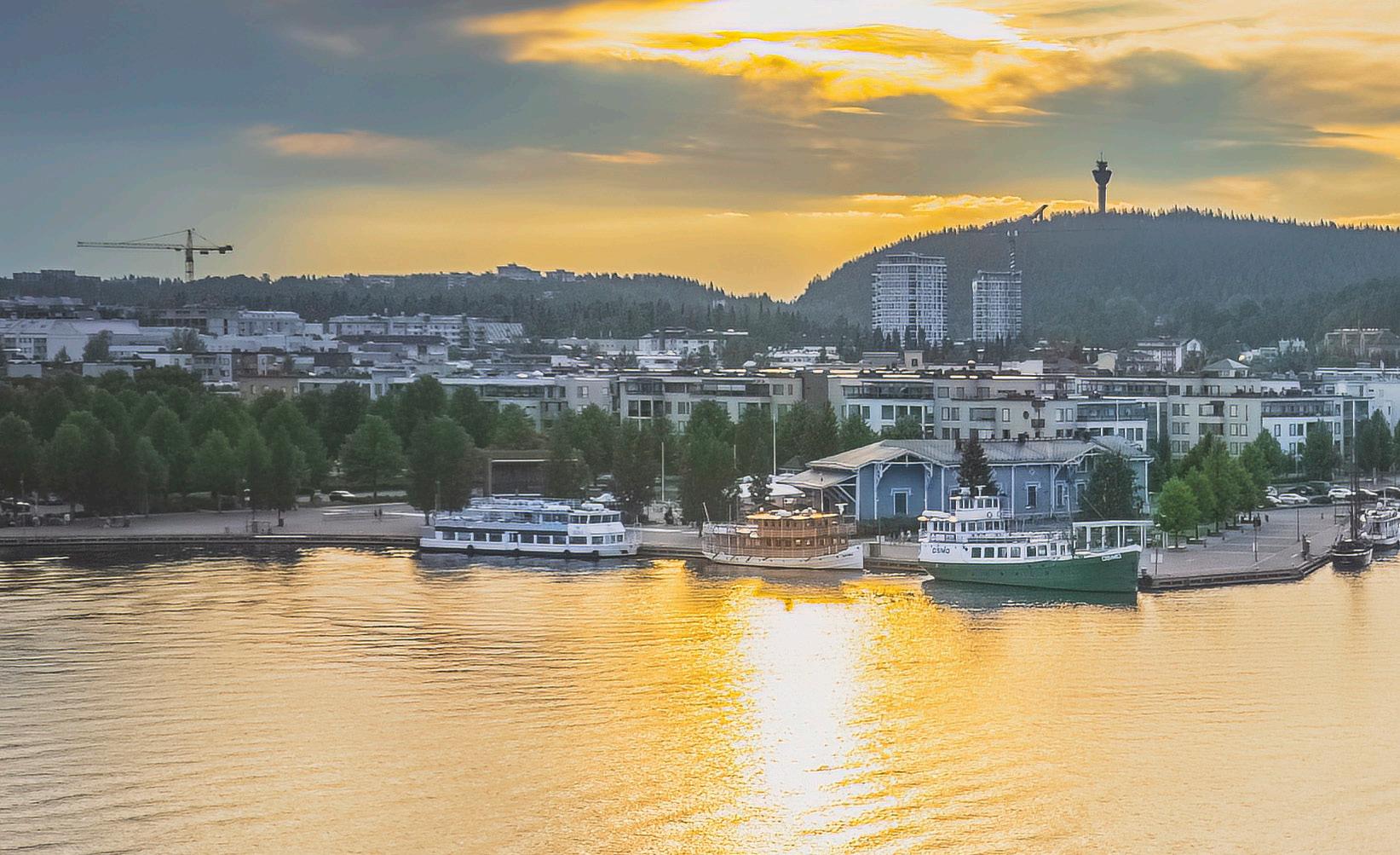
C. A quiz
Ready to test your knowledge about Finland? Let’s try a quiz:
1. Across Europe, women in Finland were the first to be granted the right to vote.
True S
False F
2. Kuopio is a hub for education.
True U
False I
3. Finland was ranked no 1 in the PISA studies 2013 and 2018.
True N
False O
4. Finland has the most amount of Olympic medals per capita in the summer games vs any other countries.
True M
False L
5. Kuopio Region won an EU wide award for its gastronomy in 2020-21.
True I
False A
6. Kuopio Region is well known for its winter sport (Winter Capital 2023) as well as its summer sport possibilities (Capital of the Lakeland)
True O
False N
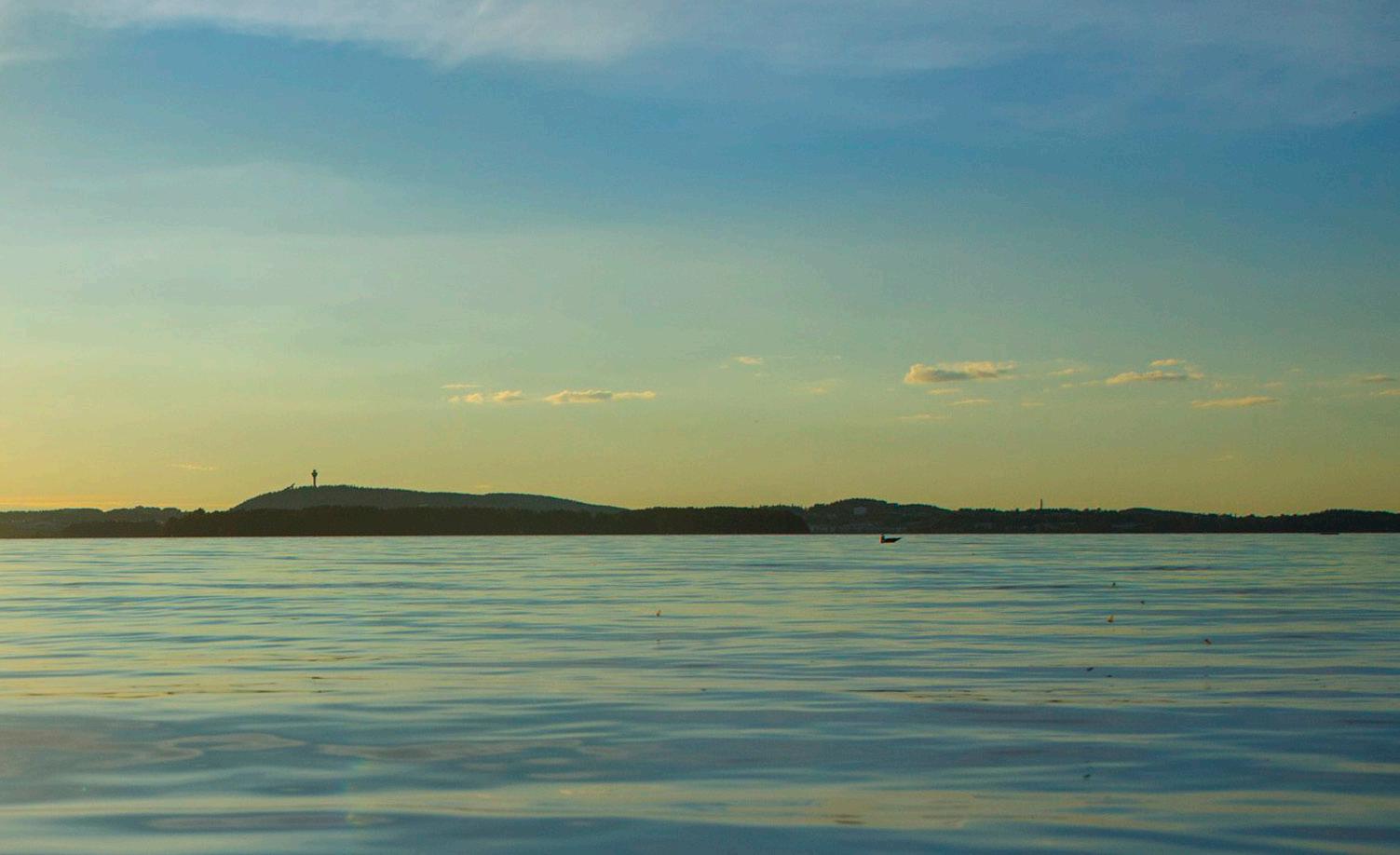
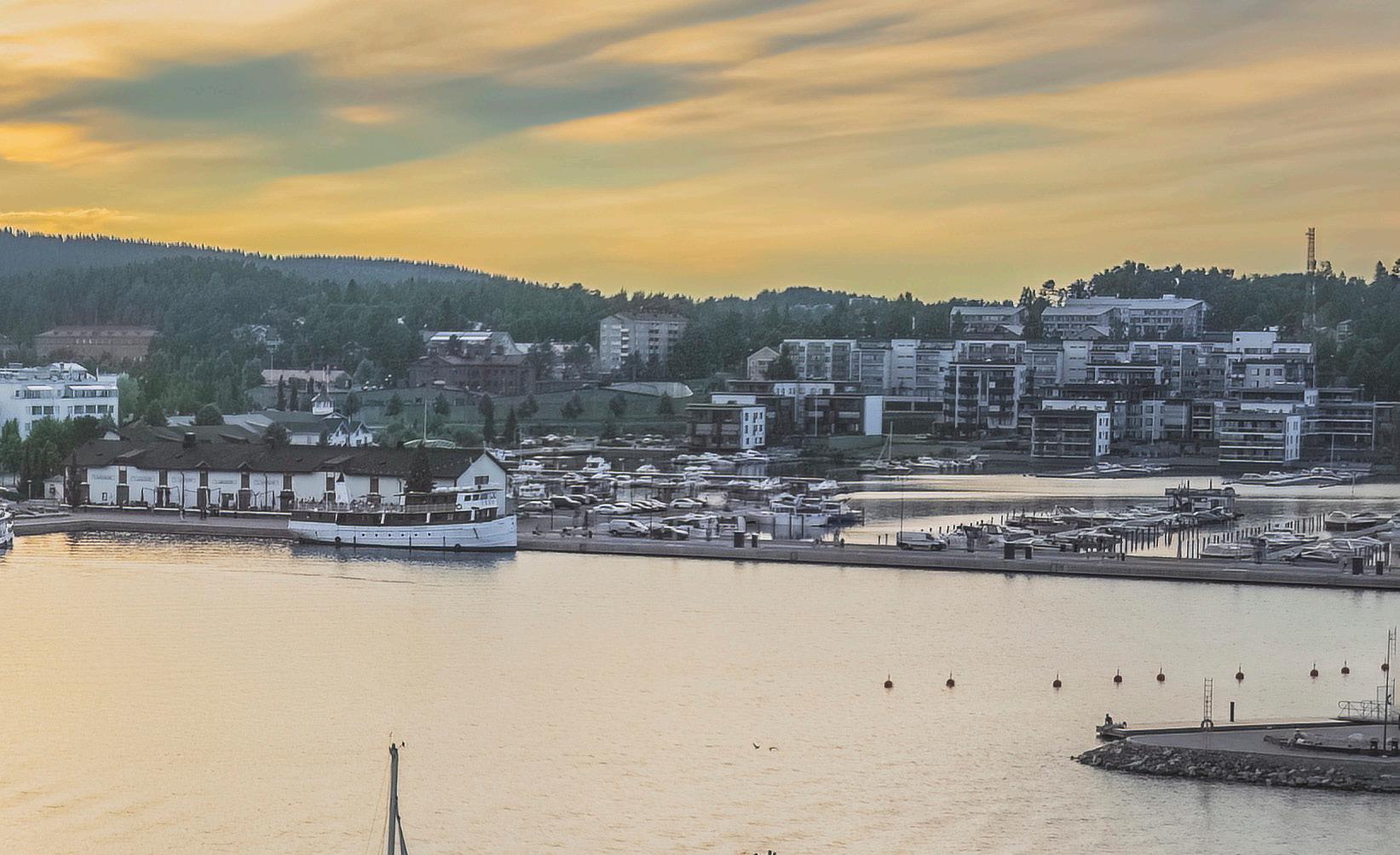
7. In wintertime, pedestrians can walk on the frozen Kallavesi lake; some people ski and ice skate on the lake and others drive their cars on the frozen lake.
True N
False D
8. Finland is far up North. Polar bear populations live in Lapland.
True O
False K
9. Lapland is home to Santa Claus, where he can be visited year-round at Santa Claus village
True I
False N
10. In Finland, statistically there is one lake for every 29 people.
True V
False L
11. Finland is part of the EU, the Eurozone and Schengen, but not part of NATO.
True Y
False A
The solution can be found in chapter 2.1 last sentence.
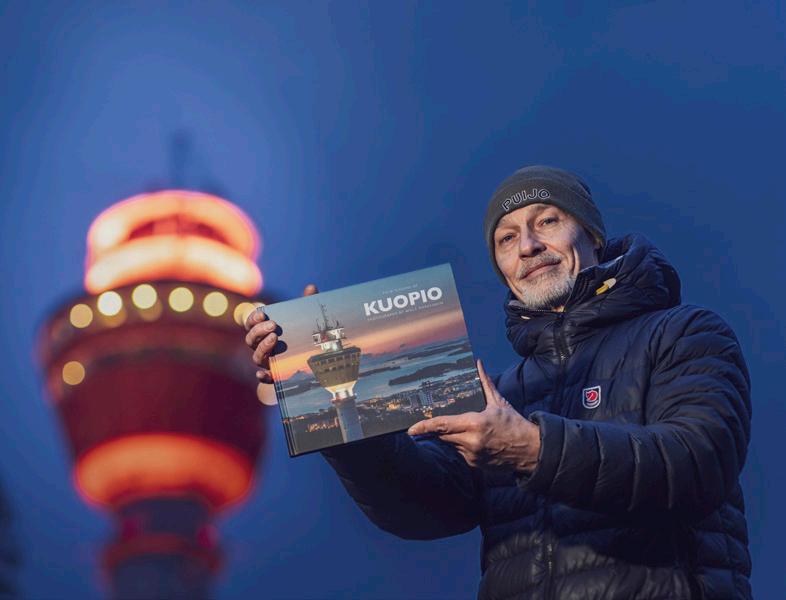
About the Photographer, Wille Markkanen
Wille is a Kuopio native, who holds a Master’s degree (MSc) from the University of Eastern Finland. He has held a variety of roles in promoting tourism, e.g. in his prior role as Managing Director of Kuopio-Tahko Marketing Ltd when he was leading tourism marketing of Kuopio-Tahko region from 2014 -2019. Markkanen currently works as the CEO of Salmi Platform Oy, a travel and event analytics company.
Wille Markkanen has published a photographic work Four Seasons of Kuopio. The book contains pictures taken by Markkanen in 2018–2025. If you enjoyed the photographs in this e-book, and wish to see more, ‘Four Seasons of Kuopio’ contains photographs personally selected by Markkanen from over 1 million images. Available in bookstores.
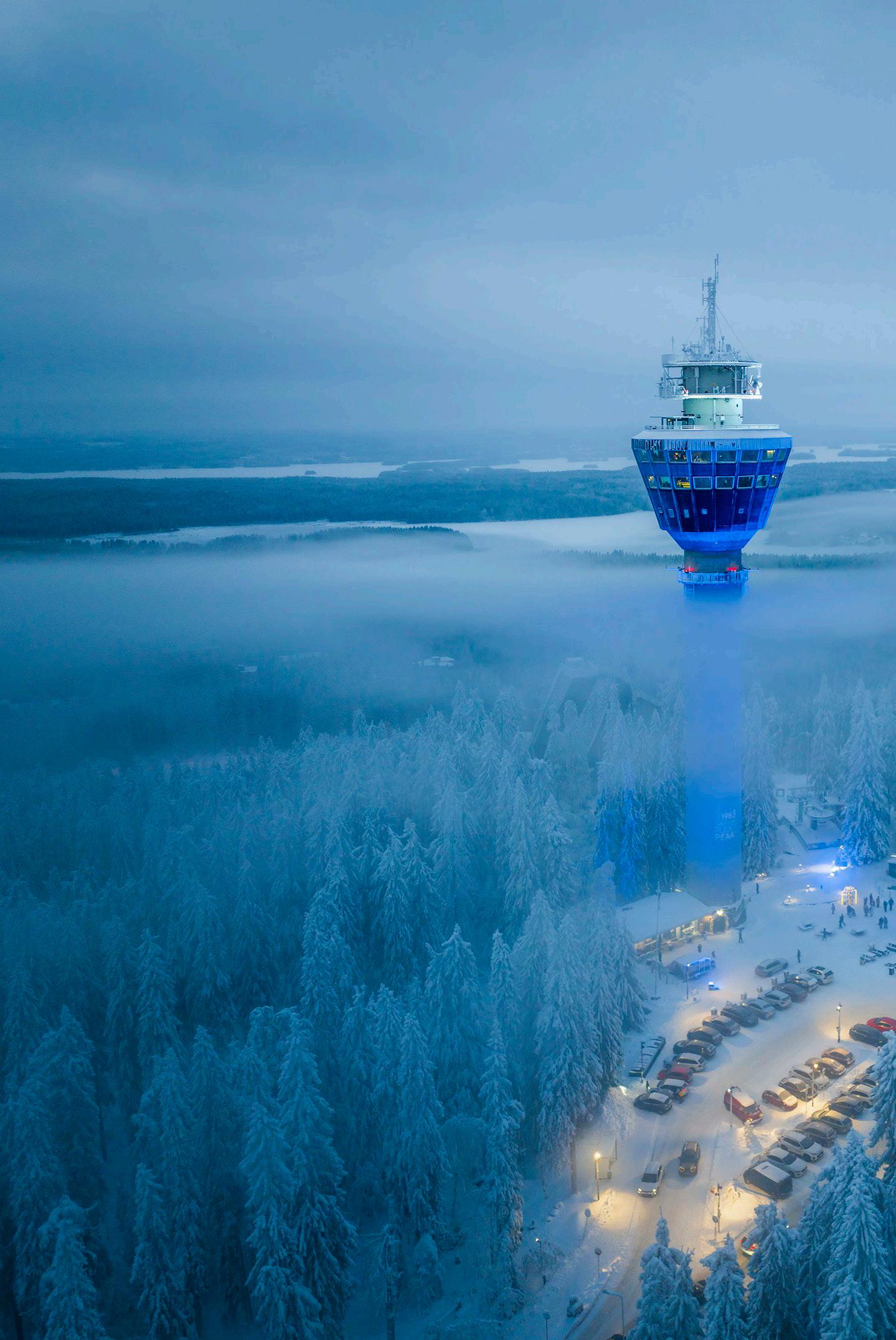
Photograph by Wille Markkanen
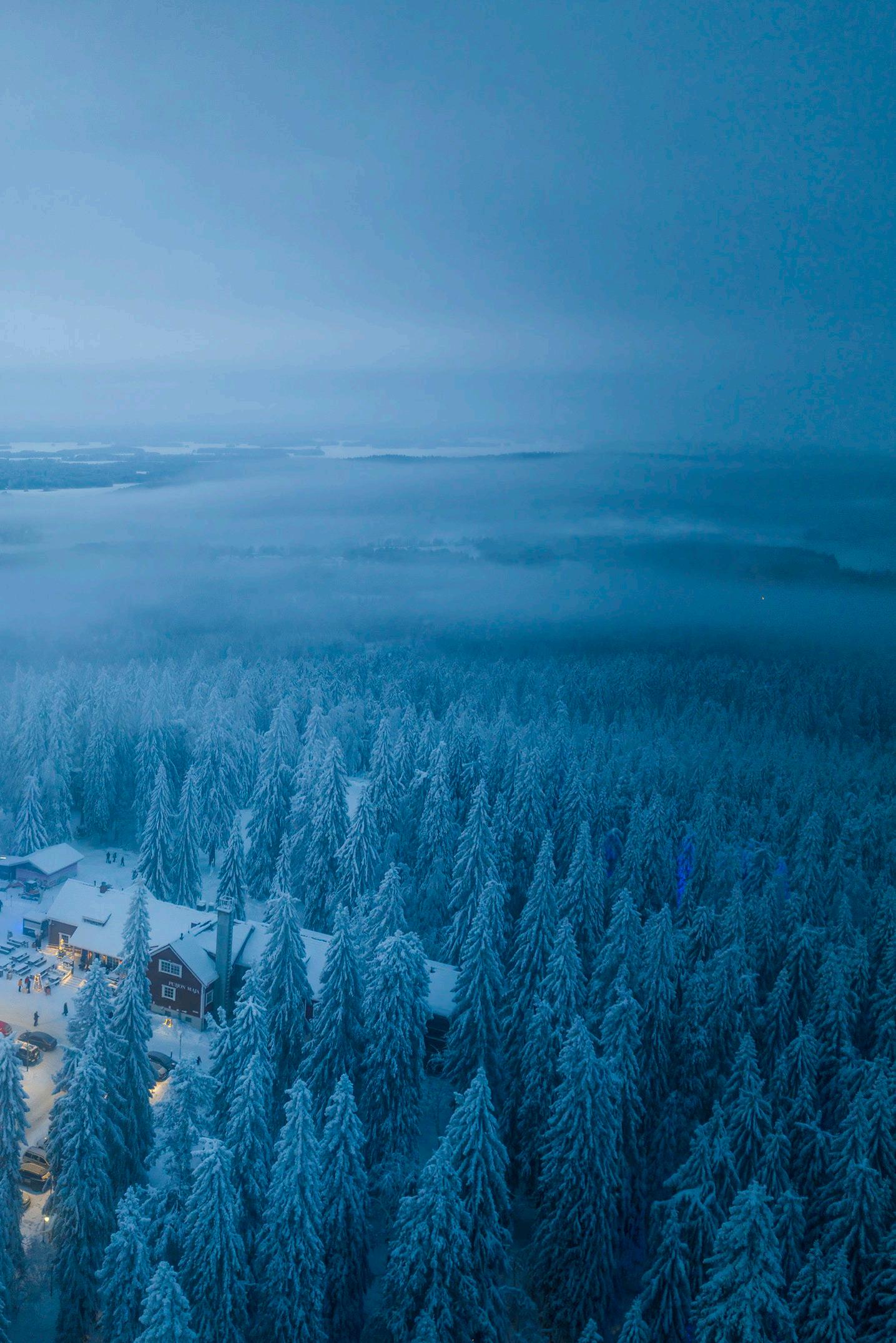
The publication of a book is not possible without a great team.
A special thanks to
Kirsi Soininen, Strategy Director and Marketing Director of Kuopio, for her sponsorship and wonderful publicity of the book. I feel greatly honoured that my e-book is being published on the City of Kuopio’s website in celebration of its 250th anniversary.
Wille Markkanen for his photography. Every shot by Wille is simply stunning and jaw dropping.
Reetta Airaksinen, from Talent First project, the City of Kuopio, for her wonderful job on the layout and design of the book. Her perfect eye for detail and visual choices enhance the overall storytelling.
Both Wille and Reetta are true masters of their craft.
Thank you also to Henna Halmetvaara, from Talent First project, who together with Reetta supported the stages of marketing and design.
Iina Huttunen for her drawings with graphite on paper. I met Iina on a train ride from Kuopio to Helsinki and was fascinated by her drawings during the journey. Iina is studying at the University of Lapland in Rovaniemi to become a special education teacher. I believe she has the talent to become a great artist.
Tuula Pantzar, the granddaughter of Hanna Partanen, for sharing her grandmother’s story with me and providing old photographs. Tuula has known Hanna for the last 20 years of her life and gave valuable insights.
Last but not least, a big thanks to Kaija Savolainen, Managing Director of the Chamber of Commerce for Kuopio Region, Joel Naukkarinen, Medical Doctor and Sports Athlete as well as Giuseppe Carloni, Chairman of the Board of Directors at FinVector for taking the time to answer all of my questions.
Glossary of Resources Used for Researching this Book, and further information for the Reader.
Editorial
[1] T-Media Reputation & Trust Survey 2025, ranking Kuopio 2nd most attractive city in Finland, and 1st in safety: https://reptrust.com/en/home/ and https://www.kuopio.fi/en/2025/04/02/t-medias-research-kuopio-perceived-as-safe-and-comfortable-increased-its-attractiveness-the-most-tamperes-popularity-continues/
[2] Kuopio’s 600km of cross country skiing tracks (in a snow rich winter): https://www.kuopio.fi/en/leisure-and-well-being/kuopio-in-motion/sports-facilities/winter-sports-facilities/cross-country-skiing-tracks/
[3] Finland is the happiest nation in the world again in 2025, for the 8th consecutive year in a row: https://www.worldhappiness.report/ and https://www.bbc.co.uk/news/articles/cr72xep44kdo and https://media.visitfinland.com/en/media-press-releases/finland-happiest-country-25/
[4] The book ‘Kalevala’ is available in bookstores and online. ‘Kalevala’ by Pirkko-liisa Surojegin (Illustrator), Kirsti Mkinen (Adapter). ISBN-10: 1782506438. ISBN-13: 978-1782506430
[5] Press Articles on the Knighting of Mr Giuseppe Carloni: https://www.finvector.com/giuseppe-carloni-and-jean-frederic-paulsen-awarded-with-the-order-of-the-lion-of-finland-1st-class-knights-crosses/ and https://www.kuopio.fi/en/2025/02/05/the-president-of-the-republic-has-awarded-the-order-of-the-lion-of-finland-1st-class-to-giuseppe-carloni-and-jean-frederic-paulsen-of-finvector-ltd/
[6] Information on Coastal Rowing making its debut at the 2028 Olympics in Los Angeles, and more info on the sport can be found here: https://www.olympics.com/en/sports/coastal-rowing/
[7] Celebration of Mid-summer (Juhannus) on the Saturday between June 20-June 26: https://almanakka.helsinki.fi/en/flag-days-and-holidays/flag-days-in-finland/ https://almanakka.helsinki.fi/en/flag-days-and-holidays https://firmally.fi/en/what-is-midsummer-eve-and-when-is-it-celebrated-in-finland/
[8] Estimate of approx. ~3 million saunas in Finland: https://www.visitfinland.com/en/articles/five-myths-about-finland/
[9] Firefox legend in Finland (and other countries): https://www.theaurorazone.com/about-the-aurora/aurora-legends
[10] Probability of Aurora Viewings
https://en.ilmatieteenlaitos.fi/auroras-in-finland
[11] Lake Statistics
https://finland.fi/life-society/tapping-into-finnish-lakes/ and https://www.jarviwiki.fi/wiki/Lake_statistics
[12] Santa Claus Village close to Rovaniemi:
https://www.visitfinland.com/en/places-to-go/lapland/rovaniemi/ and https://www.visitfinland.com/en/articles/meet-santa-claus/
[13] Low crime rates in Finland:
General info:
https://www.visitfinland.com/en/practical-tips/health-and-safety/
Worldwide Ranking:
https://worldpopulationreview.com/country-rankings/safest-countries-in-the-world
Statistics
https://www.statista.com/topics/7935/crime-in-finland/#topicOverview
https://www.statista.com/statistics/1239562/crime-rate-in-finland/
[14] 2023 IQAir World Air Quality Re¬port: Finland among top 7 countries world-wide: https://www.iqair.com/gb/newsroom/waqr-2023-pr
Culture of oxygen hopping: https://www.visitfinland.com/en/articles/finnish-air-and-benefits/
[15] See information provided under footnote [3]
[16] Sisu: Many articles and books are available. Below a free press article from BBC News: https://www.bbc.co.uk/worklife/article/20180502-sisu-the-finnish-art-of-inner-strength
[17] Finland as a Lonely Planet Top Destination in 2026: https://www.lonelyplanet.com/best-in-travel#the-25-best-destinations-in-2026-finland https://www.visitfinland.com/en/articles/lonely-planet-names-finland-best-in-travel-2026/
[18] Multiple resources were used in the creation of Finland’s facts and figures. The key resources include:
General Overview (Demographics, Political System and General Trade Information): https://european-union.europa.eu/principles-countries-history/country-profiles/finland_en
Economy and Trade:
Exports: https://tradingeconomics.com/finland/exports-by-country Imports: https://tradingeconomics.com/finland/imports-by-country
Life Expectancy Statistics: https://stat.fi/en/publication/cm1jbepsp49al07uq2ilhts48
Languages: https://en.kotus.fi/on-language/languages-of-finland-and-language-policy/
Sámi: https://blogs.loc.gov/international-collections/2019/12/will-the-sami-languages-disappear/
Religion: https://pxdata.stat.fi/PxWeb/pxweb/en/StatFin/StatFin__vaerak/statfin_vaerak_ pxt_11rx.px/
National Symbols: https://finland.fi/life-society/iconic-finnish-nature-symbols-stand-out/
[19] History of Languages: https://en.wikipedia.org/wiki/Finnish_language https://en.wikipedia.org/wiki/Uralic_languages
[20] Categories of Language Difficulty, especially page 28 of 179: https://web.archive.org/ web/20120319135036/http://www.dliflc.edu/archive/documents/all9_new.pdf
[21] History of Finland. General Sources:
Information Shown at the National Museum of Finland in Helsinki and further resources incl. but not limited to: https://www.britannica.com/ https://kansallisarkisto.fi/en/frontpage and many more
[22] Rickard, J (24 July 2007), Livonian or First Northern War, 1558-1583, https://www.historyofwar.org/articles/wars_livonian_1558-83.html
[23] Cudgel War: https://www.historytoday.com/archive/months-past/finnish-club-war
[24] The Bible had been translated by Mikael Agricola in 1548, focussing on the New Testament. The full bible was published in Finnish language in 1642 by Henrik Florinus, which was crucial in spreading Lutheranism.
[25] J. Neumann, S. Lindgren, Great Historical Events That were Significantly Affected by the weather: 4, The Great Famines in Finland and Estonia, 1695-97
[26] The Great Plague: https://history-maps.com/story/History-of-Finland/event/Great-Northern-War-Plague-in-Finland
[27] The Famine of 1866-1868: https://kansalaisuuskoe.com/the-finnish-famine-of-1866-1868-causes-effects-and-reforms/
Information on Lake Kallavesi which remained frozen until June 1867: Long-term changes in lake ice cover in Finland, Johanna Korhonen, Finnish Environment Institute (SYKE), Box 140, 00251 Helsinki, Finland. In Nordic Hydrology Vol 37 No 4–5 pp 347–363 qIWA Publishing 200, esp. p 353 https://www.researchgate.net/publication/250142686_Long-term_changes_in_lake_ice_cover_in_Finland
[28] Corruptions Perception Index: https://www.transparency.org/en/cpi/2024
[29] https://www.worker-participation.eu/trade-unions
[30] https://freedomhouse.org/country/finland/freedom-world/2025
[31] https://www.worldhappiness.report/ and further sources posted under footnote no 3
[32] Joel Willans, Author of ‘101 Very Finnish Problems’ https://veryfinnishproblems.com/blogs/news/the-complicated-truth-about-finnish-honesty
[33] Experiment with lost wallets:
https://www.readersdigest.ca/travel/world/most-honest-cities-world/ and https://www.visitfinland.com/en/articles/finland-is-a-safe-travel-destination/
[34] https://www.cia.gov/the-world-factbook/field/alcohol-consumption-per-capita/country-comparison/
[35] Rates listed as of Jan 1st, 2025: https://www.eurotax-eu.com/alcohol-excise-duties-in-finland/
[36] Medals in the Summer Olympics (per capita)
https://www.statista.com/statistics/1102056/summer-olympics-average-medals-per-capita-since-1892/
Absolute figures:
https://www.statista.com/statistics/1101719/summer-olympics-all-time-medal-list-since-1892/
Very small countries (e.g. San Marino with a population of 34,000) not included in the statistics.
[37] Everyman’s Right in Finland: https://www.juolas.com/en_US/nature/everymans-right
[38] Only in Finland:
National Sleepy Head Day: https://nationaltoday.com/national-sleepy-head-day/ Quirky Competitions overall:
https://www.bbc.co.uk/travel/article/20110620-finlands-swamp-soccer-and-sauna-endurance Passion for Unusual Contests: http://news.bbc.co.uk/1/hi/world/europe/8211639.stm
Chapter 3: An Introduction to Kuopio
[39] T-Media 2025 Survey: https://yle.fi/a/74-20153654 and https://www.kuopio.fi/en/2025/04/02/t-medias-research-kuopio-perceived-as-safe-and-comfortable-increased-its-attractiveness-the-most-tamperes-popularity-continues/
[40] Kuopio is Finland’s Winter City 2023: https://yle.fi/a/74-20019947
[41] Kuopio’s Strategy 2023
https://www.kuopio.fi/en/city-of-kuopio/strategy-and-development/strategy/
[42] How Kuopio’s name was derived & its history: https://web.archive.org/web/20100126150207/http://www.kuopio.fi/net.nsf/ TD/091003151756754?OpenDocument https://en.wikipedia.org/wiki/Kuopio#History https://www.kuopio.fi/en/city-of-kuopio/organization/history-of-kuopio/
[43] Some of the artworks by J. Rissanen and brothers von Wright can be viewed at Kumma museum in Kuopio https://kummamuseo.fi/en/collections/
[44] Hanna Partanen: https://hannapartanen.com/ https://www.businesskuopio.fi/en/news/success-stories/ingredients-of-hanna-partanens-kalakukko-are-sourced-locally/
Article in the BBC: https://www.bbc.com/travel/article/20171109-where-loaves-of-bread-arebaked-with-fish
Booklet about Hanna Partanen, written by her granddaughter, Tuula Pantzar (in Finnish language) available here: https://heyzine.com/flip-book/93bee228c8.html#page/1
For the convenience of the reader, links for Chapter 4 are generally placed directly in the text. This way information about venues, events, restaurants and sports activities can be directly accessed as you read the text. This is to better enable a smooth experience of reading and planning such activities all from one page - without needing to scroll to the glossary. Footnotes are reserved for resources that provide background information only.
Resources:
[45] Ice cream consumption in Finland per capita highest vs any other European country: https://worldpopulationreview.com/country-rankings/ice-cream-consumption-by-country
[46] History of Puijo Tower: https://www.jukola.com/2014/en/ajankohtaista/puijon-torni/
Puijo Tower Viewing Platform 224m above Lake Kallavesi and 306m above sea level: https://www.hellokuopio.fi/en/places/puijo-tower/
For the convenience of the reader, links for Chapter 5 are generally placed directly in the text. The topics in this chapter by their nature are more complex. Therefore, further reading is almost always required. For ease of handling, each set of links appears within its respective sub-chapter, without needing to scroll to the glossary.
Please be aware: This book can only offer a first introduction into areas such as taxes, immigration, pension, etc. More research above and beyond the resources listed in this book is additionally recommended. Speak to professionals to further evaluate your case, especially regarding your immigration, your taxes and your retirement/ pension. This book cannot replace consultations, nor does it claim completeness in regard to these complex matters.
If you have topics which you would like to see addressed in a second edition of this book, especially such that have not been covered in the first edition yet, please send an email to:
TheKriegerFamily@t-online.de