Pluralism in Research and the Arts

Inaugural lecture by Inaugurele rede van
Pluralisme in onderzoek en de kunsten
Naomi Bueno de Mesquita



Inaugural lecture by Inaugurele rede van

Inaugural lecture by Naomi Bueno de Mesquita
16 April 2026
Amsterdam University of the Arts
Inaugurele rede van Naomi Bueno de Mesquita
16 april 2026
Amsterdamse Hogeschool voor de Kunsten

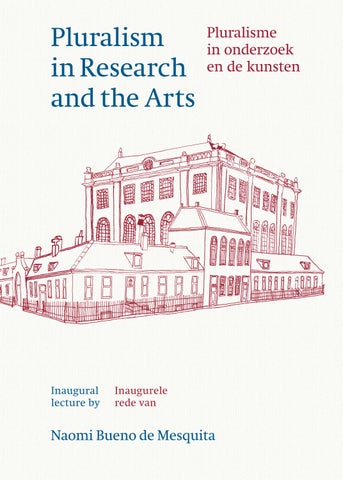
When I first began thinking about this inaugural speech, the place where it should be held came to me almost immediately. I pictured myself standing in the Snoge, the Portuguese Synagogue in Amsterdam. It is a building I know well: one I have passed countless times, usually without entering, yet always with a sense of quiet recognition.
But the Snoge is also personal in a much deeper way. Four centuries ago, Jews expelled from Spain and Portugal, among them my ancestors, found refuge in Amsterdam, where they built this synagogue. They arrived after generations of displacement, loss, and forced conversion, carrying
Toen ik voor het eerst ging nadenken over deze inaugurele rede, diende de plek waar zij gehouden zou moeten worden zich bijna onmiddellijk aan. Ik zag mezelf staan in de Snoge, de Portugese Synagoge in Amsterdam. Het is een gebouw dat me vertrouwd is: ik heb het diverse keren bezocht en het bevindt zich in mijn werkbiotoop, waardoor ik er regelmatig langs kom, altijd met een sereen gevoel van herkenning.
Maar de Snoge is ook op een veel diepere manier persoonlijk. Vier eeuwen geleden vonden Joden die uit Spanje en Portugal waren verdreven – onder wie mijn voorouders – onderdak in Amsterdam,
histories that could not be spoken openly elsewhere. Here, they were able to practise their religion and give public form to their cultural life without the constant threat of persecution. That freedom – the freedom to appear openly as oneself – was extraordinary for its time.
I often think about what it must have meant to build such a monumental structure after generations of hiding: to claim space, to be visible, to believe, however tentatively, that difference could exist without immediate reprisal. That moment was fragile and ephemeral, yet it shaped early ideas about co-existence and shared life amid difference: themes that lie at the heart of this talk.
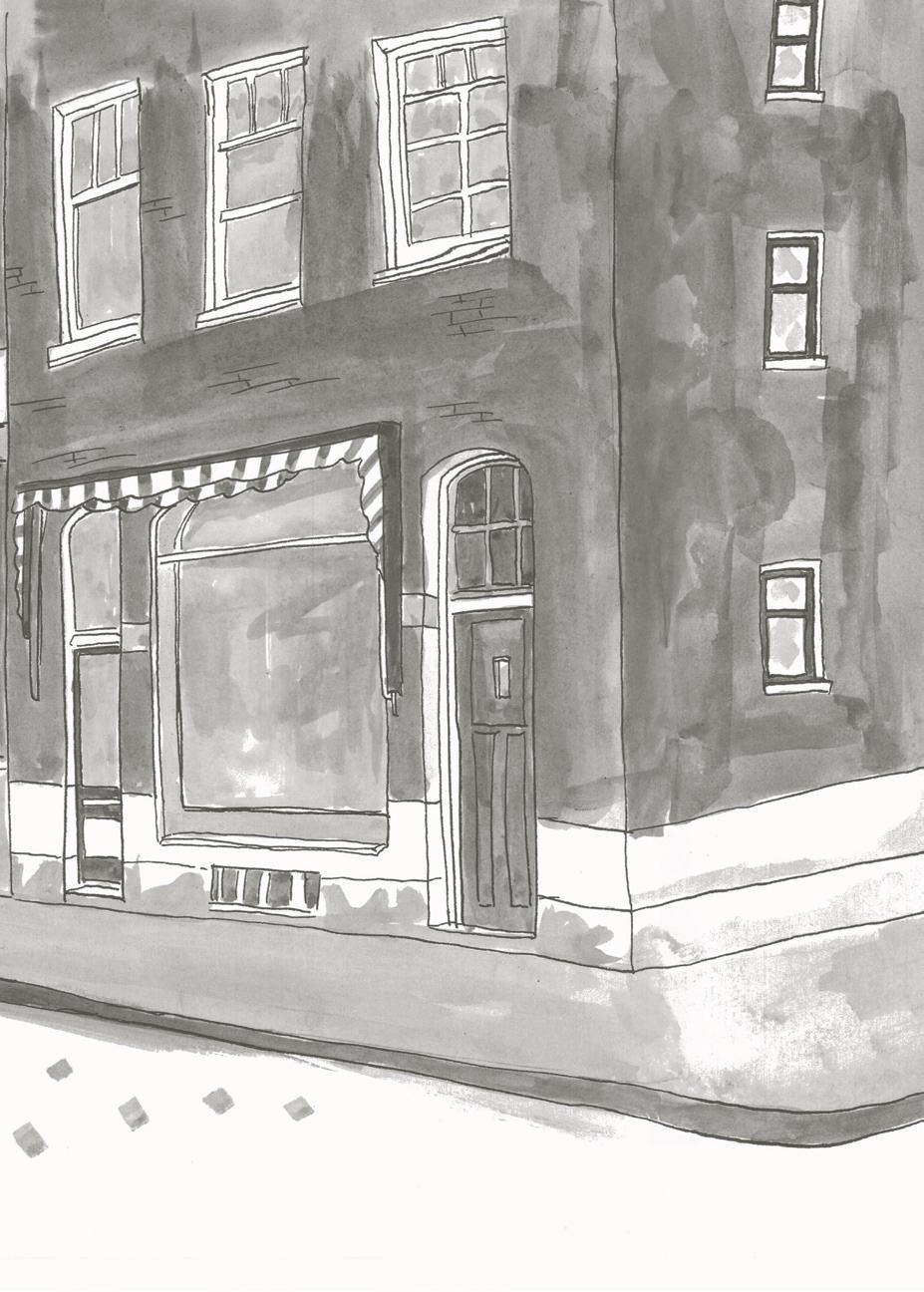
In the end, I did not choose the Snoge, for a simple practical reason: it was too large for the expected audience of this lecture. So, I turned to the Uilenburger Synagogue. It is quieter, easier to overlook, and yet, as I began to imagine speaking here, I started to realise how fitting it is. It carries the histories of everyday Jewish life, alongside histories
waar zij deze synagoge bouwden. Zij streken hier neer na generatielange ontheemding, verlies en gedwongen bekering, en ze droegen geschie denissen met zich mee die elders niet openlijk verteld konden worden. Hier konden zij hun religie beoefenen en hun culturele leven een publieke vorm geven zonder de voortdurende dreiging van vervolging. Die vrijheid – de vrijheid om openlijk als jezelf te verschijnen – was voor die tijd uitzonderlijk.
Ik denk vaak aan wat het moet hebben betekend om na generaties van verborgenheid zo’n monumentaal bouwwerk op te richten: ruimte opeisen, zichtbaar zijn, en – hoe voorzichtig ook – geloven dat verschil kan bestaan zonder onmiddellijke vergelding. Dat moment was kwetsbaar en kortstondig, maar het heeft vroege ideeën gevormd over samenleven en het dragen van een gemeenschappelijke wereld te midden van verschil –thema’s die centraal staan in deze rede.
of displacement and absence: communities that once animated these streets and are now largely gone. This is a place that does not announce itself loudly but asks to be read carefully.
Standing here today, I feel the weight of these layered histories, and my position within them. This is why this lecture begins here: as a way of situating myself between past and present, between personal history and professional orientation, and between the places that have shaped me and the questions I continue to ask about one’s right to appear.
The history of this place in which we are all now sitting makes tangible what this lecture, and my lectorate more broadly, is concerned with: questions about how we live together amid, and with, difference; how the spaces we inhabit carry plural, and often conflicting, histories; and how voices can come into the open that take into account the fragile conditions that make such openness possible. It offers us, in other words, a situated
Uiteindelijk koos ik niet voor de Snoge, om een eenvoudige praktische reden: zij was te groot voor het verwachte publiek van deze lezing. Daarom wendde ik me tot de Uilenburger Synagoge. Die is stiller, makkelijker over het hoofd te zien – en toch, toen ik me voorstelde hier te spreken, besefte ik steeds meer hoe passend deze plek is.
Zij draagt de geschiedenissen van alledaags Joods leven, naast geschiedenissen van verdrijving en afwezigheid: gemeenschappen die ooit deze straten bezielden en die nu grotendeels verdwenen zijn. Dit is een plek die zichzelf niet luid aankondigt, maar die vraagt om zorgvuldig gelezen te worden.
Zoals ik hier vandaag sta, voel ik het gewicht van die gelaagde geschiedenissen – en mijn positie daarin. Daarom vindt deze rede hier plaats: om mezelf te situeren tussen verleden en heden, tussen persoonlijke geschiedenis en professionele oriëntatie, en tussen de plaatsen die mij hebben gevormd en de vragen die ik blijf stellen over iemands recht om te verschijnen.
starting point from which to think about pluralism not as an abstract principle, but as something lived, negotiated and distributed in time and space. It also reminds us that the right to appear is never only physical or legal; it is intellectual as well. People can be present in an institution while withholding their voices: they avoid asking certain questions, mute their doubts, and speak in the safest possible register. In such situations the conditions under which disagreement can be expressed without fear are sorely lacking – undermining an essential foundation of education, research, and the arts.
This lecture begins from that recognition. It asks what it means for a public institution such as the Amsterdam University of the Arts to actively safeguard the space in which different perspectives can appear, collide, and remain in conversation, and why pluralism is the name I give to that responsibility. What follows is both a diagnosis
De geschiedenis van deze plek waar wij nu allemaal zitten, maakt tastbaar waar deze rede – en mijn lectoraat in bredere zin – om draait: vragen over hoe we samenleven te midden van, en mét, verschil; hoe de ruimtes die we bewonen meervoudige en vaak conflicterende geschiedenissen dragen, en hoe stemmen naar buiten kunnen treden die rekening houden met de kwetsbare voorwaarden die zulke openheid mogelijk maken.
Het biedt ons, met andere woorden, een gesitueerd vertrekpunt om pluralisme niet te benaderen als een abstract principe, maar als iets wat geleefd wordt, waarover wordt onderhandeld en wat verdeeld is in tijd en ruimte.
Het herinnert ons er ook aan dat het recht om te verschijnen nooit alleen fysiek of juridisch is; het is ook intellectueel. Mensen kunnen in een instelling aanwezig zijn terwijl zij hun stem inhouden: ze vermijden bepaalde vragen, dempen hun twijfels en spreken in het veiligst mogelijke register. In zulke situaties ontbreken de voorwaarden die het mogelijk maken meningsverschil te
of pressures I have observed since taking up this position, and a proposal for how this lectorate can respond.
uiten zonder angst – en daarmee ondermijnt het een fundament voor onderwijs, onderzoek en de kunsten.
Vanuit dat besef vertrekt deze rede. Zij vraagt wat het betekent voor een publieke instelling als de Amsterdamse Hogeschool voor de Kunsten om actief de ruimte te beschermen waarin verschillende perspectieven kunnen verschijnen, botsen en in gesprek kunnen blijven – en waarom ik de verantwoordelijkheid daarvoor de naam ‘pluralisme’ geef . Wat volgt is zowel een diagnose van druk die ik sinds mijn aantreden heb waargenomen, als een voorstel hoe dit lectoraat daarop kan reageren.

Over recent years, I have increasingly noticed moments, small and large, in which speaking openly felt risky, and silence felt safer. The issues under discussion on these occasions were charged: easy to misread, prone to moralisation, and costly to get wrong. In conversations with colleagues, students, and friends, and in my own reluctance to name what I was noticing, I have felt how the space for argument, ambivalence, and open debate has steadily narrowed.
What characterises these moments is not explicit, externally imposed censorship, but something more subtle: self-censorship. An internal calculation of what can be said, how it might land, and whether it is worth the potential consequences. Over time, these types of calculations reshape how we think, how we speak, and ultimately how we know. They produce compliance not through force, but through a quiet contraction of what we dare to think and say.

In de afgelopen jaren heb ik steeds vaker momenten opgemerkt, klein en groot, waarop openlijk spreken hachelijk voelde en zwijgen veiliger. De kwesties die dan op tafel lagen waren beladen: gemakkelijk verkeerd te lezen, vatbaar voor moralisering en zeer risicovol om ‘fout’ te doen. In gesprekken met collega’s en in mijn eigen terughoudendheid om te benoemen wat ik zag, heb ik ervaren hoe de ruimte voor argument, ambivalentie en open debat geleidelijk is versmald.
Wat deze momenten kenmerkt, is niet van buitenaf opgelegde censuur, maar iets subtielers: zelfcensuur. Een innerlijke afweging van wat je kunt zeggen, hoe het zou kunnen vallen en of het de mogelijke gevolgen waard is. Na verloop van tijd vervormen dit soort afwegingen hoe we denken, hoe we spreken en uiteindelijk hoe we weten. Ze brengen volgzaamheid niet voort door dwang, maar door een stille inkrimping van wat we durven te denken en zeggen.
The epistemic cost of this shift is vast. When the cost of misinterpretation becomes higher than the value of exploration, enquiry changes shape. This lecture emerges from the growing visibility of that cost. It is an attempt to articulate why pluralism, understood as the capacity to live in, with, and through multiplicity, is not an optional ideal, but one of the most overlooked and essential conditions for knowledge production and artistic imagination. Pluralism is a commitment. It must be actively practised by keeping different perspectives in view long enough for thought to unfold.
In recent years, social justice and diversity have become central reference points in society, research, and the arts. They appear in policy documents, curricula, funding calls, and institutional missions. This development responds to real and urgent questions about inequality, exclusion, and power relations. Such questions demand serious engagement.
At the same time, the ways these concepts are often operationalised institutionally can generate tensions around knowledge and authority. The issue is not that moral commitments are misplaced, but that once they are formalised into institutional procedures they can begin to operate as moral frameworks: evaluative
De epistemische prijs van deze verschuiving is enorm. In onderzoek leidt zelfcensuur onherroepelijk tot andere, vaak inadequatere uitkomsten. Misinterpretaties beïnvloeden resultaten zodanig dat onderzoek van karakter verandert – en die prijs is hoog. Vanuit de wens om die prijs te begrijpen en te benoemen, is deze lezing ontstaan. Ze is een poging te verwoorden waarom pluralisme – begrepen als het vermogen om in, met en door veelvormigheid te leven – geen optioneel ideaal is, maar een van de meest over het hoofd geziene voorwaarden voor kennisproductie en artistieke verbeelding. Pluralisme is een toewijding. Het moet actief worden beoefend door verschillende perspectieven lang genoeg in het vizier te houden zodat het denken zich kan ontvouwen.
In de afgelopen jaren zijn sociale rechtvaardigheid en diversiteit centrale referentiepunten geworden in samenleving en onderzoek. Ze verschijnen in beleidsdocumenten, curricula, subsidiekaders en institutionele missies. Deze ontwikkeling is een antwoord op urgente vraagstukken over uitsluiting en machtsverhoudingen. Zulke vraagstukken vergen serieuze betrokkenheid. Tegelijk kunnen de manieren waarop deze concepten institutioneel worden geoperationaliseerd, spanningen oproepen rond kennis en autoriteit. Het probleem is niet dat morele betrokkenheid misplaatst is, maar dat wanneer zij
logics that classify speech, methods, and persons as either more or less legitimate. They shape who is trusted, who is invited, which forms of doubt are tolerated. When moral frameworks become instruments of evaluation, they also become instruments of incentive: they shape what is rewarded, what is discouraged, and what is quietly avoided.
In education, this is visible in the growing tendency to prioritise moral positioning over conceptual exploration.1 In research, caution increases around questions that might be perceived as politically or ethically sensitive. And in the arts, pressure grows to legitimise work primarily through explicit moral stances, rather than through its ability to reveal complexity and new ways of navigating that complexity.
These developments are understandable insofar as they reflect a desire for justice, recognition, and care. And they also respond to histories in which ‘openness’ and ‘neutrality’ have too often been exploited to excuse or obscure harm. There are instances when justice requires naming things plainly, drawing lines, and insisting on accountability.
wordt vastgelegd in institutionele procedures, zij kan gaan functioneren als moreel raamwerk: een evaluatielogica die taal, methoden en personen als meer of minder legitiem classificeert. Zij bepaalt wie vertrouwen krijgt, wie wordt uitgenodigd, welke vormen van twijfel worden toegelaten. Wanneer morele kaders instrumenten van beoordeling worden, worden ze ook instrumenten van prikkels: ze bepalen wat wordt beloond, wat wordt ontmoedigd en wat stilletjes wordt vermeden.
In het onderwijs zien we dit in de groeiende neiging om morele positionering te laten prevaleren boven conceptuele verkenning.1 In onderzoek neemt de voorzichtigheid toe rond vragen die als politiek of ethisch gevoelig kunnen worden gezien. En in de kunsten groeit de druk om werk vooral te legitimeren via expliciete morele stellingnames, in plaats van via het vermogen van dat werk om complexiteit zichtbaar te maken en nieuwe manieren te openen om met die complexiteit om te gaan.
Deze ontwikkelingen zijn begrijpelijk. Ze reageren ook op geschiedenissen waarin ‘openheid’ en ‘neutraliteit’ te vaak zijn misbruikt om schade te vergoelijken of te verhullen. Er zijn momenten waarop rechtvaardigheid vraagt om heldere kwalificaties, om grenzen trekken en verantwoordelijkheid eisen.
The risk lies elsewhere: as participation increasingly demands a position taken in advance, and engagement is assessed by alignment rather than the quality of enquiry, disagreement comes to seem suspect, hesitation reads as complicity, and complexity is easily dismissed as evasion. What gets lost is not only dissent, but intellectual range: the willingness to test ideas, to ask awkward questions, to revise, to remain uncertain in the face of what we do not yet understand.
Education, research, and art begin to shift from spaces where differences can be explored to spaces where differences are assessed and sorted. A more humble pursuit of justice would protect open-ended enquiry of this kind – testing ideas, asking difficult questions, and revising one’s judgements – not to dilute responsibility, but to keep us responsive to a reality that is unstable, layered, and rarely exhausted by a single perspective.
But what do I mean by ‘difference,’ and why is it so important for scholarship and the arts?
However important representation and recognition may be, difference cannot refer to demographic variation alone, nor be reduced to identity categories. As such, throughout this lecture, when speaking of ‘difference,’
Het risico van deze dynamiek ligt elders: wanneer deelname in toenemende mate vereist dat men vooraf een positie inneemt, en wanneer betrokkenheid wordt afgemeten aan instemming in plaats van aan de kwaliteit van het onderzoekende gesprek, in zulke contexten wordt meningsverschil verdacht, lijkt aarzeling op medeplichtigheid en wordt complexiteit gemakkelijk gelezen als ontwijking. Wat verdwijnt is niet alleen tegenspraak, maar ook intellectuele reikwijdte: de bereidheid om ideeën te testen, te herzien, ongemakkelijke vragen te stellen en onzeker te blijven tegenover datgene wat we nog niet begrijpen.
Onderzoek en kunst verschuiven dan van ruimtes waar verschillen onderzocht kunnen worden naar ruimtes waar verschillen worden beoordeeld en gesorteerd. Een nederigere zoektocht naar rechtvaardigheid zou dit soort open, onbeslist onderzoek – ideeën testen, moeilijke vragen stellen, oordelen herzien – juist beschermen, niet om verantwoordelijkheid te verdunnen, maar om ons alert te houden op een werkelijkheid die instabiel en gelaagd is en zelden is te vatten vanuit één enkel perspectief.
Maar wat bedoel ik met ‘verschil’, en waarom is het zo belangrijk voor onderzoek en kunst?
I refer to those differences that are constitutive of knowledge production itself: differences in perspective and interpretation; differences in what counts as evidence; differences in moral and political judgement; differences in aesthetic criteria; differences in method and disciplinary training; differences in language, conceptual inheritance, and historical memory. These differences shape what can be seen, what can be named, what can be questioned, and what can be imagined.
In the arts and humanities, these dimensions rarely align neatly. People can share a background and still disagree profoundly in worldview. They can share political aims and diverge in method. They can encounter the same archival source and produce incompatible, yet equally valid, interpretations. This is not an obstacle to be managed away; it is part of the terrain. These fields investigate how meaning is made, how histories are narrated, how worlds are perceived, and how realities can be understood from multiple vantage points. They depend on spaces where uncertainty is a condition of rigor and where friction is a generative force.
When the pressure to resolve ambiguity takes hold too quickly – through demands for immediate alignment, through moral sorting, or through fear of reputational
Hoe belangrijk representatie en erkenning ook zijn: verschil kan niet enkel verwijzen naar demografische variatie, noch worden gereduceerd tot identiteitscategorieën. Daarom bedoel ik in deze rede met ‘verschil’ de verschillen die constitutief zijn voor kennisproductie zelf: verschillen in perspectief en interpretatie, verschillen in opvattingen over wat als bewijs geldt, verschillen in moreel en politiek oordeel, verschillen in esthetische criteria, verschillen in methode en disciplinaire vorming, verschillen in taal, conceptuele erfenis en historisch geheugen. Deze verschillen bepalen wat zichtbaar wordt, wat benoemd kan worden, wat bevraagd kan worden en wat verbeeld kan worden.
In de geesteswetenschappen en de kunsten vallen deze dimensies zelden netjes samen. Mensen kunnen een achtergrond delen en toch diep van mening verschillen over hun wereldbeeld. Ze kunnen politieke doelen delen en uiteenlopen in methode. Ze kunnen dezelfde archiefbron tegenkomen en incompatibele, maar evenzeer valide interpretaties voortbrengen. Dat is geen obstakel dat we moeten ‘wegmanagen’; het is onderdeel van het terrein. Deze domeinen onderzoeken hoe betekenis wordt gemaakt, hoe geschiedenissen worden verteld, hoe werelden worden waargenomen en hoe werkelijkheden vanuit meerdere gezichtspunten kunnen
damage – the result is not better justice. The result is thinner knowledge and less interesting art.
Against this backdrop, I want to propose a shift in how the lectorate’s research agenda and public mandate are framed institutionally. This is why I call for a substantive repositioning of the lectorate. Whereas it has so far operated under the name Social Justice and Diversity in the Arts, I propose a new moniker: Pluralism in Research and the Arts. This is not a semantic nuance, but a shift in orientation: away from an increasingly prescriptive and moralised, identity-centred framework as it is often enacted institutionally, and toward an ethical and epistemic commitment to bearing, exploring, and cultivating difference, especially when it is uncomfortable, ambiguous, or conflictual.
worden begrepen. Ze hebben ruimtes nodig waarin onzekerheid een voorwaarde is voor nauwkeurigheid en waarin wrijving een generatieve kracht is.
Wanneer de druk om ambiguïteit te snel op te lossen de overhand krijgt – door onmiddellijke overeenstemming te eisen, door morele afwegingen, of door angst voor reputatieschade – is het resultaat niet méér rechtvaardigheid. Het resultaat is oppervlakkigere kennis en minder interessante kunst.
Tegen deze achtergrond wil ik een verschuiving voorstellen in de manier waarop de onderzoeksagenda en publieke opdracht van het lectoraat institutioneel worden gekaderd. Daarom pleit ik voor een inhoudelijke herpositionering van het lectoraat. Waar het tot nu toe opereerde onder de naam Sociale rechtvaardigheid en diversiteit in de kunsten, stel ik een nieuwe benaming voor: Pluralisme in onderzoek en de kunsten. Dit is geen semantische nuance, maar een verschuiving in oriëntatie: weg van een steeds meer prescriptieve en gemoraliseerde, identiteitsgericht kader zoals dat institutioneel vaak wordt uitgevoerd, en richting een ethische en epistemische toewijding aan het verdragen, onderzoeken en cultiveren van verschil – juist wanneer dat ongemakkelijk, ambigu of conflictueus is.
Before I can fully explain this repositioning, I need to first define what I mean by ‘pluralism.’
A first distinction matters. Plurality names a factual condition: the existence of many. Human life is marked by multiplicity – of experiences, convictions, aesthetics, moral intuitions, histories, and ways of making sense of the world. In education, research, and the arts, plurality is not an exception, but the baseline.
Pluralism, by contrast, is not a description but a commitment. It is a political, pedagogical, and researchoriented stance that treats plurality as something to be cultivated rather than contained – especially when it generates tension, disagreement, or conflict. Pluralism begins from the assumption that difference does not need to be resolved into sameness or similarity in order to be valuable. It instead asks whether we can build institutions that can accommodate incompatible perspectives.
A second clarification is necessary, as pluralism is often conflated with relativism. Pluralism does not claim that


Voordat ik deze herpositionering volledig kan uitleggen, moet ik eerst definiëren wat ik met ‘pluralisme’ bedoel.
Een eerste onderscheid is belangrijk. Pluraliteit benoemt een feitelijke conditie: het bestaan van velen. Het menselijk leven wordt gekenmerkt door veelheid – van ervaringen, overtuigingen, esthetieken, morele intuïties, geschiedenissen en manieren om de wereld te begrijpen. In onderwijs, onderzoek en kunst is pluraliteit niet de uitzondering, maar het uitgangspunt.
Pluralisme daarentegen is geen beschrijving maar een commitment. Het is een politieke, pedagogische en onderzoeksgerichte houding die pluraliteit behandelt als iets wat gecultiveerd moet worden in plaats van ingeperkt – vooral wanneer zij spanning, meningsverschil of conflict voortbrengt. Pluralisme vertrekt vanuit de aanname dat verschil niet tot gelijkheid of overeenkomst hoeft te worden opgelost om waardevol te zijn. Het vraagt in plaats daarvan of we instituties kunnen bouwen die tegenstrijdige perspectieven kunnen herbergen.
all perspectives are equally true, ethical, or desirable. It does not suspend critique, nor does it imply that anything goes. Pluralism is fully compatible with firm limits on harassment, incitement, and hate speech that threaten people’s basic standing or safety. Rather than abandoning judgement, it insists on epistemic openness: the protection of conditions under which claims can be tested, challenged, and revised without disagreement being cast as moral failure.
Pluralism therefore requires shared practices of enquiry: argument, interpretation, listening, and a willingness to revise. It asks institutions to create environments in which one can explore a controversial thesis without being disqualified, hesitate without being suspected, and enquire without having to signal the ‘correct’ political alignment. In that sense, pluralism safeguards a crucial distinction between enquiry and advocacy. Research and artistic practice can be ethically engaged; they are always already entangled with the world. But their primary task is not to confirm what ought to be believed. Their task is to explore what can be known, how it can be known, and what remains uncertain.
Why does this matter for knowledge production? Put simply, because no single perspective can capture the
Een tweede verduidelijking is noodzakelijk, omdat pluralisme vaak wordt verward met relativisme. Pluralisme beweert niet dat alle perspectieven even waar, ethisch of wenselijk zijn. Het schort kritiek niet op en impliceert niet dat ‘alles kan’. Pluralisme is volledig verenigbaar met stevige grenzen rond intimidatie, aanzetten tot geweld en haatspraak die iemands basale positie of veiligheid bedreigen. In plaats van oordeel los te laten, benadrukt het epistemische openheid: de bescherming van omstandigheden waaronder claims kunnen worden getest, betwist en herzien zonder dat meningsverschil wordt gelijkgesteld aan moreel falen.
Pluralisme vereist dus gedeelde praktijken van onderzoek: argumentatie, interpretatie, luisteren en de bereidheid te herzien. Het vraagt instituties om omgevingen te creëren waarin men een controversiële stelling kan verkennen zonder te worden gediskwalificeerd, kan aarzelen zonder verdacht te worden en kan onderzoeken zonder vooraf te hoeven weten wat de ‘juiste’ politieke voorkeur is. In die zin bewaakt pluralisme een cruciaal onderscheid tussen onderzoek en activisme.
Onderzoek en artistieke praktijk kunnen ethisch gee ngageerd zijn; ze zijn altijd al verstrengeld met de wereld. Maar hun primaire taak is niet te bevestigen wat men zou moeten geloven. Hun taak is te verkennen
complexity of social, historical, and material reality. Scholarship advances not only through accumulation but through contestation (Longino, 1990): the productive friction of different ways of knowing.
Pluralism is also important on a political level. As Hannah Arendt argues in The Human Condition (1958), plurality is not only a social fact but the very condition of freedom. For Arendt, freedom is not primarily an inner conviction; it comes into the world when people can appear to one another – acting and speaking in a shared public realm – so that each can be recognised as a distinct someone, and not reduced to a function, category, or compliant role. The political, in this sense, is the ongoing work of sustaining a common world: an ‘in-between’ space where different perspectives can meet, clash, and nonetheless remain oriented toward something shared. When that world is weakened – when disagreement is moralised, or difference is treated as a threat – judgement, responsibility, and collective action become harder to sustain. It is precisely this Arendtian insight that inspires the retitling of this lectorate: to protect and cultivate spaces where differences can appear, be tested, and be worked through.
wat we kunnen weten, hoe we het kunnen weten en wat onzeker blijft.
Waarom is dit van belang voor kennisproductie? Eenvoudig gezegd: omdat geen enkel perspectief de complexiteit van sociale, historische en materiële werkelijkheid volledig kan omvatten. Wetenschappelijk onderzoek ontwikkelt zich niet alleen door accumulatie, maar ook (of misschien wel júíst) door frictie (Longino, 1990): de productieve wrijving van verschillende manieren van weten.
Pluralisme is ook politiek van belang. Zoals Hannah Arendt betoogt in The Human Condition (1958), is pluraliteit niet alleen een sociaal feit, maar ook de voorwaarde voor vrijheid. Voor Arendt is vrijheid niet primair een innerlijke overtuiging; zij komt de wereld in wanneer mensen aan elkaar kunnen verschijnen – handelend en sprekend in een gedeelde publieke ruimte – zodat ieder als een onderscheiden persoon kan worden herkend en niet wordt gereduceerd tot een functie, categorie of volgzame rol. Politiek is in die zin het voortdurende werk om een gemeenschappelijke wereld te dragen: een ‘tussenruimte’ waar verschillende perspectieven elkaar kunnen ontmoeten, botsen en toch gericht blijven op iets gedeelds. Wanneer die wereld verzwakt – wanneer
If pluralism is an essential condition for knowledge production and artistic imagination, the question becomes what is currently happening in our institutions that makes this condition harder to sustain.
meningsverschil wordt gemoraliseerd of verschil als bedreiging wordt behandeld – wordt oordeelsvermogen, verantwoordelijkheid en collectief handelen moeilijker vol te houden. Juist dit Arendtiaanse inzicht inspireert de herbenoeming van dit lectoraat: het beschermen en cultiveren van ruimtes waar verschillen kunnen verschijnen, worden getest en worden doorgewerkt.
Als pluralisme een essentiële voorwaarde is voor kennis en artistieke verbeelding, is de vraag wat er momenteel in onze instituties gebeurt waardoor die voorwaarde moeilijker te handhaven is.
Social justice is concerned with the conditions that allow people to live, learn, work, and take part in society equally. In contemporary theory, thinkers such as John Rawls and Martha Nussbaum treat social justice as a normative framework for evaluating and reforming institutions. In Rawls’s work, justice is concerned with the principles by which a society distributes rights, duties, and resources. In Nussbaum’s capabilities approach, justice is primarily about what people are actually able to do and to be: the concrete social, economic, and institutional conditions that enable human flourishing. Though these theories differ, they share a foundational orientation: justice is primarily about institutional arrangements and material conditions.
In many cultural, educational, and academic contexts, this structural orientation has weakened. For example, hiring, funding, or commissioning processes may require candidates to submit diversity statements or positionality statements that are evaluated as proxies for ethical reliability. Justice is increasingly enacted less
Sociale rechtvaardigheid gaat over de voorwaarden die mensen in staat stellen om gelijkwaardig te leven, leren, werken en deel te nemen aan de samenleving. In hedendaagse theorieën benaderen denkers als John Rawls en Martha Nussbaum sociale rechtvaardigheid als een normatief kader om instituties te beoordelen en te hervormen. Bij Rawls gaat rechtvaardigheid over de principes waarmee een samenleving rechten, plichten en hulpbronnen verdeelt. In Nussbaums capaciteitsbenadering gaat rechtvaardigheid primair over wat mensen daadwerkelijk kunnen doen en zijn: de concrete sociale, economische en institutionele voorwaarden die menselijke ontplooiing mogelijk maken. Hoewel deze theorieën verschillen, delen ze een fundamentele oriëntatie: rechtvaardigheid gaat in de eerste plaats over institutionele inrichting en materiële voorwaarden. In veel culturele, onderwijs- en academische contexten is deze structurele oriëntatie verzwakt. Zo kan men in wervings-, financierings- of commissietrajecten kandidaten vragen om diversiteits- en positioneringsverklaringen,
as a framework for analysing and transforming institutions, and more as a matter of moral legibility: a stance to be demonstrated through visible alignment, correct vocabulary, and recognisable positioning. In such environments, social justice, a tool for diagnosing structural power, can become a criterion of symbolic membership, shaping who is trusted, who is invited, who is heard, and which questions are welcome.
This shift is especially visible in debates about language. Words shape reality: they affect what can be named, recognised, and challenged. Attention to linguistic exclusion has been valuable, especially where everyday terms have carried stigma or made certain experiences hard to articulate. Examples include replacing demeaning or stigmatising labels, updating how groups are named in curricula and policy (for example, avoiding language that defines people mainly by a diagnosis or legal status), and questioning categories that treat some identities as ‘normal’ and others as aberrations. In these cases, changing terms is not merely cosmetic: it can shape who is recognised, who is respected, and who is assumed to belong.
The problem arises when language and symbolic politics start to eclipse structural change. Nussbaum (1999) warns
die vervolgens worden beoordeeld als maatstaf voor ethische betrouwbaarheid. Rechtvaardigheid wordt steeds minder uitgevoerd als een kader om instituties te analyseren en te transformeren, en steeds meer als een kwestie van morele leesbaarheid: een houding die zichtbaar moet worden gemaakt via consensus, correct woordgebruik en herkenbare positionering. In zulke omgevingen kan sociale rechtvaardigheid – een instrument om structurele macht te diagnosticeren – veranderen in een criterium van symbolisch lidmaatschap, dat bepaalt wie wordt vertrouwd, wie wordt uitgenodigd, wie wordt gehoord en welke vragen welkom zijn.
Deze verschuiving is bijzonder zichtbaar in debatten over taal. Woorden vormen werkelijkheid: ze beïnvloeden wat benoemd, herkend en betwist kan worden.
Aandacht voor linguïstische uitsluiting is waardevol geweest, zeker wanneer alledaagse termen een stigma droegen of bepaalde ervaringen moeilijk te verwoorden zijn. Voorbeelden zijn de vervanging van kleinerende of stigmatiserende labels, de aanpassing van de manier waarop groepen in curricula en beleid worden benoemd (bijvoorbeeld door taalgebruik te vermijden die mensen vooral definieert op basis van een diagnose of juridische status), en de herdefinitie van categorieën die sommige identiteiten als ‘normaal’ en andere als
that a politics focused primarily on discourse and transgression can become politically narrowing: when energy is invested mainly in symbolic contestation, attention can drift from the economic, legal, and institutional arrangements through which inequality is produced and sustained. Related critiques appear in materialist feminist work (Federici, 2004, 2018) and in second-wave Latin American feminist scholarship (Segato, 2016; Vargas, 2014), which cautions that agendas organised around language and representation can be readily institutionalised – taken up as policy, branding, or ngoprogramming – without altering the underlying conditions that sustain gendered harm. In that scenario, structural realities such as wage inequality, the exploitation of gendered labour, debt and precarity, and ongoing exposure to violence may remain largely unchanged, even as the symbolic register becomes increasingly refined. This dynamic is increasingly observable in institutional practice. Commitments to justice are often operationalised through codes of conduct, language policies, training modules, and representational benchmarks: interventions that are visible, measurable, and administratively manageable. Meanwhile, more demanding structural reforms, including changes to labour conditions,
afwijkend behandelen. In zulke gevallen is terminologieverandering niet slechts cosmetisch: het beïnvloedt wie wordt erkend, wie wordt gerespecteerd en wie geacht wordt erbij te horen.
Het probleem ontstaat wanneer taal en symbolische politiek structurele verandering gaan overschaduwen. Nussbaum (1999) waarschuwt dat een beleid dat primair op discours en transgressie gericht is, politiek beperkend kan uitpakken: wanneer energie vooral in symbolische strijd gaat zitten, kan aandacht afdwalen van de economische, juridische en institutionele structuren waardoor ongelijkheid ontstaat en wordt bestendigd. Verwante kritieken verschijnen in materialistisch feministisch werk (Federici, 2004, 2018) en in Latijns-Amerikaanse feministische theorievorming in de tweede-golftraditie (Segato, 2016; Vargas, 2014), die waarschuwt dat agenda’s rond taal en representatie gemakkelijk geïnstitutionaliseerd kunnen worden – als beleid, branding of ngoprogramma’s – zonder de onderliggende voorwaarden te veranderen die gendergerelateerd geweld in stand houden. In dat scenario kunnen structurele realiteiten zoals loonongelijkheid, de uitbuiting van genderarbeid, schuld en precariteit, en voortdurende blootstelling aan geweld grotendeels onveranderd blijven, zelfs terwijl het symbolische register steeds verfijnder wordt.
funding distribution, decision-making power, access to resources, and institutional accountability, remain slow or unchanged instead of being productively driven forward by symbolic-level interventions. A gap emerges between rhetorical transformation and material impact.
Deze dynamiek is in institutionele praktijken steeds beter waarneembaar. Commitment aan rechtvaardigheid wordt vaak geoperationaliseerd via gedragscodes, taalbeleid, trainingsmodules en representatienormen: interventies die zichtbaar, meetbaar en administratief hanteerbaar zijn. Tegelijk blijven zwaardere structurele hervormingen – veranderingen in arbeidsvoorwaarden, verdeling van middelen, besluitvormingsmacht, toegang tot hulpbronnen en institutionele verantwoording –traag of ongewijzigd, in plaats van dat symbolische interventies die productief vooruit stuwen. Er ontstaat een kloof tussen retorische transformatie en materiële impact.
One reason symbolic politics can eclipse structural reform is that different justice frameworks assign different meanings to power and to the possibility of shared standards. When social life is interpreted primarily through power relations, language and representation become central political sites, and disagreement is easily reoriented as positional struggle rather than engagement with ideas.
To better understand this argument within the context of educational and cultural environments, it can be helpful to distinguish between what Helen Pluckrose (2021) calls ‘Liberal Social Justice’ and ‘Critical Social Justice.’ While both frameworks aim to address inequality and injustice, they differ in how they understand know ledge, the human subject, and the role of disagreement.
Liberal Social Justice is grounded in classical liberal principles: individual rights, equality before the law, universal norms, and institutional reform through
Een reden waarom symbolische politiek structurele hervorming kan overschaduwen, is dat verschillende rechtvaardigheidskaders verschillende betekenissen toekennen aan macht en aan de mogelijkheid van gedeelde standaarden. Wanneer sociaal leven primair door machtsrelaties wordt geïnterpreteerd, worden taal en representatie centrale politieke arena’s, en wordt meningsverschil gemakkelijk heringericht als positionele strijd in plaats van als betrokkenheid bij ideeën.
Om dit argument in de context van onderwijs- en culturele omgevingen beter te begrijpen, kan het helpen onderscheid te maken tussen wat Helen Pluckrose (2021) ‘Liberale sociale rechtvaardigheid’ en ‘Kritische sociale rechtvaardigheid’ noemt. Hoewel beide kaders ongelijkheid en onrecht willen aanpakken, verschillen ze in de manier waarop ze kennis, het menselijk subject en de rol van meningsverschil begrijpen.
Liberale sociale rechtvaardigheid is verankerd in klassieke liberale principes: individuele rechten, gelijkheid voor de
democratic procedures (Fukuyama, 2022). Classical liberalism, which should not be confused with contemporary party- political liberalism in the United States, refers to a broader philosophical tradition concerned with constitutional limits on power, individual rights, and the governance of disagreement in plural societies.2 Within this framework, inequality can be structural in origin, while individuals remain moral and legal agents rather than mere expressions of group identity. Critique is directed primarily at laws, policies, and institutional arrangements, and disagreement is treated as a necessary feature of democratic deliberation and knowledge production.
Critical Social Justice meanwhile builds on older critiques of domination, especially those associated with Marxism, but shifts the emphasis toward how power works through language, norms, institutions, and the social production of knowledge (a move strongly influenced by Michel Foucault). In this view, power is not only imposed from above; it also circulates through categories, standards, and everyday practices, shaping what counts as true, normal, or legitimate.
This framework has been influential because it highlights how claims to ‘objectivity’ or ‘universality’ can conceal historically dominant perspectives, and how apparently
wet en institutionele hervorming via democratische procedures (Fukuyama, 2022). Klassiek liberalisme verwijst naar een bredere filosofische traditie die draait om constitutionele begrenzing van macht, individuele rechten en het beheersen van meningsverschil in pluralistische samenlevingen.2 Binnen dit kader kan ongelijkheid structureel van oorsprong zijn, terwijl individuen morele en juridische actoren blijven in plaats van louter uitdrukking van groepsidentiteit. Kritiek richt zich primair op beleid en institutionele arrangementen, en meningsverschil wordt gezien als een noodzakelijke eigenschap van democratische deliberatie en kennisproductie.
Kritische sociale rechtvaardigheid bouwt voort op oudere kritieken op dominantie, vooral die geassocieerd is met het marxisme, maar verschuift de nadruk naar hoe macht werkt via taal, normen, instituties en de sociale productie van kennis (een beweging sterk beïnvloed door Michel Foucault). In deze visie wordt macht niet alleen van bovenaf opgelegd; hij circuleert ook via categorieën, standaarden en alledaagse praktijken, en vormt datgene wat als waar, normaal of legitiem geldt.
Dit kader is invloedrijk geweest omdat het zichtbaar maakt hoe claims op ‘objectiviteit’ of ‘universaliteit’ historisch dominante perspectieven kunnen verhullen, en
neutral standards of merit and fairness are made. Its value lies in making structural power visible where it is often most inconspicuous: in norms, classifications, and taken-for-granted expectations rather than overt coercion.
While power matters and inevitably always shapes social life, a problem arises when Critical Social Justice becomes the dominant or exclusive interpretive framework: evaluation shifts from what is said to who is speaking, and from the substance of an argument to its presumed social origin. When knowledge is treated primarily as an effect of power, disagreement is easily recast as positional conflict rather than engagement with ideas. In scholarship and the arts, this can encourage anticipatory selfcensorship: a gradual narrowing of what can be asked, explored, and tested.
Liberal Social Justice offers no simple solutions. Yet its commitment to freedom of expression, procedural fairness, and open debate provides a productive baseline: it maintains a distinction between structural critique and individual moral worth and treats knowledge as situated and corrigible without reducing claims to mere expressions of power.
hoe ogenschijnlijk neutrale standaarden van verdienste en eerlijkheid tot stand komen. De waarde ligt in het zichtbaar maken van structurele macht waar die vaak het meest onopvallend is: in normen, classificaties en vanzelfsprekendheden, eerder dan in openlijke dwang.
Hoewel macht ertoe doet en het sociale leven altijd mede vormgeeft, ontstaat er een probleem wanneer kritische sociale rechtvaardigheid het dominante interpretatiekader wordt: dan verschuift de evaluatie van wat er gezegd wordt naar wie er spreekt, en van de inhoud van een argument naar de veronderstelde sociale oorsprong ervan. Wanneer kennis vooral als effect van macht wordt behandeld, wordt meningsverschil geherinterpreteerd als positioneel conflict in plaats van als betrokkenheid bij ideeën. In onderzoek en kunst kan dit anticiperende zelfcensuur in de hand werken: een geleidelijke versmalling van wat gevraagd en verkend kan worden.
Liberale sociale rechtvaardigheid biedt geen eenvoudige oplossingen. Maar de inzet op vrijheid van meningsuiting, procedurele eerlijkheid en open debat vormt een productieve basis: het bewaart een onderscheid tussen structurele kritiek en individuele morele waarde, en het behandelt kennis als gesitueerd en corrigeerbaar zonder claims te reduceren tot louter expressies van macht.
Focusing too much on symbolic legibility is especially problematic in fields where symbols matter most – the arts and humanities scholarship. Here, language, interpretation, and framing do not merely describe reality. They shape reputational economies, funding applications, curriculum design, evaluation criteria, and the public legitimacy of institutions.
Throughout the centuries, art has been a space where ambiguity is not a flaw but a method: a way of sustaining complexity without forcing it into immediate resolution. It can make contradictions visible, allow multiple interpretations to coexist, and give form to experiences that cannot yet be fully articulated.
Increasingly, however, art is asked to speak in the language of normative certainty. Works are expected to signal alignment, to be legible within recognisable ethical frameworks, and to be accompanied by explicit declarations of position. For instance, artists increasingly find themselves expected to publicly articulate
Een te sterke focus op symbolische leesbaarheid is vooral problematisch in velden waar symbolen het meest tellen: de kunsten en geesteswetenschappen. Hier beschrijven taal, interpretatie en framing de werkelijkheid niet alleen, zij vormen reputatie-economieën, subsidieaanvragen, curriculumontwerp, beoordelingscriteria en de publieke legitimiteit van instituties.
Door de eeuwen heen is kunst een ruimte geweest waar ambiguïteit geen defect is maar een methode: een manier om complexiteit te dragen zonder haar meteen op te lossen. Kunst kan tegenstrijdigheden zichtbaar maken, meerdere interpretaties naast elkaar laten bestaan, en vorm geven aan ervaringen die nog niet volledig te articuleren zijn.
Steeds vaker echter wordt van kunst gevraagd te spreken in de taal van normatieve zekerheid. Werken moeten afstemming laten zien, leesbaar zijn binnen herkenbare ethische kaders en vergezeld gaan van expliciete positieverklaringen. Zo merken kunstenaars bijvoorbeeld steeds
their political views to be considered for performance opportunities. 3 The question ‘What does this work make possible?’ risks being replaced by ‘Does this work affirm the right stance?’
When this happens, art risks becoming less investigative and more confirmatory. Instead of undermining categories and complicating assumptions, art is then drawn into reinforcing what a community already believes or wants confirmed. It becomes a mirror rather than a probe: a confirmation of belonging rather than an encounter with difference.
This development does not simply limit artistic freedom; it also narrows the public role of art. It is precisely art’s ability to remain partially opaque, affective, and unresolved that allows it to slow the rush to categorisation and keep ambivalence and disagreement alive. In a time marked by polarisation and rapid moral sorting, this is not secondary. It is one of the most powerful ways in which art participates in public life: not by instructing, but by insisting on the complexity of what it means to be human.
In educational settings, a similar dynamic takes hold. As moral frameworks become dominant in institutional life, students learn to anticipate which positions are
vaker dat van hen wordt verwacht dat zij hun politieke opvattingen publiekelijk expliciteren om in aanmerking te komen voor uitvoeringsmogelijkheden.3 De vraag ‘Wat maakt dit werk mogelijk?’ dreigt te worden vervangen door ‘Bevestigt dit werk het juiste standpunt?’
Wanneer dat gebeurt, loopt kunst het gevaar minder onderzoekend en meer bevestigend te worden. In plaats van categorieën te ondermijnen en aannames te nuanceren, wordt kunst dan meegetrokken in de affirmatie van wat een gemeenschap al gelooft of bevestigd wil zien. Ze wordt een spiegel in plaats van een sonde, een bekrachtiging van erbij horen in plaats van een ontmoeting met verschil.
Deze ontwikkeling beperkt niet alleen artistieke vrijheid; zij vernauwt ook de publieke rol van kunst. Juist het vermogen van kunst om deels ondoorzichtig, affectief en onbeslist te blijven, kan de drang naar categorisering vertragen en ambivalentie en meningsverschil levend houden. In een tijd van polarisatie en snelle morele classificatie is dat niet secundair. Het is een van de krachtigste manieren waarop kunst aan het publieke leven deelneemt: niet door te instrueren, maar door te blijven aandringen op de complexiteit van wat het betekent mens te zijn.
acceptable and which carry risk. Curiosity gives way to caution: the question ‘What can I explore?’ is replaced by ‘What can I safely say?’
Social media often intensifies these pressures. It doesn’t just host debate. Rather, through its algorithmic curation, it rewards outrage and quick alignment, pushing doubt and nuance aside. In this climate, disagreement is easily read as disloyalty, and views become badges of belonging rather than arguments open to revision. Practices like cancellation or deplatforming follow, in which not only what someone says, but also past statements or associations, can be used to discredit them.4
This shift takes shape through subtle cues, concerns about reputation, and shared expectations about what will be rewarded. Questions that might complicate prevailing narratives are avoided, not because they lack merit, but because they carry the potential for moral misinterpretation. Students learn to perform the language of correctness rather than to develop the capacity to think through complexity and difference. What is lost in that exchange is not only spontaneity, but also intellectual courage: the willingness to test an uncertain thought and allow understanding to develop without immediate pressure toward resolution or consensus.
In de onderwijsomgeving tekent zich een vergelijkbare dynamiek af. Wanneer morele kaders dominant worden in institutioneel leven, leren studenten te anticiperen op welke posities acceptabel zijn en welke risico dragen. Nieuwsgierigheid maakt plaats voor voorzichtigheid: de vraag ‘Wat kan ik onderzoeken?’ wordt vervangen door ‘Wat kan ik veilig zeggen?’
Sociale media versterken deze druk vaak. Ze huisvesten niet alleen debat; door algoritmische selectie belonen ze verontwaardiging en snelle instemming, en drukken ze twijfel en nuance weg. In zo’n klimaat wordt meningsverschil gemakkelijk gelezen als ontrouw en worden opvattingen symbolen van erbij horen in plaats van argumenten die herzien kunnen worden. Praktijken als ‘cancellation’ of ‘deplatforming’ zijn het resultaat, waarbij niet alleen wat iemand zegt, maar ook eerdere uitspraken of associaties kunnen worden gebruikt om iemand te diskwalificeren.4
Deze verschuiving krijgt vorm via subtiele signalen, reputatiezorgen en gedeelde verwachtingen over wat beloond zal worden. Vragen die heersende verhalen zouden kunnen compliceren, worden vermeden – niet omdat ze geen waarde hebben, maar omdat ze het risico dragen moreel verkeerd gelezen te worden. Studenten leren het
Instead of leading to a more inclusive educational environment, we are merely left with a more predictable one. Predictability can create the appearance of care by minimising friction, avoiding discomfort, and reducing the risk of misunderstanding – yet in education and research, it may in fact result in contraction rather than protection. Shielding students from challenge limits their capacity to grow, to revise their assumptions, and to encounter ways of thinking that do not align with their own.
This is where pluralism offers a different orientation. It shifts the focus from the question of ‘How do we represent difference?’ to that of ‘How do we work with difference as an epistemic condition?’ Pluralism does not replace concerns about representation or exclusion. It insists, however, that inclusion is not only a matter of who is present, but also of what can be thought, said, made, and contested once people are present. It asks whether institutions can host disagreement without turning it into a legitimacy crisis, and whether difference can be approached as a resource for enquiry rather than something to be managed.
Pluralism is not only a responsibility but a commitment. The next step is to make that commitment a practice:
taalspel van correctheid te beheersen, en ze ontwikkelen níét het vermogen om complexiteit en verschil te doorgronden.
Het resultaat is niet een inclusievere onderwijsomgeving, maar een voorspelbaardere. Voorspelbaarheid kan de schijn van zorg wekken door wrijving te minimaliseren, ongemak te vermijden en het risico op misverstanden te verkleinen – maar in onderwijs en onderzoek leidt dit eerder tot inkrimping dan tot bescherming. Studenten afschermen van uitdaging beperkt hun vermogen om te groeien, aannames te herzien en manieren van denken te ontmoeten die niet met die van henzelf samenvallen.
Hier biedt pluralisme een andere, meer productieve oriëntatie. Het verschuift de focus naar de vraag ‘Hoe representeren we verschil?’ naar ‘Hoe werken we met verschil als epistemische conditie?’ Pluralisme vervangt zorgen over representatie of uitsluiting niet. Het benadrukt echter dat inclusie niet alleen gaat over wie er aanwezig is, maar ook over wat gedacht, gezegd, gemaakt en betwist kan worden zodra mensen aanwezig zijn. De vraag is of instituties meningsverschil kunnen dragen zonder dat het uitmondt in een legitimiteitscrisis, en of verschil benaderd kan worden als een
how do we translate pluralism into concrete methods, choices, and institutional routines? To answer this, I will now turn to the Polyphonic Archive project, a research line developed within the lectorate over the past six months.
waardevolle bron voor onderzoek in plaats van als iets dat vooral ‘gemanaged’ moet worden.
Pluralisme is niet alleen een verantwoordelijkheid, maar ook een commitment. De volgende stap is dat commitment om te zetten in de praktijk: hoe vertalen
we pluralisme naar concrete methoden, keuzes en institutionele routines? Om dat te beantwoorden wend ik
me nu tot het project Polyphonic Archive, een onderzoekslijn die binnen het lectoraat de afgelopen zes maanden is ontwikkeld.
Polyphonic Archive explores how historical archives can be re-experienced and reimagined through sound. My interest in archives is shaped by a broader shift in their public status: historical archives are increasingly framed as a public good and made accessible to wider publics, in part through digitisation. But availability is not the same as accessibility, and certainly not the same as participation. Not everyone can enter a historical archive in the same way: practically, linguistically, culturally, or interpretively. Moreover, archives are not simply stores of information; they are infrastructures of meaning, shaped by historical decisions about what is kept and how it is classified.
Polyphonic Archive asks what art can contribute under these conditions. It investigates how artistic methods can help publics engage with archival material in participatory, meaningful, and transformative ways, especially when records move from one medium to another. For example, textual documents stored in a physical archive invite certain forms of attention and require specific
Polyphonic Archive onderzoekt hoe historische archieven opnieuw ervaren en opnieuw verbeeld kunnen worden via sonificatie. Mijn interesse in archieven wordt mede gevormd door een bredere verschuiving in hun publieke status: historische archieven worden steeds vaker gepositioneerd als openbaar goed en toegankelijk gemaakt voor een breder publiek, deels via digitalisering. Maar beschikbaarheid is niet hetzelfde als toegankelijkheid – en zeker niet hetzelfde als participatie. Niet iedereen kan een historisch archief op dezelfde manier betreden: praktisch, taalkundig, cultureel of interpretatief. Bovendien zijn archieven niet simpelweg opslagplaatsen van informatie; het zijn infrastructuren van betekenis, gevormd door historische beslissingen over wat bewaard wordt en hoe het wordt geclassificeerd.
Polyphonic Archive onderzoekt wat kunst onder deze voorwaarden kan bijdragen. Het onderzoekt hoe artistieke methoden het publiek kunnen helpen om met archiefmateriaal op participatieve, betekenisvolle en transformerende manieren om te gaan, vooral wanneer
orientations, but they can also be translated into immersive forms such as sound. This shift opens new possibilities for spatial installations and participatory formats. We ask what these translations afford: what they make perceptible, what they reframe, and what forms of encounter they enable.
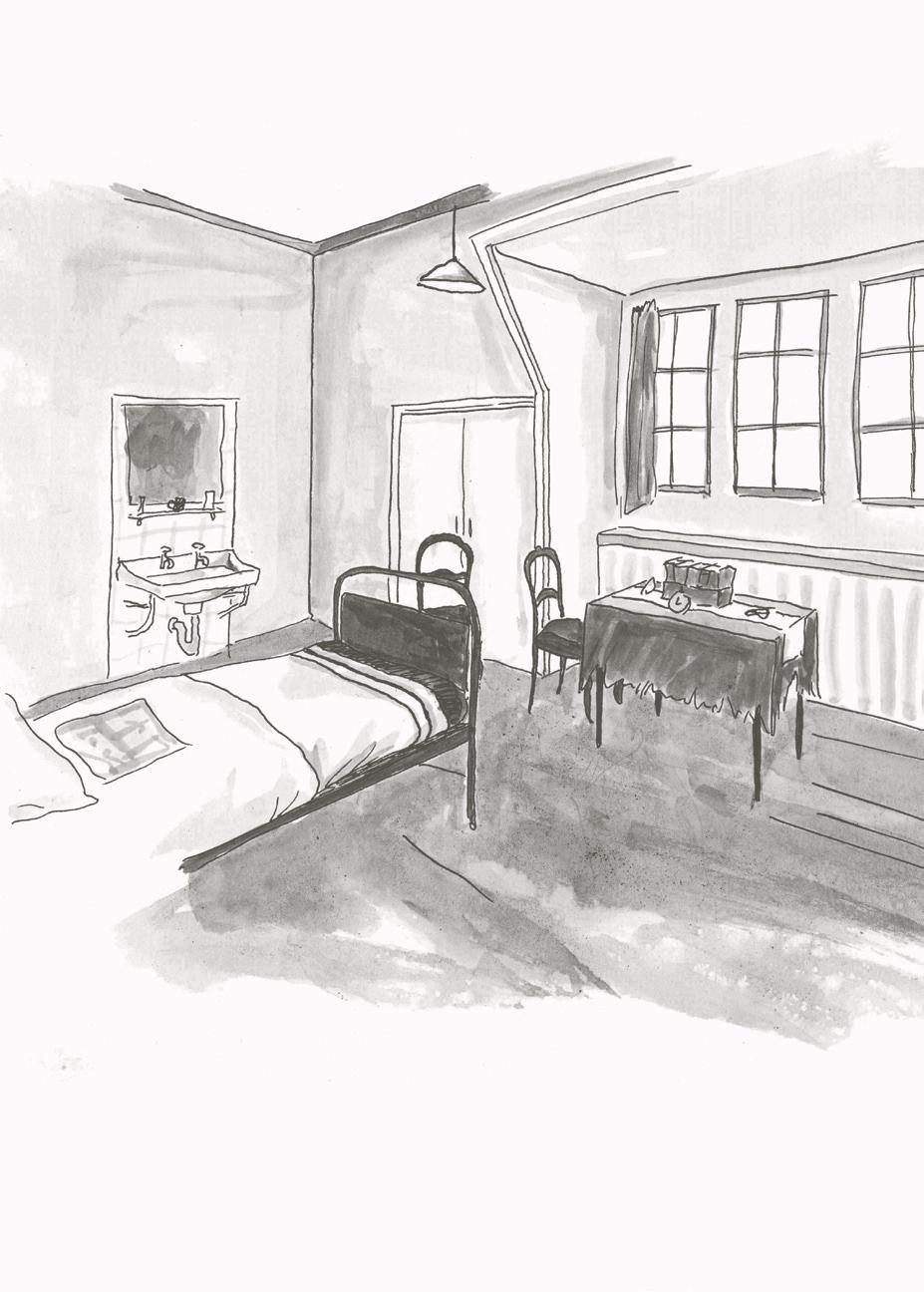
Within Polyphonic Archive, one of our case studies is Huize Dina, a Jewish girls’ reformatory home in Santpoort (1930–1943), where girls considered ‘unmanageable’ were ‘re-educated.’ The project began with a personal encounter of research associate Jaïr van Dijk. In 2024, he engaged in conversation with Mirjam de Jong, known as Mieke, a woman in her eighties and a close friend of his grandmother. Born in 1940, Mieke grew up knowing nothing about her biological parents. She survived the war in hiding, but her origins remained largely unknown. Mieke asked whether Jaïr, given his archival background, could help her uncover more about her family history.
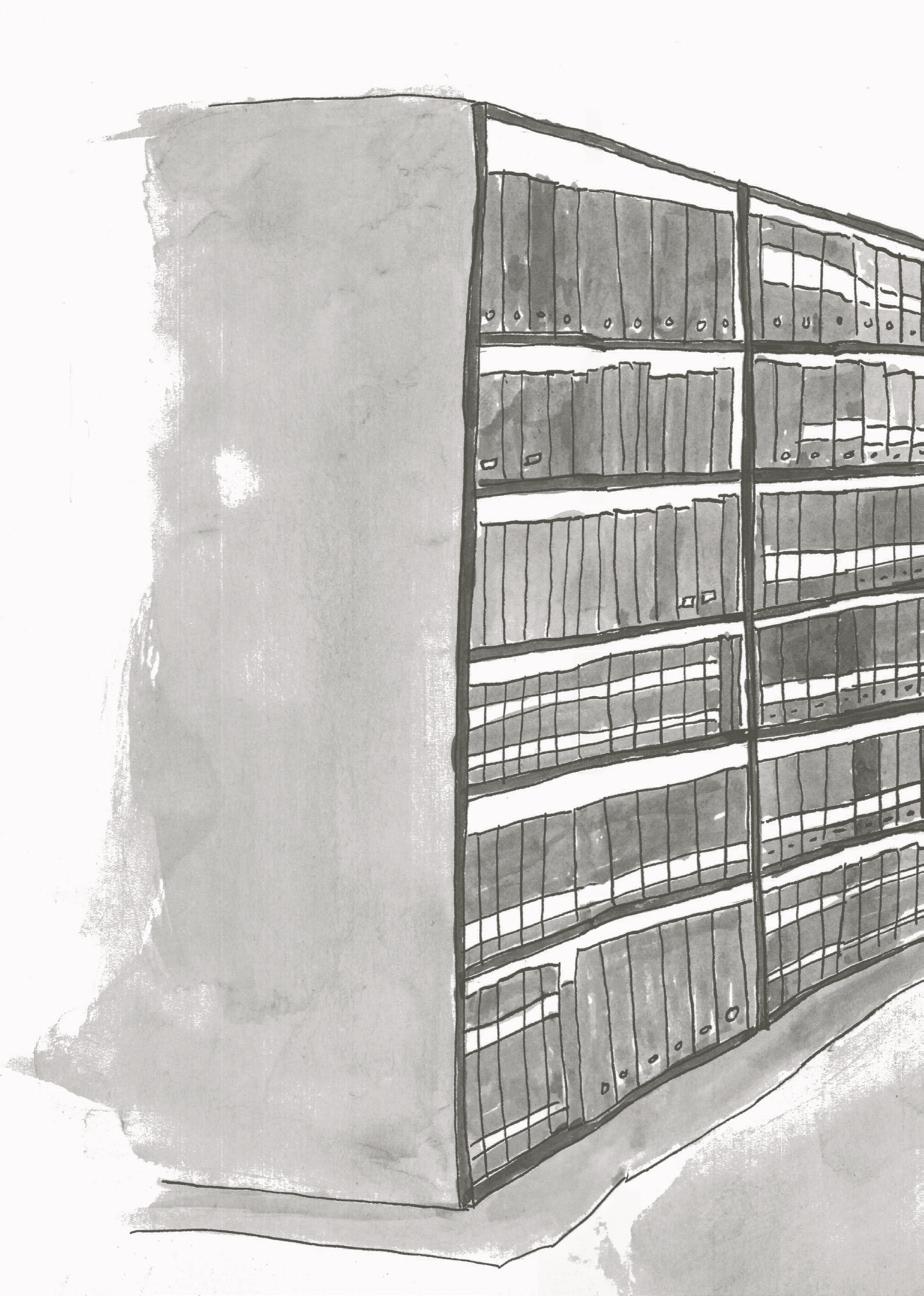
Jaïr began searching municipal archives and, in the archives of the Amsterdam Social Services, discovered the long-forgotten support file of Mieke’s mother, Alida Mathilda de Jong, known as Tilly, who was later murdered in Auschwitz. The file revealed a fragmented life
archiefstukken van het ene medium naar het andere bewegen. Tekstdocumenten die in een fysiek archief worden bewaard, vragen om bepaalde vormen van aandacht en vereisen specifieke oriëntaties, maar ze kunnen ook worden vertaald naar immersieve vormen zoals audio. Die verschuiving opent nieuwe mogelijkheden voor ruimtelijke installaties en participatieve formats. We vragen wat zulke vertalingen mogelijk maken: wat ze waarneembaar maken, wat ze herframen en welke vormen van ontmoeting ze openen.
Binnen Polyphonic Archive is een van onze casestudies Huize Dina, een Joods meisjesheropvoedingstehuis in Santpoort (1930–1943), waar meisjes die als ‘onhandelbaar’ werden gezien, werden ‘heropgevoed.’ Het project begon met een persoonlijke ontmoeting van onderzoeksassistent Jaïr van Dijk. In 2024 raakte hij in gesprek met Mirjam de Jong, bekend als Mieke, een vrouw van in de tachtig en een goede vriendin van zijn grootmoeder. Geboren in 1940 groeide Mieke op zonder iets te weten over haar biologische ouders. Ze overleefde de oorlog in onderduik, maar haar herkomst bleef grotendeels onbekend. Mieke vroeg of Jaïr, gezien zijn archiefachtergrond, haar kon helpen meer over haar familiegeschiedenis te achterhalen.
trajectory marked by repeated institutionalisation as a young woman and her confinement in Huize Dina. It also disclosed, for the first time, the identity of Mieke’s presumed father, a Surinamese jazz musician. What began as archival research gradually became an act of historical repair. Through the recovery of names and places, Mieke, after more than eighty years, gained language for her own story.
Around the same time, the archives of Huize Dina were opened to the public. This archive is extensive, containing police reports, medical diagnoses, psychiatric assessments, and correspondence between guardians, judges, and parents. Yet the voices of the girls themselves are largely absent, apart from a few scattered letters.
To work with this tension, I invited media scholar Tzlil Sharon, composer and auditory researcher Amit Gur, and director Ari Teperberg to join the team, together with historian Elena Nguyen and sound-designer Bartosz Gardzinski (interns), to explore how the archive might be re-imagined through sound – how it might be sonified – and what new possibilities this could lead to, both from a research and an audience- engagement perspective.
Jaïr begon in gemeentelijke archieven te zoeken en vond in de archieven van de Amsterdamse Sociale Dienst het lang vergeten steundossier van Miekes moeder, Alida Mathilda de Jong (Tilly), die later in Auschwitz werd vermoord. Het dossier onthulde een gefragmenteerde levensloop, gekenmerkt door herhaalde institutionalisering en haar opname in Huize Dina. Het maakte ook voor het eerst de identiteit bekend van Miekes vermoedelijke vader: een Surinaamse jazzmuzikant. Wat begon als archiefonderzoek werd gaandeweg een daad van historische reparatie. Door het terugvinden van namen en plaatsen kreeg Mieke, na meer dan tachtig jaar, taal voor haar eigen verhaal.
Rond dezelfde tijd werden de archieven van Huize Dina opengesteld voor het publiek. Dit archief is omvangrijk en bevat politierapporten, medische diagnoses, psychiatrische beoordelingen en correspondentie tussen voogden, rechters en ouders. Maar de stemmen van de meisjes zelf ontbreken grotendeels, op een paar verspreide brieven na.
Om met deze spanning te werken nodigde ik mediawetenschapper Tzlil Sharon, componist en auditief onderzoeker Amit Gur en regisseur Ari Teperberg uit om het team te versterken, samen met historicus
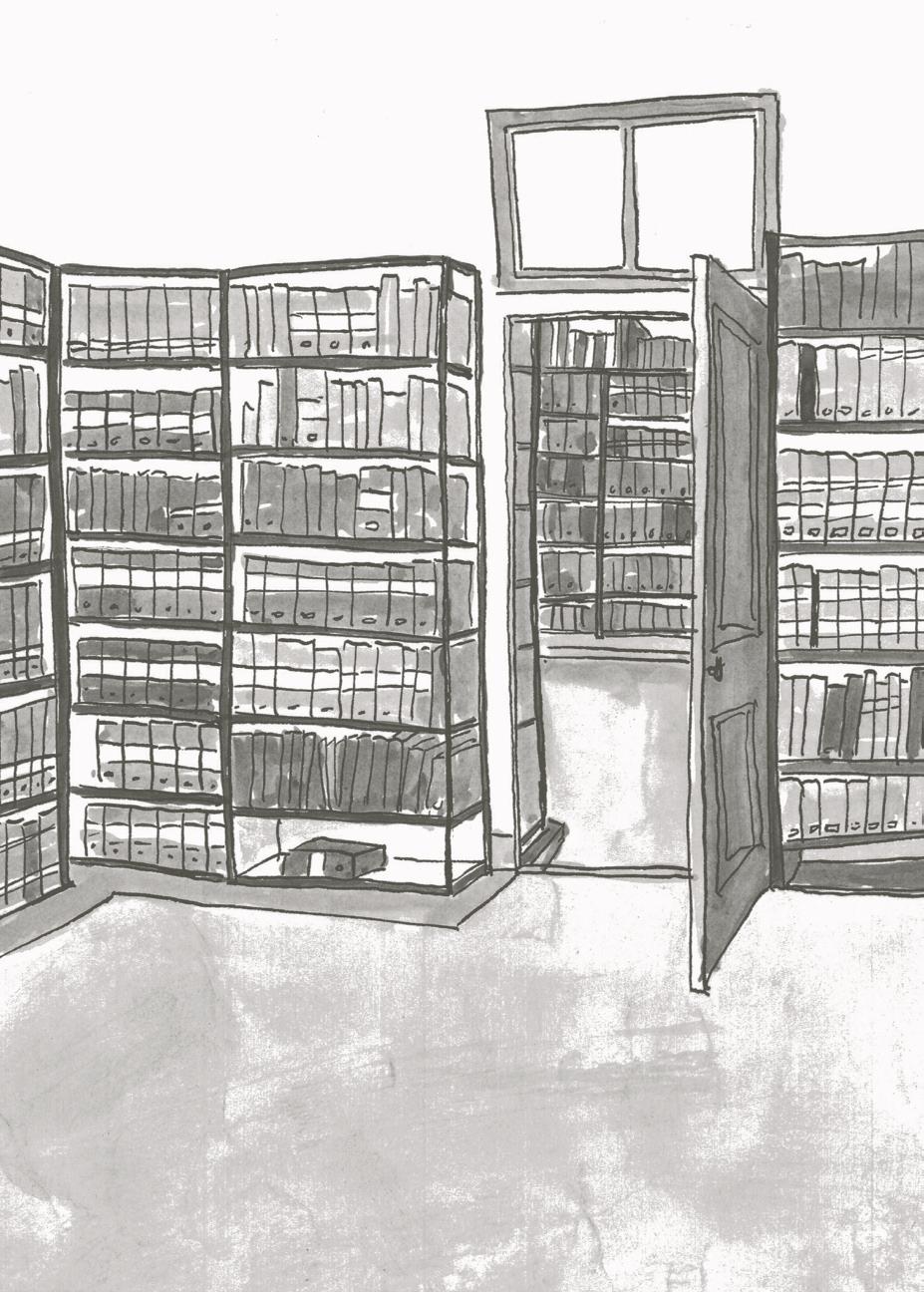
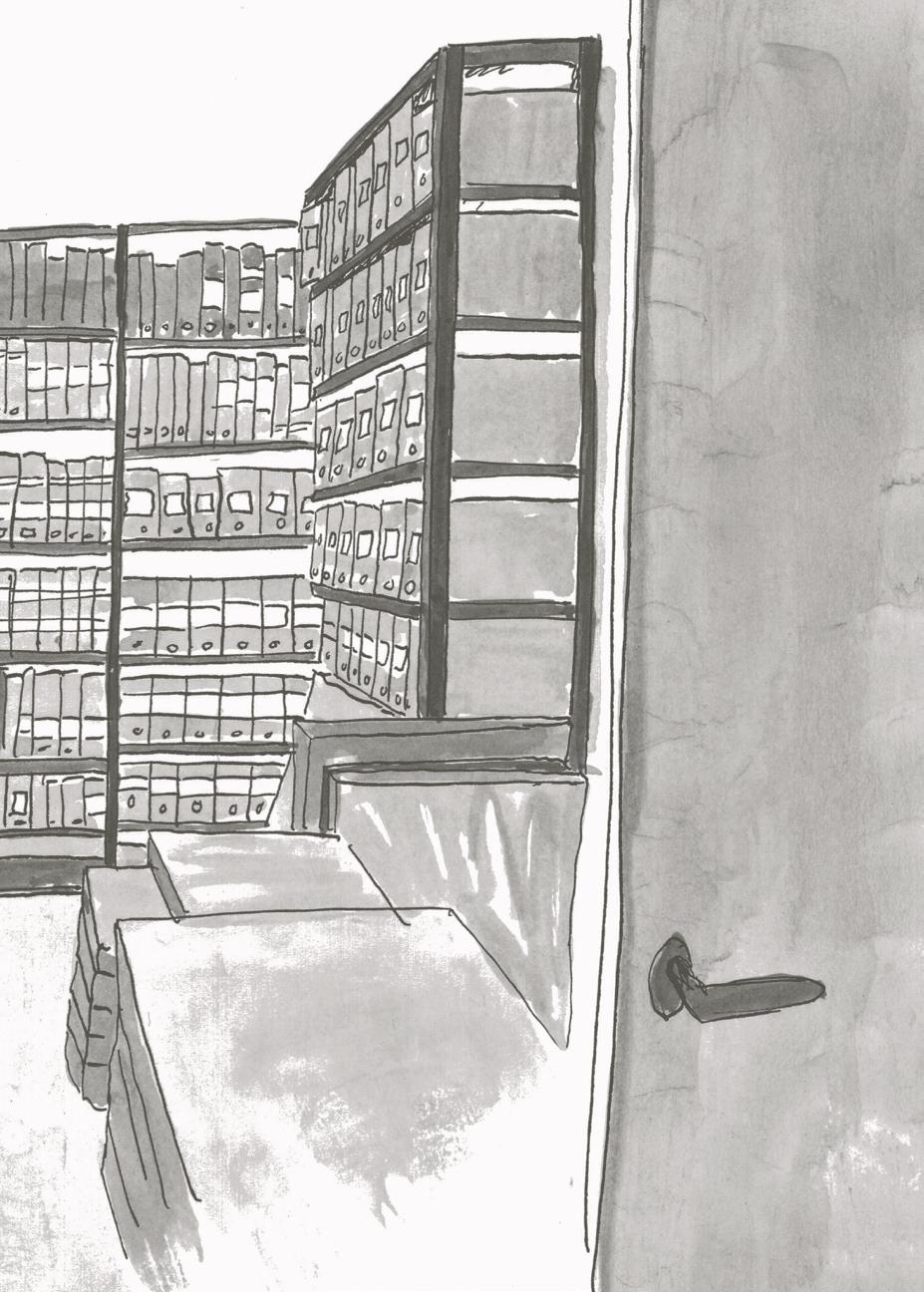
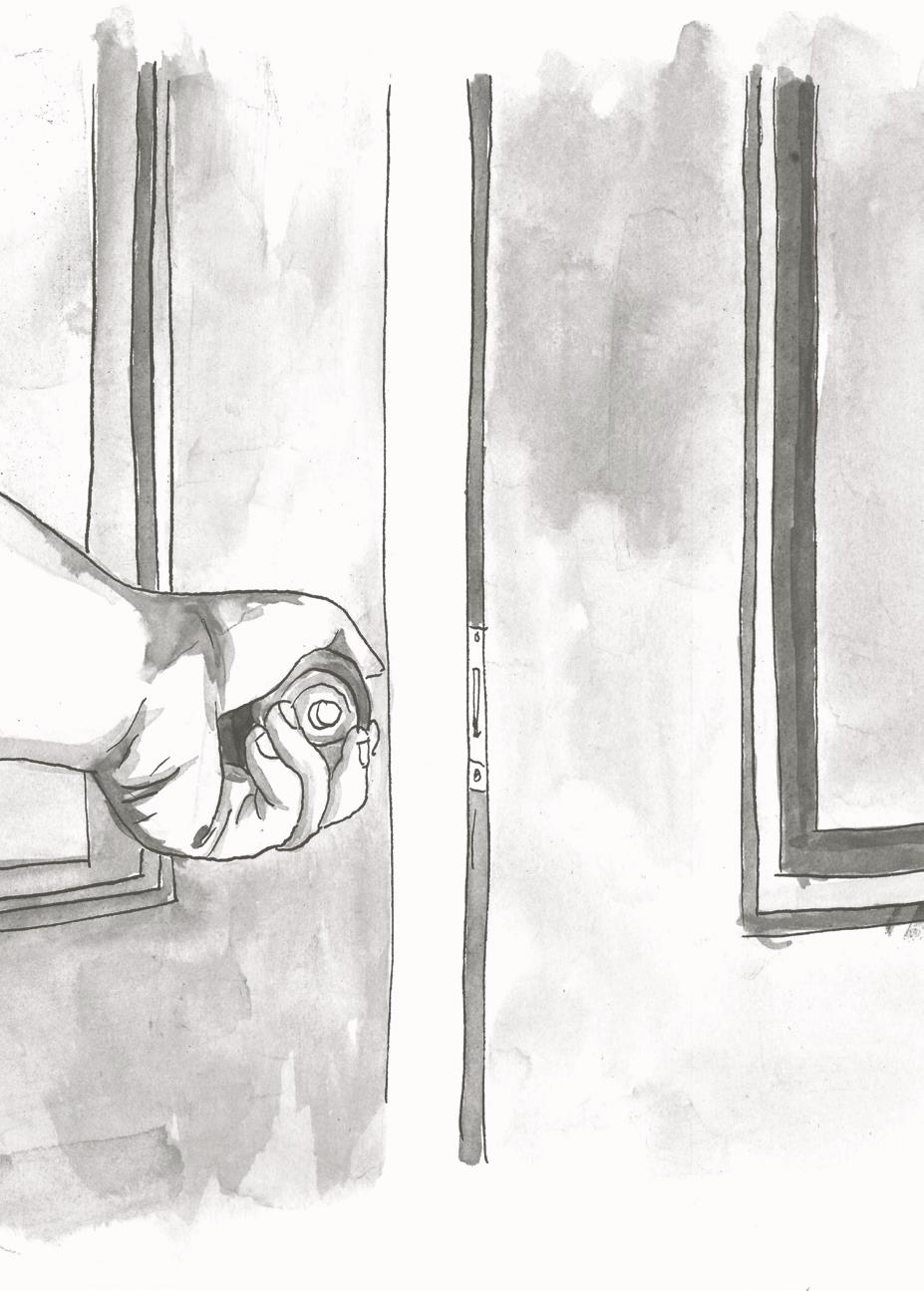
The project explores an innovative concept we call the ‘implicit listener’ (coined by Amit Gur),5 highlighting a way of attending to the archival reconstruction of the life stories of the Huize Dina girls from the imagined perspective of the girls themselves. To do this, we construct a sense of space and movement exclusively through sound: a listening position that is not external but situated. The project’s media output is an artistic podcast series. In the first episode, we compose an auditory scene from Tilly’s perspective, and later also the perspectives of the other girls. Tilly moves down a sonically envisioned corridor and opens doors, each door functioning as an entry into a different part of her record. Behind each door, an authoritative voice reads aloud fragments from her file. As these documents are voiced, we hear Tilly’s bodily reaction: hesitation, breath, a beating heart. The listener is placed in the position of the girl, occupying her space, moving with her through her files.
What matters here is the shift from representation to encounter. Rather than summarising or explaining the material, the work reorganises the conditions of access. Authority is not removed, but felt: institutional voices remain present, yet they are heard from a position of vulnerability. This reconfiguration foregrounds the
Elena Nguyen en sound-designer Bartosz Gardzinski (stagiairs), om te verkennen hoe het archief via geluid opnieuw verbeeld kan worden – hoe het gesonificeerd kan worden – en tot welke nieuwe mogelijkheden dat kan leiden, zowel vanuit onderzoeksperspectief als in termen van publieksbetrokkenheid.
Het project verkent een innovatief concept dat we de ‘impliciete luisteraar’ noemen (een term gemunt door Amit Gur)5 en het belicht een manier om aandacht te besteden aan de archiefmatige reconstructie van de levensverhalen van de Huize Dina-meisjes, vanuit het ingebeelde perspectief van de meisjes zelf. Om dat te doen construeren we een gevoel van ruimte en beweging uitsluitend via geluid: een luisterpositie die niet extern is, maar gesitueerd. De media-uitkomst van het project is een artistieke podcastserie. In de eerste aflevering componeren we een auditieve scène vanuit Tilly’s perspectief – later ook vanuit de perspectieven van de andere meisjes. Tilly beweegt door een sonisch verbeelde gang en opent deuren, waarbij elke deur fungeert als toegang tot een ander deel van haar dossier. Achter elke deur leest een gezaghebbende stem fragmenten uit haar dossier voor. Terwijl deze documenten worden uitgesproken, horen we Tilly’s lichamelijke reactie: aarzeling, adem, een kloppend hart. De luisteraar
archive’s imbalanced power dynamic while resisting the urge to resolve it through narration or interpretation.
The project is not only compelling as a listening experience, but perhaps even more so in its making. As a team we found ourselves deeply moved by the girls’ files – especially Tilly’s, whose life emerges as complex, defiant, and emotionally intense – and by figures such as Hetta Prins, the director of Huize Dina. Prins appears as an extraordinary woman for her time, with a progressive understanding of pedagogy and deep care for the girls, yet also as someone who ultimately abandoned them during the war. The deeper we work with and through the archive, the more it teaches us about internal contradictions, human complexity, and the necessity of resisting swift judgement. These elements become present – or, rather, audible – through the fragility and performativity of the human voice, which in this project serves as the medium carrying us through the archive.
Producing the episodes unfolds through several levels of translation – each a site where pluralism must be practised rather than presumed.
wordt in de positie van het meisje geplaatst – neemt haar ruimte in en beweegt met haar door haar dossiers.
Wat hier telt, is de verschuiving van representatie naar ontmoeting. In plaats van het materiaal samen te vatten of uit te leggen, reorganiseert het werk de voorwaarden voor toegang. Autoriteit wordt niet verwijderd maar voelbaar: institutionele stemmen blijven aanwezig, maar worden gehoord vanuit een positie van kwetsbaarheid. Deze herconfiguratie zet de ongelijke machtsdynamiek van het archief op de voorgrond en weerstaat tegelijk de drang om die via vertelling of interpretatie op te lossen.
Het project is niet alleen meeslepend als luisterervaring, maar misschien zelfs nog meer in het maakproces. Als team raakten we diep geraakt door de dossiers van de meisjes – vooral dat van Tilly, wier leven als complex, opstandig en emotioneel intens naar voren komt – en door figuren zoals Hetta Prins, de directeur van Huize Dina. Prins verschijnt als een uitzonderlijke vrouw voor haar tijd, met een progressief pedagogisch begrip en diepe zorg voor de meisjes, maar ook als iemand die de meisjes uiteindelijk tijdens de oorlog in de steek liet.
Hoe dieper we met en door het archief werken, hoe meer het ons leert over innerlijke tegenstrijdigheden,
First, translation across media: from written record to auditory and spatial experience. This shift rejects the archive’s default hierarchy, where institutional voices dominate. It does not ‘give the girls a voice’ in any naive sense, but it makes perceptible the violence of speaking about someone while leaving them silent. It also foregrounds limits, building on read-aloud fragments rather than providing a full-text database: much cannot be recovered, and the work must remain honest about what cannot be known. This foregrounds a move from the ‘tyranny’ of the linear, sequential format of written text to the ephemeral, spatial nature of sound (Sterne, 2008), pointing to the necessity of expanding our perspectives and moving across them.
Second, translation as mediation: the archive is in Dutch, which parts of the team do not speak. Access therefore depends on layers of transcription, translation, editing, and voicing – each of which is interpretive, and subject to the experiences, training, and identity of everyone involved. Decisions about selection, wording, tone, pacing, and emphasis shape what becomes sayable, by whom, and with what authority, raising ethical questions about how institutional language is carried and how harm is represented. The process is another example of pluralism: different mediators
menselijke complexiteit en de noodzaak om snelle oordelen te weerstaan. Deze elementen komen tot leven – of beter: worden hoorbaar – via de kwetsbaarheid en performativiteit van de menselijke stem, die in dit project het medium is dat ons door het archief draagt.
Het productieproces van de afleveringen ontvouwt zich via meerdere vertaalniveaus – elk een plek waar pluralisme beoefend moet worden in plaats van verondersteld.
Ten eerste: vertaling tussen media. Van een geschreven dossier naar auditieve en ruimtelijke ervaring. Deze verschuiving weigert de standaardhiërarchie van het archief, waarin institutionele stemmen domineren. Ze ‘geeft de meisjes geen stem’ in een naïeve zin, maar maakt de geweldsdimensie voelbaar van over iemand spreken terwijl diegene zelf stil blijft. Ze benadrukt ook grenzen: we werken met voorgelezen fragmenten in plaats van met een volledige tekstdatabase. Veel kan niet worden teruggewonnen, en het werk moet eerlijk blijven over wat niet geweten kan worden. Het maakt een beweging zichtbaar van de ‘tirannie’ van het lineaire, sequentiële format van geschreven tekst naar het vluchtige, ruimtelijke karakter van geluid (Sterne, 2008), en wijst het op de noodzaak om perspectieven uit te breiden en ertussen te bewegen.
from diverse disciplines and backgrounds work together to shape which voices become audible, which remain absent, and how authority is produced. Further, through the sonification choices we made, we were able to make the ambiguity and plurality of possible interpretations perceptible, rather than presenting a single definitive account.
Third, translation across disciplines: between artists, historians, media scholars, and sound researchers. Collaboration does not happen without friction. Each discipline brings different standards and assumptions about what counts as evidence, what counts as rigor, and what counts as meaningful form. Alignment cannot be assumed; it must be built. This work asks researchers to become comfortable with uncertainty: to work with methods and disciplinary logics that are not their own. It also demands sustained openness – and a degree of vulnerability – because the process exposes the limits of one’s own expertise. In that sense, interdisciplinary collaboration is a continuous training in pluralism.
Crucially, friction is treated as an epistemic resource: an opportunity to see one’s own discipline from another perspective. It prompts a reconsideration of the role
Ten tweede: vertaling als bemiddeling. Het archief is in het Nederlands, terwijl delen van het team die taal niet spreken. Toegang berust daarom op lagen van transcriptie, vertaling, editing en voicing – elk interpretatief en gevoelig voor de ervaringen, training en identiteit van ieder individu. Beslissingen over selectie, formulering, toon, tempo en nadruk vormen wat zegbaar wordt, door wie en met welke autoriteit, en ze roepen ethische vragen op over hoe institutionele taal wordt gedragen en hoe schade wordt gerepresenteerd. Het proces is een ander voorbeeld van pluralisme: verschillende bemiddelaars uit uiteenlopende disciplines en achtergronden werken samen om te bepalen welke stemmen hoorbaar worden, welke afwezig blijven en hoe autoriteit wordt geproduceerd. Bovendien konden we via de sonificatiekeuzes die we maakten ambiguïteit en de pluraliteit van mogelijke interpretaties waarneembaar maken, in plaats van één definitief verhaal te presenteren.
Ten derde: vertaling tussen disciplines – tussen kunstenaars, historici, mediawetenschappers en geluidsonderzoekers. Samenwerking verloopt niet zonder wrijving. Elke discipline hanteert andere standaarden en aannames over wat als bewijs geldt, wat als nauwkeurigheid geldt en wat als een betekenisvolle vorm geldt. Afstemming
of the historian in such contexts – not as the sole interpreter of an archive, but as a mediator within an interdisciplinary team, helping to make sense of archival sources together.
Polyphonic Archive demonstrates how pluralism becomes actionable by remaining positioned yet not fixed. It trains the capacity this lecture foregrounds: to remain with complexity long enough for new questions – and more responsible forms of knowing – to emerge.
kan niet worden verondersteld; ze moet worden opgebouwd. Dit werk vraagt van onderzoekers dat ze zich op hun gemak leren voelen met onzekerheid: werken met methoden en disciplinaire logica’s die niet de hunne zijn. Het vereist ook een aanhoudende openheid – en een zekere mate van kwetsbaarheid – omdat het proces de grenzen van de eigen expertise blootlegt. In die zin is interdisciplinaire samenwerking een voortdurende training in pluralisme.
Cruciaal is dat wrijving wordt behandeld als een epistemische hulpbron: een kans om de eigen discipline vanuit een ander perspectief te bezien. Het dwingt tot heroverweging van de rol van de historicus in zulke contexten – niet als de enige interpretator van een archief, maar als bemiddelaar binnen een interdisciplinair team, die helpt om gezamenlijk betekenis te geven aan archiefbronnen.
Polyphonic Archive laat zien hoe pluralisme handelbaar wordt door wel gepositioneerd te blijven, maar niet vast te zitten. Het traint precies het vermogen dat deze rede centraal stelt: lang genoeg bij complexiteit blijven zodat nieuwe vragen – en verantwoordelijker manieren van weten – kunnen ontstaan.
Let me close with a commitment.
With this lecture, and the lectorate more broadly, I propose that pluralism be understood not as an added value, but as a foundational condition for research and education. Pluralism requires a sustained willingness to resist the impulse to immediately resolve, manage, or neutralise difference. Instead, it invites us to approach difference as an epistemic resource: a source of insight, a way to test assumptions, and a prerequisite for learning.
The arts play a fundamental role in this – not because they offer answers, but because they cultivate a form of attention that resists premature judgement. They make room for ambiguity and uncertainty, so that difference can be practised not only through concepts and arguments, but also through form, material, rhythm, and encounter.
This commitment has concrete implications for the Amsterdam University of the Arts, an institution embedded in social, political, and cultural tensions. It calls
Laat me afsluiten met een commitment.
Met deze rede, en met het lectoraat in bredere zin, stel ik voor pluralisme te begrijpen niet als ‘toegevoegde waarde’, maar als een fundamentele voorwaarde voor onderzoek en onderwijs. Pluralisme vereist een aanhoudende bereidheid om de impuls te weerstaan om verschil onmiddellijk op te lossen, te managen of te neutraliseren. In plaats daarvan nodigt het ons uit om verschil te benaderen als een epistemische conditie: een bron van inzicht, een manier om aannames te toetsen en een voorwaarde voor leren.
De kunsten spelen hierin een fundamentele rol, niet omdat ze antwoorden aanreiken, maar omdat ze een vorm van aandacht trainen die weerstand biedt aan voortijdig oordelen. Ze maken ruimte voor ambiguïteit en onzekerheid, waardoor verschil niet alleen via concepten en argumenten kan worden geoefend, maar ook via vorm, materiaal, ritme en ontmoeting.
for pedagogical frameworks that make room for uncertainty and revision, curricula that present multiple perspectives, and evaluative cultures that recognise that, in the arts and humanities, staying with uncertainty is often a sign of intellectual vitality. It also calls for teachers willing to guide conflict without neutralising it, and for an institution equipped to carry complexity rather than contain it through moral ordering.
With the title Pluralism in Research and the Arts, this lectorate names a responsibility: to sustain the fragile ‘in-between space’ in which different perspectives can appear, collide, and remain in relation. If we take that responsibility seriously, pluralism must be built into how we teach, conduct research, evaluate, and share knowledge within the ahk – not as a checklist of correct positions, but as a cultivated capacity: the ability to stay with uncertainty long enough for thinking to unfold, and for art to do what it does best – to complicate, deepen, and open things up.
It is no coincidence that I began this lecture with this place. For pluralism is ultimately not an abstract idea, but a question of space: the conditions under which people can appear. The Uilenburger Synagogue reminds us how fragile such conditions are, and how deeply they
Dat commitment heeft concrete implicaties voor de Amsterdamse Hogeschool voor de Kunsten, een instelling die ingebed is in sociale, politieke en culturele spanningen. Het vraagt om pedagogische kaders die ruimte laten voor onzekerheid en herziening, curricula die meerdere perspectieven presenteren, en beoordelingsculturen die erkennen dat in de kunsten en geesteswetenschappen bij onzekerheid blijven vaak een teken is van intellectuele vitaliteit. Het vraagt ook om docenten die bereid zijn conflicten te begeleiden zonder ze te neutraliseren, en om een instelling die toegerust is om complexiteit te dragen in plaats van die te beteugelen via morele ordening.
Met de titel Pluralisme in onderzoek en de kunsten benoemt dit lectoraat een verantwoordelijkheid: de kwetsbare ‘tussenruimte’ in stand houden waarin verschillende perspectieven kunnen verschijnen, botsen en in verbinding kunnen blijven. Als we die verantwoordelijkheid serieus nemen, moet pluralisme worden ingebouwd in de manier waarop we binnen de ahk onderwijzen, onderzoek doen, evalueren en kennis delen – niet als een checklist van correcte posities, maar als een gecultiveerde capaciteit: het vermogen om lang genoeg bij onzekerheid te blijven zodat denken zich kan ontvouwen en kunst kan doen wat zij het beste
depend on institutions, conducts, and shared agreements. They exist by grace of an in-between space that is not self-evident: a space where difference does not have to be smoothed over at once, where stories do not have to fit immediately, and where presence means more than physical participation alone.
My hope for the years ahead is that we can cultivate that environment together.
Not to seek agreement.
But to safeguard the conditions under which disagreement remains possible.
doet – de blik verruimen, aannames bevragen en verbanden zichtbaar maken.
Het is geen toeval dat ik deze rede begon met deze plek. Want pluralisme is uiteindelijk geen abstract idee, maar een vraag naar ruimte: naar de voorwaarden waaronder mensen kunnen verschijnen. De Uilenburger Synagoge herinnert ons eraan hoe kwetsbaar zulke voorwaarden zijn, en hoezeer zij afhangen van instituties, gebruiken en gedeelde afspraken. Zij bestaan bij gratie van een ‘tussenruimte’ die niet vanzelfsprekend is: een ruimte waar verschil niet meteen hoeft te worden gladgestreken, waar verhalen niet onmiddellijk hoeven te passen, en waar aanwezigheid meer kan betekenen dan fysieke deelname alleen.
Mijn hoop voor de komende jaren is dat we die omgeving samen kunnen cultiveren.
Niet om overeenstemming te zoeken.
Maar om de voorwaarden te beschermen waaronder meningsverschil mogelijk blijft.
1. See, for instance, evidence that reputational pressure can shift what students say in public discussion compared to what they report privately (Braghieri, 2024; Greenberg & Stone, 2025), and analyses of how moral talk can function as status-signalling, raising the social cost of dissent or changing one’s mind (Tosi & Warmke, 2020).
2. Francis Fukuyama (2022) argues that liberalism is not a comprehensive moral doctrine or theory of the good life, but an institutional framework for managing deep moral, cultural, and religious disagreement. Its aim is to limit concentrations of power, protect individual agency, and make peaceful coexistence possible among citizens who hold fundamentally different values. At the same time, Fukuyama contends that the liberal project calls for renewal, not abandonment, as proposed by some other scholars. To meet contemporary pressures – polarisation, inequality, and declining trust in institutions – he calls for strengthening the rule of law, renewing democratic accountability, and rebuilding the social and institutional foundations that make liberal rights meaningful in practice.
3. Similar dynamics appear in publishing, where positionality statements can become an informal gatekeeping tool. Editors and reviewers may treat identity disclosures as automatic authority (‘insider’) or as a red flag (‘outsider’), shifting attention from the argument and method to the presumed legitimacy of the author. They can also undermine double-blind peer review: detailed statements can de-anonymise a manuscript and invite bias, which is why some journals recommend constrained formats or special handling (Beagan et al., 2025). Over time, positionality can harden into a recognisable genre with
1. Zie bijvoorbeeld aanwijzingen dat reputatiedruk kan verschuiven wat studenten in publieke discussies zeggen ten opzichte van wat zij privé rapporteren (Braghieri, 2024; Greenberg & Stone, 2025), en zie analyses van hoe moreel spreken kan functioneren als statussignaal, waardoor de sociale kosten van een afwijkende mening – of van het veranderen van mening – toenemen (Tosi & Warmke, 2020).
2. Francis Fukuyama (2022) betoogt dat het liberalisme geen allesomvattende morele leer of theorie van het goede leven is, maar een institutioneel kader om diepgaande morele, culturele en religieuze meningsverschillen te hanteren. Het doel is machtsconcentraties te beperken, individuele handelingsruimte te beschermen en vreedzaam samenleven mogelijk te maken tussen burgers die fundamenteel verschillende waarden aanhangen. Tegelijk stelt Fukuyama dat het liberale project vraagt om vernieuwing, niet om verwerping, zoals sommige andere denkers bepleiten. Om hedendaagse druk het hoofd te bieden – polarisatie, ongelijkheid en afnemend vertrouwen in instituties – roept hij op tot versterking van de rechtsstaat, hernieuwde democratische verantwoording en het herstel van de sociale en institutionele fundamenten die liberale rechten in de praktijk betekenisvol maken.
3. Vergelijkbare dynamieken zijn zichtbaar in de uitgeverswereld, waar positioneringsverklaringen kunnen uitgroeien tot een informeel instrument van poortwachterschap. Redacteuren en recensenten kunnen identiteitsopenbaringen behandelen als vanzelfsprekende autoriteit (‘insider’) of juist als een alarmsignaal (‘outsider’), waardoor de aandacht verschuift van argument en methode naar de veronderstelde legitimiteit van de auteur. Ze kunnen bovendien dubbelblind
expected vocabularies and tones – turning into a soft compliance test, where work that does not perform its genre is read as ethically suspect even when it is rigorous and accountable.
4. In the Hybrid Public Spaces project, I investigate these dynamics together with lector Hans Teerds. We start from the hypothesis that online interaction has a carry-over effect into social life in physical public space, and that the influence also runs in the other direction. By tracing how platform logics, visibility regimes, and informal types of social sanction spill into streets, institutions, and cultural venues (and back again), we examine what it means to be public in hybrid contexts, and how new, often less visible, forms of exclusion take shape.
5. The concept of the implicit listener emerged through team discussions, prompted by a striking absence in the archival documents: the girls’ own voices. We were grappling with how to make them present without putting words in their mouths. At the same time, we considered the position of the archival visitor (the public, the audience) and how to guide them through the archive without simply reproducing the historical narrative articulated by bureaucratic documentation itself: an institutional voice that describes the Huize Dina girls through moral norms and mechanisms of control. In media studies, ‘imagined audiences’ refers to the way texts and media signal who they are meant for – through style, tone, and modes of address (Anderson, 2020; Eagleton, 1983; Scannell, 2000). In this case, the archive was written for state officials handling the girls’ files. That framing treated the girls as cases to be assessed, rather than as people with a voice and a story of their own. Against this background, Amit Gur
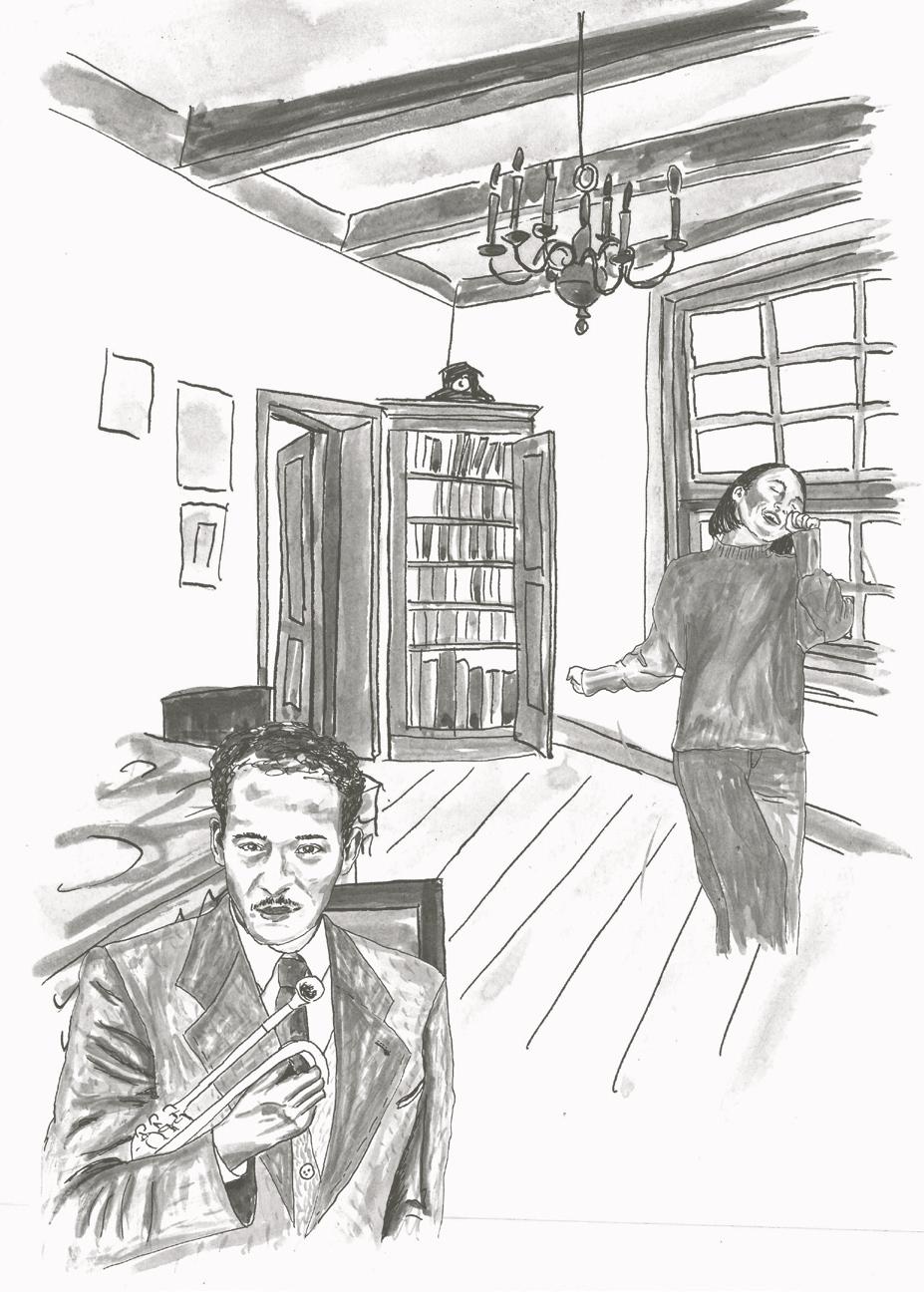
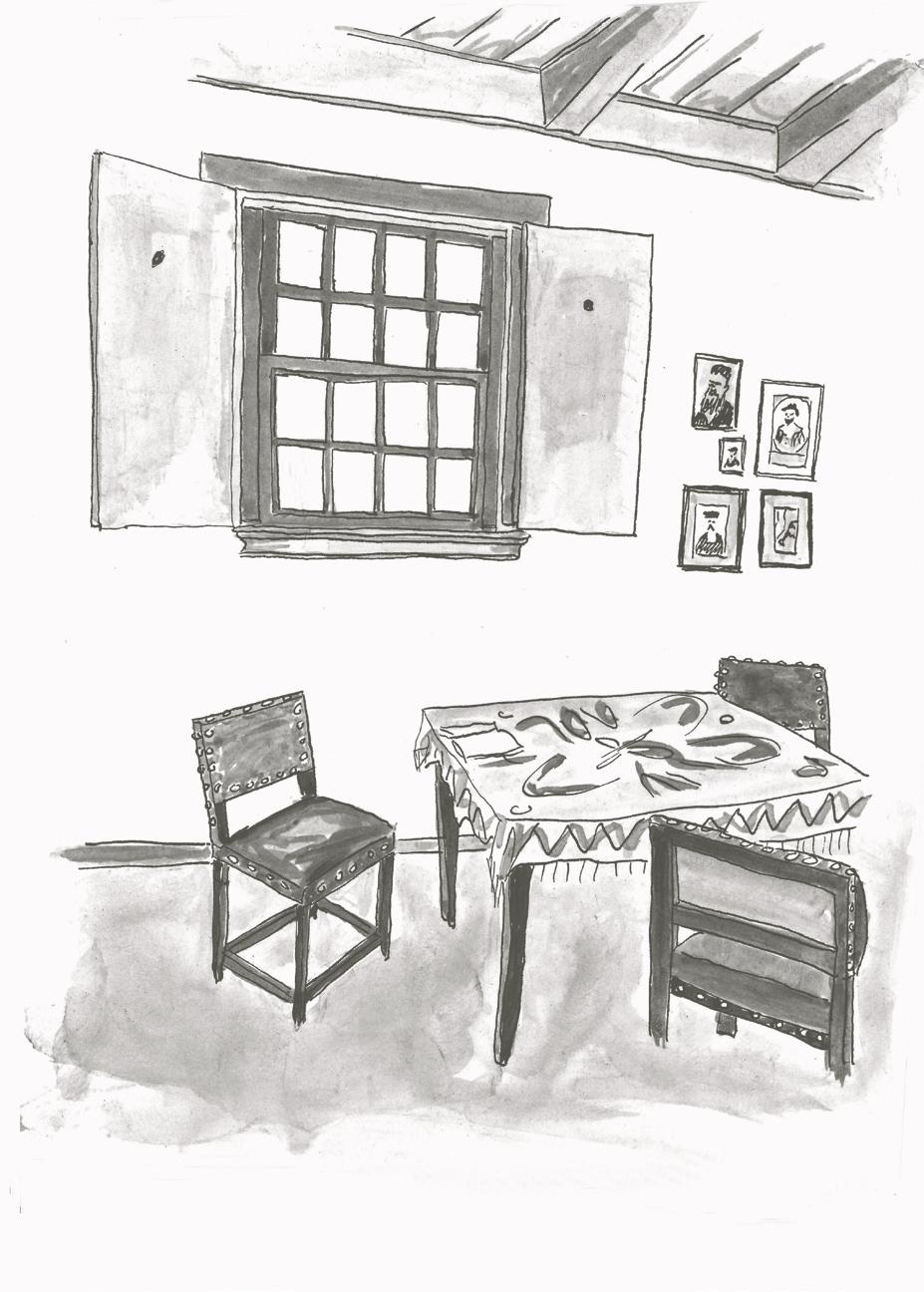
peerreview ondermijnen: gedetailleerde verklaringen kunnen de anonimiteit van een manuscript ontkrachten en vooringenomenheid of bias uitnodigen. Daarom bevelen sommige wetenschapsjournals beperkte formats of een speciale behandeling aan (Beagan et al., 2025). Na verloop van tijd kan positionering verharden tot een herkenbaar genre met een verwacht vocabulaire en toon – en veranderen in een zachte conformiteitstoets, waarbij werk dat het genre niet ‘performt’ als ethisch verdacht wordt gelezen, zelfs wanneer het zorgvuldig en verantwoord is.
4. In het project Hybrid Public Spaces onderzoek ik deze dynamieken samen met lector Hans Teerds. We vertrekken vanuit de hypothese dat online interactie doorwerkt in het sociale leven in de fysieke publieke ruimte, en dat die invloed ook in de andere richting loopt. Door te volgen hoe platformlogica’s, zichtbaarheidsregimes en informele vormen van sociale sanctionering doorlekken naar straten, instituties en culturele podia (en weer terug), onderzoeken we wat het betekent om publiek te zijn in hybride contexten, en hoe nieuwe, vaak minder zichtbare vormen van uitsluiting gestalte krijgen.
5. Het concept van de impliciete luisteraar ontstond uit teamgesprekken, aangezwengeld door een opvallende afwezigheid in de archiefdocumenten: de stemmen van de meisjes zelf. We worstelden met de vraag hoe we hen aanwezig konden maken zonder hen woorden in de mond te leggen. Tegelijkertijd dachten we na over de positie van de archiefbezoeker (het publiek, de luisteraar) en over hoe we die door het archief konden leiden zonder simpelweg het historische narratief te herhalen dat door de bureaucratische documentatie zélf wordt geformuleerd: een institutionele stem die de meisjes van Huize Dina beschrijft via morele normen en mechanismen van controle. In de
proposed the term ‘implicit listener’ – a sonic adaptation of the ‘implicit looker,’ a concept Michael Kubovy discussed in a 2022 conference talk. The premise is that the receiver is already built into the work’s composition: for instance, the depiction of a monument’s arch in a Renaissance painting presupposes a viewer standing below, looking up. We asked what it would mean to redesign the ‘receiver’ of the archive – to shift the implied addressee from the official who evaluates to a listener who is asked to inhabit, even briefly, the girl’s position. Following this logic, we explored how to embed the girls’ perspective from the outset, using only sonic cues. The implicit listener thus became an experiment in address: the listener moves through the archive as if inside the girl’s experience – opening doors, encountering authoritative voices, and hearing how she is evaluated and described.
mediastudies verwijst de term ‘imagined audiences’ naar de manier waarop teksten en media signaleren voor wie ze bedoeld zijn – via stijl, toon en aanspreekvormen (Anderson, 2020; Eagleton, 1983; Scannell, 2000). In dit geval was het archief geschreven voor staatsfunctionarissen die de dossiers van de meisjes behandelden. Die inkadering behandelde de meisjes als casussen die beoordeeld moesten worden, in plaats van als mensen met een stem en een eigen verhaal. Tegen deze achtergrond stelde Amit Gur de term ‘impliciete luisteraar’ voor: een sonische bewerking van de ‘impliciete kijker’, een concept dat Michael Kubovy besprak in een conferentielezing in 2022. Het uitgangspunt is dat de ontvanger al in de compositie van het werk is ingebouwd: zo veronderstelt bijvoorbeeld de weergave van een monumentale boog in een renaissanceschilderij een toeschouwer die eronder staat en omhoogkijkt. We vroegen ons af wat het zou betekenen om de ‘ontvanger’ van het archief opnieuw te ontwerpen – om de impliciete geadresseerde te verschuiven van de functionaris die beoordeelt naar een luisteraar die wordt uitgenodigd om, al is het maar heel even, de positie van het meisje te bewonen. Vanuit die logica verkenden we hoe we het perspectief van de meisjes vanaf het begin konden verankeren, uitsluitend met sonische aanwijzingen. De impliciete luisteraar werd zo een experiment in aanspreking: de luisteraar beweegt door het archief alsof hij of zij zich ín de ervaring van het meisje bevindt – opent deuren, ontmoet gezaghebbende stemmen en hoort hoe zij wordt beoordeeld en beschreven.
The illustrations, by Marijke Remmers, are based on a core practice: shifting perspective. They invite the reader to move between positions, as a researcher, as a reader, and as an individual in changing contexts. In this way a pluralistic gaze emerges: not one fixed viewpoint, but movement between registers, between layers and scales; between proximity and distance; between continuity and rupture; between orientation and reorientation.
For this reason, the booklet unfolds through a series of visual perspective shifts: the drawings continually present a different vantage point and change along with the text. They make visible how knowledge takes shape depending on where you stand, how it is continually reconfigured through encounter, and how it shifts when we change scale: from the personal to the institutional, from the situated to the systemic, and back again.
De illustraties, door Marijke Remmers, zijn gebaseerd op een kernpraktijk: die van perspectiefwisseling. Ze nodigen de lezer uit te schakelen tussen posities, als onderzoeker, als lezer en als individu in veranderende contexten. Zo ontstaat een pluralistische blik: niet één vast standpunt, maar beweging tussen registers, tussen lagen en schalen; tussen nabijheid en afstand; tussen continuïteit en breuk; tussen oriëntatie en heroriëntatie.
Daarom ontvouwt het boekje zich via een reeks perspectiefwisselingen in beeld: de tekeningen tonen steeds een ander standpunt en veranderen met de tekst mee. Ze maken zichtbaar hoe kennis vorm krijgt afhankelijk van waar je staat, hoe zij in ontmoeting telkens opnieuw wordt geconfigureerd, en hoe zij verschuift wanneer we van schaal veranderen – van het persoonlijke naar het institutionele, van het gesitueerde naar het systemische, en weer terug.
The booklet opens with a frame in which you, as the reader, are positioned at the centre. The perspective seems to revolve around you, not as a gesture of self-importance, but as an acknowledgment that all thinking begins somewhere. Perspective is never neutral: it is shaped by background, experience, language, and the histories we carry with us, often without noticing.
As the booklet progresses, that frame shifts. The centre loosens and orientation becomes relational: institutions, collaborators, students, and broader societal contexts enter the stage, and the reader is invited to position themselves within an everexpanding field. At the same time, the focus sharpens: as you delve further into a topic, more details come into view; the gaze becomes more precise, differences become clearer, and what initially seemed to be the background gains contour and meaning. This movement reflects a research practice that does not remain confined to a single individual standpoint but learns to work through a multiplicity of perspectives.
In this sense, the perspective shifts do more than illustrate the lecture; they also enact its central commitment. They make visible what pluralism asks of us: the capacity to remain positioned without getting stuck; to recalibrate your place again and again within a complex network of relationships.
Het boekje opent met een beeldkader waarin jij, als lezer, centraal staat. Het perspectief lijkt om je heen te draaien, niet als gebaar van zelfbelang, maar als erkenning dat al het denken ergens begint. Perspectief is nooit neutraal: het wordt gevormd door achtergrond, ervaring, taal en de geschiedenissen die we meedragen, vaak zonder dat we het merken.
Naarmate het boekje vordert, verschuift dat kader. Het centrum komt los en oriëntatie wordt relationeel: instituties, samenwerkingspartners, studenten en maatschappelijke contexten treden het beeld binnen, en de lezer wordt uitgenodigd zich te positioneren binnen een steeds wijder wordend veld.
Tegelijkertijd verandert ook de scherpte: naarmate je je verder in een onderwerp verdiept, komen meer details in beeld; de blik wordt preciezer, verschillen worden scherper, en wat eerst achtergrond leek krijgt contour en betekenis. Deze beweging weerspiegelt een onderzoekspraktijk die niet opgesloten blijft in één individueel standpunt, maar leert werken door een veelheid aan perspectieven heen.
Zo verhelderen de perspectiefwisselingen de lezing niet alleen, ze brengen haar centrale toewijding ook in praktijk. Ze maken zichtbaar wat pluralisme van ons vraagt: het vermogen om gepositioneerd te blijven zonder vast te raken; om je plaats steeds opnieuw te herijken in een complex netwerk van relaties.
Anderson, B. (2020). Imagined communities: Reflections on the origin and spread of nationalism. In S. Seidman & J. C. Alexander (Eds.), The new social theory reader (2nd ed., pp. 282–288). Routledge. Arendt, H. (1958). The human condition. University of Chicago Press.
Beagan, B. L., Pride, T. M., Sibbald, K. R., & Phelan, S. K., (2025). Positioning positionality and reflecting on reflexivity: Moving from performance to practice. Qualitative Health Research Advance online publication.
Braghieri, L. (2024). Political correctness, social image, and information transmission.
American Economic Review, 114(12), 3877–3904. https://doi.org/10.12 57/aer.20210039.
Eagleton, T. (1983). Literary theory: An introduction. Blackwell.
Federici, S. (2004). Caliban and the witch: Women, the body and primitive accumulation. Autonomedia.
Federici, S. (2018). Re-enchanting the world: Feminism and the politics of the commons. PM Press.
Foucault, M. (1978). The history of sexuality: Volume 1 . An introduction (R. Hurley, Trans.). Pantheon
Books. (Original work published 1976 ).
Fukuyama, F. (2022). Liberalism and its discontents. Farrar, Straus and Giroux.
Greenberg, S., & Stone, D. F. (2025). Self-censorship in the classroom. Journal of Behavioral and Experimental Economics, 119, Article 102393. https://doi. org/10 1016/j.socec.2025 102393
Hammack, P. L. (2017). Social psychology and social justice: Critical principles and perspectives for the twenty-first century. In P. L. Hammack (Ed.), The Oxford handbook of social psychology (pp. 1–24). Oxford University Press. https://doi. org/10.1093/oxfordhb/9780199938735.013.1.
Kubovy, M. (2022, January). The implicit listener is an implicit looker [Conference presentation]. Neurosciences & Humanities conference.
Longino, H. E. (1990). Science as social knowledge: Values and objectivity in scientific inquiry. Princeton University Press.
Nussbaum, M. C. (1999, February 22). The professor of parody: The hip
defeatism of Judith Butler. The New Republic https://newrepublic.com /article/150687/professor-parody. Nussbaum, M. C. (2000). Women and human development: The capabilities approach. Cambridge University Press.
Pluckrose, H. (2021, April 15). We need liberal social justice, not “critical social justice”. Symposium. https://symposium. substack.com/p/we-need-liberalsocial-justice-not
Pluckrose, H., & Lindsay, J. (2020). Cynical theories. Pitchstone Publishing.
Rawls, J. (1971). A theory of justice. Harvard University Press.
Scannell, P. (2000). For-anyoneas-someone structures. Media, Culture & Society, 22(1), 5–24. https//doi.org/10.1177/0163443000 22001001
Segato, R. L. (2016). La guerra contra las mujeres. Traficantes de Sueños. Sterne, J. (2008). Being “in the true” of sound studies. Music, Sound, and the Moving Image, 2(2), 163–167. https://doi.org/10.3828/ msmi.2 2 11
Tosi, J., & Warmke, B. (2020). Grandstanding: The use and abuse of moral talk. Oxford University Press. https://doi.org/10.1093/ oso/9780190900151.001.0001.
Vargas, V. (2014). Feminism and democratic struggles in Latin America. In R. Baksh & W. Harcourt (Eds.), The Oxford handbook of transnational feminist movements: Knowledge, power and social change (pp. 534–552). Oxford University Press. https://doi. org/10.1093/oxfordhb/ 9780199943494 013 015
Brandsma, B. (2016). Inside polarisation: A guide to understanding and dealing with polarisation. BB in Media. Butler, J. (1997). Merely cultural.
Social Text, (52/53), 265–277. https://doi.org/10.2307/466744.
Derrida, J. ( 1997 ). Of grammatology (G. C. Spivak, Trans.). Johns Hopkins University Press. (Original work published 1967). Federici, S. (2004). Caliban and the witch: Women, the body and primitive accumulation. Autonomedia. Global Industry Analysts, Inc. (2025). Global diversity and inclusion market: Strategic business report (Report ID: 5519706).
Haidt, J. (2012). The righteous mind: Why good people are divided by politics and religion. Vintage.
Haidt, J., & Lukianoff, G. (2018). The coddling of the American mind: How good intentions and bad ideas are setting up a generation for failure. Penguin Press.
Hammack, P. L. (2017). Social psychology and social justice: Critical principles and perspectives for the twenty-first century. In P. L. Hammack (Ed.), The Oxford handbook of social psychology (pp. 1–24). Oxford University Press. https://doi.org/
10 1093/oxfordhb/9780199938
735.013.1.
Kochan, T. A., Bezrukova, K., Ely, R. J., Jackson, S. E., Joshi, A., Jehn, K. A., Leonard, J., Levine, D. I., & Thomas, D. A. (2003). The effects of diversity on business performance: Report of the Diversity Research Network. Human Resource Management, 42(1), 3–21. https://doi.org/ 10.1002/hrm.10061. Lacan, J. (2006). Écrits (B. Fink, Trans.). W. W. Norton & Company. (Original work published 1966). Laidlaw, J. (2016). Through a glass, darkly. HAU: Journal of Ethnographic Theory, 6(2), 17–24 https://www. journals.uchicago.edu/doi/10.14318/ hau6.2.005.
Langlitz, N. (2024, May 7). How “diversity” became the master concept of our age. The Chronicle of Higher Education.
Langlitz, N., & de Althaus, E. (2023). The moral economy of diversity: How the epistemic value of diversity transforms late modern knowledge cultures. History of the Human Sciences, 37(1), 3–27. https://doi.org/10.1177/0952695 1231166533
Latour, B. (1993). We have never been modern . Harvard University Press.
Latour, B. (2004). Why has critique run out of steam? From matters of fact to matters of concern.
Critical Inquiry, 30(2), 225–248 https://doi.org/10.1086/421123.
Lewis, H. (2022, August 18). How social justice became a new religion. The Atlantic. https:// www.theatlantic.com/ideas/ archive/2022/08/social-justicenew-religion/671073/.
Lindsay, J., & Pluckrose, H. (2020, July 15). The two big falsehoods of critical social justice. Aero. Merrett, C. D. (2004). Social justice: What is it? Why teach it? Journal of Geography, 103(3), 93–103. https://doi.org/10.1080/00221340 408978584.
Mounk, Y. (2023). The identity trap: A story of ideas and power in our time Allen Lane.
Newkirk, P. (2019a, October 10). Diversity has become a booming business. So where are the results? TIME. https://time.com/5696943/ diversity-business/
Newkirk, P. (2019b). Diversity, Inc.: The failed promise of a billion-dollar business. New Press.
Perry, M. J. (2020, August 28).
Markets in everything: The booming industry of social
justice. American Enterprise Institute https://www.aei.org/ carpe-diem/markets-ineverything-the-booming-industryof-social-justice/.
Pluckrose, H., Lindsay, J., & Boghossian, P. (2021). Understanding the “Grievance Studies Affair” papers and why they should be reinstated. Sociological Methods & Research, 50(4), 1916 – 1936 . https://doi.org/ 10 1177/00491241211009946
Reyes, A. (2019). Eugenic visuality: Racist epistemologies from Galton to The Bell Curve American Studies, 64(2), 215–240.
Urban, T. (2023). What’s our problem? A self-help book for societies. Wait But Why.
Zheng, L. (2020, June 15). We’re entering the age of corporate social justice. Harvard Business Review https://hbr.org/2020/06/ were-entering-the-age-of-corporatesocial-justice.
This inaugural lecture was delivered at the Amsterdam University of the Arts on 16 April 2026.

Author: Naomi Bueno de Mesquita
Manuscript reviewer: Nofit Itzhak
Translation: Naomi Bueno de Mesquita
Copy-editing (English): Tim Flight
Copy-editing (Dutch): Jorine Lamsma
Illustrations: Marijke Remmers
Graphic design: Thijs Verbeek
isbn: 978-90-71681-80-6
Print: Damen Drukkers
Paper:
Emotion Touch 1.8, natural white Circle Offset 95
For questions or information, please email lectoraat.pluralisme@ahk.nl
2026 The lectorate Pluralism in Research and the Arts supports open access publishing for scientific publications. This publication is licensed under the Creative Commons Attribution-NonCommercial-NoDerivatives 4.0 International license. https://creativecommons.org/licenses/by-nc-nd/4.0/


What spaces and conditions are needed for different perspectives to appear, collide, and remain in conversation? In this inaugural lecture at the Amsterdam University of the Arts, Naomi Bueno de Mesquita argues that pluralism is vital to knowledge production and artistic imagination. She shows how institutional commitments to diversity can, paradoxically, harden into moral sorting and self-censorship – driven by fear of misinterpretation and reputational harm. She calls for a shift from identity-driven difference to difference as an epistemic condition, and invites readers to safeguard the fragile ‘in-between space’ where thought can move and art can do what it does best: complicate, thicken, and open up.
Welke ruimtes en voorwaarden zijn nodig zodat verschillende perspectieven kunnen verschijnen, botsen en met elkaar in gesprek kunnen blijven? In deze inaugurele rede aan de Amsterdamse Hogeschool voor de Kunsten betoogt Naomi Bueno de Mesquita dat pluralisme van essentieel belang is voor kennisontwikkeling en artistieke verbeelding. Ze laat zien hoe institutionele implementatie van diversiteit zich paradoxaal genoeg kan verharden tot morele sortering en zelfcensuur – gedreven door angst voor misinterpretatie en reputatieschade. Daartegenover pleit ze voor een verschuiving van identiteitsgedreven verschil naar verschil als epistemische conditie, en nodigt ze lezers uit de kwetsbare ‘tussenruimte’ te beschermen waarin het denken kan bewegen en kunst kan doen wat zij het beste doet: de blik verruimen, aannames bevragen en verbanden zichtbaar maken.