
Dear Readers,
Anyone who comes to Kufsteinerland will quickly realise that here, diversity is no coincidence, but rather a way of life. Between rocks and river, town and village, fortress and lake, a space is created where opposites, instead of separating, inspire each other. Kufsteinerland is a region of nature, culture and encounters all in one - a place where tradition and the future naturally go hand in hand. This issue tells the story of people who live and shape this diversity.
From mountain rescuers who bear responsibility and artists who inspire. From craftspeople who preserve the old and forward thinkers who bring something new into the world. From jetties by the water, quiet forest paths, tavern tales and innovative ideas from science and research. Each report shows a different view of the region - and together they paint a picture that is as colourful as the life here.
A particular concern remains the careful treatment of our environment. After Kufsteinerland was awarded the Austrian Ecolabel for sustainable tourism destinations last year, we are continuing along this path.
For us, sustainability means attitude, responsibility and invitation at the same time - to consciously experience what has been entrusted to us.
We hope you enjoy reading, experiencing and returning!

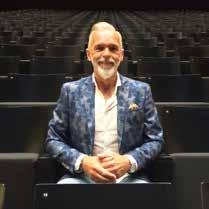
Georg Hörhager Chairman of the Kufsteinerland Tourism Association
More about the Austrian Ecolabel for sustainable tourism destinations can be found here: UW No. 844
Legal information:
Responsible for content: Tourismusverband Kufsteinerland, Unterer Stadtplatz 11–13, 6330 Kufstein, Tel. +43 5372 62207, Circulation: 15,000 in German, 1,000 in English
Concept / text / graphics: Oberhuber & Kuen Kommunikation GmbH, place of publication: Kufstein
Printing: Produced in accordance with the guidelines of the Austrian Ecolabel, “Printed products” Gutenberg-Werbering GmbH, UW No. 844 Gutenberg-Werbering Gesellschaft m.b.H. | Anastasius-Grün-Straße 6 | 4020 Linz
Photos: TVB Kufsteinerland, Cover: Christoph Johann, page 3: Thorben Jureczko, page 4: Christoph Johann, page 5: Simon Hausberger, Philipp Huber, Thorben Jureczko, page 6-15: Alex Gretter, page 16: Christoph Johann, privat, page 17-19: Christoph Johann, page 20: Evolumina, page 21: Sven Roscher, Christoph Johann, Fohlenhof Ebbs, page 22-25: Philipp Huber, page 26-28: Simon Hausberger, privat, page 30: Christoph Johann, Standortmarketing/Kleinheinz, page 31: Manfred Lahnsteiner, page 32: Sportalpen Marketing, page 34-35: Simon Hausberger, page 37: SvenFotografiert, Philipp Huber, page 38-40: Philipp Huber, page 42: Mathäus Gartner, page 44: Xiomara Bender, page 46: Adobe Stock, Chris Borg, page 49-51: Thorben Jureczko, page 51: Wilder Kaiser/Mathäus Gartner, page 52: Philipp Huber, page 54: Lisa Eiersebner, page 56: Birgit Dopsch, Thomas Osl, page 57: Bierol, Ines Entleitner, page 58: KI generiert/Desiree Arzic, page 60: FH Kufstein Tirol, page 61: Silvia Größwang, page 62: Lisa Eiersebner, Alex Gretter
For better readability, we use a standardised language form in some places. This explicitly includes all genders. Some of the texts and images published in this magazine were created or edited using artificial intelligence.
Kufstein Bad Häring Ebbs Erl Langkampfen Niederndorf Niederndorferberg Schwoich Thiersee
from Kufsteinerland
In this MOMENTE MAGAZINE, you can look forward to not only carefully researched stories, but also interactive content that opens up new and unusual perspectives on our region.
In addition to the texts, matching videos have been produced to allow visitors to experience Kufsteinerland in even more detail. Look out for the video icons - simply scan the QR code and watch the content directly on your smartphone.
06
Connected by bridges
A visual exploration of the Kufsteinerland region, its bridges and the landscape in between. The photo gallery shows how crossing points connect places and stories weave together.
12
100 years of the Thiersee Passion Play Theatre
The Passion Play Theatre celebrates a century of living tradition on the shores of Lake Thiersee. We look behind the scenes of a company that keeps the village community together.
16
Language of the mountains
Mountain and field names in the Unterinntal reveal the stories of landscape, everyday life and memory. We follow their traces and let them show us how culture shapes peaks.
20
Museums and exhibitions in Kufsteinerland
The regional museum landscape makes history tangible - from handicrafts to heroes’ organs. We visit places where the past is preserved.
22
When the mountains call!
The Kufstein Mountain Rescue Service is out and about where others cannot reach. We accompany the people using their courage to bring others safely back home.
26
Uphill with a tailwind
The Stadtberg circuit connects nature, views and movement. Every metre of landscape tells the story of the life of the alpine pioneer Peter Aschenbrenner.
30
Living with the wilderness
In the Kaisertal valley we meet a professional hunter and learn about his responsibilities. His task is to protect wild animals and to protect the balance between people and nature.
34
Inn-sider knowledge
The Inn surprises - with colours and facts that you wouldn’t expect. A collection of short wow moments around the river that shapes Kufsteinerland.
37
Tavern stories
In Ebbs, two traditional houses write a new chapter between wood and warmth. This shows how a young generation of hosts is preserving history and at the same time shaping the present.
Stay connected with us
If you want to dream of Kufsteinerland from afar, follow us on Instagram and Facebook
42
Kufsteinerland as a land of culture
For centuries, Kufsteinerland has been a stage, meeting place and land of ideas. Today, this tradition continues - with new alliances and cultural vision.
49
Between savoir-vivre and strategy
A personal conversation with Sabine Mair about leadership with sensitivity, the Kufsteinerland attitude to life, and the power of interpersonal encounters. A look back at 28 years of commitment to the region.
56
A souvenir with character
In Kufsteinerland, craftsmanship is in the glass, flavour on the shelf and passion in the detail. We showcase products that take their stories back home.
58
From knowledge to impact
In Kufstein, a future lab is currently being built for artificial intelligence in the heart of the Alps. Projects, study programmes and visions show how research is producing specific effects.
61
Experience & immerse yourself
Kufsteinerland invites you to events that will touch, inspire and connect
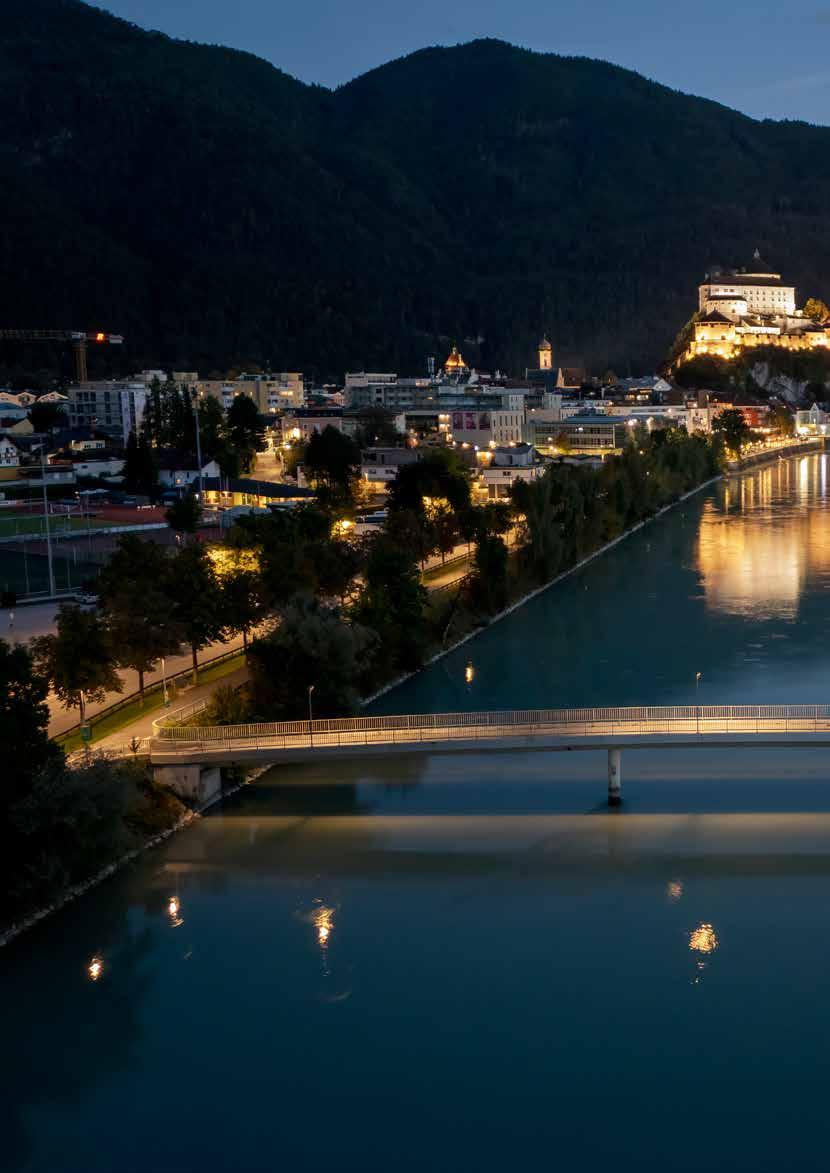
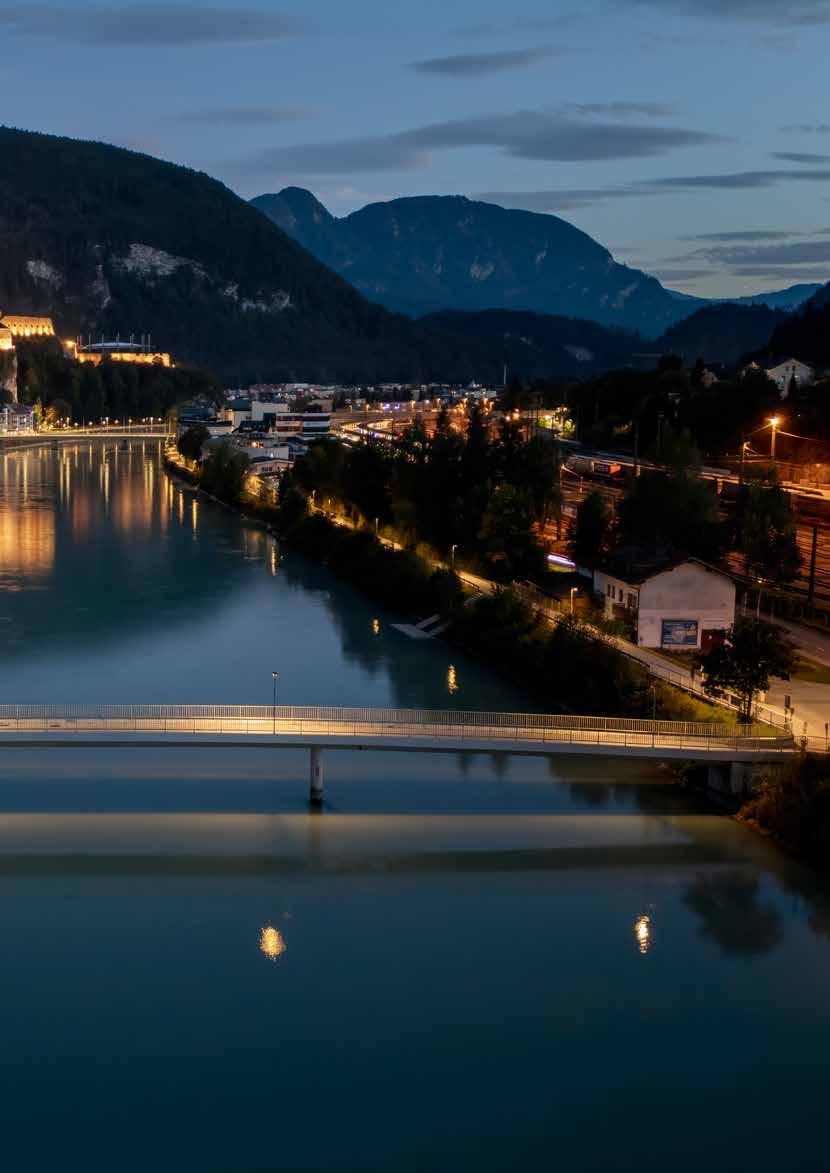
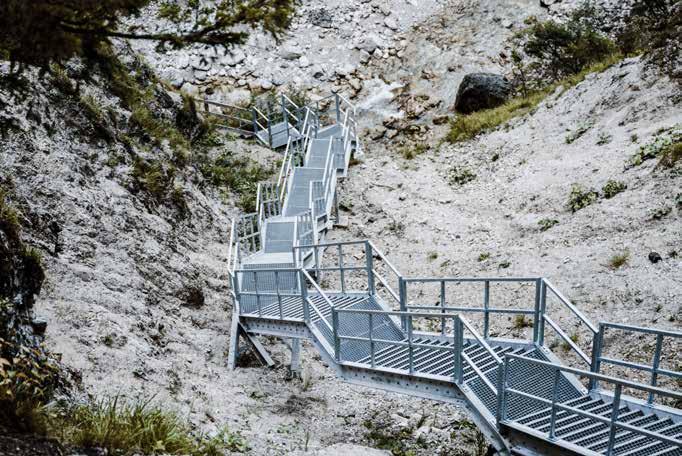
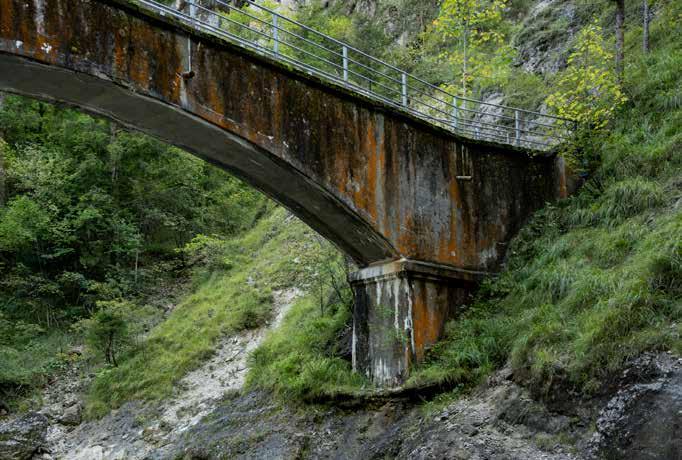
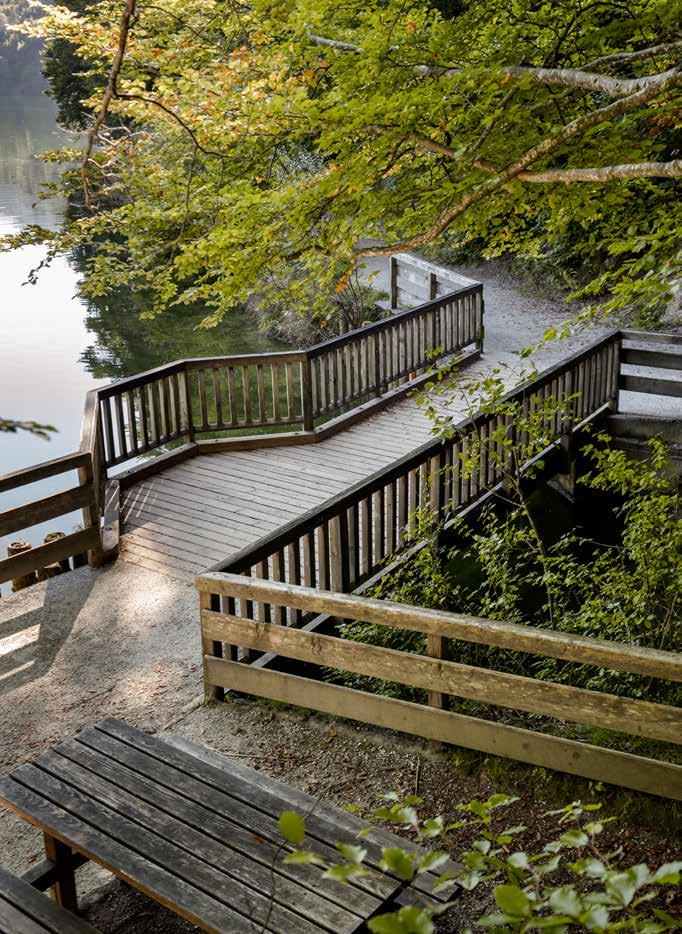
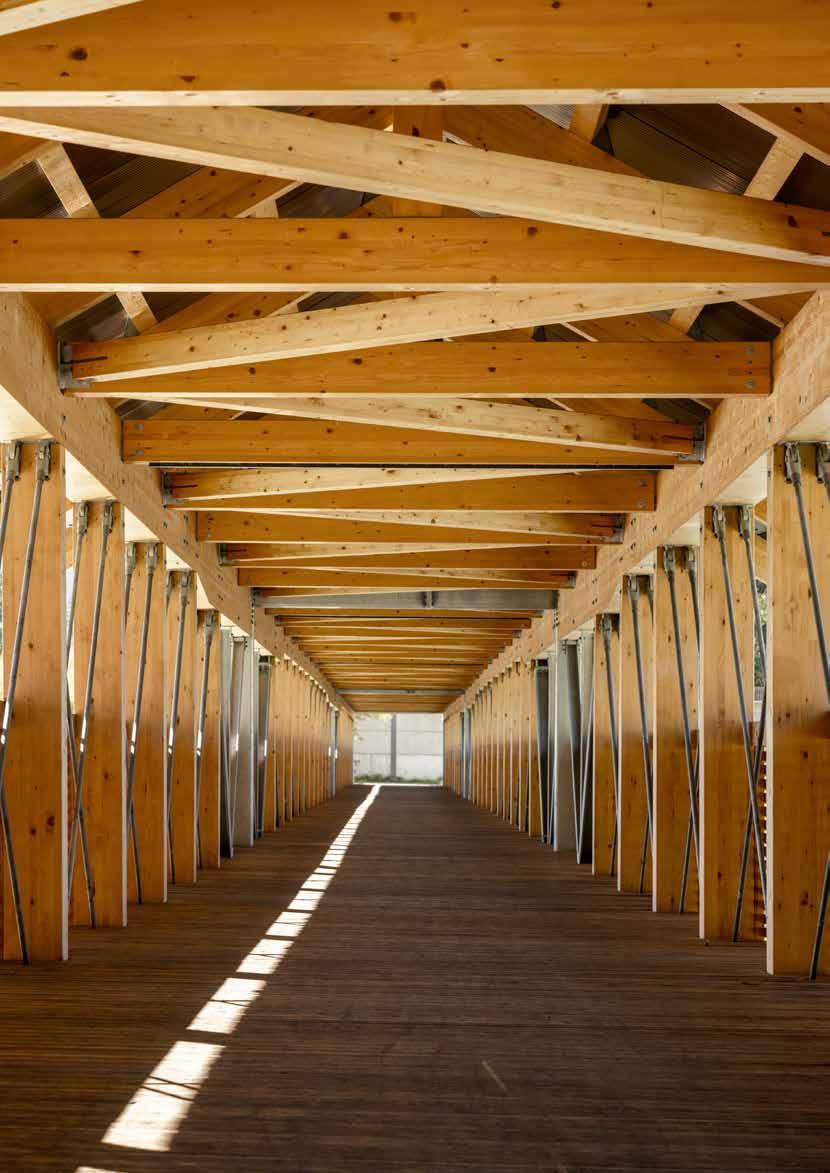
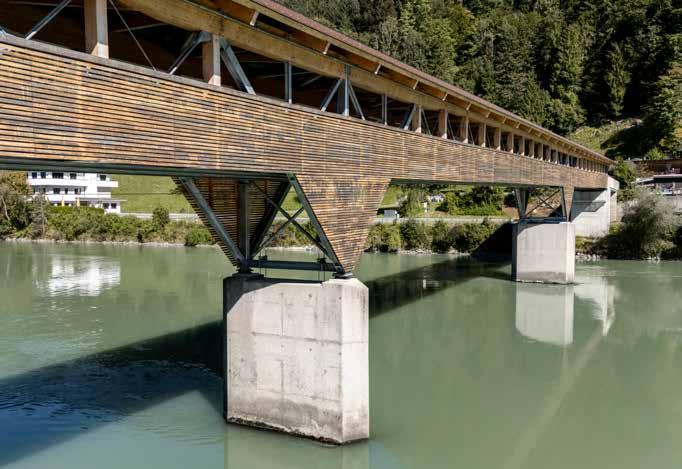
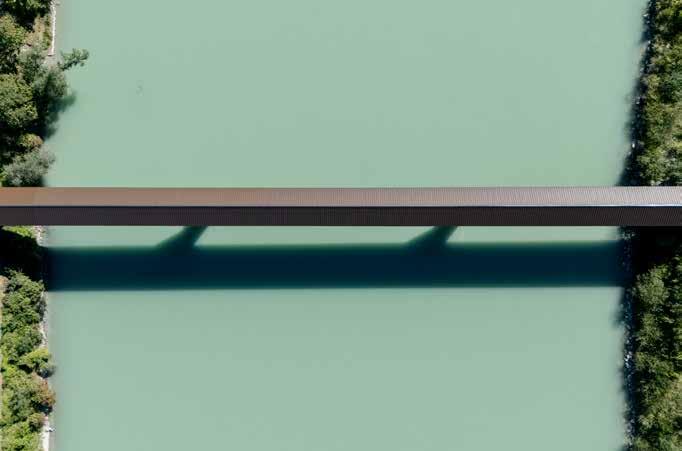
A visual exploration of Kufsteinerland and its bridges. The photo gallery shows how they connect places with each other, create new paths and pass on stories of the land and its people. Bridges create proximity, connect perspectives and turn two sides into a shared space.
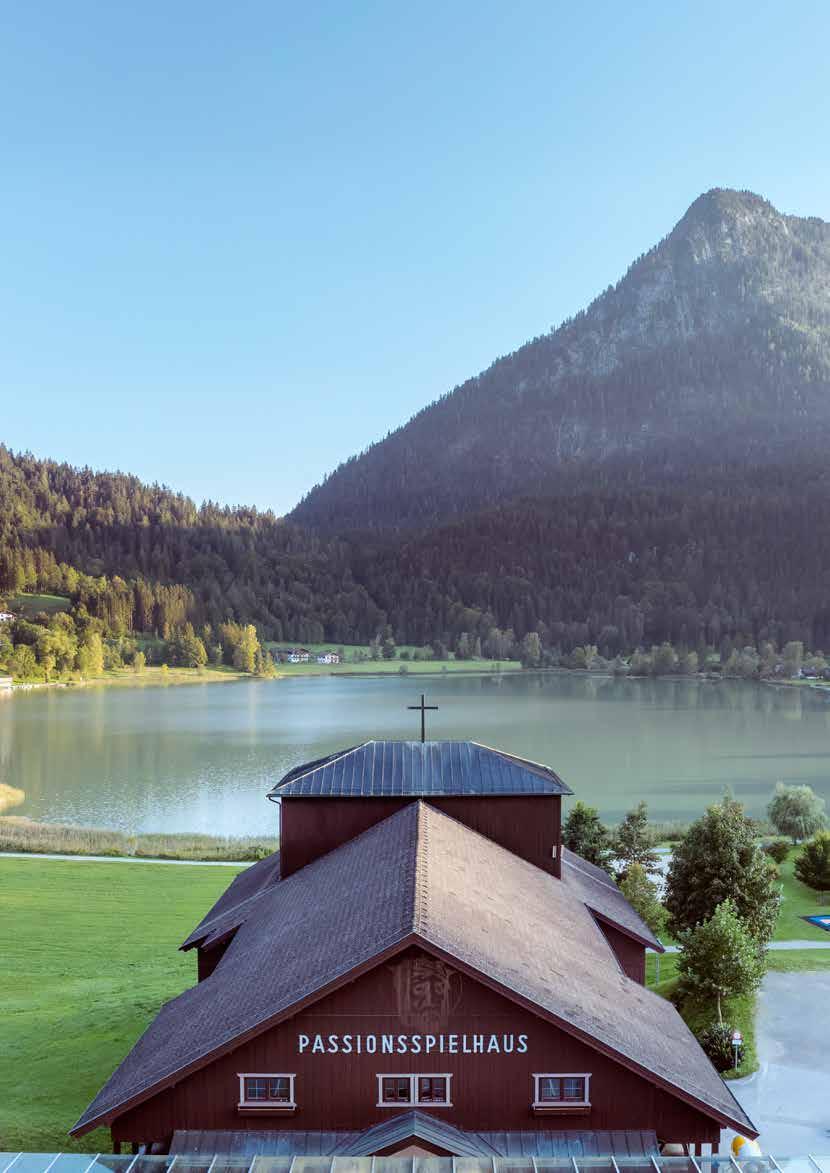
“Brandner Kasper returns“ - to mark the 100th anniversary, the Thiersee Passion Play Association is staging this popular classic directed by Diethmar Strasser in the late summer of 2026.
The next passion plays in Thiersee will take place in 2028 - reflecting the sixyear cycle.
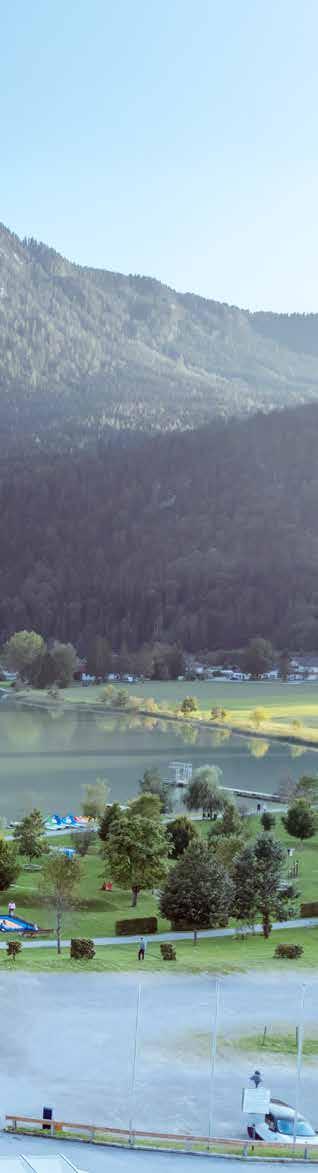
On the shore of Lake Thiersee, where the light falls softly on the water, stands a historic building made of old wood. It is far more than a rustic building, it is the centrepiece of a living tradition, a symbol of community and craftsmanship skill. For Thiersee, it is as defining as the lake itself. On this stage, the passion plays unite faith, promoting cohesion and pride in the town’s own history.
Most visitors experience the Passion Play Theatre from the auditorium, where their gazes are directed towards the front of the stage. But anyone who dares to take a step behind the scenes will discover another world. This look behind the scenes illustrates why the Passion Play Theatre has not only been a venue for generations, but also a home, a meeting place and a living symbol of cohesion.
The history of the Thiersee passion plays originally dates back to 1695. At the end of the 17th century, the inhabitants took a vow to perform the Passion of Christ regularly in order to avert wars and economic hardship. This promise is still being kept today. Initially, the plays were performed on an open-air stage at St Margareth’s church in Vorderthiersee. In 1855, the first covered play theatre was built, an event which was enthusiastically reported in the newspapers. Today’s Passion Play Theatre was built in 1926 with input from the entire village.
Numerous farming families laboured and took out loans to make the dream of a new Passion Play Theatre become reality. It was built in classic timber construction, with everything that was available: boards, tree trunks, branches and even twigs glued with paper to eliminate chinks of light.
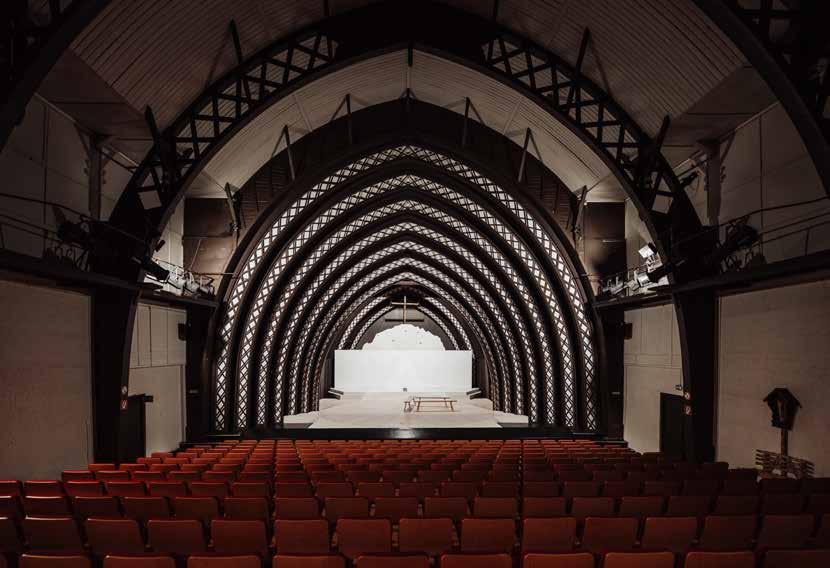
When you enter the building, you immediately feel the history behind it. Steep wooden staircases, narrow corridors and winding staircases in the auditorium still bears the traces of the generation that built with their own muscle power, ingenuity and community spirit. The roof is supported by four imposing Stefan-type wooden arches, whose curved shape is inspired by the construction of airship hangars and which were planed and mortised by hand at the time.
They not only lend the room stability, but also an elegance reminiscent of Gothic churches. Its exact origins are obscure, as the building was used as a warehouse during the Second World War and many of the building plans were lost. What has remained is the name Stefan-type wooden arches and the assumption that they could originate from the Austrian Stefansdach Society in Vienna. Many wooden elements have been preserved unchanged to this day. Cracks run through the surface, while darker shades tell of decades of play. Every fibre is a piece of history.
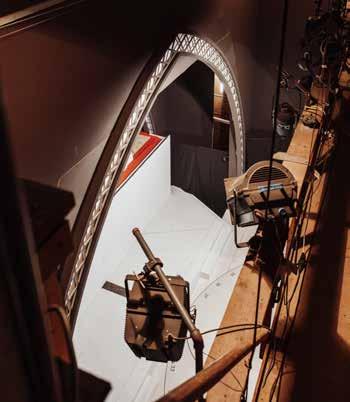
Even during construction, great importance was attached to good air circulation. Ventilation flaps in the upper area of the roof ensure a fresh draught inside. This principle still works today and is only supplemented by modern technology. The stage technology also preserves tradition. Historical light cranks with three numbered rollers still precisely control the lighting. The acoustics are so clear that every word is carried to the last row without a microphone. A piece of architectural heritage that still impresses experts today.
The building has been carefully modernised in recent years. In 2010, the auditorium was given new red seating, in 2022, the round arches were renewed and equipped with energy-efficient LED lighting. Two years later, a revolving stage was built by the company itself, which enables smooth scene changes. “This type of stage would have cost us around 100,000 euros,” explains Chairman Michael Juffinger. “So we said: let’s do it ourselves.“ These modernisations are an expression of the same community spirit that already characterised the construction of the building. The ongoing renovations are largely being carried out on a voluntary basis.

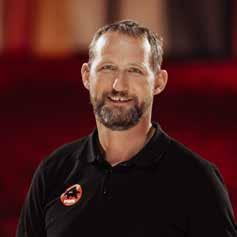
“Without our many helpers, none of this would work”
Chairman Michael Juffinger
The location makes the Passion Play Theatre unique. Only a few steps separate the stage from the shore of Lake Thiersee. During the intermissions, visitors go out, let their gaze wander over the water and let the scenes they have just watch resonate.
In the past, the lake itself was even included in the performance: the large wooden gate to the lake side opened, and the actor playing Jesus seemingly walked across the water to the centre of the stage. Today, the lake provides a framework for the plays - as a silent companion in the midst of an exceptionally beautiful landscape.
· Built in 1926
· Classic timber construction, outer boards 24 mm
· Special statics: 4 wooden arches support the building
· Orchestra pit under the stage
· Space for around 620 guests
· Modernisations: seating in 2010, LED round arches 2022, revolving stage 2024
The Passion Play Theatre also beats beyond the years in which the passion plays are held as the cultural heart of Thiersee. Music bands and dance schools liven up the auditorium, while concerts and theatre performances attract visitors - and even film recordings have been made here. To this day, the music of the Passion Play is almost entirely played live. Members of three music bands from Vorderthiersee, Hinterthiersee and Landl play hidden in the orchestra pit under the stage. From there they let the sounds vibrate through the wood and lend the scenes their haunting power. The Vorderthiersee music band was even founded specifically to provide music to accompany the plays.
Even the children grow up with the building. Before the entrance, they re-enact small scenes, recite texts and imitate the gestures of their role models. This is a fun way for them to learn about tradition and carry them quite naturally on into their own generation.
The Passion Play Theatre with its special statics is thus not only a piece of history, but also a promise for the future: a place where people meet, tradition remains alive and every performance writes a new chapter. A building that was built to last - for 100 years and far beyond.
How linguistic research is unravelling the secrets of our peaks
Kaisergebirge, Stripsenjoch, Veitsberg or Totenkirchl ... how did these mountains actually get their name? We go on a journey with the linguist and author Dr Judith Jambor in search of the traces of language ... but prepare to be surprised! Totenkirchl
The bad news for all proud Kufsteiners first: the Kaiser Mountains obviously didn’t get their name from their majestic appearance. More mundane reasons also play a role here - but more on that later.
It was a coincidence that led Judith Jambor to her unusual field of research. As a student, she was involved in a project at the University of Innsbruck with the Tirolean Provincial Archives about the place names of Tirol. When this project was completed in the early 2000s, they turned to the mountain names - and Jambor stuck with it.
Her methodology is as meticulous as it is elaborate: firstly, she gets an impression from mountaineering photos on the Internet of the summit in question. Then she studies the field name map from the Tirolean State Archives, in which all site names are recorded – those inconspicuous names for fields, woodland or meadows, with which people orientate themselves without maps or GPS. Historical evidence from old documents and border descriptions complete the picture. The majority of all mountain names are derived from the names of the surrounding area.
The certified mountain hiking guides in Kufsteinerland accompany guests safely through the alpine landscape – from gentle hikes through to challenging summit tours. In addition to well-founded alpine expertise, they share exciting knowledge about nature, history and regional quirks and thus open up new perspectives on the world of mountains around the Kaiser range.
cartographers become dialect interpreters
Particularly fascinating are the linguistic misunderstandings that have been ingrained in names for centuries. The educated cartographers asked local farmers about the mountain names. They answered in dialect and the cartographers made a note of what they heard and seemed logical to them. The history of the the mountain names is thus a story of misunderstandings that Judith Jambor is now deciphering piece by piece. “A good example of this is the Kränspitze in the municipality of Thiersee,” explains Jambor.
The mountain was originally called “Kri Berg” - a dialect expression for “Geröhne”, a place where many trees have fallen due to wind damage or felling. Because the word was incomprehensible and at the foot of the mountain is the Schnittlauchgraben (chive ditch), “Kri” was reinterpreted as “Kren” - after all, chives and horseradish go together...somehow.
According to research, the name “Kaiser” originated north of the “Zahmer Kaiser” at the end of the 12th century for the area around Ebbs, which was then owned by the Staufer dynasty, who provided the RomanGerman emperor.
The name “Kaiser” used to refer only to the “Zahmer Kaiser”, but it was later extended to the mountain range to the south. A map from 1611 names the “Wilde Kaiser” for the first time. Wild in this context means “infertile, unusable, not suitable for agriculture”.
What is striking in Tirol are the frequent “Jochs”, as they are seen in the names “Stripsenjoch”, “Brentenjoch” and many others. “On the one hand, a Joch means a mountain ridge, but on the other hand also a transition or pass,” explains linguist Jambor. For the local populations, this was important information for driving cattle to the other side, for example. A “Halt” in turn originally refers to a place for cattle to stay on the mountain pasture. In the mountain name “Ellmauer Halt”, this has been preserved. “Ellmau” means elm field - where elms grow. The situation is similar with the Gamshalt, where chamois graze.
Many mountain names preserve old farming techniques and terms that have long since fallen out of linguistic use. The Veitsberg in Thiersee was originally called “Veistberg” - from “feist” for fat or well-fed. In the maps, however, it appears with the masculine name “Veit”, apparently a phonetic misunderstanding in cartography. Just as with other “fat” mountains, such as the “Butterbichl”, the name refers to the particularly nutrient-rich pastures that provided the cows with good milk. The farmers were practically orientated for mountains that have the “Zwölfer” in their name: from a certain point of view, the sun appeared at 12 noon exactly behind this peak - a natural sundial in the landscape.
Although Tirol is a deeply Catholic country, religious references in mountain names, according to Judith Jambor, are extremely rare. The “Totenkirchl” in the Kaiser Mountains has no religious background, but instead its shape is reminiscent of a small church. The “Toten” (“dead”) again come from the many crashed sacrifices of the mountain. With the “Pyramidenspitze” in the Kaisertal the origin of the mountain name is clearly visible even to laymen from its shape.
With the advent of of alpinism in the 19th century, suddenly all the mountains were given names - after all, every mountaineer wanted to able to say where they had been. The Alpine Club was a leader in drawing accurate maps and asked the locals about the names of the summits. This gave rise to new misunderstandings, but also deliberate designations named after worthy alpinists.
Kufstein is different
While most mountain names are derived from the surrounding terrain names, Kufstein is probably named after the fortress mountain, i.e. the other way round – the mountain gave the town its name.
So the name Kufstein, which was already mentioned around 788 probably goes back to “Coafstein”, which has its origin either in “Kopfstoa”, i.e. “headstone”, or in “Chuofa”, which means barrel. The term “Kopf” for a summit is quite common, whereas the barrel could refer to the shape of the mountain. The barrel in Kufstein’s coat of arms, however, has nothing to do with this, as it symbolises the importance of the salt trade for Kufstein. The salt was transported downstream from Hall in barrels.
What Jambor repeatedly discovers in her research is that: “It’s very prosaic. In reality, the mountain names are just what existed there.” Romantic legendary, mythical or religious references are rare. Instead, the names reflect the practical life of the mountain dwellers – from livestock farming to old clearing techniques and geological features. When Judith Jambor looks at the mountains today, she sees more than just peaks, but rather centuries of cultural history chiselled in stone.
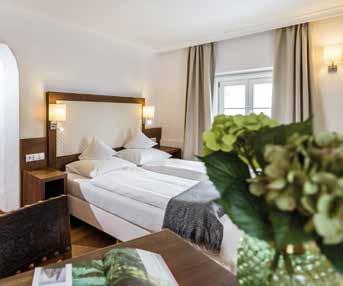
At Hotel & Guesthouse Blaue Quelle, you can enjoy soothing moments, warm hospitality, and the power of nature – rounded off by excellent cuisine.
Hotel*** Gasthof Blaue Quelle
Mühlgraben 52, A-6343 Erl +43 5373 81 28 l info@blauequelle.at www.blauequelle.at
Click here for the comprehensive museum programme in
The museum landscape in Kufsteinerland is anything but dusty. Whether underground, in the fortress or right at the heart in the centre of the town. Kufsteinerland tells its story in a varied and appealing way.
Living history, tangible culture and knowledge as an experience: In Kufsteinerland, visitors will find fascinating insights into times gone by and surprising perspectives. Each museum opens up new perspectives on the region, its people and their treasures. If you are looking for inspiration and new discoveries, this is the place to be.
The last hermitage in Tirol
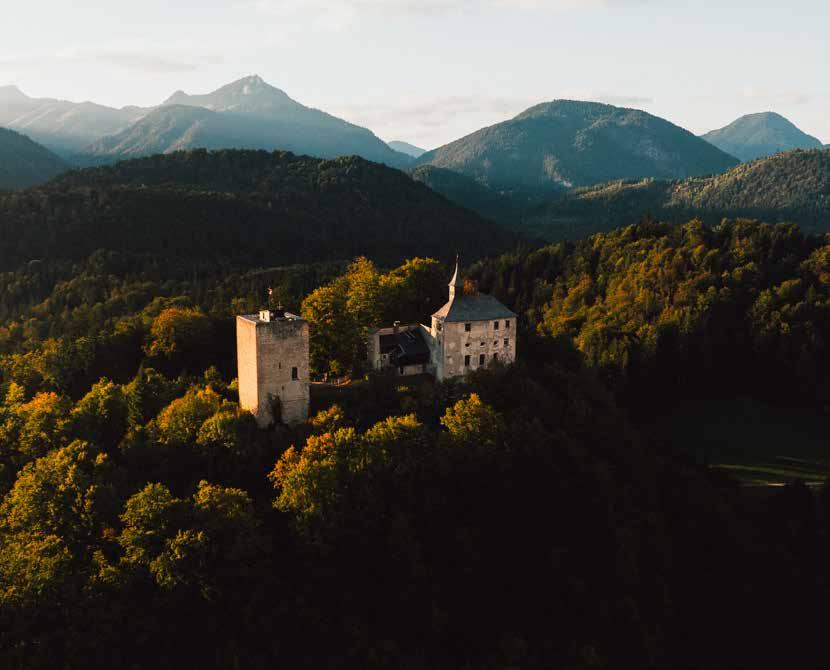
Visible from afar, the ruins of Thierberg Castle invite you to visit. It was once the seat of the Lords of Freundsberg, today, the guests here never cease to be amazed. Bend by bend, the route takes you on a leisurely hike along the stylishly designed Way of the Cross upwards. Once at the top, there is not only a fantastic view of the Inn Valley, the Kaiser Mountains and as far as Bavaria, but also the last hermitage in Tirol, a renovated castle keep with local history museum and the pilgrimage chapel. Well worth seeing is the oriental Christmas crib in the old hermitage and with a little luck, you might even meet Brother Konrad, a hermit living in this special place of power.
Traces of coal and marl in Bad Häring
Tirol was once an important mining region. The “Mining and Coal” theme trail in Bad Häring traces this situation in an impressive way. The two-hour The circular hike comprises fourteen stations that bring the traditional past of mining and the miners back to life. From the church square, bridges take you to the Maximilian and Franziskistollen and on to the quarries. Display boards provide interested parties with all the historical details.
“Zur alten Schmiede” in Niederndorf
An absolute insider tip for all those who love nostalgia is the small museum of local history “Zur alten Schmiede” in Niederndorf. The soul of the museum, Lotte Kaltschmid, welcomes her guests with delight. She knows the story of every exhibit and is happy to answer visitors’ questions. Every visit to the Museum of Ancient Crafts is as diverse as the exhibits themselves. Give Mrs Kaltschmid a call on +43 699 13919833 to open the doors to history.
24,125 m2 of history in your hands
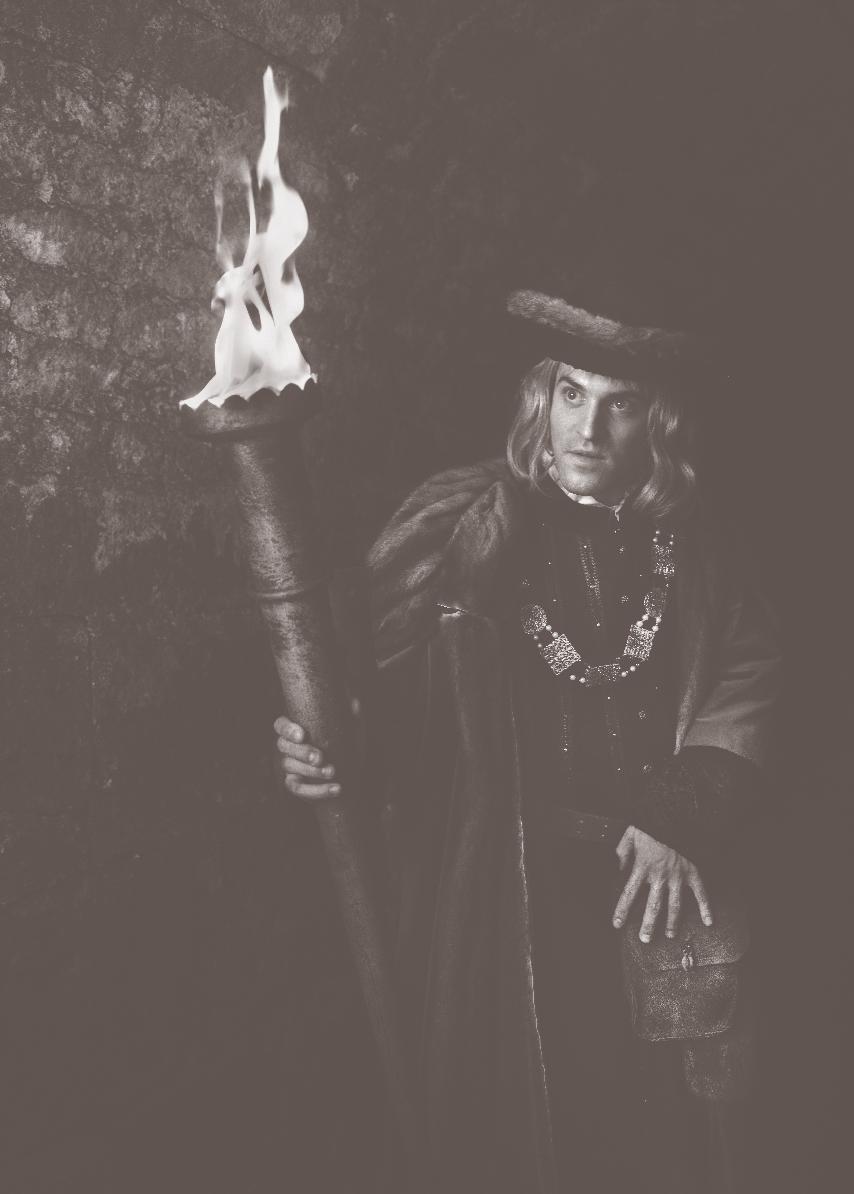
Hotly contested in the past, the Kufstein Fortress a peaceful testimony to their history in the present. Whether on foot or with the panoramic railway, ascend into the old walls. These hide not only the local history museum, but also a permanent exhibition on Emperor Maximilian I, the former state prison with interactive museum, a 270° projection on the history of the fortress in the Fuchsturm and the 4,948 (!) pipes of the heroes’ organ in the Bürgerturm. Anyone who believes that this is everything, is wrong: the deep well, the torture chamber exhibition, the cannons and much more is waiting to be discovered. The fortress restaurant is open to tired guests and provides them with delicacies before they return to the 800-year-old history of the fortress.
A visit to the “inventor of the sewing machine”
The pioneer of the sewing machine, Josef Madersperger, can be met in the building in which he was born on Kinkstrasse in Kufstein. Throughout his life, the trained tailor tinkered with the mechanical art of tailoring and with existing sewing machines for many years until he was able to register his patent in 1814. This patent expired years later, however, which is why Madersperger is not regarded as the sole inventor of the sewing machine, but can without doubt be considered a visionary. His life and work are described in the audiovisual show in the sewing machine museum right in the centre.
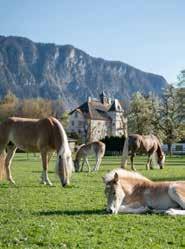
Young and old alike can enjoy an interesting stud farm tour of the Fohlenhof in Ebbs. Over 100 Tirolean Haflingers from mares with foals to the famous breeding stallions can be observed in the stable and in the paddock. In the museum you learn everything worth knowing around the Haflinger and the ol dest Haflinger stud farm in the world. Whether you have always loved horses or are just getting closer to them: riding and vaulting lessons or a carriage ride are ideal ways of experiencing the Tirolean Haflinger in a very special way.
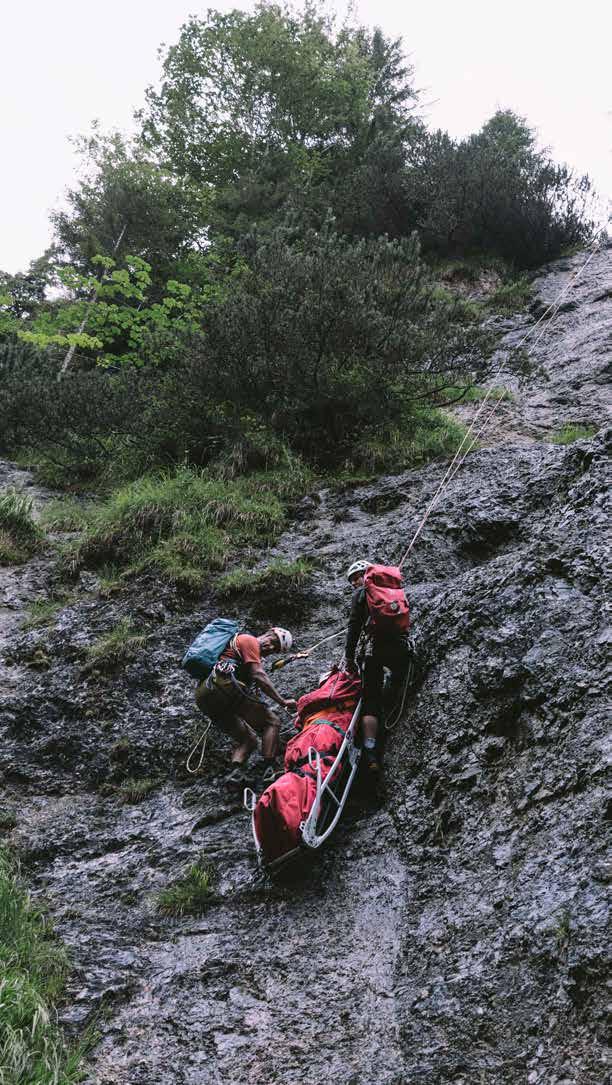
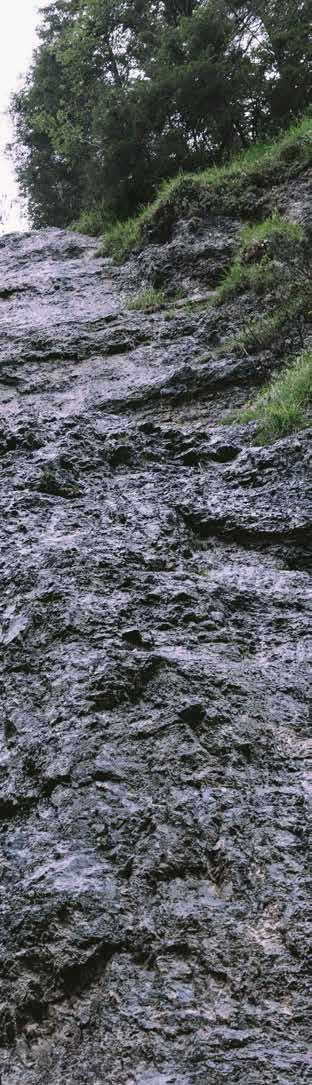
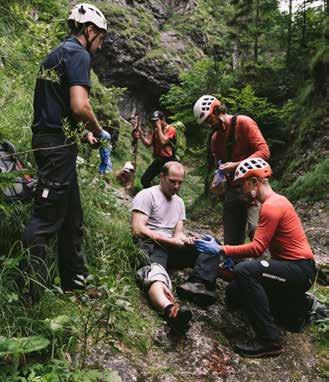
“The mountain giveth and taketh away” is an old alpine proverb. Mountain rescue is crucial for ensuring that it takes less than it gives. But who are these men and women who sacrifice a large proportion of their free time and often put themselves in danger to rescue people from mountain emergencies?
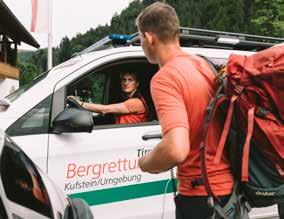
The Kufstein Mountain Rescue Service covers an area stretching from Bad Häring to Walchsee – terrain that is as varied as it is challenging. The 47 members of the local branch, including 35 mountain rescuers ready for action, deploys between 90 and 110 times a year. “That means an assignment almost every day during the mountain season between June and October,” explains Gerald Radlherr, head of the Kufstein Mountain Rescue Centre.
The demands on future mountain rescuers are high. “We do not train alpinists”, clarifies Alexander Haidacher, deputy head of the local centre. “Everyone who starts with us already has a very high level of prior knowledge.” Candidates must be able to climb at least at the fourth level of difficulty – wearing normal hiking boots, mind you, not climbing shoes. There are also fitness requirements for ski tours and the ability to cover certain metres of altitude in a given time.
The application and a personal interview are followed by a ten-month probationary period. “You can see relatively quickly whether a person will really fit in with the team,” says Radlherr. The final stage is a nationwide examination by the Tirolean Mountain Rescue Academy - a seal of quality that recognises the organisation’s high standards. In addition, at least six mandatory training sessions per year are required, with every first Monday of the month being dedicated to training. The syllabus ranges from rope technology to medical further training. Every four years, participation in a district training course is also required.
What motivates people to sacrifice their free time for others? For Gerald Radlherr, it was a mixture of family influence and personal fascination. His grandfather was already a member of the mountain rescue service in Lower Austria and from an early age he was interested in stories about his missions. Alexander Haidacher came to mountain rescue through his work as a paramedic at with the Red Cross: “I’ve always been fascinated by watching the work of the mountain rescue. I thought to myself, that’s impressive what they do, I want to be able to do that too.”
When the mobile phone beeps
The deployment process is precisely organised. Calls for help are directed to the Tirol control centre via the local emergency number 140, which triggers a two-phase alarm. First of all, the twelve operations managers in Kufstein are notified by SMS. Whoever is the first responder takes charge of coordination and decides on the scope of the resources requiredfrom two mountain rescuers to the entire team. In the same way, operations manager decides whether a helicopter needs to be requested or whether the terrain-based rescue vehicles will be enough for the mountain rescue. Every mountain rescuer carries basic equipment - a rope, carabiner and helmet. For rescue operations from a greater distance, 200 to 400 metres of ropes in a double design used to create special stretchers for different types of transport and extensive medical equipment, including a defibrillator and vital signs monitor, complete the equipment.
The ankle as an Achilles heel
“Ankle,” replies Radlherr promptly to the question about the most common cause of mountain rescue operations. Twisted while hiking on wet stones or because of not paying attention. However the deployments are becoming more diverse: “There are more and more people of an older age travelling in the mountains,” observes Haidacher. “This also often leads to internal conditions- such as a heart attack or collapse due to heat stress.”
In general, Haidacher observes that the coronavirus pandemic has changed people’s leisure behaviour. “People have become more sporty, they’re going out more”. Essentially this is good news, but the boom brings with it new problems: “Many more people are on the mountain and often set off without a plan.” Poor equipment, the wrong footwear and unrealistic assessments of their own capabilities lead to the majority of accidents.
Some missions sear themselves into the rescuers’ memory. Radlherr recalls a rockslide on the Totenkirchl, in which a member of the German Bundeswehr was buried: “Bad weather, brutal rain.We flew missions with the helicopter shuttle and a large contingent of rescue personnel.” Extreme situations like this make it clear that nature remains unpredictable. “A rockfall is like being hit by a meteorite,” says Haidacher, describing the unpredictability of some accidents. The German Bundeswehr soldier was recovered the next day, but he was already dead.
The mountain rescue service has developed mechanisms to deal with the psychological stress. “We chat and look out for each other,” explains Haidacher. After difficult operations, there are immediate debriefings, and if necessary, a special peer team can be activated – mountain rescuers who support colleagues in difficult situations. Fortunately, rockfall in Kufsteinerland is rare, and most deployments are small-scale and the rescued parties are very grateful. But even here there are sometimes exceptions. A few years ago, the mountain rescue service was alerted by a hut owner in the Kaisertal valley. They had to rescue two drunk hikers who were no longer able to descend on their own. However, after their “rescue”, the two men caused such a disturbance that they had to be handed over to the police.
Balancing private life and voluntary work is not always easy. Gerald Radlherr works for an industrial company in Langkampfen and is usually able to respond with flexibility to missions: “I write a quick e-mail to my supervisor that I have to dash, and then I’m already on my way.” The support of the family is essential for this. “When the phone rings at night, nobody knows where you’ll end up and how long it will take,” Radlherr points out. “For the family, that’s pretty stressful.”
The Kufstein Mountain Rescue Service is part of the Tirol Mountain Rescue Service with over 4,600 volunteers in 91 locations. What they all have in common is more than just technical expertise and medical knowledge: it’s about the community and the certainty that people come home safely... that the mountain gives more than it takes.
Well equipped while on the move
Make sure you wear sturdy shoes/hiking boots. Trainers are unsuitable for mountain hiking.
• Study the local weather forecast carefully: the weather in the mountains can change within a very short time.
• Take enough provisions and above all drinking water with you.
• Have a charged mobile phone with you.
• Always pack a warm jacket or rain jacket.
• Take a small first aid pack with a rescue blanket.
Important: take out mountain rescue recovery costs insurance. We particularly recommend becoming a supporting member of the Tirol Mountain Rescue Service. This covers the costs of accidents in the mountains and the membership fee directly benefits the mountain rescue service. Alternatively, the Alpine Club, the Naturefreunde or a private accident insurance company can also offer appropriate cover. Without insurance, a mountain rescue, especially with helicopter deployment, can quickly cause high costs.
Use the SOS EU ALP app:
The free SOS EU ALP app enables emergency services to be alerted quickly in an emergency and transmits the exact location directly to the control centre.
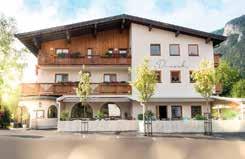
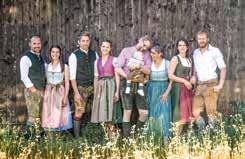
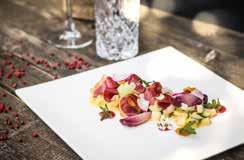
Gourmet cuisine with high-quality products from local producers, rooms furnished with natural materials, a sumptuous breakfast buffet and wonderful nature to discover – you will find all of this here with us in Erl and at the Gasthaus & Hotel Dresch.
We look forward to welcoming you and making your stay with us an unforgettable one.
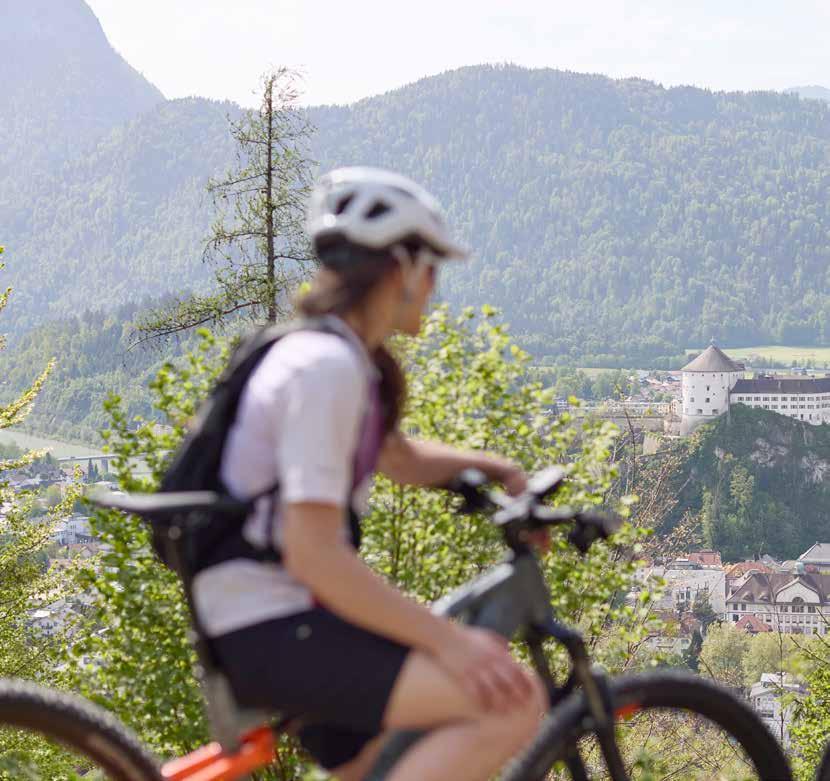
The route leads from Kufstein Mitterndorf via the forest chapel and Krampus wall to the Berghaus Aschenbrenner, onwards along the panoramic trail to the Brentenjochalm and to the Weinbergerhaus. The way back is via the Brentenjoch, the middle station of the Kaiserlift, the Hinterduxerhof and the tarred road back to Kufstein.
Duration: 2:50 h
Journey length: 15 km
Altitude metres: 700
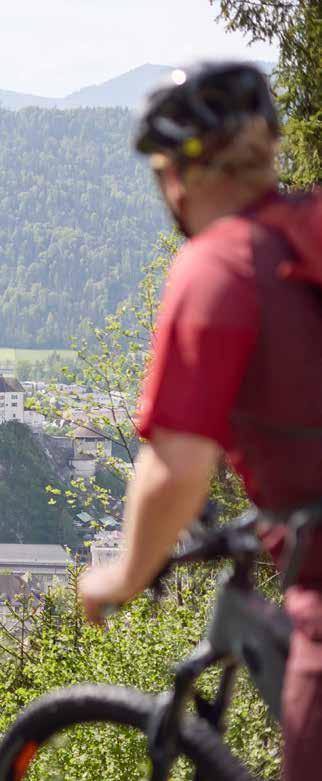
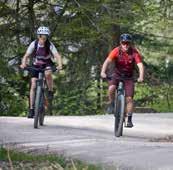
Two wheels towards the summit - and into the heart of the story of a true mountain pioneer. The e-bike tour to the city hill connects he enjoyment of nature with sporting aspirations, impressive views and the traces of a man who left his mark on Kufsteinerland like barely any other: Peter Aschenbrenner.
The tyres hum gently over the gravel track, while the clear mountain air smells of coniferous wood and damp moss. From the district of Mitterndorf in Kufstein, the route winds steadily uphill, past small clearings that offer marvellous panoramic views of the valley. The signposted viewing point offers a worthwhile rest, above the first hairpin bends.
From here, the panorama unfolds in all its vastness: the Kufstein fortress, the striking Pendling and the roofs of the town offer an unforgettable view. The path continues past the forest chapel into the lush green of the Kaiser Mountains nature reserve. The Wilder Kaiser rises high above it all, mighty and silent. For the locals, this route is not simply the “Great Stadtberg Tour”. They simply say: “We’re going to the Aschenbrenner.” Because this name not only stands for an excursion destination, but also for a man whose life story is still connected to the mountains and people of Kufsteinerland: Peter Aschenbrenner.
Anyone travelling on this route by mountain bike or e-bike today is not only cycling towards promising refreshment stops. They are also following in the footsteps of an alpinist who, more than almost any other, left his mark on Kufsteinerland. Born in 1902 in Ebbs, Peter Aschenbrenner grew up in humble circumstances. He had to work hard from an early age, but his heart belonged to the mountains. With talent, ambition and an extraordinary inventive talent, he quickly rose to become one of the most important alpinists of his time. His passion went so far that he even forged his own climbing equipment and carabiners.
A man who pushed the boundaries of what was possible at the timeand in doing so always carried the love of his homeland within him. “It’s more difficult to be an old mountaineer than a very good one,” was one of his famous quotes.
But Peter Aschenbrenner was much more than just a summit climber. He was a reliable mountain guide, adventurer and also host. From 1935 to 1953, together with his wife Cilli, he ran the Stripsenjochhaus. Generations of mountain enthusiasts found rest there. Later, the pair founded the Berghaus Aschenbrenner - the place where cyclists, hikers and mountain lovers stop for a bite to eat.
“A house in the mountains should provide a sense of security, whether for tired hikers or for people who just want to pause for a moment,” explained the summit climber once. This attitude is still noticeable today. Anyone who masters the path to the Berghaus will realise that it’s not just about eating or drinking. All of the beams in the wooden ceiling, every view from the windows, every meal, tells of a deep bond with nature and the attitude to life in the Kaiser Mountains.
Anyone who experienced the hut landlord in his later years, remembers the picture: a man marked by age, wearing a flat cap on his head and his hands clasped behind his back. A silent observer, one who also full of stories: when Peter, who was about 90 years old at the time, walked onto the terrace of the Berghaus, he once energetically asked mountaineers : “Which one of you insulted my wife Cilli?” – a little joke that immediately caused laughter and showed that this mountaineering legend also had a warm, mischievous side.
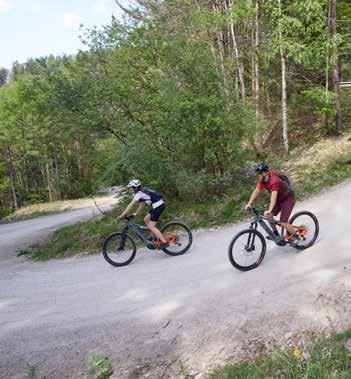
The route itself is also full of memories. At Peters Brünnl, a spring that Aschenbrenner collected and cultivated himself, cyclists still treat themselves to a refreshing drink. The water ripples clear and cold in the small wooden fountain, the hands dip into it and for a moment, time seems to stand still. A little way below the spring is what he calls the “Kimmst ummi oda ned” bend – on an e-bike, this means braking in good time and mastering the bend skilfully and safely.
Every now and then it is worth pausing on one of the benches along the way. There, where the wooden backrests are marked by the weather the view stretches far beyond Kufstein. It is this moment of calm that makes the whole climb worthwhile. On the rest of the circular tour the Brentenjochalm attracts visitors with savoury delicacies such as “Auszognen Nudln” for a well-deserved rest. For the short, final ascent of about 50 metres in altitude, you have to pedal again - and you will be rewarded with the Weinbergerhaus, which not only offers culinary delights but also an impressive all-round view as a highlight of the tour.
Those who enjoy cycling, savouring the sun’s rays and allowing the hum of the e-bike to fade into the background, will understand: This tour is not only an excursion into nature, but also a journey into a fulfilled mountaineering life full of courage, a thirst for adventure and a passion for the mountains. And this is precisely where its special power lies: it combines sporty exercise, cultural heritage and culinary enjoymentjust like Kufsteinerland at its core.
Peter Aschenbrenner was born in Ebbs in 1902 and died in 1998 at the age of 96 in Kufstein. In his life he climbed over 2,400 summits, including 68 four-thousand-metre peaks and even a six-thousander. International renown became his above all for his Himalaya expeditions in the 1930s and 1950s, which earned him the nickname “Himalayan Peter”.
He also worked for almost 20 years as the landlord of the Stripsenjochhaus and in 1952 founded the Berghaus Aschenbrenner. He was the designer of the Aschenbrenner ice pick, which was compulsory equipment until the 1980s for mountaineers.
Where e-bikes fill up with energy - and so do we
You can find all the information about the e-bike charging stations in Kufsteinerland here - from the individual locations to the services available at each one.
Landl Almbad
An overview of cycle and bike accommodation in Kufsteinerland which is especially tailored to the needs of cyclists and mountain bikers is available here.
Vorderthiersee Lido
Hinterthiersee village centre
Langkampfen M-Preis
Ebbs village
Kufstein Fischergries
Schwoich Zementöfen
Schwoich Bananensee
Bad Häring village centre
<<
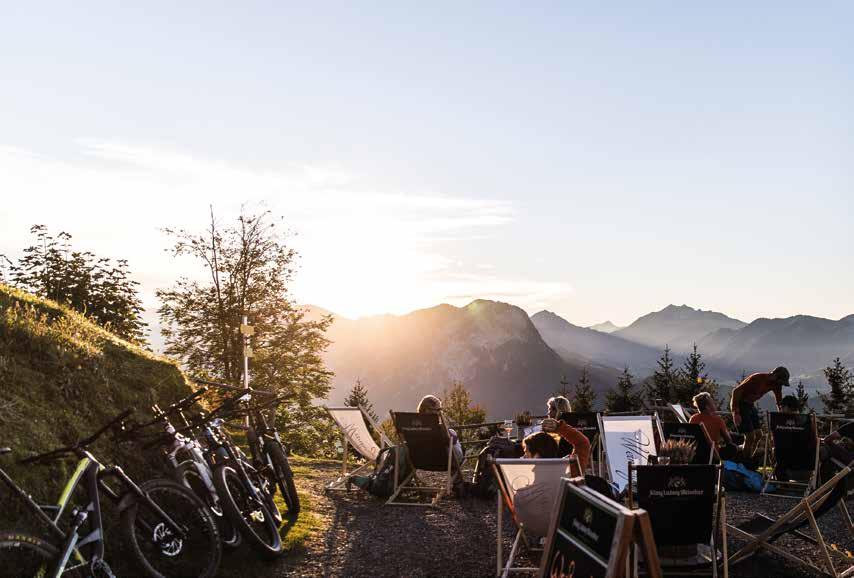
– The perfect excursion destination in the Kaiser Mountains
– Accessible on foot, by bike or with the Kaiserlift
– Beautiful landscape & fantastic views
– Sun terrace & cosy parlour
– Delicious specialities made from regional products
– Overnight stay at 1,272 metres above sea level
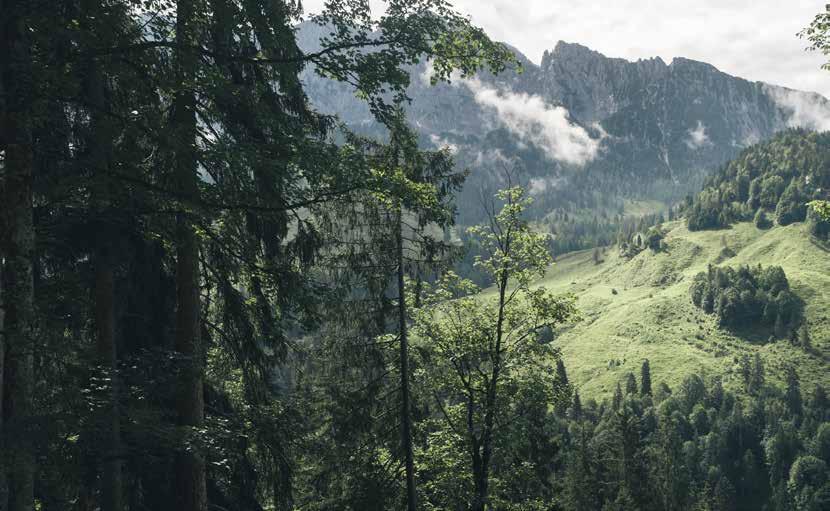
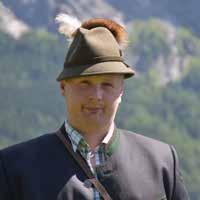
A very special workplace that contributes significantly to balance between man and nature: Since April 2025, Manfred Lahnsteiner has been a professional hunter for the Kaisertal and the Stadtberg in Kufstein. Growing up in Upper Austria, he has been surrounded by nature since childhood. and learnt at an early age how to observe wild animals and the forest. Anyone who accompanies him quickly realises that hunting means far more than shooting. It’s about care, protection and the right feeling for nature.
When game is stressed, it needs more energy and there is more damage caused by gnawing,” explains the professional hunter. This statement illustrates how finely tuned the balance of nature is. Every unnecessary noise, every step off the beaten track can have consequences. Working in the hunting ground therefore means responsibility for an entire ecosystem.
In spring, nature awakens in the hunting ground and the animals start to come back to life after their hibernation period. In spring and summer, city hunter Manfred Lahnsteiner pays particular attention to protecting and observing young animals. The young roe deer and chamois fawns are born in sheltered areas between dense bushes and rocky hiding places. Here they spend the first few weeks quietly and hidden away, gently getting to know their surroundings.
Repair and maintenance work is also part of the professional hunter’s everyday life. For example, the trained carpenter made wooden feeders in his first summer, which are used at the seven feeders during the winter months and are similar in function to a bird house. Autumn is the main hunting season. Shooting plans are implemented to regulate stocks and maintain the balance in the forest.
Manfred sets off particularly early in the winter months into his territory. Even before the sun rises over the peaks of the Kaiser Mountains, he starts the engine of his quadbike to check and top up the feeding sites in the hunting ground. The loading area of his vehicle always has shovels ready to clear paths and feeding areas of snow. In particularly
A bloodhound is a specially trained hunting dog which recognises injured game by the trail of blood. The training programme teaches the dog to reliably track even the smallest odour particles over long distances and for several hours or days.
The training takes place gradually and very carefully: initially with artificially placed tracks, later under real conditions in the area. The aim is a calm, focused search in which the dog works independently while remaining closely connected to its handler.
harsh winters, two to three tours per day may even be necessary. The hunting ground alone in the Kaisertal covers around 2,800 hectares.
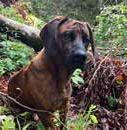
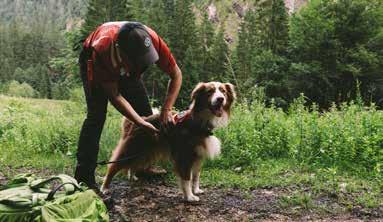
Always alongside: Baron, the young Hanoverian bloodhound. He is not just a helper, but the hunter’s most faithful companion. Baron was born in 2023 and in June 2025 completed his training as a bloodhound. Additional training for tracking is still to be completed, but Manfred Lahnsteiner already has confidence in his abilities. The two met already very early on, because the dog of his teacher at the Federal Forests had just had her second litterand thus also the little Baron.
With rapt attention, Baron sniffs every tree, follows every trail and perceives even the finest scents. But one thing he doesn’t like at all: getting wet. Instead, he sits proudly on the back seat of the quad when the weather is bad. and looks over the shoulder of his chauffeur - a dog with clear preferences. Whoever gets to know him immediately realises that he is much more than a hunting dog. He is a colleague, friend and part of the family.
With a little patience and calm, you can spot deer and chamois from a distance. Those with a keen eye usually have a good chance of spotting the shy animals along the Kaiserbach. A real insider tip lies in the area of the Ritzau Alm on the western flank of the Zahmer Kaiser, where, with a bit of luck, Chamois can be observed on a regular basis. Also on the popular Stadtberg hiking routes to the Berghaus Aschenbrenner, to the Brentenjoch or up to the to the Weinbergerhaus hide small natural beauties. Shortly before the Berghaus Aschenbrenner is an inconspicuous biotope that often attracts deer and red deer to drink. With a bit of luck you can even observe chamois here. At the same time, this habitat offers year-round protection for the rare Alpine newts, which play an important role in maintaining the ecological balance.
Nature also often reveals its playful side. The squirrels in particular are among the most curious inhabitants of the forest. They nimbly scamper between the conifers and sometimes dare to perch on the hunter’s raised hide. When a platter snack is unpacked, it doesn’t take long for them to climb the wooden beams with interest and sniff out what delicacies are still in the backpack of goodies.
Ensuring that encounters with the animal world become unforgettable moments takes attention and a few simple rules. Hikers should always stay on the marked paths, especially at dusk, when deer, chamois and other wild animals are looking for food. All mountain sports enthusiasts and nature lovers are therefore well advised to keep to their routes on the designated paths. In both summer and winter, it is also important to follow the signs: for example, cycling in the Kaisertal is prohibitedan important contribution to the protection of nature and wildlife. Dogs should always be always on a leash, because just one careless moment can become a danger to wild animals.
Waste also has far-reaching consequences. One left-behind tinned food can become a serious source of injury for roe deer or red deer. Therefore the following applies: take rubbish back down into the valley.
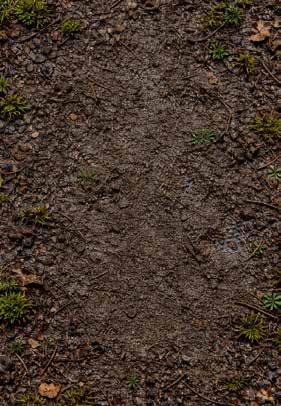
Recognising and correctly interpreting traces
Whether directly by the side of the path or near a water source, tufts of fur and tracks left behind reveal a lot about the forest‘s inhabitants throughout the year. If you look closely, you can easily distinguish the tracks of foxes, deer, chamois, hares, and squirrels.
Equally important is not to feed wild animals. However tempting it may seem, it changes their behaviour permanently and takes away their natural shyness.
Even volume determines the well-being of the animals. Loud music or noisy groups scare them away and push them further and further back.
Those who hike carefully through the Kaiser Mountains will discover more than just landscape. Slow walking and conscious listening open up the chance of spotting a deer scurrying past in the undergrowth or chamois on the rocks. Such moments make the connection between man and nature truly tangible. Living with nature means carefully finding the balance between forest, wild animals and human exploitation of the natural world. This turns
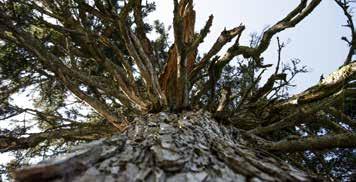
every hike into a conscious moment of quiet togetherness with nature - characterised by peace, respect and appreciation for the mountain world.
If you would like to experience this special connection between man and nature for yourself, you will find numerous opportunities to do so in the Kaiser Mountains. Whether guided nature experiences, hikes or background knowledge about the conservation area: Visit www.naturerlebnis-kaisergebirge.at to find information and tips for mindful encounters with the alpine wilderness.

www.festung.kufstein.at

At aro u n d 280
The Inn changes colour throughout the year - greenish in spring due to glacial meltwater, often turquoise in summer, and often grey-blue in winter.
kilometres,theInn is t he longes t riverinTirol. Its sou
r ce
liesinthe Enga d ine in Sw itzerland.
The Inn is one of the few Alpine rivers that flows via the Danube into the Black Sea.
Up to 100,000 litres of water per second flow through Kufstein - enough to fill any outdoor pool in just a few minutes.
The name “Inn” comes from the Celtic word “En”, which simply means “water”.
In Langkampfen and Oberaudorf, hydropower plants are being built that will supply thousands of households with electricity.
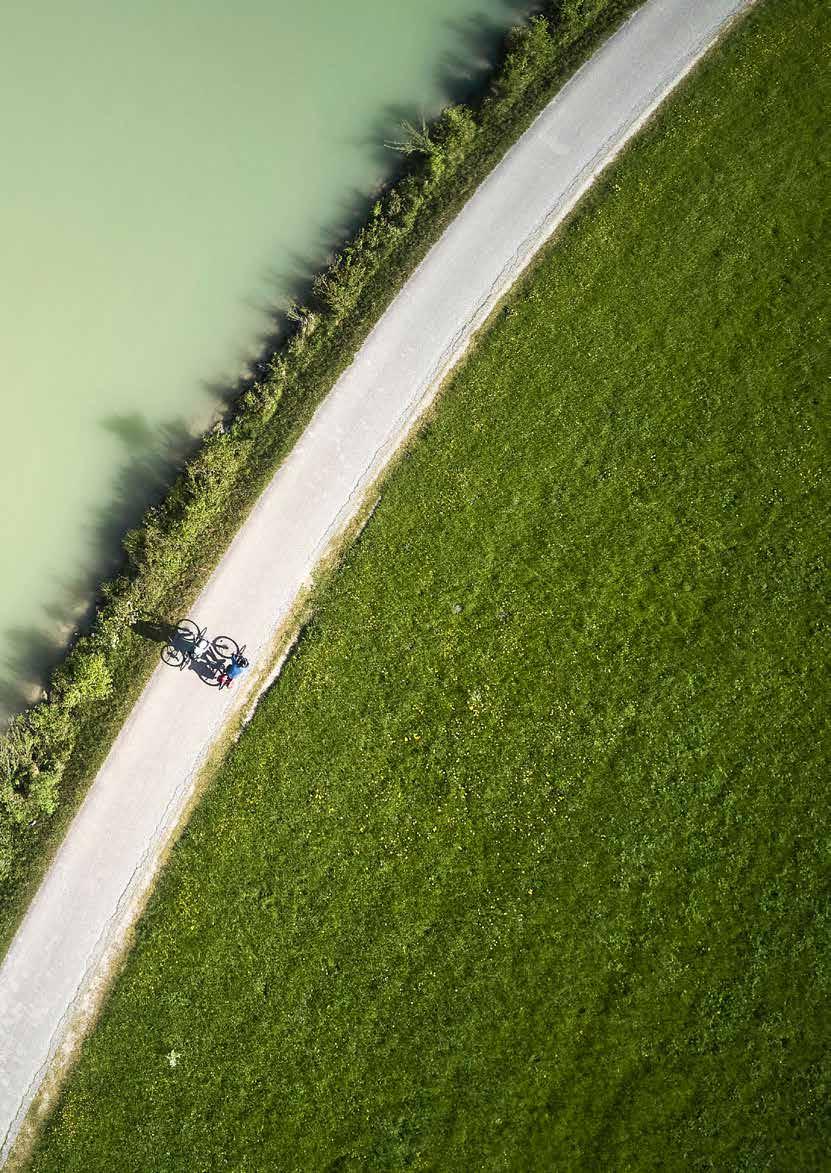
Ebbs, Niederndorf and Erl are situated on an old alluvial cone that formed the Inn over millennia.
Between Kiefersfelden and Erl, the Inn forms the border between Austria and Germany spanning several kilometres.
The “Kufsteinlied” by Karl Ganzer contains the lyrics “the small town of Kufstein on the green Inn”a musical love letter to the river too.

www.bierol.at
The Bierol brewery in Schwoich stands for award-winning beer made in Tyrol. Crafted, sustainable, and modern brewing.

THE BREWERY
In addition to our ramp sales, guided tours and tastings invite you to discover our brewing art.
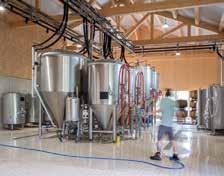
THE BEER TOUR
Take a look behind the scenes any day of the week with our self-guided beer tour. Available in English, German, and French.
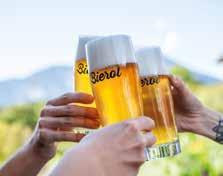
THE BEER GARDEN
Open every Thu – Sun from Apr – Oct. Enjoy cold beers, delicious food, and cool events — indoors and outdoors.
Good beer and culinary highlights – all in one place in sunny Schwoich, not far from Kufstein. The Bichler family runs two businesses here, which are connected in a special way.
Zur Linä combines award-winning cuisine in Schwoich in winter and traditional Tyrolean cuisine on the alpine pasture in summer. Always the same: enjoyment, hospitality and Bierol beer.
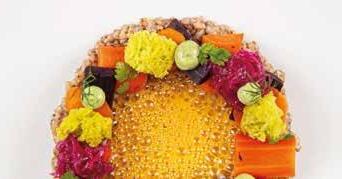
TAPROOM · RESTAURANT
From November to March, Caroline and her team place particular emphasis on regionality and creative diversity in their award-winning restaurant.
www.linae.at
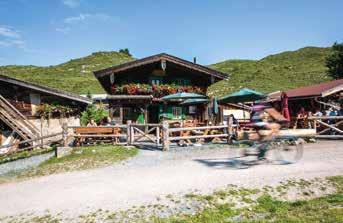
STÖFFLHÜTTE · WALLERALM
In the heart of the stunning surroundings of the Wilder Kaiser, the Stöfflhütte invites you to enjoy a relaxing and enjoyable break from May to October.
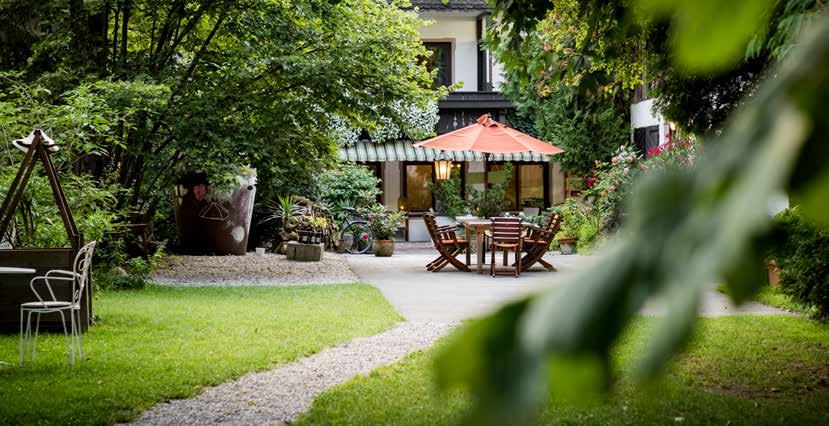
Two traditional houses have stood next door to each other in the village centre of Ebbs for centuries. In both inns, a young generation has taken over and is carefully trying to bring the old establishments into the present - without losing the charm of days gone by.
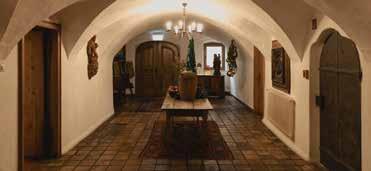
The foundation walls, which are up to one metre thick, reveal the great age of the two houses, which have witnessed the course of history side by side: baptisms were celebrated, marriages were solemnised, tears were shed at funeralsbut above all, people laughed, ate and drank. Behind the thick walls, which maintain a pleasant temperature in summer and winter, pure life was always present. The portal to the Oberwirt is decorated with the date 1556, the entrance to the Unterwirt leads into a vaulted hall so wide that horse-drawn carts used to fit through it.
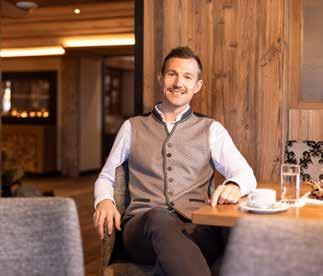
The way into the two houses is also an excursion into the history of the village - and always a culinary experience, as indulgence is a top priority in both houses. At the Gasthof Oberwirt, Christoph Kaltschmied has recently taken over from his father Martin Gasser. At the Unterwirt – honoured by Gault Millau with three toques - sisters Sabrina and Katrin Steindl, known as the “Unterwirtinnen”, run the traditional venue with passion and dedication.
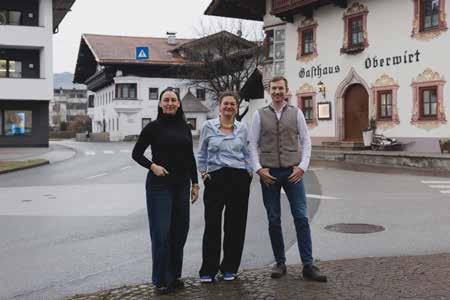
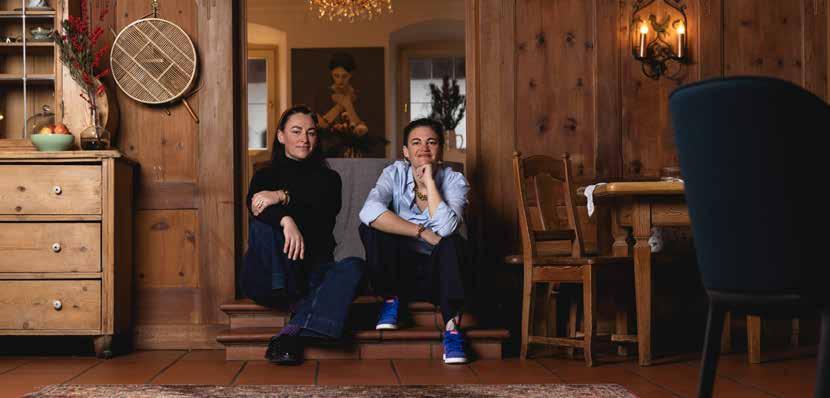
The younger generation took over the inns from their parents - they all grew up in the business and experienced the constant presence of guests as a matter of course: “However, we had our own apartment,” says Sabrina, “which is something our ancestors were unable to say. When he was a child, my father had only one room as a ‘family retreat’ - it was only for his own family that he created an apartment.”
Christoph Kaltschmied also grew up in the inn: “For me, the Oberwirt has always been a part of me. The inn was omnipresent. It was only as I got older that I asked myself the question : What makes an inn for me?” The answer he has come up with is captivatingly simple: an inn is a place where people meet, where many people come and go. “When you grow up in a place like this, then this is our ‘home’ - you don’t make a clear distinction between the two,” says Sabrina Steindl.
While elsewhere there are warnings of “dying pubs”, Kufsteinerland can boast an impressive density of traditional restaurants and pubs. “Ebbs is set up really well - with a whole series of excellent guesthouses. Whether here in the village centre or at the Sattlerwirt, Ledererwirt and many other places to stop for refreshments - this quality is something special and is what makes Ebbs special,” says Christoph Kaltschmied delightedly.
The two inns in the village centre are still central meeting places today: this is where people come together. “In our garden or at the bar, where you can find out the latest news from the village. There’s always something going on. I am particularly pleased that we have so many locals coming in,” says Christoph. Even for guests who have travelled a long way, it is a good feeling to be able to take a seat among the locals and get to know the “real Tirol”. “The encounter between travellers and locals is very important to us. This semi-public space has tremendous significance: the lime tree has stood on the village square between the Oberwirt and Unterwirt for centuries. Even the first documented mention of the Unterwirt already mentions the large garden - it still characterises the house today.
Both houses are listed buildings and their exteriors may not be changed. Even for interior conversions there are clear guidelines: “We are only allowed to work with certain materials, and many trades that need to be called upon are rarely found today. Respecting the history of the house is something that is in the back of our minds all the time,” emphasises Sabrina Steindl. Even as a child she had an interest in history - one reason why she studied this subject before returning to her parents’ home.
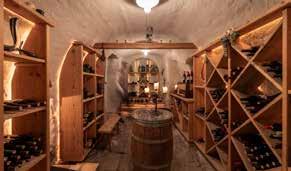
Christoph also finds the references to the past very appealing. The ground floor of the Oberwirt is adorned with a whole series of historical photos that illustrate the development of the house. At the same time, he also endeavours to preserve the old: “The wine cellar has an old marble floor. The stone used comes from from the Kramsach factories. Around 120 years ago it was removed from the church and moved to the cellar of the Oberwirt”. Today, the wine cellar is also open to friends of the house when wine tastings are organised from time to time. Christoph’s father Martin Gasser lovingly renovated this place, where the history of the house becomes clear.
Martin Gasser and Edmund Steindl - the two senior bosseshave been friends for decades. Together they travelled repeatedly to Austria’s wine-growing regions. Both passed on their love of wine to their children - along with their wellstocked wine cellars. At the Unterwirt, there are still bottles that Edmund Steindl laid down as rare finds even when he was alive. Now they are waiting - tended by his daughtersfor the right moment to be opened and to develop their bouquet. Behind the thick walls of the Oberwirt and the Unterwirt is something that has become a rare commodity these days: pleasurable moments in genuine hospitality.
What we think of as a romantic tale from the literature actually happened in Ebbs: The union between Johann Michael Gast, son of the Unterwirt, and Christina Kreuz, daughter of the Oberwirt, was more than just a marriage - it became a symbol of the merger of two innkeeping dynasties. Johann Michael Gast was born the ninth of ten children in the traditional Unterwirt. His father, Johann Martin Gast, was already considered one of the wealthiest landowners far and wide. Christina Cross, on the other hand, grew up in the Oberwirther parents had taken over the business in 1784 from Countess Maria Anna von Trautmannsdorf.
At a time when marriages were often concluded for pragmatic reasons, the connection between Johann Michael and Christina was apparently a love match. In any case, economic necessity cannot be deduced from history. Johann Michael took over the Oberwirt and led it through turbulent times.
This “Romeo & Juliet” story did not end in tragedy - on the contrary: it laid the foundations for a shared history in which the Oberwirt and Unterwirt remained connected in friendship.
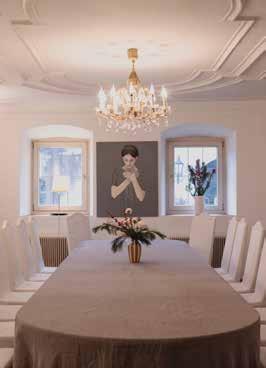
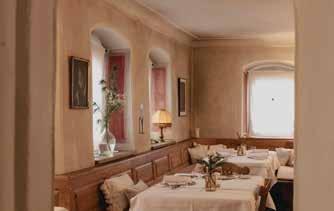
The Unterwirt was first mentioned in writing in 1457 – with Thomas Förchtel as the landlord at the time. The garden of the courtyard can even be found in the Ebbs abbey register from 1490. From 1632, the Mayr family left their mark on the the fortunes of the house before, in the middle of the 18th century, the Gast family took over the helm. Under Johann Martin Gast, the property grew into one of the most stately manor houses in the region - with several parlours, stables, store rooms and commercial buildings. After the Second World War, Michael Steindl and later Edmund Steindl converted the property into a modern hotel and gourmet restaurant. Today, Sabrina and Katrin Steindl are taking the business into the future as its “Unterwirtinnen”.
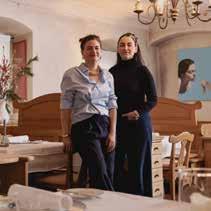
“All generations have contributed and shaped their lives in this house. The house accommodates us for a while - but we are only the blink of an eye in its long life”, is how Sabrina Steindl sums it up.
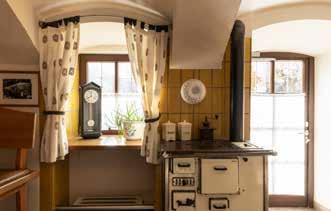
The Oberwirt in Ebbs was first mentioned in a document in 1417 - when a certain Wolf Mayr was named as the first landlord. The inn was given its present appearance in 1556: a solid stone building replaced the original timber construction, and the year is still visible above the portal. Over the centuries, the building has experienced eventful times - from pillaging and reconstruction to its further development as the centre of social life. The handover of the house to the Kreuz family in 1784 was a particularly remarkable moment. Since 1870, the Oberwirt has been owned by the Kögl family, later through the Gasser line - and today Martin Gasser and Christoph Kaltschmied run the traditional business with a keen sense of its history.
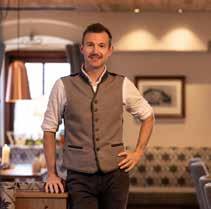
“The strong framework remains exactly as it isbut something is constantly being updated on the inside”, adds
Christoph Kaltschmied.
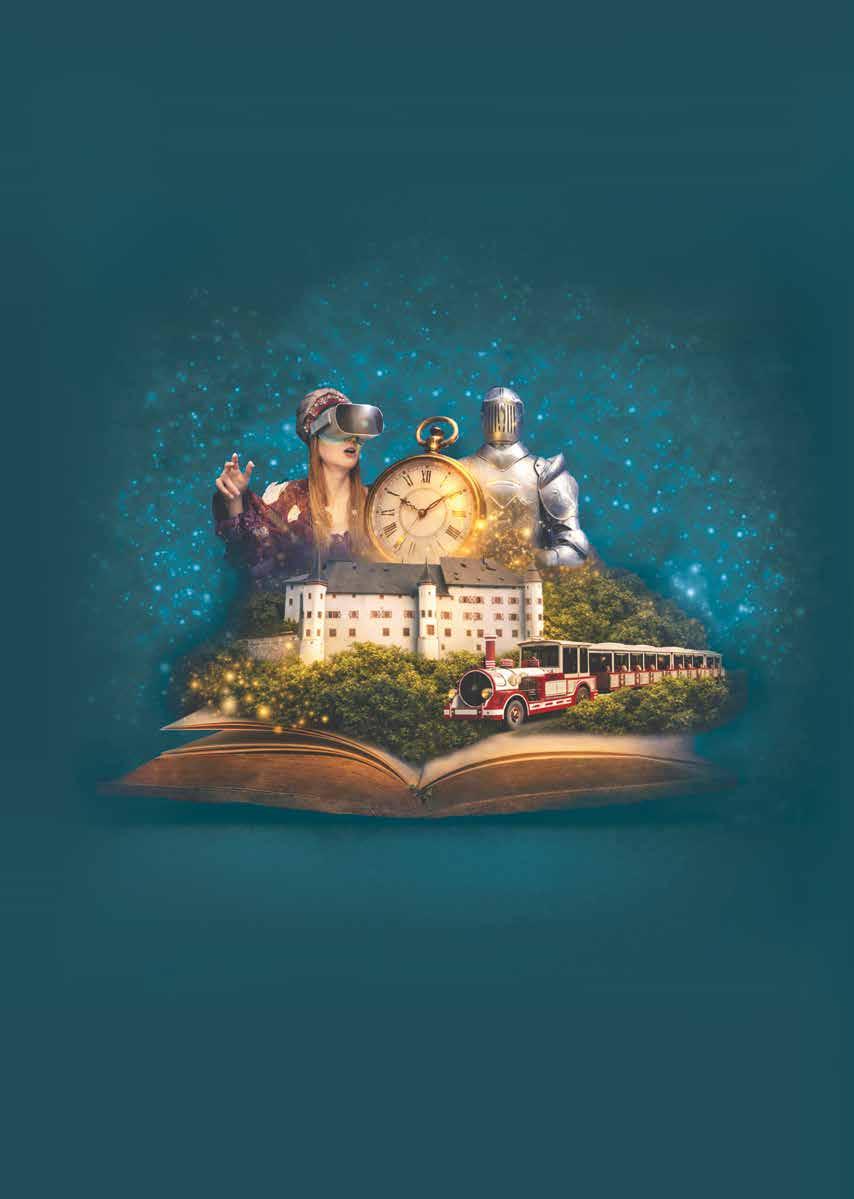

Scenic panoramic ride with Tratzberg Express
Unique experiential and fairy tale guided tours
360° virtual reality time travel experience
Idyllic walking and hiking trails
Schlosswirt restaurant with terrace & playground
BOOK YOUR TICKETS NOW!

Culture in Kufsteinerland is not a product of chance. It arises when spatial, social and historical factors find a common language.
If you want to understand culture in the Alpine region, you have to think biggerbeyond borders. Culture is not created in the shadow of a fortress, nor does it end at the state border. Structures that have developed over centuries come to life particularly where people and traditions remain in motion and encounter each other, as with CLASSIC PEAKS, a new cultural alliance between Chiemsee and Kufstein.
Its location has shaped Kufsteinerland like scarcely anything else: between Italy and Central Europe, Tirol and Bavaria, the Kaiser Mountains and the Inn Valleythis region has always been a crossroads and transit point. Even at the time of the Inn navigation, the area was an important transport corridor. Shipbuilders and boatmen from Langkampfen built and guided the boats that transported goods, people and ideas across the Inn. Kufstein was a customs station, a transshipment centre and a popular meeting place. Many only came for a stopover, but many remained - and formed a community that remains cosmopolitan and curious to this day.
When people talk about culture in Kufsteinerland, they think of traditional clubs: rifle companies, music bands, traditional costume groups. They are the visible signs of a rich heritage. But tradition is never a rigid state of inertia here. It is lived, negotiated and passed on. The traditional Unterinntal costume is still worn because it is not just an item of clothing, but an identity. The music bands march because their music creates community. The theatre companies perform because their plays bring opportunities for reflection to the region. This continuity has characterised Kufsteinerland - and at the same time prepares the ground for allowing new things to happen.
Kufsteinerland has developed into one of the most multifaceted cultural centres in Tirol. The region no longer just stands for traditional sounds and living customs, but for an extraordinary cultural spectrum: the open-air production of “Jedermann” in the historic Festungsneuhof, the cross-genre Festival Unlimited, top-class concerts at Kufstein Fortress, the internationally renowned Tirol Erl Festival with its concert and opera formats, literary events, exhibitions, lectures and art projects in public spaces. Major live acts are also on the programme here, along with intimate concerts, experimental art alongside performances steeped in tradition - all this makes the cultural diversity of the region tangible and vibrant.
2026 – 125 years of the Koasara traditional costume association
2026 – 100 years of the Andreas Hofer monument in Kufstein
2027 – 150 years of the Schwoich national band
For centuries, people have been carrying goods, stories and ideas across the border. The cultural exchange between Bavaria and Tirol is firmly rooted in language, cuisine and everyday culture. And also the cultural power that is so tangible in Kufsteinerland extends far beyond the Inn Valley. Ideas, connections and partnerships emerge across borders, showing how naturally culture brings people together.
What was previously visible at certain points is now being given structure, visibility and new momentum: with CLASSIC PEAKS, a cultural alliance is forming that combines the best of two regions. CLASSIC PEAKS brings together important festivals
and venues between Chiemsee and the Tirolean Alps to create a shared soundscape. From the Tirolean Erl Festival and the MusicalSommer Kufstein to the Immling Festival and Amerang Castle and on to the Festivo in Aschau and the Maxlrain Opera Theatre, a network of high culture that transcends borders and opens up new horizons is forming.
CLASSIC PEAKS is more than an association of festivals. It is a commitment to a common cultural region in the heart of Europe. Supported by tourism organisations, the festivals and regional partners, CLASSIC PEAKS seeks to visualise the power of this diversity and help people rediscover culture - as a reason to travel, inspiration and as an emotional experience.
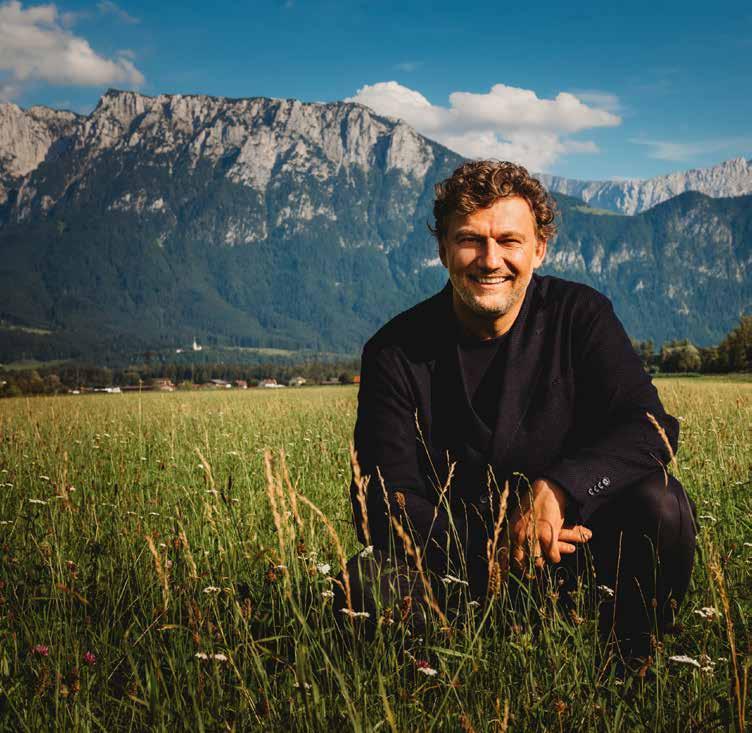
What has grown in Kufsteinerland has found an echo beyond the Inn with CLASSIC PEAKS. The association draws on the cultural energy that has been generated here for centuries and carries it across borders, valleys and lake shores. In this way, a local experience becomes a shared cultural space that thinks bigger, sounds wider and invites people to become part of it. You can find out more about CLASSIC PEAKS and the current partner programmes at: classic-peaks.com/en
The Immling Festival has been providing inspiration for over 30 years with opulent opera productions, moving concerts and young talent. The venue combines stage and landscape into a unique work of art.
festivo promises chamber music with character at special venues such as the Festhalle Hohenaschau, the Preysing Hall in the castle or the historic H.hermühle: sophisticated, international and close to the audience.
The summer concerts at Amerang Castle combine a historical atmosphere with great music and make every evening a cultural event. From June to August, the arcade courtyard becomes a festive sound space.
The MusicalSommer Kufstein brings great musical productions every year to the Kufstein Fortress. In 2026, the exclusive production “Saturday Night Fever” with music by the Bee Gees will create disco fever in a historic setting.
The Maxlrain Opera Theatre invites you to opera experiences in an extraordinary ambience: a former riding hall right next to the castle. In this mixture of historical backdrop and creative energy, opera classics and concert programmes abound.
In the iconic Passion Play Theatre and the modern Erl Festival Theatre, a musical dialogue is born: the Tirolean Erl Festival brings together artists, great works - and a cosmopolitan audience.

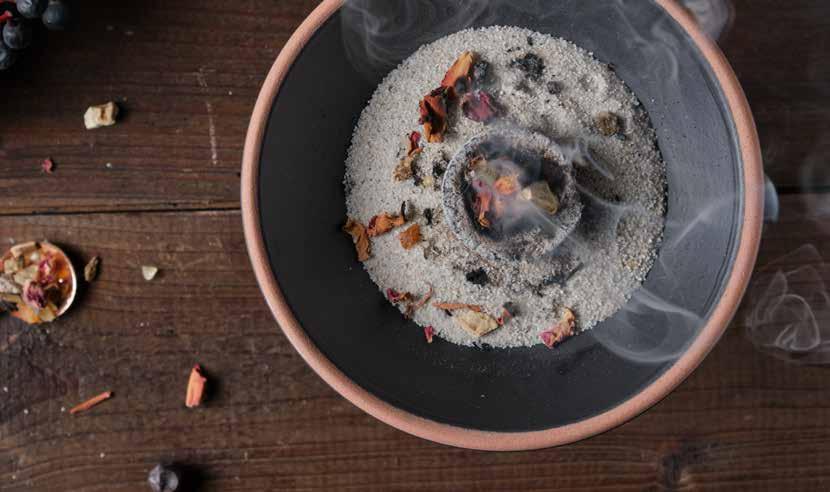
Smoke was once used to drive away evil spirits and protect stables and farms and prayers were said for good luck for the coming year. Today, smoking is experiencing an impressive comeback, especially in the cold season, providing feel-good moments, with a relaxing effect and strengthening the body and soul at the same time.
Alook to the past shows that the origins of smoking are not located in the Alpine region, but rather smoking has accompanied mankind since time immemorial. The assumption is obvious that our ancestors threw resins, woods and herbs into the fire and were fascinated by the rising smoke, whose fragrance was considered soothing, stimulating or calming. In this country, the tradition goes back to pre-Christian, Celtic customs, always with the purpose and goal of chasing evil away. This idea found resonance in Christianity and so smoking was soon closely linked to the so-called Raunächteand a new smoking culture with a religious background was born.
It has always been the long, cold nights that people perceived as eerie and mysterious - especially the time around the shortest night of the year from 21 to 22 December. On the night of St Thomas, it was possible to commune with the dead and even the animals could speak. Reason enough to organise rituals for cleaning the stables and courtyards on this extraordinary night. To this day, the winter solstice is usually regarded as the beginning of the Raunächte, or smoky nights. The “smoky nights” are traditionally
celebrated until the 6th of January, Epiphany. The number of smoky nights varies depending on the region - but the mystical meaning as a time of transition remains.
It is characteristic of smoking that it can still be carried out today with few resources. People only had simple accessories available. For example, an existing cast iron pan was filled with sand, glowing coals taken out of the oven and finally the smokehouse was placed on top. From the cellar to the attic and into the stables - all this with the windows and doors closed - and distributed into every corner with feathers and in a clockwise direction. This is how people used to carry out this act. All the family members were there to drive out the supposed evil with as much smoke as possible rising to the gods. Then, as now, people experimented with the smoking ingredients.
Of course, it used to be exclusively herbs and woods that could be collected and dried locally. Ingredients such as frankincense and myrrh were not available to simple folk or were far too expensive. Especially St John’s wort and mullein, in other words, the herbs that are harvested at the summer solstice, were considered to have a powerful effect.
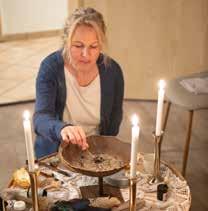
Of course, you don’t necessarily have to go in search of the right smoke yourself these days, but it’s still worth roaming the woods and meadows with your eyes wide open if you’re thinking of giving smoking a try. Local herbs still form the basis, even if exotic blends can be found on the market. Herbalists recommend mugwort, sage and juniper for cleansing, lavender and mint for calming and harmonising. To round off the smoking process, resins such as fir, pine or Scots pine are used to achieve a protective effect. The smoking bowl is open to everything that is good for you.
How fortunate it is that the tradition of smoking has not been consigned to the past. Rooted deep in Tirolean tradition, it is undergoing a modern reinterpretation - as the broad choice of smoking workshops, seminars and specialist literature illustrates. Old and young are interested in the rising smoke and send their wishes to heaven with it. Whatever you like is permitted. Today, people may no longer pray the rosary while smoking or sprinkle holy water, but the saying “bad luck out, good luck in” can still be heard in many places.
In classic smoking, the cast-iron pan has also been replaced by smoking bowls and special containers, just as the coal from the open fire has given way to the charcoal tablet. A gentle alternative is also offered by the principle of the aroma lamp. Instead of the bowl in which water normally evaporates with the fragranced oil, a special sieve is placed on the lamp. There, the desired herbs smoulder gently and the amount of smoke produced is significantly less. It is not the method that ultimately decides, but rather the smoker’s access to herbs.
Atmospheric and enigmatic
Smoking remains a little mysterious to this day. And that’s a good thing. Smoking combines ancient knowledge with modern needs and means, first and foremost, embracing it. Then the fragrant blend of herbs and resins has a decelerating and sensual effect on the body and soul. Take the time to smell, feel and listen to the stories that winter tells.
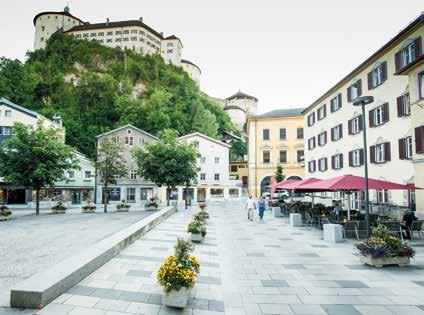
THE LÖWE HAS A LONG-STANDING
• Central location at the heart of the town
• Optimal service and traditional cuisine at the restaurant
• Comfortable rooms
Adventure time in Kufsteinerland
Whether winter magic with smoking or summery moments of pleasure - the programme of adventures in Kufsteinerland offers special moments all year round.
You can find all offers at: kufstein.com/en
SOPHISTICATED ATMOPSHERE
• Deluxe apartments in a top location in Kufstein
• A carefully restored historic building
Appartements Egerbach
BOOKABLE ROOMS AND ACCOMMODATION
• In the district of Egerbach in Schwoich near Kufstein
• Single rooms, double rooms (Standard, Premium or Premium Deluxe), dormitories and suites
HOTEL GOLDENER LÖWE KUFSTEIN
A 6330 Kufstein, Oberer Stadtplatz 14
Phone +43 5372 621810, hotel@goldener-loewe.at www.goldener-loewe.at
The Unterberger Group has been a traditional family business for almost 50 years, operating very successfully in the automotive, property and investment sectors.
Beautiful cars have always inspired us. In 27 car dealerships in Tyrol, Salzburg, Vorarlberg, Bavaria and Baden-Württemberg, we stock vehicles from numerous brands.
>> BMW GROUP
AUTOWELTEN
>> BODY REPAIR CENTER
Creating beautiful buildings is our second passion. The Unterberger Immobilien team realises several small and large projects in Austria and Germany every year.


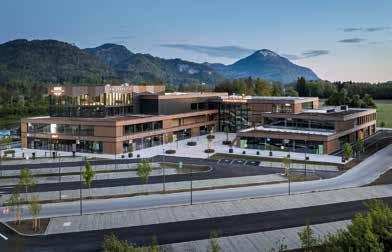
Become a tenant now www.kaiserreich.de
UNTERBERGER BETEILIGUNGS GMBH
Salurner Straße 38, A-6330 Kufstein, Tel.: +43 (0) 53 72 / 64 600, Mail: office@unterberger-gruppe.cc, www.unterberger-gruppe.cc
UNTERBERGER IMMOBILIEN GMBH
Salurner Straße 38, A-6330 Kufstein, Tel.: +43 (0) 53 72 / 64 500, Mail: info@unterberger-immobilien.cc, www.unterberger-immobilien.cc
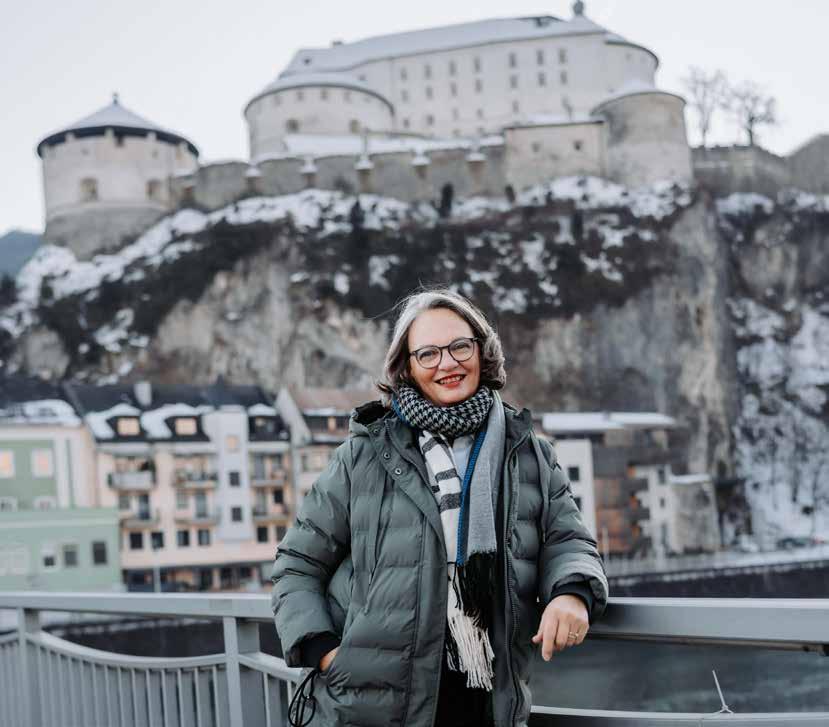
28 years of service for Kufsteinerland
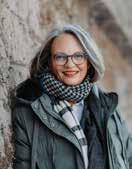
Sabine Mair is many things: a strategist, a networker and a listener. As managing director she has supported the development of Kufsteinerland for many yearsand always believed in the tremendous importance of interpersonal encounters. A conversation about leadership with flair, the “Kufsteinerland lifestyle” and her signature - in the region and a notebook that has become her trademark.
Sabine Mair, you are from Kufstein with French roots - how has this combination shaped you?
In culinary and cultural ways in equal measure. I have certainly inherited a love of French cuisine. At the same time, I was able to experience from an early age how enriching it can be to combine two mindsets. The fact that I grew up bilingual not only gave me linguistic flexibility, but also a deep understanding of different cultures and perspectives - something that still shapes me today.
The French are known for their “savoir-vivre”. Do you see any of this in Kufsteinerland?
For me, savoir-vivre means above all lightness, joie de vivre, togetherness - celebrating the moment. This attitude is deeply rooted in French culture, as is a certain openness towards foreigners that has grown historically. In Kufsteinerland I find a very different, but equally powerful sentiment: the people here are very close to nature, aware of their traditions and deeply rooted to their home. There is a great awareness of what makes this home so special - and a strong desire to preserve it. For me, this grounded, clear awareness of what really matters also has strong parallels in savoir-vivre.
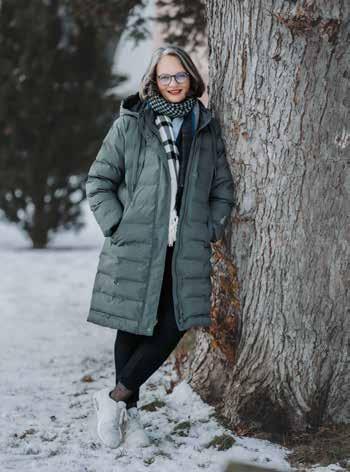
What does a mindful approach to our environment mean to you?
For me, this is a very central point, which is even formulated in lawwe are the coordination centre for sustainability in Kufsteinerland. The road to the Austrian Ecolabel was long - and not always easy. You can’t just talk about something being “fit for our grandchildren” - you also have to make sure it is! And that’s where you need people with the same mindset.
“My wellness oasis is my garden. It’s where I can keep my head calm - without having to talk. After so much communication during my workday, that’s what I need.”
You always carry a black book around with you. Can you tell us what you’re writing in it?
I work digitally, but I always write my meeting notes on paper. There have been situations where these were the only way for me to keep track of important conversations. This is my personal archive, full of small details. Sometimes one sentence is enough to remember an entire conversation.
When is the right moment for you to let go of something?
If it were up to my officials, I should probably stay forever. But now a new generation is coming - and they are supposed to take things in their own way. The coronavirus has changed a lot of things. Part-time, worklife balance, new working models - it’s really noticeable. I come from a time where everything was still tightly scheduled. Today, many work more freely, with a lot more self-determination. That’s good - but it also requires a common set of rules so that the business is able to operate. I have been in charge for a long time and now it’s time to sometimes let go a little. I can proudly say that I am handing on a healthy business to my successor!
Is there something you’ve wanted to do for a long time, but haven’t yet had time for?
I like to read, even analogue. For me, reading is a retreat and relaxation. What is often neglected at the moment - and what I am really looking forward to in retirement - is simply having more time for myself, my family and my friends. These small, personal moments mean a lot to me - and I hope that I’ll soon have more time to dedicate to them.
Finally, I would like to express my heartfelt thanks to everyone who has accompanied me on my journey, as well as to my wonderful team. Thank you for the trust you have placed in me and for the courage to break new ground together.
For almost three decades, Sabine Mair has been shaping the development of the Kufsteinerland Tourism Association. In 1998, she started as a parttime employee at the counter, took over the financial agenda in the same year, and quickly rose to management level. She was responsible for milestones such as the merger of nine communities to form a single destination, the setup of an internal audit system, establishing the “KUltura” culture rand and numerous infrastructure and marketing projects.
She took over the sole management of the TBV Kufsteinerland company in October 2023 and led the association through a comprehensive renovation process which included the introduction of an in-house marketing department, the expansion of PR and communications work and successful certification with the Austrian Ecolabel for Destinations.
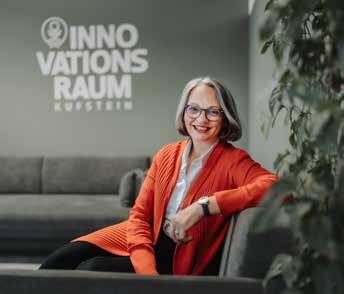
Under the annual theme “Between Heaven and Earth,” the 2026 Sun Summer invites locals and guests alike to rediscover the Tyrolean mountains. When children explore the witch forest and waterways barefoot, witch stories and legends come to life, and the sky opens up far above the mountains, a journey through nature, time, and the cosmos begins.
The story gondola lift takes visitors up to Hexenwasser, where they are welcomed personally at numerous stations. Young and old alike explore how heaven and earth communicate with each other –through moon phases, weather changes, old farmers‘ rules, and humorous moments of magic. At the reservoirs, you can feel the flow of the water, the nature world tour takes you into the earth, and quiet places invite you to look, listen, and breathe deeply. With a little luck, the walking witch will send all your worries into the sky in shimmering soap bubbles, and under the giant umbrellas, water droplets will make the singing bowls dance.
New this year is the modernized “Sternstunden” gondola lift to the Hohe Salve. It takes guests to the summit, where the sundial trail, Salvenriese, and the new sky labyrinth with walk-in Salven sun invite them to marvel, explore, and change their perspective. The rotating terrace, Salvenkirchlein chapel, and the special tranquility at the summit make the Hohe Salve a place of power between heaven and earth from July onwards.
Further information: www.hexenwasser.at
Gondola service Hexenwasser May 9 to November 1 and Hohe Salve from mid-July to November 1 daily 8:45 a.m. to 5:30 p.m.
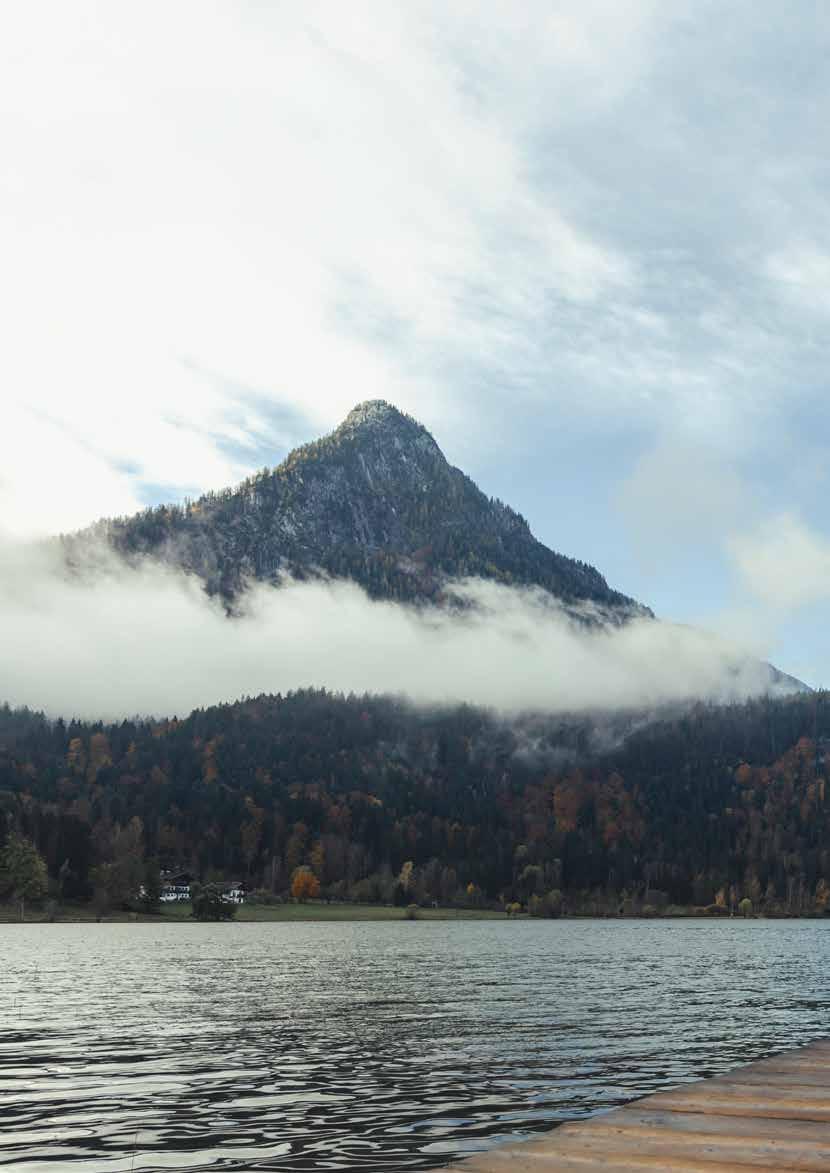
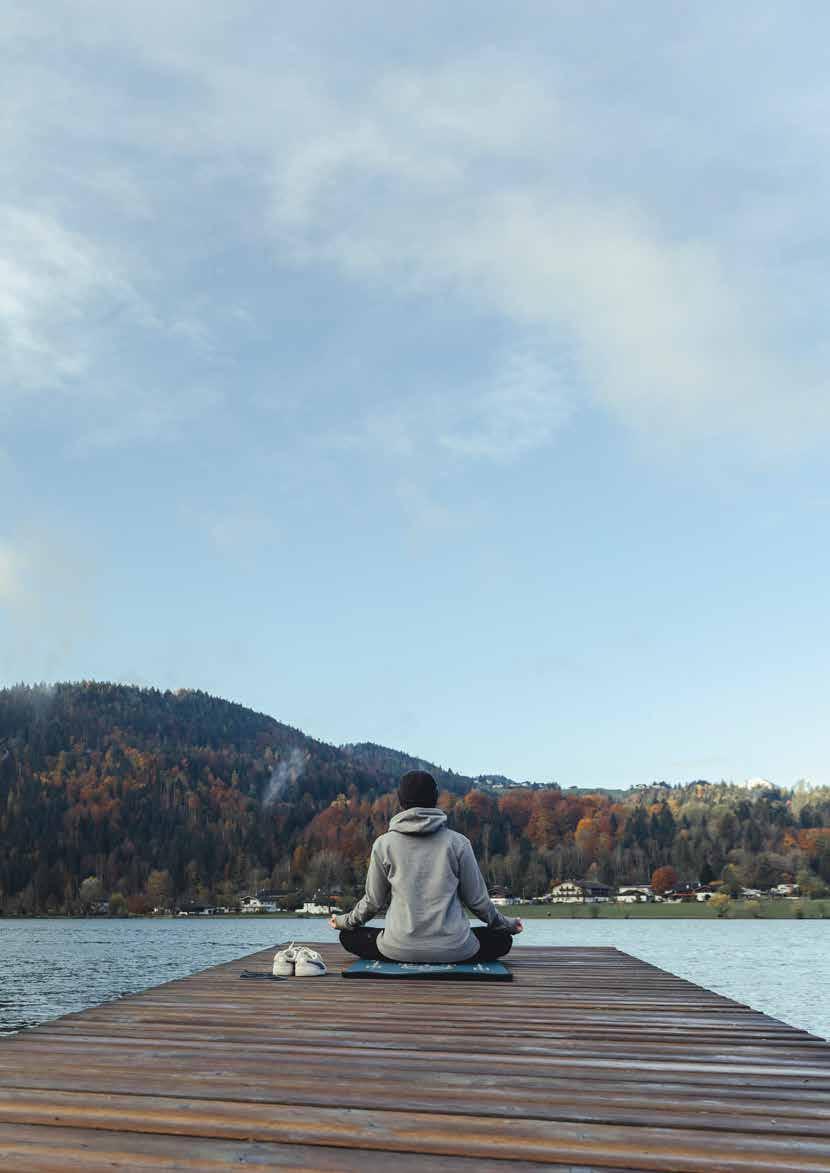
The motto “Higher, faster, further!” has long since become obsolete when it comes to individual well-being. Instead, the longing for a holistic life in harmony is growing. “Holistic living” is the buzzword of the moment, because the desire to experience existence as a unity of body and mind, of emotions and environment, is more present than ever.
Of course - trends come and go. “Holistic living is here to stay: it is an attitude, a return to the essentials - to a conscious, powerful life. Even the thinkers of antiquity were concerned with the wholeness of the human being. Aristotle summarised this as “The whole is more than the sum of its parts.” Centuries later, the World Health Organisation took up this idea and in 1946 defined health as “a state of complete physical, mental and social well-being” - not merely the absence of disease.
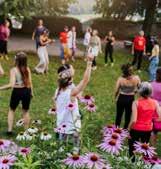
Between summits and thoughts – those who come to rest in Kufsteinerland will find more than just relaxation.
When, if not on holiday, is the best opportunity to relax and recharge your batteries? Especially when the surroundings offer everything you need for a journey to yourself. In the two high valleys around Bad Häring and in the Thiersee Valley, the path to new vitality, inner contemplation and harmonious wholeness is already being lived. Here, health doesn’t start in front of a screen, but outside - in the forest, in the meadow, on the lakeshore. The interplay of nature experiences, gentle detox programmes, health offers and Ayurvedic treatments creates an atmosphere in which body and soul regenerate in equal measure. The ideal place for a fresh start - towards more balance and vitality.
Finding the ingredients for personal well-being is often easierand at the same time more difficult - than expected. But with the loving support of the hotels in the Bad Häring and Thiersee Valley health destinations, the first step back to yourself is a natural one. Not loudly, but quietly. Not according to a specific formula, but rather personalised to your needs. This leads the way to more balance and lasting vitality. The tranquillity of the region’s high valleys helps you to hear your own inner voice again - during a mindful walk, forest bathing, a yoga session at dawn or a quiet dinner in the open air. Feel. Listen. Be.
Living holistically is a process - and a conscious decision that reaps rewards. Your personal health journey begins in Kufsteinerland, on the edge of the Kaiser Mountains nature reserve. Combine mind, body and soul into a whole.
The Panorama Royal in Bad Häring is visible from afar. The 4-star superior hotel sees itself as a source of energy, strength and joie de vivre. Lovingly thought-out amenities such as a 7,500 m2 wellness and spa world and inspiring yoga and Pilates courses create an atmosphere of relaxation at the resort.
The name says it all - this hotel oasis is dedicated to seven pillars which, when treated with mindfulness, allow you to relax and unwind: life, health, soul, food, nature, sleep and relaxation. Situated on a sunny plateau in Bad Häring, DAS SIEBEN stands for a mindful way of getting to know Kufsteinerland and its nature.
The hosts at the Juffing have set themselves the goal of creating moments that last. Beautifully situated in Thiersee, the 4-star superior hotel is a place of happiness in the Tirolean mountains. Here, guests are accompanied on their way to greater balance, with a spacious spa area and outstanding gourmet cuisine.
At the Sonnhof on the high plateau of the Thiersee Valley, Far Eastern healing teachings are taken further and transferred to European living environments. The treatments ensure harmony and mental balance - the aim is a holistic recovery, combining Ayurvedic philosophy with therapeutic depth and modern knowledge.
The Thierseerhof in Hinterthiersee is a place to stay in the mountains that is dedicated to rest and relaxation. Here, guests can consciously focus on being and staying, on finding themselves and enjoying the tranquillity of nature. Culinary delights invite you to relax and unwind. All of the spa hotels in Kufsteinerland at a glance - inspiration & booking directly online.
All wellness hotels in the Kufsteinerland region at a glance – inspiration & booking directly online
YOU DON’T HAVE TO TRAVEL FAR TO EXPERIENCE RELAXATION, BALANCE AND WELL-BEING.
Day spa in the Ayurveda centre - pool area & sauna landscape
Ayurvedic massages & treatments
Consultation with our team of Ayurvedic experts
European Ayurveda® Home App: holistic treatments & programmes for at home
Detox & regeneration
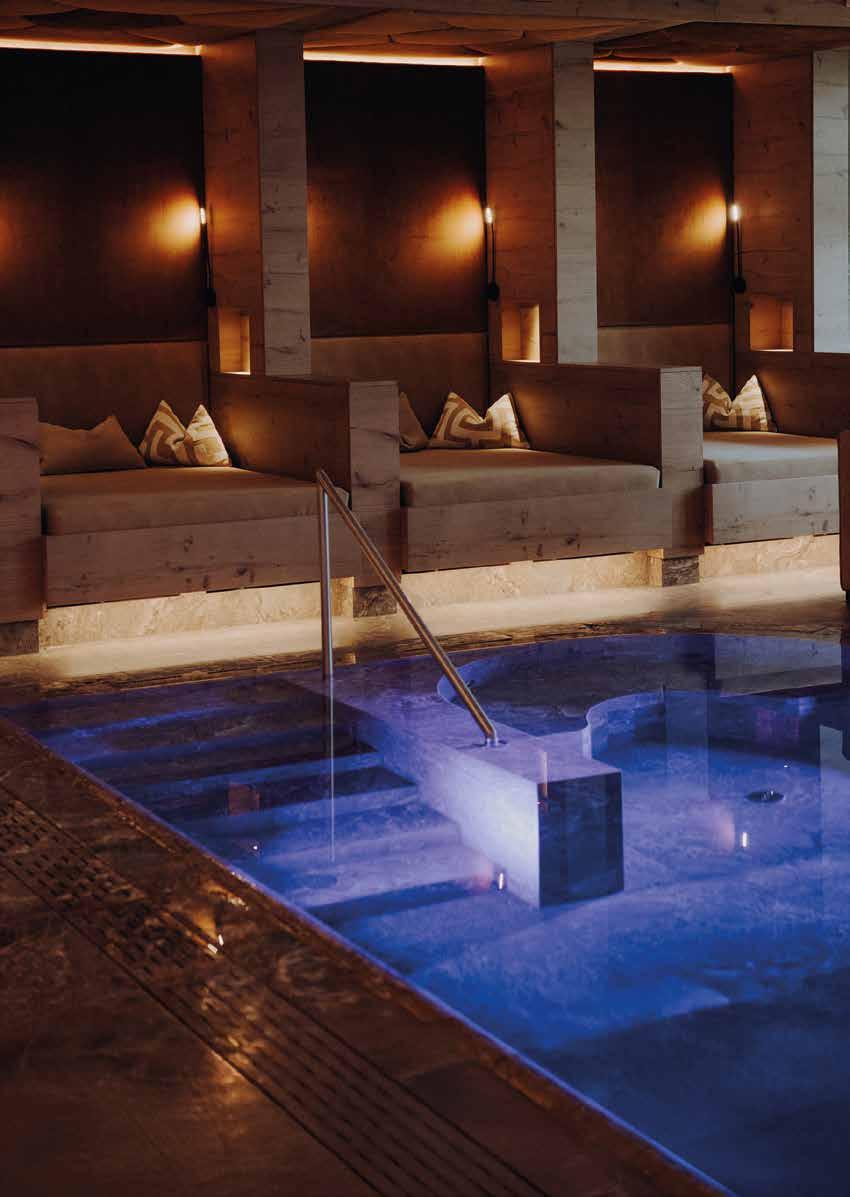
Well-being starts here:
E u r o p e an A yurved a R eso r t S o n n h o f
Eu r op e an A yurved a ® H o m e
The search for authentic souvenirs for your loved ones at home can turn into a journey into the real Kufsteinerland that enriches your own stay. Because in lovingly run workshops and charming shops, unique pieces are created here that tell stories - about the people in the region and their passion for traditional craftsmanship.
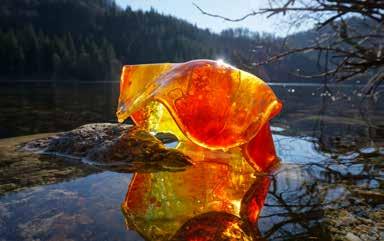
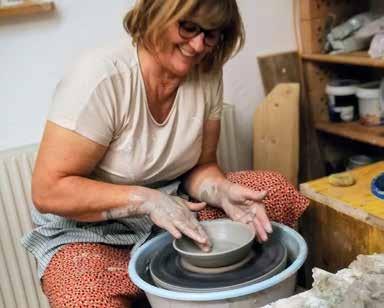
Glass artist Birgit Dopsch sets sparkling accents with her handmade jewellery and shiny accessories in her studio right next to the staircase to the fortress.
Her creations combine modern aesthetics with traditional glass art and are patiently crafted by hand. Every piece of jewellery is a sparkling piece of art that captures the light and highlights the personality of its wearer.
In Ebbs, where the town is already changing into the countryside, a very special hidden treasure awaits: the self-service shop known as “Inge Dinge”. In the cosy workshop here, handmade pottery is produced that is much more than just beautiful objects.
Each piece bears the signature of its creator and the warm earthy tones and organic shapes reflect its connection to nature. Whether rustic bowls, tea cups, scented lamps or other decorative items for the home - you are guaranteed to find the perfect souvenir for people who appreciate authenticity.
For lovers of precious liquids, the route leads to the historic gallery in Kufstein, where one of the largest gin collections in the world is located and tastings take place in a unique atmosphere.
The Crownhill distillery in Schwoich near Kufstein produces handmade brandies and spirits from selected regional raw materials at the Kronbühelhof. This is how characterful liquids such as whiskey, gin, rum, brandy, liqueurs and spirits are created - many of which have won national and international awards.
The Bierol brewery in Schwoich near Kufstein stands for creative, craft-brewed beers that are “Made in Tirol”. At Stöfflhof, hoppy specialities are created from regional ingredients and with a great love of experimentation. The “Bierol DIY beer tour” takes you on a relaxed tour through the world of Bierol - now available free of charge and ideal for combining with a visit to the Bierol beer garden & taprooms.
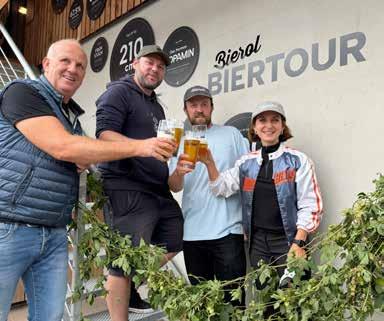
What would Tirol be without really good bacon? If animal welfare is just as important to you as excellent flavour, you can buy bacon and sausages from the regional Schererhof farm in Niederndorf. The Buchauer family breeds and processes the animals themselves - they are slaughtered directly on the farm with minimal stress. So you can enjoy the products without a guilty conscience!
Florian Kitzbichler is the youngest and possibly the last gingerbread maker to receive an apprenticeship diploma for the production of this sweet temptation. In his gingerbread bakery in Niederndorf, delicious gingerbread biscuits are baked according to old recipes, which immediately bring back childhood memories with their intense aroma of honey and spices. The lovingly decorated gingerbread is not only a treat for the palate, but also a piece of living tradition.
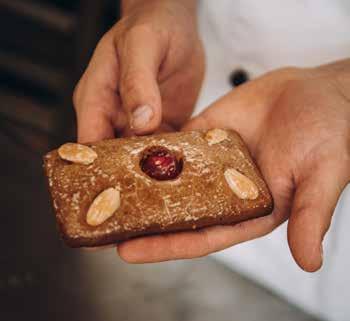
All these treasures are united by a common philosophy: they are created with passion, time and dedication. Those who give such gifts are not just passing on an object, but a piece of the soul of Kufsteinerland - authentic, warm and unforgettable.
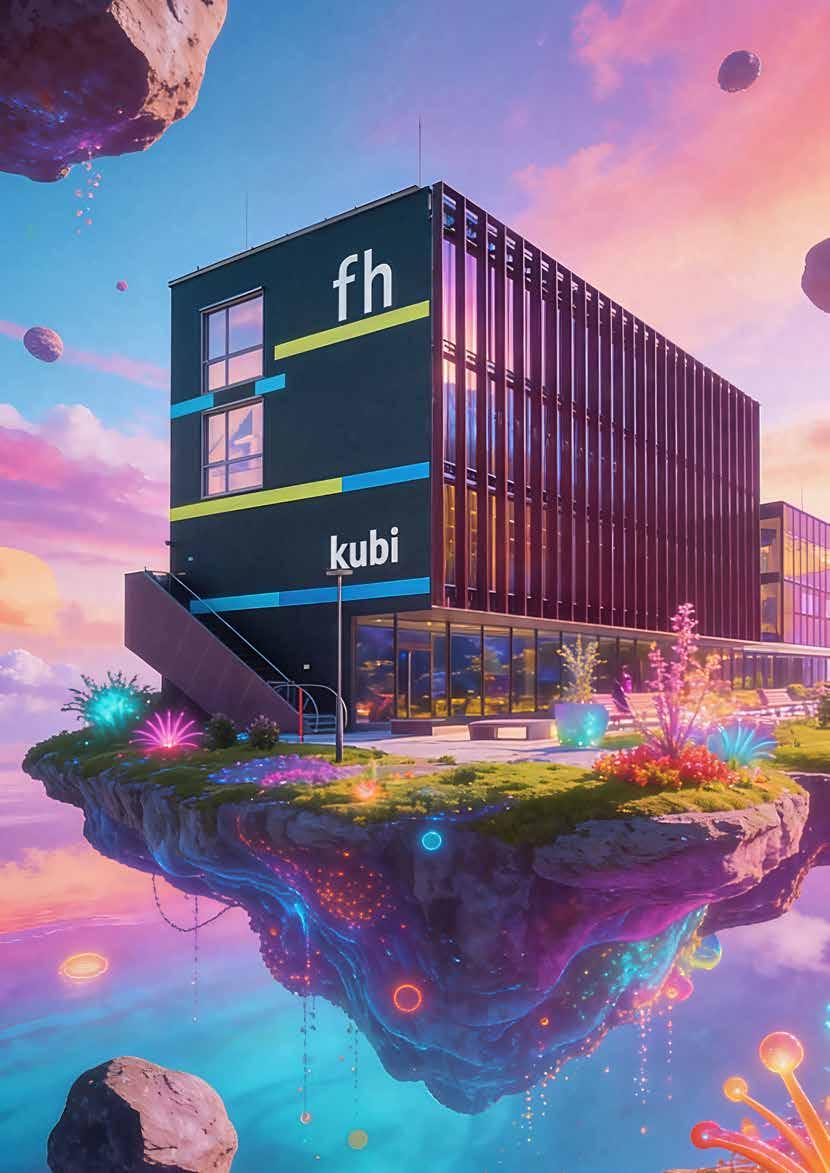

Artificial intelligence is far more than just a buzzword in specialist circles - it has become part of our everyday lives. And with it comes the uncertainty of how its use will change our world and our perception of it. With the AI Competence Centre, the Kufsteinerland region has secured itself a place on the map of future technologies. The Rector of the University of Applied Sciences in Kufstein, Mario Döller, describes it as a place where the future is not only thought about, but directly tried out.
When people talk about artificial intelligence today, the name ChatGPT inevitably comes up. However artificial intelligence is much more than an intelligent chatbot that anyone can use. AI is already being used in Kufstein to control swarms of drones for rescue operations, analyse traffic flows and automatically check invoices. This is made possible by a unique regional alliance: the Kufstein AI Competence Centre.
“We didn’t just want to watch things develop,” explains Mario Döller, who launched the AI Competence Centre together with experts. “We have created a platform that brings together companies, research and society. On the one hand, it is about the international competitiveness of our economy and, on the other, about making people in the region fit for dealing with new technologies.”
The potential of AI is particularly visible in a project that is attracting attention far beyond the region: autonomous drone systems are being developed in Kufstein for use in search operations by the fire brigade or mountain rescue services. The drones fly in swarms, use AI to recognise people in rough terrain and transmit their position in real time. “This is not a vision of the future - it is already working in pilot projects today,” explains Mario Döller. An impressive example of how artificial intelligence can even save lives.
Between the Alps and algorithms
It is no coincidence that such a centre is being built in Kufstein of all places. The district capital in the Tirolean lowlands scores points with its strategically favourable location - in the immediate vicinity of Munich, Salzburg and Innsbruck - and offers a practice-orientated educational institution with an international reputation in the form of the Kufstein Tirol University of Applied Sciences. Study programmes such as Data Science or Europe’s first drone study programme provide fresh ideas and close links to industry. The regional transfer of knowledge works - in both directions.
“We are currently supporting over 80 projects from the business world,” says the AI expert. “From the development of apps and audio guides to data-based regulations or feasibility studies. We work closely with companies, but also with the public sector - such as the town of Kufstein.”
“When disruptive technologies come along, old job profiles disappear - and new ones emerge. It was the same when the car replaced the horse and cart.”
Mario Döller
Even if many developments today appear to be rapid, the basic idea of artificial intelligence has been around since the 1960s. What is new today is above all the availability of data and the computing power with which it can be processed. This gives rise to technologies that are suddenly being used in everyday life. Whether automatic text generation, image recognition or forecasts of all kinds - AI is already being used in a wide range of industries. “It’s no longer a question of whether AI is used - but how,” emphasises the expert. “And whether companies and employees can handle it properly.”
This is why the AI Competence Centre offers regular consultation hours in the Kufstein Innovation Room - for anyone interested, from start-up founders to committed pensioners. Series of events and workshops are also part of the programme. The Josef Ressel Centre was also foundeda five-year research project focusing on multimedia analyses, visitor flows and traffic light control.
Europe’s need to catch up and Kufstein’s opportunity
Despite many innovative approaches, Europe still has room for improvement in the global AI race. While dozens of new AI models are being developed in the USA and China, Europe is lagging behind technologically. The tech giants are not even based in Europe. And as long as social media platforms, cloud services and operating systems originate from the USA, that’s where the valuable data will flow. If you don’t have any data, you can’t develop powerful AI. “In the USA alone, 40 models have been developed so far in 2025, 15 in China and just four in Europe,” the expert points out.
This is precisely where Kufstein wants to take countermeasures. “Our companies profit not just from expertise, but also from the network”, says Döller. “By joining forces in the AI Competence Centre, concrete collaborations are created - for example, when a partner company tests a new AI tool and shares its experience with others.” Funding is currently provided via an annual flat-rate model and cooperation agreements. The centre is to be expanded further in the future - with more staff, more practical projects and more visibility for the topic.
As much potential as AI offers, it also raises questions: who controls what it produces? How do you recognise false information or manipulated content? And above all: who takes responsibility if the AI makes mistakes - or is deliberately used to dupe people? “In the end, the responsibility always remains with the person,” Mario Döller is certain. “AI can provide suggestions, generate texts, optimise processes - but it doesn’t make ethical decisions. This requires knowledge and critical thinking.”
The changes brought about by AI do not stop at the education system. If factual knowledge, writing and programming can be increasingly automated, teaching must be fundamentally reorganised. “We need to move away from pure reproduction towards more reflection and classification,” emphasises Döller. The Kufstein University of Applied Sciences is therefore increasingly focusing on oral examinations, analogue formats and interdisciplinary thinking. The aim is for students not only to be able to use tools, but also to recognise their limitations - and to take responsibility for their use.
“Most people don’t even realise that AI is already in use,” says the expert. “But perhaps it was the decisive factor in why something suddenly worked.” And that’s exactly the point: AI should not be seen as a threat, but rather as a tool. One that requires a lot of responsibility - but also harbours many opportunities.
Events that are getting Kufsteinerland moving
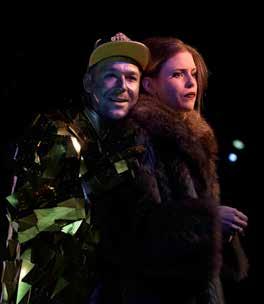
Light & shade “Jedermann” by the Kufstein Municipal Theatre in the fortress courtyard
In the middle of the imposing forecourt of Kufstein Fortress, an old story takes a surprisingly new course. In the Kufstein version of “Jedermann”, a woman takes centre stage - dazzling, high-spirited and suddenly confronted with the finite nature of life.
www.stadttheater-kufstein.at


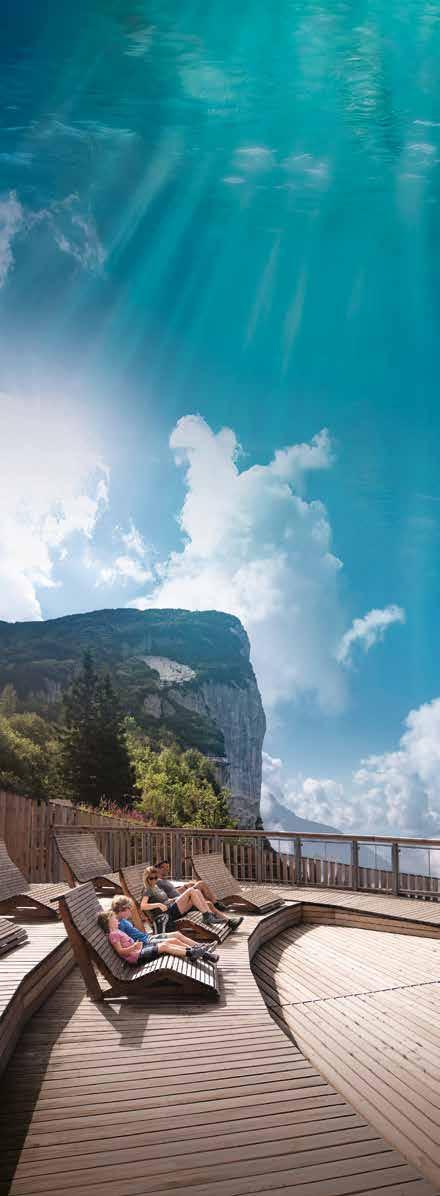

For three days, Kufsteinerland is transformed into a space for peace, movement and a good feeling in the present. Between the lakes and the city flair of Kufstein, connection, lightness and new strength are created. Each person organises their own festival - from a gentle morning flow to a powerful practice in the evening.
www.yoga-tage.at
Words that stay with you Sprachsalz - an international festival of literature in Kufstein
For one weekend, Kufstein belongs to the stories, voices and thoughts of authors from the German-speaking world - and beyond. Sprachsalz brings together well-known names and new discoveries and invites you to experience literature in a different way: freely accessible, approachable and at the centre of everyday life.
www.sprachsalz.com
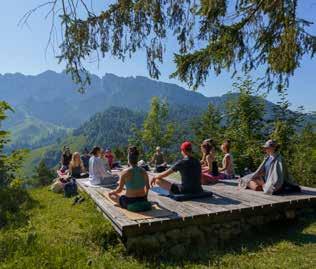
When football tells stories, it’s about more than just goals. Two influential personalities meet at the Erl Festival Theatre - Toni Polster and Oliver Kahn. Together they look back on turning points and world championships. The glück.tage will be continued with further programme items in October.
www.glueck-tage.at
When the days get shorter, Kufsteinerland shines all the brighter. An Advent season full of atmosphere and warmth unfolds in the town park and at Kufstein Fortress, at Lake Thiersee and at the Pölvenzauber in Bad Häring. The cosy huts are filled with the aroma of kiachl and punch, craftsmen show off their art and the carousel and Christmas workshop make children’s eyes light up.
kufstein.com/en-advent
All upcoming highlights and dates are bundled in a calendar of events. It’s worth a look - for the latest information from the region: kufstein.com/en The information is updated on an ongoing basis. Subject to change.
Visit now and leave the everyday behind!
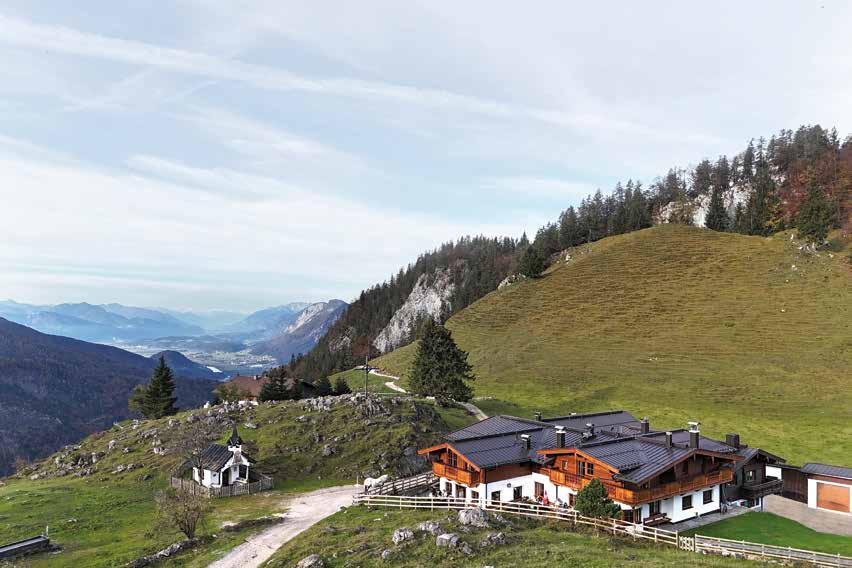
Enjoy unforgettable moments at 1,161 meters –with hearty Tyrolean specialties, breathtaking views of the Kaiser Mountains, and genuine hospitality
For information about opening hours, visit www.ritzaualm.com ALWAYS AN EXPERIENCE –AT THE WESTERN FOOTHILLS OF THE ZAHMER KAISER!
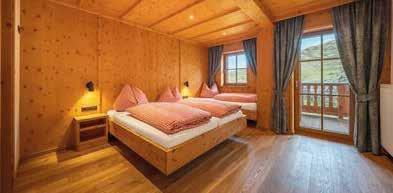
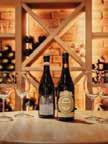
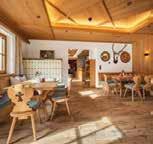
Whether you‘re a hiker, gourmet, or nature lover – you‘re in the right place! Your destination for enjoyment and relaxation.
Ritzau-Alm | Family Anker Kaisertal 14, A-6341 Ebbs +43 5372 63624 info@ritzaualm.com
Roastery tours and insights into the world of coffee roasting gladly available upon request
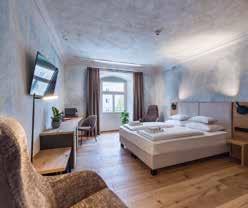
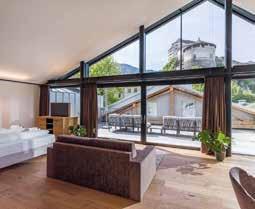
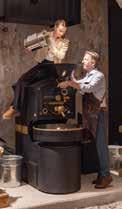
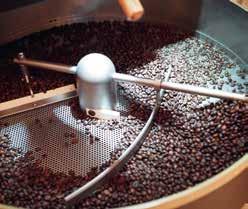
15 rooms and suites in the traditional long-time drum roasting process
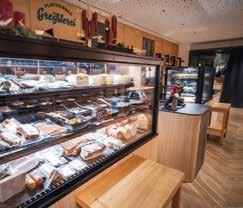
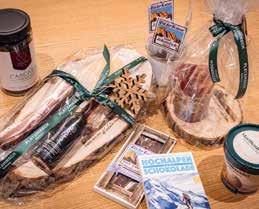
Products from Metzgerei Wagner, Bio-Käserei Plangger, von Bierol, and more Freshly baked bread & pastries, jams & pâtisserie, freshly pressed juices Souvenirs & gift bask