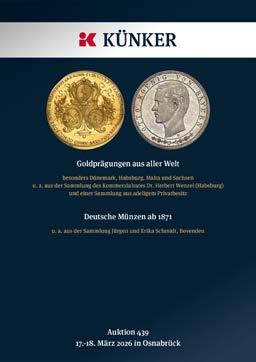
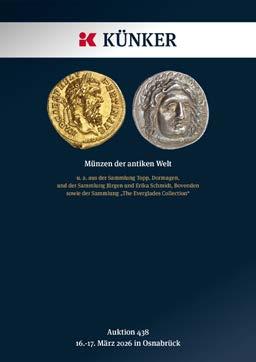
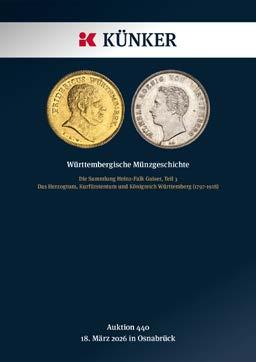
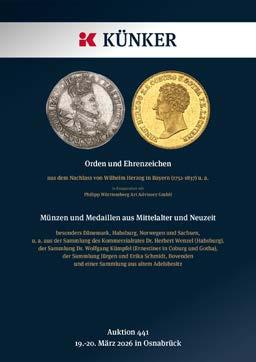
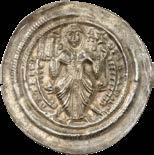
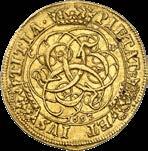
Harald Bluetooth – a Viking prince 34 founds a Christian kingdom
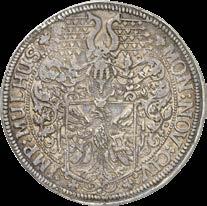
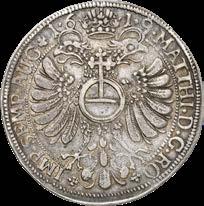
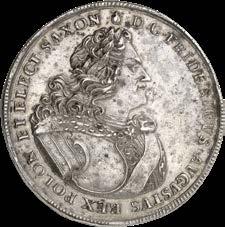
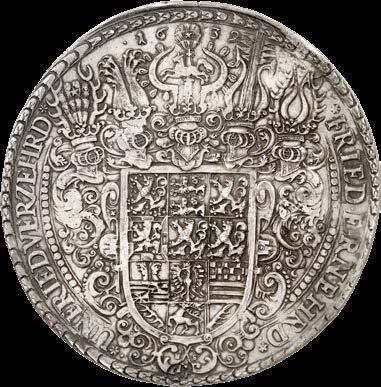
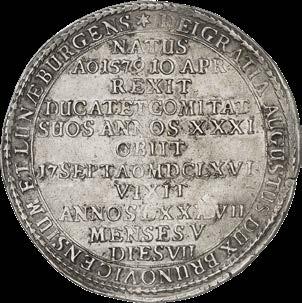
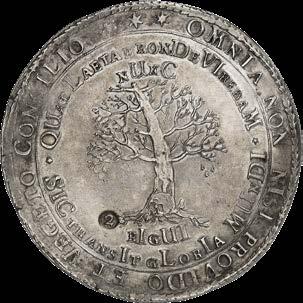
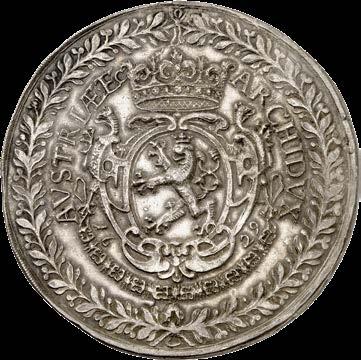
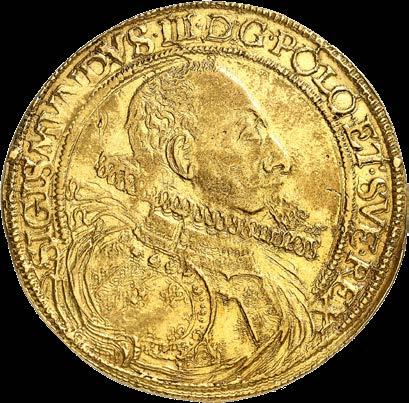
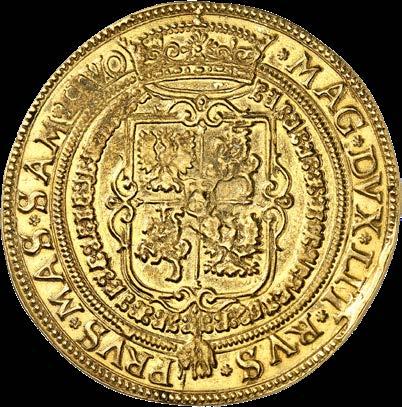
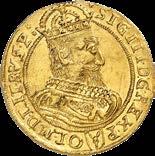
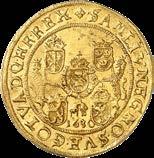
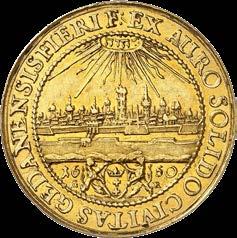
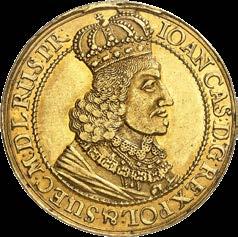
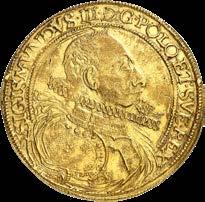
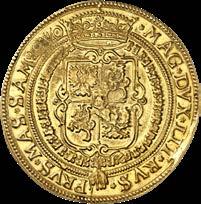
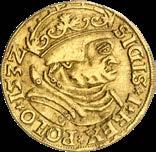
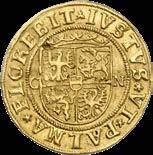
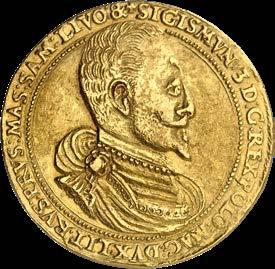
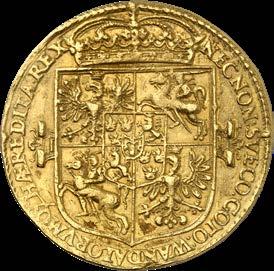
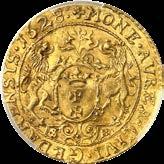
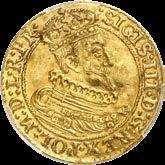
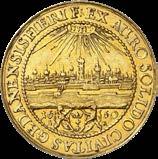
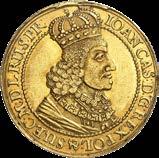
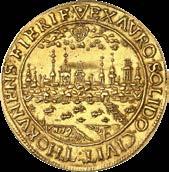
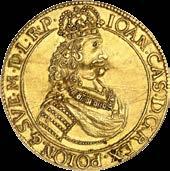
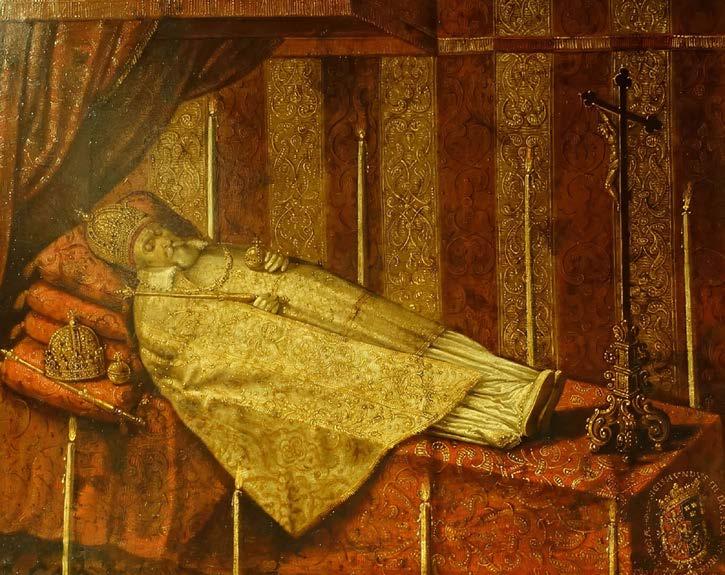
The zenith of Polish coinage 46
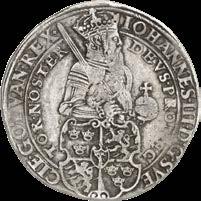
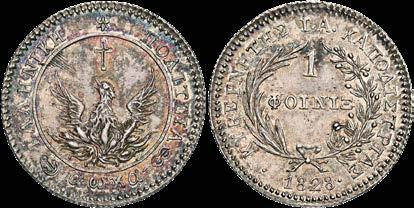
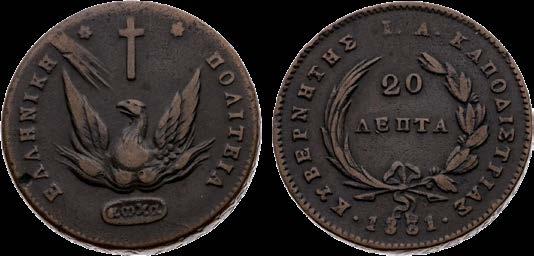
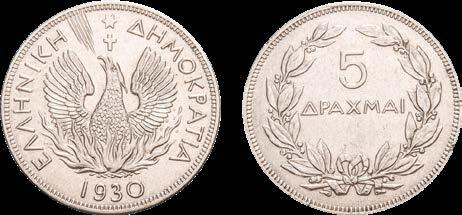
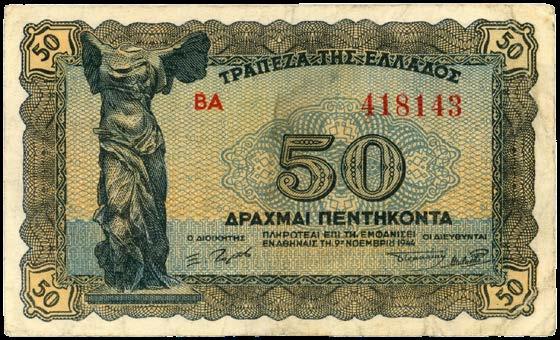
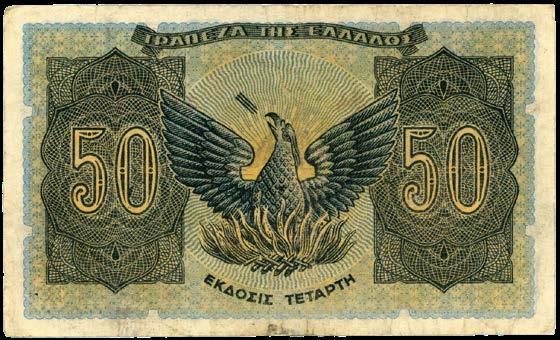
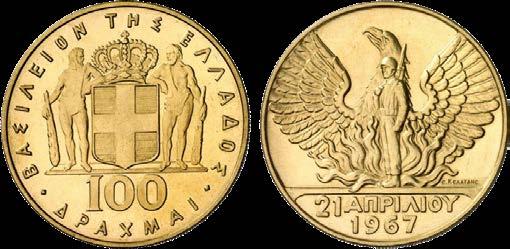
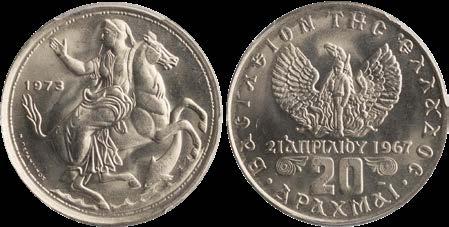
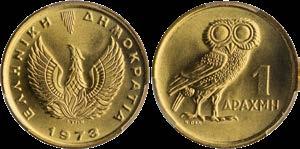
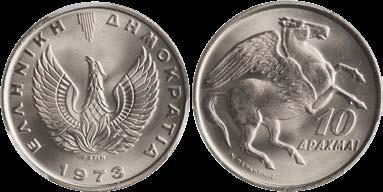
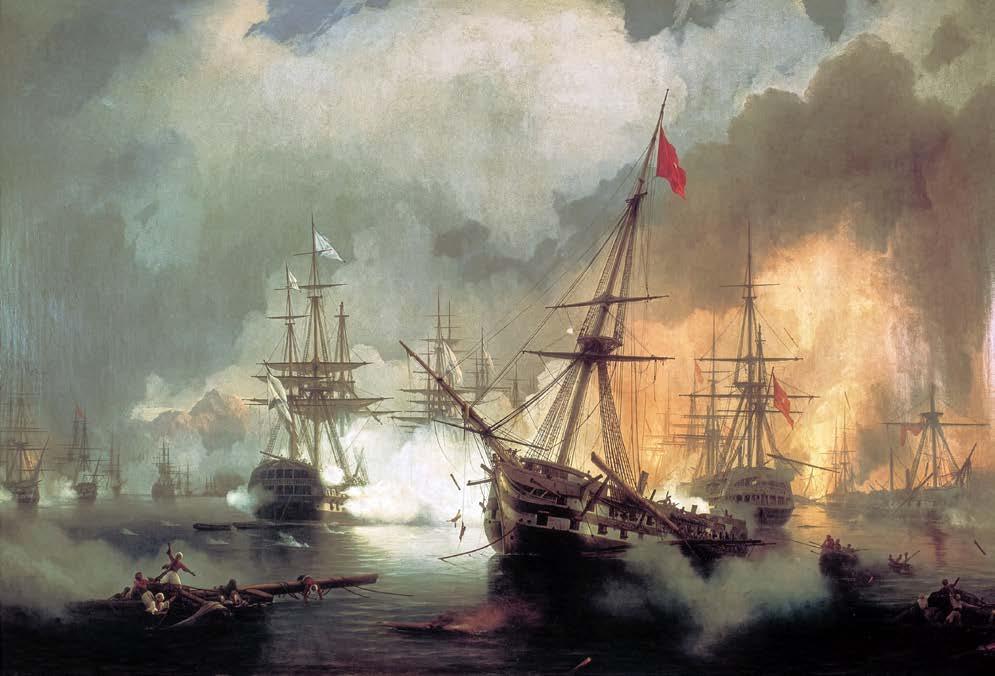
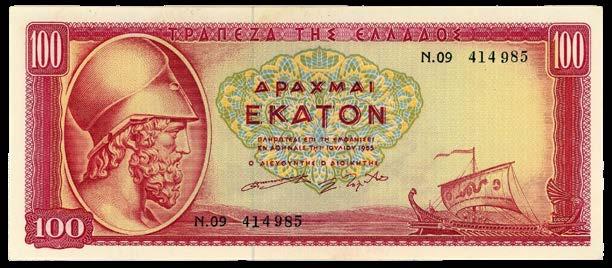
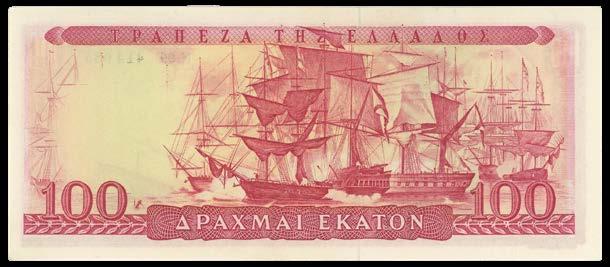
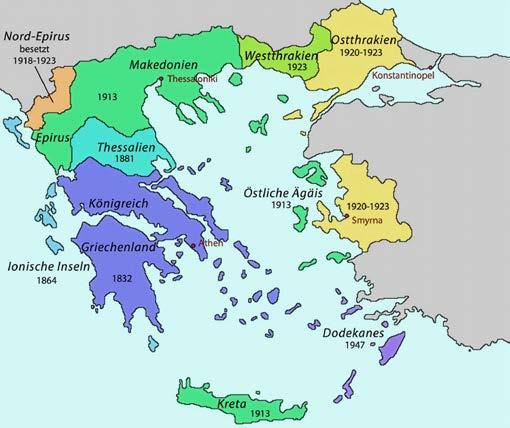
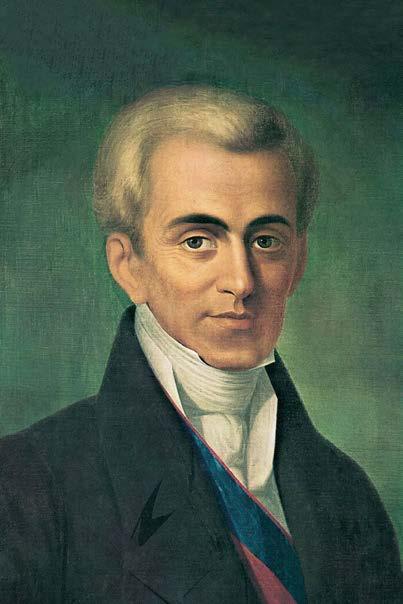
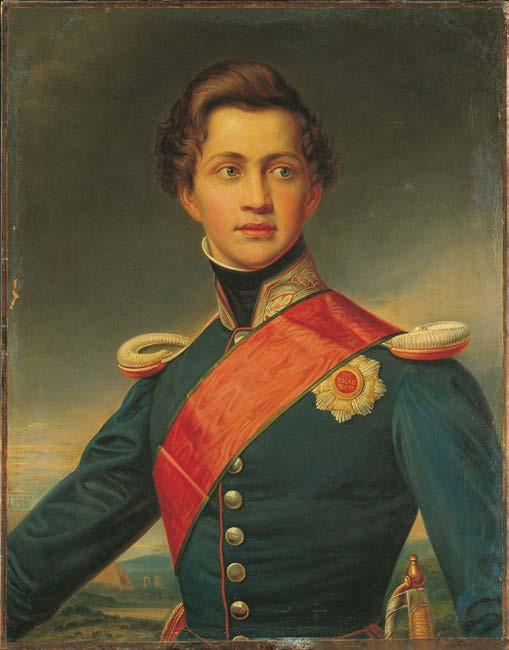
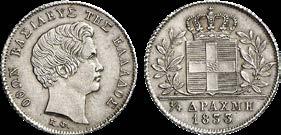
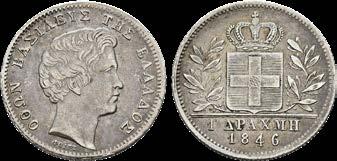
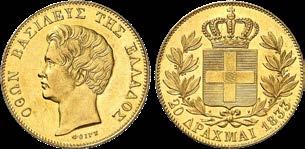
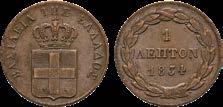
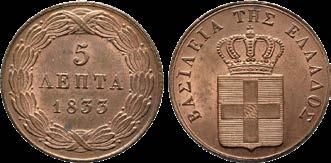
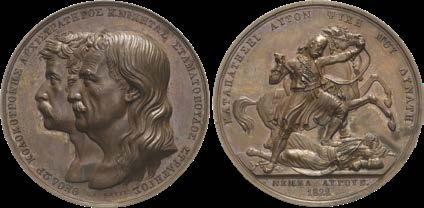
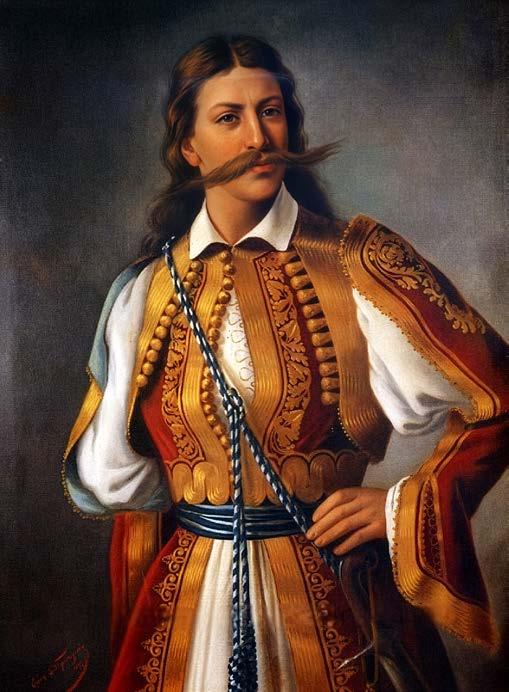
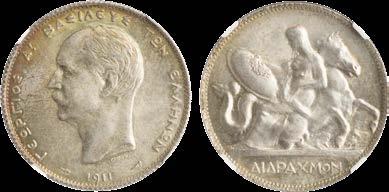
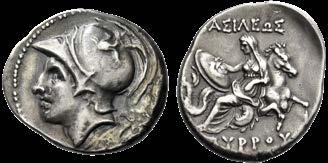
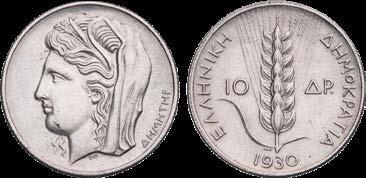
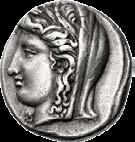
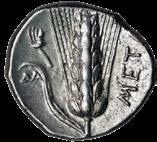
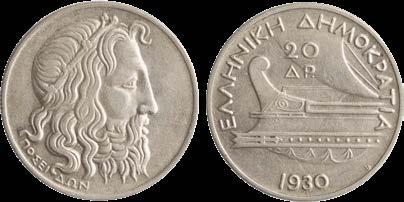
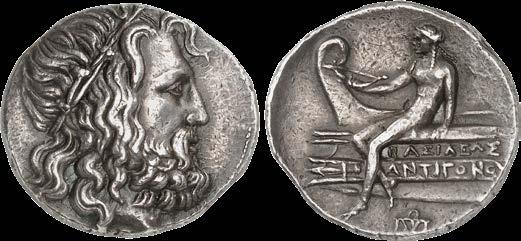
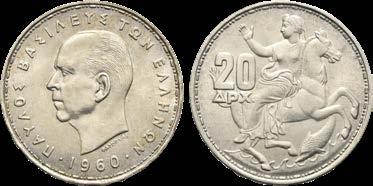
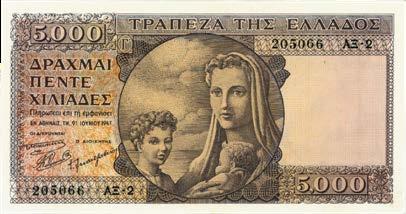
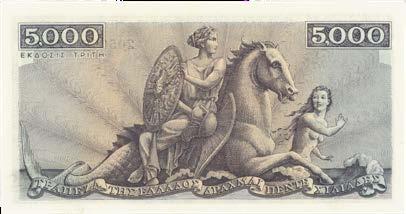
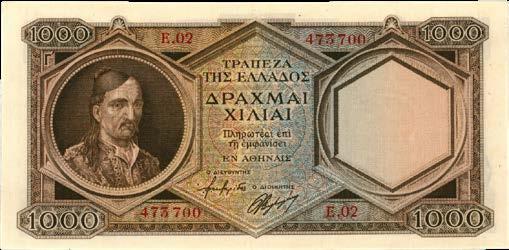
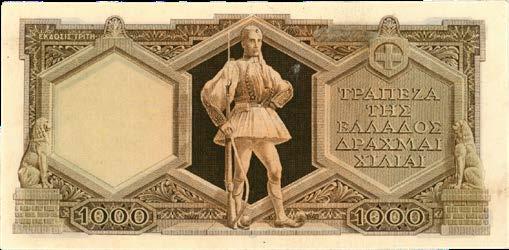
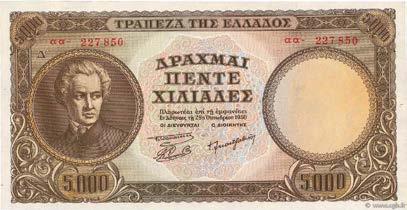
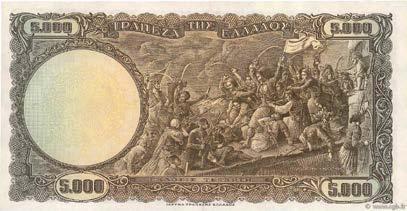
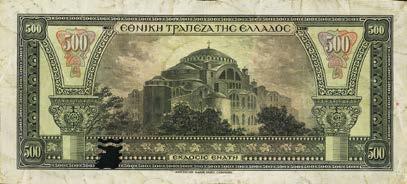
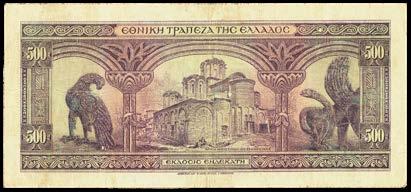
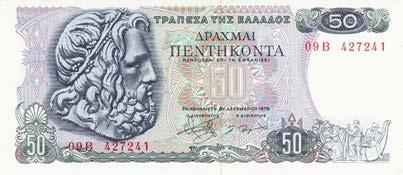
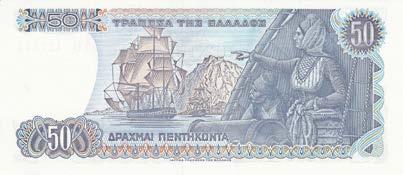
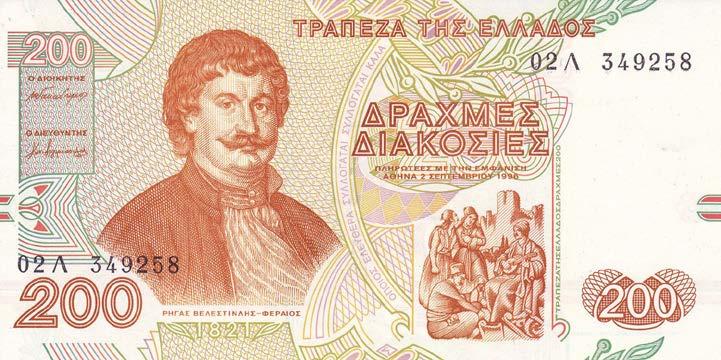
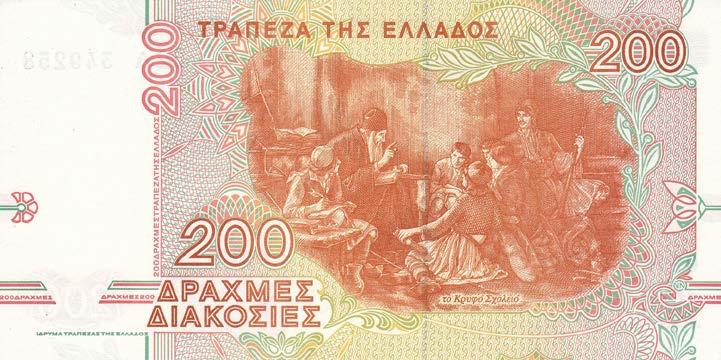
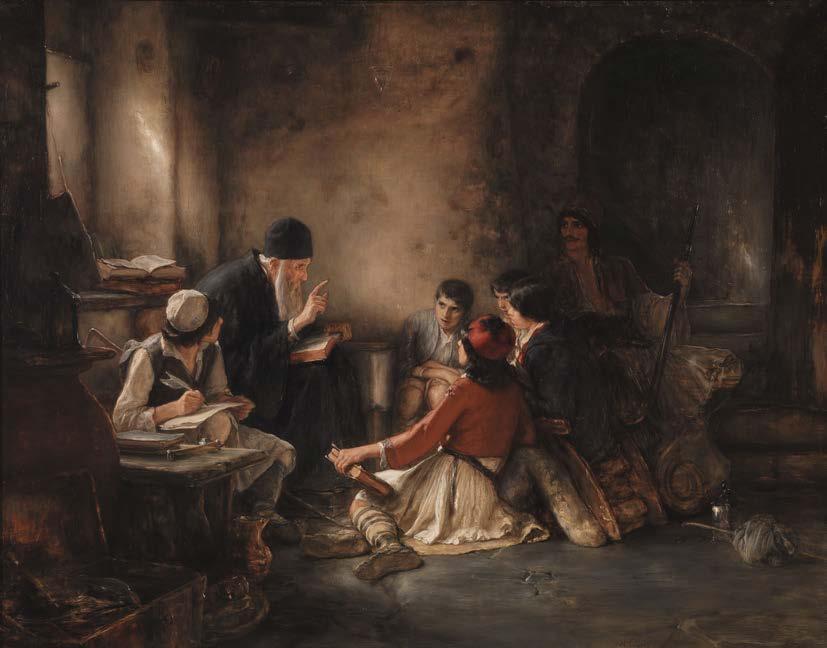
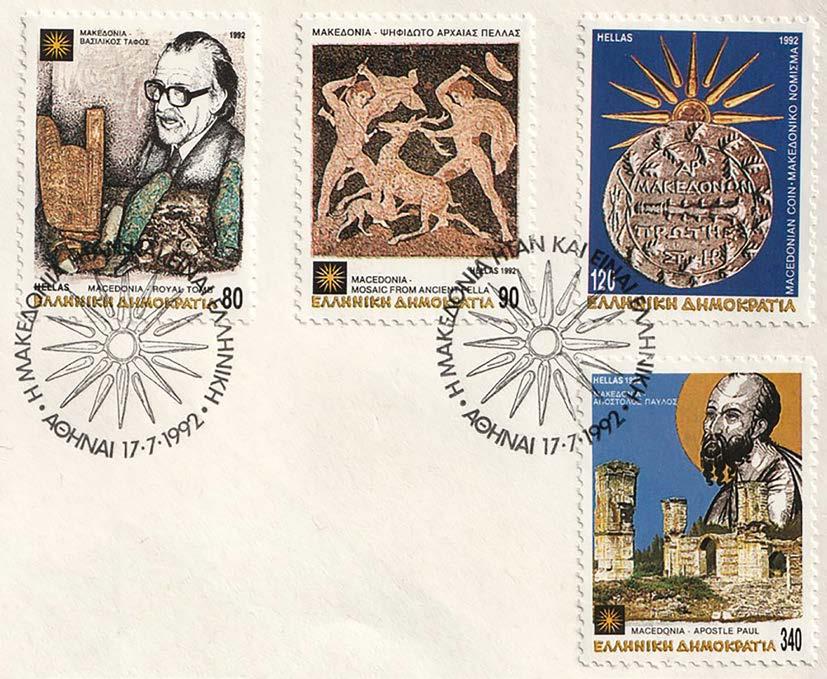
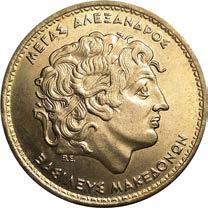
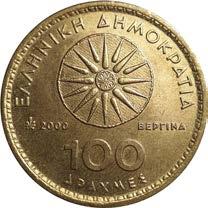
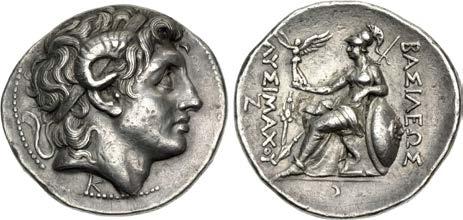
When Money Shows Us History: 54 The imagery of modern Greek currency
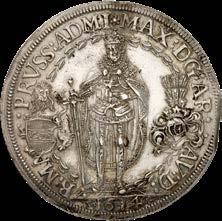
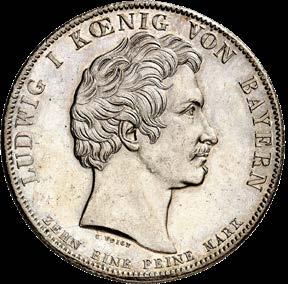
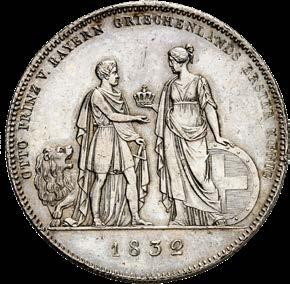
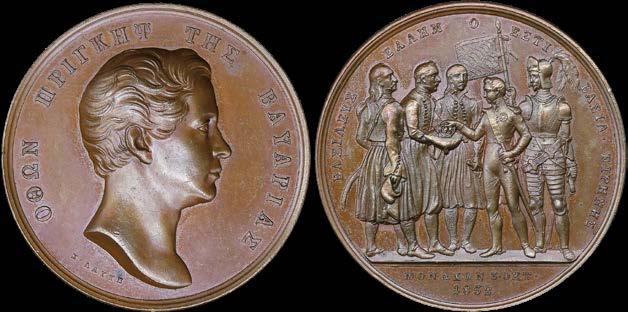
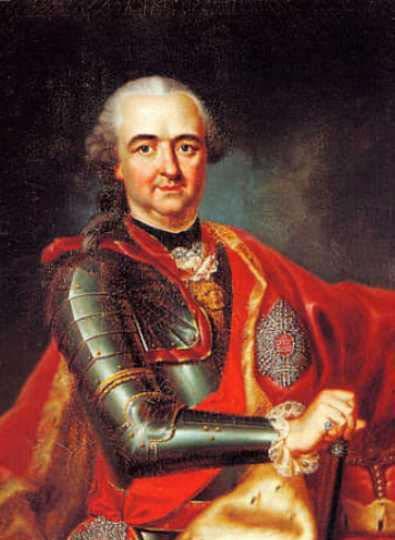
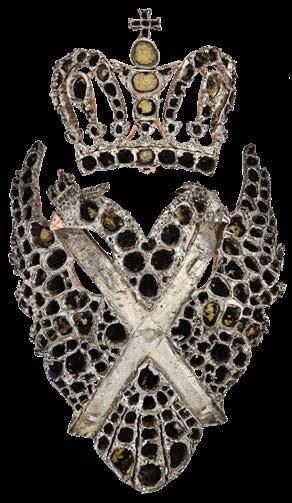
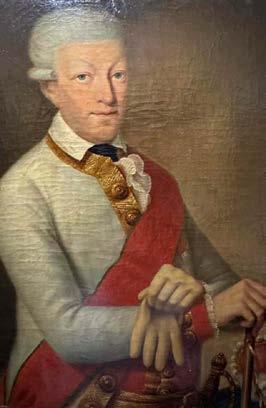
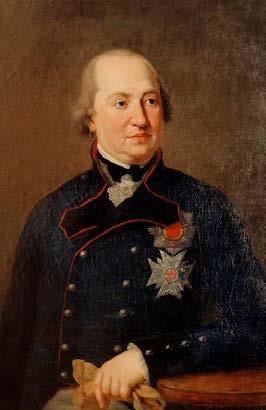
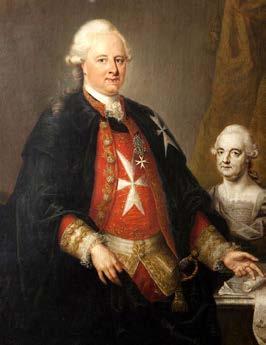
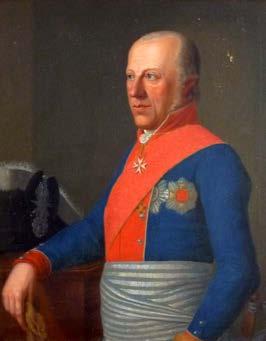
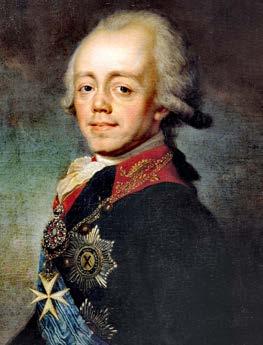
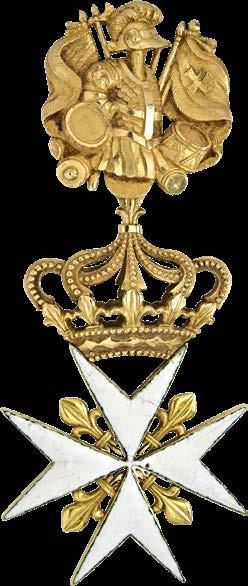
When Bavaria and Russia 76 came into conflict ...
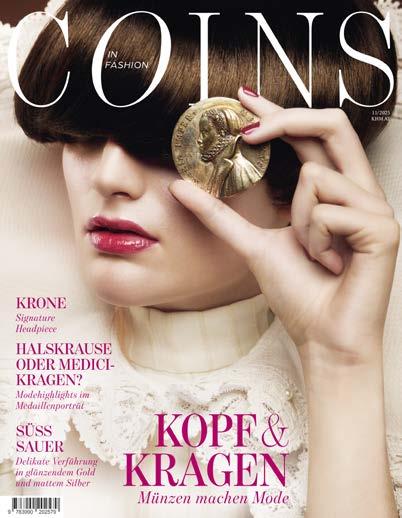
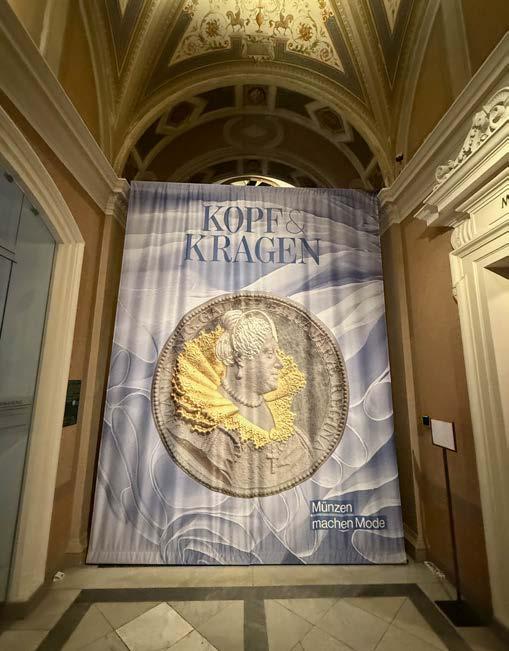
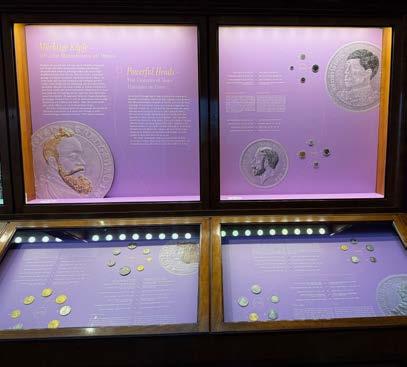
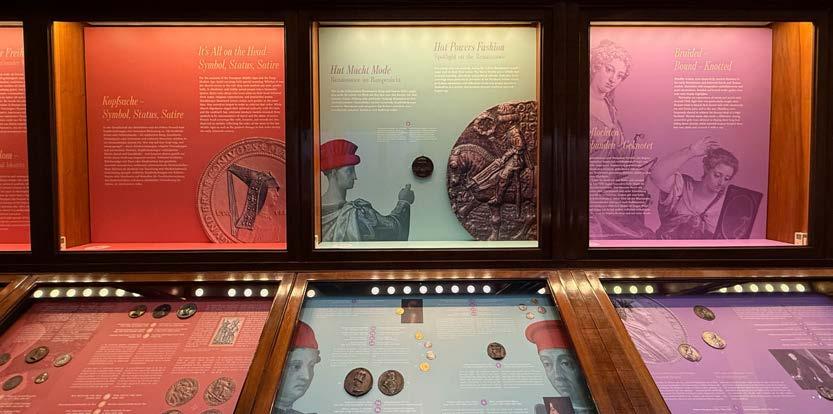
“Kopf und Kragen” – an exhibition at the KHM 80
Preview of the summer auction 84
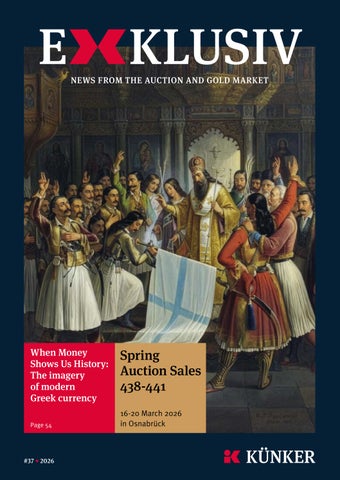
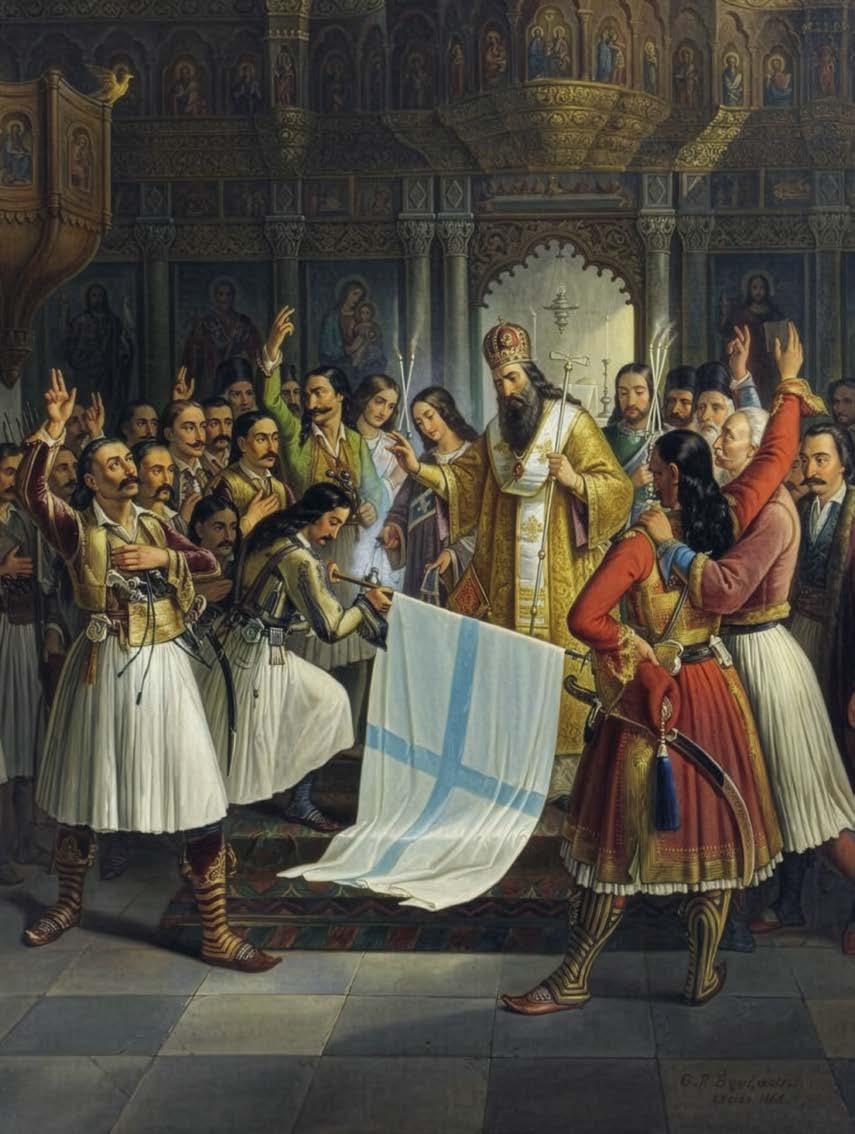
Cover picture:
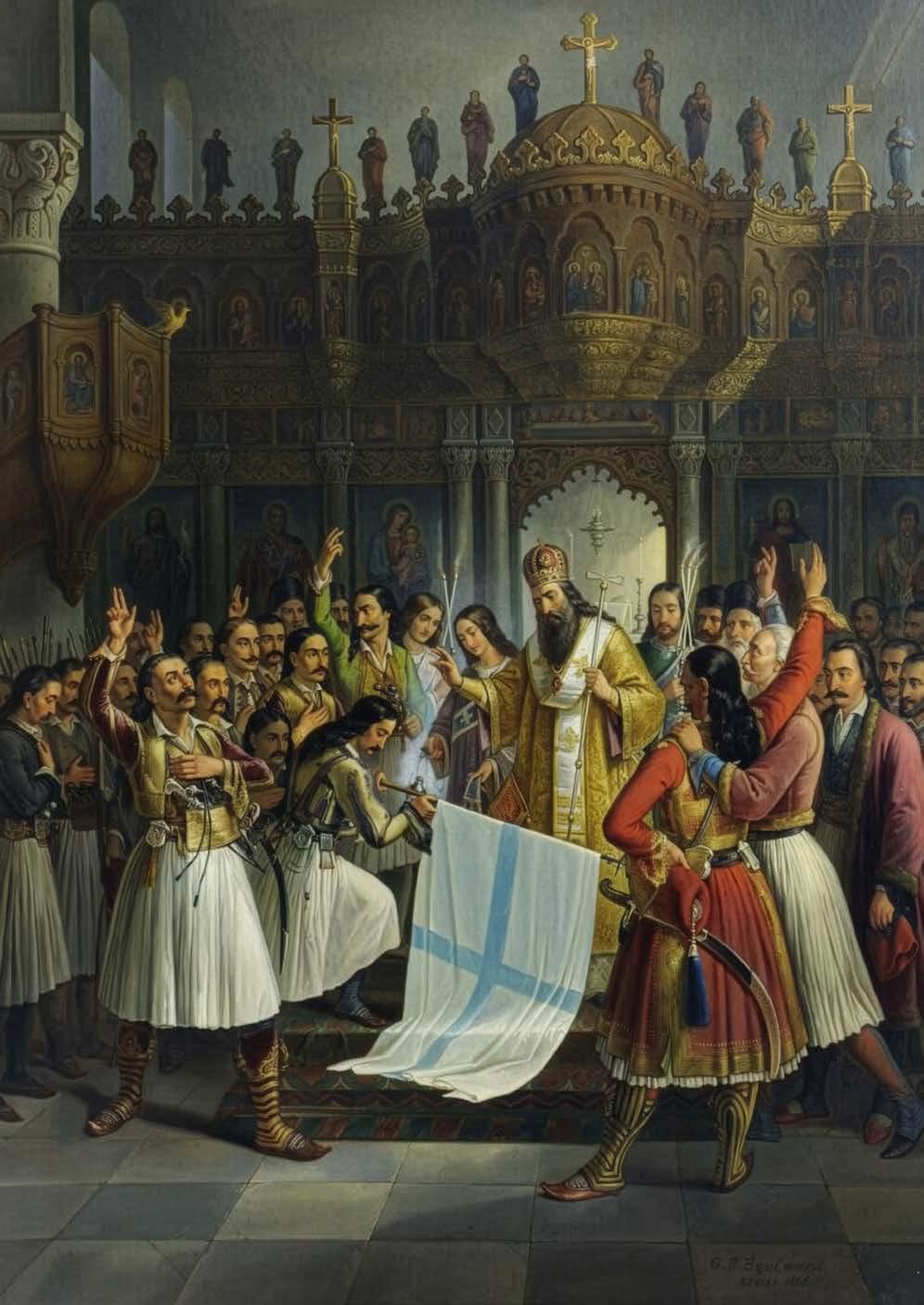
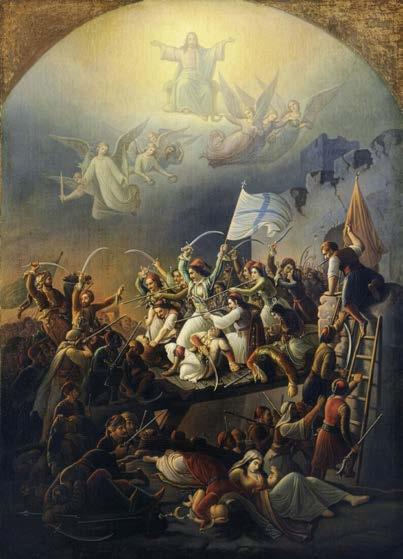
Theodoros Vryzakis, 1865: Metropolitan Germanos of Patras blesses the Greek flag on 25 March 1821 at the Agía Lávra monastery. Wikipedia Commons, public domain.
Dates 2026
eLive
Numismata Munich 7-8 March 2026
Spring Auction Sale 2026 16-20 March 2026
eLive Auction 92 18-22 May 2026
Summer Auction Sale 2026 22-26 June 2026
eLive Auction 93 20-24 July 2026
Fall Auction Sale 2026 21-25 September 2026
eLive Auction 94 5-9 October 2026
eLive Auction 95 1-4 December 2026
Impressum
Publisher
Fritz Rudolf Künker GmbH & Co. KG
Nobbenburger Straße 4a 49076 Osnabrück www.kuenker.de
Editors
Julia Kröner
Inja MacClure
Dr. Ursula Kampmann
Professor Dr. Johannes Nollé
Typesetting and layout
Helge Lewandowsky
Photography Auctions 438-441 (Coins)
Lübke + Wiedemann KG, Leonberg
B.Seifert / O. Graf
Photography Auction 441 (Orders and Decorations)
Fritz Rudolf Künker GmbH & Co. KG
Responsilble according to press law
Dr. Andreas Kaiser
Print
Druck- und Verlagshaus Fromm+Rasch GmbH & Co.KG www.frommrasch.de
ISSN 3052-0142
Dear Customers and Coin Enthusiasts,
The year 2026 is still young, yet we have already successfully completed trade fairs in New York and Berlin. Our auction in Berlin was very well received. We express our sincere thanks to you, our customers and consignors from all over the world -- for your loyalty, your participation in the auction, and the trust you have placed in us.
The enthusiasm for coins was impressively reflected in both New York and Berlin, as both fairs once again attracted record numbers of visitors. This extraordinarily positive response confirms the continuing strength of the market. Rare, well-preserved coins are currently in particularly high demand. The provenance of coins is also becoming increasingly important as a value-adding feature. Quality, rarity and origin are the decisive factors that are in demand on the market.
We are very pleased with this development, and look forward with confidence to our upcoming spring auctions which will take place as usual in March in Osnabrück. In our preliminary report, we present the four auctions 438–441 in detail and give you a comprehensive insight into the diverse and high-calibre offerings that await you.
We look forward to welcoming you to our upcoming events.
Please note that this year we are once again offering you the opportunity to view the coins from our spring auctions in München as part of the Numismata coin fair. From Friday, 6 March to Sunday, 8 March, we will be available from 9:00 a.m. to 6:00 p.m. at Motorworld München, In the Kleine Lokhalle, and we look forward to your visit! Motorworld is located approximately five minutes’ walk from the Numismata exhibition grounds. You will of course also find us at our exhibition stand at Numismata from 7 to 8 March.
In this Künker Exklusiv we have endeavoured to round off the interesting articles on numismatics with background articles on our current auction programme. We hope you enjoy reading our latest issue! Please let us know how you like the March issue; we always look forward to hearing from you.
Dr. Andreas Kaiser Ulrich Künker
Special collections and estates in our spring auctions
Ancient coins with large lots from the Celts and Byzantium, early modern coins from Denmark, Habsburg, Malta, Norway, Poland, Württemberg, Saxony, Saxe-Coburg-Gotha and the Habsburg Empire, and last but not least, orders from the estate of Wilhelm Herzog in Bavaria –all are featured in our spring auctions.
When it comes to dispersing large and important collections, our auctions are the best solution. This is how many collectors see it today, as our spring auctions prove. They will take place from 16 to 20 March 2026 in Osnabrück, and will feature a number of important and extensive collections.
For auction catalogs 438-441 and a detailed auction overview simply scan the adjacent QR code.
Coins from the ancient world
Three large collections dominate our Auction 438 with coins from the ancient world. The Topp / Dormagen Collection, the Jürgen and Erika Schmidt / Bovenden Collection and the Everglades Collection will be offered. For anyone who loves ancient coins, this means that they will find carefully-selected coins from all areas that will make any collector’s heart beat faster.
Celtic coins
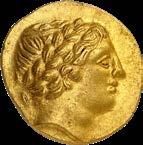
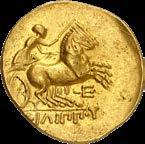
This is especially true of the Celtic coins, most of which come from the Topp Collection. With more than 100 lots, some of which are of a very high calibre, the full spectrum from England to the Balkans is covered. Gaul in particular is impressively represented by several early imitations of Philipp II’s gold coins, inspired by the coins earned by Celtic mercenaries during the Macedonian campaigns.
The highlight is an extremely rare gold stater of Vercingetorix, which has even made its way into modern popular culture. The prince of the Arverni once succeeded in uniting the Celtic tribes against the Romans, thus almost preventing Caesar’s conquest of Gaul. In the 19th century, Vercingetorix became a symbol of French identity and, as such, he can still be seen today in Asterix comics and films, throwing his weapons not at Caesar’s feet but directly onto his feet when he surrenders. Coins bearing his name are among the great and sought-after rarities of Celtic numismatics.
On pages 22-33, Johannes Nollé and Jens-Ulrich Thormann devote themselves to this extraordinary coin.
Lot 14
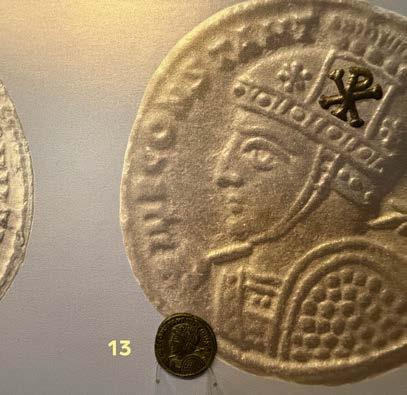
Celts. Gaul. Anonymous. Gold stater, “Pons Sainte-Eanne” type, early 2nd century BC. Rare. From the Topp Collection. About extremely fine.
Estimate: 6,000 euros
Lot 29
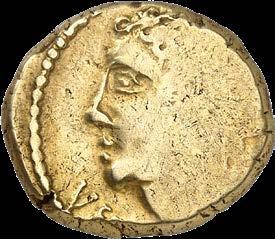
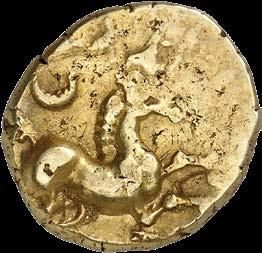
Celts. Gaul. Vercingetorix, 52 BC. Gold stater. Very rare. Signs of weak strike, otherwise very fine.
Estimate: 40,000 euros
Lot 104
Celts. Southern Germany. Gold stater, rainbow cup. Extremely rare. From the Topp Collection. Very fine.
Estimate: 7,500 euros
Greek coins
In the Greek coin section, you will also find many carefully-selected pieces of great beauty and excellent quality. For fans of American grading, it should be noted that all coins in the Everglades Collection are graded. Of particular interest is a set of 20 kyzikens, the electrum staters that always feature a tuna on the obverse.
Lot 162
Syracuse (Sicily). 100 litrae, 295-289. Rare. About extremely fine.
Estimate: 10,000 euros
Lot 388
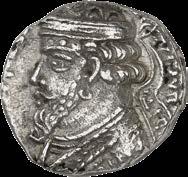
Parthians. Phraatakes and Musa. Tetradrachm, 2nd century BC to 4th century AD, Daisios 312 of the Seleucid Era (= May 1 AD). Very rare. Very fine +.
Estimate: 5,000 euros
The Schmidt couple were particularly interested in the enemies of the Romans who lived on the eastern border of the Roman Empire. You’ll find a rich selection of Parthian and Sassanid coinages, including some featuring rarely-seen rulers such as a tetradrachm of Phraatakes and Musa, as well as a drachma of Queen Buran and the entire royal family of Vahrans II. Of course, there is also a comprehensive range of Bactrian coinages in the Schmidt collection. So if you’re interested in the ancient cultures of the East, take the time to study the catalogue at your leisure.
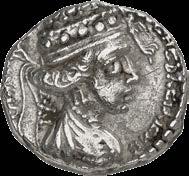
Sasanians. Buran, 630-631. Drachm, year 2 Sakasan. Very rare. From the Jürgen and Erika Schmidt Collection. Extremely fine. Estimate: 1,000 euros
Lot 449
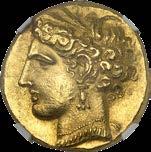
Zeugitania. Carthage. Trihemistater, around 260 BC. Very rare. NGC AU, 4/5, 4/5, Fine Style, light marks. Extremely fine.
Estimate: 40,000 euros
Gold, silver and bronze from Rome
Of course, there are also plenty of exciting pieces to discover in the field of Roman coins. Whether you collect coins from the Republic, the Civil War period, the Imperial period or Late Rome, and whatever your budget, you’ll find the piece of your dreams in this auction.
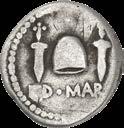
Lot 518
M. Iunius Brutus. Denarius, 42, military mint in Asia Minor or Northern Greece. Very rare. Obv. fine. Rev. fine to very fine.
Estimate: 50,000 euros
An extensive collection of Byzantine coins
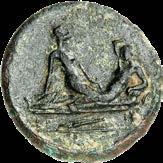
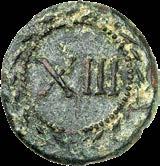
Lot 559
Roman Empire. Spintria, 22-37. Extremely rare. Extremely fine.
Estimate: 8,000 euros
Lot 691
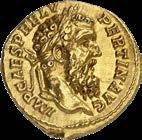
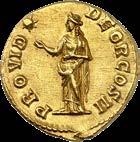
Pertinax, 193. Aureus. Very rare. About extremely fine.
Estimate: 40,000 euros
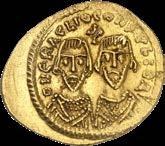
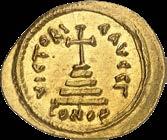
Most of the Byzantine rarities offered in Auction 438 come from the Topp Collection. You can look forward to rare solidi in a state of preservation that is rarely seen. The highlight is a probably unpublished solidus that was minted during the Heraclii revolt. At that time, the exarch of Carthage, Herakleios, and his son of the same name rebelled against the unpopular Phokas.
Lot 945
Byzantium. Heraclian revolt, 608-610. Solidus, unknown mint. Extremely rare. Probably unpublished. From the Topp Collection. About extremely fine.
Estimate: 15,000 euros
The titles and attire of the two are noteworthy: On this coin, they refer to themselves as consuls, a title bestowed upon them by the Senate of Carthage. This is not the only rarity.
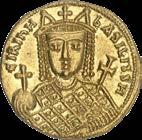
Lot 1025
Byzantium. Irene, 797-802. Solidus, 802. Rare.
From the Topp Collection.
Extremely fine to FDC.
Estimate: 7,500 euros
Rarities of the Gupta
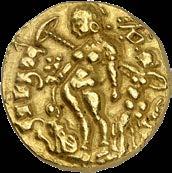
Lot 1076
Gupta. Kumaragupta, 414-455. Stater, rhinoceros slayer type. Very rare. From the Nessim Shallon (Shalom) Collection. About extremely fine.
Estimate: 25,000 euros
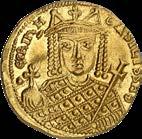
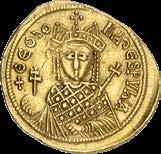
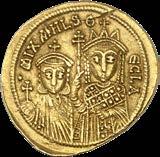
The Topp Collection brings together many coins of historically interesting personalities, including a solidus of Empress Irene and one of Michael III with his mother Theodora and his sister Thekla.
Lot 1034
Byzantium. Michael III with Theodora and Thekla.
Solidus 842/3. Very rare. From the Topp Collection. Very fine to extremely fine.
Estimate: 7,500 euros 1,5:1
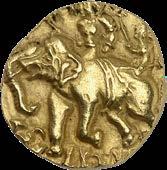
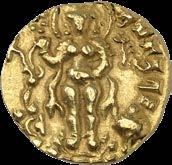
Friends of Indian culture will find two extremely rare gold coins of the Gupta in this auction, which come from the collection of Nessim Shallon (Shalom), former envoy to the United Nations. They were minted by Kumaragupta I between 415 and 455. His reign is now considered the late flowering of the Gupta Empire, during which the economy and arts flourished once again before regional interests weakened the Gupta Empire and initiated its slow decline.
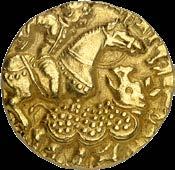
Lot 1077
Gupta. Kumaragupta, 414-455. Stater, elephant rider type. Very rare. From the Nessim Shallon (Shalom) Collection.
Extremely fine.
Estimate: 20,000 euros
Old Germany
Spread across three catalogues, you’ll find coins from Old Germany:
• gold coins and medals in Auction 439,
• silver coins and medals from the collection of Dr Wolfgang Kümpfel featuring Saxony, Coburg and Gotha in Auction 441,
• … as well as Württemberg rarities from the Gaiser collection in Auction 440.
And these are just a few highlights on the subject of Old Germany!
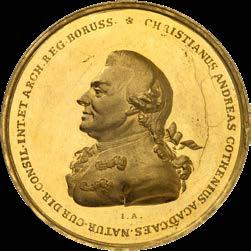
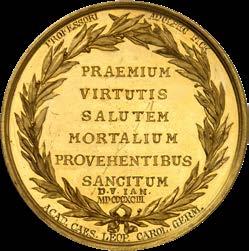
In this preliminary report, we present just a few of the many highlights. For example, a premium medal from the Leopoldinisch-Carolinische Akademie, awarded to Professor Adolf Fick in 1893, comes from Prussia (Lot 2380). Adolph Fick was arguably the most important physiologist of the 19th century. He worked both mathematically and experimentally, thus breaking new ground in medical research. Even today, cardiologists still refer to “Fick’s Principle” and physicists to “Fick’s Laws”. The importance of this researcher for the development of modern medicine is demonstrated by the fact that his Wikipedia article has been translated into 33 languages.
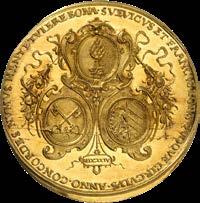
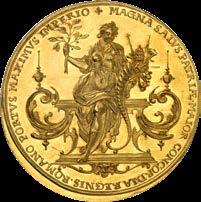
A Nürnberg gold medal (Lot 2458) commemorates a key event in monetary history during the Thirty Years’ War. On 15 May 1624, at a “probation day” in Regensburg, the three southwestern German imperial circles of Swabia, Franconia and Bavaria decided on a new, stable exchange rate between small coins and coins of stable value such as thalers and ducats. This brought an end to the devastating period of currency fluctuations in the south of the empire, which had caused lasting damage to trade due to the unpredictable deterioration of the currency. The fact that the three major imperial cities of Augsburg, Regensburg and Nuremberg guaranteed compliance with the convention – at least in their own territories – was considered a great diplomatic success.
Lot 2380
Brandenburg-Prussia.
Award medal of the Leopoldinisch-Carolinische Akademie, presented to Prof. Adolf Fick in 1893, minted with the dies of 1789. Very rare. Extremely fine to FDC.
Estimate: 7,500 euros
Lot 2458
Nuremberg. 1624 gold medal, commemorating the coin convention of the three imperial circles of Bavaria, Franconia and Swabia. Very rare, only few specimens in gold are known of. About FDC.
Estimate: 10,000 euros
Lot 2506
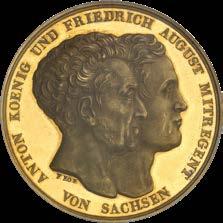
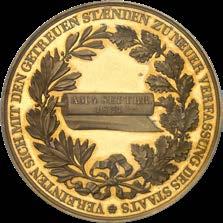
Saxony, Kingdom. Anton, 1827-1836. 1831 gold medal by A. F. König commemorating the constitution. NGC MS63*. Extremely fine to FDC. Estimate: 15,000 euros
Lot 4255
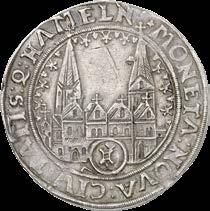
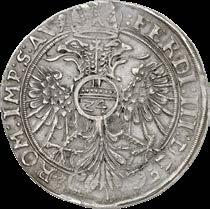
Hamelin. 1639 reichstaler.
Very rare. From auction Sally Rosenberg 49 (1920), No. 1497. Very fine.
Estimate: 7,500 euros
Lot 4304
Mühlhausen. 1619 reichstaler. From auction Hess Nach. 214 (1933), No. 1536. Very rare. Very fine +.
Estimate: 6,000 euros
Lot 4350
Quedlinburg. Beatrix II von Winzenburg. Bracteate. Very rare. From the Jürgen and Erika Schmidt Collection. Extremely fine to FDC.
Estimate: 3,000 euros
Lot 4464
The unsigned medal commemorating this event is now attributed to Christian Maler, who took over his father’s workshop in Nürnberg in 1603 and worked there until at least 1625/27. Incidentally, in 1613 he received an imperial “privilege” to protect all his medal designs from imitation.
Those interested in bracteates will discover a rich selection in Auction 441, spread across the entire area of Old Germany. They come from the collection of Jürgen and Erika Schmidt and are characterised by their quality and artistic merit. It is clear how carefully the collector couple selected the pieces, and they succeeded in acquiring a number of rarities. These include a bracteate from Quedlinburg Abbey by Abbess Beatrix II of Winzenburg (Lot 4350), one of the most powerful women in the high medieval church hierarchy in Germany who was responsible for founding several monasteries. Conscious of her power, she is depicted in full regalia: She is enthroned on a folding chair, as was customary for official occasions, and holds an open book and a crosier as insignia of her office. This bracteate is also one of the rare examples on which a clearly legible legend can be seen.
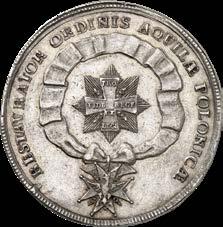
Finally, let us mention the magnificent reichsthaler of Augustus the Strong with the depiction of the Polish Order of the White Eagle (Lot 4464). It was endowed in 1705 to reward Augustus’ supporters who had helped him regain the throne. The unusual coin inscription Restaurator Ordinis Aquilae Polonicae (“Restorer of the Order of the Polish Eagle”) stems from the fact that Augustus referred to a – in reality – non-existent order of King Władysław I, which he claimed to have revived. In this way, he circumvented the resistance of the Polish nobility to the new award.
Saxony. Frederick Augustus I (Augustus the Strong), 1694-1733. 1696 reichstaler, Dresden. About extremely fine.
Estimate: 20,000 euros
Large series of lösers
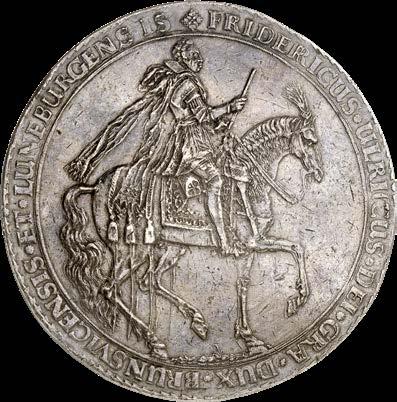
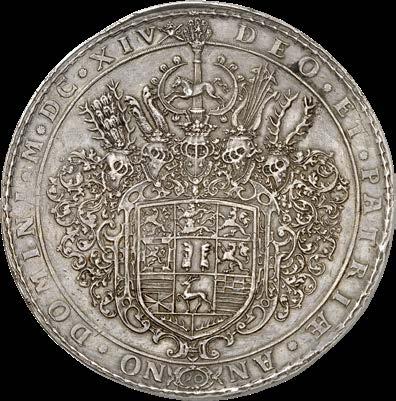
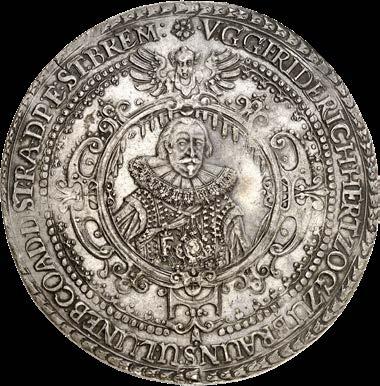
Once again, we are able to offer a large batch of Braunschweig / Brunswick lösers. Among them is an extremely rare ten-reichsthaler coin from 1614, which Friedrich Ulrich had minted in Goslar or Zellerfeld. Also on offer is a two-reichsthaler löser commemorating the death of Augustus the Younger, and a 1639 fourreichsthaler löser of Friedrich from Clausthal.
Lot 4111
Brunswick-Wolfenbüttel. Frederick Ulrich, 1613-1634.
1614 löser of 10 reichstalers, Goslar or Zellerfeld. Extremely rare. From the old holdings of the Preussag in Goslar, purchased on 28 February 1977. Very fine.
Estimate: 100,000 euros
Lot 4164
Brunswick-Lüneburg-Celle. Frederick, 1636-1648. Löser of 4 reichstalers 1639, Clausthal. Very rare. About extremely fine.
Estimate: 15,000 euros
Lot 4134
Brunswick-Wolfenbüttel.
Commemorating the death of Augustus the Younger, +1666. 1666 löser of 2 reichstalers, Zellerfeld. Very rare. Extremely fine.
Estimate: 20,000 euros
The Dr Wolfgang Kümpfel Collection: Saxe-Coburg-Gotha
Lot 4504
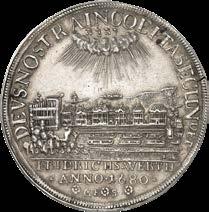
Saxe-Gotha-Altenburg. Frederick I. 1680 taler, Gotha, commemorating the construction of Friedrichswerth Castle. Very rare. From the Dr Wolfgang Kümpfel Collection. Extremely fine.
Estimate: 3,500 euros
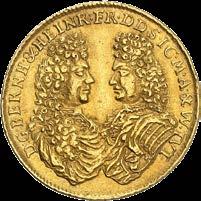
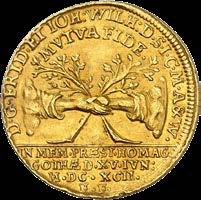
60 lots from the Ernestine lines in Coburg and Gotha will be auctioned on the afternoon of 19 March 2026. They come from the collection of the chemist Dr Wolfgang Kümpfel, who is an enthusiastic supporter of his hometown Gotha. He was fascinated by its history and inspired by the former “residence”, where so many testimonies to former greatness have been preserved. That’s why the collector placed great importance on historical significance and attractive designs when selecting his pieces. A good example of this is the thaler from 1680 commemorating the construction of Friedrichswerth Castle – not to be confused with Friedenstein Castle in Gotha – or the ducat from 1692, which was minted on behalf of Friedrich II of SaxeGotha-Altenburg to mark his homage in Gotha. We know that the prince received 45 pieces of this tiny issue, totalling only 115 pieces, to distribute as gifts to princely visitors to the homage ceremony.
Lot 4516
Saxe-Gotha-Altenburg. Frederick II. 1692 ducat, Gotha, unsigned by C. Wermuth, commemorating the homage ceremony in Gotha on 15 June. Extremely rare. From the Dr Wolfgang Kümpfel Collection. Very fine to extremely fine.
Estimate: 4,000 euros
The Heinz-Falk Gaiser Collection:
Württemberg, Part 3
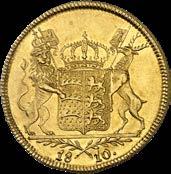
Lot 3528
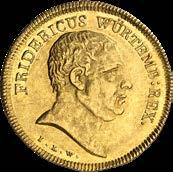
Württemberg. Frederick II / I, 1797-1805. Frederick d’or 1810. Very rare. F rom the Gaiser Collection. Extremely fine.
Estimate: 7,500 euros
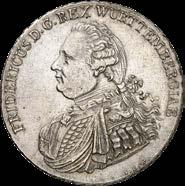
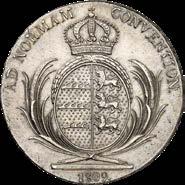
Lot 3540
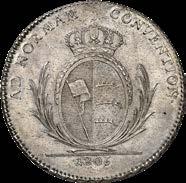
Württemberg. Frederick II / I, 1797-1805. 1809 konventionstaler. Very rare. From the Gaiser Collection. Extremely fine to FDC.
Estimate: 15,000 euros
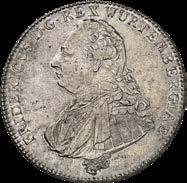
We have now reached the third and final auction of Württemberg coins from the Heinz-Falk Gaiser Collection, comprising 153 lots from the period 1797 to 1918. Once again, there are numerous rarities in exceptional condition to be discovered, which will delight not only collectors of Württemberg coins. These include the extremely rare Friedrichs d‘or from 1810 with the royal title, the so-called königsthaler from 1806 and the very rare, exceptionally well-preserved konventionsthaler from 1809. For all those interested in coins from the German Empire: Don’t forget to take a look at the Gaiser collection. Thirteen exceptionally well-preserved pieces come from this period.
Lot 3537
Württemberg. Frederick II / I, 1797-1805. 1806 konventionstaler, Königstaler (king’s taler). Very rare. From the Gaiser Collection. Extremely fine.
Estimate: 7,500 euros
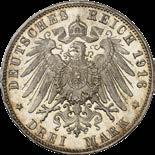
Lot 3652
Württemberg. William II, 1891-1918. 3 marks, 1916. Anniversary of the reign. Probably only 350 specimens in existence. From the Gaiser Collection. Matte obverse, Proof, minimally touched.
Estimate: 4,000 euros
German coins after 1871
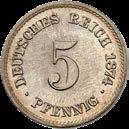
Lot 2537
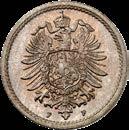
German Empire. 5 pfennigs, 1874. From the Jürgen and Erika Schmidt Collection. Very rare. FDC.
Estimate: 100 euros
Lot 2855
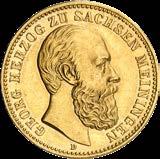
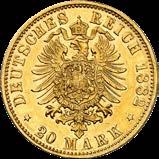
German Empire. Saxe-Meiningen. George II. 20 marks, 1882. Very rare. Extremely fine to FDC. Estimate: 15,000 euros
Lot 2903
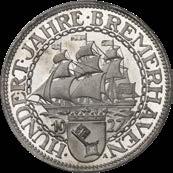
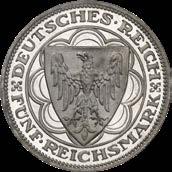
Weimar Republic. 5 reichsmarks, 1927 A, Bremerhaven. From the Jürgen and Erika Schmidt Collection. PCGS PR66 CAM. Proof. Estimate: 1,250 euros
And that brings us to the topic of the German Empire: Of course, we also have a comprehensive range of German coins from 1871 onwards on offer this time. Many pieces come from the Jürgen and Erika Schmidt Collection, including an interesting lot of small coins in proof quality and several coins from the Weimar Republic also in proof quality.
Another exceptional item is a small but very fine lot of samples of imperial silver coins.
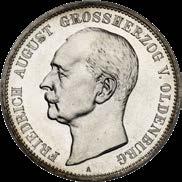
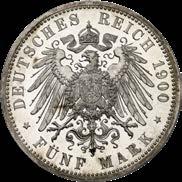
2600
German Empire. Oldenburg. Frederick Augustus. 5 marks, 1900. PCGS PR67. Showpiece. Proof. Estimate: 6,000 euros
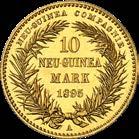
Lot 2887
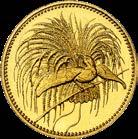
German New Guinea. 10 New Guinean marks, 1895. Only 2,000 specimens minted. NGC PF67 (Top Pop). Proof. Estimate: 50,000 euros
Lot 2946
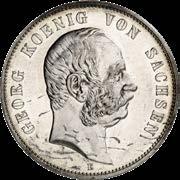
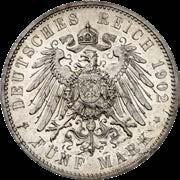
German Empire. Saxony. George. 1902 pattern of 5 marks. Extremely rare, probably only this specimen known. Extremely fine to FDC, struck in proof quality. Estimate: 30,000 euros
Lot
Coins of the Habsburg Empire from the collection of Kommerzialrat
Dr Herbert Wenzel and others
Lot 2264
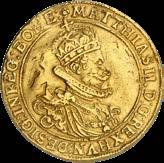
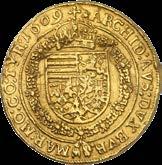
Holy Roman Empire. Matthias, 1608-1612-1619. 8 ducats, 1609, Vienna. Extremely rare. Unpublished as an 8-ducat issue.
From the collection of Kommerzialrat Dr. Herbert Wenzel, Vienna. Very fine.
Estimate: 10,000 euros
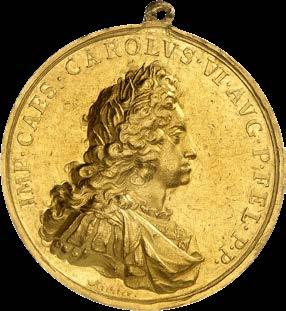
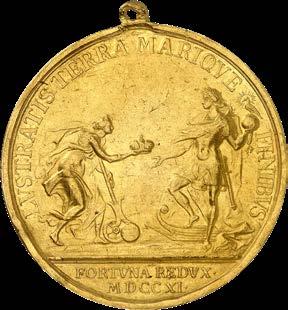
This auction also features a large part of the spectacular collection of Kommerzialrat Dr Herbert Wenzel of Vienna. These are coins from the Habsburg Empire, which are distinguished by their rarity and exceptional quality. We would like to mention here a previously unknown multiple of Matthias weighing eight ducats, minted in Vienna in 1609 (Lot 2264), as well as a portable gold medal worth 40 ducats from 1711 commemorating the arrival of Emperor Charles VI on the occasion of his coronation in Frankfurt (Lot 2287). This piece is very likely unique.
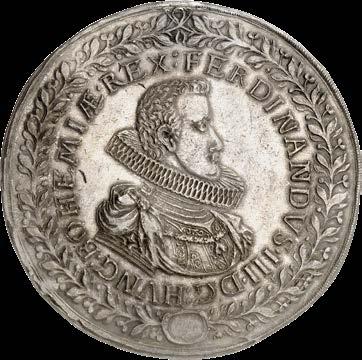
Also noteworthy is the quadruple schauthaler from 1629, which Ferdinand III had minted in Prague (Lot 4757). Nineteenth-century numismatists sought to explain this ceremonial issue with the Emperor’s recovery from smallpox, which is rather unlikely. A much more realistic explanation is its use as a diplomatic gift at the Regensburg Electors’ Day (Kurfürstentag). At that time, Ferdinand II attempted to push through the election of his son as King. This failed because the Spanish Habsburgs needed military assistance in the Netherlands. At this meeting, in exchange for the support of the imperial princes, the Emperor not only had to renounce his promise to elect his son as King, but was also forced to sacrifice Wallenstein, who was very unpopular with the electors.
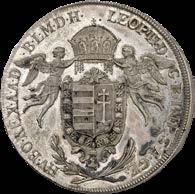
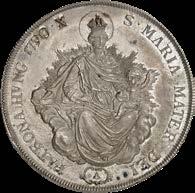
Let us conclude our brief excursion into the Habsburg Empire with a convention thaler from 1790, which was minted in Vienna for Hungary (Lot 4896). What is particularly unusual about this interesting piece is its condition. It is a perfectly-preserved first strike from particularly fresh dies, showing every detail of the design.
Lot 2287
Holy Roman Empire. Charles VI, 1711-1740.
Wearable gold medal of 40 ducats, 1711, by B. Richter, commemorating his arrival for the coronation in Frankfurt. Extremely rare, probably unique.
From the collection of Kommerzialrat Dr. Herbert Wenzel. Very fine to extremely fine.
From the collection of Kommerzialrat Dr. Herbert Wenzel. About extremely fine.
Estimate: 10,000 euros
Lot 4896
Holy Roman Empire. Leopold II, 1790-1792.
Konventionstaler, 1790 A, Vienna for Hungary. Very rare. From the collection of Kommerzialrat Dr. Herbert Wenzel. First strike. About FDC.
Estimate: 15,000 euros
Polish rarities
Are you interested in Polish coins? Then you’ll be delighted by what we have to offer in our Auction 439 -- several large gold coins from Sigismund III and what Polish collectors refer to as a “White Raven”, the 1630 ducat from Bromberg.
The coinage of Sigismund III enjoys almost iconic status among Polish collectors because during his tenure the coinage system was expanded to an unprecedented extent. A wealth of new mints were established. There are said to have been nine royal- and six municipal mints. Connoisseurs of Polish coinage are enthusiastic about the fabulous die cutting, which was used primarily in gold coinage.
Poland. Sigismund III, 1587-1632.
Portugalöser of 10 ducats n. d., probably Cracow.
Extremely rare. Very fine +.
Estimate: 125,000 euros
The highlight of the lot on offer is an extremely rare ten-ducat portugalöser coin of Sigismund III (Lot 2173), presumably from Krakow. But the other pieces are also impressive. Two further extremely rare ten-ducat coins are on offer, one minted in Olkusz, the other in Vilnius, Lithuania. In addition, there are two ducats, one minted by Sigismund I in 1532 in Krakow, and then the famous “White Raven”, the 1630 ducat of Sigismund III from Bromberg. It is considered extremely rare. In fact, only two specimens appear to be circulating on the open collectors’ market. It “appears” to be the case because it is not always easy to clearly identify the images from old auction catalogues with modern coins. The piece auctioned by Künker in 2021, and now once again, probably comes from the Chelminski / Otto Helbing (25 April 1904) and Frankiewicz / Felix Schlessinger (15 September 1930) collections. However, for the collotype plates of the old auction catalogues, plaster casts were made of the coins, glued onto a plate and then photographed. For this reason, the shape of the coin blank cannot be determined in old auction catalogues, which makes it difficult to clearly identify a coin that is on the market today with a photo in an old auction catalogue.
Poland. Sigismund III, 1587-1632. 1630 ducat, Bydgoszcz.
Extremely rare. Extremely fine to FDC.
Estimate: 75,000 euros
Incidentally, impressive coins from the cities of Gdańsk and Toruń can also be discovered in Auction 439.
Poland. Gdańsk. 3 1/2 ducats, 1650.
Extremely rare. About extremely fine.
Estimate: 50,000 euros
Lot 2173
Lot 2176
Lot 2183
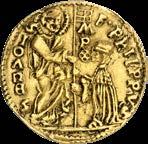
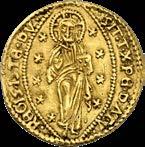
Special series: Knights Hospitaller on Rhodes and Malta
Lot 2131
The Order of Saint John on Rhodes and Malta. Philippe Villiers de l’Isle Adam, 1530-1534.
Zecchino n.d. Probably Rhodes. Extremely rare. Very fine +.
Estimate: 7,500 euros
Foreign
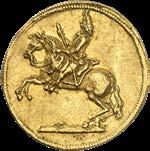
Lot 2023
Denmark. Christian V. 1692 ducat, Copenhagen. Rider Ducat. Very rare. About extremely fine.
Estimate: 2,500 euros
The Order of St John and its coinage is also a very popular area of collecting. You can discover 27 related lots in our Auction 439, including numerous great rarities such as a zecchino that stands, so to speak, at the transition between Rhodes and Malta (Lot 2131). It was minted under Philippe Villiers de l’Isle-Adam, who became Grand Master in 1521. He anticipated the invasion of Rhodes by the Ottoman army, which actually began in June 1522. After months of fighting, the Knights Hospitaller were unable to hold their ground. They surrendered on 22 December 1522 in exchange for free passage with their weapons and personal belongings. Thus, after 213 years, the Order lost its headquarters in Rhodes. Emperor Charles V immediately began to search for a suitable alternative. However, this was not found until 1530, when Malta was handed over to the Knights Hospitaller as a hereditary fiefdom. A tribute of six “falcons” per year was agreed upon. These were the “Maltese falcons”, familiar in popular culture, which Dashiell Hammett immortalised in a detective story. It is not certain where exactly the zecchino, which we are offering with an estimate of 7,500 euros, was minted. It could well have been produced in 1522 during the siege of Rhodes.
Of course, you will find many other rarities from various countries in Auctions 439 and 441 –for example, a lot of 26 Danish gold and silver coins, most of which come from a private aristocratic collection.
Here are some particularly noteworthy international pieces:
Lot 2042
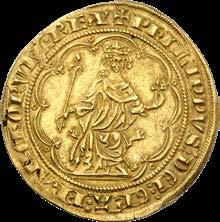
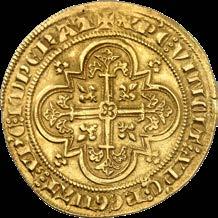
France. Philippe IV le Bel, 1285-1314. Masse d’or n.d. (1296), 1st issue. Very rare. Extremely fine. Estimate: 10,000 euros
Lot 2087
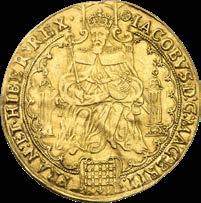
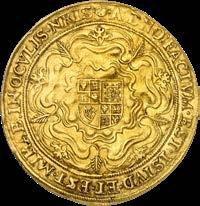
England. James I, 1603-1625. Rose Ryal n.d. (1605-1606), London. Very rare. Very fine +. Estimate: 7,500 euros
Lot 2158
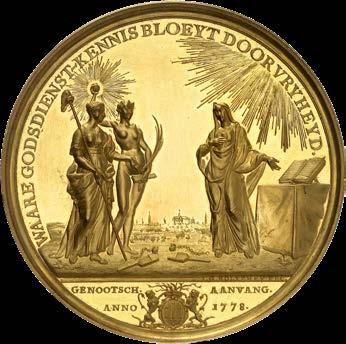
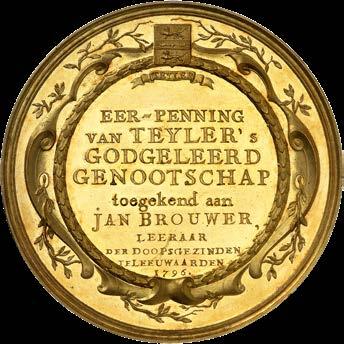
Netherlands. Haarlem. 1778 gold medal by J. G. Holtzhey, honorary medal of Teyler’s Godgeleerd Genootschap, awarded in 1796 to pastor and teacher Jan Brouwer. Extremely rare. Extremely fine. Estimate: 40,000 euros
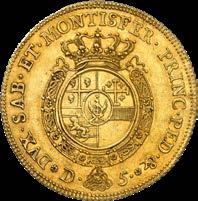
Lot 2113
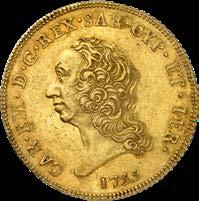
Sardinia. Charles Emanuel III, 1730-1773. 5 doppie, 1755, Turin. Very rare. Extremely fine.
Estimate: 40,000 euros
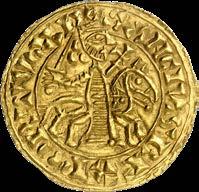
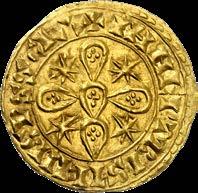
Lot 2185
Portugal. Sancho I, 1185-1211. Morabitino (18 dinheiros), Coimbra. Very rare. Extremely fine to FDC.
Estimate: 15,000 euros
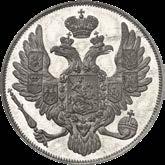
Lot 2191
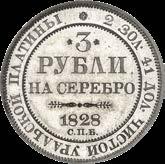
Russia. Nicholas I, 1825-1855. 3 roubles, platinum, 1828, St. Petersburg. PCGS PR65. Very rare. Showpiece. Proof.
Estimate: 12,500 euros
Lot 2236
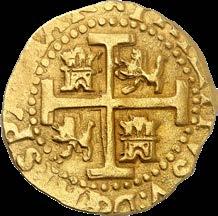
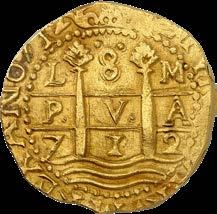
Peru. 8 escudos, 1712, Lima. Very fine to extremely fine.
Estimate: 12,500 euros
Orders and decorations from the estate of Wilhelm, Herzog / Duke
of Bayern / Bavaria (1752-1837)
Last but not least, we are offering a lot of orders and decorations from an old German noble family. The phaleristic and numismatic estate of Wilhelm, Herzog / Duke of Bayern / Bavaria, is being auctioned off.
Wilhelm was born in Gelnhausen in 1752, the son of Johann von Pfalz-Birkenfeld-Gelnhausen. This meant that he belonged to the House of Wittelsbach, but only to a collateral line. In 1704, this line had received the “pledged” imperial city of Gelnhausen and a life annuity. However, as Gelnhausen was sold to HesseKassel in 1746, Wilhelm’s father held the title, but neither territory nor army. It was therefore a real stroke of luck that Wilhelm became the brother-in-law of the future Bavarian King Maximilian I Joseph through his marriage to Maria Anna of Palatinate-BirkenfeldBischweiler-Rappoltstein. In 1797, he concluded the Ansbach House Treaty with him, which established the unity and indivisibility of all Wittelsbach lands. In return, Wilhelm received the title of Herzog / Duke in Bavaria when his brother-in-law took office –not to be confused with the title of the ruling House, Herzog of Bavaria.
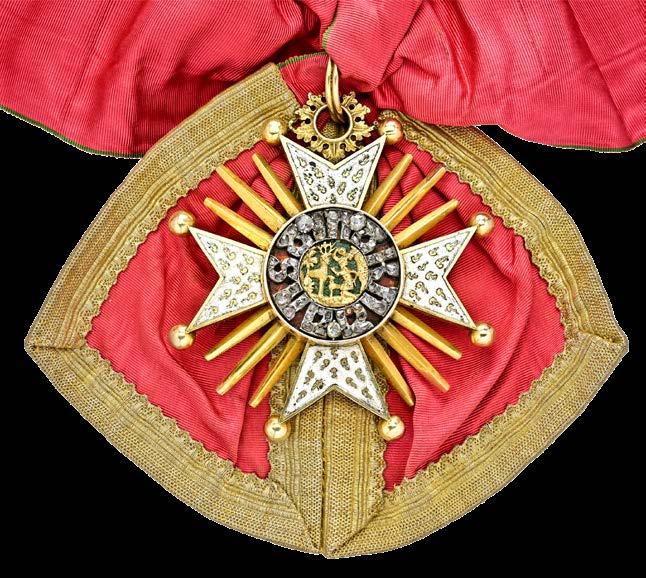
Electoral Palatinate House Order of Saint Hubertus. Large, heavy jewel for sash ribbon, created around 1767. Extremely rare. From the personal estate of Duke Wilhelm in Bavaria. II. Estimate: 15,000 euros
Among other items, the jewel of the Electoral Palatinate Order of St. Hubertus from Wilhelm’s personal possessions in Bavaria is on offer, the order’s motto set with ca. 56 round and elongated old-cut diamonds, diamond roses and diamond chips.
Wilhelm was admitted to the order by Elector Carl Theodor on 2 February 1768. This order was elevated to the highest order of the Kingdom of Bayern / Bavaria by King Max I Joseph. However, as it was and remains de jure a “house order”, it can still be conferred to this day by the respective head of the House of Wittelsbach in his function as Grand Master of the Order.
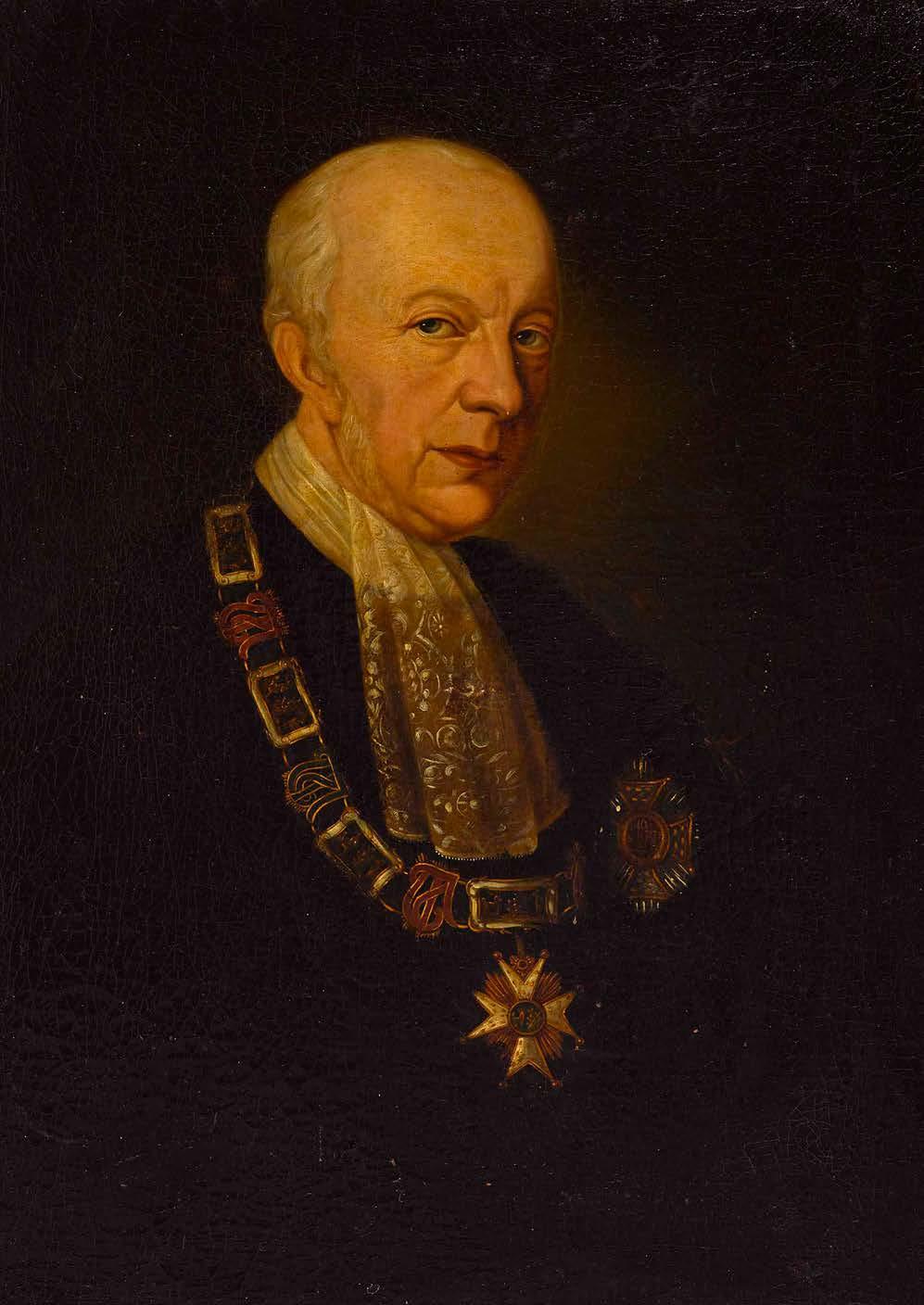
Lot 4025
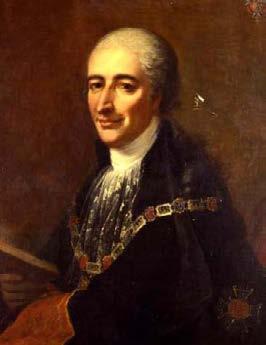
Portrait of Duke Wilhelm in Bayern / Bavaria in the regalia of the Palatinate Order of St. Hubertus. Not only the order and collar are characteristic, but also the robe: a black velvet jacket with red cuffs (not visible here) and a lace jabot. To the left of this, on the black cloak, is not another order, but the breast star of the Order of St. Hubert. Many Bavarian rulers and members of the high nobility had themselves portrayed in this costume.
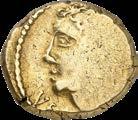
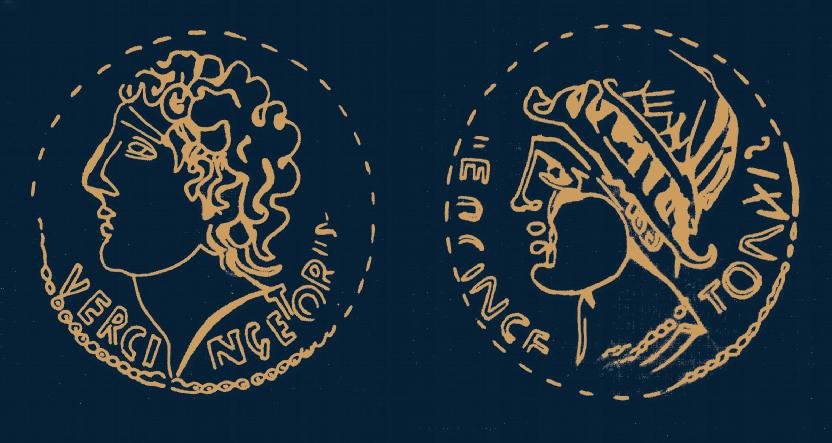
The Gallic gold coinage of Vercingetorix consists of two types (Fig. 2): One version shows the bareheaded and beardless head of a young man, the other a similar head wearing a helmet. Under both heads is the Latin inscription VERCINGETORIXS. This legend certainly links the gold stater with the Arverni nobleman Vercingetorix, either by naming the mint master or by identifying the person depicted through a caption.
A special coin
A Gallic gold stater (Fig. 1), which we are offering in our Auction 438 as Lot 29, confronts us with two important figures in world history, and with the beginning of a cultural transformation in our neighbouring country France -- and, finally, with the decline of two cultured nations into nationalistic and aggressive thinking and feeling.
Gold staters of Vercingetorix are extremely rare.1 The number of specimens known to date is probably less than thirty, most of which are in public collections. Sixteen of them come from the hoard found in Pionsat, 50 km northwest of Clermont-Ferrand.2 There are two main reasons for the small number of these coins: First, they were minted in small numbers because they were not so much coins in general circulation as gift coins awarded to deserving comrades-in-arms. It is fascinating to imagine that such a coin once passed from the hand of Vercingetorix as an honourable gift to that of a Gallic warrior who had distinguished himself in battle against Caesar. In any case, it is likely that the Vercingetorix staters were soon regarded as rebel coins and risked rendering their owners suspicious: And for this reason alone, many of them were probably melted down after the rebel leader’s capture.
It has often been rightly suggested that the two heads are intended to represent the Gallic rebel leader. It should be borne in mind, however, that we cannot expect to find images with photographic accuracy of people from this period and cultural environment. Even if ancient coin images of real persons could and did take actual physiognomy into account, they are still “stylised portraits”. Through their use as coin images, through explanatory legends and the related political circumstances, they could be understood as images – rather than portraits – of a particular ruler. Some scholars vehemently oppose identifying the figure depicted on these coins with Vercingetorix: They argue that the heads are imitations of similar ones on Greek coins and are based on the head of Apollo, but this argument merely describes the tradition of such iconography and does not rule out identification with Vercingetorix. Such analyses, for all their erudition, overlook the fact that almost every contemporary of this coin who came into possession of such a piece with the youthful, in some cases helmeted head and the name inscription, would be inclined to identify the person depicted with Vercingetorix. Both representations fit with what we know about Vercingetorix: He was still a young man when he incited the youth of the Arverni tribe, who settled in Auvergne in central France, to fight against Caesar and the Roman occupiers.3 This could have been expressed visually by depicting him, on the one hand, as a young man in the prime of his youth or Apollo-like, and on the other hand, Mars-like with a helmet on his head.
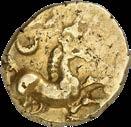
The reverse side of the Vercingetorix staters shows a leaping horse, which appears in two variants: On some coins it leaps to the right, on others to the left. Above the horse leaping to the left is an S-shaped ornament, above the one leaping to the right is a crescent moon. In both variants, there is an amphora under the horse.
Fig. 1: Gold stater of Vercingetorix.
Auction 438, Lot 29.
40,000 euros.
Fig. 2: The two types of Vercingetorix staters (after J.-B. Colbert de Beaulieu –G. Lefèvre, Les monnaies de Vercingétorix, in Gallia 21, 1963. 11-75, Fig 6bis).
The core of the Gallic troops – as was also the case with the rebellious Arverni under Vercingetorix – was made up of the noble horsemen of this people. Whether the amphora alludes to the banquets of the aristocracy, with their abundant wine consumption, remains to be seen.
The minting of Gallic gold staters began towards the end of the third century BC, when Celts who had served as mercenaries for the Carthaginians and for Macedonian kings returned to their Gallic homeland with Greek gold staters.4 From today’s perspective, the gold content of the Vercingetorix staters is modest. Metal analyses have shown that these coins contain an average of 50.8% gold (= approx. 12 carats), 33.8% silver and 15.1% copper.5
Vercingetorix’s revolt in 52 BC
Even though the Arverni, like other Gallic tribes, had been minting gold coins since the third century BC, Vercingetorix‘s gold staters can be regarded as a special issue and, at the same time, as the tribe’s best-known and most valued. They were issued during a rebellion about which we have quite detailed knowledge thanks to the seventh book of Caesar’s “Gallic War”. In addition to the gold staters, a few brass coins minted with the gold dies have also survived. These may have been emergency money minted during the siege of Alesia, which was surrounded by Caesar’s double siege ring.
1 B. Fischer – J.-L Genévrier, Les monnaies de Vercingétorix: une nouvelle acquisition?, in Gallia 44, 1986, 167-169, esp. 167 “The coins of Vercingétorix are rare: We know of only twenty-seven examples, twenty-five of which are in gold and two in bronze. However, a text dated 1898 mentions a coin of this type, although no trace of it has been found to date.”
2 S. Nieto – J.-N. Barrandon, Le monnayage en or arverne: essai de chronologie relative à partir des données typologiques et analytiques, in RN 158, 2002, 37–91, esp. 38.
3 See: J.-B. Colbert de Beaulieu – G. Lefèvre, Les monnaies de Vercingétorix, in Gallia 21, 1963, 11-75, esp. 23.
4 See the essays by P. Ducrey, Les mercenaires dans le monde grec, and S. Nieto-Pelletier & J. Olivier, De l’Égée à la Gaule, aux sources de la monnaie d’or celte occidentale, in: Les Celtes et la monnaie, Gollion (CH) 2017, 38-42.
5 S. Nieto-Pelletier, Monnaies arvernes (Vercingétorix, Cas) en orichalque, in RN 160, 2004, 5-25, esp. 12.
From 58 to 53 BC, Caesar (Fig. 3) had brought most of Gaul, which largely corresponds to present-day France, under his control in a war that was as ingenious as it was brutal, but he was still far from securing Rome’s rule over it.6
Caesar’s campaign was partly about personal glory: He wanted to be able to boast that he had incorporated a large and important area into the Roman Empire, thereby going down in history as a great conqueror – and this goal he actually achieved. In his second century AD book “Parallel Lives of the Most Excellent Men”, the learned author Plutarch placed Caesar alongside Alexander the Great.
On the other hand, the Gallic campaign served to gain power for Caesar. For the expected conflict with his political rivals – especially Pompey –and in order to become sole ruler over Rome, he had to create an army that was loyal to him and well-trained, and also needed to acquire the wealth with which he could win over supporters and pay for good equipment. The exploitation of wealthy Gaul seemed to him to be a suitable means to this end: In Caesar’s eyes, Gaul was a challenging training camp and a bubbling spring of money.
The consequences for Gaul were catastrophic. Ancient writers such as Plutarch and Appian estimated that one million Gauls lost their lives during Caesar’s campaigns and another million were enslaved.7 The dead included not only the warriors who perished in battle and the people of conquered towns, who were often massacred; many Gauls, especially in rural areas, starved to death because the Roman military had taken most of their food without hesitation through ruthless foraging. In addition, Caesar had the Gauls’ sanctuaries, where the offerings of pious people had accumulated over many centuries, plundered in his unbridled greed for precious metals. He also made a lot of money from the people whom he and his soldiers sold as prisoners to the slave traders who waited on such “goods”.
In view of these circumstances, it is hardly surprising that, once the full extent and consequences of Caesar’s Gallic campaigns became apparent, resistance arose and led to the open rebellion of the Gauls. It was triggered in 52 BC in the centre of Gaul by the powerful tribe of the Arverni. The memory of this important Gallic people has been preserved to this day in the name of the Auvergne region, a landscape characterised by extinct volcanoes.
The leader of this rebellion was Vercingetorix, born around 80 BC, who came from a leading family of the Arverni nobility. His name means “king of warriors”.8 His father Celtillus, who had sought to unite all of Gaul under his own leadership, had been assassinated: Provincialism was deeply rooted among the Celts of Gaul, and had made it easier for Caesar to achieve his goals quickly – indeed, had made it possible in the first place. Vercingetorix may have served for a short time as a cavalry commander in Caesar’s army and would therefore have been well acquainted with Roman warfare. In 52 BC, he gathered around him a troop of young men who were loyal to him and who sought the liberation of Gaul and revenge for the injustices they had suffered. Vercingetorix thus became what his name promised: the royal leader of a powerful band of warriors. In 52 BC, he decided that the time had come to drive the Romans out of Gaul, for the Gauls’ bitterness and hatred of the invaders had reached a peak. News of conditions in Rome amounting to civil war raised hopes that Caesar would not be able to return to Gaul so quickly. The Gauls’ uprising may also have been fuelled by the memory that they had once succeeded in conquering Rome. And so, many tribes joined Vercingetorix’s rebellion. The uprising began on 21 February when Gauls invaded Cenabum / Orléans and murdered the Romans who had settled there, especially the hated grain merchants. Contrary to all expectations, however, Caesar set out from Ravenna for Gaul on 1 March and reached Narbo/ Narbonne in southern
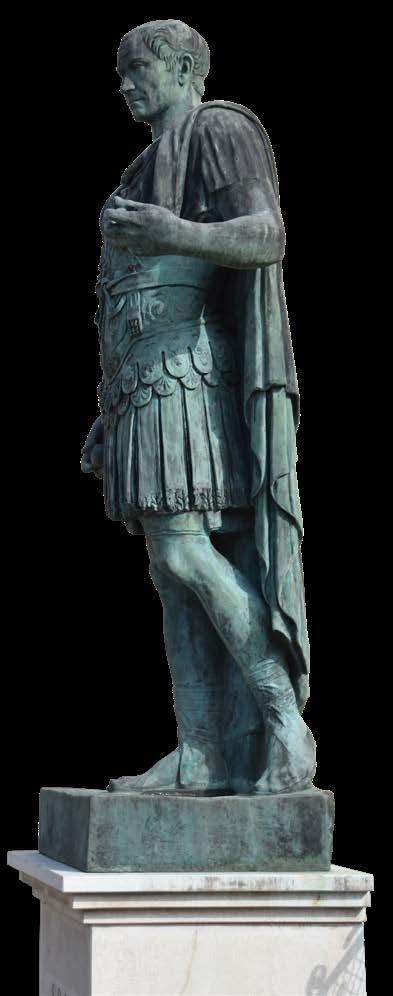
Fig. 3: Modern statue in Savignano sul Rubicone commemorating Caesar’s crossing of the Rubicon (photo JN 2016).
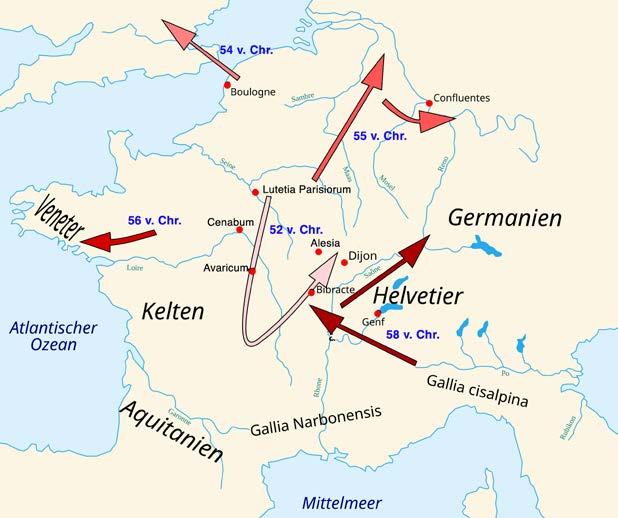
Fig. 4: Caesar’s campaigns in Gaul (historicair, Wikipedia).
Gaul in 13 days. Even then, he was acting according to his famous motto, later summed up in three words: “veni, vidi, vici” (I came, I saw, I conquered), which means simply that swift action, thorough observation and assessment of the situation must lead to victory. Theodor Mommsen correctly describes the situation created by Caesar’s lightning-fast appearance when he
6 See: T. Rice Holmes, Caesar’s Conquest of Gaul, Oxford 21911; Ch. Goudineau, Caesar und Vercingetorix, in Zaberns Bildbände zur Archäologie/Antike Welt, Sonderband). Mainz 2000.
9 Th. Mommsen, Roman History 4, München 1976 (91904, III 281), 272.
10 On Vercingetorix’s tactics, cf. Y. Le Bohec, Vercingétorix. Stratège et tacticien, Paris 2023.
writes about Vercingetorix’s rebellion: “It was foolish to leave the outcome to be decided by weapons under such circumstances, for they had already irrevocably decided the matter.” 9 After Caesar’s arrival in Gaul, everything went like clockwork: After thorough reconnaissance and preparations, Caesar began his campaign against the Arverni on 15 April (Fig. 4), marching towards the centre of the uprising. On 9 May, he recaptured Cenabum / Orléans. Vercingetorix attempted to starve the Roman army into retreating from Gaul by employing a scorched earth policy.10 Due to Vercingetorix’s strategy, Caesar was only able to find significant food supplies in the city of Avaricum / Bourges, which he therefore besieged and ultimately conquered. When it was stormed on 15 June 52 BC, a massacre took place in which only 800 of the 40,000 inhabitants survived. This made it clear how Caesar intended to deal with the rebels. He entrusted his experienced commander Labienus with keeping the remaining Gauls quiet, and then advanced against Gergovia (not far from today’s Clermont-Ferrand), the suburb of the Arverni. There, Vercingetorix succeeded in inflicting a severe defeat on Caesar, in which about 700 Roman soldiers were killed. Full of enthusiasm, the Gauls then transferred supreme command to Vercingetorix at a meeting in the rocky stronghold of Bibracte. However, the Gauls’ hopes were dashed when,
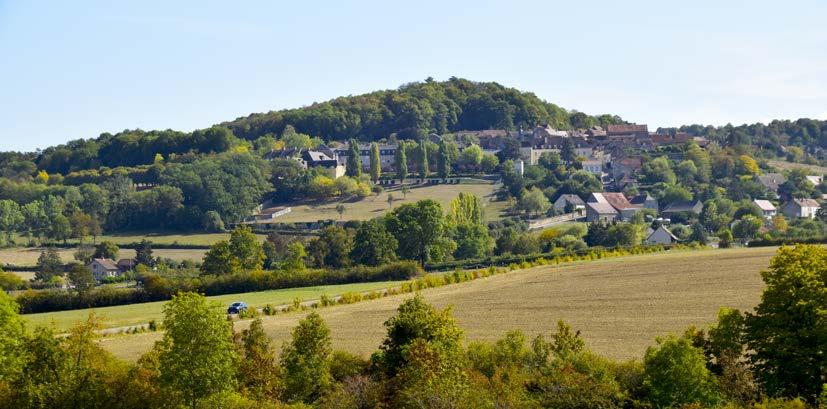
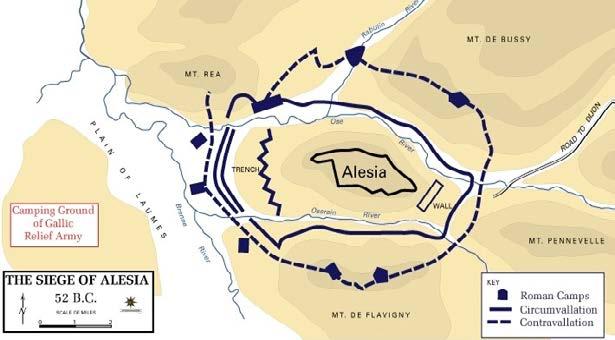
in late summer, Caesar’s Germanic cavalry inflicted a heavy defeat upon them in a cavalry battle on the small river Armançon. At this point Vercingetorix had no choice but to retreat to Alesia (Fig. 5). Caesar immediately realised that he now had the chance to capture Vercingetorix, and surrounded the city with a double siege ring (Figs. 6 and 7). After Caesar had repelled a large Gallic relief army, Vercingetorix was trapped: Caesar starved him out. Attempts by the Gauls to break out did nothing to change the situation, nor did the expulsion of old persons, women and children from the city. Vercingetorix’s intention with this cruel action was to ensure that the meagre food supplies were available only to the male defenders of the city and would therefore last longer. Both opponents, Caesar and Vercingetorix, mercilessly left the elderly, women and children to languish outside the city. This action only intensified and prolonged the drama of Alesia. Finally, the rebels were forced to surrender in October 52.
Vercingetorix was taken to Rome in chains. He was to be paraded in Caesar’s triumphal procession, but had to wait another six years so that Caesar could celebrate four triumphs at once – over Gaul, Egypt, Pontus and Africa – from 20 September to 1 October 46 BC. Vercingetorix now experienced the traditional triumphal procession of enemy leaders who had dared to resist Rome, as Cicero put it in the following words: “For even those who celebrate triumphs spare the enemy leaders alive for a longer period of time only so that the Roman people, when these leaders are carried along in the triumphal procession, can see the most
magnificent spectacle and the fruits of victory. But as soon as the victors begin to steer their chariots from the Forum to the Capitol, they give the order for them to be taken to prison, and the same day marks the end of the victors’ command and the end of the vanquished’s lives.” 11 At a nod from the triumphant Caesar, Vercingetorix was led away from the triumphal procession to the state prison located at the entrance to the Capitol, known as the Tullianum, and was executed there.12 Caesar’s hatred for the Gallic rebel had not waned even six years after his uprising, so that he was not granted clementia Caesaris – the dictator’s clemency, which had become a catchphrase. The victorious conqueror of Gaul probably still had too many images in his mind of Roman soldiers who had lost their lives in the Arverni uprising.
Vercingetorix – From “Celtomania” to the ideologisation of defeat
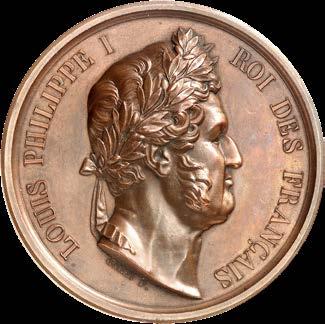
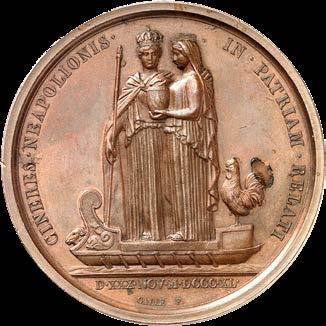
In the 16th century, Celtomania – today we would probably call it “Celtic hype” – began to spread in France, and reached its peak in the 18th and 19th centuries. France began to trace its past back to Celtic times by associating remnants of the Celtic language, especially geographical names but also dolmens and menhirs such as those in Carnac (in reality relics of the Stone Age), with the Celts. At that time the rooster, which is called “gallus” in Latin, became a symbol of France’s roots in Celtic culture, because the same word with a capital letter – “Gallus” – also refers to the Gauls themselves (Fig. 8).
Fig. 6: Caesar’s siege rings around Alesia (American Military Academy, Department of History, Wikipedia).
Fig. 8: Medal of the “Citizen King” Louis Philippe commemorating the return of Napoleon Bonaparte’s remains from St Helena to Paris in 1840: On a ship of ancient style stand the crowned Britannia with sceptre and Gallia with the urn containing Napoleon’s remains. Britannia has her arm around Gallia, behind whom stands the Gallic rooster. Künker Auction 323, 28 June 2019, Lot 2628.
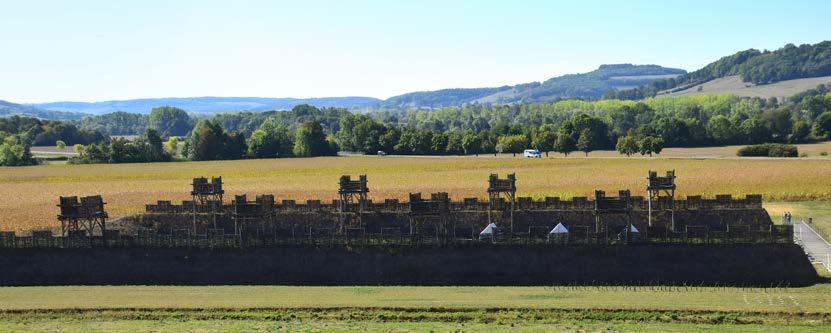
Fig. 7: The reconstructed outer siege ring around Alesia (Photo JN 2018).
11 Cicero, Speeches against Verres II 5, 77.
12 It is uncertain whether he was beheaded (according to Th. Mommsen, Roman History 4, München 1976 [91904, III 291], 282) or strangled.
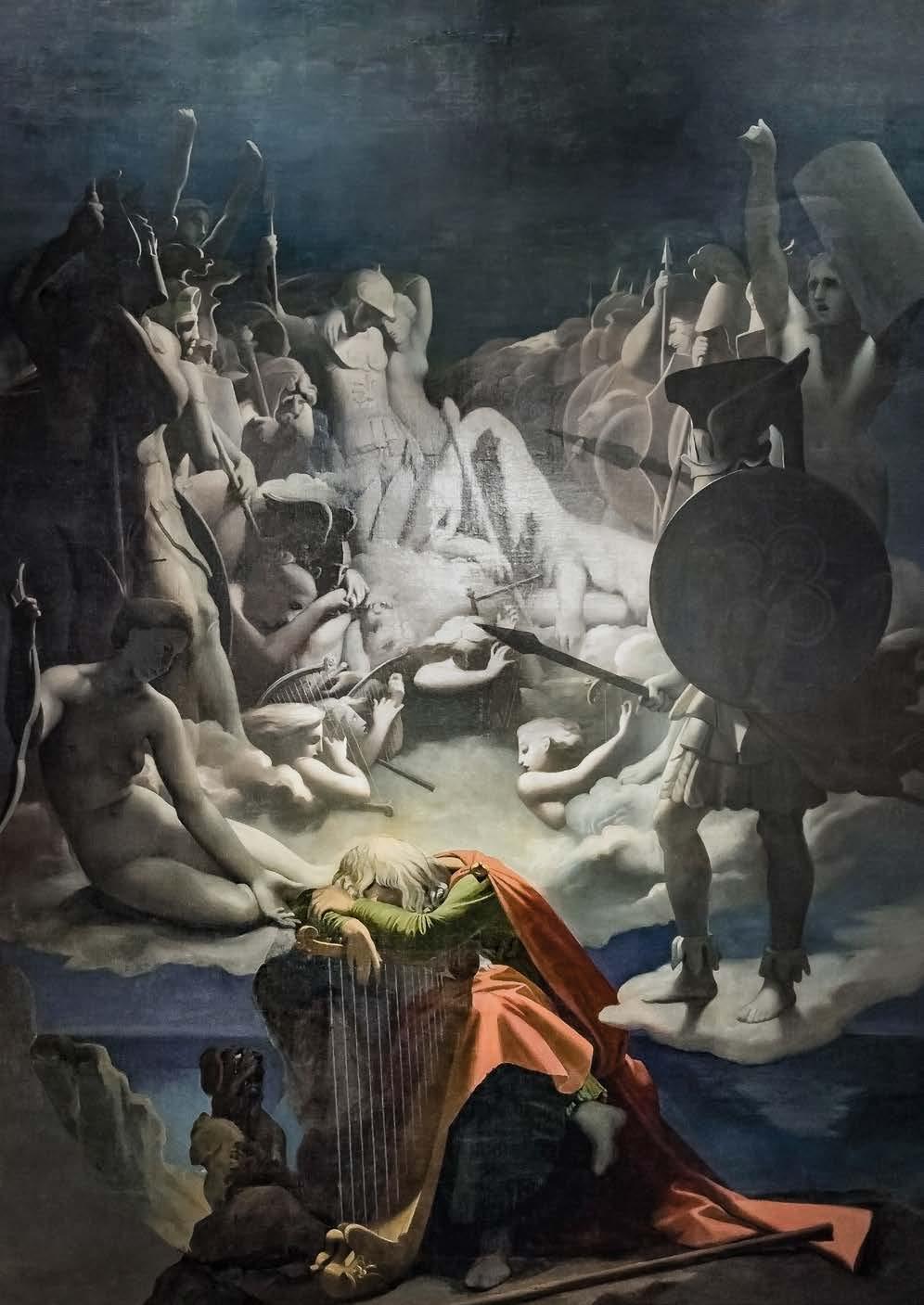
Fig. 9: J. Au. D. Ingres, Le songe d‘Ossian, 1813. Musée Ingres Bourdelle, Montauban.
Since the French Revolution, this connection to early history had begun to surpass the previous traditions that had placed the Merovingian Clovis (who had introduced Christianity to Gaul) and the Frankish kings at the beginning of French national history.13 The French Revolution fought the monarchy and the Catholicism closely associated with it, and so the idea of France’s Celtic origins was perfectly appropriate, even though the country continued to be called “France”, i.e. “Realm of the Franks”. French historians such as the Thierry brothers (L‘Histoire des Gaulois depuis les temps les plus reculés jusqu‘à l‘entière soumission de la Gaule à la domination romaine / “The History of the Gauls from the Most Remote Times to the Complete Submission of Gaul to Roman Rule”, Paris 1828) and Henri Martin (Histoire de France, Paris 1833) brought the Gauls into the focus of French historical consciousness and made the Gaul Vercingetorix a national hero. Just as the Greeks once attached great importance to a “high age” of their forefathers in their founding myths, the French revelled in the idea of being descendants of the “oldest” people in Europe.
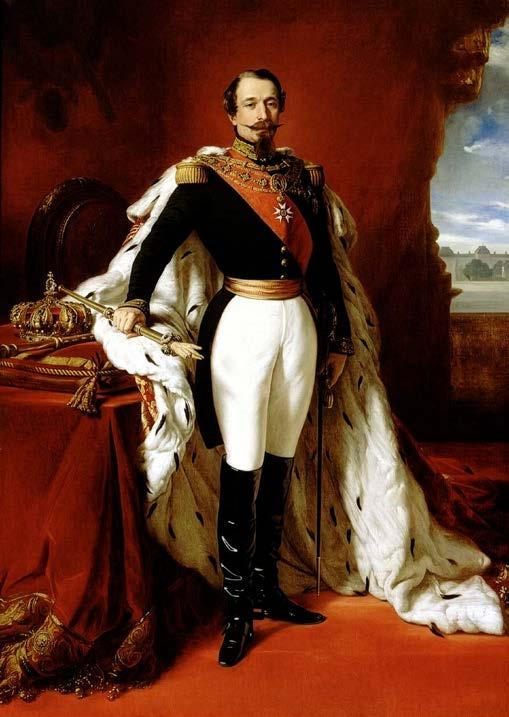
Fig. 10: Franz Xaver Winterhalter, Napoleon III, c. 1853, Museo Napoleonico di Roma.
Celtomania owed much of its appeal to a Scottish tutor named James Macpherson, who published a volume of Gaelic heroic poetry in English translation in 1760. He claimed to have collected this poetry in the Scottish Highlands. It was supposedly written by a Gaelic, i.e. Celtic, bard named Ossian. Despite the rapid onset of criticism from scholars, who exposed the heroic songs as forgeries and Macpherson as a fraud, this work achieved immense popularity -- the high esteem in which it was held went so far that Ossian was called the “Homer of the North”. Not only were poets such as Herder and Goethe enthusiastic about Ossian, but Napoleon Bonaparte himself also became an admirer of the “Celtic poet”. His enthusiasm for Ossian was so great that he commissioned the famous painter Jean-Auguste Dominique Ingres to paint a picture for his bedroom in Rome, showing the bard Ossian with his harp in the foreground and the nebulous figures of his songs in the background (Fig. 9).
Napoleon’s Celtic rapture was passed on to his grandnephew Napoleon III, who was president of the Second Republic from 1848 to 1852 (but transformed it into the Second Empire in 1852 through a coup d‘état).
Napoleon III (Fig. 10) was a lover of history and archaeology. He financed the excavations at Alesia largely from his own funds after the previously-disputed location of the site near Alise-Saint-Reine had been
13 See A. King, Vercingetorix, Asterix and the Gauls: The Use of Gallic national symbols in 19 th and 20 th century French politics and culture, Winchester 2015, 4: “We see, therefore, the rise of the Gauls as a focus of nationalist interest, with both the Franks and the Romans falling out of favour because they were ancestors of aristocracy and privilege.”
confirmed. The village still preserves the memory of Alesia, the site of Vercingetorix’s desperate final battle, in the first part of its name; the local church had been dedicated to a martyr named Regina (French: “queen”). Napoleon III had a local museum built in Alise-SaintReine to house the finds from the excavations. FrancoGerman excavations in 1990 confirmed that the first excavators in Alesia had done very good work, the only criticism being that the excavations had not been publicised sufficiently -- but this is a common offence among archaeologists.
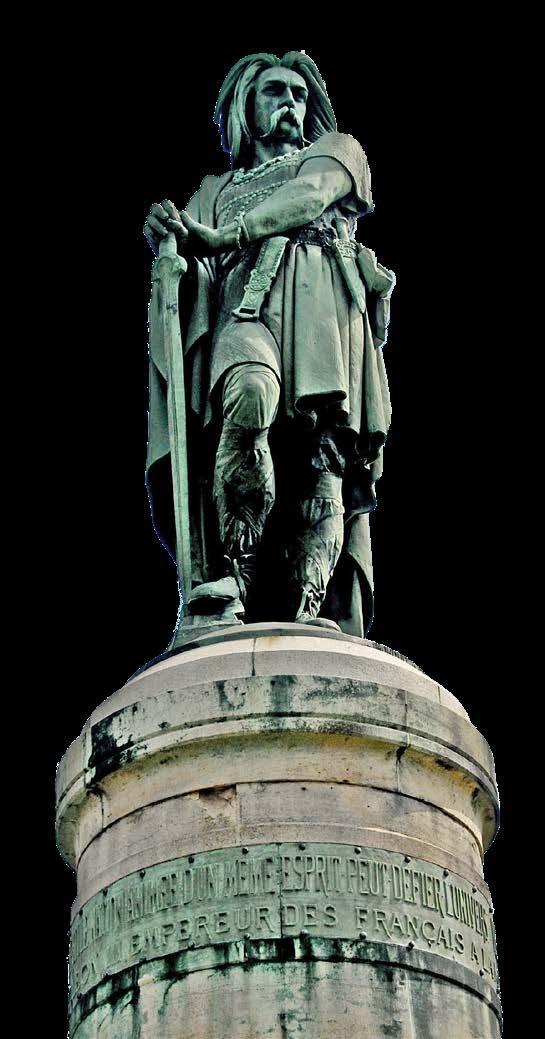
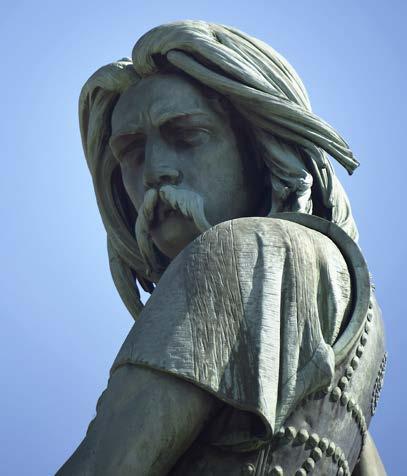
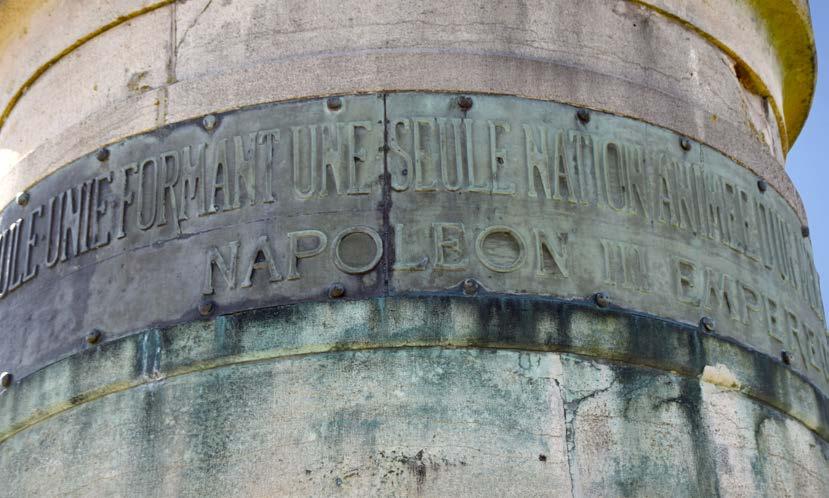
The crowning glory of Napoleon III’s research into Alesia was the erection of a statue of Vercingetorix on the hill above Alesia, created by the French sculptor Aimé Millet (1819-1891). Napoleon’s dedication inscription on the pedestal of the statue reflects a thought of Vercingetorix in French and evokes the cohesion of France, which was of crucial importance in view of the rapid changes that the country underwent in the 19th century: La Gaule unie, formant une seule nation, animée d‘un même esprit, peut défier l‘univers. Vercingétorix aux Gaulois assemblés / “When Gaul is united, when it forms a single nation, when it is animated by the same spirit, it can defy the entire world. Vercingetorix to the assembled Gauls.” (Figs. 11, 12 and 13).
Fig. 12: The Vercingetorix Monument in Alesia: The head of the Gallic rebel (JN 2018).
Under the impression of the excavations at Alesia, two volumes of a book entitled Histoire de Jules César were published in 1865 and 1866, the second volume of which is devoted to the Gallic War. Napoleon III had initiated this book project; and in his foreword to the first volume, he more or less insinuated his authorship. In reality, it was a team that had produced this
With the excavations at Alesia and the erection of a statue of Vercingetorix, the Gallic rebel against Rome became increasingly prominent in the public consciousness of the French. This appropriation of the historic Gaul naturally raised the issue that it was Caesar’s
The Vercingetorix Monument in Alesia (JN 2018).
conquest of Gaul that had established “Romanitas” and thus the most essential cultural influence on France. Not even the Celtic Breton language can be traced back to the Gauls; Celtic refugees brought the sister language of Cornish and Welsh from England to France. And yet, although Vercingetorix was defeated and brutally
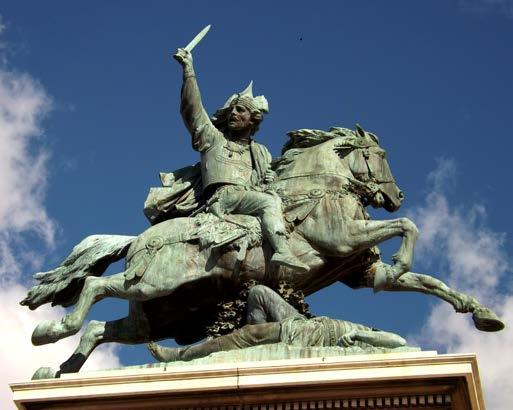
murdered by the Romans -- so that with his defeat the Celtic culture failed to become a substratum culture and Latin became the dominant language of Gaul -- the Arverni Gaul was stylised as the champion of the freedom of Gaul or France. Monuments were erected to him throughout the country, of which the one in Clermont-Ferrand honouring above all the great son of Auvergne (Fig. 14) is representative. However, one problem with this new symbolic figure of France was that his selection meant suppressing or completely eliminating other national heroes without first considering Vercingetorix’s historical and national symbolic value. This had yet to be determined in the course of history, and the process was not without its twists and turns.
Vercingetorix’s courageous sacrifice was soon seen as exemplary and was emphasised, and his death in Rome made him a martyr in the struggle for freedom. This interpretation of Vercingetorix gained significance when Napoleon III was defeated in the war against Prussia and taken prisoner, but was treated far better by Wilhelm I than Vercingetorix had been by Caesar. The French deposed Napoleon III, the Third Republic
Fig. 14: The Vercingetorix monument on the Place de Jaude in Clermont-Ferrand: The great son of Auvergne (Jamesdu92320, Wikipedia)
Fig. 13: The Vercingetorix monument in Alesia: The dedicatory inscription by Emperor Napoleon III.
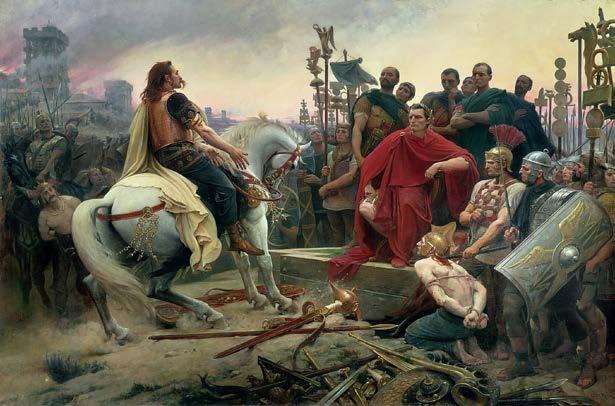
Fig. 15: Lionel Noel Royer, Vercingetorix throws his weapons at Caesar’s feet, Le Puy-en-Velay, Musée Crozatier.
began, and after the humiliation of Sedan, many French people identified with Vercingetorix’s role as a victim and cited a certain aspect of his capitulation. Historical painters depicted Vercingetorix heroically surrendering to Caesar, and fearlessly and defiantly throwing his weapons at the conqueror’s feet (Fig. 15). In this way, the defeated Vercingetorix became the guardian of the honneur de la France vaincue.14
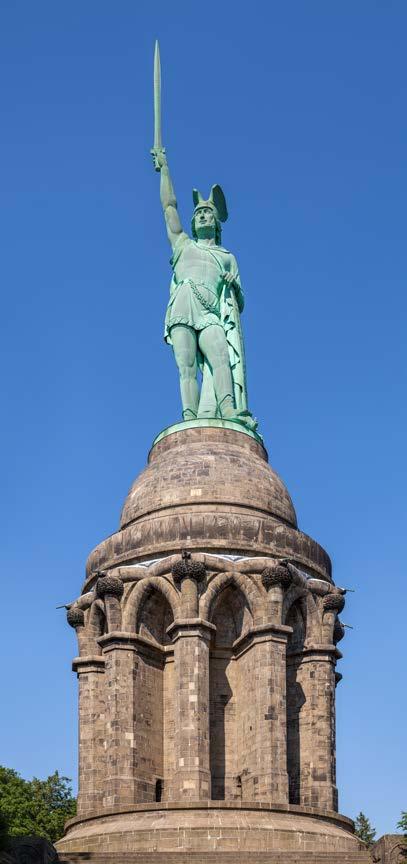
Vercingetorix was soon misused in the ideological duel with Germany. The German states united in the German Empire financed the construction of the Hermannsdenkmal, which began in 1838 but was then abandoned. It was not until 1875, several years after the Franco-Prussian War, that it was inaugurated (Fig. 16). Hermann – Latinised as “Arminius” – had also fought against the Romans and had destroyed three Roman legions in the Teutoburg Forest. His struggle made world history, as he was able to dissuade the Romans from advancing across the Rhine, and most of what later became Germany was not Romanised. To this day, the country speaks a Germanic language rather than a Romance language. The Hermann of the monument in the Teutoburg Forest points his seven-metre-long sword threateningly at France, which, especially under Louis XIV and Napoleon, had treated the Germans badly -particularly in the southwest, with the quest for control
14 Ch. Amalvi, Vercingétorix ou les métamorphoses idéologiques et culturelles de nos origines nationales, in: ibid., De l’art et la manière d’accommoder les héros de l’histoire de France. De Vercingétorix à la Révolution, Paris 1988, 51-88, esp. 51.
Fig. 16: The Hermann Monument in the Teutoburg Forest (Thomas Wolf, www.foto-tw.de).
of the Gallic Rhine border. After 1870, the Germanic Arminius and the Gallic Vercingetorix became leading figures in the duel of nationalist resentment and propaganda. It was emphasised , for example, that Caesar had defeated the horseman Vercingetorix and his Gallic cavalry primarily with his Germanic cavalry.
The First World War exacerbated tensions surrounding the two national heroes. In 1916, the French historian Jules Toutain published a pamphlet entitled “Héros et bandit. Vercingétorix et Arminius”. In it, he accused Arminius of not fighting the Romans in open battle, unlike Vercingetorix, but instead treacherously slaughtering three Roman legions in the Teutoburg Forest. During the Second World War, Marshal Pétain and his Vichy government claimed to have made the greatest personal sacrifices for defeated Gaul / France in order to preserve its survival and honour, while General De Gaulle and his resistance fighters claimed Vercingetorix as a role model for the Resistance.
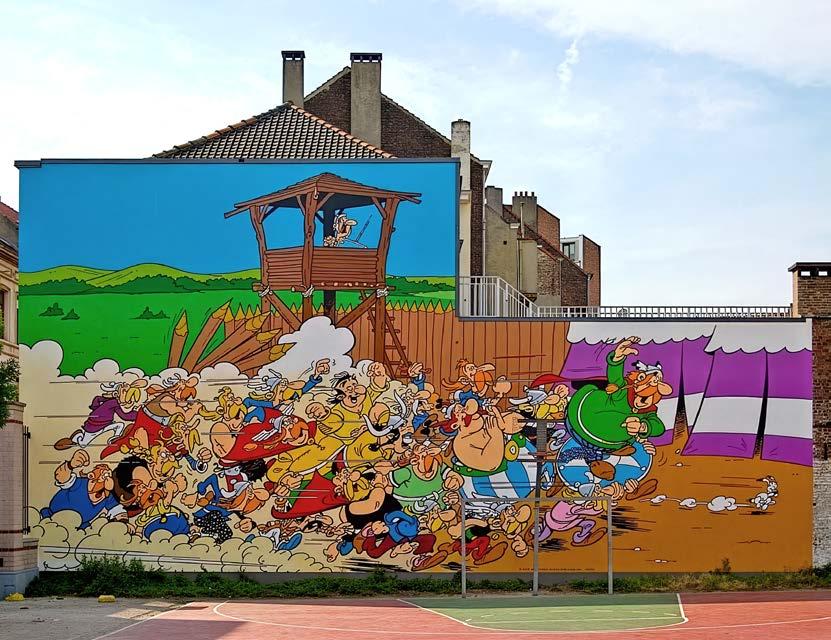
The image of Vercingetorix as a hero of the Resistance found its way into popular culture after the Second World War with the comics figure Asterix (Fig. 17).
His resistance against the Romans, which, unlike Vercingetorix’s fate, always ends successfully, is portrayed in a humorous and entertaining manner: A bloody and devastating war of the past becomes amusing slapstick. We should all enjoy Asterix!
And yet we should understand that the disadvantages of whitewashing the true face of war, and not wanting to learn realistic lessons from history, are more than emphatically, even depressingly, evident in our own day.
In this respect, this splendid coin and the history it evokes can inspire us to reflect on many aspects of this dynamic. Beyond nationalistic appropriation and amusing comics, Vercingetorix and his story still have much to tell us.
Fig. 17: Asterix, mural in Wuppertal (Fährtenleser, Wikipedia).
Harald Bluetooth –a Viking prince founds a Christian kingdom
By Margret Nollé
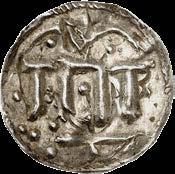
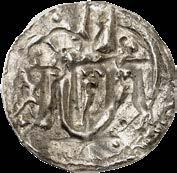
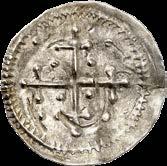
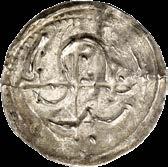
Not everyone interested in European history is aware that the Danish royal family is one of the oldest monarchies in the world. It can look back with pride on an eventful history dating back to the Viking Age of the 10th century. In our Auction 441 on 19-20 March, we are offering two extremely rare coins from the founder of the Danish dynasty, King Harald I “Bluetooth” (Harald I Blaatand), which were minted in Haithabu (Hedeby), an early medieval trading centre for Danish and Swedish Vikings during King Harald’s reign between 970 and 980. These coins are imitations of Charlemagne’s denarii from the Carolingian trading settlement of Dorestad in Friesland. The ornamental CAROLVS and DORESTAD legends can be seen on the obverse and reverse (Fig. 1 a-c).
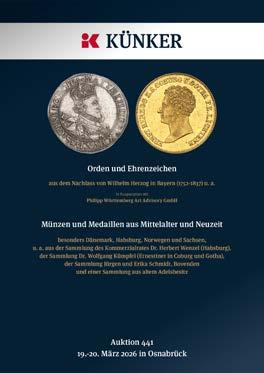
Fig. 1a: Catalogue for Künker Auction 441, 19-20 March 2026 in Osnabrück
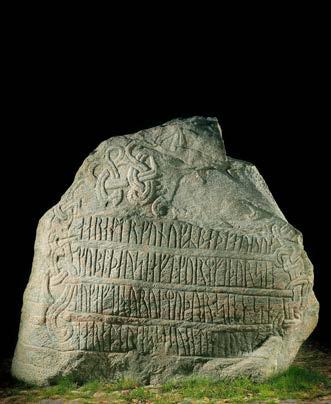
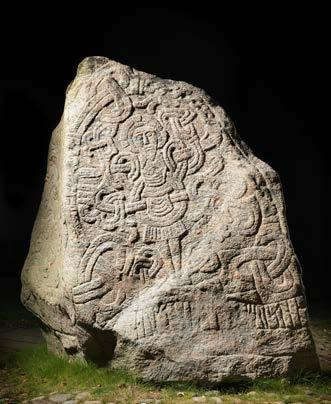
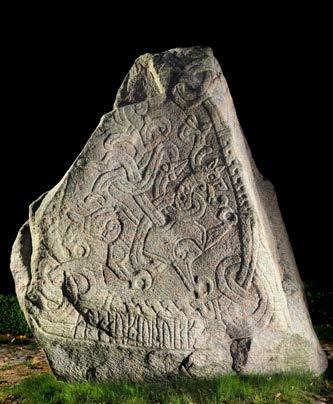
Who was this King Harald Bluetooth? Just a cruel Viking chieftain and power-hungry man who had become rich through raids and proclaimed himself King? We will see that he was in fact an early “networker” who united the tribes of the Danes; a coolly calculating strategist who was the first Viking prince to convert to Christianity, but did so only to secure his rule and expand his territory; who developed the marshy Danish countryside by building roads, bridges and defences, making it safer; and who left us a stone with perhaps the most famous inscription in Danish history (Fig. 2).
In dragon boats to distant shores –The Vikings as ‘explorers’
The Vikings were not a unified ethnic group, but came from different regions of Norway, Sweden and Denmark; they were all Germanic peoples from the North Sea and Baltic Sea regions. The Vikings – the name probably derives from the Scandinavian term “to go viking (go on a raid)” – were therefore Scandinavian sea warriors who settled in loose tribal associations in Norway, Sweden, Denmark and southern Finland, primarily in coastal bays.
Fig. 1b: Lot 4946. Kingdom of Denmark.
Harald Bluetooth, 936-987.
Half bracteate, Haithabu (Hedeby).
Fine patina, extremely fine +.
Estimate: 1,000 euros
Fig. 1c: Lot 4947. Kingdom of Denmark.
Harald Bluetooth, 936-987.
Half bracteate, Haithabu (Hedeby).
Fine patina, extremely fine.
Estimate: 1,000 euros
The term “Normans”, which is strictly speaking a generic term and does not refer only to the Vikings, is derived from “Nordmenn”(men of the north); similarly, the name of the French region of Normandy can be traced back to the Vikings who settled there.
The Viking tribes lived modestly: Agriculture, which was not very productive, and livestock farming formed their main livelihoods, while fishing was practised for their own consumption at best.
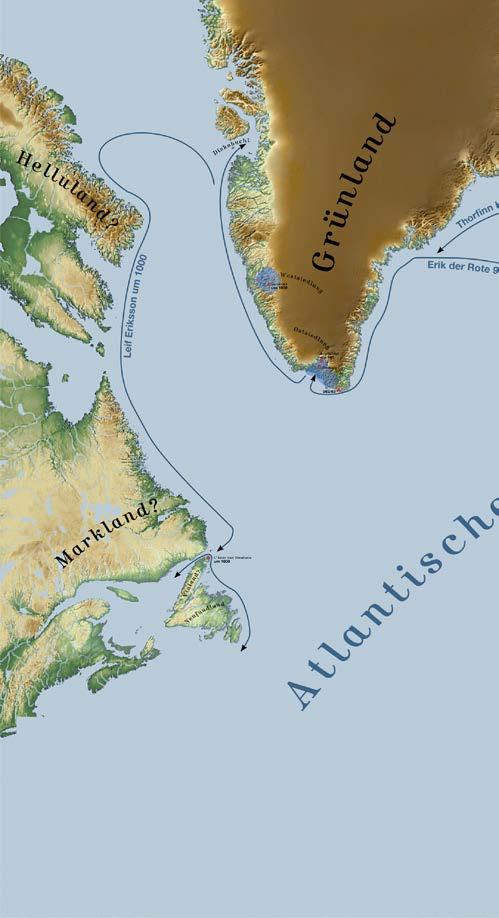
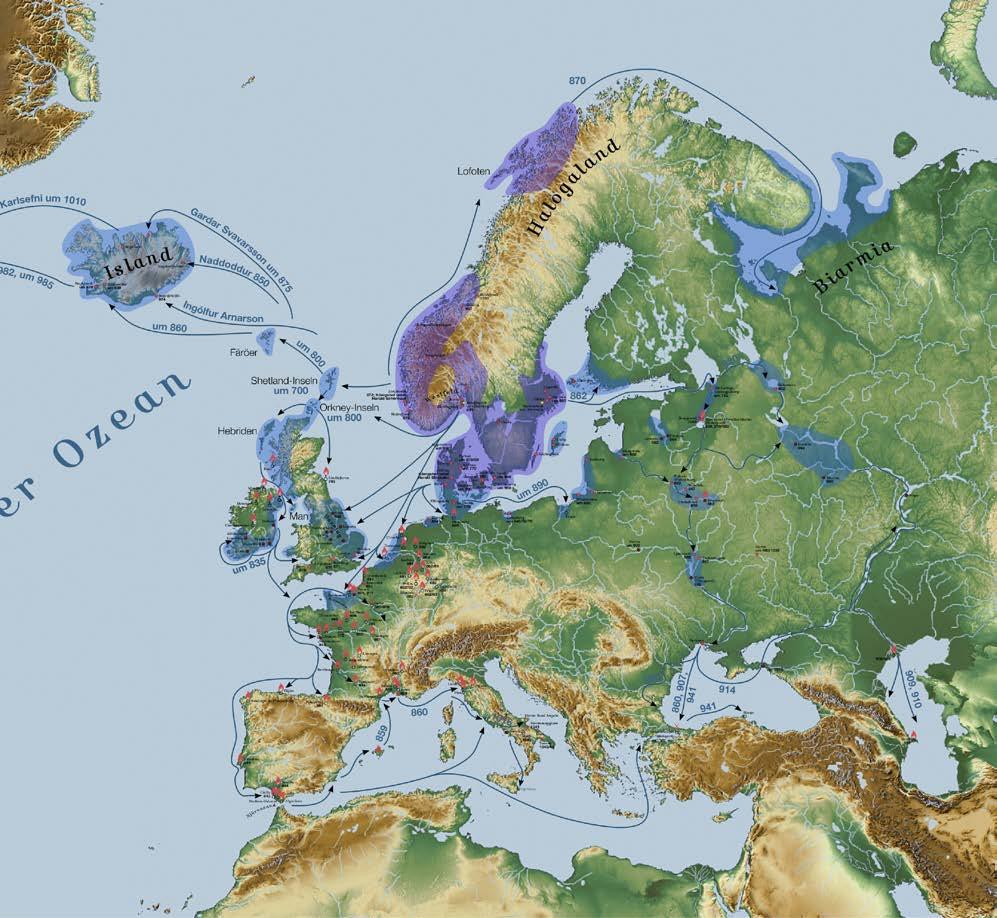
Their greatest strength was seafaring, in which they achieved true mastery despite the limitations of their simply-constructed longboats and primitive navigational aids. Above all, it was their daring that led these skilled sailors to explore the North Atlantic from the middle of the ninth century onwards. As living space became too scarce for their growing population, they sought new territories. In the process, they made several discoveries, probably by chance, which led to land acquisitions. As early as the second half of the ninth century, Norwegian sailors arrived in Iceland, which they settled permanently from 870 onwards. Others settled in Greenland from 980 onwards under the leadership of Erik the Red. His son Leif Erikson sailed through the Davis Strait and explored the coasts of Labrador and Newfoundland, which led to several attempts to settle on the North American continent from Greenland, but these were soon abandoned (Fig. 3).
Maritime entrepreneurs –the Vikings as traders
After the collapse of the Western Roman Empire and the Arab advance into North Africa and Spain, the Mediterranean region lost its importance as a central economic area. With the establishment of the Frankish Empire, the political and religious centres shifted northwards – as can be seen, for example, in the importance of Aachen (in modern Germany) for the Carolingian Empire. After the turmoil of the Migration Period, the highly -developed economic area between the Rhine, Moselle, Seine and Loire rivers sought open trade routes to the eastern part of the Mediterranean. A long-distance trade route emerged, starting at the trading centre of Dorestad at the mouth of the Rhine. Three important trade routes met there. One led up the Rhine to what is now Germany and France. A second went west towards England to London and on to York. The third ran through the North Sea to the Baltic States and Sweden, as well as to Haithabu in the south of the Cimbrian Peninsula.
Trade played a very important role early on for the seafaring Vikings, who knew how to skilfully navigate both the open sea and river systems with their special boats. Around 770, Danish and Swedish Vikings founded the trading post of Haithabu on a bay of the Schlei, between the Baltic and North Seas. The Schlei is an inlet that extends far inland and provides a direct shipping route to the Baltic Sea. The North Sea is also within easy reach, so that ships could sail up the Eider and Treene rivers to nearby Hollingstedt. In the Viking Age, the short distance over land was covered by carts or pack animals. The route via Haithabu thus provided an opportunity for the exchange of goods between the North Sea and the Baltic Sea, saving merchants the long and dangerous journey around the northern tip of Jutland. Via the Baltic Sea and the Gulf of Finland, traders also reached Altladoga on Lake Ladoga, whence they travelled via the Dnieper and Kiev to Constantinople and the eastern Mediterranean. From the ninth to the 10th century Haithabu, with its more than 1,000 permanent residents, developed into a nationally renowned trading centre and an important hub for long-distance trade between the Baltic States, Scandinavia, Western and Eastern Europe, also minting its own coins. Goods from all over the known world at that time were traded there: from Norway, Sweden, Ireland, the Baltic region, Constantinople, Baghdad and the Frankish Empire. Numerous finds of foot- and hand shackles also testify to a brisk trade in slaves. While the Scandinavian region mainly supplied raw materials, amber, and furs, luxury goods came in from the Mediterranean and Eastern regions.
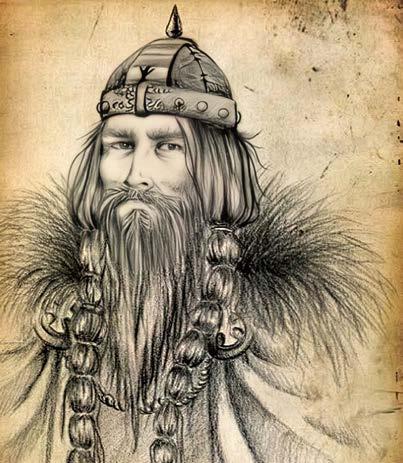
Fig. 2: Harald Bluetooth. Artist’s rendering, modern drawing.
As the Viking settlements were located on the routes along which goods were transported between West and East in the eighth and ninth centuries, the Northmen heard fabulous stories from well-travelled merchants about poorly-guarded riches in Central Europe that could be easily plundered. This wealth almost seemed to present a formal challenge for someone to come and take it. Many young men saw this as their chance to become wealthy and achieve a better life for themselves and their families. Vikings began getting together to form companies of travellers and set sail.
Raids on fast ships
On 8 June 793 the monastery of Lindisfarne, located on an island off the northeast coast of England, was completely unexpectedly plundered and destroyed by Scandinavian pirates. This first documented raid by Scandinavians immediately attracted the attention of the highest political and ecclesiastical circles in Europe: A former monk of this monastery, none other than Alcuin of York who belonged to the circle of scholars at Charlemagne’s court school, wrote several letters describing the raids and atrocities committed in the Frankish Empire by pirates from the far north. His report reached the Pope in Rome, where it caused great concern.
“Meanwhile, Danish pirates from the North Sea sailed through the Channel and attacked Rouen, wreaking havoc with robbery, sword and fire, sending the city, the monks and the rest of the people to their deaths or into captivity, devastating all the monasteries and all the towns on the banks of the Seine, or leaving them in terror after extorting large sums of money from them” (from Alcuin’s description in a letter to Bishop Arno of Salzburg).
The raid on Lindisfarne is considered the beginning of the so-called “Viking Age” – a period of Scandinavian expansion into Western and Eastern Europe that lasted a good 250 years.
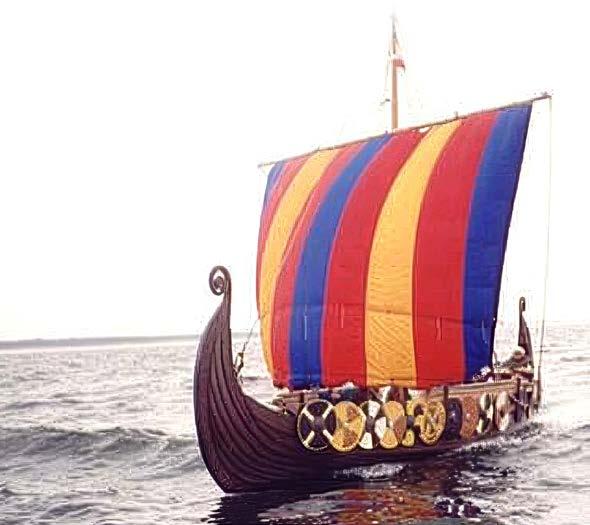
Viking ships provided the ideal conditions for Viking combat tactics, which were based on surprise attacks and rapid retreats. These famous longboats made of oak, which were particularly eyecatching due to their richly-carved decorations with snakes and dragon heads, were light, fast warships or combat vessels that could be manoeuvred at lightning speed to appear out of nowhere, go ashore, attack, take rich booty and immediately retreat again. This capacity was a nightmare for those who were attacked, as they were unable to defend themselves effectively (Fig. 4).
Fig. 3: Map showing the voyages, land acquisitions and settlement areas of the Vikings from 800 to 1050.
The long ships (called drakkars) had a flat keel and riveted planks, which gave them a high degree of strength and elasticity. The hulls were reinforced in the typical “clinker” construction method, with pieces overlapping like roof tiles. Colourful sails and oars were used for propulsion. The mast could be lowered in quite rapidly. Due to their lightweight construction, the ships picked up speed quickly. Their draught was no more than 1.5 metres, and they could reach speeds of around 20 knots (37 kilometres per hour). This enabled the Vikings to navigate all waters with their longboats:
on the open sea, but also on large and small rivers. If an inland waterway came to an end, the crew could even shoulder the boat and carry it to the next branch of water, where the journey could then continue. In this way, the Vikings were able to penetrate deep into the interior of the country they were raiding. For the exchange of goods and trade, the Vikings used potbellied merchant and cargo ships, known as knorrs. Flat wooden discs with markings and so-called “sunstones” served as compasses, enabling sailors to find their way even when the sky was overcast.
Fig. 4: Viking ship at full speed with colourful sail.
Photo: Wikipedia, Archiwum własne Jarmeryka.
HARALD BLUETOOTH
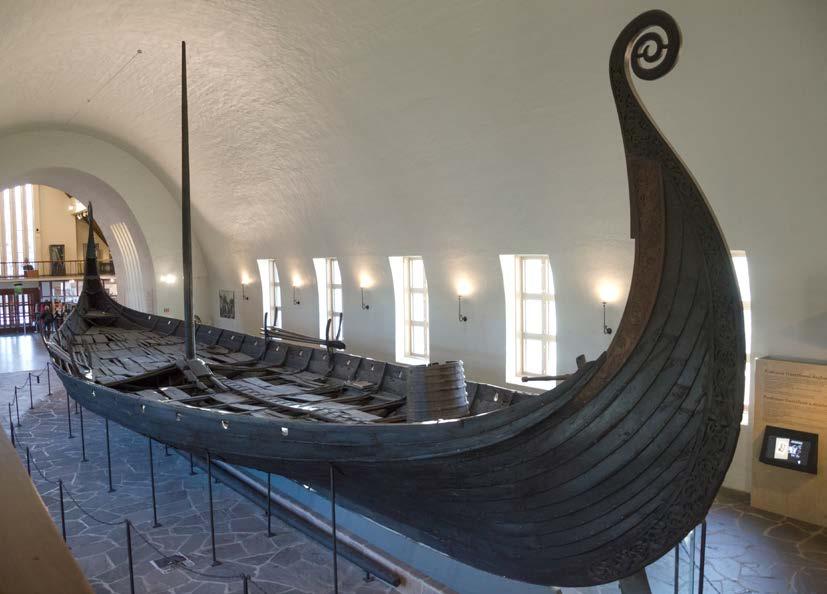
For the Vikings, their ships were not only a fast means of transport – they were also an expression of social status, cultural identity, and connection with the Norse gods. A magnificently-carved longship demonstrated the status and influence of a Viking jarl, i.e. a prince. The prows, decorated with carved dragon heads, animal motifs or mythological scenes and colourfully painted, served as protection against evil spirits and were intended to strike fear into the hearts of enemies. Particularly elaborately-decorated ships belonged to kings or princes, who used their splendour to demonstrate prestige and authority. In many cases, these ships also accompanied important personalities on their journey to the afterlife. Ship burials, as performed for high-ranking warriors or nobles, testify to the high status of ships in Norse society. Two of the most spectacular archaeological discoveries in the field of Scandinavian history are the Oseberg ship and the Gokstad ship, both built in the ninth century and found in Norway. Such burials were magnificent spectacles:
The deceased was placed along with his weapons, jewellery, food and sometimes even sacrificed animals or slaves into a ship – which was then either burned or buried under a mound (Fig. 5).
The tactic of quick raids with manoeuvrable ships enabled the rapid plundering expeditions that were typical of the early Viking Age until around 830/840. The short raids, which were mostly carried out by small bands of young men, were limited to the summer months, after which the Vikings returned home. Their preferred targets were initially monasteries and churches, as these were the easiest places to obtain riches.
Although such attacks were apparently carried out by only a few ships, the Northmen must soon have been regarded as a serious threat. The Annales regni Francorum (“Annals of the Frankish Empire”) reports that in 800, Charlemagne had coastal
Fig. 5: The Oseberg ship in the Vikingskipshus in Oslo.
Photo: Wikipedia, Petter Ulleland.
fortifications and signal fires set up between the Rhine and Scheldt estuaries to defend against Viking raids. Ship contingents were stationed at the mouth of the Loire, on the Garonne and, after a Danish attack on Friesland in 810, also in Ghent and Boulogne to combat the raiders. These initial defensive efforts seem to have been quite successful at first, as there are records of failed Viking raids until the first decades of the ninth century.
After the death of Charlemagne in 814, western France was once again exposed to Viking attacks. It was not until the important trading centre of Dorestad was plundered three times – in 834, 835 and 836 – that Emperor Louis the Pious had circular castles built to protect the coast of Flanders. In England, Ireland and western France, on the other hand, Viking hordes advanced into the interior regions.
The Vikings settle down
The division of the Frankish Empire in the Treaty of Verdun (843) between Charlemagne’s grandsons fundamentally changed the situation: Now, the weakened western Frankish Empire was virtually defenceless against Viking incursions. In 841, Vikings sailed south past the Seine for the first time; in 845, an attack on Paris was averted only by the payment of an enormous sum of 7,000 pounds of silver. During this phase, a decisive change in warfare took place: The Vikings no longer retreated to their home countries during the winter months, but spent the winter in the areas they had raided, first in Ireland from 841, then on the Thames island of Thanet from 851, and in 851 for the first time on an island in the Seine. Later, they established quarters on the island of Noirmoutier in the Loire estuary, and a fortified camp near Leuven in what is now Belgium. From such bases, they systematically attacked the catchment areas of the middle and upper reaches of the respective rivers in the following period. In addition to West Frankish cities such as Nantes, Bordeaux, Toulouse, Rouen and Paris, coastal towns in Middle- and East Francia such as Dorestad and Hamburg were also affected – as were Aachen, Cologne and Trier in the interior. From the ninth century onwards, individual Viking contingents increasingly resorted to “pillaging”, i.e. refraining from the plunder and destruction of towns, monasteries and sovereign holdings in exchange for money.
In a subsequent phase, the tormented victims began to cede land on the coasts to the Vikings on the basis of treaties. In return, the now-settled Vikings were to prevent other Viking troops from plundering in such a region. The model was tried in various places, such as on the Walcheren peninsula in Zeeland and
at the mouth of the Rhine near Dorestad. However, these first settlements were rather short-lived. The most enduring presence was that of the Seine Vikings around Rouen under their Norwegian leader Rollo –who, after the Treaty of Saint-Clair-sur-Epte with the West Frankish King Charles III “the Simple”, steadily expanded their settlements and dominions, and thus laid the foundations for the later so important Duchy of Normandy.
In England, several Viking groups began to join forces in 865 to take possession of land. From 871 onwards, they ruled large parts of eastern England; from 876 onwards, individual clans began to settle permanently between York and London. Only the Anglo-Saxon kingdom of Wessex under King Alfred the Great was able to maintain its independence. After his victory over a Danish army led by the Viking prince Guthrum in 878, Alfred concluded a treaty with the Danes on the division of spheres of influence. The border was Watling Street, a Roman road running between London and Chester. To the east lay the autonomous territory of the Danes, the Danelaw or (in Old Norse) Danelagh. It attracted immigrants mainly from the Irish Viking settlements as well as from Denmark and Norway itself. Norwegian rule was established in Northumbria, with York as its capital.
The presence of Scandinavians – on the Baltic Sea, in the Baltic States, in Karelia, in Russia (especially along the Dnieper and Volga rivers), on the lower reaches of the Volga and around the Caspian Sea, and finally in the Byzantine Black Sea region and in Constantinople itself – is very well-documented, particularly by coin finds. A large number of hoards found in Gotland and Sweden containing thousands of silver coins from Byzantium and the Caliphate of Baghdad testify to the Vikings’ long-distance trade with the eastern Mediterranean region. Byzantine chronicles and reports by Arab and Persian merchants are also a good source of information: Some of these merchants even travelled as far as Haithabu on the Varangian trade routes and left descriptions of this international trading centre. The activities of the Scandinavians in the East, primarily the Swedes and Gotlanders, focused mainly on obtaining the two most important Scandinavian trade goods: slaves and furs. The slaves were sold to the Caliphate of Baghdad and, via intermediate trade, also to the Caliphate of Córdoba in the West.
In the middle of the ninth century, the Kievan Rus or Varangians – probably in alliance with the Slavic princes residing there – succeeded in establishing a vast empire and founding a princely dynasty that was initially Scandinavian in character. Medieval Russian sources report attacks by the Kievan Rus on
claims to the throne in their homeland, as in the case of the Norwegian kings Olaf I Tryggvason (995–1000) and Olaf I Haraldson (1015–30).
With large fleets and under royal leadership, the Danes conquered England. The first Danish king on the English throne was Sven Forkbeard, the son of Harald Bluetooth, in 1013/14. His son Canute II “the Great” became the sole ruler of England in 1016; from 1019 and 1028, he was also King of Denmark and Norway. This personal union created a North Sea empire, but that empire did not survive his death in 1035.
Constantinople, which began in the last third of the ninth century. The Byzantine Emperor Leo VI, who was already in dire straits due to costly wars with the Bulgarians and Arabs, granted the Varangians trading privileges in 911; he may also have been forced to pay tribute. From around 970 onwards, Scandinavian mercenaries began to be recruited into the imperial palace guard (“Varangian Guard”). The most famous of them was probably the later Norwegian King Harald III “the Strict”.
The emergence of the Scandinavian kingdoms
In the last decades of the 10th century, Norwegian and Danish kings increasingly emerged as leaders and initiators of Viking expeditions. This can be seen as a clear indication that, during the Viking Age, a centralised monarchy had begun to develop in the Scandinavian countries, replacing the previous smallscale regional rulers.
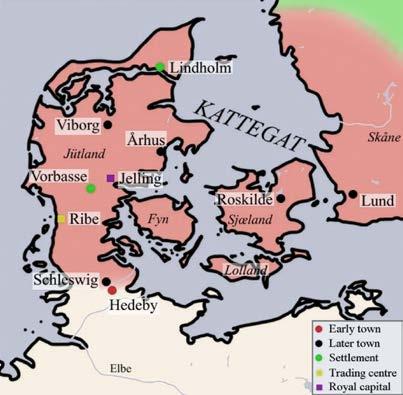
In Norway, the Viking prince Harald I Fairhair (860–930) was the first to establish a nationwide monarchy. In Denmark, the baptised King Harald Bluetooth (935/940 to around 987) referred to himself as “King of all Danes” on one of the two runestones at Jelling. In Norway, individual Viking leaders succeeded in asserting their
Mobility and flexible adaptation to foreign living and ruling conditions, as well as the hunger for land and booty –which was always the main driving force behind the Viking raids – were once again clearly evident in the involvement in southern Italy and Sicily of Norman groups from the newly-constituted Duchy of Normandy. After adopting the Romance language and culture during the expansion and consolidation phase of the duchy in the 10th century, parts of the newly-formed nobility intervened in the power struggles of southern Italy, initially as mercenaries, and with remarkable determination eventually became rulers there. The first group of Norman knights must have been recruited by a Lombard prince between 1000 and 1015 to support him against the Byzantines and Saracens. With the arrival of the Hauteville brothers, members of a noble family from Normandy, the Norman empire in Southern Italy finally began to take shape. An important prerequisite for this was the Normans’ relationship with the Pope, which was not always without problems, and their recognition of the Emperor as their supreme feudal lord. In 1047, Drogo of Hauteville received the Duchy of Apulia and Calabria as a fief from Emperor Heinrich / Henry III. After the victorious Battle of Civitate in 1053 against an army of Lombards, Byzantines and papal troops, Pope Leo IX was forced to recognise the Norman conquests in southern Italy. Robert Guiscard, also a Hauteville, was additionally enfeoffed with Sicily by Pope Nicholas II in 1059, which the Normans finally conquered in 1091 under Roger I. Bohemond of Taranto, a son of Robert Guiscard, used his participation in the First Crusade to establish the Norman Principality of Antioch in Syria (1098). Roger II became king of Norman Italy and Sicily in 1130. The “Kingdom of the Two Sicilies” remained in Norman hands until it was conquered by the Staufers.
Harald Bluetooth of the “House of Jelling”
It should be noted at the outset that it is extremely difficult to write a historically accurate biography of the early Danish king Harald, given the paucity of sources from this period and region. Our most important
Fig. 6: Map of Denmark during the Viking Age, Casiopeia (German Wikipedia).
and reliable source of information is the Benedictine monk Widukind (born around 925 or 933/35; died on 3 February after 973) from Corvey Abbey near Höxter. He is one of the most important historians of the Middle Ages and author of the Res gestae Saxonicae (“History of the Saxons”).
In the 10th century, Denmark was a land of islands and forests, lakes and marshes, fertile fields and sandy soils (Fig. 6). Control over the area was exercised by Viking clans led by a “warlord”. The Jelling clan was particularly powerful. Around 900, Harald Bluetooth’s grandfather, the Viking jarl Harthaknut, succeeded in uniting the Danish Viking tribes. Christian chronicles refer to him as a “bloodthirsty dragon” who allegedly persecuted clergy and often had them tortured to death. His son Gorm succeeded him in the 930s. We know about Gorm, whom the Danes call “the Old”, from Saxo Grammaticus (born around 1160, died after
1216), who wrote the Gesta Danorum, a 16-volume history of Denmark in polished Latin. He may have used the transcript of the Gesta Hamburgensis ecclesiae pontificum (“Deeds of the Bishops of the Church of Hamburg”) by Adam of Bremen, who travelled to the King of Denmark, Sven Estridson, around 1066 on behalf of his archbishop. Gorm considered himself a king, as can be seen from the inscription on the Small Rune Stone of Jelling, which he had erected in memory of his wife Thyra Danebod (“the pride of Denmark”) (Fig. 7). However, historical sources reveal little about the nature of this early kingship. It is noteworthy, however, that this is the first time the name Denmark is mentioned in writing on Danish soil. Gorm made his ancestral seat in Jelling on the Jutland peninsula the centre of his rule. When his firstborn son Knut fell in battle – he was struck by an arrow during a raid in Ireland, according to the Danish chronicler Saxo Grammaticus – his younger son Harald succeeded
Fig. 7: Church and runestone in Jelling in a depiction by the Danish imperial archivist Ole Worm, 1643. Danish National Museum, Copenhagen. Magnus Manske, 28 September 2012, Wikipedia.
Agreement with Emperor Otto the Great –Harald becomes a Christian
Since the year 800, Denmark’s territory has extended to the present-day southern Swedish regions of Halland and Skåne. After battles between the Franks and the Vikings, Emperor Charlemagne and the Danish king Hemming agreed in 811 that the River Eider should mark the southern border of Denmark. Towards the North Sea, the border area was marshy and impassable anyway, while in the east, a 30-kilometre-long bulwark consisting of ditches and earthworks and reinforced with wooden palisades protected the border: the Danevirke, Scandinavia’s largest fortification. It is very likely that the power of Nordic leaders had extended this far centuries earlier, as evidenced by archaeological remains of predecessor structures to the Danevirke.
Knut. He ruled alongside his father for 15 years until the old ruler died in the winter of 958/59. Harald had a gigantic tomb built for his father: a 350-metre-long ship made of man-sized stones, symbolising the journey to the realm of the dead. The body was buried in an 18-square-metre pit, almost 1.50 metres deep, lined with wood and sealed with massive oak trunks. For around three years, workers piled masses of stone over the chamber, covered the eight-metre-high monument with a framework of branches, and finally covered all of that with heather and grass tiles. Presumably around 960, after converting to Christianity, Harald Bluetooth had his father exhumed and buried under the wooden church that was built in Jelling after his baptism. The King’s remains were discovered during an excavation in the church, later examined and reburied at the site of discovery in 2000.
Under the rule of his son Harald Gormsson, who was nicknamed “Bluetooth” (speculation suggests this was due to a dead and darkly discoloured front tooth), the House of Jelling developed into the leading dynasty in Scandinavia.
At the very beginning of Harald’s reign, a military conflict arose with his southern neighbour: The Roman-German ruler Otto I wanted to force the Danes to recognise his supremacy and convert to Christianity. In the mid-10th century, the emerging Holy Roman Empire was the leading power in Central Europe. Realising that he would not be able to withstand Otto’s troops in the long term, Harald submitted to his suzerainty around 948, thereby removing any pretext for further attack. Denmark did not become directly dependent, but paid tribute and fulfilled other obligations. Whether Otto “the Great” was also the godfather of Harald’s son Sven Forkbeard, as is sometimes assumed, cannot be historically proven. With the recognition of the Christian empire, the Christianisation of Scandinavia also began. Harald Bluetooth, the powerful pagan King of Denmark, professed his faith in the cross of Christ! He is said to have been moved to convert by a miracle performed by the German missionary Poppo, as reported by Widukind of Corvey: At a feast, Harald put the priest to the test and claimed that other gods were capable of far greater miracles and signs than Christ. Poppo then grasped a red-hot iron and showed the surprised king his unharmed hand. The Danish King was then baptised at Poppostein, a Neolithic megalithic tomb near Flensburg. A gilded relief plate from the 12th century, now in the Danish National Museum in Copenhagen, bears witness to the baptism. It depicts Harald standing in a large tub being baptised, next to him Poppo, who later became Bishop of Schleswig. Contrary to the legend of the Poppostein, however, the royal baptism probably took place in Haithabu or Aarhus (Fig. 8).
Harald recognised that Christianity was not only a religious weapon, but also a political one, to unite the
Fig. 8: Baptism of King Harald, altar relief of Tamdrup Church made of gold sheet metal around 1200. Danish National Museum, Copenhagen.
country and stabilise his rule. With the baptism began the construction of churches and the establishment of the dioceses of Aarhus, Ribe and Schleswig. Otto I now recognised the King of the Danes as a Christian ruler and renounced his imperial rights over the three Danish dioceses. The introduction of Christianity had a profound influence on Denmark and (though not without resistance) increasingly supplanted the old pagan customs. The Christianisation of Denmark is considered one of Harald’s most significant legacies.
Despite the agreement with Emperor Otto I, Harald feared further attacks and therefore had the Danevirke expanded around 968. It was reinforced with palisades and merged with the protective wall surrounding Haithabu.
The conquest of Norway
Norway, a mountainous country with a long, rugged coastline, was difficult to control and broke apart into a multitude of small territories at the beginning of the Viking Age. Although the Norwegian King Harald I “Fairhair” succeeded in uniting large parts of his country around 880, the north remained independent, ruled by the Jarls of Lade, a powerful clan of chieftains based in Trondheim. Around 955, Harald Fairhair’s grandsons rose up against a new ruler who had seized the throne by force, and they asked an equally powerful relative for support: Harald Bluetooth, their mother’s brother. The Danish King helped his nephews to power and placed one of them on the throne. However, the latter quickly pursued his own goals, which were not in his uncle’s interests. Harald then acted in accordance with the traditional and proven method of the Vikings: In 965, he allied himself with Haakon, the Jarl of Lade, killed his nephew – and thus also became ruler of southern Norway. Haakon, the Jarl of Lade, was appointed Harald Bluetooth’s deputy in Norway in gratitude for his military support.
A monumental building programme in times of war
As king of two empires, Harald Bluetooth felt he was at the zenith of his power and invaded the imperial territories south of the Eider in 974, one year after the death of Otto I. Although he may have felt obliged to remain loyal to Otto I, serving the late Emperor’s successor clearly did not fit in with his plans to make his kingdom a great power. However, the Danish ruler was defeated in battle by Otto II. In a counterattack, Otto’s troops even captured the Danevirke and conquered Haithabu.
Difficult years followed for King Harald. The south of his country remained occupied by Otto II, foreign
Viking fleets repeatedly ravaged the Danish coasts – and, as was to be expected, Haakon of Lade soon refused to follow the Dane Harald. The break was mainly caused by Harald’s attempts at missionary work, which the Jarl of Lade – although baptised himself – increasingly resisted: He turned away from Christianity and worshipped the old gods again. A campaign of revenge against the renegade jarl failed: In the naval battle of Hjorungavag in western Norway, the Danes were defeated by a fleet of Norwegian Vikings.
When Otto II suffered a heavy military defeat by the Saracens in Calabria in 983, the Danish King Harald saw his chance for revenge. He recaptured Haithabu and the borderlands, while his ally and father-in-law, the prince of the Elbe Slavic Obodrites, plundered Holstein and attacked Hamburg at the same time. Harald also captured a castle built by Otto II north of the Eider and burned it down; what the Emperor had won in 974, he lost less than a decade later through this coup. Harald Bluetooth was also able to recapture Schleswig, which he had lost in 874.
Given this uncertain situation with its many battles, it is astonishing that Harald Bluetooth launched a unique construction programme during those very years. Realising that a large and centrally-governed territory could only be held together with the help of well-developed roads, bridges and castles, he significantly improved the infrastructure and strengthened the protection of his country by building military installations.
Jutland’s main route, the military road also known as the Ox Road, had previously been nothing more than a wide footpath. Other roads often ended at lakes or rivers that could only be crossed by ferry or ford. And in winter, people struggled through snow and ice on skis and sledges. The King had at least 300 hectares of forest cut down and had the oak trunks transported to the area south of Jelling. Soon afterwards, a huge wooden structure was erected near the present-day town of Ravning, spanning the wide lowlands of the Vejle River and making the marshy area passable in any weather: 760 metres long, more than five metres wide, supported by 280 rows of posts – the largest bridge in Denmark. King Harald also secured his empire with other spectacular feats of construction: ring-shaped fortresses, which were intended to protect his power not only from external enemies but also from internal ones. However, their exact function remains unclear to this day. Perhaps Harald also used the royal fortresses as administrative centres, as they are found in all densely-populated regions of Denmark. One of these castles is Trelleborg, built in 981 on the Danish
who was seriously wounded by an arrow in an ambush. Harald fled and brought himself to safety with a few loyal followers. On All Saints’ Day in 985 or 986, he died at Jomsborg near Swinemünde. His followers transported his body back to his homeland and buried him in the church that Harald had once built on a hill by the Roskilde Fjord on Zealand. Today, Roskilde Cathedral stands on that same spot – the burial place of 40 queens and kings who have succeeded Denmark’s first Christian ruler to the throne since then; 30 generations through which the Danish royal family is still connected to the Jelling dynasty today (Fig. 10).
His son Sven Forkbeard conquered England and had himself proclaimed King there in 1013. But it was Harald Bluetooth’s grandson, Cnut /Canute the Great, who succeeded in consolidating Danish rule over Norway and England (as well as parts of Sweden).
main island of Zealand, which could accommodate around 1,300 people (Fig. 9). A navigable connection to the Great Belt, the strait between Zealand and Funen, existed via an inland lake that is now silted up. All these monumental construction projects required the labour of thousands of workers. It is highly likely that this heavy work was mainly carried out by slaves who had been captured by the Danish Vikings on their raids and later deported to Scandinavia. It is also possible that the King used his own people for forced labour and imposed high taxes on the upper classes. What is certain is that Trelleborg was only used for a few years and then abandoned forever. According to archaeological findings, the other fortresses and the large bridge over the Vejle were also used only for a short time and then no longer maintained. Was resistance perhaps brewing in the country against the overly-powerful king?
King Harald’s death in exile
In the mid-880s, a rebellion against the King broke out in Denmark. The meagre and sometimes biased sources that recount the events are mainly the Viking sagas. They report that Harald’s son Sven Forkbeard was allegedly involved in the uprising against his father. If the Viking sagas are to be believed, Sven does not appear to have been a legitimate son, as his mother is described as a servant girl. Since Harald’s legitimate sons had already died, the question of succession to the throne remained unresolved. In the legendary naval battle of Bornholm around 986, probably near Bornholm, Sven defeated his father Harald Bluetooth,
Cnut was probably the first Viking to be accepted into the circle of European royal houses. The RomanGerman King Conrad II even invited him to his imperial coronation in Rome in 1027 – alongside German and Italian princes, archbishops, bishops and the King of Burgundy.
What remains of Harald Bluetooth?
The “Great Jelling Stone”, weighing almost ten tonnes and measuring 2.40 metres in height, is the “weightiest” testimony to King Harald Bluetooth that he left behind. It was erected at the royal court in Jelling and has remained in place to this day. It lies between the northern burial mound of Jelling, which contained a plundered double grave (presumably that of Thyra and Gorm), and another mound to the south, together with the small Thyra Stone mentioned above. Next to it stands a small stone church dating from around 1100, which was built over three older wooden churches. Under one of these earlier buildings, a skeleton was found that researchers now attribute to Gorm the Old, who was reburied there. The ensemble of church, burial mounds and runestones was declared a World Heritage Site by UNESCO in 1994.
The large stone is carved on three sides with a representation of Christ, a mythical creature entwined by a snake, and a four-line runic inscription: King Harald ordered this stone to be erected in memory of Gorm, his father, and Thyra, his mother. Harald, who subjugated all of Denmark and Norway and converted the Danes to Christianity. The depiction of Christ is the oldest in Denmark. Here we do not see the Saviour nailed to the cross, but his outstretched arms, surrounded by vines, probably symbolise the crucifixion (Fig. 11).
Fig. 9: Aerial view of Trelleborg.
Photo: Thuecl, 7 January 2014, Wikipedia.
In connection with the legacy of King Harald Bluetooth, the “Silver Treasure of Schaprode” on the island of Rügen, which was found in 2018 and will be on display in the Museum of Bergen on Rügen until the end of 2026, is also worth mentioning. This hoard, which was probably buried in the 980s, consists of about 600 silver items, mainly hack silver, and has a total weight of 1.5 kg. Of particular interest are around 100 “cross bracteates”, coins made of thinly rolled silver sheet weighing around 0.3 g, into which the Christian
cross is stamped. They were minted in small quantities under Harald Bluetooth, who gave them to his followers as a sign of their allegiance to him. Research into the Schaprode treasure is still ongoing. It may be connected to Harald’s wounding and flight after the Battle of Bornholm against his son Sven.
Like the silver treasure of Schaprode, the famous “gold treasure of Hiddensee” is also associated with Harald Bluetooth. The jewellery, made from 16 gold pieces around 970/980, was found between 1872 and 1874 as flotsam near Neuendorf on the Baltic Sea island of Hiddensee following storm surges, and is considered an outstanding example of South Jutland goldsmithing, possibly made in Haithabu. During the restoration of the pieces, it was discovered that they had apparently been hidden in a ceramic vessel, which could indicate a connection to flight.
Bluetooth wireless technology enables devices such as computers, smartphones and printers to communicate with each other wirelessly. While searching for a suitable name for the new technology, its developers came across the story of the famous Danish King. They liked the fact that Harald Bluetooth had succeeded in uniting the Danes as a great “networker”. That is why they chose the runes ᚼ (H) and ᛒ (B), the initials of Harald Bluetooth, for their company logo. Thanks to this technical achievement, we are all still connected to Harald Bluetooth today, whether we realise it or not.
Fig. 10: Roskilde Cathedral.
Photo: Mael Milsothach, 24 July 2018, Wikipedia.
Fig. 11: The Jelling runestones. Runic inscription of King Harald.
Large runestone from Jelling. 1st side with Christ.
Large runestone from Jelling. 2nd side with mythical creatures.
Photos: Roberto Fortuna, Wikipedia
The zenith of Polish coinage
The reign of Sigismund III is generally thought to have marked the zenith of Polish coinage history. Never before had there been so many different types of coins and denominations produced in so many different mints, nor would there ever be again. We explain why.
By Ursula Kampmann
Portrait of Sigismund III. Royal Castle, Warsaw. Photo: UK.
Sigismund III, “by the grace of God, King of Poland and Sweden, Grand Duke of Lithuania, Rus, Prussia, Masovia, Samogitia and Livonia” – this is how Sigismund describes himself in the inscription on a 10-ducat portugalöser coin, which will be auctioned at Künker on 17 March 2026 with an estimated value of 125,000 euros. Sigismund III, King of Poland and Sweden: It is important to emphasise this once again so that these titles are not taken for granted. For the question naturally arises as to how a Swedish prince came to be King of Poland.
Once upon a time ...
... there was a king who had three sons. This is how many fairy tales begin. In reality, Sigismund’s fate was less fairy-tale-like and more a juggling act between the polar opposites of the time: between Catholics and Protestants, between aristocratic power and kingship. But let’s start at the beginning.
Just as in a fairy tale, Gustav I – the first of many Wasas – had a wealth of ambitious sons. Three of them were to wear the Swedish crown. Erik was the eldest and thus the direct successor. Gustav I made Johan, who was four years younger, Duke of Finland. Magnus was excluded from the line of succession due to mental illness. And then there was Karl, who was just 10 years old when his father died in 1523.
Naturally, Erik and Johan came into conflict. Johan sought a powerful ally and found one in Sigismund II Augustus, King of Poland and Grand Duke of Lithuania. Sweden and Lithuania were separated only by the Baltic Sea, which neither ruler saw as an obstacle, but rather as a fast and efficient transport route.
Sigismund had a beautiful and educated sister. Her name was Katarzyna / Katarina, and as was customary at the time, she became a “pledge of trust” between the allies. Johan married Katarzyna Jagiellonka / Katarina Jagiellonica – much to the annoyance of his royal brother Erik. Erik immediately understood the increase in power that the marriage would bring to his younger brother. He therefore accused Johan of high treason and imprisoned him with his newlywed wife in Gripsholm Castle for four years. During their imprisonment, a son was born to them in 1566. The parents named him Sigismund.
Sigismund as the name of a Polish king
The name was not chosen at random. St. Sigismund, the patron saint of many Polish kings, lived in the early sixth century and was King of the Burgundians. Originally an Arian, he converted to Catholicism. When,
Extremely
Good very
Estimate: 125,000 euros. Künker Auction 439 (17/18 March 2026), Lot 2173.
in a fit of rage, he ordered the murder – according to other sources, the execution – of his own son, he was so horrified at his own deed that he renounced all power, founded the Swiss monastery of Saint-Maurice and joined the choir of monks there. Driven out of the monastery by military force, Sigismund settled as a hermit in the forest before the new King had him captured and executed.
Wax portrait of Sigismund III by Antonio Abondio. Berlin State Museums, Sculpture Collection and Museum of Byzantine Art. Photo: KW.
Poland. Sigismund III. 10-ducat portugalöser coin without year, probably from Krakow.
rare.
fine.
Sigismondo Malatesta kneels before St. Sigismund. Templum Malatestianum / Rimini. Photo: KW.
Poland. Sigismund I ducat 1532, Krakow. Extremely rare. Very fine. Estimate: 15,000 euros.
Künker Auction 439 (17/18 March 2026), Lot 2172.
With this vita, St. Sigismund appealed particularly to the social class of princes and nobles: No matter what injustice a ruler might commit, they always hoped that God would forgive a repentant sinner. No wonder the name Sigismund spread among many noble families striving for power – including some in Poland.
The fact that relics of St. Sigismund had been stored in Płock Cathedral since the 12th century was a nice bonus. Let’s face it, there were many relics in Poland. So it was a political decision on the part of Sigismund I to promote the cult of his namesake so persistently. Among other things, he was responsible for the famous Sigismund Bell in Krakow Cathedral, which has been ringing in the most important events in Polish history since 1520.
Why did the parents give their son the name “Sigismund”?
But back to little Sigismund. He was born in a period we now describe as the Confessional Age, in which Protestants and Catholics were fighting over what their world should look like in the future. Religion was a vehicle in this struggle. Therefore, the question of whether the heir to the Catholic Polish Catherine and the Protestant Swedish John would be baptised as a Catholic or Protestant was extremely political. The choice of baptism represented a statement: Would baby Sigismund later orient himself towards Sweden or Poland?
Sweden. Johan III. Daler 1569, Stockholm. Very rare. From a collection of coins and medals from a private aristocratic collection. Very fine. Estimate: 1,000 euros. Künker Auction 441 (19–20 March 2026), Lot 5108.
Maximilian the German Master. Double reichstaler 1614, Hall. Almost extremely fine. Estimate: 750 euros.
Künker Auction 441 (19-20 March 2026), Lot 4793.
The parents opted for Catholicism. For the prisoners, this was safer for the time being. King Erik did not feel threatened by a Catholic-baptised infant: A Catholic prince would not be a danger to a Protestant king in Protestant Sweden. In Poland, the situation was different: The country was an elective monarchy, and foreign princes had good prospects in every new election as long as they were Catholic and brought enough money and soldiers with them.
Sigismund becomes heir to the Swedish throne and King of Poland
It is not necessary to repeat the entire history of Sweden here. Suffice it to say that Erik’s decisions made him so unpopular with his nobility that they considered him mad, and helped Johan to drive his brother out in a bloody uprising and seize the crown in 1569.
He inherited not only the throne, but also the battle for supremacy over the lucrative Baltic Sea trade – in which his most important rival was Russia. And there, his brother-in-law Sigismund II was and remained a powerful ally. Unfortunately, the latter died in 1572 and his successor, Stephen Báthory, was not interested in this alliance. However, after Báthory’s death in 1586, Johan saw an opportunity for his son, who was now 20 years old. As mentioned above, the Kingdom of Poland was an elective monarchy. As a Catholic and grandson
of Sigismund I of Poland, his son had an excellent chance of being elected King of Poland by the Sejm. And so he was. Unfortunately, he was not the only claimant.
Maximilian III of Habsburg, nicknamed the “German Master”, also considered himself to be the rightful King. Sigismund had military superiority, which enabled him to drive the Habsburg troops out of the country and capture his rival.
Between Sweden and Poland
After lengthy negotiations, Sigismund III was crowned in Krakow on 27 December 1587. Thus, a Swedish prince had indeed ascended the Polish throne. However, as the prince was also the eldest son of the Swedish king, he succeeded his father when Johan III died on 17 November 1592. But in Protestant Sweden, Sigismund’s Catholicism became a real problem.
Map of Livonia by Johannes Portantius from 1573.
For there was still the youngest son of Gustav I Vasa, Uncle Karl, who was just as power-hungry as his brothers. The Swedish nobility was firmly on Sigismund’s side. After all, a distant king meant plenty of room for manoeuvre. But Karl / Charles IX exploited the religious fanaticism of his time and won over the common people. In the winter of 1596/7, he is said to have given speeches at all the winter markets to the citizens and peasants about the horrors that a Catholic regime would bring. In this manner, Karl succeeded in having Sigismund deposed in 1599.
War costs
And that, of course, meant war. For Sigismund was not willing to voluntarily renounce Sweden. The Polish historian Anna Filipczak-Kocur has reconstructed the high costs that Poland and Lithuania had to bear for this war. She arrives at a figure of 3,845,000 złoty, an immense sum at the time.
How was a war financed at the end of the 16th century? Tax increases? Well, modern statehood was in its infancy. The princes were not yet familiar with income, valueadded or profit taxes. They obtained their money in other ways. The monetary system played a central role in this.
It was easy to flood the market with bad money, as the state authorities determined and controlled which coins were used for payment in their markets and the rates at which they were exchanged. Bad coins brought in a high seigniorage. Just think of the “Kipper and Wipper” period at the beginning of the Thirty Years’ War. At that time, the Emperor financed his campaign against
Bohemia in this manner. He was neither the first nor the last to do so. But such actions were devastating for the citizens and peasants, and even for the minor nobility, who depended on valuable small change. That is why alternatives were sought in Poland.
And that brings us to the second most important source of income for every ruler: voluntary taxes. It was the parliament – in Poland’s case, the Sejm – that could approve or deny additional funds. And in exchange for such approvals, the estates expected other concessions from the King.
This challenging situation may have led the crown and the estates to work together to overcome the monetary crisis that shook Poland during the reign of Sigismund III.
Exciting times for the Polish monetary system
Several factors were responsible for this. First, let us consider the general shortage of silver in Europe. The new states needed more and more funds for their increasing expenditures, and not enough silver was being mined to mint the necessary coins. In addition, Poland was at war, which consumed a large part of its resources. Then, from a temporal perspective, we find ourselves at the height of the “Little Ice Age”. Poland lived off its grain production. Normally, the large surpluses were exported across the Baltic Sea to the Hanseatic cities in exchange for cash. Now, however, this lucrative trade collapsed due to numerous crop failures. This cash inflow was missing, while at the same time grain prices were rising in Poland.
Sigismund III as warlord. Detail of his sarcophagus. Royal Castle in Warsaw. Photo: UK.
Künker Auction 439 (17/18 March 2026), Lot 2174. 1,5:1
A good example of the normal pomp and circumstance displayed by rulers in the early modern period is this carpet: a commission by Sigismund III in distant Persia, as the coat of arms reveals. Residence / München. Photo: KW.
Time and again, various cities and regions tried to stabilise the monetary system in cooperation with the crown. In Poland, economic experts debated the issue. Each of them had his own recipe for how the relationship between gold and silver, stable money and circulating money should look. As a result, new coins, coin types and denominations were constantly being created in a large number of mints. Few periods in history offer greater variety than the coinage of Sigismund III, which makes it so popular with Polish collectors.
A portugalöser from Olkusz
The Künker auction house is delighted to offer a small batch of extremely rare gold coins from this exciting period. A 10-ducat portugalöser coin comes from Olkusz, also known as Ilkenau in German. This town was often referred to as the “silver town” because it was home to Poland’s most important silver and lead deposits. That’s why Stefan Báthory decided to establish a mint in Olkusz. It began operations in 1579 and was the only mint of the Polish crown until 1584. Sigismund had his first coins minted here.
A “White Raven” of Polish numismatics
A 1630 ducat from Bydgoszcz / Bromberg is referred to as the “White Raven” of Polish numismatics. Bydgoszcz was a royal city that was self-governing under Magdeburg law, and it was the most important centre of the grain trade in Poland. The city shipped grain across the Vistula to Gdańsk and from there it went to the Hanseatic cities. Around 5,000 citizens lived there in the first half of the 17th century. This made the city one of the most important centres in the country.
Even though Bydgoszcz / Bromberg already had a medieval coinage privilege, Sigismund again granted
Poland. Sigismund III. Portugalöser coin worth 10 ducats, undated, Olkusz. Extremely rare. Good very fine.
Estimate: 30,000 euros.
1,5:1
Poland. Sigismund III. Ducat 1630, Bromberg. Extremely rare. Extremely fine to mint lustre.
Estimate: 75,000 euros.
Künker Auction 439 (17/18 March 2026), Lot 2176.
Lithuania. Sigismund III. 10 ducats 1595, Vilnius. Extremely rare. Very fine.
Gdańsk. 3 1/2 ducats 1650. Extremely rare. Almost extremely fine.
Estimate: 50,000 euros.
Künker Auction 439 (17/18 March 2026), Lot 2183.
permission to mint coins in 1594. This was obtained by Stanisław Cikowski, a high-ranking official who also acted as general administrator of the crown customs. However the mint was closed in 1601, only to be reopened in 1613. In 1616, the Dutch coin entrepreneur Jakub Jacobson van Emden took over the management. He played a central role in the Polish monetary system, controlled several mints, and had placed his relatives in the mints of Gdańsk and Kraków. In 1624, Sigismund granted him hereditary nobility.
Bydgoszcz has a very special resonance among Polish collectors because it was here in 1621 that the legendary 100-ducat donative was minted, which is now considered the most precious and expensive coin of early modern Poland. A reflection of this fame can be seen in the ducat of 1630, of which there are probably only two examples on the collectors’ market. We have to leave it at that, because it is impossible to clearly identify this piece with those from the Chelminski / Otto Helbing (25 April 1904) and Frankiewicz / Felix Schlessinger (15 September 1930) collections. This is because we have no photographs of these pieces, only collotype plates depicting plaster casts. This makes it practically impossible to recognise the shape and embossing details.
A look at Lithuania and Vilnius
The Polish King ruled the Grand Duchy of Lithuania, whose most important city was Vilnius, in personal union. The Grand Duke resided there, and it was also the location of Lithuania’s only mint. It had been leased since the reign of Stefan Báthory. In 1595, this magnificent 10-ducat coin was minted, combining the coats of arms of Sweden, Poland and Lithuania on the reverse. The clear reference to the grain trade across the Baltic Sea is noteworthy: The crowned coats of arms are framed by the sea goddess Thetis with her trident and the grain goddess Ceres.
A view of Gdańsk and Toruń
Let us conclude our look at the Künker auctions with three coins from municipal mints, namely Gdańsk and Toruń. The Polish kings allowed some important trading cities to mint their own coins. In return, of course, they collected taxes. It can be assumed that these were paid in particularly magnificent coins in order to express appreciation to the King. Two coins with the cityscape of Gdańsk and Toruń could therefore have been among these donatives, which were delivered to the King once annually by city delegations, although in this case no longer to Sigismund III, but to one of his successors, Jan II Kazimierz Waza / John Casimir.
We had left off in our story at the conflict between Karl / Charles and Sigismund. They were not the only ones fighting in the Battle of Stangebro. It was a war between the nobility and the people, between tolerant and fanatical variants of Protestantism. Fanaticism prevailed. Karl became King of Sweden. Sigismund returned to Poland – without, of course, giving up his claim. Until his death, he would call himself King of Sweden and the Goths.
His son Wladyslaw IV Waza / Wasa, who ascended the Polish throne in 1632, did the same. But by that time Karl’s heir, as “Lion of the North”, was already ravaging the German Empire. But that’s another story.
Sigismund III on his deathbed – with the Polish and Swedish crown. Royal Castle, Warsaw. Photo: UK.
When Money Shows Us History: The imagery of modern Greek currency
By Hertha Schwarz
Fig. 1: Greece, First Republic. 1 Phoenix, silver, 1828. Künker eLive Premium Auction 398, 17 November 2023, Lot 4072.
the wreath. Below the wreath is the year of minting, 1828, while the surrounding legend ΚΥΒΕΡΝΗΤΗΣ Ι(ωάννης) Α(ντώνιοϛ) ΚΑΠΟΔΙΣΤΡΙΑΣ “Governor / Helmsman I(oannis) A(ntonios) Kapodistrias” names him as the leader of the community. The lepta coins, minted in copper in denominations of 1, 5, 10 and 20 denominations, feature the same image as the phoenix and a slightly simplified reverse (Fig. 2). In 2021, on the 200th anniversary of the Epanástasi, the Greek Central Bank issued a 5-euro commemorative coin made of copper-nickel alloy, which depicts the nominal side of this first modern Greek coin from 1828 within its blue polymer circle.
The phoenix from the ashes
The history of modern Greek coinage began in 1828 with the minting of 1-phoenix coins, which were divided into 100 lepta. In a clearly-defined circle, the silver coin, which varied in weight, shows the mythical bird the phoenix on the front, about to rise from the flames as a newborn (Fig. 1). Directly above it is a Latin cross, while on the left the Holy Spirit, symbolised by rays of light falling diagonally, witnesses the resurrection. Between the outer pearl border and the distinct circle is the legend: ΕΛΛΗΝΙΚΗ * ΠΟΛΙΤΕΙΑ “Hellenic Community”, which is often translated as Hellenic State. Between the mint marks – a ship’s anchor and a sailor’s knot in the shape of a horizontal eight – is the year 1821 in Greek script: αωκα1. It refers to the uprising that began seven years earlier, on 25 March 1821, in the Peloponnese – the Επανάσταση “Epanástasi” – which led to the founding of the first free Greek state of modern times. On the reverse, surrounded by a pearl wreath, is the nominal mark and the currency denomination 1 ΦΟΙΝΙΞ “ 1 Phoenix”, both enclosed by a palm and olive branch tied to
When the life of the phoenix draws to a close, this magnificent and unique bird (there is always only one phoenix) with its golden and red plumage flies to Egypt and burns itself in its nest of fragrant branches. It is immediately reborn in glory from its own ashes. This is how the legend has been told since ancient times; the phoenix is therefore considered a symbol of renewal and of the ability to overcome decline and destruction, and thus a symbol of eternity. For many Christians, it symbolises the resurrection of Jesus Christ.
Fig. 2: Greece, First Republic. 20 lepta, copper, 1831. Münzgalerie München Auction 3, 19 October 2025, Lot 1198.
It is no coincidence that the phoenix was chosen as the name of the currency and as the image on the first Greek coins of the modern era. The fierce battles against the Ottomans, which had been raging in Greece since 1821 and had claimed many lives, were the fire in which the metamorphosis of the ancient phoenix took place. From its ashes, the new Hellenic state was born in the fire. No modern coin image is more appropriate to this state than that of the phoenix. Even though the phoenix’s life as a currency was very short-lived – it was replaced by the drachma as early as 1832 – the phoenix has been closely associated with the Greek community and its fortunes as both a symbol and coin design ever since. Whenever momentous events took place that were immediately recognisable as such, the image of the phoenix appeared on Greek currency.
On the 5-drachma coin from 1930, the new phoenix signalled the beginning of the normalisation of relations with Turkey (Fig. 3). After the heavy defeat in the GrecoTurkish War (1921–22) and the accompanying loss of territory and population exchange in 1923, it was vitally important for the security of the Greek state that both states renounced mutual territorial claims. This marked the rebirth of Greece as a state within secure borders.
The 50-drachma note issued on 9 November 1944, on the other hand, marks the rebirth of Greece as a free country: The front shows the Nike of Samothrace – erected around 190 BC as a symbol of the Rhodian fleet’s naval victory over Antiochus III in the sanctuary of the Cabiri on the island of Samothrace, and now located in the Louvre – and on the reverse side, the phoenix rising from the ashes (Fig. 4). At the end of October 1944, the German occupation of Greece came to an end with the withdrawal of the Wehrmacht.
4: Kingdom of Greece. 50-drachma banknote, 1944. Katharina Depner, HVB Foundation Banknote Collection München, 2019, CC BY-NC-ND 4.0
Fig. 3: Greece, Second Republic. 5-drachma coin, nickel, 1930. Attica Auctions, Showcase Rush XI Auction, 29 June 2025, Lot 130.
Fig.
Fig. 5: Kingdom of Greece.
100 drachmas, fine gold, 1967.
Künker Auction 166, 10 March 2010, Lot 3809.
In 1967, when a group of Greek officers seized power in Athens, the phoenix became a kind of coat of arms for Greece for six years. The image of the phoenix, expanded to include a soldier standing at attention with his rifle shouldered, replaced the image of King Constantine II on the coins (Fig. 5), and the royal coat of arms on coins, until 1973, when the king’s portrait and coat of arms disappeared completely to make way for the image of the goddess Thetis on a horse (Fig. 6) and other ancient motifs such as Pegasus, the little owl, and Athena. Until 1 June 1973, the image of the phoenix with the soldier was always accompanied by the inscription 21 ΑΠΡΙΛΙΟΥ 1967 “21 April 1967” – the date of the coup – and the legend ΒΑΣΙΛΕΙΟΝ
Fig. 6: Kingdom of Greece.
20 drachmas, copper-nickel, 1973. A.Karamitsos, Auction 750, 13 December 2025, Lot 6276.
Fig. 7: Greece, Third Republic.
1 drachma, copper-tin, 1973. A. Karamitsos, Auction 750, 13 December 2025, Lot 6280.
Fig. 8: Greece, 10 drachmas, copper-nickel, 1973. A. Karamitsos, Auction 750, Lot 6283.
ΕΛΛΑΔΟΣ “Kingdom of Greece”. The legend, the date and the soldier disappeared from the image of the phoenix when Georgios Papadopoulos, the leader of the colonels’ regime – who had appointed himself viceroy in March 1972 – declared the monarchy abolished on 1 June 1973 (Figs. 7–8). King Constantine II had already left the country after his failed counter-coup in 1967, but formally remained the head of state, represented by viceroys. The reverse sides of the drachma and lepton coins of 1973 now once again featured the “classic” phoenix with the legend ΕΛΛΗΝΙΚΗ
“Hellenic Democracy” and the year 1973. While the use of the phoenix by the coup leaders was an interpretative presumption, its use from June 1973 onwards was more than justified, as the arbitrary act of the self-appointed regent and colonel also marked the birth of the third Hellenic Republic, which still exists today and joined the European Community on 1 January 1981.
The Epanástasi and the Eastern Question
As so often in Greek history, a single naval battle decided the country’s future course. In 480 BC, the fate of the Greek poleis was decided at the Battle of Salamis; In 1827, the Battle of Navarino decided whether the Epanástasi would be a lasting success or whether it would join the long list of unsuccessful uprisings against Ottoman rule. In the Bay of Navarino – the Italian name for ancient Pylos – on 20 October 1827, the ships of Great Britain, France and Russia destroyed the Egyptian-Ottoman fleet anchored there (Figs. 9–10), which was supposed to support Ibrahim Pasha in his operations against the Greeks in the Peloponnese. It was the last major naval battle to be fought exclusively with sailing ships.
Fig. 10: Kingdom of Greece. 100-drachma banknote, 1955. Obverse: Themistocles and ancient trireme, Reverse: Naval Battle of Navarino.
Katz Auction 83, 20 May 2023, Lot 429.
Fig. 9: Ivan Konstantinovich Aivazovsky, The Battle of Navarino, 1846. Wikimedia Commons, public domain.
Fig. 11: Greece, territorial development from 1832 to 1947. Pitichinaccio, https://commons.wikimedia.org/w/index. php?curid=1724888, CC BY-SA 3.0
Ibrahim Pasha, the son of the Egyptian wali Mehmet Ali Pasha (i.e. the viceroy of the Ottoman province of Egypt) had intervened in the fighting of the Greek uprising in 1825 as Commander-in-Chief for the Sublime Porte. Although his troops were vastly superior to the Greek guerrilla fighters in regular combat, they were hardly able to exploit this superiority, as there were no open field battles. Instead, Ibrahim Pasha was confronted with a guerrilla war that took a heavy toll on his army. After successfully ending the siege of Mesolongi, a small town on the Gulf of Patras in what is now the region of Aetolia-Acarnania, he turned his attention to the Peloponnese. The escape of the besieged
Greeks and European philhellenes 2 from Mesolongi (Fig. 27b), who knowingly went to their deaths when they could no longer withstand the siege, has since become part of the DNA of the Hellenic state. In Mesolongi on 19 April 1824, the famous English poet George Gordon Byron, widely known as Lord Byron, fell victim to malaria without having taken part in any combat operations. Ibrahim Pasha’s rampage in the Peloponnese, the deliberate devastation of the country and the massacres of the civilian population, as well as their partial deportation into slavery, not only aroused the indignation of the philhellenes in Europe, but also forced the great powers England, France and Russia to finally address the “Eastern Question”. This question concerned how to deal with the obvious decline and disintegration of the Ottoman Empire in order to protect the great powers’ respective interests, which were both economic and geostrategic in nature. This led to the Battle of Navarino. The destruction of the Ottoman navy was a very heavy blow to the Sublime Porte. When the Russian Tsar declared war on the Ottoman Empire in 1828 as well, the Sultan had little remaining with which to counter this threat. In the Treaty of Edirne, which ended the Russo-Turkish War in 1929, the Sultan also had to agree to the Treaty of London of 1827, according to which the newly-formed Greek state was to be sovereign. Internationally, the new Hellenic state was recognised in the London Protocol of 3 February 1830. It comprised the Peloponnese, some of the Cyclades islands and central Greece up to the line from Volos in the east to Arta in the west (Fig. 11).
Hellenic birth pangs
2 Philhellenes were primarily men who, due to their classical education, were committed to preserving ancient civilisation. Accordingly, they felt obliged to support the descendants of the ancient Greeks in their fight against the Ottomans. The Philhellene movement spread from Europe to the United States of America in the 1820s. After the outbreak of the uprising in 1821, many young men moved to Greece to join the active struggle.
Even before the new Hellenic community was recognised as a state, the struggle for liberation known as the Epanástasi had turned into a civil war, despite the continuing threat from the Ottomans. The various groups fought each other partly out of old rivalries and partly because of new conflicts that arose from the fact that they were now either supporters of the “English party” or the “Russian party” . Even though the uprising had been conceptually prepared by Greek intellectuals and the Φιλική
“Philiki Etaireia” 3, the victory was based on the fighting power of the Armatoles 4 and the Klepht bands 5, who were supported at times by radicalised peasants. Without their self-sacrificing armed struggle in an existential
Kolokotronis and Petros Bey Mavromichalis – whose fighters were recruited from the common people. Not only did they all have conflicting ideas about what the new state should look like, but above all, they were unwilling to compromise. It was not until the third National Assembly, held in Troizen from 19 March to 3 May 1827 – the same Troizen where the Athenians had evacuated women, children and the elderly in 480 BC during the Persian invasion – that the delegates unanimously elected Ioannis Antonios Kapodistrias 7 (Fig. 12), a count and an experienced diplomat from Corfu, as kybernetes, or Governor of the country, for a term of seven years. However, this was less because of his qualifications and good contacts with Russia, than because – unlike the leaders of the armed groups –he did not have his own military power. Klemens
conflict in which neither side gave an inch, the entire rebellion would have remained a fleeting dream. To give an idea of the brutality of the fighting, here is one example among many: During the conquest of the city of Tripolitsa (Tripoli) in the Peloponnese in October 1821, the Greek rebels massacred the Muslims living there, who were collectively subsumed as Turks, as well as all the Jews. The Ottoman response was not long in coming and went down in history in April 1822 as the “Chios Massacre”.
It is impossible to overstate the contrast between the members of the Greek upper class and the hostile leaders of the fighting forces. The Greek upper class –represented, for example, by the Phanariot 6 Alexandros M avrokordatos – had benefited from the Ottoman system of rule, together with the high Orthodox clergy, and were therefore hated by their less privileged compatriots. The situation was quite different for the hostile leaders of the fighting forces – the most prominent representatives of whom were Theodoros
3 The Philiki Etaireia (English: “Society of Friends”) was a secret society founded in Odessa in 1814, bringing together Greeks and Philhellenes who sought a free Hellenic state independent of the Ottoman Empire.
4 The Αρματωλοί “Armatoles” were irregular Christian fighters. On behalf of the Sublime Porte or the Ottoman authorities, they originally performed police functions in inaccessible regions. From the 17th century onwards at the latest, the Armatoles increasingly turned against the state itself, as their leaders, the Kapetanoi, were very often identical with the leaders of the Kleften, whom they were supposed to fight.
5 Kleften, Greek Κλέφτες, means “robber”. In Ottoman-ruled Greece, various marginalised social groups, criminals and adventurers, but also “normal” people who had to flee from the state or simply did not want to or could not pay taxes, joined together to form Kleften gangs, who made their living from robbery. From the end of the 17th century, the power of these gangs grew steadily. During the Epanástasi, the Kleften gangs played a prominent role as fighters. Well-known Kleften leaders included Kolokotronis, mentioned in the text, as well as Athanasios Diakos, Georgios Karaiskakis and Giorgakis Olympios.
6 Politically influential and wealthy Greek noble families from Phanar (Turkish: Fener), a district of Constantinople, were called Phanariots. Some of them held high offices in the Ottoman Empire; very often they were responsible for collecting taxes. Between 1711 and 1821, Phanariots ruled the principalities of Moldavia and Wallachia.
7 Kapodistrias (1776–1831) represented the interests of Switzerland at the Congress of Vienna and the Second Peace of Paris as special envoy of Tsar Alexander I. He played a key role in shaping Switzerland’s neutrality and its current structure.
Fig. 12: Dionysios Tsokos, Ioannis A. Kapodistrias, 1831. Wikimedia Commons, public domain.
The reverse shows the Bavarian Prince Otto, to whom the personification of Hellas hands the crown: OTTO PRINCE (of)
BAVARIA GREECE’S FIRST KING.
In section 1832. Künker Auction 314, 9 October 2018, Lot 4998.
von Metternich is said to have warned him against taking on a country where there were only robbers and pirates. One of his first official acts was to introduce a new currency, the phoenix; the first coins were issued in 1828, as described above. However, the attempt to introduce phoenix paper money in 1831 – simple printed strips of paper – failed due to a lack of precious metal backing. The volume of silver phoenix issuance was also rather low due to this shortage.
When revolts broke out on Hydra and in Mani, the southernmost and southwesternmost parts of the Peloponnese (which played a leading role in the uprising) because of general dissatisfaction and rumours that Kapodistrias wanted to make himself
King, the latter had Petros Mavromichalis, member of the Senate and Bey of Mani, imprisoned in Nauplion. The Ottomans had conferred the title of Bey on Mavromichalis, although they had never had any power over Mani; he retained it throughout his life. With this act, however, Kapodistrias had signed his own death warrant: On 9 October 1831, he was murdered in front of the portal of the Church of Saint Spyridon in Nauplion by Konstantinos and Georgios Mavromichalis, the brother and son of the Bey and Senator Petros Mavromichalis. The bullet holes of those bullets that missed Kapodistrias are still visible in the walls of the church today. The major powers put an end to the renewed power struggles by appointing the Bavarian Prince Otto (1815–1867) as King of Greece in
Fig. 13: Joseph Karl Stieler: Otto I, King of Greece, son of King Ludwig I of Bavaria, 1832. Wikimedia Commons, public domain.
Fig. 14: Ludwig I of Bavaria, Convention thaler 1832.
the London Protocol of 7 May 1832 (Fig. 13, 14). Otto, who was not yet of age at the time, was the second son of King Ludwig I of Bavaria, an enthusiastic philhellene and admirer of Winckelmann, and his wife Therese of Saxony-Hildburghausen. The son had enjoyed an excellent education, with Friedrich Wilhelm Schelling and Friedrich Thiersch among his teachers. Otto, Prince of Bavaria, and as Otto I King of the Hellenes, had been familiarised by his teachers with all aspects of philhellenism, but he was ill-prepared for his encounter with the real Hellenes.
The drachma returns
As early as 1832, the monetary system of the young monarchy was reorganised; the phoenix was replaced by the drachma, but the subdivision into 100 lepta was retained. The new name of the currency was a deliberate reference to the ancient drachma, which literally means “a handful of skewers”, which were called oboloi in Greek. All denominations of the new drachmas showed the image of the King on the obverse with the surrounding legend ΟΘΩΝ
“Otto, King of Hellas” (Fig. 15a-c). Below the bust stands the signature of the die-cutter ΦΟΙΓΤ “Voigt”, proving that the coin dies for the first drachmas of the modern era were cut in München. Carl Friedrich Voigt worked there from 1829 to 1855 as chief die-cutter at the Royal Bavarian Mint. The reverse of the drachmas shows the crowned coat of arms framed by olive branches with the Greek cross, with the Bavarian diamond pattern placed in the centre. This cross with four sides of equal length on a blue background has since formed the coat of arms of the state (Fig. 15d), without the royal insignia. In the section – or for higher denominations, along the lower edge of the coin – are displayed the nominal value, the currency designation ΔΡΑΧΜΗ “drachma” or ΔΡΑΧΜΑΙ “drachmas” and the year of minting. The design of the drachmas remained unchanged over the years, as did that of the lepton coins. These show the numerical value, the currency ΛΕΠΤΟΝ “lepton”/ΛΕΠΤΑ “lepton” and the year of minting on the front in a wreath of laurel branches (Fig. 16a-b). The appearance of the Greek drachmas and leptas thus corresponded to the coinage known from the European monarchies.
While the circulation coins provided no insight into contemporary Greek events, a highly lively artistic debate about the struggle for liberation and the new monarchy unfolded in Greece itself and in other European countries. During the reign of King Otto, iconic images emerged that still shape our perception of the Epanástasi today; some of them were even used later as motifs on Greek banknotes. The protagonists of the uprising were also eventually portrayed, although some of them had long since passed away by that time.
Fig. 15d: Coat of arms of Greece, valid form since 7 June 1975. Wikimedia Commons, public domain.
Fig. 15a: Kingdom of Greece. Otto I, ½ drachma, silver. Künker Auction 237, 8 October 2013, Lot 3495.
Fig. 15b: Kingdom of Greece. Otto I, 1 drachma, silver. Künker, eLive Auction 65, 23 February 2021, Lot 7501.
Fig. 15c: Kingdom of Greece. Otto I, 20 drachmas, fine gold. Künker Auction 336, 20 March 2020, Lot 6085.
Fig. 16a: Kingdom of Greece. Otto I, 1 lepton, copper, 1834. Künker, eLive Auction 65, 23 February 2021, Lot 7499.
Fig. 16b: Kingdom of Greece. Otto I, 5 lepta, copper, 1833. Künker, eLive Auction 51, 18 September 2018, Lot 280.
17: Konrad Lange, bronze medal dedicated to the Bavarian Prince Otto.
Obverse: ΟΘΩΝ ΠΡΙΝΚΗΨ ΤΗΣ ΒΑΥΑΡΙΑΣ “Otto, Prince of Bavaria”.
Signature Κ(ονρατ) ΛΑΓΓΕ “K(onrad) Lange”.
Reverse: ΒΑΣΙΛΕΥΣ ΣΑΛΗΜ Ο ΕΣΤΙ ΒΑΣΙΛ(ΕΥΣ) ΕΙΡΗΝΗΣ “King Salem, who is the King of Peace”.
In the section: ΜΟΝΑΧΟΝ 3 ΟΚΤ(ωβρίου) 1832
München, 3 October 1832.
The image depicts the Greek delegation, consisting of Dimitrios Plapoutas, Andreas Miaulis and Konstantinos Botsaris, offering Otto of Bavaria the Greek crown.
Chronological overview
Greek Revolution (Epanástasi) 1821–1828
First Hellenic Republic 1828–1831
First Kingdom
Otto I 1833–1862
Regency Council 1862–1863
George I 1863–1913
First and Second Balkan Wars 1912–1913
Constantine I 1913–1917
Alexander I 1917–1920
Constantine I 1920–1922
George II 1922–1924
Second Hellenic Republic 1924–1935
Second Kingdom 1935–1973
George II 1935–1947
World War II, occupation of Greece 1941–1944/45
Civil war 1946–1949
Paul I 1947–1964
Constantine II 1964–1973
Colonels’ regime 1967–1974
Third Hellenic Republic 1974–
Accession to the EEC 1981
Introduction of the euro 2002
Following European tradition, King Otto I had important events commemorated in medals. Konrad Lange, a pupil of the medallist Carl Friedrich Voigt, was the royal Greek coin and medal engraver from 1834 to 1840. He created the stamp depicting the Greek delegation in München presenting the Greek crown to the Bavarian Prince Otto (Fig. 17). We can also thank Konrad Lange for a series of magnificent medals with portraits and scenes from the Epanástasi. His depiction of the mass in the Agía Lávra monastery in Kalavryta on 25 March 1821, which marks the official beginning of the uprising – the Maniots had already driven the Turks out of Kalamata a week earlier – is, perhaps also due to the hardness of the metal, much more impressive than the paintings and engravings of the same period, which often tend towards sentimental kitsch (Fig. 18a-b). The medal depicting the portraits of Theodoros Kolokotronis and his nephew Nikitas Stamtopoulos, known as Nikitaras, on the front is a minor masterpiece (Fig. 19). The depiction of Nikitaras in the battle at Dervenakia is equally vivid and realistic; it shows him with a captured Turkish horse, recognisable by its saddle, to whose fallen rider he is about to deliver the coup de grâce. The manner in which divine justice was thought to deal with enemies is described in the legend
“My strong soul will trample him to the ground”. The battle in the rough terrain near Nemea, which was actually an ambush, lasted three days; from 6 to 8 August 1822 the outnumbered Greeks, supported by Arvanites 8 , crushed the superior forces of the Ottoman serasker 9 Mahmud Dramali Pasha. Since then, anyone who wants to describe the total failure of a cause refers to it as
“Dramli’s catastrophe”.
8 Arvanites are an Albanian ethnic group of the Greek Orthodox faith who immigrated to Greece during the Middle Ages. They played a decisive role in the wars of liberation in the 19th century and produced numerous leaders, such as Laskarina Bouboulina, Andreas Miaulis and Odysseas Androutsos.
9 “Serasker” was the highest rank in the Ottoman army; the rank corresponds to that of a field marshal.
Fig.
Fig. 18a: Konrad Lange, bronze medal commemorating the start of the Epanástasi on 25 March 1821 at the Agía Lávra monastery (Kalavryta).
Obverse: Portrait of Metropolitan ΓΕΡΜΑΝΟΣ
ΠΑΤΡΩΝ “Germanos, Archbishop/Metropolitan of Patras”; Signature Κ(ονρατ) ΛΑΓΓΕ “K(onrad) Lange”.
Reverse: ΘΕΟΣ ΤΟΥ ΠΑΤΡΟΣ
“God of my father, I too will exalt him”
In the section: ΚΑΛΛΑΒΡΥΤΑ 25 ΜΑΡΤ(ίου) 1821
Kalavryta 25 March 1821.
Fig. 18b: Theodoros Vryzakis, 1865: Metropolitan Germanos of Patras blesses the Greek flag on 25 March 1821 at the Agía Lávra monastery. Wikipedia Commons, public domain.
Fig. 19: Konrad Lange, bronze medal on ΘΕΟΔΩΡ(ΟΣ) ΚΟΛΟΚΟΤΡΟΝΗΣ ΑΡΧΙΣΤΡΑΤΗΓΟΣ
Κ(αι) ΝΙΚΗΤΑΣ ΣΤΑΜΑΤΟΠΟΥΛΟΣ ΣΤΡΑΤΗΓΟΣ
“Theodoros Kolokotronis, Commander-in-Chief, and Nikitas Stamatopoulos, General”.
Signature Κ(ονρατ) ΛΑΓΓΕ “K(onrad) Lange”.
Looking at these medals by Konrad Lange, one gets a faint inkling of the horror that must have gripped so many philhellenes who had gone to Greece as volunteers. They had expected to meet ancient Greeks, as they thought they knew them from reading ancient writings, and were now confronted with the real Greeks of their time. How could Lange integrate a figure such as Konstantinos Mavromichalis (Fig. 20), a younger brother of Petros Bey, into his ideal Hellenic cosmos? Like all Maniots, Konstantinos described himself as a Spartan, looked like a Viking, was a member of the Philiki Etaireia, spoke several languages, had good contacts with the Sublime Porte, was a passionate fighter and a capable officer, Governor of Kalamata, a shipowner and a convicted pirate who ended his life in a gruesome manner at the age of only 34 as the murderer of Greece’s first freely-elected President. The shock was so great that some resorted to the theory that the Greeks of their day were not descendants of the ancient Greeks at all. The irony here is that a character like Konstantinos was much closer to his ancient ancestors than romanticinspired philhellenism ever wanted to admit.
Fig. 20: Eleni Prosalenti, 1899, Konstantinos Mavromichalis (1797–1831), based on an older model. Wikimedia Commons, public domain.
Antiquity makes its entrance
Otto’s successor, King George I of the House of Schleswig-Holstein SonderburgGlücksburg, also continued the coinage tradition that began in 1832. On the drachmas and lepta coins of his long reign from 1862 to 1913, the image of the King appears on the obverse and the coat of arms on the reverse, sometimes also the crown or simply a laurel wreath with the respective numeral, the currency denomination and the year of minting. In 1910, on the eve of the First Balkan War (1912/13), ancient motifs suddenly appeared on the coins. The 5-lepta coin features a little owl with an amphora and an olive branch, the 20-lepta coin features Phidias’ Athena, and the 1-drachma coin features the beautiful Nereid Thetis (Fig. 21a-b). She is riding a hippocampus and is about to bring her son Achilles the shield with the head of Medusa, specially made by Hephaistos. In coinage this motif, which unmistakably refers to the impending war, breaks with the previously dominant iconography. From then on, ancient motifs were repeatedly used alongside the state- or royal coat of arms.
After the Ottoman Empire ceded Thessaly to the Kingdom of Greece in 1881, the two Balkan Wars brought major territorial gains. Epirus, Macedonia, Western Thrace and the islands off the coast of Asia Minor, as well as Crete, came to Greece in the wake of the border shifts in 1913 (Fig. 11). Greece’s territory had thus doubled. The divine weapons that Thetis had given to the King and his army did not fail to have their effect.
Fig. 21a: Kingdom of Greece. George I, 2 drachmas, silver, 1911. Nomos AG, Auction 36, 15 June 2025, Lot 1069.
Fig. 21b: Pyrrhus I: Didrachmon, 279–274 BC, silver. Obverse: Head of Achilles; reverse: Thetis with shield on hippocampus. NAC, Auction 132, 30 May 2022, Lot 178.
Fig. 22a: Greece, Second Republic. 10 drachmas, silver, 1930. Katz Coins Notes & Supplies Europe s.r.o, e-Auction 166, 16 August 2025, Lot 956.
Fig. 22b: (1) Head of Demeter: Phocis, Delphi, Vs. Stater, 338-333 BC, silver. CNG, Triton XXV, 11 January 2022, Lot 185 (23 mm) –(2) Ear of corn: Metapontum (Lucania), Reverse: Stater, 330 BC, silver (20 mm).
Gerhard Hirsch Successor, Auction 386, 7 February 2024, Lot 1022.
10 Charter of Rigas Velestinlis as a digital copy on the pages of the Austrian National Library: https://viewer.onb.ac.at/11860358/ (last accessed on 6 February 2026).
The Great Idea
Greece’s large territorial gains in the Balkan Wars inspired an old dream: the Μεγάλι Ιδέα, the “Great Idea”. It probably goes back to the writer Rigas Velestinlis, often also called Rigas Feraios after his birthplace, who drew up a map in 1791 while working in Bucharest, showing the territories to be liberated from Ottoman rule. These were the core areas of the ancient Greek world and the Byzantine era. Particularly noteworthy about this map, which was printed in Vienna in 1796, are not only the knowledge of ancient sites, but also the numerous drawings of coins accompanying each region. 10 Inspired by the French Revolution, Rigas Velestinlis propagated the idea of a free, democraticallyconstituted multiethnic state with equal rights for those of all nationalities, including Turks and Muslims.
After the Balkan Wars, which ended favourably for Greece, the realisation of the Great Idea –which had long since become a purely Greek affair – seemed within reach. The Prime Minister during the Balkan wars, Eleftherios Venizelos, wanted to take advantage of the collapse of the Ottoman Empire after the First World War to gain parts of Asia Minor, especially the area around Smyrna (İzmir) and the Black Sea, for the Greek state. Venizelos envisioned a Greece spanning two continents and five seas. However, the Greco-Turkish War from 1919 to 1922 ended in disaster for the Greeks, culminating in the population exchange of 1923. Eleftherios Venizelos was first depicted on the 50-lepta coin of the Greek euro series in 2002.
Ancient coinages as modern circulation coins
On 25 March 1924, King George II of Greece was deposed and the Second Hellenic Republic was proclaimed. It ended after only nine years with a rigged referendum in October 1935, which resulted in the restoration of the monarchy and the return of George II to Greece. This “Second Republic” produced what are probably the most interesting coins when, in 1930, it put two ancient coins into circulation as modern legal tender in only slightly modified form. The 10-drachma coin is a composite replica of staters from Metapontum and Delphi. It shows the head of Demeter on the obverse with the inscription ΔΗΜΗΤΗΡ “Demeter” and on the reverse an ear of corn with the legend ΕΛΛΗΝΙΚΗ
“Hellenic Democracy”, the numeral and currency denomination, and the year of minting 1930 (Fig. 22ab). The 20-drachma coin is – apart from the absence of Apollo on the reverse – a reissue of the coin of
Antigonus Doson with the head of Poseidon on the obverse and the pronaos of a ship on the reverse, bearing the respective modern inscriptions (Fig. 23a-b).
After the restoration of the monarchy, coinage returned to traditional iconography. Of interest is the motif of Thetis (Fig. 24), which reappeared under Paul I (1947–1964) from 1960 onwards (Fig. 24). Unlike the Thetis from the time of the Balkan Wars (Fig. 21a), the goddess now sits on a horse. She also carries no weapons, but only raises her hand in greeting. In coin catalogues, the figure depicted is usually interpreted as the moon goddess Selene, sometimes also as Amphitrite. However, this interpretation does not really establish a connection to King Paul I or contemporary history. Thetis, on the other hand, was not only a messenger calling to arms, but also a helper in times of need. She brought the hundred-armed giant Briareos to Mount Olympus to protect Zeus from an attack. Thetis on the 20-drachma coin from 1960 likely symbolises Greece’s positive development. In that year, Cyprus gained independence from Great Britain and Greece acted as its protective power. The economic rapprochement with the EEC was certainly seen as the dawn of a better era, as Greece was still suffering greatly from the upheavals of the civil war that had plunged the country into chaos from 1946 to 1949. On 30 March 1960, the recruitment agreement with the Federal Republic of Germany was also concluded.
Hellenic banknotes:
The present in the flow of time
Fig. 23a: Greece, Second Republic. 20 drachmas, silver, 1930.
A. Karamitsos, Auction 21, 13 September 2025, Lot 6185.
Fig. 23b: Kingdom of Macedonia. Antigonos Gonatas, tetradrachm, 236/229 BC, silver. Künker Auction 416, 29 October 2024, Lot 1154.
While coinage remained stuck in the traditional monarchical scheme for a long time, which was quite sparse in visual terms, banknotes offered an extremely rich and varied repertoire of images. The National Bank of Greece began issuing banknotes as early as 1842, but these were nothing more than ornate pieces of paper with a few allegorical figures or the royal coat of arms. From 1860 onwards, banknotes took on the richly-illustrated form with which we are familiar today. With the establishment of the Greek central bank, the Τράπεζα
Ελλάδος, the issuance of banknotes was transferred to it in 1928.
Despite their motifs borrowed from the past or mythology, many banknotes can be immediately linked to current events, such as the depiction of Thetis on the eve of the civil war (1946–1949), a motif that had already appeared on coins before the outbreak of the Balkan Wars (Fig. 25; 21). The 5,000-drachma banknote showed a young woman, obviously a mother, with two children on the front, an image intended to remind people of
Fig. 24: Kingdom of Greece. Paul I, 20 drachmas, silver.
VIA GmbH, e-Auction 19, 4 November 2024, Lot 449.
the suffering of women in war. The reverse side shows Thetis on the hippocampus; she too had suffered when she lost her only son Achilles in the Trojan War. Although she knew that he would lose his life in this war, she herself brought him the divine shield. Thus on the 1947 banknote, Thetis brings the soldiers loyal to the King and the government not only the shield, but also the helmet. As in the Balkan Wars, divine help had an effect. The conservatives and monarchists defeated the communists, and Greece remained the only country in Southeast Europe spared from the communist-socialist yoke.
The 1,000-drachma note with the portrait of Theodoros Kolokotronis on the front and the depiction of an Evzone 11 on the back is just as easy to understand (Fig. 26): When it was first put into circulation in 1944, it was an appeal to persevere and believe in one’s own strength, as shown by the leader of the wars of liberation and the soldier from the Balkan Wars, traditionally dressed in fustanella. This message was an excellent opportunity for the conservatives, who issued the banknotes as the legitimate power, to showcase their “just cause”. After the end of the civil war, banknotes with this motif were taken out of circulation.
Fig. 26: Kingdom of Greece.
5,000-drachma banknote, [1944].
Katharina Depner, HVB Foundation Banknote Collection München, 2019, CC BY-NC-ND 4.0
Fig. 25: Kingdom of Greece.
5,000-drachma banknote, 1947.
Katharina Depner, HVB Foundation Banknote Collection München, 2019, CC BY-NC-ND 4.0
11 Εύζωνες Evzones, which literally means “the well-girded”, were originally a lightly-armed bodyguard unit of the Greek kings. It was founded by King Otto I of Greece. Characteristic features are the fustanella, the short white skirt which is pleated, and the doublet (fermeli). The belt (zone) served to hold up the fustanella and as a place to store weapons. This clothing is an adaptation of the traditional costume that was common at the time of the Epanástasi. Greek soldiers in the Balkan War are symbolically depicted in iconography wearing the traditional costume of the Evzones.
27a: Kingdom of Greece. 5,000-euro banknote, 1950.
After: G. Notaras, Greek Bank Notes (2005), No. 1778.
Fig. 27b: Theodoros Vryzakis, 1853, “Exodus from Mesolongi”. Wikimedia Commons, public domain.
Historical analogies, such as the comparison between the Battle of Salamis and the Battle of Navarino which is explicitly referenced on a 100-drachma note issued between 1955 and 1971, are also easily recognisable (Fig. 10). The Greek language dispute – Dimotiki versus Katharevousa, vernacular versus scholarly language – is also referenced in the date on the banknotes. The 5,000-drachma notes issued after the unfortunate civil war between 1950 and 1955, which feature a portrait of the poet Dionysios Solomos (1798–1857) on the front, are likely to refer to this language dispute (Fig. 27a). Solomos used Dimotiki language, which he studied in depth, in his writings, not unlike the brothers Jakob and Wilhelm Grimm. In his Diálogos from 1824, he entertainingly presented the advantages of the vernacular over an artificially-stilted, antiquated language. The reverse side of the banknote shows a detail from Theodoros Vryzakis’ historical painting “The Siege of Mesolongi” (Fig. 27b). This is certainly not just a simple reminder of the myth of Mesolongi, but a conscious reference to Dionysios Solomos, who witnessed the battles as a contemporary (albeit from a safe distance in Corfu) and referred to them in his works. His Ύμνος
“Hymn to Liberty”, set to music by Nikolaos Mantzaros, has been the national anthem of Greece since 1865 and of Cyprus since 1966.
The image of the Hagia Sophia on the 500-drachma note which was issued from 1923 to 1931 (Fig. 28) also sends a clear message. The reverse side shows a view of the Hagia Sophia as a church without the minarets that have surrounded it since the 15th century. It is a very subtle allusion to the failed Megali Idea, which in 1923 meant the loss of their homeland for 1.5 million Greeks from Asia Minor. At the same time, however, it is also an undisguised claim to Constantinople / Istanbul and thus to the former Greek territories of Asia Minor. The Pantanassa Monastery in Mistras on the 100-drachma note and the Church of the Holy Apostles in Thessaloniki on the 500-drachma note beginning in 1926 must certainly also be seen in this context (Fig. 29). Between 1520 and 1530, this church had been converted into a mosque. In 1926, the church was restored and the Christian frescoes, which had been covered with plaster, were uncovered again. The name of the church may also have reminded many Greeks that the church of the same name in Constantinople – the second-largest church in the city as well as the burial place of Constantine the Great and his successor Byzantine emperors – was demolished by Sultan Mehmet II “the Conqueror” (Fatih) to make way for the construction of the Fatih Mosque.
Fig.
Fig. 28: Kingdom of Greece.
500-drachma banknote, 1923/25, reverse side. Heritage Auction 4052, 17 October 2024, Lot 24190.
Fig. 29: Kingdom of Greece.
500-drachma banknote, 1926, reverse side. Heritage Auction 282425, 18 June 2024, Lot 88079.
An archaeological reference work
The examples listed here with images alluding to the country’s recent history – and in the case of the lastnamed even to the present at the time of issue – cannot obscure the fact that more than three-quarters of the images reproduced on banknotes draw on ancient motifs. An inventory of the motifs depicted on the banknotes known to me yielded the following results 12 , which are shown in the accompanying display chart: Around 60 individual motifs, some of which are used multiple times, as well as three depictions of ancient scenes, are borrowed from antiquity. In contrast there are nine motifs from the period between 1453, the fall of Constantinople, and the 19th century, as well as five historical paintings relating to the same period. In addition, there are three depictions of real landscapes and idealised landscapes, most of which show a Doric temple in the background. Nine personalities from the 18th, 19th and 20th centuries are portrayed on banknotes.
ANCIENT WORLD
Statues: (1) Alexander the Great (portrait) – (2) Apollo (head) from the pediment of the Temple of Zeus at Olympia – (3) Aristotle (bust) – (4) Asclepius – (5) Athena by Phidias – (6) Athena Promachos – (7) Deidameia (head) from the pediment of the Temple of Zeus at Olympia –(8) Charioteer of Delphi –(9) Democritus (head) – (10) Discobolus of Myron – (11) Eirene with the boy Pluto – (12) Ephebe of Antikythera (head) –(13) Kore (head) – (14) Hermes (head) – (15) Hermes by Praxiteles –(16) Hesiod (bust) – (17) Hygieia (head) – (18) Lion of Amphipolis –(19) Lion of Chaironeia – (20) Medusa (head) – (21) Nike of Samothrace – (22) Pericles (bust) – (23) Parthenon (pediment sculptures) – (24) Poseidon of Cape Artemision (still interpreted as Zeus on the banknote) – (25) Socrates Reliefs: (26) Alexander’s sarcophagus (Battle of Issus) –(27) Eleusinian votive relief (Demeter, Persephone and Triptolemos) – (28) Knossos, Minoan relief – Parthenon frieze (29) Assembly of the gods (Poseidon, Apollo and Artemis) –(30) Procession of horsemen – (31) Sacrificial animals –(32) Charioteer – (33) Mourning Athena – (34) Vaphio cup –(35) Archinos’ dedication to Amphiaraos –Buildings: (36) Aegina, Temple of Athena Aphaia – Athens, Acropolis – (37) Overall complex – (38) Parthenon – (39) Temple of Athena Nike – (40) Erechtheion – (41) South slope with Theatre of Dionysus and Odeion of Herodes Atticus –(42) Bassai-Phigalia, temple – (43) Delphi, treasury of the Athenians – (44) Epidaurus, theatre – (45) Mycenae, Lion Gate –Olympia – (46) Temple of Zeus – (47) Temple of Hera –(48) Sounion, Temple of Poseidon
Ancient coins: (49) Antigonus Gonatas/Doson, tetradrachm (obverse: Poseidon, reverse: Apollo on Prora) – (50) Athens, tetradrachm (obverse: Athena, reverse: little owl) – (51) Delphi, stater (obverse: head of Demeter) – (52) Elis, stater (obverse: Zeus) –(53) Epidaurus, drachma (obverse: Apollo, reverse: Asclepius) –(54) Epirus, stater (obverse: Zeus and Dione) – (55) Knossos, stater (obverse: Minotaur, reverse: labyrinth) – (56) Metapont, stater (obverse: Zeus, reverse: ear of corn) – (57) Syracuse, tetradrachm (obverse: Arethusa)
Mosaic: (58) Naples, Alexander mosaic
Miscellaneous: (59) Trireme – (60) Phoenix
Historical painting: (61) The Apostle Paul speaking to the Athenians – (62) Plato’s Symposium – (63) Pericles in the Assembly
BYZANTINE PERIOD/MIDDLE AGES
TO 19TH CENTURY
Buildings: (1) Athens, Kapnikarea Church – (2) Kalamata, Church of the Holy Apostles – (3) Constantinople, Hagia Sophia –(4) Mistras, Pantanassa Monastery – Corfu– (5) Old Fortress –(6) Residence of Ioannis Kapodistrias, Thessaloniki –(7) White Tower – (8) Church of the Holy Apostles
Historical painting: (9) Exodus from Misolongi –(10) Battle of Navarino – (11) Rigas Feraios sings the Thurios –(12) The Secret School – (13) Karytaina, painting by Karl Rottmann
Animals/mythical creatures: (14) Byzantine eagle and dragon –(15) Griffin in Byzantine arch
LANDSCAPES
(1) Edessa, waterfall – (2) Hydra, view of the island –(3) Paros, view of the island – (4) Ideal landscape with Doric temple in the background
HISTORICAL FIGURES FROM THE 18TH TO 20TH CENTURIES
12 This compilation does not claim to be exhaustive; even if one or two banknotes may have been omitted from this survey, this would not alter the overall picture.
(1) Laskarina Bououlina – (2) King George I – (3) Constantine Kanaris – (4) Ioannis Kapodistrias – (5) Theodoros Kolokotronis –(6) Adamantios Korais – (7) Gerogios Papanikolaou –(8) Dionysios Solomos – (9) Rigas Velestinlis-Feraios
Images on Greek banknotes.
Fig. 30: Greece, Third Republic. 50-drachma banknote.
Obverse: Head of Poseidon from the tetradrachm of Antigonus Gonatas (cf. Fig. 23b) and ancient maritime scene.
The struggle against Ottoman rule over Greece, which began in 1821, is fundamental to the history of the modern Greek state. Εικοσιένα “twenty-one” is a key concept that every Greek understands. To this day, the Epanástasi is omnipresent in paintings, printed works, stories, legends, monuments, songs, poems and above all in the street names of towns and cities, even beyond the borders of the Greek state. It is almost impossible to walk through München without repeatedly encountering traces of the Greek uprising, whether in street names, buildings or gravestones. In contrast this fierce struggle, which was fought with extreme brutality on all sides, did not find its way directly into modern Greek coinage for a long time, even though it began as early as 1828. It was not until after 1974 that figures from the great conflict first appeared on the smallest
denominations. Konstantin Kanaris appeared on the obverse of the 1-drachma coin and Georgios Karaiskakis on the 2-drachma coin. At the beginning of the 1990s they were replaced by Laskarina Bouboulina and Manto Mavrogeno in new coinage. The emancipation of women had an impact on the perception of history and coinage: As early as 1980, the achievements of the captain and shipowner Bouboulina were honoured when she was placed on the reverse side of the 50-drachma banknote (Fig. 30).
The imbalance is obvious: The overwhelming dominance of ancient motifs on Greek currency, coupled with the apparent underrepresentation of the Byzantine period and the virtual absence of fighters from the time of the uprising, leads the observer to conclude that the modern Greek state denies its Byzantine roots and apparently considers them unpresentable. However, the image of the Hagia Sophia shows that this conclusion cannot be correct, because the insignia of Orthodoxy – a legacy of the Byzantine era – not only shape the country’s external appearance, they also determine the lives of its people. It would therefore be both pointless and foolish to deny the obvious. The conclusion would be correct, however, if Greek banknotes formed an illustrated history of Greece. But they do not, even if the overview just provided seems to confirm precisely that. The banknotes do something completely different, something highly Greek, which can be traced back to Homer: They tell stories, they comment, they weave new narrative strands and envelop the events they recount in wide and finely-spun networks of tales, legends and images that reach far back into Hellenic history –sometimes to the Byzantine emperors, sometimes to the Diadochi or the Hellenes of antiquity, and sometimes only to the uprising of 1821. In this way, messages of all kinds are formulated. It is in the nature of things that the vast majority of threads go back to antiquity. Homer stands, then, not only for the ancient poet as a once-real person, he stands symbolically for the poetry that shaped every Greek. Aristotle stands for philosophy and Democritus for modern science, which would be inconceivable without its Greek fathers from antiquity.
This view is generally met with displeasure outside Greece. People are bothered by the fact that the Greeks claim antiquity for themselves, even though it was the philhellenes – as one often hears or reads – who led the Greeks back to their history. This is a mistake; knowledge of antiquity never died out, even if it was not widely available to the general population or only existed in the form of adapted myths and legends. However, it was no different in the rest of Europe with regard to its own history. There have always been scholars among the Greeks who were familiar with Greek history and, above all, Greek literature, and one
4.0 (https://de.numista.com/204828)
should not underestimate the role of those scholars who fled to the West after the fall of Constantinople and made a significant contribution to the Renaissance there. Nor were the Greeks cut off from Europe during Ottoman rule; new currents of thought also reached Greece via Greek, Aromanian and Venetian merchants. The ideas of the French Revolution and the consequences of the Napoleonic Wars are therefore likely to have given a strong boost to Greek aspirations for freedom. However, the great merit of the philhellenes was to have established classical studies and classical archaeology as branches of scientific scholarship through their work, which led to excavations that expanded knowledge of antiquity in unimaginable ways.
Myth, reality and aspiration
Today, as in ancient times, the Greek form of storytelling and weaving tales always starts from a specific occasion in the present. This can be studied in detail on the last drachma note issued by the Greek central bank.
The days of the national currency were already numbered – it was to be replaced by the euro on 1 January 2002 – when the Greek central bank put a new banknote into circulation on 4 November 1996. It was a 200-drachma note, a denomination that had not existed in the Third Hellenic Republic until then (Fig. 31). The front shows a portrait of Rigas Velestinlis-Feraios, a Greek writer and revolutionary of the late 18th century
Fig. 32: Nikolaos Gyzis, “The Secret School”, 1885/86. Wikimedia Commons, public domain.
(1757–1798). His dates of birth and death are not printed on the 200-drachma note. Instead the year 1821, the year the Greek struggle for liberation began, is written on a stylised leaf beneath the portrait. The portrait was based on a painting by the German historical- and battle painter Peter von Hess. To the right of the portrait is the painting “Rigas Feraios ignites the Greeks’ love of freedom”, also by Peter von Hess. Rigas Velestinlis is depicted singing the Thurios, a patriotic hymn he wrote. The arch segment separating the portrait and the painting bears the inscription Όποιος
“He who thinks freely thinks well”. This statement is generally attributed to Rigas Velestinlis, but the attribution is not certain.
The reverse side of the banknote shows only a single motif, entitled το
“The Secret School”. It is a reproduction of a painting created by Nikolaos Gyzis 13 in München in 1885/86 (Fig. 32). Both the concept and the image are widely known in Greece:
It is the myth, turned into an image, that Hellenism survived only thanks to secret teaching in monasteries, as teaching in the Greek language was forbidden during the almost 400 years of Turkish rule. This myth has the status of certainty and was taught as fact in schools until a few years ago. There is no evidence of such secret schools, but there is plenty of evidence of the existence of public Greek schools during the Ottoman period. The fact that there were highly-educated circles in Ottoman Greece is proven by Rigas Velestinlis, who is depicted on the front of the banknote. Before he went to Constantinople and from there to Bucharest, he himself worked as a teacher in Kissos in Thessaly.
13 Nikolaos Gyzis (1842–1901) is better known as Nikolaus Gysis. From 1865, he studied at the München Academy of Fine Arts under Karl von Piloty; from 1882 until his death, he himself taught at the München Academy.
REPUBLIK MAZEDONIEN
BULGARIEN
GRIECHENLAND
heutige geografische Region Mazedonien Königreich Makedonien in der Antike (ungefähr)
Fig. 33: Macedonia. Comparison between the location of ancient Macedonia (red line) and the furthest extent of the medieval region of Macedonia (grey line) in relation to present-day Greece. By Furfur - File:Macedonia_overview.svg by Future Perfect at Sunrise, CC BY-SA 3.0, https://commons.wikimedia.org/w/index. php?curid=28280575
It was certainly not the intention of the 200-drachma note’s designers to stimulate a discussion about the history of the Greek school system by depicting the “secret school”. Rather, the state, as the issuer of the banknote, used the powerful myth as a signal to draw attention to the imminent dangers to Hellenism. But who or what threatened Hellenism in 1996? The uninformed could not identify any concrete danger; it was nowhere to be seen. However, those familiar with recent Greek history immediately drew the right conclusions:
Rigas Velestinlis, who paid for his revolutionary ideas and activities with his life 14, symbolises the great integrative power of Greek culture on this banknote. He was not an ethnic Greek, but an Aromanian who wrote in Greek and propagated Greek culture. The Aromanians, known as Vlachs in Greece, form a separate people who speak a Latin language closely related to modern Romanian. However, the Aromanians
are not only called Vlachs, but also Mazedoromanians, a name that refers to the former Provincia Macedonia which existed from 158 BC to 467 AD and comprised the ancient kingdoms of Macedonia, Thessaly and Epirus. Macedonia! That was the big keyword that stirred up emotions in Greece in the 1990s.
When Yugoslavia broke up in the early 1990s, the Autonomous People’s Republic of Macedonia declared its independence from the Yugoslav Union in 1991, calling itself the Republic of Macedonia. This name, or rather the use of the name Macedonia, immediately brought Greece onto the scene. On the grounds that Macedonia had always been Greek, Greece denied the new neighbouring state the right to call itself Macedonia, imposed sanctions on the country and blocked its desired accession to NATO and the European Union. As a result, the new state was only allowed to call itself FYROM, which stands for Former Yugoslav Republic of Macedonia, and it was not until June 2018 that the two countries agreed (major protests in Greece notwithstanding) on a compromise whereby FYROM would now be called the Republic of North Macedonia.
This conflict can be explained by the fact that since ancient times, the name Macedonia has been applied to variously-defined areas with multiethnic populations (Fig. 33). The ethnic composition of the region changed significantly as a result of the Slavic conquest of the Balkans beginning in the 7th century. Depending on the time and the political situation, the Slavic population predominated. The division of historical Macedonia, as it had taken shape by the end of the Ottoman period, was the real reason for the two Balkan wars. Although Greece gained a large part of this area, it did not gain the whole of what was then Macedonia; large parts went to Bulgaria and Serbia, where conflicts and disputes
14 During a trip to Trieste in 1798, Rigas Velestinlis was arrested by the Austrian authorities for political agitation and, as a subject of the Sultan, handed over to the Ottoman authorities in Belgrade. There he was strangled without trial in the Nebojša Kula tower on 24 June 1798. See Émile Legrand, “Documents inédits concernant Rhigas Vélestinlis et ses compagnons de martyre, tirés des archives de Vienne“ (Paris 1892).
Athen
Thessaloniki
Skopje Sofia
Stamp:
Stamps with Macedonian motifs.
“Macedonia was and is Greek”.
Top row, from left to right: Royal tombs (Manolis Andornikos, finds); mosaic from Pella; Macedonian coin (tetradrachm, 2nd century BC).
Bottom row: Apostle Paul in Thessaloniki. Private collection.
over names and territorial claims arose. In 1913, the part of Macedonia that fell to Greece was home to a mixed population of Greeks, Aromanians, Slavic Macedonians and Turks. However, this composition changed in 1923 in favour of the Greeks when Greeks expelled from Turkey were settled in Macedonia and Thrace. During the civil war from 1946 to 1949, the Greek communists called on the Slavic-speaking Macedonians in Greece to demand minority rights and even to declare themselves a sovereign people. When the new Slavic Macedonian Republic emerged from the demise of Yugoslavia in 1991, Athens feared both territorial claims and cultural usurpation. Old traumas resurfaced, and the spectre of the minority question haunted the country. It is important to note that Greece recognises only the Muslim Pomaks in Thrace as a minority, and does so only because it is part of the Treaty of Lausanne. When the ex-Yugoslav Macedonians also claimed the historical Macedonian Alexander the Great for themselves, all hell broke loose in Greece. For years, an unprecedentedly intense and extremely aggressive political agitation stirred up the country to the boiling point. In other times, when wars were still an effective means of
political conflict resolution, armed conflict would have been inevitable. In the early 1990s, no one in Greece could escape the central slogan Η
“Macedonia was and is Greek” or Η
“Macedonia is one and it is Greek”. It was omnipresent and its distinguishing accompanying symbol was the “sun of Vergina”, also known as “the Macedonian Star”. This sun was a very common decorative element in ancient times, and also embellishes the cover of a chest which was found in one of the graves in Vergina. Because the excavator, Manolis Andronikos, was obsessed with the idea of having found the tomb of King Philip II of Macedonia – which was not the case – the ancient universal symbol was elevated to the coat of arms of ancient Macedonia. In the news, in advertising, in public life, on stamps, on school notebooks and on all kinds of everyday objects, the sun or Macedonian Star could be seen (Fig. 34). At the very beginning of this period, probably already anticipating what was brewing on the northern border in the disintegrating Yugoslav Union, Greece minted what is probably the most interesting coin of its modern era between 1990 and 2000.
Fig. 34: Greece, Third Republic. First day cover from 17 July 1992, Athens (detail).
Alexander the Great and mass mobilisation
The obverse of the 100-drachma coin depicts the head of Alexander the Great (Fig. 35a). The portrait is not a new creation, but an adaptation of the portrait of Alexander that the Diadochus Lysimachus had placed on his tetradrachms between 287 and 282 BC (Fig. 35b). The legend names the person depicted: ΜΕΓΑΣ ΑΛΕΞΑΝΔΡΟΣ ΒΑΣΙΛΕΥΣ ΜΑΚΕΔΟΝΩΝ “Alexander the Great, King of the Macedonians”. On the reverse, the star of Vergina is emblazoned in a raised circle like a coat of arms, above it the legend ΕΛΛΗΝΙΚΗ ΔΗΜΟΚΡΑΤΙΑ “Hellenic Democracy”, below it the numeral 100 and the currency designation ΔΡΑΧΜΕΣ “drachmas”. Immediately below the circle with the sun symbol, the year of minting is shown on the left and ΒΕΡΓΙΝΑ “Vergina” on the right. It is a masterpiece of the Greek worldview and the specifically Greek art of giving the present a certain character through mythologisation:
The Macedonians of antiquity were, as modern linguistic research has proven, ethnic Greeks and related to the Dorians. However, the Greeks of antiquity did not consider the Macedonians to be Greeks. There can be no doubt about this fact, as Macedonians were not allowed to participate in the Panhellenic Games. Only the royal family was permitted to do so, as it traced its ancestry back to Heracles. This is where the interweaving of fact and fiction begins: Alexander was indisputably king of the Macedonians – however, as a descendant of Heracles, he was Greek, and thus his empire was also considered Greek. The fact that even in ancient times the borders of Macedonia were volatile is irrelevant, because Alexander the Great spread Greek culture as far as the Indus, and where Alexander was, Greece is as well. Against this background, the alarm signal of the 200-drachma note becomes clear: The “Skopjans” – as the ex-Yugoslav Macedonians are called by the Greeks – were reaching for Alexander the Great, the Greek par excellence! This perceived attack on their own existence had to be confronted.
In the future, it will no longer be possible to trace on Greek coins or banknotes how strongly supposedly outdated themes from ancient times can mobilise a people and its state. The euro coins and banknotes introduced in 2002 have turned the once-highlyinformative Greek currency into a dreary affair. However, the Greek tradition of money that tells a story is still alive and well in the form of special editions issued on various occasions. They deserve the full attention of collectors, historians and those interested in politics.
G. Notaras, Greek Bank Notes. A Journey 1822–2002 (Athens 2005). P. Tzermias, Modern Greek History – An Introduction (Basel 1999).
I. Zelepos, A Brief History of Greece. From the Founding of the State to the Present Day (München 2014).
Richard Clogg, History of Greece in the 19th and 20 th Centuries: An Outline (Cologne 1996).
W. St. Clair, That Greece Might Still be Free: The Philhellenes in the War of Independence (London 1972).
K. Maras,Philhellenism: An Early Form of European Integration (Würzburg 2012).
When Bavaria and Russia came into conflict ...
By Michael Autengruber
Wilhelm, Count Palatine and Duke of ZweibrückenBirkenfeld zu Gelnhausen, was born on 10 November 1752 as the fourth child and second son of Johann, Count Palatine and Duke of Zweibrücken-Birkenfeld zu Gelnhausen (1693-1780) and his wife Sophie Charlotte, née Countess of Wild and Rheingräfin von Salm-Dhaun (1719-1770), in Gelnhausen. He thus belonged to a Protestant non-ruling branch of the Wittelsbach Counts Palatine of Zweibrücken. He grew up in Mannheim at the court of the Palatinate Elector Karl / Carl Theodor (1724-1799, who reigned as Elector of the Palatinate from 1742 and also as Elector of Bayern / Bavaria from 1777) and received his scholarly and military education there. At the age of 16, Duke Wilhelm was accepted by Elector Karl Theodor into the Electoral Order of the Palatinate Lion on the day of its foundation, and on 2 February 1768 into the Electoral House Order of St. Hubertus. In 1769, at the age of 17, he changed his religion and became a Catholic.
Elector Karl / Carl Theodor of the Palatinate (1767), by Heinrich Carl Brandt (1724–1787).
wikimedia-commons 2022 user: Magnus Manske
Casing of the jewel in diamonds of the Imperial Order of St. Andrew the First-Called, awarded by Tsar Paul I to Duke Wilhelm, gold engraved, silver, all stones removed. Künker Auction 415 (28 October 2014), Lot 371.
Around 1777, he entered Austrian service with the rank of Colonel and served in the Turkish Wars and later in the First Coalition War against France (1792-1797). On 30 January 1780, he married Maria Anna, Princess of Palatinate-Zweibrücken-Birkenfeld-Bischweiler (17531824), the fourth child and second daughter of Friedrich Michael, Count Palatine and Duke of ZweibrückenBirkenfeld-Bischweiler (1724-1767) and his wife Maria Franziska of Palatinate-Sulzbach (1724-1794). This made him the brother-in-law of Maximilian Joseph, Duke of Palatinate-Birkenfeld (1756–1825), who later became Elector (from 1799 as Maximilian IV Joseph) and King (from 1806 as King Maximilian I Joseph of Bayern / Bavaria). From then on, the couple resided in Landshut for twenty years in the city residence there. They had three children:
1. A stillborn son (1782);
2. Maria Elisabeth, Duchess in Bayern/Bavaria (1784-1849)
⚭ 1808 Louis-Alexandre Berthier, Sovereign Prince of Neuchâtel and Valangin, and Prince of Wagram, Marshal of the Empire (1753-1815);
3. Pius August, Duke in Bayern / Bavaria (1786-1837)
⚭ 1807 Amalia Luise, née Princess of Arenberg (1789-1823).
In 1796, Duke Wilhelm was appointed Lieutenant Field Marshal by Emperor Franz II (1768-1835, Holy Roman Emperor from 1792 to 1806 and Emperor of Austria from 1804) for his military services.
Neumeister Auction 365, 24 September 2024, Lot 1034.
The Russian Tsar / Emperor Pawel / Paul I Petrovich [Павел I Петрович] (1754-1801, reigned from 1796), Protector of the Order since 1797, established a Catholic Grand Priory of the Order in the Russian Empire in 1797 as a result of the third partition of Poland in 1793. He incorporated it into the English-Bavarian “Tongue”, which thus became the English-Bavarian-Russian Tongue of the Order. In 1798, after the expulsion of the Order from Malta by the French General and later Emperor of France, Napoleon, Tsar Pawel / Paul, now de facto Grand Master of the Order, also founded an Orthodox Grand Priory of St. John of Jerusalem [Орден Святого Иоанна Иерусалимского] in the Russian Empire, which he endowed with 98 commanderies.
After the death of Elector Karl Theodor on 16 February 1799, Maximilian Joseph, Duke of Pfalz-Birkenfeld, took over the government as Elector of Pfalz-Bayern. Duke Wilhelm immediately resigned from Austrian service and entered Bavarian service with the rank of Lieutenant-General. Upon the death of Karl Theodor, Duke Wilhelm, now Duke of Bavaria, received
instructions from Maximilian Joseph to immediately abolish the Grand Priory of Bavaria of the Order of Malta, which he did on 16 or 18 February 1799 on the basis of the unlimited power of attorney granted to him. He abolished the Grand Priory of the Order of Malta, which was already unpopular with the people, deposed the hated princely bastard of his predecessor Grand Prior Karl August Prince of Bretzenheim (1768-1823), and had all the Order’s property confiscated in favour of the Royal Court Chamber.
After the Grand Master of the Order, the Russian Tsar Paul, learned of this in March 1799 he interpreted these measures as Bavaria’s clear partisanship for the French Republic against the strategic interests of the Russian Empire. He saw his own interests as Grand Master of the Order and as Tsar of Russia clearly threatened, which led to a harsh backlash.
First, he issued an order that the Bavarian envoy to the court of Saint Petersburg, Franz Xaver Freiherr Reichlin von Meldegg (1757-1828), must leave the city
Lieutenant Field Marshal Wilhelm, Count Palatine and Duke of Palatinate-Birkenfeld-Gelnhausen, portrait by an unknown painter between 1796 and 1798. Private collection.
Wilhelm Count Palatine and Duke of Palatinate-Birkenfeld-Gelnhausen, by Johann Georg Erdlinger (1741-1819).
Maximilian IV Joseph of Bavaria (ca. 1800), by Moritz Kellerhoven (1758-1830). wikimedia-commons 2025 user: Beao
Karl August, Imperial Prince of Bretzenheim (before 1787), by Heinrich Carl Brandt (1724–1787).
wikimedia-commons 2022 user: Petergenner
Maximilian von Montgelas (1804), by Joseph Hauber (1766-1834).
Private collection. Copyright: House of Bavarian History, Augsburg
within a day. In one of his notorious and universallyfeared outbursts of rage, he ordered that Franz Xaver be taken into custody immediately and, in an extremely humiliating manner, transported by the police (not even the military!) on a ladder wagon directly to the border of the Russian Empire and literally thrown out of the country. The Tsar also ordered the Russian troops who were on their way to the Rhineland as allies of Austria to treat the Electorate of Bavaria as enemy territory and to enter it.
Neither Maximilian IV Joseph nor his foreign minister Maximilian von Montgelas (1759-1838, in office from 1799 to 1817), nor the Bavarian government had anticipated these strong reactions and were therefore completely surprised. Of course, München immediately apologised to the Russian envoy at the Bavarian court, Karl Jakowlewitsch Freiherr von Bühler [Карл Яковлевич барон фон Бюлер] (1749-1811, in office from 1789 to 1808) and assured him that the measure was in no way directed against the interests of the Russian Tsar or the Russian Empire, promised the immediate restoration of the Bavarian Grand Priory, and pledged to participate in the war against France. The dispatch of a delegation of obedience under Bailli Frà Johann Baptist Anton Freiherr von Flachslanden (1739-1822), Governor and administrator of the Grand Priory of Bavaria, to Saint Petersburg was announced in order to pay homage to the Tsar as Grand Master.
Karl Jakowlewitsch Freiherr von Bühler, by Johann Baptist von Lampi the Elder (1751-1830). wikimedia-commons 2020 user: Beavercount.
Maximilian IV Joseph also decided to send his brotherin-law, Duke Wilhelm, on an authorised diplomatic mission to Saint Petersburg to continue negotiations with the Tsar. After receiving instructions for his negotiations on 22 July 1799, Duke Wilhelm set off on 28 July, accompanied by his thirteen-year-old son Pius August (1786-1837) and François Gabriel Chevalier de Bray (1765–1832), a seasoned diplomat, and Maximilian Joseph Emanuel Freiherr (Count from 1810) von Rechberg und Rothenlöwen (1736-1819), Privy Councillor of the Electorate of Bavaria, on the arduous mission. On 27 August 1799, they arrived in Gatchina [Га́тчина], the Tsar’s summer residence, where they were warmly welcomed.
Elector Maximilian IV Joseph felt compelled to offer Tsar Paul, via Duke Wilhelm, the withdrawal of all measures taken against the Order of Malta in Bavaria, to reestablish the Grand Priory of Bavaria, and to recognise the Russian Tsar as the legitimate Grand Master of the Order. After brief and successful negotiations, an agreement was reached that essentially met all of Tsar Paul’s demands. Only the removal from office of the previous Grand Prior, Karl August Prince of and to Bretzenheim, remained in force. In his place the Elector’s second son, Karl Theodor Prince of Bavaria (1795-1875) -- who was only four years old -- was appointed Grand Prior, and the Bailli von Flachslanden became his deputy and thus the de facto regent of
Johann Baptist Anton von Flachslanden as Turcopolier of the English-Bavarian Tongue of the Order of Malta (around 1783), by Heinrich Carl Brandt (1724–1787).
Historical Museum of the Palatinate, Speyer, Painting Collection. https:// rlp.museum-digital.de/object/21020
Wilhelm, Duke of Bavaria (around 1806), by Moritz Kellerhoven (1758-1830).
Benrath Palace and Park Foundation, Corps de Logis Museum, Painting Collection.
Object number BEN.B 535.
Photo: Stefan Arendt (LVR)
the Order of Malta in Bavaria. Von Flachslanden was appointed Russian General and received the Imperial Order of St. Prince Alexander Nevsky [Имперáторский орден Свяатого Князя Александра Невского]. The Russian invasion was stopped, and with it the threatened Russian war against Bavaria, in which Bavaria would certainly have been defeated.
In gratitude for the favourable outcome of the affair, Tsar Paul I accepted Duke Wilhelm as the 325th Knight of the Imperial Order of St. Andrew the First-Called [Имперáторский орден Святого Апостола Андрея Первозванного] on 28 August 1799 and personally conferred upon him the insignia set with diamonds. It was precisely this jewel of the Order of St. Andrew, presented to Duke Wilhelm in Bavaria – albeit completely stripped of its jewels – that was auctioned at Künker Auction 415 on 28 October 2024 under lot number 371. At the same time, the Tsar also awarded Duke Wilhelm the Commander’s Cross [Командорский крест] of the Russian Grand Priory of the Sovereign Military Order of Malta [Сувере́нный вое́нный
Jerusalem, Rhodes and Malta - Russian Grand Priory], which will be offered in the upcoming Künker Auction 441 on 19 March 2026 under catalogue number 4036.
Commander’s Cross of the Russian Grand Priory of the Sovereign Order of Malta, awarded by Tsar Paul I to Duke Wilhelm, Russian manufacture circa 1798/1799, gold and enamel.
Künker Auction 441 (19 March 2026), Lot 4036.
Finally, on 1 October 1799 Duke Wilhelm concluded the Treaty of Gatchina with Tsar Paul on behalf of Bavaria, whereby Bavaria undertook to provide the coalition against France with 20,000 men in addition to its mandatory imperial contingent. Thus, the BavarianRussian affair ended amicably for all parties involved, and history was able to continue its course relatively unscathed.
Tsar Paul I, by Stepan Shchukin (†1828). wikimedia-commons 2022 user: 1970gemini
WHEN BAVARIA AND RUSSIA CAME
“Kopf und Kragen” –an exhibition at the KHM
Can you imagine mistaking a numismatic exhibition catalogue for a fashion magazine? That’ s entirely possible with the latest publication from the Kunsthistorisches Museum in Vienna. There, a team of young, curious numismatists has taken a completely different approach with the current exhibition at the Coin Cabinet.
By Ursula Kampmann
My neighbour’s son is 16 years old. He can discuss questions of hair length with me endlessly. What does that have to do with numismatics? Well, this is the generation we need to get excited about numismatics today. Very few of them are interested in history anymore. They know historical figures at best from the latest Netflix series. We can sit back and lament this fact. Or we can meet the kids where they are, in the world of fashion, Instagram and self-expression.
An innovative idea from the Coin Cabinet at the KHM
This is exactly what the current exhibition at the Coin Cabinet in the Kunsthistorisches Museum of Vienna is doing. The displays show that people have always orchestrated their public appearances down to the last detail. This applies not only to paintings, but even more so to coins, upon which rulers presented themselves to their subjects.
You can probably think of a few examples: Hadrian’s beard, the famous Christogram on Constantine’s helmet, perhaps the Saxon klappmützenthaler, and Empress Sisi’s voluminous hair. But that’s about it. Few representatives of our generation can relate to all the fashionable frills of the various rulers’ busts. In other words, this exhibition at the KHM appeals not only to the Instagram generation, but also enriches us experienced coin enthusiasts because it explains what hair and beard styles, collars, armour and caps say about coin images.
Beards, wigs and fashionable hairstyles
Just consider the relationship between ruffs, hairstyles and hats: Who among us has ever thought about that? In fact, the ruffs of Spanish court attire changed hairstyles. Anyone who wanted to wear them had to have their hair cut – as a man – or wear their hair up – as a woman. The hats and bonnets so popular in the Renaissance
were suddenly passé. The height of one’s hairstyle became a status symbol. Indeed, in the Baroque period, we even see the appearance of the chapeau bras, a tricorn hat that was no longer worn on the head but carried under the arm.
So what does it mean when Friedrich Wilhelm I – better known as the Prussian “Soldier King” – appears not in an allonge wig, but with a so-called soldier’s braid? And have you ever wondered how it was tied? What did the many men do whose hair was not long enough for a tight braid wrapped in black ribbon? Well, they padded it with horsehair! Those with frizzy hair worked with lead to pull the braid down nicely. I keep wondering
whether Friedrich Wilhelm’s valet used horsehair or lead. So, will you ever look at the soldier’s braid on Friedrich Wilhelm I’s coins with the same indifferent eyes again after learning this?
„The rich man with the beard“
I will now take the liberty of quoting from the exhibition catalogue, simply to illustrate how concise, informative and instructive it is. It concerns Duke Georg of Saxony -- perhaps you’ve noticed that his beard is portrayed as being longer and longer from a certain historical point onwards. Anna Lörnitzo explains why:
“Duke Georg of Saxony (reigned 1500-1539) – rich in silver, rich in children, and in the end: rich in grief. ‘The Rich Man’, as he was called during his lifetime, ruled with foresight and economic strength. Mining brought him glory – but his life was not all prestige. He married the Polish King’s daughter Barbara of Sandomierz, thereby forming a royal power couple. Between 1497
and 1508, Barbara gave birth to ten children, five daughters and five sons. But fate was cruel: All the male offspring died young, and so the inheritance went to Georg’s brother Heinrich.
“In 1534, at the grave of his beloved wife, a new phase of his self-image begins: The beardless prince becomes a grieving widower with a growing beard –a symbol of remembrance, a sign of loss. His coins tell the story in fast motion. Between 1535 and 1539, the beard sprouts. Pain becomes style, style becomes legacy. And Georg the Rich remains to this day ‘The Bearded One.’”
An ingenious combination of numismatics, history and humanity
What is so moving about the texts is the connection between the minted metal and the person shown, who suddenly seems physically very close to the viewer. One sees the “Soldier King” in front of his (small) mirror, having his soldier’s braid tied. You see the grieving Georg, who, after the death of his beloved wife, can no longer bear the elaborate beauty procedure of shaving. People make statements with their appearances and thus give clues to their psyche. And this is precisely how Klaus Vondrovec’s exhibition team manages to tell a story that appeals to both the selfie generation and to experienced collectors. They put people at the centre.
An incredible exhibition catalogue
What this exhibition has achieved is extremely unusual. It breaks with all numismatic viewing habits and completely dispenses with pompous scholarly narrative, without losing any depth. The texts are rich in content, yet fresh, cheeky, seductive and completely unpretentious. “How sexy can a coin exhibition be?” headlines the tabloid press. That is remarkable. When have you ever read the words numismatics and sexy in the same sentence in the press? The exhibition catalogue is designed like a glossy fashion magazine such as Vogue, and practically invites you to leaf through it. But be careful when you start. The fantastic images, surprising titles and unusual statements tempt you to read on – and before you know it, you have finished the article and have already moved on to the next topic.
Congratulations to the musueum! This is how numismatics should be presented in order to attract new fans.
Künker supports the Coin Cabinet of the KHM
The Coin Cabinet at the KHM in Vienna is one of the most active numismatic institutions which also actively purchases coins. Künker has repeatedly supported the Coin Cabinet in the past. It is fair to say that this is an investment in the future. After all, coins need unconventionally-minded numismatists who can convey to a young audience why it is worthwhile to look at coins, and perhaps even collect them.
Incidentally, if travelling to Vienna specifically for the exhibition does not fit into your schedule, you can order the exhibition catalogue online. It costs 14.95 euros (plus shipping costs) – an investment that is well worth it!
You can order the exhibition catalogue from the KHM shop here.
Wir sind Ihr Partner für den Verkauf Ihrer Sammlung
Wir garantieren eine professionelle Abwicklung Ihrer Einlieferung Nehmen Sie mit uns Kontakt auf
541 96202 0
Profitieren Sie von unserem Service und liefern auch Sie bei uns ein!
Preview of the summer auction from 22 to 26 June in Osnabrück
Numismatic treasures from the collection of the Prussian kings and German emperors of the House of Hohenzollern
We are proud to be able to offer coins and medals from the holdings of the House of Hohenzollern in our upcoming summer auction under the title “The Imperial Collection”. The House of Hohenzollern has decided to sell selected pieces from the holdings of the former Hohenzollern Museum. This auction is being held in cooperation with our partner, Philipp Württemberg Art Advisory GmbH.
Significant parts of the collection were assembled by the Prussian King Friedrich Wilhelm IV and his brother Wilhelm, later German Kaiser Wilhelm I. The focus is on Prussian medals in gold, silver and bronze from the 19th century, although earlier Brandenburg medals and coins are also included.
In addition to the rarity of the individual items and their unique provenance, it is their condition that makes the auction so spectacular: The majority of the coins and medals are in an outstanding condition rarely found on the market.
There were many years of negotiations with the public sector regarding the collection, which were concluded in 2025. Numerous items will therefore remain on permanent loan to German museums. Other parts, on the other hand, have passed into the possession of the House of Hohenzollern.
Oliver Köpp, longtime head of our Numismatics Department and auctioneer, has selected a few items from this auction so that you can begin to get an idea of what you can look forward to bidding on this summer.
Russian Empire. Nicholas I, 1825-1855.
1 ½ roubles (10 zlotych) 1835, St. Petersburg. Family rouble. Extremely rare, Only 36 copies minted. Almost uncirculated.
Brandenburg-Prussia.
Friedrich Wilhelm III, 1797-1840. Thaler 1816 A. Kammerherrenthaler. Extremely rare in this condition. Uncirculated.
South Africa, pound 1874. Extremely rare. Only 174 copies minted. Extremely fine to unciculated.
Russian Empire. Nicholas I, 1825-1855. Silver medal 1828, by V. Alexeev, commemorating the peace with Persia. Diakov 476.1 (R3) Extremely rare. Uncirculated.
Brandenburg-Prussia.
Friedrich Wilhelm, the Great Elector, 1640-1688. Silver medal, undated (1657), by T. Reuss, commemorating the birth of his third son. Extremely rare. Extremely fine to uncirculated.
Brandenburg-Prussia.
Friedrich Wilhelm IV, 1840-1861. Gold medal worth 50 ducats, 1855, by F.W. Kullrich. Based on a design by L. Rosenfelder commemorating the 600 th anniversary of the City of Königsberg, donated by the festival committee. Extremely rare in gold. Almost uncirculated.
Wir sind Schwedens führendes numismatisches Auktionshaus und zählen zu den führenden in Nordeuropa. Wenden Sie sich gerne an uns, wenn Sie Wert auf guten Service, auf gute Qualität und auf gute Zuschlagspreise legen.
INVESTITION IN EDELMETALLE ALS SICHERE WERTANLAGE
Neben der Numismatik bieten wir Ihnen ein breites Spektrum aller klassischen Anlageprodukte in Gold, Silber und anderen Edelmetallen. Mit unserer langjährigen Erfahrung und unserem umfangreichen Wissen im Edelmetallhandel unterbreiten wir Ihnen gerne ein individuelles Angebot, was genau auf Ihre Bedürfnisse abgestimmt ist:
Umfassende professionelle Beratung
Zuverlässige und sichere Abwicklung
Tagesaktuelle Preise
Profitieren Sie von unserem Service und liefern auch Sie bei uns ein! Fritz Rudolf Künker GmbH & Co. KG