GREEN TRANSITIONBrief
Introduction
As the great Georgian poet Shota Rustaveli reminds us, “A long word is said shortly”
That spirit guides the Green Transition Brief Series—concise,clear,andpractical
This internal knowledge series for UNDP Georgia colleagues provides accessible insights into key concepts, policies, good practices,andemergingtrendsshapingthe greentransitiongloballyandinGeorgia
This particular brief introduces the circular economy concept in operational terms and provides practical guidance for integrating circularprinciplesintoUNDPGeorgia’swork
The series is prepared under the “Greening the Future” (GTF) project, implemented by UNDP Georgia with support from the Government of Denmark, in collaboration withotherUNDPGeorgiaprojectsadvancing Georgia’sgreentransitionagenda.
GreenTransitionBriefFocalPoint: KetevanVardosanidze,GTF ketevan.vardosanidze@undp.org
SeePreviousGreenTransitionBriefVol 1
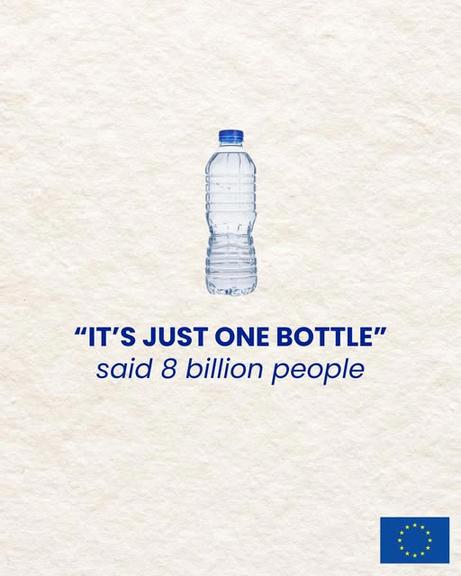
Our current economic model is linear It is based on extraction, production, consumption and disposal We take resources, manufacture products, use them briefly, and then discard them. Often behaving as if they disappear simply because we no longer see them. In reality, waste does not vanish; it accumulates in landfills, ecosystems and the atmosphere, creating long-term health, environmental andeconomiccosts.
Globally, material extraction has more than tripled since 1970 and now exceeds 100 billiontonnesperyear(UNEP,2024).Yetless than10%ofthesematerialsarecycledback into the economy, more precisely, the Circularity Metric continues to decline: the vast majority of materials entering the economy are virgin, with the share of secondary materials falling from 7.2% to 69% as of the latest analysis (Circle Economy, 2025) This represents not only environmentalandsocialpressure,butalso significanteconomicloss
Thelinearmodelcreatesmultiplestructural risks:
Resource dependency and scarcity include high reliance on virgin raw materials, raw material scarcity and depletion, and vulnerability related to criticalmaterials.
Supply chain vulnerability includes disruptions due to conflict, pandemics orclimateevents.
Growing waste management costs includes rising landfill and disposal expenses.
Increasing regulatory and trade pressure includes stricter product standards, Extended Producer Responsibility (EPR) requirements, packaging regulations, and increasing carbonpricingandregulation.
Health and Public Health impacts include microplastic accumulation in food systems and drinking water, increased respiratory and cardiovascular diseases and occupational health risks in informal or unsafewastehandling
Environmentaldegradationandcarbon exposure includes land degradation, biodiversity loss, greenhouse gas emissions, soil contamination, and waterandairpollution.
The circular economy represents a systemic transition away from this model. Itmovestowardsaregenerativeeconomic systeminwhich:
Products are designed for durability, repairabilityandmodularity
Materials are kept in productive use for aslongaspossible her

Secondary raw materials substitute
virginresourceextraction
Business models shift from ownership to service-based solutions where appropriate
Producerstakeresponsibilityforthefull lifecycleoftheirproducts
Resourceefficiencyisprioritisedacross productionprocesses
Natural systems are preserved and resourceextractionisreduced
Energy systems progressively shift towardsrenewablesources
The transition from linear to circular is drivenbymultiplestructuralforces
ResourceandGeopoliticalDrivers
EconomicDrivers
RegulatoryandTradeDrivers
ClimateandEnvironmentalDrivers
HealthandSocialDrivers
International processes and agreements areamajordriverofthecirculareconomy transition. Global climate commitments under the Paris Agreement, the Sustainable Development Goals (particularly SDG 12 on sustainable consumption and production), the Kunming–Montreal Global Biodiversity Framework,andongoingnegotiationsona Global Plastics Treaty increasingly recognise the need to reduce resource extraction,wastegenerationandpollution
At the regional level, the European Union’s European Green Deal, including Circular Economy Action Plan, Ecodesign requirements and packaging regulations are translating sustainability objectives intobindingproductandmarketrules
Georgia’s policy and legal framework for circular economy is evolving, primarily through environmental, waste management and climate-related legislation and policies. The Waste Management Code establishes the basic principlesofwastehierarchyandExtended ProducerResponsibility.
The country’s climate policy framework, including its Updated Nationally Determined Contribution (NDC 3.0)* under the Paris Agreement, recognises the introduction of innovative technologies and circular economy approaches as part of climate mitigation efforts. In addition, approximation to EU environmental acquis under the EU–Georgia Association Agreement is gradually aligning national legislationwithEuropeancirculareconomy standards
EPR is introduced under the Waste Management Code and further defined through secondary legislation EPR is currentlyinforceforwasteoils,tyres,waste electrical and electronic equipment (WEEE), and batteries and accumulators Regulationsonpackagingwasteandendof-life vehicles (ELV) are under development.
In 2024, Georgia developed a Circularity Roadmap. It has not yet been formally adopted., but is based on a comprehensive mapping, showing that Georgiaiscurrentlyonly1.3%circular.
DouglasWebb’sBlog“MovingfromaLinear PresenttoaCircularFuture:Whyacircular economymattersforGeorgia
NationalStrategies&PolicyDirection
UpdatedNationallyDeterminedContribution(NDC30) 2025-2035
ClimateChange[Mitigation]Strategy2030& ActionPlan2024-2025
NationalWasteManagementStrategy2016-2030& ActionPlan2022-2026
FourthEnvironmentalProtectionActionProgramme 2022-2026
CoreLegalFramework(CentralLayer)
WasteManagementCode
LawonEnvironmentalProtection
EnvironmentalAssessmentCode
LocalSelf-GovernmentCode
SecondaryLegislation-EPRRegulations
TechnicalRegulationson:
WasteOilManagement
WasteTyreManagement
WasteElectricalandElectronicEquipmentManagement(WEEE)
WasteBatteryandAccumulatorManagement
ForthcomingRegulations:
PackagingWasteManagement–expectedin2026
End-of-LifeVehicles(ELV)Management–expectedin2026
Establishprinciplessuchas: Wastehierarchy PolluterPaysPrinciple(PPP) EPR
UNDERSTANDINGCIRCULARECONOMY
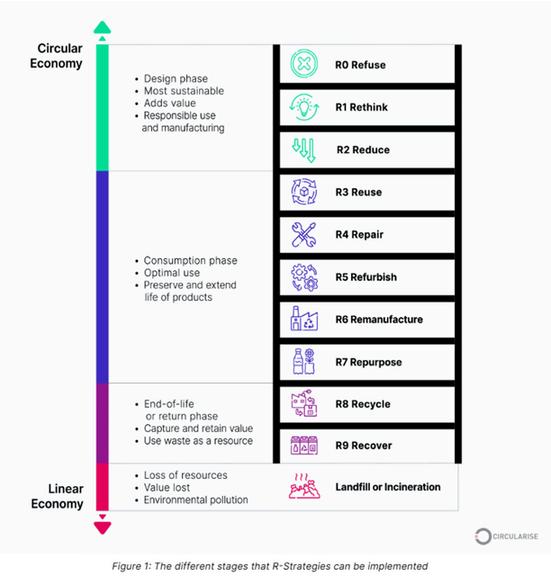
Circular economy is a systemic approach to economic development that aims to retain value in products, materials and resources for as long as possible, while minimising waste and environmental impact It goes beyond recycling and focuses on redesigning systems, from production to consumption, to prioritise prevention, durability, reuse and regeneration The widely used 10R framework illustrates this hierarchy of circular strategies, ranging from Refuse, Rethink and Reduce at the top, to Reuse, Repair, Refurbish, RemanufactureandRepurpose,andfinally Recycle and Recover at the lower levels. OtherreliableframeworksincludetheEllen MacArthur Foundation’s “Butterfly Diagram” (See on Page 5) and principles of designing out waste and pollution, keeping products and materials in use, andregeneratingnaturalsystems.
ListofGeorgianProducerResponsibility Organisations(PRO)
cycle. In practice, it means that producers and importers are financially and operationally responsible for the collection, sorting and treatment of the waste generated from the products they place on themarket.
Extended Producer Responsibility (EPR) is a policy approach that extends a producer’s responsibilitybeyondthepointofsaletothe
Under EPR, producers and importers are required to register, report quantities placed onthemarket,andensurethecollectionand treatmentofpost-consumerwaste,typically through collective schemes such as Producer Responsibility Organisations (PROs).

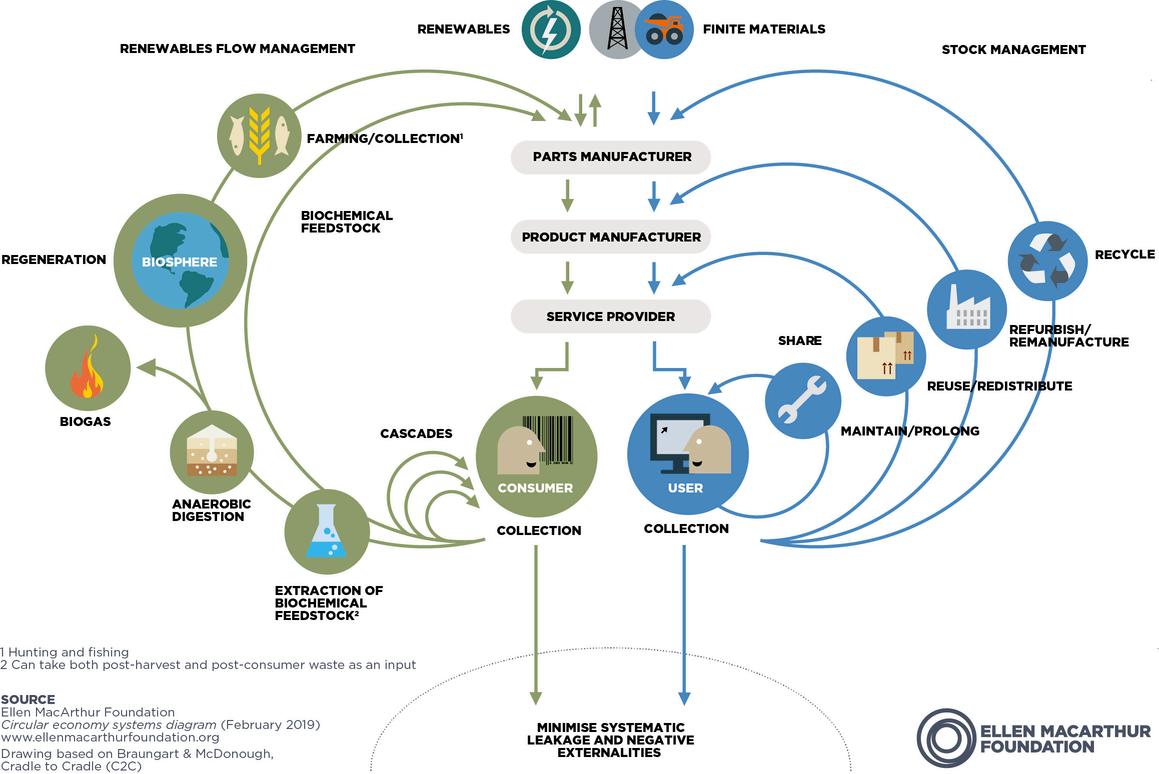
Moreonthebiologicalcycleofthebutterflydiagram
CIRCULARBUSINESSMODELS
Circular business models are central to operationalising the circular economy because they redefine how value is created, delivered and captured across product lifecycles. Rather than selling more units and generating waste, circular models focus on extending product life, keeping materials in use, and designing out waste Examples include product-asa-service arrangements, sharing and leasingplatforms,reuseandrefillsystems, take-back and reverse logistics schemes, and the increased use of recovered or recycled inputs in production. These approaches not only reduce environmental impact but also strengthen business competitiveness by lowering input costs, unlocking new revenue streams.
Moreonthetechnicalcycleofthebutterflydiagram
CRITICALRAWMATERIALS(CRM)
Critical raw materials (sometimes referred as transition materials) are raw materials, incl. minerals and metals, that are essential for the clean energy, digital and industrial transitions, but face high supply risks due to geological concentration, limited substitutability and availability, geopolitical dependency and low recycling rates These include lithium, cobalt, nickel, rare earth elements, copper and graphite, which are indispensable for batteries, electric vehicles, windturbines,solarpanelsandnetworks.
Underglobalnet-zeroscenarios,demandfor several of these materials is projected to increase multiple times by 2040. Their “criticality” therefore stems not only from physical scarcity, but from strategic importance, supply chain vulnerability and thepaceofglobaldecarbonisation.

Signify, formerly Philips Lighting, offers lighting-as-a-service (LaaS), installing, operating and maintaining lighting systems while clients pay for light as a service.

Fairphoneproducesmodularsmartphones with replaceable components. Phones are designed for repairability, longevity and materialtransparency

TerraCycleisaglobalwastemanagement company that focuses on collecting and recycling hard-to-recycle waste streams that are typically not accepted in municipal systems, such as flexible plastic packaging,cigarettebutts,coffeecapsules andmultilayermaterials

RECUPoperatesanationwidereusablecup and container system for takeaway businesses. Customers pay a refundable deposit and return the durable packaging to participating outlets. By replacing single-use packaging with a standardised reuse network, RECUP prevents waste at sourceandincreasesproductutilisation.

Mud Jeans is a denim brand that, in addition to selling jeans, offers a “Lease A Jeans” subscription model, allowing customers to pay a monthly fee and return the product after use Returned garments areeitherresoldasvintageorrecycledinto new denim By combining product-as-aservice, take-back systems and fibre-tofibrerecycling.
Ecovative makes fully compostable packaging products made from mushroom roots or ‘mycelium’ branded MycoComposite™

Too Good To Go operates an app that connects consumers to surplus food from retailers and restaurants It prevents food wasteandretainsresourcevalue.

Swapfiets is a bicycle subscription company.Customerspayamonthlyfeeto use a bicycle (shift from ownership to service). Swapfiets retains ownership of the bicycles, incentivising durable design, regular maintenance and product lifespans.
Loop is an initiative launched by TerraCycle Loop partners with major brands to provide reusable packaging throughadepositsystem.

TOMRA develops reverse vending machines and advanced sorting technologies for waste and resource recovery. Its systems are widely used in deposit-return schemes for beverage containers,aswellasinindustrialsortingof plastics,metalsandfoodproducts

LehighTechnologiestransformsend-of-life tyres and post-industrial rubber into highperformance micronised rubber powders. These materials are used as secondary inputs in tyres, plastics, construction materialsandasphalt.
Textile,ApparelandFashion
Design garments for durability and repairability
Userecycledandsecondaryfibres
Use mono-material fabrics to improve recyclability
Reduce the use of hazardous chemicals, waterandenergy
Reduce cutting waste through digital pattern optimisation and zero-waste design
Reuse production scraps for accessories andsmallproductlines
Offer clothing repair services and support repaircafés
Implementfibre-to-fibretextilerecycling
Introducegarmenttake-backprogrammes
Developleasingandrentalmodels
Establishupcyclingstudios
Operatedigitalresaleplatforms
Createphysicalresalespaces
Offer in-house repair services or partner withlocaltailors
Plastics&Packaging
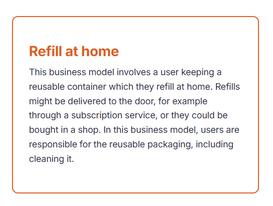
Replace single-use packaging with reusableandrefillsystems
Design packaging for reuse, repair and recyclability using mono-material formats andeliminatingproblematicadditives
Eliminate unnecessary packaging and lightweightpackagingformats
Replace virgin fossil-based plastics with recycled polymers and increase the minimumrecycledcontent
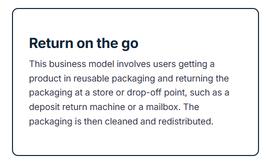
Implement deposit-return systems (DRS) forbeveragecontainers
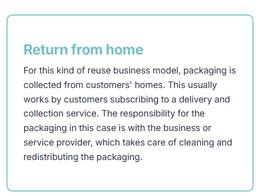
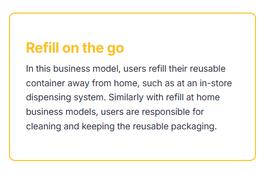
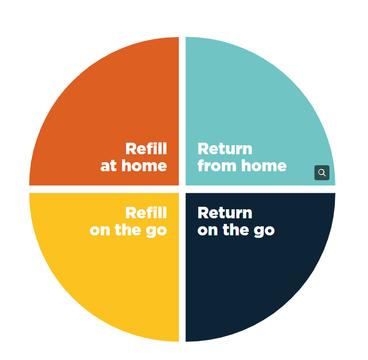
Establish refill-at-retail and refill-at-home systems
Develop packaging-free or bulk retail models
Introduce clear labelling and consumer guidanceforcorrectdisposal
Implement minimum recycled content standardsinpackaging
Reduce the use of hazardous chemicals, waterandenergy
Promote bio-based or compostable alternativeswheresuitable
Furniture&ConsumerGoods
Design furniture for durability, modularity anddisassembly
Use recycled wood, metal and plastic components
Replace composite materials with monomaterialstructureswherepossible
Introduce buy-back and take-back programmes
Offerrepairandrefurbishmentservices
Developspare-partavailabilitysystems
Operateresaleandsecond-handplatforms
Standardise reusable transport packaging (pallets,crates)
Reclaim wood and materials from demolition
Usecertifiedsustainabletimber(FSC/PEFC)
Reduce the use of hazardous chemicals, waterandenergy
Reduceuseofwaterandenergy
Electronics&ICT
Designmodularandrepairabledevices
Standardise replaceable components (batteries,screens)
Extendsoftwaresupportlifespan
Providesparepartsandrepairmanuals
Establish device refurbishment and resale programmes
Use recycled metals and plastics in production
Developelectronics-as-a-servicemodels
Recover critical raw materials through urbanmining

CircularEconomy:Aneconomicsystemaimedat eliminating waste and pollution, circulating products and materials at their highest value, andregeneratingnature.
Circular Business Model: A business model that creates value by slowing, narrowing, or closing material loops (eg product-as-a-service, repair, resale,remanufacturing)
Digital Product Passport (DPP): A digital record containing structured data about a product’s composition, origin, environmental footprint, and circularityinformation
Downcycling: Recycling materials into lowerqualityproducts.
Ecodesign: Systematic integration of environmentalconsiderationsintoproductdesign to improve environmental performance across thelifecycle (EUEcodesignDirective)
ExtendedProducerResponsibility(EPR):A policy approach in which producers are financially and/or operationally responsible for the postconsumerstageofproduct’slifecycle.
Industrial Symbiosis: Collaboration between industries where the waste or by-product of one becomestheinputforanother.
Lifecycle Thinking: Considering environmental impacts from raw material extraction to end-oflifemanagement
Linear Economy: An economy in which finite resources are extracted to make products that are used, generally not to their full potential, and thenthrownaway('take-make-waste').
Non-Virgin Materials: Materials that have already been used at least once and are reintroduced into production cycles instead of usingnewlyextracted(virgin)rawmaterials.
Reuse: Using a product again for its original purposewithoutsignificantreprocessing.
Repair:Restoringaproducttoworkingcondition
Refurbishment: Updating or improving a product withoutcompletelyrebuildingit.
Remanufacturing: Rebuilding a product to likenew condition with warranty standards equivalenttonew.
Recycling: Processing waste materials into new materials
Resource Efficiency: Using fewer resources to deliver the same (or greater) value, reducing materialandenergyintensity.
ReverseLogistics:processesandsystemsusedto move products, packaging or materials from the end user back to producers or recovery facilities for reuse, repair, refurbishment, remanufacturing orrecycling.
Upcycling: Converting waste materials into productsofhighervalueorquality
Urban Mining: Recovery of valuable materials from existing buildings, infrastructure, and waste streams
VirginMaterials:Materialsthathavenotyetbeen usedintheeconomy
Waste Hierarchy: Waste managment priority order: prevention, reuse, recycle, recovery, disposal.
If you’re feeling a little saturated with technical reports,hereareafewpopularyetpowerfulreads onthecirculareconomy:
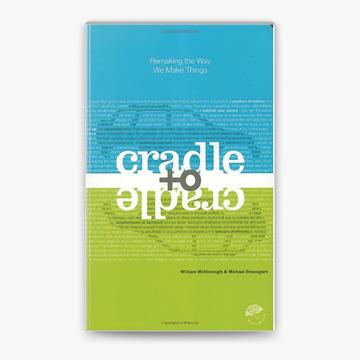
“CradletoCradle:RemakingtheWayWeMake Things” by William McDonough and Michael Braungart
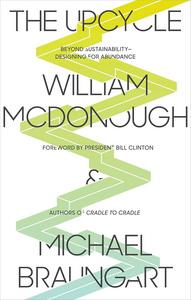
“The Upcycle: Beyond Sustainability Designing for Abundance” by William McDonoughandMichaelBraungart
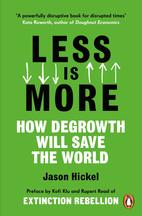
“Less Is More: How Degrowth Will Save the WorldbyJasonHickel
EllenMacArthurFoundation:The most influential global organisation shaping circular economy thinking,businessmodelsandpolicyframeworks.
Circle Economy: Publishes the annual Circularity GapReport,measuringglobalcircularityrates.
International Resource Panel: is a global science-policy platform provides independent, authoritativeassessmentsonthesustainableuse ofnaturalresourcesandtheirimpacts.
OECD: Provides economic instruments, policy analysisandregulatoryguidance
UNEP: Provides flagship scientific assessments such as the Global Resources Outlook, technical guidance on resource efficiency and sustainable production.
World Economic Forum: Provided guidance on circulartransformationofindustries
Georgia Circular Economy Knowledge Hub: digital resource with tools, and information to support learning about and advancing circular economy.