The publisher does not necessarily agree with the views and opinions expressed by contributors. No material may be reproduced in part or whole without written permission from the editor. Editorial contributions are accepted on an all-rights basis only. Letters to the editor may be published in their entirety or in edited form and remain the property of kpm media. While due care is taken to ensure the accuracy of information contained in this magazine, the publishers cannot be held responsible for any errors in editorial articles or advertisements. Subscriptions are available to non-qualifying and overseas readers at £120 p.a. (UK), £160 p.a. (EU countries) and £240 p.a. (overseas-other).
Apparently trade shows in the FM industry are like London double-decker buses. Having never been to one in my life, I found myself attending two separate events, in two of England’s most famous venues, in the space of a week.
First came the Ecobuild conference at London’s ExCeL where companies, consumers and the just curious gathered together for “inspiration, innovation and education,” around sustainable and environmentally-friendly construction and operations.
As always, we’d welcome your feedback about any aspect of the magazine, together with your insight into what’s happening in the FM sector.
charlie.kortens@kpmmedia.co.uk
Communications delivery is evolving... kpm are your experts in the production and distribution of regulatory, financial and direct marketing communications.
› Project management
› Data processing
› Personalisation
For more information:
› Enclosing & finishing
› Postal optimisation
› Digital printing
› Email broadcasting
› Direct mail
› ISO accreditations
FM market on the rise
The FM market in the UK grew by almost £2.5 billion in 2013 according to the latest report from MTW Research. The research, based on £70 billion of industry sales data, suggests the market is set for another year of inflation – outstripping growth in terms of both value and volume
However, there is clear polarisation in terms of trends for FM providers, with single service specialists focusing on value growth, while bundled service providers
The research emphasises that enhanced service levels are a prerequisite for success in 2014. The need for innovative, strategic ideas providing proactive, rather than reactive solutions, continues to grow in importance in 2014, with this likely to represent a key battleground in the FM market.
Potential dangers include the fact that the number of FM companies has declined by 12
per cent in recent years. But the silver lining has continued to decline in recent months, with more than 90 per cent of the market regarded as having either excellent or fair credit ratings in 2014.
For FM product suppliers, the research also suggests that FM providers are increasing their expenditure in order to enhance service provision.
Also reviewed is the performance of the
sector cuts continue to impact the FM market in 2014, particularly as the Department for
Communities and Local Government budget has been cut by 25 per cent in the next two years. However, spending on health and education is expected to rise by 7 per cent and 15 per cent respectively over the review period, illustrating that there are opportunities for growth in the public sector.
2008/9, a larger proportion of FM providers reported growing sales than those reporting declining performance, illustrating a backbone of strength now clearly evident in the UK FM market,” said MTW’s director Mark Waddy.
MERGED ORGANISATION ANNOUNCES NAME
The Building Futures Group is the name of the new organisation established following the merger of Asset Skills, the Cleaning and Support Services Association and the Facilities Management
the organisation’s commitment to developing individuals working within the industry, as well as safeguarding buildings.
Steve Davies, chairman of The Building Futures Group, stated: “We wanted to ensure that our name was representative of the industries we work with. At the heart of the organisation is our commitment to engaging with young people, opening up the industry to new talent and helping them to build exciting careers. The Building Futures Group brand and logo encapsulate this vision.”
MINIMUM WAGE TO RISE
The adult national minimum wage will rise by 19p to £6.50 per hour from October this year. This follows the Low Pay Commission’s recommendation that the minimum wage be raised by 3 per cent The youth development rate, for those aged 18 to 20, will increase by 2 per cent from £5.00 to £5.13. For 16-17 year olds the rate will increase by 2 per cent from £3.72 to £3.79 and the apprenticeship rate will increase by 2 per cent from £2.68 to £2.73. Finally the accommodation offset will increase by 3.5 per cent to £5.08 a day.
FACILITIES MANAGEMENT ON SHOW
Next month sees the relocation of the Facilities Show to its new home in London after 15 years at the NEC, Birmingham. Cathy Hayward reports on what the industry can expect
When UBM, the organisers of the Facilities Show, announced last year that it was leaving the NEC
was a collective intake of breath from an industry accustomed to making the journey to Birmingham every May. The news was rapidly followed by an announcement from EasyFairs that they were launching a rival show at the NEC. As FMJ reported
to prove, but all eyes will be on ExCeL from 17-19 June for the Facilities Show’s relaunch.
The event has been for some time the biggest exhibition in the FM calendar and this looks unlikely to change with the move to London. Although some have expressed concern that visitors will spend less time at the show as the London location will allow
all day, others have concluded that it will attract a more senior London audience who would not have invested the time to travel to the UK’s second city.
More than 360 exhibitors showcased products and services to 15,664 visitors at the 2013 event, and the show’s organisers are predicting the London move will attract 18,000 attendees and at least 350 exhibitors. Big names such as Vinci, Norland, Servest, Bellrock (formerly SGP), Mitie and PHS have already signed up, along with a long list of product
up the diverse FM world.
Co-located as part of Protection and Management Week with Safety and Health Expo, Service
Environment Expo, the Facilities Show is certainly a
Join in the FMJ debate
Location: The Facilities Show, Seminar Theatre
Topic:
good environment to research the market. What was missing from FM2014 in March was a focal point. But with the Facilities Show being run in association
and with the Facilities Management Association as
become a gathering point for the industry creating a buzz that was slightly lacking at FM2014.
The educational content also looks good with three days of expert educational seminars with industry presenters and panel members including
Theatre. Names including Martyn Freeman from Mitie, Liz Kentish and Julie Kortens from Channel
this year, they will be silent seminars listened to by headphone, which will help to alleviate the acoustic issues always problematic at open seminar theatres.
Another innovation is the Social Media Buying Request Service, which will match visitors’ purchasing requirements with exhibitors’ products and services live through Twitter, arranging a meeting then and there. This should make it even
help exhibitors meet key visitors.
The Facilities Show 2014 takes place at ExCel, London from 17-19 June 2014
FOOD GLORIOUS FOOD
London is booming for the foodservice sector but clients remain cost driven. That was the message from the Changing Face of a Sector conference, held this week at Central Working Whitechapel, the new collaborative working space located a stone’s throw from the lucrative City market which shaped much of the day’s discussions. Cathy Hayward reports
The role of the caterer in the City has changed, as people’s eating patterns have matured, said Chris Sprague, director at Elior, during a panel debate focusing on foodservice in the square mile. “People graze more, eat more healthily and drink less in working
West, chairman at Lexington agreed. “The high street is festooned with
it’s had an impact on us as we have to replicate, and exceed, the best of the high street on a daily basis. As an industry contract catering has had to up its standards.” The sector needs to constantly innovate to keep ahead, panellists argued, citing examples of street food stalls, farmer’s markets,
the workplace environment as a way to keep people
street – which is seen as the City caterer’s main competition.
Nil cost remains the holy grail and working with procurement teams can be “gritty” at times said West, with some clients wanting to be paid for the privilege of the caterer being on site. But many are realising that by putting money into a subsidy, they will receive a better return on investment for their catering, said Andy Harris, MD of Restaurant Associates. “The workplace is changing. The space which used to be exclusively set aside
throughout the day for informal and formal meetings and people wanting to
get away from their desks. It’s becoming a multi-purpose space supported by catering, and clients should make it an attractive environment to be in.”
The conference, which had an impressive line-up of some of the great and the good of the catering sector, was an interesting mix of food trends, from food tattoos to the latest superfoods, to debate around using venture capital to grow catering businesses. Unlike similar events, where conference fatigue
from panel debates to Newsnight-style journalistic interviews, in addition to standard presentations, kept the audience’s attention.
The post-lunch debate on the rise of the FM model, led by FM and catering consultant Julian Fris, was fairly predictable with Andy Chappell, MD at ISS Foodservice and Chris Piper, director at Interserve, fervently agreeing that FM providers could deliver single service excellence in catering in a bundled or integrated way as well as, if not better than, specialist of caterer BaxterStorey, dismissed the inter-company rivalry and instead echoed earlier speakers by arguing that the main competition – particularly in London – is the high street.
“Sainsbury’s, Greggs, Pret and Tesco are the competition,” he said. A market that BaxterStorey, which owns high street chain Benugos, has also nicely claimed.
A key theme throughout the day was the increasing buoyancy of the catering sector, how it was moving away from being a low margin, low cost industry (although discussion around zero hours contracts and London Living wage revealed that these are still key issues) to being a career of choice. “Good food is no longer a dream,” said Graeme
restaurants in their spare time which has led to higher expectations of food service everywhere, combined with a willingness to pay more for quality.”
People will pay £3 for an artisan
allowing the sector to sell on value not cost, therefore increasing margins.
Margins were a key focus for both
Management and Vince Pearson, chairman of The Waterfall Group, who spoke about growing catering businesses through partnerships with
involvement gives you business rigour,” said Toner. “They strip away all the emotion; they’re not interested in the
focused on what it means for return on investment and the risk aspects.”
With the horsemeat scandal still fresh in the sector’s minds, supplier management was a key area of debate with Restaurant Associates, with Harris describing the company’s suppliers as part of its DNA. “In fact I don’t like the term suppliers, there is a high degree of mutuality.” It was a viewpoint
commercial at Compass who has more than 20 years’ procurement experience. Despite a rather facetious introduction from one of the conference organisers about purchasing people being some of the most hated in catering, Cock did an excellent job of demonstrating that caterers are only as good as their suppliers. “The chef is at the heart of the procurement process. No product goes on our ingredient list unless the
a great product and then we work with the supplier to audit their supply chain and make sure the right safety standards are in place. Integrity and traceability of the supply chain are the
market. “People are passionate about food, they follow it on TV, they cook the recipes at home, they go to top
the newly-rebranded Mitie catering arm Gather & Gather, who demonstrated the extent of the wide-ranging agenda, and the issues facing the catering sector, by talking about the risk of changing the company’s name, when rebrand failure rates are high. “There was a risk of distancing ourselves from Mitie – are we biting the hand that feeds us? But it has in fact rebalanced the pipeline business. We have won standalone business from companies who wouldn’t have got over the emotional barrier of Mitie – the company that cleans toilets
Cofely can support all the non-core functions of your business. From energy efficiency to business efficiency, we’ll manage the activities that stop you focusing on what you do best – delivering to your clients. Find out
CONTRACT WINS & PARTNERSHIPS
SERVEST WINS TWO YEAR CONTRACT TO PROVIDE CROSSRAIL SECURITY
Servest Group has been chosen by Balfour Beatty as the security partner for the Plumstead to Abbeywood joint Network Rail and Crossrail project.
The two-year project will see Servest Security provide unique mobile CCTV solutions, manned guarding, and mobile patrols to provide comprehensive security coverage to the two-mile route in south-east London. The project works include the installation
a major remodelling of Abbey Wood station in addition to the creation of a new Crossrail platform.
Servest Security has considerable experience protecting Crossrail projects having worked with the company for several years. The company has designed a bespoke security package for the ever-evolving and complex needs of the Crossrail project.
Crossrail is currently the largest construction job in Europe, and the biggest infrastructure project ever undertaken in the UK
SALISBURY CATHEDRAL EXTENDS CONTRACT WITH LEVY RESTAURANTS
VINCI TO PROVIDE SERVICES FOR WELSH GOVERNMENT
CBRE has renewed its agreement to provide facilities management services for insurance broke Aon. Under the agreement, originally signed in 2009, CBRE will continue to provide facilities management services for Aon’s UK office portfolio as well as supporting Aon’s relocation to new headquarters next year. At the same CBRE has announced a renewal and expansion of its retail property management contract with Royal Dutch Shell. The contract will see CBRE manage the international energy company’s retail network portfolio in 22 countries across four continents. CBRE has managed the Shell Retail European portfolio since 2010.
LOVELL has won a £32.8 million contract to deliver facilities management services for a major sheltered housing development and improvement project in North Tyneside. Under the new contract Lovell will provide repairs and maintenance services to The Solutions 4 North Tyneside (S4NT) consortium which is undertaking the £300 million Quality Homes for Older People initiative to deliver 922 apartments in North Tyneside.
Specsavers, one of Britain’s most popular high street optician chains, has appointed contract cleaning and facilities management firm NVIRO to clean its training and support offices in Hampshire. The year-long contract sees Nviro providing cleaning services at offices in Whiteley and Eastleigh.
Network Rail has awarded MITIE a renewed contract to provide integrated facilities management across its UK property portfolio.The contract, valued in excess of £75m over five years, will see Mitie continue to deliver a range of services, including fabric and engineering maintenance, energy management, security, cleaning, mailroom and couriers, helpdesk, waste and pest services to over 100 Network Rail buildings across the country.
Salisbury Cathedral has agreed a £6 million contract extension with Levy Restaurants UK, the leisure and hospitality arm of Compass Group UK and Ireland. The partnership will see Levy provide catering services for a further six years, taking the partnership into its second decade. The cathedral’s Refectory Restaurant has been renovated, with seating capacity increased by a quarter, in readiness for 2015’s celebration of the 800th anniversary of Magna Carta, taking place in 2015.
The Welsh government has extended its facilities management service contract with Vinci Facilities for a further year. The new contract covers a range cleaning, recycling, porterage, grounds maintenance, reception, mailroom and beekeeping. Security and pest control will be subcontracted. The contract applies to four buildings in Aberystwyth, Llandudno, Wrexham and Caernarfon, with a combined occupancy of 1,200 people. Vinci Facilities has been in partnership with the Welsh Government since 2009.
BILFINGER EUROPA has expanded its UK service contract with Asco, the oilfield support service company to deliver facilities management services in Tanzania.The new three-plus-one-year deal, worth over £3 million, sees Bilfinger Europa’s team deliver mechanical and electrical maintenance, building maintenance, cleaning, hygiene, housekeeping, help desk and security management at a fully operational port in Mtwara supporting the oil and gas sector.
Aggregate Industries has awarded G4S INTEGRATED SERVICES a three-year contract to deliver facilities management services across its UK portfolio. G4S already works at selected sites within Aggregate Industries including security and FM services such as lone working, first response, alarm monitoring and key holding support. The new and expanded, contract will see G4S provide cleaning and security services across Great Britain.
Whether your in-house team needs assistance at busy times, you’re looking for robust Business Continuity & 24/7 solutions, or you simply want to cut costs, Moneypenny can help. We’re experts in looking after calls for corporates.
LEGISLATION
Plugging the
WThe plumbing and sanitation systems within a building or facility may be installed out of sight, but they cannot remain out of mind for the facilities manager. Paul Angus, Chartered Institution of Building Services Engineers New South Wales chairman, looks at how the revised 2014 edition of ‘Guide G – Public Health and Plumbing Engineering’ can aid facilities managers in coming up with forward thinking strategies for water usage
ithout much notice, simple issues within plumbing systems can quickly escalate in
Furthermore, climate change, sustainability and rising utility costs will all have an impact on the provision of water within the essential that facilities managers have access to the latest design information, both from an installation perspective, and also from an operating and maintenance
issues, the Chartered Institution of Building Services Engineers (Cibse) launched the revised 2014 edition of Cibse ‘Guide G – Public Health and
Given that the building or facility will change over the time that the original engineering assets are designed for (i.e. a design life of 50–80 years), there is a large responsibility on facilities management engineers. As a facilities manager it is imperative to keep up with changes in legislation, risk management requirements –for example legionella, as well as implementing water conservation measures.
How does this risk translate to a building or a facility and more
as a high business risk based on its relatively low cost, but risk lies in the security of its supply and distribution, which is paramount to the continuity of a business. If the water supply
than a few hours, then the building becomes uninhabitable due to public
health issues, and in turn becomes unproductive, losing the owners’ and occupiers’ businesses money.
tenants and investors alike, it is paramount to ensure a water strategy is implemented. It can be applied to any commercial, retail, industrial and/or public sector facility where, in the event of water failure, any
protection systems, cooling systems, wholesome drinking supply and sanitation are fully considered.
Understanding water usage behaviours can assist in providing an informed plan of action, which can be further developed to mitigate risk, Cibse Guide G can assist with this.
Such plans should include the detection of leaks and upgrades to ageing water infrastructure, as well as proactive and not reactive plant maintenance requirements.
For example, replacing out of date, associated within a complex building
However, the full extent of other consequences should be considered.
horizontal high level sanitary drainage runs can cause blockages.
Any water strategy needs to look at mitigating risks and maximising opportunities. Such opportunities may include the payback and lifecycle analysis of system upgrades and assessment of water reuse and recycling opportunities.”
Issues associated with ageing infrastructure, such as hydraulic
immediate action. When undertaking practises should be avoided, as they burden than relief. Taking a proactive
waterless urinals may seem an
solution, but requires waste pipework to be fully assessed, as urine is acidic and can quickly corrode existing copper waste pipework, making a quick solution potentially an expensive problem requiring pipework replacement. These situations are rarely budgeted for, straining an already limited facilities budget and causing frustrations for building operations
Any water strategy needs to look at mitigating risks and maximising opportunities. Such opportunities may include the payback and
lifecycle analysis of system upgrades and assessment of water reuse and recycling opportunities. It should be noted that opportunities can also present unanticipated costs or risks. For example, when considering the systems, such as rainwater harvesting or grey water recycling systems, the full life-cycle cost needs to be considered, and water is just one cost. The energy required to pump the water from the basement to all on electrical loads and costs. Energy the full impact should be assessed, with consideration to the location applications.
The robust water strategy should focus on operational measures, as well as both short and long term engineering solutions. It must also be integrated with other strategies, for example energy management, for a building is a complex web of interconnected systems that cannot operate in isolation of one another.
A strategy can be aligned with a range of industry benchmarking tools such as BREEAM, LEED and Green Star. These tools can help a building’s performance to be publicly recognised and as such, increase its overall asset value. A forward thinking water strategy is an important aspect to a building to not only mitigate the risk of business continuity, but also take advantage of opportunities, be they environmental, cost or reputation related.
You probably haven’t thought much about it. You’ve just got music on for your staff or customers. But did you know you legally need permission from the music’s copyright owners if you play music, TV or radio aloud at work? But don’t worry, to get that permission you simply need a licence from PRS for Music*(and in most cases, one from PPL** too). PRS for Music is a membership organisation that acts on behalf of songwriters and composers to ensure they’re paid for the use of their work. So if you have music playing, ask PRS for Music how you become licensed to listen today.
How important are benchmarking and self assessment for FM suppliers?
IStriving for recognition internally, as well as externally, sets suppliers apart. The desire to to any core business decision made by facilities suppliers. Nicki Stewart, head of facilities looks at how this can be achieved
nstigated by the speed at which customer demand is evolving – for example, the need for customers to take delivery of their items exactly when they require, as well as the recognition that customers want to keep apace of the latest product innovations, suppliers have to demonstrate the ways in which they can add value to a customer’s organisation, and continue building upon that value year-on-year.
Growth of the digital landscape, which has brought immediacy and choice to procurement purchasing decisions, means that suppliers have had to look far beyond their product choice and pricing structures to deliver a robust, 360 degree approach to facilities management.
One of the key targets for organisations this year revolves around corporate social responsibility and sustainability. In this respect, suppliers are working to show how they can help organisations meet their environmental targets by consolidating deliveries to reduce the amount of packaging and the number of vehicles releasing emissions on the loop recycling processes are also being recognised, as well as the ways in which suppliers are introducing more sustainable, environmentally
Another way in which suppliers are currently adding value is through the development of their logistics platforms. Customer purchasing
and the time between purchase and supply has never needed to be more immediate. This requirement, if not
carefully managed, has the potential to cause multiple problems i.e. within warehouse operations such as stock control or even the supply chain, such as late/missed deliveries. Suppliers are therefore using customer buying behaviour to benchmark their operations and are working with organisations to make sure they can exceed their delivery objectives and keep apace of market requirements. Furthermore, it’s important to understand customer demands. Demand continues to evolve with customers looking for both convenience and agility. In addition customers are more aware of what they can get from a supplier, challenging suppliers to provide solutions. By working with customers, it can be possible to gain greater control over the predictability of what’s required, making it possible to calculate the volume of a product that a customer will need in six or 12 months time and give suppliers plenty of notice. This involves obtaining initial forecasts from customers to make it possible to calculate future volumes and ensure stock is available. In order to achieve this you need close working relationships between supply chain, sales teams and merchandisers to
capture forecasts at the negotiation stage of a contract and embed them into stock management planning.
for suppliers to add value by being at the forefront of sector trends and product innovations. The scope of facilities management is broadening all the time, just as the supply pool is growing and diversifying. Suppliers must therefore be able to keep ahead of these advances and advise on what will get the best results, combined with best value, for the customer. The
customer needs and the subsequent need for suppliers more means that competition has
Suppliers have to show how they
as important as implementing these
continuously improve, as well as the bottom line, can be recognised through a range of accreditations and external benchmarking processes. The purpose for many is to become world class.
Benchmarking in FM for suppliers is very much driven by customer demand and expectation. Over recent years, this has very much
reduction but retained value, and while this is still an important priority, other business objectives have come to the fore, i.e. sustainability, logistics capabilities and innovation. Suppliers must continue looking beyond core objectives to ensure that a
considered. This way, improvements
the customer and the supplier
a business’s needs through innovation as a direct result of the need for customers to respond far quicker to demand than ever before. Suppliers therefore have to match this with a similar mindset, anticipating both the products and levels of service that will allow
customer requirements. Constant assessment is a key element of ensuring this approach keeps working, so the need for suppliers to benchmark themselves to ensure
Securing recognition, however, should only be the beginning. It is vital that suppliers continue to
all, without maintaining high levels of satisfaction and adaptability,
to justify. It is therefore important to recognise that internal procedures and processes feed directly into the
As such, eradicating processing errors as much as possible should be a core focus.
A
leading
brand from one of
the world’s largest floorcare manufacturers. Compact yet mighty.
Caring for your floors.
Introducing the VCSD-05, the latest battery-powered scrubber dryer in the Vax Commercial range. With up to 3250m2/hr coverage, this compact ride-on scrubber dryer has the manoeuvrability of a smaller machine but the cleaning range of a larger ride-on with up to 2.5 hours continual use. Its twin brushes give you twice the cleaning performance and up to 80L large load tanks mean fewer stops. In addition to low noise operation, the VCSD-05 has excellent water pick up, even when turning the tightest corners, for a quick efficient clean.
Whatever your cleaning requirements, Vax Commercial has a range of machines and chemicals to help you achieve brilliant results. With unique after sales support 7 days a week, Vax Commercial is always
Help is at hand
For the second month the FM Index KPI Survey, compiled by FMJ and Causeway, considers how the help desk is used in various organisations above by more than 75% of their customers.
In last month’s FMJ we reported on and the connectivity of the help desk to interface with their internal customers and support the delivery of services. The majority (66%) of respondents operate remained relatively consistent over the years that the survey has been running.
Avoiding duplication resources.
“Duplicated requests can lead to confusion that results in poor management of resources and, potentially, poor customer service. A system that will help to reduce or eliminate duplication is therefore a very worthwhile investment.”
James Atkinson Director, Causeway
It’s interesting to note that there is an increase in customer satisfaction for those FM departments that use third party software.”
increase in customer satisfaction for
In the next issue of FMJ we will be considering the management of planned preventative maintenance (PPM).
Fig.1 Reactive requests booked with help desk
Fig.2 Customer satisfaction and help desk management methods
Fig.3 Duplicate job requests
Fig.4 Achieving < 25% duplicate help desk jobs
Why wellbeing makes sense
FMJ AIMS TO SUPPORT TECHNICAL EXPERTISE IN THE FM MARKET.
In this edition of FAST Facts, Christopher Pedersen, managing director of Convini Food Solutions, explains why wellbeing is of ever-growing importance to facilities professionals and how an
WHY IS WELLBEING NOW HIGH UP ON THE BUSINESS AGENDA?
WHAT ROLE DO FACILITIES MANAGERS PLAY IN TACKLING STAFF WELLBEING?
WHAT’S THE BEST WAY TO GET STARTED?
CAN YOU MANAGE WELLBEING ON A REDUCED BUDGET?
HOW CAN YOU DEVELOP A CULTURE OF WELLBEING?
Taking the waters
In a matter of weeks Welsh Water converted an abandoned call centre into a state-of-the-art water testing facility. Charlie Kortens dives behind the scenes
Ibuilding from a former HSBC call centre into a new £10.4 million laboratory with
for analysis being accepted in November that year. DCWW commissioned Brecon-
to complete the design and build project which also involved building a new exterior to replace the existing 1980s industrial façade. They also increased the building’s level of insulation, introducing a sustainable urban drainage system designed to drain surface water from buildings, in a manner that will provide a more sustainable approach than what has been the conventional practiceof routing
water samples from across Wales and Herefordshire are brought to be tested.
A CALL CENTRE?
So why choose a former call centre as your new base? “There were two reasons,” explains Sharon Evans, head of water
here from across Wales and Herefordshire. That meant that we really needed to be based in the south-east of Wales.” Cleppa chosen, Evans says, because it was on one
With water samples, equipment and facility, fewer staircases and changes in environment. The space provides great open plan design and lots of glass creating visibility between individual rooms and contributing to improving employee morale.
The four labs interact in the open plan environment and shared canteen. The décor is striking and modern, based on chemical symbols”
TESTING
The laboratory carries out a wide range of microbiological and chemical tests on and springs that it comes from, to verify the company to 1.4 million homes and businesses across Wales and Herefordshire. The 750,000 analyses per year include well as for more than 40 metals, nutrients, pesticides and herbicides.
it is logged and registered by one of the team. All bottles are barcoded to ensure full traceability. Next they are transported to a fridge the size of a living room. No sample one of several laboratory facilities replete with the latest technology. Alongside the labs, corridors and storage areas, there is a plush reception area, open
plan canteen space, meeting rooms and
Perhaps this is why, despite the intricate maintenance and grounds maintenance.
CLEANING
regarding cleaning and maintenance. For example, there are certain areas not covered by the outsourced cleaning contract, because of the nature of the
Glaslyn’s solar paneled roof
uses, banning certain ones which may contaminate the sensitive instrumentation. Every chemical or cleaning product used
monitored very closely to ensure no dust or environment.
As the facility is open from 7am-8pm, and areas when they are unoccupied, DCWW pattern. The entire environment, at least
To prevent the operation grinding to a halt all generators and power supplies are stored outside of the lab, allowing malfunctions and problems to be dealt business operations inside. Similarly instrumentation within the labs is duplicated where possible for the same targets, DCWW is unique in the water sector
owned on behalf of its customers and maximising productivity and staying open all year round means that savings can be passed on to customers.
to be measured, especially in such a specialised environment? The laboratory needs to test all the samples it receives, and within a strict time frame, reporting the
But in order to test its analytical capabilities to the full the laboratory also subscribes to a scheme which provides it with “mystery” water samples. A sample will be received containing a small amount
a metal, perhaps a pesticide, perhaps something else entirely and the team
quantify it. The results they obtain are then compared with other laboratories across the country and a report received to let them they do.
This might require testing in any of the four individual
The
laboratory’s sustainable urban drainage system
The space provides great working surroundings for staff, with an open plan design and lots of glass”
laboratories onsite, each of which type of testing. Lab manager Paul equipment and facilities can only
potential. Analysts have been recruited management has gone to great lengths to labs interact in the open plan environment and modern based on chemical symbols. abundant and every sign is in both English and Welsh.
their achievement in converting what they found into what they have. Woodbridge, who has been involved in a similar project before, says he isn’t aware of a faster testament that DCWW is able to operate presence. The methodical search for the right premises, the ecological viability, plan and lay out, and the forethought that went into the conversion have resulted in the establishment of a very impressive facility. With this team in place you wouldn’t bet against Woodbridge’s dream coming laboratory in the country.”
What a WASTE
What’s the most highly-contested change an FM can introduce into a workplace? Not hot-desking, or Cathy Hayward reports about the challenge to reduce – and measure – waste
Rather like household battles about who will take the rubbish out, the humble desk bin is a major bone of contention. Removing it, in an
universities reveals that removing desk bins increased recycling rates by More than 330 million tons of waste is produced in the UK each year according to the Environment Agency, with commercial waste making up about 23 per of all waste produced – construction, demolition, mining and quarrying are the gives priority to preparing it for re-use, then recycling, then other recovery such
LACK OF DATA
Although waste produced is measured at a macro level, commercial waste data at an individual company level was traditionally “patchy” at best, says Bernard estimates, which were taken at face value as businesses either didn’t want to to change, driven by the retail sector which recognises that environmental
of measuring quantities, types of waste, optimal treatment and disposal
treatment solutions mirror those increases so waste disposal is getting more and and understand the quantity and types of waste and managing that in the most
it’s been turned into another product – customers want granular detail about
BARRIERS TO INFORMATION
when mobile compaction units are used to collect waste from a number of
FOCUS WASTE MANAGEMENT
business, using our cleaning operatives to empty the bins, put it in colour-coded liners and then weigh it before it is collected by the integrated approach to facilities management
Measurement can be tough, agrees Mick
is much harder to measure than for a large one-site business or industrial park,” he have the space for multiple individual recycling containers or front-end loader
segregation container and co-mingled dry
Nichols, sales director at waste management particularly for large FM service providers time spent gathering that data together is a construction business, spends 70 per cent of her time gathering, consolidating, collating, checking and reviewing waste data rather than actually analysing and doing something
standardised reporting for commercial waste;
but also the amount of waste per individual production process to improve those organisations above a certain size; and the
Businesses will be supported by greater
continued developments in online reporting capabilities with facilities professionals being able to drill down and see waste management data in minute detail, process by process, type by type in addition to realtime documentation such as waste transfer
measurement and management even easier
actually measuring the right things, says is important, but increasingly people are more aware of the carbon impact of their
result, you increase your carbon footprint by transporting waste miles, that defeats the then you need to agree the measurements
Measuring waste produced is one thing, but businesses need to go back to the
Part of the solution clearly lays in changing the UK’s mindset about waste.”
an historic resistance to providing data from waste contractors; multiple waste contractors providing services to a single business with varying services and reporting capabilities; and the misuse of systems meaning the wrong material ends up in a container
important recommendation is to challenge
Ultimately the market will set the standard for of their contracts and those unable to meet
FUTURE PROOFING
and manage waste will become even more
total levels of waste managed, recycled, composted and recovered by energy recovery
waste hierarchy and work out why the
as saving money and carbon emissions,
“Focusing on your waste production can lead you to reduce errors in your manufacturing processes at source, or in services can lead you to segmenting and reusing or recycling approach to waste has led us to minimise as making sure all we pick up for clients is streamed to the most appropriate end
thereby helping to remove it at source by
be viewed as sophisticated processing facilities that incorporate advanced technologies to
maintenance costs all need to be factored in to optimise the return on investment from such
continues to become ever-more innovative, and roadmap, this mindset will inevitably become about waste as a resource, consider waste
to Energy plants, they can no longer be seen
areas of waste disposal will become more competitively-priced in the future, such as
great deal of waste currently goes to energy from waste plants in Eastern Europe to power the local grids, but as more plants are built in the UK,
ban on food waste being disposed of in general waste for organisations producing more than 50 our conscientious clients are already separating organisations which have looked at it, and
All of which means that more FMs will go through the pain of removing desk bins in their premises – and face the inevitable wrath of their
Cinema is the perfect showcase for direct replacement.
TShowcase Cinemas is a major UK chain of cinemas, owned and operated by National Amusements, Inc., a world leader in the motion picture entertainment industry, operating more than 850 screens in the USA, UK, Argentina and Brazil.
at a number of its UK sites.
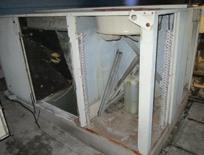
The cinemas were using a range of propriety international brands of AHU’s but unreliability had become a concern with some of the units over time. The availability of replacement components was also
a problem, with the cost of some parts rising steeply
Initially, Showcase Cinemas and their advisers
unviable due to unit size, space constraints and the position of service connections, which would have downtime to re-install all the M&E services to connect with these units.
are engineering consultants to National Amusements.
Construction, came to the UK to review Weatherite’s proposal to replace the old air handling units with
of service connections. However, they would use the latest technology, such as EC fans, scroll compressors, enabled Trend control systems to deliver high
has given National Amusements real time access to each of the AHU’s performance and operational data. adjustments from the UK and USA, it also includes self-
PERFORMANCE
a three-day cycle. In conjunction with Elite Air Services
AHU’s had been replaced. Weatherite also supplied the new centralised control access system and carried out the commissioning with Showcase’s BMS contractor to ensure everything ran smoothly.
The success of the Walsall project led to further
The direct replacement approach has delivered a wide range of advantages for Showcase. The new in terms of air volumes, heating and cooling performance and M&E service connections. It is also energy usage and costs.
information in real time, plus immediate control of the operating system. Showcase and their maintenance capability from a major UK manufacturer with
TEAMWORK
client, its partners and Weatherite has been crucial.
the following day’s screenings. This process continued from Monday until Wednesday until all the cinema’s
Steve Cartledge, Weatherite Manufacturing’s Sales Director, commented: “It has been a pleasure to provide a direct replacement solution that has
delighted with the solution we developed, the level products.”
solution in terms of overall investment as it saves time, service and maintenance programmes and
FM is top of the
Twenty years ago, facilities management wasn’t a term that would have been used by any school management team. There were of course caretakers, cleaners and dinner ladies all with very distinct roles. The landscape, however, is changing as secondary and primary schools face new challenges; suddenly there is a real value in understanding more about our world. Valerie Miller, education business lead at Bellrock Property and Facilities Management, looks at how the privatisation of public sector education gives opportunities for FM to contribute to its success
The structure of ownership of education facilities in the public sector has changed and continues to evolve. The introduction of public
in this change. A PFI (Private Finance Initiative) or BSF (Building Schools for
under which schools were constructed, school can be returned in good condition
These construction models are not the only schemes to force a change in attitude. The launch of the academy, and latterly
free school, schemes under the Academies
in attitude in public sector education. The remodelling of part of the state school
these schools operate. Released from the shackles of local authority control, academies and free schools are free to the school and can access products and services independently. These schools
maintained. It must be said that this doesn’t just relate to facilities services, but
class
also to purchasing and human resource support. Of course they may be private enterprises but they have charitable status
schools that are part of the traditional as maintained schools. They have become the victims of the success of the academy and free
schools relying on the local authority for non-curriculum support such as FM service delivery, means that the economy of scale is no longer there for many authorities.
The reduced demand has forced some boroughs to cut these services completely, leaving school management no option but to cluster together to access services independently from private sector providers.
CUTTING THE APRON STRINGS
responsibility. The governance of the school is no longer the responsibility of the local authority. Legionella or any other
falls squarely on the shoulders of the head teacher and the school management team. Professionalising the compliance regime suddenly becomes extremely important. Of course facilities management can help by establishing robust health and safety procedures, including risk assessments and evaluating supplier competence.
The business aspect to managing the school also takes centre stage. Auditing procurement and service delivery becomes part of establishing value for money for the health and safety, facilities management can support the school management team
adopted. An FM can easily assess actual requirements and adjust the cleaning
generating savings. This example may
limited exposure to these ideas.
MANAGING THE TRANSITION
academy status increases, as of 1 March 3,689 had opened according to the Department of Education, the collective experience
much better equipped to manage the transition to independence from the local authority. Chains of academies are becoming more common place. They
largest organisation in fact is already supplier, to deliver all of its business process outsourcing requirements, including FM and HR support. Some academies are supporting maintained primary schools that no longer have access to services from the local authority. The academy introduces its supply chain to the much smaller schools to either access or manage requirements negotiated by the chains. This gesture
the academy school and the the next intake of Year 7s
In some cases schools built under the PFI or BSF schemes have chosen to
The primary requirement is to achieve an Ofsted the scrutiny to gain agreement from government is not only a rigorous assessment of the teaching and curriculum, but also of the business plans. The decision to transfer requires all elements of managing the school to be exemplary, including its building condition, maintenance plan and compliance regime.
FM FOR SCHOOLS
Being part of the community also throws services for facilities managers to consider.”
Energy management has both an educative
account to manage, the cost element comes in to sharp focus. Combined annual energy for schools. As energy prices continue to to reduce consumption is an imperative. Whether this takes the form of a programme
optimisation or behavioural change, all are initiatives that sit at the heart of good FM practice.
Although some principles of facilities management service delivery are very similar to other sectors, there
services in schools. The catering provision is one such example. The strict adherence to a prescriptive regime of healthy options and nutritional requirements demanded in a school catering service, something some
menu, the catering service must focus on speed. These are equally challenging lunch and break times are not staggered.
facilities managers to consider. Schools and rich resources. Floodlit pitches, tennis courts, drama studios and IT suites are opening up the doors does come at a
price, although there is an opportunity to generate revenue for the school. Enabling members of the community to use facilities outside of the core school hours requires scheduling of spaces, security and late lock ups, health and safety assessments, insurance documentation checks, cleaning, room set up and risk assessments. In some cases the remit extends to marketing the spaces that are available, managing the payments and providing front of house registration and information desks. These
part of a facilities management role but are
BEING AN A GRADE STUDENT
Working in a school as a facilities manager
sometimes challenging environment. It many respects the same rules apply as they
teacher; managing customer expectations,
timetable and seasonal activities such as exam time and holidays. FMs this is your golden opportunity to relive your school days!
A co-operative approach to FM
This month the Royal Institution of Chartered Surveyors, together with its partner Workplace Law, launched a series of case studies about the FM industry, with the aim of demonstrating to people outside of the sector the
looking at ethical procurement at the Co-operative Group
Founded as the Rochdale Pioneers Society in 1844, the Co-operative services provider.
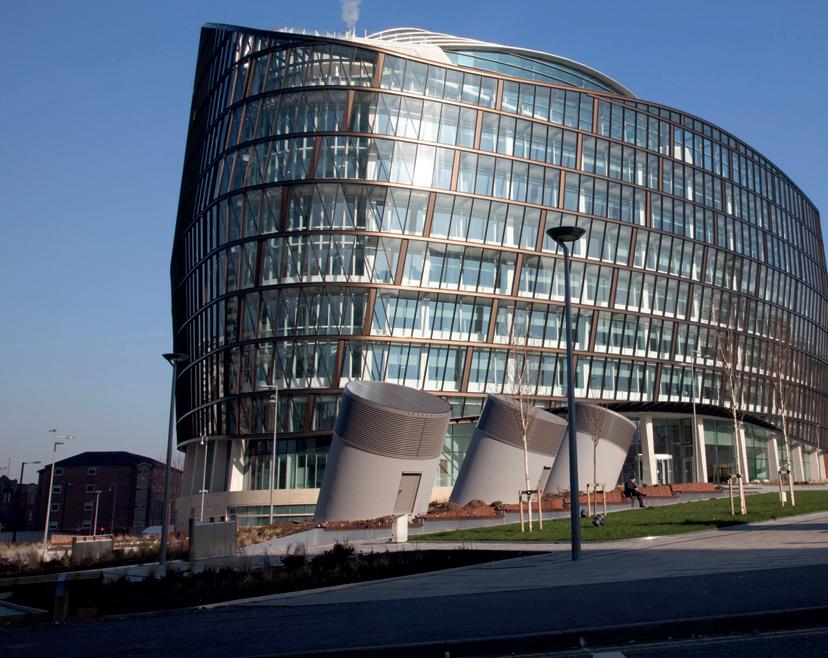
Its FM operations are no stranger to the media spotlight, having won Client of the Year at the 2011 BIFM Awards, adding to the Excellence in FM Team award from 2010, and, most recently, the RICS’ Project of the Year award for its new Support Centre, One Angel Square in Manchester.
FM in the corporate support centre estate, guided by the in-house team led by Kate Morris-Bates, and strategic FM expert, Steve Gladwin. Amalgamating the entire team into one building, the group not only promotes the services of its core products (its ‘restaurants’, not canteens, unsurprisingly
but also encourages its team members to apply ethical, sustainable and corporate social responsibility values through every function of the business, from purchasing to recruitment to customer service.
FM is at the forefront of all these activities, and is proud of its close connection to the
regional boards, where FM issues are spoken about in the context of how they impact the customer.
“When you work in FM it’s not hard to quantify the value of FM services, because intuitively we know what we do and the value we bring,” says Morris-Bates.
“We know that we keep the lights on, metaphorically and literally. I think it’s more
environment or even property environment in general to put a real value on it – except when things go wrong. In the trading estate, when our refrigeration unit goes down, people are very keen to point out the amount of sales loss and stock loss they’ve
incurred. But in terms of a pound note value on FM as a whole I don’t think people can actually pinpoint it.”
Martin Bolton, supplier strategy manager – assets, believes the FM team within the Co-op is an ‘enabler’, assisting the purchasing teams to buy the right equipment at the right time, so that less maintenance stage to keep critical assets
Gladwin enforces this point: “I think the FM team in the Co-op is seen as an enabler, as opposed to just a cost centre, and I think that’s where organisations that are in best of class, demonstrating best practice, have got it right. Two years ago, that wouldn’t have happened. There’s this big debate about whether FM should be at the board table; at the end of the day it’s up to the facility management people to be putting our foot forward to say this is where we’re adding value, not waiting to be asked.”
To highlight where FM sits within the
organisation, the head of FM is two steps away from the CEO. So it really does feed into the strategy.
OUTSOURCING
A key area in which there is much debate recently over how FM can add value is in the decision to outsource, or keep services in-house. The Co-operative historically has been keen to keep its services selfsustaining, but has recently made a move towards outsourcing operational activities,
term planning and strategic challenges (both
urges caution. “I think some people think outsourcing is the answer to everything, and it’s not, it has to be appropriate and it has to be well thought through and partners well selected.”
“To move down the outsource route we had to do quite a lot of work internally to get the structure and the right people in place as well. You can’t outsource and just let the contractor do what they want to do; we’ve had to build the supplier management function within the team, and bring in a supplier management framework with external assistance to do that. Recruit and train the right people as well – then you can
Everyone is targeted on cost. What we do within the Co-operative is try and move the discussion from pound notes to value”
“It’s probably fair to say the Co-operative has historically chosen not to outsource, due to the roots where the organisation grew up from,” says Richard Crawshaw, supply strategy manager for operational services. “But the world has been changing and now it’s making sure that it’s doing the right thing for its members and its member base.”
“Financial services [the area where he and Morris-Bates cut their FM teeth] as an industry in general is further ahead in its attitude to outsourcing than most other industries. But, making sure that we select the right partners is key, so we won’t outsource to just anyone. Their values, their ways of working, are really important to us
to partner with to deliver those services.”
Morris-Bates agrees there has been a to outsourcing in the last two years, but
controls in place. So it’s not just, ‘oh let’s outsource and hope it’s okay’; you have to then you reduce the risk.”
OUTPUTS
One way in which to maintain control is to know exactly what you want to get from a relationship before awarding the contract. It is this area in which output-based contracts are increasingly coming into play.
In Workplace Law’s 2012 research study, 46 per cent of respondents indicated they had made use of outcome based contracts in the past, and 87.5 per cent expected strategic partnering relationships to increase in the next three years.
“Suppliers like output-based contracts; it removes a lot of the bureaucracy that you create with input based ones. You’re
The Co-operative Group’s support centre, One Angel Square in Manchester
measuring what’s important rather than measuring what’s measurable,” says Crawshaw.
For example, in the Co-op’s food stores, they have recently applied the principle to their cleaning contracts, with agreed outputs surrounding cleanliness and customer satisfaction, based upon customer and supplier audits.
“We’re looking at making sure that the hours are available when required… we
hours vary but their wage won’t. So as an example, if we have a seasonal store which needs more work in summer because it’s by the seaside than it does in the winter, then we have the ability to, within agreed
stable by making sure that their wage rate
exceed hours but they’ve got the certainty of a standard wage coming through.”
SUPPLY CHAIN
This emphasis on regionality applies throughout many of the Co-op’s big decisions, not least procurement. Due to the way the Co-operative’s business model has developed, its retail stores in
feel depending on where they are based. In some remote areas, such as the Shetland Islands, the local community relies on it for its products and services; therefore, ensuring it maintains a consistent, quality, reliable service is particularly key. This feeds back to its suppliers, as Morris-Bates points out: “We have a very strong policy in terms of who we do business with, so we have a really rigorous due diligence process prior to any procurement exercise being taken out. There are many companies who’ve got what
While this may well exclude some of the the company has built its business upon key principles that won’t ever be diluted. A sea of stony faces greets the suggestion
we would consider dubious credentials that we just wouldn’t do business with, so that’s kind of an initial criteria, and then there are a number of businesses that are attracted to doing business with us because of our
tender presentations, everyone wants to be associated with our Co-operative values and principles.”
The Co-op’s procurement policy is
criteria, including a thorough analysis of their own supplier and owner chain, with certain associations completely unacceptable (such as anything to do with
The Co-op’s Sustainable Procurement and Supplier Policy states the company will ‘work with suppliers and partners who can make a positive contribution to our pursuit of sustainable development. Where our review of the standards in place indicates that improvement is necessary, we will agree with the supplier a programme to deliver this and to sustain such developments, or pursue alternative supply arrangements.’
It goes further, to state: ‘We will welcome suppliers who operate in the local communities in which our operations are based and who strive to be inclusive of all parts of society. In particular, we will seek to:
Support cooperatives and the broad range of organisations involved in the Social Enterprise sector;
Attain the highest professional standards in our procurement activities and seek to ensure fairness and consistency of approach in a manner consistent with the Chartered Institute of Purchasing and Supply Code of Business Ethics; Pay our suppliers on time, according to agreed terms of trade.’
But it comes back to that bigger question of how we make sure we demonstrate the value of FM”
consider a less ethical procurement policy. “If you took horse meat as the most recent biggest scandal, no one is talking about the suppliers, no one is talking about whoever produced that burger, they’re talking about the supermarket where they bought that burger, so the [impact on] brand reputation of not controlling your supply base is huge,” says Crawshaw candidly.
LESSONS LEARNT
So how has the Co-op married up a commendable sustainable purchasing strategy, with the ever-present issue of cost, and diminishing budgets?
“Everyone is targeted on cost. What we do within the Co-operative is try and move the discussion from pound notes to value, and making sure that it’s measured within cost risk and quality and where we want to sit within that dichotomy. I don’t think any business should move away from being
delivering the best value,” says Crawshaw. Gladwin concurs: “I think the perception has to change, you get what you pay for. If you pay peanuts you get monkeys at the
in mindset about the value proposition as opposed to just cost. A facilities manager is accountable for the second largest spend in most organisations. It’s incumbent on us to know the cost down to the last penny.”
It is also incumbent to recognise what they are paying for, and how that impacts on the rest of the business. Making the analogy between how many tins of beans a store has to sell in order to pay for an initiative, Crawshaw demonstrates that the FM team has a sound understanding of the functions of the business, and what is achievable in the current economic climate.
“We are a huge owner of cost within this organisation, we need to be prudent with our members’ money. If you broaden it past the Co-operative into the wider industry, I would agree that there is the issue of seeing it as huge cost centre and therefore just stripping cost out. But it comes back to that bigger question of how we make sure we demonstrate the value of FM, because people are far less willing to cut value out of a business rather than cost out of a business. It’s changing that conversation.”
TDon’t spend a penny in your washrooms…
There are many ways that facilities managers can cut their washroom costs other than simply buying cheaper products. Charlie Kortens takes a look at the use of consumables and water, and other ways to save money in the washroom environment
FM can save money. Of course employees aren’t going to accept a deterioration in standards just so an FM can save a little bit of money. So, what is it that matters most
Washrooms are not the most glamorous skyscraper or ultra modern HQ, but looked at the right way, there are many ways an
Overwhelmingly the answer is hygiene. Research from Initial Washrooms reveals that 88 per cent of respondents would be
unlikely to return to a restaurant if the washrooms looked unhygienic. Almost half of respondents admitted that they had already lost their custom because of poor hygiene. Risk hotspots in a washroom
handles where bacteria lurk.
It’s not just building visitors who expect good hygiene. According to a study conducted by the Centre for Economics and Business Research (Cebr), employers lose on average £700 per employee per year as a result of failing to create a healthy workplace environment. The research
workers believe that better hygiene would not only protect them from unwanted illness but also increase their level of job satisfaction. And it doesn’t stop with employers. A report conducted by the
is expected to have reduced UK GDP by 0.8 per cent or £13.7 billion in 2013, due
leave as a result of poor hygiene cost the UK economy £4.2 billion last year. Shockingly £9.5 billion was lost due to the time wasted as a result of poor hygiene, such as queuing for a clean toilet, washing
washroom with suitable facilities – all factors that can waste valuable time in workers’ days.”
So how exactly does an FM ensure the
Hands, sales manager at SCA Hygiene Products, has some suggestions. “Use
hand towels, cleaning liquids et al, and storing them for months and months until needed doesn’t make sense. Washroom consumables must be linked to use. Don’t have an entire storeroom of products devoted to an out-of-the-way toilet that is used by two people a month.”
More importantly, consumables need to be kept in secure dispensers. “It is a sad but unavoidable truth that anything and everything that isn’t nailed down is liable to go missing. This means locked cupboards and dispenser systems to cut
Sick leave as a result of poor hygiene cost the UK economy £4.2 billion last year. Shockingly £9.5 billion was lost due to the time wasted as a result of poor hygiene”
everything from loo rolls and air freshners to cleaning products can dramatically reduce an organisation’s washroom costs.
instead of doors since this limits the scope for cross-contamination. Automatic lighting again reduces the risk of washroom users spreading germs via the light switches.”
Finally Sorbie says that, though the right balance must be struck between cost and quality, you must make sure that what you spend your money on is still of a high
CONSUMABLES
Irrational fears over hygiene should not be allowed to interfere
business decisions. Charlie Sorbie, business development manager at Temco Facilities Services, regularly hears of people preferring paper hand towels over hand driers. There is a myth that the latter are unhygienic, which he insists has not been the case for many
than hand towels, he says.
At the same time, Sorbie questions the need to order washroom consumables in bulk – standard practice within the sector. “Simply purchasing thousands of loo rolls,
safe, will not need replacing and will not cause costly accidents. A high quality ventilation system in any washroom will not only improve employee morale, but will also prevent costly adventures trying to work out exactly why your washroom smells.”
WATER
Water is a key cost within the washroom environment, says Paul Millard, technical director at the Water Regulations and Advisory Scheme. “A leaking tap that drips a few times a second may not seem like anything major, but once you’ve accounted for the aggregated losses over an entire year, it can be a major issue. Similar cumulative savings can be made
large enough to impact on service quality, can nevertheless save large amounts of money when viewed over the long term”. He cites the example of workplace showers, which are strictly for cleanliness, rather than relaxation. Therefore savings can be made in the power and force of the water and the amount of water released. Modern toilets are commonly equipped with dual
water used) to be adjusted as necessary. Technical expertise is also essential, says Millard, ensuring that the correct systems and technology is used leads to maintenance. Jerry-rigged or ill-designed systems need constant repairs, which the line. Oversized plumbing systems in larger washrooms can also lead to a decrease in water quality due to stagnation.
Millard claims that the most important issue when designing or introducing washroom is product
The most important issue when designing or introducing a choice. The product must be suitable for the job, well made and installed by competent professionals”
choice. “The product must be suitable for the job, well made and installed by competent professionals. It must not cause undue waste, have demonstrated
compliance and be validated. Essentially it must be compliant with the law and all relevant regulations. In 2013 alone over £2.5 billion was spent rectifying avoidable plumbing errors.”
FLEXIBILITY
But it is unrealistic to devise a single super solution for all washrooms when
Jonathan Hooper, marketing manager at Connect Hygiene Products. “Therefore
insightful strategy. This includes solutions such as adapting the size of dispensers and positioning them ergonomically to ensure possible, cutting down on waste.
Unlike Sorbie, Hooper is a fan of paper towels over hand driers, arguing that used in another part of the washroom. “Hand driers have to be monopolised until a person’s hands are dry. In a washroom which is subject to high intensity bursts of footfall this can reduce productivity elsewhere and the presence of more people than necessary for any length of time can cause maintenance and repair issues.”
Schindler announces strategic alliance with the RIBA Introducing Vax commercial Teliqo brings business telephones into the 21st century Creating better BIM environments with Forbo Multikwik makes spotless appearance at London hotel Teamwork key to progress of special relationship Chubb champions future designs to support independent living
CODELOCKS LAUNCHES NEW WEB-BASED APPLICATION FOR REMOTE ACCESS CONTROL
Codelocks, a leading manufacturer of standalone access control products, has enhanced its KitLock 1000 cabinet locks to enable cabinet owners to grant temporary access to their cabinets by using time-sensitive access codes.
“Many of our digital locks are used to restrict access to equipment locked inside cabinets, for example, data servers locked inside cabinet racks or machinery within
Grant Macdonald, managing director of Codelocks. “NetCode is a new web-based application that gives managers the ability to grant temporary access codes to a remote location, so an authorised
The application is particularly useful where access is required for routine text message or by email to the engineer’s mobile on the day the access is required. Using time-sensitive access codes is a more secure way to grant access, as the code will not work outside a designated timeslot.
www.codelocks.co.uk 01635 239645
ULTRA-SLIM DRYER AWARDED ULTRA-QUIET ACCOLADE – THE QUIET MARK
PRIMARY SCHOOL CHOOSES DELTA SECURITY’S ENTRYSIGN TO HELP MANAGE ACCESS
Betty Layward primary school has chosen Delta Security to supply and install an EntrySign visitor and contractor management system to increase the security and and visitors at the Stoke Newington based school. The EntrySign system integrates with all access control systems and provides users with an information pertaining to who is on site at any one time.
Terry Purdy, premises manager, says the school wanted a system that would give them full visibility of who was on premises: “Prior to using
necessary reports at the touch of a button.”
contractors, its low running costs as it does not use printer ink, and its ability www.deltasecurity.co.uk
SCHINDLER ANNOUNCES STRATEGIC ALLIANCE WITH THE RIBA
Airdri’s ultra-slim hand dryer, the Elite, which was initially designed to respond to the standards outlined in the American Disability Act, has been awarded the Quiet Mark. This international mark of excellence from the UK Noise Abatement Society is awarded to technical products that have been developed with noise level reduction as a key consideration. Due to its low decibel levels, the dryer is not harmful to sensitive ears and, as it does not protrude far from the wall, it doesn’t create obstacles for the visually impaired or disabled.
James Clark, Airdri’s group commercial director, said: “Great consideration is given to sound and other health-related factors as part of our ongoing product development programme. It’s important to us that our dryers can be used by everyone.
“Our customer research has revealed that excessively noisy dryers may deter users from drying hands properly and be frightening for small children. The
a strategic alliance with the RIBA, a global network of 42,000 architects. Each of the organisation’s registered architects is required to undertake CPD training every year, and as part of the new partnership, Schindler will sponsor the 2014 CPD programme.
building professionals advance their knowledge and maintain professional accreditations. The interactive CPD seminars include a presentation, a question and answer session, and can be arranged at a time and venue to suit attendees.
Schindler will also be present at selected RIBA events over the coming year and will continue to deliver its own CPD seminars to the RIBA’s members. These workshops are designed to help architects develop a better understanding installations.
www.schindler.com
info@gb.schindler.com
APT SUPPORTS ABERDEEN IN PROVIDING MORE SUSTAINABLE MODES OF TRANSPORT
APT Technologies, a leading innovator in the delivery of electric vehicle (EV) charging solutions, was chosen by Aberdeen city council to install a range
for Low Emission Vehicles (OLEV) funding as part of its “Plugged in
Alan Simpson, a planner from Aberdeen city council, explains that there were strict conditions for Transport Scotland’s grant: “Not only did the chargers need to be good quality, good value and user-friendly, but of particular importance was the need for them to link up transactions without a user having to join a particular network. APT not only
In addition to providing the chargers, the agreement with APT also includes a three-year maintenance package.
www.aptcontrols.co.uk enquiries@aptcontrols.co.uk
FIKE NEWS:
FIKE FIRE DETECTION PROTECTS VICTORIAN PUMPING STATION FEATURED ON TV’S ‘RESTORATION MAN’
Fike Safety Technology’s TWINFLEXpro smart 2-wire fire detection system has been installed in a fabulous conversion of an old Victorian pumping station that was recently featured on Channel 4’s popular ‘Restoration Man’ series.
The TWINFLEXpro system was recommended and installed by Fireguard detector further reduces costs as it has a built-in sounder and 7 modes of operation, allowing one type of detector to be installed in any environment.
The system is suitable for installation in small residences as well as large buildings such as Houses of Multiple Occupancy (HMO) panels can also be connected to the main control panel to allow remote monitoring of the system for larger installations. output unit.
GE LIGHTS THE WAY TO TOTAL FLEXIBILITY
developed for retail sheds and distribution centres. Delivering an crucially boasts a long service life – a key consideration for high bay applications.
The unique design allows air to cool. The luminaire accommodates up to four LED modules all equipped with an upper limit thermal control, the temperature range. This all contributes to achieving a rated life of 65,000 hours – a welcome maintenance cycles.
Mike Hall, sales general manager for the UK & Ireland, GE Lighting, commented: “We wanted to create a they need – a low energy solution that can be adapted for a variety of reduced total cost of ownership.”
LANES GROUP CHOSEN FOR SCHOOLS MAINTENANCE PROGRAMME
Lanes Group has been commissioned by Galliford Try to carry out drainage surveys and remedial repairs at three schools in Birmingham, Cockshut Hill Tech. College, Yardley, plus Perry Beeches The Academy, and Calshot Primary School, both in Great Barr.
Mark Niland, area development manager for Lanes in the West Midlands, said: “An important element has been to keep disruption to a minimum. “Because of this, we have been carrying out most of the work at weekends and during school holidays. “Although each repair of the drainage system at each school. “As the UK’s largest independent underground pipeline and utilities specialist, we have the capacity and
Galliford Try provides a full FM service for 11 schools in Birmingham. Drainage maintenance is just one of the services provided, others include 24 hour emergency response, grounds maintenance, caretaking, cleaning and life-cycle management.
INTRODUCING VAX COMMERCIAL
We know the importance of caring for your business, that’s why we offer a range of high performing, versatile and easy to use cleaning equipment to help
Commercial products cater for a wide variety of cleaning jobs.
Our innovative range currently includes carpet and spot washers, vacuums, scrubber dryers, steam cleaners, sweepers and cleaning chemicals. The machines are designed and built to a high standard and are ideal for use in even the busiest environments.
Our market-leading tub vacuum is the VCC-08,
tool carrying slot, it’s one of the most user-friendly vacuum cleaners around.
Based in the heart of the UK, Vax Commercial has an excellent support and distribution network. With unrivalled
UK based helpline, local training and free demonstrations, Vax Commercial is able to help with any query – big or small.
BRINGS BUSINESS TELEPHONES INTO THE 21ST CENTURY
mid-market organisations, and enterprises with its bespoke telephony systems to meet the needs of the modern business in the property and facilities management sector.
Director at teliqo, believes that business telephony is in need
transparency: “The market is awash with providers ready to low line rental and call charges, but those businesses will be in for a shock when they see the up-front charges and other hidden costs,” he said.
IMPROVING SAFETY AND HYGIENE AT GREEK SWIMMING POOL
Heronrib barefoot matting, manufactured in the UK by the matting division at
being used to keep the local swimming and water polo teams safe from slipping accidents at the natatorium in Glyfada, part of the Athletic Nautical Club of Glyfada, Athens, Greece.
distributor, Beredimas Safety Floors, recommended Heronrib as the perfect barefoot slip resistant solution. The matting has been laid in the locker rooms and the hallway just outside the shower area to protect users walking barefoot on the under DIN 51097 – the highest rating, with channelled underbars, which areas. Additionally, its non-porous PVC sections and impregnated antimicrobial and anti-fungal additives ensure permanent barefoot hygiene. Available in several standard colours and widths in 10m long rolls the mat allows for a quick and easy installation.
www.heronrib.com 01268 571116
THE MARQUE OF QUALITY
teliqo direct provides each user of a system with a single contact number to be used for making and receiving calls across a range of devices, from desk-based handsets to smartphones, tablets, and even desktop or laptop computers. Initial system set-up and any future changes can all be completed through teliqo’s secure web portal, making it easy to add users as a company grows.
www.teliqo.com
020 7078 0710
The Cleaning & Hygiene Suppliers’
tissues products and plastic refuse sacks to seek, in addition to the CHSA logo itself, the manufacturing accreditation schemes logos as the marques of quality.
“Our logos are important, each conveying and MD of Harrison Wipes, Stephen Harrison.
“To
maintain their value and credibility it’s crucial they are used properly by our members and understood fully by buyers.”
The two logos are the only marques proving scheme membership and only fully audited members have the authority to use them. The CHSA standard logo indicates an associate, manufacturer or distributor has agreed to adhere to the rules of the code of conduct, paid their subscriptions and their CHSA membership has been approved by the CHSA Council. It does not however imply membership of one of the manufacturing standards accreditation schemes.
www.chsa.co.uk
020 7920 9638
SAFETY FIRST FOR MARLEY CONTRACT SERVICES AT MILLAR PARK
Marley Contract Services has earned its place on another framework Association properties at Millar Park in
“THE
ART OF A GREAT CARPET” AS HECKMONDWIKE RELEASES NEW ARRAY COLOURS
With its specialist in-house skills and acting as principal contractor, Marley Contract Services was able to complete all elements of the roof replacements. This included tiling, and rainwater as well as replacing large sections of patent glazing over communal areas.
All the work was carried out while the elderly residents remained in their retirement/sheltered housing. Marley Contract Services’ ability to act as principal contractor, and coordinate all activities on site, whilst appointing a dedicated resident liaison person, ensured disruption was kept to a minimum and that residents remained fully informed of progress throughout the programme.
Billy Baird, projects director at Marley Contract Services, said: “Replacing
Heckmondwike FB, one of the UK’s leading commercial fibre bonded carpets by expanding its popular Array carpet tile range with six exciting new colours, Copper, Marble, Peacock, Violet, Emerald and Fuchsia, which brings the number of options within the Array range to 12.
NEW LEV MONITOR GUARANTEES COMPLIANCE AT FRACTION OF COMPETITORS’ PRICES
An affordable, flexible and compliant new product, guaranteed to enable manufacturer and consultant, Temperature Electronics Ltd (TEL).
Compatible with any ducting or LEV (local exhaust ventilation) extraction device, mains or battery powered and simply installed, TEL’s monitor has been developed in response to growing market demand. One of the main ways in minimum safe level. TEL’s LEV monitor features a pressure cell which triggers immediately, allowing them to take prompt action before employee safety is threatened.
“The product has only been available for a few weeks, and already we have sold a sizeable quantity to four major customers, and are enjoying
www.tel-uk.com
01457 865635
The heavy contract Array carpet tiles feature a mid-width rib design, with a charcoal background enhanced with a subtle linear pattern. This stylish design co-ordinates perfectly with the company’s Broadrib carpet tiles in a complementary solid shade to provide a Marketing manager, Abby Chandler, explains: “It is less than two years since ranges ever. The new colours were carefully selected to co-ordinate with
OCS cleaning supervisors Adam Fudge and Vince Hawksworth
fellow supervisor Diane Burton achieved her City & Guilds Level 3 Cleaning
Jane Sheard, UK managing director of facilities services at OCS, commented: ‘It is very important for the employee and the employer to work together to embrace continuous learning. When this happens it is a powerful combination. Diane,
development and delivering a quality service for the client.”
www.ocs.co.uk 01293 553121
DALKIA’S CHP SET TO DELIVER WELLCOME SAVINGS TO HINXTON HALL
Hinxton Hall Limited (HHL), a subsidiary of the Wellcome Trust, is the site means that a reliable and stable power supply is vital. Dalkia’s solution is a operate and maintain in order heat and power production onsite for the facility.
The Wellcome Trust is one of the biggest medical funding charities in the world,
LEGAL & GENERAL PROPERTY INVESTS IN QUALITY
Working closely with Morgan Sindall, Laidlaw Interiors Group (LIG), the quality of interior space required by Legal & General Property (LGP) at its central
redevelopment of 6 Agar Street.
www.dalkia.co.uk
Wellcome Trust’s own research as well as providing facilities for conferences, seminars and training at the human genome campus.
power across the site, the research laboratories themselves demand a stable and un-interrupted supply of electricity that will support the delicate processes being undertaken there.
alongside an absorption chiller, modern and a cooling tower.
ANDREWS CHILLER HIRE PREVENT LOST PRODUCTION AT NUCLEAR POWER STATION
When one of the UK’s largest nuclear power stations started losing supply of its process cooling water a call went out immediately to chiller hire
in motion that meant a temporary solution was in place within 12 hours, saving the power stations potential losses that could have amounted to many thousands of pounds.
Longden Doors supplied 96 Gloucester in american white oak and stainless steel hinges to help
Securicel, which is strong enough to resist attacks made with heavy tools. to get involved with a project in London’s West End – Longden’s doorsets are designed and manufactured to give buildings a sense of splendour that is in keeping with their heritage, whilst safety and security is assured
HEATING AND PLUMBING GIANT CUTS LIGHTING ENERGY USE BY 80% WITH HIGH-BAY MOTION SENSORS
They are one the UK’s most successful chiller hire companies operating with the largest network of more than 25 national depots throughout the UK. This
solutions extremely quickly.
All companies in the Andrews Sykes group provide round-the-clock support to advise, design, deliver and install an emergency solution whether it’s for chillers, boilers, air conditioning or pumps.
www.andrews-sykes.com
Wolseley UK, a leading supplier of heating and plumbing products, has achieved savings of £116,000 on its annual energy bills at its Cumbrian distribution centre, as a result of an installation of LED lamps controlled by highbay motion detectors from Steinel (UK) Ltd. The lighting source of energy waste. Not only
Following a successful trial, QE Global completely overhauled the lighting at Wolseley’s Melmerby site, all of the lights were replaced with LEDs, with 349 Steinel IS345 MX sensors installed to ensure intelligent control of the new lighting.
The lights have gone from being in use 24 hours a day to an average of 2.5 hours a day over a 5-day week. Wolseley was so pleased with the result that they gave QE Global the go-ahead to install Steinel sensors at another of its distribution centres, with more sites to follow.
BAM CONSTRUCT’S BIM AND CAFM INTEGRATION PROJECT WITH AUTODESK AND FSI WINS AT THE I-FM ANNUAL TECHNOLOGY IN FM AWARDS
Congratulations to BAM Construct, Autodesk and FSI for winning the Operational Category Award at the annual i-FM Technology in FM Awards for the BIM and CAFM integration project.
The collaborative “Project Robin” uses FSI’s Concept Evolution™ web-CAFM solution, Autodesk’s Revit and BIM 360 Field products and the combined skills of both organisations together with the entire BAM team from design, construction and facilities management. Information is pulled
the way clients can manage their buildings. The project demonstrates (BIM) beyond design and construction and into the operational phase of any piece of infrastructure.
In the Operational Category, the purpose of each piece of technology is to help in-house facilities managers and the employees of FM providers deliver a better service for clients. The measurement of success and the future implementation of the technology across the
ENERGY EFFICIENCY IMPROVEMENTS LOWER COSTS AND REDUCE CARBON FOOTPRINT FOR WELSH GENERAL HOSPITAL
Honeywell has announced that 13 years into a 25-year energy performance contract (EPC) with Nevill Hall Hospital in Abergavenny it will the program saved the hospital £517,000 and reduced its carbon footprint with the energy savings.
entire FM industry are the two most important factors. The judges were ultimately convinced by the transformational nature of “Project Robin” and its potential to change the entire FM industry if successful.
The awards were announced as part of the Workplace Futures Conference on 11th February. Kath Fontana and Reid Cunningham from BAM Construct, along with Karl Broom from FSI, accepted the award.
PORTAKABIN WINS 4TH AWARD FOR ITS COMMITMENT TO THE ENVIRONMENT AND SUSTAINABILITY
Portakabin, the UK’s leading modular building manufacturer, has received the Think Green Business of the Year accolade at the Press Business Awards in recognition of its commitment to the environment and sustainability.
upgrades installed by Honeywell Building Solutions to date have helped the hospital to reduce its energy and operational costs by almost £5.16 million. Providing a full range of acute surgical and medical services, Nevill Hall hospital is managed by the Aneurin Bevan University Health Board (ABUHB). Over the duration of the contract, Honeywell’s energy strategy has constantly evolved in alignment with ABUHB’s requirements and the demands placed on the hospital’s services. The challenges of all the project installations have been overcome by thorough planning and careful coordination to ensure continuity of critical supplies at all times.
This latest award follows a string of sustainability successes for the company in the last year and the
that Portakabin had accomplished. The company’s previous achievements include a Zero Waste Gold Award, a Zero Waste Platinum Award and a further Gold Award in the Business in
“This is very welcome recognition for our energy-saving and environmental programmes. Our sustainable
together we have made tremendous progress over the last few years in the area of recycling and waste management. We are proud of what we have our environmental performance.”
From L-R: Kath Fontana & Reid Cunningham, BAM Construct, and Karl Broom, FSI
CREATING BETTER BIM ENVIRONMENTS WITH FORBO
With 75% of British architects predicting BIM (Building Information Modelling) will become an integral part of how they write future
government mandate on all projects from 2016, to meet growing market demand Forbo Flooring Systems has launched a comprehensive range of BIM components, created in partnership with Bimstore, the UK’s leading BIM component library.
Heralded by many as the future of the construction industry, BIM is essentially a data rich 3D model of a building, which allows all those involved in the construction process to work from the same coordinated, highly detailed and consistent plan. At the heart of BIM are ‘objects’ – digital representations of the component
manufacturers to upload carpet tile models for Bimstore users, which are to be used in Autodesk Revit. Users can access all models for free and build up a library of their favourite components. Additionally, Forbo’s models hold all key technical data and green building properties, as well as containing links to installation information, product webpages and download sections.
A wide range of products from Forbo’s portfolio
are now available as BIM objects, including its Tessera and Westbond carpet tiles, Eternal vinyl, as well as its popular own brand of linoleum, Marmoleum.
What’s more, Forbo’s rigid entrance system, Nuway, is also available as a custom parametric model, whereby users can build up the construction of the mat according to the available
STOP THE BOTTLENECK IN YOUR END OF LINE PACKING
Is your packing station the weak link in your production chain? If so,
its new, fully customisable packing table range.
Treston has added no less than 35 new accessories to its range in order
can be constructed using elements from the company’s TPH-style workstations or the ergonomically shaped 1,500mm and 1,800mm wide WB benches where (manual or electric) height adjustment is also featured.
Trolleys can also be supplied with fully adjustable shelving and dimensions that beneath the workstations either singly or in pairs –providing convenient space for packaging materials and other ancillary equipment.
choices of that range.
Forbo, commented: “With the use of BIM becoming mandatory on all government projects by 2016, we took the decision to become an ‘early adopter’, in order to become a recognised supplier of BIM
TWYFORD LAUNCHES DEFINITIVE NEW COMMERCIAL PRODUCT ‘BIBLE’
sanitaryware and brassware products available to the commercial sector. Brimming with designed-in functionality, the colour-coded sections cover WCs, washbasins, brassware, stainless steel, Doc.M packs, baths &
and features, product codes, drawings and dimensions.
A modular system featuring ergonomic design and high quality materials –that’s Treston’s solution to a fully functional packing station that will serve your needs for years to come.
www.trestonltd.co.uk
+44 (0)1635 521521
Sector icons clearly show the areas of use for each product including general commercial, healthcare, education, hotels, special needs, and residential. Nine logos give easy visual reference and accreditations, as well as innovations such as Rimfree (toilets with no rim), Flushwise and the unique Totalinstall quick and simple installation system – to name just three.
keep at hand on the desk.”
www.twyfordbathrooms.com
01270 879777
ABEC DE-BUNKS BMS MYTHS WITH ITS NEW PACKAGES
ABEC has announced a new series of maintenance and energy services their building and energy controls. The eight packages set out a logical route to securing an optimum level of services, according to the business and its buildings’ needs,
ABEC’s clear approach to energy and maintenance means that services can be packaged together to suit the building – its age, size, use and the people who inhabit it daily. Because all packages are bespoke, tangible returns are guaranteed through savings. In turn such an approach addresses the natural energy decay experienced reduction opportunities, and means the client will see reductions in the cost of both their energy spend and their overall building maintenance. In dissolving the myths involved in optimising a contract, ABEC promises its clients that it will clearly set out the actions it plans to undertake on a regular basis.
www.abec.co.uk pradmin@cibcomms.co.uk
CHUBB CHAMPIONS FUTURE DESIGNS TO SUPPORT INDEPENDENT LIVING
Students at the Glasgow School of Arts are competing to design a new personal alarm to protect elderly and vulnerable people in a competition created and sponsored by Chubb Fire & Security.
David Hammond, general manager of Chubb’s Community Care business, says that Chubb conceived the competition to complement the work of its own design engineers: “We are constantly looking at new and improved ways of enhancing the safety and quality of life for those in independent living facilities,” he said.
For the challenge, students are tasked with designing a new pendant, worn around the neck or wrist that will enable the wearer to generate an alarm if they are in distress.
“What the pendant looks like, where it is worn, and how an alarm signal is transmitted is up to the students’ imagination and creativity,” Hammond continued. The winning group will receive £250 for each team member, and there are
liz.millward@chubb.co.uk
MULTIKWIK MAKES SPOTLESS APPEARANCE AT LONDON HOTEL
Spotless bathrooms with a funky modern feel are a key selling point of a new hotel in one of London’s Heat used a wide range of products from the new Multikwik range of concealed bathroom frames to Qbic Hotel in the Brick Lane quarter.
The new 171-room Qbic hotel has been contractors, AJ Contracts were given a brief to carry impact on the environment as possible. The rooms are all futuristic in design and feature a cubefurniture and room layout, including the bathroom. With a high volume of bathrooms to complete, and the tight timescales demanded by the client, hung WCs and basins along with the associated “The frames went in with no problems and the Flo-Heat’s engineer.
The Multikwik range of concealed bathroom and straightforward way of installing modern wall-hung sanitary suites. The range –designed with simplicity, versatility and style
infrared kits for any installation from one opportunity to hide many obtrusive and
The comprehensive range features a including WCs, urinals, bidets, baths, showers is complemented by the Multikwik range of compact and concealed cisterns and a including vandal-resistant stainless steel versions. Touch-free infrared technology is also incorporated into the range. Dual
TEAMWORK KEY TO PROGRESS OF SPECIAL RELATIONSHIP
Three companies who have teamed up to deliver large-scale public sector cyclical painting projects are putting value, convenience and the process under a ground-breaking partnership.
Wright Facilities Management and CLC Contractors Ltd two years ago.
Their collaborative approach to service and sustainability has already been behind the transformation of facilities such as schools and health centres across the North West. The nonbinding partnership will now be used as a blueprint maintenance contracts.
While Crown Paints is well known as one of the largest paint manufacturers in the UK, Eric Wright Facilities Management provides bespoke facilities management solutions for healthcare, educational and commercial facilities and CLC Contractors
Mark Milligan, head of technical and professional services at Preston-based Eric Wright Facilities
with both Crown Paints and CLC Contractors for a while and we struck up this partnership last year.
“Not only do we have headquarters in a similar part of the country, but we have services and
policies that go hand in hand.”
Matt Hilton, divisional manager for CLC
it has been a really successful collaboration. “It has helped us win business and has provided customers with real value, so we’re keen to develop the arrangement in the future.”
Crown Paints, said: “We’ve created a genuine partnership that delivers major advantages to customers in terms of cost and convenience.
“There’s a great deal of symmetry and synergies between the companies and, by working closely together, we’ve been able to provide an all-round service that’s second to none and more sustainable than ever. “It’s an ongoing, tri-party partnership agreement which is about raising standards. It has been running for over two years and we’re pleased with how it has worked so far, so we’re
sectors. “All three partners have a similar ethos, the same forward-thinking approach to sustainability and sound practice, many of the same local connections – and a comparably inclusive attitude to the community – so it’s a partnership that makes sense for many reasons.”
One way in which the partnership is helping
careful selection of paint products for the right solution that is geared up to the unique needs of a particular area and ultimately increases life cycles. The partnership collaborates to understand then combines its knowledge to make sure the right product is applied in the right way to the right place.
By looking at buildings individually, rather than as part of a whole scheme, bespoke painting plans are drawn up to make sure high-end products are used only and precisely where they are needed. Zoning buildings in this way means the partnership schedules up to seven or eight years.
Mark Milligan added: “By continuing to work
programmes by a couple of years. “Repainting it also means using less paint, which is more environmentally-friendly.
“Sustainability is an inherent part of the philosophy of all the partners, and it’s also important to our customers. It’s not only the right thing to do, it helps us win business – and that’s
Mitie appoints new sector specialist
David Cookman has been appointed as a sector specialist to head up the critical security environments (CSE) portfolio for Mitie’s total security management business. Cookman joined Mitie’s total security management as account director. He will work with a specialist management team which has full operational management of the CSE portfolio from service delivery through to business continuity and disaster recovery.
Spie chooses new managing director
Douglas Brash has been appointed as the new managing director of Spie’s building services business. Brash joins Spie UK from his role as managing director of Rotary Southern, and brings over a quarter of a century’s experience in the construction industry to his new role. He will work with regional teams across the UK to expand Spie UK’s building services’ solutions and capabilities. He will also be responsible for the Spie Matthew Hall, Spie Alard and Spie Garside Laycock businesses.
Mitie appoints new BDM
Mitie has announced the appointment of Nicola Sakpoba as business development manager for its client services business.
hotels, facilities management and business development and joins head of business development, Keith Seymour to strengthen the sales proposition.
Building and ESA appoints new ventilation hygiene chair
Carillion appoints new head of customer experience
Carillion has appointed Peter Metcalf as head of customer experience. Metcalf has recently joined the business and is responsible for leading the development of customer experience and the growth of Carillion’s newly launched spent over 24 years in roles spanning customer service, sales and operations across the energy and services sectors. Carillon’s customer experience centre is now open 24 hours a day, 365 days a year.
Richard Norman, managing director of Indepth Hygiene, has been appointed chairman of the Building and Engineering Services Association, Ventilation Hygiene
from the Institute of Chartered Secretaries and Administrators, and the Chartered Institute of Marketing, will hold the post for two years. He joined the family business, Indepth Hygiene Services, in 1993, working alongside his father who founded the business in 1970.
Kier group announces new head of energy
Kier Group has appointed Mike Sewell as head of energy. Sewell joins Kier having spent more than 20 years in the sector, including time spent with Dalkia and strategic outsourcing business Mitie. Sewell will be tasked with developing an end-to-end integrated energy proposition which will complement and enhance the wider Kier Group offering to clients, helping them to make sense of their energy needs.
Kier also hopes to develop both strategic and detailed analysis of current energy use and needs, and clear performance analysis both before and after implementation.
CAREER CLINIC
The season of Lent is traditionally a time for
hard if not impossible to deliver a quality service with a skeletal workforce. And if you are not delivering a quality service, no matter how cheap you are, your customers will go elsewhere.
That being said, we are not in the business of keeping people employed for the sake of it. That can be just as counterproductive for a business. It’s about making sure that you have the right people, including key FM talent, doing the right job at the right time. Anything other than that will be devastating to a business in times of recession.
In FMJ's regular monthly column, our team of FM experts answer your questions about the world of facilities management
THE HR VIEW C-J HOWDEN, GROUP HR DIRECTOR, SERVEST GROUP
The FM sector has weathered the recession well and some FM companies have experienced substantial growth. But it has not been immune to challenges.
People are essentially at the heart of the services we sell. So when a customer rationalises their FM provision and requests that we scale back on our
C-J Howden
You could say that, despite growth, there have been challenges sector-wide – including cuts in wage spend, leading to reorganisations and redundancies.
In my view, the sector has a responsibility to be intelligent about the way we restructure our resources, rather than immediately and automatically opt to make people redundant. A customer doesn’t approach us and request that we make, say,
They simply want us to reduce the cost of the contract. I would rather
THE END-USER’S VIEW
GUY STALLARD, CHAIRMAN, FMA USER GROUP AND THE UK HEAD OF FACILITIES AT KPMG
Many in-house and supplier teams across the UK worked hard throughout the downturn to maintain customer experience through budget and contract margin pressures. FM teams were able to show leadership, acting as a trusted advisor to the board-level decision
tactical investments and adjustments to services. Facilities professionals should proactively seek to maintain
If you are not delivering a quality service, no matter how cheap you are, your customers will go elsewhere."
people well by thinking about other ways of responding to the situation, where possible.
– C-J Howden
There is a lot to be said for starting with a blank page to determine how best to deliver what the customer needs in
the corporate agenda as the economy recovers.
The focus on costs put the spotlight onto internal services, which may have
Guy Stallard
demonstrate how the FM strategy supported that of the organisation – and how the FM professional could adapt services to the changing environment. During the downturn, FM teams showed great pragmatism as increased budgetary pressures meant most had to reconsider allocation of discretionary spend, refocusing priorities, sometimes reducing spending, whilst still investing where needed.
During this period, customers, in most cases, understood the need for organisations to tightly control and sometimes reduce operating costs, and that in some cases this helped to safeguard
Wage employer helped with the latter as we had contractors
As the economy begins to pick up, many FM teams are seeing a marked increase in customer requests for new or additional services. The challenge for FMs is how to manage investment spend for the future, balancing life cycle costing with customer need. Some organisations are looking at taking additional space to support growth, and FMs know that this can tie them to increased operating costs for services over the long-term. The astute FM teams will have learned from recent experiences, and look to mitigate long-term cost increases even during the recovery, with an eye to the future considering the whole business cycle.
ANDREA DELAY, HEAD OF FACILITIES MANAGEMENT INDUSTRY, BARCLAYS CORPORATE BANKING.
As green shoots in the UK economy continue to sprout new leaves, now seems a suitable moment to take a
sector has faced and look forward to the opportunities ahead. While remaining a key contributor to the UK economy, the services industry has not been without its challenges. Within the domestic market, we saw substantial corporate restructuring and cost cutting leading to customers demanding more for less from their facilities manager. This inevitably squeezed margins, but no doubt strengthened client relationships and provided opportunity to look at new
that enabled customers to concentrate on the important task of running their businesses.
DAVE WILSON CFM, EFFECTIVE FACILITIES
If it is really true that we’re
economic incompetence, what does the report card look like?
It is amazing that relatively few businesses on the supply side have gone out of business, despite immense pressure on margins and revenues. The cost of that, however, may be that margins have been eroded to unsustainable levels, and buyer expectations of costs may be about to have a serious upwards adjustment, especially with the wave of mergers and acquisitions that seem to be in train at the moment leading to a reduction in competition in some
Understanding these challenges and opportunities, and keeping close to our clients allowed Barclays to remain supportive of the FM sector throughout the downturn. We have weathered the storm together, and emerged stronger. Economic growth rates are expected to exceed pre-2008 levels (2.8 per cent in 2014), business uncertainty is falling and as such so are unemployment levels. Some FM companies have expanded into new vertical channels and we have seen a proactive approach of driving growth through merger and acquisition activity. This is a move away from purely defensive tactics to protect market share. While the outlook is positive, now is the time for providers to plan ahead to ensure they make the most of opportunities. Growth requires adequate capital, structured in the right way. FM businesses should engage with their clients early, in order to fully understand their requirements and the impact that
sectors and services.
Service quality has been largely maintained, but the cost of that has
across suppliers and clients, and across the workforce. I’m not sure those who were on the receiving end of this will perceive that as “success” by
I think that a lot of FMs were reactive in responding to corporate cost-cutting pressures, although the best teams understood quickly that this was going to be a long haul
of supply contracts previously agreed, to allow service levels to be reduced and properties mothballed or sold without disproportionate cost impacts, something which procurement teams or less experienced facility managers may not have put in place.
The key problem going forward is that all this reinforces the image of FM as a commodity, rather than as a service essential to
the overall organisational challenges, and will continue to provide excellence as they always have, my sense is that too many people reverted to slash and burn cost cutting. I think
supporting service.
Andrea Delay
Mind the gap
Agap between skilled employees and the number of roles available could prevent UK employers from taking advantage of economic recovery. Even with a vast number of skilled jobs still can’t take advantage of the EU skill the existing UK workforce – or even the wider EU work pool – meet the what does the shortage of skilled labour really mean for you and your business?
The answers are enough to make even the most secure employer quail: while UK unemployment is expected
to fall below December’s 2.36 million (as quoted by the ONS) there are still
roles. The truth is the UK economy already can’t keep pace with the demand for skilled employees, and as demand increases, the shortages will only become worse. For employers and businesses, this means increased costs and production hours at a time when economic recovery is tenuous at best. Able employers already turn to the wider EU skill pool to source the employees for their open roles, but even for those with the resources importing skilled labour can be a challenging and expensive exercise. This option, not available to budget-conscious and
long-term UK recovery in favour of short-term gain – a plaster on a rather gaping economic wound. So what can we do to address the widening skills gap on a local level? A viable option for employers lies in hiring unskilled employees and completing the training using vocational and apprentice routes. The shortage is here to stay unless both the government and employers work together to not only create, but also promote and expand, these alternate paths to training. For employers, the advantage to these routes is clear – it’s cost-
a bond between the employer and the employee.
With National Apprentice Week having
just come to a close, it’s served to remind employers and jobseekers that there are ever-increasing resources available for apprenticeships and vocational training. Expanding access to apprenticeships and paid training schemes will help address the shortage from a local level fresh faces and new ideas.
?
Name: Maria Centracchio
Current
role: Head of Facilities, ASOS
Born: when I was very young...
Lives: Chessington, Surrey
Education: Educated to ‘AS’ level
IOSH, numerous BIFM courses covering all aspects of FM
A daunting role but they had faith in me
I started work as a Saturday girl working in a hairdressing salon in Wales.
washing hair!! I was earning £1.25 plus tips for the whole day!
?
‘facilities management’ and what did you think it meant then?
for Thomson Holidays (now TUI). I had a reasonable idea what the term meant at the time... but it turned out to be so much more.
? What made you choose FM as a career?
I was originally the PA to the MD of Thomson Holidays, a role held for 10 years. When he retired, he suggested I would be very good as an executive in general management. This was the term used for FM at that time, I waited for the right opportunity and then thought, why not try it.
? FM sector?
director retired an opportunity arose at up a job description, set the salary and
Thomson Breakaway.
? How did you progress through the profession to your current role?
when I was approached by the MD of a larger Thomson subsidiary called SHG (Specialist Holiday Group). They asked me to project manage bringing together seven subsidiary companies, into one large building in Kingston-upon-Thames.
FM responsible for all their subsidiary
seven high street retail shops. Following a major restructure in 2005, my role transferred to Luton and I decided broaden my experience.
I immediately joined AOL where I sites in Hammersmith with approx. responsibility for the AOL continental from a european angle. This was very
big challenge!
I continued to work for AOL as a consultant for a further eight months, closing down their large London, Paris
their dilapidation claims. During this time I also acted as a consultant on the mobilisation of the Heron Tower in the City of London. When this came to an end, I joined ASOS and have been there for over two and a half years transforming the space and building a very wellrespected FM team.
? or training in FM? And how have you
When I went into FM 15 years ago, in- house and extensive management programmes but I only really started doing FM courses when I became a member of the BIFM in 2005. AOL were very good from a training perspective and I took advantage of numerous BIFM
CAREER LADDER
Facilities management is known to be a career that people fall into from other sectors. In this regular column, FMJ chats to a facilities professional about how they got into the sector and takes a look at their career path. This month we talk to Maria Centracchio, head of facilities at ASOS.
courses from Project Management to Understanding Catering contracts from Environment & Sustainability to Service Level Agreements. I also have IOSH which I think should be standard for all FMs. Every course I have done has been of great value in helping me to reach my senior FM roles.
? What was your worst ever interview?
Don’t recall any particularly bad interviews... perhaps that’s a good thing!
? What was the best job you never got?
Working for Disney, which my daughter would have loved.
? Have you held any voluntary roles
they helped your career?
I was involved in several company voluntary days each year with AOL where we painted playgrounds and nurseries etc. My FM skills certainly helped here!
? What is your greatest contribution to the FM sector?
My passion to do a great job and make people happy, delivering great working space and a real wow factor environment where people really want to come to work.
? What’s changed most since you started in FM?
FM has become much more prominent in all companies, dealing with H&S and property strategy. A long way from ‘bogs and bulbs’…
? If you could do one thing would it be?
Maybe moving into FM earlier than I did.
? What would make the biggest
can that be achieved?
CEOs and CFOs realising how important FM really is... rather than just seeing it as a cost, it’s a fundamental necessity to running a business. Time and education is the only thing that will do this.
? What advice would you give to young people coming into the profession now?
Take advantage of any training you can. Most of what you learn will be from experience but having the training to expand what you are learning, is a must.
? outside and why?
It may sound rather soppy, but I would say my husband, who has been there throughout my career and given support and advice when I need it.
? How would you describe what you do to a stranger at a dinner party?
Everything a creative general manager used to do...
? What are your long term goals for the next 7 to 10 years?
they present themselves and being really happy in everything I do whilst developing the next generation of great FMs.
? What matters more: challenging/
job security?
I think job security is very important, however even more so is having challenging and interesting work and loving doing it!
UniteSE Workplace
The UniteSE Workplace Collection brings together KI’s proven comprehensive storage ranges with a versatile bench and desk system.