The publisher does not necessarily agree with the views and opinions expressed by contributors. No material may be reproduced in part or whole without written permission from the editor. Editorial contributions are accepted on an all-rights basis only. Letters to the editor may be published in their entirety or in edited form and remain the property of kpm media. While due care is taken to ensure the accuracy of information contained in this magazine, the publishers cannot be held responsible for any errors in editorial articles or advertisements. Subscriptions are available to non-qualifying and overseas readers at £120 p.a. (UK), £160 p.a. (EU countries) and £240 p.a. (overseas-other).
Although the disruption wrought by the inflex of Artificial Intelligence (the topic for 2025) was still being discussed at the 2026 Workplace Futures Conference (page 10), this year’s theme, a ‘roadmap for the future’ focused instead on how the sector needs to ensure the transfer of knowledge to the FMs of tomorrow, however data heavy we become.
While there are many advantages in leveraging AI in handling routine decisions and automation, human qualities like evaluation, creative problem-solving and adaptability are still some of the most important assets needed to deliver FM services.
The talks included a fascinating journey through the history of FM, a discipline which developed in the 1970s from building, asset and o ice management to the workplace leaders we recognise today. Whether dealing with a recession, an IT revolution, a pandemic, the widespread adoption of hybrid work patterns and a cost-of-living crisis, the key thread running through the evolution of FM is that of a profession which values flexibility and adaptability.
For a useful snapshot of the industry’s AI future the feature on page 30 draws from MRI’s Voice of the Facilities Manager Survey conducted in partnership with FMJ. The report echoes much of what was discussed at the conference, including an ageing demographic and an increasingly urgent need for succession planning at a period when the sector needs leaders to spearhead a technical transformation.
The challenge the survey shows is in ensuring that all the key elements, in terms of data quality, skills, budget, and organisational support, are in place to ensure that smooth transition. More encouragingly, the survey found that AI and data analytics training are now a priority for respondents with the realisation of where the industry is heading and ensures it plays a part in shaping it. As ever, FM will evolve to meet the challenge.
As always, we’d welcome your feedback about any aspect of the magazine, together with your insight into what’s happening in the FM sector.
Slightly different name, same great team.
We handle the tasks you don’t want to.
Facilities Managers and Workplace Professionals juggle multiple requirements every day but this can be a challenge when your building is at the end of its lease and you need to fulfil any dilapidations needs whilst also moving your business to a new location.
With East On Projects, our team will deliver your dilapidations project from start to finish so you don’t need to coordinate a range of suppliers and contractors. And we can create an inspirational workplace for your next premises too!
Working as main contractors and project managers, we are trusted by some of the UK’s most high-profile businesses. Whether you have office fit out, dilapidations or remedial works requirements, come to the team that has the solution.
Design & Build
Interior Design
Furniture
Specialist Audio Visual
Space Planning
Dilapidations
Cat A & B Fit Out
M&E
HVAC IT
NEWS & ANALYSIS
THIS MONTH...
This month’s summary of everything that has hit the headlines in the FM sector.
The latest news and views from membership organisations.
10 Workplace Futures Conference 2026, “A roadmap for the future” had a greater sense of urgency given the FM leadership time bomb.
ADVICE AND OPINION
CASE STUDY
HOSPITALITY
34
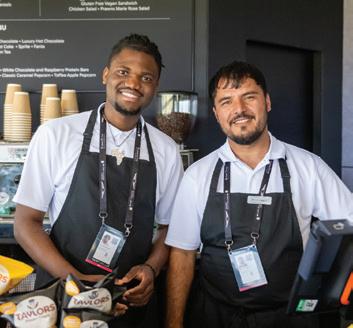
Alexis Kennedy, HR Director, Sodexo Live! UK & Ireland explains how the hospitality brand recruits and motivates its ‘experience maker’ workforce.
36 Aymen Fetouak MIH, Head of Professional Development at the Institute of Hospitality (IoH) with career advice for FMs thinking of working in hospitality.
INTERVIEW
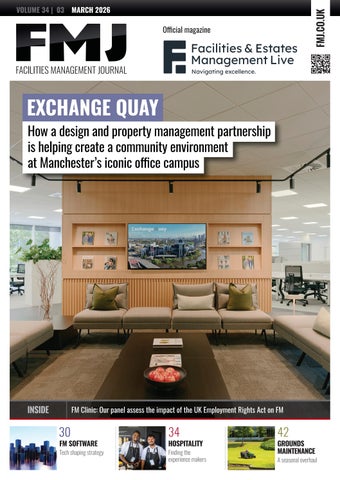
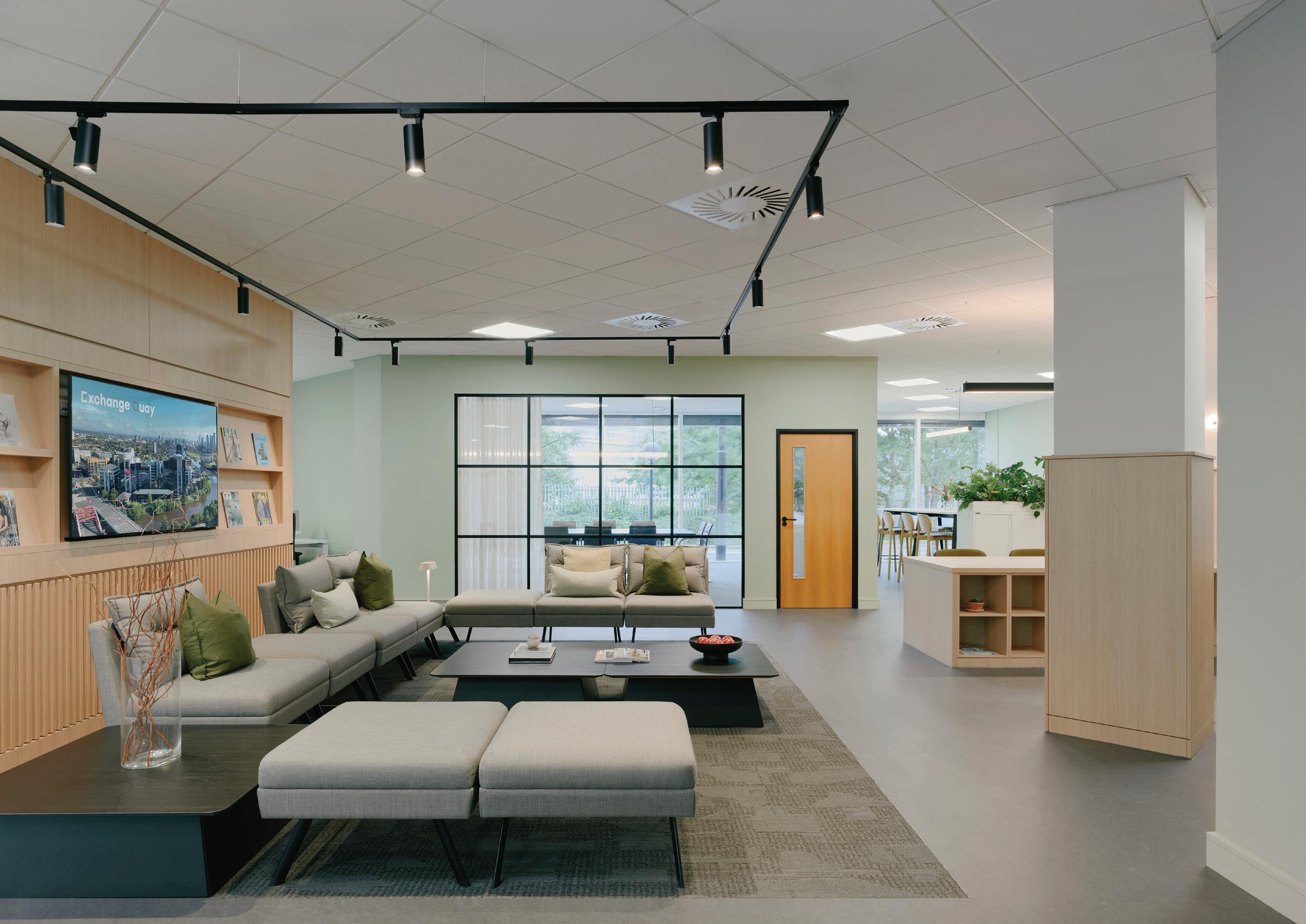
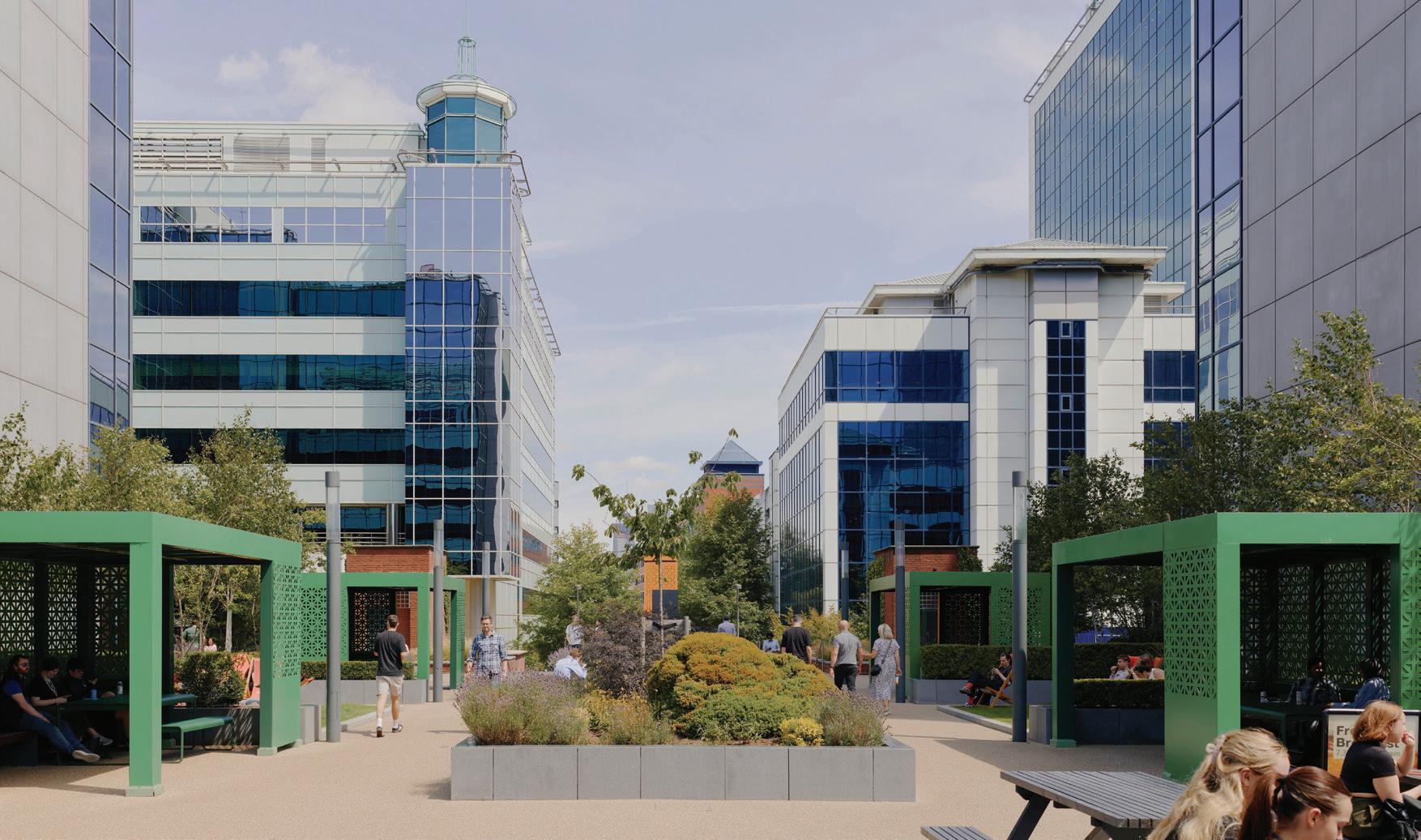
FMJ visits Manchester’s Exchange Quay to see how the design team from Jasper Sanders + Partners in partnership with property managers Till AM are adopting a human centric approach to revitalising an iconic o ice campus.
FM SOFTWARE
30
James Massey, Managing Director of FM at MRI So ware, on what the 2026 Voice of the Facilities Manager Survey tells us about the industry’s AI future.
The FM sector is full of companies planning their AI strategy by building business cases and conducting feasibility studies. Nigel Potter, Director of Strategy at Churchill Group suggests a more practical approach.
14 Alan Cooper, Founder of Waste to Wonder Worldwide on moving from waste management compliance to resource stewardship.
16 Jennifer Ritz of Timly So ware AG draws on research which suggests the reasons for an uptake in smart maintenance.
18 Jenniger Bryan, Author and Founder of Change Consultancy, talks about the human experience of organisational change.
20 The UK’s Employment Rights Act 2025 will be phased in over 2026-2027. What impact do you foresee the Act having on the facilities management sector?
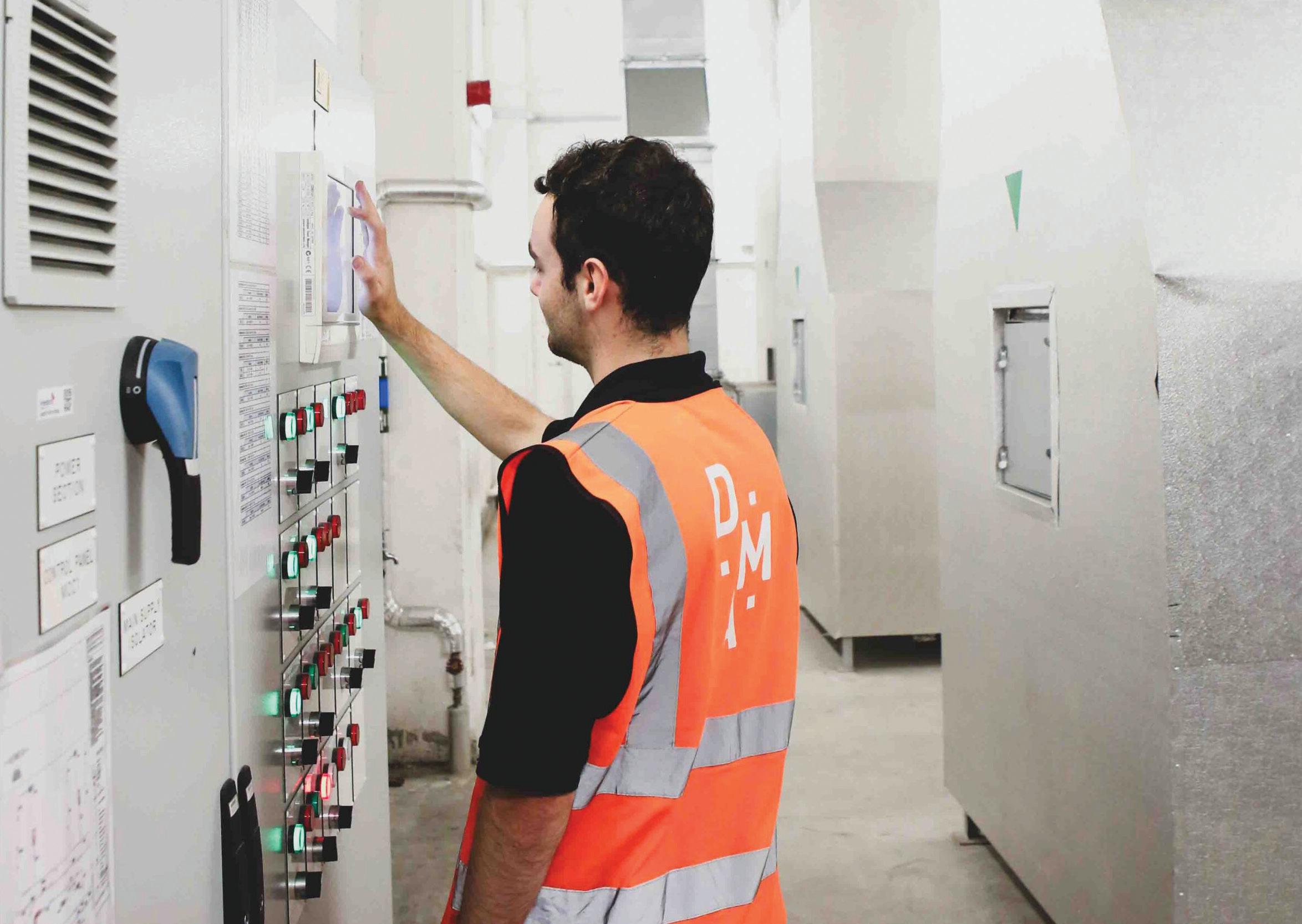
38 Wendy Bennett, Managing Director DMA Maintenance explains to Sara Bean why a customer led focus supported by a revolutionary digital platform is enhancing service performance.
GROUNDS MAINTENANCE
42
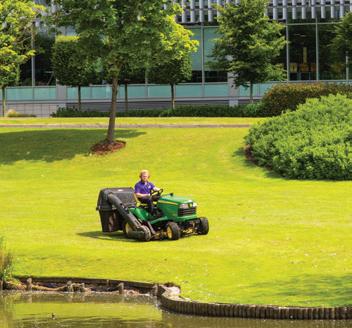
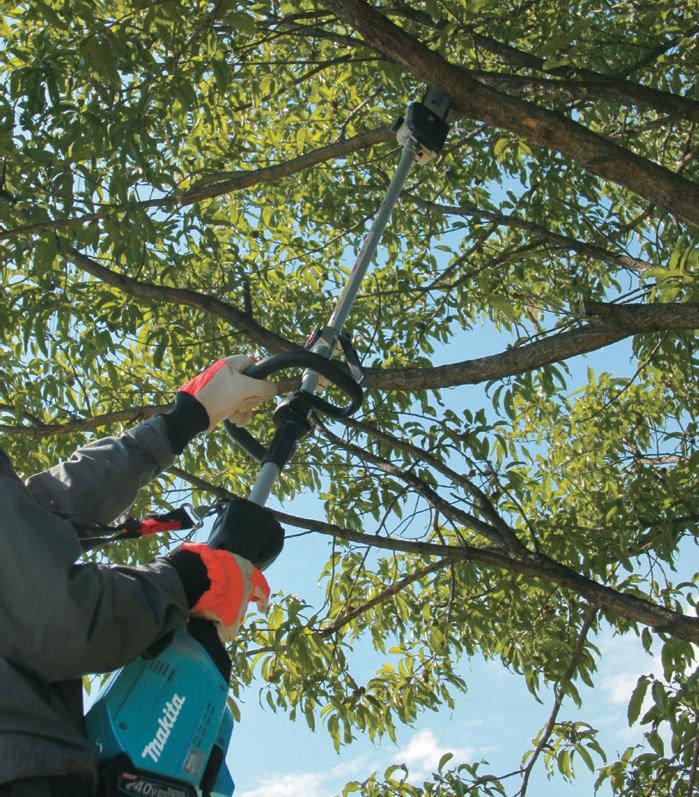
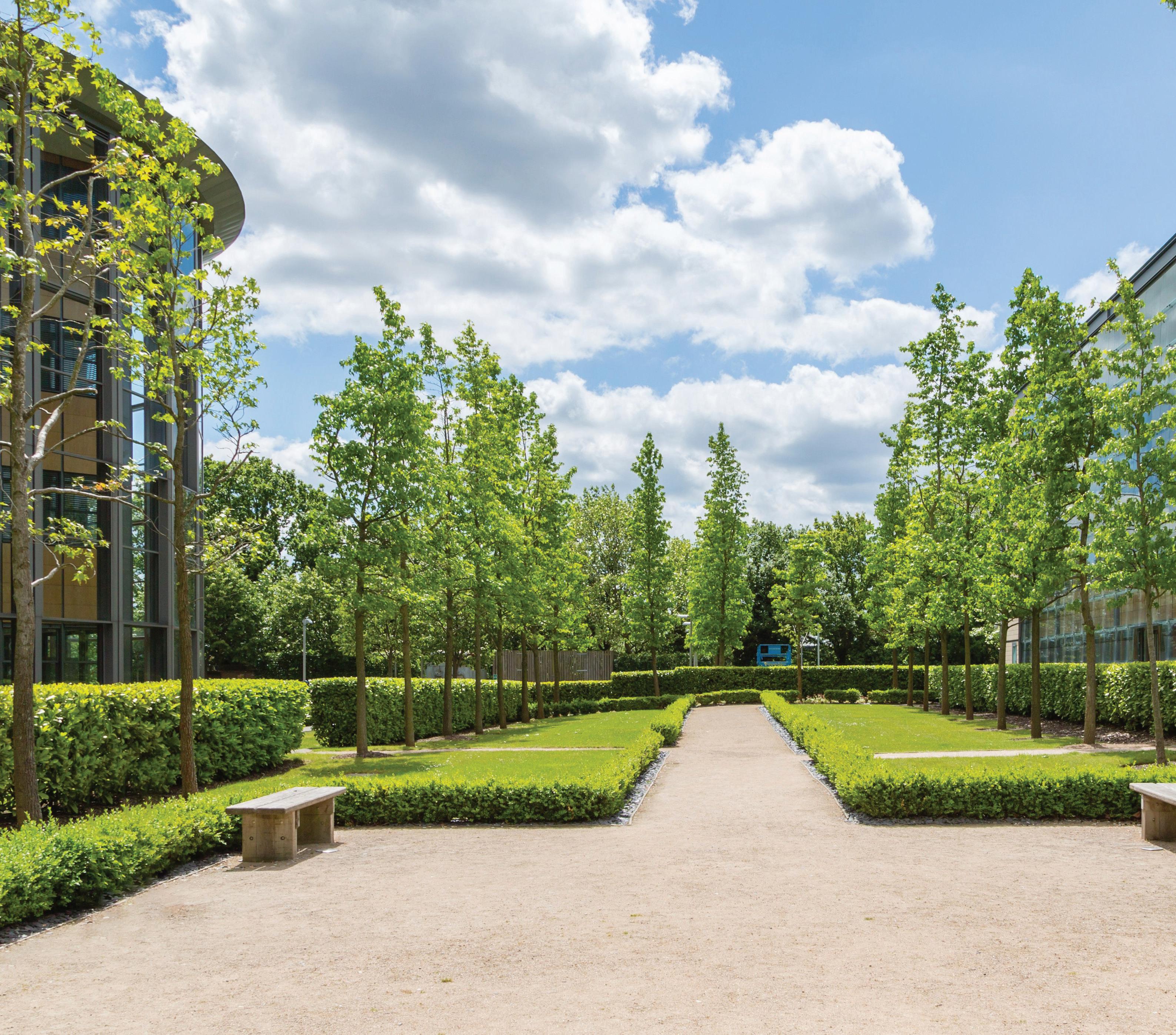
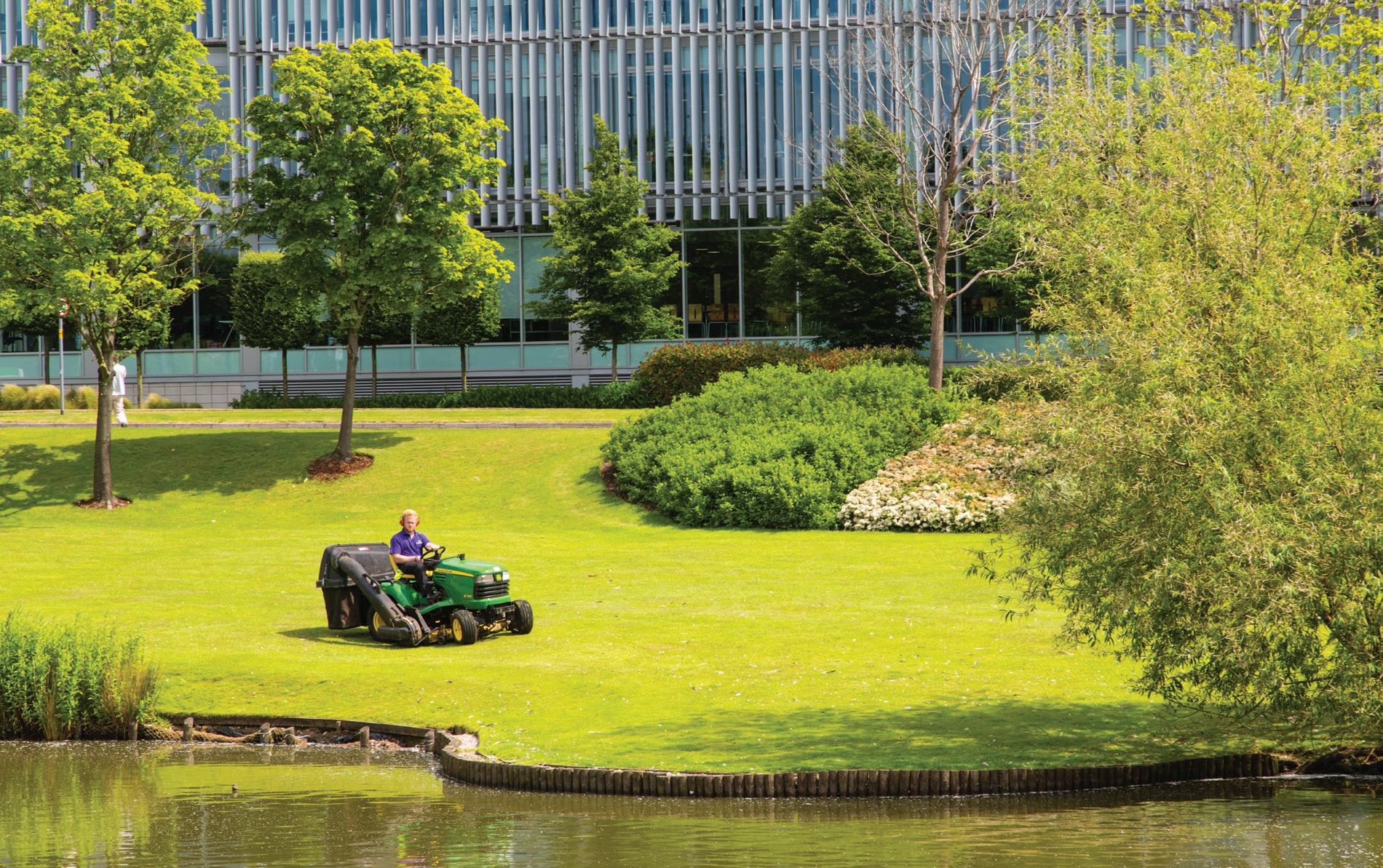
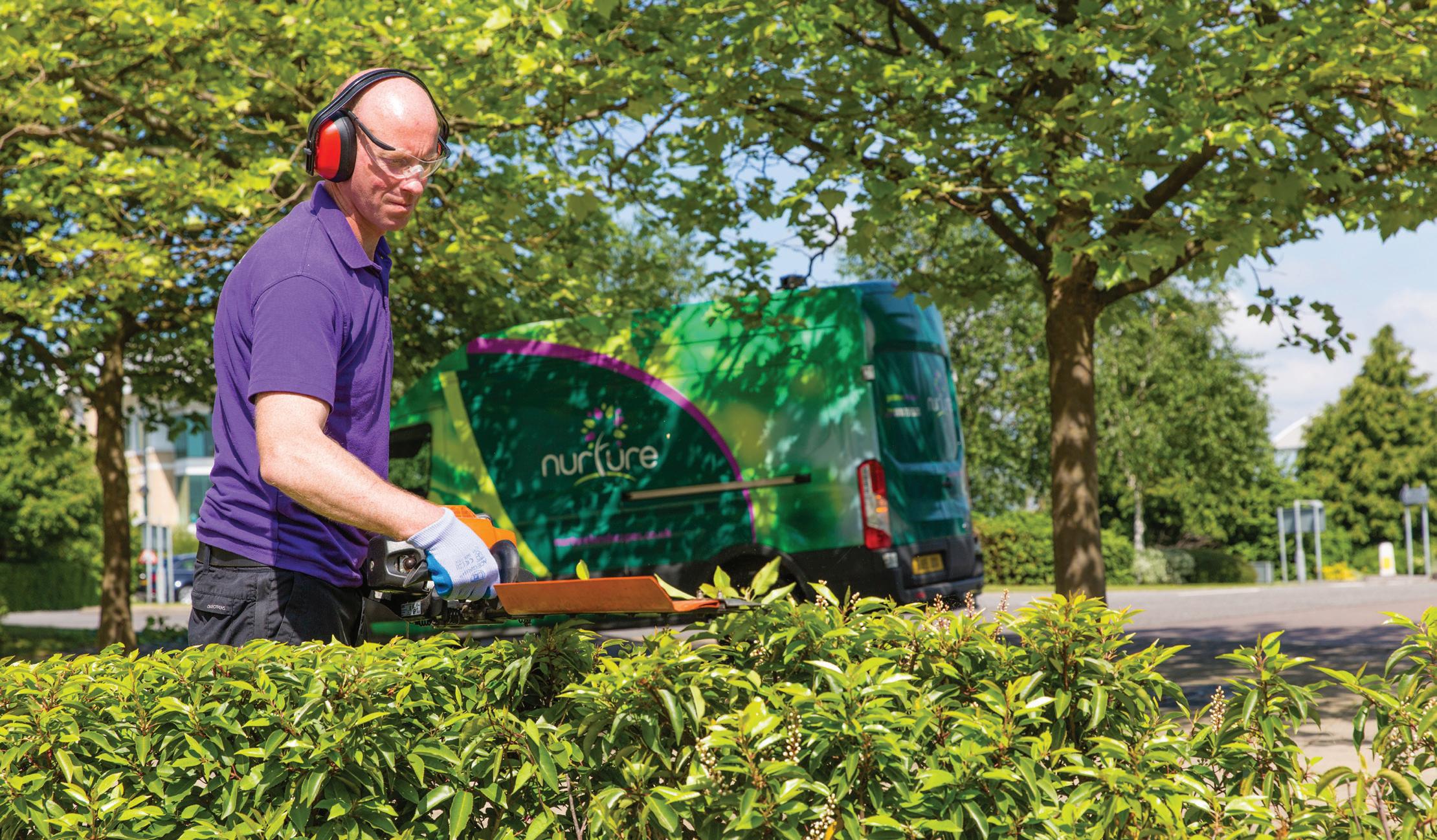
With spring just around the corner, Madeleine Ford looks at how facilities managers can prepare their grounds for the upcoming season and minimise risks throughout the year.
HVAC
PEOPLE
51
Find out who’s moving where in the facilities management profession.
RECRUITMENT
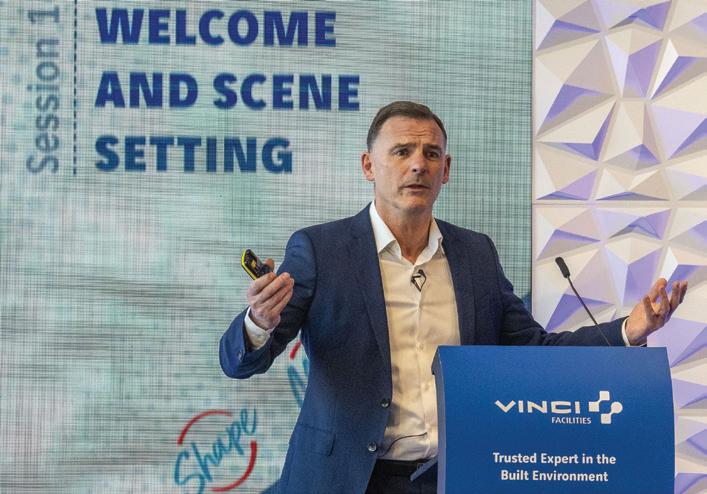
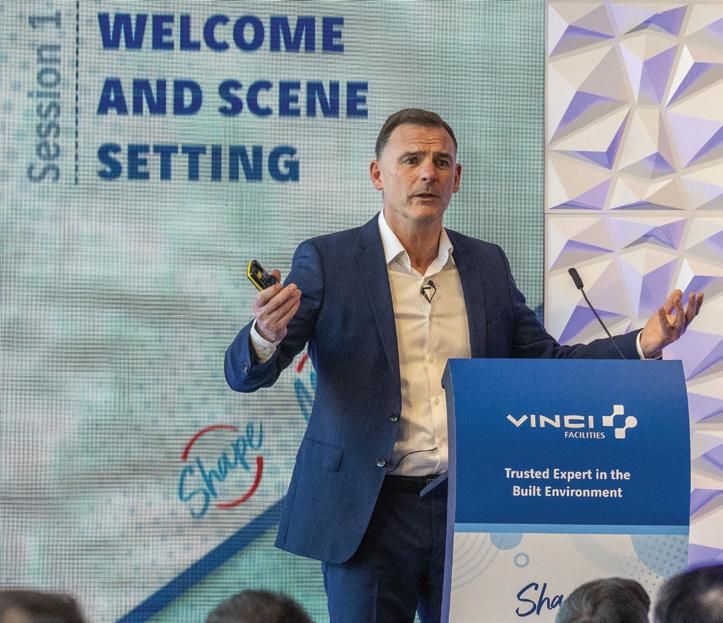
52 Paul Cottam, Managing Director, VINCI Facilities on the importance of apprenticeships for the future of the sector, how they shaped him and why they’re the foundation of how he leads and develops others.
TRAINING
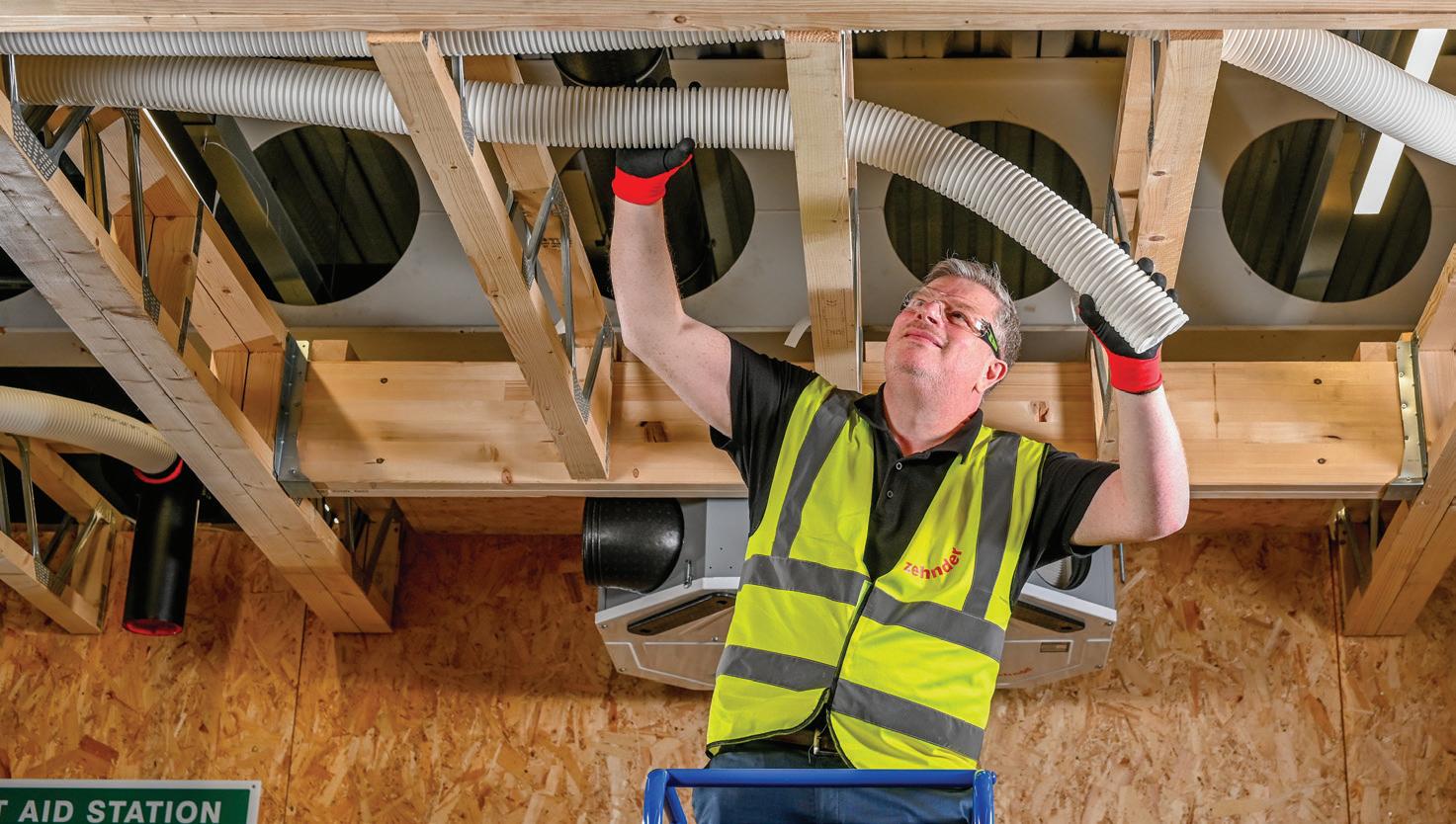
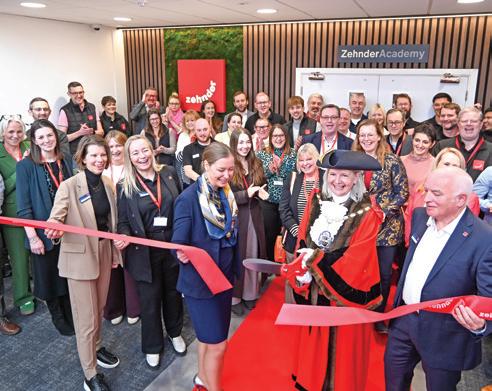
53 Madeleine Ford reports from the new Zehnder Group UK training academy which aims to raise standards and close the skills gap across the HVAC industry.
A brief roundup of the latest careers news in the facilities management sector.
45
Indoor Air Quality is o en an overlooked issue when it comes to workplace comfort and health says Janvi Patel, Product Marketing Manager, Mitsubishi Electric.
Next Edition
In April’s issue we look at the range of end of route facilities options for workers, along with the latest storage systems for o ice environments. In our cleaning focus, we hear how strategic cleaning requires FM departments to work better together; discuss the evolution of cleaning and visit a busy airport to discover how the cleaning contractors have created an environment where everyone understands their role and feels valued. We learn why fire safety must be built into a business’ DNA, and how FMs are central to achieving that. And finally, our sustainability focus explores how FM teams can use occupancy data, booking insights and sensors to operate buildings more sustainably; plus, why achieving Net Zero starts with the supply chain.
LEGAL VIEW CENTRAL LONDON OFFICE INVESTMENT CLIMBS 45 PER CENT
NEW ACAS SURVEY ON THE EMPLOYMENT RIGHTS ACT REVEALS THAT SICK PAY CHANGES WILL HAVE BIGGEST IMPACT AT WORK
Workplace expert, Acas has commissioned YouGov to ask which changes in the Employment Rights Act 2025 will have the biggest impact on bosses and workers. The survey found that new rights on sick pay topped the polls for both, followed by new protections on unfair dismissals. Employers ranked new paternity leave rights as their third biggest while workers opted for the new changes on flexible working.
The valuable insights gained from the results will help Acas target its support for workers and bosses where they need it the most.
Niall Mackenzie, Acas Chief Executive, said: “It is clear from our polls that new worker rights on sick pay and protections from being unfairly dismissed from work are at the forefront in the minds of employers and workers.
“Acas will play a crucial role working with employers, workers and their representatives on the implementation of the Employment Rights Act and updating its advice and training.
“These reforms represent the biggest shake-up to employment law in a generation. Acas remain best placed as independent experts helping everyone at work throughout this period of change.”
Currently, a worker is eligible for sick pay if they:
• Have been off sick for at least 4 days in a row – this includes non-working days
• Earn on average at least £125 a week, before tax
• Have told their employer they’re sick within any deadline the employer has set or within 7 days
• Are classed as employed for tax purposes
The survey results revealed that:
Forty three per cent of employers said that workers getting sick pay for the first day of illness rather than the fourth day would have the biggest impact on them and 36 per cent of workers also listed it as their biggest impact too.
Workers being protected from unfair dismissal after six months in a job instead of two years was the second mostcommonly chosen reform with 31 per cent of employers and 30 per cent of employees selecting this.
For employers, rights for paternity leave from the first day of employment was their third-most important reform (28 per cent), while workers said making it easier to get flexible working arrangements at work (28 per cent) was theirs.
New rules, brought in by the Employment Rights Act, regarding paternity leave and sick pay will come into force on 6 April 2026.
From 6 April, employees will be eligible for paternity leave from the first day of employment. Currently employees must have worked for their employer for 26 weeks before they are eligible.
From 1 January 2027, employees will be protected from unfair dismissal if they have worked for their employer for at least six months. Currently an employee must have two years continuous service to be able to claim unfair dismissal.
A dismissal may be considered unfair by law if there was no fair reason for the dismissal; the reason was not enough to justify dismissing them; or the employer did not follow a fair procedure. In 2027 new measures will come into force intended to improve access to flexible working.
Flexible working can involve a change to when, where or how someone works. Employers and employees should follow the Acas Code of Practice on flexible working when handling a request. For more information visit: https://bit.ly/4rEMwdH
Investment into Central London o ice space has climbed by 45.1 per cent annually, as investors increasingly target prime commercial assets within the capital amid the continued return to the workplace, according to the latest research by BPS London.
The research shows that the o ice sector has been one of the strongest performing commercial property asset classes over the last year, with total investment increasing by 18.8 per cent, rising from £7.46 billion in 2024 to £8.86 billion in 2025.
This rate of growth places o ices ahead of industrial investment, which increased by 16.6 per cent over the same period, while retail and leisure investment declined sharply, falling by -25.1 per cent. Only the living and mixeduse sector recorded stronger growth, increasing by 32.1 per cent.
However, this strong performance has been driven largely by the resurgence of Central London o ices in particular. The analysis by BPS London shows that investment into Central London o ice space climbed by 45.1 per cent year-onyear, rising from £4.79 billion to £6.95 billion.
GOVERNMENT CRACKS DOWN ON UNSAFE AND UNREGULATED BUILDING PRODUCTS
Major proposals to strengthen the construction products used in buildings across the country have been published by government in a crackdown on unregulated practices, which led to the Grenfell Tower tragedy.
The Construction Products Reform White Paper sets out that all products must be properly assessed before being used in the building process.
Currently only around a third of constructions products are regulated – the new general safety requirement will mean that all products undergo the proper checks, not only keeping people safe in their homes, but boosting the economy and providing confidence to developers to build the 1.5 million homes this country needs.
The Government has published a consultation on this requirement, with secondary legislation expected later this year and all changes coming in as soon as Parliamentary time allows.
The proposals come as the government publishes the first Annual Report on the implementation of the Grenfell Tower Inquiry recommendations – which sets out that 12 recommendations, including bringing government fire safety functions under the control of one department and Secretary of State, have been completed. Over 40 (70 per cent) of the recommendations are also expected to be completed by the end of the year.
The Grenfell Tower Inquiry, which delivered its final report in September 2024, set out 58 recommendations, of which 37 were directed at the government and 21 were directed at other bodies and institutions.
Minister for Building Safety, Fire and Democracy Samantha Dixon commented: “We will never forget the tragedy of Grenfell and will continue working with the local community, industry and local authorities to deliver safer homes and lasting change.
“The failings outlined by the inquiry exposed fundamental issues in product, building and fire safety standards and through the Construction Products White Paper and our work to implement all the recommendations of the inquiry, we will create a better system for millions of people across the country.”
To read the Construcion Products Reform White Paper visit https://bit. ly/4rR9zBW
To read the Grenfell Tower Inquiry Government Annual Report: February 2026 visit https://bit.ly/4sf9pnU
Former Carillion Chief Exec fined by the FCA
Richard Howson has been fined £237,700 by the Financial Conduct Authority (FCA) for his part in misleading statements being issued by Carillion plc.
As Group Chief Executive, the FCA said Howson was aware of serious financial troubles in Carillion’s UK construction business, yet he failed to reflect this in company announcements or alert its board and audit committee, leading to poor oversight.
The fine was imposed after Howson withdrew his challenge to the FCA’s decision.
Howson was one of two executive directors on Carillion’s Board.
Primary responsibility for ensuring the financial information disseminated to the market was accurate and not misleading lay with the Group Finance Director. However, the FCA states Howson played an important role as the Board member with the most expertise on construction and contracting matters.
The FCA found that Howson acted recklessly and was knowingly concerned in breaches by Carillion of the Market Abuse Regulation and the Listing Rules.
During the period in question, Carillion’s Group Finance Director was first Richard Adam and then Zafar Khan. They were fined £232,800 and £138,900, respectively, in January 2026.
TOP COUNTRIES FOR LEED IN EUROPE
Green Business Certification Inc. (GBCI), the premier organisation independently recognising excellence in green business industry performance and practice globally, and the U.S. Green Building Council (USGBC), the global developer of the LEED (Leadership in Energy and Environmental Design) rating system, have announced the inaugural Top 10 European Countries for LEED ranking for 2025.
LEED certification continued to grow across Europe amid shi ing market conditions and rising demand for sustainable assets. In 2025, more than 1,000 projects were certified across the region, totalling nearly 14 million gross square meters. Demand remained strong for high-performance, low-carbon buildings, with capital increasingly directed toward energye icient, ESG-aligned assets. Owners accelerated retrofit programs across existing portfolios, while LEED for Operations and Maintenance (LEED O+M) supported measurable improvements in building performance.
In 2025, Sweden led Europe in LEED certification, with more than 180 projects and over 2.2 million gross square meters of certified space. Since 2021, certification activity in the country has grown at an estimated 74 per cent compound annual growth rate, highlighting rapid market expansion and strong investor demand for high-performance, low-carbon assets.
Spain and Italy represent mature markets where LEED certification is increasingly integrated into investment, development, and asset management strategies.
In Spain, certification activity grew by approximately 15 per cent in 2025 and has increased at an estimated 13 per cent compound annual growth rate since 2021. Italy recorded 165 LEED-certified projects in 2025, with certification activity growing at roughly 12 per cent annually since 2021, demonstrating consistent long-term market commitment.
LEED applies a consistent global standard, enabling projects in Europe to be evaluated under the same framework used worldwide, thereby supporting comparability and investor confidence. Across Europe, LEED certification activity is primarily concentrated in o ice assets, which account for more than half of all certified projects (54 per cent), followed by retail (16 per cent) and warehouse and distribution facilities (13 per cent). Additional activity is seen across hospitality, residential and healthcare sectors.
Across the region, key trends include the retrofits and a broader adoption of circularity principles.
If you have any knowledge of FM news from across the world, please feel free to get in touch with our assistant editor Sarah O’Beirne email sarah.obeirne@kpmmedia.co.uk
RELAUNCHED IWFM WOMEN IN FM NETWORK HAS LEADERSHIP FOCUS
career progression and working with organisations to ensure development opportunities translate into real advancement.
FM is fast, complex and always on. We keep buildings safe, compliant and running while juggling people, technology and risk along the way. It’s a brilliant industry to build a career, but when you look at senior leadership and technical roles, there’s still more to do to achieve true gender balance.
This isn’t about a lack of talented women entering the profession. In fact, recent IWFM insight shows around 45 per cent of those studying at entry level are women, but that figure drops significantly at senior and certified levels. This tells us something important: women are coming into FM, but too many are not progressing - or they’re not staying. So, the issue isn’t just attraction. It’s visibility, retention and progression.
I’ve lost count of how many exceptional women I’ve met along my journey – women delivering major contracts, troubleshooting critical engineering issues and leading teams through
complex change. Yet when you step into senior director meetings or board-level discussions, representation still seems to thin out. That disconnect matters. If women aren’t visible in the roles shaping our sector, it quietly reinforces the idea that those roles aren’t for them. And that’s how imbalance sustains itself.
There’s also a clear commercial reality. It’s well evidenced that diverse leadership teams make better decisions, challenge assumptions and build stronger, more resilient organisations. FM is a people-focused industry; we design environments for everyone. Our leadership should reflect that diversity of thought and experience. This isn’t a “nice to have”. This will build a stronger, more e ective industry.
The relaunch of the IWFM Women in FM Network comes at a time when the industry is ready for more than conversation. Our focus is simple: retention, progression and visibility. We want to shine a light on the women already doing exceptional work across operational, technical and leadership roles, while creating clearer pathways for those coming a erwards. That means mentoring, networking, honest discussions about
RICS UPDATES CPD FRAMEWORK AND ROLLS OUT NEW MEMBER APP
The Royal Institution of Chartered Surveyors (RICS) has significantly updated its Continuing Professional Development (CPD) framework while launching a new member app to help members keep up to date with their CPD and professional status.
The new CPD framework centres on a flexible, outcomes-based approach that enables RICS’ more than 130,000 members to upskill in essential areas including artificial intelligence, environmental sustainability, and evolving client needs.
Members were consulted globally and it became clear that the accelerating pace of change, where surveyors increasingly require expertise in technology and legislation that didn’t exist when many qualified – from AI-powered valuation tools to net zero building assessments and climate risk analysis.
The revised CPD approach aims to uphold professional standards and strengthen professional accountability by ensuring members can demonstrate how their ongoing learning translates into better service delivery, sound professional judgment, and protection of public interest. Quality CPD enables members to meet their ethical obligations to clients, communities, and the wider public.
A new RICS Member App is now available to download for Android and Apple platforms. The new app helps members access the tools they need to manage their professional obligations. From logging and tracking CPD to managing their professional profile with an RICS member digital ID and smart reminders sent through their phone, everything is available in one convenient app designed to empower every member’s professional journey.
We also need allies. Moving the dial on representation is something we all need to work on together. It requires organisations to look at recruitment pipelines, promotion pathways, flexibility and workplace culture.
We must also acknowledge real life. Women will, at times, navigate maternity leave, caring responsibilities, menopause and other life stages. And in an industry that operates 24 hours a day, 365 days a year, we have the opportunity to build flexible, supportive environments that allow talented people to step back when needed and step forward again without penalty. A decade from now, the goal is simple: that seeing women at director, board and engineering levels across FM isn’t something we pause to notice, it’s just normal. Most of the imbalance we see today isn’t the result of conscious exclusion, it’s the outcome of long-standing patterns. People promote what they’ve seen before. Technical roles attract those who’ve historically been encouraged into them. Leadership pipelines reflect previous leadership… and so the cycle continues. If we want a di erent outcome, we must interrupt the pattern. Intentionally. Consistently. Collectively.
LEADING
CHARTERED BODIES URGE GOVERNMENT ACTION
The Institution of Occupational Safety and Health (IOSH) has joined more than 40 chartered and professional bodies in an open letter to Pat McFadden, the UK Government’s Secretary of State for Work and Pensions to champion stronger professional standards.
The letter, which includes signatories from Chartered Institute of Building (CIOB) and Chartered Institute of Procurement and Supply (CIPS) highlights the collective strength of chartered organisations which together, represent over 1.5 million professionals.
It also calls for the government to make professional registration and chartered status an expectation across vital sectors, including the civil service.
Said Vanessa Harwood-Whitcher, Chief Executive IOSH: “Chartered bodies o er an invaluable source of independent, evidence-based expertise drawn from practitioners who work across every part of the economy. By engaging with them, the Government can strengthen the credibility, resilience and e ectiveness of public policy, ensuring it is informed by recognised professional standards and real-world insight.”
Christy Smith, Chair of Women in FM Network
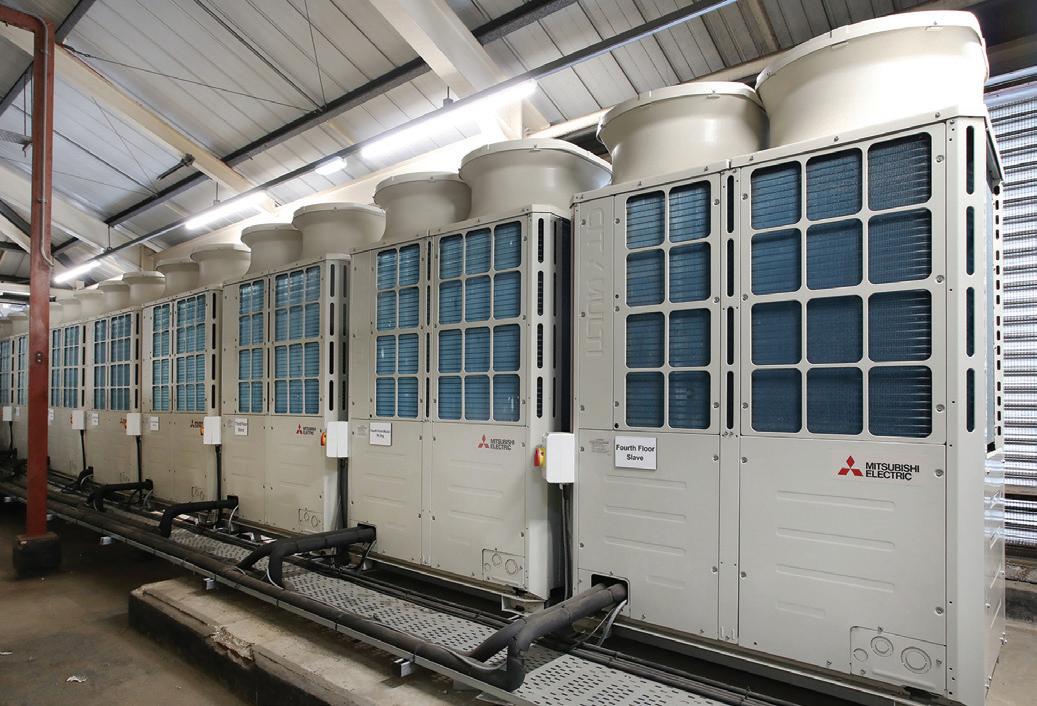
With 20% reduction in running costs,* 10% more energy efficiency and 6% smaller footprint, the new City Multi R32 VRF YXM range will help you heat and cool your building, whilst helping you on the road to net zero.
Your building, our solutions. Launching Spring 2026.
To find out more about the new City Multi R32 VRF YXM range, visit https://citymultiyxm.com/
*Compared to 30kW R410A YNW model
WORKPLACE FUTURES
THE ROAD FORWARD
The 2026 Workplace Futures Conference moved on from last year’s AI theme to take a broader look at a roadmap for the future and how to navigate the next few years. Sara Bean reports
Workplace
Futures acts as a barometer on the state of the FM sector, and this year’s theme, 'a roadmap for the future' had a greater sense of urgency when you consider there is an FM leadership time bomb, with 44 per cent of FMs being over 55 and 30 per cent of the workforce set to retire.
Addressing these challenges, Dr Mel Bull, Director of Executive Education, Nottingham Trent Business School advocated an adaptive leadership approach, focused on bringing in new talent and developing existing sta . With the dearth of FM related academic courses, FM leaders must concentrate on developing their own people, such as mentorship schemes to empower the future generation.
This sentiment was echoed by Steve Gladwin, Director, Nodus Solutions who believed FMs need to change the narrative of ‘falling into a facilities career,’ to an understanding that FM attracts individuals who can apply their transferable skills to o en complex and demanding roles.
Celebrating FMs origins, Sarah Hodge, Global Director Experience, London Stock Exchange outlined the history of
FM, from its inception in the 1970s to current challenges. She remarked that the industry didn't evolve by accident, it grew because people cared enough to push the boundaries, to connect the dots, to challenge the laws and enjoy meaningful change. And with the advent of AI, hybrid working and environmental challenges, the next chapter she said, “is yours”.
FORCES FOR CHANGE
Reviewing the current state of the market, John Raspin, Global Head Growth Opportunity Analytics, Frost & Sullivan reported that FM in the UK represents three per cent of GDP, amounting to £77 billion annually. The industry is maturing, with a focus on technology, ESG and sustainability and “we can expect the further intensification of the AI buzz”.
With his ingenious ability to summarise the complexities of tech, Andrew Targell of JLL Technologies took us on a lightening tour of technology trends. The key elements are technology, talent, regulatory, expectations and occupancy he explained. With the latter: “We’ve got to look at how the digital supports the
investment.
The relationship between tech and people was the theme of Louisa Clarke Co-Founder, (with conference chair Simone Fenton-Jarvis) of The Human-Centric Workplace who asked: “if your technology investment doubled tomorrow, would your leadership capability be strong enough to turn it into better outcomes? Are we giving the next generation of leaders the opportunity to own their future and lead ours?”
Looking at widening the talent pipeline, Debbie Dobson, Talent & Capability Director, ISS UK & Ireland argued that social mobility needs to be integrated into workforce strategy, not just CSR, adding that we hear a lot about technological readiness, but the real challenge lies in human readiness and access to human potential.
FUTURE SUCCESS
physical experience and that means a real change, as it's not necessarily the new technology it's having a new mindset.”
Our approach to AI must be founded on data standards, advised Mark Gri iths of WMA Consultancy and Gordon Mitchell, Founder, WHOLUS, who talked delegates through the compliance and standards landscape. We can’t lose sight of the human element they stressed, which is why data standards will help govern AI and digital enabled FM.
THE TALENT PIPELINE
A series of talks focused on the route to success, which begins with nurturing the FM ecosystem. Simon Wrenn, CEO, Kindred FM described a variety of ways of inspiring the next generation of FM leaders, from o ering apprenticeship and work experience, to crucially, showing pride in the profession. Pride in the sector is reflected in Churchill Group’s commitment to growing skills within its business. James Bradley, CEO, described the company’s skills training to enhance confidence, judgement skills and leadership capabilities, all of which is seen he added as a self-perpetuating
Human interaction is the key to successful client and supplier partnerships. For their part, Claire Atkins Morris, Sustainability and Workplace Culture Director, Sodexo UK & Ireland and Alex Hammond, Associate Director, Net Zero and Sustainable Procurement, NHS England described the formation of a community of practice on climate, social and nature goals; while Ryan Horton, Business Unit Director, CBRE and Paul Dawson, Director of Facilities, Sky Studios Elstree described the unique challenges of a film production site and their shared excitement on what the future holds.
In his update on the next phase of sustainability Sunil Shah, Managing Director, Acclaro Advisory agreed that technology and science have a huge role to play in FM but if it's not connected with the business strategy it could cause more problems and become a barrier to success.
In her annual conference summary Lucy Jeynes, Managing Director, Larch Consulting described the overriding theme of the day as leadership development and engaging meaningfully with technology in a way that can support important outcomes. Not surprisingly, her call to action for this year was that talent is a “major challenge for the FM family”.
This is why succession planning is key, and this conference delivered many positive examples and inspiration for the road ahead.
www.workplace-futures.co.uk
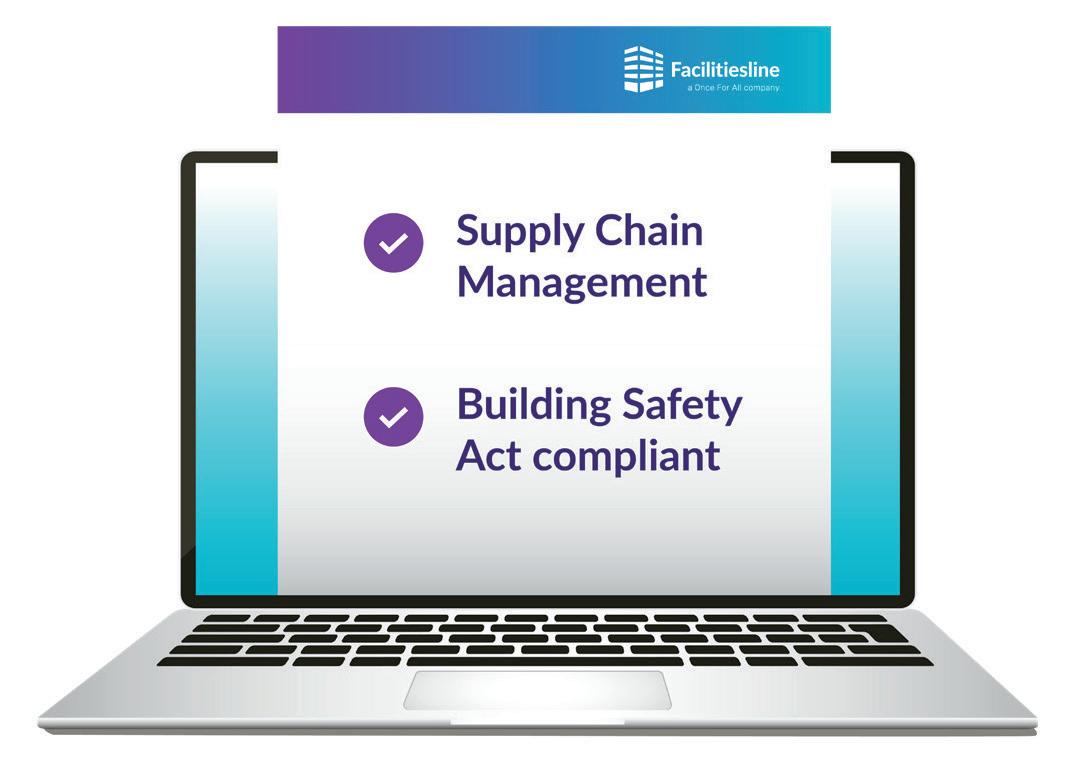
Take control of your facilities management supply chain:
One platform to verify, monitor and mobilise compliant suppliers - without slowing your delivery
Why choose Facilitiesline?
✓ Supply Chain Efficiency: Quickly onboard your supply chain to our digital platform and outsource your verification to us.
✓ Risk-Based Compliance: Mandate varying levels of compliance (Bronze, Silver and Gold) based on the specific risk level of the service.
✓ Real-Time Monitoring: Receive automated alerts for expiring insurances and accreditations before they become a risk.
✓ Competency Assurance: Our competency-based PQQs ensure suppliers are capable and compliant.
✓ Strategic Insight: Easily access key data insights including Social Value, ESG, and financial stability.
✓ Access Verified Suppliers: Connect with thousands of pre-qualified suppliers with our Marketplace.
Managing a complex supply chain across multiple sites and regions leaves no room for error. Chasing certificates, tracking expired insurances, and navigating the Building Safety Act manually creates unnecessary risk and drains valuable resources.
Facilitiesline empowers facilities and estates teams to achieve full compliance across their entire supply chain. We provide one central place to verify, monitor and manage contractor compliance. We give you the comfort that you are only working with contractors who are safe, verified, and legally compliant to perform the work you pay them to do.
PLANNING AND DOING
The FM sector is full of companies planning their AI strategy by building business cases and conducting feasibility studies. Nigel Potter, Director of Strategy at Churchill Group on taking a more practical route
At Churchill Group, we're deploying AI tools across three areas: voice-driven site intelligence, internal data analysis, and everyday productivity support. But the real lessons we've learned aren't about the technology. They're about closing that gap between planning and doing.
Before adopting AI, our colleagues were spending 30 minutes writing up a 20-minute site walk. Our frontline sta who speak English as a second language struggled to report issues because the forms were in English. Our account managers were spending hours digging through data instead of talking to clients. The gap between strategy and frustration felt enormous.
The worst question you can ask when exploring AI is "what could AI do for us?" You'll get a hundred theoretical answers and no clarity. Better questions are “what's the most frustrating part of your team's week?” and “where do people spend time on work that feels pointless?”
This is why we didn't start by looking at AI tools but began by mapping these frustrations. Only then did we look for technology that could solve them.
That led us to develop SiteWalk with our partner Symantiq - a voice-driven reporting tool that lets managers speak their observations while walking a site. The AI transcribes, translates (currently 57
languages) and structures their notes into reports in real time. Computer vision analyses photos to identify issues automatically.
During a six-month pilot at M&G, 36 site walks produced more than 1,800 structured findings. At a national gym chain, we logged 640 issues across three sites in seven months, with 70 per cent raised by voice. Crucially, we captured 12 near-misses with full evidence - incidents that likely would have gone unreported under the old system.
The technology is clever, but the win was matching the tool to an actual, felt frustration.
BUILD TRUST BEFORE YOU DEPLOY TOOLS
Initially, we thought if we built good AI tools and showed people the results, adoption would follow naturally. However, a er attending demonstrations, people went back to doing things the old way. Or worse, they used the tools secretly, creating a culture of guilt about AI use.
We've learned you need to tackle the cultural piece first. That meant running a 'promptathon' with our technology partner Nasstar - essentially an internal training day to demystify AI and let people experiment in a safe environment.
We're also developing clear guardrails. Not restrictive policies, but practical guidance on when AI is appropriate and when it isn't. The goal is to remove the anxiety about whether you "should"
be using it and create a culture of transparency.
MEASURE THE RIGHT THINGS
We initially focused on e iciency metrics such as reports generated, time saved, and issues logged. These matter, but they don't capture the real value.
What we're now tracking:
Quality of client conversations - An internal AI tool, M2, acts as a data analyst for account managers and operational directors. It crawls through operational data to answer questions in moments rather than hours. The goal isn't just time saved - it's enabling richer conversations because people have better insights.
Who's using it - Not just adoption rates, but whether use is distributed across teams or concentrated with early adopters. If only the techsavvy people are using it, you've built a tool for 20 per cent of your workforce.
What's not being reported - The voice-first design of SiteWalk meant previously unheard sta could report issues in their own language. We're tracking whether we're getting reports from people who didn't report before, not just more reports from the same people.
ADVICE ON STARTING THIS JOURNEY
First, don't wait for perfect clarity. We've got M2 at proof of value stage right now - it's running on real data, but we're still tightening the guardrails and refining what it can do. You learn by doing, not by planning.
Second, expect resistance that isn't about the technology. When people push back on AI tools, they're o en really expressing anxiety about their role, their skills, or being replaced. Address that directly.
Third, pick one small, annoying problem and solve it well. Don't try to transform everything at once. We started with site reporting because it was universally frustrating and the win would be obvious.
Finally, be honest about what you're doing. We're not implementing AI to reduce headcount. We're doing it so finance teams don't spend hours trawling through data, so FMs can spend less time writing and more time observing, so multilingual sta can communicate in their own words.
If you can't articulate a benefit that makes someone's working life better, you're building the wrong thing.
THE REAL BARRIER ISN'T TECHNOLOGY
AI technology is advancing rapidly, but that's not what will determine whether it works in FM. What matters is whether we can build environments where people feel trusted to use it, where the tools solve real frustrations, and where the wins are tangible and human.
As for guilt and secrecy about using these tools? That's solvable, but it requires being as thoughtful about culture as you are about code.
ProAstra - The go-to smart NFC platform for complete control of business assets and service locations
Struggling to track assets, manage maintenance or report faults reliably?
ProAstra™ brings clarity, compliance and control to your operations o ering a cost-e ective alternative to spreadsheets and complex CAFM platforms.
WHAT IS PROASTRA?
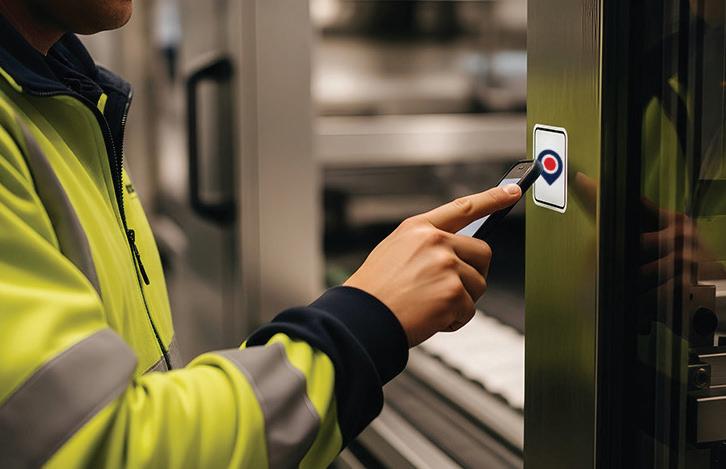
ProAstra is an easy-to-use digital system that transforms asset and service location management. At its core it leverages advanced NFC technology to capture attendance, inspections and fault reports in real time. This information feeds a cloud platform that tracks assets, manages maintenance and ensures compliance across all locations.
Created by Jim Appleson, founder and CEO of Appleson Judd, ProAstra is built from over 26 years of frontline operational experience. Jim and his team faced recurring challenges - assets that were hard to track, service locations di icult to coordinate, compliance paperwork piling up and fault reports arriving too late. ProAstra was designed to solve these problems, providing teams with real visibility and operational control.
WHY PROASTRA WORKS FOR ANY ORGANISATION
No matter your industry or role, ProAstra safeguards and future-proofs your facilities, equipment and service locations.
Scalable: Start small and expand at your own pace. Focus on a priority category first such as fire extinguishers or fire doors, then add others to build a structured, growing system.
A ordable: A 12-month license with no maintenance fees makes ProAstra a cost-e ective, hassle-free solution.
Fast Onboarding: Get fully trained and up and running fast, with an e icient process and ongoing support every step of the way.
ONE TAP IS ALL YOU NEED
ProAstra simplifies inspections, maintenance and audits, making them faster, more reliable and consistent. Key benefits include:
Proof of Attendance: One tap on an asset by a contractor using a mobile phone sends real-time updates to a manager’s control panel, ensuring checks are never missed.
Compliance: Meet statutory requirements, health and safety obligations and environmental standardsreducing risk, liability, and disruption.
Audit Trail: Every log, inspection, and fault report is stored securely in a central system, making audits quick and reducing reliance on paper records.
HOW DOES IT WORK IF YOU ALREADY HAVE A SYSTEM IN PLACE?
ProAstra works alongside your existing system, adding value without disruption. It fills operational gaps with a lightweight, agile layer that streamlines workflows, boosts oversight and accelerates fault resolution. Your core platform can continue handling compliance and data, while ProAstra enhances accountability and e iciency.
DON’T JUST TAKE OUR WORD FOR IT!
Real-World Success:
The Football Association
“ProAstra’ s fault reporting and attendance oversight have been invaluable for keeping operations at the FA’s St George’s Park running smoothly. The team listened to our needs and guided us through implementation.” Mike Mountney, Facilities ManagerTriton Security
We’ve secured an exciting opportunity with Triton
Security. Using ProAstra Triton Security can manage their fire alarm panels and detectors with precision: Tracks battery life
Sends automated reminders
Flags warranties
Provides real-time fault reporting across multiple client sites
This collaboration highlights ProAstra’s versatility and real-time monitoring capabilities, demonstrating how it can streamline complex operational tasks across multiple locations.
Take Control Today
ProAstra™ - bringing clarity, compliance, and control to your operations, one tap at a time.
COMPLIANCE
A SUSTAINABLE STEWARDSHIP
ForIn association with
Alan
Cooper, Founder of Waste to Wonder Worldwide awarded an OBE for services to charity and sustainability on moving from waste management compliance to resource stewardship
over two decades, I have worked closely with FM professionals, workplace leaders, and property teams, helping organisations rethink how they manage surplus assets during workplace change. The OBE recognises a career dedicated not only to sustainability, but to proving that operational decisions made in buildings can create measurable environmental and social impact across the world.
CHALLENGING THE PERCEPTION OF WASTE
Waste to Wonder Worldwide was founded on a simple principle - challenge the perception of waste. In the early 2000s, o ice furniture and equipment were typically viewed as disposable once organisations relocated, downsized, or refurbished. The default outcome was recycling at best, landfill at worst. I believed there was another option.
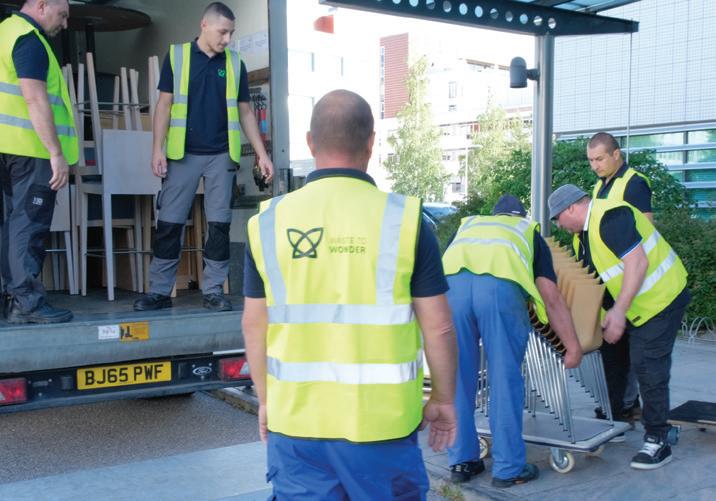
By working with FM teams and workplace partners, Waste to Wonder Worldwide developed a model that enabled redundant o ice furniture and equipment to be ethically reused through structured redistribution programmes. What began as a niche service has grown into one of the world’s largest ethical reuse programmes.
To date, the organisation has redistributed more than £50 million worth of furniture and equipment, equipped over 1,700 schools and charities, and supported initiatives across 50 countries, including the UK.
For FM professionals, this shi represents more than good environmental practice. It represents a move towards asset lifecycle thinking, extending product life, reducing embodied carbon and generating measurable social value.
FM AS A DRIVER OF SOCIAL AND ENVIRONMENTAL IMPACT
Facilities management sits at a unique intersection of operational delivery, procurement, sustainability and workplace strategy. Decisions made during o ice clearances, relocations and refurbishments directly influence waste generation, carbon emissions, and resource use.
Increasingly, FM leaders are recognising that surplus assets should be viewed as resources rather than liabilities.
Ethical reuse o ers multiple benefits aligned with modern FM priorities:
Reduction of Scope 3 supply chain emissions.
Contribution to circular economy strategies.
Demonstrable ESG and social value outcomes.
Cost-e ective alternatives to traditional disposal routes.
Alignment with Net Zero and corporate sustainability commitments.
I have always argued that ESG should be discussed in reverse order, because without strategic governance, environmental and social commitments cannot be delivered consistently. Governance lies at the heart of changing aspirational aims into real deeds.
For many organisations, workplace transformation is now one of the most carbonintensive operational activities. Replacing large volumes of furniture and equipment creates significant upstream manufacturing emissions. Extending the life of existing assets through reuse can dramatically reduce total lifecycle carbon impact.
SHIFT FROM WASTE MANAGEMENT TO RESOURCE STEWARDSHIP
The FM sector is undergoing a shi , from managing waste streams to managing resource value. This requires early engagement in project planning, collaboration across supply chains, and clear sustainability objectives embedded within project briefs. Lead times are critical. Where FM teams are engaged early, reuse outcomes increase significantly. Where decisions are le until lease end or project completion, options become limited and disposal costs increase.
This transition also reflects a wider cultural shi . Sustainability is no longer viewed as an additional layer of responsibility; it is becoming central to
www.wastetowonder.com
operational excellence, brand reputation, and risk management.
LOOKING AHEAD
I believe the next phase of sustainability will be defined by how organisations use their operational decisions to influence global outcomes.
Facilities management will play a central role in this shi . In the coming years, organisations will increasingly measure success not just by financial performance, but by the positive outcomes they create through everyday operational decisions. FM teams are uniquely placed to influence this, because they manage the physical environments where those decisions become reality.
As regulatory frameworks evolve and reporting expectations increase, FM will become even more critical in delivering measurable sustainability performance. From asset management to supplier selection, FM professionals will continue to shape how organisations deliver on Net Zero, circular economy commitments, and social value targets.
RECOGNITION OF A COLLECTIVE MOVEMENT
For me, the OBE represents recognition not just of one organisation, but of a wider shi in how businesses approach surplus, sustainability, and social responsibility.
Progress has been made possible through collaboration, with FM professionals, customers, workplace strategists, and partners willing to challenge traditional disposal models.
This recognition belongs to everyone who has chosen to do things di erently. Real impact is never created by one organisation alone. It is created when sectors move together.
NOTHING IS GREAT EXCEPT GOOD
I o en reflect on a Latin phrase that has guided my work: Nil magnum nisi bonum - nothing is great except good. For the FM sector, the message is simple. The decisions made about buildings, assets, and workplace environments do not just a ect organisations. They a ect supply chains, communities, and future generations.
As sustainability expectations continue to rise, FM professionals are not just managing buildings. They are shaping environmental outcomes, social progress, and the future of responsible business.
Your facilities don’t stop at 5pm, and neither does Vantify CAFM. Backed by a team of experts, our 24/7 human service desk provides trusted support whatever time you need it. They can log issues, assign contractors, and make sure jobs get done by the right people, in the right timeframe.
In the past year
Visit vantify.com
140,000+ calls | 15-second average answer time | 94% SLA success. That’s service that delivers.
FIREFIGHTING TO FORESIGHT
FMJ AIMS TO SUPPORT TECHNICAL EXPERTISE IN THE FM MARKET
Jennifer Ritz of Timly Software AG draws on research including a Europe-wide trend analysis on maintenance and asset management which shows the reasons behind an uptake in smart maintenance
Formany companies, implementing a successful maintenance strategy has quietly become a major lever for resilience, cost control, and sustainability. Yet many facilities and asset managers still struggle with ageing and failing equipment, labour shortages, and fragmented processes that keep them from smartly planning inspections and thereby limiting downtimes. The “firefighting” method of maintenance management is still the most common way to keep machines running, only fix what’s broken.
DIGITALISATION REDUCES ERRORS
Across Europe, organisations increasingly use digital tools to stabilise maintenance quality and reduce mistakes. A Timly survey has found 55 per cent of respondents reported that a er implementing digital processes their equipment is rarely a ected by maintenance errors.
Companies moving from paper, spreadsheets, and isolated tools to centralised digital asset and maintenance management also report the following:
» Fewer missed inspections and
overdue tasks via automated reminders and standardised checklists.
» Better traceability of defects and repairs, enabling root-cause resolution.
» A shi from reactive repairs to preventive and condition-based work, as data becomes available across sites.
Where maintenance is digitised, error rates drop, freeing teams to focus on strategic improvements.
THE HIGH COST OF UNPLANNED DOWNTIME
For any company, unplanned downtime remains a costly challenge. In addition, indirect costs, overtime, expedited logistics, quality issues, penalties, and reputational damage can be two to 10 times higher than direct maintenance costs. This underscores the importance of investing in planning, data, and digital tools, even under budget constraints. Shi ing from a reactive ‘fix-what-breaks’ approach (also known as the “firefighting approach”) to planned maintenance can save companies significant costs.
STRUCTURAL CHALLENGES:
SKILLED-LABOUR SHORTAGES AND
KNOWLEDGE GAPS: Demographic change is shrinking the pool of experienced technicians while at the same time, the complexity of technology is growing. A survey of European SMEs found 63 per cent lacked qualified maintenance personnel. Also, a lot of the existing knowledge remains with longserving sta , risking the loss of safetycritical experience unless it’s properly documented and supported digitally.
AGEING ASSETS AND OVERSTRETCHED INFRASTRUCTURE: Many companies operate machinery, vehicles, and building systems well beyond their intended lifecycles, either knowingly or unknowingly. Limited insight into true condition forces teams to patch or postpone repairs, increasing unplanned downtime. High asset-intensity sectors such as manufacturing, logistics, energy, healthcare, and public infrastructure are particularly a ected.
FRAGMENTED, ANALOGUE PROCESSES:
Even though digitisation is a buzzword, many organisations still rely on paper, Excel, or siloed tools. The consequences of this include missing transparency, duplicated work, inconsistent documentation, and di iculty complying with regulations. Without centralised, real-time data, predictive or sustainable maintenance is out of reach.
DIGITAL INNOVATIONS RESHAPING MAINTENANCE
The Maintenance Report 2026 highlights a four-stage maturity model: reactive, preventive, condition-based, and predictive.
» Reactive: Fix equipment when it fails, causing long downtimes and unpredictable costs.
» Preventive: Schedule interventions by time or usage; reduces failures but may be ine icient.
» Condition-based: Use inspections and sensor readings to trigger work when thresholds are met.
» Predictive: Employ analytics and machine learning to forecast failures,
optimise interventions, and stabilise costs. Facilities managers o en combine approaches, using reactive strategies for low-criticality assets and data-driven methods for critical systems.
AI, IOT, AND SMART TOOLS
IoT sensors can capture data in areas like vibration, temperature, and power consumption. AI and analytics also detect anomalies, such as forecast failures, and optimise schedules. Smart tools like QR-coded equipment and mobile inspection apps bring data directly to technicians, improving resource allocation and prioritising highrisk assets.
SUSTAINABILITY, ESG, AND COMPLIANCE
EU initiatives such as the Corporate Sustainability Reporting Directive (CSRD), EU Taxonomy, and the Corporate Sustainability Due Diligence Directive (CSDDD) require documentation of energy, material use, and safety. Digital maintenance supports:
» Audit-proof inspection and repair records.
» Extended equipment lifecycles, reducing waste and embodied carbon.
» Compliance with ISO 55000, ISO 9001, and sector-specific standards.
Maintenance is now a visible contributor to ESG performance and corporate resilience, not just a technical function.
NEXT STEPS FOR FACILITY LEADERS
As leaders, the next steps are clear. The journey begins with creating a solid foundation:
» Create a central digital inventory of assets and maintenance histories.
» Standardise processes and responsibilities, allowing for site-specific adaptations.
» Deploy mobile, cloud-based tools to support technicians and reduce administrative overhead.
» Capture and share tacit knowledge from experienced sta through structured documentation and training.
» Define KPIs, planned vs. unplanned maintenance, downtime per asset, cost per asset to guide continuous improvement.
By becoming digital, predictive, and sustainable, maintenance can move from firefighting to foresight, positioning it as a strategic value driver rather than a background cost.
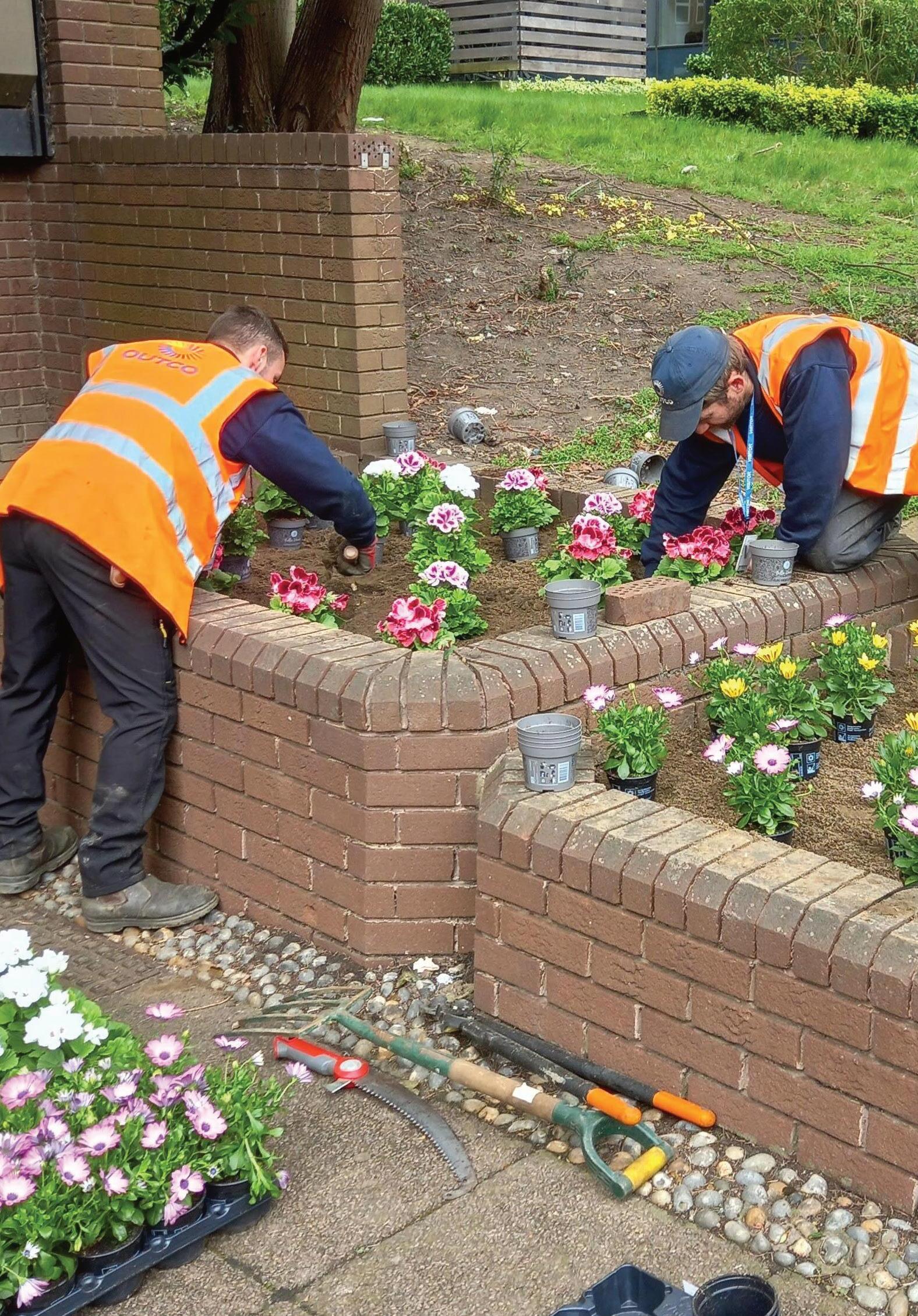
OUTCO’s grounds maintenance service is designed to make your life easier by delivering consistent, high-quality care for your outdoor spaces.
OUTCO’s grounds maintenance service is designed to make your life easier by delivering consistent, high-quality care for your outdoor spaces.
Our services ensure your estates remain clean, safe, and visually appealing all year round. Whether it’s routine upkeep or one-off projects, our expert teams deliver tailored solutions to suit your needs.
Our services ensure your estates remain clean, safe, and visually appealing all year round. Whether it’s routine upkeep or one-off projects, our expert teams deliver tailored solutions to suit your needs.
0800 0432 911 enquiries@outco.co.uk
0800 0432 911 enquiries@outco.co.uk
@CIBSE The CIBSE Society of Light and Lighting (SLL) strengthened its international presence recently with a high-profile visit to Dubai, where SLL President Kristina Allison represented SLL at Light & Intelligent Building Middle East in Dubai. Read more at https://buff.ly/XjMgZTX
@theCIOB During National Apprenticeship Week, CIOB President Paul Gandy FCIOB writes that while commitments to expand apprenticeship numbers are encouraging, there are also challenges that need to be managed: https://brnw.ch/21wZUKJ #ciob
@matrixbooking Great to see Matrix Booking represented at @ISE_Show last week. Joe Nwume-Proctor and Tom Hope caught up with our hardware partner @ProDVX to talk about workplace tech, from room panels to visitor management and beyond.
@RICSnews Penderyn Distillery and Visitor Centre in South Wales tells a story of heritage conservation, specialist skills and economic growth all in one. #RICSModus raises a glass to adaptive re-use and highlights how it won an RICS Wales Heritage Award: http://ms.spr. ly/6012QDP3A
@VertasGroup It’s been a fantastic start to 2026! We celebrated an award, kept vital services running through snowy weather, welcomed new starters, attended career events, and even gave our robotic cleaner, Lightning McClean, a new look. Stay updated: https://vertas.co.uk/news/
@Anabas A huge thank you to Elliott Chase and David Emanuel from i-FM for bringing together such an inspiring line-up of speakers at Workplace Futures. The agenda is packed with insight, innovation and forward-thinking ideas shaping the future of workplace and facilities management.
@Atrium_ltd Feeling inspired by our time at the Workspace Design Show this week, proudly supporting Flexxica! This event is a true celebration of creativity and innovation, showcasing the ideas that are shaping the future of the workspace experience.
@WorkspaceShowUK That’s a wrap on Workspace Design Show 2026. Huge thank you to our exhibitors, sponsors, speakers and media partners for bringing the energy.
JENNIFER BRYAN, AUTHOR & FOUNDER OF CHANGE CONSULTANCY
THE HUMAN HEART OF ORGANISATIONAL CHANGE
When companies announce a restructuring, merger, or new strategic direction, the conversation o en focuses on logistics: timelines, deliverables and key performance indicators. But beneath the surface of every organisational change lies something far messier and more powerful, the emotional experience of the people living through it.
Understanding this emotional dimension isn’t just about being compassionate. It’s about recognising that organisational change succeeds or fails based on whether people can emotionally navigate the transition from what was to what will be.
Most people shy away from emotion, especially at work. Yet when it comes to leading change, emotion is exactly what leaders can’t a ord to ignore. Change, regardless of what it is, involves emotion. An employee who’s worked the same role for five years has built not just expertise but identity, relationships and routines that provide comfort and meaning. When that role shi s or disappears, they experience a complex range of feelings, from uncertainty about their status to questions about valued relationships and the loss of familiar certainty.
Organisations that pretend these emotions don’t exist, or worse, idealise them as “resistance to change,” miss an opportunity to help people process them healthily. When leaders acknowledge that it’s normal to feel uncertain, sad, or even anxious about change, they create space for people to move through these emotions rather than getting stuck in them.
RESISTANCE ISN’T THE ISSUE – HOW WE DEAL WITH IT IS
What looks like stubborn resistance is o en fear wearing a mask: fear of incompetence in a new system, fear of irrelevance as the organisation evolves, fear of losing connections with trusted colleagues and fear of discovering that years of accumulated knowledge no longer matter.
These fears are rarely irrational. They’re based on real uncertainties about whether someone will thrive in the new environment. When leaders respond to resistance with frustration rather than curiosity, they miss the chance to address the legitimate concerns driving it. Sometimes the most powerful question isn’t “Why won’t you get on board?” but “What would you need to feel confident about this transition?”
Change requires emotional labour that’s easy to underestimate. People are simultaneously trying to maintain current performance whilst learning new systems, building new relationships and managing their own uncertainty. It’s cognitively and emotionally exhausting.
This is why change initiatives o en see engagement dip even when people intellectually support the direction. It’s not that they don’t care, it’s that they’re running on empty. Organisations that build in recovery time, celebrate small wins and acknowledge the toll of transition help people sustain their energy through the journey.
SENSE OF BELONGING
In times of change, people desperately need to know they still belong. They need to understand how their contribution matters in the new reality. They need to see themselves in the future being described. When communication focuses solely on structural changes without connecting to individual purpose and value, people feel like interchangeable parts rather than essential contributors.
The leaders who navigate change most successfully are those who help people author a new story about themselves, one where their past experience is honoured and their future contribution is clear.
The emotional side of organisational change isn’t a so issue to be managed a er the “real work” is done. It is the real work. Every failed transformation is littered with technically perfect plans that ignored the human beings who had to implement them.
The organisations that handle change well don’t eliminate the emotional turbulence because that’s impossible. Instead, they create cultures where people can be honest about their struggles, where leaders model vulnerability about their own uncertainties, and where the messiness of transition is treated as normal rather than problematic.
Change will always be hard. But when organisations honour the emotional journey alongside the structural one, they give people the support they need to not just survive change, but to genuinely thrive through it.
Jennifer Bryan, Author & Founder of Change Consultancy
FM CLINIC
The UK's Employment Rights Act 2025 will be phased in over 20262027. Changes include banning zero-hours contracts, ending "fire and rehire", providing day-one rights for sick pay, parental leave, and protection from unfair dismissal (though with a six-month wait). What impact do you foresee the Act having on the facilities management sector?
Immediate entitlement to statutory sick pay, parental and bereavement leave, alongside a reduced six-month qualifying period for unfair dismissal, will increase employer obligations.
FM operators must update HR policies, payroll systems, and train managers on absence and performance management within this new framework.
Implementation timeline & flexibility
There has been considerable discussion about the Employment Rights Bill (ERB) coming into force in 2026, so many will
In FMJ's regular monthly column, our team of FM experts answer your questions about the world of facilities management
THE RECRUITMENT EXPERT’S VIEW
COLEEN CLOHERTY, MANAGING DIRECTOR CPC CONSULTING
The Employment Rights Act 2025 marks a significant shi for the UK facilities management FM industry, which traditionally relies on zero-hours, agency and flexible sta ing models. Its phased implementation will reshape workforce management and compliance strategies. Below are the main changes.
Predictable hours & shi notice
New guarantees for zero-and low-hours workers, such as predictable hours, reasonable shi notice, and compensation for cancelled shi s will require FM providers to overhaul scheduling systems and audit existing contracts. While this may increase labour costs, it could also reduce absenteeism and improve retention, particularly among frontline cleaning and security teams.
Ban on “fire and rehire”
The prohibition of “fire and rehire” removes a mechanism o en used to renegotiate terms under tight margins. Organisations will need robust consultation processes and business cases for any contractual changes, slowing restructures but fostering stronger employee engagement.
be relieved to know that these changes will be phased in during 2026–2027, with further scope for adjustments and amendments. Recent months have shown that the current government is willing to make amendments and even U-turns on key policies, so FM leaders should stay alert for updates and remain agile in their planning.
OVERALL IMPACT
Compliance will raise short-term complexity and costs, but the Act o ers long-term benefits: a more stable, motivated workforce, reduced reliance on agency labour, and enhanced reputation. FM providers that proactively adapt by optimising contracts, payroll, and employee relations will gain a competitive edge in securing bids and retaining talent.
Many employers have already approached me for advice, and at this point, we are waiting to see what will happen. We fully expect further changes to come as the legislation progresses.
THE FOODSERVICE INDUSTRY'S VIEW
LAUREN STIRLING, HEAD OF HR OPERATIONS & PEOPLE DEVELOPMENT, ELIOR UK
The Employment Rights Act 2025 is one of the most significant shi s in the UK employment landscape in recent years. While it will require a complete operational overhaul for some FM organisations, the Act only reinforces the direction we are already taking as a people-centred organisation.
Operating at scale across contract catering and foodservice, our sector is very much people powered. With services delivered daily across thousands of customer-facing sites, consistency matters for colleagues, clients and customers alike. High standards for quality and employee support must be maintained across the board. The Act places greater emphasis on security, fairness and clarity, and for employers with established employment frameworks, the focus should be on pressure-testing existing practices to ensure they remain
Coleen Cloherty
THE CLEANING SECTOR’S VIEW
robust, consistent and fit for a more regulated environment.
One of the most immediate areas of focus is the early employment experience. With the extension of day-one rights around sick pay, parental leave and protection from unfair treatment, strengthening onboarding, induction and early manager-led conversations becomes even more crucial. This is particularly relevant for businesses with high volumes of starters each year. Under these circumstances, getting the first few weeks right is critical, not only for compliance, but for building trust, engagement and long-term retention.
This inevitably places greater responsibility on line managers. Because managers are o en promoted for their operational expertise, organisations must also invest in their practical people-management capabilities at the same time. From my perspective, this is where HR adds the most value – equipping managers with the skills to make the right decisions consistently and at pace. Helping them confidently handle absence, performance and wellbeing conversations is central to reducing risk, while ensuring colleagues feel supported and treated fairly. Workforce planning is another key area of focus. Operating within tight service windows and variable shi patterns requires strong forecasting, clear role design and thoughtful deployment of flexible but secure working arrangements. The Act reinforces the importance of disciplined workforce planning and close collaboration between operations, HR and finance to balance service delivery with evolving employment expectations.
The UK’s facilities management FM industry is sleepwalking towards the biggest regulatory change in decades. While framed by the Labour government as an ‘upgrade’ in worker protections, I have long warned that the legislation will fundamentally alter the operating model of a sector already under intense cost pressure. FM is one of the most labour-intensive industries in the UK, employing hundreds of thousands of people, o en across multiple sites and on tight margins. The new Bill introduces a series of reforms that, taken together, reduce workforce flexibility while increase legal, operational and financial risk for employers.
REDUCED OPPORTUNITY
rights from two years to six months. Even during the six-month
As well as the introduction of enhanced sick pay and family-related leave from day one, probably the most consequential change is the move of unfair dismissal rights from two years to six months. Even during the six-month probation period, employers will need stronger documentation, better-trained supervisors and more formal processes from the very start of employment, increasing both the administrative burden and exposure to tribunal claims. For FM, which traditionally experiences high sta turnover in the early months of employment, the risk of employing people is going to massively increase. Other sectors such as hospitality and retail are also disproportionately a ected by the new legislation.
Dominic Ponniah
Lauren Stirling
We have already seen unemployment rise over the past year (exacerbated by the NI increase for employers) and all the expert predictions are for further significant job losses. Previously you may have been willing to take a chance on someone you were not sure about. Perhaps they are an ex-o ender or long-term unemployed, but why would an employer now expose themselves to unnecessary risk? The very people who are most in need of opportunity will be the most a ected by reducing their chances of gaining employment.
REDUCED FLEXIBILITY
The Bill also places new restrictions on zero-hours contracts, strengthening workers’ rights to predictable hours. This strikes at the heart of how many FM services are delivered. Demand o en fluctuates with client occupancy, footfall or operational changes, and flexible sta ing models have historically allowed contractors to respond quickly. Under the new regime, businesses may need to guarantee minimum hours even where client demand is uncertain, creating a risk of paying labour costs without corresponding revenue.
UNION POWER
earlier protection from unfair dismissal at six months, will provide much-needed security for a workforce that is largely operational and customer-facing.
along with earlier
Lucy Hayes
RISING COSTS
Union access and collective rights are also strengthened under the proposed reforms. While unionisation is already present in parts of the sector, particularly in education, healthcare and local authority contracts, this raises the stakes around TUPE transfers and contract retenders. The unorthodox unions such as UVW and IWGB, who already o en hold contractors and clients to ransom, will yield even more power.
The cumulative e ect of these measures is a rising cost base in an industry where margins are o en between two and five per cent. Increased sickness absence costs (which are estimated to at least double), higher HR and legal overheads, longer timeframes for managing underperformance and greater insurance exposure all threaten profitability.
Many operators argue these costs cannot simply be absorbed and will need to be reflected in contract pricing. Legacy contracts risk becoming loss-making, placing pressure on suppliers to renegotiate terms or walk away from unviable work.
INDUSTRY RESTRUCTURE
For the FM sector, the Bill is not merely an HR issue but a business model challenge. It will require re-engineering workforce structures and being more selective about the contracts pursued. The industry faces a period of adjustment that could reshape not only employment practices, but the economics of outsourced facilities services across the UK.
THE HR DIRECTOR’S VIEW
LUCY HAYES, HR DIRECTOR, Q3 SERVICES
This new Act is set to bring some of the most significant changes to UK employment law in a generation, and for FM, it represents a mix of welcome improvements and practical challenges. From a people perspective, many of the changes are long overdue. Giving employees day-one rights for sick pay and family leave, alongside
LucyHayes
For people in FM roles, these changes are a real step forward in giving employees the support and security they deserve. Day-one rights for sick pay and family leave, along with earlier protection from unfair dismissal, mean employees can focus on their wellbeing and their work with confidence. This isn’t just beneficial for individuals though; it strengthens teams and helps ensure smooth, reliable service. When employees feel secure and valued, everyone benefits.
unfair dismissal, mean employees can focus on their
Every business will need to review contracts, policies and procedures to ensure compliance. For smaller providers, that can place a real strain on time and resources. The intention behind the Act is unquestionably positive, but the realities for FM businesses need careful consideration if these changes are going to work in practice.”
strengthens teams and helps ensure smooth, and valued, everyone benefits. always been central to how we manage our
The Act also reinforces the importance of fairness and trust in the workplace. Ending “fire and rehire” practices and putting clearer expectations around dismissal procedures encourages businesses to step up their people management. At Q3, fairness, transparency and respect have always been central to how we manage our teams, so we wholeheartedly support the intent of this legislation. Employees knowing their rights, and that they will be upheld, helps build a stronger, more loyal workforce.
It’s important to consider both sides of the coin, however. The ban on zero-hours contracts, for example, removes a level of flexibility that can work well for both employers and employees when used responsibly. In a sector where demand can fluctuate daily, that flexibility is o en vital. Then there’s the cost side: sick pay, parental leave, and other entitlements come with real financial implications, particularly in an industry like FM. We could see recruitment becoming more cautious, especially for entry-level roles, which could slow workforce mobility and even a ect operations.
There’s also a practical element. Every business will need to review contracts, policies and procedures to ensure compliance. For smaller providers, that can place a real strain on time and resources. The intention behind the Act is unquestionably positive, but the realities for FM businesses need careful consideration if these changes are going to work in practice.
Overall, the Act is a step in the right direction for employees, and we’re proud to already operate with fairness and transparency at the heart of what we do. At the same time, I hope policymakers continue to engage with our sector so that businesses can remain sustainable while delivering the protections and security employees rightly expect. The direction is right, but the sector’s unique challenges must not be overlooked.
Do you have a question that you’d like answered by the FMJ Clinic?
Email: sara.bean@kpmmedia.co.uk
Protect people .
Prevent explosions .
Adler & Allan delivers:
Stay compliant . Book your consultation
Adler & Allan helps facilities managers move beyond reactive compliance to build scalable, strategic DSEAR programmes that are remediation-ready.
Explosion Protection Document (EPD) support
Training & competency reviews
ATEX equipment audits & maintenance
Site-specific risk assessments & hazardous area drawings
WHY ADAPTABLE MEETING ROOMS MAKE SENSE FOR BUDGETS AND CARBON TARGETS
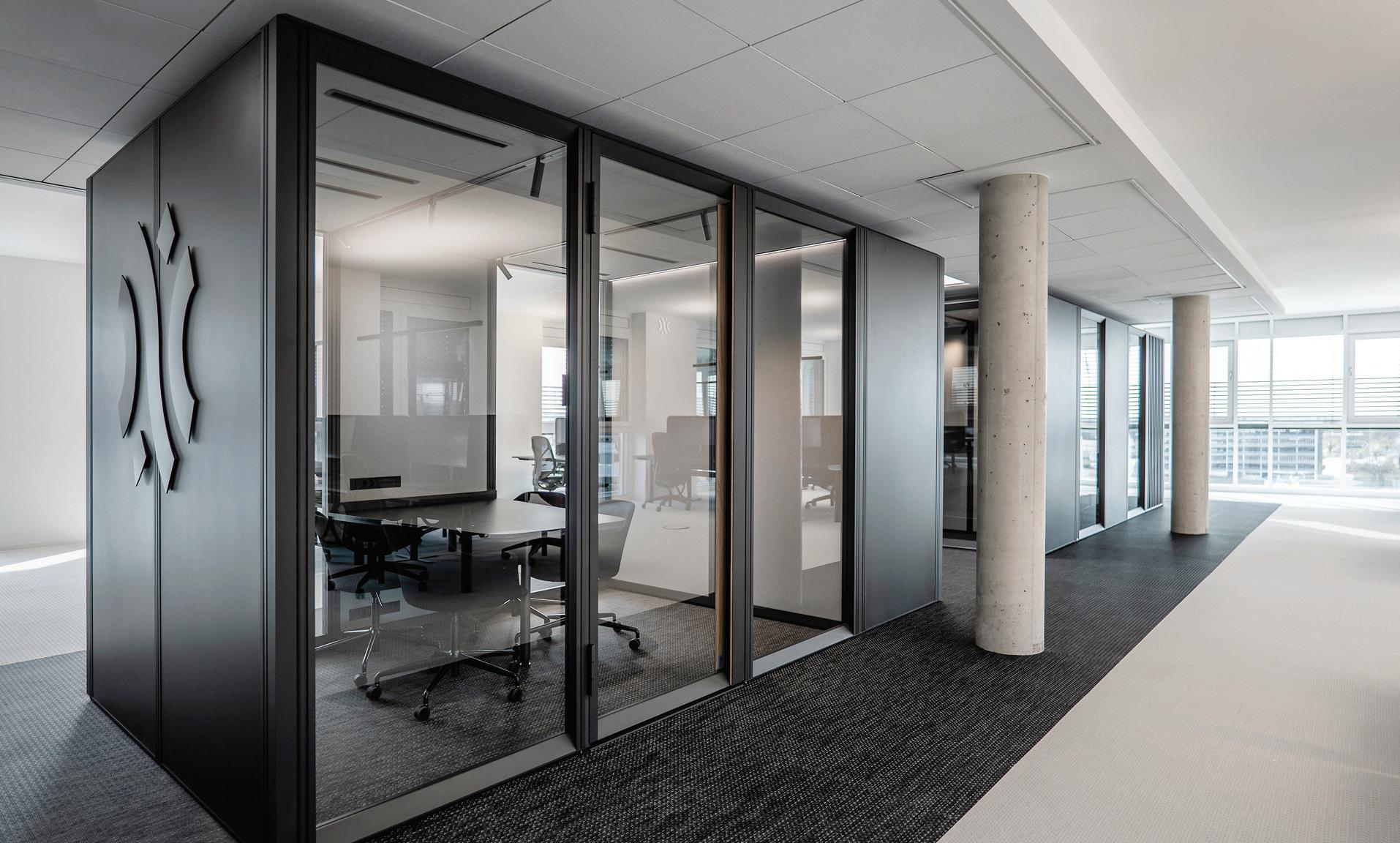
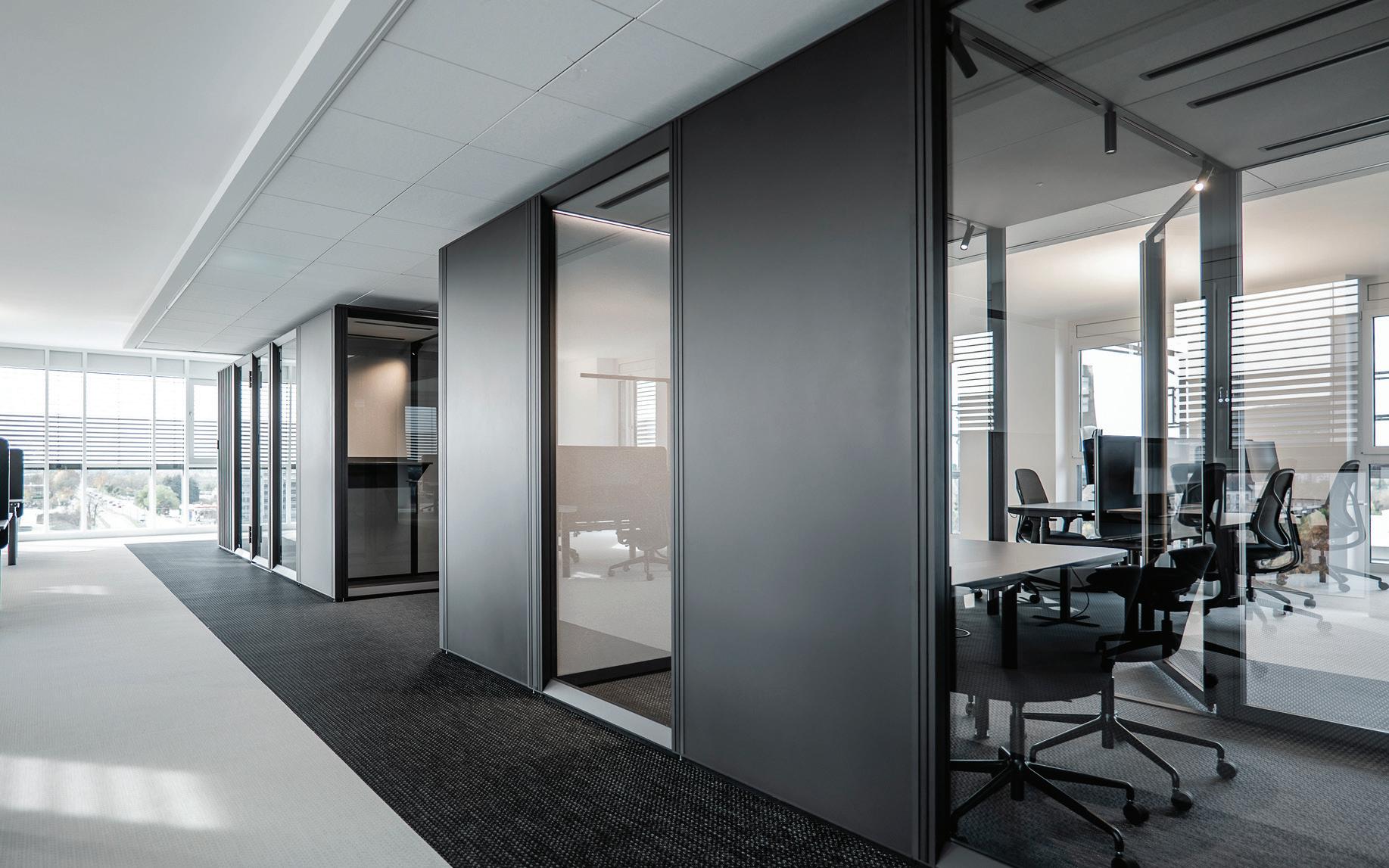
A new independent study commissioned by Mute, and delivered by cost consultancy EthosEQ, is challenging long-held assumptions about how meeting rooms should be delivered, managed and valued across a typical o ce lease
The research the first of its kind compares traditionally built, site-constructed meeting rooms with modular alternatives over a 10year operational lifecycle, examining cost, programme impact, flexibility and embodied carbon. For facilities managers under increasing pressure to balance cost control, sustainability targets and workplace churn, the findings are hard to ignore.
LIFECYCLE VALUE BEATS DAY-ONE COST
The study analysed installations across 27 cities on three continents, comparing
plasterboard and glass partitions with Mute’s relocatable room-in-room solution, Mute Modular. Crucially, it factored in what FM teams experience in reality: layouts change, teams move, leases end and spaces are reconfigured.
“The key finding is that reuse dramatically improves both cost and carbon performance,” says Colin Wood, Partner at EthosEQ and author of the report. “Traditional rooms are e ectively single-use. Modular rooms retain both their financial value and embodied carbon through multiple cycles of use — which is critical for organisations trying to reduce waste on every front.”
Using market data from JLL, the study estimates that adopting modular meeting rooms instead of traditional construction could save occupiers over €1 billion across EMEA and €1.5 billion in the Americas during a typical lease term.
WHAT THIS MEANS FOR FM TEAMS
While it is widely accepted that modular construction can reduce both cost and carbon, the scale of the savings is what stands out particularly once even modest change is introduced. The report highlights that initial capex is a misleading metric for FM decision-making. The moment layouts
shi , headcount changes or departments relocate, modular solutions begin to outperform traditional build.
Key findings include:
Modular meeting rooms are around 10% cheaper on day one, and up to 60% cheaper in high-cost cities such as London, Paris and New York
Even minor reconfigurations deliver average savings of 41% across all markets
Major layout changes push savings above 90%, rising to 150% in premium locations
End-of-lease reinstatement costs for traditional rooms are more than three times higher than modular alternatives
For FM teams managing portfolio risk, reinstatement liabilities and disruption to occupied buildings, these figures are particularly relevant.
DESIGNING FOR CHANGE, NOT PERMANENCE
O ice space now evolves far faster than the buildings that house it, yet meeting rooms are still o en delivered as permanent fixtures. The study questions whether this approach aligns with the realities of shorter leases, hybrid working and frequent
workplace change.
“The choice between traditional and modular construction is no longer just a design decision it’s a strategic one,” says Szymon Rychlik, CEO of Mute. “When wholelife cost is considered, adaptable room solutions can fundamentally change the economics of fit-out decisions across global portfolios.”
INDUSTRY PERSPECTIVE: TESTING THE THEORY
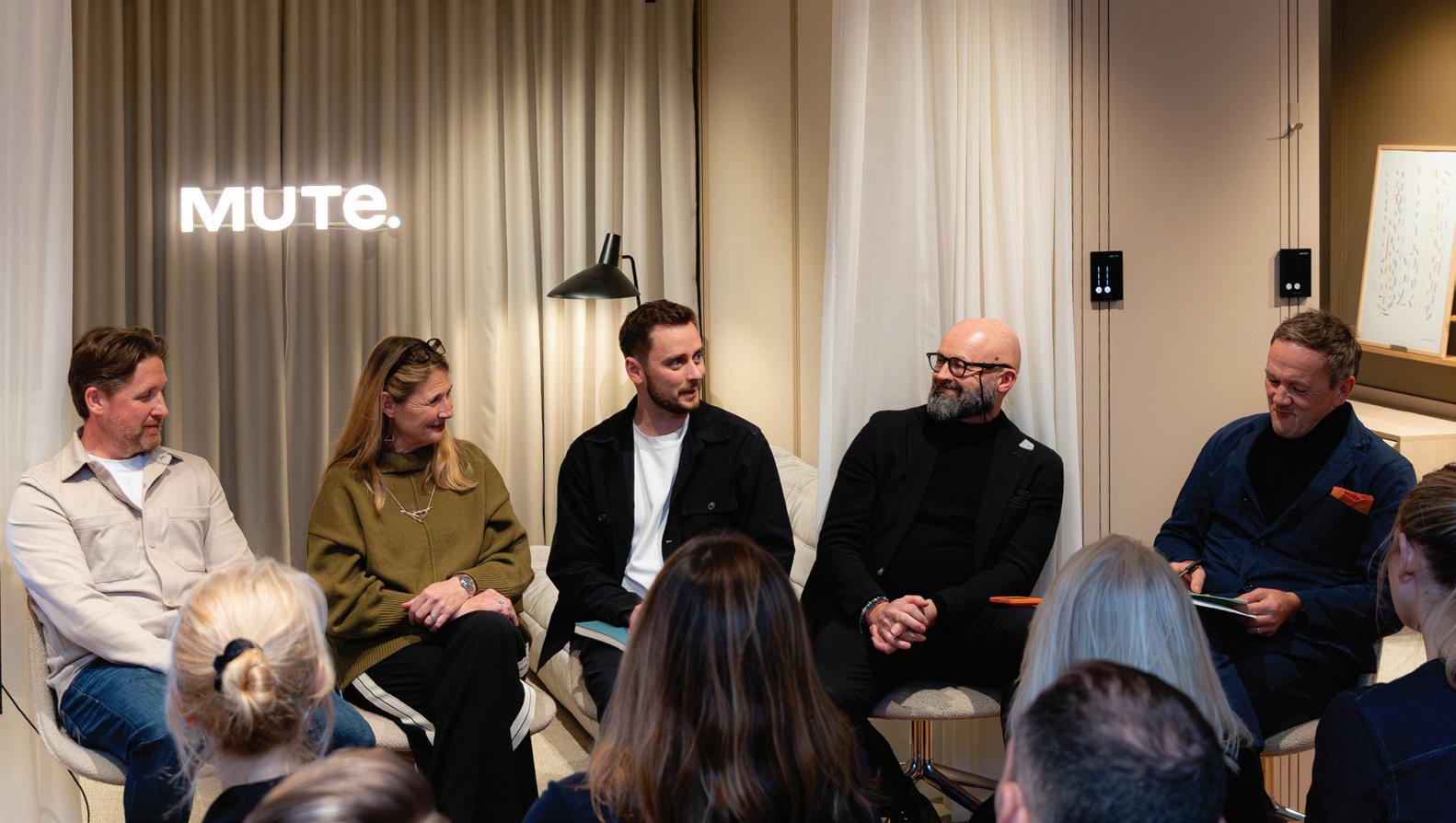
The findings were explored further at a panel discussion hosted by Mute at its Clerkenwell showroom, chaired by David Taylor, Editor of New London Architecture Quarterly.
The panel brought together Lydia Randall, Associate Director and Head of Sustainability at BDG architecture + design; Ross Ellmore, Senior Design Manager at Wates Fit Out; and Gary Helm from Mute.
Their conclusions strongly aligned with FM priorities:
Lifecycle thinking beats capex — savings accelerate once change is introduced
Speed is strategic — modular rooms reduce disruption in live, occupied environments
Circularity in practice — meeting rooms shift from disposable fit-out to retained asset
Hybrid strategies work best — modular for agility, traditional for bespoke or flagship spaces
Early coordination is critical — building services, not room systems, are often the constraint
A COMMERCIAL AND ENVIRONMENTAL DECISION
The consensus was clear: modular meeting rooms will not replace traditional construction in every scenario. However, as part of a mixed, portfolio-wide FM strategy, they o er a practical way to reduce cost exposure, minimise waste, lower embodied carbon and simplify end-of-lease obligations. For FM leaders managing constant change, adaptable meeting rooms are no longer just a workplace trend they are a commercial and environmental tool for delivering resilient, lower-risk buildings.
QUAY TO SUCCESS
FMJ visits Manchester’s Exchange Quay to see how the design team from Jasper Sanders + Partners in partnership with property managers Till AM are adopting a human centric approach to revitalising an iconic o ce campus
“Build it and they will come” is not an adage which tracks for most facilities managers. No matter how attractive a building and impressive the architecture, if the workplace doesn’t o er a community feel, the primary aim, to attract and retain talent will be a struggle.
This is why property managers Till AM and interior design and placemaking studio Jasper Sanders + Partners are working together to deliver a human centric environment that ensures Manchester’s Exchange Quay series of o ice buildings remains the city’s leading workplace campus.
Exchange Quay comprises seven mediumrise towers, providing 472,000 sq of Grade A o ice space. Based at Salford Quays near Manchester City Centre and the major motorway networks, it comes complete with its own dedicated Metrolink tram stop. The campus supports a mix of businesses,
including technology, education, and professional services and boasts both major brands like Renault, Teltonika and 3M, as well as a range of smaller businesses.
Originally built in the 1980s, the site has had a series of design upgrades, which over the last six years, have been carried out by Jasper Sanders + Partners which includes the refurbishment of reception areas, fit-outs for a series of o ices across the campus and the redesign of the site’s huge-scale wayfinding totems.
The key purpose as Les Lang Director of Till AM describes it, is to create a human centric environment: “This means it puts people first. Right from the start of my career in property and my investment management business, my business partner and I always put amenities first, which wasn’t generally the case, so we were out of kilter with everybody else.
“When the world changed a er covid, it became very high up on everybody else’s
list as well and with everywhere we were already managing we had a head start because we’d been doing it all along.”
The result is a workplace campus which goes beyond the o ice space to include amenities ranging from an on-site post o ice and deck chairs for sunny days to a campus kitchen, co ee shop, picnic area and a wellness centre.
DESIGN UPGRADES
Central to this vision was to elevate the look and feel of the interiors with an initial series of projects for Jasper Sanders’ studio to upgrade the reception areas for Buildings 8 and 5. This included the creation of “third space” areas, including breakout booths, co ee break spaces and meeting areas for occupants.
Next came the redesign of the entrance, first-floor mezzanine, and li lobbies of Building 1, much of which is tailored to suit its corporate tenants. This building also presents great curb appeal as a frontage to the entire campus. A series of further ‘refresh’ projects followed in 2022 and 2023, including the creation of marketing suites for Buildings 5 and 10, a wellness suite for Building 10 and suite designs for Buildings 7 and 8.
The design relationship has been so successful that in 2025, to house its expanding team of five full-time and additional part-time and consultant sta , Jasper Sanders + Partners took their own space in Building 5 of Exchange Quay. And as Jasper Sanders points out while larger companies moving into the campus may choose to manage their own fit-outs, Exchange Quay can o er to support SMEs with their own individual fit-outs. For tenants who would rather choose an ‘occupation ready’ o ice, the design team also creates a range of speculative o ice fit-outs.
Says Sanders: “I’ve worked with Les for quite a few years now and we’ve been fortunate enough to become his ‘go to’ design firm. The ethos is that while we’re creating bespoke interiors for specific businesses with their own nuances, there’s an underlying thread of creating spaces for people aiming for business success.
“We share this same philosophical starting point and the same philosophy about trying to create great places for businesses, through creating places for people.”
The team believes that when it comes to designing an o ice, each company’s requirements are di erent, so the best place to begin is in talking to people.
Explains Nathalie Kenning, Lead Interior Designer at Jasper Sanders + Partners: “Something we also face is that sometimes we see potential tenants who might not
Refurbishment is quite a di erent game to a new build. When you’re designing a new build, the whole project is created in an imaginary way. But when you’re doing refurbishment, it is much more about being forensic.”
necessarily know exactly what they want and having a conversation with them to begin with and taking them around other examples of o ice fit-outs [on the site] helps open their minds to the possibilities.”
O ering each tenant this individual solution is an important element of the design process and one which is reflected in a recent fit-out the EMQN (European Molecular Genetics Quality Network). With
the idea being to help support a culture of collaboration and client engagement the fit-out includes two private o ices, a meeting room, and a large boardroom.
SUSTAINABLE APPROACH
According to research from Savills, while London remains the global benchmark for high-spec, prestigious design, Manchester takes a more collaborative, communitydriven, and cost-e ective approach to design. This, along with working on refurbs rather than new builds results in a more sustainable design process, says Sanders.
“Refurbishment is quite a di erent game to a new build. When you’re designing a new build, the whole project is created in an imaginary way. But when you’re doing refurbishment, it is much more about being forensic.”
He explains that the first thing to work out is what has reached the end of its life. What needs replacing and what can be salvaged? Areas like floor finishes may be reused, or in the case of carpeting, the site tends to favour a stock carpet solution from local suppliers which can come in di erent colours to help reflect individual spaces or brands.
“Once we’ve worked out what we must replace”, adds Sanders, “we can begin to build up a palette. Stylistically, you might do something that’s perhaps more in vogue for a particular time, but it might be more trends driven and you can’t justify the impact on the planet. So, we say, ‘what is the smallest possible skip we can have? What’s the least we could throw away? Then what can we put in to enhance that space and give it a sense of identity?’”
Trends come and go and as Kenning
explains, a lot of people assume a particular style, think open ceilings to lend an industrial aesthetic – are good design, because they’re seeing it everywhere. However, as Lang points out, resealing an exposed ceiling costs a lot to address and he says, simply redoing a colour scheme is a much less wasteful but impactful approach.
via the dedicated site app.
Also helping to foster a collegiate atmosphere was the decision to base reception sta in the same buildings rather than moving them around the campus, which results in a more comfortable and familial experience. And this welcome extends to introducing scents in each of the receptions with each building wa ing a di erent aroma to visitors.
CREATING A COMMUNITY
Integral to the team’s ethos is creating a community feel. This is why tenants can arrange for their sta to have tours of the site prior to moving in to help them acclimatise to the change. Alongside this, on their first morning on the campus, occupants are o ered a free breakfast or co ee and cake
Explains Lang: “People just want to be recognised and o ering that continuity is quite important in terms of creating those relationships.”
An extremely important part of this engagement process is addressing the journey around the exterior of the campus, where the defining feature has traditionally been its huge-scale wayfinding totems. These were originally coloured orange but last year
Jasper Sanders + Partners completed a design rebrand to each of the steel totems to reflect the individual character of each of the buildings they address.
Says Kenning: “We wanted the result to feel like a piece of landscape architecture, with each a separate experience, which is why we selected di erent colours so moving around you get a di erent vibe from each.”
Adds Sanders: “You can look through them, see under them and look down onto them from the o ices so the whole experience is there to guide you around the entire campus.”
Beyond the design changes, the redesign is intended to promote health and wellbeing,
with existing smoking shelters repurposed into open-air collaborative spaces, fostering social interactions and creativity. The team has also introduced diverse plant species on the shelter roofs and installed a herb garden right next to the catering facility for the chefs’ use.
FUTURE PLANS
While the Exchange Quay teams acknowledges that many employers are still grappling with sta ’s demand for hybrid working hours, Lang observes that the pendulum may be swinging back to mandated presence in the o ice. He says: “People say you can do the same work from home, but what you can’t do is teach or learn. That’s becoming the biggest problem for many organisations.”
Currently Jasper Sanders + Partners are working on a number of Cat B o ice fit-out designs for incoming tenants at Exchange Quay, including Renault Cars, located across the campus in Buildings 1, 3, 5 and 8.
Their remit, he explains, is to continue to physically connect these spaces, creating collaboration and community.
According to Kenning, because some o ices almost became too relaxed in their nature post covid, she believes: “what we might see is that o ices become slightly more tailored to a company’s specific business model”. But the ideal both property manager and designers agree is maintaining that human centric approach.
Says Sanders: “Design with people first and think about how people use space. Our job is to open their minds up to the possibilities.”
AI FUTURE
James Massey, Managing Director MRI Software, on what the 2026 Voice of the Facilities Manager Survey tells us about the industry’s AI future
Ask a UK facilities manager what keeps them up at night and the answer has not changed dramatically in years: ageing equipment, budget pressure, compliance obligations, and a workload that never shrinks. What has changed is the backdrop against which those familiar pressures are felt, as shi ing priorities and new technologies shape strategy and disrupt established ways of working.
MRI So ware’s Voice of the Facilities Manager survey, conducted in partnership with FMJ Magazine, o ers a snapshot of the sector as AI technology stands ready to drive the latest round of transformation. Gathering insights from 188 UK-based FM professionals across a broad range of sectors and organisation sizes, the survey provides the clearest picture yet of where the industry stands on the threshold of a genuinely transformative period.
BUILDING THE NEXT GENERATION OF FM PROFESSIONALS
The demographic profile of the survey respondents is itself significant. Over 60 per cent of participants are aged 46 or above, with those over 55 forming the single largest age group at 34 per cent. Fewer than 10 per cent are aged between 25 and 35. This is not a new observation for those who know the FM sector well, but it takes on fresh urgency in a survey focused on AI readiness and digital transformation. The profession is asking its most experienced practitioners to lead a technological transition at a moment when many of those individuals are approaching the latter stages of their careers.
cent of respondents said they were very confident. Over half, 52 per cent, said they were not very confident or not confident at all.
This is a frank admission, and a revealing one. The promise of AI in facilities management, from predictive maintenance to automated compliance reporting to intelligent energy management, depends entirely on the quality and consistency of the data feeding those systems. Organisations that have spent years collecting data in inconsistent formats, across disconnected systems, or not collecting it at all, cannot expect to simply plug in an AI tool and see transformative results.
The message here is not that AI is out of reach for UK FM teams, but that for many organisations, the first step on the AI journey is not selecting a platform, but investing in the less glamorous but essential work of data governance: standardising how information is captured, ensuring systems talk to each other, and establishing performance metrics that generate consistent, reliable data over time.
AI AWARENESS GROWING, BUT MORE TRAINING REQUIRED
On AI itself, the survey reflects a sector in transition. The average importance score assigned to AI within respondents’ organisations was 5 out of 10, speaking to growing awareness without yet reflecting widespread organisational commitment.
The message here is not that AI is out of reach for UK FM teams, but that for many organisations, the first step on the AI journey is not selecting a platform, but investing in the less glamorous but essential work of data governance...”
Succession planning has emerged as a major concern as a result: 48 per cent of respondents describe it as a significant challenge in their FM team. Against this backdrop, the strategies organisations are deploying to attract younger talent, flexible working (33 per cent), apprenticeships (29 per cent), and the promotion of technology-driven roles (17 per cent), are encouraging. But they will need to be backed by genuine commitment if the sector is to build the pipeline of digitally literate FM professionals it will need in the decade ahead.
THE REAL AI CHALLENGE? FILLING THE DATA GAP
The most striking finding in this year’s survey is not about AI itself, but about the foundation on which any AI ambition must be built. When asked how confident they are that their FM data is robust enough to support AI, automation, or digital decision-making, just 5 per
When asked about the expected impacts of AI on their roles, 27 per cent cited enhanced e iciencies, 19 per cent improved decisionmaking, and 19 per cent streamlined data analysis. Just 5 per cent expressed concern about job displacement, a figure that has remained consistently low across successive iterations of this survey and across di erent geographies. UK FM professionals, like their EMEA counterparts, broadly view AI as a tool that will make their jobs more e ective rather than one that will make them redundant.
However, a deeper look at the data reveals a knowledge gap that will need to be addressed. When the survey asked about agentic AI, defined as AI systems that act autonomously to achieve goals, more than half of respondents (53 per cent) said they were not familiar with the concept. This is understandable: agentic AI is a relatively recent development even in technology circles. But as autonomous systems begin to appear within mainstream FM platforms, the sector will need to build the conceptual understanding to engage with them critically and to govern their use appropriately.
It is worth noting that AI and data analytics have leapt to the top of the training priority list: 18 per cent of respondents identified it as a required or desired area of development over the next 12-18 months,
FOCUS FM SOFTWARE
making it the most commonly cited training need, ahead of even legal and compliance (15 per cent) and IoT and smart building technologies (14 per cent). The appetite to develop AI capability is clearly there. The challenge is translating that appetite into accessible, practical training that FM professionals can apply in their day-to-day roles.
On technology investment more broadly, the survey presents a picture of cautious intent. Over half of respondents (58 per cent) say their organisation will probably or definitely invest in new FM technology in the next 12-18 months. The dominant driver, cited by 27 per cent, is improved e iciency and productivity. Supporting sustainability and energy management goals featured for 12 per cent, cost savings for 10 per cent, and AI capabilities specifically for 9 per cent.
The technologies attracting most interest include AI or automation tools (18 per cent), contractor management so ware (14 per cent), and predictive maintenance platforms (14 per cent). This selection reflects a pragmatic set of priorities: tools that reduce manual e ort, improve compliance management, and shi maintenance from reactive to proactive.
di iculty integrating IoT
Yet the barriers to adoption are real and well-established. Cost remains the single biggest obstacle, cited by 26 per cent of respondents. The skills gap in the workforce was flagged by almost one in five respondents (19 per cent), while di iculty integrating IoT and AI solutions was highlighted by 17 per cent. These are not trivial challenges.
This is
not a sign of resistance to
For many FM teams, the path to technology adoption runs through budget approval processes, change management programmes, and significant investment in training, all of which require sustained organisational will.”
change management
For many FM teams, the path to technology adoption runs through budget approval processes, change management programmes, and significant investment in training, all of which require sustained organisational will.
FACING THE NET ZERO CHALLENGE
Sustainability presents a particular tension in this year’s survey. Net zero targets are viewed as the biggest challenge facing the industry at 51 per cent, the highest
proportion of any trend assessed, while only 21 per cent see net zero as an opportunity. This is not a sign of resistance to sustainability goals, but of honest reckoning with the gap between ambition and resource. FM professionals are frequently expected to deliver carbon reductions whilst simultaneously achieving cost savings. Smart technologies and automated energy management systems can help, and the survey shows strong interest in automating energy management processes (21 per cent plan to do so in the next 12-18 months).
expect increased use of smart technologies and automation to define the future of FM, making it by far the most anticipated development. Data-driven decision-making (11 per cent), sustainability as a central focus (12 per cent), and the integration of agentic AI and autonomous systems (9 per cent) all feature prominently too.
These are the expectations of a profession that sees clearly where the industry is heading and wants to be part of shaping it. The challenge is ensuring that the conditions, in terms of data quality, skills, budget, and organisational support, are in place to make that ambition a reality.
technologies and management
LOOKING FORWARD
The five-year outlook expressed by respondents is ambitious and, in important respects, consistent. Eighteen per cent
The 2026 Voice of the Facility Manager survey ultimately tells a story of a sector that has moved from curiosity about AI to genuine engagement with what it will require. The next chapter will be written by the organisations that move from engagement to investment: in their data infrastructure, in their people, and in the integrated systems that will allow FM teams to do more, with more confidence, in an increasingly complex built environment.
The full 2026 Voice of the Facility Manager report is available at mriso ware.com
EXPERIENCE MAKERS
SAlexis Kennedy,
HR
Director, Sodexo Live! UK &
Ireland explains how the hospitality brand recruits and motivates its ‘experience maker’ workforce
odexo Live! is Sodexo’s dedicated global hospitality and live events brand, supporting many of the UK and Ireland’s most iconic music, cultural and sporting events, as well as conference centres and airport lounges. It delivers world-class food and hospitality services that create exceptional moments, to help venues reach their full potential, and generate lasting positive impact within their communities.
As part of the wider Sodexo Group, Sodexo Live! sits within the global organisation, a leader in food and services across work, healthcare and education. Sodexo Live! extends this purpose into the world of live experiences, bringing people together, elevating guest satisfaction, and supporting long-term sustainable growth for its partners.
Globally, Sodexo Live! contributes to many high-profile major events such
as Royal Ascot, the Tour de France, the Rugby World Cup and the Paris Olympic and Paralympic Games in 2024. It also showcases and operates at exceptional venues including the Ei el Tower Restaurants, Bateaux Parisiens, Yachts de Paris, the Royal Academy of Arts in London, and the Hollywood Bowl in Los Angeles. In the UK, venues include Newcastle United FC, Nottingham Forest FC, and Edinburgh’s Signet Library. These partnerships demonstrate how Sodexo Live! brings the strength, scale and values of the wider Sodexo brand into dynamic, guest-facing environments.
WORKING FOR SODEXO LIVE!
A range of roles make up the 1,000 UK Sodexo Live! workforce. This includes culinary teams, dedicated to delivering foodservices, and support function employees encompassing sales, marketing, finance, HR, H&S, tech & digital. Because our portfolio includes stadiums and arenas, cultural sites, major events and providing retail services at key venues our operations are manned by a blend of full-time permanent employees, frontline workers and casual workers. We have a workforce of 7,000 casual workers that we scale up for our events and matchday operations that enables us to scale up and down depending
on the size of the event or operation that we are delivering.
Recruitment is managed in-house by our onsite teams and a central support function. During our busiest season we do have a select few agency partners that we work with if we require more sta than are currently on our books, then we will engage with our partners to support fulfilling the people’s needs of our events and operations.
RECRUITMENT CHALLENGES
Since covid the hospitality industry has become notoriously hard to recruit in, it is now seen as a sector that is hard work and low paid, particularly when people now want more flexibility in working from home and reduced hours around childcare. It also features predominantly unsociable hours and weekend work which can make it hard to attract people. However, what we do find is that this industry is a little bit like marmite, you either love it or hate it. If you love it you are engaged, passionate and naturally motivated by delivering exceptional experiences for guests. We look for motivated, engaging individuals who have a passion for the services industry who are also openminded and willing to learn from our experience makers. We believe we can provide anybody with the right skills and development to deliver a great service to our customers as long as they display the
right behaviours and attitude.
Inclusivity and diversity are also very important to us, and we pride ourselves on being an inclusive business, creating opportunities for everyone and providing our experience makers with opportunities for growth and development.
TRAINING PROVISION
Training depends on the role, but as an example, our onsite teams and casual workers who work at specific venues receive a standardised Sodexo Live! Induction alongside specific training on their venue and client site. This is because it is important that our experience makers are not only inducted into our business but also that of our clients, as this is where they will be working and spending their time.
Opportunities for career progression depend on the individual and their career aspirations, Sodexo Live! is such a vibrant and exciting business, focused on growth that there are new opportunities all the time.
Many of our experience makers have been with the business for over 10 years and have a wealth of knowledge and experience having progressed their careers from frontline positions to senior management or director roles, demonstrating the possibilities available to individuals who join the business.
WHAT THE FM WORKPLACE SECTOR CAN LEARN FROM HOSPITALITY
I believe the FM sector can learn about performance, motivation, and employee experience from this industry.
I believe the FM sector can learn about performance, motivation, and employee experience from this industry. Hospitality has spent a long time refining how to get people to deliver consistent service quality under pressure often with tight margins and high turnover.”
Hospitality has spent a long time refining how to get people to deliver consistent service quality under pressure o en with tight margins and high turnover.
FM roles can o en feel invisible, whereas hospitality reframes roles as experience makers, not just task-doers.
In hospitality clearly standards matter but attitude and behaviours matter more.
We believe we can train, upskill, and educate people with the skillset to succeed in the hospitality industry no matter their background, which means training in emotional intelligence and not just technical skills. Likewise, from a training perspective, this is seen as a career investment, not a cost to the business. By delivering high quality training to our experience makers, we are activating our retention strategy and reducing the turnover. This provides flexibility to our workforce and builds confidence in our people that they have the skills and tools to deliver their role.
WELCOMING WORK
Aymen Fetouak MIH, Head of Professional Development at the Institute of Hospitality (IoH) with career advice for FMs thinking of working in hospitality
Facilities management professionals are already delivering hospitality every day. From front of house services and workplace experience to contract management and people leadership, FM roles increasingly sit at the point where buildings, services and people meet. What is changing is not the nature of the work, but how those skills are recognised and where they can lead.
Hospitality o ers a useful lens for understanding this shi . Not as a separate industry, but as a professional discipline built around service culture, leadership and experience. For FM professionals thinking about progression, or for organisations looking to strengthen workplace performance, hospitality provides both structure and opportunity.
INSTITUTE OF HOSPITALITY
At the Institute of Hospitality, (IoH), we increasingly see careers moving between facilities management and hospitality, o en without a clear dividing line. In practice, the connection is already strong. Front of house teams, catering, cleaning, security, workplace services and estates all contribute to how a space functions and how it feels. Together, they shape the daily experience of employees, visitors and clients, and in doing so influence how organisations are perceived.
Managing a multi-service contract in a large workplace o en means leading diverse teams, maintaining service standards, responding to issues quickly, and balancing cost, quality and people
expectations. These are core hospitality skills. What hospitality brings is a recognised professional framework that helps turn this experience into clearer career progression.
CAREER ROUTE
For individuals starting out in FM roles, hospitality can provide a credible and practical career route. Many are already using hospitality skills daily, even if they do not label them as such. Leading teams, handling complaints, responding calmly under pressure, setting standards and delivering consistent service are central to hospitality work. Professional recognition helps give those skills visibility and direction.
Careers in hospitality today are far broader than many people expect. They extend into leadership, people development, sustainability, wellbeing, operations and commercial decision making. For FM professionals, moving into hospitality is rarely a sideways step. In many cases, it opens access to roles with greater responsibility, clearer professional recognition and the ability to work across sectors or internationally.
LEARNINGS FOR FM LEADERS
There is also much that facilities management organisations can take from commercial hospitality. Hotels, restaurants and venues are built around experience. They understand that service culture, consistency and leadership behaviour
matter every day, not just when something goes wrong. The same principles apply in workplaces. Employees may not be paying guests, but their expectations are shaped by the quality of service they experience elsewhere.
Workplace hospitality today goes well beyond reception desks or co ee provision. It is about how services are designed around people, how issues are handled when things do not go to plan, and how teams are supported to deliver well under pressure. Hospitality thinking brings focus to these areas, encouraging organisations to look beyond tasks and contracts and pay closer attention to the human experience. Both facilities management and hospitality face similar challenges around attracting and retaining talent. Hospitality has long struggled with outdated perceptions, while FM can find it di icult to clearly explain the breadth of careers it o ers. The opportunity lies in telling a more accurate story. Hospitality provides defined progression, recognised standards, mentoring and ongoing learning, all of which are increasingly important to people looking to build sustainable careers. Professional recognition plays an important role here. When individuals can see a clear pathway from entry level roles through to senior leadership, supported by learning and peer networks, it changes how work is valued. This resonates strongly with FM professionals, where accountability, consistency and governance are already central.
HOSPITALITY BENEFITS
For employers, the benefits are practical. Teams with strong hospitality skills tend to manage change better, handle pressure more e ectively and represent organisations with confidence. As workplaces continue to evolve, and expectations around wellbeing, inclusion and experience rise, these skills become even more valuable. By supporting clearer career routes between the two, both sectors can strengthen talent pipelines and raise standards.
Hospitality is not an alternative to facilities management. It complements it. For individuals, it o ers progression and professional recognition. For organisations, it strengthens experience, culture and performance. Framed in this way, hospitality becomes not a departure from FM, but a natural extension of it.
CUSTOMER REVOLUTION
Wendy Bennett, Managing Director DMA Maintenance explains to Sara Bean why a customer led focus supported by a revolutionary digital platform is enhancing service performance
In January property services specialist
DMA Group announced the promotion of Chief Operating O icer Wendy Bennett to Managing Director for DMA Maintenance. It’s a move which recognises Bennett’s role in creating a strong customer led focus in a sector where, in Bennett’s opinion “customer service o en doesn’t exist”.
Founded in 1803, DMA Group has evolved over the past 223 years from a construction firm to a tech led provider of facilities management, building maintenance, and technical and electrical (M&E) services.
Bennett joined DMA in March 2021, having spent most of her career in the bathroom industry. She started out as a technical
advisor at bathroom supplier Aqualisa, where being at the end of a help line gave her useful insights into “getting the basics right, following through on everything and taking accountability”.
She adds: “I learned the hard way that listening and displaying empathy builds trust. You’ve got to own the problem and see it through to the end, and that grounding taught me the value of customer service.”
Working her way up to Board Director within the bathroom industry, customer service remained “the golden thread” of everything she did, something which attracted DMA to hire her as an industry outsider, but one who could o er a strong
operational delivery ethos that is much needed in the FM sector.
Bennett’s observation is that all too o en FM services are transactional, with a complete lack of transparency. FM, she notes is very reactionary, especially at the customer service level where service providers only respond when there’s a problem or it’s time for a pre-ordained visit. To address this disconnect she has introduced an outbound process at DMA Maintenance, meaning the team proactively contacts customers to find out what other support they may require.
She explains: “I’m very keen that you keep those touch points going throughout the life of the contract. It’s important to keep the
customer engaged, which in turn reminds them that the maintenance they’re paying for is a vital but value-added expenditure.”
DMA GROUP & SERVICES
DMA Group consists of three key business units: maintenance, projects, and Service as a So ware (SaaS). The SaaS o er is delivered through DMA’s own proprietary digital maintenance management platform, BiO.
Last year a Group Supervisory Board was created to oversee the Group’s core business units, appointing Chief Operating O icers for each one; Wendy Bennett for maintenance, Ian McGregor for projects & engineering, and Rob Tate for the new SaaS team overseeing its BiO (Building Information Online) o ering. The idea was to combine the knowledge of industry experts inured in FM along with those who o er special insights into FM, service delivery and the development of the SaaS product.
In January came the announcement that Bennett was being promoted from COO to Managing Director. Explaining the decision she says: “Given the foundations we’ve put in over the last five years leading to the growth we’ve experienced, it made it an obvious decision to put an MD in place. Because of the additional responsibilities that came with the role, my operational and customer service background made me a suitable fit.”
As part of this change the account management element is now part of her remit which enables Bennett to pull together all the di erent functions of the business. While there is much crosspollination between the projects and maintenance units, the overlap, explains Bennett, is in energy and sustainability.
“For instance, we might deploy our projects team to go and talk to our maintenance customers about their e iciency and carry out a sustainability review. There is an interlink there and it goes both ways, not just one feeding the other but nicely intertwined.”
Central to all of this is of course the development of BiO, a digital maintenance management platform which has been developed by DMA’s in-house engineers to automate maintenance scheduling and reporting, with the primary aim to consistently deliver better customer service. Designed to automate end-to-end processes by overseeing the entire maintenance workflow from start to finish the product is also being marketed as taking a people-centric approach. Says the developers: “By simplifying FM processes and eliminating barriers to use, BiO fosters
an inclusive work environment and attracts young talent to the industry.”
The so ware, which won the IWFM Impact Award for Best SME Led Innovation in 2024 says Bennett: “Will propel DMA into a new market, because of the way it’s been Designed
Written
Built and:
Continually optimised with people at the forefront.”
CUSTOMER CARE
DMA services a range of sectors, including educational, highend residential properties, commercial o ices, charities, hotel groups, retail, leisure, and health and social care settings. Recent wins include two local authorities, Thurrock Council and the London Borough of Sutton.
each of the parties know their counterparts throughout the chain.
She explains: “Once we’ve won a contract, that’s when we engage the whole team. It’s not just one person mobilising the contract, we involve the operations manager along with the account manager because that will be the golden thread. At every layer we want to have a contact who we’re actively engaged with, as it’s all about maintaining the relationship throughout the lifetime of that contract.”
Once we’ve won a contract, that’s when we engage the whole team. It’s not just one person mobilising the contract, we involve the operations manager along with the account manager because that will be the golden thread. At every layer we want to have a contact who we’re actively engaged with, as it’s all about maintaining the relationship throughout the lifetime of that contract.”
Within the company the support function includes a planning team, a team that looks a er the service partners and a team of maintenance engineers. An important part of any mobilisation process explains Bennett is in ‘man marking’ through every layer of the customers’ organisation, so
While so ware plays an important part, for instance, once all the assets are loaded and task times allocated BiO can help automate processes such as the scheduling, Bennett is adamant the tech can’t wholly replace people with automation. This is why customer service maintains contact with the customers to let them know of any changes, acting as their first point of call.
She admits however, that when showcasing BiO to potential customers, some prefer traditional T card (jobs) systems.
“You’ve got to explain the art of the possible because this industry can be
I’d say the last two years have all been about building the foundations, getting the basics right and having the processes and the teams in place to be able to support that growth. I think SaaS opens up opportunities outside of maintenance and projects, which as a business is very exciting.”
slow to change. We need to engage and showcase the benefits of tech. First and foremost, it’s about the people and the engagement that allows you to leverage the technology”.
“Tech should support the process that supports the people to do their job, not the other way around. We don’t go and blind them with BiO. We use it as a vehicle to show them how we run the business, and that always gets their interest.”
Another key innovation for DMA Maintenance is the creation of a new technical services division split into core trades, HVAC, electrical, gas and mechanical, with a technical services manager responsible for each discipline to which the field service engineers report. This arrangement enables the business to scale up or down for larger or smaller jobs, makes sure that everybody knows what their roles and responsibilities are and that there are accountabilities for each of those areas.
“With this approach, when we’re quoting for smaller projects that don’t require our projects team, we’ve got a technical oversight on how we price for that and how we manage the service partners, which is equally important, because for me, they’re an extension of our own workforce.”
FUTURE PLANNING
According to Manpower Group the UK Mechanical and Electrical (M&E) sector faces an acute talent shortage, and the dearth of women in senior roles within the FM sector is well documented.
This is why Bennett is very passionate about running apprenticeships and business mentoring initiatives to help foster its future talent, as well as encourage more women into the profession. She recently joined a business
mentoring programme with Year 10 students who might want to get into the industry, whether in a maintenance or customer services side.
Bennett had previously introduced an apprenticeship programme at Aqualisa and took a similar approach when joining DMA. She also feels strongly that an apprenticeship should always lead to a fulltime role, so each recruit is teamed with vetted training providers to deliver tailored apprenticeship pathways across multiple disciplines.
“Part of what we do is upskilling,” she explains. “For example, an electrical engineer who then undertakes a gas fitting qualification. We will invest in training as we aim to retain sta and those who have the right attitude will be supported in their learning.”
Looking to the future, Bennett believes the foundations are in place to scale up the operations by winning more work without losing quality. DMA is now on several frameworks, allowing them to prioritise working with organisations that have the same vision, which makes them more selective in what they do.
She says: “I’d say the last two years have all been about building the foundations, getting the basics right and having the processes and the teams in place to be able to support that growth. I think SaaS opens up opportunities outside of maintenance and projects, which as a business is very exciting.”
Finally on the issue of seeing more women in senior FM maintenance roles, says Bennett: “I loved my previous role and I love this one. It is challenging and you know, I think as a woman in this industry, it’s very easy to have imposter syndrome. But by continuing to do what I do, and engaging people and the team around me, we will succeed. Without them, we wouldn’t be where we are.”
SPRING STRATEGY
With spring just around the corner, Madeleine Ford looks at how facilities managers can prepare their grounds for the upcoming season and minimise risks throughout the year to come
spring represents more than a seasonal change, it is a critical intervention window to assess any damage and prepare your grounds for the upcoming season. Winter rarely leaves without consequence. Frost, heavy rainfall, storms and prolonged periods of cold take a quiet toll on outdoor space, degrading hard surfaces, compacting soil, stressing planting and testing drainage systems. While at first glance the impact may not seem major, the underlying damage can present significant operational, financial and safety risks if le unchecked.
POST WINTER RISKS & EARLY INTERVENTION
While there are visible issues that can be immediately dealt with, such as debris, broken branches and damaged fences, Martin Beaumont, Founder of Monty Miracle, says it is the slightly less obvious things that you need to look out for.
For example:
Moss and algae that builds up during the wetter months creates persistent slip hazards and may cause cracks later, leading to trip risks and ruined outdoor appearances.
Cracks, splinters, and holes in hard surfaces should not be ignored as they will quickly grow when the colder weather comes around again, a er filling with water which freezes and expands. Managing surface build-up early with a gentle clean can prevent this, rather than jet washing which does not get to the root of the problem and can damage vulnerable areas.
Water management is one of the biggest ‘silent’ risks. Blocked gullies and drains, silted channels and compacted ground conditions all contribute to poor drainage performance. When water cannot disperse e ectively, it leads to pooling on hard surfaces and waterlogging in planted areascausing slip hazards and threatening plant health.
Failed or stressed plants that aren’t remediated in early spring o en require full replacement by mid-season, elevating cost and disruption.
Compaction is commonly overlooked. Prolonged wet conditions combined with foot tra ic compress soil particles, reducing pore space and limited air and water movement. Planting becomes stressed and recovery during spring is slowed.
Addressing these problems early and e ectively significantly reduces safety risks, avoids operational disruption and protects long-term asset value once footfall increases in spring. Proactive intervention avoids the sharp reactive spend that occurs when estates teams are forced into crisis mode during peak season. “This is the time for tidying, fixing, cleaning, and prepping for the coming months,” says Beaumont, “it’s important to ensure everything is kept tip top, from an aesthetic and safety point of view.”
MAINTENANCE & UNPREDICTABLE WEATHER
Grounds maintenance planning is increasingly shaped by climate volatility. Unpredictable weather patterns such as heavier rainfall, prolonged dry spells, and sudden frosts, are pushing teams to adopt more condition-based maintenance, rather than traditional calendar-led schedules.
Tony Gibson, National Senior Business Development Manager, Nurture Group says: “Plans are becoming more flexible, with increased focus on soil restoration, drought-resistant planting, mulching for moisture retention and extended monitoring through shoulder seasons.”
Climate volatility means that maintenance strategies are being reshaped. Rather than scheduling works purely by month, teams are monitoring soil moisture, drainage performance and plant stress indicators to inform decision making...”
Tackling these issues before peak season ensures resources are used strategically rather than reactively.
Winter and early spring can be the busiest and more critical period for grounds maintenance says Dean Pearson, Senior Operations Manager at OUTCO: “Paradoxically, as not much grows during this time, it’s when the fruits of our labour are least visible yet crucial.”
He also explains that long-range forecasting is playing a greater role in scheduling interventions, while rapidresponse capability for storm recovery is increasingly factored into contracts and resource planning. Spring preparation is now an adaptive process. The focus is on strengthening landscapes so they can withstand extremes, rather than simply restoring aesthetics.
Climate volatility means that maintenance strategies are being reshaped. Rather than scheduling works
purely by month, teams are monitoring soil moisture, drainage performance and plant stress indicators to inform decision making. Monitoring plays a greater role, as by extending oversight into shoulder seasons, late autumn and early spring, enable teams to identify issues before they become acute.
Grounds maintenance has moved from simple restoration to resilience building; with grounds managed as dynamic systems that must withstand environmental stress.
SUSTAINABILITY & BIODIVERSITY
“Using tools and materials that have been created with sustainability in mind is the first step,” says Beaumont, “and of course, recycling and disposing of any waste e ectively.” It’s important that work is carried out without causing damage and that hard surfaces can be cleaned and maintained without causing any issues for surrounding so er landscaped areas.
“Improving soil health early in the season reduces reliance on fertilisers and irrigation later in the year,” says Gibson. Replacing winter losses with pollinatorfriendly or drought-tolerant planting enhances biodiversity without increasing maintenance inputs. Selective pruning and habitat preservation support early-season pollinators, while reduced-mow regimes encourage natural regeneration.
These measures contribute not only to environmental performance but also to wider ESG objectives. Thoughtful grounds management demonstrates responsible stewardship of land, supports local
FOCUS GROUNDS MAINTENANCE
ecosystems and aligns estates strategy with organisational sustainability goals.
WELLBEING
Spring is when people tend to reconnect with outdoor spaces and post-winter preparation plays a key role in shaping the user experience. Restoring safe access routes, refreshing planting schemes and improving visual quality signals to users that the estate is managed proactively and responsibly. Even small interventions, such as reinstating seating areas, pruning to increase natural light or introducing early-season colour can transform how a space feels.
Pearson adds that for organisations considering their outdoor spaces from the perspective of wellbeing and aesthetics, winter planting is key to ensure gardens can be enjoyed to their full potential from the start of spring.
Green space and mental wellbeing are inherently linked. Exposure to nature, even in modest landscaped settings, supports cognitive restoration and reduces fatigue. In this context, spring grounds maintenance becomes part of a broader wellbeing strategy by prioritising safe, functional and appealing external environments.
TOP PIECES OF ADVICE
Martin Beaumont’s advice is clean, seal, and maintain:
Once areas have been cleaned effectively, it is then just a case of ongoing maintenance, which won’t cause as much
disruption in the spring and summer months when people and wildlife are more likely to be using the spaces.
Sealants are key for maintaining hard surfaces such as paths, fences and furniture as they help protect against everyday damage from usage as well as from inclement weather, which we do of course have here in the UK.
Tony Gibson’s top advice is:
Start with a structured assessment. Survey winter damage, drainage performance, plant health and surface condition to prioritise works and budgets.
Restore soil and plant health. De-compact hight footfall areas, reinstate mulch, apply nutrient treatments and repair damaged planting to give landscapes a strong start.
Rectify safety hazards early. Treat algae and moss, repair damaged paving or edging, and clear debris from drainage channels before footfall increases.
Dean Pearson’s top tips are:
Teamwork and partnership are key. Work with trusted partners to develop a clear plan that sets out the objectives and methods and that also explains the rationale and timings for
specific interventions.
A lot of winter work can take time to show results leading to people feeling like their investments aren’t delivering value. However, the opposite is true, the work you do during winter and early spring is an essential investment for year-round success.
Don’t fall into cost-cutting opportunities when it comes to safety. For example, many remove leaf clearance from contracts to save money. This is a false economy, as uncleared leaves and moss create significant risks which can obviously be incredibly costly in the case of a liability claim.
CONCLUSION
The shi from winter to spring is more than a seasonal shi , the decisions made in these early weeks influence safety outcomes, maintenance budgets and landscape resilience for the rest of the year. Addressing pressing and hidden issues properly before activity intensifies prevents the problems from multiplying later in the year. By approaching post-winter maintenance as a proactive, structured programme rather than a reactive tidy-up, facilities managers can move into spring with confidence knowing their external environments are safe, sustainable and built to endure the seasons ahead.
SPACE TO BREATHE
Indoor Air Quality is often an overlooked issue when it comes to workplace
comfort and health
says Janvi Patel, Product Marketing Manager, Mitsubishi Electric
Indoor
air quality (IAQ) which refers to the air inside the spaces people live and work o en flies under the radar. But IAQ must be viewed as a core part of building performance, not a separate matter or something less important.
Within the workplace improving IAQ can be a key driver in improving comfort and reducing complaints. It can also have a direct impact on workplace attendance and wellbeing.
Outdoor air may be drawn into buildings by ventilation systems such as Mechanical Ventilation with Heat Recovery (MVHR’s) and Air Handling Units (AHU’s), which can filter the air before it enters. But crucially, there are also pollutants created and present inside buildings which without adequate ventilation can become trapped - creating a harmful cocktail of substances for a building’s occupants.
AIR POLLUTION AWARENESS
Mitsubishi Electric has been working with the Building Engineering Services Association (BESA) to raise awareness of the dangers of air pollution, calling on the Government to establish policies that raise and enforce standards for businesses to play their part in ensuring good indoor air quality. BESA and Mitsubishi Electric have produced
a practical guide to IAQ called the BASH Guide (Buildings As Safe Havens), In addition to a foreword from Professor Cath Noakes OBE, which highlights how ventilation is the most overlooked building safety issue, the guide includes a four part assessment grid to help facilities managers work out their starting point on IAQ.
As the following steps demonstrate, improving air quality doesn’t have to be a disruptive process, but can rather be operational and maintenance led.
HOW CAN FACILITIES MANAGERS IMPROVE IAQ?
1. Start with a simple IAQ review
IAQ can vary on an hourly basis, so it’s always advisable to deploy continuous monitoring with regular policy reviews. A good first step can be to conduct an initial audit: identify your building types and risk areas, focusing on high-occupancy zones, older spaces and areas more susceptible to damp and mould.
There are many competing monitoring and certification schemes for buildings relating to both IAQ and other health and wellbeing aspects. However, many of these schemes assume access to high-cost specialists, state-of-the-art instruments and sophisticated laboratory grade techniques, far removed from the reality facing many facilities managers.
The most practical path for facilities managers to establish a baseline is to engage the certified, professional-grade calibrated instruments on the market, and upskill knowledge and experience internally to interpret the results.
2. Get ventilation right
We know that the quality of air is a ected by both internal and external pollutants. As such, getting ventilation right can give facilities managers more control over what goes into buildings, and what is taken out.
When it comes to uplevelling ventilation systems, mechanical ventilation with heat recovery (MVHR) systems can reduce energy consumption from heating and
cooling, while ventilating to remove internally generated moisture, pollutants and even excess heat.
To get the most out of ventilation technologies, regular maintenance and cleaning is essential.
Ventilation equipment should also be fitted with the highest appropriate quality of filters, which play a crucial role in removing pollutants from external air as it enters a building.
It can also be a good idea to carry out an outside air quality assessment near the building to determine the level of filtration required.
Facilities managers should familiarise themselves with the global technical standard, which includes three e iciency classes for filters – ePM1, ePM2.5 and ePM10 – listed here in order of highest to lowest e iciency. ePM1 class filters should be deployed in buildings that are close to roads and in city centres, where external air quality is typically at its lowest.
3. Start small, then scale up
Not all buildings are the same, and neither are their budgets. For some facilities managers, a complete technology overhaul might be at odds with budgets available. However, it’s important to remember that a full rethink of ventilation is the finish line, not the starting gun. There are simple, accessible steps that can be taken to reduce indoor pollution at source, providing immediate improvements to IAQ.
Harmful particulate matter and chemicals can arise from a number of everyday items – from scented candles to cleaning products. Consider using them with windows open where possible or switching to products containing less harmful toxins. In older buildings, taking steps to reduce damp by ensuring regular maintenance, checking on wall insulation and prioritising ventilation e iciency in bathrooms and similar spaces can improve indoor air quality.
CLOSING THOUGHTS
IAQ is manageable when approached step-bystep. It’s important to also realise that it isn’t a one and done process – just as important as new technologies and ways of working is continuous monitoring, regular cleaning and maintenance. As the weather turns, now is the perfect time to shi priorities to IAQ and develop a lasting plan.
GROUP METROPOLITAN DELIVERS STATE-OFTHE-ART DATA HALL TESTING LABORATORY IN KNUTSFORD
Group Metropolitan’s Northern team has completed a bespoke laboratory fit out project for a blue-chip client in Knutsford, delivering a highly complex and advanced data hall facility within a 30-week programme.
The client appointed ARUP and Group Metropolitan at BSRIA Stage 1, with both companies partnering to support the development of the detailed design.
ANSELL UNVEILS MARKET FIRST MODULAR DOWNLIGHT
Championing sustainable and future proof design, Ansell Lighting has unveiled a brand new, market first, modular downlight – Prism Pro XM.
The new installation provides advanced cooling facilities via 2nr 300kW adiabatic units and 100kW of Direct Liquid Cooling (DLC) technology. This solution enables on-chip cooling for several high-density areas, supporting the operational demands of a mixed-use high-performance data environment. System commissioning was embedded from the early stages of construction, with FAT scheduled for all major plant and led by Group Metropolitan’s in-house commissioning management team and dedicated BMS department. Level 4 functional performance testing incorporated the installation of rack emulators for the adiabatic cooling requirements, while temporary boilers provided representative thermal loads for the commissioning of the on-chip cooling systems.
All activities were completed directly above a live, mission critical Command Centre and an occupied floorplate.
MSL ENHANCES HYGIENE AUDITING WITH AIR QUALITY TESTING FOR AWAAB’S LAW COMPLIANCE
Leading regulatory and microbiological testing house
MSL Solution Providers has expanded its CleanSure Hygiene Auditing Solution to include air quality testing. The addition of air plate testing, alongside existing swab testing, enables landlords, councils, housing associations, and facilities management teams to validate indoor air quality as well as surface cleanliness in line with the latest requirements of Awaab’s Law.
The approach adapts GMP level environmental monitoring practices, commonly used in pharmaceutical, cleanroom, biocidal, and cosmetic manufacturing, for use in residential buildings to support safer, healthier homes.
The enhanced CleanSure Hygiene Auditing Solution service now includes:
• Surface swabbing for microbiological contamination
• Air plate testing to detect airborne moulds, yeasts, and bacteria
• Clear, UKAS aligned reporting within 3–5 days
• Actionable recommendations to support remediation and prevent recurrence
The process is straightforward, with reports issued within 3 – 5 days of samples being received. Alongside the results, clients receive tailored recommendations to help them stay ahead of any potential hygiene problems.
https://msl.io enquiries@msl.io
Replacing the existing Prism Pro range, Prism Pro XM is a next-generation solution that combines the trusted performance of Prism Pro downlighting with a smarter, more flexible design.
Featuring a replaceable driver and light engine, the new product allows these individual components to be swapped quickly and easily in the event of a part failure or upgrade; extending product life, reducing waste and unnecessary whole-product replacement.
Available in standard, gimbal and anti-glare formats, the Prism Pro XM LED downlight is fully fire rated for 30, 60 and 90 minutes to meet Part B of Building Regulations across all ceiling types. It is also fully tested to meet Part C (moisture), Part E (acoustic) and Part L (energy) of Building Regulations.
Power and CCT selectable between 2700K, 3000K, 4000K and 6000K, Prism Pro XM o ers a choice of two outputs, in one luminaire. It features a sloped bezel for a more aesthetic, premium finish and its low-profile design allows installation into shallow ceiling voids. It has a wide 60° beam angle for increased light distribution and a LED lifespan of L80 60,000 hours.
https://ansell-lighting.com/en
saleswarrington@anselluk.com
ROBERT SCOTT’S NEW ROBOTS DELIVER SAFER, SMARTER, AND MORE EFFICIENT CLEANING ACROSS DYNAMIC SPACES
Commercial cleaning product manufacturer and distributor Robert Scott has added two new AI-powered robots to its steadily expanding cobotics range.
MT1 Vac - The MT1 Vac delivers powerful, industrial-grade suction, capturing everything from fine particles to larger debris with close-edge cleaning along walls and corners. Its low-profile design reaches easily under furniture, and a dual independent air-duct system boosts suction e iciency by 200%. A 6 L trash bin and 14 dust bags provide extended runtime with fewer emptying intervals. AI-powered floor recognition automatically adjusts suction and brush speed to suit carpets or hard floors, protecting surfaces while maintaining performance.
The MT1 Vac is the world’s first AI-powered vacuuming robot for large-scale environments. It features a Visual Simultaneous Localisation and Mapping (VSLAM) system which enhances navigation in dynamic environments, while an ultra-wide scanning field allows e icient coverage of large areas.
MT1 Max - Built on the successful MT1 platform with enhanced capabilities and designed for indoor and semi-outdoor environments, including warehouses, loading bays and car parks, the MT1 Max is equipped with advanced 3D LiDAR, dual SoCs for greater computing power, and improved obstacle-crossing ability –adapting seamlessly to complex conditions.
With optimised environmental adaptability and a fully automated workflow, MT1 Max ensures safer, smarter, and more e icient cleaning across dynamic spaces.
https://robertscottrobotics.co.uk
robotics@robert-scott.co.uk
NORTHWOOD RELAUNCHES NEW WASHROOM RANGE AT INTERCLEAN STAND NO: 11.201
Northwood Hygiene Products Ltd – the leading manufacturer and supplier of away-from-home (AfH) professional paper hygiene and wiping products – will be showcasing an outstanding line-up of products and innovations at Interclean.
The Northwood stand will feature a trio of popular value-added brands, plus the familiar Leonardo brand, which is being re-launched at Interclean.
Providing end users with a trusted and a ordable washroom brand, the high-capacity Leonardo range of commodity washroom dispensers and paper products delivers hygiene, whilst achieving competitive cost-in-use.
The range, which is well-suited to a wide variety of washrooms across the commercial, services, education and healthcare sectors, has been updated and introduces transparent white dispensers for the first time to allow for easy monitoring of soap and paper supplies.
Visitors will also be able to see Northwood’s established brands – Raphael, North Shore and Whisper.
The business will be showcasing its new collection of Raphael washroom dispensers, which are now made from recycled material. The new dispensers are manufactured with 100% recycled content, with no virgin plastic resin used to make them.
The recycled dispensers are part of Northwood’s trusted Raphael range, which is ideal for demanding washrooms, whilst also saving money and reducing waste. The Raphael collection includes two toilet tissue and four hand towel dispensers, plus a soap dispenser. Raphael brings the high-capacity
proprietary toilet roll dispenser – the TwinJumbo – which holds up to 800m of roll to minimise the need for frequent replenishment. O ering a comprehensive range of dispensers and compatible products, the North Shore premium proprietary washroom system delivers improved washroom standards, whilst also reducing waste. With its industry-leading capacity and supreme cost-in-use benefits, the range includes the Orbit four roll infinity dispenser, which has a capacity of up to 5,000 sheets of toilet paper.
Northwood’s recently improved Whisper range of premium pure pulp toilet rolls, facial tissues and airlaid hand towels delivers superior comfort, luxury and unmatched performance. The range has now been enhanced with a selection of new and improved facial tissues which bring superior so ness and a quality feel.
Part of the Northwood group of companies, Dicepa Papelera – the Spanish-based producer of napkins, paper towels and roll – will also be displaying its range of double point napkins, which is available throughout Europe.
KÄRCHER UK LAUNCHES THE NEXT GENERATION OF ITS DRY VACUUMS: THE T-RANGE
Kärcher UK is delighted to announce the launch of its new T-Range dry vacuum range, comprising four models available in both corded and battery-powered versions, with hopper capacities of up to 15 litres. Designed for discreet daytime cleaning and reliable, powerful performance, the T-Range is the perfect cleaning solution for hospitality, facilities management and busy o ice settings.
The new range comes with an all-new modular design for the T 10/1 and T 15/1 models. The T-Range is slim and ergonomic, making it compact and easy to store, ideal for those tighter storage spaces. Moreover, users are saved any additional physical stress and fatigue as the design makes transport simpler and more comfortable. The dry vacuums also function easily and e ectively thanks to the sophisticated and straightforward nature of the machines. Furthermore, the new portfolio of dry vacuums provides maximum flexibility. The new ergonomic design comes with both corded and battery powered variants ensuring that the machines can
fully adapt to any cleaning challenge. The heads and containers of the new models showcase complete adjustability as they can be quickly and easily changed depending on the scenario the user finds themselves in.
The T-Range continues to showcase Kärcher’s
commitment to innovation through the introduction of the manual cable reel. The cable reel for the T 10/1 HEPA is capable of being rolled up in seconds which means that e iciency is increased and time management is far more attainable, leading to better productivity.
The new T-Range is particularly e ective in situations where low noise pollution is paramount. The corded T 10/1 HEPA model operates at an impressively quiet noise level at only 52 dB(A) thanks to a particularly e icient motor and the special encapsulation and fastening. When cleaning in any environments that are noise sensitive, such as o ices or public buildings, the new T-Range vacuums are the ideal machines to ensure ongoing operations remain undisturbed.
Kärcher continues to make a di erence with the T-Range through the range’s strong sustainability credentials. Our latest sustainable line features recycled plastic throughout: 45% across the T 10/1 and T 15/1 models and a benchmark of 60% for the T 11/1 Re!Plast. This reinforces the company’s ongoing commitment to sustainability.
REINFORCING OUR GLOBAL COMMITMENT
PPL Training o icially operates as a fully integrated UK subsidiary of the Apave Group. This transition marks a new era for the organisation while reinforcing its commitment to ‘excellence as standard’.
While the brand identity shi s to reflect Apave’s global unification, including updated facility aesthetics, digital assets, certification and more. The core of PPL Training remains unchanged. Clients will continue to work with the same industry-leading experts and utilise the same highquality practical facilities, amongst our Livingston, York and Slough locations.
PPL Training’s expanding portfolio of City & Guilds assured courses across six core disciplines will undergo continuous improvement to ensure teams remain compliant with the latest regulatory standards. Crucially, all company contact details and financial information remain identical, ensuring a seamless transition for all customers. This integration strengthens PPL’s technical capabilities, backed by the international notoriety of the Apave Group.
www.ppltraining.co.uk info@ppltraining.co.uk
UNO MINI - SMALL FOOTPRINT. SERIOUS POWER
Delivering an optimised 100W output in a compact, space-saving unit, UNO Mini is built to power today’s commercial laptops and devices with speed and reliability. With dual 100W USB-C outputs, it charges multiple devices e ortlessly with no bulky transformer required, even at full power.
Designed for flexibility, UNO Mini adapts to every workspace: above desk, in-desk, under desk or integrated into so seating. A remote power supply that keeps desks and meeting tables clean and clutter-free, while built-in safety features, including overload shut-down and automatic reboot, ensure dependable performance, day in and day out.
Stephen Collins, Director, commented: “UNO Mini was developed in response to a clear shi in how people use power at work. Devices are more powerful, expectations are higher, and desks need to stay clear. By delivering a full 100W output in a compact, flexible format, UNO Mini gives specifiers and end users a solution that’s both technically robust and visually unobtrusive.”
With its combination of high-performance charging, installation flexibility and discreet design, UNO Mini o ers a future-ready power solution for evolving workspaces, supporting cleaner layouts, smarter integration and reliable performance wherever power is needed.
www.sourcetec.global stephen@sourcetec.global
BELIEV LAUNCHES PARTNERSHIP WITH 9YARDS ACROSS TOP UK RETAIL PARKS
Electric vehicle (EV) charge point operator (CPO) Believ has partnered with 9Yards to install state-of-the-art ultra-rapid, fully accessible EV charge points across 12 of its retail parks nationally. The partnership will deliver a total of 96 charging bays, backed by more than £10 million Believ investment o ering customers reliable, high-speed charging at convenient, accessible retail locations.
All charge points installed through the partnership will be fully accessible, ensuring inclusive access for all drivers.
The partnership will deliver both environmental and social value, further strengthening the retail parks’ customer o er while contributing to the national public charge point infrastructure.
Six of the retail parks will also feature co-branded solar canopies, providing shelter for a comfortable charging experience and showcasing 9Yards’ ambition to integrate renewable energy into the customer journey.
Installation of the user-friendly, state-of-the-art charge points across these locations is scheduled to begin in late 2026. Believ will provide an end-to-end service, from site assessment and grid connection to installation, operation and long-term maintenance, with all works fully funded by the CPO.
The 9Yards sites span a diverse range of high-tra ic retail destinations across the UK, including Croydon, York, Dunfermline, Newbury, Northampton, Preston, Shrewsbury, Stevenage, Taplow and Worthing.
https://www.believ.com
https://www.believ.com/landowners/
RAPID ENERGY SECURES INVESTMENT FROM BAIRD CAPITAL TO SUPPORT GROWTH AND STRENGTHEN SERVICE CAPABILITY
Rapid Energy, a specialist provider of rapid-response and mission-critical temperature-control hire solutions, has announced a strategic investment from Baird Capital, the global private equity arm of Baird. The investment supports the expansion of Rapid Energy’s fleet, enhances engineering capability, and strengthens growth across industrial and critical-infrastructure markets.
The partnership supports Rapid Energy’s plans to increase capacity, invest in technology and innovation, and further develop solutions for customers operating in environments where operational continuity is essential.
Julien Fougere, CEO of Rapid Energy, said: “We are delighted to partner with Baird Capital for the next chapter of Rapid Energy’s growth. Their deep understanding of our sector and experience supporting founder-owned businesses like ours provides the ideal platform to accelerate investment in our fleet, technology, and people, while staying true to our mission and values.
“Our leadership team remains in place, our customer-first culture remains at the core of the business, and this partnership gives us the resources to strengthen and scale what already makes Rapid Energy successful.”
Baird Capital’s investment will also support targeted expansion in key industrial applications, including the continued growth of Rapid Energy’s advanced temperature-control solutions. The company is enhancing its capabilities to meet evolving customer needs, while maintaining a strong emphasis on engineering quality, reliability, and responsive service delivery.
JETCLEAN DRONES SETS A NEW STANDARD IN COMMERCIAL EXTERIOR CLEANING
JetClean Drones is redefining how commercial buildings and structures are maintained. Our advanced drone systems deliver a faster, safer and more e icient alternative to traditional highlevel cleaning methods, eliminating the need for sca olding, cherry pickers, aerial platforms or rope access. The result is a modern reliable and cost-e ective solution that enhances both safety and performance.
Designed for accuracy and engineered for demanding environments, our drones provide exceptional access to hard-to-reach areas, from high-rise glazing to complex architecture features. With minimal disruption to your operations, JetClean Drones ensures your assets remain clean, compliant and visually impressive.
Key Features & Benefits
Rapid E iciency – Large-scale cleaning completed in a fraction of the usual time (generally 5 x faster)
Enhanced Safety – Reduced working at height risks through drone-based access
Precision Cleaning –Consistent, targeted results across every surface
Certified Expertise –Fully trained, accredited Drone Operators working within CAA regulations
Minimal Disruption –Less time on-site, ideal for busy environments
SPECIALIST CLEANING
ACROSS MULTIPLE
SECTORS
O ice Buildings and Industrial Units
Retail Parks & Shopping Centres
Hotels, Hostels & Lodges
Sports Stadiums & Entertainment Venues
Tensile Fabric Structures
Listed & Heritage Buildings
Green Energy Infrastructure (Solar Farms, Wind Turbines)
Ferries, Ships and Super Yachts
Request a quote or learn more, just look at our website.
KÄRCHER UK UNVEILS EDUCATIONAL CAMPAIGN ‘PARTNERS IN SHINE’
World-renowned cleaning provider Kärcher UK is delighted to announce its latest educational campaign, Partners in Shine. Highlighting the combined power of sweepers and scrubber dryers used together, the campaign will empower cleaning teams to deliver safer, smarter and more e ective floorcare in professional environments.
The campaign reinforces best practice: sweeping first, then scrubber drying, to improve cleaning performance while helping to protect equipment and extend its working life.
At the heart of Partners in Shine is the message that great results come from the right partnership. Sweepers are essential for capturing fine dust and dry debris generated by pallet handling, packaging materials, vehicle tra ic, and floor wear; reducing airborne dust and preparing the surface for e icient scrubbing and protecting the investment in your machines by minimising slurry formation and premature wear on parts such as brushes and pads. By clearing debris prior to wet cleaning, scrubber dryers can operate more e iciently, producing a higher quality finish.
The campaign also spotlights the e ectiveness
in professional settings.
of Kärcher scrubber dryers, which deliver firstclass results across the hard floor surfaces most commonly found in industrial warehousing and logistics environments, including sealed, resin coated, polished concrete floors. With powerful brushes and an integrated vacuum system, these machines provide instant deep cleaning, improving hygiene standards, enhancing safety and increasing speed and e iciency
Kärcher UK o ers an extensive range of floorcare solutions designed to provide the complete cleaning solution. For smaller spaces, push sweepers and compact scrubber dryers provide an ideal match. For areas up to 300m2, walk-behind models such as the KM 85/50 o er thorough, manoeuvrable performance. In larger-scale environments like warehouses and industrial sites, ride-on and heavy-duty options including the KM 100/120 and KM 105/180 come into their own, tackling tough dirt build-up while maximising comfort and productivity. From a scrubber dryer perspective, Kärcher o er a range of top-tier machines – from the ride on KM 90/60 to the compact class KM 70/20 to the industrial KM 130/300. Partners in Shine also provides guidance on choosing the right machine-pairing for di erent environments. In transport hubs, warehouses and materials handling, ride-on equipment is o en the most e ective choice, allowing teams to cover large surface areas quickly and ergonomically. For more information on the Partners in Shine campaign, visit www.kaercher.com/uk/professional/ partners-in-shine.html
THINGS LOOK BLACK FOR KNIGHTSBRIDGE WITH METAL CLAD ADDITIONS
Knightsbridge – one of the UK’s leading manufacturers of wiring accessories and lighting – has expanded its core metal clad range with a powder coat textured black finish. Designed to meet the practical demands of installers while satisfying the aesthetic expectations of lighting designers and architects, the new finish combines durability with a contemporary design aesthetic.
The black finish seamlessly integrates into the existing metal clad core range, ensuring compatibility and continuity, and allowing designers and specifiers to maintain design cues across existing and new installations.
The textured matt black surface has a sophisticated, tactile quality that enhances traditional metal clad accessories, making them suitable for design-conscious residential, commercial and hospitality environments. Matt black metal rockers and co-ordinated black inserts ensure a consistent, understated appearance while allowing accessories to be incorporated into modern interiors without compromising robustness.
SIGN TRADE SUPPLIES INTRODUCES NEW BOLTDOWN SIGN POST KIT FOR CAR PARKS AND HARD-TO-DIG ENVIRONMENTS
Sign Trade Supplies has introduced a new bolt-down sign post kit, designed and distributed to meet the practical challenges of installing signage in car parks and other environments where digging is not possible.
For installers, the expanded range builds on the proven performance of the existing metal clad core portfolio. All products are manufactured from SPCC steel, supplied complete with back boxes where applicable. Features such as twin earth terminals, double pole switching options, neon indicators and pre-fitted fuses support straightforward fitting across a wide variety of applications. A comprehensive 25-year warranty further reinforces long-term confidence in the products.
www.mlaccessories.co.uk sales@mlaccessories.co.uk
Developed specifically for concrete and reinforced surfaces, the system provides a permanent, secure alternative to traditional post foundations. It is well suited to multi-storey and basement car parks, transport hubs and dense urban sites where excavation is restricted or would risk damaging structural slabs.
The bolt-down kit enables clear wayfinding, safety and information signage to be installed without cutting into decks or disrupting operations.
KEEPING IT CLEAN: MAKITA LAUNCHES A NEW 40VMAX XGT VACUUM AND DUST EXTRACTOR
Makita has added a new powerful and versatile 40VMax cordless vacuum cleaner to its XGT range. The VC013G is a highly portable L-Class dust extractor with automatic operation functionality as well as a site vacuum with impressive suction power, air flow volume, and runtimes.
Among the latest additions to Makita’s 40VMax XGT battery platform, the VC013G delivers a maximum sealed suction of 15 kilopascals (kPa) and an airflow volume of up to 2.0 cubic metres per minute (m3/min). This provides a substantial increase in power over previous 18v versions but with no increase in the physical size. For exceptional dust capture and air quality it includes both a pre-filter and highly e ective HEPA filter.
It also features Makita’s AWS (Auto-Start Wireless System), which connects the vacuum to compatible tools using Bluetooth to automatically run the vacuum when the tool is in use.
The VC013G is also versatile, with easy adjustment of suction power to suit the task, wet cleaning achieved by fitting the wet filter, and a built-in blower function. Additionally, the compact VC013G vacuum is easy to move around site with an integrated carry handle and removeable shoulder strap. There is also the option to fit casters to the base to enable the vacuum to move with the user more freely.
www.makitauk.com
customerservice@makitauk.com
It is built around a four-bolt round baseplate that provides a stable fixing point for post-and-panel signage, while maintaining a clean and professional finish.
Each kit is supplied as a complete solution, including a high-strength aluminium post, a 300mm baseplate, high-tensile bolts and an aluminium cap.
Installation is straightforward and can be completed on site using an 8mm Allen key and a PZ2 screwdriver.
Manufactured from 6005A high-strength aluminium alloy, it o ers long-term corrosion resistance and durability in exposed parking environments. The weld-free design also avoids visible weld lines, helping signage remain neat and consistent across a site..
Forbo Flooring Systems is proud to introduce a new sustainable vinyl solution – Sphera Elite b+. Containing 43% recycled and bio-based content in its PVC, Sphera Elite b+ takes the manufacturer’s commitment to people and planet even further, with a low embodied carbon and increased recycled content. Forbo has also refreshed its wider Sphera collection with updated colour palettes, each reflecting modern design trends.
First introduced in 2016, Forbo’s Sphera homogeneous vinyl is a premium, vibrant and durable solution that is perfect for heavy-tra ic areas, particularly those found within the healthcare and education sectors. The updated collection comprises three ranges: Element, Energetic and Elite b+ (bio-based).
Sphera Elite b+ is a brand new, bio-based range. Looking to enhance the sustainable credentials of its vinyl o ering and bring it in line with market demands, the manufacturer has incorporated innovative bio-based materials into the production of this collection, such as used cooking oil, giving the range a bio-based and recycled content of 43%. Manufactured in factories using 100% renewable electricity and embracing e icient manufacturing methods, this range has one of the lowest embodied carbons for a homogeneous sheet vinyl in the market of 2.94kg CO2 e/m2, and a reduced carbon footprint of nearly 50% (A1-A3) compared to standard Sphera.
www.forbo.com
info.flooring.uk@forbo.com
BOARD APPOINTMENT AT CORPS SECURITY
Kathryn Fleming has been appointed as Non-Executive Director (NED) at social enterprise security specialist, Corps Security.
As an experienced NED and Chief Financial O icer, Fleming brings over two decades of senior financial leadership experience from complex, multi-entity organisations. She is currently the CFO of the Devonshire Group and holds an NED role at FRP Advisory, alongside being a Trustee of Hampstead Theatre.
Fleming has a proven track record of leading intricate financial strategies, modernising reporting systems, managing risks, championing data-driven decisions, and ensuring long-term stewardship of assets. Fleming builds and continuously improves financially resilient, future-fit organisations, with a particular focus on commercial finance, operational optimisation, investment oversight, and multistakeholder reporting.
With senior finance roles in both the private sector and charitable organisations, Fleming has led largescale transformation programmes, strengthening financial governance frameworks, and overseeing significant capital and development investments.
DIRECTOR HIRE AT ATLAS
UK-based facilities management business, Atlas, has strengthened its senior leadership team with the appointment of Boris Pomroy as Group Marketing and Communications Director. Reporting to Group CEO Chris Wisely, Pomroy will lead marketing and communications across the Group, with a focus on telling the Atlas story through the lens of its 15,000 colleagues and supporting the next phase of disciplined, sustainable growth.
Pomroy brings a multi-sector career spanning leadership roles in organisations as diverse as Comic Relief and Sainsbury’s. His work has consistently focused on closing the gap between brand and audiences through authentic storytelling and building marketing functions that combine creativity with commercial discipline. At Atlas, he will focus on shaping a modern, proactive marketing and communications function aligned to the Group’s growth ambitions, while keeping its purpose and values at the heart of everything it does.
PAUL SAVILLE-KING APPOINTED GROUP CEO AT UNISPACE
Paul Saville-King has been appointed Group Chief Executive O icer at Unispace, a global leader in integrated workplace strategy, design, and construction.
Saville-King joins from CBRE, the world’s largest commercial real estate services firm, where he held a series of senior executive roles, most recently as Chief Product O icer of Global Workplace Solutions and previously as Global President of Project Management. In these roles, he led more than 10,000 professionals globally and served as Chief Transition O icer for CBRE’s strategic investment in Turner & Townsend. Earlier in his career, he served on the board of Norland Managed Services for 10 years and spent 17 years in technical operations and leadership roles with Honeywell.
In his role as Group CEO, Saville-King will focus on strengthening Unispace’s integrated global delivery model, deepening sector partnerships, and supporting clients as they navigate changing real estate conditions across global markets.
Looking for FM candidates?
• Cost-e ective recruitment advertising
• Exposure to over 25,000 FM professionals
• Package deals
• Includes social media promotion
• Advert can run until position filled –no fixed term
• Listings from as little as £250
SHAPING THE FUTURE
Paul Cottam, Managing Director, VINCI Facilities on the
importance of
apprenticeships
for the future of the sector, how they shaped him and why they’re the foundation of how he leads and develops others
My passion for apprenticeships started long before I realised. Even now, a er decades in engineering and FM, I believe early-career programmes are one of the most powerful engines for opportunity in our industry.
I began my journey at seventeen, stepping from the familiar rhythm of school into something far more demanding. My apprenticeship with the UK Atomic Energy Authority (British Nuclear Fuels) was strict, disciplined, and utterly formative. You were on time, or you weren’t, and in serious trouble. You wore the same kit, changing overalls religiously every Monday at 08:00, followed the same routines and learned quickly what it meant to be part of a functioning team.
One of our first tasks was to file a hexagonal piece of metal flat on each individual side to a precise tolerance. It took days, sometimes a week, and if it didn’t meet the mark, you started filing again sometimes depressingly with a new piece of metal. Slow, meticulous, o en frustrating, but exactly the grounding that set me up for everything that followed.
A er two weeks, I came home and told my parents I wasn’t sure I could stick it out. My feet hurt from standing all day in new steel toecap safety boots, and nothing felt easy. Their response was firm, I was
LATEST JOBS ON FMJ
HEALTH + SAFETY MANAGER
Salary: Up to £40,000 + bens
Location: Dorset/Somerset based https://bit.ly/3ZdBnE8
TECHNICAL FACILITIES MANAGER
Salary: £55k per year +
Location: Clacton-on-Sea
https://bit.ly/3NRehki
HEAD OF MAINTENANCE
Salary: £65k - 70k per year +
Location: London
https://bit.ly/3Z9TU4f
lucky to have this opportunity, and I wasn’t quitting. They were right. That apprenticeship taught me discipline, pride in my work, and the importance of standards. It taught me resilience and how to learn.
LEARNING ABOUT LEADERSHIP
We rotated through workshops (lathes, milling machines & electrical) site experience and technical college - the full spectrum. Year 2 involved a weeklong outward-bound course (rock climbing, abseiling, canoeing and camping). Some apprentices stayed on the cra route while others, like me, were nudged toward technical. This opened new avenues and ultimately led me into design work before I moved into the broader world of FM.
Years later, early in my time at VINCI, I walked into a meeting with our nuclear sector business, Nuvia, and immediately recognised one of my former instructors. He recognised me too, which meant a lot. Apprenticeships are about people, and the people who shape you never fade from your memory.
What my apprenticeship didn’t teach, and what became vital later, were the so er aspects of leadership: how to communicate, how to understand personalities, how to get the best out of people and the importance that culture plays in an organisation. Emotional intelligence wasn’t part of the curriculum back then, but the discipline and structure became a platform I could build on.
MOVING INTO MANAGEMENT
A er leaving the nuclear sector and completing an engineering degree at Manchester, I moved into maintenance and facilities management. This was my first exposure to managing engineers, people who know their cra inside out, who can spot
insincerity a mile o , but who also rally behind you when they respect you. I was fortunate to have supportive engineers and an excellent mentor who helped me develop, grow, and learn what real operational leadership looked like.
That grounding eventually led me into strategic leadership. Transitioning from day-to-day management to longer-term leadership is significant. You must step back, create space to think, and focus on the organisation’s future not just its daily noise. A pivotal turning point came when I won an industry award and attended a course on managing professional teams, sponsored by the then named HVCA. It reshaped how I thought about leadership and gave me tools I still use today.
FUTURE OF FM
It’s apprenticeships and early-careers programmes that excite me most about the future. At VINCI, we’ve seen extraordinary examples of what’s possible. Take Louis Yates; he joined us for work experience, returned as a technical apprentice, completed his degree through us, and is now account lead for one of our most complex healthcare facilities. His journey embodies what apprenticeships can unlock, for individuals and for organisations.
If I were o ering advice to anyone starting out, or to my younger self, I’d say this: expose yourself to every part of the business you can. Early in my career, I spent time in departments I didn’t think were relevant, HR, IT fleet, credit control, business development. It felt unnecessary then but became invaluable later. When you eventually sit around a board table, you need to understand every function, not just your own.
Above all, appreciate the opportunities as they come. Apprenticeships aren’t just a route into work; they’re a platform for life. Mine gave me a career, but it also gave me purpose. And that’s why I remain committed to creating pathways for the next generation. Because the day I picked up that file and started shaping a piece of metal was the same day I started shaping the leader I would eventually become.
KNOWLEDGE IN CIRCULATION
Madeleine Ford reports from the new Zehnder Group UK training academy which aims to raise standards and close the skills gap across the HVAC industry
Zehnder Group UK has a wealth of experience in the fields of heating, cooling, ventilation and air quality control. The company is now putting a growing emphasis on education and technical support across the supply chain. The recent launch of the Zehnder Academy places training and skills development at the centre of its UK strategy. The newly launched Academy reflects the recognition across the building services industry that skills, knowledge, and consistency are central to delivering buildings that perform as intended. The Academy has been created to address a very real gap between increasingly sophisticated ventilation systems and the skills required to design, install, commission and maintain them e ectively.
ADDRESSING THE SKILLS GAP
The building services and facilities management sectors are facing sustained pressure from evolving regulations, net zero targets, and heightened expectations around occupant health. At the same time, ventilation skills shortages continue to challenge the industry. Tony Rendell, Head of Customer Excellence at Zehnder Group UK, believes that by providing structured, practical, and technically robust training, the Academy will raise standards and help ensure systems perform as intended throughout their lifecycle. He said: “For the FM sector, this means fewer performance issues, improved indoor air quality, better energy e iciency and reduced operational risk. Ultimately, raising competence at every stage of a system’s life raises standards across
the entire built environment.”
Servicing, maintenance, and having the knowledge of how the systems work is essential to protecting people’s health and wellbeing. If neglected, problems can occur that put people’s lives at risk. By improving understanding of ventilation fundamentals, regulations, commissioning and maintenance, the Academy will help create a more competent and consistent approach across the industry.
Rendell explains: “Over time, this knowledgesharing approach will contribute to higher expectations, better collaboration between disciplines, and a more professionalised approach to ventilation within building services.”
THE TRAINING DETAILS
The Academy is targeting a broad audience, including contractors, service partners, consultants, apprentices, students and FM professionals. This cross-disciplinary approach reflects the reality of how buildings are delivered and managed, and supports better collaboration between those responsible for design, installation and ongoing operation.
In its first 12 months, Zehnder UK expects to train up to 750 individuals, with more than 200 sign-ups secured ahead of the o icial launch. In terms of training, the initial modules have been chosen to have the biggest impact on system performance and long-term building health; they will be ventilation planning, system commissioning, maintenance, and the fundamentals of indoor air quality and thermal comfort.
Rather than concentrating solely on product features, the training explores how systems interact with wider building performance, covering airflow balancing, system set up, fault identification and long-term optimisation. Rendell explains that as the Academy develops, additional modules will be introduced to reflect evolving regulations, new technologies, smart controls, energy e iciency and emerging best practice across both residential and commercial buildings.
The training centre has been designed as a hands-on, applied learning environment rather than a traditional classroom setting. The emphasis is on practical understanding - ensuring that those attending leave not just with theoretical knowledge, but with the confidence to apply it on site and in live building environments.
LOOKING AHEAD
The UK Academy is the 11th of its kind across Europe and Zehnder Group plans to launch more, forming part of a wider group strategy to establish a gold standard of training excellence internationally.
While hands-on, in-person training remains central to the Academy’s approach, Zehnder UK have designed the facility as a scalable platform. Plans are in place to expand the programme through digital learning, webinars and hybrid formats to improve accessibility and reach a wider audience.
Success in the first year will be measured across several areas, including attendee feedback, satisfaction levels and ongoing engagement with industry partners. Long-term indicators will include improvements in installation quality, commissioning outcomes and reductions in avoidable service and warranty issues. “Ultimately, better trained people lead to better performing systems and stronger customer relationships”, says Rendell.
CONCLUSION
Zehnder UK’s message is simple: this training is designed to support you in doing your job better, more e iciently, and with greater confidence. Rendell continues: “The Academy is all about sharing knowledge, best practice and practical skills that directly support compliance, system performance and occupant wellbeing. Whether you’re responsible for maintaining complex buildings or overseeing longterm asset performance, the Academy o ers valuable, applicable learning that delivers real operational benefits.”
Five cleaning industry heads unite to change the narrative about a career in cleaning
The collaborative article, published in the February issue of Education Today brings together voices from:
Neil Spencer-Cook, Chair, British Institute of Cleaning Science (BICSc)
Paul Ashton, Chair, Cleaning & Support Services Association (CSSA)
David Garcia, Chair, British Cleaning Council (BCC)
Lorcan Mekitarian, Chair of the CHSA
Darren Marston, Master, Worshipful Company of Environmental Cleaners (WCEC)
This marks a significant step in the industry’s e orts to reposition cleaning as a professional career pathway, moving beyond outdated “mop and bucket” stereotypes that have long hindered recruitment of young talent.
The feature highlights the diverse career opportunities within the sector, from facilities management and infection control, law and accountancy to AI applications and robotic technology. The contributors emphasised the industry’s commitment to professional qualifications, apprenticeships, and clear progression routes, not to mention healthy remuneration, opportunities for travel and mentoring of the next generation among the perks.
Hospitality Action & IoH come together to help professionals stay in the industry during times of hardship
A
decade of data reveals flexibility didn’t weaken coworking, it reshaped it
Nexudus, the coworking and flexible-workspace management platform used by more than 3,000 spaces across 90+ countries, is sharing new insights drawn from 10 years of aggregated, anonymised operational data. The findings show that while commitment patterns have shi ed, the industry’s underlying demand remains resilient.
One of the clearest trends in the data is the growth of flexible access products and hotdesking relative to fixed desks and long-term contracts. Crucially, this shi did not lead to a decline in overall usage. As flexibility expanded, members didn’t reduce how much they used coworking spaces, they reduced predictability. Demand increasingly materialised closer to the moment of use, making performance appear more volatile even when underlying utilisation remained steady.
Flexibility, the data suggests, is no longer a di erentiator or a risk factor. It is now the baseline operating context for coworking and the challenge for operators is designing businesses that can absorb flexible demand without losing clarity, e iciency, or performance.
BCC REPORT SHOWS STEADY GROWTH IN THE CLEANING, HYGIENE AND WASTE INDUSTRY
The Institute of Hospitality (IoH) has partnered with Hospitality Action to strengthen support for hospitality professionals facing financial hardship, with the IoH Funded Membership bursary scheme now included within Hospitality Action’s Care Pack for grant recipients. The Care Pack provides immediate practical and wellbeing support to hospitality people at di icult points in their lives. By including IoH Funded Membership, the partnership will help to ensure that individuals also receive longer term professional development support, helping them remain connected at a time when many are at risk of leaving the industry altogether.
IoH Funded Membership provides 12 months membership of hospitality’s global professional body, giving access to world class mentoring, professional CPD learning resources, networking opportunities and connection to a global community of more than 16,000 hospitality professionals.
The value of the cleaning, hygiene and waste industry continues to grow, reaching almost £72 billion (up from £67.7 billion in 2022) according to the British Cleaning Council’s (BCC) 2026 annual research report, with the number of sta employed and number of businesses also on the up.
The sector continues to grow steadily, with a reported 78,915 businesses operating in 2025, up from 77,535 businesses operating in 2024.
Close to 46 per cent of the industry turnover is from facilities management, while waste and resource management contribute 26 per cent, cleaning activities 18 per cent and landscape services almost 10 per cent.
Strengths of the sector overall include the UK Cleaning Career Development Zone, which brings together information about
cleaning industry training and development opportunities into one place for the first time, where they can be easily accessed online, and the growing uptake of the Level 2 Cleaning Hygiene Operative apprenticeship. Challenges identified in the report include the continued struggle to recruit, an ageing workforce and the lack of Government recognition.
The report looks in detail at a wide range of topics such as workforce size and characteristics, working hours and pay, as well as examining the sector’s sub-industries and occupations, such as pest control o icers and caretakers.
BCC Chair David Garcia said: “Our annual research report is a detailed, insightful and a key industry document. It shows that the cleaning, hygiene and waste industry remains one of the biggest and most essential industries in the UK.”