• Creativity • Optimism • Spirituality
Activities/actions
Human Optimal Psychological Experience
Wellbeing
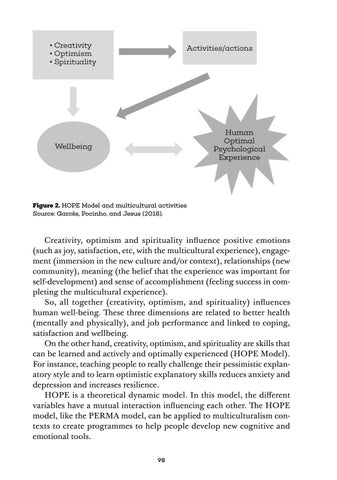
Figure 2. HOPE Model and multicultural activities Source: Garcês, Pocinho, and Jesus (2018).
Creativity, optimism and spirituality influence positive emotions (such as joy, satisfaction, etc, with the multicultural experience), engagement (immersion in the new culture and/or context), relationships (new community), meaning (the belief that the experience was important for self-development) and sense of accomplishment (feeling success in completing the multicultural experience). So, all together (creativity, optimism, and spirituality) influences human well-being. These three dimensions are related to better health (mentally and physically), and job performance and linked to coping, satisfaction and wellbeing. On the other hand, creativity, optimism, and spirituality are skills that can be learned and actively and optimally experienced (HOPE Model). For instance, teaching people to really challenge their pessimistic explanatory style and to learn optimistic explanatory skills reduces anxiety and depression and increases resilience. HOPE is a theoretical dynamic model. In this model, the different variables have a mutual interaction influencing each other. The HOPE model, like the PERMA model, can be applied to multiculturalism contexts to create programmes to help people develop new cognitive and emotional tools. 98 Ukázka elektronické knihy, UID: KOS510529
Multiculturalism from the perspective of positive psychology The PERMA model, and the whole positive psychology concept, with its emphasis on human strengths and virtues (Peterson & Seligman, 2004), and the HOPE model (human optimal psychological experiences) (Garcês, Pocinho, & Jesus, 2018), intersect with multicultural individuals’ strength and resilience rather than individual deficiencies and faults (the outdated “cultural deficiency” or “cultural deprivation” models) (Pedrotti & Edwards 2010). As noted above, positive psychology is the study of the human strengths that allow people to flourish. More than other sub-disciplines of psychology, positive psychology is culture-bound, perhaps because positivity requires a priori value judgment based on social norms and cultural context (Weiting, 2017). Consistent with the emergence of people ready for dialogue under pressure of multiculturalism, positive psychology is one of the major forces in mainstream psychology (Wong, 2013). The growing field of “multicultural” positive psychology is encouraging advances in the scientific research of developmental strengths and virtues, like forgiveness and courage. The value of these psychological virtues has been shown in accounts of some of the dynamics related to conflict resolution with migrants or indigenous populations like Hmong Americans (Sandage, Hill, Vang, & Henry, 2003). In fact, positive psychology, as a field of an applied social science, could offer theories, procedures, and training in solving some basic multicultural security problems (e.g. fear, injustice, intolerance, conflicts) (Farnicka & Pocinho, 2018). It involves virtues like courage that moves us to action by better instincts than fear (Lomas, 2015, 2018; Pury & Saylors, 2017). As Pettigrove (2017, p. 371) said, virtue is the “persistent excellence of character that could serve the good”.
How to face isolationism and improve positive multiculturalism? In practice, how can we receive the “stranger” (foreigner) and how can the “stranger” integrate himself in what is to him a “stranger culture” without fear? Balance is probably the best answer. You need to understand and accept foreign people (“stranger”) and their culture. On the 99 Ukázka elektronické knihy, UID: KOS510529
other hand, foreigners should adapt to the different (“stranger”) culture, and not only adapt, but understand and accept the new cultural context, as well as the social norms and rules where they want to live/stay. The mixed environment of multicultural contexts is richer than separated and isolated cultures. The separated cultures do not have the richness of knowing each other; they are alone in their separate compartments. Diversity caused by multiculturalism is the future of positive psychology because, essentially, it promotes the best context for the application of the models of positive psychology (e.g. PERMA and HOPE). Furthermore, positive psychologists hypothesise that the increase in cases of depression is the result of individualism. Overcoming individualism by realising higher values is an opportunity to achieve wellbeing. These skills can help banish depression, boost your immune system, better develop your potential, and make you happier (Seligman, 2006). Ultimately, you can prevent conflicts. As everyone knows, separatism is the basis of world conflicts and war. Humanity has naturally been progressing to globalisation. Furthermore, there is no globalisation without cultural-context diversity built by human psychological diversity. To cope with the tasks and demands of multiculturalisms, we need people with personality traits and strategies to dialogue with each other, to understand each other, to intercommunicate each other. For this humanitarian purpose, we need people of dialogue to confront isolationism and to improve positive multiculturalism.
Universal psychological needs and individual culture: the dialectical relationship Individuals have basic universal psychological needs and life expectations: wellbeing, happiness and to get a good life. These basic needs are expressed and attained regardless of the cultural background of each person. The system of values, beliefs, and concepts about wellbeing, happiness and a good life is different from culture to culture. There is a dialectic relationship between universal psychological needs and individual culture. Which strengths and values are developed and how is a situation determined by each culture. Cultural context also determines each person’s terminal and instrumental values. Culture and life experiences over a lifetime determine the values and perspective of happiness, wellbeing and the good life (hedonic versus 100 Ukázka elektronické knihy