Why Fresh Roasting Matters for Bali Coffee Beans
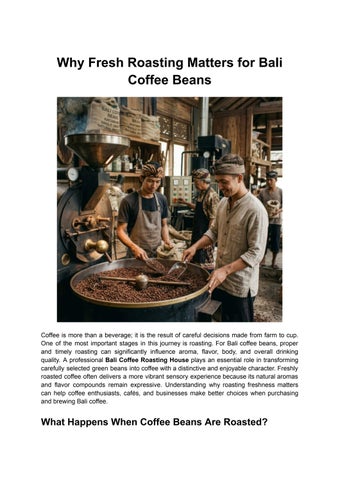
Coffee is more than a beverage; it is the result of careful decisions made from farm to cup. One of the most important stages in this journey is roasting. For Bali coffee beans, proper and timely roasting can significantly influence aroma, flavor, body, and overall drinking quality. A professional Bali Coffee Roasting House plays an essential role in transforming carefully selected green beans into coffee with a distinctive and enjoyable character. Freshly roasted coffee often delivers a more vibrant sensory experience because its natural aromas and flavor compounds remain expressive. Understanding why roasting freshness matters can help coffee enthusiasts, cafés, and businesses make better choices when purchasing and brewing Bali coffee.
What Happens When Coffee Beans Are Roasted?
Green coffee beans do not initially have the familiar aroma or flavor associated with brewed coffee. Roasting triggers a series of chemical reactions that transform the physical and sensory characteristics of the beans. During roasting, heat causes the beans to change color, expand, lose moisture, and develop complex aromatic compounds. The Maillard reaction and caramelization contribute to the flavors and aromas commonly associated with roasted coffee. The roasting temperature, duration, and development time all influence the final profile. A skilled roaster carefully controls these variables to highlight the qualities naturally present in the beans. Bali coffee, for example, may offer notes ranging from chocolate and caramel to citrus, spices, nuts, or tropical fruit depending on its origin and processing method. The goal is not simply to roast coffee until it becomes brown. Instead, professional roasting aims to create a balanced profile that allows the characteristics of the beans to shine. For consumers interested in fresh coffee, working with a reputable Bali Coffee Roasting House can provide access to beans that have been roasted with greater attention to consistency, freshness, and flavor development.
Why Freshly Roasted Coffee Tastes Better Fresh roasting matters because coffee is highly sensitive to time, oxygen, moisture, heat, and light. Once beans leave the roaster, they gradually undergo changes that can affect their aroma and taste. Freshly roasted beans contain aromatic compounds that contribute to the distinctive fragrance experienced when opening a bag or grinding the coffee. Over time, exposure to oxygen accelerates oxidation. This process can gradually reduce aromatic intensity and make the coffee taste flatter. Fresh coffee does not necessarily mean coffee roasted only a few minutes ago. In fact, coffee generally benefits from a short resting period after roasting. Freshly roasted beans release carbon dioxide during degassing, and allowing the coffee to rest can help produce a more balanced extraction. The ideal resting period depends on the roast profile, processing method, bean characteristics, and brewing technique. However, coffee that has been stored properly and consumed within an appropriate period after roasting typically offers greater aromatic complexity than beans that have been sitting for an extended time. This is one reason specialty coffee consumers pay attention to roast dates. Instead of focusing only on an expiration date, they can evaluate when the beans were actually roasted.
How a Bali Coffee Roasting House Preserves Flavor
A professional roasting environment provides greater control over the factors that determine coffee quality. Roasters can adjust temperature curves, airflow, roasting duration, and development time according to the characteristics of each batch. This level of control becomes particularly important when working with specialty Bali coffee beans. Beans from different regions or farms may respond differently to heat. A roasting profile that works well for one coffee may not produce the same result with another. Experienced roasters therefore evaluate green coffee before developing a suitable roast profile. They may consider bean density, moisture content, processing method, altitude, and expected flavor characteristics. Consistency also matters. Cafés and coffee businesses need their coffee to taste relatively consistent from one batch to another. A reliable roasting house can establish repeatable profiles while making adjustments when green coffee characteristics change. For coffee lovers, this means the roasting process becomes an important part of the overall quality equation. High-quality beans can lose their potential if they receive inconsistent or unsuitable roasting. For businesses looking to explore professionally roasted Bali coffee, Royal Hindia can also serve as a reference point when considering locally focused coffee roasting options and products.
Fresh Roasting and the Bali Coffee Experience Bali has developed a strong reputation as a destination for coffee culture, with cafés, specialty roasters, and coffee producers introducing consumers to beans from different Indonesian growing regions. The appeal of Bali coffee is not limited to its origin. Processing, roasting, grinding, brewing, and storage all contribute to the final cup. Fresh roasting connects these stages by ensuring that the characteristics developed during roasting remain available for the brewing process. A freshly roasted coffee may provide a more pronounced aroma immediately after grinding. Depending on the beans and roast profile, drinkers may notice greater clarity, sweetness, acidity, or body. This makes fresh roasting particularly valuable for specialty coffee. Rather than masking the characteristics of the beans with excessive roasting, a carefully designed profile can emphasize their natural qualities. For cafés, restaurants, hotels, and home brewers, freshness can therefore become an important consideration when selecting a coffee supplier. Buying freshly roasted beans in appropriate quantities can help reduce unnecessary storage time and maintain a more enjoyable flavor profile.
How to Get the Most From Freshly Roasted Coffee
Buying fresh beans is only the first step. Proper storage and brewing are equally important for maintaining coffee quality. Coffee should generally be stored in an airtight container or sealed bag in a cool, dry location away from direct sunlight and excessive heat. Refrigeration is usually unnecessary because temperature changes and moisture exposure can create additional problems. Grinding the beans shortly before brewing can also help preserve aroma. Whole beans generally retain their desirable characteristics longer than pre-ground coffee because grinding increases the surface area exposed to oxygen. Brewing variables matter as well. Water temperature, grind size, coffee-to-water ratio, extraction time, and brewing method can significantly influence the final cup. Different roast levels may also suit different preferences. Lighter roasts can emphasize acidity and origin characteristics, while medium roasts often balance sweetness, acidity, and body. Darker roasts tend to produce deeper, heavier flavors. By combining fresh roasting, proper storage, freshly ground beans, and suitable brewing techniques, coffee drinkers can experience more of the character that makes Bali and Indonesian coffee distinctive.
Conclusion Fresh roasting plays a crucial role in determining how coffee tastes and smells after brewing. Although green coffee quality and origin remain important, roasting determines how many of those characteristics become expressed in the final cup. A professional Bali Coffee Roasting House can provide the expertise and consistency needed to develop balanced roast profiles while helping consumers access coffee closer to its optimal freshness. For specialty coffee enthusiasts and businesses, paying attention to roast freshness can lead to a more aromatic, flavorful, and satisfying experience. Ultimately, freshly roasted coffee tastes better because it gives drinkers an opportunity to experience the aromas, sweetness, acidity, and body that careful sourcing and roasting have worked to develop. Choosing quality beans is important, but choosing them at the right stage of freshness can make an equally meaningful difference. For those exploring Bali coffee and professionally roasted Indonesian beans, Royal Hindia offers another point of reference for discovering locally oriented coffee products and roasting expertise.