The Rise of Premium Bali Coffee Beans in Modern Coffee Culture
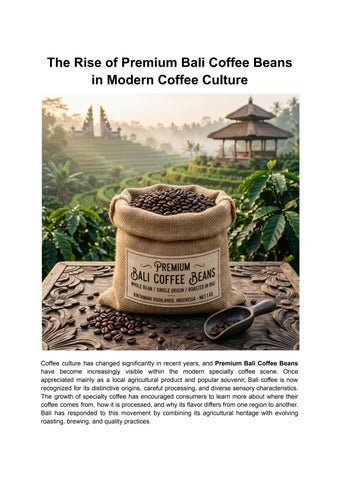
Coffee culture has changed significantly in recent years, and Premium Bali Coffee Beans have become increasingly visible within the modern specialty coffee scene. Once appreciated mainly as a local agricultural product and popular souvenir, Bali coffee is now recognized for its distinctive origins, careful processing, and diverse sensory characteristics. The growth of specialty coffee has encouraged consumers to learn more about where their coffee comes from, how it is processed, and why its flavor differs from one region to another. Bali has responded to this movement by combining its agricultural heritage with evolving roasting, brewing, and quality practices.
For coffee enthusiasts, this development offers an opportunity to explore Bali beyond its famous cafés and tourist destinations. Understanding how Balinese coffee entered modern coffee culture also reveals the relationship between farmers, roasters, baristas, and consumers. https://royalhindia.com/id/specialty-coffee-di-bali/
From Traditional Agriculture to Specialty Coffee Bali has a long relationship with coffee cultivation. Highland areas, particularly those around Kintamani and Mount Batur, provide growing conditions that support Arabica coffee production. Elevation, volcanic soil, rainfall, and local farming practices all contribute to the characteristics of coffee grown in these areas. Traditionally, coffee played an important role in agricultural communities. Farmers cultivated coffee alongside other crops, and production was closely connected to local livelihoods. However, the way consumers perceived coffee began to change as specialty coffee gained international attention. The specialty coffee movement placed greater emphasis on origin, traceability, processing methods, and cup quality. Instead of treating coffee simply as a commodity, buyers increasingly wanted to understand the story behind each batch. This created new opportunities for coffee-producing regions such as Bali. The shift did not happen overnight. Farmers, processors, and coffee businesses gradually adopted practices designed to improve consistency and preserve the natural characteristics of the beans. As these improvements became more visible, Bali coffee gained stronger recognition among specialty coffee enthusiasts.
Why Bali Coffee Fits the Modern Specialty Coffee Scene Modern specialty coffee culture values transparency and distinctive flavor. These characteristics align naturally with the potential of Balinese coffee. One important factor is origin. Coffee from different areas can display different flavor profiles because of variations in altitude, climate, soil, varieties, and processing techniques. Bali's highland coffee-growing regions offer a recognizable origin story that helps distinguish the beans in an increasingly diverse coffee market. Another factor is processing. Washed, natural, honey, and other processing methods can influence aroma, sweetness, acidity, and body. Producers and processors who carefully control these stages can help express different qualities from the same agricultural region. Roasting also plays a major role. Green coffee contains the potential for numerous flavor characteristics, but the roasting process determines how those characteristics develop.
Specialty roasters therefore pay close attention to temperature, timing, development, and batch consistency. These elements have helped transform the conversation around Bali coffee. Consumers are no longer interested only in whether a coffee is strong or mild. They increasingly ask about origin, roast profile, processing method, freshness, and brewing technique.
The Role of Roasters in Bali's Coffee Evolution The emergence of modern coffee culture has also increased the importance of professional roasting. A quality roasting house acts as a bridge between green coffee producers and consumers. Roasters evaluate green beans before creating a roasting profile. They may consider bean density, moisture, size, processing method, and expected flavor characteristics. The objective is to develop a roast that complements the coffee rather than simply applying the same profile to every batch. This approach has contributed to the growing appreciation of Premium Bali Coffee Beans. Instead of relying solely on branding or packaging, specialty coffee businesses can highlight the bean's origin, processing details, roast date, and sensory profile. Freshness has become another important consideration. Coffee gradually changes after roasting, which means storage and packaging can affect the drinking experience. Properly roasted and stored beans allow consumers to experience more of the characteristics developed during roasting. For cafés, restaurants, hotels, and specialty coffee shops, working with a knowledgeable roaster can also create greater consistency. A reliable supply of well-prepared coffee beans allows baristas to focus on extraction and presentation while maintaining a recognizable flavor profile. https://royalhindia.com/id/specialty-coffee-di-bali/
How Consumers Are Changing Bali Coffee Culture The rise of specialty coffee is not driven by producers and roasters alone. Consumers have become more curious and informed. Coffee drinkers today can easily explore brewing methods such as V60, AeroPress, French press, pour-over, and espresso. Each method can highlight different aspects of a coffee's character. A bright and aromatic Bali Arabica, for example, may produce a different experience when prepared through a clean pour-over method compared with espresso. This experimentation has created a stronger connection between coffee origin and brewing technique. Consumers may compare coffees from Bali with beans from Ethiopia, Colombia, Brazil, or other major producing regions. Such comparisons encourage a deeper understanding of how geography and processing influence flavor.
Social media and independent coffee communities have also contributed to this cultural shift. Roasters and cafés can introduce new beans, brewing techniques, and educational content to audiences beyond their immediate locations. As a result, Bali coffee has become part of a broader international conversation about specialty coffee. The island is no longer viewed only as a destination where visitors can drink coffee. It is increasingly recognized as a place where coffee is grown, processed, roasted, brewed, and appreciated through a modern specialty perspective.
What Makes Premium Bali Coffee Beans Relevant Today? The popularity of premium coffee reflects a wider movement toward quality and traceability. Consumers increasingly want products with a clear origin and a meaningful production story. For Bali coffee, this means the journey from farm to cup matters. Farming practices, harvesting, post-harvest processing, sorting, roasting, packaging, and brewing can all influence the final experience. Quality-focused production can also support stronger relationships throughout the coffee supply chain. When consumers understand the value of carefully produced coffee, there is greater room for businesses to communicate the work involved in producing high-quality beans. At the same time, premium positioning should be supported by actual quality. Attractive packaging alone cannot create a superior coffee experience. Bean quality, freshness, roasting precision, storage, and preparation all need to work together. This is why education remains important in modern coffee culture. Learning how to identify aroma, acidity, sweetness, body, and aftertaste allows consumers to appreciate coffee with greater awareness. It also gives Bali producers and roasters more opportunities to communicate what makes their coffee distinctive. https://royalhindia.com/id/specialty-coffee-di-bali/
Conclusion The rise of Premium Bali Coffee Beans reflects the broader evolution of modern specialty coffee culture. Bali's established coffee-growing traditions have gained new relevance as consumers increasingly value origin, traceability, processing, freshness, and craftsmanship. From highland farms to professional roasting houses and specialty cafés, every stage contributes to the final cup. The growing interest in Bali coffee demonstrates how a traditional agricultural product can develop a stronger identity within contemporary coffee culture.
As specialty coffee continues to evolve, Bali has an opportunity to build on its agricultural heritage while embracing modern approaches to quality, roasting, brewing, and sustainability. For coffee lovers, this makes exploring Balinese coffee more than simply enjoying a beverage—it becomes a way to understand the island through its beans, people, and evolving coffee traditions.