Fresh Coffee Beans Bali for Restaurants: More Than Just a Beverage Ingredient
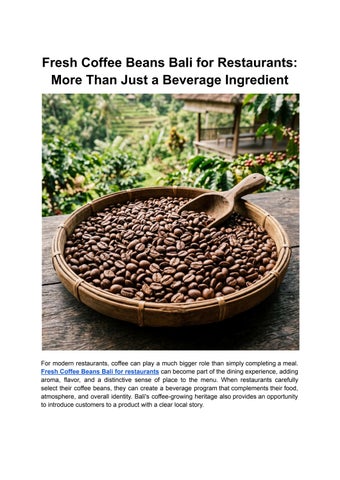
For modern restaurants, coffee can play a much bigger role than simply completing a meal. Fresh Coffee Beans Bali for restaurants can become part of the dining experience, adding aroma, flavor, and a distinctive sense of place to the menu. When restaurants carefully select their coffee beans, they can create a beverage program that complements their food, atmosphere, and overall identity. Bali's coffee-growing heritage also provides an opportunity to introduce customers to a product with a clear local story.
From the beans selected by the restaurant to the brewing technique used by its staff, every detail can influence how guests perceive the coffee. As a result, coffee deserves thoughtful consideration as part of a restaurant's broader culinary concept.
Why Coffee Matters to a Restaurant's Identity A restaurant's identity develops through many elements. Food, interior design, service, music, presentation, and even the aroma inside the dining room can influence the guest experience. Coffee fits naturally into this picture because it can connect the end of a meal with a memorable sensory experience. A carefully prepared espresso after dinner or a fresh pour-over during brunch can become part of how customers remember a restaurant. Fresh Coffee Beans Bali for a distinctive restaurant experience can also strengthen a restaurant's connection to its location. For businesses operating in Bali, serving locally sourced or locally associated coffee gives guests another opportunity to experience an element of the island's agricultural culture. The goal is not simply to offer coffee because customers expect it. Instead, restaurants can treat coffee as another expression of their culinary philosophy.
Choosing Fresh Coffee Beans for Restaurant Service Restaurants have different operational needs from home coffee drinkers. They may serve dozens or hundreds of cups each day, meaning consistency, freshness, availability, and ease of preparation all matter. Freshly roasted beans can provide a more vibrant aroma and flavor when stored and brewed appropriately. Restaurants should therefore consider roast dates, packaging, storage conditions, and supply schedules when selecting their coffee. The coffee's flavor profile also needs to fit the menu. A balanced coffee with notes of chocolate, caramel, nuts, or mild fruit can work well in a broad range of dining environments. More distinctive specialty coffee profiles may appeal to restaurants that want to create a dedicated coffee experience. Grinding is equally important. Beans should ideally be ground shortly before brewing to preserve their aromatic compounds. Restaurants also need appropriate grinders and equipment capable of maintaining a consistent grind size throughout service. These operational details demonstrate why Fresh Coffee Beans Bali selected for restaurant service require more consideration than simply choosing an attractive package.
Coffee as Part of the Guest Experience
Restaurants often focus heavily on food presentation, but beverages can influence the overall dining experience just as strongly. A well-prepared coffee can provide a satisfying conclusion to a meal. The sound of grinding, the aroma of freshly extracted coffee, and the presentation of the finished drink all contribute to the atmosphere. For brunch restaurants, coffee may become an important part of the daytime experience. For fine dining establishments, a carefully selected coffee menu can provide an elegant final course. Cafés and casual restaurants can take an even more central approach by making specialty coffee part of their primary offering. This flexibility makes coffee valuable for different restaurant concepts. A restaurant can also use coffee to create signature offerings. Examples include a house espresso blend, a rotating single-origin selection, or a signature coffee paired with a particular dessert. When coffee becomes integrated into the menu rather than treated as an afterthought, customers may begin to associate its flavor and presentation with the restaurant itself.
Building a Consistent Coffee Program A strong coffee identity requires consistency. Customers should be able to return to the restaurant and receive a similar experience each time. Several factors contribute to consistency, including bean quality, grind size, water temperature, extraction time, dose, and brewing equipment. Staff training also plays an important role. Restaurant employees should understand basic coffee preparation and know how to identify common extraction problems. For example, inconsistent dosing or an unsuitable grind can cause significant differences between cups. Regular equipment maintenance matters as well. Coffee oils and residue can accumulate inside grinders and espresso machines, potentially affecting flavor. Cleaning routines should therefore become part of daily restaurant operations. Fresh Coffee Beans Bali for consistent restaurant coffee work best when supported by an organized workflow. Fresh beans alone cannot guarantee excellent results; storage, grinding, equipment, recipes, and staff technique all need to work together.
Connecting Coffee with Food and Local Culture One of the most interesting opportunities for restaurants in Bali is the ability to connect coffee with local cuisine.
Bali has a strong culinary identity, and coffee can complement this identity in different ways. A restaurant might pair locally produced coffee with traditional desserts, create a coffee-inspired dessert, or offer a tasting experience that introduces guests to different processing methods. Coffee can also support storytelling. A menu description can explain the coffee's growing region, altitude, processing method, or flavor profile. This gives customers context and makes the beverage more engaging. For international visitors, local coffee can become part of their broader Bali experience. They may arrive expecting to explore the island's cuisine and leave with an appreciation for its coffee-growing traditions as well. This creates a connection between agriculture and hospitality. Restaurants become places where visitors can experience local products in a carefully designed culinary setting.
Turning Coffee into a Memorable Brand Element Brand identity often depends on consistency and recognition. A restaurant that develops a distinctive coffee offering can use it as one of several elements that customers associate with the business. For example, a restaurant might serve a specific origin coffee, develop a signature brewing style, or create a branded coffee-and-dessert pairing. The same coffee can then appear across breakfast, brunch, afternoon service, and after-dinner menus. Packaging can extend this identity beyond the restaurant. Some establishments may offer retail bags of their selected beans, allowing customers to recreate part of the restaurant experience at home. Fresh Coffee Beans Bali as part of a restaurant brand can therefore create value beyond individual cups. Coffee can connect menu design, customer experience, local sourcing, and brand storytelling. However, authenticity remains important. Restaurants should communicate accurate information about their coffee's origin and production rather than relying solely on Bali-inspired marketing language.
What Restaurants Should Look for in a Coffee Supplier Selecting the right supplier is an important part of creating a dependable coffee program. Restaurants should consider several practical factors. First, evaluate bean freshness and roasting consistency. Regular supply schedules can help restaurants maintain the quality of their coffee.
Second, consider product information. Clear details about origin, processing method, roast profile, and recommended brewing parameters can help restaurant teams understand what they are serving. Third, assess consistency of supply. A restaurant may need predictable quantities throughout the year, particularly if coffee represents a significant part of its beverage menu. Training and support can also be valuable. Suppliers who can provide brewing guidance, equipment advice, or staff education can help restaurants make better use of their beans. Finally, consider whether the coffee aligns with the restaurant's concept. The right coffee should complement the food, service style, target customers, and atmosphere.
Conclusion Coffee can become much more than a beverage ingredient in a restaurant. It can contribute to flavor, atmosphere, hospitality, storytelling, and brand identity. Fresh Coffee Beans Bali for restaurants that value quality provide an opportunity to connect the dining experience with Bali's coffee-growing heritage. With careful sourcing, proper storage, consistent brewing, and thoughtful menu integration, coffee can become a memorable part of the guest journey. For restaurants, the most important question is not simply whether coffee is available on the menu. It is how coffee fits into the larger experience. When the beans, preparation, presentation, and story work together, a simple cup can become a meaningful expression of what the restaurant stands for.