VISION ISSUE NINETEEN | SPRING 2026
Designing Proactive Video Surveillance Systems for K–12 Schools BALANCING SECURITY, FUNCTIONALITY, AND LONG-TERM FLEXIBILITY Security systems in K–12 schools are a top priority for administrators. State-ofthe-art video surveillance plays a critical role in detecting and preventing violence, vandalism, and other security incidents. Despite this important mission, many districts struggle to define their needs and determine the steps required to implement an effective system. As part of the design team, technology engineers must guide and collaborate with school stakeholders to develop a solution tailored to the district’s unique requirements. Establishing Project Goals and Security Priorities Kohler Ronan’s video surveillance design process begins with stakeholder engagement to determine project requirements. Valuable input is provided by K–12 administrators, security personnel, facilities staff, and local law enforcement. Key discussion topics include desired camera coverage throughout the campus, the level of integration with district-wide systems, and how the system will be used on a day-to-day basis. This collaborative assessment is essential to delivering a video surveillance system that meets both the district’s operational and security needs. Right-Sizing Coverage and Image Quality Beginning with camera coverage, the client identifies which areas require monitoring and to what level of detail. These decisions inform both camera placement and image quality requirements. For example, at a school’s main entry vestibule, a highresolution camera is typically installed to clearly identify faculty, staff, students, and visitors, capturing distinguishing details such as clothing or hairstyle.
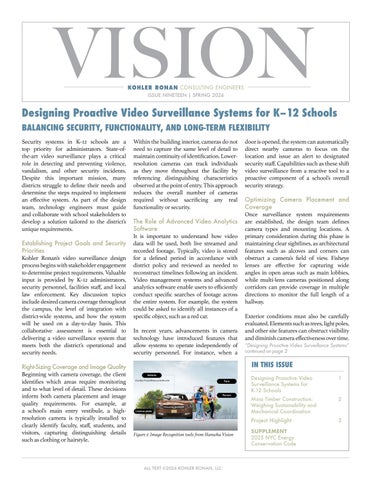
Within the building interior, cameras do not need to capture the same level of detail to maintain continuity of identification. Lowerresolution cameras can track individuals as they move throughout the facility by referencing distinguishing characteristics observed at the point of entry. This approach reduces the overall number of cameras required without sacrificing any real functionality or security. The Role of Advanced Video Analytics Software It is important to understand how video data will be used, both live streamed and recorded footage. Typically, video is stored for a defined period in accordance with district policy and reviewed as needed to reconstruct timelines following an incident. Video management systems and advanced analytics software enable users to efficiently conduct specific searches of footage across the entire system. For example, the system could be asked to identify all instances of a specific object, such as a red car. In recent years, advancements in camera technology have introduced features that allow systems to operate independently of security personnel. For instance, when a
door is opened, the system can automatically direct nearby cameras to focus on the location and issue an alert to designated security staff. Capabilities such as these shift video surveillance from a reactive tool to a proactive component of a school’s overall security strategy. Optimizing Camera Placement and Coverage Once surveillance system requirements are established, the design team defines camera types and mounting locations. A primary consideration during this phase is maintaining clear sightlines, as architectural features such as alcoves and corners can obstruct a camera’s field of view. Fisheye lenses are effective for capturing wide angles in open areas such as main lobbies, while multi-lens cameras positioned along corridors can provide coverage in multiple directions to monitor the full length of a hallway. Exterior conditions must also be carefully evaluated. Elements such as trees, light poles, and other site features can obstruct visibility and diminish camera effectiveness over time. “Designing Proactive Video Surveillance Systems” continued on page 2
IN THIS ISSUE Designing Proactive Video Surveillance Systems for K-12 Schools
1
Mass Timber Construction: Weighing Sustainability and Mechanical Coordination
2
Project Highlight 3 Figure 1: Image Recognition tools from Hanwha Vision
ALL TEXT ©2026 KOHLER RONAN, LLC
SUPPLEMENT 2025 NYC Energy Conservation Code