February 2026 16 The Tennessee Supreme Court Considers Potential Regulatory Reforms to Increase Access to Quality Legal Representation –Part 3 in a
Tenn. Sup. Ct. Order No: ADM2025-01403 7 Appealing
All That Glitters Is Not Gold
8 Legal Update
Who are “The People” for Purposes of the Second Amendment? Depends on Who You Ask. 19 Schooled in Ethics
“Just Throw it in There, Because, Hey, You Never Know!”
21 Management Counsel
Revising Firm Policies and Local Counsel Retention Agreements to Address AI
Meet Judge Andrea Andrews Kline: A Career Defined by Service, Integrity, and Justice
Around the Bar
An Invitation to Practice in Anderson County
How to Thrive
How to Reclaim Your Focus in a World of Distraction
Of Local Lore and Lawyers
Communicative Cats: The Curious Case of Blackie the Talking Cat
Three Stars
Snow, Schmutz, and Security Cameras
Hello My Name Is Breanna Query
Dicta
DICTA is published monthly (except July) by the Knoxville Bar Association. It is designed to offer information of value to members of the local bar association. The news and features should illustrate the issues affecting the bar and its members. The opinions expressed do not necessarily represent those of the Knoxville Bar Association.
All articles submitted for publication in DICTA must be submitted in writing and in electronic format (via e-mail attachment). Exceptions to this policy must be cleared by KBA Executive Director Tasha Blakney (522-6522).
Publications Committee
Executive Editor Sarah M. Booher
Executive Editor Wade H. Boswell, II
Executive Editor Melissa B. Carrasco
Executive Editor Summer McMillan
Sherri Alley
Parker Bohne
Elizabeth B. Ford
Joseph G. Jarret
F. Regina Koho
Matthew R. Lyon
Robin McMillan
Angelia Morie Nystrom
Katheryn Murray Ogle
Bridget Pyman
Cathy Shuck
Jimmy Snodgrass
Eddy Smith
Grant Williamson
Managing Editor Tasha C. Blakney
KBA Executive Director
The Rarest Minerals in the World
Well Read Finding Joy in Each Day
Privileged to Be in the Law
The Journey Behind the Desk: A Career in Legal Administration
Finds
Outside My Office Window Tippi Hedren: A Love Story
Tasha C. Blakney Executive Director
Tammy Sharpe Director of CLE & Section Programming Bridgette Fly Membership Coordinator
Alyx White Programs & Communications Coordinator
Tracy Chain LRIS Director
Jason Galvas LRIS Assistant
By: Rachel Park Hurt Arnett Baker Draper & Hagood, LLP
TENN. SUP. CT. ORDER NO: ADM2025-01403
On or before March 16, 2026, I will affix my signature to a letter submitted on behalf of the Knoxville Bar Association to the Tennessee Supreme Court. The letter will transmit the KBA’s formal response to Tenn. Sup. Ct. Order No: ADM2025-01403. For the reasons stated below, I will not sign this letter quickly or easily. And, for the reasons stated below, I need your help.
First, it is extremely important to me that the KBA’s response to Order No: ADM2025-01403 reflects the position of the members of this organization––all 2,200 of us. While perhaps it is a utopian belief that the KBA can capture the thoughts, beliefs, and opinions of all of our members, this is my goal, and I am committed to this endeavor.
Second, if you have not read Order No: ADM2025-01403, there is a much to talk about. The Order is five pages, but concludes with the following:
The Court is interested in reassessing its approach to regulation of the legal profession to ensure that all Tennesseans have access to affordable quality legal services. The Court therefore hereby solicits written comments from the Tennessee Board of Law Examiners, the Tennessee Access to Justice Commission, law schools and other educational institutions, the academic community, professional organizations, members of the Bar, and the public concerning the following issues:
(1) Whether the Court should modify, reduce, or eliminate its reliance on ABA accreditation in setting minimum educational requirements for applicants to the Tennessee Bar;
(2) Whether there are any practicable alternatives to ABA accreditation that the Court should consider;
(3) Whether there are less costly alternatives to the traditional three-year law school curriculum that would adequately prepare individuals for the practice of law;
(4) Whether the Court should consider adopting alternative pathways for admission to the Tennessee Bar—for example, by allowing applicants to satisfy the minimum educational requirements and/or examination requirement in part by completing an apprenticeship or serving with a legal aid organization;
(5) Whether the Court should consider modifying requirements for admission to the Tennessee Bar for those licensed in other States to promote interstate practice and mobility;
(6) Whether any legal services currently provided by lawyers could be competently provided by paraprofessionals and, if so, what qualifications, limitations, or subject matter restrictions the Court should consider imposing; and
(7) Whether the Court should modify, reduce, or eliminate regulations prohibiting non-lawyer ownership of law firms or fee sharing with nonlawyers.
Comments should take into consideration the Court’s goals of lowering barriers to entry into the
legal profession and ensuring the availability of affordable legal services to Tennesseans, while also ensuring the competency of Tennessee’s attorneys and safeguarding the public.
Tenn. Sup. Ct. Order No: ADM2025-01403.
As you can see, these are varied and far-reaching topics that the Court is considering. The Court’s actions (if any) on these topics will, no doubt, impact your practice of law and the practice of law going forward. And so, the KBA needs your input. Tasha (tblakney@knoxbar. org) and I (rachel@arnettbaker.com) are ready and willing to receive all of your comments, opinions, and thoughts…keeps those cards and letters coming.
As an aside, when I spoke with Chief Justice Bivins a few months ago about this Order, he encouraged not only the KBA to file a written comment, but all KBA members individually. If you have an opinion, the Court wants and needs to hear it. So, if you don’t want to email Tasha or me, please send your comment directly to Clerk James Hivner, Re: Regulatory Reform, 100 Supreme Court Building, 401 7th Ave. N., Nashville, TN 37219 or by email to appellatecourtclerk@tncourts. gov. Comments should include docket No. ADM2025-01403 and be submitted by March 16, 2026.
Third, I want the KBA’s response to be purposeful, well-reasoned, and articulate. Thankfully, there are much smarter members of this organization who will principally draft the KBA’s formal response. Specifically, the Professionalism Committee and the Access to Justice Committee are currently (and have been for a few months now) reviewing the topics listed in Order No: ADM2025-01403. These committees are engaged in review of the many (and I mean MANY) documents related to, discussing, critiquing, supporting, and otherwise analyzing the issues raised in Order No: ADM2025-01403. Those committees will make formal proposals to the Board of Governors, and, by March 16, the Board of Governors will finalize a response authorizing me to submit a comment on behalf of the KBA.
As of the date of preparing this President’s Message, there are already 79 pages of comments that have been filed with the Tennessee Supreme Court.1 I expect this number will at least triple by the March 16 deadline. I would certainly expect that the six law schools in Tennessee will submit comments, as will the other metropolitan Bar Associations, at a minimum. And, rightfully so, as Order No: ADM2025-01403 is soliciting comment on a wide array of topics for the sole purpose of trying to address critical access to justice issues that face many Tennesseans.
Certainly, I, and every other attorney that I have spoken with about this Order, have strong opinions about the topics and considerations set forth in the Order. This Order has been front and center in Knoxville for the last several months. The December Inns of Court meeting had lively discussion following a thorough CLE presentation on the Court’s Order Soliciting Comments. The December 2025, January 2026, and this edition of DICTA have featured articles on the Court’s Order and topics for comment. The focus is purposeful – there is a lot to discuss, and the Court’s actions (if any) would have significant impact on lawyers and non-lawyers, alike. So, please, read the Order, read DICTA, read the public comments, and reach out with your own thoughts, opinions, and comments. The KBA needs you!
By: Samyah Jubran Assistant District Attorney General Knox County District Attorney General’s Office
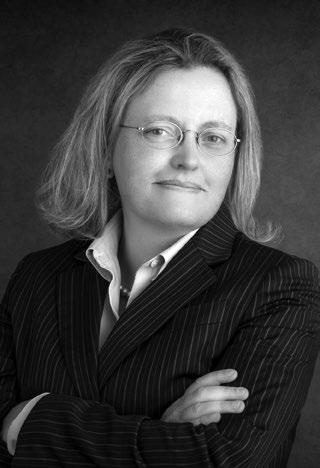
MEET JUDGE ANDREA ANDREWS KLINE: A CAREER DEFINED BY SERVICE, INTEGRITY, AND JUSTICE
Justice seeker, faithful public servant, frontline prosecutor, trailblazer, devoted mom, unwavering friend, animal lover, intuitive adventurer, Vol fan – these are just a few of the adjectives that describe my dear friend and now Judge, Andrea Andrews Kline.
I first met Judge Kline in 1992, our first year of law school at the University of Tennessee College of Law. Assigned to the same 1L section based on our last names, we quickly became friends and joined a study group together. In truth, our lifelong friendship was sealed the moment she expressed her fondness for my mom’s baklawa dessert and--more broadly--most Palestinian cuisine. From that point forward, Andrea became family, a constant presence through the milestones of our personal and professional lives.
As friends and colleagues, we have shared many adventures over the years – from traveling to the Florida Keys and hiking in Joshua Tree to watching the sun rise in Sedona and the sun set in San Diego. We attended legendary performances by Prince (a story for another day!) and Elton John, witnessed a once-in-a-lifetime solar eclipse, tracked a falling meteor, cheered on the Vols in the SEC Championship, and gained new insights at Elder Abuse and District Attorney conferences. Through it all, a few things have remained constant: joy in new experiences, her desire to grow and learn, her passion for teaching others, her compassion for all living creatures, and her unwavering commitment to improving the community around her.
A lifelong Tennessean, Judge Kline earned her Bachelor of Arts degree in Psychology, magna cum laude, from the University of Tennessee in 1991 and her Juris Doctor from the University of Tennessee College of Law in 1995. Even as a student, she was thoughtful, prepared, and deeply curious about the law’s impact on people’s daily lives – qualities that have defined her career ever since.
Now, more than 30 years later, I am proud to see my friend and former colleague become the newest member of the Knox County judiciary. Judge Kline was appointed by County Commission as a Knox County General Sessions Court Judge and sworn in on December 26, 2025, by Court of Criminal Appeals Judge Kyle Hixson at the Tennessee Supreme Court. She carries forward the legacy of esteemed jurists such as retired Sessions Court Judges, the Honorable Brenda J. Waggoner, and the Honorable Andrew Jackson VI, whose early retirement in December 2025 created this County Commission appointment opportunity. In his recommendation letter, Judge Jackson wrote: “Andrea Kline is extremely well qualified to be appointed to this position, and I am absolutely confident that if Andrea is appointed, she will carry out her duties with great distinction and be a credit to the judiciary here in Knox County and
Judge Kline began her legal career with the Law Office of Tony Farmer before becoming a solo practitioner. Her early practice included criminal defense for adults and juveniles, personal injury and domestic matters, and service as a guardian ad litem for vulnerable adults and children. This broad foundation gave her an early appreciation for the high stakes of courtroom decision-making and the lasting consequences those decisions have for families and communities.
In 2000, the prosecution bug bit and she never looked back! Andrea became General Kline, appointed as an Assistant District Attorney General by former DA Randy Nichols and later reappointed to that role in 2014 by District Attorney General Charme Allen. What followed was a 25-year career defined by diligence, integrity, and principled decisionmaking in some of the most challenging areas of the law.
Judge Kline’s extensive experience as an Assistant DA brings invaluable institutional knowledge to the bench, along with a deep commitment to upholding the constitutional rights of all who appear before her. She sees the humanity in every person, as demonstrated by her fairness in plea negotiations, thoughtful case evaluations, and respect for all viewpoints – qualities that will continue to serve her well in the fastpaced and people-centered world of General Sessions Court.
During her tenure with the District Attorney’s Office, Judge Kline prosecuted thousands of cases in General Sessions Court, as well as before the Grand Jury and in Criminal Court. We worked closely together in several assignments, including Misdemeanor Sessions and, most notably, the Elder Abuse Special Prosecution Unit. General Allen created this unit in 2014 and appointed Judge Kline to build and lead it –work that ultimately became a statewide model and significantly changed how elder abuse cases are investigated and prosecuted in Tennessee.
Judge Kline collaborated with stakeholders to co-author a statewide survey assessing the status of elder abuse in Tennessee. That research led to stronger legislation protecting elderly and vulnerable adults from abuse, neglect, and financial exploitation and the statutory creation of Tennessee’s Vulnerable Adult Prosecution and Investigation Teams
continued on page 20
the State of Tennessee.”
APPEALING
By: Robin McMillan Attorney at Law
ALL THAT GLITTERS IS NOT GOLD
Recently, the State Department switched to Times New Roman for diplomatic correspondence. Since 2023, the Department had been using Calibri. For nearly twenty years prior to 2023, Times New Roman was the Department’s font of choice. What caught my attention about this see-sawing between fonts is the expressed reasons for change and the maelstrom spurred by the switches. Secretary of State Rubio reportedly wrote that the previous administration’s “[s]witch[] to Calibri achieved nothing except the degradation of the department’s official correspondence. . ..”1 Degradation – that’s a pretty strong word about a font.
Times New Roman, Old School
People have strong opinions about fonts. But why are fonts so controversial? Let’s consider a bit of history. Times New Roman was birthed in 1929, for the British newspaper the Times of London. It was created by a team led by typographer Stanley Morison.2 Designed for newspaper, Times New Roman is narrower than many other fonts, allowing for more words per line. Its use in a daily newspaper made the font widely popular, but the font also drew criticism almost from its inception. In fact, Morison wrote in his memoir that he imagined William Morris3 might have said about Times New Roman: “As a new face it should, by the grace of God and the art of man, have been broad and open, generous and ample; instead, by the vice of Mammon and the misery of the machine, it is bigoted and narrow, mean and puritan.”4
And Now For Something Completely Different, Calibri
Calibri is much younger than Times New Roman. A Dutchman, Lucas de Groot, began creating Calibri in 2002, for Microsoft.5 De Groot was tasked with creating a font that would be easily readable on screens, even for people with dyslexia. The wide-spread use of screens had caused fonts like Times New Roman to fall out of favor due to serifs and varying spacing between letters - characteristics which sometimes become distorted on screens. The font designed by de Groot and released in 2006, with the Windows Vista operating system, is sans-serif with clear lines and curves. Calibri was not the only new font introduced at that time, but it became the most popular one. Yet Calibri has not escaped criticism. Some find the font overly-casual and too informal for important documents.
But does font choice matter when it comes to appellate filings? Rule 30 of the Tennessee Rules of Appellate Procedure directs that computer-generated-type in briefs be “not smaller than times new roman 12 point font.”6 The Rules of the Tennessee Supreme Court direct that “[a]ll pleadings, motions, and other papers presented for filing with the clerk or intended for the use of the court shall be . . . clearly and legibly handwritten in blue or black ink or shall be typewritten or printed in black ink . . . in type face essentially equivalent to Times New Roman or
Helvetica . . ..”7 Does anyone even use a typewriter anymore? And what does essentially equivalent mean?
What the Helvetica?
On the creation time-line, Helvetica falls between Times New Roman and Calibri. It was designed in Switzerland in 1957, by Max Miedinger and Eduard Hoffmann.8 It is a clean, balanced, sans-serif font that quickly became popular for use in corporate logos.9 Helvetica is easy to read at varying distances making it a popular choice for signs in public spaces such as airports, train stations, and museums.10 Helvetica can even boast that a documentary was made about it!11 How many fonts can say that?
What Is One To Choose?
Times New Roman is a serif font designed to fit more letters on a newspaper page. Helvetica is a sans-serif font designed to be clean, modern, and easily-readable, even at a distance. What do these two fonts have in common? Little that I can see. So, I suppose that means one may use a font essentially equivalent to Times New Roman or one essentially equivalent to Helvetica, which widens the field immensely.
But are controversies over font choice merely elevating style over substance? After all, we are taught not to judge a book by its cover. An appellate filing in a super attractive font can be completely lacking in substance. The reverse can also be true. Consider that the filings by Gideon in the United States Supreme Court were handwritten, not typed or printed in a fancy font. Yet, these filings contained arguments that led to land-breaking legal precedent. I am not suggesting that attorneys file handwritten documents in the appellate courts. Rather, my point is that choosing one font over another is not as important as the words one chooses to write. I am going to go out on a limb here, but I feel secure that the branch will not break. I have met and conversed with many judges, and I am certain that none of them would say anything like: “Oh, this is in _____12 font. I don’t like _____ font, so I’m not going to read this.”
As no font is mandated, my suggestion for attorneys filing documents in the Tennessee appellate courts is to use one of the fonts named in the rules, i.e., Times New Roman or Helvetica. You cannot go wrong with a font named as usable in the rules. Or you could use Old English Text, or perhaps Vivaldi, or go wild and use Wingdings13 - as long as you are prepared to show that your choice is essentially equivalent.
By: Regina Koho Tennessee Valley Authority Office of the General Counsel
WHO ARE “THE PEOPLE” FOR PURPOSES OF THE SECOND AMENDMENT? DEPENDS ON WHO YOU ASK.
On December 15, 2025, the Sixth Circuit decided United States v. Escobar-Temal, 1 which, at first blush, presents a relatively straightforward question—may an individual who is unlawfully present in the United States possess a firearm? That question appears to be answered by 18 U.S.C. § 922(g)(5)(A), which prohibits “an alien . . . [who] is illegally or unlawfully in the United States” from doing so. But, as is so often the case in the law, things are not as straightforward as they seem. Defendant Milder Escobar-Temal, a citizen of Guatemala who had been unlawfully present in the United States for over a decade, argued that his conviction violated the Second Amendment, which protects the “right of the people to keep and bear arms.”2 Are individuals such as Escobar-Temal part of “the people”? As this decision highlights, the issue is one that “carries implications that go far beyond the scope of the Second Amendment.”3 And the conclusion depends on who is answering the question.
Background
Since entering the United States without status, Escobar-Temal had lived in Nashville, “working steadily as a flooring contractor.”4 Other than a charge for driving without a license, he had no criminal record and was married with two children who were United States citizens.
In late 2022, Nashville police responded to a complaint from Escobar-Temal’s wife, who alleged that he was sexually abusing her daughter (Escobar-Temal’s stepdaughter).5 During the search of the residence, police found three firearms belonging to Escobar-Temal.6 He was subsequently charged with unlawful possession of a firearm.7
Escobar-Temal moved to dismiss the indictment, arguing that § 922(g)(5)(A) was unconstitutional under the Second Amendment.8 The government opposed the dismissal on two grounds. First, it contended that “the people” covered by the Second Amendment did “not encompass non-citizens.”9 Second, it argued that “longstanding historical tradition of disarming groups analogous to lawfully and unlawfully present immigrants” rendered the statute constitutional.10 The district court did not explicitly rule on the government’s first argument but agreed that the statutory provision was constitutional due to “a tradition of disarming those who did not swear allegiance to the state.”11 Escobar-Temal then entered a conditional guilty plea that allowed him to appeal the denial of his motion to dismiss the indictment.12
Legal Framework
Escobar-Temal required the Sixth Circuit to engage in two related analyses. The first was whether § 922(g)(5)(A) violated the Second Amendment. This question is governed by New York State Rifle and Pistol Association v. Bruen 13 Under Bruen, a court first decides whether “the Second Amendment’s plain text covers the defendant’s conduct,”14 and if it does, the government then has the burden to “justify its regulation by demonstrating that it is consistent with the Nation’s historical tradition of firearm regulation.”15
The second—which has broader implications for those not lawfully present in the United States—involved deciding whether the phrase “the people” in the Second Amendment covers individuals like EscobarTemal. In United States v. Verdugo-Urquidez, the Supreme Court
analyzed this question, albeit in the context of the Fourth Amendment and in reference to a search of property in a foreign country owned by “a nonresident alien.”16 Although finding that the Fourth Amendment was inapplicable, the Verdugo-Urquidez Court nonetheless observed that the phrase “the people” means “individuals who are ‘part of a national community’ or who have deeply established connections with the United States.”17
In addition to the Fourth Amendment, “the people” also appears in the First, Second, Ninth, and Tenth Amendments,18 so VerdugoUrquidez has become important because it “makes clear that immigration status alone is not sufficient to exclude a noncitizen from [certain] constitutional protections.”19
The Majority
The majority opinion, delivered by Judge Jane B. Stranch and joined by Judge Stephanie D. Davis, initially decided whether individuals like Escobar-Temal fell within the ambit the Second Amendment. Judge Stranch concluded that “the people” were not only United States citizens but also those, as outlined in Verdugo-Urquidez, with sufficient connections to the country such that they are considered part of the national community.20
She bolstered this conclusion with historical context,21 noting at the outset that, at the founding, “the concept of illegal immigration did not exist as we know it today,” so the determination of who constitutes “the people” “cannot rely on a contemporary understanding of illegal immigration.”22 Because “restrictions on immigration were minimal” during the relevant timeframe, Judge Stranch concluded that “the people” is “best understood as having encompassed all individuals present in the United States who were loyal to the country and had consented to be governed by its newly established laws.”23
Although concluding that Escobar-Temal had sufficient connections to the national community to be covered by the Second Amendment,24 the majority found that there was a historical tradition of disarming groups that lack a formal relationship with the government, such as unlawful residents like Escobar-Temal, and upheld the conviction.25
The Dissent
Judge Thapar concurred in the judgment,26 but filed a lengthy dissent explaining why he believed that the majority’s analysis regarding who “the people” are for constitutional purposes was wrong.
In contrast to the majority, Judge Thapar read the historical evidence27 to demonstrate that “the people” was “a term of art to refer to the collective body of citizens,”28 and thus the right to bear arms was reserved for this group alone. He went further, contending that the Constitution’s text and historical context indicated that “references to ‘the people’ throughout . . . uniformly point to American citizens.”29
Although acknowledging the existence of Verdugo-Urquidez, Judge Thapar nonetheless criticized the majority’s reliance on it, noting that it “deliberately avoided deciding whether illegal aliens can assert constitutional protections”30 and, perhaps more importantly, did “not pretend that its analysis was rooted in historical evidence, which
continued on page 25
AROUND THE BAR
By: Hon. Ryan M. Spitzer Circuit and Criminal Court Judge 7th Judicial District (Anderson County, TN)
AN INVITATION TO PRACTICE IN ANDERSON COUNTY
In one of his earliest works, Two Gentlemen of Verona, William Shakespeare describes a scene where family friend, Panthino, is sent by a young man’s uncle to encourage his father, Antonio, not to waste his son Proteus’ youth at home, but rather to let him explore and gain knowledge of the world by sending him to the emperor’s court. As Panthino explains:
He (the Uncle) wonder’d that your lordship Would suffer him (Proteus) to spend his youth at home, While other men, of slender reputation, Put forth their sons to seek preferment out: Some to the wars, to try their fortune there; Some to discover islands far away; Some to the studious universities. For any or for all these exercises, He said that Proteus your son was meet (suitable), And did request me to importune you
To let him spend his time no more at home, Which would be great impeachment to his age, In having known no travel in his youth.
To which the father Antonio replied: Nor need’st thou much importune me to that Whereon this month I have been hammering. I have consider’d well his loss of time And how he cannot be a perfect man, Not being tried and tutor’d in the world: Experience is by industry achieved And perfected by the swift course of time. Then tell me, wither were I best to send him? (emphasis added)
And Panthino responded:
I think your lordship is not ignorant How his companion, youthful Valentine, Attends the emperor in his royal court.
Twere good, I think, your lordship sent him thither: There shall he practice tilts and tournaments, Hear sweet discourse, converse with noblemen. And be in eye of every exercise
Worthy his youth and nobleness of birth. As Panthino and Antonio both agree, it is necessary for this young man (or in our case, a young attorney), to go out and experience the world. And while this passage is often quoted for the part about “Experience is by industry achieved, and perfected by the swift course of time,” it offers so much more value to us as lawyers: By “attend[ing] the emperor in his royal court” (or the Judge in his or her civil or criminal court), “there shall [the young attorney] practice tilts and tournaments” (arguments and trials), “hear sweet discourse” (of countless other experienced lawyers) and “converse with noblemen” (lawyers, judges, and professionals from all walks of life), “and be in eye of every exercise” (before the court and the juries) “worthy [his or her] youth and nobleness of birth” (into the practice of law). For “[a person] cannot be a perfect [lawyer] not being tried and tutor’d in the world.”
Now, having used the Bard of Avon’s eloquent prose to thoroughly convince you of the necessity of venturing out (or sending your firm’s young lawyers out) into the world to gain invaluable experience, let me now turn to encouraging you more directly, but hopefully no less effectively, to make a brief but fruitful journey to nearby Anderson County where you can experience firsthand the grandeur and wonderment of not one, not two, but six separate courts (Criminal/ Circuit, Chancery, General Sessions in both Clinton and Oak Ridge, Juvenile Court, and Child Support Court.).
But all flowery language aside, Anderson County really is a hidden gem of opportunities for young and experience lawyers alike. Consider the following:
1. Proximity: You can easily drive to Anderson County in fifteen to twenty minutes (about the same time it takes to get from downtown Knoxville to Turkey Creek).
2. Opportunity: We have several newer judges who are eager to accept new lawyers to take appointed cases. And like many courts, we often struggle to find enough attorneys to go around.
3. Diversity of Cases: In Anderson County you can ask to take any kind of appointments you’re interested in: criminal cases (either misdemeanors or felonies, depending on your comfort level and experience), Violations of Probation, Guardian Ad Litem appointments, either in Juvenile or Chancery cases, Conservatorships, etc.
4. Expanded pool of Potential Clients: Who doesn’t need a nearby county of roughly 80,000 people to be a potential source of new clients? Come to Anderson County. Take some appointments. Be seen. Let folks know who you are. Do a good job. And then those folks send their friends and family to you when they need to hire an attorney. As an experienced lawyer told me when I was just starting out, “Word of mouth is the best form of advertising.”
5. Build Trust and Rapport with the Courts: As you take appointed cases and demonstrate the areas in which you are strongest and most comfortable, you can become a sort of go-to attorney for certain types of cases that suit your practice preferences.
6. Grow your Skillset: As a young lawyer, one of the very best things you can do is to just be present in different Courts. And pay attention. Put your phone down. Better yet, put it away in your pocket or purse. And really watch what’s happening. Sure, some of it’s boring: a series of arraignments or continuances. But really watch the lawyers. Watch how they dress, how they stand, how they speak, the pace and tone of their voices. See how slowly or quickly they get heated, how unbalanced they can make the other side. Really listen to the stories from the old lawyers. There’s wisdom in their words.
I hope that you’ve found this article useful and that you’ll genuinely consider coming to Anderson County to take some appointed cases. And while you’re here, check out some of our local cuisine. See you soon!
HOW TO THRIVE
By: Emily Heird, LPC/MHSP Vantage View Coaching
HOW TO RECLAIM YOUR FOCUS IN A WORLD OF DISTRACTION
One of the most frequent mental performance skills I worked on with my lawyer coaching clients in 2025 was focus and attention. While we often discuss these as mere tools for clearing a to-do list, attention is far more than a productivity hack. It is the very lens through which we experience our lives. As legal professionals, your most valuable commodity is your brain and your cognitive presence.
Certainly, harnessing your focus is essential for efficiency and time management, but its impact on well-being is even more profound. When we fail to manage our attention, we fall victim to “continuous partial attention,” a state of perpetual distraction that spikes cortisol, increases cognitive load, and paves the way for burnout. By being intentional about where you direct your mental energy, you become a better advocate and, more importantly, you become a more resilient, connected human being.
The Illusion of “No Time”
We often lament that we don’t have enough time for the things that actually nourish us, yet we rarely acknowledge how much of our attention is stolen without our awareness. We say we are too exhausted to read a book after a long day of cognitive work, yet we spend hours mindlessly scrolling through feeds or consuming news articles under the guise of “staying informed.”
According to the American Time Use Survey, the average person has about five hours of leisure time a day. The reality is that we often have more time and cognitive capacity than we recognize; it is simply not being harnessed. Our focus is being fragmented by competing demands that we aren’t consciously choosing. To thrive, we must move from being passive consumers of distraction to being active directors of our own awareness.
The High Cost of Fragmentation
To master focus, we must accept a biological reality: we cannot truly split our attention. Unless an activity is automatic, such as walking, dividing attention comes at a significant “switching cost.” Every time you look away from a brief to check a notification, you aren’t just losing seconds; you are draining the fuel required for deep flow.
Furthermore, attention is about choice. What we focus on over time shapes our reality. If we focus exclusively on adversarial conflict, our world feels narrow. If we broaden our aperture to include “unexpected delights,” we find a sense of wholeness that the law alone cannot provide. As we move into 2026, here are some strategies to help you reclaim your mental agency.
Practices for a Focused Year
1. Monotask for clarity. Multitasking is a myth that increases errors and stress. Commit to working on one task until a natural stopping point. This allows you to go deeper into the work with higher accuracy, which is a cornerstone of your reputation.
2. Schedule daily reading. Replace mindless scrolling with a book that captivates you. Reading reduces stress and builds working memory and vocabulary while engaging the imagination in a way that digital “microcontent” cannot.
3. Engage with high-substance material. Counteract “brain rot” by choosing material with substance. Read a poem or an essay or listen to a lecture. Shallow content offers a fleeting dopamine hit, but inspiring material leaves an enduring impression that changes how you think and feel.
4. Practice sensory presence in nature. Nature soothes the nervous system. Whether it is a local park or a backyard, engage your senses. This sensory grounding is a powerful antidote to the abstract, often adversarial world of legal theory and conflict.
5. Protect your sleep. Our minds need fuel to resist distractions. Get off your phone 1-2 hours before bed. (Put your phone on a charging station by the wall, like phones used to be attached to the wall in 1995). A wellrested brain can solve in one hour what a fatigued brain struggles with for three.
6. Take “true” breaks. Checking email is not a break; it is more “input” for an overloaded brain. To replenish your resources, take a walk or stare out the window for a few minutes. Allow your mind the space to recover without a screen.
7. Phone-free time near children. Children model their behavior after us. When we are constantly on our devices, we teach them that the digital world precedes the human one. Unless it is an absolute necessity, put the phone down and be present.
8. Name three daily joys. Before sleep, identify three things that made you happy that day. This trains your brain to “scout” for the positive, shifting your default attention away from the “threat detection” mode common in legal practice.
10. Reach out and reconnect. In-person interaction provides social cues that digital communication lacks. Share a meal with a friend; it is one of the most reliable ways to boost happiness and mental health.
11. Psychological detachment. We must mentally “turn off” from work to de-stress. This detachment allows us to re-engage the next day with more energy and focus. Create a clear boundary between your professional obligations and your personal life.
12. Practice the pause. Before reaching for your device during an idle moment, pause and ask why. Choose a healthier behavior instead— a hobby, walk, or simply relaxing. By doing less of the mindless, we enable ourselves to do more of the meaningful.
13. Actively seek optimism. In an adversarial profession, pessimism is an easy default. Choosing optimism is a daily challenge, but it begins with gratitude for your loved ones and your own spirit. It is ultimately about choosing what you pay attention to.
The Path Forward
We cannot entirely give up the digital tools of the modern working world, but we can change how and when we use them. As we enter 2026, let us resolve to be more intentional. When we reclaim our attention, we reclaim our lives. I hope these strategies help you experience a healthy and rewarding year. May this be your best and most focused year yet.
TENNESSEE CHAPTER
Knoxville Area Members recognized for Excellence in the field of Mediation or Arbitration
Adrienne ANDERSON (865) 249-8011
James LONDON (865) 637-0203
Scott TAYLOR (865) 546-8030
Bob ARRINGTON (423) 723-0402
Richard MARCUS (423) 756-0414
Mark TRAVIS (931) 252-9123
Gail ASHWORTH (615) 254-1877
David NOBLIT (423) 265-0214
William VINES (865) 637-3531
Paul HOGAN Jr. (865) 546-2200
Robert NOELL (865) 215-1023
Howard VOGEL (865) 546-7190
Dana HOLLOWAY (865) 643-8720
Sarah SHEPPEARD (865) 546-4646
Jeffrey WARD (423) 639-6811
Check preferred available dates or schedule appointments online directly with the state’s top neutrals
Check preferred available dates or schedule appointments online directly with the state’s top neutrals
TennesseeMediators.org is free, funded by members
TennesseeMediators.org is free, funded by members
OF LOCAL LORE AND LAWYERS
By: Joe Jarret, J.D., Ph.D. University of Tennessee
COMMUNICATIVE CATS: THE CURIOUS CASE OF BLACKIE THE TALKING CAT
Introduction:
Ever since I was a child, I had the tendency to attribute human characteristics or behavior to the dogs and cats that wandered into my life. Truth be told, I continue to anthropomorphize these loyal, beloved creatures, whether they live in our house or not. Admittedly, I haven’t gone as far as to insist that our dogs and cats answer me as a human would, despite the conversations I initiate with them. Thus far, these have only been one-sided conversations, which is why I find the case of “Blackie the Talking Cat” 1 so intriguing. You see, Blackie’s humans insisted that their feline was able to speak several words and phrases in the English language, and they capitalized monetarily on this talent. This claim was ultimately litigated in federal court. And, as we shall see, the court was not at all surprised that a talking cat could generate public interest and income for that matter.
About a Cat:
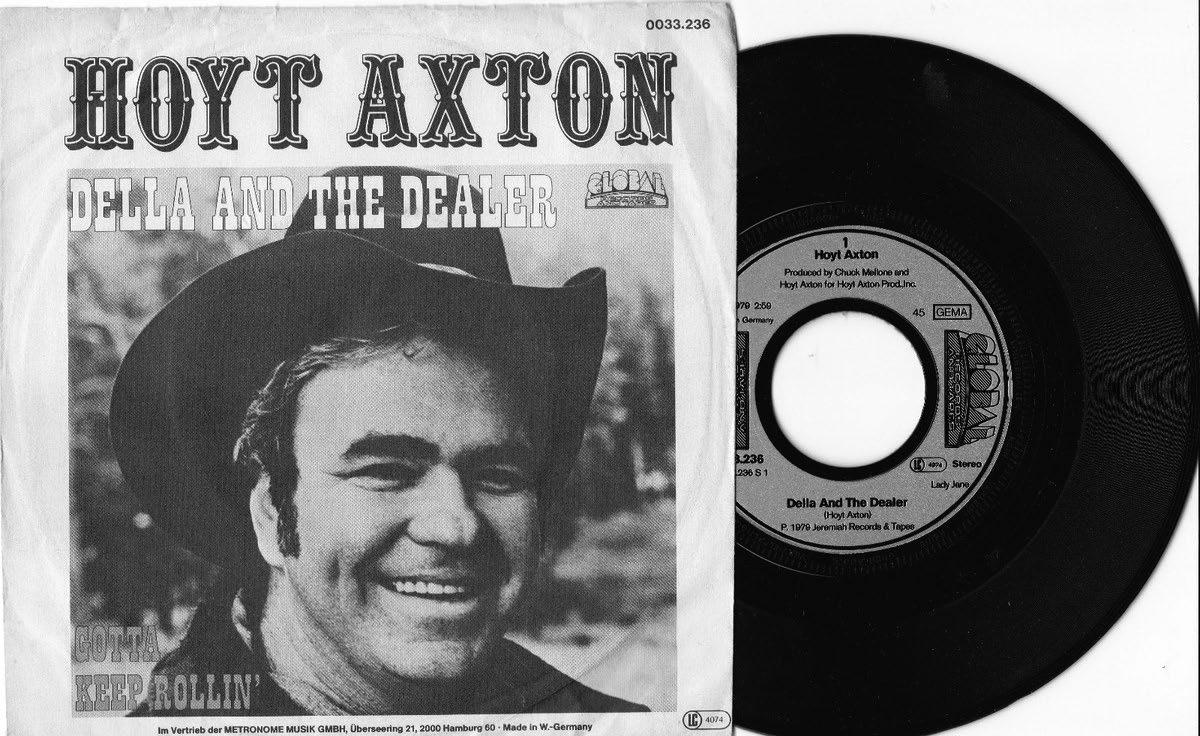
In 1979, country western singer Hoyt Axton released a song entitled, “Della and the Dealer.” 2 In the refrain, he sang about a cat named Kalamazoo and had this to say: “If that cat could talk, what tales he’d tell about Della and the Dealer and the dog as well, but the cat was cool, and he never said a mumblin’ word.” The same could not be said about the loquacious Blackie the Talking Cat. Carl and Elaine Miles were a married couple who owned Blackie, a cat who could allegedly speak English. The partnership between Blackie and the Miles family began somewhat auspiciously in a South Carolina rooming house. According to Carl Miles: “Well, a girl come around with a box of kittens, and she asked us did we want one. I said no, that we did not want one. As I was walking away from the box of kittens, a voice spoke to me and said, “Take the black kitten.” I took the black kitten, knowing nothing else unusual or nothing else strange about the black kitten. When Blackie was about five months old, I had him on my lap playing with him, talking to him, saying I love you. The voice spoke to me saying, “The cat is trying to talk to you.” To me, the voice was the voice of God. “ 3
the big time was a $500 appearance on “That’s Incredible”4 in 1980, he generated steady income for Carl and Elaine by talking to strangers on the street in return for contributions. In May 1981, they began exhibiting Blackie on the streets of Augusta, Georgia. Blackie would meow “I love you” or “I want my Mama” to passers-by, who would give small change to the couple. About a month later, police warned the couple that they risked jail time if they did not obtain a $50 business license.
Blackie Goes to Court:
The Mileses ultimately purchased the license but sued the City of Augusta (Hereinafter “The City”), in federal court on grounds that the city’s licensing law was vague, overbroad, and violated their right to free speech and association. Specifically, the plaintiffs argued that neither the City charter, which allowed the City Council to require a license for any “occupation, trade or business,” nor the license ordinance, made any reference to talking animals. The court was unpersuaded by this argument, finding that under its charter, the City was empowered to impose license taxes, and may, by ordinance, require any person, firm, or corporation to pay a license tax upon any occupation, trade, or business followed or carried on within the corporate limits of the City. 5 The court ultimately ruled in favor of the City, granting summary judgment in the process. 6
Conclusion:
This quirky case seemed to bring out both the serious and playfulness in people exposed to it. It would seem District Court Judge Dudley H. Bowen, Jr.’s comments fell into the latter category. He opined, in pertinent part, “For hundreds, perhaps thousands of years, people have carried on conversations with cats. Most often, these are one-sided and range from cloying, mawkish nonsense to topics of science and the liberal arts. Apparently, Blackie’s pride does not prevent him from making an occasional response to this great gush of human verbiage, much to the satisfaction and benefit of his ‘owners.’ Apparently, some cats do talk. Others just grin.”
1 Miles v. City Council of Augusta, Georgia, 710 F.2d 1542 (11th Cir. 1983.
3 Miles v. City Council of Augusta, Ga., 551 F. Supp. 349 (S.D. Ga. 1982).
The plaintiffs were entrepreneurs in the true American sense, who, based upon the above revelation, made a living marketing Blackie’s unique vocal abilities to the public. Although the closest Blackie ever came to making
4 That’s Incredible! was an American reality television show that aired on the ABC television network from 1980 to 1984.
5 City of Augusta, Georgia Ordinance No. 5006.
6 Miles v. City Council of Augusta, Ga., 551 F. Supp. 349 (S.D. Ga. 1982).
THREE STARS
By: Melissa B. Carrasco Carrasco Trump, PLLC
SNOW, SCHMUTZ, AND SECURITY CAMERAS
In February 2021, the City of Nashville and much of Middle Tennessee saw what the National Weather Service called “significant freezing rain, sleet, and snow” followed by “the most widespread heavy snowfall Middle Tennessee had seen in 5 years,” followed by “another wave of light snow.”1 For some, a heavy snow is pure delight.2 Others see snow through the lens of E. E. Cummings, “Rain is no respecter of persons; the snow doesn’t give a soft white damn whom it touches.”3
Whatever your perspective of snow may be, I think we can all agree that a heavy snowfall is particularly difficult on parents of very young children. After all, little ones still need diapers and formula and cold medicine (they always get a fever), and that means, no matter how you feel about the weather, no matter how much you just want to curl up on the couch under a blanket —inevitably, you are going to put on your shoes and jacket and slog through the snow and ice to get supplies.
That is precisely what Mr. Cedric Jones found himself doing on the wintry morning of February 19, 2021. His baby was close to running out of formula and diapers, so he put on his shoes and his jacket and carefully navigated the treacherous roads from his house to the Kroger on Lebanon Road in Hermitage, Tennessee.4 When he arrived, he found that parts of the parking lot had been scraped, with snow and ice piled up like a miniature version of Mount LeConte. A pathway to the door had been scraped, and Mr. Jones made his way into the Kroger.5
He found the formula and diapers (we have no way of knowing if it was the kind that his girlfriend told him to get when she sent him to the store, but let’s just hope for the best), and he headed back out into the parking lot. This time, he walked slightly to the left of the route he had taken to enter the store, and this time, he slipped and fell on the ice near his car (we have no way of knowing if the formula and diapers survived, but we’ll hope for the best yet again).6
Mr. Jones said he “was not distracted by traffic or anything else” and that he “looked straight ahead” and walked “at a steady, moderate pace.”7
Unfortunately for Mr. Jones’ legal team, during his deposition, Mr. Jones stated “that he could have taken the same route he used to enter the store but ‘wasn’t thinking’ as he exited the store.”8 So, Kroger filed a motion for summary judgment asserting that there was no breach of duty (there was a scraped path from the parking lot to the door) and comparative fault (if Mr. Jones “wasn’t thinking” when he left the store, he must have been more than 50% at fault).9
The trial court found for Kroger on both grounds. It reviewed the security camera footage of Mr. Jones’ grocery trip and Mr. Jones’ deposition testimony and determined, “Snow and ice are regular winter occurrences, which are common knowledge, and the duty of the property owner is to provide a safe means of ingress and egress, which it did in this instance.” It also held “Mr. Jones had an alternative clear route, which he chose not to use for unknown reasons, other than not thinking.”10 This means that reasonable minds could not differ as to whether Mr. Jones was more than 50% at fault, and so, Mr. Jones’ claims were dismissed. He appealed.11
The issues on appeal seem fairly basic: (1) did Kroger breach its
duty of care and (2) was Mr. Jones more than 50% at fault. But, what gives this particular appeal a twist was the record on appeal and what the Court of Appeals did with it. Keep in mind that, “[w]hen a trial court’s findings are based on documentary evidence such as depositions, transcripts, and video recordings, this Court’s “ability to assess credibility and to weigh the evidence is the same as the trial court’s.”12
First, the Court of Appeals examined the question of duty. For that, they examined two things – snow & Schmutz. Certainly, it is well-settled that “natural accumulations of snow and ice” are “among the normal hazards of life.”13 It is also well-settled that the owners of property do not have a duty “to continuously remove snow or ice in the middle of an ongoing winter storm.”14 With that in mind, the Court examined the snowfall records and determined that the snow had finished falling the night before Mr. Jones’ fall. It also reviewed the affidavit of Mr. David Schmutz, “an expert with more than twenty-five years of experience clearing snow and ice from commercial properties.”15 Mr. Schmutz opined that Kroger should have applied 117.5 bags of deicing materials every day in order to keep the parking lot clear. But, Kroger only applied 40-45 bags.16 So, there was a dispute of fact regarding whether Kroger had applied an appropriate amount of deicing materials. The Trial Court also found a dispute of fact on this issue, but determined it was not material.17 The Court of Appeals disagreed: “this evidence creates a question of fact regarding whether the path Mr. Jones used to enter the store was clear and safe.”18
For the question of comparative fault, the Court took us back to McIntrye v. Balentine and our 1L torts class (Thank you, Professor King!).19 It then reviewed the tape, but, the Court of Appeals didn’t find the videos to be so clear. In fact, the Court found the videos “are low-resolution, jump in and out of focus, and seem to include moments of time lag. . . the focus noticeably moves and sways as if the images are being played on a computer monitor while being recorded on a handheld camera or cell phone.”20 Then, the Court reviewed the angle of the shot and determined that the quality of the images “leaves much to be desired.”
That was enough. Reasonable minds could differ as to whether Mr. Jones was at least 50% at fault. So, the case went back to the trial court to let the jury resolve the genuine issues of material fact in a story of snow, Schmutz, and security camera footage.
1 National Weather Service, Nashville, TN, February 17-18, 2021 Snow, https://www. weather.gov/ohx/20210217, last visited Jan. 10, 2026.
2 See Nikki Giovanni, Winter Poem, available from the Poetry Society of America, https://poetrysociety.org/poetry-in-motion/winter-poem-2.
3 E.E. Cummings, i will cultivate within, available at Poetry Nook, https://poetrynook. com/poem/i-will-cultivate-within#google_vignette.
4 Jones v. Kroger Ltd. P’ship I, no. M2024-01417-COA-R3-CV, 2026 Tenn. App. LEXIS 2, at *2 (Jan. 6, 2026).
5 Id. at *3.-4.
6 Id. at *4.
7 Id. ,
8 Id. at *5.
9 Id.
10 Id. at *6.
continued on page 25
HELLO MY NAME IS
By: Bridget J. Pyman Arnett | Baker
BREANNA QUERY
This month’s Hello My Name Is column features Breana Query, an associate attorney with Hodges, Doughty & Carson, PLLC. A 2019 graduate of Florida State University with a degree in Criminology and Psychology, Breana earned her J.D., magna cum laude, from the University of Tennessee College of Law in 2023. While at UT, she completed a concentration in Advocacy and Dispute Resolution. Her current practice involves a diverse range of matters, providing frequent opportunities to apply her interests in research and investigative inquiry.
Breana’s decision to enter the legal profession was finalized after observing the complexities of the judicial system firsthand. Recognizing that the court system can be a confusing and stressful environment for those navigating it during difficult moments, she decided to pursue a career where she could serve as a support and guide for her clients.
Beyond her professional practice, Breana is a frequent traveler with a particular interest in historical sites and museums, including a recent visit to the ancient city of Ephesus. Breana’s sense of investigative inquiry shines through her responses, as she traces her journey from a sixth-grade presentation to navigating the Zoom School of Law during the pandemic and thereafter onward into the daily rhythms of practice development.
What do you enjoy most about your job?
One thing I knew from an early age was that I loved to learn. And if you asked my family, they would say I also loved to talk and ask questions. Both of these things are essential interests and skills for being an attorney. Being at a firm that allows me to experience and explore a variety of practice areas provides me with as many opportunities to learn as I have time for. And learn, I do! With such varied practice areas, there’s almost always someone who can answer my seemingly endless questions. It’s also a plus that they’re great people whom I enjoy talking with. Seems like a win-win to me!
Why did you decide to go to law school?
In sixth grade, we had to give a presentation on what career we wanted when we were older. Being a hopeful pre-teen, I wanted to do my presentation on being a famous singer. My dad wisely told me that I should pick something more realistic and aligned with my skill set, such as becoming an attorney. So, begrudgingly, I did my presentation on being an attorney.
But then I watched a little too much C.S.I. and was convinced that I could be a profiler. So, I went to college to become a profiler. When I was a senior, I realized two things: One, I’d likely need a doctorate in psychology to be a profiler, which involved statistics. Two, I am really bad at statistics.
Shortly after that realization, my dad was thrust into the judicial system as a victim of a crime. I observed firsthand how confusing, terrifying, and stressful interacting with the court system can be, especially for someone who is likely at court reliving one of the most traumatic moments of their lives. I decided then to go to law school to be
a support and guide for those people who were just trying to navigate a very confusing system.
I guess my dad was right all along - but don’t tell him that!
Did the COVID-19 pandemic affect your well-being as a law student?
I started law school in August 2020 when COVID-19 was in full swing. Don’t ask me why I thought it would be a great idea to move to a new state where I did not know anyone, in the middle of a pandemic, to start such a rigorous academic program, but it all worked out in the end. I think starting law school in such a drastic fashion made me realize early on that wellbeing is more than just physical health – it’s making and maintaining friendships, connecting with your community, and enjoying life even when you’re stressed.
As a naturally introverted person, I default to staying at home with my cat, Milo. But when you’re in a new state, attending the “Zoom School of Law,” you get forced to go out of your way to foster relationships and leave your house. And those relationships continue to this day. Any time the stress of this job starts to get to me, I just remember that I have an amazing community around me that I can lean on. Whether it be via a phone call or FaceTime, a weekend trip, or a quick coffee date, any connection to my community helps me maintain my well-being.
What are your hobbies?
Being an introvert, most of my hobbies are “at-home” activities, which my cat really appreciates! Currently, I have three puzzles and multiple crochet cacti in various stages of “finished” sitting around my house. Since graduating from law school, I have been working on reenergizing my love of reading. This year, my goal is to read three books a month, and I alternate between fiction and non-fiction. When it comes to non-fiction, I gravitate toward memoirs, and I recently read Educated by Tara Westover, which I highly recommend.
Where was your most recent vacation?
Over the summer, I took an international cruise that went to Turkey, Greece, Italy, and France with my boyfriend and his family. It was absolutely amazing despite the 24 hours spent in airports getting to Istanbul. My favorite port was Kusadasi, where we traveled to the ancient city of Ephesus. Ephesus is one of the most well-preserved ancient cities, and it was surreal to see and feel the livelihood of such an ancient place. We also had a local tour guide who gave us insight into daily life in Turkey. It was a truly unforgettable experience and an opportunity to learn so much!
Purpose-built for your path forward
Designed specifically for legal, accounting, and client-focused professionals
Optimized for clarity and control
Smarter workflows that drive efficiency and deliver the insights you need to succeed
Supported by experts you can trust
From onboarding to live support, our team is here to help you—every step of the way
One platform, many possibilities
Powerful solutions built to support every part of your business and simplify your day
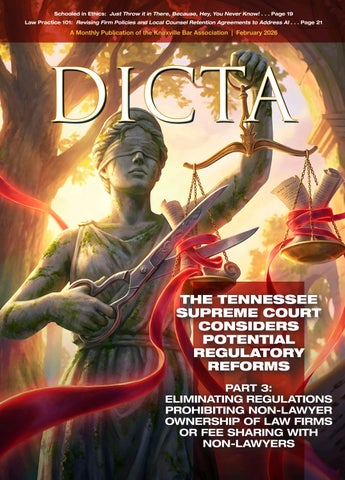
THE TENNESSEE SUPREME COURT CONSIDERS POTENTIAL REGULATORY REFORMS TO INCREASE
ACCESS TO QUALITY LEGAL REPRESENTATION
This is the third in a DICTA series on the Tennessee Supreme Court’s recent request for comment on potential regulatory reforms to the practice of law and legal education. Last month, we considered the topic of “permitting paraprofessionals to provide limited legal services.” The Knoxville Bar Association intends to provide a comment to the Court on behalf of our
Eliminating Regulations Prohibiting Non-Lawyer Ownership of Law Firms or Fee Sharing with Non-Lawyers
The seventh issue for consideration under the Court’s order is “[w]hether the Court should modify, reduce, or eliminate regulations prohibiting non-lawyer ownership of law firms or fee sharing with nonlawyers.”
members. DICTA readers are encouraged to contact KBA Executive Director Tasha Blakney (tblakney@knoxbar.org) with feedback for consideration by the KBA Professionalism Committee and the Board of Governors in crafting the KBA’s comment.
Like most states, Tennessee explicitly prohibits lawyers from sharing legal fees with non-lawyers (with limited exceptions) and forming partnerships involving the practice of law with non-lawyers.1 Lawyers are held to strict professional standards of competence, diligence, confidentiality, and loyalty, all of which are designed to protect clients and promote trust in the justice system. According to one author, the primary concern underlying the rule is “that if nonlawyers, who are not bound by the Rules of Professional Conduct, have a financial interest in a lawyer’s profits, they might prioritize profit over the duties the lawyer owes to clients and adversely influence a lawyer’s conduct.”2 The main arguments in favor of loosening the restrictions of Rule 5.4 and permitting some form of fee sharing with non-lawyers or non-lawyer ownership of law firms are “(1) that nonlawyers will increase innovation in the practice of law and delivery of legal services; and (2) that this innovation will increase access to justice by expanding the amount and availability of low-cost legal services that will be available to indigent populations.”3
Several states have experimented with relaxing ownership restrictions.
Non-Lawyer Ownership
Rule 5.4 of the DC Rules of Professional Conduct has permitted limited non-lawyer ownership or management of law firms since 1991. As a result, some DC firms have nonlawyer partners who are lobbyists or public relations professionals. Such arrangements are permissible only where a “partnership or organization has as its sole purpose providing legal services to clients.” But recently, some states have begun experimenting with more expansive exceptions to the traditional prohibition on non-lawyer ownership.
In August 2020, the Arizona Bar eliminated its version of Rule 5.4 to allow for the licensing of Alternate Business Structures (ABS)—entities that integrate nonlawyers with economic interests or decision-making authority into firms providing legal services. The Arizona Supreme Court maintains regulatory oversight of ABS. The court has established a committee that is charged with overseeing the application and approval process. This approval process takes into consideration how approving the ABS would further the objectives of the rule, which include promoting access to legal services; advancing the administration of justice and the rule of law; encouraging an independent, strong, diverse, and effective legal profession; and promoting and maintaining adherence to professional principles.4 As part of the process, the committee must examine whether
By: Kayla
Gill
Candidate, University of Tennessee, Class of 2027
Elizabeth Sharkey
Candidate, University of Tennessee, Class of 2027
an applicant has adequate governance structures and policies in place to ensure confidentiality of client information and that the lawyers providing legal services to consumers act with independence consistent with the lawyers’ professional responsibilities.5 In February 2025, the Arizona Supreme Court made news by approving the application of Big Four accounting firm KPMG to create a new ABS: KPMG Law. KPMG’s expansion into the legal field provides lawyers in other states with an opportunity to gauge whether ABS engage in innovative practices that result in lower-cost legal services to indigent populations or whether they will provide legal services that are widely available to paying clients already.
In August 2020, the Utah Office of Legal Services Innovation, under the auspices of the Utah Supreme Court, established a “regulatory sandbox” that enables entities employing new business structures to provide legal services. This experiment allows for non-lawyer ownership of law firms, new kinds of service providers, and non-profits to provide legal services in the State of Utah.6 As is the case in Arizona, those seeking to enter the regulatory sandbox in Utah are subject to approval and oversight by a committee created by the Utah Supreme Court. How successful one believes these innovations have been in increasing access to justice may depend on one’s views regarding the ultimate goals of such programs. According to a 2023 summary,
Sandbox entities have served 24,000 unduplicated consumers and provided over 40,000 legal services. Most of those services (87%) have been provided by lawyers working as employees within new legal businesses. Thirteen percent of services have been provided by nonlawyers. Sandbox entities are primarily serving individual consumers and small businesses with an average cost of service of $162. Small business services make up the majority delivered to date (40%). Military benefits (21%), immigration (13%), end of life planning (6%), and accident/injury (6%) round out the top five areas of service.7
So, while the new Sandbox entities have provided substantial legal services at a relatively low hourly rate, most of those services have been provided to small businesses rather than individuals.
Fee Sharing with Non-Lawyers
In February 2021, California amended its version of Rule 5.4 to facilitate greater cooperation (and fee-sharing) with non-profit organizations. The new rule allows a law firm to share or pay a noncourt-awarded legal fee with a non-profit organization where the fee arises from a settlement or other resolution of a matter that the nonprofit “employed, retained, recommended, or facilitated employment of the lawyer or law firm in the matter provided.” However, in October 2025, Gov. Gavin Newsom signed new legislation that prohibits fee sharing with any “alternative business structures” defined in the legislation as “any entity that provides legal services while allowing non-attorney ownership, management, or decision-making authority.”8
1 TRPC R. 5.4.
2 Stephen P. Younger, The Pitfalls and False Promises of Nonlawyer Ownership of Law Firms, 132 Yale l. Forum 259,261–62 (2022).
3 Id. at 275.
4 Rules of the Supreme Court of Arizona, Rule 33.1(b)(1).
5 Rules of the Supreme Court of Arizona, Rule 33.1(b)(2).
6 Utah Supreme Court, Standing Order No. 15: Establishing a Legal Regulatory Sandbox and the Office of Legal Services Innovation (Aug. 14, 2020), https:// sandbox.utcourts.gov
7 Letter from the Utah Supreme Court to the Utah State Bar, March 28, 2023, https:// utahinnovationoffice.org/wp-content/uploads/2024/01/3.-Letter-to-Utah-StateBar-3.28.23.pdf
8 Sara Merken & Mike Scarcella, California Law Sets Up New Contingency Fee-Sharing Roadblock, reuters, Oct. 16, 2025, https://www.reuters.com/ legal/government/california-law-sets-up-new-contingency-fee-sharingroadblock-2025-10-16/; Assemb. B. 931, 2025–2026 Reg. Sess. (Cal. 2025).
LEGALLY WEIRD
By: Wade H. Boswell II Tennessee Department of Human Services
THE RAREST MINERALS IN THE WORLD
On March 20, 2025, President Trump signed Executive Order 14241, “Immediate Measures to Increase American Mineral Production.”1 This executive order aims to boost U.S. domestic mineral production for national security and economic prosperity by streamlining permits, prioritizing mining on federal lands, using the Defense Production Act for funding, and creating financial mechanisms to reduce reliance on foreign minerals. According to the United States Geological Survey (USGS), a critical mineral is a mineral “essential to the economy and national security of the Nation and [has] supply chains that are vulnerable to disruption.”2 Currently, the USGS lists 60 critical minerals, 15 of which are Rare Earth Elements.3 The goals of this executive order are laudable and necessary.
One state that implemented the goals of the executive order is North Dakota. On January 16, 2025, HB 1459 was filed.4 This bill amends the definitions of critical minerals, defines rare earth minerals, and declares North Dakota’s policy for critical minerals and rare earth minerals.5 The bill went through a few revisions and amendments. On May 1, 2025, the conference committee rejected version 25.1038.02005 of the bill.6 The bill was sent back for revision, and on May 2, 2025, version 25.1038.02006 was hurriedly passed as the biennial legislative session was coming to a close.7
part of the legislative record, an attorney with the Legislative Council—a nonpartisan group of attorneys, accountants, researchers, and auxiliary personnel who assist elected officials with legislation13—removed the fictional mineral “docterium,” which was a reference to Representative Jason Dockter.14 So, naming hijinks started with the early unofficial draft and carried on through the bill’s passage.
While the inclusion of fake critical minerals does not affect the validity or viability of the new statutes, it does shine a negative light on North Dakota. As the Agriculture Commissioner aptly stated, “This statute and the rules would be the first in the nation. It would be kind of embarrassing for the rest of the country to look at us and say ‘Really? Do you guys even know what you’re doing?’”15 While I have a response, we’ll leave this as a rhetorical question.
All was well and good with the new legislation until December 17, 2025. During a meeting of the North Dakota Industrial Commission, which was working on rules based on the new code sections, the North Dakota Agriculture Commissioner questioned two substances listed as critical minerals: friezium and stralium.8 These minerals are fake and apparently refer to Christopher Friez and David Straley, attorneys for North American Coal, who were closely involved in drafting the bill and its amendments.9 The fake critical minerals were inserted into the bill during the last revision between the May 1 rejection and May 2 approval. The last amendments to the bill were prepared by a group of attorneys, legislators, and representatives from the coal industry.10 Straley covered for Friez by stating that Friez took no part in drafting the amendment.11 Straley assumed the new minerals were added to embarrass him and Friez or as a practical joke, which sounds reasonable until he interjected that it could have also been a clerical error.12 Yeah, right. I was giving him the benefit of the doubt until the clerical error supposition.
Even more oddly, friezium and stralium were not the only fake mineral names to make it into the bill. In an unofficial draft that is not
The North Dakota situation made me wonder if there are other instances where fake names were inserted into legislation. I could not locate any. But I did find a video of a Florida legislative hearing where the representative was calling out names of citizens who were there to speak out either for or against legislation.16 For fans of The Simpsons, think of not-safe-for-work prank calls that Bart could make to Moe’s Tavern, and that’s what you have on the Florida video. So, if you’re at work and want to watch the video, I suggest you turn your sound down so that it’s not broadcast through the office.
4 https://ndlegis.gov/assembly/69-2025/regular/bill-actions/ba1459.html (Last accessed Jan 13, 2026).
5 North Dakota Century Code § 38-12-01 and § 38-12-06.
6 See supra note 4.
7 Id.
8 Jacob Orledge, North Dakota law accidentally lists fake critical minerals based on coal lawyers’ names, North Dakota Monitor, Dec. 19, 2025. https:// northdakotamonitor.com/2025/12/19/north-dakota-law-accidentally-lists-fakecritical-minerals-based-on-coal-lawyers-names/ (Last accessed Jan. 13, 2026).
By: Judy M. Cornett University of Tennessee Winston College of Law
“JUST
THROW IT IN THERE, BECAUSE, HEY, YOU NEVER KNOW!”
I recently had a conversation with one of my third-year law students who had my Civil Procedure class during his first year. He1 told me that he had recently drafted a Motion to Dismiss at the direction of his supervising attorney. The student mentioned that he had perused the Complaint for all potential Rule 12 defenses and had raised personal jurisdiction and venue defenses.
“However,” the student continued, “the attorney told me to throw in the defense of failure to state a claim.”
“What was your response to the attorney?” I asked.
“I asked him why we had that defense.”
“And what did the attorney say?”
“He said,” the student replied, “just throw it in there because, hey, you never know!”
After regaining my composure, I reminded my student that the first thing I taught him in Civil Procedure was Rule 11 because I don’t want my students doing anything in a lawsuit without first thinking about Rule 11. He replied, a bit sheepishly, that he didn’t realize that throwing in a 12(b)(6) defense2 raised any Rule 11 issues.
Tenn. R. Civ. P. 11.02(2) requires that, in any document “presented” to a court, “the claims, defenses, and other legal contentions therein are warranted by existing law or by a nonfrivolous argument for the extension, modification, or reversal of existing law or the establishment of new law.”3 Rule 7.02(1) also provides that a motion “shall state with particularity the grounds therefor.”4 Thus, an attorney who “throws in” a 12(b)(6) defense has likely violated both Rule 7.02(1) and Rule 11.02(2): the motion doesn’t state the grounds for it, because there are none.
Two potential bases exist for a defense of failure to state a claim upon which relief can be granted. The first is that the law simply doesn’t recognize the cause of action stated in the Complaint. An example would be a Complaint stating a claim for the tort of spoliation of evidence, which is not recognized in Tennessee.5
The second basis for a 12(b)(6) defense is the Complaint’s failure to adequately plead a recognized cause of action, colloquially known as a “Twiqbal” defense.6 Although the Tennessee Supreme Court expressly rejected the Twiqbal plausibility pleading standard,7 in fact Tennessee courts never fully abandoned fact pleading. For example, the Tennessee Court of Appeals upheld a 12(b)(6) dismissal of a will contest petition when the only factual allegations consisted of the following: Basis of Contest: Plaintiff alleges the Decedent was incompetent and/or disabled at the time the 2018 Will was signed and by reasons of her physical infirmities and mental illnesses, the Decedent was of unsound mind. Plaintiff also alleges the Decedent’s 2018 Will was the result of undue influence upon the Decedent by the Defendants by reason of the dominion and control exercised by [Executrix] upon the Decedent in an effort to persuade and influence Decedent to name [Executrix] as the primary beneficiary of what became Decedent’s 2018 Will during Decedent’s lifetime.8 The Court of Appeals held the petition insufficient because, as the
executrix noted,
Plaintiff never alleges when the undue influence began, what it entailed, or how it influenced Decedent’s decision-making. Plaintiff never even alleges how the Defendant allegedly leveraged a confidential relationship to exercise dominion or control over Decedent. Instead, Plaintiff offers broad, conclusory statements about Defendant exercising “dominion” and “control” over Decedent.9
Thus, given Tennessee’s fact pleading regime, the executrix’s 12(b)(6) motion complied with Rule 11 because it was “warranted by existing law,” and it complied with Rule 7.02(1) because it stated with particularity why the Complaint was legally insufficient.10Since neither of these legitimate bases is satisfied by “throwing the 12(b)(6) defense in there because, hey, you never know!”, why would a lawyer insist on doing so? Lawyers are properly concerned about waiving Rule 12(b) defenses, although the 12(b) (6) defense can be raised at any time, even at trial.11 However, there is a far more tempting reason to throw the 12(b)(6) defense in there—Tenn. Code Ann. § 20-12-119(c)(1), which provides:
(c)(1) . . . [I]n a civil proceeding, where a trial court grants a motion to dismiss pursuant to Rule 12 of the Tennessee Rules of Civil Procedure for failure to state a claim upon which relief may be granted, the court shall award the party or parties against whom the dismissed claims were pending at the time the successful motion to dismiss was granted the costs and reasonable and necessary attorney’s fees incurred in the proceedings as a consequence of the dismissed claims by that party or parties. The awarded costs and fees shall be paid by the party or parties whose claim or claims were dismissed as a result of the granted motion to dismiss.
This mandatory fee-shifting provision incentivizes defense attorneys to just throw in a 12(b)(6) defense. This statute might also chill plaintiffs’ attorneys who wish to make allegations of law based upon a “nonfrivolous argument for the extension, modification, or reversal of existing law or the establishment of new law.” But the General Assembly thought of that. Section 20-12-119(c)(5)(E) provides that the fee-shifting requirement shall not apply to
[a]ny claim which is a good faith, nonfrivolous claim filed for the express purpose of extending, modifying, or reversing existing precedent, law or regulation, or for the express purpose of establishing the meaning, lawfulness or constitutionality of a law, regulation or United States or Tennessee constitutional right where the meaning, lawfulness or constitutionality is a matter of first impression . . . .
Someone in the legislature apparently read Rule 11, although the exception requires “good faith” and does not apply to claims for the
(VAPIT), now mandated statewide. As General Allen noted at the time, “We thank General Kline for her tireless efforts on this legislation and congratulate the Elder Abuse Committee on a job well done fighting for the elderly and vulnerable citizens of our State.”
Judge Kline also played a critical role in improving courtroom accessibility for elderly victims, including advocating for the admission of depositions, wheelchair availability, and adding a victim waiting area. She further supported implementation of the new laws by providing procedural guidance to judges, prosecutors, and law enforcement across the state. That same advocacy extended to her peers: In 2014, she worked tirelessly on behalf of 14 Assistant District Attorneys to help ensure we were rightfully granted enrollment in the Tennessee Consolidated Retirement System.
Immediately prior to her appointment to the bench, Judge Kline served in the DUI Special Prosecution Unit, managing a demanding General Sessions caseload. Throughout her career, she earned the respect of law enforcement, prosecutors, and defense attorneys alike for her fairness, diligence, professionalism, and steady presence in the courtroom.
Judge Kline has also demonstrated a sustained commitment to education and professional excellence. She has served on the Advisory Boards of the Helen Ross McNabb Women’s Advocacy Program and the Knoxville Early Diversion Program, trained more than 1,000 Knox County Sheriff’s Office and Knoxville Police Department officers on identifying and prosecuting elder abuse, mentored interns and newly hired Assistant District Attorneys, and served as Legislative Liaison for the Knox County District Attorney’s Office.
Beyond the courtroom, Judge Kline is deeply rooted in the Knoxville community, serving on the boards of several civic organizations and supporting numerous local institutions. A true Tennessee Volunteer, she is active at St. John’s Episcopal Church and enjoys time with her family,
hiking in the Great Smoky Mountains, and walking her dogs – activities that ground her and reinforce her connection to the community she serves.
In her letter to the County Commission, Judge Kline wrote: “Throughout my career, I have modeled the temperament of what Knoxville citizens expect and deserve of a judge: fairness, clear and direct communication, diligent preparation, and courtesy to counsel, the criminally accused, victims, and court staff.” I wholeheartedly agree!
Reflecting on my 30-plus year friendship with her, I know that Judge Kline has played a pivotal role in my career and life, and for that I am grateful. Now I am honored to introduce her to the Knoxville Bar as The Honorable Judge Andrea Andrews Kline, Knox County General Sessions Court, Division IV. Knox County is fortunate – indeed, blessed – to have her as the newest member of the bench. She will be a tremendous asset to the judiciary, and the citizens of Knox County will be well served by her tenure. Judge Kline cares deeply about the General Sessions Courts, and she will ensure that all who come before her are heard, treated with dignity, and respected. Judge Kline and I have shared many milestones during our careers, including this one for her – and for that I think Knox County will be grateful.
MANAGEMENT COUNSEL: LAW PRACTICE 101
By: Jimmy Snodgrass Bass, Berry & Sims
REVISING FIRM POLICIES AND LOCAL COUNSEL RETENTION AGREEMENTS TO ADDRESS AI
With the increasing amount of recent publications and warnings about the pitfalls of using AI, it is somewhat surprising that there are still new issues developing on this topic – addressing the use of AI in a matter where an attorney is serving as local counsel.
In Lexos Media IP, LLC v. Overstock. com, Inc., the U.S. District Court for the Eastern District of Kansas recently provided a helpful instruction and warning in this new context, as well as guidance on potential Rule 11 sanctions.1 In a patent infringement case, the plaintiff (Lexos Media) filed a brief in opposition to defendant’s motion to exclude an expert’s testimony, as well as a response in opposition to a motion for summary judgment. In a recent Order to Show Cause [Doc. 213], the Court noted that the filings “contain defective legal citations that were created” using AI, including “(1) nonexistent quotations; (2) nonexistent and incorrect citations; and (3) misrepresentations about cited authority.”
Six attorneys have appeared as counsel of record for the plaintiff: five out-of-state attorneys and one local counsel. Although not drafting either filing, local counsel unfortunately filed and signed both with his electronic signature. Upon discovering the defective citations, only one attorney (the out-of-state counsel who utilized AI in drafting the briefing) submitted a declaration. District Judge Julie Robinson ordered all attorneys on the signature block of the two filings to show cause as to why they should not be sanctioned under Rule 11, stating “[w]hile only local counsel’s signature block contains an ‘s/’ before his name, the Court considers all of the listed attorneys as signatories for purposes of Rule 11.” 2
On January 5, 2026, each attorney listed in the signature blocks of the briefs at issue filed a declaration addressing their role in the drafting, review, and filing of the briefs. In particular, the declaration of local counsel [Doc. 217-2] noted that although local counsel had not reviewed the citations in the brief, the firm would subsequently revise and extend its AI policy, as detailed below. While sanctions have not yet been issued, the declaration noted another recent case in the Eastern District of Oklahoma 3 where the sanction imposed on local counsel after the filing of fabricated case citations in multiple pleadings was a formal public reprimand and a twelve-month restriction on sponsoring
other attorneys for pro hac vice admission. The Eastern District of Oklahoma opinion also cites several other cases where courts imposed monetary sanctions (among various other sanctions) for attorneys who signed, but did not draft, briefs with hallucinated cases.
This recent Order provides several helpful instructions. First, your firm should have an AI policy to serve as a safeguard hopefully against similar situations that could result in sanctions. Second, in my opinion, the proposed measures of the local counsel in Kansas are vital to include within an AI policy: that in all instances where an attorney in the firm is local counsel and sponsors other attorneys as pro hac vice, it will require:
(1) that outside counsel disclose the use of GenAI to both the firm and the client; and
(2) that local counsel shall independently cite-check and verify the accuracy and authenticity of citations.
Similar language could be included within any retention agreement, but at the very least, communicated to retaining counsel that local counsel will be required to review and confirm all citations and supporting authority in any filing.
In a counterpoint on the potential positive uses of AI, the declarations filed in the Kansas district court also referenced that, in addition to manually reviewing the accuracy and authenticity of all citations, the firm would also run briefing through Westlaw Edge Quick Check, where a report can be run, essentially shepardizing all citations and providing recommendations for additional relevant authority, warnings for cited authority, an analysis of quotations, and a table of authorities.
1 Case No. 2:22-cv-2324-JAR.
2 D. Kan. L.R. 5.4.1(b)(3) specifically states: “The court requires meaningful participation by local counsel and, to that end, requires local counsel to sign all pleadings and other papers filed.” Of note, Rule 6 of the Eastern District of Tennessee’s ECF Rules and Procedures does address an “E-Filer’s name on a signature block [serving] as the E-Filer’s signature for purposes of Fed. R. Civ. P. 11.”
3 Mattox v. Prod. Innovations Rsch., LLC, No. 6:24-CV-235-JAR, 2025 WL 3012828, at *9 (E.D. Okla. Oct. 22, 2025)
About this column: “The cobbler’s children have no shoes.” This old expression refers to the fact that a busy cobbler will be so busy making shoes for his customers that he has no time to make some for his own children. This syndrome can also apply to lawyers who are so busy providing good service to their clients that they neglect management issues in their own offices. The goal of this column is to provide timely information on management issues. If you have an idea for a future column, please contact Jimmy Snodgrass at jimmy.snodgrass@bassberry.com.
WELL READ
By: Cathy Shuck East Tennessee Children’s Hospital
FINDING JOY IN EACH DAY
I saw the Knoxville Jester on my way to work this morning and it made my whole day. Have you seen the Jester? Keep your eyes open in and around downtown and you are likely to spot him, dressed in full-on Jester regalia, including the hat. He doesn’t speak or stop to interact, he just skips along. The Jester’s backstory is somewhat opaque and his meaning and purpose are open to interpretation. But to me, it’s a hit of pure joy whenever I see him.
And with everything going on in the world right now, who doesn’t need a hit of pure joy? We all need an uplifting daily diversion, especially in February, when the days are still short and the temperature can still be wintry.
If you don’t have the good fortune of encountering the Jester in your regular orbit, let me recommend an excellent alternative: The Joy of Small Things, by Hannah Jane Parkinson.1 For three years, from 2018 to 2021, Parkinson wrote a column for the British newspaper The Guardian called “The Joy of Small Things.” Each column was a short essay and reflection on some small, everyday thing that brought Parkinson joy. Her topics range from “pockets” to “autumn leaves” to “the smell of wood” to “cheating a hangover.”
The book collects about 100 of Parkinson’s essays. Each one is just two pages long, which is a perfect length to read before you get out of bed, or between phone calls, or during some other short interval in your day. It is tempting to read several of them at a sitting, but I recommend ingesting just one at a time and savoring her observations. More importantly, savor your own reaction to it.
In the essay, “Dogs in Parks,” Parkinson marvels at how seeing a dog always improves one’s mood. “Many attempts at going for brooding walks have been wonderfully ruined by the sight of a smiling labrador, totally in love with the world – this blade of grass! That other dog! … My own tail!”2 It’s hard not to smile in recognition.
In “The Moment After Waking,” Parkinson describes that “brief, disorienting flicker that can occur when waking: … A sort of GPS failure in the liminal space between the conscious and unconscious states.” She goes on to say, “I love that moment. It means I could be anywhere and anyone.”3 How many of us upon our eyes upon waking and immediately feel our brain racing, halfway through an inventory of the day’s to-do list before we are even fully awake? Or else we greet the day with a groan, wishing we could have stayed asleep a little longer. I love the idea of pausing to find joy in that brief, disorienting moment and embracing the possibility it holds, instead of skipping over it to forge
ahead with the day.
Parkinson’s columns are written from the point of view of a young, single woman living in London, so her observations may not click for some people. But I enjoyed them all the more for giving me a window into her world: last-minute theater tickets, biking through COVID, nursing a hangover with an all-day breakfast, and going to the cinema alone. If you like the idea of the theme but aren’t sure the perspective will resonate with you, Parkinson points out an alternative. She notes in the preface to her book that her column was inspired by a book called Delight, written by J.B. Priestly in 1949.
It is often observed that, although we measure our lives by the big events – birthdays, graduation days, career highlights, vacations, holidays—life is actually lived in the small moments. There is so much joy to be found in small things if we only stop to notice them. And I can say from experience that when life hands you big moments that are incredibly hard, there is solace to be found in the small moments. There is joy to be found in each day if we only remember to look for it.
1 Parkinson, Hannah Jane, The Joy of Small Things. Faber & Faber Ltd. (2021).
2 Id. at 40.
3 Id. at 166.
PRO BONO SPOTLIGHT
By: Jeanne Carmichael Paralegal, Legal Aid of East Tennessee
FROM INTAKE TO IMPACT: SUPPORTING PRO BONO CLINICS AT LEGAL AID OF EAST TENNESSEE
As a paralegal with the Pro Bono Project at Legal Aid of East Tennessee, I work closely with clients and volunteer attorneys to help ensure pro bono services reach the people who need them most. In addition to placing complex cases with pro bono attorneys for full representation, the Pro Bono Project also conducts a variety of clinics, including name change, family law, estate planning, and general advice, among others. These clinics are where access to justice becomes tangible, and as a paralegal supporting them, I get to see the full journey of a case – from first contact to resolution. For many clients, these clinics represent the first time they have been able to speak with someone who understands both the legal system and the barriers that kept them from seeking help sooner. The outcomes are often quietly, but profoundly, lifechanging.
Many clients reach out to us in distress. They may be facing an immediate crisis, or they may carry a sense of shame or hesitation that has built up over time. At debt relief clinics, clients often feel embarrassed or frustrated about their financial situation, particularly when debt has begun to affect housing stability, employment, or family relationships. At expungement clinics, clients frequently experience stigma and anxiety about their criminal record, unsure whether help is even possible or fearful of being judged for past mistakes.
My first step is always to reassure them: we are on their side, and we will do everything we can to assist. Drawing on my background in hospitality and customer service, I prioritize a client-centered approach from the very beginning. Listening, empathizing, and validating their feelings is crucial, whether someone is venting frustration, feeling overwhelmed, or quietly anxious. Sometimes that support includes helping clients slow down, regroup, and prepare to speak productively with an attorney or, later, with the court. Creating that sense of safety and trust early on allows the legal work to move forward more effectively.
Once the conversation begins, my role is to help clients organize their thoughts and information so that their time with volunteer attorneys is as productive as possible. I conduct intakes, assist clients with gathering necessary documents, help them navigate records and reports, create concise summaries for attorneys, ensure all required forms are complete, and manage client flow during the clinics. I match clients with volunteer attorneys and make sure that advice is delivered clearly and that follow-up appointments are arranged when needed.
Even after cases are assigned, the Pro Bono Project continues to stay involved. We conduct biannual check-ins to support both clients and attorneys, address questions or barriers as they arise, and stay aware of each case’s status until it reaches a proper resolution. This ongoing support helps ensure that limited-scope and pro bono representation remains effective and sustainable for everyone involved.
The most rewarding moments come when a case reaches closure. In debt relief, that means drafting a closing memo confirming that debts have been discharged, often after months or years of financial stress.
In expungement, it’s letting a client know their background has been cleared, sometimes for the first time in their adult life. Moments like these restore dignity and open doors to new opportunities, underscoring the importance of client-centered service. It is easy to get submerged in paperwork and processes, but these outcomes are powerful reminders that this work is about helping real people.
I became a paralegal so I could work for Legal Aid because I wanted to make a meaningful difference in my community. Having experienced poverty myself, I understand how systemic and financial barriers can affect a person’s ability to access help. I also believe deeply in social justice and the importance of providing equal access to legal resources. Working for the Pro Bono Project allows me to combine those values with practical, day-to-day problem-solving in a way that directly benefits clients and supports the attorneys who volunteer their time and expertise.
One thing I hope volunteer attorneys keep in mind is how profoundly poverty can affect clients’ lives beyond the obvious financial constraints. Our clients are often in vulnerable positions, where survival mode limits emotional bandwidth, planning, and decisionmaking. Deadlines can be missed, instructions can be confusing, and frustration can run high – not because clients do not care, but because they are juggling instability, fear, and limited resources. Recognizing these challenges allows volunteers to approach each case with patience, empathy, and understanding, which ultimately makes pro bono representation more effective and rewarding.
Supporting pro bono clinics at Legal Aid is a privilege. From name change to child support, debt relief, and expungement, every clinic represents a chance to make a tangible difference. Every discharged debt, cleared record, or resolved family matter is a reminder of why we are here: to ensure that everyone, regardless of circumstance, has access to justice. Through this work, I see how much pro bono service matters – not in theory, but in the day-to-day lives of the people we serve.
We invite you to experience banking redefined. Rusty Harmon NMLS #673950
Our dedicated private banking team offers exclusive services to attorneys and their practices, providing a deep understanding of your financial ambitions and a collaborative partnership.
“counsel[ed] against overreading [its] language to encompass illegal aliens.”31
Takeaways
Escobar-Temal has implications for the future of constitutional rights, even limited ones, for non-citizens. From Judge Thapar’s perspective, such rights do not exist, and his dissents have previously garnered the attention of the Court.32 Given the disagreement among the circuits on the issue presented in Escobar-Temal, 33 the Court’s attention may be piqued, and its majority might find Judge Thapar’s analysis persuasive. However, as of January 7, 2026, no further action had been taken in the case.
The case also highlights issues with the Court’s “historical” approach to constitutional analysis in the Second Amendment context. As noted by Judge Stranch, this methodology can be problematic,34 as it “either depends on historical analogues that are too imprecise or generic, or requires comparisons to historical regulations that excluded people based on race, religion, or ethnicity.” And although conservative jurists have championed this framework as “more legitimate, and more administrable,”35 the majority and dissent demonstrate that two judges looking at the same history can come to very different conclusions.
1 161 F.4th 969 (6th Cir. 2025).
2 U.S. Const. amend. II. (emphasis added).
3 Marco Poggio, For Immigrants, Gun Rights Debate Goes Beyond Firearms, law360 (Jan. 19, 2024 8:35 PM EST), https://www.law360.com/articles/1737887/forimmigrants-gun-rights-debate-goes-beyond-firearms
4 Escobar-Temal, 161 F.4th at 971.
5 Id.
6 Id.
7 Id.
8 Id.
9 Id.
10 Id.
11 Id.
12 Id
13 597 U.S. 1 (2022).
14 Escobar-Temal, 161 F.4th at 972.
15 Bruen, 597 U.S. at 24.
16 494 U.S. 259, 261 (1990).
17 Poggio, supra note. 4.
18 Id.
19 Id.
20 Escobar-Temal, 161 F.4th at 974 (“Applying that same meaning to ‘the people’ in the Second Amendment indicates that noncitizens hold the right ‘to keep and bear arms,’ provided they are ‘part of a national community or who have otherwise developed sufficient connection with this country to be considered part of that community.’” (quoting Verdugo-Urquidez, 494 U.S. at 265)).
21 Id. at 975–77.
22 Id. at 976.
23 Id.
24 Id. at 977–78.
25 See id. at 978–82; see also id. at 982–85.
26 Id. at 1007 (Thapar, J., dissenting in part & concurring in the judgment).
27 Id. at 988–92.
28 Id. at 989.
29 Id. at 995 (emphasis added).
30 Id. at 1005.
31 Id.
32 See Regina Koho, Supreme Court Update, DICta, Nov. 2025, 8 (discussing the Court’s grant of certiorari in National Republican Senatorial Committee v. Federal Election Commission, which came out of the Sixth Circuit).
33 Escobar-Temal, 161 F.4th at 1002 (Thapar, J., dissenting in part & concurring in the judgment) (noting that “[t]he Sixth Circuit now stands alone”).
34 Id. at 978 (majority opinion) (“We note at the outset that many of these colonial and early American positions on gun rights were based on racial, ethnic, gender, and religious classifications that reflected a worldview suspicious and disdainful of anyone who was not white, male, and landowning.”).
35 Bruen, 597 U.S. at 25 (citation modified).
THREE STARS, continued from page 13
11 Id. at *6-7.
12 Id. at *7, quoting Kelly v. Kelly, 445 S.W.3d 685, 693 (Tenn. 2014).
13 Id. at *11, quoting Bowman v. State, 206 S.W.3d 467, 473 (Tenn. Ct. app. 2006).
continued from page 19 memorandum of law does not comply with Rule 7.02(1).”); accord Finchum v. ACE, USA, 156 S.W.3d 536 (Tenn. Ct. App. 2004).
And the statute establishes a new pleading standard that supplements Tenn. R. Civ. P. 8.01 and 9. According to subsection (c)(5) (E), the exception applies only if at the time the successful motion to dismiss was filed the party that made the dismissed claim had specially pleaded in its latest complaint, counter-complaint or cross-complaint that the dismissed claim was made for one (1) of the express purposes listed above and cited the contrary precedent or interpretation the party seeks to distinguish or overcome, or whether the issue to be decided is a matter of first impression as described in this subdivision (c)(5)(E) . . . .
Bottom line: plaintiffs’ attorneys should take note of the new statutory pleading requirement established by section 20-12-119. And defense attorneys should realize that they will violate Rule 7.02(1) and Rule 11.02(2) if they “just throw it in there because, hey, you never know!”
1 My use of the masculine pronoun throughout is not meant to imply the identity of either the student or the attorney in this anecdote.
2 The phrase “12(b)(6) defense” uses the federal designation as shorthand for “failure to state a claim upon which relief can be granted.”
3 Fed. R. Civ. P. 11(b)(2) is substantively identical to the Tennessee rule. See also Tenn. Sup. Ct. R. 8, RPC 3.1 (“A lawyer shall not bring or defend a proceeding, or assert or controvert an issue therein, unless after reasonable inquiry the lawyer has a basis in law and fact for doing so that is not frivolous, which includes a good faith argument for an extension, modification, or reversal of existing law.”).
4 See Willis v. Tenn. Dep’t of Correction, 113 S.W.3d 706, 709 n.2 (Tenn. 2003) (“For the purposes of a [Tenn. R. Civ. P. 12.02(6) motion], the moving party must state in its motion why the plaintiff has failed to state a claim for which relief can be granted. Including the grounds for a Rule 12.02(6) motion in a separate
5 See Industrial Boiler & Mechanical Co. v. Evatt, No. E2024-00952-COA-R3-CV, 2025 WL 2268275, at *5-6 (Tenn. Ct. App. Aug. 8, 2025) (reversing trial court’s order recognizing tort of spoliation of evidence).
6 This shorthand label derives from the U.S. Supreme Court’s holdings in Bell Atlantic v. Twombly, 550 U.S. 544 (2007) and Ashcroft v. Iqbal, 556 U.S. 662 (2009), which overruled Conley v. Gibson, 355 U.S. 41 (1957), abandoned the lenient “notice pleading” regime of the federal rules, and adopted a “plausibility” test for the sufficiency of pleadings.
7 See Webb v. Nashville Area Habitat for Human., Inc., 346 S.W.3d 422 (Tenn. 2011); see also Fiel v. Bank of America, N.A., No. 2:12–CV–47, 2013 WL 1619509, at *3 (E.D. Tenn. Apr. 15, 2013) (recognizing Tennessee’s rejection of Twiqbal standard and asserting that “the requirements of Rule 8 of the Federal Rules of Civil Procedure are different from the requirements of Rule 8 of the Tennessee Rules”).
8 In re Estate of Wickwire-Macgrill, No. E2024-00934-COA-R3-CV, 2025 WL 1672890, at *2 (Tenn. Ct. App. June 13, 2025).
9 Id. at *3.
10 See Finchum, 156 S.W.3d at 538-39 n.3 (“the moving party must state in its motion why the plaintiff has failed to state a claim for which relief can be granted) (emphasis added) (quoting with approval Willis v. Tenn. Dep’t of Corr., 2002 WL 1189730 at *16 (Tenn. Ct. App. 2002) (Koch, J., dissenting), rev’d 113 S.W.3d 706 (Tenn. 2003)).
11 Tenn. R. Civ. P. 12.08.
PRIVILEGED TO BE IN THE LAW
By: Brenda W. Spence Office Administrator
Lewis Thomason, Knoxville
THE JOURNEY BEHIND THE DESK: A CAREER IN LEGAL ADMINISTRATION
It’s interesting how we choose a career path, often without realizing the subtle influences that shape our decisions. When I look back, I can clearly remember being a child in grade school, sitting at my desk and working on class assignments while pretending to be an assistant. I would imagine conversations with pretend co-workers, discussing projects and deadlines as if I were part of a bustling office. I also recall how much I enjoyed television shows with legal themes—the drama, the problem-solving, the sense of purpose they conveyed. Yet, at that time, it never crossed my mind that one day I would become an Office Administrator at one of the largest law firms in the State of Tennessee.
The journey to this point was not a straight line, and I am deeply grateful for the jobs I held before entering the legal field. Each role taught me something valuable: how to work with people from all walks of life, how to work hard and stay committed, how to think creatively to find solutions, and—perhaps most importantly for an administrator—how to make things happen when challenges arise. These experiences laid the foundation for everything I do today.
I remember my first interview for a receptionist position at a law firm. I was filled with excitement and a healthy dose of nervousness. The nerves faded, but the excitement never did. From the very beginning, I was fascinated by how law firms operate—the unwavering commitment to clients, the professionalism that permeates every interaction, and the care shown to staff members who keep the wheels turning. I started as a receptionist, then grew into a legal secretary role, and from there, my responsibilities expanded. I began ordering supplies, troubleshooting problems, managing collection accounts—you name it, I learned it. And the best part? I loved every minute of it. Those years taught me not only practical skills, but also how much I truly enjoyed working in the legal field alongside the dedicated professionals who serve in it.
For 18 years, I proudly served the legal profession before stepping away to broaden my skills and gain exposure to other industries. That time away was valuable, but when I returned to the legal field, it felt like coming home. Today, I have the privilege of serving as the Office Administrator at Lewis Thomason in Knoxville, and I’m honored to also serve as the Chapter President of the Knoxville Association of Legal Administrators (KALA). The KALA organization is an incredible network of local administrators who generously share their time, knowledge, and good humor with one another. After all, who understands the unique challenges and triumphs of law firm administration better than another administrator?
Throughout my career, I have met countless amazing legal professionals, learned a lot, and grown in ways I never imagined. I am genuinely grateful for everything the legal profession has taught me—and continues to teach me every single day.
To be “privileged to be in the law” is not about prestige—it’s about being entrusted with responsibilities that support justice and integrity. As an office administrator, I help maintain systems that protect confidentiality, uphold ethical standards, and enable attorneys to focus on their mission. That contribution may be quiet, but it is vital. I am reminded every day that privilege in this context means trust and accountability. That is what makes this work worthwhile, and why I remain excited about the possibilities
FOODIE FINDS: THE BEST OF KNOXVILLE FOOD TRUCKS
By: Parker Bohne
LMU Duncan School of Law
J.D. Candidate, 2026
SNACK CITY HEROES
Snack City Heroes may look like a playful nod to pop culture at first glance, but behind the comic-book themes, bright colors, and fun menu is a story about intention and finding the courage to build something of your own.
While Snack City Heroes was founded by Dylan Quigg, the story starts with his friend Lucas. Lucas purchased a food truck during the height of the COVID era, intending to run a food truck of his own. During those early days, Dylan helped Lucas out with large events and special occasions before Dylan headed out on his own to travel across the country for nearly three years. While Dylan was on his journey, Lucas reached out to him occasionally for help.
In early 2025, Dylan came back to East Tennessee. The timing couldn’t have been more perfect. As Dylan realized he was done working for others and putting his future in someone else’s hands, Lucas decided he was ready to step down from the food truck business. Dylan began renting the truck from Lucas, and thus, Snack City Heroes was born. The idea for Snack City Heroes combined his old loves of pop culture, comic books, and video games with his new love of food. Dylan’s been pouring his heart into Snack City Heroes for just over eight months now and has no plans on stopping any time soon.
Dylan strives to make an authentic and personal experience for every customer: “Everything I do is about quality and intention. The whole theme is fun. It keeps people smiling, but the quality is what brings them back.”
Though you would never know it from eating the incredible plates he puts together, Dylan doesn’t come from a traditional culinary background. His kitchen experience began when he was in his late teenage years, making smoothies and sandwiches in a small Costa Rican café, and later waiting tables at Bubba Gump Shrimp Co. in Gatlinburg and washing dishes at Dolly Parton’s Stampede. Food was never part of Dylan’s long-term plan—until it was.
While traveling the country, Dylan began cooking for himself out of necessity, staying in Airbnbs and hotels and experimenting to save money. Those experiments unlocked something. One of his staple menu items, the Kapow Poppers—jalapeno poppers stuffed with cheese and wrapped in
crispy bacon—traces back to home, originating from his mother’s recipe, now refined and reimagined. From there, his menu naturally expanded into burgers, pizzas, and other comforting bar foods (given his current daily venue at Next Level Brewing) built on trial, error, and curiosity.
For Dylan, the Civilian Classic—a classic burger with a perfectly grilled beef patty, cheese, ketchup, mustard, and pickles—best defines what it means to be a Snack City Hero: a simple, familiar burger that’s made with intention and care. “That’s really the philosophy behind the whole truck,” he said. But you also can’t go wrong with the Zappa-roni Pizza, the Fries of Justice, or the Blue Bolt Poppers—a twist on the Kapow Poppers, with brie cheese, blueberries, honey, and bacon.
Dylan is always experimenting with flavors and releasing new items. The best way to keep up with what’s new is through the Snack City Heroes Facebook page. Currently stationed at Next Level Brewing company on North Broadway, Dylan’s focused on consistency while keeping an eye on the future. His goals include branching out with popups downtown and eventually moving into catering.
Snack City Heroes is proof that you don’t need a traditional path— or decades of kitchen experience—to build something meaningful. Sometimes, it just takes the right moment, the right people, and the willingness to try something new.
Jessica Mae Black Woolf McClane Bright Allen & Carpenter, PLLC
Haden C. Blair Veritas-HHS
Jada Carson Attorney-at-Law
Abigail M. Coleman Moore, Ingram, Johnson, and Steele
Katelyn H. DeReus Ritchie, Johnson & Stovall, P.C.
John M. Fuchs
Spicer Rudstrom, PLLC
Angela N. Gianino-Book Arnett Baker Draper & Hagood, LLP
Savannah Hall Baker, Donelson, Bearman, Caldwell & Berkowitz
Zachary Hiller Attorney-at-Law
WELCOME NEW MEMBERS
THE KNOXVILLE BAR ASSOCIATION IS PLEASED TO WELCOME THE FOLLOWING NEW MEMBERS:
NEW ATTORNEYS
Kaylee Holloway Attorney-at-Law
Ryan A. Jernigan
Lewis Thomason, P.C.
Allison A. Johnson Apex Bank
Ellie K. Kauffman Carrasco | Trump, PLLC
Brenna E. Killian Attorney-at-Law
Cameron D. Kirkland
Lewis Thomason, P.C.
Nicholas W. Kuppler Owings, Wilson & Coleman
Caroline McCarter Attorney-at-Law
Stephen T. Mealor Tennessee Valley AuthorityOffice of the General Counsel
Caitlen Myers Myers Law Office, PLLC
NEW LAW STUDENT MEMBERS
Masie Honeycutt Cary S. Burris
Address Changes
Hannah G. Carroll Joseph Espinal
Please note the following changes in your KBA Attorneys’ Directory and other office records:
Grace Keel Buchanan
BPR #: 042269
The Law Office of Grace Keel Buchanan, PLLC 6923 Maynardville Pike, Suite 403 Knoxville, TN 37918-5346
800 S. Gay St., Suite 1900 Knoxville, TN 37929-9709 Ph: (865) 522-4964 katie@knoxlegalteam.com
Courtney Houpt Panter
LMU Duncan School of Law
Cheyenne Peters
Jennifer Morton Law, PLLC
Kristina M. Sanders-Brown
Kristina M. Sanders-Brown Law Office, LLC
Kalyn E. Sisco Strachn Law
Joshua P. Smith Carrasco | Trump, PLLC
Renee M. Walter DZ Law, PLLC
Marieve K. Webb Attorney-at-Law
Darrell G. Winfree Legal Aid of East Tennessee
William M. Wing Knox County Public Defenders Community Law Office
Malana Griffey
OFFICE SPACE AVAILABLE
West Knoxville / Farragut law firm has one a7orney office available for immediate occupancy. Includes use of common space (recepBon area, conference room, kitchen, and bathroom), internet, telephone, digital recepBonist, and parking next to building.
112 Glenleigh Court, Suite 4
Contact: David Montgomery (865) 777-2702 (865) 313-1581
BARRISTER BITES
By: Angelia Nystrom East Tennessee Foundation
GRANOLA GOODNESS REMIX
In 2019, Hugh’s and my wedding anniversary fell on Thanksgiving weekend, and we decided to go to New York to celebrate. We planned on attending the Macy’s Thanksgiving Day parade, catching a show, and doing a little Black Friday shopping. As two people who love food, we also planned a celebration dinner.
After a lot of research and obtaining recommendations, Hugh scored a reservation at Eleven Madison Park, which was—and still is— recognized as one of the best restaurants in the world. It did not disappoint. For over four hours, we enjoyed a nine-course dinner, which was capped off with a tour of the kitchen with the chef. Each dish was unique and perfectly prepared, and the staff was amazing. It was the dining experience of a lifetime. For a foodie like me, it was pure heaven.
are covered with the sugar-syrup mixture.
As we were leaving, our server presented us with a menu showing our food selections so that we would remember the meal and a gift bag that contained two jars of their house-made granola. He told us that we could enjoy it for breakfast the next day. I had heard about the restaurant; however, I had not heard of the granola (which I now know to be a famous tradition).
The following morning, as we were getting ready for the Macy’s Thanksgiving Day parade, Hugh opened the granola and started eating it straight out of the container. He knew I was not a granola eater, but he told me that I needed to try it. I did. Suffice it to say, we brought two empty jars home with us.
When we returned home, Hugh and I made it our mission to find the Eleven Madison Park granola recipe. With a quick Google search, we found it. For several months that year, our kitchen became “granola central,” with six to eight batches prepared each week. It became “our thing.” We gave a lot away, but we also ate a lot.
After a few weeks, though, we had eaten so much granola that I never wanted to taste it again. And, so, we didn’t. Until this Christmas.
Every year, we host a Christmas morning breakfast, as well as a New Year’s Day brunch. Hugh decided that we needed to bring back the granola. After the first batch (which almost did not make it into the containers), we remembered why we loved it so much. Suffice it to say, our kitchen has become “granola central” again.
I have shared the recipe before, but it is so good that I need to share it again.
Eleven Madison Park’s granola is quick, and it is easy to make. To prepare, preheat oven to 300ºF. Line a baking sheet with parchment paper. In a medium bowl, mix together 2 ¾ cups of old-fashioned rolled oats, 1 cup shelled pistachios (I use the pre-shelled), 1/3 cup raw pumpkin seeds, and 1 cup unsweetened coconut chips (not shredded coconut).
In a small saucepan (or in a microwave-safe container), combine 3/4 cup light brown sugar, 1/3 cup extra virgin olive oil, and 1/3 cup maple syrup. Heat to medium and whisk occasionally until the sugar is dissolved. Pour over oat mixture and fold until all of the dry ingredients
Spread the oat mixture along the prepared baking sheet. Bake until lightly golden, about 30-35 minutes. Remove from oven, cool, and place in a large bowl. Stir in one cup of dried cherries. Scoop into containers to eat or give away. Note: the dried cherries I purchase at Fresh Market tend to be sticky. I will put those on the parchment and “bake” them for about 4 minutes while the oven preheats. This tends to dry them out so that they don’t stick to the granola.
It is easy—and oh-so-good! We enjoy it spooned into Greek yogurt or straight out of the container. While it does have some sugar, it is a good (and healthy) alternative to chips or other snacks.
After six long years, Hugh is determined that the granola will never leave our food rotation again. If you like granola (or even if you don’t), give this recipe a try. You won’t be disappointed.
OUTSIDE MY OFFICE WINDOW
By: Sarah M. Booher Tennessee Department of Human Services
TIPPI HEDREN: A LOVE STORY
You should be giving silent thanks for Hedy Lamarr daily. She is a major player in making your modern law practice possible, whether you are working from the office, the beach, or your phone as you stand in line at Starbucks.
On August 11, 1942, she and music composer George Anthiel were granted U.S. Patent 2,292,387 for designing a “communication system used with the intention of guiding torpedoes to their targets in war. The system involved the use of “frequency hopping” amongst radio waves, with both transmitter and receiver hopping to new frequencies together. Doing so prevented the interception of the radio waves, thereby allowing the torpedo to find its intended target.” 1 Although the U.S. military did not begin really using the technology until three years after their patent expired, long after she had been told her talents and celebrity status would be better used promoting war bonds, Lamarr is now largely credited with putting the wheels of secure wireless networking in motion – Bluetooth, WiFi, and GPS to name a few examples.
Tennessee Department of Commerce and Insurance oversaw more than 317,000 different licensed Tennesseans in 2023, which included not only manicurists, but also realtors, funeral directors, contractors, and others.4
When I was busy taking the LSAT, it is not hyperbole or a joke to say I also gave serious consideration to the now 600 hours of training and trying my hand, as it were, at being a nail tech. There are days and times when I think I chose wrong, but the beauty of being in the law is that I get to choose both. While other attorneys I know may have an affinity for fine bourbons or designer clothes or cigars or jewelry/watches, my love is nails.
As many close to me will tell you, technology is not my jam. I’m not great at it, my interest in it is minimal, and when I am filling out my quarterly assessment at work, I answer honestly. I bring many things to the professional table, and tech savviness is simply not one of them. But even as I type – the self-assessment, an email, this column – there is another Hollywood starlet for whom I am endlessly grateful.
Tippi Hedren.
Many younger attorneys reading this column are now scratching their heads in confusion, or the name of her granddaughter Dakota Johnson may ring a bell. Some Gen X attorneys are saying, “Oh, yeah, she’s actress Melanie Griffith’s mother.” And the real film buffs and our legal elders are shouting, “Alfred Hitchcock discovered her! She was in his classic film The Birds!” The truth of the Melanie and Alfred statements aside, they aren’t why I love her.
It’s nails. Nail designs, nail trends, nail salons, nail bars, nail shapes, nail services. Nails. NAILS. NAILS!
You see, Hedren loves a good cause, so long before she ever set up her big cat rescue foundation called Roar, she was working as an international relief coordinator with Food for the Hungry. In 1975, part of her job in this role was to visit Vietnamese refugees who had been relocated to Sacramento’s Hope Village after the fall of Saigon and their own immense personal losses.2 Amidst trying to bring these displaced people hope and direction, Hedren noted one common and unexpected theme. They all admired her manicured nails!
Despite nail services at the time being expensive and an exclusive privilege for wealthier Americans, Hedren took immediate action. She flew her own manicurist in and, 350 training hours later, the first twenty Vietnamese women completed their training to be California manicurists. An affordable American industry was born.
Today, it is estimated there are between 200,000 – 400,000 nail technicians in the United States, and at least half of them are Vietnamese or Vietnamese Americans, although that number varies by state (in California and Texas, that number reaches at least 75%).3 While specific numbers for Tennessee and Knoxville were not readily available, the
This love story has endured for at least 23 years, born in the early aughts when your only options were pretty much a $30 set of acrylics or a $12 natural manicure. I’ve been around for pink & whites, the burgeoning of OPI, their cleverly named polished, short nails, long nails, square nails, coffin nails, dip nails, liquid X nails, black polish as goth, black polish as classic, and everything in between. And much like a sophisticated Christmas tree adorned only in white lights and fancy bulbs or a sentimental Christmas tree with colored lights and homemade decorations collected throughout the years, I love them all and have had them all.
At least 50% of nail techs today represent the modern American dream. I’ve had nail techs who came over as children with their parents, who came over as adults with their cousins, and who are first generation Americans. They’ve been entirely fluent in English with no accent, and techs who I conversed with entirely in hand gestures and short phrases. Most of them (have) work(ed) at least 10-hour days, six-day weeks and send their kids to Knoxville’s best public and private schools. My favorite nail techs are the ones who not only let me walking out gazing in awe at my new set, but who also are willing to endure my endless questions. What brought them to Knoxville? How long have they been here? What are the best places to visit in Vietnam? Sometimes I’m lucky and get to answer a legal question for them or give them a referral as I pay my tab and walk out the door.
But nails are also bonding, common ground, and community. Twenty years ago, it was rare to see a male in a nail salon. Now I see at least one per three-week visit, often sitting in the pedicure chair next to his wife or girlfriend. When I am in the McDonald’s line for my annual purchase (this year the Grinch happy meal), I can appreciate the employee’s gorgeous set as she hands me my food and leave her a little happier than I found her. Or someone uncomfortable with legal processes might feel more at ease when they see I love a fun nail just as much as the next gal. That love, for me, is just as priceless as the best of modern technology.
2 Although neither are about the nail industry (there’s some great documentaries on the subject!), two fantastic memoirs I’ve read in recent years on the Vietnamese immigration experience include Boat Baby by Vicky Nguyen and the amazing Sigh, Gone by Phuc Tran.
4 https://www.tn.gov/commerce/news/2024/3/6/tdci-division-of-regulatory-boardslicensed-over-47000-new-professionals-and-processed-over-107000-renewalsin-2023.html, March 6, 2024.