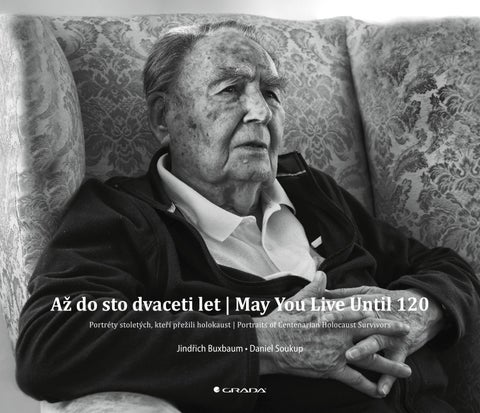
Až do sto dvaceti let | May You Live Until 120 Portréty stoletých, kteří přežili holokaust | Portraits of Centenarian Holocaust Survivors
Jindřich Buxbaum • Daniel Soukup
Tuto knihu věnuji svému tatínkovi Rudolfu Buxbaumovi, bývalému vězni koncentračních táborů Terezín, Osvětim a Schwarzheide a přeživšímu pochodu smrti, k jeho nedožitým 100. narozeninám. Jindřich Buxbaum
L A D I S L AV Z E MA N
MAG DA L É N A Z A D O R O VÁ
E LV Í R A W E I S ZO VÁ
L A U R A Š PÁ N I K O VÁ
OT TO ŠIMKO
L A R I S S A Š I M E KO VÁ
E D I TA Š A L A M O N O VÁ
G U S TAV S I N G E R
VA LT R K R A U S
FELIX KOLMER
E D I TA K AT Z O VÁ
FELIX KAFKA
JIŘÍ KAFKA
J A R M I L A H O R A LO VÁ
ALEXANDER BACHNÁR
Až do sto dvaceti let | May You Live Until 120
Portréty stoletých, kteří přežili holokaust | Portraits of Centenarian Holocaust Survivors
Upozornění pro čtenáře a uživatele této knihy Všechna práva vyhrazena. Žádná část této tištěné či elektronické knihy nesmí být reprodukována a šířena v papírové, elektronické či jiné podobě bez předchozího písemného souhlasu nakladatele. Neoprávněné užití této knihy bude trestně stíháno. Notice for readers and users of this book All rights reserved. No part of this publication or electronic book may be reproduced or transmitted in a paper, electronic or otherwise, without the previous written permission of the publisher. Unauthorized use of this book is punishable by law.
Až do sto dvaceti let | May You Live Until 120 Portréty stoletých, kteří přežili holokaust | Portraits of Centenarian Holocaust Survivors Fotografie | Photographs: Jindřich Buxbaum Text | Texts: Daniel Soukup Translated by David Livingstone Vydala Grada Publishing, a.s. | Published by Grada Publishing, a.s. U Průhonu 22, Praha 7 obchod@grada.cz, www.grada.cz tel.: +420 234 264 401, fax: +420 234 264 400 jako svou 10342. publikaci | as its 10342th publication Odpovědná redaktorka | Managing editor: Alice Zavadilová Grafická úprava a sazba | Graphics and typesetting: Rado Bielený Počet stran | Number of pages: 208 První vydání, Praha 2025 | First edition, Praha 2025 Vytiskla tiskárna | Printed by: TNM PRINT. © Grada Publishing, a.s., 2025 Cover Design © Grada Publishing, a.s., 2025
ISBN 978-80-271-8340-1 (pdf) ISBN 978-80-271-5897-3 (print)
Vydání knihy podpořili | The publication of this book was supported by:
Nadační fond obětem holocaustu
Jewrope, n.o.
Federace židovských obcí v České republice
Dr. Jan Telensky Elizabeth E. Bettelheim Family Foundation Senzion s.r.o.
Židovská náboženská obec Košice
Židovská obec Olomouc
Živá pamäť objektívom Jindřicha Buxbauma Living Memory Through the Lens of Jindřich Buxbaum
9
Předmluva ředitele Hagiboru Foreword by the Director of Hagibor
10
Predslov riaditeľky Ohel David Foreword by the Director of Ohel David
14
Úvod a poděkování Introduction and Expression of Thanks
18
Alexander Bachnár Jarmila Horalová Jiří Kafka a Felix Kafka Edita Katzová Felix Kolmer Valtr Kraus Gustav Singer Edita Šalamonová Larissa Šimeková Otto Šimko Laura Špániková Elvíra Weiszová Magdaléna Zadorová Ladislav Zeman
22 34 46 66 78 90 102 114 126 138 150 162 174 186
O autorech About the Authors
207
Místo závěru Instead of a Conclusion
198
8
Živá pamäť objektívom Jindřicha Buxbauma
Living Memory Through the Lens of Jindřich Buxbaum
Živá pamäť dokáže obsiahnuť príbehy a udalosti zhruba troch generácií dozadu. Ľudia ako ja však majú problém: Ako to dokázať? Ako ich poskladať z útržkov spomienok rodičov, starých rodičov a širších rodín? Čo vieme o ich ceste do plynových komôr a pochodov smrti? A z mlčania tých, čo prežili? A tí, čo prežili peklo holokaustu, sa zväčša ocitli za ostnatými drôtmi komunistickej zoo. Podaktorí prežili aj toto a ocitli sa v džungli otvorenej liberálnej spoločnosti. Je krásna, je nebezpečná a je naším údelom zabrániť návratu do pekla a zoo. Áno, z fragmentov fotografií, korešpondencie, dokumentov… skladáme obraz ich života. Skladáme ho s vedomím, že nič sa neskončilo. Generácie našich detí, a ich detí, potrebujú nielen stopu po predkoch, ale aj naše posolstvo. To posolstvo znie: „Keď niekto prichádza, aby ti ublížil, vstaň, choď mu naproti a bráň sa silou“ – čo je mäkká verzia pôvodného výroku „starých“. Dnes, keď sledujeme príbeh Izraela a resuscitáciu antisemitizmu v priamom prenose, je rovnako aktuálna ako v celých dejinách nášho ľudu. Jindřich Buxbaum urobil touto knihou, čo musel, vedel a chcel. Vďaka, Jindro. A vďaka Danielovi Soukupovi, že budú zachované nielen tváre, ale aj príbehy tých, čo prežili. Slovo „prežili“ je však neúplné. Správne je: prežili so cťou, sú to hrdinovia.
Living memory can encompass the stories and events of approximately three generations. People like me have, however, a problem: how to do so? How to put them together from fragments of memories of parents, grandparents and the extended family? What do we know about the journeys to gas chambers and death marches? And what about the silence of those who survived? Those who survived the Holocaust frequently found themselves behind the barbed wire of the Communist ZOO. Some of them even managed to survive this and ended up in the jungle of an open liberal society, which is beautiful but also dangerous, and where it is our task to prevent a return to hell and the ZOO. Yes, we piece together a picture of their lives from fragments of photographs, from their correspondence, from documents. We do so, however, with an awareness that nothing has actually come to an end. The generation of our children and their children not only need traces of their ancestors, but also our message. This message is as follows: „When someone comes to hurt you, stand up and face them and protect yourself with force“, this being a softer version f the original statement of ‘the elders’. Today, as we witness the story of Israel and the revival of anti‑Semitism right before our eyes, it is just as relevant as ever in the entire history of our people. Jindřich Buxbaum, with this book, did what he had to do, what he knew how to do and what he wanted to do. Thank you Jindřich. Thanks also go to Daniel Soukup for preserving not only the faces, but also the stories of those who survived. The word ‘survived’ does not do sufficient justice. The correct wording would be: they survived with honour, they are heroes.
Fedor Gál
Fedor Gál
9
Předmluva ředitele Hagiboru
Domov sociální péče Hagibor, největší projekt Židovské obce v Praze, vznikl proto, aby tato úcta ke stáří a paměti nezůstala pouze ideálem, ale byla každodenní realitou. Naším úkolem je vytvářet prostředí, v němž se i ti nejkřehčí cítí bezpečně, důstojně a přijati. Hagibor dnes není pouze místem péče, nýbrž i symbolem kontinuity a solidarity – mostem mezi generacemi, který chrání paměť a zároveň ukazuje, jak lze prožívat stáří s respektem a lidskou blízkostí. Již samotná historie místa se odráží v jeho názvu, jenž v hebrejštině znamená „hrdina“. Význam Hagiboru přesahuje hranice samotné židovské komunity. V dnešní české společnosti se stává příkladem, jak lze spojit sociálně‑zdravotní práci s etickými hodnotami, jak lze propojit profesionalitu s duchovní hloubkou a jak ukázat, že péče o seniory není jen technickou službou, ale projevem úcty k lidské důstojnosti. V tomto smyslu je Hagibor živým důkazem, že hodnoty judaismu mohou obohatit širší společenský kontext. Jsem proto rád, že mnohé portréty mohly být zachyceny právě zde. Fotografie v této publikaci jsou také naplněním jednoho ze základních židovských imperativů – pamatuj, udržuj v paměti… Každý portrét je připomínkou příběhu, který nesmí být zapomenut, a zároveň výzvou, abychom dokázali vnímat stáří nikoli jen jako závěr, nýbrž jako dovršení života a spočinutí v klidu a míru. V tomto smyslu lze stáří chápat jako rozměr šábesu – dne odpočinku. Je důležité také upozornit, že tato kniha nám může pomoci zvědomovat jedinou jistotu člověka – a tou je konečnost lidského života. Dobrá a smysluplná připravenost na smrt je úkolem každého z nás… Z řečeného vyplývá, že kniha je víc než jen souborem portrétů. Je připomínkou odpovědnosti, kterou máme vůči těm, kdo nám svou přítomností zprostředkovávají minulost. Je vyjádřením úcty ke stáří a současně výzvou, abychom tuto úctu proměňovali v konkrétní péči, solidaritu a laskavost. Věřím, že publikace Až do sto dvaceti let bude pro čtenáře nejen svědectvím o obdivuhodné odolnosti portrétovaných mužů a žen, ale také inspirací k tomu, abychom si vážili každého dne, který nám je darován – a každého člověka, který potřebuje naši blízkost a pomoc.
Stáří je nejen v židovské tradici považováno za znamení požehnání a moudrosti. Starý biblický příkaz nám připomíná, že úcta ke starému člověku není pouze otázkou společenského respektu, ale duchovní povinností, která nás všechny zavazuje. Staří lidé nejsou jen svědky minulosti – jsou nositeli paměti, jež formuje naši přítomnost a otevírá budoucnost. Tradiční židovské přání k narozeninám „Až do sto dvaceti let!“ symbolizuje ideál dlouhověkosti, naplnění životního úkolu a dovršení lidské existence. Publikace, kterou držíte v rukou, tento ideál přetváří v podobě obrazového a textového svědectví. Fotografie Jindřicha Buxbauma zachycují muže a ženy, kteří překročili věkovou hranici sta let a jejichž životní dráha byla spojena s tragickou zkušeností šoa. Každý z nich je živým důkazem, že i tváří v tvář nepředstavitelnému utrpení si člověk může uchovat vnitřní důstojnost a stát se nositelem naděje. Jindru Buxbauma znám již dlouho a vždy jsem pozoroval, s jakou urputností a zároveň jemným citem přistupuje ke svým tématům. Snad i proto se mu ve tvářích na portrétech podařilo zachytit právě to podstatné. Doprovodné texty dodávají jednotlivým portrétům kontext, jenž umožňuje nahlížet jejich životy nejen jako osobní příběhy, ale také jako součást širší historie židovského lidu a jeho duchovního dědictví. Toto propojení obrazu a slova dává publikaci hloubku a činí z ní dílo, které je zároveň dokumentem, vzpomínkou i určitou teologickou reflexí. Jako instituce, jež pečuje o seniory, dobře víme, že vysoký věk je spojen také s křehkostí a odkázaností na druhé. Zároveň však představuje jedinečnou hodnotu – chochma – moudrost, která se v judaismu pojí právě se stářím. V souladu s rabínskou tradicí je v tomto smyslu každé setkání se stoletým člověkem nejen osobní zkušeností, ale i vstupem do živé knihy paměti. Péče o staré lidi je dnes velice náročná – vyžaduje od pracovníků i od blízkých velkou trpělivost, laskavost a schopnost empatie. Zároveň však něco podstatného učí: učí nás zpomalit, naslouchat, vnímat křehkost druhého a chápat hodnotu přítomného okamžiku. Ve stáří se totiž zřetelně ukazuje, že skutečná síla společnosti nespočívá v rychlosti a výkonu, ale v solidaritě a úctě k těm, kteří potřebují naši podporu.
Radek Roule, ředitel DSP Hagibor
10
11
Foreword by the Director of Hagibor
also represents, however, a unique attribute, – chochma – wisdom, which is specifically linked with old age in Judaism. In accordance with the rabbinic tradition each encounter with a one-hundred-year-old person is, in that sense, not only a personal experience, but also involves entering into the living book of memory. Caring for the elderly is extremely demanding at present, requiring patience, tenderness and the ability to empathize from both our employees and from the family members. The elderly also, however, teach us something essential: they teach us to slow down, to listen, to notice the fragility of others and to understand the value of the current moment. Old age clearly demonstrates that the genuine strength of society does not amount to speed and performance but consists of solidarity and respect for those who need our support. The Hagibor social care facility, the largest project by the Jewish community in Prague, came about in order to demonstrate that this respect for the elderly and for memory should not only consist of an ideal, but should be an everyday reality. We strive to create an environment where even the most fragile feel safe, dignified and accepted. Hagibor is not only at present a place of care, but also a symbol of continuity and solidarity. It is a bridge between generations which protects memory and also demonstrates how old age can be experienced with respect and human connections. The history of the place itself is reflected in the name, which means ‘hero’ in Hebrew. The significance of Hagibor resounds beyond the borders of the actual Jewish community. It serves as an example, within Czech society today, of how to link social-health work with ethical values, of how to do something not only with professionalism but with spiritual depth and finally to demonstrate that care for seniors is not only a tech-
Old age is viewed as a sign of blessing and wisdom both in the Jewish tradition and elsewhere. The ancient biblical message reminds us that honouring an older person is not only a question of social respect and gratefulness, but also a spiritual responsibility which we are all bound by. Older people are witnesses of the past, bearers of memory who form our present reality and open up the future. The traditional Jewish birthday wish “may you live until 120!” symbolizes the ideal of longevity, fulfilment of life’s work and the culmination of human existence. The publication which you are holding in your hands attempts to reshape this ideal in the form of a pictorial and textual testimony. The photographs of Jindřich Buxbaum depict men and women who have surpassed the age of one hundred and whose life has been linked with the tragic experience of the Shoah. Each of them is living proof that a person can preserve their inner dignity and become a bearer of hope even face to face with unimaginable suffering. I have known Jindřich Buxbaum for a long time and have always noticed with what intensity, along with fine feeling, he approaches his subjects. This could be why he has been able to capture that specific essence in the faces in the portraits. The accompanying text by the literary historian Daniel Soukup provide a context for the particular portraits, enabling the reader to view their lives, not only as personal stories, but also as part of the wider history of the Jewish people and their spiritual legacy. This combination of pictures and words gives the publication a definite depth and makes it into a work of art which is not only a document and a memoir, but also a kind of theological reflection. We are very aware, in our institution which cares for seniors, that an advanced age is also connected with fragility and dependence on others. It
12
nical service, but an expression of respect for human dignity. Hagibor is, in this sense, a living example that the values of Judaism can enrich the wider social context. I am therefore very much pleased that many of the portraits were actually taken right here at our institution. The photographs in this publication are also filled with with one of the basic Jewish imperatives: remember, keep it in your memory... Each portrait is a reminder of a story which cannot be forgotten and also a reminder to not perceive old age as merely a conclusion, but as the culmination of life and a time of rest and peace. Old age can in this sense be viewed as a dimension of the Shabbat, the day of rest. It should also be recalled that this book can help us realize the only certainty there is about people, that being the finiteness of human life. Each of us is tasked with being prepared for death in a good and meaningful manner… The above-stated makes apparent that this book is more than a collection of portraits. It is a reminder of the responsibility which we have toward those who mediate the past to us through their presence. It is an expression of respect for the elderly and also an appeal to transform this respect into concrete care, solidarity and kindness. I have high hopes that this publication Until 120 will be not only a testimony for readers of the remarkable resilience of the men and women in the portraits, but also an inspiration for us to value each and every day which we are given, along with every person who needs our presence and help. Radek Roule, Director of the Hagibor Social Care Facility
13
Predslov riaditeľky Ohel David
V špecializovanom zariadení poskytujeme sociálne služby vysoko profesionálnymi zamestnancami. Klienti zverení do našej starostlivosti sú pre nás partnermi, jedinečnými osobnosťami so svojimi životnými príbehmi. Našou víziou je ponúknuť klientom bezpečné prostredie, plné atmosféry prijatia, úcty lásky a dôstojnosti. Našim cieľom je, aby priestory nášho zariadenia čo najviac pripomínali domáce prostredie a vyhovovali potrebám klientov. Našou službou pomáhame klientom udržať si schopnosť čo najdlhší čas byť sebestačný. Ak však príde k situácii, že sa už o seba nedokážu postarať, sú tu naše ruky a srdcia, aby sme im pomohli. K 20. výročiu otvorenia Ohel David sme spolu s organizáciou Post Bellum vydali bilingválnu knihu Stretnutie tých, čo prežili šoa. 105 príbehov preživších, ktorí boli súčasťou Ohel David. Jeden z nich poskytla moja babička, preživšia Osvienčim. Ako vždy vravela: „Prežila som v Ohel David šťastných 12 rokov.“ Dožila sa skoro 99 rokov. Prezentácia domova už roky presahuje brány Ohel David. Klienti sa zúčastňujú na výstavách svojich výtvarných prác na Slovensku aj v zahraničí vrátane Izraela. Ich názory, životné osudy a spomienky sú prezentované v tlači, v dokumentoch rozhlasu a televízie či v knižných podobách. Niektorí so svojimi spomienkami pomáhajú pri vzdelávaní mladej generácie, návštevami škôl a besedami o holokauste.
Ohel David (Domov Davidov) v Bratislave zriadil v roku 1988 Ústredný zväz židovských náboženských obcí v SR ako prvý a jediný židovský domov seniorov s celoslovenskou pôsobnosťou. Počas tejto doby prešlo špecializovaným zariadením vyše 400 klientov, ktorí boli preživší holokaust a členmi ŽNO v SR. Ohel David je situovaný v centre Bratislavy. Poskytuje svojim obyvateľom nielen celoročnú pobytovú sociálnu službu, ale aj možnosť prechodného, krátkodobého pobytu. Poslaním zariadenia je poskytovať svojim obyvateľom kvalitný a dôstojný pobyt so zabezpečením ich potrieb a umožniť prežitie seniorských rokov v pokoji a bezpečí komunity. Samota a osamelosť predstavujú u starších ľudí časté a nepríjemné stavy, ktorým sa snažíme vyhnúť. Treba však vedieť rozdiel medzi samotou a osamelosťou. Samota je stav neprítomnosti ľudí. Často chceme byť sami so sebou, bez prítomnosti druhých, a tento stav je pre nás prospešný. Vieme si jeho rozsah regulovať a meniť. Osamelosť však môže nastať aj u ľudí v kolektíve, spoločnosti a spôsobuje psychickú nepohodu. Môže nastať po strate blízkej osoby, zhoršení zdravotného stavu, po negatívnom zážitku. Je dôležité byť s takýmto človekom čo najviac a snažiť sa pomôcť mu prekonať jeho negatívne pocity. S pribúdajúcimi rokmi sa u ľudí kopia zdravotné a psychické problémy, znižuje sa mobilita a stupňuje sa závislosť od pomoci druhých. Mnohí ľudia preto využijú starostlivosť v inštitúciách. Myslím si, že pri tak vážnom rozhodnutí, akým umiestnenie do domova je, je najdôležitejšie ostať v kontakte s rodinou, blízkymi, známymi, aby človek nemal pocit odcudzenia a mal v rámci možností možnosť rodinu navštevovať. Čím viac ochoty a pomoci prejaví rodina, tým ľahšie prebieha adaptačná fáza. Tá nie je ľahká pre nikoho. Všimla som si, že klienti, ktorí nemali deti alebo pochádzajú z menších rodín, sa v domove oveľa ľahšie adaptujú na podmienky a možnosti v ňom a sú menej nároční. Samotu zvládajú, pretože sú na ňu naučení a vedia si vyplniť svoj voľný čas. Klienti, ktorí sa celý produktívny život venovali početnej rodine, majú potom so samotou v starobe oveľa väčší problém.
Každý zamestnanec Ohel David robí všetko preto, aby bolo toto zariadenie láskyplným domovom pre svojich obyvateľov. Aby im pomáhal tvorivo prijať a dôstojne zvládnuť seniorskú etapu ich života. Som vďačná, že som súčasťou tímu Ohel David od roku 2013.
Martina Kotúčková, riaditeľka Ohel David
14
15
Foreword by the Director of Ohel David
I am of the opinion that when making such a serious decision as to move to a retirement home, it is of great importance to remain in contact with family, friends and acquaintances so as to ensure the individual does not experience a feeling of alienation and has the possibility to visit family if they are able. The more interest and help there is from the family, the easier the adaptation phase. It is not, however, easy for everyone. I have noticed that clients who have not had children, who come from smaller families, adapt easier to the conditions and possibilities in the retirement home and are also less demanding. They can cope with solitude as they are used to it and know how to occupy their free time. Those clients who have been involved throughout their productive life with a large family, have much more serious struggles with solitude during old age. Highly qualified employees provide the social services in the specialised workplace. The clients entrusted to our care are our partners, being unique individuals with their own life stories. Our vision is to provide clients with a safe environment, full of acceptance, respect, love and dignity. We aim to make the spaces of our facility as similar to a home environment as possible in order to meet the needs of our clients. Our services help clients remain independent as long as possible. When the time comes, however, when they are no longer able to take care of themselves, we are ready, with our hearts and hands, to provide them with help. On the occasion of the twentieth anniversary of the opening of Ohel David, we published, along with the organisation Post Bellum, the bilingual book “A Meeting of Those Who Survived the Shoah”, which consisted of 105 stories of survivors who were part of Ohel David. One of these was provided by my grandmother, a survivor of Auschwitz. As she al-
Ohel David (Home of David) in Bratislava was established in the year 1988 by the Central Association of Jewish Religious Communities in the Slovak Republic as the first and only retirement home with nationwide coverage. Over the course of this time period, more than 400 clients, who have been survivors of the Holocaust and members of the Jewish community in the Slovak Republic have stayed in this specialised facility. Ohel David is located in the centre of Bratislava. It provides its inhabitants with not only year-long social services, but also the possibility of temporary/ short-term stays. The mission of the organisation is to provide its inhabitants with a quality and dignified stay by ensuring their needs are met and by making it possible for them to live out their senior years in peace and in the safety of a community. Solitude and loneliness are frequent and unpleasant experiences for older people which we try to eliminate. One has to understand, however, the difference between solitude and loneliness. Solitude amounts to the absence of people. People frequently want to be on their own, without the presence of others, and this state of being can be beneficial. One can regulate and change the extent. Loneliness, however, can come about among people in a collective, in society and can cause mental discomfort. It can occur after the loss of a close one, due to the worsening of physical health or after a negative experience. It is of importance to be with this person as much as possible in order to help them overcome their negative feelings. As people age, their health and mental problems increase, their mobility decreases and their dependence on others intensifies. Many people consequently make use of care provided in institutions.
16
ways would say: “I lived a happy twelve years in Ohel David”. She lived to almost 99 years old. The public presentation of Ohel David has moved beyond its gates for a number of years now. Our clients participate in exhibitions with their visual art, not only in Slovakia, but also abroad, including Israel. Their views, life fates and recollections have been presented in the press, in radio and television documentaries and even in book form. A number of them even help with the education of the young generation by means of their recollections, through visiting schools, and participating in events related to the Holocaust. Each employee at Ohel David does everything possible to make our facility a loving home for its inhabitants, with the goal of helping them creatively accept and gracefully manage the senior stage of their lives.
I am grateful that I have been part of the Ohel David team since the year 2013. Martina Kotúčková, director of Ohel David
17
Úvod a poděkování
Výběr portrétovaných byl omezen magickou číslicí 100. Jde o věk, v němž se plně ukazuje křehkost stáří a závislost na pomoci druhých. V židovské tradici je zvyk pronést každý den sto požehnání, které reprezentují plnost. Sto let v lidském životě tak může být vnímáno jako naplnění úkolu člověka, jako „požehnaný věk“. Název knihy však odkazuje za horizont tohoto milníku, k věku sto dvaceti let, kdy zesnul biblický učitel Moše. Je tak zároveň hranicí nadmíru naplněné existence člověka. Kniha má být v neposlední řadě také reflexí tématu staří, jeho vitality i zranitelnosti, vybídnutím k úctě ke starým lidem a apelem k laskavému zacházení s těmi, kteří jsou odkázáni na rodinnou či komunitní pomoc. Děkujeme všem, kteří pomohli se vznikem této publikace. Kniha byla finančně podpořena Nadačním fondem obětem holokaustu, Federací židovských obcí v ČR, Židovskou obcí Olomouc, Židovskou náboženskou obcí Košice, vedením penzionu pro seniory Senzion – Velké Losiny, Ivanem Zádorou a Václavem Vackem. Zvláštní poděkování náleží rodinným příslušníkům portrétovaných, kteří s námi sdíleli své vzpomínky na ty, kdo již nežijí. S respektem k jejich soukromí je neuvádíme jmenovitě, o to víc si jejich spolupráce vážíme. Děkujeme projektu Paměť národa, který je jedinečnou sbírkou autentických záznamů pamětníků z bývalého Československa. Dík též náleží Petru Balajkovi, Pavlíně Buxbaum, Davidu Buxbaumovi, Branislavu Gálovi, Fedoru Gálovi, Martinu Korčokovi, Martině Kotúčkové, Haně Kubátové, Davidu Livingstonovi, Martě Malé, Martinu Navrátilovi, Radku Opluštilovi, Petru Papouškovi, Radkovi Roulemu, Renatě Skalošové z Muzea Říčany, Jindřichu Štreitovi, Janě Teššerové a Michalu Vandrovi, dále neziskové organizaci JEWROPE, vedení festivalu Mazel Tov, platformám Tachles TV a Tachles News a Židovské náboženské obci Galanta.
Jindřich Buxbaum, který řadu let dokumentuje život židovské komunity v České republice, se zvláštní citlivostí zachytil tváře a momentky jejích nejstarších členů. Pravidelné návštěvy seniorů v jejich domácnostech a sociálních zařízeních, důvěrné rozhovory a sdílené vzpomínky umožnily umělecky zachytit jedinečné okamžiky vzájemné důvěry prostřednictvím fotografií Pozoruhodná vitalita a optimismus lidí, kteří se navzdory bolestem, které jim 20. století do života přineslo, usmívají do fotoaparátu, přivedlo Buxbauma k myšlence vzdát těmto ženám a mužům hold. Fotografie se tak stává nástrojem židovského imperativu zachor – pamatuj, nezapomínej. Kniha, která čerpá svou sílu z prožité minulosti, zachycuje „nezachytitelný“ okamžik přítomnosti: ukazuje „židovské babičky a dědečky“ v kruhu rodinných oslav, s dětmi, vnoučaty a pravnoučaty, s životními partnery a přáteli anebo s profesionály, kteří o ně pečují. Fotografie tak kromě rodinného zázemí nabízejí pohled do obětavé činnosti dvou institucí, které se o židovské seniory starají – Domov sociální péče Hagibor v Praze, založený v roce 2008, a Ohel David v Bratislavě, fungující od roku 1998. Publikace chce takto zdůraznit rozměr sociální práce prostoupené etickými hodnotami judaismu a být zároveň poděkováním všem, kteří se na ní podílejí. Ať už se jedná o rodinné příslušníky, přátele, členy židovských obcí, sociální pracovníky, či zdravotnický personál. Tato kniha spojuje dvě lásky Jindřicha Buxbauma – lásku k fotografii a lásku k židovství. První vyvěrá z jeho niterné potřeby umělecké komunikace, druhá jde hluboko k jeho vlastním kořenům. Setkávání s přeživšími, z nichž mnohá vyústila v trvalé přátelství, je pro Jindřicha pokračováním dialogu s jeho zesnulým tatínkem, babičkou a dalšími příbuznými, kteří přežili holokaust. Je ale také přibližováním se k těm, kteří takové štěstí neměli. S podobnými intencemi vznikaly i doprovodné texty Daniela Soukupa, které nemají být zevrubnými životopisnými hesly, ale spíše střípky podněcujícími k zamyšlení. Tištěné slovo napojené na černobílé portréty je výsledkem upřímného dlouholetého přátelství obou autorů, jež čerpá ze stejných zdrojů bohatého židovského dědictví. Historickou a duchovní zkušenost židovství spolu sdílejí v rámci Židovské obce Olomouc, jejímiž jsou oba členy.
18
19
Introduction and Expression of Thanks
roots. These meetings with Holocaust survivors, many of which grew into permanent friendships, serve for Jindřich as a continuation of a dialogue with his deceased father, grandmother and other relatives who survived the Holocaust. It also involves an attempt at growing closer to those who were less fortunate in this respect. The accompanying texts by Daniel Soukup also came about with similar intentions. They are not intended as only detailed biographical entries but should serve as food for thought and contemplation. The printed words combined with black and white photographs are the result of sincere years of friendship between both authors, drawing from the same sources of rich Jewish heritage. They share this historical and spiritual experience of Judaism within the framework of the Jewish community in Olomouc, which they are both members of. The portrait selections were defined by the magical number 100. This is an age which fully reveals the fragility of age and dependence on help from others. There is a custom in Jewish tradition to voice a hundred blessings a day as this represents completeness. One hundred years in human life can therefore be viewed as the completion of human endeavour, as “a blessed age”. The name of the book makes reference, however, to a moment beyond this milestone, to the age of one hundred twenty, when the Biblical figure Moses passed away. It is also the border of the extremely fulfilled existence of a person. The book should finally serve as a reflection on the theme of ageing, its vitality and its vulnerability, an encouragement to respect older people and an appeal to treat those who depend on help from family and the community with love. We would like to thank everyone who helped with the creation of this publication. The book was supported financially by the Foundation for Ho-
Jindřich Buxbaum, who has documented the lives of the Jewish community in the Czech Republic for a number of years, has captured both the faces and circumstances of its oldest members with a particular sensitivity. Regular visits of seniors in their homes and social institutions, confidential discussions and shared memories all made it possible to depict artistically unique moments of mutual trust by means of photography. The remarkable vitality and optimism of people who, despite the pain experienced in their lives in the twentieth century, smile for the camera led Buxbaum to the idea of honouring these women and men. Photography thus became a tool for the Jewish imperative of ‘Zachor’ – remember, do not forget. This book, which draws its power from a lived past, captures the ‘uncapturable’ moment of the present: showing “Jewish grandmothers and grandfathers” within the circle of family celebrations, with children, grandchildren and great-grandchildren, with their partners and friends, or with the staff who takes care of them. The photographs therefore not only show certain homes but also provide a picture of the dedicated work of two institutions who are involved in caring for Jewish seniors – The Hagibor Social Care Facility in Prague, founded in the year 2008, and Ohel David in Bratislava, established in the year 1998. The publication is interested in emphasising the dimension of social care influenced by the ethical values of Judaism. It should also serve as an expression of thanks to those who contribute to the work, whether these be family members, friends, members of the Jewish community, social workers or health personnel. This book links up two loves of Jindřich Buxbaum – love for photography and love for Judaism. The first of these emerges from his inner need for artistic communication, while the second is connected deeply with his own
20