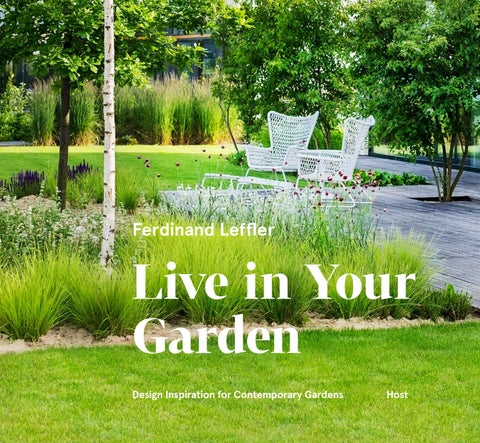
Ferdinand Leffler
Live in Your Garden Design Inspiration for Contemporary Gardens
Host
© Ferdinand Leffler, 2017 First published in Czech by Host — vydavatelství Cover photo © Zuzana Stiborková Photographs © Zuzana Stiborková, Mirek Kodeš, Ferdinand Leffler, Studio Flusser, Natália Vataščinová, basepoint, Jakub Stratil, David Veis Illustrations © Markéta Šindlarová Translation © Helena Worthington and Mark Worthington © Host — vydavatelství, s. r. o., 2018 (electronic edition) ISBN 978-80-7491-676-2
“THE BIGGEST REASON YOU DON’T GET ANSWERS IS THAT YOU HAVEN’T ASKED THE QUESTIONS.” — Richard Bach
Ferdinand Leffler
Live in Your Garden Design Inspiration for Contemporary Gardens Brno 2018
Contents
Introduction: Every Garden Has Its Own Story . . . . . . . . . . 11
MY APPROACH TO GARDEN DESIGN
Questions I Ask Myself. . . . . . . . . . . 15 The Limits and Specifics. . . . . . . . . . . . . . . . . . . . . . . . . . . 17 of the Place . . . . . . . . . . . . . . . . . . . . . . . . . . . . . . . . . . . . 17 Functions, Features, and Experiences. . . . . . . . . . . . . . . . . 31 Atmosphere and Design. . . . . . . . . . . . . . . . . . . . . . . . . . 49 Materials . . . . . . . . . . . . . . . . . . . . . . . . . . . . . . . . . . . . . 55 Plants. . . . . . . . . . . . . . . . . . . . . . . . . . . . . . . . . . . . . . . . . 61
Hard Surface Areas and Land Demarcation. . . . . . . . . . . . 135 Connections to the Surrounding Areas. . . . . . . . . . . . . . . 151 Practical Features and Dream Experiences. . . . . . . . . . . . 155 Deciding and Prioritizing. . . . . . . . . . . . . . . . . . . . . . . . 237 The Atmosphere of the Garden . . . . . . . . . . . . . . . . . . . . 241 Design and Detail. . . . . . . . . . . . . . . . . . . . . . . . . . . . . . . 247 Materials . . . . . . . . . . . . . . . . . . . . . . . . . . . . . . . . . . . . 253 Building materials. . . . . . . . . . . . . . . . . . . . . . . . . . . . . 253 Plants . . . . . . . . . . . . . . . . . . . . . . . . . . . . . . . . . . . . . . 265 And finally… . . . . . . . . . . . . . . . . . . . . . . . . . . . . . . . . . . . 278
Technical Details & Practical Advice. . . . . . . . . . . . . 281
INSPIRATION
Garden Stories. . . . . . . . . . . . . . . . . 67 The Garden of Villa Franta . . . . . . . . . . . . . . . . . . . . . . . . 69 A Small Garden in Town . . . . . . . . . . . . . . . . . . . . . . . . . . 79 A Forest Garden for My Friend . . . . . . . . . . . . . . . . . . . . . 89 A Garden in the Country. . . . . . . . . . . . . . . . . . . . . . . . . . 101 A Relaxed Garden. . . . . . . . . . . . . . . . . . . . . . . . . . . . . . . 111
HOW TO PLAN A GARDEN STEP BY STEP
The New Garden . . . . . . . . . . . . . . 121 What Can Be Changed and What Isn’t Worth Bothering About. . . . . . . . . . . . . . . . . . . . . . . 123
Sample Landscape Plan and Most Common Garden Features. . . . . . . . . . . . . . . . . . . . . . . . . . . . . . . 283 Technical Details . . . . . . . . . . . . . . . . . . . . . . . . . . . . . . . 287 Subject Index. . . . . . . . . . . . . . . . . . . . . . . . . . . . . . . . . 300 List of Photographs . . . . . . . . . . . . . . . . . . . . . . . . . . . . 302
Contents
Introduction: Every Garden Has Its Own Story . . . . . . . . . . 11
MY APPROACH TO GARDEN DESIGN
Questions I Ask Myself. . . . . . . . . . . 15 The Limits and Specifics. . . . . . . . . . . . . . . . . . . . . . . . . . . 17 of the Place . . . . . . . . . . . . . . . . . . . . . . . . . . . . . . . . . . . . 17 Functions, Features, and Experiences. . . . . . . . . . . . . . . . . 31 Atmosphere and Design. . . . . . . . . . . . . . . . . . . . . . . . . . 49 Materials . . . . . . . . . . . . . . . . . . . . . . . . . . . . . . . . . . . . . 55 Plants. . . . . . . . . . . . . . . . . . . . . . . . . . . . . . . . . . . . . . . . . 61
Hard Surface Areas and Land Demarcation. . . . . . . . . . . . 135 Connections to the Surrounding Areas. . . . . . . . . . . . . . . 151 Practical Features and Dream Experiences. . . . . . . . . . . . 155 Deciding and Prioritizing. . . . . . . . . . . . . . . . . . . . . . . . 237 The Atmosphere of the Garden . . . . . . . . . . . . . . . . . . . . 241 Design and Detail. . . . . . . . . . . . . . . . . . . . . . . . . . . . . . . 247 Materials . . . . . . . . . . . . . . . . . . . . . . . . . . . . . . . . . . . . 253 Building materials. . . . . . . . . . . . . . . . . . . . . . . . . . . . . 253 Plants . . . . . . . . . . . . . . . . . . . . . . . . . . . . . . . . . . . . . . 265 And finally… . . . . . . . . . . . . . . . . . . . . . . . . . . . . . . . . . . . 278
Technical Details & Practical Advice. . . . . . . . . . . . . 281
INSPIRATION
Garden Stories. . . . . . . . . . . . . . . . . 67 The Garden of Villa Franta . . . . . . . . . . . . . . . . . . . . . . . . 69 A Small Garden in Town . . . . . . . . . . . . . . . . . . . . . . . . . . 79 A Forest Garden for My Friend . . . . . . . . . . . . . . . . . . . . . 89 A Garden in the Country. . . . . . . . . . . . . . . . . . . . . . . . . . 101 A Relaxed Garden. . . . . . . . . . . . . . . . . . . . . . . . . . . . . . . 111
HOW TO PLAN A GARDEN STEP BY STEP
The New Garden . . . . . . . . . . . . . . 121 What Can Be Changed and What Isn’t Worth Bothering About. . . . . . . . . . . . . . . . . . . . . . . 123
Sample Landscape Plan and Most Common Garden Features. . . . . . . . . . . . . . . . . . . . . . . . . . . . . . . 283 Technical Details . . . . . . . . . . . . . . . . . . . . . . . . . . . . . . . 287 Subject Index. . . . . . . . . . . . . . . . . . . . . . . . . . . . . . . . . 300 List of Photographs . . . . . . . . . . . . . . . . . . . . . . . . . . . . 302
Every Garden Has Its Own Story
You are not holding in your hand a textbook for prospective landscape architects. This is a book in which I’ll try to give you some advice on how to approach your garden. It could be a garden that is quite old and overgrown that you’ve had for years, or it may be so new that there’s barely been time for a dandelion to grow in it. I’d like to show you that you can create a practical and pleasant environment virtually anywhere. It just needs a certain perspective and not to be afraid to ask some straight and sometimes even delicate questions. Just to be clear from the beginning, I will also advise you when it’s absolutely essential to get expert advice and not overestimate your own abilities. In my view, this is evidence of the maturity of your reflections on the architecture of your garden and house. The gardens I create always put people above all else. First, I see the family that’s going to live in the space, and only after that do I think about plant structure or particular layers of vegetation. With my designs, you won’t find anything that’s just for show, created simply for passers-by to admire. The gardens I design in my studio with my colleagues are not intended to confirm a person’s social status, but, primarily, to please their owner. A garden is a bit like a relationship—although it requires a certain amount of care and attention, it brings unique experiences, fulfilment, adventure, inspiration and joy into one’s life.
Every Garden Has Its Own Story
You are not holding in your hand a textbook for prospective landscape architects. This is a book in which I’ll try to give you some advice on how to approach your garden. It could be a garden that is quite old and overgrown that you’ve had for years, or it may be so new that there’s barely been time for a dandelion to grow in it. I’d like to show you that you can create a practical and pleasant environment virtually anywhere. It just needs a certain perspective and not to be afraid to ask some straight and sometimes even delicate questions. Just to be clear from the beginning, I will also advise you when it’s absolutely essential to get expert advice and not overestimate your own abilities. In my view, this is evidence of the maturity of your reflections on the architecture of your garden and house. The gardens I create always put people above all else. First, I see the family that’s going to live in the space, and only after that do I think about plant structure or particular layers of vegetation. With my designs, you won’t find anything that’s just for show, created simply for passers-by to admire. The gardens I design in my studio with my colleagues are not intended to confirm a person’s social status, but, primarily, to please their owner. A garden is a bit like a relationship—although it requires a certain amount of care and attention, it brings unique experiences, fulfilment, adventure, inspiration and joy into one’s life.
Now’s the right moment to forget, yes, forget! If you want a garden in which you’ll feel good, forget about all the pictures of gardens you’ve ever seen. Forget about trees, flowers, pergolas, designer furniture, stone pavements and barbeques. I’ll teach you to think about the garden differently, with a broader overview and more detachment. It’s nothing complicated and it will be fun. In essence, I just ask a few questions, and you answer them. After that, I believe you will have a clearer idea about where you want to go with the design of your garden. We often think about gardens from the end point. First, we choose the accessories and then we fall in love with the atmosphere we want to create. We first ask ourselves, “Should it be modern and elegant, or wild and natural like a garden in the country?” And then, we try to fit into our garden everything that we’ve seen somewhere in photographs that’s impressed us. Don’t worry, these things will eventually come into play, but not until later. First, we need to understand the space that we have at our disposal. We need to understand what it offers us, and also, contrastingly, what it will not allow, for example, due to its location or shape. Then comes the time when we have to properly set out what we require and what we would like to have. This requires a courageous and honest probe into our soul. We have to figure out not only what practical elements we need in the garden, but also what is lacking in our everyday lives, since our garden may be able to give it to us. Once we know all the things that need to be in the garden, we can gradually try to find the best possible places for each of them. Last of all come the specific design, the materials, and the shapes. I invite you to join me on an adventurous journey to your new garden.
12
13
Now’s the right moment to forget, yes, forget! If you want a garden in which you’ll feel good, forget about all the pictures of gardens you’ve ever seen. Forget about trees, flowers, pergolas, designer furniture, stone pavements and barbeques. I’ll teach you to think about the garden differently, with a broader overview and more detachment. It’s nothing complicated and it will be fun. In essence, I just ask a few questions, and you answer them. After that, I believe you will have a clearer idea about where you want to go with the design of your garden. We often think about gardens from the end point. First, we choose the accessories and then we fall in love with the atmosphere we want to create. We first ask ourselves, “Should it be modern and elegant, or wild and natural like a garden in the country?” And then, we try to fit into our garden everything that we’ve seen somewhere in photographs that’s impressed us. Don’t worry, these things will eventually come into play, but not until later. First, we need to understand the space that we have at our disposal. We need to understand what it offers us, and also, contrastingly, what it will not allow, for example, due to its location or shape. Then comes the time when we have to properly set out what we require and what we would like to have. This requires a courageous and honest probe into our soul. We have to figure out not only what practical elements we need in the garden, but also what is lacking in our everyday lives, since our garden may be able to give it to us. Once we know all the things that need to be in the garden, we can gradually try to find the best possible places for each of them. Last of all come the specific design, the materials, and the shapes. I invite you to join me on an adventurous journey to your new garden.
12
13
Questions I Ask Myself When I first meet clients and look around their land, I ask a lot of questions. I ask not only the people who live there, but I also ask myself, or rather I ask questions of the particular place and everything in it. For me, answering all the questions is key to creating a garden with a unique atmosphere. Here are the questions I put to myself and my clients when we first meet.
Questions I Ask Myself When I first meet clients and look around their land, I ask a lot of questions. I ask not only the people who live there, but I also ask myself, or rather I ask questions of the particular place and everything in it. For me, answering all the questions is key to creating a garden with a unique atmosphere. Here are the questions I put to myself and my clients when we first meet.
The Limits and Specifics of the Place
If you don’t know the answer to some of them just yet, don’t worry, skip over them and come back to them later. It might seem at first glance that there are just too many, but you’ll see that in order to create a really good garden, done in the right way, it’s necessary to answer them.
Before we begin to dream about the atmosphere and the fulfilment of your aspirations for the garden, it’s advisable to answer a few very practical questions, as it will save us from being distracted by them when we come to the actual creative part of the planning. HOW HIGH IS THE LAND ABOVE SEA LEVEL? The elevation of the land isn’t going to have an influence on deciding whether or where to situate a woodshed or a pergola. However, it does indicate how long the snow will stay on the ground during winter and how much rainfall you will get. It is especially important when selecting plants. See Hard Surface Areas and Land Demarcation, p. 135
WHAT IS THE STRENGTH AND DIRECTION OF THE WIND? Observe the strength and direction of the wind. The direction will tell you the parts around the house where there will be a lot of water when it rains, and, conversely, which parts will be sheltered from the rain. Unpleasant winds can be partially mitigated by suitable planting or by erecting a screen or windbreak wall in the garden. ARE THERE ANY UTILITY MAINS OR RESTRICTED ZONES RUNNING THROUGH THE GARDEN? Restricted and safety zones can have a decisive influence on the location of all features in a garden—both constructions and plants. Therefore, it is necessary to find out as much information as possible on the relevant regulations in advance. Pay attention to water pipelines, sewerage pipes, electricity and gas mains, communication cables, and others. It’s also good to find out whether the area is subject to any specific regulations (e.g. a conservation area). Also, look at the natural surroundings (forests, protected areas, water resources, etc.).
QUESTIONS I ASK MYSELF—THE LIMITS AND SPECIFICS OF THE PLACE
In a quiet moment, take a piece of paper and a pencil and try to answer all of the following questions.
17
The Limits and Specifics of the Place
If you don’t know the answer to some of them just yet, don’t worry, skip over them and come back to them later. It might seem at first glance that there are just too many, but you’ll see that in order to create a really good garden, done in the right way, it’s necessary to answer them.
Before we begin to dream about the atmosphere and the fulfilment of your aspirations for the garden, it’s advisable to answer a few very practical questions, as it will save us from being distracted by them when we come to the actual creative part of the planning. HOW HIGH IS THE LAND ABOVE SEA LEVEL? The elevation of the land isn’t going to have an influence on deciding whether or where to situate a woodshed or a pergola. However, it does indicate how long the snow will stay on the ground during winter and how much rainfall you will get. It is especially important when selecting plants. See Hard Surface Areas and Land Demarcation, p. 135
WHAT IS THE STRENGTH AND DIRECTION OF THE WIND? Observe the strength and direction of the wind. The direction will tell you the parts around the house where there will be a lot of water when it rains, and, conversely, which parts will be sheltered from the rain. Unpleasant winds can be partially mitigated by suitable planting or by erecting a screen or windbreak wall in the garden. ARE THERE ANY UTILITY MAINS OR RESTRICTED ZONES RUNNING THROUGH THE GARDEN? Restricted and safety zones can have a decisive influence on the location of all features in a garden—both constructions and plants. Therefore, it is necessary to find out as much information as possible on the relevant regulations in advance. Pay attention to water pipelines, sewerage pipes, electricity and gas mains, communication cables, and others. It’s also good to find out whether the area is subject to any specific regulations (e.g. a conservation area). Also, look at the natural surroundings (forests, protected areas, water resources, etc.).
QUESTIONS I ASK MYSELF—THE LIMITS AND SPECIFICS OF THE PLACE
In a quiet moment, take a piece of paper and a pencil and try to answer all of the following questions.
17
If you are at the stage prior to the planning of the garden, pay particular attention to the existing electricity and water mains that run through the land. HOW PERMEABLE IS THE SOIL? If the land is not extremely waterlogged, water isn’t going to be a limiting factor in creating the garden. However, very wet and saturated soil must be drained (for more on this, see p. 288). But this is only possible when you have somewhere for the water to go. If your garden is in a hollow, a high level of groundwater is simply a reality that has to be taken into account, especially when choosing plants. In the most susceptible parts, we don’t put any paths or larger seating areas. If there’s no other option, a seating area may be put on a raised construction such as a little wooden pier or something similar. WHAT KIND OF SOIL DOES THE LAND HAVE? The soil quality of the land is a crucial issue. Normally, we wouldn’t want to pay for cultivation, as this investment is not very visible in a garden. But take a good look right from the start. Take a look at gardens that have been established without any attention to the soil, often soulless developers’ projects, where trees and bushes literally languish. Above all, try to protect the topsoil, which is usually twenty to thirty centimetres of the top layer of soil. Put it to one side and don’t mix it with the rest of the subsoil. This topsoil needs to be stored well to preserve all its properties. See Technical Details: Topsoil and Storing It, p. 288
If you notice that nothing is growing on the land, I recommend you have a soil test done at the nearest pedology institute, because the soil is either “dead”, i.e. without any nutrients, or it may be contaminated. In either case, a solution must be found before building a garden on it. � In the end, what works best in the space of the garden is simple geometry, which may seem mundane from a height. Believe me, the dynamics will be taken care of by the plants in the beds.
18
See Technical Details: Soil Cultivation, p. 297
19
If you are at the stage prior to the planning of the garden, pay particular attention to the existing electricity and water mains that run through the land. HOW PERMEABLE IS THE SOIL? If the land is not extremely waterlogged, water isn’t going to be a limiting factor in creating the garden. However, very wet and saturated soil must be drained (for more on this, see p. 288). But this is only possible when you have somewhere for the water to go. If your garden is in a hollow, a high level of groundwater is simply a reality that has to be taken into account, especially when choosing plants. In the most susceptible parts, we don’t put any paths or larger seating areas. If there’s no other option, a seating area may be put on a raised construction such as a little wooden pier or something similar. WHAT KIND OF SOIL DOES THE LAND HAVE? The soil quality of the land is a crucial issue. Normally, we wouldn’t want to pay for cultivation, as this investment is not very visible in a garden. But take a good look right from the start. Take a look at gardens that have been established without any attention to the soil, often soulless developers’ projects, where trees and bushes literally languish. Above all, try to protect the topsoil, which is usually twenty to thirty centimetres of the top layer of soil. Put it to one side and don’t mix it with the rest of the subsoil. This topsoil needs to be stored well to preserve all its properties. See Technical Details: Topsoil and Storing It, p. 288
If you notice that nothing is growing on the land, I recommend you have a soil test done at the nearest pedology institute, because the soil is either “dead”, i.e. without any nutrients, or it may be contaminated. In either case, a solution must be found before building a garden on it. � In the end, what works best in the space of the garden is simple geometry, which may seem mundane from a height. Believe me, the dynamics will be taken care of by the plants in the beds.
18
See Technical Details: Soil Cultivation, p. 297
19
� Dry stone walls don’t have to be purely functional; they can also work very well in the garden as a casual decoration of the space or an occasional place for sitting. � When designing the direction of the path in the space, keep in mind not only the transition from point A to point B, but also pay attention to the views that will open up to you along the way.
HOW IS THE HOUSE POSITIONED IN THE SPACE? Most people consider the garden to be only the main outdoor living area of the land (most often behind the house). But the house naturally divides the land into several areas. The small and narrow parts in front and next to the house are extremely important and have more to offer than a mere transitional function. When compared with the central part of the garden, these spaces have a different ratio of sunshine and shade, and in the summer heat they can work well with a bench as little rooms. As they’re not in plain sight, they can also be used, for example, as places for a clothes-dryer or a woodshed with a chopping block and an axe. HOW IS THE HOUSE POSITIONED IN TERMS OF HEIGHT? Personally, I am very fond of gardens on hillside slopes. They offer the kind of ruggedness and nooks and crannies that take time to create in gardens on level terrain. If the garden is on flat land, do not attempt to divide up the space with “little mounds”, i.e., landscape mounds or berms, which, in the end, always looks artificial. A better solution is to use a low wall, steps you can sit on, or a dry stone wall. The height dynamics of the garden can also be created using greenery; larger groups of various trees and shrubs work well. If the land is quite steep, I would only recommend levelling it in the residential areas of the garden. Leave the rest of the space naturally undulating. Terracing all of the land is unnecessarily expensive and in the context of the surrounding areas looks unnatural. HOW DOES LIGHT AND SHADOW MOVE IN THE GARDEN? You shouldn’t underestimate the value of this question either. The way sun and shadow moves around the garden throughout the day and the whole year is fundamental information for choosing plants and places for particular outdoor living areas of the garden. Try to notice the light and shade that is also created in your garden by the trees and houses of surrounding properties. Make these observations at least four times a year, in every season if you have the time, as you want to be able to make the most of your garden the whole year round.
20
� Shady gardens offer a unique charm and mystery.
21
� Dry stone walls don’t have to be purely functional; they can also work very well in the garden as a casual decoration of the space or an occasional place for sitting. � When designing the direction of the path in the space, keep in mind not only the transition from point A to point B, but also pay attention to the views that will open up to you along the way.
HOW IS THE HOUSE POSITIONED IN THE SPACE? Most people consider the garden to be only the main outdoor living area of the land (most often behind the house). But the house naturally divides the land into several areas. The small and narrow parts in front and next to the house are extremely important and have more to offer than a mere transitional function. When compared with the central part of the garden, these spaces have a different ratio of sunshine and shade, and in the summer heat they can work well with a bench as little rooms. As they’re not in plain sight, they can also be used, for example, as places for a clothes-dryer or a woodshed with a chopping block and an axe. HOW IS THE HOUSE POSITIONED IN TERMS OF HEIGHT? Personally, I am very fond of gardens on hillside slopes. They offer the kind of ruggedness and nooks and crannies that take time to create in gardens on level terrain. If the garden is on flat land, do not attempt to divide up the space with “little mounds”, i.e., landscape mounds or berms, which, in the end, always looks artificial. A better solution is to use a low wall, steps you can sit on, or a dry stone wall. The height dynamics of the garden can also be created using greenery; larger groups of various trees and shrubs work well. If the land is quite steep, I would only recommend levelling it in the residential areas of the garden. Leave the rest of the space naturally undulating. Terracing all of the land is unnecessarily expensive and in the context of the surrounding areas looks unnatural. HOW DOES LIGHT AND SHADOW MOVE IN THE GARDEN? You shouldn’t underestimate the value of this question either. The way sun and shadow moves around the garden throughout the day and the whole year is fundamental information for choosing plants and places for particular outdoor living areas of the garden. Try to notice the light and shade that is also created in your garden by the trees and houses of surrounding properties. Make these observations at least four times a year, in every season if you have the time, as you want to be able to make the most of your garden the whole year round.
20
� Shady gardens offer a unique charm and mystery.
21
22
23
22
23
HOW DO YOU GET TO THE GARDEN FROM THE HOUSE? A comfortable way of getting to the garden from the house should be a matter of course. The exits from a house to the surrounding land are often predetermined. However, if your house doesn’t offer a pleasant way of accessing the garden, take a step back and consider some new alternatives. Sometimes, an independent architect may bring some unexpected ideas on how to live in the house, which can make significant positive changes to your habits. In the years I’ve been designing gardens, I have persuaded a number of my clients of the benefits of knocking through a new window or a door leading to the garden. WHAT ARE THE ACCESS ROUTES FROM THE STREET TO THE HOUSE? By moving the position of the gate in the fence, it’s possible to change the direction and shape of the path to the entrance door of the house. As in the previous paragraph, considering new alternatives might prove fruitful. Try to close your eyes for a moment and imagine that you have the opportunity of creating a totally new entrance and you can completely obliterate the existing arrangement. If a proposed solution is more practical and pleasing, go for it. After all, you’ll be walking along that path every day! ARE THERE ANY VIEWS FROM THE LAND WORTH CALLING ATTENTION TO? If there’s a beautiful view of a distant horizon or a church tower from the garden or any of the windows, then give prominence to such a vista; don’t cover it up with a building or dense greenery. It’s also good not to lose sight of more commonplace views such as the nice house next door or the spreading cherry tree across the street. � Think about the everyday views from the house onto the changing garden. If the design works, they will be sights you’ll never tire of.
24
25
HOW DO YOU GET TO THE GARDEN FROM THE HOUSE? A comfortable way of getting to the garden from the house should be a matter of course. The exits from a house to the surrounding land are often predetermined. However, if your house doesn’t offer a pleasant way of accessing the garden, take a step back and consider some new alternatives. Sometimes, an independent architect may bring some unexpected ideas on how to live in the house, which can make significant positive changes to your habits. In the years I’ve been designing gardens, I have persuaded a number of my clients of the benefits of knocking through a new window or a door leading to the garden. WHAT ARE THE ACCESS ROUTES FROM THE STREET TO THE HOUSE? By moving the position of the gate in the fence, it’s possible to change the direction and shape of the path to the entrance door of the house. As in the previous paragraph, considering new alternatives might prove fruitful. Try to close your eyes for a moment and imagine that you have the opportunity of creating a totally new entrance and you can completely obliterate the existing arrangement. If a proposed solution is more practical and pleasing, go for it. After all, you’ll be walking along that path every day! ARE THERE ANY VIEWS FROM THE LAND WORTH CALLING ATTENTION TO? If there’s a beautiful view of a distant horizon or a church tower from the garden or any of the windows, then give prominence to such a vista; don’t cover it up with a building or dense greenery. It’s also good not to lose sight of more commonplace views such as the nice house next door or the spreading cherry tree across the street. � Think about the everyday views from the house onto the changing garden. If the design works, they will be sights you’ll never tire of.
24
25
We are all sensitive to the noise of the neighbourhood in different ways. Even though your street may not be a very busy one, a little bit more privacy can help you feel more at home in your garden. Sometimes, it’s enough to put up a simple screen with cables and have grapevines growing up it. Spend some time thinking and perhaps you’ll come up with some unexpected ideas on how to occupy the diverse spaces around your house. It doesn’t matter if you only sit there a few times a year. It’s just nice to know that you have them.
WHAT DO WE WANT TO OPEN UP TO? Openness versus the need for privacy is an essential aspect of designing a garden and careful consideration of this will point you towards the ideal goal of feeling really comfortable in your garden. Perhaps you’re bothered by the neighbours being able to see you drinking your morning coffee on the terrace. Or perhaps you want to be alone when you’re sunbathing in the afternoon. Depending on the answers, it is possible to intensify the screening, or to reorganize the garden into separate little green rooms. I know this can be a sensitive issue, especially if you have friendly relations with your neighbours. So, if you don’t want to lose contact with the garden next door, but privacy in the garden is really important for you, build a full fence, leaving space for a little “neighbour communication window”.
26
WHERE IS THE BEST VIEW OF THE HOUSE AND OF THE GARDEN? Most people buy a house for its views out onto the garden, but it’s good to realize that there’s also a beautiful view of the house from the garden. Find the place where the nicest view of your house and of your garden is and plan a little seating area there. The view from it will make you happy every day, as will observing the garden changing through the seasons.
� When a fence won’t do, don’t be afraid to build a solid wall inside the garden. Together with a selected combination of plants, it can also be a nice design feature.
27
We are all sensitive to the noise of the neighbourhood in different ways. Even though your street may not be a very busy one, a little bit more privacy can help you feel more at home in your garden. Sometimes, it’s enough to put up a simple screen with cables and have grapevines growing up it. Spend some time thinking and perhaps you’ll come up with some unexpected ideas on how to occupy the diverse spaces around your house. It doesn’t matter if you only sit there a few times a year. It’s just nice to know that you have them.
WHAT DO WE WANT TO OPEN UP TO? Openness versus the need for privacy is an essential aspect of designing a garden and careful consideration of this will point you towards the ideal goal of feeling really comfortable in your garden. Perhaps you’re bothered by the neighbours being able to see you drinking your morning coffee on the terrace. Or perhaps you want to be alone when you’re sunbathing in the afternoon. Depending on the answers, it is possible to intensify the screening, or to reorganize the garden into separate little green rooms. I know this can be a sensitive issue, especially if you have friendly relations with your neighbours. So, if you don’t want to lose contact with the garden next door, but privacy in the garden is really important for you, build a full fence, leaving space for a little “neighbour communication window”.
26
WHERE IS THE BEST VIEW OF THE HOUSE AND OF THE GARDEN? Most people buy a house for its views out onto the garden, but it’s good to realize that there’s also a beautiful view of the house from the garden. Find the place where the nicest view of your house and of your garden is and plan a little seating area there. The view from it will make you happy every day, as will observing the garden changing through the seasons.
� When a fence won’t do, don’t be afraid to build a solid wall inside the garden. Together with a selected combination of plants, it can also be a nice design feature.
27
DO THE FUNCTIONS OF THE ROOMS PROJECT OUT INTO THE GARDEN? For the individual rooms of the house, design appropriate corresponding spaces in the garden, especially where the interiors are physically connected to the garden. For the living and dining rooms, where the whole family spends time, the garden zones should also be designed for activity. On the other hand, close to bedrooms, where peace and quiet is desired, plan for more modest and ambient seating areas. WHERE DO THE NEIGHBOURS SPEND MOST TIME IN THEIR GARDEN? If you spend your time in the garden in a significantly different way than your neighbours, it’s good to make provision for some clear screening off when planning your garden, for example, with a solid wall or a thick hedge. WHAT INTRUDES INTO THE PRIVACY OF THE GARDEN? When taking into account the sense of privacy, look at it not only from the level of the garden, but also from a higher one, from the windows upstairs. With careful deliberation on the placement of trees, you can screen off views not only from the gardens next door, but also from the higher floors of neighbouring houses.
� When looking for an ideal place for certain activities, always take into account the impact on the areas nearby. Even if the wind is not good, the smoke from your fire shouldn’t be blowing into the outdoor living areas of your garden or anyone else’s.
28
WHAT KIND OF NOISE COMES FROM THE SURROUNDING AREAS? The noises that can be heard in your garden change throughout the day and throughout the whole year. Pay attention to what particular noises irritate you. It could be the noise from cars, the town, a neighbour’s yapping poodle, or the traditional weekend noise of the local DIY enthusiast’s circular saw. Moreover, don’t forget that sound also carries above your head. In the most exposed locations, it’s best to use a solid wall. The sound of falling water can be used as a great means of screening off noise close to any place you like to sit.
29
DO THE FUNCTIONS OF THE ROOMS PROJECT OUT INTO THE GARDEN? For the individual rooms of the house, design appropriate corresponding spaces in the garden, especially where the interiors are physically connected to the garden. For the living and dining rooms, where the whole family spends time, the garden zones should also be designed for activity. On the other hand, close to bedrooms, where peace and quiet is desired, plan for more modest and ambient seating areas. WHERE DO THE NEIGHBOURS SPEND MOST TIME IN THEIR GARDEN? If you spend your time in the garden in a significantly different way than your neighbours, it’s good to make provision for some clear screening off when planning your garden, for example, with a solid wall or a thick hedge. WHAT INTRUDES INTO THE PRIVACY OF THE GARDEN? When taking into account the sense of privacy, look at it not only from the level of the garden, but also from a higher one, from the windows upstairs. With careful deliberation on the placement of trees, you can screen off views not only from the gardens next door, but also from the higher floors of neighbouring houses.
� When looking for an ideal place for certain activities, always take into account the impact on the areas nearby. Even if the wind is not good, the smoke from your fire shouldn’t be blowing into the outdoor living areas of your garden or anyone else’s.
28
WHAT KIND OF NOISE COMES FROM THE SURROUNDING AREAS? The noises that can be heard in your garden change throughout the day and throughout the whole year. Pay attention to what particular noises irritate you. It could be the noise from cars, the town, a neighbour’s yapping poodle, or the traditional weekend noise of the local DIY enthusiast’s circular saw. Moreover, don’t forget that sound also carries above your head. In the most exposed locations, it’s best to use a solid wall. The sound of falling water can be used as a great means of screening off noise close to any place you like to sit.
29
Functions, Features, and Experiences
WHO EXACTLY IS GOING TO LIVE IN THIS GARDEN? Your considerations about the future garden should, where possible, take into account all members of the household. In doing this you will ensure that they all accept the garden as theirs and really love it. If, for example, you have a lot of kids, or lots of pets, you’ll need a garden that is both durable and safe. And if your elderly parents also share the space with you, it’s necessary to bear in mind that they should be able to walk around the garden comfortably.
30
HOW LONG DO YOU PLAN TO HAVE THE GARDEN? In recent years, I’ve often designed gardens that the client has intended to have only for a few years. Such a garden, of course, has its own specifics and the project focuses mainly on the present—an immediate need for privacy takes precedence over long-term plans; pleasure and comfort can be delivered by some nice plant pots and good quality furniture, which can then be taken off to another staging post in one’s life.
QUESTIONS I ASK MYSELF—FUNCTIONS, FEATURES, AND EXPERIENCES
So, we’re already familiar with the space and understand its connections to its surroundings. Now comes the fun part of thinking about the garden we want—we can start to dream. I’m going to ask some direct questions and you should forget about any limits. The aim of this chapter is to open up all the little doors to your soul, omitting no detail that could make your life more pleasant and fulfilling. Of course, the garden may not be able to fit in everything you desire, but, in the end, we’ll agree on what’s most important. Let every member of the household express freely what the garden should bring into their life. Let everyone dream and write their garden wish list.
31
Functions, Features, and Experiences
WHO EXACTLY IS GOING TO LIVE IN THIS GARDEN? Your considerations about the future garden should, where possible, take into account all members of the household. In doing this you will ensure that they all accept the garden as theirs and really love it. If, for example, you have a lot of kids, or lots of pets, you’ll need a garden that is both durable and safe. And if your elderly parents also share the space with you, it’s necessary to bear in mind that they should be able to walk around the garden comfortably.
30
HOW LONG DO YOU PLAN TO HAVE THE GARDEN? In recent years, I’ve often designed gardens that the client has intended to have only for a few years. Such a garden, of course, has its own specifics and the project focuses mainly on the present—an immediate need for privacy takes precedence over long-term plans; pleasure and comfort can be delivered by some nice plant pots and good quality furniture, which can then be taken off to another staging post in one’s life.
QUESTIONS I ASK MYSELF—FUNCTIONS, FEATURES, AND EXPERIENCES
So, we’re already familiar with the space and understand its connections to its surroundings. Now comes the fun part of thinking about the garden we want—we can start to dream. I’m going to ask some direct questions and you should forget about any limits. The aim of this chapter is to open up all the little doors to your soul, omitting no detail that could make your life more pleasant and fulfilling. Of course, the garden may not be able to fit in everything you desire, but, in the end, we’ll agree on what’s most important. Let every member of the household express freely what the garden should bring into their life. Let everyone dream and write their garden wish list.
31
Gardens can be divided into gardens for growing produce, gardens for relaxing in, and those for spending time in actively. But often, we want to put all of these functions together. If this is the case, then we just need to organise the space with a bit more care. Consider the garden in the same way you would do a flat. Plan to have your living area near the kitchen, while the “children’s rooms” and “bedrooms” should be located in a quieter part of the property.
But most of us build just one garden in our whole lives. Although, even then, it’s not necessary to stick to the original design forever. For example, a timber construction that serves as part of a children’s playground today may in a few years, become an outdoor gym, or a partition wall with cable latticework and climbing greenery all over it.
� Don’t be afraid of having stairs leading to the terrace or away from it. Make them comfortable and out of a fine material that is a joy to touch. Wide, connecting, wooden stairs are very often more popular for sitting on than the furniture itself.
32
WHERE TO PUT THE TERRACE? If it’s possible to access the terrace from the house, the floor can be at the same level as the adjoining room in the interior. That’s how I like it. For a four-member family, I recommend an area of at least 3 × 4 metres, but more space is always better. However, forget the clichéd notion that the terrace must be right up against the house. Situating it in such a way often means that the terrace is in the shade or without a view of the garden or the surrounding area. Believe me, those few extra steps you need to go for a more pleasant seating area are worth it. And what’s more, you won’t be looking out of the living room windows right at the garden furniture, but at blooming perennial flowerbeds. DO YOU LOVE LOOKING INTO AN OPEN FIRE? Then choose one from the diverse range of options of fire pits, outdoor fireplaces, and open fire barbeques on offer.
--^ Prepare a seating area for your children that belongs only to them, and then leave them to have the best fun of all—the fun they think up for themselves.
QUESTIONS I ASK MYSELF—FUNCTIONS, FEATURES, AND EXPERIENCES
How does everybody in the household want to spend their time in the garden?
� Think about your garden as a space that can offer you something that won’t fit in your house or simply doesn’t belong there. What takes your fancy—a pizza oven, a sauna, a pétanque court, a target for your longbow, or an outdoor cinema? Your garden can give you all of these and much more.
33
Gardens can be divided into gardens for growing produce, gardens for relaxing in, and those for spending time in actively. But often, we want to put all of these functions together. If this is the case, then we just need to organise the space with a bit more care. Consider the garden in the same way you would do a flat. Plan to have your living area near the kitchen, while the “children’s rooms” and “bedrooms” should be located in a quieter part of the property.
But most of us build just one garden in our whole lives. Although, even then, it’s not necessary to stick to the original design forever. For example, a timber construction that serves as part of a children’s playground today may in a few years, become an outdoor gym, or a partition wall with cable latticework and climbing greenery all over it.
� Don’t be afraid of having stairs leading to the terrace or away from it. Make them comfortable and out of a fine material that is a joy to touch. Wide, connecting, wooden stairs are very often more popular for sitting on than the furniture itself.
32
WHERE TO PUT THE TERRACE? If it’s possible to access the terrace from the house, the floor can be at the same level as the adjoining room in the interior. That’s how I like it. For a four-member family, I recommend an area of at least 3 × 4 metres, but more space is always better. However, forget the clichéd notion that the terrace must be right up against the house. Situating it in such a way often means that the terrace is in the shade or without a view of the garden or the surrounding area. Believe me, those few extra steps you need to go for a more pleasant seating area are worth it. And what’s more, you won’t be looking out of the living room windows right at the garden furniture, but at blooming perennial flowerbeds. DO YOU LOVE LOOKING INTO AN OPEN FIRE? Then choose one from the diverse range of options of fire pits, outdoor fireplaces, and open fire barbeques on offer.
--^ Prepare a seating area for your children that belongs only to them, and then leave them to have the best fun of all—the fun they think up for themselves.
QUESTIONS I ASK MYSELF—FUNCTIONS, FEATURES, AND EXPERIENCES
How does everybody in the household want to spend their time in the garden?
� Think about your garden as a space that can offer you something that won’t fit in your house or simply doesn’t belong there. What takes your fancy—a pizza oven, a sauna, a pétanque court, a target for your longbow, or an outdoor cinema? Your garden can give you all of these and much more.
33
34
35
34
35
DO YOU ENJOY COOKING OUTSIDE? For outdoor cooking and dining, there are many possibilities— a fireplace, a pergola with an outdoor kitchen, a smokehouse, a pizza oven, a portable barbeque or even a portable fireplace. Consider how often you cook, for how many people, and what food you like to cook. If you have a barbecue four times a year, you don’t need an extensive outdoor kitchen. However, if you enjoy being the head chef every weekend, you’d be better investing in a well-equipped, covered kitchen area with a larger work surface.
Don’t separate the individual features of the garden. One of the vegetable patches can be given over to the children for their first attempts at growing things, the adults like having a go on the trampoline now and then, and the path to the shed can become a sweet, strawberry trail for everyone.
36
CAN YOU ENVISAGE A NICE GREENHOUSE IN YOUR GARDEN? The days when the greenhouse was the garden’s embarrassing eyesore are long gone. On today’s market there are some real gems. One can find greenhouses to suit just about any garden, manufactured to precision in high quality materials and in any colour you can think of. WHAT WOULD YOUR KIDS LIKE TO HAVE IN THE GARDEN? I suggest you ask them, and please don’t rule out anything in advance. There’s no point in trying to transform a little scientist into an indefatigable athlete or vice versa. I also suggest doing a bit of research into the playground equipment in the public playgrounds nearby to avoid unnecessary duplication. In general, it pays off to offer children opportunities for play and adventure rather than specific apparatus with a predetermined outcome. A children’s clubhouse may serve as a pirates’ base, or at other times as a school for princesses or a little kitchen. You don’t need 6 × 4 metres of climbing wall at home when some ropes hung from a pergola or an old walnut tree are much more interesting.
QUESTIONS I ASK MYSELF—FUNCTIONS, FEATURES, AND EXPERIENCES
DO YOU HAVE THE APPETITE FOR AN EDIBLE GARDEN? Make a list of all the kinds of fruits and vegetables that you’d like to grow or maybe just pick at in your garden throughout the year. Also, try to think about the amount of produce. Some people are happy with just a couple of raised beds for strawberries and a few herbs; others want fruit trees and bushes all over the garden and dream of cold frames and greenhouses.
37
DO YOU ENJOY COOKING OUTSIDE? For outdoor cooking and dining, there are many possibilities— a fireplace, a pergola with an outdoor kitchen, a smokehouse, a pizza oven, a portable barbeque or even a portable fireplace. Consider how often you cook, for how many people, and what food you like to cook. If you have a barbecue four times a year, you don’t need an extensive outdoor kitchen. However, if you enjoy being the head chef every weekend, you’d be better investing in a well-equipped, covered kitchen area with a larger work surface.
Don’t separate the individual features of the garden. One of the vegetable patches can be given over to the children for their first attempts at growing things, the adults like having a go on the trampoline now and then, and the path to the shed can become a sweet, strawberry trail for everyone.
36
CAN YOU ENVISAGE A NICE GREENHOUSE IN YOUR GARDEN? The days when the greenhouse was the garden’s embarrassing eyesore are long gone. On today’s market there are some real gems. One can find greenhouses to suit just about any garden, manufactured to precision in high quality materials and in any colour you can think of. WHAT WOULD YOUR KIDS LIKE TO HAVE IN THE GARDEN? I suggest you ask them, and please don’t rule out anything in advance. There’s no point in trying to transform a little scientist into an indefatigable athlete or vice versa. I also suggest doing a bit of research into the playground equipment in the public playgrounds nearby to avoid unnecessary duplication. In general, it pays off to offer children opportunities for play and adventure rather than specific apparatus with a predetermined outcome. A children’s clubhouse may serve as a pirates’ base, or at other times as a school for princesses or a little kitchen. You don’t need 6 × 4 metres of climbing wall at home when some ropes hung from a pergola or an old walnut tree are much more interesting.
QUESTIONS I ASK MYSELF—FUNCTIONS, FEATURES, AND EXPERIENCES
DO YOU HAVE THE APPETITE FOR AN EDIBLE GARDEN? Make a list of all the kinds of fruits and vegetables that you’d like to grow or maybe just pick at in your garden throughout the year. Also, try to think about the amount of produce. Some people are happy with just a couple of raised beds for strawberries and a few herbs; others want fruit trees and bushes all over the garden and dream of cold frames and greenhouses.
37