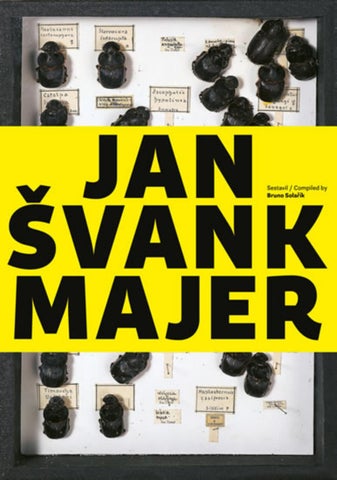
Obsah / Contents
Příruční Kunstkamera Hand-held Kunstkamera
1
Imaginace / Imagination
GAUDIA
2 Oživení hmoty / Bringing Matter to Life
HORRIBILIA
3 Svoboda a nutnost / Freedom and Necessity
MYSTICA
4 Rituál a fetiš / Ritual and Fetish
FUNERALIA
5 Náhoda a příroda / Coincidence and Nature
MIRABILIA
Jan Švankmajer: Jedenáct aktovek Jan Švankmajer: Eleven One-Act Plays
Obraznost jako praktický čin Imagination as a Practical Act
→6
→9
→ 59
→ 111
→ 165
→ 213
→ 265
→ 296
2
Oživení hmoty Bringing Matter to Life
HORRIBILIA
Zánik domu Usherů / The Fall of the House of Usher, 1980
V předmětu je síla „…Usher projevil názor…, že rostlinstvo má schopnost vnímání. Ovšem Usherova rozháraná mysl dodala myšlence poněkud smělejší podobu; podle něho vztahovala se tato citlivost za určitých podmínek i na říši nerostů… Jeho víra ovšem souvisela… s šedými kameny sídla Usherových předků. Domníval se, že podmínky oné vnímavosti jsou zde splněny souladným seskupením těchto kamenů, řádem jejich rozmístění i rozmístění plísně, která je pokrývá, i zetlelých stromů kolem – a především dlouhým, ničím nepřerušeným trváním tohoto seskupení i jeho odrazu v nehybné hladině močálu. / Edgar Allan Poe
Sdílím Usherovy názory na neživou přírodu. Kdybych se měl charakterizovat podle zjednodušeného schématu Frommovy typologie, pak jsem čistý nekrofil. Předměty pro mne byly životnější než lidé. Stálejší, ale též výmluvnější. Vzrušivější svými latentními obsahy, svou pamětí, přesahující daleko lidskou paměť. Předměty v sobě tají děje, kterých byly svědky. Proto se jimi obklopuji a snažím se z nich tyto utajené děje a zážitky vyčíst. Někdy mluví předměty hned na první pohled nebo dotek, jindy to trvá déle, někdy celé roky, než promluví. Lidé se předmětů, věcí dotýkali v určitých životních situacích, při různých tenzích a náladách, a ukládali do nich svými doteky své afekty a emoce. Čím je předmět dotýkanější,
60
There Is Power in the Object “…in his disordered fancy, the idea had assumed a more daring character, and trespassed, under certain conditions, upon the kingdom of inorganization… The belief, however, was connected… with the gray stones of the home of his forefathers. The conditions of the sentience had been here, he imagined, fulfilled in the method of collocation of these stones—in the order of their arrangement, as well as in that of the many fungi which overspread them, and of the decayed trees which stood around— above all, in the long undisturbed endurance of this arrangement, and in its reduplication in the still waters of the tarn.” Edgar Allan Poe
I share Usher’s opinions on inanimate nature. If I was to characterize myself according to the simplified schemata of Fromm’s typology, then I am a pure necrophile. Objects have always been more living for me than people. More stable, but also more eloquent. More exciting in their latent contents, their memory, far outreaching the human memory. Objects conceal within themselves the stories they have been witness to. That is why I surround myself with them and I try to read from them those concealed happenings and experiences. Objects sometimes speak immediately at first glance or touch, at other times it takes longer, sometimes
Zánik domu Usherů / The Fall of the House of Usher, 1980
tím je nabitější obsahy. Vždy jsem se snažil ve svých filmech tyto obsahy z předmětů „vydolovat“, naslouchat jim a pak jejich vyprávění zobrazit. V tom je neopakovatelná síla animace. Je to podle mne vůbec smysl jakékoliv animace. Nechat mluvit předměty samy. Vzniká tak smysluplný vztah mezi člověkem a věcmi, založený na dialogu, nikoliv na konzumaci. Předměty se tak vyčleňují ze svých utilitárních funkcí a vracejí se svým prapůvodním, magickým významům. Neboť první věci, které člověk vytvořil, byly skutečně živé a bylo s nimi možné rozmlouvat. Tento názor úzce souvisí s názorem, který hájí Usher v Poeově povídce. Je jen jeho logickým dovršením, uzavírajícím náš vesmír: člověk – zvíře – rostlina – nerost – předmět vytvořený člověkem. Had starých alchymistů, zakousnutý do svého ocasu.
years, before they speak. People touch objects, things, in certain life situations, during various moods and moments of tension, and they transfer their moods and emotions to them with their touches. The more touched an object is, the more charged are its contents. In my films I have always tried to “extract” these contents from objects, to listen to them and then to illustrate their narratives. Therein lay the unrepeatable power of animation. For me that is the only meaning of any animation. To have the objects speak for themselves. In this way a meaningful relationship arises between people and things, based on a dialogue, never on consumption. Objects are thus separated from their utilitarian function and return with their primordial, magical meanings. After all, the first things humans created were actually alive and were able to converse with them. This opinion is closely connected to the opinion that Usher defends in Poe’s story. It’s only its logical culmination, closing
Lidi jsem ve filmu Zánik domu Usherů zaměnil za věci. A věci se staly nositeli nejen děje, ale i emocí jednajících postav a atmosféry příběhu.
our universe: human—animal—plant—mineral—an object
Dírou ve stropě padá Alenka dolů a mizí až po krk v listí. Pokouší se vyhrabat nahoru, avšak listí ji stále znovu pohlcuje. Vypadá to, jako by bylo živé.
I have exchanged people in the film The Fall of the House
Něco z Alenky
created by a human. The snake of the old alchemists, biting its own tail.
of Usher for things. And things have become the bearers not only of the story, but also of the emotions of acting characters and the atmosphere of the story. Alice falls down through a hole in the ceiling and disappears up to her neck in leaves. She tries to dig herself back up, but the leaves swallow her again and again. It looks as if they were alive. Alice
Oživení hmoty / Bringing Matter to Life
61
Kostnice / The Ossuary, 1970
Moc skrytá v obyčejnosti
Power Concealed in the Ordinary
„Předměty kolem mne […] byly sice věci, na jaké jsem byl od dětství zvyklý – a rád jsem si přiznával, jak je mi to všechno běžné –, přece však jsem užasl nad neobvyklostí představ, které tyto obyčejné zjevy podnítily.“ Edgar Allan Poe
Nejstarší smyslový zážitek mám ze čtyř let, kdy jsme se přestěhovali ze Žižkova do Vršovic a lakovali jsme v novém bytě podlahu nahnědo. Je to jedna z mých nejstarších vzpomínek vůbec. Tato červenohnědá barva (puzzuola) v podstatě natrvalo ovlivnila kolorit celé mé další tvorby.
“While the objects around me […] were but matters to which […] I had been accustomed from my infancy—while I hesitated not to acknowledge how familiar was all this—I still wondered to find how unfamiliar were the fancies which ordinary images were stirring up.” / Edgar Allan Poe
My oldest sensual experience is from when I was four when we were moving from Žižkov to Vršovice and lacquering the floor brown in the new apartment. It is one of my absolutely oldest memories. That reddish-brown color (puzzuola) essentially permanently influenced the coloring of all my later work.
Fantastika snového světa nespočívá ve vymyšlených světech, ale ve snových (náhodných) setkáních naprosto reálných věcí z tohoto světa, v setkáních, která jsou však zbavena logiky našeho všedního dne.
The fantasy of the dream world does not reside in made up worlds, but in the dream (random) encounters of absolutely real things from this world, in encounters, however, which have been rid of the logic of the everyday.
Oživení animací musí probíhat přirozeně. Musí vycházet z předmětů, ne z tvého přání. Nikdy předměty neznásilňuj! Nevyprávěj pomocí předmětů své příběhy, ale jejich příběhy. Desatero
Object animation must progress naturally. It must come from the objects, not from your wishes. Never rape the objects! Do not narrate your stories by using objects, but their stories. Ten Commandments
62
Piknik s Weismannem / Picnic with Weissmann, 1968
„Nejsou to už lidé, kteří se dohodli na jménu věcí, ale věci, která svá jména vnucují. Naše úloha se redukuje na to, číst je a porozumět jim. Nejsme to my, kdo utváříme řád světa v naší hlavě, pouze o něm postupně nabýváme vědomí.“ / Pierre Mabille
Víme, že všechny věci, kromě toho, co představují v pragmatickém životě (světě), mají ještě jinou, symbolickou funkci. To je svár objekt–subjekt. Navíc věci, které nás nejvíc přitahují, mají pro nás obsedantní charakter.
“It is not people anymore that agree on the names of things, but things that enforce their names. Our task is reduced to reading and understanding them. It is not us who creates the order of the world in our heads; we only gradually gain a greater awareness of it. ” / Pierre Mabille
We know that all things, besides what they represent in pragmatic life (the world), have still another, symbolic function. That is the object–subject discord. Moreover, the things that attract us most have an obsessive nature for us.
Roh kanape přesahuje přes boční obložení dveří (bíle lakovaných, oprýskaných).
The corner of the canapé extends across the side trim of
Mentální morfologie
Mental Morphology
„…čím dál víc chápu exotismus ne na povrchu, nýbrž
the door (white-lacquered, flaking off).
“…for me, the exotic is increasingly not on the surface
v hloubce: je to exotismus, který jsme schopni nalézt
but deep down: it is what we can achieve provided we
doma, pokud vynaložíme dost srdce a vůle – třeba
put enough heart and will into finding it right here,
právě zde, vnímáme-li některé vzácné věci, jimž jsme
on the spot, provided we notice a certain number of
dosud nevěnovali pozornost… Byl to André Breton, kdo
very rare and very precious things that we did not
mi ukázal, že je možné bez ostychu pozorovat kameny,
pay attention to before… It’s really André Breton
hmyz, listy nebo květy se stejně napjatou zvědavostí
who showed me that you can look without shame
a vybavit z této kontemplace dojmy stejně vysoké, jaké
at stones, insects, leaves or flowers, with the same
lze získat před sochami nebo obrazy… Jsou to někdy
intense curiosity and from that contemplation you
zdánlivě nejlacinější a nejabsurdnější, nejpošetilejší
can draw emotions just as strong as those one feels
i nejskromnější lidské činnosti, v nichž se nalézá zámek,
looking at sculptures or paintings… Sometimes it is in
umožňující přístup k nejhlubším a nejobecnějším
the seemingly cheapest and most absurd, silliest and
pravdám.“ / Claude Lévi-Strauss
the most modest of human activities in which a lock is found that enables access to the deepest and most general truths.” / Claude Lévi-Strauss
Oživení hmoty / Bringing Matter to Life
63
Žvahlav aneb šatičky Slaměného Huberta / Jabberwocky, 1971
Něco z Alenky / Alice, 1988
Něco z Alenky / Alice, 1988
Něco z Alenky / Alice, 1988
Tma, světlo, tma / Darkness, Light, Darkness, 1989
Hmatem k realitě „Co nahmatám, co mi klade odpor, to chápu.“ / Albert Camus
Towards Reality by Touch “What I touch, what resists me — that I understand…” / Albert Camus
V sedm hodin ráno někdo zazvoní u Kajfášových dveří. Když je otevře, nikdo za nimi není, jen na prahu leží dámská kabelka plná rezavých napínáčků.
At seven in the morning someone rings the bell at Caia-
Cesty spasení
phas’s door. When he opens it no one is behind it, only a woman’s purse full of rusty thumbtacks lying on the threshold.
Vždy jsem hájil „ruční práci“ proti technice nebo virtualitě. Dotek je emocionálně nenahraditelným prvkem tvorby.
Paths of Salvation
I have always defended “manual work” against technology or virtuality. Touch is emotionally an irreplaceable
Kamera panorámuje dolů na protější chodník ulice. Zastaví se na opuštěných hromádkách hlíny provrtaných všelijakými tunýlky po jakési dětské hře. […] Kamera se blíží k pískovišti. […] Dětské ruce se hrabou v písku a vytvářejí další tunýlky. Mentální morfologie
element of creation. The camera pans down onto the sidewalk on the opposite side of the street. It stops at deserted piles of dirt riddled with all kinds of tiny tunnels leftover from some children’s game. […] The camera approaches the sandbox. […]
Uchopit něco a pevně se toho držet. Tímto darem nelze plýtvat. Přesto se držte nejméně pět minut. Je to povzbuzující.
„A ještě se rozpomínám na cosi plochého a vlhkého; ale pak už zbývá jen šílenství – šílenství paměti, která se přehrabuje ve věcech zakázaných.“ / Edgar Allan Poe
Když jsem začal pracovat na povídce E. A. Poea Zánik domu Usherů a začal jsem se prodírat složitým světem Poeových představ, zjistil jsem, jak obrovskou roli v jeho psychologických studiích hraje právě hmat. Pocit doteku, který v běžném životě skoro nevnímáme, se totiž ve chvílích psychického vypětí a stresu silně senzibilizuje, což Poe věděl (a zřejmě to i zažil), a proto se jeho povídky hemží popisy taktilních pocitů.
Children’s hands burrow in the sand and create more tiny tunnels. Mental Morphology
Grab something and hold onto it tightly. It is not possible to waste this gift. Nevertheless, hold on for at least five minutes. It is encouraging.
“After this I call to mind flatness and dampness; and then all is madness—the madness of a memory which busies itself among forbidden things.” / Edgar Allan Poe
When I started working on E. A. Poe’s story The Fall of the House of Usher and I started struggling through the complex world of Poe’s ideas, I realized what an enormous role the sense of touch plays in his psychological studies. The sensation of a touch, which we almost do not perceive in common life, is strongly sensitized in moments of psy-
U filmů Zánik domu Usherů a Tma–světlo–tma je moje „práce“ s hmotou „ideologicky“ nejčistší. Zde totiž hmota (hlína) není jen výtvarným materiálem, ale prezentuje prvotní hmotu (prima materia) v alchy mistickém smyslu.
chological tension and stress, which Poe knew (and had obviously even experienced), and that’s why his stories are swarming with descriptions of tactile sensations. With the films The Fall of the House of Usher and Darkness/ Light/Darkness my “work” with the material is “ideologically” at its cleanest. Here the material (clay) is not just an artistic material, but represents primeval material (prima materia) in the alchemistic sense.
Oživení hmoty / Bringing Matter to Life
67
Zánik domu Usherů / The Fall of the House of Usher, 1980
Dekorace: obrovský taktilní objekt přes celou zadní stěnu jeviště. Zakryt černou klotovou látkou s otvorem staženým gumou. Diváci lezou během představení jeden po druhém otvorem do objektu […]. Divadelní program: má celkem osm stran. První je polepena králičí kožešinou, druhá prosívaným pískem, třetí hrubou pytlovinou, čtvrtá je pošita různými knoflíky, k páté je připevněn igelitový pytlík, v němž jsou rovným dílem smíchány napínáčky s udraným peřím, šestá stránka je plechová, sedmá je mycí houba a konečně osmá je způli polepena vysokým sametem a způli loňským hrachem. Nad scénografickým objektem je umístěna světelná tabule, na niž se při určitých výstupech promítají číslice, určující divákům, na které stránce programu mají právě hmatat. V kapse
Decoration: huge tactile object across the entire back wall of the stage. A cover of black broadcloth with an opening constricted by elastic. During the performance, the audience members climb, one after another, through the opening and to the object […]. Theater Program: it contains eight pages in total. The first is glued with rabbit fur, the second with sifted sand, the third with rough burlap, the fourth has various buttons sewn to it, a plastic bag is fastened to the fifth in which thumb tacks and plucked apart feathers are mixed in equal parts, the sixth page is aluminum, the seventh is a dish sponge and finally the eighth is half glued with rich velvet and half with last year’s peas. Above the scenographic object is placed a lighted board on which numerals appear during certain performances, informing the audience about which page of the program they should be feeling at that moment. In the Pocket
Zánik domu Usherů / The Fall of the House of Usher, 1980
68
Kyvadlo, jáma a naděje / The Pendulum, the Pit and Hope, 1983
Taktilní pětiverší / Tactile Cinquain, 2014
Oživení hmoty / Bringing Matter to Life
69
Spiklenci slasti / Conspirators of Pleasure, 1996
Něco z Alenky / Alice, 1988
Byt / The Flat, 1968