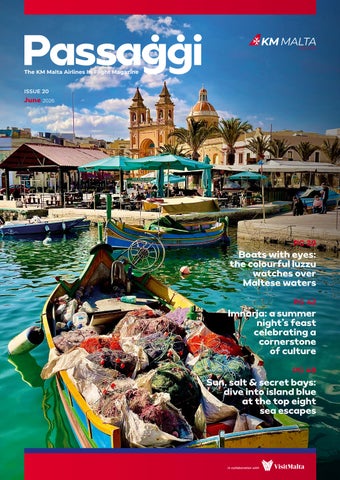
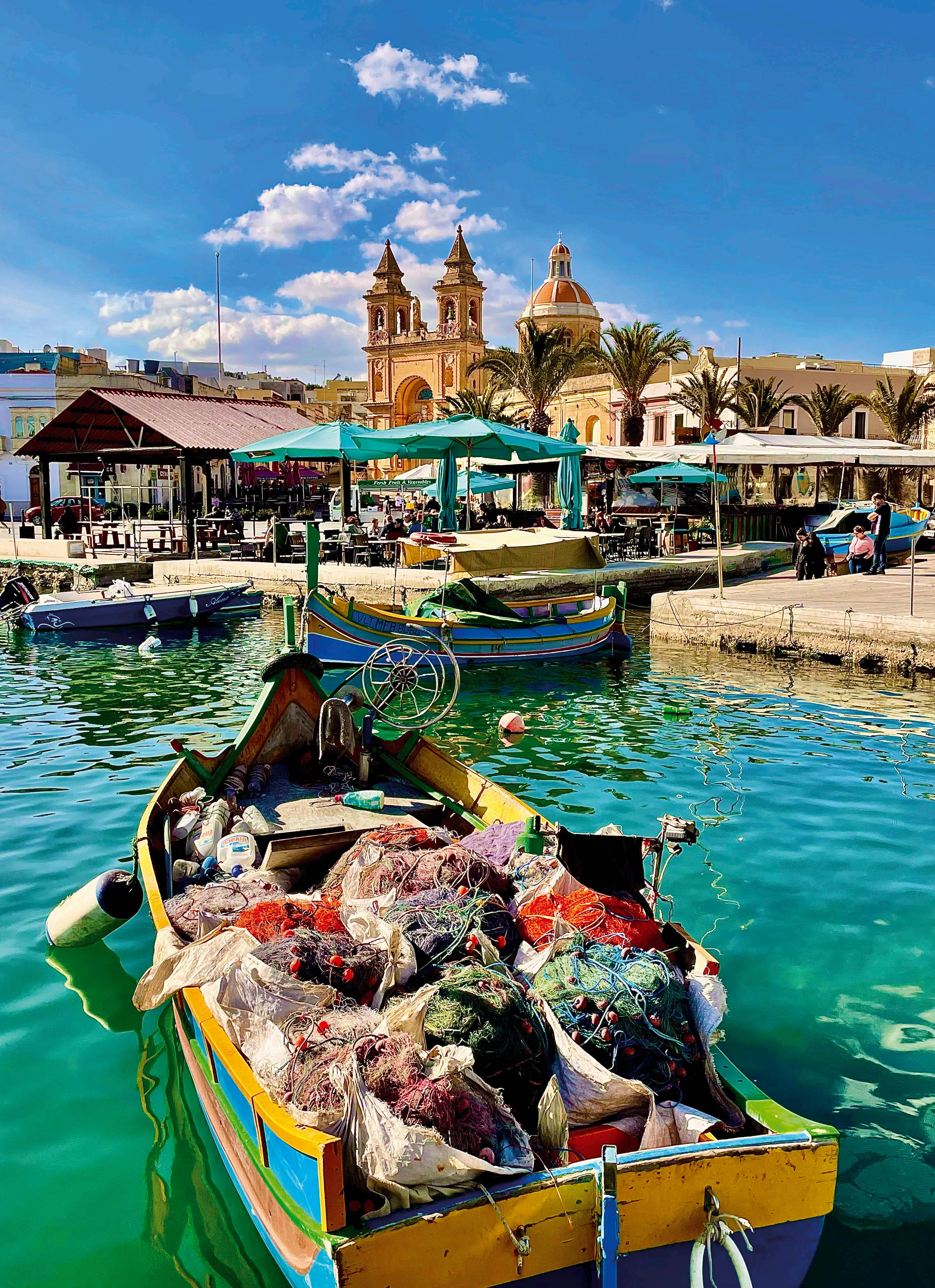
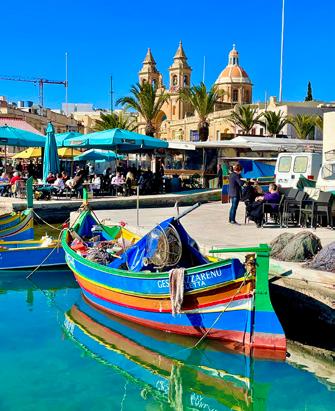
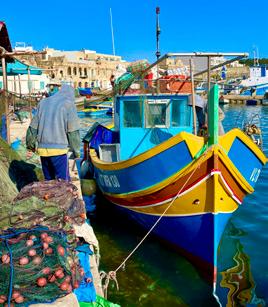
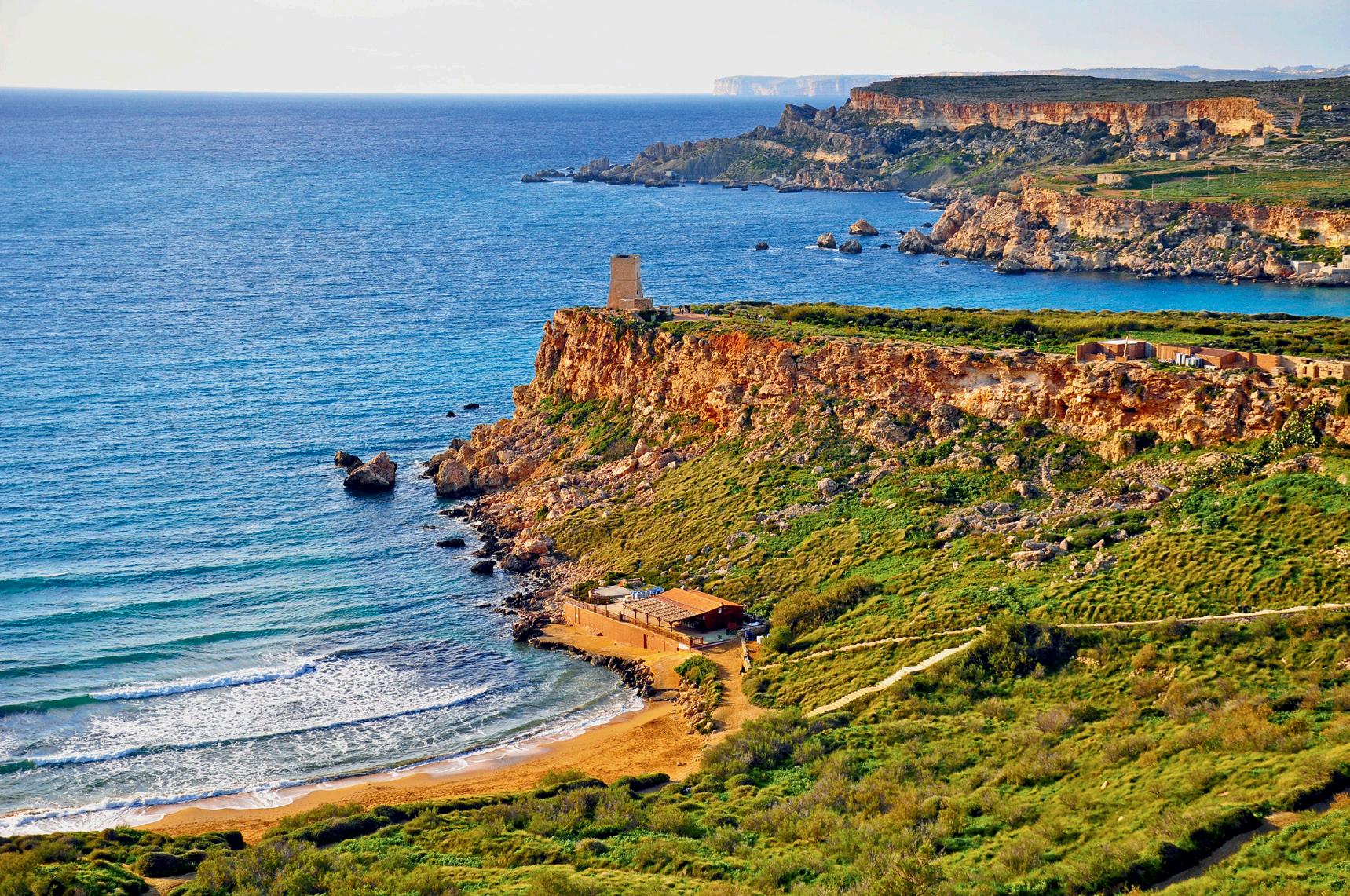
A traditional luzzu in Marsaxlokk. Photo: Tony Gatt.
MEET THE TEAM
PUBLISHER
Associated News Group
EDITOR
Fiona Galea Debono
SALES AND BUSINESS DEVELOPMENT
Associated News Group
CONTRIBUTORS
Adriana Bishop
David Carabott
Edward Bonello
Iggy Fenech
Inkontru.app
Lea Hogg
Ruth Zammit DeBono
WOULD YOU LIKE TO BE FEATURED IN PASSAĠĠ I?
For advertising opportunities, get in touch with Associated News Group on passaggi@tbwa-ang.com or (+356) 2131 0608
Abigail: abigail@tbwa-ang.com or (+356) 9929 0518
DESIGN
forty Creative Studio
PRINTER
Gutenberg Press
PHOTOGRAPHERS
Allan and Jane Mulcahy
David Carabott
Gianluca Schembri
Jeroen Romme
Joel Gueller Photography
Kyle Schembri
Mark Calleja
Matthew B Spiteri
Oliver Pace
Tony Gatt
HOW TO PRONOUNCE PASSAĠĠ I /pasˈsadʒi/
Here’s the breakdown: • /p/ as in pass • /a/ as in art • /sˈ/ as in sun (with stress on the following syllable) • /dʒ/ as the sound of the j in 'judge' (geminated or doubled sound) • /i/ as in eat
The word passaġġi means 'passages' in English.
The publisher, authors and contributors reserve their rights with regards to copyright. No part of this magazine may be reproduced or copied by any means without the written consent of the publisher. Editorial features and opinions expressed in Passaġġi do not necessarily reflect the views of KM Malta Airlines, the publisher, or the editorial team. Both KM Malta Airlines and the publisher do not accept responsibility for commercial and advertising content. Although the authors and publisher have made every effort to ensure that the information in this magazine was correct before going to print, the author and publisher do not assume and hereby disclaim any liability to any party for any loss, damage, or disruption caused by errors or omissions, whether such errors or omissions result from negligence, accident, or any other cause. Special thanks to KM Malta Airlines and VisitMalta for the provision of photographic material. All magazine rights are reserved by KM Malta Airlines.
Associated News Group, 3rd Floor, Professional Building, Sliema Road, Gżira GZR 1633 Malta - (+356) 2131 0608
Welcome to
The KM Malta Airlines In-Flight Magazine
David Curmi Executive Chairman KM Malta Airlines
As the year progresses into June, the summer travel season is now fully underway, and we are delighted to welcome increasing numbers of passengers on board as they set off on holidays, family visits and business trips across our growing network.
We encourage travellers to discover some of the exciting destinations available as part of our summer schedule, including our newly launched routes to Málaga and Palermo, both offering the perfect combination of culture, cuisine, beaches and Mediterranean charm.
Alongside these new additions, passengers can also enjoy convenient access to other favourite summer destinations such as Rome, Paris and London. With demand expected to remain strong throughout the season, we encourage passengers to book early to secure their preferred travel dates and fares.
For those looking to organise their holiday with added convenience and value, KM Malta Holidays offers a seamless way to book flights and hotels together in one simple package. In addition to competitive pricing, packages include a 20kg checked baggage allowance, making them an excellent option for travellers seeking both flexibility and peace of mind. Customers also benefit from ATOL protection, providing added reassurance when planning their next getaway.
Passengers looking to elevate their travel experience can also take advantage of our increasingly popular Business Class upgrade option, now available not only through our
website, but also directly via the KM Malta Airlines mobile app and during the online check-in process.
Successful upgrades allow passengers to enjoy enhanced comfort, priority airport services, gourmet dining and the added benefit of an empty adjacent seat for extra personal space on board.
Our KM Rewards loyalty programme continues to evolve, offering members even greater flexibility and value. Members can now use their hardearned SkyBux to purchase ancillary services at any time through the Manage My Booking section on our website, even after completing their original booking. This makes it easier than ever to redeem rewards on services such as baggage, seating and other travel extras. We are also pleased to share that further announcements regarding new KM Rewards benefits and member offerings will be made in the near future. If you are not yet a member, we warmly encourage you to join today and be among the first to receive the latest updates and exclusive offers.
As always, our teams remain focused on delivering safe, reliable operations and a high standard of service throughout the busy summer months ahead. Thank you for choosing KM Malta Airlines, and we look forward to welcoming you on board again soon.
Fiona Galea Debono Editor
Summer is here, and the June issue of Passaġġi sets the tone for a season filled with sunshine, celebration and discovery – from idyllic swim spots to experiences found only in Malta.
It’s a good time to dive into island life, and our selection of eight mustvisit beaches promises memorable moments in inviting waters. Keep your swimwear close at hand – your first or next dip is never far away.
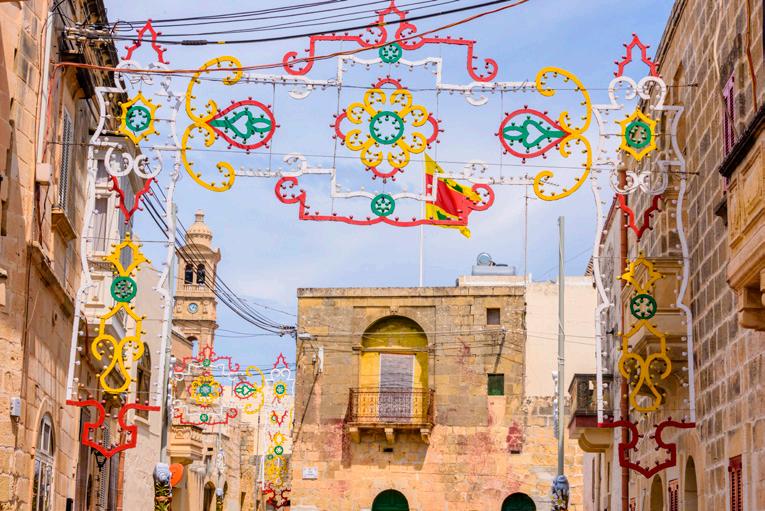
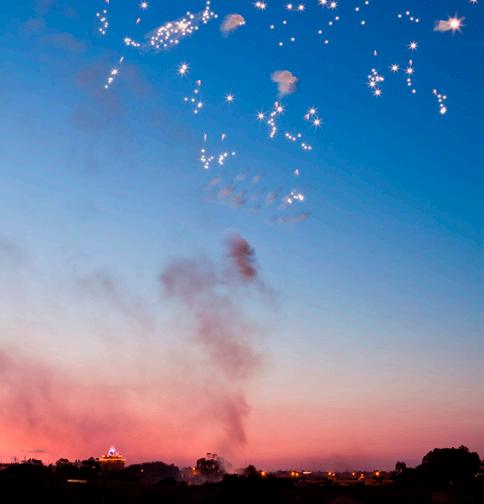
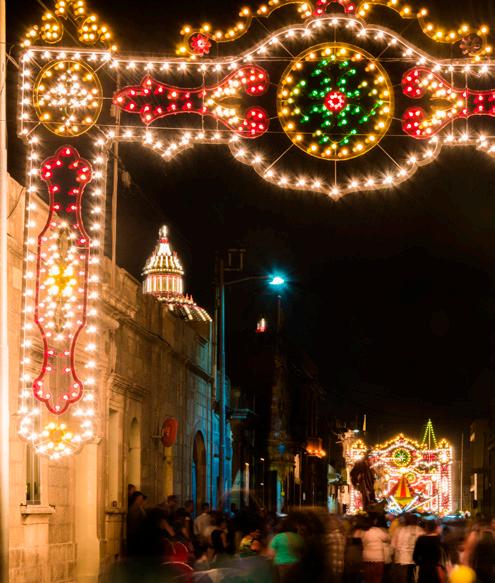
Summer also heralds the full-blown village festa season. While these vibrant celebrations and dazzling fireworks may feel familiar to some locals, every festa offers visitors and residents alike the chance to experience the heart of Maltese tradition; to rekindle what makes these islands unique.
In the first of a series, Passaġġi highlights June’s most anticipated festivities, including the Imnarja celebration – a centuries-old tribute to Maltese culture, community and heritage. Add one to your calendar and immerse yourself in the atmosphere.
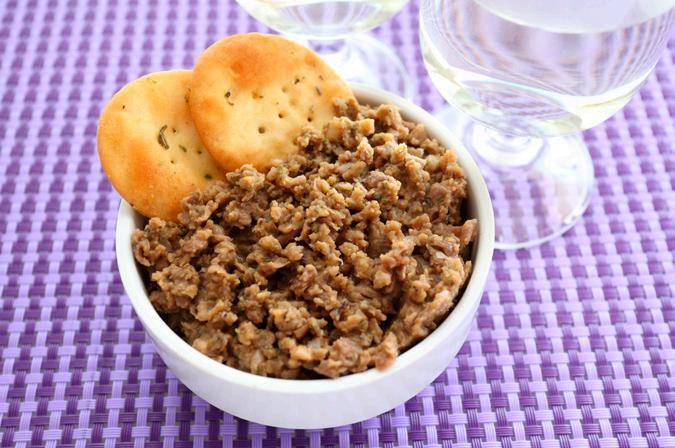
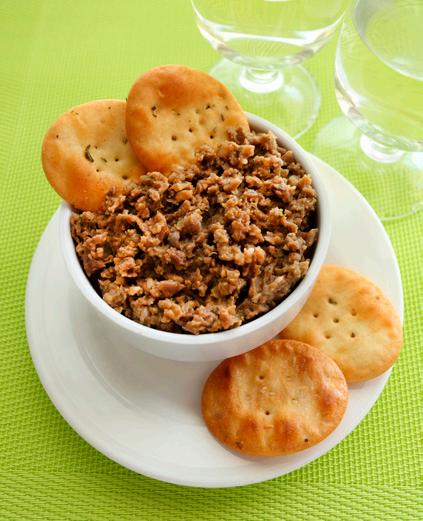
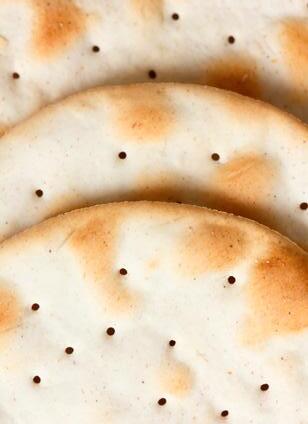
No festa is complete without traditional food, and this month we shine a spotlight on bigilla, Malta’s iconic broad bean dip. Try recreating this local favourite at home with our recipe, paired with freshly made galletti – the classic water crackers that accompany the ideal Maltese appetiser spread.
Passaġġi believes the most memorable stories are the personal ones. So, this issue continues to explore Malta through the eyes of locals, offering thoughtful reflections on anything from the brightly painted luzzus bobbing
in fishing harbours to comforting potato dishes passed down through generations. The result is a richer, more intimate portrait of Maltese identity and everyday life.
Our journey carries on from Malta’s rugged coastline to the cliffside beauty of Dingli, before venturing farther afield to Málaga, one of KM Malta Airlines’ newest destinations – another sundrenched place, brimming with culture, cuisine and coastal allure.
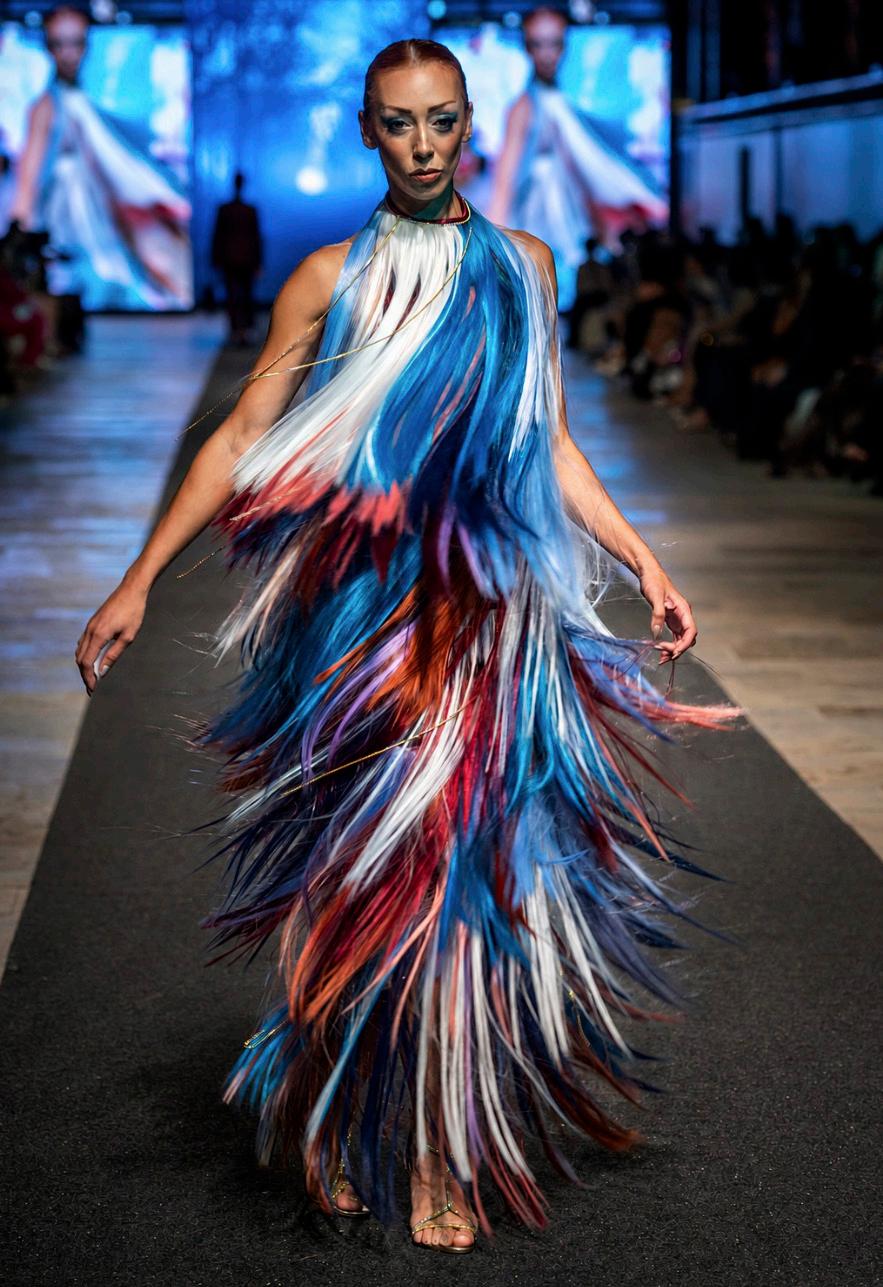
Back on the islands, fashion takes centre stage in all its forms, from curated pre-loved clothing to bold contemporary design. Follow our guide to vintage shopping and get a preview of the upcoming Malta Fashion Week and Awards 2026, taking place next month.
From the various facets of fashion, music and art to the simple magic of long summer evenings, this issue celebrates the spirit, colour and energy of the season.
If that’s what you’re seeking, you’ve arrived at the right time. Let the summer begin!
ISLANDS 8
A village and its cliffs
Dingli’s clifftop calm and timeless charm
TRAVEL 16
Málaga – where the night never ends
Party in the capital of the Costa del Sol
HERITAGE 20
The summer the boats looked back at me
The iconic luzzu does more than brighten the harbour
CULTURE 24
This month’s must-see events
A calendar packed with unmissable experiences
MUSIC 30
Inside a grand band club
The beating heart of Maltese feast culture
LIFESTYLE 34
Vintage treasures
Top thrifting spots and the eco-friendly practice
ACTION 39
Rolling the dice on island life
Backgammon on Malta-inspired boards
42
Echoes of Imnarja
A feast beneath the trees of Buskett
48
Our blue crown jewels
Favourite swimming spots to dip into ENTERTAINMENT
55 Put on your Sunday best Festa season’s here! PETS 60
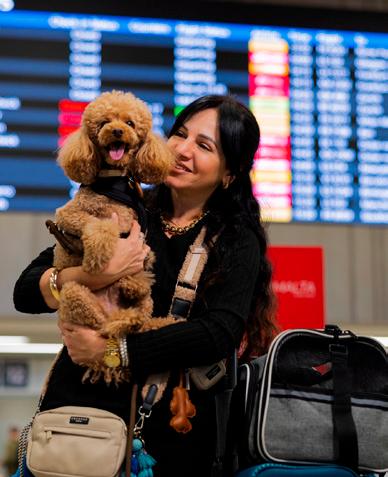
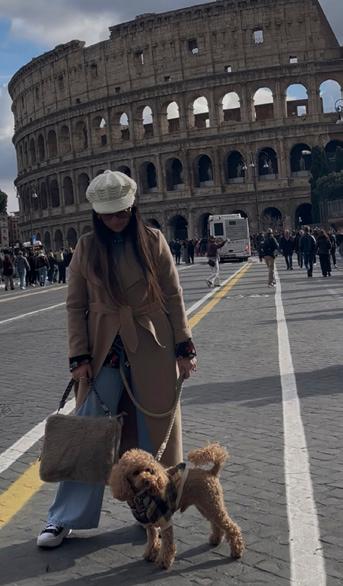
The unexpected joy of flying with dogs
Pet travel can be surprisingly smooth FASHION
62
Runway at golden hour
Inside Malta Fashion Week & Awards 2026
Dip into Malta: bigilla and galletti
No appetiser platter is complete without 72
From dirt to delight: the Maltese potato
The humble vegetable is a divine staple dish AIRLINE
Flight, company and destination information
All you need to know about flying with KM Malta Airlines
Words by David Carabott
David is a teacher, specialised in mentoring students of different abilities. An avid traveller, his target is to visit all the countries in the world. When he is not in Malta or travelling elsewhere, you can find him somewhere in Rome.
A village and its cliffs
Dingli offers a sense of calm; it is a place where life moves at a gentler pace; where past and present, nature and tranquillity, come together in perfect harmony. Visit this village on the western edge, where Malta touches the sky and silence meets the sea.
Dingli Cliffs at sunset.
One sunny late winter morning, I found myself wandering through Dingli. Perched on Malta’s western edge, the village boasts the highest point on the island, 250 metres above sea level. The air was fresh and clean – a welcome contrast to the bustle of the busier towns.
Ħad-Dingli, as it is called in Maltese, feels wonderfully remote yet full of charm and cultural heritage. I enjoyed strolling through the winding streets, admiring the townhouses with their colourful balconies, characteristic windows, niches dedicated to saints, and the small details that give each corner its own story.
Dingli provides a sense of calm; it is a place where life moves at a gentler pace, lacking the noise and haste of larger urban areas. In essence, there are no traffic jams, no honking of horns and no frustrated drivers.
Halfway through my stroll, I met an old friend, David Vassallo, an architect and former local councillor. Together, we savoured a freshly baked Maltese ftira – round, crusty bread often filled with local ingredients – followed by coffee with a splash of anisette and the classic Maltese biskuttini tal-lewż, a delicious almond sweet. It was a simple pleasure that perfectly captured the warm, inviting spirit of the village and offered a taste of Malta’s rich culinary traditions.
David then guided me around. I was particularly surprised to learn that he had written the lyrics for Dingli’s anthem, having won a competition
when he was just 19. His architectural background also inspired him to lead countless projects dedicated to the restoration and preservation of buildings and structures of historical importance.
TRACING THE PAST
Dingli has a rich and layered history. Archaeological finds reveal human presence since prehistory, and the area bears traces of the Phoenician, Carthaginian and Roman periods, including the Roman baths at Ta' Baldu tenement.
Nearby, is the site of the lost medieval village of Ħal Tartarni dedicated to St Domenica – now mostly open fields. It was one of Malta’s original 10 parishes.
Before World War II, Dingli was largely isolated, with life centred on agriculture.
THE HEART OF DINGLI
The parish church, dedicated to the Assumption of the Holy Virgin, stands prominently in the heart of the village and has long served as a gathering point for the residents.
Dingli was granted parish status in 1678. Almost three centuries later, the church was enlarged by architect Ġużè Damato, with major alterations carried out between the late 1950s and early 1970s. These included the addition of side chapels, bell towers and a new façade, giving the church its present distinctive character.
Inside the church, I was immediately drawn to a beautiful wooden statue of St John the Baptist, a tribute to the patron saint of the Knights of Malta. Crafted in walnut and adorned with a polychrome decoration, the statue has a long history. It is almost certain that it was one of the statues on the Gran Carracca Sant’Anna, the renowned 16th-century warship that, in 1530, brought the Order’s Knights to Malta. It eventually found its home in Dingli after having been in various other sites.
BEYOND THE VILLAGE
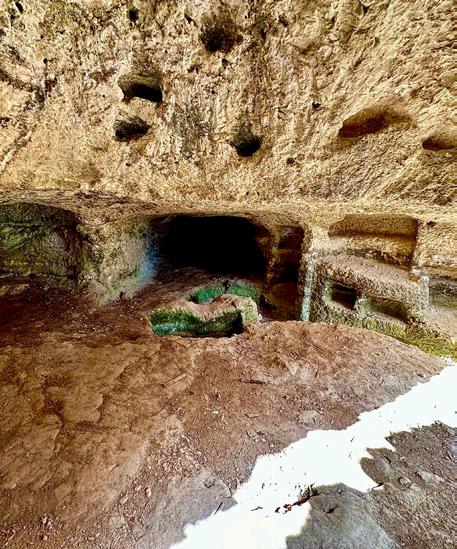
In the surroundings, history also leaves its mark in intriguing ways. Passing by the enigmatic cart ruts junction, with its baffling parallel tracks carved into the rock, and visiting the nearby Għar il-Kbir cave, once used for shelter and storage, offered me a glimpse into Malta’s
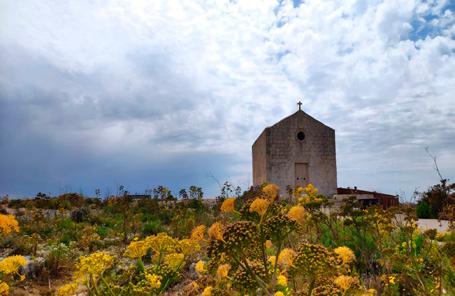
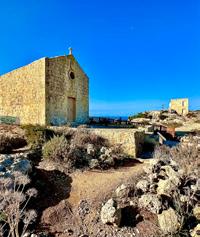
St Mary Magdalene Chapel.
Photo: Mark Calleja.
A statue of St Paul.
Photo: Allan and Jane Mulcahy.
ancient past, reminding me that Dingli has long been a place where people lived and worked the land.
Walking along the countryside in the village outskirts, I could feel the rhythm of rural life. Fields are carefully cultivated, a reminder of the generations of dedicated farmers who not only grew crops and raised livestock but also preserved traditions and protected the environment.
THE CLIFFS OF DINGLI
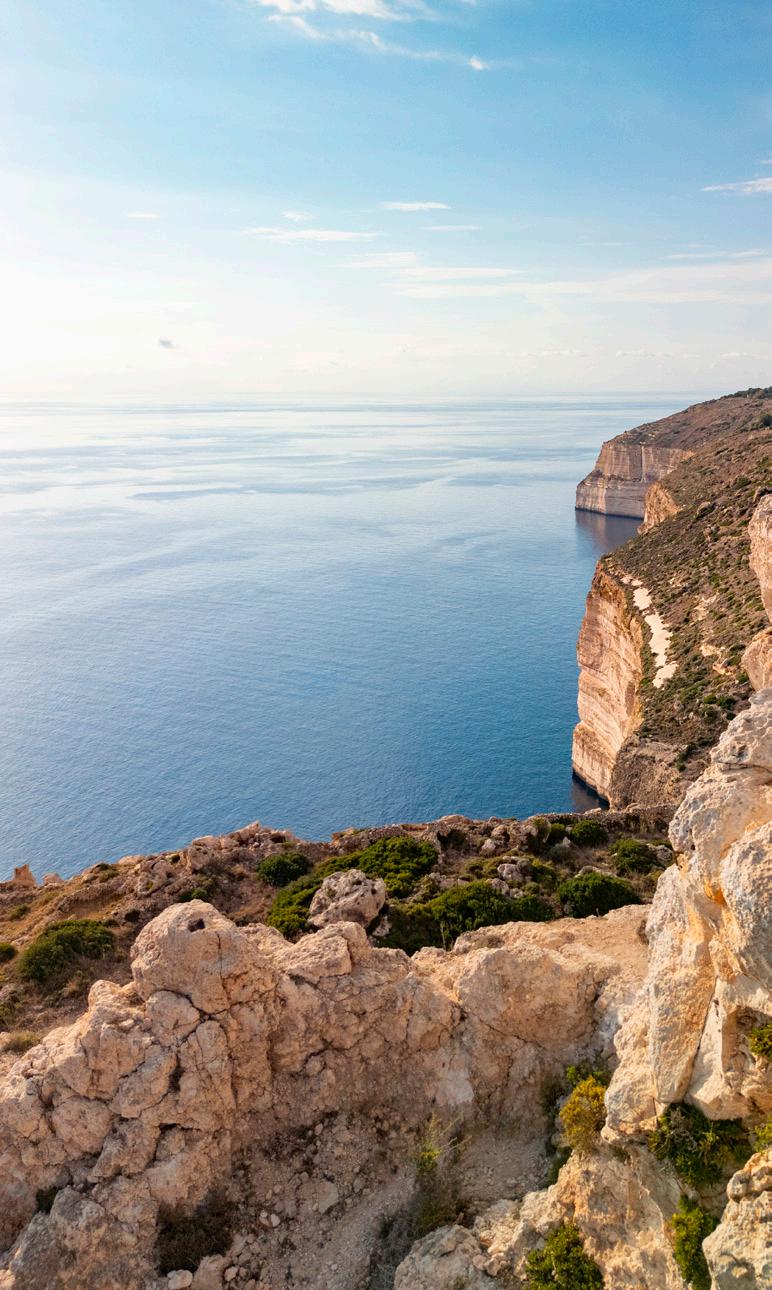
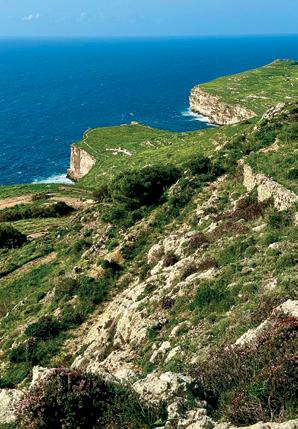
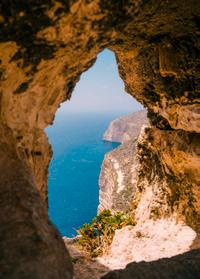
From the centre of the village, it is only a short walk to the majestic Dingli Cliffs. As I approached, the landscape opened into a breathtaking panorama. The cliffs rise 253 metres above the Mediterranean Sea, offering unparalleled views of the terraced fields below and the tiny uninhabited island of Filfla in the distance.
These cliffs have always been a place of wonder. In earlier centuries, they provided refuge from pirates as they are nearly impossible to scale, and today, they stand as a symbol of what remains of Malta’s wild and untamed beauty.
I enjoyed a walk along the promenade that runs over the cliffs, feeling the sea breeze and taking in the vast expanse of blue in front of me. The paths are gentle yet dramatic, winding along the edge, with every step revealing a new perspective of the sparkling waters below.
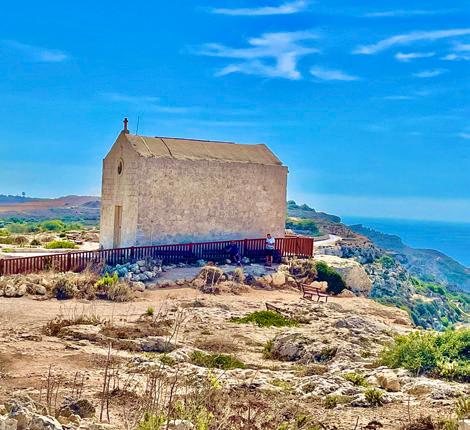
Along the way, I passed the charming chapel dedicated to St Mary Magdalene. Its small, serene presence is a quiet reminder of the village’s spiritual history. I paused to inhale the fresh air, allowing the tranquillity of the cliffs to invade me.
Of course, I could not miss the Royal Cypher markers appearing along Dingli Cliffs. These features indicate that the land was once Crown property. The initials GR (Georgius Rex) refer to one of the sovereigns named George.
As the afternoon gently gave way to evening, David took me to some of the best-known sunset spots along the cliffs, where visitors often gather for unobstructed views of the horizon. I watched one of the most famous sunsets in Malta – a moment of pure magic. The sky blazed with hues of orange, pink and gold, reflecting on the calm waters of the Mediterranean. The cliffs were bathed in warm light, and the world felt impossibly still, as if suspended between land and sea.
AS DAY BECOMES NIGHT
After admiring sunset, I returned to the village for a comforting and hearty dinner. The local cuisine, simple yet delicious, was the perfect conclusion to a day spent in one of Malta’s highly captivating corners.
Enjoying a plate of traditionally cooked rabbit and a glass of local wine, I clung to the image of the fabulous sunset over the cliffs, the colours sinking into the horizon, a memory of a place where past and present, nature and tranquillity, come together in perfect harmony.
The cliffs on the outskirts of Dingli.
‘Lampuki’
Crystal Lagoon
Popeye Village
Dingli Cliffs
Rabat
Dingli
Buskett
‘Luzzu’ Traditional Fishing Boat
‘Qarnita’ Octopus
sponsored by
A scenic viewpoint over Dingli Cliffs.
St Mary Magdalene Chapel.
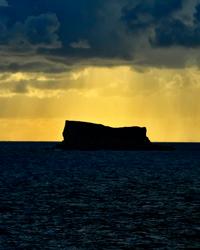
Filfa, the small uninhabited island as seen from the cliffs.
Words by Heritage Malta
The national agency for museums, conservation practice and cultural heritage, it is the guardian of over 8,000 years of history.
If this is your first visit to the Maltese Islands, you cannot leave without ticking these sites off your list.
St Paul’s Catacombs
Rabat
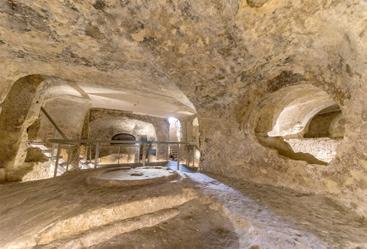
Leave the sights and sounds of modern life behind you as you step down into another world – a burial ground from Punic, Roman and Byzantine times, representing the earliest and largest archaeological evidence of Christianity in Malta. The catacombs form a typical complex of interconnected underground Roman cemeteries that were in use up to the 7th and possibly the 8th century AD. Part of the catacombs was re-utilised during the re-Christianisation of the island, around the 13th century, when an open space was re-cut and used as a Christian shrine decorated with murals.
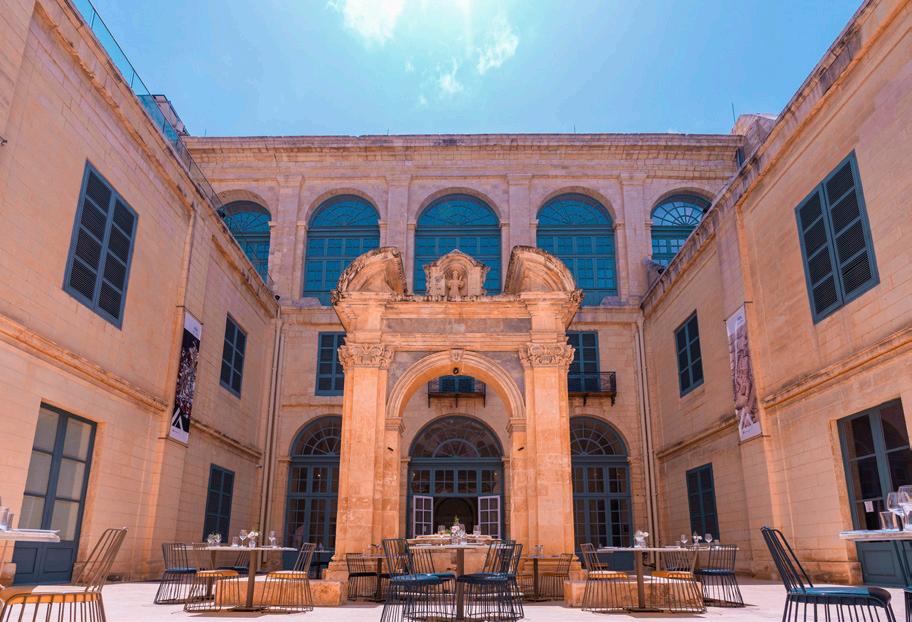
Grand Master’s Palace
Valletta
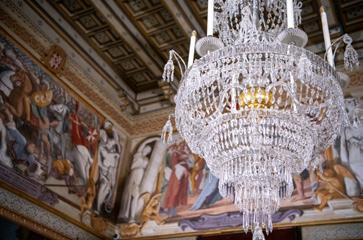
Newly restored and proudly dominating St George’s Square, the Grand Master’s Palace invites you to wander along its 450-year history as a centre of power and the symbol of a nation. Presently the seat of the Office of the President of Malta, the Palace grants visitor access to over 85 per cent of the building’s footprint, including the magnificent Armoury. The Palace’s restoration project was partly financed via the European Regional Development Fund (ERDF).
Fort St Angelo
Birgu
No other fortress has been engaged with the same intensity in the shaping of Malta’s destiny as Fort St Angelo! Known as Castrum Maris in medieval times, this stronghold was christened as Fort St Angelo by the Knights of the Order of St John, who turned it into their headquarters. The Knights remodelled the building extensively with the construction of a series of artillery platforms that marked the introduction of the bastioned system of defence on these islands. During the British period, the fort served as a shore establishment of the Royal Navy in Malta until the last detachment of foreign forces marched out of its walls in March 1979.
Underground Valletta Valletta
Valletta, a UNESCO World Heritage Site, cannot be fully appreciated without experiencing what lies beneath it. Descend into the capital’s fascinating depths to discover dark underground spaces, which, centuries ago, were crucial for the movement of troops, for grain and water storage, and for drainage. Then fast forward to the terrible years of World War II, when these underground tunnels and chambers provided shelter to thousands of people seeking refuge from the relentless enemy bombs, with primitive sanitary facilities and very scarce food stocks, but with a burning hope of survival that defied desperation. Pre-booking is required.
MUŻA – The National Community Art Museum Valletta
The acronym MUŻA refers to the mythological Muses of classical antiquity and to the Maltese term for artistic inspiration. Through a varied collection of paintings, sculptures, furniture, silver pieces, works on paper and objets d’art, MUŻA’s main focus is to show artistic developments in Malta impacted by its Mediterranean context as well as the cultural influences resulting from the governance of the Order of St John (15301798), the British Empire (1800 - 1964), the postIndependence period (since 1964) and the overall impact of the Church.
Inquisitor’s Palace
Birgu
The Inquisitor’s Palace is both a historic house museum and the National Museum of Ethnography.
Built in the 1530s, it was the powerhouse of the Holy Roman Inquisition that dominated Malta for over 224 years. After the French abolished the Inquisition in Malta upon their arrival in 1798, the building served French and British rules, as well as the Dominican Order for a period of time after World War II. The Inquisitor’s Palace also houses the National Textiles Collection.
Words by Adriana Bishop
Adriana is a former news journalist and travel PR executive, now a freelance writer based in Switzerland, with her heart and eyes always set on her forever home, Malta.
Málaga – where the night never ends
Days of sunshine and culture give way to nights of fiesta in the capital of the Costa del Sol.
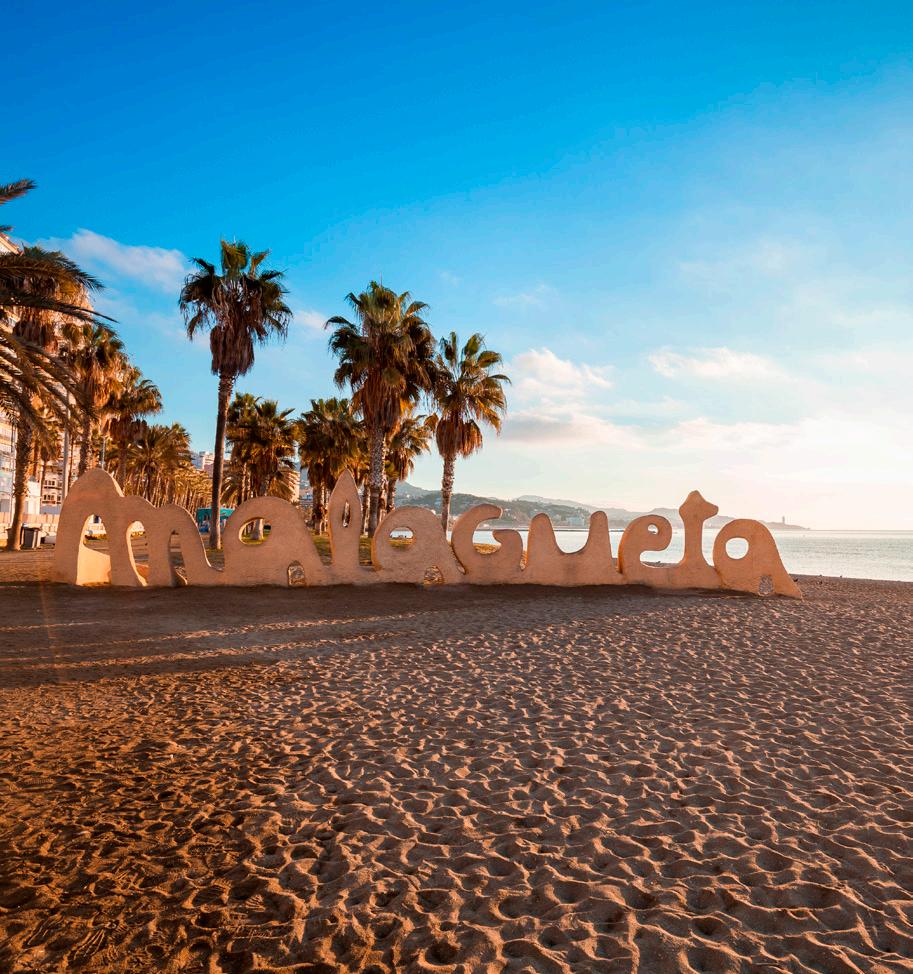
It’s June and the beach at Playa de la Malagueta in the centre of Málaga city is packed. Of course. But it’s also 1am and the party is only just getting started. This is no ordinary summer evening in Málaga; it is 23rd June, the night of San Juan, and no one will be getting any sleep tonight.
I’ve just landed in the capital of the Costa del Sol to celebrate my friends’ milestone birthday. Laura and her husband Dario share the same birth date – just a year apart – and are marking their 50th by diving straight into the biggest party in the city.
La Malagueta public beach at sunrise.
Where better to begin than with the city’s most famous son, Pablo Picasso
It feels like the whole of Andalusia has descended on La Malagueta, La Misericordia, Pedregalejo and El Palo beaches tonight to celebrate the summer solstice on La Noche de San Juan. Many people traditionally wear white, symbolising purity, although it seems that this evening, anything goes.
Picnic tables pop up all along the expansive stretches of sand as families and friends noisily gather in groups around bonfires where traditional Júas rag dolls, often satirical effigies mocking popular figures, are burned at midnight. As the flames roar, under the watchful eye of the local authorities, many jump into the sea to wash away bad energy and bring good fortune for the year.
This is not my first visit to Málaga, but it is the most authentic and energetic I have seen it so far. Tourists stand on the fringes looking bemused, snapping photos, marvelling at the fireworks, while the locals show us all how to throw the best fiesta without too much fuss.
I don’t know what time that celebration ended – only that it was way past anybody’s bedtime. So, the next morning, rather than attempt the impossible, I opted for something slower – Málaga’s cultural side.
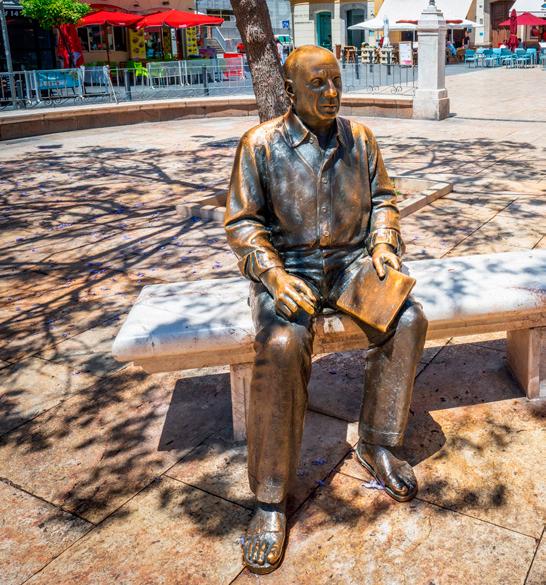
And where better to begin than with the city’s most famous son, Pablo Picasso. Born on Plaza de la Merced,
Picasso would later revisit the city of his childhood in recurring themes in his works, especially flamenco, doves and bulls. His birthplace is now a small museum, while a short walk away, the Buenavista Palace houses a richer collection drawn largely from family holdings.
After such an artistic morning, it was time for lunch, although by my Swiss watch, it was closer to teatime. I don’t think I will ever get used to Spanish meals being so late, if only because I simply can’t wait any longer to tuck into their famously delicious tapas.
There’s no shortage of eateries in the city, although some veer into tourist-trap territory. But there is one that you simply cannot ignore – the institution that is El Pimpi. With its rabbit-warren series of rooms in an 18th-century house, it is as famous for its wine cellar and local cuisine as its shareholder, Hollywood actor Antonio Banderas, who owns the rooftop apartment next door. No, he did not join me for lunch.
Batteries recharged, it was time to work off those Andalusian calories by climbing up the 14th-century fortress of Gibralfaro for a jaw-dropping view of the port. You can, of course, skip the sweat and the crowds and hop on the bus but where’s the fun in that? I felt I had to earn that view, so I set off from
the Alcazaba citadel
Pablo Picasso statue at Plaza de la Merced.
below, following the trail of terraced, walled yards with Moorish archways and elaborate stone carvings, up the steep stairs and paths as I made my way to the top. And boy was it worth it!
From up here, Málaga layers itself out before my eyes as I take in the 360-degree panorama, from the snazzy port, now welcoming cruise ships, to the Roman amphitheatre, part of which was used by the Arabs to build the Alcazaba fortress I had just walked through.
I can also spot the bullring, which hosts the annual bullfighting festival in mid-August during the big Feria, surrounded by some rather uninspiring apartment blocks.
The solitary tower of the unfinished cathedral –affectionately nicknamed La Manquita or One-Armed Lady – dominates the view as it sticks out above the rooftops of the historic centre. But that, along with the rest of my guidebook, will have to wait for another day because it was now time to get ready for my friends’ birthday party.
Just a 30-minute drive away, on the other side of the airport, Alhaurín de la Torre is a pretty, genteel,
if somewhat sleepy, residential town. Its mayor is obsessed with flowers, and the main thoroughfare is trimmed with manicured trees, strategically planted to provide much needed shade during the scorching summers. Each roundabout is a sculptural attraction in its own right.
My friends tell me their house is just off the roundabout featuring a sailing boat and, lo and behold, there literally is a bronze sailing boat in the middle of the roundabout surrounded by an array of water jets. The rest of the roundabouts get even more creative as the road progresses, with one featuring a tiled pyramid and another sporting a larger-than-life mermaid-like creature.
When Laura and Dario first moved here, it was the proximity to the airport, the city and the beach that sold the location to them. Not to mention the temperate climate. Whenever I video call Laura, she never seems to not be wearing a bikini, whatever the season.
Apart from its popularity with British tourists, who adopted nearby Torremolinos as their home away from home, the Costa del Sol is also a favourite with golfers and cyclists.
Later that week, while my husband hit the road to explore the region on two wheels, I hopped into Laura’s car to visit
Work off those Andalusian calories by climbing up the 14th-century fortress of Gibralfaro
Gibralfaro Castle.
one of the famous pueblas blancos, with their gleaming white houses clinging to the mountainside. She takes me to the picturesque Mijas Pueblo, which offers a sweeping vista of the coast far below.
It is a village of artisans, and I spend a very happy hour browsing the hand-painted ceramics and jewellery stores. I did not come away empty-handed. In fact, I am currently wearing the gold leaf-shaped earrings I bought from a mother-and-son goldsmithing duo as I write this.
The white villages stretch across Andalusia, but as we drive through them, it’s the glare of sun on whitewashed walls and bursts of bougainvillea that stay with me. One of the most striking, and best known, is Ronda, just over 90 minutes’ drive from Málaga, with its spectacular 98-metre-high bridge that links the two sides of the city across the deep Tajo del Ronda gorge.
We drive back down the mountain and head towards the city along the never-ending beach. Somewhere along the way, we veer off the road to follow a dirt track that lands us along a particularly windier section where Laura’s husband Dario is kitesurfing. We lay down our towels on the sand, dig out a prepared bottle of Tinto de verano, some snacks, and watch the glowing red sunset as the kitesurfers whoosh like swallows over the sea.
I cannot think of a better way to end the day, or a better reason to come back.
suggests
When to visit
There’s never a wrong time to visit Málaga. Winters are mild and dry and perfect for exploring.
Summers are hot and crowded but packed with exciting events like the Noche de San Juan (23rd June) and the annual Feria de Málaga held around the middle of August (this year from 16th - 23rd August). The massive, week-long celebration commemorates the 1487 Catholic Monarchs’ capture of the city, but what the locals are really interested in is the dancing, music, food, wine and the amusement rides that go on till dawn.
Spring and autumn are warm and pleasant enough to hit the beach without the crowds. One of my first visits coincided with Easter. In Málaga, the Semana Santa is serious business and the spectacular processions with ornate pasos (floats) attract thousands of people.
Day trips
• Ronda: About an hour-and-a-half’s drive from Málaga, this beautiful city straddles the deep El Tajo Gorge that splits the 15th-century new town from the older Moorish part.
• Granada: An absolute must-see, and everyone else knows it too, so book your visit to the Alhambra and its other famous sites well in advance. Drive time: about 90 minutes.
• Marbella: Less than an hour away, but worth staying longer than a day. The resort is famous for its 27 kilometres of sandy beaches, golf courses, night clubs and luxury yachts at Puerto Banús marina.
• Caminito del Rey: It was known as one of the world’s most dangerous footpaths but, fear not, the route is a lot more civilised these days. The walkway along the steep walls of the narrow El Chorro gorge offers spectacular views. The 7.7-kilometre-long trek takes about three to four hours to walk from Ardales to Álora. Tickets must be booked online in advance.
• Nerja: The pretty resort town has, arguably, some of the most beautiful beaches in Spain. The Balcón de Europa seaside promenade tops a promontory with views of the Mediterranean and surrounding mountains. Don’t miss the caves with their Paleolithic paintings.
KM Malta Airlines operates twice-weekly flights until October between Malta International Airport (MLA) and Málaga Airport (AGP) kmmaltairlines.com
Adriana Bishop at Mijas Pueblo.
Words by David Carabott
The summer the boats looked back at me
In the colourful fishing village of Marsaxlokk, Malta’s iconic luzzijiet do more than brighten the harbour. Adorned with ancient watchful eyes, believed to protect fishermen at sea, these traditional boats carry centuries of Mediterranean myth, memory and maritime tradition across the water.
Photos: Tony Gatt.
My childhood summers were spent in the fishing village of Marsaxlokk, where I wandered along the sunlit shoreline with salt on my skin and curiosity in my pockets. I would linger for hours at the edge of the shore with a small net and a bucket, searching the shallows for tiny shrimps and darting fish that flickered like living silver.
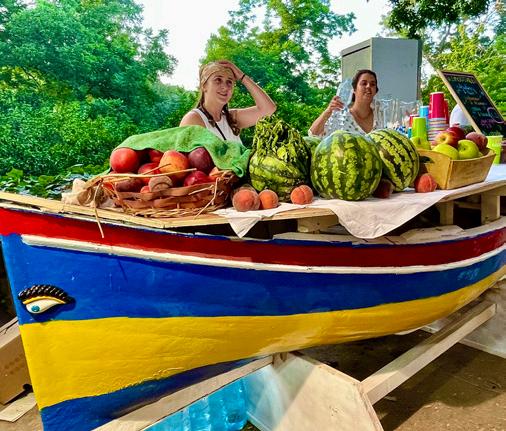
Fishing was about waiting, watching and dreaming. While I balanced carefully on the edge of the quay, my gaze would often drift across the harbour, where dozens of brightly coloured boats rocked gently on the water. They fascinated me more than anything else in the village. The luzzijiet (singular luzzu) are typical Maltese fishing boats.
BOATS WITH EYES
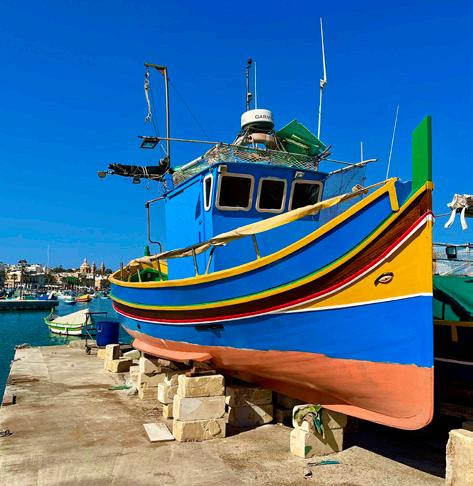
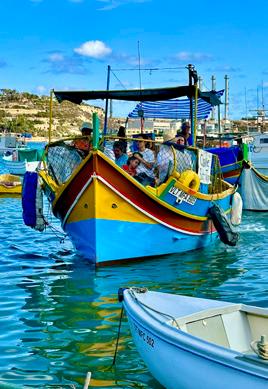
At first glance, they look like floating rainbows. Their wooden hulls are painted in vivid blues, yellows, reds and greens that glow beneath the Mediterranean sun. But what used to truly capture my imagination were their eyes.
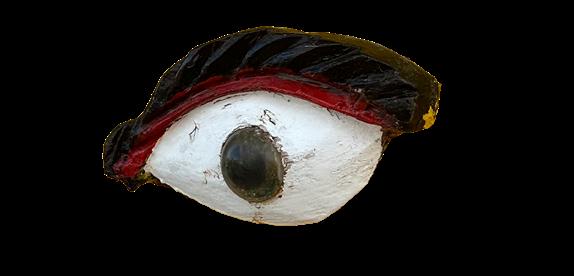
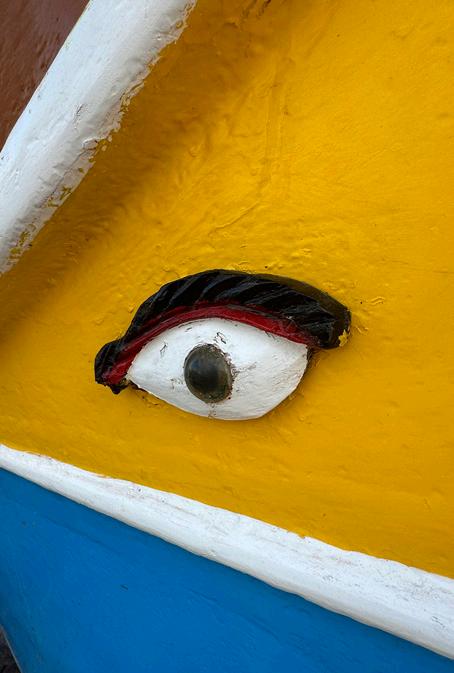
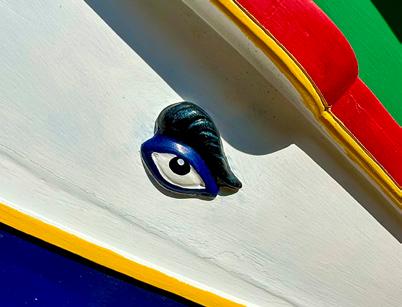
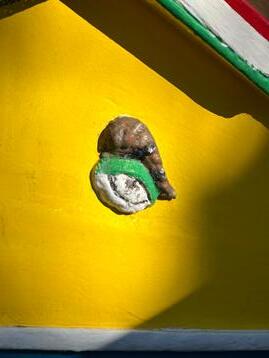
Every luzzu has a pair of eyes on its prow. They are carefully carved and painted wooden oculi staring out over the water. Blue pupils set within white circles and framed by thick black eyebrows give them an oddly expressive appearance.
The eyes make the luzzijiet appear almost alive, like wise marine creatures calmly observing the harbour. As a child, I was convinced those boats were looking back at me. They bobbed gently at their moorings as if nodding in quiet approval, guardians of the harbour and silent witnesses to fishermen’s daily lives.
THE ANCIENT EYE
The origins of those mysterious eyes stretch far back into history. Their story reaches beyond Malta to the ancient world of Mediterranean seafarers and traders.
The symbol itself is linked to the legendary falcon god, Horus, and the myth of his lost and restored eye. According to ancient Egyptian mythology, Horus fought a fierce battle with his uncle Seth, who had murdered his father Osiris in a struggle for the throne of Egypt. During their conflict, Seth tore out Horus’ eye.
With the help of his mother, Isis, and the wise god, Thoth, the damaged eye was eventually restored, along with the throne itself. This healed eye became known as the Udjat, meaning the ‘sound’ or ‘restored’ one. It came to symbolise protection, healing and wholeness, and was worn as a powerful amulet by both the living and the dead.
GUARDIANS OF THE SEA
For centuries, people believed the eye could guard against misfortune and ward off evil spirits, and this ancient belief did not remain confined to Egypt. Great Mediterranean traders, particularly the Phoenicians, carried the symbol across the sea, where it adorned their ships as a mark of protection. As they sailed through Maltese waters more than 2,000 years ago, the tradition arrived with them. It endured long after those civilisations had faded.
Today, the painted eyes on the prow of a luzzu are still believed to guide and protect fishermen on their journeys across the unpredictable Mediterranean Sea. These watchful eyes offer reassurance, thought to scan the waters, ward off danger and keep the evil eye at bay for those who make their living from the sea. Some still speak of them as guardians, helping them face the elements and return home safely. Yet for a few weathered fishermen, the eyes serve a more practical purpose – one rooted less in ancient belief than in experience. They are said to deter curious large sea creatures, which may think twice before approaching a boat that appears to stare back. Whether sacred symbol, or simple deterrent, the eyes remain an inseparable part of the luzzu’s character.
The watchful eye of the luzzu.
THE VILLAGE OF COLOUR
Marsaxlokk is the perfect setting for these boats. Even its name reflects its maritime character. Marsa means harbour in Maltese, while xlokk refers to the south-easterly wind that sweeps across the bay.
For centuries, this sheltered inlet has welcomed sailors and voyagers. The Phoenicians once anchored their ships here. Fleets later gathered in these waters during historic conflicts, including the Great Siege of Malta, and during World War II, when the bay lay along a coastline considered in invasion plans. More recently, the surrounding seas witnessed a moment of global significance when world leaders met offshore during talks that helped mark the closing chapter of the Cold War.
Yet despite its rich past and more recent commercialisation, Marsaxlokk remains, above all, a fishing village, where tradition endures in the continued building and repair of luzzijiet in wood rather than fibreglass.
Early on Sunday mornings, the harbour comes alive as fishermen sell their catch at the bustling market. Crates of fresh fish, octopus and shellfish line the waterfront, while brightly painted luzzijiet sway gently beside the quay. The scene is vibrant, enduring and unmistakably Maltese.
DREAMING ON WATER
As a boy standing on the rocks with my shrimp net, I often imagined climbing aboard one of those boats. Their eyes seemed to invite adventure, appearing to look far beyond the horizon. I wondered where they might take me; perhaps across the endless blue of the Mediterranean Sea. In my mind, those boats were not merely fishing vessels but voyagers, with stories flowing from their watchful eyes.
Even today, whenever I return to Marsaxlokk and watch the luzzijiet rocking gently in the harbour, I feel that same quiet pull of wonder. The eyes still gaze outward across the water, and sometimes it feels as though they are still watching me dream.
Words by
This month’s must-see events
Whether you're here for the music, the art, or simply the magic of a Maltese summer, you've landed at the right time. Malta’s events calendar is packed with experiences you won't want to miss.
Sail to Science: Esplora by Sea
When: Daily throughout June
Where: The Point Jetty, Sliema & Quarry Wharf, Valletta
Trade the road for the sea and cross the Grand Harbour aboard a traditional Maltese luzzu. Departing from Valletta and Sliema, this family-friendly service provides a direct connection to Esplora, while live commentary weaves together maritime history, harbour stories and the science of the sea, transforming the journey itself into a voyage of discovery. A uniquely Maltese way to arrive at Malta's interactive science centre, where more fun and curiosity await.
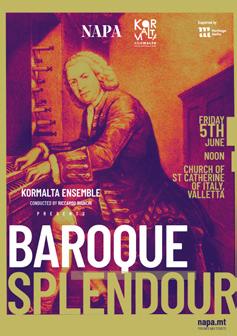
Baroque Splendour
When: 5th June
Skeċċ – The National Short Play Festival
When: 4th - 6th June
Where: Spazju Kreattiv, Valletta
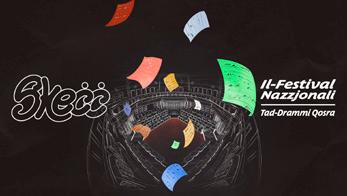
Now in its second edition, this festival showcases original, unproduced, short plays, each lasting between 10 and 20 minutes, performed in Maltese or English. The selected works explore contemporary themes and cultural diversity, providing a vital platform for fresh voices and emerging talent within the theatre community.
Malta International Arts Festival
When: 12th - 21st June
Where: various venues
Where: Church of St Catherine of Italy, Valletta
This KorMalta concert brings together rare works from the Mdina Metropolitan Archive and J. S. Bach’s Missa Brevis in a programme of luminous baroque sacred music. Performed with one voice to a part, the singers take on both solo and choral roles, revealing the clarity, intimacy and expressive depth of this repertoire.
The Malta International Arts Festival returns with a dynamic programme spanning visual arts, theatre, contemporary and classical music, and dance. Bringing together local and international artists, the festival is set to transform local heritage sites into a vibrant backdrop for impactful and innovative performances.
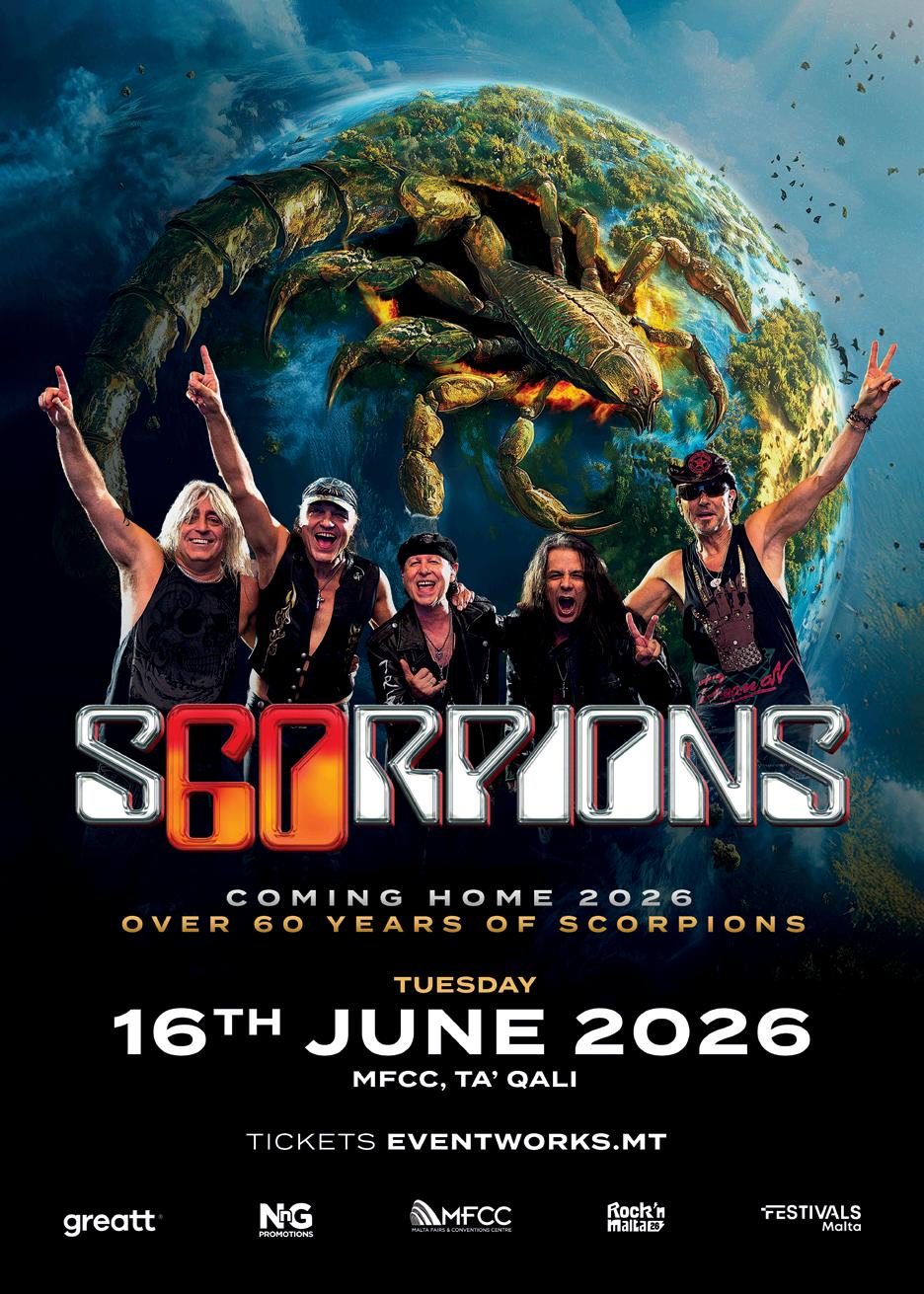
Scorpions
When: 16th June
Where: MFCC, Ta’ Qali
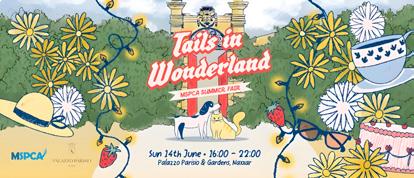
Tails of Wonderland
When: 14th June
Where: Palazzo Parisio & Gardens, Naxxar
This charming summer fair celebrates animals, giving them a second chance. Enjoy live music, artisan stalls, raffles and family-friendly fun in a beautiful garden setting. And don’t miss the Back to Life pre-loved fashion show, where charity finds are transformed into stylish looks for a good cause.
Rock legends Scorpions bring their electrifying Coming Home tour to Malta.
With over 100 million records sold, get ready to sing your heart out to iconic hits like Rock You Like a Hurricane, Still Loving You and Wind of Change in a high-energy night packed with timeless anthems and stadium-ready sound.
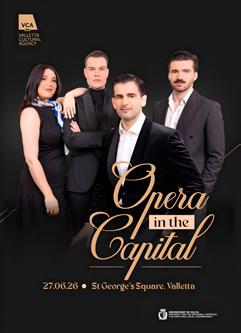
Opera in the Capital
When: 27th June
Where: St George’s Square, Valletta
Set in one of Valletta’s most beautiful open-air spaces, Opera in the Capital returns with a celebration of worldclass vocal talent. Featuring Alan Sciberras, Cliff Zammit Stevens and Marvic Monreal, alongside the Malta Philharmonic Orchestra, under the direction of Ryan Paul Abela, expect a rich programme of operatic favourites, selections from classic film scores and musical theatre favourites.
Dock Music
When: 28th June
Where: Dock 1, Bormla
Set against the historic waterfront of Bormla, Dock Music returns with a fun open-air concert filled with music and atmosphere. Enjoy a free night of live entertainment, featuring Maltese pop icon Ira Losco and Eurovision and Mużika Mużika winner Kurt Calleja, alongside special guest artists. A perfect mix of singalong hits, feel-good energy and a memorable summer evening by the docks.
SUNDAY, 28 JUNE
Discover and experience more with Inkontru.app, your web-based application that prioritises functionality and performance, meaning no need to download, seamless updates, no storage space taken and easy sharing. Enjoy!
Traditional Feasts & Celebrations
St Nicholas, Siġġiewi – 28th June
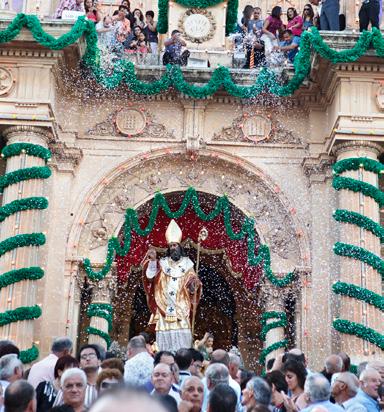
While the liturgical feast of St Nicholas falls on 6th December, Siġġiewi saves its grand celebrations of its patron saint for the last weekend of June, right in the heart of Malta’s summer festa season. The parish church glows with lights, marching bands animate the streets and fireworks burst overhead, filling the village with that special contagious energy Maltese feasts are renowned for.
Known as a “saint of providence”, St Nicholas of Bari is revered for his generosity, miracles and care for the poor. A wooden statue of the saint, sculpted by Pietro Felici in 1736, is carried through Siġġiewi’s streets, while in the main square, a stone monument to St Nicholas, erected in 1732, bears a Latin inscription asking him to bless the fields, provide bread and protect the community.
One long-standing tradition is Il-ħobż ta’ San Nikola. Inspired by the saint’s Miracle of the Grain, the bread takes on a unique local form in Siġġiewi through a flower-like loaf that’s made from seven small dough pieces joined into one. Baked and blessed during First Vespers on the eve of the feast, it reflects a long-held belief that St Nicholas safeguards both home and livelihood. (See story on more feasts in June on PG 56.)
For a guide to upcoming religious celebrations and traditional feasts across the Maltese Islands, be sure to visit Inkontru.app
HERITAGE SPOTLIGHT: IMNARJA Buskett, Rabat
– 28th & 29th June
If you’re in Malta on 28th or 29th June, don’t miss Imnarja in the woodlands of Buskett, just outside Rabat. Rooted in a Roman harvest festival called luminaria, the feast evolved over centuries to honour Saints Peter and Paul with two days of folkloric events. Expect għana (Maltese folk singing), traditional rabbit dishes, horse and donkey races, and more. (See full story on PG 42.)
Your first step into the history of the Maltese Islands
15% Discount
REGGIE BURROWS HODGES
On the purchase of an adult ticket Please quote “Passaggi” at the ticketing counter to claim your discount. (Not valid with any other offer)
Few places have a history as turbulent and inspiring as the Maltese islands. Its gripping story is that of a country buffeted by world events, in which the bravery and resilience of its people have been tested to the limit.
Through beautiful authentic imagery and a gripping commentary, the show covers 7000 years of history in 45 minutes. From the early settlers of the temple period to the Knights of the Great Siege through to the destruction of World War 2, The Malta Experience chronicles the events that have shaped the island's history.
9 May – 30 August 2026
MICAS, Floriana
Malta’s National Contemporary Art Museum
Ospizio Complex, Bieb ilPulverista, Triq Joseph J Mangion, Floriana FRN1830
INKONTRU.APP MEETS...
June brings a fresh way to experience Esplora, with a fun sea voyage. The Sail to Science journey transforms a simple harbour crossing into an adventure of discovery, blending scenic views with curiosity and fun. Senior director Mary Ann Cauchi shares the inspiration behind this exciting initiative and what visitors can expect.
What inspired the idea behind Sail to Science?
Sail to Science was inspired by the rich maritime history of the Bighi site. In the early 1900s, the original cot lift and surrounding access routes served as vital connections to the Royal Naval Hospital, welcoming thousands of patients arriving by sea from nearby areas such as Valletta and Birgu. The hospital had been active since 1832, officially closing its doors in 1970.
We wanted to reimagine this historic journey in a meaningful and engaging way. By recreating the experience of approaching Bighi from the water, visitors can connect with the site’s past while enjoying a unique and memorable arrival. The crossing itself becomes part of the experience, combining storytelling, heritage and anticipation as guests approach Esplora from a new perspective.
What can young visitors look forward to on the luzzu journey?
For young visitors, the Sail to Science luzzu journey is an experience in itself. As they cross the Grand Harbour, they are immersed in a lively and engaging commentary that brings the surroundings to life. This may be followed by an engaging history tour, consisting of facts and anecdotes from the science of the sea to the history
INSTALL inkontru.app
of the harbour and colourful stories of the former Bighi residence and hospital.
The journey sparks curiosity even before the children arrive, encouraging them to observe, ask questions and engage with their environment. It transforms what would normally be a simple transfer into an exciting introduction to discovery, setting the tone for the rest of their visit at Esplora.
How does Esplora continue to find new ways to spark curiosity in science among visitors of all ages?
At Esplora, sparking curiosity is at the heart of everything we do. We continuously evolve our programmes and experiences to ensure they remain engaging, relevant and accessible to a wide audience.
This includes interactive exhibitions, live science shows, themed events and hands-on workshops that encourage exploration through play and discovery. Initiatives such as Sail to Science also reflect our approach, blending science with storytelling, heritage and real-life experiences to create deeper connections. By making science tangible, creative and inclusive, we aim to inspire a lifelong sense of curiosity in visitors of all ages.
Step into Malta’s scene with Inkontru.app, your personal guide to all the latest art, culture and heritage events in Malta and Gozo. More than just a calendar, the app connects you with exciting events and artists through exclusive interviews and video features. Easily find event details, get directions and purchase tickets – all in one place. Need a ride? Book a cab effortlessly through the app and share your plans with friends and family with ease.
Senior director Mary Ann Cauchi.
THE
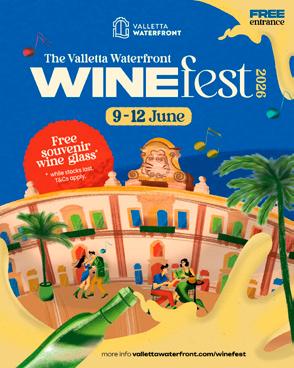
VALLETTA WATERFRONT WINE FEST
Valletta Waterfront, Triq il-Vittmi Furjaniżi tal-Gwerra, Floriana
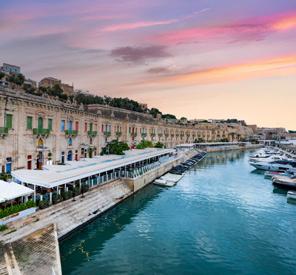
Raise a glass under the stars at the Valletta Waterfront Wine Fest – a fournight celebration of fine wine, live entertainment and Mediterranean charm, set against the stunning baroque backdrop and iconic colourful doors of the historic Valletta Waterfront. As the sun sets over the Grand Harbour, the Waterfront comes alive with music, flavour and atmosphere. Spend a balmy summer evening harbourside, discovering a diverse selection of local and international wines, perfectly paired with live performances, and delicious food offerings. Escape the rush of the city and immerse yourself in one of Malta’s most beloved seaside destinations. Nestled within the downtown harbour area, just moments away from Valletta and Floriana, and overlooking the picturesque Three Cities, the Valletta Waterfront beautifully blends rich history with vibrant contemporary experiences. Beyond its unmistakable charm, the Waterfront is home to a variety of established restaurants and lively terraces waiting to be explored. Wander along the promenade, sip your way through a carefully curated wine selection and enjoy an unforgettable evening where culture, entertainment and gastronomy meet in a picturesque setting.
The wine festival is open every day from 9th - 12th June, from 6.30 - 10.30pm. Guests purchasing wine tokens will also receive a free souvenir wine glass (while stocks last. T&Cs apply).
vallettawaterfront.com/winefest
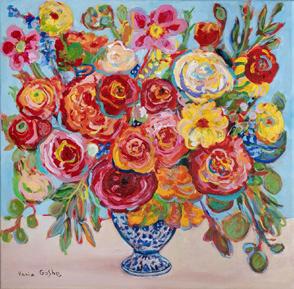
VANIA GOSHE I BOTANICA ANIMA – THE SOUL OF FLOWERS
Christine X Art Gallery, 53, Tigne Street, c/w Hughes Hallett Street, Sliema
In this body of work by Vania Goshe, flowers are not decorative motifs but sentient symbols — bearers of silence, resilience, devotion and transformation. Each bloom becomes a threshold between the visible and the invisible, inviting viewers to pause, reflect and reconnect with their inner emotional landscapes. The exhibition is open from 5th - 27th June, Monday - Saturday from 10am - 1pm and 4 - 7pm.
info@christinexart.com (+356) 9984 4653
VALLETTA WATERFRONT
Triq il-Vittmi Furjaniżi tal-Gwerra, Floriana
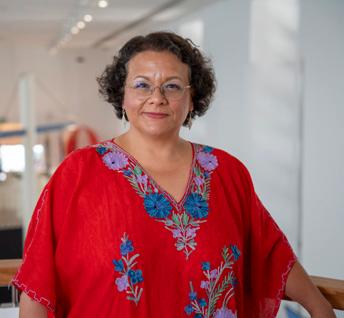
Coryse is a broadcaster, actress and voiceover artiste. She is passionate about writing, travelling and spending time with her loved ones; discovering new places and sampling new food in as many countries as possible.
Discover this hidden gem within Malta's Grand Harbour, where history meets modern indulgence. Enjoy panoramic views, exciting activities and delectable dining experiences along this strolling promenade. Savour Chinese, American, Mediterranean, sushi or local cuisine in beautifully refurbished 1752-built stores, or dine al fresco by the water's edge. Just a short walk from central Valletta and Floriana, and across from the Three Cities, experience fun and relaxation away from the crowds. There is always something happening at Valletta Waterfront, with cultural celebrations, seasonal events, live music, special themed nights and family-friendly activities that bring the historic promenade to life.
vallettawaterfront vallettawaterfront.com
Words by Lea Hogg
Lea is a Malta-based journalist and writer, known for her TV programme on current affairs, cultural news and in-depth interviews about politics and global issues.
Inside a grand band club
Behind the imposing façade of Valletta’s La Valette Band Club lies the beating heart of Maltese feast culture – a living institution where music, tradition and community have shaped generations for more than 150 years.
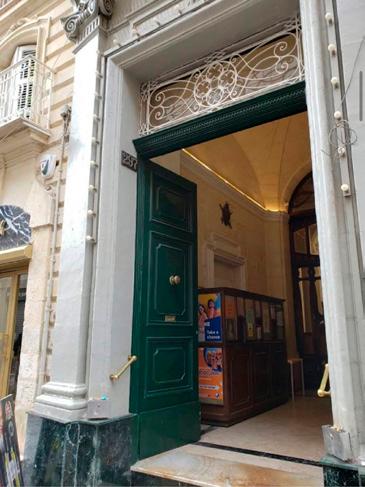
The heavy doors of the La Valette Band Club in Valletta, home to the Società Filarmonica Nazionale La Valette, one of Malta’s oldest and most prestigious musical societies, open into a world most would never expect.
The building immediately stands apart from the surrounding streetscape. Its imposing façade stretches elegantly along Republic Street, with traditional Maltese balconies, tall, shuttered windows and grand architectural detailing that reflects the capital’s distinguished past.
The entrance carries the weight of a stately and unmistakably historic palazzo. During feast season, the exterior transforms completely. Banners hang dramatically from the balconies, lights illuminate the façade and the club spills onto the streets during celebrations dedicated to St Paul.
“When people come here during the feast, they immediately understand the importance of the club,” says Mario Bonello, its secretary general. “It was its living cultural role that brought me to the La Valette Band Club.”
Mario knows the building intimately. Now a semi-retired businessman, he has been connected to the La Valette Band Club most of his life. His father and grandfather were both involved in the club, and he remembers vividly the time he spent here as a young boy.
“I practically grew up inside these rooms,” he says with a smile. “Most of the members I still meet today, I have known since childhood, or my teenage years.”
La Valette Band Club is a palace-like monument to one of Malta’s oldest traditions. Across the island, band clubs sit at the heart of Maltese culture, with nearly every village being home to one, and sometimes more of these institutions where music, identity and feast preparations are woven into daily life.
Institutions like this exist across almost every village in Malta
Photos: La Valette Band Club.
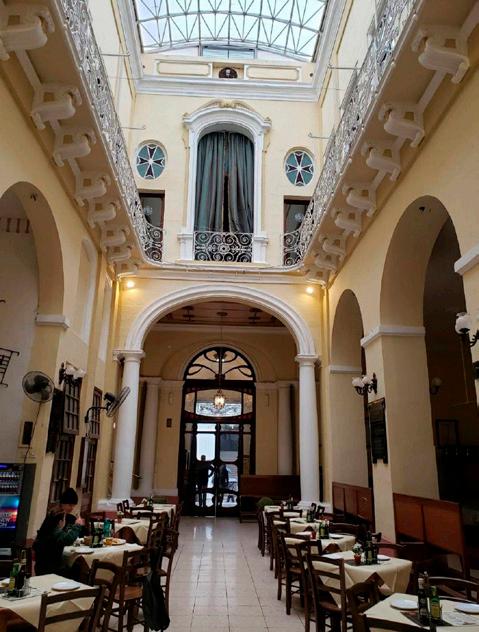
Once you enter the building, you step straight into the restaurant — a busy, welcoming space where Maltese food, snacks and drinks are served all day, seven days a week. It has a lived-in, friendly atmosphere, where members and visitors drop in at any time, making it one of the easiest ways to experience and absorb local Maltese life.
“This is not only a band club,” Mario says as he gestures towards the grand staircase leading to the upper halls. “It is part of the identity of Valletta.”
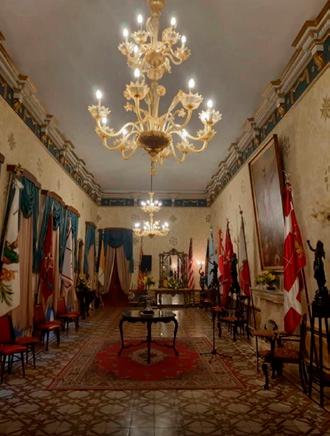
The staircase opens onto a series of majestic rooms decorated with historical portraits, banners and memorabilia linked to the society’s long history.
In one of the main halls, Mario points proudly to the wallpaper: “This was hand-painted by members during COVID 19,” he explains. “People wanted to contribute and remain active even during that difficult time.”
That sense of teamwork appears everywhere inside the club. The building is immaculately maintained, not by paid staff alone, but largely through the voluntary work of members who remain deeply attached to the institution.
“At the moment, this feels like a full-time job for me,” Mario says with a laugh. “But we all do it voluntarily because we love the club.”
Institutions like this exist across almost every village in Malta. Band clubs, known locally as każini tal-banda, are among the island’s oldest and most important social traditions. Deeply woven into village life and feast culture, they are much more than music societies. Some are modest neighbourhood clubs. Others are deeply political, fiercely competitive and historically influential institutions dating back to the 18th and 19th centuries.
Inside the La Valette Club, life still unfolds much as it did generations ago. Committees meet late into the evening, planning feast decorations, fundraising events and fireworks. Elderly members gather over coffee and cards. Musicians rehearse upstairs while football debates erupt downstairs near the bar. Snooker tables remain occupied for hours.
Founded in 1874 by Mro Charles Darmanin, the Società Filarmonica Nazionale La Valette was originally established to accompany the feast of St Paul’s Shipwreck, and today, the club still plays a central role during Valletta’s feast celebrations.
Mario explains that almost all his closest friendships were formed through La Valette and the feast of St Paul. “All my life, I remained active in the feast and the band club,” he says.
“As secretary general, I need to be very present, but this place is part of who we are. You must understand how important feast culture is in Malta,” Mario explains as he walks into another hall lined with musical instruments and trophies from past celebrations.
“People dedicate their whole lives to these traditions. It is not something we organise for tourists. This is who we are.”
That authenticity is exactly what makes the experience inside La Valette so compelling. Unlike other more polished tourist attractions in Valletta, the club remains entirely functional and alive.
“The members usually come here every evening,” Mario says about that sense of belonging that runs deep through the club.
“Even if many people moved out of Valletta, there is still a strong bond between us.”
The club also functions as an important cultural venue. Throughout the year, exhibitions take place regularly inside its grand halls. “We always receive requests –from book to jewellery exhibitions and various cultural events. This is, after all, a palace in the centre of Valletta.”
Portraits of former conductors and presidents stare down from richly decorated walls. Historic banners hang above doorways. Every room seems to carry another layer of Valletta’s story.
The walls are also filled with reminders of the club’s international reputation. One of its proudest achievements came in 1927 when the band won a major competition in Como, Italy, a victory still mentioned with pride today.
“That was a very important moment for La Valette,” Mario recalls, standing beside the
One of the halls of the La Valette Band Club.
trophy display. But the band’s international story continued well beyond Como, with overseas trips attended by over 130 members representing Malta.
Only last year, the band travelled on an invitation to accompany the Mdina mayor. “La Valette is not only local,” Mario says. “Maltese band culture is respected.”
The band also regularly performs in villages across Malta, carrying its distinctive musical style beyond Valletta. “The music of La Valette is unique,” Mario says proudly. “People who understand this type of music recognise La Valette immediately.”
It performed publicly for the first time at the Manoel Theatre in 1875 before becoming one of the leading musical societies on the island. In 2024, it began celebrations marking 150 years since its establishment, with concerts, commemorations and cultural activities held throughout the year.
“We had many activities for the anniversary,” Mario says. “For us, it was important to celebrate our history, but also to remind younger generations why the club matters.”
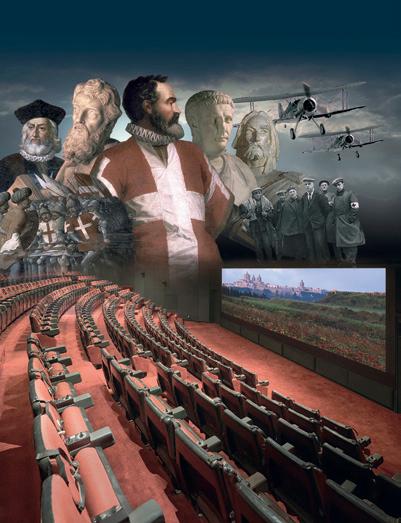
Now, it is preparing for one of the most significant events in its 2026 calendar, Tra Cielo e Cinema, Classic Music in Movies, a major concert on 20th June at Pjazza Teatru Rjal in Valletta.
Organised as part of this year’s programme of celebrations, the concert brings together the Società Filarmonica Nazionale La Valette with a line-up that bridges sacred music, film scores and orchestral performance.
It features Mgr Marco Frisina, one of Italy’s leading sacred composers, and Nello Salza, known as La Tromba del Cinema for his long association with Ennio Morricone, alongside soprano Rosabelle Bianchi, tenor Alan Sciberras and the choir of the Cappella Musicale Caeciliana under Mro Dominic Darmanin.
For the club, it is a statement of identity; a Maltese band rooted in village feast tradition stepping onto one of the island’s most important cultural stages.
“It shows exactly what La Valette is today,” Mario says. “We are rooted in tradition, but we are also part of major cultural productions at an international level.”
Events like this are now an essential part of the club’s evolving role in Maltese cultural life – not replacing the feast tradition but expanding it into new spaces.
Despite the honours and history, however, daily life inside the club remains refreshingly ordinary. Band clubs were never designed as museums. They were created as community spaces where ordinary people gathered around music, religion and local identity. Over time, they evolved into the social heartbeat of Maltese towns and villages.
“Many things changed in Malta,” Mario reflects as the afternoon light pours through the windows overlooking Republic Street. Outside, the streets of Valletta have evolved, but inside La Valette, daily life continues exactly as it has for generations. “The band club tradition has remained.”
Tickets for Tra Cielo e Cinema are available from www.showshappening.com and the La Valette Band Club on (+356) 7988 2828.
The restaurant of the La Valette Band Club.
Words by Iggy Fenech
VI NTAG E
TR EA SUR E S
From pre-loved clothes by the kilo to the best flea market on the island, there are now plenty of places locals flock to for second-hand treasures at low prices. Here, Malta’s own thrift queens and founders of Thrift in the City, Samira Axiak and Maya Mifsud, give the lowdown on their sustainable process and share their favourite thrifting spots.
Iggy is a cultural journalist and lifestyle writer. His favourite thing about travelling is getting to discover new ingredients and flavours to blend into his cooking.
Malta’s second-hand clothing scene is still in its infancy, with thrift, charity and vintage shops being almost unheard of on the islands until just a decade ago... Imagine, until then, if you were looking for a vintage treasure, you’d have to fly out to London’s Camden Town, Paris’s Saint-Ouen flea market, or to one of Rome’s many mercatini.
Now, however, thanks to the influence of the international TikTok thrifting community, a greater awareness of the environmental impact of fast fashion, and more people willing to donate their second-hand items, the array of places where you can find your next treasure on Malta and Gozo is ever-growing.
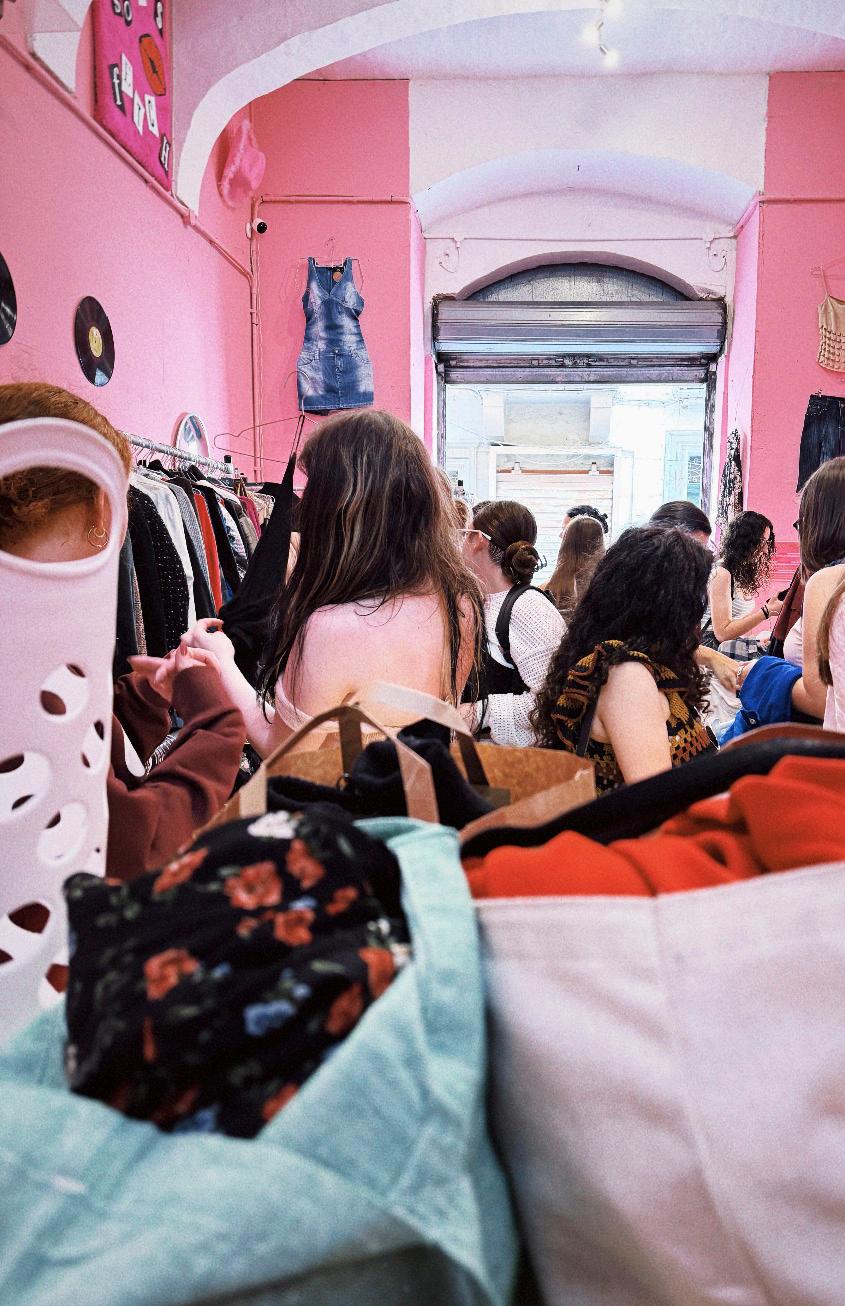
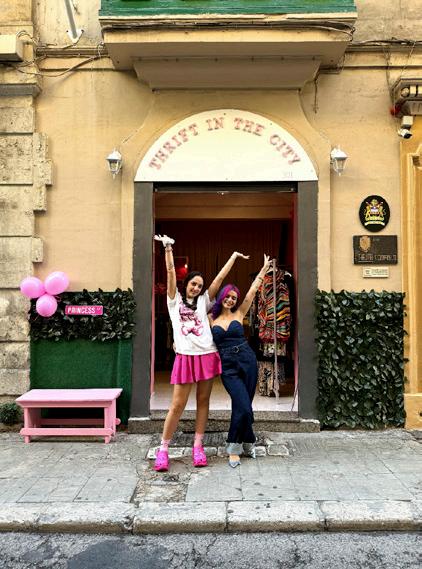
One of the most popular, Thrift in the City, was opened in March 2023 by Samira Axiak and Maya Mifsud. This 1990s and Y2K vintage shop runs on a very simple, yet effective, ethos: no piece of clothing should ever end up in the landfill. And their meticulously planned process ensures they truly stand by it.
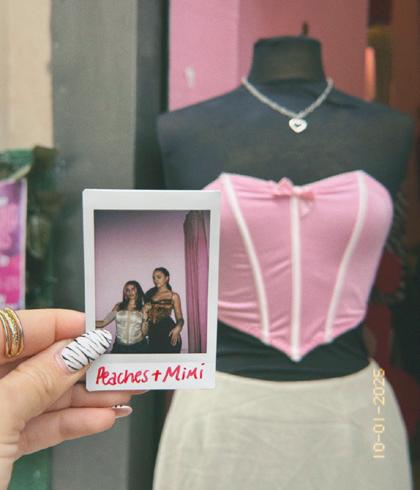
They source pieces from all over Europe, keeping their space, which feels like walking into Hannah Montana’s own bedroom, well stocked with vintage Michael Kors, Juicy Couture revival pieces, the occasional Oscar de La Renta gown, and plenty of other vintage finds – all of which come at an average price of €10 - €12 and never more than €30. But that’s just the everyday business side of it.
Samira and Maya have also introduced the concept of the kilo sale to the islands, where fashion lovers on a budget can bag a whole kilo worth of clothes – branded and unbranded – for just €10. This kilo sale has gained somewhat of a cult following, with many queuing outside the shop every time it’s held. And it shouldn’t be surprising considering how previous attendees have bagged some truly exceptional pieces, including pre-loved D&G and Gucci.
“Growing up, I didn’t really have the opportunity to buy new clothes often,” explains Samira, “but that all changed once I bagged a job that saw me split my time between Malta and Belgium, where I could get my hands on beautiful pieces for a fraction of the price.
“That was, indeed, our intention with the kilo sales, and the reason why we do not sift through the 1,000 kilos of pre-loved clothes we get for the event, ensuring that even high-end designer pieces can be bought by fellow second-hand fashion lovers.”
Maya Mifsud and Samira Axiak.
Top 5 Vintage Spots
• HUGS, 197 Triq il-Ħtajriet, Mosta: “They tend to carry great-quality, branded clothes and accessories, including a top selection of sunglasses. We also love getting board games from here. The prices are fair, starting from just €2, and the proceeds go towards buying food for animals and the neutering of cats, so what’s not to love?”
• MSPCA, 30 Triq Mensija, San Ġwann: “These guys are extremely well organised, with their clothes being sorted by size, season and colour. They usually have some great jewellery on offer and, once again, the proceeds go to animals. Moreover, there is another great charity shop just opposite called PAWS, so you can consider this a two-in-one trip.”
• St Paul’s Bay Charity Shop, 40 Toni Bajada Street, St Paul’s Bay: “This charity shop is huge, and they go out of their way to make it welcoming, often featuring seasonal displays with items on sale. We really like it for the basics and have found branded (and even brand-new) T-shirts for just €3 - €4.”
• Inspire Charity Shop, Triq iz-Zinzell, Marsascala: “By far one of the nicest and largest shops of its kind in Malta, with an ever-changing stock. They have an amazing selection of children’s clothing organised by size and age, which makes it so much easier to find what you’re after!”
• Birgu Flea Market, Fuq il-Fortini, Birgu: “Malta’s most famous flea market is great for buying clothes for super cheap, with items sometimes starting at just 25c. You can also haggle here, especially if you’re buying lots of items. Plus, you’ll find plenty of antiques, including postcards, Polaroids, and keychains of Malta, so you can even be sustainable with the souvenirs you take back home. Our advice is to head there sometime between 6 and 8am on a Sunday.”
There is always a way to rehome, reuse, or repurpose...
But Samira and Maya’s job doesn’t end once the kilo sale is over. Even with hundreds of kilos of clothes and fabrics now having found a new home, they have a streamlined process that sees any pieces that haven’t sold being donated to charity shops across the islands, and items with minor defects (such as a broken zip) and fabrics being sent to sewing classes.
“Our aim is to be sustainable through and through,” Maya, who studied at the Marangoni Fashion Institute in Milan, continues. “After all, whether we’re talking about a beautiful dress or a quirky piece of fabric, there is always a way to rehome, reuse, or repurpose it.”
And it’s that love for sustainability and the unexpected that has ensured both Maya and Samira – now successful business owners in their own right – to remain avid thrifters, often rummaging through the racks of other second-hand shops and flea markets, looking for a beautiful piece to add to their wardrobes.
Words by Lea Hogg
Rolling the dice on island life
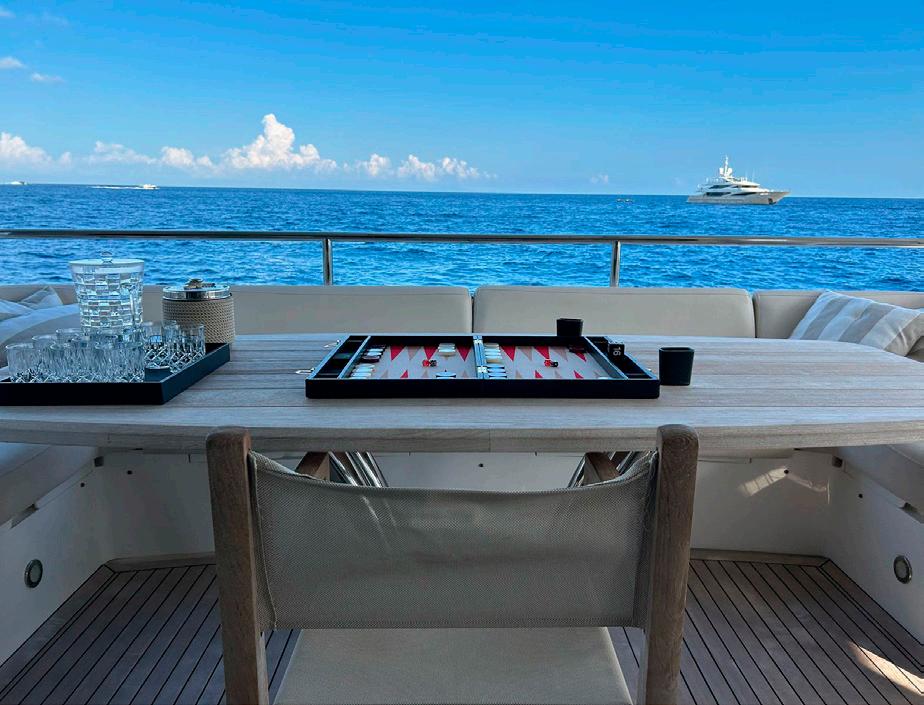
Jeroen Romme, a seasoned backgammon player and board designer, is bringing the game to life through his Malta-inspired boards, turning each match into a quiet celebration of place, craft and chance on the island.
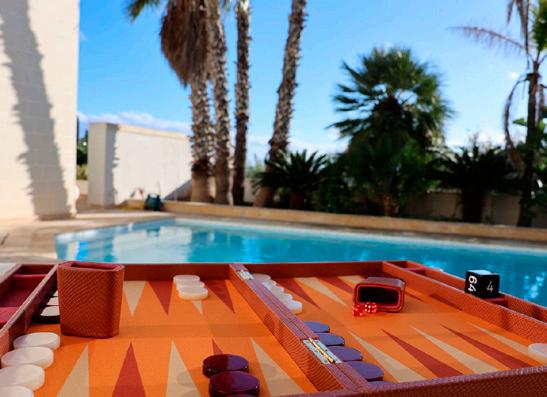
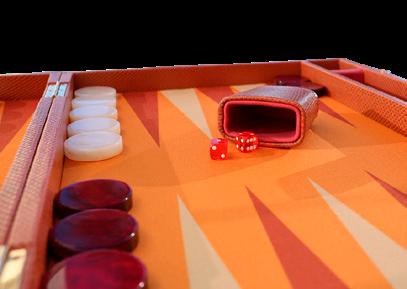
On a quiet terrace overlooking the Grand Harbour, Jeroen Romme sets up a backgammon board. He lifts the lid, letting the red and gold triangles catch the fading light. “This board,” he says, tracing a checker with his finger, “has been inspired by Valletta, dark, elegant, with flashes of gold and red. The capital city is in every detail.”
Backgammon in Malta is not embedded in everyday social life. It exists instead in loosely connected pockets of activity, sustained by small groups of enthusiasts. Beyond Malta, Mediterranean and global backgammon culture remains lively. In Cyprus, by contrast, it is more visibly woven into village tavernas and informal public gatherings; part of everyday social life.
Istanbul, Jeroen says, remains one of backgammon’s great centres. Modern tournament rules were widely embraced
there, and the city hosts regular events, some drawing close to 1,000 players. London and New York, meanwhile, are experiencing a more contemporary revival, driven by younger players, online creators and a new generation of private clubs built around live play.
Greece offers another reminder of the game’s long and varied history. There, many players favour a local variant with different rules, reflecting how the board itself predates any single modern version of backgammon.
“In Malta, we find ourselves drawn to whatever space is available,” Jeroen says, gesturing towards a small table by the harbour. “Bars, terraces, beaches... The board is portable, and the island lends itself to every setting.”
Photos: Jeroen Romme.
Jeroen believes that with a consistent venue and weekly games, the scene could grow steadily
Jeroen, who is Dutch, moved to Malta more than a decade ago to work in affiliate iGaming. What began as a professional move gradually became a lasting connection to the island, where he has since built a family life.
Though he has competed at a high level, he is not a grandmaster. “I’ve reached semi-finals in both the Intermediate and High Roller World Championships,” he says. “But luck always has its say.”
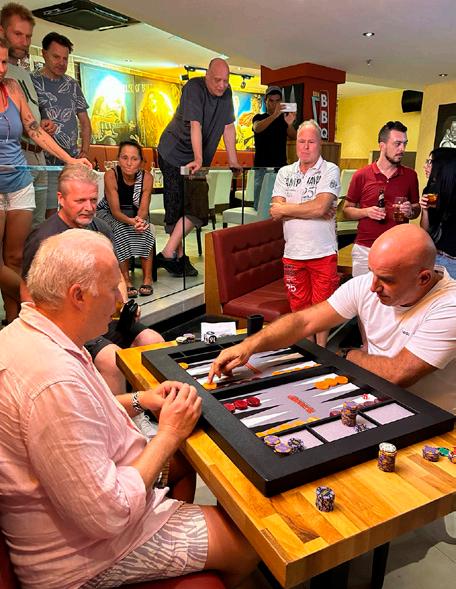
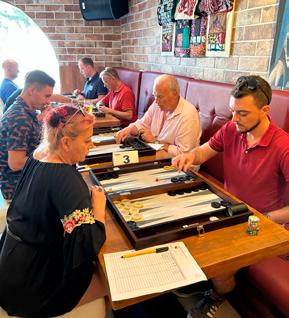
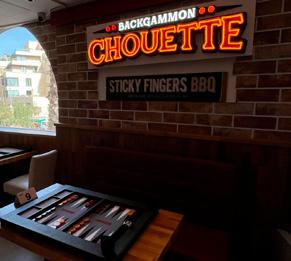
Now, he runs a Facebook group where locals, expatriate and visiting players connect. “It’s where people find games and tournaments. Our club usually meets at Surfside in Sliema for casual play and Sticky Fingers in St Julian’s for larger events. There’s even a professional international tournament held in Malta every two years.”
A typical evening takes shape through Swiss-format tournaments, or chouette, a multi-player cash format
with shifting dynamics. “We make sure everyone plays at least three matches. Sometimes, there’s a small entry fee, often with a prize added,” he explains.
To understand how this small but active community holds together, Jeroen often returns to the game’s long lineage. Backgammon, or tables, as it was once known, stretches back through Persia and the Middle East.
“Traditional versions were without the doubling cube,” he notes. “The modern game, from the 1920s, adds a layer of strategy. That’s what we play in Malta.”
Within the local scene, organised play emerges not through formal circuits but
through small clubs and informal gatherings. Where competitions exist, they tend to follow familiar structures, Swiss systems, or knockout formats, shaped more by tradition than institution.
Interest in backgammon in Malta is growing, though the scene is still taking shape. “After some key players left the island, activity slowed following the 2024 Malta Backgammon Open,” Jeroen says. “But from summer 2026, with the launch of Progammon (professional backgammon), we’ll introduce a more regular rhythm of tournaments and clinics.”
Younger players, he suggests, require a different entry point. “We experiment with formats,” he continues. “Players rotate opponents with casino chips, and stakes increase over time. It works particularly well with poker players and younger audiences.”
Jeroen believes that with a consistent venue and weekly games, the scene could grow steadily. “Tourists actively seek out meet-ups and the diversity of players creates a strong atmosphere,” he says.
Visitors to Malta often slip into the network through the Facebook group: “The community is welcoming. We take real pleasure in introducing newcomers to the game. It becomes a shared language quite quickly.”
Backgammon is tactile and immediate, according to Jeroen. He believes the setting matters: “The game feels more complete when the architecture and light speak to it.”
This is also reflected in Jeroen’s own work, where the board itself becomes an extension of place. His own backgammon boards are “a continuation of the island’s character”.
Jeroen started designing boards after 28 years of collecting them. “Many were either overpriced or lacked a satisfying playing experience,” he says. “I wanted something that balanced performance, beauty and accessibility.”
The playing surface, he insists, defines the experience. “Smooth checkers, controlled dice bounce… Production is in China, but design and assembly are handled here.”
Each board carries the name of a Maltese city, Jeroen highlights. “Malta has been central to my life, and the names are a way of acknowledging that connection.
“The Mdina board reflects quiet elegance. The St Julian’s board reflects nightlife energy. Even the dice are designed to catch Mediterranean light as they move,” he explains.
As he sets up another board, the late light catches the gilded points. “Every board is a design piece,” he says. “It works for serious play, but also as an object in its own right… I want players to feel Malta in their hands. Each roll carries something of the island.”
And yet, for all its design and discipline, the game remains subject to chance. “Backgammon can be tough,” he says, with a brief smile. “A novice can beat an expert with a single roll.”
Elite backgammon players in Malta
Malta’s backgammon scene has, at various points, attracted elite players. Among them is Jörgen Granstedt, who lived on the island for several years and secured his third World Championship title in 2016, reinforcing his standing as one of the game’s most consistent champions.
Another figure closely tied to the island’s backgammon landscape is Claus Elken, a Danish grandmaster who played a central role in sustaining competitive activity, including involvement in the 2024 Malta Backgammon Open, before returning to Denmark.
Alongside them sits a broader ecosystem of strong amateur and semi-professional players, a landscape where recreational ambition and elite experience quietly overlap.
the
Words by David Carabott
Echoes of Imnarja
Crowds gather at Buskett Gardens to enjoy local food, animal exhibitions and traditional Maltese folk singing, known as għana. This is the feast of Imnarja – a cornerstone of local tradition that is a vibrant celebration of Maltese culture.
There are moments in life that refuse to fade from memory, no matter how many years go by. The feast of Imnarja, celebrating St Peter and St Paul on 29th June in Malta, is one of them.
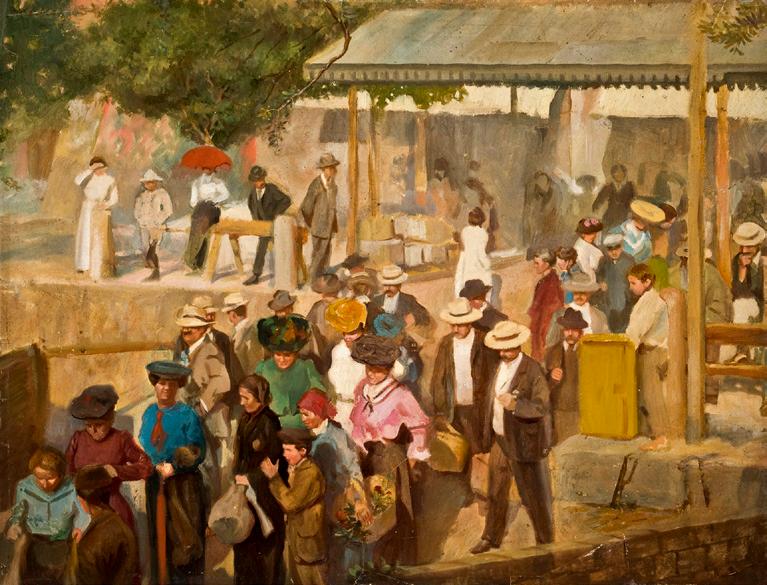
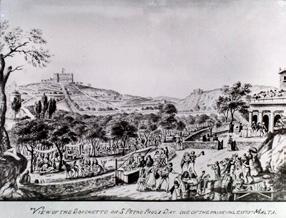
Edward Caruana Dingli’s L-Imnarja Celebration at Boschetto, painted in the 1920s, captures
spirit of the feast.
As evening settled, the gardens transformed into a world of their own
When I was a child, this was not simply a celebration; it was the highlight of the year – the night I waited for with a quiet excitement that was steadily building. Year after year, I found myself longing for it; not only for what it was, but for how it felt. There was a sense that something special was about to unfold.
The journey itself was part of the ritual. My family and I would make our way to Buskett Gardens, the island’s only woodland, nestled in the heart of Malta. There, time seemed to slow, as if we had stepped into a place suspended in a dream.
I remember the movement; people gathering from every corner of the island as though drawn by an invisible thread to magical Buskett, the lungs of Malta.
As evening settled, the gardens transformed into a world of their own. Families gathered beneath the trees, laying out food, sharing stories and settling into a night that felt endless.
The rich smell of traditional fenkata, fried or stewed rabbit, filled the air, mingling with the sweetness of wine and the earthiness of the countryside. I ran freely, the night stretching ahead without limits.
Then came the music. The sound of għana, Malta’s traditional folk singing, rose softly at first, then was carried through the trees. Men with guitars and voices full of feeling sang verses often improvised on the spot. It was raw, unpolished and utterly captivating. Even now, I can almost still hear it.
Looking back, I realise that what I experienced had been unfolding for centuries. In earlier times, farmers gathered here to celebrate the end of their labour and to rest after the harvest. Later came agricultural exhibitions, where people proudly displayed their animals, produce and crafts.
There were other traditions too, some now lost. Imnarja was once associated with courtship and marriage, with agreements made and promises kept. Newlyweds would attend together, the bride sometimes still in her wedding dress, as though the feast itself marked the beginning of a shared life.
On the day, a different kind of excitement also took over. Near Saqqajja Hill, on the outskirts of Rabat, crowds
The origins of Imnarja
Malta has 14 official public holidays, of which five are national holidays. The feast of Imnarja is among the oldest traditions, with roots stretching back long before the arrival of the Knights Hospitaller. Its origins span centuries, blending Christian devotion with older rural and folk customs.
What began as luminaria, a pagan festival of light, gradually evolved into a Christian feast while preserving its spirit of community and celebration. The name Imnarja recalls the bonfires once lit around the old capital of Mdina.
The feast honours the martyrdom of Saints Peter and Paul. Celebrations begin on the evening of 28th June and continue into the early hours of the next day. Imnarja is also celebrated in Gozo, particularly in Nadur, where religious services, processions and village festivities continue the tradition.
Although Paul the Apostle brought Christianity to Malta in AD 60, the islands later came under Arab rule between the 9th and 11th centuries, during which Islam became the dominant religion. It was only after 1091, when Roger I of Sicily conquered Malta, that Christianity was reestablished as the official faith. During the reign of his son, Roger II of Sicily, non-Christians were taxed, forcing them either to leave or to convert.
A public holiday that still brings people together
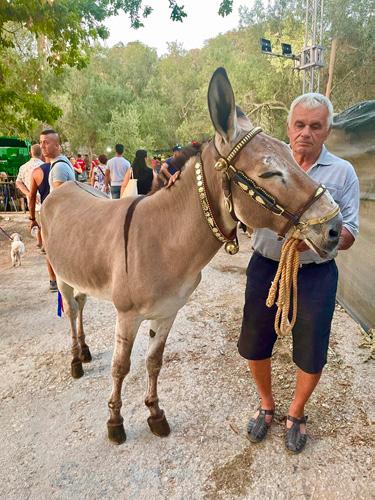
gathered for the races. I waited impatiently. Horses and donkeys lined up, their riders ready, the air charged with anticipation.
Rooted in centuries of tradition, these races were once even more chaotic, with riders competing fiercely for prizes. By our time, they had changed, but the thrill remained. When the race began, everything else seemed to fall away. It was pure, shared excitement. Even today, the races continue.
WHAT HAS CHANGED, WHAT ENDURES
Today, Imnarja is quieter. The crowds are smaller and the traditions more subdued. Life has changed, and with it, the way we celebrate. Yet something essential remains: a public holiday that still brings people together. It carries traces of the past, of farmers unwinding after the harvest, of songs rising beneath the trees, of lights flickering against ancient stone.
Imnarja is not just a feast. It is the excitement of a child waiting for night to fall, the echo of distant singing, the warmth of shared food and the quiet certainty of belonging to something larger than oneself. I look back with fondness at a night that once felt endless; that, in some way, is still glowing softly in my mind and heart.
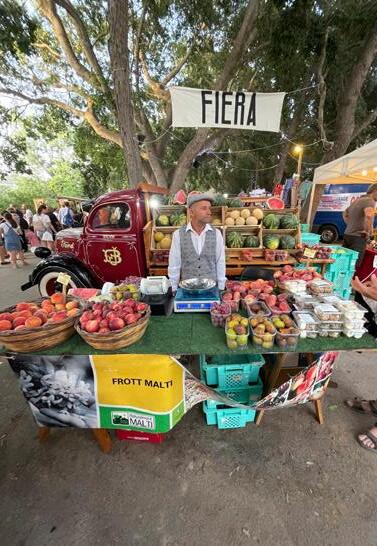
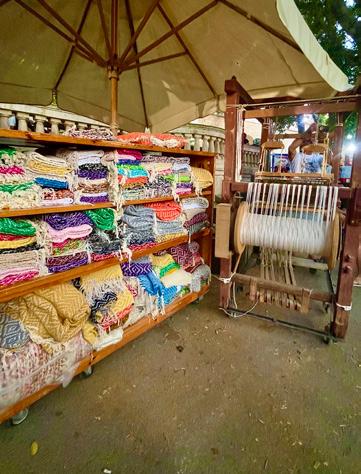
A traditional weaving stall during Imnarja.
An old postcard of Imnarja. Photo courtesy of Kevin Casha.
DRINK DIFFERENT
Words by VisitMalta
GOZO, COMINO AND THE CORSAIRS
Catch a glimpse of the swashbuckling past of the commerce raiders through a new and gripping book on their maritime adventures.
Malta’s sister islands, Gozo and Comino, were much more than peaceful retreats in the Mediterranean. During the 17th and 18th centuries, they served as frequent havens for commerce raiders – famed Mediterranean privateers, who used these sheltered shores to replenish supplies, seek refuge from storms and prepare for the next stage of their daring exploits.
For those who wish to explore the hidden stories of the commerce raiders, Morte o Fortuna, the latest book by historian Liam Gauci, takes readers deep
into these maritime adventures, unveiling the rich history of corsair activity along these very shores.
Take, for instance, the year 1778. Captain Francesco German sailed his felucca to the island of Comino, where he spent a day replenishing his water supply. This wasn’t a solitary event. In fact, in 1787, Captain Gaetano Cavasso sought shelter in Comino’s quiet bays due to contrary winds, and in 1792, Captain Valentini’s ill-fated journey took him on a tumultuous path, forcing him to seek refuge in Comino several times before completing his voyage.
These islands were more than just stopovers; they were vital lifelines to commerce raiders navigating treacherous waters.
In Gozo, the plot thickens. During a journey in 1791, Captain Valentini’s felucca, brimming with captured slaves, made a stop at the island’s picturesque Il-Ġebla tal-Ġeneral bay. The captain procured provisions from the Governor of Gozo, ensuring his crew was well-stocked for the next leg of their journey.
Yet, it was Gozo’s role as a safe harbour that truly stood out – when the overloaded felucca faced disaster at sea, it was Gozo that became a sanctuary once more, offering safety and provisions until the journey could continue.
Gozo and Comino were more than just islands in the Mediterranean – they were part of a vast network that ensured commerce raiders could continue their daring raids across the seas. Their strategic locations, sheltered coves, and pristine landscapes offer a glimpse into a forgotten maritime world.
VISITING GOZO AND COMINO: TRACING THE CORSAIRS' FOOTSTEPS
Today, these historic sites are accessible to visitors eager to walk in the footsteps of the past. In Gozo, the Dwejra Bay area, with its dramatic limestone cliffs and the iconic Fungus Rock (Il-Ġebla talĠeneral), offers a tangible connection to the corsairs.
Dwejra Tower, built in 1652, stands as a sentinel overlooking the bay, once serving as a watchtower to guard against corsair landings. Visitors can explore it and enjoy panoramic views of the surrounding landscape.
On Comino, Saint Mary's Tower, constructed in 1618, was strategically positioned to defend against corsair attacks and to communicate with the mainland. The tower remains a prominent feature of the island's landscape and is open to the public, offering insights into its military history.
EXPERIENCE THE CORSAIR LEGACY
For those intrigued by the tales of Malta's commerce raiders and the beauty of these islands, Morte o Fortuna is a must-read. This book weaves together captivating historical stories with a deep appreciation for Malta’s maritime past, bringing to life the world of commerce raiders, their adventures and the islands they frequented.
Whether you're planning a visit, or simply want to immerse yourself in Malta’s rich history, Gozo and Comino offer the perfect backdrop for discovering the past while celebrating the beauty of the present.
To delve deeper into the world of corsairs and their impact on Malta, visit Heritage Malta's online store to purchase Morte o Fortuna: Corsairs in Malta 1747 - 1798.
Words by Edward Bonello
Edward is a content writer and PR consultant. He is interested in the wonderfully superfluous and exquisitely redundant. When he’s not happily tapping away at his laptop, he enjoys collecting useless trivia and watching B-movies.
Our blue crown jewels
Here are eight of our favourite swimming spots around Malta and Gozo, worth discovering this summer.
Measuring a mere 27km in length and 14km across, Malta’s sea is never too far away. In fact, one good piece of advice when holidaying in Malta is to always keep your swimming gear with you because you never know when the next dip is about to take place!
We are truly spoilt for choice, when it comes to swimming spots, from the super popular ones to the hidden gems. So, pack light, apply a double layer of sunscreen and fill up that water bottle because we’re going on a tour of Passaġġi’s favourite eight swimming spots around Malta and Gozo.
WIED IL-GĦASRI, GOZO
01. 02.
Tucked away between the steep cliffs right below Żebbuġ, Wied il-Għasri is a long and winding fjord-like creek that opens onto a tiny pebble beach merely a few metres wide. More than a beach, it is a hidden spot, ideal for quick dips, especially since the sea is almost always calm here.
Moreover, the water is famously clear, making it a favourite among snorkellers and divers. On calm days, swimming through the gorge feels surreal, with the sound of waves echoing softly between the cliffs.
Wied il-Għasri is accessed through ancient stairs, hewn into the rock face, so there is a bit of a descent. But the understated beauty of this spot makes the effort to reach it all the more worthwhile.
SAN BLAS BAY, GOZO
Here’s another hidden gem that is often heavily overshadowed by its nearby superstar neighbour, Ramla. Once again, this one takes quite the effort to get down to as reaching it requires navigating a very steep road, which, luckily, discourages heavy crowds. But the reward, once again, is punctual.
Like Ramla, San Blas is known for its reddish sand, though on a much smaller and more intimate scale. The surrounding valley creates a wonderful natural backdrop, while the shallow turquoise water makes it perfect for a relaxed swim.
The descent may leave you slightly breathless, but locals do organise quad-bike rides up for a small fee from time to time.
03. 04.
RAMLA BAY, GOZO
An all-time favourite, better known as ir-Ramla l-Ħamra, this iconic Gozitan beach is perhaps one of the best-known on the island. Its reddish-golden sands give it its distinct appearance, as well as its name (aħmar being Maltese for red). The slow incline into the sea makes the beach highly accessible and a reasonably safe swimming spot for all the family.
The terraced fields inland fade into the sandy coast, surrounded by the arid Mediterranean cliffs, enclosing the blue sea. At sunset, the setting is nothing short of dreamy. The iconic white statue of Our Lady atop her tall pedestal completes the picture-perfect postcard. Insta story on the ready everyone!
This is also the beach where it is said that Ulysses, from Homer’s Odyssey, was washed ashore, only to be rescued by the nymph Calypso, who kept him in a sexy trance in the terrestrial paradise for five years. Whether or not this place truly inspired the story from Greek mythology we will never know. However, Ramla is so stunning that it doesn’t feel like a stretch at all!
ST PETER'S POOL, MALTA
Back on the mainland and to the south, St Peter’s Pool is situated on the Delimara peninsula in Marsaxlokk and is a popular spot with tourists and locals alike.
Carved naturally into the limestone coastline, the beach rose to TikTok stardom as, some years back, it was the backdrop to the adventures of Titty the diving doggy, who, together with her owner, took turns diving into the beautiful blue sea below.
Rather than a conventional beach, it is a flat, rocky inlet surrounding deep, brilliantly blue water. Again, the place is particularly famous for cliff jumping, with generations of local swimmers testing their courage from the surrounding ledges. However, do be warned that diving can be dangerous and only seasoned swimmers ought to go for it!
Beyond the adrenaline lies remarkable natural beauty. On calm mornings, the sea can appear almost transparent, shifting between emerald and sapphire under the sunlight. Arriving early is essential during summer months as this is quite the popular spot.
05.
IMĠIEBAĦ BAY, MALTA
Thankfully, Imġiebaħ Bay remains one of Malta’s more secluded beaches, due to the long narrow road that traces its way towards it, through the stunning Maltese countryside. So, get ready for a good trek down to the beach, but the views on the way are equally spectacular.
Once down, all your efforts will be rewarded as the beach is still in its most pristine condition – just as nature intended. Far from the bustle, it can be a most peaceful spot to enjoy a lazy afternoon in the sun.
Imġiebaħ Bay combines both golden sand and pebbles, while the water, like most places around the island, is remarkably clear. The beach is also dog-friendly, so it is the ideal spot to share some quality time, even with your four-legged friend.
06.
DWEJRA, GOZO
Few places in Malta and Gozo pack so much into such a small space. The raw beauty and incredible scenary that surrounds Dwejra is nothing short of incredible. Even after the collapse of the Azure Window in 2017, the area remains one of the islands’ most spectacular coastal landscapes.
The Inland Sea, connected to the open Mediterranean through a narrow tunnel in the cliffs, offers one of the most unique swimming experiences in the country. The nearby Blue Hole attracts divers from far and wide and is considered one of the most beautiful diving spots around the world.
The stunning rock formations, especially down by the Ġebla tal-Ġeneral, are pretty amazing too and provide for a unique backdrop to yet another memorable dip.
ESCAPE THE ORDINARY
Discover a side of Malta that feels intimate, inspiring, and effortlessly luxurious at Iniala Valletta.
Set along Valletta’s iconic Grand Harbour, our palatial residences and suites offer a haven of tranquility, complemented by a stateof-the-art gym, a spa nestled within our stone vaults, and our two Michelin-starred restaurant ION Harbour.
iCAN Malta is a leading event management and audio-visual solutions company that specializes in delivering high-quality conferences, corporate events, and productions. Based in Malta, the company offers a comprehensive “one-stop-shop” service, handling everything from planning and logistics to technical execution, including sound, lighting, and video production. With a team of experienced professionals and advanced technology, iCAN is known for creating tailored, high-standard events and has been trusted with major local and international projects. www.ican.com.mt | info@ican.com.mt
SANTA MARIJA BAY, COMINO
While most visitors to Comino flock straight to Blue Lagoon, Santa Marija Bay offers a quieter and more relaxed sandy beach alternative. Tucked away on the island’s northern side, it retains a rare charm, even during the height of summer. The ancient chapel off the shore, and the old police station overlooking the blue, offer a peak onto a Malta long gone by.
ANCHOR BAY, MALTA
You may know this one by another name, and rightly so, because this is where the iconic Popeye Village was built for the Robin Williams’ 1980 cult classic film. In fact, the colourful movie set has survived the years and provides for a magical backdrop to the rest of the bay.
Seen from above, the bay appears almost impossibly blue, contrasting beautifully against the pale limestone cliffs and the colourful wooden façades of Popeye Village nearby. 07. 08.
The water is shallow, crystal clear and ideal for long, lazy swims. Surrounded by typical Mediterranean vegetation of low-lying shrubs and trees, the area is far removed from the more popular and sometimes noisy Blue Lagoon. Between us, this is what the locals tend to prefer when on their day trip to Comino!
However, Anchor Bay is more than just Popeye Village and is popular with divers. The steep cliffs surrounding the inlet create calm, sheltered waters, ideal for swimming and snorkelling.
BONUS.
RIGHT OUTSIDE THE BREAKWATER, VALLETTA
And finally, a true treat. Not your conventional sandy beach, or pebbly creek, but perhaps one of the most memorable dips of your life.
Right beyond the Grand Harbour’s breakwater, underneath the majestic bastions of Fort St Elmo, is where locals go for a quick dip on those long hot summer afternoons.
The sea is remarkably deep, and it can get rather rough on certain days, so do be careful if you decide to swim here.
But there is something uniquely local about this place. Perhaps it’s how Valletta rises from the sea to form the most stunning backdrop. The fact that it is literally just a few minutes’ stroll down from the busiest streets of Valletta, and yet it is so peaceful, is quite remarkable.
In fact, this place is almost a ritual – an act of communion with nature, and reclamation of the urban environment. Sometimes, the most memorable places are not necessarily the most famous, but the ones that allow us, even briefly, to feel completely connected to the sea around us.
Soloists
Hansjörg
Schellenberger
Conductor & Oboe
presents Mozart
Bach & Kreisler
12th June 2026
8.00pm Teatru Manoel
teatrumanoel.mt
Words by Edward Bonello
Put on your Sunday best, festa season’s here!
From Qrendi to Nadur, the streets explode in a riot of colour, joy and celebration. Get ready to experience and celebrate the unique Maltese festa!
As your plane approaches Malta’s international airport, and starts its descent towards the runway, don’t be alarmed if you hear a round of shots in the distance. They’re fireworks – the unmistakable trademark of Malta’s summer season; just a small part of the wonderful UNESCO-recognised Maltese festa.
June marks the beginning of summer, and with it comes a full calendar of village feasts that celebrate patron saints across Malta and Gozo. From Qrendi to Nadur, the streets explode in a riot of colour, joy and celebration that cannot easily be described in words.
These six feasts, celebrated in June, all bring something special to the party. But don’t just take our word for it –visit to see for yourselves!
ST PHILIP OF AGIRA, ĦAŻ-ŻEBBUĠ
Celebrated throughout the week leading to 14th June, the feast of St Philip of Agira is one of the greatest and possibly finest feasts on the island. Żebbuġ is one of the oldest towns in Malta, with its roots tracing back to the time of the Knights of St John, and as such it has produced some of the most prolific and celebrated artists, politicians and historical figures in Malta’s history.
in Nadur, Gozo.
The devotion to St Philip is equally ancient, and the church dedicated to the saint is a treat for all the senses, especially at festa time. If you’re with us around this time, make sure to visit the church and its opulent decorations – a testament of the people’s love for their patron saint.
However, Żebbuġ is also home to two rival band clubs, which are in cutthroat competition about the celebration of the feast! They go to extreme lengths to organise the most wonderful fireworks displays for the festa, a point of pride for all village folk.
Make sure to visit on the Friday and Saturday, to experience the unique ground fireworks displays, which are set up by the band clubs. Every inch of the fairly large village square is taken over by intricate mechanised miracles of engineering, each powered by nothing but the most primordial wonders – fire!
Do, however, keep a safe distance, and listen to what the organisers have to say, for your safety!
ST JOHN THE BAPTIST, XEWKIJA
On 21st June is the festa at Xewkija in Gozo. The devotion to John the Baptist has long roots in Malta, given how the Knights of St John sported his very name, so the link between this town and the Knights is all but natural.
Though the current church is the fruit of an ambitious 20th-century project, the town was one of the first to be hived off the Gozitan capital, and its foundation can be traced to 1678. The rotunda was designed by Ġużè Damato, a prolific revolutionary architect who was nicknamed the builder of churches as he was commissioned a record number of Houses of God to design in his lifetime!
Back to the festa, this is when the otherwise quaint village bursts into one big party as all townsfolk get together to honour their beloved patron. The streets fill with pavaljuni and bandalori, band marches swirl through the streets, and the young revellers dish out cheeky taunts to their archrivals.
The exquisite statue of St John the Baptist, the work of celebrated 19th-century sculptor Pietro Paolo Azzopardi, emerges from the church’s main door on Sunday evening and is carried shoulder high around the streets of town.
ST CATHERINE OF ALEXANDRIA, ŻEJTUN
If you can’t make it to Gozo on the same day, make sure to go down to Żejtun, a town in the south of Malta, where they celebrate the feast dedicated to St Catherine of Alexandria.
Like in most feasts, the festivities start from a week before. The two rival band clubs take it in turns to organise marches and community events throughout the week, with thousands descending on the main thoroughfares of the town dressed in green or red – the colours of the band clubs.
Pyrotechnical displays are synchronised to music at the climax of each event, as some brand-new, elaborate decoration is unveiled to the wild amusement of the crowds present.
On the eve of the feast, the bands take their place on their respective planċier, the ornate bandstand that is purposely set up for festa time, and deliver an upbeat concerto of contemporary and classic pieces.
ST GEORGE, ĦAL QORMI
In the central town of Qormi, the feast of St George takes over everyone’s life in the week leading up to 28th June. One of the oldest and most loved feasts in Malta, it provides for a complete festa experience, on all fronts.
Renowned for their passion for their dragon-slaying patron, the Qriema decorate their houses with statues of St George in their windows and balconies, as they fly huge colourful flags on flagpoles from their roofs.
The streets are decorated with baroque-style tapestries that turn the town into a lush palace, together with papier-mâché statues of saints and important historical figures placed atop decorative plinths, installed for the occasion.
Fireworks at dusk.
Malta: The Hollywood of the Mediterranean Where Movie Magic Meets Travel Adventure
Lights, camera, Malta! Nestled in the heart of the Mediterranean, the Maltese Islands have played host to some of Hollywood’s biggest blockbusters, earning its well-deserved title as the "Hollywood of the Mediterranean." With jaw-dropping cliffs, ancient cities, and crystalclear waters, Malta’s landscapes have doubled as Rome, Jerusalem, Westeros, and even a prehistoric dinosaur playground. And for movie lovers, that means one thing - endless setjetting opportunities!
From Ridley Scott’s Gladiator and Gladiator II to the thrilling action of Jurassic World: Dominion and the epic fantasy of Game of Thrones, Malta has provided the backdrop for some of cinema’s most iconic moments. Walk the same streets where Russell Crowe battled for glory, follow Arya Stark's footsteps through Mdina’s historic alleys, or stand where Brad Pitt took on a zombie apocalypse in World War Z.
The “Silent City” of Mdina enchants visitors with its medieval charm, featured in The Count of Monte Cristo and Ridley Scott’s Napoleon. And let’s not forget Malta’s stunning beachesGolden Bay, Għajn Tuffieħa, and the legendary Blue Lagoon on the island of Comino - where cinematic legends have clashed, loved, and adventured.
Whether you’re an action aficionado, a fantasy fanatic, or a hopeless romantic, Malta invites you to step onto the set of your favorite films and experience movie magic in real life. Pack your bags, grab your camera, and get ready for an unforgettable blockbuster adventure!
Look out for the special band march that takes place on the Thursday of the week, when the statue of St George, riding on his horse while slaying the evil dragon, is hoisted onto a huge pedestal in the middle of the main piazza to great celebration. The procession on Sunday night brings the feast to a decorous close, as fireworks light up the sky.
ST NICHOLAS OF BARI, SIĠĠIEWI
Throughout the same week, its festa time in Siġġiewi, where St Nicholas of Bari takes centre stage. This feast and that of St George in Qormi always coincide on the fourth Sunday of June, but there’s something else that ties them together. Both titular statues are the work of Maltese 18thcentury sculptor Pietro Felice. In fact, it is said that though the two saints are artistic brothers, they can never visit each other at festa time as they would be too busy with their own!
The picturesque town of Siġġiewi provides for a beautiful setting to their annual festa. (See more about this festa on PG 26.)
ST PETER AND ST PAUL, NADUR
Closing off this round is the feast of St Peter and St Paul, which is not only a public holiday in Malta but is also celebrated throughout the Christian world. Back on the sister island, specifically the Gozitan town of Nadur, 29th June is a special day since the Basilica there is dedicated to the two saints.
The façade of the Renaissanceinspired church is lit up for the occasion, while the rest of town sports the finest bunting and stunning decorations. The townsfolk also match the festive vibe as they make sure to go decked to the nines for the feast.
On the rest of Malta and Gozo, the feast is referred to as Imnarja and it holds significant historical importance that goes back to the time of the Knights. Folk celebrations take place in Buskett in Rabat, with historical re-enactments, għana singing and all sorts of traditional food and drink. (See story on PG 42 for more details.)
Feasts in June
7th June | Għasri
Corpus Christi
7th June | Gwardamanġa
Our Lady of Fatima
7th June | Ħal Għaxaq
St Joseph
14th June | Fontana
The Sacred Heart of Jesus
14th June | Ħaż-Żebbuġ
St Philip of Agira
21st June | Mqabba
Our Lady of the Lily
21st June | Rabat
Corpus Christi
21st June | Xewkija
St John the Baptist
21st June | Żejtun
St Catherine
28th June | Burmarrad
The Immaculate Heart of Mary
28th June | Ħal Qormi
St George
28th June | Qrendi
Our Lady of Lourdes
28th June | Siġġiewi
St Nicholas of Bari
29th June | Nadur
St Peter and St Paul
Crowds gatherfor the feast in Xewkija, Gozo.
Words by Ruth Zammit DeBono
Ruth is a passionate traveller, artist and devoted dog mum, who finds joy in storytelling and discovering the world always with her pet by her side.
The unexpected joy of flying with dogs
Travelling through Europe with your pet can be surprisingly smooth when you prepare properly – and ditch the biggest misconception that dogs automatically hate flying.
People often react the same way when I tell them I fly around Europe with my miniature poodle, Roy. “You can actually do that?” Followed immediately by: “Isn’t it stressful?”
And honestly? Most of the fear around flying with dogs comes from outdated assumptions. People imagine chaos at airports, frightened pets, endless paperwork, or feeling judged for bringing a dog on board.
But travelling through Europe with a small dog can be surprisingly smooth when you prepare properly.
The biggest misconception is that dogs automatically hate flying. Roy doesn’t see the airport as a scary place anymore. He sees it as the beginning of another adventure. Like most things, dogs feed off our energy. Calm owner, calmer dog.
Another myth is that it’s “too complicated”. In reality, once you understand the basics – vaccinations, microchip, pet passport, airline requirements and carrier dimensions – it becomes part of your routine, much like packing your toiletries, or checking in online.
Ruth Zammit DeBono and Roy.
points
Dogs become little social bridges
People are also shocked to learn how dog-friendly many European cities are. From cafés in Rome to seaside walks in Sicily, I’ve found that travelling with Roy often opens conversations and experiences I might never have otherwise. Dogs become little social bridges.
Flying with Roy has changed the way I travel entirely. Trips feel slower, softer and more intentional. I notice parks, outdoor terraces, quiet streets and moments I would have rushed past before.
And after flying together with KM Malta Airlines, one thing became very clear: dog travel in Europe is far more accessible than people think, and far more magical too.
For those considering travelling with their pets, here are some of KM Malta Airlines' PETC key rules:
Pets, including their carrier, must not exceed 10kg in total. This ensures compliance with airline weight limits and helps keep pets comfortable during the flight.
Your pet must travel in an airline-approved carrier that meets safety standards. It should be well-ventilated, have a waterproof bottom and fit comfortably under the seat in front of you.
The pet container must remain under the seat for the entire flight. Keeping pets securely stowed ensures a safe and smooth journey for both passengers and pets.
Two pets of the same species and breed may travel together in one carrier. As long as they comfortably fit within the airline’s requirements.
A veterinarian check-up within three days before travel is recommended. This confirms that your pet is fit to fly and ensures all health requirements are met.
Continue the journey with Roy and discover more dog-friendly travel inspiration on Instagram at @pupspaintandprosecco by scanning the QR code.
Runway at Golden Hour:
Inside Malta Fashion Week & Awards 2026
As Malta’s most important week in fashion draws nearer, Adrian J Mizzi, the founder and executive producer of Malta Fashion Week & Awards, chats about the impact of the event and the changes that aim to build a stronger legacy.
Words by Iggy Fenech
Francesca Runcie from Supernova Model Management.
Photo: Oliver Pace.
Malta’s annual social calendar is always chock-a-block with an array of art exhibitions, village feasts, musical concerts and theatrical performances; but July’s calendar is always that much more stylish.
This is thanks to Malta Fashion Week, which this year will take place between 6th and 9th July, and the Malta Fashion Awards – where the island’s most influential people in the sector are crowned – happening on the 11th.
This year’s events will once again unfold in the heart of the islands’ cultural centre, with shows staged at Ġnien tal-Biskuttin and the Awards at Pjazza Tritoni, two openair locations just outside the capital city, Valletta, that have become part of Fashion Week’s modern identity.
“Malta’s fashion week is one of a handful of such events in the world that take place exclusively out in the open,” says Adrian J Mizzi, founder and executive producer of Malta Fashion Week. “Indeed, we always aim to make the most of Malta’s golden hour: by holding our catwalks, parties and awards just outside the capital and in the late evening, we turn Malta’s beautiful sunsets and Valletta’s iconic fortifications into a backdrop for the talent on display.”
All this makes for a dazzling summer vibe that’s quintessentially Maltese.
This year, the board has decided to give more space to local designers over foreign ones, aiming to become not just a platform for established designers to showcase their work, but also a community that helps newer ones turn their vision into reality.
“This year, we have 21 designers showing their work, and many of them are first-timers,” Adrian continues.
“Malta’s fashion scene is still rather small when compared to larger global cities like Milan or Paris, which means fashion students and aspiring designers often lack the space to exhibit their designs and come face to face with potential collaborators and customers.
“More importantly, experience has taught us that younger, less-established designers are often the ones who are willing to take the biggest risks with their art. We believe this rawness will keep our Fashion Week interesting, offering an intriguing juxtaposition between the more established local fashion houses and the more adventurous newcomers.”
Adrian J Mizzi, the founder and executive
Photo:
To achieve this, Malta Fashion Week has strengthened its relationship with the Malta College of Arts, Science and Technology (MCAST), working directly with fashion graduates to connect them with professional stylists, seamstresses, models, make-up artists and hairstylists to create a show that’s at the level expected of Malta Fashion Week.
This is certainly a shift, but it’s also in keeping with Adrian’s willingness to adapt the event into something that doesn’t just celebrate the islands’ fashion scene but also helps shape it.
“Twenty-nine years ago, when we held the very first Malta Fashion Awards, Malta’s fashion scene was still in its infancy. At the time, there were barely any fashion photographers as we’d understand them now; many hairstylists and make-up artists didn’t bother to go and train abroad; and editorials were, well, somewhat tacky and dated,” Adrian says.
“The advent of the Awards, if nothing else, pushed many people in the industry to aim for better and bigger; getting everyone from make-up artists to photographers collaborating on magazine editorials, shoots and shows to build a portfolio they could then submit to the Awards and be considered. We’re very proud of that legacy.”
It’s one of the reasons Malta Fashion Week, which began 15 years ago, and the Awards are still with us. It’s also the reason behind many of the milestones the team behind the event has achieved throughout the years, including being the world’s first Fashion Week to be sponsored by Mercedes-Benz, hosting a show by British designer Julien Macdonald OBE, and helping to support the careers of many of Malta’s fashion names.
Yet for all its successes, there is something strange about Malta Fashion Week: it’s not scheduled around retail seasons. This too, however, was a conscious decision by the organisers.
“Many of the world’s biggest fashion weeks time their dates to the seasons, with many happening before spring/summer or autumn/winter,” Adrian explains. “Our main point, however, isn’t to go into production but to provide a platform on which Malta’s fashion can take centre stage. It’s also an event where people in the industry get to network, which is certainly not to be underestimated.”
Moreover, according to the event’s most recent economic impact report, Malta Fashion Week & Awards generate a return of €19 into the economy for every €1 invested in it – a significant figure for a relatively small
island event that has become both a celebration and a catalyst, Adrian says.
“There’s a lot more planned for the future, including new Awards that recognise the changes in the technology and culture that drive the local fashion scene. And, since next year will mark the 30th, we’re planning an even better and bigger event than ever before,” Adrian concludes.
As Malta Fashion Week and the Malta Fashion Awards return this July, they promise more than glamorous catwalks and striking backdrops: they offer a rare glimpse into an evolving creative industry; one rooted in collaboration, ambition and local identity.
For visitors, it’s an unforgettable cultural highlight under Malta’s summer skies, and a unique opportunity to come up close and personal with Malta’s most influential fashion experts.
For more information or tickets to the Malta Fashion Week & Awards 2026, visit www.fashionweek.com.mt
A rare glimpse into an evolving creative industry; one rooted in collaboration, ambition and local identity
Julia Ann Cluett, Giulia Bartoli and Maxine
Formosa from Supernova Model Management.
Photo: Gianluca Schembri.
Photo: Kyle Schembri
Fort St Elmo and the National War Museum, Grand Master’s Palace, St John’s Co-Cathedral, National Museum of Archaeology, MUŻA, Church of St Catherine of Italy
6 th June 7 PM - 12 AM
ELEVATE YOUR JOURNEY WITH AIRPORT EXCLUSIVES
Words by Adriana Bishop
Dip into Malta: bigilla and galletti
You can’t have one without the other and no Maltese appetiser platter is complete without our national dip and water crackers.
As temperatures soar, we turn to cooler, lighter food. At wine o’clock, watching the golden sun setting into the dazzling Mediterranean, our go-to snack in summer consists invariably of crispy galletti crackers dipped in bigilla, the bean paste that anchors every Maltese appetiser platter.
So loved is bigilla, that we have adopted it as our national dip – as Maltese as ħobż biż-żejt, the local crusty bread spread with freshly squished tomatoes, and held with as much affectionate reverence as the little ġbejniet, goat’s cheeselets.
But, just like the bread and tomato pairing – a favourite from Spanish tapas menus – it’s not originally Maltese. It reached our shores from across the Mediterranean and is a reflection of the island’s chequered past.
The key ingredient in bigilla is quite possibly a clue to its origin. The slightly spicy dip is made from dried
broad beans or fava beans – ful ta’ Ġirba – and bears a striking resemblance to the ancient Egyptian dish, ful medames, which remains so popular across the Middle East, and is a staple part of breakfast in the region as well as in Sudan and North Africa.
Ful medames comes straight out of the history books. It can be traced back to the 12th Dynasty of ancient Egypt and its name comes from the Coptic word for beans (ful) and buried (medames), in reference to the traditional method of cooking the pot in the hot embers of bathhouse fires or in sand. The fava beans would be left to simmer all night to be ready for breakfast the next morning.
Incidentally, the Maltese word for beans is also ful, so we not only adopted the dish but even the language.
The original ful medames is made with simmered fava beans seasoned with olive oil, cumin, garlic
and lemon juice. The Maltese bigilla does not vary that much but has a spicier twist with the addition of chilli flakes and the aromatic hint of flat-leaf parsley alongside other fresh herbs such as marjoram or mint.
We don’t bury our bigilla in coals, but the dried beans are soaked overnight and then boiled in their soaking water, so it’s not exactly quick to prepare.
And in case you’re wondering how ful medames might have hopped across the Mediterranean and landed on the Maltese Islands, then you’ll need to flip back to earlier chapters of Malta’s history, when the Arabs kicked out the Byzantines and took over the island from around 870 AD.
They stayed for over 200 years, and we owe them our Semitic language and agriculture – they introduced cotton, citrus, figs and, crucially on this arid island, irrigation. They fortified Mdina and set it up as the capital and their legacy is still visible today in many town names, which date back to that period. And yes, they brought their food with them too, including sugar.
However, one historian believes that bigilla may have pre-dated the Arab invasion as there are indications it was made at the time of the death of a family member during Roman times. The Romans apparently associated beans and parsley with death – not exactly the most appetising link.
Before bigilla was elevated to appetiser status alongside a chilled beer, until about half a century ago, it was still considered 'peasant' food and the beans were usually bought from forage merchants. Food writer Helen Caruana Galizia writes that the bigilla seller was a “familiar, comforting figure in village streets on cold winter nights”.
Today, bigilla is enjoyed both warm, or cold. Either way, it is always accompanied by the small, round, crispy, crunchy galletti crackers, which, just like the dip itself, have now acquired national treasure status. Few people bother making them at home since they are so easily available in supermarkets, but they are actually surprisingly easy to make. Even I managed!
How to makebigilla...
Follow this recipe from The Food and Cookery of Malta and Gozo by Helen Caruana Galizia.
Wash the beans and soak for a few hours or overnight in cold water. Bring to the boil in the same water, omitting salt at this stage. Simmer until the beans are very tender and the water has evaporated. Mash the beans roughly. Turn on to a serving dish and add all the other ingredients to taste. Pour a little extra olive oil on top.
Words by David Carabott
From dirt to delight:the Maltese potato
Once looked down upon and now indispensable, the potato is a quiet reminder that greatness does not always arrive with fanfare. It asks for little yet gives everything. From suspicion to staple, today it sits firmly at the Maltese table.
Photos: David Carabott
The Maltese are believed to have initially treated the lowly potato as pig fodder. When, under British rule, they were encouraged to eat it, they remained unconvinced and approached it with hesitation.
Yet, necessity soon reshaped taste. During periods of hardship in the 19th century, the potato proved its worth. Reliable, filling and affordable, it quickly became indispensable, anchoring itself in Maltese cooking.
The village of Qrendi was among the first in Malta to cultivate potatoes for human consumption and this has since become one of the island’s most important agricultural exports.
Every June, Qrendi hosts an annual Potato and Agrarian Festival, celebrating this heritage and its long-standing relationship with the crop. This year's is on 7th June at San Mattew tal-Maqluba.
Malta’s climate and soil are particularly well suited to potato cultivation. With long sunny spells and mild winters, farmers can harvest twice a year, unlike in many other European countries.
Within roughly four months of planting, the fields are ready. Much of the harvesting is still done by hand. The plots are small, and careful handling protects the delicate skin, preserving quality for export and the table.
Maltese potatoes are especially valued in European markets for their early harvest and distinctive flavour. Historically, exports were directed mainly to northern European countries such as the Netherlands, where they commanded premium prices due to their early arrival in the season. Over time, export destinations have diversified to include Germany, the UK, Denmark, Belgium and Switzerland.
AT THE MALTESE TABLE
Here the potato has found a permanent home. It appears without ceremony, yet never without purpose. Boiled, mashed, fried, baked, roasted, whatever the form, it is always present.
There was a time when frozen potatoes became fashionable, simply because convenience had taken hold. Thankfully, there is now a renewed appreciation for fresh potatoes, bought close to home and cooked with care. The true treasure is never far away, often just around the corner.
An inheritance from the British, the traditional Sunday roast was central to family life. A tray of patata l-forn, golden and fragrant, would emerge from the oven. Maria Stella, my paternal grandmother, would pick wild fennel and its seeds to season the potatoes, their anise-like fragrance permeating the kitchen as they cooked.
To this day, walking the streets of Senglea, Vittoriosa and Cospicua on a Sunday morning, the scent of roasting potatoes drifts through the narrow streets.
My maternal grandmother, Michelina, had her own speciality: fried potatoes with plenty of garlic and eggs, finished with sea salt and crushed black pepper, often served with mazzit, a traditional Maltese sweet blood sausage, similar to black pudding. The flavour lingers decades later, distinct, vivid, unforgettable.
Once looked down upon and now indispensable, the potato is a quiet reminder that greatness does not always arrive with fanfare. It asks for little, yet gives everything, and today it sits firmly at the heart of the Maltese table.
FROM FIELD TO OVEN
Then, of course, there is the final stage of the journey, not in a field, but in the kitchen. In my case, it is roast potatoes. Here’s how I make them:
The potatoes are washed, halved and gently boiled in salted water, skins on, until just tender. They are then drained and left to steam dry, a small but important pause. In a baking tray, olive oil is warmed with crushed garlic, salt, pepper and a scattering of fresh herbs –thyme, or rosemary, depending on what is at hand.
The potatoes are added and turned carefully to coat them fully, then they are placed in a hot oven. As they cook, they begin to colour, edges crisping, surfaces turning a deep, inviting gold.
And then comes the moment no recipe can quite capture. The aroma fills the kitchen, first slowly, then unmistakably: warm olive oil, sweet garlic, fragrant herbs, and the earthy scent of roasting potatoes. It reaches you before the dish does.
There is no rush. Good potatoes reward patience. What emerges is simple, comforting and quietly perfect: crisp on the outside, soft within, carrying the warmth of the field and the richness of the soil from which they came.
Did you know?
The origins
The potato is a vegetable, specifically a tuber, that originated in the Andes of South America, where it sustained early civilisations in harsh conditions. It was introduced to Europe in the 16th century, following the voyages of Christopher Columbus, alongside other New World foods such as maize and tomatoes. Europeans were initially wary of it because it grows underground, and only in the 18th century did it start to begin to establish itself as an essential part of European diets.
An overlooked global staple
Perhaps because it is so common, the potato is often overlooked. Yet it remains a staple for much of the world’s population, forming the backbone of meals across continents. Its adaptability is unmatched. It appears in dishes as varied as British fish and chips, Belgian pommes frites, Canadian poutine, Spanish patatas bravas, French gratin dauphinois, Italian gnocchi, and Malta’s very own patata l-forn (roast potatoes). It moves effortlessly between street food and refined cuisine. Reliable, adaptable and sustaining, the potato continues to feed the world.
Deeply satisfying
When simply prepared, the potato is far more nourishing than its reputation suggests. Boiled, baked, or even fried, it is naturally low in fat and rich in vitamin C, B vitamins, potassium and fibre, especially when eaten with the skin. It is deeply satisfying, providing both energy and comfort.
SUNDAY, 28 JUNE
DOCK 1, BORMLA / 20:30 / FREE ENTRANCE
KURT CALLEJA & GUEST ARTISTS
KERSTEN GRAHAM, MIKE SPITERI, JASMINE ABELA, DIANA DRAGOS
IRA LOSCO & BAND
Words
by Muża Restaurant
Drinking in History
Taste a Mediterranean evening with this signature cocktail that’s vibrant, welcoming and designed to be enjoyed slowly in a courtyard setting.
Set within the historic Auberge d’Italie, home to Malta’s National Community Art Museum in Valletta, MUŻA Restaurant offers a dining experience shaped by culture, conversation and atmosphere.
Hidden within the museum’s elegant courtyard, the restaurant blends contemporary Mediterranean hospitality with the timeless beauty of Valletta’s architectural heritage.
Surrounded by limestone walls, open skies and the quiet rhythm of the city, MUŻA Restaurant
invites guests to slow down and savour the moment – whether over lunch under the afternoon sun or evening cocktails in the warmth of the courtyard setting.
The space reflects the same spirit as the museum itself: creative, welcoming and distinctly Maltese. The experience is centred around warm hospitality, where thoughtful food, carefully selected wines and a relaxed atmosphere come together to create memorable moments in the heart of the capital city, Valletta.
Photos: Joel Gueller Photography.
MUŻA No.1
Created as MUŻA Restaurant’s signature cocktail, MUŻA No.1 reflects the warmth and character of Mediterranean evenings in Valletta. Bright citrus notes, warming spice and a refreshing finish come together in a cocktail designed to be enjoyed slowly in the courtyard setting.
Elegant yet approachable, MUŻA No.1 cocktail captures the relaxed atmosphere of the restaurant, perfect for a leisurely afternoon, sunset aperitif, or paired beautifully with MUŻA Restaurant’s local Duo of Pork dish.
INSIDE THE GLASS
INGREDIENTS
• 50ml Captain Morgan's spiced rum
• 20ml Triple sec liqueur
• 15ml fresh lemon juice
• 15ml simple syrup
• 2 dashes aromatic bitters
• Pinch of cinnamon powder
• Dehydrated orange and cinnamon stick for garnish
METHOD
Shake all ingredients with ice and strain over fresh cube ice into a serving glass. Garnish with dehydrated orange, a cinnamon stick and a light dusting of cinnamon powder.
The MUŻA philosophy
“For us, hospitality is about creating moments people remember. MUŻA No.1 was designed to reflect that feeling; something vibrant, welcoming and unmistakably Mediterranean.”
TA’ MARIJA – YOUR GASTRO MALTESE KITCHEN
Constitution Street, Mosta
Established in 1964, Ta’ Marija is one of Malta’s most historically rich restaurants. Enjoy their cultural Folklore Dinner Shows every Wednesday, Friday and Sunday evening for Maltese liveliness (transport can be arranged). The gastro menu is bursting with creativity and local traditions, stamped with Ta’ Marija’s signature flavours. From appetizers and platters to traditional homemade ravioli, Ta' Marija brings Maltese favourites to the table in a unique way. Mains include a popular rabbit selection, fish and shellfish in season, local meats and the famous Whisper chargrilled steaks.
If you're looking for an extraordinary dining experience in the capital city, book a table at MUŻA Restaurant. Situated in the picturesque courtyard of an old auberge, MUŻA provides a cosy, laidback ambiance, perfect for a romantic dinner, or a night out with friends. The menu is bursting with fresh, local ingredients, and the knowledgeable staff can help you select the perfect wine to complement your meal.
(+356) 7979 0900 muzarestaurant.com.mt
TIDE BISTRO
66, Church Street, St Paul’s Bay
MUZARestaurantValletta muzarestaurant
Discover Tide Bistro, where the land meets the sea. Located within the historic Gillieru, a beloved landmark dating back to 1966, Tide Bistro brings together the best of both worlds: fresh fish from the sea and great meat from the land, with plenty of variety served in a relaxed seaside bistro setting, where everyone finds something they enjoy. With one of the best sea views in St Paul’s Bay, it’s the perfect spot for a long lunch or a sunset dinner by the water's edge after a day exploring the island.
Tucked away in the heart of Rabat, just a short stroll from the historic Mdina, Bottegin Palazzo Xara offers an authentic Maltese dining experience. Situated within a local band club, the cosy bistro provides a welcoming atmosphere, while the peaceful Mediterranean courtyard offers a tranquil setting for al fresco dining. The extensive menu features everything from hearty breakfasts to pizzas, pastas, grills and traditional local dishes. With soft jazz music and a vibrant, social atmosphere, it's the perfect place to dine like a local!
Looking for an unforgettable experience in Malta? Step into a night of music, dancing, and seaside magic with the Mamma Mia Experience at Gillieru. Every Friday, this spectacular dinner show brings ABBA’s greatest hits to life with dazzling live performances, sing-along moments, DJ sets and an electric atmosphere that keeps the party going all night long. Enjoy a delicious threecourse dinner, sing along to ABBA’s greatest hits and keep the night going on the dance floor. More than just a meal, it’s a one-of-a-kind experience, where dinner turns into music, dancing and unforgettable memories!
(+356) 7902 2371 tidebistro.mt/mamma-mia
The Mamma Mia Experience mammamia_experience_mt
ANDREW’S BAR
St George’s Bay, St Julian’s Andrew's Bar is a freshly re-opened venue where fun is not optional, good food is compulsory, and building great memories is essential. Steeped in legacy, this is, in fact, Malta's oldest bar! The place is a go-to, and you're simply going to love indulging in the extensive menu, with a great local cuisine focus, serving traditional Maltese and modern dishes, such as pizza or pasta. Ideal for breakfast, lunch and dinner, it is also perfect for a quiet drink or two.
(+356) 2138 8031 info@andrewsbar.com
TA' KOLINA
151, Tower Road, Sliema
Ta’ Kolina is a quaint, family-run restaurant on Tower Road (one of Sliema’s most popular spots). Open since 1974, it is a typical Maltese restaurant with a traditional Maltese interior and décor. A set menu comprising of traditional Maltese food offers a choice of starter, main dish, dessert and coffee for €27 per person. There is also a vibrant à la carte menu and daily display of fresh local fish. Dining here is a true Maltese experience for a reasonable price. Ta' Kolina is open for both lunch and dinner from 12 to 10.30pm.
(+356) 2133 5106 www.takolina.mt
A FEAST FOR FOODIES
AT THE FOOD COURT
-
beauty Explore more
Your first impression of Għajn Tuffieħa Bay will be of jaw-dropping beauty. With its glorious cliffs and clay slopes surrounding its iconic red sands, it will surely leave you with lasting memories.
This bay is one of the many Blue Flag Beaches on the islands, an award given for exceptional water quality, accessible facilities, services, and sustainable operations.
Enjoy added comfort and exclusive benefits, including priority services, increased baggage allowance, more space and on board dining.
Whether travelling for business or leisure, upgrading is the perfect way to enjoy a smoother, more comfortable experience from airport to arrival.
Rossella Episcopo
Head Outstations & Airport Systems LET'S MEET...
WHAT’S THE MOST REWARDING PART OF YOUR JOB?
Being responsible for airport operations, the most rewarding part of my job is ensuring smooth and efficient operations across the KM Malta Airlines network. I take pride in keeping everything running seamlessly and delivering a positive experience for passengers.
WHAT’S ONE TRAVEL TIP YOU THINK EVERY PASSENGER SHOULD KNOW?
A simple travel tip is to be well prepared before arriving at the airport: have your documents ready, follow baggage rules, and allow enough time. It helps reduce stress and makes the journey much smoother, even if there are delays or changes.
IF SOMEONE’S VISITING MALTA FOR THE FIRST TIME, WHAT’S THE ONE THING THEY MUST SEE OR DO?
I would recommend visiting Mdina. It is a very special place, full of history and character. Walking through its quiet streets, especially in the evening, really feels like stepping back in time.
FAVOURITE MALTESE WORD OR DISH?
Aljotta is one of my favourite Maltese dishes. It’s a traditional fish soup that’s light, flavourful and very comforting, especially when it’s freshly made.
WHERE’S YOUR FAVOURITE PLACE TO RELAX IN MALTA AFTER A BUSY DAY?
After a busy day, I like relaxing somewhere by the coast in Malta. The fresh air and calm atmosphere help me unwind and reset.
WINDOW SEAT OR AISLE SEAT? Window!
WHAT DESTINATION ON OUR NETWORK WOULD YOU RECOMMEND FOR A WEEKEND TRIP, AND WHY?
One destination I would recommend for a weekend trip is Sicily (Catania or Palermo). It’s close, easy to get to and offers a great mix of culture, food and scenery.
IF YOU COULD SWAP ROLES FOR A DAY WITH SOMEONE IN THE AIRLINE, WHAT WOULD IT BE AND WHY?
After working for several years in an airport customer service job, I would swap my role with more direct customer interaction. The most rewarding part of customer service for me is turning a negative situation into a positive experience.
I enjoy helping customers, and when I can resolve their issue, I find seeing them leave satisfied is very fulfilling.
Massimo was recognised for his outstanding leadership and contribution to Malta’s aviation industry, both within KM Malta Airlines and through his longstanding involvement with the Malta Aviation Society, where he has served as President since 2023.
Having joined the society at just 16 years old, Massimo has dedicated years of service across various committee roles and has led the Malta International Airshow as Airshow Director for the past two editions.
“This award does not belong solely to me. I dedicate this award to everyone who has believed, guided and supported me throughout my career,” said Massimo following the award.
Discover a world of exclusive benefits with KM Rewards, the loyalty programme designed to make your travels with KM Malta Airlines even more rewarding. Every time you fly, you earn SKYBUX, which can be redeemed for flights, extras and more!
Join for free today and start turning your SKYBUX into unforgettable journeys. Climb the tiers faster and unlock the exclusive perks of KM Elite – before you can say: ‘Ready for take-off!’
NEW FOR 2026 – FLY FOR LESS!
Better fares await KM Rewards members who book direct on our website or app! Log in and save with the KM Rewards Discount, guaranteeing the lowest available price on our website. Exclusively for members, applicable on KM operated flights.
EARN INSTANTLY!
Just joined KM Rewards? You can still claim flights you took up to three months before your enrolment date. It’s our way of helping you get the most out of every trip, right from the start.
BOOK FASTER, FLY SOONER!
Log in before you book and let us do the work for you! Your personal details are filled in automatically, saving you time and making your booking experience smoother than ever. Less typing, more travelling!
REDEEM ON THE FLY!
Whether you fly often or just once in a while, your SkyBux can help you save on your next trip with KM Malta Airlines. Just log in and use our slider on the website or app to choose how much SkyBux and Cash to combine. No blackout dates – if the flight is for sale, your SkyBux are ready to go. Use them to lower the cost of your flight or enjoy extras like extra legroom or an additional bag.
KM MALTA AIRLINES DIRECT FLIGHTS
Amsterdam (AMS)
Berlin (BER)
Brussels (BRU)
Catania (CTA)
Düsseldorf (DUS)
Istanbul (IST)
London (LHR)
London (LGW)
Lyon (LYS)
Madrid (MAD)
Málaga (AGP)
Milan (LIN)
Munich (MUC)
Palermo (PMO)
Paris (CDG)
Paris (ORY)
Prague (PRG)
Rome (FCO)
Vienna (VIE)
Zurich (ZRH)
Düsseldorf
Catania
Gaulle
Rome – Fuminicio
Palermo
FLIGHT AND COMPANY INFORMATION
INFORMAZZJONI DWAR
IT-TITJIRA U L-KUMPANIJA
Welcome on board
KM Malta Airlines
We’re excited to have you with us and want to ensure you have a comfortable and enjoyable flight. Here are a few important tips to keep everything smooth and safe for everyone.
OUR MAIN AIRPORT HUB
Merħba abbord
il-KM Malta Airlines
Aħna ħerqanin li inti tkun magħna, u rridu nkunu żguri li jkollok titjira komda u pjaċevoli. Hawnhekk issib ftit pariri importanti biex jinżamm kollox pinna u sigur għal kulħadd.
IĊ-ĊENTRU EWLIENI TAL-AJRUPORT TAGĦNA
Malta International Airport (MLA), the main hub for KM Malta Airlines, first opened in 1958 as Luqa Airport and has since grown into a modern, world-class facility. Playing a crucial role in connecting the island to hundreds of destinations, MLA supports KM Malta Airlines’ extensive network of flights. Guided by core values, the airport ensures a seamless travel experience for all passengers. By working sustainably and collaboratively with its partners, MLA continues to enhance Malta's connectivity and deliver exceptional service to travellers worldwide.
L-Ajruport Internazzjonali ta’ Malta (MLA), iċ-ċentru ewlieni għall-KM Malta Airlines, fetaħ għall-ewwel darba fl-1958 u minn dakinhar kiber f’faċilità moderna u ta’ klassi dinjija. Bi rwol kruċjali biex jgħaqqad ’il gżiritna ma’ mijiet ta’ destinazzjonijiet, l-MLA jappoġġja x-xibka estensiva tat-titjiriet tal-KM Malta Airlines. Iggwidat minn valuri tal-qalba, l-ajruport jiżgura esperjenza ta’ vjaġġ trankwill għall-passiġġieri kollha. Permezz tal-ħidma sostenibbli u kollaborattiva mal-imsieħba tiegħu, l-MLA jissokta jsaħħaħ l-konnettività ta’ Malta u jagħti servizz eċċezzjonali lill-vjaġġaturi mad-dinja kollha.
OUR FLEET
IL-FLOTTA TAGĦNA
AIRBUS 320NEO
QUANTITY: 8 IN FLEET
NUMBER OF SEATS: 180
ENGINES: CFM LEAP-1A
MAXIMUM TAKE OFF WEIGHT: 73.5 / 77 METRIC TONS
OVERALL LENGTH: 37.57M
WINGSPAN: 35.8M
CRUISING SPEED: MACH 0.78 (450KNOTS, 833KM/HR)
RANGE: 6,500KM, 3,500 NMI, 4,025 SMI
FUEL CONSUMPTION: 1.8 LITRES PER 100KM PER PASSENGER*
* Based on a 1,000NM (1,860KM) journey with 180 pax and bags.
A quick heads-up!
Inħejjuk bil-quddiem!
SEATBELT SAFETY
Your seatbelt is here for your protection! Please fasten it whenever the seatbelt sign is on or while the aircraft is moving. For your safety, we recommend keeping it fastened throughout the flight. If you’re travelling with a child under two, they’ll need to be secured on your lap with an infant seatbelt, which our crew will be happy to provide.
ALCOHOL CONSUMPTION
Only alcohol served by our crew is allowed on board, and it’s only for passengers aged 17 and over. Remember, alcohol can have a stronger effect at high altitudes, so please enjoy responsibly. In line with international regulations, we may prevent intoxicated passengers from boarding or continuing their journey.
PHOTOGRAPHY ETIQUETTE
We want everyone to feel comfortable, so please respect your fellow passengers and crew. Please do not take photos or videos on board without their verbal permission.
NO SMOKING ZONE
For the safety and comfort of everyone, smoking – including e-cigarettes and vaping – is strictly prohibited at any time when on board the aircraft. If you see anyone smoking, let our crew know immediately.
SURVEY
Customer satisfaction is of the utmost importance at KM Malta Airlines and we are always looking for ways to improve. Scan the QR code to tell us about your experience and be in with a chance to win a pair of return flights with us!
IS-SIGURTÀ TAĊ-ĊINTURIN
Iċ-ċinturin tiegħek qiegħed għall-protezzjoni tiegħek! Jekk jogħġbok aqflu kull meta s-sinjal taċ-ċinturin ikun mixgħul jew sakemm ikun miexi l-ajruplan. Għas-sigurtà tiegħek, aħna nirrakkomandaw li żżommu maqful matul it-titjira kollha. Jekk qed tivvjaġġa bl-ulied taħt is-sentejn, dawn għandhom jinżammu fuq ħoġrok b’ċinturin għat-trabi li l-ekwipaġġ ikun kuntent li jagħtik.
IL-KONSUM TAL-ALKOĦOL
Abbord huwa permessibbli biss l-alkoħol servut mill-ekwipaġġ tagħna, u dan qiegħed biss għallpassiġġieri li għandhom 17-il sena jew iktar. Ftakar, f’altitudnijiet għolja l-alkoħol jista’ jkollu effetti aqwa, għalhekk, jekk jogħġbok, ħu gost b’mod responsabbli. Skont ir-regolamenti internazzjonali, nistgħu nipprevjenu lill-passiġġieri fis-sakra milli jitilgħu abbord jew milli jissuktaw bil-vjaġġ tagħhom.
L-ETIKETT TAL-FOTOGRAFIJA
Irridu li kulħadd iħossu komdu, għalhekk, jekk jogħġbok, irrispetta lill-passiġġieri ta’ miegħek u lillekwipaġġ. Jekk jogħġbok tiħux ritratti jew filmati abbord mingħajr il-permess verbali tagħhom.
POST LI FIH MA TPEJJIPX
Għas-sigurtà u l-kumdità ta’ kulħadd, it-tipjip – inklużi s-sigaretti elettroniċi u vaping – huwa pprojbit f’kull waqt abbord l-ajruplan. Jekk tara lil xi ħadd ipejjep, għarraf lill-ekwipaġġ tagħna minnufih.
ST ĦARRIĠ
Is-sodisfazzjon tal-klijent huwa tal-ogħla importanza għall- KM Malta Airlines u b’hekk aħna dejjem infittxu modi kif intejbu dan. Skennja l-kodiċi QR biex tgħidilna iktar dwar l-esperjenza tiegħek u idħol fiċ-ċans li tirbaħ magħna żewġ biljetti bir-ritorn!
USING PORTABLE ELECTRONIC DEVICES (PEDs)
L-UŻU TAT-TAGĦMIR ELETTRONIKU PORTABBLI (PEDs)
Most portable electronic devices (PEDs) are equipped with powerful lithium batteries. Under certain conditions, these can overheat and catch fire. By following these instructions, you will be enhancing safety on board our aircraft. Monitor your PEDs during the flight and protect them from damage and unintentional activation. E-cigarettes and power banks can be easily activated and raise their temperature quickly. Keep them on your person if you can, and do not place them next to flammable items such as perfume when in hand baggage. Power banks are not to be used or charged while on board the aircraft. No more than two power banks per person with a limit of 100Wh each are allowed.
PEDs IN FLIGHT MODE
Any devices that can send or receive data by wireless means, such as smartphones, tablets and e-readers must be switched to flight mode before departure and can be used throughout the flight. If data transmission capability cannot be switched off while the device is operating, the device itself must be switched off completely for the duration of the flight. Bluetooth connectivity can be used during all phases of flight.
LARGER DEVICES (LAPTOPS, LARGE TABLETS)
These should be turned off and stowed away during taxi, take-off and landing, but you’re free to use them during the cruise.
USE OF HEADPHONES
Headphones may be used during all phases of flight, however we ask you to remove them during the safety briefing. Customers sitting in an emergency exit row must refrain from using headphones during taxi, take-off and landing.
DAMAGED OR OVERHEATING DEVICES
If any device is damaged, starts to overheat or produces smoke, is lost or falls into the seat structure, please notify our crew immediately. Do not try to retrieve it yourself if it falls between seats; we’ll take care of it. Carriage of damaged, defective or recalled lithium batteries or devices is prohibited on board our flights.
We kindly ask that all passengers follow these guidelines for the safety and comfort of everyone on board. Have a fantastic flight with KM Malta Airlines!
Ħafna mill-PEDs huma mgħammra b’batteriji b’saħħithom tallitju. Meta jkunu taħt ċerti kundizzjonijiet dawn jistgħu jisħnu żżejjed u jieħdu n-nar. Jekk issegwi dawn l-istruzzjonijiet, inti tkun qed issaħħaħ is-sigurtà abbord l-ajruplani tagħna. Osserva l-PEDs tiegħek matul it-titjira u pproteġihom millħsara u milli jixegħlu b’mod mhux intenzjonat. Is-sigaretti elettroniċi u l-power banks jistgħu jixegħlu faċilment u t-temperatura tagħhom tista’ tiżdidilhom malajr. Jekk tista’ żommhom fuqek, u tqegħedhomx ħdejn oġġetti li jieħdu n-nar bħal fwieħa meta dawn ikunu fil-bagalja tal-idejn. Il-power banks m’għandhomx jintużaw jew jiġu ċċarġjati fuq l-ajruplan. Kull persuna jista’ jkollha magħha sa żewġ power banks b’limitu ta’ 100Wh ta’ kapaċità kull waħda.
IL-PEDs FUQ IL-MODALITÀ TAT-TITJIRA
Kwalunkwe tagħmir elettroniku li jista’ jibgħat jew jirċievi d-data mingħajr il-ħtieġa ta’ wajer, bħall-ismartphones, it-tablets u l-e-readers għandhom jinqalbu għall-modalità tat-titjira qabel it-tluq, u hekk jistgħu jintużaw matul ittitjira kollha. Jekk il-funzjoni tat-trasmissjoni tad-data ma tistax tintefa waqt li t-tagħmir elettroniku jkun mixgħul, it-tagħmir innifsu għandu jintefa għalkollox tul it-titjira kollha. Il-konnettività tal-Bluetooth tista’ tintuża tul il-fażijiet kollha tat-titjira.
IT-TAGĦMIR ELETTRONIKU TA’ DAQS IKBAR (LAPTOPS, TABLETS KBAR)
Dawn għandhom jintfew u jintrefgħu matul is-sewqan, it-tlugħ u l-inżul, iżda tista’ tużahom b’mod liberu tul il-kruċiera.
L-UŻU TAL-HEADPHONES
Il-headphones jistgħu jintużaw tul il-fażijiet kollha tat-titjira, madankollu nitolbuk tneħħihom waqt l-ispjegazzjoni tas-sigurtà. Il-klijenti bilqiegħda f’xi filliera tal-ħruġ tal-emerġenza m’għandhomx jużaw ilheadphones matul is-sewqan, it-tlugħ u l-inżul.
IT-TAGĦMIR ELETTRONIKU BIL-ĦSARA JEW LI JKUN SAĦAN IŻŻEJJED Jekk xi tagħmir elettroniku jkollu l-ħsara, jibda jisħon jew idaħħan, jintilef jew jaqa’ fl-istruttura tal-pultruna, jekk jogħġbok għarraf lill-ekwipaġġ tagħna minnufih. Tippruvax issibu inti jekk jaqa’ bejn il-pultruni; nieħdu ħsiebu aħna. Il-ġarr ta’ batteriji tal-litju jew tagħmir elettroniku bil-ħsara, difettuż jew wieħed li ntalab jinġabar lura huwa pprojbit abbord it-titjiriet tagħna.
Ġentilment nitolbu li l-passiġġieri kollha jsegwu dawn il-linji gwida għas-sigurtà u l-kumdità ta’ kulħadd abbord. Nixtiqulek titjira fantastika mal-KM Malta Airlines!