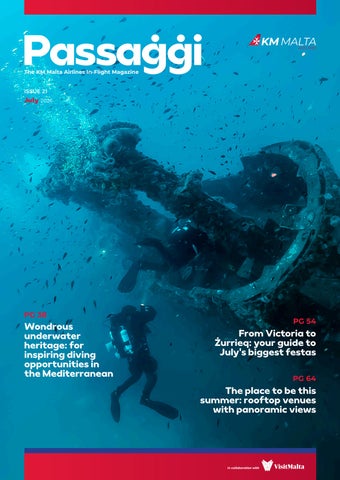
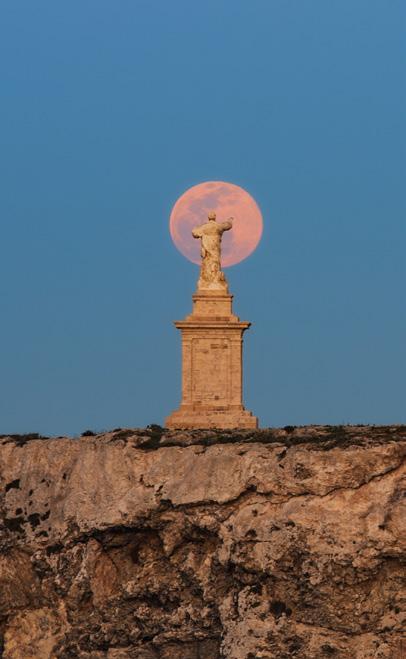
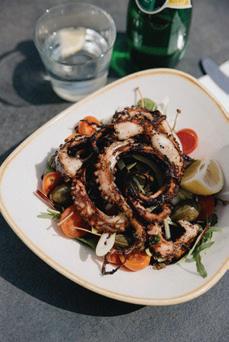
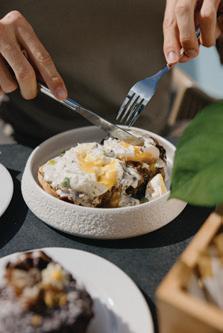
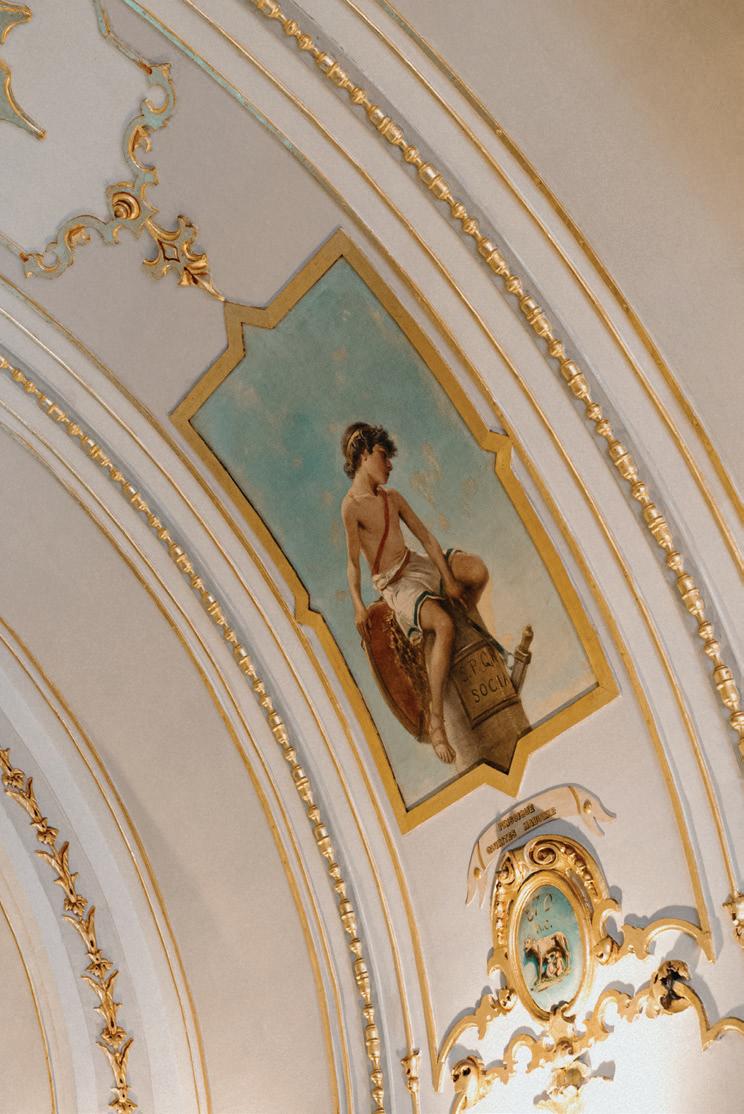
Wondrous underwater heritage: for inspiring diving opportunities in the Mediterranean PG 38
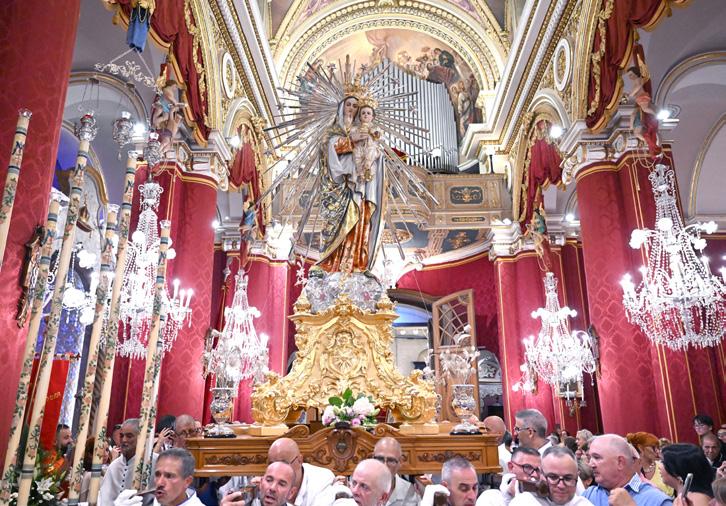
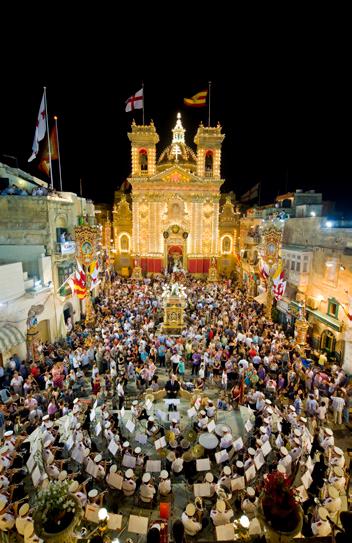
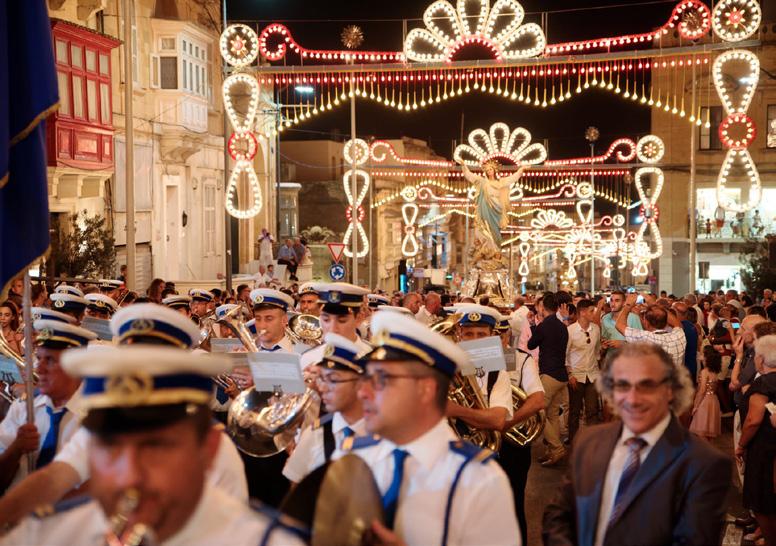
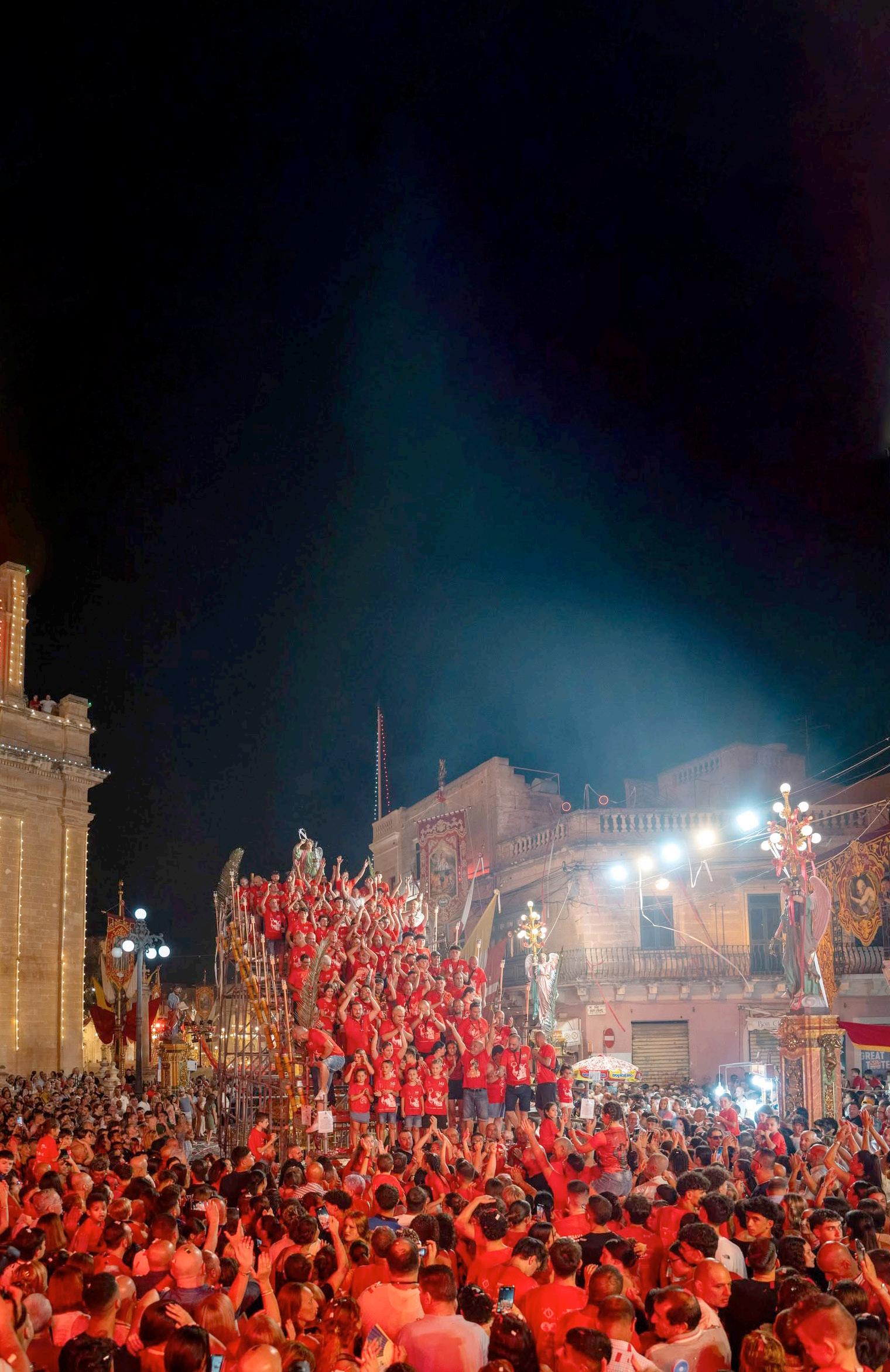
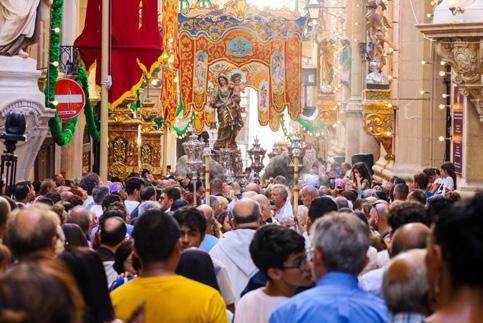
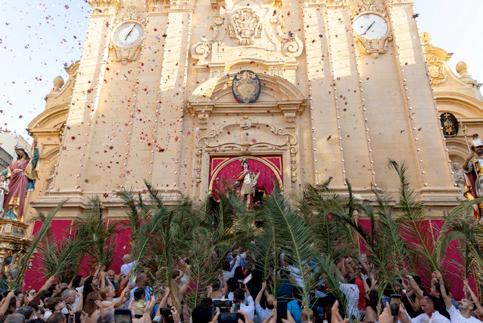
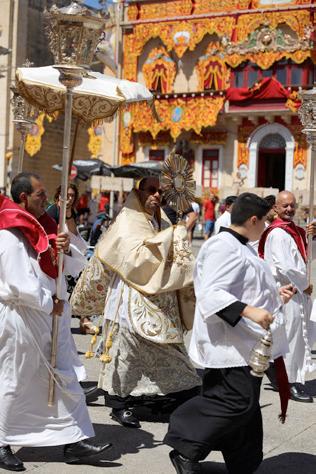
From Victoria to Żurrieq: your guide to July's biggest festas PG 54
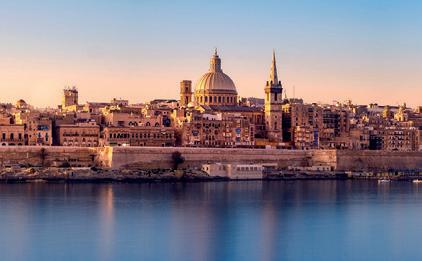
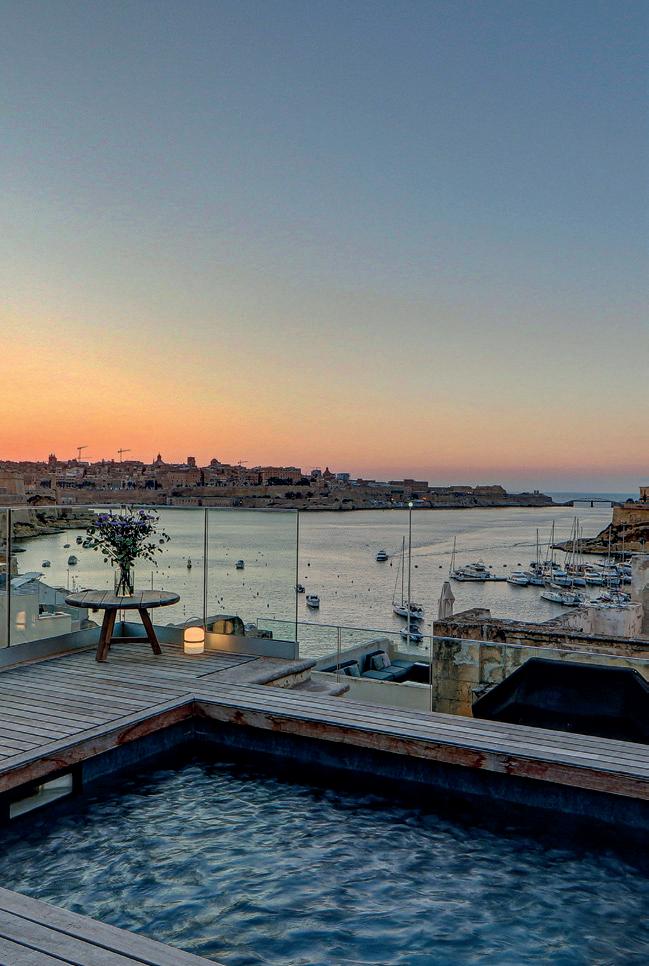
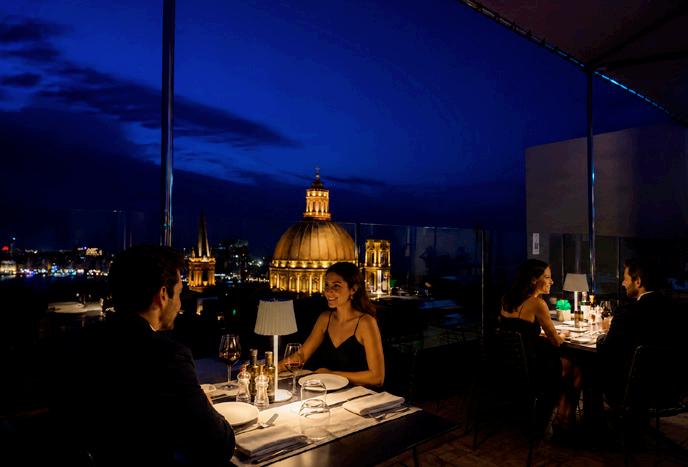
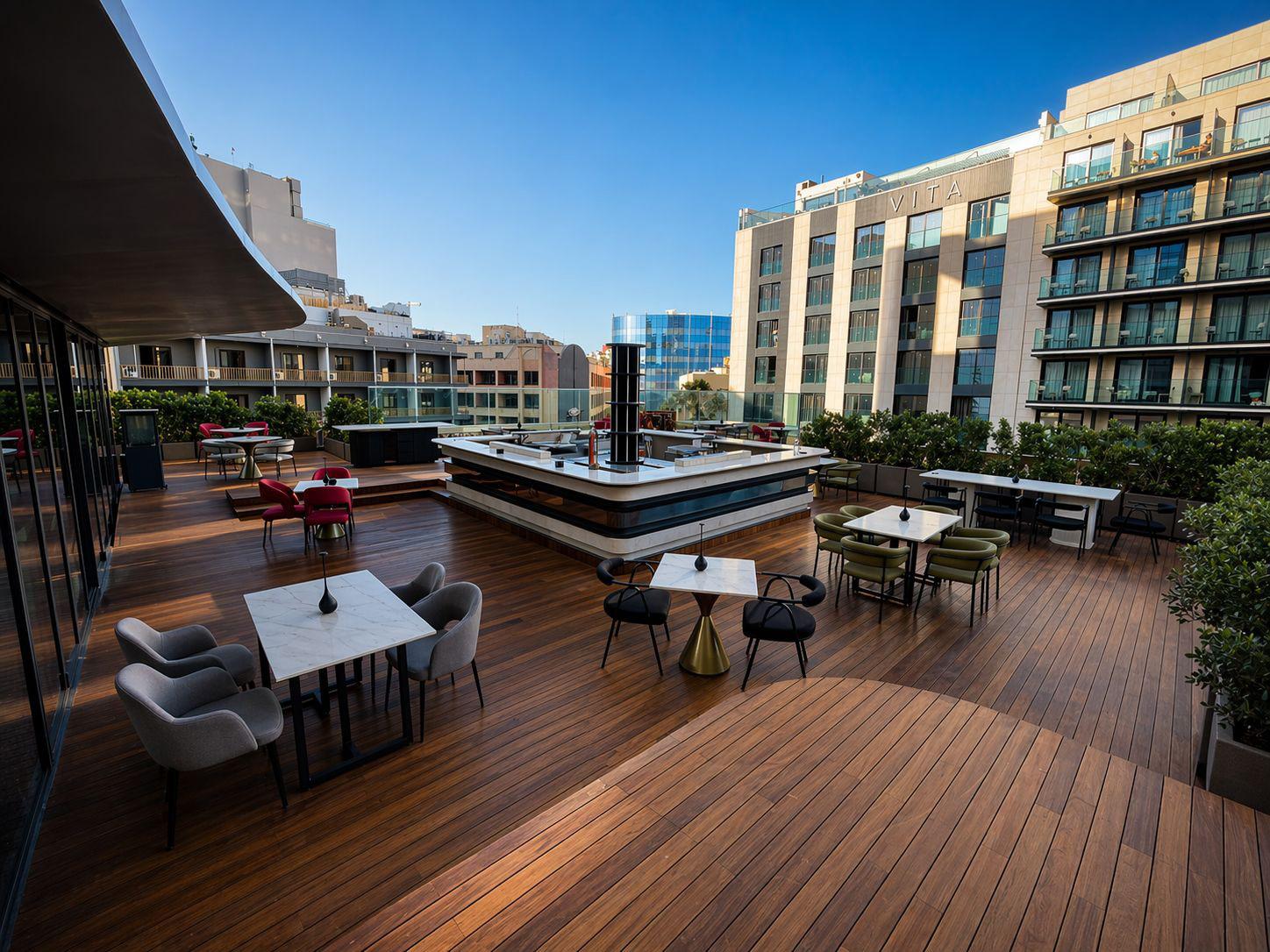
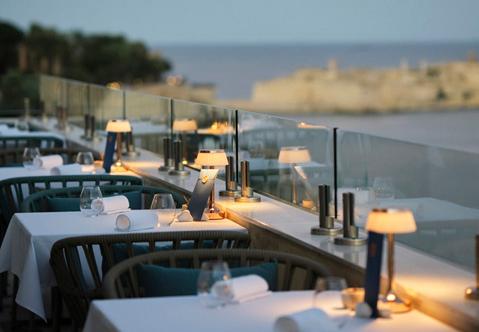
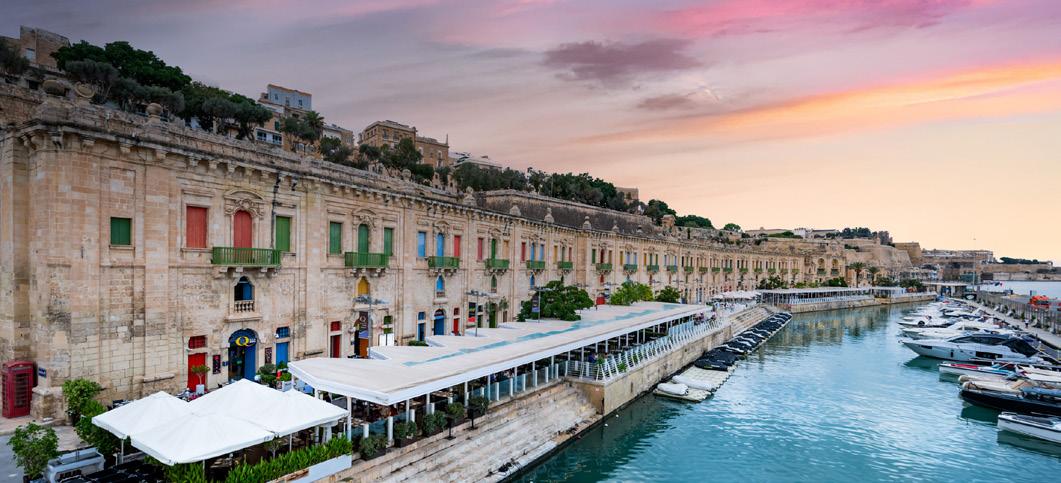
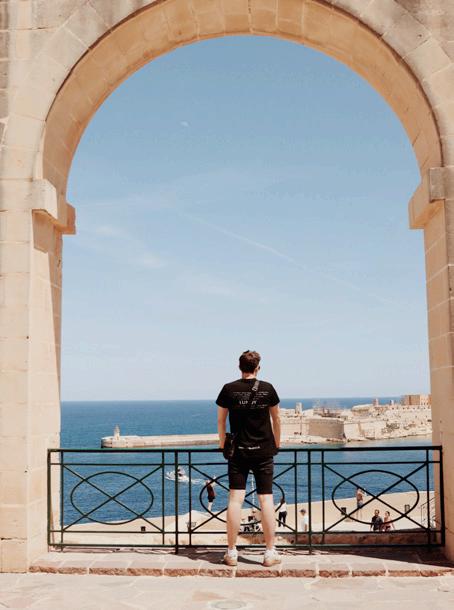
The place to be this summer: rooftop venues with panoramic views PG 64
ON THE COVER
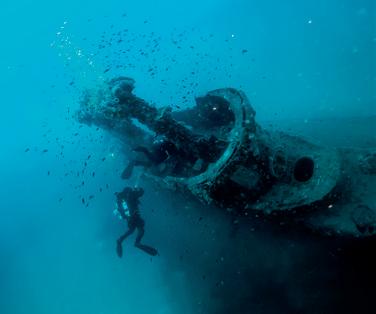
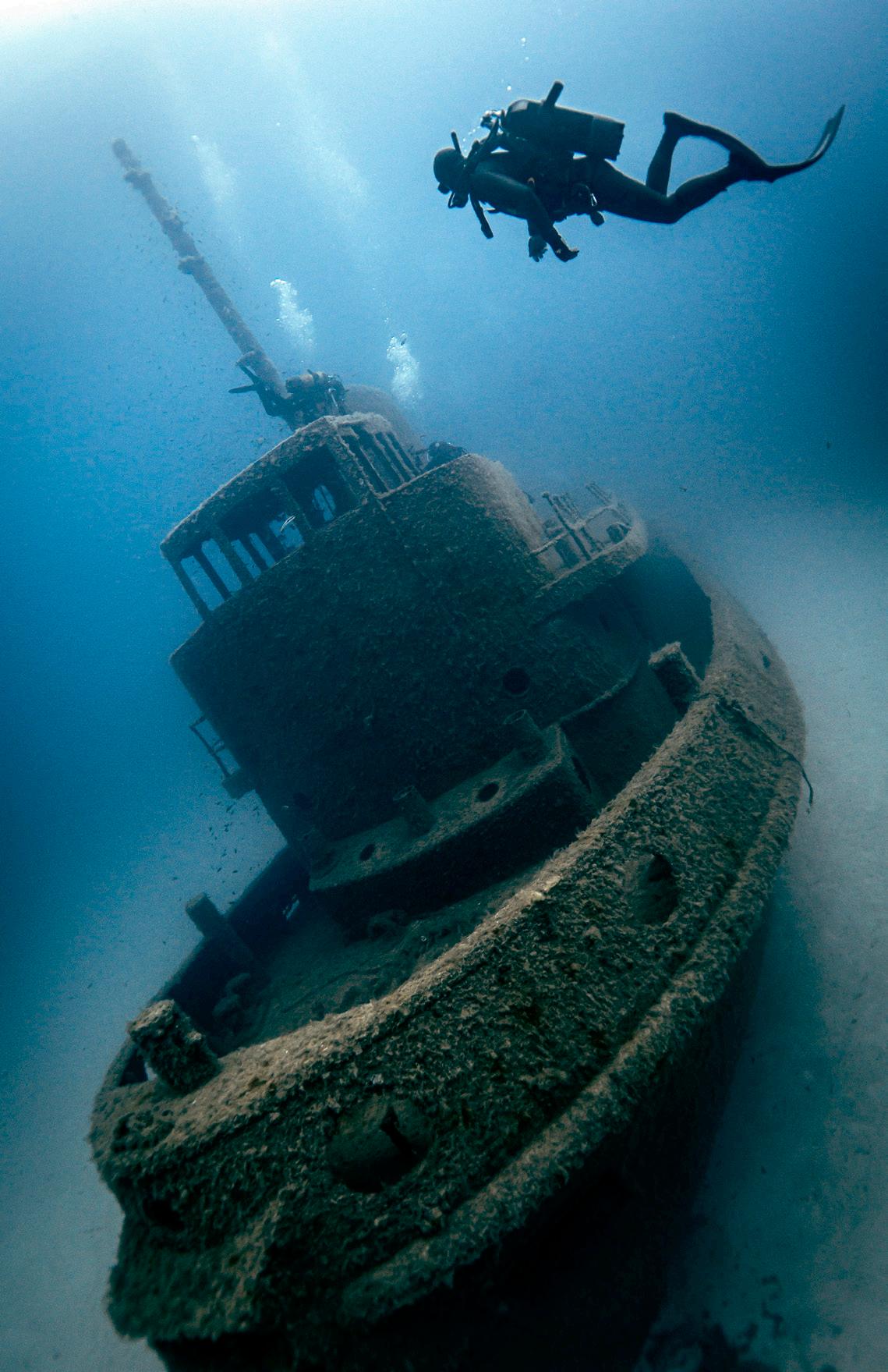
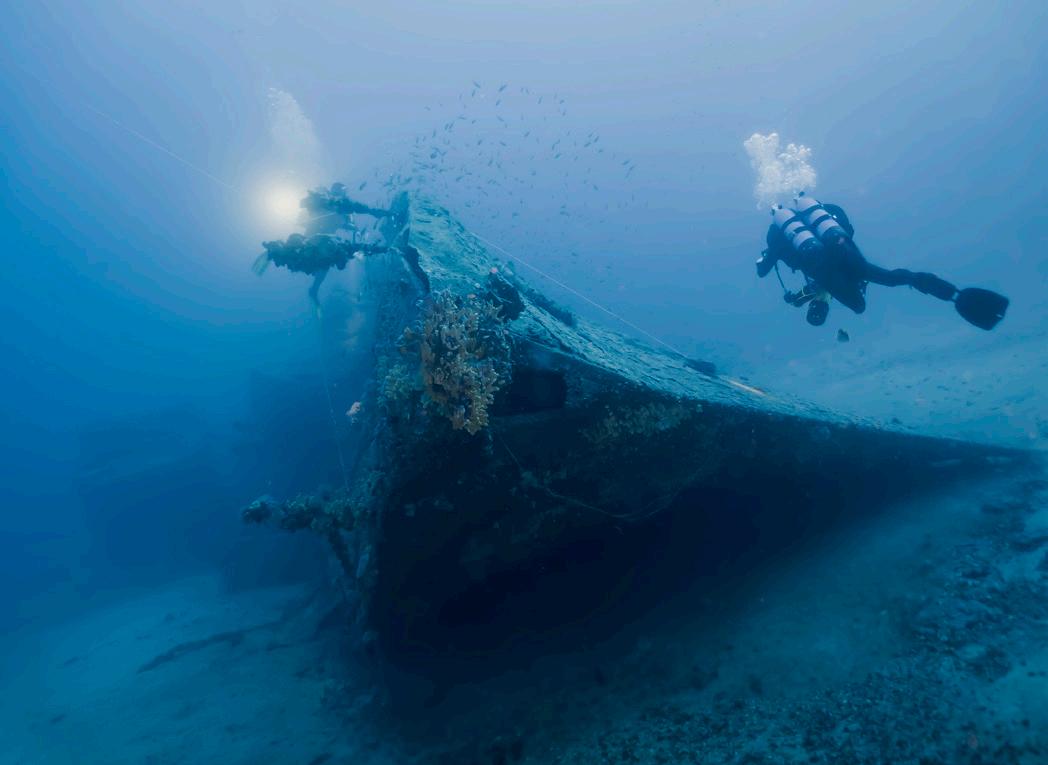
Divers near HMS Stubborn. Photo: Veronica Busuttil.
MEET THE TEAM
PUBLISHER
Associated News Group
EDITOR
Fiona Galea Debono
SALES AND BUSINESS DEVELOPMENT
Associated News Group
CONTRIBUTORS
Adriana Bishop
Coryse Borg
David Carabott
Edward Bonello
Emmanuel Galea
Inkontru.app
Lea Hogg
Ramona Depares
Richard Bangs
Ruth Zammit DeBono
Veronica Busuttil
WOULD YOU LIKE TO BE FEATURED IN PASSAĠĠ I?
For advertising opportunities, get in touch with Associated News Group on passaggi@tbwa-ang.com or (+356) 2131 0608
Abigail: abigail@tbwa-ang.com or (+356) 9929 0518
DESIGN
forty Creative Studio
PRINTER
Gutenberg Press
PHOTOGRAPHERS
Brian Grech
Francesco Rotolo
Jonathan Borg
Julia Schembri
Neil Bugeja
Nick Muscat
Rebel Holiday
Tony Gatt
Veronica Busuttil
HOW TO PRONOUNCE PASSAĠĠ I /pasˈsadʒi/
Here’s the breakdown: • /p/ as in pass • /a/ as in art • /sˈ/ as in sun (with stress on the following syllable) • /dʒ/ as the sound of the j in 'judge' (geminated or doubled sound) • /i/ as in eat
The word passaġġi means 'passages' in English.
The publisher, authors and contributors reserve their rights with regards to copyright. No part of this magazine may be reproduced or copied by any means without the written consent of the publisher. Editorial features and opinions expressed in Passaġġi do not necessarily reflect the views of KM Malta Airlines, the publisher, or the editorial team. Both KM Malta Airlines and the publisher do not accept responsibility for commercial and advertising content. Although the authors and publisher have made every effort to ensure that the information in this magazine was correct before going to print, the author and publisher do not assume and hereby disclaim any liability to any party for any loss, damage, or disruption caused by errors or omissions, whether such errors or omissions result from negligence, accident, or any other cause. Special thanks to KM Malta Airlines and VisitMalta for the provision of photographic material. All magazine rights are reserved by KM Malta Airlines.
Associated News Group, 3rd Floor, Professional Building, Sliema Road, Gżira GZR 1633 Malta - (+356) 2131 0608
Welcome to
David Curmi
Executive Chairman KM Malta Airlines
July is one of the busiest and most exciting months of the summer travel season, and we are delighted to welcome so many passengers on board as they travel for holidays, family visits and business commitments across our expanding network.
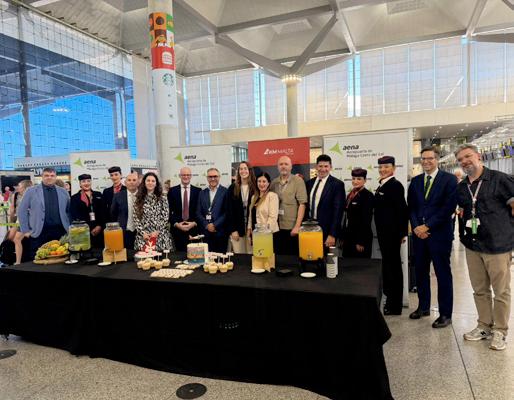
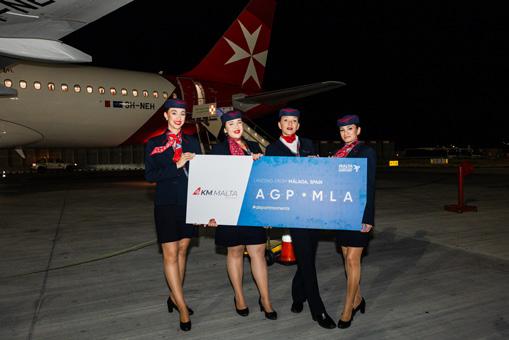
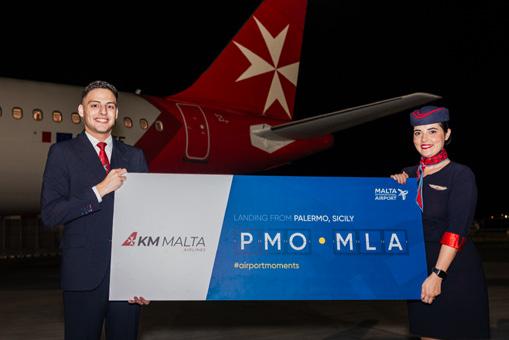
This summer has already marked several important milestones for KM Malta Airlines. We were pleased to celebrate the successful launch of our new direct services to Palermo and Málaga, further strengthening Malta’s connectivity across the Mediterranean. Following the arrival of our first passengers on these inaugural flights, we look forward to seeing these routes become popular additions to our summer schedule, offering travellers even more opportunities to discover two vibrant destinations rich in culture, history and Mediterranean charm.
To support strong demand during the peak summer period, we have also introduced additional frequencies to Amsterdam. This enhancement provides passengers with greater flexibility and further strengthens connectivity between Malta and one of Europe’s most popular city destinations, as well as an important international gateway.
As Malta’s national airline, we remain committed to supporting the country’s connectivity needs throughout the year. Reliable air links are essential not only for tourism, but also for business, investment, education and the many personal connections that link Malta with the rest of Europe and beyond. As we continue to develop our network, our focus remains on providing stable, sustainable and high-quality connectivity that contributes positively
to Malta’s long-term economic and social development.
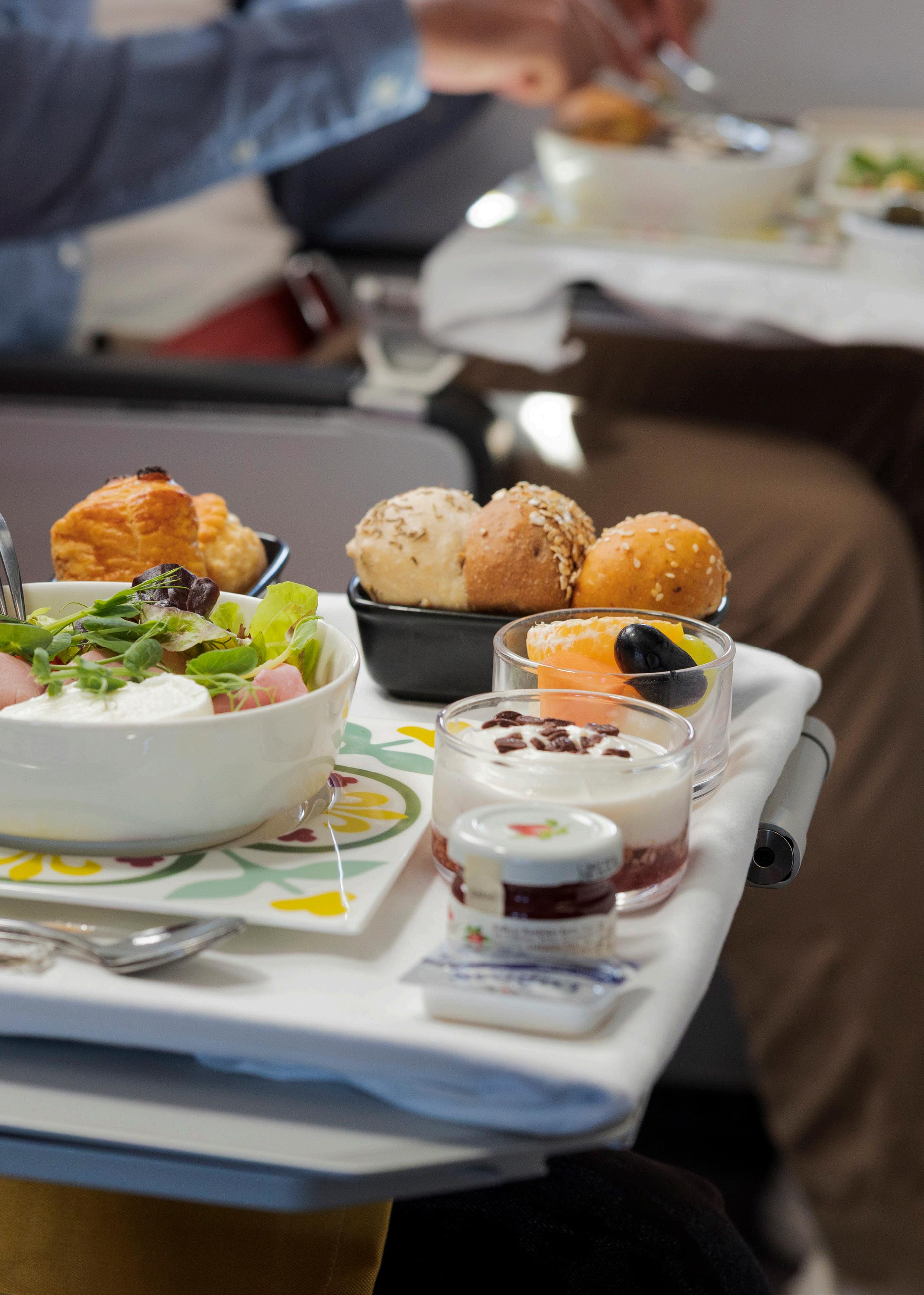
Customer satisfaction remains at the heart of everything we do. I am pleased to share that in May 2026, KM Malta Airlines achieved an excellent Customer Satisfaction (CSAT) score of 91%. Passengers reported particularly high levels of satisfaction with both our Business Class dining experience and our on-time performance. This valuable feedback is a testament to the dedication of our teams across the airline and motivates us to continue enhancing every aspect of the customer journey.
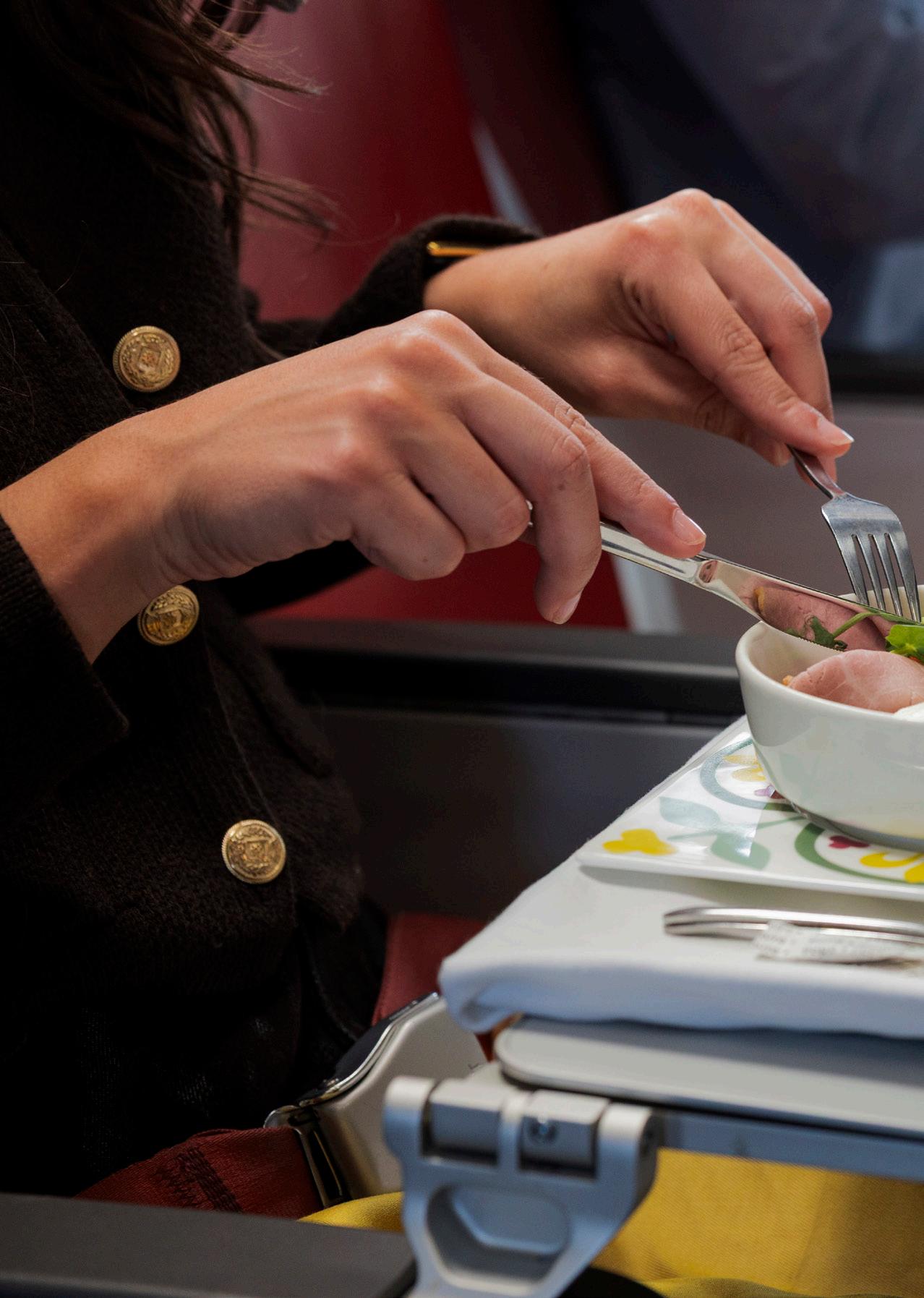
For passengers seeking an even more comfortable travel experience, our Business Class upgrade option is now more accessible than ever. In addition to being available through the KM Malta Airlines website, upgrades can now also be requested via our mobile app and during the online check-in process. Successful upgrades provide access to a range of premium benefits, including priority airport services, gourmet dining, additional legroom and the added comfort of a vacant middle seat.
As always, I would like to thank our passengers for their continued loyalty and support. Whether you are travelling for business, leisure, or to visit loved ones, we are proud to play a part in your journey and look forward to welcoming you on board throughout the summer months ahead.
The KM Malta Airlines In-Flight Magazine
Fiona Galea Debono Editor
Many of Passaġġi’s pages this month are devoted to Malta’s traditional feasts – and rightly so. Summer is peak festa season, and July alone hosts around 26 celebrations across the islands. On some weekends, you may find yourself choosing between as many as eight taking place on the same day.
Whether they are a familiar fixture of your summers, or a new experience waiting to be discovered, these vibrant feasts remain among the most distinctive expressions of Maltese culture.
And we won’t be leaving you wondering where to go or when. As part of our summer series exploring everything you need to know about festas, we’ve highlighted the celebrations we believe are particularly worth experiencing – if attending all 26 proves a little ambitious.
Our festa itinerary guides you through the season, complete with the quirks that distinguish each locality. Consider it your companion to a summer of colour, music, fireworks and community spirit. And there is plenty more competing for your attention. As summer reaches its stride, Malta’s arts and cultural calendar shifts into high gear. We’ve also gathered some of the month’s standout events to help you plan your days and make the most of your time beyond the beach.
If there are still moments to spare between festa-hopping, Passaġġi is filled with ideas for discovering the islands from new perspectives. Distances may be short, but the experiences are varied. One day could take you on a boat trip to St Paul’s Island, uncovering the story behind
this iconic landmark; another might see you walking along Gozo’s northern salt pans, learning about an ancient industry literally carved into the rock.
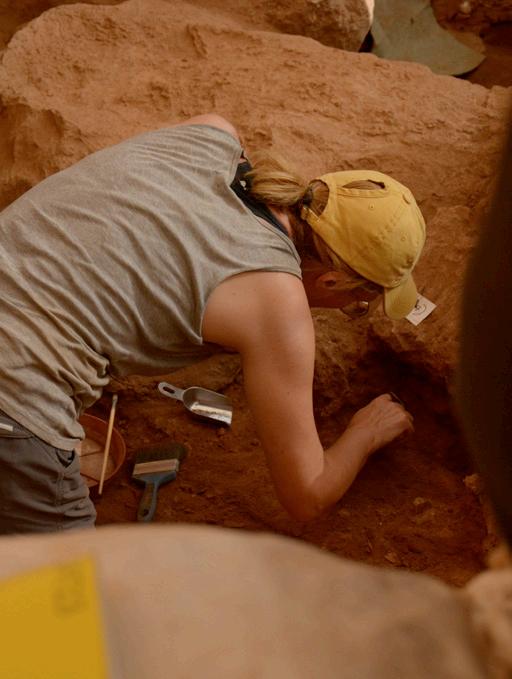
Travel even further back in time as we explore recent archaeological discoveries that have pushed evidence of human presence in Malta earlier by at least a millennium, reshaping our understanding of the islands’ first inhabitants. Or venture beneath the waves to discover the rich underwater heritage, where historic wrecks add the thrill to every diving adventure.
End the day at one of the island’s rooftop venues, where sweeping views stretch across much of the island. From up top, with Malta laid out before you, begin planning the next day’s adventure.
You may even draw inspiration from this issue’s contribution by American adventure travel pioneer, seasoned explorer and author, and Emmy Awardwinning producer Richard Bangs. He recently visited Malta and concluded, after exploring it, that it is truly “the stuff that dreams are made of”.
Whether you are discovering the islands for the first time, setting off on your travels, or returning home, we hope this issue inspires you to see a Maltese summer through fresh eyes.
ISLANDS
8
Landing at St Paul’s Island(s)
The steadfast sentinel of the bay TRAVEL
16
Palermo: there’s beauty in the chaos
Spotlight on the Sicilian capital
HERITAGE
20
The salty side of Gozo’s living heritage
A taste of the Qbajjar salt pans
CULTURE
24
This month’s must-see events
Never a dull evening in July
PREHISTORY
30
Malta’s hidden past
Archaeological discoveries redefining our human story
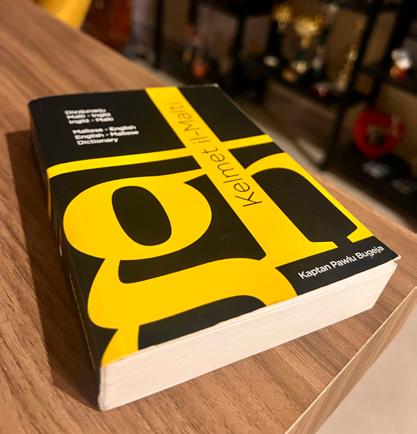
LANGUAGE
Grazzi ħafna!
All you need to know about the Maltese language
DIVING
Wondrous wrecks beneath the waves
Finding inspiration in the underwater world
GOZO
A summer of celebrations
Feasts and fireworks illuminate Gozo's cultural identity
ACTION
46
The gentle art
Winning gold in international Jiu-Jitsu
MADE IN MALTA
49
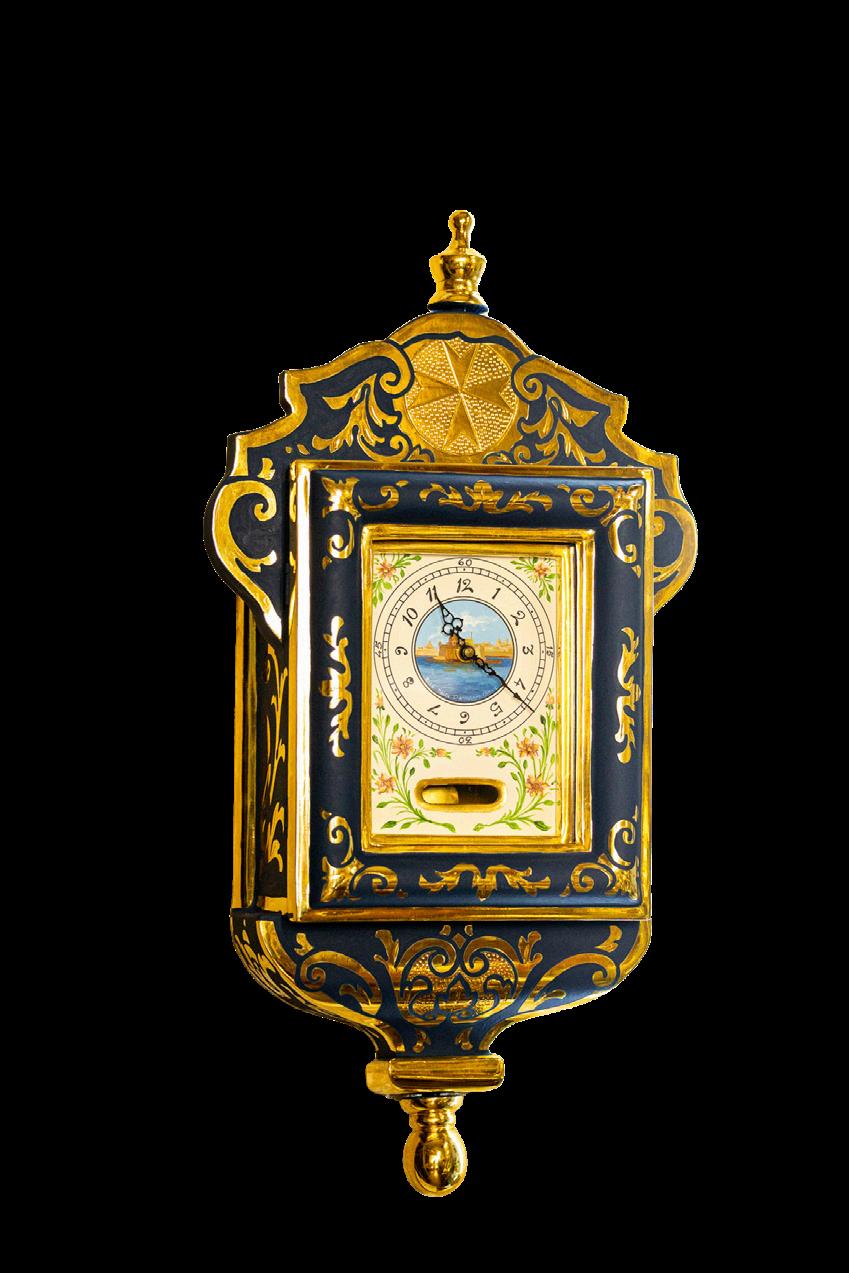
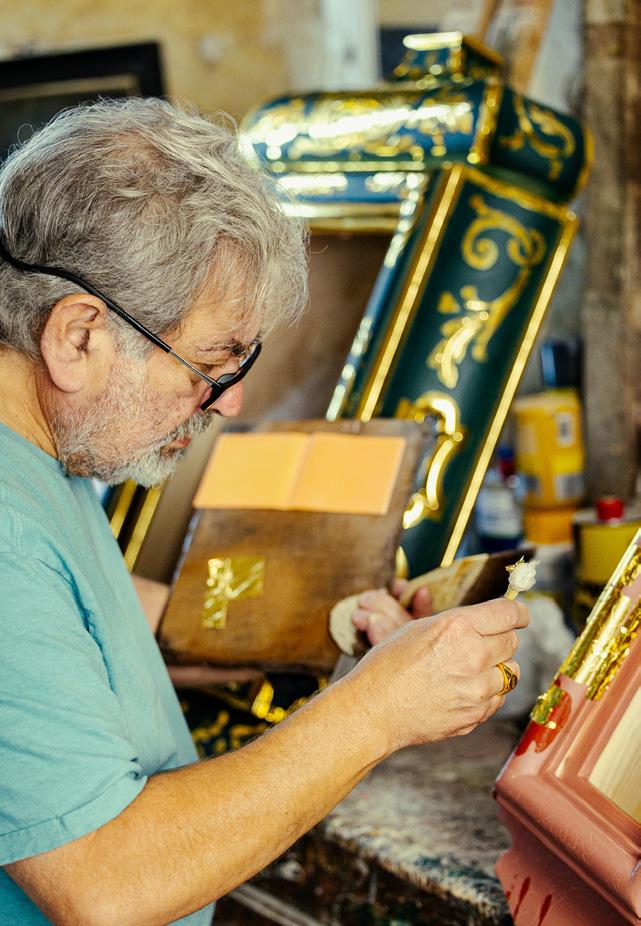
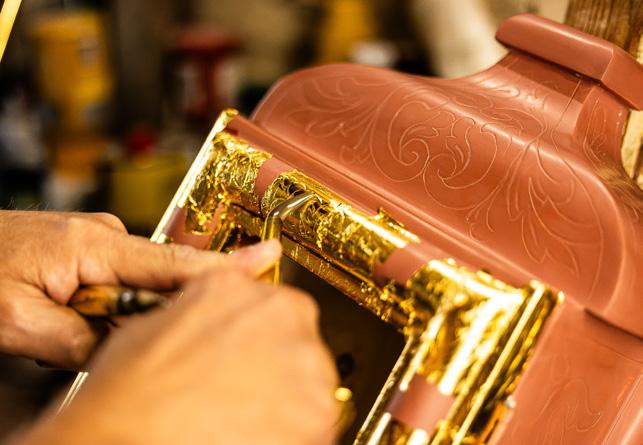
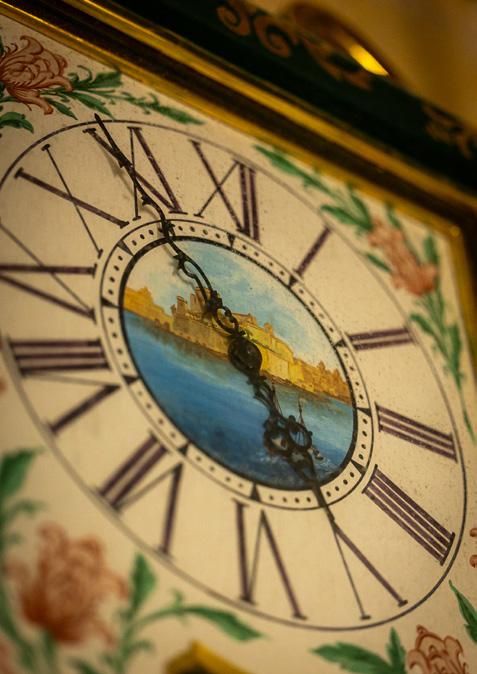
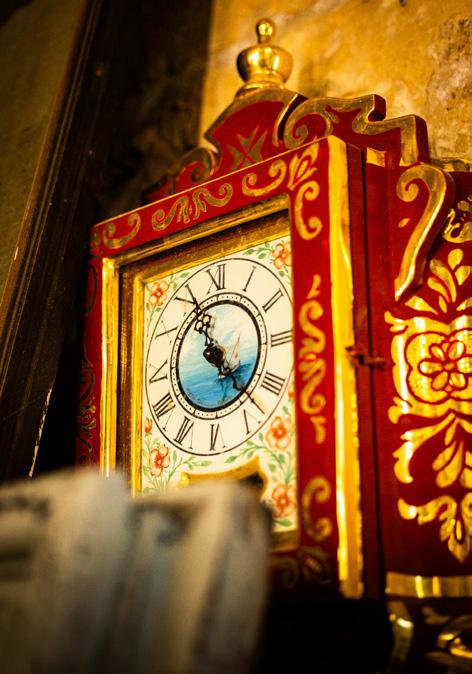
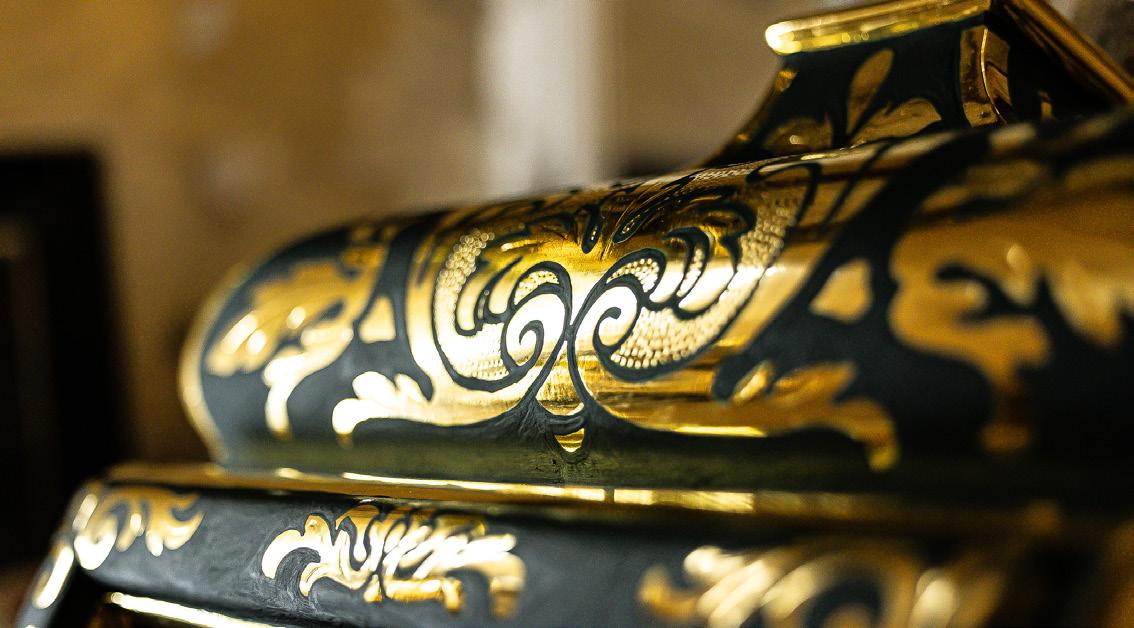
The clock that stood the test of time
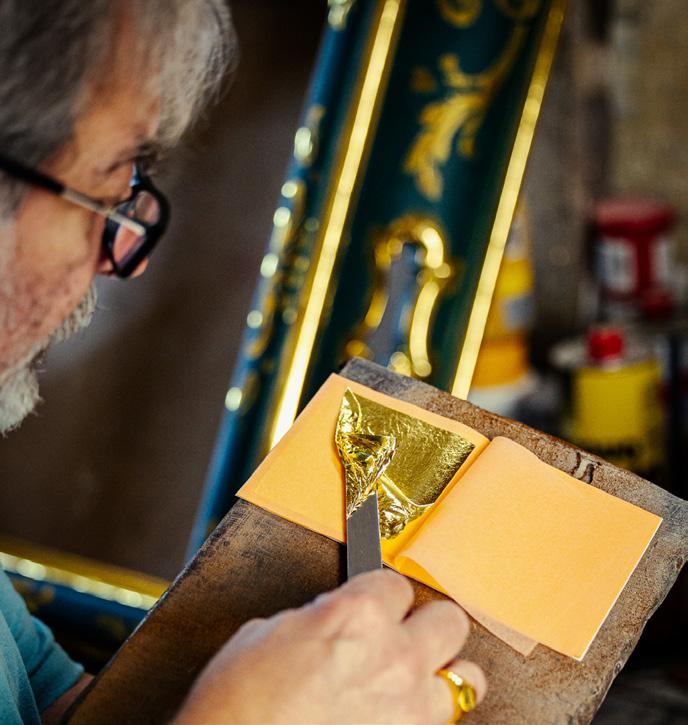
The unique gilded Arloġġ tal-Lira
ENTERTAINMENT
54
Your guide to July's biggest festas
The most memorable of the month
LIFESTYLE
59 Logged in under the sun
Trading an office cubicle for the digital nomad life
PETS
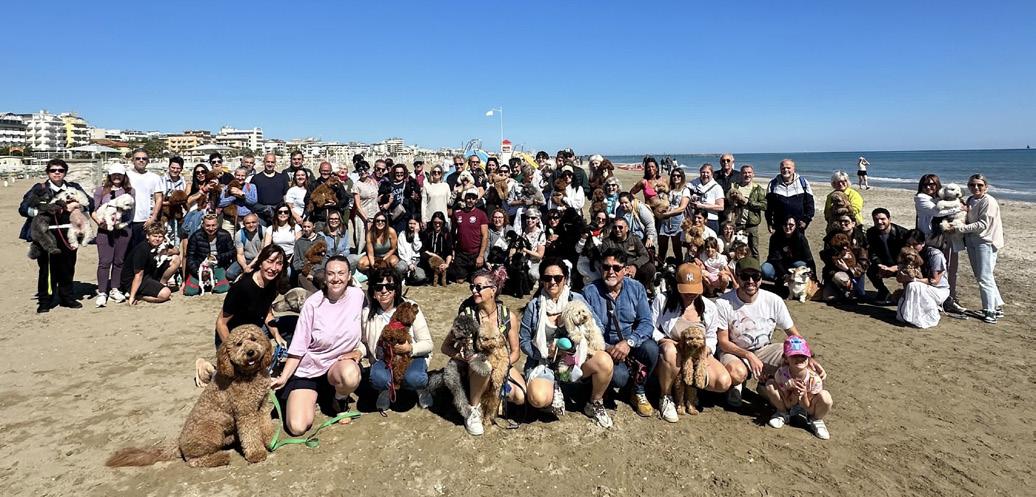
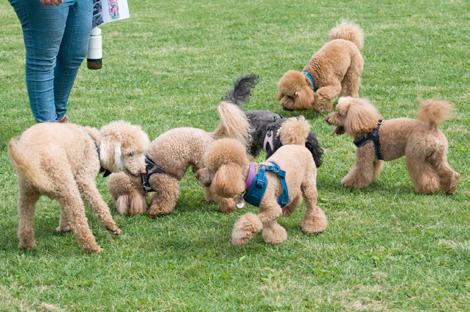
62 A weekend among poodles
Flying off to a pooch gathering in Rimini
NIGHTLIFE
64
High above it all
Why Malta's rooftops are the place to be this summer
EXPLORATION
69 The stuff that dreams are made of
Malta through the eyes of a seasoned travel expert
FOOD
75
A scoop of Malta
Ġelat tan-Nanna is the coolest ice cream flavour
AIRLINE NEWS
83
Flight, company and destination information
All you need to know about flying with KM Malta Airlines
Words by David Carabott
David is a teacher, specialised in mentoring students of different abilities. An avid traveller, his target is to visit all the countries in the world. When he is not in Malta or travelling elsewhere, you can find him somewhere in Rome.
Landing at St Paul’s Island(s)
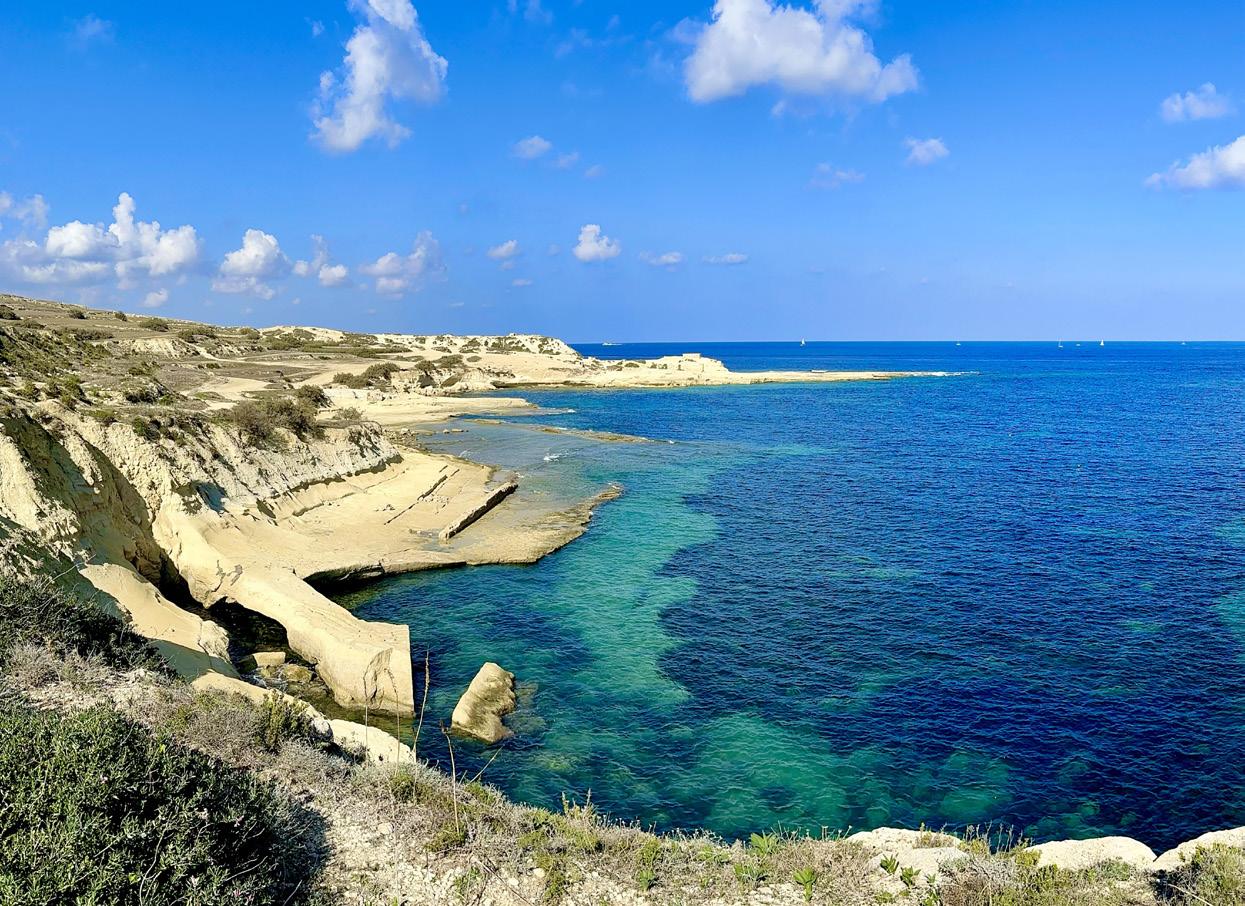
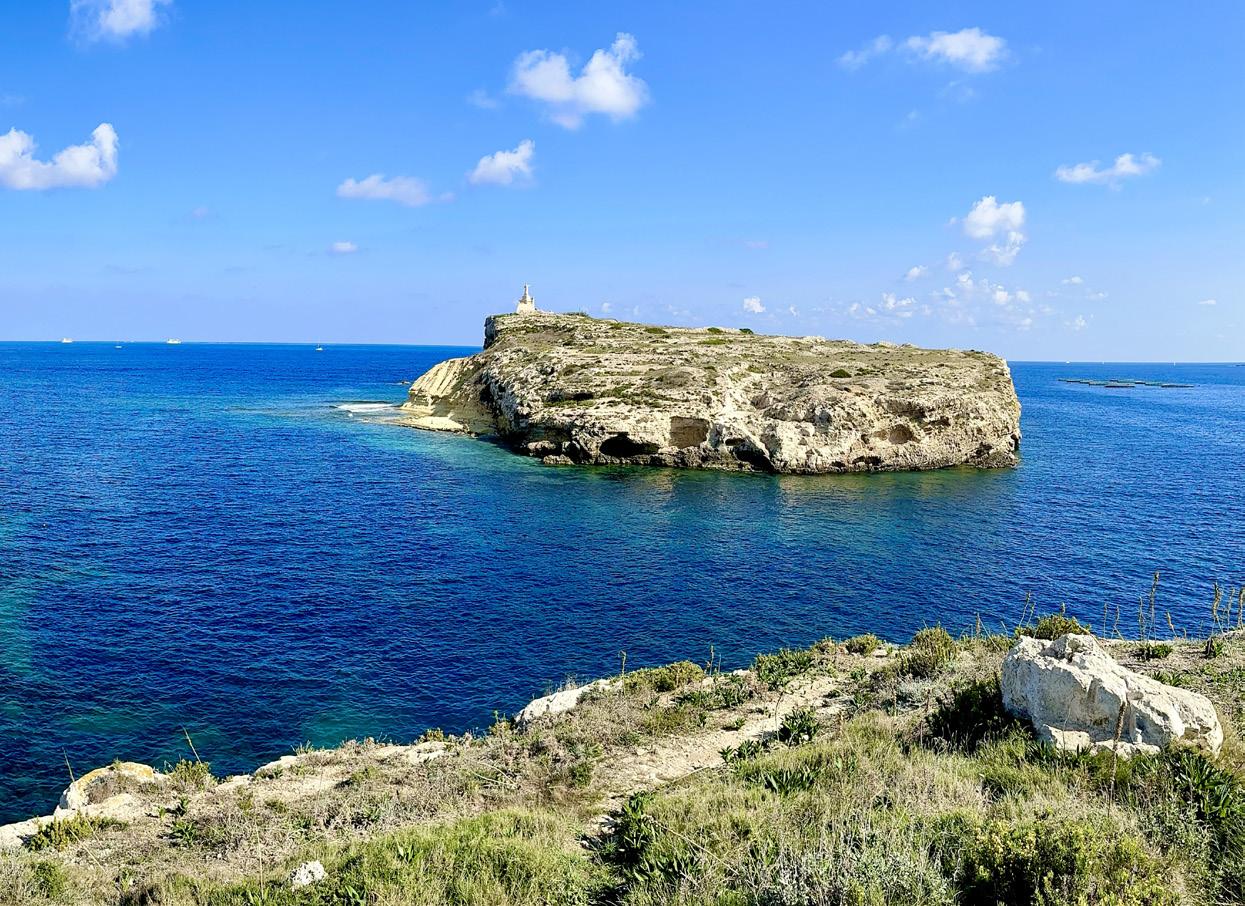
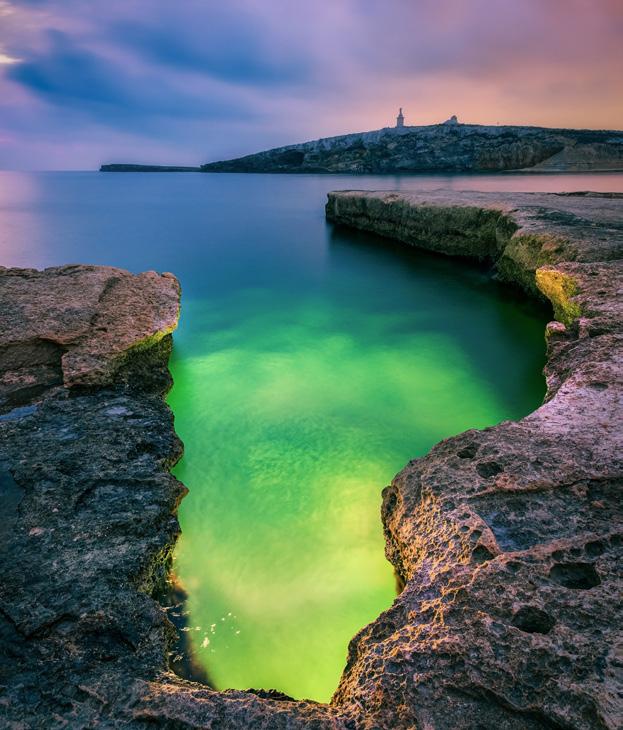
I always enjoy gazing at St Paul’s Island whenever I pass along the scenic coastal roads, alert and ready to catch a glimpse of this weathered, steadfast sentinel of the bay. Also called Selmunett, it is one of Malta’s tiny, uninhabited islands, lying at the mouth of St Paul’s Bay, off the rugged northeastern coast.
Though small, it captures the eye with its rocky silhouette and the ever-changing connection between its two sections, depending on the tide. It usually appears as a single island, although a very low and narrow land bridge between its two rocky sections can be submerged at times, making it look like two separate islets. This is why it is often wrongly referred to in the plural as St Paul’s Islands.
ONLY BY SEA
This time, I gave it more than just a fleeting glance. Approaching the islet by boat, we cut the engine just short
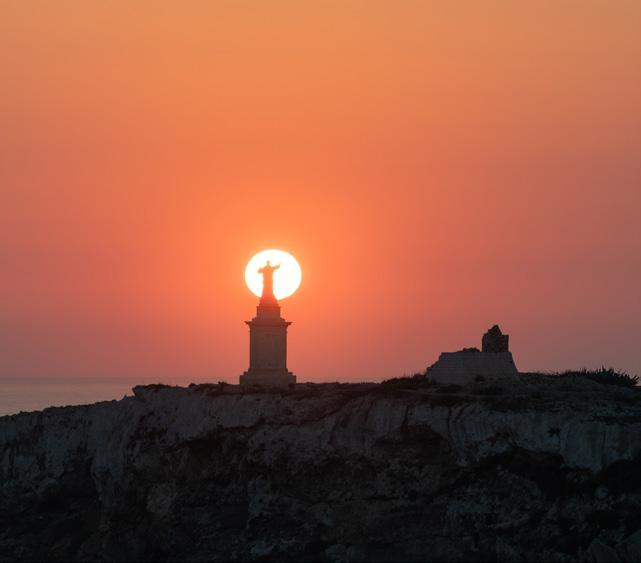
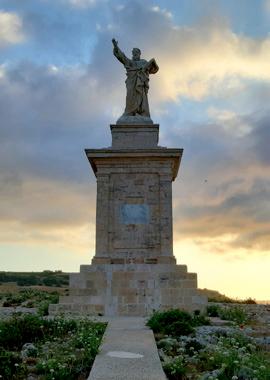
An iconic landmark on the Maltese coast, St Paul’s Island is small, exposed, layered with belief, shaped by history and inhabited by a single statue, yet open to anyone willing to make the journey.
of the shore, and for a moment, there was only the sound of water sloshing over the rocks. In that stillness, St Paul’s Island revealed itself not as a familiar sight I had admired from afar all my life, but as a place I was finally about to touch, accessible only by sea. Perhaps that is precisely what preserves its magic.
Pulling myself onto the rocks, warm from the sun, I was struck by how quiet everything was. Malta is rarely silent, yet here the noise of the mainland had faded into a low hum. The northern breeze carried the scent of salt and wild Mediterranean herbs. Knowing that access is limited – only from sunrise to sunset – added to the sense that this was borrowed time; an afternoon that needed to be absorbed and remembered.
STANDING BENEATH ST PAUL
The monumental statue of St Paul, co-patron saint of
the Maltese Islands, dominates in a way that felt both expected and surprising to me. I could see it from almost everywhere, the Apostle standing tall, book in hand, arm raised, with the stone snake at his feet, frozen in its biblical moment. At four metres high, perched on its platform, it was impossible to ignore. Yet, standing beneath it, the statue felt less imposing than watchful; as though it had been keeping an eye on these waters for centuries.
I thought about the fact that somewhere near here, around AD 60, Paul was shipwrecked on his way to Rome. The storm, the wreck and the unexpected landfall would change Malta’s story forever. Whether this precise rock marks the exact spot mattered less to me than the idea that faith, survival and chance had converged in these waters. It was enough to stand there and imagine the chaos of that moment, the fear and relief of land after days at sea, and the truth of the saying about the calm after the storm.
ECHOES ON SELMUNETT
From the statue, I followed a narrow path that wound across the island. There was little soil, only hardy plants clinging to the stone, shaped by the northern winds. Lizards darted between the rocks, their movements quick and confident, as if they owned the place. Above me, seabirds circled and cried, their shadows fleeting across the ground. I could almost forget how small the island is – barely a 10th of a square kilometre – because it feels layered with stories.
One of these stories belongs to a farmer who lived here with his family and animals until the 1930s. This quintessential Maltese farmhouse now stands in partial ruin, its thick limestone walls exposed to the sky. Much of the site is slowly falling apart; a quiet witness to the passage of time.
As I wandered around, I tried to imagine daily life on the islet, the isolation and the journeys by boat, even with
Photo: Tony Gatt.
livestock in tow. It must have taken a particular resilience to call such a place home. Today, the silence surrounding the ruins feels almost respectful, as though the island itself remembers. The stone was quarried directly from the islet, something I could clearly see in a small quarry facing the picturesque Selmun Bay, where the cut marks left by extraction remain visible to this day.
MY PATH ACROSS THE ISLAND
I continued walking, following the natural contours of the island. The landscape felt stark yet deeply Mediterranean, shaped by wind, salt and sun. Low shrubs clung stubbornly to the rock, releasing their scent as I brushed past. Patches of hardy flora broke up the pale stone – reminders that life here adapts rather than conquers. The ground underfoot was uneven, carved by centuries of exposure, and every step felt deliberate.
From various points along the path, the sky above and the sea below opened in shifting shades of blue. The waters around the island were astonishingly pristine, their clarity revealing rocks and shadows far beneath the surface. Standing still, I watched the light move across the water, the rhythm of the waves unhurried, almost meditative, and I felt completely present in the moment.
SEEING MALTA ANEW
For a moment, I turned to face the main island, and the view took my breath away. St Paul’s Bay, Buġibba and Qawra stretched along the coast, familiar yet transformed by distance. From here, Malta felt softer, almost dreamlike, framed by blue and light. It was a view that truly had to be seen to be believed; one that made me appreciate how profoundly perspective can change a place you think you know so well.
TAKING THE MAGIC ALONG
Time moves differently on St Paul’s Island. It offers stillness and the rare, quiet grace of standing somewhere that asks nothing of you but your attention.
As the afternoon sun began to soften, it cast longer shadows and warmed the stone beneath my feet. I thought of the countless hidden moments that have unfolded here, from the visits by fishermen, divers, sailors and pilgrims, and even the simple act of someone sitting quietly, as I was now, letting the island do what it does best.
As I prepared to leave, I took one last look at the statue, its raised hand silhouetted against the sky, and felt that there is something profoundly Maltese about this island. It is small, exposed, layered with belief and practicality, shaped by history yet open to anyone willing to make the journey.
As we returned to the boat, I was reluctant to break the spell. The engine coughed into life, the water shivered and slowly the island slipped away. From a distance, St Paul’s Island is an iconic landmark on the Maltese coast. For that one afternoon, it became something more, imprinted in my mind in an intimate and indelible way.
The statue facing a full moon.
Photos: Neil Bugeja.
BEACHES
Crystal Lagoon
Popeye
Dingli Cliffs
Rabat
Dingli
Buskett Mosta
‘Luzzu’
‘Qarnita’
Beneath the statue of St Paul.
Photo: Philip Farrugia Randon.
St Paul's Island from Selmun.
Photo: Tony Gatt.
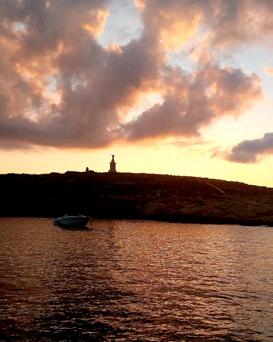
A sunset view of the Island.
Photo: Philip Farrugia Randon.
Words by Heritage Malta
The national agency for museums, conservation practice and cultural heritage, it is the guardian of over 8,000 years of history.
If this is your first visit to the Maltese Islands, you cannot leave without ticking these sites off your list.
National Museum of Archaeology
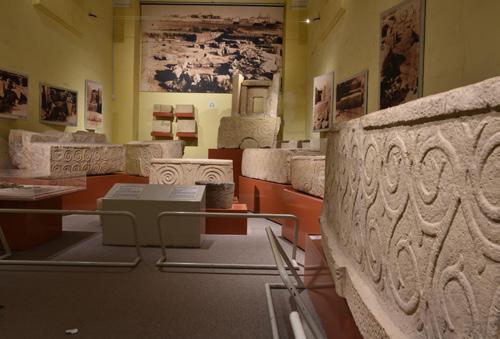
With artefacts dating back from Malta's Neolithic period (5900-2500 BC) up till the early Phoenician period (8th6th century BC), the National Museum of Archaeology is definitely your first step to understanding the richness of the land you tread on, its people and their ancestors. Its ground floor is dedicated to the Neolithic period, while the upper floor currently houses the Bronze Age and the Phoenician period sections. The museum regularly hosts temporary exhibitions.
Fort St Elmo and the National War Museum
Valletta
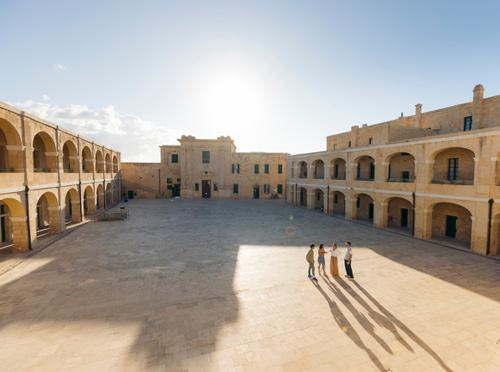
The splendid, unobstructed views of Grand Harbour, enjoyed today from Fort St Elmo, originally served the purpose for which the star-shaped fort was built – to face and hold back the wrath of the Ottoman armada. The National War Museum, located within the fort, is divided into seven sections and covers 7,000 years of Maltese military history from the Bronze Age until Malta’s accession to the EU. Notable artefacts include military armour of the Order of St John and the Ottoman Turks, while World War II is the most represented conflict in the museum. Highlights include the Gloster Sea Gladiator N5520, Faith, Roosevelt’s Jeep ‘Husky’, and Malta’s award for gallantry, the George Cross.
Valletta Ġgantija
Archaeological Park
Xagħra, Gozo
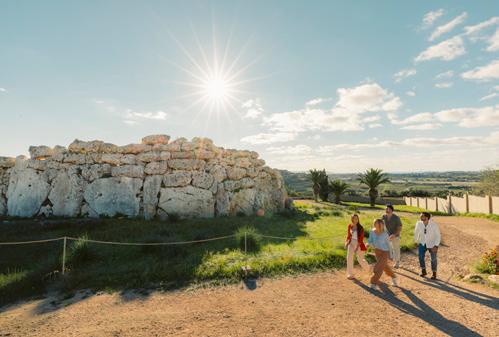
The Ġgantija Archaeological Park complex is a unique prehistoric monument listed by UNESCO as a World Heritage Site. Situated in Xagħra, it consists of two structures built between c.3600 and c.3200 BC. Notwithstanding its age, the monument survives in a considerably good state of preservation. Entrance to the Ġgantija Archaeological Park is through an interpretation centre, which houses a selection of the most significant artefacts discovered at various prehistoric sites in Gozo.
Ta’ Kola Windmill Xagħra,
Gozo
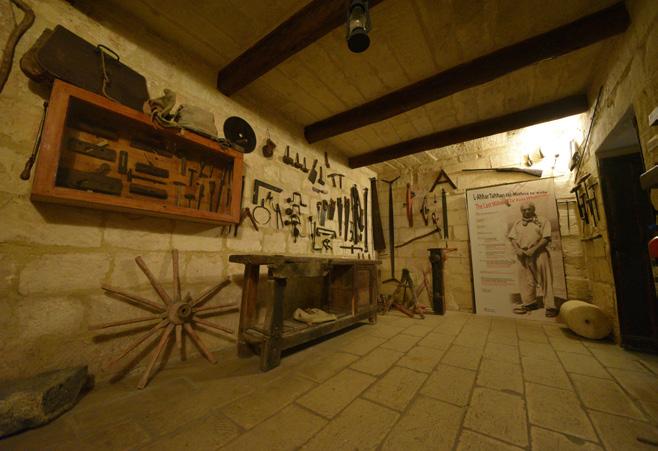
Imagine... a bright new morning with just the right wind; a miller letting the locals know by blowing through a triton shell; the villagers bringing their cereals to be ground into flour. Ta' Kola Windmill is a unique relic of breadmaking in Gozo, transporting you back to such a morning. This 300-year-old building is a living testimony to our forefathers' way of life, marked with hardships and daily struggles, at a time when bread was the most indispensable food item. The exhibits inside the windmill belonged to the last miller residing there and were used to operate and maintain the building and milling mechanism.
Ħal Tarxien
Prehistoric Complex Ħal
Tarxien
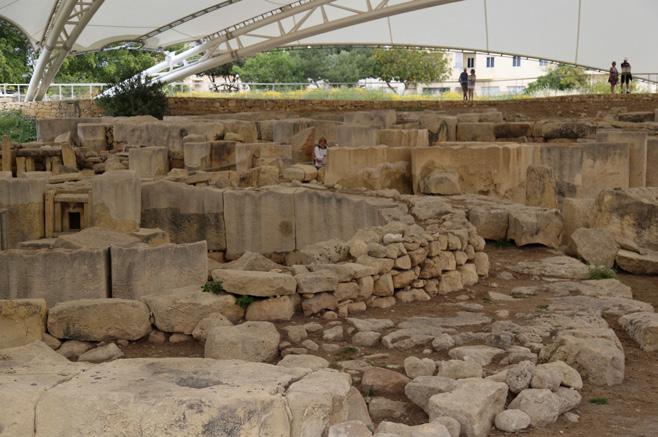
Have the honour and the privilege of stepping inside a UNESCO World Heritage Site! Discovered in 1913 by farmer Lorenzo Despott, the Hal Tarxien Prehistoric Complex consists of four megalithic structures built in the late Neolithic and then re-adapted for use during the Early Bronze Age. The site was excavated between 1915 and 1919 by Sir Themistocles Zammit, Director of Museums at the time. This year marks the 110th anniversary since the first sketches of the site were made by Zammit himself during the initial excavations.
National Museum of Natural History
Mdina
The National Museum of Natural History in Mdina is housed within Palazzo Vilhena, a Parisian baroque palace commissioned in 1724 by Grand Master Antonio Manoel de Vilhena and designed by Charles François de Mondion. Before becoming a museum, the building served as a temporary hospital during the 1837 cholera outbreak, later a British military sanatorium, and eventually a tuberculosis clinic until 1956. Inaugurated in 1973, the museum is dedicated to the acquisition, curation and conservation of Malta’s biological and palaeontological heritage. Its collections include thousands of minerals, geological specimens, birds, mammals, molluscs, insects and fossils, displayed through thematic exhibitions and supported by active research and public outreach.
Words by Ramona Depares
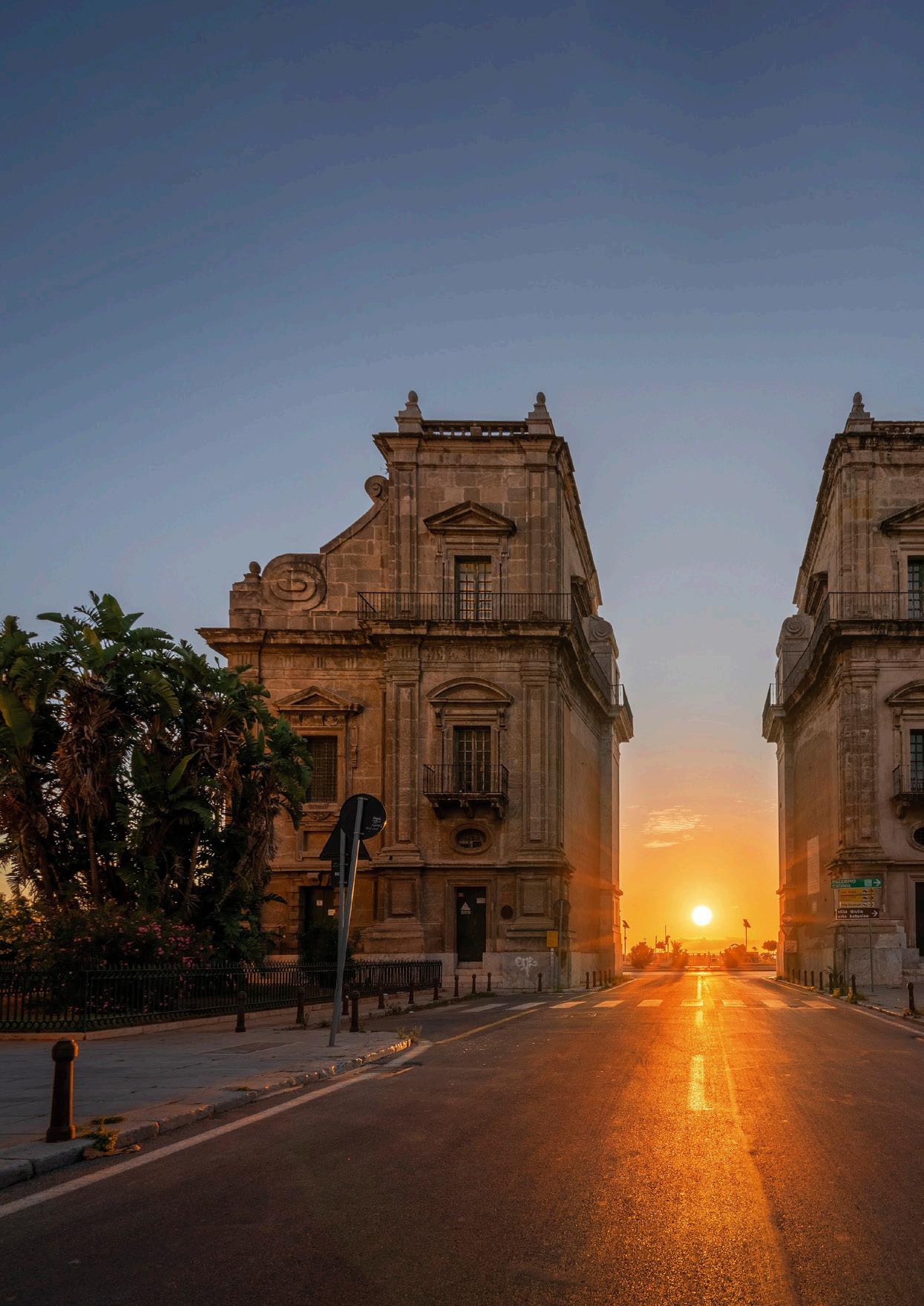
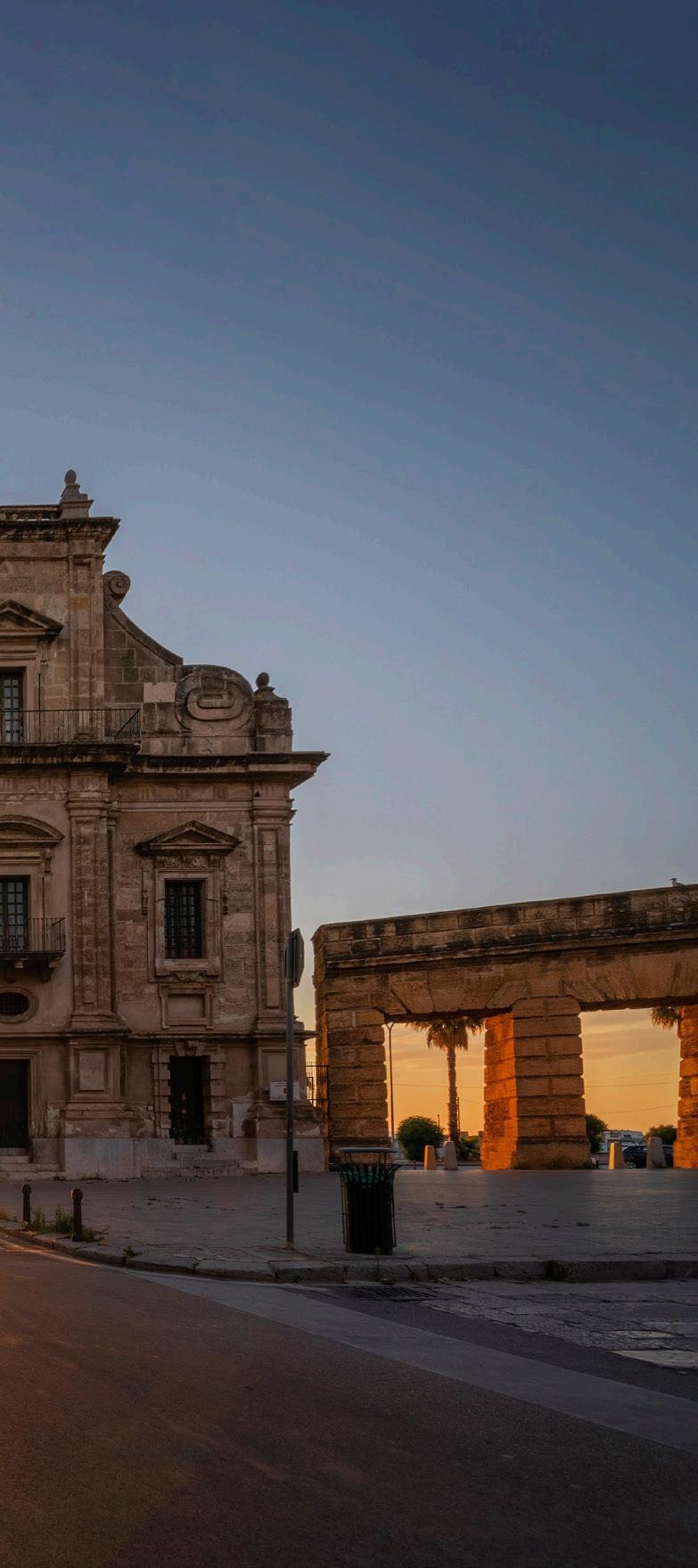
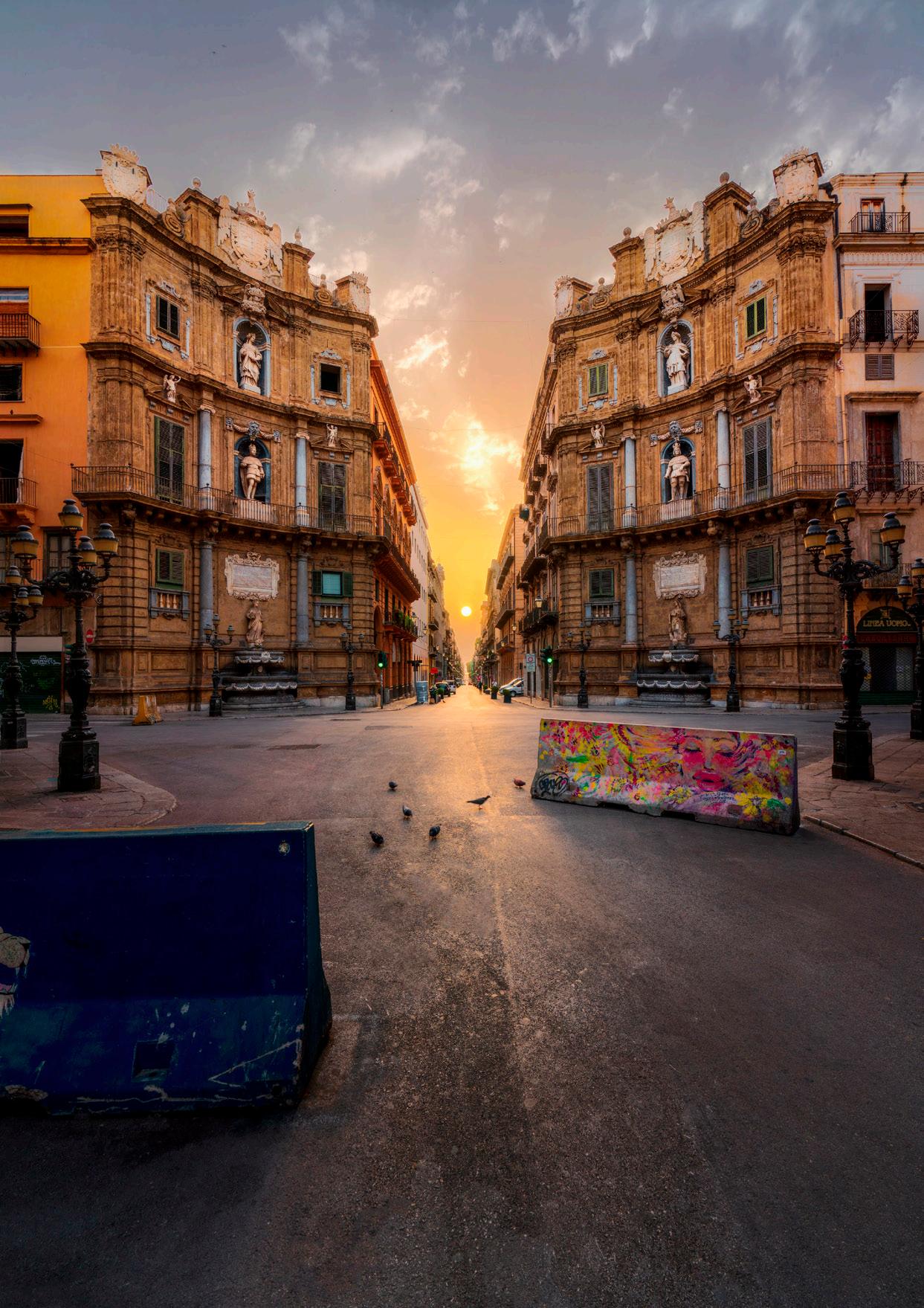
Sunrise in the middle of Porta Felice, Palermo.
Photo: @francesco.rotolo
Dua Lipa and Callum Turner's recent extravagant three-day wedding festivities may have cast a global spotlight on the Sicilian capital. But we did not need to wait for the pop star and her actor partner to choose the city for their destination wedding to know it has always been worth a short break – and especially now that KM Malta Airlines has launched direct regular flights till October. With good food, street life, architecture, history, markets – and yes, a bit of chaos in a good way – what’s not to like?
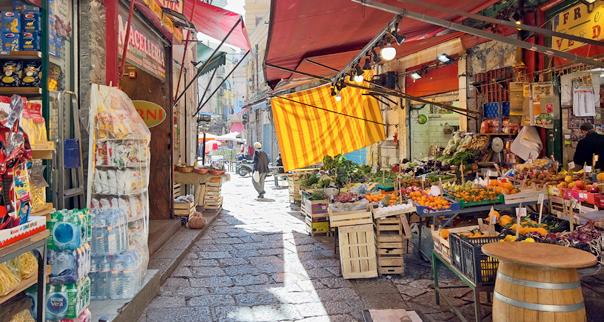
My first memory of Palermo is the smell of frying oil drifting through a narrow street; a man arranging crates of oranges outside a shop and two women talking across a balcony, the street between them no obstacle to their enthusiastic patter.
I had only been in Palermo for one morning and could already see why it’s so popular with the Maltese. The only question was why I had resisted this part of Sicily for so long, especially considering it works so well as a short break from Malta.
Palermo is close, familiar in many ways, but completely different in others. It has the Mediterranean noise we know and the seaside vibes we recognise. But it also has a darker, more theatrical energy. Palermo serves palaces, markets, churches, washing lines, opera houses, street food, traffic and peeling façades – all within the same five-minute walk. It’s the ultimate Gen Z dream of authenticity.
That said, make no mistake about it. For a Sicilian town, Palermo is large. Everywhere is within walking distance, you’ll be told, and it’s not a lie. However, that only works if you’re already staying in the centre of town and don’t need to factor in an unreliable bus schedule each morning of your stay.
For my first visit, I stayed well within the historic centre, close to Quattro Canti, Via Maqueda, the Cathedral, or Teatro Massimo, which were all on my (loose) itinerary. Palazzo Natoli Boutique Hotel turned out to be an excellent choice, small and close to Palermo Cathedral and Quattro Canti.
THE FOOD? TROPPU BONU
Like all Sicilian cuisine, the food in Palermo is not delicate. Think bold, salty, fried, messy, sweet… sometimes all together in one bite. Do what I did and look out for the markets first, specifically Ballarò. It is loud, crowded, and theatrical, with vendors calling out over stalls of fish, fruit, herbs, offal, panelle (chickpea fritters), arancine and whatever else happens to be sizzling. Heads up that it can feel slightly overwhelming at first, especially if you’re expecting a curated farmers’ market.
For a classic Palermo institution, Antica Focacceria San Francesco is worth a quick visit despite being popular enough to veer dangerously into tourist trap territory. It dates back to 1834 and is known for pane câ meusa, the spleen sandwich that separates the culinary committed from the merely curious. Happily for me, there are plenty of other luscious treats that don’t require a walk on the wild side. I probably sampled every flavour of arancina on offer, gorged myself on caponata and panelle and finished off with cannoli. Yup, you’re going to need that stomach space.
The markets are lovely, but let’s be honest – nothing beats a long sit-down dinner, starting with aperitivo and finishing off with an amaro. Buatta Cucina Popolana was one of my best calls, the pasta con le sarde turning out to be quite a highlight. Book ahead, especially at weekends. We had a somewhat posher experience at Seven Restaurant Rooftop Garden, above Hotel Ambasciatori: cocktails, dinner and a wonderful view of all the domes, rooftops, mountains and broken geometry of the city.
AVOIDING CULTURE FATIGUE
There’s lots to do in Palermo, so don’t fall into the usual trap of wanting to fit in everything on your short break. You’ll be going back, anyway, trust me. Start by exploring the Arab-Norman route – Palermo Cathedral, the Royal Palace and the Palatine Chapel showcase the city’s layered history beautifully. The gold mosaics in the Palatine Chapel are particularly jaw-dropping.
Afterwards, walk through Quattro Canti, stop in Piazza Pretoria for an espresso, visit La Martorana (the Church of St Mary of the Admiral) and San Cataldo, if time allows, and just enjoy the city. Teatro Massimo is also worth a hop, even if you are not going to a performance. The architecture drips drama, and you can take a guided tour.
The architecture drips drama
If you have time for a day trip to the beach, it takes about 40 minutes to reach Mondello by bus from the city centre. Think stretches of pale sand, clear water, seafood restaurants and Liberty-style villas. Go early, because the beach fills up as fast as Malta’s very own Għadira, despite being considerably bigger.
GETTING AROUND
Since you’re already staying in the centre, you won’t need much by way of transport. Bus tickets are cheap, and you can simply get a day ticket for less than €4. The PMO Tourist Card is worth checking out if you are planning to use buses heavily and make use of discounts for restaurants, taxis, tours, shopping, or Teatro Massimo. However, for the average short break, you probably don’t need it.
Getting to the centre from the airport is easy as the train station is right beneath the terminal, and the service connects to Palermo Centrale.
Even though I resisted it for ages due to the somewhat cliché connotations, Palermo is absolutely worth a short break from Malta. There’s good food, street life, architecture, history, markets, and a bit of chaos in a good way. What’s not to like?
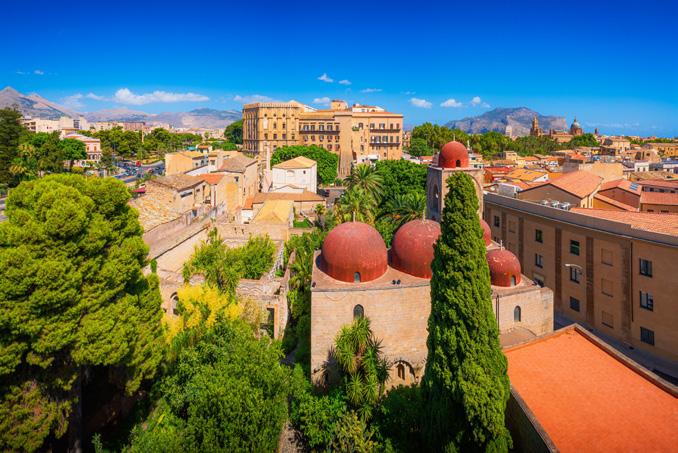
The panorama from the bell tower of San Giuseppe Cafasso. Photos: @francesco.rotolo
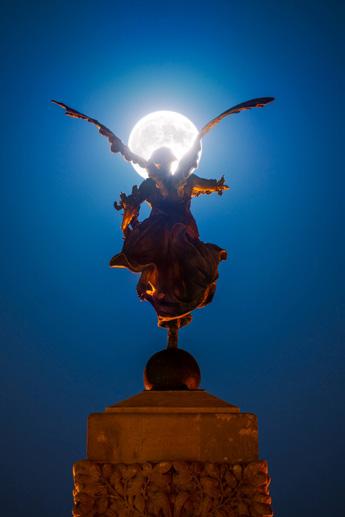
The moon aligned with the winged Victory.
Sunrise from the Quattro Canti, officially known as Piazza Villena. Photo: @francesco.rotolo
Words by Lea Hogg
Lea is a Malta-based journalist and writer, known for her TV programme on current affairs, cultural news and in-depth interviews about politics and global issues.
The salty side of Gozo’s living heritage
On Gozo’s wind-beaten northern coast, one of the Mediterranean’s oldest industries survives in hand-carved limestone. The salt-making scene unfolds into a landscape that is suspended in time, quietly detached from modern Malta.
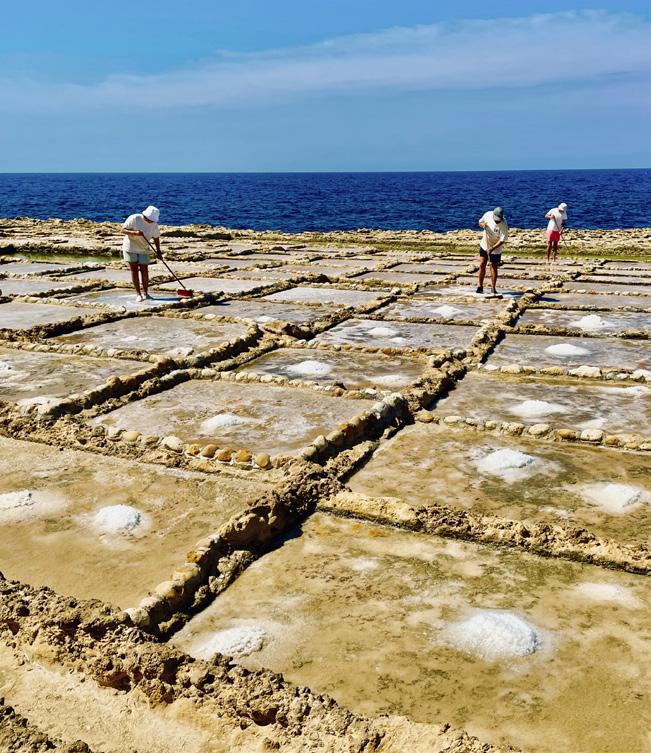
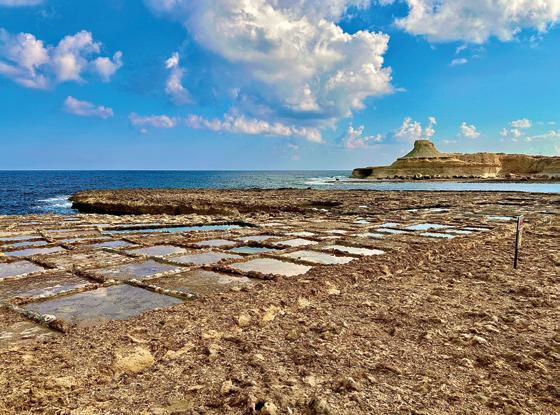
Just beyond the fishing village of Marsalforn in northern Gozo, the land flattens into an almost ordered expanse. The sea withdraws into hundreds of shallow limestone basins cut directly into the rock, forming a vast, precise pattern along the shoreline.
Following the promenade to the west, you pass the small sandy stretches of Qbajjar Bay and the more exposed curve of Xwejni Bay, where the coast turns fully to stone.
The landscape opens onto a striking grid of limestone salt pans etched into the rock, still in use and worked in summer.
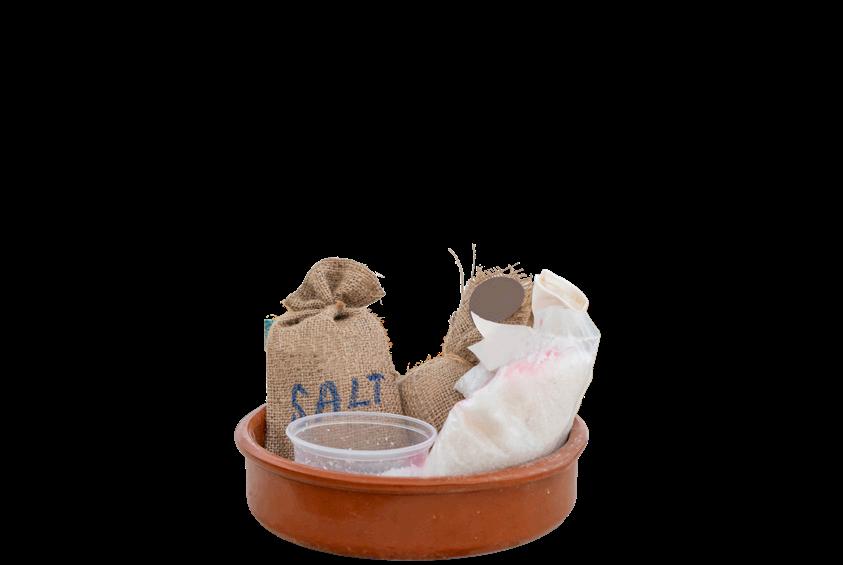
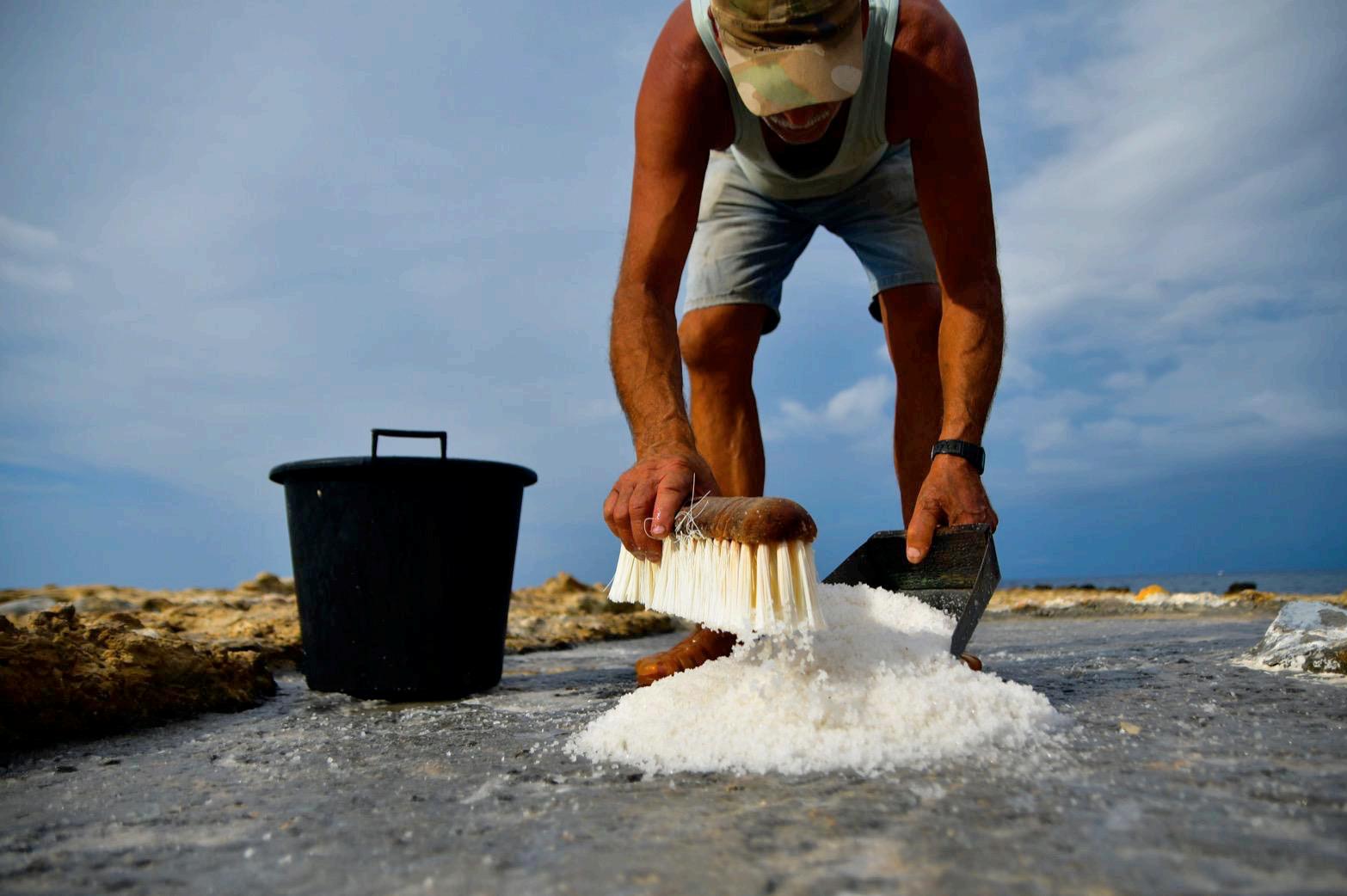
Still shaped by the sun, wind and sea, in summer, the water here evaporates to leave behind handharvested salt, continuing a tradition that dates back centuries. The pans remain in the care of three local families and are occasionally served by a modest, informal, seasonal stall that pops up along the roadside.
There is no formal network of branded sellers; only a handful of small, family-run operations. The salt is usually packaged in small bags and sold either on-site or in nearby village shops.
Photo: Jonathan Borg.
At dawn, the salt pans glow silver-grey. By midday, they harden into a white sheet. By evening, they turn bronze, the coastline shifting with the day’s passage from dawn into dusk. The smell is iodine, sun-baked stone and an occasional whiff of diesel from passing boats.
Gabriella Borda, founder of ClimateDelta, describes it as a place defined less by spectacle than by “an openness and stillness that feels very distinct”.
Borda and conservation architect Charlene Jo Darmanin have both conducted extensive studies on Qbajjar, framing it not merely as scenic heritage but as a living reference point for climate pressure and cultural continuity. Their recent research
positions the site as a place where environmental change is no longer abstract or distant, but materially visible in the rock itself.
Returning repeatedly, Darmanin says, changes what you notice: “sections of beach becoming narrower” and rock “more exposed”, with storm damage now lasting longer between seasons. These shifts are not presented as isolated events but as gradual alterations to a working shoreline shaped by wind, salt and time.
The coastline here is exposed to strong northwesterly winds and increasingly volatile seasonal storms. Combined with rising sea levels, these forces are reshaping how wave energy hits the shore. Events that once felt exceptional are now more frequent, pushing water further inland and eroding natural buffers that have little time to recover.
Individually, these changes are subtle; cumulatively, they reshape the coastal system itself.
Salt production here is among the oldest working traditions in the Maltese archipelago. The pans are believed to date back to Phoenician times, later expanded under Roman rule when salt became infrastructure as much as commodity: essential for preserving food, sustaining trade and enabling long-distance power across the Mediterranean.
“The salt pans are not simply historic features,” Borda says. “They are part of a living tradition tied to labour, seasonal rhythms and local identity.”
That continuity still exists. At nearby Xwejni Bay, seawater continues to move through channels cut into globigerina limestone much as it has for centuries. It evaporates under the sun, leaving crystals that are swept by hand into small white pyramids, then stored in caves carved into the rock behind the shore.
Storm surges now more frequently overtop the pans, disrupting production and accelerating erosion, exposing how tightly this working landscape depends on a narrow environmental equilibrium.
A few kilometres away, the abandoned Qolla l-Bajda Battery sits on a rocky headland facing the open sea. Built in 1715-16 by the Knights of the Order of St John as part of a chain of coastal defences against Ottoman and corsair raids, it once mounted six cannons guarding the northern approaches to the island.
The pans are believed to date back to Phoenician times
These sites form part of a single coastal system, where ecological processes, heritage structures and human activity continuously interact rather than exist in isolation.
Qbajjar resists easy categorisation. Fishermen still park along the road and unload buckets.
Photo: Tony Gatt.
tips
Getting there...
From Malta, take the ferry from Ċirkewwa to Mġarr, Gozo. Once you arrive in Gozo, Qbajjar is around a 10- to 15-minute journey from the port.
By taxi: taxis, the quickest option, are available at Mġarr Harbour and take you directly to Qbajjar in around 10 minutes, depending on traffic. Ride-hailing apps also operate on the island.
By bus: from Mġarr, take bus routes towards Marsalforn (commonly Route 301 or 303, depending on the schedule). Get off at Marsalforn, then it’s a short coastal walk west along the promenade to Qbajjar Bay and the salt pans.
By car: if renting a car, follow signs for Victoria (Rabat), then continue north towards Marsalforn. Qbajjar is signposted as you approach the coastline and is easy to find once you reach the bay.
What else to do and see:
A swim spot worth stopping for, where clear, deep waters lap against rocky shelves, offering a view of the pans behind you. Xwejni Bay is good for calmer swimming just next door.
Snorkelling and diving in nearby caves and submerged formations.
Qolla l-Bajda Battery, an atmospheric 18th-century coastal fort.
Coastal walks to Marsalforn along an easy stretch linking salt pans, bays and cafés.
Elderly vendors sell coarse salt from folding tables. Divers enter underwater caves beneath the old battery walls. It is not a curated heritage zone; it is a lived-in, functional space. This is also what makes it vulnerable.
Borda explains that protection frameworks often prioritise monumental heritage: fortifications, churches, architectural landmarks, because they are legible, bounded and symbolically clear. But Qbajjar’s value lies in something less fixed – a working landscape where culture is embedded in use.
To a visitor, Malta often presents itself through the intensity of nightlife, luxury development and tourism. But coastal environments like Qbajjar offer a counterpoint: labour, silence and continuity. They support tourism, small-scale trade and seasonal livelihoods.
Qbajjar is not a polished attraction; it offers something increasingly rare, a landscape where history, labour and nature are still visibly intertwined.
On a clear day, you can sit by the roadside and watch the horizon towards Sicily, the same direction from which merchants, raiders and migrants have long arrived.
“For me, it’s the contrast between calmness and vulnerability,” Darmanin says. “The landscape is beautiful, but also fragile in ways we are only beginning to fully recognise.”
The central question is not whether Qbajjar can be preserved unchanged, but how much transformation it can absorb before its meaning begins to shift. The harder question is no longer how to stop the coast changing, but what kind of change is still compatible with keeping it alive.
In Qbajjar, the past is not preserved behind glass but continues in practice; in the ritual of salt being gathered, waves breaking against limestone and light shifting across the pans.
To stand at its edge is to see Gozo beyond its postcards – quiet, exposed and deeply rooted in continuity. It is worth the journey not because it feels untouched, but because it reveals how closely connected life and nature still are.
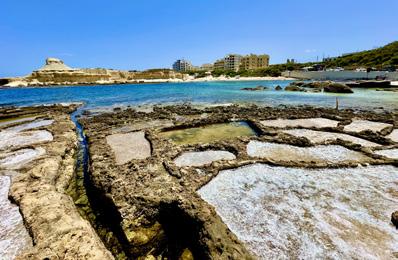
The salt pans with Qolla l-Bajda in the background.
Photos: Tony Gatt.
Words by
This month’s must-see events
There's never a dull evening in July. Malta's arts and cultural scene shifts into high gear as summer hits its stride, and whether you're here for a weekend or the whole month, there's something worth staying out for.
The Esplora Planetarium
When: Various screenings and live shows daily
Where: Esplora Interactive Science Centre, Kalkara Head on an immersive journey through Earth, the Solar System, and the wider Universe beneath a spectacular 10.7-metre 4K dome. Included with your Esplora admission ticket, the Planetarium offers educational films and live shows, along with access to the interactive Universe Exhibition. Featuring 52 reclining seats, cutting-edge projection technology, and 13 hands-on exhibits exploring space and life beyond Earth, it’s a fascinating experience for curious minds of all ages.
INSPIRED
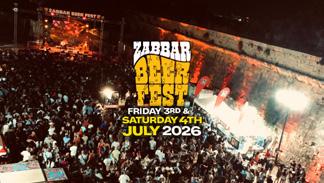
Żabbar Beer Fest
Valletta Local Food Festival When: 3rd - 5th July
Where: St George’s Square, Valletta
Inspired by History
When: 3rd & 4th July
Where: Żabbar Ditch, Żabbar
Experience two unforgettable summer nights beneath Malta’s historic bastions. Witness trance legend ATB on his world tour and enjoy the electrifying performance of renowned U2 tribute band Achtung Babies at the vibrant Żabbar Beer Fest. With live local artists, beer games, a lively festival atmosphere and free entrance, this is one of Malta’s must-visit summer events – not just for music lovers.
From Tapestries to Contemporary Fashion
When: Throughout July - 30th August
Where: Grand Master’s Palace, Valletta
In 1698, Grand Master Ramon Perellos (1697 - 1720) commissioned a set of splendid tapestries for the Grand Master’s Palace to celebrate his election as Grand Master. Known as the Tenture des Indes, it is the only complete set worldwide. More than three centuries later, fashion designers Charles & Ron have created a collection directly inspired by the tapestries, reflecting the evolving dialogue between historic textile art and contemporary artistic expression.
Now in its fifth edition, the Valletta Local Food Festival continues to build on the success of previous years, celebrating Malta’s rich culinary heritage. The festival will once again be held in collaboration with the Malta Food Agency in St George’s Square, Valletta, showcasing local produce and traditional flavours, bringing together chefs, food artisans and producers of a wide range of culinary items including cheeses, chutneys, pastries, sweets, delicatessen and beverages, while also reviving staples from the past to preserve our culinary legacy.
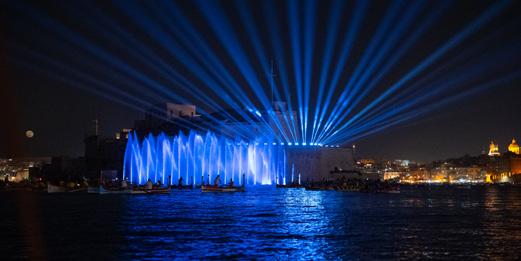
Valletta Pageant of the Seas 2026
When: 24th July
Where: Grand Harbour, Valletta
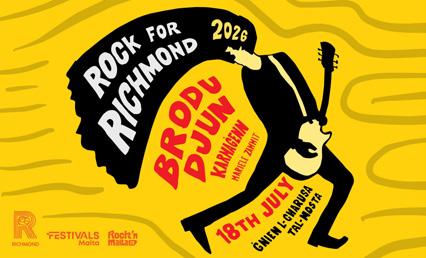
Rock For Richmond
When: 18th July
Where: Ġnien l-Għarusa, Mosta
Get ready for an unforgettable evening of live music, community spirit and giving back at Rock for Richmond. Headlining the night are Maltese indie favourites Brodu and Djun, joined by opening acts Karmaġenn and Marielle Zammit. Gather your friends, enjoy great music under the stars and support an initiative that makes a real difference.
The highly anticipated biennial event returns to Valletta’s Grand Harbour with a spectacular show that has become synonymous with this iconic evening organised by the Valletta Cultural Agency. This year’s edition promises a visually stunning production, featuring a variety of water performances that will illuminate the Grand Harbour.
Giorgio Preca Exhibition
When: 9th July - 4th October
Where: National Museum of Archaeology, Valletta
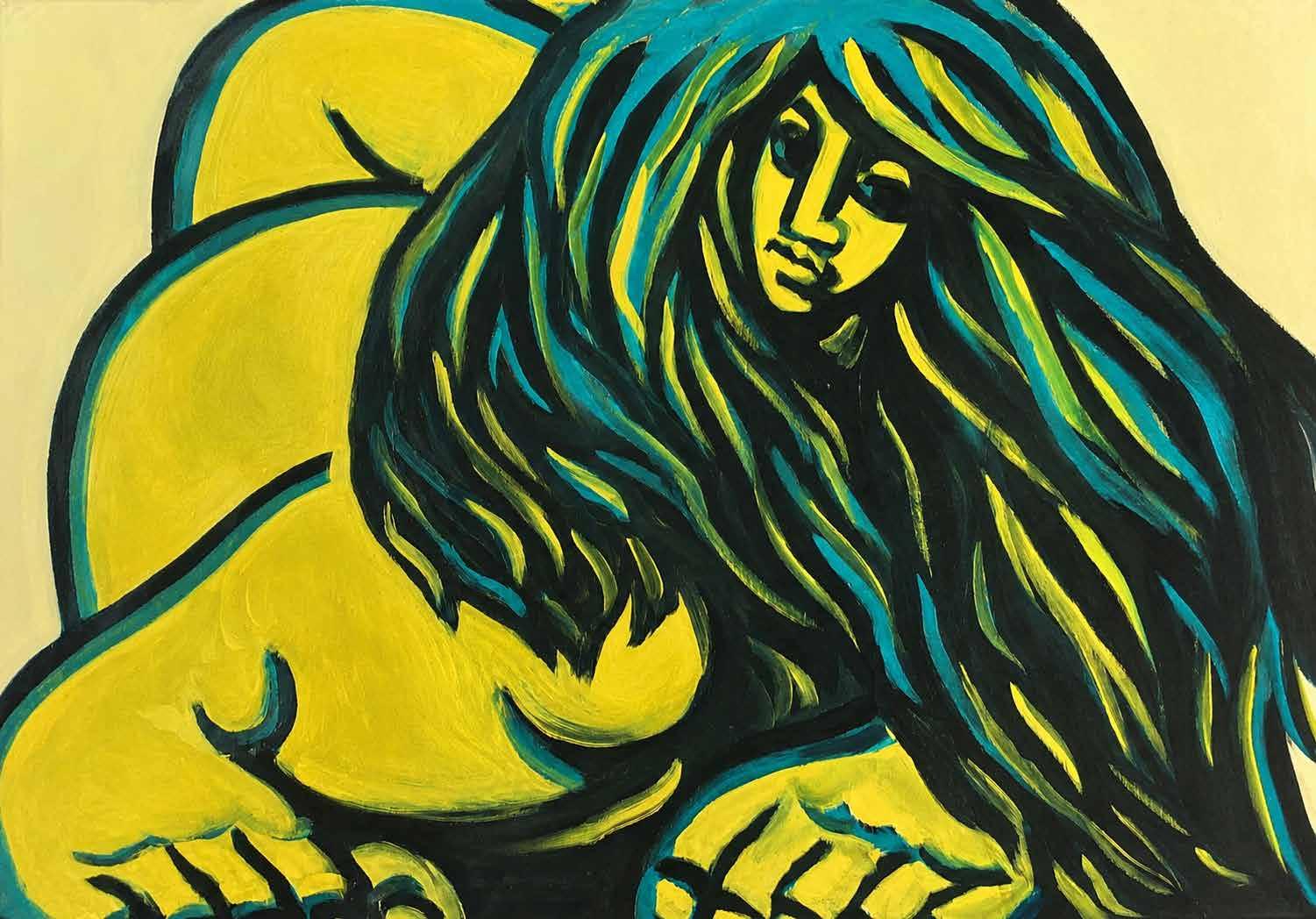
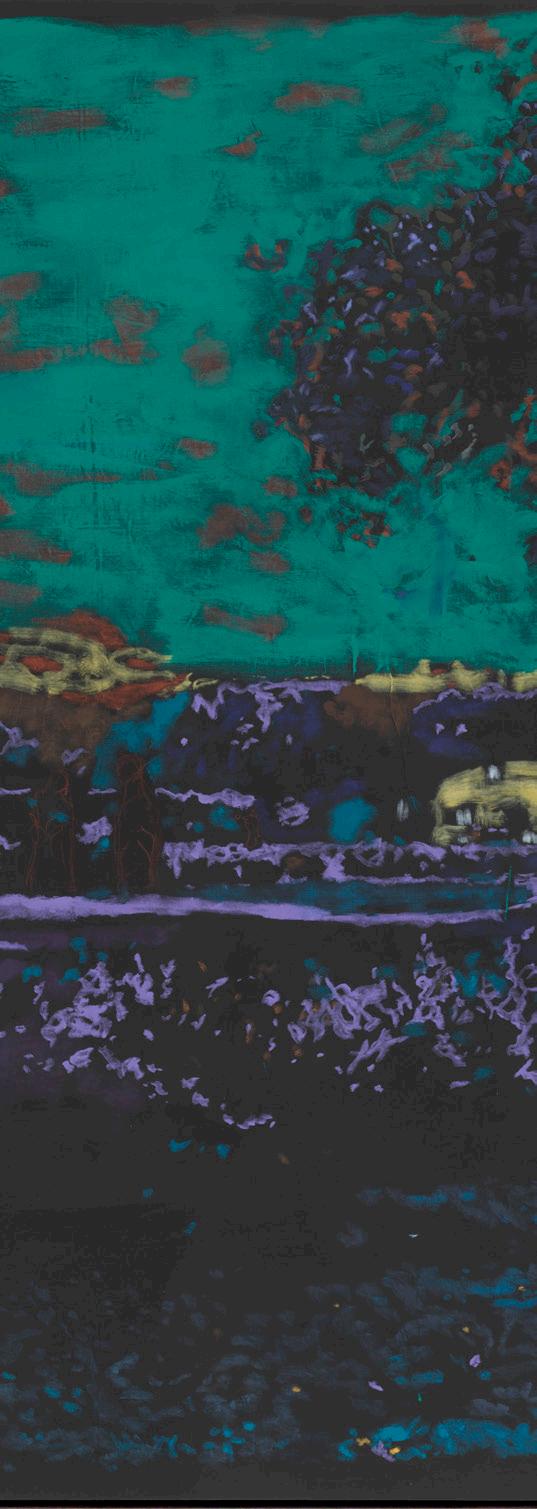
Following the success of the 2021 Giorgio Preca exhibition at MUŻA, the artist’s family has unveiled 29 previously unseen works dedicated to the Maltese Goddess. These artworks, many of which were inspired by the iconic Sleeping Lady, reveal Preca’s artistic maturity and his engagement with Maltese cultural heritage. Created while the artist was
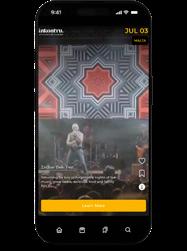
Discover and experience more with Inkontru.app, your web-based application that prioritises functionality and performance, meaning no need to download, seamless updates, no storage space taken and easy sharing. Enjoy!
Traditional Feasts & Celebrations
Our Lady of Sacred Heart, Sliema, on 5th July
The Feast of Our Lady of the Sacred Heart offers a glimpse of Sliema beyond its bustling cafés, shopping streets and waterfront promenades. Centred around the Franciscan sanctuary founded in 1877, the celebration combines deep-rooted devotion with the lively atmosphere of a modern seaside town. Inside the church, visitors can admire richly decorated interiors, works by Giuseppe Calì, and the much-loved titular statue of Our Lady of the Sacred Heart, sculpted in 1879.
Throughout feast week, the surrounding streets fill with music, decorations and band marches led by
the Sliema Band Club, while evenings culminate in one of the locality's most anticipated highlights, a spectacular fireworks and music display. Reflected across Marsamxett Harbour and framed by the lights of Valletta beyond, it creates a uniquely Sliema setting for one of the town's most cherished celebrations. (See stories on PG 42 and PG 54 for more details of feasts this month.)
For a guide to upcoming religious celebrations and traditional feasts across the Maltese Islands, be sure to visit Inkontru.app
FERNANDÕ GASTROTHEQUE
17 Triq Tigne', Tas-Sliema
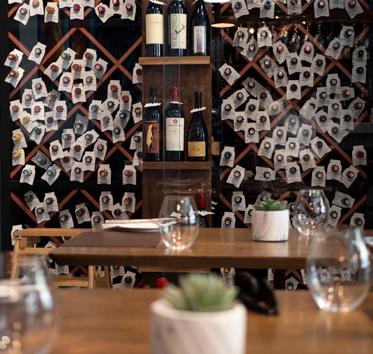
For visitors looking to turn the Feast of Our Lady of the Sacred Heart into an extra-special evening, a table at Fernandõ Gastrotheque is hard to beat. Tucked away in a quiet Sliema side street just a short stroll from the festa celebrations, this intimate Michelin-starred restaurant has earned a reputation for elegant, ingredient-led dining. Chef Laszlo Sragli's seasonal menus showcase refined Mediterranean flavours with a contemporary touch, while one of the restaurant's standout features is its exceptional wine selection. With more than 700 labels and a wide range of premium wines available by the glass, it offers a rare opportunity to explore outstanding vintages without committing to a full bottle.
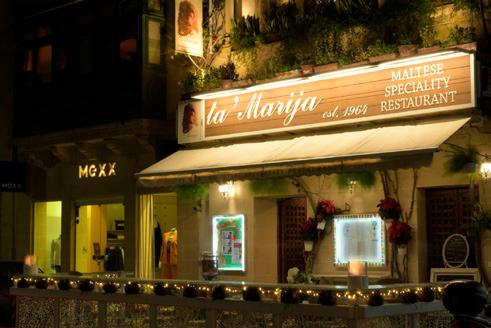
For more than 60 years, Ta’ Marija has been a staple of Maltese dining, combining traditional cuisine, folklore shows and warm hospitality in the heart of Mosta. Still family-run today, the restaurant continues to welcome generations of locals and foreigners alike. We spoke to patron Ben Muscat Jr and his late father and founder Benny about what has made Ta’ Marija a Maltese culinary institution.
What does it mean to carry on the Ta’ Marija legacy?
Ben Muscat Jr: Ta’ Marija is much more than a restaurant; it’s our family story. My parents, Marija and Benny, built something special when they opened the doors in 1964, and it fills me with pride to continue that tradition. What means the most is seeing families return generation after generation. Guests often tell us they first visited with their grandparents and now bring their own grandchildren. Knowing Ta’ Marija remains part of so many family memories is incredibly rewarding.
How has Ta’ Marija built such a loyal following over the years?
Ben Jr: Hospitality has always been at the heart of Ta’ Marija. My mother had a wonderful gift for making every guest feel special, and that spirit still guides us today. People return because they’re not simply coming for dinner. They come for authentic Maltese food, live folklore entertainment, music, dancing and an atmosphere that creates lasting memories. Many guests make Ta’ Marija a regular stop whenever they visit Malta.
What’s your favourite part of your weekly folklore nights?
Ben Jr: One of my proudest moments is introducing the dances in different languages, just as my mother
did before me. It’s a small tradition that keeps me connected to our roots. Once the folklore show ends and the dancing begins, the atmosphere becomes electric. Seeing guests from all over the world celebrating together is something I never tire of, even after decades of watching the shows.
Why is Ta’ Marija important to visitors to Malta?
Benny Muscat: The photographs displayed throughout the restaurant tell the story of our family, our guests and the journey of Ta’ Marija through the decades. Visitors come not only for a meal but to experience a living part of Maltese culture, hospitality and tradition. Every photograph holds a memory, and every evening adds a new one.
What gives you the greatest sense of pride when you look at your legacy?
Benny: I am proud that Ta’ Marija has remained true to its identity while continuing to welcome new generations of guests. Most of all, I am proud to see the family carrying forward the traditions we started all those years ago. Many restaurants serve food, but for us, Ta’ Marija has always been about creating happiness around the table.
www.tamarija.com
INSTALL inkontru.app
Step into Malta’s scene with Inkontru.app, your personal guide to all the latest art, culture and heritage events in Malta and Gozo. More than just a calendar, the app connects you with exciting events and artists through exclusive interviews and video features. Easily find event details, get directions and purchase tickets – all in one place. Need a ride? Book a cab effortlessly through the app and share your plans with friends and family with ease.
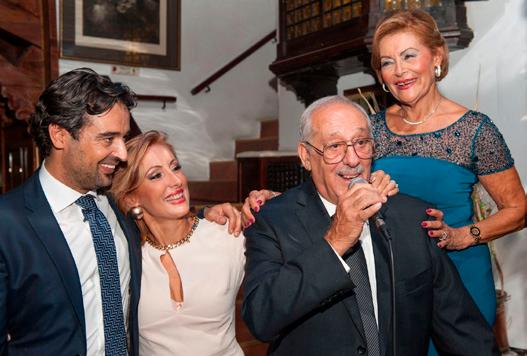
Ben Muscat Jr (left) and Benny Muscat with the family.
Ta' Marija restaurant in Mosta.
Your first step into the history of the Maltese Islands
15% Discount
On the purchase of an adult ticket Please quote “Passaggi” at the ticketing counter to claim your discount. (Not valid with any other offer)
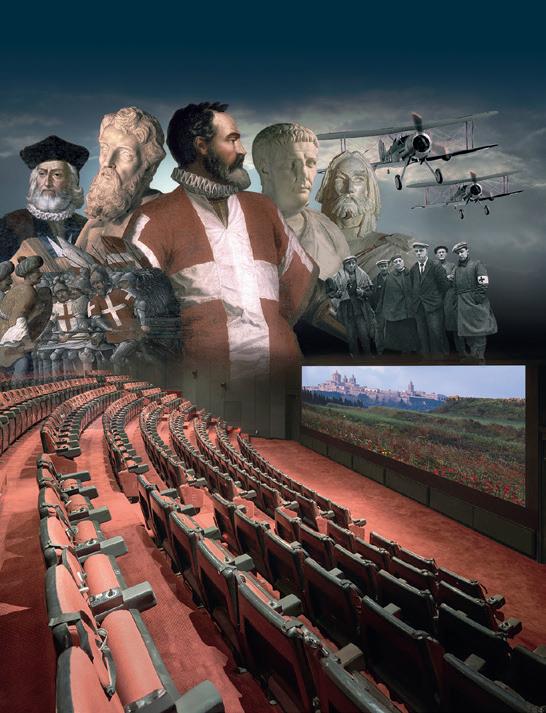
Few places have a history as turbulent and inspiring as the Maltese islands. Its gripping story is that of a country buffeted by world events, in which the bravery and resilience of its people have been tested to the limit.
Through beautiful authentic imagery and a gripping commentary, the show covers 7000 years of history in 45 minutes. From the early settlers of the temple period to the Knights of the Great Siege through to the destruction of World War 2, The Malta Experience chronicles the events that have shaped the island's history.
Mela REGGIE BURROWS HODGES
9 May – 30 August 2026
MICAS, Floriana
Admission on Sundays is free with a guided tour at 11am
Malta’s National Contemporary Art Museum
Ospizio Complex, Bieb ilPulverista, Triq Joseph J Mangion, Floriana FRN1830
Words by David Carabott
Malta’s Hidden Past
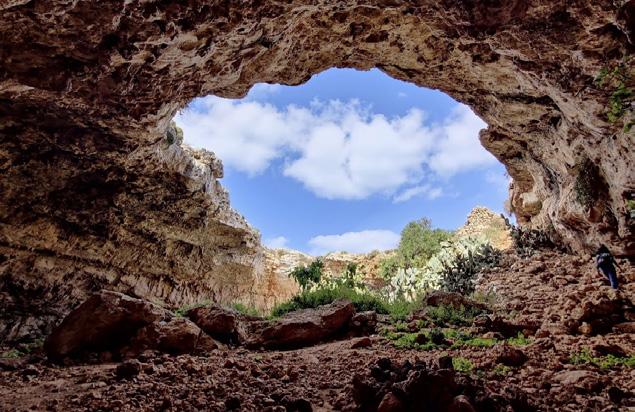
At Latnija Cave, evidence of human activity has now been dated to around 8,500 years ago, pushing the presence of people in Malta back by at least 1,000 years. Their arrival changes the starting point of Malta’s human story to early prehistory.
I am sitting with Prof. Eleanor Scerri over a pot of tea in quiet Attard, one of the historic Three Villages in central Malta, on a bright Saturday morning. An archaeologist, working between the Max Planck Institute of Geoanthropology and the University of Malta, she is describing the extraordinary findings at Għar tal-Latnija in northern Mellieħa. But this talk does not feel like a lecture at all.
Meanwhile, life in the village square carries on around us in its usual quiet rhythm. A bell marks the hour, while people drift through. Nothing about the setting suggests that what I am hearing has recently shifted the deep history of Malta and, indeed, that of the entire human race.
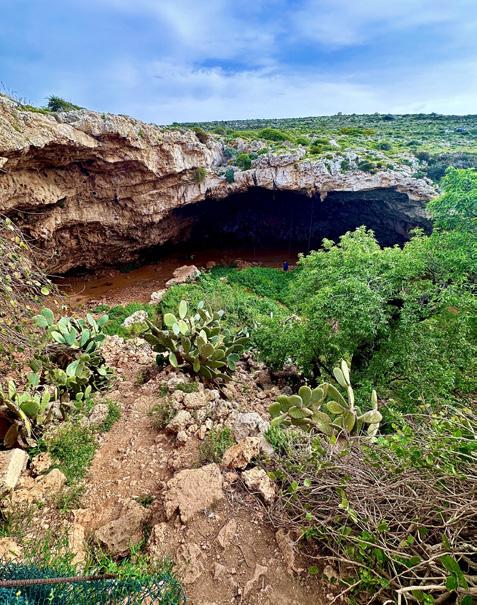
The collapsed cave known as Il-Latnija, located in the limits of Mellieħa.
Photo: Prof. Eleanor Scerri.
MESOLITHIC MARINERS AND THE FIRST ISLANDERS
For a long time, the story of Malta’s first people was considered settled, Scerri explains. The islands were thought to have been first inhabited by Neolithic farmers, who arrived around 7,500 years ago. They brought agriculture, pottery and permanent settlement, and in that narrative, everything before them was absent.
Malta’s story was seen as beginning relatively late in human history – a remote place only reached once farming communities expanded across the sea from Sicily.
But what Scerri and her colleagues are now showing is that this picture is incomplete. Their discoveries have pushed Maltese prehistory back by at least 1,000 years into the pre-agricultural Mesolithic era – the time of hunter-gatherers.
“What is really extraordinary about this is that these people had to engage in the longest yet known sea journeys made by Mediterranean hunter-gatherers to get to Malta. It shows they had a deep knowledge of both land and sea to be able to get here and survive,” Scerri says.
The most striking part of the discovery is not only when these early groups arrived, but how they did so. Getting to Malta from Sicily, the closest land mass, required crossing around 100 kilometres of open sea. This is not a short coastal hop along a chain of visible islands, but a direct crossing into open water, where land disappears completely from view at sea level.
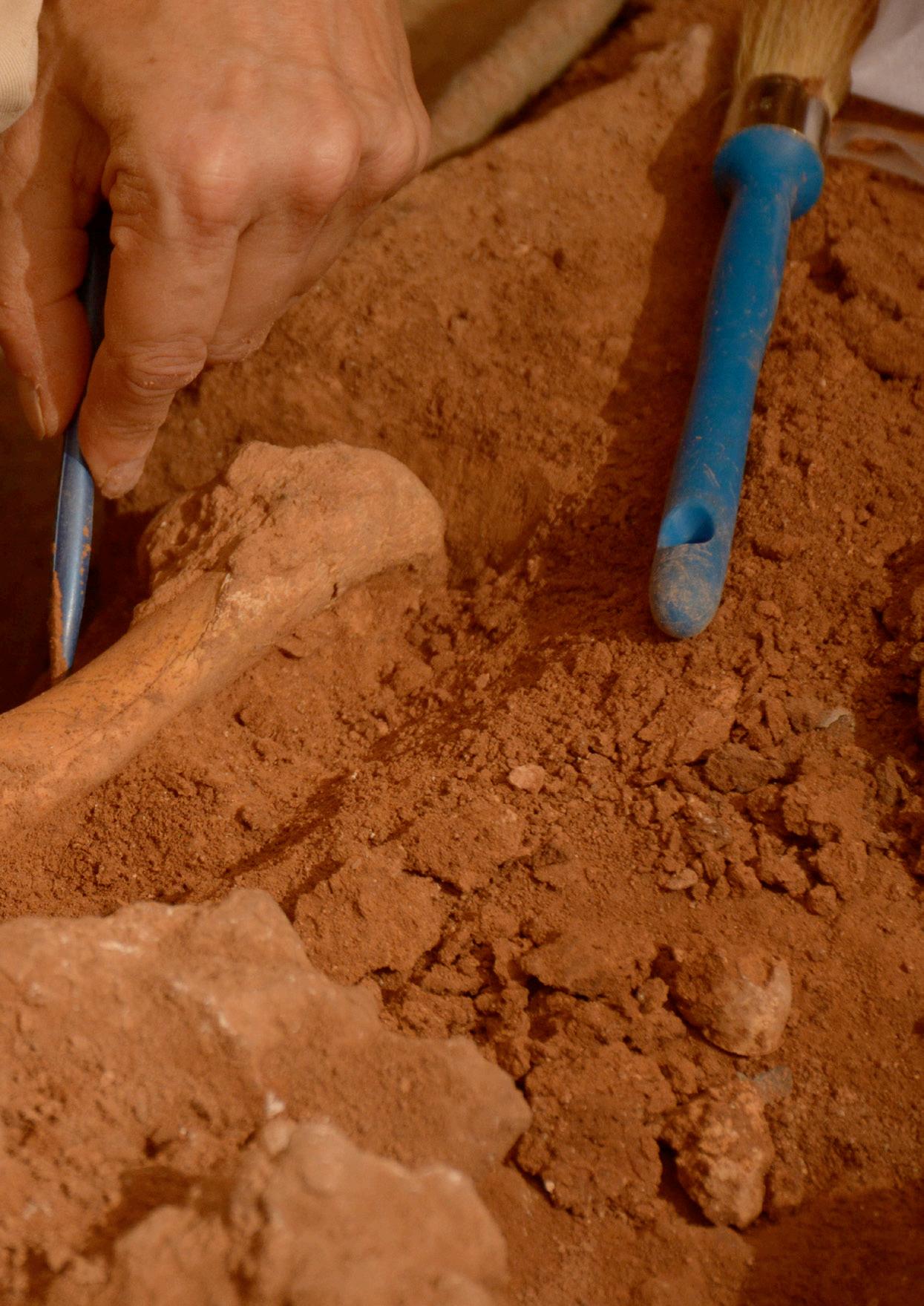
One of the specialists on site excavates the bones of now extinct indigenous Maltese red deer. Photo: Dr Andrés Currás.
Photo: Tony Gatt.
And yet, the evidence suggests that these journeys were made deliberately. As she describes it, these groups would have travelled in simple watercraft, likely dugout canoes. They would have had to construct the canoes using stone tools, digging them out of large trees, which is no mean feat: “even finding a tree that is tall enough, wide enough and straight enough to work would have been a challenge.”
Moreover, without metal tools, the process would have been protracted and probably involved the use of burning.
Then, they would have had to find their way without navigational instruments, using the position of the stars, wave patterns, wind direction, currents and even the movement of seabirds because Malta is not visible at sea level from Sicily, Scerri continues.
These sea voyages were not a one-off either, but rather sustained over a 1,000-year period. They were planned crossings, not accidental drifts. Experimental work, Scerri notes, suggests the journey could take more than a day, sometimes continuing through the night, when the sea becomes a very different world.
“The search for such a small target without any modern navigational tools and maps speaks to extraordinary abilities and is up there as one of the key feats of human prehistory.”
These discoveries overturn decades long consensus that small and remote
Mediterranean islands like Malta were beyond the reach of pre-agricultural societies.
“They are forcing us to reconsider the capabilities of these people and ask where else they went,” Scerri adds.
LIFE AT LATNIJA CAVE
Malta is at the centre of this story through the discoveries at the beautiful Latnija Cave, which lies in the cliffs near Paradise Bay – a place most people would pass without realising its significance.
At first glance, it is a large and impressive hole in the ground, more like the Maqluba sinkhole in the limits of the village of Qrendi than a regular cave. Because it lies low in the landscape, it is somewhat hidden and not particularly easy to find. But once inside, it is like stepping into one of the most important archaeological sites in the Mediterranean.
At Latnija Cave, evidence of human activity has been dated to around 8,500 years ago. This pushes the presence of people in Malta back by at least 1,000 years, beyond the timeframe of the first farmers, Scerri says about the latest discoveries.
In fact, these people were hunter-gatherers; groups who lived by seasonal movement and the gathering of wild foods rather than in fixed settlements. Their arrival changes the starting point of Malta’s human story and pushes it back into early prehistory, before agriculture had developed in the region.
Scerri describes how the archaeological record inside Latnija Cave shows repeated use rather than a single occupation. Hearths appear in multiple layers of sediment, with ash deposits building up over time. The re-use of the same areas for the same things over and over again suggest return visits.
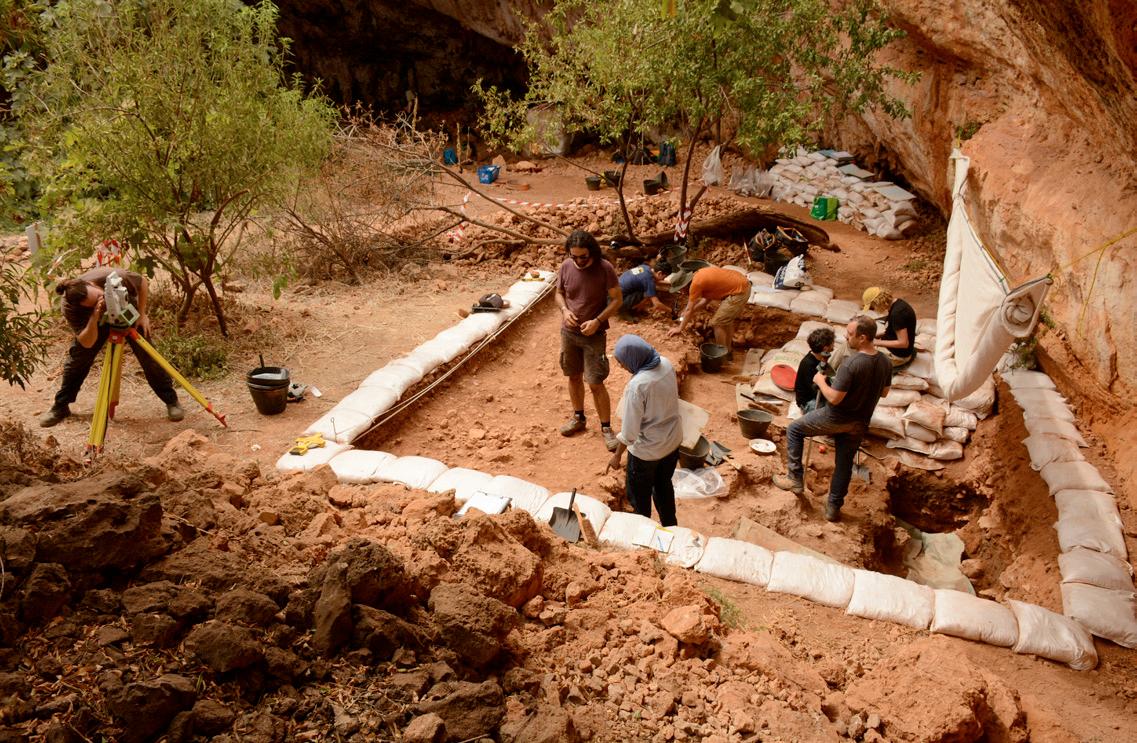
Ongoing excavations at Latnija Cave involving a team of international experts.
Photo: Dr Huw Groucutt.
This was not a short stay, but a place revisited, perhaps on a seasonal basis or longer stays, as part of a wider pattern of movement between islands. Malta is too small to sustain a viable population without agriculture. These people had to survive on what nature provided and carefully manage resources through the seasons.
Scerri goes on to explain how the material remains reveal a detailed story of survival and adaptation. The reconstructed diet, based on bones and shells, is remarkably varied. There is evidence of red deer, tortoises, foxes, birds, fish, seals, crabs, sea urchins and large quantities of edible sea snails.
It reflects a flexible approach to food gathering, drawing from both land and sea and making use of whatever the island environment offered at the time. It is also dramatically different from the narrow diet of the first farmers, reliant as they were on wheat and a handful of livestock.
The tools, Scerri notes, are equally revealing. Made from local limestone, they were shaped into small flakes, used for cutting, scraping and processing food. There is no sign of imported materials or elaborate technology. Everything points towards practicality, efficiency and close adaptation to a small island environment.
A CONNECTED MEDITERRANEAN WORLD
What emerges from this evidence is a very different Malta from the one long imagined. Rather than an isolated, pristine island waiting for farming to arrive, it appears as part of a wider Mesolithic world already shaped by humans.
Hunter-gatherer groups were moving across the Central Mediterranean, particularly between Sicily and surrounding islands. The sea was not a barrier separating them, but a space that connected them.
Scerri also points out that the environment they encountered would have been different from today. Malta supported species that no longer exist on the islands, which suggest a richer and more varied ecosystem. They also widely exploited marine resources, from whales to monk seals and fish like tuna and grouper.
“The presence of these animals with humans in Malta speaks to a unique ecosystem we never even knew existed before now,” Scerri says.
But island ecosystems are fragile. Even limited human activity can begin to shape them, and it is likely that these early groups were already influencing ecological change through hunting and movement.
What emerges from this evidence is a very different Malta from the one long imagined
RETHINKING THE FIRST ISLANDERS
As the lecture comes to end, what stands out is not only the detail of the archaeology but the shift in perspective it demands. These were not marginal figures struggling at the edge of the known world. They were capable seafarers operating within a connected Mediterranean landscape, where movement between islands was part of life rather than an exception.
Walking away through the same square where the conversation has taken place, it feels as though the ground beneath Malta has become a little deeper.
Latnija Cave continues to reveal its layers slowly, but each one adds to a story that is no longer about isolation. It is about connection, movement and the quiet confidence of people who crossed open water long before history thought they could.
Prof. Eleanor Scerri carefully
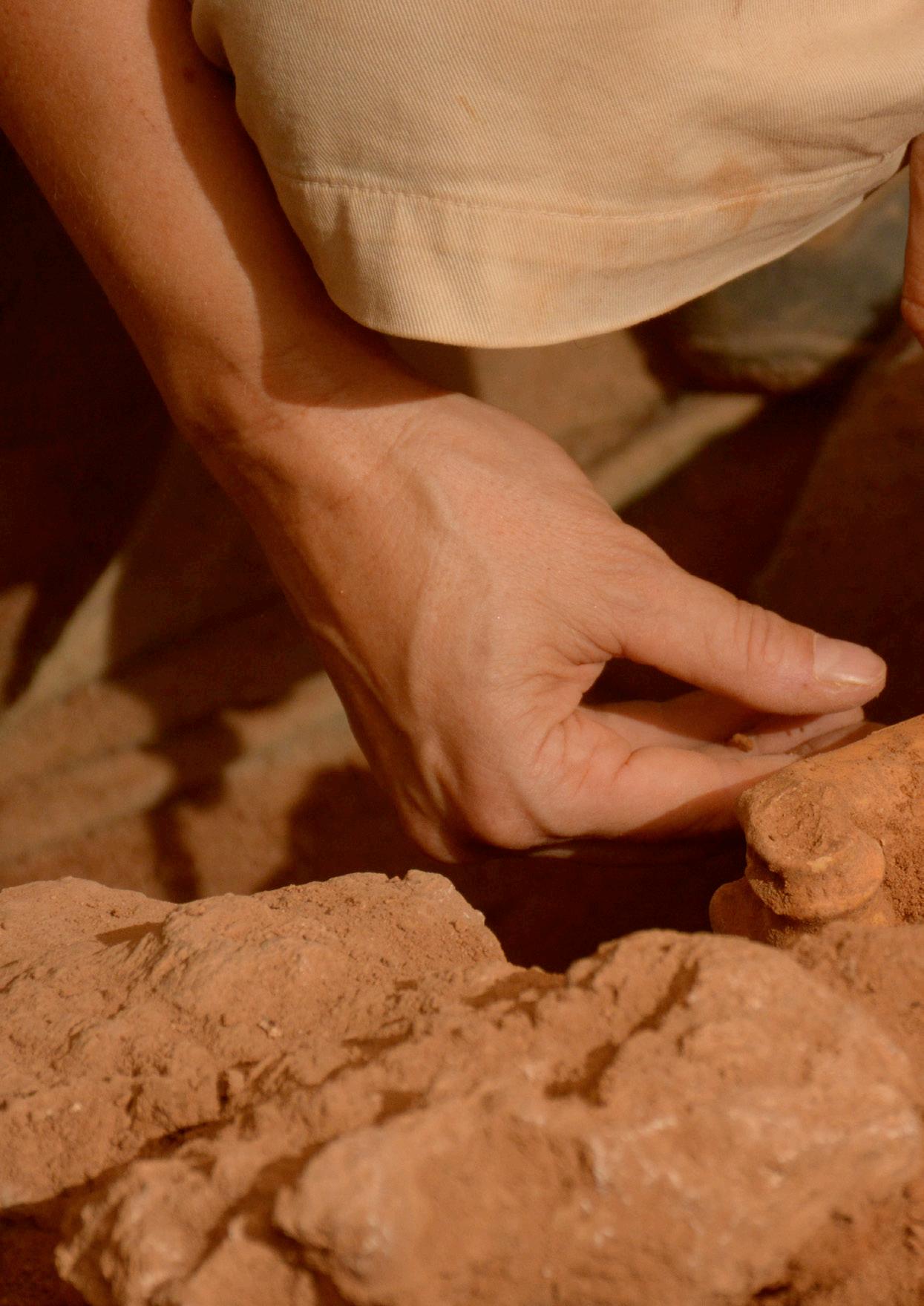
excavating
Mesolithic remains at Latnija Cave.
Photo: Dr Andrés Currás.
Words by Edward Bonello
Edward is a content writer and PR consultant. He is interested in the wonderfully superfluous and exquisitely redundant. When he’s not happily tapping away at his laptop, he enjoys collecting useless trivia and watching B-movies.
GRAZZI ĦAFNA!
/ˈɡrat.t ͡si ˈħaf.na/
Part Arabic, part Romance, part love… The story of how the Maltese language developed to describe a people at a crossroads between two juggernaut civilisations.
Malta and the Maltese can be quite the conundrum to crack. It’s the tiniest state of the EU, sits at the continent’s southernmost tip, but shares a great deal with its fellow European neighbours, albeit retaining a distinct Mediterranean, and in some cases North African influence. It truly is a melting pot of cultures, where major civilisations meet and thousands of years of history unfold in a tiny 37km by 15.
Yet there is perhaps a key to understanding this most particular of people, and it is their language, Maltese or Malti, which has a fascinating history that mirrors Malta’s own.
Maltese developed from late medieval SiculoArabic or Sicilian Arabic, a Maghrebi Arabic dialect that was spoken in the Emirate of Sicily in the 9th to 11th century. Its arrival in Malta in the 11th century marked the birth of the language on the island, but the Norman conquest of 1091 and the eventual expulsion of Muslims by 1249 isolated it from its Arabic source, creating the perfect conditions for its evolution into a distinct language.
In contrast to Sicily, where Siculo-Arabic became extinct and was replaced by Sicilian, the vernacular in Malta continued to develop independently, becoming a language in its own right, which is classified separately from Arabic and its dialects.
The oldest written document in Maltese that survives to this day is a 15th-century lament by one Pietru Caxaro called IlKantilena. Providentially preserved in the notarial archive of the author’s nephew Brandano, the poem predates the arrival of the Knights of St John and describes an unrequited love that is likened to a house built on unstable foundations and is unceremoniously destroyed.
The language of the poem is so archaic that it is barely recognisable, but within those lines are the very conspicuous seedlings that would develop into the Maltese language over the next centuries. Along the years, Maltese absorbed a great deal of vocabulary from Romance sources such as Italian and French, as well as English – reflecting the island’s colourful and sometimes tumultuous history.
In fact, for most of its history, Maltese was considered the language of the kitchen as the ruling class would speak Italian and later English. It was only in the 20th century that the native language started to be recognised for its beauty and importance, with contributions by some of Malta’s most celebrated authors, who started to write in Maltese, creating a body of literary work in the language.
Today, Maltese is recognised as an official language of the EU; in fact, it is the only Semitic language to hold this title, and being written in Latin script, it is also the only Semitic language with this characteristic!
Curiously, Maltese retains its distinctive duality to this day, even functioning on two separate grammars in several aspects of the language. For example, Maltese uses two types of plurals: sħiħ or complete, where the noun retains its original structure and it is only the ending that is changed or a suffix added at the end; or miksur, meaning broken, where the word is pluralised through internal vowel changes.
Knowing which plural to use sheds light on the origin of the word; whether it arrived to us from Arabic or from a
Here are some handy words and phrases during your stay:
Iva Yes
Le No
Iva, jekk Yes, jogħġbok please
Le, grazzi No thanks
Jekk
jogħġbok Please
Grazzi Thank you
M'hemmx You're imniex welcome
Kafè, jekk A coffee jogħġbok please
Saħħa! Cheers!
Skużani Excuse me
Bonġu Good morning
Bonswa Good evening
Il-lejl it-tajjeb Goodnight
Saħħa Goodbye
Mela Of course / So / Yes
Isma Listen / Come here / Hey!
Romance source. However, just to keep things interesting, there are also some exceptions, where Romance words blended into the language so well that they assimilated Arabic sounds, as well as its plural. Just to keep you on your toes!
Not unlike the English language, which also has a fascinating multiplelanguage origin story, in some cases, Maltese retains double vocabularies for the same, or similar concepts, each derived from its two source mothers… so to speak.
For example, in Maltese, an answer can be both tweġiba (Arabic) and risposta (Italian), while question can be both mistoqsija (Arabic) as well as domanda (Italian). This has led to the words developing slight nuances in meaning, reflecting a certain exquisite efficiency. So, the Italian domanda, still means question, but it also refers to demand in economic terms.
Travelling around the island, you may also perhaps notice some intriguing letters in Maltese script; letters with odd dots and curious strikethroughs. You’re not imagining things, and we are pretty proud of them! There are four of them, and they differentiate a specific sound from a similar letter.
Ġ or ġ has a soft j sound like James or jam, while the Ż or ż also has a soft z sound like zink or zebra. The Ħ or ħ is the normal h sound like house, differentiating itself from the tricky silent h. While Ċ or ċ provides the ch sound like in church.
Then, to the torment and indignation of all Maltese language students, there’s the notorious għ, which is also silent and follows some very strict rules about where it can sit in a word – no fun in there, I promise you!
A very special mention must be reserved for the letter Q or q, which might look innocuous but in Maltese reserves a surprise as it does not sound like any other Romance equivalent. In fact, it is a glottal stop, much like the tt in bottle in cockney English. You’re welcome!
Surprisingly, even though Malta is a tiny place, the language also has its distinct dialects, some of which are certainly very pronounced and identifiable. Speakers from the Inner Harbour Region will pronounce certain words quite differently from those of Valletta, or the Outer Harbour Region.
In Gozo, it’s a completely different story, with what would sound like a different language to the untrained ear. This too is subdivided into distinct dialects according to the town or village, sometimes even the area within it!
Maltese is an ever-evolving language. At an academic level, certain incongruences continue to be addressed, bearing witness to an active and energetic life. But perhaps it’s in the streets that the biggest changes and shifts take place. With loanwords being assimilated, and its speakers being increasingly exposed to the rest of the world, its vocabulary and expression continue to evolve in the most creative of ways.
Many Maltese speakers also perform what is referred to as code-switching, which is the seamless flip-flopping between Maltese and English in everyday discourse. The practice, which used to be confined to certain areas, displays a certain proficiency in both languages and used to be associated with a certain social background. Today, it is more widespread and can be regarded as a desirable social marker.
So, during your holiday, prick your ears and make sure to take in the wonder that is the Maltese language. See how many familiar words you can detect, and perhaps if you can even understand the gist of the sentence or phrase. Most Maltese will be more than happy to explain what’s going on.
Perhaps the one phrase that we use every day and that really encapsulates the whole chiaroscuro duality of the Maltese language is grazzi ħafna, which translates to thank you very much – a meeting place for two of the world’s most ancient and wonderful cultures, living side by side, in an eternal dance.
Tap 10 times. Make a wish...
Whether it’s a stunning rooftop dinner in Athens or your tenth scoop of gelato in Rome, every tap brings you closer to your next flight.
Get in the chance to win a €300 KM Malta Airlines travel voucher by using any BOV Classic or Premium Card 10 times or more during your trip.
Words by Veronica Busuttil
Veronica is an Accounts Executive and a CMAS 3-star and Extended Range diver with more than three decades of diving experience. She is passionate about underwater photography and adventure travel.
Wondrous wrecks beneath the waves
Malta’s underwater history stretches from a 2,700-year-old Phoenician shipwreck to vessels and aircraft from both World Wars. Whether exploring a historic warship, photographing a curious grouper, or simply enjoying the serenity of the underwater world, divers continue to find inspiration beneath the surface and experience the same sense of wonder felt on that very first dive.
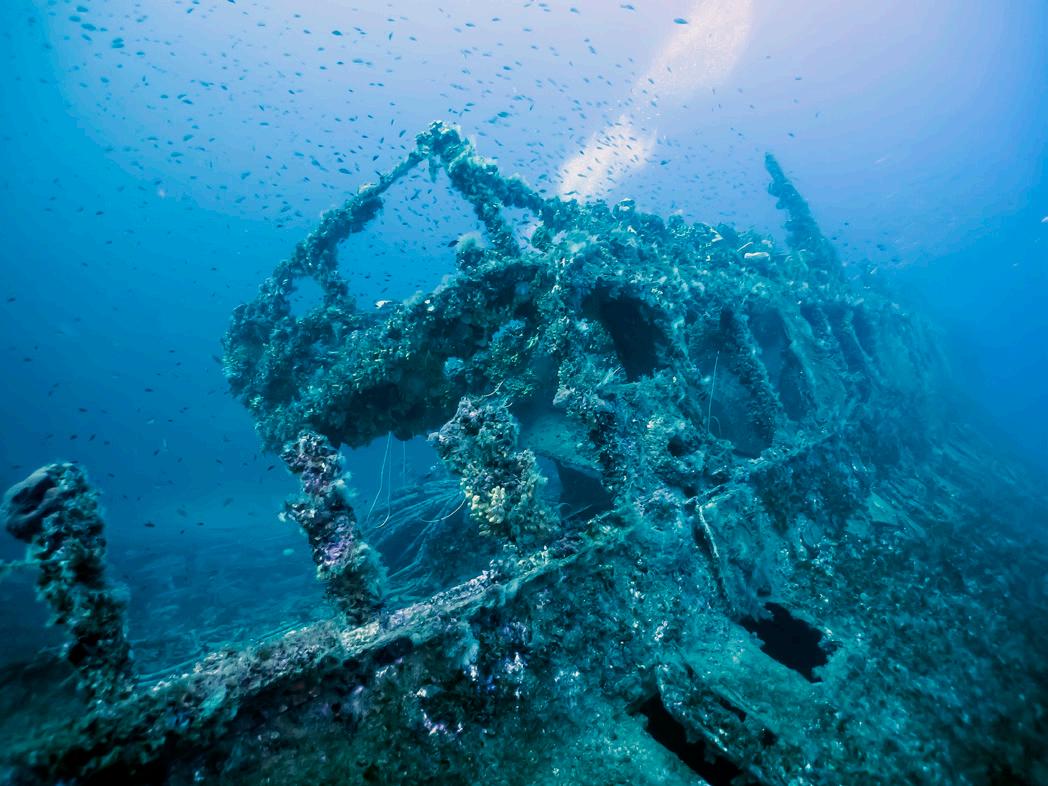
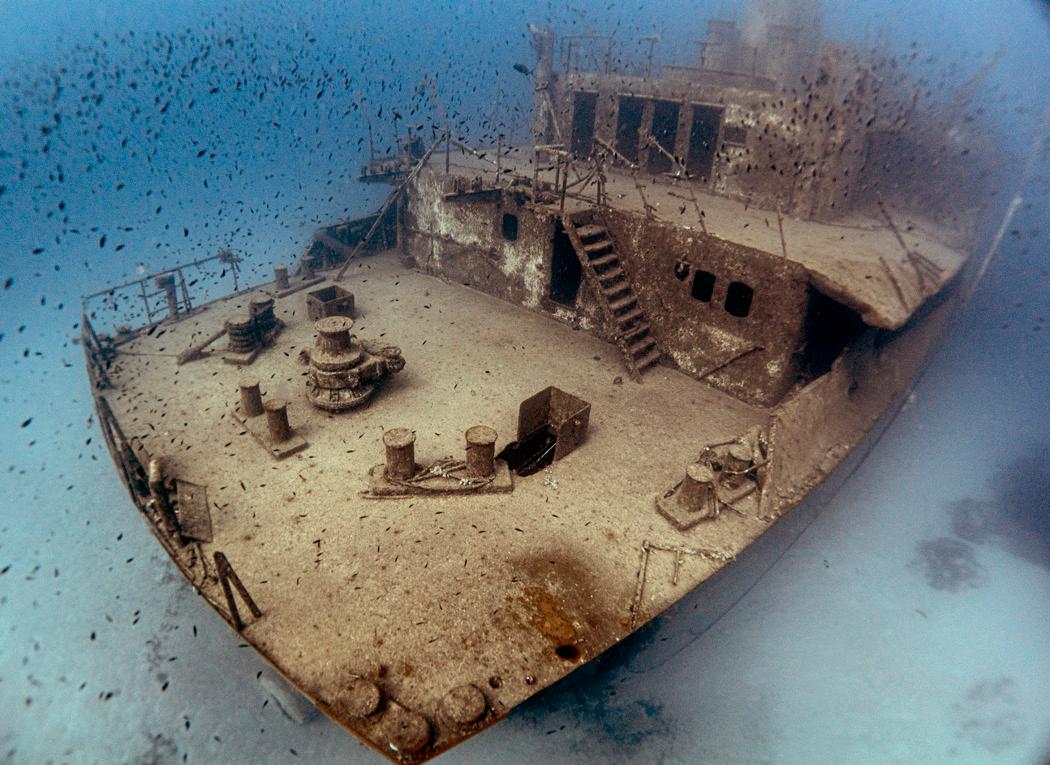
Tugboat Rozi in Ċirkewwa.
Photos: Veronica Busuttil.
My fascination with diving began more than 33 years ago. What started as a hobby soon became a lifelong passion, eventually leading me to qualify as a 3-Star CMAS and Advanced Extended Range diver. My original motivation was simple: to discover the beauty of the underwater world. Little did I know that diving would also inspire me to become an enthusiastic underwater photographer.
That journey began in 2009 while planning my second diving trip to the Red Sea. Several friends encouraged me to buy an underwater camera, and I am grateful that I listened. Photography transformed the way I dive. Instead of simply observing marine life, I learned to appreciate the intricate details, colours and behaviours of underwater creatures and the habitats they call home. Through the camera lens, every dive became a new adventure.
For me, every dive is a special occasion. Descending beneath the surface brings a unique sense of happiness, tranquillity and fulfilment. The underwater world offers an escape from the noise of everyday life and a chance to experience nature in its purest form. Diving is not merely a sport; it is a form of therapy that fills me with joy and gratitude. I feel truly blessed to explore what I consider one of God’s greatest creations – the sea.
Although I have been fortunate to dive in many destinations, Malta remains my favourite. The Maltese
Islands offer some of the finest diving opportunities in the Mediterranean, combining crystal-clear waters, fascinating marine life, dramatic underwater topography and an extraordinary collection of shipwrecks and aircraft wrecks.
The visibility often exceeds 30 metres, allowing divers to fully appreciate the beauty of the underwater landscape. Water temperatures range from approximately 13°C in winter to 25°C during the summer months, making diving possible throughout the year.
REMARKABLE UNDERWATER HERITAGE
What makes Malta particularly unique is its remarkable underwater heritage. Divers can explore wrecks at depths ranging from 15 metres to over 100 metres, catering for both recreational and technical divers.
The islands are surrounded by an impressive variety of wrecks, including artificial reefs, merchant ships, submarines, aircraft and wartime casualties dating back centuries. Malta’s underwater history stretches from a 2,700-year-old Phoenician shipwreck to vessels and aircraft from both World Wars.
Many of Malta’s most historically significant wrecks are protected by the Underwater Cultural Heritage Unit (UCHU), ensuring that these treasures are carefully preserved and afforded the highest level of protection for future generations. Access to some of these sites requires special permits, helping to safeguard their historical importance.
Among the most popular recreational wreck dives are those found within the Ċirkewwa Marine Park, located at Malta’s northern tip. Here divers can explore two iconic wrecks. The first is the P29 patrol boat, originally built in East Germany in 1960 as a Kondor-class minesweeper before serving with the Armed Forces of Malta. It was deliberately scuttled in 2007 to create an artificial reef and now rests at a depth of approximately 38 metres.
Nearby lies the Tugboat Rożi, built in Bristol in 1958 and intentionally sunk in 1992. Over the years, both wrecks have become thriving artificial reefs, attracting abundant marine life and photographers alike.
Another fascinating site is the Bristol Beaufighter, a World War II aircraft resting off St Julian’s Point in Sliema. The aircraft lies upside down on a sandy seabed at a depth of around 38 metres. On 17th March 1943, shortly after take-off,
the crew experienced mechanical problems and was forced to ditch the aircraft at sea. Fortunately, both crew members survived. Today, the wreck remains a powerful reminder of Malta’s wartime history.
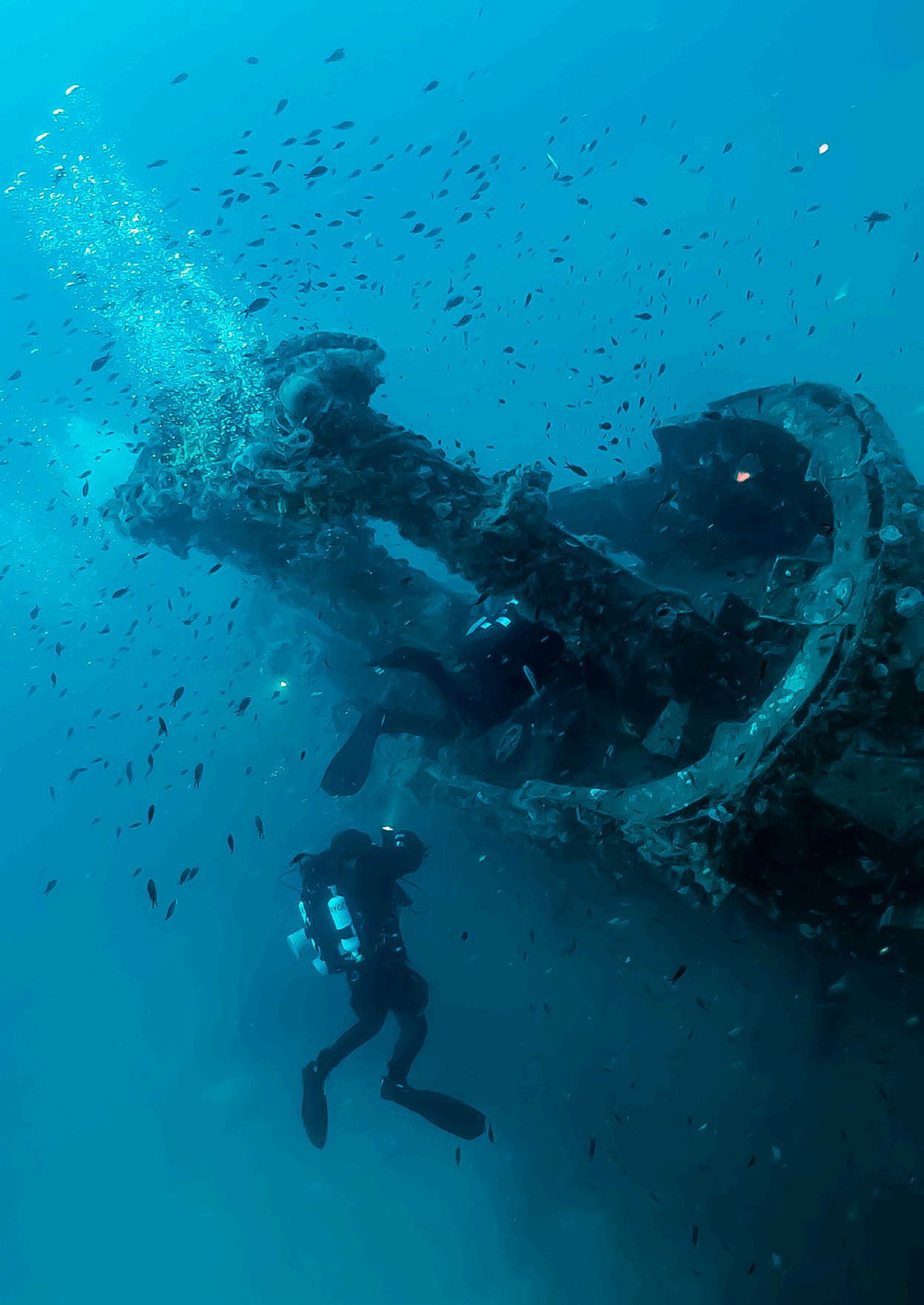
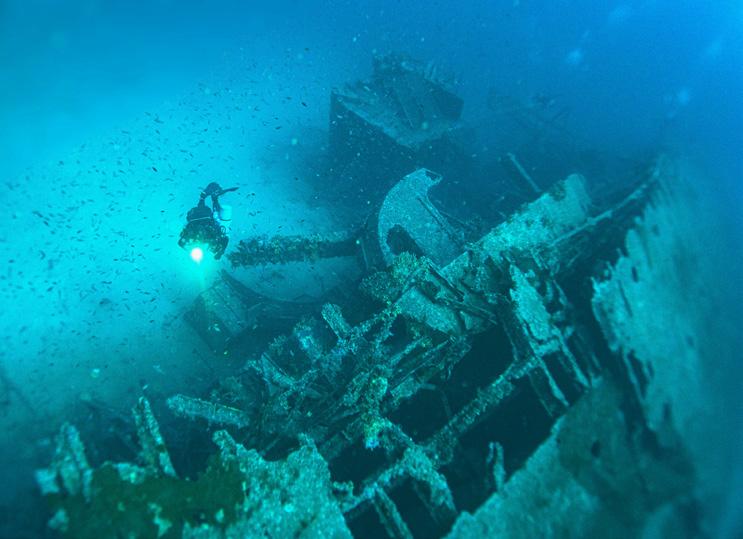
For more experienced divers, HMS Stubborn offers a remarkable underwater experience. This British S-class submarine, measuring 66 metres in length, was deliberately scuttled by the Royal Navy in 1946 as a sonar training target. Resting upright on a sandy seabed at approximately 56 metres, the submarine remains largely intact and is one of Malta’s most impressive deep wreck dives.
Closer to shore, Tugboat 2 provides an excellent dive suitable for a wider range of recreational divers. Located off Exiles in Sliema, this former harbour tug was sunk in 2013 to create an artificial reef. Resting at just 20 metres, it is easily accessible from shore and offers an enjoyable introduction to wreck diving.
Malta is also home to several extraordinary technical diving sites. One of these is the
Every wreck has a story to tell, and every dive reveals something new
Junkers Ju 88, a German World War II aircraft discovered during a remote sensing survey in 2009. The wreck lies approximately three kilometres outside Salina Bay at a depth of 57 metres. Remarkably well preserved, the aircraft still displays many original features, including the cockpit machine gun.
Another fascinating site is the B-24 Liberator bomber, a four-engine American heavy bomber that was forced to ditch off Marsaxlokk in 1943. Located at a depth of 55 metres, the wreck was discovered in 2015 and has since become one of Malta’s most sought-after technical dives.
Among Malta’s most demanding and renowned deep wreck dives is Le Polynesien, a French ocean liner that was converted into a troop transport vessel during World War I. In August 1918, the ship was torpedoed and sank approximately three kilometres east of Marsascala. Today, resting silently on the seabed, it serves as a powerful underwater memorial to those who lost their lives during the conflict.
Equally significant is HMS Southwold, a British Hunt-class destroyer that struck a mine and sank in March 1942. The wreck lies in two sections approximately 300 metres
apart off Marsascala. The bow rests at around 68 metres, while the stern sits upright at a depth of 73 metres, offering an unforgettable experience for qualified technical divers.
For divers and underwater photographers, Malta’s wrecks are much more than submerged structures. They are windows into history, artificial reefs teeming with marine life, and reminders of the events that shaped our world. Every wreck has a story to tell, and every dive reveals something new.
After more than three decades of diving, the excitement remains as strong as ever. Whether exploring a historic warship, photographing a curious grouper, or simply enjoying the serenity of the underwater world, I continue to find inspiration beneath the surface.
Malta's waters have become my second home, and after more than three decades of diving, every descent still brings the same sense of wonder I felt on my very first dive.
The Um El-Faroud wreck, a Libyan oil tanker that exploded in 1995 and was scuttled off the coast of Wied
Words by Emmanuel Galea
Emmanuel is a Gozitan freelance writer, who draws on his global experience to promote Gozo as a destination that rewards those who take the time to explore it.
A summer of celebrations
On an island where villages still gather in collective celebration, summer does not simply pass. It unfolds through a sequence of feasts and fireworks that continue to illuminate Gozo’s cultural identity.
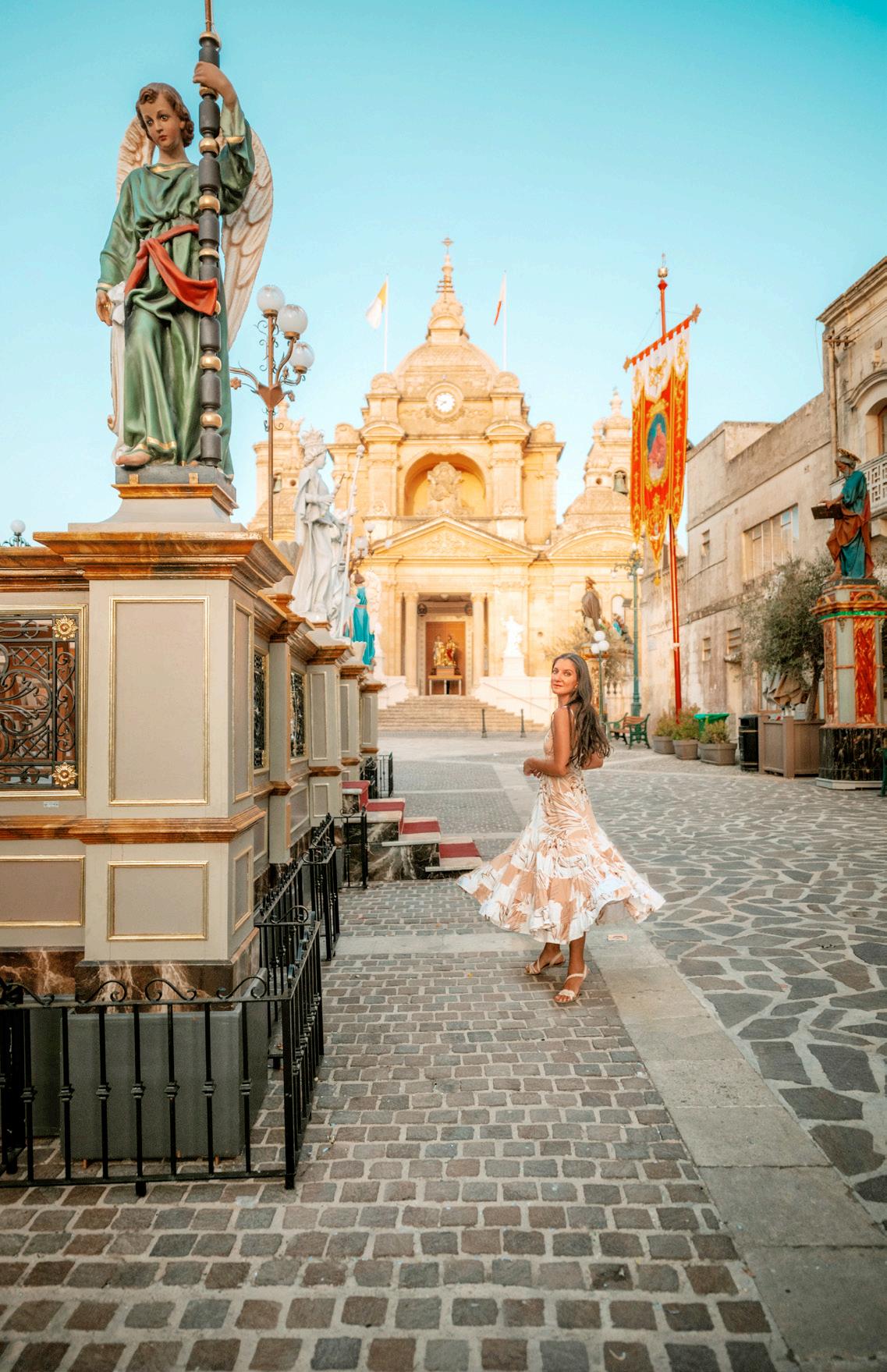
Festa time in Nadur Square.
Photo: Nathalie Wanders, courtesy of Visit Gozo.
Summer in Gozo unfolds with a rhythm that visitors quickly learn to recognise. The season does not arrive with a single event, but with a gradual transformation of village life.
Church façades gain colourful banners while the streets fill with strings of lights suspended between balconies. Band clubs rehearse in the evening air while the faint scent of fireworks powder drifts from workshops preparing for the coming festivities. By early summer, the island stands ready for one of its most vibrant traditions: the village festa.
For travellers arriving in the Maltese Islands, Gozo offers an intimate way of experiencing these celebrations. Its modest scale allows visitors to move easily between villages, each hosting their own festa during the summer months. Every weekend, another locality takes its turn. Church bells ring across the valleys, brass bands march through decorated streets, and fireworks illuminate the night sky above church domes and limestone houses.
Although each celebration honours a patron saint, the festas represent far more than religious observance. They express identity, pride and continuity in a small island society where community life still revolves around parish squares and band clubs.
Villages prepare for months in advance. Volunteers decorate streets with colourful banners and illuminated arches, organise musical programmes and coordinate elaborate firework displays. The entire community takes part, transforming familiar streets into festive theatres.
This tradition carries such cultural significance that the Maltese festa has earned international recognition. The
village tradition is now on the national intangible cultural heritage register, following UNESCO principles. This recognises the celebrations’ significance to the islands’ cultural heritage. The recognition reflects what visitors quickly discover: the festa represents one of the most distinctive expressions of Maltese and Gozitan cultural life.
In the island’s capital, Victoria (Rabat), summer reaches its peak with two of Gozo’s most celebrated feasts. The feast of St George fills the historic city centre with music, devotion and elaborate decorations. The August celebration of Santa Marija brings further festivities and visitors.
During these weeks, Victoria’s narrow streets transform into vibrant corridors of colour and sound. Flags ripple between limestone balconies, church bells echo across the surrounding countryside, and evening processions move slowly through crowds gathered in the illuminated streets.
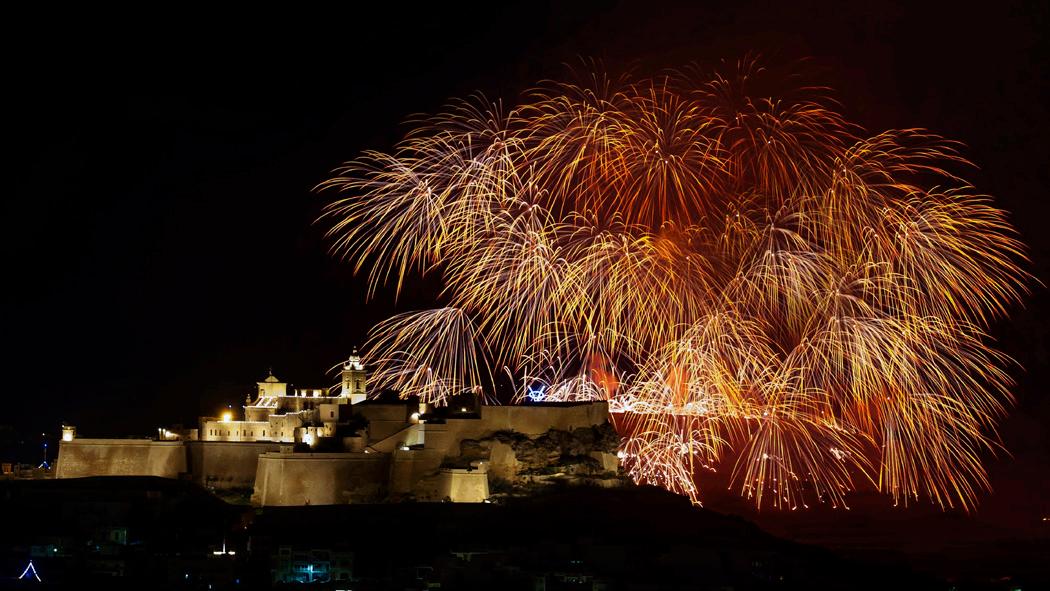
Above the celebrations rises the Ċittadella, the fortified citadel that dominates Gozo’s skyline. From its ancient bastions, spectators watch fireworks blossom above the city and the surrounding valleys. The spectacle becomes memorable as bursts of colour illuminate church domes, rooftops and distant fields. For many visitors, this view captures the essence of Gozo’s summer atmosphere: centuries-old surroundings animated by living traditions.
Beyond the capital, every village contributes its own character to the island’s festive calendar. In Nadur, perched high above Gozo’s eastern landscape, the festa atmosphere becomes especially energetic. Nadur enjoys a reputation for dramatic fireworks displays that echo across the island’s hills and valleys. Local organisers
Fireworks above the Citadel.
Photo: CVC, courtesy of Visit Gozo.
collaborate with experienced fireworks manufacturers, many of whom come from Malta, to design intricate pyrotechnic sequences that rival professional shows elsewhere in the Mediterranean.
As darkness settles over the countryside, petards rise above the church dome before exploding into shimmering bursts of colour. Residents watch attentively, discussing timing, colours and patterns with the same enthusiasm others reserve for music or sport. These displays become moments of village pride and friendly rivalry between neighbouring communities.
Yet fireworks represent only one dimension of Gozo’s festas. Equally significant are the religious processions that move through decorated streets. These ceremonies blend devotion with pageantry. Statues of patron saints emerge from parish churches, carried by teams of volunteers while bands perform traditional marches and hymns. Families gather along the route, applauding as the procession passes beneath illuminated arches.
For visitors unfamiliar with Mediterranean traditions, the experience feels both ceremonial and welcoming. The festas invite participation rather than observation alone. Travellers often share the moment with residents, standing shoulder to shoulder in village squares as music fills the warm evening air.
Food also plays an essential role in the celebrations. Temporary stalls appear in village squares offering traditional Maltese pastries and local delicacies, while restaurants extend their hours to accommodate families and visitors enjoying long summer evenings. Conversations stretch late into the night as the sounds of music and fireworks drift across the surrounding countryside.
What distinguishes Gozo’s festas from large commercial festivals elsewhere lies in their authenticity. These celebrations remain deeply rooted in community life. Decorations, music and fireworks often depend on volunteer effort rather than corporate sponsorship. Residents of all ages contribute, whether by preparing decorations, organising band marches, or helping coordinate the complex programme of festivities.
For travellers, this sense of authenticity forms part of the attraction. The festas do not impress through scale alone. Instead, they succeed through atmosphere: a warm blend of devotion, hospitality and shared enjoyment that feels genuine rather than staged.
Another distinctive feature of Gozo’s festive calendar is its continuity. Because each village celebrates on a different weekend, the island maintains a festive rhythm throughout the summer months. Visitors staying for several days can easily experience more than one festa, discovering subtle differences between villages while recognising the same spirit of pride and celebration.
In this way, the festas reveal something essential about Gozo itself. Despite modern tourism and changing lifestyles, the island preserves a strong sense of local identity. Parish churches remain central landmarks, band clubs continue to serve as community centres, and shared celebrations reinforce bonds between generations.
As the final fireworks fade and the music quiets in the early hours of the morning, village streets gradually return to their usual calm. Decorations remain for a few days longer – quiet reminders of the celebration that has just passed, and the next one soon to arrive.
The feast of Santa Marija, Victoria. Photo: Samuel Masini, courtesy of Visit Gozo.
The feast of St George, Victoria.
Photo: Ted Attard, courtesy of Visit Gozo.
Words by Passaġġi
The gentle art
Asser Ahmed Mahmoud Moustafa is Duty Operations Manager of OCC at KM Malta Airlines. But when he is not on the job, the 41-year-old Egyptian is mastering the sport of patience and winning gold in the Abu Dhabi Jiu-Jitsu Pro in Barcelona. An international competition circuit, it is one of the most respected in Brazilian Jiu-Jitsu, attracting highlevel athletes from around the world. His recent participation in the 2026 AJP tournament saw him win gold in his division.
How long have you been practising Jiu-Jitsu and what made you pick up the sport in the first place?
I have been practising Brazilian Jiu-Jitsu in Malta for three years now, but I have always been involved in sports. Before Jiu-Jitsu, I competed in powerlifting competitions in Malta and Dubai, as well as strongman competitions in the UAE.
I started Jiu-Jitsu because my son was also interested in the sport, and I wanted to do something that would help us connect. I have also been interested in combat sports since my 20s.
At what stage did you feel you should start competing and what does this latest victory in the 40+/120kg division mean to you?
After my first year of training, I felt ready to compete. With the support of my coaches and teammates at Avantgarde Malta, I decided to give it a try. Winning felt very rewarding and was a great reflection of all the hard work and dedication I had put into my training. Achieving this result means a lot and motivates me to keep improving.
How would you describe the experience of competing on an international stage and against high-level athletes from around the world?
It was an amazing experience. I wasn't completely confident that I would win, but I trusted the process and followed the game plan. Competing against talented athletes from around the world was both challenging and rewarding.
At 40+, it starts to get harder to compete in sports –and win international gold medals to boot! What is it about your lifestyle and character that helps you achieve these goals?
It is definitely harder, especially because recovery takes longer at my age and injuries require more time to heal. I stay disciplined with both my diet and training. I carefully plan my strength and conditioning sessions, recovery days and Jiu-Jitsu training. As long as I stick to the plan and remain consistent, I know I can perform at my best.
What is your training regime like and how much time do you put into the sport?
During a normal month, I train three days a week for strength and conditioning and three days a week for Jiu-Jitsu, along with a few sparring sessions. During competition preparation, I adjust my training to include more sparring and sport-specific work.
How popular is Jiu-Jitsu in Malta and do lots of youths practise the sport?
Jiu-Jitsu is becoming increasingly popular in Malta.
Asser
Ahmed Mahmoud Moustafa.
highlights
It develops character, teaches humility and encourages respect for people regardless of differences in strength, body size, or gender Did you know?
A good example of this growth is the ADCC (Abu Dhabi Combat Club) event being held in Malta for the first time. Most of the participants were young athletes, which shows that the sport is attracting a lot of interest from the younger generation.
How important is it for kids and adults alike to learn self-defence techniques?
Learning self-defence is very important. It helps build selfconfidence both inside and outside the gym. It also develops character, teaches humility and encourages respect for people regardless of differences in strength, body size, or gender.
Jiu-Jitsu is a martial art and combat sport that focuses on grappling, leverage and ground fighting rather than striking. It is designed to allow a smaller, weaker person to successfully defend themselves against a larger, stronger attacker by using proper weight distribution, joint locks and chokeholds. Described as an elegant four-step system, is it really that simple to lock a larger opponent into submission? What is the key? The key is patience, staying calm, controlling your breathing and
applying the techniques correctly.
Jiu-Jitsu is like a game of chess –every action has a reaction. Your opponent will make a move, and you need to know how to respond. When they make a mistake, you must be ready to capitalise on it.
How has Jiu-Jitsu helped you in everyday life?
Jiu-Jitsu has taught me patience and helped me stay in control of my emotions. It has taught me not to overreact in difficult situations, but instead to stay calm, breathe and find a solution. It has greatly improved my problem-solving skills both on and off the mats.
What is the biggest appeal of the sport?
It keeps you fit and healthy, and it is a sport that you can continue practising well into your 60s and beyond. Jiu Jitsu is not for just anyone, but it truly is for everyone.
Where to from here?
I received my blue belt on 6th June, and I am excited to begin training and competing alongside higherlevel athletes in the blue belt division. My goal is to continue improving, gaining experience and challenging myself at the next level.
Jiu-Jitsu translates to "gentle art" in Japanese. The core philosophy is to yield to an opponent's force rather than meeting it with brute strength, using their momentum against them.
Rather than throwing punches and kicks, practitioners aim to take an opponent down to the ground, secure a dominant ‘pinning’ position and force a submission
Once in a controlling position, practitioners apply safe but effective submission holds – such as chokes or joint manipulations – causing the opponent to tap out or submit.
Training heavily involves live, resisting sparring. This allows students to test their techniques in real-time, making it highly effective for self-defence and mixed martial arts (MMA).
Brazilian Jiu-Jitsu (BJJ) is a refined offshoot of the Japanese version that focuses primarily on ground fighting. It is the most globally popular version practised today.
Words by Adriana Bishop
Adriana is a former news journalist and travel PR executive, now a freelance writer based in Switzerland, with her heart and eyes always set on her forever home, Malta.
The clock
Maltese clock – Arloġġ tal-Lira – is still a timeless addition to any home, a symbol of continuity across changing eras.
Photos: Julia Schembri.
This month, after almost a year of sorting through cupboards and drawers, I will finally sign the contract to sell my parents’ home. It was impossible to hold on to all the furniture and a lifetime of possessions, so most had to be sold off or donated. But there was one item that I insisted on keeping and it now takes pride of place in my own home: the gilded Maltese clock.
A lot has changed over the past year as life moved on, but that clock is an enduring reminder of the memories made and never forgotten now that our family is beginning its next chapter.
This very peculiar wall clock, with its elaborate gilding, hand-painted clock face and scrollwork crown historically adorned with the family crest, remains as popular today as it was 300 years ago, although these days, you don’t have to be a clergyman to own a red one.
Yes, the clock comes with a curious list of peculiarities, the first being its colour. There are four standard colours: black, blue, red and green. The black was originally reserved for the Knights of St John. They were the only ones allowed to have black clocks and if anyone who was not a knight was caught owning a black clock, they would be sentenced to stand on the gonja pedestal (from the Italian vergogna meaning shame) on the corner of St John Street with Merchants Street in Valletta and passersby would pelt them with rotten fruit and vegetables as a punishment.
Blue was reserved for the nobility, red clocks were for the clergy, while merchants could order a green one. Mine happens to be green, though I suspect that had more to do with my mother’s fondness for the colour in home furnishings than with the fact that my father was a businessman.
Before the colours became more democratic and broke free of the strict class distinction, the clock hanging on the wall would immediately give any visitor a clear indication of what type of household they were in.
Sixth-generation
gilder
Pierre Darmanin at work.
Nowadays, anyone is free to choose between any of the four traditional colours. But the clock remains a budget-busting purchase, which makes its Maltese name – Arloġġ tal-Lira – all the more ironic for it certainly costs considerably more than just one pound. Average prices range from around €2,500 to €6,000 or more if platinum leaf is used instead of gold.
As eminent Maltese historian Giovanni Bonello so aptly points out: “It does not make much sense that three or four craftsmen contributed their skills to share one pound between them.”
Each clock, which is generally made to order, involves a carpenter to construct the wooden case, a clockmaker to develop the clock mechanism (although now that is often imported) and a gilder responsible for the whole production and final touches of the clock’s design.
While the jury is still out on the origin of the name, it is quite likely
that lira here does not refer to the currency but to the lyre clock, which was shaped like the musical instrument and became trendy round about the same time as the Maltese version, sharing the same nickname.
The wall clock started appearing in palazzos and stately homes round about the 17th century, first as a simple, unadorned rectangular case with just one hand on the clock face. The case eventually shrank but it was topped and tailed by a scrollwork crown – ornat – and a bottom bracket – mensola – giving it the defining design that remains unique to Malta.
The case is usually made of white deal and typically measures about 51cm by 61cm – although this can vary according to client requirements – and can be as big as 100cm in height.
Pierre Darmanin is a sixthgeneration gilder whose family has been making Arloġġi tal-Lira since at least 1793 when Grand
Master Emmanuel de Rohan was in office. Over the centuries, his family’s workshop in St Christopher Street, Valletta, has custom produced countless clocks of all sizes, in some cases using the same tools as ever.
“A client once showed me a receipt from my family’s business dating back to 1793, so we know for sure the business is that old. But I have tools from the workshop that are even older than that, so either my ancestors bought old tools or the business is even older,” Pierre says.
Today, he is still using the same 17th-century tools to make the custom designed clocks for clients as far afield as Japan and the US.
“I have tools from the 15th and 16th century too, but I don’t use those. They are burnishers to polish gold with precious and semi-precious stones and other materials like flint.”
While Ditta Darmanin has been on the same street in the capital for generations, the family
never lived there but would sail across Grand Harbour from their hometown of Kalkara.
The Darmanin ancestors were also responsible for other types of gilding work and Pierre’s great uncle worked on gilding the ceiling of St John’s Co-Cathedral in the 1920s and 1930s. “I used to listen to him telling stories about how difficult it was to work up there as the scaffolding was not very good.”
Pierre explains how a standard size clock takes around 21 working days to complete, spread across three to four months as every elaborate step needs time to dry and settle. “And if it’s a damp day, I can’t do certain steps. Heat is even worse!”
Each clock requires 15 coatings of gesso (chalk), 10 coatings of red bole – a mix of animal fat, clay and rabbit glue – then it is water-gilded with 23.5 carat gold leaf and burnished for a shinier finish, Pierre explains.
Each gilder has his own formula for the gesso and bole, but you won’t find them on any instruction manual. “About 80 per cent of the doses are not written down. You have to measure them by eye,” Pierre points out.
The rest of the frame, except for the gilded parts, is painted with a paraffin-based paint. But perhaps one of the most painstaking aspects of the clock production is the
delicate hand-painted decorations. Flowers are usually painted around the four corners of the clock face and in the centre there is typically a Maltese landscape scene or something related to the client. The Roman numerals around the dial are hand-painted too.
“In the past, the middle of the clock face always featured a water scene because ships dominated the scenery back then. The centrepiece was reminiscent of looking through a porthole,” Pierre explains.
He once restored an antique clock that featured a painting of the Lazzaretto quarantine hospital on Manoel Island because the client’s grandfather, who originally owned the clock, had been a doctor there. One couple ordered a clock with a painting of the chapel where they got married, while Pierre is currently working on an order featuring the Statue of the Risen Christ in Lija because the clients are from that town.
The baroque-style ornamental crest on top of the clock these days often features the eight-pointed cross of the Knights of St John, denoting the eight langues (languages) of the Order. However, before the cross was adopted as the Maltese Cross, the ornat on the clock would either feature the family’s coat of arms or a flower.
It is believed that from around the 1880s onwards, when Malta had
already been a British colony for 80 years, the Maltese Cross took over as the etching of choice on the clock’s crown “to indicate we are Maltese”.
There was a time when the clock formed part of the dowry. These days it remains a precious addition to any home and, for me, a particularly poignant and priceless memory of my family home.
Meanwhile Pierre, who is in his 60s, is hoping Ditta Darmanin will continue into the next generation, otherwise “the trade will die with me”, he fears.
“I was born a gilder. When I did my First Holy Communion, the priest asked my parents: ‘Is this the young gilder?’ I was six years old when I made my first painting – an etching on gold and glass. It’s still there in my daughter’s house. I used to come to my father’s workshop, and I was always doing little jobs there. But he insisted I should go to school because he didn’t have that opportunity and he didn’t want me to be like him.”
Pierre’s daughter is an archaeologist and was taught the process but has little time for the business. It is now up to Pierre’s three young grandsons to, perhaps, take over when they come of age so that the Darmanin gilding name will live on, along with the centuries-old tradition of Malta’s unique Arloġġ tal-Lira.
ABOVE THE GRAND HARBOUR A DINING EXPERIENCE SHAPED BY THE SEASONS
Thoughtfully sourced ingredients and considered cooking, served against one of Malta’s most remarkable views.
ionharbour.com
Discover this hidden gem within Malta's Grand Harbour, where history meets modern indulgence. Enjoy panoramic views, exciting activities, and delectable dining experiences along this strolling promenade. Savour Chinese, American, Mediterranean, sushi or local cuisine in beautifully refurbished 1752-built stores, or dine al fresco by the water's edge. Just a short walk from central Valletta and Floriana, and across from the Three Cities, experience fun and relaxation away from the crowds. There is always something happening at Valletta Waterfront, with cultural celebrations, seasonal events, live music, special themed nights and family-friendly activities that bring the historic promenade to life.
vallettawaterfront vallettawaterfront.com
VALLETTA WATERFRONT Triq il-Vittmi Furjaniżi tal-Gwerra, Floriana
Words by Edward Bonello
Your guide to July's biggest
festas
This month packs a serious programme of festas across the islands, each with its own unique traditions, rivalries and spectacular celebrations. In the third part of our series on the most memorable of the month, here’s our pick, what to look out for and what’s so special about each one.
The
Andrew in Luqa.
ST PAUL, RABAT, MALTA | 5th July
Rabat is one of the most ancient towns in Malta, so it is fitting that the patron saint is none other than the national patron himself, St Paul, the Apostle to the Gentiles. And it is by no coincidence either, as tradition has it, that when he was shipwrecked in Malta in AD 60, the saint resided in a small grotto in Rabat, on top of which a beautiful Basilica now celebrates him each year. Close by is also a large monument to the saint, marking the spot from where it is said that he would preach, and low and behold, would be heard from Gozo! Saintly powers indeed!
The festa is on its way when the streets start to don their feast attire, turning the quaint town into an explosion of colour, banners and saints. In Rabat, some of the decorations are as ancient as the feast itself, real heirlooms of a time gone by, lovingly taken care of and restored by the dedicated festa enthusiasts.
Make sure to visit Rabat on the Sunday morning for the great band march that comes to a spectacular close with the great confetti show in the main square. Make sure to stay hydrated and stock up on sunscreen and a big hat, as the Maltese sun hits hard in July. After the display, don’t wander too far, as the main event of the feast takes place in the late afternoon when the statue of St Paul is carried around the streets of the town, bringing the festa to a close.
ST ANDREW, LUQA | 5th July
In the southern town of Luqa, not too far from the airport, St Andrew is the patron saint, and the two rival band clubs make sure neither are outdone in terms of festa decorations, spectacular band marches and absolutely amazing fireworks displays.
In fact, wherever you have more than one band club participating in a feast, then you know that the ordeal will never be understated! It is an age-old rivalry that has translated into the very fuel that has grown feasts across Malta and Gozo to the weird and wonderful celebrations they are today.
In Luqa, this is no exception. The streets are decked with the finest bandalori and pavaljuni the enthusiasts can create. The monumental wooden structures on top of which the various saints are placed as part of the celebrations are something to look out for in their own right. Not to mention the bandstands on which the bands perform their upbeat concerts.
Something especially particular that takes place only in Luqa happens on Saturday night when the band march approaches its conclusion. Like several other villages, the statue of an angel is carried shoulder high to be placed on one of these wooden pedestals at the end of the band march. In other towns, the statue is placed on a neat ladderlike mechanism to be gently hoisted and gracefully placed in position, where it stays till the end of the celebrations.
Not in Luqa! They prefer to set up a large scaffold, leading up to the pedestal, decorated with palm fronds and ribbons on which the strongest and most enthusiastic of the village folk stand. Then they pass the statue from one
steady pair of hands to the next, as it climbs the 10-metrehigh pedestal, among loud cheering and the happiness of a packed pjazza. This is truly something to behold!
OUR LADY OF MOUNT CARMEL, VALLETTA | 16th July
This is one of the oldest feasts to be celebrated in Malta. It dates back to the time of the Knights of St John and is linked to the permanence of the Order of Carmelites, which has very long roots on the island. In Valletta, the feast of Our Lady of Mount Carmel is celebrated on its proper day, 16th July – the day of her apparition to St Simon Stock in 1251.
The Basilica dedicated to Our Lady in Valletta is the iconic rotunda, which is visible from across the harbour, giving the capital’s skyline its distinct character.
The feast is a much-loved celebration of homecoming, especially for Valletta parishioners who do not live in the capital anymore. It is a significant moment to reconnect with old friends and family members, to listen to the repertoire of ancient hymns and antiphons and take in the beauty of the city en féte!
ST GEORGE, VICTORIA, GOZO | 19th July
The feast dedicated to St George in Victoria, Gozo, is one of two that are celebrated in summer in this locality, and when this sort of arrangement is present, the grandeur is guaranteed!
In fact, it is safe to say that this is one of the greatest feasts of summer. The locals pull absolutely all the stops to throw the biggest party on the island.
Photo: St George's Basilica, Victoria.
Photo: Carl Farrugia.
Feasts in July
5th St Paul Rabat
5th St Andrew Ħal Luqa
5th Our Lady of Mount Carmel Fleur-de-Lys
5th The Visitation of Our Lady Għarb, Gozo
5th The Immaculate Conception Ħamrun
5th Our Lady of the Sacred Heart Sliema
12th Our Lady of Mount Carmel Fgura
12th Our Lady of Mount Carmel Gżira
12th The Annunciation of Mary Ħal Balzan
12th St Joseph Ħal Kirkop
12th Our Lady of Holy Doctrine Ħal Tarxien
12th Our Lady of Ta’ Kerċem, Relief Gozo
16th Our Lady of Mount Carmel Valletta
19th St Sebastian Ħal Qormi
19th St Joseph Kalkara
19th The Holy Family Mosta
19th St Joseph Msida
19th St George Victoria, Gozo
26th Our Lady of Mount Carmel Balluta
26th St Joseph Ħaż-Żebbuġ
26th St Anne Marsascala
26th Christ the King Paola
26th St Venera Santa Venera
26th Marija Addolorata St Paul’s Bay
26th St Margaret Ta’ Sannat, Gozo
26th Our Lady of Mount Carmel Żurrieq
While the decorations and celebrations in the streets are nothing but impressive, this particular feast also boasts a wonderful programme of religious ceremonies and functions, accompanied by arguably some of the most soul-lifting religious music that will ever land on your ears. If holy music is your thing, make sure to visit nice and early to find a spot in the usually packed church. The choir at this parish proudly performs some of the finest religious hymns during the functions, for which music aficionados travel from near and far to enjoy.
CHRIST
THE KING, PAOLA | 26th July
Poala is home to the largest church on the island, which was built to commemorate the International Eucharistic Congress held in Malta in 1913. Today, the church has been elevated to the title of Basilica, and the community comes together to celebrate its patron Christ the King each July.
There’s a unique tradition that only takes place in Paola, and it happens on the Sunday, immediately after the morning’s High Mass. As the final hymn is being blasted from the huge organ and at the top of everyone’s lungs, the celebrant leads a short procession with the Holy Eucharist around the streets of town. It is a nod to the older tradition of the Holy Eucharist having a central place in the celebration of this feast, as the town did not have a titular statue like other localities. This changed in 1999 when the parish welcomed a brand-new statue of Christ the King. It is the central point of the evening procession, bringing the festivities to a close on Sunday night.
OUR LADY OF MOUNT CARMEL, ŻURRIEQ | 26th July
For our last stop this month, we must go to the southern village of Żurrieq for another grand feast, also dedicated to Our Lady of Mount Carmel – the Marian title being extremely popular across the island.
The locals from villages on this side of the island take exceptional pride in their intricate, large-scale fireworks displays, which steal the show. The most breathtaking displays take place on the eve of the feast, Saturday, when locals as well as visitors from all over the island line up on the bypasses surrounding the fields, from which the pyrotechnical displays are let off, to witness the wonderful show.
Equipped with folding chairs, drinks and snacks, the enthusiasts make sure to take in the length and breadth of each last shell and petard, making mental notes on the innovations over the previous year, as well as comparing this display with that of the neighbouring village. This too is a highly competitive ordeal.
But once in Żurrieq, or at any other festa for that matter, don’t stop at the fireworks. Do make sure to visit the church, wander the streets and take in the unique Maltese festa atmosphere.
Photo:
Christ the King Basilica, Paola.
Words by Coryse Borg
Coryse is a broadcaster, actress and voiceover artiste. She is passionate about writing, travelling and spending time with her loved ones; discovering new places and sampling new food in as many countries as possible.
Logged in under the sun
They trade office cubicles for café terraces and rigid routines for a laptop-powered life on the move. As remote work continues to reshape careers across the globe, digital nomads are choosing destinations that offer more than just sunshine – and Malta is emerging as one of the Mediterranean’s appealing places to live, work and explore.
There was a time when going to work pretty much always meant a desk, in a building, and perhaps a long commute. Today, for a growing number of professionals, work begins wherever the laptop opens.
Digital nomads – people who earn a living remotely while travelling or living temporarily in different destinations – are on the rise, reshaping what working life can look like. Far from being a passing trend, the nomadic lifestyle seems to be moving firmly into the mainstream.
Programmers, writers, consultants, designers, marketers, online teachers and entrepreneurs are among those who now choose freedom of movement over fixed office walls. Some of them stay on the road for years; others test the lifestyle for a short while before going back home.
The idea itself is older than many may think. One of the earliest pioneers was Steven K. Roberts, who travelled more than 10,000 miles across the US between 1983 and 1991 on a customised bicycle packed with
then-futuristic technology, including amateur radio, satellite e-mail and paging systems. By day, he worked while on the move; by night, he camped under the stars. A magazine of the era famously described him as a “high-tech nomad”.
The actual term digital nomad began circulating in the 1990s as laptops, mobile devices and the Internet made location-independent work possible. Today, it refers to professionals who can live and work from almost anywhere with a reliable Internet connection. They are typically drawn by the freedom to travel, as well as greater control over lifestyle choices and, in many cases, the chance to swap expensive cities for more affordable destinations.
Cost of living remains one of the biggest deciding factors when choosing where to stay, closely followed by climate, cultural variety and leisure opportunities. And in this reality, Malta has found itself in a rather enviable position.
For remote workers choosing a base, practicalities matter. They need good connectivity, manageable time zones, safe surroundings and a lifestyle worth logging off for. And Malta ticks a surprising number of these boxes.
English being an official language is a major advantage. For many arrivals, it removes one of the biggest barriers to settling somewhere new. Then there is connectivity. Malta’s fibre and 5G infrastructure makes it easier for remote workers to stay plugged in, whether they are uploading files, or joining video calls.
Geography helps too. Positioned in the Mediterranean, Malta sits conveniently between Europe, North Africa and the Middle East. For professionals working across multiple markets, the time zone can be a gift, allowing collaboration with European clients while still catching part of the day with colleagues elsewhere.
And then, of course, there is the lifestyle. More than 300 days of sunshine a year tends to improve morale. Mild winters, long summers and the sea always within reach mean that even a busy week can include a coastal walk or a quick dip after work. It is entirely possible to finish work and be at the beach, strolling in Malta’s old capital city Mdina, or at dinner with friends not long afterwards.
There is also variety packed into a compact space. Historic cities, nightlife hubs, quiet villages, rugged coastlines and cultural hotspots all exist within easy reach. One week you may work beside baroque architecture in the capital city of Valletta; the next, from a seaside café in St Paul’s Bay.
The stereotype of digital nomads often involves someone endlessly typing in a café, while ignoring the scenery. In truth, community plays a major role in the lifestyle. Across Malta, networking events, co-working spaces, meet-ups and informal social circles have grown steadily. Many remote workers arrive solo but quickly find themselves part of an international mix of freelancers, founders and professionals swapping tips on everything from tax deadlines to the best flat white on the island.
Recognising the rise of remote work, Malta launched its Nomad Residence Permit in 2021. It allows eligible non-EU nationals, who work remotely for employers or clients based outside Malta, to reside here temporarily while continuing their careers abroad.
This permit is intended as a medium-term solution for mobile professionals who want to base themselves in Malta while continuing their overseas careers, explains a representative from Residency Malta. It is valid for one year and can be renewed, subject to conditions, for up to four years in total.
“Applicants must earn a minimum salary of €42,000 annually and pass a background verification check. Nomads must also take out health insurance covering risks in Malta and Europe and present an accommodation contract.”
Prospective applicants may review the comprehensive information available on the Residency Malta website as this will give them a clear understanding of the requirements before beginning the application process.
“We always recommend that applications are submitted in a complete and correct manner right from the start. This will enable the agency to process the application smoothly, without delaying it to request clarifications from applicants,” the agency advises, adding that the process includes due diligence checks to ensure that only people of good conduct are granted residency.
The rise of digital nomads says something bigger about how work is changing. Flexibility is no longer a perk but a priority. People increasingly want careers that fit around life, not lives arranged around careers.
So, if you spot someone on a sundrenched Maltese terrace tapping rapidly on a laptop while glancing occasionally at the sea, do not assume they are ignoring paradise. They may simply be ‘in the office’.
Words by
Roy (with a little help from Ruth Zammit DeBono – paws don’t type!)
Ruth is a passionate traveller, artist and devoted dog mum, who finds joy in storytelling and discovering the world always with her pet by her side.
A weekend among poodles
The best journeys are often those built around shared passions. Whether it's art, food, music, or in this case, poodles, travelling connects people in ways that sightseeing alone sometimes cannot.
Humans often travel to see famous landmarks, historic cities, or beautiful beaches. I recently travelled for a rather more important reason. Other poodles.
When Mama told me we were flying to Italy for a poodle gathering in Rimini, I wasn't entirely sure what to expect. I imagined perhaps three or four poodles sitting politely around a table discussing grooming techniques.
I was slightly mistaken. There were poodles everywhere: black poodles, white poodles, apricot poodles, tiny poodles, elegant poodles and poodles whose hairstyles seemed to have their own hairstyles. It was, quite frankly, magnificent.
As a travelling dog, I have met many canine friends over the years, but there is something special about being surrounded by dogs who instantly understand your
Group photo in Rimini.
obsession with sniffing, socialising and occasionally attracting a little attention.
The weekend wasn't just about the dogs, though. It was about the humans too. Friendships were made, stories were shared, and people travelled from different places to celebrate a breed they love.
Watching it all unfold reminded me of something I have learned through travel: the best journeys are often those built around shared passions. Whether it's art, food, music, or in this case, poodles, travelling connects people in ways that sightseeing alone sometimes cannot.
Our adventure began with a flight from Malta on KM Malta Airlines, making it easy for Mama and I to reach another memorable Italian destination together.
And while Rimini is known for many things, I suspect it may never have looked quite as stylish as it did that weekend.
Then again, put enough poodles in one place and elegance is practically guaranteed.
Travelling with your pet in the cabin – key rules
Planning your next adventure with your pup? DM us anytime on Instagram @PupsPaintAndProsecco – Mama and I are always happy to help fellow travellers discover new destinations together. points
PETC is available for small dogs or cats only.
The pet, including the carrier, must not exceed 10kg in total weight.
Only one pet container is permitted per adult passenger.
Pets must be at least 15 weeks old and weaned for five days.
The pet should be examined by a veterinarian within two days prior to travel.
Roy making new friends.
Words by Edward Bonello
High above it all
Whether it’s a refined dinner overlooking Valletta,
or cocktails above St Julian's, Malta's rooftops are the place to be this summer. Rising high, the scene is an invitation to a memorable evening, set against some of the most stunning backdrops.
It’s easy to imagine your most memorable nights during your summer getaway in Malta happening on a beach by the sea, and that is pretty wonderful. However, some of the most interesting evenings on the island are unfolding several storeys upwards as the rooftop concept has taken the local entertainment scene by storm.
Perhaps it has been a natural evolution. Malta has always had a stunning skyline, especially in the older parts, which visitors have naturally been drawn to admire. Its particular flat rooftops, designed that way to capture the precious rainfall into underlying cisterns during the wet months, have always provided an informal playground for family and friends.
Whether its church domes, fortifications, bell towers, or bastions, some of Malta’s towns are a true picture-perfect postcard. And there is something undeniably magical about watching the island transition from day to night from above. The intensity of the afternoon sun softens into golden hour, church domes glow amber, the sea begins reflecting the last traces of daylight, and suddenly Malta feels just that little bit less busy.
Recently, Malta’s finest locales and hottest hospitality destinations have started to open their rooftops to the public, developing exciting offerings and compelling concepts, ideal for that perfect night out on the town.
Here are some of our top rooftop destinations this summer, but this
is far from a comprehensive list! Do your research and find out more for yourself.
Starting strong, we open our list with some real gems in the capital, Valletta, which is a natural destination for all lovers of beauty. In fact, with no less than 28 churches and their stunning baroque domes and belfries dotting the city, Valletta’s iconic skyline lends itself quite spectacularly to this sort of concept.
The Rooftop Restaurant & Lounge at The Embassy Valletta Hotel has become one of the capital's most recognisable venues, offering panoramic views of the impressive Carmelite Basilica and beyond. Whether visiting for sunset cocktails, or dinner accompanied by some great wine, it is difficult not to be captivated by the uninterrupted views it offers.
Just a short walk away is Over Grain, forming part of the five-star Roselli – AX Privilege. Sitting high above Merchants Street, it offers a fresh perspective on the historic cityscape, through enticing cocktails, a carefully curated wine list and a vibrant rooftop atmosphere.
Indigo Rooftop Bar, also in the capital, boasts yet another spectacular setting for a chilled evening in good company. Located on the 6th floor of The Capital Boutique Hotel, the bar offers a curated menu of signature cocktails – a good spot for some much-deserved unwinding beneath the magical stars.
Over Grain at Roselli –AX Privilege.
Photo: Brian Grech.
Established in 1988, Giannini Restaurant is technically not a rooftop destination, but it does have a large terrace overlooking the stunning vistas of Marsamxett Harbour. This is an oldie but a goldy, where time appears to have stood still. Combining old-school elegant service and genuinely exquisite dishes, the patrons’ obsessive dedication to quality is a mark of pride.
Beyond Valletta, rooftop culture has also become increasingly diverse. Perched high above the hustle and the bustle of St Julian's ultra-busy Paceville district is the recently launched Seed Rooftop at Hyatt Regency Malta. The vibe up here is Mediterranean, with a touch of sophistication. The menu combines an interesting take on some local classics, turning them into culinary experiences. The cocktails are fun, and the panoramic view over one of Malta's busiest entertainment districts completes the frame.
Located on Level 20 of ME Malta, Radio Rooftop Bar in St Julian’s offers 360-degree panoramic views. Here, the dining experience is defined by refinement and flavour, showcasing an elegant interpretation of Asianinspired cuisine, where premium ingredients, precise technique and bold flavours come together.
Then there are venues that blur the line between rooftop, eatery and beach club, ticking all the boxes and hitting all the high notes for those who can’t get themselves to choose.
Skybeach at InterContinental Malta has rapidly become one of the most talked about destinations for those looking to combine poolside relaxation with a distinctly summer atmosphere. Mediterranean lunches during the day give way to mouthwatering maki, delicate nigiri and exquisite sashimi in the evening. All against the backdrop of Skybeach’s signature infinity pool.
Yet for all the glamour and glitz mentioned so far, some of Malta's most memorable experiences up high remain gloriously hidden away, sometimes in the last places you’d think of.
Marilù's in Siġġiewi overlooks the incredibly beautiful church dedicated to St Nicholas, the patron saint of the town. The intricate architecture of the church provides for the perfect backdrop to a pleasant night in one of Malta’s most picturesque towns. Beyond the gorgeous setting, the emphasis at this homey eatery is being placed on quality and a friendly service by patron Marilù herself.
The rooftop concept has taken the local entertainment scene by storm
The Rooftop Restaurant & Lounge at The Embassy Valletta Hotel.
Seed Rooftop at Hyatt Regency Malta.
INSPIRED BY HISTORY
FROM TAPESTRIES TO CONTEMPORARY FASHION
Grand Master’s Palace
28th June - 30th August
Exhibition
For more information:
FRESH SMOOTHIES, FRESH FIT
LAND YOUR MOMENT
Words by Richard Bangs
Richard is co-founder of adventure travel company MT Sobek, Expedia.com and several other travel media properties. He is an Emmy Awardwinning producer and author of 21 travel books, including his latest, The Art of Living Dangerously.
“The stuff that dreams are made of”
Often called the father of modern adventure travel, and a pioneer in trips that make a difference, this American seasoned author has been an explorer and communicator for the last 30 years. Now, his storytelling – with a nod to noir – has turned to Malta, an island experience that entranced the man behind the world’s first Internet travel site.
In college, hunched in the flickering dark of a campus theatre, I first encountered The Maltese Falcon. The room smelled faintly of dust and popcorn oil. On the screen, in sumptuous black-and-white chiaroscuro, marched Humphrey Bogart, Peter Lorre, Sydney Greenstreet and Mary Astor – icons cast in shadow and cigarette smoke.
John Huston, making his directorial debut, unfurled a tale that felt less like fiction and more like an
encoded truth waiting to be deciphered. Even then, the myth coiled in my imagination: a jewel-encrusted bird, centuries lost, pulsing with secrets.
Samuel Dashiell Hammett’s story reaches back to 1530, when Charles V, Holy Roman Emperor and King of Sicily, granted Malta and Gozo to the Knights of St John – the Hospitallers exiled from Rhodes, hungry for a new fortress from which to stare down the Ottoman menace.
Richard Bangs while sailing to Sliema.
Photo: Rebel Holiday.
But sovereignty carried stipulation. Malta was a fief, and its rent – so small yet so symbolically immense –was one live falcon, delivered each year on All Souls’ Day to the Viceroy of Sicily. Tribute as myth seed.
Somewhere along the centuries, the live bird morphed into a jewelled one – a golden statuette sent, so rumour claimed, as a special gift to Charles V in 1539. Pirates seized the galley. The bird vanished. Then – if you trust Hammett’s smoke trail – it resurfaced in San Francisco, where Sam Spade chased it through alleys of deceit, murder and double-cross.
For decades, I harboured a private vow: to journey to Malta and press my palms against the limestone that birthed this legend. What alchemy in this tiny archipelago could have given rise to such a story? My chance came at the invitation of historian Jack Wheeler and the indefatigable travel conjurer Rebel Holiday – a week-long sweep across the Repubblika at the centre of the Mediterranean compass rose.
The Phoenicians once used Malta as a trading node, a maritime hinge between continents. They likely named it Maleth – haven. As our plane banked towards Valletta, I felt the pull of that word. The island lay below, sun-bleached and honey-stoned, a fortress rising from cobalt waters.
I arrived brimming with expectation, scanning every cornice and crenellation for a hint of falconry. At the Upper Barrakka Gardens, perched high like a lookout of the gods, cannon stared across the Grand Harbour, but no birds of prey circled above. At St John’s Co-Cathedral – an explosion of gold leaf, marble and Caravaggio’s lurid chiaroscuro – I searched for iconography that might whisper of the fabled bird. Nothing.
We overnighted at The Gomerino Hotel in Valletta, a capital built like a clenched fist. Malta has been besieged by nearly every empire with a navy –Phoenicians, Romans, Arabs, Normans, Aragonese, Ottomans, French, British – and during World War II endured 3,700 air raids and 154 days of blitzkrieg. Valletta’s bastions still wear their scars, though now polished with pride.
I asked the concierge about the origin of the falcon myth; he shrugged. No one knows, he said. Some legends prefer their shadows.
The next morning, we wandered the Gardjola Gardens at Senglea, passing beneath the stone watchtower carved with an all-seeing eye and listening ear – symbols of vigilance over waters that once carried the world’s contraband. At Bormla’s waterfront, where the great empires once unloaded treasures, spices, coins and captives, I tried to imagine the flutter of a bird’s delivery amid the clang of chains and the cry of merchants.
Fort St Angelo rose ahead – grim, resolute. Here, during the Great Siege of 1565, defenders fired the severed heads of Ottoman prisoners from cannons, a
ghastly message that Malta would not yield. If ever a place hid stolen treasure, this would be the vault. But the stones kept their own counsel.
At Birgu, we hired a traditional dgħajsa, its colours bright as a child’s kite, and skimmed across the Grand Harbour. The clouds drifted like sails. The water carried a thousand ghostly wakes – Phoenician cargo ships, Roman galleys, the dreaded corsairs of Barbary. You could almost hear the clink of gold and the whisper of illicit deals.
The next day, we followed the pulse of prehistory: Ħagar Qim, Mnajdra, Tarxien – temples older than the pyramids, carved by hands that measured the movements of the sun. Their stones, honeyed by millennia, were carved with spirals and altars, but no falcons perched among them.
At St Paul’s Grotto and the subterranean labyrinth of St Paul’s Catacombs, I felt the hush of early Christianity, the trickle of candles, the weight of the earth – but again, no avian clues.
So, we boarded the Ċirkewwa ferry to Gozo, that rocky sibling island that looks torn from North Africa and tossed into a sapphire sea. As we crossed, the horizon dissolved; sea and sky stitched from the same shimmering cloth.
Gozo bears a scarred history. In 1551, the pirate Dragut descended like a storm. The Ċittadella fell. About 5,000 islanders were taken into slavery, vanishing like smoke. For years, Gozo lay hollowed and haunted. Later, the
Jack Wheeler and Richard Bangs, co-founders of the Extraordinary Travellers Club, looking for wayward birds in St Paul’s Cathedral. Photo: Rebel Holiday.
Since 1969
Maltese Original Baked Snacks
Barbary pirates prowled the coast with a predator’s patience until the shores of Tripoli tamed them in 1801 under the rising banner of the US Marines.
If ever pirates seized a jewelled falcon en route to Sicily, Gozo – with its hidden coves, storm-cut caverns and high basalt ledges – would have been their natural lair.
We probed Mixta Cave, a cavern mouth yawning over Ramla Bay, its orange sands glowing like burnished copper. Rumours of treasure echo through its chambers, though the only jewels we found were shafts of morning light. Aboard the KelSea, we explored the Crystal Lagoon’s sea caves – blue vaults shimmering with underwater lightning. No secrets spilled from the Coralline limestone, but the silence itself felt conspiratorial.
By late afternoon, we sailed toward Sliema, named for a chapel dedicated to Our Lady of Good Voyage – the eternal companion of sailors treading perilous channels. The northern coast glittered with modern cafés and promenades, yet beneath it ran the ancient current of Malta’s seafaring soul.
We checked into Hotel Juliani in St Julian's, where a pack of 12-year-old girls shrieked in birthday ecstasy. I asked them if they had heard of The Maltese Falcon. Blank stares. Then they dissolved back into their bright screens, the glow of a new century.
Our final day brought us to Fort St Elmo for the In Guardia re-enactment – a pageant of clanking armour, cracking muskets, plumed helmets and ceremonial rigour. No live falcons soared overhead, but symbols of the bird adorned banners, shields and pageantry – a heraldic echo of that ancient annual tribute.
That night, we toasted Jack’s birthday at The Dubliner, an Irish pub tucked across from our hotel, where laughter bubbled like stout. Jack, master of historical digressions, wove stories of Malta’s layered past but never once mentioned the falcon. I didn’t prompt him. Some quests flourish in the unspoken.
The next morning, with time to spare before my flight, I wandered to the Wignacourt Museum in Rabat. There, in a quiet side room, a small Egyptian faience falcon rested under glass. The placard claimed that Phoenician traders brought such objects from Egypt to Malta – a spiritual passenger on their mercantile routes. It was found in an ossuary in the St Paul’s Catacombs nearby.
Was this the seed? A tiny relic that germinated into legend? Perhaps. Or perhaps not. Myths, like falcons, prefer to fly free.
But as I stood before that diminutive bird, shimmering faintly in its glass aerie, I felt a shiver of connection – a link across continents, centuries, imaginations. A single object, real or imagined, had launched one of cinema’s greatest masterpieces and lured me halfway across the world in pursuit of its shadow.
And that, truly, is the stuff that dreams are made of.
MALTESE NIGHTS AT VALLETTA WATERFRONT
Triq il-Vittmi Furjaniżi tal-Gwerra, Floriana
Immerse yourself in the charm of Valletta Waterfront. Located in the harbour area, a short walk from Valletta and Floriana, this destination captivates with its doors adorned with vibrant colours representing the storage of goods from a bygone era. Sample local food and enjoy traditional dancing, falconry displays, the melodies of the terramaxka, maltese games and more on Thursday evenings in July and August.
Nestled amid historical architecture and offering breathtaking views of the Grand Harbour and the Three Cities, the Valletta Waterfront's picturesque promenade is a true gem. While there are many restaurants around the islands, few can match the Valletta Waterfront's combination of panoramic views, rich history and an extensive selection of culinary delights with a great atmosphere and unique entertainment.
Escape the hustle and bustle and immerse yourself in the charm of Valletta Waterfront. Tucked away amid historic golden bastions in the harbour area, just a stone's throw from Valletta, it is the first sight welcoming visitors arriving on ships and a staple location on the Islands’ places of interest.
Beyond its photogenic appeal, the Valletta Waterfront holds a special place in the hearts of locals with plenty of established restaurants, as well as new experiences to explore and savour. Today, the outdoor terraces allow patrons to enjoy the balmy Mediterranean weather overlooking the sea. The small chapel of the Flight to Egypt by the Holy Family further creates a unique 'village' seaside ambience.
Embark on a vibrant journey through Maltese history with captivating activities: traditional folk dancing, falconry displays, the harmonious melodies of the terramaxka, soul-stirring Maltese songs, renowned games like passju and spinning tops, the bubble-filled joy of bżieżaq tas-sapun, and the whimsical wonders of the ċirku.
Kick off the evening with a refreshing drink or indulge in a meal at one of the outlets dotting the Valletta Waterfront, and embark on a food journey that encompasses Maltese and Mediterranean flavours, and more.
Save the date for Thursdays in July and August, where Maltese Nights bring history, culture and pure enjoyment to Valletta Waterfront.
iCAN Malta is a leading event management and audio-visual solutions company that specializes in delivering high-quality conferences, corporate events, and productions. Based in Malta, the company offers a comprehensive “one-stop-shop” service, handling everything from planning and logistics to technical execution, including sound, lighting, and video production. With a team of experienced professionals and advanced technology, iCAN is known for creating tailored, high-standard events and has been trusted with major local and international projects.
www.ican.com.mt | info@ican.com.mt
Words by Adriana Bishop
A Scoop of Malta
From Sicilian ice ships to Ġelat tan-Nanna, here’s the story of Malta's coolest summer tradition.
You’re sitting in air-conditioned bliss right now, but in just a few hours, the full megawatt heat of the Mediterranean summer will envelope you like an overenthusiastic nanna who has not seen you since you were a child.
Ġelat tan-Nanna.
Photos: Nick Muscat.
DRINK DIFFERENT
It’s OK. You can survive this. Just follow the locals’ example: walk (or drive) in the shade (or don’t walk at all – you have the rest of the year to clock up your daily steps); stay hydrated; find some shade between 11am and 3pm; or better still, take a siesta after lunch; and keep cool.
Switching the oven on when the outside temperature was already hitting furnace levels was not an option for my mother, so throughout summer, we would subsist on fresh salads and wedges of watermelon and sweet melon.
And when the mercury refused to budge even at midnight, only one thing brought comfort: ice cream. I confess I’m partial to a cheering scoop at any time of year, but in summer, that post-dinner treat is nonnegotiable for me.
As with anything delicious, we’ve got the Italians to say grazie to for literally inventing the best thing since sliced bread. Malta’s clever neighbours came up with ingenious ways to chill or even freeze certain drinks and food. Iced drinks became trendy in the early part of the 16th century, although doctors didn’t quite approve of the novelty at first.
Less than a century later, medical opinion had changed, and Neapolitan doctor Filippo Baldini published an entire book, On the Wisdom of Sorbetti, extolling the health benefits of flavoured ices, especially those made with milk – in other words ice
cream – which he claimed produced "infiniti buoni effetti" on the body, including as a digestive aid and to prevent blood clotting.
So, there you have it. Black on white. Ice cream is good for you.
In the 17th and 18th centuries, ice was an expensive but essential commodity for those with deep enough pockets. The Knights, many of whom came from cooler Northern European countries, declared they would “die” without ice in Malta. Ice was imported by the boatload from Sicily, direct from Mount Etna, where it used to be stored in caves. The ice was first distributed to the Sacra Infermeria hospital in Valletta to assist patients, then the rest would be used to make sorbets, ice cream and chilled drinks.
Iced drinks and sorbets quickly became a prestigious treat presented to the Grand Master and other dignitaries. The Inquisitor reportedly had all the equipment in his palace kitchen in Birgu to shave, cut and store ice in small boxes, 50 moulds for ice creams, other forms for sorbets, and a special box in which to freeze strawberries.
Yet while imported ice and elaborate sorbets remained the preserve of the wealthy, Malta eventually developed a frozen dessert all of its own.
Before ice cream started being produced on an industrial scale, it was still considered a treat special
It tastes like a loving hug from my nanna!
enough to be served at weddings, baptisms and other important life events. So much so that in Malta we came up with a very special mixture reserved specifically for weddings: Ġelat tat-Tieġ (the wedding ice cream) made with condensed milk and laced with cinnamon and candied peel.
This very uniquely Maltese concoction is known by many different names and survives today mostly as Ġelat tan-Nanna (grandmother’s ice cream), or L-Antika (the old one). It is unclear where that moniker came from but one ice cream maker who still produces it told me it is believed the mixture was created by an elderly couple who used to sell ice cream. Only the wife made the ice cream and only she knew the recipe and thus a legend was born.
Third-generation ice cream maker by day and medical student by night, Nick Muscat is one of the few who still make Ġelat tan-Nanna (or tat-Tieġ) the good oldfashioned way.
“We start with an infusion of vanilla and cinnamon. And, of course, we still use condensed milk. The trick is that we use freshly roasted almonds straight from our own oven. We also use orange peel. We let the infusion rest so that all the flavours develop and then churn it in the ice cream machine,” Nick explains.
He points out that he has to use an old machine with steel blades to make this special ice cream because modern machines have plastic blades and would not be able to crush all the ingredients properly together to create the right consistency.
“The ice cream is one of our bestsellers of the 28 flavours we produce, and it is constantly out of stock at the moment,” Nick says. Tony Muscat Gelateria in Birzebbuġa – named after Nick’s grandfather who started the family business – makes all its ice cream on site and only keeps it for 48 hours before a fresh batch is prepared.
While Ġelat tan-Nanna is a classic dessert, often paired with mqaret, fried date-filled pastry cases, those unfamiliar with the unique mix find it an acquired taste.
“Locals go crazy for Ġelat tan-Nanna while foreigners are often surprised by the flavour combination,” Nick says. “They say it reminds them of Christmas because of the cinnamon.”
I’d happily have Christmas every day if it means enjoying a scoop of tradition to cool me down on a summer’s night, especially if it tastes like a loving hug from my nanna!
TA’ MARIJA – YOUR GASTRO MALTESE KITCHEN
Constitution Street, Mosta
Established in 1964, Ta’ Marija is one of Malta’s most historically rich restaurants. Enjoy their cultural Folklore Dinner Shows every Wednesday, Friday and Sunday evening for Maltese liveliness (transport can be arranged). The gastro menu is bursting with creativity and local traditions, stamped with Ta’ Marija’s signature flavours. From appetizers and platters to traditional homemade ravioli, Ta' Marija brings Maltese favourites to the table in a unique way. Mains include a popular rabbit selection, fish and shellfish in season, local meats and the famous Whisper chargrilled steaks.
If you're looking for an extraordinary dining experience in the capital city, book a table at MUŻA Restaurant. Situated in the picturesque courtyard of an old auberge, MUŻA provides a cosy, laidback ambiance, perfect for a romantic dinner, or a night out with friends. The menu is bursting with fresh, local ingredients, and the knowledgeable staff can help you select the perfect wine to complement your meal.
(+356) 7979 0900 muzarestaurant.com.mt
TIDE BISTRO
66, Church Street, St Paul’s Bay
MUZARestaurantValletta muzarestaurant
Discover Tide Bistro, where the land meets the sea. Located within the historic Gillieru, a beloved landmark dating back to 1966, Tide Bistro brings together the best of both worlds: fresh fish from the sea and great meat from the land, with plenty of variety served in a relaxed seaside bistro setting, where everyone finds something they enjoy. With one of the best sea views in St Paul’s Bay, it’s the perfect spot for a long lunch or a sunset dinner by the water's edge after a day exploring the island.
Tucked away in the heart of Rabat, just a short stroll from the historic Mdina, Bottegin Palazzo Xara offers an authentic Maltese dining experience. Situated within a local band club, the cosy bistro provides a welcoming atmosphere, while the peaceful Mediterranean courtyard offers a tranquil setting for al fresco dining. The extensive menu features everything from hearty breakfasts to pizzas, pastas, grills and traditional local dishes. With soft jazz music and a vibrant, social atmosphere, it's the perfect place to dine like a local!
Looking for an unforgettable experience in Malta? Step into a night of music, dancing and seaside magic with the Mamma Mia Experience at Gillieru. Every Friday, this spectacular dinner show brings ABBA’s greatest hits to life with dazzling live performances, sing-along moments, DJ sets and an electric atmosphere that keeps the party going all night long. Enjoy a delicious threecourse dinner, sing along to ABBA’s greatest hits and keep the night going on the dance floor. More than just a meal, it’s a one-of-a-kind experience, where dinner turns into music, dancing and unforgettable memories!
(+356) 7902 2371 tidebistro.mt/mamma-mia
The Mamma Mia Experience mammamia_experience_mt
ANDREW’S BAR
St George’s Bay, St Julian’s Andrew's Bar is a freshly re-opened venue where fun is not optional, good food is compulsory, and building great memories is essential. Steeped in legacy, this is, in fact, Malta's oldest bar! The place is a go-to, and you're simply going to love indulging in the extensive menu, with a great local cuisine focus, serving traditional Maltese and modern dishes, such as pizza or pasta. Ideal for breakfast, lunch and dinner, it is also perfect for a quiet drink or two.
(+356) 2138 8031 info@andrewsbar.com
TA' KOLINA
151, Tower Road, Sliema
Ta’ Kolina is a quaint, family-run restaurant on Tower Road (one of Sliema’s most popular spots). Open since 1974, it is a typical Maltese restaurant with a traditional Maltese interior and décor. A set menu comprising of traditional Maltese food offers a choice of starter, main dish, dessert and coffee for €27 per person. There is also a vibrant à la carte menu and daily display of fresh local fish. Dining here is a true Maltese experience for a reasonable price. Ta' Kolina is open for both lunch and dinner from 12 to 10.30pm.
(+356) 2133 5106 www.takolina.mt
SCREENS. ALL MATCHES. ALL HOURS.
3 BIG SCREENS. ALL MATCHES. ALL HOURS. ALL ALL 3
READY TO ROLL
LAND YOUR MOMENT
Rebecca Farrugia Inflight Manager & Cabin Crew Training Instructor
WHAT IS THE MOST REWARDING PART OF YOUR JOB?
The most rewarding part of my job is the unique combination of education and aviation. Coming from an educational background, I strongly believe that learning opens doors to new opportunities and personal growth. Being able to bring education into the aviation industry allows me to be creative, innovative and turn ideas into reality with the invaluable support of our Cabin Training Instructors.
WHAT'S YOUR TOP TRAVEL TIP?
Keep your carry-on organised by using separate pouches for different items. Having one pouch for electronics and another for liquids not only keeps things tidy but also
makes the security screening process much quicker and stress-free.
And if you're feeling adventurous, here's another tip – don’t plan too much! Leave room for exploration. Often, it is the most unexpected occurrences and interactions that lead to the most meaningful moments; those rare experiences that touch the soul and become cherished lifetime memories.
IF SOMEONE’S VISITING MALTA FOR THE FIRST TIME, WHAT’S THE ONE THING THEY MUST SEE OR DO?
If it’s your first time in Malta, make sure to visit Gozo and take the time to get lost in its charming village cores. With its stunning traditional houses, quiet squares and unhurried rhythm, Gozo offers Mediterranean living at its finest.
You'll find bustling outdoor markets, neighbours stopping for a chat, locals enjoying traditions such as playing boċċi or brilli outdoors, and fields that are still actively cultivated across the countryside. Add to that the island’s hidden coves and peaceful beach corners, and you’ll quickly understand why Gozo feels like a world of its own.
Some of my favourite spots include Rabat for its artisan touch and Mġarr ix-Xini for its crystal-clear waters and underwater caves.
WHAT'S YOUR FAVOURITE SPOT IN MALTA?
Ġnejna Bay is definitely one of my favourites. It's the perfect place for a quick swim followed by a fierce sunset, all while enjoying the stunning backdrop of Malta’s unique clay slopes and peaceful surroundings. It’s truly a place that grounds me and brings me back to the present moment.
WINDOW OR AISLE SEAT?
For short flights, I’m all about the window seat. The views never get old! For long-haul journeys, though, I’ll choose the aisle. It gives me the freedom to stretch my legs whenever I need to without disturbing fellow passengers.
WHAT'S YOUR FAVOURITE DESTINATION?
Málaga has to be my top pick. With its fantastic weather, beautiful beaches, rich history, vibrant culture and incredible food, it offers the perfect mix of relaxation and exploration. It’s a blend of my favourite things in one place!
IF YOU COULD SWAP JOBS FOR A DAY, WHAT WOULD YOU CHOOSE?
I’d love to swap places with a pilot for a day. The opportunity to learn how to operate an aircraft and experience flying from the flight deck would be an unforgettable adventure.
Palermo
Palermo, the capital of Sicily, offers visitors a unique blend of history, architecture, markets and world-famous cuisine, while serving as a gateway to some of the island's most iconic destinations.
A milestone month: welcoming Málaga and Palermo
KMMaltaAirlineshasexpanded its Summer 2026 network with the successful launch of two new Mediterraneandestinations:Málagain southernSpainandPalermoinSicily.
The inaugural Málaga service operated on 27th May, marking the airline's first direct connection to the Costa del Sol. The occasion was celebrated with a special welcome event organised by Málaga-Costa del Sol Airport, while Malta International Airport welcomed passengers arriving on the inaugural Málaga–Malta service.
Just days later, on 30th May, KM Malta Airlines launched its new Palermo route. The inaugural flight was welcomed with a ribbon-cutting ceremony at Palermo FalconeBorsellino Airport, with Malta International Airport also marking the arrival of passengers travelling on the first Palermo to Malta service.
Together, these two new routes represent an important milestone in KM Malta Airlines' ongoing network development strategy, creating new travel opportunities and further strengthening tourism and cultural links between Malta, Spain and Italy.
The airline extends its thanks to its airport partners, stakeholders and employees who contributed to the successful launch of both services.
Málaga, one of southern Spain's most popular destinations, is renowned for its beaches, rich Andalusian culture, vibrant culinary scene and attractions such as the Picasso Museum and the Alcazaba.
Málaga
Discover a world of exclusive benefits with KM Rewards, the loyalty programme designed to make your travels with KM Malta Airlines even more rewarding. Every time you fly, you earn SKYBUX, which can be redeemed for flights, extras and more!
Join for free today and start turning your SKYBUX into unforgettable journeys. Climb the tiers faster and unlock the exclusive perks of KM Elite – before you can say: ‘Ready for take-off!’
NEW FOR 2026 – FLY FOR LESS!
Better fares await KM Rewards members who book direct on our website or app! Log in and save with the KM Rewards Discount, guaranteeing the lowest available price on our website. Exclusively for members, applicable on KM operated flights.
EARN INSTANTLY!
Just joined KM Rewards? You can still claim flights you took up to three months before your enrolment date. It’s our way of helping you get the most out of every trip, right from the start.
BOOK FASTER, FLY SOONER!
Log in before you book and let us do the work for you! Your personal details are filled in automatically, saving you time and making your booking experience smoother than ever. Less typing, more travelling!
REDEEM ON THE FLY!
Whether you fly often or just once in a while, your SkyBux can help you save on your next trip with KM Malta Airlines. Just log in and use our slider on the website or app to choose how much SkyBux and Cash to combine. No blackout dates – if the flight is for sale, your SkyBux are ready to go. Use them to lower the cost of your flight or enjoy extras like extra legroom or an additional bag.
KM MALTA AIRLINES DIRECT FLIGHTS
Amsterdam (AMS)
Berlin (BER)
Brussels (BRU)
Catania (CTA)
Düsseldorf (DUS)
Istanbul (IST)
London (LHR)
London (LGW)
Lyon (LYS)
Madrid (MAD)
Málaga (AGP)
Milan (LIN)
Munich (MUC)
Palermo (PMO)
Paris (CDG)
Paris (ORY)
Prague (PRG)
Rome (FCO)
Vienna (VIE)
Zurich (ZRH)
Düsseldorf
Catania
Gaulle
Rome – Fuminicio
Palermo
FLIGHT AND COMPANY INFORMATION
INFORMAZZJONI DWAR
IT-TITJIRA U L-KUMPANIJA
Welcome on board
KM Malta Airlines
We’re excited to have you with us and want to ensure you have a comfortable and enjoyable flight. Here are a few important tips to keep everything smooth and safe for everyone.
OUR MAIN AIRPORT HUB
Merħba abbord
il-KM Malta Airlines
Aħna ħerqanin li inti tkun magħna, u rridu nkunu żguri li jkollok titjira komda u pjaċevoli. Hawnhekk issib ftit pariri importanti biex jinżamm kollox pinna u sigur għal kulħadd.
IĊ-ĊENTRU EWLIENI TAL-AJRUPORT TAGĦNA
Malta International Airport (MLA), the main hub for KM Malta Airlines, first opened in 1958 as Luqa Airport and has since grown into a modern, world-class facility. Playing a crucial role in connecting the island to hundreds of destinations, MLA supports KM Malta Airlines’ extensive network of flights. Guided by core values, the airport ensures a seamless travel experience for all passengers. By working sustainably and collaboratively with its partners, MLA continues to enhance Malta's connectivity and deliver exceptional service to travellers worldwide.
L-Ajruport Internazzjonali ta’ Malta (MLA), iċ-ċentru ewlieni għall-KM Malta Airlines, fetaħ għall-ewwel darba fl-1958 u minn dakinhar kiber f’faċilità moderna u ta’ klassi dinjija. Bi rwol kruċjali biex jgħaqqad ’il gżiritna ma’ mijiet ta’ destinazzjonijiet, l-MLA jappoġġja x-xibka estensiva tat-titjiriet tal-KM Malta Airlines. Iggwidat minn valuri tal-qalba, l-ajruport jiżgura esperjenza ta’ vjaġġ trankwill għall-passiġġieri kollha. Permezz tal-ħidma sostenibbli u kollaborattiva mal-imsieħba tiegħu, l-MLA jissokta jsaħħaħ l-konnettività ta’ Malta u jagħti servizz eċċezzjonali lill-vjaġġaturi mad-dinja kollha.
OUR FLEET
IL-FLOTTA TAGĦNA
AIRBUS 320NEO
QUANTITY: 8 IN FLEET
NUMBER OF SEATS: 180
ENGINES: CFM LEAP-1A
MAXIMUM TAKE OFF WEIGHT: 73.5 / 77 METRIC TONS
OVERALL LENGTH: 37.57M
WINGSPAN: 35.8M
CRUISING SPEED: MACH 0.78 (450KNOTS, 833KM/HR)
RANGE: 6,500KM, 3,500 NMI, 4,025 SMI
FUEL CONSUMPTION: 1.8 LITRES PER 100KM PER PASSENGER*
* Based on a 1,000NM (1,860KM) journey with 180 pax and bags.
A quick heads-up!
Inħejjuk bil-quddiem!
SEATBELT SAFETY
Your seatbelt is here for your protection! Please fasten it whenever the seatbelt sign is on or while the aircraft is moving. For your safety, we recommend keeping it fastened throughout the flight. If you’re travelling with a child under two, they’ll need to be secured on your lap with an infant seatbelt, which our crew will be happy to provide.
ALCOHOL CONSUMPTION
Only alcohol served by our crew is allowed on board, and it’s only for passengers aged 17 and over. Remember, alcohol can have a stronger effect at high altitudes, so please enjoy responsibly. In line with international regulations, we may prevent intoxicated passengers from boarding or continuing their journey.
PHOTOGRAPHY ETIQUETTE
We want everyone to feel comfortable, so please respect your fellow passengers and crew. Please do not take photos or videos on board without their verbal permission.
NO SMOKING ZONE
For the safety and comfort of everyone, smoking – including e-cigarettes and vaping – is strictly prohibited at any time when on board the aircraft. If you see anyone smoking, let our crew know immediately.
SURVEY
Customer satisfaction is of the utmost importance at KM Malta Airlines and we are always looking for ways to improve. Scan the QR code to tell us about your experience and be in with a chance to win a pair of return flights with us!
IS-SIGURTÀ TAĊ-ĊINTURIN
Iċ-ċinturin tiegħek qiegħed għall-protezzjoni tiegħek! Jekk jogħġbok aqflu kull meta s-sinjal taċ-ċinturin ikun mixgħul jew sakemm ikun miexi l-ajruplan. Għas-sigurtà tiegħek, aħna nirrakkomandaw li żżommu maqful matul it-titjira kollha. Jekk qed tivvjaġġa bl-ulied taħt is-sentejn, dawn għandhom jinżammu fuq ħoġrok b’ċinturin għat-trabi li l-ekwipaġġ ikun kuntent li jagħtik.
IL-KONSUM TAL-ALKOĦOL
Abbord huwa permessibbli biss l-alkoħol servut mill-ekwipaġġ tagħna, u dan qiegħed biss għallpassiġġieri li għandhom 17-il sena jew iktar. Ftakar, f’altitudnijiet għolja l-alkoħol jista’ jkollu effetti aqwa, għalhekk, jekk jogħġbok, ħu gost b’mod responsabbli. Skont ir-regolamenti internazzjonali, nistgħu nipprevjenu lill-passiġġieri fis-sakra milli jitilgħu abbord jew milli jissuktaw bil-vjaġġ tagħhom.
L-ETIKETT TAL-FOTOGRAFIJA
Irridu li kulħadd iħossu komdu, għalhekk, jekk jogħġbok, irrispetta lill-passiġġieri ta’ miegħek u lillekwipaġġ. Jekk jogħġbok tiħux ritratti jew filmati abbord mingħajr il-permess verbali tagħhom.
POST LI FIH MA TPEJJIPX
Għas-sigurtà u l-kumdità ta’ kulħadd, it-tipjip – inklużi s-sigaretti elettroniċi u vaping – huwa pprojbit f’kull waqt abbord l-ajruplan. Jekk tara lil xi ħadd ipejjep, għarraf lill-ekwipaġġ tagħna minnufih.
ST ĦARRIĠ
Is-sodisfazzjon tal-klijent huwa tal-ogħla importanza għall- KM Malta Airlines u b’hekk aħna dejjem infittxu modi kif intejbu dan. Skennja l-kodiċi QR biex tgħidilna iktar dwar l-esperjenza tiegħek u idħol fiċ-ċans li tirbaħ magħna żewġ biljetti bir-ritorn!
USING PORTABLE ELECTRONIC DEVICES (PEDs)
L-UŻU TAT-TAGĦMIR ELETTRONIKU PORTABBLI (PEDs)
Most portable electronic devices (PEDs) are equipped with powerful lithium batteries. Under certain conditions, these can overheat and catch fire. By following these instructions, you will be enhancing safety on board our aircraft. Monitor your PEDs during the flight and protect them from damage and unintentional activation. E-cigarettes and power banks can be easily activated and raise their temperature quickly. Keep them on your person if you can, and do not place them next to flammable items such as perfume when in hand baggage. Power banks are not to be used or charged while on board the aircraft. No more than two power banks per person with a limit of 100Wh each are allowed.
PEDs IN FLIGHT MODE
Any devices that can send or receive data by wireless means, such as smartphones, tablets and e-readers must be switched to flight mode before departure and can be used throughout the flight. If data transmission capability cannot be switched off while the device is operating, the device itself must be switched off completely for the duration of the flight. Bluetooth connectivity can be used during all phases of flight.
LARGER DEVICES (LAPTOPS, LARGE TABLETS)
These should be turned off and stowed away during taxi, take-off and landing, but you’re free to use them during the cruise.
USE OF HEADPHONES
Headphones may be used during all phases of flight, however we ask you to remove them during the safety briefing. Customers sitting in an emergency exit row must refrain from using headphones during taxi, take-off and landing.
DAMAGED OR OVERHEATING DEVICES
If any device is damaged, starts to overheat or produces smoke, is lost or falls into the seat structure, please notify our crew immediately. Do not try to retrieve it yourself if it falls between seats; we’ll take care of it. Carriage of damaged, defective or recalled lithium batteries or devices is prohibited on board our flights.
We kindly ask that all passengers follow these guidelines for the safety and comfort of everyone on board. Have a fantastic flight with KM Malta Airlines!
Ħafna mill-PEDs huma mgħammra b’batteriji b’saħħithom tallitju. Meta jkunu taħt ċerti kundizzjonijiet dawn jistgħu jisħnu żżejjed u jieħdu n-nar. Jekk issegwi dawn l-istruzzjonijiet, inti tkun qed issaħħaħ is-sigurtà abbord l-ajruplani tagħna. Osserva l-PEDs tiegħek matul it-titjira u pproteġihom millħsara u milli jixegħlu b’mod mhux intenzjonat. Is-sigaretti elettroniċi u l-power banks jistgħu jixegħlu faċilment u t-temperatura tagħhom tista’ tiżdidilhom malajr. Jekk tista’ żommhom fuqek, u tqegħedhomx ħdejn oġġetti li jieħdu n-nar bħal fwieħa meta dawn ikunu fil-bagalja tal-idejn. Il-power banks m’għandhomx jintużaw jew jiġu ċċarġjati fuq l-ajruplan. Kull persuna jista’ jkollha magħha sa żewġ power banks b’limitu ta’ 100Wh ta’ kapaċità kull waħda.
IL-PEDs FUQ IL-MODALITÀ TAT-TITJIRA
Kwalunkwe tagħmir elettroniku li jista’ jibgħat jew jirċievi d-data mingħajr il-ħtieġa ta’ wajer, bħall-ismartphones, it-tablets u l-e-readers għandhom jinqalbu għall-modalità tat-titjira qabel it-tluq, u hekk jistgħu jintużaw matul ittitjira kollha. Jekk il-funzjoni tat-trasmissjoni tad-data ma tistax tintefa waqt li t-tagħmir elettroniku jkun mixgħul, it-tagħmir innifsu għandu jintefa għalkollox tul it-titjira kollha. Il-konnettività tal-Bluetooth tista’ tintuża tul il-fażijiet kollha tat-titjira.
IT-TAGĦMIR ELETTRONIKU TA’ DAQS IKBAR (LAPTOPS, TABLETS KBAR)
Dawn għandhom jintfew u jintrefgħu matul is-sewqan, it-tlugħ u l-inżul, iżda tista’ tużahom b’mod liberu tul il-kruċiera.
L-UŻU TAL-HEADPHONES
Il-headphones jistgħu jintużaw tul il-fażijiet kollha tat-titjira, madankollu nitolbuk tneħħihom waqt l-ispjegazzjoni tas-sigurtà. Il-klijenti bilqiegħda f’xi filliera tal-ħruġ tal-emerġenza m’għandhomx jużaw ilheadphones matul is-sewqan, it-tlugħ u l-inżul.
IT-TAGĦMIR ELETTRONIKU BIL-ĦSARA JEW LI JKUN SAĦAN IŻŻEJJED Jekk xi tagħmir elettroniku jkollu l-ħsara, jibda jisħon jew idaħħan, jintilef jew jaqa’ fl-istruttura tal-pultruna, jekk jogħġbok għarraf lill-ekwipaġġ tagħna minnufih. Tippruvax issibu inti jekk jaqa’ bejn il-pultruni; nieħdu ħsiebu aħna. Il-ġarr ta’ batteriji tal-litju jew tagħmir elettroniku bil-ħsara, difettuż jew wieħed li ntalab jinġabar lura huwa pprojbit abbord it-titjiriet tagħna.
Ġentilment nitolbu li l-passiġġieri kollha jsegwu dawn il-linji gwida għas-sigurtà u l-kumdità ta’ kulħadd abbord. Nixtiqulek titjira fantastika mal-KM Malta Airlines!