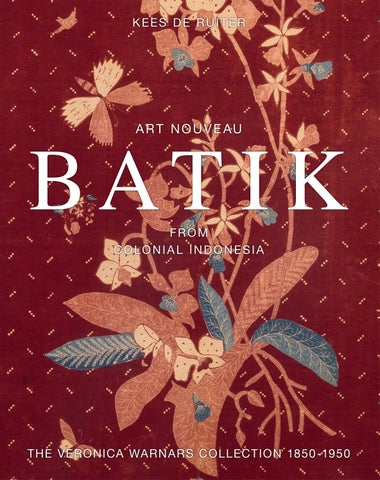
BATIK
FROM COLONIAL INDONESIA
ART NOUVEAU
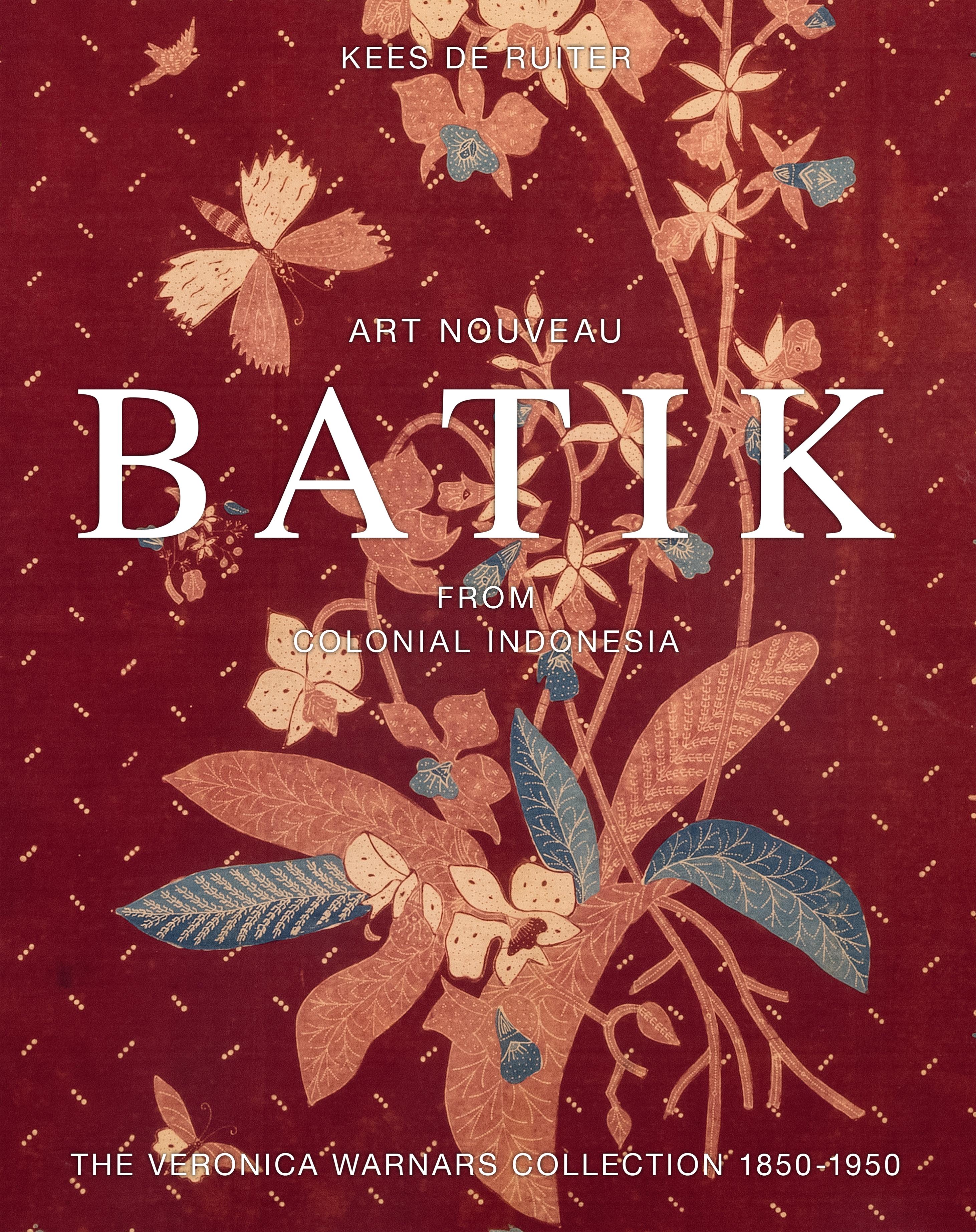
ART NOUVEAU
BATIK
FROM COLONIAL INDONESIA
THE VERONICA WARNARS COLLECTION
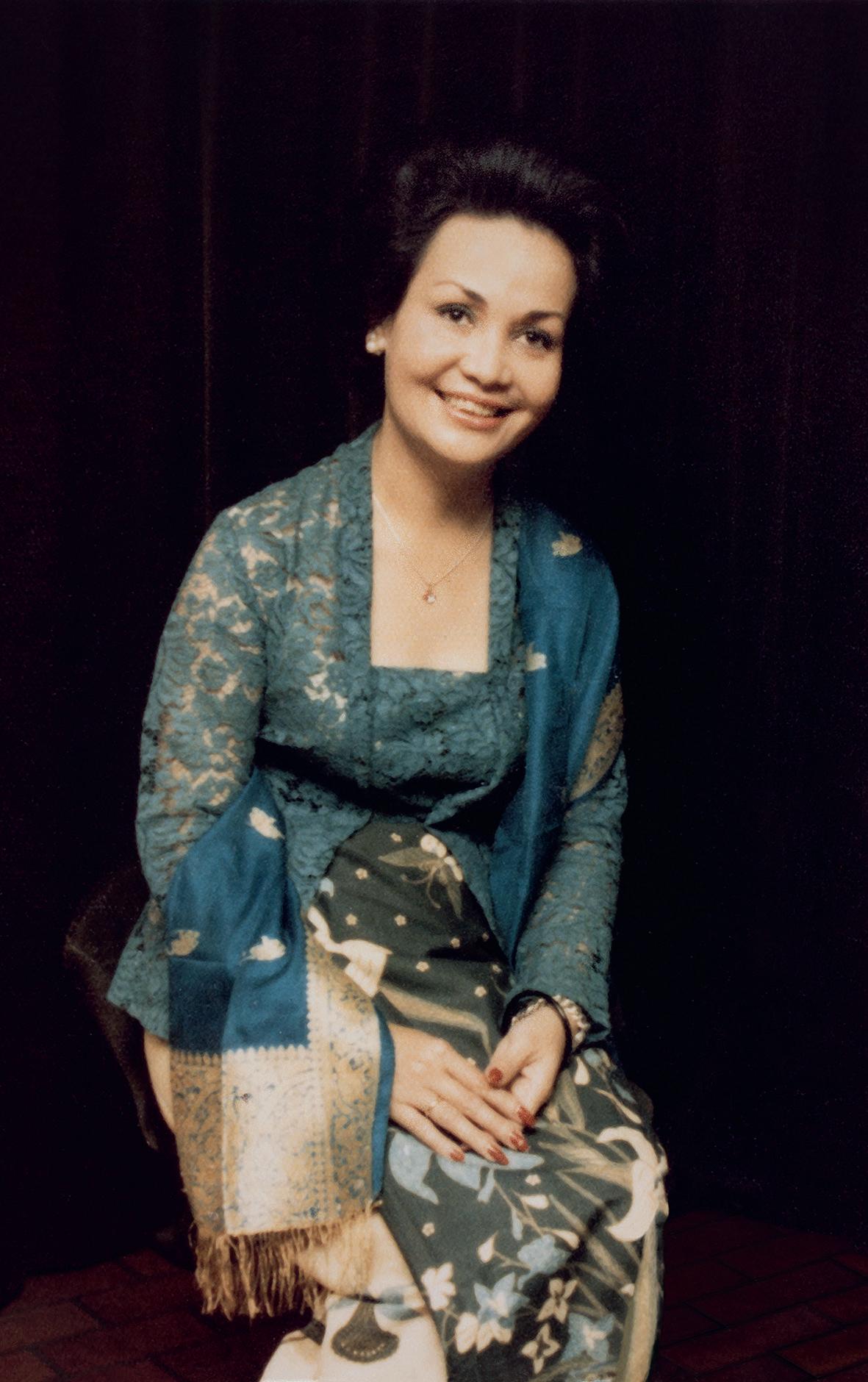
Veronica Warnars (Batavia 1938-1997 Maastricht)
For my mother Veronica Warnars to whom I dedicate this book. She opened my eyes to the aesthetic and art historical value of batik art
Kees de Ruiter, 2026
COLOFON
Art Nouveau batik from Colonial Indonesia
The Veronica Warnars Collection
LM Publishers Voorhaven 129 1135 BP Edam
info@lmpublishers.nl www.lmpublishers.nl
© 2026 LM Publishers
ISBN 9789460229244
Text: Kees de Ruiter
Photography: Carol Winkel | Amsterdam
Illustrator: Willem van den Hoed
Design: Erik Rikkelman; Studio Rikkelman and Ad van Helmond
Production: High Trade BV
Cover: see page 220-221
No part of this publication may be reproduced, stored in an automated database or made public in any form or by any means without prior written permission from the publisher.
Foreword 8
1 The Indo-European citizens in the Dutch East Indies 12
2 What is batik? 31
3 Batik from Semarang 46
4 The Art Nouveau style in the former Dutch East Indies 70
5 Batik from Pekalongan I 100
6 Batik from Pekalongan II 173
7 Indo-European batik from Yogyakarta and Surakarta 247
8 Indo-Chinese batik Peranakan 279
9 European batik imitations 312
10 Batik made during the War of Independence of Indonesia 318
Glossary 322 Bibliography 326
CULTURE IS WHAT YOU WEAR
AND WHAT YOU BRING TO
BEAR
This book is about the Indo-Dutch ‘Mestizo ’ culture in the former Dutch East Indies, a Eurasian mixed culture that flourished in the colony during centuries. Culture is what you bring to bear in fashion, gastronomy, language and dialects. It is about religious beliefs, literature and poetry, and about music, how you sing and dance. This book is specifically about clothing and dress in the Dutch colony, it is about the sarong , the traditional tubular skirt for women. These are of course no longer worn by Indo-Europeans or Indo’s , but these skirts have been preserved by the older generation of European and Indo-European colonials, especially those that repatriated to the Netherlands after the independence of Indonesia in 1945. These luxurious articles of clothing, meticulously hand-drawn in wax and vat-dyed, are still treasured by old colonial families and kept in chests and closets, and in museums all over the world. These family heirlooms are cultural souvenirs that are not only decorative pieces of textile art, but they also tell us a story about the wearer and their cultural and historical background. A batik cloth is an expression of the ‘Mestizo ’ culture, and with that a tangible proof of colonial history. What do we actually see on the cloth, and how do we ‘read’ and interpret the designs? The patterns, motifs, colours and iconography tell a story and indicate the origin and date of the batik and may even point to a specific city, area or workshop.
Around the mid-nineteenth century the European influence became visible on traditional Javanese batik. Female Indo-European and European batik entrepreneurs hired indigenous women ( pembatiks) who were specialists in the traditional batik tulis technique. They expertly made the finest drawings by hand in hot wax after designs provided by the owners of these workshops. These designs were hybrid in style with Javanese, Indian, Chinese and European motifs and patterns. Around 1900 the Art Nouveau style was popularized in the Dutch colony and its influence became visible on these batik designs. This fashionable style was loved not only by European and Indo-European women, but also by a select affluent group of Indo-Chinese Peranakan customers and privileged indigenous ladies. Colonial batik art was eclectic and each ethnic group had its own preferences and taste in colour and design. Various cultures came together in this batik art and each cloth told its own story.
Who were these European and Indo-European batik entrepreneurs and who were their clients? The colony was a segregated society, not only by social class but also race and religion. These groups lived mostly separated from one another, and batik underscored these differences, but in doing so also provided anchoring within a group. We not only wear what is fashionable within our group, but we also like to emphasize with our choice of clothing to which social, ethnic and religious group we belong or want to belong to.
The selected batik art in this book dates from the period 1850 to -1950, the last century of the colonial era. Within this period, the heyday of Indo-European batik was from about 1870 to the 1920s. The opening of the Suez Canal in 1869 and the emergence of fast steamships marks the beginning of this era, when many more European women came to the colony. Their arrival increased the demand for cool and comfortable batik homewear. The peak of Indo-European batik mostly coincides with the period of the international Art Nouveau style, popular not only in Europe but also in the Dutch East Indies, where everything from Europe enjoyed a warm welcome. The Art Nouveau style was also imported to the Dutch colony and this Western influence inspired the designs on sarong tubular skirts and kain panjang wrap skirts. These exquisite and expensive skirts were only worn by European and Indo-European women for leisure at home and among family and friends and never at official occasions. It was the informal, cool and comfortable dress of the tropics. However, this changed by the end of World War I and by the late 1910s a new era dawned. Fashion changed and the younger generation of Indo-European and European women in the colony largely abandoned the traditional attire of sarong and kebaya and adopted Western dresses and the modern styles of the 1920s.
‘Batik pengaruh Eropa’ is the Javanese batik art that was shaped by European influences in its style, symbolism, patterns and motifs. Most of the batik skirts in The Veronica Warnars Collection are part of the Indo-European or mixed ‘Indies’ culture and fashion. In addition the book draws special attention to the important role the mainly female Indo-European entrepreneurs played in this period. These independent and emancipated women were in charge of successful workshops and their fashionable designs played a major role in spreading the Indo-European ‘mesties’ style and taste within the cross-cultural Dutch colony.
The foundation for this collection of Batik pengaruh Eropa was laid by my Indo-Dutch greatgrandmother Marie Warnars-Krol (1888-1930). Out of her inheritance, I received my first signed sarong from her collection in the 1970s. A rare Art Nouveau example from Elize van Zuylen’s batik workshop in Pekalongan. My grandmother Eveline Warnars-Sersansie (19091990) and my mother Veronica de Ruiter-Warnars (1938-1997), after whom this collection is named, have also contributed importantly. I now represent the fourth and last generation, tasked with describing and preserving this cherished collection of batiks for future generations. Collected over the last century, they are tangible mementos from a world that has long vanished.
With special thanks to all friends that helped and motivated me during my years of research and writing. First of all my loyal and most patient partner Wil Broekman, whose tireless support stimulated me to write this book. Next is my dear friend Stefan Erik Oppers who helped me tremendously with this English translation. In the last couple of years I met many scholars, connoisseurs and fellow enthusiasts of batik art and I want to mention the following: Asmoro Damais, Daniël Tendean, John Ang, Jonathan Hope, Oei Oen Goan, Maarten Arntzenius, Gary Gartenberg, Rudolf Smend, Sabine Bolk, Kwan Hwie Liong, Sven Verbeek Wolthuys and the late Paul de Bont, Liesje de Leeuw and Rens Heringa.
The Ballad of East and West (1889)
Oh, East is East, and West is West, and never the twain shall meet, Till Earth and Sky stand presently at God’s great Judgment Seat; But there is neither East nor West, Border, nor Breed, nor Birth, When two strong men stand face to face, though they come from the ends of the earth!
Joseph Rudyard Kipling (Bombay 1865-1936 London)
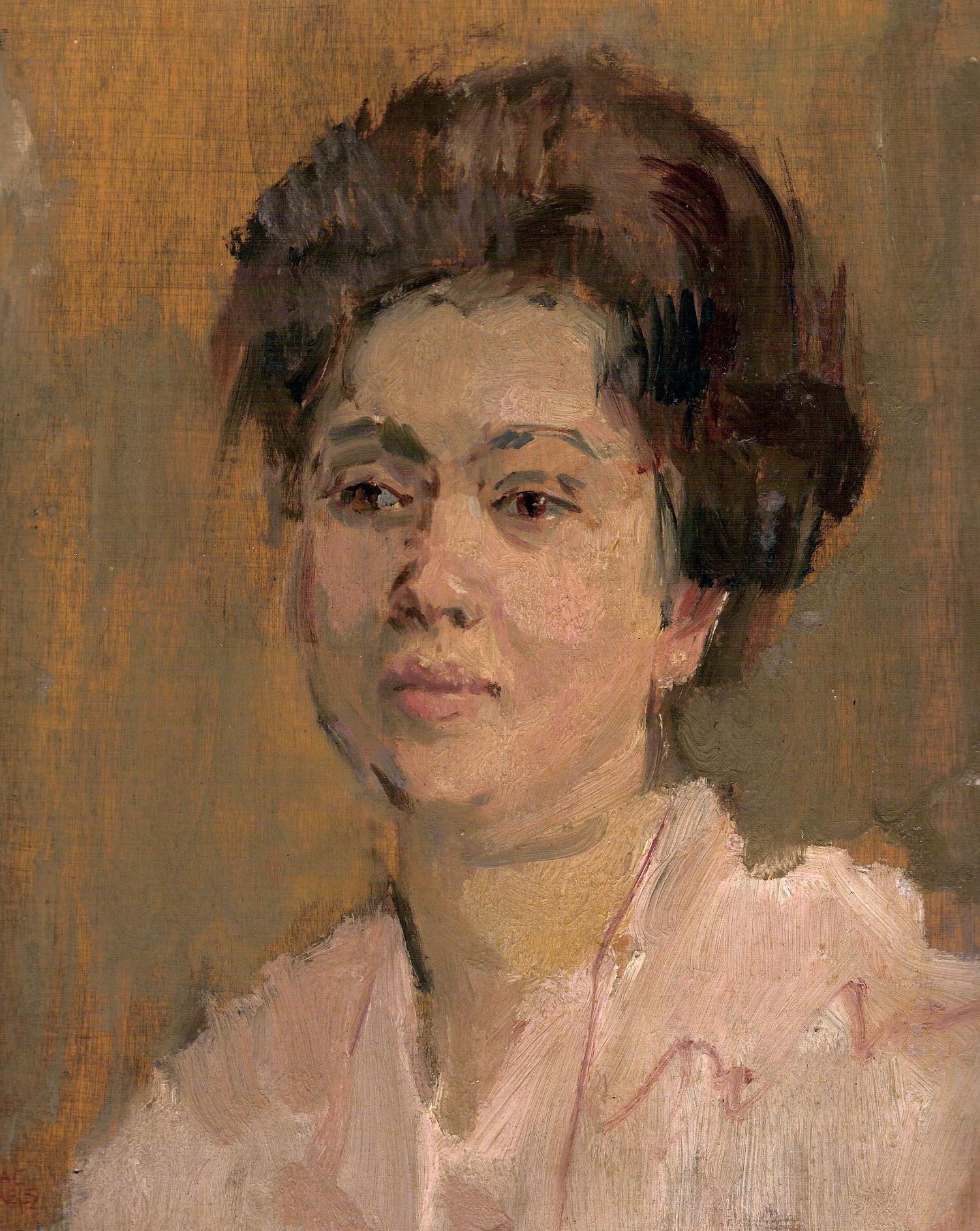
Portrait of my great-grandmother Marie Warnars-Krol (1888-1930), painted by Isaac Israëls (1865-1934) during his stay on Java in 1922. Fully signed ‘Isaac Israëls’, oil on panel, 26.5 x 20.5 cm
1. THE INDO-EUROPEAN CITIZENS IN THE DUTCH EAST INDIES
The ‘Eurasians ’, the ‘Mestizos ’ or ‘Belanda-Indo ’
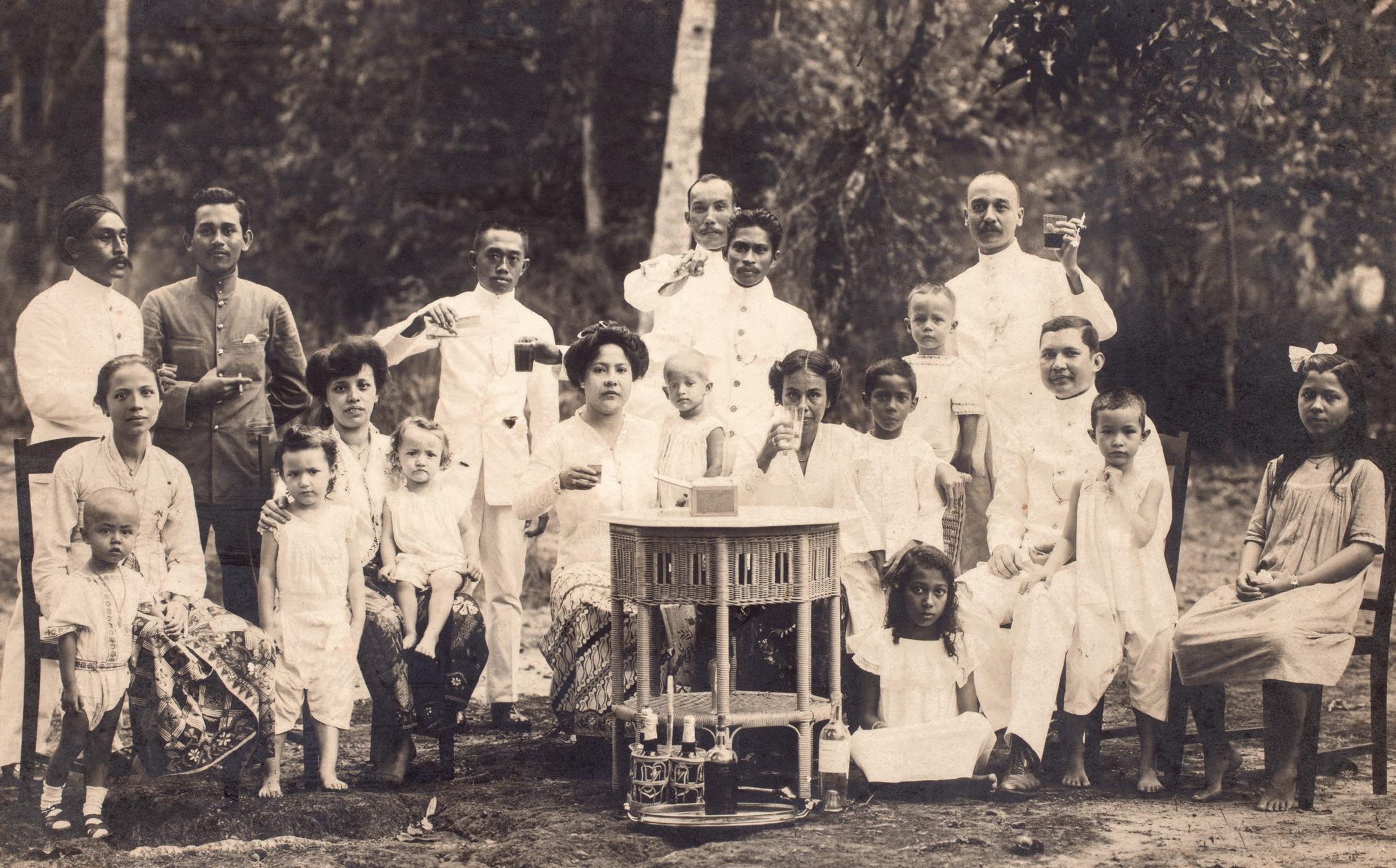
The Catholic Indo-Dutch Warnars-Krol family, Muntok (Mentok) Bangka, circa 1917
My Indo-European great-grandmother, Marie Warnars-Krol (1888-1930), was born in the former Dutch East Indies and lived with her husband and their two sons in the town of Muntok, on the island of Bangka. They were part of the Indo-European community in the colony and my Indo-European great-grandfather Paul Victor Emanuel Warnars (1876-1940) worked for the Dutch company Banka Billiton Tin Winning Maatschappij (Bangka Belitung Tin Company), founded in 1860. My great-grandfather stands on the right with his glass
raised, with my grandfather Johan Marinus standing on a chair in front of him. My greatgrandmother Marie sits behind the table in the middle with her youngest son, Paul Lucien. She is dressed in a sarong and a white kebaya, exclusive to Christian women. Her sarong in the Indo-European style has a traditional Javanese parang pattern combined with an European floral border or booh . On the left stands the Javanese head of household wearing his batiked iket kepala or folded head cloth.
The fusion between the European and Indonesian culture started in the first decades of the 17th century. The city of Batavia, now called Jakarta, on the island of Java, was founded by the Dutch in 1619. It was the most important port of the Dutch East India Company or Verenigde Oostindische Compagnie (VOC). During the subsequent centuries it became a hectic and hybrid melting pot, with officials, traders and entrepreneurs of many different nationalities and ethnic groups. These Dutch and Germans, together with the French and English and their (mixed) descendants, lived alongside indigenous people such as Javanese, Sumatrans, Madurese and Balinese and others from all over the archipelago. And the Chinese Peranakan community was always of great importance, together with the Sinhalese, Malays, and the Japanese.
The industrial economy depended mostly on enslaved people captured from the Moluccas and other conquered territories, and also on former slaves such as the so-called Mardijkers , originally from India. A mixed group of people arose, and these Mestiezen and Eurasians became a large and very influential group in the Dutch East Indies. The VOC government needed loyal Christian citizens in its newly conquered territories, people who were born in the East and stayed in the colonies and did not repatriate after they found their fortunes and filled their pockets. Marriages with indigenous women were encouraged in this early period, as long as the women were baptised by the Dutch Reformed Church and their children were brought up as Christians. Even the slaves in their household were Christianized.
This is how the Indo-Dutch, or rather Indo-European, community became of the greatest influence and significance. By the time of the British occupation of the Dutch colony from 1811 to 1814, the Lieutenant-Governor of Java, Thomas Stamford Raffles, encountered a fully Eurasian society in Batavia with a Mesties elite: a hybrid society that embraced European culture, but never neglected its Asian roots and customs, whether in clothing or cuisine.
Between the opening of the Suez Canal in 1869 and the turn of the twentieth century the (Indo-)European community in the Dutch East Indies doubled to more than 75,000 persons (Taylor 1983, p. 128). As a result, the demand for clothing from Europe rose greatly, but the comfortable dress of the batiked sarong in the hybrid Indo-European style became very popular as well, and thus started the bloom period of Batik pengaruh Eropa
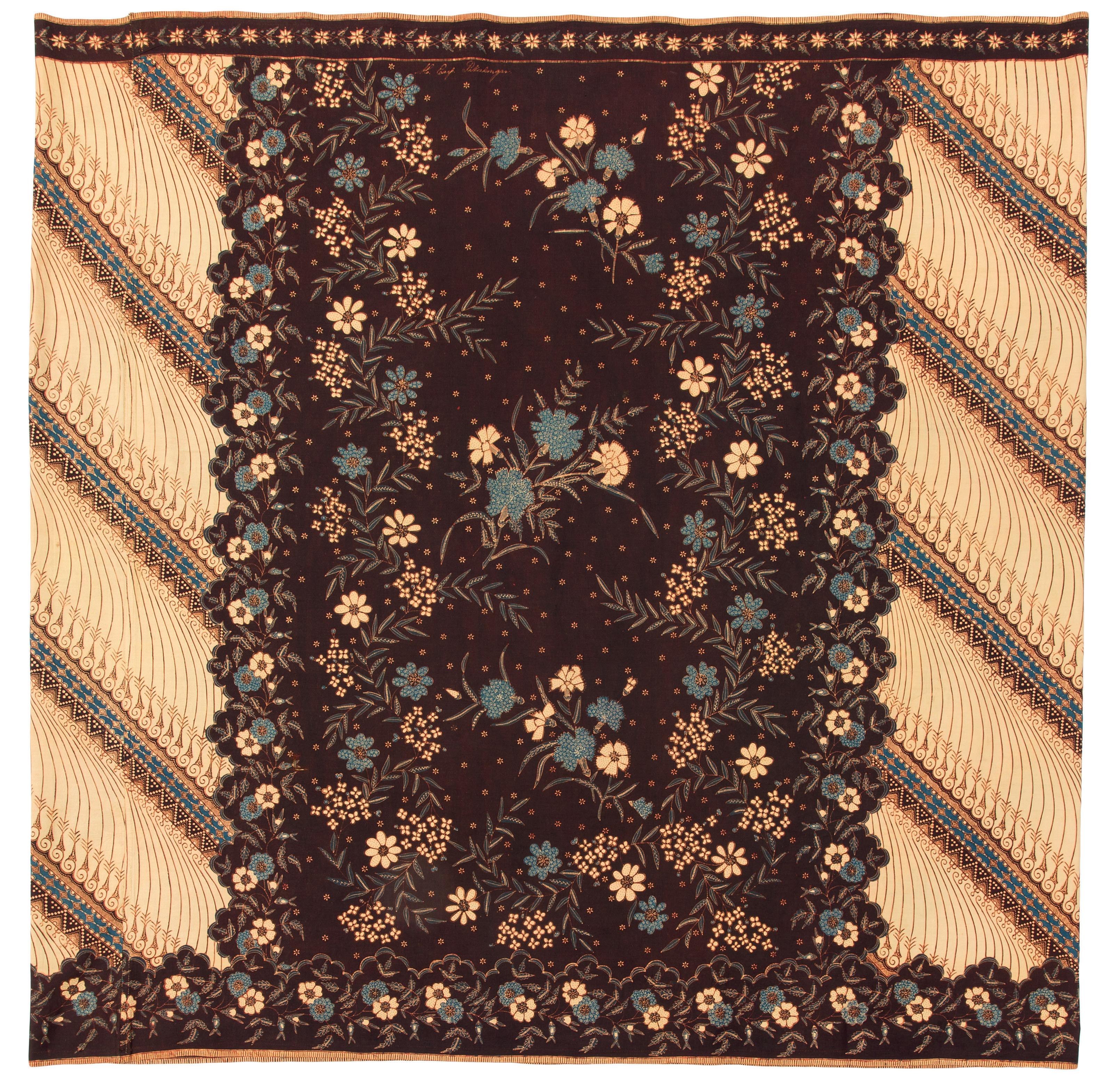
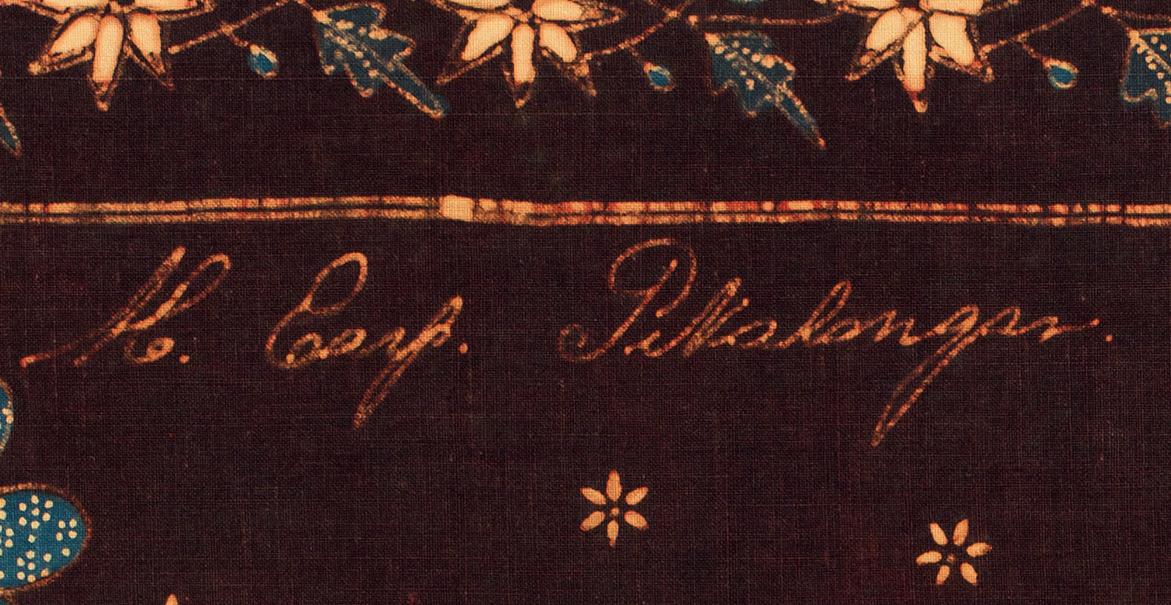
Sarong tubular skirt in batik tulis, hand-drawn wax resist, vat-dyed with natural colours on plain-weave cotton. Fully signed ‘M. Carp’, Pekalongan circa 1900. 104.5 x 106 cm
I inherited this family heirloom from my Indo-European or ‘Indische ’ great grandmother Marie Warnars-Krol (1888-1930). It was a present from my grandmother Eveline WarnarsSersansie for my tenth birthday in 1975 and the first batik in my collection.
It is fully signed by batik entrepreneur Maria Paulina Carp-Rapila (Japara 1860-1916 Batavia). Maria Paulina was an indigenous Javanese woman, but she was baptised by the protestant church and married the widower and Amsterdam-born Willem Eduard Theodoor Carp in Purwokerto in 1889. After she became a widow in 1897, she started her workshop in Pekalongan to provide for her children and stepchildren.
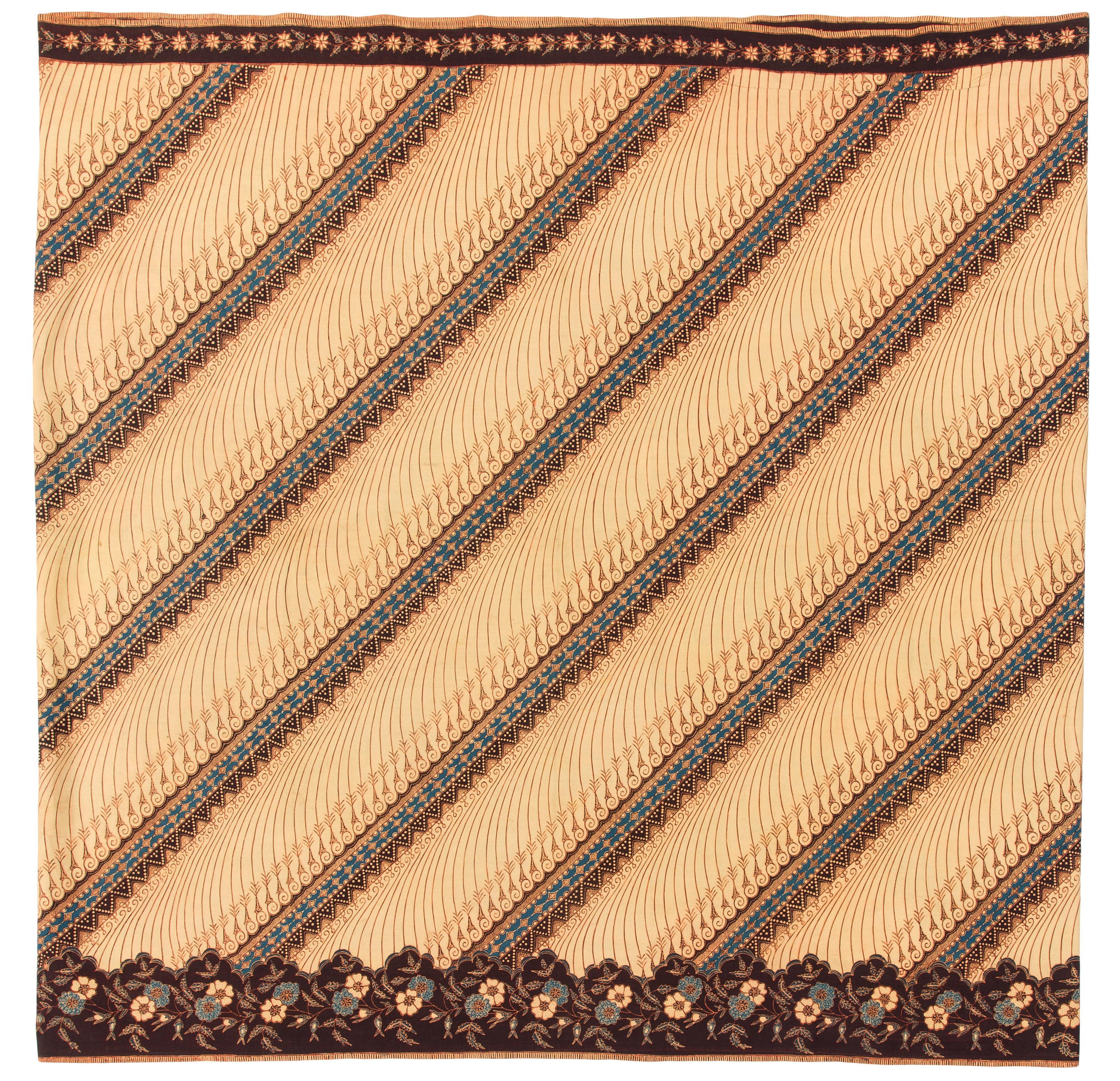
The badan reverse side has a very refined and classic Javanese ‘Parang Menang ’ pattern combined with a floral border in the Indo-European style. Batik from the Maria Carp workshop is extremely rare, only six are known in museums worldwide and this is number seven. Four are in the collection of the Amsterdam Tropenmuseum, National Museum of World Cultures (NMVW). This design with carnations is also to be found on a kain panjang wrap skirt attributed to the batik oeuvre of the famous Raden Adjeng Kartini (1879-1904).
See: Collection Museum Nasional Jakarta and Veldhuisen 1993, p. 23, ill. 3.
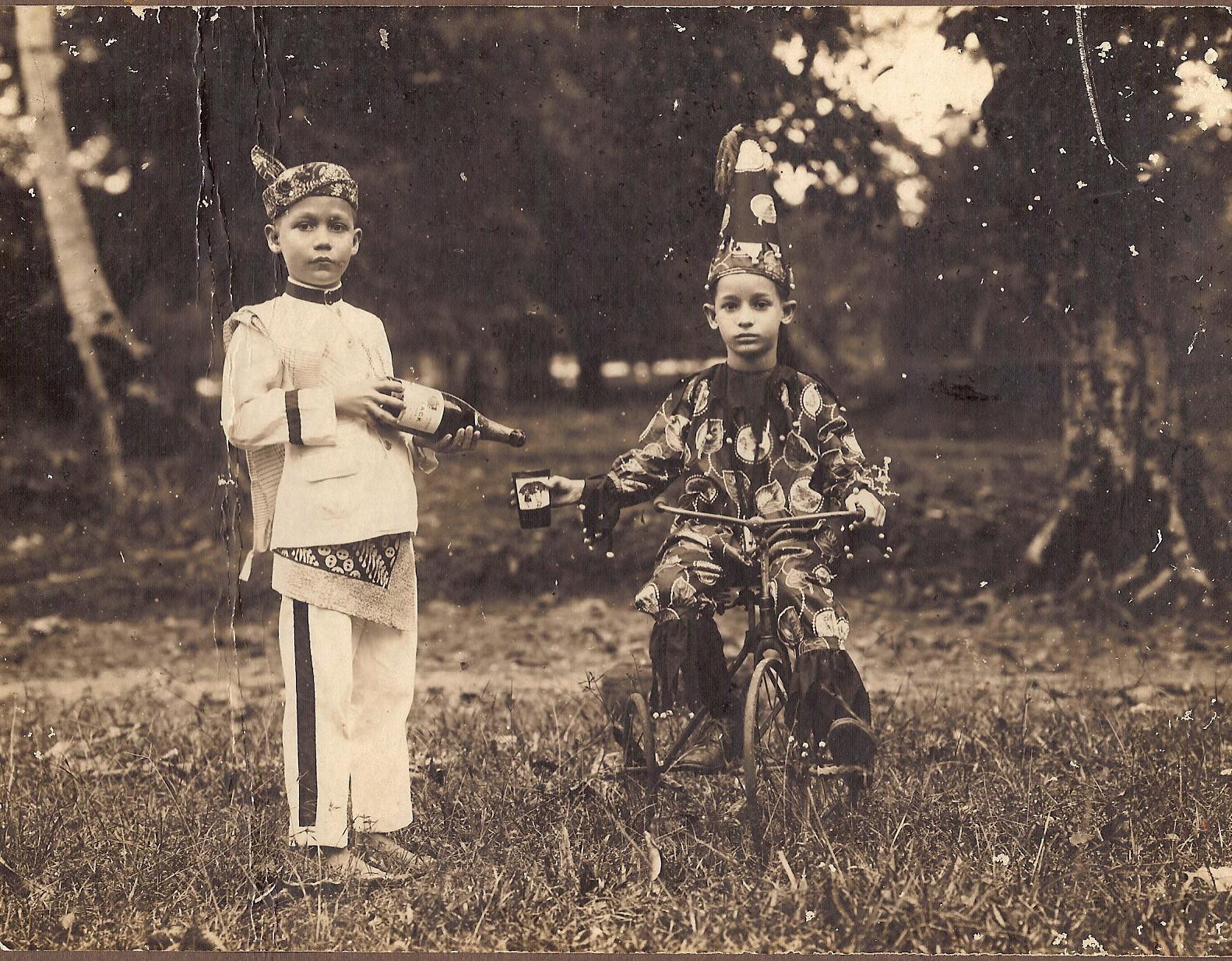
My Indo-European grandfather Johan Marinus Warnars (1911-1960) together with his younger brother Paul Lucien, Muntok Bangka island circa 1917. Both are dressed up for a bal costumé as a Javanese servant and a pierrot clown with pointy hat. My grandfather wears a batiked headkerchief or iket kepala folded in the traditional way
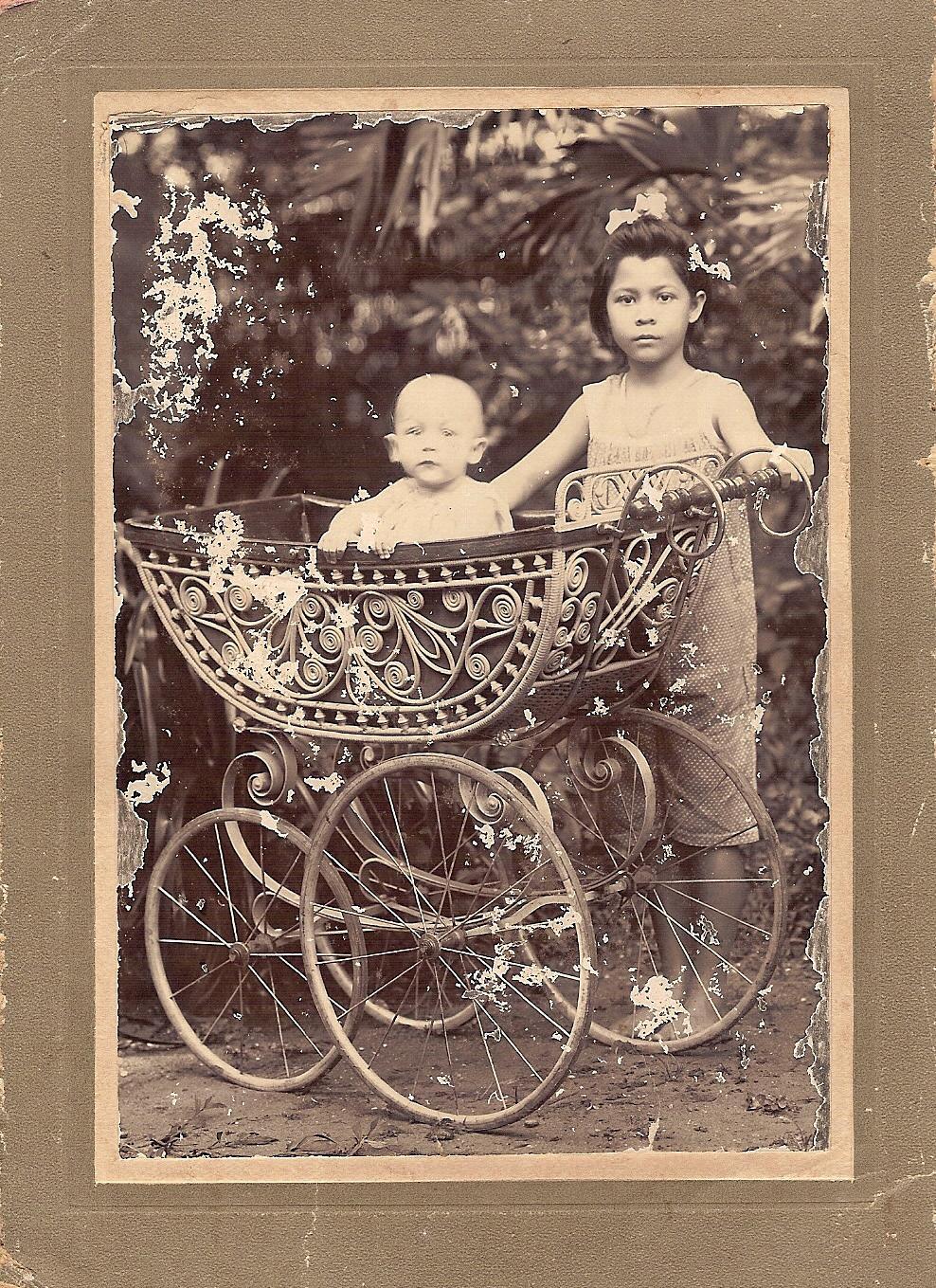
My Indo-European grandfather Johan Marinus Warnars (1911-1960), Muntok Bangka island circa 1911. The Indo-European girl next to him is dressed in a so-called Bébé -dress, the informal and comfortable dress for little girls in the Dutch East Indies. She wears a white bow in her hair according to the latest European fashion
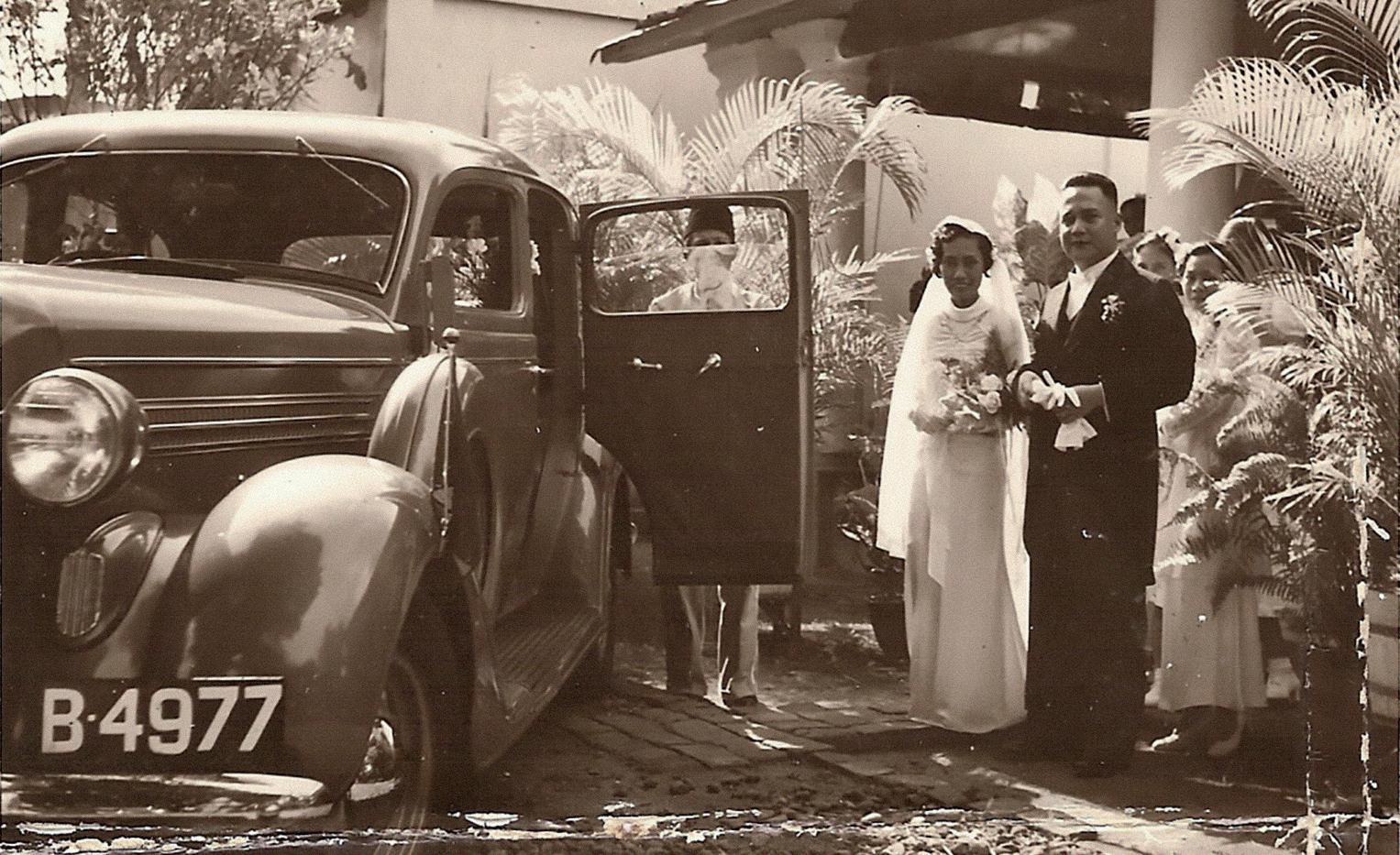
My Indo-European grandparents Evelien Sersansie en Johan Marinus Warnars on their wedding day 11 March 1937, address Berendrechtslaan 48, Weltevreden Batavia. The license plate of the car starts with the ‘B’ of Batavia.
After the Japanese occupation and the independence of Indonesia circa 300,000 Europeans, of which circa 200,000 were Indo-European and of mixed descent, left the former Dutch colony and repatriated to the Netherlands (Willems 2001, pp. 12-13). They took with them their treasured family heirlooms, like exquisite batik in the Indo-European style or Batik pengaruh Eropa
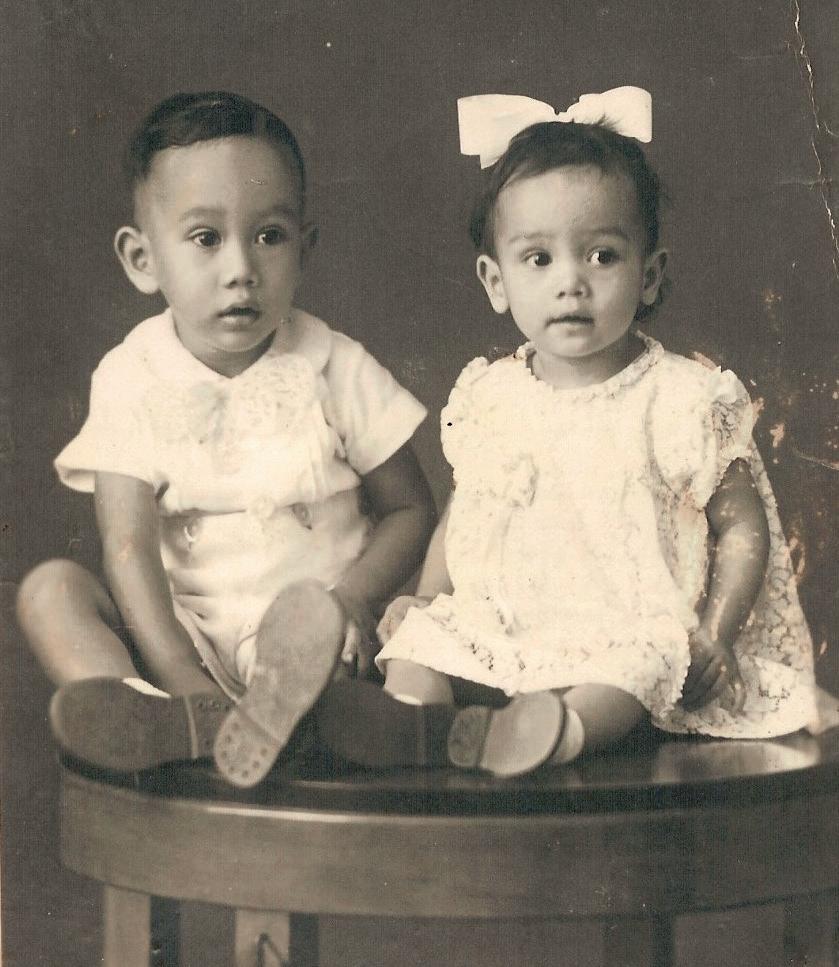
My Indo-European mother Veronica Warnars and her little brother just before the Japanese occupation, Weltevreden Batavia 1941
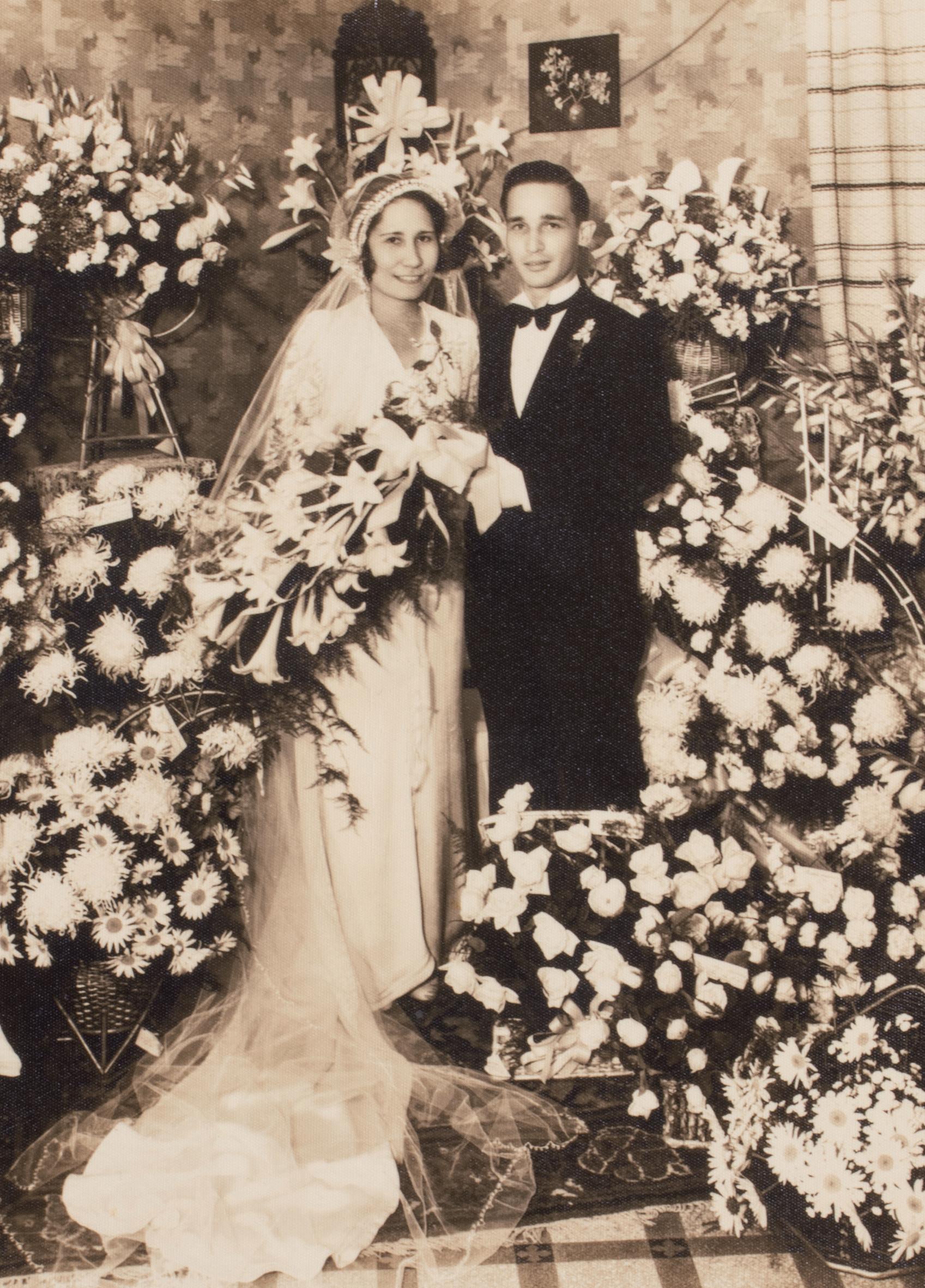
My Indo-European great uncle Paul Lucien Warnars, the younger brother of my grandfather and his Indo-European-Moluccan wife Dina Warnars-Manuhutu on their wedding day, Batavia 1938
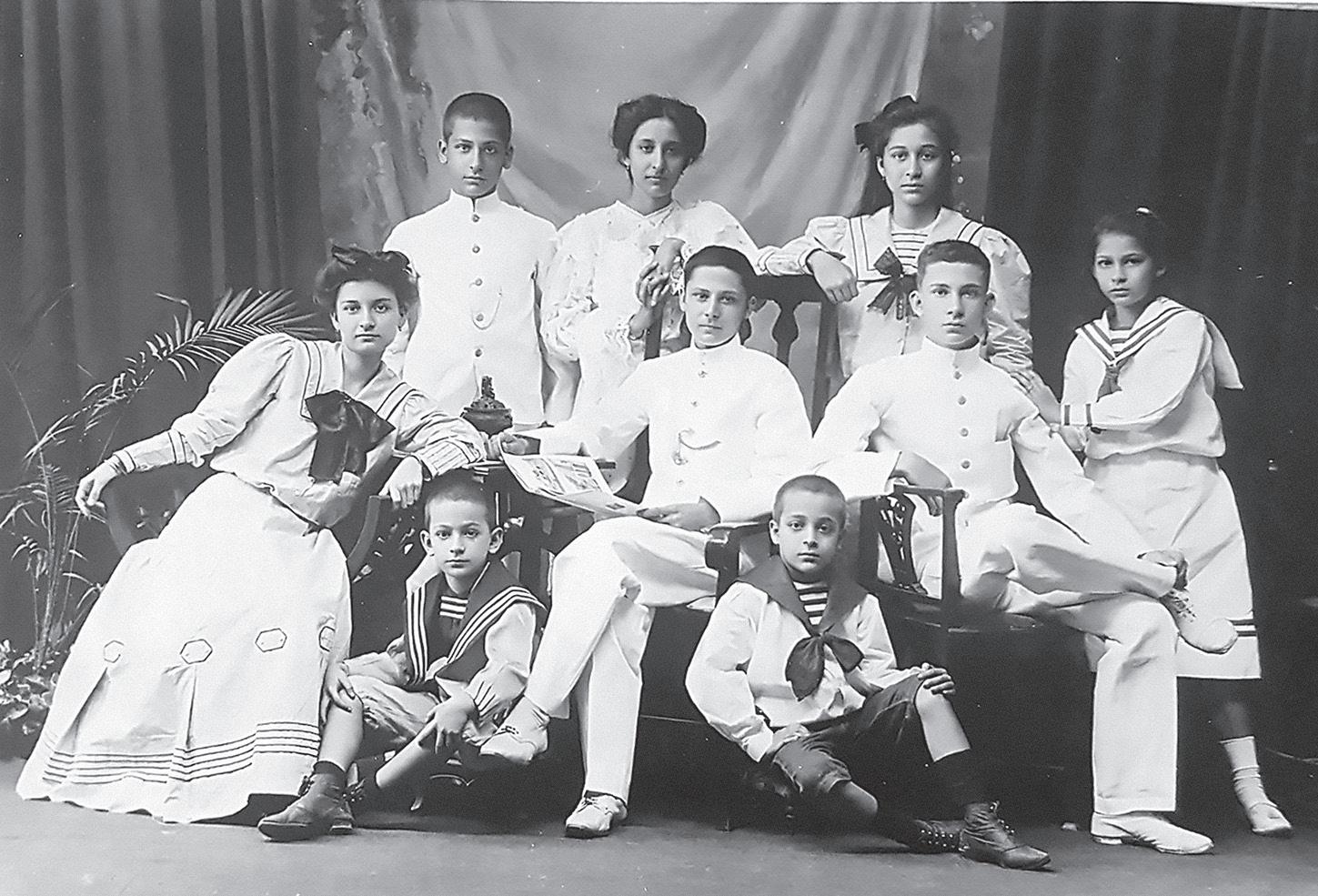
Portrait of the nine Indo-European children of Eduard Heinrich Schultz (1856-1930) and Paulina Josephina Schultz-Hagenbeek (1863-1932), the only daughter of Theodorus Hagenbeek (18061877) and the indigenous Christianized Fomie. This photo is dated around 1910-1920, taken in the studio of the famous photographer Ohannes Kurkdjian in Surabaya. The latest western fashion was strictly followed by European and Indo-European families in the Dutch colony and batiked clothing was only worn as informal homewear. Photo: Family archive Schultz-De Bont, with thanks to Paul de Bont
CHAPTER 1 • 19
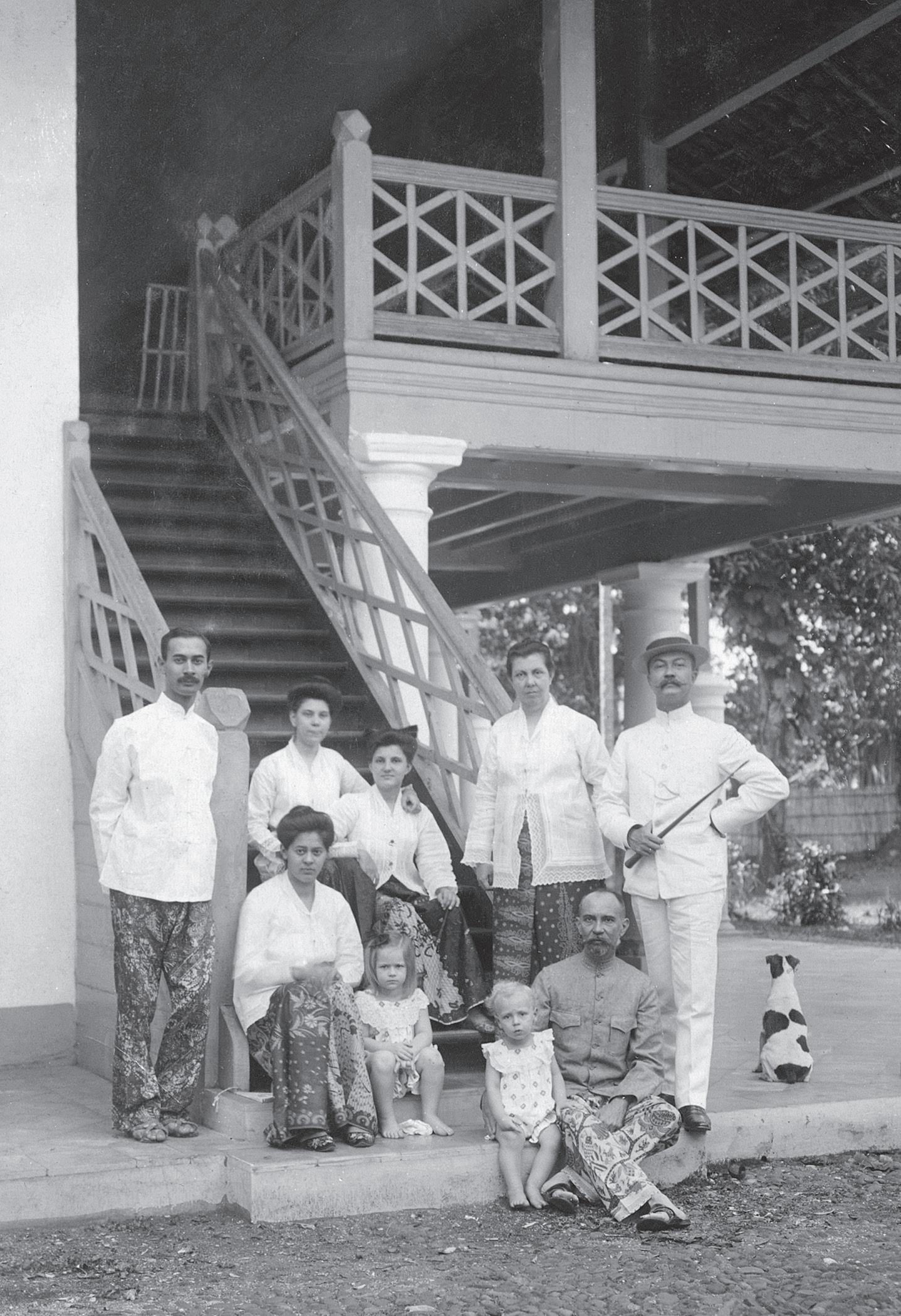
An Indo-European party in front of the house of the De Nijs Bik family, Tanah Abang Heuvel 88, Batavia 1908. Indo-Dutch landowner and pater familias Pieter Albert de Nijs Bik (1858-1920) sits in front with his grandson Pieter Albert van Garderen. The ladies wear their informal dress of sarong and white laced kebaya, exclusive to Christian women. The gentlemen wear their batiked house trousers or celana pangsi . This photo is illustrated in the book ‘250 years in old Jakarta – Tales of the Bik family and the rich history of Tanah Abang ’, Sydney, 2020. With thanks to the author Sven Verbeek Wolthuys
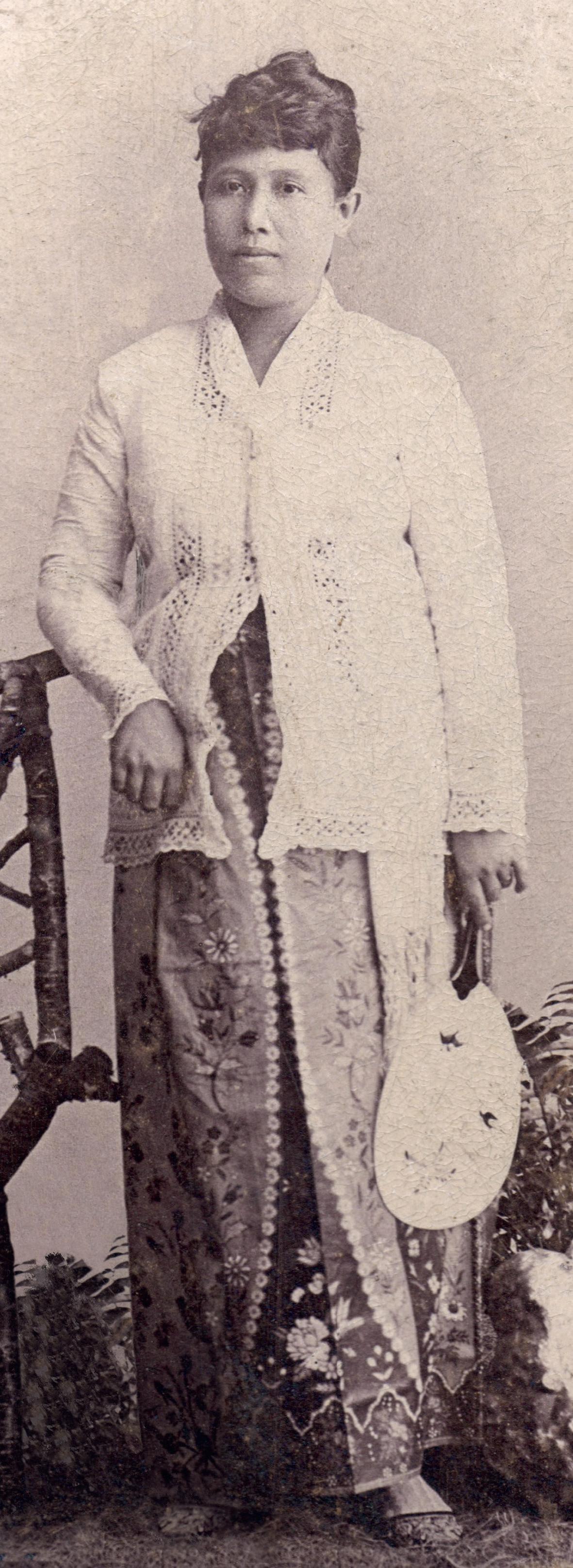
Studio photo of the Indo-European (Eurasian)
Louisa Johanna Françoise van Spanje-Kizitaff (Padang 1862 - 1939 Batavia)
It is rare to find formal photos made in a studio of European and Indo-Europeans colonials in their informal dress of sarong and kebaya. The costly sarong with an exquisite floral design is clearly hand-drawn in batik tulis and in the Indo-European fashion and style or Batik pengaruh Eropa . It was most likely made in an Indo-European batik workshop in the Pekalongan area around 1890. Other photos can be found of women wearing this tropical dress, but mostly in informal and intimate settings like gardens, verandas and columned porticos. When an official portrait was made in a photo studio, the dress was preferably European. In the segregated colonial society the position of the Indo-European group was always vulnerable and ‘going native’ in sarong was frowned upon. However, when family and friends in Europe were to be impressed with curious exotic images of colonial life, the indigenous dress of sarong and kebaya was shown off. The ‘Indische ’ Louisa van Spanje-Kizitaff wears silk embroidered slippers and is clothed in a luxurious white laced kebaya, exclusive to Christian women in the colony. Louisa was the acknowledged daughter of the German-Jewish Gustav Kizitaff and his Christianized ‘Njai ’ Sadima, whom Kizitaff married in Padang on the 10 th of December 1870. Photo: Family archive Kizitaff-Van SpanjeTierolf, with thanks to Marc Tierolf
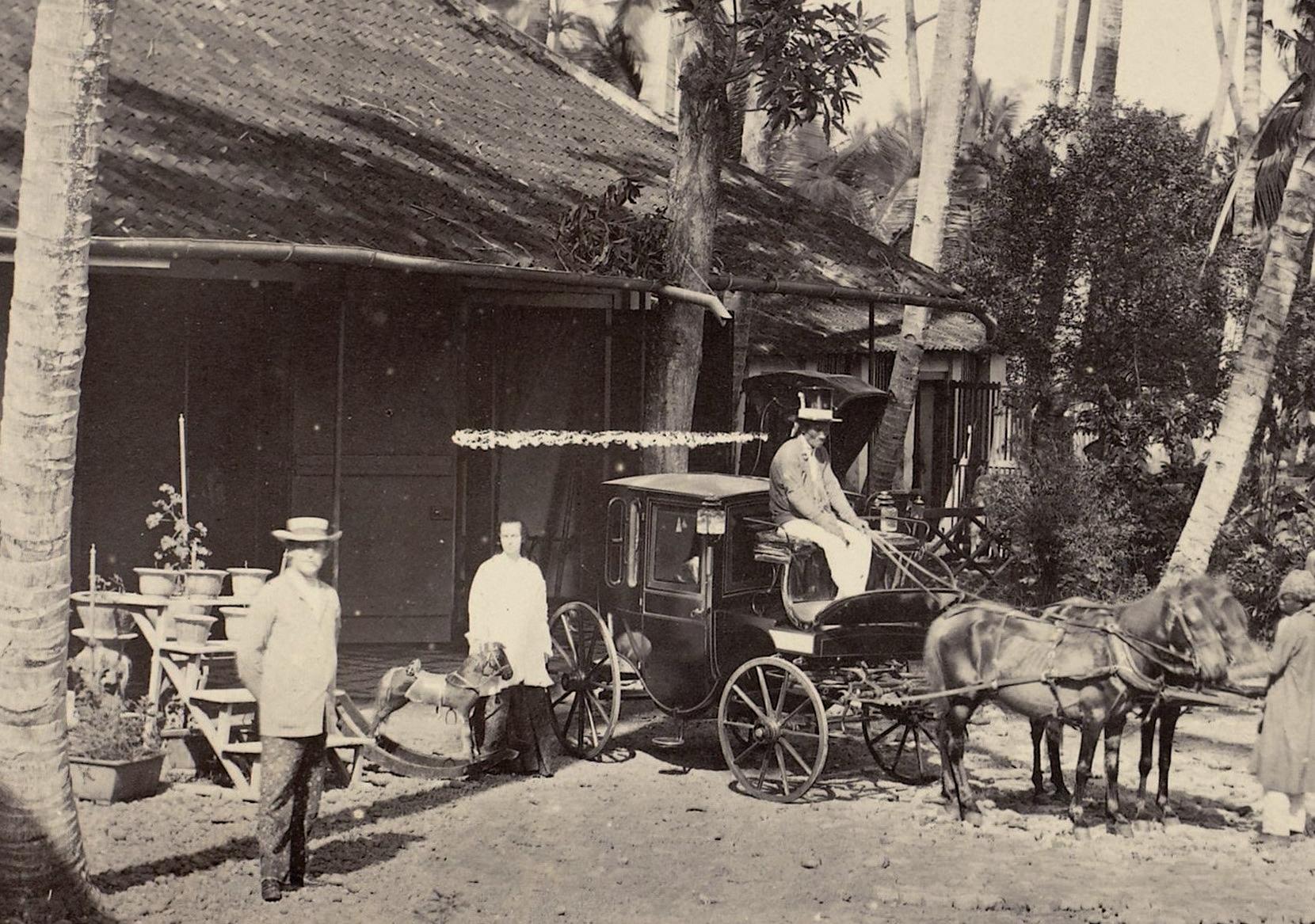
European couple in front of their house dressed in their comfortable homewear. The gentleman wears his batiked trousers or tjelana (celana pangsi ) and the lady a batiked skirt and a white laced kebaya, exclusive to Christian women. Photographer: Woodbury & Page, circa 1860 (detail). Collection Rijksmuseum Amsterdam, inv. nr. NG-2011-31-19
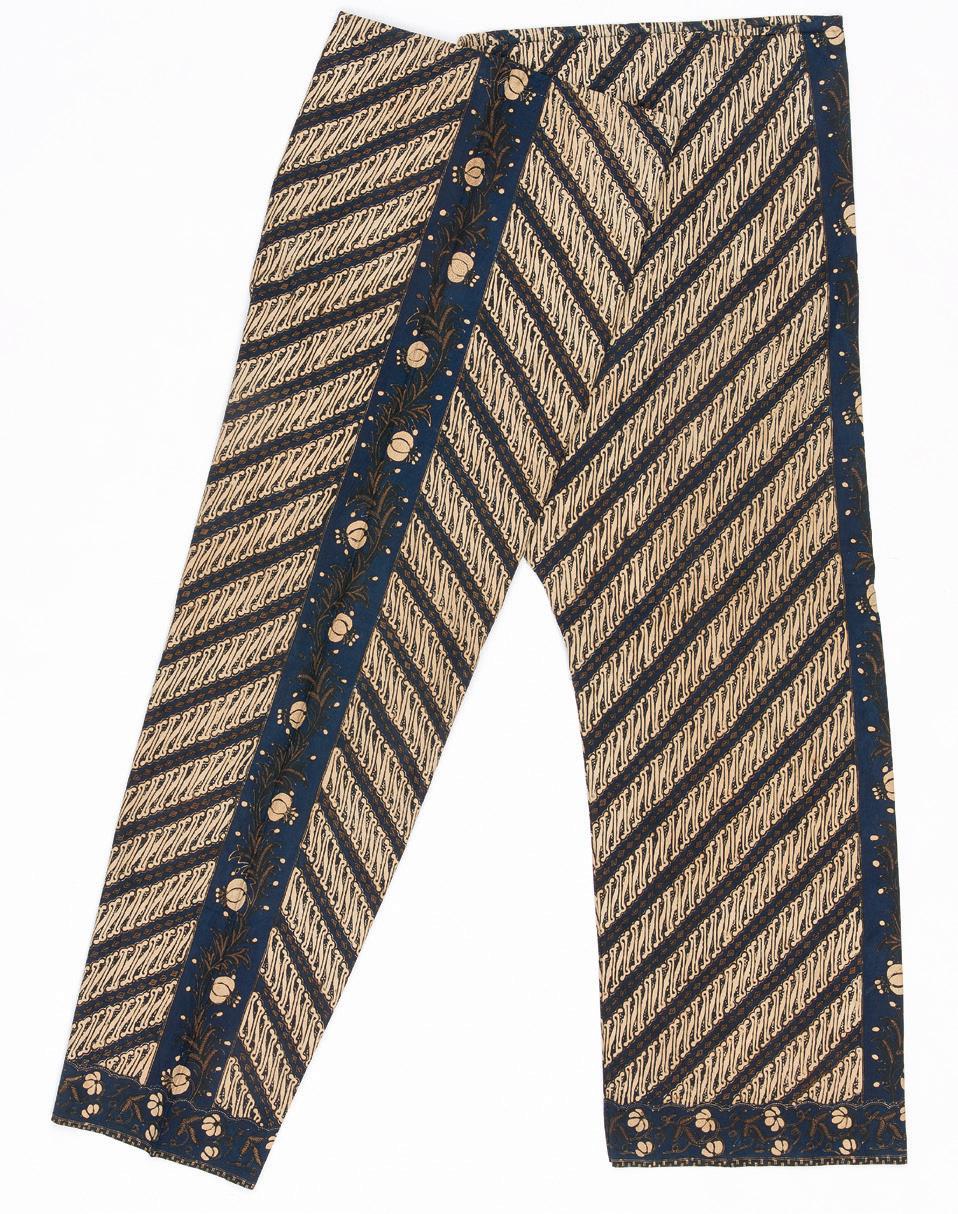
Pair of trousers or tjelana (celana pangsi ) with a drawstring in batik tulis, hand-drawn wax resist, vat-dyed on plain-weave cotton. Traditional Javanese Parang -pattern combined with a floral border in the European style, Pekalongan or Pacitan circa 1900
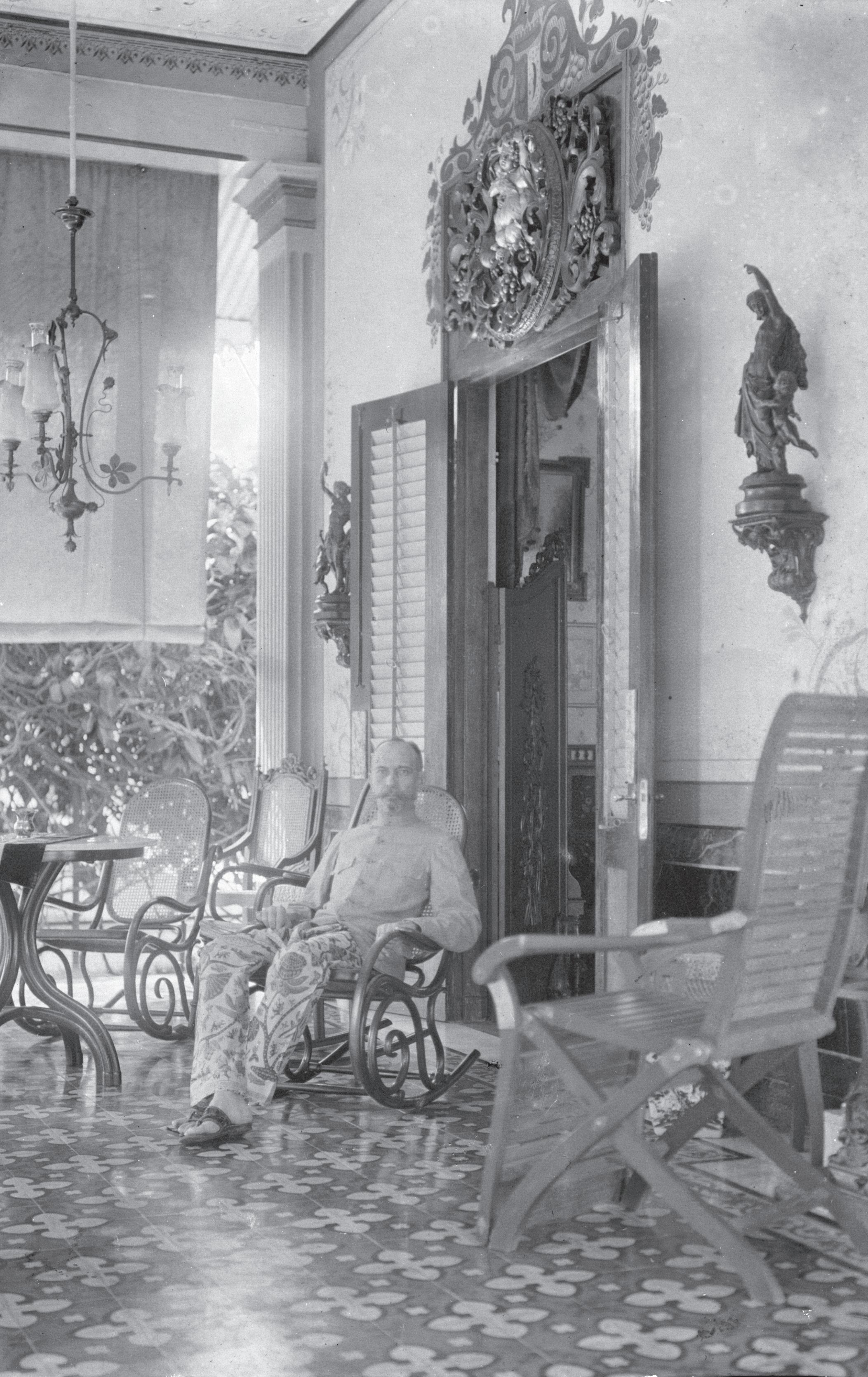
The Indo-European or ‘Indische ’ Pieter Albert de Nijs Bik (1858- 1920) on the veranda of his estate Tanah Abang Heuvel 88, Batavia 1908. This veranda has imported French tiles on the floor and an Art Nouveau chandelier hanging from the ceiling. The affluent land owner is sitting in his comfortable batiked trousers on a fashionable bentwood Thonet chair from Vienna. Photographer: Charles & Van Es. This photo is illustrated in the book ‘250 years in old Jakarta – Tales of the Bik family and the rich history of Tanah Abang ’, Sydney 2020. With thanks to the author Sven Verbeek Wolthuys
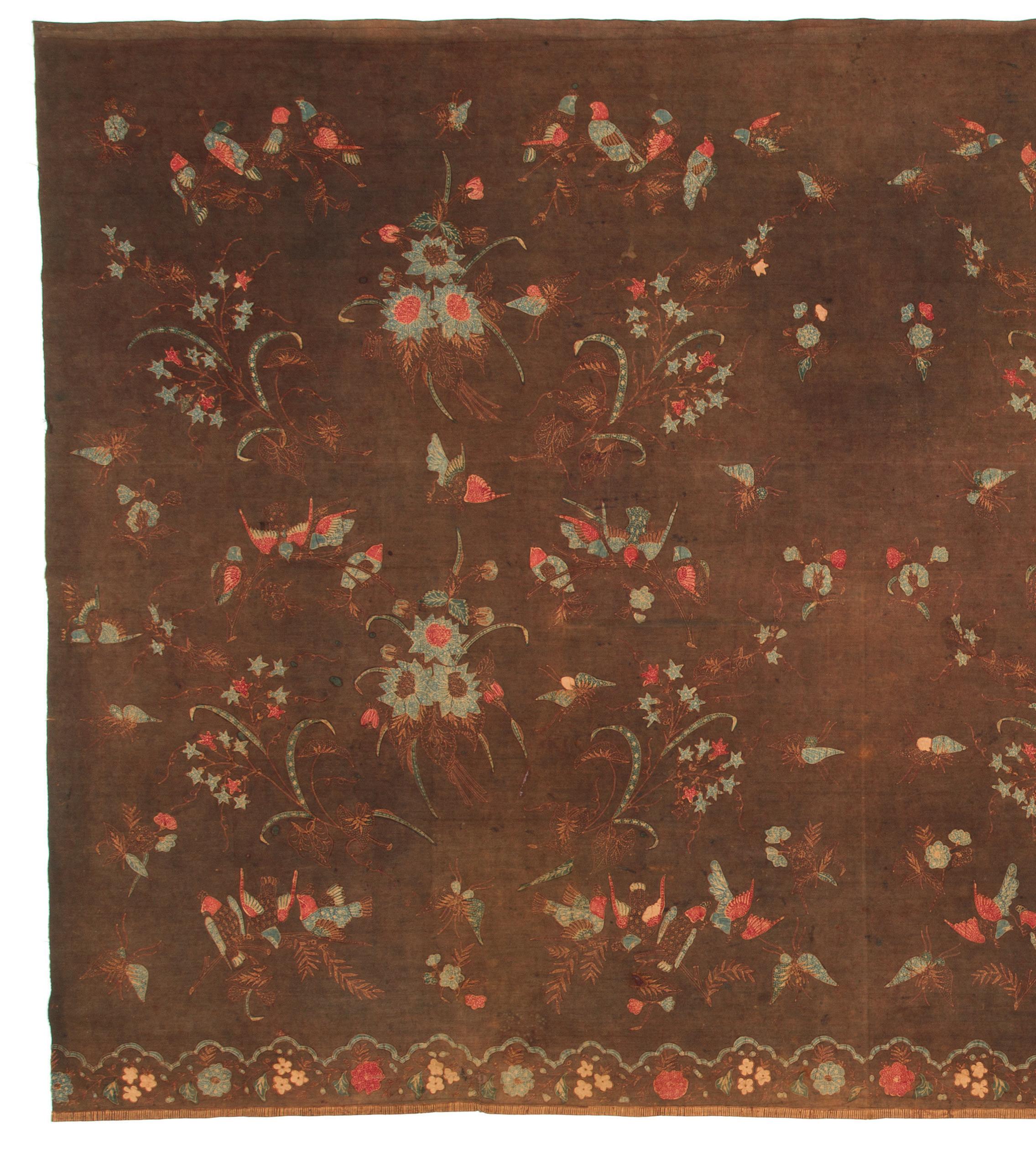
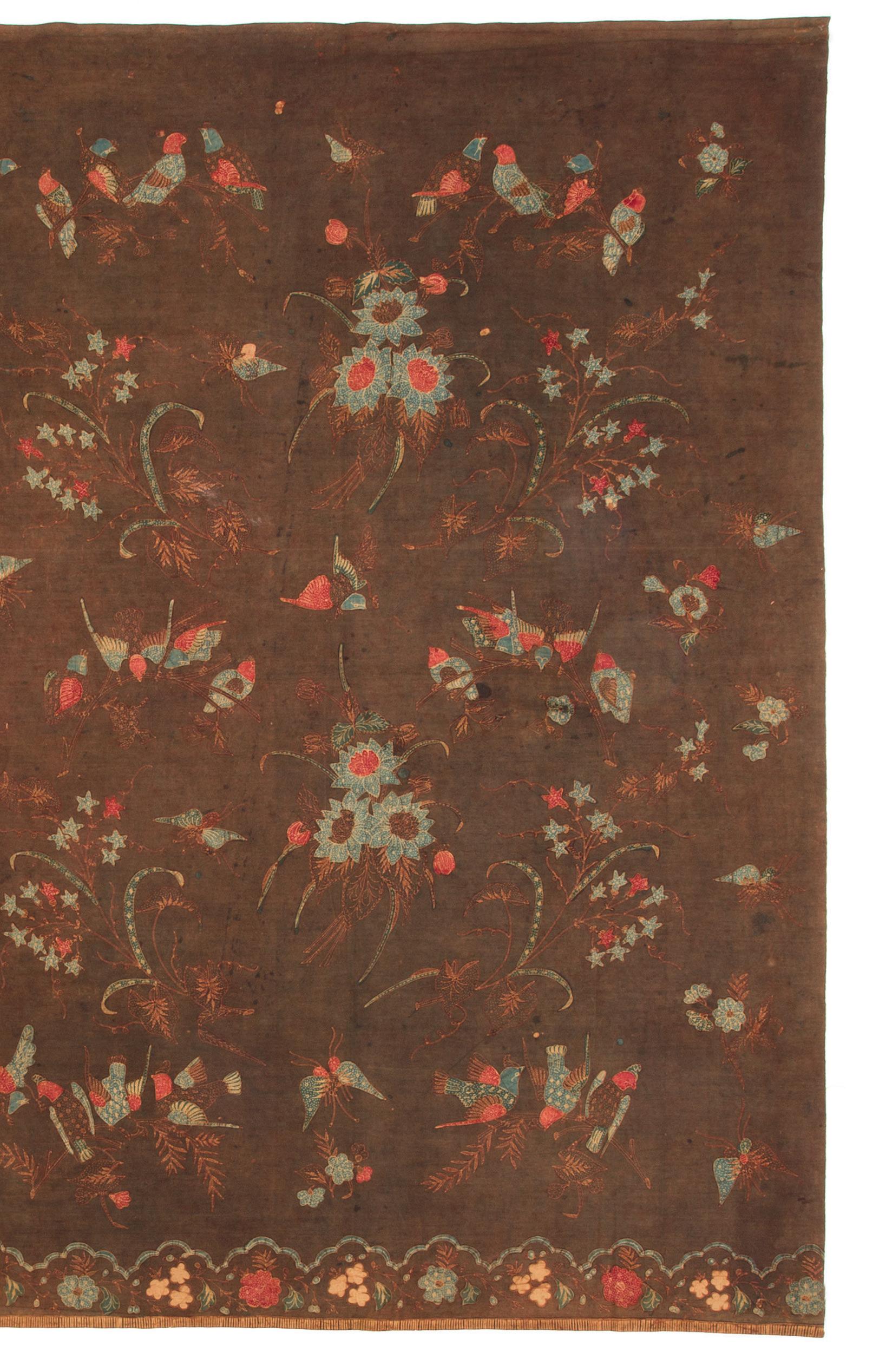
Rare cloth in batik tulis, handdrawn wax resist, vat-dyed on plain-weave cotton, specially made to be cut into a pair of trousers for men (celana pangsi ). These cloths were never signed by the batik entrepreneur. Indo-European workshop, Pekalongan circa 1900. 106 x 158 cm
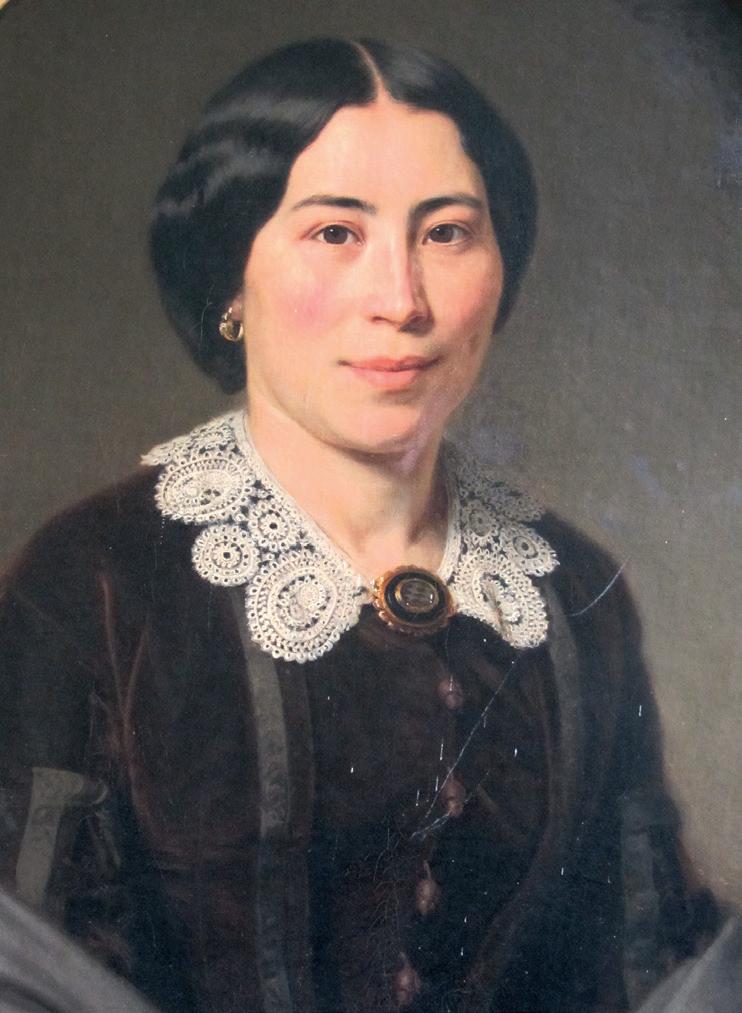
Portrait of the Indo-European Louise Helena Arntzenius-Plate (Padang 1831-1895 The Hague). Oil on canvas, 75 x 61 cm. Fully signed ‘Johan Heinrich Neuman’ and dated 1860. Louise was the acknowledged daughter of Louis Matthieu Frederic Plate and his indigenous wife Coralie of Nias.
With thanks to mr. P.A.M. (Maarten) Arntzenius, The Hague
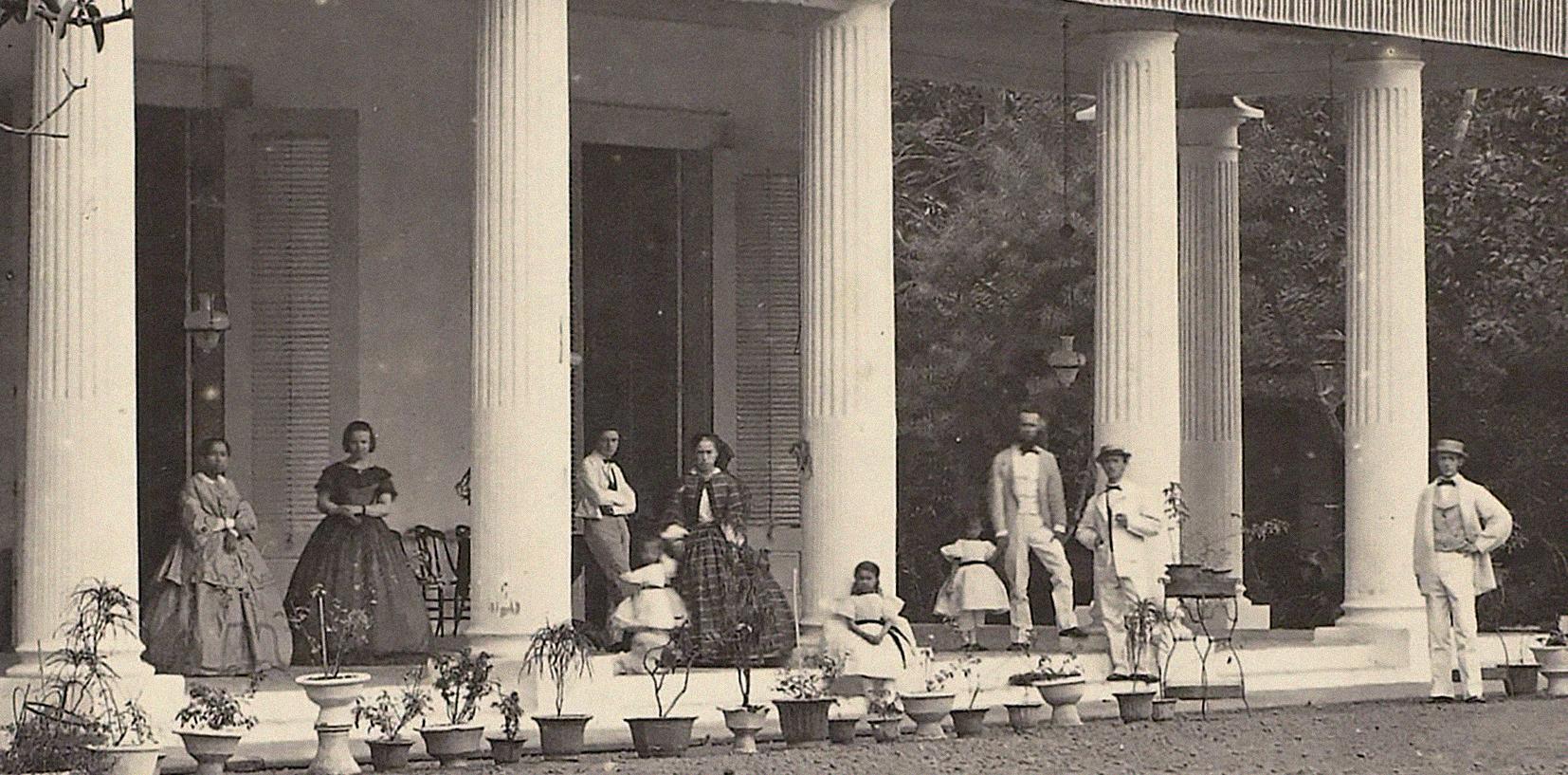
A European party on the portico of a colonial estate, Weltevreden Batavia circa 1865. The Indo-European ladies are wearing their formal dress of corsets and crinolines, an ordeal in the tropics. In the heat, the cool homewear of sarong and kebaya was preferred by the European and Indo-European women in the Dutch colony. Photographer: Woodbury & Page. Collection Rijksmuseum Amsterdam, inv.nr. NG-2011-30-24
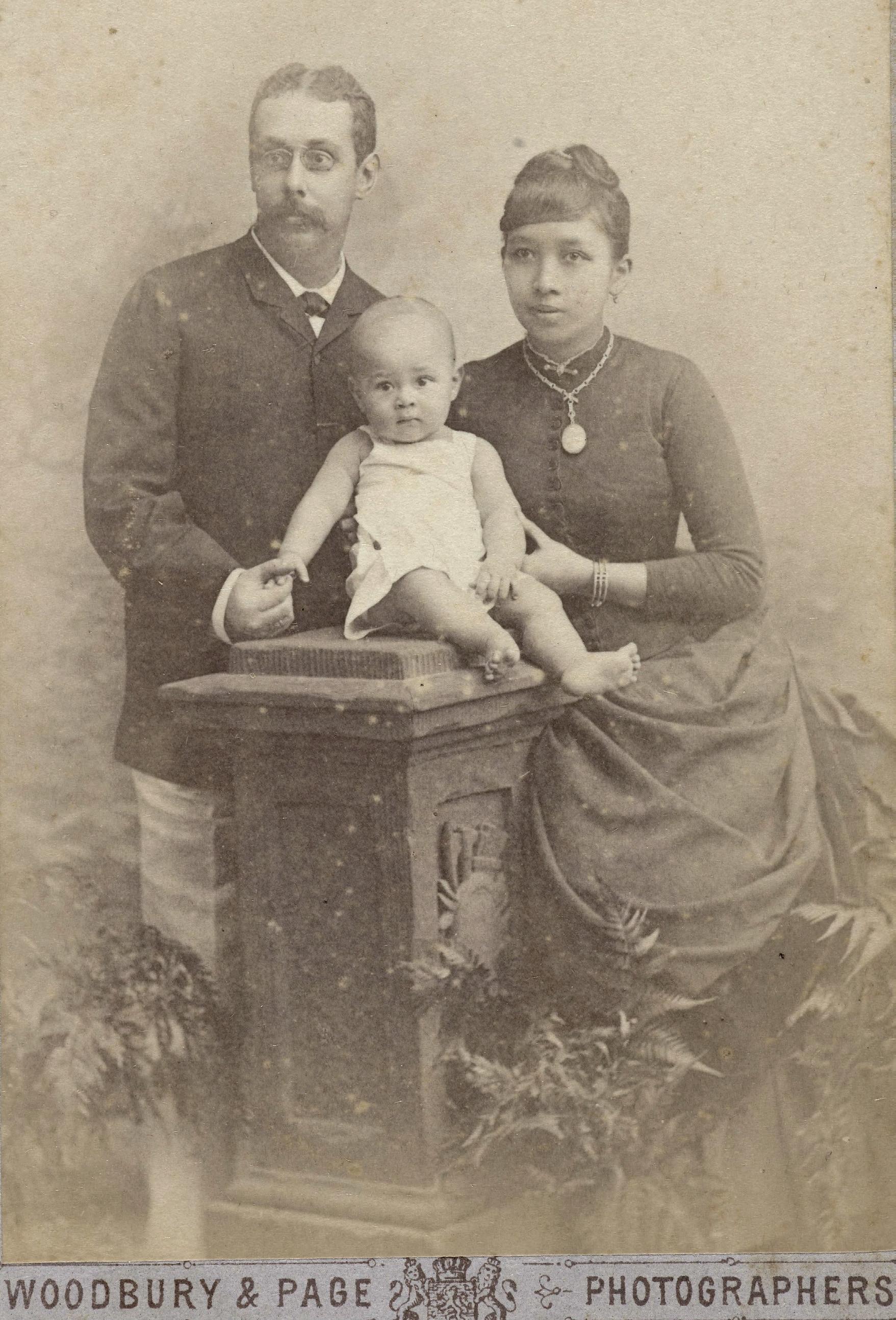
Indo-European family. Photographer: Woodbury & Page, Java circa 1870. Collection Rijksmuseum Amsterdam, inv. nr. RP-F-2007-14-32. Donated by The Kessler-de Lange Foundation in 2007
CHAPTER 1 • 27
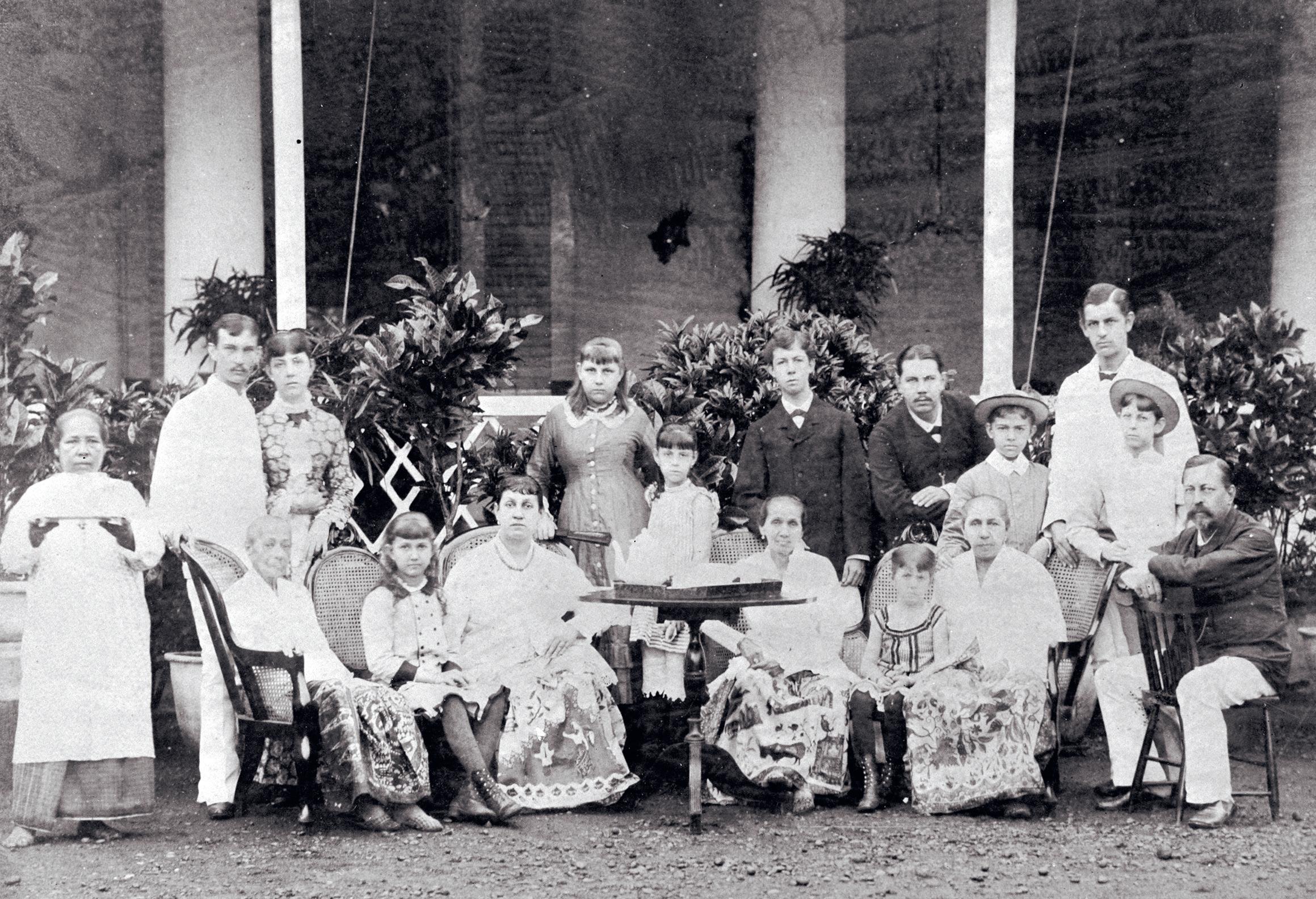
The Indo-European Bik family in front of their Salemba house, Batavia 1884. The ladies sitting in the front row are all wearing precious sarong in the Indo-European style or Batik Pengaruh Eropa . The owner of the house, Lambertina Jeannette Elizabeth Adriane van Berckel Bik-Meijer (18241895), also known as ‘Tjang’, is seated on the chair second from right. She was the granddaughter of Leendert Miero and the enslaved Saartje. Tjang was the first Miero to marry a Bik, namely Wijnand Willem van Berckel Bik (1820-1875).
This photo is taken from the book ‘250 years in old Jakarta – Tales of the Bik family and the rich history of Tanah Abang ’, Sydney 2020. With thanks to the author Sven Verbeek Wolthuys
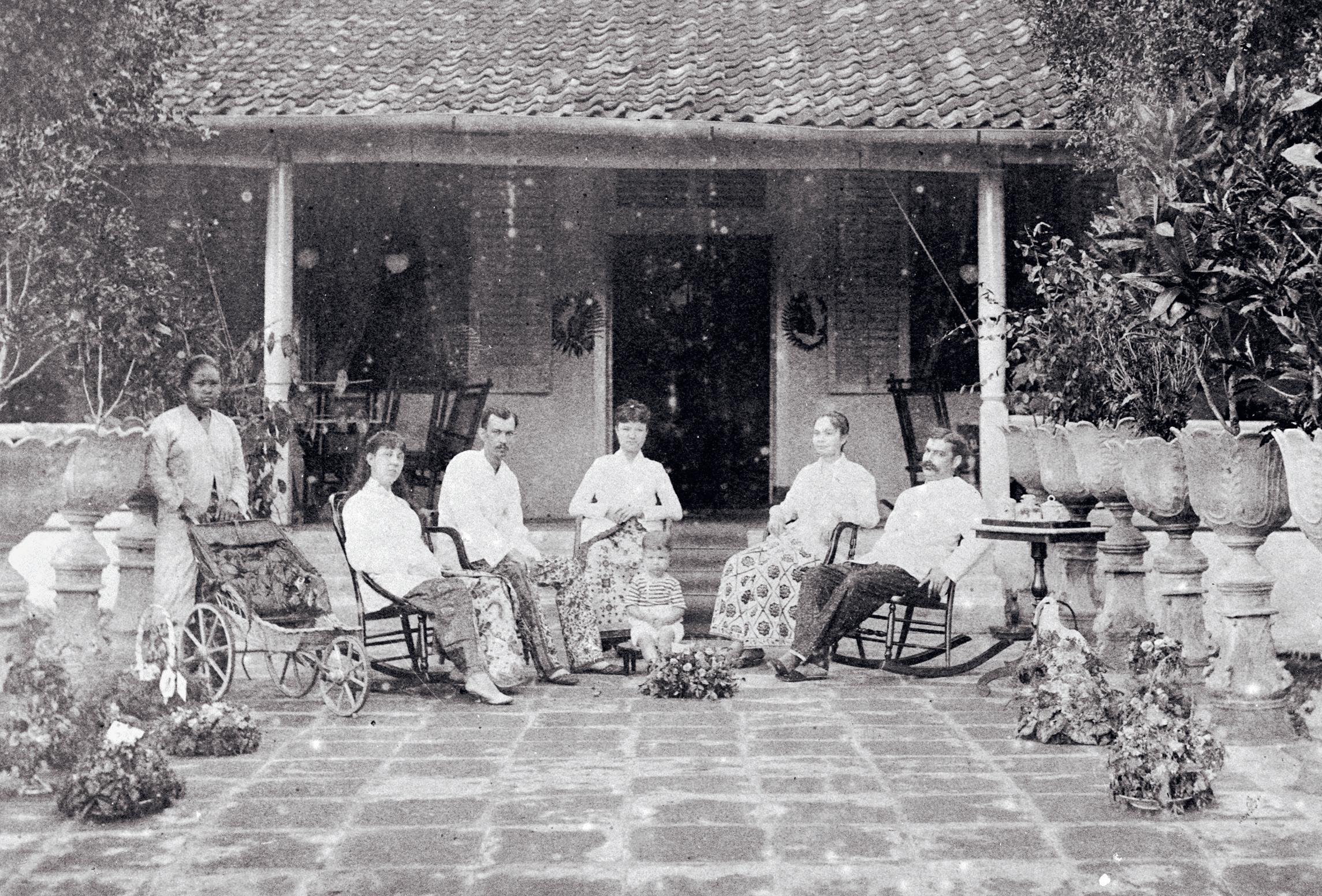
Another photo of the Indo-European Bik family in front of their house on Tanah Abang Heuvel in 1888. The couple sitting on the left are the owners of the house, Pieter Albert de Nijs Bik and his wife Jeannette Rosalie Butin Bik. The little child in the middle is their eldest daughter Caroline de Nijs Bik (1885-1930). The couple on the right is Robert Arnold Bik (1862-1932) and his wife Jeannette Elizabeth de Nijs Bik (1863-1926), a sister of Pieter Albert. Robert Arnold Bik was administrator of the sugar company Gedaren in Bojolali near Solo.
This photo is taken from the book ‘250 years in old Jakarta – Tales of the Bik family and the rich history of Tanah Abang ’, Sydney 2020. With thanks to the author Sven Verbeek Wolthuys
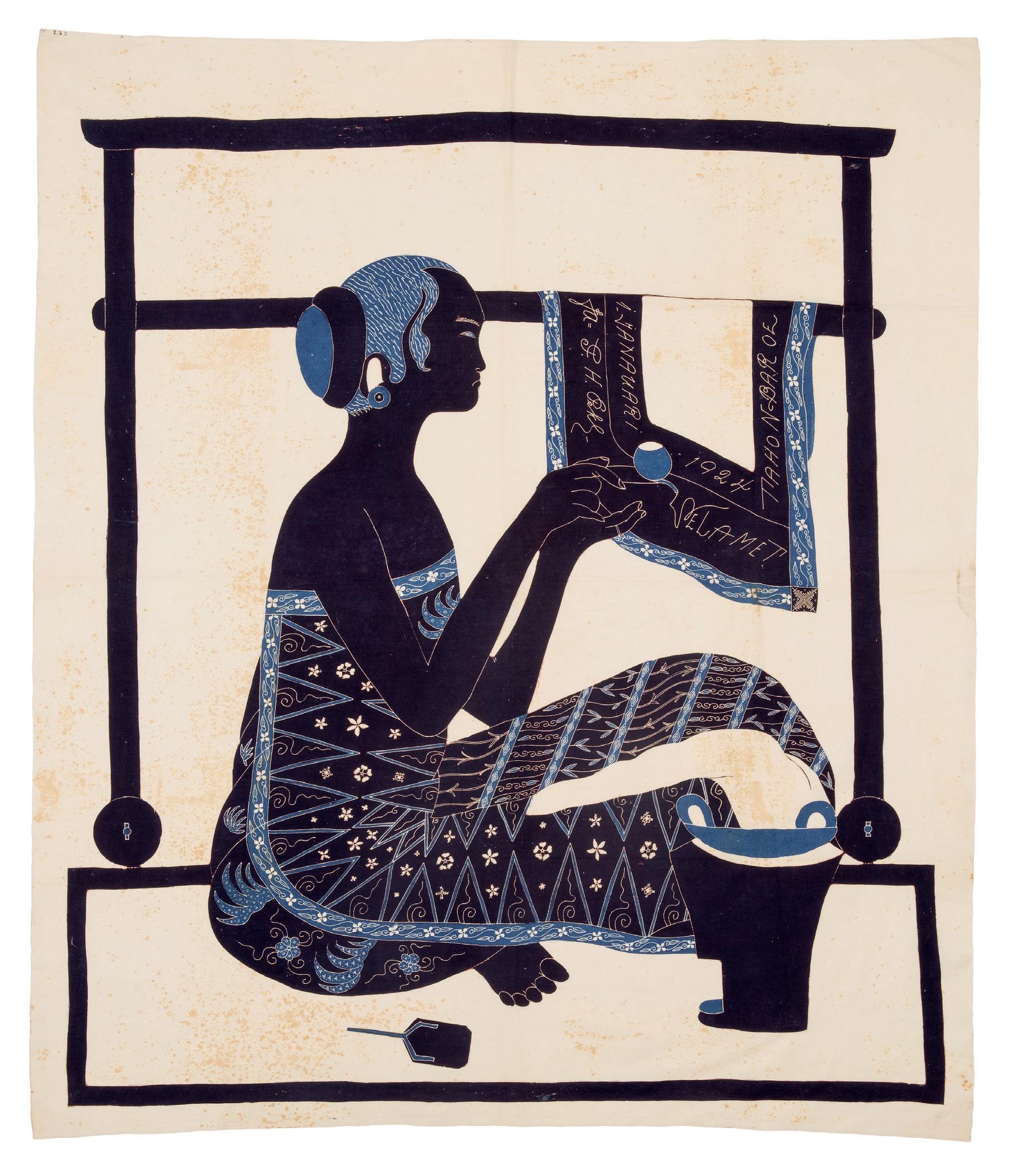
Wall hanging in batik tulis, hand-drawn wax resist, vat-dyed on plain-weave cotton. Pekalongan 1924. 107 x 90 cm
On this decorative wall hanging we see a pembatik , sitting in front of her gawangan or hanging frame. Holding the canting in her hand, her anglo burner and wajan for the hot liquid wax and kipas or fan on the floor beside her. The batik is dyed with two colours only, a dark purple and a vivid indigo blue. On the cloth hanging from the gawangan the following text can be read: 1 JANUARI 1924 – fa = G.H. Pek. – Selamet Tahon Baroe. This wall hanging is most probably a promotional gift from the firm G.H. in Pek(alongan), with the best wishes for the new year of 1924.