FEATURING 365 Industry-First Reviews of Fiction, Nonfiction, Children’s, Young Adult, and Audiobooks
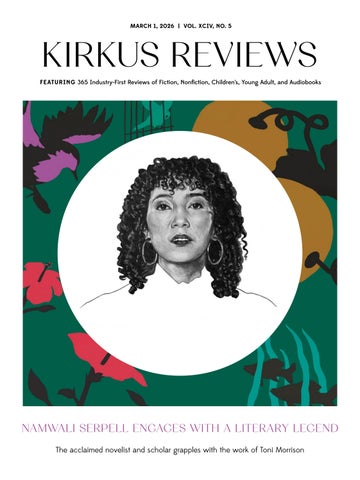
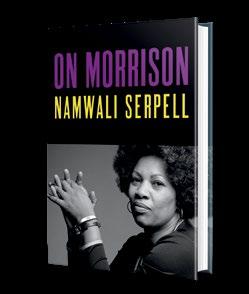
SERPELL ENGAGES WITH A LITERARY LEGEND
The acclaimed novelist and scholar grapples with the work of
Toni Morrison NAMWALI
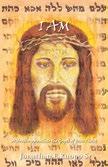
I
Am
A Novel Approach to the Gospel of Jesus Christ
Jonathan E Ruopp Sr
Experience the Gospel of Jesus like never before!
Set in Jewish tradition, this novel unites all four accounts into an engaging story, revealing God’s timeless spiritual truths.
$19.95 paperback
978-1-5127-7420-7
also available in hardcover & ebook www.westbowpress.com
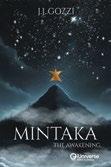
Mintaka
The Awakening J.J. Gozzi
Ariana Vega discovers her destiny calling among her star-born race, unlocking hidden powers, and unraveling a dimensional mystery buried deep in the Stellankin, where forgotten souls await.
Follow her grappling story!
$16.99 paperback
978-1-6632-6820-4
also available in hardcover & ebook www.iuniverse.com
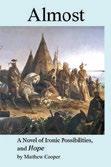
Almost
A Novel of Ironic Possibilities, and Hope
Matthew Cooper
What if we stopped deporting and started documenting? This novel offers a deeply human, practical first step toward immigration reform and healing a divided world.
$34.99 paperback 979-8-3694-4891-5 also available in hardcover, ebook & audio www.xlibris.com
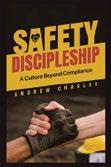
Safety Discipleship
A Culture Beyond Compliance
Andrew Charles
Revolutionize safety culture! Discover Safety Discipleship, a transformative approach aligning personal dreams with organizational goals-turning compliance into commitment, checklists into conviction, and every worker into a life-valuing guardian.
$14.99 paperback 978-1-5437-8427-5 also available in hardcover & ebook www.partridgepublishing.com/Singapore
It Is Good To Be Bad Chronicles of the Guild
E. E. Linsen
When power hides behind rules, one man rewrites them. Enter a world of shadow networks, ethical gray zones, and rebellion. This novel is for those who question authority-and themselves.
$46.79 paperback
979-8-8230-9313-2
also available in ebook www.authorhouse.co.uk
Paromita
A Young Woman’s Sacred Journey of Individuation: Initiation and Renewal
Joyoti Dutta
In this memoir, author Joyoti Dutta shares her journey into individuation and how she became conscious of herself, gaining her feminine strength to face the world around her.
$16.99 paperback 978-1-6657-7667-7 also available in ebook www.archwaypublishing.com
Who Will Cliff Date?
A Novel
David A. Robinson
A witty, moving tale of identity, choice, and change - one man’s journey through shifting sexualities, cultural upheaval, and historic moments from 1961 to 2025. Read on!
$13.99 paperback 978-1-4897-5221-5 also available in ebook www.liferichpublishing.com
Learning to levitate
Empowering your super power of sensitivity, unravelling your misconceptions of triggers, healing your hidden traumas
Jude Seaward
Feeling out of place or experiencing recurring triggers? This self-help book for sensitive individuals helps explore generational wounds, uncover hidden trauma, alleviating triggers through healing.
$23.99 paperback 979-8-7652-1542-5 also available in ebook www.balboapress.co.uk
OUR FRESH PICK
Best
FROM THE EDITOR’S DESK
REVISITING TONI MORRISON
“LORD, IN THIS time of national upheaval and historical erasure, I’m sorely missing Toni Morrison,” writes Honorée Fanonne Jeffers in her introduction to the new reissue of Morrison’s Beloved . “I have her words, but I’m missing her physical presence, the seemingly effortless wisdom she provided us.”
Indeed. All you have to do is watch one of the many clips of the Nobel laureate on YouTube—take her 1998 conversation with Charlie Rose, for example—to see, to feel , what Jeffers is talking about. In that clip, Morrison patiently schools Rose, the whisper of a smile on her lips, as she responds to a question about the role of race in her novels. There are many other such clips, all worth watching for a sense of the woman herself, although her effortless
wisdom rarely shrinks down to sound-bite size.
One of the highlights of my professional life was the opportunity to sit in the audience in March 2015 as Morrison accepted the Ivan Sandrof Award for lifetime achievement from the National Book Critics Circle, on whose board I sat at the time. She recalled the importance of critics to her own work—the NBCC’s John Leonard was an early champion of her first novel, The Bluest Eye —praising this “wild faculty…that works to confront, alter and expand the possibilities of publishing.”
She was not always so generous with critics. It’s tempting (but impossible) to imagine what the author, who died in 2019, would make of On Morrison , the new book by novelist and scholar
For customer service or subscription questions, please call 1-800-316-9361
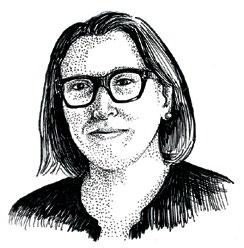
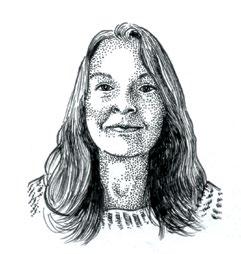
Namwali Serpell, who appears on the cover of this issue in a portrait by PS Spencer. Serpell, 46, has been reading Morrison’s books since youth, grappling with their meaning and now including them in her syllabi at Harvard University, where she’s a professor of English. “Morrison has shaped my thinking on everything from literature to politics to criticism to ethics to the responsibilities of making art,” she writes. “But the facts remain: She is difficult to read. She is difficult to teach.” The long first section of the book, in which Serpell explores Morrison’s oeuvre book by book, is titled “On Difficulty.” Don’t miss our conversation with Serpell, herself the author of two acclaimed novels, The Old Drift and The Furrows , on p. 60.
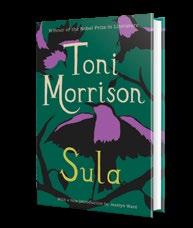
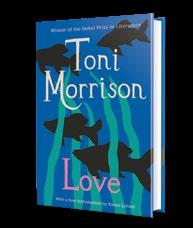
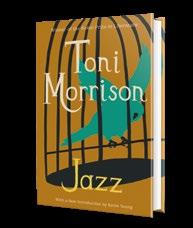
We may not have the woman herself, but we do indeed have her words. All of Morrison’s novels are currently being reissued by Vintage, with spare and striking new covers
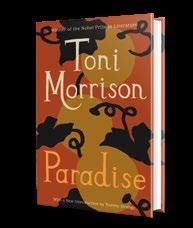
designed by Perry De La Vega and new introductions by Jeffers, Jesmyn Ward (Sula), Jacqueline Woodson (The Bluest Eye), Tayari Jones (Song of Solomon), Kevin Young ( Jazz ), Raven Leilani ( Love), Sasha Bonet (Tar Baby), Tommy Orange ( Paradise), and Imani Perry ( A Mercy). “Reissuing all these novels in these beautiful new designs is an event: It has been 20 years since they had a new look,” says executive editor John Freeman, who’s overseeing the program. “Introduced by novelists and writers whose work she made possible, it also feels like just the right time to read, discuss and appreciate the work anew, to make a whole new generation readier to read these great books. Readier to live in the America she called home.”
Illustration by Eric Scott Anderson
Co-Founders, Kirkus Media LLC
HERBERT SIMON
MARC WINKELMAN
Publisher, CEO & Partner
MEG LABORDE KUEHN mkuehn@kirkus.com
Chief Marketing Officer
SARAH KALINA skalina@kirkus.com
Enterprise Advertising Director
MICHELE COBB mcobb@kirkus.com
Indie Advertising & Promotions
AMY BAIRD abaird@kirkus.com
Author Consultant
KEELIN FERDINANDSEN kferdinandsen@kirkus.com
Lead Designer KY NOVAK knovak@kirkus.com
Magazine Compositor
NIKKI RICHARDSON nrichardson@kirkus.com
Director of Kirkus Editorial ROBIN O’DELL rodell@kirkus.com
Kirkus Editorial Senior Production Editor
MARINNA CASTILLEJA mcastilleja@kirkus.com
Kirkus Editorial Production Editor ASHLEY LITTLE alittle@kirkus.com
Indie Editorial Assistant
KATARINA YERGER kyerger@kirkus.com
Contributing Writers
GREGORY McNAMEE
MICHAEL SCHAUB
Mysteries Editor THOMAS LEITCH
Editor-in-Chief
TOM BEER tbeer@kirkus.com
President of Kirkus Indie
CHAYA SCHECHNER cschechner@kirkus.com
Fiction Editor
LAURIE MUCHNICK lmuchnick@kirkus.com
Nonfiction Editor JOHN McMURTRIE jmcmurtrie@kirkus.com
Young Readers’ Editor LAURA SIMEON lsimeon@kirkus.com
Young Readers’ Editor MAHNAZ DAR mdar@kirkus.com
Audiobooks Editor JENNIFER DOWELL jdowell@kirkus.com
Senior Indie Editorial Assistant DAN NOLAN dnolan@kirkus.com
Copy Editors
ALYSSA CHOINIERE
NATALIA HOLTZMAN
NANCY MANDEL BILL SIEVER
Founder, Kirkus Reviews VIRGINIA KIRKUS (1893-1980)
Contributors
Alana Abbott, Nada Abdelrahim, Jill Adams, Erin Addis, Mahasin Aleem, Reina Luz Alegre, Jeffrey Alford, Paul Allen, Stephanie Anderson, Kent Armstrong, Mark Athitakis, Audrey Barbakoff, Carole Bell, Nell Beram, Elizabeth Bird, Ariel Birdoff, Agnes Broome, Christopher A. Biss-Brown, Kimberly Brubaker Bradley, Sally Brander, Anna Broome, Jessica Hoptay Brown, Cliff Burke, Kevin Canfield, Timothy Capehart, Bluebelle Carroll, Charles Cassady, Ann Childs, Amanda Chuong, Rachael Conrad, Emma Corngold, Jeannie Coutant, Stephen Cummings, Katherine Daly, Michael Deagler, Cathy DeCampli, Dave DeChristopher, Kathleen Deedy, Elise DeGuiseppi, Suji DeHart, Maria Dietrich, Steve Donoghue, Eamon Drumm, Madison Ellingsworth, Lisa Elliott, Chelsea Ennen, Joshua Farrington, Brooke Faulkner, Eiyana Favers, Michael Fein, Margherita Ferrante, Katie Flanagan, Maya Fleischmann, Catherine Foster, Ayn Reyes Frazee, Harvey Freedenberg, Laurel Gardner, Amanda Gefter, Victoria Glynn, Amy Goldschlager, Phoebe Grandi, Sara Grimm, Vicky Gudelot, Tobi Haberstroh, Dakota Hall, Ellie Halleron, Sean Hammer, Eva Harari, Alec Harvey, Mara Henderson, Sandi Henschel, Aaron Hicklin, Emma Hodgson, Katrina Niidas Holm, Natalia Holtzman, Julie Hubble, Mary Grahame Hunter, Wesley Jacques, Kerri Jarema, Danielle Jones, Trevor Jones, Jayashree Kamblé, Deborah Kaplan, Lavanya Karthik, Colleen King, Mary Klann, Jennie Knuppel, Andrea Kreidler, Alexis Lacman, Megan Dowd Lambert, Carly Lane, Laurel Larrew, Christopher Lassen, Tom Lavoie, Rebecca Herwatic Leonhard, Seth Lerer, Maureen Liebenson, Elsbeth Lindner, Barbara London, Karen Long, Patricia Lothrop, Sawyer Lovett, Michael Magras, Mitu Malhotra, Thomas Maluck, Collin Marchiando, Jodi Martin, Michelle H Martin, J. Alejandro Mazariegos, Nancy McCarty, Breanna McDaniel, Jeanne McDermott, Kate McDonald, Kathleen McLaughlin, Cari Meister, Kathie Meizner, Carol Memmott, Ana Menchaca, J. Elizabeth Mills, Alan Minskoff, Jennifer Miskec, Gina Monti, Clayton Moore, Rebecca Moore, Andrea Moran, Mary-Elizabeth Murphy, John Murray, Liza Nelson, Rachael Nevins, Therese, Purcell Nielsen, Katrina Nye, Tori Ann Ogawa, Mike Oppenheim, Emilia Packard, Andrea Page, George Pate, Crystal Patenaude, Hal Patnott, Bethanne Patrick, Tara Peace, Rebecca Perry, John Edward Peters, Jim Piechota, Christofer Pierson, Cathy Poland, Brian Price, Margaret Quamme, Kristy Raffensberger, Mohana Rajakumar, Darryn Reams, Stephanie Reents, Evelyn Renold, Alex Richey, Jasmine Riel, Michelle Ritholz, Lauren Roberts, Amy Robinson, Ana Rosales, Lloyd Sachs, Bob Sanchez, Keiko Sanders, Caitlin Savage, Christine Scheper, Meredith Schorr, Gretchen Schulz, Aurelia Scott, Madeline Shellhouse, Kerry Sheridan, Sadaf Siddique, Leah Silvieus, Linda Simon, Laurie Skinner, Wendy Smith, Margot E. Spangenberg, Allison Staley, Sydney Stensland, Allie Stevens, Jennifer Sweeney, Deborah Taylor, Ella Teevan, Bill Thompson, Julie Thompson, Renee Ting, Suzanne Van Atten, Francesca Vultaggio, David Walton, Morgan Weston, Lauren Emily Whalen, Susie Wilde, Wilda Williams, Vanessa Willoughby, Kendra Winchester, Kerry Winfrey, Marion Winik, Flannery Wise, Michelle Wood, Jean-Louise Zancanella
SPOTLIGHT ON MINNESOTA PRESSES
WHEN MASKED AGENTS of U.S. Immigration and Customs Enforcement invaded Minneapolis earlier this year, I couldn’t help thinking about the incredible work being done by the literary presses headquartered there. Along with many others, Coffee House, Graywolf, and Milkweed in particular are known for publishing fiction that would give an ICE agent a stroke: International in outlook, open to voices beyond the mainstream, they’ve recently released books by immigrants such as Agri Ismaïl, a Kurdish author based in Sweden, and Cristina Rivera Garza, the Mexican director of the Ph.D. program in creative writing in Spanish at the University of Houston. In my last column, I mentioned Milkweed’s poignant The Last Quarter of the Moon by Chi Zijian; trans. by Bruce Humes (Jan. 13), set among the Evenki— an Indigenous group that spans parts of China and Russia. The 90-year-old narrator looks back on a life that includes the Japanese army invading China and loggers chopping down the forest where she lives. Our review calls it “often
unbearably sad, but beautifully told,” and it feels more relevant by the day. If you’d like to support Minneapolis publishers, here are some more great novels that have come out recently: False War by Carlos Manuel Álvarez; trans. by Natasha Wimmer (Graywolf, 2025): This book about Cubans and Cuban refugees is billed as a novel, though our review says “it more closely resembles a linked-story collection where each piece is shattered and reshuffled.”
Sometimes we’re in Miami, sometimes Havana; we even take a trip to the Louvre. An author tries to write a novel called False War. “The deliberate lack of footholds is part of the point,” according to our review. Álvarez “wants to emphasize the individuality of his characters’ journeys and
blunt any reader’s attempts to reduce them to types.”
Hyper by Agri Ismaïl (Coffee House, Jan. 13): The Kermanj family fled from Kurdistan to Iran and then to London just before the Iranian Revolution in 1979. The daughter, Siver, moves to Dubai when her husband says he wants to take a second wife. One son works in finance in London and another in New York, making lots of money but spending way too much time online. “Ismaïl brilliantly changes tone between each section of the novel,” according to our starred review. “Siver’s story is told with aching wistfulness, while Mohammed’s is marked with an arch sense of humor.…Laika’s story, meanwhile, is a claustrophobic catalogue of his days spent on social media.…the emptiness of his days is heartbreakingly
sad. This is a searing, nearly flawless novel.”
Autobiography of Cotton by Cristina Rivera Garza; trans. by Christina MacSweeney (Graywolf, Feb. 3): Rivera Garza blends biography, history, fiction, ecological criticism, and memoir as she investigates the history of a 1934 cotton workers’ strike on the Mexico-U.S. border and tries to discover her own grandparents’ role in it—and the way her grandparents’ journey intersected with that of José Revueltas, a writer and activist who published a novel about the strike in 1943. “Rivera Garza beautifully asks vital questions about whose stories get to be preserved.… this is undeniably a major accomplishment,” according to our starred review.
Laurie Muchnick is the fiction editor.
LAURIE MUCHNICK
Illustration by Eric Scott Anderson
EDITOR’S PICK
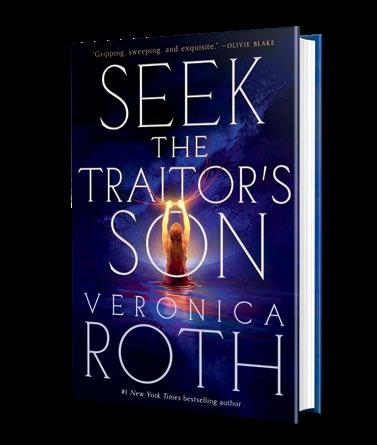
Two women on opposite sides of a long and bitter conflict each hear a prophecy that she holds the key to victory…but not which one of them will actually triumph.
On a far-in-the-future Earth, most of the human race is dominated by the Talusar empire. The Talusar worship the Fever, a strange illness that kills all who contract it. Half of those people stay dead, but the other half return to live with some kind of psychic gift, most commonly the ability to see the past. A smaller civilization, the Cedre, believe the mortality rate is not worth the loss of life, and fight to keep themselves quarantined. The Talusar have pushed the Cedre to a few small areas of the planet
and to a space station in Earth’s orbit. Elegy Ahn is the second daughter of the Sword of Cedre, the Cedre’s most powerful political figure; she’s used to being the “spare” to her elder sister’s “heir.” When the “augurs,” revered (and politically neutral) Talusar people with the rare Fever gift of seeing into the future, summon both Elegy and Rava Vidar, a ruthless Talusar general, they tell the women that each has the potential to lead their nation to victory over the other. As to which will triumph? Separately, the augurs give both Elegy and Rava cryptic clues. Elegy is told of three mysterious figures she’ll need to find, including a man with whom she will fall in love. Elegy is
Seek the Traitor’s Son
skeptical, especially since she’s already happily married. But when Rava Vidar takes swift and violent action against Elegy and Cedre, Elegy is forced to embrace her pivotal role in her people’s survival. Roth’s worldbuilding is detailed without being overwhelming; she focuses more on dystopia in
this book and promises to dive deeper into speculative SF adventure in the next installment of the duology. The romance element is seamlessly woven into the plot and comes off elegantly as a result of Roth’s excellent character development. A standout genre-bending adventure with a tender romantic streak.
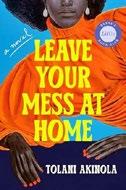
Debut author Akinola handles difficult themes with grace.
Kirkus Star
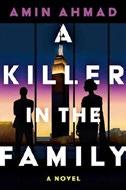
A Killer in the Family
Ahmad, Amin | Henry Holt (320 pp.)
$28.99 | April 7, 2026 | 9781250394897
A tense, classdriven thriller about an elite family of the South Asian diaspora, their real estate dynasty, and the search for a serial killer. When 28-yearold Ali Azeem agrees to an arranged marriage with psychiatric resident Maryam Khan, brilliant and gorgeous daughter of real estate billionaire Abbas Khan, he thinks he’s hit the jackpot— not least because he’s having a hot affair with her ne’er-do-well sister, Farhan. But Ali, whose Mumbai-based family’s fortunes have slipped enough that his parents must leave their swank home in the city’s Breach Candy district, is less savvy than he thinks; one of the high points of this complex book is how every sign Ali misses leads to his comeuppance. For example, he fails to connect one family member’s work with their subterfuge, revealing how little he’s had to think ahead during the years he’s worked as a successful wedding photographer and bon vivant. As the narrative alternates between Ali and Farhan, the plot thickens. Abba offers Ali a position in his Manhattan office, but there are many strings attached— as well as rivals for Abbas’ approval. Farhan shares with Ali the terrifying story of her near-assault by a man she believes to be the Jackson Heights Killer, or JHK, a murderer who killed and cut out the hearts of at least nine young South Asian women in the early 2000s. Determined to track down the JHK, Farhan enlists retired case detective Orlando Epps to
the cause, then Ali: perhaps the book’s electrifying opening scene involving a hidden corpse has to do with their success? Or not: Ahmad handles multiple villains, all unreliable narrators in their own way, with great aplomb as the novel hurtles to a possibly predictable but still remarkable finale.
Full of big ideas and twists and turns, Ahmad’s excellent novel ratchets up the allure—and danger—of power.
A debut novel about a difficult homecoming. When Gbemisola Longe returns to her hometown of Chicago, her family is caught by surprise. The eldest daughter of Nigerian immigrants had been living in Los Angeles, making money as an influencer, but her life came crashing down when her partner, Aiden, mistakenly sent her a video of himself having sex with someone else, then dumped her, starting a rumor that she was abusive to him: “This intangible thing called the internet has made and unmade her life, and she still can’t quite figure out the real source of the unfurling.” Sola has been an inconsistent presence in her family’s lives ever since her mother, Latifat, kicked her out of the house after discovering that Sola, still in college, was sexually active; the rest of the family believes she ran away. Sola reconnects with her siblings, Anjola, a doctor; Karen, a college junior; and Ola, a portfolio manager, each of whom is dealing with their own personal dramas,
and then with her father, who invites her to Thanksgiving dinner. When Sola arrives, her mother is livid, and the dinner ends with a confrontation that turns into tragedy. While the novel starts a bit slowly, it doesn’t take long to pick up steam; Akinola is quite good at moving the plot along while still letting the reader get to know the characters, each of whom is drawn carefully and sensitively. This is a family drama that doesn’t lean too hard into sentimentality, and while certain plotlines are soapoperatic, it’s still grounded in realism. The dialogue is realistic, and at times provides the novel with welcome doses of humor, and while the dark moments are truly dark, the book never descends into melodrama. It’s a fine debut that seems a likely candidate for book clubs, both celebrity and otherwise. First-time author Akinola handles difficult themes with grace.
Kirkus Star
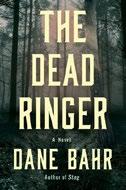
The Dead Ringer
Bahr, Dane | Counterpoint (320pp.) $28 | April 21, 2026 | 9781640097544
Having been bludgeoned with a shovel and buried alive by his half brother and bank robbing partner in 1930s Montana, Benjamin Kilt rises from the grave determined to get even. He has no idea where his brother, Sidney Bosco, has gone—with Kilt’s share of stolen money—and, following his “rebirth,” even more miseries await Kilt, who’s mauled by a lion. Passed out on his wandering mule, he’s found by Bonnie Grace, a 13-year-old Indigenous girl who nurses him back to health when not being brutally abused by the owner of the cabin in which she’s staying. Kilt rescues her from her circumstances, but not before taking care of her abuser with his ever-active Luger, which, along with a copy of Moby-Dick, is his prime possession.
Flash back to 1912 Minnesota, where Benjamin, a sweet but passive 10-yearold who quit school after second grade, cleans a barroom in exchange for a place to sleep—until he’s trained by a charismatic bank robber, Nick Mercy, as his getaway driver. Before fate catches up to Mercy, he mysteriously urges Benjamin to head to Black Elk, Montana, where there are “nothing but answers” waiting for him at the Triple Nine Ranch. Its high-minded owner, Royal Wainwright, proves to know all about Benjamin. The promised answers are about the boy’s mother (who recently killed herself), the father he never knew, and his never-seen half brother. Partly told in retrospect by the aged Bonnie, this is a raw, biblically heated tale about generational trauma, the possibilities of redemption, and predetermined fate. With its parade of blood-spattered victims, its philosophical ponderings (“things evolve solely for the outcome of their own destruction”), and fiercely lyrical depictions of the American West (“the limbs of ponderosa bejeweled and frosted like enormous sticks of rock candy”), this is country noir at its grimmest while at the same time channeling hope. Its intensity never lets up.
The best novel yet by a powerfully original artist.
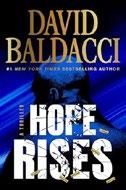
Hope Rises
Baldacci, David | Grand Central Publishing (416 pp.) | $32 | April 14, 2026 9781538758021
Second of the Walter Nash thrillers—following Nash Falls (2025)—in which the remade hero seeks vengeance. Due to urgent circumstances, Nash has bulked himself up to become the “muscled and tatted fighting machine” now known as Dillon Hope. His antagonist is Victoria Steers, a global drug dealer who wants him dead. Not realizing his new identity, she enlists Hope to free her mother,
Masuyo, from a prison in Myanmar. As an incentive, she shoots one of her associates and threatens to frame Hope for the murder unless he complies. She also wants him to find Nash. He in turn wants to kill Victoria to avenge the death of his innocent daughter, Maggie. “If I go down,” he muses, “I’m taking others with me. Starting with Victoria Steers.” He learns that Victoria had killed all her siblings to eliminate business competition. But as heartless as Victoria is, her mother, Masuyo, is even worse. In league with the Chinese government in a perverse plan to kill as many Americans as possible through fentanyl overdose, she shows contempt for Victoria for her perceived weaknesses. Readers won’t find many happy family relationships here: mother-daughter, father-son, husbandwife—all fraught. Hope’s employer, who accompanies him to Myanmar, is a billionaire chief executive with a dodgy past (i.e., probably killed his father). And there’s a mega-billionaire with an astronomical IQ and ditch-deep morals who, putting it mildly, does not have America’s best interests at heart. As a teenager, he’d defeated two world chess champions; as an adult, he regards his dealings with the world in terms of master chess moves. Only one character seems truly decent and credible— Hiroko, Victoria’s former nanny and lifelong companion, who provides Hope with valuable insights into the Steers’ background, which is partly Chinese. Searing grudges, simple evil, and not-so-simple misunderstandings carry the cast through this complex, actionpacked plot. This sequel ties out the loose ends dangling in Nash Falls, which would be helpful to read first. To get to the requisite ending, though, Baldacci takes pains to surprise the reader. It works but often feels forced. Filled with action, violence, and more twists than a bag of pretzels.
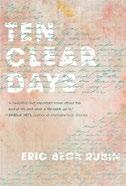
Ten Clear Days
Beck Rubin, Eric | Turtle Point (192 pp.) | $18.95 paper | April 14, 2026 | 9781969010019
An 83-year-old Holocaust survivor fights to die on her own terms. When Mary Beck is rushed to the hospital near her Toronto home, her anxious children and grandchildren quickly gather by her side. A Hungarian-born widow, fiercely loved by her family, Mary has suffered a stroke and a heart attack. The doctors believe they can save her and that she’ll mostly recover. But Mary has other ideas. She wants to die; what’s more, she has wanted to die for a long time. Since this is Canada—with its liberal medical assistance in dying law—Mary may get her wish. The book’s title refers to the mandated waiting period between a patient’s right-to-die request and its fulfillment, which in Mary’s case would mean a lethal injection. Based on the author’s own family experience, the novel, his second, interweaves the increasingly fraught bedside vigil with scenes from Mary’s early life: idyllic times in Budapest with her devoted parents; the horrific rule of the Nazis and their local fascist counterparts, the Arrow Cross; and Mary’s postwar move to Toronto, where she meets her beloved husband, Tommy. The writing, self-assured throughout, is lyrical, even haunting at times. But Mary remains an enigma. Through the recollection of a former housekeeper, we learn that, decades before this hospital stay, Mary attempted suicide by drowning in her own swimming pool. Family members admit she’s been depressed for most of her life. So we wonder, was it the trauma of the Holocaust that made her want to die? Or something else, too? Understandably, the author doesn’t want to tie things up too neatly. But it feels like there’s a missing piece. In the hospital, Mary mostly rejects food and medical
For more by David Baldacci, visit Kirkus online.
treatment, while her condition— physical and mental—fluctuates. Would she really have qualified for physician-assisted death? It’s not clear. Unsatisfying in some ways but still an absorbing, often moving read.
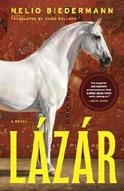
Lázár
Biedermann, Nelio | Trans. by Jamie Bulloch Summit (272 pp.) | $28 | April 7, 2026 | 9781668200551
A Hungarian family reckons with history and their own demons.
When Lajos von Lázár is born at the turn of the 20th century, his father, Sándor, a Hungarian baron, is “slightly unsettled”: The baby is translucent, his organs visible, “blond, blue-eyed, and jellyfish-skinned.” Sándor, who suspects, correctly, the baby is not his biological child, comes from a family beset with problems; their manor abuts a forest that “had swallowed his father, killed his mother, and driven his brother mad.” He is a strict, unsmiling father to Lajos and his sister, Ilona, and a cold partner to his wife, Mária, a troubled woman who cuts her skin daily to remind herself she is still alive. Lajos and Ilona spend their childhood in the manor, occasionally encountering mysterious creatures in the seemingly haunted forest, finding happiness only when Sándor is out of town. Biedermann’s novel follows the Lázár family through the next several decades, as the First and Second World Wars ravage central Europe: Mária dies by suicide, which exacerbates the drinking problem that eventually leads to Sándor’s death. Lajos inherits his father’s estate and starts a family of his own, but his life is marked by a cowardice he hates in himself, especially when he fails to stand up to the Nazis who have occupied Hungary. Lajos’ skin isn’t the only magical-realist touch Biedermann includes; many come and go along the
way, but it’s not clear what the effect is supposed to be—they seem to be quirks for quirks’ sake. He introduces characters who disappear for long stretches, and the novel features time jumps that jar and disorient. His prose, in Bulloch’s translation, has some shining moments, but the novel as a whole never really comes together. At 21, Biedermann is an exceptionally young writer, and it shows, but he does display a talent that, though unformed, evinces promise. An ambitious epic that doesn’t quite work.
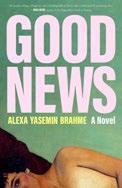
A young woman flounders through art school and— more generally—her late 20s in New York City. “What if Maggie’s life floated right past her? Just for a little while. Just for a year. Just for forever.” Brahme’s debut follows Maggie as she vacillates between her stalwart boyfriend, Rob, and her cosmopolitan ex, Rakib; somewhat listlessly works on her final painting, a massive depiction of women’s suffering; and hangs out with her brother, John, and his girlfriend, an artist who refers to herself only as “the Artist.” Maggie hopes to be nominated for a prestigious grant, and she both resents and admires the Artist, whose performances tend toward the ostentatious. If Maggie doesn’t win the grant, she’ll…figure something out. Brahme’s portrayal of Maggie’s unmoored state of mind is a particular strength of the novel, and she deftly describes the contemporary art world, as well as Maggie’s trepidation toward her Turkish immigrant mother and her relationship with her brother. But nearly all of Brahme’s secondary characters lack the
well-rounded fullness of a complexly rendered person; they’re flat, twodimensional. It’s unclear whether the Artist has been drawn in a satirical register or not; the book can’t seem to decide, and it wavers almost as often as Maggie does. And while Maggie herself is a sympathetic enough character with her competing, irreconcilable desires, the prose can be plodding and occasionally borders on trite (“so much was always happening that things happening began to seem overrated”). The book is strongest in its depiction of the many ambivalences and equivocations of smart, talented young women—but in the end, it doesn’t offer much of note beyond the most conventional of bildungsromans. A deftly rendered but flawed portrait of an artist as a young woman.
Kirkus Star
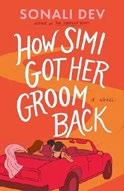
How Simi Got Her Groom Back
Dev, Sonali | Lake Union Publishing (319 pp.) | $28.99 | March 3, 2026 9781662524301
The healing power of family and romantic love vie for center stage in Dev’s captivating dramedy. Simi and Rupi Naik are estranged sisters, Indian immigrants to the U.S. who find love and salvation through a dramatic sacrifice. Simi has built an enviable life in rural Kentucky, with a nursing career that suits her (even if she has to work three jobs to sustain it) and the love of Prem Gupta, a good man who can’t wait to make her part of his prosperous and loving clan—all of which she’s terrified of losing because of her past. Bearing the brunt of the troubles that forced them to flee Mumbai, older sister Rupi has it much harder. She hasn’t put down roots and wields words like daggers to keep people at
bay. The distance between the sisters narrows when Rupi’s boss at an LA tattoo parlor, the man who secured her travel visa before stealing her wages, dies, and his widow steals Rupi’s passport. Robbed of her meager belongings on a cross-country bus, a desperate Rupi shows up at Simi’s workplace in the throes of a raging bacterial infection, needing help from the sister she hasn’t seen in years. When she faints and later wakes in a hospital bed, she’s at risk of being deported to a country in which she may face serious charges. Rupi’s solution is to pressure Simi to get her would-be fiancé, Prem, to marry her instead and get her a green card. Since Rupi doesn’t believe in love or the sweetness of a guy like Prem, she’s demanding something she can’t believe will come to fruition—but Prem agrees. If that sounds heavy, it is. Rupi compares her plight to “a true-to-life Hindi soap opera in the middle of small-town southern Kentucky.” Alternating between Simi and Rupi’s narratives, Dev blunts the darker aspects, focusing on the aftermath rather than directly depicting traumatic events, allowing that heaviness to coexist alongside Bollywood melodrama and romance. Exploring all kinds of love and domestic drama, this genre-defying high-wire act is one to savor.
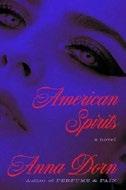
American Spirits
Dorn, Anna | Simon & Schuster (352 pp.) $29 | April 14, 2026 | 9781668085530
The star, her lover, her assistant: complicated relationships among women thrive in a novel of the music industry and social media. Shortly after Beatrice and Maxine Clark moved to Los Angeles at 19 and 18 respectively, Beatrice made her music debut as Blue Velour, inspired by a couch the sisters found on the street.
Nuanced characters, lively writing, and bad behavior make the pages fly.
AMERICAN SPIRITS
As Dorn’s novel opens in 2019, the rebellious artist has just released her seventh album, Blue’s Beard , and is finally interviewed by the New York Times . The conversation hits its stride when the reporter accepts a cigarette and characterizes the album as “a shout out to your LGBTQ+ fan base.” The album’s title is indeed a reference to the subreddit BlueBeards, dedicated to proving that Blue and her producer, Sasha, are a couple. (Actually, Blue is bi—she has indeed had a long affair with Sasha, but when on tour seeks one-nighters with older men “who used bar soap for shampoo and had no idea who she was.”) When 19-year-old fangirl Rose Lutz applies for the job of personal assistant, she doesn’t mention that she’s the founder of this subreddit, and continues to keep it hidden as she assumes her new duties. Then the pandemic shuts everything down and Blue, Rose, and Sasha move to the redwood forest for a threewoman festival of songwriting and betrayal. The music writing in this book is outstanding, including intriguing real-world references and annotated playlists that will make you grateful for your streaming service. Dorn has a profound understanding of the relationship between an artist and her work: Blue “was in love with her music. Her audience. The celestial voice God had given her. And a different God from the punishing, intolerant God her mom loved so much. Blue’s God was benevolent and accepting and merciful and beautiful and probably a woman and definitely a Gemini.” Nuanced characters, lively writing, and a heaping helping of bad behavior make the pages fly.
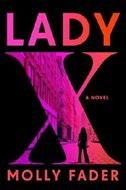
Lady X
Fader, Molly | Ballantine (352 pp.)
$30 | May 5, 2026 | 9780593983669
The hunt for a notorious female vigilante in seedy 1970s New York City reverberates five decades later for three generations of women. Margot Cooper’s perfect life as the wife of an A-list Hollywood actor and as a lifestyle influencer implodes one morning in 2024 when her husband’s sexual indiscretions are shared over social media. With her teenage daughter, Skye, Margot flees to her childhood home in Pittsburgh, now inhabited by her older sister, Julia. As Margot and Julia take the opportunity to sort through their parents’ possessions in the attic, Skye pulls out a box of newspaper clippings and photos that suggest her grandmother, Ginger Daughtry, might have been the notorious Lady X who, in 1977, committed violent acts against abusive men—possibly including murder. Skye and Julia, a journalist, are eager to investigate further. The narrative then flashes back to that gritty summer when the “Son of Sam” terrorized the Big Apple and disco ruled the dance floors. Ginger and her roommates, Rachel and Faye, uneasily navigate New York life, which is dominated by predatory men, until one of them is sexually assaulted. When the police are unresponsive, the women decide to take matters into their own hands with cans of spray paint, and Lady X is born. Author Fader sets up an intriguing premise that doesn’t quite work in its execution . The 1977
sections, with their evocative depictions of a bankrupt city on the edge and the power of female friendship against a patriarchal system, overshadow the meandering modern-day plotline. Margot, the epitome of wealthy white privilege, is off-putting in her narcissism, feeling sorry for herself instead of trying to understand her mother’s rage, and the male characters are cardboard cliches, from the gay best friend to a villainous cop. Despite its flaws, an intriguing feminist thriller.
Kirkus Star
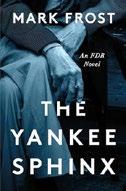
The Yankee Sphinx:
An FDR Novel
Frost, Mark | Flatiron Books (288 pp.)
$29.99 | May 5, 2026 | 9781250876898
A historical novel inspired by the public and private lives of Franklin D. Roosevelt. FDR’s arc across the 20th century is broadly known: marriage and estrangement, polio and paralysis, election four times to the White House. The narrator, Bill Hassett, is a journalist who joins Roosevelt’s administration in 1935. For ten years he keeps a daily account of the public and private actions of the man he calls the Boss in an “effort to pierce the lifelong veil of secrecy FDR had drawn around himself.” Hassett wants to understand what makes FDR tick—he differs so completely from his predecessors—and he comes closer than most because the two men like and trust each other. The nickname “Sphinx” comes from FDR’s ability to keep his intentions to himself. Will he run for a third term in 1940? The press keeps asking, and like a sphinx, he refuses to answer. He doesn’t really want to, but if his Party insists…Then, in 1941, the United States goes to war. Once FDR makes a difficult decision, advisor Harry Hopkins says, he’s “serene as a goddamn Buddha.…He’s
the damn Yankee Sphinx.” Hassett observes the emotional and physical separation between Franklin and Eleanor and offers a fascinating reason why they didn’t divorce so Franklin could marry Lucy Mercer Rutherford. Franklin is a complex man with frailties both moral and physical: He uses a wheelchair beginning in 1921 following a bout with polio and is eventually diagnosed with congestive heart failure, yet he claims to be in “exemplary health” while doctors beg him to cut down on smoking. But Hassett learned in his youth that life is “about as eternal as a lit match,” a theme that gains ever more relevance as the president’s health declines. This is closer to nonfiction wrapped in skilled storytelling in the manner of Jeff Shaara’s novel The Old Lion (2023), about FDR’s fifth cousin, Teddy Roosevelt. Readers won’t be able to distinguish the diarist’s remembrance from the author’s fiction, save the dialogue.
A compassionate story about one of the most consequential Americans of the 20th century.
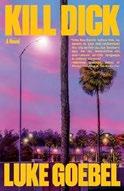
Kill Dick
Goebel, Luke | Red Hen Press (272 pp.)
$26.95 | April 14, 2026 | 9781636284651
In 2016 Los Angeles, a wealthy college dropout and her former professor trade academia for opiates.
When New York University art student Susie Vogelman finds her roommate dead of an OxyContin overdose, she palms the remaining
pills and checks into the Carlyle Hotel. There, she orders room service and gets high with her favorite teacher, Phil Krolik, until the school finally contacts her parents. Susie then moves back home to her family’s Brentwood mansion, where she passes time by the pool in a stoned daze, only exiting the community’s gates for meetups with her dealer, Royal-Lee. Phil, newly fired, cashes in his trust fund and goes in search of his twin brother, Peter, an unhoused addict last seen in LA. Hoping to attract and eventually help Peter, Phil buys the Villa—a turnkey, fully subsidized rehab center run out of an apartment building in West Adams. The work is harder and less profitable than Phil anticipated, so he joins the Church of White Illumination, a secret society of rich and powerful men. With the connections he makes, and with Royal-Lee’s assistance, Phil begins providing drugs to his residents so they’ll participate in the facility’s programming. As Susie’s and Phil’s paths inexorably reconverge, the mutilated corpses of junkies start turning up in seedy motels all over Hollywood. Goebel’s novel takes the guise of a roman à clef written by Susie after the fact, the introduction teasing Phil’s, Royal-Lee’s, and Susie’s own entanglement with these killings. Shot through with the sort of pseudo-profundity endemic to youthful privilege, Susie’s rambling, terminally jaundiced narrative paints a darkly surreal Lynch- and Kubrick-inspired portrait of LA. Regrettably, while Goebel’s sentence-level writing is undeniably artful, his plot lacks coherence, sapping the tale of impact and drive. Oozing with style but wanting for substance.
A rich college dropout and her former professor trade academia for opiates.
KILL DICK
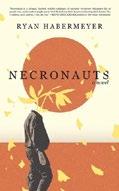
Necronauts
Habermeyer, Ryan | Stillhouse Press (215 pp.) | $18 paper | March 25, 2026 9781945233326
This is the story of a desert town, its ill-fated denizens, and a boy from outer space.
Marrying the epitaph-based storytelling of the classic Spoon River Anthology to the more garish endings of A24 movies is a curious enough idea. Here, though, portraits of village life are shot through with a heroic dose of Mark Leyner–style deadpan chaos. It’s not entirely unexpected from Habermeyer, who’s been sprinkling his short fiction with previews of these odd obituaries. The setting is the fictional town of Calypsee, Utah, home to all manner of victims of their own making, living under the motto “In Armageddon We Trust.” The subjects run the gamut from the grocer—“found dead in an erotic game gone wrong with his mistress, a synthetic doll purchased from the Kinkalypse”—to the jumper who caused a collision with cantaloupes that decapitate a father and son. In all, Habermeyer delivers 95 obits, punctuated by old-timey photographs and loosely held together by a plot about a visitor from another world: Nobody, a boy with a bullet-riddled space helmet surgically affixed to his body, who can only speak only with his hands. He’s an eerie presence, obsessed with pulpy SF films and prone to abuse and exploitation from the townsfolk. Living with the dentist, stealing ketamine from the vet, and renting himself out to Mormon teenagers “before all the motels had Magic Fingers vibrating beds for a quarter,” he’s a tough character to root for. “Nobody was a riddle wrapped in a mystery chilled in Jell-O,” as Habermeyer explains. Thankfully, the writing
here is crisp and focused, despite its darker nature. Lingo lovers and amused cynics will find plenty of reasons to keep turning pages. A wild riff on religion, culture, and what we look like to the alien among us.
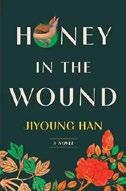
Honey in the Wound
Han, Jiyoung | Avid Reader Press (320 pp.)
$28.99 | April 7, 2026 | 9781668202166
Honey can be a salve or a sweetener but, as Han illustrates so vividly, not all wounds can be healed by the oft-employed Korean folk remedy. Han explores the dehumanizing practice of sexual enslavement in a narrative that employs realism of both the stark and the magical kind as she follows several generations of Korean women through perilous times. Beginning with the story of twins, Geum-Ja, a girl, and Geum-Jin, a boy, born in a mountainous region of Korea in 1902, Han traces the increasingly malignant effects of Japanese occupation.
Thirteen-year-old Geum-Ja, who mysteriously disappears from the family’s compound one night, assumes the form of a tiger and exerts power and protection over her family in that guise. Geum-Jin grows up in her absence and goes on to get married and father three children, but his family is brutalized by Japanese soldiers in a raid on their home in 1931. The only apparent survivor is his daughter Song Young-Ja, whose heartbreaking story forms the core of the saga. A childless couple opens their home to Song Young-Ja but she is molested by the husband and then sent away by the wife. A demeaning job in a teahouse—a hotbed of gossip and espionage—evolves over time. Still, Song Young-Ja’s constrained but relatively safe existence comes to a cruel end in 1941 when she is captured by Japanese soldiers and transported to
a camp where women serve as sex slaves. Her experiences are brutally recounted in corrosive detail. Song Young-Ja subversively employs her own supernatural ability to incorporate her emotional state into the foods she prepares but still suffers incalculable harm. Decades pass before the injuries suffered by the enslaved women are publicly acknowledged. It is with the aid of Song Young-Ja’s young granddaughter—who harbors a mysterious ability of her own—that she begins to confront her past. Han has incorporated extensive research into a revelatory work of harrowing fiction. Han exposes a diabolical world of pain and validates the hidden powers of “powerless” women.
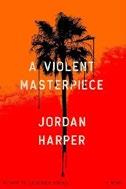
A Violent Masterpiece
Harper, Jordan | Mulholland Books/Little, Brown (384 pp.) | $29 | April 28, 2026 9780316458405
In Harper’s darkest noir yet, powerful white men—some amoral, some immoral, and some purely evil—run amok in Los Angeles. The basic message of this stand-alone sequel to Everybody Knows (2023) is that power corrupts. Harper’s wild highbrow/lowbrow prose and allusions to the likes of Samson and “war between the gods” raise tawdry situations to mythic, biblical proportions. In a plot revolving around noirish tropes of sex, money, and murder, the extremes of bad behavior displayed by the famous and the uber-rich are repellent, shocking, and frighteningly familiar. Expect a serial killer called the “LA Ripper” whose female victims are mutilated and worse, sexual deviance without boundaries, even cannibalism. Also expect masked thugs cruising the city in black SUVs, criminality covered up by law enforcers, and a pedophile whose
death by suicide in a jail cell seems suspicious. The author’s rage seethes eloquently through characters whose lives are “crazy and electric and hollow.” Jake Deal, who earns a living covering the “brutalities and savage nights” of LA for his podcast, Creepy Crawl , is hired by an anonymous blackmailer to get dirty visuals of a list of rich and/or famous men. Up until recently, Kara Delgado has loved the fast-lane lifestyle offered by her job at Sub Rosa, a high-end concierge service, but that pleasure fizzled when Phoebe Butterfield, her co-worker and best friend, disappeared four months ago. Paranoia sets in when she notices that the four Ripper victims look a lot like brown-haired, green-eyed Phoebe and realizes the killer must be a Sub Rosa client. After rich pedophile Eric Algar’s death, his lawyer, Doug Gibson, finds he knows too much about a storage unit filled with incriminating evidence Algar gathered about his even more perverted pals. Jake, Kara, and Doug have lost their integrity, but working together to find the “Ripper,” they begin rediscovering their humanity. Whether they succeed, spiritually or practically, is the question. This addictive page-turner offers an ugly vision of American soullessness but also leaves room for hope.
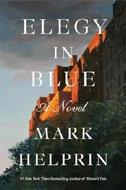
Elegy in Blue
Helprin, Mark | Abrams (256 pp.) $28 | April 28, 2026 | 9781419786082
A man’s good deed haunts the rest of his days. In this story “of love in a time of violence,” the narrator never reveals his name; he’s an octogenarian who reasonably expects that “terrible, powerful, soulless people are coming to kill me.” Yet his own soul is at peace. He loves the “hum of Brooklyn roads, the muffled roar of
the BQE, and the sound of air whistling through the steel weave of the bridges…” Brooklyn is “embraced by the ocean, the harbor, the East River,” and its deep blue sky is a rhapsody that calms the heart. Yet with rhapsody comes tragedy. The narrator recalls with melancholy his wife, Clare, their son, Charles, and the joy they all once brought to each other. But Charles died fighting in Iraq and Clare’s own violent passing nearly strips the narrator’s life of meaning. The couple—he once a rich investment banker, she a lawyer—enjoyed long walks from Brooklyn into Manhattan until one day a crazed man wielding a machete began butchering people. The narrator, then a 70-something Vietnam veteran, killed the attacker, but at a heavy and permanent cost. The ensuing events are nothing he could have anticipated, which is much to the readers’ benefit. A few years later, he saves a friend from the clutches of a drug gang, and he knows the gang is now coming for him. But he feels he’s lived his life and isn’t about to skip town to escape his likely death: “Emily Dickinson stuck like a limpet to Amherst,” he says. “Brooklyn is good enough for me.” The narrator reflects deeply on the family and possessions he once had, on his love of his family and his city, and on the ghosts to whom he owes allegiance. Had he known what was going to happen, would he have interrupted the machete attack? He and Clare could have kept walking, but they didn’t, and he is forever haunted by the consequences.
A wistful, captivating love letter to Brooklyn; a lament for loved ones lost and a life forever changed.
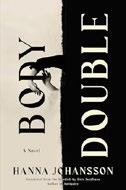
Body Double
Johansson, Hanna | Trans. by Kira Josefsson Catapult (224 pp.) | $27 | April 7, 2026 9781646223138
Three story strands, four women, and their thoughts on doppelgängers. When, upon leaving a cafe, Naomi realizes she has taken the wrong coat—it resembles her own—she returns it to the woman it belongs to. At the cafe on another occasion, Naomi again spots this woman, Laura, who becomes the object of Naomi’s fascination (and eventually her lover). The novel swaps third-person narration for first-person narration by an unnamed woman whose job is to transcribe recordings of women’s personal stories for a ghostwriter. “I am transformed into every woman as I type,” the narrator reflects. “We are, in the moment I listen and type, the same person.” Soon the novel switches to what seems to be a transcript of a woman’s personal story; “I’m so lonely!” it begins. The novel interweaves the three narratives, inviting the reader to wonder how they’re connected. Alas, while the book is written with marvelously cool composure, none of the three strands is especially interesting: The reader is unlikely to share Naomi’s obsession with Laura, whose ethereality seems performative. Nothing much is going on in the transcriber’s life; the transcript snippets don’t go anywhere. And the women’s musings on having or being a double ultimately leave the impression of intellectual noodling. Some readers may find the book seductively mysterious: Johansson, the Swedish author of the
A captivating love letter to Brooklyn and a lament for loved ones lost.
ELEGY IN BLUE
novel Antiquity (2024), has set her scenes in an anonymous city in an unspecified past of landlines and cassette tapes. And some readers may be intrigued by the novel’s references to unnamed suspense films presumably invented by the author (although Alfred Hitchcock’s Vertigo and Marnie will come to mind). The transcriber’s summaries of the movie plots are compelling; if only this novel were equally so.
The ingredients for a suspenseful novel minus the payoff.
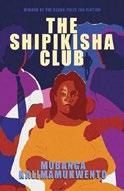
An intergenerational story of love, ambition, and coming-of-age amid a quickly changing Zambia in the first two decades of the 21st century.
“Welcome to Shipikisha Club,” goes the traditional Zambian saying for women who are about to be married. “Shipikisha,” meaning “to relentlessly endure,” is also a synonym for marriage, whose peaks and valleys the novel follows through the stories of three generations of women: Peggy, the preacher’s wife; her daughter, Sali, a secondary-school teacher; and her daughter, aspiring actress Ntashé. When Sali finds out she’s pregnant, she’s sure that her married lover, a famous cardiologist she calls Doc, will leave his wife to marry her. On her way to tell him the good news about the baby, however, Sali gets into a car accident with—of all people—Doc’s wife. Sali emerges relatively unscathed, and Kasunga, the starched-collared policeman who was at the scene of the crash, takes an interest in her. His emergence in her life at first seems like a blessing, saving her from a life of shame as an unmarried mother. Convinced he can have no children of his own, he willingly accepts Ntashé, Sali’s child with Doc, as his own. As Ntashé grows up, though, the sweetness of her
parents’ relationship sours as “her mother’s tongue grew venomous and her father’s temper shredded.” The poison escalates for decades until all three women find themselves in a courtroom while Sali is tried for her husband’s murder. Truths and half-truths flicker throughout the trial as each woman fights to persuade the audience—and perhaps themselves and each other—of their story. Against the courtroom backdrop unfolds the women’s struggle to survive amid the complexities of Zambian modernization, folk tradition, religion, and a political system in which victims have few rights.
A heart-wrenching, unforgettable story of beauty, courage, and the strength of female determination.
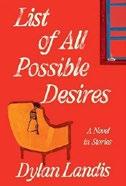
A dazzling cycle of stories revolving around a complicated, fascinating, talented young badass.
You have to hand it to Rainey Royal, a character who will not be denied. She came into the world a friend of the protagonist in Landis’ 2009 debut, Normal People Don’t Live Like This. By 2014, she’d gotten herself a whole book, titled Rainey Royal, of course. Now she’s the point around which a volume billed as the third installment in the Rainey Royal Cycle revolves. The stories here span the years from 1947 to 1987 and add depth to characters and events introduced in the earlier books, though it’s not strictly necessary to have read them. The first story, “La Nounou,” peeks into the childhood of Rainey’s father, Howard, during a summer he spent in Paris in the care of a reckless nanny. “Howard Royal, eleven and two months, sat on his parents’ bed and watched his nounou at his mother’s
dressing table draw a ruby lipstick over her opulent lower lip. His own mouth hung open, a chalice of joy and shock.” This way of using words almost like gems is Landis’ trademark. The title story is next, starring Rainey’s aunt Laurette Barbanel back in 1959, when she’s the 23-year-old minder of a stroke victim whose blossoming bruises indicate something very bad about her husband; unfortunately, the only word left in the woman’s brain is “Wunderbar!” We see Rainey for the first time in the third story, “Embouchure,” set in 1969, and get to know Howard as the extremely louche jazz musician he grew up to be. In subsequent stories, we encounter Rainey as a talented but self-destructive artist with a broken moral compass. Subsequent stories follow the long trail of abuse Rainey endures as a preteen as well as the complexities of her relationship with her mother, who abandons her to join an ashram. In “Mr. Apology,” a story set in 1980 about a (real-world) art project in which anyone can leave a message apologizing for something they’ve done, Rainey says she isn’t sorry for a gunpoint robbery she and her best friend pulled off as teens; she definitely hasn’t aged out of her badness. Her current project is making tapestries festooned with tiny objects she’s stolen. That Rainey. Other people write with words; Landis seems to write with mercury.
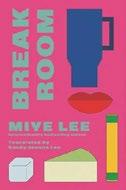
Break Room
Lee, Miye | Trans. by Sandy Joosun Lee Bloomsbury (160 pp.) | $23 | April 28, 2026 9781639739073
Game show contestants chosen for their annoying workplace habits must ferret out the pretender in their midst. Everyone has a story about the co-worker from hell, and in this intriguing Korean novel, office villains must grapple with their own bad behavior and use it to their advantage.
A philosophical meditation on adultery filled with longing and sweetness.
PERMANENCE
Having written cozy fantasies like The Dallergut Dream Department Store (2024), author Lee turns in a darker but equally charming direction with this tale of office workers employing their worst character traits to win big prize money. The eight contestants are nominated by their fed-up officemates, and the story mostly takes place in a break room designed by the show’s production team. It’s told from the perspective of a player known as Ice Cube, whose co-workers nominated him because he fills their break room’s ice cube trays with coffee and cola. The other contestants are Tumblers, who leaves unwashed beverage containers in the sink; Coffee Mix, who hoards the best snacks; the know-it-all Monologue, who never stops talking; and Cake, who fills the refrigerator with oversized bakery boxes. One of them is an impostor and the money goes to the contestant who can figure out which. The rules of the game aren’t revealed— to either the players or the reader—but if a contestant figures out how to break one, they win a card that hints at the impostor’s identity. On the surface, this is a quirky story about reality TV and people behaving badly, but Lee gets the prize for turning it into a tale of relatable workaday characters attempting to understand how other people perceive them, and why people act the way they do.
You won’t feel like a traitor if you pick up this insightful reality-show thriller.
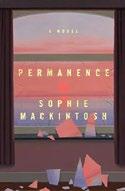
Permanence
Mackintosh, Sophie | Avid Reader Press (224 pp.) | $28 | April 21, 2026 | 9781668206522
Illicit lovers suddenly find themselves in an alternate universe.
“There had been many hotel rooms for the adulterers, currently peacefully asleep in a large white bed. Enough to qualify them as experts, connoisseurs.” But one morning Francis, a married man with a child, and Clara, his unmarried younger mistress, awaken in a suite they’ve never seen before. Outside they find a beautiful city filled with cafes and parks, entirely populated by pairs of lovers. “The light was golden. The sky was uncannily blue. Violin music swooped through the air.” The fourth novel from Mackintosh, this dreamy fable is lighter in tone than its dystopian predecessors, though the “city of impermanence”—they never find out its actual name—is not quite as idyllic as it seems. As the story progresses, the pair find themselves whisked back and forth between realities according to a mechanism whose nature unfolds only slowly, and which, like every detail in the novel, resonates with metaphorical import. For example, reproductions of the painting before which Francis and Clara originally met, “Still Life with Cherries and Mouse,” appear in several locations throughout the dream city, though its elements change subtly over time. The extramarital affair has a venerable history in literature and Mackintosh’s approach here is refreshing, innovative, and morally nonpartisan, with the lovers’ fate determined by factors inherent to the
nature of their bond, rather than by exposure, judgment, or other conventional forms of punishment. Cheaters rarely receive this gentle a treatment. A philosophical meditation on adultery filled with longing and sweetness.
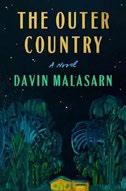
The Outer Country
Malasarn, Davin | One World/Random House (304 pp.) | $28 | May 5, 2026 9780593731659
A Thai family’s spiritual traditions chafe against American life.
Malasarn’s debut novel concerns the Chiwitchaiya family, which has emigrated from Thailand to Los Angeles: Siripon, Kamron, and their son, Rattawut, aka Ben. Tensions abound with each of them: Kamron, a factory worker, picks up drinking again after Ben turns 6, and Siripon, a nurse, is engaged in a long-running sibling rivalry with her sister, Manda Thrakoontong, who moved in with them after an unspoken disgrace back home. Who’s best- and worst-equipped to raise Ben becomes a running debate that intensifies after Manda spots Ben mimicking the dance moves of a woman on television; she calls in a monk to perform a ritual expunging any gay tendencies (in the form of a girl’s lost spirit) from the boy, which only serves to leave Ben with a chronic vomiting problem. Ben’s social standing declines, but his sexual orientation remains unchanged; as the years press on and Ben heads to college and finds a boyfriend, lingering impact of the ritual subtly frays his relations with his parents and the adults’ relationships with each other. Malasarn, a Thai American writer, deftly explores divergent cultural norms in Thailand and the U.S. (aka “the Outer Country”), especially when it comes to sexuality; a strong set piece explores Manda’s past as a teacher in Thailand and the incident that prompted her departure from the school where she taught. The characterizations are somewhat stiff, especially
For more by Miye Lee, visit Kirkus online.
Kamron, whose alcoholism seems largely designed to set some bad-decision plot twists in motion. But the book is more winningly subtle when it comes to matters of spirituality, exploring how religious conviction can have powerful and long-lasting physical effects. That’s true of Ben’s vomiting affliction—which Malasarn handles with remarkable restraint—as well as his family. A well-structured debut about a moment’s long-lasting aftereffects.
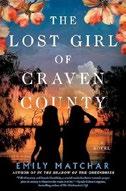
Two young women fight for their freedom in Depression-era North Carolina. Matchar braids together two narratives: One is related by Millie Green, the daughter of a pickle manufacturer, and the other by a mysterious, apparently mute young woman who appears in Millie’s hometown of New Bern, North Carolina. Millie is nursing psychic wounds resulting from the death of her beloved younger brother and a breakdown due to her inability to find a treatment for him. At 25, she’s becoming an old maid by the standards of Little Jerusalem, New Bern’s claustrophobic Jewish neighborhood. She discovers a disheveled woman behind her family’s pickle warehouse and embarks on a mission to determine the woman’s identity, origins, and native language (since she doesn’t respond to English). Millie recounts the story of her own circumstances and standing within the community in an appealingly blunt style; her fervent wish to be freed of expectations of marriage runs directly counter to her mother’s hopes for her. When the narrator role switches to the stranger’s voice and her background is disclosed, her name is revealed to be Cecilia. She hails from dire poverty in
a town not far from New Bern and, unsurprisingly, speaks English. On the run from a horrific institution where eugenics are part of the agenda, Cecilia enlists Millie’s help in maintaining her liberty. Matchar skillfully advances both women’s sagas, carrying them forward to a suspenseful denouement. The backstories of Millie’s family members and friends expose the good and bad sides of belonging to a closed community and reveal the ways a community can open up in response to the needs of others.
Engaging historical fiction with harbingers of current events.
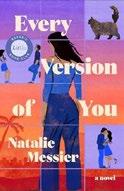
When a deeply unfulfilled woman meets an untimely demise, she’s offered a second chance at life.
Josephina Vasquez has had many regrets in her 32 years, but Elijah Aarons is her biggest. Joey has been in love with Ellie since college, though that’s just one small slice of an unsatisfying life. She hates her career as a corporate lawyer, her relationship with her family is non-existent, and she hasn’t spoken to her best friend in months. To top it off, she has an unpleasant squabble with Alex Aquino—an annoying guy who went to college with her and Ellie—at the same dinner party where she finds out Ellie’s wife is pregnant. Then Joey gets into a car accident and wakes up in a 1970s-themed room with horrendous shag carpet only to learn she’s dead. In this purgatorial waiting room, Joey is offered a second chance at life. Apparently, candidates who died with regrets are eligible for a do-over. Choosing to restart at the age when her regrets began, Joey returns to her freshman year of college in hopes of
rewriting the history of her relationship with Ellie. Newly 18 again, Joey realizes she can change more than just her love life: She doesn’t have to be a lawyer— hell, she can even invest in bitcoin. But when Joey surprises herself by developing feelings for Alex Aquino, she wonders if the life she’s been chasing has prevented her from living the one she was destined for. This novel is a magical, moving adventure about second chances and happy endings. Readers will cry, have butterflies, laugh, and maybe even pause for an existential crisis—all within a few pages. With a shocking reveal in the final act, you may even want to restart the book from the very beginning.
A captivating, philosophical, and romantic exploration of life, death, and the decisions we make during our time on Earth.
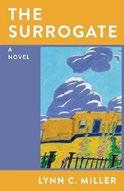
The Surrogate
Miller, Lynn C. | Univ. of Wisconsin (260 pp.) | $18.95 paper | March 31, 2026 9780299356644
The arrival of a charming stranger shakes the delicate balance of a family in mourning. When 30-yearold psychologist Alex Ross gets the call that her cousin Rolf has died in a car accident, her world falls apart. Alex is an only child, but coming from a from a close-knit extended family, she and Rolf were twin flames; his death makes her feel like she’s “trapped in a dense haze.” But when Alex’s Aunt Frannie, Rolf’s mother, becomes friends with Nathaniel, a handsome and mysterious patron of the bookstore she owns, Alex begins to emerge from the fog. Nathaniel possesses many of the traits Alex admired in Rolf, and her budding friendship with him transforms into a whirlwind romance. Things are far from smooth sailing, however. Rolf’s mercurial older brother, Stephen, doesn’t trust Nathaniel’s quick integration into their family
Kirkus Star
EDITORS’ PICKS:
This Is Where the Serpent Lives by Daniyal Mueenuddin (Knopf)
The Typewriter and the Guillotine: An American Journalist, a German Serial Killer, and Paris on the Eve of WWII by Mark Braude (Grand Central Publishing)
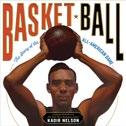
Basket Ball: The All-American Game by Kadir Nelson (Little, Brown)
Better the Devil by Erik J. Brown (Storytide/HarperCollins)
THANKS TO OUR SPONSORS:
That Kind of Girl by Jacey Bici
Use Your Palabras, Jovita! by Keishia Lee Louis, illus. by Diego Alejandro Escobar Triana
Midnight at Sea by Hoyt Rogers with Artemisia Vento and Frank Báez
Bone of Contention by Jan S. Gephardt
Digital Odyssey by SE Quinn
Fully Booked is produced by Cabel Adkins Audio and Megan Labrise.
Fully Booked
Style, love, and hip-hop converge in a sparkling fiction debut.
BY MEGAN LABRISE
EPISODE 461: AMY D UBOIS BARNETT
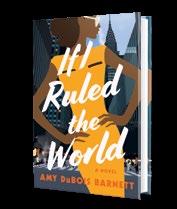
On this episode of Fully Booked, Amy DuBois Barnett joins us to discuss If I Ruled the World (Flatiron Books, Jan. 27), the story of Nikki Rose, a brainy, beautiful magazine editor on the rise in 1990s New York. In an admiring review, Kirkus calls Barnett’s debut novel—slated to become a Hulu series co-produced by Emma Watts and Lee Daniels—a “lively, likable novel.” If I Ruled the World has “serious things to say about Black women’s empowerment, while also dishing up plenty of sex, fashion, and friendship,” Kirkus writes. Barnett is an award-winning media executive and author who made history as the first Black woman to helm a major mainstream American magazine, Teen People. She also served as editor-in-chief of Ebony and Honey and was the deputy editor-in-chief of Harper’s Bazaar. She graduated from Brown University and has an MFA in creative writing from Columbia University. She lives in Los Angeles. Here’s a bit more from our review of If I Ruled the World: “A foolish indiscretion with media mogul Alonzo Griffin almost derails Nikki Rose’s career before it starts. Luckily, a mentor in human resources hooks her up with an editorial job at a Vogue-like fashion magazine, with a powerful editor to match.…With everything looking up—more money, her parents’ pride, the support of her uptight boyfriend—Nikki would be crazy to throw it all away to head up Sugar, a fledgling magazine devoted to Black women and urban culture, right?…Getting celebrities for the cover, battling Alonzo’s revenge-based sabotage, placating her new boyfriend, JJ, a hip-hop mogul, and maintaining a positive influence on the culture is a lot to ask of someone just turning 30.… Nevertheless, Nikki remains our girl as she navigates all the complexities of skin
If I Ruled the World Barnett, Amy DuBois Flatiron Books | 352 pp. | $29.99 Jan. 27, 2025 | 9781250378125
color, misogyny in hip-hop, the do’s and don’ts of work wear, the implicit and explicit racism of publishing, and keeping your oldest friends as you move up.”
Barnett and I discuss the complexities of Nikki’s journey as she works to become an editor-in-chief; 1990s magazine culture; the impact of hip-hop; Barnett’s writing process; the departmental harmony required to produce a monthly; and much more.
Then editors Laura Simeon, Mahnaz Dar, John McMurtrie, and Laurie Muchnick share their top picks in books for the week.
Editor at large Megan Labrise hosts the Fully Booked podcast.
To listen to the episode, visit Kirkus online.
New Novel by Min Jin Lee Coming This Fall
American Hagwon will be published in September.
Min Jin Lee’s first novel in nearly a decade is coming later this year.
Cardinal, an imprint of Grand Central Publishing, will release Lee’s American Hagwon in the fall, the press announced in a news release. It calls the book “a masterpiece by turns sweeping and intimate, one that reckons with ambition and moderation, lust and
loyalty, personal dreams and familial duty.”
Lee made her literary debut in 2007 with the novel Free Food for Millionaires and 10 years later published the novel Pachinko, a finalist for the National Book Award. The novel was adapted for an acclaimed Apple TV+ series.
American Hagwon, Cardinal says, follows the couple John and Helen Koh and their three children, who live in Seoul until their lives are thrown into disarray by betrayal and the Asian financial crisis of 1997. The family moves to Australia and then southern California as John and Helen struggle to educate their children as best they can.
“Min Jin Lee has crafted an unforgettable, panoramic novel where the smallest of gestures can have enormous repercussions, where the bonds of family and of memory twist and fray but rarely break, and where willful self-sacrifice—for the benefit of loved ones and
even strangers—is a kind of prayer,” Cardinal says.
American Hagwon is slated for publication on Sept. 29.
—MICHAEL SCHAUB
Min Jin Lee
For a review of Pachinko, visit Kirkus online.
and tries to warn Alex away from him. Stephen, who always envied the attention Rolf attracted, seems to be burying his grief by diving into his job in wealth management—it’s the eve of the 2008 financial crisis—and into a new relationship with standoffish Annalise, whose own obsession with Nathaniel bubbles just beneath the surface. As Alex processes her grief, she begins to question her dependency on Nathaniel. Though Miller’s dialogue ranges from overly expository to overly therapy-esque, the story is suffused with intrigue and a gripping melancholy, and Alex’s internal journey is at once believable and profound. An atmospheric meditation on grief and healing.
Centroeuropa
Mora, Vicente Luis | Trans. by Rahul Bery Bellevue Literary Press (192 pp.) | $17.99 paper | March 10, 2026 | 9781954276529
A farmer in early-19th-century Prussia must deal with a shocking discovery on his newly acquired land. When Redo Hauptshammer arrives from
Vienna in the Prussian village of Szonden on the banks of the Oder River in the 1820s, his first task is to bury his murdered young Spanish wife, Odra—the victim of random gunfire—on the same plot of land where he hopes to raise sugar beets. But when he first places his spade in the soil, he makes a startling discovery: the icebound body of a Prussian hussar soldier. Redo’s shock and sadness only grow as his repeated efforts to excavate a suitable gravesite reveal multiplying numbers of “dead, frozen soldiers, surrounded by their weapons under pools of coagulated blood that announced their presence a few feet farther down.” Each new dig discloses double the number of bodies, until he has unearthed a total of 31 men from different eras.
A quietly moving parable on the painful, unacknowledged legacy of war.
CENTROEUROPA
Meanwhile, an albino witch named Ilse informs him more are yet to be discovered. To his rising frustration, Redo must confront recalcitrant authorities—stretching from the local gentry and minor government functionaries all the way to the highest levels of the Prussian regime—who seem vaguely sympathetic to his plight, but just as determined to delay a solution to the inexplicable problem. One finally admonishes, “You understand it’s not convenient for death to cause such commotion in a country that is at peace.” As Redo muses on his brief period of marital bliss and deals with his grief over Odra’s death, tenant farmer Hans and local historian Jakob Moltke provide support and consolation. Mora’s surreal premise and understated tone subtly mask a pointed critique of governments that don’t hesitate to send their citizens into battle while refusing to face the consequences of those fateful decisions. A quietly moving parable on the painful, unacknowledged legacy of war.
The Witch
NDiaye, Marie | Trans. by Jordan Stump Vintage (144 pp.) | $18 paper April 14, 2026 | 9798217006809
Short, sharp, and deceptively simple. Lucie—the narrator of NDiaye’s surreal portrait of a woman’s identity in flux—is a witch. Unfortunately, she’s not very accomplished at her craft, which has been passed down through
generations of women in her family. When she begins to instruct her 12-year-old twin daughters, Maud and Lise, about the mysterious powers she possesses, they dutifully absorb her lessons. One of them remarks, “No offense, Mama, but really, it’s all just so lame,” but soon both girls far surpass her in the occult arts. While Lucie sheds pale tears only tinged with red, the girls manifest their powers by crying actual tears of blood. Lucie’s moody, unhappy salesman husband, the aptly named Pierrot—French for clown—flees the family home with funds entrusted to Lucie by her father. Her efforts to recover the money and reunite her parents, whose own marriage has dissolved, are conveyed in NDiaye’s trademark dreamlike style. (Some episodes might better be called nightmares.) Lucie grapples with her uneven relationship with Pierrot’s mother, and a visit to her home provides Maud and Lise with an eerie, macabre opportunity to practice their developing supernatural skills on Pierrot’s pregnant sister, their hapless aunt. A relationship with a repulsive, conniving neighbor results in an opportunity for Lucie to teach divination at Isabelle O.’s Women’s University of Spiritual Health, where the spurious curriculum includes an Introduction to Therapeutic Colors. (In NDiaye’s ironic twist on Lucie’s tenure there, Lucie has to defend herself against charges of fraud by asserting her status as a “sort of witch.”) Originally published in France in 1996, NDiaye’s concise tale of female power, maternal identity, and family secrets has been ably translated by Stump, a frequent collaborator. Unsettling and evocative, NDiaye’s short novel distills dreams and truths alike.
Kirkus Star
Cleo Dang Would Rather Be Dead
Nguyen, Mai | Atria (272 pp.) | $28 April 14, 2026 | 9781668080863
A new mother, reeling from the loss of her baby, finds hope in a surprising place— a funeral home.
Cleo Dang is careening through life as she navigates the loss of her daughter, Daisy, shortly after birth. In her rage and pain, Cleo alienates her mirror-like best friend, Paloma, who’s reveling in the birth of her own baby; her husband, Ethan, who is also grieving but seems more and more distant; and her well-meaning mother, who sends inspirational quotes from the likes of Edna St. Vincent Millay and James Baldwin. Cleo’s despair eventually drives her to extremes: Breaking into Paloma’s house and cuddling her newborn’s dumpling toy as if it were a baby; Googling things like, “Is it possible to cry too much?”; and succumbing to a meltdown involving a half-empty cup of coffee and a co-worker’s computer. Then, when Cleo goes to the funeral home to pick up Daisy’s ashes, the owner offers her a job—and to her own surprise, she takes it. Slowly, she finds a place among the ragtag staff—young Rachel, who brings Cleo offerings of sweets and says she looks like “someone who enjoys dessert”; beautiful Ana, who so tenderly attends to the hair and makeup of people about to be buried. Then there’s Kenneth, her boss, who’s full of eccentricities—he eats his pizza crust-first and has a mysterious locked mahogany hutch and a Mason jar full of mustache hairs—but he shows an amazing capacity for compassion. By working with other people through their own heartbreak, Cleo slowly crawls, then walks, her way back to the land of the living, even though her sadness still
follows her around “like a needy toddler.” Nguyen is brilliant in her depiction of the agony of grief as well as its absurdity and surprising capacity for tender connection.
An astonishing portrait of grief and an ode to the beauty that manages to live in its midst.
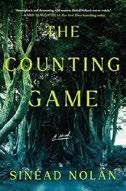
When 13-year-old Saoirse Kellough vanishes while playing a counting game in the woods with her little brother, Jack, the insular Irish village of Drumsuin is thrown into a state of disarray and suspicion.
The year is 1995 and Saoirse is not the first girl to go missing in the woods surrounding Drumsuin— merely the latest in a string of unsolved disappearances that have haunted townsfolk for some time. According to Jack, at the time of Saoirse’s disappearance they were playing a counting game their mother taught them to ward off evil—making him the only witness to what happened that night. As it becomes increasingly clear that Jack is struggling to communicate what he saw, often refusing to speak and instead expressing himself through dark imagery in his artwork, local authorities call on Freya Hemmings, a psychotherapist still reeling from the death of her own young daughter, to help get to the bottom of the night’s events. Freya specializes in investigating missing children and as she spends more time with a troubled Jack and the remaining Kellough family members, she becomes convinced there’s much more than meets the eye to Drumsuin and its residents, all of whom seem to harbor dark secrets and hidden pasts. While Freya’s good-heartedness as a psychotherapist
and Jack’s innocence and voice—or lack thereof—ring true, the book’s glacial pace dampens the suspense as well as the family drama that carries the plot forward.
The slow pace of this psychological thriller drags it down.
Hollywood is coming to town—to Derry, in Northern Ireland—to make Dead City, a “lavish mini-series set in the 70s,” drawing on a violent episode during the Troubles. But there’s a problem: American star Monica Logue has gone missing.
Derry-born O’Reilly’s fiction debut is a short, tragicomic portrait of a community whose members have been variously marked by their memories of and involvement in the mid-20th century Troubles. History may have moved on, but the long, vicious sectarian conflict between Protestants and Catholics, and the role of the Royal Ulster Constabulary and the British forces, remain psychically ineradicable. Many voices speak in the book, most frequently the author of the eponymous prestige drama, Diarmuid Walsh, who witnessed the atrocity that informs the series and was also the last person to see Monica. The other voices, rich with Northern Irish rhythms and vocabulary (“blanket man,” “scundered,” “wains”), are vital, soulful, reflective, battle-scarred, comic, and/or profane. Turlough, keen to act though currently working in a car park, hopes for a part in the series. Ann-Marie, mother of Jamie Devenney, whose horrific shooting decades earlier will impact the series, has no illusions about the production, but permits a research visit from Monica. Bogle—“the biggest Provo in five parishes”—is especially cynical about
A dog tries to help his owner save a bookstore.
DOG PERSON
the commercialization of memories of the conflict, while revealing a past that includes prison and murder. Will the production lend insight to a younger generation or just dredge up unwelcome recollections? “I won’t be watching anyway,” says mural-painter Finbar. “Doesn’t do to dwell on the past.” The book’s dramatic arc may slowly lose impetus, but its kaleidoscopic span, threaded with ghosts and hauntings, is undeniably pungent. A virtuoso chorus of community experience gives voice to undead trauma.
A dog tries to help his owner find love and save a bookstore. Harold, an elderly dog, has a mission. His owner, a romance author named Amelia, died just a year and a half ago. Before her death, she’d asked Harold to look out for her partner, Miguel, and help him fall in love again. But this turns out to be no easy task—Miguel is depressed and it’s hard for Harold to find him a new girlfriend when he won’t leave his apartment. Miguel and Amelia were partners not just in life but in business, and the bookstore they owned together is in financial trouble. If Harold can’t help Miguel, they might lose one of their last connections to Amelia. When Miguel’s favorite notoriously reclusive author agrees to do an event at the store, Miguel and his employees are counting on the book sales—but the author never shows up. With nothing to lose, Miguel decides to track down the
author (with Harold in tow) and instead meets the man’s sister, Fiona. Fiona is beautiful, friendly, and the mother of a dog-loving daughter whose name is also Amelia. Harold falls instantly in love with them, but can he convince Miguel to open himself up to new people while he’s still nursing a broken heart? Harold himself is 14 years old, and his aches and pains remind him that he needs to help Miguel find his people as quickly as possible. Pagán delicately depicts Miguel’s grief as he struggles to live in the wake of his partner’s death. Using a dog’s perspective is a clever way of adding a bit of levity to an otherwise heavy story, and Harold is a warm and engaging narrator. Although the plot slackens a bit in the middle as Miguel repeatedly turns down offers of help and gets in his own way, all is redeemed by the end, which should produce tears of sadness and happiness from even the most hardened reader. An emotional story of love and grief, perfect for dog lovers and book lovers alike.
The Mother-Daughter Book Club
Patterson, Susan & James Patterson
Little, Brown (352 pp.) | $30
April 20, 2026 | 9780316580595
Nine women— four mothers and five daughters— experience tragedy, joy, and hope in two book club meetings held three years apart. Three college friends, Mariella Marciano (now an opera singer), Grace Townsend (a minister), and Elin Mackenzie (a corporate lawyer) are joined by a fourth, Jamie Price,
one-time nanny for Elin’s daughter. The women have been close for decades, texting regularly and meeting periodically for weekend book retreats. But during one weekend in Lake Geneva, Wisconsin, when they’ve been joined by their daughters, there’s a tragic accident. After a day of drinking, Jamie’s twins, Kathleen and Meg, head out for ice cream on a rainy night and their jeep flips and crashes into a tree. Fast forward three years, and the women come together again for a book club weekend, this time in Mariella’s vacation home—a villa in Lake Como. The twins no longer speak to each other, and the other women are on tenterhooks worrying about what might happen during the trip. But what follows are long days of food, love, and personal growth as the friends talk books, hopes, dreams, and the future. Still, each keeps part of herself hidden, while contemplating sharing their secrets with the others on the final night of the trip. This is a book seemingly made for the screen, with lots of bickering, wine, and dishy revelations. With such a seemingly overfull cast, the authors do well to make each character memorable and distinct—but none of them has much depth. And rather than focusing on mother-daughter relationships, as might have been expected, it’s romantic love—both old and new—and the marriages of two of the women that drive the story forward. An entertaining book, adeptly written and easily read.
The Last Mandarin
Penny, Louise & Mellissa Fung Minotaur (400 pp.) | $30 May 12, 2026 | 9781250412522
What happens when an eminent mystery novelist collaborates with an award-winning journalist on a spy thriller? Pretty much everything you can imagine. While food blogger Alice Li is in retreat from her
overbearing mother, famous Chinese dissident Vivien Li, in a restaurant bathroom, the alarm goes off. And not just the fire alarm, but every alarm in the city, the country, and around the world. Their triggering is clearly an act of terrorism, and the silencing of all those alarms, which comes as suddenly and inexplicably as their screeching, is anything but reassuring. Vivien spirits her daughter off to the White House, where Grant McAllister, the director of National Intelligence, informs Alice that her friend and fellow blogger Liam Palmer has just been fished from the Hong Kong harbor. McAllister and Alan Zhou, head of the China Mission Center, are convinced Liam knew something about those alarms, and President Fraser Pardington is determined to do whatever he can to prevent a sequel. He fails, of course, and the second act of global terrorism is even more disastrous than the first. All the president’s men and women initially believe the threat comes from the Chinese government, and Chinese President Chen Jiayang thinks the Americans might be behind it. Alice and Vivien race around the globe to track down the culprit, and what they find will knit together the fates of Alice’s family, the U.S. and China, and the history of the world as we know it.
It’s just as exhausting as it sounds, but it may be the most ambitious spy novel you’ve ever read.
The Perfect Circle
Petrucci, Claudia | Trans. by Anne Milano Appel | World Editions (242 pp.) | $19.99 paper | April 7, 2026 | 9781642861631
A real estate broker finds herself at the center of a house spiraling around family, love, and time in this novel by Italian author Petrucci. Irene Sartori sells foreclosed houses—from a palazzo in smoldering Rome to an expensive property
in sinking Venice—to wealthy foreigners impervious to the dystopian climate catastrophe befalling Europe. Renowned in her field, Irene gets a mysterious call beckoning her to help sell an “unsellable” property in her hometown of Milan. The enchanting yet haunting spot, known as Via Saterna, is defined by its central staircase, giving the building a circular interior that defies its ordinary square-shaped exterior: “The Via Saterna project is based on that deception, on the assurance of a certain presumption in the eye of an onlooker and the subsequent unmasking of preconception, the crumbling of logical deduction.” Most intriguing, however, is Via Saterna’s unlikely inhabitant, Lidia, whose mysterious relationship to the house quickly takes over Irene’s life. As Irene tries to piece together the intertwined history of Lidia and Via Saterna, another narrative unfolds: one that begins decades prior when, according to the narrator, Lidia had a fatal fall down the house’s stairwell. The two concentric narratives—one moving forward in time and the other moving backward—create a gripping yet dizzying story that forces the reader to question its every detail. Both narratives oscillate between themes of birth and death, balancing the puzzle of Lidia’s alleged death with Irene’s personal journey into motherhood, which emphasizes the circularity of the novel’s timeline. The plot, like the house, is dotted with circular and geometric imagery: “I had waited forty years for the circle to close,” says the house’s owner as the novel ends.
A thrilling study of time that playfully intertwines birth and death, motherhood and human extinction.
The man who came to dinner. In the spring of 1857, Hans Christian Andersen visited Charles Dickens and his family at Gad’s Hill, in the countryside of Kent. Invited for a brief stay, Andersen remained for five weeks, his presence intensifying tensions within the troubled household. Adding to the “unsettled atmosphere,” a devastating rumor swirled: A comet was on a collision course with Earth. Imagining the visit first from the collective point of view of Dickens’ nine children, then the novelist himself, then the Danish visitor, Prose creates a sensitive, multilayered portrait of loneliness, betrayal, and longing. The children, remarkably unhappy, feel unloved by their father, who seems always distant and distracted. Andersen—comically awkward and embarrassingly affectionate—exacerbates their “misery and strain,” making their “hard time even harder.” Dickens, who had invited Andersen in a moment of exuberance he now regrets, is irritated by his guest’s odd demeanor and intrusiveness. The visit has come at a low point in his life. He’s dissatisfied with a play he’s producing and the quality of his acting; he feels imprisoned within his family: “His children were the turnkeys” and his wife, Catherine, “the walls and iron bars.” Infatuated with a young actress—the latest of many romances—he resents coming home. Andersen, flattered to think the invitation had been motivated by admiration from an author he worships, tries mightily to ingratiate himself, but fails. Wishing he’d be asked to stay forever, to be embraced, at last, by a loving family, he leaves in tears. Prose handles her characters with sympathy, especially Andersen, whose neediness is palpable and whose ability
For more by Francine Prose, visit Kirkus online.
to transform deep sadness into art is heroic. Although recounting the visit several times leads to some repetition, the result, nevertheless, is captivating. A richly textured tale.
The Palm House
Riley, Gwendoline | New York Review Books (216 pp.) | $16.95 paper | April 14, 2026 9798896230526
Vignettes of a London life provide glimpses of connection— some loving, some glancing. Riley’s particular ear for linguistic nuance and eye for pinpoint detail are as distinctive as ever in her seventh novel, a short, low-key yet persuasive portrait of Laura Miller and her longtime friendship with magazine editor Edmund Putnam. We first encounter the pair in a London pub on the south bank of the Thames on the occasion of Putnam’s departure from the helm of Sequence magazine. This city, this work, and this man are at the heart of the narrative, interrupted by glimpses of Laura’s earlier life. The affectionate, mutually satisfactory relationship with Putnam is a rarity in Laura’s world. Her relationship with her mother has been uneasy, with moments of closeness set against the older woman’s “mixture of hyperbole and deprecation.” Other episodes and involvements from Laura’s past are evoked with visual clarity, including a holiday in Dubrovnik and, at age 15, a crush on a minor stand-up comic who exploits her innocence during a visit she took to London from her home in Liverpool (delivered in grim detail). London’s role in the narrative is constant and complex, both a marker of Laura’s student and adult lives and a vibrant locus of history, literature, money, and more. The passage of time also carries thematic value; the scattering of a parent’s ashes in the briefest of paragraphs is a standout moment. Other telling moments touch on the magazine community, fads and fashions, and the shifting of jobs and intimacies. On one level, this is an
account of an ordinary existence short on plot developments; on another, it’s a subtly calibrated observation of how a person’s world turns. Riley elevates the everyday to exceptional heights.
The Cove
Ross, LJ | Poisoned Pen (288 pp.) | $17.99 paper | May 5, 2026 | 9781464273698
A London editor who was nearly killed in an Underground station flees to an idyllic spot in Cornwall only to learn what generations of earlier protagonists have known: Crime knows no geographic boundaries.
Gabrielle Adams’ life as a successful editor at Frenchman Saunders ended the night she left a party and was pushed onto the tracks by the “Tube Killer.” She was lucky enough to survive, but PTSD has battered her memory, her concentration, and her tolerance for socializing. Unable to continue in her job, she applies for a position as manager of Carnance Cove Books & Gifts, on Cornwall’s Lizard Peninsula, where life is perfect. Bookstore owner Nell Trelawney is hospitable and accommodating; her son, Jackson, is flirtatious and dishy; and aspiring painter and photographer Luke Malone, widowed two years ago by a boating accident, quickly turns from a friend into something more. But there’s trouble in paradise, as Gabi realizes one night when she witnesses someone pushing a figure from a cliff. DS Jane Lander, the local police officer, finds no sign of a corpse and no reports of a missing person, and Gabi can’t help wondering if she imagined the whole thing. Attempting to identify the victim herself, she runs afoul of Lander and eventually awakens the beast within the cove, turning the whodunit into a melodramatic pursuit. The solution to the mystery arrives with so little evidence that most readers will be surprised, and more than a few of them dismissive.
An exercise in atmospheric tourism in the guise of a whodunit.
Two young women discover the dark side of the spotlight. Eva, an 18-year-old intern at London-based Low Slang Records, wants to break into the A&R side of the music industry but spends her days fetching coffee for higher-ups who won’t give her the time of day. Then she finds 16-year-old Alora Storm-Jones. When Eva comes across a video of Alora singing, she’s transfixed by her talent. If Eva can get Alora signed to the label, both their lives might just change forever. Alora has loved to perform since early childhood, inspired by her father, Billy Storm-Jones, a beloved musician. But it’s been years since Alora has seen Billy, who left her and her neglectful mother, Julia, in their dingy Manchester apartment. Desperate to escape her dreary existence and become “an icon,” Alora jumps at Eva’s offer of management. Together, they take the music world by storm as Alora becomes an instant superstar with a No. 1 record, sold-out stadium tour, and millions in the bank. But it’s a well-trodden path—promising yet troubled young artist, controlling record label, problematic producer, hounding paparazzi, obsessive fans, all the other sinister trappings of fame—and author Seddon does not deviate from expectations as both women’s lives predictably unravel. As the story is told from both perspectives in two different timelines—Alora in rehab after a livestreamed suicide attempt and Eva during Alora’s meteoric rise—the dark backstories, betrayals, mistakes, and missteps of both women are slowly brought to light. The exploration of female ambition and the desperate decisions each woman makes to grab at power, success, and notoriety in an industry where men systemically withhold all the above make this story worth reading.
A compelling, if unsurprising, addition to the canon of fiction about fame’s corrosive effects.
Stockett heads to Mississippi for another historical novel about feisty women. This time, perhaps recalling criticisms of cultural appropriation in The Help (2009), she sticks to feisty white women, with one exception. The setting is Oxford in 1933. For two miserable years, 11-year-old Meg has lived in “the Orphan,” a county asylum for parentless girls. Chairlady Garnett—a villain so one-note she’d twirl a mustache if she had one—makes it her mission to ostracize the older girls she deems unadoptable, stigmatizing them as offspring of the “feebleminded” mothers who abandoned them. She particularly has it in for smart, sassy Meg, who refuses to believe her mother’s mysterious disappearance was deliberate. Elsewhere in Oxford, Birdie Calhoun comes to visit her sister Frances, who married a wealthy banker, to ask for money on behalf of their mother and grandmother back in Footely. Frances isn’t thrilled by this reminder of her impoverished smalltown origins. But she’s trying to climb up in Oxford society by volunteering at the Orphan, the asylum’s books need to be done before the state inspector shows up in a few weeks, and Birdie is a bookkeeper. Having neatly arranged to keep Birdie in town and draw these two storylines together, Stockett goes on to spin a compulsively readable yarn with enough plot for a half-dozen novels. Birdie and Meg become friends, Meg is adopted despite Garnett’s best efforts, Meg’s mother turns up at the Orphan demanding to know where her child is—and that’s less than a quarter of the way through a long, winding narrative that keeps piling on more dramatic developments until all loose ends are neatly, if hastily, wrapped up in the final pages. Stockett might be making a point about Southern women facing facts and standing up for themselves, but mostly
this is just a satisfyingly twisty tale that should make a great miniseries. Fans of Stockett’s bestselling debut will love this engaging follow-up.
The Things We Never Say
Strout, Elizabeth | Random House (224 pp.)
$29 | May 5, 2026 | 9798217154746
A diverting midlife story plucks at the secrets good people carry to the grave.
As a reader, Artie Dam—the protagonist of Strout’s 11th book—encounters Olive Kitteridge, “a crotchety old woman from Maine” and Strout’s most celebrated fictional character. Artie picked up the Pulitzeranointed book centered on Olive after his wife, Evie, loved it, “oh, years ago now.” Strout is having a bit of fun—that “oh” is a trademark—even though she marbles her latest novel with marital infidelity, political anxiety, and suicide. Indeed, it is the fact that Olive’s father died by suicide that Artie, 57 and gaining a paunch, recalls now in his own dismalness. As the story begins, he is pondering the most discreet way to die, despite having been Massachusetts’ Teacher of the Year five years earlier. Artie seems the inverse of irascible Olive: beloved by his students; by his grown son, Rob; and by the English teacher, Anne, who quietly pines for him. But like Olive, Artie has distressing impulses—he steals a comb, then some expensive shirts. Much of the text bobs along on Artie’s stocktaking memories, chunked out in short, occasionally abrupt paragraphs. Strout’s storytelling is thinning a bit, like middle-aged hair. Then, midbook, she clobbers Artie with a brutal existential shock. In its wake, Strout surfs the nature of loneliness, corrosive secrets, and the convulsions of the 2024 presidential election. Hers is an unremittingly Blue State book, although Artie has one friend who, unbeknownst to him, supported Donald Trump. On the day after the election, Artie somberly
concludes that his “country was committing suicide.” This is the first novel in which Strout entirely vacates Maine for another setting. But she sticks with Artie and, on the final pages, delivers him a satisfying finale. Vivid characters are set adrift in a “ripped from the headlines” tableau that complicates the story, and the storytelling.
Ms. Mebel Goes Back to the Chopping Block
Sutanto, Jesse Q. | Berkley (304 pp.) | $19 paper | April 28, 2026 | 9780593953051
A trophy wife gets dumped for a younger model. The novel opens with 63-year-old Mebel Tanadi learning that, after 40 years of marriage, her husband, a Jakarta real estate tycoon, is leaving her for their 24-year-old chef. Mebel, who thinks of herself as “a traditional, uptight ChineseIndonesian housewife,” doesn’t know who she is beyond Henk’s spouse. Well, no one can accuse Mebel Tanadi of giving up without a fight. She decides to spend a semester at culinary school in Paris, where she will learn to make “white people food” that will entice Henk to return to her. “That’s what he wants, isn’t it? A wife who can cook. That’s the entire reason he’s off with Wendy.” (Well…) But there’s a hitch with the “Paris” part of Mebel’s plan: She has actually registered for the Paris school’s sister school, and it’s located in a considerably less glamorous town outside Oxford, England. What’s more, Mebel didn’t expect to be the oldest-by-amile student, which makes her anxious.
“No, that’s not possible,” she tells herself, “because trophy wives do not have social anxiety; they have Gucci.” But her jangled nerves are nothing compared with the heart palpitations caused by a rather George Clooney–esque chef. This book, which initially gives off strong rom-com vibes, ends up calling to mind the personal growth novels of secondwave feminism, and the result is a spirited
story of comeuppance, intergenerational friendships, and second chances (“It’s time for you to enter your slut era,” one of Mebel’s culinary school friends informs her). Sutanto, who is behind the beloved Vera Wong mystery series, has created another unsinkable and unstintingly funny 60-something female character, and readers should derive much pleasure witnessing Mebel’s transformation from castoff wife into Chinese Indonesian Golden Girl.
Soufflé lightness, deliciously flavored with feminism.
Kirkus Star
A Private Man
Sy-Quia, Stephanie | Grove (288 pp.) $27 | April 14, 2026 | 9780802166906
Based on the true story of the author’s grandparents, this intimate look at the marriage between a defrocked priest and a theology teacher takes place in 1960s England and 21st-century France.
Vatican II, convened in 1962 as the first such gathering in nearly 100 years, electrified young Roman Catholics around the world—even in largely Protestant England, where Catholic enclaves in the north still sent young men like David Fletcher to the priesthood. Meanwhile, some young women, like Margaret Bendelow, were selected to study a sort of theology-light in Rome, to fit them for teaching college girls at St. Genevieve’s. Margaret and David meet when he is assigned as her diocesan advisor, and sparks fly quickly, though chastely. Neither intends to start a love affair, but once it happens, it blows the roof off their lives. The story proceeds haltingly yet meaningfully, moving from their grandson Adrian’s discovery of this family secret, back to David’s early exhilaration with his vocation, to Margaret’s scholarly brilliance, on to Adrian caring for her through her difficult old age. Sometimes Margaret is
able to share memories; sometimes she is lost to the fog of dementia. Connecting the elderly Margaret to her dynamic 30-something self is particularly difficult, a distancing that feels right given how little material Adrian and his mother, Hilary, have to explain Margaret’s past. It’s enough for the reader to see inside the grandparents’ marriage and its many challenges, which include ostracization, a poor sexual fit, and Hilary’s too-quick arrival; David and Margaret scarcely have time to unwrap wedding gifts before she’s pregnant. Sy-Quia wisely avoids tying up all loose ends, creating a portrait rather than a complicated plot. Although it’s clear from early on that David makes an important late request, without the rest of this restrained narrative, the significance of that request would mean very little. Instead, it explains everything. A tender, surprising excavation of minds meeting and hearts singing through disappointments to very human deaths.
Hexes of the Deadwood Forest
Szpila, Agnieszka | Trans. by Scotia Gilroy Pantheon (336 pp.) | $28 | April 7, 2026 9780593700891
An ecofeminist saga.
Anna Frenza is the unhappily married chief executive of a Polish oil company. The problem: Her husband has a secret porn addiction that keeps him too distracted to have sex with her. Medicated to deal with her malaise, she sleepwalks. Her destination is usually a gas station where she steals sweets, until one fateful night when she finds herself inexplicably drawn to a felled tree, which she straddles and makes love to. Caught in the act by a journalist who was tipped off by her neighbor, she’s swiftly abandoned by the government establishment that liked her when she was making money for Poland but embraced by the EcoDivas who applaud her for “the best environmental protest-performance”
they’ve ever seen. That’s just the beginning of this sprawling, bawdy comic novel that goes all the way back to 1569 to create a genealogy of women trying to escape the tyranny of men’s rodkins (you can guess which anatomical part this refers to) and discover gentler ways to pleasure themselves and live in harmony with the earth. Over successive centuries, the narrative features lascivious men of the cloth, the discovery of elixirs to make a man’s rodkin wither, witch hunts sponsored by the Catholic church, ointments to protect women from penetration and rape, scenes of intense violence against women, and moments in which women come together to “cleftspark,” fulfilling themselves and replenishing the earth. Though there’s never a dull moment, the novel does become a bit repetitive in the middle— perhaps for good reason, since the domination of rebellious women has been a constant across centuries. Still, Szpila spins a rich, imaginative alternative to the usual phallocentric history, urging women in the final chapter, a manifesto, to “suspend [their] powers of reason,” trust their “wild, atavistic Cleft,” and celebrate their connection to the natural world. In this feisty novel, women’s strength comes from reasserting their role as earth mothers.
X Is Where I Am
Torres, Sara | Trans. by Maureen Shaughnessy | Charco Press (240 pp.) $17.95 paper | March 3, 2026 9781917260206
A young Spanish woman confronts the loss of her mother to cancer and the loss of a lover in this memoir-like novel. In the opening pages of this meditation on loss, the narrator—named Sara, like the author—is at a hotel rendezvous in Barcelona with the lover she calls “Girl” while her mother is dying in Asturias, where Sara plans to fly the next day. Her mother has lived with metastasized breast
cancer for 10 years, Sara’s entire adult life, and Sara’s account of their time together in her mother’s last days is both tender and harrowing. Meanwhile, her affair with Girl is brief and intense, beginning in October, a few weeks after Sara moves to Barcelona from London, where her partner, Dani, remains, and ending in December, in the days between her mother’s death and Dani’s arrival in Barcelona. The affair ends because, once Dani is in town, Girl does not want to continue it; though she tries, Girl does not, like Sara, understand nonmonogamy: “that there can be different connections with different loves.” Sara is an academic (the move to Barcelona is for a teaching job), and her narrative style is often like that of an essayist; she makes observations such as, “The absence of bodies we’ve had passionate connections with is disconcerting,” before reflecting on Gloria Anzaldúa’s concept of “susto,” or “frightening of the spirit.” Baudelaire, Jeanette Winterson, and Woolf are among other writers cited as Sara sifts through her feelings. At the same time, bodies are very much present on the page, including intimate depictions of lovemaking and an unflinching, anguished, and moving portrayal of the ravages of cancer and its treatment on her mother’s body.
This book is for readers seeking cerebral pleasures rather than drama.
Afterlife
Woodward, Angela | FC2/Univ. of Alabama (150 pp.) | $18.95 paper | March 15, 2026 9781573662161
An alphabetical accounting of art and memory in the wake of grief. With little narrative structure to constrain her, Woodward is free to wander her own thoughts and emotions, tracing the scars death leaves behind. This is a strange catalogue of things imagined amid painful feelings, all intertwined in a surprisingly bottled up package. Nominally a novel but in
execution a keen synthesis of fact and fiction, the book takes the form of 36 micro essays and stories presented alphabetically by title, from “Afterlife” and “Birds in Art” through “Elton John,” “Insects,” “Rye Crackers,” and “Xyz.” Death hangs over what narrative there is, as in the title story, whose narrator admits to having troubling visions of her own demise. She’d lost her troubled sister, Vicky, who died from a degenerative illness three weeks earlier. The other narrative thread involves a U.S. Army experiment conducted over Minneapolis in 1950 that caked the city in cadmium to simulate a nuclear attack. Punctuated by tiny fictions and brief, unsettling reflections on her sister, the narrator also touches on the works of novelist John O’Hara, generational wreckage caused by Black Beauty, and the nature of romance in Shulamith Firestone’s Dialectic of Sex. In one essay, a poet ponders the nature of words, while another essay asks what it means to eat insects, and a third remarks on the casual sexism of Invasion of the Body Snatchers. Not that the book isn’t funny from time to time: Sylvia Plath’s legacy is deemed “a fitting arc for a poet’s life: struggle, success, marriage, extinction.” In another note, the narrator drily comments, “This shows you how generally inappropriate my reactions are to the backbone of my society.” By the time she talks at any length about her sister—“I wasn’t going to feel sorry for her. I wasn’t sorry”—readers may not know whether to believe her or not.
A cabinet full of unsettled ideas with a universe of language behind it.
The Author Weekend
Zigman, Laura | Blackstone (304 pp.) $29.99 | May 5, 2026 | 9798228330405
A dark comedic thriller driven by envy, ego, and rage of a uniquely writerly variety. There are four first-person narrators in this novel, a publishingworld satire crossed with a locked-room murder mystery.
First is Jade Smythe, personal assistant to top women’s mystery novelist Faye Wader. Jade has organized a fan weekend for Faye on an island off the coast of New England, inspired by similar gatherings held by Faye’s rival, a more successful and charismatic author named Abby Schuss. (Faye would be played by Kathy Bates, Abby by Julia Roberts.) The jampacked agenda includes “Pre- Post- or Peri-Menopausal Mermaid Meditation on the Zen Deck,” “Bubbles and Bites on the Porch,” and much more. The other points of view belong to Faye herself, a cranky loner who is totally out of her element at her own shindig; Hal Tinder, Faye’s longtime agent; and Merry Golden, Faye’s editor at Hatchet House. (Zigman has a lot of fun with names.) Hal and Merry are ostensibly coming to the island to participate in a panel discussion, but they have bad news for Faye. The publisher is not going to buy her 15th novel—too much menopause! To make this experience even more painful for Faye, there are additional turns of the screw: Her number-one fan has uncovered a fatal inconsistency in her mythic origin story (emphasis on “fatal” here); her idiotic publicist, Xoey Catz, has shown up with her Instagram-famous feline and his bedazzled stroller; and Abby Schuss will be dropping in, too. Since Jade is an aspiring writer herself, a deliciously meta narrative line traces her text thread with her MFA cohort; she assures them she’s only involved in this philistine operation “for the plot,” which she describes as “And Then There Were None meets Misery meets White Lotus.” Some of the humor is a little broad, but as the plot thickens and the bodies start to turn up, Zigman has about the most fun she’s had on the page since her breakout 1998 debut, Animal Husbandry It’s a comeback for sure.
A standout in the popular genre of literary-world satire.
For more by Laura Zigman, visit Kirkus online.
ISBN: 979-8-21-857261-7
“Nicholas’ yarn is an engrossing look at families that unravel and must be painfully knitted back together... Nicholas’ portrait of Kalayla is brilliant— she’s a pitch-perfect smart, sullen tween...”
“The author crafts sharply etched, vibrant, prickly characters who resonate despite their differences...”
A raucous, poignant exploration of the blood ties that bind...and chafe.”
—Kirkus Reviews
Too-Real Dystopian Novels
Brooke Fast
By James Sallis
Kim Samek
Nominations for the 2026 Edgar Awards Revealed
The annual prizes recognize mystery fiction and nonfiction.
The Mystery Writers of America have announced the finalists for the Edgar Allan Poe Awards, given annually to outstanding works of mystery fiction and nonfiction. Laila Lalami was named a finalist in the
AWARDS
best novel category for The Dream Hotel, alongside Scott Turow for Presumed Guilty, Charlotte McConaghy for Wild Dark Shore, Robert Crais for The Big Empty, Allison Epstein for Fagin the Thief, Adam Plantinga for Hard Town, and Trisha Sakhlecha for The Inheritance
The finalists for the best first novel by an American author award are Killer Potential by Hannah Deitch, All the Other Mothers Hate Me by Sarah Harman, Dead Money by Jakob Kerr, Johnny
Careless by Kevin Wade, History Lessons by Zoe B. Wallbrook. Nominated in the best fact crime category are They Poisoned the World: Life and Death in the Age of Forever Chemicals by Mariah Blake; Blood and the Badge: The Mafia, Two Killer Cops, and a Scandal That Shocked the Nation by Michael Cannell; Murderland: Crime and Bloodlust in the Time of Serial Killers by Caroline Fraser; Out of the Woods: A Girl, a Killer, and a Lifelong Struggle to Find
the Way Home by Gregg Olsen; and Story of a Murder: The Wives, the Mistress, and Dr. Crippen by Hallie Rubenhold. The Edgar Allan Poe Awards, commonly called the Edgars, were established in 1946. The winners of this year’s prizes will be announced at a ceremony on April 29 at the Marriott Marquis Times Square Hotel in New York.—M.S.
For mysteries we recommend, visit Kirkus online.
Plans for a small, private wedding don’t include the murder of a guest.
FOR BETTER OR MURDER
Clawed and Dangerous
Brown, Rita Mae | Bantam (272 pp.)
$30 | April 28, 2026 | 9780593874141
A farmer and her anthropomorphic pets solve yet another murder in Crozet, Virginia. Mary Minor Haristeen is a graduate of Smith College, a former postmistress, dedicated farmer, and capable amateur sleuth with a long string of solved murders to her and her pets’ credit. Harry’s current pets are two cats, clever Mrs. Murphy and vain Pewter, and two dogs, brave corgi Tucker and sweet Pirate, an Irish wolfhound who’s still growing. Her husband, Fair Haristeen, is an equine vet who’s just had his ribs broken by Silver Silence, a valuable thoroughbred stallion whose behavior has never before been a problem. At the emergency room, Fair is treated by Dr. Wilson Anglin, who has a profitable sideline flipping homes. Harry’s best friend, Susan Tucker, thinks one of Dr. Anglin’s not-yet-renovated projects would make a perfect haunted house for a Halloween fundraiser on behalf of her Seeing Eye Rescue Group. When Dr. Anglin agrees, they set to work planning a scare house, but the real scares are elsewhere. Soon after neighbor Carolyn Maki hires Bumpy, who’s recently out of rehab, to paint her shed, she, Harry, and Fair find him dead, clutching a paintbrush. Although the death is at first ascribed to natural causes, an autopsy shows that Bumpy was killed by chlorine. Harry’s curious nature prods her to help her friend, sheriff’s deputy Cynthia Cooper, look into the
local drug trade. When two unidentified women also turn up dead from chlorine, Harry’s investigation goes into overdrive. With help from the pets’ superior senses, Harry and Fair’s search for answers comes to a shocking conclusion.
Animal lovers rejoice. The delightful sleuths in this long-running series never disappoint.
City on Fire: A Novel of Hong Kong
Elegant, Simon | Pegasus Crime (288 pp.) $27.95 | May 5, 2026 | 9798897100958
A maverick Hong Kong cop blows through numerous obstacles to unravel the mystery surrounding a dismembered corpse.
Superintendent
Killian Tong is recently out of the hospital and on administrative leave when pompous Senior Superintendent Pang calls him back into service to examine a butchered body found in a landfill. The details of Tong’s sidelining are revealed piecemeal in Elegant’s razor-sharp procedural, hypercharged by its dialogue and wry humor. He’s partnered with the eager but inexperienced sidekick Choi. When he testily instructs her to stop calling him “sir,” she requests that he call her “Blue.” More questionable help comes from bumbling cops Lin and Yeong. Layers of bureaucracy and corruption hamper Tong’s probe. Competing for attention with the murder investigation is the turmoil in Tong’s family caused by the perilous involvement of his much
younger sister, Jun, in protests against Chinese crackdowns. Significantly, his own removal from active duty stems from a violent incident at a protest that fuels Jun’s belligerence. The author’s experience as a journalist richly informs his depiction of recent protest movement in Hong Kong and telling details of everyday life there. The result is reminiscent of vintage Chandler, with its complicated plot, jaded and righteous hero, and terse noir dialogue. A brisk noir with roots in contemporary politics.
For Better or Murder
Green, Simon R. | Severn House (192 pp.)
$29.99 | May 5, 2026 | 9781448317509
Plans for a very small, very private wedding don’t include the murder of a guest.
Alistair Kincaid is a young bishop in an insalubrious area of London, but his morning television show has made him and his fiancée, actress Diana Hunt, wellknown figures. Now that they’ve solved several sensational murders, they’re known as the Holy Terrors. Because they don’t want their upcoming nuptials spread all over the newspapers, they’ve planned a wedding at the Pale Rider hotel in the wilds of Cornwall and invited only a small group of people: Diana’s parents; the best man and bridesmaid, both old friends; and Bish’s university tutor, Canon Crispin Browne, who’ll marry them. The venue isn’t very attractive, but Norman and Alice Makepeace, the anxious owners, have sent all the help away and sworn to keep everything secret. There are a number of stories about the original Pale Rider, a smuggler in times of yore, and the Flying Justice, a dagger housed in the ancient wedding chapel. Diana’s parents, Edward Buchanan and Charlotte Glory, are also actors with long careers, a bit down on their luck recently as parts haven’t come their
way. After best man Giles Mason and bridesmaid Eliza Howard have a tiff and the group enjoys a cold spread for dinner, Alice arranges a séance with herself as the medium. Plenty of disturbing things occur, but most consider all the spooky goings-on a performance until they find Giles stabbed to death. With the power cut off by a storm, they can’t call the police, so the Holy Terrors have to rescue their own wedding from chaos. A spinoff of a locked room mystery with limited suspects and a gothic atmosphere perfect for the Holy Terrors.
The Secret of Saint Olaf’s Church
Hargla, Indrek | Trans. by Adam Cullen Pushkin Vertigo (368 pp.) | $18.95 paper April 28, 2026 | 9781805335740
A brutal serial killer runs amok in 1409 Estonia. Medieval Tallinn, a friendly and prospering community on the Gulf of Finland, provides the setting for Hargla’s richly appointed Apothecary Melchior mystery, the first in a series. Henning von Clingenstain, the former commander of the Teutonic Order in Gotland, has been on a bender for several days. So despite his impressive size, he’s easy pickings for a determined assassin, who beheads him. At length the local magistrate hands over the investigation to popular Melchior Wakenstede, whose apothecary is both a pharmacy and a community hangout for a cross section of the citizens of Tallinn, like the Meistersinger Kilian Rechpergerin, besotted with demure Mistress Gerdrud. Estonian author Hargla delves into the backstories of several citizens and provides a deep and detailed depiction of northern European society during the period: the rise of the Hanseatic League, threats of war, a powerful group called the Brotherhood of Blackheads, and the important role of the church. The nuns of Tallinn, it seems, are famous for their sublime beer,
and Kilian is urged to become a monk. Melchior faces his own personal challenges, from the death of his father to the specter of an ominous family curse. The whodunit mostly simmers on a back burner until the discovery of another beheaded victim provides a bit more urgency.
For history buffs, a rich tale; for mystery mavens, not so much.
Deadly Force
Harrod-Eagles, Cynthia | Severn House (288 pp.) | $29.99 | May 5, 2026 9781448320820
DCI Bill Slider and his mates in the Shepherd’s Bush constabulary must face the consequences of the murder of one of their own.
In some sense, PC Peter Bentley wasn’t quite one of their own, since he worked out of Notting Hill. But when he’s found beaten to death in the water near Wormwood Scrubs, Slider is swiftly appointed senior investigating officer, though the active support of his colleagues in Notting Hill boosts the budget for the case in ways that will turn out to be unexpectedly helpful.
As usual, the first steps are slow and halting, ignoring the toes Bentley’s recent work might have bruised in order to focus instead on Bentley’s estranged wife, human resources executive Sandy Bentley, her live-in lover, Ben Sompting, and the disappearance of a single diamond earring conspicuously absent from Bentley’s ear. The case heats up with the involvement of the leaders of the narcotics task force; the news that Bentley had made some attractive consumer goods available to his coworkers at bargain prices; the disappearance and the similar killing of veteran thief Norrie Cole (had Bentley been fencing the stuff Norrie pinched?); and the news that Megan Bentley—the younger sister the victim loved and mentored until her
adolescence fractured in a shower of drink and drugs—may not actually have died 10 years ago. As Jim Atherton—Slider’s sergeant, bagman, and friend—keeps up a constant stream of good-natured barbs, the Shepherd’s Bush crew oh-so-gradually closes in on a criminal mastermind known as “the Big Man, or Mr Big.” Procedural fans will rejoice at this latest installment, which has much to offer newcomers as well.
Reverse
Havill, Steven F. | Severn House (256 pp.) $29.99 | May 5, 2026 | 9781448316670
Everything is changing but nothing matters all that much in the latest dispatch from Posadas County, New Mexico. Now that she’s survived a high-speed encounter with local wildlife, Undersheriff Estelle Reyes-Guzman is set to retire at the end of the year. Since Sheriff Jackie Taber plans to accept an offer effective the same day to head the Chelmston Police Department back in Massachusetts, the two women are concerned about continuity and succession. Their solution is for Estelle to resign immediately as undersheriff, two months before she leaves the sheriff’s department, so that Sgt. Thomas Pasquale can quickly assume her mantle and position himself to run for sheriff next year. And that’s not the only local upheaval. Millionaire retiree Austin Zamora has found a six-inch spike lodged in the tire of his ancient Beechcraft airplane, along with what proves to be some puncture sealant. Before Estelle can make any headway on that potentially fatal act of vandalism, the vintage Corvette Zamora made available for raffling off to raise funds for the roof of Father Bertram Anselmo’s church goes missing and is found wrecked and submerged in a nearby lake. Worse still, the body of Marisa Chavez, the teenage niece and employee of Ralphie Chavez,
who’d been displaying the Corvette at his dealership, is inside. Zamora’s grandson Rory barely escaped from the car, but his extensive and somewhat mysterious wounds leave him in no position to brag. Estelle’s uncomfortably close examination of the Chavez and Zamora families almost makes up for the fact that the investigation itself really isn’t up to much.
A fitfully eventful chapter in the Posadas chronicles whose mystery is so slight that it comes off as an afterthought.
False Relation
Heley, Veronica | Severn House (224 pp.)
$29.99 | May 5, 2026 | 9781448317707
Murder most foul is the least of the problems shaking up the household of Sir Julian Marston-Lang. When his stepcousin, Celine, finds her sister, Mona, dead in the garden of Oak Lodge, Julian naturally calls Bea Abbot, whose business running an employment agency has a long history of being upstaged by criminal investigations, to come out from London to help. And no wonder, since the Axton constabulary are practically invisible and Julian can’t take a leading role: his household is beset by more pressing issues. Now that Oak Lodge is a crime scene, Celine and her brother-in-law, Marcus, who married Mona while he was still a billionaire, have to find somewhere else to lodge. But Marcus has disappeared, and house-rich, cash-poor Julian can’t possibly put up Celine in the manse he’s slowly rehabbing, since there’s barely enough livable space for his wife, Polly, and their two children. In addition, Julian has to deal with the armed thieves who’ve been stealing the healing waters on his property, marketing them as Marston Spring Water. The thieves will stop at nothing: One runs Polly’s car off the road, and another dumps a lorry full of manure at Julian’s gate. Not to be outdone, Polly’s poisonous father,
Mr. Colston, who’s never approved of her daughter’s marriage to a changeling and former charity student of his, storms into church and interrupts the service by denouncing her and her family at the top of his lungs. Even though there are surprisingly few suspects for Mona’s murder, the relatively straightforward whodunit will have to wait its turn in a long queue. A wonderfully hectic antidote for readers who think English village mysteries are too sedate.
A Connecticut woman juggles her day job as a library director with solving crimes. Lindsey Norris Sullivan must fight to keep the library open in her Connecticut town of Briar Creek on the shore of Long Island Sound. Her nemesis, Gideon Trask, is an obnoxious town councilman who wants to get rid of the library to lower taxes. So Lindsey and her staff come up with the idea of a book boat to serve the population of the nearby islands, creating more interest in the library. Lindsey’s husband, Mike “Sully” Sullivan, is just the one to help—he’s a boat captain. Needing a patron to fund the book boat, Lindsey enlists the services of her friend Robbie Vine, a famous actor. He sets up a meeting with the membership committee of The Club, an exclusive country club on nearby King’s Island, which is desperate to have him join. Dressing Lindsey in the designer clothes he buys for his girlfriend, Chief of Police Emma Plewicki, Robbie brings her to meet Mallory Masterson, Leslie Stone, Tina Baldwin, and Harper Winslow, who agree to help fund the boat. On its first run, the boat stops at Split Island, home of the Capshaws and Montgomerys, whose long-standing feud has been supercharged by the elopement of artist
Ariel Montgomery’s son and Gwen Capshaw’s daughter. On a second trip, Lindsey and Sully find Gwen stabbed to death with a palette knife. Of course Ariel’s a suspect, but Lindsey doesn’t believe she did it, and when they find Club member Leslie Stone killed the same way, it looks like Ariel’s being framed. Lindsey thinks the answer lurks within The Club and, with Robbie’s help, uncovers plenty of motives. An amusing look at the excesses of the rich and infamous, for whom nothing is enough and murder is a lifestyle perk.
Kirkus Star
Witch Hunt
O’Rawe, Richard & Bernadette O’Rawe Severn House (336 pp.) | $29.99 May 5, 2026 | 9781448320356
Someone calling himself Matthew Hopkins—the name of the 17th-century Witchfinder General—is killing people he deems modernday witches.
But first he calls DS Grace O’Malley on her mobile phone to warn her of impending trouble, and signs off by saying, “I know where Dominic is!” Dominic Boswell is Grace’s husband, the assistant commissioner of London’s Metropolitan Police, and she finds him handcuffed to a bed about to have sex with a prostitute. Determined to divorce him, Grace leaves Dominic there and gets a call about a woman burned to death on a boat floating down the Thames. By now, BBC reporter Juliette Bouchet has also had a call from Hopkins, who directs her and a cameraman to Westminster Bridge ten minutes before midnight on Halloween. The area is crowded with costumed revelers, including a bunch of Oxford students carrying Count Dracula in a coffin, who all get to see the fiery boat with its human cargo, medium Veronica Crosse, explode as it
passes under the bridge. A police team explores all aspects of the well-planned crime, which required technical expertise and several people, one of whom may have had inside knowledge. The pressure to solve the mystery is intense even before medium Abigail King is killed in another show by the Witchfinder, and a simple but devout preacher who believes in witches becomes part of the picture. When a fork is found in Crosse’s mouth with the prime minister’s fingerprint, all hell breaks loose. Investigations reveal even more high-up involvement, but Grace refuses to back down from a complex, dangerous investigation made more difficult by hints and threats from the Witchfinder.
Enriched by historical data, this spellbinding police procedural has a vicious sting in its tail.
The Most Mysterious Bookshop In Paris
Pryor, Mark | Kensington (272 pp.) $27 | March 31, 2026 | 9781496756381
A retired FBI profiler opens a bookstore in Paris. It’s a week before the opening of Hugo’s Mystery & Antiquarian Bookshop on rue Jacob in the Marais, and Hugo Marston has just interviewed his first prospective shop assistant when J. Bradford Taylor, American ambassador to France, bustles in asking him to undertake an urgent mission on behalf of a U.S. citizen. Satisfied that his interviewee can take proper care of his pet project, Hugo allows Taylor to whisk him away to Eclat de Chocolat, an impossibly high-end chocolate factory housed in a former convent tucked away in a garden in the middle of Paris, virtually invisible to passersby. The factory is the pet project of Claire Easton, who, unlike Hugo, is not retired but simply filthy rich. She want to know who’s left blackmail
A meticulous detective cracks a monastic community to solve a murder.
notes threatening to expose the company’s “dirty secret.” Discovering what that secret is and who’s threatening to reveal it is is Hugo’s job, but several murders threaten to divert his attention almost entirely. Considering he owns the most mysterious bookstore in Paris, Hugo offers pretty tame stuff: nothing more than a lost cigarette case worth investigating. The greatest puzzle is actually Hugo himself. Would an ex-FBI agent trapped in a deserted convent during a snowstorm really let his cellphone battery run down listening to jazz instead of immediately recharging it in case of a power outage? Would he leave his bookstore in the care of a stranger after a 10-minute interview and no background check? Pryor takes his hero’s new beginning way beyond credulity.
The Monk
Sullivan, Tim | Grove (384 pp.) | $17 paper April 7, 2026 | 9780802167712
A meticulous English detective cracks a tight monastic community to solve a brutal murder. The normally unflappable DS George Cross is unnerved by the crime scene of his latest case. The body of Dom Dominic Augustus, who was recently reported missing from St. Eustace’s monastery, has been found brutally beaten in the woods several miles from Bristol. Cross, who’s on the autism spectrum,
and his partner, DS Josie Ottey, focus their probe on the monastery and its nine residents, who unanimously declare that Dominic had no enemies. An additional person of interest is a wealthy collector of religious artifacts. Methodical questioning of the monks yields small clues that build a clear picture. So obsessed does Cross become with the case, or maybe with the monastic community as a whole, that he misses his weekly meeting with his father, Raymond, in order to probe St. Eustace’s more deeply. Primarily a clever procedural with a focus on forensics, the story includes many crisp exchanges with persons of interest informed by Sullivan’s experience as a screenwriter. In this fifth entry of the series, Sullivan also rewards fans by expanding the personal stories of his Somerset detective team. Cross’ absent mother suddenly reappears. He finds friendship with jaunty forensics investigator Michael Swift, who was introduced as an antagonist in The Patient (2026). Swift is in “a quasi-committed relationship” with police staffer Alice Mackenzie, and readers get a glimpse of Ottey’s relationship with her mother, Cherish. A delightful final twist will leave many readers impatient for Cross’ next case.
A top-notch series that deepens with every installment.
Kirkus Star
THE MONK
For more by Tim Sullivan, visit Kirkus online.
Kirkus Star
Twelve Months
Butcher, Jim | Ace/Berkley (480 pp.) | $24.5 January 20, 2026 | 9780593199336
This is wizard Harry Dresden’s yearlong mourning period for Karrin Murphy, the woman he loved.
If you keep upping your protagonist’s powers throughout a series, then you must balance the scales by increasing the number and strength of their enemies—as well as seriously messing with their personal life. Over the course of the Dresden Files, Harry Dresden, Chicago PI and now one of the most powerful wizards in the world, thought his first love was dead (she wasn’t), sacrificed his half-vampire girlfriend on an altar to save their child, lost another girlfriend when they learned she’d been mind-controlled into their relationship, bound himself into servitude as the Fae Queen Mab’s Winter Knight, and, for the length of an entire book, thought he himself was dead (he wasn’t). But nothing has hit quite as hard as the death of Karrin Murphy, the former police lieutenant who was his quasi-partner, friend, and, after a slow burn across many books, lover. Chicago is in a terrible state following a battle with Ethniu the Titan and her Fomor army, and Harry is doing his best to confront the monsters, dark magic, and anti-supernatural prejudice running wild amid the slowly rebuilding city. He’s also trying to save his half brother Thomas from two different death sentences, train a new apprentice, and juggle a relationship with Thomas’ half sister Lara, the dangerously seductive vampire Queen Mab is forcing him to marry. But he’s doing all this while nearly crushed by grief that threatens his judgment and disturbs his control over his magical powers. Butcher really makes you feel the dark, depressive state Harry exists in as well as the effect it’s having on his friends. Despite all that happens in it, this book is a pause as well
as a setup for the series’ planned conclusion, an epic conflict with the eldritch creatures known as “the Outsiders.” It’s a tough, redemptive pause that could be a real drag, but thankfully, it’s not, because Butcher shows balance, too: Even as the crises pile up, so do the help and goodwill from unexpected sources. The series’ snarky noir vibe might be dwindling, but there’s something of substance in its place.
Kirkus Star
Radiant Star
Leckie, Ann | Orbit (432 pp.) | $30 May 12, 2026 | 9780316290357
An isolated, sunless planet faces challenges in another adjunct to the Imperial Radch trilogy. Readers of those books will remember that the battle among various factions of Radchaai ruler Anaander Mianaai destroyed several gates that made it possible to travel across vast distances in space. This novel explores the ramifications of that action on the remote and frozen planet of Aaa, which still chafes under the Radchaai occupiers who annexed it 30 years ago. Aaa’s precarious food supply chain is disrupted when information and ships stop showing up. Key imports cease to be available and local food sources begin to run out in an atmosphere of religious and social unrest heightened by a wealthy man’s desire to become a saint. Many people consider Serque Tais unworthy of this ascension, which involves several weeks of fasting and drug-induced contemplation and ends with a fatal poison that permanently preserves the body as a sacred relic— and as a focus for fresh offerings to the temple. Tais’ decision to leave his property and business to his grandchild Elerit makes his feckless son rather unhappy. Meanwhile, Speaking Savant Keemat, the popular cleric whose vision
endorsed Tais’ sainthood, clashes with the social-climbing hierarch of their order and begins to wonder if the vision was actually intended for Keemat themselves. Plus, a young man unwillingly sold into servitude on a distant planet instead finds himself pressed into service at home, attending the physically and emotionally injured cousin of the Radchaai governor. A nearly omniscient narrator from several centuries in the future explains how these storylines converge, but never explains the injured cousin’s backstory, which seems like it’s going to be important but never pans out. What the narrator does do is examine the complex, volatile enmeshment of religious and secular matters (something with obvious contemporary relevance), obligations between parents and children, whether a person can make their own destiny despite societal pressures, the impact of small choices in a wider world, and the ripples of larger choices in an even wider galaxy. A skillfully rendered, thoughtful offshoot of the original story.
Much has changed since Najeeba’s last pregnancy. Her firstborn daughter, Onyesonwu, a powerful witch— introduced in Who Fears Death (2010)—transformed the world and left it, while Najeeba herself has become more dangerous and powerful—the kponyungo, sorcerer of fire, wind, and dust. Her mission, to find and kill the awful spirit that terrorized her father’s family, remains unfinished. But where to begin? First, birth her miracle child. Warned about the dangers of this baby’s birth, she journeys deep into the desert. With only Dedan, the baby’s father, and their two mighty camels, she must find the Vah people, who live in a great
Those who reject AI and those who embrace it will find much to enjoy here.
CERTAINTY
sandstorm, to help her survive the birth. Though the temptation to live in the wind and sand with the community who saves her is strong, she must continue her mission. With an unlikely friend from the desert people, she finds a way forward. Najeeba will face off with the spirit, the Cleanser, and become the revenge her father sought. She will finish it once and for all, even if it ends her. This is a page-turning novella for all the mothers and daughters faced with impossible tasks who have the resolve to carry on anyway, a fable-like story about how to walk straight into the storm, face insurmountable challenges, and fight for freedom. There is a lesson in these pages if you don’t chase it; let the words wash over you.
Sasha Cadell has survived against all odds, holding onto her loved ones and strangers as they take their last breaths—and that’s why she’s known as Death’s Angel.
For six years Sasha has lived in Haven, the underground society built to withstand nuclear war. Since the war, since her family’s deaths, since discovering she doesn’t get sick like everyone else does, Sasha’s life has been full of death and overfull with grief. While working in the Ward, Haven’s limited hospital, she stays with patients as they die. When Tristian Hayes, a unit commander of the Force, ends up as her patient,
hanging on for his life, she pleads for him to stay alive. He does—upending her bleak ritual as Death’s Angel. Hoping to forget everything she’s seen and to numb the pain, Sasha leaves the Ward in favor of a role with a pickax, expanding Haven’s tunnels. Tristian, fiercely determined and stunningly stubborn, recruits Sasha to the Force for a vital mission aboveground. The story picks up steam with Sasha’s intense training to become the medic for Tristian’s tightknit unit. Together, they bear the weight of their unit’s survival and all that’s left of humankind. While in training, Sasha struggles to discern friends and enemies, but nothing is as challenging as facing her own demons. In this prequel to her debut novel, Conform (2025), Sullivan tries to accomplish a lot with both the worldbuilding and plot machinations, resulting in a convoluted story and flattened characters. The plot doesn’t have a satisfying payoff, but the romantic tension between Sasha and Tristian will keep readers engaged. Let’s hope for more from the next book set in this world.
Certainty
Twelve Hawks, John | Doubleday (368 pp.) $35 | April 28, 2026 | 9780385551205
In the not-toodistant future, an orphaned, independentminded 10-yearold girl targeted by the dark forces of Artificial Intelligence flees home and encounters people with important ties to her past.
An algorithm has predicted that within 30 days Kate Noland will either be killed or become a killer. With the support of her grimly unloving adoptive parents, sour local cops show up to implant her with a tracking chip. Counseled by her trusty AI toy, Zeno, a talking stuffed seal she takes everywhere, Kate heads toward what she hopes will be New York City. It was from there that her birth parents sent her to the Maine countryside for safety when the Stem-flu pandemic began decimating metropolises (soon to claim her mother and father). Now, as Kate heads south, nimbly escaping danger, her story intersects with the brutal murder of a genius designer of “nubots” and the disappearance of a rebellious 20-year-old “wirehead” (he plugs into the virtual Over World through a data port in the back of his skull). There are good robots, including socially assistive ones who look like pandas, and bad robots, in search of new ways to “destroy every human walking around the city.” The distinction between reality and simulation has gotten hazy—among the latest trends is the creation of “duplicates” of dead family members. Even they can disappear. Twelve Hawks’ latest dystopian effort can grow dense with details, but the author of the Fourth Realm Trilogy has a knack for keeping narratives hopping—even at their knottiest. A lively character in thought and action, Kate is one of the more appealing preteens to appear in recent dystopian fiction. And Zeno is never shy about stealing scenes.
Those who reject AI and those who embrace it will find much to enjoy here.
For more by John Twelve Hawks, visit Kirkus online.
Book to Screen
Series Based on Alex Delaware Novels in the Works
The Amazon MGM show will feature Jonathan Kellerman’s popular character.
Alex Delaware is headed to the small screen.
Amazon MGM Studios is developing a television adaptation of Jonathan Kellerman’s series of detective novels featuring the psychologist-turned–police consultant, Deadline reports.
Kellerman introduced Delaware, who helps solve crimes with Los Angeles police detective Milo Sturgis, in the 1985 novel When the Bough Breaks. The character appears in dozens more books, including A Cold Heart, Over the Edge, Heartbreak Hotel, Open Season, and, most recently, Jigsaw, published in February by Ballantine. Of
that book, a critic for Kirkus wrote, “The plot moves at a steady pace and ends with a grace note that highlights Alex’s decency. Crime fans will like this one.”
Jennifer Johnson, known for her work on shows including Lost, Cold Case, and Designated Survivor, will serve as executive producer and writer for the series. Kellerman will also executive produce.
The first season of the series will be based on When the Bough Breaks. That novel was previously adapted into a 1986 television movie written
For a review of When the Bough Breaks, visit Kirkus online.
by Phil Penningroth, directed by Waris Hussein, and starring Ted Danson as Delaware and Richard Masur as Sturgis.
Kellerman announced news of the adaptation on Facebook, writing, “I’m extremely pleased to announce that a series based on the Delaware novels is under production with Amazon Prime. Great show-runner, Jennifer Johnson. This should be fun.”—M.S.
Joan Allen
Jonathan Kellerman
SEEN AND HEARD
Julia
Quinn
Launches Romance Subscription Service
Julia Quinn is launching a subscription service for romance novels, People magazine reports.
Quinn, best known for the series of books that has been adapted into the blockbuster Netflix show Bridgerton, announced the first three titles in her JQ Editions service, which will send readers historical romance novels starting in July.
The first books to be featured are Alyssa Cole’s An Extraordinary Union, Eloisa James’ The Last Lady B , and Loretta Chase’s Lord of Scoundrels . Each limited-edition book will
For a review of An Extraordinary Union, visit Kirkus
feature special artwork and will be designed by illustrators in collaboration with the authors.
“I’ve been writing historical romance for over 30 years, and JQ Editions is my love letter to the genre,” Quinn told People “Bridgerton fans are always asking me what to read next. With JQ Editions, I have the opportunity to handselect the very best in historical romance. These are my ride- ordie books, the ones I truly feel my fans will love.”
Quinn is a fixture in the historical romance genre. Her Bridgerton series, set in Regencyera London, kicked off in 2000 with The Duke and I and concluded in 2006 with On the Way to the Wedding. The television series based on the books dropped its fourth season in two parts earlier this year.
JQ Editions will release six more novels next year and plans to continue with still more titles in 2028. —M.S.
online.
Julia Quinn
AWARDS
Winner of the John Dos Passos Prize Revealed
Eugene Lim won the award given annually to an American author.
Eugene Lim is the winner of the 2025 John Dos Passos Prize, given annually to “a talented American writer who experiments with form, explores a range of voices and merits further recognition.”
Lim made his literary debut in 2008 with the novel Fog & Car, followed five years later by The Strangers. He published the novels Dear Cyborgs in 2017 and Search History in 2021. In a starred review, a critic for Kirkus wrote of the latter book, “Lim brings together the mundane and the extraordinary to powerful effect.”
His next book, the novel Space Bar, will be published by Doubleday, although no publication date has been set.
Lim was one of five finalists for the Dos Passos Prize, alongside Gish Jen, Ayana Mathis,
Lindsey Drager, and Chinelo Okparanta.
David Magill, chair of the English department at Longwood University in Virginia, which administers the prize, said in a statement, “Eugene Lim’s work is completely unique in its formal innovations and its elegant yet accessible prose. Lim manages to pack so much into every page, taking us on a wild journey of adventure with each sentence. He is breathtakingly original and a writer not to be missed.”
The Dos Passos Prize, named for the author of the U.S.A. Trilogy, was established in 1980. Previous winners include Ernest J. Gaines, Colson Whitehead, Karen Tei Yamashita, and Rabih Alameddine.—M.S.
For reviews of Eugene Lim’s books, visit Kirkus online.
Eugene Lim
The Art of Loving You
Bishop, Natasha | Zando/Slowburn
(272 pp.) | $18 paper | April 14, 2026
9781638932741
Former lovers embark on a bucket-list road trip to honor their late mentor’s memory, reigniting their own connection in the process.
Dani Jenkins made a name for herself after pivoting from model to influencer, but creating the videos that made her an online it girl doesn’t hold her interest the way it used to. When Tanya Holden, her longtime mentor, dies, having kept her cancer a secret, it’s a shock for Dani—and it brings her face to face with the man who broke her heart years ago. Micah Wright is a talented artist who credits Tanya with steering him away from a criminal path; he’s nursing his own regrets for how things ended with Dani the first time around. A meeting with Tanya’s attorney reveals her dying wish for Dani and Micah: To complete a scavenger hunt that will take them through her past. Traveling all over the country is the last thing either Dani or Micah wants to be doing, but they’re willing to honor Tanya’s memory through a surprisingly illuminating road trip—and, despite the risk of aggravating old wounds, find themselves warming to the possibility of picking up where they once left off. Bishop’s latest expands on characters previously introduced in supporting roles in Only for the Week (2024); it was clear then that Dani and Micah had a complicated history. Unlike Janelle
and Rome’s lust-to-love trajectory in that first installment, Dani and Micah have an undeniable slow burn, with Dani reluctant to lower the walls she’s built around her heart and Micah endearingly cautious in his attempts to win her back. While the lingering angst from their shared past would have been better served through more flashbacks to that period, and the road-trip conceit introduces a revolving door of characters who occasionally distract from the irresistible love story, the book’s most tender moments evince Bishop’s strengths as a writer. A deep examination of grief, love, and the power of art.
Kirkus Star
How To Fake It in Society
Charles, KJ | Bramble Books (320 pp.) $18.99 paper | April 28, 2026 9781250395917
A newly rich Englishman is introduced to the ton by a fake French count. Titus Pilcrow is happy with his simple life as an “oil and colourman”—he makes paints and is well-regarded for it. That changes when he makes a delivery to the wealthy Miss Whitecross, one of his best customers. After a suspicious accident, she’s on her deathbed, and proposes they marry immediately so Titus can be her heir. As he’s in a difficult financial position, he agrees. After Miss Whitecross dies, it’s not long before people begin grasping for a
piece of Titus’ fortune. Most are just selfish and pushy, but one new acquaintance, the Comte de La Motte, has an intriguing story. He was Miss Whitecross’ fiancé before Titus was, but even though he lost out on her fortune, he seems content to simply help Titus become accustomed to his new station. Unbeknownst to Titus, though, the Comte is neither French nor nobility. He is actually Nico, a con artist of sorts, albeit a kind one, desperate to help his cousin pay off her underworld debts. As Nico introduces Titus to London’s finest merchants and helps him figure out his new social status, an attraction develops, and after it tips into physical intimacy, feelings of love follow. But with Nico’s identity still a secret, among other obstacles, such a dream may be out of reach. Charles has been a consistently excellent writer of queer historical romance for years, and this one more than meets her own high standards. Titus and Nico’s relationship is both sweet and steamy—and it’s wellbalanced against a darker subplot that adds intrigue. The real-world historical details are especially interesting, including the Affair of the Diamond Necklace—a key incident in Marie Antoinette’s downfall—as an important plot point, as well as several fascinating glimpses into how paints, pigments, and poisons were derived and used in that era. A dramatic ending will leave readers satisfied. A suspenseful and colorful gay Regency romance.
To Cage a Wild Bird
Fast, Brooke | Avon/HarperCollins (368 pp.)
$32 | March 3, 2026 | 9780063462717
A bounty hunter tries to save her brother from a prison where the wealthy hunt inmates for sport in this debut novel. Raven Thorne has earned a reputation in the city of Dividium for putting criminals
behind bars—for a price. In a world where the divide between the haves and have-nots is an ever-widening gulf, people sent to the brutal prison known as Endlock are never seen again. Raven and her brother, Jed, have barely managed to scrape by ever since the deaths of their parents, but when one fateful night lands Jed in the wrong crosshairs, he’s thrown into Endlock without the privilege of a fair trial. Desperate to save him, Raven allies with a group of rebels and agrees to get herself arrested so she and Jed can break out of prison from the inside, but the rebels’ support is contingent on Raven freeing one of their own in the process. Escape is easier said than done, given that Dividium’s wealthiest pay for the privilege to hunt Endlock inmates for sport—and, of course, Raven was personally responsible for putting many of those inmates behind bars. Despite all that, Raven earns a surprising ally in one of the prison’s guards, Vale. Their forbidden romance fuels some of the book’s most gripping scenes, but despite the lust-forward beginnings, their relationship is handled with care, given the unequal power dynamic. The sequences revolving around Endlock’s hunts increasingly build in tension, especially as the found family Raven forges within the prison’s walls strengthens in trust, creating a constantly looming threat of devastating personal loss. While Fast’s dystopian romance feels specifically tailored toward readers who grew up devouring every Hunger Games book, it does plenty to set itself apart from that formative series while ramping up for an intriguing continuation. This absorbing dystopian romance sets the stage for an even more thrilling sequel.
A bookseller and a business consultant go from enemies to friends to lovers.
THE LAST PAGE
Kirkus Star
Our Perfect Storm
Fortune, Carley | Berkley (432 pp.)
$30 | May 5, 2026 | 9780593953242
Best friends confront feelings for each other when they take a honeymoon trip together. Francesca Gardiner and George Saint James have always been best friends—just like Jo and Laurie from Little Women , which they both love. Frankie has a big, complicated family and George was the boy next door who’d moved in with his eccentric grandmother. Their friendship survived childhood, awkward teenage years, and living together as young adults without ever venturing into the romantic—well, except for one kiss, but they don’t talk about that. When Frankie gets engaged to an older professor named Nate, George isn’t happy and a huge fight ensues. Despite his misgivings, George shows up to be her best man, but Nate leaves Frankie right before the wedding with only a cryptic letter. Devastated, Frankie goes to a friend’s house to recuperate, but her honeymoon is already planned and paid for—so she decides to travel to Tofino, a picturesque town on the coast of Vancouver Island, with George taking Nate’s place. Frankie wants to fix her friendship with George, but now that they’re in a romantic suite in a beautiful location, things are more complicated than ever. She’d always thought a relationship would be a bad idea, but she’s slowly beginning to
realize they’ll never be able to go back to being kids. Maybe the only way forward involves forging a new kind of relationship. Fortune, the author of romances like This Summer Will Be Different (2024), returns with another love story full of longing and intense angst. The many allusions to Little Women are charming, and Frankie is a delightfully headstrong, feisty character. She and George have explosive chemistry, and Fortune manages to make the “will-they-orwon’t-they” nature of their relationship feel like life-or-death stakes.
A powerfully strong romance for readers who like their love stories full of torment and passion.
The Last Page
Holt, Katie | Alcove Press (320 pp.)
$29.99 | May 12, 2026 | 9798892424097
A bookseller and a business consultant go from enemies to friends to lovers. At 27, Carmella Sanchez has spent more than half her life at The Last Page, a charming independent bookstore nestled in New York City’s West Village. The eldest daughter of Peruvian immigrants, Ella was mentored by the shop’s owner, Leo Martin, who became a surrogate grandfather to her and prepared her to inherit the store. When Leo dies, grief-ridden Ella expects the future she’s been promised, only to learn the shop has instead been left to Leo’s estranged grandson. Twentyeight-year-old Henry moved to
Tennessee at age 10 after his father’s death, spending his summers at The Last Page until 12 years ago, when he had a fight with Leo and stopped speaking to him altogether. He arrives in New York intending to stay just a month to stabilize the store before returning home. Ella, however, resists any attempt to update the shop. With their egos clashing, animosity deepens until Leo’s secret is revealed: The Last Page is in dire financial straits, only months from closure. Forced to set aside their pride, Ella and Henry work together to save the store, finding they have much more in common than they originally thought—and there’s a growing attraction that’s becoming harder to ignore. Ella and Henry’s slow-burn relationship is sweet, but the novel’s greatest strength lies in its characters. The wide cast of booksellers shines, from Mabel the elderly clubbing kickboxer to “resident grump” Jack. “Staff Picks” at the beginning of each chapter cleverly deepen storylines such as an ongoing situationship between two employees while also providing great book recommendations to readers. While the central conflict could use more tension, the novel ultimately serves as a nice ode to the power of good bookstores—and booksellers. A cute literary-themed romance with light stakes.
The Antiquarian’s Object of Desire
Holton, India | Berkley (368 pp.) | $19 paper April 21, 2026 | 9780593641491
Series: Love’s Academic
Two besotted magic scholars fake-hate each other to protect their jobs in a fantasy altVictorian England. Professors Amelia Tarrant and Caleb Sterling have been soulmates since
Two besotted magic scholars fake-hate each other to protect their jobs.
THE ANTIQUARIAN’S OBJECT OF DESIRE
they met as children at boarding school—he an orphan, she the neglected child of indifferent academics. They grew up together and became historians together. But double standards plague even the zany magical universe they inhabit and a stray moment of platonic touching sets tongues wagging. With Amelia’s job always at risk in a sexist academic environment, she and Caleb decided to act like enemies so no one realizes the strength of their attachment. Pretending to hate each other is wearing on them, however, and the magical disruptions that accompany their “spats” increase when they’re assigned to visit a country house to catalog antique enchanted objects. Accompanied by a giggly secretary and a hulking security officer, Amelia and Caleb try to discover why artifacts keep disappearing and what precise power lies in the ordinary-looking spoon that keeps appearing in Amelia’s vicinity. As in Holton’s earlier novels set in a fantastical 19th-century Britain, the book is replete with Oscar Wilde- and Alexander Pope–style irony and goofball scenes with comic characters in a fauxgothic setting. This is also a satire of university culture, highlighting the emotional and professional labor forced on women in academia who are mocked for being both too competent to be likable and too feminine for true intellectual work. The dual points of view, Caleb’s consistent support for Amelia, and a secret society of exasperated older women all help counter some of the bitterness of that inequality. The couple’s abiding love and their fake fighting complicates the usual enemies-to-lovers narrative and
might appeal to fans of Rachel Reid’s Heated Rivalry. There’s no explicit sex, but some passages are steamy enough to show that even professional thinkers do more than lecture. Perfect if you’re in the mood for wordplay, vibes, and a minimal plot set in academia.
Mistakes Were Made
Score, Lucy | Bloom Books (560 pp.) $19.99 paper | March 10, 2026 9781728297064
Opposites attract when a scatterbrained literary agent and a responsible lawyer fall for one another in this follow-up to Story of My Life (2025).
Literary agent Zoey Moody never would have thought she’d leave the Manhattan publishing scene for farm animals and nosy neighbors, but somehow she’s called Story Lake, Pennsylvania, home for the last six months. Zoey and her best friend/ only client, Hazel Hart, ventured to the lakeside town in hopes of curing Hazel’s writer’s block. Now Hazel has written a bestselling romance inspired by her engagement to surly contractor Campbell Bishop and Zoey’s—well, still a hot mess. First, her New York apartment is turning into a condo, forcing her to stay in this godforsaken town, and she needs Hazel to write another moneymaker before she’s forced to sell all her designer bras. Thankfully, Cam’s brother Gage offers to rent Zoey the one-bedroom apartment above his law office. As town solicitor, Gage has every
personality trait Zoey lacks: He’s organized, painstakingly responsible, and he plans to settle down. Zoey can’t help but admit that under all that practicality, Gage is downright sexy—though she knows they’d never make sense together. But when Gage, hoping for a distraction, confides in Zoey about a difficult family situation, the night they spend together changes everything. Can they create a future from a one-night stand, or will it always be just a wonderful mistake? The second installment of Score’s Story Lake series is as wacky and amusing as the first, with recurring favorites like Goose the bald eagle and the Bishops’ sassy sister, Laura. Zoey and Gage prove that opposites do attract, and Score leaves none of the steamy evidence to the imagination. In the epilogue, Zoey hints at another Hazel Hart book to come, and fans of the series can look forward to learning who steals the heart of the third Bishop brother.
Classic Lucy Score: Cute and charming with a side of chaos.
The Halifax Hellions
Vasti, Alexandra | St. Martin’s Griffin (320 pp.) | $19 paper | February 17, 2026 9781250360151
A pair of unruly twin sisters run to Scotland and find love along the way.
Margo and Matilda, the Halifax twins, have been turning heads and causing whispers since the day
they debuted. There’s not a man in London who wouldn’t recognize their red hair, and Margo has enjoyed the company of several, but the twins are too notorious for anyone to court them conventionally. Margo starts to think they may have finally gone too far, though, when she thinks she discovers Matilda eloping to Gretna Green with the Marquess of Ashford. Panicked, she begs her straightlaced friend Henry Mortimer to help chase them down before it’s too late. As Henry has been in love with Margo for years, he agrees, and on the road together, sparks soon start to fly. It’s also not long before the twins run into each other and discover each has more going on than the other realized. This volume brings together two novellas previously available in digital editions, starting with Margo and Henry’s madcap adventure, followed by Matilda and Christian’s more intense relationship. Both stories move quickly, with little extraneous action but plenty of steamy encounters. Though the tales complement each other well, they each have their own dynamic and pacing. Matilda’s story is longer and explores mild BDSM elements, while Margo’s is faster and more of a romp. Ultimately, both twins face the same quandary, as they separately struggle with feeling they may have outgrown their reputations while being unsure what the next phase of their lives might look like. Vasti’s fans will be delighted with the addition of a new epilogue.
Two witty, swoony historical romance novellas are brought together in print for the first time.
A pair of unruly twin sisters run to Scotland and find love along the way.
Thirty Love
Vellner, Tom | Alcove Press (320 pp.)
$29.99 | March 10, 2026 | 9798892424776
Leo Chambers is the golden boy of American tennis, and his selfimposed deadline of winning the U.S. open by 30 is approaching. His biggest obstacle is Gabe Montoya, his most formative rival, whom he’s never been able to beat.
Tennis isn’t the only thing weighing on Leo: He’s gay and not out to anyone. He doesn’t always agree with his father, legendary tennis player Johnny Chambers, who retired to coach Leo after a multiple sclerosis diagnosis cut his own career short. After Johnny suffers a stroke that keeps him from traveling as much as usual, Leo switches up his game, and the success he finds in his father’s absence drives a silent gap between them. When Gabe comes out, becoming the first openly gay male tennis pro on tour, his coach quits and he attracts the homophobic attention of Sascha Volkov, a Russian player who consistently ranks No. 1. Gabe and Leo are eventually able to bury the hatchet long enough to start practicing together, only to find that their chemistry doesn’t stop at the tennis court. Even after realizing they play for the same team, their secret romance is not without barriers. The things that divide Leo and Gabe become the things that bring them together: Sascha, the media, and their own fear. This is a well-written (very) slow burn that focuses much more on sports than on romance, though the gradual thaw from enemies to lovers is highly satisfying. While the spice is relatively mild, fans of gay sports romances will appreciate the snappy dialogue, compelling characters, and high-stakes pacing. This debut is more sweet than sexy, and very sporty. A solid and satisfying ace from a promising rookie.
New Heated Rivalry Sequel Coming This Fall
Rachel Reid will bring back Shane Hollander and Ilya Rozanov in Unrivaled.
The fictional hockey rivals-turned-lovers who have taken the world by storm are getting a new novel. Rachel Reid will revisit her popular characters
Shane Hollander and Ilya Rozanov in Unrivaled, which is set for publication in the fall, publisher Harlequin announced in a news release.
Reid introduced Hollander, who plays for the Montreal Voyageurs, and Rozanov, a member of the Boston Bears, in Heated Rivalry, her 2019 book that was the second installment in her Game Changers series of romance novels. The novels have been adapted into a megapopular Canadian television show, Heated Rivalry, with Hudson Williams playing Hollander and Connor Storrie as Rozanov. The show began streaming on HBO Max last November.
The characters returned in Reid’s 2022 novel, The
Long Game, which revisits the rivals 10 years into their clandestine relationship.
In Unrivaled, Harlequin says, the couple have come out as gay and now play for the same team but are forced to deal with homophobic backlash to their relationship.
In an Instagram video she posted in January, Reid said, “I’m coming at you from my misery hole here, which is a hotel room I have locked myself in to write in.…I hope you like the book.”
Unrivaled is slated for publication on Sept. 29.
—M.S.
For romance fiction we recommend, visit Kirkus online.
AND HEARD
Rachel Reid
Nonfiction
JOHN McMURTRIE
PAPERBACKS FOR THE PEOPLE
WHEN LAWRENCE Ferlinghetti and Peter D. Martin founded City Lights in San Francisco in 1953, they opened it as the first all-paperback bookstore in the country. The idea was to have an affordable shop in the heart of the city’s bohemian North Beach district—a literary “meetingplace” that kept its doors open until 2 a.m. on weekends. Times change. The bookstore now sells hardcovers as well as paperbacks (and closes at 10 p.m.). Gone are many of the bohemians, but City Lights endures.
The all-paperback bookstore may be a thing of the past, yet sometimes I imagine a pair of quixotic friends opening up their own paperback shop, catering to poets and freethinkers in a city— Baltimore, Detroit, Pittsburgh?— that hasn’t priced them out. There’d be no shortage of paperbacks to stock shelves; for starters, I’d recommend these new releases, all of which received starred reviews: Challenger: A True Story of Heroism and Disaster on
the Edge of Space by Adam Higginbotham (Avid Reader Press, Jan. 27). The winner of the 2024 Kirkus Prize for Nonfiction, this extraordinary book by the author of Midnight in Chernobyl details—and humanizes—the shocking and tragic backstory of the 1986 space shuttle disaster. Our review called it “a deeply researched, fluently written study in miscommunication, hubris, and technological overreach.”
Black in Blues: How a Color Tells the Story of My People by Imani Perry (Ecco/HarperCollins, Jan. 27). A finalist for the 2025 Kirkus Prize for Nonfiction, this short but powerful work by the Harvard scholar is both a profound cultural history and a stirring personal meditation. “Blues are our sensibility,” Perry writes. Patriot: A Memoir by Alexei Navalny (Vintage, Feb. 3). The late Russian activist and opposition leader’s tenacity—and humor—are on full display in this posthumous book. Our review praised it as “a true profile in courage, written with verve and wit.”
Lorne: The Man Who Invented Saturday Night Live by Susan Morrison (Random House, Feb. 17).
Morrison, a longtime editor at the New Yorker, shines a light on the creator of the landmark show that has entertained the nation for half a century. Our critic applauded it as “a top-shelf showbiz biography.”
Raising Hare: A Memoir by Chloe Dalton (Vintage, Feb. 24). Who knew leverets could be such endearing companions? Dalton found out by accident, nursing one back to health in the English countryside. In doing so, she also learned a thing or two about herself. Our review described the memoir as “a soulful and gracefully written book about an animal’s power to rekindle curiosity.”
Red Scare: Blacklists, McCarthyism, and the Making of Modern America by Clay Risen (Scribner, March 3). Risen, a New York Times reporter, revisits one of our nation’s darkest chapters. As our reviewer said, the book is “an exemplary work of political and cultural history that invites a gimlet-eyed look at our own time.” It’s also a paperback that City Lights would have proudly displayed in their front window back in the McCarthy era.
John McMurtrie is the nonfiction editor.
EDITOR’S PICK
A self-confessed ne’er-dowell goes off in search of the eccentric tree planter of yore. Fitzgerald, a devotee of tattoos and booze, might have been tempted to go gonzo in this rollicking travelogue, but he plays it reasonably straight. The author of Dirtbag, Massachusetts (2022) opens with a scene out of Steinbeck: On one of the moments that finds him “choosing sobriety occasionally,” he’s on the run from a railroad bull, a mean-spirited cop enforcing the private property rights of the rail line along which Fitzgerald has been walking, narrowly avoiding getting smacked by a locomotive. But Fitzgerald’s options are limited: The supposed Johnny Appleseed Trail is
really just a placard on a northern Massachusetts highway, as a spokesperson tells him: “‘It’s to encourage tourism in the area,’ she says, before adding, with an almost concerned tenor in her voice, ‘for motorists.’” Searching out the path of John Chapman, aka Johnny Appleseed, puts plenty of wear and tear on his legs, but it also gives him the vantage point of seeing small-town America up close. And although that America is sad and frayed, it’s also full of interesting and well-meaning people who speak to “human civility.” Having groused at points about how the whole nation, though, is built not around humans but cars, he gives in and buys a used Jeep,
American Rambler: Walking the Trail of Johnny Appleseed
Fitzgerald, Isaac | Knopf | 352 pp. $30 | May 12, 2026 | 9780593537794
which affords him a less rigorous journey (and puts a tiny bit of lie to his subtitle). All to the good, though, for he gets everywhere Chapman did, including Chapman’s grave. What we learn about the real Appleseed is fascinating. He was well-to-do, religious, an abolitionist, well-spoken, and not at all
crazy (and planted apples mostly to make alcoholic cider). What Fitzgerald learns about himself and the state of the nation is more compelling still, with all their triumphs and tragedies. Blue Highways with hiking boots, and a grand entertainment for travelers real and armchair.
Who wrote Shakespeare’s plays? A historian challenges claims of “a vast conspiracy.”
WHAT’S IN A NAME?
Auden
Ackroyd, Peter | Reaktion Books (400 pp.) $30 | June 5, 2026 | 9781836391722
Poet of the world.
The prolific biographer Ackroyd turns his gaze to W.H. Auden (19071973), a poet who straddled Britain and America, traditional verse and innovative drama, and canonical high culture and an active gay life. Ackroyd’s Auden is a product of his family and his heritage. His name, perhaps, goes back to Old English. His forbears may have gone back to the Old Norse. His early life was lived among the mines and forests of the English landscape. Auden’s youthful poems become, in effect, excavations, mining experience for deeper feeling. Noticed early on by T.S. Eliot, Auden became the poetic voice of England, between the wars: skeptical, ironic, longing for intimacy, but always shying away. His trip to Iceland and his eventual resettlement in America only enhanced his sense of being something of a temporary visitor on this earth. And yet, for all his otherness, Auden became an arbiter of mid-20th-century literature, as influential as Eliot. As such a figure, he returned to Oxford as professor of poetry and, in the 1960s and ’70s, lived the life of one of the world’s literary grandees. Ackroyd gives us a year-by-year (at times, even a day-by-day) life of Auden, rich with detail on the places he lived and the people he loved. Auden’s poetry comes in largely to illustrate the life. There’s relatively little extended literary criticism here, and nothing on the complex reputation Auden has had in the half
century since his death. Professors of literature will find the book less textured than recent studies by Edward Mendelson and Nicholas Jenkins. But for readers who value linear, character-driven narrative, written in a direct conversational style, this is a book for them. The lives and loves of W.H. Auden, told with flair and flourish.
What’s in a Name?: How Historians Know Shakespeare Was Shakespeare
Amussen, Susan Dwyer | Manchester University Press (232 pp.) | $27.95 March 24, 2026 | 9781526191908
Challenging claims of “a vast conspiracy.” Some still doubt that the son of a glovemaker who never left England could have created the imaginative universe we behold in the plays and poems. Amussen, a historian at the University of California, Merced, writes a social history of England in the late-16th century to affirm that a man of the theater, a highly literate poet, an acute observer of daily life, and, quite simply, a great literary genius, could and did live to create the great works that traveled under his name. Early modern London had everything: travelers from abroad, artisans, the rich, the poor, the powerful, the meek. Many schools offered far more than they do today. A boy in his teens would have been taught the classics of the ancient world, the history of England, and enough Latin (if not other languages) to
navigate the libraries and booksellers of Queen Elizabeth’s age. Shakespeare was surrounded by scholars and artists and musicians and poets of skill and learning. His plays were performed by the greatest actors of the time. His poems were dedicated to some of the most powerful aristocrats of the age. He did not have to visit Verona to imagine Juliet’s balcony. He did not need to be born to furs and finery to give voice to kings. During his life, Shakespeare was known for his ambition and his range. After his death, the publication of the First Folio edition of his plays cemented his reputation. “There is no mystery about who wrote Shakespeare’s plays,” Amussen writes. “There is nothing in the plays, or in Shakespeare’s life, that is incompatible with what we know of the man from Stratford.” The case is closed, the author maintains, and we can love and live inside his work without doubt. A social historian’s convincing argument that Shakespeare was the man wielding the pen.
Parks and Rec: The Underdog TV Show That Lit’rally Inspired a Vision for a Better America
Armstrong, Jennifer Keishin | Dutton (320 pp.) $32 | April 7, 2026 | 9780593854518
A behind-thescenes look at the hopeful world of Pawnee, Indiana. The NBC sitcom Parks and Recreation aired its last episode 11 years ago, but it has never disappeared from public consciousness: The internet is still filled with screenshots and GIFs from the show (many featuring the viewer-favorite character Ron Swanson, the lovably gruff character memorably played by Nick Offerman). Armstrong, who has written books about the Mary Tyler Moore Show, Seinfeld , and Sex and the City, traces the show’s development and evolution in her latest, which places the series in historical context. Created by
Greg Daniels and Michael Schur, who worked together on the U.S. version of the sitcom The Office, Parks and Recreation was initially touted by NBC as something of a companion to that show, and many expected it to be an outright spinoff, which led to a first season that was a critical and ratings disappointment. Drawing on interviews with the series’ cast and crew, Armstrong explains how the show evolved, leaning into its setting in the fictional town of Pawnee, where main character Leslie Knope (played by Amy Poehler) does her best to make the town a better place. The show, Armstrong writes, “creates a world of its own—as all good sitcoms do—and in that world, local government officials like Leslie and her crew are truly beacons of hope. It makes small-town government into a font of optimism, of faith in institutions. Government isn’t perfect, it says, but it helps people, no matter who they are or whether they deserve it.” The book is also rich in fun facts, including how the series was influenced by Schur’s admiration for the novelist David Foster Wallace, and how Leslie’s famous love of waffles came to be. Armstrong is an engaging writer, and her enthusiasm for the series is enormously contagious. More fun than watching Li’l Sebastian chow down on a waffle from JJ’s Diner.
Make Believe: On Telling Stories to Children
Barnett, Mac | Little, Brown (112 pp.) $20 | May 5, 2026 | 9780316601122
Celebrating the “boundless genius of children.”
Children’s book author Barnett, the ninth national ambassador for Young People’s Literature, here argues for the place of children’s literature in human social development. He makes a case for fantasy and the imagination as the sites of growth. But Barnett offers not a sociology of reading or a history of writing. Instead, he gives us conversational essays on wonder.
This is not a work of scholarship; it’s a meditation on what gives life meaning. The author’s voice comes alive, as if he’s talking to you over coffee. Much of the book moves through association: “Just as the pediatrician cares for our children’s bodies, the kids’ book author attends to our children’s souls.” He compares one strain of children’s literature to propaganda—didactic lessons laid down from above. Such books have value, not for the child reader but for “the adults who buy them and who find themselves flattered, and their rules reinforced, in the books’ pages.” And so, there are bad books for good children, and good books for bad children. Barnett writes, “Since the invention of the printing press, children’s books have been a battleground between those who want to tell kids what to do and those who want to tell them stories.” Barnett is clearly in the storytelling camp, and the highlight of his book is an affectionate reading of Margaret Wise Brown’s classic, Goodnight Moon. He calls the book “right and true, a bedtime book that actually feels like bedtime,” and what we realize as Barnett rises to his theme is that his goal is not so much to describe but to convince. For, in this church of storytelling, we are sinners who believe our job is to mold the child like clay. Instead, let’s grace the child with joy and, in the process, find the playful child in us.
A loving sermon on the rewards of children’s books.
Sparta: The Rise and Fall of an Ancient Superpower
Bayliss, Andrew | Norton (384 pp.) $35 | May 19, 2026 | 9781324117513
We are Spartans! The Ancient Greek city-state of Sparta has long exemplified ideals of heroism and resistance. The Spartans developed a society grounded in communal life, shared exploits, and
military self-sacrifice. The area around Sparta was known as Laconia—the word that gives us “laconic,” and the Spartans were famous for their few words. But many words were written about them, and this book by Bayliss, a British classicist, excavates the literary and historical landscape to build a revisionary understanding of their world. For all their claims to independence, the Spartans were great enslavers. The “helots” were their chattel, farming the land and providing the resources necessary for Spartans to “maintain their status as citizens.” The Spartans should be viewed, writes Bayliss, as “parasites, feeding off the forced labour of their helots.” These helots, too, were hunted down by young men in rites of military passage, and they were conscripted. Yes, the Spartans faced down the Persians at the Battle of Thermopylae in 480 B.C.E. Yes, they challenged Athens. Yes, they shaped a participatory democracy that included women. But they were ambitious for land and power. Anyone familiar with them from Thucydides’ History of the Peloponnesian Wars will want to read Bayliss’ account to find the reason behind the rhetoric. Sparta’s decline stemmed from its jealous guarding of “their conquests and their power,” and its refusal to extend its privileges to others. Bayliss writes, “The only freedom the Spartans were interested in was their own—and particularly the freedom to treat anyone they thought beneath them as they pleased.” Whatever our own fascination with their glory may mean, the Spartans were less the heroes of hope than complex, and at times, monstrous men. An eye-opening history of Sparta, stripping the gloss from its heroism to reveal a complex grain of power and pain.
For more about ancient Greece, visit Kirkus online.
Europe: A New History
Beaton, Roderick | Basic Books (432 pp.)
$35 | April 28, 2026 | 9781541603806
A “gigantic promontory.”
Beaton, professor emeritus of history at King’s College London, delivers an outstanding history of Europe, beginning with the Battle of Marathon in ancient Greece. Were it not for that victory, 2,500 years ago, Asian culture, first in the form of Persia’s, would have dominated the western tip of Europe, instead of the reverse. After false starts with Alexander the Great and the Crusades, largely fed by firearm and naval technology during the Renaissance, Europe spread empires across the world. Even contemporaries denounced the greed, injustice, and mass murder that occurred. Other accomplishments such as the Scientific Revolution, almost entirely a European achievement, are admirable. Also uniquely European was the rise of representative government, in which citizens choose leaders and enjoy rights that a government must respect. Born in a European offshoot (colonial America), representative government survived the disastrous French Revolution, made progress the following century, and flourished in the 20th. It seemed to triumph with the USSR’s 1991 collapse, although Beaton points out that, while America celebrated its victory, Europe progressed toward a genuinely visionary future: the European Union, a vast, prosperous supranational system with open borders and a free market under the rule of law. It’s no secret that the present century has seen this progress stumble, as nationalism, always more powerful than brotherly love, returned with a vengeance. War, too, still rages in Ukraine. Beaton writes, “Today it is no longer the rule of law or liberal democracy that is in the ascendant around the world, but Russian-style authoritarianism…even in parts of
Europe itself, and…a new administration in the United States.”
A vividly insightful history of an ever-evolving continent.
Can We Laugh at That?: Comedy in a Conflicted Age
Berlinerblau, Jacques | Univ. of California (256 pp.) | $24.95 paper | March 24, 2026 9780520403031
A study of troublemaking comedians around the world in the online era. This book by Georgetown professor Berlinerblau (The Philip Roth We Don’t Know, 2021, etc.) is premised on the recent erosion of what he calls the “pre-digital liberal free-speech consensus”: the notion that suppression of speech, even offensive speech, should be “avoided to the greatest extent possible.” Social media, which gives problematic humor wider reach now, means a greater impact, a greater likelihood to offend— and for punitive governments, greater incentive to crack down. In the United States, Berlinerblau considers Dave Chappelle’s digs at the LGBTQ+ community, Sarah Silverman’s cracks about Jews, and Kathy Griffin and Shane Gillis facing public backlash for offensive remarks to show how each pushed through the criticism through a variety of strategies, from outright apologies to candid “persona drops.” In other democracies, the fallout can be more fraught: Vir Das in India and Dieudonné M’bala M’bala in France each faced the threat of government censure, and the deadly 2015 terrorist attack on the offices of French humor magazine Charlie Hebdo opened questions around state censorship and double standards around treatment of religious difference. Further studies of comedy in Egypt and Zimbabwe, and the strange case of the North Korean-mocking film The Interview, reveal the limits of poking at verities and authorities. Berlinerblau
raises interesting questions about the nature of censorship, and how the “consensus” will likely have to be revised in a more viral, more dangerous world, though he also knows his academic reach has limits, focused on a handful of examples. Even liberal governments strive to control comments in the name of free speech, though such pushback doesn’t necessarily erase the comic; if there’s any consistent lesson, it’s that even the canceled get to press on. (Understandably if uncomfortably, Berlinerblau quotes examples of offensiveness in full.)
A thought-provoking portrait of the consequences of contemporary offensive humor.
The Lost Empire of Emanuel Nobel: Romanovs, Revolutionaries, and the Forgotten Titan Who Fueled the World
Brunt, Douglas | Atria (384 pp.) $32 | May 19, 2026 | 9781668074749
Before Alfred Nobel created his prize, his father was siring the richest family in Czarist Russia. Brunt, author of The Mysterious Case of Rudolf Diesel (2023), opens with Immanuel Nobel (1801-1872), a self-taught engineer and entrepreneur in the model of Thomas Edison who made and lost fortunes in his native Sweden before fleeing creditors to St. Petersburg in 1837. His persistence was rewarded when he invented an effective undersea mine. In 1873, son Ludvig, now managing the business, sent brother Robert to southern Russia, where he noticed oil and gas bubbling to the surface and attracting little attention from the locals. His success in convincing Ludvig to invest proved a bonanza. Oil fields around Baku in Azerbaijan became even more productive than those in Pennsylvania 20 years earlier. When Ludvig died in 1888, son Emanuel
(1859-1932) expanded the business and soon competed with John D. Rockefeller to dominate the world’s oil market. At this point, Brunt introduces a familiar character, an occasional employee of the Nobels who later called himself Stalin. A nasty figure, he devoted himself to agitation among oil workers and leading criminal gangs that extorted money and robbed banks to support revolutionaries. Emanuel Nobel soldiered on; the author portrays him as an attractive figure, honest in a corrupt business and a considerate employer in an industry where working conditions were terrible. Nobel understood that the 1917 revolution boded ill. Brunt reminds readers that many Westerners believed that Bolshevism would collapse and that Russia’s wealth and nationalized industries would be up for grabs. Reputable entrepreneurs were happy to loan money to its government; in 1920 Nobel sold half the interest in his company, already nationalized, to Rockefeller’s Standard Oil before escaping to Sweden and a prosperous retirement. Well-deserved attention to a little-known slice of history.
The Pain Brokers: How Con Men, Call Centers, and Rogue Doctors Fuel America’s Lawsuit Factory
Burch, Elizabeth Chamblee | Atria (352 pp.) $30 | January 13, 2026 | 9781668068861
Extracting profits from pain. In this lively and meticulously researched work, University of Georgia School of Law professor Burch examines a “legal system’s gritty underbelly, tracking a network of con men, bankrupt surgeons, chiropractors, medical funders, and lawyers who yearned to be insiders— all of them willing to do anything for a buck.” Specifically, the narrative
The lessons we can learn from how Los Angeles cleaned up its air.
centers on three women who received pelvic mesh implants and were pressured into removal procedures that would upend their lives and finances—all to the financial benefit of those at the top of, in the author’s words, a “mass tort gold mine.” Burch writes, “An estimated 10 million women worldwide have pelvic mesh in their bodies, and hundreds of thousands of them were suing. The case would be bigger than the BP oil spill and Vioxx combined. Once the leviathan of profit for companies like Johnson & Johnson and Boston Scientific, pelvic mesh was now the white whale of liability for mass tort plaintiffs’ attorneys.” The drive for profits goes far beyond basic care and services, and morphs into strange, separate worlds populated by predatory practices, Burch writes. Mass legal actions over mishaps in the medical realm offer a window into a system where the vulnerable serve as fodder for profiteering. Anyone who has watched late-night TV has heard the familiar words: “If you or a loved one has been injured…” These ads appeal to medical patients, consumers, and just about anyone who has encountered problematic products or services to call for legal representation, repair, and compensation for the harm that may have been caused. As Burch expertly shows, none of this is as simple or as safe as it might sound. A clarion call for reform and change.
Smog and Sunshine: The Surprising Story of How Los Angeles Cleaned Up Its Air
Carlson, Ann | Univ. of California (312 pp.) $26.95 | April 7, 2026 | 9780520387393
Hope and a warning. Because of a geological fluke, bad air and brown skies settled over the Los Angeles basin even before the rise of the automobile. But over the last century, as oil refineries and international shipping docks started dotting the coast and as millions moved into newly created suburbs too spread out to be reached easily by public transit, Los Angeles became notorious for its smog. The cover was so thick that some newcomers to the area, including author Carlson’s mother, were unaware that the city was surrounded by mountains—until, by chance, extreme winds blew the filthy clouds away. “This is a book meant to celebrate and explain government’s great achievement in cleaning up my city’s air,” writes Carlson, an environmental law professor at the University of California, Los Angeles, and a former acting administrator of the National Highway Traffic Safety Administration. “But it is also a cautionary tale about corporate malfeasance and the massive harm it can do to public health and the environment.” Carlson presents a quick, efficient history of the factors that came together to tackle the scourge, factors that included
SMOG AND SUNSHINE
For more about health care, visit Kirkus online.
concerned citizens both well-placed (like Dorothy Chandler of the Los Angeles Times dynasty) and downtrodden (including pioneering environmental justice groups from East Los Angeles and South Central Los Angeles); innovative scientists from regional institutions like UCLA and the California Institute of Technology; and local, state, and federal government combining to regulate oil and auto manufacturing companies that not only denied their role in creating the mess but spent billions to discourage action on it. An urgent argument for the good that government can do to combat climate change.
Kirkus Star
George Orwell: Life and Legacy
Colls, Robert | Oxford Univ. (208 pp.) $19.99 | April 21, 2026 | 9780198830016
Reexamining Orwell “in a time of peak Orwell.” Colls, former professor of English history at the University of Leicester and author of George Orwell: English Rebel (2014), notes that Orwell wrote essays, journalism, reviews, and polemics as well as novels that have given him a glamorous “mystique, a ‘cool’ more often bestowed on rock stars than writers.” Born in a middle-class family, he received a scholarship to Eton but skipped the university to join the Indian Imperial Police, where he served five years before returning to England in 1928 to become a writer. After hardscrabble years in London and Paris, he published several well-received novels and earned a living as a freelancer. He traveled to Spain in 1936 to fight for the Republicans and survived a sniper’s bullet, but the organization that recruited his unit did not owe loyalty to Stalin, who proclaimed them
fascist plotters, and Orwell barely escaped with his life. By the outbreak of World War II, Orwell was making a living as a writer and spent several years with the BBC. Published in 1945, his novel Animal Farm was a bestseller and made him famous. In 1949, 1984 was also a hit, but by that time he was seriously ill with tuberculosis, dying in 1950. Colls likens the novel to “a boot stamping on the human imagination forever.” Orwell was a brilliant writer as well as a polemicist. Perhaps his greatest essay is Shooting an Elephant . “I’ve had students who wept in class” when reading the essay, writes Colls. Orwell’s fierce contempt for fellow leftist intellectuals who fawned over Stalin and the Soviet Union has won him admiration from conservatives who overlook his lifelong socialism. Colls’ biography is essential reading at a time when democracies around the world are once again in danger. A short, splendid biography of a man who wrote superbly about totalitarianism.
The Billionaire Backlash: The Age of Corporate Scandal and How It Could Save Democracy
Culpepper, Pepper & Taeku Lee Bloomsbury Continuum (288 pp.)
$28 | March 17, 2026 | 9781399424103
Two political scientists look into the possibility of a true populism aimed against rather than for the ultrarich. People are ticked off these days, observe Culpepper and Lee, with “enormous wellsprings of pent-up democratic pressure just looking for a way to get out.” As their narrative opens, they examine a predecessor event that uncorked similar pressure: namely, the reaction against the meat industry when, in 1906, Upton Sinclair published The Jungle ,
documented the “ground-up poisoned rats” and putrefied canned meat that slaughterhouses were foisting on consumers. Two things are worthy of note there, the authors hold. The first is that rebellion against the status quo begins with a muckraker, an “obsessively committed individual who could focus inchoate public anger around a specific set of demands”—in that case, for safe food. The second is that the target of that anger is a corporation, an entity capable of being criticized by people with “shared moral outrage.” So it was that Dieselgate came down in 2015, when an American engineer calculated that German auto manufacturers were cheating on emissions standards, and, after consumer protests, drew down fines against Volkswagen alone totaling more than $32 billion. Goldman Sachs and Enron collapsed around scandals, while the Cambridge Analytica case brought about significant legislative reforms around privacy. As the authors note, not every scandal seems to have legs: Although U.S. Sen. Sheldon Whitehouse uncovered a “smoking gun” that showed that Big Oil was well aware of deleterious climate change half a century ago, the public has not exploded in response. Still, corporations do best, the authors assert, when they “stick to what they are good at,” delivering goods and services without muddling the political landscape with special pleading, leaving political questions the “subject of informed debate between voters, not determined by the whims of the leaders of large companies.”
A smart set of case studies in support of greater corporate responsibility.
For more about billionaires, visit Kirkus online.
After Nations: The Making and Unmaking of a World Order
Dasgupta, Rana | Viking (496 pp.)
$32 | April 28, 2026 | 9780399563676
A provocative thought experiment in what might succeed the nation-state.
As novelist and essayist Dasgupta writes, the default mode of social organization in the world today is the nation-state, which governs “99.75 percent of our species.” It has not always been so: In 1900, most people lived in empires, colonies, principalities, and the like. Yet, in the post–World War II order, and under the influence of the U.S., most exceptions to the nation-state—among which Dasgupta numbers duchies, caliphates, dependencies, and protectorates—gave way to this default mode of governance, which “produced an astonishing expansion of equality, democracy and material security.” Against those who saw the nation-state as a Platonic ideal that would bring about a vaunted “end of history,” though, processes and practices emerged that challenge the nation-state, from the de facto rule of megacorporations to globalism at various scales. Dasgupta digs deep into history to examine this evolution, with contributing factors that, significantly, include the breakaway of European Protestant states during the Reformation and the development of the “Westphalian” system, which granted rulers “sovereign power within their territories, free from outside interference.” In the end, Dasgupta writes, these developments weakened transnational entities such as
the Holy Roman Empire in favor of national states—national all too often signaling ethnostates. Dasgupta suggests that the collapse of communism led to nation-states controlled by private interests, with liberty interpreted to mean “freedom of capital” and governments increasingly trending toward class systems in which citizenship was the key currency of the realm—and with much political energy devoted to rooting out noncitizens. Challenges to the nationstate are also coming from China, Dasgupta notes, intent on “introducing a coherent global order whose organizing principles were incommensurate with America’s own,” an order all too likely to prove victorious.
A novel, sobering approach to geopolitics that invites rethinking how the world is ruled.
The Last of the Old Breed: An Oral History of the Final Marines From World War II
Davis, Scott | St. Martin’s (336 pp.) $30 | May 19, 2026 | 9781250429933
Past 90 and occasionally 100 when interviewed, Marines tell stories from long ago and far away that haven’t lost their fascination.
Historian and journalist Davis writes that fighting in the Pacific from 1942 to 1945 was the defining experience in the lives of many veterans. Recounted innumerable times, their accounts have been refined, perhaps departing somewhat from reality. Soldiers traditionally considered the enemy subhuman, but the Japanese refusal to surrender placed
How the collapse of communism led to nation-states controlled by private interests.
them in an incomprehensibly alien category in American eyes. This was not an ancient Samurai tradition (which merely stressed absolute loyalty), but a 20th-century addition by leaders certain that soldiers who fought to the death would overcome an enemy who relied on superior numbers and firepower. In reality, the famous banzai charges worked against undisciplined troops, but not the Marines. Davis begins each of his 20 chapters with a chronological account of events, then lets the elderly men (and three women) have their say. The veterans stick to personal experiences—recollections of incidents that soldiers never forget. “My first week in boot camp, I cried every night in my bunk,” recalls Robert Beale, age 97. “I thought, Why did I join such a maniacal group of sonsabitches?” Burt Withee, 95, summed up his experience this way: “It comes down to circumstance and luck. A lot of people discount luck, but as a lot of guys used to say, ‘I’d rather be lucky than good.’” There was awful behavior on both sides, the deaths of friends, their own injuries. Some Marines collected gold teeth and other body parts; many of Davis’ subjects express disapproval, but not all. PTSD didn’t become an official concern until the Vietnam War; World War II scholars mention it in passing, but it was all too common among these veterans.
Vivid memories of bygone battles.
Kirkus Star
The Science of Second Chances: A Revolution in Criminal Justice
Doleac, Jennifer | Henry Holt (304 pp.)
$29.99 | February 24, 2026 | 9781250886286
A behavioral economist looks at crime and punishment, with sometimes surprising results. There are any number of reasons why people prefer pat formulas—get tough on offenders, keep an eye out for
broken windows—over science when addressing crime. Science is hard. Yet nonscientific outcomes are, as social scientists say, suboptimal. In the vein of Freakonomics, Doleac turns to scientific method to test a number hypotheses, arguing, “I…see a lack of rigor as unethical.” As any economist might do, she weighs reward versus punishment as incentives for behavior. One insight is that, yes, there are plenty of people who belong in prison, having committed violent crimes such as rape and murder. But a related insight is that most people who enter the justice system are “more sad than scary,” perpetrators of misdemeanor offenses such as shoplifting and drug use. Given that most crime, by Doleac’s account, is not well thought out in advance and that much crime goes unpunished, there are remedies such as building a vast, national database of DNA—which, she maintains, has a greater deterrent effect than the threat of imprisonment, since DNA evidence can help improve the likelihood of identifying those who commit a crime quickly and thus act as a strong disincentive. (For privacy advocates, she notes that such a database is accessible only to law enforcement.) “This intervention breaks the incarceration cycle rather than perpetuating it,” Doleac argues. Perhaps counterintuitively, she also advocates for lighter sentences for nonviolent crimes, given experimental results that show that leniency “reduced the likelihood of showing up in court again with new charges by 53 percent, and it reduced the number of future charges by 60 percent.” Other remedies are more counterintuitive still, such as providing air filters in school classrooms, which “have a meaningful effect on pollution exposure, in a way that has big real-world benefits”— including reducing crime.
Essential reading for anyone concerned with criminal justice reform.
Love in the Afternoon, and Evening: Essays and Conversations on Soap Operas
Druckman, Charlotte & Mayukh Sen Norton (288 pp.) | $21.99 paper May 12, 2026 | 9781324075561
Shared perspectives on the heyday of the daytime and primetime soap opera.
Cultural critics Druckman and Sen are adoring longtime soap opera fans who infuse their enthusiasm and analysis into a dozen “episode” essays examining the ascent and fanatical obsession of these serials as well as their incremental replacement by modern “reality” versions. In a delightful introductory piece, the authors quiz each other about how their fascination with soaps began (Druckman in the mid-1970s, Sen in the late 1990s) and is currently sustained through media streaming platforms and wildly opinionated fan-frenzied online message boards. They examine how drama teacher and actress Irna Phillips created the first scripted, serialized daytime soap opera, Painted Dreams, in the 1930s and why the show would evolve into the progenitor of a parade of soon-to-become wildly popular daytime television serials. The authors spotlight the feminist perspective of pivotal soap opera plots like Erica Kane’s abortion on All My Children, combined with more convoluted riffs on paternity, twins, AIDS, race, queer characters, split personalities, and more. Druckman and Sen credit provocative prime-time dramas like Dynasty, Dallas, and Falcon Crest with beefing up the soap playing field through controversial storylines, commanding performances, dazzling costume design, and outrageous
Spotlighting the feminist perspective of soap opera plots.
cliffhangers. Though the plotlines are frequently repetitive and consistently ludicrous, production staff would weave in human interest issues to balance the preposterous with the socially responsible, like Guiding Light scriptwriter Agnes Nixon, who introduced a uterine cancer storyline to inform viewers about the importance of triennial Pap smear testing. Chatty and personable, the authors’ volleying discussion is informative and entertaining, and includes updated profiles of long-term soap actors as well as a forecast of the future of the genre, and informed opinions on the advent of the soap series reboot. From the “shoulder-padded brio” of Dynasty to more recent productions like CBS’s culturally significant Beyond the Gates, these essays appreciate the soap opera as an artform that’s “eternal and eternally changing.” Long overdue celebratory applause to the uniquely flamboyant artistry of the scripted television drama.
Kirkus Star
A Guide to Open Water Lifesaving: Lessons on Love, Care, and Survival: A Memoir
Eubanks, Virginia | Farrar, Straus and Giroux (384 pp.) | $32 | August 11, 2026 9780374611798
A hybrid work of memoir, reportage, and instruction inspired by caring for a partner with PTSD. “If you cannot avoid contact with a drowning person, if he gets an arm around your throat, the best and most effective way to respond is to go limp and submerge. The panicked swimmer will release their grip if the rescuer is no longer the closest buoyant thing.” Weaving her personal narrative around a wealth of metaphorically resonant information on aquatic lifesaving and wilderness survival, Eubanks follows three books of investigative journalism with this comprehensive opus, which includes extensive resources,
bibliography, notes, and index. In October 2015, her partner, J., was attacked and severely beaten by a gang just across the street from their home in Troy, New York. A second attack occurred less than two months later, this one involving verbal abuse, threats and being chased through the streets by “a drunk who took issue with J’s non-gender-conforming clothing.” For the next eight-plus years, Eubanks assumed the role of J.’s “caring kin,” joining an army estimated to be 59 million strong. In 2024, 23% of American adults provided an estimated $600 billion of caring labor for adult family and friends—81% of which was unpaid. And as this book so eloquently illustrates, these caretakers may end up with collateral PTSD themselves. Eubanks is both a thorough reporter and a beautiful prose stylist: “[C]are is limitless. It is as inevitable a part of the human experience as death. As restorative as a walk in the woods or a float in a mountain pond. As depthless and sharp-edged as winter, as abundant and gentle as spring. Care is as boundless as air, as water. And as easily poisoned.” There is a great deal of space devoted to Eubanks’ experiences with kayak self-rescue training, winter survival 101, orienteering, bushwhacking, wilderness first aid, lifeguarding, all of which help to set her on the path to healing. No stone is left unturned. This eloquent, well-buttressed plea for improved support for trauma survivors is itself a significant contribution.
Memoirs of a Gay Shah:
My Story of Family, Fame, and Becoming a King
Farahan, Reza with Allie Kingsley and Tony Baker | Sourcebooks (224 pp.) | $27.99 April 7, 2026 | 9781464218279
An openly gay Persian American reality series star reveals his journey from young immigrant to becoming a “Bravo-lebrity.”
For what was intended to be a two-month vacation in 1977, Farahan left Tehran, Iran, for Los Angeles with
his family when he was 4, but never returned. When the Iranian Revolution in 1979 sparked fears of violence and oppression across their homeland, the family abandoned their former life and settled in Southern California. As unemployed refugees with seized assets, no home, and viewed by onlookers as “the enemy,” the struggle to survive was real, and Farahan depicts this situation with vivid honesty. He writes passionately about his heritage, his beloved mother, and his precarious relationship with his late father, a shrewd Persian rug manufacturer who eventually accepted his son’s homosexuality. Farahan’s best-known dramatic outspokenness is reflected best in chapters detailing his queer evolution from younger, club-hopping days in San Francisco juggling love affairs in the “chiseled, styled, and wild” gay community despite a full-blown AIDS epidemic, into a mature (and adorably depicted) 10-year marriage at age 52, to calming, compassionate husband, Adam, whom he calls “a walking quaalude.” Though excitable and chronically melodramatic, Farahan remains clear-eyed about his origin story and his fractured homeland and heritage, writing “being Persian means being from a time and place that no longer exists.” Those reality TV devotees familiar with Farahan’s uppity, on-screen drama, and positive pearls of wisdom (“Find the diamonds in the dog doodoo”) will discover his spirited persona—and closing chapters of dishy tell-all TV moments—on vibrant display here. Coinciding with a return to Bravo in a restyled series focusing more on suburban parenting than Beverly Hills glitz, Farahan and family continue to delight their legion of fans. A candid self-portrait brimming with sass, personality, and the importance of family, identity, and culture.
Kirkus Star
See One, Do One, Teach One: The Art of Becoming a Doctor: A Graphic Memoir
A graphic memoir about the study and work of becoming a doctor. To date, Farris has largely published work about being a parent, with easygoing humor, relatable, scribbly characters and a dash of cuteness. This graphic memoir of her time in medical school and residency explores an entirely different world, dissecting cadavers, and attending in operating rooms, but Farris’ gentle, pointed comedic sense still suffuses every page. The story begins at its own ending—waddling through a hospital hallway, nude, in labor with her first child, Farris calmly declines a gown—“It’s okay. I work here.” From there, she loops back to recount her journey to that moment. Chapters are organized by sections of schooling, detailed with a straightforward chart near the book’s beginning. The pre-clinical years are spent in classrooms, studying from textbooks and body parts, bonding with peers, and meeting her future husband outside of the program. The clinical years consist of rotations through specialties like pediatrics, surgery and the psychiatric ward, where Farris observes a diversity of attitudes toward patients and practice, some deeply humane, others coldly clinical, and a few downright prejudicial. Internship and residency allow her to understand doctoring more holistically, which leads Farris to growing confidence relating to patients and increased satisfaction in her work. Finally, on graduation day, Farris oversleeps and realizes she’s pregnant, and her life as a doctor begins. Farris uses her accessible visual style and straightforward tone to explore medical concepts with elegant directness—from cell death to hospital codes, from electroconvulsive therapy to palliative care. She is
Hiller’s Actress of a Certain Age, visit Kirkus online.
well-versed in cartooning as communication, and it’s refreshingly clear that she prizes comprehensive, communicative care in her day-to-day work as a physician as well. An empathetic, educational, richly human entry in the graphic medicine genre.
Unhittable: How Technology, Mavericks, and Innovators Engineered Baseball’s New Era of Pitching Dominance
Friedman, Rob | Harper/HarperCollins (288 pp.) | $32 | March 24, 2026 9780063456761
Taking the mound, breaking new ground. Friedman, a lawyer turned baseball guru— he’s PitchingNinja to hundreds of thousands on social media— offers a competent look at the innovators and analytical tools giving pitchers newfound competitive advantages. The average Major League fastball is a once-unthinkable 94 mph, resulting in record strikeout totals and more injured pitchers. Friedman’s knowledge is top-shelf; his writing, not so much. Chapters on his contribution to the field of social-media-centric pitching analysis are informative, as are those about sophisticated performance labs and independent training outfits dedicated to improving pitchers’ velocity, control, and pitch movement. Fans just catching up with newish stats like spin rate and launch angle will find much that’s new here. Today’s pitching instructors are conversant in laminar flow, the Magnus effect, and other physics terms. Using cameras that capture thousands of frames per second, 3-D renderings of Hall of Fame fireballers, and tools measuring “scapular loading, pelvic rotation, and kinetic chain sequencing,” amateurs and pros craft “filthy” arsenals. Friedman’s interactions with coaches and players demonstrate how far
pitching has come in recent decades. A longtime pitching coach says that before video footage was widely available, he studied pitchers’ deliveries by sifting through Getty Images. Today, a big-league pitcher seeking illustrated comparisons of curveball grips need only text Friedman. As for the injury glut, solutions are “elusive,” though workouts with weighted baseballs and tools measuring grip pressure might help. As a writer, Friedman needs more time in the bullpen. His boosterish profiles of pitching companies often read like platitude-rich press releases. And his prose is rife with bloodless buzzwords imported from the tech industry. There’s useful information here, but like the strikeout-heavy ballgames so common today, it’s less fun than it could be.
An interesting, uneven appraisal of the data advances behind a generation of hard-throwing hurlers.
Kirkus Star Field Guide to Falling Ill: Essays
Gleason, Jonathan | Yale Univ. (256 pp.) $28 | January 27, 2026 | 9780300282948
Informed deliberations on illness, medicine, and the health care systems that can heal or hinder.
In this dynamic essay collection and winner of the Yale Nonfiction Book Prize, Gleason straddles the boundaries between being a clinical worker as well as a patient as he examines the interactions between modern health care and the biological vulnerabilities of the human body. For children, as evidenced in the opening piece “Inheritance,” illness and, more gravely, death carries speculation and a demand for explanations as in the case of the author’s family, where several of his young cousins died of a genetic brain disorder. Conveyed through a series of letters, “Blood in the Water” finds the author sympathizing
with Gaëtan Dugas, the French Canadian flight attendant mislabeled as “Patient Zero” at the onset of the AIDS epidemic as Gleason grapples with his own paranoia after an inconclusive HIV test. While each of these essays view the seriousness of human illness through the author’s perspective, some pieces are more personal than others. The title piece, for example, describes Gleason’s first week working as a free-clinic medical interpreter until the terrifying discovery of a blood clot in his left shoulder and the “blunt mechanics” involved in the chest surgery he needs. His anxious experiences, chronic physical pain, and frustration dealing with medical apathy as an ER and hospital in-patient will connect and resonate with every reader. Elsewhere, Gleason chronicles heart disease; the dramatic pharmacological evolution of early AIDS drug AZT; gun violence; and prison life. A decade in the making, Gleason’s collection unites everyone with the commonalities of medical necessity, pain, prescription medication, and how suffering from chronic illness at some point in our lives tends to leave us profoundly changed by it. Arresting prose meets emotional and clinical intelligence in this lucid collection.
Reading Matters: A History for the Digital Age
Halldorf, Joel | New York Univ. (320 pp.) $35 | May 26, 2026 | 9781479840731
How “the history of books, reading, and communication can illuminate our current dilemmas.” Halldorf, a Swedish scholar, offers a history of reading in the West, but his book is really about the place of literacy in the history of faith. Beginning with the preaching of Jesus, he traces how religious authority moved from the moment of oral performance to the immutability of the written word. The scrolls of ancient Rome gave
way to the codex, the bound book as we know it today, largely through the influence of Christian scripture. It was the monks, we then learn, who effectively saved civilization in the Middle Ages. Reading aloud, the standard social practice for centuries, was followed by reading silently during the early Modern period, enabling a new intimacy with texts and a new sense of human interiority. The Reformation came through the new medium of print. Translating the Bible into European vernaculars and empowering individual Christians to find a meaning in the text worked together to change radically relationships between the word of God and words of men. Today, digital technology has increasingly replaced hard print as the medium of communication. Halldorf concludes with an argument for “resonant reading”—engaging privately with a text, taking pleasure, opening the self to the imaginary, and fostering the closest thing we have, in this secular world, to prayer. “To enjoy beauty, we need to be attentive.”
Originally published in Swedish in 2023, the book covers ground familiar to scholars from the work of Robert Darnton, Alberto Manguel, Anthony Grafton, and a host of book historians. For those new to the subject, though, it is a lucid introduction to reading with the spirit as well as with the eye. A welcome history of reading as a story of faith in the word and the self.
Yesterday: The United Kingdom From Thatcher
to Covid
Harrison, Brian | Princeton Univ. (896 pp.) $45 | May 12, 2026 | 9780691269870
A mostly united kingdom. Harrison, emeritus professor of modern history at the University of Oxford and author of Finding a Role?: The United Kingdom 1970-1990 (2011), delivers the third
volume of his account of post-World War II Britain. He is a lively, opinionated writer addressing his fellow citizens, who will likely consider this a definitive work, but a 2,000-page trilogy on our closest ally may overwhelm even history buffs across the Atlantic. Readers can test the waters in the first three hundred pages, which recount the nation’s political leadership. Margaret Thatcher, a familiar name, lost office after 11 years, in 1990. Her Conservative Party remained in power with a lesser-known prime minister, John Major, until the Labour Party won the 1997 election. Labour lost in 2010 and won again in 2024. Harrison delves deeply into the United Kingdom’s leaders, programs, fashion, controversies, and scandals, and even educated Americans may struggle to make sense of a steady stream of unfamiliar names and events that the average Briton takes for granted. Matters improve when he explores sociocultural topics, because the U.S. has shared much of the British experience, if not the details of the arts, family life, feminism, celebrity culture, recessions, social media, and the Covid-19 pandemic. One section that will appeal to most readers, not surprisingly, is on the royal family. The author astutely observes, “A major theme in the recent history of British aristocracy has been its growing integration with the middle class.” Although writing for a general readership, Harrison remains a historian in the scholarly tradition, so he gives short shrift to anecdotes but keeps his focus on political action and statistics. Americans may find A.N. Wilson’s After the Victorians (2005) more approachable.
Contemporary Britain for the Anglophile.
The Fullness of Time: Marking the Day by Birdsong, Blooms, Shadows, and Stars
A celebration of circadian rhythms. British curator, artist, and educator Haynes, who has served as timekeeper in residence at University College London’s Petrie Museum, makes an engaging book debut with a naturalist’s view of marking time. Ranging widely around England, Scotland, and Iceland, Haynes becomes newly attentive to the ways plants and animals respond to changes in light and seasons. She listens to layers of song that build as birds join the dawn chorus, and to the sounds of owls and bats at night. She notices the regular unfolding of flowers—the primrose in the evening, and many flowers, including the daisy, at predictable times during the day. Linnaeus and other scientists tried to create floral clocks based on the movement of petals, most recently at the Botanical Garden in Bern, Switzerland. The Cambridge University Botanic Garden Circadian Beds are planted with flowers that give off scents, half in the morning, half in the evening, possibly an adaptation for attracting pollinators. Sundials have served as rudimentary clocks since ancient times: a stick in the turf or a spike stuck into a wall with lines scratched beneath could suffice to mark time by the movement of shadows. Humans contrived
When scientists tried to create floral clocks based on the movement of petals. THE FULLNESS OF TIME
NAMWALI SERPELL
An acclaimed novelist and scholar calls us to revisit the work of Toni Morrison.
BY KAREN R. LONG
SINCE GIRLHOOD, Namwali Serpell has been reading the books of Toni Morrison, teaching them for 17 years at the university level—mostly at the University of California, Berkeley, and at Harvard University—and wrestling with their meanings.
On a recent winter evening in Paris, snow refracting the street lights, Serpell signed into a video call to answer questions about her newest book, On Morrison, a work of criticism that engages all 11 Morrison novels and her short story, “Recitatif.” Serpell groups these under the heading “On Difficulty”
and concludes with a short section called “On Monuments,” exploring what Morrison thought of monuments and what readers have made of her.
A Zambian American writer whose own novels, The Old Drift and The Furrows, have enjoyed a strong critical reception, Serpell, 46, makes clear that she never met Toni Morrison. She prefers it that way. Serpell has said, “I would much rather play in the shade with her words and ideas than stand dazzled by the Klieg light of her celebrity.” She argues that Morrison’s closest literary peer was Vladimir Nabokov, calling
both aristocratic artists who wrote novels that “brim with cruelty.”
Serpell beckons her own readers to consider the freedom that Morrison “so beautifully embodied: to feel at ease to be difficult. It is in that spirit that I invite you to dance with us.”
Here is an excerpt, edited and condensed for clarity, of Serpell in conversation. Unlike many books and magazines today, On Morrison refers to lowercase “black Americans” and “black culture” (“I don’t like to capitalize the word black: I find it very tokenistic and superficial,” Serpell says), and we’ve followed that style in her answers.
You write that you want to show “how to read Morrison with the seriousness she deserves.” Say more. To engage with art in a rigorous way can be an act of love. I try to apply some of Morrison’s own ambivalence about criticism to her own work. I do think it’s a really important way to think deeply about criticism in a time when things tend to fall into thumbs up/ thumbs down. There is a lot of talk in English departments about our shared methods of close reading. And a lot of that has to do with attention. In a world where so
People like to claim that literature can be apolitical, and she thought that just ridiculous.
much is trying to steal and monetize our attention, slow, close reading is maybe one way we can push back.
So you try to stick exclusively to the text?
I was really struck by how resistant she was to biography herself. She felt her life wasn’t interesting. She actually cancelled a contract for a memoir. She really felt the work was what mattered. I tried to zoom in on the art that came from her position of being the daughter of black Americans growing up in this working-class town in Ohio. We tend to write her off as simply representing black culture, but I actually think what she was doing was exploring and innovating and recreating a black aesthetics tradition. And I think she completely remade the form of the novel.
That is a big claim. She did it with her first novel, The Bluest Eye?
Yes, I think so: With this debut novel, coming out in 1970. Morrison is taking up modernist techniques—very likely as the only black woman then to write a master’s thesis on Virginia Woolf and William Faulkner—and she is applying these techniques to a subject who had never taken center stage, a little black girl. It’s hard to think of a single novel before [it] that centered on a little black girl. And then the novel is interested in everything around her. Pecola Breedlove is actually a narrative void, and Morrison is producing a kind of fragmented narrative, such as the primer in the front as she runs words together and puts them in all caps. She is trying to render on the page black speech, how black music works. And yet she often said that magnificent book did not satisfy her.
Morrison tried to take back the rights to The Bluest Eye. Why?
This was a book that she felt was not edited. She herself was an editor, and she believed powerfully in the role of the editor, that the editorial relationship was sacrosanct. And because The Bluest Eye was not edited to her satisfaction, she felt that she would have done it differently, she would have done it better. The book was her
firstborn child who had been abused and massively disrespected.
Did it take some courage to write that Morrison stunk as a poet? [Laughs.] I am going to get in trouble for that. I think she would have agreed with me. I recently found an interview in which she said she was not a poet, even though she admired and edited poets like June Jordan. She experimented with poetry, with opera, and often failed, but for her failure was no reason to stop. I think she was really interested in failure as productive. She talked about it being “a productive and fructifying pain.”
And in researching The Black Book, her 1974 collage book of African American history, Morrison finds a 19th-century Cincinnati newspaper story about Margaret Garner, which seeds her masterpiece Beloved Morrison was responsible in large part for this massive shift in literary studies and black studies of recovering the enslaved past. Through Beloved, and all the research for the novel, and the writing of that novel, she found a way to tear the veil of what had actually happened and that nobody talked about.
And then she writes A Mercy, where she’s reconsidering everything about what it means to recover the past. You have this beautifully fragmented story
telling you all these things you didn’t know and reversing your expectations. A Mercy denies you transparent access to that past. She says, No, no, no, not so fast. History is always opaque to us. We can try to gather those fragments, but there is something that is theirs, that belongs to those people, that we don’t just get to reclaim and sell off. Know what I mean? That I find just remarkable.
Would you say that nothing Morrison writes is detached from ethics and, therefore, politics?
There is no sort of a beach read in Morrison [chuckles]. For her, ethics and politics are not just things you can bracket. People like to claim that literature can be apolitical, and she thought that just ridiculous. Even Tolstoy is writing about whiteness, even if he doesn’t say so. For her, writing was a form of philosophy. She felt it was very serious business. Love was serious business. Happiness was serious business. Not just the things that are dark and miserable. How we live our lives is very serious business. The role of literature is to structure different arguments about these serious issues so we can think about them, converse about them, and not be distracted from them.
Given the political winds, have you modified what you teach in the classroom?
I have tried to stand my ground. I taught Lolita and Beloved in the most recent version of the American novel course that I teach. Self-censorship is the most self-defeating thing I can imagine. We have seen how it has been turned around and weaponized against the people that we are in solidarity with. In my own work, I have felt not only inspired but justified by Morrison in writing about intensely painful things without flinching. I find her so inspiring not only in the work but also in terms of the integrity, the way her political beliefs informed what she chose to write and how she chose to write.
Karen R. Long is a writer in Cleveland, Ohio.
Memoir by Patricia Cornwell Coming This Spring
The bestselling crime novelist turns to nonfiction with True Crime.
Patricia Cornwell will tell the story of her life and career in a new memoir. Grand Central will publish the novelist’s True Crime in the spring, the
press announced in a news release. It calls the book an “achingly honest memoir.”
Cornwell, a Miami native, was raised in North Carolina and worked as a journalist before publishing her first book, the biography A Time for Remembering: The Ruth Graham Bell Story, in 1983. Her first crime novel, Postmortem, came out in 1990; the book introduced readers to Kay Scarpetta, a medical examiner with a knack for solving crimes. Scarpetta has featured in almost 30 more novels, most recently Sharp Force, published last October.
In the memoir, Grand Central says, Cornwell “excavates her own life, detailing her traumatic childhood being raised by
neglectful parents, her father abandoning the young family on Christmas day, her mother being institutionalized twice, an abusive foster family, and developing a parental relationship with evangelist Billy Graham’s wife, Ruth. Cornwell depicts a harrowing hospitalization and near-death car accident.”
“I hope my readers will enjoy a peek behind the curtain of my public life,” Cornwell said in a statement.
True Crime, which features an Annie Leibovitz photograph
For reviews of Patricia Cornwell’s books, visit Kirkus online.
SEEN AND HEARD
of the author on the cover, is scheduled for publication on May 5.—M.S.
Patricia Cornwell
Traditional media have rarely
portrayed the transgender community in a positive light.
TRANS CINEMA
ways both to ascertain time and keep time: In northern Scotland, Haynes hears songs and chants sung by weavers, millers, and knitters to accompany their work. Assuming that sunlight was of primary importance in telling time, Haynes is surprised to discover the colors and qualities of twilight, which have given rise to three gradations: civil twilight, when it is too dim to read and the brightest stars emerge; nautical twilight, when the atmosphere is too dark to see the horizon; and astronomical twilight, when the faintest stars appear. Curiosity and enthusiasm impel a foray into the natural world.
Summer of Freedom: How 1945 Changed the World
Hilmes, Oliver | Trans. by Jefferson Chase Other Press (272 pp.) | $29 | June 9, 2026 9781635425413
Chronicling “a solemn but glorious hour.”
Hilmes, author of Berlin 1936: Fascism, Fear, Triumph (2018), opens on the official end of World War II in Europe—May 8, 1945—with a kaleidoscope of scenes in national capitals. Crowds celebrate, famous exiled Germans (Thomas Mann, Kurt Weill, Bertolt Brecht) express their opinions, and, in their homeland, Nazis make themselves scarce. SS chief Heinrich Himmler turns up, objects to his reception, and kills himself. Hilmes reminds readers that Winston Churchill, despite his charisma, remained a conservative
aristocrat who never lacked food, shelter, employment, and was shocked to be voted out of office by Britons who yearned to share his good fortune. The author writes that President Harry Truman was, in some ways, an improvement over President Franklin D. Roosevelt, who was under the mistaken impression that he could manipulate Stalin. The summer of 1945 ends with Japan’s surrender in September, but Germany holds the author’s focus, and he paints a less cheerful picture than the usual American documentary. Unprepared for millions of surrendering Nazi soldiers, the Allies packed them into massive encampments lacking food and sanitation. Millions of refugees expelled from Eastern Europe fared little better until international organizations got their acts together. Details of the Holocaust were not widely known, and survivors encountered as much antisemitism as ever. Berliners cleared rubble and searched for food but also packed the cinemas and concert halls, which opened within weeks of the war’s end. “There are now more than thirty cinemas open in Berlin,” a Red Army soldier writes to his daughter. “The cinema employees say that there has never before been such an inux of people as there is now.” The future was just around the corner. A concise history of victory’s aftermath.
Trans Cinema: Making Communities, Identities, and Worlds
Horak, Laura | Univ. of California (408 pp.) $26.95 paper | April 28, 2026 9780520425101
A scholar honors the achievements and struggles of transgender artists. Traditional media have rarely portrayed the transgender community in a positive light. Yet as Horak, an associate professor of film studies who runs the Transgender Media Lab at Carleton University, points out, there is “a vast and diverse catalog of trans media made by trans creators,” works that offer more nuanced and authentic depictions than had previously been seen. In this essential book, Horak uses “core methods of film studies—historical contextualization and aesthetic analysis” to examine films, videos, and web series by transgender artists, most of them from the U.S. and Canada, focusing primarily on creators who are Black, Indigenous, and people of color. Horak divides this volume into two sections. The first, “Foundations,” offers brief histories of transgender representation, where transgender people were invariably the butt of jokes, objects of suffering in films like Boys Don’t Cry and Dallas Buyers Club, or “psychokillers” as in The Silence of the Lambs. The second, “Key Themes,” celebrates works that address “the promises and the challenges of trans community and chosen family,” such as Wu Tsang’s Wildness, which “invites us to experience the joys and pains of striving for queer- and trans-ofcolor connectedness”; artists who “use cinema to rethink families of origin,” such as Canadian director Luis De Filippis, whose 13-minute For Nonna Anna (2017) “manages to convey a deep and compassionate familial relationship” between a Canadian transgender woman in her early 20s and her Italian grandmother; films such as Isabel Sandoval’s Shangri-La (2021) and Lingua Franca (2019), which focus on a transgender
For more about World War II, visit Kirkus online.
woman’s sexual desires; and transition documentaries, “probably the most numerous films about trans people.” This encouraging book is a fitting tribute to the artists who are raising awareness of the realities of transgender lives. An important resource for highlighting transgender visibility.
Song for a Hard-Hit People: A Memoir of Antiracist Solidarity From a Coal Miner’s Daughter
Fighting for her people. It may seem an impossible task to convince white Southerners living in poverty—without adequate health care or affordable housing—that they benefit from white privilege, but Howard has spent a lifetime challenging entrenched fallacies and formidable foes. A lifelong activist and professional community organizer, Howard feels a deep connection with the working poor, the chemically addicted, and the chronically ill because, she writes, “I am a working-class white Appalachian.” This compassionately told memoir traces the author’s trajectory from a chaotic childhood in a struggling working-class family in rural Kentucky to a career spent fighting for racial and social change in leadership roles with community organizing groups. The story is most vivid in her account of growing up on her grandparents’ tobacco farm with a mother who worked as a grocery clerk and a father who was a strip miner with weaknesses for alcohol and cocaine. He could turn violent on a dime. “Seeing men with guns in their hands was as common as seeing the sun rise and set each day,” Howard writes. “It was just another way we marked time.” But her father had a keen mind, was a voracious reader and had strong liberal leanings, which informed Howard’s moral compass. She was in the seventh grade
when she led her first protest against a school lunchroom monitor who refused students refills of water. Howard’s career took her to Florida, West Virginia, and back to Kentucky with various organizations, and along the way she risked repeating family history by drinking herself into oblivion. A mental health treatment program and AA helped save her from depression after her father’s death.
A colorful and highly personal account of how the trials of a hardscrabble life shaped one woman’s devotion to activism.
Ghost Stories: A Memoir
Hustvedt, Siri | Simon & Schuster (320 pp.) $30 | May 5, 2026 | 9781668218945
Scenes from a marriage. After her husband, Paul Auster, died on April 30, 2024, award-winning poet, novelist, essayist, and scholar Hustvedt felt mired in loss and grief. Books about bereavement, therapy, and the consolations of family and friends hardly assuaged a state of mind she calls “cognitive splintering,” where “the logic of time and space” seemed scrambled. As she navigates widowhood, reflecting on a 43-year marriage to a man she adored, she realizes that she “can’t crawl into the box labeled PAUL and live there.” Her memoir, then, is her attempt to “hunt for my lost partner by writing about him,” and to pay homage to their life together. Emails to their friends and journal entries chronicle his life after being diagnosed with non-small cell lung cancer in January 2023. The diagnosis came after a terrifying year: In 2021, his 10-month-old granddaughter was found dead; his son was arrested for negligent homicide; and in 2022, the son overdosed while released on bail. Buffeted now by a devastating illness, Auster faced harsh treatments and debilitating side effects. Although surgery had been his “best hope,” that hope was dashed in
May 2023 because immunotherapy had severely damaged his lungs. Besides recounting his final illness, Hustvedt creates a palpable portrait of Auster as lover and husband, father and grandfather, through his own writings, including seven letters to his infant grandson Miles, to be read by “the future young man.” The warm letters share family history, especially of Miles’ mother—Auster’s and Siri’s daughter, Sophie—and the man she married. Auster could be stubborn and tactless, Hustvedt admits, but also kind and sentimental. Their bond was physical, emotional, and deeply intellectual. He told Hustvedt he wanted to return as a ghost; she honors that desire in this intimate memoir. A widow’s candid love story.
Food Fix Uncensored: Inside the Food Industry’s Biggest Cover-Ups
Hyman, Mark | Little, Brown Spark (480 pp.) $22.99 paper | February 10, 2026 9780316598637
A physician decries a food system that privileges profit over health. By Hyman’s account, many of the nation’s ills, shared in other “developed” nations if perhaps less starkly, “all lead back to our forks”: an obesity epidemic, a rapidly rising rate of preventable diseases such as Type 2 diabetes, environmental destruction, a teetering economy. These visit our forks courtesy of the megacorporations that dominate food production and dish out ultraprocessed, sugary, chemically laden goods that “don’t even meet the definition of ‘food.’” In this revised and expanded edition of his 2020 book, Hyman’s narrative is heavy on numbers: 93.2 percent of Americans are “metabolically unhealthy”; in the past 40-odd years, every state in the union has posted ever-higher obesity rates, with some coming in at 40 percent and “most others landing over 30 percent”; and, particularly tellingly, “most of our
The Pulitzer Prize-winning cartoonist who “morphed into a chronicler of the Zeitgeist.”
TRUDEAU & DOONESBURY
modern industrial food comes from just twelve plant varieties and five animal species.” Hyman offers a corrective program that he considers nonpartisan, yet readers will discern a libertarian streak: He suggests that soda be exempted from purchase with SNAP benefits and bemoans the fact that the federal government pays almost 40 percent of direct health care costs, “funded by you, the taxpayer.” Moreover, he invokes Robert F. Kennedy Jr. at several points with praise, and he deplores “the merciless assassination of legendary free thinker Charlie Kirk.” For all that, some of his “fixes” seem incontestable, including the position that farmers and food workers should be paid a living wage, that field workers (mostly migrants, once upon a time) should be granted “time to rest to prevent exhaustion and heat stroke,” and that Congress should fund “programs that help farmers grow more fruits and vegetables, or actual food.”
Arguable throughout, but with plenty of helpful advice that bears discussion.
Trudeau & Doonesbury: The Cartoonist Who Turned the News Into Art
Kendall, Joshua | Abrams (352 pp.)
$35 | May 26, 2026 | 9781419776113
The story of Garry Trudeau and the American political landscape that shaped his iconic daily comic strip Doonesbury Kendall (First Dads, 2016, etc.) traces Doonesbury ’s meteoric rise in the 1970s and showcases how Trudeau’s relatable cast and calculated
commentary of the Nixon era transformed his corner of the funny pages into a platform for satire and social reflection. By the mid-’70s, Doonesbury had a combined readership of 60 million, and in 1975 he was the first comic strip artist to receive a Pulitzer Prize for editorial cartooning. “By the late 1970s,” Kendall writes, “Trudeau morphed into a chronicler of the Zeitgeist.” Skewered politicos would proudly display clippings in their D.C. offices; “the only thing worse than being in it,” Kissinger remarked in 1977, “would be not to be in it.” The book wavers between a record of the artist’s life and a political contextualization of his strip, and often reads more like a celebration of the comic than a history of Trudeau himself. Although Kendall follows Trudeau from his early years at Yale (where he overlapped with George W. Bush and Howard Dean), much of the biography relies on Capitol Hill anecdotes of the Nixon and Reagan eras, when Doonesbury made the most cultural impact. Beyond his political commentary, Trudeau introduced gay characters, championed women’s rights, and featured stories about premarital sex and even the AIDS epidemic. These subjects were unprecedented in syndicated comics and angered some readers, but most found a sense of familiarity and belonging in Trudeau’s fictional community. Doonesbury ’s waning 21st-century relevance shows in Kendall’s cursory chapters on recent administrations: He omits any mention of 9/11 and rushes through the Obama and Biden presidencies, as if Trudeau deemed there was no worthy news to report. Kendall’s biography is best when it’s embedded in Trudeau’s truthseeking glory days, but loses momentum as his
subject begins to rest on his rightfully earned laurels.
An uneven celebration of an exceptionally influential cartoonist.
The Family Man: Blood and Betrayal in the House of Murdaugh
Lasdun, James | Norton (352 pp.)
$31.99 | May 5, 2026 | 9781324075325
A multi-hyphenate writer brings his keen curiosity to a true-crime story that captured America’s attention. When Alex Murdaugh’s wife and youngest son were murdered on their thousand-acre property in South Carolina’s Low Country in 2021, Lasdun was working on a novel whose central character fails to recognize the evil in front of her. Covering the Murdaugh saga for the New Yorker became a way for him to wrestle with his own inability to accept the existence of evil at its most extreme in a “family annihilator”: a locally famed patriarch convicted of killing his own wife and child. Lasdun is lured into the entirety of Alex’s web, from his deep community ties and intense familial loyalty to his sinister series of interconnected misdeeds: unexplained (or unsatisfactorily explained) deaths of community members, extreme drug use and possible gang entanglement, and extensive financial theft. The author’s desperate quest is to understand what could possibly drive a man to kill his own family, and he pursues his mission with an obsessive, dogged, and sometimes speculative fullness, unwinding every spool of the Murdaugh family’s persistently ascendant generational wealth and its insulating facade of invincibility in a place increasingly marked by destitution, drugs, and decay. Lasdun’s bewilderment and dissatisfaction with every element of the murders and the legal case seeps palpably to the page, drawing readers into an investigator’s obsession, though the text does miss
an opportunity to address the twisted appeal of such deranged stories of true crime. There is a distinct regional flavor to the story, with prayerful juries, marshy landscapes, and an abundance of guns and good ol’ boys, but the picture of an “exceptionally crooked man, with some alarming ways of handling pressure” that emerges not only exceeds southern stereotypes and wealthy villain caricatures, but defies any understanding of limits to human depravity. A tenacious effort to grapple with how a man becomes a monster.
Natural Connection: Six Roots of Environmental Wisdom and Action
Longdon, Joycelyn | Princeton Univ. (352 pp.) | $22.95 paper | April 14, 2026 9780691284378
A case for taking a stand against environmental depredations and the system that thrives on them.
A member of the Ghanaian diaspora and “Black woman and environmentalist living in the West,” U.K.-based Longdon observes in her opening that the word “radical” traces to the Latin word for “root.” This affords her a springboard to advocate forming roots reaching down from the human everyday into the natural world, whether affiliations forged in rage, shaped by spirituality, or informed by science. Longdon builds case studies in each, writing, for example, of a Kenyan computer scientist who has drawn on both algorithms and Indigenous knowledge to formulate strategies for farmers to cope with extended drought, and of a group called the Or Foundation committed to battling throwaway-fashion culture and curbing the economic and environmental costs of disposability. Longdon is especially attuned to the struggles of people of color to protect their homelands against environmental damage wrought by outsiders, sometimes exasperated by the fact that
luminaries like Greta Thunberg capture the headlines when so much else is going on. Longdon highlights, in one instance, a homegrown North Carolina movement against a toxic landfill site owned by a megacorporation; as Longdon writes, this movement was manifested in the six-week-long “PCB Protests of Warren County,” with more than 500 community members jailed. In a particularly compelling segment, she examines the work of the Ethiopian Orthodox Tewahedo Church in preserving forest lands against timbering, drawing from an “understanding of nature [that] includes not only the trees, plants and forest or the animals and waterbodies but also humans and the Ethiopian nation itself.” In this way, as one of her chapter titles puts it, Longdon holds that “nature is a human right,” one that the polity needs to insist on by forging roots, whether declaring slime mold to be kin or taking government agencies to court for disguising corporate malfeasance. A readable, closely argued work of environmental advocacy.
The American Way of Foreign Policy: Ideology, Economics, and Democracy
Mandelbaum, Michael | Oxford Univ. (184 pp.) | $29.99 | April 15, 2026 9780197840931
How the U.S. got it right—for a long time.
Mandelbaum, professor emeritus at Johns Hopkins and author of The Four Ages of American Foreign Policy (2022), specializes in American foreign policy, with writing that is invariably intelligent and lucidly written if rarely cheerful. The American Revolution, he notes, was a historical milestone, occurring in a world dominated by autocratic governments. To most Americans, “freedom” meant getting rid of British rule, but the Founding Fathers, an educated elite steeped in Enlightenment ideas, created a government that ruled with a light
hand at home and tried to forgo power politics abroad. Mandelbaum emphasizes three distinctive features. Until late in the 19th century, weak and isolated, the U.S. could only promote the glories of the American way of life. Second, after the turn of the 20th century until well into the 21st, a powerful America paid less attention to acquiring territory than trading partners. The United States’ generosity toward defeated Germany and Japan after World War II was spectacularly successful in creating two stable, liberal democracies, and other European nations made good use of American economic aid. This was less successful in developing nations, but trade and aid was a leading Cold War weapon, ultimately overwhelming the Soviet Union’s dysfunctional economy. Third, and perhaps most startling, the American public, both individually and in organized groups, has far more influence over foreign policy than citizens in other countries. Two decades as the world’s “only hyperpower,” after the USSR’s 1991 collapse, seemed proof that the U.S. had got it right. “In the quarter-century after the collapse of communism in Europe,” Mandelbaum writes, “the United States had been able to attempt to spread its own political ideas and institutions without giving serious attention to considerations of power politics.” However, he adds, “With the return of great-power competition, it could no longer afford that luxury.” Perceptive, if unsettling.
Transported: The Everyday Magic of Musical Daydreams
Margulis, Elizabeth | Liveright/Norton (240 pp.) $29.99 | May 19, 2026 | 9781324095798
How music meshes with storytelling. The head of the Music Cognition Lab at Princeton University and author of The Psychology of Music (2018) here examines the nuances of an experience
nearly everyone shares, that of letting one’s mind wander into memories or visions of the future or even unrelated fictional stories while listening to music. As a classically trained pianist, Margulis grew up thinking that daydreaming while hearing music was taboo, but while studying it, grew to recognize it as both a communal and a creative act, and full of surprising revelations. One of the most unusual aspects of this experience, she notes, is that “during a musical daydream, your attention is suspended between the outer and the inner worlds,” so that what you are imagining is steered by what you are hearing, and suggests that “there’s perhaps no ordinary experience that is more psychedelic than the mere act of listening to music.” Her research indicates that the content of these daydreams is strikingly similar among members of a culture—but not across cultures—and that it has much more to do with the music itself than with lyrics. Using experiences from her life as well as those from participants in various studies, Margulis writes in an easy, conversational style, never solemnly scholarly, and raises as many enticing questions as she answers. Moving deftly between the subjective experience of those listening to music and the brain activity of those same subjects, she considers how the mind makes metaphors and how various senses influence each other. While she questions the efficacy of music therapy as it is currently practiced, she does see potential in music being used to treat conditions like dementia, depression, Parkinson’s disease, and PTSD, among others. The book is sure to make readers ponder their own encounters with music.
A refreshingly original look at an ordinary phenomenon.
Kirkus Star
The Dark Frontier: Unlocking the Secrets of the Deep Sea
Marlow, Jeffrey | Random House (448 pp.)
$32 | April 7, 2026 | 9780593230183
For more about music, visit Kirkus online.
A n eloquent scientist’s rare view into deepocean expeditions. Few people have plumbed the mysteries of the deep sea like Marlow, a Boston University biologist. A gifted writer whose prose leaps off the page, he takes the reader along on varied expeditions to research, mine, and map biodiversity throughout his career. Until the last century, many believed the ocean didn’t even have a floor. But some curious creatures were found clinging to a copper cable that stretched from North America to Europe, launching a new era in our understanding of the planet. Marlow played a role in many scientific journeys to illuminate more of this dark frontier. He rides on deep-ocean submersibles, spends his first internship studying microbes, consults on mining operations, and offers cinematic descriptions of the forming—and suctioning up—of polymetallic nodules scattered on the seafloor. The goopy, smelly rot of a submerged whale carcass is somehow entrancing. In his telling, even the most staid, diplomatic meetings are riveting. His tales lend context and continuity to a fragmented picture of the unseeable seas. Marlow has learned that the deep sea lives on a vastly different timescale from us, far slower, while humans’ view of exploiting it is more akin to a “quarterly earnings report.” The resources we seek to collect for profit are “unlikely to regenerate for hundreds, thousands, or millions of years,” he writes. Marlow’s tales of seafloor mountain ranges and the characters he encounters are delightful and emotive, whether they are
humans or the hagfish that set about devouring a whale carcass left to sink to the seafloor. His science is injected with feeling and perspective. Unafraid to anthropomorphize, the author imagines everything from “bewildered tectonic plates” to a “regretful” tuna reeled in by fisherman off the Maldives. In the end, his is a cautionary tale. “The sad truth,” he writes, “is that our reach has exceeded our grasp; we’ve irrevocably changed the deep sea before even getting to know it.” A romantic, illuminating dive into the deep sea and the controversies of exploiting it.
In Sickness and in Health: Love Stories From the Front Lines of America’s Caregiving Crisis
Mauldin, Laura | Ecco/HarperCollins (272 pp.)
$30 | February 10, 2026 | 9780063339132
A powerful indictment of a health care system that relies on unpaid labor for caretaking.
“There are so many family caregivers in the United States
that if they were paid, their labor would be worth more than the amount spent on all other forms of professional long-term care combined,” writes Mauldin. Trained as a medical sociologist, she also fell in love with a woman whose leukemia returned, to which Mauldin responded by learning other skills, managing medications, administering IV infusions, and conducting physical therapy sessions. There is, Mauldin charges, a “dehumanizing logic” that accompanies such care: The caregiver, likely working a full-time job herself—and most caretaking falls to women—may come to feel resentful at the extra responsibilities, while the person being cared for may come to feel unworthy, a burden. Indeed, Mauldin writes, it is a sign of unhealthfulness in society that we
increasingly accept that it’s all right for the caregiver to walk away from such unpleasantries. Interviewing scores of people who fall under the rubric of “The One,” the one who does the caretaking because so few people can afford private home care, Mauldin describes some of the attendant stresses as they attend to loved ones afflicted by MS, traumatic brain injury, HIV/AIDS, Alzheimer’s disease, and other maladies. She also notes that these burdens tend to fall more lightly on white people than on people of color: “Black women are especially ignored, viewed only as ‘incompetent’ and not listened to about their care needs.” For them, as for queer people, Mauldin writes, it has long been customary to form “alternative, communal” forms of care, as well as advocacy groups for disability rights, disability justice, and “different distributions of care labor.” Of particular help to caregivers, who will appreciate both Mauldin’s sharp observations and her warm encouragement.
Kirkus
In Trees: An Exploration
Moor, Robert | Simon & Schuster (384 pp.) $30 | April 7, 2026 | 9781476739250
A multiplicity of ways of looking at trees. Moor, the author of On Trails (2016), was inspired to write this arboreal meditation after his husband, Remi, suffered a stroke. Seeing an
image of neurons took the author to unexpected branches of thought about the variegated shades of meaning, concrete and metaphorical, behind the idea of a “tree.” American by birth, Moor and his husband (who returned to health), live in British Columbia, where forest fires have complicated the benign associations that Moor had of trees going back to a childhood spent climbing them and reading stories extolling their benevolence. Moor ruminates on these memories and on his prodigious reading as he travels to the Lake District in England, the redwood forests of California, the workshops of bonsai artists in Japan, the rainforests of Tanzania, and spots closer to home to explore with local experts the human (and hominid) relationships, dark and light, with these mysterious, ancient life forms. On one journey across the American South with recently discovered cousins of his family tree branching off from the probable rape of an enslaved matriarch, Moor reckons with the use of trees as the sites of thousands of lynchings during Jim Crow. In a Papuan forest, his childhood illusions about the idyllic-seeming treehouses of Korowai hunter-gatherers collide with the reality that global capitalism has turned their culture into a theme park for ecotourists. Moor writes, “there is something, which, in our tendency to focus solely on the sunny side of arborescence, we too often overlook: A tree is a way of persisting in a world of wounds...it seems incredible that trees have managed to survive at all. And yet, certain old trees have remained standing for millennia, while empires crest and crash in their shade.”
Brilliantly written, supremely intelligent, and philosophically provocative.
“In a world of wounds...it seems incredible that trees have managed to survive at all.”
IN TREES
The Westerners: Mythmaking and Belonging on the American Frontier
Nelson, Megan Kate | Scribner (448 pp.) $31 | March 31, 2026 | 9781668004340
A historian examines the forgotten figures—whole swaths of them—in the settlement of the Western frontier. Every Western historian knows the name of Frederick Jackson Turner, who, in 1893, declared that the American frontier was closed. (It was just a year after Wounded Knee, after all, pretty well the closing shots of the American Indian Wars.) No one remembers Turner’s wife, Mae. Granted that she figures only slightly in Nelson’s narrative, Mae Turner is emblematic of the fact that women are often airbrushed out of Western history, apart from inevitable characters like Annie Oakley and Calamity Jane. Nelson restores women to history most vividly in her account of the Sonoran entrepreneur María Gertrudis Barceló, who settled in Santa Fe, at the upper reaches of New Spain, in 1815 and made a fortune as a saloon keeper, gambler, and businesswoman. Another of the seven chief players in Nelson’s account is the “Black Indian” Jim Beckwourth, a reliable go-between among white settlers and Indians along the Front Range of the Rockies until he made the unforgivable error of guiding a murderous militia to the site of a Cheyenne and Arapaho encampment that would give its name to the Sand Creek Massacre. Had he not, Beckwourth later told a group of Cheyenne leaders, “the white chief would have hung me.” The Cheyenne were unconvinced. Still another player in Nelson’s account was Polly Bemis, a Chinese immigrant who “embodied the characteristics of the white pioneer.” All were significant in their time, and all are largely forgotten today, and for various reasons, chief among them, by Nelson’s account, the
Star
flourishing of the myth of the frontier in Turner’s time and ever after, one that “whitened the West, and this transformation resulted in the oppression of Indigenous peoples, women of all races and ethnicities, and migrant communities.” While Nelson’s narrative sometimes plods, it makes a valuable corrective.
A useful survey of the “messy, complicated lives of the real people who built the West.”
Begin Again, and Again, and Again: Notes on the Art of Perpetual Renewal
Moving on. Writer, illustrator, and end-of-life doula Olanow follows her previous books on self-care, self-empathy, and recovery from grief with an intimate response to a vexing question: “Is this all there is?” Sharing meditations, aphorisms, poems, quotations (by Sylvia Plath and Alan Watts), drawings, and watercolor paintings of moody landscapes and flowers, she writes encouragingly about the possibility of transformation. Like the seed of a plant, seeds of transformation require patience and darkness. They also require optimism: “The flower you see today,” she writes, “started as a tiny seed who believed in tomorrow.” Drawing on her own experience of divorce, single-parenthood, and loss, she advises that “what feels like failure often contains the possibility of something else entirely.” A butterfly flapping in frustration at a window that blocked its route into her garden found that once it stopped struggling, it could sense a current of air on which it sailed to freedom. People, too, need to stop struggling in order to find new possibilities. She admits to being mired, at times,
“between yesterday’s regrets and tomorrow’s anxieties,” but advises not to burden oneself with aspirations to perfection: “a heavy word/ and an even heavier burden.” Like Mary Oliver, whose sentiments she often echoes, Olanow knows that paying close attention to nature’s beauty takes practice, and is amply rewarded. As to the question, “is this all there is?” Olanow responds, “Perhaps the question is not what more, but what deeper awaits you.” Resilience and openness serve us well: “We are unfinished symphonies. Maybe our most beautiful notes are yet to be played.” Counseling self-confidence and hope, Olanow is a compassionate guide along the trajectory of self-renewal. A gentle, affirming companion to inevitable change.
Why Do We Exist?: The Nine Realms of the Universe That Make You Possible
Oluseyi, Hakeem with Nils Johnson-Shelton Ballantine (256 pp.) | $32 | April 21, 2026 9781984819123
From the Big Bang to big brains. Scientists have discovered some 6,000 planets orbiting other stars. Most of them likely have atmospheres too thick or too thin to support life. So how did we get so lucky? According to astrophysicist Oluseyi, “The simple answer: a big-ass astronomical collision.” Some 4.5 billion years ago, a Mars-sized object slammed
into proto-Earth, churning its molten core into a powerful dynamo, producing a magnetic field that shields the atmosphere, allowing it to stay right in the Goldilocks sweet spot: transparent enough to let sunlight through and not so dense as to boil the oceans. But even with ideal conditions in place, “Earth took an astounding 2.5 billion additional years to evolve multicellular organisms.” Which means life needs not only lucky breaks, but lots of time, too. To understand that , we must venture into other realms— nine of them to be exact. They include the Middle Realm and the Realm of Life, plus the Cosmological, Quantum, Temporal, Dark, and Multiverse Realms, the Realms Beyond Horizons and the Realm of Imagination. If these sound contrived, they are. “The Nine Realms are my Scientific Wild-Ass Guess— my SWAG—for organizing reality,” Oluseyi writes. But he offers exceedingly clear explanations of the science as he goes, from the origin of fusion in protostars to black holes to quantum tunneling. The wonderfully dizzying result is that it places us, viscerally, in the scheme of things. Energy flows through these nested realms, and there, in the middle, is us: knots of energy tying together the largest and smallest scales. For one molecule of carbon you need “a whole multigenerational family of deceased stars”; for one bacteria you need cosmic webs of dark matter. For a book that asks “Why?” the prose tends to skim the surface. This lightness grates at times, over-punctuated with exclamation marks and attempts at humor that don’t always land. (“You’ve probably heard the term ‘carbon
An astrophysicist’s “Scientific Wild-Ass Guess—my SWAG— for organizing reality.”
dating’ before, but it’s not about carbon going out to dinner and hooking up.”) That said, some do. (“Pack up your cat. We’re headed to the Quantum Realm.”) And the pace, despite the density of science, is propulsive from start to finish. A sweeping, lively tour of the cosmos that makes life feel like a miracle.
Kirkus Star
Entangled States: A Life According to Quantum Physics
Coming of age in superposition. “The quantum world was the first place where I knew queerness,” Padavic-Callaghan writes. “Meeting its not-wave-not-particle denizens was the first time I ever saw something like a possibility of myself.” Born in 1991 in what had been Yugoslavia, in the midst of war, Padavic-Callaghan moved to the U.S. at 16 and eventually became a physicist, then a science journalist. Feminine and masculine, Croatian and American, scientist and reporter—for every binary, they were somehow neither and both. So it makes sense that their book—a work of memoir and science writing—should be the same. As Padavic-Callaghan moves between science and story, the physics becomes a metaphor for the personal, and vice versa. One minute we’re learning about the fragility of quantum memory, the next we’re watching Padavic-Callaghan as a kid headbanging to hard rock in the car with their father. The “many worlds” interpretation of quantum theory inspires us to take all the possible versions of ourselves that might exist in parallel universe and live them fully and fiercely in this one. “Unlike Schödinger’s cat,” they write, “which stays in a single state once you have collapsed its wavefunction,
I could never stay collapsed for very long.” Because the book is organized thematically, we end up revisiting the same time periods, and in places, the story gets redundant. Some personal sections—the chapter on makeup and fashion, for one—drag on past the point of the emotional punch. Still, there’s fresh talent here. Padavic-Callaghan’s prose is vulnerable and sharp. They describe crying as grief “transmuted into water and salt,” and a toothache as a “scream…trapped in the bone.” In their hands, the mathematics of knot theory becomes moving. They push the boundaries of what a science book can be. They leave us with the sense that if quantum physicists can build “tolerance for complexity and in-between-ness,” maybe the rest of us can, too.
An unconventional take on physics that stings like an exposed nerve and shines with humanity.
Globemaster Down: Soviet Espionage and the Doomed American Attempt To Sneak Nukes Into Europe
Robberson, Tod | Citadel/Kensington (400 pp.) $29 | March 31, 2026 | 9780806544601
The “unsolved, untold mystery” of a missing Air Force plane. War reporter Robberson’s story begins at the height of the Cold War with a C-124 Globemaster cargo plane on route to a British Royal Air Force base north of London, carrying 53 passengers and crew and, according to the official flight manifest, two empty aerial-refueling tanks. The flight went off course without explanation, then apparently exploded and crashed into the ocean. No wreckage nor bodies were recovered, except for some splintered wood, a canvas satchel and a magazine. All 53 on board were part of the Strategic Air Command, the U.S. Air Force division responsible for the nation’s long-range nuclear bomber and intercontinental ballistic missile forces,
including a top-ranking brigadier general famed for reconnaissance flights during World War II. After 75 years, the investigation files and the details of the flight mission are still classified, leading to conspiracy theories aplenty and frustrated family members still seeking answers. Those are the facts. Now comes the speculation: The tanks weighed “roughly the same as a ‘Fat Man’ atomic bomb.” Robberson, whose wife is the granddaughter of a SAC pilot lost in the crash, suggests that an atomic bomb was indeed the actual cargo, and that the disappearance of the plane was no accident. The author asserts that the SAC personnel were to establish a U.S. Air Force military base in England, and that the plans were super-secret because the Americans didn’t want the Soviets to know there would be an atomic base close enough to Russia for a surprise attack and British leaders didn’t want their citizens to know atomic weapons would be stationed in England. It’s a fascinating story, woven, by the author’s own admission, with “some level of assumption and conjecture, properly labeled as such, to fill in the gaps in the record.” A highly readable account of a story that “fell into a historical black hole.”
The Future of Truth: How AI Reshapes Reality
Rosenbaum, Steven | Matt Holt/BenBella (240 pp.) | $30 | May 12, 2026 | 9781637749104
A n argument that machinemoderated truths are more complex and fraught than humanity’s own long struggle with facts, bias, and belief.
In this lively account, entrepreneur, filmmaker, and Sustainable Media Center executive director Rosenbaum takes readers on a road trip through contemporary thinking on AI and truth. From anecdotes, lectures, blog posts, and interviews with both prominent and lesser-known scholars and
Exploring Women’s History
By Tarpley Hitt
Alice Loxton
Norah O’Donnell with Kate Andersen Brower
Book to Screen
Michael Fassbender
To Star in JFK Adaptation
The actor will play Joe Kennedy Sr. in Netflix’s Kennedy.
Michael Fassbender will star in an upcoming Netflix series inspired by Fredrik Logevall’s
JFK: Coming of Age in the American Century, 1917–1956 , the streaming service announced.
Logevall’s book, published in 2020 by Random House, is a biography of President John F. Kennedy, covering his life through 1956, the year he published his Pulitzer Prize–winning book, Profiles in Courage. In a starred review, a critic for Kirkus called JFK, the first of two planned volumes, “highly revealing, particularly for post-Camelot readers who wonder at the esteem in which JFK is held.”
Fassbender, known for his work in films including Hunger, 12 Years a Slave, and
Steve Jobs, will play Joe Kennedy Sr., John F. Kennedy’s father, in the series, titled Kennedy. Joshuah Melnick (Saint X ) will play John F. Kennedy, while Laura Donnelly (Outlander ) will star as Rose Kennedy and Nick Robinson (Love, Simon) as Joe Kennedy Jr.
Sam Shaw (Castle Rock) will serve as an executive producer and the series’ showrunner,
Michael Fassbender
and Logevall will be among the executive producers.
“The story of the Kennedys is the closest we have to American mythology—somewhere between Shakespeare and The Bold and the Beautiful,” Shaw said. “But Fredrik Logevall’s stunning, nuanced biography pulls a veil on the human strivings and burdens behind the myth, revealing as much about our present moment, how we got here and where we’re going, as about the Kennedys themselves.”
For a review
of JFK, visit Kirkus online.
cultural commentators, he assembles a curated collage of issues. Rosenbaum repeatedly notes that AI-moderated truths are slippery, especially when motivated by profit. His discussion of the GameStop meme stock saga is emblematic, noting that “Truth was whatever enough people decided it would be. Artificial intelligence doesn’t create this phenomenon—it perfects it.” The observation underscores the invocation of “alternative facts” by Kellyanne Conway, then-counselor to President Donald Trump. As Rosenbaum writes, “Human truth-making was always imperfect—influenced by bias, limited information, emotional responses. Machine systems introduce a different kind of distortion: a Truth so mathematically complex, so rapidly generated and validated, that it becomes incomprehensible to human perception.” AI’s algorithmic biases can distort the news, medical, insurance, employment, and many other fields. While the book offers numerous examples of AI’s ethical shortcomings, connecting the dots between anecdotes is less clear. Readers may wish for more scrutiny of who is building these systems and how power operates within major AI companies such as Anthropic and OpenAI. Rosenbaum concludes, “The most urgent question…is not whether AI is inherently good or bad. Rather, it is whether the people and institutions developing, funding, and profiting from AI are willing to confront the profound ethical dilemmas that arise.” Although the book does not resolve these dilemmas or cover much new ground, it sketches a cautiously optimistic framework for disentangling truth, technology, and human responsibility.
A brisk, conversational exploration of artificial intelligence.
Kirkus Star
The Secret War Against Hate: American Resistance to Antisemitism and White Supremacy
Ross, Steven J. | Bloomsbury (416 pp.)
$32.99 | April 28, 2026 | 9781635578003
The war at home.
This richly researched, impressively annotated, burningly bright book by Ross, a historian at the University of Southern California, rewrites the history of Black and Jewish life in the decades after the Second World War. Fighting for freedom abroad left many disappointed about freedom at home. The integration of the military, the Civil Rights Movement, and the post-Holocaust absorption of Jewish immigrants all challenged social and political norms. In response, many right-wing organizations launched, in Ross’ words, a “second civil war.” Rising antisemitism, Ku Klux Klan violence, and local legislation marred postwar America. Returning veterans were central to resisting hatred and violence. But the struggle was unending, and this book takes readers through familiar times and places with fresh research and a vivid narrative style. Ross calls it like it is. There was a “united fascist front” emerging, and we hear, anew, the names of men buried in history’s dumpster: Jesse Benjamin Stoner, Emory Burke, Homer Lesley Louis Jr., George Lincoln Rockwell. Such characters may be long dead, but their aspirations ring an eerie bell today. Ross writes, “Rockwell was convinced he would become the nation’s most
“The most urgent question...is not whether AI is inherently good or bad.” THE FUTURE
prominent far-right leader through the sheer force of his personality and his clever use of mass media to attract a new generation of supporters.” Personality and media strode hand in hand then, much as now, and Ross alerts us to the deep and ugly history behind today’s trolls and truants. This is a story of “slogans, insults, and conspiracy theories.” It is a road map to the “prejudices and paranoid fantasies” that were, and remain, the dirt trails in the American landscape, where “truth was less important than belief.”
This book should be read by every American who wants to know how courageous men and women can resist hatred.
My Bad: A Personal History of the Queer Nineties and Beyond
Ryan, Hugh | Bold Type Books (272 pp.) $30 | May 26, 2026 | 9781645030577
A bracing memoir-history of the queer 1990s. Historian Ryan (When Brooklyn Was Queer, 2019) returns to the decade that shaped him, less to reclaim than to audit it. The 1990s, he argues, will be remembered as a hinge moment: the last era of gay ghettos and the first in which marriage and the mainstreaming of queer culture came into view. Ryan is a skeptic. Although he compares his memories to a pair of “well-worn pajamas,” nostalgia, here, is less a glow than a pressure system. Ryan’s early chapters trace a childhood shaped by the AIDS panic and casual cruelty, where classmates taught him that light blue sneakers and limp wrists were “gay,” and a beloved Spanish teacher institutionalized homophobia by cataloging gay slurs across the Latin world. When he comes out to his parents, his mother, all too predictably, frets that he’s chosen a life of loneliness. But the book widens steadily, following Ryan into the early internet with its safe queer spaces, and into New York’s glittering ’90s club culture, where superclubs like the 80,000-square foot
Tunnel and cafés like the Big Cup in Chelsea helped forge a sense of community before queer people came “flooding into the mainstream.” What distinguishes Ryan’s account is his refusal to sanctify the world he describes. Queerness emerges here as a “fickle blessing,” offering access and exposure in equal measure. The later chapters reckon with bad sex, blurred consent, and class precarity, tracing the moral improvisation required of a generation that learned intimacy without a script. Assimilation brings safety, but at the cost of hollowed-out subcultures.
A clear-eyed reckoning with a decade that promised freedom and delivered transformation, unevenly and at a price.
Love and Understanding: The Jazz Photography of Don Schlitten
Schlitten, Don | Fantagraphics Books (128 pp.)
$49.99 | April 7, 2026 | 9798875000645
A tribute to “one of the architects of jazz.”
This is the first-ever collection that showcases Schlitten’s incredible career as a legendary jazz producer, photographer of jazz artists, and album-cover designer. The book includes rare black-and-white and color photos of jazz greats, 25 album covers that he designed, a biographical essay by jazz journalist Ted Panken, and an introduction by the acclaimed record producer Zev Feldman—not to mention a Harvey Pekar American Splendor comic riff of Schlitten from 1991. For jazz lovers, this is bounty indeed. Panken goes into great detail chronicling Schlitten’s career, describing specific jazz sessions that Schlitten, born in 1932, attended and photographed, like his early shoot of Thelonious Monk and John Coltrane in 1957. As more of his production work was recognized, he took on all kinds of significant projects. He became involved in bringing back old recordings from the 1930s and ’40s for new audiences. In the 1970s, he started his own label, Xanadu, releasing 111 albums, paying royalties whenever he could. Schlitten’s second wife, Nina, urged him to form the
label. “Start your own company; I’ll work with you,” she said. “So we started it with $10,000,” Schlitten recalls. “She did all the legal work, did all the secretarial work, and got up early in the morning to pack records, if we were lucky.” One of Schlitten’s final Xanadu productions was Billy Eckstine—I Want to Talk About You: Original 1940-1945 Recordings. Among the book’s many photos is a moody black-and-white image of Coltrane, Monk, and Shadow Wilson performing in 1957. And there’s one of Sonny Rollins and his sax at the Art Gallery. Also featured are Mahalia Jackson, Ella Fitzgerald, Miles Davis, Ron Carter, and Frank Sinatra. As Feldman writes, Schlitten “witnessed history being made on a nightly basis.”
A sumptuous collection of visual jazz history.
Stalin’s Apostles: The Cambridge Five and the Making of the Soviet Empire
Reviled in the West—and honored by Putin. Members of an elite, hyperintellectual Cambridge movement that flourished during the 1930s and read their Marx with reverence, Donald Maclean, Anthony Blunt, John Cairncross, Kim Philby, and Guy Burgess were a soft touch for Soviet recruiters. That the USSR was dysfunctional and doomed is old news, but no one knew it at the time, and the story of five Britons who betrayed their nation continues to produce squirm-inducing accounts. Journalist Senior does an outstanding job here, with insights such as “Liberal democracies tend to inspire the soft loyalty owed to broad churches, whereas utopianism inspires fanatics.” Scholars since then (and a few contemporaries) discovered character flaws among the “Cambridge Five,” but their brilliance and membership in Britain’s select “chapocracy” meant that they were trusted and promoted. Senior reveals that
the five spies delivered an avalanche of documents that regularly swamped bureaucrats in Moscow. During the war and for almost two decades following, Stalin was reading the personal correspondence between the U.S. president and the British prime minister, and when MI6 decided to pay closer attention to Soviet espionage late in the war, Philby was given the job. Perhaps their most significant accomplishment occurred just before and after the Nazi defeat. Stalin never objected to the Allies’ proclamation that they were fighting for freedom but worried that they were serious. Obsessed with keeping Poland and the Baltic states, which he had acquired in the 1939 pact with Hitler—and the Eastern European nations occupied by the Red Army—he was reassured by the spies that they would never force him out. More than most scholars, Senior emphasizes that these were loathsome men who worshiped a monster and caused suffering and death, not only to other spies but to masses of innocent civilians. A darkly fascinating account of an infamous spy ring.
Kirkus
Ready for their close-up.
Sharkey and his family took hundreds of celebrity photos, pictures of everyone from John Cleese and Sean Connery to Joan Collins and Tilda Swinton. These were no paparazzi snapshots: The famous paid to have their portraits taken. They were among the many people from all walks of life who strode into the family’s studio, on Oxford Street in London, to have their passport photos taken. Passport Photo Service was in business for 66 years, closing its doors in 2019, and in
that time it was visited by, among others, actors and authors and athletes and musicians. Sharkey’s father, David, a former boxer, was inspired to open a “quick and easy photography service” when hearing an American tear into “this lousy town” that couldn’t provide him with a same-day passport photo. This delightful collection includes 300 never-before-seen, mostly black-and-white images that show another side to familiar faces. We see a boyish Daniel Day-Lewis, photographed in 1987, a kerchief around his neck, a Mona Lisa smile across his lips. Stephen Fry, wearing a tie—and a devilish grin—was a regular visitor to the studio, Sharkey says in one of the accompanying notes. Fry’s headshot was displayed in the shop next to that of his comedy partner, Hugh Laurie, which, Sharkey writes, led to “good-natured and often bawdy comments from both on seeing each other’s images when visiting.”
David Hockney appears in two photos, in 1965 and 1970, his prominent, round glasses giving him the appearance of a proto-Harry Potter. Chrissie Hynde, in four images from the ’80s and ’90s, has (fittingly enough) the cool look of a rock star, and Chaka Khan, in 1990, is seen beaming. The smiles have been lost to post-9/11 rules about neutral expressions. Also lost is a shop that provided a basic travel necessity, a photo that was, as Sharkey writes, a “great leveller.”
A wonderful collection of famous faces as they appeared in everyday travel documents.
Ulysses S. Cat and Other Animals I Have Known
Simon, Scott | Illus. by Liana Finck Norton (176 pp.) | $24.99 | May 5, 2026 9781324117186
A celebration of animal companions, mammalian, reptilian, avian, and otherwise.
The Ulysses S. Cat of NPR commentator Simon’s title was a “chunky orange Scottish Fold with endearing floppy
ears and a broad, flat face that looked… as if he had been running full steam after a mouse when a door opened and…splat! ” He may not have been the most photogenic of critters, but he was a steadfast companion to Simon’s mother and stepfather as the latter suffered illness and death. Other creatures populate Simon’s pages: a betta named Salman Fishdie, a grasshopper named Hoppy, many dogs and cats. Simon ranges widely to collect his stories; among the most affecting is a portrait of the people of Sarajevo under siege by Serbian forces, punctuated by an impatient colleague’s saying to Simon, “I do not want to get shot while doing a fucking pet story.” A good point, that, but Simon is emboldened and moved by the Sarajevans’ and U.N. soldiers’ care for pets displaced from their homes. “In making room for animals at the lowest times of their lives,” he writes, “Sarajevo showed the world real humanitarian aid.” In a somewhat lighter turn, Simon voices the hope that the afterlife will involve meeting again with all the animals and people we have loved, with no hard distinction drawn between birds, dogs, cats, turtles, and other beloved animal companions and other members of one’s family, biological and elective. While recognizing that animals make us better humans, holding unconditional love but eschewing grudges, Simon also decries the misuse of animals, particularly in laboratory settings where other modeling methods can be used that do not visit pain and death on such creatures as chimpanzees and white rats. Writes Simon, meaningfully, “Someday, I’m pretty sure we’ll look back on our use of animals in this way as something brutal.” Amen. A charming, thoughtful pleasure for any animal lover.
How Black perspectives have long been silenced in America.
In this engaging account, Duke political science professor Smith frames the African American experience through the intriguing lens of evidence. The United States has, she writes, an entrenched “policy, principle, and practice of delegitimizing Black testimony,” even when verbal, textual, or even technological evidence proves otherwise. This process, she maintains, has evolved over four centuries, from the rise of racial slavery in the 17th century to the racial reckoning of 2020 and its backlash. “The mere presence of Black folks reminds us of many inconvenient truths,” she writes. The author contends that correcting this entrenched ignorance will push the nation onto a better path, arguing that “a sustained system of white supremacy depends on the tacit agreement that Black people cannot be believed.” In six chapters, she illuminates how a persistent refusal to engage with Black evidence has resulted in violence, forced labor, economic precarity, an unjust legal system, a racist medical establishment, and startling health disparities across racial lines. Her strongest chapter, “Adultify,” demonstrates how Black children have not been treated as children and have therefore been subjected to violence, punishment, and other inappropriate forms of abuse. The author also chronicles the brave participation of children in the Black
Paying tribute to a betta named Salman Fishdie, a grasshopper named Hoppy, and more.
ULYSSES S. CAT AND OTHER ANIMALS I HAVE KNOWN
freedom struggle and highlights the violent price of their resistance, shedding contextual light on the “talk” that many Black parents have with their children. Importantly, Smith grapples with the aftermath of 2020, including the backlash against diversity, equity, and inclusion (DEI) and critical race theory (CRT). DEI and CRT efforts, she asserts, were minimally invasive and flimsy when they were first implemented; politicians and legislators thus “pounced with a vengeance,” dismantling initiatives that “quickly became conservative bogeymen.” A timely and provocative history.
Troika: Three Generations, Three Days, and a Very American Road Trip
Smith, Irena | She Writes Press (256 pp.) $17.99 paper | April 7, 2026 | 9798896361084
The story of a multigenerational road trip that will leave you yearning for your next three-day weekend that could seemingly change your life.
Smith, the author of The Golden Ticket: A Life in College Admissions (2023), expertly weaves a tale of the journeys we take, the stories we tell, and those that are told to us—and the power in recognizing that though we’re connected, our paths don’t look the same. It’s all sparked by a three-day 2023 road trip with her mother and adult daughter. Smith also shares the journey that she and her parents took as immigrants coming to America from the Soviet Union in the 1970s, as well as the hardships of her extended family. She writes, “Because no one lives in a vacuum, my story is not only my story. It’s tangled with other stories, stories that may or may not belong to me, stories that may or may not be mine to tell.” Our lives and our journeys, she maintains, are influenced by the presence, and absence, of those around us. This being said, no other person can travel our path but ourselves. This notion resonates throughout the memoir, which, much like a family
vacation, is constantly in motion. Smith shares accounts of famous characters taking their own journeys, including those in the HBO series The White Lotus. The author is refreshingly honest about the writing process as well: “In writing about my family, I have to resist the pull of what I assume is true, the siren call of what makes a better story. What makes a better story is not always true.” This memoir packs so much more than a road trip that the reader, like Smith, is left changed once the book comes to a close. A moving memoir that encompasses many journeys— and unexpected detours.
Firestorm: The Great Los Angeles Fires and America’s New Age of Disaster
Soboroff, Jacob | Mariner Books (272 pp.) $24 | January 6, 2026 | 9780063467965
A first-to-market account of the Los Angeles fires of 2025. Soboroff, an MS NOW correspondent, posits that the seven conflagrations that devastated his hometown in the winter of 2025 are but a link in a growing chain that he dubs “America’s New Age of Disaster.” Their origin lies in the buried ember of a previous wildfire that had smoldered for a week above Pacific Palisades, the result of errant New Year’s fireworks, and was kicked up by the howling Santa Ana winds, yielding “a massive wall of flames and heat so intense that we’d need to turn around,” one hot enough to melt automobiles. Hours later, another fire erupted in Altadena, across the county. Where the first fire call demanded 30 to 50 fire trucks, the combined blazes were simply more than the thousands of assembled firefighters could handle. It’s surprising to learn from Soboroff’s account that none of this came as a surprise at all to fire forecasters, who the day before had issued a warning about a “life-threatening windstorm” that had all the right ingredients for destruction:
wind, downed power lines, and plenty of flammable material in the mountains that interleave through the metro area. There’s a touch too much Soboroff, as participant, in his narrative, understandable given his personal connection to destroyed places but also sometimes distracting. Better is his broad sourcing of accounts, from firefighters and government officials to those who suffered loss to the tune of billions of dollars. But we may never know the true cost of the fires: According to Soboroff, the Trump administration has suppressed data about the fires, with its “efforts…to refute, dismantle, or outright eliminate valuable resources within the federal government’s arsenal to communicate about, respond to, mitigate, and prevent disasters.” Add that, then, to the causes of future calamity.
A near-real-time overview of a catastrophic blaze, among the worst in California history.
Born Again Queer: A History of Evangelical Gay Activism and the Making of Antigay Christianity
Stell, William | Princeton Univ. (304 pp.) $29.95 | May 12, 2026 | 9780691268941
A nuanced study that effectively undermines the assumption that evangelicalism has always been antigay.
Stell, a religious studies scholar, has written an informative history of evangelical gay activism in the 1970s and ’80s, and, in so doing, encourages readers to discard assumptions about evangelical beliefs that have hardened in scholarly, secular, and religious circles. Indeed, Stell notes that “evangelical gay activism” itself appears to be an oxymoron—a mashup of two groups (gay activists and evangelicals) seemingly on opposite sides of the political spectrum. Organized in short, lucid chapters, the book explores the intellectual and rhetorical history of 1970s-’80s
evangelicalism, analyzing how antigay conviction was in no way a foregone conclusion. Instead of focusing on belief, Stell considers “how evangelicals have talked” and “which evangelicals have succeeded in talking over others.”
The author traces the development of evangelical ideas about homosexuality through a deep analysis of Christianity Today and explores the activism of (and backlash toward) key players Troy Perry, the founder of Metropolitan Community Churches; Ralph Blair and Evangelicals Concerned; and Letha Scanzoni and Virginia Mollenkott’s influential book, Is the Homosexual My Neighbor? (1994). While these figures faced harsh criticism and homophobia from antigay evangelicals, they also struggled to find allies in more progressive evangelical spaces. At the heart of this book is a powerful message: We must move beyond a conception of evangelicalism as pure adherence to “what the Bible says.” Not only does that require “pretending that the Bible is clearer and more coherent than it is,” but it obscures the real intellectual and theological contributions of gay evangelicals. Evangelicals were not just on the conservative side of culture wars. Culture wars were being waged within evangelical circles. A meaningful portrayal of complex humans at the center of the late-20th century evangelical gay activist network.
Iceland Annie: The Evolution of a Crossfit Games Legend
Thorisdottir, Annie with Christine Bald St. Martin’s (352 pp.) | $30 | July 7, 2026 9781250284143
The twicecrowned “fittest woman in the world” tells how she got that way. For those who don’t know, CrossFit is a branded fitness training concept that was founded in 2000. It entails
a variety of activities, including swimming, running, rope-climbing, squatting, and weightlifting, with more being added each year. The annual CrossFit Games, started in 2007, were designed to showcase the stars of the training method, none more luminous than author Thorisdottir of Reykjavik, Iceland, the first woman—nay, the first person —to win two titles in a row (a male peer missed that honor by minutes at the 2012 games). Written with sports journalist Bald, the book takes us on Thorisdottir’s single-minded journey from 5-year-old daredevil facing down ice-cold waves on a volcanic beach to her third-place finish in the 2021 Games following the delivery of her first child and a period of severe post-partum depression. Along the way, Thorisdottir builds physical and mental toughness with the help of coaches, chiropractors, osteopaths, Marine drill instructors, and sports psychologists. Her physical health and sanity are threatened multiple times, as, for example, when she suffers an excruciating spinal cord injury in the gym a week after winning her second championship, and a sunstroke removes her from competition the year she attempts a return. The authors are adept at describing the varieties of pain a body can endure. You don’t have to be fluent in CrossFit culture or history to enjoy this sports memoir, but it probably helps. “Every year,” Thorisdottir says of CrossFitters, “we expand the accepted limits of human performance a little bit further. In a world that often seems to be moving backward, it feels like important work.”
Fitness enthusiasts will find much to be inspired by in this athlete’s memoir.
Stolen Revolution: Betrayal and Hope in Modern Iran
A modern history of Iran, told through the experiences of citizens across a range of sectors. Journalists Torbati and Sharafedin open on Mehdi Karroubi, a cleric and activist who supported Ayatollah Ruhollah Khomeini’s rise to power in the 1960s. From there, the authors trace the excruciating stop-start of Iran’s struggle toward democracy, and its whiplash swings between opening to the world beyond its borders and succumbing to the tightening, isolating fist of corruption, moral censorship, and authoritarianism. There is Hila, a reformist poet; Said, a tech entrepreneur; Amir, a disillusioned bureaucrat; and Kosar and Rozhin, young women who join 2022’s “Woman, Life, Freedom” protests. These stories, embellished with anecdotes of peers, family members, and antagonizers, create a tapestry of the fractured opposition and failed promises of revolution, the tension between visionary ambition and self-serving, pragmatic strategy, and the extensive impact of the country’s economic and political volatility. A sort of “profiles in courage” approach captures the evolution of personal ideologies and allegiances and grants illuminating detail to global conversation: the particulars of election interference, the effects of economic sanctions and nuclear negotiations, the country’s tradition of youth civic participation, and its hunger for technology (along with the distinct hurdles facing
Two journalists examine modern Iran through the experiences of a range of citizens.
its fledgling startups). Other pricks of familiarity become somewhat muddled; the broader changing tides of power grabs and “chaotic governance” under Ali Akbar Hashemi Rafsanjani and Mahmoud Ahmadinejad happen mainly in the background. As one wave of activism and disappointment rolls into another, the authors honor but do not romanticize the struggle, highlighting the ongoing disagreements within and between movements, as well as the expanded mission—intensified and amplified—that emerges from sustained discontent. We are left with a portrait of a nation more nuanced, complicated, and promising than the world—and perhaps even its own leaders—have fully appreciated.
A consciousness-changing record of the oppression of extremism lived and resisted at the personal level.
This book by Tracey, whose writing has appeared in the New Yorker and the New York Review of Books, is an education as much about anthropology as geography, about myth and cultural history as much as geological and hydrological science. It’s also about her awakening as a lesbian. Enthralled by the unconventional beauty and strangeness of salt lakes around the world, from the Great Salt Lake to the Aral Sea in Kazakhstan, Tracey has been venturing to them for more than a decade, all the while forging relationships with other scientists and activists in common cause. This scrupulously researched survey of some important salt lakes, threatened or ephemeral, is also placed in human context, with an emphasis on dispossessed cultures and efforts to preserve these natural resources and the species that depend on them. Tracey writes that some birds, for instance,
including American avocets, “evolved to live at saline lakes, learning to feed in ways that avoid swallowing salt and developing a specialized anatomy to deal with the minerals they do ingest.” Intriguingly, Tracey relates her sexuality to what she sees in the natural world. She writes, “Queers have opened up what counts as marriage; we’ve expanded and exploded the rhythms and practices of life that its legal bonds comprise. Similarly, though the Owens [Lake] may not count as a ‘real’ lake, it’s still something real, existing in the world in its strange and unique way, providing habitat to plants and flies and birds. It has opened up what counts as a lake.” The author’s call to protect marginal places and ways of life resonates deeply. She writes, “Queerness and biodiversity: both forms of difference that enrich the world.”
A perceptive writer’s urgent call to prioritize the abundance and diversity of life.
A Soldier’s Wife: My Mother, the Marvelous Mrs. Marilyn A. Underwood
Underwood, Blair with Ylonda Gault Amistad/HarperCollins (208 pp.) $30 | April 14, 2026 | 9780063211872
A celebrity channels his mother’s voice.
Actor and director Underwood completes the book that his mother, Marilyn Underwood, was unable to finish before her death in 2020 at 84 from multiple sclerosis. Working from her writings and recordings, he and collaborator Gault have assembled what amounts to a series of nine monologues in Marilyn’s voice, with titles such as “Devotion,” “Leadership,” and “Faith.” Chatty, conversational, and revealing—at least up to a point—the monologues gradually reveal the shape of her life, from a childhood as the daughter of a single mom in Buffalo, New York, through training and a brief career in the fashion industry, to a long marriage to an Army officer, which produced four children and meant
moving every couple years, and an enthusiastic commitment to Amway. She started experiencing symptoms of MS in 1975, and by the time she died, she had been in a wheelchair for two decades. The author doesn’t shy away from revealing the depression the disease caused her, and hints at more than one suicide attempt, but he keeps the general tone of the book positive and light. Marilyn’s strong Christian faith is a constant theme. Underwood wrote the book, he says, “to fill in the blanks of unseen women like my mother who held families and communities together for generations.” The book, touching and laced through with gratitude, does that, but it also lets the reader get to know Marilyn as an individual: feisty, opinionated, deservedly proud of the life she has made, and fond of mascara and pearls—“single strand, because a little less is a lot more.” Family photos add an extra dimension to the story of a woman whose seemingly ordinary life reveals unpredictable layers of experience. Fond memories of a complicated woman.
Reviving the Artist Who Fought Hitler: My Life With Arthur Szyk
Ungar, Irvin | Univ. of Texas (368 pp.) $45 | May 5, 2026 | 9781477333020
A soldier in art. Arthur Szyk (1894-1951) was a Polish-born artist who made his name lavishly illustrating Jewish books while also producing powerful anti-Nazi art for the Allied cause. Szyk’s work synthesized the traditions of manuscript illumination, modernist abstraction, and political caricature to realize an unmistakably unique vision. Since his death, his work has largely fallen from attention. Ungar’s mission—the author is an antiquarian bookseller and former pulpit rabbi—is to restore Szyk’s reputation, to circulate his artwork for the general public, and to make the case for his place in the canons of great figural painting. Ungar writes, “Believing as I do in the importance of
Szyk’s messages and the genius of his art, I know he deserves to belong among the well-known and popularly recognized artists and among the pantheon of great artists.” The author chronicles his first encounters with Szyk’s work, his inquiries into the circulation of his public art, and his building of the artist’s reputation through lecturing, publishing, and curation. Lavishly illustrated with full-color reproductions of the work— ranging from a Passover Haggadah through portraits of President Franklin D. Roosevelt, political cartoons, and allegories of American freedom—the book shows us the man who sought to be a “soldier in art” in the fight against fascism. A self-portrait by Szyk shows the artist “sitting at his desk, pinning Hitler to the table with his pen while the Führer is trying to pull away.” A brilliant draughtsman with an eye for face and form, Szyk emerges like a Jewish Norman Rockwell. This is a book of passion whose real theme is the place of art in social and political resistance and, moreover, the place of the artist in the author’s own story of finding his purpose in a life of Jewish learning.
A passionate journey of one man’s love of Jewish art as the steward of Arthur Szyk’s legacy.
Do What You Fear Most: The History of the Velvet Underground
Unterberger, Richie | Omnibus Press (816 pp.)
$45 | May 12, 2026 | 9781913172992
The history of a band that never became a household name, but changed rock music forever. You might have rarely heard their songs on the radio, but the Velvet Underground was one of the most influential bands in music history—the alternative and indie rock genres would not exist in their present form if it hadn’t been for Lou Reed, John Cale, and their bandmates. Unterberger, a longtime fan of the Velvets, explores the band’s history in this sprawling book, which takes its title
from a line in the song “Some Kinda Love.” He begins by charting the early lives of Reed and Cale, and recounts their meeting in the mid-1960s, where they formed the Primitives, and later added Sterling Morrison to the lineup, changing their name to the Velvet Underground. Eventually Maureen “Moe” Tucker would join the band and Andy Warhol would come on board as manager; in 1967, they released their debut album, The Velvet Underground & Nico, now considered a classic. By the time they disbanded in 1973, Cale, Reed, and Morrison had already left, each going their separate ways. Unterberger has done serious and exhaustive research into the band, and he does a wonderful job exploring the troubled dynamics among the band members and between the group and Warhol. His portraits of each member are nuanced, particularly his look at the prickly Reed, whose relationship with interviewers was mostly icy. Fans of the band will love the inside looks at songwriting and record production, which he breaks down for lay readers who’ve never been in a studio. This is a revealing look at a group that, in the author’s words, “broke more ground than almost any other rock band.” That’s a strong claim, to be sure, but Unterberger ably backs it up.
First-rate research and writing make this a book that lives up to its legendary subject.
Kirkus Star
On Witness and Respair: Essays
Ward, Jesmyn | Scribner (256 pp.)
$29 | May 19, 2026 | 9781668064269
Bearing witness to injustice. MacArthur Fellow and winner of multiple literary awards, Ward gathers 23 essays, introductions, and lectures, from 2008 to 2025, on books, writing, and the pain she carries as a Black woman. She grew up in Mississippi, so poor that she often went hungry. Books
sustained her: stories about “stubborn, smart, underdog girls who fought against a world that constantly devalued them and their place in it.” Certainly the stories her parents and grandparents told her conveyed a visceral sense of that world, where Black lives “have the same value as a plow horse or a grizzled donkey.” “I have only recently begun to realize,” she admits, “that my becoming a writer has been a continual search for a voice to speak against that damning statement of worthlessness that has been a constant in my life.” Although Ward has lived in the East, West, and Midwest, she returned to Mississippi, to the community where her family still lives and where, in 2000, her brother was killed by a drunk driver. The driver was never held accountable for the crime—only for leaving the scene of an accident, for which he got a minimal sentence. Mourning the fate of other Black men, she hopes her son never will be “in the wrong time at the wrong place on the wrong end of a weapon.” Among Ward’s essays are reflections on writers she admires: Toni Morrison, James Baldwin, Octavia Butler, Ntozake Shange, among others; a warm profile of Ta-Nehisi Coates; and a tribute to Ava DuVernay, whose films “invert the tradition of the dehumanization of Black people and the Black body in the media.” In her own writing, as well, she aims to “assert my own humanity and the humanity of those I love.”
A stirring collection.
Unconditional: Stories of Women and the Animals They Love
Willett, Cat | Princeton Architectural Press (240 pp.) | $24.95 paper | March 3, 2026 9781797235318
Creature comfort. BriAnne and her husband were living in Ukraine in 2013 when, one night, they spotted a kitten that needed help getting down from a tree. A month later, BriAnne came across another cat. “He was on the sidewalk, dirty and tired, crying for help.” Those two cats, Liza and Tuck, now live with BriAnne in
New York; her husband has remained in Ukraine as a war correspondent. “Tuck and Liza are the reason our long-distance marriage works,” BriAnne says. “There is no reason for me to feel sad when I get to wake up to them cuddling me every morning.” Liza and Tuck are among the roughly two dozen animals that are profiled, along with their human companions, in this sweet and playful debut collection, lovingly and colorfully illustrated by Willett. “Studies suggest that most pet owners are women, and that women often take on more household responsibilities when it comes to caring for family animals,” Willett writes. “In return, their animals provide protection, support, and camaraderie, the connection a harmonious tie stretching between species.” That connection goes beyond cats and dogs. Pooja, one of the animals in the book, is a 41-year-old parrot that lives with Terra. Willett met them at a park one day in Brooklyn. “I was twenty years old when my mom passed away from pancreatic cancer,” Terra says. “Birds are highly emotionally intelligent, and Pooja felt my pain.” Willett’s illustrations show the two spending time together, Pooja resting on Terra’s shoulder and hanging out with her at the beach. Clare, a self-identified witch, took care of Boo, a bat that suffered tears in her wings: “I love bats because they are clever and resilient, yet also so misunderstood.” After nine months, she released Boo. The creature quickly took flight, hunting for insects. Says Clare, “I was so proud of her!”
A tender celebration of special bonds of affection.
The Summer of Death:
The Great Heat Wave of 1936 and the Making of Modern Day America
Williams, Geoff | Pegasus (480 pp.)
$35 | June 2, 2026 | 9798897101252
historical events that are often less amusing the closer they are examined. Our warming planet is breaking heat records, but many that remain unbroken date from 1936, a year whose meteorological quirks often attracted more attention than Hitler. The book opens in January, which turned out to be among the coldest in history, but quickly moves on to an unnaturally warm spring and hellish summer. Beaches were packed, and Williams writes of the era’s legal standards of indecency: Men were ticketed for exposing their upper bodies, and families routinely slept on porches and lawns and in cars, public parks, and movie theaters. Air conditioners (invented in 1902) remained too expensive for Depression-era households. A unit that could cool a room cost $400 (more than $9,000 today) and weighed roughly 600 pounds. Williams summarizes what little scientists knew of Earth’s temperature cycles and the state of cooling technology, but mostly he delivers 65 chronological chapters of what reporters documented: victim after victim suffering and often dying during hot weather. Readers will encounter a steady stream of vivid, usually heartrending anecdotes. Victims grew sick and often collapsed; some crashed their cars, fell off roofs, and killed themselves (and, occasionally, others). Zoo animals escaped, as did monkeys—they were popular pets at the time. The author writes, “If you were a police officer in 1936, pursuing a monkey was practically part of the job description.”
A breathless account of a Depressionera heat wave, long-forgotten.
Tell Me Where It Hurts: The New Science of Pain and How To Heal
Zoffness, Rachel | Grand Central Publishing (336 pp.) | $30 | March 24, 2026 9781538758144
and doctors alike. For starters, Zoffness bemoans that “for a variety of reasons, many to do with our profit-driven healthcare system, pain medicine remains rooted in the antiquated biomedical model. We continue to be treated as disconnected body parts, despite being housed in one hyperconnected body.” Pain, she writes, is too often viewed as a symptom of some other pathology, rather than a condition in its own right. The overarching theme of the book is that the sensation of pain, especially pain that endures, is influenced by psychological and social factors, in addition to widely accepted biological aspects. Zoffness notes that roughly “1.9 billion people around the globe currently live with chronic pain, 100 million in the US alone.” She adds that “pain costs the US $635 billion annually in medical costs and lost work productivity.” Practitioners prescribe treatments that might sound alternative or even woo-woo, such as breathing exercises and mindfulness. The hard part, the author admits, is convincing her patients—and here, her readers—that connecting physical symptoms with emotional health sometimes sounds too much like pain is all in one’s head. Zoffness backs up her stance with plenty of scientific evidence that’s delivered in understandable language and reinforced with real-life examples. Readers who have chronic pain—or know someone who has it—should find the author’s advice worthwhile. For those who are more familiar with Zoffness’ conception of pain, the book can feel a little repetitive, even as it provides solid argumentation.
An informative look at pain that focuses on integrating its biological, psychological, and social aspects.
Exceptionally hot weather, back when most Americans couldn’t escape it. Williams, author of C.C. Pyle’s Amazing Foot Race (2007), specializes in oddball niche
Real pain—and real treatments. Zoffness, a clinical psychologist, here debunks many common beliefs about pain— those held by the general public
For more nonfiction reviews, visit Kirkus online.
EDITORS’ PICKS:
This Trauma Is Sponsored by Anna Lindwasser (West 44 Books)
How To Hatch: A Gosling’s Guide to Breaking Free by Sara Holly Ackerman, illus. by Galia Bernstein (Knopf)
The Snakes That Ate Florida: Reporting, Essays, and Criticism by Ian Frazier (Farrar, Straus and Giroux)
Lost Lambs by Madeline Cash (Farrar, Straus and Giroux)
THANKS TO OUR SPONSORS:
One Ordinary Man: A Novel Based on the True Story of Harry Hopkins by Steve Vesce
The Real Conversation Jesus Wants Us To Have by Regina V. Cates
Sammy Goes to the Doctor by Brittany Feria, illus. by Wandson Rocha
The Angry Skies by Blake Kerr
On Earth As It Is in Heaven by Joseph Hawke
Fully Booked is produced by Cabel Adkins Audio and Megan Labrise.
Fully Booked
Adam Morgan presents the extraordinary life of Little Review editor Margaret C. Anderson. BY MEGAN LABRISE
EPISODE 459: ADAM MORGAN
On this episode of Fully Booked , Adam Morgan joins us to discuss A Danger to the Minds of Young Girls: Margaret C. Anderson, Book Bans, and the Fight To Modernize Literature (One Signal/Atria, Dec. 9, 2025), which Kirkus calls “a lively biography of a bold woman.” Anderson was the daring founder and publisher of the Little Review, an influential Chicago-based journal that claimed fame—and infamy—as the first U.S. publisher of James Joyce’s Ulysses.
Culture journalist and critic Morgan is the founding editor of the Chicago Review of Books , the Southern Review of Books , and the Chicago Literary Archive. His writing has appeared in Esquire, WIRED , Scientific American , Inverse, The Paris Review, and the Los Angeles Times , among others. He writes a newsletter about forthcoming books called The Frontlist and lives outside Chapel Hill, North Carolina.
To listen to the episode, visit Kirkus online.
Here’s a bit more from our review of A Danger to the Minds of Young Girls : “Born into a wealthy family in Indianapolis, Anderson escaped to Chicago as soon as she could, eager for a wider cultural world. She was befriended by Clara Laughlin, who gave her a job reviewing books for her magazine, the Interior. Soon, a chance meeting opened up another opportunity: as an assistant to the editor of the well-regarded literary journal, the Dial . In 1913, by then part of a flourishing arts community in Chicago, she decided to launch her own journal.…The journal got a significant boost when Ezra Pound offered to become its foreign editor. He was looking, he wrote to Anderson, for an ‘official organ’ where he, T.S. Eliot, James
A Danger to the Minds of Young Girls: Margaret C. Anderson, Book Bans, and the Fight To Modernize Literature Morgan, Adam One Signal/Atria | 288
| 9781668053645
Joyce, and other avant-garde writers could appear.…Anderson was enthusiastic, but publishing the first chapters of Joyce’s Ulysses proved both brave and reckless, at the cost of losing subscribers and leading to her trial for obscenity.”
Morgan and I discuss Anderson’s life and work, her quotable nature, her queer sensibility, and her impact on the literary world. We talk about censorship, book bans, and his personal connection to literary Chicago.
Then editors Laura Simeon, Mahnaz Dar, John McMurtrie, and Laurie Muchnick share their top picks in books for the week.
Beowulf
Book by Jason and Travis Kelce Coming This Spring
The football-playing brothers will make their literary debut with No Dumb Questions.
Jason and Travis Kelce are teaming up on a new book, People magazine reports. William Morrow will publish No Dumb
Questions: And All of Our Dumbest Answers, the first book by the football-playing brothers and hosts of the podcast New Heights, this spring. The book is based on the podcast segment in which they answer questions from “92 percenters,” or fans of the show.
The Kelces are two of the most successful football players in the NFL. Jason Kelce was a center for the Philadelphia Eagles for 13 years and is considered one of the best ever to play the position. Travis Kelce is a tight end for the Kansas City Chiefs and has won three Super Bowls. He’s achieved celebrity status as the fiancé of pop star Taylor Swift.
The brothers launched their sports-themed podcast in 2022; it currently has more than 3.1 million subscribers on YouTube.
The Kelces’ book will contain their answers to questions about football, food, science, and other questions. “Packed with a slew of famous guests, insider football knowledge, and everything fans have wanted to know about growing up Kelce, No Dumb Questions perfectly
captures the Kelce brothers at their wisest and funniest, no matter the subject,” Morrow says. No Dumb Questions is slated for publication on June 2.—M.S.
For more sports-related books, visit Kirkus online.
From left, Jason and Travis Kelce
Children's
GROWING PAINS
THE PROTAGONIST OF The Moon Without Stars (Philomel, Jan. 13), by the Newbery Honor–winning author Chanel Miller, is a girl after my own heart. Seventh grader Luna is known as her school’s “book doctor”; she has a talent for matching her classmates with stories that speak to their worries, from uneven breasts to parents who just don’t understand. Books made my middle school years bearable (Judy Blume, Paula Danziger, and Phyllis Reynolds Naylor, you have my undying gratitude), and I’d have loved a classmate like Luna.
Unable to find the perfect book for an acquaintance dealing with eczema, Luna writes a zine to lift her spirits; more zines follow, to her peers’ delight. But Luna’s gift is soon co-opted by a malevolent force: popular June, who convinces Luna to fill her work with mean-spirited remarks.
In January, I saw Miller speak at New York City’s Strand Bookstore; in conversation with journalist Jia Tolentino, she described why she sent her protagonist down
such a rough path. “We’re always telling kids, do this and don’t do this,” Miller said. “We rarely go to the second step. OK, you’ve done the wrong thing. What do you do? I think it’s more helpful if we assume they will mess up. Even if you are a good person, you will hurt people.”
Indeed, Luna’s barbed commentary—“you could make it snow with your dandruff,” she writes in one zine—wounds her classmates. But her actions are rooted in all-too- relatable insecurities, and her journey will resonate with young people who’ve made mistakes of their own— in a word, all kids.
Miller doesn’t list the titles that Luna recommends, and I found myself wondering what she might choose. What would she give to a classmate self-conscious about their appearance, for instance? Perhaps Christina Wyman’s Breakout (Farrar, Straus and Giroux, March 10), in which eighth grader Ellis chronicles her many stressors, from her overbearing mother to
her struggles with acne, in an unforgettably snarky voice (“I get to spend the first month of a whole new school year cosplaying as a pepperoni pizza”). Very little can assuage the humiliation of an unexpected zit, but Wyman’s book reminds young people that they’re not alone.
For lower-income kids, adolescent angst is often amplified by anxieties about not being able to afford brand-name clothes or cool phones; these youngsters will find kindred spirits in the protagonists of Norm Feuti’s graphic novel A Kid Like Me (HarperAlley, Feb. 3). Best friends Ethan and Ricky, who live in a trailer park with their single mothers, will soon be attending a new school with far wealthier
kids—a prospect that has both boys hyperaware of their own socioeconomic status. While acknowledging that middle school is indeed a danger zone, Feuti assures readers that there are safe spaces as Ethan finds solace in an extracurricular club. Though middle graders are the intended audience for these titles, I hope adults pick them up, too. Young people often frustrate their parents and teachers, but as Miller noted in her talk, kids have it hard; they can’t start new jobs or move when life gets complicated. These novels will empower struggling adolescents. They’ll also remind adults that growing up is tougher than it looks.
Mahnaz Dar is a young readers’ editor.
Illustration by Eric Scott Anderson
EDITOR’S PICK
There are diamonds in those hills—or are there?
In November 1870, Kentucky cousins Philip Arnold and John Slack strode into a San Francisco gold and silver mine investor’s office with a bag full of diamonds in the rough. They claimed they’d found a diamond mine, the first one ever located in the American West, though they were evasive, saying only that it was somewhere in “Indian territory.” By the time they agreed to reveal its exact location in 1872, they’d attracted the attention of a congressman, two pirates who stole gold for the Confederate cause during
the Civil War, and engineer Henry Janin, a thoroughly reputable mine inspector. Though Janin’s initial assessment of the diamond field concluded it was genuine, it was, in fact, a meticulously planned fraud. In the second half of the book, Sheinkin rolls the tape back, walking readers through the Great Diamond Hoax and its aftermath point by point, like a magician revealing how a trick is done. Chad’s short, interspersed blackand-white comics dramatize high-stakes moments. The book encourages readers to think critically about scams and why people fall for
Diamond Fever!: A True Crime Story in the Wild West
Sheinkin, Steve | Illus. by Jon Chad Roaring Brook Press | 256 pp. May 12, 2026 | $18.99 | 9781250265746
them. The main events are put into the context of the late Reconstruction era and the early Gilded Aged, exploring the impact of the white historical figures and events such as the Indian Appropriations Act of 1871.
This analysis is seamlessly folded into a rollicking— and well-researched— adventure story.
A sparkling accomplishment. (cast of characters, author’s note, source notes, bibliography, index) (Nonfiction. 9-13)
A Forest Begins Anew
Aamodt, Louise M. | Illus. by Ella MacKay
Astra Young Readers (40 pp.) | $18.99
May 12, 2026 | 9781662620065
A devastating wildfire transforms into a story of ecological resilience and hope in this lyrical meditation on nature’s capacity for renewal.
Using cumulative verse reminiscent of “The House That Jack Built,” Aamodt chronicles a forest’s journey from lightning strike through conflagration to rebirth. The rhythm builds momentum through repetition and strategic line breaks while onomatopoeia adds tactile energy (“Tack! Tack! Tack!” “KerSPLASH”). The narrative begins ominously with dry clouds and parched land before pivoting dramatically: “Dead? No. Not dead at all!” “Pine cones unseal,” releasing seeds “finally, / finally, / FINALLY freed / by the heat of the fire.” MacKay’s distinctive three-dimensional paper art, photographed as layered dioramas crafted from ink, pencil, and cut paper, creates depth and atmosphere. Her palette tells the emotional story: Menacing grays and blues during the lightning strike explode into ferocious oranges, reds, and yellows as flames consume the forest, then transition through muted ash-grays and browns before bursting into hopeful pinks, greens, and soft golden light as life returns. Compositional choices amplify the narrative arc—tight, claustrophobic framing during the fire’s fury gives way to sweeping, expansive vistas as renewal takes hold. The layered paper technique creates theatrical dimensionality, with silhouetted deer bounding across smoky backgrounds and delicate wildflowers rising in the foreground. Human helpers appear throughout—smoke jumpers, scientists, diverse volunteers planting seedlings—anchoring ecological science in community action.
A beautiful testament to nature’s— and our own—ability to flourish after devastation. (author’s note, more information on forest fires, resources) (Picture book. 4-8)
The Nature of Play: A Handbook of Nature-Based Activities for All Seasons
A guidebook to seasonal play. Brimming with crafts, recipes, poetry, encyclopedialike facts, and games and divided into four sections (each devoted to a different season), this ambitious book aims to accomplish many things at once. An “Eat/Do/Look/Read” portion starts each section, with suggestions that will draw young people into nature (for instance, in spring, eat rhubarb, plant herbs, look for butterflies, and read three titles). Interviews with adults with intriguing careers are interspersed (for instance, paper airplane engineer John Collins, natural navigator Tristan Gooley). Some of the projects are familiar and time-tested (making leaf rubbings or a time capsule); others are more novel, like building a pinhole camera or a bug hotel. The book struggles with its intended audience. The language and vocabulary feel pitched to adults, but the “Dear Grown-Ups” sections that accompany activities imply that the majority of the volume is aimed at young readers. Arnault’s muted illustrations, sprinkled throughout, have a lovely earthen palette that matches the overall tone. Diagrams and figures are small; adults will find them easier to interpret than kids would. A helpful index divided into sections offers readers entry points depending on their interest (activities that require adult supervision, those that require an hour or less). Despite the audience issues, caregivers and educators will find plenty of inspiration; on the whole the book succeeds as encouragement to put down
screens and immerse oneself in nature. Occasional human characters are light-skinned.
A welcome rallying cry to get outdoors and explore. (Activity book. 8-12)
The Brainstormerz: Money Talks
Alexander, Kwame with Cassidy Dyce Illus. by Rashad
| Colors by Andy Gordon | Little, Brown Ink (248 pp.) | $13.99 paper | May 5, 2026 | 9780316541084
Series: The Brainstormerz, 1
For more nature tales, visit Kirkus online.
A tween and his friends use their initiative to solve problems—with mixed results. Electric “Lex” James is surrounded by words. His parents own a bookstore called the Lazy Bacon that’s also their home, and his dad expects him to read the dictionary. They even have a family word jar for sharing new vocabulary. Lex is looking forward to his 10th birthday because his parents have promised he can finally have a phone. Unfortunately, it won’t be the expensive model he’s dreaming of but something cheaper. He and his friends DJ and Cass brainstorm ways to raise money for the Apollo XL, but the hot chocolate stand they start goes horribly awry, and their dog-walking service ends in disaster. Lex also notices unusual tension between his parents, and he learns they’re facing more important issues. Suddenly those fundraising efforts take on a new urgency—and the trio eventually discovers that they can combine their talents to execute a successful project. Award winners Alexander and Doucet team up with debut author Dyce to create this engaging graphic novel that celebrates young people’s problem-solving abilities and the importance of friendship and family. Lex and his friends are unusual yet relatable characters. The digital art, executed in bright, vibrant colors, is expressive and reflects and enhances the humor and action of the text. Lex’s advanced vocabulary words are effectively woven into the story. Lex and Cass appear Black, and DJ presents white.
Doucet
A lively and entertaining series opener. (Graphic fiction. 8-12)
The Endless Game
Amato, J.D. | Illus. by Sophie Morse Simon & Schuster (248 pp.) | $23.99 April 28, 2026 | 9781665927154
In Lakeside, Illinois, generations of neighborhood kids have competed in an epic battle of capture the flag. Fred Townsend and his family arrive in the summer of 1998. Fred moves often for his father’s job, and he dreads being the new kid again. When white-presenting Fred meets his neighbor Rusty, who appears Black, he’s pulled into the town’s capture the flag game—a tradition dating back to 1923. Intended to ease tensions between Uphill and Downhill, the two halves of town, it only made the rivalry stronger. Today, the game includes kings, castles, jails, and the nonpartisan rule enforcers the Council of Homeschool Kids. Fred joins Downhill amid chaos: King Mike was framed for spraying graffiti and banished. The new leader, King Raquel, must juggle winning with pressures to prove Mike’s innocence. Visually, the teams are worlds apart: Downhill players are portrayed in soothing earth tones with a faint golden glow, and the members have individual styles, while Uphill members, whose panels feature cooler tones, stick to matching button-down shirts and dark pants, and several are named Matt. The teams’ looks reflect their worldviews: Downhill values individual strengths, while Uphill depends on conformity and obedience. The racially diverse players on both teams feel real and complex, showing that people are more than just “good” or “bad.” Together, they realize winning isn’t about the flag—it’s about friendship and discovering one’s unique purpose. A nostalgic celebration of childhood and how it helps shape who we become. (map) (Graphic fiction. 8-12)
A child learns to heal after the death of a parent. As the book opens, a bespectacled, brownskinned young girl is getting a hair oil massage from one of her fathers. Vacation days with Papa and Dad are busy but joyful. “SNIP! WHIRR! CLANK!” “CLICK! CLICK! CLICK!” The sewing machine sounds echo as Papa sews vibrant clothes for everyone except himself. Until one day, when the sound stops and silence invades the young protagonist’s home. The girl waits, but as the finality of loss dawns, she pulls herself and Dad out of the blues. Anand’s vibrant mixed-media illustrations, full of childlike ingenuity, supplement her spare text. Visual cues such as Hindi newsprint in the collage images, Papa’s kurta and footwear, and a turbaned Sikh man in a bazaar establish the setting as India. Color is used effectively to plot the protagonist’s emotional journey. Full-bleed spreads burst with warm hues until Papa’s death, when the colorful backgrounds become steeped in gray-blue. The final illustrations of a patchwork memory piece that Dad and the child create to remember Papa cleverly combine fuchsia, orange, and yellow patterns from the fabrics worn by this family unit and signal a return to color—and perhaps even joy. A gentle journey of loss, grief, and recovery. (Picture book. 4-8)
Kirkus Star
The Strange Disappearance of Imogen Good
Applebaum, Kirsty | Nosy Crow (288 pp.)
$17.99 | May 5, 2026 | 9798887772820
summer holidays visiting her Aunty Liz and Uncle Pete in the countryside, mostly because she doesn’t want to see her awful cousin, Imogen. But a curious thing happens when she arrives at their tiny cottage, which is located on the Stillness Estate: Imogen is nowhere to be found, and no one seems to remember that she ever existed. In between episodes of Fran’s modern-day search to uncover the truth behind Imogen’s disappearance, an unnamed storyteller shares the supposedly true account of “The Twelve Statues of Stillness Hall.” It’s a centuries-old tale, complete with a life-or-death quest to find a “mysterious wishing flower.” Applebaum deftly weaves the two separate plotlines together in well-paced storylines that unfold in short, alternating chapters that often have cliffhanger endings to help build the suspense. The wonderfully atmospheric setting features a grand but crumbling estate and its sinister and foreboding walled garden. Readers will piece together Fran’s modern-day clues, connecting them with those hidden within the fairy tale–like story to discover what’s happening at Stillness. Applebaum’s latest is sure to please her fans and win over new ones with its seamless integration of two intriguing narratives that are distinguished by skillfully distinct prose styles. The characters read white. Engrossing and atmospheric. (Mystery. 8-12)
Tom’s Wild Ride
Arsenault, Isabelle | Tundra Books (48 pp.) $18.99 | May 26, 2026 | 9780735267626 Series: Mile End Kids
A dreaded visit with relatives turns into a strange mystery in this British import featuring a story within a story. Fran doesn’t want to spend a week of her
A boy learns to ride a bike with a team of supporters and a big dose of self-confidence. In their fourth story together, the Mile End kids, a group of friends who live in urban Montreal, have congregated to help diminutive, determined Tom get the hang of cycling. Tom’s pals offer encouragement (“Good job, Tom”) and taunts: “Try not to wobble so much, watermelon head.” They set up obstacles to navigate—“bins and
pots and garbage of all sorts.” Once Tom’s mastered these, he decides to take off his training wheels. Moments later, Tom turns the alley corner and heads down the block. Awaiting his return, his friends worry: Could he be lost? Could he have been in an accident? Might he return to them as a ghost? Little do they know, Tom is savoring his newfound freedom, envisioning himself cycling through scenes of pastoral perfection. The kids soon fête his safe return, declaring him the “Tour de Block Champion.” Arsenault lovingly observes the bumpy path of progress that leads to gleeful independence. Her densely shaded, playfully intricate illustrations give her story a special sense of place and childlike creativity. Tom is pale-skinned and blond and wears his bike helmet diligently. The Mile End kids vary in skin tone, height, and attitude.
Meeting a childhood challenge proves beautifully rewarding in this fun, dreamy story. (Picture book. 4-8)
Where I Grew
Awan, Jashar | Illus. by Rahele Jomepour
Bell | Norton Young Readers (48 pp.)
$18.99 | March 24, 2026 | 9781324016618
This walk through the forest spans generations. On the title page a pale-skinned adult clothed in colorful garb stands among a grayscale forest. As the main text starts, the adult—now aged but wearing a similar outfit—walks with a youngster, apparently a grandchild. Observing and enjoying the vibrant, lush natural world around them, the narrator reflects on the different places the family has hailed from and paths they’ve taken “in search of the perfect place / To put down our roots / And call home.” Over a few page turns, the child (revealed to be the book’s narrator) has grown to adulthood and, donning the elder’s satchel, explores the forest with the next generation. “I grew here. // This is my community.” As the narrator’s children (who present East Asian, like the narrator) swing among the trees and explore the forest, our narrator
considers the past, present, and future. With spare but lyrical text, Awan’s story celebrates a forest’s transformation and that of a family over generations. Jomepour Bell’s careful illustrations reveal the passage of time: what has changed (a single fox seen earlier eventually is depicted with two kits, a butterfly emerges from its chrysalis) and what remains: home and the vibrancy of the forest. The bright visual details reinforce the themes of belonging and time and reward attentive reading. A lovely, meditative reflection. (Picture book. 4-8)
Get Connected!: The Story of Communication from Hieroglyphics to Body Language
A breezy survey of many ways we have found to send warnings, information, and messages to one another. The author cuts plenty of corners here—limiting a list of what we use to express “body language” to shrugs, chin rubs, and facial expressions, for instance, and skipping direct mention of visual arts except for cave art and cat videos. She sweeps through a broad if superficial history and catalog of media types and tech from the invention of writing to online social media. Then, abruptly segueing to a different but related topic, she closes with suggestions for ways of learning how to communicate better, such as asking open-ended questions, in the course of talking up the social, mental, and even physical benefits of face-to-face conversations and of getting and staying in touch with others. Meanwhile, Emans provides a multiracial cast of retro, Peter Max–style cartoon figures chattering and gesticulating animatedly to crank up the (visual!) energy. Maria Birmingham’s Can We Talk? (2025) includes the same message while more methodically covering similar cultural and historical territory, but less advanced readers may find
Barnham’s treatment lighter of tone and more easily digestible of content. A long way from thorough, but with some flashes of insight. (glossary, resource lists, index) (Informational picture book. 8-10)
An 11-year-old self-appointed sleuth has made it her mission to solve any mystery her small town has to offer—so what if folks call her nosy? It’s summer vacation, and Olive Oakes and her cousin Eli are bored out of their minds. Crestwood Hollow, it turns out, is short on mysteries, but when Olive’s parents, who sell historic properties for a living, bring the kids along on a work trip to picturesque Whispering Woods, Olive hopes her luck will change. When the pair are left to their own devices, Olive drags Eli along to investigate the strange carnival that comes to town once a year. Eli points out that imaginative Olive sometimes jumps to conclusions when it comes to mysteries, but this time she’s on the right track: Research at the local library indicates that the carnival may be tied to the disappearance of two children nearly 30 years ago. The mystery plot tips its hat to 1970s cartoons (complete with a line about meddling kids), and the frights are more campy than chilling. Family scenes are suffused with warm humor; the heart of the story is the bond between Olive and Eli, who has joined the Oakes household after the death of his parents. Eli and Olive are cued Black; often unnamed characters in Whispering Woods are identified by hair color.
A rollicking adventure with a tenacious amateur gumshoe.
A bear who just wants a bit of quiet accidentally comes up with the thrill seeker’s favorite ride. Who knew that, as an omniscient narrator puts it, “the world’s first roller coaster was invented almost entirely by mistake”? We learn that it was the work of a bear who wanted “a quick and easy way to get from the stillness of home…to the calm of his beehives.” The Honey Runner, as Bear dubs his creation—a wooden cart on an elevated track—is faster and steeper than he’d like it to be, but it attracts the attention of an assortment of animals who clamor to ride it. The Honey Runner becomes a sensation, and Bear has no choice but to add more carts to satisfy the curious. The humor in this “different strokes” story stems from Bear’s cluelessness regarding his invention’s appeal. “Why would anyone want to be jostled around like that?” he wonders. He has a brainstorm: Surely if he builds a steeper slope, riders will be turned off? Bentley gives the bulbous-snouted inventor a hilariously skeptical expression throughout the book’s digital art, created with a sun-kissed woodsy palette. The best gag is saved for last: In search of a peaceful life, Bear leaves the Honey Runner behind for a spot beside a waterfall, which readers won’t fail to observe would make a fantastic waterslide. (It does.)
Wheeeee! A great ride. (Picture book. 4-8)
A captivating series starring today’s trendiest amphibian.
THE LAST IMMORTALS
Little Bones
April 7, 2026 | 9781665985086
Sometimes magic happens in the most unexpected ways. The Italian Australian tween protagonist, nicknamed “Bones” by class mean girl Edie because of her collection of found skeletal remains, narrates her tale: It’s the end of term, and she and her classmates will be transitioning to middle school in the autumn. Bones will be going to the local middle school, but Edie, along with Bones’ former friend, Aiko, who’s fallen in with Edie, will be going to “the posh school for girls / on the other side of town.” Bones has lived in an apartment with Nonna Frankie since Mum went north to a mining town to find better employment. Her departure may also have been partially fueled by grief; Bones’ younger brother, Nico, died tragically less than a year ago, and each family member feels his loss keenly. While exploring one day, Bones comes across a bird skeleton, and her wish to bring it back to life has unexpected results. The skeleton reanimates—and can talk—and it’s up to Bones and new neighbor Tenny, who’s nonbinary, to discover how. This novel in verse explores themes of isolation, friendship, and grief. Striving and reluctant readers will find it particularly accessible; the economical poems written in conversational language offer an ideal introduction to deeper topics and ideas. Teow’s delicate spot art illustrations adorn the text, showcasing Bones’ collection of nature finds.
A poignant exploration of healing and growth. (Verse fiction. 8-12)
The Last Immortals: Dawn of the Axolotl
Brooks, Kit | Illus. by Brandon Dorman
Christy Ottaviano Books (192 pp.) | $8.99 paper | May 5, 2026 | 9780316601856
Series: Epic Axolotls, 1
An axolotl’s fight for survival launches a promising new underwater animal adventure series. Ace and his twin brother, Jasper, share an egg until hatching day, when they emerge into a brutal underwater world. The undersized twins struggle to compete with their larger, faster siblings for scarce food; their bond fractures catastrophically when Jasper bites off Ace’s tail and abandons him. Alone, Ace must learn to hunt, make allies, and navigate the politics of axolotl society. But he soon befriends Bubbles, a pink axolotl with theatrical flair, and together they meet Ariel, a wise mentor who teaches them about the Immortal Code—a philosophy of survival through unity rather than ruthless individualism. Brooks keeps the narrative moving briskly, never dwelling too long on any scene while balancing the harsh realities of nature with moments of humor and camaraderie. The underwater setting teems with danger, from predatory fish to hostile siblings, yet also offers unexpected alliances. The axolotl’s remarkable regenerative abilities add biological intrigue to the tale, while themes of chosen family versus blood ties give emotional weight to Ace’s journey from helpless hatchling to determined hero. Dorman’s grayscale illustrations bring personality to the aquatic characters and enhance the underwater setting, making the alien world of lake-bottom life feel vivid and immediate.
Bigna, Sandy | Illus. by Tamlyn Teow Simon & Schuster (256 pp.) | $17.99
A bighearted summer story, both genuine and familiar.
THE OLD DOGS’ CLUB
A captivating series starring today’s trendiest amphibian. (axolotl facts) (Animal fantasy. 8-12)
The Home We Dreamed
Budisan, Anca Sandu | Quill Tree Books/ HarperCollins (40 pp.) | $19.99
May 26, 2026 | 9780063373051
A parent shares photos and memories that bring a family history to life.
“My grandparents lived in a country far away, where no one could have their own land, horses, or cows.” The narrator—who is pale-skinned but initially goes unseen—proceeds to describe Grandpa and Grandma’s efforts to create a good life for themselves. They built a house, had children (“my mom and, soon after, my uncle”), and, with the help of their neighbors, rebounded after the house’s roof cratered—“That’s how my mother met my dad.” The couple had a child—the narrator—and the city-dwelling youngster would summer with Grandpa and Grandma at their charming house. Toward book’s end, an illustration shows the narrator sitting on a couch with a young child. While talking, the protagonist assembles a photo album; the idea is that Budisan’s book’s pages, which feature “photos” of the people from these recollections, are the album’s pages. An author’s note affirms what older readers will have suspected: This story was inspired by Budisan’s grandparents, who lived in oppressive, Soviet-occupied Romania, where home became both refuge and a “symbol of persistence, a quiet act of defiance.” Though this tenderhearted account, not much of which reflects a child’s experience, may not speak to typical
picture-book readers the way it will to their elders, Budisan’s delicate and unstintingly detailed illustrations, rendered in colored pencil and watercolor, will certainly draw the eye. Alluring if adult-focused nostalgia. (Picture book. 4-8)
The Old Dogs’ Club
Butler, Dori Hillestad | Illus. by Genevieve Kote Peachtree (128 pp.) | $12.99 | April 7, 2026 9781682637241 | Series: Dog Days
A young girl struggles with complex feelings while helping at her grandmother’s doggy day care. Hazel and her mother have been in Minnesota for several weeks now, since Grandma had a heart attack. A local summer writing workshop isn’t quite what Hazel had hoped for; the instructor is a journalist, but Hazel wants to write fiction. In class, she hits it off with another student, Anjali, but Hazel and her mother are scheduled to return to Chicago before the last class, dashing her hopes of friendship with Anjali. Hazel feels out of sorts, “like there’s a hole” inside her. KC (who uses they/them pronouns) and their younger brother, Jonah, the children of Hazel’s mom’s best friend, seem closer to grumpy Grandma than Hazel is. Though KC and Hazel are both planning a play group for older dogs, Grandma seems far more appreciative of KC’s contributions. And when the senior dogs finally gather, one growls at Spot, Hazel’s elderly dalmatian. Disappointments accumulate, leading to frustration, but with support, Hazel carefully unpacks her feelings. Butler’s portrayal of preteen emotions is empathetic and recognizable, while a peek at dog training offers an appealing second
layer to Hazel’s account, making for a lighthearted yet rich tale. Hazel and her family present white; Kote’s sunny grayscale illustrations suggest some diversity among the supporting cast. A bighearted summer story, both genuine and familiar. (Fiction. 8-11)
The Hunt for the Kraken: A Decide-as-You-Go Adventure
Butler, Kathryn | Illus. by Thomas Fluharty Crossway (224 pp.) | $16.99 paper
March 3, 2026 | 9781433599590
Series: The Lamplight Series, 1
A n interactive adventure told in the second person that immerses readers in a tale of faith, fantasy, and time travel as their choices drive the story. The book opens in the present day on a Massachusetts beach, where a father and son are fishing on a jetty. The boy—the “you” in the story—is the only angler who hasn’t caught anything all summer. Standing beside the water, the boy is surprised to see a bright blue light that no one else seems to notice emanating from the 200-year-old lighthouse on the nearby rocks. As Dad works to untangle the boy’s fishing line from a lobster trap, readers are prompted to choose: head over to investigate the lighthouse alone or ask Dad to come along? Later, the blue light transports the boy and his father back in time to the post–Revolutionary War era. The excitement ramps up as they find themselves aboard a ship in the North Sea, and the shady Captain Blackviper reveals that they aren’t hunting whales but searching for the Kraken. The brief chapters open with Bible verses related to the book’s theme. Readers are given a range of choices that demonstrate obedience, friendship, and forgiveness, among other traits, allowing them to see how their choices align with Scripture. Occasional black-and-white illustrations show characters who present white in the historical timeline, and names cue
ethnic diversity among the protagonist’s contemporary community. Well-executed and action-packed; a great choice for Christian action-and-adventure story readers. (author’s note) (Adventure. 8-12)
Down the Plot Hole
Byrd, Annaleise | Walker Books Australia (192 pp.) | $18.99 May 5, 2026 | 9781761602559
In this Australian import, an abundance of story alterations threatens to send the fairy-tale world into oblivion. Basil Beedon, an astute, precocious kid, and Terry Clegg, his reading-reluctant neighbor, whom Basil has been tasked with tutoring, recently returned from a whirlwind adventure within the volume of fairy tales they were reading together. Unfortunately, after one whole week of life in the real world, they’re soon to be sucked into another fantastical catastrophe. While reading a book of fairy tales from the Brothers Grimm, they discover certain words missing from a story and decide to use a magical bookmark to transport themselves into the book. There, they discover chickens are disappearing from stories left and right! A thorough, albeit bumbling, investigation by Basil, Terry, and some legendary allies (including Briar Rose and Gretel, who are also their respective love interests), reveals deep dissent brewing within an organization dedicated to modifying gruesome and gory storylines, as well as a covert campaign in the works to demand better treatment of overlooked animal characters. The titular plot holes spread when a story is over-altered, and indeed, the risks of their expansion are enormous with so many players working at cross-purposes. This sequel to Losing the Plot (2025) is another fun fantasy for those who enjoy whimsical riffs on classics and for young storytellers who enjoy imagining the effects of story craft upon its characters. The human characters are cued white.
Complex and creative, a slightly wonky exploration of fairy-tale fare. (Fantasy. 8-12)
Crow’s Revenge
Chadda, Sarwat | Simon & Schuster (416 pp.)
$18.99 | April 7, 2026 | 9781665962476
Series: Storm Singer, 2
This rousing sequel to Storm Singer (2025) keeps readers firmly in hero Nargis’ corner. One year ago, Nargis joined forces with Mistral, former prince of the garuda overlords, to free the storm spirit Monsoon and bring rain back to drought-ravaged Bharat. She should be reveling in her success as the Storm Singer and living a life of ease, yet she faces fresh challenges: controlling her spirit-singing powers, facing her people’s endless demands and growing disdain, and dealing with the fear that the crow assassin Sickle is hunting her to seek revenge. Nargis hesitates to act until she learns that Baba, her beloved grandfather, has been taken hostage. Outraged and fiercely determined, she sets out for the hinterlands with trusted friends Arjuna and Tripti. As they travel, she’s dismayed to witness the havoc caused by Monsoon’s release and by the ancient demon rakshasas pushed from hiding by rising waters to prey on villages in the Asura Wastelands. Everything comes to a head when Nargis finds herself trapped, forced to choose between partnering with a sworn enemy or risking the destruction of her beloved homeland. Battling a terrifying threat—as well as her own doubts—she clings to the true sources of her power: love, loyalty, friendship, and joy. Chadda keeps the stakes high while exploring Nargis’ nuanced reality that remarkable achievements don’t guarantee freedom from conflict or the repercussions of past deeds. Deftly weaves Indian lore into an action-packed thriller that’s filled with heart. (Fantasy. 8-12)
Gracie Wei #1: You’re a Winner, Gracie Wei
Chase, Kristen Mei | Illus. by Basia Tran Knopf (96 pp.) | $15.99 | $6.99 paper
March 3, 2026 | 9780593812969
9780593812990 paper | Series: Gracie Wei, 1
A fourth grader discovers the difference between tangible awards and rewards of the heart.
Gracie Wei’s parents proudly display evidence of the family’s accomplishments on the “Wei Special Wall,” from big sister Anastasia’s karate medals to a picture marking baby brother Felix’s successful potty training. Gracie alone has nothing adorning the wall, but Grapevine Elementary’s upcoming spelling bee offers an opportunity for a trophy—and the chance to make a big speech at a special dinner, per family tradition. On the big day, her chief competitor, Elena, abruptly flees the stage; Gracie follows and finds her rival undone by the fear of failure. Though Gracie jeopardizes her own chances at the trophy, she realizes that perhaps winning isn’t everything. Her initial single-minded drive to earn visible proof of her own worth and the pressure she places on herself will strike a chord with young readers, and her peppy, goal-driven voice keeps the pace brisk. A supporting cast features friends of different races and abilities. Tan’s illustrations, warmly rendered in pencil and finished digitally, convey Gracie’s determination and disappointment. A caring family, loyal pals, and an observant teacher provide examples of the support systems that help children navigate failure. Gracie is biracial; her mother is of German descent, while her father emigrated from China.
Thoughtfully explores ambition, compassion, and the rewards of internal growth. (Chapter book. 7-10)
Rollicking good fun.
THEFT OF THE RUBY LOTUS
But I’m a Pumpkin!: A Summerween Story
Choppy, Kat | Illus. by Heidi Moreno Knopf (40 pp.) | $18.99 | May 12, 2026 9798217122509
A case of mistaken identity sprouts playfully in this colorful concoction. A seed prepares to become a pumpkin—and, eventually, a jack-o’-lantern. He thinks Halloweeny thoughts and dreams autumnal dreams. Happily nestled into the dirt, he’s surrounded by other seeds, soil-nourishing earthworms, and itty-bitty ants. He’s cared for by a light-skinned, freckle-faced girl who wears her black hair in pigtails, a gentle echo of Wednesday Addams, and the transformation from seed to sprout to blossom to squash begins. But that’s when things get off course—try as our hero might, he can’t turn orange. He’s green as can be and stripey to boot. When the little green guy is picked off the vine prematurely for a Labor Day picnic, his young gardener protests at first but then pivots. Even if her favorite pumpkin is a watermelon (as her father not-so-surprisingly declares), he can still be a jack-o’-lantern! Thus begins a Summerween tradition, observed by the girl, her racially diverse group of friends, and her favorite, extra-special pumpkin. Delighting in Halloween symbols and autumnal energy, Choppy and Moreno’s lighthearted story visually highlights the holiday’s cutest aspects. Candy corn, goofy little ghosts, silly costumes, and snuggly moonlit nights glow invitingly in the bright, bouncy illustrations. A fun, friendly reminder to celebrate the things we love whenever we like. (Picture book. 3-7)
Theft of the Ruby Lotus
DasGupta, Sayantani | Scholastic (320 pp.)
$18.99 | April 21, 2026 | 9781338766875
A pacy tale of a heist gone wrong.
Twelve-year-old New Yorker Ria Bailey, who has a “not-in-the-pictureat-all British dad” and a Bengali Indian mom, is about to start middle school with her best friends, Ghanaian immigrant tech genius Miracle Owusu and athletic Irish and Mexican American activist Annie Hernandez. When Ria’s art historian mother, a vocal advocate for repatriating looted artefacts, is pushed to resign from the Metropolitan Museum of Art, Ria faces the prospect of leaving the only home she’s ever known. The plot thickens when a ruby resembling one stolen from the museum arrives at their apartment, along with a cryptic message. Worried about Ma’s possible involvement, Ria and her friends plot to return the ruby during their school’s annual museum sleepover. But their attempted reverse heist meets with unforeseen complications. They also encounter Zakir, a mysterious—and distractingly cute—boy. Before long, Ria and friends are racing through the city, dodging menacing strangers, meeting a tech billionaire, and unmasking a long-hidden conspiracy. A brisk pace and well-developed characters enliven this adventure that celebrates the diverse immigrant communities that keep New York thriving; a supporting cast of helpful uncles and aunties from different communities aids the girls in their adventures. DasGupta deftly weaves themes of cultural identity and history into a fun, contemporary storyline that explores the impact of colonization and capitalism on the Global South. Some suspension of disbelief is required, but the story builds to a satisfying finale.
Rollicking good fun. (author’s note) (Mystery. 9-13)
Teachers
in the Wild Davidson, Brad | Illus. by Rachel Más Davidson | Little, Brown (40 pp.)
$18.99 | July 7, 2026 | 9780316516303
A (mock) anthropological look at what educators do when they’re not working. Sitting in a classroom, a brown-skinned kid with two long dark braids and a gap-toothed smile breaks the fourth wall to relay some news to readers: “Did you know that teachers exist outside school too? It’s true!” When they’re not at school, the child reports, teachers can be found “in the wild,” where they “roam freely, so there’s no telling where they might be”: visiting the dentist, heading to the hair salon, and so on. Corresponding images show youngsters reacting to such teacher sightings with delight or comical alarm. The narrator offers advice on dealing with at-large teachers: “Stay calm. It’ll be shocking at first, but try not to panic. They won’t bother you if you don’t bother them.” The book’s unspoken but loud-and-clear takeaway—every person is fully human—crescendos in a bustling concluding spread: Seven teachers—in a range of skin colors, one with a dog, one on a skateboard—go about their business in a crowd, or “in the WILD!” as the narrator, with “ta-da” arms, announces from their midst. This is one of those perfectly pitched books whose humor will work on adults as well as kids; so will the robust digitally enhanced art incorporating a plethora of media, including chalk and spray paint. A funny, canny spoof with a message. (Picture book. 4-8)
For more by Brad Davidson, visit Kirkus online.
Firebloom
Davies, Justin | Illus. by Francesca Ficorilli
Kelpies (296 pp.) | $9.99 paper
April 28, 2026 | 9781782509646
In this Scottish import, 12-yearold Taliesin Smuck tries to save her island community.
Stormcliff’s economy depends on both the jellyfish-sting harvest and the annual Firebloom Festival that draws tourists from the mainland to see the bioluminescent jellyfish. The stings are used in a variety of balms and medicines by apothecary Pickle Armstrong. Tally fears that her powers won’t manifest, and she’ll never become a Sting Winkler like her mum, Grandad, and generations before—back to Agnes Smuck, the first, Victorian-era jellyfish seeker (quotes from Agnes’ The Sting Winkler’s Handbook appear as epigraphs throughout). Understanding and communicating with jellyfish is the purview of Sting Winklers, as is the gentle harvesting of the stings from their tentacles. Tally, who has curly hair and light brown skin, was 6 when her mother died; she lives with her doting Grandad and his husband, Mandeep, whom Tally calls Mandad. This year, on the eve of the festival, something is very wrong. The moon jellies in their lantern jars are dimmer than usual, and the jellyfish in the sea are behaving oddly. Tally investigates, engaging in some brave scouting with best friend Farran and classmate Colette. They embark on a dangerous expedition up the cliffs to the castle, traditional home of the laird and lady. Every worldbuilding detail is amusing, appropriate, convincing, and charming, and all the pieces of the story fall entertainingly into place. Ficorilli’s grayscale illustrations add atmosphere and heighten the suspense. Terrific fun; a cozy mystery infused with magic. (maps, glossary) (Fantasy mystery. 9-13)
Kirkus Star
The Hidden Dominion of Geordie James
Dawson, Mike | Union Square Kids (256 pp.) $24.99 | May 19, 2026 | 9781454956211
An isolated loner discovers a magical hidden gaming spot. Anxious 12-year-old Geordie dreads being forced to talk. When his science teacher assigns the five lowest-scoring students to do their science fair project together, Geordie’s Scottish immigrant father is glad that at least he’s hanging out with other kids. Pale, red-headed Geordie ends up connecting with his classmates, who also play Dominion, an MMORPG. But as Geordie spends hours on his tablet and gets in trouble at school, his father forbids him to play Dominion anymore. Geordie sneaks out to play, discovering a fort in the woods in a spot that mysteriously has internet access. A cute pig companion appears in the game even as Geordie obsesses over a news story about a pig who escaped from a truck while being driven to the slaughterhouse. Monochromatic flashbacks show scenes of Geordie and his mother, offering insights into the cause of his presentday isolation. The online and offline storylines from Geordie’s life intersect as he brings classmate Samesh Sharma, whom he’s grown especially close to, to the woods and they start gaming together. Geordie finds more joy and takes more risks—but threats to his hideaway’s secrecy arise. This story is nuanced and complicated but easy to follow; it’s rooted in relatable emotions and experiences and unfolds through clear, accessible panels, with gorgeous shading and colorwork. The theme of interconnectivity, bolstered by careful plotting, provides comfort and catharsis.
A beautifully resonant work for the plugged-in set. (science facts) (Graphic fiction. 8-14)
Nice Work
Day, Nicholas | Illus. by Hala Tahboub
Random House Studio (40 pp.) | $18.99
May 12, 2026 | 9780593806296
A child details the family peach tree’s progress, from its sticklike beginnings to its second-year harvest: a single peach. When the peach-stick’s planted, the youngster’s best friend, Maya, suggests that they plant sticks, too. As the little tree grows roots underground (prodigiously illustrated by Tahboub), more change ensues. The protagonist celebrates a birthday in August, Maya moves in the autumn, and our hero endures a cold, lonely winter. The children write letters—a lovely testimony to nurturing a friendship— and Maya asks about their stick forest. (Tahboub cheekily obliges, providing scribbly, spring-green foliage.) With the arrival of an elder named Ruth the following spring, a mutually welcome bond, liberally sweetened with Ruth’s oatmeal cookies, sprouts between her and the narrator. She describes her childhood cherry tree, which also grew taller than she, maintaining that the tree kept growing while she stopped. Yet she agrees when the child counters, “You grew underneath.” A single flower—“a promise”—appears on the peach tree. In summer, the child shares a peach wedge with Ruth, vowing, “Next year, you get a whole peach.” Imagining the tree after many years, Day’s narrator bestows a final gem: “My tree will be old. But its peaches will always be new.” The child’s different friendships and the tree’s slow maturation yield thematic treasures about growth, change, and aging, anchored by the titular refrain, by turns reflecting sarcasm and genuine pride. Most characters are pale-skinned; Maya is brown-skinned.
Wisdom in a small package. (Picture book. 4-8)
My Mom Is Like a Kite
Detlefsen, Lisl H. | Illus. by Nathalie Dion
Groundwood (32 pp.) | $19.99
April 7, 2026 | 9781773068534
A young girl employs a variety of metaphors as she muses on her mother’s shifting emotions.
Some days Mom soars on the wind like a kite, and “no matter how hard I pull the string, I can’t bring her back down.” Other days, Mom’s boat takes on water and begins to sink. The child tries to help bail it out from her own buoyant vessel, but it’s not enough, and Mom spends those days in bed, while the child’s boat feels “cramped and heavy.” Mom takes the child to meet Grace, a therapist who tells her it’s not her responsibility to monitor her mother’s moods. On another “sinking day,” the child picks up crayons instead and draws. Later, Mom joins her and asks for a picture to hang where she can see it from her bed. The child wonders if she’ll encounter similar troubles when she’s an adult. No one knows, but nevertheless, the young protagonist feels ready to face whatever happens. Detlefsen has crafted a heartfelt meditation on the effects of mental illness on family members. Metaphors are woven in with more concrete events; both reinforce the story’s positive message. Importantly, Mom’s struggles are realistically depicted, but so is the loving parent-child relationship. Dion’s illustrations use negative space to great effect, and the gouache-style brushstrokes create a lovely, textured softness. Mother and child are tanskinned; Grace is paler.
A breath of fresh air for those seeking to explain mental illness to their little ones. (author’s note, resources) (Picture book. 4-8)
A breath of fresh air.
MY MOM IS LIKE A KITE
Friedel and Gina: A True Story of Sisterhood and Survival During the Holocaust
Dronfield, Jeremy | Quill Tree Books/ HarperCollins (352 pp.) | $18.99
March 10, 2026 | 9780063355743
Jewish twin sisters Friedel and Gina Rosenthal experienced the terrors of the Nazi regime as children and young adults in Germany and Poland. In 1930, the Rosenthals were a bustling, happy family. Friedel and Gina were two of six children, their father a successful small businessman who managed three corner shops throughout Dusseldorf. Antisemitism was on the rise, however, and Hitler eventually came to power. The Rosenthals were systematically stripped of their businesses, property, possessions, and humanity. The 13-year-old twins, like other Jewish students, were forced to leave school. The story follows the girls as they experienced the agony of being torn from their family members, forced into degrading conditions in the Czestochowa ghetto, and ultimately hauled off to concentration camps. Dronfield explains the historical facts simply and directly, presenting painful truths and not minimizing the horrors of Nazi Germany. His well-drawn portrayal of Friedel and Gina is compelling; he shows them to be creative, brave, tenacious, and somehow, despite it all, hopeful. Readers will be engrossed by each turn of their tale, each new atrocity they somehow survive, and will cling desperately to the hope that the sisters get a chance at the beautiful lives they should have had all along. This is a historical page-turner with two remarkable, inspiring women at its center that deserves a place on library and classroom shelves.
Elliott, Zetta | Illus. by Noa Denmon Little, Brown (40 pp.) | $18.99 May 19, 2026 | 9780316575133
A lyrical affirmation that enfolds Black children within a legacy of love, care, and belonging. The text opens with celestial imagery as words seem to emanate from the sky, paired with an illustration of a silhouetted pregnant figure stretched across the page, belly cradled, presenting birth as divine: “Black child / you were birthed from a / dark jeweled / expanse / infinite and vast / but holy as the womb.”The narrative reveres the familiar rituals of Black caregiving (“buttered your skin / and oiled your tender head”), recognizing care as a sacred inheritance. Sun imagery conveys blessing and protection, harkening back to ancestral gestures that embrace hope and divine favor. Juneteenth isn’t explicitly named in the main text; the holiday functions less as a history lesson than as a metaphor: “Yet freedom delayed / cannot forever be / withheld / we need not wait / for the good news / to reach us / from afar.” Denmon’s illustrations, created in gouache, watercolor, and colored pencil and refined digitally, incorporate some recognizable yet unnamed popular Black figures, such as Colin Kaepernick and Serena Williams, alongside everyday community heroes. An author’s note tracing Elliott’s
For more by Lisl H. Detlefsen, visit Kirkus online.
evolving relationship to Juneteenth adds grounding context for young readers. Though the book is addressed to Black children, its message of love, action, and collective liberation extends beyond its intended audience.
A tender celebration of Black life that closes with a sustaining assurance: “Never forget that you are deeply loved.” (Picture book. 3-8)
Honeybird Blue
English, Taunya | Illus. by Raissa Figueroa Harper/HarperCollins (40 pp.) | $19.99 May 19, 2026 | 9780063321953
Two bird-watchers learn about various species as they search for the most coveted bird of all: the elusive blue heron. Young Honeybird and Pop awaken when it’s still dark out; these “early birds” are “EARbirding” as they quietly take in the sights and sounds around them. Along with supplies, Honeybird has a handmade list of birds, and today, she’s looking for a blue heron: “Blue has a sharp beak, plus a topknot and skinny legs—like me.” Throughout the day, they see many types of birds, each with a unique color, name, and call, from a robin’s “cheer-up, cheer-a-lee” to a flock of Canada geese’s “HONK! HONK! HONK!” Figueroa’s lush illustrations pull readers into a swirling, many-hued exploration of nature; youngsters will feel as though they are rollicking along by Honeybird’s side. But as the day winds down and Blue is still nowhere to be seen, Pop must help Honeybird cope with disappointment and remember that “birding is seeing what you see.” A surprise ending celebrates the rewards of patience, resilience, and creative thinking. Facts about birding and bird species are effortlessly laced through English’s lively text, along with expanded information in the backmatter. Nature lovers of all ages
will delight in spending a day with Pop and Honeybird. Both characters are brown-skinned.
A joyfully immersive ode to birding sure to inspire the next generation. (Picture book. 3-8)
The Delta Codex
Fagan, Deva | Atheneum (288 pp.) $17.99 | April 14, 2026 | 9781665963572
R aised as a vital but passive magical knowledge repository, a girl gets the chance to play a more active role in saving her city of Danak-Tol. Codex Delta (who thinks she’s perhaps 11 or 12) lives secretly in the Vault with the other young codexes, where they’re required to hold echoes of the past in their minds. It distresses her to remember nothing of her life before being summoned to the Vault nearly six years ago. Lonely Delta wishes she were allowed to befriend the other codexes (or anyone at all), but she knows that one day her service will end and she’ll get to live with her parents in Danak-Tol. That’s what Chief Warden Veela promises every codex. One day, Delta breaks the rules by allowing herself to be seen by a city dweller—a young girl whom she saves from a horrifying bloodstorm. In the aftermath, everything changes. When Chief Warden Veela shockingly takes Delta out into the city to meet with the governor, the children of a government official tell Delta that her whole life’s been a lie. As she tries to make sense of this new knowledge, everything spins out of control, and she must flee to the wastelands, where she’s faced with the question of what to do next. This multiracial environmental allegory is fast paced, barely letting white-presenting Delta draw breath between crises. Readers will be drawn in by the warm, wholesome cast of characters.
A hopeful, exciting, and action-packed adventure. (Science fiction. 10-13)
Spring Scenthound
Finch, Karen | Illus. by Ángeles Ruiz
Tilbury House (32 pp.) | $18.99
March 3, 2026 | 9781668955208
Child and hound revel in their loving bond and in the natural world.
Home from school, a ruddy- cheeked, tan- skinned youngster with short, curly black hair collects an eagerly waiting black-and-white pooch, and the two set out on a walk through the woods. Both savor intriguing smells, sprouting flora, and hidden fauna—all signs that “spring [is] peeking…here, here, and here.”
When they reach the dog’s favorite place, the pond, the young narrator throws rocks and sticks while the pup bounds off joyfully. Suddenly, evening descends, and the protagonist is alone. For two nerve-wracking spreads, the child calls and searches—and then the pet reappears for an elated nose-to-nose reunion. Brief narrative tension is balanced with overall celebratory sentiments as the pooch’s reliable scent memory leads them home. Poetic words and borderless artwork are equally intense. Amid a vibrant and saturated palette of teal, green, and yellow, the child’s scarlet puffer coat glows like a brilliant beacon. Finch’s lyrical text directly addresses the hound (“you spin happy circles and dance your paws”) and especially the pup’s exceptional “back door nose,” “tree nose,” “trail nose,” “snowplow nose,” “submarine nose,” and “dinner bowl nose.” This spot-on verbal recognition of a special canine attribute pairs well with visuals rife with details that signal the shift from winter to spring. A final page of notes provides succinct information on some of the plants and animals shown and a dog’s olfactory prowess. An exuberant tribute to a faithful pet and to the advent of spring. (Picture book. 4-8)
Picture Books for Mighty Girls in STEAM
Sara O’Leary; illus. by Alea Marley
Sure to empower young scientists entranced by the sea.
GRETA GREEN BUILDS A SUBMARINE
The Froggy Library
Fiveash, Julie | Colors by Jess Lome
Levine Querido (256 pp.) | $24.99 $15.99 paper | April 14, 2026
9781646146352 | 9781646146505 paper
A summer job in a small-town library leads to challenges and discoveries for a young frog who’s visiting their grandmother.
Thrilled to find that the tiny Soggy Stump library has manga and a welcoming librarian, Anura jumps at her job offer—and soon finds themself assigned to interview residents of the Navajo town with the aim of assembling a community archive funded by a grant from the Amphibious Library Association. The narrative draws on the author’s personal experiences and pauses occasionally for panels offering quick facts on a variety of topics shared by Grandma, librarian Fern, and others about Navajo lifeways (from frybread to traditional textiles) while sharing the multiple roles that libraries can play within communities. Anura learns about zines from the proprietor of the local comics shop, makes a new friend at the library, and receives sympathy and support when their beloved grandma goes into hospice care. Anura grapples with what it means to be Native when they “didn’t learn the language” and “don’t know any of the prayers or songs”—leading to the realization that telling a community’s story must include action, not just records stored in boxes. In Diné author Fiveash’s debut, simply drawn desert scenes with clean lines are populated by amphibian figures with large,
rounded heads atop straight-limbed, casually dressed human bodies. Lome’s color palette evokes the Southwest desert setting.
Fetchingly oddball, with an engaging storyline. (cast gallery, note on setting, bonus comics, glossary) (Graphic fiction. 8-12)
Pretty Close, but Not the Same: A Side-by-Side Look at Confusable Critters
Fleming, Meg | Illus. by Steph Stilwell
Beach Lane/Simon & Schuster (40 pp.)
$19.99 | May 5, 2026 | 9781665978996
A cheery explainer for younger readers a bit hazy on the differences between animals like turtles and tortoises, or crocs and gators.
“Pretty close. / But not the same,” goes the refrain as Fleming pairs and compares several sets of “confusable critters.” Some of the physical features she points to, such as the differently shaped snouts of dolphins and porpoises, may not be immediately discernable in real life, but Stilwell makes them prominent in her simplified figures. And even untrained eyes should have no trouble telling striped tigers apart from spotted leopards or monkeys from apes (only monkeys have tails, after all). The entry distinguishing bison from true buffalo should be a particular revelation for American readers of any age accustomed to using the two terms interchangeably. Though Fleming limits herself to only seven pairs of animals, her bouncy rhyme and clear, comprehensible content give the book a leg up over Karen Jameson and Lorna Scobie’s A Llama Is Not an Alpaca (2023). For budding zoologists with a newly kindled interest in
the topic, it also serves nicely as a lead-in to Lucy Thorn and Lucy Rose’s broader and more detailed Tell Us Apart (2024). An intriguing topic, presented in animated verse. (Informational picture book. 5-7)
Greta Green Builds a Submarine
Fliess, Sue | Illus. by David Elmo Cooper Two Lions (40 pp.) | $18.99 | March 3, 2026
9781662510052
Enthusiastic engineering steers a young environmentalist to a sea success. Greta loves to dive into the ocean—and into projects. While picking up trash along the shore with her sidekicks—a pompom-beanie–wearing parrot and a crab in a conch—she’s inspired to build a one-person submarine from her recycling finds. Luckily, she has a huge brass-bound barrel to start with, and she’s soon ready to “chase [her] dream” underwater, in an improbable but functional vessel. Descending beneath the waves, Greta is a responsible scientist, recording notes and taking photographs until the sonarless sub grounds on a wreck. While exploring the pirate-flagged ship, she discovers a heap of gold; she earmarks the funds for ocean conservation and vows to further pursue underwater exploration herself. She returns to a “Save the Ocean” celebration with a small crowd of shore supporters. Greta is so moved by her experience that she says, “It’s difficult to find the words,” but Fleiss seems to have had no difficulty hitting upon the right ones, conveyed in rhythmical rhyming quatrains. Cooper’s bright, saturated, and slightly stylized illustrations depict a brown-skinned, curly-haired, bespectacled youngster, both determined and joyful. The book’s final pages introduce four real women who contributed meaningfully to oceanography and offers information on subs and shipwrecks.
Sure to empower young scientists entranced by the sea. (Picture book. 3-7)
Kirkus Star
The Lovely Dark
Fox, Matthew | Union Square Kids (256 pp.)
$16.99 | April 21, 2026 | 9781454965022
T he solitude of pandemic-era childhood takes on mythic hues in this atmospheric middlegrade fantasy.
Eleanor Newton wasn’t able to be with her grandmother three years ago, when she died alone in the hospital during the early days of the Covid-19 pandemic. The loss lingers, especially because Grandma’s ghost appeared to Eleanor soon after her death, cryptically declaring “I’m early.” Trapped at home in lockdown and anticipating Grandma’s return, Eleanor recalls that “The world outside shrank. The world inside grew to fill the space that remained.” New neighbor Justin Fletcher, an 11-year-old from Greenwich who reads Black, helps white-presenting Eleanor break out of her shell. One day, while visiting a newly uncovered Roman mosaic of Orpheus and Eurydice beneath the London Bridge Tube station, Eleanor and Justin are alone when a wall gives way, water fills the tunnel, and they drown. They find themselves in a forested underworld, facing a forked path. Eleanor’s route ends at Eventide House, a seemingly idyllic boarding school that’s shrouded in mystery. Her efforts to uncover Eventide’s secrets only lead her deeper into the afterlife’s many-layered strangeness. While the story imagines one child’s encounter with death, it also powerfully captures the existential feeling of loss and unreality associated with the pandemic isolation. The dreamlike settings and Eleanor’s expressive narration lend the story a gentleness that makes its challenging premise memorable and emotionally manageable. Sad, sweet, and special; a subtle meditation on grief and love. (Fantasy. 9-13)
Worst in Show
Gardner, PJ | Illus. by Tim Jessell
Storytide/HarperCollins (208 pp.)
$18.99 | March 31, 2026 | 9780063134768
A ferret and a corgi team up to thwart crime at a dog show. Fil the ferret belongs to the Furetto crime family, caretakers of the Jon Bon Jovi Arena in Hackensack, New Jersey— though he’d rather whip up the perfect souffle than pick locks. But Uncle Giuseppe promises to let Fil pursue his culinary ambitions if he can keep the arena safe in the family’s absence. That will be no small feat: A plot to sabotage the Baskerville Dog Show (the arena’s biggest event) is targeting Dot, a sassy, fashion-loving corgi favored to win. After Fil warns Dot, the duo investigate and quickly discover the culprits: the Vesle Gang, aka the Wisconsin Weasels, who are moving in on Furetto territory. The story includes colorful rival dogs and their snooty, overcompetitive humans, and weasel schemes that start off silly (itching powder) but become more serious threats. Recaps, helpful for young readers taking the narrative in chapter by chapter, center the characters’ emotional reaction to story developments; the writing throughout is as kid-friendly as the comedic content. The heart of the narrative is Fil and Dot’s bond, built on mutual empathy and support for each other’s passions. The ferrets are Italian-coded, the weasels Scandinavian, and Dot’s human, Inéz, Latine. Occasional spotlight art from Jessell is appropriately adorable. A marvelous mammalian mafia comedy that models friendship and healthy emotionality. (Fiction. 7-12)
A Secret Escape
Gerber, Alyson | Scholastic (320 pp.)
$14.99 | April 7, 2026 | 9781546198574
Series: The Liars Society, 3
In this third series entry, Weatherby and Jack are playing the game to win something more precious than money: the truth and the right to self-determination.
After Weatherby arrived at the ritzy Boston School, she discovered that she and Jack, who come from very different backgrounds, are cousins. The pair conquered challenges to gain membership in their school’s secret society, Last Heir, going from rivals to partners as they uncovered their family history. Last Heir—an anagram for “THE LIARS”—was established by their forebears, the Hunts, to cover up misdeeds, but the kids are determined to reveal the truth. Now studying abroad in St. Moritz, Switzerland, they compete in the 72nd round of the game of la Victoire, hoping to win the one open spot in the Last Heir’s inner circle. They need this access if they are to discover and expose the truth about their family, however heinous it might be. They won’t be distracted from their goal by the glamour, riches, and power promised by Last Heir—or by anonymous threats. Together with loyal friends from their top-secret Liars Society, the white-presenting cousins brave tests, enact a rescue mission, and unmask a host of enemies, some of whom will resort to murder to keep the past buried. Knowledge of the first two books is essential to appreciating this one. The twists and turns in this dramatic mystery will leave readers gasping as they try to keep up. (Mystery. 9-13)
The twists and turns will leave readers gasping as they try to keep up.
Listen to the Girls
Giles, Chrystal D. | Random House (256 pp.)
$17.99 | May 5, 2026 | 9780593651711
A Charlotte, North Carolina, seventh grader is disturbed to discover that her favorite teacher has been accused of inappropriate behavior. Calla Howard and best friends Jacoby Park and Charlee Turner are looking forward to the end of the school year when EboniiNews, a local blogger and YouTuber, reports that some girls from her teacher’s previous school accused him of sexual harassment. Hugely popular Mr. Chavis taught graphic design at her highperforming school, and Calla had so much fun in his class that she struggles with the idea that he might be a bad person. Her parents question her about whether he was ever inappropriate with her, but Calla doesn’t share her jumbled feelings. She isn’t ready to believe he’s guilty but also doesn’t agree that the girls are lying, as others are saying. After EboniiNews receives a cease-anddesist letter and must remove the post about Mr. Chavis, Calla and her friends set up an account, @listentothegirls, for any “girl who has been too scared to tell their story—about him or anyone or anything else.” Calla starts reconsidering her interactions with her teacher, realizing that she and other girls were being groomed and overcoming her fears by speaking out. This well- balanced coming-of-age story explores a highly charged subject with insight and sensitivity. Centering the narrative
around Calla’s close-knit African American family adds another rich layer. A compelling story with a smart and courageous protagonist. (author’s note) (Fiction. 10-14)
T he all-animal characters of Operation: Cover-Up (2025) return for a summer with fun activities…and a few setbacks. If the protagonists’ last adventure was all about attempting to fit in, their new one involves standing out. This trio of friends have different plans—attending comic design camp, collaborating with a talented DJ, and jump-starting a pro-gaming career—so Sy the blue cat proposes Operation: Make a Splash! “Let’s agree to knock these challenges out of the swimming pool!” he urges. Nick, a pink bunny, and Violet, a tan squirrel, are game, but things take a turn right away. Violet’s mother accidentally enrolls her in drama instead of comic design. Meanwhile, Sy’s father keeps proposing different activities that take Sy away from video game practice and time with friends; afraid of disappointing his father (who’s often away for work), Sy reluctantly sacrifices sleep to balance all his commitments. Nick is thrilled to rap with DJ French Toast, but he discovers she has a vicious mean streak, adding a level of tension and moral choice absent from the earlier installment as the victim
A bolstering summer adventure that balances drama and good feelings.
OPERATION: MAKE A SPLASH
of French Toast’s bullying rejects Nick’s help. Though the issues all resolve a shade too neatly, the journey is once more a satisfying one, with Godwin making room for her characters’ big emotions. Her rounded cartoon art provides humor and much-needed sweetness even as the protagonists address complex conflicts. A bolstering summer adventure that balances drama and good feelings. (Graphic fiction. 7-9)
All bodies are worthy of respect. “There are all kinds of bodies. They come in different shapes... in different skin colors...and with different kinds of hair.” So begins Gravel’s ode to bodies and the different ways we maintain them. She once more depicts a goofy cast of cartoonish characters. Some are short and squat; others are tall and elongated. Some are spotted; some have floppy ears atop their heads. While other books on this topic tend to focus on a single element, this one admirably encompasses a wide variety: body positivity, bodily autonomy, healthy eating, different abilities, and the importance of respecting both one’s own body and others’. Gravel’s trademark humor shines on each spread; on a page acknowledging that we all have insecurities about our appearance, a pink creature wonders uncertainly, “Are my horns too pointy?” To which a blobby beige pal replies, “I think they’re perfect!” The straightforward text, presented in various fonts and sizes, pairs well with the bright artwork, making a serious topic accessible—and even fun. Joy, whimsy, and reassurance intertwine throughout the narrative, right down to the closing line: “So after you close this book, say something kind to your
Colorful
and fast-moving, capped by worthy reflections.
CLAUDE
body, then give yourself a big HUG… but ONLY if you WANT TO!” Words of wisdom for every body—and everybody. (Informational picture book. 4-8)
Claude: A Wordless Picture Book About Art
Harris, Phyllis | Familius (32 pp.) | $16.99
May 19, 2026 | 9798893960495
A frisky dog introduces an Impressionist to action painting in this wordless art studio episode. As a young artist wielding a paintbrush and sporting the traditional red beret struggles to transfer to canvas a vision of an actual Monet painting, a small pooch makes determined efforts to get the artist’s attention. Nothing works for either one—until a mad bit of tail chasing (by the dog) leads to an upset easel and a flood of splashed paint and doggy pawprints in bright primary colors. The child regards the ruined work; the little one’s expression goes from glum to delighted after a closer look, and in a final scene child and dog—both wearing red caps—sit and gaze appreciatively at their collaborative masterpiece. Younger audiences may find more enjoyment taking in the wildly spattered spreads than the resulting artwork, which in contrast to the preceding happy chaos is displayed at the end within an ornate but confining gingerbread frame. Still, in a closing note, Harris suggests that Claude the dog and Claude Monet the famous painter had much in common and expresses a belief that her own artistic work always comes out better if created in a playful mood. The
child, depicted like the dog and easel in lightly shaded outline, is the color of the paper beneath.
Colorful and fast-moving, capped by worthy reflections. (Picture book. 6-8)
Leader of the Pack
Higgins, Cam | Illus. by Ariel Landy | Little Simon/ Simon & Schuster (128 pp.) $17.99 | February 3, 2026 | 9798347102037 | Series: Scrapper
A three-legged dog approaches everyday life with boundless enthusiasm in this series opener. Scrapper is a small pup with one floppy ear and an irrepressible spirit; a missing front leg doesn’t slow down this dog one bit. Scrapper adores playing fetch with Hank (the human boy who takes care of him), chewing bones, and exploring the nearby forest, where a terrifying monster lives. Scrapper’s determined to find the creature, but he’ll need help. He and his best doggy friend, Bo, and a young calf named Moon form Camp Monster-Finder, and Scrapper begins recruiting fellow adventurers. Soon it’s time to track down that monster once and for all. Landy’s charcoal-gray illustrations appear on nearly every page, capturing Scrapper’s expressiveness and energy through simple, appealing pencil drawings that effectively convey his three-legged gait and joyful personality. The generous white space, large font, and short sentences make this tale well suited for newly independent readers transitioning to chapter books. Scrapper’s firstperson narration is engaging and age-appropriate, filled with doggy enthusiasm (“I’ll fetch a stick, a
Frisbee, a bouncy ball…anything that can be thrown, really!”), though at times the plot meanders through some slow sequences. Hank has paper-white skin. Final art not seen.
A sweet, accessible early reader that takes its time getting to the adventure. (Early chapter book. 5-9)
Goodnight, Bruce
Higgins, Ryan T. | Disney-Hyperion (48 pp.)
$19.99 | March 3, 2026 | 9781368108737
Series: Mother Bruce
A bear has one mother of a problem: getting his spirited wards to go to sleep. Bear Bruce— the crotchety, unibrowed reluctant parent to a gaggle of mice and geese—is having trouble convincing them that it’s bedtime. They ask for “five more minutes” of their monster movie; Bruce isn’t budging. But he’s slow on the uptake when a mouse says, “Oh, wait! We haven’t cleaned up our model airplanes,” after which their tidying turns into a play session. (Adult readers with kids will see the Mother Bruce series as a spin on the trials of parenting.) Despite himself, Bruce has become good at his job: He can interpret a goose’s “Honk!” (Bruce: “What do you mean you forgot to finish writing a letter to your Aunt Gladys?”) with negligible effort. What’s different this time around is that Higgins tells the story entirely in dialogue, and the exchanges are like comedy bits. (Mouse: “I’m thirsty.” Bruce: “I just asked who else wanted milk! Why didn’t you say so then?!” Mouse: “Because I want sparkling water.”) As ever, this series’ matchless humor hinges on Higgins’ visual characterizations: Bruce’s permanent look of irascibility versus the critters’ expressions of wide-eyed innocence, played out in a cozy rustic setting. By book’s end, it’s clear who’s in charge. (Guess who ends up watching the rest of that monster movie?)
Reads like a “Who’s on First?”–level comedy routine, to utterly charming effect. (Picture book. 3-6)
Young Oliver is reluctantly pulled into yet another camping trip.
“C’mon, bud! It’s time for an adventure!”
Mama’s enthusiastic call has Oliver quaking. Though he dons a helmet and head lamp and packs water bottles, a walkie-talkie, and an umbrella, “nothing quite prepares him for this highway that stretches farther than forever.” True, Oliver enjoys some aspects of camping—pitching a tent is “a teensy bit fun,” as is a game of hide-and-seek on the trail—but they are overshadowed by frightening dark nights and tiring hikes. Nevertheless, Mama greets every new scene with the same refrain: “Now this is a room with a view!” Oliver’s grievances mount: the “spaghettiblackbeanbroccolihamburgermeatmush” that Mama serves at meals, unpredictable weather, and an impromptu haircut—the result of a s’more mishap. He dreams of never having “to go places or do things again,” but soon he begins reflecting on the moments he does enjoy: “car-ride concerts and epic dance battles,” as well as Marshmallow Roasting Championships. Ho’s narrative unfolds naturally as she crafts a convincing portrait of a less-than-outdoorsy youngster who nevertheless finds joys all around him—and in being with his mother. Teeming with wildlife and other fun details, Mesquita’s strikingly colored illustrations, richly textured with
splatters and deft use of shadows and composition, fill every inch of the page. Oliver and Mama are brownhaired and tan-skinned.
A heartfelt and family-oriented call to the wild. (author’s note, outdoor adventure tips, list of National Parks) (Picture book. 4-8)
A Flame Burns On: Lighting the Yahrzeit Candle
Ho, Richard | Illus. by Carmel Ben Ami Knopf (32 pp.) | $18.99 | May 26, 2026 9780593571750
The Jewish ritual of lighting a yahrzeit candle on the anniversary of a loved one’s death helps a child remember her late uncle. Every year, the young protagonist and her mother recall joyful memories of special times spent together with the girl’s uncle, like a camping trip and a birthday party. As they tell each other stories about the child’s uncle, they laugh and cry. The youngster’s mother explains that the candle keeps his memory alive (“It connects him to our family, our community, and our nation”) while bringing his loved ones together to celebrate and heal. Though the girl misses her uncle, she realizes that his light still lives in their hearts. Images of bicycles—in the girl’s memories of her uncle, in the background of her daily life now, and finally riding off the page—subtly reinforce the idea that people remain part of our lives long after they are gone. Ben Ami’s visuals also depict the Jewish tradition of placing
Trips through the washing machine mean big change for a plush pig.
stones on a grave. In author’s and illustrator’s notes, Ho and Ben Ami further discuss the ritual and their own personal connections to the story. Readers will learn about yahrzeit traditions, but this poignant and lyrical reflection on loss offers much more than simple explanation; it’s also a gentle way to discuss the death of a loved one with a child of any background. The protagonists are tan-skinned and dark-haired. A warmly welcome book that will shine for families in grief. (Picture book. 4-8)
Piggy
Hood, Ann | Illus. by Anna Quaranta Penguin Workshop (32 pp.) | $18.99 June 9, 2026 | 9798217051052
Trips through the washing machine mean big change for a plush pig. Piggy, a “pink and plump and… PERKY!” creature with a short yet prominent snout and semicircles for ears, is an unnamed, light-skinned child’s clear favorite. Piggy joins the little girl for naps, trips to the playground, and meals. After one too many activities, though, Piggy’s a mess. So it’s time for a bath—into the washing machine and then the dryer! Over time, frequent washings leave Piggy clean but a little worse for wear. Still, Piggy lives life to the fullest, and though our hero’s no longer “pink and plump…and PERKY,” Piggy becomes something better: one who has “been loved all the way to beautiful!”
Hood and Quaranta have crafted an open-hearted, slightly subversive testament to both body positivity and the first important, independent relationship that many tots make. Hood’s matter-of-fact text, mainly composed of short sentences, gently points out that even when those we adore don’t look their best, they are no less worthy; indeed, Piggy is a lovely physical manifestation of this child’s affection. Quaranta’s exuberant illustrations, rendered in watercolor, colored pencil, and digital art, humorously chart the toy’s physical transformation from clean and
new to discolored and faded, with multiple sutures and a droopy eye. Out with the new and in with the old—an ode to early childhood bonds and the beauty of a well-loved toy. (Picture book. 3-6)
Philomena and the Big Bad Mimi
Jannelle, Geneviève | Illus. by Jasmine Mirra Turcotte | Kids Can (24 pp.) | $21.99 May 5, 2026 | 9781525315183
When a child’s self-centered tendencies get in the way of friendship, a sympathetic teacher offers a much-needed intervention. Philomena has a case of the “me, me, me’s.” When classmate Lucille opens up about her parents’ divorce, Philomena’s response (“It’s clear to ME that my parents love each other. They kiss in front of ME all the time”) alienates Lucille. And during a soccer game, Philomena repeatedly scores but never passes to the other teammates. Philomena’s selfish ways are personified by the “big, bad Mimi,” an oversize moth with a winding probiscis who perches on Philomena’s shoulders. But Philomena’s teacher, Ms. Melanie, knows of a creature capable of standing up to Mimi: the birdlike Yoo-yoo. “Simply add ‘and YOU?’ to the end of your sentence… the Yoo-yoo will appear in no time.” Indeed, the Yoo-yoo stops Mimi, and those magic words quickly endear Philomena to the other kids. Jannelle and Turcotte’s simple yet effective imagery will help their young audience grapple with an abstract concept. Relatable scenarios—Philomena belittling younger brother Albert or talking over classmates—give children opportunities to empathize with the characters and potentially rethink their own behavior. Turcotte’s stylized illustrations convey emotion and set the scene well, balancing whimsy (the Yoo-yoo sweeping in to the rescue) with moments rooted in
realism (Lucille’s sadness at Philomena’s thoughtlessness). Philomena is brown-skinned; the class is diverse. An expertly presented exploration of a common childhood issue. (Picture book. 3-7)
My Sister, the Freak
Jones, Dani | HarperAlley (224 pp.) | $15.99 paper | April 14, 2026 | 9780063343269
Sisters must overcome their differences to fight intergalactic evil. Middle schooler Mary Seaver is prone to energetic outbursts and offbeat behavior, and she’s filled with imaginative ideas. Her teenage sister, Allison, who goes by Al, is her polar opposite and wants nothing more than a typical high school experience filled with sports and school dances. When an alien presence reveals itself to Mary and Al, the girls must put aside their differences to save their town of Pleasant Valley. Al finds herself torn between supporting her younger sister’s mission to protect their friends and family from evil aliens and managing the everyday pressures of teenage life, including complicated friendships, budding romance, and a tough teacher. As if that weren’t enough, the girls must also confront the reemergence of a long-buried secret that could help stop the aliens—but at a potentially life-altering cost. The story blends science-fiction action with coming-of-age themes and high school drama. Mary’s humor and younger sibling perspective provide comic relief that keeps the story from becoming too heavy. The illustrations are engaging and vividly bring the alien characters to life. Mary, Allison, and their family present white, while their friends and teachers represent a
racially diverse supporting cast. This is a compelling choice for middle-grade readers who enjoy adventure, family stories, and relatable teen struggles.
A fast-paced, heartfelt tale of sisterhood, secrets, and saving the day. (Graphic science fiction. 9-13)
Splitting up never tasted so bittersweet. The Muéganos, much like the Mexican candy they’re named for, like to really stick together. Shoulder to shoulder, the square-shaped familia—Papá, Mamá, Julia, and Julia’s siblings (all brown rabbitlike creatures)—does everything together. “Julia thinks it is a little boring.” Whether they’re swimming, brushing their teeth, or taking goofy photos, the Muéganos are never alone. And Julia “wouldn’t have it any other way.” A day at the museum, however, leads to an unexpected break in tradition when Julia gets the urge to check out other things from what the familia agreed on. A crack emerges, and the Muéganos’ once unbreakable bond unravels, setting the eldest daughter free. Mexican author/ illustrator Jours packs an emotional wallop in this work, a potent meditation on often complicated familial bonds, nascent individuality, and parental love. The spare yet evocative text moves along in a whispered tone, pulling readers in piece by piece. Brushed with browns, Jours’ artwork favors simplicity in shapes and movement, leveraging the smallest of gestures and even the book gutter in key scenes to fantastic effect. The inclusion of family photos from the artist further underscores the themes that precede.
A marvelous portrait of the thrills and chills of leaving childhood. (Picture book. 4-8)
The Fluffy Futon
Kasano, Yuichi | Trans. by Cathy Hirano
Gecko Press (28 pp.) | $18.99
June 2, 2026 | 9798348024208
In this Japanese import, a comfortable mattress provides a motley crew with a satisfying nap.
A formidable grandma, in a blue apron and green cardigan, hair tied up in a practical bun, lays a futon out to dry in the sun. The sliding doors of her traditional Japanese home are open to let air and light in; a tatamistyle room can be seen in the background, and sandals sit on a rock beside the porch. Animals lurk quietly in the corners of a page; a curly tail, a pair of yellow claws, and curved horns can be spotted. Soon after Grandma has set the futon down, a cat ambles in, lets out a huge yawn (“Yw-aahhn”), and falls asleep. Grandma sees the cozy kitty and follows suit; with a yawn and a “ploff!” she’s snoozing, too. The foreshadowed menagerie slowly appears: a hen and her chicks, a dog, a little boy, a goat, a pig with piglets in tow. Soon a futon sized for one sleeper is filled with the snores of six different species. Grandma rolls over, stretching her arms, and the creatures disperse. It’s nearly impossible to read this book without yawning; it recalls Audrey and Don Wood’s The Napping House (1984), though with a far more sedate finale. Kasano’s mood-perfect illustrations are a delight, in calm, organic hues with a slightly simplified illustration style that loosely echoes woodblock prints.
A charming story with subtly fantastic illustrations. (Picture book. 3-6)
A charming story with subtly fantastic illustrations.
THE FLUFFY FUTON
All the Ice Cream in the Land
Kastner, Emmy | Simon & Schuster (56 pp.)
$19.99 | May 5, 2026 | 9781665984515
An entire royal retinue is on hand to serve a princess’s every desire…but do they know what she truly wants? Before Princess Roselyn the Reticent can articulate what she needs, her parents (the king and queen) and the people of her kingdom anticipate it for her. “Was that a speck of dirt? ‘Run a bath for the princess!’” And when they think she wants a treat? Time for “ALL THE ICE CREAM IN THE LAND.”
Preparations of epic proportions ensue: a larger-than-life bowl and spoon, a massive cabinet to hold them, and oodles of cows to provide the ice cream’s primary ingredient. But how will Roselyn consume such a gargantuan treat? Wizards are summoned to cast a spell making Roselyn larger. At last, when everything is prepared, Roselyn speaks—and reveals that all she wanted was a slice of pizza. Brimming with over-the-top absurdity, the story will delight young readers with each outlandish new step. Relying heavily on repetition, Kastner’s storytelling calls back to classic fairy tales, with pleasing results; her charmingly cartoonish illustrations include thoughtful details and evoke a medieval setting. Roselyn is tan-skinned and red-haired, while her mother is pale-skinned and red-haired, and her father is brownskinned with a white moustache. The townspeople vary in skin tone. Farcical fairy-tale fun. (Picture book. 4-8)
Finding My Wave
Katona, Alexandra | Illus. by Sara Palacios Rocky Pond Books/Penguin (40 pp.) $18.99 | May 26, 2026 | 9780593857014
Will today be the day that this young surfer makes it “past the whitewash… where the real waves are”?
Our protagonist awakens, consumed by worries: “The ocean is big and strong and I’m feeling…not like that at all.” The child’s anxiety builds at breakfast time: “My eggs smile at me, but I don’t smile back.” The child and Abuelita (“I call her Lita”) don wet suits, smear sunscreen, wax their surfboards, head to the beach, and enter the water. Katona intertwines creative descriptions of the youngster’s turmoil with references to surfing preparation and jargon as Lita encourages her grandchild to “become friends with your fears.” The child paddles on with renewed courage, taking deep breaths and focusing as the wave approaches. Success! “I glide through the water, almost forgetting to a take a breath.” Best of all? Lita’s right there, cheering the youngster on. Palacios’ simple, brightly colored graphic art pairs well with Katona’s text, beginning with the child’s bedroom, which is loaded with surfer paraphernalia and shows a view of the palm-treed beach. The grandparent/ grandchild relationship is utterly sweet, with Lita giving the child the freedom to make missteps but always providing warm, much-needed support. Kids fretting over taking a big step of their own—especially young surfers—will find a kindred spirit here. Both characters are brown-skinned and Latine.
Cowabunga! An empowering tale of a youngster riding out waves of anxiety, with triumphant results. (Picture book. 4-8)
Kirkus Star
The Second Life of Snap
Kelly, Erin Entrada | Illus. by Erwin Madrid Greenwillow Books (176 pp.) | $19.99 May 12, 2026 | 9780063485952
Twelve-year-old Zuzu Santos does not like robots. Zuzu and her friends, who call themselves the Valleycats, have been taking care of themselves for years. They live in dusty Barren, Texas, in bare-bones trailers at a campground they’ve dubbed the Bright Valley, where water is tightly rationed by the Lockwood Corporation. Across the shelterbelt lies Bountiful, a wealthy township with actual trees and plenty of water. When Zuzu’s father is laid off, his severance comes in the form of an old Lockwood guardian robot without a working charger. Zuzu knows that automatons are always listening, and this particular one (a Secure Network Android Processor, Snap for short) is programmed to look after her. But after her crafty friend Elias illegally reprograms him, Snap changes. Everyone knows robots can’t lie, so why does Snap tell a small fib to protect the Valleycats? As Snap proves himself to be more than a machine, Zuzu grows attached. But with his battery slowly draining, she is afraid her time with Snap is running out. Filipino American Zuzu emerges as a richly drawn protagonist amid the racially diverse Valleycats. Set in a convincing near-future shaped by climate change, two-time Newbery Medalist Kelly’s latest feels both urgent and deeply humane, pairing survival and grit with achingly moving moments of tenderness. Final art not seen.
A profoundly relevant dystopian tale powered by one resourceful girl and a robot worth rooting for. (Science fiction. 8-12)
The Chismosas Only Book Club
Kemp, Laekan Zea | Illus. by Heidi Moreno Putnam (336 pp.) | $18.99 | $9.99 paper May 26, 2026 | 9780593859766 9780593859780 paper
Four friends try to remain close as their freshman year of high school threatens to pull them apart.
Catarina’s parents own a bookstore in Nueva Rosita, New Mexico, that was originally founded (and is currently believed to be haunted) by her great-great-great-grandmother Milagro. Worried she’ll drift apart from best friends Mari, Sofia, and Ana thanks to their different interests, Cat starts the Chismosas Only Book Club the summer before ninth grade. Chismosas means gossips in Spanish, but they only gossip about characters in books. The Mexican American girls use signs they interpret as sent by Milagro to make their reading selections, believing that she’s intentionally picking books that will be personally meaningful to them. Alternating among the four friends’ third-person perspectives, the story thoroughly and realistically fleshes out each girl’s hopes, fears, and heartbreaks. Cat struggles with managing her anger and school theater drama. Sofia’s multiracial family (her father is white) doesn’t know she has a crush on a girl, and her devout Catholic ’wuela disapproves of her “witchy” interests like fortunetelling. Ana is stressed by all the pressure her mother puts on her to work at their restaurant, take care of family members, and succeed at school. Meanwhile, Mari sketches to help cope with worrying about her mother’s kidney disease and a complicated family situation. Readers will root for the girls as they navigate
their challenges with heart, determination, and most importantly, each other. A nuanced and insightful portrayal of young teen friendship. (booklist) (Fantasy. 10-14)
Pecosita’s Freckly Freckle Face
King Neil, Aliya & Shane Paul Neil | Illus. by Eric Velasquez | Denene Millner Books/ Simon & Schuster (32 pp.) | $19.99 | March 31, 2026 | 9781665936538
A brown-skinned child delights in her freckles.
Abuela calls the young narrator Pecosita (“after the word ‘pecas,’ which means freckles in Spanish”); she compares her freckles to stars scattered across the night sky. “Some people have just a few freckles. Some people have lots of freckles,” observes the protagonist. She explains that melanin causes freckles and that spending time in the sun brings out even more of them. The child even has a favorite freckle— “right here, on the tip of my nose.” Although she is the only person in her family with freckles, she sees them as something that makes her special—so special that her older sister even tries adding her own freckles with makeup. Not everyone is kind. When other children tease the protagonist, calling her freckles “spots,” the girl confidently points out that many of her favorite things have spots, too, including her stuffed owl, her umbrella, and chocolate chip cookies. The story ends on a bright note as she declares, “No matter where I go, my freckles are my favorite part of me.” Paired with Velasquez’s rich oil paintings highlighting freckles across a range of brown skin tones, the story offers a meaningful contribution to conversations about representation and body positivity. Its simple message will resonate with anyone who needs a reminder to embrace what makes them unique. A joyful celebration of freckles and family love. (Picture book. 4-8)
The Cloud That Stuck
Krossing, Karen | Illus. by Dorothy Leung
Charlesbridge (32 pp.) | $17.99
April 14, 2026 | 9781623545727
A young girl is troubled by an annoyingly persistent cloud. One blustery day, the wind blows a cloud over Tansy’s head, and it can’t be dislodged, despite her family and friends’ best efforts. The cloud grows so big that it begins to rain, drenching Tansy. Her father gives her a raincoat and umbrella, her teacher points a fan in her direction, and best friend Rue joins her under the umbrella to play in the puddles—all of which helps “a little,” Tansy allows. Realizing that gardens like rain, Tansy proposes planting one; soon, she’s walking her cloud around every day to water the seeds. New flowers sprout, and the returning wind blows a hole in the cloud, just the right size for a sunbeam to peek through. In an author’s note, Krossing explains that her story is intended for anyone grappling with “challenges beyond their control” and adds that she drew inspiration from her own experiences with mental illness. Readers will be heartened that though Tansy’s support network does all that they can to help her cope, ultimately, she makes her own bright spot, largely through self-acceptance. Krossing imparts valuable messages to youngsters struggling with their own issues and to those that love them. Leung’s illustrations have a textured coarseness, making effective use of perspective and relying on slightly over-the-top visuals. Tansy is brown-skinned; other characters vary in skin tone. A heartwarming and convincing tale for kids seeking to ride out life’s rainclouds. (Picture book. 4-8)
Beatrix and Her Friends
Lambelet, Anne | Margaret Quinlin Books/ Peachtree (48 pp.) | $19.99 | May 26, 2026 9781682637791
How Peter Rabbit, Tom Kitten, and other beloved characters came to be.
Writing with a young audience in mind,
Lambelet explores Beatrix Potter’s (1866-1943) life through the lens of her best-known pets and books. Enamored of nature since childhood, Beatrix often put her own animals into the books she wrote for kids. The book focuses primarily on the inspirations behind her most celebrated creations, among them Mrs. Tiggy-Winkle, Samuel Whiskers, and, of course, Peter Rabbit; Lambelet takes time to also mention the 4,000 acres of land that Potter was able to preserve during her lifetime. It would be a fool’s errand to illustrate a biography of Potter in her style, so Lambelet wisely opts for her own distinctive technique, in a watercolor palette in pinks, blues, greens, and browns. No mention is made of the artist’s scientific talents, endeavors, and disappointments; instead, this is a sweeter view of Potter’s life: Her characters are seen romping around her, and she even hugs them after the man she loves dies. On occasion, the text wanders into the twee, and readers never learn that Beatrix Potter was so good at her craft in part because she often dissected her beloved pets to study their anatomy. Still, Lambelet hits the major biographical points, and a timeline and author’s note fill in further background. A rosy-hued, tenderly told biography of one of kid lit’s greats. (bibliography) (Picture-book biography. 4-8)
Shermy and Shake, the Not-So-Bossy Best Friend
Larson, Kirby | Illus. by Shinji Fujioka
Candlewick (112 pp.) | $16.99
March 3, 2026 | 9781536239010
Series: Shermy and Shake, 3
With best friend and neighbor Shake by his side, Shermy experiences the ups and downs of life. The titular pair have settled into second grade, but worrywart Shermy has plenty to contend with, from a substitute teacher who doesn’t follow the class schedule to anxieties about Shake’s possible upcoming move. Short sections, organized by month from December through February, contrast Shermy’s orderly nature and “fizzy and loud” Shake’s more laid-back one. On a visit to the animal shelter, for instance, Shake bonds with a boisterous pooch named Bruno, while Shermy relates to quiet, uncertain Wally. Larson emphasizes that friendship requires effort and empathy and is often more about appreciating differences than being the same. Low on drama, this gently told book is episodic in nature, though a few storylines pop up. When the students in Shermy and Shake’s class write letters to their favorite authors, everyone but Shermy receives a message back; Shermy adopts Wally, who proves both a big responsibility, a source of joy, and, eventually, the cause of friction between the two pals. With loving insight and support from his family, Shermy navigates winter and learns a thing or two about friendship and feelings. Shermy presents East Asian; Shake is cued white. Another relatable installment in a sweet, friendship-focused series. (Chapter book. 6-9)
For more in the Shermy and Shake series, visit Kirkus online.
Jurassic Jeff: Phone Home
Lepp, Royden | Random House Graphic (224 pp.) | $14.99 | April 21, 2026
9780593565452 | Series: Jurassic Jeff, 3
High-tech antics animate this third series entry about an alien who lands on Earth and cavorts with dinosaurs.
After a brief, self-aggrandizing recap of the previous books by extraterrestrial visitor Jeff— “I can see the look of utter amazement and awe on your faces”—he recovers his spaceship from under the sea where it was piloted by Trevor the walking trout. The remaining central cast, consisting of Carl, Hungry, Spike, and Dragon, are on the coast, building a sandcastle. It isn’t long before a rescue bot from Jeff’s home planet comes searching for him, along with a ship crewed by his selfish space academy classmates. Will Jeff leave with his colleagues, or can the dino crew bring him back down to Earth? Lepp’s cartooning is the real star of the show, infusing energy and humor into moments big and small, from Nerf gun shootouts to the fate of that sandcastle and a cherry-on-top wordless finale that’s the culmination of a subtle running gag. Lepp makes sure to pack every panel with some sort of punchline, action, or forward momentum, which makes the story flow effortlessly. Contemporary tech and video games are referenced throughout. Cute homages to other media, like The Lord of the Rings, Star Wars, Alien, The Matrix, and Looney Tunes, will give older readers a chuckle without alienating younger ones; the humor is accessible and inviting.
This lighthearted prehistoric romp is a gift from the past that keeps on giving. (drawing instructions, Jeff’s alien alphabet) (Graphic fiction. 7-10)
Looking at the Sky: How Dr. Janusz Korczak Fought for Children’s Rights
June 2, 2026 | 9781525310249
A child’s-eye view of Poland’s pioneering educator and child advocate, based on both research and memories shared by a student who knew him. Looking very small and vulnerable in Rajunov’s neutral-toned panels, 7-year-old Izaak joins other young residents of Warsaw’s Dom Sierot (“Home of Orphans”). There, following a meeting with kindly Dr. Korczak— affectionately known to all as “Pan Doctor”—he experiences a life-changing regimen ranging from a newly healthful diet (“At lunch we had meat! Again!”) with special meals for the Sabbath on Friday night to stimulating rounds of play, chores, and learning that include even a formal court and a newspaper that are both run by children. Seven years later, in 1931, Izaak boards a ship for the long voyage to a new life in Canada. He loses touch with Pan Doctor after the Nazi invasion…and learns only after the war that he and 192 children in his keeping had been dispatched to a death camp. But in her afterword, Lewis writes that “Janusz Korczak would want to be remembered for the way he lived, not for the way he died,” and so closes
A heartwarming tale for kids seeking to ride out life’s rainclouds. THE CLOUD THAT
her composite narrator’s vivid account with references to his profound respect for children and their ideas, while gently encouraging readers to “try not to think of what should be but what can be.”
A sensitive, uplifting tribute. (glossary, bibliography) (Graphic biography. 7-10)
The Day My Brother
Became a Tree
Li, Xin | Little, Brown (48 pp.) | $18.99 June 16, 2026 | 9780316492379
Owen loves the trees in his family’s garden. The narrator, a dark-haired youngster named Wendy, explains that little brother Owen adores the trees in the yard. He keeps them warm with scarves and gloves in winter, sings them songs, and gives them names. When the kids learn that the family will soon be moving, Owen’s initial anger at having to leave the trees behind turns to sadness, and the next morning, Wendy notices a new “tree” in the yard. Li cleverly depicts Owen gathering branches to tie around his torso, then portrays the boy as he imagines himself: a tree, with branches for arms and a trunk for a body. Wendy keeps Owen warm, sings to him, and even tries to “repot” him so they can move. It’s too much for Owen, who sobs that he will miss his trees, his friends, and all the things they can’t take with them. Li realistically conveys the grief that results from change while also offering a strong model for validating those emotions. There is no instant fix: Owen must sit with his own feelings and process them, while his family gives him support and understanding. Detailed illustrations of a loving family and friends in warm and colorful mixed media complement Owen’s emotional journey. Owen, Wendy, and their parents present East Asian; supporting characters are diverse.
A sensitive and funny take on moving. (Picture book. 4-8)
Lewis, Amanda West | Illus. by Abigail Rajunov | Kids Can (80 pp.) | $16.99
Whimsical, wonderful, and magical. A doorway to doorways and beyond.
A Native girl grows, nurtured by her family— and by the land. As a baby, the protagonist is embraced by her grandmother (“her petals wrap around me and keep me safe”), who “teaches her to be strong like the branches of an ancient cedar tree.” As she learns to talk, her grandfather (“like an ocean”) teaches her to be “courageous like a thunderous waterfall.” As she learns to walk, her mother (“like a valley”) shows her how to be “gentle like a warm spring day” and instills in her an appreciation for the hills (“your relatives”) and the Earth (“our mother”). And when she begins to run, her father (“like the sun”) teaches her to “dream big and shine like a brilliant rainbow.” As they sing to her, the family emphasizes that her connection brings with it a duty to serve as a place keeper, a guardian of the Earth. Littlebird (Oregon’s Confederated Tribes of Grand Ronde) weaves together multiple themes; this is simultaneously a story of intergenerational bonds, a tale of growing up and building self-confidence, and an appreciation of our planet and its resources. Relying on daring colors that resemble those seen in nature and in powwow regalia, Littlebird’s sweeping illustrations pair with invigorating text; soaring butterflies, birds, and bees crisscross the pages, uniting the girl with the land.
A powerful look at Indigenous identity and a loving reminder that “everyone can be a place keeper.” (author’s note) (Picture book. 6-10)
A Door Is To Open
Maclear, Kyo | Illus. by Julie Morstad Tundra Books (48 pp.) | $18.99 May 12, 2026 | 9781774887448
Gateways of every possible shape, color, and use abound in this ode to the spirit of children’s book author Ruth Krauss.
“A door is to open,” an unseen narrator tells us as a child invites in a cat and its kittens, their eyes wide open and aware. So begins an explanation of the many types and myriad functions of these everyday passages. Some doors are ideal for games like knocking and then hiding or for spinning around in, as with a revolving door. Doors can be transparent, but they can also hide you away. They are mysteries; some evoke strong feelings when you don’t know what you’ll encounter on the other side (like on the first day of school). Of course, there are also doorways in nature and those of a more metaphysical or philosophical nature. Ultimately, young readers are encouraged to make doors of their own. Morstad’s illustrations, depicting black-eyed children in an array of abilities and skin tones, complement this heady cacophony of concepts. A clear homage to Krauss and Maurice Sendak’s classic A Hole Is To Dig, Maclear’s text is open-ended in its praise for its subject, giving Morstad full rein to unleash her creative powers,
and she obliges, filling pages with everything from unicorns to rainbow-striped mystery tunnels. In the end, perhaps the lesson is that a door is simply what one makes of it. Whimsical, wonderful, and altogether magical. A doorway to doorways and beyond. (Picture book. 3-7)
Hidden Wonders
Maggi, Nicole & Kate Baker
Lonely Planet (240 pp.) | $22.99
March 10, 2026 | 9781837588749
A globe-spanning survey of out-ofthe-way marvels, both natural and manufactured. With venturesome young tourists, armchair or otherwise, in mind, Maggi and Baker have gathered over 150 sites—most requiring some effort to visit. Each entry features a large color photo and a paragraph or two of tempting commentary or description. The natural features range from rainbow eucalyptus trees and a beach of green sand on Maui to a pink lake in Western Australia and a polka-dotted one in British Columbia. The authors invite readers to imagine themselves swimming with wild pigs off Big Major Cay in the Bahamas or sending a (waterproof) postcard from an underwater post office in Vanuatu. On land, there are walls of bones in the catacombs of Paris and eerie stone heads in Czechia to view, as well as mysterious stone spheres on Easter Island and in Costa Rica. For more cerebral (so to speak) travelers there’s a museum of brains in Peru and one of beneficial microbes in Taiwan to visit. The authors respectfully note religious sites, Indigenous ceremonies open to the public, and folk or vernacular artworks. There are no maps or explicit travel directions, but the entries include general locations and are grouped between paired meridians of longitude, offering some degree of geographical cohesion. Unusually broad in both scope and appeal, leaving well-beaten paths far behind. (index) (Nonfiction. 8-12)
Ghost Army: The Troop of Artists Who Helped Win WWII
Marsh, Sarah Glenn | Illus. by Becca Stadtlander | Viking (32 pp.) | $18.99
June 23, 2026 | 9780593691717
A tribute to the little-known unit of creative combatants assembled by the U.S. Army to mislead German forces during the invasion of Europe.
Marsh explains in her afterword that the work of the 1,000 or so soldiers officially designated the “23rd Headquarters Special Troops” was a well-kept secret until 2022—even though it included the likes of fashion designer Bill Blass and artist Ellsworth Kelly. Here, putting a fictive young artist named Charlie at the head of a group of enlisted “painters and creators and music-makers,” she describes how they used rubber tanks, uniforms with fake insignia, huge noise machines, and other ploys to deceive the Germans about American troop placement and movements from D-Day to the war’s end. Though the author vividly suggests how scary it must have been to outface an armed enemy with no real defenses, except for “Operation Bettembourg” (when the so-called “Ghost Army” held a 20-mile gap in the Allied front for eight days until relief troops could arrive), she glances over specific exploits. Steer tantalized older readers to Rebecca Siegel’s How the Ghost Army Hoodwinked Hitler (2025) for more detail—and also a better set of illustrations than Stadtlander’s staid views of generic war-torn countryside and distant figures in uniforms lounging at ease or posing alongside inflatable rubber tanks. A mostly true tale of mind over muscle, inspiring but flawed. (resources) (Informational picture book. 7-9)
Nohea, cursed to someday transform into a shark, tries to save his family home by winning a surf contest while keeping his true identity secret.
Thirteen-yearold Nohea Alapaʻ i lives with his mother and grandmother, Tūtū, in Hawai ʻ i, where he’s home-schooled. No one must learn that he’s the current shark prince, descendant of the shark king Kāmohoali ʻ i, and destined to one day become a shark too. When his mom was still pregnant with Nohea, his father turned into a shark and killed a surfer, and the family retreated into isolation. Struggling to make ends meet, Mom talks about moving to Las Vegas, so when Nohea finds a flyer for a surf contest with a sizeable monetary prize, he believes this is his chance to help his family stay in Hawai ʻ i. Unfortunately, he can only compete as part of a team, which means attending the local public school. Facing his fears, Nohea starts seventh grade and joins the surf team. But fitting in is easier said than done when your new friends start going missing, you’re keeping a dangerous secret, and there’s a bully targeting you. With exciting Hawaiian mythology, nail-biting moments, and a mystery to solve, this thrilling fantasy has broad appeal. Kanaka ʻŌiwi (Native Hawaiian) author Maunakea explores themes of identity, family, friendship, and community, showing how they’re entwined with
A loving reminder that “everyone can be a place keeper.”
the culture, land, and language of Hawai ʻ i and the Hawaiian people. A riveting and culturally grounded read to sink your teeth into. (author’s note) (Fantasy. 8-12)
Kestrel Takes Flight
McCullough, Joy | Atheneum (304 pp.)
$17.99 | May 26, 2026 | 9781665972659
McCullough’s first middle-grade novel in verse explores a mother and daughter’s flight to freedom. Eleven-year-old Kestrel knows that “a kestrel is meant to fly.” But until the early morning when her mother spirits her away from home while her grandfather is still asleep, and they fly from San Diego to Montana, she has no idea that her wings had been clipped. Mom dropped out of college because she became pregnant, raising Kestrel under church pastor Grandpa’s emotionally abusive control. Mom says that her new job at the Rocky Mountain Bear Institute, where she’ll work with specially trained Karelian bear dogs to reduce human–bear interactions, is “an adventure” for the summer only. That’s bad enough, since Kestrel is afraid of dogs, afraid of being away from familiar routines, and unwilling to get to know the friendly, racially diverse people at the institute, including Nico, a Latino boy her own age. But Kestrel feels even more betrayed when Mom enrolls her in the local middle school. It takes a dramatic turn of events for her to realize how much freedom she’s gained in the move. The sparse verse effectively conveys Kestrel’s anxiety and gradual realization, as her memories are overtaken by her current reality, that Grandpa caused them harm. The setting, especially the dogs, will drive readers’ interest.
An accessible and appealing exploration of coercion, autonomy, and finding one’s voice. (author’s note) (Verse fiction. 9-14)
Auntie’s Baby
McDaniel, Breanna J. | Illus. by Savanna Durr | Henry Holt (32 pp.) | $18.99
April 7, 2026 | 9781250881304
A new family member’s arrival temporarily dismays a child but is ultimately cause for celebration.
Our young narrator is beloved by his doting auntie. According to her, he’s “the most perfect nephew to ever be born,” and as we see him maturing from chubby-cheeked newborn to diapered and crawling toddler to sparkly-eyed little kid, their mutual affection just increases. Durr’s artwork deploys pastel negative space, bright contrasting neons, and zoomed-in shots of tender embraces to great effect, illustrating well the dramatic moment that reveals to readers and narrator alike that Auntie will soon be a mommy, too! A newborn baby girl flips the script as our protagonist’s mother remarks that she is the “most perfect and most beautiful niece to ever be born.” But it doesn’t take long for the momentarily grumpy big boy cousin to make eye contact with his swaddled baby girl cousin, which reminds him promptly of the room he has “for all this love.” Mommy and Auntie—siblings themselves— demonstrate how to make everyone feel included, just as the next generation grows together with love. McDaniel’s dialogue and narration are both chock-full of sweetness and verve. Characters present Black and vary in skin tone.
A loving family story, with gentle and wise guidance for little ones welcoming newcomers into the fold. (Picture book. 4-8)
We Are Mighty: 12 Ordinary Americans Who Did the Next Needed Thing
McMahon, Sharon | Illus. by Susanna Chapman | Knopf (32 pp.) | $19.99 May 19, 2026 | 9798217033331
McMahon draws in part on her bestselling The Small and the Mighty (2024) to pay tribute to undersung American heroes. Switching out
Daniel Inouye and some other members of her original gallery for more generally recognizable achievers like Jim Thorpe and Roberto Clemente, McMahon skips conventional career overviews to focus on anecdotes illustrative of character, such as the way Clemente prioritized answering fan letters from children. But much of what made her adult title such a refreshing and enlightening read, such as rousing details of the colorful life and gruesome death of Gouverneur Morris, author of the Preamble to the Constitution, is gone. Condensed to a single spread sharing space with spot art and a portrait of a dignified figure with a distant gaze, each entry is so abbreviated that everyone comes off as one-, or at most two-dimensional; notwithstanding the support of a skimpy timeline at the end, readers will be left largely in the dark not only about significant biographical events, but also historical contexts, and though the roster is in fact diverse, racial identities aren’t explored in any depth. Still, they will come away with eye-opening ideas about the kinds of large or small, public or private acts that might inspire them to rise up and do the “next needed thing” themselves when the moment arrives.
Squeezed nearly dry of the original’s juice but still offers a few squirts of inspiration. (bibliography, source notes) (Informational picture book/ collective biography. 7-10)
A playful day at the shore offers thought-provoking perspective. On the title page, a diverse group of children go to the beach, buckets and spades in hand. On successive spreads, one youngster after another finds an object that readers may recognize from their own seaside play: the titular shell, a piece of driftwood, a stone, a sand pile, and a wave. In an inventive twist, McMurdie invites little ones to consider how different creatures might regard each of these, presenting the shell, for example, as a door for a clam, a shield for an octopus, and a tool for an otter, before a child proclaims, “But to me, it’s a TREASURE!” Similarly, the driftwood is a raft for a pelican, a pillow for a seal, and a pencil for an enterprising youngster drawing in the sand. When the wave crashes over the “KINGDOM” of sandcastles the children have created from the sand pile, one youngster sees that all is not lost, since the wave washes to shore new objects to behold with wonder. Throughout, Escobar’s warm palette creates enticing digitally rendered scenes for readers to pore over as they follow along with the children’s imaginative play. Not just another beach book, but encouragement to look again—and again. (Picture book. 2-5)
Sad, Mad, Glad: A Day Full of Feelings
Micklos Jr., John | Illus. by Lilibeth M. Jimenez | Penguin Workshop (32 pp.)
$18.99 | May 5, 2026 | 9780593659908
A most emotional day in the life.
“It’s a drizzly, damp, dull Sunday. Nothing to do or see. I’m feeling BORED. I need someone to come and play with
For more by Breanna J. McDaniel, visit Kirkus online.
me.” A youngster stares out the window as large raindrops fall. Mom, curled up on the couch reading, suggests playing with little sister Kate. Children will understand our protagonist’s reaction: “She’s no fun to play with. I’m five. She’s only three.” Soon, though, two friends—Quinn and Sam—arrive. At every new plot point, bold lettering highlights the child’s changing emotions (“I’m not LONELY anymore”), as well as insights about other people (Quinn “sometimes seems quite SHY,” and Sam is “in a SILLY mood”). By the time the rain has stopped and all characters are at the playground, many more emotions have come and gone (anger when Kate knocks over the other kids’ block tower, guilt at making her cry, and at last calm as the two make amends), with Mom effectively teaching about the importance of acknowledging feelings while also acting kindly toward others. Adults should probably add a safety caveat after Kate pets a large, unleashed dog without asking its owner for permission and Mom does not correct her; otherwise, she’s a strong role model for caregivers. Mickos’ gentle text moves to a conclusion that sees the protagonist going to bed feeling “LOVED!” Jimenez’s artwork balances simplicity and detail, with colors that are bright yet soothing. The protagonist, Mom, and Kate are tan-skinned and dark-haired; other characters vary in skin tone. Sweetly affirming. (afterword) (Picture book. 3-5)
Rainbow Cookies
Newman, Lesléa | Illus. by Z.B. Asterplume Levine Querido (40 pp.) | $19.99 May 5, 2026 | 9781646146314
A child helps the local bakery when customers respond negatively to their Pride month cookie.
The appropriately named Cookie— the “world’s greatest cookie lover”—is excited to visit the Cookie Cubby with Mommy and Mama to taste the
featured monthly cookie. Ms. Madeleine has baked rainbow cookies for Pride, complete with a handmade “Love Is Love” sign to hang in the shop window. Cookie couldn’t be happier with the monthly special, but the next day, Ms. Madeleine discovers a note on her door from a client canceling an order because of the rainbow cookies. Cookie wants to help, but piggy bank change can’t buy many cookies, and Ms. Madeleine keeps receiving disapproving messages. That’s when creative Cookie has an idea to bring more community friends together to support the Cookie Cubby, resulting in a celebration of sweetness and love. Newman’s text is clear and direct, creating a safe space for young readers to ask questions and better understand the nuances of a complex social topic, while Asterplume’s soft, bright illustrations depict a warm, diverse community. With an emphasis on friendship and love rather than fear or negativity, this book will gently guide conversations with young children that leave them feeling empowered. Cookie, Mama, and Ms. Madeleine are pale-skinned, while Mommy is brown-skinned.
A sweet story about the effectiveness and impact of community and kindness. (recipe, author’s note) (Picture book. 4-8)
Clock Hands
Nijkamp, Marieke | Illus. by Sylvia Bi Greenwillow Books (288 pp.) | $15.99 paper | April 21, 2026 | 9780063027138
In this stand-alone companion to Ink Girls (2023), Vale lives with their grandparents in the community of guildless Margini people in the city of Siannerra, inspired by medieval Italy. The Margini can’t afford the fees required for them to become apprentices in one of the guilds that dictate access to skilled work and education in the city. When clockmaker Maestro Giuseppi,
who refuses to join a guild, arrives in town with his daughter, Stella, Vale at last has the opportunity to learn a trade. But violence against the guildless grows, until the only option is for Vale and their community to begin fighting back. The community of the Margini is aspirational and supportive, full of aid amid their hardship. But the story, while providing a worthwhile lesson in the importance of organizing, lacks engaging character development. Vale and Stella form a fast friendship, but readers learn little about them beyond their desire to fight for what’s right. The world of Siannerra remains a highlight, however: It’s rich, lived-in, plausible, and filled with culture. Bi’s artwork is detailed, vibrant, and immensely visually appealing. Seeing the ways in which the underclass gets by, an element that’s often forgotten in fantasy stories, is worthwhile. Vale is nonbinary and has light brown skin and a mop of black hair with an undercut. Stella is pale-skinned and freckled with red hair. The supporting cast is diverse in appearance.
A solid second outing in the city of gold. (author’s note) (Graphic fantasy. 8-12)
A bevy of bunnies stays busy. Seek-and-find aficionados who loved, or who missed sailing on, Nohana’s Penguin Cruise (2025) will want to explore the five stories (as in floors) and 25 stories (as in tales), one per apartment, featured in this Japanese import. Endpapers introduce the 50-plus inhabitants: rabbit kits and adults, plus two cats, two mice, a flock of small yellow birds, and a smiling green dinosaur. A job or hobby identifies most residents: There are several musicians and three ballet dancers, two magicians and a
wizard, a detective, bakers, a painter, a gardener, a bodybuilder, a scholar, and a bookworm, as well as an unnamed rabbit-ghost pianist! The slight storyline centers on one rabbit family with quintuplets as they move in. Readers are invited to follow the varied daily activities of the lagomorphs—and the hilariously incongruous sauropod—as they decorate, cook, play, care for pets and plants, practice their professions, and nap. On the last six pages the residents orchestrate a joyous rooftop housewarming party, welcoming the newcomers with music, dancing, and food. A couple of the round-limbed, stuffielike rabbits are solid gray or tan, but most are white, a few with brown extremities; some wear accessories, but no one is fully clothed. The minutely detailed interiors, rendered in a gentle palette, invite patient solo scrutiny and narrative invention.
A cute, absorbing activity book and potential storytelling catalyst. (Picture book. 4-8)
Take Me Out to the Ball Game
Norworth, Jack | Illus. by Gary Clement Greystone Kids (40 pp.) | $19.95 March 10, 2026 | 9781778403248
A young baseball fan pries a reluctant parent away from work obligations in this tale based on lyricist Norworth’s classic 1908 song. Sporting a backward baseball cap, the child entices the parent into the midst of an imagined ballpark crowd by singing the familiar refrain. By the time “THREE STRIKES, YOU’RE OUT!” rolls around, the adult is singing along, and by the end, the two are in some real stands, watching in awe as a distant batter knocks it out of the park. Sandwiched between sequential scenes of the child fielder making a tough catch
A stunning exploration of butterfly cycles, care, and collective action.
KALEIDOSCOPE OF HOPE
and then winging the ball right toward viewers, Clement’s looselined illustrations depict the importunate youngling in various roles, from peanut-and-crackerjack vendor to pitcher, baserunner, and even home plate ump. Though not a historical tribute like the version illustrated by Jim Burke (2006)— which includes all the original ballad’s verses, nods to actual players of its era, and more—this one does offer an amusing bit of parent–child bonding over the pleasures of watching a game that is and has always been rich in traditions. The protagonists are light-skinned; other characters are racially diverse. Steps up to the plate with a smile. (Picture book. 6-8)
Kirkus Star
Kaleidoscope of Hope: How Butterfly Life Cycles Reflect Our World
Paul, Miranda | Illus. by Hari & Deepti Greenwillow Books (40 pp.) | $19.99 May 12, 2026 | 9780063144101
The multifaceted concept of kaleidoscope—a term that describes a group of butterflies and an instrument made up of pieces reflecting “beautiful moving patterns”—structures an examination of metamorphosis and environmental stewardship.
Paul alternates between lyrical verse that traces a butterfly’s journey and informational passages that deepen readers’ understanding of everything
from eggs to chrysalises, creating a rhythm that mirrors the cycle itself. Sections (“A Kaleidoscope of Hope,” “…of Growth,” “…of Change,” “…of Preparation,” “…of Exploration,” and “…of Action”) organize the narrative into digestible chunks while building toward a call to action. Hari and Deepti’s artwork is stellar; their three-dimensional sculptures—crafted with paper, glue, paper clay, and watercolor paint, then photographed— create mesmerizing circular compositions that explode with monarch wings, chrysalises, and caterpillars in kaleidoscopic formations. The turquoise, white, and green backgrounds provide serene negative space that lets the intricate butterflies pop, while close-up spreads reveal the remarkable texture of their layered craft. The marriage of art and science is seamless—pages dense with ecological information sit comfortably alongside spreads where minimal text floats among wings. The backmatter extends the book’s mission with practical steps for creating butterfly habitats and a behind-the-scenes look at the artists’ sculptural process; this isn’t just a beautiful nature study, but an achievable invitation to participate in both art and conservation.
A stunning exploration of butterfly cycles, care, and collective action— exceptional in both form and purpose. (author’s note, sources) (Informational picture book. 4-8)
For more by Miranda Paul, visit Kirkus online.
The Ghost in Cabin 13
Phillipps, J.C. | Penguin Workshop (208 pp.)
$23.99 | $13.99 paper | April 21, 2026
9780593887295 | 9780593887301 paper
Series: Cabin 13, 1
Making new friends at sleepaway camp takes on a spooky twist. Leah, a tender 12 and a half years old, dreads spending a week at Camp Cottontail. Her cabin mates, girls mostly ages 14 and 15, don’t relate to her taste in books and mock her beloved doll, Beverly. When some Ouija board hijinks in the infamously haunted Cabin 13 seem to awaken a ghost, Leah must choose between forging new, healthy connections and indulging a deceptively friendly specter who is secretly sabotaging and isolating her. Phillipps depicts her characters with the same noodly limbs and necks, although faces and personalities are distinct. The palette shifts to a monochrome blue for nighttime scenes, which makes each return to color feel like a respite from creepy happenings. Both the paranormal and human elements are engaging, from camp counselor Connie’s apathy in the face of increasingly off-the-wall drama to the genuine bonds that develop among the campers. Regardless of which hook draws readers, they’ll be absorbed; the final act combines both in a moment of earned maturity and catharsis. Leah and her family are pale-skinned; the Camp Cottontail community is diverse. A coming-of-age journey worth sharing around a campfire. (Graphic horror. 8-12)
The Princess Away Beyond the Mountains
Pisi, Valeria Angela | Illus. by Francesc Rovira | Trans. by Cecilia Ross | NubeOcho (40 pp.) | $17.99 | May 12, 2026 9791387834265 | Series: Egalité
Like the title character of Robert Munsch’s The Paper Bag Princess (1980), this youngster neither wants nor needs to be saved.
With this story translated from Italian, Pisi plays deftly with other fairy-tale tropes. Though our princess inhabits a far-off castle with a dragon, the scaly creature isn’t an adversary, but an ally who supports the princess as she practices karate, navigates thrilling rapids, and builds a flying machine. It’s far better than the boring palace, where there’s “nothing to do,” and she can’t wear trousers or even “use a screwdriver.” Her father, the king, believes she’s an unwilling captive and has even offered a rich reward for her rescue, but as the knights arrive one by one, she exclaims, “Can’t you see I don’t want to be saved?” She reinforces her words with “a mighty karate chop,” sending each soaring “away beyond the mountains.” But when the Green Knight shows up, the flying machine enthralls him, and the two (along with the dragon) set off, collecting other princesses “in search of adventure.” The splotchy, goofylooking, pale-green dragon, eyes at half-staff, is never threatening. All the characters are child-size; the feisty princess is pale-skinned, while the supporting cast is diverse. Rovira’s delicate and precise line art, with spare but effective use of color, is lively and droll, with some amusing
A coming-of-age journey worth sharing around a campfire.
details, like the cat and bird kibitzers. Text and illustrations work together well, exalting girl power. Princesses everywhere will celebrate this spirited model of independence. (Picture book. 4-8)
Kirkus Star
The Shrew Detective: The Case of the Pilfered Pearls
Preus, Margi | Illus. by Junyi Wu | Amulet/ Abrams (128 pp.) | $15.99 | May 19, 2026
9781419778025 | Series: The Shrew Detective, 1
A “shrewd” detective gets sucked into a mystery filled with peril (and delicious snacks) at every turn. Minerva Shrew is clever, but she’s more interested in solving “the Big Mysteries of Life and the Universe” than anything else. Yet when her cousin Tenacity shows up begging her to prevent a murder before it occurs (“the mystery is whether my friends and I will still be alive tomorrow,” says Tenacity), she’s compelled to help, even if that means stepping into the treacherous home of human beings. It seems that the lady of the house has lost a precious pearl necklace, and she blames the woodland creatures that have taken up residence. Worse still, unless Minerva solves the case, exterminators will gas every living creature present. Minerva has wallpapered her home with dictionary pages, and Preus throws out words like insouciantly and au courant while defining them along the way. The author excels at verbal punnery, making reference to “Shrewlock Holmes” and “Nancy Shrew”; Minerva enjoys meals of “cockroach au vin,” “pest-o sauce,” and “mashed potato bug.” Scientific facts are deftly integrated, as when we’re told that Minerva must eat every 15 to 30 minutes (as the
impressive informational backmatter attests). Best of all, the mystery is cleverly laid out and peppered with clues, while Wu’s charming art brings Minerva and her ravenous detective mind to life. In the illustrations, humans have paperwhite skin.
Wordplay, smart solution, a fantastic mystery, and shrew facts? Meet your new favorite detective! (Chapter book. 6-9)
Christian’s Soccer Superpowers
Pulisic, Christian | Illus. by Marta Kissi Philomel (32 pp.) | $18.99 | April 28, 2026 9798217041893
Soccer superstar Pulisic weighs in on the secrets to success, both on and off the pitch. Young Christian—a stand-in for the author—is such a soccer enthusiast that he carries a mini-ball with him everywhere he goes. But team tryouts turn disastrous when he finds himself surrounded by much taller, stronger kids. His family springs into action—proclaiming the next morning a “Super Soccer Day,” challenging him to earn his breakfast by beating his sister at a quick match, and cheering him on. When Christian complains that his family members are bigger, they respond that strength and size are not soccer superpowers, but focus and determination are, particularly when backed up by an internal “wall of confidence”—sound advice for young athletes, delivered clearly. The next day at practice, he passes the ball when it comes his way, cheers on his fellow players, and, when an opportunity to score presents itself, triumphs at last by believing in himself. In a personal afterword, Pulisic explains that the episode was inspired by his family, and though specific events are invented, photos of him as a young player and of the actual “Confidence!!” sign on the wall of the garage in his childhood home
in Pennsylvania provide autobiographical links. In the sunny illustrations, Kissi depicts the protagonist joining his likewise light-skinned mom, dad, and big sister in athletically booting the ball around their kitchen and yard; other team members are racially diverse.
Life lessons that readers are sure to get a kick out of. (Picture book. 6-8)
The Other Side of the Garden
Recio, Sili & Elena Djome Lawrence Illus. by Brianna McCarthy | Denene Millner
Books/Simon & Schuster (32 pp.)
$19.99 | March 3, 2026 | 9781665947060
A poignant story of grief seen through a child’s eyes. Accompanied by her mother, a girl visits her late grandmother’s garden—a memorial space where they honor Abuela. The young protagonist recalls spending nearly every day with Abuela as a baby and toddler. Since then, she and her mother have visited the garden, leaving flowers at a headstone. Often, the child brings a balloon and twirls with joy as the breeze blows; sometimes, she gazes over the fence, hoping to see Abuela. But as she grows older, she begins to understand why she can’t return to her grandmother’s blue house and hug Abuela again. As the permanence of her grandmother’s absence sinks in, the girl reflects on the many ways her Abuela still feels present: in the butterflies that land on her fingers, in the playful wind that blows, and in the beauty of the flowers. Recio and Lawrence’s gently understated, lyrical text reminds readers that loved ones live on in the hearts of those they’ve touched, while McCarthy’s richly saturated illustrations capture both the joy of a child exploring nature and the quiet sorrow of a family learning to live with loss. The creators approach a difficult topic
with tenderness and understanding, offering comfort and connection. The girl and her mother appear Afro-Latine, with curly black hair, braids, and warm brown skin.
A touching reminder that love continues to bloom, long after goodbyes are said. (Picture book. 4-8)
Fly Fishing With Papa
Robbins, Christopher | Illus. by Yukari Mishima | Familius (32 pp.) | $17.99 April 14, 2026 | 9798893960082
A parent and child set out for the river one beautiful autumn morning. The truck is packed, and the fly-fishing duo jump in and make their way along the river as craggy mountains loom. Step by step, we see Papa and the child connect their rods, add flies, then they walk the trail to the water’s edge. They take in the sights and sounds all around them, and finally, they catch and release a trout. The child narrates this simple story, with vocabulary as rich as the stunning illustrations. The connection between adult and youngster is close and special—these two are teacher and student, a guide to life and an eager learner. The pair are appreciative and mindful of the world around them; this is a story as lulling as their peaceful outing. Readers will feel as though they’re right there beside the characters. Varied perspectives give the tree-covered mountains height and presence. A standout image shows the fish below the river, vivid and writhing as sunlight filters through the surface. Capped by a glossary of fishing terms, the narrative is as informative as it is tender, a gentle demonstration of a close relationship between adult and child—and the passing of knowledge from one generation to another. Captures the magic of nature. (Picture book. 4-8)
Milkshake the Disappearing Milk Snake
Roberts, Akeem S. | Kokila (96 pp.)
$19.99 | $9.99 paper | March 17, 2026
9780593856727 | 9780593856734 paper Series: Class Pet Ghost Detective, 2
A snake on the loose sparks some schoolwide sleuthing.
Carter Rogers is on the case. His specialty? Looking into deceased and missing class pets. After his class pet, a naked mole-rat named Mr. Pebbles, mysteriously died, Carter teamed up with the snarky rodent’s disembodied spirit to find out why. Now Carter must track down a reptile gone rogue. A milk snake named Milkshake, Carter’s older brother JJ’s classroom pet, fled her enclosure while JJ was preparing her lunch (a frozen baby mouse). Although skeptical of Carter’s spirit connections, JJ nonetheless enlists his assistance. With the help of a magical necklace, Carter speaks with Mr. Pebbles and Rootbeer (a spectral snake and Milkshake’s former tankmate) to uncover Milkshake’s whereabouts. Their search leads them to the cafeteria, to the teacher’s lounge, and finally to a warm bowl of chicken soup. Compared with the first installment, this title features slightly less mystery and far more sibling rivalry—in particular, Roberts draws effective parallels between Carter and JJ’s relationship and Rootbeer’s bond with Milkshake, her adopted sister. The tale also provides ample hallway adventures and slapstick silliness, brought to life by Roberts’ lively
cartooning. Carter, JJ, and Lester, an interloping classmate who wants in on the spirit conversations, are Black; the supporting cast is diverse. A goofy, entertaining mystery certain to engage young readers. (Graphic fiction. 7-10)
When I’m a Moshom
Robertson, David A. | Illus. by Corrie Hill Tundra Books (40 pp.) | $18.99
May 26, 2026 | 9781774881743
A youngster bonds with his grandfather—and vows to one day walk in his footsteps. Grandparents are integral parts of their grandchildren’s lives; they are teachers, playmates, cheerleaders, and keepers of cultural knowledge. Moshom—the Swampy Cree word for grandpa comes to his grandchildren’s hockey games, takes them fishing, and passes on his Native language and traditions; in turn, our young narrator vows to do the same when he’s a moshom. In a foreword, Robertson (Norway House Cree Nation) notes that he wrote this story in the wake of his father’s death as a way to preserve his memory for his young son, and his gentle text is tinged with tenderness; his narrative alludes to the protagonist’s grandfather’s passing (“[My children] will stand with me, we’ll close our eyes and we’ll remember. Then Moshom will be there, too”), balancing grief and joy. The author divides the narrative into brief sections, each prefaced by a Swampy Cree word; all are defined in the glossary. Hill’s (Mohawk Nation) soft-wash
For those who like their unicorns quirky—and don’t mind a bit of potty humor.
illustrations rely on earthen hues and lovely shifts in perspective, from an overhead view of the family fishing on the lake to a scene from Moshom’s point of view as he holds his beaming grandchild and spins him in a circle. Warmhearted, loving, and sure to resonate. (Picture book. 4-8)
Not Another Unicorn Story
Roussey, Christine | Abrams (32 pp.)
$18.99 | April 21, 2026 | 9781419783098
When is a unicorn story not a unicorn story?
Though the illustrations clearly depict a “magical horse with a horn in the middle of her forehead,” Roussey insists she is “not going to tell you a unicorn story!” Nevertheless, readers are introduced to Fiddlesticks, a wondrous creature who “poops rainbows as fluffy as whipped cream” and brings comfort and sweetness to people everywhere as the guardian of the Fountain of Joy. Of course, it takes only one stone-hearted child to ruin everything; young Nestor plunges the world into darkness after pooping in the fountain. Luckily, Fiddlesticks saves the day with a fuchsia-hued blast of flatulence; bewitched, Nestor hastily cleans up his mess. Roussey brings the story to a sweet conclusion—and then another (“What do you mean you want a real ending?”). Her tongue-in-cheek narration sets an archly funny tone echoed by her ink and paint illustrations, inspired by millefleurs tapestries but with a frenetic, doodlelike charm. Grossout gags range from the whimsical (the aforementioned rainbow poop) to the off-putting: a pig fountain that spews water from both ends, the bits of feces Nestor fishes out of the fountain. Most children have skin the white of the page.
Goofy fare for those who like their unicorns more than a little quirky— and who don’t mind a bit of potty humor. (Picture book. 4-8)
A laugh-out-loud love letter to fairy-tale adventures.
In this loose companion to The Baby Who Stayed Awake Forever (2025), an infant learns a powerful new word. Baby can already say a few words. Her big sister’s slime is clearly “goo,” and Papa and Baby share a love of a certain musician—“Gaga.” But the most exciting word to say? “NO!” Baby discovers it on a Monday and is off to the races. On Tuesday, does Baby want to eat the cereal that Mama offers? NO! On Wednesday, does Baby like the outfits Papa has picked out? NO! (Instead, she sports socks on her hands.) On Thursday, does Baby want her diaper changed? NO! (Thankfully, that one still happens, whew.) The pint-size contrarian says no in many different ways—gleefully at times, in elongated wails, and sometimes in jagged speech bubbles for extra spice. Luckily, a teary situation on Saturday leads to Baby learning a different word as Mama asks if she wants a kiss. Baby’s lighthearted journey will resonate with spirited youngsters, while caregivers will relate to this common toddler phase and will especially connect to Mama and Papa’s weary, befuddled stares. Mama has tan skin, while the rest of the family appears slightly lighter. The surrounding characters are diverse in skin tone. A delightfully empathetic tale for families with a strong-willed toddler in the mix. (Picture book. 3-6)
A Doctor at Heart: The Story of Groundbreaking Scientist and Teacher
Vivien Thomas
Schoettler, Joan | Illus. by Steffi Walthall
Beach Lane/Simon & Schuster (48 pp.)
$19.99 | May 12, 2026 | 9781481476669
A tribute to a pioneering African American cardiac surgeon. Growing up in the South as the sort of person who “loved solving problems and figuring things out,” Vivien Thomas never enrolled in college but worked his way up as a white medical researcher’s lab assistant to become an expert on the malady known as “blue baby syndrome.” Breaking the color bar, he joined a team of white surgeons at Johns Hopkins that in 1944 used techniques that Thomas developed on dogs to perform the first successful open-heart surgery on a child. Thomas then went on to perform and teach the procedure there for many years while, Schoettler points out, being so underpaid that he had to tend bar and work other jobs to make ends meet. He was not, she goes on pointedly, even awarded a doctoral degree until 1976, when he was 65 years old, or given proper credit in the procedure’s formal name until 2023. Still, the author tells his story in positive tones overall, reserving further specifics about the discrimination he faced to her afterword. Walthall’s illustrations add helpful details of the surgery to views of the sober Thomas hard at work, later surrounded by increasingly diverse groups of his patients and students. A sympathetic profile of an achiever well worth knowing better. (sources) (Picture-book biography. 7-9)
The Water You’re Swimming In
Schwartz Fagan, Rachel | Orca (192 pp.) | $14.95 paper | March 17, 2026 | 9781459840775
Eighth grader Noah Rafferty’s older brother, Jamie, has run away from home. One month ago, 16-yearold Jamie left Bible Hill, Nova Scotia, to earn a living playing the fiddle in Halifax. Noah’s parents spend their evenings driving to Halifax to look for Jamie, so Noah’s grandmother arrives from Cape Breton Island, soothing Noah with warm hugs, serving him chocolate cake for breakfast, and tending to his cold with home remedies. Unlike wild child Jamie, whose exploits are legendary, “good kid” Noah excels academically and swims competitively, but he feels overlooked—and lonely. New girl Alysha Toussaint befriends him, but Noah is hurt when Alysha and Jessica, Noah’s swimming rival and sometime bully, become romantically involved. Noah’s conflicts all come to a head when he sets out alone to look for Jamie, bringing the tale to a poignant conclusion. Balancing the larger issue of Jamie’s disappearance with Noah’s need for normalcy and longing for friendship, Schwartz Fagan’s well-paced narrative convincingly portrays the anxiety of a family dealing with crisis, the pleasures of having a loving grandparent, and the typical—yet still excruciating— ups and downs of adolescence. The maritime province’s small-town setting adds flavor and dimension, with lyrics from traditional East Coast Canadian songs interspersed. Most characters read white; Alysha’s last name hints at diversity. An absorbing family drama, helmed by an uncertain but sympathetic protagonist coming into his own. (Fiction. 9-14)
Bearsuit Turtle Plays a Game
Shea, Bob | Abrams (40 pp.) | $19.99
May 19, 2026 | 9781419771576
Series: Bearsuit Turtle
The costumed hero of Bearsuit Turtle Makes a Friend (2025) returns to gaslight peers and readers alike, in a whole new way. When last we met our hero, the titular turtle made a skeptical new pal (“Be careful, I’m a for-real bear.” “No way! I’m a for-real bear expert, and you are NOT a for-real bear”). The friend has now returned, hoping to engage Bearsuit Turtle in some sports. After shooting down suggestions (“We can’t play baseball without hot dogs and ample parking”), our protagonist counters with a different idea: Bearsketball. But the rules clearly hinge upon Bearsuit Turtle’s ability to bend them at a moment’s notice. After a dramatic floor-is-lava game, a stick game, and a rolling-down-a-hill game, we learn about the toughest one of all: Guess what number Bearsuit Turtle is thinking of. Happily, there’s one particular rule of Bearsketball that wasn’t explained at the start: “Everyone wins at Bearsketball.” The storyline perfectly replicates those friendships where one pal has all the ideas and insists on leading the way. Colors as bright and blatant as Bearsuit Turtle’s intentions, coupled with the seeming simplicity of the character’s facial expressions, give the book a feel that is simultaneously retro and magnificently contemporary. Proof that even the most overbearing friends can have our best interests at heart. (Picture book. 3-6)
In this first installment of a new series, young orphan Tassie learns that she’s the Chosen One, destined to save the Isles of Peryll from the imminent return of the ancient Shadow.
After a life confined to the citadel by her guardian, the Chief Steward, Tassie couldn’t be more excited by this news—until she learns that her quest will involve being locked in a tower and reading a protective spell once an hour for the rest of her life. Unwilling and wildly unsuited for such a destiny, the enthusiastic but accident-prone Tassie decides she can’t possibly be the Chosen One. Together with her best friend, the tiny golden griffin Spin, she sets out to find someone else to do the job. Their search quickly turns into a swashbuckling, improvisational, and hilarious race against the clock. Sparkes’ writing is witty, her characters charming, and the Isles of Peryll are a swirl of bright color and rich texture, including sweet crimson plums and magic that’s accompanied by pink smoke or rainbow flares. At the restroom of an inn, Tassie dries her hands with help from a tiny purple dragon; at breakfast, the dragon toasts her bread. Buses are powered by unicorns. Readers will be drawn in by the rich worldbuilding and the suspense as Tassie attempts to defy the Prophecy. Supporting
An absorbing family drama, helmed by a protagonist coming into his own.
characters are racially diverse, but Tassie isn’t physically described. An irreverent, laugh-out-loud love letter to fairy-tale adventures featuring an indomitable hero. (letter to readers, maps) (Fantasy. 9-12)
Kirkus Star
Wake Up, Grouchy Bear!
Stein, David Ezra | Clarion/HarperCollins (48 pp.) | $19.99 | March 10, 2026
9780063382664
Spring has sprung, and it’s time to wake up! Arising from their winter hibernations, the forest animals wonder why Bear is still sleeping. Fearing his fierce reaction (“Bear can be VERY grouchy if he doesn’t get enough sleep”), Bird, Chipmunk, Rabbit, Squirrel, and Mouse quietly creep into his cave to wake him up. As they decorate his body with flower crowns, give him a rainbow pedicure, and freshen up his dark cave, Bear dreams of good times to come, shown in an emotional spread of Bear outlined in the green of nature (the smaller animals scampering over him), set against the soothing deep blue of the page. At last, he wakes up; the limitless possibilities of a new season with friends await. Relying on exuberant rounded lines and intentional pops of color amid a background of either solid green or blue, Caldecott honoree Stein has created a world bursting with life, playfully portraying Bear and his forest friends with expressive faces. His text flows naturally, using alliteration, short sentences, and very effective page turns (young readers will go wild for Bear’s eventual awakening), making this a natural choice for a captivating read-aloud. Children will readily relate to Bear’s reluctance to get out of bed amid pleasant
A tender tale of forever friends finally finding a forever home.
COCO AND STEPHEN, TOGETHER FOREVER
dreams—as well as the unbearable anticipation felt by his friends. High-spirited and brimming with fun, a charming look at the dawn of a new season and continued good times with friends. (Picture book. 3-7)
Coco and Stephen, Together Forever: How a Kitten and Bunny Became Best Friends
Stern, Beth with Margaret McNamara Illus. by Joanie Stone | Random House Studio (40 pp.) | $19.99 | May 5, 2026 9798217123544
A kitten and a bunny form an unlikely bond. Told in alternating third-person perspectives, this story introduces readers to two fuzzy new pals: Coco the kitten and Stephen the bunny. (Pages centering on Coco have a red hue; those focused on Stephen are tinged in green.) Coco lives in a loving home with a litter of other kittens, but when she injures her leg, making it difficult for her family to care for her, they take her to an animal shelter. We meet Stephen first in a pet store; a family buys him but quickly drops him in the woods because he requires too much work. Luckily, Coco and Stephen end up in a foster room at the shelter and become fast friends. They give each other baths, play hide-and-seek, and eat meals together—and when they get the zoomies, watch out! Sweet prose and softened digital illustrations make this tale an irresistible springboard for discussions about
responsible pet ownership or fostering. Stern provides photos of the real Coco and Stephen in the backmatter, along with some tips for families looking to get a pet. Proceeds from the sale of the book will be donated to North Shore Animal League America (Stern is a spokesperson for the organization). The narrative mostly focuses on the two animal pals, but the few human hands and arms that are shown all have pale skin.
A tender tale of forever friends finally finding a forever home. (Picture book. 4-8)
All the Water on Earth
Strauss, Rochelle | Illus. by Madelyn Goodnight Kids Can (40 pp.) | $21.99 | June 2, 2026 9781525310881 | Series: CitizenKid
Lightly adapted from Strauss’ One Well (2007), a cogent reminder that our planet’s water is all the water we have.
Goodnight (Chickasaw Nation) depicts rich arrays of wild flora and fauna and views of a notably diverse cast of, mostly, smiling young people around the world using or enjoying water in various ways. The narrative is aimed at younger children than was the source material, but the takeaway hasn’t changed: “For millions of years,” the author writes, “the amount of water on Earth has been the same.” Moreover, it’s all connected: We drink the same water that dinosaurs drank—all life and everything we make or do is dependent on it. Logically, that makes it all the more urgent to use and enjoy
our water wisely, to keep it as pure as possible, and to clean it when it becomes polluted. Following a closing salute to water preservers and conservationists everywhere, Strauss closes with discussion questions, a note on the water cycle, a list of books and websites, and suggestions for ways younger readers can get involved. “Because all the water on Earth is… all the water on Earth.” A serious message, all the more convincing for the simple, positive tone of its delivery. (Informational picture book. 6-8)
Uh-Oh, Hugo!
Stutzman, Jonathan | Illus. by Jay Fleck Flamingo Books (40 pp.) | $18.99 May 5, 2026 | 9798217039203
The creators of the Tiny T. Rex books introduce a new—and equally endearing—character. Hugo the pug starts his day with a yawn and a stretch and loving ear scritches from his pale-skinned, blond young human. Our intrepid pair are ready for adventure. The child dons a backpack (with a bone for Hugo), and they head out to greet their friends Little Whiskers (a cat), Birdie, and Snail. Hugo’s barks scare Little Whiskers...sorry! Hugo hears a buzzing noise and runs after a bee (chasing’s fun). Uh-oh! An entire swarm chases him (“Hide, Hugo, hide!”)—and stings his nose. Ouch! Hugo finds a stick that turns out to be a snake. The next “stick” he finds is a skunk, who sprays him (a stinky green cloud follows him the rest of the day). Hugo finally finds a real stick, but it doesn’t last long as he chews it to bits. After a run through a field, a roll down a hill, and a splash in the mud, the day ends with a bath, some cuddles, and bedtime. Stutzman’s sweetly encouraging narration guides Hugo through low-stakes ups and downs; despite a few setbacks, this is an idyllic outing.
Rendered with a simplicity ideal for the toddler set, Fleck’s illustrations of roly-poly Hugo and his tousled-hair young owner brim with eye-catching details and textures. A doggone good day. (Picture book. 2-5)
Kirkus Star
A Fish Like Me
Sumner, Jamie | Illus. by Devon Holzwarth Atheneum (40 pp.) | $19.99 | April 28, 2026 9781665942577
A child reflects on the joy and freedom of swimming. On land, the brown-skinned young narrator explains, “I am a rock-star roller who sparkles and zooms and spins” in a manual wheelchair “like a rocket ready to launch into space.” Importantly, the child’s wheelchair is “just as much a part of me as my toes”—a phrase that simultaneously embraces disability and gently reminds readers to respect wheelchair users’ personal space. But underwater, “I am a fish with a body that wriggles in a different way.” Donning goggles and entering a pool, the child imagines being such creatures as “a starfish cartwheeling across a universe” and “a seahorse with shimmering skin and head held high because everyone knows horses are proud.” In the water, the protagonist is “fearless and brave except when I’m not and lose my way in this topsy-turvy world.” Fortunately, the child’s brown-skinned swim therapy coach provides grounding touches and “reminds me to kick. But like the clownfish I am, I add a little flip.” Whether on land or underwater, the child can be “silly and free. Wherever I might be…there is something magical… about a fish like me.” In harmony with Sumner’s rhythmic, lyrical text, Holzwarth’s fluid, dreamy cartoon illustrations
immerse readers of all abilities in the imaginative child’s joyful, vibrant underwater world of deep blue waves, iridescent bubbles, and colorful sea creatures. Background characters are racially diverse. A gorgeous celebration of swimming, disability, and imagination. (Picture book. 4-8)
Jia Has a Dog Problem
| May 12, 2026
9780593697085
A n apprehensive pair—one canine, one human—learn they are braver than they realize. Jia doesn’t know the reason for her fear; she’s never been attacked or chased. But the youngster is unwavering: She’s “PETRIFIED of dogs.” Upstairs, French bulldog Charlie shares a similar skepticism about children. Throughout the substantial text, Sy is unfailingly respectful toward her protagonists’ trepidation. Readers will feel for Charlie, who avoids walks whenever possible (lest he see a dreaded youngster), and Jia, who gears up for potential pup encounters with oven mitts and goggles. Kung’s jagged, childlike drawings of pointy-toothed hounds and looming children vividly depict their fears. But after they are stranded together by happenstance during a frightening storm, they find unexpected comfort in each other. Both author and artist make astute
decisions as they draw repeated parallels between dog and child. Sy adeptly demonstrates the power of empathy, using clear, tangible examples, such as Jia interpreting Charlie’s terrified drooling as “shaking with hunger.” Cartoon-style watercolor illustrations with clean, dark outlines are smart and punchy. Kung frequently relies on a complementary palette of swirly golds and purples for Jia and Charlie, creating scenes that feel simultaneously dramatic and harmonious. Facial expressions and Jia’s bobbly pigtails are perfectly exaggerated, heightening tension and humor. Jia presents East Asian, as do most of her neighbors.
A doggone delight. (Picture book. 4-8)
Fox Catches a Wave
Tabor, Corey R. | Greenwillow Books (32 pp.) | $18.99 | March 31, 2026
9780063370951 | Series: My First I Can Read
Fox takes a trip. Suitcase and surfboard in tow, Fox sets out on foot to catch a wave. En route to the beach, he passes a bus, a train, and a plane (“catching” none of them), though Tabor’s images of these modes of transportation invite readers to catch fun details such as a pigeon riding the bus, a bat hanging upside down on the train, and a turtle waving from the cockpit of a vintage biplane. Then Fox catches a wave on his surfboard, still toting his suitcase, and rides it to shore. From here, Tabor provides a gently slapstick series of events—involving a
A gorgeous celebration of swimming, disability, and imagination. A FISH LIKE
Kirkus Star
Sy, Stephanie Ellen | Illus. by Isabella Kung Kokila (40 pp.) | $18.99
Better than virtual reality, this is one trip begging to be taken on repeat.
BEAR FOR A DAY
tumble down a waterfall and a splash in a chilly pool of water—culminating in Fox catching a cold. A final wordless image offers a laugh-outloud punchline to the story, with Fox dreaming of catching a bus in a most unusual way. In this latest clever offering in his winning series, Tabor writes in short sentences with controlled vocabulary to make text accessible for the newest of readers, while illustrations rendered in pencil and watercolor add visual interest and humor.
A real catch for new readers. (Early reader. 5-7)
Kirkus Star Bear for a Day
Tabor, Corey R. | Greenwillow Books (40 pp.) | $19.99 | May 19, 2026
9780063373600
Motorcycles and bears—two very different things that somehow go great together.
“If I were a bear for a day,” the book begins, “my name would be Bear.” A pair of sleepy eyes open, and readers see the world from the perspective of a thoroughly civilized, mechanically inclined ursine protagonist. “I would eat breakfast…and wonder where my best friend, Mouse, had gone off to,” continues our narrator. “Well, I’d better go find him , I would think.” That means hopping on a motorcycle and going into town. Mouse is nowhere in sight, until an unseen character listening
to this tale (and who’s been interrupting periodically) suggests that hot-air balloons could play a role, and voilà! Bear finds Mouse hanging off a rope dangling from a balloon, requiring a daring rescue. Eventually, we learn that our narrator is, in fact, a tan-skinned child named Corey who’s been delivering a class report (as racially diverse classmates interject suggestions and criticisms). Visually, the book adopts a distinct point of view in much the same way that Chris Raschka did with New Shoes (2018). Youngsters get to fully experience the bear’s motorcycle adventures, leaning into curves on picturesque highways and byways. The twin fantasies of beardom and cycle glory pair shockingly well together, helped in no small part by Tabor’s inventive framing and gently beautiful art of rolling hills and epic skies.
Better than virtual reality, this is one trip begging to be taken on repeat. (Picture book. 3-6)
A sixth grader confronts the reality of suicidal ideation. Brooks Rutley’s brother, Oliver, isn’t in school this week—he’s in a psychiatric hospital after something terrible happened,
something that Brooks feels personally responsible for. Life with Oliver isn’t easy; he has “emotional issues”— he’s cued as autistic as well, although Toalson doesn’t offer a specific label. Oliver has a hard time handling his big feelings and struggles to understand others’ needs. Told from Brooks’ first-person point of view, the text reveals the often-overlooked pressures placed on one child to be “perfect” when another child in the family struggles. It also delves into depression and suicidal ideation, as well as how mental health may intersect with neurodivergence. The story unfolds over nine days, each of which is a separate section with numbered free verse poems that provide bursts of emotional intensity. Flashback sections show readers what happened in the days “Before the Incident.” One of the major questions the book asks is how to live with a person whose needs overshadow your own, and how to care for that person without losing yourself in the process. There’s no simple answer, and the book doesn’t attempt to offer one— but it ends on a hopeful note. Readers will be drawn into this story whether they’ve had similar experiences or not. Characters largely present white. Approachable, nuanced, and deeply moving. (content warning, author’s note, resources) (Verse fiction. 8-13)
Kirkus Star
The Sweet Spot
Vickers, Elaine | Peachtree (224 pp.)
$18.99 | May 5, 2026 | 9781682637746
Twelve-year-old William Henry Roberts III— known as Trip— faces bumps on the road to winning his last Little League championship. Trip’s baseball roots run deep: His dad’s team won the Little League championship when he was 12, and Grandpa was a minor-league ballplayer.
Trip is well aware of the family legacy of baseball, but he feels the heavy expectation to achieve and struggles to carve out a legacy of his own. After his father, who’s a Marine, is deployed overseas, Trip shoulders responsibilities on the field as captain and at home, where Dad tells him to “Take care of your mom and your sisters.” He assumes these roles with great seriousness, but troubling news about his father adds stress, and his team leadership is tested when Samantha “Sam” Callahan joins them and teammate Dylan makes derisive remarks. Trip questions whether he can give his all to both baseball and family. The authentic first-person narration shows him facing pressures and reassessing the importance of family. His relationship with Sam is nuanced: Dad, Coach, and Trip are supportive of girls’ inclusion and believe in girls’ equality, but Trip’s admiration for Sam’s talent stirs up feelings of jealousy and self-doubt. As the season unfolds, Trip confronts uncomfortable realities and learns to be guided by his conscience, shaping a legacy that extends far beyond the baseball diamond. Main characters are cued white. A thrilling and nuanced baseball story proving that determination and compassion can coexist. (Fiction. 9-13)
Fly in the Chai
Wadhwani, Zenia | Illus. by Chaaya Prabhat Tundra Books (40 pp.) | $18.99 March 24, 2026 | 9781774880920
A grandfather and grandchild’s trip to the local market turns into a showdown with a most insistent insect. Nanu and the young narrator say “namaste” to Miss Arora at her sari store, “shuprobhaat” to Mr. Banerjee in his noisy rickshaw, and
“kem chho” to Mrs. Patel as she hawks fruit. (The aforementioned greetings are listed in the backmatter, with a pronunciation guide.) At the chai stall, just as Nanu is about to take a sip of tea, the child cries out, “Stop! There’s a fly in your chai!” Shooing the insect away doesn’t work, and soon a crowd gathers, and opinions fly: “Maybe he’s thirsty.” “Maybe he likes the masala flavors.” “Maybe he is lost.” Suddenly, the fly—who turns out to be female— introduces herself as Rani Singh, an avid chai lover! She adores chai with biscuits, samosas, and jalebis, and she enjoys watching the rising steam. Nanu counters that he loves his chai with aloo parathas, pakoras, and ladoos; the smell of cinnamon warms him up. Both argue over who loves tea more; it all ends with Nanu gulping down his chai…and Rani Singh. The abrupt, slightly icky conclusion aside, Prahbat’s bright and bold colors showcase a bustling Indian bazaar populated by expressive characters who range in complexion; dynamic font sizes and colors ramp up the fun. With the various greetings, Wadhwani speaks to the linguistic diversity of Nanu and the child’s community—a nice touch. Strikingly illustrated and likely to elicit chuckles. (glossary, chai recipe) (Picture book. 4-8)
T he kitchen table takes center stage in this story of family togetherness. The table is where this loving Black family enjoys the first meal of
Strikingly illustrated and likely to elicit chuckles.
the day; it’s where the children do homework and make cookies and where everyone prepares for fish fry Fridays. Extended family shares space here during somber moments, such as deaths, and on happier occasions, including birthdays, Kwanzaa, and other holidays. Grandpa regales the young protagonist (who narrates) with stories of Mom and Dad’s past as the child listens intently. And when it’s time for Mom to braid the youngster’s hair, this, too, happens at the table. “The process is exhausting for both of us, and I sometimes struggle to sit still,” but “when she is finished, I feel so pretty—and thankful that it’s done.” In her authorial debut, Washington relies on the cut-paper collage technique that won her a Caldecott Honor for Choosing Brave (2022), written by Angela Joy. Her images boast bright colors, rich textures (the grain of the wooden table is particularly eye-catching), and a level of detail so intricate, it’s hard to believe the artist relied on cut paper alone. Her straightforward prose often ripples across the page, conveying warmth and visual verve. Photos of Washington’s own family table close out the work.
Pure family joy. (Picture book. 4-8)
Kirkus Star
Bad Badger: A Family Story
Wood, Maryrose | Illus. by Giulia Ghigini Union Square Kids (208 pp.) | $18.99
May 5, 2026 | 9781454953487
Series: Bad Badger
The concept of unconventional parenting gets taken up a notch when different species work together to rear offspring. Septimus the badger has always felt like a bit of an outsider (unlike his brethren, he’d rather listen to a rousing opera than dig in
the dirt), but thanks to his friend Gully and her recently hatched chicks, he no longer feels alone. Raising the chicks alongside Gully in his tidy home has been fulfilling, but both are experiencing the typical exhaustion of new parents. Into their lives burst a family of forest badgers Septimus met on his previous travels—chronicled in Bad Badger (2025)—full of endless good cheer and a willingness to help however they can. Their aid is greatly appreciated (gulls tend to raise their young in a flock, after all), but what happens when the chicks feel more inclined to dig underground than to take to the sky? Wood deepens Septimus’ story, imbuing her gentle tale with conflicts that reside almost entirely in the badger’s own neurotic little head; the author displays a rare gift for laying bare her protagonist’s psyche. Once more, Ghigini’s artwork sets a cozy tone. The genuine affection between characters is palpable; this is a delightful exploration of family and love itself, of the challenges of facing one’s fears and the joys of trying new things.
A warm tale of found family and frantic gulls that hits every emotional beat with aplomb. (Fiction. 7-10)
On the Loose in London!: A Star Chapter Book
Yaccarino, Dan | Illus. by Ethan Long Simon Spotlight (112 pp.) | $18.99 May 5, 2026 | 9781665980609
Series: Dog Meets Dog
Anthropomorphized dog siblings take a trip to London. Betsy invites her younger brother Bones to join her on her vacation; she can’t wait to see everything—especially Big Ben. A meticulous planner, she carefully comes up with an agenda and marks up her map.
A sunny celebration of nature, friendship, and sustainability.
RIPPLES
Adventurous Bones, however, quickly pulls her off schedule and onto a more impulsive path. Though Bones’ whims take the pair to fun places, he disregards Betsy’s wishes, dragging her into trouble—plunging both of them into the river Thames and setting off alarms when he tries on the crown jewels at the Tower of London. Betsy has finally had enough and marches off in a huff—and finds that she may need her brother after all. Though the resolution feels a bit like a deus ex machina, the real draw is the siblings’ conflict. The characters’ personalities are reflected in the typography throughout, with Betsy’s speech bubbles in a graceful serif font, compared to Bones’ playful, handwriting-inspired sans serif (with narration in a middle-ground, heavily bold font). The characters are cartoonishly drawn and depicted in grayscale against an orange backdrop, with edited photos of London). Page layouts vary from graphic novel–esque panels to double-page set pieces, with easily digestible amounts of text. The result is attractive and visually clear. A kid-friendly, fantastical bit of tourism. (Chapter book. 5-9)
Ripples
Yamasaki, Katie | Norton Young Readers (40 pp.) | $18.99 | April 7, 2026 | 9781324053941
Many hands make better work.
On a warm, sunny day, a child (who narrates) and a woman called Aunty Koko— both of whom present East Asian—steer a bright orange raft
down a meandering river. Immersive details—Aunty’s paddle flipping cool water droplets onto the youngster’s neck, damp earth that “smells like mud pies from Mother Earth’s bakery”—invite readers into this natural world. The raft passes tall pines lining the shores, high rocky cliffs, and verdant fields as the child and aunt wave to people on the shore—a diverse array of children and adults who are picnicking, playing in the mud amid butterflies, soothing a hurt knee, celebrating a birthday, and more. But where are the protagonist and Aunty Koko going? Their raft soon enters a wide pond, filled with garbage. The true purpose of this magical day is revealed: to clean up the water by collecting trash—a daunting task for the rafting pair until they are joined by their new friends, and, as the child narrator says, “we make ripples.” Poetic, spare text is filled with onomatopoetic delights: the “fwap, fwap, fwap” of bird wings; the “drip, drip, drip” and “PLOP” of paddle strokes. Yamasaki’s signature vibrant palette features warm, near-saturated hues of green, blue, and brown that evoke the brightness and joy of the day.
A sunny celebration of nature, friendship, and sustainability. (Picture book. 4-8)
For more by Katie Yamasaki, visit Kirkus online.
Samina Goes to a Wedding: Celebrations From a Bangladeshi Marriage
Zaman, Farida | Owlkids Books (40 pp.)
$18.95 | February 17, 2026 | 9781771476591
A young girl travels to Bangladesh to attend her first family wedding.
Samina and her mother are greeted at the airport by her aunt Ruby, cousin Yasmine (the bride-to-be), and cousin Nita, who’s Samina’s age. As they arrive at Yasmine’s home and wedding preparations start in earnest, Samina marvels: The whole house is decked out in twinkling lights! Nita shows her the array of gifts for Yasmine and her fiancé and hands Samina a shiny gift, too: brightly colored bangles. The girls busy themselves making marigold garlands—known as Komla Phul—and practicing their dance moves. They’re amused by the Duyta Mach tradition, where the groom’s family sends the bride’s family two fish dressed up as a bride and groom, symbolizing good fortune. Pre-wedding festivities begin with the holud ceremony, where family and friends apply turmeric paste to the faces, arms, and feet of the bride and groom. Samina and Nita also decorate their hands with henna and partake in Rong Khlea, an outdoor event where people hurl colorful powders at one another. At last, it’s time for the wedding day; the bride and groom exchange vows, and Samina’s aunt holds up a mirror so they can see their reflection as a couple for the first time. Though there’s little conflict or drama here, Zaman offers a valuable cultural primer, with inserts expounding on each of the rituals mentioned and illustrations brimming with color, pattern, and detail.
An immersive window into Bengali wedding traditions. (glossary, author’s note) (Picture book. 4-8)
A novel attempt to grow young book nerds from scratch.
“Budding bibliophiles,” as the book so aptly names them, get a front-row seat to both the rote definitions and sheer physicality of those volumes that fall into their hands. In this eclectic abecedarian imagining, a brownskinned avatar with a commalike head leads readers through a plethora of bibliographic words and terms. This deep dive begins with B (for bibliophile, naturally) and ends with A (appropriate, considering that’s where the appendix goes). It quickly becomes clear that this work may, in spite of its picture-book trappings, be better suited to bibliophiles of all ages and stripes. Zelmanovich discusses colophons, imprints, justified text, kerning, quartos, and more, accompanied by images in a muted palette from Berke. In an effort to encompass book lovers of every stripe, the author even takes a laissez-faire attitude toward the concept of dog-earing pages. Admittedly, the text does, at times, grow a bit pedantic, as when explanations of what constitutes “endpapers” touch on a book’s provenance, followed quickly by a definition of “fore-edge.” Meanwhile, the tiny type will prove daunting to
Ideal for those who would like to know their verso from their xylographica.
some eyeballs, regardless of age. The result often feels selective, meant for a rarefied few, though the spirit is strong—and worthy.
Ideal fare for those who would like to know their verso from their xylographica. (Picture book. 10-adult)
I Forgot How To Sleep
Zocca, Bruno | Trans. by Debbie Bibo Enchanted Lion Books (48 pp.) | $17.99 May 19, 2026 | 9781592704835
A resourceful child struggles to fall asleep. “I must have forgotten how to sleep. No matter how hard I try, I’m still awake.” But red-haired, pink-skinned Lucy isn’t going to just lie there and take it. The young narrator decides to repeat the nighttime wind-down routine—“Maybe I skipped a step when I was getting ready for bed?” Lucy sheds pajamas, (re?)brushes teeth, puts the jammies back on, and (again?) says good night to Dad (who seems to be a single parent), but it’s no use: Lucy just isn’t sleepy. The child decides to take a walk to “clear my head” and indirectly finds a solution. (A bear and a book are involved.) This is an original and dryly witty take on the can’t-getto-sleep tale, and Zocca’s art, which has cartoon-clean lines and a punchy green-and-purple–heavy palette, does some of the storytelling. A wordless gag involves the family dog, who makes off with a pillow but doesn’t even need it to fall asleep in an armchair; meanwhile, poor wide-awake Lucy, who’s lying on the back of the chair in perfect, purposeful imitation of the pooch, can’t catch a break. Part of Lucy’s charm is the youngster’s less-than-cute look: Zocca tops Lucy’s head with a scraggly bun and gives the child a noticeably weak chin that hardly hinders Lucy’s determination. Well worth staying awake for. (Picture book. 4-8)
Young Adult
FEMINIST BOOKS ON THE RISE
SINCE 2002, the American Library Association’s Rise: A Feminist Book Project for Ages 0-18 has produced an annual list of fiction and nonfiction for young people, from babies to teens. Their carefully curated selections combine reader appeal with strong literary and artistic merit—and, crucially, they demand engagement with feminist themes. Any book can be read through a feminist lens, but not every book is written through one. Going beyond laudatory biographies of remarkable women that showcase individual achievements or grrl power stories divorced from a broader interrogation of social norms, Rise titles explicitly help readers become aware of restrictive structures and pressures that often go unquestioned. Developmentally, teens are ripe for this sort of content: Regardless of gender, they feel the impact of these forces, but they’re rarely given the tools to parse them. In fact, parents, religious institutions, the media, and the school curriculum frequently uphold the status quo. The YA selections on the latest Rise list, all published
in 2025, support intellectual and emotional growth, inspiring young people to reflect and ask questions. Here are six novels—three historical and three contemporary—to get you started.
The following three works approach the past through angles generally not encountered in history classes, avoiding infodumps and grabbing readers’ attention through inventive storytelling:
Lady Knight by Amalie Howard (Joy Revolution): Fans of Regency dramas will devour this work that features a multiracial, multicultural cast in 1819 London. Lady Zenobia Osborn and her friends are well-educated young women who read Mary Wollstonecraft, question gender inequality, and seek to rectify injustice.
The Red Car to Hollywood by Jennie Liu (Carolrhoda Lab): The intriguing, culturally resonant setting of 1920s Los Angeles Chinatown comes to life in this story of Ruby Chan, who’s determined to chart her own path and avoid an arranged marriage but faces society’s racism and sexism.
Everything Is Poison by Joy McCullough (Dutton):
Inspired by a real historical figure, this provocative work centers on a woman-run apothecary in 17th-century Rome that dispenses remedies including Acqua Tofana, an untraceable poison that’s useful to women who need to discreetly rid themselves of abusive husbands.
In the following three novels set in the present day, relatable teens grapple with issues that will be recognizable to readers and relevant to their lives:
Run Like a Girl by Amaka Egbe (Harper/HarperCollins): In this novel celebrating persistence, aspiring Olympian Dera learns that her new high school doesn’t have a girls’ track team. Invoking her Title IX rights, she’s allowed to join the boys—but being
accepted as their equal is another story.
Imposter by Cait Levin (Charlesbridge Teen): Sexism in STEM is sadly all too prevalent, but Cam Goldberg and bestie Viv set out to make their mark in this engrossing, fast-paced story. The girls join a robotics team and even create a feminist video game.
Seven for a Secret by Mary E. Roach (Disney-Hyperion): This dark, absorbing mystery explores the vulnerability of girls in foster care. After finding the dead body of a man associated with her old group home, Nev investigates the truth about what happened to all the girls who went missing.
Laura Simeon is a young readers’ editor.
LAURA SIMEON
Illustration by Eric Scott Anderson
EDITOR’S PICK
In this graphic novel by Disney screenwriter Lee and award-winning illustrator Pham, two teens in love face the ultimate obstacle. Soon after their meetcute collision, high school juniors Sam and Franny, who live in the mill town of Chestnut Woods, Pennsylvania, become inseparable. With one another, they can confide their worries and troubles as well as their dreams and hopes. Theirs is an all-consuming love— some may even call it too intense. When an unimaginable tragedy strikes, Sam and Franny can’t help but try to hold on to their love forever. But can they defy
death? Will they succeed where Orpheus and Eurydice failed? Through lucid dreaming, whitepresenting Sam and Franny, who appears Asian, can be together—but the astral world is only meant to be a stopgap between life and death. The story coalesces into a sensitive and visceral exploration of loss and selfless love even as their dreams become horrific nightmares when their reluctance to let go comes to a head. Recurring elements like Greek mythology and Sam’s search for chestnut trees that survived the blight echo the protagonists’ arcs. The expressive artwork
As I Dream of You
Lee, Jennifer | Illus. by LeUyen Pham | First Second 352 pp. | $27.99 | $19.99 paper | May 5, 2026 9781250862037 | 9781250862044 paper
powerfully conveys the emotional intensity of these teenagers in love and crisis. Those who reread the story armed with foreknowledge of a major twist will enjoy an especially rich experience of
Lee’s narrative and appreciate Pham’s clever choices in the illustrations. A striking and viscerally affecting tale of love, loss, and letting go. (content warning) (Graphic supernatural. 14 18)
She Knows All the Names By Michelle Jabès Corpora
Eternal Ruin
By Tigest Girma
Landing in Place
By Sherine Hamdy; illus. by Myra El Mir
As I Dream of You
By Jennifer Lee; illus. by LeUyen Pham
Realistically captures the anger felt by young people toward politicians.
Aouli Smith, a Native Hawaiian 17-year-old, is growing up in a “run-of-the-mill / mostly white / middle-class / suburban / meh hole” just south of Seattle and grappling with turmoil in her relationships with family, friends, faith, and boys.
Aouli, whose name means “blue, sky, expanse,” lives in a small house with little privacy from her controlling, hot-tempered dad; devout, conciliatory mom (who’s cued part Japanese); and high-achieving sister, Kāia. Constantly scrutinized and critiqued, Aouli often feels like she can’t do anything right. When her best friend deserts her for a rich, popular girl from their Catholic church’s youth group and Aouli discovers that her dad is having an affair, she feels even more isolated. The one unambiguously bright spot is Aunty Ehu: Her warmhearted greataunt’s house is “a beacon for Hawaiians / … / some of them family by blood, / others by the heart.” The arrival of handsome, kind Nalu (“Like the big blue sea?”), whose family is also from Kona, is a balm for her soul. The two fall hard for one another, but their relationship is haunted by secrets and things left unsaid. Kānaka Maoli (Native Hawaiian) debut novelist Adams makes strong use of the verse format, effectively utilizing layout to emphasize meaning in this culturally rich coming-of-age story. Aouli’s
desperate yearning to be seen and valued for herself will resonate widely. An emotionally raw, nuanced work from a new voice to watch. (glossary with pronunciation guide, author’s note, note from Cynthia Leitich Smith) (Verse fiction. 1318)
In the Country I Love
Al-Barkawi, Alaa | Peachtree Teen (368 pp.) $19.99 | May 26, 2026 | 9781682638101
Two struggling Iraqi American teens face a series of spiraling events that expose hidden secrets.
Yassir Al-Azzawi and Khaled Al-Hakim, classmates at a prestigious private high school, maintain a deep but secret friendship. Their families, once close, had a falling-out many years ago. Yassir struggles with schoolwork, unresolved trauma, and parenting his young daughter, Yasmin, whose mother, a white girl, waived her parental rights. Khaled, though unafraid to call out his teacher’s Islamophobia, grapples with his dysfunctional family. The boys get into trouble at school—and with the police, in front of the local Iraqi community members who are observing Muharram. Secrets spill out into the open, severing their friendship. Khaled’s estranged sister, Kawther, a lawyer, steps in, accompanying him to Iraq to observe the Arbaeen pilgrimage; their time together lays bare other family skeletons. When Yassir is assaulted in a hate crime, the two families begin to open up about their unhealed wounds. Al-Barkawi leads with a strong setup: flawed characters dealing with family tensions,
lapsed religious observance, and the increase in institutionalized Islamophobia. The taut writing pulls readers in, and the surprise reveal is utterly devastating. The author explores the atrocities of the Iraq War in raw and unflinching ways. Yassir’s and Khaled’s arcs are strongly developed, while Kawther’s story stretches the narrative and makes it unwieldy. This engrossing story effectively brings to light issues of alcoholism, unhealthy family dynamics, and underrepresented Shia traditions. A gripping debut about generational trauma that mirrors many present realities. (Fiction. 14 18)
You Pierce My Soul
Best, Jessica Mary | Quirk Books (320 pp.) | $12.99 paper May 5, 2026 | 9781683695004
Two girls confront the secrets of their futuristic world in this Sapphic love story. In the supposedly utopian civilization of New Ionia, people are matched by the government’s Heartsong program with their perfect soulmates. Jane Austen fan Zada Chambers, an 18-year-old cellist, has been dreaming of her match for years, but when she’s finally paired with her perfectly nice schoolmate Buford Arnoth, she doesn’t feel the passionate love that she expected from love stories. Those electric feelings are reserved solely for Daphne Fallow, the best friend she cut off once she realized how dangerous it was to be near her. As Zada spirals over her lack of affection for Buford, she rekindles her friendship with Daphne, and the two hatch a plan to get Zada out of her marriage—without accepting the only other option, joining the Sisters of Perpetual Reflection. At first, they try to prove that the soulmate system is fallible, but as they unravel the truth of New Ionia, their trust in its very foundation crumbles—and a budding romance develops. The worldbuilding is engaging and filled with pointed commentary on
the city’s corrupt “corporate-fascist oligarchy,” which censors the media and education. Zada and Daphne, who present white, are a dynamic pair, with Zada’s quiet intellect complementing Daphne’s fiery recklessness. Their developing relationship integrates well with the overarching themes of freedom and defying societal expectations. An exciting, socially relevant tale that reminds readers that love can’t be controlled by society’s limitations. (Dystopian romance. 14 18)
Rolls and Rivalry
Boyce, Kristy | Delacorte Romance (384 pp.) | $13.99 paper | May 5, 2026 9780593899229
Can former friends, now members of mutually antagonistic marching band sections, trade rivalry for love?
In Glen Vale High’s marching band, the percussion section and color guard are bitter rivals. Senior Hazel Buchanan, whose mother—a former Glen Vale Marching Knights trumpet player—pours on the pressure to succeed, is captain of the unfortunately mediocre color guard. Recently, her junior high friend and secret crush, Max Coleman, moved back to town—and he’s grown distractingly hot. However, not only does he play percussion, for unknown reasons he’s taken against Hazel. While mean pranks and an ill-conceived bet fuel the band rivalry, at home, Hazel’s parents welcome Max’s mother back into their Dungeons & Dragons game—and the parents assume the two will hang out together like they used to. Can D&D offer Hazel and Max, who present white, a path back to friendship—and maybe more? Fans of both marching band and D&D will find much to love in the detailed descriptions of both activities and how they resonate through the characters’ lives. While the band rivalry feels somewhat contrived, Max and Hazel’s personal challenges
ring true. As Max struggles with his parents’ separation, Hazel faces her mother’s crushing expectations, trying to train and bond her rookie team, and being a first-time Dungeon Master. The romance between these two overly competitive ex-friends is sweet.
A satisfying rivals-to-lovers romance played to the beat of marching bands and D&D dice rolls. (Romance. 1218)
A fresh round of cryptic hints and clues send Mullory Prudence and her squad of reluctant allies from Coney Island to a consultation with the sinister Skeleton Singer. Mullory’s helpless struggles to control her newly acquired magical abilities and her simmering relationship with hot, brooding revenant boyfriend, Lyric Stoutmire, add juicy subplots to this sequel to Mystery Royale (2025). But it’s following the trail laid down by her missing mom and others from one ciphered, seemingly random assortment of numbers, letters, words, or items to the next that provides nearly all the action. Cavalancia works from the stated premise that good clues are only meaningful to those to whom they are left, and most are totally inscrutable to everyone except Mullory. This may give her many chances to be brilliant and intuitive—but readers who like the sorts of posers they can solve along with the protagonist can only stand by as she miraculously works them out (with occasional help from her fellow sleuths) and then follow along to some divertingly oddball locale or encounter where the next is discovered. It’s a long haul to a climax that seems over practically before it begins. Still, amid eventual reunions and well-earned demises, enough remains unresolved to fuel at
least another sequel. The central cast reads white.
A long hunt but with plenty of strange to find along the way. (Mystery. 1318)
Young World
Chainani, Soman | Random House (480 pp.)
$21.99 | May 5, 2026 | 9780593905180
An unsuspecting teen inspires a political movement that sees him elected president of the United States in this YA debut by bestselling middle-grade author Chainani. When 17-year-old Benton Young, deep in thrall to a girl who has challenged him to imagine what he really wants for the world, makes a video that he hopes will impress her, it never occurs to him that it will go viral and become the catalyst for an electoral upheaval that unseats adult heads of state all over the world, replacing them with teens. This funny novel blends action sequences with journal entries and heartfelt portrayals of realistic relationships. Benton has felt abandoned by his mom, who’s cued white, ever since she divorced his Black father and remarried. He comes to understand how important his two best friends, Jax and Freddy, are to him as they stick by his side through all the chaos he’s experiencing. The author realistically captures the massive frustration and anger felt by young people toward politicians who have neglected the planet and their constituents in pursuit of their own power. Although this thriller eventually branches into something that feels almost fantastical, it’s very much grounded in real world ideas and is populated with sympathetic characters. The varied and colorful graphic design of the pages is appealing, adding visual interest and enhancing the story’s atmosphere.
A political thriller about serious ideas that’s replete with irreverent humor and poignant relationships. (Thriller. 14 18)
Silver Wolves
Charyn, Jerome | Triangle Square Books for Young Readers (240 pp.) | $19.95 March 24, 2026 | 9781644215180
In the mid1950s, 15-year-old Jonah Salt’s life is centered around his older brother Michael’s gang, the Silver Wolves.
But Michael is in prison on Governors Island, their father is institutionalized at a psychiatric center, and Jonah has just been released from juvenile detention. His drawing skills earn him a spot at Harlem Heights’ High School of Music and Art, the chance of a lifetime for a boy from the South Bronx. At M & A, Jonah, who’s Jewish, is surrounded by the Ivy League–bound elite. The charismatic chair of the English department becomes his ally, and he starts dating Merle Messenger, a bold, academically gifted polio survivor whose disability is handled with care as simply one aspect of her life. Invited into Merle’s world of wealth and culture, Jonah must balance new opportunities with what he owes the gang and community. The book paints a meticulous, detailed historical portrait of New York City. Jonah is an observant and principled first-person narrator, but the real stars are the supporting cast members. This young adult debut by acclaimed writer Charyn is populated by lovable, complicated, wholly realized people who inhabit a world that feels full and bustling. The author portrays the complexities of Jonah’s life—carceral systems fail him and the people he cares about—but he avoids didacticism, instead offering an almost dreamlike trip that unfolds at a measured pace through the events that shape Jonah into the young man he’ll become. An immersive and fully realized coming-of-age story. (Historical fiction. 14 18)
The Lustrous Dark
Chefchaouni, Loretta | Peachtree Teen (368 pp.) | $19.99 | May 19, 2026
9781682638378
In this fantasy inspired by the Moroccan folktale “The Jealous Mother,” a 17-yearold midwife’s apprentice possesses forbidden magic. Shuika, whose name means little thorn, goes by Shay, and lives in the city of Nezjar. She’s been raised by the midwife Ghita since her mother, who was addicted to Snow, died in childbirth. The drug temporarily activates Shawafa, an affinity-based magic all women possess— which is illegal to wield. Through her mother’s addiction, Shay inherited forbidden hizoura magic. Rumors that her mother may still be alive drive Shay to seek the truth, and she finds her alive, though still struggling with addiction and living in a slum. While trying to connect and help her reject Snow, Shay becomes entangled in trouble thanks to a stolen talisman. Stranded in Ard Al-Ghul, a realm of monsters, she’s saved by unlikely allies and set on a path to free “women’s natural magic”—and herself. The novel’s strength lies in its exploration of fraught maternal bonds, substance abuse, abandonment, and chosen family. Shay’s longing for affection and her tentative connection with a boy named Shadi offer emotional depth. The overall narrative arc at times loses focus, some magical elements remain underexplored, and modern-sounding dialogue occasionally disrupts the otherwise immersive fantasy setting. But cultural details and spiritual practices evocative of Islamic traditions ground the story, and folkloric epigraphs prefacing most chapters help round out the worldbuilding. A thoughtful if uneven debut that explores addiction, motherhood, and family. (author’s note) (Fantasy. 1318)
SILVER WOLVES
Things I Learned While I Was Dead
Clark, Kathryn | Faber & Faber (400 pp.)
$12.95 paper | May 19, 2026 | 9780571385867
An English girl unravels what happened to her sister and herself after she awakens, disoriented, at an odd facility.
Seventeen-yearold Calico Brown’s 14-year-old sister, Asha, was being treated for cancer when she died. Calico made a hasty deal with an opportunistic man named Lucas Fates and persuades her mum to agree: The sisters will be cryogenically frozen in the hope that Asha can be reanimated when a cure has been found. Calico’s own freezing—assisting with their research as payment for Asha’s treatment—is supposed to be brief and followed by two years at the research facility in the U.S. Grim chapters alternate between Calico’s frantic, fearful first-person perspective and Asha’s short, lyrical poems, tracing a story of unethical medical practices. Calico’s voice prickles with dread with each discovery she makes. Clark’s debut includes a diverse cast of teens who also live at the facility, including Jem, an English boy who constantly talks to his dead brother; Taylor, who got the gender affirmation surgery his family couldn’t afford at the facility; and Veda, who’s from India and has had a leg amputated due to an error in her freezing process. White-presenting Calico’s singular focus on finding Asha propels the story even as she falls for Jem and yearns to escape. The book explores provocative scenarios including forced reproduction, but both the large cast and abundant ideas are too briefly developed. A melancholy, absorbing mystery, filled with plenty of creepy details. (author’s note with content warning, resources) (Dystopian. 1318)
For another dystopian thriller, visit Kirkus online.
The action is breathtaking and often cinematic.
SHE KNOWS ALL THE NAMES
Kirkus Star
She Knows All the Names
Corpora, Michelle Jabès | Sourcebooks
Fire (448 pp.) | $19.99 | May 5, 2026
9781464224621 | Series: Throne of Khetara, 2
A likable cast of characters comes together to fight a cruel leader—and something even more evil.
In this follow-up to His Face Is the Sun (2025), readers are drawn back into the world of Khetara, where familiar characters face new trials and tribulations. Meryamun has seized the throne after assassinating his father, and he rules with a brutal hand. His sister, Sita, escapes the palace and Meryamun’s tyranny, finding refuge with Karim, who, after being slain by the resurrected ancient pharaoh Setnakht, is miraculously restored to life. Together, Sita and Karim—aided by the Hudjefa, a secretive desert tribe—vow to stop Setnakht from plunging the kingdom into chaos. As they travel together, their connection deepens into something more, raising the stakes in their already daunting journey. Meanwhile, Rae has found herself at the head of a rebellion, determined to free her imprisoned father, while Neff serves as a priestess to Meryamun, secretly plotting his downfall in accordance with a prophecy that will unite them all as she delves into magic with the help of Meryamun’s brother, Kenna. This sparkling second entry in the trilogy immerses readers even more deeply in the rich tapestry of the world of Khetara. The action is breathtaking and often cinematic, making the book nearly impossible to put down. Both returning fans and newcomers will find much to enjoy, although familiarity with the first book provides a richer experience.
A triumphant and immensely satisfying sequel. (series guide, author’s note) (Fantasy. 1418)
A 15-year-old girl contends with her own history and the legend of her town’s past. Mina Murray lives with her yoga teacher mother in London, Georgia, a touristy town built around an impressive mythology of vampires, human sacrifice, and a snakefilled lake. With best friend Jackie Seward, she creates the Lore Club to investigate London’s idiosyncrasies. The club members discover a pattern of sinkholes appearing before people go missing. Mina awakens the morning after a new sinkhole opens up with a strange bite mark on her wrist. When the body of a local resident is found drained of blood and classmate Buddy Swales goes missing, the Lore Club, plus Mina’s love interest, Jonathan Harker, must uncover London’s secrets in time to save Buddy—and the town itself. Mina has OCD and is adopted; she grapples with and explores both aspects of her identity through therapy and in her relationships with family and friends. Unfortunately, the pacing in Dale’s young readers’ debut is sluggish throughout the first two-thirds, making the later, more exciting chapters feel rushed. The romance between Mina and Jonathan smolders, and the plot threads are satisfyingly wrapped up, although the ending hints at more adventures. An obvious nod to Bram Stoker’s seminal work, this novel has engaging facets but falters thanks to uneven execution. Jackie is Black and
Indian American and has ADHD, and white-presenting Mina’s friend group is broadly diverse.
An atmospheric slow burn that’s best suited to patient readers.
(Paranormal. 1216)
To the Last Gram
Davies, Shreya | Illus. by Vanessa Wong DE Shorts/Difference Engine (116 pp.) $15 paper | May 12, 2026 | 9789819412174
A teenager struggles with eating disorders in a multicultural Singaporean setting. Divya Joshi, who’s Indian, has grown up in a loving household with no dietary restrictions and has caring friends. But repeatedly experiencing rejection for her size drives her to desire not only to resemble her thin, East Asian–presenting classmates but to be accepted by them. She even tries straightening her curly hair to resemble their “silky straight locks.” For her 17th birthday, Divya asks for a treadmill. Intense exercise and conscious food choices lead to substantial weight loss—but in public she’s still self-conscious. After a Diwali celebration involving indulgent eating and praise from guests about her thinness, Divya descends into obsessive calorie counting. She loses mental clarity and half her body weight, isolates herself from friends, and realizes she hasn’t had her period in nearly two years. Her family members stay by her side, struggling to understand—and when she tells them she may have anorexia, they take her to an eating disorder clinic, where she receives help, including antidepressants. Her recovery is complex and nonlinear, but eventually Divya unlearns her own conditioning and embraces a life unrestrained by disordered eating. Divya’s narration is candid and solid—and when her words falter, Wong’s illustrations, in browns, oranges, and white, fill in the gaps and have a powerful effect. The surreal, sometimes dreamlike artwork captures the irrational thinking that
accompanies these disorders and renders them tangible.
Visceral and unflinching.
(Graphic fiction. 1618)
When the Rain Came
Eicheldinger, Matthew | Andrews McMeel Publishing (320 pp.) | $14.99 paper March 17, 2026 | 9798881605131
Series: When the Rain Came, 1
Se venteen-yearold Aurora has been in foster care for years— and in eight foster homes (at least, that’s how many she can remember)—but no one has felt like family until Niko and Jada. Aurora begins to hope that the eccentric doomsday preppers’ mansion could be her forever home, but when the endless rains come, she begins to have doubts. Niko and Jada have BOBs, or “Bug-Out-Backpacks,” stashed in different rooms, and they train Aurora in disaster survival techniques, all while repeatedly moving to higher floors in their home to avoid the rising water. Aurora hopes they’ll take her with them when they finally leave—but one morning, she wakes up alone in the flooded mansion. Violent men break in, but Aurora escapes out a window with her BOB, taking off in a boat. She meets a younger boy, Kota, and the two try to find the rumored safe haven called The Hill. Based on various clues, it might be where Niko and Jada went when they abandoned Aurora. This fastpaced novel with dystopian elements will keep readers invested in its action-packed plot. A reoccurring mystery that’s hinted at throughout the narrative leaves ample room for the sequel that’s sure to be in high demand. Most main characters read white. Pale-skinned Kota, who has “sleek, jet-black hair,” is cued as being of Japanese descent.
A well-plotted survival series opener. (Adventure. 1317)
Lana Del Rey: A Vibrant Journey Through the Career and Influence of the Timeless Indie-Pop Icon
A richly illustrated biography of Lana Del Rey, tracing the construction of her persona, which was shaped by reinvention, contradiction, and the storytelling that surrounds contemporary celebrity. Fragassi offers readers an overview of the life and career of the American singer-songwriter born Elizabeth Grant in 1985, following her path from her early years in sleepy, rural Lake Placid, New York, where she struggled with traditional schooling. Financial aid enabled her to attend a college prep boarding school in Connecticut, where she felt alienated by her classmates’ wealth; they called her “WT from LP (White Trash from Lake Placid).” The narrative describes Lizzy’s early artistic interests and experimentation and foregrounds the formative forces of isolation and literary inspiration. Organized chronologically, the book blends music commentary with discussions of fashion and the imagery and nostalgia of Americana. The author argues that the tension between sincerity and performance is central to the artist’s appeal: “Part of the mystery around Lana is that she is such a study in contradictions.” The prose is brisk and accessible, and numerous color photos contextualize the subject’s shifting aesthetics and eras. The author acknowledges controversies involving privilege, race, feminism, and authenticity, although the analysis is light. Overall, the book succeeds in introducing ways that pop stardom can be shaped through narrative control, visual symbolism, and persistence.
An inviting, photo-rich overview that will satisfy curious fans and those interested in how modern pop identities are made. (discography, awards & nominations, sources, photo credits) (Biography. 1218)
iNSiDE
Gales, S.A. | Faber & Faber (336 pp.) $12.95 paper | April 7, 2026 9780571385829
A girl goes undercover to earn a place in her world’s elite combat force— but what she learns could upend everything.
Seventeenyear-old Naya Tambor was never a shoo-in for a spot in the Neo-Settlers Developers & Engineers: During her austere childhood, which was filled with military training, she struggled with combat. Because the aloof General was her mother, she also faced bullying and extra scrutiny. In the indoor city of Emas, the maze of corridors might suddenly “glitch” and change shape with lethal consequences. For her final test, Naya must infiltrate a nest of Spiravits, the creatures responsible for the glitches, who “shift and morph between human and monster” and threaten Emas’ very existence. But as Naya, who has light skin and curly hair, departs for an unfamiliar outside world with a Spiravit named Zayn, she learns surprising things.
The Spiravits grow and eat delicious food—a contrast to the chemicaltasting, lab-grown food she had back home. And in overcrowded Emas, people avoid touch, “a primary carrier of disease,” unlike the Spiravits. Wondering if they’re more humane than the residents of her violent, unfeeling city, Naya must decide which side she’s on. After some clunky early exposition, debut author Gales’ plot lifts off. The dichotomies are a bit too neat, the characters’ feelings and motivations are baldly stated, and observant readers may guess the big reveals, but this is an otherwise gripping narrative set in an inventive world. A largely engrossing dystopian science-fiction story about standing up to injustice. (Science fiction. 1218)
Kirkus Star
Eternal Ruin
Girma, Tigest | Little, Brown (544 pp.) | $19.99 November 4, 2025 | 9780316593649
Series: Immortal Dark, 2
A young woman plots to outmaneuver a secret society that embraces lifelong alliances with vampires. In the alluring series opener Immortal Dark (2024), Kidan Adane discovered that she and her missing sister, June, were the last living descendants of Adane House. Kidan believed a bloodthirsty vampire stole June away; her search led her to Uxlay University, where vampires and their willing human companions sustain a delicately balanced coexistence. Now Kidan’s goals are not only shaped by vengeance and her hatred of vampires, they’re also grounded by her motivation to save June from the seductive danger of their birthright. But Kidan is sent reeling by the realization that June has betrayed her—how could someone she trusted and loved turn out to be her enemy? As she races to learn how to become the true master of Adane House, Kidan’s charged relationship with the vampire Susenyos threatens to erase an ever-weakening boundary. Girma’s cinematic continuation of Kidan’s journey crackles with the heat of forbidden romance and the prickly paranoia of sociopolitical intrigue. June’s characterization presents a stark contrast to Kidan’s, but both sisters ride the line of moral grayness, and the story’s multiple points of view provide an immersive narrative experience. The ending sets up unresolved questions, leaving readers eager to dive into the next twisty act. A heady sequel that ups the stakes, further explores compelling internal dilemmas, and delivers horror laced with hope. (content warning, map) (Fantasy. 15adult)
Starlight and Storm
Greenlaw, Rachel | Quill Tree Books/ HarperCollins (384 pp.) | $15.99 paper April 28, 2026 | 9781335009005
Mira and her friends return in this conclusion to Greenlaw’s fantasy trilogy.
After the events of Shadow and Tide (2025), Mira finds herself imprisoned in the royal council’s court and forced into a deadly competition along with a boy named Kell, who’s also a captive. Each territory sends champions to the Trials, and victory brings power, alliances, and influence. To ensure Mira’s obedience, the council is holding her best friend, Agnes, hostage. As the trials commence, Mira and Kell, determined to stay alive, make deals with other contestants. Elsewhere, Brielle, separated from the powerful Coven Septern, forges her own path, building a new coven with two fledgling witches. Meanwhile, Lowri, teetering on the edge of burnout, is stranded in another world with Eli. As they unravel Eli’s father’s secrets, they discover the council’s hand in the realm’s ruin and realize they must return to their own world before it meets with the same fate. As the characters’ paths collide, the truth emerges: The council has wicked plans and together, the heroes must stop them from coming to fruition. The series closes with an explosive finale. Readers should be familiar with the earlier entries if they hope to follow the sprawling cast and their tangled relationships. Even returning fans may be challenged by the late reappearance of characters introduced in earlier books. Main characters are cued white.
A satisfying and atmospheric conclusion. (map) (Fantasy. 14 18)
Kirkus Star
Landing in Place
Hamdy, Sherine | Illus. by Myra El Mir Kokila (320 pp.) | $25.99 | $17.99 paper May 19, 2026 | 9780735229440 9780735229457 paper
A n Egyptian American Muslim teen navigates the transition from adolescence to early adulthood amid competing personal, familial, and cultural expectations.
Anisa is a high school senior and aspiring artist from Long Island, caught between her creative ambitions and her immigrant parents’ expectation that she follow her older sister, Reem, into medicine. After a discouraging first semester at college, Anisa accompanies Reem, who’s completing a medical rotation, to Egypt, where she spends time with extended family and gains space to reflect and recalibrate. Immersed in a new environment, she deepens her relationship with Islam, experiments with wearing hijab, and begins to take her artistic ambitions more seriously. When a family health crisis draws her back to the U.S., Anisa must reconcile the growth she experienced abroad with the realities she left behind. Hamdy’s storytelling centers on interior conflict, using Anisa’s perspective to examine themes of diasporic identity, religious self-definition, and intergenerational tension. El Mir’s black-and-white art conveys fluid motion, and her inventive layouts keep the narrative visually engaging, alternating between structured panels and looser, sketchlike sequences that reflect Anisa’s point of view. A diverse supporting cast grounds the story in contemporary New York and Egypt, and Arabic text appears throughout the dialogue, contextualized through visuals, narration, and in the backmatter, reinforcing cultural specificity while remaining widely accessible. The result is a measured, thoughtful, and complex coming-of-age story.
An emotionally resonant portrait of a young woman learning that home may be less a place than a process.
(author’s note) (Graphic fiction. 14 18)
For another fantasy series involving a royal court, visit Kirkus online.
An appealing, complex romance.
I COULD GIVE YOU THE MOON
To All the Boys I’ve Loved Before: The Graphic Novel
Han, Jenny | Adapt. by Barbara Perez
Marquez | Illus. by Akimaro & Li Lu
Simon & Schuster (168 pp.) | $25.99 May 5, 2026 | 9781665983112 | Series: To All the Boys I’ve Loved Before, 1
In this graphic novel adaptation of Han’s 2014 classic, which was made into a popular TV series, a teen panics when the five secret love letters she wrote—and never intended to send—are mysteriously mailed out.
Lara Jean Covey is grappling with the fact that her older sister, Margot, is leaving for college in Scotland. Given the distance from Virginia to St. Andrews, Margot breaks up with longtime boyfriend Josh, a neighbor beloved by both Lara Jean and youngest sister Kitty. Lara Jean once harbored feelings for Josh, but when Margot started dating him, she processed her unrequited love in her usual way: through a letter. After her secret letters accidentally get sent to her crushes, Lara Jean must face the consequences. In a panic, she spontaneously kisses one recipient, Peter, whose own longterm relat ionship recently ended, in front of Josh. She and Peter fake date, keeping up the ruse to hide Lara Jean’s true feelings for Josh and make Peter’s ex jealous. But their pretend romance soon sparks a genuine attraction. The bright illustrations bring the endearing relationship fumbles and slow-burn romance to life. Lara Jean, whose father is white and late mother was Korean American, is a fully realized character— smart, funny, endearingly awkward, and deeply devoted to her family. Josh and Peter appear white,
and there’s racial diversity in the supporting cast. A heartwarming, swoonworthy adaptation that’s certain to delight new and returning fans alike. (character sketches) (Graphic romance. 1218)
Our Immortal Bind
Hartland, Christopher | Tiny Ghost Press (216 pp.) | $23.99 | March 31, 2026
9781915585400
Two boys must restore order to an imbalance with life-or-death stakes. Evan Weaver, an English teenager from Elmwood Vale, keeps his warlock identity secret. Although magic is legal in witches’ and warlocks’ homes—as long as it doesn’t affect the mundane—only Gran, a witch herself, knew the truth about Evan, and she warned him that “People fear what they don’t understand, and fear makes them do terrible things.” Evan’s own father is a witchfinder, someone who hunts down witches and warlocks and strips away their magic. Orpheus, whose late father was human, has an angel mother who escorts the dead to the afterlife, but her keys have been stolen. Without them, the doors between the mortal and spirit realms can’t be properly locked, and no one can die. Orpheus’ mother, like the witchfinders, is quick to blame witches for the theft. While she must remain in the Hall of Styx, she sends Orpheus to the human world—in the form of a teenage human boy—to retrieve the keys. After they meet and he detects Evan’s warlock identity, Orpheus asks him for help with his mission. The novel would have benefited from further exploration and development of the story’s Greek mythology elements, but the whitepresenting boys’ naturally progressing
relationship is just as lovely as Orpheus’ declaration that, “Whether it’s romantic or platonic, love persists, beyond life.” A sweet romance imbued with kindness and empathy unfolds in a fantasy world that’s filled with intolerance. (Fantasy romance. 1318)
So She Went Ahead: 50 Trailblazing Women of the Canadian Prairies
Healey, Haley | Illus. by Kimiko Fraser Heritage House Publishing (128 pp.)
$22.95 | April 21, 2026 | 9781772035728
A collection of profiles of largely unsung trailblazers who deserve to be remembered. The valiant women introduced here lived on the Canadian prairies, where they faced a harsh climate, challenging work, sexism and racism, and limited resources. Healey organizes them into 11 sections by their occupations, reflecting their impressive range of pursuits. Each brief entry—most are a single page—includes biographical details, but the historical record usually says little about their emotional or interior lives, resulting in a lack of depth. Healey tries to evoke the context of the women’s struggles and achievements. Many of them came from privileged backgrounds, which facilitated their success; it’s sometimes unclear how less well-resourced women managed to pursue their dreams. The collection reflects the diversity of the region, and the subjects include some multiracial, Black, Asian, and Indigenous women. The prose lacks fluidity and clarity (“Then, tragically, despite being an expert horse rider, John’s horse fell into a badger hole while he was driving cattle and he died,” and “This was groundbreaking and hadn’t been done before”). Repetitive sentence structure, limited vocabulary, and thin background information, along with occasional omissions or errors, make this work a jumping-off point for further research rather than a source of pleasure in itself.
Fraser’s colorful, realistic portraits accompany each entry, adding appeal. The women gaze confidently from the pages, wearing period dress and holding symbols of their occupations. Worthwhile subject matter presented in sketchy profiles that lack verve. (selected bibliography, image credits) (Nonfiction. 1218)
Owl King
Hogan, Bex | Tundra Books (272 pp.)
$19.99 | May 5, 2026 | 9781774888780
Series: Faery Realms, 2
Half sisters Lyla and Ilsette fear Cato, the tyrannical Owl King of the Realm of Never Moon, who takes faeries as brides only to steal their feathers and strength, leaving them empty husks.
For years, they’ve cared for each other, Lyla with her stories and Ilsette with her songs. When Ilsette’s voice accidentally attracts Cato’s attention, and he recognizes her half-human parentage—putting her at risk of execution for trespassing—Lyla sacrifices herself to protect her sister. With Lyla now pale-skinned Cato’s bride, Ilsette’s only chance of saving her sister is to recover an ancient talisman from a faraway realm. As Ilsette ventures through different lands, armed only with stories and songs, she encounters interesting characters, some familiar to fans of the series opener, Nettle (2025). Meanwhile, Lyla must rely on her powerful tales of anger, love, heartbreak, and betrayal—each of which is complemented by a beautiful black-and-white avian illustration from Shutterstock—to distract the Owl King and delay his theft of her magic. But as Cato returns to her night after night seeking new stories, she finds she may stand to gain and lose more than she ever imagined. The sisters must decide where they belong and how much they’re willing to sacrifice for love. This enthralling narrative features robust worldbuilding although the story moves so quickly that the romantic
relationships feel underdeveloped. Brown-winged Ilsette and black-winged Lyla are racially indeterminate. An enchanting, fast-paced folkloric fantasy that champions the power of stories. (image credits, glossary) (Fantasy. 1218)
The Labyrinth of Waking Dreams
Kulwicki, Michelle | Page Street (384 pp.)
$19.99 | April 21, 2026 | 9798890033802
Battling personal demons is bad enough without literal monsters also posing a significant threat. At 18, Thea, who’s cued white, wants more for her life than customer service jobs and a GED, but she doesn’t have many options in her small West Virginia town of Barren’s Peak, especially since her mom died, and her dad hasn’t worked since he had a serious accident. One night, what begins as an ordinary barn party turns into a mini-massacre as small, fanged fairies attack. Thea falls in with bespectacled, white-presenting Oliver, who’s looking for evidence of a “tear between worlds,” and bronzeskinned, leather jacket–wearing Callum, who’s spent the past six months watching and reporting on Thea for the Council. Both boys are blood magicians, raised to be soldiers who protect the world, though Oliver was banished from their organization. Desperate to escape the fairies’ onslaught, Oliver sends all three of them into the Labyrinth, a plane of darkness that morphs to reflect the minds of its prisoners. The trio, who are all queer, must fight their way out before they’re consumed by monsters or succumb to exhaustion. This duology opener quickly dives into the action, which only lets up for emotionally driven scenes, so even with some persistent gaps in the backstory, readers will become invested. Oliver and Callum share a devastatingly dramatic history of loyalty, tension, and romance. The cliffhanger ending will leave readers anticipating more to come.
An engrossing dark fantasy. (Fantasy. 14 18)
I Could Give You the Moon
Liang, Ann | Harper/HarperCollins (384 pp.)
$19.99 | April 14, 2026 | 9781335014115
Will shared visions of a possible future fate bring two teens together or set them on a course to ruin each other’s lives?
Chanel Cao, daughter of a model and a nightclub-owning billionaire, is the it girl at Beijing’s Airington International Boarding School. Ares Yin is the brooding and mysterious new student who seems “not just intimidating, but actually dangerous.” After Chanel spots Ares sitting alone at an exclusive restaurant one night, she’s intrigued enough to follow him into a park. She approaches him as he stands beside a lake—and when the moonlight shines upon the water’s surface, they both see a vision. Chanel sees her childhood home on fire with her mother inside and Ares standing nearby, holding a lighter; Ares sees his missing brother across the street from the burning house. Each teen becomes convinced that the other is key to their future—saving Chanel’s house and her mother’s life and finding the brother who’s been gone for three years. Chanel, who plots to save her mother by getting Ares to fall in love with her, was a minor character in Liang’s debut, If You Could See the Sun (2022), and this enjoyable stand-alone companion novel gives her room for compelling growth. Liang also explores complicated familial ties with nuance. Ares and Chanel have palpable romantic tension, and the development of their relationship drives a great deal of the story’s momentum.
An appealing, complex romance infused with magical elements and balancing tension and heart. (Speculative romance. 1218)
Amid the glamour of Hollywood’s Golden Age, 16-year-old Lola and 17-yearold Lisandro, expert scammers and siblings, confront fears and foes in award winner McLemore’s latest.
Lola and Lisandro’s Mamá and Papá died when they were young, leaving the pair with only their stories to guide them. At 13 and 14, respectively, they learned the hard way that they needed to con others or be conned. Thus was born their act: Lola pretends to haunt the rich and famous so that Lisandro can enter as a sympathetic medium, prepared to banish the ghost. Yet nothing prepares them to see their parents’ stories come to life when they target media mogul Bixby Fairfax and his mistress, the starlet Blythe Bell. They encounter the couple at The Coterie, their extravagant hilltop mansion on a country estate, reminiscent of William Randolph Hearst’s San Simeon castle. There, the siblings learn that the roots of deception and anger grow deep. The Mexican siblings navigate a largely white world. Some of the layered fables confuse the plot, but the book pays a deep metafictive attention to mythologies that center women and queer characters. Each lead’s development is beautifully paced and thoughtfully explored as they narrate their own motivations and experiences with love interests, and the integration of a trans character and the celebration of the fullness of their being is bright and inspires hope.
Mystery and magic create a thrilling and expansive world for bold characters. (Thriller. 14 18)
Evangeline’s Journey
Pelletier, Cathie | Illus. by Paige Smiley
Down East Books (240 pp.) | $24.95 April 7, 2026 | 9781684750610
In the mid-1700s, after British soldiers forcibly remove French settlers from their homes in eastern Canada, a young Acadian woman must overcome deportation, illness, and thousands of miles as she struggles to reunite with her true love.
We Are Never Getting Together
Rallison, Janette | Shadow Mountain (304 pp.)
$19.99 | April 7, 2026 | 9781639935154
story
Seventeen-year-old Evangeline Bellefontaine, daughter of Grand-Pré, Nova Scotia’s wealthiest farmer, is engaged to the love of her life, blacksmith’s son Gabriel Lajeunesse. But trouble is brewing: British ships have dropped anchor in the Gaspereau River, threatening the village with their cannons. Before the two can marry, British soldiers force the community members from their homes and onto ships bound for the Thirteen Colonies, and Gabriel and Evangeline are separated. Years pass, but even through smallpox, indentured servitude, marriage proposals, and missed connections, Evangeline remains loyal and determined to reunite with Gabriel. This adaptation of Henry Wadsworth Longfellow’s epic 1847 poem, “Evangeline: A Tale of Acadie,” offers readers a happier resolution than the original narrative, which sees the lovers reuniting just as Gabriel’s life slips away. Although Pelletier presents a somewhat idealized depiction of the Acadian diaspora, she nonetheless offers wellresearched historical insights. Despite the many years and many miles Evangeline travels, the story avoids getting bogged down by excessive details (or Longfellow’s melodrama). Smiley’s sepia-toned spot art and occasional full-page color illustrations help readers visualize the setting and reinforce the love story. An earnest reimagining of an epic poem with a rich sense of history and place, framed in light romance. (author’s note, map, historical note, notes on Longfellow, bibliography) (Historical fiction. 14 18)
Two high school seniors begin fake dating in an attempt to keep their parents from dating each other. After Madeline Seibold got the lead in the school play in junior year, beating out Cooper Nash’s sister, he retaliated, believing that her wealthy donor father “bought” her the part. This year, their pranks escalate, culminating in a disastrous incident that lands both of them—and their single parents—in principal Mrs. Tsuru’s office. To the teens’ consternation, a romantic spark ignites between Madeline’s dad and Cooper’s mom, who go out for a meal together under the pretext of discussing an appropriate punishment. Horrified by the prospect of becoming stepsiblings, Madeline and Cooper hatch a plan to fake date, hoping their own relationship will deter their parents’ burgeoning romance. Their arrangement quickly becomes complex, requiring increasingly elaborate maintenance, especially with homecoming approaching. As they spend more time together, genuine feelings develop, leaving them both unsure whether the other person is still just pretending. The leads, who share the narration, are cued white. Rallison introduces themes of wealth and class differences, but the topic would have benefited from deeper exploration. Madeline is a lawyer’s daughter, and Cooper, who works to help support his family, feels conflicted about dating someone of her means. He’s banking on a college football scholarship and an NFL career to bring him financial security. The ending feels rushed, leaving some plot threads underexplored.
An enemies-to-lovers romance that’s a fun romp but ultimately lacks depth. (Romance. 1318)
For another
set in Golden Age Hollywood, visit Kirkus online.
Sweet Clarity
Richardson, Rhiannon | Simon & Schuster (368 pp.) | $19.99
April 28, 2026 | 9781665912389
Because of the fallout of “the Incident,” Clarity Jones keeps her relationship with Hannah Fitzpatrick a secret. At Camp Refuge, a Christian summer camp run by her family’s church, Clarity (who’s Black) grows closer to fellow camp counselor and classmate Hannah (who’s cued white), discovering a part of herself that just feels right. But when they’re caught kissing by other counselors, Clarity experiences the sting of her peers’ disapproval of her sexuality—something she still doesn’t have totally figured out. One thing she knows is that she’s not ready to come out to her Baptist parents, so she avoids Hannah for the last week of camp. Clarity’s senior year becomes a series of obstacles, testing her ability to keep her secret: Her best friend, Kristen, tries to set her up with a boy; the camp director, Mrs. Patricia, who knows about what happened with Hannah, wants Clarity to be her Sunday school assistant; and Clarity is forced to be around Hannah because they’re co-presidents of their school’s festival committee. While aspiring to embody her name, Clarity also yearns to figure things out at her own pace, offering a refreshingly honest reminder that developing self-knowledge is a complex and nuanced journey. Her anxiety over being outed, her struggle with faith, and the impact of hiding her true self from the most important people in her life unequivocally tugs at the heart. A heartwarming and introspective story about coming out while coming of age. (Fiction. 1318)
The Demonic Inventions of Aurelie Blake
Rutherford, Mara | Harper/ HarperCollins (384 pp.) | $19.99 April 14, 2026 | 9781335013880
Demons conjured by original creations plague the kingdom of Wisteria. Even a dream can unleash a demon. Eighteenyear-old Aurelie Blake knows her secret inventions, which ease her loneliness, are risky, but she believes they’re worth the reward: progress for society. When Mr. Everard, a stranger, arrives at the university where Aurelie lives with her uncle, who’s the dean, he offers her a lucrative but dangerous proposal: He wants her to build something that’s “near impossible” but would create a world in which “invention is welcomed, not feared.” Mr. Everard’s presence draws the attention of the Iron Guard, a demon-hunting military force, and soon Aurelie is caught in their sights as well. Des Whitlow, a stoic Iron Guard member, is assigned to follow her. At first, Des and Aurelie clash, their personalities and appearances seemingly at odds: He’s a towering soldier, gray-eyed with “ridiculous muscles” and skin that’s tanned from time in the sun; she’s doll-like—so small her feet dangle in midair when she sits in chairs—paleskinned, green-eyed, and bookish. Rutherford repeatedly emphasizes their physical contrast. As they’re forced together, Aurelie and Des discover shared histories of loss and isolation that draw them closer. The initially slow pacing lingers on the pair’s mutual irritation before their relationship turns romantic. Still, the book features a cast
of engaging main and supporting characters who are worth rooting for. The open ending clearly sets the stage for the duology closer.
A well-characterized fantasy that’s best suited to patient readers. (Fantasy. 14 18)
EchoStar Is Always Listening
Salisbury, Melinda | Union Square & Co. (136 pp.) | $9.99 paper | April 7, 2026 9781454962830 | Series: Everyone Can Be a Reader
This AI app is almost too good to be true. Ruby Brookes, a 14-year-old British girl, lives for drama. She desperately wants to become a star of stage and screen and is looking forward to spending the summer at a performing arts camp with best friend Deva Shah, who’s a dancer. Ruby often draws attention to herself, which can get her into trouble at school and alienate her peers. Because her grades are abysmal in every class except drama, her mother insists that she improve academically, or she won’t be going to camp. Deva is in the same position with her mother, but recently she’s been doing surprisingly well at school. Deva confesses to Ruby that she’s been using a “superbeta version” of the AI app EchoStar, which is based on technology developed by MI6. Ruby gets the app for herself, but what follows is an ever-worsening series of calamities that threaten her friendship with Deva and violate her privacy. Salisbury presents a tense, high-stakes narrative that explores manipulation and the dangers of the internet. The book’s brevity, dyslexia-friendly font, and punchy, fast-paced chapters make this a dramatic read that supports struggling readers. Ruby is cued white, and Deva presents South Asian.
A dramatic and unsettling thriller that will draw in and maintain the attention of striving readers. (Thriller. 1317)
These Shattered Spires
Salter, Cassidy Ellis | Bloomsbury (368 pp.)
$20.99 | March 10, 2026 | 9781547618637
Series: The Wyrdos Trilogy, 1
Four familiars reluctantly join forces to break a curse and avoid death. In Fourspires, familiars exist to serve their arcanists, wresting power from bone, botanicals, blood, and stone until overexertion kills them. Taro, a bone familiar with an “unhealthy obsession with black eye liner” and an “attitude problem,” dreams of running away with Nixie, the love of her life. Nixie, familiar to the head botanic arcanist, despises Taro, but she needs her skills to escape. On the night they intend to enact their plan, the Thaumaturge drops dead, triggering the countdown to the Slaughter, a battle to the death for the crown between the four head arcanists and their familiars. Magically bound to the ritual, Taro and Nixie will die if they try to leave. Their only hope of freedom is to find four lost relics before the Slaughter begins and break an ancient curse on their city, but to succeed, they need the help of a blood arcanist and a stone arcanist. This darkly humorous fantasy trilogy opener, which will appeal to fans of Tamsyn Muir’s Locked Room trilogy, starts strong with a fast pace driven by imminent life-or-death stakes, irresistibly self-destructive characters, and absorbing worldbuilding. An exploration of gender leans into a born-in-the-wrong-body narrative, and one of the few brownskinned characters in the largely white-presenting cast has an arc in this volume that echoes an unfortunate trope.
A cliffhanger ending creates high anticipation for the sequel. A grim, engrossing, and captivating fantasy. (worldbuilding note) (Fantasy. 14 adult)
Someday Perfect
Schneider, Kat | Random House Graphic (288 pp.) | $24.99 | $17.99 paper | April 21, 2026 9780593809617 | 9780593809600 paper
In Schneider’s debut, a teen begins to ask big questions about faith and her future at a Christian summer camp. Meg’s return to Adirondacks Bible Camp in upstate New York comes with much excitement about reuniting with longtime friends Kayla and Nicole and seeing her crush, red-haired, blue-eyed Danny. But camp also comes with increasing frustration about the rigid rules and strict purity culture expectations set by both her parents and the camp leadership. Her work waiting tables is hard in many ways despite the perk of a room that’s nicer than the campers’ cabins. Though her job often places her in close proximity to Danny, she knows that she isn’t supposed to be thinking about romance. Still, she can’t seem to help it. As Kayla and Nicole follow their own paths, Meg, who has black hair and light, rosy skin, struggles with self-doubt and searches for answers to the complex questions she’s beginning to have about her faith and future. She finds refuge in her love for drawing and texting with Britnee, her friend from home who moved away. Meg’s experiences with religion, family, and self-definition are sympathetically told and well supported
Creates space for readers to ponder, without offering oversimplified answers.
by the gentle illustrations and soothing color palette. Engaging flashbacks rendered in monochromatic blue panels add context and depth. This leisurely story creates plenty of space for readers who may be on journeys like Meg’s to ponder and reflect, without offering oversimplified answers. The supporting cast is racially diverse. Thoughtful and thought-provoking. (Graphic fiction. 1318)
As the new queen of England, Ivy attempts to repair her life, which has been torn apart by her evil husband. This follow-up to The Rose Bargain (2025) begins about four months after 18-year-old Ivy Benton’s wedding to Bram. Upon gaining power from their union, he arrested his mother, Queen Mor, and seized control of both the human world and the faeries’ Otherworld. Ivy appears to placate her devious husband while secretly planning to locate and rescue her sister, Lydia, and Prince Emmett De Vere, both of whom she believes to be somewhere in the Otherworld. Soon, her plans take her there, and she’s pitted against Lydia in another competition for King Bram’s hand, this time for the title of queen of the Otherworld, while Emmett observes from the sidelines. While Ivy wonders what’s happened to the sister she no longer recognizes and the boy she first met in a carriage in London, she’ll need to engage in deceptive political maneuvering to survive. Danger lurks both inside and outside the castle walls, and Ivy must draw upon inner strength to save Emmett, Lydia, and herself. The revelation of carefully held secrets creates unexpected and enjoyable plot twists. Smith’s vivid worldbuilding introduces a dreamy faerie kingdom where much is concealed. Although the competition to
become queen feels repetitive, this satisfying duology closer answers questions left open by the cliffhanger ending of the first book. Central characters present white. Fans will appreciate this fulfilling sequel that centers on a familiar premise. (Fantasy. 14 adult)
SideQuested: Vol. 1
Spangler, K.B. | Illus. by Ale Presser Andrews McMeel Publishing (304 pp.)
$18.99 paper | March 17, 2026 9781524896423
When people battle one another, it summons magic, and the power is trapped by the Weavers—but 18-year-old librarian-intraining Charlie prefers to avoid conflict. Charlie’s teal hair, the result of a fight gone wrong, is a constant reminder of why. But everything changes when she’s reclaimed by her birth father, the King’s Blade, from her humble life as a carpenter’s daughter. She’s whisked off to the royal court, where the sheltered Prince Leopold develops a crush on her. Trouble is, he’s already betrothed to someone else—but he’s too naïve to realize he might start a war if he doesn’t honor the marriage contract. Resourceful Charlie goes to rescue Leopold’s fiancée, physically strong, pink-haired Princess Robin, from a tower, but it turns out that Robin’s witch-queen mother only put her there for tradition’s sake. Robin’s mother gives the three young people a quest: Discover the source of magic. Two talking animal companions—a vulture and a dragon—round out their party. The medievalesque setting feels original while evoking classic genre elements, and readers will appreciate the plentiful humor, crackling dialogue, and budding romance. This series opener leaves open elements in the narrative to be explored in subsequent entries. Presser’s paneling work is inventive, and the characters’ faces and body language are highly expressive, although the visual style is inconsistent. Charlie’s mother has dark
brown skin, and her father reads white; her skin tone is medium brown. Robin and Leopold present white. A hoot of an adventure. (Graphic fantasy. 1318)
The Electric Life of Lavender Lewis
Storti, Kara | Union Square & Co. (320 pp.) $19.99 | May 5, 2026 | 9781454963899
A high school senior fears surgery more than epilepsy. Seventeen-yearold Lavender “Ven” Lewis’ epilepsy is ruining her life. Every day she has about 10 focal
impaired awareness seizures, which she calls “partials,” where she blanks out and sometimes twitches and makes sounds. Each week she has around three tonicclonic seizures—“the fall-to-the-groundshaking ones.” The frequent partials are devastating to Ven’s quality of life, and tonic-clonic seizures might cause neurological damage. Her neurologist has been pushing brain surgery, but Ven is watching her mother slowly die from multiple sclerosis that’s caused massive cognitive degeneration, and she’s absolutely terrified: “It’s brain surgery. I might die on the operating table. I might wake up no longer me or a shadow of myself, Ven-lite. I might end up like Mom.” After her mother’s death, Ven’s tonic-clonic seizures change: Instead of the horrible brain fog, she conjures up a sad, pretty, green-eyed boy. Is he real? Has she been granted some kind of seizure magic from her occult-loving mother? Ven’s quest to find out takes her on a road trip with her irresponsible estranged aunt, who’s into crystals and other new age spirituality. With the assistance of a special, potentially healing, amethyst, Ven confronts the question of whether her seizures are a genuine illness or a magical gift to aid her on her coming-of-age quest. Primary characters are cued white.
An encouraging journey from believable despair to painful, hopeful reality. (Speculative fiction. 1217)
The Seller of Secrets
Yutzy, Sheri | Keylight Books (352 pp.)
$35.99 | April 21, 2026 | 9798887981697
In this debut that evokes a fantasy Renaissance Florence, 17-yearold Bell tries to use her magical gift to save her city. Bell first learned she had special abilities when she was 11, after she became overwhelmed by the fragrance of flowers, accidentally fused Magia, and nearly wiped her sister Roza’s mind clean. This incident drastically changed their lives—paleskinned, golden-haired Roza contracted Lymbodia, or the Burning Blood, and brown-haired Bell became apprenticed to the Maestra of Scents, Agnella. Years later, Roza is engaged to Garam of the noble House Medoro, cementing her family’s place in Bardian society, while Bell is poised to take over from her Maestra. However, there are evil forces working behind the scenes, and Bell doesn’t know whom she can trust. Her mother insists that she give up her scentmaking magic and marry into a powerful family. Roza lives boldly, in defiance of her deadly disease, but she may be at risk from Garam—who is seemingly plotting against all of Bardia. And what of the mysterious darkskinned Spy for the Seller of Secrets, whom she meets at the Bazaar? Drawing upon the infamous Medici family as inspiration, Yutzy creates a magical world. The story is loaded with intrigue and full of deception, secrets, and a touch of romance, and readers will be drawn in by Bell’s search for the truth. A combination of mystery, burgeoning love, and strong worldbuilding makes for a tempting read. (map, author’s note, glossary) (Fantasy. 1318)
For another book set during the Italian Renaissance, visit Kirkus online.
Indie
A FEW BAD MEN
FICTION CAN PROVIDE a safe vantage point from which to observe the very worst of humanity. While few would choose to fraternize with such a predatory wretch in real life, a couple of hours in Humbert Humbert’s company can reveal much about the human condition that would otherwise remain hidden. These recent Indie titles provocatively plumb the depths of some very difficult men.
The nameless narrator of David Milnes’ The Graffiti Killer is approaching 70 and can no longer countenance what he sees as the gross vulgarization of modern culture. So, naturally, he turns to murder. Pursuing a vendetta against the “trasheteers” lowering the cultural bar (he counts cheesy balladeer Barry Manilow among their number), Milnes’ protagonist travels through Europe dispatching various lowbrow aesthetic offenders. The killer is a compelling creation with memorable quirks (strikingly pale, this fictional character is said to have played a ghoul in the reallife 1971 movie The Omega Man), but Milnes’ novel lingers in the mind because the killer’s
“skewed view of the world, as seen through the lens of his frustration and anger, is, unsettlingly, almost understandable,” according to our reviewer; take a trip around the TV dial or scroll through a random assortment of YouTube videos and see if you don’t agree.
@UGMan assumes the Herculean task of humanizing one of contemporary society’s most noxious archetypes: the terminally online “neckbeard,” a socially maladjusted male who takes to the internet to give full rein to his most toxic impulses. Mark Sarvas’ offputting unnamed narrator spends his days indoors, naked, bathed in the light of his computer screen as he spews hateful rhetoric into the void. The narrative makes feints at a plot—is the FBI really after him in the wake of a despised politician’s death?—but the work is truly driven by the nuanced characterization of the lead character. Our reviewer praises the “stunning complexity” of Sarvas’ protagonist, noting the way his “narration achieves great highs of wit and literary reference before plummeting down to the most basic
references and internetspeak.” Whatever impulse compels us to slow down at traffic accidents is in full effect here—our reviewer deems Sarvas’ unsettling opus a “chilling, flawlessly executed, and emotionally taxing portrayal of a broken psyche.”
Hive, by Garin K. Hovannisian, features a protagonist who’s a depressingly familiar type: the “canceled” public figure, someone who is publicly called out—and ostensibly censured—for entitled/ exploitative/predatory behavior. College professor Adam was once perceived as a provocative, boundarypushing novelist in the Bret Easton Ellis mold; now, his reputation has curdled as his books get reevaluated as misogynistic, and a sex/ suicide scandal involving
SMITH
him and one of his students has threatened his tenure. Spiraling, Adam accepts a mysterious invitation to a remote Greek island, where he joins a group of dubious men including a wealth manager, a conspiracy theorist, and a “lifestyle influencer” (shudder). Their ultimate destination resembles a honeycomb and is presided over by a Queen—uh oh. Hovannisian plays some intriguing metafictional games with the narrative, but, as our reviewer observes, what will stay with readers is the protagonist’s “toxic worldview”; anyone who, like Adam, whines about a “culture of castration” should proceed cautiously when judgment looms.
Arthur Smith is an Indie editor.
ARTHUR
EDITOR’S PICK
Kennedy presents a biography of the controversial cultural figure and author. Robert Anton Wilson was a dramatist, philosopher, satirist, playwright, author, and standup comedian who, according to celebrated comicbook writer Grant Morrison in his foreword, motivated “a secret psychedelic insurrection of punks, Discordians, pagans, Chaotes [and] acidheads.” Kennedy’s meticulously detailed biography starts with the subject’s birth in Brooklyn and ends seven tumultuous decades later, when an aged and largely bedridden Wilson was confronted not only with failing health requiring multiple hospital visits, but also a hefty bill from the IRS for back taxes. (“Wilson now also faced the possibility of
eviction and dying homeless,” Kennedy writes, phlegmatically adding, “Things were suddenly looking very bad for Bob.”) Along the way, readers follow Wilson through his lifelong advocacy for legalized marijuana, his experiences with psychedelics, his embrace of the obscure quasireligion of Discordianism, his general allpurpose agnosticism (which he tried to apply to nearly everything, not just religion), and, of course, his huge body of published writing, including his bestknown work, the Illuminatus! trilogy, and what many of his fans consider to be his masterpiece, Prometheus Rising (1983). Kennedy approaches his subject with thoroughness and a wry humor that Wilson would likely have appreciated
Chapel Perilous: The Life & Thought Crimes of Robert Anton Wilson
Kennedy,
(paragraphs open with deadpan lines like “Back in our dimension...”).
Occasionally, Kennedy’s immersion in his subject can leave the author sounding as loopy as Wilson (“dissipative structures exist within a dynamic tension between negative entropy, which is coherent order, and entropy, which is a chaotic disorder”),
but this hardly diminishes the book’s impact. This is the chronicle of a thoroughly literary life, filled with discussions not only of Wilson’s copious writings, but of all the authors whose work this omnivorous reader consumed.
An engaging, readable work detailing the life and career of a cult-favorite author.
Terri Tatchell;
The Titus Conspiracy
Asher, David | Weyyakin Ranch Publishing (313 pp.) | $13.97 paper | November 1, 2025 9798993025933
In Asher’s thriller, a ragtag group of government operatives team up to recover priceless artwork stolen by the Nazis. Retired privateequity investor and exCIA agent Jack Berman goes on a ski trip in Kitzbühel, Austria, for a muchneeded break after a leak threatens to expose his identity. As a ski enthusiast, he’s fascinated by the European town’s influence on American ski culture. Then he discovers a photograph there that looks almost identical to one at the Sun Valley ski resort in Ketchum, Idaho— although the one back home doesn’t feature a Nazi flag. “Something felt off, and Jack couldn’t quite put his finger on it.” Jack’s trip then changes radically after an encounter with a pursuer turns deadly. Realizing that he’s in over his head, he calls his friend, CIA operative Marcus Kane, who gives him a tip about Eduardo Vilar, a financierturnedtech investor based in Monaco, who has a reputation for black market dealings and encrypted transactions, as well as a potential link to stolen artworks. Jack returns home, where he meets Lily, a backcountry guide and undercover Mossad agent who’s investigating Vilar’s activities in the United States. Jack and Lily team up on a mission to expose the international criminal enterprise and recover priceless artifacts. Over the course of this spy novel, Asher effectively balances a sense of moral urgency with highoctane espionage, while grounding the story in reallife historical injustices surrounding Nazilooted art. The narrative rarely pauses along the way, stacking up revelations and threats at a relentless pace. Asher steadily introduces new conflicts and players, but the sheer volume of plot escalations may cause reader fatigue. Even so, the story’s international scope keeps the stakes compelling, resulting in a globetrotting
thriller that blends historical reckoning with modernday intrigue. A propulsive spy novel that pushes narrative escalation to its limits.
Loser*: A Survival Guide to High School Popularity
Beaty, C.S. | Self (362 pp.) | $17.95 paper November 24, 2025 | 9798282768107
Beaty’s memoir chronicles his days as an awkward midwestern youth in the early 2000s. This work chronicles the author’s adventures in love, relationships, faith, and growing up in Grand Island, Nebraska. Beaty writes that, from his days in elementary school in the 1990s through middle school, he “couldn’t figure these girls out, so [he] stopped trying.” He took up the drums in fifth grade and found good friends in the school band. He was shocked to discover, via associations with a series of nondenominational evangelical churches, that these friends were possibly on the road to eternal damnation. (“It had never occurred to me that people I knew were going to hell, I figured that was one of the perks of growing up in the United States.”)
Although he was outwardly gregarious in high school, dating and girls continued to baffle him; Beaty had a girlfriend for two weeks after his sophomore year before she broke up with him, and he turned a homecoming date his junior year into a fiasco, embarrassing both his date and himself. He participated in the school band drumline, played in a series of groups, joined a trapshooting team, and worked. During his senior year, a mission trip to Mexico opened his eyes “to the place of privilege [he] came from,” and an influential English teacher provided rewarding feedback on his writing. Graduating in 2008, he left Grand Island to study architectural engineering at the University of Nebraska, Omaha. Omaha became his home, and he finally met a woman he felt secure with—his future wife, Paige. Beaty’s humorous style
accurately conveys the changing perspectives of adolescence. He writes with great insight about his awkwardness and confusion while growing up in Nebraska, where “You tried to stand out by looking and acting exactly like everyone else.” The school photos at the beginnings of each chapter nicely juxtapose Beaty’s physical growth with his emotional maturation, and music playlists effectively evoke the era. This wry account will resonate with anyone who’s survived high school.
About an Old Guy
Beaulieu, Cecile | Cpub (219 pp.) | $15.15 paper December 10, 2025 | 9781777776596
B eaulieu’s novel charts an unlikely friendship between a senior citizen and a middleaged woman in smalltown Canada. Murray is slogging through his octogenarian years. Much of his time is spent smoking cigarettes as he wanders around town and going to confession at his local Catholic church. As Murray tells the priest that he has sinned, readers are taken back to one year earlier, when Murray first meets Jude and Mavis, a local couple. As they’re out for a bike ride, Murray says hello and strikes up a friendship, first with Jude, then more so with Mavis as the two bond over cribbage and, eventually, Murray’s burgeoning conversion to Catholicism after he attends mass with Mavis. As the pair begin to develop a special relationship, Murray shares more of his family history, including his checkered past with Billy, the son he left behind as a child and with whom he now lives. It soon comes out that Murray had another family—a woman and her daughter, from whom he split years ago. This relationship—and its subsequent fallout—constitutes the biggest regret and most unforgivable mistake of Murray’s life, and dealing with it may cost him his friendship with Mavis. Beaulieu’s novel is unassuming at first, and it sometimes feels like little more than the pleasant tale of an old man
making a new friend. Yet as Murray’s history unfolds, the narrative begins to take on real depth and pathos, and the friendship between Murray and Mavis feels not just heartwarming but vital, critical to the survival of an old man whom readers have come to care for. Underpinning this all is Murray’s lingering heartbreak about the woman and daughter he lived with after leaving Billy and Billy’s mother: “He carries a picture of them in his wallet. He takes it out and stares at the eyes that look back at him, whispering that he misses them. Loneliness consumes him.” This loneliness—its causes and its fallout— will force readers to confront difficult questions about forgiveness and regret. A deeply felt portrait of a lonely man seeking to exorcise his demons.
Proles
Bergman, Barry | Serving House Books (208 pp.) | $14 paper | August 15, 2025 9781947175754
In this novel, an idealist learns that labor politics hurt more in practice than in theory. Bergman delivers a shaggy, political comingofage tale that begins as an intellectual epiphany and slowly hardens into a heatblasted story of industrial labor. Simon Bussbaum (bus bomb— get it?) is a Queensbred college dropoutinwaiting who has a revelation in 1973 while halfwatching City of Emeralds, a blacklisted neorealist film about a ’50s copper miners’ strike in Mexico. The movie’s rough edges and unprofessional actors who play themselves hit Simon like Scripture (“The film was his burning bush”). His Trotskyobsessed brother, Jake, dismisses the film as ideologically impure, but Simon takes it as a call to action. Spared by the Vietnam War draft lottery, Simon lights out for the Southwest, chasing political authenticity and the promise of reinvention in the desert. Tucson, Arizona, greets him with punishing heat, flickering televisions
A funny, compelling odyssey to the world of industrial labor.
PROLES
tuned to the Watergate hearings, and a dizzying parade of countercultural fantasies. A network of contacts lands him a job at Cobra Copper, a vast, hellish industrial complex whose smokestacks dominate the landscape. Simon’s initiation into industrial labor is brutal and disorienting. Assigned to the smelter, he spends nights pounding cooling slabs of copper amid vile stenches, molten metal, and the constant risk of death. The work becomes numbing, repetitive, and vaguely surreal, punctuated by grotesque camaraderie, amphetamines passed among workers, and the sense that one wrong move could result in annihilation. His political ideals are tested against the reality of an indifferent union, cruel managers, and sheer physical exhaustion. As Simon cycles through graveyard shifts, the novel lingers on his interior drift: Fantasies of escape, erotic distractions, and halfremembered pop culture merge with a growing suspicion that “la lucha” may be less a noble crusade than a mirage. He gets promoted, but it’s not a reward. Instead, it escalates him into even more dangerous work, forcing Simon to confront the gap between romanticized workingclass heroism and the grinding facts of industrial capitalism.
Bergman’s achievement lies less in plot propulsion (though the archetypal descent into hell is gripping) than in atmosphere and voice. The story wears certain influences openly, drawing on Ken Kesey, Thomas Pynchon, and Hunter S. Thompson for its bleak, scorched earth–style depiction of the death of post’60s American idealism. The book remains unapologetically boomery: It’s stuffed with period details, political arguments conducted at barstool volume, and an affection for the era’s cultural detritus. The tale’s also proudly horny, with Simon’s gaze lingering on bodies, fantasies, and sensual reliefs as if sex were another stimulant necessary for survival. But it’s
not corny. The proles live hard, dirty lives, depicted with surreal empathy. Bergman loves a tangent and rarely resists one. Yet that very looseness becomes part of the book’s appeal. Simon’s a vessel for the exhaustion of various political, physical, and generational flavors. His story succeeds by capturing the smell of hot copper, bad coffee, cheap speed, and expired utopias rather than by offering a pat redemption arc. The book is also relatively short, delivering its punches in concentrated doses. The novel delivers a humorous, weary, dark, and oddly tender portrait of a man who wants to join history and instead finds himself crushed beneath its machinery.
A funny, compelling odyssey to the world of industrial labor where ideals get blasted.
Lunar Cars and Magic Words
Bernstein, Allen & Barbara Bernstein | Self (65 pp.) | $14.99 paper | October 15, 2025 9798283598437
In this middlegrade book, an endearingly quirky inventor sets out to test his lunar car, but things don’t go quite as planned.
Albert, a scientist who’s invented a car that drives on the moon, seeks help from his friend Wise Old Owl when the car won’t stop tipping over. Wise Old Owl tells him he must test the lunar car on the moon itself. He reveals to Albert a magic formula that will get him there: ordering a “hamburger, fries, ice cream and a strawberry shake” at the local Cosmic Burgers drivethrough. This indeed sends Albert to the moon, but he forgets the magic words to come home (he knows they involve breakfast foods). He attempts multiple two, three, and
fourword combinations, but none work. Meanwhile, his worried friends back home conspire to send someone up to the moon to help bring Albert back. Cosmo, the skeptical Chief Delivery Specialist at Cosmic Burgers, tries the magic words and is transported to the moon, just like Albert. The two men work together to figure out the breakfast combination that will get them home, after which Albert’s lunar car becomes a big success. Husbandandwife author and illustrator team Allen and Barbara Bernstein have crafted a sweet and educational tale that introduces “set theory”—the “branch of mathematics that’s all about grouping things,” which is a foundation of mathematical logic—by using various food combinations. The adorably cartoonish illustrations use muted colors and sketchy lines to create a calm feeling amid the interplanetary action. While there’s never any sense of urgency, the simple text and dialogue still manage to chug along at a pace that’s brisk enough to keep young readers interested. With humor and warmth, the Bernsteins explore a delightful combination of themes that include friendship, believing in oneself, and basic mathematical principles.
A creative, gorgeously illustrated book that expertly sneaks in some foundational math amid a laugh-outloud story.
Stitchcraft
Carter, Jonna | Illus. by Chrisila Maida Youngerberry Books (395 pp.) | $14.99 paper November 27, 2025 | 9781950916016
In Carter’s middlegrade urban fantasy novel, a tween turns a set of unusual sewing patterns into magic. Lacey Hayes, who’s not quite 12, is an old woman at heart. She drinks Earl Grey tea and spends a lot of time with nursing home resident Mrs. McHale, who’s teaching her how to stitch and sew. The senior even gifts Lacey a golden embroidery needle, which the youngster
uses to sew a stuffed toy in the shape of a cat—which later comes alive. Mrs. McHale has other golden sewing accessories, as well as oddly named patterns, such as “Go Away Crochet”; the patterns turn out to be spells that Lacey can use for various things, such as ensuring that her lawyer mom gets the promotion she deserves. Lacey and her 11yearold best friend and confidant, Ryan Reed, must work out what the spells do and which ones they should use (or avoid). As the girl starts using her new abilities, however, she starts to notice signs that someone may be trying to steal her magical tools. Carter’s winsome young hero and her bestie are virtual opposites; Lacey is a homebody, while Ryan is outgoing and much more popular in school. Their rocksolid friendship is a highlight, with the two effectively relying on each other and cheering each other on. The narrative is brisk from the outset, with bounteous magic and fully developed characters, including potential friends Lacey meets along the way. The spells, too, are a treat, using sorcery to track down items, protect loved ones, and create a few extra helping hands. Lacey and Ryan not only put these spells to good use, but also don’t hesitate to fix blunders. Maida’s crisp blackandwhite artwork, which primarily depicts stitchwork, even includes illustrations that demonstrate various techniques. This novel works perfectly as a standalone, although readers would surely welcome a sequel. A fantasy story that proves to be just as colorful and intricate as lovingly stitched fabric.
Born of Dirt & Dust
Coloman, Renee | Self (215 pp.) | $14.99 paper November 10, 2025 | 9798270083182
Coloman’s second short story collection, following Roxy’s Not My Girl (2019), includes a dark bouquet of narratives that often focus on women pushed to emotional extremes.
This set of works largely consists of firstperson narratives of women in pain, and some are poetic flashfiction or “contes cruels” of just a few pages in length. The nameless protagonist of the title tale calls herself “born of dirt and dusk” in a singsong refrain as she recalls a terrible father, a troubled mother, and her own downward spiral. A man named Cayce from a stable family is infatuated with her, despite her protestations about being one of the “haywired girls” and someone who “paid no attention to the fangs I flared at him.” For what she sees as Cayce’s own protection, she distances herself from him and continues on a self destructive path. Other tales effectively address parental, often maternal, love gone awry, due to worry, neglect, or obsession. In “At the End of the Road,” the stricken mother of an ovarian cancer patient agonizes over whether to remain with her independentminded daughter or give her some space. A dark tone reigns, even in a tale of a warm, successful relationship, like that of the young married couple in “The Last of Our Kind,” which comes to an apocalyptic conclusion. “Pretending,” in which another damned soul, an adoptee tormented by her birth mother’s abandonment, finds solace in a stranger’s old diary at a garage sale, is about as Chicken Soup for the Soul –ish as Coloman gets. Readers will be surprised that a few tales, with clear stylistic nods to splatterpunk fiction and the work of Hubert Selby Jr., wind up as outright horror or horrorfantasy. In “Rules to Eating a Dog’s Dead Heart,” a daughter gets revenge on her mother, a gruesome social media chef. “The Pepper Tree” finds an aged, childless woman literally bonding with her favorite tree, and “Hands That Make a Man” is a rare piece with a male protagonist in which a boy loses his blackjackplaying, casinoregular father—though not all of him. Overall, this absinthetinged assortment will appeal to a rebellious readership. Pervasive angst and morbidity characterize this dark anthology.
The Long Cold Winter
Conway, Colin | High Speed Creative (341 pp.)
$14.99 paper | December 4, 2023
9781961030053
A cold case and a fresh homicide hit the desk of a veteran detective just back from bereavement leave in Conway’s thriller.
Detective Dallas Nash is assigned to the 30yearold cold case of a murdered teenager upon his return to work in Spokane County after the tragic death of his wife, Bobbie, in a singlecar accident. The cold case is intended to ease him back into the swing of things, but when Nash realizes he actually saw the victim, Jennifer Williams, a few days before her death (when he was a teenager himself), he’s able to pick up on a lead that no one found the first time around. However, he’s also next up in the homicide rotation, so when a man is found stabbed to death in a field, Nash is put on that case as well. He visits Bobbie’s grave often, and sometimes talks to her out loud, but the most insistent manifestation of his grief is that he now wakes up with music playing loudly in his head; although he mostly dismisses the idea of Bobbie sending him messages (“maybe it was all random musical gibberish”), he still searches for connections between the phenomenon and his circumstances. After the dead man is identified, Nash’s parallel investigations begin to yield results when a woman is arrested for shoplifting with the male victim’s ID on her person and the boyfriend’s alibi from the cold case begins to crumble. Nash is often impetuous, charging headlong with a theory he’s sure must be correct… only for it to quickly fall apart (conveniently for him, the aftermath of these blunders often paves the way for the correct line of inquiry). Conway’s portrayal of “the 509,” the area of Washington state east of the Cascades, is gritty and realistic. Passages in which Nash muses about Bobbie’s clothes verge on the repetitive; although his characterization as a flawed, grieving man is
integral to the story, the author occasionally belabors this point. While some of the narrative pieces fall a little too neatly into place, the twists and turns will still engage mystery fans.
A compelling thriller with a complicated protagonist and an engrossing, if somewhat contrived, plot.
Song of Hummingbird Highway
Cookie, K.M. | Koehler Books (532 pp.)
$24.95 paper | February 14, 2026
9798888249925
A woman undertakes a transformative, musicdriven journey in Cookie’s novel. Set in the American Midwest, Los Angeles, and Belize, the story follows Terri, a woman whose life has been shaped more by endurance than confidence, as she steps into a world that refuses to conform to her expectations. Drawn by love and circumstance, she travels to Belize with Reynold, a charismatic musician whose ambitions are as expansive as the landscape they traverse. From the moment Terri arrives, the sensory richness of the place—its heat, music, food, and spiritual traditions—begins to unsettle her sense of control. “The heavy air wraps around [me], carrying strange, beautiful scents of sea salt and tropical flowers,” she observes early on, already aware that the rules she knows no longer apply. Terri’s marriage to Reynold strains under unspoken resentments, cultural misunderstandings, and power imbalances that surface gradually, often in quiet moments rather than dramatic confrontations. Reynold’s vision of music as salvation— “Mi [referring to the musical note] will create music for the world to hear”— runs parallel to Terri’s own search for meaning, though the two are not always in harmony. As Terri encounters Garifuna, Maya, and African diasporic traditions, spiritual guides and rituals enter the narrative—not as spectacles, but
as lived realities. One character warns her, “Life is fraught with challenges. Every problem is a sharp blade cutting the path between success and failure,” a line that encapsulates the book’s theme of growth through discomfort. Midway through the narrative, the stakes intensify as motherhood comes into focus. Terri’s identity as a mother—protective, fearful, and fiercely loving—drives the plot in the story’s second half, pushing her into spaces where faith, folklore, and intuition intersect. Music becomes both a map and a language, echoing through scenes of travel, ritual, and memory. Even moments of tenderness carry an undercurrent of unease, as when Terri reflects on belonging and realizes how easily devotion can slide into selferasure. The writing leans heavily on imagery and rhythm, often borrowing the cadences of songs and oral storytelling. Lines such as “Stars glitter and stretch across the heavens, scattered diamonds across black velvet” sit beside more grounded observations about marriage, illness, and emotional dependency. This tonal oscillation mirrors Terri’s internal conflict; she’s pulled between skepticism and belief, autonomy and surrender. Later reflections reveal a growing selfawareness as Terri comes to understand that “pain can become her greatest teacher,” not through abstraction but through lived consequence. As a work of magical realism with elements of spiritual fiction and women’s literary drama, the book resists easy categorization. Its supernatural aspects are never fully separated from psychology or culture; instead, they coexist, shaped by ancestry, music, and place. At times, the ambitious narrative—which incorporates Christian symbolism, Indigenous cosmology, and New Age spirituality—can feel dense, but this density is a strength, reflecting a worldview in which meaning is layered rather than singular. Ultimately, this is a story about listening—to music, to our ancestors, to our own buried instincts. Terri’s journey is about transformation through reckoning as she learns to name what she wants and what she has ignored. An exploration of love, belief, and self-reclamation that hums with the conviction that creation is an act of survival.
Dispatches From Grief: A Mother’s Journey Through the Unthinkable
Crittenden discusses struggling with grief after the sudden death of her eldest daughter in this memoir. The author describes her affluent family, with homes in Washington, D.C., and near Toronto, as closeknit, despite her older daughter’s somewhat troubled childhood (Crittenden recalls Miranda’s “indifference to authority”). Miranda was close with her parents and younger siblings as an adult. Five years before her death, Miranda had a brain tumor removed, losing her pituitary gland in the process, which required her to medically control her cortisol levels. In early 2024, Miranda died suddenly at the age of 32 due to complications related to her cortisol levels. The next year was a nightmare for the shattered family; the author chronicles the “bureaucracy of death” as it unfolded over the traditional Jewish cycle of mourning, which “ends—or is supposed to end—at the twelfth month mark.” Although Crittenden and her husband, David, had both lost parents, Miranda’s death brought a new level of grief—the author saw herself as a completely different person after the loss of her daughter (“Our destinies and our very identities changed”). Unlike many selfhelp books and other memoirs about losing loved ones, this work does not give credence to the conventionally understood stages of grief or lean into saccharine euphemisms. The author’s pain is unvarnished—Crittenden writes about her state of shock with scant yet emotive prose that is moving in spite of its matter offact tone. She’s even able to manage some humor, responding to someone’s casual “How are you?” with, “You meant, ‘How’s the abyss today?’” The author states that she “did not write this book to
offer help. [She] wrote to express pain, to make sense of the senseless.” Although she doesn’t quite make sense of her loss, she does land on a somewhat hopeful note that will offer fellow travelers understanding and solidarity. A moving and intimate expression of pain.
Waves of Light and Darkness
Danenbarger, John K | Circuit Breaker Books (326 pp.) | $20 paper | May 26, 2026 9781953639226
Crime novelist Danenbarger offers an eclectic collection of short stories. On first examination, darkness seems to predominate in this wideranging set of tales. “The Yellow Butterfly” and “Grace” feature abrupt car accident deaths, and suicides occur in “It Means a Lot to Me” and “The Remainder.” Small ripples of light eventually emerge, although sometimes they trail a potential tragedy. For instance, an electrical fire brings together a researcher and an emotionally fragile and isolated reference librarian in “Alexandria: Her Smile a Pulchritudinous Dawn.” An elderly musician in “The Composer” is still creative, despite the challenges of old age. “One Day in the Universe” captures the dichotomy of light and dark that washes over all of Earth’s inhabitants as Helen, a former cosmologist now residing in a retirement home, contemplates her life: “We are tiny specks on a tiny planet, orbiting a tiny star…. All my life, I have stood mired in perpetual awe and dismay.” Interpersonal relationships in these stories are often difficult and painful, and some characters instead turn to the nonhuman in their search for connection; magician Mitch talks to a hand puppet in “The Child,” and an autistic girl’s best friend is a cat in “Death of Angst.” Much of the action plays out in characters’ minds, but Danenbarger beautifully incorporates a sense of place,
when needed. In “Seduction,” Richard, who’s from a small town, looks out the window of his 15thfloor Kansas City hotel room; below, “traffic moves like silent fish in illuminated streams. On the sunbaked Kansas farm of “It Means a Lot to Me,” “crickets’ and grasshoppers’ reverberating applause” sounds. Overall, these tales effectively provide portraits of varied points of view, although his protagonists share a complicated and unsettling way of looking at the world, often changing their minds too late. The feline narrator of “Death of Angst,” for instance, doesn’t quite grasp the concept of love, but as he approaches death, he lovingly helps his teenage owner.
A well-imagined and disquieting set of works that will stay with readers.
Too Strong for Your Own Good: Success With Soul
DeMattio, Anette | Too For Your Own Good Publishing (210 pp.) | $17.99 paper November 18, 2025 | 9798993369167
Wellness coach DeMattio offers a selfhelp book for readers who have learned to survive in life by being “the strong one.”
The author aims this work at readers who have found early on that unswerving composure, reliability, and emotional self containment are necessary to get through difficulties in one’s life, although they don’t necessarily lead to happiness. She traces the origins of this frame of mind through deeply personal accounts of her own experiences, including her struggles with cancer, infertility, an emotionally abusive marriage, and debilitating grief following her father’s death. These accounts form the foundation of a fourpart framework—“REVEAL,” “ELIMINATE,” “ALCHEMIZE,” and “LEAD”—designed to move readers toward “embodied selfleadership” and greater selfworth. Throughout, she urges listening to
one’s intuition and fostering awareness of aspects of one’s nervous system, and she integrates scientific concepts and concepts from various therapeutic schools of thought into her storytelling with notable ease. The prose throughout is vivid and assured, striking a rare balance between straightforward recollection and reflective analysis. She focuses on her specific perspective as a woman, but her accounts remain inclusive, sensitive, and expansive, reaching far beyond notions of gendered boundaries. Checklists with scorebased exercises, step bystep prompts, and the author’s “REAL reminders” encourage adjusting behaviors in real time rather than relying on passive insight: “Your nervous system discovered that being indispensable meant being safe…This wasn’t martyrdom—this was a survival strategy disguised as leadership… When you feel your shoulders tensing, pause and ask: ‘Whose weight am I carrying that isn’t mine?’” The book’s only notable limitation is structural, since its frequent shifts among memoir, exercises, and instructional material create a nonlinear experience that can feel somewhat diffuse. Still, this looseness doesn’t significantly lessen the book’s overall impact. An affecting guide that effectively reframes the idea of unraveling as a necessary release.
Choosing To Die: A Daughter’s Story of Supporting Her Mother’s End of Life Through Assisted Death
Evans, Theresa E. | Stone Path Press (290 pp.) $21.95 paper | March 3, 2026 | 9798993266336
In this memoir, three daughters say goodbye to their mother at the end of her life. Evans’ mother, approaching 80 years old and ravaged by chronic obstructive pulmonary disease, chose November
15th, 2020 (her 80th birthday), to undergo physicianassisted death. Such procedures are legal in 13 U.S. states and in Canada, where Evans was raised and her mother and siblings still live. With three months left until November 15th, Evans moved into her mother’s home to assist her—Evans was an ICU nurse—and cherish some last moments with her in this final phase of her life. Along with her sisters—who lived locally to her mother—Evans ran through a gauntlet of taxing emotions. Although she was a grown woman and her mother was nearing her end, Evans often felt little had changed since childhood: “She really triggered all of my hardness toward her,” Evans texted her sisters. “I was fourteen years old again in that room with Mom telling me to shape up or get out…Feels familiar.” As her mother deteriorated, Evans found comfort in caring for her mother’s garden, a space in which the natural, expected cycles of life and death brought her some peace. As summer turned to fall and her mother’s procedure drew near, Evans and her sisters had to reconcile how to lovingly make their peace with a loved one who was also the source of longstanding hurt. Evans’ work is about the oldest subjects in existence— life, death, love, and family—and she ably navigates these turbulent waters, both as a writer and a daughter. She maintains a simple, clean prose style, even through the complicated decisions she had to make: “I feel nervous about making these decisions for Mom. Once again, my thoughts go to all the caregivers who are in the same spot as I am right now and have no medical background to support their decisions.” Her straightforward style allows readers an unfiltered peek at intimate, trying moments.
A heartfelt chronicle of a family’s reckoning with a complicated matriarch.
The Legend of Leanna Page
Flyte, Cedar | For Elenvia Publications (338 pp.) | $18 paper | March 21, 2026 9798993276700
For more Indie content, visit Kirkus online.
In Flyte’s fantasy seriesstarter, a human girl with magical abilities and a young fairy seek their destinies. The kingdoms of Masor and Pavoline have long been allies, and both are surrounded by the Infinite Wood, a mystical place that’s populated by fairies. The alliance is jeopardized, however, when Masor’s king and queen are found murdered in the forest. The fairies are initially suspected, but the true killer is Prince Guiomar of Pavoline, who blames a Masorian for his mother’s death. Stoman, a fairy warrior, delivers this news to two servants, Esta and Byrdon, bound to the Masor and Pavoline royal families, respectively. They pass the message along to their employers, but the King of Pavoline and the Princess of Masor have their own theories of the crime. Byrdon is bound to Guiomar’s personal service, so he and Esta decide to raise their child in a cave in the Infinite Wood. Stoman and his partner, Alizren, must also raise their child in secret, because when a fairy child’s color doesn’t match their parents’, the Council of Elders takes the youngster away. Defying norms, the human Leanna and the fairy Kennedy grow up together. There are early signs that Leanna may possess unusual magical abilities and a grand destiny—one in which she may wield the powerful Jewel of Nebulous— and Kennedy is born purple, the color of fairy royalty. Flyte’s wellpaced story is full of creative worldbuilding concepts and intriguing characters, and it features some thoughtfully timed twists and turns along the way. The author has crafted much of the dialogue in an oldfashioned style, which some readers are likely to find distracting at times (“This is naught but a dream, and I do naught to keep you hither, wake up if you in truth despise me so,” says Leanna at one point). However, the narrative as a whole—in which
A worthy meditation on the struggle to atone.
SUMMER FRUIT
Leanna and Kennedy grow and explore their world and work to encourage peace and understanding among their respective peoples and kingdoms—is exciting and skillfully delivered, and it’s sure to keep aficionados of the genre invested. An immersive and well-constructed adventure tale.
Floo Flocky Doo to the Rescue
Gillespie, David L. | Illus. by Ronnie Rooney Trustmark Enterprise (32 pp.) | April 15, 2026 9798994340806 | 9798994340813 paper
Ordinary activities become playful adventures for a young girl and her crew of animal companions in Gillespie’s picture book.
Floo Flocky Doo (short for Florence Flockhart DooFaye) is an eccentric youngster with a supportive Mommy Doo and a friendly hummingbird pal named Peanut. All seems fine, at first, when Floo rescues a baby squirrel and takes him in as a pet, but mild chaos ensues when she secretly brings the animal along on errands with her mother. The story unfolds in upbeat rhymes, creating an energetic rhythm that’s well suited to readaloud settings. Floo’s cheerful catchphrase (“Hootie Hoo, Hootie Hoo”) is charming and easily repeatable, creating opportunities for interactive storytelling and reader engagement. Rooney’s cartoon illustrations are appealing and colorful, with a satisfying mix of fullpage spreads and smallerframed scenes that create actionpacked montages. The variety keeps the story visually dynamic while also supporting the lively narrative pace. Floo’s misadventures result in little more
than a disapproving look from Mommy Doo, so it’s evident the book isn’t meant to emphasize a lesson about mischief. Instead, it prioritizes Floo’s kindness toward animals and her zest for life to offer a quieter takeaway. A lively, rhyming picture book with an energetic protagonist and bright images.
The Sorrow of Bees
Holman, Andie | Self (418 pp.) | $19.99 paper March 21, 2025 | 9780998426471
Series: The Laughter of the Sun, 2
Holman’s second romantasy series installment has warrior mermaid Jelly learning how to take care of herself during another adventure with her new mate and family.
Jelly has been having premonitory dreams, including one involving her fated mate Mako’s longlost brother, Leif. Years ago, Leif disappeared into the Hellhole, a dimension where only fully Fae people may go, and he never came back. His devastated family had all but given up hope of ever finding him again, but Jelly’s new magic strands—acquired when they last saved the world—have allowed them to contact Leif, and they’re determined to rescue him. But doing so will require Jelly to get her new magic under control by regaining part of her soul that went missing after their last escapade. Jelly must undergo the trial of visiting the Soul Seeker Sundidarta and finding her “yellow,” although she doesn’t know what that term means at first. All their friends gather to assist in the mission, including her best friend,
Mori, who, it turns out, has her own selfdiscoveries to make. The intricate details and personal growth of major and minor characters make for a welcome continuation of this saga. Holman’s new story can stand on its own, but it will likely compel newcomers to seek out the first volume in the series. That said, the fastpaced action can complicate readers’ efforts to keep all the characters and their backgrounds straight. Jelly’s realizations aren’t always insightful, but they effectively move the story forward: “I may only be one person, but when we act as a collective, we are mighty.” The detailed depth of the fantasy world will delight those who enjoy allconsuming magical realms that integrate cleanly with contemporary, nonmagical locales. Additionally, the nested narratives pertaining to bees are informative, if a bit preachy at times. An often rousing personal quest that will have audiences looking forward to the next book.
Summer Fruit
Humphrey, Renee | Outskirts (348 pp.) | $22.95 paper | March 14, 2025 | 9781977280978
In Humphrey’s novel, a murder sparks selfreflection among the residents of an island community. Jack Karlsson is a former music prodigy turned wolf conservation obsessive. Sahara Moses is a cop studying to qualify as a paramedic. Tomas is an exsoldier struggling to leave the war behind. Esther is a teenage girl unaware of just how many secrets plague her, struggling to understand why “everything she touches seems to fall apart.” The narrative follows these characters as they confront the aftermath of a suspicious death on the island they call home. There is a mystery to be solved, but it’s the tumult of Jack’s guiltridden past that most prominently shapes the story. Unable to forgive himself for his sins, Jack long ago condemned himself to a life of exile and withdrew from the music scene
he was thriving in. Now, he lives on Hollow Island, writing music under a pseudonym and falling increasingly under the thrall of the semimythic wolves that haunt the narrative. His niece Esther comes to stay with him for the summer; she’s struggling to stay afloat while beset by an eating disorder and an increasingly fragmented family. Love may just save both her and Jack, but before they can move on, truths must first be revealed. Guilt and the difficult path to selfforgiveness are at the emotional core of Humphrey’s novel. Lines like “It’s part of having children, learning not to hate other people for letting them grow up” offer startlingly clear insights into the complexities of family. The wolves that may or may not have made it to Hollow Island function as a MacGuffin that simultaneously symbolizes Jack’s unraveling mental state and lends the novel a fablelike quality. The large cast of characters bring the island to life, though the focus is on the familial relationship between Jack and Esther—the mystery of the murder is secondary to their attempts to find and forgive themselves. A worthy meditation on the struggle to atone.
Chopin’s Last Manuscript
Kellam, Elizabeth Allan | Sound of Genius Publishing (506 pp.) | $20 paper October 12, 2025 | 9798993329017
K ellam’s historical novel tells a story of musical genius, longing, artistic devotion, and emotional fracture, set against the turbulence of 19thcentury Europe. In 1971, a woodworker discovers a portfolio of decades old papers wedged beneath the floorboards of an old building. The pages date from the 1830s and relate the tale of a young Frédéric Chopin—already hailed in Warsaw as a musical prodigy of startling originality—as he finds himself driven into exile in France as Russian forces clamp down on the
failed November Uprising. Paris becomes Chopin’s refuge: a city of glittering salons, formidable patrons, and rare friendships that will sustain him through both triumph and decline. Kellam draws from the musician’s reallife letters and those of his closest friends to offer an intimate view of the composer’s relationship with Europe’s artistic elite; the praise he receives for his poetic playing is matched only by people’s concern for his delicate health. His bond with Franz Liszt evolves from mutual admiration into a prickly, enduring brotherhood, while other creative contemporaries, including painter Eugene Delacroix and author Alexandre Dumas, shape the rhythms of their social circle with their own ideas and loyalties. Most arresting are the chapters that follow Chopin’s passionate, volatile relationship with Aurore Dudevant, the novelist better known by her pen name, George Sand. Their years together in Nohant, France—creative, tempestuous, and punctured by misunderstandings— form the story’s emotional core. Dudevant emerges as Chopin’s fiercest advocate and, at times, his most painful source of conflict. Their letters, quoted throughout, reveal the strain of caring for a man whose brilliance was often in competition with his health: “Despite my pathetic health, Aurore remained in love with me.” Chopin’s chronic tuberculosis shadows his professional life, often turning ordinary interactions, such as evenings at the piano and lessons with his students, into fraught endeavors. Overall, Kellam’s portrait of Chopin is rich with the textures of 19th century Europe; his final years, rendered through the perspectives of his inner circle, are crafted with restraint and poignancy.
A lyrical and affecting story that elegantly re-creates the world, and the wounds, of a musical legend.
The Hollywood Fix
Kirshenbaum, Richard | Post Hill Press (400 pp.) | $21 paper | December 2, 2025 9798895652848
Kirshenbaum’s novel tells a tale of a Hollywood fixer who faces a problem that he may be unable to solve.
For more Indie content, visit Kirkus online.
In the Golden Age of Hollywood, stars are not born but made. Studio fixers wipe away past blemishes and the spotty public records of rising stars. Readers follow one such figure, Bartie Maddox, as he reminisces on what he sees as the biggest “fix” of his career: securing studio star and heartthrob Duke Drake the 1955 Academy Award for Best Actor while keeping his sexual orientation hidden from the public. The book then jumps back in time to the Great Depression, following the trajectories of several nonfamous people, including Drake, an American heiress, an “Atomic Blonde,” and a Viennese baroness fleeing a Europe on the brink of war. Bartie molds each one into a movie star while working for SGM Studio, run by the ruthless and powerful Solomon Myers. As Bartie’s colleagues are fired or blacklisted, his power at SGM increases; meanwhile, the studio’s actors play roles offscreen and on as he rewrites their lives to avoid possible scandal. Eventually, though, Bartie confronts the reality that life, unlike a movie, can’t be fixed in postproduction when SGM’s biggest star murders his own friend. Over the course of this novel, Kirshenbaum effectively uses multiple thirdperson perspectives, which allows for more dynamic characterization of each major player than a single voice would allow. In particular, the interweaving stories of heiress Grace Greystone and Baroness Irene Von Mendelssohn develop into a solid narrative that addresses themes of strength, resistance, and rebirth. Their soulful stories provide a rich underpinning to the novel’s portrayal of a Los Angeles that runs as wild as Babylon. An entertainingly nuanced story of old Hollywood that shows that some stars shine brighter than others.
Overdue for Murder
Lay, Suzanne | All Girl Publishing (317 pp.)
$14.95 paper | November 13, 2025
9798993871905 | Series: An Anna Kilner Mystery, 1
High school media specialist Anna Kilner discovers secret histories and hidden agendas in her small town of Parker, Georgia, when she’s drawn into the investigation of a local murder.
Early one morning, Anna finds that 17yearold football player Bucky Lanterman has discovered a dead body on her school’s football field; the corpse is later identified as local resident Tom Spangler, and the town’s rumor mill begins working overtime. Anna’s husband, Mike, who was running against the victim for a spot on the school board, is also a local criminal defense attorney. As tensions rise within the community and the criminal and judicial processes unfold, Anna feels driven to investigate. Before long, a popular Black student is charged with the crime, which aggravates racial tensions in the school. Over the course of the narrative, Anna uncovers decadesold scandals and hidden seats of power and works alongside some unexpected allies. Lay addresses issues of race and class privilege in the context of a rural Southern environment; the significant differences between longtime residents and newcomers are effectively illustrated by Anna’s interactions with Principal Farquar, whose guarded approach is informed by town history and her own familiarity with local figures. An intriguing set of Southern women—referred to as the “Iron Azaleas,” à la Steel Magnolias—play a part in opening Anna’s eyes to the realities of the town’s country club set. Readers may find some intricacies to be hard to follow at times, but Lay’s chatty tone and her apparent affection for many of her characters result in a fine cozy mystery. The high school setting and sympathetic teenage characters may attract young adult readers. An often engaging whodunit that offers sweet tea and menace in a single serving.
Kirkus Star
Hollywoodski
Mathews, Lou | Tiger Van Books (224 pp.) $29.99 | January 21, 2025 | 9781684429813
Mathews offers a sardonic novelinstories about life in the world of screenwriting.
When readers first meet Dale Davis, it’s 1988, and he’s written the script for a movie that’s shooting in Nicaragua. When the producers fire the director, Dale steps in to helm the film. It’s a dicey place to shoot a movie, to say the least; interference (both from Sandinista officials and the Reagan administration) looms large over the project. The following chapters, set up like short stories, follow Dale’s Hollywood career as a writer. In “Quality of Life,” which takes place in 2007, he’s drinking in a parked car, and his resulting confrontation with Los Angeles police is interrupted by some local characters, including a sex worker who has “one customer who pays with his dead mother’s weird and outdated prescriptions.” In “Hollywoodski,” Dale daydrinks with other writers who quote movie lines to one another. They’re not to be confused with failed writers, however: “Movie and television writers don’t fail—it is impossible to fail; the bar is set too low. We fade.” “Individual Medley” is framed as a short story about a swimmer that Dale wrote in 1981. This leads to “Oscar,” in which Dale explains how a short film based on “Individual Medley” won an Academy Award. The Oscar statuette, which Dale did not receive, winds up having a cursed reputation. By 2012, in “Payday,” Dale has been married four times, struggles to make ends meet, and hasn’t had a screen credit in 15 years. Nevertheless, due to the vagaries of the industry, he may have a large paycheck coming his way.
Dale’s journey is playful, nuanced, humorous, and peppered with many memorable lines, as when one of his friends tries to sell a snarky Tshirt at “Libertarian Conventions and Ayn Rand Worship Gatherings. Not a lot of humor among those crowds.” At one point, when the door
to the bar where Dale hangs out is opened during the day, the narration notes how “the shocking white light blasts in on the shrinking mole people.” An absurdist short story by Dale featuring Philip K. Dick has the SF author commenting, “I do not trust the Post Office, but I trust their habits and their odors.” It all amounts to an expansive, cynical journey through the oddities of showbiz from a constantly struggling writer’s perspective. “Limbo Time,” about the famously odd TV show My Mother the Car, is not quite as poignant as some of the other sections; in it, the show’s writers must figure out where the mother’s voice will come from in the car that her son drives. The fact that this “ludicrous idea for a show, that should have died a deserved death, made it to a full season” may be noteworthy, but the imagined internal discussions are less so. By the end, though, readers will come to laugh at, empathize with, and at least somewhat understand the protagonist’s peculiar world. After all, writers like Dale traffic in the stuff that dreams are made of.
A lively, funny journey on the fringes of Hollywood.
High Finance
Miller, Ken | Ulysses Press (264 pp.) | $24.32 September 2, 2025 | 9781646048656
Miller applies his deep insider knowledge of the finance world in crafting a complex novel about one man’s precipitous rise and catastrophic fall. The story of investment banker Jed Czincosca’s rise hits many familiar beats of financialsector cautionary tales. He overcomes a lack of connections through the sheer force of his extraordinary ability and determination. On his way up the ladder at Lehman Brothers, he indulges in massive amounts of cannabis, alcohol, and sex within and outside of his marriage. His disregard for laws and regulations and his nearobsessive project of acquiring as much of Lehman Brothers’ stock as possible eventually result in a disastrous fall from grace. These beats, though
24 Indies Worth
SPRING 2026
Kirkus presents Indies Worth Discovering , a sponsored feature spotlighting an array of fiction and nonfiction works recommended by Indie editors. Here readers can find a useful sampler that shows the excellence and breadth of Indie titles. Find pulse-pounding thrillers, revealing memoirs, twisty mysteries, fiery romances, thoughtful business books, problem-solving self-help guides, and incisive poetry collections, among many other works. Searching for something new and exciting? Read on.
Ripped paper: Raul Ortin
Letters to a Friend
by
Gregory E. Lang
An accessible, if not particularly deep, exploration of Christian living.
From Manila to Wall Street by Butch Meily
The personality of entrepreneur Reg Lewis leaps from the page in this memoir from his former confidant.
Kirkus Star Lit Bits by Michelle Zenor
A comprehensive, valuable, and enthusiastic introduction to reading and enjoying poetry.
Only Oliver by Maggie Jamerson; illus. by Natasza Remesz
An encouraging introduction to the classroom.
Charlotte’s Ghosts by L.P. Simone
A middle-grade cross-genre standout.
Caring for Carol by Caring for Me by Anthony P. Mauro Sr.
A powerful reflection on life with dementia and the importance of self-care.
View to a Kill by Eric James Fullilove
A truly unique protagonist fuels plenty of action and intrigue in this smart and twisty SF thriller.
The False God’s Lullaby by Aaron Gedaliah
A moving collection that encourages reveling in the poignancy of the everyday.
Accidental Intelligence
by Bryan Chaffin
A thrilling cyberpunk story with compelling characters set in a fascinating world.
Montjoy
by
Curt Finch
A powerful book, literarily inventive and emotionally poignant.
Coral by Margot
McMahon
A gorgeously illustrated primer that introduces the basics of coral and its destruction by environmental changes.
The Wretched and Undone
by J.E.
Weiner
A tale from a promising writer that grabs readers from the very first line!
Deep Past
by
Eugene Linden
A deeply intelligent tale about intelligence itself, and the hurdles science must clear to see the light of day.
The Empresario’s
Wife by
Barbara H. Seeber
An engrossing, dramafueled addition to Lone Star State chronicles.
Unbridled
by Michael Springer
An engrossing novel that ambitiously tackles big moral and philosophical issues.
FBI Snitches, Blackmail, and Obscene Ethics at the Supreme Court by Alex Charns
A riveting, damning indictment of the FBI’s illegal activities under its founding director.
Delight in Your Hue
by Bree Burks; illus. by Cha Consul
A sweet, uplifting, and entertaining tale that encourages love and acceptance.
Deli by J.R. Hutt
A warm but unpolished story about Turkey’s stray dog population.
Karma Never Sleeps by R. John Dingle
A well-rendered, fastpaced murder mystery.
Not Yet! by Sally-Jane Heit
A rich, funny, frequently wise memoir about getting what one wants out of life.
The Unsent Letters of Lucy Prior by Beka Wueste
A deeply introspective and emotionally resonant novel.
Kalayla: Unraveling Tangles by Jeannie Nicholas
A raucous, poignant exploration of the blood ties that bind… and chafe.
A Poetic Puzzle by Joanne McLaughlin
An imaginative and immersive literary mystery.
Smoke and Mirrors by Aaron Stander
A richly rendered story of murder on the shores of Lake Michigan.
expected, are explored with enough empathy and attention to detail to create an engaging novel on their own. What makes Miller’s work stand apart, however, is his approach regarding structure and perspective. Jed’s story unfolds slowly and nonlinearly, with each chapter offering a piece of the portrait from the point of view of someone in his life. Some are expected but clearly necessary choices, such as members of his family. Others are more surprising and all the richer for the nuance they bring, both to Jed’s story and to Miller’s overall depiction of the forces that create someone like his protagonist. As such, it serves as a microcosm of the economic and social changes of the late 20th and early 21st centuries. Particularly noteworthy is a chapter told from the perspective of Dennis O’Mahony, a Taoist electrician who befriends Jed during his college days and introduces him to his favorite vice, cannabis. (“‘You know when Alexander Graham Bell completed the first phone call?’ Jed giggled so lazily it sounded like the laughter equivalent of a drawl. ‘I doubt he was happier than I am now.’”) Miller uses these characters to reveal something important about Jed while making each of them intriguing in their own right.
A thoughtful, complex, and tragic portrait of a Wall Street power player, told through multiple points of view.
Must Read for Newcomers to America: Smart & Simple Tips To Succeed in Career, Family, and Life
Nguyen, Tom Nghia | Self (292 pp.) | $14.99 paper | December 1, 2025 | 9798270964801
A firstgeneration immigrant to the United States offers advice to those who are new to the country.
“When I first arrived in the U.S., I knew nothing about how American society worked,” writes Nguyen in the book’s introduction, adding, “I lost valuable time simply because I didn’t have access to essential knowledge.” Now a
A useful, easy-to-read handbook.
MUST READ FOR NEWCOMERS TO AMERICA
successful Silicon Valley–based engineer, the author offers advice to fellow immigrants—particularly students and young professionals—in this guidebook to navigating American society. The volume begins with detailed stepbystep instructions for setting oneself up for success during one’s first weeks stateside. The author provides detailed sections on how to save duplicate copies of important documents, on the importance of checking in with one’s school or employer, and on setting up bank accounts, among other topics. The bulk of the chapters are arranged thematically, with one offering detailed instructions on understanding the complexities of the U.S. credit system, for example, and another spelling out best practices for applying for jobs. Nguyen is particularly adept at identifying ways to save immigrants money, familiarizing his readership with cashback rewards, thrift stores like Goodwill, and free services offered by public libraries. An entire chapter is similarly devoted to American food, warning immigrants of the high sugar content found in items such as ketchup, canned soups, and salad dressings. The book also valuably acquaints readers with naming conventions in the U.S. and provides advice on how to format one’s own name (as well as emphasizing the importance of remaining consistent after one has chosen a format). Nguyen encourages readers not to overwhelm themselves by reading the book from cover to cover, but to treat it as a “trusted guide” for reference, based on their specific needs—whether they’re looking for tips on child care, investments, or online security, for example. This accessible approach eschews lengthy narratives (rarely does any single page feature more than two paragraphs), favoring an outlinelike style featuring detailed lists and bullet points. A useful, easy-to-read handbook for immigrants, refugees, and international students in America.
Hazardous Pay, Shirt Talk and Twenty-Four Other Stories
Prashker, Ivan | ARPress (422 pp.) | $17.99 paper | March 19, 2024 | 9798893891010
A collection of tough, unsentimental short stories.
Prashker’s book features five sections: “Childhood,” “The Holocaust,” “US51426447,”
“Friends and Family,” and “Encore.” The tales are largely set in late1950s and 1960s New York City, with references to Willie Mays and Sandy Koufax. They often explore loss and growth, Jewish identity, and the lingering impact of trauma, sometimes connecting across pieces such as “The Minyan” and “Room 503,” in which a boy’s grandfather is beaten to death with a lead pipe. In one standout early story, “Peter,” “a chunky, bright, nineyearold boy,” grapples with the loss of his mother, who “had been killed in an auto crash ten months before.” Peter Ritter’s father works constantly, and the boy longs to connect with others but struggles to do so in the right way. The Holocaust and U.S. sections are likewise bleak, often dealing with loss rather than celebration, with what lingers from the experience of fleeing the Holocaust or being largely on the outskirts of war. “The Uninvited Guest” depicts a 12yearold Jewish refugee in 1947 New York City who fled Poland with her family before the Holocaust, and the immigrants’ struggles to survive in their new country. In “Gloves,” the narrative begins with a stockbroker but gradually returns to a childhood Holocaust trauma, hauntingly illustrating how the past continues to shape the present. The titular “Hazardous Pay” follows a corporal sent to retrieve an AWOL soldier to a Texas base, a task he approaches reluctantly as his military
obligation nears its end and the Korean War has effectively concluded. Saul Bellow is referenced in one story, and the prose style has a fair amount of Bellow, along with some Robert Stone. Many of the themes and narrative moves recur, so the tales resonate with one another. They are best read one at a time or in sections, allowing readers to absorb their weight gradually. Reading the impressive collection all at once can feel a bit overwhelming, but taken slowly, the stories reveal the persistent presence of memory, loss, and the challenges of growing up. A sharply observed, unsparing collection.
Decoding Dog Health Speak: How To See and Think About Your Dog’s Symptoms
Rade, Jana | Impact Studios (336 pp.) | $20 paper | October 30, 2025 | 9780995247420
Graphic designer Rade offers a compendium of illness descriptions to help dog owners become better health advocates for their pups. The author lays out her subject matter according to 24 broad categories of symptoms, including “Vomiting,” “Diarrhea,” “Excessive Drinking,” “Lethargy/Weakness,” “Panting,” and so on, and provides details of each via reallife examples. One representative account tells of how Otis, a 3.5yearold Labrador retriever, ate potato chips, a plastic wrapper, some garlic, and dried currants, which “brought him to death’s door” with nonstop vomiting. He was rushed to an emergency clinic, where doctors found that Otis’ kidneys were failing, with the currants as the main cause: “Grapes, raisins and currants are toxic to dogs.” In another story, doctors discover that a golden retriever named Julie has eaten a rope toy “that had expanded into a chaotic mess” inside her stomach, resulting in chronic vomiting and lethargy. Rade’s writing style offers a blend of meticulous research and a conversational tone that’s aimed at fellow dog owners. She writes from the perspective of a dog owner, rather than of a
medical professional, drawing upon memories of decades of health issues with her own canines; she notes that she doesn’t hesitate to consult a veterinarian, when needed, and urges readers to do so as well. Her easygoing style makes for an overall pleasant read as she reduces complex medical terminology into everyday terms for newcomers, making the stakes of each situation clear, as when she explains that one dog “was diagnosed with pancreatitis…a potentially lifethreatening condition.” Readers will appreciate the book’s layout as well, with each dog’s symptoms on the left side of each chart and “Potential [ancillary] Symptoms” on the right. The table of contents lays out just about every dog illness or problem that one might encounter, making it relatively easy to home in on a particular interest. A comprehensive manual designed to help dog owners understand what their pet is trying to tell them.
Kirkus Star
Fractal
Rajagopal, Arun | Self (344 pp.) | $14.99 paper December 27, 2025 | 9798985898958
Series: A Jick Arnsson Thriller, 3
A former anesthesiologist searches for a missing investigator in Rajagopal’s mystery/thriller, one in a series. Still coming to grips with her husband’s murder after two years have passed, Samantha “Sam” Arnsson attempts to begin a new chapter of her life in Dallas with her son, “little Vic,” and Quincy “Quin” Duncan, a new love interest. A data analyst for one of the government’s “alphabet soups of various security agencies,” Sam asks her brotherinlaw, Jick (an amateur sleuth with experience investigating crimes), for help with a missing person case in Hawaii. A Honolulubased investigator named Alicia Kehaulani Rogers disappeared almost eight months earlier while investigating a wealthy businessman, George Sturgis, who may or may
not be involved in research involving the cloning of humans. Sam believes the probability of the investigator dying from an accident to be high and assumes that sending Jick to the Big Island will be a relatively easy—and safe—assignment. But following the investigator’s trail leads Jick into a tangled web of seemingly contradictory information and rumors. Sturgis suffered a traumatic brain injury while scuba diving and hasn’t been the same since the accident; he also may have been involved in a plan for him and his wife to have a child through a surrogate decades ago in Greece. Alicia was last seen near a hundredacre parcel of land owned by Sturgis, a remote stretch of forest that Sturgis’ reclusive adult son calls his “playground.” Before Jick realizes, he’s entangled in a grandscale conspiracy that spans decades and involves numerous murders and more than a few psychopaths.
Rajagopal’s third outing to feature former anesthesiologist Dr. Jayant “Jick” Arnsson (after 2023’s Rubato) is an utterly readable and impressively original fusion of amateur sleuth mystery, mainstream thriller, and speculative SF. The brilliance of this novel—and series—is in this blend of genre elements. The sheer unpredictability is glorious; buffeted by jawdropping revelations and bombshell plot twists, readers will be kept on the edges of their proverbial seats until the very last pages. The author’s use of multiple plot threads and nonlinear timelines makes Jick’s investigation even more complex and intriguing. Rajagopal’s writing style is immersive, with rich descriptions that place the reader fully in the narrative, living vicariously through the characters. In one scene, Jick experiences the breathtaking beauty of Hawaii: “Colorful orchids grew out of niches formed in the rock wall. A shoulder of vibrant emeraldgreen grass flanked either side of the road, its texture so smooth it could have doubled as a putting green. A ribbon of impossibly colorful ground orchids studded natural crevices in the lava rock where the grass met the lava field. Palm trees lined either side of the road; between the palms, alternating red and white bougainvillea bushes waved like pompoms.” The
natural beauty of the setting is balanced by the story’s dark undertones and unapologetically violent sequences, which are startling and more than a little disturbing: “he ambled into view carrying two decapitated heads like trophies.” Virtually unputdownable, a stayup-all-night-until-your- eyes-blur kind of read.
Ballad of the Wayward Child
Renken, Keven | St. Petersburg Press (204 pp.)
$18.95 paper | November 13, 2025
9781964239378
Renken chronicles a gay boy’s coming of age in this literary novelinstories.
Childhood is a nonstop series of lessons, most of them learned the hard way. In the first episode of Renken’s novel, his protagonist, 6 yearold Ike, is innocently walking away from his grandmother’s porch when a hand reaches for him from an open doorway. The story ends, and the novel moves on before readers get any details, but the incident haunts Ike—it’s whispered of by neighbors, and remembered sadly by his grandmother—for the rest of the book. With each story, Ike grows a year older and learns a new harsh truth about the world: Other kids don’t like books as much as he does; his older brother can easily hurt him; dressing up in women’s clothes with his best friend will get him yelled at by his mother. On the family farm, the weak, creative Ike is a constant disappointment to his father, who wants him to grow up to be a farmer or a minister. As the years pass, Ike comes more into himself, one experience at a time—including his first kiss with a boy in his tent at summer camp; going away to college, where his two inaugural sexual experiences could hardly be more different from one another; and getting married and eventually cheating on his husband. Renken effectively varies the stories, switching points of view and format; one story takes the form of a fitness diary, in which a teenage Ike
records the horrors of gym class. Other stories break unexpectedly into verse. Strewn throughout are looks into the isolated lives led by seemingly everybody Ike encounters. Max, one of the first men Ike sleeps with, guesses that Ike will regret doing it the next day. “You’ll feel awkward and you won’t be able to look me in the eye…But it will be okay. It really will. It’ll be okay.” From such fragments, a memorable portrait emerges. An affecting fictional biography told in episodes strung across a quarter-century.
From Vision to Vitality: Building Transformative
Healthcare Organizations
Rosenberg, Lawrence | ForbesBooks (216 pp.) | $32.99 | February 17, 2026 9798887507514
A reflective guide to leadership in Canada’s health care system. This exploration of Canada’s health network is also part leadership manual, blending the personal reflections of the author with stories of his handson expertise. Those stories are taken from Rosenberg’s decades in medical practice, study, and executive positions. The book opens with the author’s career at a crossroads when he was let go as CEO of Montreal’s Jewish General Hospital as part of a restructuring of Quebec’s hospital system. Rosenberg eventually was rehired in an expanded position in the revamped system, where he oversaw its transformation into a valuebased (as opposed to numbersbased) operation. The author provides realworld insights from someone who’s worked in the field, making heavy topics approachable even to readers not familiar with Canada’s health care infrastructure (or even medicine in general). Along the way, readers learn Rosenberg’s leadership philosophy: Do the right thing, take responsibility for it, stay curious, and never lose sight of the human stakes behind every decision. The book has a lot of drama—the author takes readers inside operating rooms
and ERs, aboard shaky helicopters, and even to a remote Arctic medical post, offering hardwon wisdom about choosing paths forward (his time in the Arctic taught him “key leadership lessons about resourcefulness, adaptability, responsibility, and the importance of decisive action in critical situations”). Rosenberg points out that leaders lose when they rely only on strict rules and numbers, missing what works when teams band together around a common purpose. The author does an excellent job of distilling complex subjects; he clearly explains valuebased care, which is basically putting patient results above numbers. The material is clearly aimed at an audience steeped in medical knowledge, but lay readers will find it easy to follow. The questions he raises—who takes responsibility, how decisions are made under pressure, and what organizations owe the people they serve—are universal. Rosenberg’s book is a surprisingly readable examination of leadership in health care that eschews easy answers in favor of moral clarity.
Compelling anecdotes that illustrate an inspiring leadership philosophy.
The Dream Life of Larry Rios
Salinas, Alex Z. | Flowersong Press (318 pp.) $18.95 paper | October 23, 2025 9781963245684
In Salinas’ novel, a poet spirals into depression after he becomes estranged from his family.
Larry Rios is a poet who has recently murdered someone. He’s “stopped writing fiction,” changed his name, and now pens poems about “a swordswallowing frog named Yuks.” Split into hundreds of singleparagraph chapters, the text follows Larry’s mostly plotless ramblings; in a chapter titled “Sayings,” Larry lists his favorite phrases, such as, “Yessir. N’ombre. I gotchu. Oh snap! Come through. Come again? Correctamundo. Then what? You lousy scoundrel.”
Throughout the narrative, Salinas slowly
unveils significant moments from Larry’s past. Larry—who now seems to be manicdepressive—was once happy with his exwife, Lucia. The couple had a daughter named Comet, from whom he is now estranged. Larry often mentions his father’s history as a soldier and the trauma that followed as a result of his service. Mostly, though, Larry chats with the late author James Baldwin and is plagued by visions of a specter he calls The SnakeHaired Lady. Not much occurs in the story in terms of plot, aside from Larry vacillating between spiraling and coming to a selfreckoning, and the reading experience can absolutely test one’s patience. Still, the author has created a work that is effective in its experimental composition; the story feels more like a mystifying art piece than a straightforward novel. Salinas deftly takes readers into the mind of a man wrestling with his personal demons who has a nearly nihilistic outlook on the world: “Larry learned that life’s cheap. That we breathe in oxygen—exhale insignificance.” While the story compellingly deals with serious mental health issues, the author is equally adept at combining humor with social critiques (when Larry uses Google, he refers to it as “the internet’s monetized anal cavity”). Salinas’ novel will not appeal to everyone, but readers will, at the very least, find it artistically intriguing. A unique literary creation that may prove to be an acquired taste.
I’ll Try Anything Twice: Misadventures of a Self-Medicated Life
Schwartz, Carly | She Writes Press (280 pp.) $17.99 paper | March 10, 2026 9798896360940
In Schwartz’s memoir, a millennial writer grapples with major depression, substance addiction, and finding her place in the world. In the mid2010s, the author had a coveted position
at a New York media company, family and friends on both coasts, and a romantic relationship. Under the shiny surface, however, life was not so bright: “I developed at an early age an exhausting habit of pathologically comparing myself to others and never measuring up in my own mind,” Schwartz writes. While successful at work, the author was also unfulfilled and burned out. Her love life was also shaky, thanks in part to her boyfriend’s sudden interest in nonmonogamy. Most seriously, Schwartz struggled with lifelong depression—a suicide attempt in college led to a stay in a psychiatric ward. While medication (and partying) helped keep symptoms at bay, the author yearned for a higher purpose in life. When Schwartz met a charismatic entrepreneur called Coco at a Burning Man festival, he offered her a home and work on his Panamanian commune. She thrived in the jungle, launching a media program and falling in love, but when rough working conditions triggered a major depression, she returned to her mother’s Oakland home to finally heal. Schwartz’s prose is vivid and her humor unrelenting, even as she’s describing rockbottom bedrotting, unsuccessful attempts at ketamine therapy, and psychiatrists who prefer crystals over concrete solutions. The pros and cons of communal living are on full display through her rich descriptions and sharp dialogue. As she recounts navigating depression (the author was eventually diagnosed with bipolar II disorder) that may be resistant to treatment, hypomanic states experienced at wild parties in the vibrant Bay Area, and selfmedicating with cocaine and whipits, Schwartz guides readers through a pageturning journey that will be all too relatable to anyone who’s struggled with mental health issues. A compelling and compulsively readable tale told in a funny, deeply human voice.
Arguments Over Genocide: The War of Words in the Congress and the Supreme Court Over Cherokee Removal
Schwartzberg, Steven J. | Ethics
International Press (346 pp.)
$131.30 | March 25, 2023 | 9781804411070
For more Indie content, visit Kirkus online.
A historian surveys 19th century debates over U.S. government policies toward Native Americans. The doctrine of “Christian discovery”—a notion that the U.S. government has used to justify colonization and sovereignty over lands inhabited by nonChristians—“is a fantasy at odds with the intentions of the [Constitution’s] framers, with the meaning of the text, and with the international moral and legal order,” writes author Schwartzberg in the book’s preface. The volume makes a compelling case that this doctrine was far from ubiquitous in 1800s legal precedent. A “collective amnesia,” he says, ignores and dismisses the perspectives of Native Americans, as well as some white politicians in the early 19th century who argued for the right of Native nations to “free and independent existence.” Focusing largely on the debates over the policies that led to the Trail of Tears, the book centers on such figures as U.S. Sen. Asher Robbins of Rhode Island and Congregationalist missionary Jeremiah Evarts, who made impassioned cases against such policies based on their belief in the universal equality of men and Native sovereignty. The book is rooted in the idea that the policy of Cherokee removal was an unequivocal genocide, as its leading proponents, including President Andrew Jackson, were aware of what would happen on the Trail of Tears. The author notes that “callous indifference” to suffering is indicative of “genocidal intent,” and he makes a convincing case that proremoval rhetoric expressed an “intention to see the Cherokee Nation destroyed.” Schwartzberg’s narrative highlights how Chief Justice John Marshall and others ignored
An intimate, heartfelt portrait of one New York City community’s struggles and resilience.
BEHIND THE MASK
the intentions of the Constitution’s framers in repudiating Cherokee sovereignty, with particular emphasis on the U.S. Supreme Court’s 1831 case Cherokee Nation v. Georgia. Schwartzberg effectively argues his thesis and backs it up with more than 700 endnotes that draw on both the historical literature and the perspectives of varied 19thcentury figures. He has a doctorate in history from Yale University, currently teaches at Chicago’s DePaul University, and is the author of a previous book on American foreign policy in Latin America. This book’s extensive research reflects his academic bona fides but eschews the detached writing style that’s characteristic of many traditional surveys of American legal history. The author dedicates his book to activists in the contemporary LandBack movement, and he doesn’t shy away from his belief that the United States is an “invader state.” Indeed, this book is an indictment of the ways in which 19thcentury rhetoric remains at the core of modern America’s policies toward Native nations, with Americans today continuing “to make excuses for the past.” The book offers scholars a wellresearched approach to the topic, but general readers will also find it accessible. The ample inclusion of lengthy block quotes can be tedious at times, but Schwartzberg’s impassioned tone results in an engaging, if polemical, writing style. Even readers who disagree with the author’s modernday politics will have difficulty disputing his historical analysis. The book also offers, at various intervals, theological commentary on both Christianity and Indigenous spirituality; although these passages generally complement the book’s arguments, they sometimes feel unnecessarily distracting. A well-researched and damning indictment of U.S. government treatment of Indigenous people.
Behind the Mask: A Pandemic Memoir
Sherpa, Passang Nuru | Trans. by Mahesh Paudyal & Peter Gill | Self (449 pp.) | $17.99 paper | June 4, 2025 | 9798286757954
Sherpa offers recollections of life during the Covid19 pandemic in Jackson Heights, an epicenter of the crisis in New York City. The author is a Nepali immigrant who established roots in Jackson Heights two decades before the pandemic struck. Although he was a tourist guide in his native Nepal, he studied barbering when he settled in the United States, and he is the proprietor of his own salon. Naturally gregarious and curious, with a disposition suited to patient listening and a passion for storytelling, he made many friends in his barbershop. (He composed this detailed memoir in Nepali—it has been reverently translated into English by Paudyal and Gill.) Sherpa and his neighbors began following the news about Covid19 well before the virus extended beyond the shores of China. Anxiety was building, but the illness was oceans away—until it wasn’t. Once the first cases in the United States were reported, tensions rose exponentially. Household supplies grew scarce, and even the local Costco was filled with empty shelves. Sherpa used his friendships and social media connections to source the new essentials: Tylenol, thermometers, disposable gloves, and sanitizers. When the lockdown was imposed in New York in March of 2020, the
bustling city came to a silent halt; shops closed, and normal city sounds were subsumed in the wails of sirens. After the first weeks of lockdown, Sherpa found himself stressed and restless. Because the virus was so new, rumors about how it spread and how to treat it abounded—Sherpa writes, “Everything seemed fearsome, and the scenario was moving beyond what any of us could have imagined. People appeared scared by almost everything.” Still, Sherpa found a mission: When he went out to shop for his family, he would also graciously pick up things for homebound neighbors and friends. Word spread, and he began making shopping runs multiple times a week, always taking care to follow the recommended precautions of social distancing, masking, and using sanitizers.
Although this memoir, pulled from the author’s diary, contains much that is repetitive (daily routines, shopping lists), it effectively communicates the stasis of Sherpa’s life while sequestered in his home with his wife and two young teenaged sons. It is also philosophical and reflective; the author includes a wealth of information about Nepali customs transported to the United States and his earlier life in Nepal. From remembered conversations with friends, readers learn about the hardships and losses within Sherpa’s community. His descriptions of the psychological toll of social isolation are emotional and poignant. Once he joined the Coronavirus Awareness and Support Group, he had a ready excuse to leave the house: “In a way, it felt like the members of our relief group were addicts, constantly seeking to hide our activities from our loved ones.” (He felt guilty, but compelled.) The stories of the group’s work highlight the generosity and compassion of the Nepali community, a light that shines brightly throughout these pages. Color photos of family and friends accompany the text. An intimate, heartfelt portrait of one New York City community’s struggles and resilience.
Ada Holloway’s Had Enough
Smith, Randi | Amethyst Books (258 pp.)
$15.99 paper | April 21, 2026
9781970757033
In Smith’s YA novel, high school senior
Ada Holloway stumbles into controversy when a routine essay assignment drops her squarely in the middle of Freeport, Ohio’s culture wars.
Ada has little idea what she wants from her future, as her parents have already sketched out a path for her that she’s not sure she wants. Simply getting through her final semester is challenging enough. She’s secretly doing homework for star quarterback Beckett Forsythe and navigating the chaos of her rebellious cousin Molly moving in with the family. The one thing she does have figured out is her senior essay topic: the life of Freeport’s founder, Everett J. Washington, a formerly enslaved person who served as a Union soldier in the Civil War. But that small certainty vanishes when the mayor abruptly removes Washington’s biography from every library shelf for unstated reasons, other than that it and other books “aren’t appropriate for younger patrons.” This removal transforms a straightforward assignment into an unplanned act of defiance. Under mounting pressure, Ada finds that she can barely get words on the page: “Get it together. Just write,” she says to herself. “As she typed, she winced at every clunky phrase and jumbled sentence. It was a nightmare to write half a page.” These and other moments capture the strain of a student pushed to her breaking point. With her only reliable source banned, Ada flounders until her best friend, David, proposes a bold workaround: a clandestine bannedbook club, hosted inside the public library. What follows is a sharply relevant exploration of courage as Ada learns what it truly means to take a stand. Many young readers will come away with a clearer understanding of book challenges,
censorship, and First Amendment rights, but the novel delivers these lessons with a light touch, grounding them in the everyday struggles of high school kids. As Ada navigates the trials of adolescence, she discovers that choice and voice matter, and that even quiet actions can spark meaningful change. A story that explores confidence, bravery, and real-world pressures with admirable restraint, offering insights without drifting into melodrama.
A Fly on the Wall
Stein, Kalman | Octopi Publishing (212 pp.)
$15.99 paper | February 20, 2025
9798991914420
A man using a smartphonehacking device to eavesdrop on his neighbors overhears an apparent plot to murder him in Stein’s novel. Conservative political blogger Sloan Malone enjoys using a piece of technology he ordered from a spyequipment website to intercept cellular signals in his neighborhood in Fairfax, Virginia, a suburb of Washington, D.C.: “What he loved, what thrilled him, was hearing someone else’s life unfolding from the shadows.” He’s a short, unattractive man with bulging eyes and a cruel streak, and he has an attractive wife, Darcy, whom he finds boring—especially once he started visiting a dominatrix whom he’d found online. Darcy enjoys gardening, meeting friends for drinks, and going to the health club, where she meets tall, lanky, ambitious yoga and spin instructor Kevin Kiner. As Darcy grows closer to the younger Kevin, inside and outside of class, the Scotchdrinking, cigarsmoking Sloan commits to listening to his neighbors’ private conversations, which range from discussions of Botox treatments to drug deals and contemplations of suicide. Sloan eventually overhears his wife’s conversations with Kevin, and when he hears the pair discussing “making something happen
to him,” he assumes that they’re planning his death. Sloan sets a trap, hoping to catch the pair before they act, expose his wife’s infidelity, and escape his marriage without paying alimony. Events, of course, soon spiral out of control. Over the course of this slim, comedic thriller, Stein keeps the pages turning with plot twists and vivid descriptions, as when the creepy Sloan judges a neighbor to be “a ripe little peach, small and curvy.” The relatively small cast of characters makes for an easy read, although none of the main players are especially likable, which may limit readers’ emotional investment. However, even Sloan has flashes of decency, such as when he anonymously gives a struggling family money after learning of their hardship, and later has some 11thhour regrets about his plans.
A brisk, buzzy suburban thriller.
Kirkus Star
Monkey-House Mouse Makes a (Totally Not Scary) Book
Tatchell, Terri | Illus. by Tina Perko | Self (32 pp.) | $24.99 | September 12, 2024
9781738963683
A storytelling mouse spreads the word that some animals are not as scary as humans think they are in Tatchell and Perko’s picture book.
Mouse loves telling stories to her zoo friends. While they live in cages, she roams and learns about the world, sharing her adventures with them; her greatest dream is to write a book like the ones at the zoo’s gift shop. One day, when she’s spotted, all the humans panic at the sight of the little mouse, making her question, “Why are people SCARED of me, yet love the grizzly bear?” With the help of her zoo friends, Mouse collects stories about supposedly scary animals, like Spider, Komodo dragon, and Mouse herself. When Mouse sneaks her book of these stories into the gift shop, it becomes
A sage and caring guide to facing one’s fears about money.
THE EMOTIONAL SIDE OF MONEY
a hit. Tatchell deftly blends themes of friendship, creativity, and looking beyond appearances in a way that never feels preachy. The strong rhyming text scans well throughout, with stress words in all caps and dialogue in a larger font. Perko’s appealing, detailpacked illustrations depict mostly realistic animals, their expressions charmingly human. (The difference between the illustrated stuffed animals and their real zoo counterparts is slight enough to cause humorous confusion.) The end pages encourage young readers to follow Mouse’s example and create their own homemade books. A clever celebration of animals and friends who support each other’s dreams.
The Emotional Side of Money: A Roadmap to Financial Wellness
Vickery, Tari K. | She Writes Press (256 pp.) $17.99 paper | May 5, 2026 | 9798896363002
Sociologist, entrepreneur, and financial wellness coach Vickery offers a timely volume of financial advice and sound, positive encouragement. The author makes a strong case for understanding financial trauma as something that one must work through, despite the hardships of daily living. Drawing on wisdom from other selfhelp titles, such as Stephen R. Covey’s The 7 Habits of Highly Effective People (1989), Vickery builds trust with readers by tactfully using terms of therapy to reconfigure misconceptions about money and its emotional responses. Her compassionate voice makes the text
appealingly readable as she empathizes with people with a wide range of money worries. Above all, Vickery values communication as a key method to find new ways to understand financial matters, whether one is communicating with parents, spouses, children, or, above all, oneself. The author illustrates several scenarios from her clients, bringing reallife resonance to various lessons; some focus on couples’ financial dynamics in particular. These sliceoflife chapters are where the book truly shines, and its reflective questions to help readers carry on with further work are a bonus. Some readers may balk at talk of “abundance,” but it’s important to note that Vickery doesn’t stray into ideas of manifestation; instead, she stays grounded in hereandnow money matters. Helpful topics include budgeting, gender inequality, travel, scarcity mindsets, debt, and unemployment. Readers will find themselves in good hands when later chapters discuss advertising and consumerism, and their effect on the collective psyche; Vickery’s takeaways feel notably helpful regarding such fraught topics. She effectively reminds readers that financial wellness is never out of reach and must be viewed as a dialogue between one’s framing of a situation and one’s material needs and wants. By the conclusion, readers will agree that one should discuss financial matters in such an open and emotionally healthy manner more often. A sage and caring guide to facing one’s fears about money.
Kirkus Star
Come Up Big: My Journey Through Vietnam, Harvard, the White House, the Department of State and as Corporate CEO
Wardell III, Charles W.B. | Bookgo (276 pp.) $32 | November 7, 2025 | 9798998535772
For more Indie content, visit Kirkus online.
The chronicle of a government official and business leader. In his nonfiction debut, Wardell recounts the story of his life, observing how unlikely that life would have seemed to his undergraduate self when he failed out of Hamilton College and thought he’d hit rock bottom. Over the following 60 years, he was decorated for his service in the Vietnam War, went on to work for the administrations of presidents Nixon and Ford, navigated the highest levels of corporate America (including becoming CEO of WittKieffer), and successfully battled cancer in his retirement. The author fleshes out these life adventures in detail, particularly his time in the government, working for Alexander Haig in the Nixon White House and then for Henry Kissinger at the State Department under Ford. Wardell provides an insider’s view of these administrations, detailing, for example, his dayto day responsibilities while the Watergate scandal steadily engulfed Nixon’s White House. He notes that Haig was never rude to him but was simply preoccupied (“it wasn’t that he didn’t trust me,” the author recalls; “He just kept me out of it for my own good”); the author found himself increasingly marginalized and felt that “things were falling apart.” Wardell’s narrative is full of names that went on to greater prominence—figures like Dick Cheney and Donald Rumsfeld, who were Wardell’s colleagues. The author writes humbly but authoritatively
about his frontrow seat for the action in Vietnam, providing photos of his happy go lucky younger self. He strikes the same approachable tone in his memories of the downfall of the Nixon presidency, and he’s equally humble as the narrative moves on to his time as CEO. (“In one of the nice congratulatory lies that are always told by search people to the chosen one, they said that picking me was totally unanimous,” he writes, “but I knew damn well that it hadn’t been.”) The cumulative effect is winningly cheerful. A warmly inviting story of a full life.
The Last Light of Llad
Weber, Randall | Self (412 pp.) | $13.95 paper August 29, 2025 | 9798299438154
Series: The Chronicles of Llad, 3
Humans, elves, dwarves, witches, and plucky rodents unite against a vengeful warlock and his minions in this fantasy adventure. This final book in Weber’s Llad trilogy unfolds in the Land of Llad, where the evil warlock Barshahor plots to use the ember of the Voidstone to open the Gate of the Underworld and unleash a satanic deity called the Lord of Darkness (aka the Father of Lies), who will plunge the world into shadow and death. Helping him gather the necessary magic relics are the cheerfully brutal goblin Sharptooth, the lugubrious banshee Mona (also called Ella), and the guiltridden screech owl Owlhoot. King Ben Lahvan of Solem and his half elf wizard associate Ladnar Windweaver, both worshippers of the Lord of Truth and Light, rally the fractious tribes of Llad to fight Barshahor. These tribes include the attractive but snooty elves, who disdain all others; the dwarves of Gem, who bitterly resent the elves’ superiority complex; the Meres (witches) of Sophi, who bridle at Solem’s highhandedness; the Wizards of Toth, who may be too
enervated to fight; the people of Raanadam, who regret siding with Barshahor in the last war; and the light fairies; there are also the prairie dogs of Prairie Dog Town, led by Skippy. There’s not much action in Weber’s yarn, which involves much hashing out of grievances before everyone can agree that the Barshahor threat trumps other considerations. Fortunately, the vivid fictive world teems with quirky, contentious characters whose chafing generates entertaining sparks. (“‘I could take your heart out right now,’ [a dark fairy] said sweetly. Sharptooth grunted. ‘Not before I bash your wings in.’”) Weber’s prose also has a shimmering lyricism as he delicately fills in Llad’s supernatural landscape (“As she nears the shrine, the trees groan. Faces appear in the bark, sobbing silently”). The result is a captivatingly spooky tale of prickly heroes banding together despite their mistrust.
An imaginative sword-and-sorcery epic that combines vigorous writing with haunting atmospherics.
Felan’s Fables
Yourdon, Jamie | Northport Press (276 pp.) $16.95 paper | March 9, 2026 | 9798989483518
Yourdon renders the familiar strange in this collection of offbeat fables.
A farmer discovers a bottomless hole on his property, into which his neighbors soon begin tossing their unwanted possessions. A glassmaker creates a glass heart for a girl in need of a new one, but its fragility proves a danger when she
begins to fall in love. A woman gives birth to a teacup, much to the bafflement and disappointment of her husband: “instead of a son or daughter there was a new cup on the drying board. Many people visited in the following days, some family, some curiosityseekers. They asked the husband questions he couldn’t answer. Would the teacup grow? Could the visitors drink from it?” In these 60 fables (none of which are more than a few pages long), Yourdon offers tastes of the fantastical: a horse small enough to get caught in a spiderweb, a gourd filled with geese, a man capable of turning a dog into a violin. There’s a magic darning bag in which anything—or nearly anything—is mended; a girl who keeps finding gifts under her pillow, including feathers and human teeth; and a milliner who attempts to sell a “glut” of outoffashion hats, only to discover the “glut” has come to life. Many of the fables play with the meanings people ascribe to inanimate objects. In one story, a man complains so much about his wife’s new chandelier that she decides to murder him with it. In another, a grandfather refuses to use the new indoor bathroom, preferring to stick with the outhouse, until he discovers a miniature carved wooden version of himself placed without explanation on the outhouse shelf. The best fables are those that take unexpected turns, like the particularly dark “The Gallows,” about three siblings’ illfated trip to a fair. Yourdon has a knack for crafting scenarios that trouble readers’ senses of cause and effect—there are no transparent morals here—in just such a way to ensure they will immediately proceed to the next one.
A wondrous collection of rarely predictable, alluringly inscrutable fables.
An imaginative sword-and-sorcery epic.
THE LAST LIGHT OF LLAD
Audiobooks
THE SOUND OF MANY VOICES
HEARING A STORY told from multiple perspectives, in multiple voices, is something that’s unique to audiobooks as a literary form. When a production gets it right, the disparate voices come together as a cohesive ensemble to create a satisfying whole.
Six narrators perform Grant Ginder’s novel So Old, So Young (Simon & Schuster Audio, Feb. 17): Jill Paice, Christian Barillas, Santino Fontana, Greta Jung, Patti Murin, and Michael Urie. They portray a group of six friends, and Ginder’s novel explores their lives over the course of 20+ years. As our review notes, each narrator gets to really sink into their character: “Paice performs Mia, a writer who is the only single person in the group, with fine tempo and pacing and gets her angsty tone. Fontana is equally impressive as the brilliant Marco, and Barillas nails the complex alcoholic Richie.” For the listener, this means that each character becomes distinct, and there’s no difficulty in distinguishing perspectives or points of view.
Similarly, in Ashley Winstead’s novel The Future Saints (Simon &
Schuster Audio, Jan. 20), narrators Ali Andre Ali, Brittany Pressley, Vikas Adam, and Tyla Collier portray not only a record company exec and the members of a band but also some more nebulous voices: social media commentators, interviewers, videos on E! News and TMZ.com, and more. Adam and Collier take on these voices, and our reviewer commends them for shifting easily between accents and attitudes. Having multiple voices perform these multimedia snippets lifts them off the page and gives them added dimension that fleshes out the realistic world of a rock band on the rise.
Keeping track of shifting timelines can be challenging for audiobook listeners—it’s not just a matter of flipping back a few pages and reorienting yourself if you get lost. But having different narrators portray characters in the past and the present can help with that. Seven narrators perform Rachel Hawkins’ compelling mystery The Storm (Macmillan Audio, Jan. 6).
Stephanie Németh-Parker, Alex Knox, Cathi Colas, Dan Bittner, Jane Oppenheimer, Patti Murin, and Petrea Burchard manage both the present-day storyline, in which an innkeeper in St. Menard’s Bay, Alabama, struggles to keep her family business afloat, and the past narrative, which concerns a murder that took place during a hurricane. As our review concludes, “The narration perfectly matches the slow burn of the mystery and sets the stage as decadesold secrets are revealed.”
Multiple narrators can work well for fiction audiobooks. But what about nonfiction? Our review notes that speaker and communication coach Carmine Gallo’s Viral Voices (Macmillan Audio, Feb. 24), an audio original, “is a fantastic example of a
nonfiction work that is vastly improved by the audiobook format.” Gallo’s audiobook is doing something different from the ensemble narrations above. Instead, to illustrate Gallo’s lessons, the audiobook includes clips from recordings, interviews, videos, and more. So in addition to Gallo himself, listeners get to hear everyone from President John F. Kennedy to Malala Yousafzai to MrBeast demonstrating their communication styles. The effect, according to our review, “makes this instructional audiobook intensely alive.” These audiobooks prove that hearing multiple voices in your ear can be a very good thing.
Jennifer Dowell is the audiobooks editor.
JENNIFER DOWELL
Illustration by Eric Scott Anderson
EDITOR’S PICK
This atmospheric, otherworldly, splendidly performed novel has a serious premise: the cost of greed. K.J. Boone, a rapacious oilman at the end of his life, is visited by ghosts. The three main narrators are splendid. Judy Greer, as the youthful Jill “Doll” Blaine, the wraith tasked with Boone’s exit, plays the role with empathy, remarkable pace, and just the right tone. MacLeod Andrews performs the Frenchman, the unforgiving second ghost, more
broadly but persuasively. Stephen Root captures the onetime oil baron’s unrepentant attitude. Root characterizes him as a man who never questions himself but knows that others do. Cameos from other standout narrators—Mark Bramhall, Cassandra Campbell, Rebecca Lowman, and Saunders himself—add to the experience. This brief and brilliant audiobook is compelling and wildly imaginative.
Vigil
Saunders, George | Read by Judy Greer, Stephen Root, MacLeod Andrews, Kimberly Farr, Mark Bramhall, Barrett Leddy, Eric Jason Martin, Karissa Vacker, Sunil Malhotra, Cassandra Campbell, Kimberly M. Wetherell, Aaron Goodson, Maggi-Meg Reed, et al. | Random House Audio 5.5 hrs. | $20 | $66.50 library ed. | January 27, 2026 9798217290192 | 9798217290208 library ed.
Kirkus awards Earphones to truly exceptional presentations that excel in the following criteria: narrative voice and style, vocal characterizations, appropriateness for the audio format, and enhancement of the text.
168 Sheepdogs By Elliot Ackerman, read by Chris Andrew Ciulla
168 A Year Without Home By V.T. Bidania, read by Robyn Morales
170
This Is Not About Us By Allegra Goodman, read by Kimberly Farr
172
The Midnight Carousel By Fiza Saeed McLynn, read by Aysha Kala
172
The Murder at World’s End By Ross Montgomery, read by Derek Jacobi, Joe Jameson
172 Sexual Misconduct of the Middle Classes By Hannah Moscovitch, read by Hugh Jackman, Ella Beatty
173 Pendergast By Douglas Preston, Lincoln Child, read by Jefferson Mays
167 Vigil By George Saunders, read by an ensemble cast
174 Mercy By Joan Silber, read by L.J. Ganser, Nan McNamara, Christina Moore, Alyssa Bresnahan, Helen Laser, Nick Walther
175 With Love from Harlem By ReShonda Tate, read by Lynnette R. Freeman
175 That’s Not How It Happened By Craig Thomas, read by Marli Watson, Cobie Smulders, Josh Radnor, Kevin Iannucci
175 The John Waters Screenplay Collection By John Waters, read by John Waters 176 Sweet, Sweet Memory By Jacqueline Woodson, read by Jacqueline Woodson
MacGaraidh brings out the grit in this disturbing novel.
OTHER PEOPLE
Earphones Award
Sheepdogs
Ackerman, Elliot | Read by Chris Andrew Ciulla | Random House Audio | 9 hrs. $22.50 | $76 library ed. | August 5, 2025 9798217078042 | 9798217078349 library ed.
Chris Andrew Ciulla’s balanced performance is hilarious yet fully grounded. Operating as ex-military guns for hire, Skwerl and Big Cheese take a job to retrieve a luxury jet. When the job goes sideways, they wind up traveling the globe to set things right. While current news items such as the war in Ukraine punctuate the story, the main events effectively mix humor and action. Ciulla sounds like he’s having fun as he takes listeners on a wild ride.
Ackerman’s latest is a shift from his usual more serious military narratives.
Other People
Amis, Martin | Read by Stephanie MacGaraidh | Macmillan Audio 7.75 hrs. | $22.99 | December 2, 2025 9781250432780
Stephanie MacGaraidh brings out the grit in this disturbing novel about an amnesiac young woman that explores themes of identity, memory, and morality. Mary Lamb has no knowledge of who she is and finds herself at the mercy of one unsavory character after another. MacGaraidh shifts with ease
between Mary’s fragile perspective and that of an unnamed, observing narrator, whose cool, cynical commentary judges Mary’s movements. MacGaraidh’s performance captures the speech patterns and accents of the despicable characters with chilling clarity, heightening their predatory cruelty as they exploit and abuse Mary, whose returning memory hints at something dark within. Listeners sensitive to sexual violence may find parts of this book challenging. Precise and provocative, MacGaraidh’s narration deepens the novel’s unsettling atmosphere.
Railsong
Bhattacharya, Rahul | Read by Sudha Bhuchar | Bloomsbury Publishing 17.75 hrs. | $23.99 | February 17, 2026 9781639736249
Narrator Sudha Bhuchar unfolds this sweeping epic, which depicts the struggles of Charu, a woman whose family has been sustained by India’s railway system over the generations following the nation’s independence in 1950. Now she too works for the railway and navigates the complexities of the twentieth century. Bhuchar portrays Charu and those who cycle in and out of her life with grace. Her lilt and delicate pronunciation treat this story like a folktale, rather than recently written fiction, adding depth that would not be as evident in a print version. Listeners will find themselves drawn in by Bhuchar’s melodic voice and be unable to turn away from the highs and lows of Charu’s captivating life. Bhuchar’s expansive narration is not to be missed.
It’s 1975, and 11-year-old Gao Sheng, a Hmong girl, is living in the highlands of Laos in a oneroom house with her family. Then they are forced to flee. Narrator Robyn Morales lends a soft, feminine huskiness to the protagonist’s voice as she describes the family’s journey to a refugee camp, to gentle and thoughtful effect. The listener is transported alongside Gao Sheng to a new world as she reflects on memory, gender, and family relations in her culture; the events that change her life; and conditions in the refugee camp. An afterword provides context about the author’s family’s real-life experience. Morales’ narration is comforting, even as she describes the difficult circumstances of refugees. (10-14)
One Boat
Buckley, Jonathan | Read by Caroline Ford Blackstone Audio | 5.75 hrs. | $19.95 January 13, 2026 | 9798228681361
Caroline Ford immerses listeners in a journey through grief and selfexamination in Buckley’s latest novel. Mourning the passing of her father, Teresa returns to the small Greek village she visited when her mother died nine years earlier. Ford’s British accent is smooth and consistent as she weaves the past and the present with journal entries in this stream-of-consciousness examination of guilt, free will, responsibility, and identity. In Teresa’s voice, through memories and
journal entries, Ford recounts conversations with the villagers she connected with nine years earlier. As she reconnects with these same villagers, their conversations are still related in Teresa’s British voice. Ford weaves past, present, and memory into a tapestry of self-awareness.
The Pain Brokers: How Con Men, Call Centers, and Rogue Doctors Fuel America’s Lawsuit Factory
Burch, Elizabeth Chamblee | Read by Cassandra Campbell | Simon & Schuster
Audio | 13 hrs. | $26.99 | January 13, 2026
9781668115107
Cassandra Campbell’s narration is a model of a nonfiction performance. Her reading of exposition is careful and convincing. She knows where to pause and how to move the action forward. Law professor Burch’s investigative report of the con men, grifters, and profiteers who took advantage of women who were harmed by vaginal mesh implant removal is deeply researched. The revelations of how these “professionals” colluded to scam these vulnerable women who experienced incontinence, pain, and emotional distress after their procedures is horrific. The patients whose mesh implants were removed often had no medical workups prior to surgeries and were charged egregious hidden fees. The text also exposes the legal system’s glacial pace. The audiobook illuminates the misdeeds of malevolent marketers, sleazy lawyers, and unethical doctors.
The Revolutionists: The Story of the Extremists Who Hijacked the 1970s
Burke, Jason | Read by Kristin Atherton
Random House Audio | 25.25 hrs. | $32
$95 library ed. | January 13, 2026
9798217018796 | 9798217018802 library ed.
Kristin Atherton is the absolute right choice to narrate this riveting and complex history of the rise of global terrorism. The research provided here is ambitious, providing a cleareyed, deeply considered history of the nature of terrorist acts, the motivations for which were hard for news broadcasts of the 1970s to fully capture. Atherton’s narration never wavers as Burke covers the well-known events of airplane hijackings, the Munich Olympic attacks, and the Beirut bombings of 1983, “the bloodiest year.” The result is an insightful history that gives context to events that may have seemed disparate to casual observers Atherton maintains a comprehensive, consistent voice throughout this long, gripping audiobook.
James Marsters’ weary delivery perfectly captures Harry Dresden’s fractured psyche as he navigates a year of mandatory mourning and political maneuvering in
A model of a nonfiction performance.
Chicago. Marsters doesn’t just read; he inhabits Harry’s exhaustion, using deliberate pacing and a somber tonal palette that underscores the protagonist’s post-traumatic stress. Marsters’ gift for distinct vocal characterizations remains sharp, effortlessly pivoting from the ethereal, detached elegance of the Sidhe to the grounded warmth of Harry’s remaining allies. By leaning into the book’s quieter, more introspective moments, Marsters elevates this urban fantasy’s emotional stakes, transforming a year of Dresden’s life into a poignant study of grief. It’s an immersive performance that makes the wizard’s vulnerability feel hauntingly real. Marsters’ soulful performance makes this a compelling entry in the Harry Dresden series.
Small Boat
Delecroix, Vincent, Jeremy Harding [Intro.] Trans. by Helen Stevenson | Read by Ethan Reid, Rachel Atkins | Harper Audio | 3.5 hrs. $28.99 | April 21, 2026 | 9780063491724
Ethan Reid reads journalist Jeremy Harding’s introduction, recounting the deaths of 27 asylum seekers aboard an inflatable dinghy attempting a Channel crossing from France to the UK in November 2021. Reid sounds emotional when relating their unanswered calls for help to French authorities. Rachel Atkins narrates two parts of the fictional account of an unnamed Calais official who takes the call. In the first, confronted by an interviewer, Atkins makes the official’s response sound cold, detached, righteous, and even snide. This is followed by Reid’s narration of the increasingly frightened perspective of a desperate young man aboard the sinking boat. Atkins concludes the audio, returning to the viewpoint of the unnamed official who struggles to live with and defend the indefensible. The differing vantage points place listeners in the middle of this haunting moral disaster.
Farr handles each memorable moment flawlessly.
THIS IS NOT ABOUT US
The Great Disillusionment of Nick and Jay
Douglass, Ryan | Read by Desean Terry Harper Audio | 10.75 hrs. | $26.99 January 27, 2026 | 9780063312517
Desean Terry delivers a touching performance of this reimagining of The Great Gatsby, in which the protagonists are gay Black prep school students. Aspiring journalist Nick Carrington leaves Oklahoma to begin school at Harlem’s West Egg Academy. Out of his element, Nick keeps his gay identity a closely held secret, but love interest Jay Gatsby Jr.—the academy founder’s son—openly embraces his own gay identity. As they write letters to each other, each more daring and affectionate than the last, they receive threats that their budding relationship will be exposed in the school newspaper. Terry clearly presents every piece of dialogue that warrants an emotional charge and adds subtle suspense to his straightforward tone when needed.
British actress Lucy Rayner chose an artful, breathy delivery for this debut historical novel set in 13thcentury Bruges. The dreamy tone isn’t
for an impatient listener, but it suits the telling of this carefully-researched and affecting story. Aleys, an unusual young woman in that era’s strict patriarchal society, is drawn to pursue academic knowledge and a personal relationship with the sacred. Her twin passions lead to dangerous conflict with church authorities, but not before Aleys reaches for the divine. Rayner combines crisp enunciation with a lingering appreciation of the lyrical prose, which emphasizes expository writing over dialogue. What is a miracle, and who is allowed to experience one?
Definitely Maybe Not a Detective
Fox, Sarah | Read by Jesse Vilinsky Random House Audio | 11 hrs. | $22
$85.50 library ed. | January 6, 2026
9798217159048 | 9798217159949 library ed. Series: The Wyatt Investigations, 1
Jesse Vilinsky gives a vibrant performance of this delightful cozy mystery featuring a fun romance.
Emersyn, who is caring for her young niece after her brother’s death, is struggling to keep afloat financially after being swindled by her exboyfriend, Hoffman. Emersyn’s natural warmth and intelligence come through in Vilinsky’s narration as she creates a fictitious detective agency to scare Hoffman into returning the money. Through her efforts she meets the charming Wyatt, whose deep voice and infectious mischievousness convince Emersyn to let him help. When Emersyn’s 80-year-old neighbor is accused of murdering their building super, the fictitious
agency is hired to investigate. Vilinksy creates an atmospheric listen full of heart, romantic spark, and found family.
Earphones Award
This Is Not About Us: Fiction
Goodman, Allegra | Read by Kimberly Farr
Random House Audio | 12.25 hrs. | $22
$66.50 library ed. | February 10, 2026
9780593612750 | 9780593612767 library ed.
In an understated narration, Kimberly Farr delivers the many individual stories inherent in being part of a family. In chapters that are small jewels of revelation, Goodman’s careful prose spotlights the minutiae of the Rothstein family’s daily life and interactions. Farr handles each memorable moment flawlessly. She is subtle as she shows each character’s awareness of which buttons to push to elicit responses from desired targets. Listeners encounter sibling rivalries and long-held grudges, religious beliefs and inconsistencies, and ruminations on living a good life and speculations about death. Farr delivers all the opinions and philosophical musings with respect and care. Farr’s well-matched performance makes the complicated Rothstein family feel as real and frustrating and loving as our own.
The Flower Bearers
Griffiths, Rachel Eliza | Read by Rachel Eliza Griffiths | Random House Audio | 8.5 hrs.
Griffiths narrates her poetic memoir, marked by two traumatic life events, with precision. Griffiths’ emotive narration takes measure of the joys and
sorrows she experiences in tender moments spent with her best friend, Kamilah Aisha Moon, a talented poet, as they share a deep connection and support each other’s work. Despair comes on “the best and worst day” of her life, when Aisha dies on the same day that Griffiths weds author Salman Rushdie. Despite her own marital bliss, Griffiths is consumed by an overwhelming grief, and it has only begun to subside a year later when Rushdie is stabbed, nearly fatally. Again, Griffiths is plunged into depression. This story of love and loss is as strong in emotion as it is in poignant imagery and lyricism.
With his vocal control and emotional awareness, Shane Ghostkeeper brilliantly performs this meta, often surrealist novel. Milton Muleborn and Matthew Echota met while locked up in a juvenile detention center. Milton burns with jealousy over Matthew’s artistic talent, and he tells the reader an unreliable account of his childhood and early adulthood. The story is framed as a novel within a novel, often featuring doubles of famous artists and even a character with a similar name to that of author Hobson. But through every strange twist and turn, Ghostkeeper draws the best out of each character, highlighting the emotional moments of their stories.
Ghostkeeper keeps the narrative grounded, guiding listeners through each scene until the unexpected conclusion.
A Single Man
Isherwood, Christopher | Read by Alex Jennings | Naxos AudioBooks | 4.5 hrs.
$10.50 | November 25, 2025 | 9781781986219
Classically trained British actor Alex Jennings effortlessly captures the urbane tones, cutting intelligence, and stoic wit of a gay English-born English professor dealing with the loss of his longtime partner. It’s the early 1960s, and seismic change is in the air at the professor’s suburban California college— from the Cuban missile crisis to his students discovering sex and drugs. Jennings’ delivery is at its best accentuating the frank and precise descriptions and language of a man clinging to a daily routine of teaching, going to the gym, and having dinner with friends, only to wrestle against his British reserve to search for some solace by cruising the bar scene. Unsparing and intimate, Jennings gives voice to this 1964 groundbreaking masterpiece of contemporary LGBTQ+ literature.
Culture critic Klosterman narrates his latest audiobook, deconstructing the history and appeal of football. Klosterman’s no voice pro, and this
production is unpolished. But what he lacks in professional veneer he makes up for with intimate enthusiasm for his subject. Klosterman reflects deeply on his lifelong fandom, especially on how the sport has survived for so long in the public consciousness, yet faces a crossroads as public media consumption shifts drastically and awareness of traumatic brain injuries expand. The result is a rough, bare-bones listening experience, but Klosterman remains a good storyteller in any format. Klosterman’s keenness for the controversial pastime is on full display in this insightful audiobook.
Family of Spies: A World War II Story of Nazi Espionage, Betrayal, and the Secret History Behind Pearl Harbor
Kuehn, Christine | Read by Erin Bennett Macmillan Audio | 8.5 hrs. | $24.99 November 25, 2025 | 9781250415585
Erin Bennett narrates this unknown story of World War II intrigue that could be straight out of Ripley’s Believe It Or Not! Listeners hear how a halfJewish woman from a prominent Berlin family, Ruth Kuehn, had an affair with Joseph Goebbels. Rather than having her murdered, he sent her and her entire family to live in Honolulu. There the family established a spy network and passed all sorts of information to the Germans and the Japanese, which the latter used in planning the attack on Pearl Harbor. Bennett’s enunciation is clear and precise, and she credibly affects various accents for people of
Klosterman remains a good storyteller in any format.
FOOTBALL
For more by Brandon Hobson, visit Kirkus online.
different nationalities, as well as male and female voices.
Bennett’s alto pitch and calm presentation are splendid for this amazing true story.
Reena Dutt delivers an impeccable performance, capturing the nuances of two mixed-race girls navigating adolescence in Wyoming and the unease that follows when their uncle and his family from India move in. Dutt moves deftly between American-born sisters Georgie Ayyar and Agatha Krishna’s candid musings, and a growing dread as Uncle Vinny’s presence turns intrusive. Sexual and domestic abuse strain family bonds in a place where questions of identity and belonging already weigh heavily on daily life, as Georgie traces connections between colonial power in India and oppression in her own home. Dutt’s narration conveys Georgie’s wide emotional range with humor and compassion. A haunting and empowering listening experience.
Aysha Kala crafts a delicate performance surrounding a surprisingly complex story about a carousel. The carousel, originally built in 1900s
Stellar performances.
THE MURDER AT WORLD’S END
Paris, is shrouded in a mystery and linked to a history of missing children. Kala narrates as Maisie, an immigrant just arriving in Chicago in 1920, uncovers the dark secret of said carousel alongside Det. Laurent. Kala’s elegant narration style blends perfectly with the thrilling writing, clever descriptions of the magical settings, and a cunning mystery, delivering a catchy listen for a wide audience. The dialogue between the protagonists progresses the plot while also allowing for satisfying character development. Kala’s narration is a mix of whimsical wonder and gritty determination.
The Moon Without Stars
Miller, Chanel | Read by Sunny Lu, Chanel Miller | Listening Library | 6 hrs. | $18 $45 library ed. | January 13, 2026 9798217081578 | 9798217082025 library ed.
Narrator
Sunny Lu creates a passionate voice for seventh grader Luna in this coming-of-age realistic fiction. Luna leaves her introverted life behind when she becomes a bibliotherapist for her fellow classmates, recommending books to help them in times of need and eventually writing her own zines with the assistance of her best friend, Scott. Lu perfectly captures Luna’s complex emotions as she abandons Scott and joins the popular group. Now rather than writing to help others, she starts to hurt others by writing about their faults and flaws in “fix-its.”
Listeners will relate to Luna’s struggles as she loses her way and will cheer her on in hopes that she finds her way back. (10-14)
Earphones Award
The Murder at World’s End
Montgomery, Ross | Read by Derek Jacobi, Joe Jameson | Harper Audio | 10 hrs. $28.99 | January 6, 2026 | 9780063458741
Sir Derek Jacobi and Joe Jameson’s stellar performances add sparkle and verisimilitude to this delightful locked-room mystery. The first adult book by Montgomery, an awardwinning children’s book author, is set in a Cornish manor house during the 1910 passing of Halley’s Comet. Jacobi sets the semiserious tone with resonant action updates and intense performances of yesteryear news reports. Jameson remarkably personifies everyone. He broadens his vowels to inhabit our jailbird hero; pinches his voice into an octogenarian lady; puffs into an officious butler; and lightens into a young maid. The plot, involving death by crossbow, is crazy fun. The upstairs/downstairs subplot is moving. The writing is clever and witty. Jameson and Jacobi deliver a captivating performance that celebrates the tale’s mix of drama and farce.
Earphones Award
Sexual Misconduct of the Middle Classes
Moscovitch, Hannah | Read by Hugh Jackman, Ella Beatty | Audible, Inc.
1.25 hrs. | $7.95 | October 9, 2025
Film and stage veteran Hugh Jackman and promising newcomer Ella Beatty perfectly find the nuance,
tension, and naturalism in the voices of a small-town college English professor who slides into the “horrible predictability” of an affair with a bright 19-year-old coed. It’s certainly not a new tale, but Jackman and Beatty are more than capable of wrestling with the complex issues of consent. Jackman pulls double duty as both the professor and the play’s narrator, deftly explaining a married, twicedivorced man’s desperate desires for a young woman who is caught between tones of childlike curiosity and newfound confidence. Listeners will hear seduction, innocence, fear, and true heartache.
Crisp, intelligent dialogue and grounded, believable acting, and a seamless adaptation from stage to audio.
Helen Laser tells the story of protagonist Catharine West with emotional restraint through her tempo and pacing. West’s mysterious past on a commune in central Florida run by her unstable dad unspools in alternating chapters entitled “Then” and “Now.” West’s pathological father created and ran a utopian farm community—a misbegotten cult—that he controlled totally and dangerously. His daughter’s coming to terms with her history provides the context. Laser dramatically performs the moments of dread that thread through this startling audiobook. Laser’s youthful tone and careful timing create the novel’s atmosphere of secrets concealed and revealed. This audiobook shows a character’s courage to confront the dark corners of the past.
A Little Buzzed
Murray, Alys | Read by Isabelle Turner
Penguin Audio | 11.25 hrs. | $22
$85.50 library ed. | February 17, 2026
9798217282371 | 9798217283606 library ed.
Isabelle Turner narrates this delightful and hilarious workplace romance. Scout Porter is the head engineer at BuzzCorp, a sex toy startup; she just happens to be a virgin and has sworn off love for good after a disastrous relationship. Scout is determined to stay focused on her team’s upcoming launch. To do this, she’ll enlist the help of charming Hudson Bailey, the nerdy software engineer, to educate each other in the bedroom. Turner’s animated, expressive tone embodies all of Scout’s insecurities, doubts, and desires. Listeners will long for Scout and Hudson to express their real feelings and find true happiness together. Turner’s delivery of witty banter and heartfelt swoony moments makes this an immersive, entertaining listen.
An engaging performance by Cary Hite enlivens this accessible history of basketball for young listeners, with a focus on the men’s game and an “overtime” section devoted to the women’s. Hite narrates with relish and an audible appreciation for the sport’s evolution from a glorified game of hot potato to today’s fastpaced competitions. Hite gives listeners a courtside view of hardwood feats from legendary ballers as they elevate the game with signature moves and lead the way forward for
successive generations of players alongside crucial developments, such as the introduction of shot clocks and the Harlem Globetrotters’ skillful, exciting play style.
This informative production, paired with a warm and assured narration, has appeal for all ages. (9-13)
Earphones Award
Pendergast: The Beginning
Preston, Douglas, Lincoln Child
Read by Jefferson Mays | Hachette Audio 12.5 hrs. | $27.99 | January 27, 2026 9781668653968
In this latest from Preston and Child, Jefferson Mays completely immerses himself in the character of A.X.L. Pendergast, taking him back to his first case as a probationary FBI agent. After 22 previous adventures, Mays still manages to add nuance and subtlety to the enigmatic hero, making him as intriguing as ever. A close look at Pendergast’s man-of-all-work, Proctor, begins the journey into the search for a serial killer and a complex plot with a truly diabolical villain at its center. Always a thorn in the FBI’s side, Pendergast oozes his way into impossible situations and delivers sharp-tongued orders which are almost never refused. This Pendergast outing is a thrilling ride made even better by Mays’ sizzling performance.
I Could Be Famous: Stories
Rende, Sydney | Read by Rachel Angco Bloomsbury Publishing | 7.25 hrs. | $17 January 13, 2026 | 9781639735884
Rende’s collection of 11 stories centers on the complexity and absurdity of fame, relationships, and the image we seek to adopt for
ourselves and project to the world. The audiobook is by turns refreshingly unvarnished and ridiculous. Narrator Rachel Angco’s youthful voice belies a sardonic, dry wit. She emotes where appropriate but delivers the farcical situations in a straightforward confessional manner, making the humor resonate. Threaded throughout the stories is famous actor Arlo Banks and his life, work, and alleged sexual predilections, fodder for the paparazzi. Other stories focus on young women and their friendships, relationships, work in the film industry, and struggles to achieve their goals.
Angco is a fitting narrator to capture the duality of agency and vulnerability, ambition and absurdity.
Every Happiness
Shah, Reena | Read by Deepa Samuel Bloomsbury Publishing | 11.5 hrs. | $24 February 3, 2026 | 9781639737871
Deepa Samuel’s narration brings steadiness and emotional clarity to this story of the longstanding friendship between Ruchi and Deepa, who are shaped by class, migration, and unspoken longing. Samuel softly portrays the girls’ intimate friendship during their Indian school days. Samuel’s voice gradually deepens as the narrative moves into adulthood and the pressures of marriage, motherhood, and resettlement in suburban Connecticut. Samuel’s pacing allows the evolving tension between the women to surface naturally, especially as jealousy, obligation, and affection collide across decades. Subtle tonal adjustments distinguish private interior moments from scenes of family and community life.
Samuel’s attentive performance supports the novel’s exploration of devotion, distance, consequence, and friendship.
Earphones Award
Mercy
Silber, Joan | Read by L.J. Ganser, Nan McNamara, Christina Moore, Alyssa Bresnahan, Helen Laser, Nick Walther
Recorded Books | 6.25 hrs. | $24.99
September 2, 2025 | 9798897560127
Together, six narrators create a captivating audiobook production, instilling humanity into a story where listeners might believe there is none left. Silber’s novel, focusing on a cast of characters whose lives were all touched by one man’s overdose in 1970s New York City, paints a sweeping picture of the social and political circumstances that influenced his drug use. From the recounted lives of L.J. Ganser’s regretful yet matter-of-fact Ivan to Nan McNamara’s downhearted but resigned Ginger-turned-Astrid and beyond, listeners will learn that a seemingly isolated incident is never as isolated as we believe. These skillfully interwoven performances will encourage listeners to reflect on their own personal histories.
Firestorm: The Great Los Angeles Fires and America’s New Age of Disaster
Soboroff, Jacob | Read by Jacob Soboroff Harper Audio | 6.5 hrs. | $28.99
January 6, 2026 | 9780063467934
LA journalist Soboroff poses a question central to this audiobook: What can you say when the community you were born and raised in is wiped off the map? Soboroff’s firsthand reporting of the 2025 Pacific Palisades Fire that leveled his neighborhood has a singular resonance. As narrator he possesses a natural, unaffected voice, engaging to the ear, and his delivery is steady and empathetic. However, in describing this
“wildfire in an urban setting,” he and many of the residents and firefighters he speaks with rely on the same awestruck generalities. Soboroff’s dedication reads, “For my fellow Angelenos.” It underscores his unique role as one of the voices of a devastated community and its grief and loss— and endurance.
The Book of Blood and Roses
Summerlee, Annie | Read by Katie Leung Random House Audio | 11 hrs. | $23 $85.50 library ed. | January 13, 2026 9798217159215 | 9798217160112 library ed.
Katie Leung’s Scottish accent immediately immerses listeners in the Scottish Highlands in this sapphic vampire audiobook. Rebecca, a vampire hunter, goes undercover at a vampire university to find the Book of Blood and Roses, a compilation of ways to kill vampires. After being attacked, her gorgeous vampire roommate rescues her but accidentally makes Rebecca her familiar in the process. Finding the book could break the familiar curse, but their new proximity heats things up along the way. Leung easily switches between accents and tones to enliven a large cast of students, and her precise pacing adds delightful tension to romantic scenes. Leung’s Scottish accent and precise pacing elevate this vampire romance.
Marin Ireland is quite wonderful delivering this audiobook that explores a selfish action taken in the ’70s and its consequences years later. Facing a
A thoroughly entertaining and memorable listen.
THAT’S NOT HOW IT HAPPENED
joyless marriage with a husband who shies away from intimacy, Nina leaves him and her family for a more promising life with her next-door neighbor, Finn. The decision shocks their respective families and has an especially devastating effect on Nina’s teenage daughter, Clara. Ireland handles the many voices with professional skill, but her strongest work lies in conveying the inner thoughts and feelings of the people involved. She brings truth to Nina’s guilt, Finn’s sense of urgency, and the children’s pain and disbelief. Ireland’s sensitive performance turns what could have been soapopera melodrama into a poignant family drama.
Crux
Tallent, Gabriel | Read by Elaine Wang
Penguin Audio | 12.75 hrs. | $26
$95 library ed. | January 20, 2026
9798217163496 | 9798217164691 library ed.
Teens Dan and Tamma are climbing buddies and best friends. As they scale rocks in Joshua Tree National Park, they dream of making a living as “dirtbag” climbers. They rely solely on each other—no safety gear, supportive adults, or health insurance. With a low-pitched, restrained narration, Elaine Wang sets the scene in the early dawn or late evening as Dan and Tamma carefully place a foot or hand in a small dint of rock. She sharpens her tone for Tamma’s mother, who blames her daughter for her bitter disappointment in life. But Wang really lets fly each time the voluble Tamma goes on rants about the
world, climbers, and her dreams. The climbing scenes can drag a bit on audio but the crux of this coming-of age story is whether heart and grit are enough.
Earphones Award
With Love From Harlem: A Novel of Hazel Scott
Tate, ReShonda | Read by Lynnette R. Freeman | Harper Audio | 13.75 hrs. $28.99 | January 27, 2026 | 9780063421196
Narrator Lynnette R. Freeman makes this audiobook sound like a full-cast production. This historical fiction, based on the real-life pianist, actress, and Civil Rights activist Hazel Scott, opens in 1943. She meets Adam Clayton Powell Jr., a married preacher and aspiring congressman, who becomes infatuated with the young Hazel. After divorcing his wife, he marries Hazel, and they embark on a complicated life as they navigate their demanding careers. Freeman captures the changes that Hazel undergoes as she learns to become independent and find her voice. Famous personalities such as Billie Holiday and James Baldwin add historical interest. Freeman especially shines narrating Holiday in a husky, gravelly tone. Freeman’s narration adds emotional depth to a historical tour de force.
Earphones Award
That’s Not How It Happened
Thomas, Craig | Read by Marli Watson, Cobie Smulders, Josh Radnor, Kevin Iannucci
Harlequin Audio | 10 hrs. | $28.99
November 4, 2025 | 9781488236112
Cobie Smulders delivers an authentic and captivating performance that anchors this audiobook. The story follows a family whose lives are upended when their memoir about raising a child with Down syndrome is optioned for a Hollywood film. Sharp, genuine writing draws listeners into this exploration of identity, family bonds, and the tension between truth and adaptation. Josh Radnor, Marli Watson, and Kevin Iannucci add nuance and texture, creating a dynamic ensemble that brings the words to life. Together, the writing and narration make this a thoroughly entertaining and memorable listen, balancing emotion and storytelling with remarkable skill.
An absorbing blend of authentic storytelling and dynamic narration that leaves a lasting impression on listeners.
Earphones Award
The John Waters Screenplay Collection: Hairspray; Pink Flamingos; Flamingos Forever; Female Trouble; Desperate Living; Multiple Maniacs
Waters, John | Read by John Waters
Macmillan Audio | 9.75 hrs. | $26.99
October 21, 2025 | 9781250446336
For a review of With Love From Harlem in print, visit Kirkus online.
American filmmaker, actor, writer, and artist John Waters’ irreverent style is definitely an acquired taste and not for the faint of heart. Called “The
Pope of Trash” by author William S. Burroughs, Waters performs “every single role in my movies out loud for your twisted enjoyment.” As Waters narrates the screenplays of six of his movies, his over-the-top style is outrageous; he portrays evil lesbian baby traders, an egg-obsessed grandmother, a struggle for the “Filthiest Person Alive” title, and the comparatively mild Tracy Turnblad of Hairspray fame. Many of Waters’ films were banned due to his shocking, non-mainstream values and visuals. Waters performs with great gusto, making the surreal, the disgusting, and the absurd weirdly entertaining.
The Seven Daughters of Dupree
Williams, Nikesha Elise | Read by Bahni Turpin | Simon & Schuster Audio | 11 hrs. $26.99 | January 27, 2026 | 9781668117651
Bahni Turpin shines in this richly layered, multigenerational story of family secrets and the history that shapes all of us. In a story told from multiple perspectives over multiple timelines, Turpin creates believable distinctions between a wide range of characters and time periods. Set in Chicago in 1995, the main storyline focuses on Tali, a 14-year-old trying to find out who her father is. Her mother, Nadia, believes she is protecting Tali by keeping the secret, and her grandmother, Gladys, maintains her silence about generations of family trauma. As Tali digs deeper, she uncovers the Dupree family secrets. Flashbacks and storytelling are used to weave together a century of Dupree stories. Listeners are invited to consider whether silence ultimately protects or hurts family and legacy.
The Heart-Shaped Tin: Love, Loss, and Kitchen Objects
Wilson, Bee | Read by Bee Wilson Blackstone Audio | 8.75 hrs. | $22.95 November 4, 2025 | 9798228579101
In her latest audiobook, Wilson explores everyday kitchen objects and how they become an extension of ourselves. Wilson’s marriage unexpectedly ends around the same time that her mother is diagnosed with dementia. Wilson finds that she can’t bear to be around her husband’s left-behind belongings because they are so thoroughly a part of his identity. She then introduces listeners to people who are intrinsically linked to personal possessions, like a Holocaust survivor who defiantly crafted a metal spoon while imprisoned and a Syrian refugee unable to cook without his vegetable corers. Wilson’s voice is steady and measured throughout, but her narration shines whenever she tenderly speaks of her mother. This thoughtful memoir will make listeners consider the importance of their own everyday objects.
One Aladdin Two Lamps
Winterson, Jeanette | Read by Dana Haqjoo, Jeanette Winterson | Simon & Schuster
This audiobook blends manifesto, memoir, and myth. It alternates between firstperson reflections from English author Winterson and
A fresh listening experience.
ONE ALADDIN TWO LAMPS
performances of the stories of One Thousand and One Nights in English Iranian narrator Dana Haqjoo’s deep, rich voice. They are linked by the conceit that clever bride Shahrazad spins each tale to her royal husband, who promised to kill her when the stories end. Haqjoo uses dramatic pacing and a regionappropriate but carefully vague accent, transporting the listener to the nonspecific world of folktales collected across vast West Asia and set partly in an exoticized East. The author’s interspersed literary and political commentaries are firmly rooted in present-day Britain in their content and performance.
The startling contrast between Haqjoo’s and Winterson’s chapters creates a fresh listening experience.
Woodson’s tone is soft and gentle as she reads her picture book about Sarah’s adjustment to her grandfather’s death. Sarah’s family’s sweet remembrances recall vividly the wisdom of a tender man who reminded all of them that “everything and everyone goes on and on.” This refrain occurs throughout, reminding listeners and reinforcing the audio’s central theme. Woodson’s dialogue strongly builds the sense of the caring family that surrounds Sarah, sharing stories and bringing her warmth and comfort. The imagery of Grandfather’s garden, which has nurtured Sarah and others, deftly marks the passage of time as well as the bounty of life and love. Woodson’s written and spoken narrative gifts provide lyricism and authenticity without oversentimentality. (4-8)
ISBN: 979-8-9943408-1-3 [paperback]
ISBN: 979-8-9943408-0-6 [hardcover]
A runaway squirrel. A frantic chase. A hummingbird with a secret clue. And a brave little girl who knows just what to do! An imaginative story based on the adventures of Miss Floo Flocky Doo!
“I am thrilled to share that your book has been honored with the prestigious International Firebird Book Award!”
—Pat Rullo, Founder of The
International Firebird Book Awards
“A
lively, rhyming picture book with an energetic protagonist and bright images.” —Kirkus Reviews