FEATURING 362 Industry-First Reviews of Fiction, Nonfiction, Children’s, Young Adult, and Audiobooks



FEATURING 362 Industry-First Reviews of Fiction, Nonfiction, Children’s, Young Adult, and Audiobooks
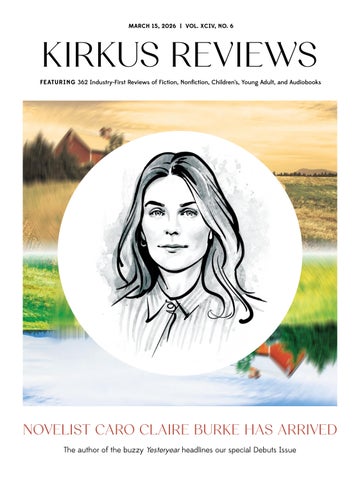
The author of the buzzy Yesteryear headlines our special Debuts Issue
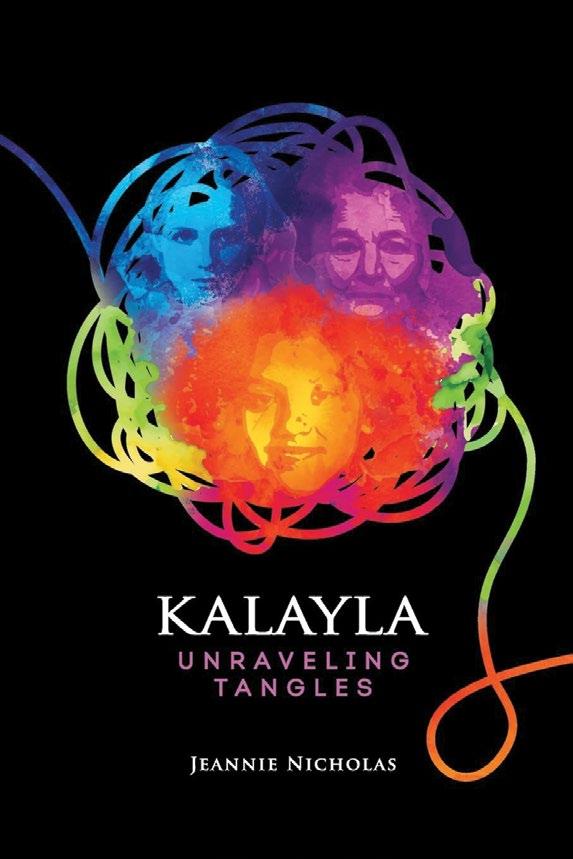

ISBN: 979-8-21-857261-7

“Nicholas’ yarn is an engrossing look at families that unravel and must be painfully knitted back together... Nicholas’ portrait of Kalayla is brilliant— she’s a pitch-perfect smart, sullen tween...”
“The author crafts sharply etched, vibrant, prickly characters who resonate despite their differences...”
A raucous, poignant exploration of the blood ties that bind...and chafe.” —Kirkus Reviews
One of the most coveted designations in the book industry, the Kirkus Star marks books of exceptional merit.
FRESH PICK
An inspiring, action-packed journey to find one’s self through perilous adventures in exotic, far-flung destinations. Read the review on p. 81


FROM THE EDITOR’S DESK
THERE ARE CERTAIN stories a writer simply has to tell, and none more so than one’s own. Perhaps this accounts for the explosive debut memoirs— think of Mary Karr’s The Liars’ Club, Jeannette Walls’ The Glass Castle, or Michelle Zauner’s Crying in H Mart —that announce the arrival of a major literary talent, fully formed. In our second annual Debuts Issue we’ve identified many first books, across all genres, that stand out from the crowd. Leading the pack is Caro Claire Burke’s wickedly inventive novel Yesteryear (Knopf, April 7), the subject of a fierce bidding war among publishers and already optioned for a film adaptation with Anne Hathaway. You can read our interview with the author on p. 16.
Meanwhile, here are my favorite debut memoirs of the year so far:
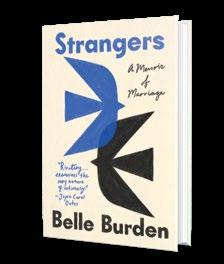
Strangers: A Memoir of Marriage by Belle Burden (Dial Press, Jan. 13): Marriage is one of the pillars of the memoir genre, and every marriage is like a fingerprint—unique and ripe for close study. Burden, granddaughter of legendary socialite Babe Paley, recounts how one day her husband of 20 years strode into their bedroom and said, “I’ve decided I want a divorce. I’m leaving.” Her debut book, expanded from a Modern Love column in the New York Times , is a “measured, empathetic, and modern response to an enraging callousness,” according to our reviewer.
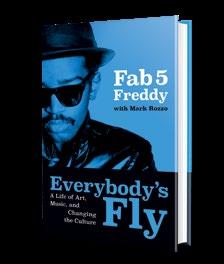
Everybody’s Fly: A Life of Art, Music, and Changing the Culture by Fred
Frequently Asked Questions: www.kirkusreviews.com/about/faq
Fully Booked Podcast: www.kirkusreviews.com/podcast/
Advertising Opportunities: www.kirkusreviews.com/book-marketing
Submission Guidelines: www.kirkusreviews.com/about/publisher-submission-guidelines
Subscriptions: www.kirkusreviews.com/magazine/subscription
Newsletters: www.kirkusreviews.com
For customer service or subscription questions, please call 1-800-316-9361

Brathwaite with Mark Rozzo (Viking, March 10): The author, better known as graffiti artist and hip-hop impresario Fab 5 Freddy (immortalized in the Blondie song “Rapture”), revisits his experiences in New York during the 1970s, ’80s, and ’90s, when the city was a hotbed of music, art, and fashion emerging from the streets. Among the captivating figures readers will encounter in these pages: Jean-Michel Basquiat, Melle Mel, Andy Warhol, Keith Haring, and, of course, Debbie Harry. Our starred review calls it a “rich, gritty remembrance of an artist’s journey.”
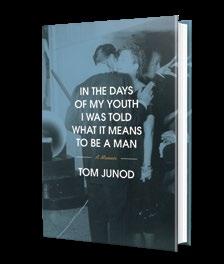
In the Days of My Youth I Was Told What It Means To Be a Man by Tom Junod (Doubleday, March 10): An award-winning magazine writer makes his book debut with this family memoir, a reckoning with his largerthan-life father—parents, of course, being another pillar of the memoir genre. Growing up on Long Island in the 1960s and ’70s, Junod was both intimidated and fascinated by his father’s movie-star looks and sexual
braggadocio. Did he lead another life outside their middle-class suburban home? Our starred review calls it an “enthralling family memoir and an unromantic commentary on manhood.” Dangerous, Dirty, Violent, and Young: A Fugitive Family in the Revolutionary Underground by Zayd Ayers Dohrn (Norton, May 19): Bernardine Dohrn and Bill Ayers were two of the most notorious members of the Weather Underground in the 1960s and ’70s, young radicals whose opposition to the Vietnam War and alliance with the Black Panthers put them in the crosshairs of the FBI. Living under multiple aliases and in disguise, they found their lives transformed with the birth of their first son, the author. This riveting memoir, expanded from Dohrn’s Mother Country Radicals podcast, grapples with the family’s complex legacy of social justice and political violence.

Co-Founders, Kirkus Media LLC
HERBERT SIMON
MARC WINKELMAN
Publisher, CEO & Partner
MEG LABORDE KUEHN mkuehn@kirkus.com
Chief Marketing Officer
SARAH KALINA skalina@kirkus.com
Enterprise Advertising Director
MICHELE COBB mcobb@kirkus.com
Indie Advertising & Promotions
AMY BAIRD abaird@kirkus.com
Author Consultant
KEELIN FERDINANDSEN kferdinandsen@kirkus.com
Lead Designer KY NOVAK knovak@kirkus.com
Magazine Compositor
NIKKI RICHARDSON nrichardson@kirkus.com
Director of Kirkus Editorial ROBIN O’DELL rodell@kirkus.com
Kirkus Editorial Senior Production Editor
MARINNA CASTILLEJA mcastilleja@kirkus.com
Kirkus Editorial Production Editor
ASHLEY LITTLE alittle@kirkus.com
Indie Editorial Assistant
KATARINA YERGER kyerger@kirkus.com
Contributing Writers
GREGORY McNAMEE
MICHAEL SCHAUB
Mysteries Editor THOMAS LEITCH
Editor-in-Chief
TOM BEER tbeer@kirkus.com
President of Kirkus Indie
CHAYA SCHECHNER cschechner@kirkus.com
Fiction Editor
LAURIE MUCHNICK lmuchnick@kirkus.com
Nonfiction Editor JOHN McMURTRIE jmcmurtrie@kirkus.com
Young Readers’ Editor LAURA SIMEON lsimeon@kirkus.com
Young Readers’ Editor MAHNAZ DAR mdar@kirkus.com
Audiobooks Editor JENNIFER DOWELL jdowell@kirkus.com
Editor at Large MEGAN LABRISE mlabrise@kirkus.com
Senior Indie Editor
DAVID RAPP drapp@kirkus.com
Indie Editor
ARTHUR SMITH asmith@kirkus.com
Senior Editorial Assistant NINA PALATTELLA npalattella@kirkus.com
Senior Indie Editorial Assistant DAN NOLAN dnolan@kirkus.com
Copy Editors
ALYSSA CHOINIERE
NATALIA HOLTZMAN
NANCY MANDEL BILL SIEVER
Founder, Kirkus Reviews
VIRGINIA KIRKUS (1893-1980)

Contributors
Colleen Abel, Erin Addis, Jeffrey Alford, Paul Allen, Kent Armstrong, Mark Athitakis, Stephanie Baker, Kit Ballenger, Colette Bancroft, Audrey Barbakoff, Nell Beram, Elizabeth Bird, Elissa Bongiorno, Sally Brander, Agnes Broome, Anna Broome, Jessica Hoptay Brown, Nancy M. Campbell, Kevin Canfield, Bluebelle Carroll, Tobias Carroll, Charles Cassady, Tamar Cimenian, Rachael Conrad, Susan Corapi, Amanda Costello, Jeannie Coutant, Stephen Cummings, Morgan Davies, Sara Davis, Michael Deagler, Dave DeChristopher, Kathleen Deedy, Elise DeGuiseppi, Suji DeHart, Amanda Diehl, Maria Dietrich, Steve Donoghue, Anna Drake, Jacob Edwards, Gina Elbert, Lisa Elliott, Lily Emerick, Ilana Bensussen Epstein, Joshua Farrington, Michael T. Fein, Margherita Ferrante, Katie Flanagan, Elizabeth Fraser, Ayn Reyes Frazee, Jenna Friebel, Jean Gazis, Victoria Glynn, Chloé Harper Gold, Carol Goldman, Danielle Galván Gomez, Richard C. Gotshall, Vicky Gudelot, Ellie Halleron, Silvia Lin Hanick, Peter Heck, Ralph Heibutzki, S.J. Henschel, Aaron Hicklin, Loren Hinton, Ash Holland, Katrina Niidas Holm, Terry Hong, Julie Hubble, Mary Grahame Hunter, Darlene Ivy, Kristen Jacobson, Jayashree Kamblé, Marcelle Karp, Lavanya Karthik, Mary Klann, Andrea Kreidler, Megan Dowd Lambert, Laurel Larrew, Christopher Lassen, Tom Lavoie, Maya Lekach, Seth Lerer, Coeur de Lion, Melissa Locker, Barbara London, Patricia Lothrop, Wendy Lukehart, Kyle Lukoff, Kaia MacLeod, Michael Magras, Joan Malewitz, Mitu Malhotra, Mandy Malone, Natalie Marshall, Jodi Martin, Gabriela Martins, J. Alejandro Mazariegos, Nancy E. McCarty, Kirby McCurtis, Jeanne McDermott, Van McGary, Zoe McLaughlin, Cari Meister, J. Elizabeth Mills, Alan Minskoff, Chintan Modi, Gina Monti, Clayton Moore, Andrea Moran, Rhett Morgan, Molly Muldoon, John M. Murray, Christopher Navratil, Liza Nelson, Therese Purcell Nielsen, Ari Nussbaum, Katrina Nye, Tori Ann Ogawa, Mike Oppenheim, Emilia Packard, Megan K. Palmer, Costa Pappas, George Pate, Hal Patnott, Bethanne Patrick, Deb Paulson, Rebecca Perry, John Edward Peters, Jim Piechota, Christofer Pierson, William E. Pike, Remy Poore, Kate Pullen, Margaret Quamme, Carolyn Quimby, Kristy Raffensberger, Mohana Rajakumar, Kristen Bonardi Rapp, Kristen Rasmussen, Stephanie Reents, Peter Richardson, Alex Richey, Jasmine Riel, Michelle J. Ritholz, Lauren Roberts, Amy Robinson, Courtney Rodgers, Ana Rosales, Gia Ruiz, Lloyd Sachs, Hadeal Salamah, Bob Sanchez, Caitlin Savage, Will Schube, Gretchen Schulz, Aurelia C. Scott, Gene Seymour, Lorraine W. Shanley, Jerome Shea, Madeline Shellhouse, Sadaf Siddique, Leah Silvieus, Linda Simon, Vicky Smith, Wendy Smith, Leena Soman, Margot E. Spangenberg, Andria Spencer, Allison Staley, Daneet Steffens, Mathangi Subramanian, Jennifer Sweeney, Deborah Taylor, Lisa Taylor, Desiree Thomas, Julie Thompson, Clayton Trutor, Suzanne Van Atten, Christina Vortia, Elliott Walcroft, David A. Walton, Katie Weeks, Susie Wilde, Vanessa Willoughby, Kendra Winchester, Kerry Winfrey, Marion Winik, Jean-Louise Zancanella

IF YOU’D ASKED me to predict the oddest coincidence among this year’s crop of fiction debuts, I wouldn’t have guessed that Anne Boleyn would come back to life in two separate books. Is there something in the air? That’s the exciting thing about reading and reviewing debuts—you never know what you’re going to discover.
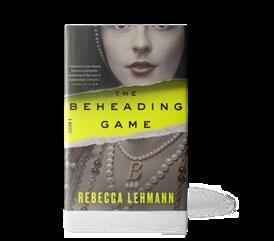
In The Beheading Game by Rebecca Lehmann (Crown, March 24), the former queen wakes up post-decapitation, reattaches her head with a stolen sewing kit, and sets out for revenge. Our starred review says, “The version of Anne that Lehmann has created is both familiar and novel: To the willful, passionate, ambitious character depicted in myriad historical and fictional accounts, she adds plenty of utterly original embroidery (this Anne is a bit of an intellectual, and also bi!).…Brilliantly imagined, stylishly written, satisfyingly plotted, full of delicious surprises: all in all, hella fun.”
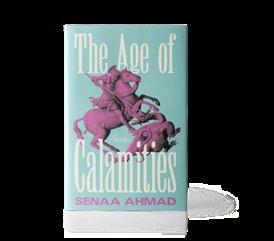
The Age of Calamities by Senaa Ahmad (Henry Holt, Jan. 13) is a
collection of speculative short stories; the opener, which our starred review calls “show-stopping,” has Anne B. coming back to life every time her husband tries to assassinate her, like a Tudor version of Groundhog Day. Other surreal stories feature a group of Napoleons sharing a house and werewolves that turn into men during the full moon. “A debut teeming with strange delights,” according to our review.
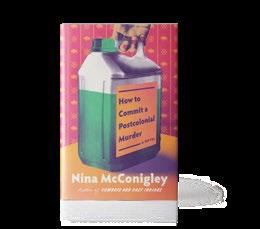
In How To Commit a Postcolonial Murder by Nina McConigley (Pantheon, Jan. 20), two Indian American sisters find their lives turned upside down when their uncle and his family move into their Wyoming home in the summer of 1986.
Should they kill him?
“Though framed like a funny, ferociously allusive grown-up version of a YA whodunit, McConigley’s debut novel carries deeper, knottier mysteries than the crime at its center,” says our starred review. “Wittily observant and achingly tender.”
The Disappointment by Scott Broker (Catapult, March 3) also features a dead woman who keeps popping up, though she
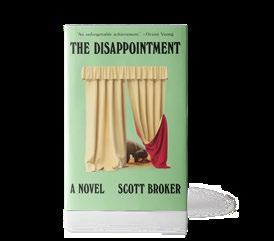

does stay dead. Randy, a photographer, and his husband, Jack, a former playwright, are vacationing at an Oregon beach house loaned to them by two of Randy’s patrons. Coming along for the journey: a baggie containing the ashes of Randy’s mother. Our starred review says, “A masterful understanding of human nature distinguishes this sexy debut.”
Like This, But Funnier by Hallie Cantor (Simon & Schuster, April 7) is a Hollywood tale about an out-of-work screenwriter who accidentally sells an idea for a TV show—based on an idea she found while snooping in her therapist husband’s patient notes. “This hilarious book also delivers moving

insights into the things insecurity can make women think and do,” according to our starred review.
All Them Dogs by Djamel White (Riverhead, May 19) plunges the reader into the world of Dublin drug dealers, where Tony Ward, the narrator, is trying to make his way. “This is a revelation,” according to our starred review, “a mob thriller steeped in the gallows humor of working-class Dublin, yet with notes of tenderness to temper the violence.… White keeps us balanced on a knife-edge, and the novel’s final revelations churn for days.”
Laurie Muchnick is the fiction editor.
Two warriors travel into a world of hero’sjourney tropes.
This highly meta debut novel by acclaimed poet Lewis runs on two plot threads, both powered by winking references to epic yarns from the Epic of Gilgamesh to the Bible to Moby-Dick and beyond. In one, Yara, a nonbinary artist, is recruited by God to take on Dominic, a Bad Guy. In the other, a lesbian prophet named Adrena is sent on a side quest to help a certain General Harpo locate his wife, who’s disappeared. Yara is ferried for much of their journey by a whale named HOWBIG!, who speaks in all caps and claims to be the reincarnation of Jacques Cousteau;
Adrena finds a budding romance with a singer named Sivan, whom she discovers at a Camelot Music store. The usually brief chapters have titles defined by the narrator’s oft-snarky metacommentaries like “Oh, You Want to Know What Yara Looks Like?” and “Brace Yourself—Things Are About to Get Weird.” But Lewis isn’t pursuing archness for its own sake: Their tinkering with the familiar themes of epic sagas exposes both the power of quest stories and the kind of (usually masculine) authority we associate with them. Here, God is a profound egotist (“I’m losing worshippers! I need to recapture the public’s attention, to jingle my keys in front of the
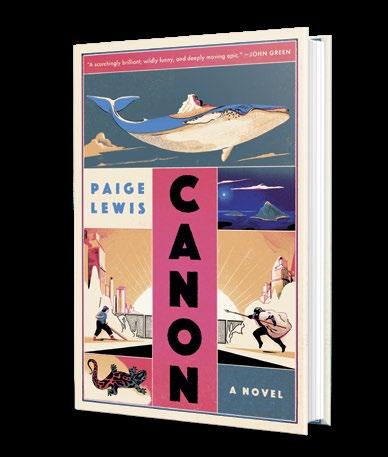
masses, so to speak”) and readers’ desire for bloodshed is a worthy subject in itself. (Chapter title: “I’m Honestly Worried About You—Why Do You Want to See More Violence?”) In that sense, Lewis is in line with the postmodern satirists of the 1960s and ’70s—John
Barth, Robert Coover, William H. Gass—but with a new sensitivity about gender and sexuality, and a wit sharpened by the social media age. Lewis is questioning narrative, but their story is all cool assurance. A brash, informed, and funny anti-epic.
Adler, Natalie | Hogarth (288 pp.) | $28
May 26, 2026 | 9780593734025
A young lesbian sees dead people in 1980s New York City. There’s no Sixth Sense –style bombshell in Adler’s imaginative debut novel: Narrator Renata Bronstein reveals in the opening lines that she’s visited by ghosts, many of them gay friends who’ve died of AIDS in these early days of the widening epidemic. But where, she wonders, is Mark, her longtime roommate and best friend, who recently died in Bellevue Hospital at age 29? The loss of Mark haunts her more than any other, since she wasn’t at his bedside and only learned the news from “a friend of a friend” the next morning. Yet he’s not among the apparitions who regularly appear to her, sometimes making requests, sometimes seeking comfort, sometimes “wild-eyed” and screaming. This last is François, Renata and Mark’s East Village neighbor; “his death was the first to really shock me with how ghastly someone could go out,” she says. Unsettled by François’ rage-filled ghost, Renata reluctantly calls the phone number on a flyer for Manhattan Remediation, a mysterious organization that promises to dispatch “odd shadows,” “unexplained sounds,” “weird smells,” and other strange phenomena. But in wiping away the spirits of the dead, are they whitewashing this famously grungy neighborhood? The author sketches an affectionate portrait of Renata’s downtown circle, including her lover, Claude, a nurse at St. Vincent’s Hospital, and Bianca, a trans girlfriend from childhood, as well as the thrift shops, dance clubs, and tenement apartments where these characters congregate. But the novel’s supernatural storyline sits awkwardly atop this more realistic scaffolding, provocatively suggesting
a city where the living and the dead always co-mingle but detouring into a caper where our protagonists infiltrate the bad guys’ lair dressed in costumes and wigs, seeking to liberate incarcerated spirits.
An AIDS novel with an original, albeit uneven, approach to the subject of loss.
Aguda, ‘Pemi | Norton (192 pp.) | $26.99 May 5, 2026 | 9781324065876
A transplant to Lagos faces an unexpected pregnancy during a mysterious outbreak of suicides among expectant mothers in the city. Yosoye Bakare has just finished college and is beginning her year in the National Youth Service Corps, in which all young Nigerian graduates are assigned a job outside their home state in order to be immersed in new communities. To her surprise, Yosoye has been placed in desirable Lagos; her degree in mass communications has landed her at an architectural firm working on Omi City, a land reclamation project. “We pulled this land back from the water,” says the architect at the helm of the endeavor. “It is born again.” Yosoye is determined to make the most of her new cosmopolitan life, but she soon becomes pregnant after a one-night stand. Yosoye sees the baby as a stay against the loneliness and isolation she’s felt her whole life: “The title of mother felt right. She’d spent her whole life going through fitting rooms, trying everything on, but the perfect fit was here.” But it’s also a frightening time to be pregnant: There’s been a rash of expectant mothers in Lagos dying by suicide. After Yosoye encounters the body of one on a late-night walk along a canal, she becomes obsessed with the women’s deaths. Are they linked? Could they somehow be connected to the Omi
City project? And how will Yosoye keep herself safe? Pregnancy and horror have been paired since time immemorial—what more disorienting experience could there be than one human growing inside another?—but Aguda’s take here feels fresh and sharp, weaving in unexpected parallels between pregnancy and architecture and refracting it all through a prism of Nigerian history and culture. A deft and confident first novel; Aguda balances the darkness here with light.
Kirkus Star
Averick, Brooke | Crown (304 pp.) $28 | May 26, 2026 | 9798217088263
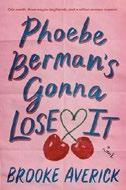
A 29-year-old with a “phobia of intimacy” is determined to lose her virginity in Averick’s debut novel.
Phoebe Berman thinks there is something wrong with her. On paper, her life looks ideal: She has her dream job teaching pre-K, a supportive family, and a tightknit group of friends in Los Angeles. But as her 30th birthday approaches, Phoebe fixates on her lack of romantic experience—specifically, the fact that she’s still a virgin. Though she considers herself a lifelong romantic, intimacy has terrified Phoebe ever since a middle school incident turned a potential first kiss into a public disaster. So hyperorganized Phoebe does what she does best: She makes a list. Instead of following her therapist’s suggestion to catalog her accomplishments, she creates “Phoebe’s Guide to Losing Her Virginity in Thirty Days,” a checklist featuring tasks that range from “Redownload Hinge” to “Get drunk and make out with a stranger.” Phoebe soon finds herself torn between several romantic prospects, including Matthew, a former high school classmate with whom she shares her
daily Wordle scores; Finn, the charming new fourth grade teacher at her school; and Jonathan, her longtime roommate and best friend of 12 years, with whom her parents always dreamed she’d end up. Throughout it all, Phoebe is forced to confront her fears and assumptions about love, intimacy, and herself. Averick’s writing is consistently funny and sharp, balancing comedy with emotional honesty. Phoebe is an intensely relatable main character whose kindness and vulnerability make her easy to root for. Filled with plot twists readers won’t see coming, the book is an irresistibly fun ride that also delivers a compassionate exploration of anxiety and the courage and selfacceptance needed to move through it. An affirming novel catering to all the anxious romantics out there.
Kirkus Star
Five
Bannister, Ilona | Crown (240 pp.)
$28 | May 5, 2026 | 9798217088027
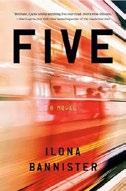
This is not your average whodunit. Bannister drops readers on a suburban London train platform and announces that someone will die in the next five minutes. What follows is a tense, deftly written page-turner filled with memorable characters, a surprisingly philosophical core, and a plot in which each minute brings a new surprise. Bannister excels at digging out emotional depths many people would prefer to keep hidden, as when a parent momentarily considers whether her life would be easier without her rambunctious child. The characters—a troubled gambler, a mother, a damaged yet compelling businessman—are deeply flawed, full of regrets, recovering from addiction, and sometimes unlikable individuals who, in Bannister’s careful depiction, all feel extremely human. The narrative
An affirming novel catering to all the anxious romantics out there.
PHOEBE BERMAN’S GONNA LOSE IT
voice is detached from the drama, omniscient yet omnipresent, breaking the fourth wall easily and deftly. Drawing readers into the action, it will push anyone who has picked up the book to consider the lives, judgments, and, ultimately, fates of the characters. It will force even casual readers to weigh the worth of a human life, making them feel implicated in the outcome for better or worse. Readers expecting a high-octane, ticktock thriller may find themselves wanting to slow down to reflect on the storyline or the fates of particular characters. Bannister manages to tell a story that is both fast-paced and perhaps a little slower than expected as her narrative choices prompt introspection. Her clever and incisive writing and the unique format make readers participants in the action and complicit in weighing the characters’ worthiness. It’s unsettling and immersive. Readers will surely find themselves thinking about this book next time they’re standing on a train platform.
Battles, Brett | Putnam (320 pp.) $30 | June 2, 2026 | 9798217179275
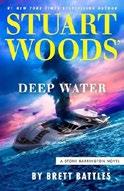
Manhattan attorney Stone Barrington’s adventures continue under veteran Battles, who handles the franchise at least as well as the late Woods. Accompanying his billionaire client and friend Trenton Sidney on the maiden voyage of Sidney’s new yacht, Stone awakens from a drugged
stupor to find the Amanda Jae sinking. He miraculously survives the disaster (duh) along with three members of the crew, but Sidney doesn’t, and soon the quest is on for clues about what happened to sink the yacht. Why would anyone want to sink it? Well, Sidney’s estate is well worth fighting for, especially since he recently discovered a long-unknown daughter and changed his will accordingly. On the international front, moments after Stone hears that his old friend/ sometime lover Dame Felicity Devonshire, the head of MI6, has been killed by a car bomb, she pops up to assure him she’s not really dead but would love a safe place to shelter for a bit. There’s some bad news on the romantic front: Stone’s current girlfriend, tech officer Tamlyn Thompson, is devoting too much time to Strategic Services to leave room for Stone. The good news is Stone’s introduction to actor-turned-director Josie Hale, who’s just as interested as he is. The surprising news is that Stone doesn’t want to rush things, so fans will have to wait for the next installment for the consummation. It all ends with Stone’s gracious remark to Dame Felicity—“It’s not the first pool of blood this house has seen”— and a promise that MI6 will be underwriting his next big purchase. No real suspense, but all the low-level thrills of an amusement park.

from the long life of an artist striving to stick to his principles.
Lake Effect
Behrman, Hillary | Sarabande (275 pp.) | $18.95 paper | May 12, 2026 9781956046595
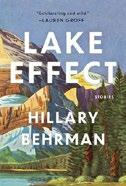
A collection exploring the untamed spaces within, between, and beyond people.
Behrman’s debut short story collection features 18 bittersweet portraits of wild girls, complicated mothers, neglected children, eccentric families, dangerous men, queer folk, and rugged landscapes. There are a few standouts in which the characters—often broken in big and small ways—seek connection with each other and the world around them. In the quietly devastating “12th and McGraw,” preternaturally close siblings Marcie and Alex find ways to care for each other within their family’s fragile ecosystem. Growing up as a pseudo-mother to Alex, Marcie watches as their dynamic shifts at the end of her disastrous pregnancy. Written in the second person, “Winter’s Barter” is about two women in the aftermath of one’s death. Speaking directly to her friend as her memories move through time, the narrator offers a beautiful portrait of a two-decadelong, but still entirely too short, friendship. “Ineffective Assistance” follows Marcie and Alex’s mother, a public defender, as she grapples with her sense of purpose. As someone who bears witness to the ways the court system can further destroy those already suffering, she’s losing hope in her ability to “bend that
famous arc toward some sort of justice.” The story, which serves as an unexpected bookend to “12th and McGraw,” ends with Behrman’s signature melancholic touch. At points, a sort of sameness begins to blanket the collection; the stories begin to feel similar in tone, texture, and cadence. Despite this, Behrman masterfully crafts characters who feel believable, who garner empathy and understanding in spite of their flaws. Equally rooted in the natural and human worlds, the stories reveal the ways that healing, forgiveness, and escape can be found in the most unexpected places. Tender, messy, and supremely human.
Eggers, Dave | Knopf (432 pp.)
$32 | June 9, 2026 | 9780593803509
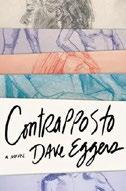
Scenes from the long life of an artist striving to stick to his principles.
Eggers’ latest novel concerns Robert Dibb, aka Cricket, raised in a dysfunctional home in Indiana. His mother is distant and her boyfriend abusive; Cricket’s sole solace as a child is drawing, a gift encouraged by his grandfather Silas. After Silas dies, 9-year-old Cricket begins living independently, supported in his efforts by Olympia Argyros, only a year ahead of him but old enough to feel like she was in “another world,” who guides him to his artistic and sexual awakening. Scraping together enough money to take drawing classes, he becomes a gifted draftsman of nudes
(most of which are drawn by Eggers himself), but when the local library reneges on its promise to display his drawing, he comes to avoid making his work public. This David Copperfield –ish setup—child with few resources makes his way in the world, entwined with a female confidante—has a speed and liveliness often missing in Eggers’ novels, heavily allegorical as they can be. Its success comes in part from his emphasis on character over theme: Cricket’s anxieties and fears are vivid, especially as he pursues manual jobs (tile work, ship breaking) that underscore his love of detail and his urge to keep moving. Olympia, likewise, is compelling as his lifelong would-be patron, particularly in a fine set piece involving a highly successful but ethically suspect artist. Still, this is an Eggers novel, with some of his usual heavy-handedness, this time about the battle between art and commerce and the distinction between high-concept stunts and craftsmanship. (An art teacher, Marcus Carpenter— note the name—thunders like a prophet about the death of skill and beauty, and seems teleported from Wise Elder central casting.) When Eggers sticks to his main characters, though, the book achieves the simple beauty Cricket himself strives for. A winningly detailed art-world story.
Elan, Portia | Scribner (304 pp.)
$28 | May 5, 2026 | 9781668201732
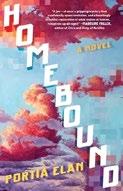
A computer game designed by a troubled young woman from Cincinnati becomes the unexpected link between her 1983 self, a robot, and people from a far-future Earth.
Nineteen-year-old Becks loves computers; governed by a language and a logic she understands, they give her the invisibility she craves. Better still, they make her feel close to her Uncle Ben, a computer-game programmer who
sometimes writes code with her. When Ben dies, he leaves Becks a half-finished game about an astronaut intended to help his niece process her grief. What neither of them realizes is that the completed game will play a key role in a seafaring adventure that takes place 600 years in the future. Weaving together multiple stories and forms (such as mythical, epistolary, and computer-game narratives), and told from different perspectives spanning centuries, Elan’s novel offers an epic journey across time and space wrapped in a mystery. The game Becks creates, Homebound, becomes beloved by many others, including Tamar Portman, a Berkeley bioengineering professor, who, in the late 21st century, creates a type of advanced robot called an Aye. Like Becks’ game, Tamar’s creation goes beyond anything she expects when one Aye, Chaya, reveals awareness of their own lonely singularity. The robot survives into a future 400 years from the time of their making to become a crew member on a cargo ship trading in whatever “ghost-things from the past” its crew can salvage from the ocean. As Chaya bonds with Yesiko, the reluctant captain, they become driven to understand a story about a spaceship captain “written into [their] memory in the earliest days of [their] existence.”
Unique and complex, this novel tells an unexpectedly moving story of love, loss, and how the past shapes—and haunts— our present.
An ingenious narrative that explores the meaning of love and interconnectedness across time.
Gibson, Jess | Cardinal (176 pp.) $28 | May 12, 2026 | 9781538777749
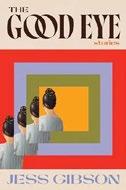
Twelve smart, understated stories about uncanny and magical moments in everyday life. In “Pest Control,” an animal psychic gets revenge on the woman who stole her boyfriend,
while in “Linear A,” a woman on a Mediterranean cruise finds a carved stone in her pocket. Whether it’s a talisman or something she accidentally picked up at an archaeological site, the stone is clearly trying to tell her something about her bullying oaf of a boyfriend. In one funny moment, the boyfriend wakes up choking on the stone, which he’s somehow mistaken for a throat lozenge, and blames his girlfriend. Gibson, the daughter of Margaret Atwood, clearly shares her mother’s feminist bent, taking aim at male artists who assume credit for their girlfriends’ work (as in “Blue Circle”) or discourage the talented women in their lives from pursuing a creative practice (as in “Wild Food”). “The life of an artist is very hard,” Sebastian condescendingly tells his girlfriend after she shares her wholly original paintings with him. Of course, his arrogance also makes it impossible for him to see what his girlfriend is serving him and his arty friends for dinner. Often, the stories themselves perform surprising and original sleights of hand, starting with one character only to reveal that another is the real star: “Flip,” for example, begins with Jon, a huckster who runs a carnival, and Aiden, an amateur magician Jon hires to walk around in a panda suit, only to abruptly shift, or flip, to Willow, a young woman who tests one of Jon’s many pronouncements that “the real truth is that nobody is born lucky.” Though Gibson’s narrative cunning often pays off, in some other stories (like “Light Tricks” and “Cushion Cut”), characters are introduced only to disappear, and the stories seem to end before fully realizing their promise.
Well-mannered stories about women in the throes of rejecting convention and exercising all varieties of magic.

Glaspell, Susan | Belt Publishing (256 pp.) $20 paper | April 14, 2026 | 9781540270153
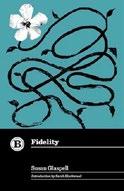
This reissue of Glaspell’s 1915 novel—about a woman who defies the conventions of her Midwestern town by running off with her married lover— reintroduces a writer whose ideas on individualism and conformity remain provocative.
At 20, Ruth Holland—the daughter of fictional Freeport, Iowa’s senior banker—falls in love with Stuart Williams, an older, unhappily married businessman whose wife has refused for years to divorce him. When Stuart is diagnosed with tuberculosis, Ruth runs away with him to Arizona; her only confidante in Freeport is Deane Franklin, a young doctor whose courtship she has rejected. Returning to Freeport 11 years later as her father is dying, Ruth finds herself weighing the costs and rewards of her decision. Although Glaspell became a Greenwich Village bohemian, she was born in Iowa and wrote about small-town life with a critical yet sympathetic eye. Ruth finds herself longing for the camaraderie and sense of belonging Freeport provided before her flight, but she can no longer accept the narrow social and intellectual boundaries the small town requires. Despite Ruth’s occasional verbal meandering around the concept of love, Glaspell’s title is less about romantic devotion than faithfulness to personal ideals in the face of other people’s judgment. Ruth is a strong protagonist, but the book’s real strength lies in showing how her actions have impacted everyone in her orbit. Many in Freeport’s privileged class cannot forgive her for disregarding accepted norms. Some girlhood friends are sympathetic toward Ruth but fear being ostracized if they reach out. Deane and Ted (Ruth’s youngest
brother) have more independent natures and welcome her home, even if it costs them. While Stuart’s spirit, like the passion he and Ruth shared, has withered under the pressure of living with her as outcasts, Glaspell’s most intriguing, complex creation may be Stuart’s wife, Marion, who can seem cold but proves, in the end, to be heartbreakingly human. In this lost gem from before World War I, gripping characters face emotions and crises only too familiar today.
Gold, Lori | Park Row Books
(336 pp.) | $18.99 paper
April 7, 2026 | 9780778305781
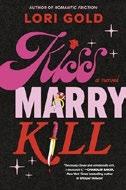
Three app creators play a game of Kiss, Marry, Kill and find themselves in an alternate timeline.
Aubrey Miller, Ilena Cohen, and Mallory Latham are best friends and the founders of a wellness app called AIM. The app has been successful beyond their wildest dreams, and now they’re on the verge of taking their company public. But not everything is going well—all this success and their very different work styles have placed some strain on their friendship. Aubrey is also grieving the end of a relationship, while Ilena is struggling with infertility. In a rare moment of connection at their company party, they play a game of Kiss, Marry, Kill. Aubrey says she’d kiss Kai, a hot but much younger employee; Ilena would marry Felix, their general counsel, who’s already
happily married; and Mallory, the boldest of the three, says she’d kill Grayson Fields, an investor with whom she’s having a love-hate fling. The next thing they know, they’ve awoken in an alternate universe where their flippant choices have actually manifested. Aubrey wakes up in bed with Kai, Ilena is pregnant and married to Felix, and Mallory is in Grayson’s home— along with his dead body. Now the women must figure out how they got here, how to get back to their own lives—if they even want to—and how to hide a dead body. Gold jumps among each woman’s perspective in both timelines, occasionally even jumping back to their college days, and so many points of view and timelines are difficult to follow. While the premise is delightfully wacky, there’s very little levity to be found here. The story hinges on the relationship between Aubrey, Ilena, and Mallory, but their bond never feels strong enough to give the plot the energy it needs.
A slightly scrambled look at the importance of friendship.
Haig, Matt | Viking (304 pp.) | $30 May 26, 2026 | 9780593833377
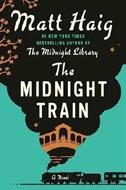
A n elderly man’s posthumous journey back through his life has unexpected consequences for several people, and lessons for everyone.
It is a truth universally acknowledged that readers adore any novel set in a reading group,
Harper has her finger firmly on the relentless pulse of quiet menace.
LAST ONE OUT
bookshop, or library, from the terribly sad (The Guernsey Literary and Potato Peel Pie Society, 2008) to the puzzleheavy (Mr. Penumbra’s 24-Hour Bookstore, 2012) to the downright clever (The Uncommon Reader by Alan Bennett, 2007). Haig, who’s already written The Midnight Library (2020), mines a similar vein in this novel centered on a bookseller named Wilbur Budd; place this one in the seriously sentimental category. Wilbur dies at 81 just after receiving a call from his ex-wife, Maggie. He finds himself on a classic steam-train carriage, accompanied by a younger version of the woman who founded the bookstore he turned into a global conglomerate. As Mrs. Agnes Bagdale explains, he’s on a trip to significant places and events from his life, but he’s forbidden from interfering in them, thus possibly changing the course of other people’s lives. True to his maverick tendencies, Wilbur struggles with the three rules of the train (“You get on and off the train as required. You never try and speak to yourself. And you must never be there when you fall asleep”) and struggles even more mightily as he realizes that Maggie was his true love and lifelong lodestar. While some moments verge on maudlin, as when Wilbur and Maggie goggle at Venice during their honeymoon, these are tempered by quieter observations, as when Wilbur’s oldest friend, Charlie, tells him frankly during lunch at a trendy restaurant that his constant ambition is a failing. This isn’t a subtle book and it’s not trying to be; it’s urging readers to think about their own choices, wherever they find themselves. A shaky balance between saccharine and sage will nevertheless appeal to the author’s fans and readers seeking balm.

Halfon, Eduardo | Trans. by Daniel Hahn Bellevue Literary Press (192 pp.) | $17.99 paper | May 19, 2026 | 9781954276567
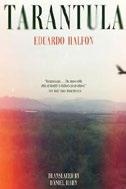
In his latest short but powerful autobiographical novel, Halfon continues reflecting on the traumas of the Holocaust while raising the question of whether they are beyond the scope of fiction.
In 1984, three years after his family moved to Florida to escape the brutal civil war in Guatemala, 13-year-old Eduardo and his younger brother are sent back to their homeland to participate in a Jewish children’s camp. Although his parents don’t say so, Halfon thinks they wanted to “restore” their Americanized children to Judaism. But the camp turns out to be a horrific place—a simulated concentration camp where the idea is to mistreat the kids into appreciating how evil the Nazis were. “Jewish children… need to learn as early as possible…that everyone else is an antisemite, that the whole world revolves around this most ancient hatred,” says their counselor, Samuel Blum, who wears an SS uniform and a swastika armband and first appears with a tarantula crawling down his arm. A desperate Eduardo escapes the camp, getting lost and confused in the mountains but finding safe haven with a young Indigenous woman. But Halfon, who witnessed the post-Auschwitz delirium of his Polish grandfather, will never be able to escape such painful memories—or the ones he creates himself. “Is imagination so fanciful and audacious that it can invent a memory and then transform it into something we understand as true?” he asks, haunted by a “No Dogs or Jews Allowed” sign he may or may not have seen as a little kid outside his unbothered father’s Florida golf club. A winning storyteller
with a subtle sense of irony, Halfon moves with ease through experiences past and present, here and there, trusting his powers of observation to draw readers in. Refusing to traffic in suffering, he makes us feel the horrors on a deeper level.
A darkly unsettling but highly readable novel by a leading voice in Latin American fiction.
Harper, Jane | Pine & Cedar/Flatiron Books (336 pp.) | $29.99 | April 14, 2026
9781250291394
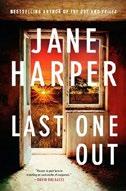
Five years after their son disappeared from their tiny Australian hometown, an estranged couple uncover disturbing clues. Rowena Crowley has been grieving her son, Sam, since he disappeared five years ago, and she returns once a year to her former home, where her estranged husband, Griff, still lives. The remote community of Carralon Ridge is contracting by the minute thanks to an aggressive mining company; covered in grit, it literally hums with the industrial sounds of the mine and emits the palpable dismay of its remaining inhabitants. Every year the community comes together to mark the memory of Sam, who disappeared on his 21st birthday, including his sister, Della; his childhood friends, Jacob and Darcy; and Sylvie, who still opens the town pub from time to time. But this year is different: Ro and Griff come across a dark stain—could it be blood?—and a lost key in an abandoned house and begin to wonder if they’ve found a critical clue to their son’s disappearance. Harper is an expert at creating deeply atmospheric crime novels. Here she turns it up a notch with a setting that’s downright stifling with its sense of creeping menace: “Ro…felt on edge. She had the strong
sensation of being in a dream where everything appeared normal, but daring to scratch the surface would reveal it as somehow distressing and wrong.”
Between the townspeople’s reluctance to address certain topics and the confounding hints in Sam’s old notebook, which Ro has been parsing and rereading since his disappearance, there’s not a lot of give to the story at first. But as folks prepare to gather for Sam’s memorial, cake and all, fissures in the insular town’s relationships— romantic, platonic, intergenerational— expand, giving way to newfound knowledge, and Ro and Griff are forced to confront the choices they made five years earlier as well as realize that someone they’ve known for decades may well be more dangerous than they knew.
Harper has her finger firmly on the relentless pulse of quiet menace in this small-town mystery.
Haseldine, Jane | Severn House (304 pp.)
$29.99 | April 7, 2026 | 9781448320110
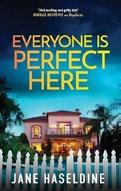
A young woman’s life is turned upside down when her past resurfaces in a disturbing way. Carly Bennett’s life was ordinary until she was 12, when her single mother, Emily, married wealthy doctor Christopher White, who had two sons from an earlier marriage: Julien, a manipulative, drop-dead gorgeous psychopath of 17, and 15-year-old Victor, who seemed like a normal kid. Carly, who had asthma and developed other health problems from stress, was shocked when she got into trouble in high school for writing a threatening letter to a teacher—even though she hadn’t written it. The handwriting certainly looked like hers, and despite her denials, she was expelled. Her stepfather sent her to a boarding school in San Francisco, and while she was there, her mother was murdered during
an apparent robbery. Carly always suspected Julien was behind her troubles, but his smooth lies couldn’t be overcome. Rebuilding her life was difficult; now she’s a creative writing professor at the University of Southern California, but her problems continue when a janitor who’d been stalking her is murdered, making her a suspect. Her graduate assistant, Rebecca Hunter, seems to support her but slowly takes over many of her duties, leaving Carly to face an uncertain future, job-wise. Carly can only trust her friend from boarding school days, Ava Patel, now a bounty hunter with a lawyer exhusband; both are working to solve Carly’s problems. Both Julien and Victor reappear in her life, apparently supportive, but Carly can’t get over her distrust of Julien. Everything that happens enmeshes her more deeply in a plot she suspects Julien of masterminding—but she can’t fathom why. This tense psychological thriller, where nothing is as it seems, will keep you on edge until the final reveal.
Hudson, Andrew Dana | Soho (448 pp.) $29 | May 5, 2026 | 9781641297585
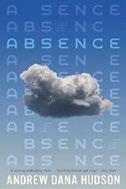
Two government agents head to the American heartland to investigate a resurrection.
Hudson brings refreshing common sense and keen intelligence to this fantastical tale about the afterlife and what its proximity can do to a community’s sanity. In this grim near future, human beings have begun spontaneously “popping” out of existence, Rapture-style, with no warning and no predictability. Much like Ben Winters in his Last Policeman series of existential detective novels, Hudson eschews spectacle for the cold comfort of figuring out how people behave at the end of the world, while casually offering startling evidence of how society has changed, from loosened
sexual mores to self-driving cars. Mostly, it’s a slow, sad apocalypse drifting toward human extinction. It’s no wonder Harvey Ellis is a bit of a sad sack, working the night shift for the Bureau of Depopulation Affairs and mourning his long-absent fiancée. Far from being elite agents, he and his colleagues are more like civil servants, assigned to verify Absences and hand out government stipends. But when a woman long believed “popped” suddenly reappears in the small town of Dawnville, Kansas, Harvey and his skeptical partner, Shonda Erins, are sent out to get her story straight. Long after her childhood disappearance from a school talent show, Gabby Reyes claims to have returned from wherever it is people have been going, despite a disheartening lack of biometric evidence. She spins a wild story of materializing in a transitional interdimensional community dubbed “Strangertown,” from which she managed to make her metaphysical way home. A story with impossible-to-fill holes gets even more tangled when Shonda discovers a missing investigator with a striking similarity to their suspect. Now, what happens when the structures that underpin human belief are presented with a real mystery? That’s the real question, even if the answer isn’t entirely unexpected.
A haunted story about unfinished lives, the persistence of hope, and the consequences of grief without end.
Hurwitz, Gregg | Thomas & Mercer (256 pp.) | $19.99 | May 19, 2026 9781662539343
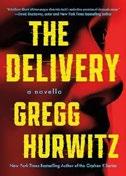
Is the rapid acceleration of technology a blessing or a curse?
The current uncertainty and anxiety surrounding AI make Hurwitz’s taut thriller particularly timely. Mark and Rebecca Higgins have somewhat reluctantly accepted delivery of a big, boxy humanoid AI companion, which
they’re convinced will improve their lives in Los Angeles. The creepy, lightning-fast narrative bounces back and forth between the run-up to this questionable acquisition, initiated nine months ago, and their ongoing experience with the device. The former plays out like a seduction, with the initial pitch from Mark’s boss—wouldn’t you love “something that knows everything about you, everything you want, and could get it for you? While staying totally under your control?”—playing out against the couple’s realization that their comfy middle-class lives, which include young daughter Maddy and bunny Bao-Bao, have become dull and difficult. They spend a small fortune to purchase N0RM LLC, which, at Maddy’s suggestion, they name Mr. Man. Readers of Hurwitz’s long-running Orphan X series will find all the punchy prose, short chapters, terse dialogue, and single-word and -sentence paragraphs they’ve been led to expect. This time, form echoes content, with Mr. Man’s progressive takeover of the lives of the Higgins family accelerating out of Rebecca and Mark’s control. What might have been a straightforward tech horror story is complicated by Mr. Man’s genuine helpfulness. At the same time, there are weird problems with the neighbors, Maddy acts up at school, and things spiral from there.
A pungent, timely thriller that will leave readers thinking.
Kline, Christina Baker | Mariner Books (384 pp.) $30 | May 12, 2026 | 9780063097995
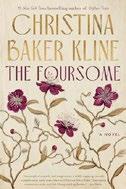
Not making this up: Famous conjoined twins Chang and Eng Bunker were married to Sarah and Adelaide Yates, a pair of sisters in the Civil War–era South, where they produced 21 children between them.
The original, eponymous Siamese twins—they were from Siam (now Thailand) before their mother sold them to the circus—have inspired many works of fiction and nonfiction, but Kline’s eighth novel may be the first written by one of their distant relatives. In her hands, it becomes a riveting and insightful story that is as much about sisterhood and the Civil War as about the prurient details of the marital arrangements. Clearly aware that one of the biggest imaginative challenges is depicting the way these four people maintained their dignity under the challenging circumstances—Chang and Eng were joined by a band of flesh at their abdomen, and separation would have killed both of them—Kline’s choice to focus on the experience of one of the sisters, Sallie, succeeds beautifully. The marriage was not her idea. Her sister, Addie, and Chang were the infatuated couple and she and Eng were the ride-alongs, but Sallie’s options were limited by a scandal in her teens. Kline manages to shift our attention from the awkward mechanics to deeper, more interesting issues: the fact that two men who had themselves lived as property now made their living as slaveholders, the increasingly opposed views of the sisters on that matter, and other tensions among the foursome as they raised an annually growing family of infants and children in close quarters. As much as Chang and Eng quarrel, Addie and Sallie don’t do much better—diametrically opposed approaches to child-rearing lead to a dramatic change in their living arrangements. Once war breaks out, Kline hits her stride, compellingly and convincingly depicting the Southern experience as bravado shaded slowly, then utterly, into devastating loss. A profound and moving treatment of what could have been a tabloid topic.
Kirkus Star
Krivak, Andrew | Bellevue Literary Press (192 pp.) | $17.99 paper | February 24, 2026 9781954276468
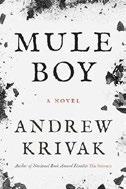
After a 1929 mining accident, a young boy’s life splits as he tries to find meaning in his lucky survival.
Krivak manages to portray an entire life as a fever
dream through the anxious propulsion of an entire book that unfolds as a single sentence. A love story that honors patience and destiny, this novel centers around Ondro Prach, whose life splits in a violent fracture when he’s the sole survivor of an accident in a Hazelton, Pennsylvania, coal mine. Ondro tells the story of his job guiding the mule and the horrific accident that occurs the first and only time he goes down into the mine when he’s just 13. He’s relaying his memory of the accident to family members of the miners who died, who come to visit him as an old man at his home in New Hampshire. They make these pilgrimages to learn about the final words of their fathers, uncles, and grandfathers. Ondro tries to find meaning for himself in a life that’s been defined by tragedy; his father, too, died in a mining accident when Ondro was just a boy. He spent time in jail during World War II because he refused to fight, a decision informed by the pacifism he embraced after having been bullied in school for surviving the mining accident.
A profound and moving treatment of what could have been a tabloid topic. THE FOURSOME
Ondro’s life has been given purpose by the love of Magda Chibala, the daughter of one of the men who died when Ondro was the mule boy. After the funeral, she hugs him as others turn away, and this gesture reverberates through their shared lives. The two eventually marry, and while Ondro’s time in prison leads to their separation, the book’s final section captures a breathtaking reunion that artfully explicates a philosophy of life, love, and death that’s subtly illuminated throughout. Fate and chance are examined with artful, electrifying energy.
Lakhani, Hafeez | Counterpoint (304 pp.) $27 | May 5, 2026 | 9781640097568
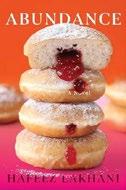
A n Indian American family is rocked by a medical crisis in this sensitive debut. The Bharwani family has been drifting apart for years, with daughter Fareen pursuing a career at Goldman Sachs in New York and son Adnan engaged in shadowy business dealings in Nigeria. But when their mother, Sakeena, collapses at home in Miami, the pushes and pulls between family life and the outside world become harder and harder to balance. While Fareen is consumed by the possibility of a promotion and Adnan hides the reality of his situation from his family, their sister Kawal must take on the burden of her mother’s care while also managing her own pregnancy. Adding to these complications is the fact that Sakeena, a religious Muslim, believes in naseeb, or destiny, and thus refuses essential treatment for her life-threatening condition against her doctor’s instructions. Her children, as well as her devoted husband, Ramzan, are torn between trying to force her to comply with her doctors, giving her a chance to receive the
liver transplant that could save her life, and letting her maintain control over her own body. Lakhani skillfully inhabits each family member and delves into the past to explore how their relationships formed. He is especially good at showing how many family members have been gripped by the immigrant’s drive to succeed, even if that drive leads to unhappiness. Sakeena, meanwhile, represents a different way of thinking, one ruled less by logic and expediency. Though the book has flaws—bizarrely, given the severe nature of Sakeena’s medical crisis, Lakhani mentions health insurance and medical costs only in passing— this is a thoughtful and carefully constructed novel.
A promising debut that clearly depicts both the rewards and the deep losses of American immigration.
Lanchester, John | Norton (336 pp.)
$31.99 | May 5, 2026 | 9781324131342
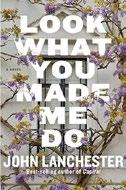
Hell is other people, indeed. Especially those we love.
No, British novelist Lanchester’s return after a too-long absence has naught to do with the Taylor Swift hit. And though the opening line, “Every successful marriage has its own private language,” hints at Tolstoy, his latest yarn really reads with the inevitability of a classical tragedy, with ultramodernity layered on. Jack and Kate Hittlestone, late-vintage boomers both, are well-to-do Londoners, he an architect, she a retired teacher. One private phrase between them, borrowed from a New Yorker cartoon, is “Want your body, disco doll.” Kate struggles to connect with younger adults, and zeitgeisty things pass her by. But after she finds Jack “dead on the toilet seat
at three o’clock in the morning,” she has little to keep her sane but her book club, whose hipper members are avid for a new tv show called Cheating and there, for all the nation to hear, is Jack and Kate’s private phrase as written by one Phoebe Mull in “a steamy, sexy, bitter, nasty, devastating piece full of self-confessedly autobiographical detail.” So it is. But how did Phoebe come by such intimate knowledge of Jack and Kate’s private lives? Kate assumes the worst, stunned to realize that “the things I had thought were uniquely ours, the private language of our intimacy and our marriage, was for him just a set of signature moves, a game.” Ah, but it’s a game with many dimensions, and when Kate confronts Phoebe, Phoebe takes it a step further, only to find that it’s never a good idea to rile up a late-blooming Lady Macbeth. Lanchester is an eminently skilled storyteller with a gift for laying in bits of backstory along the way that subvert what we think we know is going on—which we really don’t, and neither do most of the players in this delightfully mean-spirited tale.
A splendidly twisted tale of love and vengeance.
Kirkus Star
Léger, Dimitry Elias | MCD/Farrar, Straus and Giroux (240 pp.) | $27 | May 12, 2026 9780374619886
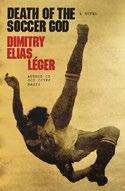
Gilbert Chevalier, the (fictional) Haitian-born hero of the 1950 U.S. World Cup soccer team, recounts the story of his brief, mostly charmed life while at death’s door.
Gilbert, “aka Gil the Voodoo Child, aka Kid Haiti, aka Le Walking Heartbreak…Le Savoir,” is several years removed from shocking the world with his game-winning goal during the U.S. team’s upset of heavily favored England
when he faces a firing squad in Fort Dimanche, “the worst place to be in Haiti.” His execution day climaxes years of imprisonment under the brutal dictatorship of François “Papa Doc” Duvalier, among whose lovers is Gilbert’s estranged wife, Elizabeth, the daughter of an exiled Nazi. As you can tell, Gilbert’s life is complicated; there are many women, including the love of his life, Aurélie, who was engaged to Gilbert’s brother when he began his romance with her shortly after marrying Elizabeth. By that time, Gilbert is a soccer prodigy who must forsake the Beautiful Game when he leaves for New York City in the late 1940s to study economics. While there, he rooms with the already celebrated trumpeter Miles Davis and learns much about life, love, money, and the varieties of American racism clotting the streets like weeds. Football rudely reenters Gil’s life when a soccer ball slams into his face as he’s walking through Central Park. He starts playing his way back to his youthful virtuosity and, though he never becomes an American citizen, he is recruited to join a patchwork Team USA for the 1950 World Cup competition in Brazil, where fame and still more complications await, leading to his fateful run-in with Papa Doc. Inspired by the real-life saga of soccer legend Joe Gaetjens, this follow-up to Léger’s debut novel, God Loves Haiti (2015), plays fast and loose with chronology, conflating historic personalities and events so much as to flirt with flagrant anachronism. Yet, like its predecessor, the novel moves with lyrical, imaginative force, especially in its vivid evocations of soccer play, while also showcasing the author’s penchant for orchestrating funny and poignant romantic interludes.
A historical novel that merrily dances and jukes its way across the pitch of time.

Les Becquets, Diane | Simon & Schuster (320 pp.) | $29 | May 5, 2026 9781668221891
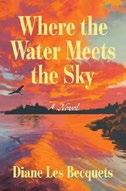
Summer on Michigan’s idyllic Garden Peninsula brings healing for a young woman haunted by tragedy.
The novel opens with a child running from a burning farmhouse as her mother perishes inside. Ten years later, Abby returns to the area, a rural part of Michigan, to help her uncle Dennis with his ecological research mapping the woods. The summer proves a time of reconnection as Abby visits with her Nonna, her aunts, and Brew, the cousin by marriage she’s loved since childhood. As Brew prepares to go to college, Abby is stuck in the past. She has little recollection of the night of the fire but she’s ravaged by guilt that she may have started the blaze, since she was found that night holding a book of matches. Early in the summer, Abby meets a local girl named Seda and the two become inseparable despite their clashing personalities: Abby is a quiet observer, deeply nourished by the natural world, while Seda is unpredictable and just a little bit of trouble—Abby worries she may be responsible for some recent campsite robberies. Abby and Seda find an abandoned cottage that once belonged to an artist and naturalist, and they retreat there over the summer, as Abby begins to remember more from the night of the fire. The novel abounds in descriptions of the natural world and bravely asserts a slow, meditative narrative
pace. The land, and the animals on it, become central characters in the story, effecting change in Abby as she confronts some uncomfortable realities. Less successful is a surprising reveal toward the end that belies believability and negates some of the other beautifully wrought passages. Nevertheless, there is much to admire in this tale of resilience wrought from connection to the land.
Devotion to the natural world intensifies this tale of memory and forgiveness.
Lim Sunwoo | Trans. by Chi-Young Kim Unnamed Press (200 pp.) | $25 February 10, 2026 | 9781961884601
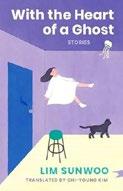
In this debut collection, snapshots of daily life in Korea are punctuated by uncanny incidents. In the title story, a supernatural entity that’s something between a doppelgänger and a ghost ruminates on a years-long feeling of loneliness. “You’re Not Glowing” is set in a not-too-distant future in which humanity is threatened by the appearance of jellyfish that have washed ashore in unfathomable numbers—anyone who touches these jellyfish is slowly transformed into a zombified version of the invertebrates. In “Summer, Like the Color of Water,” a heartbroken man takes root, literally, in the studio apartment where his ex-girlfriend used to live as he slowly turns into a tree. In “That Unfamiliar Night,” a woman trying to get pregnant reconnects with an old friend who is now part of a cult. “Even
Merrily dances and jukes its way across the pitch of time.
Though It’s Not Alaska,” set during the Christmas season, is one of the collection’s standouts: After a woman’s beloved cats are killed by wild dogs, she plots a way to avenge their deaths by channeling her own inner animal with the help of a local tattoo artist. Themes of loneliness, sorrow, trauma, and self-discovery permeate each of these undeniably strange stories. Some are confusing or less engaging, and others go on too long, giving the collection an overall lack of polish. Stories that mash up the fantastical and the everyday.
McCarthy, Kyle | Tin House (256 pp.) $27 | May 5, 2026 | 9781963108705
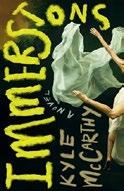
A young woman searches for a reason her older sister pivoted from being an artist to being a nun.
Charley was the toast of New York’s elite dance world, first as a classical ballerina, then as the lead in a more experimental modern company. Then she abandoned her cosmopolitan life full of daring art and culture for one of religious contemplation in the French countryside. Her baby sister, Frances, grew up dancing ballet in Charley’s shadow, but an injury forced her to quit the profession for a more mainstream college education. While studying in New York, Frances learns that Charley’s elusive ex-husband, Johnny, has returned to the city after years away, and she’s determined to confront him to help her understand what made Charley so abruptly change her life. The stakes are high. Charley has joined a convent that essentially forbids contact with the outside world and she’s about to take a vow committing to this lifestyle for the rest of her days. Frances feels certain she can convince her sister to forget about this life of extreme isolation and come home already, if she can just discover the truth of what happened between Charley and Johnny to chase her so far away. She hunts Johnny down
Publishers fought for it, film rights have been sold, and early reviews are ecstatic. Yesteryear is no ordinary debut.
BY AMY REITER
TO SAY THAT Caro Claire Burke’s debut novel, Yesteryear, has generated excitement ahead of its publication next month is to put it mildly.
The book, about a tradwife influencer, Natalie, who wakes up in what appears to be the pioneer-era past she’s been glorifying online, was snapped up by Knopf in a June 2024 bidding war for what Deadline called “big money.” Weeks later, the film rights were auctioned for more big money to Amazon MGM Studios, with Anne Hathaway to star and produce. In a starred review, Kirkus calls it “deliciously funny, topical, and fiercely intelligent.”
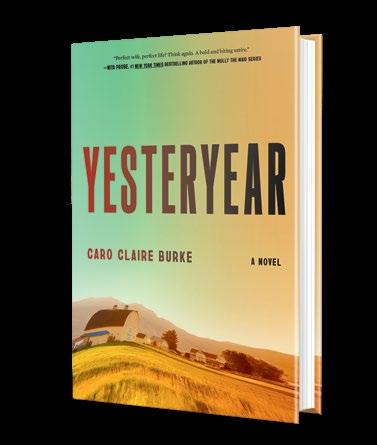
Burke, Caro Claire
Knopf | 400 pp. $30 | April 7, 2026
9780593804216
Burke, 32, who has an MFA from the Bennington Writing Seminars and worked as an editor at Katie Couric Media, says she’s “very aware” that nothing about the reception for Yesteryear was normal. “It was crazy,” she says over Zoom from her Virginia home. Our conversation has been edited for length and clarity.
What prompted you to write the novel?
In winter 2024, when the obsession with tradwives hit the zeitgeist, I’d been writing for 10 years and felt burnt out, so I decided to take some time off to chill. I started engaging in the conversation on TikTok about tradwives, approaching it through the lens of feminism and media literacy. One morning, I woke up with the word yesteryear in my head. I emailed my agent and said, “I have this idea about a woman who wakes up in an alternate time period.” It came quickly after that.
Do you think the writing break was necessary to find your way to this story? Maybe. Yesteryear wasn’t the kind of book I ever planned to write. When the idea came, it felt like there were stakes, but also no stakes, because it was so different. Worst-case scenario, I’d have fun.
The idea came from your engagement on TikTok?
Yeah. The tradwife [phenomenon] is so rich—every intersection of womanhood is there, and class, race, economics. It felt like a synthesis of ideas I’d been thinking about for a decade, wrapped into a topic ripe for a story. As a woman who doesn’t connect with the [traditional] vision of womanhood, I have always itched at these conversations. I’m feminine—but authoritative and brash. Where does that put me?
I was also interested in whether the fact that women were following these [tradwife influencer] accounts meant they wanted that life. There are parallels to the 1950s. Those images of 1950s housewives came only after women were pushed out of the jobs they’d gotten in the war and forced back into the home. Then this universe of reinforcement was created. We’ve mixed up cause and effect. The child care crisis, the wage gap—I think women are looking at [tradwife content] now because we’ve failed to provide not just solutions, but also the language to talk about it. Women are deciding between girlboss and tradwife? That doesn’t feel right. Yesteryear was cathartic for me, pushing these ideas to their conclusions.
Natalie is unlikable, yet I rooted for her. How do you feel about her?
I love how ambitious she is. And I feel empathy for her, because her moral framework is so clear. She genuinely feels like she’s going to go to hell if she doesn’t accomplish
the things she is meant to accomplish, but she doesn’t want to do them. I relate to the feeling of pushing up against those walls. I detest so much about her, but I admire a woman who believes she has the right to remake the world, even in a way I detest.
Natalie’s husband is drawn into the misogynistic online “manosphere.” Your thoughts about it?
Two years ago, we were talking about how we would position a tradwife novel under the first female president. So much has happened. The tradwives were a canary in a coal mine. The manosphere scares me less now than it did then. There’s a certain calm that comes with seeing things come to fruition and to be like, Well, we saw this coming
Did you write thinking something was absurd only to see it actually happen?
Absolutely. Yesteryear is absurd— sometimes almost slapstick. But it feels a bit less absurd than it did two years ago. I hope it still feels entertaining and cathartic.
What kind of research did you do for the book?
I spoke to a lot of Mormon and evangelical women to get a baseline understanding of the requirements in a fundamentalist Christian community. But I didn’t want Natalie to be a
specific religion. It’s meant to be a little vague. Once I started writing, I stopped researching.
How can a novel help us contend with ideas in a way that, say, social media can’t?
I can get a bunch of people to share a TikTok video and deliver an argument. But a novel is not an argument; it’s an experience. Every person who reads Yesteryear has a slightly different view on it. Every reader will have an experience with the novel that has nothing to do with me.
Tell me what the auction was like for you.
Crazy. We did the book and film auctions all in one month. We got a [preemptive offer] like 30 minutes after we sent it out. It was like winning the lottery. And with the film auction, I was like, That’s my first draft! I thought 10 people would be reading that, and then it was hundreds. It was sort of embarrassing.
Are you worried about what comes next? It’s terrifying. I’m working on a second book, which is a good balm. There’s a lot of anticipation. I also know it’s a privilege to worry—because people have given you attention, and that’s the rarest of commodities.
How important do you think having a
I can get a bunch of people to share a TikTok video and deliver an argument. But a novel is not an argument; it’s an experience.
social media platform was in selling the book?
I had a smaller social media platform at the time—probably 50,000 followers on TikTok—but for a writer, it was a lot. I think it made a difference that I had a platform on which I had gained followers [who] were directly relevant to what I wanted to write about and that I was comfortable being on social media.
How involved will you be in the movie adaptation?
The best advice my agent gave me was not to write the script. I’m an executive producer and give feedback. When you write a novel, you’re in total control. A screenwriter has to take into consideration the opinions of 20 to 50 people. I picked a team I trusted. They can make it however they want. The novel is my responsibility. The film is not.
How has writing this book changed your life?
I quit my job. I get to spend time working on a novel and not getting up at 5 a.m. Yesteryear taught me I could take a big swing. Readers can have their opinions. I feel like I pulled it off. That was transformative—to have confidence that I could write in a way I didn’t think I could. It’s made me think, Wow, what else could I do?
Amy Reiter is a writer in Brooklyn.




The movie is based on Bill Clinton and James Patterson’s 2018 thriller.
Halle Berry will produce and star in a film adaptation of former President Bill Clinton and James Patterson’s The
President Is Missing, Deadline reports.
Clinton and Patterson’s thriller, jointly published in 2018 by Little, Brown and Knopf, follows U.S. President Jonathan Lincoln Duncan, who is confronted with a hostile Congress and a disloyal vice president and disappears from public view amid assassination threats and terrorist attacks. A critic for Kirkus called the book, the first of three collaborations between the co-authors, “formulaic but reasonably fun provided you have no expectations concerning probability or literary quality.”
Berry, the Oscar-winning actor known for her roles in films including Boomerang, Bulworth, and Monster’s Ball, will play the president, now named Joanna Duncan, in the adaptation. The screenplay will be written by Nicole Perlman (Guardians of the Galaxy) and David Chasteen (the series CIA). Berry, Clinton, and Patterson are among the film’s producers. Apple is developing the film.
The novel was previously set to be adapted as a Showtime series with David Oyelowo but was scrapped

For a review of The President Is Missing, visit Kirkus online.
at the beginning of the Covid-19 pandemic.
Deadline also reports that Berry is set to produce and star in a film adaptation of Laura Lippman’s 2018 suspense novel, Sunburn, which will be written by Michelle Dean (The Act) and directed by Liz Garbus (the docuseries Harry & Meghan).
—MICHAEL SCHAUB

and befriends him, and as the relationship progresses, it’s hard to tell who’s seducing whom and for what reason. The story is narrated in the second person from Frances’ perspective. In her mind, she’s in constant conversation with the long-absent Charley, the big sister with the big personality who taught her to fall in love with dance—not this estranged spiritual servant. Author McCarthy mostly pulls off this direct address; she writes about desire, obsession, artistry, and coming of age with lyrical, precise language, even as the story’s revelations prove somewhat predictable. Undeniably beautiful writing carries a less-than-compelling narrative.
Kirkus Star
Mitchell Donahue, Marian | Galiot Press $19.99 paper | March 3, 2026 9798998954764
In this debut novel, a walk through an art exhibition slowly reveals the history of the artist. Seven years after Alice Snyder’s death, her daughter Violet is back in Washington, D.C., for a posthumous exhibition of her brilliant but complicated mother’s work as put together by her beloved younger sister, Marigold, who’s also an artist. As Violet wanders through her mercurial mother’s artworks, exhibited mostly chronologically, author Mitchell Donahue inserts museum labels describing each one, and follows them with snapshots of Alice’s life. The chapters set in the first room, with Alice’s paintings of her young daughters in classical style, focus on the girls’ memories of that time, as they carefully tiptoe around their mother’s moods, doing their best to keep the peace with their ever-patient father as Alice struggles to juggle being an artist and a mother. The second room, with the three-dimensional fabric pieces that defined Alice’s later work, shifts to a
Told beautifully, in emotionally complex and heartfelt storytelling.
THE RADIANT DARK
time before the girls’ birth, as college-aged Alice; her future husband, Arthur, an astronomer; and Gabriel Grant, her then-boyfriend, a rich artist, dance around each other in a precarious web of relationships that create the off-balance family the girls inherit. As the novel moves ahead, even as it goes backward in time, each character becomes more human. Mitchell Donahue weaves a tale that will make the reader want to flip back and reread, as details later in the book clarify earlier moments in new and interesting ways. Despite knowing from the very first pages how Alice’s story will end, it’s almost impossible not to be drawn into the complicated, slowly unfolding chaos of Alice’s life as each artwork—each chapter—adds another dimension to her character. Still, her many faces— muse, artist, wife, and mother—can’t encompass all of her. Her daughters can never fully know her and neither can the reader.
A thoughtful, complex exploration of art and womanhood.
Kirkus Star
Nayler, Ray | MCD/Farrar, Straus and Giroux (384 pp.) | $29 | May 19, 2026 9780374620752
T he Holocaust descends on Eastern Europe and only the carrion eaters thrive. It is June 1941, and Neriya Abramovna Kantorova is home from school in Vilnius visiting
her parents’ Lithuanian shtetl. She has an unusual friend in a hooded crow she’s named Buster in honor of the comic actor Buster Keaton. Two months later, Hitler’s armies smash their way across the frontier; when they do, it is Buster and his fellow crows that guide Neriya into the safety of the deep boreal forest where Germans fear to tread lest they be picked off by “men who might see you long before you saw them.” In time, Neriya is no longer alone: She has the company of a resourceful forester and Red Army veteran named Czesław, and, still later, of a young Roma woman named Kezia and a speechless boy. The crows are their protectors, loyal animals that, Neriya reflects, “had not ceased to live their crow lives when the shtetlach and the farmhouses burned.” Nayler’s tale is packed with human brutality and the nobility of animals and their complex minds, never descending into sentimentality as it exalts “the civilization of crows that had saved their lives, fed and sheltered and preserved them while humans ripped everything apart.” The story takes many unexpected twists, too, including a surprising revelation after Czesław reunites with his surviving woodland comrades— including that tribe of crows—three decades later, having attained high rank in the KGB with the specific intent of taking revenge against his wartime enemies. “Finding you… took power,” he says. “To do it I had to get that power. I had to become a part of the system.” The system, he makes clear, is all-consuming and remorseless, exemplified by a folk saying that rings throughout Nayler’s impressive novel: We fear
werewolves not because they are men who turn into wolves, but wolves who turn into men.
A brilliant if relentlessly grim blend of history and fantasy.
Neyenesch, Cassandra | Summit (352 pp.) $29 | May 5, 2026 | 9781668213124
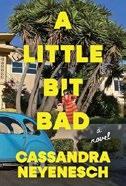
A roman à clef disguised as a murder mystery, or vice versa?
Either way, the suburban mother who narrates the story has to contend with a lot of trouble.
Perdita Jungfrau and Theo Vestergaard have two young children, son Atticus and daughter Honor, and live in San Diego. Everything should be coming up roses, but Perdie is unhappy with her lot: What happened to her feminist rockabilly band? Why does Theo gag whenever he’s asked to change a diaper? Will Atticus ever outgrow his pernicious allergies? Perdie spends most of her time watching true-crime shows while she nurses Atticus. She loves America’s Worst Murders Ever because “you always find out who did it in the end.” One day, her neighbor Jill’s roofer takes a bad fall and Perdie’s rush to his aid may, as she tells everyone, have saved his life. She takes a bad fall, too, metaphorically speaking, and decides she’s in love with Fernando Acuña. The narrative cuts from the early days of their flirtation in 2007 ahead to 2010, when everyone is shocked to discover Nando has been fatally shot at close range in an apparent robbery. Perdie’s narration, via Neyenesch’s prose, is mordantly funny and perfectly pitched, whether describing married sex (she says Theo was like an “asshole roommate” who “smelled good, and he knew how to make me come”) or the fact that her troubled
brother Spencer imagines beating his steakhouse customers “over the head with the long-ass peppermill.” However, the humor shares space with unease. Nando’s girlfriend, Charleigh, seems to be stalking Perdie, showing up in her Volkswagen Beetle wearing green aviator sunglasses, while detectives question Perdie and her divorced parents about convicted felon Spencer’s whereabouts. Is it possible that, despite finding her soul mate, Perdie knew nothing about Nando? Anyone who has ever felt estranged from their nearest and dearest will appreciate how Perdie manages to take back control of her own life.
Original and hilarious, this novel about a Gen X midlife crisis reveals that base instincts can coexist with the maternal.
The Radiant Dark
Oliva, Alexandra | SJP Lit/Zando (416 pp.) $28.95 | April 28, 2026 | 9781638932529
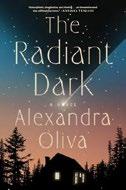
When extraterrestrials make contact with Earth on Feb. 3, 1980, an American family drama begins.
Carol Girard is a frustrated new mother: resentful of her husband, Jake; disappointed by her inability to bond with baby Michael; feeling trapped in a rickety house in upstate New York. Her mood is improved when signals begin appearing in the night sky, soon traced back to Ross 128 b, a planet 11 light years away. The signals are decoded via mathematics: traveling on light waves, these communications confirm intelligent life. President Jimmy Carter wins a second term as Earth becomes more united, with a worldwide effort to send a message back. The novel unspools the story of the Girard family, but the backdrop is an alternate timeline beginning in 1980: The world order changes, slang
is different, tech is better, and so are the dreams of children like Michael and his little sister, Rosanna, who becomes the novel’s center as a leading scientist in this world where a populated universe is a reality. Back in small-town New York, Carol makes a permanent departure from her family and becomes a member of the Universalists, a religious cult grown from contact with Ross 128 b. Decades, and then more than a century, pass in the Girard family, which experiences tragedy and triumph; the story is perceptively told, particularly in the visceral portrayal of the damaged mother-daughter relationship. The novel’s duality in scope is fascinating; within the intimate family story, characters discuss humanity’s place in the universe, its insignificance in the scope of space and time. And though the human history of the Girards is small in the scheme of things, it is told beautifully, in emotionally complex and heartfelt storytelling. A dollop of SF enlivens this thought-provoking family saga.
Patterson, James & Brian Sitts Little, Brown (368 pp.) | $32 February 9, 2026 | 9780316599849

Consulting psychologist Alex Cross and his best bud, D.C. Metro Det. John Sampson, work on totally unrelated cases in alternating chapters.
As Sampson reflects in a pardonable understatement, “Bad things have happened to the Cross family before.” So what’s left to suffer now that Sampson has rescued Cross from a near-fatal bullet wound? Glad you asked. When his son Damon’s academic advisor phones from Chapel Hill to report that nobody’s seen Damon for three days, Cross instantly arranges to fly to North Carolina with his wife,
investigator Bree Stone. But she’s called back to Washington almost immediately to work on a series of bombings that’s already prevented Sampson from joining Cross in the search for his son. Both investigations are thoroughly routine—that is, spiked with menace and violence and cast with characters you wouldn’t look at twice in a police lineup—but Patterson’s fondness for bite-sized chapters suits the structure of Cross’ latest adventure to a T, since there’s an opportunity for a cliffhanger of greater or lesser proportions every five pages or so, when the collaborating authors cut away to the other story. Although many of the resulting jolts come across as synthetic, some are rooted in current events. The prime suspect in the bombings is an ex–Special Forces officer who served as an explosives expert in Afghanistan, and the kidnapping of Damon is racially motivated. There’s no escaping today’s headlines, not even if you’re riding along with Alex Cross. Want to see Cross and Sampson actually work together, as this title promises they will? Wait till next year, or next month.
Pressfield, Steven | Norton (320 pp.) May 26, 2026
A man who has lived many lives appears in tumultuous 16thcentury Spain. During the reign of King Ferdinand of Aragon, an itinerant iron man—a sharpener of tools—arrives at the girl Mariah’s farm. He is Telamon, of the Greek province of Arcadia, and he has an X tattooed on his arm. But Mariah senses much more in the man. “You pretend to be a simple tinker, but you carry secrets,” she tells him, believing he carries devils. She is right. In fact, he is a penitente who
Stories that find the right balance between veracity and strangeness.
NOW I’M PHOTOGENIC AND OTHER STORIES I TELL MYSELF
had been a Roman soldier and a grievous sinner in previous lives and is condemned to continue living miserable lives forever. The only thing that can release him and let him finally die once and for all is a curious, improbable set of conditions set, apparently, by the Almighty. One reader might exclaim that the Lord works in mysterious ways while others might just see a contrived plot device. Either way, it serves well to deliver a dramatic finale. Early in the story, Mariah’s farm is pillaged by marauding Portuguese invaders led by Severiano—the Severe One—whose primary task is to find and confiscate hundreds of tons of black powder. For his own reasons, he also wants the iron man, his horse, and Mariah. Speaking of equines, Telamon’s horse is a noble, unnamed animal, and the two have a deep emotional connection. Severiano’s magnificent steed is named La Mano Derecha de Dios, or The Right Hand of God, and both animals figure significantly in the story. Meanwhile, Telamon is an army deserter and vows to “never again harm another human being. I will never bear arms again in war.” Instead, he commits himself to protecting Mariah and his horse, also branded with an X. Mariah has hallucinations that open up Telamon’s past as a Roman legionnaire centuries before. The tale’s dramatic set piece is the siege of a citadel, portrayed in wrenching detail. The literary style is replete with rhetorical flourishes such as “A cry of joy sprang from twice a hundred townsmen’s throats.”
An imaginative tale of penitence, bravery, and blood.
Rosenberg, Jill | Black Lawrence Press (148 pp.) | $17.95 paper | May 5, 2026 9781625572172
Surreal images and emotional realities collide in this debut collection. There’s a fine line between using the uncanny to accentuate real experiences and to distract from them.
Thankfully, the stories in this book largely fall into the former category. Rosenberg’s characters are eminently recognizable—a parent whose child is away at camp for the first time, a woman concerned about medical findings—but the specifics of their circumstances take them to strange places. The protagonist of “The Twins” is the mother of two newborns until something bizarre happens: “The skinny one [eats] the fat one.” Things don’t get any less weird from there. The protagonist of “The Logic of Imaginary Friends” reunites with hers in adulthood after years of estrangement, and their bond takes on an unexpected intimacy. When the title character in “My Husband Story” enters a deep sleep, he slowly becomes more and more catlike. The images and conflicts in these stories are eye-catching on their own, but Rosenberg also introduces some subtler elements that give them greater resonance. It seems deliberate that the narrator of “The Logic of Imaginary Friends” tells us the name of her imaginary friend before revealing her own, for instance. Rosenberg also has a talent for punchy, revealing prose: “Once, the woman had a doctor who drew her blood himself. It was like having Ronald
McDonald cook her fries.” While the imagery in these stories often heads into the fantastical, the anxieties and regrets the characters experience help keep them grounded. The result is a brief but potent collection that rarely goes where a reader might predict.
Stories that find the right balance between veracity and strangeness.
Sanders, Lai | Simon & Schuster (336 pp.)
$29 | March 17, 2026 | 9781668087923
Two young Asian American women plot revenge against the people they blame for derailing their dreams.
It’s bad enough to have a breakdown. But Shelley Hu had hers during a confrontation with another rider on the New York City subway, when a sleazy reporter filmed her and turned her into the main character on social media. Eventually, she resigned from her internship at a prestigious law firm and dropped out of Columbia Law School. Now she’s stuck in Florida living with her mother and working the reception desk at the same motel where she worked in high school. Enter Sophia Moon, who’s a little bit older than Shelley and a little bit wiser, not to mention totally self-possessed—or so she seems. A while back, she had her own fall from grace, and like a fairy godmother of scandal, she promises that if Shelley comes to live with her in New Jersey and follows her instructions, not only will Shelley rebuild her life just like Sophia has, but she will also make the people who wronged her pay. Who could refuse such an offer? The story intertwines two timelines: the present, where Shelley and Sophia enact their elaborate plan, and the past, where Sophia’s origin story unfolds. It’s hard to say which storyline is more unhinged. Both twist and turn in wild and unexpected ways. Are parts of the book borderline absurd?
Absolutely. But that doesn’t make it any less thrilling—and it’s not without depth, either. The novel explores myriad complex, interconnected aspects of the last decade’s zeitgeist, including race, power, rage, vengeance, unconditional love, faith, and morality. It also adds texture to some well-trodden narratives around the immigrant experience in general and the many different communities that make up Asian America in particular. A strangely dark, seductive debut novel.
Schatz, Kate | Dial Press (368 pp.) $29 | March 3, 2026 | 9780593736975
An affecting peek behind the doors of a late-1960s home for pregnant teenagers. Elizabeth Baker Phillips, known as Baker, has big plans. She hopes to attend Stanford University and become “a writer, like a real writer, novels and essays but also journalism, the hard-hitting kind that reveals the truths of the world.” It’s 1968, and despite the foment in the air, Baker has been a straight-A, straight-edge teen, conforming easily to her controlling mother’s ideal for young ladies. But a few adventures with her cousin May later, after meeting a guy named Wiley, Baker knows she’s pregnant— and she has no idea what to do. She winds up in a San Francisco–based facility where other young unmarried women spend their months of gestation away from the eyes of friends and family. At her daughter’s high school graduation party, Rose Phillips announces that Baker has accepted a prestigious scholarship and will study in Paris for the fall semester, entering Stanford the following spring. Mrs. Phillips goes as far as making sure Baker has postcards from France to write, “for
us to display at home.” Instead of learning a new language, Baker learns a whole new way of being, one that involves swollen ankles, fake wedding bands for occasional trips downtown, and new housemates who disappear once their labors begin.
The author indicates that her own mother’s story inspired this novel, and no doubt that story also provides the details that bring Baker’s milieu to life, from her collection of albums including Jefferson Airplane and Bob Dylan, to the era’s use of “twilight sleep” as an anesthetic for childbirth. As the epigraph by Adrienne Rich reads: “Whatever is unnamed…will become, not merely unspoken, but unspeakable.” The stories of all the young women whose choices have been winnowed are important to remember, and Schatz memorably brings one to light.
Excellent historical fiction about women’s reproductive choices that one hopes will not gain new relevance.
Sher, Gabrielle | Little, Brown (288 pp.) $29 | April 21, 2026 | 9780316595858
A young woman and her family reckon with the aftermath— physical, emotional, and magical—of a violent pogrom. In the Russian Pale of Settlement, in the year 1905, Cossacks march through Yetta’s shtetl, murdering and pillaging, with shouts of “Jews will not replace us.” At first, Yetta hides with her mother, Frieda, and her baby brother, Ephraim, but when she fears for her father Mordechai’s life, she throws herself into the melee with devastating consequences. Desperate to save his daughter, Mordechai enacts a kabbalistic ritual without entirely understanding its repercussions. The story becomes a golem/dybbuk two-for-one, utilizing these stalwarts of Jewish folklore to explore a young woman’s battle for
agency and self-love in the aftermath of sexual violence. While the ideas here are promising, the delivery leaves something to be desired: In her eagerness to ensure readers are picking up what she’s putting down, Sher beats the proverbial horse to death, and then beats its dybbuk, too. Yetta’s voice—whether it issues from a living girl, a dybbuk, or a golem—always sounds the same, diluting the novel’s atmospheric project. The prose is able enough but never bewitches as it means to, as attempts to stay in a folkloric, period-accurate register result in anemic, stilted sentences. The language is lightly peppered with italicized, transliterated Yiddish and Hebrew, with Yetta somewhat anachronistically referring to her parents by the Hebrew “Ima” and “Abba” rather than the Yiddish “Mame” and “Tate.” The third-person point of view cycles among Frieda, Mordechai, and the various Yettas, and their conflicting perspectives support the story’s tension. The plot picks up speed early on and dutifully keeps chugging. Nevertheless, the pages turn slowly. Read it for an inventive feminist entry to Jewish mystical fiction, but don’t expect any miracles.
Song, Jade | Morrow/HarperCollins (288 pp.) | $30 | March 17, 2026 9780063433885
On most days, Vicky, a copywriter for the “funeral innovation” start-up Onward, can pretend enough to get by. OK, so not most days. Some days. Even if that means typing in bed in her sixth-floor walk-up in Manhattan’s Chinatown, hiding behind a glib fluency in corporate jargon secretly suffused with self-loathing. While warding off the horrors of the outside world—from layoffs to mass shootings to environmental destruction to deaths by overdose—Vicky takes refuge in her
collection of zhiza, paper constructions “burned as sacrifice so the dead could own the depicted riches in the afterlife”: things like laptops, dim sum, cars, cats. There are a few flashes of hope that stave off, however temporarily, the shadow of her constant dread. One is her relationship with her college friend Jen; they were initially drawn to each other because of their mutual embrace of the world’s “bleak emptiness.” Vicky also finds herself in the midst of a blossoming connection with a couple she met on a dating app, the silver-ringed Kevin and blue-streakbobbed Angela. But just as things are, however tepidly, beginning to look up, Vicky and Jen’s relationship deteriorates after a falling-out over a photo shoot at Roller, the glossy wellness company where Jen works, plunging Vicky into even more isolation. Tragedy strikes soon after and Vicky is faced with a choice—to suffer through her despair or try to find a way out, for better or worse. This novel starkly depicts the effects of untreated mental illness, social isolation, and the social and economic pressures of today’s U.S. The hope that gleams through the pages is well earned.
A primal scream-meets-love letter to a generation struggling to survive late-stage capitalism.
Spufford, Francis | Scribner (496 pp.) $31 | March 10, 2026 | 9781668214374
A young woman attempts to thwart Winston Churchill’s assassination in this ambitious time-travel/ historical fantasy novel.
Iris Hawkins, the hero of Spufford’s hefty yarn, is a free-spirited woman in 1939 London, eager to escape her humdrum secretarial job at a stock brokerage. One night she hooks up with Geoffrey Hale, a technician at the BBC’s nascent television division,
which stokes the ire of Geoff’s colleague, Lall Cunningham, part of the city’s growing army of fascist supporters. Her payback is otherworldly, as Lall sics a wraithlike creature on Iris. And so Iris enters the occult world of magicians and learns that “an ancient system is awakening in the stones of London”: Statues on the roofs of some of the city’s oldest buildings serve as portals into the past. Lall intends to use time-travel magic to kill the prime minister and clear a path for Nazi domination. Meanwhile, Iris’ relationship with Geoff deepens and the Blitz begins. Spufford is a gifted veteran at high-concept alternative history, but ironically, the strength of this novel isn’t its flights of fancy but its meticulous depiction of London life under bombardment, especially for women. Iris strains to prove to her boss that she knows more about finance than he thinks, parries with John Maynard Keynes, and is determined to escape the confinements of post-Victorian womanhood. Spufford also nicely captures the low-level anxiety in the city, not to mention the dismal dining options during rationing. By contrast, the more fantastic elements of the story feel overworked. Spufford conjures up an inspiring climax and suggests a sequel—one that hopefully approaches the material with a lighter touch. A magical, clever, sometimes convoluted reimagining of London under attack.
Thurman, Hannah | Doubleday (352 pp.) $29 | May 5, 2026 | 9780385551823
In this debut novel, a brilliant but controlling, self-absorbed mother raises four daughters on the grounds of a mental hospital in Raleigh, North Carolina, where she’s director of psychiatry.
SERVED HIM RIGHT
Youngest daughter Denise Cross reflects from an adult perspective on the complicated upbringing she shared with her older sisters. In 1999, Dr. Lisa Cross is devoted to her daughters, ranging in age from 9-year-old Denise to 13-year-old J.J., with Caro and Mimi in between, but she’s equally devoted to Mercy Hill, which faces a shrinking patient population as deinstitutionalization of the mentally ill becomes widespread. Lisa’s sense of mission combines self-aggrandizement, authoritarianism, and genuine love along with a dollop of altruism. She expects her staff, her daughters, and her husband to think and do exactly what she wants them to. The girls pointedly bear her last name, not that of their easygoing stay-at-home father, Tucker Palmer, and all are desperate to please her. But Lisa’s single-minded drive creates unintended consequences. Lobbying for hospital funding, she goes to extreme lengths that risk her marriage; it’s impossible not to pity poor Tucker. When she sends her unprepared daughters to volunteer inside the hospital, they befriend a patient, with tragic results. She has the girls skip multiple grades at school, ignoring the emotional and psychological costs they pay. Thurman explores the Crosses’ complicated family dynamics within the context of the era and Raleigh’s politics and social norms even when the girls are only semiconscious of the issues. The novel evokes late-20thcentury movies about adolescence such as Stand by Me and Now and Then , among others, complete with an epilogue describing who the girls become. Denise’s ironic reference to Little Women also seems apt. Enjoyable if a bit too comfortably formulaic.
Unger, Lisa | Park Row Books (384 pp.) $30 | March 10, 2026 | 9780778360056
Breaking up isn’t just hard to do—it can be fatal.
The Blacksmith sisters have very different personalities— perfectionist Vera and chaos agent Ana often clash. But they’re bound by tragedy, having been orphaned after their mother was convicted of murdering their father, then died in prison herself. Vera and Ana were raised by their aunt, Agnes, a florist who also made traditional potions and teas for cramps, hot flashes, and other female ailments. She led The Cove, a group of similarly interested women, and hoped one of the sisters would eventually take over its leadership. But by the time this novel begins, Agnes is long gone and Vera and Ana have moved on. Ana hops from job to job and man to man while Vera is laser focused on her businessman husband, Brad Kline, and their teenage kids, fierce Coraline and goofball Grant, all of whom she tracks with digital devices. The sisters’ past comes back into play, though, when Vera hosts a brunch “ex -orcism” to celebrate Ana’s breakup with her latest bad boyfriend, Paul Hayes. He owns a high-powered advertising firm and has a rumored tendency to sexually harass his employees (or worse). Amid the mimosas, a police
detective arrives looking for Ana, to let her know Paul’s body has been found in a shallow grave in a remote park. Things go from bad to worse when a guest, Ana’s college bestie Iggy Caine, who recently gave birth to her first child, faints. Though she recovers quickly, she soon falls ill and is hospitalized in a coma as her adoring husband, Brock (another of Ana’s exes), agonizes at her bedside. And one other thing—Ana had previously met the detective, Timothy Bandeau, via a sex-withno-strings app called HookUp, but neither of them is talking. It seems everyone who knew Paul has reason to want him dead, but it’s hard to imagine who would harm sweet, guileless Iggy. As the intricate links between the crimes become clear, Unger keeps the suspense in high gear, skillfully swinging among several vividly portrayed first-person narrators. Sisterhood is powerful in surprising ways in this twisty, satisfying thriller.
van Os, Sara | Hanover Square Press (320 pp.) $30 | May 19, 2026 | 9781335001894
A woman stumbles on a body in the woods and treats it as an unusual— and unsettling— companion.
Twenty-oneyear-old Savannah, on a “mental health vacation” from her last semester of college, is hiding at her divorcing parents’ lake house. Lonely, struggling with obsessivecompulsive disorder, and unsure of her sexuality, she recently lost all her friends after an incident with a manipulative ex-best friend (who now lingers as a hallucination) and self-medicates with alcohol and Ambien. One night in March, after mixing the two, she sleepwalks into the woods behind the house and
This witty sendup of the marriage plot would make Mrs. Gaskell proud.
A PERFECT HAND
jolts awake next to a corpse. The body, freshly deceased, belongs to Ava Brown, a gay opera singer stuck in an office job. Nearby is Ava’s backpack, containing a composition book aptly labeled the “DE Composition Book” and filled with a record of Ava’s last days. Rather than call the police, Savannah decides to wait—until she’s read the journal, and until the body is nothing but bones, until she’s said everything she needs to say. The novel alternates between Savannah’s present-day isolation and Ava’s journal entries, which recount how a Labor Day weekend hiking trip with her co-workers Megan and Chad went terribly awry. The narrative allows for vivid, unsettling descriptions of decay (“green and purple splotches on her skin are a cursed moldy pizza dough”). Savannah is an imperfect, often frustrating protagonist, but her poor decisions make her compulsively absorbing—readers will keep turning the pages to see what she does next. The book targets a Gen Z audience; slang like “sus” and “slaps” can be jarring, though some pop-culture moments (“Bobby Flay pulls out crispy rice again. The judges eat it up, literally. He wins, again. The crowd boos”) land well. Fans of Yellowjackets will eat up this queer, psychologically chaotic tale.
A decadently bizarre novel for fans of queer survival stories.

For more queer fiction, visit Kirkus online.
Waldman, Ayelet | Knopf (304 pp.)
$28 | May 19, 2026 | 9781101875346
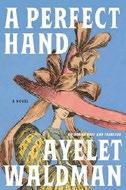
Sometimes a Victorian-era caper, replete with crinolines and coiffures, carries a shockingly important purpose beneath its skirts.
If Jane Austen and Nora Ephron collaborated, they might produce something close to this new novel by Waldman, in which two 19th century English servants conspire to see their mistress and master wed. Alice Lockey is lady’s maid to Lady Jemima Alderwick. While the imperious Lady Jemima tends to whine about hairstyles and finds two dozen gowns “so few” for a week in London, Alice believes her own position the best to which a farmer’s daughter might aspire. When Alice meets Charlie Wells, valet to Jemima’s suitor Viscount Nigel Wynstowe, she dreams they might marry and live under the same roof, if only Jemima will accept the rather doughty nobleman’s hand. Since Jemima prefers the attentions of a small-time con artist named Thomas Smythe-Roberts, Alice and Charlie scheme to endear the Viscount and the Lady. Things, of course, go awry, necessitating trips between town and country. During one of Alice’s errands in London (its urgency due to her wish to spend time with Charlie), the couple meets Emmeline, an administrator for the Society
for the Promotion of Employment for Women, with its unfortunate acronym of SPEW. After attending a few of the Society’s lectures and meetings, Alice realizes that she and Charlie have markedly different ideas about their future together: “She and Charlie would grow old, content in the lives they had built in their homey rooms in their pleasant village. A good life. A happy life. But not the life she wanted.” Waldman comes up with an ending so interesting and unusual that to say even one word more would be unjust. Witty, frothy, and ultimately wise, this sendup of the marriage plot would make Mrs. Gaskell proud.
Walschots, Natalie Zina | Morrow/ HarperCollins (464 pp.) | $32 May 19, 2026 | 9780063236936
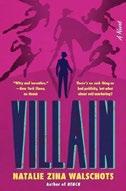
Paradigms shift in the wake of a supposedly indestructible superhero’s defeat in this sequel to Hench (2020).
Once a low-level henchwoman for hire, Anna is now a full-fledged villain called Auditor who serves at the right hand of Leviathan, the world’s biggest supervillain. Auditor’s superpower is weaponizing data to ruin superheroes’ lives— everything from publicizing secret social media accounts and marital infidelities to exploiting childhood traumas and deep-seated insecurities. Now that the world’s greatest superhero, Supercollider, has been vanquished—secretly twisted into a living, breathing “flesh dumpling” by his scorned ex-girlfriend and former superhero partner, Quantum Entanglement—Auditor yearns to use her talents to take down the Department of Superheroic Affairs, aka “the Draft.” The organization is
responsible for everything involving superheroes, including recruiting, training, and funding them, as well as creating compelling backstories for them, and Auditor considers it to be the only remaining enemy worthy of her and Leviathan’s attention. But though Auditor has no shortage of diabolical plans, Leviathan refuses to greenlight any of them, as he’s too distraught over the defeat of his nemesis by someone else to even leave his lair. Then Supercollider perishes during doctors’ attempts to “untangle himself from himself,” and the Draft falsely blames Leviathan for his murder. On the plus side, burnishing Leviathan’s infamy snaps him out of his funk; it also paints giant targets on the backs of those working for him, few of whom are “conveniently invulnerable” like their boss. Further worrying Auditor is evidence of new leadership in the Draft—a marketing executive whose flair for manipulation rivals her own. Walschots’ plotting dazzles and devastates, with rollicking, high-stakes action punctuating scenes of unflinching introspection and fraught interpersonal drama. Via Auditor’s snarky yet vulnerable first-person narration and keenly rendered characters, Walschots sensitively explores issues of agency, self-identity, morality, and grief while entertaining readers from the jump. Glittering and gut-wrenching.
Wang, Sarah | Little, Brown (320 pp.) $29 | May 12, 2026 | 9780316594523
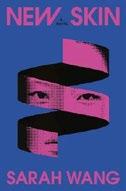
An immigrant mother and her daughter clash over beauty treatments. Wang’s incisive debut takes a cool, sharp look at the relationship between 26-year-old narrator Linli Feng, who
would like to stop babysitting her mother in Los Angeles and move to New York for graduate school, and her mother, Fanny, who has irretrievably damaged her face with decades of botched under-the-table plastic surgeries and other treatments undertaken in the belief that “perfection was always one procedure away.” Their situation looks bleak after Fanny is indicted on federal charges for not revealing who has been performing the illegal procedures, but things start to look up when Fanny is chosen for America’s Beauty Extreme, a new reality TV show in which contestants compete for the prize of “life-changing reconstructive surgery.” While Fanny is sequestered away for the competition, Linli goes undercover to try to find evidence that will free her mother from her legal problems. The novel hits many of the familiar beats of the story of conflict between a damaged mother and a sensitive, artistic daughter, but it manages to find some new twists. Wang walks the edge between domestic drama, as Linli discovers more about her mother’s past and begins to understand her drive to change herself, and dark satire, both of the machinations and excesses of the reality TV industry and the exploitation of those who want to fit into the U.S. by whatever means necessary—even if it means “forever scrabbling in [a] bottomless pit of debt.” As Linli subjects herself to one painful and disfiguring procedure after another in the hope of discovering more about her mother’s experience as well as evidence to free her, the novel slides in the direction of body horror. A troubling take on obsessive self-improvement.
Wernersbach, Jules | Univ. of Iowa (252 pp.) | $19.95 paper | April 7, 2026
9781685970536
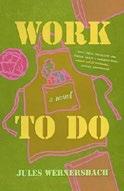
Nothing and no one is very cooperative— especially the weather—in this novel about life in a Texas grocery co-op.
Wernersbach’s debut spends one very fraught week among the workers at the fictional Guadalupe Street Co-op in Austin. The novel opens on a Saturday in hurricane season, following store manager Roz, a queer woman who’s deeply invested in her work. “For most of the staff, this was just a job. But do the simple math and jobs were most of the hours of a life. Roz had made a decision a long time ago, when she had no money and was putting on the red H-E-B staff shirt for the first time, that she could resent every second of her time on the clock, and her parents for cutting off her credit card, or she could claim a stake in the minutes of her own life by caring about what she did. The work was meaningful if you gave it meaning.” Shortly after Roz watches her ex-wife, a TV weather reporter, deliver the news of imminent gale-force disaster, noticing a huge new engagement ring on her finger, all hell breaks loose. The power goes out, customers panic, one of the cashiers is injured while forcing open the automatic doors…and we’re off. The unhappy, underpaid employees have already filed a petition to unionize, and Roz’s handling of this crisis will
An immigrant mother and her daughter clash over beauty treatments. NEW SKIN
provide fuel for their fire. There are two other point-of-view characters: Randy, the 50-year-old nonbinary dairy manager, and Eleanor, the 69-year-old chief executive, who founded the store with a wealthy girlfriend 40 years earlier. Everybody’s hiding something: Randy’s messing around with Molly, Roz’s live-in partner, also an employee; Molly hasn’t told Roz about the petition; Eleanor’s keeping mum about her cancer diagnosis. Meanwhile, there’s more stormy weather ahead. Wernersbach’s depiction of their large, diverse, economically struggling cast of characters gives even the minor players their full humanity and their evocation of the Austin setting sparkles with verisimilitude, right down to the very affordable pitcher of Lone Star at the Spider House Café.
A workplace novel crossed with a soap opera, offering plenty of food for thought. (Organic and locally sourced, of course.)
Kirkus Star
Whitaker, Kayla Rae | Random House (432 pp.) $30 | May 19, 2026 | 9780593733349
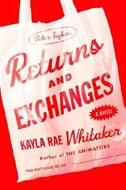
A successful Southeast retail chain contends with two different destabilizing forces. The novel begins during the 1979 holiday season at the Lexington, Kentucky, branch of discount retailer Baker-Taylor’s,
where Fran Taylor—as a female chief executive, she’s a rarity—ruminates over her good fortune: “Poor, to middling, to downright upper-middle class, judging by their ’78 tax returns, and all within twenty years.” Sharing the glory as well as the CEO title is Fran’s husband, Fred, who, after all this time—they’ve known each other since they were teenagers—still isn’t “at the point where he could see the red of her hair from across the room without feeling a shiver within.” Fran isn’t looking to further complicate her life—in addition to running the business, she and Fred are raising four kids—when she finds herself attracted to Wendy Patterson, one of the stores’ assistant managers. It isn’t lost on Fran that if she acts on her desire, she could lose everything. The novel spans a decade in the lives of the six Taylors, each of whom is hard-bitten and bruised in some combination, and each of whom takes a turn with the book’s point of view. Whitaker has written a sprawling, extravagantly intelligent novel about people quietly breaking free from constraints—marital, gender, class. Here, as in her widely admired debut novel, The Animators (2017), she’s attuned to working people’s lives and to the idea that professional ambition may be the purest reflection of character. The novel plays out against a distinctly American landscape in which Wendy’s encroachment on the Taylor marriage syncs up with the encroachment of a Walmart-like chain that people on the Baker-Taylor’s team refer to as “the Beast.” Not for nothing is this book’s epigraph a Sam Walton quote. Superb. Like a blue-collar Franzen novel.
Williams, Missouri | MCD/Farrar, Straus and Giroux (288 pp.) | $28 | May 26, 2026 9780374619299
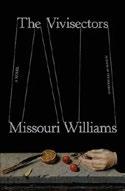
A misanthropic young woman befriends a student embroiled in a controversy at the local university.
Agathe is a former student of “the university” located in a decaying city surrounded by nature, which a large workforce of gardeners labors to keep at bay. Employed as an assistant to a lecturer in “city planning [and] urban design,” she performs the tasks necessary to disguise her boss’ ineptitude. Agathe lives with her elderly uncle and, as the novel opens, her estranged mother has been rendered nearly catatonic by a recent suicide attempt, prompting Agathe’s well-known writer father to initiate her parents’ first communication with her in years. When a conflict erupts between a professor at the university and a charismatic international student named Adam, Agathe’s boss, who’s caught in the middle, does the same thing she does with all her labor: She outsources it, asking Agathe to befriend Adam as he negotiates the fallout. When Agathe’s relationship with Adam deepens, she finds herself for the first time opening up to another person. Will she be able to bear such intimacy?
Williams is an heir to writers like Ottessa Moshfegh, whose female protagonists often possess a passivity and an icy detestation of society that teeters on the brink of nihilism. “I’ve always wanted to break people,” Agathe confesses, while also acknowledging, “It was beneath me to try to direct the course of my fate.” That Williams’ novel reads like an allegory plays up the moral and philosophical dimension, but it’s never clear what the story is allegorizing. Is this a savage takedown of academia? A portrait of the late Anthropocene’s
climate woes and social disconnect?
A grim meditation on cancel culture? Xenophobia? A psychological parable of falling in love?
A flinty, withholding novel, though full of dark intelligence.
Wolff, James | Atlantic Crime (272 pp.) $27 | April 14, 2026 | 9780802167675
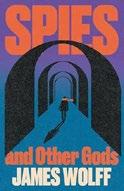
A series of murders begets this quirky spy thriller. As the narrator points out, this is a murder story before it’s a spy story. Nine critics of the Iranian regime have been assassinated over several years, and British Intelligence must find the killer code-named CASPIAN and stop a hostile state from murdering innocent people on European soil. Expert parliamentary researcher Aphra McQueen is brought in to investigate an anonymous complaint of gross negligence in the Intelligence Service’s handling of the issue. In her interview, she says, “Let me speak directly to God.” “But my dear, you already are,” replies Sir William Rentoul, who as Head of the Service runs an organization with “decades upon decades of experience in frustrating outsiders intent on getting to the bottom of things.” In six months, he faces retirement, which he expects will be “a slow decline offset by sudokus and fish oil.” Lacking sufficient security clearance to be on her own in headquarters, Aphra needs Susan, a resentful escort, to take her to her desk. Poor Susan
once aspired to global covert action but has advanced no further than building escort, a job likened to something a plumber would find when unblocking a toilet. She plants a classified file in Aphra’s bag, hoping to get the more successful woman fired. The omniscient narrator has a jaded view of the characters. He tells the reader, “I’d rather you didn’t believe that I’m the spirit of spying, to be honest. That would suit me just fine.” A lowercase-g god he is, though, as he pries into the lives of other oddball characters. Zak, a dentist, volunteers to be a spy, as he’s learned a lot from library books on the subject. When he meets Aphra, he asks, “Do you have a badge or something?” “A badge?” “To identify you as—you know, as a spy.” Later he explains, “There’s something divine, something godlike about spying.” As for fiction, though, he thinks, “Anyone who chooses writing spy novels over spying itself can’t have been much good in the first place.” A cynical, funny spin on spycraft.
Yamashita, Karen Tei | Graywolf (448 pp.) $30 | April 28, 2026 | 9781644453810

A polyphonic, multigenerational novel of the Japanese experience in America. At the beginning of Yamashita’s latest, 17-year-old Yone “exchanges his kimono for Western attire” and, full of hope and ambition, sets off from Meiji Japan to the U.S. Elegant, learned, he
An ambitious novel that spans forms, ably crossing oceans and centuries.
QUESTIONS 27 & 28
finds himself washing dishes in the Bay Area. Things take a turn for the better when Yone, having become a famous poet, falls into the company—and beds—of admirers. After he returns to Japan, one of them turns up with a 3-year-old baby in her arms. Years pass and, again crossing the ocean, other Japanese land on American shores, farming, founding businesses, and becoming model citizens—until their hopes are dashed by racist laws. Some of Yamashita’s many narrative threads tend toward the fabulous, as with her shaggy-dog story of a Japanese man who lands in Mexico, dubs himself Storm, grows a thick “Mexican mustachio,” and—well, now a “Zen Zorro,” rides into a legend that “fits him like a glove.” Told in many voices and with a sprawling dramatis personae, Yamashita’s novel steps in and out of several genres in both Japanese and English: There are letters, poems, court transcripts, edicts, reproduced government documents, affidavits, footnoted historical extracts, and more. No matter how the text is constructed and where the characters are in space and time, injustice is a constant, not least in the fraught times when the title questions—distributed to Japanese in internment camps during World War II and demanding renunciation of any allegiance to Japan and its emperor— speak to a discrimination endured by no other people, at least not until the ICE age. “Answering yes-yes makes the game shorter, but you don’t necessarily get out or win,” Yamashita writes, demanding recognition of that injustice: “What happened will be remembered, and people will learn the lessons of the past.”
An ambitious novel that spans many forms, ably crossing oceans and centuries.

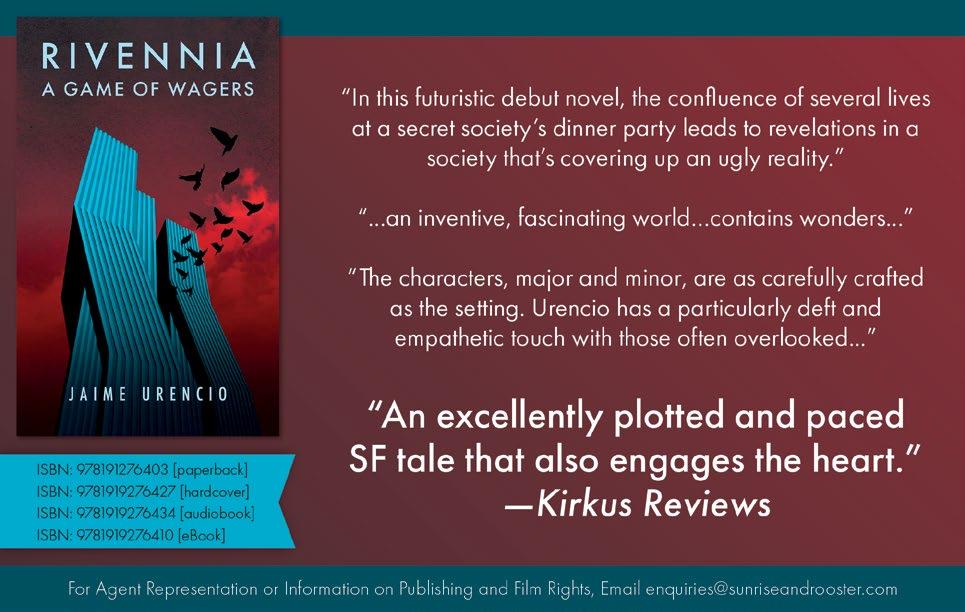


Hanover Square will publish the follow-up to Audrey Niffenegger’s bestselling 2003 novel.
Audrey Niffenegger is bringing readers back to the world of The Time Traveler’s Wife
Hanover Square announced in a news release that it will publish Life Out of Order, a sequel to the author’s bestselling debut novel, in the fall. It calls the novel “at once intimate and sweeping.”
The Time Traveler’s Wife, published in 2003 by MacAdam/Cage, chronicled the relationship between Henry DeTamble, a librarian who finds himself randomly traveling
through time, and Clare Abshire, a wealthy artist. A critic for Kirkus wrote of the novel, “Mainstreamed time-travel romance, cleverly executed and tastefully furnished if occasionally overwrought.”
The novel was adapted into a 2009 film starring Eric Bana and Rachel McAdams, a 2022 television series with Theo James and Rose Leslie, and a stage musical that premiered in Chester, England, in 2022.
Life Out of Order will follow Alba DeTamble, Henry’s daughter, who has inherited his time-traveling condition and must keep future events secret from her group of artist and activist friends. “Life Out of Order is a kaleidoscopic tale of love, resilience, and hope amid our fractured world where time itself is the greatest adversary,” Hanover Square says.
Niffenegger said in a statement, “Life Out of Order has been an all-consuming book for me; I will miss living in it, but I am happy to offer it to readers, at last.”
Life Out of Order is scheduled for publication on Oct. 27.—M.S.
Audrey Niffenegger

For a review of The Time Traveler’s Wife, visit Kirkus online.

The writer was known for novels including Drive and the Lew Griffin series.
James Sallis, the author known for his genre-spanning books, including the 2005 novel Drive , has died at 81. Soho Press announced the author’s death in an email, calling him “in many ways…the platonic ideal of what a writer can be.”
According to a biography on his website, Sallis was born in Helena, Arkansas, and taught at Phoenix College, Otis College, and the Piper Center. He made his literary debut in 1970 with the science fiction story collection A Few Last Words; several more collections would follow, including Limits of the Sensible World, A City Equal to My Desire, and What You Were Fighting For.
He published his first novel, The Long-Legged Fly, in 1992; the book introduced readers to


Lew Griffin, a Black detective in New Orleans. Griffin would reappear in five other novels, including Black Hornet, Bluebottle, and Ghost of a Flea. In 2005, Sallis published the neonoir novel Drive, which was adapted into a 2011 film directed by Nicolas Winding Refn and starring Ryan Gosling, Carey Mulligan, and Oscar Isaac. A sequel to the novel, Driven, was published in 2012. Sallis’ other novels include Renderings, Death Will Have Your Eyes, The Killer Is Dying, and a trilogy composed of the books Cypress Grove, Cripple Creek, and Salt River. Soho published his science fiction novel World’s Edge last month.—M.S.

For a review of World’s
Kirkus Star
Bernier, Ashley-Ruth M. | Crooked Lane (336 pp.) | $29.99 | April 21, 2026 9798892425223
Zigzagging between Charlotte, North Carolina, and Charlotte Amalie, St. Thomas, this debut offers plenty to enjoy. There’s a lot on the line for Naomi Sinclair, star of A Word From the Kitchen , when her boss, Bronwyn Friedrich, pits her against fellow cooking-show celebrity Travis Spriggs in a contest to determine which of them will host the network’s new culinary mystery show. They each have 12 months to develop a pilot episode that solves a food-related crime. Travis stays in his hometown of Charlotte working on The Carolina Barbecue Murders, and readers see very little of him. But Naomi chooses to investigate the unsolved murder of her Aunt Ursula, the late owner of a tea shop in Charlotte Amalie. Toggling back and forth in both time and place, Bernier artfully crafts her puzzle—really a nested box of half a dozen puzzles. She gives Naomi a sharp tongue, which comes in handy when crossing swords with oafish Travis, along with a keen mind and a tender heart. Naomi solves six other crimes in the run-up to unearthing Ursula’s killer, showing compassion for many of those whose misdeeds she exposes. Through Naomi’s eyes, Bernier also provides a comprehensive look at the culture of St. Thomas.
Naomi celebrates the particular joys of growing up in the U.S. Virgin Islands, with their breathtaking seascapes, beloved foodways, and close-knit communities. In the end, Naomi’s investigation is not so much a battle against a rival but a journey into herself, her family, and what it means to grow up Caribbean. Fun-filled and fulfilling.
Cahoon, Lynn | Kensington (256 pp.) $27 | April 28, 2026 | 9781496752123
The best way to write a self-help book on detective work is to start detecting. In An Amateur Sleuth’s Guide to Murder (2025), Meg Gates returned home to Bainbridge Island, Washington, after her fiancé left her for her bridesmaid. After cutting up her wedding dress, she took one part-time job at her mother’s bookstore and another doing research for mystery writer Lilly Aster, all while solving a murder. Things are going well for Meg’s family: Her parents are divorced, her father remarried, and her brother, Junior, who works at their father’s accounting firm, is dating a colleague. Meg herself has developed a romantic relationship with longtime friend Dalton Hamilton. Even her dog, Watson, loves him. Meg’s latest involvement in crime begins when she meets restaurant reviewer Lee Anderson at a writer’s group and he asks her to join him for a working dinner. The meal is a disaster. Lee is rude and
complains about everything, embarrassing Meg so much that she walks out. The next day, Meg goes out for a more congenial meal with Dalton, but it comes as a shock when they run into her mother—on a date with a local man. Afterwards, walking home, they notice police lights in the parking lot for the ferry to Seattle, and later find out that Lee Anderson has been murdered. Unsurprisingly, he’d made enemies of scads of restaurant owners with his scathing reviews, and Meg’s Uncle Troy, the police chief, wants to know about her involvement with him. Deciding this is a perfect way to gain knowledge for her book, Meg buckles down to investigate and finds yet more plausible motives for Lee’s murder. Plenty of suspects and engaging characters add up to a diverting read.
Cambridge, Colleen | Kensington (320 pp.) $27 | April 28, 2026 | 9781496751225
An American expatriate investigates the murder of her grandfather’s Resistance buddies in postwar Paris. As she drives from the Left Bank to the Right Bank to meet with a student, tutor Tabitha Knight makes it clear that she loves, loves, loves her adopted city. Her grand-père Saint-Léger and his partner, Oncle Rafe, live in a “very French” mansion on the Rue de l’Université, across the street from culinary student Julia Child, who feeds her and her messieurs boeuf bourguignon and vichyssoise at every opportunity. Tabitha cuts her hair in a “short, very chic, very French” style and develops a presumably very French crush on Étienne Merveille, a Parisian police inspecteur. Fortunately, she has plenty of opportunity to spend time with hunky Merveille. Soon after Madame Vierca, a clairvoyant, warns Tabitha of the impending deaths of the Neuf
Bleuets, a band of aging freedom fighters who battled the Germans and their Vichy collaborators, they obligingly start to turn up knifed, poisoned, and/or burned to death. Fearing for her beloved grand-père, Tabitha searches for the Bleuets’ killer. But despite her obsession with all things French, her approach to her investigation is straight up American: nosy, intrusive, and headstrong. She styles up her wardrobe with one of those berets rarely worn outside Basque Country and interviews suspects left and right, ignoring any personal danger and driving Merveille crazy. The saddest part is seeing Julia Child play second fiddle to this ditz. Like taking a bath in Dubonnet.
Connelly, Michael | Little, Brown (336 pp.) $32 | May 19, 2026 | 9780316595384
More crimes of every shape and size bedevil the paradise of Santa Catalina Island, off the coast of southern California. Police substation director Sgt. Stilwell, who really doesn’t want you to know his first name, is leading the interception of an aircraft that’s just landed when everything goes sideways, ending Dep. Ilsa Ramirez’s career and Dep. Alton Quigley’s life. After the book opens with such a bang, Stilwell settles into his customary routine, now tinged by grief. He identifies cartel courier Gonzalo Kalas as the man who fled the plane during its brief stint on the ground, then hears that Kalas has eluded police custody. Stilwell finds a keychain in a backpack Kalas insisted wasn’t his, with a key that belonged to Angela Metier, who went missing several years ago. He contacts Det. Renée Ballard, the only paid member of the LAPD’s Cold Case Unit, then sees the case he’d expected to close with the discovery of Angela’s body opening even wider when he and Ballard link Angela’s death to the
unsolved disappearances of several other female hikers. Stilwell’s attempts to identify the vandals who chopped down several rows of vintner Oliver Marquez’s grape vines and defaced the island’s famous chimes tower with the bold letters “FSID” quickly lead to suspects whose apprehension presents problems that call for a diplomat rather than a police officer. Throughout, veteran Connelly intertwines the cases in a way that provides a satisfyingly comprehensive sense of Stilwell’s complicated workload, which is much greater than the sum of its parts. And when Stilwell follows one of them up the daisy chain to uncomfortably high-level conspirators, the stage is set for a climactic showdown that’s also a highly effective cliffhanger. Welcome back to Catalina, where every day brings exciting new adventures— especially if you’re in law enforcement.
Crichton, Michael | Blackstone (200 pp.) $29.99 | May 5, 2026 | 9798212514309
A posthumous novel Crichton (1942–2008) wrote in 1973 under the pseudonym John Lange, in between The Andromeda Strain and The Great Train Robbery, but left unpublished till now. As Harvey Jason knows all too well, the life of a movie publicist is no fun. Now that he’s spent three weeks in Tucson, Arizona, for the shooting of the western Bloodrock, Harvey’s come to know every watering hole in town and every scandal among the cast and crew. Except, that is, for the scandal that threatens to break out when Arthur McDougall, the screenwriter who’s come along for possible rewrites, is found dead in his hotel bathtub. The studio head back in Hollywood preemptively dispatches insurance investigator Harlow Perkins—“a regular Sherlock Holmes”—before any of the insurance companies backing
the production can hire him themselves. In short order, the dislikable Perkins lines up interviews with leading actors Clete Williams and Brenda Conrad, promiscuous second lead Sally Oldman, producer Charles Mann, director Tom Franklin, and the rest of the crew. Whoever he talks to, he’s accompanied by Harvey, shadowing him under the orders of his boss, publicity chief Sam Appelbaum, who’s far from convinced that news of the incident will be bad for business. The characters are no more memorable than Colonel Mustard or Miss Scarlet, but Crichton, as in the SF novels that would make him famous, sweats every detail of the background, and aspiring filmmakers will learn as much about the mechanics of moviemaking as they could from most film textbooks. If you think the big reveal falls flat, just keep on reading to the end.
A sly reminder that “movies, like politics, are unreality. That’s the point of them.”
Dutra, Carmela | Crooked Lane (320 pp.) $29.99 | May 12, 2026 | 9798892424417
Winner, winner, murder for dinner. Twins Beth and Seth Lloyd have inherited their aunt’s food truck, Kluckin’ Good, and built a popular business in Clementine, California. Beth runs the truck with help from her best friend, Rylie Cortes, who wears a chicken costume to attract customers. Seth, a lawyer, often helps but it takes some persuading to get him into a cow costume. Seth and Rylie have become a couple; meanwhile, Beth’s mother sees her main mission in life as getting Beth married. On their way to Flavors of the Bay, a food festival at Green Family Farm, trouble appears in the form of Brad Dawson, Beth’s former boyfriend, who’d dumped her in a very public way three years earlier. Now he writes food reviews for The City and
Beyond that infuriate many people. Seth punches him during a chance meeting and Brad tries to use his smarmy charm to calm things down. Once the festival starts, Kluckin’ Good does a roaring business, much to the dismay of some of the other vendors, who can be competitive. The crew’s luck changes when Beth discovers Brad’s dead body on the way back from the bathroom, and she and her crew immediately become suspects, especially since one of their special cups is found nearby. Sparks fly between Beth and attractive Det. Drew Kane, who’d reluctantly worked with her to solve an earlier murder case and is now on hand at the festival. Unfortunately for Beth, it’s Det. Patricia Wilcox, from a different police force, who’s investigating. The more closely Beth looks into the crime, the more people she finds who might have wanted Brad dead.
An entertaining mystery with amusing characters—including a pet chicken.
Gaw, Allan | Mysterious Press (288 pp.)
$17.95 paper | May 5, 2026 | 9781613167809
A withdrawn pathologist earns the respect of colleagues by solving a grotesque high-profile crime. London, 1928. Scottish pathologist Dr. John Archibald Cuthbert devastates an arrogant prosecutor at trial with his incisive testimony, which leads to the exoneration of an accused widow. He’s next called upon regarding the baffling mystery surrounding the disappearance of popular university student Freddie Dawson, this time to dampen hopes that a recently discovered corpse belongs to the missing young man. Gaw’s offbeat debut novel runs on two interwoven tracks. It’s first and foremost a police procedural long on forensic detail, studded with an account of the taciturn young Cuthbert’s experience at Scotland Yard. Woven into Cuthbert’s methodical investigation is a deep dive into his past, from his years as a
soldier in World War I all the way up to his work at Colchester Military Hospital after graduating from college. He harbors a personal secret, gradually revealed, which shadows and potentially jeopardizes his burgeoning career. The Dawson investigation begins in earnest three months after the appearance of that first corpse with the discovery of two others that are bizarrely glued together. One of these bodies is identified as Dawson. It’s all quite a mystery to unravel both who- and howdunit. A prolific nonfiction writer and poet, Gaw has a style that’s precise, concise, and sometimes lyrical. Given the sharp focus on Cuthbert’s character, it’s no surprise this case is also the first in a promised series.
A dark and complex mystery with a sympathetic hero and an acute forensic focus.
Josefowicz, Diane | Soho Crime (368 pp.) $29.95 | May 5, 2026 | 9781641298087
What looks at first like a sedate locked-room puzzle blossoms into a full-blown conspiracy yarn featuring a most unlikely heroine.
Hannah “Cookie” Cooke is a New England–based interior designer whose two specialties are constructing painstaking scale models of crime scenes like the Lizzie Borden house, which doesn’t pay much, and restoring upscale houses, which pays a lot more. Her business, the Ministry of the Interior, gets a commission from neurosurgeon Chuck Halsey and his wife, Lana, founder of Lana Pura home textiles, which is challenging from the get-go. Lana’s determination to enlarge the house’s kitchen is thwarted by the placement of its chimney, which can’t be touched because it’s integral to the whole structure. Together with mason Harry Deluca, who has a complicated history with her, Cookie devises a workaround, but it doesn’t work well enough to prevent
the kitchen from filling with smoke. None of this bothers Chuck, whose affair with Cookie ends when he’s found stuffed into the chimney and burned to death after his housewarming party. Will Cookie ever get another job? Absolutely: hospital Communications Director Wendy Teller insists she update the office of her husband, psychiatrist Simon Teller. Simon himself has no interest in the project, but he’s definitely interested in Cookie. As Cookie’s unsettlingly adulterous pattern solidifies, the ensuing complications extend from a second death to an international drug smuggling scheme to a reopening of the Lizzie Borden case. Some readers will feel exalted and uplifted by these wide horizons; others will merely feel baffled. A game whose rules keep changing provides something for everyone, even if it’s not completely fulfilling for anyone.
Klein, Libby | Kensington (320 pp.) $27 | April 28, 2026 | 9781496748584
A former police officer’s returning memory offers both hope and peril. Layla Virtue’s father, Don, a famous rock musician, recently bought the entire trailer park where she’s been living, but she refuses to let him jump-start her own musical career. Since losing her job as a police officer following a tragically botched operation—she showed up drunk to supervise the takedown of a drug gang, leaving almost her entire team, including her boyfriend, Jacob, dead in an explosion—she’s survived by playing minor gigs and living in the trailer park alongside a wide variety of quirky characters. Her dad had the owner’s cottage completely renovated in an over-the-top storybook manner, and when he’s unexpectedly diagnosed with dementia, Layla commits to living there with him. As she’s beginning to develop a relationship with her neighbor, Nick, a
Marine with PTSD, she finds an envelope at her trailer door one morning with a picture of Jacob inside and a note written on the back: “Jacob Is Alive.” Layla has a love-hate relationship with police officer Dayton Castinetto, who still distrusts her even though she recently helped solve a murder case. With help from three new friends she met at Alcoholics Anonymous meetings, Layla starts investigating whether Jacob is really alive and could have betrayed the whole team. On top of all that, she’s taken over management of the trailer park and has to deal with unreasonable requests from renters who know how wealthy Don Virtue is. Layla always suspected she wasn’t really drunk during the drug bust but lost some memory in the explosion. Now glimpses of that day are returning, portending big changes in her life—if she survives. Explorations of addiction and dementia along with many hilarious scenes in a mystery filled with sharp characterizations.
Maggi, Nicole | Oceanview Publishing (384 pp.) | $19.99 paper | May 5, 2026 9781608096602
What’s the connection between a missing person, a severed foot in a sneaker, and a group of troubled kids?
Emmeline Helliwell, a special agent for the National Park Service, is sent to Yellowstone to unravel the mystery of a foot blown out of a geyser in front of a group of tourists. She’d rather be anywhere else, having left Yellowstone three years earlier, when she was unable to close a missing persons case, abandoning her boyfriend, fellow park ranger Holden Thrush, with no explanation. Although the coroner’s report shows the foot belonged to a malnourished teenager, no one has reported a teen missing from the vicinity. Emme gets a clue from a sharp-eyed tourist who noticed something red when the foot flew her way. Awkwardly, the
A complex mystery with a sympathetic hero and an acute forensic focus.
THE SILENT HOUSE OF SLEEP
only person available to help Emme with the investigation is Holden. At the geyser, they spot something red, and both get burned recovering it—but it turns out to be a useful clue: a red pocketknife. They manage to connect it to Higher Purpose, a wilderness school for troubled teens. Despite its fancy promotional video, the school is a dump, and by checking permits and interviewing the handyman, Emme and Holden learn that a group from the school is in Yellowstone right now and another was there a few months ago. Locating the area of the park the Higher Purpose group set off from, they follow the students’ trail on horseback until they come upon three woefully unprepared teens who’d been kicked out of the main group after having been taken from their homes (with their parents’ permission), then mistreated and starved. Clearly, the school is worse than Emme could have imagined. But are its owners killing their students?
Stunning scenery and romantic tensions combine in a ripped-fromthe-headlines mystery.
Tully, Liza | Berkley (352 pp.) | $30 June 9, 2026 | 9780593816806
The guests at an exclusive sorority reunion include murder. Aubrey Merritt, “the nationally renowned private investigator,” never intended to leave Gramercy Park for the wilds of New Mexico even though she was an invited member of Sarah Lawrence College’s Sigma Delta Tau chapter. She changes her mind
when her old friend John Fitzroy tells her of a note announcing that “she who lives by the sword shall die” that his wife, retired Brigadier General Joan Battersea, received shortly before her guests were scheduled to arrive at the Muddy River Ranch. Merritt decides to make the trip in the company of her assistant and amanuensis, Olivia Blunt. Sure enough, someone’s shot to death during the festivities, but it’s not the general. Instead, the victim is MIT biochemist Eve Exeter, who together with her husband, entrepreneur Conrad Zander, had been about to launch Lifespan, Inc., as a public corporation dedicated to using Eve’s research to extend the lives of its clients. As the newly married Blunt mingles with the guests, all of them old enough to be her mother, she learns one of them has held a grudge against Eve since they were in school together. In case you’ve forgotten that original threat against the general, someone hides no fewer than five scorpions in her bed. Of all the possible antagonists, the one Blunt takes most seriously is Merritt, who challenges her to solve the mystery herself if she wants to keep her job.
Considering Merritt’s national reputation, which actually ends up being an important plot point, the mystery is, as she acknowledges, not very challenging at all. Looking for a reason to avoid your college reunion?
Tully is happy to oblige.

Aster, Alex | Avon/HarperCollins (512 pp.) $34 | March 31, 2026 | 9780063462434
A woman’s quest for revenge against the gods leads her to enter a deadly competition— and into the path of the man who betrayed her. A devastating war has split the land in two. Starside is home to the magically gifted, while Stormside is for mortals who can only dream of achieving a shred of wealth and power. Every 50 years, 50 Stormside inhabitants are given the chance to reach a magical wellspring accessible only to Starside’s godly descendants. Their goal is not guaranteed, as the journey to the pool is perilous. Aris, a blacksmith’s apprentice, is determined to be one of the Stormside challengers, but first she’ll have to pass the Culling, a deadly contest in which the king decides who is worthy to venture on. Aris isn’t after magic, though. Instead, she hopes her access to Starside will allow her to exact revenge on the goddess who burned down her village and murdered her family. Also participating in the Culling is Harlan Raker, the cold and calculating head of the king’s guard. There’s no love lost between Aris and Raker—plus, guards are known to have the king’s support and Aris doesn’t trust Raker’s motives for entering the Culling. This romantasy hits all the familiar notes: an enemiesto-lovers romance, a dangerous trial, a main character with a tragic backstory who’s coming into her own power. There’s nothing new here, but from the opening, with Aris’ debut in
the Culling, the pace never lets up as characters are introduced and details of the world are teased. Romantasy fans may feel like they’ve been here before.
Center, Katherine | St. Martin’s (336 pp.) $30 | May 19, 2026 | 9781250408051
W hile on her sister’s wedding cruise, a woman enlists her childhood best friend for help as she attempts to woo her longtime crush. JoJo Burton is bad at love. After she leaves her terrible fiancé, Pearce Richmond, at the altar, she’s convinced she might never settle down. But during her sister’s wedding, which is being held on an eight-day cruise to the Bahamas and Cozumel, she and her family concoct a plan that will help her seduce her recently divorced childhood crush, Finn Turner. The two of them once shared a blindfolded kiss that might have ruined JoJo for all other men, and she’s never forgotten it. But then JoJo’s best friend, Cooper Watts, shows up. Cooper and JoJo were inseparable as children but didn’t talk for years after she got engaged to Pearce. She doesn’t know why he suddenly disappeared on her, but it doesn’t matter—he’s here now, and she needs him to help her get Finn to reenact that long-ago kiss. But after she and Cooper share a cabin, get thrown together for every wedding week activity, and even engage in the classic friendly flirting meant to make another man jealous, JoJo
starts to realize that Finn might not be the man she’s been waiting for, after all. Center keeps things light, focusing on humor even when the subject matter veers into family drama. JoJo and Cooper find themselves caught up in the sort of tropes that are catnip for romance fans—he takes care of her when she has a sunburn, for instance, and they participate in a slow-dance contest. As Center reveals in an author’s note at the beginning, “Spoiler: This book will end well.” The destination may not be a surprise, but the journey is a delight. A fun, positively frothy friends-tolovers romance.
Liese, Chloe | Gallery Books/Simon & Schuster (384 pp.) | $17.99 paper April 14, 2026 | 9781668205471
A friendship that began with a lie about being ex-lovers is put to the test during a vacation. Two years ago and newly divorced from their spouses, Thea Meyer and Alex Bruscato told a lie that would change the course of their lives. When they bumped into each other on the stoop of Thea’s former home and discovered their exes were dating, they quickly concocted a story that they’d been first-loves who were serendipitously reunited. Thea and Alex assumed their white lie would be short-lived; their exes’ fling might only last a week. But it’s been two years and the foursome are still very much intertwined. Alex co-parents his 6-year-old daughter, Mia, with ex-wife Jen, who’s still dating Thea’s ex-husband, Ethan. Meanwhile, Ethan and Thea do their best to share custody of their dog, Argos. Since that fateful morning, Alex and Thea have become best friends, playing off their fake romantic
history only when around their former spouses. When the two of them are invited on a two-week vacation with Jen and Ethan, with Mia and Argos in tow, they agree to tag along, but relaxing on the beach becomes the perfect catalyst as Thea and Alex realize their yearslong friendship has blurred into something more. The narrative jumps back and forth between the early days of their friendship and the countdown to their vacation: and two years is a long time to maintain a lie. Present-day Thea and Alex make a much more compelling duo, with plenty of banter and yearning as they begin to realize and confront their feelings; jumping back to their past selves is always a disappointment. Ethan and Jen are an unlikable supporting cast whose poor first impressions are never fully salvaged. Expect some soreness from all the aggravated jaw-clenching any time they’re on the page.
A rare miss from Liese.
Marsh, Violet | Forever (336 pp.) | $18.99 paper | March 17, 2026 | 9781538739662
The new Duke of Foxglen seeks the assistance of a coffeehouse proprietress to locate his long-lost mother and sister.
Eoin Aucourte was taken from his Irish working- class mother at a young age to be raised by his demanding paternal grandfather so he could be groomed into the perfect heir to the dukedom. He quickly
learned how to hide his own emotions while being extra perceptive of others’. Now that his grandfather has died, Eoin is determined to reunite with the rest of his family—he just has to find them first. Hannah Wick, daughter of a pirate and co-owner of the Black Sheep Coffeehouse, is no stranger to solving mysteries. Eoin asks for her help, unaware of a dark shared history between their families and Hannah’s desire for revenge. Keeping her true motives secret, Hannah suggests she pose as his mistress in order to get access to his paternal aunts and uncles and try to ferret information about his mother out of them. Though Eoin and Hannah’s search becomes more complicated than they expected, they find they enjoy each other’s company and have to balance a growing attraction with increasingly dangerous situations. Fans of Marsh’s previous tales featuring the Black Sheep will welcome the return of beloved characters, but this installment never fully coalesces. Eoin and Hannah are charming characters, but the story relies on repeated descriptions of various traits—Eoin is physically large, stoic, and perceptive; Hannah is conflicted about the secrets she’s keeping from him—rather than giving them deeper insight or growth. Plot points specific to the Georgian era, such as Eoin’s father having been a reformer who tried to overthrow King George, are compelling yet feel under-explored. Although the mystery adds exciting stakes, Eoin and Hannah’s failure to piece together some of the answers more quickly strains belief. There’s too much going on in this story without any part making a lasting impression. Too muddled in its attempt to balance several genres and tones.
A friendship that began with a lie is put to the test during a vacation.
Pham, Haley | Atria (320 pp.) | $19 paper March 3, 2026 | 9781668095188
Childhood friends, almost-sweethearts, a misunderstanding, and a funeral. Blair Lang and Declan Renshaw were best friends who went on one date before a disagreement and an accident sent them in different directions after high school. Now Blair is back from college to be with her great-aunt Lottie, who’s dying, and to support her single mother in small-town Seabrook, California. Finding a job at a coffee shop puts her in the path of her former boyfriend, since he turns out to be its owner. Can the two get past their mistakes? The novel uses the popular second-chance romance trope, but Pham fails to energize it through interesting characters. Blair’s grief over her great-aunt’s death and her plan to help her mother are overshadowed by internal monologues about her feelings, the way her friends aren’t paying attention to her, and the novel she plans to write. Declan’s distinguishing characteristic, besides being a former high school quarterback, is his skill at building birdhouses. Unsurprisingly, the couple doesn’t have much chemistry; when they embrace, their “bodies meld like… memory foam.” The wooden characters, unusual word choices (“conglomerate of pedestrians,” “litany of plants”), and odd turns of phrase (“tension melting from his eyebrows like butter melting in a warm pan”) are almost enough to obscure the lack of plot development. What passes for stakes is easily defused when Blair comes into an inheritance that saves her from working as a consultant at Ernst & Young in New York—so she can write a romance novel.
A romance that could have used significant rethinking.



EDITORS’ PICKS:
16 Forever by Lance Rubin (Harper/HarperCollins)
Angry Girls Will Get Us
Through by Rebecca Traister, adapted by Ruby Shamir (Simon & Schuster)
Hannibal Lecter: A Life by Brian Raftery (Simon & Schuster)
How To Kill a Guy in Ten Dates by Shailee Thompson (Gallery Books/Simon & Schuster)
THANKS TO OUR SPONSORS:
Born Sick in the USA by Stephen Bezruchka (Cambridge Univ. Press)
Digital Inc. by Richard Curtis
Pivot Point by Tess Manchester
We Met at a Halloween Party by Marcus R. Ferrell
Choose To Believe by Georgina Owino, illus. by Eduardo Paj
The Mullet Man by R.W. Fields, illus. by Johan Bjurman
This episode was produced by Cabel Adkins Audio and Megan Labrise. Joshua Meyer
Allegra Goodman’s new novel is the frank, funny tale of a modern American family. BY MEGAN LABRISE
On this episode of Fully Booked , Allegra Goodman joins us to discuss This Is Not About Us (Dial Press, Feb. 10). Hot off the success of her 16th-century historical fiction Isola (a 2025 Kirkus Prize finalist), Goodman presents a contemporary novel about three generations of an unforgettable American family: the Rubinsteins. “Like an exquisitely baked apple cake,” Kirkus writes in a starred review, “Goodman’s delicious and deeply perceptive novel is something to savor.”
Goodman is the author of the novels The Chalk Artist, Intuition , The Cookbook Collector, Paradise Park, and Kaaterskill Falls (a 1998 National Book Award finalist); two collections of short stories, The Family Markowitz and Total Immersion; and a novel for young readers, The Other Side of the Island . She lives with her family in Cambridge, Massachusetts.
Here’s a bit more from our starred review of This Is Not About Us : “Goodman trains her gimlet eye on the complicated relationships among the members of the fictional Rubinstein family—and finds both humor and pathos in a modern Jewish American clan. In the first chapter, three generations congregate around the deathbed of Jeanne, who at age 74 is the youngest of the three Rubinstein sisters and yet, if she’ll ever release her iron grip on life, will be the first to die.…[It’s] just the beginning of a novel that chronicles marriages and divorces, bat mitzvahs and ballet recitals, holidays and funerals, and finds within milestone events and quotidian moments the meaning— and madness—of family. As Goodman recounts the Rubinsteins’ sibling conflicts, grievances, and grudges, their parenting triumphs and failures,

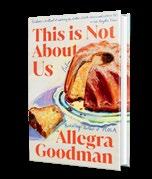
This Is Not About Us Goodman, Allegra Dial Press | 336 pp. | $29 Feb. 10, 2025 | 9780593447840
and the many ways they all love and infuriate, push away and yet crave to connect with one another, she holds up a mirror to us all.”
Goodman and I discuss why she calls This Is Not About Us a “serial novel,” the art of shifting tenses between chapters, why she chose family as her primary subject, the relative merits of apple cake and chocolate babka, how to write more than one book at a time, and much more.
Then editors Laura Simeon, Mahnaz Dar, John McMurtrie, and Laurie Muchnick share their top picks in books for the week.
Editor at large Megan Labrise hosts the Fully Booked podcast.

To listen to the episode, visit Kirkus online.
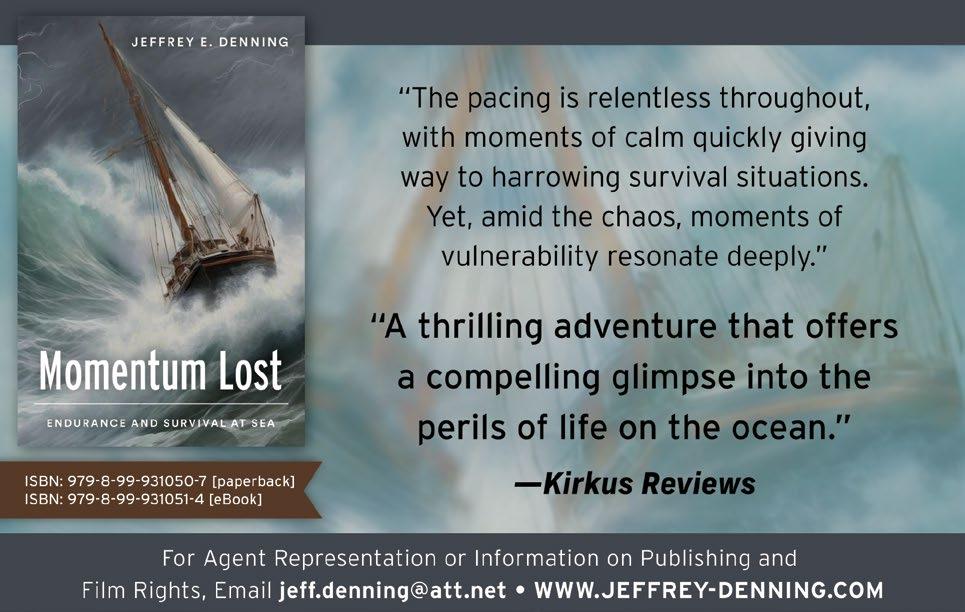

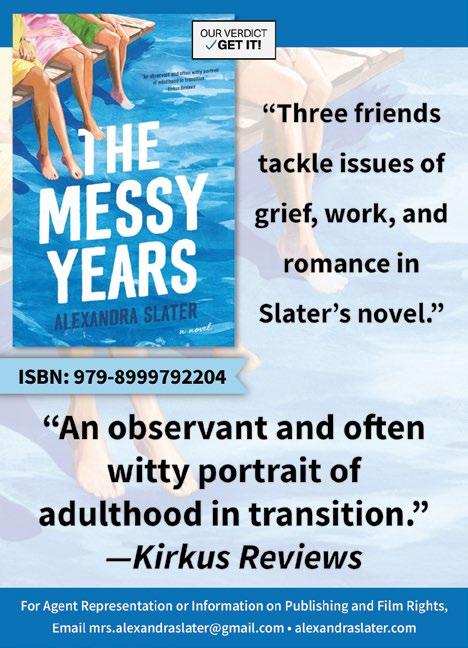
The actor faced backlash after she was cast as a character with Mexican heritage.
Odessa A’zion has bowed out of a film adaptation of
Holly Brickley’s Deep Cuts after backlash over her casting, Variety reports.
A’zion had been cast as Zoe Gutierrez, a character of Mexican and Jewish heritage, although the actor herself is not of Mexican descent. Critics said her casting was an instance of what’s often referred to in Hollywood as “whitewashing.”
Brickley’s novel, published last year by Crown, follows the complicated creative partnership (and romantic relationship) of a singer-songwriter and an opinionated pop-music fan. A critic for Kirkus called the
novel “a promising debut notable for sharp characterizations and a vividly conveyed sense of time and place.”
A’zion, known for her roles on the series I Love LA and in films including Marty Supreme, was originally cast alongside actors Drew Starkey (Outer Banks) and Cailee Spaeny (Wake Up Dead Man). The film is being written and directed by Sean Durkin (The Nest, The Iron Claw ).

For a review of Deep Cuts, visit Kirkus online.
In an Instagram story, A’zion wrote, “Guys!! I am with ALL of you and I am NOT doing this movie. fuck that. I’m OUT.”
She wrote that she initially auditioned for the role of Percy but was offered the part of Zoe instead. A’zion agreed to play her, but said she hadn’t read the book.
—M.S.

Odessa A’zion

JOHN McMURTRIE
A DECADE AGO, Eva zu Beck was lost. An Oxford University graduate, the native of Poland had left her husband, a successful lawyer, after cheating on him. Filled with guilt, she turned to alcohol—too much of it, too regularly—to numb the pain. And then she decided to hit the road. “As I would later come to learn, travel is not a magical healing potion,” she writes in her forthcoming book, The Wilder Way: A Memoir of Adventure, Freedom, and an Uncharted Life (Gallery Books/Simon & Schuster, June 2). “But the getaway had offered my soul a seed to nurture.” In just a handful of years, zu Beck has transformed her life, traveling to far-off places and sharing

her experiences with millions of viewers on YouTube and as a National Geographic TV host. And now she has documented her personal odyssey—and eventful journeys— in her new book. It’s of one of many exciting debut titles coming out in 2026.
Mary Fariba Afsari’s parents also traveled far to make a new life for themselves—in their case moving to the United States from Iran. Afsari documents her family’s inspiring story and her career as an OB-GYN in Portland, Oregon, in Labor: One Woman’s Work (Avid Reader Press, April 7). “The frontlines of medicine have lent themselves to a long line of excellent memoirs,” says our review, “and they are
now joined by Afsari’s gripping debut.” (You can read my Q&A with Afsari on page 57.)
In her first book, historian Rosa Campbell examines Shere Hite’s attempt to broaden our understanding of female sexuality; millions bought Hite’s landmark Hite Report in 1976, but few know her name today. Now, more will know it thanks to Campbell’s The Book That Taught the World To Orgasm and Then Disappeared: Shere Hite and the Hite Report (Melville House, April 14).
Another historian, Erin Maglaque, offers a sweeping overview of women’s experiences in her debut book, Presence: A Hidden History of the Female Body (Astra House, June 16). “A richly textured, revelatory history,” says our review; the book shows how, for one, “male intrusion into female areas of expertise increased.…Midwifery, from being a largely female

domain, became professionalized by men.”
Happily, the sciences have become more representative of the world at large. Karmela PadavicCallaghan is a shining case in point. As the author writes in their first book, Entangled States: A Life According to Quantum Physics (Beacon Press, May 19), “The quantum world was the first place where I knew queerness. Meeting its not-wave-not-particle denizens was the first time I ever saw something like a possibility of myself.”
Our reviewer writes, “They leave us with the sense that if quantum physicists can build ‘tolerance for complexity and inbetweenness,’ maybe the rest of us can, too.”
The oceans alone are a testament to how much we are still learning about the world around us—as Jeffrey Marlow makes clear in his lively debut, The Dark Frontier: Unlocking the Secrets of the Deep Sea (Random House, April 7). Unfortunately, he writes, “the sad truth is that our reach has exceeded our grasp; we’ve irrevocably changed the deep sea before even getting to know it.”

John McMurtrie is the nonfiction editor.
A journalist portrays the banality of evil in our time. Paul Skalnik, writes journalist and debut author Colloff, “had an instinct for what people wanted to hear,” an essential talent for a successful con man. And successful Skalnik was: He married nine times, sometimes simultaneously, and bilked his wives and countless other people out of money, cars, jewelry, real estate, whatever he could steal. He did so while claiming to be many things that he was not: an ace Marine Corps fighter pilot who had been shot down over Vietnam, a wealthy lawyer temporarily short of cash thanks to big investments, a University of Texas star football player grounded by injury, a C-suite captain of
industry. Somehow people fell for it, right and left. But more than that, and at a more depraved level of pathology, Skalnik sexually assaulted numerous women and girls, including a “slight and freckled seventh grader.”
All these crimes added up to a constant series of jail and prison terms, and there, Colloff chronicles, Skalnik found his truest métier as an informant, pinning murders, drug trafficking charges, and countless other crimes on fellow inmates whom he swore under testimony had confessed to him. “I have placed 34 individuals in prison, including four on death row,” Skalnik wrote in 1984. In exchange for his information, prosecutors cut him endless deals—including
Colloff, Pamela | Knopf | 320 pp. $30 | July 14, 2026 | 9780593230862
dismissing charges for assaulting that minor. All the while, Colloff adds, “Nothing suggested that he felt remorse, or anything but indifference that his testimony might bring about someone’s death.”
Indeed, much of her narrative settles on a down-on-his-luck Vietnam veteran on whom he pinned the murder of a
teenage girl, and who remains on Florida’s death row, even though another man confessed to the crime. Conveniently enough, Skalnik died, too, but refused to Colloff’s face to recant his perjurious testimony.
A fiery indictment of a system that rewards jailbird snitches for “telling just the right story.”
Ed. by abulhawa, susan & Huzama Habayeb Trans. by Kay Heikkinen | Atria (224 pp.) $18.99 paper | February 10, 2026 9781668222362
A compilation of short essays from young Palestinian writers chronicling the toll of Israel’s assault on their homeland since the Oct. 7, 2023, attacks on Israel. This slim volume grew out of Palestinian American writer and activist abulhawa’s writing workshop with Palestine’s Culture and Free Thought Association, in sessions that participants attended despite the difficulty and risk of gathering. While all of the contributors have seen friends, neighbors, and family members killed by Israeli violence, these pieces sharpen on the smaller, but no less devastating, daily consequences of the campaign of displacement. A thread of shared physical experiences winds through many of the essays—the filth of makeshift bathrooms, the flaps of refugee tents, and the din of drones and explosions—making the shared chords of anxiety, fear, and grief tactile. But the contributors also bring the individuality of their conditions, the jobs they are struggling to perform (or have had to abandon), their roles as parent, child, or spouse, or the particular shape of their longings for home. An aid worker races through the streets seeking diapers; a wife is forced to leave her husband without anyone to translate soldiers’ directions into sign language; a fashionista visits the rubble of her home to salvage her most treasured belongings. Despite the cacophony of missiles and the repeated wrenching of checkpoint separations, each explosion is distinct, as are its victims, anticipation, and aftermath. Achingly rich with sensory details of a land being made increasingly and traumatically barren, this is not a project to make sense of brutality but to compel witness to it.
An electrifying, if harrowing, anthology of Palestinian voices that will define a generation.
Albanese, Francesca | Trans. by Gregory Conti | Other Press (256 pp.) | $28.99 April 28, 2026 | 9781635426038
“A blemish on humanity.”
Albanese, an Italian lawyer who serves as the U.N. special rapporteur on the occupied Palestinian territories, opens with an address to that body’s representatives, asking plaintively, “Is it possible that after forty-two thousand people have been killed, you cannot empathize with the Palestinians?” That speech is from October 2024, and of course the number is far higher now, but Albanese’s point remains: namely, that “now the task at hand is to stop the genocide and find a way forward.” She writes, peace is “possible,” but only if both sides commit to it. What is more, she notes, that commitment extends to other nations of the world, including President Donald Trump’s U.S., which—having banned Albanese from entry—“has repeatedly intimidated anyone who dares to touch Israel,” no matter what international crimes Benjamin Netanyahu’s Israel commits. Albanese enumerates such “atrocious crimes”: the sundering of humanitarian law and the suppression of the rights of sovereign citizens of another state, the imposition of martial law, the seizure of private property for illegal settlements, and the repeated violation of a fundamental U.N. tenet, “that it is forbidden to acquire territory by force.” Assisting Albanese in driving these points home is a chorus of Palestinian voices, most affectingly those of children, one of whom says, with wisdom beyond years, “Being afraid of death doesn’t stop you from dying; it prevents you from living.” Emphasizing that “I am not here to justify any crimes that the Palestinians may have committed against Israeli civilians in the long course of their oppression,” Albanese
suggests a different kind of resistance on the part of allies to punish Israel economically by means of divestitures and other instruments, while pursuing humanitarian relief and legal remedies. A trenchant call for justice in the face of “the ferocity suffered by the Palestinian population.”
Auslin, Michael | Avid Reader Press (368 pp.) $30 | May 5, 2026 | 9781668214541
A history of the Declaration of Independence from its composition to the present.
“A constitutional republic is a fragile creation,” writes Hoover Institution fellow Auslin, “for only the people’s adherence to its principles and rules preserves it.” If the Constitution is its user’s manual, the republic is philosophically grounded in the document that Thomas Jefferson, assigned by the Continental Congress, wrote in an inspired two weeks. That grounding is for better and for worse: After all, Jefferson’s first-draft denunciation of the enslavement of “a distant people who never offended him [i.e., King George III],” was cut by committee, foreshadowing the conflict over slavery to come. Indeed, Auslin writes, South Carolina’s rationalization for seceding from the Union in 1860 was directly based on “the language and claims of the Declaration.” North or South, the Declaration of Independence was immediately enshrined in American thought. Auslin does good historical footwork in recounting the reaction of the British press and political class to the document, widely reprinted in British newspapers and both noisily denounced and quietly approved of in Parliament. Auslin also offers an engaging account of the fortunes of the document itself as it moved from place to place, exhibited for years in the State Department’s library and then removed, now badly aged and
deteriorating, to first Fort Knox (to protect it in the event of an Axis invasion) and then the Library of Congress. There, Auslin writes, it was enshrined until being transferred to the new National Archives in 1952—and not with resistance from the librarians. Auslin closes with a note on how the Declaration remains an object of veneration and popular interest, with the 2004 movie that lends his book its title driving thousands of visitors to Washington for a look while, at least with luck, “uniting us in a still-radical experiment in republican self-government.” Welcome reading in this bisesquicentennial year.
Bennett, Roger | Dey Street/ HarperCollins (352 pp.) | $30 March 3, 2026 | 9780063320772
Life as a football fanatic. Bennett, the cofounder and face of the popular Men in Blazers suite of podcasts, books, and other media, takes a charmingly subjective look at the World Cup, which kicks off again this year in North America. Mostly, he keeps it light, with self-effacing humor and one-liners about players’ “dodgy haircuts” and “ill-advised neck tattoos.” But there’s earnestness too, with the event’s quadrennial schedule serving as “the spine to my life.” His early World Cup memories braid hard-won insights with angry outbursts. Rooting for first-round losers Scotland in 1978 because his native England didn’t qualify, he gets an important lesson in “shattered hope.” An England loss in ’86 compels the frustrated teenager to boot a ball through a window. Bennett’s chapters on ensuing World Cups cover his “love of all things American”—he became a citizen in 2018—and his adopted country’s evolving relationship
A book that has much to offer die-hards and bandwagon-jumpers alike.
WE ARE THE WORLD (CUP)
with the sport. Watching a 1990 game on TV in Boston, he’s stunned when commercials air not just at halftime but during the action. In Washington, he’s playing soccer when he meets his future wife. A jocular broadcaster and likable talk-show guest, Bennett himself has helped grow the game. His rich behind-the-scenes portrait of Men in Blazers details the mechanics of building “a niche community”—young-adult author John Green offered him key advice on this front. Bennett’s set pieces aren’t all winners. When he can’t remember specifics, he resorts to lazy stereotypes about different nation’s fan bases. But he’s often very funny, memorably describing a ponytailed player as “Alexander Hamilton if he were a stripper.” The jokes are accompanied by smart analysis of the tension between fandom and soccer corruption. This book has much to offer die-hards and bandwagon-jumpers alike.
A well-known broadcaster’s affable memoir focuses on global soccer’s biggest tournament.
Bertei, Adele | Beacon Press (336 pp.)
$28.95 | March 31, 2026 | 9780807024881

A Cleveland-born musician who came of age in the late-1970s New York underground art scene remembers the women who “lit the fuse” of the No Wave movement.
Bertei arrived in New York City in 1977, a 22-year-old Midwestern
queer woman who “took cover behind a boyish pose and swagger” and dreamed of joining a band. Her inspiration to leave Cleveland had come from photographer Nan Goldin, whom she had met in a gay bar. In this memoir, Bertei chronicles her experiences as a queer artist in a vibrant cultural underground that centered around the East Village, the Strand Bookstore, and clubs like Max’s Kansas City and CBGB. From her first days in New York, the author was drawn into a No Wave musical scene that reveled in fluidity, the danger of living in a city that resembled “bombed out Beirut” and assaulted audiences with a kind of “Dada brutalism.” Moving between female—and occasional male— lovers, Bertei mingled with underground cult singers like Lydia Lunch and more pop-oriented ones like Blondie and Madonna. At the same time, she drew inspiration from brilliant experimental filmmakers like Vivienne Dick and artists like Kiki Smith. Her own star rose in the years that followed. Starting out as a singer for the Contortions, Bertei moved on to work with the Bloods, a band that made history as the first out-of-the-closet, all-queer band and later recorded tracks with New Wave star Thomas Dolby. Interspersed with black-and-white photographs from an era defined by radical creativity but overshadowed by AIDS, drugs, and commercialization, Bertei’s book offers a distinctively feminist twist to the gritty rise and fall of a groundbreaking movement. A love letter to a punk/post-punk era and the female creatives who transformed gender and genre defiance into art.
Black, Clint with Craig Shelburne
Harper Influence/HarperCollins (288 pp.)
$32 | May 19, 2026 | 9780063429673
The renowned country musician and actor writes affectingly of the school of hard knocks.
Some of Black’s memoir is the usual stuff of rags to pop-culture riches: a childhood marked by near-poverty and constant moves, years of struggle before hitting the big time. Still, Black has a good sense for the meaningful moment, including a Zen koan of an opening in which he faces a choice of either drowning or being bitten by a water moccasin in a Texas bayou. His early life was checkered by a few bad turns, including a spell in the hoosegow after a later-dismissed drug bust and nearly being buried in concrete on a construction job. Early on, though, he recognized that he was cut out to be a musician, even if it took Nashville a few years to catch up to him—and more than that, that he wasn’t content to record others’ songs when he could write his own, which met with objections not just from the Music Row suits but also from his own father, who exclaimed, “Good grief! You just haven’t done enough LIVIN’ to write real country songs.” Black’s resistance to following the dictates of others resulted in plenty of stressful moments, of which he comments, “I started to see why so many singers turned to alcohol and drugs.” He also engaged in his fair share of legal duels with an unscrupulous manager and an unyielding record label. Still, his story has a reasonably happy ending, unlike many a country song: He’s had an enduring marriage, sold boatloads of records, and has been honored by the industry despite refusing “to bend a knee to commercialism” and caring more about art than revenue streams. Refreshing for its takedown of the worst aspects of the music biz, and for the author’s refusal to take the easy road.
Blake, Mark | Pegasus (432 pp.)
$32 | May 5, 2026 | 9798897101115
A history of the rock pioneers in the words of its members and those who knew them well.
Author Blake told the story of Pink Floyd in his 2008 book
Comfortably Numb, and he returns to the psychedelic well in this oral history of the legendary psychedelic-rock band, which incorporates interviews he has done over the past 35 years with the band’s members and associates. He begins the book, appropriately, with a chapter on Syd Barrett, who left the band after their first two albums, haunted by severe mental illness; Blake speaks to Barrett’s beloved sister, Rosemary Breen, who remembers her late brother as “a child who never grew up.” The band persisted with its other members—Roger Waters, David Gilmour, Richard Wright, and Nick Mason—and released a series of moderately well-received albums before becoming global superstars with their seminal 1973 album The Dark Side of the Moon , which Waters describes as “all Star Wars. The light side and dark side.’ Pink Floyd would release another legendary album, The Wall , which formed the basis for the cult-favorite 1982 film directed by Alan Parker (fun fact: Roald Dahl was initially approached to write the screenplay), but after Waters quit the band in 1985, the group never approached its previous heights. Blake mostly lets the band members and associated figures speak for themselves, which is a good decision: The irascible Waters and more careful Gilmour in particular prove eloquent. They also provide fascinating insight into the band’s early days, including a very funny story about an inflatable pig that slipped the surly bonds of Earth
before alighting in a field of frightened cows. Floating like an angel above the book is Barrett, whose legacy Blake honors beautifully. Pink Floyd fans will love this tribute, as should anyone with an interest in rock history.
Booker, Cory | St. Martin’s (272 pp.) $26 | March 24, 2026 | 9781250436733
A New Jersey senator’s moral manifesto. Booker situates his narrative in the wake of his 2025 record-breaking 25-hour stand on the Senate floor, an act of physical endurance and moral insistence that serves as its animating example. Though not framed as memoir, the episode implicitly positions Booker himself as a model of the virtues he argues are essential to democratic life. Organized around 10 qualities, including agency, vulnerability, truth, perseverance, and grace, the book advances a clear thesis. “In this book, I argue that many Americans who came before us, and many among us today, have consistently proven that virtues are practical: They expand our power, deepen our sense of belonging, and equip us to endure and ultimately prevail.” Booker illustrates this claim through figures such as the late U.S. Rep. John Lewis, whose willingness to endure sacrifice for principle anchors the book’s moral lineage, and Supreme Court Justice Ketanji Brown Jackson, whose composure under public scrutiny is presented as an example of dignity as civic strength. These portraits reinforce Booker’s belief that character, sustained over time, can shape public life, even when political outcomes remain uncertain or incomplete. He supplements these examples with personal stories drawn from family, faith, and community, delivered with emotional conviction and a tone that remains affirming and carefully calibrated. Much of the narrative reads like an expansive
commencement address, earnest and reassuring, offering moral affirmation at moments when readers might reasonably expect sharper confrontation. That rhetorical choice ultimately defines the book’s limits. Booker acknowledges political conflict and compromise, but rarely examines them in depth, and while urging leaders to take moral risks, he avoids sustained reflection on how some of his own political decisions have tested the virtues he promotes. The result is a principled but self-conscious work that affirms shared values while offering little guidance for navigating power and accountability. A hopeful civic sermon favoring inspiration over concrete prescriptions.
Kirkus Star
Burstyn, Ellen | HarperOne (272 pp.) $26.99 | April 28, 2026 | 9780063387683
Words to live by. Addressing readers who don’t love poetry, award-winning actress Burstyn shares her personal anthology of poems that have uplifted and comforted her throughout her life. Beginning with “Invictus” by William Ernest Henley, which made her feel empowered when she read it as a lonely teenager, Burstyn creates a moving memoir and candid self-portrait through her reflections on beloved poems. Although her selections include some well-known poets—Wordsworth, Yeats, Shelley, Rilke—many may be fresh discoveries for readers: Marnie Andrews, Fleur Adcock, Karen Holden, Burstyn’s good friend Rayne O’Brian, among others. When Burstyn left an unhappy home at 18, she found solace in Thomas Merton’s “I Have No Idea Where I Am Going,” one of many poems that offered hope when she felt lost. Edna St. Vincent Millay, a favorite, imparted sage insights about love, pain, and spiritual transformation. Burstyn’s first husband, who
wrote some poetry himself, introduced her to Baudelaire and Poe, but the marriage ended because he resented her working and earning more than he did. She found a wry and helpful perspective in May Sarton’s “New Year Poem,” which celebrates the demise of patriarchy: “Aggression, violence, machismo/ Are fading from us/ Like old photographs/ Faintly ridiculous.” Tony Hoagland’s “Disappointment” and Rumi’s “Guest House” grounded her when things didn’t go as she expected. “Poetry’s wisdom, through metaphor, rhythm, and rhyme, can permeate the reader’s core being,” Burstyn writes. A poem may convey “something you needed to hear, something that may guide you in some way, something that allows you to see life in a richer or possibly even a deeper way.” Burstyn’s tender, graceful selections serve as ample evidence that a poem may inspire “our day-today, moment-by-moment intention to be kind and to be conscious.” A generous, heartfelt gift.
Campbell, Jessica | Drawn & Quarterly (64 pp.) $20 | March 17, 2026 | 9781770468276
The museum of modern hotties. The artist Alexander Calder (1898-1976) is remembered for his graceful and colorful mobiles. But Campbell, a Canadian comic artist, is more concerned with a question that has probably not plagued many art historians: Was the man hot? Her answer: “Yessss. He looks like a young Donald Sutherland.…And what about that centre part!” Campbell’s text accompanies a pen-and-ink rendering of the young artist, his hair indeed parted in the middle, a rakish look in his eyes. Calder is one of 19 male artists whom Campbell scrutinizes in her refreshingly silly survey of “hotness and notness.” Campbell’s illustration of Philip Guston (1913-1980) shows the Canadian American painter in
profile, shirtless and with the stern allure of an ancient Roman bust. Campbell approves of the neo-expressionist. “HOT,” she writes. “It’s hard to believe that this supermodel made those effed-up paintings, but dude had some b-a-g-g-ag-e.” Campbell also approves of a young Henry Moore (1898-1986), saying that the sculptor’s good looks didn’t leave him “time enough to take an anatomy class: He was fending off private anatomy tutorials from every human who saw him.” The poor fellows who don’t make the grade include Kazimir Malevich (1879-1935): “This is the face of an adult baby.” And Gustav Klimt (1862-1918): “the cat/kaftan/crazy hair combo could have been anticipated.” A satirical curator’s statement introduces Campbell’s brief overview: This “authoritative tome,” it reads, “invites readers to peer into the minds of modern masters—revolutionaries who challenged and eclipsed their predecessors, and inspired generations of artists to come.” And, of course, it invites readers to wonder: Were these men foxes? An amusing consideration of fine art—and the fine men who made it.
Campbell, Rosa | Melville House (216 pp.) $32 | April 14, 2026 | 9781685892319
A tireless investigator of sex lives. Campbell, a historian of global feminism, makes her book debut with a biography of Shere Hite (1942-2020), author of the controversial Hite Report (1976). Aiming to study history in graduate school at Columbia, Hite dropped out, discouraged by sexist attitudes among academics. While supporting herself by modeling and acting in porn films, she became involved in the burgeoning feminist movement, which inspired her idea of investigating women’s sexual experiences. In response to a detailed, anonymous survey, women
reported widespread dissatisfaction; they did not achieve orgasm through vaginal penetration, they disclosed, and often faked it to get sex over with. Offering a different perspective from reports by sexologists Kinsey, or Masters and Johnson, Hite asserted that women reached orgasm through clitoral stimulation. Praise from Erica Jong in a New York Times review “put The Hite Report on the map.” The book became an instant hit, selling 50 million copies, and was translated into 13 languages. Although Hite received grateful letters from women, mostly suburban wives, and even from some men, who admitted that it taught them about sex with women, Hite was attacked by others. She was accused of assuming that a “normal” woman was white and middle-class; some readers outside the U.S. said she was culturally insensitive. Hite was also criticized for promoting an essentialist view of women as nurturers and men as emotionally closed off. In the 1980s, Hite’s trilogy—The Hite Report, The Hite Report on Male Sexuality, and Women and Love —became caught in the crosshairs of a feminist backlash from the right wing and evangelicals, and Hite’s stature plummeted. Campbell aims to revive her contributions: with the rise of the manosphere, trad wives, “resurgent misogyny, homophobia, transphobia, and racism,” Hite, Campbell argues, is worth remembering. A portrait of a complex woman in fraught times.
Transcendence for Beginners: Life Writing and Philosophy
Carlisle, Clare | New York Review Books (216 pp.) | $16.95 paper | April 7, 2026 9798896230144
A meandering and often profound meditation on selfhood, literature, and biography. Adapted from a series of lectures given on natural theology, this book invites readers to explore a new perspective on philosophy
and literature that places a reader in a conceptual centerpoint and seeks profundity in the connections that emanate outward. Carlisle, whose books include The Marriage Question (2023), is unabashedly narrative in her ruminations and discovers hidden resonance threaded between personal stories and her current studies. “Philosophical thoughts blurred with my own life story in ways I felt I should resist,” she admits, and declares in her lectures an intention that “life stories would make a home for philosophy.”
Much of the book circles around “how a human life…takes shape through encounters with other lives,” and Carlisle elegantly expands this idea of “lives” to include books, both fiction and biographies. “Just as a life leaves its trace, having passed through the world,” she writes, “so a book leaves its trace in us. Something slender yet diffuse, incalculable, has passed through our own inner life.” What results is a compelling clash of philosophical and literary examinations: Carlisle repeatedly conjures her own 2023 biography of George Eliot and revels in the Spinozist idea that “everything is an expression or avatar of God.” She often reaches too far in her search for connections: long discussions of Indian spiritual teachers and the ancient concept of kalon risk losing those readers better situated in the realm of literary classics. Although most of the book is rigorously academic, the collection’s magnificent final section trades its heavy conceptual lattice for something more humble and accessible. She discusses the painter Celia Paul’s intimate portraits alongside digressions on Proust and his efforts to render a life lived fully. “A human body does not look very large,” Carlisle writes with devastating clarity, “like a book, the space it occupies is dwarfed by the time it carries.”
A difficult but rewarding revelation for the academically inclined reader.

Clark-Flory, Tracy | Gallery Books/Simon & Schuster (288 pp.) | $29 | May 5, 2026 9781668083321
A white mother connects with the Black sibling her mother was forced to give up decades earlier.
As a young girl, author Clark-Flory (Want Me: A Sex Writer’s Journey Into the Heart of Desire, 2021) imagined that she had “a secret sister down the hall whom my parents were keeping from me.” Years later, Clark-Flory wonders if this was a result of her childhood intuition about her mother’s darkest secret: As a teenager, Clark-Flory’s grandfather sent the author’s mother, Deborah, to a maternity home to have a baby conceived out of wedlock. Unbeknownst to her family, Deborah was pregnant with a child whose father was Nigerian and would be born Black. At the home, Deborah was forced to surrender her daughter, Katheryn, for adoption. The experience haunted the author’s mother for the rest of her life, filling her with anxiety, triggering a dependence on drugs and alcohol, and possibly causing a smoking habit that resulted in her untimely death from lung cancer. As part of her research, the author learns that maternity homes were “part of a centuries-old history of using women’s bodies for white supremacist aims in the United States, starting in the earliest colonial days.” Nine years after her mother’s death, Clark-Flory took a DNA test, the results of which connected her with this long-lost sister. Establishing contact with her sibling not only led the author to an extended family of nieces and nephews she never knew existed but also inspired her to dig into Deborah’s painful history as a young woman at the Florence Crittenton home for unwed mothers in Chicago. The author’s interrogation of her own
privilege, her insistence on our shared humanity, and her refusal to inherit shame are a powerful rejection of white-male dominated systems of oppression. Deeply researched and lyrically written, this account will stir the hearts of parents and nonparents alike. A trenchant and moving memoir about adoption and systemic racism.
Clemmons, Zinzi | Viking (256 pp.)
$29 | June 9, 2026 | 9780735221741
Nine essays on the experience of a Black woman in troubled times. Clemmons follows her acclaimed debut novel, What We Lose (2017), with a series of searching and well-researched essays combining memoir, cultural criticism, and reportage. The first half of the two-part title essay describes a trip to South Africa in 2013 for the unveiling of her mother’s tombstone in her hometown of Johannesburg; during Clemmons’ time in that country, she was sexually assaulted in a hotel room. The second part of the essay tells her account of what happened between Clemmons and a writer she identifies only as The Author, but whom most readers will know is Junot Díaz. (In 2018, Clemmons said Díaz had forcibly kissed her years earlier.) She writes, “Looking back on this experience from years on, what stings the most is the knowledge that, to many, I am nothing outside of my involvement with The Author. That all I have worked for and all that I am—good, bad, and in between— has been reduced to a footnote in The Author’s story. If I have one regret, it is that.” This melancholy assessment is likely accurate, but “Freedom, Pt. 2” is a welcome update, even more important since Díaz was cleared of misconduct by MIT, where he is a professor. Other essays in the book focus on less inflammatory topics: a discussion of life in Los Angeles that includes an homage to Joan Didion; an analysis of class and segregation in her
hometown of Swarthmore, Pennsylvania, woven around the story of the death of a childhood friend; a commentary on Afropessimism and the work of Richard Wright and James Baldwin. Presidents Donald Trump and Barack Obama also make appearances.
Rejecting conventional wisdom and misleading narratives, Clemmons thinks clearly and writes bravely on crucial topics.
Cook, Jeannine A. | Amistad/HarperCollins (272 pp.) | $28.99 | March 10, 2026
9780063428232
Bookstore dreams. This book is many things. It is a memoir of a young Black woman making her way through the artistic and literary life of Philadelphia in the 2010s and ’20s. It is a tale of loving and losing a father. It is a collection of letters to the living and the dead, yearning for connection. Shortly before the Covid-19 lockdown, Cook opened a bookshop in Philadelphia. She called it Harriett’s, after Harriet Tubman, the leader of the Underground Railroad. Readers learn of the day-to-day travails of owning a bookstore, buying a building, and building a community of readers. But what we really learn is how to manage life through literature and, furthermore, how reading and writing can be acts of social resistance and political change. Cook writes, “Books are for time travel, I tell the youth, they help us to find freedom; we don’t need to invent a way out, when the way has already been made. All we have to do is shut up and read.” Harriett’s Bookshop becomes a theater of the Black woman’s voice, and Tubman, Phillis Wheatley, Ida B. Wells, and Josephine Baker come to life in letters that the author writes to them. A pilgrimage to Paris takes the author to the places Baker sang, and as we learn that she had served in the intelligence community in World
War II, we’re taken into the true purpose of this story. In the words of Jessica Barber, who writes about Cook in these pages, “Jeannine has been able to stay motivated by frequently invoking the spirit of Ida B. Wells, as well as Baker and Tubman, in her advocacy and projects, drawing parallels between historical struggles against oppression and current challenges faced by independent bookstores and threats to intellectual freedom.” This infectious and moving memoir celebrates that work.
A ringing affirmation of Black women’s voices, reaching from bookstore aisles to the streets.
Cormier, Susan | Greystone Books (272 pp.) | $19.95 paper | May 19, 2026 9781778402012
A catalog of animal encounters from a semirural home.
“Nature is hard and cruel and beautiful, but sometimes, it surprises us,” writes Cormier, a spoken-word artist, filmmaker, and beekeeper. The essays in this book take up residence in those moments of surprise— when we encounter nature as something unexpected and worthy of wonder. First, there’s the titular fascination with bees and beekeeping (keeping bees is something Cormier came to by accident, after rescuing her partner’s broken hive from a branch, and is a hobby that she takes to passionately). Then there are all manner of creatures moving through their small acreage in Canada. Everything from hummingbirds, hawks, kittens, fawns, and rabbits to a stubborn apple tree affectionately called Bill and an unintentionally adopted quail named Birb make their way into their lives by happenstance. The problems in these essays are often simple—a bee trapped in a skirt is freed through the removal of the skirt, an animal disrupting the quail pen is kept out with
better re-enforcement and live traps—yet they are drawn out extensively. An overreliance on the braided essay keeps even the smallest dramas suspended across time, while more serious topics are given comparatively small shares of the story. Nonetheless, there are moments of lucid import to be found. Flavors of the honey that change with the season and then change again with habitat destruction. An examination of burial. The things that draw us to other creatures. “The act of existing is chaotic,” Cormier reminds us. We could all hope to be as empathetic as Cormier amid the chaos: to be the kind of person who, leaving a trough of water out for thirsty wild animals, remembers to put a brick inside in case any baby rabbits fall in and need a way out. A love letter to the pastoral for the everyday reader.
Cornwell, Patricia | Grand Central Publishing (464 pp.) | $32.50 May 5, 2026 | 9781538778449
The life of a hugely popular crime novelist has been full of outsized violations and blessings. With her blockbuster series featuring forensic medical examiner Kay Scarpetta finally making its way to the screen this spring in a series starring Nicole Kidman and Jamie Lee Curtis, Cornwell’s 43rd book tells the story behind it all. In an opening scene, Patsy’s mother, Miami-born Vivien Leigh-lookalike Marilyn Daniels, inexplicably burns all of her three young
children’s clothing. Memoir mavens will recall a nearly identical moment in Mary Karr’s The Liars’ Club (1995) and rightly suspect that another beautiful, deeply disturbed Southern mother is about to imprint her particular flavor of crazy on the formation of a literary mind. “She was always anticipating what might injure or kill us. Fires and carbon monoxide, floods, hurricanes, murderers, sexual predators, drug addicts.” Surely there would be no Patricia Cornwell without that. After chaotic early years with Patsy’s father in Florida, Marilyn bolted with the kids to Montreat, North Carolina, home of evangelist Billy Graham and his wife, Ruth, complete strangers with whom she seemed to consider leaving them. Amazingly, Ruth Graham reacted to this by finding a foster situation for the children and becoming a lifelong second mother to Patsy. Both Patsy’s early childhood and her years as a reporter were marked by incidents of sexual assault. The latter, a rape by a source, is flagged as fundamental to the disintegration of her marriage to Charlie Cornwell, a professor whom she fell in love with as an undergrad at Davidson College. Her interest in crime led her to pivot from journalism to a job with the chief medical examiner of Virginia, where she met the woman who would become the inspiration for her flagship character. Cornwell was surprised to realize after her first marriage broke up that she was bisexual; she has been married to her current partner, Staci Gruber, for over 20 years. There are plenty of boldface names in this excellent account of hard-won success, with candor about the failures as well as the wins. “I’d gone from nobody wanting what I wrote to being one of the best in the world as a crime novelist.”
This literary memoir is as good as it gets, with more action and drama than many novels.
An interest in crime led from journalism to a job with the chief medical examiner.
Correll, Gemma | Gallery Books/Simon & Schuster (448 pp.) | $33 | April 28, 2026 9781668004159
A humorous take on dread. In her amusing graphic memoir, cartoonist Correll turns her emotional roller coaster into a literal, visual experience with her own amusement park of worries that she calls Anxietyland. Within this playful framework, she guides readers through her lifelong struggle with severe anxiety—there are attractions like the “worry-go-round,” “booze cruise,” “downward spiral,” and more, all culminating in finding the help that not only helps her manage the anxiety, but pushes her to do the work in confronting and living with it. To her credit, Correll uses the amusement park concept to dissect points in her life where her anxiety was holding her hostage from leading a fulfilling life. One panel shows Correll’s whimsical approach, as when her cat, Oliver, goes missing. “Why hasn’t he come home?” she thinks, her eyes full of worry, her mouth downturned. “What if he’s dead?” The subsequent image shows her pet peeking into the panel; the accompanying text reads, “Oliver (very much alive).” It’s one thing to read a memoir that breaks down episodes with the benefit of time and knowledge; it’s a completely different experience to see someone living through their depression while hanging on for dear life in “anxie-tea” cups. Readers who hold season passes to Anxietyland will be able to laugh along with the author, but this book will also benefit those coming to terms with a new or future anxiety diagnosis. These readers may, for the first time, be able to put their swirling emotions into a tangible context that makes more sense to them and others. That’s the beauty of Correll’s memoir: The book provides a comical medium lens that can open doors to understanding—rather than a door to the house of horrors. A memoir for those who want to laugh through the free fall of their own emotional roller coaster.
Crowther, Gail | Gallery Books/Simon & Schuster (304 pp.) | $30 | May 26, 2026 9781668098288
The story of Marilyn Monroe’s library, and what its holdings may have said about her.
Monroe’s centenary is in 2026, so it’s no surprise that many books and other media will mark the occasion. Some will be worthwhile, whereas others will feel more opportunistic. This book belongs in the latter category. Crowther, a British author, states that, for all the attention Monroe received, “one aspect of Monroe that received hardly any attention at all—mainly because it was assumed to be nonexistent—was her mind.” Among Monroe’s possessions when she died, “far and away the greatest number of objects belonging to Marilyn Monroe were her books,” more than 400 of them, from Russian classics to a lot of D.H. Lawrence and self-help books, including “at least four copies” of Kahlil Gibran’s The Prophet. Crowther wants to prove that Monroe had more going for her than “her beauty, her body, and her assumed ditziness.” Too often, however, she undermines her argument. Section headings are risible questions such as, “Did Marilyn read all her books?” Crowther devotes several pages to rightly excoriating men who made misogynistic comments about Monroe’s intelligence, but she does Monroe no favors by focusing on her outfit in a picture in which she reads Ulysses rather than attempting to find out Monroe’s thoughts on the book. Much of this volume highlights prominent figures in Monroe’s life rather than her. That and ample white space suggest Crowther couldn’t find enough evidence to support her claim. And she relies on speculation. She writes that Monroe owned no Dickens and theorizes that the reason may have been that Monroe
wanted no reminders of her impoverished upbringing, before adding, “But caution is required: It doesn’t mean that she didn’t.” Monroe may very well have had a prodigious intellect, but one wouldn’t know it from the evidence presented here. A weak attempt to prove that Monroe wasn’t just a pretty face.
de la Bédoyère, Guy | Pegasus (400 pp.) $35 | April 7, 2026 | 9798897100743

The famous diary, with all the nasty bits in plain English. As de la Bédoyère notes in his introduction, the 1660-69 diary was written in shorthand, and the portions describing Pepys’ active, adulterous sex life were routinely omitted until a complete transcription was published beginning in the 1970s. Even then, the most graphic portions were not translated from the polyglot phrase, in a mixture of French and Spanish Pepys devised to further mask his transgressions. These passages are rendered in English in this peculiar text, which narrates Pepys’ life and illustrates it with substantial excerpts from the diaries. However, de la Bédoyère’s narration often merely summarizes what readers can see for themselves in the excerpts. Those amply make the point that Pepys was a lousy husband, abusive employer, and shameless exploiter of his position as Clerk of the Acts on Britain’s Navy Board. Diary entries show him criticizing his wife, Elisabeth, for everything from wearing a dress he deemed “silly” to leaving some belongings in a coach, “though I confess, she did give them to me to look after.” He treated his female household servants like playthings to be fondled and happily took sexual advantage of women seeking promotions or favors for their husbands, often, the author notes, with the collusion of their
husbands. But the explicit sex scenes in English that are the big selling point quickly become tedious, and although de la Bédoyère mentions it only in his footnotes, The Dark Side of Samuel Pepys by Geoffrey Pimm covered the same ground in 2017. Within the context of the entire diary, famed for its vivid evocation of Restoration England, these passages would be a sobering reminder of women’s subordinate status in that era and the willingness of a man in power to profit from it. As the sole topic, it would be better served by a short article. More than you want to know.
Ed. by Dempsey, John | The Monacelli Press (304 pp.) | $69.95 | April 1, 2026 9781580936712
A lush survey that makes a powerful case for Fire Island as a wellspring of queer art. This illustrated feast frames Fire Island not simply as a queer sanctuary, but as an incubator of queer style across the 20th century. Dempsey, president of the Fire Island Pines Historical Society, is an engaging guide to a vibrant history: Readers learn that Oscar Wilde is said to have visited in Cherry Grove in 1882; same-sex couples danced at Duffy’s in the 1930s (“after the hotel’s owners went to bed”); and in 1952 Lone Hill was rebranded as Fire Island Pines, with lots advertised for as little as $275. Pilgrims followed, including W.H. Auden, Frank O’Hara, and Andrew Holleran (whose 1978 novel, Dancer From the Dance, supplies the perfect metaphor: “nothing but a sandbar, as slim as a parenthesis”). At its best, the book links libido to the aesthetics of sun, sand, sea, and skin: Richard Meyer writes about the artistic and sexual ménage à trois of Paul Cadmus, Jared French, and Margaret French (aka PaJaMa); Philip Gefter tells of a shy but excitable Richard Avedon
FIRE ISLAND ART
gradually shedding his clothes; and Fabio Cherstich provides a vivid account of David Hockney’s 1975 summer sojourn, including a page from his scrapbook for host Arthur Lambert. The second half widens the lens: Andy Warhol’s diaries; Sam Ashby’s queer cinematic history (“a fantasy of a fantasy”); Ksenia M. Soboleva on lesbian absence; and a conversation between photographer Lola Flash and poet and actress Pamela Sneed about grief in the shadow of the AIDS epidemic. But while the 1980s haunts the edges, the thesis holds: As Thomas Mann wrote in Death in Venice, “We artists cannot tread the path of Beauty without Eros keeping company with us.”
An exhilarating reminder that this “parenthesis” in the Atlantic shaped generations of queer artists.
Denizet-Lewis, Benoit | Morrow/ HarperCollins (336 pp.) | $32.50 April 28, 2026 | 9780062995438
Rip it up and start again.
Denizet-Lewis foregrounds a complex, contested idea— “the possibility and mystery of change”—in this diligently reported look at the experiences of people who’ve experienced vast shifts at home, at work, and elsewhere. The author and New York Times Magazine contributing writer contends we’re in “the most dramatic wave of personal change” in a half- century, one intensified by social media. His profiles of Americans who’ve embraced “political conversions,
name changes, gender transitions,” and various “pivots” are revealing and shorn of pat conclusions. Numerous interesting questions emerge, among them: What’s the relationship between “actual” and “perceived” change? Denizet-Lewis’ reporting shows that murderers appearing before parole boards are expected to perform contrition while hewing “to a familiar script grounded in American ideals of forgiveness and redemption.” The subject of another chapter—a schoolyard bully-turned-Buddhist— makes a related point: “Any identity is a kind of performance.” The author’s other subjects include activists trying to change political views via long, thoughtful conversations with conservative and undecided voters. Such “deep canvassing,” which emphasizes “empathy, storytelling, and nonjudgmental listening” expresses “defiance of despair.” His reporting on gender transitions is equally powerful. The mother of a transgender woman says the journey helped her daughter rediscover her “playful, artsy, sensitive” side. A formerly transgender person laments that “detrans folks” are frequently labeled as “bigots lying about our experiences.” The above is interwoven with colorful accounts of DenizetLewis’ own attempts to change his “addictive behavior.” During “rage work,” a therapist encouraged him to beat photos of his parents with a baseball bat. The book’s minor flaws include missed opportunities to add context. It’d be interesting to know, for example, if more paroles are granted after in-person hearings, which ostensibly allow for richer demonstrations of change, versus now-common virtual hearings. A thought-provoking consideration of how and why people reinvent themselves.
Douglas, Lawrence | Princeton Univ. (456 pp.) $35 | April 7, 2026 | 9780691180410
Comprehensive history of the evolution of laws criminalizing state violence.
Amherst College law professor Douglas opens his account with a moment in West German legal history that would have applied the statute of limitations to Germans who committed war crimes in the years of the Hitler regime. The philosopher Karl Jaspers rejoined that the entire Nazi government constituted a Verbrecherstaat , “a criminal state, not a state that happened to commit crimes.” This was a novel doctrine: The Nuremberg trials charged individual Nazis with “crimes ‘against peace, war crimes, and ‘crimes against humanity.’”
Formulating an entire government as criminal—the U.S. attorney who mapped out legal strategy at Nuremberg called the Nazi regime an “instrument of conspiracy and of coercion”—was controversial, but it has since informed international law. Douglas takes a leisurely tour of philosophers and legal theoreticians on both sides of the question; an early exemplar is Thomas Hobbes, who held that peace is an aberration and war is the natural state of human affairs, and the Nazi jurist Carl Schmitt is invoked as warning that calling warfare criminal imposes the risk of “turning war into a campaign of annihilation.” This in turn affords Douglas a refinement of legal doctrine: “Aggression is criminal only when it issues in atrocity.” The greatest at-large criminal in this regard is Vladimir Putin, whose war on Ukraine has involved countless atrocities—torturing prisoners of war, targeting civilians and particularly children, using rape and brigandage as instruments of terror. By this
measure, Douglas writes, the use of discretionary, aggressive force becomes not a prerogative of the state but “the paradigmatic and most serious of international crimes.” Putin may rule over a Verbrecherstaat , but he is untroubled by what the rest of the world thinks or what international law demands—one more reason to hope for the end of his regime. A lucid investigation of a complex area of international law and the political order.
Ely, Melvin Patrick | Henry Holt (368 pp.) $31.99 | April 14, 2026 | 9781250381118
Historical study of the “networks of personal connection” between Black and white people in the antebellum South.
Drawing on archival data from pre–Civil War Virginia, William & Mary historian Ely charts “peculiar kinds of intimacy” that emerged in slaveholding households and communities. As Ely notes, in the two decades leading up to the Civil War, about a quarter of the South’s enslaved population lived on plantations with 50 or more forced workers—“in essence, work camps, where contact with whites might be limited and mostly utilitarian.” But more than half of enslaved people lived in households with fewer than 20 such laborers, putting them in more direct contact with their white enslavers. Examining court records, Ely limns several aspects of interracial engagement. His first case is that of an enslaved man who, defending himself from assault on the part of an overseer, wound up on the docket. The deceased man’s sister testified that her brother was habitually drunk and violent, and other testimony held that the enslaved man, known to
history only as Tom, was innocent of murder. Even so, the mores of the time essentially dictated a guilty verdict, though, as Ely shows, Tom’s sentence, like about two-thirds of the sentences of Virginia’s enslaved population, was commuted—meaning he was deported out of the South to “a life of banishment and bondage somewhere in the tropics.” In other cases, Black people resisted various indignities, such as the breakup of the forbidden wedding of an enslaved couple, planned by both Black and white women, at the hands of white vigilantes “in direct retribution for the Black–white intimacy that produced the wedding.” But in yet other cases, Ely shows, relations were much more amicable, sometimes daringly so, highlighting “the complexity of a society that encompassed millions of diverse people over the decades.”
A book with its share of surprises about how enslaved and enslaver found ways to navigate the “curious institution.”
Fisher, Linford D. | Liveright/Norton (544 pp.) | $39.99 | April 28, 2026 9781324094951
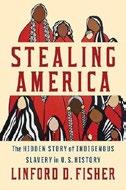
Wide-ranging study of the enslavement of Indigenous Americans.
Brown University historian Fisher opens at a perhaps unlikely venue, the
Bermuda archipelago, where, 400 years ago, New England Puritans exiled thousands of Native peoples. There, they and their descendants were enslaved until Britain emancipated them in 1834, and a descendant community remains today. Their situation was not unusual; Fisher charges that “American forefathers and foremothers enslaved Native Americans in roughly the same
numbers as they imported enslaved Africans.” The practice began the moment the Spanish made landfall in 1492, “a devastating precedent for the entire hemisphere.” Yet the fact of Native enslavement has been buried, deliberately, it would seem: Fisher notes that enslaved Indigenous peoples were not counted in U.S. censuses, while the British listed only Blacks in the census of Bermuda. The British took their share of Native captives as well, sending many to England; as Fisher notes, William Shakespeare’s play The Tempest finds the shipwrecked character Trinculo wishing he was back home so that he could exhibit Caliban (“an Indigenous-type character”) to paying customers. Even after the emancipation of enslaved African Americans, the enslavement of Native peoples continued: California was one of many states to engage in convict leasing, with Natives providing an endless supply of criminals, while the state also permitted “peonage”: “Officials there acknowledged in 1864 and 1865 that as many as six thousand Native girls and boys under the age of seventeen lived in nonNative households—with most held as servants, peons, or slaves.” Children who had been forcibly enrolled in the Indian School at a military barracks in Carlisle, Pennsylvania, were similarly rented out to farms and factories.
Between the late 1940s and as recently as the 1990s, Fisher writes, as many as 70,000 children were taken from their homes for adoption, particularly in Mormon households, a source of ongoing controversy as demands for restitution mount.
An eye-opening look at an aspect of Native American history too little documented.

The author of Labor answers our questions.
ATUL GAWANDE, Jerome Groopman, Oliver Sacks, Abraham Verghese—all these authors cut their teeth in the field of medicine. Fewer are the female physicians who’ve become prominent writers. That might well change with the arrival of Mary Fariba Afsari, the author of a debut book, Labor: One Woman’s Work. Chronicling her vital contribution to her community in Portland, Oregon, as an OB-GYN, as well as her upbringing as the daughter of Iranian immigrants, the book, says our starred review, “joins the best medical memoirs with a moving personal story and a passion for the work.” Afsari told us more about the book by email.
Is there a book or an author that influenced your decision to write— one that caused you to say, I want to do that ?
I have been devouring literature for nearly 50 years. Poets and authors like e.e. cummings, Jane Austen, Sylvia Plath in my younger years. I read Jhumpa Lahiri’s Interpreter of Maladies on repeat, finally hearing some of my family stories in hers. Beloved, by Toni Morrison, served as a moral guiding force behind my book. Dr. Atul Gawande’s books, especially Complications , and Dr. Paul Kalanithi’s When Breath Becomes Air, have sat at the table with me like supportive brothers through the entirety of my medical writing the past 20 years.
What inspired you during the writing of the book? What were you reading, listening to, watching?
I carried my (now worn) copy of Hafiz: The Gift with me everywhere. I
read mostly literary fiction like Ocean Vuong’s On Earth We’re Briefly Gorgeous several times. I also binged well-written, funny TV shows like Fleabag, Better Things , Schitt’s Creek . In my quieter moments, it was always Chopin nocturnes in my ears.
Where and when did you write the book? Describe the scene, the time of day, the necessary accoutrements or talismans.
I wrote this book in the cracks of my life like the breath between labor contractions. Every morning between 6 and 7 a.m. at the Albina Press coffee shop in Portland, Oregon, I started my day writing at a back corner table. I spent afternoons drafting phrases in my head on my paddleboard in the middle of alpine lakes. I escaped to Yelapa, Mexico, only accessible by boat, and watched giant iguanas battle in trees overhead while typing on my laptop in a hammock. I spent nearly a year on the island of Mallorca through Covid lockdown, writing. I wrote alone. I wrote in weekly groups. I wrote through ice storms and heat waves. And when I wrote the scene about my grandmother, Mehry, dying, I was seated on rocks in Shirley Canyon near Lake Tahoe, my toes dipped into the snow river water of my childhood.
Given that your book addresses abortion—a divisive subject in the United States—was it a challenge to find a publisher that would take you on?
It was not a challenge to find a publisher. In fact, my book proposal went to auction with multiple


Labor: One Woman’s Work Afsari, Mary Fariba
Avid Reader Press | 224 pp. | $28.99 April 7, 2026 | 9781668015407
publishers and editors interested. I attribute this to the way that abortion is discussed in the book. First, it is only one topic that is addressed in the larger picture of reproductive justice. I speak to the nuance, the gray areas that bring us together more than set us apart. Women’s health is as complex as life itself. No one policy, no lawmaking body, has the ability to address the multitude of factors that each person’s life, story, and health require—this is the most basic of human rights.
Interview by John McMurtrie
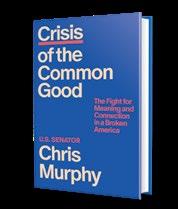
This Spring
FSG will publish the Connecticut Democrat’s Crisis of the Common Good.
U.S. Sen. Chris Murphy has a new book coming later this year.
Farrar, Straus and Giroux will publish the Connecticut Democrat’s Crisis of the Common Good: The Fight for Meaning and Connection in a Broken America this spring, the press announced in a news release. The press says that Murphy “assesses the

destructive ideas that have seized the American spirit—and shows how the hidden alignments in our politics can free us from their hold.”
Murphy, an attorney, first entered politics at age 25, winning election to the Connecticut House of Representatives in 1998. He served in the state senate and the U.S. House before being elected U.S. senator in 2012. He’s an outspoken advocate for gun safety laws, economic populism, and reform of mental health care; his previous book is The Violence Inside Us: A Brief History of an Ongoing American Tragedy Murphy, often seen as a possible presidential candidate in 2028, said in a statement, “If America is to worship anything, it should be the common good: a shared prosperity in which we care as deeply about the health of our communities and neighbors as we do about ourselves. This book is about how we lost that ethic, how Trump exploited its absence to tear us apart, and how we rebuild a society that can never be so easily broken again.”
Crisis of the Common Good is slated for publication on May 26. —M.S.

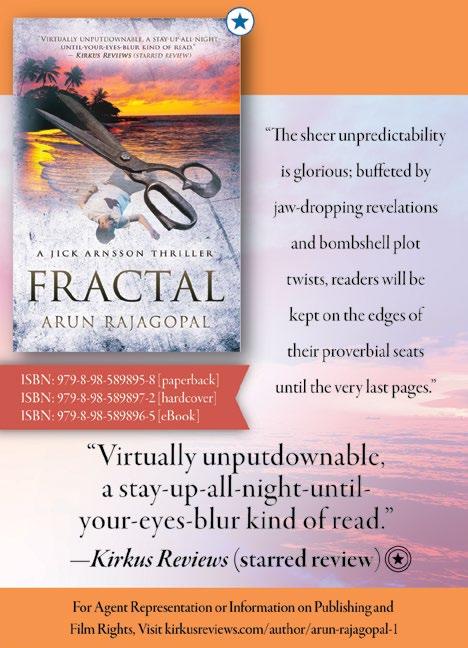
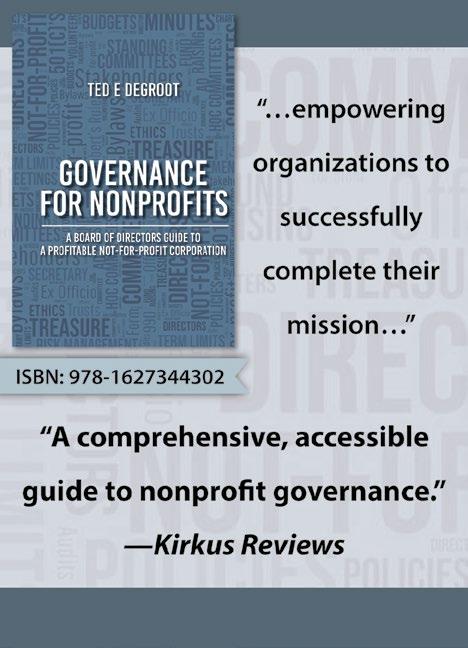

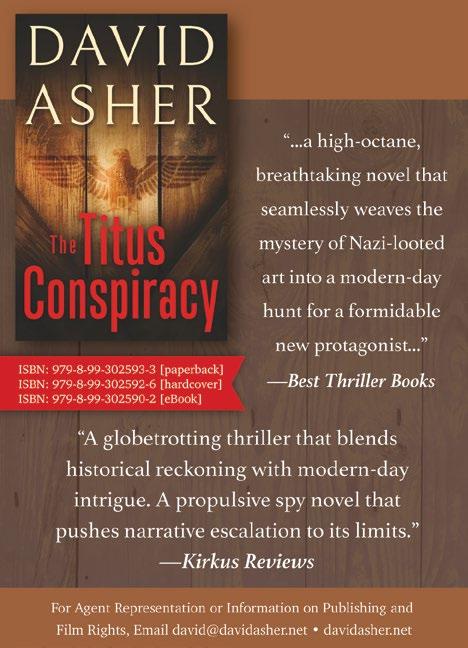
Amplify will publish the snowboarder’s motivational book, Bounce Forward.
Paralympian Amy Purdy will share life lessons in a new motivational book, People magazine reports.
Amplify will publish the snowboarder and motivational speaker’s Bounce Forward: 21 Tools To Live a Life Beyond Limits. It describes the book as “intimately written and packed with practical advice backed by cutting-edge science,” calling it “the ultimate toolbox for building, or rebuilding, your best life.”
Purdy was 19 when she was hospitalized for respiratory and organ failure and diagnosed with meningococcal meningitis. She was
Amy Purdy
placed in a medically induced coma, and doctors amputated both her legs below the knee because of septic shock.
Purdy built a pair of snowboarding feet so she could continue participating in the sport, going on to win three medals at the National Snowboarding Championship. She later won a bronze medal at the 2014 Paralympic Games, followed by bronze and silver medals at the 2018 games. She appeared on the 18th season of Dancing With the Stars, taking second place with partner Derek Hough.
Purdy told People, “I realized that resilience isn’t about staying strong, it’s about having tools to lean on when you’re not. I’m excited to finally share this book because people always ask me, ‘Amy, how do you stay strong? How do you keep moving forward?’ This book is my answer.”
Bounce Forward is slated for publication on April 14.—M.S.


French, Tom | Brandeis Univ. (256 pp.) $35 | April 14, 2026 | 9781684583027
Drawn to high places. Early on in this entertaining memoir about mountain climbing, French writes that climbing Denali in Alaska was a “defining experience of my life: up there with my marriage and the births of my children.” He recounts growing up with skiing and a high school year abroad in Sweden. After skiing in college at the highest levels came graduation and the “gap years.” Working as a bicycle tour guide led to tours in China, followed by time as an expedition leader on a small cruise ship visiting exotic places—a “dream life.” Business school secured him a job at a global management consulting firm. Retirement at 60 meant the freedom to do what he loved. He returned to rigorous training. First up was a guided climb of Argentina’s Aconcagua, offering up 22,837 feet of high altitude, bitterly cold weather and a 50-pound load. As the group climbed, they could see the effects of climate change. French was getting tired but was able to reach the summit. His plans were temporarily wrecked with the rise of Covid-19. Finally, he was able to go to Kathmandu in Nepal and join seven climbers and two guides to climb Everest. French does a fine job exploring the world of serious mountain climbing. He settled into the “largest base camp in the mountaineering world” near the famous Khumbu Glacier, adjusting to its 17,600-foot elevation, seven weeks of preparation in separate camps and miserable physical issues. At camp two, he was at the highest he had ever been—23,500 feet. He worried that a bad weather window might make reaching the summit impossible. It
did. French was deeply disappointed but eventually did reach Everest’s summit on another climb, along with other challenging climbs, including Cholatse, in Everest’s shadow. A riveting personal adventure story.
Fridland, Valerie | Viking (320 pp.)
$32 | April 21, 2026 | 9780593830482
A sprightly and informed study of accents, their evolution, and social purpose. Fridland, a professor of linguistics at the University of Nevada (Like, Literally, Dude: Arguing for the Good in Bad English, 2023) takes a playful approach to exploring accents without diminishing academic rigor. Her main focus is on the linguistic and social fluidity of accents, which typically develop to establish preferred in-group behavior. “Social triggers are the crucial force behind language change,” she writes, noting that the esteem of a particular pronunciation depends a lot on context; for instance, dropped “h”s that are heard as low-class in English (think: Eliza Doolittle) were actually signs of high-class language in ancient Rome. She presents plenty of evidence that accents feed into social prejudices; one study showed how people are more likely to say someone is harder to understand when they’re informed a speaker is Asian, even if the speaker is not. Not all of Fridland’s explorations are so fraught: She goes deep on why so many dislike the word moist , and strange ways that even simple words like dog evolve into broader or narrower meanings. She’ll occasionally deploy some deliberately groan-worthy jokes to get her point across, but eases up when the subject matter gets more serious: A well-done chapter of
African American Vernacular English explores how certain words and phrases that are often seen as degraded (see: axe for ask) are the inheritance of a preferred pronunciation of the word in the colonial slaveholding South. Now that Americans process more information online, the impact of place and history on how we speak is evolving, and Fridland revels in the complications, driving home her main point: “the idea there exists only one ‘right’ way to sound is both historically and linguistically misguided.”
Smart pop-science writing, inviting and well-researched.
Hansen, Suzy | Farrar, Straus and Giroux (368 pp.) | $30 | April 28, 2026 9780374298432
Authoritarianism’s streetlevel impact. This is sturdy narrative journalism about life under Turkish President Recep Tayyip Erdoğan’s “gradualist authoritarian regime.” Fascinating on its own merits, it’s also an urgent cautionary tale for American readers. Hansen, the author of Notes on a Foreign Country (2017), lived in Turkey for a decade-plus. Her focus here is Istanbul’s working-class Karagümrük neighborhood, where she spent years getting to know people and their concerns. Her expansive conversations with shopkeepers, tradespeople, and local officials reveal a city on edge about immigration, corruption, and other familiar issues. Some Istanbullus complain that refugees from war-torn Syria don’t assimilate, resentment that fuels violence. Others express dismay that polarization emanating from Ankara, the capital, now sullies traditionally nonpartisan community leadership jobs.
Diehard Erdoğan backers boast about their big families, evidence that they’ve heeded his call for “all Turkish women” to have five children. Hansen methodically chronicles the president’s consolidation of power, the effect of which is chillingly apparent after massive 2023 earthquakes. Paralyzed by an Erdoğan-instituted chain-of-command that slowed the military’s rescue response, countless lay dying under substandard buildings, the construction of which was fast tracked by defanged regulators. As citizens came to realize that the president “had engaged in unfathomable corruption, oppressed a large proportion of the citizenry, and squandered the people’s money,” voters showed signs of turning against him. But by then, Erdoğan had arrested or otherwise marginalized thousands of political opponents, reporters, and academics. A “canny, cruel autocratic leader” had prevailed by “manufacturing parallel realities.” Hansen’s deep-rooted reporting has undeniable gravitas. Turkey’s trajectory should be “very interesting” to Americans, a political scientist tells her. “We had a state. It wasn’t perfect, but we had something, and now it’s gone.”
Long-term reporting informs a rich portrait of a community—and a country—in the shadow of an increasingly powerful president.
Hartnett, Kevin | Quanta (288 pp.) $30 | June 9, 2026 | 9780374620059
How the laborintensive process of proving mathematical theorems was transformed by computational tools. Journalist Hartnett examines how Lean, an open-source computer program for validating mathematical proofs, emerged from a small, loosely organized group of collaborators pressing mathematics toward new thinking. In
1998, mathematician Tom Hales solved the Kepler conjecture, a notoriously difficult problem articulated by Johannes Kepler in 1611. Hales’ solution relied on inventive computational techniques, but when submitted to a leading journal, reviewers—unfamiliar with such methods—took years before concluding they could not validate it. As Hartnett observes, some traditional mathematicians relied on covering “blackboards with rows of chalky equations, while others fill reams of scrap paper filled with attempts to find arguments that generate a proof,” distrusting machines to certify results. Familiarity with mathematical terms is helpful while Hartnett delivers a largely accessible account, invoking concepts such as formal proofs and interactive theorem provers (ITPs). Central figure Leo de Moura of Microsoft Research leads the development of Lean by a global community of volunteers. Colorful high-profile characters include mathematicians Terry Tao, Jeremy Avigad, Kevin Buzzard, and Peter Scholze. In one pivotal episode, Scholze, a traditionalist who tested proofs in his mind but—“due to the complexity of the proof, and how significantly he thought it could change mathematics, due to all the beer he had had the night before his final breakthrough”—asked whether Lean could verify the proof. Lean’s successful verification marked a turning point in the program’s acceptance, energizing collaborators to continue enlarging “the scope of mathematical knowledge that could be verified by machines.” Especially for math-curious readers, programmers, and those following AI trends, de Moura’s “truth machine” is a fascinating example of how cultural clashes and creativity can create new paradigms. Proofs, personalities, and machines collide—intriguingly—at the uneasy intersection of mathematics and computer science.

Heinrich, Bernd | Norton (192 pp.) | $28.99 April 21, 2026 | 9781324021100
Questions and answers about a small patch of land.
For more on artificial intelligence, visit Kirkus online.
Heinrich, a biologist whose books include Mind of the Raven (1999), has lived off and on for 65 years in a rustic cabin with an outhouse “a mere minutes’ walk from the front door” in central Maine, on land that was once a farm but is now owned under an easement from the Forest Society of Maine. Unusual among biology professors—he was one at the University of Vermont—he hasn’t confined himself to one narrow specialty, instead spending time observing and writing about squirrels, owls, trees, beetles, geese, moths, and the connections among all the beings that live in or around his cabin, including himself. Now in his 80s, he makes an elegant spokesperson for the value of sticking around in one place, noticing similarities and differences from year to year, or decade to decade. Sometimes, those are differences he made himself. In 1980, he planted 15 blight-resistant American chestnuts in an area where they had been killed off. Now, not only are two of those trees more than 60 feet tall, but he’s counted 1,300 of their offspring spreading out a half mile in all directions. Heinrich is an engaging storyteller, hopping or meandering from one subject to the next in the course of a single chapter, so that you never know where you’re going to end up, but you’ll always learn something new and intriguing along the way. A born scientist, he often starts with a surprising observation, which leads to questions, which lead to more observations, and on and on. Quirky and thorough, he occupies himself tossing various insects into a spiderweb to see how the spider will react or analyzing the amount of fecal waste produced by a pair of nesting phoebes. Quietly fascinating rambles through a tiny territory.
A country singer’s road to success—by way of recovery from addiction and illness.
WHAT MATTERED MOST
Herndon, Ty with David Ritz | Dey Street/ HarperCollins (272 pp.) | $29.99 | March 31, 2026 | 9780063360105
A country star confronts his past traumas.
“I’d love for you to love me,” writes country singer Herndon in his memoir. But, he admits, “this book will definitely not make me look good. This book is going to make me look confused, afraid, terrified, lost, and dishonest.” He’s overstating things a bit: In the book, which shares its title with his first No. 1 hit single, Herndon does indeed cop to some terrible mistakes, but they were informed by terrible trauma. Herndon writes of his childhood growing up in Alabama and struggling with his sexuality. At a church revival at age 10, he was humiliated by a preacher who had clocked that the boy was gay, and who pointed at him while denouncing homosexuality. “I hated Preacher longer than I have ever hated anyone….I hated him until I realized that he was probably haunted by the same secret that haunted me.” Herndon went on to launch his singing career at Opryland and Star Search, and was introduced to crystal meth by an employee of the latter show who then raped him. By the time he scored his first hits, he was addicted to the drug and to pornography, and his career was nearly destroyed after he was arrested in Texas for exposing himself to an undercover police officer. Herndon writes about his musical success, but the book is mostly a narrative of recovery from addiction and mental illness and of coming to terms with his sexuality; he came out publicly in 2014,
a daring move for a country singer at that time. The memoir is moving, and the reader can’t help but root for this affable, well-intentioned man who has had to battle more than his share of demons. Humble, graceful, and inspirational.
Higham, Nicholas J. | Yale Univ. (368 pp.) $35 | April 21, 2026 | 9780300254921
What did the Romans ever do for Britain? Higham, author of King Arthur: The Making of the Legend (2018), reminds readers that Rome conquered Britain in the first century and abandoned it in the fifth but always considered it a land at the edge of the world inhabited by barbarians. Germanic tribes that invaded Gaul, Spain, and the Balkans quickly adopted Roman culture, language, and Christianity, yet Britain was an exception. English owes less to Latin than Romance languages. Even the Anglo-Saxon “invasion” was more likely a migration, although by 500 C.E., Britain was divided between a British west and a Germanic east. Higham warns against seeing the Britain of that era through an Arthurian lens; that legend was created later. In the absence of effective government, significant warfare was rare before the sixth century, when early British and Anglo-Saxon kingdoms took shape. Higham eschews turgid academic prose, but this is a scholarly work less concerned with bringing an ancient culture to life than examining surviving evidence to determine if it describes reality. Literacy
was a church monopoly, so surviving documents focus on usually obscure theological quarrels. Events of the day—mostly disastrous—were considered God’s punishment on a depraved humanity, so accounts of government and culture took second place to pleas for readers to repent. A fifth-century monk, Gildas, produced the only account of this period written by a contemporary; the many pages that Higham devotes to a close textual analysis will test the average reader’s patience. Unlike historians, archeologists continue to turn up new information, and Higham does not ignore what graves, coins, tools, and, lately, DNA reveal, although the end result is often controversy rather than hard data. The latest on the rise of AngloSaxon Britain, but directed at a scholarly readership.
Hoffman, Julian | Godine (328 pp.) $30 | April 14, 2026 | 9781567928419
Finding solace in Greece.
In 2000, Hoffman and his wife, Julia, decided to move from the confining, hectic pace of London to one more suited to their shared love of “the wild nearby” in a remote corner of northern Greece called Prespa, a mountainous region that spills into Albania and Macedonia. They felt welcomed immediately. For the next several years, they lived in a rented house, growing herbs and vegetables for local restaurants in rented patches of soil, getting to know their neighbors, understanding the region’s long, complicated history, and becoming familiar with its richly diverse flora and fauna. A back injury ended Hoffman’s farming career and led him to writing; two previous books on nature have won awards. This latest book is not a chronologically straightforward story of Hoffman’s decision to
pick up and start over in a new land. Rather, it leaps about in time and place, using his experiences in his chosen homeland as a foundation for a wide-ranging discussion about the earth-shattering changes the natural world has seen and felt since Hoffman and his wife settled in Prespa. Hoffman writes, “Worlds we once thought stable, permanent or, to borrow that understandable but misplaced pandemic word, normal, are being eclipsed and made relic by the twin emergencies of climate change and the Sixth Extinction of wild species.” At times, a tendency toward verbosity can obscure the author’s objectives for the reader. But eventually the land he clearly loves comes into focus, and the book comes to life when Hoffman’s eyes are on the region’s iconic species, including, in particular, the European brown bear and the Dalmatian pelican.
An elegiac, sometimes alarming, ultimately hopeful view of nature from the Balkans.
Isgur, Sarah | Crown (416 pp.) | $32 April 14, 2026 | 9780593800928
A measured defense of the Supreme Court. The Supreme Court, writes lawyer and conservative activist Isgur, was unusual among the tangles of the federal government in being generally popular, with an approval rating of 70% as recently as 2020. Now, however, “for the first time, more people disapprove of the Court than approve of it.” This owes much to decisions that would seem to be politically driven, such as granting President Trump blanket immunity for acts committed in office that just might turn out to be illegal. It’s not as sweeping as all that,
Isgur counsels: There’s still a distinction between official and private acts in play, and while it doesn’t help that the decision’s language is so vague that “the real answer is…that nobody knows,” the decision, she suggests, was less partisan than a protection against political persecution of the opposition—which is just what’s happening, albeit emanating from and not toward the White House. The central problem is both simple and deeply complex, and it turns on the fact that the legislative branch isn’t anywhere close to doing its job, allowing the executive to run rampant while putting the judiciary in the untenable position of making law rather than interpreting it. There are any number of remedies to the court’s ills, Isgur writes, including imposing “an enforceable ethics code.” Even more revolutionary might be a constitutional guarantee allowing each president to appoint two justices, so that the number on the bench might be as high as 13, assuming term limits are indeed set. But in the end, Isgur—who has good and evenhanded things to say about every currently sitting justice— demands that Congress, now constituting “one big dog and 434 yapping backbenchers with no hope of legislating their way into reelection or relevancy,” actually start doing what it’s in business to do.
An opinionated but persuasive call to think a little more kindly of the highest court in the land.
Jaouad, Hédi A. | Three Rooms Press (270 pp.) $20 paper | May 12, 2026 | 9781953103727
A brief, daring life. Literary scholar Jaouad offers an intimate biography of the enigmatic Isabelle Eberhardt (1877-1904), a Swiss heiress and renegade: adventurer, nomad, war
correspondent, and writer. The daughter of a well-born Russian woman who eloped with her children’s tutor, Isabelle grew up on a rural estate outside of Geneva, where she felt smothered by the dull surroundings. Envying her two older brothers, both of whom joined the French Foreign Legion, she dreamed of escape. When she was 17, her stepfather sent her to Geneva to broaden her education; there, she gravitated to the “exotic and the erotic,” and the city’s cosmopolitan atmosphere further fueled her longing for adventure. She found a kindred spirit in her brother, Augustin, a rebellious and apparently troubled young man who was then in Algeria and urged her to join him. Eager to “leap into the unknown,” Isabelle deemed an “uncertain future with Augustin” was preferable to life in Switzerland. Arab lands and culture lured her, but adventure was not her only goal: She sought spiritual enlightenment, first converting to Islam (she was convinced she had been born a Muslim) and later pursuing Sufi wisdom. And she sought a new identity, taking a male Arab pseudonym and often wearing male attire. Her mother, a renegade in her own right, accompanied her to Algeria, but after she died suddenly in late 1897, Isabelle, distraught, returned home. By the next year, she and her stepfather once again left for North Africa, this time joining Augustin in Tunisia. Jaouad recounts the dangerous intrigues of Isabelle’s last years, until her untimely death in a flash flood. A daring journalist, she went beyond simply reporting to offer vividly detailed ethnological essays about the desert nomads among whom she traveled. Jaouad’s brisk retelling of her life captures her intrepid spirit.
A colorful, empathetic portrait.

Lamb, Christopher | Mobius (304 pp.) $32 | March 31, 2026 | 9781035440573
The global influence of the latest pope, Leo XIV.
CNN journalist Lamb provides an introductory view of Leo XIV’s emerging papacy. However, as he writes in his introduction, “This book is not a biography of the pope,” and indeed, though he provides necessary background into the pope’s life and career, his focus is elsewhere. Lamb sets out to frame Leo as the milder, yet equally sincere, successor to Pope Francis. In fact, Francis is the subject of Lamb’s work almost as often as is Leo. In Lamb’s eyes, Leo is a less controversial, more politically astute, version of Francis, and will lead the Catholic Church into a new era of change and reform. Although most of the new pope’s life has been spent in South America and Europe, Lamb sees “the American pope” as offering “hope for the future to those looking for credible, moral leadership at a time when it is in short supply.” He adds, “His influence in the United States is like no other pope in history. Some of this is because he speaks English as a mother tongue, the first pope to do so in almost 900 years….It is not just what Leo says, it is who he is. His gentle, reserved style stands in contrast to politicians looking to dominate the news cycle.” An underlying theme that Lamb returns to is the contrast between Pope Leo and President Donald Trump. Though this theme has a place, Lamb takes a strangely American-centric view of the Leo/ Trump dichotomy; if anything, he unwittingly raises Trump’s profile by consistent comparisons to Leo, a global spiritual leader with a life term of office. As for Leo, in Lamb’s eyes, it seems he can do no wrong. An admiring portrayal of the new pontiff.
Kirkus Star
Laqueur, Thomas W. | Penguin Press (400 pp.)
$45 | May 5, 2026 | 9780593652794
A splendid blend of histories: natural, cultural, and artistic.
Laqueur, a historian at the University of California, Berkeley, opens his account with “a very German image,” namely of his grandfather taking his pet Doberman for a walk in Hamburg. It wouldn’t be long before Jews would not walk German streets, among the many historical tragedies Laqueur enumerates, writing, “In the face of famine, disease, ecological disasters, death, war, betrayal, and all the ills of civilization, dogs are a sort of intellectual, or in this context, visual comfort food.” “This context” is his sprawling examination of dogs in the history of art, from Neolithic cave paintings to present-day photographs and paintings. Perhaps the most famous dog in art history, he writes, turns up in Jan van Eyck’s famed Arnolfini Portrait of 1434, and indeed the dog in question, “perhaps a progenitor of today’s Brussels griffon,” is gazing out from the frame at the viewer. “Seeing together and seeing one another is the basis of our co-evolution, and joint social lives,” he writes later. In a book filled with image after image of dogs in all sorts of artistic contexts, Laqueur provides other meaningful interpretations of the dog as a religious symbol, an avatar of the good home, a hunting companion, a faithful friend— and, in one terrifying instance, as a hellhound chasing runaway enslaved people. Laqueur spins fine anecdotes, such as one concerning Pablo Picasso’s beloved dachshund, Lump, of whom the artist remarked, “He’s not a dog, he’s not a little man, he’s somebody else”; and his text is full of smart aperçus, such as speculation on why dogs figure so often in stories and images about death, for “who more than the dead need protection, attention, and
guidance?” Who indeed—though happily, as so many artists across human history have recorded, we need not be dead to enjoy the company of dogs. A delight for dog-loving art connoisseurs, and vice versa.
Larman, Alexander | St. Martin’s (320 pp.) $31 | June 2, 2026 | 9781250381255
Haunted houses.
Historian and journalist Larman fashions a lively portrait of English social and political life, from the early 19th century to the present, through a history of a tony enclave in London’s Belgravia. Beginning in 1824, the area known as Five Fields was transformed, over the next 27 years, into a luxurious neighborhood of 104 houses situated around a tract measuring 1,610-by-382-feet. This was Eaton Square, which later appeared on television as Eaton Place, the fictionalized setting for the series Upstairs, Downstairs. In Victorian times, it was the largest and most prestigious garden square in London; in 2016, it attained the distinction of being named the most expensive real estate in all of Britain. As Larman tours around the square, he offers capsule biographies of notable residents, including visionary American philanthropist George Peabody; lyricist W.S. Gilbert, who lived at Number 90 in his later years; and the scandalous Mitford sister, Diana, who enthusiastically embraced fascism and its leading British proponent, the flagrant womanizer Oswald Mosley. In the 1930s, Eaton Square was home to three prominent Conservative politicians: Stanley Baldwin, Neville Chamberlain, and Lord Halifax—as well as to Joachim von Ribbentrop, “former champagne salesman turned German ambassador to Britain, close confidante of Hitler, and an arrogant buffoon.” In a later generation, Margaret Thatcher moved in.
Actors Rex Harrison and Vivien Leigh resided there, as did writers Raymond Chandler and Ian Fleming, creator of James Bond. Sean Connery, whom Larman deems the greatest Bond, owned two flats in Eaton Square, although probably never lived in either. Andrew Lloyd Webber claimed his residence harbored a poltergeist. Eaton Square witnessed enough political intrigue, threats of blackmail, and associations with the underworld to furnish Larman with a host of gossipy anecdotes. A well-researched, entertaining social history.
Lester, David & Marcus Rediker Beacon Press (136 pp.) | $18.95 paper June 9, 2026 | 9780807016909
The story of the Amistad , told through African eyes. In 1839, a group of enslaved Africans shackled on board a ship bound for a Cuban plantation rebelled boldly and bravely against the boat’s crew, killing the captain and holding their Spanish enslavers hostage. They steered the ship north—arriving nine weeks later in Montauk, New York. Slavery was illegal in New York, but the Spanish enslavers wanted the Africans tried for murder and piracy. But how could these “black pirates, these enemies of all mankind…[commit] a crime against property by stealing themselves?” Could they instead be seen as “victims of piratical slave traders [whose] sole objective was to free themselves from unlawful bondage?” These profound and fascinating legal and ethical questions are raised and explored in this sharp, insightful graphic retelling—largely interpolated from courtroom proceedings and other primary source material. The experience of the Amistad ’s African mutineers is rightly centered here—the violent terms of their enslavement, the
planning of the rebellion, the experience of being imprisoned even as free men, and ultimately their bittersweet return to Sierra Leone, diminished in numbers and forever changed by their experience. Adapted from Rediker’s 2012 history The Amistad Rebellion, this book examines how the Africans’ cause was embraced by American abolitionists, who saw the question of personhood as essential to ending slavery in a deeply divided United States, while also seeking to assimilate Africans to their own concept of Christianity. Lester’s well-suited illustrations are sketchy, heavily shadowed and roughly crosshatched, and add a heightened sense of emotional tension and inescapable immediacy that resonates across the centuries of racial reckoning to come.
An evocative, incisive, and powerful piece of graphic history.
Maglaque, Erin | Astra House (304 pp.) $29 | June 16, 2026 | 9781662603341
Embodied lives. Maglaque, a scholar at the University of Sheffield in Britain, makes an impressive book debut with a history of women’s bodies, using her own as a template. Drawing on abundant, diverse sources, including medical texts, physicians’ case histories, midwifery manuals, household guides, recipe books, botanical catalogues, legal documents, art, music, letters, and diaries, Maglaque investigates a trajectory of women’s experiences and self-images from 1500 to 1800. This was a period of profound change in every aspect of a woman’s life: from ideals of beauty to beliefs about conception; from views on abortion to the work of midwives; from breastfeeding to sexual desire. While in the 16th century, for example, female beauty represented “abundance, fertility, self-renewal,” and
by the end of the 18th century, “a beautiful form was one of refinement and self-control.” Thinness was beautiful; the mind could, and must, “control the appetites of the flesh.” Male intrusion into female areas of expertise increased over this period: Midwifery, from being a largely female domain, became professionalized by men; where in the 16th century, female orgasm was believed to be necessary for conception, by the 18th century, medical writers argued that it didn’t exist. Women were merely vessels for the male seed, and by the end of that century, the fetus was considered “a separate entity from the maternal body, with terrible consequences for women’s autonomy.” Breastfeeding, once delegated to paid wet nurses who freed new mothers from the exigencies of daily care, was newly elevated into “an expression of maternal love.” As Maglaque examines pregnancy and miscarriage, abortion, labor and birth, caregiving, housework, and care of the dying, the voices of myriad women (herself included) amply fulfill her aim of making the past “present and immediate.”
A richly textured, revelatory history.
Kirkus Star
Mallaby, Sebastian | Penguin Press (480 pp.) $32 | March 31, 2026 | 9780593831847
Funding challenges, computational demands, and intense competition for top research talent shape this tale of an extraordinary AI pioneer. Author and journalist Mallaby has crafted a fascinating portrait of Demis Hassabis, the influential thinker heading DeepMind, Google’s AI research laboratory. Born in North London to immigrant parents, Hassabis became a chess master by age 13, game designer by 17, and later
pursued a Ph.D. in neuroscience. In 2016, his startup DeepMind’s AlphaGo program mastered the complex game of Go. In 2024, Hassabis co-won the Nobel Prize in chemistry for his protein-folding solver AlphaFold2. Mallaby captures Hassabis’ curiosity and relentless drive, weaving a vivid tapestry of collaborators, competitors, and engineers of modern AI systems. While AI systems of the 1960s used symbolic programming with inflexible rules, Mallaby notes, “future scientists would have to invent a new kind of machine…that discovered the patterns in a near infinity of data.” Hassabis emerges as a volatile genius with antennae tuned to the future. Quirky, brilliant researchers from diverse backgrounds vie for the ultimate prize: Artificial General Intelligence. “Doing science is, sort of, like reading the mind of God,” Hassabis muses. “Understanding the deep mystery of the universe is my religion, kind of.” Mallaby also explores the motives and machinations of researchers, schemers, and those alarmed by AGI’s risks. One defeated Go master cautions, “At first, it looks harmless. Then it’s just completely dominating. We don’t understand the mechanics, the tactics, the strategies. We just know that it is in control.” The lively narrative explores reinforcement learning, deep learning, and large language models with general pre-trained transformers (which power ChatGPT), offering a rare glimpse inside the most transformative technology of our time. Plentiful footnotes and an index provide resources for further exploration. A tantalizing glimpse inside the pursuit of machine superintelligence.
Mansbach, Adam | Illus. by Owen Brozman
Akashic (28 pp.) | $16.95 | May 5, 2026 9781636142920
published a riproaringly profane parody of a children’s book to help kids fall asleep. A series of Go the Fuck to Sleep books followed. And why not? The novelist hit on a hilarious conceit— merging syrupy-sweet kid-lit prose with R-rated kickers—that kept on giving. As happens, children grow older. Yet don’t they still need some advice when heading off to college? Yes, those doorstopper guides on best colleges might help, but they’re not quite as funny as Mansbach’s latest book. It’s very short, like any bedtime story for wee ones, but it packs a lot of laughs— even if it’s tinged with unironic sadness. The first of a dozen panels reads: “I don’t know where the time went. / Just yesterday you were a pup. / Back then you wouldn’t go to sleep. / Now you won’t wake the fuck up.” The rhyming couplets grace a colorful, cartoony drawing by Brozman of a teenager asleep in bed, his mouth agape, dirty laundry scattered on the floor, and an alarm clock showing that it’s 11:02 a.m. Another illustration shows a father and son in a car; Dad, at the wheel, is happily going on about something or other while Junior is glumly staring at his iPhone. The text reads: “I realize, of course, that you haven’t / Asked me for any advice. / But I can’t let you fuck it up, / Especially not at this price.” The parental wisdom may be timeless, but the kids don’t necessarily want to hear it. In one panel, two tousle-haired and tattooed bros are trying to convince three girls to join them: “No pills, no powders. Do not black out. / These things are not good for your health. / And if anybody tells you different, / Tell that asshole to go fuck himself.” Ward Cleaver couldn’t have put it better. Yet more laughs for overwhelmed parents—as they become empty nesters.
Marx, Jeffrey A. | New York Univ. (232 pp.) $35 | July 7, 2026 | 9781479842131

An “ancient trope in modern times.”
A strain of antisemitism imagined Jews as arsonists—burning businesses for insurance, torching homes they hated, breaking up the social fabric as they watched their cities burn. This book by Marx, an independent scholar, explores the hidden history of “actual Jewish arsonists and their sensationalized antisemitic presentation” in post-Civil War America. Behind that history lies the rise of the insurance company, the institutionalized protection against loss that shaped the way we do business now. Behind it, too, is the rise of the sensationalist press: the lurid storytelling that sold newspapers and advertising. And, finally, there is the rise of modern urban oversight: the fire and police departments that were gateways for immigrant professional success. Factories and tenements were often fire traps. Sometimes there really were insurance fires. But often, they were pretexts for blame. What emerges from this book is a literary genre of sorts, the tale of the Jewish arsonist sharing in the stereotypes of “devious business practices.” The Jew as arsonist, writes Marx, “underscored the stereotype of their success at the expense of others. It wasn’t just individuals whom the Jews were cheating; it was the entire insurance system that held out to Americans the
Where did the effing time go?
Countless sleep-deprived parents around the world were grateful when, in 2011, Mansbach
Mansbach’s latest packs a lot of laughs—even if it’s tinged with unironic sadness.
assurance that some hazards of life could be mitigated. Now it was being undermined by a race who historically had been seen as greedy and unscrupulous.” Rich with illustrations from the popular press, from cartoons, and from theater history, the book presents a social history of American Jewish life through a particular act of public transgression. In the process, it reveals the glowing embers of suspicion “continually smoldering just beneath the surface of American society.”
A revealing history of a largely forgotten facet of Jewish life and social prejudice.
for the Yellowstone Packs
McIntyre, Rick | Greystone Books (296 pp.)
$27.95 | April 14, 2026 | 9781778401213
Decades spent studying wolves and others in the national parks.
McIntyre, author of many books about the wolves of Yellowstone National Park, including Thinking Like a Wolf (2024), looks back over a life that led him to spend many years observing and recording the behavior of the animals. Now retired and in his 70s, he still lives in a cabin next to the park, spends his mornings getting out to see what the wolves are up to and his afternoons and evenings recording their behavior. Moving chronologically, he records his experiences growing up in Massachusetts in the 1950s and ’60s, where he learned about Yellowstone from The Yogi Bear Show. After a stint in forestry school, where he learned that he didn’t want to “kill trees for a career or be in the business of exploiting nature for human use,” he moved into seasonal work for the National Park Service for decades, working in parks in Alaska in the summer and in the Southwest desert in the winter. When Yellowstone decided to reintroduce wolves to
the park in the ’90s, McIntyre found a new passion, and a permanent job. Those curious about his personal life won’t find much here, aside from a couple sentences about a “beautiful blonde woman named Cindy,” with whom he had a long- distance relationship for many years. Even in a book that sets out to tell his own story, he spends almost as much time talking about the wolves he has grown to know and love. “When a lone wolf howls, what I hear is an animal singing the blues,” he writes. McIntyre tells his story with modesty, a natural reserve, a quiet sense of humor, and finely tuned observational skills. A combination of amusing anecdotes and thoughtful interpretation of animal behavior should inspire readers to take a look at their local wildlife, even if it’s a tad tamer.
A contented life on the edge of the wild.
Montesanti, Gabe | Arsenal Pulp Press (248 pp.) | $21.95 paper | April 21, 2026 9781834050225
A queer Midwestern roller derby competitor offers more adventures and life lessons in this second memoir.
Montesanti’s debut memoir, Brace for Impact (2022), delved into how the exhilaration of roller derby grounded and centered her physically and emotionally during her 20s. This follow-up chronicles the author’s struggles with manic depression while navigating a lesbian relationship and her emergence as a formidable performer in the St. Louis drag scene. Impulsively relocating southwest to teach creative writing at the University of Texas was just one of several compulsive, mania-driven decisions Montesanti admits to across her adventuresome life. After months of misery and regret, however, she and her girlfriend, Kelly, opted to return to the comfort and
support of their established “queer family” in St. Louis. The stress of moving to and from Texas compounded her complex PTSD and bipolar disorder flareups, something she equates to living in a “treatment resistant” body “with no off switch.” Thankfully, distractions bloomed. Once relocated, the author couldn’t shake the empowering experience of a raucous night at a Dallas drag bingo hall, which reawakened a lingering interest in performing. Montesanti’s drag alter ego, “Fender Bender,” was born soon after, and despite challenges to her mental health, homophobic bomb threats called in to gay bars, and waves of anti-transgender political initiatives, nothing would deter her. Estranged from her biological family, Montesanti attributes a great amount of adult trauma to the years of abusive rejection she endured after coming out queer in her youth, despite having lesbian aunts. Further re-establishing herself as a “drag thing,” which, in performance circles, defies definition, and continuing to forge a new relationship with gender, Montesanti embraces her innate masculinity and wholly rejects “the way it has been weaponized against me throughout my life.”
A candidly drawn self-portrait brimming with resiliency.
Nolan, Savala | Mariner Books (240 pp.)
$28.99 | March 3, 2026 | 9780063320086
A defiant woman speaks out. Director of the social justice program at the UC Berkeley School of Law, Nolan gathers 12 sharp, angry essays on what it feels like to be a Black woman “in a world that hates women and that seeks to compress us into domestic and sexual service no matter what else we achieve or might want.” As the daughter of a white mother and a Black and Mexican father, Nolan feels frustrated that her experiences have been >>>

John Gaudet

Clara E. Mattei


By Rebecca Solnit

The movie is based on Jeré Longman’s book The Girls of Summer.
Zoey Deutch will play the lead role in The 99’ers, the upcoming film adaptation of Jeré Longman’s The Girls of Summer: The U.S. Women’s
Soccer Team and How It Changed the World, Deadline reports.
Longman’s book, published in 2000 by HarperCollins, recounts how the U.S. women’s soccer team achieved victory in the 1999 Women’s World Cup. The team beat China in a penalty shootout during the final game at the Rose Bowl in Pasadena, California, making stars of players Mia Hamm, Carla Overbeck, and Brandi Chastain, who kicked the winning penalty.
Deutch (Nouvelle Vague) will star as Marla Messing, the sports executive who was the president and CEO of the
committee that organized the 1999 World Cup. She joins Emily Bader (People We Meet on Vacation), who will play Hamm.
The film adaptation will be directed by Nicole Kassell (The Woodsman) and written by Katie Lovejoy (To All the Boys: Always and Forever ), Dana Stevens (The Woman King), and Peter Hedges (What’s Eating Gilbert Grape). Ryan Reynolds is among the film’s producers.
Kassell shared news of Deutch’s casting on Instagram, writing, “All the

For a review of The Girls of Summer, visit Kirkus online.
puns crashing into mind: SCORE!!!! GOAL!!!!! imply THRILLED to be joining forces with the wildly talented @zoeydeutch to tell the incredible story of this team and the force that was behind the historic 1999 Women’s World Cup, Marla Messing!”—M.S.



EDITORS’ PICKS:
The Fall of Iris Henley by Jennifer Graham (Feiwel & Friends)
Houdini’s Library: How Books
Created the World’s Greatest Magician by Barb Rosenstock, illus. by Mar Delmar (Knopf)
American Struggle: Democracy, Dissent, and the Pursuit of a More Perfect Union by Jon Meacham (Random House)
The Shape of Dreams by April Reynolds (Knopf)
THANKS TO OUR SPONSORS:
Born Sick in the USA by Stephen Bezruchka (Cambridge Univ. Press)
Digital Inc. by Richard Curtis
Pivot Point by Tess Manchester
We Met at a Halloween Party by Marcus R. Ferrell
Choose To Believe by Georgina Owino, illus. by Eduardo Paj
The Mullet Man by R.W. Fields, illus. by Johan Bjurman
Fully Booked is produced by Jessica Lockhart and Megan Labrise.

Eugene Robinson’s powerful American history is the story of his family and our nation. BY MEGAN LABRISE
On this episode of Fully Booked , Eugene Robinson joins us to discuss Freedom Lost, Freedom Won: A Personal History of America (Simon & Schuster, Feb. 3). Robinson chronicles the triumphs and tribulations of six generations of his American family. As Kirkus writes in a starred review of Freedom Lost, Freedom Won, the author skillfully illuminates a “central truth of African American history: that for every advance toward being seen as truly American, ‘in short order, that full citizenship would be revoked.’”


Robinson is a Pulitzer Prize–winning former columnist and associate editor of the Washington Post , MSNBC political analyst, and author. His prior positions included foreign editor, London correspondent, and South American correspondent. Born in Orangeburg, South Carolina, he graduated from the University of Michigan and worked at the San Francisco Chronicle before joining the Post.
Robinson, Eugene Simon & Schuster | 320 pp. | $30.00 Feb. 3, 2025 | 9781982176716
To listen to the episode, visit Kirkus online.
Here’s a bit more from our starred review of Freedom Lost, Freedom Won : “Robinson finds documentation about the lives of his enslaved ancestors, one of whom, though he was ‘sold like a piece of livestock in 1829 and then sold again in 1848,’ managed to buy his freedom before the Civil War. His son, Robinson’s great-grandfather, became a lawyer prominent in the Reconstruction-era Republican Party, only to be sidelined by Jim Crow laws.… Robinson’s own experiences in journalism, dating to the 1960s, are similarly instructive in showing that, as he notes repeatedly, Black people so often need to be twice as good to approach parity with whites. For all
that, Robinson writes, his family’s history proves that whiteness does not equate to accomplishment: As he says of those marginalized peoples, ‘Just to make it through the day and face another tomorrow, we have always had to be the most radical and resilient optimists on earth.’” Robinson and I discuss his motivation and methods for researching and writing the book. We talk about the slow, complex nature of progress, the importance of self-determination, the power of public speaking, and much more.
Then editors Laura Simeon, Mahnaz Dar, John McMurtrie, and Laurie Muchnick share their top picks in books for the week.
interpreted by a host of people “consciously or unconsciously trapped in the pestilent muck of misgynoir.” These include “the police, tax collectors, social workers, landlords, bankers, trial courts, psychologists, sociologists,” and even artists, like Picasso, whose evocation of African tribal masks in his paintings “read as primitive and beastly.” Being Black intensifies widespread misogyny: Men, she notes, have been the template for everything from CPR dummies to the height that paintings are hung in museums. When Apple launched its AI, “Siri could help you if you’d had a heart attack,” Nolan asserts, “but if you told her you’d been raped, she replied ‘I don’t know what you mean by ‘I was raped.’” Misogyny informs a woman’s desirability, which led Nolan to decades of dieting and disordered eating, modeled by her weight-conscious mother. “[It] took me half my life,” she admits, “to see that a thin me would be no improvement upon a fat me.” As a mother of a daughter, she aims to break that cycle: “I want my child to have choices. And to have true choices in her body, she can’t be afraid of it, or hate it, or be brainwashed into controlling its every urge.” Race, marriage, sexual desire, and motherhood recur as themes in impassioned essays on freedom, disillusionment, and yearnings. A raw, forthright memoir.
Oceanheart, Natalie | Potomac Books (262 pp.) | $27.95 paper | March 1, 2026 9781640126879
A young mother’s affecting memoir of the war in Ukraine. In the predawn moments of February 24, 2022, Oceanheart and her husband were “jolted awake” by the sound of explosions in their city of Dnipro, in eastern Ukraine. A call to her mother confirmed the author’s “worst fears”:
War had begun. “War feels like a relic of history or a plot in a movie,” Oceanheart writes, and she and her family struggle with their new reality. While she had previously spent her days studying for a master’s degree in psychology, identifying the best pediatricians for her daughters, and watching Downton Abbey, Oceanheart’s priorities abruptly shifted to fulfilling basic human needs— competing with neighbors for “scarce food supplies” and filling her bathtub with water for doing dishes and flushing the toilet. Initially, Oceanheart invited her mother and younger brother to shelter in their two-bedroom apartment to escape the worsening danger in their hometown of Bakhmut. Eventually, her father joined them, but the strain of wartime cohabitation provoked a painful rift between the families. Later, Oceanheart and her husband, Artur, make the difficult decision to move to the United States, where they can stay for two years under “humanitarian parole.” Although the author’s prose can feel overly formal at times, and the dialogue can be somewhat stilted, the memoir’s strength lies in its intimate domestic details. Rather than focusing on military movements or geopolitical explanations, Oceanheart captures small moments: entertaining children in the dark during nightly blackouts meant to avoid becoming bombing targets, and her daughters’ terror at firecrackers during their first Fourth of July celebration in North Carolina. Particularly affecting is her heartbreak at realizing that the war “had woven itself into the fabric of their childhood.”
A moving account of motherhood, displacement, and resilience amid war.
O’Donovan, Susan Eva | Penguin Press (384 pp.) | $35 | March 24, 2026 9780593657041
A study of how freedom of movement can be a step toward freedom. Unless deprived of sight and hearing, enslaved African Americans could not help but learn about the events of the day: The household help would tell field hands, news would spread from farm to farm. As University of Memphis historian O’Donovan writes, that chain of information yielded a political education, one that expanded as the enslaved traveled and returned “eager to share their experiences with those who had been made to stay behind.” In some instances, these experiences might simply have been a day spent in a city carrying a mistress’s purchases. In others, Black travelers went far afield, hired out by their owners to do such things as cut wood for steamships along the Ohio and Mississippi, or accompany them to the goldfields of California. In those travels, they would have encountered many different kinds of people, both from other lands and from other regions, especially the North. “Although slaveholders were not particularly likely to engage with the bound men who slung wood at their sides,” writes O’Donovan with respect to those steamship hands, “Northerners and foreigners were
“The South’s black women and men had been laying the foundations for liberation for decades.”
under no such racially-charged compunction and regularly drew the enslaved into conversation.” The enslaved were, she later notes, “quick to use the opportunity that work brought their way,” and that work not only put the lie to the notion that Blacks lacked industry but also shifted power relations in what was already an unstable hierarchy. When sent as far afield as Cuba, enslaved African Americans came into contact with Black workers who retained strong ethnic and cultural connections to their homelands—and who were not shy about armed rebellion. In the end, O’Donovan holds, “The South’s black women and men had been laying the foundations for liberation for decades, starting long before Abraham Lincoln…and the nation he led finally came to embrace full emancipation.”
A novel contribution to the literature of enslavement.
Kirkus Star
Pelicot, Gisèle with Judith Perrignon Trans. by Natasha Lehrer & Ruth Diver Penguin Press (256 pp.) | $29 February 17, 2026 | 9798217181322
A memoir by the victim of an infamous and shocking series of sex crimes.
Pelicot courageously waived her right to anonymity to prosecute her husband, who repeatedly drugged her for a decade and then encouraged dozens of men to rape her. Her moving memoir, written with journalist Perrignon, opens with a diagnostic incident in which he has been arrested. He confessed to her that “he had done something foolish…filming under three women’s skirts” at a supermarket in the South of France, about which she comments, “It was terrible to think
of my husband stalking these women, unbearable to imagine him as an offender, but it could have been so much worse.” It quickly became so much worse when a police officer tells her, “I am going to show you some photographs and videos that you are not going to like.” The revelation forces Pelicot to examine in retrospect a telling pattern of behavior that included domination, debt, and strange fantasizing, with him “suggesting things he had seen in porn magazines”; more than that, as she learns more of her husband’s secret life, she also learns that he is under suspicion of having committed murder. In time, he and 51 men he recruited stood trial, with her husband receiving what might seem an unduly lenient 20-year prison term, the others, “all those ordinary men,” terms of three to 15 years. There were other perpetrators who could not be identified, too, now “filthy bastards walking free.” Pelicot writes convincingly of the shame that women defending themselves against sexual abusers too often face at the hands of lawyers who tried to “reduce one woman—and therefore all women—to absolute submission in the name of male domination,” and she is unsparing of an insatiable media at a time when she “wanted to be accorded a little time, restraint and discretion.” A heartrending and courageous account of the ultimate betrayal.
Perl-Rosenthal, Nathan | Basic Books (272 pp.) $30 | June 2, 2026 | 9781541606630
A close look at July 4 orations.
Perl-Rosenthal, author of Citizen Sailors: Becoming American in the Age of Revolution (2015), opens in 1777 Boston, where a clergyman defends colonists’ decision to rebel and exhorts them to banish
“tyranny as well as royalty out of the American states.” This was the first July 4 oration to appear in a pamphlet. During the next century, out of more than 100,000 that followed, about 2,500 of those published survive, and the author has read them all. Although few immortal words turned up, they revealed what patriotic Americans felt about their Revolution. At first, speakers emphasized the weakness of the colonies. Although no longer in charge, Britain remained hostile. The French Revolution proved a disappointment, and Napoleon turned out to be a frightening tyrant. Having fought Britain a second time, Americans felt more secure after 1820; speakers began celebrating their forefathers’ achievements while warning that their work was not completed. That the nation tolerated slavery always required explaining and soon became a painful controversy, ending, of course, in a Civil War that was far bloodier than the Revolution. There was no shortage of orators who proclaimed the Union victory “the completion of ‘a task to which the American people were sent, eighty-six years ago.”’ In reality, efforts to give formerly enslaved people full constitutional rights failed, and postwar July 4 orations lost their mass appeal. Except for a blip during the 1876 centennial, publications plummeted. After 1900, only speeches by presidents or other notable figures appeared in print. Perl-Rosenthal’s earnest epilogue concludes that our Revolution is still in progress, and an appendix contains half a dozen 19th-century orations whose fervor may amuse readers who will likely be grateful that they don’t have to sit through them.
An unexpected source of historical insights.

Pogue, David | Simon & Schuster (608 pp.)
$50 | March 10, 2026 | 9781982134594

A richly illustrated history of the computer giant as it enters its sixth decade.
Longtime tech journalist Pogue has been following Apple for a long while now, long enough that the legendary Steve Jobs once called him up, furious after a critical article, to say, “You have no idea what the fuck we do here at Apple, do you?” That was generally true of the rest of the world, too: Jobs was playing the longest of long games, and famed for both wrath and genius, he led Apple to extraordinary innovations: In 1991 the first Apple portable “revolutionized the fundamental form of a laptop”; 10 years later came the iPod, in which “to applause, Jobs announced: ‘A thousand songs in your pocket.’ To no applause, he mentioned the price: $400”; in 2004 his hardworking design team cooked up “the fundamental form of the modern iMac,” the integrated desktop that began acrylic and became aluminum and will become who knows what. These things might not have happened without the relentless Jobs using his “reality-distortion field” to accomplish such impossibilities as convincing Corning to retool one of its factories to make scratchproof glass for the iPhone. Jobs has been long gone, and while his handpicked successor, Tim Cook, may have a somewhat gentler hand, he’s an innovator, too, taking such daring risks as sinking billions into the development of Apple TV (though, as Pogue writes, “the company did have, after all, have $257 billion in cash”). Not everything the techies touch has turned out a golden apple under the sun (Newton or the first HomePod, anyone?), but the hits keep on coming, from the VisiCalcequipped Apple II in 1979 to the latest generation of M-series chips. Just the thing for MacHeads, especially collectors of Apple goodies over the years.
Sanghera, Sathnam | Pegasus (352 pp.)
$29.95 | June 2, 2026 | 9798897101177
A case for taking a superstar more seriously.
In his biography of the late British musician, memoirist and novelist Sanghera writes that he “inherited the George Michael bug as a child from my two elder sisters in the way you might catch Covid, during the peak of Wham! mania in the mid-1980s,” and that “the subsequent fandom has never not caused me problems.” Michael was an inescapable pop-culture figure in the ’80s and ’90s, but later became the target of jokes after his 1998 arrest in Beverly Hills on public lewdness charges; some music fans regard his discography as cringey and tacky (or, as is said in England, “a bit naff”). Sanghera argues that Michael’s career deserves another look. “Perhaps the biggest reason George Michael doesn’t get the recognition he deserves is that he was deeply contradictory,” he writes. “He coveted fame, but complained about it bitterly.” The author explores Michael’s life and music, starting with his childhood as the son of a Greek Cypriot immigrant, and continuing with his early success with the duo Wham! and his subsequent solo career. He looks at Michael through a series of lenses, including the Black music that influenced him (“I do think being from one group can sometimes open your heart to the experience of another”); his initially closeted life in a virulently anti-gay era; and his struggles with drug use, which likely contributed to his death at age 53 in 2016. Sanghera leavens his smart analysis of Michael’s career and legacy with endearing self-deprecation. He is an unapologetic fan of
Michael’s, and his sympathetic account makes clear why the singer-songwriter means so much to so many.
A spirited and nuanced portrait of a complex pop icon.
Saxton, Martha | Farrar, Straus and Giroux (304 pp.) | $30 | July 14, 2026 9780374604554
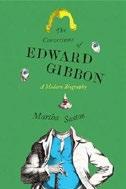
The noted feminist scholar scrutinizes the author of The Decline and Fall of the Roman Empire (1776). Saxton died in 2023, leaving a manuscript that covers Gibbon’s whole life (1737-94) but clearly was intended to include a more sustained analysis of Decline and Fall than the intriguing snippets here; this published version’s final chapter ends with the sentence, “But Martha Saxton never intended this paragraph to be her epigraph on Gibbon’s life.” Thurman’s moving afterword explains that as her friend grappled with terminal cancer, she urged Saxton “not to revise but to keep pressing onward,” promising that she would edit the unfinished draft. The text we have focuses on the roots of the misogyny in Gibbon’s personal experience that was displayed in his masterwork, which was notably at odds with the Enlightenment thinkers he admired. Saxton paints a grim picture of his early years: neglected by a mother wrapped up in her needy, demanding husband, after her death in 1847 whipsawed by the self-dramatizing emotions and financial imprudence of his father. He took refuge in books, and Saxton’s comments on how the precocious boy’s early studies influenced his prose style and scholarly approach give a tantalizing preview of what a fully finished biography could have offered. Less interesting is her lengthy exegesis of Gibbon’s ambivalent romance with Suzanne Curchod;
the “arrested capacity for love” she attributes to his childhood traumas certainly informed Gibbon’s problems with women—and his jaundiced portraits of Roman empresses—but has less obvious relevance to Decline and Fall ’s conclusion that a root cause of the Roman Empire’s failure was decadence and eroding moral fiber. Saxton’s biting exposure of the disconnect between Gibbon’s unblinking support for British imperialism and political corruption, even as he condemned these same qualities in ancient Rome, is a stronger thread running through later chapters on his undistinguished parliamentary career. A capable short biography, deprived by Saxton’s premature death of the enrichment that would have made it special.
Shapiro, Josh with Emily Jane Fox Harper/HarperCollins (272 pp.) | $30 January 27, 2026 | 9780063463905
The Pennsylvania governor threads personal history with political résumé. In a memoir that is politically shrewd and deeply personal, Shapiro discusses the importance of his Jewish faith, family devotion, and public service. He opens with a harrowing account of the 2025 arson attack on the governor’s residence following his family’s Passover Seder, then traces the origins of his convictions. “My dad was the local pediatrician who
just about everyone leaned on,” Shapiro writes. His mother was a teacher and a “pillar in the community” who struggled with mental illness—“not something I have talked much about, even privately, but certainly not publicly.” Shapiro recounts formative experiences: a semester studying in Israel, high school and college basketball—he earned the nickname “The General” for his court vision and leadership— and, significantly, the courtship of his wife-to-be, Lori, who would become his most trusted adviser on pivotal career decisions. Throughout, he’s engaging and comes off as genuinely likable, offering glimpses into both triumph and tension. The memoir’s core chronicles his methodical rise through Pennsylvania politics, emphasizing his ability to work across party lines on issues like police funding that didn’t always align with Democratic orthodoxy. As attorney general, he released a 2018 grand jury report alleging abuse of more than 1,000 children by over 300 priests, a defining moment detailed with unflinching candor. A later chapter recalls the contentious vetting process for Kamala Harris’ vicepresidential selection. When her team asked, “Have you ever been an agent of the Israeli government?” Shapiro writes, “I told [the vettor] how offensive the question was.” His decision to withdraw was sealed when Harris clarified the role: “Your job, she explained to me is to make sure that you are not a problem for the President”—hardly a collaborative partnership. Shapiro has written the kind of memoir that doubles as an extended introduction: part life story grounded in faith and family,
Shapiro discusses the importance of his Jewish faith, family devotion, and public service.
part record of executive competence and civic duty, part vision statement for what might come next.
A candid insider account of state-level politics and the art of successful bipartisan governance.
Sharples, Caroline | Yale Univ. (336 pp.) $35 | March 24, 2026 | 9780300284911
Yes, another book about Hitler— but one with a suggestive thesis. Elvis left the building long ago, yet there are those who believe he’s still alive somewhere. Adolf Hitler departed 32 years earlier, and though he’d be well over 100 years old as of the publication of British historian Sharples’ philosophically charged narrative, there were once plenty of people who believed that the news of Hitler’s suicide in a Berlin bunker in April 1945 “had been nothing more than a Nazi trick to conceal Hitler’s flight out of the war-torn city.” Lending itself to mythmaking was the fact that Hitler died without funeral rites as such: His body was cremated, the remains spirited off to Moscow by the victorious Red Army, and for many reasons, there was no opportunity for any public period of mourning, the dead dictator “passing beyond public view in a hurried and desperate affair.” So it was that in July 1945 a Chicago newspaper would report that Hitler and Eva Braun had traveled to Argentina via U-boat and were hiding out in Patagonia—which, given the large number of former Nazis who did settle there, wasn’t such a bad guess. Other reports had him living in various German cities, still others, more astonishingly, in the U.S., “running a ranch in New Mexico, washing dishes in a Miami Beach restaurant.” Sharples carefully weighs
the various investigations that have alternately amplified and doused the Hitler-is-alive myth, which, she holds, owes much to the “popular appetite for dramatic stories with an air of conspiracy.” It doesn’t help that spurious evidence (e.g., the supposed Soviet discovery of skull fragments) has diluted better-founded facts (e.g., the identification of Hitler’s dental remains in 2018). But it’s no spoiler to state definitively that, just like Franco, Adolf Hitler is well and truly dead. A readable study of the clash between history, counterfactuals, and wishful thinking.
Sloane, Mona | Univ. of California (248 pp.) | $19.95 paper | May 12, 2026 9780520416345
An ambitious critique of artificial intelligence that raises questions about prediction, power, and democracy.
Sloane, professor of data science and media studies at the University of Virginia, examines AI as a problematic social infrastructure, governed by a “prediction paradigm.” Viewed through the lens of science and technology studies, sociology, and political theory, AI appears as a socially constituted system aligned with monopoly capitalism, surveillance, and bureaucratic rationality. “Prediction paradigm” functions as an expansive catchall describing statistical inference, capitalist
governance, temporal linearity, and authority without clearly distinguishing among them. The idea that all AI proceeds from prediction is an oversimplification that imputes to various AI implementations a coherence and causal power more asserted than demonstrated. Additionally, claims that predictive systems enforce a singular, knowable future and erode democratic deliberation are thinly supported by the examples presented. Key claims—about efficiency, social erosion, and AI’s descent from Weberian bureaucracy—could be stronger with analytical deepening. Personal anecdotes, including the author’s frustration with Microsoft Copilot, humanize the critique but would benefit from broader substantiation. The argument is weakest when treating AI as a coherent system with a single logic, producing uniform social effects. The book is at its strongest when it tempers critique with pragmatism. The discussion of AI as an instrument akin to scientific tools, subject to professional norms of disclosure and accountability, is persuasive. The proposal to treat AI as a public utility introduces a concrete policy recommendation, though the feasibility of the idea remains underexamined. Ultimately, this is a book driven more by personal conviction than causal explanation. Still, even where it overstates its case, the book challenges prevailing techno-optimism and foregrounds important questions about a pervasive technology’s tightening hold on us.
An uneven, provocative work may resonate with critical theorists, leaving empirically minded readers wanting firmer ground.
How an Amazon worker—fired by the retail giant—became a labor leader.
Smalls, Chris | Pantheon (304 pp.) $30 | June 2, 2026 | 9780593700631

A first-person account of labor organizing in the 21st century. Smalls first made news during the Covid-19 pandemic, when he organized a walkout at an Amazon warehouse. Fired the same day and lambasted by Amazon executives in a leaked memo as “not ‘articulate’ or ‘smart,’” Smalls cofounded the Congress of Essential Workers and staged protests outside Amazon founder Jeff Bezos’ homes across the country. After Smalls formed the Amazon Labor Union, the Staten Island facility where he had been a supervisor became the company’s only unionized warehouse in the country. President Joe Biden commended Smalls personally, and Time magazine named the 32-year-old labor leader one of the most influential people of 2022. This book recounts Smalls’ experience at Amazon, but not before tracing his New Jersey upbringing and early job history. By the time he accepts his first warehouse job for the online retailer, readers have a strong sense of his character; he describes himself as “competitive, unafraid, charismatic, and not here for the bullshit.” His proficiency on the job didn’t lead to the opportunities he thought he deserved. “Christian is a productive employee,” a manager’s note conceded. “But we’re concerned that if promoted, he will side with workers over management.” Dotted with short episodes drawn from U.S. labor history, the book is mostly a straightforward account of Smalls’ challenges, setbacks, and organizing victories. Written after Smalls was replaced as his union’s leader, it doesn’t have the sweep one expects from a memoir or a labor history. Instead, the author’s story resembles a long, absorbing passage from Studs Terkel’s Working, the 1974 classic about work and what it
EXIT STALIN
meant to those who did it. That Smalls worked at (and resisted) one of this era’s largest companies makes his story especially relevant. An absorbing account of work— and unlikely organizing victories— at one of the world’s most powerful companies.
Kirkus Star
Exit Stalin: The Soviet Union as a Civilization, 1953-1991
Smith, Mark B. | Norton (576 pp.) $49.99 | July 7, 2026 | 9781631498299
A vivid exploration of Soviet civilization—or, better, the many civilizations of the former Soviet Union.
“Soviet civilization was never static, because it changed so much over time,” writes Cambridge University historian Smith. It was also never wholly coterminous with the Soviet state. The Soviet Union began with the promise of liberation, but soon hardened into a rigidly doctrinaire Leninist state—Leninist as interpreted by Stalin, who ruled unchallenged for more than a quarter century. Against this, slowly and with utmost care, an intelligentsia developed, with a mindset that “was a matter of enlightenment and civilization, but also refinement and culturedness, and above all empathy, kindness, and decency”—in other words, Smith adds, it was “a moral category,” distinct from the
apparatchiks. With Stalin’s death in 1953 came “the Thaw,” referring both to the loosening of restrictions but also to that messy, muddy period between winter and full-on spring; under Nikita Khrushchev’s regime, antitotalitarian writers such as Daniil Granin and Boris Pasternak emerged, while the nation “wanted to know what had happened” to friends, family, and comrades during the worst years of the Stalin terror, and Khrushchev, although involved in that terror, also wanted to know “exactly what had happened: who, how many, where, when.” Those who followed Khrushchev and seeded other civilizations, mostly of dissent, were nowhere near as impressive (Smith writes, meaningfully, that in his dotage Leonid Brezhnev became “increasingly fond of medals and honours”) until Mikhail Gorbachev attained power, ending the Soviet state—or, rather, “the Soviet Union, its state and apparatus of republics decolonized itself out of existence.” Yet it reemerged, and with it, dissidents were crushed as the Putin regime invaded Ukraine and “honest voices were silenced.” Smith’s excellent book powerfully explains how government, society, and civilization can diverge, sometimes coexisting, sometimes warring, but always evolving.
An essential and accessible addition to the library of Soviet and post-Soviet studies.

Kirkus Star
Stevens, Rebecca Wright Counterpoint (204 pp.) | $29 July 14, 2026 | 9781640097711
Dark doings in the unending summer daylight above the Arctic Circle. In August 1993, Stevens was public defender for the courts of the North Slope Borough in Utqiagvik, Alaska, previously known as Barrow, a fishing town with a majority Inupiat population. While on vacation in the Lower 48, Stevens learned of the possible rape and double homicide of sisters Bernice and Wanda Ipalook of a large and prominent local family. Back in Utqiagvik, she was assigned to defend Amos Lane, a prickly suspect in the killings who had yet to be charged but was being held for misdemeanors that authorities hoped would keep him in jail while they built their case. Stevens got his bail reduced, and, when the local investigator switched his suspicions toward Bernice’s fiancé, John Adams, she succeeded in getting Lane immunity in exchange for testimony as a witness for the prosecution, meaning he would never be tried for murder. Though the case ended in a dramatic trial, most of this book focuses on Stevens’ adventures as a tanik (an outsider) among the locals. They accept her (though never entirely) as one of their own. The heady mix of true crime and clashing cultures makes for a thrilling, thought-provoking read.
“The legal system was Anglo, and the location was Native,” Stevens writes.
“The two didn’t fit….The Anglo system of written law, due process, and witnesses and juries…did not work well in a place where community and family values took
precedence…and where even such seemingly universal qualities as time or factual evidence were blurred in the day-warping constant sunlight.”
Stevens studied English before devoting herself to the law, and her talents as a writer shine through in scene after memorable scene that evoke Scandinavian noir. Potent, morally complex storytelling that gets under the skin.
Suri, Manil | Norton (320 pp.) | $29.99 April 21, 2026 | 9781324106388
A family’s unshakable ties. An award-winning novelist, mathematician, and Guggenheim Fellow, Suri grew up in Bombay, where he and his parents shared a single room, 400 square feet that they sublet in a ramshackle apartment. At age 20, he went to the U.S. for graduate work, got a teaching job, and eventually a green card and citizenship, faithfully writing to his parents several times a week. Drawing on the 2,711 letters that his mother cherished, Suri has created a probing memoir about his family, especially the deep bond between him and his mother; his homosexuality; and the uncanny hold the apartment exerted on them all. His mother, Prem, the daughter of a well-to-do doctor, had lived in a mansion before Partition caused her family to flee to reduced circumstances in Delhi. She had a master’s degree in social work and had worked as a secretary to aspiring politician Indira Gandhi. Marrying Ram, a man from a lower social class, dismayed her family. For 11 years, they lived apart, she remaining in Delhi pursuing another degree, this time in psychology, he working in Bombay. When she finally joined him, she realized how little they had
in common. Suri, their only child, became their only source of joy; they hovered over him, sacrificed to send him to a fine private school, and pampered him. A dutiful and loving son, he knew he was the balm for their angst. Besides their incompatibility, his parents faced other challenges: animosity from the Muslim flat owners because they were Hindu; his father’s alcoholism; and an insidious atmosphere of gossip, superstition, and poverty. Suri creates an empathetic portrait of his parents’ entrapment, and a candid account of his struggle to be responsible to them, and to himself. A sensitive family history.
Uchegbu, Ijeoma | Mariner Books (320 pp.) $30 | May 12, 2026 | 9780063394629
A non-technical look at chemistry and its effects on our everyday experience.
“Our world is a symphony of chemical bonds; from the materials we see
to the things that we feel but cannot touch,” Uchegbu writes in describing. A research chemist based in London, she presents the basic concepts of her discipline without referring to the diagrams and formulas many of us encountered in our high school chemistry classes. Instead, Uchegbu uses analogies such as a group of children on a playground—and a mischievous playmate with a tube of super glue—to illustrate different chemical bonds. Each chapter examines a different aspect of chemistry: our bodies, the food we eat, clothing, building materials, plastics, pollutants, medicines, and so forth. The final chapter looks at what happens to our bodies after death, and how some societies have used chemicals to
delay that process. Uchegbu, who spent her teen and college years in Nigeria before returning to England for her advanced degree in chemistry, uses frequent anecdotes from her own life to make the role of chemicals more vivid. For example, she tells of losing a diamond earring while running the London marathon, or using an antihistamine to combat a sun allergy in Nigeria. These snippets of autobiography add much to the accessibility of the book. And in addition to illustrating the ubiquity of chemical reactions in the world, they frequently comment on the way we relate to one another in society. Anyone interested in basic science but reluctant to wade into a maze of technical terminology will find this a congenial approach to a fascinating subject.
An exuberant account of the role of chemistry in everyday life, with a wealth of down-to-earth examples.
van der Leun, Justine | Ecco/ HarperCollins (336 pp.) | $30
June 2, 2026 | 9780063241596
Hearing from women who survived abuse. In an era of gory but tidy true-crime stories, investigative journalist van der Leun has done something remarkable: She paints a devastating portrait of women “who have been imprisoned because they are abuse and assault survivors”—a phenomenon known as “criminalized survival.” Knowing anecdotally about the high rate of abuse victims in prison, but finding no hard statistics, van der Leun conducted her own research, sending questionnaires to 10,000 people in 60 women’s prisons. She received more than 1,000 responses. The book
pickle, “a symbol of immigrant ingenuity, community, and survival.”
THE PICKLED CITY
provides in-depth and often harrowing details about three of the respondents: Tanisha Williams of Saginaw, Michigan; Jema Heffernan of Knob Noster, Missouri; and TC Brooks of La Mesa, California. All three women’s stories live at the confluence of American sexism, racism, and poverty, but the overwhelming through-line tying them together is the “tacit approval” of male violence toward women in the United States. In all cases, the author says, the justice system failed to protect the women from abuse when they were children but efficiently punished them for surviving their abusers’ violence. Throughout the book, van der Leun makes clear that the women’s experiences are part of a universal story of how violence against women is perpetuated. That universality is perhaps what makes this an especially challenging book. If it is difficult to read such harrowing accounts of violence, it’s not because they are rare (they are not), but because they illustrate how the American legal system has yet to truly reckon with domestic violence and sexual abuse. Van der Leun writes, “One difficulty in believing survivors, and incarcerated survivors specifically, is that in believing them, we must acknowledge the ugliest truths of our legal system and therefore our society.”
A riveting, heartbreaking account of three women’s experiences with violence and a system that perpetuates abuse.

van Ravestein, Paul & Monique Mulder
Princeton Architectural Press (224 pp.)
$26.95 | March 31, 2026 | 9781797238371
History in a jar. From Mesopotamia to India, from China to the Americas, ancient societies preserved vegetables and meats through brining. In the course of history, such preserved foods moved from necessities to condiments. Pickling added flavor to the mundane meals of subsistence communities. This book by van Ravestein and Mulder—who work at Mattmo Creative, a marketing agency based in Amsterdam—traces the history of the art of food preservation to make the case that “what began as a means of survival has evolved into a celebration of flavor and culture, connecting people across continents and generations.” Every culture has a pickle, but no culture has been so identified with pickles as that of the Ashkenazi Jews. Salted foods were a staple of Central and Eastern European cooking. Immigrants to America brought pastrami and lox, pickled herring and tomatoes, and brined cucumber. It is the cuke, in all its myriad varieties, that contributed to the cuisines of many American cities, none more so than New York. The craft of pickling, the authors write, “became a symbol of immigrant ingenuity, community, and survival.” The book offers a grand tour of the pickle; it’s filled with photographs of shopkeepers and
peddlers, of jars and barrels, of plates and pots and pans. The reader learns the story of the great city delis—Ratner’s, Katz’s, and the now-forgotten eateries throughout the Lower East Side of Manhattan. There are accounts of the great pickle dynasties—the families that made their names in marketing these condiments. But what we really learn is that the “spice of life” is no cliché but rather a necessity, that the history of the pickle is the history of taste, the family, and the firm. And now, far from the shtetl or the tenement, whenever we bite into spears or slices, we bring back memories of struggle, hope, and love. A lavishly illustrated history of Jewish culture told as the story of the humble pickle.
The Game at the End of the World: Villainous Referees, Communist Bakers, the Secret Women’s World Cup, and a Goalkeeper’s
Villoro, Juan | Trans. by Francisco Cantú Restless Books (320 pp.) | $17.99 paper May 5, 2026 | 9781632064110
A global game’s many meanings. Villoro’s winning collection of soccer essays and reporting includes gratifying entries on fandom, rivalries, scandals, coaches, officials, and players both famed and obscure. An early chapter showcases the talented Mexican journalist’s erudition. A team possessing the ball controls “time itself,” he notes, a feature of the sport not lost on many football-mad poets and novelists. He sees a link between Albert Camus’ anti-death-penalty stance and his experience as a goalkeeper, always outnumbered and under siege. A recurring theme—and an inspiration for some funny observations—is the romantic appeal of perpetual losers. Mexico has never won a World Cup,
despite qualifying for the tournament as often as Argentina, Brazil, and other multi-winners. “Accustomed to adversity, we Mexicans consider the scoreline a suggestion we can ignore.” Villoro’s chapter on women’s soccer is tip-top. In 1971, he and 112,000 others packed the stands for a women’s world championship in Mexico, covered by the New York Times under the headline “Soccer Goes Sexy South of the Border.” He blends his wife’s recollections of her experience as a player—she played on unkempt fields in ill-fitting men’s cleats—with research on periods when women were legally prohibited from playing in France, Spain, and elsewhere. Villoro pens a useful rundown of the game’s Mesoamerican roots and a memorable chapter on the contemporary fan experience. Attending a tense game in Argentina, he’s handed a flyer from a lawyer seeking clients shot or beaten “inside a football stadium.” Villoro reminds us that premature death shadows the sport, recounting the shocking murder of a Colombian player and mayhem perpetrated by fan clubs that double as gangs. For a reader seeking a wide-ranging soccer book before this year’s World Cup, this one’s hard to beat. Entertaining, perceptive analysis of soccer in the Americas and beyond.
Star
Walters, Barry | Viking (496 pp.)
$35 | May 12, 2026 | 9798217059829

A comprehensive journey through the annals of LGBTQ+ music from the past four decades. As a veteran music industry journalist and critic, Walters has dedicated the past four decades to documenting and preserving the history of the queer music scene. Here, he turns his vast expertise into an expansive retrospective of musical performers and
“Accustomed to adversity, we Mexicans consider the scoreline a suggestion we can ignore.”
THE GAME AT THE END OF THE WORLD
the mark they made not only on their respective genres, but the impact and influence they continue to have on global queer communities. Despite industry decision-makers who, 57 years after Stonewall, “still find reasons to nix or marginalize undisguised queer content in most pop music,” Walters writes, there is certainly room for celebration, and he begins with a commemorative nod to the 1960s, when free-thinking artists like Lou Reed, Laura Nyro, Janis Joplin, Queen, Elton John, and David Bowie defined a decade particularly appealing to queer audiences for their wildly alternative artistry and defiant lyricism. Walters writes fondly about the bawdy songs of Bette Midler, who once entertained gay bathhouse crowds in the 1970s, the Motown era unifying racial and sexual minorities with soulful rhythms, and onward into the birth of the electrifying disco era that ignited queer nightlife dance floors across the globe to the sounds of Sylvester, ABBA, and a controversial Donna Summer. Walters also draws on interviews he has personally conducted with artists such as Luther Vandross, Dolly Parton, and K.D. Lang, and the results are consistently fascinating and revelatory. Though most artists are queer-identified or “adjacent,” there are several Walters mentions who are culturally allied with the LGBTQ+ movement and have made artistic contributions to the unity and equality of the queer community, among them Madonna, Whitney Houston, and Nirvana. Uplifting, endlessly entertaining, and informative, the anthology honors decades of influential music-makers, their craft, and “the community these nurturing songs give us—especially when we think we’re most alone.” A knowledgeable, high-spirited tribute to queer music through the ages.
Wells, Tom | Oxford Univ. (640 pp.)
$34.99 | March 2, 2026 | 9780190933340

Listening in, decades later. Henry Kissinger (1923-2023) began taping conversations—for recordkeeping and for his memoirs— as soon as he was appointed national security advisor in 1969, continuing after he was appointed secretary of state and stopping only when he left office in 1976. Conversation, even from educated speakers, is ungrammatical, repetitious, and cliché-ridden, so journalist Wells, author of Wild Man: The Life and Times of Daniel Ellsberg (2001), provides introductions, summaries, and, now and then, a straightforward transcription. He has converted seven years of taping into nearly 600 pages of text, and few readers will yearn for more. Richard Nixon took office in 1969, having promised to end the Vietnam War by the 1972 presidential election. The minutiae of negotiations leading to the January 1973 peace agreement occupies most of the text, and readers will be no less frustrated than the American public during the process. The Middle East has been a graveyard of reputations, but Kissinger did not lose points because powerful blocs supported whatever side he favored at the time. Ironically, the administration’s greatest accomplishment, opening relations with Red China, receives only a rare mention because, working furtively, participants avoided the telephone. Nixon does say that his China policy bothers liberal critics: “Oh, this drives
’em nuts, Henry.” Although occasionally entertaining—and no doubt an important primary source for scholars— many of these conversations will be a slog for the general reader who might expect fireworks but will encounter mostly complaints, tactical advice, abuse of rivals and the media, and an obsession with leaks.
Gleaning insights into Nixon’s inner circle, thanks to Kissinger’s recordings.
Wright, Alex | Basic Books (384 pp.) $32 | June 16, 2026 | 9781541606791
Reading all about it, way back when.
In this engaging account, Wright, author of Cataloging the World: Paul Outlet and the Birth of the Information Age (2014), writes that 18th-century European printers worked for governments and booksellers, but their colonial counterparts were not just tradespeople but writers, editors, and provocateurs; our Revolution might not have happened without them. It was less our Constitution than two obscure laws that enshrined America’s press. Until tightened in 1909, the Copyright Act of 1790 excluded newspapers, so editors happily plagiarized from rivals and any writing that might entertain readers. The Post Office Act of 1792 provided a massive subsidy. At the time, mailing personal letters cost 6 to 25 cents; a newspaper might cost a penny. During that period, newspapers constituted perhaps 95% of U.S. mail, which reached everywhere, providing an information exchange anticipating today’s social media. Wright concentrates on the 19th century, when newspapers thrived. Many were small-town, one-person operations whose editors relied on scissors and paste, cutting stories from rivals to revise and republish along with local gossip, scandal, advertising, poems, and
essays. Advances included making paper from wood instead of rags, which reduced costs by more than 90%. Hand-operated presses of 1800 were replaced by rotary, steam-operated models in the 1830s, 10 times faster, and then by the spectacular 1886 linotype, which eliminated human typesetters. By 1900, journalism became capital-intensive, attracting powerful printer-publishers such as Hearst, Pulitzer, and Newhouse, who soon dominated the industry but also created professional journalism that emphasized accuracy over advocacy and opinion. The first journalism school dates from 1908. Deploring the ongoing newspaper crisis (one-third of them have closed since 2005), Wright strains to find a silver lining, suggesting that the viral dynamics of social media may revive the free-wheeling artisanal industry of the 1800s. A fresh, often startling account of newspapers’ early years.
The Wilder Way: A Memoir of Adventure, Freedom, and an
zu Beck, Eva | Gallery Books/Simon & Schuster (336 pp.) | $30 | June 2, 2026 9781668223673

Seeing the world in a new light. Similar to Cheryl Strayed’s Wild (2012), zu Beck’s debut memoir begins when the unhappily married Londoner blows up her life with substance abuse and infidelity to strike out on a grueling, long-distance hike in the
remote wilderness to find herself. But true to the title, zu Beck takes it much further. She spends the next decade (so far) traveling around remote parts of the world, challenging herself with physical endurance tests like ultramarathons while cultivating a YouTube following and a job hosting a travel show for National Geographic. Along the way, she explores ways that travel morphs her worldview. Watching friends announce wedding engagements and pregnancies on social media forces her to reckon with whether she’s cut out for domestic life. A few romantic flings make her question her desire for a lifelong partner. Realizing she’s afforded privileges that women living in the countries she visits could never experience both humbles and embarrasses her. Yet she rarely wavers from her resolve to keep traveling.
“Every meal I ordered at a street food stall without questioning its provenance felt like another step away from the à la carte dinners in London’s Shoreditch,” she writes. “Every turn of the train’s wheels on Asian railroads ushered me further from the dreaded daily commute. Every night in a backpacker hostel or aboard a sleeper train was a world away from the warm marital bed I’d once shared with someone.” Frustratingly impulsive and naïve at times, zu Beck ultimately proves to be a captivating storyteller, especially when recounting her immersive adventures working at a horse camp in Mongolia, living with an indigenous family in the Passu Cones mountains of Pakistan near the Chinese border, or riding out the Covid-19 lockdown on a remote island in Yemen.
An inspiring, action-packed journey to find one’s self through perilous adventures in exotic, far-flung destinations.
In hostels and sleeper trains—
“a world away from the warm marital bed I’d once shared.”
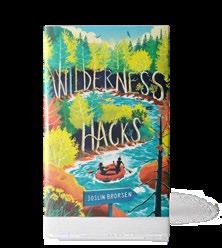

THERE’S SOMETHING special about discovering a wonderful new author—it feels like hitting it off with a new friend. I’d like to introduce several authors making their literary debuts; young people are sure to connect with these writers, and they’ll be eager to see what else they have in store.
Told from dual perspectives, Joslin Brorsen’s Wilderness Hacks (Knopf, March 31) follows 13-year-old Radley Shaw, who hosts his own outdoors-themed YouTube channel, and 12-year-old Sadie Hahn, a serious nature lover who, at her brother’s urging, enters and wins Radley’s contest. The prize? Serving as Radley’s guide through the Colorado Rockies. When Radley and Sadie’s rafting trip goes wrong, they end up stranded, their wilderness skills put to the ultimate test. Brorsen has crafted a survival novel in the
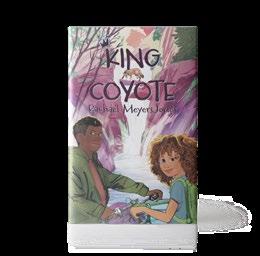
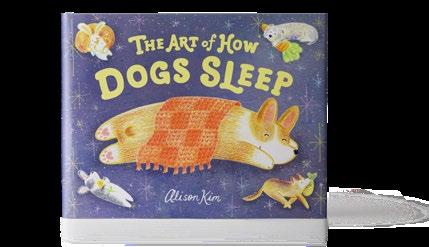
vein of Gary Paulsen’s Hatchet, infusing her narrative with a modern sensibility as she explores the toxic effects of social media and her characters’ experiences with neurodivergence and anxiety. Whether young people are the outdoorsy types or armchair travelers, they’ll find Brorsen a deeply empathetic new voice.
Kids wondering if they belong will be bolstered by two new tales. First, Sara Amini’s graphic novel Mixed Feelings, illustrated by Shadia Amin, with colors by George Williams (Graphix/Scholastic, April 7). For her debut, set in 1999, actor Amini draws from her own experiences and an abiding love of ’90s pop culture. Sixth grader Sara’s typical adolescent woes— body hair, friend trouble—are compounded by complex emotions toward her heritage. The daughter of a Colombian mother and an Iranian father, Sara often feels out of place.
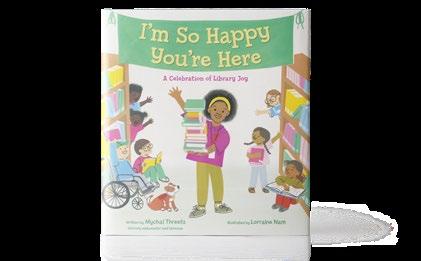
Amini writes with a compelling blend of self-deprecating humor and pathos that will speak to middle graders— and to anyone still in touch with their awkward inner adolescent.
Second, Rachael MeyersJones’ King Coyote (Jolly Fish Press, April 14) follows King, a Black 12-year-old staying with relatives in Vermont while his parents are divorcing. Initially reluctant (“Are there any Black people here?” he asks upon arrival), King becomes fascinated by an injured coyote who begins showing up near the house. Tales of young people channeling difficult emotions into an appreciation of wildlife can be powerful, and I love that MeyersJones acknowledges that predominantly white spaces can be alienating for children of color. As she puts it in an author’s note, she wanted to spotlight “the visibility of…African
American Blackness at home in nature, to remind all of us that we belong there.”
Picture-book fans, take heed—new authors await you, too. Families seeking a new bedtime read will fall in love with Alison Kim’s The Art of How Dogs Sleep (Little, Brown; Jan. 21). Kim depicts a bevy of corgis, dalmatians, and poodles bedding down in most creative ways; little ones will be entranced. (See our Q&A with Kim on p. 97.) And Mychal Threets, a librarian who’s gained prominence on social media and is now hosting a reboot of PBS’s Reading Rainbow, makes a sparkling debut with I’m So Happy You’re Here: A Celebration of Library Joy, illustrated by Lorraine Nam (Random House, Feb. 3), a gentle, rhythmic ode to the library—one that reminds us that all are welcome here.
Mahnaz Dar is a young readers’ editor.
Viking treasure, sinkholes, and a conquistador’s descendant converge beneath a dying Minnesota town. When beloved history teacher Mr. Lindquist vanishes while hunting for Norse treasure, sixth grader Danny Hall and his crew plunge into labyrinthine underground passages to find him. Armed with cryptic maps and headlamps, Danny, hockey-loving Dolly, geocaching enthusiast Mulch, and Amazon Shawn (because he’s the “guy who could get you whatever you wanted”) navigate treacherous terrain pursued by a new teacher from Seville whose ancestor was a Spanish conquistador. The friends’ limits are tested by stampeding cave pigs and
swarming bats, among other challenges. The narrative voice crackles with personality, breaking the fourth wall to address readers directly with winking asides and metacommentary, creating an intimate, conversational tone that perfectly complements the madcap adventure. The author weaves authentic Minnesota culture—like exclamations of “uff-da” and descriptions of bluff country geography and hotdish ingredients— with Norse mythology that feels both magical and grounded. Figurative language sparkles throughout, from Cop Olaf, who’s built “like a water heater,” to Danny’s having a revelation that hits him “like a wrench flying into a Mini
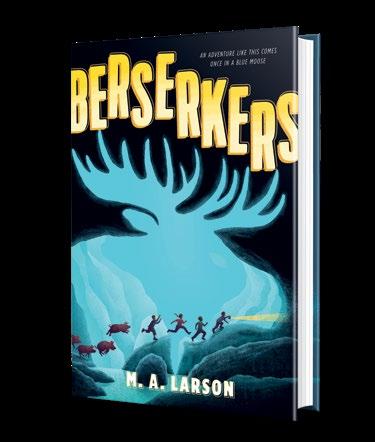
Larson, M.A. | Farrar, Straus and Giroux | 320 pp. May 26, 2026 | $18.99 | 9780374394431
Cooper’s headlight.” The relationship dynamics ring beautifully true as the friends navigate loyalty, loss, and small-town decline in this exuberantly quirky romp. Multiple plot threads—villainous conspiracies, the perspective of a sentient rock, a dying
grandfather’s advice— intertwine expertly. Most characters present white, and Mulch’s dad is Black. A treasure of a book— adventurous, hilarious, and surprisingly moving; readers will go berserk. (Adventure. 8-12)
Adamson, Ged | Nosy Crow (32 pp.)
$18.99 | June 23, 2026 | 9798887772363
The secret to creating wonderful art? Doing what makes you happy!
The paleskinned young narrator, a child with chin-length pink hair, a beret, and culottes, paints a picture of Grandpa’s new, fluffy yellow bird, Vera. Left alone with art materials, Vera makes a painting herself. The protagonist’s praise is grudging (“very good…for a bird, that is”), but Vera goes on to produce impressive work in collage and marble. To stymie this potential rival, the narrator allows Vera only very small pieces of paper—with which Vera adroitly creates a mosaic tribute to the Mona Lisa. When Grandpa (a peachyskinned, white-bearded Monet look-alike) calls Vera “a great artist,” the narrator jealously deprives the bird of paint supplies. But Vera finds housepaint and slaps colorful, cannily spaced, Kusama-like dots over every surface in the living room. Grandpa loves the result, and, realizing that it truly is “a great work of art,” the narrator abandons the artist’s beret and hands it to Vera, who’s nearly swallowed up by it. Then the bird stages an exhibition of the child artist’s work, and it looks “really good on the wall.” Clearly there can be more than one “great artist.” The young protagonist’s resentment and jealousy are all too relatable, while teeny-tiny Vera is a delight, dwarfed by her improbably elaborate creations. Adamson’s perky pastel comic-style illustrations are, for the most part, simple enough to make the tagline’s point: “Anyone can be an artist!” Amusing encouragement for aspiring artists of all stripes. (Picture book. 4-8)

a girl’s discomfort into visceral delight.
HOME AWAY FROM HOME
Akbari, Nazneen | Illus. by Rashin Kheiriyeh Barefoot Books (32 pp.) | $17.99
February 3, 2026 | 9798888598962
A girl’s initial hesitation about visiting her grandmother in Oman turns into a journey of reconnection with family and culture. Nuha hasn’t seen Jadda, her grandmother, in three years. Mama insists Jadda “is excited to spend the summer with you.” Besides, “Oman is your home away from home.” Nuha isn’t convinced: “At least I’ll have you,” she whispers to her favorite doll, Mary, but in the travel rush, Nuha leaves Mary behind. Arriving “sticky and sweaty” in Oman to overwhelming unfamiliarity only confirms “this place was nothing like home.” Wise Jadda suggests exploring the nearby souk where Nuha might find a new doll. The lively market becomes a feast for Nuha’s senses: tasting delectable shawarma, wandering “perfumed alleys and glittery stalls,” appreciating personal henna paintings, drumming with street musicians, and gazing at the orange sun and blue sea—”so different and distant, but together they paint the most beautiful sky.” Walking home, Nuha even finds an Omani doll, naming her Maryam, a perfect companion for Mary. Jadda’s embrace assures Nuha she’s undoubtedly reached her home away from home. In an author’s note, Indian-born and Omani-raised Akbari urges readers to “look beyond the stereotypes and explore the everyday joy of Arab culture and family—real life that often doesn’t make the headlines.” Her
unadorned, accessible text is notably enhanced by Kheiriyeh’s vibrant illustrations, which invite audiences to share Nuha’s wondrous discoveries. Nurturing experiences transform a young girl’s discomfort into visceral delight—for protagonist and readers alike. (cultural notes, glossary) (Picture book. 3-6)
Alley, R.W. | Astra Young Readers (40 pp.) $18.99 | June 2, 2026 | 9781662670251 Series: Breezy Valley at Work

Time to get constructing… and not just any old building! In previous books, readers visited a hospital and joined a crew of firefighters— potentially scary situations made more manageable by a reassuring, all-animal cast. Now, beginning with a different (but still mazelike) view of Breezy Valley, we learn of a purely positive project: a new library. Overflowing boxes block the current building’s front door; there’s no room for storytime, much less new acquisitions. As in earlier Breezy Valley visits, technical details— like a clearly labeled drafting table and blueprints, tools, and construction vehicles—can be studied for information or just regarded as part of the unfolding narrative. Alley combines bold printed text with abundant, slightly smaller-print, pastel speech balloons; his narrative brims with subplots and jokes. In a metafictive moment, one of the Tabby Twins watches the crew at work and notes,
“They should make a book about this!”
The shell is completed just before the first snow, so the electrician, painter, plumber, and other professionals can work on the interior. Despite solar panels, the construction is conventional, with AC and furnace rather than a heat pump and a water tank rather than on-demand hot water. The bookmoving plan, however, is community genius, reflected, too, in the tiny Book Swap Libraries to find on the map. Fact-filled and fun—sure to keep attentive visitors as busy as its industrious cast. (Picture book. 3-6)
Aloise, Valeria | Illus. by Margot Tissot Trans. by Jeffrey K. Butt | Helvetiq (64 pp.)
$19.95 | June 9, 2026 | 9783039641239
In this Swiss import, translated from French, a human and an orange tabby conduct a tour of art featuring dogs throughout history. As in 2023’s Dogs Who Work, Aloise and Tissot once more spotlight our four-legged friends, but this time, they focus on the role that canines have played in art, from symbols of wealth and loyalty in Paolo Veronese’s painting The Wedding at Cana (1563) to agents of aggression and danger in Banksy’s mural Choose Your Weapon (2010). The entries, each accompanied by a caricaturelike illustration, are divided by type: painting, photography, street art, and sculpture. Text boxes or bubbles offer facts, including title, artist, country of origin, and brief details. A tan-skinned guide, clad in a flowered skirt and red beret, adds commentary, while the cat provides comic relief, sometimes playing the philistine. An introductory map emphasizes the book’s historical and global scope, highlighting, for instance, rock art in Saudi Arabia dating between 7000 and 6000 B.C.E. The range of artists is diverse, from Frida Kahlo,
Annie Leibovitz, and Miss Tic to Jean-Michel Basquiat, Fernando Botero, and Teru Ando. Both author and illustrator approach their work with an enticing playfulness, as in the entry on Jeff Koons’ Balloon Dogs, though some adults may be disturbed by the depiction of urine and excrement in Basquiat’s Dealer’s Dog
A child-friendly approach to art history, likely to spark interest in the originals and inspire gallery visits. (historical overview) (Nonfiction. 7-12)
Applebaum, Kirsty | Illus. by Sahar Haghgoo
Nosy Crow (96 pp.) | $7.99 paper
May 5, 2026 | 9798887772646
Series: Princess Minna
In her latest outing, a plucky princess scales a beanstalk in order to save the day. Brown-skinned, bespectacled Princess Minna and her pet dragon, Lorenzo, again go to work “fixing up the kingdom…her favorite thing to do.” Raymond, the brown-skinned wizard who lives in Castle Tall-Towers with Minna and her parents, the king and queen, has exchanged his magic beans for an intensely annoying singing cow—a trade that has inadvertently also saddled the townsfolk with a huge beanstalk and the enormous lightskinned girl who descends it and makes a huge mess before climbing back up. Intrepid Minna climbs the beanstalk and discovers the unthreatening but still problematic overgrown child giant, clad in polka-dot overalls, who is seeking the source of the “wonderful music” she’s heard. Although Minna doesn’t immediately see the fix, many readers will. And while she’s reluctant to get involved, in the end, she decides to put things right. Applebaum’s story contains a fair amount of repetition; the pages of well-spaced sans-serif type fly past. Haghgoo’s familiar flat, saturated
color-block illustrations, dominated by blue, green, and shades of magenta, amusingly supplement the text, which gives an old tale an updated girl-power twist; Minna is a princess with panache and an admirable role model.
A stereotype-slaying, enjoyably fractured fairy tale. (Chapter book. 5-8)
Kirkus Star
Awan, Jashar | Tundra Books (48 pp.)
$18.99 | June 16, 2026 | 9781774883501 Series: Towed by Toad
Being on the go, go, go leads to a big no, no, no for an overenthusiastic amphibian.
The protagonist of Awan’s Geisel Honor–winning Towed by Toad (2024) is back for more adventures. Toad proudly stops to help stranded drivers, towing them back to Pop’s Tire & Car Repair. Heeding the latest call (“Sharp Pat has a flat!”), Toad races to the rescue. Unfortunately, Toad’s high speed results in a crash. Toad is unharmed, and so is Winnie Neigh-Nay, the driver of the other car, but Winnie’s clearly peeved. Poor Toad! Our hero is understandably frustrated, but eventually, Pop reassures Toad that “we can fix it!” Young readers will relate to Toad’s eagerness to help and the emotions that follow as our protagonist fails; Awan emphasizes that everyone makes mistakes, but everything can be made right with a positive attitude. Featuring differently sized fonts and onomatopoeia, his spare, smartly paced rhyming text flows beautifully and is a natural choice for a raucous read-aloud. His trademark expressive digital art complements the writing and makes effective use of page turns, providing opportunities for further exploration with young readers; a series of spreads featuring Toad’s impatience at a stoplight builds epic layers of narrative tension while also offering a lesson on the meanings of the stoplight’s colors.
A hilarious yet sensitive look at a universal experience. (Picture book. 3-7)
Kirkus Star
Roar
Bajaj, Varsha | Nancy Paulsen Books (192 pp.) $17.99 | May 12, 2026 | 9780593699058
A tiger-loving Texan tween attempts to protect these endangered creatures while staying with his grandparents in India. Rohan and his cousin Mira, who’s visiting from Bengaluru, love going to the tiger sanctuary where G-pa works; they’re thrilled to observe a tiger named Arya and her playful cubs. They meet a forest ranger, a wildlife guide, and schoolchildren who are learning how to safely co-exist with tigers. But poachers and hunters threaten these vulnerable animals—as does a new mining project that endangers the wildlife corridor used by tigers and leopards. Though the forest rangers increase their patrols and the community petitions the court to reevaluate the project, a terrible incident leaves everyone shaken. Bajaj’s immersive prose transports readers to a tranquil forest teeming with vibrant wildlife. Information about tiger anatomy, habitats, and history is seamlessly woven into the story. Chapters told from the perspective of Arya and her friend Crow enrich the narrative; Bajaj writes with empathy for these animals without veering into sentimentality. Rohan’s journey is a compelling one; he begins the novel passionate about safeguarding tigers but shy about expressing himself and emerges as a committed activist. Uncomfortable truths of the complexity of encroaching into wildlife habitats,
locals aiding poachers, and the brutality of nature are balanced out with an overarching note of hope. A rousing call for conservation efforts to safeguard the majestic tiger. (author’s note) (Fiction. 8-12)
Baker, Laura | Illus. by Liz Kay | Lonely Planet (128 pp.) | $15.99 | April 14, 2026
9781837586295 | Series: Lonely Planet Kids

A wide-angled resource for beginning rockhounds, combining notes on the appearances and geology of many common rocks and minerals with guidelines for safe and systematic collecting.
“Ready to rock?” Following preliminary remarks for amateur collectors about packing the proper kit, Baker begins with a deep dig into the geology of the three kinds of rocks and minerals (igneous, sedimentary, and metamorphic). From there it’s on to a directory of over 60 possible finds from granite and metamorphic schist to diamonds and other gems and minerals, with a sample logbook page at the end. Most entries surround a close-up photo of a typical small specimen with background facts about origins, composition, characteristics, uses, and prominent deposits or locales worldwide. “Rocking facts” (insects millions of years old have been preserved in amber) add interest. Potentially toxic substances like arsenic come with proper warnings, and except for autunite, which glows eerily in UV light, the author steers clear of radioactive minerals and ores. The young
A rousing call for conservation efforts to safeguard the majestic tiger. ROAR
collectors whom Kay tucks in here and there are racially diverse and include people who use wheelchairs. A solid starter guide for youngsters with rocks on their mind. (glossary, index) (Nonfiction. 8-12)
Baldacchino, Christine | Illus. by Ilona Iske Groundwood (32 pp.) | $19.99 May 5, 2026 | 9781779460035
A young doctor tends to her mythological patients. Dot, a small, light-skinned human with oval cheeks and a teardrop nose, rises before dawn to treat ailing creatures, including a dragon, a chimera, a gryphon, and a kraken, across misty landscapes and twilit skies. But she encounters difficulties when it comes to helping Sea Serpent, who’s sad (actually, “very sad”). Try as she might, she can’t cure him. Eventually, she realizes that Sea Serpent’s sadness might never be banished, but her warmth and empathy help all the same. Iske’s digital illustrations work best in their use of color: Deep midnight blues and soft lavenders create genuinely atmospheric scenes, particularly in the quiet early-morning sequences where Dot prepares for her journey and visits patients. But the compositions tend toward flatness. Sea Serpent appears in various striking colors, patterns, and poses—curled on cliffsides, stretched across peach-toned horizons—but never quite comes alive on the page. The narrative moves through Dot’s treatment with little tension or surprise, which undercuts the warmth the artwork sometimes conjures. In a picture-book landscape saturated with titles teaching children about kindness and empathy, this one offers little to distinguish itself. The palette is its strongest asset, inviting and mysterious in turns, but it cannot fully compensate for a narrative that never quite finds its stakes. Pretty colors, but not enough story to match them. (Picture book. 3-6)
Bardhan-Quallen, Sudipta | Illus. by Leeza Hernandez | Random House (40 pp.) $18.99 | June 16, 2026 | 9780593706879
Series: Cats in Hats
The cast of Cats in Construction Hats (2025) return in new roles. Swapping out their hard hats for conductor caps, six felines (each a different color) ready their pale blue train for passengers, a mix of cats and mice. Pronouns this and that work as hard as the conductors (who double as engineers): “Check this.” “Inspect that.” “Take this.” “Punch that.” As the busy cats wield tools and monitor gauges, action verbs ( flip, press, turn , twist) convey a flurry of constant activity, leading to the climax—a very noisy emergency stop that will have engaged listeners reciting the onomatopoeia at top volume: “SQUEAL!”
“SCREECH!” “EEK!” As cat and mouse parents shield their offspring’s eyes, the locomotive stops mere feet from a shaggy yaklike beast who’s wandered onto the tracks. All six cats collaborate to “push,” “lead,” “shoo,” and “feed” the obstruction, until they maneuver it into an enclosure where the rest of the herd awaits. The conductors board again, and, “back on track,” the train makes its way to “Grand Central Fur-minal.” “That’s that!” The message of cooperation will be familiar from the earlier book, as will Bardhan-Quallen’s use of puns (“Gare de Lion,” “Purr-inceton Junction”) and Hernandez’s winsome bright primary colors and simple shapes; fans will eagerly climb aboard for this exciting trip. Kitties and trains—could there be a better combination? (Picture book. 3-6)

Barr, Stephen | Illus. by Steve
Neal Porter/Holiday House (48 pp.) $18.99 | May 12, 2026 | 9780823460465
A classic childhood game gets its flowers in an empathetic and joyful depiction of father-son play. Ro and his dad are playing hide-and-seek, which “is NERVE-WRACKING but REALLY EXCITING but SORT OF SCARY but SO MUCH FUN.” The game’s constant need for reinvention keeps things thrilling, and Ro tests his independence within the confines of their safe home. Ro knows what to do when he finds the perfect hiding spot: “You close your eyes, just in case, and you breathe the slowest little breaths, and it’s almost like you’re hiding from yourself, too. And time disappears.” But just as Ro is beginning to really fret (a storm is raging outside, and his father still hasn’t located him), Dad quickly finds and reassures him. Barr and Teare masterfully evoke the tension many children feel between wanting to hide but needing to be found; they convey both Ro’s vulnerability and emotional security. Teare’s loose and playful portraiture emphasizes the wholesome theatricality of these romps. Soft-edged, multimedia artwork depicts the four-member family with skin the candy colors of the page, and limited dialogue pops in vivid speech bubbles. This compassionate gem has the heft of William Steig couched in gentle humor, with quick potential to become part of the kid lit canon.
Look no further—you found a real winner. (Picture book. 4-8)
Squalo & Mage vs. the Rage
Bodegón-Hikino, Kara | HarperAlley (240 pp.) | $24.99 | May 26, 2026
9780063056435 | Series: Squalo & Mage, 1
A magical child and her shark friend set out on an adventure to find the sea serpent known as the Bakunawa. In the fictional land of Mundo, Mage lives a happy life with her sorcerer father and her friend Squalo, a talking shark, until the night when they’re attacked by a tikbalang, or part-human, parthorse creature. Papa explains that the tikbalang was sent by Ventrolio, an evil being who seeks to destroy all the Kawayan people, of whom Mage is among the last. Just before sacrificing his own life to protect her, Papa instructs Mage to find the Bakunawa, a sea serpent from Filipino folklore, who will become her guide. As Mage and Squalo seek the Bakunawa, they face more of Ventrolio’s minions and soon learn that Mundo is in danger— and that the threat is the sea serpent herself. The narrative is rich with Filipino mythology, providing enough contextual clues for readers unfamiliar with the culture to follow the story. Though the storyline occasionally touches upon serious topics, debut author-illustrator BodegónHikino successfully maintains a fun, upbeat adventure with Squalo and Mage’s friendship at the heart of the story. The soft pastel color palette adds a whimsical touch to the cartoon-style artwork, and video game–inspired elements interspersed
throughout offer additional appeal. Young readers will be eager for the second volume.
A delightful, fantastical duology opener infused with Filipino folklore. (bonus comic) (Graphic fantasy. 8-12)
Browne, Meghan P. | Feiwel & Friends (288 pp.) | $18.99 | May 12, 2026 9781250410962
Two plucky young people discover there’s lots happening in Heaven.
When 12year-old Maisie McMeans’ Mama drops her off in Aunt Gertie’s small desert town of Heaven, Texas, for the summer, Maisie has no idea what lies ahead. She soon settles in, meeting enterprising, hardworking 14-year-old neighbor Walt Wise, who becomes a fast friend and crush. Voracious reader Maisie also befriends Charlene, head librarian at the air-conditioned Heaven Public Library, which she visits daily. She’s determined to participate in the summer reading program and has set herself a goal of reading all the Newbery Award winners. All’s not idyllic, however: As Maisie narrates in her unique firstperson voice, which is filled with keen self-awareness, wisdom, humor, and Texas regionalisms, she’s deeply mourning the loss of her beloved father. Daddy died from cancer, and a bereft Mama’s drinking is so out of control that she’s entered rehab. Mama left Maisie at Aunt Gertie’s without saying goodbye, but with a note promising to return in August. In the meantime, Maisie and Walt uncover a proposed development that threatens the local environment. As if that weren’t enough, Maisie makes a startling discovery about her family. This novel starring two endearing, well-realized protagonists is densely plotted; some readers may find it overly detailed. It’s worth the read, however,
A portrait of the unique ways we look at life and connect with others.
and everything wraps up satisfactorily. Most characters are cued white. An atmospheric and fast-paced debut; readers will care about the well-drawn main characters. (Fiction. 10-14)
Calin, Cassandra | Graphix/Scholastic (272 pp.) | $14.99 paper | May 5, 2026 9781338762488 | Series: The New Girl, 2
The highs and lows of a first crush are easier to navigate with the steady support of family and friends. In this lively sequel set in Montreal, Romanian immigrant Lia Iordache is back from winter break. She develops a crush on Julien, a boy who’s also on the school’s magazine committee. A distracted Lia struggles to focus on schoolwork or be a supportive member of her wonderful friend group, especially toward Wan Yin, whose trusts she betrays. Short chapters offer glimpses into Lia’s daily life. She’s dealing with crippling period pain, but the doctor dismissively tells her she’ll “learn to deal with it” and refuses to refer her to a specialist; her supportive mother is outraged. Lia is embarrassed when pads fall out of her backpack, and new magazine committee member Jade laughs at her. Although Julien and Lia’s relationship grows closer, his friendship with Jade, who calls Lia “pad girl,” causes jealousy. This work gently explores being true to oneself while feeling the strong pull of first romantic love. Honesty in friendships is another strong theme. Lia’s family is kind, offering her boundaries and advice while allowing her to make
mistakes and grow. Navigating her relationship with Julien helps Lia realize that she must focus on her own choices: to show up for friends and persist when she makes mistakes. Calin’s vibrant, emotive illustrations add humor and depth to the dialogue, and cleverly color-coded speech bubbles indicate different languages. Insightful, quirky, and hopeful. (cast of characters, glossary) (Graphic fiction. 8-12)
Canônica, Volnei | Illus. by Mariana Massarani | Trans. by Bruna Dantas Lobato Tapioca Stories (44 pp.) | $19.95 March 24, 2026 | 9798988749998
Undersea adventures await!
Arthur awakens one morning with his bed soaked through. His mother, clad in a snorkel mask and air tank, takes him to the doctor to see what caused his bedwetting. As the doctor, dressed in an atmospheric diving suit, examines Arthur, he finds himself submerged underwater. Arthur’s heartbeat sounds “like a submarine radar,” his breath like “restless dolphins.” After further investigation leads to a playful, more immersive look at Arthur’s undersea world—full of high-spirited fish, mermaids, and whales—the doctor realizes that Arthur misses the thing that he loves most: the sea. Originally published in Brazil and beautifully translated from Portuguese by Dantas Lobato, this is a deeply fantastical look
at the rich interior life of a possibly neurodivergent child (Canônica’s author’s note mentions that the book was partly inspired by her experiences with children on the autism spectrum). Massarani’s illustrations, depicting human characters with simple black outlines and relying on a palette of stark shades of blues and greens, portray a world free of restraints where imagination and an abiding love of the ocean reign supreme (front endpapers showcase Arthur in utero underwater surrounded by a school of fish). While Arthur’s mother is justifiably worried, the doctor takes an open-minded approach, honoring the boy’s creative outlook; youngsters with a different perspective will feel seen—and appreciated. All characters have skin the color of the page.
A magical portrait of the unique ways we look at life and connect with others. (illustrator’s note) (Picture book. 4-8)
Canterbury, Bill | Illus. by Maddie Frost Doubleday (32 pp.) | $18.99 | June 2, 2026 9780593900789
And on this farm, there was a…shark?
The barnyard animals are excited when a truck arrives pulling a trailer stamped with the words “Aquatic Ranch Delivery.” “A new friend!” says the sheep. “I bet it’s a duck,” says the pig. Even after they learn that the new arrival is actually a “farm shark,” the sheep remains enthused: “How fun! He looks so friendly.” Not really. Gradually, most of the animals are swallowed and trapped in the shark’s stomach, depicted on two-page spreads as a dark, potatoshaped space. (Helpfully, the space contains a lantern and a working flashlight—the shark’s previous meal?)
Fortunately, tan-skinned, dark-haired Farmer Jolene knows how to free the animals: A bit of shark tickling gets the critters expelled in a popcornlike burst from their captor’s laughing mouth.
Farmer Jolene tells the shark to stop eating the animals, and he agrees. But Farmer Jolene’s still on the menu—and must turn to readers for help. Canterbury has produced a hilarious addition to the dim-but-adorable-animals picture-book subgenre, imbuing this offering with punchy, punny dialogue and memorably daffy expressions (“Well, that just beats my biscuits”). Frost’s flat, cartoonish Photoshop art is immaculate, with roomy layouts that ensure that readers won’t miss a gag. Here’s one: There’s a sign inside the shark’s stomach that says “Welcome to Stomachville.” Good-natured giggles, with a bit of bite. (Picture book. 3-7)
Caprara, Rebecca | Dial Books (400 pp.)
$18.99 | $9.99 paper | May 19, 2026
9798217004973 | 9798217004997 paper
A passionate young athlete’s hopes of qualifying for a national motocross tournament rest on her ability to control her temper, accept support, and make heartrending sacrifices.
In free verse that occasionally breaks into rhyme, rap, or shape poems, the strong voice and competitive spirit of 12-year-old Evelyn Rae—or Eva Knievel, to use her race name—comes through clearly in her compellingly heady experiences on the track and between races in conflicts with her parents and troubles socializing at school. The author provides good reasons for both of the latter, which will give readers perspective on how she treats and is treated by others. Eva’s father, a wheelchair user, was a motocross racer until his terrible accident. For seventh grade, Eva’s making a fresh start at a new school: “No one’s gonna goad me into a fight / that might cause me to lose my bike.” A tentative new friendship blossoms with a classmate, and she weathers occasionally harrowing crises on the way to a
conclusion that’s triumphant enough to exceed even her expectations. In the end, what may resonate most with readers is white-presenting Eva’s resolute sense of self: “…there are so many / different ways / to be a girl.” Caprara has definitely done her research for this verse novel, as the scorching history she appends of how girls and women have had to struggle for their place in the world of dirt bike racing testifies. Exciting, inspiring, and intense. (Verse fiction. 10-13)
Cervantes, Angela | Henry Holt (240 pp.) $18.99 | $9.99 paper | May 5, 2026 9781250419262 | 9781250419279 paper
Diez Espada loves solving mysteries as much as he loves fútbol. A Miami sixth grader who was named after the jersey number of his dad’s favorite player, Lionel Messi, Diez finds comfort in noticing clues and solving puzzles. Diez lost his mother, a librarian who ran a mystery book club, to ovarian cancer, and sleuthing helps him feel close to her. A love for mysteries was something they shared, just as soccer is something he has in common with his father. When the FIFA World Cup trophy goes missing from the hotel where his dad works, Diez teams up with Rio Salvatierra, a wealthy, no-nonsense eighth grader (who also happens to be crushworthy) to track down a criminal mastermind and return the trophy to its rightful owner. The mystery unfolds at a brisk pace, with unpredictable twists, layered characters, and smart, engaging dialogue. Diez’s observations of the often ridiculous adults around him are by turns funny and poignant, especially as he continues to navigate his grief. The story features a cast of characters who are predominantly coded as Latine. Packed with fútbol references and references to
real-life players, the novel nevertheless remains accessible to readers who may not follow the sport closely. Soccer fans and mystery lovers alike will relish this fast-paced, clever, and heartfelt story. Scores big on family, detective work, and the love of the game. (Mystery. 8-12)
Gracie Wei #2: You’re the Boss, Gracie Wei
Chase, Kristen Mei | Illus. by Basia Tran
Knopf (96 pp.) | $15.99 | $6.99 paper March 3, 2026 | 9780593813003 9780593813034 paper | Series: Gracie Wei, 2
Fourth grader
Gracie Wei returns with big plans and even bigger feelings. Declaring herself “the boss” of her and her friends’ Summer Club of Awesome, Gracie has lots of ideas for the months ahead: making slime, having water balloon fights, and making fairy gardens. There’s just one problem: Her friends want to ride bikes, and Gracie is still shaken from a previous spill. As her carefully curated plans threaten to unravel, Gracie must confront the gap between her confident exterior and her very real fear. Chase captures the warmth and humor of elementary school-aged kids on summer break with accessible prose for emerging readers. Lively chapters explore issues of anxiety and control. Gracie once more presents a loud, bossy façade that masks real insecurities and a need to excel. Her struggle to hide her fear of bike riding creates tension in her friend group, but, with help from loving Aunt Tilly, Gracie realizes that honesty and compromise are crucial when it comes to friendship. The playful scenarios and emotional insights make this a strong choice for chapter book readers. The previous entry established Gracie as biracial (white and Chinese), while her friend group is diverse. One classmate uses they /them pronouns; Black and brown children are depicted in Tran’s
expressive black-and-white artwork, as is a child who uses a wheelchair. A relatably insecure yet determined protagonist rides again; fans will cheer her on wholeheartedly. (Fiction. 7-10)
Chung, Jocelyn | Illus. by Sarah Gonzales Nancy Paulsen Books (32 pp.) | $18.99 May 19, 2026 | 9780593533604
“In our family, our care for one another flows like a river.”
An unnamed child of Taiwanese descent explores the reciprocal nature of caregiving. A-ma (the young narrator’s grandmother) explains that “the way we care for one another never stops. It connects each generation to the next and back again.” Taking that message to heart, the protagonist tenderly examines a variety of personal relationships. Mama helps A-ma wash and get ready while remembering how A-ma dressed her as a child. The protagonist reflects on how A-gong (Grandfather) “picks me up from school with a smile and a snack”; the child translates for him at his doctors’ appointment. Chung explores how care can be expressed within a family—through “boxes of goodies” sent to those who are far away and by inviting aunts, uncles, cousins, and other relatives into our homes to “eat and laugh” or to cry. “And even when those we love are no longer with us, we stay connected”—handmade clothing and fruit trees planted by deceased members keep the love flowing. Chung’s deceptively simple narrative brims with a joyful warmth heightened by Gonzales’ cozy artwork, textured with waves of blended colors and shapes. Chinese and Taiwanese terms are naturally integrated within the text. The recurring allusion to rivers is an inspired—and beautiful—choice, honoring the love that familial structures provide.
A rare and wonderfully rendered tribute to caregiving throughout the generations. (author’s note) (Picture book. 4-8)
Cody, Matthew | Illus. by Zack Giallongo Andrews McMeel Publishing (160 pp.)
$21.99 | March 3, 2026 | 9781524899714
Series: Speed Reader, 1
Reading isn’t all that a 12-year-old underachiever can do at super speed after pocketing a mysterious crystal and then being struck by lightning. Cape City having been without superheroes for years, it’s time for a new one to rise—and who more unlikely a candidate than Zander Fast, the grandson of vanished super scientist Felix Fast and grand-nephew of retired sidekick Whizzy the Whiz? Nonetheless, a lightning bolt later, Zander is going from world record speeds around the school’s track and snatching a reading challenge trophy away from brainy classmate Tanya May to saving his mom’s doughnut shop from burglars and being strapped to a chair listening to a chortling supervillain monologue a fiendish scheme to switch minds. It’s “like something out of a comic book,” he marvels before setting out to put things right. Better yet, to judge from the final pages, this won’t be the last we hear from the speedy sixth grader. Stay tuned. Giallongo makes the action easy to follow in his cleanly drawn panels and gives light-skinned Zander, darkskinned new ally Tanya May, grizzled Whizzy aboard his armed and motorized wheelchair, and the rest of the racially diverse cast distinct characters or at least character types. Tongue-in-cheek super-fun. (Graphic superhero fantasy. 7-10)

BOTH SIDES NOW
Colón, Justin | Illus. by Lenny Wen
Farrar, Straus and Giroux (40 pp.)
$18.99 | July 7, 2026 | 9780374392802
One of these cats is not like the others.
“On a crisp autumn evening, beneath the blood moon’s light, tucked among tombstones…six kittens were born.” One kitty stands out: She has black fur, green eyes, and long fangs, and every sunrise she lets out a yowl that commands the attention of Victor, a boy with light tan skin and, curiously, the swooped-back black hair of an Old Hollywood actor (more on this later). Victor decides to investigate the nearby graveyard and goes gaga for the cat, who has the power to fly and hypnotize; Victor names her Vampurr. After the cemetery’s groundskeeper announces that all the kittens need homes, every cat but Vampurr is adopted—for most people, special powers aren’t a huge selling point in a pet. But Victor isn’t like most people, made clear by visual clues—he wears a ball cap with a bat silhouette; also, remember his hair?—that offer hints leading up to a big reveal about him and his father. The everyone-hassomeone-who-loves-them premise is awfully sweet, and Colón’s text works, although the puns are well worn (“ fang tastic,” “purr fectly”). The book does double duty as a pet lover’s go-to and a Halloween mainstay: Wen’s wavy-edged, digitally colored pencil art conveys a gratifyingly unsettling mood with its palette dominated by indigo, magenta, and slime green. A cute pet-adoption story laced with light chills. (Picture book. 4-8)
Corry, Lydia | Godwin Books (144 pp.)
$20.99 | $12.99 paper | May 19, 2026
9781250362926 | 9781250362919 paper
Series: Inspiring Women Artists
Joni Mitchell comes of age on the prairie. Mitchell is undeniably one of the greatest artists of the 20th century, capturing the ache, thrill, and wild majesty of life in every lyric and chord. Chronicling her Saskatchewan childhood, this graphic biography explores the settings that sparked young Joni’s sense of wonder—“listening to birdsong fill up the empty skies,” watching “the sun flashing deep pink against the grain elevators.” Corry also considers her subject’s formative feelings of artistic isolation: Her parents were bemused to see her painting on her bedroom wall; her piano teacher rapped her knuckles and scolded her for creating her own compositions. After contracting polio, Joni was hospitalized for months—a period captured here entirely in blue. The loneliness of her isolation ignited Joni’s inner strength, and her adolescent years grew increasingly colorful as she embraced poetry, fashion, and rock and roll. The final chapter of this flowing story swoops swiftly through Mitchell’s rise to fame—from Calgary to Laurel Canyon to Woodstock and beyond. Corry’s watercolor, gouache, and colored pencil artwork gestures gently toward Mitchell’s iconic album imagery, contrasting monochrome prairiescapes and psychedelic creative explosions to great effect. Readers previously familiar
with Joni will tune right in and deeply appreciate textual and visual references to her work, while those less aware of her creative catalog will be intrigued by her quirky insistence.
A childhood glimpsed poetically, poignantly, through the eyes of a young visionary. (biographical background, discography, bibliography) (Graphic biography. 8-13)
Coslett, Neil | Ten Speed Press (240 pp.)
$9.99 paper | May 5, 2026 | 9780593839157 Series: Spuddytime, 1
Meet Spudbert, a tuberous resident of Chudland—a nice place to live even if it smells, as he puts it, “like a baboon’s butt.”
In an episodic tour redolent with potty gags, feckless young Kid Potato introduces readers to his school, which sits next to the sewage plant and just across the road from the local prison. He boasts that he holds the town record for the longest booger and recounts several misadventures, including encounters with stranded alien Dudz from the planet Uggf, demonic classmate Kid Evil, and his Gran’s smart toilet, the Flushertron-308. The toilet goes on a robotic flushing rampage until it’s quelled by Gran, who’s wielding a high-tech Plungertron set to BEAST mode. Following a bowling tournament involving a bogus ball and a catastrophic Pet Day at school that offer further opportunities for bathroom-style yuks, the tour ends with a snot maze to trace plus pages for readers to fill with their own additions to the monochrome cartoons and visual gags that festoon Coslett’s block-lettered narrative. Though neither as creative nor as funny as the Captain Underpants or Diary of a Wimpy Kid series, there’s enough DNA from both in this series kickoff to flush out some fans of low humor. Neither fresh nor foul, but strains to please. (Adventure. 8-10)
Dive in and meet one of the ocean’s most elusive and peculiar fish.
Davies, Nicola | Illus. by Lou Baker-Smith Candlewick (32 pp.) | $19.99 | May 5, 2026 9781536251630
Dive in and meet one of the ocean’s most elusive and peculiar fish. Davies’ text covers the basics—how seahorses camouflage themselves, snap up their food with surprising speed, and engage in elaborate mating dances that result in the males carrying the eggs. The author offers a conservation message as well, citing pollution, habitat destruction, and climate change alongside efforts in Malaysia, Cambodia, and England to protect these creatures. The information is well presented, never too heavy or overwhelming for the intended audience. Baker-Smith’s mixed-media artwork carries much of the book’s appeal. Layered watercolors and collage create convincing watery depths, with seahorses rendered in warm oranges, pinks, and yellows that stand out against cooler blue-green backgrounds—a noteworthy compositional choice that helps these masters of camouflage register visually. The textured quality of coral reefs and seagrass meadows adds dimensionality. The mating dance sequence works particularly well, with flowing arrangements that suggest movement. Also included is a scene showing tan-skinned, featureless humans processing dried seahorses to use in teas, tonics, and keychains. The final spread of dispersing baby seahorses uses scale effectively to convey both fragility and possibility. Davies ends with
backmatter on climate change and what people can do to help seahorses.
A solid introduction to marine biology elevated by visuals that evoke an underwater world.
(Informational picture book. 5-9)
Daywalt, Drew | Illus. by Oliver Jeffers Philomel (32 pp.) | $9.99 | May 19, 2026
9780593694909 | Series: My First Crayons
Daywalt and Jeffers’ crayons get schooled in etiquette. Our stubby, waxy friends have learned many lessons over the years, but they still might need some practice when it comes to manners. Daywalt sets up the framework with a comically exaggerated statement at the start: “Duncan’s crayons are perfect little angels, who never, ever misbehave and always use their manners. Always, always, always.” Several crayons pose nearby, smiling and hugging, but readers will notice the black crayon making the bunny ears gesture behind the blue crayon—a hint that these characters might not be as angelic as described. The pages that follow each highlight one polite expectation, while the illustrations depict a conflicting behavior. When Daywalt asserts, “They always say ‘please,’” Jeffers’ accompanying image shows the yellow crayon simply shouting, “Gimme!” And when we’re told that the crayons “always share,” the illustration shows the red crayon surrounded by toys while another looks on forlornly. The creators mine humor from bodily functions:
“And they never toot at their brother. “ (The blue crayon’s response to the puff of gas? “C’mon man, seriously? Dude. WHY?”) All is forgiven in the end, though, when they realize they aren’t perfect; what matters is apologizing for their missteps—sound advice. Once more, Daywalt relies on archly funny narration, with Jeffers contributing minimalist depictions of his winsome cast in action.
Lessons in what not to do, whimsically delivered by a crew of characters still figuring it out for themselves. (Picture book. 3-6)
Diaz, Alexandra | Beach Lane/Simon & Schuster (352 pp.) | $17.99 | May 26, 2026 9781665966894
The circus has a funny way of bringing people together, as four 12-yearolds discover. When Mario is forced to stay with his abuela in New Mexico for the summer as punishment for using credit cards without permission, she enrolls him in a local circus camp. There he meets aerialist Luna, who’s struggling with body shaming from Cosmos, her nonbinary parent who’s the camp director; Betina, who tries to go unnoticed, believing that invisibility is “her superpower,” but discovers a passion for clowning; and Ricky, who despite having the clumsy energy of a puppy is drawn to walking on stilts. When they learn that the circus camp is being evicted and will probably close, this unlikely quartet realizes that if they work together, they might be able to save the day. This well-paced story offers a fun setting that includes unicycles, hula hoops, and other circus trappings, plus a group of appealing kids who learn more about themselves while getting to know each other. As Luna says, “Circus is the one place where everyone belongs.” Diaz thoughtfully explores a variety of issues, including how Mario feels ignored by his
parents and how Ricky, who presents with neurodivergent traits, struggles with how the world perceives him. Luna, Mario, and Betina are Latine, and Ricky reads white.
A sweet and tidy friendship story that will make readers want to join this inclusive circus family. (Spanish and Portuguese glossary) (Fiction. 8-12)
Dickson, Kristen | Illus. by Justine Gilbuena Roaring Brook Press (40 pp.) | $18.99
July 7, 2026 | 9781250792587
A boy wants to know: If it looks like a witch’s house, does that make it a witch’s house? Felix, a tan-skinned youngster with black hair swept back into wings, and his Toto-look-alike terrier, Spike, are walking through the woods one morning when they happen upon an ominous-looking house. Felix wonders if a witch lives there. A witch enthusiast, he has a pertinent book at hand: 23 Witchy Clues To Spot. Sure enough, Clue #1 is “a tall black house in the middle of a forest.” Felix and Spike poke around the house—no one seems to be home—ticking off clues. By the time the pair reach the final clue—a potions room—they’re feeling at home enough to whip up their own concoctions. When they’re through, they pack up their potions, don one pointy black hat each, hop on a broomstick, and head home. That grim-looking house they just visited may or may not have a witchy occupant, but now Felix’s house does: It’s him! There’s something subtle and sweet here about the wrongheadedness of jumping to conclusions about people based on superficial characteristics, although it’s possible that Dickson has playfulness rather than a message in mind. (Nothing wrong with that.) While the story isn’t tied to any particular time period, Gilbuena hews to a subdued palette evoking the medieval era, and her clean-lined digital illustrations are
admirably orderly for all the witchy paraphernalia they must accommodate. Bewitching and beguiling. (Picture book. 3-7)
Eakes, Elizabeth | Illus. by Bindy James duopress/Sourcebooks (48 pp.) | $12.99 paper | May 5, 2026 | 9781464236532
A compendium spotlights America’s most unusual fauna, from the bizarre to the endangered. The infographic-s tyle layout invites browsing rather than cover-to-cover reading, with each spread presenting multiple species in digestible chunks surrounded by fact boxes and “Did You Know?” and “Fun Facts” callouts. Readers learn that horned puffins live on the edges of rocky cliffs, that mantis shrimp possess eyes that can detect ultraviolet light, and that star-nosed moles have an elaborate bubble technique for smelling underwater. The bite-size format works well—a paragraph here about coyotes’ adaptability, a sidebar there about bald eagles’ vision—making this ideal for reluctant readers or those seeking quick information hits. James’ illustrations lean on soft, muted palettes of beiges, pale greens, and washed-out blues, giving the book a gentle accessibility but sacrificing visual impact. Categories like “Super Senses,” “Disgusting Diets,” and “What’s for Dinner?” organize the menagerie. Conservation status is provided for some animals, including the Devils Hole pupfish and Carolina northern flying squirrel. These worthy inclusions don’t significantly distinguish this from the many similar titles already crowding shelves; still, young factoid collectors will find plenty to mine. Guidance on observing
wildlife safely and helping endangered species closes the work. A solid addition to the animal-fact genre that gets the job done. (Nonfiction. 6-8)
English, Karen | Illus. by Annalise BarberOpp | Candlewick (32 pp.) | $18.99 May 19, 2026 | 9781536220384
Every year Alaine and her parents join relatives from near and far for the BroussardBouchard family reunion. They’ll be staying with Great-Aunt Belle and Great-Aunt Charmaine and their cat, Big Boy. Despite her great-aunts’ warning, Alaine inadvertently lets the cat out—a mistake that threatens to dampen her joy as reunion preparations get underway. Isolating herself on a nearby bench, Alaine watches as family members play dominoes, jump double Dutch, and gather food. Finally, the highlight of the day begins: a round of zydeco music. Some play their instruments, while others dance. When her parents invite her to dance, she forgets all about Big Boy. The unique zydeco music, with its roots in African American and Louisiana Creole tradition, is the heartbeat of this loving Black family’s gathering. As people disperse, Alaine and her parents return to Great-Aunt Belle and Great-Aunt Charmaine’s house and find the cat she’s been so worried about on the front porch. With much relief, she settles down for the night as their event-filled day concludes. This simple family story is rich in specific cultural detail that enlivens the narrative. Alaine’s concern over her mistake with the cat adds just enough tension to engage younger readers. Barber-Opp adds lively, beautifully flowing art rendered in watercolor, gouache, and colored
pencil. The author’s note provides useful information about the special heritage and nature of zydeco music. Energetic text and zesty images make for a cheerful family celebration worth shouting about. (Picture book. 4-8)
Ferreira, Marcela | Illus. by Mark Chambers Charlesbridge (32 pp.) | $18.99 May 5, 2026 | 9781623547691
A youngster learns to confront his fears—with help from a loving grandparent. At the beach, Louie spots “something completely and utterly terrifying.” It’s a shark—not an open-fanged Jaws monster, just a hammerhead’s widely separated eyes peeking above the waves. That’s enough: Louie refuses to go back in. His wise grandfather takes him fishing on the lake instead, but that isn’t any better. In fact, any body of water, right down to a bubble bath, makes Louie “jumpy,” “suspicious,” and subject to “the heebie-jeebies.” At the library, he and his grandpa research sharks: their numerous species, their varied sizes, their life spans, and more. Louie’s glad to hear that shark attacks are rare, but all the same, he keeps his distance from the book Grandpa reads from. Eventually Louie confides that he imagines a shark leaping from his teacup, pursuing him on his bike, springing from his sandbox, and even emerging toothily from the toilet. Apparently well-informed on child development, Grandpa doesn’t try futile reasoning. Instead, he shares his own irrational childhood phobia and how, with time and work, he “learned to live with it.” Louie does the work and eventually passes on the wisdom to his grandchild. Both the folksy text and the upbeat art—featuring pops of neon-bright color, Grandpa’s extravagant mustache, and touches of humor—balance the worries of a “world [that] can be scary” with
reassurance that young people are capable of coping with those fears. Tackles childhood anxieties with a mix of humor and genuine empathy. (Picture book. 3-7)
Ferry, Beth | Illus. by A.N. Kang | Simon & Schuster (40 pp.) | $19.99 | May 26, 2026 9781665975421
Individually, hardworking unicorns keep their village humming; collectively, they fend off an existential threat.
“In the forest, / there’s a village / near a magic grove of knolls. / We live there with pixies, and sprites and gnomes and trolls.” That “we” is a clutch of uniformed unicorns who “know just what to do” and are “ready to help you!” One unicorn, sporting a blue postal service–style jacket, delivers the mail; one, clad in overalls, paves roads; one, wearing a smock, grooms hair (a gnome’s beard, in this case); and so on. After work, they reward themselves with an outdoor party, but the fun ends abruptly: “Ears up! Horns at alert! Is that the danger bell?” Off to work they go, but this time the unicorns’ uniforms are identical (purple leotards emblazoned with the letter U) because the animals are banding together to fight—uh-oh—“dragon weather” (represented by a dragon-headed cloud in the sky). It’s a refreshing angle: a picture book in which unicorns don’t just prance around and do isolated magical deeds. Not all of Ferry’s rhymes scan perfectly, but they sure are perky, and only a goblin
wouldn’t be uplifted by this salute to the satisfactions of hard work. Kang’s digital art presents a tidy sage-andpine-green forest inhabited by a shaggy-maned, pastel-colored unicorn crew that calls to mind the My Little Pony characters in workaday garb. A spirited ode to collaboration…and to work attire. (Picture book. 4-8)
Francis, Sangma | Illus. by Lexi Vangsnes Sourcebooks Jabberwocky (40 pp.) | $18.99 April 14, 2026 | 9781464261299
An exquisite and wondrous celebration of nature’s vocabulary. Ada and Cora, brown-skinned youngsters with long dark hair, embark on exploratory rambles through stream, meadow, beach, mountain, and forest, collecting both specimens and the precise words that name what they see. Francis introduces readers to terms such as eddies (twisting currents) and scree (scattered mountain stones), weaving genuine nature terminology with invented compounds like stonelight and bottomshimmer. The narrative pulses with quiet wonder, enticing young naturalists to see wastelands transformed into “wildy-ness” teeming with “concrete breakers,” “rooty spies,” and “creeping petals.” Vangsnes’ watercolor, pastel, and collage illustrations create textured landscapes where golden meadows dissolve into abstract dots of light, forest canopies glow with “fairygold” luminescence, and tide pools become kaleidoscopic
Tackles childhood anxieties with a mix of humor and genuine empathy.
I COULD BE EATEN BY A SHARK
arrangements of sea stars and rockweed. Her compositional choices mirror the children’s shifting perspectives: aerial views of hillside scrambles, intimate close-ups of “websparkle” on dewdrops, expansive night skies swirling with possibility. The art has an organic energy; words dance across pages in varied fonts and orientations, visual onomatopoeia for wildspeak itself. Scrapbook-style endpapers featuring Ada and Cora’s nature journal sketches extend the invitation to observe, name, and create. A gorgeously crafted paean to attentive seeing that will send readers outdoors hungry to coin their own wild words. (glossary) (Picture book. 4-9)
Dino Door
Funk, Josh | Illus. by Renée Kurilla Simon & Schuster (40 pp.) | $19.99 May 5, 2026 | 9781665957830
A youngster finds an inspired way to put off bedtime.
A redheaded, light-skinned child in a green dinosaur costume is having a grand time in what looks like a playroom, tossing around a dino stuffie (“Dino soar”), impersonating a dino (“Dino ROAR”), and so on. Who can blame the kid for not wanting to drop everything to tackle a chore chart (“To do: brush teeth…”)? Chores are, after all, a “dino BORE!” The little one decides to draw a picture of a garden that includes an orange door—might it be a “dino door”? The kid walks through it (it’s that kind of story) and explores a sunny, flower-and-tree-filled land of dinos. Funk is resourceful when it comes to adhering to his self-imposed minimalist rhyme scheme; readers can expect a “dino s’more” before a concluding “dino snore,” which finds the all-tuckered-out kid fast asleep in bed back at home. The idea of a realm conjured by a child as an escape from conditions imposed by a killjoy offstage parent calls to mind Where the Wild Things Are, although Kurilla isn’t trying to be
Maurice Sendak. Featuring the cushiony edges and eye-popping palette of a Barney & Friends episode, her cartoony digital art gives readers everything they need to know—a heavy lift in a book with minimal text.
Dinosaurs, rhymes, an obstinate child—what’s not to like? (Picture book. 3-7)
Gold, Tracy C. | Illus. by Vivian Mineker
Familius (32 pp.) | $9.99 | April 14, 2026
9781641704236

A poignant look at fatherhood chronicled through snapshots of a child’s relationship with his dad.
The story opens with a baby and his father playing together. Each page turn shows another heartfelt moment as time passes: the child falling off a bike, losing a baseball game, heading off to college, and building a crib for his own future child. Every event is accompanied by the refrain “Call your father.”
The hallmark of every illustration is the father’s presence as he guides and helps his son through crises and milestones. When at last the son has a new baby of his own, he asks his father how he managed. His tender reply? “I would do the same as you, / I would call my father, too.” Gold’s tale serves two important purposes: It reassures youngsters that their fathers will be there for them, and it sends a touching message to dads that they can remain an integral part of their children’s lives, even as their little ones grow and gain independence. Mineker’s visuals depict a pale-skinned, brown-haired father and son; no other partner or parent is portrayed. This is sure to be a touching story for any parent or caregiver, not just fathers. What a sweet celebration of fatherhood, one that emphasizes that fathers are capable, caring, and involved—for life.
A precious and moving ode to dads and their steadfast love. (Picture book. 3-8)
Laleh and the Language of the Birds
Gurel, Perin with Marjane Searl Wildling Press (244 pp.) | $17.95 paper April 14, 2026 | 9781957833286
A threatened bird sanctuary requires a magical solution. Thirteen-yearold Laleh Lateef lives in Forest Creek Bird Sanctuary with her Iranian ornithologist father, Arjan. Aleida Truth, her white-presenting mother, died in childbirth, leaving Laleh nothing more than photos, a birdsong clock, and a few books, including a volume of tales by the Persian Sufi poet Farid ud-Din Attar. After Baba fails to return one night, her maternal aunt and uncle, Paloma and Dolton, come to take her away, but Laleh doesn’t believe Dolton’s explanation that her father abandoned her and returned to Iran. When two crows named Silver and Gold speak to her, she discovers a long-held family secret that sends her on a quest to rescue Baba. It turns out he was investigating a strange illness spreading through bird populations that resembles DDT poisoning. Ivy, Laleh’s cousin, also learns the family secret and insists on helping. The girls work together using Attar’s story “The Language of the Birds” as their guide. Laleh’s fact-based approach contrasts with Ivy’s vivid imagination. Similarly, the book incorporates scientific facts about birds and human-made threats while the cousins navigate a series of fantastical bird kingdoms and face bizarre and unusual tasks. Sometimes, scientific and ecological explanations shape their decision-making; other times, they rely on magical explanations. Meanwhile, Silver the wisecracking crow peppers the narrative with adorable puns, alliteration, and dad jokes, adding humor to this engaging narrative. A well-balanced story that delivers on promises of facts, fantasy, and fun. (sources, discussion guide) (Fantasy. 8-12)
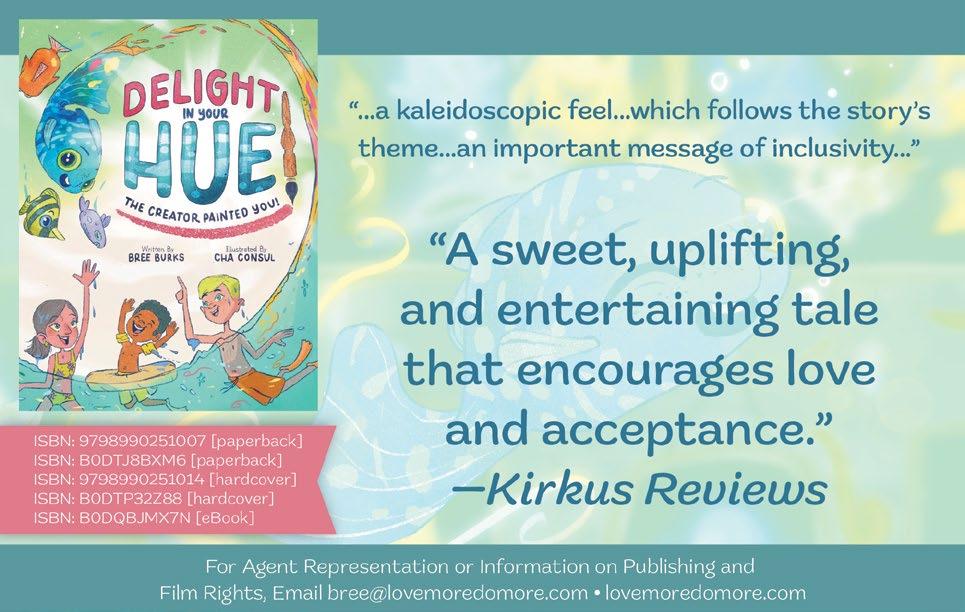
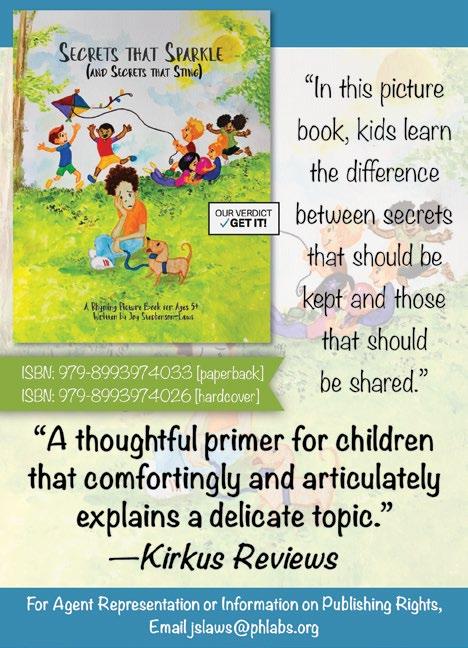
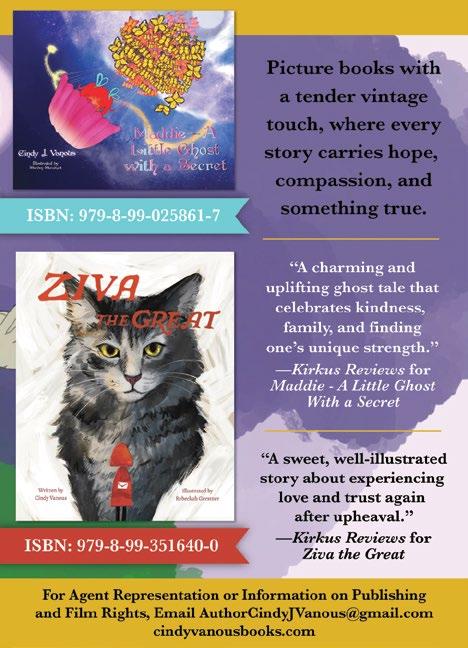
The author/illustrator of The Art of How Dogs Sleep answers our questions.
THE BEDTIME BOOK is a crowded genre, but with her picture book debut, Alison Kim manages to offer an entirely new take. The Art of How Dogs Sleep explains how our fourlegged pals bed down: by finding the perfect spot, getting in lots of stretching, and picking the right sleeping position (possibilities include “the Octopus,” “the Turtle,” and “the Potato”—all hilariously illustrated). It’s simultaneously dreamy, quirky, and adorable. Kim corresponded with us by email.
Peanut is my resilient and optimistic go-getter, who has been the most steady presence since he joined our family over a decade ago. He was my first dog as an adult, and because of him many strangers have turned into friends. Peanut has the magical ability to make any situation brighter. He always goes for what he wants without fear, and when he runs into a rough patch, he bounces back immediately.


Is there a book or an author that influenced your decision to write?
I was fascinated by the tiny Beatrix Potter books in my elementary school library. The combination of her evergreen style, charming animal characters, and unexpectedly small book format inspired me to create stories that bring whimsical energy into the world.
Did you draw inspiration from any real dogs in your life?
I’m inspired by all dogs I meet or observe, but I draw the most inspiration from our own rescue dogs Henley, Peanut, and Oliver. Henley, who has sadly passed away, was my exuberant heart dog. He was a super snuggler, had the brightest smile, and was an expert in convincing other dogs to play. Peanut was always his pillow of choice for naps. Henley taught me how deep and beautiful love can be, and I miss him dearly every day.
Oliver is quite serious most of the time, being a stickler for routine and his own made-up rules. However, when he has fun, he is the goofiest, most charming pup around. He is a connoisseur of cuteness, always taking the time to appreciate adorable things, whether it be a plushy, a pinecone, or a tiny round rock. Oliver prefers his space but is always nearby and leans in to comfort when he senses it might help.
What else inspired you?
I wrote this book during the pandemic, and many of the changes we experienced outside our home frightened Oliver. So I started working with animal behavior specialists and listened to, watched, and read anything I could find related to helping dogs that struggle with fear. I also listened to meditation recordings to help ease my own anxiety. I learned more about how nature, play, and breathing mindfully can reduce fear and anxiety, which influenced the playful and calming nature of this book.
Where and when did you write the book?
The Art of How Dogs Sleep Kim, Alison Little, Brown | 40 pp. | $18.99 April 21, 2026 | 9780316580281
I worked on this book from my wooden desk next to a window surrounded by houseplants. Due to my 9-to-5 job at the time, most of the book was created in the morning before sunrise and during any spare time I had on weekends. Peanut and Oliver were always by my side, snoring away. I embraced my growing desire to work with traditional materials and wrote and sketched the book with my soft graphite Blackwing pencils on 5x7 sheets of white paper and connected the pages with washi tape.
Interview by Mahnaz Dar
The former NFL player’s My Super Duper Me will be published by Orchard.
A new children’s book from NFL alum Malcolm Mitchell is coming later this year, People magazine reports.
Orchard will publish Mitchell’s My Super Duper Me, illustrated by Deise Lino, in the summer. A page for the book on Bookshop.org describes it as “an unforgettable story that celebrates the power and joy of words.”
Mitchell played wide receiver for the University of Georgia Bulldogs before moving on to the same position with the New England Patriots
in 2016. He played two seasons for the team before retiring due to a knee injury.
He self-published his first children’s book, The Magician’s Hat, illustrated by Joanne Lew-Vriethoff, in 2016; it was republished by Scholastic two years later. His other books include My Very Favorite Book in the Whole Wide World, illustrated by Michael Robertson, and Hey, Georgia, illustrated by Chandler Fowler. My Super Duper Me will follow Rhodes, a new student

John Lithgow Discusses
The actor has been cast in a new TV adaptation of the Harry Potter series.
John Lithgow has responded to the controversy over his involvement in the upcoming
HBO Max adaptation of the Harry Potter novels, according to the Hollywood Reporter Last year, Lithgow revealed that he would portray Albus Dumbledore, the headmaster of Hogwarts, the wizarding school attended by Harry and his friends. Other actors signed on to the series, set to premiere next year, include Janet McTeer, Paapa Essiedu, and Nick Frost.
Lithgow’s involvement drew backlash from critics of J.K. Rowling who take issue with the author’s views on transgender people. Lithgow, nominated for an Academy Award for his portrayal of a trans
woman in the 1982 film The World According to Garp, reacted to the controversy during an onstage discussion at the Rotterdam Film Festival.
“I find it ironic and somewhat inexplicable that Rowling has expressed such views,” Lithgow said. “I’ve read about them, and I’ve never met her. She’s not really involved in this production at all. The people who are re-adapting Harry Potter and turning it
in school who lacks athletic prowess and reads slowly. He is mentored by the school librarian, Mr. Burton, who introduces Rhodes to his “Super-Duper Bookshelf.”
Mitchell, the founder of the literacy initiative Read With Malcolm, told People, “I’m deeply committed to helping kids find joy and power through books.… My Super Duper Me lets every kid discover that your own story starts with YOU!”
My Super Duper Me is slated for publication on Aug. 18.—M.S.

For a review of The Magician’s Hat, visit Kirkus online.
into an eight-year-long TV series are remarkable.”
He added, “Of course, it upsets me when people are vehemently opposed to my having anything to do with this. But if you read through the Harry Potter canon, you see absolutely no trace of transphobic sensibility. She has written this great meditation on kindness and empathy and acceptance, which is why it’s so strange to me.”—M.S.

For reviews of the Harry Potter books, visit Kirkus online.

Chuchu Wang


Ham, Leia | Scholastic (320 pp.) | $16.99 May 5, 2026 | 9781546150923
Z enith Academy is everything fire mage Sparrow wanted, until a mysterious illness starts to afflict its most powerful students.
Twelve-year-old Sparrow Xia has always lived in her older brother Ainsley’s shadow. In a world where magic is wielded by children and fades in adulthood, Ainsley’s powerful fire magic has won him near-universal adoration. Sparrow knows that her meager flames are a disappointment in comparison, but she can’t help resenting her family’s open preference for Ainsley. As she starts her first year at the Zenith Academy for Magical Development, which is located on the other side of the United Realms, Sparrow, who’s Chinese, begins to hope that things can change. First, she develops friendships with air mage Lyndon and nature mage Orla, who value kindness more than strength. Then there are the hints that her magic may not be as weak as she’s always believed. When magedrain fever affects the school’s most powerful students, Sparrow embraces the opportunity to solve a mystery and finally win her brother’s respect. Ham’s art augments the impressive worldbuilding and the emotional landscape of her diverse cast. Although the story is set in a fantasy world, the pressure Sparrow and her friends experience in their high-stakes culture of success will feel relatable to many readers. Even when she falters, Sparrow’s struggle to find self-worth beyond achievement is inspirational and healing for anyone
who has felt the weight of perfectionism.
An enthralling, satisfying series opener with just enough loose threads to bring readers back for more. (Fantasy. 9-12)
Harbuck, Ryan Rae | Illus. by Barry Lee
Barefoot Books (32 pp.) | $17.99
April 7, 2026 | 9798888599051
A child who uses a wheelchair dreams of becoming a chair. Vo loves to think and create, rebuilding broken toys and musing on how the world works. But she’s also lonely. Her mom’s busy caring for her baby sister, and her dad’s preoccupied with work. When Vo grows up, she doesn’t want to be “busy like the other grown-ups she knows”; Vo wants to be a chair. Chairs are “cushy in all the right places, wrapping you up when you need it most.” But nobody understands Vo’s dream, so she stops speaking. Realizing eventually that silence doesn’t help, Vo pushes herself atop the “humpiest, bumpiest hill” around and roars: “WHEN I GROW UP, I WANT TO BE A CHAIR!” But after Vo falls from her wheelchair and picks herself up, she realizes that “the chair isn’t her. It’s part of her and always will be. But it doesn’t define her.” Lee’s stylized cartoon illustrations are friendly and expressive; even landforms smile and frown. Vo’s wheelchair grins, casting disability in a cheery light. Unfortunately, Harbuck’s important conclusion feels somewhat abrupt, especially as Vo’s desire to be a chair (“wheelchair” is never specified as Vo’s preferred chair) initially follows her
A visually engrossing representation of feelings in flux.
feeling that her parents are too busy to give her attention—an issue that’s left unresolved and that gives the narrative a disjointed feeling. Vo and her family are light-skinned; background characters are racially diverse.
Well-meaning but muddled. (author’s and illustrator’s notes, dream board activity) (Picture book. 4-8)
Harkness, Andy | Bloomsbury (40 pp.)
$18.99 | May 5, 2026 | 9781547618767
A young boy finds a way to face his fears. Brown-haired, olive-skinned Eddie hates Mondays. He worriedly watches a rainstorm through the window and crawls back into bed with his stuffed yellow bunny. When he opens his eyes again, his bed is gone (an indicator he’s dipped into a dreamscape), but the rain remains (“the sky growled…the air rumbled, low and loud”), and his body reacts in kind: “His tummy twisted. His eyes stung.” Soon, his rabbit appears, larger than life, encouraging Eddie to come along to “find the sun.” A magnificent journey begins as the pair swoop through storm clouds, float down a sparkling river, and head into a “deep and dark” cave. Eddie is scared, but Rabbit assures him that “It’s only in the darkest of dark… that we shine the brightest.” The cave contains shimmering stars, a magnificent moon, and a beautiful garden maze at the river’s end. By moving through fear with a comforting companion beside him, Eddie finds himself ready to face the day. Harkness’ prose has a careful, reflective cadence, but as in previous work, his illustration technique takes center stage—digitally rendered sculpture with the tremendously tactile appeal of molding clay. Color selections set the mood—stormy blue-blacks give way to calmer azure hues and creamy clouds before finally shifting into rich, exultant greens. A visually engrossing representation of feelings in flux. (Picture book. 3-7)
Hatch, Leanne | Holiday House (40 pp.)
$18.99 | May 12, 2026 | 9780823459568
An inflatable killer whale embarks on the adventure of a lifetime.
Finn is mostly content to live out his days in a heated swimming pool with his human family and all his other blow-up friends. Yet at night he wonders what else is out there in the world just beyond the fence. He finally gets his chance to find out when a gust of wind lifts the hapless orca up and out of his comfort zone and into the sky. Flying among airplanes and rainbows, Finn eventually ends up in the deep blue sea surrounded by actual orcas. But the real world is less enticing than he thought it would be. He longs for his family, and soon, fate restores him to the familiar. The inner life of an inanimate childhood playmate is always cause for interest, and this bouncy narrative touches on themes of friends, family, and home—and being careful what you wish for—all set within a reassuring framework. Featuring crayonlike textures, Hatch’s digital illustrations balance whimsy (Finn’s the ultimate fish out of water on his escapades) with more poignant moments. Hatch describes the story’s origins (her family’s pool toy was swept away during a storm) in an author’s note. Finn’s family is brown-skinned; other human characters vary in skin tone. Flying orcas ahead! A tale rich in love, loss, and windborne pool floaties. (Picture book. 3-6)
Hodge, Deborah | Illus. by Karen Reczuch Groundwood (36 pp.) | $19.99 | June 2, 2026 9781779460318 | Series: Wild by Nature, 2
viewers from nearly every page of Reczuch’s close-up, ground-level prairie scenes are leading a perilous existence— victims of habitat loss and, following an estimated 90% decline in population, declared an endangered species in Canada. Focusing on an owl family in Grasslands National Park in Saskatchewan, Canada, Hodge traces the reproductive phase of their annual cycle as they fly up from northern Mexico or southern Texas to find an unused prairie dog or other digger’s burrow, produce large clutches of eggs that, interestingly, always hatch in the order they are laid, and endeavor to keep the blind, flightless nestlings safe from coyotes and other predators by buzzing like rattlesnakes. Young audiences may respond on a deeper level to the visual images of inscrutable owls and the broad sweeps of prairie landscape behind them than to the author’s formal, somewhat stiff narrative. Still, salutes to several reclamation initiatives in Canada and the Global Owl Project headquartered in Oregon close this concerning profile on a hopeful note.
A visually enticing yet sobering glimpse of a unique species in danger. (resources) (Informational picture book. 6-9)
Seahorse Is Furious:
And There Is Nothing You Can Do About It
Hood, Morag | Simon & Schuster (32 pp.)
$19.99 | May 26, 2026 | 9798347109272
A close look at the only owls in the world that live underground.
The small, brown, long-legged burrowing owls gazing beadily at
A sullen aquatic creature is having a terrible, no-good, very bad day. Seahorse awakens with an octopus draped over his face, and things go south from there. He stubs his tail on a shark’s sharp snout and gets snarled in some smiling tendrils of seaweed. Worst of all? “His breakfast is wet. His tail is wet. His eyes are wet.” The aforementioned Octopus tries jollying Seahorse out of his crabby mood, but all the well-meaning cephalopod’s efforts— telling funny stories, singing, and trying
to hug Seahorse—are disdainfully rejected. Even an offer of toast and a cookie is met with resistance, but patient Octopus adds a favorite plate, a picnic blanket, and a beloved bunny stuffie, and Seahorse gradually thaws. Repeating the now-ironic subtitle underscores the change. Clear, solidly hued artwork against bright color-washed backdrops foregrounds the emotional situation without distractions. The very few details (like the fish surrounding a beaming sea star, evoking the sun’s rays) are discreet and delightful. The animals have tentacles and flippers, not hands, but their gestures and expressions are recognizably human. What Hood achieves with Seahorse’s one eye and eyebrow (and rarely, mouth) is marvelous. Octopus is a clear, cheerful crimson, while sad, sulky Seahorse is, of course, blue. On particularly tough days, we could all use this Octopus in our life. A surefire cure for the blues.
(Picture book. 3-7)
Howard, Kim | Illus. by Jaime Kim Anne Schwartz/Random (40 pp.)
$18.99 | April 28, 2026 | 9780593811337
A one-kid protest against oppressive attire— actually, make that any attire.
“On Monday it was decided there would be no more hats. On Tuesday it was decided there would be no more coats.” On it goes until the willful young child at this giddy-making story’s center is barreling around, indoors and out, in nary a stitch of clothing. The kid’s parents, who, like the youngster, appear to be of Asian ancestry, plead and negotiate without achieving the desired result: a non-naked child. But what’s this? A glimpse at an older sister’s fabulous fashions is all it takes for the little nudist to appreciate the expressive potential of apparel—at least for an hour or so. What makes this you-do-you story so wonderfully audacious is that its heart is clearly with the carousing child rather than with the killjoy parents. Part of the book’s humor
is the contradiction between the even-keeled omniscient narration—“And so it was decided that maybe some clothes were okay after all. But then again…maybe not”—and the kineticfrenetic illustrations of a buck-naked child on a rampage. Observant young readers will get a kick out of how Kim, working in secondary-color-heavy digitized watercolors, makes a sport of cleverly obscuring all of the kid’s NSFW body parts—with a cereal box at the grocery store and a placed-just-so cup during an imaginary tea party. An unremittingly funny ode to young children’s lack of inhibition. (Picture book. 3-7)
Hrab, Naseem | Illus. by Kelly Collier Kids Can (40 pp.) | $19.99 | May 5, 2026 9781525314391
Monster loves school but isn’t so keen on the getting-there part.
It’s a rough morning for Monster, who’s steadfastly decided “I will not walk to school today.” Thankfully, Bird, the adult caregiver stand-in, temptingly reminds Monster that it’s pancake breakfast day at school. Drawn by the prospect of a “pepperoni pineapple pizza pancake,” our hero sets out. At every stage, Monster stalls. Kids will enjoy Monster’s antics; adults will nod sympathetically over second potty trips, requests for a forgotten stuffed toy, and strangely slow “LIGHTNING SPEED” skips. They’ll also relate as Bird’s gentle imploring becomes increasingly perturbed: “WHY AREN’T WE MOVING?” Disaster nearly ensues when the pair finally arrive to find “plain pancakes,” but all’s well when other monsters show up bearing the coveted pineapple, pepperoni, and cheese. Bird’s closing words—“Promise me the trip home will be easier”—will inspire rueful grins. After such a kerfuffle, the ending feels a smidge underwhelming, but the journey is engrossing enough that the destination matters less. Told entirely through pithy speech bubbles, Hrab’s narrative is propelled through
oddball humor and strategic use of lines in all caps. Rendered in a matte, desaturated palette, Collier’s jokey illustrations use frequent spot vignettes and exaggeration to comedic effect. Sage green and bulbous, Monster isn’t especially adorable, but our protagonist’s pliable, oversize face, with a lined mouth and inset eyes, effortlessly communicates emotions.
Hop, skip, and “GINORMOUS JUMP” into this amusing expedition. (Picture book. 4-8)
Kirkus Star
Hurme, Maija | Trans. by Mia Spangenberg Enchanted Lion Books (32 pp.) | $17.99 May 5, 2026 | 9781592704798
A young collector reveals the contents of a treasured scrapbook. Clad in overalls and beret, with jet-black hair, a light-skinned child has a unique lens on the world: noticing “lasts.” Narrating in the first person, the youngster begins with “lasts that are firsts,” e.g., “the last moment in Mommy’s tummy.” The design is pleasantly varied. Isolated images illustrate some of the categories: a melting snowman, a final letter from a friend, the last piece of chocolate. Jumping in puddles with GreatGrandma (who can’t remember the last time she did that) fills a double-page spread. There are moments of humor: a bug-infested sausage whose time has passed. Other scenes are poignant: “the last time sleeping between Mom and Dad” before growing too big. Children will pore over this Finnish import, identifying with some experiences (not wanting the dregs of candy at the bottom of the bag), perhaps curious about others (being the last one to enter a sauna). Soft, textured black-and-white panels mingle with an atmospheric watercolor of a sunrise or a series of intricately patterned mugs. Hurme’s skillfully rendered art and thoughtful
text capture the range of emotions children experience, while helping them reflect on their feelings and observations in new ways. She provides space for wondering: about who the flowers are for in the “Very Last Lasts,” then about what lasts readers have found. Children will open this one again and again, smiling, thinking, soaking in the beauty, feeling respected and understood. (Picture book. 5-8)
Isler, Emily Barth | Illus. by Vesper Stamper Abrams (40 pp.) | $19.99 | April 14, 2026 9781419778728
Visits with Great-Grandma Inge are special. Great-Grandma and the unnamed young narrator share delicious treats and drink water from fancy stemmed glasses. Accidentally breaking a glass one day, the child is devastated, but GreatGrandma Inge consoles the protagonist: “What if I told you…that it’s not only good luck to break glass sometimes, but it’s also tradition?” She relates the stories of three pieces of broken glass on her windowsill. The first is a treasured memory: a shard from a glass her now-deceased husband shattered during their wedding ceremony, per Jewish tradition. The second is a piece of glass from Kristallnacht, when Nazis destroyed Jewish homes, businesses, and synagogues throughout Germany, Austria, the Sudetenland. This piece of glass is tinged with sadness, but the event spurred her family to flee Germany; others similarly able to leave “scattered all over the world, like pieces of broken glass.” The third piece is lucky—commemorating Inge’s reunion with her displaced family. GreatGrandma Inge is ever gentle as she relates these family stories, helping the child—and young readers—understand that remembrance of the past can
inform possibilities, choices, and stories yet to be told. Balancing soft washes of color for tender moments with images of glass cracking and shattering, Stamper’s lovely watercolor and gouache illustrations bring life and depth to the events and the pale-skinned characters. Sweet, heartfelt, and altogether wonderful. (author’s note with family photos) (Picture book. 6-9)
Jacoby, Jenny | Illus. by Lea Woo Thames & Hudson (64 pp.) | $19.95 June 2, 2026 | 9780500653814

An invitation to catch the next wave of crewed moon landings. Not linked to any specific space program but bearing a close resemblance to NASA’s upcoming Artemis initiative, this account of a fictional space flight dubs readers “mission specialists” and sends them—accompanied by a racially diverse crew—on an ice-finding expedition to Shackleton Crater near the Moon’s south pole. Along with providing once-overs of the 11-layer spacesuits, massive booster rockets, reusable lander, and other major gear, the presentation goes into unusual detail about more personal items and experiences—from the prelaunch enema and surprisingly varied meal choices to step-by-step instructions for using a space toilet for “Number Ones” and “Number Twos.” In contrast, Woo’s human figures are generic rather than individualized, and she takes a pass on depicting finer details of equipment, control boards (and alimentary functions). Still, from her neatly drawn illustrations, prospective astronauts will come away with a good sense of how such an expedition will be equipped and how it would run from liftoff to splashdown. A diagram of lunar phases accompanies maps of the moon’s near and far sides at the end. Enticing glimpses of near-future return to space exploration. (glossary, index) (Informational picture book. 7-10)
James, Anna | Illus. by David Wyatt Flamingo Books (272 pp.) | $18.99 | $9.99 paper | April 28, 2026 | 9780593691939 9780593691946 paper | Series: Chronicles of Whetherwhy, 2
In this second series entry, more than a decade has passed since Juniper and Rafferty’s adventures.
Elio Gale, 13, a white-presenting animal caretaker for the traveling Circus Astra, enjoys circus life but longs for something new. His risk-averse circus bookkeeper father tries to extinguish his dreams, but adventure soon finds Elio when the circus heads toward the queen’s court, prompting terror from his father. Unbeknownst to Elio, his ma’s pendant, which he wears, holds great power, and in fact, Elio himself may be the key to the island of Whetherwhy’s fate. Escaping with his friend Pom Li, who’s nonbinary, tone-deaf, and recently expelled from Bard School, Elio travels to Thistledown Academy of Enchantment. The pair meet characters from the first book who help them work to protect Elio, the island, and its magic from the nefarious, power-hungry queen. Although invested series fans will appreciate revisiting familiar characters, some may be frustrated by the time jump and change in protagonists. Elio and his friends are compelling, but the narrative occasionally gets bogged down in exposition, drawing focus from the stakes. The frame story again centers on a man who’s narrating the adventure to his grandchildren; while it detracts from the main narrative, it offers moments of emotional validation and sometimes invites reflection on how we engage with stories. A cryptic cliffhanger ending may
leave readers dissatisfied. Wyatt’s illustrations add drama and intrigue. A high-stakes, if sometimes frustrating, magical journey that’s brimming with messages of friendship and acceptance. (map) (Fantasy. 8-12)
Jarvis | Illus. by Chris Judge | Candlewick (32 pp.) | $18.99 | June 9, 2026 9781536251685
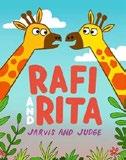
One-upmanship—with an emphasis on the “up”! To the average viewer, twin giraffes Rafi and Rita are identical. They will be quick to correct you on that point, however, since Rafi is the tall one. Or is it Rita? Wild boasts begin with factual accuracy (Rafi says the animals below him “look like bugs”; Rita points out, “They are bugs”), then swiftly veer into extraordinary territory. While Rita explains that “I’m so tall that three people have tried to climb me and had to be rescued halfway up,” Rafi counters with, “I wear clouds as hats. That’s how tall I am. Clouds.” After Rita talks about how “traumatizing” it was to almost be hit by a shooting star, their battle of the brags is interrupted from above. Mama’s there to both put them to bed and to assure them that they are her “teeny-tiny littlest lovelies.” It’s all about perspective. Adult readers should be prepared for the many vertical flips the book physically requires, as the young giraffes’ exaggerations warrant the tallest read possible. Judge’s art relies on thick black lines and bright bold colors. The giraffes may never solve the question of who the tallest is, but readers will enjoy every step of the debate.
Sibling rivalry and braggadocio bolster this droll competition. (Picture book. 3-5)
THREE PIECES OF BROKEN GLASS
OUR FAIR SHARE
Jeanneret, Brenna | Illus. by Michelle Pereira | Gloo Books (32 pp.) | $19.95 July 21, 2026 | 9781962351324
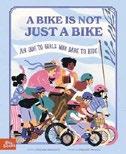
A salute to the bicycle as a tool of liberation for women of the past and present.
“A bike is just a bike,” Jeanneret writes, “unless you were a girl on a bike. Then it was a powerful statement.” Mixing images of modern children on wheels with historical scenes of riders briskly exchanging heavily ruffled skirts for bloomers, pedaling off to work, carrying suffragist signs, and breaking athletic and other records, Pereira depicts a racially diverse cast of girls and women speeding proudly across the pages on bikes of different eras or posing with safety helmets and, sometimes, medals. That exuberance is reflected in the author’s commentary, which mixes scornful references to early bogus claims that bike riding was “unladylike” and could lead to “bicycle face” (a condition made up by sexist doctors), bowlegs, or internal illnesses with gleeful insights about how the bicycle helped, and is still helping, women defy expectations about their proper places and duties. “You’re a champion for equality. You’re creating possibilities.” This paean to progress in gender equality includes nods to transgender and Paralympics champions, too; the book closes with a fuller profile of Annie Londonderry, a journalist and self-described “new woman” who biked around the world from 1894 to 1895. Vigorous and heartfelt. (sources) (Informational picture book. 6-8)
Jette, Sarah Marie | Henry Holt (320 pp.) $18.99 | May 12, 2026 | 9781250413703
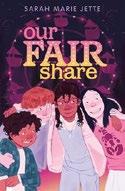
Four friends learn to navigate their own troubles and count on community. Each summer, Cassi, Serafina, James, and Avory return with their families to work at Maine’s Knox County fair, where they partake in fairground traditions they’ve established. But this year, the 12-yearolds find that things are different—and not in a good way. Cassi’s dad did something unethical that she finds humiliating. Serafina has healed physically from a serious car crash, but she’s hiding her PTSD. James is being bullied at his new school, something he’s kept secret. And Avory relied on their strength to compensate for being short, but they don’t feel like “the strongest kid around” anymore. Beloved traditions as simple as flashlight tag aren’t the same as before, and the kids’ troubles shadow them and affect their interactions. The summer feels even more unsettled when they realize that Mr. Mercier, the new fairground manager, is changing things up. Their suppressed feelings build until a great storm hits the fairgrounds. The climactic events lead to a satisfying ending for all. The third-person narration rotates among the four leads, allowing readers to explore each character individually, although some storylines are stronger than others and initially their friendship bonds feel weak. Fortunately, Mr. Mercier’s actions form a cohesive throughline for the plot. The minimally described
characters are racially ambiguous: Avory is cued Latine, Serafina has curly hair, and Cassi and James present white. Despite some stumbles, this story about friendship and courage contains small moments that shine. (Fiction. 8-12)
Jreije, George | Harper/HarperCollins (288 pp.) | $19.99 | May 19, 2026
9780063382299 | Series: Bashir Boutros and the Jewel of the Nile, 2
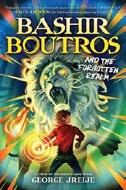
Bashir Boutros and his bonded jinn, Yani, once again face monsters, demons, and other dangers in this duology closer. After defeating the demon Ali Adin and saving the realms, Bashir was hoping for a quiet, ordinary school year. But when a strange girl named Katie and her jinn, Huda, attack him and his friends, Bashir has a sinking feeling that this isn’t going to be. As the danger grows and the Council of the Magi’s secret hideout is discovered and destroyed, Bashir realizes that an even greater danger is looming—one that could destroy everything he and his friends fought hard to protect. Back in a world of Magi, monsters, magical artifacts, and traveling through portals, Bashir, his good friend Farrah, his cousin Wassim, and the friends he made in the previous book must work together to stop Katie and the powerful and ancient “jinn bully” Huda, who are bent on revenge, and save the realms once again. Bashir must be braver than ever, stay true to himself, and not let his anger overwhelm him or dictate his actions. He refuses to turn away from the challenge, trusting in the goodness of others and offering second chances even when others caution him not to. Jreije captures Bashir’s compassion, courage, and love for his family and friends, portraying his Lebanese American identity by immersing
readers in family life, language, and vivid descriptions of food. A thrilling conclusion to a magical and gripping adventure. (Fantasy. 8-12)
King, Wesley | Illus. by Steve Wolfhard Tundra Books (320 pp.) | $17.99
May 5, 2026 | 9781774886458
Series: Beast Ballerz, 1

eruptions of thick brown hair on his face (and elsewhere) get 11year-old Baxter Brooks shipped off to a boarding school for monsters.
Ostracized at school due to episodes of mysterious hirsuteness—and even fangs—Bax lands at Prodigium Academy, which is part of a network of secret monster schools. Better yet, he’s offered a spot on the school’s “beast ball” squad, which hasn’t won a game in 93 years and has a motley assortment of players including a garden gnome and a mermaid. They’re rejects from rival schools, each of which admits only prime specimens of one kind of monster (“Monsters are mad judgy, bro,” admits a troll). They’ve been sneeringly dubbed losers so often that they’ve come to believe it. Besides getting over his own reluctance to admit that he’s a werewolf, Bax works on his teammates’ self-esteem and develops a playbook that leverages their particular strengths, all before an upcoming tournament. Punctuated by pep talks, the ensuing events feature plenty of exciting b-ball action on the way to a literally soaring finish. Despite a tendency to trumpet his themes—the main one being that physical differences should be celebrated, not despised— King concocts an entertaining tale wrapped around a diverse cast of misfits and a wildly anarchistic version of basketball. Wolfhard’s loose line drawings capture the narrative’s lighthearted tone nicely. Prodigium’s residents are diverse in skin color. Message-heavy, but a slam-dunk romp. (author’s note) (Adventure. 9-12)
Klassen, Jon | Candlewick (18 pp.) $14.99 | July 14, 2026 | 9781536248289
Preschoolers, get ready for your first official ghost story. “There is nobody in this house. There used to be
somebody. But there is nobody now.” But is that true? As readers turn the pages of this board book, they pass through an array of rooms. In one, a ghost stands clearly to one side, the unseen narrator pointedly making no mention of it. As the narrative progressives, the ghost continues to peep from within (revealed through cleverly placed die-cuts), never acknowledged, always watching. The effect is both amusing and unnerving—in other words, classic Klassen. For some youngsters, the narrator’s refusal to mention the ghost will be a source of humor (and a chance to yell at the book). For others, it will be just the right amount of creepy, perhaps causing some to question whether a ghost truly is “nobody” at all. To set the mood, Klassen relies heavily on color; the first few rooms are brightly lit in the sun’s rays, but the home grows dimmer as readers proceed. Treating the book itself as a physical location begging to be explored (it’s even shaped like a house), Klassen extends the format beyond its usual limitations, allowing a short story of surprising depth to emerge.
A spooky house tour, unafraid to redefine what board books are capable of achieving. (Board book. 2-4)
Kirkus Star
Klassen, Jon | Candlewick (26 pp.) | $8.99
January 6, 2026 | 9781536248227
Series: Your Things

T he latest Klassen board book to come off the assembly line allures with the freedom of the road.
The first entry in the Your Things series begins with that most sturdy of vehicular transports. “This is your truck. It is yours to have.” You can have it in a variety of colors, “but let’s choose red for now.” You look at the variety of things your truck can carry, though we’ll stick with just a dog (“He is a good dog”). And while it’s true that you could take your truck anywhere, it’s bedtime now, and the truck is going to sleep. This deviation from the previous Your Places series marks a subtle shift into a more direct form of ownership as Klassen places the power of travel directly into a toddler’s hands with the caveat “But not right now.” When is never specified beyond a vague “tomorrow”; the inherent promise in the book is that when the time is right, you will take your truck wherever you wish to go. A previous adoration of trucks proves unnecessary; this story will engender that love spontaneously. Klassen’s watercolor artwork imbues objects and living creatures alike with wide eyes while scaling everything down to the barest of essentials against pure white backgrounds. Imagination shifts into high gear as readers maneuver into this empowering tale. Buckle up! (Board book. 0-3)
Unafraid to redefine what board books are capable of. THE HOUSE WITH NOBODY IN IT
CHILDREN'S
Kraegel, Kenneth | Candlewick (32 pp.)
$18.99 | June 9, 2026 | 9781536234718
Series: Lullaby
Ethereal summertime celebrations are commemorated in a tale both dreamlike and seriously goofy.
On a warm night, youngsters are attentive, listening for a very particular sound that only this season can deliver: “a tiny trumpet trumpeting near and clear, / announcing good news: / The fireflies at last are here!” With wings as dissected and bifurcated as stained-glass windows, they arrive, creating patterns in the sky, “like freeform, airborne, high-flying lace.” After competing in races, taking part in feasts, and boasting and bragging, the tiny insects listen to a single young firefly’s song, then head off to bed, “where dreams of delight / will fill each head.” Presented in an array of vibrant yellows, oranges, and umber reds, these dozy-eyed lightning bugs all exhibit individual personalities. Meanwhile, the surreal landscape envelops readers, harkening back to a time and place that might live in young minds forevermore. The result is a salute not simply to summer itself, but also to communal celebrations. Kraegel’s ink and watercolor illustrations carry all the silliness and humor one might hope to find on a warm July night without skidding into outright chaos and calamity.
A glorious greeting of warm weather delights, all thanks to these nutty little insects in the sky. (Picture book. 3-6)
Lazowski, Anna | Illus. by Jennica
Lounsbury | Kids Can (32 pp.)
$19.99 | June 2, 2026 | 9781525311314
“I’m building a rocket ship out in the backyard. But it feels like something is missing.”
An unnamed, pale-skinned child with a cloud of white hair deals with the loss of a family member, implied to be the youngster’s other parent. The protagonist channels feelings of grief into the construction of an elaborate rocket ship made of cardboard boxes in the empty backyard with the goal of traveling into the dark skies to visit the missing loved one. With help from Dad, the child gathers supplies for the journey and significant objects (“the drawing you always had in your wallet,” “the blanket you never let Bernie sleep on”), leading up to the big moment: soaring amid the night skies. Lazowski’s plaintive first-person text, combined with Lounsbury’s colored-pencil illustrations, captures the youngster’s ups and downs, as well as the isolation of a sudden absence (many spreads feature the child as a lone figure amid a sea of open space in a dark palette). Dad’s initial skepticism at the project gives way to grounded encouragement, demonstrating that everyone’s journey through grief is different and reminding readers not to minimize what others are going through. A thoughtful, considered look at loss that reaches for the stars. (Picture book. 4-8)
Lee, Candace & Eric Newman | Illus. by Leo Nickolls | WaterBrook (336 pp.)
$14.99 | May 5, 2026 | 9780593602751
Series: Order of the Dragon Slayer, 1
In this trilogy opener set in West Virginia, a boy clings to his late father’s dreams. Months after the accident that killed 11 miners including his father, 12-year-old George sneaks back into the cursed Hellerman Brothers’ Mine to find proof of the diamonds his dad believed could save their dying town. Deep underground, George hears otherworldly noises and finds diamonds, a herd of sheep, and an angry Dawn Grady, the only miner to survive the disaster, which left her with facial disfigurement and fury toward George’s dad, whom she blames for what happened. Along with his best friends, foolhardy but loyal Skunks and whip-smart preacher’s kid Artie, George goes camping with the Scouts, seizing the chance to revisit the mine. Fellow Scout Clementine and her pageant queen sister, Flo, join them. The kids discover the mine’s ancient secrets—and new truths—racing to escape life-threatening dangers. Unclear action sequences, a jumbled plot, and a callback-heavy narrative style make the story hard to follow. Most characters read white. Artie, whose family are the only Black people in town, feels two-dimensional. Skunks is “part Cherokee,” and the book draws upon the Cherokee legend of the terrifying serpent Uktena, but there’s little cultural texture to support this element of the story. Dawn’s portrayal unfortunately evokes ableist tropes. Black-and-white spot art by Nickolls that adorns chapter headers resembles Scouting badges. Some readers will note occasional Biblical references but understanding them isn’t necessary for following the story. Disappointing. (Fantasy. 8-12)
A gleeful gallery for any reader with a nose for nature.
WHO’S MAKING THAT BIG STINK?!
Linke, Regina | Little, Brown (40 pp.)
$18.99 | May 5, 2026 | 9780316531252
Author/illustrator
Linke digitally re-creates traditional Chinese gongbi and xieyi techniques for this breathtaking story about a young boy who’s quick to lend a helping hand. Though Ah-Fu may be small, he has a big imagination and a strong sense of confidence. As the book opens, he tells a friendly magpie of his plans “to fly my kite, go for a ride in Grandfather’s oxcart, [and] have a picnic” on this beautiful day. Alas, his kite gets stuck in the branches, and the ox wryly remarks, “Maybe it’s not such a perfect day after all.” When Ah-Fu seeks assistance, however, everyone is too busy, which only makes the child more eager to help out. Cousin Li-Na must prepare sticky rice for the market, Grandfather must run his errands on foot instead of with the oxcart because of a tree blocking the roads, and friend Bo-Lin must return home for his breakfast before he can remove the fallen tree. Struck by inspiration, Ah-Fu shares Li-Na’s sticky rice with Bo-Lin, who quickly clears the road, allowing Grandfather to make Li-Na’s delivery. And Ah-Fu finally gets his perfect day after all. Linke’s thoughtful narrative cleverly reveals the interconnectedness of the villagers’ lives. Her meticulously detailed art—an enhanced realism in gorgeously soft, full color—is a splendiferous delight. Landscapes and characters’
clothing and features suggest a rural Chinese setting.
A stunning reminder that helping others reaps joyful rewards. (Picture book. 4-8)
Low, Ying Ping | Illus. by Yujie Huang Putnam (288 pp.) | $18.99 | May 12, 2026
9798217005086
In this Chineseinspired fantasy world, a young emperor flees a threat to his life and finds an unlikely friend and ally in a hidden village.
Twelve-year-old Wang Kaixuan is shocked to overhear his grand chancellor uncle, Zhang Yu, and imperial secretary Liang Jin planning his imminent murder. Having already lost his parents and older siblings, Kai escapes the palace, heading out into the cold, snowy night. He’s later found lying on the ground by orphan Xu Mengyao, who’s nearly 13. She lives with her older sister in a secluded village in a mountain vale that sees few visitors. The villagers heal Kai, who attempts to hide his royal origins. He eventually confides in Mengyao, telling her the story of the Dragon’s Pulse—wish-granting magic left by his ancestors in the mountains. But at age 13, one stops believing in magic, so he cannot delay. Mengyao longs to become a Divine Healer, someone who won’t lose her magic; she convinces Kai that she’s destined to be part of his quest, and he invites her along. The third-person narration rotates among several characters’ viewpoints, offering different entry points to a world that feels lacking in distinct details. The
resolution of the evenly paced narrative feels conveniently tied up with little conflict or suspense, and the narrative includes extraneous details that bog down the plot. Still, the compelling twists should sustain readers’ interest. Final art not seen.
An anticlimactic adventure that’s elevated by some intriguing surprises. (Fantasy. 8-12)
Lunde, Darrin | Illus. by Erica J. Chen Charlesbridge (32 pp.) | $17.99 June 9, 2026 | 9781623546250
A celebratory pinch of the nostrils to 13 particularly aromatic members of the plant and animal kingdoms. Chen’s animated images depict comically paw-waving or otherwise disturbed-looking wild bystanders asking some variation on the titular question. Lunde begins by highlighting odiferous overachievers—from the fabulously feculent striped skunk to the bombardier beetle (which sprays an irritant from its rear when disturbed) to—representing the plant kingdom— the evocatively named corpse flower. From there he moves on to strong but less offensive tangs such as the binturong’s popcorn smell, the beaver’s vanilla-scented “goo,” and the flowery oil that male ring-tailed lemurs rub on their tails to attract mates. The author admits that the purple clouds emitted by sea hares may or may not carry a smell but do somehow distract predatory spiny lobsters. In the same crowdpleasing vein, he brings his redolent revue to a close with an appropriately waggish salute to the hippo, who flings poop with its whirling tail and so makes the dung hit the fan. Though otherwise naturalistically placed and posed, Chen’s creatures bear almost human expressions, and many are wreathed in visible swirls of funk.
A gleeful gallery for any reader with a nose for nature. (Informational picture book. 6-8)
BABY KRAKEN
Manzanas, Ani | Flying Eye Books (32 pp.)
$17.99 | May 5, 2026 | 9781838740849
A youngster frets about what creatures might lurk within the ocean…until he befriends one of them. It’s Ollie’s first trip to the beach, and despite his parents’ encouragement, he’s too worried about scary sea monsters to take a swim: “What if something tickled his feet? What if something stole his swimsuit?” While exploring safely on the shore, he encounters a stranded baby octopus. Ollie returns the little orange octopus to the sea and, overcoming his fear, spends the rest of his trip swimming and playing with it. After a sad goodbye, the story’s perspective shifts to the little orange octopus, who, it turns out, was actually a baby kraken. Offering a wink to readers, this cheeky tale makes clear that Ollie was happily hanging out with a sea monster all along. Manzanas’ rich, colorful illustrations capture the ocean with all its sparkle and glow, showing water-averse readers that an enticing world awaits below the surface. Details like drops of sweat, hairy legs, and expressive eyes make the characters feel all the more real, and the pages are filled with friendly-faced marine life: sea turtles, pufferfish, rays, and seahorses. Delightfully silly inclusions—a seagull with its head stuck in an upside-down ice cream cone—will elicit giggles. An irresistible tale of beachy fun— with a reassuring message for fearful youngsters. (Picture book. 4-8)
Martín, Alberto | Illus. by Celia Sacido
Trans. by Jon Brokenbrow
Cuento de Luz (32 pp.) | $19.95
May 5, 2026 | 9788410438156
In this Spanish picture-book import, a little house’s place in the world evolves over time. A human family moves into a new home. “The family looked after the house. And the house looked after the family.” The reciprocity and purpose inherent in these lines establish the text’s subtle personification of the house, which carries on throughout the book. In early spreads, accompanying collagelike illustrations depict idyllic scenes of parents, children, and their pet dog playing and picking flowers and apples. There’s a sense of tranquility and abundance created by plentiful flora balanced by open space, but this is lost when a lightning strike damages the house and displaces the family. Subsequent pages show the house abandoned and empty, until animals start to arrive. Then, in a resolution reminiscent of Ted Kooser and Jon Klassen’s House Held Up by Trees (2012), the house becomes absorbed into the natural world, “with a carpet made of grass, curtains made of spiderwebs, and the warmth of life growing inside and outside of it.” Martín’s text sets a meditative tone, evoked by Sacido’s images. The human characters vary in skin tone.
A quiet, contemplative read to invite reflection on houses, homes, and the natural world. (Picture book. 4-8)
Chicka Chicka Sun and Sea: Ready-ToRead Ready-To-Go!
Martin Jr, Bill & John Archambault | Illus. by Daniel Roode | Simon Spotlight (32 pp.)
$18.99 | May 5, 2026 | 9798347104123
Series: A Chicka Chicka Book
Familiar friends at the beach entice burgeoning readers.
In this tale that follows the framework of the classic picture book Chicka Chicka Boom Boom, the letters of the alphabet have a message for one another: “A told B, and B told C… // it is a nice day to sit by the sea!” Page by page, more letters are introduced, frolicking in the sand or splashing in the water—all beneath the fronds of that famous coconut tree, of course. “M, N, and O ride the waves. // P, Q, and R sit in the shade.” A friendly red crab scuttles on each spread (sometimes hiding). Most letters arrive with an accessory; some match the letter’s phonetic sound (“G” has glasses, for instance), but others do not. Fun hats, towels, pails, and happily, a book are also included. A stretch of sand anchors the background, with large swaths of white space on top where the text appears. Each letter has an individual color; some repeat, but never on the same spread. Echoing the original once again, the entire alphabet piles onto the bending tree to watch the sunset—luckily, no one comes crashing down this time. Prefacing this sunny read is helpful information for early readers: boxes containing word families, sight words, and bonus words, along with comprehension questions at the end.
Kids will be eager to ride the reading wave. (Early reader. 4-6)

For more in the Chicka Chicka Book series, visit Kirkus online.
Massey, Haleh | Illus. by Rashin Kheiriyeh
Tu Books (256 pp.) | $19.95 | May 26, 2026
9781643797540
A sixth grader navigates relationships, puberty, and growing up in an immigrant family.
Hangameh
Mansoor, dubbed “Harriet” by her first American teacher, who found her Iranian name too hard, is a star student who dreams of playing professional soccer. Her archnemesis, Sarah, nicknames her “Hairy Man Suit” because of her body hair, but Harriet’s mother has strong opinions, which include no hair removal until high school, modest clothing only, and no boys (never mind that Harriet’s older sister, Noosheen, has a secret boyfriend). Harriet’s best friend, Cathy, gives her a secret makeup session behind the bleachers at a soccer game, but Harriet struggles with going against her parents’ wishes. The family moved to the U.S. so the girls could have more opportunities, and when Harriet fails a pop quiz, her dad forbids her to go on a much-anticipated spring break class trip. The sisters discover that their father’s swap meet camera booth is failing, and they might have to move back to Iran, where their dad was head of an engineering company. Harriet and Noosheen, desperate to avoid this disruption, hatch bold plans to try to stay in Los Angeles. This well-paced laugh-outloud narrative is rich in food references, cultural tensions, Farsi expressions, and meddling relatives. The story thoughtfully explores Harriet’s longing to fit in when her family customs make her stand out. Final art not seen.
A funny, heartfelt tale of cultural expectations, belonging, and speaking up for yourself. (author’s note) (Fiction. 9-13)
McCreight, Cassi | Illus. by Xindi Yan Abrams (40 pp.) | $19.99 | May 19, 2026 9781419779473
A begrudging museum visitor experiences a shift in perspective. After a child spends the morning drawing on the walls and finger painting the cat, Mom decides it’s a good idea to get out of the house. The dreaded destination? “Oh, please, please, please don’t make me go to a place as boring as an ART MUSEUM!” the child laments. Mom is undeterred, and as the pair peruse the museum, pausing to admire sculptures and paintings, the youngster’s skepticism slowly gives way to genuine curiosity. The protagonist’s attitude of affected disinterest (“Art is cool or interesting or whatever”) is belied by an obvious newfound enthusiasm. The child’s first-person narration omits quotation marks for an immersive, amusing stream-of- consciousness, and rhetorical observations—“What is this? Is it art?” “What does that even mean?”—might strike a familiar chord among many museum-goers, young and old. Yan’s soft-edged illustrations on white pages include nods to notable artists like René Magritte, Joan Miro, and Piet Mondrian, with several major art movements explained in the backmatter as “Stuff I Accidentally Learned at the Museum.” Parent and child have light-brown skin; other characters are diverse in skin tone.
A dream pick for art educators and potentially attitude-changing for youngsters dreading a museum trip. (author’s and illustrator’s notes, bibliography, resources) (Picture book. 4-8)
McIntyre, Rick & David A. Poulsen | Illus. by John Potter | Greystone Kids (128 pp.)
$18.95 | April 21, 2026 | 9781778401954
Series: Chronicles of the Yellowstone Wolves
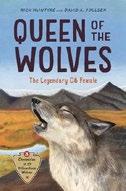
A well-crafted chronicle of Yellowstone’s legendary alpha female wolf. McIntyre, a retired National Park Service ranger with over 100,000 wolf sightings, collaborates with award-winning Canadian author Poulsen in this third installment of the series. Focusing on the remarkable 06 Female and her daughter 926, the narrative skillfully balances educational content with dramatic storytelling, following 06 from her arrival in Lamar Valley (located in the northeast section of Yellowstone) through her establishment of a successful pack, her brilliant hunting strategies, and ultimately an ending that may upset more sensitive readers. Some may find the authors’ anthropomorphizing—inferring wolves’ thoughts and emotions— intrusive at times; however, the ideas remain grounded in decades of behavioral observation. McIntyre’s intimate knowledge shines in detailed pack dynamics: dominance displays, hunting coordination, and the alpha female’s critical leadership role. The prose is accessible yet respectful of young readers’ intelligence, avoiding condescension while tackling difficult themes of human–wildlife conflict and legal wolf hunting. Family trees helpfully track lineages across generations. Detailed, realistic black-and-white illustrations
A heartfelt tale of cultural expectations and belonging.
MY NAME IS HARRIET MANSOOR (NOT HAIRY MAN SUIT!)
add visual interest without overwhelming the text. A worthy introduction to wolf conservation that honors its subject’s complexity without shying from harsh realities. (Nonfiction. 9-12)
Migga, Florence | Carolrhoda (328 pp.) $19.99 | May 5, 2026 | 9798765670927
Three African American girls who are headed into high school wonder if their friendship will remain strong after being separated for the first time over the summer.
Ava, Cat, and Becca are lifelong best friends from Chattanooga, Tennessee, who usually spend as much time as possible together during the summer. Their usual plans implode now that Ava will be going to London, where her professor father will be teaching, and Becca will be off at a phone-free sleepaway camp, leaving Cat home alone. The trio decide to create a scrapbook to commemorate their last summer before ninth grade—and, hopefully, make their separation bearable. Over the coming months, the three friends face challenges that make them reflect on their own identities and their roles in their friend group. Ava’s social media consumption and complaints about being in London cause friction with her parents, but she meets a cute neighbor boy. Becca is nervous about making friends at camp, but she’s invited to join a secret capture the flag group and emerges from her shell. Janayda, who’s “kind of a friend,” invites Cat to go to the movies with some other kids, which leads Cat to a new friendship. The girls’ character arcs reflect true growth and offer a nuanced look at middle school friendships. The story’s strong pacing keeps readers engaged and allows them to connect with the characters separately. An engaging novel about friendship, self-confidence, and trust. (discussion questions) (Fiction. 10-14)
Mihaly, Christy | Illus. by Marta Sevilla Barefoot Books (40 pp.) | $19.99 May 26, 2026 | 9798888599082
Did Christopher Columbus really “discover” a new world? Did the Pilgrims invite the Wampanoag to a friendly First Thanksgiving? Is July 4 truly the nation’s birthday?
Readers familiar with traditional narratives of America’s founding are invited to interrogate those myths in this interactive exploration of early U.S. history. A strong introductory framework asks whose stories endure and whose have been erased from the history books, emphasizing that Indigenous peoples remain part of the present, not just the past. Each spread presents a common misconception, then asks readers to flip assumptions aside by lifting a partial gatefold that reveals the true story beneath. Well-sourced explanations elevate figures and communities often excluded from history books, including women, Black Americans, and Indigenous peoples. Bold colors, graphic-heavy layouts, and energetic illustrations that make creative use of historical photos and images break complex ideas into bite-size pieces that encourage browsing over linear reading. A timeline, speech bubbles, and lift-the-flap “True or False” quizzes reinforce the book’s core message: History is layered, debatable, and dynamic. Though the book’s busy, nonlinear design may prove challenging for some, on the
whole it works very well as an engaging historical overview. The content assumes a foundational knowledge of early U.S. history, making it most suitable for older elementary readers, though some visual choices skew younger. Backmatter includes more historical information and background on the book’s creation.
Playful, provocative, and packed with perspective. (glossary, resources, photo credits) (Nonfiction. 9-11)
Moor, Zewlan | Illus. by Karen Obuhanych Nosy Crow (40 pp.) | $18.99 | June 23, 2026 9798887771168
Animal communication may not exactly resemble a human “hello,” but it does exist in fascinating variety, reflected in this original book. Preschool-age children, diverse in ability and race, arrive with their caregivers at a classroom door: some eager, some reluctant, some demonstratively resistant. They gather for circle time on the green rug, and their brown-skinned teacher shows them pictures of animals. We return to this story frame at book’s end; in between, we glimpse the children’s reactions as they learn about the animals and imitate their greetings: clicking their tongues like a beluga whale, beating their chests and stomping their feet like a gorilla, wriggling and scrunching their brows like a centipede, curling up
A Tina Turner tutorial lovingly entwined in a tale of personal growth.
and stretching out like an armadillo, and more. Back on the green rug, the kids continue to mimic the animals before happily saying “hello” to the caregivers they rejoin. Two final pages provide a bit more animal info (where Moor acknowledges that the aforementioned centipedes don’t really have a greeting). The author relies on balladlike quatrains, with some occasionally unsettling switches of rhythm. Outlines give the kids a bit more solidity than the imagined animals; the faces are cartoonsimplified, but the clear, assorted colors of the art and the active movements assure a lively presentation and audience engagement.
A relatable read-aloud with pizazz. (Picture book. 3-6)
Morris, Liv Mae | Amulet/Abrams (336 pp.) $19.99 | May 12, 2026 | 9781419784613
Series: The Last Dragon House, 1
An intrepid boy becomes an assistant caretaker at a boarding house for dragons. Child labor is the norm in the industrialized kingdom of Aldea, and 11-year-old white-presenting Olly Atwood needs to find a job. When he sees a cryptic notice posted at the employment office seeking a “young person” who’s “unafraid to die,” he figures it’s probably more interesting than his other options—and surely the part about dying is a joke? Upon presenting himself for the position, Olly is introduced to Dr. Lady Abernathy, who has dark skin, and the inhabitants of the boarding house she runs—all of whom are dragons. Dragons have been driven so far into hiding by human hostility that most people are unaware that they even exist. When Dr. Lady is poisoned by an unknown enemy, Olly sets out with several dragons to find the antidote.
In his absence, his 9-year-old sister, Jenny, discovers the Dragon House and her own magical capabilities. The parallels between the treatment of dragons and the treatment of persecuted human groups are unmistakable, in part because the text occasionally highlights them so explicitly as to feel heavy-handed. Despite this, the delightful narration by the unnamed Royal Chronicler, complete with humorous footnotes, makes for an engaging read. Excerpts from books about dragons and Aldean history expand the worldbuilding. Enough questions remain at the end of the story to leave readers excited for the second installment. Humor and heart make the pages of this classic quest story fly. (Fantasy. 9-12)
Mudd, Ebony Lynn | Illus. by Maruga Koops Penguin Workshop (32 pp.) | $19.99 January 27, 2026 | 9798217051229
A girl who wants to be a star like Tina Turner learns that there was more to the singer than meets the ear and eye. Young Shay, who is Black, longs to be a singer, but she can’t help noticing that the ones she sees on TV generally “[don’t] look like her.” After her mom and grandmother tell her about Tina Turner, Shay becomes a total Tina fangirl. She spends years fine-tuning her impersonation so she can shine at the local Tina Turner festival, but on the big day, Shay becomes a tyrant, castigating her friends (and members of her backing band) for not being up to the job. Shay’s grandmother must convince the girl that there’s more to being “like Tina” than hitting the notes and looking the part: Turner practiced Buddhism and raised money for those in need. (In a foreword, Turner’s widower, Erwin Bach, notes that the singer was collaborating on this book
when she died.) Shay’s turnabout follows a predictable arc, but Mudd’s debut shines with scenes involving the girl’s extended family, who have disparate musical tastes; as Shay’s mom points out, Turner’s music is a unifying force. Koops’ mixed-media art is versatile—as commanding as a spotlight when Turner is her subject and warmly inviting when Shay and her family are together in the kitchen, busting a move to Tina.
A Tina Turner tutorial lovingly entwined in a youngster’s tale of personal growth. (more information on Tina Turner) (Picture book. 4-8)
Nelson, Suzanne | Knopf (352 pp.) $17.99 | May 12, 2026 | 9780593567050
Bumps in the road, literal and otherwise, await a newly blended California family bound for Yellowstone National Park in a borrowed camper. Drawing from childhood experiences, Nelson pitches a large cast of sympathetic, relatable figures into situations ranging from hilariously chaotic to (briefly) frightening. Hopes of reuniting with friends at summer camp crushed by her newlywed mom and stepdad’s surprise announcement that they’ve decided to replace their honeymoon with a “familymoon,” 12-year-old Charlotte “Cricket” Merrivale unhappily finds herself packed into a 25-foot RV. She’s accompanied by her younger brother and sister, two younger stepbrothers, Archimedes the sheepdog, and a stowaway snake. Cricket’s distress as she too often finds herself having to ride herd on three active boys, including reckless, angel-faced, 6-year-old troublemaker Newt Buckfort, is easy to understand. Readers with younger siblings will easily connect with her—especially after Cricket herself connects
The Ted Lasso actor will publish a bilingual book, Fútbol Is Life! / ¡Fútbol es vida!
Cristo Fernández will share his love of soccer in a new children’s book coming in 2026.
Scholastic will publish the actor’s Fútbol Is Life! / ¡Fútbol es vida!, illustrated by James Rey Sanchez, this summer, People magazine reports. The book gets its title from his Ted Lasso character Dani Rojas’ enthusiastic catchphrase on the show about an American football coach who takes the reins of a British soccer team.
Fernández, who grew up in Guadalajara, Mexico, played for the city’s Club Deportivo Estudiantes Tecos when he was 15, but his soccer career
was ended by an injury. He acted in short films before being cast in Ted Lasso as Rojas, a forward for the fictional British soccer team A.F.C. Richmond.
Fútbol Is Life! / ¡Fútbol es vida! is a bilingual book that follows Cristo, a young, soccer-loving boy in Guadalajara who learns to appreciate other aspects of his life after an injury leaves him unable to play soccer.
“I hope this book shows kids (and grown-ups) that being yourself—where you come from, your culture, your joy—is

For more celebrity picture books, visit Kirkus online.
your greatest strength,” Fernández told People “Especially in times when the world feels heavy, I hope it reminds families that staying open, trying new things, working hard and dreaming big can always move us forward.”
Fútbol Is Life! / ¡Fútbol es vida! is scheduled for publication on July 7.
—M.S.




EDITORS’ PICKS:
When It’s Your Turn for Midnight by Blessing Musariri (Carolrhoda Lab)
Sashimi by Dan Santat (Roaring Brook Press)
London Falling: A Mysterious Death in a Gilded City and a Family’s Search for Truth by Patrick Radden Keefe (Doubleday)
Yesteryear by Caro Claire Burke (Knopf)
THANKS TO OUR SPONSORS:
50 Secrets Nobody Tells You in Hollywood by Mike Kimmel
The Compass Room by Mark James
Twelve Purposeful Immersions by Jess Barcco
The Last Wizard by Alex Mizgailo
Ruled by Fate by Sam Withrow & Amelia Pinkis
Seventh grader Luna Noon makes art, friends, and amends in The Moon Without Stars BY MEGAN LABRISE
EPISODE 460: SPRING 2026 PREVIEW WITH CHANEL MILLER
Chanel Miller joins us to discuss The Moon Without Stars (Philomel, Jan. 13) on this special episode of Fully Booked , dedicated to the most anticipated titles of spring 2026. “After her zines launch her into the popular crowd, seventh grader Luna must decide what she’s willing to sacrifice to stay there,” Kirkus writes, in a starred review of Miller’s latest middle-grade novel, proclaiming The Moon Without Stars “has the makings of a modern classic.”


Miller’s first children’s book, Magnolia Wu Unfolds It All , was a Newbery Honor winner and an instant New York Times bestseller. Her award-winning memoir, Know My Name, was also a New York Times bestseller. In 2019, she was named a TIME100 Next honoree and a Glamour Woman of the Year; in 2021, she was named one of the Forbes 30 Under 30. She has always dreamed of writing and illustrating children’s books.
This episode of Fully Booked was produced by Cabel Adkins Audio and Megan Labrise. The Moon Without Stars Miller, Chanel Philomel | 256 pp. | $17.99 Jan. 13, 2025 | 9780593624555
Here’s a bit more from our starred review of The Moon Without Stars : “At an age when the awkwardness of simply existing is amplified by puberty, bookish Luna Noon enters middle school in the Bay Area feeling unremarkable. Eager to shed her self-perceived blandness, Luna, who’s white and Chinese American, turns to her closest (and only) friend, Scott Mango, to create zines that will shake things up. Blending Luna’s words with Scott’s drawings, the pair use their zines to bring comfort to students who are self-conscious about things like acne, eczema, periods, sexuality, and phobias. Soon, Luna’s writing catches the attention of the in crowd, who invite her to sit with them at lunch— with one catch. She must leave creative, sentimental Scott behind.…
Authentic and raw, this story is at once a timeless account of growing up and a tale that’s specific to this generation. Readers will empathize with Luna’s sincere attempts to find herself and ache alongside her as she navigates her growing pains.”
In a wide-ranging conversation, Miller and I discuss the inspiration for the book, Luna’s relationship to language, graphic memoirist Miné Okubo, what Miller was like in middle school, her book-signing style, and much more.
Then editors Laura Simeon, Mahnaz Dar, John McMurtrie, and Laurie Muchnick recommend some of 2026’s most anticipated titles.

To listen to the episode, visit Kirkus online.
with sensitive and sensible Egnacio “Ecko” García, a fellow park visitor from Texas who’s home-schooling while on a monthslong cross-country road trip with his moms. Nelson handles the crises and frictions with a light touch: Spats and confrontations eventually lead to apologies and mended fences, and mishaps ranging from falling off a horse into a pile of bison poop to finding a bear inside the camper are more comical than scary. By the end, the Merrivales and Buckforts, who present white, have cemented their bonds and are ready for more adventures together. A rip-roaring road trip. (author’s note) (Fiction. 8-12)
Newhouse, Kara | Illus. by Kate Cosgrove Holiday House (40 pp.) | $19.99 May 5, 2026 | 9780823458462
Inspired by Debra Frasier’s On the Day You Were Born (1991), a tale that intertwines facts about Earth’s origins with the trajectory of childhood development.
As a Brown caregiver hikes and camps with a child sporting toy wings (whose white hair and pale skin suggest albinism), Newhouse’s text relies on a “before you were born” trope, previously popularized by Frasier, to gallop through billions of years of earth science. “Long before you grew cell by cell… / continents formed, / sulfur steamed, / bacteria multiplied, / life evolved on Earth.” The narrative aligns the child’s developmental markers with our planet’s evolutionary patterns. “Long before you took your first steps… / amphibians crawled and hopped to land.” After establishing the existence of bees, mammals, and dinosaurs, Newhouse introduces the giant asteroid whose impact (“BOOM!”) renders the dinosaurs
extinct. Life renews, primates clamber in trees, and brown-skinned early humans start to “build, create, and play.” Cosgrove’s digital illustrations effectively use scraggly crayon textures against backdrops of deep-space black and the blue and mauve of earthly skies. Keyed to the child’s hair, chalk-white drawings depict evolving animal species and human achievements like ships and cities. The evolutionary narrative underpins a loving contemporary family; in one spread, a blissful pregnant couple awaits the birth of the youngster at the story’s center. Below a night sky whose starry constellation resembles the child’s face, the caregiver tucks the little one in. Little readers will come away assured of their place in the world. Both tenderly human and macrocosmic. (author’s note, timeline, bibliography) (Picture book. 4-8)
The Man in Motion: How Rick Hansen’s World Tour Helped Break Down Barriers for People With Disabilities
Nicholson, Lorna Schultz & Rick Hansen Illus. by Emma Fitzgerald | Owlkids Books (40 pp.) | $18.95 | April 7, 2026 9781771476775
When you have a goal, just “keep going.”
In 1985, Paralympian Rick Hansen, who uses a wheelchair (and who co-authors the book), decided to cultivate awareness of disability issues with the Man in Motion World Tour; he would “wheel the circumference of the Earth.” He and a team of friends and professionals set out from a Vancouver parking lot filled with a crowd of supporters. Not everyone believed in him, but Rick told himself that “anything is possible”—a peppy refrain that anchors the narrative. Along the way, Rick and his team raised money to make the world
more accessible for those with disabilities. Through struggles like the loss of his spare wheelchair (right at the start of the tour!), extremely harsh weather, and initial lack of media support, Rick persevered. Sometimes, people would bike, run, or wheel alongside him; songwriter David Foster drew inspiration from Rick and penned the hit “St. Elmo’s Fire (Man in Motion)” after watching a video of his tour. After approximately 24,900 miles (40,000 km), Rick rolled back to Vancouver in front of a humongous crowd, having raised millions of dollars. This well-paced account of Hansen’s tour balances hard facts with emotion, evoking tension and, ultimately, triumph. The art has a childlike feeling, though the page layouts are consistently sophisticated; for instance, one scene represents parts of the tour as a series of snapshots. The visual elements work together well, forming a cohesive whole. A truly moving tale. (note from Hansen, further information) (Informational picture book. 4-8)
Oso, Maisha | Illus. by Courtney Lovett Atheneum (96 pp.) | $17.99
January 6, 2026 | 9781665969468
Series: Venus Washington
Verbal misunderstandings lead to mystery—and humor—in this series opener. When Venus Washington’s grandfather announces that her grandmother has “put her foot in this lasagna,” the youngster is grossed out—and curious. How much of Grandma’s foot went into the lasagna? Is she missing a toe? As she attempts to decipher this puzzling idiom, Venus, who is Black, is supported by a close-knit cast of Black and brown family members and friends, including BFF Summer. (Also tagging along is Summer’s humorless twin, Winter,
who’s Venus’ WEF: Worst Enemy Forever.) While Summer and Winter serve as lookouts, Venus sneaks into Grandma’s room for a closer look at her feet, but when Grandma gets startled, Venus bolts. Next, Venus enlists her hamster Hamsterburger’s help; perhaps he can sniff through the leftover lasagna and find Grandma’s toes? Oso adds a comical and slightly absurd twist that will delight readers. The narrative balances clever wordplay with heart, emphasizing curiosity, problem-solving, and the playful exploration of language. With her literal interpretations and inventive thinking, Venus feels like a modern-day Amelia Bedelia; grounded with specific cultural details, her tale offers a humorous lens on family dynamics and intergenerational communication while inviting emerging readers to think critically about language and laugh along with Venus’ misadventures. Lovett’s expressive black-and-white artwork, interspersed throughout, enhances the text. A winning combination of quirky humor, wordplay, and warm family story. (Chapter book. 5-9)
Owens, R.J. | Illus. by Charnelle Pinkney Barlow | Abrams (40 pp.) | $18.99 May 5, 2026 | 9781949480573
Dreams, both personal and societal, parade on full display. When a young Black girl awakens, she discovers that today’s the day. It’s time for the Black Cowboy Parade, and she’ll be riding the palomino pony Garbo. Trouble is,
she’s a little nervous about riding, just as Garbo’s a little scared of the parade. What starts as a simple exercise in soothing nerves deepens into something more, though, as they pass a memorial for Rickey, the girl’s older brother, and she remembers his words about changing the world with her riding. Soon the family unfurls a banner declaring “NO MORE GUNS,” a clear allusion to how that change might take place. Inspired by both the image of Brianna Noble on her Appaloosa at a 2020 Black Lives Matter protest and the Oakland Black Cowboy Association parade, Owens deftly interlocks social consciousness with a good story brimming with fun alliteration (“Garbo slows down and nods and clip-clops and ticktocks like a clock on the blacktop”). Meanwhile, Pinkney Barlow plays with colorful art and textures, incorporating fabrics into her mixed-media artwork, as when she uses burlap for a horse’s skin. Protest and pageantry go hand in hand in this rousing tribute to equestrian dreams of every type. (Picture book. 4-8)
Park, Linda Sue | Illus. by Robert Sae-Heng Clarion/HarperCollins (80 pp.) | $18.99 `April 7, 2026 | 9780063324633
A class of kids consider their communities. In Park and Sae-Heng’s The One Thing You’d Save (2021), Ms. Chang’s students pondered what they might rescue from a burning house. The children are back with a
A winning combination of quirky humor, wordplay, and warm family story.
VENUS WASHINGTON AND THE LASAGNA DRAMA
new assignment and fresh opportunities for contemplation. The title reveals the game again: Granted the opportunity to give a gift of any size or value to someone, who might you choose, and what would you give? Some kids go simple—a signed baseball or a gaming system for a friend—while others consider their recipients’ special talents, like a restaurant where an abuela can share her delicious Honduran baleadas with the world. Many kids’ responses display an acute understanding of the challenges facing the adults in their lives—imagining a comfy chair for an exhausted building super or plane tickets for school staff who can’t afford to visit family abroad. SaeHeng’s quiet, evocative images of both grief and gifts imbue meaning in scenes as small as a lost sibling’s photo and as sweepingly grand as the Himalayas. Subtly following the concept of sijo—a Korean three-line syllabic verse form—Park’s novel gives youthfully meandering thoughts structure while still allowing them to flow freely. Names and other details suggest a diverse student body; some of the gifts chosen gesture toward economic diversity as well. A well-paced, insightful exercise in observation and empathy. (Verse fiction. 8-12)
Patel, Khushboo | Illus. by Tara Anand Levine Querido (40 pp.) | $19.99 March 3, 2026 | 9781646146307
A youngster finds a way to heal after sexual abuse by a mentor. Shreya loves art class, including her teacher, Mr. Rao. When she wears her favorite brightly colored dress to school on her birthday, she is overjoyed that he wants to paint her portrait. But once she is alone with him in the art room, Mr. Rao kisses her and tells her to keep it a secret.
Shreya feels ashamed that she didn’t say no or tell a trusted adult—all things she’s been told to do if someone makes her feel uncomfortable. As Shreya makes her paintings drab and ugly to avoid standing out, Anand’s expressive illustrations turn dark and shadowy, reflecting Shreya’s turbulent emotional state. Finally, another girl reports Mr. Rao to the principal, which empowers Shreya to tell her mother what happened. Color begins to return to the illustrations. The next time Shreya goes to art class, Mr. Rao is gone. Standing beside her classmate and looking at a blank canvas, Shreya realizes she can begin to paint in color again. Patel deals with a devastating topic in a direct but age-appropriate way; importantly, she normalizes the complex feelings and reactions that youngsters can experience in the wake of abuse even after receiving education about consent, and she models a truly supportive and loving adult response. Shreya and her mother are brownskinned and of South Asian heritage. A carefully crafted opening for difficult but important conversations. (resources, social worker’s note) (Picture book. 5-10)
Patel, Meenal | Kokila (40 pp.) | $18.99 May 5, 2026 | 9798217003198
The gift of a journal prompts a youngster to ponder the origins of stories. Accompanied by a younger sibling, Avni packs the notebook and walks a wooded path to visit their Masi
(Hindi for aunt). Avni wonders where stories live. What tales lie in a river’s bend, a butterfly’s wings, or the rings of an ancient tree? At Masi’s home, the children draw, create family trees, reminisce over old photos, and cook a family recipe. Avni reflects that stories spring from a need “to create and a wish to share, / the observed, / the imagined, / the remembered, / the unseen, the unknown.” Masi answers Avni’s questions on the walk back home. “What stories live in a journal?” “What stories live in a dance?” “What stories live in us together?” That night, Avni falls asleep content in the knowledge that stories also live in books and our dreams. The introspective tone of Avni’s questions is reflected in the treasures the child encounters in nature. Leaves, butterflies, roots—all are a repository of stories. Patel’s use of soft colors reverberates with a sense of peace and a deep-rooted connection to nature, to family, and to moments of togetherness. The family is brown-skinned and cued as Indian. Sure to spur wonder and contemplation—and to inspire young writers. (Picture book. 4-8)
Polak, Monique | Kids Can (264 pp.)
$19.99 | May 5, 2026 | 9781525313769
When 12-year-old Cyril Milligan posts an advertisement in a coffee shop bathroom, he begins a journey that redefines his understanding of family.
Cyril and his single mother, Tina, live in an apartment in Montreal. Cyril’s
Sure to spur wonder and contemplation—and to inspire young writers.
mother used a sperm donor to start their family—the source of his red hair and dust allergy. Cyril doesn’t have grandparents in his life—his mom grew up in foster care—but the two of them have Lonnie, who’s Tina’s best friend, and the Kushnirs, a family of Ukrainian refugees who live downstairs. Tina dreams of owning a home but can’t afford one on her teaching salary. When she finally decides to stop visiting open houses, Cyril secretly comes up with an unconventional idea. He creates an advertisement seeking someone who needs companionship and household help from Cyril and Tina in exchange for their inheriting the property upon the homeowner’s death. An elderly man named Mr. Hartt responds, and their email exchange leads to a one-month trial—after Cyril, with Lonnie’s help, overcomes his mom’s initial resistance. Tensions arise as cantankerous, intolerant Mr. Hartt struggles to let others in. Cyril’s first-person narration underscores his confrontation with the harsh realities of aging. Through empathy and kindness, the three become a family, facing life’s challenges together. The unhurried pace allows for rich character development; the cast members’ complex emotions and challenges showcase their realistic flaws, strengths, missteps, and successes. Main characters read white. A well-executed celebration of chosen family and diverse family structures. (Fiction. 9-13)
Richardson, Melissa Seron | Illus. by Edel Rodriguez | Little, Brown (40 pp.) | $18.99 May 12, 2026 | 9780316570374
A father’s love and determination inspire a child’s hopes and dreams. Small, lightskinned hands rest atop large, brown ones etched with years of hard labor, set against a blue-sky backdrop. “My papi’s hands / are bigger than / mine. / Darker, / poderosas, / calloused.” As the unnamed child narrator proudly
notes, Papi’s hands help erect cities, build roofs, set up walls and shelves, and establish communities. His hands, it turns out, also “are playful, / funny, / magical,” able to pull Mamá in for a dance, beat music on drums, and stir love. Much like a wistful daydream, Richardson’s vivacious, warm verses illuminate the unbreakable, rich bond between parent and child, nourished to its fullest potential. Scenes of domestic bliss and altruistic communities encourage readers to consider brighter possibilities, even as the hard facts of reality creep in: “My papi’s hands / get tired— / from work, / from worry, / from hate.” (Accompanying images reference the bigotry that many migrants experience.) Rodriguez’s textured artwork boasts vivid colors and strong line work, dominated by greens that depict verdant landscapes. Thanks to Papi’s hands and the fruits of their labor, the young narrator rejoices in the prospect of a brighter future built together—all in all, a rosy, relevant message with a Latine family at its center. A brief glossary elucidates the occasional Spanish words that crop up.
An alluring call to paradise hard-won. (Picture book. 6-8)
Riew, Julia | Quill Tree Books/HarperCollins (320 pp.) | $19.99 | April 28, 2026
9780063294073
A girl faces her fear of the water and a furious undersea Dragon Queen in this fantasy based on the Korean tale “Shimcheong.”
Shim Jung lives on Haemin Island in the fictional land of New Samhan, which “lives somewhere between” the cultures of South Korea and the U.S. Lively, list-obsessed narrator Jung occasionally breaks the fourth wall to address readers directly. Early on, she shares her “Super Foolproof Five-Prong
A father’s love and determination inspire a child’s hopes and dreams.
MY PAPI’S HANDS
Plan” to excel academically so she can “become a globe-trotter and live a worldwide life of awesomeness.” She’s also preparing for the Dive, a rite of passage for 12-year-old girls: Whatever they emerge from the sea clutching is said to predict their futures. But Jung developed a phobia of the water after her mother’s presumed drowning death—her body was never found— and she’s unable to complete the dive or even take ferries to the mainland with friends, let alone pursue her dream of studying abroad. Later, a humiliated Jung runs out into a storm after hearing Umma’s voice call to her from the ocean. She plummets into the water and wakes up in the Dragon Queendom. The intrigue and pace build when Jung meets the rebellious Prince Jae, and the duo attempt to escape. The placement of Jung’s lists sometimes feels superfluous, but the story skillfully and sincerely balances themes of family and facing fears as Jung continues to follow the mysterious voice and finds her courage in time for a satisfactory resolution. A lively folktale-inspired adventure. (Fantasy. 8-12)
Rockwell, Lizzy | Christy Ottaviano Books (40 pp.) | $18.99 | $9.99 paper | May 5, 2026 9780316581219 | 9780316581226 paper

A user’s manual that explains the why of self-care. From the first page, upbeat language directly addressed to a child celebrates four “fabulous” features of bodies that need to be kept
clean: skin, teeth, hair, and nails. Rockwell goes into detail on each of these attributes: basic biology, what it does, and how to care for it. We learn what microbes are and how we can protect ourselves from harmful ones, what makes hair straight or curly (and how to treat lice), why flossing and brushing are important, and much more. The smiling children depicted—all students in the same class—are racially diverse; one uses a wheelchair, one has albinism, and several wear glasses. Rockwell’s warm, realistic watercolor, gouache, and pencil art shows kids actively caring for themselves—combing their hair and bathing—and adults assisting with essential parts of care (trimming a youngster’s fingernails, bandaging a cut). The illustrations go into great detail at times—for instance, a closer look at the skin’s layers or a tooth’s structure. Incidental rhymes and rhythm add interest and reinforce the positive message: “To be the best you is not hard to do.” A final spread offers a glossary and resources for parents and extends the care advice to eating healthy food, exercising, getting enough sleep, staying up to date on vaccines, and taking care of emotional health. There’s just enough science, and the advice is concise, clear, and attractively presented. Engaging, informative, and accessible. (Informational picture book. 4-8)

in natural realities.
OTIS
Roman, Dave | First Second (224 pp.)
$14.99 paper | May 5, 2026
9781250830296 | Series: Unicorn Boy, 2
An ultra-exclusive slumber party threatens to turn a unicorn-horned kid’s world upside down. When we last left Unicorn Boy—also known as Brian Reyes— he had embraced his heroic mission and swallowed the snarky king of the underworld in order to defeat him. Now Brian and best pal Avery (superhero alias Cat Angel) are bugging bullies and trying—unsuccessfully—to wow blasé classmates with dramatic transformations and flights around town. Unfortunately, Brian’s also dealing with his infernal nemesis grumbling at him from the depths of his own tummy. A glitterfilled invitation to a unicorns-only slumber party might be just the ticket to help Brian embrace his unique identity and understand more about his powers, so he accepts. Arriving at the party, he meets four horseunicorns and one cyclops-unicorn, and the group tentatively bonds. Meanwhile, in the “real world,” curious researcher Avery/Cat Angel visits a magical library and uncovers a secret that suggests that connectioncraving Brian might have walked right into a perilous trap. Extensive scene-setting and plenty of pillowfighting precede the story’s central conflict, slowing the narrative somewhat compared with the first installment, but an amusing community of special
kids and strange creatures continues to nudge Brian (and probably Avery, too) down the road on their winning hero’s journey. Brown-skinned Brian, blond, pale-skinned, gender-fluid Avery, and the quirky characters they encounter are illustrated in a cleverly cute, brightly colorful style.
A satisfying chapter in the ongoing adventures of a cool, endearing superhero. (Graphic fantasy. 8-13)
Ruiz, Delia | Illus. by
Aguilera Charlesbridge (32 pp.) | $17.99
March 24, 2026 | 9781623546304
Maricruz’s papi works long hours during the week. On weekends, however, he’s home and ready for their special outings in his trusty pickup truck. Maricruz takes charge of the grocery list as they head to the store, and Papi makes sure her seatbelt is fastened, just one of the many small ways he shows his love. Maricruz treasures their time together: visiting her tía’s house, cruising around the courtyard plaza, and driving through a muddy arroyo. Throughout the day, Papi quietly demonstrates his affection through gentle words and thoughtful behaviors. Though he never says “I love you,” his care is unmistakable. Centering Maricruz’s perspective, this is a heartfelt reflection on how love can be shown through actions rather than words. It’s a warm reminder of the value of quality time with a parent. Aguilera’s vibrant, richly colored illustrations bring the day to life, capturing both the beauty of the landscape and the warmth of their
father/daughter bond. Ruiz’s author’s note at the end introduces the concept of love languages and explores the different ways people show they care about those they love. Maricruz and her papi are Latine, with brown skin and hair; Spanish vocabulary is woven naturally throughout the text.
A tender celebration of love expressed through everyday moments.
(author’s note) (Picture book. 4-8)
Scanlon, Liz Garton & Martha Brockenbrough | Illus. by Stephanie Laberis Beach Lane/Simon & Schuster (40 pp.)
$19.99 | May 5, 2026 | 9781665970815
An elder does things his own way. In this playful ode to both snoozing and snacking, an old, slow bear named Otis faces the tremendous challenge of awakening from hibernation and eating enough to bulk up for next winter’s sleep. Scanlon and Brockenbrough’s prose is direct and intentional; in winter, Alaskan bears “do not drink. They do not eat. They do not venture into the snow-white world.” When they wake, “do they still know how to be bears?” Happily, they do! They emerge from their dens to push and play and fill their empty bellies with salmon—to “grab and gobble and sometimes fight.” Otis, however, snoozes deep into summer, when he hobbles out “skinny and wobbly and old.” Eating is essential for Otis’ survival—“if he doesn’t get fat, this will be his final summer.” Otis does things his own way; between meals, while other bears frolic, he rests, knowing that “what does matter is being a bear in his own way, in his own time.” When summer ends, he is enormous and glorious—“the heartiest, fattest of all.” Laberis’ illustrations celebrate nature with grace and humor— rabbits, moose, butterflies, bees, and
half-consumed salmon abound. Scanlon and Brockenbrough drew inspiration from an actual large, elder bear observed in Katmai National Park; backmatter discusses the real-life Otis and introduces the essentials of hibernation. An engaging, humorous tale cleverly grounded in natural realities. (Picture book. 3-7)
Simmonds, Kathryn | Illus. by Alison Brown Bloomsbury (32 pp.) | $18.99 | May 12, 2026 9781547618262
In this U.K. import, spring cleaning evokes laughs instead of groans. Awakening from their slumber, 20 bright-eyed adult bears and cubs stretch, discard eye masks, brush their teeth, eat breakfast, and prepare to refresh their quarters: a cozy, cluttered suburban cottage. Simmonds counts each bear as everyone pitches in with cheery grins (“1 begins to sweep the floor / 2 decides to lend a paw,” “7 starts to paint the gate. / 8 arrives—DON’T TOUCH! TOO LATE!”). But as every task is tackled, small bears eager to help undo the bigger bears’ work. Luckily, the grown-ups have bear-size patience. A break for “tea and cake” restores cheer, but returning to work heightens the havoc until little Bear 20 decides to grab her hoop and head outside for playtime. Without further ado, “all the bears are in the sun— / lots of bears and lots of fun.” Dancing, singing, and savoring ice pops, they leave behind “one BIG MESS!” Simmonds’ rollicking verses recount the well-meant mischief, and a couple of Britishisms add charm. Brown’s lively line-and-color art brims with personality, differentiating each numbered bear (among them polar bears and pandas); their names are provided at the start. Super-large type supports reading as well as counting.
The happy abandon is contagious: Clumsy mistakes are just hilarious here. And for extra fun, spot the spider-spectator on every page! Bears by the score make clean-up no chore, but chaos galore. A grand time for all. (Picture book. 2-5)
Skrypuch, Marsha Forchuk
Scholastic (320 pp.) | $25.99
April 21, 2026 | 9781546104599
Series: Kidnapped From Ukraine, 3
T his third series entry continues the story of the Ukrainian Popkov family: twins Dariia and Rada and their father and mother. Rada and her mother are now refugees, sheltering in a ski village in the Carpathian Mountains and slowly rebuilding their lives, but Dariia is missing and their father has been captured by the Russians. The book opens in November 2022 with Rada’s point of view. She learns that Dariia is still alive, living near Moscow with a Russian family who treat her “like a prisoner and a servant” (this information was revealed in the first book). Rada and her mom begin plotting how to get her out. The book provides much detail about the tight community the refugees form as they cook and eat together and celebrate holidays in traditional Ukrainian fashion. The second half is told from Dariia’s point of view after she’s been rescued. The sisters are grateful to be together again but occasionally snipe at each other like ordinary siblings. Character building isn’t this story’s strong suit, however: The twins don’t come across as two distinct people, and the dialogue is flat and doesn’t fully convey the characters’ emotions. This work emphasizes the sovereignty of the Ukrainian people and, crucially, shines a light on their plight, but repetitive elements undercut the tension.
An important story to tell, but the execution could have been more polished. (author’s note, maps) (Fiction. 10-14)
Slater, Dashka | Illus. by Myo Yim Random House Studio (40 pp.) | $18.99 June 30, 2026 | 9798217028320
An elderly fisherwoman and a young child join forces in hopes of making a great catch. “The news spread like wind through the trees: The Big One was close to shore.” The townspeople have been trying to land the elusive fish (the type is never stated) for years. When young Marina—“the smallest of the town’s children”—asks Nana (“the oldest of the town’s elders”) if she can join her in her pursuit, Nana agrees, but the other fisherfolk are dismissive: “Are you sure you have the grit and the gumption?” Undeterred, the duo set off in Nana’s little boat. Nana steers while Marina scouts. Across their multiday mission (they do go home at night), the pair swap out their insufficiently seductive bait and try a new fishing spot, and their dedication leads them to a sea creature who outshines the Big One. Young readers will pick up on the book’s message: Achieving greatness isn’t dependent on age or physical might. Winningly, the book seems to be narrated by an old salt (“There was nary a nibble on their rose-ripe peach”). As befits a tale betraying no evidence of the digital age, Yim takes an analog approach to her art. Her dainty pastel-and-pencil illustrations, some of them frame-worthy, capture village and nautical details; collaboratively, the images offer a front-row seat to the fishing life. The protagonists are tan-skinned; their community is diverse.
A quietly triumphant intergenerational chase story. (Picture book. 4-8)
DESTINY INK
Sokunbi, Adeola | Nosy Crow (96 pp.)
$12.99 | April 14, 2026 | 9798887771526
Series: Destiny Ink, 1
Destiny is frightened of nighttime monsters—until she meets one. Writing for youngsters ready to move into chapter books, Sokunbi introduces a buoyant young Black doodler who is never without her drawing notebook and almost never without her pet hamster, Fuzzy. An invitation to a first backyard sleepover with best friend Olivia has Destiny feeling like she’s got a butterfly party in her tummy. But comforting words from her mom and a practice run in her bedroom that night with a bed sheet over a drying rack dispel her fears— particularly after she meets timorous, three-eyed Trog, who is scared of humans, clutches a comfort fuzzball named Furbs, and looks like a tomatillo on legs. Realizing that her thoroughly nonfrightening new friend is also terrified of the dark, Destiny knows she has to be brave, so she leads him outside to look at the stars and shine a flashlight into the shadows. The next morning, there’s no sign of him, but she’s ready for an “INKTASTIC” (to use her frequent watchword) time with Olivia. The line drawings and doodles that festoon the pages look less spontaneous or childlike than the chatty narrative sounds, but the young doodler shines with personality and, more often than not, confidence. Human figures have skin the color of
the page; straight-haired Olivia presents as white.
Anxieties dissolve in a wash of cozy reassurance and emotional support. (drawing lessons) (Chapter book. 7-9)
Strasser, Susanne | Gecko Press (24 pp.)
$12.99 | February 3, 2026 | 9798765689158

An errant ball leads to endless fun. In Strasser’s board book, cumulative, controlled text combines with colorful cartoon drawings chock-full of visual cues to support decoding. To start, “Duck’s playing ball.”
An illustration shows Duck on the left-hand side of the spread, kicking a red-and-white ball across the gutter and past a soccer goal. As the ball sails by, a snail crawls up the goal, but it’s a sleeping owl on the right-hand side who appears in the next scene. The ball startles the owl awake, and it descends to run with Duck after the ball. A predictable pattern is established wherein the ball somehow disturbs a creature on the right-hand side who then joins those from previous spreads on the subsequent left-hand side of the following spread to chase the ball. Cumulative text adds each creature to the list until “Duck runs. Owl runs. Spider runs. Dog runs. Rat runs. Everyone runs after it.” Then they halt, spying an alligator as the ball bounces into the water. “Uh-oh” turns to “Phew!” when the creatures realize the gator is a child’s floating toy. But then the blond imp (who has skin the white of the page) kicks the ball, and they all run after it, back to the soccer goal, where the snail has made slow progress to the top. Strasser evokes a sense
of joyful chaos that will immensely appeal to the target audience. Run to put this book in the hands of youngsters. (Board book. 2-4)
Swaminathan, Priya | Simon & Schuster (272 pp.) | $17.99 | May 19, 2026 9781665981323
With her leukemia in remission, 12-year-old Indian American Deepa Chandra longs to return to normal life after missing out on sixth grade. But between navigating her parents’ protectiveness and pretending to feel better than she does, Deepa finds herself struggling to cope. It doesn’t help that being mostly bald makes people mistake her for a boy and the strict rules she has to follow to stay healthy are affecting her friendship with her bestie, Renée, who went from anxious about middle school to super popular while Deepa was home-schooled. After going on a house call with her beloved physician uncle, who’s cued gay, Deepa channels her fascination with Uncle Jai’s work into becoming a medical detective, helping him deduce the mysterious ailment plaguing 17-year-old Tayo Pratt, a Nigerian American tennis champ. Before long, Deepa finds herself lying to her parents, sneaking around Los Angeles looking for clues, and more. Along the way, she finds unexpected allies—quirky vegan classmate Manu, a boy with a penchant for eyeliner and combat boots; pop idol Willa; and even the formidable Lola, who Deepa fears is stealing Renée away. Packed with diverse, relatable characters, middle school drama, and hilarious banter between Deepa and Uncle Jai, this is a book with heart. Narrator Deepa has a voice that’s fresh and funny and will have readers rooting for her as she faces challenges with grit and humor. Debut author Swaminathan also clearly and engagingly explains the process of medical diagnosis.
Infectiously entertaining! (Fiction. 8-12)
Tobin, Paul | Bloomsbury (272 pp.) | $10.99 paper | May 5, 2026 | 9781547615780
Series: The Versus Series, 3
A new Versus battle pits Trainer teams Amos and Lilly against Tradd and Joon with brandnew monsters to enter into battle.
Amos Funada and Lilly Concannon, now 13, have been training their newest monster, a zombie named Tulok, to take on a closet monster in their next Versus battle. As Trainers in the Crafters Guild, Amos and Lilly work with monsters to bring them into the modern world, help them safely integrate into society, and train them to fight in epic monster battles. Tulok, an Inuit zombie who specializes in martial arts and possesses tremendous speed, is a seemingly perfect monster to fight with. Opposite Amos and Lilly, 11-year-olds Tradd Risso and Joon Baker have been training Creak, a closet monster who’s able to bring nightmares to life and make doors materialize out of thin air. Only through the Versus battle will they find out who’s truly more powerful: the zombie or the closet monster. This latest installment continues to be consistently funny and engaging to read. With fast pacing and nonstop action, this read, which is populated with a strong cast of ethnically diverse human characters and a variety of creative monsters, is enjoyable from cover to cover. Returning readers will notice and appreciate some plot throughlines from the earlier two entries.
An entertaining new battle that’s worth diving into. (Paranormal. 8-12)

Enjoyable from cover to cover. An entertaining new battle worth diving into.
MY ZOMBIE VS. YOUR CLOSET MONSTER
Kirkus Star
Trevino, Charles | Illus. by Maribel Lechuga Charlesbridge (32 pp.) | $17.99
May 12, 2026 | 9781623546151
A celebration of summer and sailing—with some surprises. As in Seaside Stroll (2021), Trevino limits his lexicon to a smattering of alliterative s-words that describe a small sailor’s excursion with a grandfatherly “skipper.” Before dawn, the pair board a little sloop-rigged sailboat under scarlet canvas. In the near-darkness, the “stowaway” spotted on the prow first seems to be a “skunk” (“Scat! Scram!”) but turns out to be a tan-and-white pup that leaps overboard but is soon fished out. The sunrise is “spectacular!”; at lunchtime they land on a pleasant island. A “sudden squall” sends them scrambling, but it soon passes, and all three slumber in the sun. Waking, the dog sniffs and strides to the empty slip: The boat has drifted off! When the humans find themselves “stranded!” they are stunned. But they spot the stowaway swimming with the painter in its mouth, towing the boat back (a helpful wind billowing the canvas). The three sail off, the boat’s name, Serendipity, having proven prophetic. As in the earlier book, the selection of words is sensitive and effective: Clear sans-serif type makes many of them suitable for early reading. The humans are tan-skinned in Lechuga’s realistic, colorful visuals, which blend full-bleed illustrations and a few vignettes, perfectly matching the text’s simple, lovely spirit, conveying both serenity
and suspense. The subtle, silent bonding of dog, child, and caregiver is especially sweet.
Spare, satisfying, sibilant storytelling. (Picture book. 3-7)
Ulaine, Paul | Illus. by Todd Detwiler & Pier Giuseppe Giunta | Chronicle Books (240 pp.) $29.99 | May 5, 2026 | 9781797236643

A dive into the wild and sometimes wacky worlds of association football and related games. Notable for breadth if not depth, this colorful overview aims to keep both new and confirmed fans of “the beautiful game” riveted with sustained flurries of loosely organized pictures and short entries. Basic guidelines to field positions and modern rules lead to a sweeping survey of the world of professional play, with profiles of 10 soccer superstars (five men, five women), select record holders, 10 popular European clubs, and major international tournaments. Interspersed features include galleries of team shirts, celebratory dances, similar competitions from antiquity and other cultures, and modern variations like Robot-Ball and Motoball. The book covers how rules and balls have evolved over time and includes an assortment of soccer bloopers and weird incidents (like a 1954 match in Florence that was suspended following a UFO sighting). All of this information comes with a generous mix of diagrams, spot illustrations by Detwiler, and photos of racially diverse children and
famous players. Giunta’s comics, featuring a newly formed squad of young animals who are learning how to play together, feel more like intrusions than necessary interludes. Still, the whole package has the quality of a pep rally and will benefit from young readers’ rising interest in the sport. Broad and effervescent. (index, photo credits) (Nonfiction. 8-12)
Uss, Christina | Holiday House (176 pp.)
$18.99 | March 3, 2026 | 9780823456352
A spoonful of mysterious, fluorescent-green mustard has left Kaz Jakobsen unable to sleep. When the Jakobsen family moves to Philadelphia, Kaz is upset at having to leave his friends and depressed to realize that maybe they weren’t such good pals after all—none of them seems eager to stay connected. Kaz worries that he’s boring and destined to be friendless. When sampling the mustard at a local bagel shop leaves him chronically sleepless, those suspicions seem to be confirmed: Kaz is boring company and consequently bored out of his mind when left to his own devices all night, every night. Luckily, his parents take him to the local hospital for a sleep study, and Kaz meets fellow insomniac Floyd, who treats their shared sleeplessness as a chance to fit more living into life. Finally, a friend! Unfortunately, Floyd’s fantastical ideas for staying entertained at night tend to go spectacularly off the rails, and Kaz is pulled along in his disastrous wake as the two of them embark on a fast-paced series of midnight misadventures featuring cheese-fries- gobbling skunks, screaming fennec foxes, and ghosts at Independence Hall. Though the novel occasionally substitutes over-the-top zaniness for genuine
humor and swings wildly between relatable and outlandish, readers who enjoy a wild ride will be pleased. Physical descriptors are minimal. An enjoyably off-the-wall tale of friendship and self-acceptance. (Fiction. 9-12)
Uyemura, Brandi-Ann | Illus. by Amy Matsushita-Beal | Holiday House (32 pp.)
$18.99 | March 17, 2026 | 9780823452200
Dance with the ancestors at the Obon festival!
A child of Japanese descent dons a peach kimono and yellow obi; red paper flowers festoon the young narrator’s hair. Our protagonist is excited to attend the Obon festival with Grandpa Jo. But once the child sees him joining the other dancers, who move smoothly and easily, the little one feels clumsy: “The song races, yet my feet drag….I bump into the dancer next to me.” The youngster wants to flee. Then Grandpa Jo explains that the festival celebrates deceased ancestors by incorporating aspects of their lives into the steps and movements (“These are our ancestors working in coal mines, and cane fields, and rice fields”).
Remembering Grandma Nat, the child is resolved to try again and leads Grandpa Jo in dance, finding a sense of rhythm and choreography, immersed in taiko drum beats, the smell of food, and glowing lanterns all around. Uyemura’s prose pulses with the rhythms of the Obon festival, alternating narrative text with shorter, staccato words and phrases for immersive effect. Matsushita-Beal’s illustrations are loose and expressive, relying on soft lines and a warm palette to evoke the experience. Earthen reds join indigo blues and golden yellows across spreads that sweep and sway with the drumbeats of the story.
A lovely introduction to a cultural experience and the joy of finding one’s own dance. (author’s note, references) (Picture book. 4-8)
van Brummelen, Nicole | Owlkids Books (40 pp.) $18.95 | March 17, 2026 | 9781771477321
Zigging when the rest of the flock zags leaves a seagull hardly knowing which way to turn. Readers may wince in sympathy as van Brummelen sends her errant gull skipping ahead one or more page turns to the viewer’s right and then flipping back to the left, through a gatefold, and even turning upside down in hopes of catching up to the rest of the feathered clan. Simon asks for directions while fluttering along— but alas, the whale, penguins, dinosaur, French-speaking poodle, and other animals our hero meets along the way can only send Simon on, back or forth, to ask someone else. Confusing as it may be to see Simon flying to the left when the page turns are to the right, and vice versa, discreetly placed signs and arrows in or next to the minimally detailed illustrations clearly signal which way to go. Still, that signage seems a lost opportunity for some creative visual design to resolve the contradiction. Simon does eventually reunite with his flock—but when they fly left, Simon has a different idea: “Right it is! I’m off to a new adventure!”
A flipping odyssey likely to leave readers as confounded as its protagonist. (Picture book. 5-7)
Verde, Susan & Courtney Sheinmel Illus. by Heather Ross | Abrams (32 pp.)
$18.99 | June 23, 2026 | 9781419783012
Series: Sallie Bee
“A good apology doesn’t have a but.” Sallie Bee loves the cute clay hedgehog that’s part of classmate Leo’s “When I Grow Up” project. Unfortunately, she slips, falls, and drops
the hedgehog; it breaks into pieces, and Leo is crushed. Sallie Bee wants to make Leo feel better, but a lackluster apology (“I’m sorry…but someone left their pencil on the floor! It wasn’t my fault!”), renewed offers of friendship, and even a knock-knock joke and a snickerdoodle all fall flat. It’s only when Sallie Bee receives an inadequate apology from her brother that she begins to understand, with help from her mother, how to truly make it up to Leo. Sallie Bee then practices in front of a mirror and gathers her courage the next day to successfully apologize. Light touches of humor ease Sallie Bee’s learning curve, and her rehearsal gently models children’s social development. While younger students might not understand the concept of a career day, all will relate to accidentally damaging a classmate’s project, the need to apologize, and how difficult making amends can be. Backmatter includes a letter from the authors with clear tips for making an apology as well as the full text of Sallie Bee’s whispered knock-knock joke. Sallie Bee and her family are light-skinned and brownhaired; her classroom is racially diverse. Gracefully makes a difficult task feel all the more manageable. (Picture book. 5-9)
Walker, Sylvia | Denene Millner Books/ Simon & Schuster (40 pp.) | $19.99 June 9, 2026 | 9781665984157
An all-arewelcome attitude brings sunshine to a drizzly day at the park. Zora is at the park, “soaring high on her favorite swing…when it begins to rain.” As other children take cover, Zora discovers a pink polkadotted umbrella beneath a bench. Though it’s barely wide enough to shelter her, a tan-skinned youngster asks, “Is there room for one more?” “Sure!” Zora chirps as the umbrella grows to cover the newcomer. More youngsters show up. “Can we come
under too?” “Come on in!” Zora replies, and the canopy expands to protect an array of gap-toothed kids, diverse in skin tone. When a gust carries it away, the children collaboratively make a game of finding it. Once the umbrella is retrieved, Zora, a brown-skinned girl with puff pigtails and turquoise glasses, stashes it away to be found by another child on another rainy day. Walker’s watercolor and digital art captures the cheerful adventure with loose washes of bright colors unconstrained by thin-lined black outlines. With its minimal text and joyful palette, plus the absence of adults, this child-centered story particularly suits preschool community-building efforts. Though it treads familiar territory, it’s sweetly executed and certain to engage. Read with Amy June Bates and Juniper Bates’ similarly premised The Big Umbrella (2018) or Emily Ann Davidson and Momoko Abe’s The Blue Umbrella (2023) for a magical rainy-day trifecta. A whimsical reminder that play is more fun when there’s room for everyone. (Picture book. 3-6)
Williams, Alby C. | Illus. by Bex Glendining Roaring Brook Press | (304 pp.)
$18.99 | May 5, 2026 | 9781250866356 Series: The Outersphere, 2
In this sequel to Where There Be Monsters (2025), a tween balances the challenges of her new interplanetary boarding school with leading fellow
adventurers to find a missing artifact. Glory Brown is excited for her first day at the Parliamentarium of Junior Spherinauts. Despite still seeing the magical auras that are reminders of former government official Paxton’s curse, she’s finally following in her Spherinaut mom’s footsteps. But school life is different than Glory imagined. Her roommate is a jerk, her friendship with Marcus’ friend Ellie seems
doomed, and she’s scared that people are treating her differently because she’s “mazyheaded” (cued as neurodivergent), or, worse, because her mom’s famous. When an important Spherinautical chart that Glory touched goes missing during an Outersphere field trip, Glory and Marcus, who defends her, become targets of mean, discriminatory gossip. Glory is sure that Paxton is behind the theft. If Glory can find her and get the map back, she can prove that she deserves to be at the Parliamentarium—but her determination may do more harm than good. The book shines in its creative, immersive worldbuilding. Glory’s coming-of-age journey has more impact than the storyline involving the antagonist, and some events seem to occur largely to serve the plot, but the story contains enough action to maintain interest. Readers who clearly remember the series opener will better appreciate this one. The first volume established that Glory and Marcus are Black. A solid sequel. (Orrery diagrams, class schedule) (Fantasy. 9-13)
Williamson, Annie | Illus. by Liz Kay | Lonely Planet (128 pp.) | $15.99 | April 14, 2026
9781837586271 | Series: Lonely Planet Kids

A guide to what young sky watchers can see in the nighttime heavens, from satellites and planets to select stars, asterisms, and constellations.
Aimed more at armchair astronomers than the outdoorsy sort, who would be better off using apps for reference on nocturnal outings (reading pages would require a night vision–destroying flashlight), this dense but appealing compendium offers both savvy general advice (pack a cellphone and a portable charger, as well as a red light torch, for outdoor expeditions) and simple instructions for locating a variety of sky objects in either the northern or southern hemisphere. With challenges like a
scavenger hunt for types of celestial items interspersed, the entries feature large images of the planets or, for extrasolar sights, small maps with the significant stars connected, plus sets of finding directions, basic facts, stats, and brief versions of associated myths from Greek as well as Arabic, Chinese, and Native American (no tribe is specified) cultures. A racially diverse cast of young observers, including more than one who use a wheelchair, puts in occasional appearances among the profusion of text blocks, graphics, and astro photos. The backmatter incudes a helpful sample page for a stargazer’s logbook. With its heavy informational load and encouraging tone, this work is sure to be a boon to would-be astronomers. (glossary, index) (Nonfiction. 10-13)
Woods, T. Rayson | PIE in the Sky Publishing (256 pp.) | $30 | May 8, 2026 | 9781734568158
Over the summer before sixth grade, Cassidy Aoki travels to visit grandparents she barely knows thanks to a family estrangement.
Cassidy’s Japanese paternal grandfather has never fully accepted his son’s marriage to a Black American woman. Her parents plan a visit with the elder Aokis, who immigrated to the U.S. in the 1980s, in hopes of healing the rift. Cassidy finds solace in their garden—and discovers an uncanny ability to speak with plants (and her grandparents’ dog). Dower, a magical creature that’s part dog and part flower (“Dog and flower equals Dower ”)— unmistakably symbolic of Cassidy’s mixed-race identity—emerges from the soil. Things heat up when the garden is threatened by a proposed corporate development. A courtroom battle and student protest bring everyone together for a dramatic finale. The uneven match between the young protagonist and stilted academic prose creates a persistent
disconnect. The childlike nature of the fantasy elements clashes with the advanced vocabulary, while the lessons are stated outright (one chapter is entitled “The Moral to the Story”) rather than emerging organically. This lack of subtlety combined with lengthy explanatory passages make this a taxing read. Despite the message of racial inclusion, a Black girl named LaTrice, is described in ways that evoke harmful stereotypes: She’s “the biggest girl” in class, and the “tight clothes” she wears make her “seem even bigger.” Additionally, she’s “bossy” and “no one could quite understand the cause of her displaced anger.”
Marred by heavy-handed messaging and an unclear audience. (Fabulism. 11-16)
Yankey, Rachel | Illus. by Sol Linero Nosy Crow (32 pp.) | $18.99 | May 5, 2026 9798887772172 | Series: How To Be A…
A former professional player offers a primer on the beautiful game’s players and support staff.
Illustrated with scenes of racially diverse but generic figures in active poses, Yankey’s book opens with a historical timeline that takes the sport to the Women’s World Cup in 2023 and makes mention of Olympic and Paralympic soccer. Her approach in general is to start at the very beginning—so, for example, she advises readers bent on being a star to watch
matches, join a local team, listen to coaches, and develop confidence. From there, on the way to a concluding gallery of less common jobs, from agent and box office worker to team chef, the author provides quick descriptions of what players at each position do on the pitch (and in between matches), takes readers into the locker room, and describes kicking techniques, game rules, and soccer vocabulary. Related occupations include field officials and media commentators, among them “playersturned-pundits.” The tone is a bit dry, but along with giving men’s and women’s soccer roughly equal time in both the narrative and the visuals, this overview closes with suggestions for ways of getting involved in playing— or watching as the 2026 World Cup kicks off in June.
A thorough going-over of the sport, ideal for soccer newbies interested in jumping in.
(Informational picture book. 6-8)
Yasuda, Anita | Illus. by Devika Oza Kids Can (32 pp.) | $19.99 | June 2, 2026 9781525309618
A charming reverso poem uplifts a selfdoubting youngster in this story of two siblings.
On the opening spread, grandparents cheer on a pair of brown-skinned children about to step onto on a stage labeled “Masala Magic Dance Recital.” A group of kids get ready backstage by applying bindis and donning bangles. An Indian classical dance performance is followed by fusion sets in which the
Thrumming with rhythmic beats, sure to get kids on their feet dancing.
BOLLYWOOD BEAT!
older sibling takes part. “Toes tap. Hands clap.” And the crowd grows ecstatic, but the younger child grows anxious while watching. Yasuda’s spare onomatopoeic text sets a festive, melodic tone, pairing well with Oza’s colorful, energetic, and emotive double-page spreads. Characters vary in skin tone and are dressed in various styles of Indian outfits—a true representation of the subcontinent. The exclamation “JAI HO!”—now synonymous with “Bollywood” cross cultures—becomes the hinge for this palindrome poem to reverse. With the interjection “Uh-oh,” the text repeats as the illustrations unravel the second half of this tale. Spurred by the elder sibling’s generosity and encouragement, the younger one overcomes anxiety and at last performs with aplomb. Oza’s art extends the repeating words brilliantly to bring the story to its joyous conclusion. Thrumming with rhythmic beats, a delightful read-aloud sure to get kids on their feet dancing. (Picture book. 4-8)
Kirkus Star
Yoon, Jessica | Illus. by Seo Kim Little Bee Books (40 pp.) | $19.99 May 5, 2026 | 9781499817973
An audacious girl saves her fellow villagers from a beastly curse— caused by their own greed. In this tale set “long, long ago, when tigers still roamed the land,” Su-Kyoung lives at the foot of Korea’s Mount Jiri. “The villagers and the animals here [enjoy] a peaceful coexistence, each taking only what they [need] to live.” A stranger’s arrival dramatically interrupts the villagers’ pastoral lives as he convinces them to overfish and sell their catch to neighboring towns. Their purses swell, and they can afford sumptuous desserts from other villages, but soon the fish disappear, their
THE LEGEND OF BAN-DAL
stream turns murky—and the stranger vanishes. Rumors insist the village is “cursed by a beast,” but determined Su-Kyoung sets out one night and meets a black bear, Ban-Dal, who leads her to the vicious tiger—“he [who] has stolen the peace from our land.” The beast declares, “There is no curse! I simply presented your village with ideas, and you chose to be lazy and greedy.” Ban-Dal and Su-Kyoung prove victorious against his attack, earning rewards from the Sky God for their courage. Korean American Yoon creates a magnificently resonant modern myth, giving a provenance for the half-moon (ban-dal) marking across the chest of Korea’s native black bear. Kim, also Korean, enhances Yoon’s potent text with exquisite illustrations, highlighting traditional Korean clothing, architecture, and landscapes, created with digital graphite and scanned handmade textures.
Spotlights Korean customs while celebrating great courage—to stupendous effect. (Picture book. 4-8)
Yung, Sarah | Illus. by Kelsey Eng Harper/HarperCollins (128 pp.)
$15.99 | May 19, 2026 | 9780063064447
Series: Camp Scream, 1
A lively, justscary-enough new series makes its thrilling debut. Best friends and next-door neighbors Max Wong and Kiana Kaori Reyes are off to Camp Sacretama. Kiana is “super excited,” but Max is more than a bit worried. When
Max’s dad drops them off, “the darkness is so blanket-heavy that Max almost forgets it’s daytime.” Even Kiana shows “something like… FEAR” upon noticing the entrance’s wooden sign is missing just the right letters to spell “Camp Scream.” Head counselor Shipton cheerily greets the pair, but things inside only get stranger, especially since no one else is around. Max’s sleuthing reveals Shipton’s not human (“This is a monster camp, after all”); in fact, the only humans are Max and Kiana. Shipton confesses that the camp needs at least two human kids, not for dinner but to keep Scream open—no monstrous discrimination allowed, insist local human parents, although none of them will enroll their own children. Let the “ fang tastic summer” begin— with kappas, vampires, mummies, and were- creatures. Animator Eng enhances Yung’s entertaining narrative with delightfully rambunctious black-and-white illustrations. Yung also embeds clever humor for parents/ caregivers reading along—chapter title riffs (“Ghouls Just Wanna Have Fun”), an invisible boy named Ellison. Appended “Think! Feel! Act!” exercises invite interactive responses. Max is cued Chinese American; Kiana has light brown skin and uses Japanese slang words. A sneak peek of Book 2 intrigues.
A shocking first week of summer camp enthralls and engrosses. (Paranormal. 8-12)

For more great summer reads, visit Kirkus online.

LAURA SIMEON
THERE’S SO MUCH emotion wrapped up in a debut: expectations and anxieties, hopes and dreams. Like legions of readers, I have certain favorite authors whose new works I’ll seek out without hesitation— their books offer the comfort and pleasure of visiting with an old friend. Debuts spark a different kind of anticipation. Where will this book fit in the ecosystem of existing works—is it breaking new ground or offering more of what readers love? Does this feel like a new voice that will land with a big splash, or might this be a slower burn that garners momentum over time? Is this a book that largely speaks to our moment or a title that will feel relevant for decades? None of these is better or worse than any other; we need all these types of books. If these six debuts are anything to go by, this year promises a literary abundance, with compelling debuts to meet every reading desire.
Family life profoundly shapes our lives, and the following two titles center on teens who are navigating
the normal developmental process of figuring out selfhood and belonging:
In Ange Crawford’s How To Be Normal (Walker Books Australia, April 7), economic necessity forces Astrid’s mother to get a job. Astrid enters school for the first time and begins to emerge from under her coercive father’s tight control. Once she awakens to other possibilities, there’s no going back.
An Expanse of Blue (Heartdrum, May 19), a verse novel by Kauakanilehua Māhoe Adams (Native Hawaiian), follows Aouli, who dares to push back and challenge norms even in the face of her volatile father’s secret-keeping, her religious mother’s enforcement of social norms, and her older sister’s seeming perfection. (Read my Q&A with Adams on p. 135.)
Genre fiction is a perennial favorite for good reason, and the following two books demonstrate why through engaging story arcs and intriguing worldbuilding:
The Spiral Key by Kelsey Day (Viking, Feb. 24) pulls readers into the exciting world of a virtual reality game that teens play at
queen bee Madison’s annual overnight party. Social outsider Bree is thrilled to finally get invited—until she faces unexpected terrors.
Readers need not be Jane Austen fans to enjoy Erin Edwards’ historical romance, The Unruly Heart of Miss Darcy (Little, Brown, April 7). The story expands upon Pride and Prejudice, focusing on its leads’ sisters, Georgiana Darcy and Kitty Bennet, who navigate Sapphic love against a well-developed historical backdrop.
These next two books explore intergenerational trauma and cultural dislocation with a sensitivity and insight that will speak to many readers: Acclaimed middle-grade author Brian Lee Young (Diné)
makes his YA debut with Shards of Silence (Heartdrum, May 5), a book inspired by his own life. When Derrick leaves New Mexico for an East Coast boarding school, his great-grandmother’s Indian boarding school experiences become a grounding touchpoint.
Alaa Al-Barkawi’s In the Country I Love (Peachtree Teen, May 26) introduces Yassir and Khaled, Iraqi American boys who are struggling with dramatically different challenges and must keep their friendship secret because of hostilities between their families. A troubling event exposes their bond and has dramatic repercussions.
Laura Simeon is a young readers’ editor.
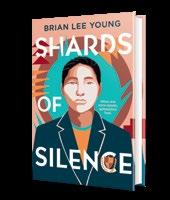
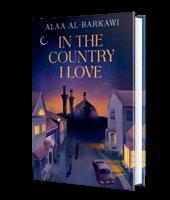
A teen girl is recruited to join a supernatural investigation agency after witnessing an attack on her father. Just one year ago, Akoma Addo would have sworn there was no such thing as magic. Then her father was attacked by a sphere of light, which left him in a coma. She was recruited to work for InterMag, a group operating under the guise of the San Francisco Police Department’s Special Cases Division. Now 17-year-old Akoma investigates crimes in which magic may be involved and tries to solve her father’s case. When an
undercover operation goes sideways and a body is discovered surrounded by ash and molten gold, Akoma realizes that the recent spate of crimes in AfricaTown may be connected in ways she could never have imagined. When she’s confronted by someone she may not be able to trust with a deal that is risky but could lead to her father’s being healed, Akoma face s a tough decision. Ghanaian gods and mages intersect with advanced technology in a near-future San Francisco in this story centering on Black characters that excels in its robust worldbuilding. AfricaTown, in
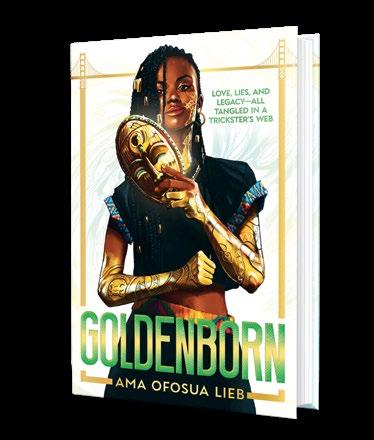
particular, is beautifully rendered; the smells and sounds of many African countries’ cultures coming together in one community build a vivid celebration of the diaspora. The characters’
banter provides humor in otherwise tense situations, and the ending promisingly leaves the door open for more. Magic and mystery collide in this gripping Afrofuturist debut. (Fantasy. 12-18)
THE NIGHT KING’S COURT
Ashley, Allison | Simon Pulse/Simon & Schuster (336 pp.) | $20.99 | May 5, 2026
9781665982221
After blending into the background for too long, a teenage girl spends a summer finding herself—and possibly her first love…or two.
Amelia Madden and Kat Barlowe are inseparable. Kat’s athletic, magnetic, and “thrives on being the star of the show”; Amelia lingers on the edges, loves the ocean, and dreams of being a shark biologist. The summer before junior year, everything changes: Kat leaves Cape Cod for upstate New York and a prep school with an elite tennis program. She promptly drops out of touch, leaving Amelia lonely—until she starts working with golden boy Myles Ford at seafood restaurant Pearl’s. Kat and Amelia, who shared a crush on Myles, once vowed that he was off-limits, but with Kat gone, the pact feels increasingly theoretical. Myles is attentive—offering Amelia rides home, hanging out with her at bonfire parties on the beach, and being a steady, reassuring presence. And then there’s Gregory McLoughlin, the lanky new kid in town who flirts with Amelia—and has never met Kat. The two share an obsession with music, and his confidence draws Amelia in. As she navigates divided loyalties, romantic longing, and the ache of changing friendship, the novel captures the uncertainty that comes with growing up. The writing is engaging, the characters are lovable, and the descriptions of beachy romance evoke pleasant nostalgia. Main characters are cued white. A sweet, heartfelt summer romance. (Romance. 12-18)
Barnes, Jennifer Lynn | Little, Brown (400 pp.)
$18.99 | November 4, 2025 | 9780316600262
Series: The Inheritance Games
This love story told through two perspectives requires readers to flip the book over to read both Hannah’s and Toby’s sides of their romance.
Hannah
Rooney is the reserved daughter of a ruthless crime boss who desperately wants out of the family business and its endless cycle of violence. Tobias Hawthorne II is the troubled only son in a rich, enigmatic family; he’s regarded as a disappointment and is unhappy despite his privilege. Their lives go up in flames one night, and tragedy brings them together. Hannah reluctantly uses her budding nursing skills to aid an injured Toby, who’s lost his memory. Slowly, a forbidden romance blossoms between the two seeming enemies whose unlikely bond forms over being outcasts in their respective warring families. Barnes’ signature style— snappy dialogue and clever puzzle-solving—situate Toby and Hannah’s relationship firmly in the world of the bestselling Inheritance Games series (Hannah’s version of events was published as a novella in the 2024 compilation Games Untold ). However, this prequel’s romance is lackluster, formulaic, and mostly redundant, seeming to ride the coattails of the previous books. Still, it will serve as a fun diversion for those already familiar with the main series’ plot and characters; for the uninitiated, it feels as if half the
story—and a more exciting one at that—is hinted at but left off the page. Main characters present white. Sure to satisfy as an amusebouche for die-hard series fans. (Romance. 14-18)
Bonnin, Elisa A. | Harper/HarperCollins (400 pp.) | $19.99 | April 28, 2026 9780063463011
A young woman seeks answers about her father’s disappearance in the mysterious castle where he was employed. Ida Rosales was 9 when her father, Tomas, left home to serve as Court Luminaire to King Aurel IV. Months later, another man was named Court Luminaire, leaving Ida and her mother, Gisela, with no explanation as to Tomas’ whereabouts or proof that he’d ever worked at the castle of Asteria. Seven years later, Ida runs away to become the next Court Luminaire, determined to uncover the truth about what happened to her father. She impresses the king with her magical abilities and is awarded a provisional one-year appointment to the post. Now a member of the court, Ida must assimilate into the enchanting world of nightly revels and create unbelievable spectacles for the nobility, all while secretly searching for traces of her father. But no one seems to remember a Tomas Rosales— not even the king. Ida befriends winter spirit Vegard and Lenore, the king’s beautiful, illegitimate daughter, both of whom are missing memories from seven years ago and believe Ida may be the key to unlocking dark secrets that lurk in Asteria. Bonnin’s lush worldbuilding creates an immersive, fairy-tale-like story that feels like an enticing glimpse into a larger world. A sweet Sapphic romance burns slowly and quietly between Ida and Lenore. Ida inherited some of her father’s Niresso traits, including darker
features and tan skin; other characters are Arreden and cued fantasy-white. Entrancing. (Fantasy. 13-18)
Campbell, Curtis | Annick Press (208 pp.)
$22.99 | May 5, 2026 | 9781834020518
A high school investigative journalist goes all out to save a beloved habitat— but do the ends justify the means?
Eleventh grader John O’Neil is on a mission. His grandparents once fought to protect Radlaw’s Trail, a fragile habitat for the blue-bellied sapsucker. The endangered bird is now under imminent threat from a luxury spa development backed by the mega-wealthy McPhee family of rural Mason County. Determined to honor their legacy, John, who reads white, is intent on stopping the environmental destruction. Frustrated by the limits of the school newspaper, he and his friend Rachel Miller, who’s a Black lesbian aspiring environmental journalist, launched an alternative rag, the Mason Observer. But now John goes rogue: No longer content with an exposé, he turns to blackmail, something he—a self-described “amateur blackmailicist”—has much prior experience with. Casting himself as a lone crusader, John alienates Rachel with his self-absorption, undermining what could have been a shared cause. A reluctant alliance and daring heist with a scrappy group of fellow young environmentalists helps John realize that his isolation is unnecessary— and that the classmates by his side can become trusted friends. Witty dialogue and a fast-moving plot keep readers engaged, though abrupt transitions, flashbacks, and an overabundance of secondary characters can make the narrative confusing. John is gay, and secondary
plotlines naturally weave in themes of homophobia and allyship. A clever exploration of cynicism, camaraderie, and causes worth fighting for. (Fiction. 14-18)
Dador, Celeste | Delacorte Romance (320 pp.) | $12.99 paper | May 12, 2026 9798217029730
Being grounded leads to unexpected delights for the First Daughter of the president of the United States. Abby CaryAlzona is the reliable, responsible, predictable one who has her life carefully planned out. For the summer before her senior year, she’s created “Abby’s Personal Summer Endeavors List,” which covers academic preparation, activities for her trips to Hawai‘i and Italy, and pursuits that will make her more well-rounded, like volunteering. Secretly, however, Abby, who’s Irish and Filipino American, wants to have a normal, unscripted summer that involves picnicking, eating ice cream, stargazing, and maybe even getting a first kiss—but normal is hard when your mom is president. At a state dinner, she meets handsome, sarcastic Gabriel Calabrese, who gets under her skin. It all ends with a viral pizza incident that’s dubbed Pineapplegate. As a break from the press attention, Abby and her little sister are sent to stay with their aunt Tita Karra, who’s working in Mystic Hollow, Virginia. To Abby’s surprise and chagrin, Gabe’s Filipino American family runs the inn where they’re staying. Determined to salvage the summer, Abby strikes a deal with Gabe: She’ll help him with his photography portfolio for art school, and he’ll help her check items off her bucket list. She soon discovers that Gabe and small-town life might bring the spark and spontaneity she needs. Dador’s YA debut is a cozy
romance that thoughtfully explores community, familial expectations, and living for oneself.
A charming summer romance full of fireworks and sweet moments. (Romance. 12-18)
Dickinson, Angie | Enclave Escape (384 pp.)
$24.99 | March 17, 2026 | 9798886052534
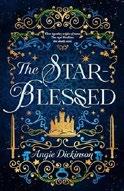
In Dickinson’s sophomore novel, a young woman must embrace her power in order to right the world around her.
Princess Seren has been locked away by her father, King Ormand, for her entire 19 years, with only her governess—who harbors a secret of her own—as a friend. Another poison season is approaching, which will further weaken the kingdom of Stelauris, and Seren’s “madman” of a father plans to arrange her marriage and take her firstborn son to be his heir. But Seren’s as yet uncontrolled magic is awakening, and with her governess’ guidance, she seeks to learn more about it. Sir Corin, recently assigned to be Seren’s guard, is an heir of Noveris who struggles with the exile of his lineage from their island home and with cruel King Ormand’s penchant for gruesome violence. As their connection deepens, the two must harness their powers to create a better future. The story, which alternates between Seren’s and Corin’s points of view, is told in three parts, with escalating tension and an intricate plot. Each twist moves closer to a resolution that ties up the loose ends and conveys the strength of the main characters. This stand-alone work, centering on a cast that’s cued white, offers emotional depth, and Dickinson describes the political systems in an engaging and clear way that supports the extensive worldbuilding. A thrilling adventure in which true strength comes from leaning into your gifts. (Fantasy. 14-18)
Ellison, Anna | Avon A/HarperCollins (256 pp.) | $12.99 paper | May 26, 2026
9780063485044
A teenage girl’s summer is disrupted when a mysterious boy arrives.
Callie, who’s mostly of European descent, lives on Catalina Island, where she works at her family’s struggling inn with her father. He’s raised her alone since she lost her mother at 7. Now, in the summer after her senior year, Callie feels stuck. Her best friend, Mexican American Pita, is preparing to leave for college in Santa Cruz, and their relationship feels strained. After a brief and harmful romance with a boy who shared an intimate photo of her without her consent, Callie is shaken, and her father has become overly protective. The fallout from the incident affects her daily life and sense of safety. When a storm hits the island, Callie rescues a boy, Odie, whose boat has been wrecked. Odie, who’s Jewish and Mexican American, begs her not to tell anyone he’s there, and she agrees to hide him at the inn. As they spend more time together, she learns about his fraught relationship with his parents, and a bond forms between them. But when the truth about Odie’s identity comes to light, it threatens to separate them for good. This contemporary retelling of the story of Odysseus and Calypso is intriguing in its conception, but Callie’s inner world isn’t fully developed, and the ending feels rushed. Still, readers may appreciate the vivid and wellrendered setting of Catalina Island. An inventive premise let down by uneven execution. (Fiction. 14-18)
Genn, Laura | Peachtree Teen (464 pp.)
$19.99 | May 5, 2026 | 9781682638187
On a distant planet, girls from opposing domains overcome obstacles to be together. After colliding with a radioactive asteroid, the planet Pagomènos became “tidally locked”—with one side permanently in the sun and the other in darkness. The dayfolk descended underground, preserving their memories of the before times in implanted microchips. The nightfolk embraced the asteroid’s radiation and attendant mutations, including powers of telekinesis and wings that permit flight. Kori, the 16-year-old heiress of the Daylands, is on a hunt to awaken sentience in Aspect, her mech companion, when she enters the forbidden Shadowlands and is captured by its mutant queen, Adria. Seventeen-year-old Adria wants to be the ruthless leader that the Shadowlands needs, but deep down she’s merciful. Kori begins as Adria’s prisoner, but the pair kindle a friendship—and eventually, romance—as they recognize their similarities. But the turmoil of their respective societies proves to be a significant hurdle. The story is engaging and suspenseful. Kori, whose skin is a “sun-kissed tan,” and Adria, who has “blue-white skin,” are appealing protagonists, and it’s easy to root for their romance. The worldbuilding of the captivating setting leans heavily into the fantastical, but the exposition can be dry compared to the more enjoyable character-centric moments. Aspect is endearing and provides comic relief; their development is heartwarming. At its core, this is an inspiring tale about
An inspiring tale about queer teens conquering the odds.
queer teens conquering the odds to live as their truest selves. A heartfelt Sapphic romance wrapped in exciting otherworldly action. (Science fantasy. 14-18)
Gonzales, Gabriela | Little, Brown (384 pp.) | $12.99 paper | May 26, 2026
9780316586054
A debut that explores navigating challenges and finding your voice. Auggie’s an aspiring author who keeps getting rejected, but he has a great support network in his parents and best friend. Mayte’s friends and family are also important to her, especially Abuelita. The teens’ worlds intersect at a party, but Auggie isn’t too smooth in showing his interest in Mayte. Their friends scheme to get them together for a second chance at romance—and Mayte’s first kiss. Unfortunately, it all goes horribly wrong, though that may have been for the best given what they both have going on. Auggie feels like “the safest, dullest, most boring person alive,” struggling with creative writing samples for his college applications. Seventeen-year-old Mayte’s sister, Aida, who’s 31 and has developmental delays, used to live with Abuelita; now that Abuelita is battling cancer, Aida is moving back home. With all these changes, Mayte feels like she has to be the family’s “perfect little angel baby.”
As Auggie’s and Mayte’s friend groups merge, the pair are thrown together, and Auggie finds writing inspiration in Mayte’s life. While the dynamics among the friend groups are sweet, the book’s strongest relationship is that between Mayte and Aida, who have Colombian and Mexican heritage. For much of the book, Auggie, who’s cued white, remains a superficially developed character who seems far less mature than Mayte, making their
romance, which has little chemistry, hard to root for.
A lukewarm romance with lopsided character development. (Romance. 14-18)
Hall, Spencer | Bloomsbury (256 pp.)
$19.99 | May 19, 2026 | 9781547618118
A night of manic misadventures heralds lifechanging events and insights for a graduating eighth grader. On the night before graduation— and with extreme reluctance stemming from a tendency to suffer anxietyfueled “Dread Spirals”—Jensen Chapman crawls through his bedroom window to join besties Maleek and Cooper in an exchange of terrifying dares with a rival set of girls. The ensuing hilarious events range from driving off bullies with help from a pair of trained ferrets through hanging out with the girls and actually talking to his crush, Leslie Chen, to accepting dares that sometimes skirt legality. These antics repeatedly force Jensen to face his gnawing fears, and the night ends with revelations that threaten to upend his world. Hall shows a knack for crafting comically frantic situations and clean but authentic-sounding dialogue. Jensen’s sister, Maddy, a high school senior, offers words of wisdom that will comfort readers who may be feeling anxious over changes in their own lives: “Every good thing in life has to be held loosely. We can try clinging to things as tight as possible, but they have a way of slipping through our fingers no matter what.” Hall equips Jensen with the empathy to mend existing friendships and forge new ones (including with Leslie). Jensen and Cooper present white, and Maleek is Black. Names cue further diversity in the cast. A night to remember, stocked with comic mishaps and meaningful lessons learned. (Fiction. 12-15)
Captures the rush of feeling not only seen but known.
THE BECKETT EFFECT
Henry, April | Christy Ottaviano Books (272 pp.) | $19.99 | May 12, 2026
9780316586214
An Oregon teen embarks on a journey, determined to discover her identity— regardless of what she may find. Adopted as a newborn, Tessa Lundgren, who’s cued white, has always wondered about her birth parents. For her 18th birthday, her best friend, El, who has a fondness for bright hair colors, offers her the opportunity to find them by gifting her an Ancestry DNA kit. In biology class they’re studying genetics, and Tessa opens up to her new lab partner, Victor Lopez, about her history and the testing kit. Meanwhile, local authorities are tracking the Portland Phantom, a serial killer who’s been on the loose for 15 years—and it seems that Tessa might be the link they need. Intrigue surrounds likable Tessa, who’s complex and well developed. The story’s multiple perspectives keep readers engaged as the tension builds. The serial killer plotline includes classic mystery and thriller genre tropes, but the killer’s chapters present his abhorrent beliefs about women and other marginalized groups without additional context. This disturbing element meshes poorly with the novel’s strong exploration of adoption and the experience of adoptees. Henry captures both the hope and idealism surrounding reunification. Seeing how Tessa and her family members engage with her adoption highlights the beauty and challenges of creating identity and family in an honest and emotional way. A sensitive and insightful adoption story that sits uneasily alongside a shocking thriller. (Thriller. 14-18)
Jones, Nashae | Simon Pulse/Simon & Schuster (336 pp.) | $19.99 | May 5, 2026 9781665970860
A Virginia teen vows to destroy the social capital of the popular boy who broke her sister’s heart. Wren Richardson, a Black high school senior, is ready to leave predominantly white Ryland Prep behind. She and her Salvadoran best friend, Chelsie, plan to move to Los Angeles and carve out film careers. But first, they need to pass their Studies in Film and Literature class. Wren’s “dream course” is quickly ruined by the arrival of Beckett Lane, who’s Samoan and implied white. Unlike her younger sister, Kennedy, and most of the other girls at school, Wren is immune to Beckett’s spell. She clocks him for who he really is: a womanizing nepo baby (his father was an actor in a popular TV series). When Kennedy is rejected by Beckett at a house party and a video humiliating her is posted to social media, an incensed Wren promises to avenge her sister by making a scathing documentary exposing Beckett’s true nature. But as she forges ahead with Operation Expose Beckett, she starts to question whether the Beckett she knows is just a mask. With the effortless charm of a classic teen rom-com, this story about miscommunication and misguided prejudices features nuanced character development and a well-earned payoff in the final act. Wren’s family dynamics present realistic challenges, and her relationship with Beckett shows how they help each other grow.
An effervescent romance that captures the rush of feeling not only seen but known. (Romance. 13-18)
Katz, William Loren with Alan Singer & Imani Hinson | Triangle Square Books for Young Readers (448 pp.) | $18.95 paper January 27, 2026 | 9781644214398
Black people have a long and complex history in New York City and have influenced nearly every aspect of the city’s life and culture. This comprehensive history by the late acclaimed historian Katz, originally published in 1997, has been reissued with an introduction by journalist Herb Boyd. The volume opens with “The Africans of New Amsterdam” and closes with “The Age of Obama and Black Lives Matter,” a new chapter by Singer and Hinson. Records document the presence of Africans in what would become New York beginning in the early 1600s. Katz details the struggle to end slavery and the efforts of free Black people to build lives in the face of racism and discrimination. After the American Revolution, communities prioritized the growth of Black churches, educational institutions, and mutual aid organizations along with advocating for voting rights. Later chapters present the impact of major historical events, such as the Civil War Draft Riots and the World Wars, on the city’s Black community. Katz skillfully weaves in the rise of Harlem and its cultural influence. Readers encounter familiar figures such as Frederick Douglass, Marcus Garvey, Malcolm X, and Shirley Chisholm. This extensive study is highly readable and effectively connects many stories in ways that shed light on Black New Yorkers’ important place in the city’s history and U.S. history as a whole. A valuable source for readers seeking insights into key components of the nation’s past and present. (photo credits, notes, bibliography, index) (Nonfiction. 12-18)
THAT WHICH FEEDS US
Kendall, Keala | Random House (352 pp.)
$20.99 | May 5, 2026 | 9798217117963
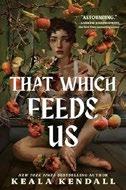
A search for her twin sister lures 19-year-old Lehua to Kōpa‘a Island, home to a mysterious, ultraexclusive resort. Six months ago, Lehua quit the track team and dropped out of college, determined to find her own path away from her twin Ohia’s shadow. The girls have barely spoken since then—until Ohia calls to tell Lehua about her internship on a farm in Hawai‘i. The sisters were raised in Phoenix by their grandparents and have never visited their “ancestral homeland, the fantasyland of [their] grandparents’ stories and superstitions.” Two weeks later, the sisters’ track coach appears at the mortuary where Lehua works, looking for Ohia and revealing that the normally stellar student is on academic suspension. Despite Lehua’s anger, she worries when she can’t reach Ohia, so she travels to Kōpa‘a, an off-the-grid wellness resort and persimmon orchard. But the manager claims that Ohia, who used a fake name to get the job, quit after a week and left. Lehua doesn’t believe in ghosts, but there’s something unsettling about the island. Missing the only boat to nearby Maui, she’s left stranded with a storm coming. As Lehua unravels the mystery of her sister’s disappearance, she uncovers the dark history of the island and the white missionary plantation-owning family who stole the land. The latest from Kendall, who’s hapa Native Hawaiian, is richly atmospheric supernatural horror
that explores diaspora experiences, the ongoing impact of colonization, and the sisters’ complex, dynamic relationship. Vivid and potent. (author’s note) (Horror. 14-18)
Lukens, F.T. | McElderry (320 pp.)
$19.99 | May 26, 2026 | 9781665950978
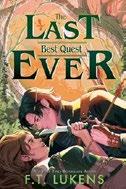
Legendary quester Ellinore is forced out of early retirement to complete one last quest to save her troublemaking twin brother, Zig. Ellinore considers herself a fraud—the bards sing of her valorous beast slaying, but it’s all a ruse, perpetuated to win the gold her family needs. As she admits to herself, “I was an actor, and I was at my breaking point.” Seventeenyear-old Ellinore hoped to stop questing before anyone discovered her secret— especially nonbinary Princet Aven, who, despite their yearslong rivalry, she finds particularly cute. When, after a few tankards of mead, Zig makes an unbreakable bet with some mages, Ellinore must kill the Elder Beast—“the god-king of all creatures”—and retrieve its horn to save Zig’s life. Accustomed to questing alone, Ellinore isn’t pleased when both Zig and Aven tag along. With her tavern-loving brother and flirty nemesis in tow, she’s soon joined by Farrah, Aven’s annoyingly chirpy cousin and Ellinore’s ardent fan, as well as “bard-mage kid” Rylan. Ellinore sets out to do the impossible—while hiding the truth that Ellinore the Brave doesn’t really exist. The fairly generic fantasy world is a boon, allowing the quippy
characters to shine while pleasantly making their way through an adventure that maintains suspense despite predictability. The romance between the white-presenting leads is charming, unfolding as Ellinore seeks her identity and battles imposter syndrome. A high fantasy romp with delightful characters and a sweetly compelling romance. (Fantasy. 14-18)
Ed. by Lynch, P. Anneka & Michaela Allen Annick Press (100 pp.) | $21.99
May 19, 2026 | 9781834020426
Young Canadian artists share the challenges and joys of teenage life in this multimedia compilation. This anthology of prose, poetry, art, and photography has unusual roots in “harm-reduction discussions and workshops on the topics of safe partying, substance misuse, mental health and community” with youth across Toronto. Edited by Lynch and Allen of The Neighbourhood Group Community Services, this work foregrounds lived experiences as truth telling. The editors selected works by 28 young people from a pool of over 300 pieces created between 2019 and 2024, organizing them into five themed sections: “I Think Sadness Finds You Too,” “I Wish That You Could Hold Me,” “For Now This Is What I Do,” “Maybe the Recipe Needed To Change,” and “I’m Doing My Best and That’s Good Enough.” Kevin Asiedu’s poem describes depression and accompanying feelings of meaninglessness. In another poem, S.M. confronts racism: “…how can ‘ALL LIVES MATTER’ if I don’t matter?” Elle Rosen’s photo contrasts images of butterflies and a pastel rainbow of jagged, glasslike shards with a dark, messy pool of pills spilling from a bottle. Ashwah Aslam pairs a dreamy image of Kashmiri tea, gladioli, and a hennadecorated hand with a reflective passage on immigrant identity, Pakistani heritage,
and matrilineal bonds. This book makes a strong case for creative expression as a public health intervention, with potential to build community and open paths to compassionate understanding of young people’s coping mechanisms. Honest, raw, and powerful. (editors’ note) (Anthology. 14-18)
Macios, Laurin Becker | Holiday House (208 pp.) | $19.99 | May 19, 2026
9780823460496
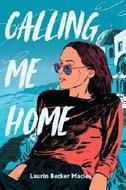
Rome, 2007: a backpack, a hostel bed, and a summer at the edge of adulthood. Seventeen-yearold Jenny Campbell arrives in Rome on a whirlwind post-graduation trip before her first semester at New York University. Colin—the Irish guy working the hostel’s front desk—briefly catches her eye, but Jenny is fiercely focused on independence. She moves on to Greece, where the thrill of travel is eroded by the sexual harassment she faces from strange men. Jenny impulsively extends her trip and circles back to Rome, where she reconnects with Colin, and they fall into a fleeting, intoxicating romance. Jenny returns to Colorado profoundly changed, the transformation deepening when she learns she’s pregnant. She chooses to end her pregnancy with the support of her family, grappling with grief, uncertainty, and the realization that the future she once imagined no longer resonates. Poet Macios’ YA debut, told in free verse, has a lyrical and conversational voice while delivering passages of profound and often surprising emotional depth in both Jenny’s present day and her memories. The layout of the verse occasionally shifts into different forms on the page, although these configurations don’t always enhance the narrative. The story highlights how normalized the sexual assault of young women is (and how easily dismissed) while offering an authentic portrait of early adulthood, marked by intensity and
the fragile thrill of becoming oneself. Jenny, who’s bisexual, is cued white. Balances tenderness and upheaval with striking emotional clarity. (Verse fiction. 14-18)
Kirkus Star
Never Hide From the Devil McQueen, N.T. | Cennan/Cynren Press (356 pp.) | $18.95 paper | May 5, 2026 9781947976719
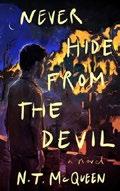
It’s April 1915 and war has come—not with a bang but with a whimper, and nothing will ever be as it was. This slowly unfurling epic dramatizes the defense of the city of Van—a bitter victory in the first month of the Armenian genocide—through the eyes of 14-year-old Suren Simonian, an ordinary teenager straining against the last vestiges of childhood and forced to grow up too quickly. Rumors of horrific abuses against Armenians soon become a bloody reality. As much at war with himself as with the Turks who seek to exterminate his people, Suren is in turn bolstered and chained by family, faith, and friends. He’s determined to do his part to protect his home. A self-described odar, or foreigner, McQueen approaches this story with extraordinary sensitivity and lyricism. He adeptly maintains tension throughout; lighter or more introspective moments feel like pauses for breath, balancing out the bloodshed. The story’s true strength lies in its heartfelt narration: Suren’s anxious thoughts, his musings on the nature of friendship, evil, and religion, and his endless questions express the fear, frustration, anger, hope, and confused grief of a young person whose world has lost all rhyme or reason. The characters reveal their depths through their actions, words, and feelings, and readers will feel for them as though they were their own neighbors, in peril of their lives. Heart-wrenching, thought-provoking, and painfully timely. (author’s note, pronunciation guide, further reading, discussion questions) (Historical fiction. 14-18)


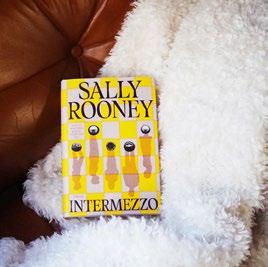
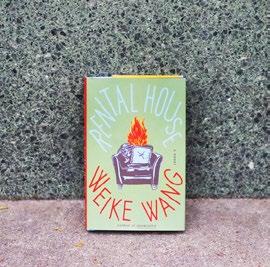


The author of An Expanse of Blue answers our questions.
KAUAKANILEHUA MĀHOE ADAMS , a Native Hawaiian (Kānaka Maoli) poet, debuts with an intense and lyrical verse novel, An Expanse of Blue (Heartdrum, May 19). Adams contributed a short story in verse to the award-winning anthology Legendary Frybread Drive-In: Intertribal Stories, edited by Cynthia Leitich Smith (Muscogee). Her novel centers on 17-year-old Aouli, whose family is from Kona, Hawai‘i. She’s growing up near Seattle and navigating questions of cultural belonging and dislocation, feelings of betrayal and isolation, and the frightening emotional vulnerability awakened by Nalu, the boy she likes. Adams told us more about the book by email.
What led you to write this story? I’ve been writing about teenagers since I was one! I suspect it has something to do with a desire to better understand my own adolescence. I drew inspiration from my own memories of growing up in the Catholic Church, as well as my experience as a Native Hawaiian born and raised in the diaspora. It felt right that a story about one girl’s transformation takes place at what is universally a transformative time in life. My goal as an author is to authentically capture that for young readers. I spent years trying to write this story in prose before finally deciding to explore verse. I already loved to write poetry; I just never considered writing a verse novel myself. When I told one of my advisors in my MFA program that I wanted to give verse a try, she suggested starting from
memory by plucking out a strand of inspiration from my own adolescence. Writing that first poem unlocked something within me.
What was most challenging — and rewarding—about working on this book?


I think the biggest challenge was being brave enough to write it in the first place. So cheesy, I know! But telling this story required me to be extremely vulnerable in a way I hadn’t asked of myself before. The most rewarding moments have been getting to see the book slowly take shape at each passing stage. Refining a poem is so satisfying. Writing a verse novel is like doing a puzzle—it requires a lot of hard work, dedicated time, and faith that it’s going to turn out.
The story has so many rich strands, yet it’s cohesive and free of expository infodumps. It’s both culturally specific and widely relatable. Oh, gosh. Thank you! Aouli navigates a lot: love, heartbreak, betrayal, and faith—in oneself, in others, and in our ancestors. Honestly, I worried at times that I was throwing too much at her. But that’s adolescence! I think writing in verse was key. Writing poetry comes with built-in safeguards. The form demands careful consideration of each and every word—of the word itself and where it ultimately lands on the page. I used the form to my advantage, focusing only on weaving the most important threads of the story and then trusting the reader to fill in the rest.

An Expanse of Blue Adams, Kauakanilehua Māhoe Heartdrum | 464 pp. | $19.99 May 19, 2026 | 9780063417953
Have you had any feedback that’s been especially meaningful?
A few early readers have really enjoyed the love story between Aouli and Nalu, which is extra meaningful since that aspect was my favorite to write.
What are you most looking forward to about having your book out in the world?
I am looking forward to Kānaka teens growing up in the diaspora getting their hands on this book. I hope that they find bits of themselves within it and that it might serve as a reminder to them that our stories are worth telling.
Interview by Laura Simeon
The Siren will be published by Holt in September.
Tomi Adeyemi’s first standalone novel is coming later this year.
Henry Holt will publish
The Siren in the fall, the press announced in a
news release. Holt says Adeyemi “blends shocking contemporary storytelling with a sinister dark academic flair to create a blockbuster about rage, longing, and a woman’s darkness that will leave readers breathless.”
Adeyemi made her literary debut in 2018 with the young adult fantasy novel Children of Blood and Bone, about 17-year-old Zélie, who seeks to bring magic back to the land of Orïsha. The book was a
finalist for the Kirkus Prize and the beginning of a trilogy that continued with Children of Virtue and Vengeance and Children of Anguish and Anarchy
All three novels were No. 1 New York Times bestsellers. Children of Blood and Bone is being adapted as a film, to be directed by Gina PrinceBythewood; the cast includes Thuso Mbedu, Tosin Cole, Amandla Stenberg, Idris Elba, Viola Davis, and Regina King.
The Siren will follow Emery, a Dartmouth College student who

For
of
longs to join a secretive group on campus led by a charming young woman named Roux.
“The Siren is the book of my soul,” Adeyemi said in a statement. “It is the rawest, most heartbreaking and most amazing thing I’ve ever experienced writing.”
The Siren is scheduled for publication on Sept. 29.—M.S.


By Molly X. Chang
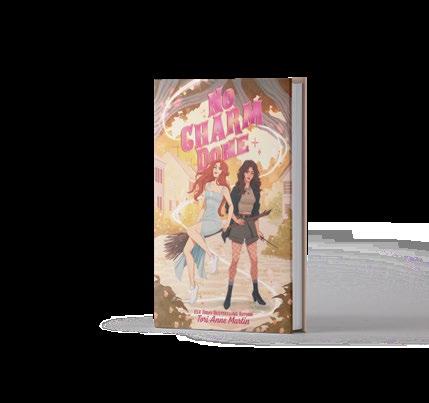
Kirkus Star
Méndez, Yamile Saied
Levine Querido (304 pp.) | $19.99
May 5, 2026 | 9781646146376
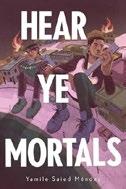
Spirited teens create music under the towering shadow of an oppressive government. In present-day Rosario, Argentina, an angel comes to collect a girl who doesn’t remember her own name. Before it’s time to go, the angel shares the story of the Aguirre brothers and the origins of their band, Río Babel. In 1976, Daniel Aguirre dreams of becoming a rock star, spurred on by the poetic lyrics of his brother, Adrián. Against a backdrop of hyperinflation, police violence, and political turmoil, the brothers and their bandmates hone their craft, undeterred even by a traumatizing brush with the police. The March 24 coup d’etat brings down Isabel Perón’s fragile government and a military junta seizes power, promising harsh national reform. When a member of Río Babel goes missing, a demo of one of their songs mysteriously ends up on the radio, spreading like wildfire as a protest anthem and inviting more calamity for the teens. Within the framework of a bittersweet conversation between an angel and a girl, this historically grounded tale of a fictional band and the fates that befall its members unfurls in bouts of profound tragedies and hopeful triumphs, all wonderfully presented in Méndez’s rich, lyrical prose. The author gives each character palpable depth, including those who exist on the story’s margins, and the occasional interjection of historical context provides insightful color. A fierce, timely, and beautifully executed ode to artistic expression imbued with a spirit of optimism. (additional reading) (Historical fiction. 12-18)
Unfurls in bouts of profound tragedies and hopeful triumphs.
HEAR YE MORTALS
Morgan, Kass | Harper/HarperCollins (288 pp.) | $15.99 paper | May 12, 2026
9780063287501
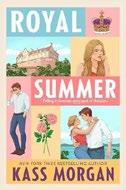
An 18-year-old American in Scotland finds her careful life plans upended. Shortly after recent high school graduate Hannah Grant leaves Milwaukee and arrives in Edinburgh to work as an assistant to her favorite author, Margaret MacIntyre, her hero impulsively departs for Japan to be with her new, younger paramour. Aspiring author Hannah is left without a job or a place to stay. Fortunately, she meets Finn, a handsome, copper-haired Englishman who saves the day, landing Hannah a live-in job at the gift shop of Inveresk Castle, the royal family’s Scottish home. She quickly discovers that her new friend is Prince Finneas, the playboy subject of tabloid gossip. As Hannah settles into her job, she and Finn develop a relationship—but can they overcome the obstacles presented by their different backgrounds? Morgan’s latest is an enjoyable summer love story, with a swoony prince at its center. Hannah is a fully formed character who stands up for herself while giving into her feelings. The well-developed cast of secondary characters refreshingly centers on healthy friendships among mutually supportive girls. In between sweeping romantic gestures, Hannah and Finn’s deepening relationship includes some heartfelt conversations, allowing the characters to grow emotionally. The leads present white, and there’s some diversity among the supporting characters. A fun and flirty royal romance with some dreamy armchair travel to boot. (Romance. 14-18)
Oh, Ellen | Crown (272 pp.) | $19.99
May 26, 2026 | 9780593125984
Series: Colliding Worlds, 2
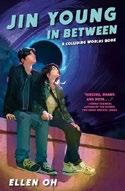
With alternate realities collapsing, one teenager might just disappear. When Mina vanished from the webcomic she created and returned to her normal life in The Colliding Worlds of Mina Lee (2024), Jin swore he would remember her—and he does, though everyone else around him has forgotten her and everything that happened when she was in his world. Jin is shocked, though, to one day suddenly find himself in Mina’s universe.
Between the Korean American teens’ kisses and snappy exchanges, he realizes that he can jump back and forth between the two worlds—but not without dire consequences for his reality. Jin’s teleportation has attracted the attention of a powerful corporation, and he and Mina must figure out whom they can trust—and in which universe—before Jin disappears completely. Jin also faces hard decisions when it comes to his birth mother, who he believes abandoned him in Mina’s world, and the white family who raised him in his own. As in the first series entry, this title features funny dialogue, fast-paced action, and a simple narrative voice that makes issues such as transracial adoption and identity accessible. This writing style does, however, sometimes lead to the spoon-feeding of reveals, leaving little room for readers to make their own inferences.
More twisty K-drama-esque fun with new stakes to confront. (Fantasy. 12-18)
Pearson, Jennifer | Sarah Barley Books/ Simon & Schuster (464 pp.) | $22.99
May 5, 2026 | 9798347108510
When global singing sensation Blair is murdered shortly before going on stage for a concert in her South Carolina hometown, her younger sister, Stevie, wants to bring the killer to justice. Blair largely lost touch with her family after becoming a star, but 18-year-old Stevie can’t imagine who would want to kill her or what’s at the root of accusations that Blair and her family are criminals. Grief-stricken Stevie is determined to solve the mystery—especially since her Uncle Jimmy, Honeyville’s police chief, seems to be bungling (maybe even actively thwarting) the case. Stevie finds an ally in schoolmate Colby, the girl who runs Blair’s fan site, knows everything about her career, and can look for “weirdos posting crap” on the page in case one of them is violent. As grievous as the crime is, the young amateur sleuths feel like genuine teens as they pound the pavement, follow intuitive hunches, investigate online, and still aren’t too busy to notice cute guys. Despite being stalked and warned to desist via threatening anonymous messages, the duo uncovers a history of appalling crimes and cover-ups. Ultimately, they must weigh the cost of exposing the truth. The fast pace and banter between the girls keep potentially heavy topics light, despite the heinous behavior of many of the people surrounding them. While the spiral of treachery is ugly, the book is never downbeat. The cast largely presents white.
Engrossing and entertaining.
(Mystery. 14-18)
Plett, Cale | Delacorte (384 pp.) | $19.99 May 12, 2026 | 9798217025701
Danger stalks one small town after a technological apocalypse.
The end of the known world came 10 years ago, in a global event called Autumn. Advanced technology gained tortured sentience, “woke up in pain,” and was mostly destroyed. With their mother dead and their father and brother long disappeared, white, 18-year-old nonbinary Cedar goes to the small town of Sawblade Lake, where their father is from and their grandmother still lives. Before they even get to town, they’re menaced by a shadowy, inhuman figure and threatened at gunpoint by Morgyn, a girl they quickly become attracted to. The monster—which seems to have complex and mysterious connections to Cedar— follows them to Sawblade, wreaking havoc on their newly formed community that consists of teens who are mostly white and who include a variety of gender identities. Cedar, along with girlfriend Lucy (who’s trans) and new friend Ada (whose pronouns are she/they and who has “obscenely pretty eyes”) must track the creature down after it possesses Ada’s little sister, Ruby. The novel offers an interesting take on the future dystopia genre and the attendant bigger ideas about how we use technology and what that use might take from us. Unfortunately, the urgent pace doesn’t always progress the plot, leaving the story spinning its wheels, and the breathless, flowery prose can feel more melodramatic than moving.
A carefully drawn, if uneven, queer-normative story. (content warning) (Horror. 14-18)
The sleuths feel like genuine teens as they follow hunches.
Reiss, Rachel | Wednesday Books (320 pp.) $20 | May 12, 2026 | 9781250366160
Two 18-year-olds get stuck in a time loop during a flight from Kona to Los Angeles that seems about to end without warning, with the plane heading into a nosedive, before the cycle abruptly restarts.
Aloha Airlines Flight 1333 was supposed to take Evelyn Werth back home across the Pacific Ocean along with her father’s ashes. But something went wrong, and just as the plane drops, apparently about to crash, time rewinds and Evelyn ends up back where she was 28 minutes earlier. To make things worse, the rest of the passengers and crew have no awareness that anything is amiss. Several things consistently happen: The pilot announces that the internet is out, the plane experiences five and a half minutes of turbulence followed by 11 minutes of calm, a woman in the last row collapses, and then the nose of the plane tips forward, and it begins a terrifying descent. After living through this sequence hundreds of times, Evelyn accidentally wakes up the only passenger who has slept throughout: Orion “Rion” James. He joins her in experiencing and remembering the loops, but this new development triggers a life-threatening change. Evelyn and Rion, who both present white, share the first-person, present-tense narration in this romantic thriller that explores different aspects of mortality and grief. The tension, dynamic pacing, suspense, and romance make this a strong page-turner.
Thrilling and captivating. (seat map) (Speculative thriller. 14-18)

Reitz, Gwenyth | Roaring Brook Press (352 pp.) | $20.99 | May 12, 2026 9781250404176
A pair of ghost nemeses in upstate New York join forces to investigate who murdered them.
Tessa Sinclair and Reed Walker have been rivals since the sixth grade. So it stings a little that Reed, whose family is from Spain, has been named valedictorian, while Tessa, who looks “like Billie Eilish before her glow-up,” is salutatorian. Some seniors decide to celebrate by breaking into the abandoned van der Born mansion and partying. There, the duo plays a drinking game and actually have fun despite the fact that they’re still bickering. But when they come to the next morning, they realize that they’re not only still in the mansion, but they’re no longer alive. In fact, they’re ghosts, trapped together. What could be worse? Realizing that they were murdered. As Tessa and Reed rally to overcome their long-standing disdain, they discover that they’re kindred spirits. They must also cope with their grief while they try to find out who’s responsible for their deaths before the killer strikes again. They face a countdown timer that indicates that they have 22 days left before their time in this spectral state is up and they must move on. Told from the leads’ alternating perspectives, this charming mystery incorporates séances, paranormal activity, and time travel. It’s also a tender love story, exploring not just the feelings that develop between Tessa and Reed but the love they have for people who are still alive.
A fast-paced and emotionally resonant enemies-to-more ghost story.
(Supernatural romance. 14-18)
Rice, Angourie & Kate Rice
Candlewick (224 pp.) | $18.99
May 12, 2026 | 9781536247435
In this sophomore novel by an Australian mother-daughter writing team, a teenager’s school ball doesn’t go according to plan. Year Twelve class president Amy Middleton is in her final year of high school. She’s lived in anticipation of the school ball for years and has everything organized, from her dress to her highlighter sparkle stick. The only problem is that it’s five days away, and no one has asked her to be their date yet. After Amy gives him a little nudge, Leo Prince, her longtime crush, finally invites her, solidifying her dream that the ball will be her special night. But when Amy’s best friend, Gabby Gibson, does something impulsive, everything spirals out of control. The authors carefully reveal each plot twist in this well-paced narrative that unfolds through different perspectives and formats, including Amy’s witty and often hilarious journal entries, group texts, statements to the police, and school newsletter entries, hooking readers from the first page. Amy becomes increasingly sympathetic as she fights to overcome each obstacle. The authors offer a deep yet accessible exploration of difficult topics such as teacher-student relationships and the negative impact social media can have. The book brings up these topics authentically and deals with them in a reflective way that allows the characters opportunities for growth. Amy and Leo present white.
A fast-paced drama with plenty of twists and turns that delves into relatable themes. (Fiction. 14-18)
Rose, Claire | Wednesday Books (336 pp.) $14 paper | May 5, 2026 | 9781250387127
When an “atheist Jew from Brooklyn” is expelled from her latest boarding school, her parents send her to “Maine, the WASPiest place on earth,” where she runs afoul of a “deeply creepy island murder cult.”
Seventeen-year-old Lindsay Weinberg isn’t happy to spend the summer engaging in “self-reflection” in “Bumfuck-Nowhereby-the-Sea, Maine,” with her estranged uncle. Once in the tiny town of Marbury, population 279, Lindsay, who’s bisexual, finds herself trapped at Haven House with “a crucifix-wielding shiksa” who introduces herself as Aunt Irene and a small clutch of other teenagers sent by their parents to work the land, find Jesus, and “return home reformed.” But where is Uncle Levi? Lindsay uneasily starts getting to know her peers: Dalton, “a weird, rich-ass white boy”; Mateo, a gay Latino boy; Gwen, a white girl with a substance use disorder; and Tash, a dark-skinned trans boy with locs. The appearance of uncannily pale siblings Cass and Phin, who live at The Cove, on an island that’s accessible only at low tide, and worship “the Galaxy Goddess” Andromeda, amps up the weirdness. Rose pens an atmospheric horror tale festooned with eerie touches that effectively balance the occasions of out-and-out violence. Less effective is the connective tissue between Aunt Irene’s repellent form of Christianity and the Greek myth of Andromeda. But Lindsay’s trenchant narration—spiky, funny, and thoroughly Jewish—carries readers over this debut’s plot holes. Deeply creepy indeed. (Horror. 13-17)

Rutile | Illus. by Diane Truc | Abrams Fanfare (256 pp.) | $26.99 | May 5, 2026
9781419777820 | Series: Colossal, 1
Expected to make an advantageous marriage, Jade Galbaud du Fort is far more interested in powerlifting. Born into an upper-crust French family in an alternate world that creatively blends contemporary elements with some historical social customs and aesthetics, young noblewoman Jade is forced to attend numerous balls at which her mother introduces her to eligible suitors. While dancing with snobby Nathaniel, Jade makes a big mistake. Irritated with his obnoxious, nonstop chatter, she picks him up in an overhead lift—and accidentally tosses him into a table of refreshments. Her passion for building muscles—deemed inappropriate for a socialite—must be kept secret, especially as her family is in dire financial straits, so to protect her reputation, light-skinned Jade, who has orange hair and green eyes, exclaims that being swept up in love momentarily gave her extraordinary strength. But rumors abound that she’s taking drugs meant for horses. She must navigate relationships with friends, enemies, and Alexander, an attractive—and super strong—stable boy, who’s cued Spanish. This humorous, heartfelt compilation of entries from a comic series that was originally released on WEBTOON features simple and appealing cartoon art, big emotions, and intriguing characters. Readers will anticipate the resolution of storylines in future volumes; the romance and class conflicts are just getting started here. The robust cast of secondary characters have their own insecurities, which are explored as their friendships with Jade deepen. A strong series kickoff for fans of quirky, slice-of-life romantic comedies. (character profiles) (Graphic romance. 13-18)
Shojaei, Maryam | Triangle Square Books for Young Readers (256 pp.) | $19.95 March 3, 2026 | 9781644214893
Despite its name, which means freedom in Farsi, women were barred from entering Tehran’s Azadi Stadium until 2019, something activist and soccer fan Shojaei was determined to change. Following the 1979 Islamic Revolution, women lost many personal freedoms. For Shojaei, challenging the stadium ban became a way to increase awareness about rampant repression. In 2014, while she was living in Washington, D.C., she launched her online campaign, “My Fundamental Rights.” It evolved into a movement that took her to soccer tournaments worldwide as well as FIFA and UNESCO headquarters. Standing on the shoulders of other brave Iranian women, Shojaei used her position as a naturalized Canadian citizen and the support of her brother Masoud, captain of the Iranian National Soccer Team, to challenge FIFA to uphold its own gender nondiscrimination rules. This inspiring, tightly focused narrative highlights Shojaei’s fight for equality and the dangers she faced; it doesn’t mention the struggles of the Iranian women’s national soccer team. Shojaei’s fierce authenticity shines through her prose, bolstering the already compelling narrative. Three early chapters offer an abridged history of Iran, and occasional black-and-white photos heighten the story’s impact by providing visual context. Shojaei, who was awarded the Sport for Human Rights Award in 2019, emphasizes community and solidarity, stating that she accepted “on behalf of all the women’s rights
activists in Iran who had been fighting for this cause for years.” A riveting account showing that change can begin with a dream. (Nonfiction. 13-18)
Sloan, Sasha E. | Disney-Hyperion (368 pp.) $20.99 | March 3, 2026 | 9781368117517
An 18-year-old Elven girl accepts the dangers that accompany an invitation to help save the people of her kingdom. Lyria has grown up in seclusion in the Ironwood Mountains, home to the Elven kingdom of Evermore until 300 years ago, when a human tyrant stole the land and forced the Elves into hiding. Lyria yearns for freedom and a sense of purpose, which she lacks under her over-protective mother’s watch. One day, she responds to a cry for help from somewhere in the forest and saves a boy from an attack by a monster. He’s revealed to be Prince Finneas—and he asks Lyria to become an apothecary and help fight the plague that threatens Crown City. She enters the palace pretending to be human, but her bloodborne Talent— magic that fearful people tried to wipe out and which is now rare among Elves—isn’t always in her control. The threat of discovery is real, especially when Lyria meets Cygnus, the Head Healer, who takes an instant dislike to her. But not everything is as it seems—not the palace, not Finn, and not even herself. This duology opener has easy-tofollow worldbuilding and enough twists and turns to keep the plot moving. Lyria is both strong and emotional, uncertain of herself even while she accepts many challenges. Cygnus and Finn are opposites, creating a delightful tension. Main characters present white. A provoking, attention-grabbing debut. (map) (Fantasy. 14-18)
Sortino, Anna | Putnam (256 pp.) | $19.99 May 19, 2026 | 9798217005178
A college-bound teen facing possible vision loss takes an unexpected road trip with her crush. Unlike her board gaming rival, Declan Weber, who happily rolls the dice and trusts the odds, Iris Biagi is “decidedly not a fan of probability.” There’s a 25% chance she’ll develop Stargardt’s disease like her older sister, Amelia, whose central vision is progressively worsening. Iris, who sustained moderate hearing loss from a childhood illness and wears hearing aids, worries that vision loss combined with hearing loss will cause people to treat her differently. When Iris agrees to drive Amelia home from college, the sisters end up driving in tandem from Philadelphia to Omaha, Nebraska, with Declan and his older brother, who coincidentally attends the same college as Amelia. Along the way, Iris and Declan find themselves falling for one another as they banter and collaborate on a board game competition entry. But with roadblocks including car trouble, overbearing siblings, and communication breakdowns, what are the odds their relationship will survive? Though uneven pacing causes the resolution of some conflicts to feel slightly rushed, and Declan is somewhat underdeveloped, readers will empathize with Iris’ fears of losing her vision and growing apart from her sister. Iris and Amelia’s bond is heartening, and the depiction of their respective disabilities is informative; Sortino’s portrayal of deafness and
blindness as existing on a spectrum is particularly refreshing. Main characters are cued white.
A sweet story exploring sibling bonds, disability, and blossoming love. (Fiction. 14-18)
Swann, R.N. | Viking (400 pp.) | $20.99 May 26, 2026 | 9780593695333
In this twisty debut, two teens piece together clues left by their missing friend. In their tiny South Dakota town of Richmand, which is best known for its apocryphal gold mines, best friends Sarah Vincenty, Sam Kelly, and Fenny Allen band together under Sarah’s strong direction, catching cheating boyfriends in action and discovering the truth about crimes, like who hit elderly little dog Mr. Puffins with their car. When Sarah goes missing, Fenny (who’s “the getaway driver, or the distraction, or the lookout” of the operation) and Sam (who’s “the brain”) quickly learn that her disappearance is highly suspicious. Sarah is no runaway; she left them a binder entitled “In Case I Go Missing,” complete with a suspect list—but four pages have been torn out. As the pair searches for the truth about Sarah’s fate, they find themselves embroiled in a townwide plot spanning generations. Richmand’s shadowy history may harbor ominous secrets that residents are willing to kill for. Swann’s fast-paced mystery is immersive and tightly plotted, drawing the reader into the fictional town and its cleverly wrought history. The narrative’s
A sweet story exploring sibling bonds, disability, and blossoming love.
emotional depth, exploring themes like grief, addiction, and trauma, should resonate with fans of Megan Lally who appreciate encountering revelations with a tissue at the ready. Sarah, Sam, and Fenny present white, and there’s some diversity in race and sexual orientation among the secondary characters. A compelling and atmospheric whodunit that promises to keep readers guessing. (Mystery. 12-17)
Tesch, Elle | Feiwel & Friends (352 pp.)
$20.99 | May 12, 2026 | 9781250379740
The woods will always take what they’re owed. This is a truth that 17-year-old Katrin knows well. She and her uncle are gamekeepers at Baron August Wagner’s remote Prauen Castle. They ensure that any animal parts left unused after hunting parties are returned as offerings to the Forest Folk of Wielinde Forest. If anything is missed, the Folk will do humans harm, whether through a small venomous bite or something more horrific. During the Breimar Hunt, which occurs during the Scavenge Moon, the first person to capture the Stag is granted a boon: the death of whomever they name. Katrin isn’t looking forward to guiding this year’s party of pretentious nobles, even with the arrival of new gamekeeper Elias to lighten the load. She decides to secretly enter the upcoming hunt, be the first to find the white Breimar Stag, and ensure that the baron, a manipulative sexual predator, will no longer threaten her beloved cousin Alma. But it seems that another monster is on the prowl, viciously stealing the vital organs of animals and humans. Tesch has crafted an enthralling dark fantasy that immerses readers in inventive descriptions, intriguing analogies, and rich folkloric elements. Along the way, she expertly fits each character into this magical world.
Most cast members present white, and biracial Alma’s mother is cued Black. Katrin is aromantic and asexual. A delightful and terrifying read. (content warning) (Fantasy. 14-18)
Villaire, Alyssa | Little, Brown (400 pp.)
$19.99 | May 19, 2026 | 9780316574983
Series: The Glittering Edge, 2
A vengeful spirit’s schemes complicate a romantic triangle in an Indiana town in this duology closer. Villaire raises both suspense and romantic tension to high pitches as hunky, brooding Alonso faces death from the Council of Witches for being a necromancer and abruptly breaks things off with his beloved girlfriend, Penny, in order to protect her from the malignant ghost who periodically possesses him. He asks Corey, their wealthy and similarly attractive mutual friend, to help keep her away from him. Corey agrees reluctantly—an ancestral family bargain means that she’ll die if he falls in love with her, and he’s halfway there already. Can both the ghost and the curse be expunged before it’s too late to save lives and friendships? Despite the author’s efforts to give Penny some agency in all this, she remains a passive third party tossed by emotional storms. Even readers who prefer their women heroes on the vulnerable side will become frustrated by the time the young men finally explain their motivations. Amid texted exchanges, point-of-view shifts, fraught party scenes, and other conventional elements there are just barely enough spells, exorcisms, fiendish deeds, and journeys to the spirit world to keep things eerie. All the conflicts wind up resolved before an epilogue provides further closure. Most characters are cued white. Corey is biracial (Black and white), and names hint at some further diversity. Steamy, but leans too much on typecast characters and contrivances. (Fantasy. 14-18)
Walther, K.L. | Sourcebooks Fire (400 pp.) | $14.99 paper | May 5, 2026 9781464219177
A recent high school graduate from New Jersey who’s deferred college to be with her grandmother who has dementia gets whisked away to Martha’s Vineyard. At her retirement community, Olivia Lupo’s grandmother Annie cycles between lucidity and confusion. Annie has been Olivia’s bedrock, particularly since Olivia’s mother died when she was 7; postponing Northwestern to work at a bookstore and be there for Annie was an easy decision. But Olivia’s lifestyle influencer stepmother, Erica, expects her to attend a three-week family reunion on Martha’s Vineyard. This feels like a betrayal when Annie can forget Olivia’s face from one visit to the next. Before leaving Haddonfield, Olivia uncovers old watercolors and Polaroids in her grandmother’s possessions that point to locations on Martha’s Vineyard. Once on the island, Olivia enjoys hours on the beach and meets a cute, flirty boy named Connor McCallister, with whom she has easy banter. She also investigates clues from Annie’s paintings and photos, revealing a gentle mystery. Olivia enlists the help of her 10-year-old sister, Maisie, in a playful and bittersweet hunt for answers, and her romance with Connor builds with a satisfying slow-burn friction. The book’s strongest moments are emotionally honest, exploring the ways dementia complicates love and responsibility. The sprawling cast revolves around a clean emotional throughline about learning to claim a life beyond caretaking. Most characters read white.
A breezy beach read with emotional ballast, anchored by a compassionate depiction of family. (Romance. 14-18)
Kirkus Star
Young, Brian Lee | Heartdrum (336 pp.)
$19.99 | May 5, 2026 | 9780063229082
Award-winning middle-grade author Young (Diné) makes his YA debut with this story set at a prestigious boarding school.
Fifteen-year-old Derrick Hoskie is moving from New Mexico to Connecticut’s Sagefield Academy, leaving behind everything he’s ever known, including his best friends and his extensive multigenerational family. In this classic fish-out-of-water tale, Derrick needs to figure out how to balance his old and new lives. Off the Navajo reservation, he’s suddenly become a minority, thrust into the spotlight and facing questions and comments from people that are based on stereotypes; Indigenous readers will recognize the fatigue of having to educate others. As a scholarship kid and competitive wrestler, Derrick feels pressure to perform in both the athletic and scholastic realms. Encouraged by his Sagefield history teacher, he becomes interested in recording his great-grandmother Másání Mildred’s Indian boarding school stories before she passes, but she has no intention of talking about those experiences. His assignments are piling up—and he sees that his classmates have found other ways to work the system, such as cheating or abusing ADHD medication. Derrick is a realistic teenager who makes good and bad decisions and has to deal with the consequences. The story, with its well-drawn school setting, has strong pacing that will keep readers engaged. Young’s author’s note describes his own time as a New England boarding school student dealing with culture shock. A superlative, culturally relevant coming-of-age story. (glossary, note from Cynthia Leitich Smith) (Fiction. 13-18)
YouTube u niversi TY has taught legions of people how to crochet a cat, make a sourdough starter, play “Octopus’s Garden” on the ukulele, plant blueberry bushes, and avoid offending Parisians, but no 13-minute video can compete with the debut work of authors who have been mulling over their material, perfecting their craft, and writing, rewriting, and editing booklength testimonies to their areas of expertise.
Born and raised in scorching Ahmedabad, India, where highs have reached more than 110 degrees Fahrenheit, author and architect Kalpana Sutaria is well positioned to advise on green building. Sutaria immigrated to the U.S. in 1976 to study architecture at the University of Texas at Austin and has since worked at Austin’s Public Works and Transportation Department and collaborated with politicians and leaders as a member of both the United States Green Building Council and the American Institute of Architects. Her debut, Cooling Our Environment , illustrated with photos,
charts, and blueprints, demonstrates how climatefriendly architecture can reduce structures’ carbon loads. Drawing from both Indian and American architectural advancements, Sutaria shows the many potential big wins of green design (e.g., when greenhouse gases decrease, public health improves).
Our reviewer notes, “Sutaria writes with the forceful compassion of a true believer, bluntly telling her readers that we can’t just air-condition our way out of the climate crisis—we must adapt, not only with green initiatives but also with architecture that’s less wasteful.”
A good negotiation has its own dramatic arc. It’s also something we do every day, whether we like it or not. Geoffrey Michael, a lifelong negotiator with a background in personal finance, investing, economics, marketing, and aviation, teaches readers to understand, if not enjoy, the negotiation process in his nonfiction debut. If They Won’t Bend, Break Them!® covers the gamut, from buying a boat or a Fortune 500 company to compromising with spouses
and kids. Agreeing on terms, or tipping those terms to one’s favor, is more complicated than it appears. Michael says, “While most negotiating strategies seem like common sense, it’s relatively easy for people to get caught up in the moment’s emotions and ignore their basic instincts.” If They Won’t Bend abounds in well-considered tips based on experienced deal-making (“It’s your responsibility to ensure the other party understands the basis for your position and your evaluation of theirs”) that can only enhance readers’ ability to make their case.
Power to the Partners by Maraam A. Dwidar is a smart book on a topic we haven’t often seen: building coalitions among social justice organizations. Once it’s up and running, an advocacy group can greatly benefit from sharing

CHAYA SCHECHNER
resources and perspectives with similar organizations. Dwidar, an assistant professor of government at Georgetown University, examines the structures of intersectional advocacy and outlines the pros (resilience) and cons (infighting) of advocacy groups banding together. Our reviewer calls Dwidar’s debut a “wellresearched and insightful guide to building longlasting coalitions” and highlights Dwidar’s informed take on intersectional advocacy. As the author warns, “research shows that coalitionbuilding, while effective, isn’t the only key to long-term success, as the coalitions themselves, and not just their constituent groups, must have clearly demarcated structures.”
Chaya Schechner is the president of Kirkus Indie.



The descendent of a goddess reclaims herself after a decade of captivity and exploitation in BurgessSmith’s novel.
In the House of Est, the female descendants of the goddess Looklema have reigned supreme for centuries. Known as Wasters, they possess the ability to manipulate others’ bodies—to help heal them, mutilate them, or kill them. They also have the power to affirm a ruler’s right to the throne. The Wasting power passes from mother to daughter, and each generation of Waster Women has resided in the Sacred Wood…until now. Ten years ago, the Waster Liama was lured out of the Sacred Wood with her then-infant daughter Maarja by Kurat, the son of the Estian Chieftain Tuskjas, whom she was forced to marry.
Kurat, who has the power to erase and rewrite memories, makes it impossible for Liama to remember certain things about her past—a directive from Tuskjas to make her more pliable. As Chieftainess, Liama, like Kurat, is essentially a tool for Tuskjas to enforce his iron-fisted rule over the House of Est. Liama must do his dirty work and never Waste without his express permission. If she doesn’t comply, Maarja, who’s all but completely disconnected from her heritage and power, will pay the price. But little by little, Liama’s memories are starting to return, and Kurat comes to her with a shocking and high-risk proposal: to form an alliance to kill Tuskjas and rule the House of Est side by side. BurgessSmith’s debut novel is
a masterfully crafted exploration of womanhood, motherhood, legacy, sacrifice, and righteous fury. Through first-person narration, readers gain an intimate understanding of the shrewd and resilient Liama and the welldeveloped supporting characters. The book’s steady pace and lush prose are captivating, even during scenes of misogynistic brutality. Readers
will be enthralled by the author’s complex worldbuilding and the inclusion of some universal truths about motherhood, such as “A mother sees her child’s death in a thousand ways and at a thousand times…For every wonderful moment, every breath of gladness, there is the threat of sorrow.”
An exquisitely written and gut-wrenching masterpiece of a fantasy novel.
A pleasurable collection of short stories that will leave readers wanting 13 more.
AN AUTHOR’S DOZEN
Fab Four Pillars of
Absher, Dan | Greenleaf Book Group Press (344 pp.) | $27.95 | February 3, 2026 9798886454383
Absher offers a leadership philosophy based on what the Beatles did right—and what they did wrong.
“Together, teams can create a level of excellence that is beyond the grasp of any individual,” writes the author, a longtime CEO who led Absher Construction for more than three decades. “The Beatles showed us how to do it with a universal message of peace and love.” Drawing on his own childhood preoccupation with and adult research into the legendary band, he seeks to distill the musicians’ enormous success into a “blueprint for excellence” in corporate worldbuilding. This blueprint has four pillars: “The Train” (finding the right people for the right jobs), “Catalytic Vision” (establishing a compelling main goal with concrete, achievable goals along the way), “Esprit de Corps” (elevating work with humor and fun), and finally something Absher calls “the Magical Mystery” (leveraging “synergy and serendipity to create something unique that [is] greater than the sum of its parts”)—a clear reference to the Beatles’ 1967 album Magical Mystery Tour. Absher views each pillar through the lens of the band’s history, while working in leadership lessons from popular business-book authors, such as Stephen R. Covey or Thomas Peters, and offering Beatles playlists along the way. For instance, as evidence of the group’s catalytic vision, he points to the “grueling
years” that they spent playing seven nights a week in Hamburg, West Germany, in support of their dream of becoming the biggest band in the world: “the British Elvis Presley.” This grind, the author argues, necessitated building a functioning team, since the band “didn’t have the luxury to experiment with their established formula.” The book offers an excellent balance of knowledge and fan enthusiasm; Absher smartly draws lessons even from the Beatles’ famously dramatic collapse— he essentially blames John Lennon’s and Paul McCartney’s egos for the band’s demise—noting that “adaptive organizations build flexibility into their structures, allowing roles to evolve as the people within them grow.” This tone of optimistic diplomacy carries the day.
A fun, innovative management guide, based on the story of the world’s most popular band.
Kirkus Star
An Author’s Dozen: Thirteen Short Stories
Amato, Christopher | Black Rose Writing (174 pp.) | $16.95 paper | April 23, 2026 9781685137410
Amato’s short story collection explores the myriad experiences that make up seemingly ordinary humans’ lives.
The collection opens with “And Her Name Was Ralph,” a story about a person whose name and life subvert gender roles: By the age of 10, the titular protagonist is helping her farming family by operating plows and harvest machines. At 18, she meets a city
boy named Alford—known as Six—and during their first conversation over a motorcycle, she decides she will marry him. At 20, during World War I, she feels rage at a recruitment sign that reads, “BE A MAN AND DO IT. UNITED STATES NAVY RECRUITING STATION.” She wants to enlist and becomes a worker at a munitions factory. Soon after Ralph and Six return home from their wartime activities, they wed. The one thing she can’t seem to subvert is her inability to conceive.
One day, to Six’s shock, she comes home with a baby from the Salvation Army’s home for unwed mothers, bringing the child, Faye, into their lives without discussion. Years later, during World War II, Six prepares to enlist, with Ralph’s support, only to discover a painful sore beneath his tongue. He has cancer; three months later, he’s dead. The story continues to explore Ralph’s life beyond grief, but rather than leading to a sharp twist or discovery, the work chronicles Ralph’s acceptance of a life well lived. Eventually, she lies down, “satisfied with her thoughts,” and passes away in her sleep. That same straightforward clarity shapes the collection’s darker looks at humanity. “The Hero” opens with the line, “I killed someone then lied about it to everyone.”
The unnamed narrator, an investigator, hunts a 19-year-old criminal, Darrell “Skatch” Mangrum, who’s participated in a wave of robberies of Virginia tourist shops. After a confrontation, the narrator mistakes a hairbrush for a gun and shoots Darrell. The guilt costs him his career— he drinks himself out of a job—and his marriage. He attempts to take his life after his ex-wife calls to say she’s getting remarried, and he survives a hospital stay. A later twist reframes the killing within larger events, and while the story nods toward redemption and acceptance at the end, the narrator pays a karmic cost.
In other stories, a divorced father reconnects with a woman from his study abroad years in Italy, and a workaholic doctor is consumed by a mysterious, yearslong chemistry project hidden in his basement lab. The subjects have no connection aside from the universal truth that the characters are all bound by life itself. This universality creates depth, but it’s the crunchy prose that creates the satisfying tension (“I prefer the company of
dogs over humans. I’m not saying dogs are perfect, but let’s face it, we humans have a long way to go”). The various narrators throughout the collection personalize each story with varieties of dry wittiness: “She reasoned her version of the truth was like taffy—it could be stretched and pulled in either direction, but it was still taffy in the end.” That logic characterizes the collection as a whole; it’s elastic, engaging, and honestly reckons with humanity’s flaws, distortions, and charm.
A pleasurable collection of short stories that will leave readers wanting 13 more.
Amman, Gaia B | Self (222 pp.)
March 3, 2026 | Series: The Italian Saga, 1
In Amman’s YA novel, a young, spirited girl in Italy struggles to navigate her early adolescence. It’s 1987, and 8-year-old Leda “Lee” Balni doesn’t enjoy stereotypically girly things. She rejects pretty clothes and dolls and prefers riding bikes and climbing trees in her small Italian town of Arese; she also enjoys being part of a trio of “sworn brothers” with pals Flavio and Peo. Lee faces continual bullying, though. At home, her teenage sister Viola taunts, slaps, and chokes her, and a thuggish classmate, Nico Salisi, mocks her, calling her “Four Eyes” due to her glasses; yet, confusingly, Lee sometimes feels a bond with him. Many changes occur during her three-part story, spanning the years 1987 to 1989: Lee gets her first crush on an older boy; Nico tries to drown Lee in the swimming pool, before the trio of friends becomes a quartet; Lee worries about the state of her soul after looking at a porn magazine; and her parents divorce. But Lee knows the biggest, and worst, change of all will be starting middle school and the probable dissolution of her tightknit friend group. Although Amman’s novel convincingly resembles a child’s diary, it astutely examines such themes as religion, sexuality, family relations, and gender, and the youthful
narrator sees multiple sides of those around her—except maybe Flavio, who, at one point, discusses “tarzanelli: dingleberries of poo that hang from your butt…hanging like Tarzan from a vine.” Nico’s surprising feeling about a beautiful spring day is “Anguish”; vicious Viola once experienced nightmares about Pinocchio; and Lee’s mom and dad appear less confident after separating. Italy itself plays a formative role in the story, often reflecting the highs and lows of the narrator herself. In the town of Flavon, with pal Flavio, Lee discovers “Neverland,” “a sunny, grassy glade enchanted with countless wild flowers,” but Arese in 1989 is “necrotic,” as Lee feels “unmoored yet without a destination” while contemplating elementary school’s end.
A lighthearted but affecting narrative of childhood’s many changes.
Andersen, E.W. | Self (358 pp.) | $18.99 paper | March 23, 2026 | 9798998747724 Series: Midnights on the Square, 2
A bookstore owner and author finds additional inspiration in the characters from great literature in Andersen’s romance sequel.
More than a year has passed since Aurelia Lyndham assumed ownership of her Aunt Marigold’s bookshop, On the Square Books, and discovered the shop’s remarkable secret: Every night, characters from the store’s Recommended Reads table step out of the pages of the books and socialize with one another. This unique situation provided the inspiration for Aurelia’s debut novel, which was about Count Vronsky’s life after Anna Karenina; she now begins outlining a novel about art forgery. Aurelia is deeply in love with Oliver, a book editor (“Their teasing and bickering over edits to her book had morphed into something real and playful”), and she asks him to move in with her, though she wonders how she can keep the secrets of the bookshop under wraps. When she puts the novels of
Charles Dickens on the Recommended Reads table, she’s particularly touched to meet Harriet from Little Dorrit. Saddened by Harriet’s solitude, Aurelia resolves to put her planned novel on hold and write a happy ending for Harriet’s story. Despite her best efforts, Aurelia struggles to write the story, frustrating Harriet. Can Aurelia find the right conclusion for the character, or will Harriet write the ending that’s best for her? In this second installment of Andersen’s Midnights on the Square series, Aurelia’s nascent career as an author is the central focus, with her attempts to write a satisfying ending for Harriet echoing her own struggle to pen a second novel. The supporting characters have a chance to shine, especially Aurelia’s boyfriend, Oliver. As Aurelia’s relationship with Oliver deepens, she meets his family, including his younger brother, Jack; although the brothers live close to each other, their relationship is strained, a dynamic that Andersen fruitfully explores throughout the novel. But the heart of the project continues to be Aurelia’s love of classic literature and the characters who make the stories come to life.
A satisfying sequel that deepens the characters and storylines introduced in the first installment.
BFFs! Black-Footed Ferrets: Love for One of North America’s Most Endangered Mammals
Bond, Elaine Miller | True North Editions (64 pp.) | $17 paper | January 1, 2026 9781943013395
Author/photographer Bond offers an introduction to one of North America’s most endangered animals in this book for young readers. Black-footed ferrets—a different mustelid species than domesticated ferrets—live and breed solely within extensive colonies created by prairie dogs, which are also the ferrets’ main food source: They “eat the entire prairie dog: fur, bones, and all!” After a ferret is
“born as tiny as a human’s pinky finger, with their eyes and ears closed,” Bond writes, they leave the den and strike out on their own at five months of age; then they face various predators, such as coyotes and bobcats. Black-footed ferret populations have declined over the years, due to introduced diseases and the loss of natural grasslands; by 1979, they were believed to be extinct. The last known population was discovered in Wyoming in 1981, but disease struck the colony and, five years later, only 10 remained. Since then, a captive-breeding program has reintroduced descendants of those survivors to more than 30 sites throughout the American Great Plains; still, fewer than 400 currently live in the wild. The book includes extensive resources for learning more about “BFFs,” as well as an interview with biologist Dean Biggins, who captured most of the ferrets that formed the captive-breeding program. The majority of the text is simple, and young readers will find it easy to understand; Bond ably conveys even complex information about the ferret conservation program in an uncomplicated way. Her full-color wildlife photography is frankly magnificent, offering readers a terrific sense of what these animals are like in the wild; a series showing ferrets leaping and pouncing as they “take turns charging toward one another in a pretend attack” is especially dynamic. Taken as a whole, the book has everything young readers could want in an introductory wildlife book. An ideal resource for those wanting to learn more about these intriguing creatures.
Cohen, Dan | Current Words Publishing (172 pp.) | $15.99 paper | January 13, 2026 9781957224992
Over the course of the next decade, Herbie’s late-stage dementia wreaked havoc not just on his mind but on his physical body as well. “I missed my confidant, my problem solver, my best friend,” the author recalls as he describes Herbie’s general lack of verbal communication, loss of short-term memory, and need for around-the-clock care to help him with basic bodily functions. Almost a year prior to his death in April 2016, Cohen’s father had a miraculous “brief awakening from his condition,” during which he became his old self for a time. While Herbie’s rally offered Cohen a final chance to spend time with the father he adored, it also sparked an awakening of his own that prompted him “to take a deep dive into [his] family’s history.” This volume, effectively a love letter to the author’s deceased father, emphasizes the role that Herbie played as the “hero” of Cohen’s life. The author shares engaging personal memories of his father, such as Herbie’s quirky habit of asking for just “a ‘sliver of cake’”—which almost always became multiple slivers that equated to an oversized slice. These memories are paired with recollections from Herbie’s extended family and friends as Cohen shares stories of his father’s upbringing in Brooklyn, New York. Many of these anecdotes emphasize Herbie’s sense of justice and proclivity to stand up for others, such as when a rabbi falsely accused the author’s brother of throwing away prayer books. Cohen’s intimate text is accompanied by a wealth of family photographs that adorn every chapter. The memoir parallels Cohen’s podcast of the same title, a project in which he uses his family stories to urge readers to reflect on their own loved ones. To this end, each chapter ends with a pensive essay that asks moving questions for readers to consider, along with blank lined pages for personal journaling and reflection.
Crawford, Tad | Arcade (336 pp.) $32.99 | May 6, 2025 | 9781648211126
In Crawford’s novel, a woman seeking forgiveness for herself at an isolated retreat attempts to help a “wild man” found living in the wilderness.
A debut author reflects on his father’s brief reprieve from dementia in this memoir.
Cohen’s father, Herbie, developed dementia following a stroke in 2005.
A poignant farewell from a son to his father.

For more Indie content, visit Kirkus online.
Thea Firth has retreated from the world, leaving her therapy practice behind in favor of a residency at the Institute for Healing and Transformation. Located “high up in the mountains,” the Institute offers a place for Thea to attempt self-forgiveness for not recognizing that her husband at the time was sexually abusing her daughter. Three days after Thea arrives, a “wild man” who was found living alongside a bear in the nearby wilderness is brought to the Institute for observation and rehabilitation. Despite the man’s refusal to speak, his identity is soon uncovered: He is Lucas “Luke” Lamont, who disappeared into the woods a few days before the one-year anniversary of his wife’s death and has been missing ever since. Thea finds herself fascinated with Luke and begins working alongside fellow resident Moritz Manz to unravel the man’s inner turmoil. In doing so, Thea recognizes similarities between them (“In her desire to heal him, she could feel her own need to be healed”) and is forced to finally confront her own shortcomings. Crawford weaves together beautiful prose, from descriptions of nature to otherworldly musings. As a protagonist, Thea is often hard to root for—especially when she reveals that she sent her daughter to boarding school and her husband to therapy after learning of his abuse. But her work as a therapist, and her eventual understanding of the constraints of that field, together create an interesting tension that offsets her healing journey. The novel’s verbose spiritual descriptions—“She waited for a vibration like the movement of angels from world to world, a stirring that would make her tremble within. Or Luke’s god-intoxicated spirit might be rising”—will most likely appeal to readers who embrace (or are at least open to) a rich spiritual world. Despite the languid
pacing, Crawford eloquently explores themes of forgiveness and healing. A quiet, reflective story that eloquently meanders through questions of life, love, and nature.
di Donato, Pietro | Bordighera Press (484 pp.) | $35 paper | November 4, 2025
9781599542225
Di Donato’s collection of literary short stories offers a hard-edged panorama of Italian American life, rooted in labor, faith, and the costs of endurance. The volume ranges across decades and geographies, but its center of gravity remains fixed on workers and moral strain. On New York City construction sites, men like Frankie and Bob move through days ruled by whistles, foremen, and hierarchy, where a small shift in status can recalibrate friendship and cruelty alike. Frankie’s ambition and volatility collide with Bob’s weary steadiness, capturing how power operates among men who have little of it. Domestic interiors provide no refuge from this pressure. Homes are crowded with responsibility, grief, and inherited faith, and children are forced into adulthood by circumstance rather than choice. Other pieces widen the social lens. In Rome, Elena circulates through the nights around Piazza di Spagna, watched, desired, and managed by men who mistake control for protection. Her apparent composure masks a life structured by transaction, reputation, and survival, echoing the same economic logic that governs the bricklayers’ days. Autobiographical entries introduce the author himself—angry, politically alert, and divided between manual labor and literary ambition—recounting encounters with publishers, artists, and institutions that never quite erase his sense of precariousness. Across these narratives, a plot unfolds through accumulation rather than resolution. Promotions, chance meetings, sexual arrangements, and professional
recognition arrive abruptly and leave equally abrupt consequences. Faith recurs not as a comfort but as a framework: Roman Catholic imagery, ritual, and moral language saturate the prose, often heightening rather than easing suffering. The writing remains blunt, rhythmic, and intensely tactile, attentive to sweat, hunger, desire, and exhaustion. Sentiment gets repeatedly undercut by irony or rage yet compassion persists, especially for characters trapped by class and expectations. The governing tone is captured in a single line spoken early on: “Piss and vinegar, by Jesus, that’s what life is!” It’s less a complaint than a thesis, summing up a worldview forged in danger and disappointment.
Unvarnished and muscular, these engrossing tales leave an ache where belief and survival collide.
Dintersmith, Ted | Fast Company Press (280 pp.) | $14.95 paper | March 24, 2026 9781639081776
Dintersmith presents a broad survey of the math that underpins and powers modern life but isn’t taught in school.
“America’s datadriven education system has it all wrong, adhering to a[n] 1893 model that expressly rewards rote skills of diminishing value—memorize content, replicate low-level procedures, follow instructions,” writes the author, a venture capitalist and engineer focused on education and technological innovation. New technologies, a changing job force, and the rise of artificial intelligence, he argues, have rendered traditional math curricula (which many students view “with fear, angst, and trauma”) not only anachronistic, but ineffective in setting students up for real-life success. What should be taught instead, he says, are eight branches of “modern-era math that empowers, defines, manipulates, and punishes us”—including statistics, probability, and game theory. Each
chapter in this wide-ranging primer provides a plain-language overview of the math in question, using familiar historical scenarios. In snapshots, rather than deep dives, Dintersmith enthusiastically explores examples both famous and mundane, including the statistics behind modern baseball (as discussed in Michael Lewis’ 2003 bestseller Moneyball: The Art of Winning an Unfair Game), the estimation and sampling involved in political polls, and the algorithms powering digital encryption. The sheer volume and breadth of these examples and case studies can, at times, result in a lack of narrative flow. Along the way, though, the author introduces memorable maxims for navigating the perils and pitfalls of modern math, such as “Anecdote Anxiety,” which refers to how people “tend to overweight recent, sensational events,” and the familiar “Causation Caution”: “Just because two variables are correlated doesn’t mean one causes the other. Data sets might be correlated for three reasons: coincidence, causality, and shared underlying drivers.” In energetic, no-frills prose, he brings to life the “revealing math that profoundly affects you, your loved ones, and your fellow citizens,” demonstrating its power and utility in understanding the world in which we live. An illuminating book that makes complex math concepts approachable.
Donoghue, D.J. | Self (207 pp.) | $14.99 paper November 3, 2025 | 9798294162566
Donoghue’s debut novel centers on the bond between a man and a racehorse. Small-time Florida racehorse owner and trainer Lave Wistfell, a reserved and dignified older man, works his own stable and tends to his horses; a gray gelding named Iwar commands a good deal of his thinking and compassion. Among racehorse owners, Wistfell is an “odd duck,” notes the narrator, because his affection for his horses greatly exceeds his tolerance for the racing industry: “His
secret wish is that race days never come.” It’s the humans in the racing world who bother him, and their clattering noises annoy him as much as they do his horses: “Those born into racing confront shouting stable workers, steel buckets dropped onto concrete, growling machinery, the public loudspeakers, booming fireworks, and screaming crowds.” That same roughness transfers to Wistfell’s emotional state as he works his stable, since he can never be sure of the fate of any of the animals he tends. Each is “one stall away from being snuffed out”; a horse he feeds one day may simply disappear the next. Wistfell’s opposite number is a brutal, unscrupulous horse owner named Cuda, whose animals are underfed, neurotic, neglected, and sometimes sentenced to protracted, painful deaths because he won’t pay a veterinarian to provide a quick, merciful end. Wistfell loathes such owners, and before his inevitable confrontation with Cuda at the book’s climax, he drafts a horse racing code of ethics that includes maxims such as “Horses Shall Not Be Whipped,” “Horses Shall Not Be Drugged,” and “Horses Shall Have Accommodations for Rest”—a revolutionary canon of compassion for an industry lacking it. One of Donoghue’s characters asks another, “You really think we ever know what’s going on between [horses’] ears?” As if in answer, the author shifts his narrative perspective periodically to Iwar’s thoughts, with anthropomorphic results; this choice doesn’t always work, but at times, the insights in these chapters about horses finding joy in “the shapes and colors of the natural world” are simple and eloquent enough to be convincing. Wistfell’s own viewpoint chapters showcase his philosophical nature, which blends smoothly with the novel’s willingness to straightforwardly express anti-cruelty sentiments. When Wistfell finally goes to Cuda’s spread to confront him, for instance, he can’t help but briefly wonder why a compassionate God would allow such offhand cruelty, before bitterly surmising, “The God of men’s glory is not going to take responsibility. He signed over the powers of dominion and exploitation to the most greedy and merciless of men.” Thanks to Donoghue’s easygoing storytelling skills, readers will quickly come
to care about the welfare of Wistfell’s horses and Iwar’s well-being in particular, which again makes the gradual shift toward more overt philosophizing that much more palatable. This humanistic approach receives its full utterance in the book’s afterword, a philosophical discourse titled “The Ring of Truth” that savages the vanities of humankind: “To acknowledge animal consciousness and mental suffering,” the author writes, “would have unpleasant implications for our consumptive liberties.”
A quiet, thought-provoking novel about the realities of the horse racing world.
Ertell, Kevin | Ideapress Publishing (402 pp.)
$28.95 | February 3, 2026 | 9781646872329
In this handbook, a corporate strategist emphasizes the importance of executing plans well.
“Across industries, something similar happens all the time,” writes Ertell, who describes a generic business leader’s “bold new strategy at an all-hands meeting.” Despite the top-down enthusiasm regarding the visionary idea, the strategy’s initial oomph fades within months: “Priorities shift. Communication breaks down. Details get muddled, and momentum stalls.” Ertell cites a statistic that 90% of organizations fail to successfully execute strategies. In this guidebook, the author encourages organizational leaders to avoid the titular “Strategy Trap” of focusing on attention-grabbing visionary strategies while “short-changing the conditions people need to successfully turn them into reality.” Ertell centers the book on what he calls the “Six Cs,” and divides the book into six corresponding parts, with each offering multiple chapters of detailed advice. To start, the author urges a “Co-Creation” model for shaping a strategy at its start, incorporating the views of the rank-and-file employees who will be tasked with implementing it. This material is accompanied by “Clarity” and “Capacity,”
both of which emphasize specificity in defining the plan and ensuring that resources and time are available to execute it. These efforts, Ertell says, should also include meaningful and effective “Communication” and “Coordination” among various teams. The concluding section highlights the importance of “Coaching,” whereby leaders continually support their teams and reinforce accountability, which, in turn, helps to maintain momentum.
Each of these “Six Cs” make intuitive sense, although some may find them simplistic; that said, the author makes a convincing case of how easily even battle-hardened corporate executives can lose sight of best practices when driven by a new vision. This guidebook includes more than 80 endnotes and insights gleaned from the author’s conversations with several Fortune 500 CEOs, which he blends with accounts of his own experiences as a business executive. The author not only shares his personal successes— which include achieving a senior VP position at Tower.com and working on strategic initiatives with Borders, Nike, and other corporations—but, notably, his failures as well. For instance, he describes the initial flop of a Borders customer-rewards program he helped create, highlighting early failures related to poor execution—specifically, securing buy-in from cashiers who “don’t care as much about corporate priorities as they care about the customer standing right in front of them.” Meaningful execution of the rewards-program strategy didn’t occur, he says, until leaders shifted their focus to the employees on the ground. The book also provides occasional examples outside corporate America, such as the work of Lin-Manuel Miranda in getting his vision of the musical Hamilton to the stage. Although the book features many engaging anecdotes from business leaders, this is fundamentally a practical reference work centered on “the real, day-to-day challenges of executing strategies.” Ertell eschews lengthy narratives and instead employs an efficient writing style that prioritizes bulleted lists and practical checklists. The book also includes ample text-box vignettes, charts, diagrams, and other visual elements.
A user-friendly tool for turning strategy into reality.
Fechter, Steven | Encyclopocalypse Publications (308 pp.) | $18.99 paper February 12, 2026 | 9781966037484
Fechter’s novel presents a complex portrait of an athlete whose life was upended after an accident.
Joseph “Breeze” Bye, a wheelchairbound former professional baseball player, is on the cusp of finding major success in his second, post-accident career: painting. Breeze paints portraits of great pitchers—players who are as good as he was, before he was the victim of a hit-and-run. As a major exhibition of his work in New York City approaches, he gets a call from a former associate who confesses to being the person who ran him down. This admission kicks off the protagonist’s examination of his own life, told from a close first-person perspective in a long series of free associations; the narrative manages to maintain a tight focus while touching on a surprising variety of recollections. Breeze slowly unpacks his athletic career, his marriage, his extramarital affairs, his trajectory as an artist, his relationship with his daughter, and the circumstances surrounding his disability. The varied facets merge and dissipate with a flowing, casual logic that never leaves the reader behind. The entire story has a hazy, winding quality to it, which combines well with the complicated, messy events of Breeze’s life. Fechter paints his protagonist with deep sympathy and nuance, but also with unwavering honesty. Breeze’s narration follows his process of trying to make sense of past and present events, as well as his journey from self-pity to an understanding that his self-centeredness has limited his connection to the world and his relationships with those closest to him. At times, the multiple threads might threaten to overwhelm the reader, but Fechter always manages to tie everything back to Breeze’s quest for greater awareness. A thoughtful, wandering novel of self-examination, intrigue, art, and America’s pastime.
Franz, Amelia | Watertower Press (164 pp.) | March 1, 2026
A collection of short stories focused on Biloxi, Mississippi.
In this anthology of 11 tales ranging from 5 to 15 pages each, Franz explores the lives of ordinary people who reside in and around Biloxi. They struggle with personal weaknesses, unresolved tragedies, and the persistent sense of longing that comes from the fact that Biloxi is home to the world’s “longest man-made beach,” with all that this implies about a greater, more natural world somewhere beyond the town limits. In “Tchoutacabouffa (Life on a River),” for instance, a woman named Ashley Rose Jackson has tensely and carefully planned an escape for herself and her two daughters from their abusive father. She promises them that their new life will be better. “We’re going to a real ocean,” she tells them. “They’ve got a boardwalk and everything.” Likewise, in “A Good Home,” set during the Covid-19 pandemic, Emily and Ryan live in a shabby two-bedroom house off Interstate 10. Ryan’s a recovering addict in a methadone treatment program, and he’s floored when Emily tells him she’s pregnant. As they make their grim plans, Emily recalls an old dream: “The panes trembled in their white wooden grid from a big rig out on I-10, which she’d heard could take you all the way to the Pacific Ocean. To cold, clean water, a real ocean, a real beach.” All of these stories are markedly, sometimes startlingly spare, which underscores Franz’s deft ability to convey whole lives and worlds with minimal, very controlled brushstrokes. In “Broadwater,” the older brother of a young man named Tyler, who vanished 11 years ago, spends the whole story reflecting on the events that led to his brother’s murder, now a cold case. (“Hard to believe,” he thinks at one point, “my little brother would be thirty years old today.”) Rather than providing readers with an expected sense of closure, Franz
ends the tale with the brother reflecting, “My best guess, life’s a one-shot deal. Gone is gone.” This clipped, almost brutal tone runs throughout most of these stories and makes them truly memorable. A strong, vivid batch of tales about ordinary folks living Biloxi lives.
Friedman, Mitch | Latah Books (228 pp.) $19.95 paper | August 13, 2025 9781957607405
A lifelong environmentalist blends memoir and political commentary in this nonfiction book. Friedman’s book opens in 1985 in Millennium Grove, one of Oregon’s oldest forests, where the author joined a group of environmentalists in tree-sitting (a form of civil disobedience in which activists climb a tree to protect it from being cut down). Friedman has been among the nation’s most well-known environmentalists for nearly four decades; his activism spans from his early work with the radical Earth First! movement to his current leadership of the Seattle-based Conservation Northwest nonprofit. This volume begins like a traditional memoir, with the author recounting his suburban childhood and formative years. He acknowledges his family’s affluence (his grandfather was a prominent Chicago physician and his dad was a lawyer) and emphasizes their “strong social conscience.” As a young activist, Friedman would emerge as a public figure in 1980s-era environmental protests, often with his picture appearing in nationally syndicated newspapers as he engaged in acts of civil disobedience or resisted arrest. As the founder of CNW, he eventually found a more moderate path that, he argues, offers a more viable, long-term future for the movement. Too many activists, Friedman argues, have become “obsessed with performative identity,” and their egos stand in the way of working cooperatively across
the political spectrum with farmers, ranchers, and other potential allies from rural America. By building relationships with politicians and more moderate conservationists who were alienated by the radicalism of Earth First!, CNW, per the author, “played substantial roles in the successful protection of most of the Northwest’s remaining ancient forests.”
Blended with Friedman’s fascinating account of his almost half-century of activism are his pragmatic observations as a grassroots crusader; the work effectively doubles as a guidebook for fellow activists. The book’s conversational text is accompanied by a wealth of photographs and maps. An absorbing memoir of an environmental activist that draws on wisdom born of decades of experience.
Haertzen, Mark with Michael E. Brown Old Stone Press (574 pp.) | $39.95 paper March 24, 2026 | 9781938462832

Entrepreneur Haertzen details career choices and offers life lessons. The author founded the highly successful food and beverage vending company Rocket Man in 1993. He shares his journey to that point, and his later strategies, in this entertaining new memoir, which offers an insider’s look at a hypercompetitive business. In a prologue, he describes a 2007 ordeal at Fort Lauderdale Airport, where he was detained by Transportation Safety Administration officials. Haertzen was carrying $150,000 in cash with him at the time, and the TSA assumed that the cash must have been involved in an illegal venture. Instead, it came from Rocket Man’s successful vending operation at the Super Bowl the previous night. This story provides the starting point for a story that lays out his unique path to success. He describes a childhood in which scarcity was the norm; his father was a child of the Great
Depression and brought that mindset to all the economic decisions he made for his family. The Haertzen family lived, dressed, and ate modestly, an upbringing that left the author with a deep sense of resilience and resourcefulness. Mark started work at a young age, delivering newspapers and working in food service at Burger King. Collectively, these experiences led Haertzen to value the hard work put in by employees of all kinds, all of which has helped him to stay humble and empathetic as a business owner.
Haertzen went on to have a successful career in the banking industry in Kentucky before striking out on his own as an entrepreneur. He ran a short-lived coffee shop before embarking on the vending business that became Rocket Man. He says that he found the life of an entrepreneur to be simultaneously freeing and constraining, which is one of the key lessons of this book: Initially, he felt that he had more agency as his own boss, but he soon found himself feeling the stress of financial instability—and he worked harder than he ever did when he was working for someone else. He ended up taking on side hustles, such as consulting, to help support his family while growing Rocket Man. He credits the feedback he received from beverage manufacturers for helping him improve his distribution technology. He effectively gives a blow-by-blow account of the ways that downsizing his operation helped it to grow in a competitive marketplace. At first, the company had both a vending and manufacturing division, but he found that nearly 80 percent of his revenue came from the vending side— so he shed the manufacturing side of things. Over the past two decades, he notes, Rocket Man has become a vending fixture at major sporting and cultural events. In many ways, Haertzen’s book resembles other memoirs by successful entrepreneurs, but the author offers readers much more in his comprehensive explanations of the up and downs of his enterprise. The book will have particular value for those with an interest in the vending industry or the business of big-time sporting events. A remembrance that provides clear insights into one man’s path to business success.
Hamada, Sinai C. | FriesenPress (276 pp.) $31.99 | November 20, 2025 9781038336408
A new collection of the late author’s short fiction and poetry. English-language author Sinai C. Hamada is renowned in Filipino literature for his economical short stories. “I confess to utter simplicity and directness in my narratives, whether deliberate or natural,” he wrote in the introduction to an earlier edition, reprinted in this volume. In “Kintana and Her Man,” the native people of hilly Benguet province are startled to discover that the local Spanish barracks has been occupied by a garrison of Black American soldiers, though one woman, the twice-widowed Kintana, soon finds an admirer among them. In “Lin-ey’s Strange Request,” the wife of a road laborer takes a liking to her husband’s foreman and sets in motion a plan no one would have believed her capable of. In “The Last Slave,” a narrator remembers the eponymous woman enslaved by his aunt, who lived her whole life in servitude—through the Second World War and beyond—even as society changed around her. Hamada, whose father was from Japan and whose mother was the daughter of a chieftain from the Philippines’ northern highlands, nods to that heritage in his most famous story, “Tanabata’s Wife.” In it, a woman looking for work takes a job as a gardener for the Japanese bachelor Tanabata. They soon marry, after which the lenient Tanabata allows his wife to frequent the movie theater in town…but that is not where she goes when she leaves the house. The volume includes 34 stories, along with 11 poems (and even a high school anthem). Never ostentatious, Hamada’s prose provides moments of great lyricism, as in this description of the Black soldiers mentioned above: “They sat around their cogon-thatched barracks day after day, feeling lonely, and often singing their melancholy songs which sounded so queer to the natives. Then the round yellow moon seemed brighter than it ordinarily was; for the lovelorn men, as it were, courted the fair
lady of the sky.” New readers will greatly enjoy this entree into Hamada’s work. A collection of spare fiction set in the early-20th-century Philippines.
Hochberg, Gil Z. | Duke Univ. Press (200 pp.) $25.95 paper | February 3, 2026 9781478032915
C olumbia University professor Hochberg delves into the dual life of her late father: an accomplished scholar and a selfprofessed messiah. During her childhood in the 1970s and ’80s, the author developed a close bond with her father, Yosef “Yossi” Hochberg. He was a world-renowned statistician and a doting dad who was in the process of making a major breakthrough in his field. His analysis of the “false discovery rate” became a benchmark in biostatistics, allowing scientists to control for false positives in research studies. After his death in 2013, Yossi would posthumously win a major prize in statistics for his contribution to the field. Hochberg writes poignantly about singing, playing, and swimming with her father for hours on end as a child; as the author reached adulthood, however, her relationship with her dad began to show signs of strain. Yossi decided to move to Israel, as he was an ardent Zionist, the author writes; later, he came to believe himself to be the messiah. This belief, she writes, coincided with a significant deterioration in his mental health. During the late 1980s and early ’90s, Yossi wrote a series of letters to prominent Israelis proclaiming his messianic status and asserting the legitimacy of his claims, based on his rabbinical ancestry; his only follower, however, seemed to be his partner, Miriam.In 1989, the 20-year-old author was starting to identify as a queer woman, and when she came out to her father at a coffee shop in Tel Aviv, he seemed supportive; he responded, in Hebrew, with his own declaration: “I am
the Messiah...Your father was chosen...I am the real Messiah.”
At the time, she was a philosophy major at Tel Aviv University, where Yossi taught, and she thoughtfully describes how she and her father, who were once so close, began to live their lives on parallel tracks. Hochberg delves into a series of letters that they exchanged when she was between the ages of 7 and 17 to examine the evolution of their relationship. She also tells of dealing with her own mental health struggles, which the book details. During the pandemic, the author began to explore her relationship with her father more deeply, examining the archive of his materials that she’d maintained; she offers many insights as she analyzes her findings in light of her own personal experiences. In this deeply insightful book about memory and discovery, Hochberg ruminates on her father’s final days and deteriorating health in a manner that many readers will find relatable. Over the course of the book, the interplay of various elements of Hochberg’s and her dad’s lives yields a compelling portrait of someone slowly coming to terms with the death of a loved one. Readers who have dealt with similar tumult in their own lives will likely feel a strong connection with this work. Those with a specific interest in Jewish history and culture will also treasure the book as a deeply reported account of late-20th-century Jewish life amid various social upheavals. A compelling and well-crafted family portrait.
Johnson, Corey | Izzard Ink (270 pp.) | $24.95 paper | April 7, 2026 | 9781642281347
A pair of young girls find each other and a path forward from their chaotic lives in Johnson’s historical novel.
At the beginning of summer in 1927, in an unnamed, medium-sized Midwestern city, two outsiders approach a group of young boys playing baseball and blow them away with
their skills. (One of them even hits every one of local bully Billy’s curveballs, and knocks the wind out of him, too.) Afterward, the two outsiders speak privately, revealing their secrets. “How long did it take you to figure out I was a girl?” the young Sam asks as she introduces herself to Jo, and the two tomboys form an instant bond. They quickly learn each other’s stories: Jo was passed among family members after her mother went to prison before winding up with Jo’s abusive, alcoholic stepfather, Steven; Sam grew up in an orphanage in New York City, and after being shuttled between terrible foster families, she struck out on her own. As Johnson writes, “The two young girls bonded over how they’d been betrayed by every adult figure in their short, wretched lives.” When Jo’s drunken stepfather attacks Sam, Jo strikes him with a baseball bat, killing him instantly. Sam suggests that they run away, but Jo has a different idea: “We don’t need him. No one will know.” In a twist that calls to mind Fannie Flagg’s Fried Green Tomatoes at the Whistle Stop Cafe (1987), the girls dump Steven’s body in the river and begin a new life, one “with no jobs, no school, and no one to tell them what to do.” While adventuring around town, they meet a boy at the library named Howard, who teaches them how to shoot a gun, and a worldfamous pianist from Warsaw, Madam Kaminska, who imparts life lessons. They also begin to trust a few adults, including Ed Coltrane, a fireman who saves Sam’s life. But the precariousness of their situation looms in the background, and more nefarious adults will arise to test their resolve and their bond.
Johnson’s core idea—mistreated girls transform a murder into the most positive event of their lives—is undeniably clever. The novel is filled with concise, powerful lines that demonstrate the author’s ability to compress big emotion into simple, powerful statements, like when he captures Jo’s uneasy adjustment to a life no longer defined by violence: “She felt more vulnerable with frivolous talk, in kidding and playing around. Personality was more fragile than history.” The solidarity between the girls is especially moving, particularly when Sam quietly reveals that she needs Jo to teach her how to read. Despite these strengths, the novel’s structure works against its impact. Very quickly after meeting the girls, readers
are hit with a sledgehammer of unhappy exposition cataloging the girls’ traumatic pasts; Steven’s violent death is also immediately followed by a harrowing burningbuilding episode before the novel downshifts suddenly into sweeter territory. Likewise, a surprise last-minute villain sets up an exciting conclusion but ultimately feels superfluous among the already crowded gallery of treacherous adults the girls have faced. But even with the rough transitions, readers will still be able to appreciate Johnson’s unique version of a coming-of-age tale. Vivid characters and fresh takes on childhood friendship elevate this novel above its flaws.
Kocienda, Jean Gordon | Sibylline Press (360 pp.) | $21 paper | April 21, 2026 9798897400126
Kocienda provides a fictionalized account of a progressive Japanese poet who challenged the status quo with her poetry and her quest for personal fulfillment.
The author’s detailed and illuminating historical novel examines the life of famed poet Yosano Akiko (1878-1942), from her earliest, unhappy years with her repressive family in Sakai through her turbulent marriage to the enigmatic poet Yosano Tekkan. Raised as a “girl in a box,” sheltered from the outside world until she was of marriageable age by being locked in her room at night, Sho (Akiko’s given name) struggles with the strict rules of conduct imposed on young Japanese women in the early 20th century. As her talent for poetry— particularly the 31-syllable form known as tanka—develops and receives recognition, she’s emboldened to leave her family’s home and embark on a tortuous relationship with Tekkan. As the couple enjoy differing levels of success with their writing, they become the parents of 13 children, 11 of whom survive. Faced with the primary responsibility of caring for her kids, Akiko suffers financial insecurity and emotional miseries related to Tekkan’s marital indiscretions.
The family sends three daughters out to foster families in order to cope with the strains on the household. Akiko’s increasingly frank writing about women’s lives and desires often resulted in a critical focus on her work. A lifelong connection to the classic The Tale of Genji prompts her to embark on a gargantuan project of translating the tale into modern Japanese. Kocienda’s novel is far-reaching in scope but intimate in tone. The comprehensive yet expressive text is interspersed with the author’s original translations of the poet’s work, such as “Missing her mother, her spirit wanders, lost in the dark, / And like a thin plum tree, shivers in the freezing rain.” Kocienda’s work is buttressed by extensive proof of the clearly enormous amount of research underlying it, including photos, references, a family tree, a guide to Japanese naming conventions, a glossary, and a bibliography. A detailed work that effectively conveys the truths of an extraordinary life.
The Hero in Zero
Kode, Kirti | Illus. by Yogesh Mahajan Dreams Do Come True (39 pp.) | $14.99 paper | October 10, 2025 | 9781732383784
In Kode’s picture book, young student Zero knows he’s meant to be a hero, even when school bully Nine tries to make him feel small.
In Zero’s classroom, each student is a number, all the way up to Nine. Each numerical value is cleverly visualized by the person’s shape, and especially their size: round-headed Zero is smallest, and higher numbers take up more space. Nine, the biggest, often belittles his fellow students. One day, Zero decides to do something about Nine’s bullying. When Nine makes fun of One’s lunch, Zero stands next to One to show support, which causes Nine to leave them alone: “With Zero by his side, One felt ten times bigger and bolder.” Zero then helps others stand up for themselves, and his superpower (“being a super friend!”) becomes clear. Nine apologizes to everyone, and the numerals learn a lesson
of kindness. Mahajan’s illustrations are expressive, bold, and charmingly colorful, using textures that mimic crayons—an appealing touch that will further immerse readers in Zero’s warm, playful story. The art also does a lovely job of representing diverse characters, including One, who has a prosthetic leg, and Four, who wears a hijab. This message-oriented picture book also effectively serves a dual purpose as an early introduction to simple math concepts.
An upbeat blend of mathematics and stylish illustration with an important anti-bullying lesson.
Leavitt, Della | She Writes Press (288 pp.) $17.99 paper | April 14, 2026 9798896361206
A young suburban mother of four children is distressed to find herself pregnant once again in Leavitt’s novel. It’s 1956, and Vivian Kolson Jacobson is pulling weeds in the garden of her new home in the Chicago suburb of Wilmette. She and her husband, Mel, both children of Jewish Russian immigrants, grew up on the city’s rough west side. Vivian’s childhood was impoverished, especially after her father left the family. After Mel’s mother died when the couple was expecting their fourth baby, Vivian convinced her husband that it was time for them to move out of the city for the sake of their children. They relocated to Wilmette a few weeks after baby Billy’s birth. Mel drives the family’s only car into the city six days a week, where he works in the Jacobson brothers’ tavern, and Vivian is committed to her role as wife and mother, despite her longing to become a schoolteacher. Today, she’s at her wits’ end: Her body has just given her another signal of what she fears and has been denying to herself. She has an infant and a toddler still in diapers (“How could her little darlings create so much filth?”), and now she is pregnant again— she simply cannot have another baby, but abortion is illegal and dangerous. By the

time she gets confirmation from her doctor, she’s already 10 weeks into the pregnancy, leaving her little time to decide what to do. Leavitt’s evocative drama, heavy with emotional turmoil, spotlights the angst and fears of so many 1950s suburban women who were overburdened by domestic responsibilities and felt isolated from the outside world. Vivian’s dilemma serves as a vehicle for her to learn about her own mother’s similar backstory, as well as other tragic pregnancy tales from the days before Roe v. Wade. The narrative is also a vivid portrait of immigrant American Jewish life and traditions in the face of everyday antisemitism. The conversationally composed prose is peppered with frequent Yiddish expressions (always translated), and the characters of Vivian, her crusty but loving older sister, Ethel, and her mother’s devoted best friend, Ruth (“Aunt Ruthie”), are all well developed. Engaging and historically compelling, with depressing contemporary relevancy.
Lewis, Stephen | Austin Macauley (212 pp.) $14.95 paper | August 18, 2023
9781685624804
A young woman sets out to find her infant daughter in 17thcentury Boston.
From the outset, Lewis’ novel immerses readers in a pathologically moralistic Puritan society. After being brutally raped, the female protagonist, Rachel, attracts opprobrium and censure from the locals. She is forced—like Hester Prynne with her A—to wear a W on her breast, for Whore Meanwhile the smirking lout who raped her, Henry Watkins, is simply sent back to his family in Salem, a clue as to how women were treated in this misogynistic time and place. But Rachel does have powerful help in the person of Anne Hutchinson, who takes her in. The Hutchinsons are fabulously wealthy, and
Anne is the archenemy of power-obsessed Governor John Winthrop, who gets wind of the Bible sessions she leads in order to further her radical interpretation of Holy Writ. Rachel, though living with the Hutchinsons, is also a servant in the Winthrop household, and her master encourages her to report on her benefactress’ teachings. For devious reasons, Winthrop gins up a war against the Pequot tribe to the west, where Rachel has reason to believe she can find her daughter, who was taken away by her drunken father. So, she disguises herself as a teenage boy and volunteers. The Pequot War (1636–38) is a disgraceful and bloody expedition, but the Puritans win. Does Rachel find her infant daughter? Well, that’s spoiler territory, but let’s just say that the book’s ending is bittersweet.
Lewis has a raft of publications, fiction and nonfiction, under his belt, and the writing more than shows that. And Rachel, who is also the narrator, is a wonderful creation, smart and spunky and intuitive. As she sizes up of one of her inquisitors, “He tries to soften his voice to tell he is on my side, but the effect is hideous, as though he was a filthy toad trying to talk like a man.” She sees through the hypocrisy and venality of the powers that be (the Pequot War was widely considered a land grab, for example). Anne Hutchinson was a real historical character, hated and feared by the establishment because she believed in the Covenant of Grace, as opposed to Winthrop and his crew, who backed the Covenant of Works. Winthrop managed to get Hutchinson, his nemesis, expelled from the colony. She resettled in Roger Williams’ Providence Plantations, a place of sanctuary in the New England sea of madness. Lewis, a retired academic who has a doctorate in the literature of that period, truly makes 17th-century New England come alive. He includes an anecdote about a woman who tries to kill her infant, and although this act will strike readers as horrendous and unconscionable, at least this poor woman’s tormented anxiety about her fate in the afterlife has been settled: She knows for certain that she’s damned. Rachel is part of this world, but she seems a harbinger of a newer, more humane society, and that is the saving—not the predestined—grace.
A historically evocative period piece with a strong, inspiring hero who will resonate with a wide swath of readers.
Lorimer, Z. Bennett | High Trestle Press (202 pp.) | $14.99 paper | January 13, 2026
9781968122034 | Series: The Divine Heretic, 1
In Lorimer’s dark fantasy novel, a priestess enters a holy city for the sole purpose of slaying a god.
Ruxindra l’Maer, alongside companion and sorcerer Gerritt, traverses a valley to reach Mahakalpe. Many have gathered in this Holy City to witness a god’s rebirth; the Eidolon arrives soon after Ruxindra and Gerritt do. Eidolons are humans who carry a “divine seed” until they’re called to an altar in Mahakalpe, where they embody a deity. When such a god last walked the “fallen world” of Hebdomar, civilizations either “knelt in servitude” or were obliterated. Ruxindra aims to stop that from happening again; as an Apotastic Priestess, she’s a daemon hunter and god slayer. She hears of a corresponding ritual: People have brought lehakva to the city—virgins betrothed to the Eidolon right before they’re sacrificed on a pyre. With help from a local magic-wielding thaumaturge, Ruxindra disguises herself as a lehakva and becomes one of 30 “brides” to the Eidolon, who, this time, is Luka, a boy of about 12 or 13. Ruxindra just wants to get close enough to kill him, but a god reborn may not be the only threat in Mahakalpe. The gathering in the Holy City includes figures from all over Hebdomar, from the “tempestuous” Varag to glass-winged Sylphids who’ve seemingly arrived in a Swarm. Somewhere in the massive crowd is a group that has another agenda altogether. And if the situation weren’t volatile enough, Luka makes an unexpected decision that puts everyone in danger.
Lorimer’s novel, which launches a prospective series, is surprisingly taut for an opening installment. The author introduces
myriad places toward the beginning but doesn’t describe them in excessive detail, effectively hinting at Hebdomar’s expanse. Mahakalpe is home to a sprightly cast of characters. The Inaghke, for example, have eyes like “glowing coals,” tentacled heads, and fanged lamprey-like mouths; the presence of just a few of them puts Ruxindra on edge. Much of the novel thrives on suspense; the sacrificial ritual is mere days away, and the protagonist must suppress her warrior instincts (which she only sometimes succeeds at doing). Evocative prose meticulously describes the Holy City at a deliberate pace that builds further tension: “We took a circuitous route around clusters of domed houses, over commercial thoroughfares lined with shuttered shops.... We passed a trellised ziggurat anchoring a humble enclave of the orthodox, their congregation gathered at its base in their stoic expressions and tahliz scarves.” The narrative’s first half offers a touch of comic relief, courtesy of Gerritt, who’s an accommodating companion but usually intoxicated and perhaps more flippant than he should be. The story becomes progressively dour but also picks up steam as Ruxindra and others face off against various menaces, leading to worthy action sequences and more than one opportunity for Ruxindra to prove she knows how to handle the sword that’s usually at her side. The novel is self-contained for the most part, although the sensational ending teases where sequels might go.
Engaging characters enliven an impressive dystopian fantasy tale.
Lorowitz, Amy | She Writes Press (344 pp.) $17.99 paper | May 19, 2026 9798896360780
Lorowitz’s novel offers a summer story about reinvention, longing, and the risks of stepping outside a carefully constructed life.
Thirty-nineyear-old mom Lori Kramer arrives at Camp Woodlands as
both an outsider and a participant: a mother seeking financial stability, a newcomer to the insular rhythms of camp culture, and a woman quietly unsure of the life she’s been living. Tasked with caring for campers while navigating the relentless structure of activities, hierarchies, and traditions, she’s quickly absorbed into a world where intensity gets normalized and privacy remains scarce. As the summer progresses, Lori finds herself pulled into an unexpected emotional connection that unsettles her sense of responsibility and self-control. The plot unfolds through the daily mechanics of camp life—staff meetings, Color War preparations, late nights and early mornings—allowing Lori’s inner conflict to surface gradually rather than through overt confrontation. The camp’s closed environment accelerates intimacy, blurring the line between escape and entanglement. Lori articulates this tension succinctly when she reflects, “Sometimes you need to escape from your everyday life, and sometimes that escape becomes part of your life.” Rather than relying on dramatic twists, the narrative builds through accumulation: small choices, moments of exhaustion, fleeting confidence, and the steady erosion of certainty. Lori’s role as a mother remains a constant undercurrent, shaping her decisions and complicating her desires without being reduced to guilt or moral judgment. The summer’s finite nature looms quietly in the background, lending urgency to relationships and heightening the emotional stakes without tipping into melodrama. Lorowitz’s prose favors clarity and restraint, allowing psychological nuance to carry the story. Camp Woodlands is rendered with specificity, functioning as both a sanctuary and a pressure cooker, a place where transformation feels possible precisely because it’s temporary. While the pacing occasionally lingers, the focus on interiority sustains momentum, offering a thoughtful, engrossing examination of what it means to want more while already having a life full of obligations. A perceptive, emotionally grounded portrait of a woman confronting desire and self-definition.
The Butler
Mackintosh, Clare | Podium Publishing (216 pp.) | $17.99 paper | June 16, 2026 9798347009268
When death strikes a posh house party, the consummate manservant turns amateur detective. A brief prologue sets the scene for Mackintosh’s whodunit, describing a luxury villa on the outskirts of Cannes, where a corpse lies undiscovered on the bottom of the sparkling swimming pool (“right in the center, little more than a dark shadow against the sharp white tiles, lies a body, waiting for the dawn”). The story begins four days earlier, as butler-for-hire Baxter (his first name is never revealed) arrives at Villa Sérénité, finding it anything but serene after a wild shindig thrown by its ostensible caretakers. Unfazed, Baxter has the place in impeccable shape by early evening with the help of Miriam and Thierry, his hand-picked housekeeper and chef. Balding, middle-aged Alec Prescott, who’s renting the villa for the week to celebrate his son Carter’s 21st birthday, arrives first with his much younger girlfriend, Kaitlyn. Next comes Alec’s ex, Sylvie, then their friends Francesca and Damian, an actress and producer promoting their latest film at the festival. Carter and his attractive girlfriend, Jade, complete the party. In addition to the obvious tension between Sylvie and Kaitlyn, it’s soon clear that almost everyone in the house has reasons to resent Alec, who insults Francesca, refuses to invest in Damian’s next movie, threatens to stop funding Carter’s tech startup, and harasses Miriam. (And that’s just the first day.) While shopping in town, Baxter encounters Red, a young vagabond pickpocket who has connections to the villa, and perhaps to a notorious burglary gang. It seems everyone has designs on Alec’s money—money Baxter is beginning to suspect Alec doesn’t really have. As a first-rate, professional butler, Baxter is discreet, resourceful, unflappable, and perceptive—exactly the qualities he needs in his unexpected new role of unofficial detective. He’s also kind, with a
touching backstory. The other characters are also deftly portrayed, though they’re somewhat one-dimensional. The story moves along swiftly, with snappy dialogue, colorful descriptions of the setting and food, and humorous moments. Mackintosh hits all the expected mystery genre beats, including plenty of surprising twists that keep the narrative feeling fresh and a satisfying ending that hints at further adventures in Baxter’s future. The perfect butler headlines this entertaining mystery.
McKnight, Clint | Self (140 pp.) | $21.95 paper | December 1, 2025 | 9798218811280
A wolf newly released into the wild adapts to the world around him as he navigates various threats in McKnight’s novel. The author tells an imagined story centered around one of the 10 real wolves captured in Oregon and released onto Colorado public lands in 2023. Readers follow the wolf, nicknamed “Big Gray,” as he becomes accustomed to his new home. He quickly finds a mate, a “coal-black” female (later known as “Mother Wolf”) who, like him, had been captured and released. The two are soon parents to a litter of wolf pups, which introduces more risk and danger into their lives as they strive to keep the little ones safe amid an ever-shifting landscape. Along the way, the wolf family encounters various threats to their lives, including aggressive coyotes, dangerous roads full of fast-moving cars, and humans (“the creatures [Big Gray] fears most in the world”) who have ventured into the forest to hunt elk and deer. Amusingly, a clever raven also gives the wolves a run for their money. The book concludes on a hopeful note for the wolf family, with visions of a bright future ahead. McKnight’s empathetic vision of these relocated wolves (who have been “chased by a helicopter, darted, drugged, and blindfolded; collared, caged, and taken on a jarring journey”) offers readers a different way to view animals
that have historically been feared. Despite a few jarring technical choices (descriptions of the wolves, for example, abruptly become capitalized names beginning in chapter 5), the book’s narrative largely takes on the soothing tones of a nature documentary: “For the adults, an opportunity hangs in the air that is not to be missed. They have caught the scent of a carcass in the next valley, which represents an unexpected food source.” With an imaginative yet succinct vision, this slim volume introduces a refreshing perspective on the delicate balance of nature and all of its creatures.
This thoughtful exploration of wolf behavior conveys the animals’ trials with both knowledge and empathy.
Murphy, Mark | Girl Friday Books (384 pp.) $19.95 paper | January 20, 2026 9781967510702
In Murphy’s mystery, a Georgia detective must overcome past traumas to unlock the secrets behind a surgeon’s disappearance.
Dr. Janie O’Connor vanished before her shift started at a local hospital, and as Savannah Police Det. Frank Winger investigates, he confronts numerous challenges. He and his partner, Det. Pepper Stephens, delve into Janie’s relationship with billionaire “Playboy Phil” Carruthers and quickly discover that he had a controlling side that prompted Janie to call off their wedding; she also rekindled her romance with an old flame, Dr. David Wommack, shortly before she disappeared. Carruthers becomes a prime suspect after the detectives learn that his security chief assaulted Janie’s sister, Diane, and tried to kill Wommack by setting his front porch ablaze. The later discovery of Janie’s remains, due to an anonymous tip, seemingly seals Carruthers’ fate, even as his sister, Erika, stoutly dismisses the idea that he would commit such a crime. As the investigation moves forward, however, Winger comes to realize that Carruthers
isn’t the only person hiding secrets. The attempted suicide of a Carruthers Enterprises employee, John Straub, throws the case into a whole new realm—one that involves human trafficking and the murders of a young boy and his mother, allegedly by a giant alligator: “For Carruthers Enterprises employees, this was their Loch Ness Monster.” As Winger revisits previous steps in the investigation, the revelation of missing evidence jolts him into accepting a shattering conclusion about the power of Carruthers’ forces, whose reach seems boundless.
Police Chief Clarence “Gatehouse” Brown is also keeping secrets, which may explain his initial reluctance to approve basic steps, such as searching a home (“What the hell is he afraid of? Frank thought”). The twists don’t end there, however. What initially seems like an excursion into Chinatown-style noir, leading inevitably to one suspect’s doorstep, gives way to an explosive, unanticipated journey through the heart of coastal Georgia society. Over the course of the narrative, readers will find that Murphy’s novel presents an extensive meditation on wealth and power, superbly underpinned by the author’s vivid establishment of atmosphere and setting. Along the way, Winger learns that Rose Dhu, the wealthy neighborhood whose name provides the novel’s title, is an area that has a great many ghosts in its past; it’s a place where the sight of bloodstains at an abandoned house is seen as a reason for outsiders to mind their own business, rather than investigate wrongdoing. As readers will discover, what lurks underneath Rose Dhu’s glossy, sophisticated veneer is a terrible evil, indeed, and it’s a theme that will surely resonate with many readers, amid contemporary social and political debates about how some ultrawealthy people find it easier to surrender to their worst urges, rather than check them. The ways that Winger strives to sweep aside local power structures will stick in readers’ minds, long after he and Murphy have tied up the case’s frustrating loose ends. A searing mystery that examines the connections between power and privilege as they play out in a missing-person case.
Murphy, Terrence | iUniverse (334 pp.)
$24.99 paper | October 14, 2025
9781663276070
Murphy’s novel offers a reflective, cleareyed reckoning with memory, war, and the fragile mechanics of love.
Leo Mulcahy, a recently retired physician and former combat medic, sets out on a long-anticipated trip to Vietnam with his wife, Claire, hoping to revisit the places that shaped his youth and to confront—carefully, deliberately—a war he has spent decades keeping at arm’s length. As they move from contemporary Saigon toward the rural interior, guided by a local interpreter with his own wartime history, Leo searches for Quan Loi, the nowvanished base camp where he once served. The journey unfolds against the backdrop of Leo’s recent medical diagnosis, his uneasy transition into retirement, and the emotional weight Claire carries as the sister of a medic killed during the war. What begins as a pilgrimage rooted in curiosity and unfinished history gradually becomes a test of endurance, forcing Leo to navigate memory, grief, professional identity, and the unsettling realization that neither our bodies nor our pasts remain fully under our control. The narrative alternates between the present-day journey and layered recollections from Leo’s life—his years as a young medic in Vietnam, his long marriage, his medical career, and the ethical failures that continue to haunt him. Murphy renders Vietnam with careful specificity, not as a static site of trauma but as a living place. Saigon’s noise and density clash with Leo’s remembered silence, while the rediscovery of Quan Loi underscores how easily physical history can disappear. “With the jungle slowly taking over, Quan Loi would soon vanish,” Leo observes, a line that captures the book’s persistent tension between erasure and remembrance. Running parallel to the external journey is the portrait of Leo and Claire’s marriage. The author renders Claire with precision and warmth—she’s practical, impatient with wasted time, deeply empathetic, and quietly decisive.
Their relationship gives the book much of its emotional ballast, grounding the historical material in domestic reality. As the book progresses, the focus turns increasingly inward. Letters, dreams, and professional memories interrupt the forward motion, revealing how Leo’s medical training—his reliance on probabilities, diagnoses, and rational frameworks—has shaped his understanding of the world and its failures. The recurring metaphor of “hoofbeats,” a lesson from medical school about assuming common causes before rare ones, becomes a lens through which the author examines moral blindness and hindsight. Leo’s reflections on bad judgment, both personal and professional, are among the book’s most unsettling moments, precisely because they resist easy absolution. The prose remains measured and controlled throughout, favoring clarity over flourishes. Moments of humor surface unexpectedly, often through irony or understated observation, providing relief without diminishing the book’s gravity. The pacing is deliberate, which occasionally demands patience, but the accumulation of details will reward close attention. Rather than building toward a single revelatory moment, the narrative gains force through repetition and return, mirroring the way memory itself works. Attentive to time’s passage, to the body’s betrayals, and to the ethical residue of past decisions, Murphy prioritizes restraint over spectacle. He offers no simple reckonings and no false comforts, only the steady illumination of a life examined honestly.
A penetrating novel that suggests lives are shaped less by events than by what remains after them.
Ollie, Kiki | Illus. by Lena Bardy October 15, 2025
In this debut picture book, a star in the night sky wishes it could be a human child. Countless children have grown up making wishes
inspired by the nursery rhyme “Star Light, Star Bright.” In this story, Ollie imagines what that selfsame star might wish for: to be born on Earth and have loving parents and siblings; to feel sunshine and snow; to wear clothes and eat cookies; to smell flowers and hug trees and bring comfort to those who are sad. At the story’s end, the star’s wish is granted, and it becomes the bright light at the heart of a newborn. “Please let me be human,” / Little Star pleaded with love. / “I have seen all their magic / way up here from above.” The author narrates in rhyming couplets broken into quatrains. The rhythm flows nicely, but it occasionally stumbles over extraneous syllables. The situations depicted are filled with joy and a simple, unadulterated appreciation of being alive. The star’s imaginings are vividly rendered in Bardy’s dreamy, two-page-spread digital illustrations, which feature hazy textures and brush strokes evocative of wishes made and granted. The star’s dreamt-of human form is a light skinned, dark haired girl, but its conception of child interactions incorporates gender and racial diversity, as well as one child in a wheelchair.
A sweet celebration of the joys of childhood and the light that children bring to the world.
Posner, Steve C. | MBD Publishing (428 pp.) $19.99 paper | November 18, 2025
9780974126104
Two lawyers probe the secrets behind a major tech company’s flagship AI software in Posner’s thriller. A woman is found dead in a New York City hotel bathroom at QuestCorp’s annual shareholders’ meeting. She’s revealed to be Connie Weathers, an employee of the company and a friend of Selena MacKenzie’s, a computer scientist and lawyer who happens to be the ex-lover of QuestCorp CEO Felix West. (Selena and former judge Martin Bavarius find Connie’s body.)
When Bavarius is hired to defend an attorney who’s shot a rival lawyer— allegedly under the influence of QuestCorp’s AI-powered virtual reality gaming system—he and Selena team up to investigate the company and Felix West’s true agenda. They’re soon drawn into a mystery that will put their respective reputations (and lives) at risk as they seek to uncover the truth behind QuestCorp’s flagship AI software. The author has expertly woven together the genres of SF and the legal thriller to create an engrossing, thought-provoking narrative. The prose and dialogue feel natural, showing a deep understanding of genre conventions and the story’s concepts. By setting the book in the near future, Posner cannily allows readers to acclimate to a world in which AI has infiltrated nearly every facet of life, evincing a cleareyed understanding of the dangers of this fiction becoming reality. The plot is well paced and exciting. While chapters from the perspective of Q, a sentient QuestCorp AI, might compromise the mystery, the glimpses into the AI antagonist’s mind provide Frankenstein -like meditations on technological hubris. Transcripts at the end of each chapter from an actual exchange between the author and an AI chatbot (“There are several key concerns about how AI could impact humanity’s pursuit of objective truth”) offer a fascinating parallel between recent technological advancements and the plot of this book. Humanity grapples with the consequences of AI in this stunning SF/legal thriller hybrid.
Book 1: Escape From the Culling Box
Relk, TJ | Dystopian Dreams Press (199 pp.)
$14.99 paper | June 23, 2025 | 9798992047110
The United Hemispheres have superseded the old United States, where no elections have been held since 2028 and all aspects of life are controlled by the giant Goliath Network. David is a veteran in an ongoing United Hemispheres war of back-and-forth bloodshed between color-coded armies with fearsome advanced weapons. Nobody remembers or cares how the conflict started or what the goal is. David, however, is different: “He had long ago stopped his internal debate about whether his survival instinct was a sign of weakness or cowardice.” He doesn’t draw attention to himself (since vocal dissenters are summarily executed), and he opted out of getting medical implants that turned many newer, younger recruits into docile troops. He even bunks alone in an abandoned HQ, as all his friends and comrades have perished. David knows his luck won’t last, and he plans to bolt from the battle zones. His escape will reveal to him what readers already know—that the outside world is a technological utopia, where robots perform all labor. Goliath regulates travel, and its AI software feeds an apathetic public’s custom-tailored tastes (including a religion that’s a slush of Christianity, Islam, and Hinduism). David’s family gave him up for dead and became cogs in the establishment. What will a reunion bring? Some hard-combat SF details in Relk’s novel will likely sate action fans. However, the material changes into something more akin to Aldous Huxley’s Brave New World (1932) as it proceeds to its ambiguous open ending, and genre readers will also find hints of Joe Haldeman’s The Forever War (1974) and Ray Bradbury’s Fahrenheit 451 (1953) along the way. Relk, a former soldier, previously invoked the setting of this yarn in a prequel novella, The Network Apostate (2024), and this new short and caustic work will likely make readers eager for whatever comes next.
Robbins, Lori | Level Best Books (268 pp.) $17.95 paper | October 28, 2025 9798898200718 | Series: An On Pointe Mystery, 5
Dance patrons are dropping like flies in this nimble ballet murder mystery, the fifth installment in Robbins’ On Pointe series. Aging, knee-sore ballerina turned amateur detective
In Relk’s SF novel, a selfpossessed soldier in a pointless, Orwellian future war determines to desert the battlefield— or die trying.
A taut, efficient dystopian look at a tech-filled tomorrow, to be continued.
For more Indie content, visit Kirkus online.
Leah Siderova, a principal dancer with New York’s American Ballet Company, is up for a choreography prize for her new ballet when Leland Vanderhof, the prize’s wealthy sponsor, takes a 16-story swan dive from his balcony during a swanky fundraiser. Leah suspects murder and starts investigating at the behest of Leland’s widow, Arabella. Suspects include the icy Arabella herself and her fashion-designer lover; Arabella’s sullen assistant, Derrick, who benefits from Leland’s will; ABC’s scheming interim director, Marty Sherrington; Hollis Mark and Sierra Younger, Leah’s bitchy rivals for the prize; and Jonathan Llewellyn Franklin III, a lecherous Vanderhof Foundation board member who gets scratched off the list when he turns up dead from bluntforce trauma and carbon monoxide poisoning. Leah gets help from her usual entourage, including her mystery-writer mother, Barbara; ABC’s primeval ballet mistress Madame Maksimova and her gigantic Ukrainian sidekick, Olga; and abrasive NYPD detective Jonah Sobol, who fences with Leah over her interference in the case when he’s not passionately bedding her. The plot thickens as Leah glimpses a man following her, gets flummoxed when both Arabella and Barbara disappear, and deploys her dance-honed ability to read body language for emotional clues when pumping people for information. Along the way, Robbins details the grueling life of a ballerina—the constant aches and pains, the obsessive calorie counting, and the plangent awareness of time inexorably running out. (“The end comes for all of us. Is anyone ever ready for that farewell performance?”) Robbins’ characters are
colorful and sharply drawn, and her prose is rich in psychological nuance conveyed through physical tension. (“I pressed the sharp end of a stiletto heel into his foot. I didn’t slam it with enough force to break any bones, which my leg muscles easily could have done. Just hard enough to let him know there were limits to how far he could push me.”) Robbins delivers another page-turner with deep emotional resonance.
A charming whodunit with graceful writing and real heart.
Parallax
Robinson, Jeremy | Podium Publishing (348 pp.) | $19.99 paper | April 28, 2026
9798347012206
Robinson’s novel follows a misfit group of adventurers as they’re forced to maneuver through a deadly labyrinth in order to save humankind from annihilation.
Silas Keene is a dishwasher at a hotel near the Grand Canyon. Originally from a small town in Maine, he’s attempting to start a new life after fleeing his difficult ex-girlfriend. After seeing a flyer promoting subjects like astral perception, telepathy, and clairvoyance, Silas—who can mentally see distant places via his ability to remote view—attends a meeting in a double-wide mobile home and is introduced to a small group of highly paranoid people interested in finding those with extrasensory abilities. Realizing they’re being followed by operatives from a mysterious agency, they quickly become entangled in a conspiracy that involves a strange man with red eyes (each with two pupils and two irises), an ancient labyrinth hidden at the bottom of the Grand Canyon, and the looming end of the world. (“I’ve seen some shit that is making me reconsider the fundamental laws of reality,” Silas laments.) Robinson’s novel is a highly palatable mélange of SF thriller, mystery, and homage to nerd culture. The pacing is relentless, made even more breakneck by the author’s savvy use of bombshell statements at chapters’ ends.
The action is fast and furious, with every chapter containing a jaw-dropping adventure. But the novel’s most notable feature is the deft character development—every member of the small cast is insightfully portrayed via spot-on dialogue. The author inundates readers with nerdom references, from Star Trek’s Kobayashi Maru to The Walking Dead to Quantum Leap, and displays an irrepressible sense of humor throughout, which makes the narrative a delight to read (“I don’t know who replaced your hemorrhoid cream with ghost pepper sauce…”). SF fans and pop-culture enthusiasts will find this witty and cerebral novel unputdownable.
Rodriguez, Timothy Schraeder Broadleaf Books (248 pp.) | $27.99 May 5, 2026 | 9798889835431
Rodriguez’s story offers a testament to being “gay, faithful, and fully loved by God.”
As a teenager in Peoria, Illinois, in the 1990s, the author says that he found a sense of belonging in his church’s youth group. Its leader, Derek, offered him the chance to move to Washington state with him and help build a youth group. (Some names in the text have been changed, according to the author.) Rodriguez jumped at the chance to leave behind a stifling town and make something of himself while serving God. Instead, he says, he endured Derek’s increasingly domineering behavior; Rodriguez was also rejected by church authorities when Derek looked into his internet search history and discovered that he’d been visiting gay chatrooms. This discovery began the gay author’s yearslong attempt to change his sexual orientation through “reprogramming.” He initially attended the Living Hope Youth Retreat, then found a Christian therapist and was eventually invited to attend the exclusive
Transformed by Grace ministry. Not until a florist named Chad entered his life did Rodriguez begin to see a path for his life based on self-acceptance, rather than self-repression. Chad was openly gay, and soon, Rodriguez began to talk to more people about the possibility of being both queer and Christian. He attended a support group dedicated to “building bridges between the church and the LGBTQ+ community” and came to realize that “reprogramming” groups weren’t the safe space he thought them to be. His journey to accepting himself as a gay man, and then coming out, didn’t follow a linear path. He’s “still undoing the harm of conversion therapy,” he writes, but he’s also found the courage to speak out against churches that harm queer people and champion those that embody the ideal that “God loves you just as you are.” Rodriguez writes earnestly and honestly about a traumatic topic without sacrificing humor or hope, which is a rare talent. He opens his recollection by describing himself as “hustling for Jesus while chatting on Grindr with a man named Jesús”; throughout, he details the tension between his identity and his faith with careful self-awareness, as well as sharp wit. This tension can be seen most poignantly when he tells of confessing to his therapist that he no longer wished to deny his sexuality; his therapist admitted that he’d long wished for that, but he’d chosen not to say anything. Rodriguez’s reply—“You knew I was drowning. And you just…let me?”—perfectly encapsulates the feelings of betrayal he suffered, and the injury that had been done to him. Lines such as “Churches want the time and privacy to ‘figure it out’ while queer people bear the pain of their ambiguity” effectively demonstrate the pain that churches inflict when they deny the harm of conversion therapy and the possibility of queer acceptance within the Christian faith. The author went on to co-found Church Clarity, an organization that helps queer people find affirming faith communities. Overall, Rodriguez’s memoir effectively advocates for change while maintaining the inherent value of organized religion.
A compelling journey of faith, healing, and finding purpose.
Salmastyan, Tak | Self (324 pp.) | $14.99 paper | July 28, 2025 | 9781969208010
Siblings struggle to survive a global virus that aggressively targets children in this speculativefiction debut.
GeneCorp saves Ethan Mercer’s 9-month-old brother, Leo, from an illness. But the American-based company’s injection has done much more—Leo’s limbs stretch, his skin thickens, and his face takes on an “almost ethereal quality.” When he turns 1, his body resembles a 5-year-old’s. Shortly thereafter, other children are infected in the same way once an airborne virus apparently goes worldwide. The kids, dubbed Accelerates, violently and fatally attack others, even adults. But Leo’s the exception, convincing the 14-year-old Ethan that the ostensibly helpful military will want his baby brother for tests. The siblings hide from everyone until they meet Clara Davtian and her slingshot-toting little sister, Mia. While Clara fears a run-in with her violent Accelerate baby, Ava, the new mother is herself infected, though she experiences no bodily changes or aggressive tendencies. The group’s potential salvation is a GeneCorp facility, but Ethan and the others will have to get there somehow. And does the company even have a cure for the virus? Salmastyan’s concise prose aids in setting a brisk pace—dishing out an engaging backstory and putting the brothers in immediate peril. Narrative descriptions likewise establish an unnerving mood; searching for food stirs up assorted odors when preserved fruit’s “sickly-sweet scent” clashes with “the metallic tang of rust and the musty rot of soaked pages” of books nearby. The main characters will rope readers in with their fierce loyalty (Clara never forgets that Ava, who’s an indisputable menace, is her daughter) and their resilience as they trek across a land rife with dangers. Scenes do, on occasion, become repetitive. Characters often question whether those infected are “monsters,” and the myriad encounters
with Accelerates don’t offer much variety, with the same tactic repeatedly used against them. Still, the gripping novel ends strongly.
A riveting post-apocalyptic tale with a memorable cast.
Show, Debby | Fieldmere Press (331 pp.)
$15.99 paper | November 4, 2025
9798999602732
Weaving together past and present, Show’s novel follows a woman’s search for answers after her sister is arrested for fraud.
In suburban San Jose, California, Abigail is struggling to make it through high school despite her dysfunctional home life—her father constantly dominates the living room with drunken parties full of his “creepy friends,” her mother is chaotic and self-centered, and, perhaps most difficult of all, her toddler-age younger sister, Nikki, is “crazy smart” but also completely unmanageable. (“My parents have never been easy. I never knew when Mom was going to push me into a room or Dad was going to slap me upside the face.”) In the novel’s other main narrative, Yasmina, at only 15, has already been married for two years when she’s abruptly divorced and excised from her husband’s family after he finds someone else “who can give him a child.” They’ve arranged a situation for her in Rabat, Morocco, where she’ll join the household of a Jewish family to take care of their children. The narrative progresses to the 21st century, when Nikki is arrested for a third time “as part of a widespread investigation into passport fraud.” Abigail begins to question what she thought she knew about Nikki and dives into their Jewish Moroccan heritage, following threads that eventually lead to an unexpected connection with Yasmina. The author clearly states that the novel is heavily autobiographical, and her lived experience shows through in the sharply
constructed scenes and the emotional resonance she’s able to communicate. Parts of the narrative are conveyed via podcast transcripts, court documents, newspaper articles, and the like, and while these elements enhance the work’s sense of authenticity, some of this information would have been more effectively conveyed through the characters. Still, Show confidently weaves together the disparate threads of the story to form a cohesive, satisfying whole by the end. An engrossing, detailed family drama with an affecting emotional center.
Stribley, Robert | Rosenfeld Media (304 pp.) $59.99 paper | November 11, 2025 9781959029663
A n expert in digital design makes the case for information privacy in this debut book.
“Globally, companies are tracking your digital exhaust every moment you’re online,” writes Stribley, adding that for many apps and websites, “you are the product.” He begins the book with an impassioned case for the value of privacy, particularly for those who shrug apathetically as they assert, “I’ve got nothing to hide.” This defense of privacy draws on his own personal experiences advocating on behalf of frightened LGBTQIA+ students who attended a private university that monitored their internet access as well as young people with a compromised digital footprint who were fleeing abusive relationships. He also highlights recent examples of dystopian corporate practices, such as a vacuum cleaner with a camera that uploaded photographs from customers’ homes to the manufacturer for AI training, and the automaker Kia’s privacy policy, which authorized the company to collect data related to a customer’s “sex life.” After making a powerful defense of the value of privacy that’s applicable to readers of all backgrounds, the book shifts its focus to interface and product designers,
developers, and project managers, offering both an ethical and pragmatic argument for why they should pay closer attention to privacy issues in their work. He notes, for instance, that companies not only have specific civic responsibilities, but that misleading or deliberately obtuse policies can damage their reputation. With over two decades of experience as a user experience (UX) design professional, and the recent founder of his own UX consulting company, Stribley offers practical advice for designers on how to ethically handle personal data, how to avoid deceptive patterns, and how to maximize transparency and honesty in their language. The book includes a network of research endnotes; full-color, high-resolution photographs, charts, diagrams, and textbox vignettes; and a “Privacy by Design Cheat Sheet” for designers. A compelling, user-friendly guidebook to the value of privacy in user experience design.
Thompson, Russ | Self (114 pp.) $7.99 paper | September 17, 2025 9798265817365 | Series: Finding Forward, 13
In Thompson’s chapter book, a young warehouse employee gets a second chance after suffering an accident at work.
Despite his shame in lying to his former high school teacher about being enrolled in college, young adult Clark is happy that he works at a warehouse instead of pursuing higher education: “I’m working, I make good money, and I get health benefits. I have a solid job with a real future.” He does have occasional problems, like his girlfriend breaking up with him because she goes to college 75 miles away, but apart from that inconvenience, Clark is confident in his work. That is until a careless forklift-driving co-worker crashes into him, leaving Clark with a broken foot. The healing process takes weeks, during which time Clark
THROUGH THE CLOSET DOOR: PART ONE
goes through a layoff scare, watches his unemployed father finally get a job, and mulls over an offer from his boss to take college classes paid for by his company. After his doctor tells him he needs to transition to a desk job, Clark reluctantly enrolls at Jasper Community College, despite a fear of traditional education. He worries about his poor reading and writing skills, but with the help of professors who believe in him, Clark is able to refresh his perspective on school and work toward a healthy, positive future. Teen readers who struggle with school and literacy like Clark will no doubt see themselves in this story, which is typeset in Open Dyslexic font and written in short lines and chapters, making it accessible to a variety of abilities. Clark’s perseverance in the face of insecurity takes center stage, sometimes to the detriment of stake-raising plot threads such as the layoff scare at the warehouse and his father’s unemployment, both of which get resolved a bit too easily. This is Thompson’s 13th book in the Finding Forward series, after Brady’s Way (2025). A story of reinvention and education that fills a topical gap for young adult readers.
Wilson, Barbara | Sound on Sound Publishing (156 pp.) | $9.99 paper August 5, 2025 | 9798999098719
An elder lesbian shares her journey of self-discovery in this debut memoir.
“I was raised as a very devout Catholic, believing that homosexuals were going to Hell—forever,” writes Wilson in opening lines that
provide a backdrop for the rest of the book. Even while she questioned her faith as a music major in college in the 1960s, Catholicism continued to shape the author’s actions, from accepting a paid position as music director at a Catholic parish to reporting a friend for homosexual activity to college authorities. Yet, despite the rigid moral code of her upbringing, Wilson had sexually experimented with her high school girl friend (something neither one “mentioned or repeated” in subsequent meetings). This denial of her own sexual orientation continued into adulthood, when she moved from the Midwest to California to work as a teacher. She met various guys along the way, some of whom she even “dreamt about marrying and having a family with,” but she remained single. Not until decades later was she forced to confront her sexuality after meeting her neighbor, an open and vocal lesbian with whom she shared a mutual attraction. The book’s final chapters center around Wilson’s budding relationship with a divorced mother of three teenage sons in the late 1980s. An intimate memoir, the work effectively captures the role that religion played in stifling the author’s sense of self, even as she asserts her belief in God today (though it’s a different version from the faith of her upbringing). While critical of the Catholicism that shaped her childhood, particularly its hypocritical emphasis on punishment for select sins, Wilson affords various priests, nuns, and her parents a nuanced analysis that acknowledges advancements since the 1960s. The book ends abruptly with Wilson coming out to her now-wife, Sandra, leaving readers anticipating the next volume, which will look back at the two navigating parenthood and life as a lesbian couple in the anti-gay milieu of the late 1980s and 1990s. A personal, honest coming-out story.
ONE OF THE keys to a winning audiobook is a good match between the text and the narrator. Because books vary so widely, narrators with different skills and voices will necessarily be the “right match” for particular books. Making that match is the job of the casting director, but ultimately, audiobook listeners will judge for themselves whether the matchmaking has been successful.
Sometimes, a debut novel and a new voice arrive hand in hand. British actor Michael Bertenshaw has performed in BBC radio dramas, but his narration of Angela Tomaski’s The Infamous Gilberts (Simon & Schuster Audio, Jan. 20) is his first traditional audiobook. And it’s an apt pairing; as our review notes, “There is an air of the gothic here, and Bertenshaw’s affable manner adds to the vintage appeal.”
In a novel made of vignettes and exploring a family’s decline through a once distinguished English home, “Bertenshaw deftly captures an array of individuals coping with the passage of time and the changes that inevitably take place.”
In other cases, a more seasoned narrator is a good match for a debut novel. Carolyn Kang has narrated nearly 25 audiobooks, and she offers an emotionally balanced performance of Alice Evelyn Yang’s A Beast Slinks Towards Beijing (Harper Audio, Jan. 27). In exploring the relationship between a father and a daughter, Yang’s work blends folklore and the generational trauma of colonialism. Our review deems Kang a welcome guide for the listener: “Kang’s narration of this audiobook brilliantly
captures the ethereal mood and brutal truths.”
Joe Jameson, meanwhile, has narrated several hundred audiobooks, and he turns in an Earphones Award–winning performance of Kallie Emblidge’s debut romance, Two Left Feet (Random House Audio, Jan. 13), which might just be the perfect choice for a post–Heated Rivalry listen. When professional soccer player Oliver is injured, he gains a new teammate—and a new crush. As closeted Oliver worries about how this might affect his career, Jameson’s performance immerses listeners in his world, differentiating all of his teammates with accents and, more crucially, capturing the nuances of the protagonists’ personalities and emotions. Jameson’s performance demonstrates how a narrator’s experience and skill can elevate an audiobook.
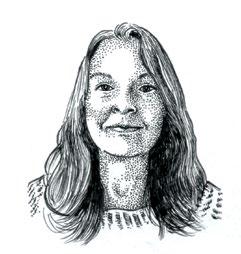
Every narrator has to start somewhere. And this year, with the 2026 Audie Awards, the Audio Publishers Association is honoring the journey with the New Voice Award, which “celebrates rising stars amongst emerging talent in audio narration, honoring narrators who have voiced 50 titles or fewer.” Of the five finalists in the category—Lily Newmark, Shane Ghostkeeper, James Aaron Oh, Gem Carmella, and Nicole Cash—four have narrated fewer than 10 audiobooks apiece.
Two of the New Voice Award finalists earned Earphones Awards for their performances: Newmark, narrating Anna North’s novel Bog Queen (Bloomsbury Publishing, 2025), and Carmella, narrating Amal El-Mohtar’s fantasy novella The River Has Roots (Macmillan Audio, 2025). Excellent matchmaking! And you can hear a discussion of Shane Ghostkeeper’s narration of Brandon Hobson’s meta, often surrealist novel The Devil Is a Southpaw (Harper Audio, 2025) on a recent episode of the Behind the Mic podcast.
It’s wonderful to see these relative newcomers having their work recognized alongside veteran narrators. Three cheers for new voices.
Jennifer Dowell is the audiobooks editor.
Award-winning Scottish crime novelist McDermid’s newest work is a beautifully written collection of essays, performed by the author. Part memoir about her childhood and writing life, part nature writing, part appreciation of the creativity that winter inspires in her, the result is mesmerizing. The book is brief, and McDermid’s writing is spare, eloquent, and occasionally romantic.
She’s wise and often funny. The delight for listeners is that McDermid performs as beautifully as she writes. Her mid-range voice is warm and enticing, and her Scottish accent is lyrical. She varies her tone to add rhythm. And her pacing is worthy of a trained actress. In this ode to a bracing season, McDermid has created an audiobook that warms the heart.

McDermid, Val | Read by Val McDermid Recorded Books | 2.25 hrs. | $24.99
Kirkus awards Earphones to truly exceptional presentations that excel in the following criteria: narrative voice and style, vocal characterizations, appropriateness for the audio format, and enhancement of the text.
January 13, 2026 | 9798899734106 166
Her If You Can By Tessa Bailey, read by Jason Clarke, Emma Wilder 166 If I Ruled
By Amy DuBois Barnett, read by Kristolyn Lloyd 170
Week
the Chocolate Maker By Timothy Janovsky, read by Mark Sanderlin
170 I Identify as Blind By Lachi, read by Lachi, Tim Vandehey 165
By Val McDermid, read by Val McDermid 174
Hour By Jo Nesbø, trans. by Robert Ferguson, read by Euan Morton
174
By Michael Pollan, read by Michael Pollan
175
By J.D. Robb, read by Susan Ericksen
by
Anders, Adriana | Read by Lila Winters, E.M. Wylde | Hachette Audio | 11.25 hrs. $27.99 | January 27, 2026 | 9781668651636
Lila Winters and E.M. Wylde deliver a smoldering dual narration that transforms a workplace romance into an intensely intimate experience. Winters’ portrayal of Rae crackles with intelligent defiance— her vocal shifts between composure and desire create palpable emotional tension. Listeners hear Rae’s internal conflict trembling beneath her confident exterior. Wylde brings Grant’s dominant presence to life through measured pacing and controlled intensity, though his emotional range occasionally plateaus during pivotal moments of vulnerability. The exploration of consent within BDSM relationships gains additional nuance through the narrators’ careful handling of boundary negotiations, making abstract concepts feel immediate and real. While the romance arc accelerates quickly, both performers maintain authentic chemistry throughout. A sensual exploration of power and surrender.
Catch Her If You
Bailey, Tessa | Read by Jason Clarke, Emma Wilder | Harper Audio 10 hrs. | $28.99 | January 20, 2026 9780063380905 | Series: Big Shots, 5
Narrators Emma Wilder and Jason Clarke dazzle in this contemporary friends-to-lovers sports romance. Madden, the newest catcher for the New York Yankees, has pined for Eve since they were teenagers. Eve has always turned him down, but now she may need his
CATCH HER IF YOU CAN
help: She is currently responsible for her sister’s twins, and her burlesque night club is struggling. Wilder’s nuanced, melodic tone captures Eve’s determined and passionate persona while Clarke’s deep, growly Irish accent embodies Madden’s possessive and protective demeanor. Wilder and Clarke’s distinct, authentic character voices and impressive accent work make this audiobook immersive and entertaining. Listeners will long for Eve and Madden to turn their marriage of convenience into their very own happily-ever-after.
If I Ruled the World
Barnett, Amy DuBois | Read by Kristolyn Lloyd | Macmillan Audio | 11.75 hrs. $26.99 | January 27, 2026 | 9781250433336
Narrator Kristolyn Lloyd expertly uses accents, emotional cues, and vocal effects in this vivid audiobook set in 1999. Nikki leaves her role as the only Black editor at a prestigious fashion magazine to become editor-in-chief at Sugar, a struggling hip-hop music and lifestyle publication. Nikki has only six months to save Sugar, and the job thrusts her into a world of wealth, parties, and mistreatment of women where she must balance various loyalties and personal beliefs. Lloyd’s remarkable range distinguishes characters, from bold women to threatening men. Lloyd especially shines in standout scenes including a lively call-and-response between a DJ and audience, and a
drunken fight in which characters have slurred speech. As Nikki navigates societal pressures and romances, she rethinks her priorities.
A transporting audiobook.
Bhutto, Fatima | Read by Fatima Bhutto Simon & Schuster Audio | 4.25 hrs.
$17.99 | January 27, 2026 | 9781668118405
Writer and columnist Bhutto explores a lifetime of grief, love, and self-doubt. Using a soft, intimately conversational tone, Bhutto contends with the murder of her father when she was very young, her estrangement from her controlling stepmother, and her decades-long entanglement with a man who took advantage of her understandable terror of losing people. Against these difficult circumstances, she sets the transformative love of her terrier, and her voice warms whenever Coco is her subject. Bhutto intersperses her own experiences with research on how humans first domesticated wolves as well as how dogs fit into worldwide religious traditions.
Bhutto narrates her memoir with delicate sincerity that invites the listener to be the person their dog believes they are.

Brennan, Allison | Read by Suzanne T. Fortin | Harper Audio | 12 hrs. | $28.99
January 27, 2026 | 9781488237027
Series: Quinn & Costa, 7
After narrating seven thrillers in this series, Suzanne T. Fortin has perfected the cadence of the main characters, who come across as thoughtful, committed, and effective. In this story, detective Kara Quinn and FBI Special Agent Matt Costa are investigating the disappearance of several couples at a Florida resort. Posing as another young couple, they are on the trail of the perpetrator—until they are trapped in a factory and realize they’re dealing with a psychopathic killer, or killers. The plot gets convoluted as police try to figure out who took them and why, but Fortin keeps listeners on track. The many twists and turns lead to a denouement that listeners may find less suspenseful than expected.
Cane, Clay | Read by Clay Cane Recorded Books | 11.5 hrs. | $29.99
January 27, 2026 | 9798899738982
Author Cane narrates his new work of historical fiction with authoritative reverence. The interconnected storylines are based on the histories of enslaved people during the American Civil War. The focus is on resistance, and the impact is brutal and devastating. Two
men, in love, break free from their captors; a woman is considered legally free after years of servitude, only to be dragged back into bondage by a dubious technicality; and a black enslaver, determined to achieve the status of the white power system, learns he will never be seen as equal. Cane’s cadence matches his prose, delivering a clear and unadorned performance.
A mesmerizing audiobook that captures the violence of slavery.
Cash, Madeline | Read by Christine Lakin
Macmillan Audio | 9 hrs. | $26.99
January 13, 2026 | 9781250435958
Christine Lakin shines in her performance of this messy family novel full of quirky characters and comedic prose. Bud and Catherine’s marriage and their relationships with their three daughters—Abigail, Louise, and Harper—are crumbling before their eyes. What’s worse, Bud works for Paul Alabaster, a billionaire shipping magnate, and when Harper goes through Bud’s work files and realizes that some shipping containers are left unaccounted for, she insists Bud take the information to his boss. As the family’s decisions become increasingly more unhinged, Lakin’s narration matches the rising tension and Cash’s ear for comedic timing. Lakin excels in her performance of the characters’ dialogue, seamlessly switching between voices and making each character sound unique.
Lakin’s skillful narration perfectly captures the essence of this chaotic family novel.
Chan, Eleanor | Read by Nancy Wu | Tantor Media | 9.5 hrs. | $24.99 | $45.95 library ed. January 6, 2026 | 9798318542381
9798318542398 library ed.
Narrator Nancy Wu’s performance of this audiobook may remind listeners of a classical music radio host, full of gentle authority. Chan explores the history of connection between music and visual art and shares anecdotes of her own life straddling both worlds. Her examples stretch from ancient history to Taylor Swift, but the narrative spans centuries at a quick, entertaining pace. Wu’s voice is low and smooth, and her lowest notes have a pleasant, subtle vibration. She rises beautifully to the task of conveying to listeners all the referenced visual art and music through Chan’s vivid descriptions, without the illustrations in the printed book or clips of the songs themselves.
A winning history for lay audiences.
Cullen, Lynn | Read by Rachel L. Jacobs Penguin Audio | 12.75 hrs. | $22
$66.50 library ed. | January 20, 2026 9798217163113 | 9798217164318 library ed.
Rachel L. Jacobs gives an exhilarating performance of this historical audiobook about ambition, women’s roles, and female friendship. In the early 1950s, photojournalist Eve Arnold meets famed actress Marilyn Monroe, and a decade-long collaboration begins. Jacobs illuminates the fragile balance between Eve’s challenges of working in a male-dominated field, which requires her absence from home for days or even weeks at a time, with her responsibilities as a wife and mother of a young son. In portraying Marilyn,
Jacobs is simply stunning as she shifts between a relaxed tone in Marilyn’s interactions with Eve and other friends, and Marilyn’s breathy voice for her public appearances. Listeners will savor this audiobook about female ambition and friendship.
Douaihy, Margot | Read by Mara Wilson
Zando Penguin Audio | 10.5 hrs. | $22 $76 library ed. | January 13, 2026 9798217296163 | 9798217296231 library ed.
Mara Wilson reprises her role as Sister Holiday, a part-time private investigator, music teacher, and (almost) full-time bride of Christ with the Sisters of the Divine Blood. When a student dies from a fentanyl overdose at her New Orleans Catholic high school, Holiday immediately seeks answers with her PI partner Riveaux. Wilson’s fluent characterizations of Holiday’s brother, Moose; her Mother Superior; and the wider community filled with students, law enforcement, and seedy denizens immerse listeners within a complex world of addiction. Wilson slips easily into the character of Sister Holiday, presenting listeners with the lesbian nun’s deep faith and humor as she pursues justice at any cost. Wilson’s performance is fully engaged.
Dramis, Kate | Read by Georgina Sadler
Macmillan Audio | 10.75 hrs. | $26.99
January 6, 2026 | 9781250434630
Narrator
Georgina Sadler brings nuance to this contemporary romance between a successful American debut novelist and a British actor on the verge of superstardom. On a flight after a wild night out, Sage awkwardly flirts with Theo, who is sitting across
the aisle. After attending a party together, Theo ghosts her. But when Sage travels to a small Scottish village to work on her second novel, she runs into Theo again, and their spark is reignited. Sadler brings forth Sage’s warmth and charm as well as Theo’s kind, steadfast manner as they work through their insecurities about family, career, and romance. Sadler ably portrays the well-realized characters and emotional truths. A poignant happily-ever-after.
Duncan, Alice Faye | Read by John Elbe
Harper Audio | 16 mins. | $6.99
January 27, 2026 | 9780063459649
Bookended by a bluesy guitar riff, John Elbe’s resonant narration takes young listeners to rural, Jim Crow-era Mississippi to tell the story of the great B.B. King. In the sounds of a preacher’s guitar and a blues-loving aunt’s Victrola, little Riley B. King found music early: a $15 guitar he purchased at age 12 with money earned from picking cotton set him on his way. Elbe mimics the twangs of Riley’s guitar as the boy begins to master the instrument, his voice gathering power as the now-grown King’s career takes off. Duncan’s account smoothly backgrounds her subject’s climb to success with the realities of poverty and segregation. An accompanying PDF of the print edition’s backmatter provides a timeline and further resources.
A joyous, respectful introduction to the King of the Blues. (7-9)

Dusapin, Elisa Shua | Trans. by Aneesa Abbas Higgins | Read by Elisabeth Lagelée
Simon & Schuster Audio | 3.5 hrs. | $14.99
January 13, 2026 | 9781668148839
Narrator
Elisabeth Lagelée is the perfect choice for this moody and atmospheric work translated from
French. Sisters Agathe and Véra reunite at the family’s dilapidated stone cottage in the French countryside to dispose of possessions before its sale and demolition. Lagelée’s French is perfect when appropriate but also reflects Agathe’s years in New York City. The pace is slow, and Lagelée’s quiet, breathy delivery hints at insecurity and invisible trauma. Agathe and Véra gingerly navigate nine days spent unpacking the memories of a lifetime, their parents no longer with them but still constant companions. From the moment listeners enter the cottage with Agathe, Lagelée reveals the smoldering tension.
Ellsworth, Loretta | Read by Caroline Hewitt Harper Audio | 8.5 hrs. | $25.99
January 13, 2026 | 9780063457065
Caroline Hewitt’s evocative portrait of a Hungarian countess in post-WWII Minnesota is an engaging listen. Twenty-four-year-old Roza, winningly portrayed with a soft accent and assured demeanor, is engaged to American soldier Joe. When she arrives in Minnesota on a two-week G.I. visa, she learns that Joe is already married. Roza shares her story with a local journalist. The published column brings in more than 1,700 marriage proposals from American military servicemen. Roza chooses to marry Finn, and they settle in his small Minnesota hometown.
Hewitt magnificently transports listeners to a postwar America when dreams of a fresh start collide with haunting wartime memories.
Faruqi, Saadia | Read by Sunil Malhotra, Josh Hurley, Christopher Salazar, Nikhaar Kishnani | Harper Audio | 8 hrs. | $25.99 February 10, 2026 | 9780063389557
Four narrators personalize the tragedy of Houston’s 2017 Hurricane Harvey through the viewpoints of three struggling teens. Sunil Malhotra depicts Pakistani American Yasir’s many facets—his determination to succeed at soccer, his barely controlled rage about racism, his sadness about his father’s death, and his deep fear of drowning. Nikhaar Kashnani portrays South Asian American Mona. Weighed down by caring for her young brother, she loses herself in art and dreads her recurring nightmare about a flood. Josh Hurley renders Cody’s cruel, racist bullying as well as his fear of the dark, a result of being abused by his father. Christopher Salazar enthusiastically delivers interstitial news bulletins. When flooding from Harvey makes them face their worst fears, the resilient threesome’s separate stories come together and they support each other’s bravery. Powerful listening. (8-12)
Gonzalez, Xochitl | Read by Elizabeth Rodriguez | Macmillan Audio | 7.75 hrs.
$22.99 | April 21, 2026 | 9781250433084

Elizabeth Rodriguez narrates this novel set in early 2000s Brooklyn with a youthful tone, a fine style, and a real understanding of the protagonist’s life. Recent Yale grad Alicia tells this
WHEN THE FIREFLIES DANCE
Gatsby-like story, following the rise and fall of local clothing designer La Garza. Rodriguez’s voice and delivery work for Alicia, and she brings La Garza vividly to life. What stays with the listener are the party scenes at La Garza’s warehouse and an intense musical celebration at a Brooklyn park. Rodriguez captures both moments with great feeling. Gonzalez writes vibrantly of 20-somethings trying to capture the American dream. This audiobook offers a look back at our recent past through the lens of hip, upwardly mobile young Brooklynites.
Guo, Xiaolu | Read by Isabel Adomakoh Young | Simon & Schuster Audio | 10.5 hrs. $25.99 | January 6, 2026 | 9781668155677
Isabel Adomakoh Young narrates this inventive retelling of Melville’s classic with a controlled, attentive authority that suits both the maritime setting and the story’s revisionary themes. Ishmaelle, a young girl from the Kent coast, disguises herself as a cabin boy aboard the whaling ship Nimrod, where she serves under the driven Captain Seneca on the hunt for a white whale. Young handles shifts in age, gender, and geography with clarity, allowing rhythm and pacing to do much of the work. Young is particularly effective in scenes aboard the ship, when she uses a steady cadence to ground moments of danger, laboring, and uneasy fellowship, and she gives Ishmaelle a measured sense of urgency. Young keeps the listener oriented while the story moves between survival, obsession, and belonging.
Hassan, Aisha | Read by Jassa Ahluwalia Simon & Schuster Audio | 10.75 hrs. | $25.99
December 2, 2025 | 9781797193038
On the outskirts of Lahore, violence shatters Lalloo’s family when his brother is murdered outside their home. Narrator Jassa Ahluwalia brings empathetic intensity to this novel as Lalloo leaves his family in order to earn enough to free his parents and sisters from generations of debt bondage forcing them to work as brickmakers. Giving space to both memories and present struggles, Ahluwalia helps listeners track Lalloo’s story as it shifts between the past and present. As Ahluwalia speaks in a calm, grounded tone, his pacing underscores the slow grind of kiln labor and the pressures of poverty. Quieter moments reflect Lalloo’s reckoning with fear and obligation. Ahluwali’s narration amplifies this novel’s focus on survival, moral resolve, and the cost of choosing a different future.
Henry, Veronica G. | Read by Robin Miles Brilliance Audio | 11 hrs. | $42.99
February 1, 2026 | 9781511379953
Robin Miles voices a community of characters of different genders, ages, time periods, and species in this mind-bending sci-fi story that blends humanity and AI. Echo London, a reclusive librarian, spends most of her time with her head in
a book. But after getting unexpectedly transferred to the People’s Library, she’s forced to connect with virtual “personages,” eerily lifelike AI-powered replicas of historical figures. When a woman is killed in the library’s lobby, Echo joins forces with two personages—a Victorian philosopher and an early American Navy man—to solve the crime. While the story stalls at times, Miles’ narration doesn’t. Her range is truly impressive, manifesting advanced tech alongside dialects and accents of various time periods. It’s a feat. Miles offers a lesson in vocal versatility, making this sci-fi mystery a must-listen.
Ixta, Carolina | Read by Karla Serrato Harper Audio | 9.75 hrs. | $27.99 February 3, 2026 | 9780063287945
Karla Serrato’s authentic accent adds to her presentation of the difficult choices faced by two teenagers dealing with corporate greed and its associated damage. Paloma decides to enter a scholarship contest with her ex-boyfriend Julio by investigating the harm the business giant Selva is inflicting on their Southern California community. Winning would provide each their greatest desire, providing Julio tuition and Paloma the national publication of her writing. Serrato’s thoughtful narration ably depicts the teens, their families, and the twists in their stories. An accompanying map and afterword provide context to the important story behind Ixta’s writing. A relevant and engrossing tale as the students uncover the ecological and political ramifications. (13-18)

ALICE WITH A WHY
James, Anna | Read by Kristin Atherton
Listening Library | 2.75 hrs. | $23
$56 library ed. | January 6, 2026
9798217080830 | 9798217080960 library ed.
James constructs a new version of Wonderland and sends the original Alice’s granddaughter, Alyce, into it to solve the war between night and day. Narrator Kristin Atherton is magical. She creates distinctive voices and enhances the whimsy as Alyce meets the March Hare and the Mad Hatter as well as new characters—a friendly fox in a paper sailor’s cap and a caterpillar who is eating a Joyce book that he declares indigestible. Alyce must stop the war between the Sun King and the Queen of the Moon; they keep turning the lights off and on without warning, making the stars disappear and confusing the cows. Atherton’s facility with the fanciful verse reminiscent of the original story is a particular delight. Atherton perfectly captures this enchanting return to Wonderland. (8-12)
Janovsky, Timothy | Read by Mark Sanderlin
Harlequin Audio | 9 hrs. | $28.99 January 27, 2026 | 9781488237478
Mark Sanderlin is no stranger to narrating cozy romances, and this re-telling of Charlie and the Chocolate Factory as a love story will charm listeners.
Dario must marry or lose his family’s chocolate empire but because of his agoraphobia, the only way to meet suitors is to fly them to his Italian villa. He stages a competition, and among the hopefuls is Charlie, an American man who needs money to save his family home. Sanderlin rounds out the rest of the cast with in-depth portrayals and realistic personalities, and he delivers a sweet mix of infatuation and fun character building with his performance. Sanderlin’s skill and experience make this a winning listen.
Lachi | Read by Lachi, Tim Vandehey Penguin Audio | 10.5 hrs. | $22
$76 library ed. | January 27, 2026
9798217171835 | 9798217171842 library ed.
Lachi’s highenergy and confident performance of her audiobook empowers and celebrates the disability community. As a blind, Black musician who has been diagnosed with ADHD, OCD, and anxiety, Lachi’s life experiences have enabled her to understand the challenges and benefits of living with disabilities. Her accomplishments are impressive—she founded RAMPD (Recording Artists and Music Professionals with Disabilities) and has appeared on the PBS American Masters series—but her commonsense approach to coping with disability is even more noteworthy.
Interspersed throughout are accounts and strategies from a multitude of disabled individuals.
An instructive and hopeful narrative performed with gusto and heart by a remarkably resilient woman.
Li, Lillian | Read by Katharine Chin
Macmillan Audio | 10.75 hrs. | $26.99 February 17, 2026 | 9781250433244
Narrator
Katharine Chin elevates this contemporary coming-of-age story featuring four Asian American friends. Diana, Justin, Errol, and Vivian all attended great schools and earned good grades, but in the aftermath of graduating into the Great Recession of 2008, they find themselves unemployed and living at home. Grace, a former classmate, makes a YouTube video about the group and their failure to meet expectations called “Bad Asians.” The video goes viral, upending their lives in the early days of the internet. Chin brings each character distinctly to life through subtle tonal shifts. Her reflective tone conveys the story’s thoughtprovoking exploration of identity, cultural expectations, and the meaning of success.
A resonant listening experience rich with biting social commentary.
Markovits, Ben | Read by Eric Meyers
Simon & Schuster Audio | 7 hrs. | $23.99
December 30, 2025 | 9781668169490
Eric Meyers portrays Tom Layward, who drops his daughter off at college in Pittsburgh and immediately indulges in a midlife crisis in the form of a spontaneous road trip. When
Tom’s wife had an affair 12 years earlier, he promised himself to cut ties only after their youngest child left home, and Meyers depicts Tom’s repressed frustration as he finally breaks loose. With an ambiguous plan to eventually reach his son in LA, Tom connects with old acquaintances as well as strangers, each voiced by Meyers with a subtle shift in tone and pace. Tom is blasé about his health situation and is less concerned than everyone around him, including his confused and angry wife back home. Eventually, this middle-aged man realizes that his wandering must inevitably end.
McCurdy, Jennette | Read by Jennette McCurdy | Random House Audio | 4.5 hrs. $22 | $66.50 library ed. | January 20, 2026 9780593788714 | 9780593788721 library ed.
McCurdy, author of the memoir I’m Glad My Mom Died, narrates her first foray into fiction. Teenager Waldo desires her much older creative writing teacher, Mr. Korgy, despite him being strikingly unremarkable, and they enter into a secret affair. McCurdy’s delivery is flat and dry, and there’s very little pitch variation, which can make differentiating characters in conversation tricky. But this restrained performance reflects Waldo’s confident and uncaring attitude. McCurdy draws listeners through the vulgar, piercing prose. It makes for an uncomfortable listening experience but perfectly conveys a character who refuses to see herself as a victim. A performance that unapologetically gives voice to its ravenous main character.
McLain, Paula | Read by Alexa Davalos, Michiel Huisman, Paula McLain
Simon & Schuster Audio | 13.75 hrs. $29.99 | January 6, 2026 | 9781797193724
McLain’s historical novel takes us to the 1660s and the 1940s, when the tunnels beneath Paris offered pathways to freedom for desperate people. Alexa Davalos and Michiel Huisman bring these two eras to life with strong, confident deliveries. Narrating the 1660s chapters with a somber tone, Davalos tells the story of 18-year-old Alouette, making her sound confident as she fights to follow in her father’s footsteps in a culture that belittles and abuses women. Huisman narrates the chapters set in the 1940s, giving a strong voice to Kristof, a young psychiatric resident determined to fight for the humanity of his patients and Jewish neighbors during the Nazi occupation of Paris. A rich performance by two talented narrators.
Mitchell, Saundra | Read by Lisa Flanagan Harper Audio | 9 hrs. | $28.99 | January 6, 2026 9780063439269 | Series: Vinnie Taylor, 1
Lisa Flanagan’s talented narration brings ex-detective Vinnie Taylor alive as she settles in a small town in Maryland and tries to rebuild her life. When a routine shopping trip ends in Vinnie >>>
Katharine Chin elevates this contemporary coming-of-age story.
by Billy Eichner
The comedian and actor, known for the show Billy on the Street, will narrate.
Billy Eichner will tell the story of his life and career in an audiobook-only

memoir coming later this year.
Macmillan Audio will release Billy on Billy, the publisher announced in a news release.
Eichner began his career as the co-host of the live stage variety and talk show Creation Nation, later gaining significant fame as the host of Billy on the Street, which premiered in 2011 and ran for five seasons. On the show, Eichner surprised New York City pedestrians by running up and loudly asking them questions about popular culture.
He went on to act in series including Parks and Recreation, Difficult People, and Friends From College, as well as films such as The Lion King and Bros
“Billy shares funny and inspiring stories about growing up in Queens as the chubby gay kid of two loving, idiosyncratic parents, while paying tribute to family members, teachers, mentors, and—in true Billy on the Street fashion—his all-time favorite entertainers,” Macmillan says.

For more audiobook memoirs, visit Kirkus online.
“Being best known for my loud character on Billy on the Street, I wanted the book to be released exclusively in audio so that my fans could get a better sense of my real voice and where I came from,” Eichner said in a statement.
Billy on Billy is scheduled for release on May 19.—M.S.


The author of Escape! answers our questions.
STEPHEN FISHBACH’S debut novel, Escape! , in which fading reality TV stars assemble on a remote island, is inspired in part by his own two stints on Survivor. But the Pushcart Prize–winning author says that he’s also inspired by the works of Charles Dickens. Fishbach told us more about the book by email.
warm, beloved persona, she might help listeners empathize with a morally complicated character. For the other roles, I heard auditions. I knew immediately that Sean and Imani were the right people. Sean perfectly captured Kent’s vulnerability, and Imani fully evoked Miriam’s almost naïve optimism.

Is there a book or an author that influenced your decision to write— one that caused you to say, I want to do that ?
The biggest recent influence on my writing has been Charles Dickens. Bleak House is my favorite novel. It’s filled with so much life, from the deepest tragedies to the silliest people. It has tension and momentum, and then there’s a chapter where three side characters have lunch. There’s just so much joy in his work. But I also need to acknowledge my dear friend Joshua Max Feldman’s The Book of Jonah, a novel I absolutely adore. I was so inspired by Josh’s discipline. Watching him dedicate himself to his writing and then put out such a profound, big-hearted work of art made me believe that if I committed myself, I might one day finish a novel, too.
Were you involved in the casting of your audiobook? Are you an audiobook listener yourself? I was involved! I knew Julia Whelan from Bread Loaf [Writers’ Conference], and I reached out to her for the role of Beck. Obviously, she’s simply the best in the business, but I specifically thought that given her
I love audiobooks. Recent favorites have been Andy Weir’s Project Hail Mary (like everybody else), narrated by Ray Porter, and Daniel PollackPelzner’s Lin-Manuel Miranda: The Education of an Artist, read by Javier Muñoz. I’m a big Warhammer nerd, and I’ve been listening to Dan Abnett’s Eisenhorn series performed by Toby Longworth. And one last shoutout again to Bleak House, because I’m in awe of the way Sean Barrett and Teresa Gallagher evoke the multitude of Dickens’ characters.
What inspired you during the writing of the book? What were you reading, listening to, watching?
I have to give particular credit to Karen Russell’s short story “The Prospectors” (collected in Orange World ). Whenever my prose felt leaden, I would reread it, hoping to get energized by her incredible metaphors and vivid word choice. I read and re-read Kazuo Ishiguro’s novels to learn tips and tricks on writing first person. I also read a lot of books set in jungles or remote locations, like William Golding’s Lord of the Flies, Ann Patchett’s State of Wonder, Kea Wilson’s We Eat Our Own, Mat Johnson’s Pym, Alex Garland’s The Beach, Maile Meloy’s Do Not Become Alarmed, and Diane Cook’s The New Wilderness Gabrielle Zevin’s Tomorrow, and

Fishbach, Stephen | Read by Julia Whelan, Imani Jade Powers, Sean Patrick Hopkins, and Stephen Fishbach Penguin Audio | 13.5 hrs. | $23 Jan. 27, 2026 | 798217285525
Tomorrow, and Tomorrow was an inspiration for how to evoke an industry within a book.
I also watched a lot of jungle reality television. I may be best known for my time on Survivor, but I wanted this book to speak to the entire genre, and I particularly wanted it to evoke cable reality shows that have smaller crews, where the whole enterprise feels more precarious. There’s something I find moving about contestants pushing themselves to the limits of their human capacity, struggling through their life’s best and most humiliating moments, and the final product streams on a digital channel with 15 subscribers.
Interview by Jennifer Dowell
receiving a call for help from a teen who believes her best friend has been murdered, Vinnie soon finds herself embroiled in secrets and lies, along with a past she can’t forget. In Vinnie, Flanagan creates a strong, likable character, and she also creates a thoroughly believable cast of supporting characters, including troubled teenagers. Flanagan injects the perfect amount of urgency in her narration, allowing the tension to build as the plot twists to its exciting conclusion. An engaging and suspenseful listen.
Nesbø, Jo | Trans. by Robert Ferguson
Read by Euan Morton | Random House Audio | 12.5 hrs. | $26 | $95 library ed. February 3, 2026 | 9798217174454 9798217174973 library ed.
Euan Morton delivers this brilliantly plotted mystery with extraordinary skill. His impeccable Norwegian pronunciations and his deft handling of character voices offer listeners an unforgettable experience. In 2016 Minneapolis, a series of murders appears to be the work of former gang member Tomas Gomez. Detective Bob Oz, who has anger management issues and drinks too much, is drawn into the case. In 2022, a Norwegian crime writer comes to Minneapolis to investigate the murders. Nesbø’s look at contemporary Minneapolis touches on racism, gangs, American gun culture, George Floyd’s murder, and police corruption. Morton’s exceptional performance makes this twisty psychological thriller an excellent listen.
Nielsen, Jennifer A. | Read by Emily Lawrence | Scholastic Audiobooks 7.75 hrs. | $39.99 | $83.99 library ed. March 3, 2026 | 9798225033521 9798225033538 library ed.
Narrator Emily Lawrence creates a determined voice for Cora, who is desperately trying to survive the tragic 1906 earthquake in San Francisco with her two friends Chi and Oliver. Lawrence captures Cora’s tumultuous emotions as she and Chi are buried in rubble following the disaster and saved by her forbidden friend Oliver. Despite the bitter feud between their parents, Cora and Oliver work together to try to find her family as fire keeps spreading throughout their beloved city, all while running from bullies who are after Cora. Lawrence makes each character unique and adds a slight Irish accent for Oliver. Lawrence enthusiastically portrays Cora and her friends in this fast-paced historical-fiction adventure. (8-12)
Patel, Shameez | Read by Shahjehan Khan, Jensen Olaya | Hachette Audio | 10.25 hrs. $27.99 | January 20, 2026 | 9781668654262
Shahjehan Khan and Jensen Olaya narrate this delightfully nerdy workplace romance. Online, Lily and Link are best friends, chatting and gaming the night away. In real life, Elizabeth Gordon-Bettencourt has just been hired as an engineering intern at Lincoln
Euan Morton delivers this brilliantly plotted mystery with extraordinary skill.
WOLF HOUR
Carden’s firm. For the first time, Elizabeth is following her own path, and she’s determined to make it work. Serious Lincoln is no match for sunny Elizabeth as she tries to find a way to connect with her boss. Khan provides steady warmth for Lincoln while Olaya captures Elizabeth’s youthful, friendly energy with her bright and clear narration. Flirty online messages and chance moments slowly turn into real feelings, but is the risk worth the potential heartbreak?
Pollan, Michael | Read by Michael Pollan Penguin Audio | 8.75 hrs. | $22 | $95 library ed. | February 24, 2026 | 9798217282159 9798217283385 library ed.
Pollan is a favorite with listeners, and rightly so. He may not possess a silken or practiced voice, and he’d be nobody’s first choice to narrate Proust, but few author-narrators are as engaging or as effectively bonded to their narrative. Pollan here explores one of the most fundamental of questions: What is consciousness? This leads him to other questions. Where exactly is consciousness located? What other species possess it? Pollan takes his listener on a journey through theories and research sites, each rendered with his signature economy and precision. Some sections may require relistening, but the difficulties lie in the subject matter, not the prose. That couldn’t be clearer or more illuminating. Once again, Pollan makes the unknown make sense.

Quirk, Matthew | Read by Christine Lakin Harper Audio | 12.5. hrs. | $28.99 January 20, 2026 | 9780063393073
Christine Lakin’s narration transforms an espionage thriller into a taut psychological journey. Lakin captures Anna Vaughn’s evolution from a B-list actress to a reluctant spy with remarkable vocal precision. When Anna goes undercover to rescue her missing friend, Lakin doesn’t rely on dramatic vocal flourishes; instead, she conveys tension through subtle shifts in pacing and breath control that mirror Anna’s mounting fear. Her portrayal of FBI handler Kevin Matthews balances authority with ambiguity, keeping listeners guessing about his true loyalties. Lakin maintains clarity during the fraught action sequences without sacrificing urgency, making combat choreography comprehensible. Her vocal distinctions among supporting characters, from menacing oligarchs to Anna’s troubled sister, feel organic. Lakin makes this globe-trotting thriller feel breathlessly personal.
Robb, J.D. | Read by Susan Ericksen | Macmillan Audio | 13.25 hrs. | $28.99 | February 3, 2026 | 9781250428851 | Series: In Death, 62
Narrator Susan Ericksen returns for the latest installment of the long-running In Death series, set in New York in the 2060s. Lt. Eve Dallas and her billionaire husband, Roarke, are called to the scene of a murder. Nathan Barrister is found dead in his study, where there is a hidden vault that houses priceless stolen artwork. Dallas’ investigation is complicated by the fact that the only
Lakin maintains clarity during the fraught action sequences. THE METHOD
item missing from the vault is a set of jewels stolen by Roarke decades ago. Ericksen masterfully conveys Eve’s emotions, from her frustration about the investigation to her concern for her husband. And Ericksen’s adept handling of the cast of characters, including Dallas’ partner, Peabody; her commander, Whitney; and the victim’s family demonstrates her skill. A compelling performance.
Rosen, Kenneth R. | Read by Jacques Roy Simon & Schuster Audio | 8.5 hrs. | $24.99 January 6, 2026 | 9781668101896
Melting Arctic ice, the Russian invasion of Ukraine, and President Donald Trump’s recent threats concerning Greenland all act as reminders that the political and environmental challenges facing the Arctic are of paramount importance to the planet’s security and longevity. Jacques Roy adeptly manages Rosen’s myriad threads with a conversational style and patient performance. Listeners learn about the Whisky War— actually a peaceful border dispute— between Canada and Denmark, and the polar preparation that Scandinavian soldiers undertake during national service training. A warming climate has led to increasing numbers of tourists clad in high-end brands arriving in the Svalbard airport and taking pictures next to the stuffed polar bear. Rosen and Roy join forces to entertain, enlighten, and send out warning signals.
Rosolie, Paul | Read by Paul Rosolie
Random House Audio | 10.5 hrs. | $22
$66.50 library ed. | January 20, 2026
9798217159543 | 9798217160440 library ed.
This memoir, environmental manifesto, and recounting of adventures in the Peruvian Amazon rainforest is a compelling listen. Rosolie tells the story of the Junglekeepers organization, dedicated to protecting the rainforest, with a heart-stopping pace. Rosolie and his team capture some of the world’s largest anacondas, climb to the top of the jungle canopy, fight for the survival of rare macaws, and meet the Indigenous Mashco Piro tribe. The Junglekeepers bring travelers to this most remote part of the planet where they have built the “world’s tallest treehouse.” Sadly, after overcoming threats of logging and mining and saving more than 100,000 acres of wilderness, the organization now faces drug dealers who want to use the land for their own purposes. An exciting, inspiring, and provocative audiobook.
Rubin, Lance | Read by Lance Rubin, Katie Schorr, Dustin Rubin | Harper Audio 9.75 hrs. | $28.99 | January 6, 2026 9780063330405
Three narrators— the author and his real-life wife and brother—each tell this heartfelt and witty story with
their own approach. Carter is stuck in a loop. Every year on his birthday, he turns 16 again and forgets the previous year, while everyone else, including his younger brother, Lincoln, ages normally. But loop six seems different, and Carter, supported by his family and former girlfriend, Maggie, will do anything to end the cycle. As the three narrators introduce each character’s perspective and deliver their experiences with emotional depth, the dynamic between Carter, Lincoln, and Maggie sounds natural and complex. An exceptional and authentic listening experience. (14-18)
Segura, Jo | Read by Kyla Garcia | Penguin Audio | 11.25 hrs. | $23 | $95 library ed. January 13, 2026 | 9798217163359 9798217164554 library ed.
Narrator Kyla Garcia shines in this delightful romantic adventure.
Daniela Guiterrez never thought that while on a solo trip to Greece she would run into her brother’s best friend, Theo. Daniela has been in love with Theo for as long as she can remember—and he’s been presumed dead for more than a year. Theo and Daniela are both abducted and tasked with finding an elusive gemstone known as the Eye of the Minotaur. Garcia’s distinct, authentic-sounding character voices will have listeners cheering for Daniela and Theo to find the gemstone and discover true happiness together.
Garcia’s expressive, nuanced performance creates a suspenseful, heart-racing listening experience.

Stubb, Alexander | Read by Nicholas Guy Smith | Random House Audio | 7.25 hrs.
$18 | $47.50 library ed. | January 13, 2026
9798217346561 | 9798217346691 library ed.

Nicholas Guy Smith gives a professional performance of this memoir from the former prime minister and current president of Finland. Smith’s British accent gives an authoritative quality to the narration, and it is easy to follow and understand. Stubb details his life and his rise to political prominence, not only in his native Finland but also in the Western Alliance and the European Union. Stubb has lots of ideas about how the world works and how it should run, including the opinion that Russia, specifically Putin, is the root of all evil. Smith’s somewhat dispassionate delivery matches the text well.
Whitmire, Ethelene | Read by Russell Jordan, Nicole Cash | Penguin Audio | 7.5 hrs.
$22 | $76 library ed. | February 3, 2026
9798217281695 | 9798217282920 library ed.
This story of love, endurance, and heroism in a time of war translates well to audio. That it’s a true story makes it all the better. Reed Peggram was an American linguist who found love when he went
This
to Europe for advanced study prior to WWII. He refused to return to the U.S. because his male partner couldn’t emigrate. They ended up in a Nazi prison camp. Russell Jordan offers a solid narration. His even voice carries the narrative along effectively without false drama. His facility with foreign names and places keeps things flowing. Nicole Cash narrates the touching and enlightening preface, in itself a worthy story of diligence and serendipity. This well-told tale of love and courage during WWII would make a good miniseries.
Zhang, Jenny Tinghui | Read by Katharine Chin, Eric Yang | Macmillan Audio 10.5 hrs. | $26.99 | February 3, 2026 9781250433053

Shy college student Minnie finds comfort and confidence in obsessing over K-popstyle boy band HOURglass. The band’s most mysterious member—and Minnie’s favorite—is Halo, the alter ego of former delivery driver Eason, who reinvented himself to escape a past he’s ashamed of. Narrators Katharine Chin and Eric Yang deliver highly listenable but subdued performances, even in scenes of high drama. Both characters are intensely selfcontrolled, observing their environments and even their own emotions from a cautious remove. This reserve reflects the characters’ personalities, and subtle shifts in their emotions stand out as the two storylines begin to converge. Fandom and fame clash with gritty reality.



Learn about the inspiration behind the iconic Eames chair from acclaimed creator CHRISTY HALE! A seriously fun picture book biography about the importance of play and imaginative problem-solving.











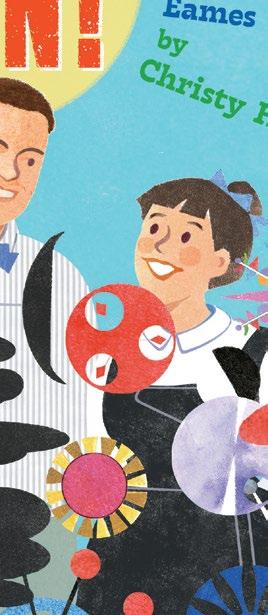










“A winning celebration of a power couple’s versatility, innovation, and


collaborative spirit.”—Kirkus Reviews