15,
FEATURING 393 Industry-First Reviews of Fiction, Nonfiction, Children’s, Young Adult, and Audiobooks


The award-winning Indian novelist headlines our special International Issue GEETANJALI SHREE MAKES WORLD LITERATURE OUT OF PRIVATE LIVES

15,
FEATURING 393 Industry-First Reviews of Fiction, Nonfiction, Children’s, Young Adult, and Audiobooks
The award-winning Indian novelist headlines our special International Issue GEETANJALI SHREE MAKES WORLD LITERATURE OUT OF PRIVATE LIVES
in
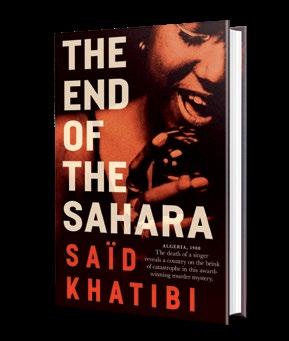
In the fall of 1988, shortly before the outbreak of mass youth riots in Algeria overunemployment and a lack of basicgoods, a town’s collective anger over the murder of anightclub singer reflects what’s to come.
Read the review on p. 14


FROM THE EDITOR’S DESK


DESPITE THE MALIGNANT chaos of international politics at present, international literature is having its moment. Gone is the insular complacency once ascribed (perhaps unfairly) to U.S. readers. We now seek out and celebrate work by writers from around the globe, much of it in translation. Where once I might have seen novels by Jonathan Franzen and Michael Chabon as I ride the F train into the Kirkus office in Manhattan, I now regularly encounter commuters absorbed in the latest by Norwegian superstar Karl Ove Knausgaard (The School of Night), Danish phenom Solvej Balle (On the Calculation of Volume), or Polish Nobel laureate Olga Tokarczuk (House of Day, House of Night). There are more discoveries to be made; here are just a few:
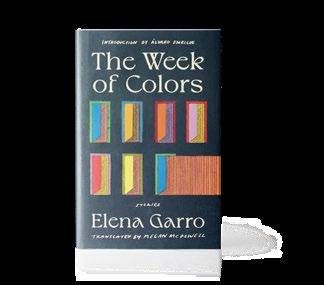
The Week of Colors by Elena Garro (Two Lines Press, 2025): Before Colombia’s Gabriel García Márquez bowled readers over with the audacity of One Hundred Years of Solitude, before they were enchanted by the imaginings of Peru’s Isabel Allende in The House of Spirits, Elena Garro of Mexico was preparing the ground for the full bloom of Latin America’s magical realism. This 1964 story collection, translated into English by Megan McDowell, gives U.S. readers a taste of what our reviewer calls Garro’s “fine stylistic sensibility and startling descriptive voice.” The starred review calls these “crucial stories that pierce the heart of the modern world. A must-read.”
More than 75 years after his death, Algerian-born French writer and thinker Albert
Frequently Asked Questions: www.kirkusreviews.com/about/faq
Fully Booked Podcast: www.kirkusreviews.com/podcast/
Advertising Opportunities: www.kirkusreviews.com/book-marketing
Submission Guidelines: www.kirkusreviews.com/about/publisher-submission-guidelines
Subscriptions: www.kirkusreviews.com/magazine/subscription
Newsletters: www.kirkusreviews.com
For customer service or subscription questions, please call 1-800-316-9361
Camus retains his hold on our moral imaginations, inspiring such fictional engagements as The Meursault Affair, in which Algerian writer Kamel Daoud gives the unnamed Arab of The Stranger his own story. Now Americans can glimpse the Nobel laureate’s mind at work in real time with The Complete Notebooks, translated by Ryan Bloom (Univ. of Chicago, 2025), which “offer a voice-over to the great upheavals of the mid-20th century,” according to our reviewer. “The inner life of a great absurdist, with lessons for us in times of turmoil.”
For a more intimate and personal view, readers can soon turn to to Mon Cher Amour: The Love Letters of Albert Camus and Maria Casarès, 1944-1959 (Knopf, April 21) in an English translation by Sandra Smith and Cory Stockwell. Camus met the Spanish-born actress when she was 21. He was 30 and already married; their affair continued until his death in a car accident. “As we read, we realize that whatever we are learning from these long-dead lovers pales against
what we can learn about ourselves,” writes Kirkus’ critic in a starred review. “A dazzling correspondence from long ago, revived in ardent English.”
While this lovers’ dialogue weighs in at more than 1200 pages, Camus’ French contemporary Simon de Beauvoir is back in American bookstores with what our reviewer calls a “deceptively slim volume,” Lauren Elkin’s translation of the 1966 novel The Image of Her (Yale Univ., Jan. 13). De Beauvoir’s upper-class protagonist—a married mother of two with a career in advertising and a lover on the side—finds herself questioning the supposed perfection of her life. “Though the book is 60 years old, the issues it addresses—about happiness, autonomy, mothers, daughters, the reasons for existence—feel utterly topical,” says Kirkus’ starred review. The best literature— from near or far, old or new—is always au courant.

Co-Founders, Kirkus Media LLC
HERBERT SIMON MARC WINKELMAN
Publisher, CEO & Partner
MEG LABORDE KUEHN mkuehn@kirkus.com
Chief Marketing Officer
SARAH KALINA skalina@kirkus.com
Enterprise Advertising Director
MICHELE COBB mcobb@kirkus.com
Indie Advertising & Promotions
AMY BAIRD abaird@kirkus.com
Author Consultant
KEELIN FERDINANDSEN kferdinandsen@kirkus.com
Lead Designer KY NOVAK knovak@kirkus.com
Magazine Compositor NIKKI RICHARDSON nrichardson@kirkus.com
Director of Kirkus Editorial ROBIN O’DELL rodell@kirkus.com
Kirkus Editorial Senior Production Editor
MARINNA CASTILLEJA mcastilleja@kirkus.com
Kirkus Editorial Production Editor
ASHLEY LITTLE alittle@kirkus.com
Indie Editorial Assistant
KATARINA YERGER kyerger@kirkus.com
Contributing Writers
GREGORY McNAMEE
MICHAEL SCHAUB
Mysteries Editor THOMAS LEITCH
Editor-in-Chief
TOM BEER tbeer@kirkus.com
President of Kirkus Indie
CHAYA SCHECHNER cschechner@kirkus.com
Fiction Editor
LAURIE MUCHNICK lmuchnick@kirkus.com
Nonfiction Editor
JOHN McMURTRIE jmcmurtrie@kirkus.com
Young Readers’ Editor LAURA SIMEON lsimeon@kirkus.com
Young Readers’ Editor MAHNAZ DAR mdar@kirkus.com
Audiobooks Editor JENNIFER DOWELL jdowell@kirkus.com
Editor at Large MEGAN LABRISE mlabrise@kirkus.com
Senior Indie Editor DAVID RAPP drapp@kirkus.com
Indie Editor
ARTHUR SMITH asmith@kirkus.com
Senior Editorial Assistant NINA PALATTELLA npalattella@kirkus.com
Senior Indie Editorial Assistant
DAN NOLAN dnolan@kirkus.com
Copy Editors
ALYSSA CHOINIERE
NATALIA HOLTZMAN
NANCY MANDEL BILL SIEVER
Founder, Kirkus Reviews
VIRGINIA KIRKUS (1893-1980)
REVIEWS
Colleen Abel, Jeffrey Alford, Autumn Allen, Stephanie Anderson, Jenny Arch, Kent Armstrong, Mark Athitakis, Susan Baird, Kit Ballenger, Colette Bancroft, Audrey Barbakoff, Emma Benavides, Nell Beram, Elizabeth Bird, Ariel Birdoff, Christopher A. Biss-Brown, Sarah Blackman, Kimberly Brubaker Bradley, Sally Brander, Nastassian Brandon, Melissa Brinn, Jessica Hoptay Brown, Tryn Brown, Cliff Burke, Abby Bussen, Kevin Canfield, Tobias Carroll, Ann Childs, Carin Clevidence, Rachael Conrad, Susan Corapi, Stephen Cummings, Katherine Daly, Michael Deagler, Cathy DeCampli, Dave DeChristopher, Kathleen Deedy, Elise DeGuiseppi, Anna Drake, Jacob Edwards, Lisa Elliott, Chelsea Ennen, Ilana Bensussen Epstein, Joshua Farrington, Margherita Ferrante, Leslie Fine, Maya Fleischmann, Renee Fountain, Cynthia Fox, Sasha Fox-Carney, Mia Franz, Jenna Friebel, Jackie Friedland, Emily Gaines, Laurel Gardner, Amanda Gefter, Victoria Glynn, Chloé Harper Gold, Amy Goldschlager, Annette Goldsmith, Danielle Galván Gomez, Diana Granger, Melinda Greenblatt, Michael Griffith, Sara Grimm, Vicky Gudelot, Tobi Haberstroh, Silvia Lin Hanick, Sarah Harkness, Alec Harvey, Sandi Henschel, Aaron Hicklin, Terry Hong, Abigail Hsu, Mary Grahame Hunter, Kristen Jacobson, Wesley Jacques, Jessica Jernigan, Jayashree Kamblé, Marcelle Karp, Katherine King, Mary Klann, Maggie Knapp, Andrea Kreidler, Susan Kusel, Alexis Lacman, Megan Dowd Lambert, Carly Lane, Christopher Lassen, Judith Leitch, Maya Lekach, Seth Lerer, Donald Liebenson, Coeur de Lion, Barbara London, Patricia Lothrop, Sawyer Lovett, Wendy Lukehart, Michael Magras, Joan Malewitz, Thomas Maluck, Natalie Marshall, J. Alejandro Mazariegos, Joyce McCarty, Van McGary, Zoe McLaughlin, Don McLeese, Cari Meister, Kathie Meizner, J. Elizabeth Mills, Alan Minskoff, Chintan Modi, Gina Monti, Rebecca Moore, Andrea Moran, Jennifer Nabers, Christopher Navratil, Dan Nolan, Ari Nussbaum, Katrina Nye, Tori Ann Ogawa, Milo Ono, Mike Oppenheim, Emilia Packard, Megan K. Palmer, Costa Pappas, George Pate, Hal Patnott, Bethanne Patrick, Deb Paulson, Tara Peace, Tara Peck, Rebecca Perry, John Edward Peters, Justin Pham, Jim Piechota, Christofer Pierson, William E. Pike, Shira Pilarski, Cathy Poland, Brian Price, Kate Pullen, Margaret Quamme, Carolyn Quimby, Ellen Quint, Kristy Raffensberger, Mohana Rajakumar, Kristen Bonardi Rapp, Kristen Rasmussen, Alex Richey, Lauren Roberts, Amy Robinson, Courtney Rodgers, Soumi Roy, Lloyd Sachs, Roy Salzman-Cohen, Bob Sanchez, Keiko Sanders, Julia Sangha, Caitlin Savage, Christine Scheper, Meredith Schorr, Aurelia Scott, Gene Seymour, Jerome Shea, Kerry Sheridan, Sara Shreve, Sadaf Siddique, Leah Silvieus, Linda Simon, Wendy Smith, Margot E. Spangenberg, Andria Spencer, Allison Staley, Sydney Stensland, Allie Stevens, Mathangi Subramanian, Elaine Sumner, Jennifer Sweeney, Shayna Szabo, Ella Teevan, Eva Thaler-Sroussi, Julie Thompson, Caitlin Tobin, Suzanne Van Atten, Francesca Vultaggio, David Walton, Caroline Ward, Morgan Weston, Susie Wilde, Vanessa Willoughby, Kendra Winchester, Kerry Winfrey, Marion Winik, Flannery Wise, Carrie Wolfson, Kirsten Wright, Claire Wyman

IN THIS ISSUE, we’re highlighting recent books from around the world, and I’ve always thought the best way to experience different countries is by getting yourself adopted into fictional families. From Anna Karenina to The Makioka Sisters to Pachinko, some of my favorite novels are family stories that illuminate different times and places. Here are recent selections that fit the bill.
Floodlines by Saleem Haddad (Europa Editions, Feb. 24): The Mathloums are an Iraqi British family, and in the summer of 2014, they find themselves at odds with one another. The late Haydar, a painter, was part of a group of artists in 1950s Baghdad. Now living in London, his widow, Bridget, and three daughters, Ishtar, Zainab, and Mediha, can’t agree
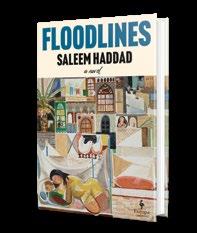
over what to do with a cache of his paintings. They “wrestle with the fallout from decades of secrets, seemingly endless wars, and differing values,” our review says. “As the family works out how best to preserve and promote their legacy, larger questions loom involving the fallibility of memory, personal responsibility in the face of state overreach, and the value of women’s work in the arts.”
Tangerinn by Emanuela Anechoum; trans. by Lucy Rand (Europa, Jan. 20): Like the Mathloums, Mina lives in London but her roots reach across continents. When her father dies, she travels home to Italy for his funeral and then stays to help her sister, Aisha, preserve his bar, Tangerinn, which has been a gathering place for immigrants in their town.
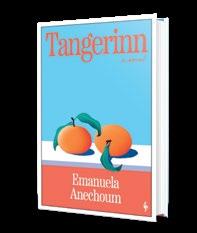
In her second-person narration—addressed directly to her father— Mina moves between past and present, looking back on her father’s life growing up in Morocco and her own quest for meaning. Our review calls it “an elegy with momentum and teeth.”
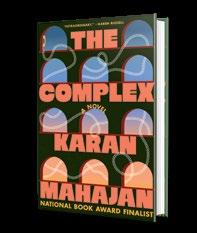
The Complex by Karan Mahajan (Viking, March 10): The Chopras are another family at odds with one another—to put it lightly. Mahajan’s novel is set in 1980s and ’90s Delhi in an apartment complex built shortly after Partition by politician SP Chopra for his family; the descendants of his seven sons now live there, and though it’s a family, there is greed, infidelity, rape, and murder. Our starred review calls it “a masterly novel, seemingly influenced by Tolstoy and Dostoyevsky.”
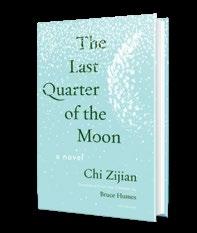
The Last Quarter of the Moon by Chi Zijian; trans. by Bruce Humes (Milkweed, Jan. 13): Narrated by an unnamed 90-year-old woman, this novel describes her family’s life among the Evenki people—an Indigenous group in northern China and Russia. “This is an exceptionally pretty novel and a fascinating look at a people that not many U.S. readers know,” says our review.
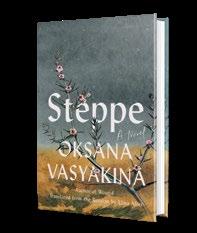
Steppe by Oksana Vasyakina; trans. by Elina Alter (Catapult, Jan. 20): The unnamed narrator, in her early 30s, never spent much time with her father, who’s just died. He was a gangster and drug addict who was in prison for much of her life, but when he was out, he was a long-distance trucker, and now she’s looking back on a weeklong trip she took with him across the deserted Russian steppe, after not having seen him for a decade. Our review calls it “an elegiac tribute to a fatally flawed bond.”
Laurie Muchnick is the fiction editor.
A debut novel of rare force and control.
This is a revelation: a mob thriller steeped in the gallows humor of workingclass Dublin, yet with notes of tenderness to temper the violence. As narrated by Tony Ward—“lethal weapon forged in 1997 with a rap sheet that’d put them all to shame”—White hauls us through a world of coke dealers, shredded loyalties, and powder-keg masculinity. Finto Maher, with “gnashers like he had the back side of a train ticket stuffed into his mouth,” sends Wardy and the disconcertingly beautiful Darren “Flute” Walsh to collect from Patsy, a doomed waster with a
baby and a habit of diluting whatever Finto’s already adulterated. Flute is the stepson of Aengus Lavelle, the boxing-gym kingpin at the center of Ireland’s drug trade, and he exerts his pull on Wardy from the start. White writes desire with the same precision he brings to violence: Wardy studies Flute’s cheekbones, his “Garda flashlight” gaze, the perfect teeth he’s never seen break into a smile. He’s unnerved because Flute stirs emotions that conjure memories of Philly Mooney, a beloved mentor lost to a revenge killing that Wardy may have set in motion. White has a gift for the grotesquely visceral: a

dealer’s skin “you could grate cheese on,” a shrinking postcoital penis “like a poked slug.” By the time Wardy and Flute finally lock into each other, first in a coke-fugged pantry, then later to Dusty Springfield spinning in Flute’s flat,
you feel their deep physical and emotional need every bit as keenly as you feel the hopelessness of their situation. White keeps us balanced on a knife-edge, and the novel’s final revelations churn for days.
A., Bette | Unnamed Press (150 pp.) $25 | March 3, 2026 | 9781961884724
Sixteen stories explore the shimmering and dangerous expanse between fantasy and reality. Villages, monsters, vicious kings, witches, predictive human-behavior algorithms, and endlessly expanding houses fill the pages of A.’s short story collection. Part fable, part magical realism, and part technological dystopia (or utopia, depending on the narrator), these stories explore the real and the fantastical across past, present, and future. In the opening story, “The God in the Box,” a mysterious giant square box appears on the outskirts of a city. When the local residents, who believe a good God lives in the box, begin to fear that their desires can sway this God, they forsake the box—until a little boy makes a small but mighty decision. In “Guided,” a technological implant that flattens human emotion helps create a global “utopian socialist-anarchist-capitalist hybrid system” with two warring factions: the Guided and the UnGuided. Perhaps the strongest entry in the collection, this sharp and eerie story questions what people would be willing to give up to be able to live in a “perfect” world. Devastating and beautiful, “Für Elise” follows Elise, a talented musician, caregiver, and chronic people-pleaser as she watches her life—and all the paths she did not take. The story reminds us that “caring is not a wasted life” even as its ending offers a glimpse into a beautiful alternate ending for such a life. The collection is uneven, but the notion of the “other” is a thematic strength. There are stories where the other forces the characters to understand themselves more deeply, but there are also stories where the characters don’t realize the other is not quite what it seems until it’s too late. This collection reminds us that sometimes the other isn’t so different
after all. As she balances the mythical, spiritual, and futuristic, A.’s ruminations on perception, power, technology, authenticity, authority, tradition, and community are unassumingly sharp. An understated collection that feels both timeless and prophetic.
Acker, Jennifer | Delphinium (275 pp.)
$28 | April 14, 2026 | 9781953002716
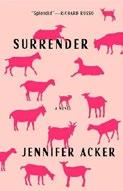
A bildungsroman of middle age about a 47-year-old goat farmer; her aging, beloved husband; and her high school best friend turned lover, set amid the lush fields of western Massachusetts.
Lucy Richard (that’s “Ree-SHARD,” from her French Canadian forebears) calls Edin, Massachusetts, home again after more than two decades in happy exile while her husband, Michael Mancini, taught at Columbia and she worked in the university’s communications office. Their return to Edin goes as badly as Adam and Eve’s: Michael begins to exhibit signs of dementia and Lucy learns that running her father’s farm requires reserves no one person has. As a year passes, joys and troubles ebb and flow like the nearby Connecticut River: The goats freshen and kid, Michael requires more care, Lucy’s friend Alexandra “Sandy” Stevens moves to the area to sell solar-power packages, and they tumble into the passionate love they’d shied away from as teenagers. Since Acker edits a literary magazine, The Common, celebrating the importance of place, it’s fitting that her novel derives so much heft from descriptions of everything from asparagus beds to frozen winter soil to the annual joy of new baby goats. Astute readers may guess how Lucy moves forward, but that matters very little. This is a novel about the journey; Lucy and her chosen family face relationships ending, corporate takeovers, homophobia, debilitating illness, elder abuse, and financial precarity while pitching in to
repair fences, rescue sick animals, give each other business ideas, and occasionally relax for a few hours of laughter and good, locally sourced food. Amid all this activity is a tale about where the truest love and loyalty lies for a woman in her late 40s. At one point, frustrated by many things, Lucy tries to start a fire. “I have better wood downstairs,” she thinks, “but I’m terribly, defiantly determined to succeed with what I have, wood I never should have brought upstairs in the first place.” It’s the perfect metaphor to illustrate both Lucy herself and the pioneer spirit of the Pioneer Valley.
Come for the human drama, stay for the goatish antics, or vice versa, in this bighearted tale of paradise forged.
Adelmann, Maria | Scribner (352 pp.)
$29.99 | March 31, 2026 | 9781668089972
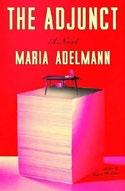
A young woman navigates academia’s gig economy and exposes a toxic system’s very real underbelly. Sam is in her early 30s, two years out of her English and Comparative Literature Ph.D. program, and, like many of her cohort, barely scraping by as an adjunct. When she lands a spot at Rosedale, an elite private college, as a last-minute replacement for an older professor, her problems seem temporarily solved. Sam is optimistic, even if her schedule is grueling and her salary minuscule; even if the classes she’s teaching—The Masculine Voice and The Campus Novel—are barely veiled attacks on the #MeToo movement; even if the person who hires her says, “I just need a live body.” Then, on her first day, Sam runs into another recent hire: Tom Sternberg, her grad-school adviser, with whom she’d had a complexly intimate relationship. Sam discovers Tom’s long-awaited new novel centers around an older professor “reckoning with his checkered past” as the “feminist movement
sweep[ing] the nation” emboldens a bitter former student to publicize their affair. The premise sounds familiar to Sam, as does the female antagonist— and she certainly sounds familiar to Sam’s grad-school classmates, who close ranks against her. Reeling under Tom’s repurposing of their shared history as a springboard back into relevance, and stung by reviews lauding the book as “fiercely honest,” Sam begins a downward spiral that gains speed as she nears rock bottom. The harsh realities of Sam’s exploitation by systems that were meant to both educate and employ her are leavened by the character’s wry humor; however, the novel suffers at times from a reliance on expository infodumps to underscore its critique of higher education’s abuses, which are more effectively explored in-scene. Regardless, this exposé of academia from the perspective of its most vulnerable residents offers a vital message at a time when it’s easy to forget what’s supposed to be at the center of all institutions: people—messy, unpredictable, and filled with fragile hope.
A crucial new take on the time-honored tradition of the Campus Novel.
Awad, Diana | Mindy’s Book Studio (333 pp.) | $28.99 | April 7, 2026 9781662536595
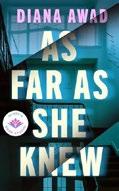
W hen Amira Abadi’s husband, Ali, dies in a car crash, her grief is nearly allconsuming; the only thing keeping her grounded is her concern for her college-age children—and the secrets that soon begin to surface.
Awad intermingles chapters from “Before” and “Now,” so the story of Amira and Ali’s life within their mostly arranged marriage unspools alongside the strange occurrences that begin right after Ali’s death: Someone breaks into Amira’s house and a man claiming to be one of Ali’s co-workers
A canny, twisty satire of all-American posturing.
turns out not to be what he seems. Most devastating of all, Amira learns Ali owned another house several hours away, and that he not only kept it secret from her, but set up an LLC that guaranteed she wouldn’t inherit it upon his death; instead, the house reverts to the person who has been living there—another woman.
Throughout both the “Before” and “Now” sections, the specter of Ali’s college girlfriend, Lizzie Martins, looms. Despite his mostly happy marriage to Amira, is it possible Ali was keeping Lizzie as his mistress the whole time? Living on her own for the first time as she navigates a towering grief, Amira is determined to find out the truth, even if it changes everything she thought she knew about her husband, everything her kids thought they knew about their father. With the help of her sister, Lulu, and Ali’s handsome cousin Nasser, she peels back layer after layer of the past. Awad not only writes a strong mystery, but she crafts endearingly flawed characters. Amira is relatable and admirable as she fights for her own sense of independence in the midst of loss. A brilliant balance of sustained genre tension and complicated human grief.
Barkan, Ross | Arcade (288 pp.) | $29.99 April 28, 2026 | 9781648211775
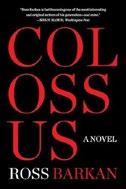
A small-town pastor harbors a big secret. The fourth novel by journalistnovelist Barkan is upfront about its inspiration: The epigraph comes from Richard Ford’s The
Sportswriter (1986), which introduced the chatty, opinionated American Everyman Frank Bascombe. Barkan’s narrator, Teddy Starr, is cut from similar cloth: A pastor in Pine Haven, Michigan (“the middle of the mitten”), he has a wife, three kids, a sideline as a landlord, and lots of ideas about right living (godly), proper rent payments (timely) and proper politics (MAGA-y). As in a Bascombe novel, the plot turns partly on a holiday; here, the town’s Flapjack Jubilee, which makes for some seriocomic riffs on parking, cellphones, and crowds. Teddy is darker than Frank, though, and his self-aggrandizement as a compassionate pragmatist doesn’t keep him from being contemptuously cold toward his teenage son when he learns the boy may be gay, or stop him being unapologetically unfaithful to his wife. (Even his pillow talk reads like a gassy, Bascombe-y op-ed: “No one hates more than a Democrat at a liberal arts college. No one burns more. No one aches for more blood.”) Midway through, just as it’s beginning to seem this Trumpy Ford variant has worn out his welcome, Barkan introduces a plot twist that unravels much of what Teddy has proclaimed about himself and how he turned into the preacher-landowner he’s so proud to be. In the process, Barkan strives to expose contemporary masculinity for the hot air it often is; unlike Bascombe’s largely benign riffing, though, here the suggestion is that it has an unmistakably toxic streak. Barkan’s shift into Teddy’s past isn’t entirely persuasive, nor is the aftermath of its revelation, but he ventriloquizes Ford well, and invents an intriguing if unlikable anti-hero.
A canny, twisty satire of all-American posturing.
Kirkus Star
Berry, Steve | Grand Central Publishing (400 pp.) | $30 | February 17, 2026 9781538770603
A royal kidnapping and a religious relic feature in the 20th Cotton Malone thriller. Princess Lysa, the 68-year-old sister of the king of Sweden, is kidnapped, and a mysterious note demands the Devil’s Bible in exchange for her safe return. The ancient tome dates to 1295 and is said to include “all the world’s wisdom”; it’s the world’s largest illuminated medieval manuscript. There’s a lot at play in this complex thriller. Sweden took the book during a war in 1648 and the Czechs want it back as part of their cultural heritage. The Czechs can and will veto the NATO membership Sweden covets and Russia wants to prevent Sweden’s success in any case. So the Magellan Billet, a covert U.S. Justice Department intelligence agency, wants to rescue Lysa and help America’s friend Sweden. The group’s founder, Stephanie Nelle, calls on fellow series regulars Cotton Malone and Cassiopeia Vitt to take on a perilous mission ultimately involving aerial combat, an ancient ship housed in a museum, an attempted assassination in a Russian circus, and a good old-fashioned gunfight. Princess Lysa and her billionaire husband, Sir John Westlake, are an odd and imperfect match. She’s a devout member of the Church of Sweden and takes Scripture
seriously, accepting Ephesians’ edict that wives must obey their husbands. She loves John, who’s on bad terms with the king for being a commoner, satisfies his carnal urges outside of marriage, and, according to Stephanie, once was and maybe still is a “covert Russian asset.” Much hangs in the balance with the relationship between John and his trusting wife. An appreciative colleague nicknames Cotton and Cassiopeia “Captain America and Wonder Woman,” which fits well with their derring-do. Incidentally, the National Library of Sweden in Stockholm houses the real Devil’s Bible, but the book’s role as an obstacle to Sweden’s NATO membership is the author’s invention. An exciting tale of blood, betrayal, and bravery.
Boyd, Jeff | Flatiron Books (352 pp.) | $29.99 March 17, 2026 | 9781250348456
The shooting of an unarmed high school student in Chicago tripwires a series of disruptions and revelations involving police corruption and a Black teacher’s uneasy family life.
Buddy Mack is the kind of dedicated English teacher any public school would be lucky to have, especially in Chicago’s volatile South Side, whose Mayfield High enrolls many poor or at-risk students. Three of these kids especially concern Buddy: Zeke, who’s great at
football, but not so great at staying out of trouble, whether it’s a pregnant girlfriend or detention; Dontell, whose unruly behavior camouflages a mind enabling him to “just look at a textbook and everything inside would download into his brain”; and Zeke’s cousin Truth, a moody, smooth-talking sophomore with relatives engaged in unsavory criminal activities. Buddy’s own life away from his job is almost as chaotic as his students’. He’s married to an ambitious corporate lawyer eager for upward mobility to the city’s posh North Side, even though Buddy’s not so sure he wants to leave Hyde Park behind. Buddy wrestles with the level of his commitment to his community in fitful discussions with his brother-inlaw, Curtis, a corrupt patrolman who subdues his self-loathing with heavy drinking and resentment toward Buddy that borders on envy. The tangled lives of all these adults and teens converge in explosive fashion when Truth is shot by Curtis while carrying out a mysterious errand for one of his crooked relatives. The ramifications of that errand and its outcome have shattering effects on the seemingly disparate worlds of both Buddy and his students. Boyd’s impressive command of his engrossing novel’s multiple points of view is matched by his compassion for his often perplexing but always engaging characters. The novel’s heart and its smarts are almost as big as Buddy Mack’s own.
An urban high school novel that puts humanity far ahead of sociology.
Boyle, T.C. | Liveright/Norton (320 pp.)
$29.99 | April 21, 2026 | 9781324097525
A romantic triangle turns brutal in a dead-end Nevada desert town. It all starts with the death of Terrence Tully’s mother. He’s a thirdyear medical resident in Los Angeles,
working a brain-deadening schedule and barely aware of the world outside. He reduces the rest of humanity to symptoms and diagnoses. But the news of his mother’s death changes his life, and not for the better. He drives the four hours across the desert to deal with her affairs in Nevada. She’s left him a house. And a dog. He stops to get his bearings at a restaurant in town, where he encounters Bethany. She’s pretty, approachable, and apparently needs a place to live. He now has one, his mother’s house, though he isn’t about to open it to a stranger. But Bethany awakens something irresistibly sexual in Terry, and the house is soon all but hers. She’s recently experienced a hard breakup with Jesse, a biker with a jealous streak and impulse-control issues who teaches eighth grade. (You wouldn’t want him teaching your eighth grader.) It’s soon apparent that Bethany’s ex isn’t quite as much an ex as she’d indicated. Something’s gotta give. Something does, and then something worse. Revenge, retribution, retaliation—there are a series of attempts to balance the cosmic scales of justice. Do these characters get what they deserve? (Does anyone?)
The narrative alternates among the perspective of each of these three, none of whom has much of an interior life. The plot pivots on pat coincidence, with some noirish cliché and riffing on sex and death. Each of the three characters wonders where their life is going. Though doctors tend to warn patients they’re not out of the woods, Bethany realizes that “we’re all in the woods all the time.” By the end of the novel, it’s plain that there is no possibility of redemption for these three, or even resolution.
The dark humor suggests Boyle is having more fun than his characters.

Broker, Scott | Catapult (320 pp.) | $27 March 3, 2026 | 9781646222858
A queer couple vacations on the Oregon coast, bringing their resentments, insecurities, and the ashes of a dead mother.
Randy Rourke, a world-renowned photographer, and his husband, Jack, a former playwright, vacation at the Oregon beach house of two of Randy’s patrons. Perhaps the sun and sea will alleviate Randy’s depression over his mother’s death and Jack’s sense of worthlessness at his recent abandonment of his career. But it’s not always sunny in Oregon, the water is rough, and the locals are weird. Jack, the emotionally unreliable narrator, has run out of patience with Randy’s obsessive grief, the travel-size baggie of Ms. Rourke’s ashes he carries around, and most importantly, Randy’s inability to attend to him. A neighbor girl convinces Randy he can speak to his mother’s spirit through a voice recorder, which begins Randy’s confinement in the home office and Jack’s retreat to a Grindr-like app for some not-so-harmless attention. An additional distraction appears in the guise of neighbors Paul and Polly, who invite the couple over for dinner, hot-tubbing, and some tantric massage. At the heart of the novel is Jack and Randy’s desire for connection as they each continually misinterpret what the other needs. This tension produces a beautiful portrait of a long-term relationship and the hazards that come from assuming that understanding improves over time. Broker cleverly recalibrates our perception of Jack and Randy as the novel progresses, layered with the new play Jack is tentatively crafting in his head. How can we know each other, the play asks, the novel asks, as we perpetually react, shift, and hide our identities? Which character gets to be the lead, in art and
in life? A series of short, emotionally seductive chapters answer the question. A masterful understanding of human nature distinguishes this sexy debut.
Cathcart, Will | Evening Post Books (462 pp.) | $29.95 paper | January 6, 2026 9798990949386
W hat begins as a story of grief evolves into a sprawling metaphysical quest. Initially, Cathcart’s novel seems to follow a familiar beat: a young man named Scoot mourns his departed friend, Hannah. Both have been living with cystic fibrosis; in the aftermath of Hannah’s death, Scoot finds that Hannah has left him money and a detailed request. It’s that request that leads things in a strange direction: Hannah’s wishes involve Scoot traveling to Europe to find the preserved heart of the composer and pianist Chopin. (That isn’t as random as it seems: several characters remark on parallels between Chopin’s tuberculosis and the cystic fibrosis that afflicts Hannah and Scoot.) The journey takes him to Tbilisi, Georgia, and involves Niki, a woman with her own connection to Hannah. Gradually, the boundaries of the novel expand even further, to include several chapters narrated by the late novelist George Sand. Cathcart moves backward and forward in time, filling in details about Scoot and Hannah’s relationship, Scoot’s troubled family history, and how precisely Niki fits into the narrative. There’s also the matter of Hannah’s desire for posthumous revenge on the sinister Dr. Owning and the supernatural Haint pursuing Scoot. A madcap energy keeps much of the story going, but there’s also a lot of plot happening here, including an allusion to the many crimes of Soviet secret police head Lavrentiy Beria, an organization called the Oulipo that seems distinct from the literary organization Georges Perec belonged to,
and a subplot involving performance artist and cystic fibrosis patient Bob Flanagan. It’s tremendously ambitious, but it also sometimes loses sight of the human connections at its heart. A surreal and globe-trotting quest novel that doesn’t always click into place.
Clarke, Albertine | Bloomsbury (240 pp.)
$26.99 | March 3, 2026 | 9781639737130
A solitary London woman navigates desire, identity, and memory as she discovers she’s the subject of a mysterious experiment in this debut novel. Since Ada was a little girl, she’s often heard a voice speaking to her, telling her information no one else knows: how her dog died, or that her parents were getting divorced. She doesn’t know where the voice comes from, only that it seems real. One day she discovers a lump at the back of her throat, which she believes to be an implant. Despite this secret knowledge, she lives a solitary life in her apartment, spending much of her time by the pool, where she meets a stranger, Atticus, with whom she feels a mysterious connection. Then Atticus suddenly leaves for California, though Ada finds herself visited by mysterious visions of him. She continues to waft through life; she can’t shake the twin feelings of not being real herself and, at the same time, being someone else entirely. During a trip to Greece with her mother, she finds herself unexpectedly thrust into a strange facility where she can pick up a telephone
and manifest anything she asks for—or, at times, unintentionally envisions— whether a perfectly wrapped Snickers bar, a potential lover, or a wild animal. “She could build a whole world,” she realizes. “She could be anybody.”
Somehow this makes her feel less real than ever—until a dreamlike encounter with Atticus yields a startling epiphany, which she takes, shaken, back into the world she left. Clarke’s gift for worldbuilding and character creation is arresting from the opening pages. She manages to lead readers into a space in which time, place, and identity blur and shift like the shimmer on an oil slick without ever losing them—an admirable feat. Toward the end, though, the novel fizzles somewhat, relinquishing its magnetic hold; the characters’ final reckonings feel less like revelations than gauzy impressions, especially in contrast to the novel’s beginning, which was notable for its incisive precision.
A promising if somewhat diaphanous debut in want of a few more teeth.
Devi, Ananda | Trans. by Jeffrey Zuckerman Farrar, Straus and Giroux (192 pp.) | $18 paper | April 28, 2026 | 9780374619176
A sometimesrevelatory exploration of embodiment and desire.
“No sooner did I come into being than I began to expand endlessly. I overflowed every space in which life had tried to contain me. I had no limits.” The protagonist and narrator of this slim, problematic book is 22 pounds at birth and just
A London woman discovers she’s the subject of a mysterious experiment.
keeps growing. Her mother abandons her when she’s an infant. Her father dedicates himself to feeding her. He also creates a mythical double for the protagonist: A twin she devoured in utero. This twin—incorporeal and therefore ideal—haunts and taunts the protagonist. This is less a traditional novel than an extended rant with narrative digressions, but it is—at the beginning, anyway—horribly compelling. The ghost twin is a brilliant metaphor for the sense that so many women and girls have that their true self is thin and perfect while their actual body is a cruel lie. The protagonist herself serves as a monstrous other for her peers and, ultimately, for the whole world of people who live online. They judge her body, mock her body, and use her body to reassure themselves about their own bodies. The book takes a turn when Devi seems to take the side of the oppressors. “I’m immoderation made manifest, a terror and a death spiral.” This is the narrator describing herself as the embodiment of a global society afraid of freedom and feeding from “the dual teats of gluttony and pornography.” Later, the protagonist will declare that she is “proof that human agency is an aberration,” suggesting that her body is the result of an addiction to excess. In a lengthy passage that takes place inside a toilet stall in her school bathroom, the protagonist imagines herself—rather longingly—as a piece of shit. Devi is angry about things it’s reasonable to be angry about. Fat girls have been an all-encompassing, all-consuming symbol of excess for quite some time. Making the fat girl eat her own flesh while livestreaming might not be the innovative flex Devi thinks it is. Disturbing throughout, ultimately in ways that undermine the author’s core message.

For more by Ananda Devi, visit Kirkus online.
Eisenberg, Emma Copley | Hogarth (240 pp.) $28 | April 28, 2026 | 9780593242261
Short fiction from the author of Housemates (2024).
The story that opens this collection begins with 8-year-old Alice noticing a “parade of bright bodies” walking down her street as she looks out the window of the apartment she shares with her father. This is a parade of fat women, and they are going swimming. Alice is intrigued by this display because she is fat herself. The next time she sees them heading for the rec center pool, she joins them. The prose here is particular and slightly distant and works beautifully to convey the feeling of being a child among adults, thrilled to be included but only half understanding what’s being said. Eisenberg shows a child finding joy in embodiment and community and ends on a note that is wistful without being maudlin. The final lines hint at what’s to come in the stories ahead—stories in which bodies and desire are a central focus. Unfortunately, nothing else in this collection measures up to the promise of “Fat Swim.” These works feel formless. It’s often difficult to discern why they start where they start and end where they end. There’s a surfeit of minutiae—lengthy descriptions of clothing and decor, precise cataloging of drinks and body parts—but we seldom get to know the people buried under these details. Most of the characters in these stories are queer. Some are trans. Some are polyamorous. There are women. There are men. There are a couple of nonbinary folks. Except for these differences, though, they feel weirdly interchangeable. The stories are connected in that characters reappear but seeing them again is like bumping into someone you know you’ve met once but don’t quite remember. Several of them feature in the very long final story. In the end, though, we’re left with a ponderous metatextual coda rather
than a deeper sense of who these characters are.
One terrific story and enough additional stories to make a book.
Kirkus Star
Fabriczki, Fran | Summit (320 pp.) $29 | April 14, 2026 | 9781668091913
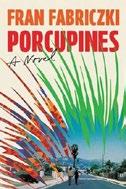
A young single mother with a carefully guarded past reluctantly chaperones a school trip across California at the behest of her determined and curious daughter. In 1989, 18-year-old Szonja Imre arrives in Los Angeles from Hungary to spend the summer with her married sister. In 2001, Sonia Imre dodges nosy PTA parents curious about a single mother with an unspecified background and a cagey demeanor. The how and why of this transformation is slowly revealed across both timelines, with excursions back and forth and in between, to Budapest, D.C., and California suburbia. When Szonja first arrives in Los Angeles, she’s surprised and a little disappointed by the rigidly structured life her once-close elder sister, Rina, has built. Now married to an Orthodox Jewish man, adult Rina has fully embraced the Jewish faith she and Szonja were raised to quietly ignore by their parents, both assiduously assimilated children of the Holocaust. As tension between the sisters grows, Szonja finds new connection with a boy from the Hebrew class she reluctantly attends each week. In the new millennium, Sonia’s daughter Mila has a plan: a parent-trap under the cover of a school orchestra trip to force her secretive mother to finally introduce her to the man who, she is certain, must be her father. But for Sonia, the trip is a series of minefields as she seeks to protect herself and her daughter from the fact of her less-than-legal status in America. Sonia/Szonja is a deliciously vivid
character, her wry perspective revealing a character as spiky and vulnerable as the novel’s title suggests. Fabriczki’s prose dances lightly in a brisk, knowing, slightly aloof third-person present-tense voice perfectly tuned to its main character. Emotions slam in from the side, grief and alienation and the slow-dawning realization that “life unspools, one decision at a time cutting out entire alternative worlds, an endless series of bifurcations nudging each person into a life they have no way of knowing they will like or not.”
Taut, funny, and poignant; a tremendous debut.
Friedland, Yanara | FC2/Univ. of Alabama (142 pp.) | $18.95 paper | March 15, 2026 9781573662178
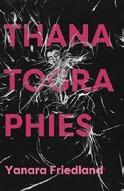
Friedland stitches together four distinct stories of women communicating across time and beyond language. In “Room,” an unnamed narrator finds herself locked inside a white room in Vienna, where she has come to finish a book, and becomes increasingly agitated. “Night,” the longest section by far, brings us another unnamed narrator in a room. This woman—a German writer—suffers from insomnia and spends her hours sifting through her own memories, imaginings, and histories, particularly those of women artists in pre–World War I Berlin. These pursuits swallow her present, which appears as a surreal kaleidoscope reflecting an almost painful sensitivity to the world around her. Her only companions are the “nameless woman” she shares the room with—a bizarre, mutable figure—and a neighbor she watches through the window. “Medusas,” told in the third person, follows a group of women and their children on a beach vacation. The women are glued to news of atrocities on their phones, only roused when their children are badly stung by jellyfish. The book closes with “Burials,” a
second-person account of a mother and daughter visiting another family near a forest in central Europe. The mother (“you”) enjoys nature, sleeps deeply, and considers the family’s dog, soon to be put down. Later, she asks her friend to bury her up to her neck in soil so she may “lie down inside of the earth, enter the womb.” The narrator of “Night” notes that the artists she studies all suffered from “war, lovelessness, mania,” and the women Friedland fashions are no different. While its rapid shifts between thoughts and scenes can be jarring, this book succeeds in constructing a “lineage,” a “female history” (and thus an alternative and even reparative history) of women suffering through unprecedented times. In addition, Friedland conveys a profound truth: Awareness of this lineage is a heavy burden. When holding the weight of one’s own memories and the memories of the many that have gone, passed through oral storytelling, archives, and even the internet, how could one possibly rest?
Friedland’s stream-of-consciousness vignettes thrum with poetic and philosophical weight.
Kirkus Star
George, Jessica | St. Martin’s (336 pp.) $29 | April 7, 2026 | 9781250282545
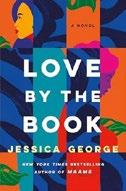
Two lonely women connect at a time when they both desperately need a friend.
Remy Baidoo found success with the publication of her first novel, These Four Friends
Based on her own close relationships with the three most important women in her life, Remy’s book is an ode to platonic love. But when one friend leaves London for New York, another has a baby and moves to the suburbs, and the third retreats into an unhealthy relationship, Remy finds herself alone, wondering if she’d only imagined their close friendship. Elementary school
teacher Simone Beduah always had one best friend: her sister. But when Simone’s secret side hustle as a sex worker comes to light, her relationship with her family fractures. When Remy and Simone literally bump into each other at a book event, it isn’t exactly friendship at first sight. Remy is desperate for a new friend, while Simone is much more guarded. But when they keep running into each other, the two eventually realize they could build a wonderful and important relationship. As Remy puts it when discussing her own book, “I’ve always loved stories about female friendship….I just think love among friends deserves more discussion and praise than it currently gets.…Friends either aren’t deemed important enough in the grand scheme of things, or they’re taken for granted…” George has crafted a story here in which friendship is just as important, if not more so, than romantic or sexual partnership. Remy and Simone each have character arcs full of drama and personal growth—Remy must learn how to be herself without relying on her three original best friends for everything, while Simone must learn how to let people in. George writes with an uncommon degree of care and nuance about complicated topics like sex work, asexuality, and the choice to become a mother (or not). In a sea of romances, this novel stands out for asserting that friendship can be a love story, too. A beautiful and all-too-rare look at the importance of platonic love.
Humaydan, Iman | Trans. by Michelle Hartman | Interlink (320 pp.) | $18 paper March 10, 2026 | 9781623715625
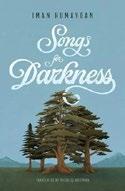
Four generations of Lebanese women, their lives spanning the 20th century, show a different side of that war-torn nation’s story.
“Is it possible to imagine life in Lebanon without violence, disappearance, and loss?” Asmahan al-Dahli
asks in 1982, after she and her daughter, Lama, have moved to New York. They face an uncertain future, but having lived with a fractured legacy, through years of war, mother and daughter seek the peace and stability their foremothers could not find. Their family’s story begins during the years of World War I, when Asmahan’s great-grandmother Shahira survives a plague of locusts that causes famine. The fictional hill towns of Ksoura and Ajmat experience little of the war; families are more concerned with getting first cousins married (a common practice at the time). Shahira’s daughter Yasmine, for example, weds her cousin Ghassan. She dies giving birth to Layla, whom Shahira raises, their home becoming the family’s natural gathering place. Layla later moves to Beirut to prepare for university, where she falls hard for a student named Yusuf, who abandons her to follow his leftist political aspirations. She marries the mucholder Salem, a cruel man who physically abuses her until Asmahan, Layla’s daughter, and her twin brother, Walid, intervene; Salem then verbally abuses Layla until her death. Occasionally, narrator Asmahan knows more than the reader does, as when Layla begins her affair with Yusuf and then, a few pages later, the narrative goes back to describe their initial coupling. A translator’s note from Hartman reminds us that author Humaydan seeks to eschew received notions of history and to tell the truth about women’s lives and the way women tell stories—not always in a linear manner, but sometimes backtracking, sometimes curving in tangents to emphasize an event. An affecting portrait of women’s lives both in cosmopolitan Beirut and in rustic mountain towns.

Kirkus Star
Jackson, Joshilyn | Morrow/ HarperCollins (272 pp.) | $30 March 3, 2026 | 9780063158719
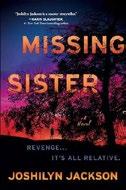
W hen people who inflict violence get away with it, does murder become justice— and justified?
Penny Albright is just a few shifts away from completing her training as a cop in Kennesaw, Georgia, when she pulls her first murder scene. She’s shocked to realize she knows the victim: Danny Bowery, one of three men who raped her twin sister, Nix, several years ago, sending her into a spiral that ended in her eventual death by overdose. In a nearby alley, Penny finds a woman covered in blood. Penny doesn’t arrest the woman, Thalia Gray, even though Penny knows Thalia is “a stone-cold killer”; she confiscates Thalia’s knife and lets her get away. Hiding the weapon, and now complicit, Penny can’t stop thinking about Thalia even as her own family drama clamors for attention. Penny’s teenage niece, Shadow, has been suspended from school for hacking, and her wandering influencer brother, Shadow’s father, Gand, arrives in his converted school bus—but for how long? Then Nix’s ex-boyfriend, Michael Sullivan, reaches out, having heard about the murder. Penny knows the man Thalia murdered was not the first of Nix’s attackers to die; Xav Castillo was killed right around the second anniversary of Nix’s death. Did Thalia know Nix? Is she on a revenge tour for Penny’s sister—or does Thalia have a sister story of her own? Is the third attacker now in danger? Caught up in fear and admiration for Thalia, Penny is willing to sacrifice her budding career to find out the truth about this woman and perhaps even help her. For Penny, “life [is] made almost entirely out of stories about sisters,” and this is indeed a sister story—about how far into the flames
they will walk for one another and about how this love burns fiercely, even after death. Jackson’s mystery is tight and breathless, but it’s the characters who shine, especially smart, loyal, wounded Penny, but also her cast of supporting family members, her tough but fair mentor, and steel-eyed Thalia. A finely wrought, character-driven thriller with a propulsive and satisfying climax.
Jarman, Mark Anthony | Biblioasis (224 pp.) | $16.95 paper | February 24, 2026 9781771966948
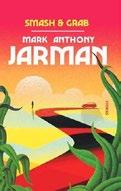
A distinguished Canadian writer offers 14 hallucinatory, offbeat stories about refugees and wanderers, exiles physical and/or psychological. Jarman is one of those writers, like Padgett Powell or Joy Williams or Barry Hannah, whose style is the work’s substance, its DNA. His phrases (“We age into dinosaurs with embolisms,” say) burst with oddity and oomph. These often darkly funny stories are dispatches from people estranged and on edge. Built on voice and angle of vision, they sometimes have pretty slender narrative threads, and occasionally one will fail to launch. But the standouts, here in good supply, feel shockingly strange and moving and alive. “That Petrol Emotion” lets the reader eavesdrop on the monologue of an Irishwoman who’s hit a boy with her car and is furiously resisting public pleas to turn herself in; “Oh Well” is a shaggy, charmingly discursive tale in which a group of people blown in from elsewhere—the visiting narrator, his friend the emergency vet, a Frenchwoman and “Dada poet,” and a former military policeman—meet one night in a bar and form a witty, sometimes hostile community (à la Charles
Portis); in “The Cutpurse of Venice,” a tourist is pursued by and then vengefully pursues a pickpocket, all the while meditating on the ways tourists like himself might also be opportunists looking to slip a hand in Italy’s pocket and take home a souvenir. Perhaps best of all is the dreamlike, sweet-tempered “The December Astronauts (or Moonbase Horse Code),” in which a heartsick former spaceman finds himself in reluctant exile on the moon, looking for new love amid the street crime and harsh light and forlornness and cruelty of this colony of misfits. Not perfect, but excellent: quirky, stylish, daring.
Johnson, Sadeqa | 37 Ink/Simon & Schuster (464 pp.) | $30 | February 10, 2026 9781668069912
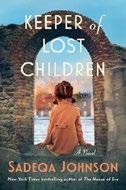
This engrossing historical novel focuses on the lives of three Black Americans in the aftermath of World War II. In 1948, Ozzie Philips is a newly enlisted young soldier from Philadelphia who arrives at his station in occupied Germany just in time for the order by President Harry Truman desegregating the U.S. military. It’s inspiring news, but Ozzie will find it’s a rough transition. In 1950, Ethel Gathers is a journalist and the wife of a U.S. Army officer posted to Mannheim in occupied Germany. Unhappily childless, one day she sees a group of young biracial children tended by nuns and ends up volunteering at their orphanage. When Ethel discovers thousands of these children, born as the result of relationships between American soldiers and German women, she’s fired with purpose. In 1965 in Maryland, Sophia Clark is the ambitious teenage daughter of a hardworking farm family. When she’s unexpectedly selected for a scholarship to a fancy boarding school, she’s eager for the opportunity, if
unprepared for what she’ll face as one of the first Black students to attend. The novel traces each character’s life in separate chapters, eventually revealing the connections among them. Their stories are firmly grounded in meticulous research, from the current events of each period down to details of clothing styles. Ozzie copes with the infuriating indignities imposed on “colored” soldiers despite their essential contributions, and Ethel and Sophia each learn to navigate arcane hierarchies—for Ethel, the scorekeeping of military wives and the barriers of bureaucracy, and for Sophia, the perils of boarding school. Their individual experiences are all part of the larger historical force of World War II and its influence on the Civil Rights Movement. At some points the dialogue can be stilted in its efforts to convey history, but the characters and rich details are warmly engaging. The lives of vividly drawn characters illuminate a lesser-known part of 20th-century history.
Kelly, Lee & Jennifer Thorne | Crown (368 pp.) $29 | April 7, 2026 | 9798217086672
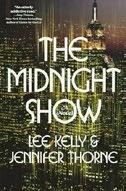
A novel-indocuments tells the story of a reality-adjacent live late-night comedy show and the mystery surrounding the death of its star comedienne.
The latest from writing partners Kelly and Thorne opens with a memo from journalist Madeline Cohen to the features editor of Rolling Stone proposing a story to mark the 40th
anniversary of The Midnight Show cast member Lillian Martin’s death. “This piece would consider Lillian’s life and legacy in the context of an industry that categorizes, commodifies, dismisses, and discards funny women—both at that time and pervasively today—and ultimately, how the comedy world contributed to her fall.” What follows is a compilation of transcripts from Cohen’s interviews with surviving cast members; the guys with whom she had a comedy troupe at Harvard; the other women involved with the show; the producer, Aaron Adler; Martin’s brother; and a few other people with connections to the night of Martin’s death, when she was either pushed or jumped from the Williamsburg Bridge. The oral history format works particularly well for characters with strong, memorable voices, like the sarcasm and snap of Gina Ross, who was Lillian’s best friend, or the New Age nonsense and pomposity of Bobby Everett, who had an intense and problematic romantic relationship with her. Lillian Martin herself, as amazing as everyone keeps saying she was, comes into focus less clearly, and about halfway into the book it begins to feel like we may be getting a little deeper into the weeds of an imaginary group of people than is merited. Though The Midnight Show is clearly and closely modeled on Saturday Night Live, the novel doesn’t seem to be a roman à clef as far as plot or characters go. Fortunately, about the time the reader loses patience with the complications of the troupe’s history, Madeline begins to sniff out the truth of what happened to Lillian Martin, building to a twisty and satisfying denouement. A well executed and entertaining look at the challenges faced by women in comedy in the 1980s.
An entertaining look at the challenges faced by women in comedy in the 1980s.
Kirkus Star
Khatibi, Saïd | Trans. by Alexander E. Elinson | Bitter Lemon Press (336 pp.) $17.95 paper | March 24, 2026 9781916725225
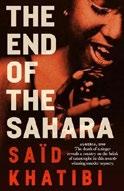
In the fall of 1988, shortly before the outbreak of mass youth riots in Algeria over unemployment and a lack of basic goods, a town’s collective anger over the murder of a nightclub singer reflects what’s to come. The body of Zakia Zaghouani, the Sahara Hotel’s popular, alluring attraction, is found at a time when shortages of food and water and the scarcity of coffee and baby formula have made life intolerable for many. “Sometimes, entire families clamorously reached out their hands to people who might give them something. This city has become the capital of beggars.” The murder investigation is in the hands of an incompetent inspector who is all too happy to have the independent Zaza’s former (and possibly reunited) lover thrown in prison based on no real evidence. Teeming with resentments and jealousies involving Zaza, the novel is narrated by the interconnected and sometimes related characters in rotation. The owner of the hotel, Zaza’s boss, wanted to marry her. The young female singer who took her place may have wanted that badly enough to kill her. Says the shifty Ibrahim, who deals drugs and porn from his video shop, “‘She probably left her lover, so he killed her.’ (I, too, had almost strangled a previous girlfriend).” Though suspects abound, the novel’s aura of mystery is created less by Zaza’s killing than by the painful aftereffects of Algeria’s war for independence (the ghosts of the disappeared float about) and the withholding of secrets revealed by the October protests. Marked by dark humor and darker truths, this novel
illuminates a lightly documented chapter of Algeria’s past. An absorbing novel that should broaden Khatibi’s following.
Koestenbaum, Wayne | Farrar, Straus and Giroux (464 pp.) | $19 paper March 17, 2026 | 9780374620189
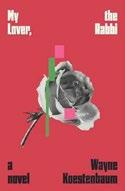
An exacting, if challenging, study of obsession. Koestenbaum offers not so much a novel as a sustained act of literary exposure: erotic, intellectual, punishing, and deliberately unresolved. From its first sentence, swollen with clauses, Koestenbaum, best known as a poet and critic, makes work for the reader, daring us to follow without blinking. The unnamed narrator’s fixation on the rabbi unfolds in short, numbered bursts that read like anecdotes, prayers, or performance cues. Many begin with the incantatory phrase “my lover, the rabbi,” and progressively lengthen as the novel develops. The comedy is unmistakably high camp, featuring Grace Kelly roses, Streisand cameos, and a topless Stephen Sondheim, but it is anchored in an insistently fleshy, sometimes repellent corporeality. Koestenbaum strips sex of glamor and replaces it with sweat, leakage, humiliation, and phallic obsession rendered anti-erotic through excess. Sentences sometimes balloon to punitive lengths, daring the reader to keep pace. The novel inhabits an insistently queer social universe, largely emptied of heteronormative family structures, where intimacy and authority are rerouted through erotic and spiritual fixation. Grief runs beneath the gleaming prose. The deaths that haunt the rabbi are not simply vessels for insight; they thicken the atmosphere. This refusal of catharsis feels intentional. Narrative, erotic, and moral satisfaction are systematically denied. The lingering
question is not whether the book is accomplished (it is), but whether endurance is its own reward. Koestenbaum stages a performance that refuses to bow; whether that refusal is bracing or merely wearing will divide readers. A brilliant, demanding novel-as- performance that resists pat simplification.
Kovatcheva, Anna | Mariner Books (288 pp.) $30 | February 10, 2026 | 9780063436374
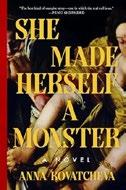
Blood, witches, curses, and monsters haunt the residents of an Eastern European village. Yana, a self-proclaimed vampire hunter like her late mother, knows that “every village is haunted in its own way,” so she travels between them, making her living by “banish[ing] something without form,” freeing people from their various troubles. When she arrives in Koprivci, it’s clear the village needs her help; very few children survive to adulthood here, and Nina, the blacksmith’s pregnant widow, is being persecuted as a witch. Meanwhile, Kiril returns to Koprivci from the city, where he studied medicine under a surgeon in the hopes of bringing aid to the village, but he’s upset to learn that his beloved, Margarita, is set to marry his best friend, Simeon. His orphaned cousin Anka, who was raised alongside him by his uncle the Captain, is less than thrilled to see him home, having felt betrayed by his departure. She’s fighting to hide her menstruation from the Captain, who’s determined to marry her as soon as she bleeds, seeing in her her dead mother, his lost love. Kovatcheva excels when facing unpleasant details head-on, launching into descriptions of “earth… warm with a cloying, unwashed sweetness,” and a spirit “peel[ing] itself like a hangnail from the dark.” The villagers at large play a crucial role in this novel, with so many stakes wrapped up in their opinions, their perceptions of
every person and event, as each of them molds the narrative, claiming “their piece of the story.” Though Yana insists that people need monsters, people themselves prove monstrous; how far is anyone willing to go to get out from under the thumb of abuse?
A tale of dark humanity that sticks like a brick in the mouth.
Kurniawan, Eka | Trans. by Annie Tucker New Directions (128 pp.) | $14.95 paper March 24, 2026 | 9780811239769
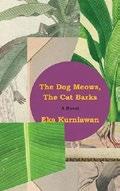
A pensive portrait of rural anomie. Kurniawan, the first Indonesian writer to be longlisted for the International Booker Prize, is a deeply learned student of his nation’s troubled recent past, when the army, declaring martial law, executed as many as a million Communists. This morality tale is set years later, the government now busy battling Islamists. All this is of little interest to young Sato Reang, who, having reached school age, has just been circumcised in the expectation that he will now become a Muslim “pious child,” meaning he’ll have to pray five times daily, fast during Ramadan, and fear God. “Why couldn’t kids just laze around? Go running in dried-out ditches chasing lizards? In my heart, I vowed to disobey.” So resolves Sato Reang, and he does, defying a father, a strict observer, who goes so far as to take a machete to Sato Reang’s beloved soccer ball, seeing it as an unholy distraction. “We’re lucky that God didn’t ask humankind to pray a thousand times a day,” grumbles the kid, who grows into adolescence with his father visiting fresh punishments on him—burning a stuffed monkey he’d won for his sister at a forbidden fair, for one. His father dies “with worms and maggots keeping him company,” at which point, taking a lesson from that incineration, Sato Reang has
For this award-winning Indian novelist, writing about ordinary lives is an act of resistance—and of hope.
BY NATALIA HOLTZMAN
“FOR ME, LITERATURE is not about representing life, or replicating life, or imitating life. Literature is life,” says Geetanjali Shree, whose novel Tomb of Sand (translated by Daisy Rockwell) won the 2022 International Booker Prize, the first book written in any of India’s languages to do so.
Shree, who grew up in the northern Indian state of Uttar P radesh, writes in Hindi. She’s also fluent in English, and the decision to write in Hindi—entangled as it is in questions of India’s colonial history and Partition—is one she’s written and spoken about at length.
“My Hindi is better,” Shree tells Kirkus. “It works on many registers: at a personal level, at the street level, and reading and writing.”
Shree’s prose is remarkably expansive, stuffed with references to movies, songs, literature, and forays into other languages. Rahul Soni, who’s translated Shree’s work into English, once told an interviewer that his biggest challenge was conveying the sense of “playfulness” in her Hindi. “There is a music to her sentences that does not come easily to ‘standard’ English,” he said.
Since winning the Booker, Shree says she’s been asked many times about her creative process—and the questions, she adds, have prompted her to actually consider her methods. “I’m noticing certain things,” she says. For one: “Drama is not something I’m really after.”
Shree says she finds inspiration in the “whispers, and murmurs, and echoes, and almost hidden places” where we do our most mundane “living out of
At best, I can say that literature teaches you to be reflective, to meditate, to be quiet, to listen to others.

life”—the home, say, or even just the kitchen, rather than the war room. And while the characters who fill those spaces might at first glance appear to acquiesce to the powers that be, “little, little things are happening” below the surface, Shree says. “Call it rebellion.”
All this is certainly true of her latest book in English, The Roof Beneath Their Feet, translated by Soni and published last fall by the U.K.-based independent press And Other Stories. The novel explores a relationship between two women of different social classes and the many assumptions—usually incorrect— made by their neighbors because of their class. “This is the story of the entire world now,” Shree says. “It’s over-politicized and over-loud, and the outside is impinging so much on the inside.” In a starred review, a critic for Kirkus called the novel “[i]ntricate, subtle, nuanced, perceptive, rewarding.”
While she herself might feel the need to escape, to “go in some other direction,” Shree says she knows “there’s no getting away from the outside. The outside will find its way in somehow.”
Recently, Shree took time away from a Berlin-based fellowship for a wide-ranging interview in English on WhatsApp. Our conversation has been edited for length and clarity.
Could you tell us about your interest in focusing not only on the lives of women but on the home as a worthy subject of fiction?
Home is a microcosm for all the big things happening outside, and everything plays itself out in the characters in the home, in the daily events of the home. I don’t have to go and touch on some big politics somewhere out there—some big, dramatic moment out there—because it comes into our most personal lives as well. That is where, for me, the most wonderful stories come from.
Once, in the course of talking [to someone], we hit upon [the idea] that my writing is a bit like touching on the ordinary, enjoying the ordinary. And there’s a little prick—like acupuncture— that hardly hurts, but it actually activates things all around the pinprick. And it’s either going to be healing or it’s going to
make you wake up. I’m happy if my writing does something like that.
You said earlier that “literature is life.” I noted a passage from this novel that reads, “The life that is, is unreal—the life that will or might be is real!” I wanted to ask if that quote speaks to the power and the wonder of narrative possibility—the alternatives that storytelling offers us by allowing us to enter into other lives.
I think you’re very much on the right track. And I think perhaps it says something about literature and perhaps all writers: We wouldn’t be writing if we had given up completely. I mean, the life that is is also full of lots of things that may be very despairing and may be very wrong. And if we thought that was it— and that’s where we close it—then it’s all over. So I think it’s necessary to have that second part of the belief, or faith, that there can be, or there might be, and there is still something that is possible. I think that’s what keeps a writer going, and that’s what makes literature so positive— that even when you’re describing a world falling apart, the very fact that you’re describing it is because you feel it can be put together again. Or you want to believe, and therefore you know you will do something, or you are impelling the person in front of you to do something, to put everything together again.
Do you think that makes the act of description itself an act of hope? Yes, definitely. I mean, you wouldn’t waste your time describing [things] if it wasn’t—you’d be empty otherwise. Look at writers—or not just writers, I don’t want to just single out writers for this, people —when we’re thinking about these things, when we’re thinking about what’s going wrong and describing it to ourselves, to others, or in whatever ways we express ourselves, when we’re doing that we’re obviously doing it to know something that we can either dismantle or rearrange somehow. So it’s an ongoing attempt, to put it simply, in setting things right—which is not going to happen in a hurry, but we haven’t given up. We still have belief that something is possible.
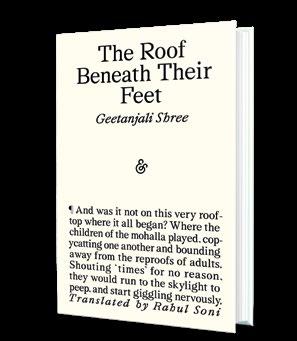
The Roof Beneath Their Feet Shree, Geetanjali Trans. by Rahul Soni And Other Stories | 184 pp. | $19.95 paper Feb. 3, 2026 | 9781916751392
How do you conceive of your own role as a writer? For you, is that a role imbued with responsibility, or is it more one of creative freedom?
I can start by saying what I’ve not seen myself as: I’m not somebody who’s a political activist or a social reformer. My writing is not geared to a particular purpose—social purpose or political purpose—in that sense. And I don’t have an agenda of that kind when I’m writing. I will say again that for me, my writing is life. I’m expressing life. I’m expressing my living.
I don’t have any slogan about literature of the kind where one can say that you read and you come out changed. Because literature is something that is slow, and the world is fast, life is fast. The time of literature is different from the time of our immediate life. Literature belongs to a much larger span. At best, I can say that literature teaches you to be reflective, to meditate, to be quiet, to listen to others—things like that. I’m not sitting and thinking of reforming the reader, but there is some kind of deep, not fully defined desire to make sense of all the chaos inside me and around me.
Natalia Holtzman is a writer and editor in Ann Arbor, Michigan.
The novelist follows in Jennifer Finney Boylan’s footsteps at the literary nonprofit.
Novelist Dinaw Mengestu has been elected president of PEN America, the literary nonprofit announced in a news release.
Mengestu will serve a two-year term as president of the organization, which “works to ensure that people everywhere have the freedom to create literature, to convey information and ideas, to express their views, and to access the views, ideas, and literatures of others.”
Mengestu made his literary debut in 2007
with the novel The Beautiful Things That Heaven Bears , which won the Los Angeles Times Book Prize’s Art Seidenbaum Award for First Fiction. He has published three other novels: How To Read the Air, All Our Names , and Someone Like Us All four books received starred reviews from Kirkus, and All Our Names was a finalist for the Kirkus Prize.
Mengestu takes over the role from Jennifer Finney Boylan, the author of memoirs including She’s Not There and I’m Looking Through You and novels such as Long Black Veil and Mad Honey, the latter co-written with Jodi Picoult.
Mengestu said in a statement, “My hope is to support PEN America in its work celebrating the unique power of literature. To make reading, and the conversations and ideas that reading inspires accessible is an integral part of our defense and advocacy for the free expression rights that make literature not only possible, but necessary.”

—MICHAEL SCHAUB

For reviews of Dinaw Mengestu’s books, visit Kirkus online.
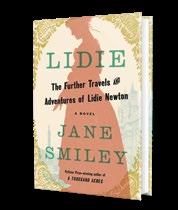
Lidie sees the return of a character the author introduced in a 1998 novel.
Jane Smiley is bringing back one of her most memorable characters in a novel scheduled for publication this spring. Knopf will publish the Pulitzer Prize–winning author’s Lidie: The Further Travels and Adventures of Lidie Newton, the press announced in a news release, saying it could be read as a stand-alone novel or as a sequel to Smiley’s 1998 novel, The All-True Travels and Adventures of Lidie Newton
Smiley is the author of more than 30 books, including the novels A Thousand Acres , which won the Pulitzer Prize, Moo, Good Faith,

a review of The All-True Travels and Adventures, visit Kirkus online.
Private Life, and, most recently, Lucky, published in 2024.
The All-True Travels and Adventures of Lidie Newton was the story of the title character, a young woman in pre–Civil War Illinois. Lidie marries an abolitionist who is killed by slavery supporters, and she disguises herself as a boy to go in search of his murderers. The new book will follow the character as she returns to her hometown and then travels to England with her niece, Annie, an actor.
“With grace and respect, Smiley dives into attitudes towards the abolition of slavery, the role of women and beauty in society, and what it means to be truly fulfilled that existed during this period,” says Knopf.
Lidie is slated for publication on April 21.
—M.S.
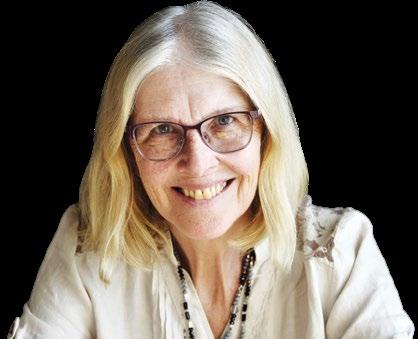
Jane Smiley
been committing acts of arson, peeing on going-to-market produce, drinking beer, and watching porn. “I loved fire,” Sato Reang exults. “I’d even heard that in hell God had entrusted fire with the task of burning off sins.” He’s not quite Meursault, but Sato Reang is definitely a bad influence, which plays out when, disastrously, he lures a truly pious child astray. Kurniawan’s story, novella more than novel, seems sure to offend fundamentalist sensibilities, and has plenty of unsettling moments for the secular reader, too.
A memorable look into a delinquent mind, one with little hope for any future other than hell.
Maurer, Sara | St. Martin’s (288 pp.) | $29 February 24, 2026 | 9781250383563
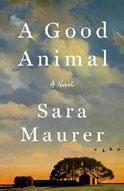
A sheep farmer remembers the nine months that changed his life. “When I walk these fields, I feel generations beside me”: So begins Maurer’s pastoral debut, set in a sleepy farm town outside Sault Ste. Marie, Michigan. It’s the summer of 1995, and high school senior Everett Lindt is unknowingly about to embark on the most life-changing year of his life. Born into a sheep-farming family, Everett has always seen his future clearly: Stay in his hometown, inherit the farm, and build his own legacy alongside the people he’s always known. His life begins to expand when he meets Mary, the new-to-town but well-traveled Coast Guard brat who wishes for nothing more than to attend art school in California. Everett can’t stop thinking about Mary and how she might fit into his dream life: “I couldn’t make her stay. The best I could hope for was to make her a little less eager to leave.” When their sweet and simple relationship becomes complicated, they must find a way forward—and toward their diametrically opposed dreams. Maurer does a
NEON STEEL
lovely job of capturing the excitement, wonder, and all-consuming nature of first love. The intricacies of farming, sheep tending, and sheep showing, though clearly well researched and important to the plot, sometimes make the novel feel bogged down in detail. These farming sections are most effective when used to explore Lindt family dynamics, especially between Everett and his sister, Katie. As Katie prepares to show her beloved sheep Fluff for the first time, Everett promises himself he’ll be honest about the animal’s future. When faced with the reality of the moment, however, he can’t bring himself to destroy Katie’s innocence. Pacing issues aside, Maurer’s prose is undeniably beautiful and evocative, especially when writing about complex family dynamics and the realities of rural farm life.
A poignant portrait of a small-town teen with small-town dreams.
McCauley, Jennifer Maritza | Cornerstone Press (162 pp.) | $24.95 paper February 10, 2026 | 9781968148232
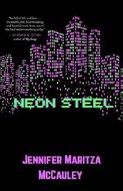
These linked stories are valentines to Black culture, Blerds (Black nerds), and Pittsburgh. Adrienne is a nerd. She loves anime, manga, cosplay, and cons. She’s proud to own the label but recognizes that it made her an outcast in high school, especially since she’s a rare type in the mostly white suburbs of Pittsburgh—a Blerd. It isn’t until college, when she meets Benedict, a
Black otaku—a Japanese word describing someone obsessed with various types of pop culture, often video games or anime—that she realizes she isn’t alone. McCauley’s playful collection bills its stories as “episodes”—including commercial breaks and OAVs (original animation videos, or special episodes released direct to video). Like anime, these stories are sometimes wildly fantastical, with robot assassins disguised as humans (“Neon Steel”) or vampires (“The Vampires of Pittsburgh”); and sometimes seemingly realistic until a character gets enraged and shoots a fireball from his hands (“Afro Otaku”). Many of the plots borrow elements from Chinese or Korean dramas, as when Adrienne and one of her roommates pretend to date to get revenge on a third roommate (“Smoke Break”). “Isn’t this the plot to some C-drama we watched last week?” Adrienne asks her roommate, flagging the trope for readers. McCauley is deeply interested in the intersections of Black and Asian culture, and it’s delightful to see a collection explore this under-illuminated space. The juxtaposition of literary fiction with the over-the-top anime-style plotting can make for strange and interesting bedfellows. But despite the stories’ humor and the collection’s conceptual inventiveness, many of the stories don’t add up to much beyond homage, and Adrienne’s character doesn’t deepen past her pop-culture interests.
A fun homage to anime.

McCoy, Erin L. | Doubleday (320 pp.) $30 | April 21, 2026 | 9780385552073
W hen the Paintsville Dam was completed in 1979, 240 people drowned in the lake created behind it—except they actually didn’t.
That’s the premise of McCoy’s overstuffed first novel, which submerges a compelling cast of characters in more plot than the author can handle. In the dam-adjacent town of Steels, locals still ostracize Eugenia Coates for stealing money and giving it to people who thought they could fortify their houses and live underwater. Her daughter Otta, who fled Steels to become a marine biologist, has returned broke and crushed by guilt over the death of her diving partner. She’s furious with Eugenia for making her and sister Allie town outcasts, but she’s here to deal with their mother’s kidney disease and falling-down house. When the local handyman/physics teacher promises to fix their decaying roof in return for diving lessons for a friend, Otta meets May, who insists her daughter is “Under” and she needs to dive to find her. We quickly learn that May isn’t delusional; she’s fled from the Chimneys, a bizarre religious community under the lake that believes no one above ground survived. (The engineering that made the community’s survival possible is eventually explained, sort of.) May’s recollections paint a compelling picture of an abusive theocracy, and the fact that she too was ostracized (her mother was unmarried) creates a bond with Otta. Thus far, McCoy has created a fruitful world for exploration, with two intriguing protagonists and several promising themes for development. But the introduction of several additional plotlines comes at the expense of narrative clarity, and there’s way too much going on in the final chapters for readers to make sense of. A jarringly inconclusive conclusion fortifies the impression of a writer not entirely in control of her material. That said, the talented McCoy
offers a lot to think about and some moving mother-daughter scenes. An ambitious if flawed effort worth the attention of serious fiction readers.
Mihesuah, Devon A. | Bantam (336 pp.) | $20 paper February 24, 2026 | 9780593983829
A Choctaw horse relay rider goes missing in the Seminole Nation of Oklahoma. Oklahoma City homicide detective Perry Antelope and her partner, Sophia Burns, arrive on the scene after they receive word of a young woman’s abduction from an abandoned rest stop. Both the missing woman, Delphine Adele “Dels” Billy, who isn’t answering her phone, and the teenage boy she was riding with, who’s now lying unconscious in the grass nearby, are Choctaw, like Perry. According to Dels’ team, she had set off for home after winning an Indian horse relay race, which consists of a rider switching horses twice while doing laps around a half-mile track. When her team drove by the rest stop, they spotted her truck and trailer, stopped, and found the vehicle empty. There doesn’t seem to be a monetary motive for kidnapping Dels; as her boyfriend puts it, “This isn’t the Kentucky Derby.” Of course, Perry is well aware, but doesn’t say, that “snatching women often had nothing to do with money.” While Dels’ abduction occurred in the Seminole Nation—that is, out of the Oklahoma City Police Department’s jurisdiction—a tribal officer invites Perry and her partner to join the search. Mihesuah is Choctaw and a historian, and readers will sometimes be able to hear the author in Perry’s more expansive thoughts and comments—about the Indian horse relay tradition, about the history of U.S. government allotments to Native people. Although the novel’s prose can
sometimes be workmanlike, the story, which makes extremely clever use of a misunderstanding, is a compelling and original one. Initially, events proceed at a fairly relaxed pace, accommodating Perry’s musings—on her Comanche husband, on her garden, on her food preferences—but that changes when she has cause to demonstrate her physical might, at which point the mystery becomes a thriller and Perry someone not unlike an action hero.
Solid story, fresh milieu, kick-ass protagonist.
Nishi, Kanako | Trans. by Allison Markin Powell | HarperVia (336 pp.) | $26.99 March 3, 2026 | 9780063389946
A dog embodies a family’s love. Writing her first novel, Nishi aimed to depict a family like her own, loving but not demonstrative, who communicated their feelings for one another through their dog, according to an afterword. Published in Japan in 2005, the story of the “fragile and vulnerable” Hasegawas became a popular success. Nishi’s gentle tale is narrated by Kaoru, who travels home to Osaka when his father, who has been away from the family for more than three years, suddenly returns. What draws Kaoru back most strongly is the family’s dog, Sakura, a female “Shiba Inu mix with black spots,” medium-sized, “with black leg markings that look like little boots. The black spots on the tip of the dog’s nose look like freckles.” She joined the family as a puppy and was immediately beloved by the three children: Hajime, the handsome elder son; Kaoru; and their sister, Miki, who carried the puppy home in her arms and named her. Kaoru recounts the children’s growing up in a bland suburb with a hardworking father and a devoted mother. Hajime was a kind, patient older
brother, and Miki a strong-willed little girl, a handful in school, obsessively attached to Hajime. As the children enter puberty and become sexually active, their relationships with one another, and their sense of themselves, changes. Hajime’s sophisticated girlfriend, Kaoru’s tentative love for a classmate, Miki’s shunning of admirers, and their father’s unusual high school friendship disturb the family’s equilibrium. Most shattering, though, is a devastating accident, its tragic aftermath, and the revelation of a shocking secret. Nishi handles her characters with sympathy as they confront loss and grief, comforted through the darkness by their loyal Sakura.
A tender tale of love and pain.
Paris, B.A. | St. Martin’s (304 pp.) | $29 February 17, 2026 | 9781250289445
A woman with a secret past feels a reckoning draw near.
Elle Nugent is minding her own business in her first-floor London flat when she hears a woman cry for help on the street: Her cellphone has just been stolen by a guy on a moped. Before Elle can respond, a car pulls up and the driver says he saw what happened. The woman gets in, presumably to chase down the thief. When the young woman’s body is discovered the following day, Elle becomes the only possible witness and, certain she recognizes the man who was driving the car, is eager to help bring him to justice. But time passes, and there no arrests are made. So she begins taking matters into her own hands. In the novel’s present day, more than a decade later, Elle has reinvented herself as Nell Masters. Her mysterious past has led her to keep most people at arm’s length, but she’s finally settling into some good friendships and is also happily dating a handsome Frenchman. But then she begins to suspect someone is watching her. Could
there be a connection to the incident from her past? Or is there something suspicious about her boyfriend, whose two previous girlfriends both died? When her friend is murdered, seemingly in her stead, Nell decides she must not only accept but also prepare for the inevitable: Someone wants her dead, and they are coming for her. The ending satisfies. If only authors would drop the current trend of starting their novels in medias res with the climactic attack or trauma. Trust the power of surprise! Unexpected plot twists, in both the past and the present, keep the tension high and the pages turning.
Pataki, Allison | Ballantine (416 pp.) $30 | March 10, 2026 | 9780593873410
A somewhat fictionalized account of “Gibson Girl” Evelyn Nesbit’s tumultuous fortunes, with a wholly invented ending worthy of the protagonist’s talents.
In recent years we’ve seen a lot of attention given to the highborn and/or very rich of the late-19th and early-20th centuries: Think Downton Abbey, The Gilded Age, The Buccaneers, many of them focused on privileged and protected young women. Author Pataki has chosen to focus instead on a singular girl, Evelyn Talbot, originally from the mining town of Tarentum, Pennsylvania, whose stunning beauty leads her to work as an artist’s model by age 13: First for a Pittsburgh painter named Leah Dawson, then posing as an angel for a Louis Comfort Tiffany window, and eventually inspiring Charles Dana Gibson’s drawing Woman: The Eternal Question, with the pouf-y hairstyle that fixed “The Gibson Girl” in history. Evelyn’s surname has been changed from her real one of Nesbit, and a few other historical figures have also been renamed, because this Evelyn’s trajectory will deliberately vary from her historical counterpart’s. Her ambition and the family’s financial
precarity lead her to audition for stage roles, eventually becoming a sought-after singer, dancer, and actor who attracts the attention of men and women—and in the rigid society of the early 1900s, she receives scores of offers from men wishing to “protect” her. Evelyn and her mother experience both great luxury and terrible treatment at the hands of powerful men, first Stanley Pierce (based on celebrated architect Stanford White) and then Hal Thorne (based on playboy Harry Thaw), whose lives become entangled and end tragically. Evelyn’s alternate fate might be a feminist sleight of hand, yet as an author’s note explains, “What if I give Evelyn the opportunity to reclaim her own agency, even to rewrite her own ending?” It’s a worthy goal for a novel, and ultimately a very satisfying one, as well.
Each character comes alive in this rich, dynamic novel.
Perrotta, Tom | Scribner (288 pp.)
$28 | April 28, 2026 | 9781668080634
On the eve of a return visit, a long-absent hometown boy recalls the sad summer after eighth grade. Jimmy Perrini was in the middle of a baseball game when the news arrived: His mother, just 41, was dead. He knew she’d had cancer but she’d assured him she would never leave him, and he’d believed her. More than 50 years later, the man who now goes by Jay Perry is invited by the mayor of Creamwood, New Jersey, to come back for the naming of a new municipal building after his late father. In the intervening years, Jimmy Perrini has become the only famous writer the town has ever produced, though the early promise of his literary novels petered out and he’s become known for a children’s series that became an animated TV show, Ghost Teacher. Perrotta’s
evocation of 1970s suburban New Jersey is filled with resonant period details: the Top 40 playlist, the Mexican dirtweed, the tension between the largely Italian American blue-collar residents and the very few in their midst who are different. One of these is Jimmy’s cousin Wayne, who lives next door with his possibly non-white girlfriend and their summer houseguest, a young Black man named Hector. Set adrift by grief and his father’s and older sister’s inattention, Jimmy floats into an unsavory friendship with a rough stoner named Eddie. He also connects with a super-smart older girl, Olivia, who suggests they try to contact his mother using her Ouija board, and is also game for a bit of sexual initiation. Perrotta, who’s known for edgy satires like Election (1998) and Mrs. Fletcher (2017), creates a very different mood here: melancholy, moving, dark, redolent with regret and loss. His sharp characterizations and social observations serve to bemuse rather than amuse this time, but as he builds to a shocking climax, it turns out he’s just as good at that. Maybe you can go home again, but do you really want to? An atmospheric elegy to innocence lost.
Kirkus Star
Poppick, Daniel | Scribner (224 pp.) $26 | February 3, 2026 | 9781668090008
A 30-something poet curates the absurdities of modern life in his journals as he works—and then again, doesn’t—as a copywriter in New York City. It’s the summer of 2017 and the kitsch farm where D__ makes ends meet as a copywriter is on the brink of mass layoffs. Trump is in office, kids are being kept in prison camps at the border, the U.S. is supporting Israeli
A 30-something poet curates the absurdities of modern life in his journals.
THE COPYWRITER
airstrikes on Palestinians, and, to a reader in the current moment, comments about the world’s tailspin into fascism have a bitterly ironic savor. Irony is an apt emotion for a novel that explores the particular disaffection of the millennial generation: There’s a glut of writing that seeks to untangle—or, failing that, poke knowing fun at—the neuroses and foibles of those who came of age during the Great Recession, but Poppick, treading the same old paths of observation, is somehow never trite. He performs the same magic trick in navigating D__’s sometimes ambivalent relationship to Judaism, succinctly distilling the tensions experienced by many Jews as the horrors of both historical and contemporary antisemitism are weaponized to justify further human suffering. The novel is clear and funny, wryly cynical without indulging in nihilism. As D__ moves inexorably through time (and the relentless march of time is a prominent theme, bolstered by frequent references to the works of Proust and the physical progression of months and years in the chapter headings), he documents scraps of conversations, dreams, emails, vignettes he calls “parables,” and, occasionally, poems. This mélange lends itself to an agile prose style, one that runs the gamut from insouciance to elegance. For all of this, the narrative is not abstract. The dissolution of D__’s seven-year relationship, his close-knit group of poet friends, his search for employment, and his appetite for meaning comprise a linear, moving, and accessible story.
Comic and profound, an intricate collage of a novel that plants itself in exhausted earth and, somehow, flourishes.
The Summer House Murder Roberts, Ava | Crooked Lane (320 pp.) $19.99 | April 7, 2026 | 9798892424844
The sins of the parents are visited on their daughters during a mandated two-week summer vacation at Lake George. Upon her death, Audry Howard bequeathed the summer house she’d shared with her late husband, Frank, to all three of their daughters—Esme, Piper, and Regina—on an equal basis. But the arrangement wasn’t quite equitable for several reasons. Esme, on whom Audry had already settled a hefty trust fund, had married Greg, a top neurosurgeon whose salary handsomely complemented her investments. Piper, who’s only recently joined her sisters as a mother by welcoming a child into her marriage to restaurateur Paul, feels that her failure to breastfeed Preston has made Esme look down on her more than ever. Regina, whose husband, Bryce, lost his job in sales and had to take a far less lucrative position, has struggled to make ends meet, and the couple are on track to lose their own over-ambitious house. And Alexis, the orphaned cousin Audry took in to raise as another daughter until she caused one ruckus too many, has been cut out of the will entirely. What’s apparently the most innocuous condition of the legacy, the requirement that all three sisters spend two weeks together with their families at the summer house in order to maintain their shared ownership, grows sharply oppressive with Esme’s realization that Greg’s
been sleeping with their ex-nanny, Brigit; several uncomfortable sightings of Alexis in the area; and the discovery of a corpse in the lake that Esme is convinced must be Brigit and Piper is certain must be Alexis.
A whirlwind domestic thriller that’s also a pitiless anatomy of the costs of motherhood and sisterhood.
Kirkus Star
Rollins, James | Morrow/HarperCollins (432 pp.) | $32 | February 24, 2026 9780063413238
A modern-day thriller rooted in ancient alchemy. Attackers slit a woman’s throat in Norway as her captive husband refuses to divulge the location of a unique book. The man was the Twelfth Keeper of the strange tome, which he’s already spirited away to the Thirteenth Keeper, a professor at the University of Exeter in England. Fearing he will be discovered, the professor urgently passes it to Sharyn Karr, an American graduate student in witchcraft. (Yes, that’s a real thing.) She must take the book, never open it, and keep it safe. “Trust no one,” he admonishes. Soon after, the professor is found in the Old Library with a dagger in his heart. The book has quite a provenance: It’s the work of 18th-century alchemist Comte de Saint-Germain, “a man who does not die, and who knows everything.” Initially entrusted to a woman close to Marie Antoinette, its pages are “suffused with a combustible elixir” that
will ignite should anyone attempt to force it open. It’s so important because it contains a map and three adages that contain the secret to immortality. The Confrérie, or Brotherhood, are willing to kill for a secret that extends life and betters the human condition. (Wait, what?) The object of their lust is bound in copper and leather, with a mysterious, intricately decorated crystalline orb that locks it. So Karr and a few friends— whom she trusts despite the warning—go on the run. “For truth be told,” she muses, “what harm could come from a book?” Certainly none from this enjoyable, high-energy thriller, but likely death from possessing Saint-Germain’s combustible creation. The friends go to the Tower of London, brave a fierce blizzard in Italy, and find ancient, disused caves in the Dolomite mountains, but their enemies know where to look. One of the scoundrels is a cardinal from the Vatican, bless his heart. Readers will like the raven that’s fed blood-soaked biscuits and the lynx that enters the fray.
Fans of Dan Brown and Clive Cussler will love this book.
Sajko, Ivana | Trans. by Mima Simić Biblioasis (128 pp.) | $17.95 paper March 3, 2026 | 9781771966887
A disillusioned journalist leaves the Balkans for Berlin in this short novel by award winning Croatian author and theater director Sajko.
A narrator referred to once, in a text, as Iv. looks out the train
Dan Brown fans will love this modern-day thriller rooted in ancient alchemy.
window as he leaves the Croatian coastline behind. An intellectual, he’s long been part of a minority “constantly invoking a better tomorrow as the majority zeroed in on the shitty today.” Europe is in crisis and the Balkans under pressure; when the train stops for track repairs, passengers immediately blame “the fucking migrants.” As in Sajko’s earlier work, the characters here are firmly caught within their historical moment. Both Iv. and his translator girlfriend watch their work dry up while their expenses rise. Iv. relives a traumatizing disaster he witnessed when police fired on unarmed migrants suffocating in a train car. After that, he stopped writing, falling into a depression. As in Love Novel (2024), Sajko writes in long, breathless sentences, and each chapter is comprised of a single one. As the train moves on, the narrator reflects on his violent, alcoholic father; his estranged older brother who drained their mother’s savings; their mother, forced to leave home for employment in Germany; and his tough, rural boyhood: “My father was cursed, just as we were cursed, simply because we were boys, and nothing good could ever come of us.” We learn about the woman he loved and failed, though she remains to the end opaque; their love story is the least compelling of Sajko’s narrative threads, and Iv. more antihero than victim of fate. He contemplates loss—of people, hopes, ideals—and displacement. “The tragedy of war,” he tells us, “is ultimately the tragedy of travel, mapping out with agonising precision the passage from human to inhuman.”
A darkly meditative work from a strong and unflinching voice.

For more by Ivana Sajko, visit Kirkus online.
Scotch, Allison Winn | Berkley (400 pp.)
$30 | April 14, 2026 | 9780593817926
Four strangers bond over their chronic insomnia and then one member of their newly tightknit group goes missing.
Sybil Foster is a middle-aged mom staring down the barrel of empty nesting with the husband she’s pretty sure is cheating. Zeke Rodriguez is a world-famous baseball pitcher with an injured arm, and Julian is a grumpy widower who runs a candy store he won’t talk about. What they have in common is insomnia. After connecting through an online group, commiserating about exhaustion and playing sudoku, they finally meet in person. They form a quick attachment to each other, and to their waitress, Betty Jones, who works the night shift at the diner they’ve chosen. The foursome begins meeting regularly at the diner, then hanging out during daylight hours, and eventually even spending Thanksgiving together. Then, without warning, Betty disappears. They suspect she may still be running from her oppressive, religiously dogmatic childhood. Sybil takes matters into her own hands, leading an amateur sleuthing mission in hopes of rescuing their friend. Meanwhile, she’s also still trying to resolve her emotions about her crumbling marriage, the career she gave up for her soon-to-be ex, and her growing feelings for a baseball player she worries is out of her league. Told in close third person throughout, the book follows each of the four main characters, letting readers into their thoughts as they navigate personal drama, insomnia, and emerging group dynamics. Full of nuanced real-life issues, like caring for ungrateful family members, making complex and long-ranging career choices, and learning to separate those choices from a sense of self, the book is also filled with gripping suspense as the friends
attempt to locate Betty. The plot does require suspension of disbelief, as when the cops are repeatedly left out of a missing person case and the characters seem to be surviving on no sleep for weeks at a time with little discussion of their failed attempts at rest. Even so, the sweet depictions of human bonding and the fast-paced, gripping plot are sufficiently appealing that readers will be thoroughly charmed. Part rom-com, part mystery caper, a story for anyone who appreciates the magic of a sleepless night.
Self, Will | Grove (304 pp.) | $27 March 10, 2026 | 9780802166296
A black satire of bad behavior, assessed from a host of angles. This novel, a sequel of sorts to Self’s debut short story collection, The Quantity Theory of Insanity (1995), concerns three British couples and a variety of hangers-on as they reckon with cheating, aging, and illness. In most of the chapters, the narrative frame remains the same: A party, a discussion of a woman’s double mastectomy, a collective trip to Italy that leads to a friend’s humiliation, news of another friend’s death—all of it observed glibly by a writer, Will, a clear stand-in for Self. But the details and perspective on the story shift in each chapter, at times to absurd extremes: In one version, all the characters are women (Will becomes Willa), in another, all are men (with heights and penis lengths given in precise detail). One of the longest chapters marks the return of Dr. Zack Busner, a psychiatrist who’s had a recurring role in Self’s work. Here he details the theory of the book’s title, which argues that measuring an affinity group’s moral backbone (or lack thereof) can predict the survival (or collapse) of a friend group, or the whole of British society. This being Self—who throughout his
career has taken the bleakest lessons from the likes of J.G. Ballard and Martin Amis—the prognosis isn’t good. He’s skeptical of any effort to sort humanity into categories, lamenting how “time— and in most cases corruption—smooths their personalities into stereotypy, erodes their morals and leaves them as self-indulgent placemen and women of some sort or other.” But his eye for human foibles and their consequences are sharp, especially when he turns his focus on antisemitism, stoked in part by a particularly rapacious AI. For those who can stomach the bitter aftertaste, it’s strong stuff.
A deliberately messy but potent feat of provocation.
Semple, Maria | Putnam (384 pp.)
$30 | April 21, 2026 | 9798217176632
A TV comedy writer turned popularizer of Stoic philosophy falls in love, is swept into an international art incident, and deals with buried trauma. For starters.
“In exchange for health insurance, an office overlooking a formal garden, and a cushy (for a philosopher!) income, I’m asked to research and write in the Library and, four days a week—here comes the weird part— provide moral training for Lionel and Layla Lockwood’s twin tween sons.” This is Adora Hazzard, daughter of self-centered Phyllis, mother of sassy Viv, spiritual trainer to the Lockwood twins’ paralyzed and one-armed father, also one of three members of what she calls a “coven,” an alliance of three women of a certain age, all residents of the same fancy hotelgone-condo on the Upper West Side, who pledge to share their celery sticks (always too many in the bag for one person) and care for each other in their dotage. Into this forest of promising comic premises walks a handsome stranger named Digby,
encountered in the standby line at the ballet, whom Adora bonds with via Grateful Dead references, immediately followed by a Code Red bomb scare at the Lockwood Library, where security is on high alert due to art crimes in Europe—OK, OK, no more plot summary, it’s simply not feasible. Suffice it to say, as fans of Where’d You Go, Bernadette (2012) are well aware, Semple is not afraid to make stuff happen. Sometimes this means leaving the occasional chunk of plot hanging, as when Adora walks out on a packed Paris lecture hall awaiting her views on “The Blight of Hope: The Stoics, Nietzsche and a New Inner Freedom” just in time to catch an explosion at the Louvre and make a quick detour to solve a mystery in the French countryside. (Are those poor people still sitting there?) And there’s a major chunk of distressing #MeToo backstory wedged into all this that seems like part of the idea for a different book. When another character wonders at how the miserable protagonist of that incident has aged into the “gorgeous, self-possessed woman and world-class flirt” that is Adora Hazzard, the answer is… Stoicism? Oh sure, why not. A wild mess of a plot, but a fun wild mess, punctuated by Semple’s signature witty observations and punchlines.
Kirkus Star
Straub, Emma | Riverhead (304 pp.) $30 | April 7, 2026 | 9798217046850
A boy band cruise is the site of one woman’s postdivorce healing. Annie never meant to end up alone on a Boy Talk cruise, but that’s exactly what happens when her sister breaks a leg and has to bow out of their vacation. Now Annie is sharing a cabin with a stranger, stuck on the cruise ship
American Fantasy with the 1990s band—and thousands of their biggest fans, known as Talkers. Annie doesn’t consider herself a Talker, even if she was a fan back in the day. But reeling from a recent divorce and dealing with complex feelings about turning 50, Annie throws herself into the distraction of the trip. What she doesn’t expect is to truly connect with the music, the band, the other fans, and herself. As Annie observes, “This was why people turned to religion or watched the Super Bowl at a sports bar instead of alone in their living room. It felt good to be a part of something where your passion was celebrated instead of mocked.” All the Talkers dream of having a special bond with “the guys,” but when Annie actually does meet Keith, a Boy Talk member who’s clearly going through a hard time, she wonders if their connection is real or if she’s just as delusional as the other (mostly) women on the ship. Straub depicts a wonderfully immersive world aboard the American Fantasy, one where each woman assigns herself a favorite guy and everyone is bedecked in Boy Talk merch. For five days, the Talkers live in a fantasy world where the only thing that matters is their connection with a band that meant everything to them so many years ago. As Annie puts it, “Inside her head, which is where she heard the music, it had touched some lever so deep that it couldn’t be reversed… the music was a direct vein to her own childhood, the least complicated part of her life.”
A delightfully nostalgic novel about how the things we loved in the past have the power to shape our future.
Honey
Thompson, Imani | Random House (384 pp.) $29 | April 21, 2026 | 9780593979761
In this debut novel, a young woman pursuing her Ph.D. at Cambridge University acts on her strong— very strong—feelings about poorly behaving men.
Yrsa—a Black Briton of Caribbean heritage—is working on her graduate degree in sociology. A source of irritation is Richardson, a married professor; he has just ended his affair with Yrsa’s friend, who is devastated. After Yrsa flicks a bee into Richardson’s lemonade without anyone noticing, he has a fatal allergic reaction, and she marvels at how easy it was to get away with murder. Yrsa decides to give Hugh, an old fling, another chance, but when he admits that he and his mates had “this point-scoring thing” with women and that Yrsa was “Black-girl magic, twenty points,” she realizes that he, too, has to go. Per the Daily Mail : “Student Found Dead Beneath One of Cambridge’s Oldest Buildings.” As Yrsa’s victims pile up, Thompson has fun skewering the impulse to intellectualize immoral behavior; as Yrsa sees it, “Hugh rendered her into an object; a commodity with per ceived value; powerless. And she rendered him, dead. It’s theory in action. A new methodology.” Thompson hints at a psychological explanation for (but not a defense of) Yrsa’s murderous ways, and despite themselves, readers will acknowledge the character’s good qualities: She
A boy band cruise is the site of one woman’s post-divorce healing.
can be amusingly withering (“It’s hard to hear him over his ego”) and even civic-minded (she volunteers to spend time with an elderly neighbor). The novel’s ending splutters, perhaps overburdened by all that Thompson has ambitiously and impressively bitten off: a twisted comeuppance story, a campus-life spoof, and a look at the dating-app generation of women negotiating how their desire to be desired might sit with the feminism they treasure.
Wow. Think Fleabag channeled by Valerie Solanas.
Kirkus Star
Torberg, Friedrich | Trans. by Stephanie Gorrell Ortega | Boiler House Press (132 pp.) | $20.99 paper | March 31, 2026 | 9781915812520
T his 1943 novella by the Austrian Jewish writer Torberg—published before the horrors of the Nazi death camps were widely known—describes a brutal showdown between a Jewish prisoner and the German SS officer who calmly tells him he is about to die.
Available in English for the first time, the novella, set in late 1940, has two nameless narrators. The first waits on a New Jersey pier for a ship to appear, carrying friends from Europe. He encounters a gaunt, hauntedlooking fellow and invites him to spend time together while they wait. At a nearby bar, the stranger becomes the book’s second narrator, relating his grueling experience in the Heidenburg camp, a fictional precursor to the factory-like extermination camps where millions of Jews would die. There, he was among 80 Jewish men separated from other prisoners and crammed into an undersized “Jew Barracks” as part of the snide and sadistic commandant Wagenseil’s plan to get them to kill themselves. When
A lively, beguiling tale that depicts a world no one should wish to live in.
THE MONROE GIRLS
an aged professor complains of too little space for so many men, Wagenseil has him beaten and tortured until he commits suicide by swallowing poison kept in his pocket. Another victim is led to shoot himself with the gun Wagenseil left in his cell for that purpose. During a violent session with the commandant that leaves him delirious, the narrator grabs Wagenseil’s dropped revolver and is gripped with indecision over what to do with it, frozen by a devout prisoner’s declaration that vengeance belongs to the Lord and the Lord alone. That pained moment of moral reckoning haunts the man as he waits at the pier for any fellow former prisoners to arrive on a trans-Atlantic ship, hoping some escaped the Nazis, as he did. The shocking conclusion to his story turns the novella on its head, giving it the unsettling power of books four times its length. It’s also a book that can, and should, be read more than once for full emotional effect.
A spare, unshakable account of the Holocaust.
Monroe Girls
Volodine, Antoine | Trans. by Alyson Waters Archipelago (278 pp.) | $22 paper March 17, 2026 | 9781962770552
An elusive, centrifugal story of a grim near future that might stop George Orwell in his tracks. Breton, who shares a name with the noted surrealist, is schizophrenic, locked away in a psych ward
but with the uncanny ability to see distant events out on the edge of a city that might as well be the East Berlin of old—or a dark, rainy version of a Tibetan bardo. The city is ruled by the Party, which would seem to be in steep decline, even if the downtrodden proles won’t admit that awful truth: “It’ll last till the bitter end,” says one old woman. (Even the young in French author Volodine’s tale are preternaturally aged.) “We’ll all be dead and buried to a man and the Party will still be there.” So, too, will Monroe, a member of the inner circle executed years earlier but somehow returned to life, as are the girls of the title, fierce fighters with names like Lilia Adouldjamani, Mirka Goldenberg, and Mariana Magadane—and the love of Breton’s life, Rebecca Rausch, who died 30 years earlier and yet stalks the streets, armed to the teeth. The chief difference between the living and the dead is that the dead swear more, and Rebecca in particular hurls F-bombs like grenades (“Fuck!…I was just born, the night is young, and already my feet are frozen!”). Alive or dead, Rebecca makes for a fine revolutionary, demanding that the masses “approve a new direction for the Party, now restructured under Monroe’s leadership, and to finish the great cleansing of the cowards, bureaucrats, opportunists, and traitors by hunting them down in their dens or by exposing them if they were disguised as hospital workers, hybrid creatures, or patients.” Alas, things don’t work out quite to plan, especially when Monroe himself returns to add more mayhem to an already chaotic narrative.
A lively and beguiling tale that depicts a world no one should wish to live in.
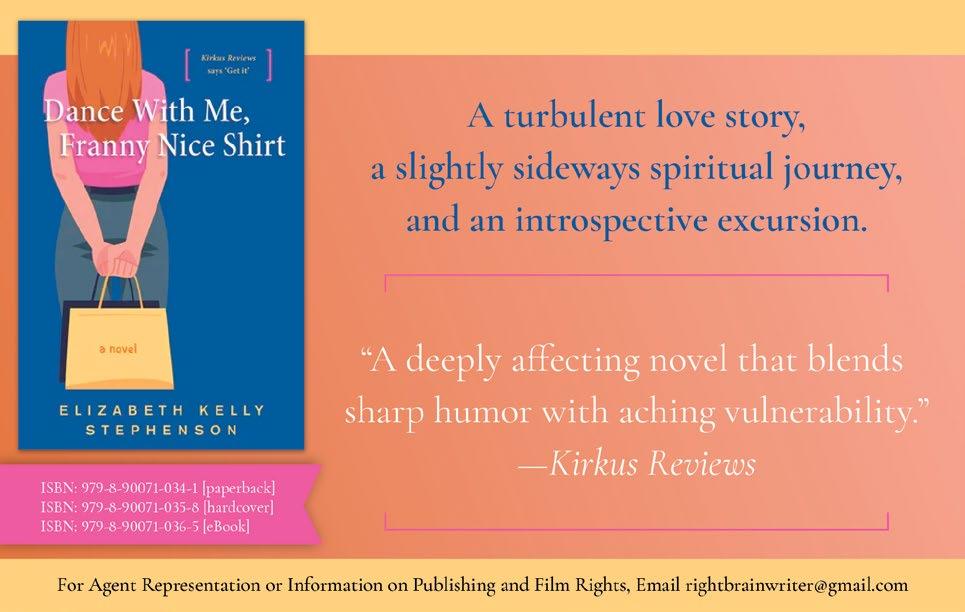
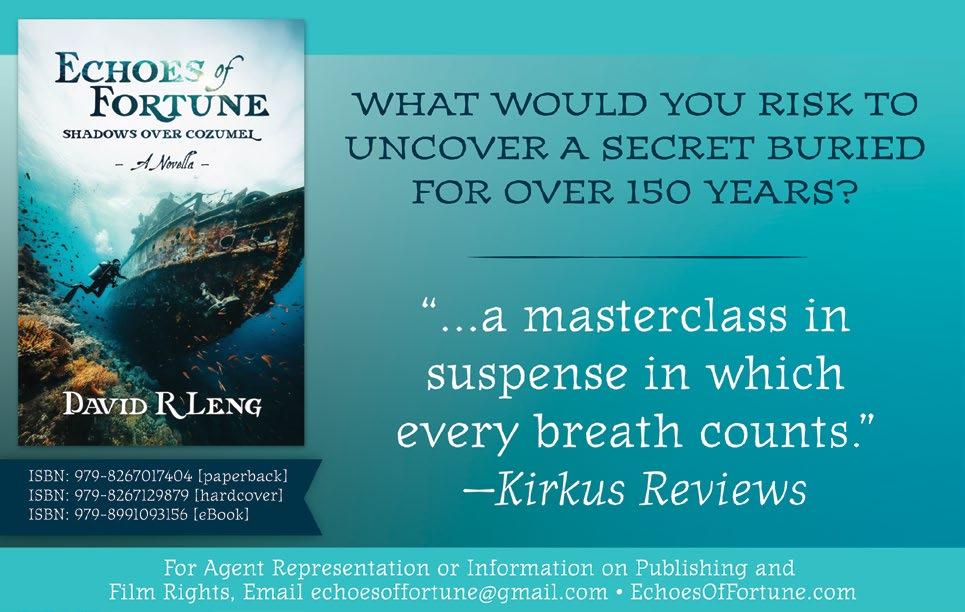

My Grandfather, the Master Detective
By Masateru Konishi; trans. by Louise Heal Kawai
Think of brainteasing mysteries presented in something like a fairy-tale framework, and you’ll be on the right track.
Wolf Hour By Jo
Nesbø;
trans. by Robert Ferguson
Another standout stand-alone from the author of the Harry Hole series.

Girl and the Gravedigger
By Oliver Pötzsch;
by Lisa
vivid period mystery with an engaging trio of protagonists.
The Final Problem
By Arturo Pérez-Reverte; trans. by Frances Riddle
A sly love letter to the immortal detective, his creator, and the golden age of cinema.

Secret Sharers
By Qiu Xiaolong



Gregory Maguire’s novel joins 21 other titles pulled from public schools in the state.
Utah has banned three more books from its public schools, including Gregory Maguire’s Wicked: The Life and Times of the Wicked Witch of the West, the Salt Lake Tribune reports. Maguire’s novel, published in 1995 by ReganBooks, is a reimagining of L. Frank Baum’s The Wonder-

ful Wizard of Oz. The book was adapted for a Broadway musical that opened in 2003; that production was in turn the basis for two movies, premiering in 2024 and 2025, respectively.
The other two books now banned in Utah schools are Jodi Picoult’s Nineteen Minutes and Stephen Chbosky’s The Perks of Being a Wallflower. Chbosky’s novel is one of the most frequently banned books in American libraries and schools, appearing on the American Library Association’s list of the top 10 most
challenged books a total of 10 times since its publication in 1999.
There are now 22 books banned statewide in Utah’s schools. Six of the books on the list are young adult romantasy novels by Sarah J. Maas, including all five installments of her Court of Thorns and Roses series; while three books on the list are by Ellen Hopkins, another author whose novels have also been the frequent target of bans nationwide. Among the other books banned in Utah are Judy Blume’s Forever…, Margaret Atwood’s Oryx and Crake, and Jay Asher’s Thirteen Reasons Why —M.S.

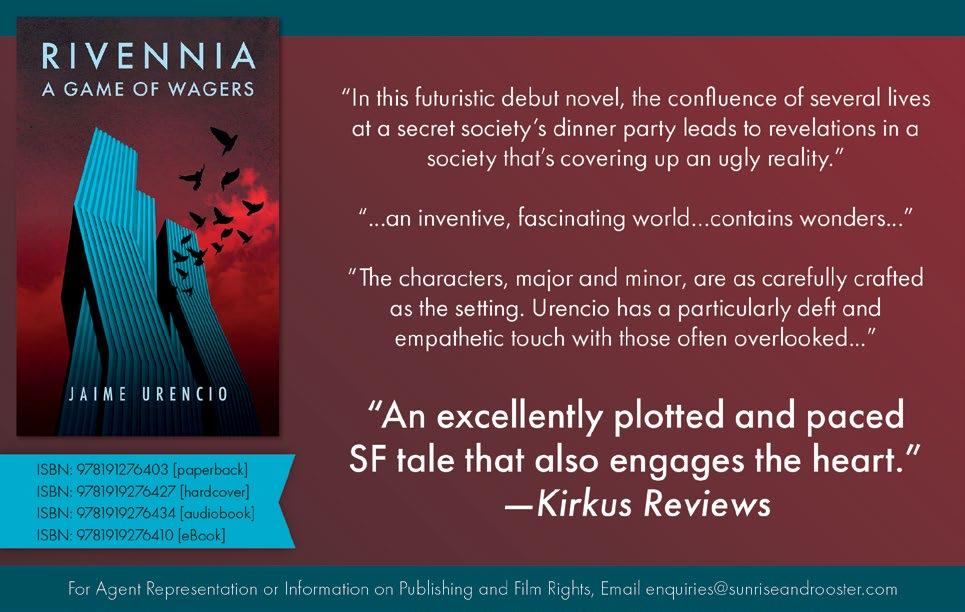
low-key poisoning provides the basis for a remarkably twisty whodunit.
NOT TO BE TAKEN
Alexander, Ellie | Minotaur (320 pp.) | $9.99 paper | February 24, 2026 | 9781250410023
A play about a murder adds a real murder to the plot. Juliet Capshaw may be heavily pregnant with twins, but that doesn’t slow her down; she’s still coming up with new delicacies for Torte, her bakery in Ashland, Oregon, and keeping up a social life with her husband, Carlos, and their neighbors. One of her dearest friends is Lance Rousseau, artistic director of the Oregon Shakespeare Festival, whose productions bring in hordes of tourists. Lance’s wedding to longtime partner Arlo is nearly foundering in the face of Lance’s ambitious plans. At the moment, the play on view is Perfect Crime, and behind the scenes, there’s a great deal of tension between the actors and their director, Kean Armitage, which Lance hopes will be mitigated by the fabulous cast party he and Jules are planning. Once Jules meets the actors, she’s surprised by the hostility surrounding Armitage, who harasses the women; feuds with his bitter soon-to-be ex-wife, Vera Armitage, who claims to be a reviewer; and insists on a method approach that’s turned his male lead into a stalker. Given the short notice, Jules and her staff are busy preparing food for the party, but it all comes to a screeching halt when Armitage is shot dead in a dressing room. Jules has already helped her stepfather, who’s the law in Ashland, solve a long string of crimes, so she’s ready to pitch in to
help the police. After all, she’s already spent enough time talking to cast members to know there may be a surfeit of possible killers.
The mystery plays second fiddle in this foodie’s delight, replete with appetizing descriptions and appended recipes.
Bannalec, Jean-Luc | Minotaur (320 pp.) $29 | April 21, 2026 | 9781250423702
T he death of a wealthy woman and an attack on her nephew pose a pretty problem for Commissaire Georges Dupin and his team on the coast of Brittany. While Dupin enjoys a seafood lunch, he listens to his colleagues discuss warning signs that the death of Inspector Thierry Kadeg’s aunt is near: a magpie flying by the house, a rooster crowing before midnight. News soon arrives that Kadeg himself is in the hospital with a concussion, having been attacked in his aunt’s garden; that aunt, Joëlle Contel, has died, apparently of natural causes. Joëlle, who had no children, had been the owner of the magnificent Abbey of the Angels near the tiny north Brittany coastal village of Aber Wrac’h, along with several other properties and a considerable bank account, and it turns out that at least some of Kadeg’s aunts and uncles are not pleased he’s in for an equal share of the inheritance. The attack on Kadeg raises suspicions about his aunt’s death, and everyone from the gardener to the cook is questioned along with the family. The area is known for its apples, and Joëlle’s
brother Victor and now his son, Maxime, own the prestigious Les Pommes et les Bretons, which is in financial trouble. Local restaurant owner Jacques Briand and his friends give Dupin plenty of information on the family. There’s a rumor that Joëlle and other relatives interested in ornithology have seen great auks, which are supposed to be extinct. If that’s really so, it could mean a financial windfall that would change the whole character of the coast. When Joëlle’s death is proved to be from poisoning, Dupin digs deep to find the motive. A complex, riveting mystery enhanced by lyrical descriptions of the beauty and history of Brittany.
Berkeley, Anthony | Poisoned Pen (288 pp.) $15.99 paper | May 26, 2026 | 9781464253805
A deceptively low-key case of poisoning provides the basis for a remarkably twisty whodunit originally published in 1938. At first it doesn’t even look as if retired engineer John Waterhouse has been poisoned. When his nearest neighbor, fruit farmer Douglas Sewell, responds to an urgent call from Mitzi Bergmann, secretary and companion to John’s wife, Angela, he finds John good-naturedly complaining about stomach cramps and digestive complications that the local surgeon, Dr. Glen Brougham, ascribes to a gastric ulcer both before and after John’s death. Even when John’s annoying brother, London importer/exporter Cyril Waterhouse, arrives after the funeral Angela hadn’t thought to invite him to and prevents John from being buried until an autopsy has been completed, the initial findings are negative. It isn’t until a second, more narrowly targeted examination that the cause of death is revealed to be arsenic poisoning. But how was the poison administered
without arousing anyone’s suspicions, and by whom? Golden age veteran Berkeley uses an extended coroner’s inquest as the occasion to spin out a series of surprising complications, chief among them a letter from beyond the grave offering the victim’s own explanation for his demise, before prefacing his final chapter with an explicit challenge to the reader. And not just any reader, for the tale was originally serialized in John O’London’s Weekly with a prize offered for correct answers to four key questions. An entertaining postscript by the author explains why none of the many contestants got all four questions right and indicates how the prize money was ultimately divided among the closest competitors. Will readers nearly a century later be any more successful at solving the puzzle? Not on your life.
Clarke, Evelyn | Harper/HarperCollins (352 pp.) $30 | April 7, 2026 | 9780063444614
Fiction writers compete to finish a famous author’s abandoned novel. Seven writers, all but one published, have received invitations to spend the weekend with crime novelist Arthur Fletch, the world’s most successful author, on his private island off the coast of Scotland. When they arrive at his cliffside castle, they expect to take part in one of the literary salons for which Fletch is famous; instead, they’re greeted by his agent, who informs them that Fletch is dead. Why has there been nothing about this in the press? Because “there are some…loose ends that must be tied up first.” Fletch has left his eagerly anticipated final novel unfinished, so the agent has summoned the writers to the island for a competition: One of them will get to complete Fletch’s book. As premises go, this one’s a humdinger, courtesy of fantasy writer V.E. Schwab and YA author Cat Clarke, here joining forces as Clarke. The story
contains an amusing throughline about the indignity of being an uncelebrated novelist; as the agent tells the assembled writers, the contest winner will receive both cash and something equally valuable: “a way out of the midlist.” The novel’s wandering perspective allows each writer to vent their private frustrations, especially with the publishing industry and with the book world’s genre hierarchy (the YA writer among the competitors understands that she and the romance writer are “supposed to support each other against the general snobbishness of the other genres”). Readers who have come for the crimes and the twists, both of which are plentiful, might grow impatient with all the characters’ backstories, but these readers will likely warm to the shop talk, which at its funniest plays like a kvetchy midlist-writers’ support group. High-concept and highly entertaining.
Day, Maddie | Kensington (288 pp.) $27 | April 28, 2026 | 9781496742360
An amateur sleuth in California’s Sonoma County gets involved in a case with highprofile suspects. Since Cece Barton owns the wine bar Vino y Vida and takes pride in her 1966 Mustang, it makes sense she’ll be eager to attend a combination vintage car show and wine tasting—and with her record of stumbling into crimes, it’s no surprise she’ll meet several people who will soon figure in a murder case. Cece’s neighbor, 90-something journalist Richard Flora, has just written an exposé about the powerful Alexander Valley District Association. The group’s director, Regan Greene, has had strong clashes with Colinas mayor Malia Gutierrez and several other people. Then the news comes out that Regan has been murdered. Soon after, Cece’s fraternal twin sister, Allie Halstead, asks her to see her two boys off to school while she goes
with her husband to the doctor’s office in San Francisco, where they learn he has cancer. When Cece goes to Richard’s house to discuss his article, she finds him lying in the garden with a head wound and no memory of what happened. Cece’s helped solve several murders and has a good relationship with the police, but they’re not telling her much. Curious, she starts investigating the backgrounds of Regan and a number of people she knows were at odds with her—including Dane Larsen, one of her part-time employees at the wine bar. Allie’s helped her before and, as a real estate agent, has plenty of sources. So does Cece’s boyfriend, Benjamin Cohen, who has a job that involves hush-hush work and connections with law enforcement. Cece’s snooping must be making someone nervous, since she gets some nasty comments and has the feeling she’s being followed. Given the number of people who didn’t get along with Regan, it won’t be easy to pick out the killer. Plenty of red herrings, interesting characters, and wine lore add up to a fun read.
Fox, Candice | Crooked Lane (352 pp.)
$29.99 | April 28, 2026 | 9798892425643
T he hunt for a journalism student’s murderer is repeatedly upstaged by the toxic relationship between the two detectives on the case. How bad a father has Arthur Powder been? After his wife killed herself, he focused his abuse on his two sons, scoffing at their failures, challenging their masculinity, pitting them against each other, and demanding they follow his footsteps into the New South Wales Police Force. Now he insists that Sr. Sgt. Evan Powder, his younger son, muscle himself into the investigation of Chloe Lutz’s murder, which is well outside his jurisdiction, to mitigate the damage from Evan’s mishandling of an earlier incident that left one man dead
and the whole Powder family tarnished by scandal. At the same time, Evan’s more successful brother, DI Russell Powder, has been assigned senior investigating officer even though he’s promised to spend the week with Bridie, the daughter he’s neglected for most of her 18 years. Evan has to grit his teeth to be in the same room as Russell, who wishes he would ride off into the sunset forever. The most obvious suspects in Chloe’s fatal stabbing seem to be her fellow lodgers in the guesthouse of the Redbelly pub—until Bridie, whom Russell’s brought along for the ride, realizes that her journalism studies may have led her to reopen a cold case like the murders of new mother Linda Special and student/ bartender Marian Richley 50 years ago. At length, Evan finds evidence that leads in a shocking direction and sets the two brothers, whose alternating chapters show them increasingly at odds, on a literal collision course. A sturdy police procedural that shines more brightly, and darkly, as the study of a disastrously dysfunctional family.
Fruttero, Carlo & Franco Lucentini
Trans. by Gregory Dowling | Bitter Lemon Press (416 pp.) | $17.95 paper April 21, 2026 | 9781916725195
A series of unfortunate events rocks a coastal Italian village. Fruttero and Lucentini’s third mystery, originally published in Italy 35 years ago, dives into the everyday concerns and quirks of the residents of the idyllic Gualdana, on the Tyrrhenian Sea. The omniscient narrator has an arch, gossipy voice more reminiscent of Austen or Trollope than Hammett or even Christie, with a mildly simmering plot to match. Not that the anecdotes sprinkled throughout are cozy. Like the story of Signor Lopez disemboweled by a boar, they often run to the macabre. There are dozens of characters and
nearly as many plot threads, elaborately described in an appendix and in an early footnote that offers a preview of the pleasantly discursive storytelling. The first major event is the disappearance of young Brit Colin Graham, whose family vacations annually in Tuscany. A bit of community panic and a search follows before he’s eventually found unharmed. Readers will need to wait well over a hundred pages for the next cataclysmic event, a car crash. In between, there’s an invasion of mice, a scourge of rats, and a damaging den of porcupines. Not long after the car crash, one of the angry drivers washes ashore. An investigation, such as it is, follows, led by Lieutenant-Colonel Papi and his team of carabinieri.
A juicily acerbic mystery that’s more lurid soap opera than whodunit.
George, Nicholas | Kensington (288 pp.) $27 | March 31, 2026 | 9781496745323
T hird time’s not the charm for a retired American police officer who enjoys walking through the British countryside. Rick Chasen and his Anglophile friend, Billie Mondreau, still enjoy group walking tours even though their first two were marred by murders they ultimately helped solve. Now that he has an English boyfriend, Chase tries again, hoping for a better result. The disparate group led by guide Brian Teague is investigating the beauty and history of Cornwall, but problems arise when a wooden bridge they’re crossing partially collapses, almost throwing Jorge Campos into a ravine. Jorge is saved, but three of their party end up on the wrong side, including Jorge’s new wife, Luella, who’s also left clinging to the bridge. After everyone’s been directed to safety, Chase and Billie suspect the bridge was booby-trapped. Jorge and Luella are traveling with her son, Ben Purdue, whom she’s always threatening to
disinherit. Also on the tour are Rachel Scattergood, who’s in the middle of a nasty divorce; her imaginative teen daughter, Ivy; restaurateur Roy Hemper; and journalist Dave Langdon. Ivy, who likes to stir the pot, claims to know much more about everyone than they’re revealing. The group is unhappy to think someone’s sabotaged the trails, but many local landowners are angry about people crossing their property. A few incidents that could be accidents concern the group, but when Luella is crushed by a falling statue, Chase convinces the local police that it’s no accident. Chase does what he can to keep the outspoken Ivy from being the next victim while he helps the police catch a killer.
A delightful travelogue with historical tidbits and enough suspects, most of them not what they seem, to keep you guessing.
Harper, Molly | Berkley (368 pp.) | $19 paper | April 21, 2026 | 9780593817346
Murder stalks two high school friends who’ve reunited to produce a truecrime broadcast.
Since their web-based series Harlow Drake Investigates pissed off many of their high school classmates in Tallen River, Illinois, by uncovering a cheating scandal, Harlow and her sidekick, Lainey Piper, have gone their separate ways. Harlow enjoys the limelight on the True Crime 24/7 network; Lainey toils away as a forensic accountant in Wisconsin. Unfortunately, Lainey learns that showing corporate employers how their employees have been robbing them blind doesn’t always invite repeat customers. So, jarred by threats from a growing chorus of creditors, she tries supplementing her income by joining her old pal Harlow in her latest TV cold case investigation. Their goal: to solve the famous Prohibition-era disappearance of showgirl Marguerite Devereaux, who
left for the Crossings Hotel on an island in Lake Michigan with her mobbed-up boyfriend and never returned. What could go wrong when two amateur sleuths, a bunch of production staffers, and two tech bros whose idea of fun includes opening champagne bottles with a sword try filming on an isolated island with no phone service, furnished with only one boat capable of reaching the mainland? Sharp-witted, self-reliant Lainey carries in her voluminous tote bag everything a modern heroine needs to cope with all conceivable emergencies: bar fights, fist fights, cat fights, secret passages leading to hidden rooms, spooky graveyards, and of course more murders. The sheer weight of all this incident overwhelms what could have been an ingenious puzzle. Harper’s narrative proves that more isn’t always better.
Horowitz, Anthony | Harper/HarperCollins (608 pp.) | $32 | April 28, 2026 9780063305748
Murder disrupts the filming of— what else?—The Word Is Murder, based on the first novel starring author Horowitz and his sometime partner, ex-copper Daniel Hawthorne. With commendably dramatic timing, gofer Izzy Mays bursts into the middle of a pivotal shot on location at The Stade in Hastings to announce that Hawthorne’s been murdered. Of course, what she means (though Horowitz takes his time clarifying this ambiguity) is that David Caine, the rising star playing Hawthorne, has been fatally stabbed in the neck. Suspicion falls on James Aubrey, the agent Caine had just fired; Izzy, because Caine had caused her to be fired, too, though he ended up making his exit first; Ralph Seymour, the washed-up actor who’d returned from New Zealand to play Horowitz opposite Caine, his mortal enemy; and producer Teresa de León, who’s abruptly lost an important
source of funding for the project; director Cy Truman; and screenwriter Shanika Harris, because why not? After Hawthorne builds meticulous hypothetical cases against several of these suspects, provoking Teresa’s apt rejoinder, “All those questions in the script and now you’re asking them for real,” he responds to Horowitz’s theory that he may have been the intended target after all by sharing a story from his early days as a private investigator in what ends up looking like the most elaborately extended red herring in the history of detective fiction. The two plots, past and present—or, to be more precise, past and present-day-adaptation-of-a-story-fromthe-less-distant-past, are eventually woven together in ways only Horowitz’s most devoted fans will celebrate. Yes, it has its playfully witty moments, but it’s a distinctly minor work in the author’s brainteasing canon.
Karst, Leslie | Severn House (240 pp.)
$29.99 | April 7, 2026 | 9781448316588
A couple who moved from California to Hawai‘i finds some problems in their seemingly idyllic new home. Even after helping solve two murders, Valerie Corbin and her wife, Kristen, are very happy living in Hilo on the Big Island, where they learn more and more about the local customs and their neighbors, including their unfriendly next-door neighbor, Larry, and his loud and even less friendly dog. In an effort to make some friends, Valerie goes to a meeting of the neighborhood orchid society without Kristen, who’s more into surfing, or Kristen’s nephew, Sean, a visiting nurse who has to work. Back in California, Valerie was a caterer, so she’s happy to volunteer to help with food for the orchid society’s benefit that weekend. George Ikeda, who rules the society with an iron fist, is providing homemade vanilla extract for the dessert—chocolate-mac
nut tart with vanilla whipped cream— made from his vanilla plants. When Valerie goes to his house to pick it up, he gives her a tour of his orchids and flowering trees, a few of which are less than popular with his neighbors. The dinner goes off well, but several guests become sick the next day, possibly from food poisoning. When George dies, Valerie tries to figure out which dish might have been the problem. It seems that only people who ate the vanilla-flavored whipped cream got sick. Valerie’s friend Amy is a police officer who respects her sleuthing abilities enough to order the whipped cream to be tested, and it turns out to contain arsenic. In the meantime, Valerie’s continued questions identify many people who might have disliked George.
The beauties and customs of Hawai‘i provide a striking backdrop for a murder with an unexpected motive.
Knox, Ruthie & Annie Mare
Kensington (288 pp.) | $27
February 24, 2026 | 9781496751348
Television detectives play at reallife detection to postpone getting to the truth about their relationship. Finally together after years of pining, TV’s own Samantha Farmer and Bexley Simon, former co-stars on Craven’s Daughter, are free to discover what’s next. But neither really knows what their relationship might look like, particularly given the many miles that often keep them apart. Now that shooting on her new show, Theomina, has finally wrapped, even the typically more reserved Sam wants to go all-in with Bex and find out what that means. The problem is, neither Sam nor Bex really knows how to relax, and they both find comfort channeling their experiences as TV detectives into real life instead of sitting on a couch doing nothing. So when Bex’s sister Victoria, in town for an industry job, shares the news
that former Hollywood darling Ramona Watts has gone radio-silent since her gig on horror hit The Howling, it’s as if Sam and Bex have to investigate. After all, no one knows an insular town like these two insiders, and some distraction from those hard conversations about what’s next might be exactly what their relationship needs. It helps that Sam’s just wrapped with Chad Bevington, who was part of the Ice Crew (think Brat Pack) alongside Ramona before the group hastily disbanded 20 years ago in the wake of Juliette Draper’s drowning. So when Sam and Bex see Chad chatting with Sloan Lennox, another Ice Crew alum, the wheels start turning enough to spark an investigation. But nothing in Hollywood happens in isolation, and their peep into Ramona’s life leaves them both knowing more than is safe. The broad cast of characters driving the plot leaves little room for depth.
Mack, Catherine | Minotaur (352 pp.) $28 | April 28, 2026 | 9781250326164
Dead bodies disrupt a weekend writers’ retreat memorably narrated by a disgruntled author.
Cynical sleuths are no strangers to mystery fiction, but Eleanor Dash takes snark to an uncomfortable new level. Everything is a source of grievance to the bestselling author: her ex-boyfriend, Connor Smith; her sister/assistant, Harper, whom she’s itching to fire; her insufficiently attentive editor, Vicki Morgan; her former best friend, Sandrine, who dumped her; the outdated decor at the Bahamian resort hosting the retreat; the prospective authors she mentors, who rarely write to her standards; and the reviewers of her books, who sometimes wish she’d write better herself. Even the corpse on the floor of her hotel suite seems like a personal affront, causing an irksome encounter with Bahamian police and necessitating a change of rooms. It
isn’t until a second death hits even closer to home that Eleanor shows much interest in finding the culprit. Mack’s trademark self-referential style is unique, and her teasing of a staggering number of possible solutions to the puzzle is awe-inspiring. But Eleanor’s relentless sense of victimization is too much of a downer to overlook. Bonding through a shared sense of grievance is increasingly popular these days but can be corrosive in ways Mack may not recognize. When Mack allows her heroine a flash of empathy, as when Eleanor shares a moment with a veteran writer who recognizes that her best days are over, she can be incandescent. Letting in more light would provide a welcome balance to Mack’s quirky style and offbeat sense of humor.
An oxymoron perhaps emblematic of the moment: a discontent cozy.
McDonough, Patrice | Kensington (320 pp.) $27 | February 24, 2026 | 9781496746429
T he never-ending Irish Troubles provide the background for a third period mystery bringing together Dr. Julia Lewis and DI Richard Tennant over the winter of 1867–’68.
When Lizzie Dowling, Queen Victoria’s Irish-born parlor maid, is found drowned near the Quarr Abbey ruins on the Isle of Wight, Julia, who happens to be vacationing there with her grandfather, examines the body over the objections of the local constabulary that the death was obviously accidental and a woman has no business messing with corpses. Julia, Scotland Yard’s first female medical examiner, doesn’t establish conclusively that Lizzie was murdered, but she does discover that she was four months pregnant. And when Lizzie’s younger sister, Brigid, who’s been summoned from Cork by Lady Susan Styles, a lady-in-waiting to the Princess of Wales, is strangled along the way, it’s hard to believe that both women weren’t killed by the same person for the same
shadowy reason. Once his pursuit of criminal fugitive Edgar Romilly ends with an unexpected jolt that sends him back home, Richard is free to rejoin Julia to solve this new case. The path to a solution will lead through thieves, smugglers, gunrunners, multiple murders, and several acts of anti-English terrorism, rumored and actual. Sadly, it also leads though dozens of characters, some real, some fictional, some aristocratic, some impoverished, but very few of them memorable, before the secrets that link the Dowling sisters, the royal family, and the Troubles come to light with little detective work by Julia and not much more by Richard.
A conscientiously plotted historical mystery whose weighty issues are undermined by a mostly faceless cast.
Miller, C.L. | Atria (304 pp.) | $29 March 17, 2026 | 9781668032060
The search for lost, stolen, or forged artifacts brings Freya Lockwood to Scotland. Fresh from a shipboard murder on a cruise to Jordan, Freya and her aunt Carole would like nothing better than an extended stay at Crockleford Antiques in their hometown of Little Meddington, England, to pore through their late mentor Arthur Crockleford’s journals in search of clues that might lead to the recovery of misappropriated treasures. They’re even willing to delegate to their volatile young colleague, Bella, the task of tracking the source of three forgeries attributed to Scottish portrait painter Sir Henry Raeburn and fraudulently sold to a Boston museum. But when a call from Bella is mysteriously cut off, the two don’t hesitate to jump into Carole’s Range Rover and drive through the night to Fawside Castle, Bella’s reported destination, where they find not Bella but the body of Euan McGovern, laird of the castle. The search for an art
forger and some stolen Scottish silver morphs into a missing persons case, then a murder inquiry, and finally an adventure in genealogy. All this mission creep makes for a slow start, but the pace picks up as the murderer finds more victims and Freya reunites with Phil, an FBI agent who took a shine to her back in the Middle East. Because the narrative centers less on whodunit than on whether lone-wolf Bella will ever find her place in the sun, readers who love a good family saga of loss and redemption will find their heart’s desire. Takes patience but worth the wait.
Mills, Emma | Berkley (416 pp.) | $18.99 paper | May 19, 2026 | 9780593954379
YA author Mills’ first adult novel plunges a rising entertainment reporter into the mystery surrounding the death of her best and virtually only friend.
Rachel West may be nothing but a bottom-feeding copy editor for Icon, a celebrity gossip rag, but her star rises dramatically when Molly Byrne, a former Disney darling widely considered a has-been at 24, takes her under her wing after they meet in the bathroom of an LA nightclub. First Molly buys Rachel a designer handbag, then a series of designer shoes. The biggest prize, however, is access to Molly and her friends in the industry, along with exclusive stories about them, catapulting Rachel to her own bylines and a promotion to reporter. So Rachel loses a lot when Molly suddenly dies, and loses even more when she quits her job over untoward new demands from her boss. She’s left to form a murder club—sorry, a “murder klatch”—with her Palm Vista apartment neighbors: serenely omnicompetent Fadia, Crime Scene LA writer Richard, teenage computer hacker Jaz, and Jaz’s mother, registered nurse Elena. Using their highly varied skills, the team focuses on an earlier murder in which
Honeymooners find sleuthing more rewarding than spooning.
Molly had taken an interest: the killing a year ago of teen starlet Piper Standish. Along the way, they dig up so much dirt on Molly’s costars and collaborators that any of them could be guilty, and even readers surprised by the big reveal may feel there’s not all that much at stake. Sadly, there’s no solution to the biggest mystery of all: why a star would have befriended a reporter in the first place.
Neubauer, Erica Ruth | Kensington (288 pp.) $27 | March 31, 2026 | 9781496757883
A pair of honeymooners find sleuthing more rewarding than spooning. Freed from an abusive marriage by a World War I casualty, American Jane Wunderly is eager to savor the sights and sounds of Venice with her second husband, British intelligence officer Redvers Dibble. Her plans change when her officious Aunt Millie and her husband, Lord Hughes, turn up at the couple’s romantic but modest hotel. Determined to liven up the newlyweds’ stay, socially connected Millie invites them to a costume party at the palazzo of Clara Ann Morton, heiress to an American salt company fortune, who greets them clothed in a giant snake and little else. The entertainment includes magicians, fortune tellers, and soon, a murder. The victim is Clara’s ex-husband, Italian poet Christopher D’Annuzzio. But instead of suspecting the spouse, Ispettore Fizzoli of the Venice police arrests tarot reader Deanna Parks, an acquaintance of Jane’s from Egypt. Jane confesses to Redvers that she finds sightseeing slightly boring, and she’d much prefer
investigating D’Annuzzio’s death. After interviewing a host of colorful characters Clara claims were her or her ex-husband’s former lovers (or both), Jane concludes that “everyone we’ve spoken to is absolutely screwy.” For better or worse, that observation applies equally to the detectives. Following the newlyweds as they tool around the canals in a boat they rent from a total stranger, break into suspects’ apartments, and barge into a police station demanding to interview suspects in custody may delight readers who can suspend a lot of disbelief. Solving a death at the Morton heiress’ estate requires more than a grain of salt.
Nickson, Chris | Severn House (256 pp.) $29.99 | April 7, 2026 | 9781448316304
A police sergeant seconded to the Special Investigation Branch is haunted by a series of murders. Leeds, 1944. The buildup to D-Day is palpable everywhere, but that still leaves Sgt. Cathy Marsden plenty to do on the homefront. Her boyfriend, Tom, who’s with the Royal Electrical and Mechanical Engineers, comes home with a diamond ring he bought in Marrakesh, and she accepts his proposal before his unit heads off to support the army. Back at the office, Cathy’s boss announces that a car has run off the road, killing two people. Its boot was full of goods stolen from an American military store. The driver was a minor crook and the woman with him a high-end prostitute. When the Yanks send Frank Graves from the Criminal Investigation Division to look into it, he immediately annoys Cathy by
asking her to get him a drink. With her years of police experience in Leeds, she knows all the right people to ask for tips. Then a murder in town launches a brutal series of crimes. As thieves work to get rid of any competition for what could be a highly lucrative business in stolen goods, everyone’s on high alert. Graves discovers that Corporal Lyle Brevitt, who works in the quartermasters’ stores, has hooked up with a local who’s helping him sell the goods, but there’s no clue who it might be. Although Cathy’s sources keep coming up with information, there are no obvious suspects. After Brevitt takes a shot at Cathy and Graves, her best informant tells her the local killer is Dandy Wilson. Every time they get close, the killers slip away, leading the SIB to suspect a leak they must close. Chock-full of historical detail, local color, and exciting adventures as the Allies prepare for D-Day.
Quinn, Spencer | Minotaur (320 pp.) $28 | April 14, 2026 | 9781250331779
Searching for a kidnapped cat, Bernie Little and Chet, his canine companion, are soon awash in human murders.
When Miss Kitty goes missing, her humans, Evelyn Pond and daughter Bitty, turn to Bernie and Chet for help. Chet, who narrates the story, is a K-9 school dropout who adores detective Bernie, an ex-cop, West Point graduate, and war hero who’s solved many cases with his help. Bitty’s 6 million followers on the social media app Slickety love the black-and-white cat, and an impending sponsor deal will fall through unless she’s located. Chet quickly finds
the broken window in Evelyn and Bitty’s garage that was Miss Kitty’s likely escape route. For his part, Bernie considers Evelyn’s ex-husband, Phillips Pond, a likely suspect. Visiting Phil’s house out in the Arizona desert, they find a large pig in the backyard, along with Phil, his girlfriend, Yolanda, and a shotgun. Phil, who mistakes Bernie for a bill collector, denies knowing anything about Miss Kitty. And that’s the last they’ll hear from him, because their next visit to Phil’s place reveals him shot dead at his kitchen table. While Bernie and Chet rescue the escaped Señor Piggy from coyotes and leave him with food and water, Phil’s body vanishes. Despite being in his friend Fritzie’s police district, Bernie does some sleuthing instead of reporting the crime. The desert is full of secrets, surprises, and tough characters, some of whom may be helpful. Bud Stiles, Phil’s partner in a new rare earth enterprise, ends up dead alongside Phil’s body in a setup that makes it look like they killed each other, turning the search for Miss Kitty into a dangerous manhunt. The twisty mystery, presented from the dog’s viewpoint, is enlivened by his misinterpretations of his partner’s musings.
Rose, Bellamy | Emily Bestler/Atria (272 pp.) $18 paper | April 14, 2026 | 9781668075685
New York’s most fashionable amateur sleuth returns to solve another murder. What are the odds that Pomona Afton, heiress and tabloid royalty, would find herself embroiled in a
second murder mystery? Apparently, very high! A year after discovering her grandmother slain by a stiletto pump, Pomona has ditched her clubbing lifestyle for a biopic-worthy philanthropic journey culminating in her very first charity gala. Hoping to gather donations for her nonprofit, which provides scholarships to disadvantaged students, Pomona has invited only the most generous—and glamorous— guests to her event at the New York Public Library. The night sours, however, when Pomona’s primary donor, Conrad Phlume, is found pushed over a second-story railing and impaled on a peacock statue. It turns out that Phlume wasn’t well liked, with enemies including his wife, Bibi, and Pomona’s own parents, along with several gala attendees who had reason to want the real estate developer dead. The press is having a field day with Pomona’s connection to another high-profile murder; to make matters worse, Pomona’s best friend, Vienna, is the prime suspect. What’s a girl to do but put on her detective fedora—courtesy of Pomona’s boyfriend, Gabe—and start sleuthing? As Pomona’s investigation ramps up, taking her to an art gallery in an abandoned warehouse, a private island, and, terrifyingly, Queens, her newfound maturity and relationship with Gabe hang in the balance. Can Pomona solve Conrad’s murder without risking everything she cares about? The second Pomona Afton novel from Rose (aka author Amanda Elliot) is a charming combo of wonderful and wacky. Pomona is an entertaining protagonist resembling Alexis Rose from Schitt’s Creek , and the mystery only adds to the fun. With a hint of nuptials to come, readers can only hope for a third star-studded killing to make its way to our shelves.
A delightful and witty sequel.

For more by Bellamy Rose, visit Kirkus online.
Ross, LJ | Poisoned Pen (464 pp.) | $18.99 paper | April 7, 2026 | 9781464273261
T he coming of Christmas to a Northumbrian island, off the northeast coast of England, brings all manner of criminal and sacrilegious horrors. The winter solstice kicks off with a bang on the island of Lindisfarne with the discovery of Lucy Mathieson, an art student strangled, stripped, and arrayed on an altar at Lindisfarne Priory. Since the 200 souls who inhabit the island are regularly isolated from the mainland by shifting tides, the pool of suspects is limited to people who always thought they knew each other very well indeed. That pool is further narrowed later that day when promiscuous Jolly Anchor barmaid Megan Taylor’s blood is found on the same staircase that caused the death of her mother eight years ago. DCI Maxwell Charles Finley-Ryan, who understandably prefers to be known simply as Ryan, has already made the first act in his reinstatement after a forced threemonth leave the appointment of Prof. Anna Taylor, an expert on local pagan practices, as a consultant. Now, as she and Ryan investigate the work of a killer marked by a “strange mix of planned and unplanned,” Anna has to cope with the fact that her sister, whom she’d just seen for the first time since their mother’s funeral, has become a second victim. Ross makes it clear to the reader early on that the murders are the work of a circle of Satan-worshipers but conceals the identity of the ringleaders. It’s a shrewd move, for it puts the melodramatic horrors front and center from the beginning while reserving the more truly shattering personal revelations for the denouement. As for Lindisfarne itself: “For a holy island, there was little that was sacred on it.”
Walker, Laura Jensen | Severn House (256 pp.) | $29.99 | February 3, 2026 9781448317295
Jensen launches a new series featuring a quartet of geriatric detectives who fall backwards into their role.
When Daphne Cole was still a cop with the Santa Bonita (California) Police Department, she helped send murderer Benny Popov to prison. No sooner has he finished serving his time than he makes his way toward Cedar Glen, Daphne’s retirement community, and attacks her. Luckily, she’s saved by her friend Claire Reynolds, a retired paralegal; unluckily, the two women now have a corpse on their hands; luckily, their two other alphabetically named friends, retired journalism professor Atsuko Kimura and thrice-divorced relator Barbara Wright, provide all the help they need to dispose of Benny’s remains. Readers who wonder what any of these hijinks have to do with sleuthing need to be patient: the Alphabet Girls don’t move from criminal conspiracy to detection until resident curmudgeon Evelyn Blair is found dead from undisclosed causes.
Since Evelyn was only 94, and since she’d just called Claire about a discovery she’d made, the four friends naturally assume she’s been murdered and start investigating over the objections of Daphne’s former partner, Det. Rick Bartlett, and his new partner, Det. Jessica Miller. Though the quartet finds time to discuss suspects, evidence, and possible motives during every social occasion that brings them together, the heavy sleuthing is done by Claire, who reads through Evelyn’s ancient diaries in search of clues that eventually lead to the killer. In fact, their first case ends with “three bad guys in a row [they’ve] cleared out of Cedar Glen.” Not bad for an opener.
Wish TV’s Golden Girls had investigated more murders? Here’s your fix.
Wright, Erica | Severn House (240 pp.) $29.99 | April 7, 2026 | 9781448320233
A n elaborately staged murder rocks a town that’s already all too devoted to the bizarre. Wyndale, Florida, was founded by “true believers”: Christians hoping to reconnect with their dearly departed. Magic has permeated the fabric of the place so deeply that even mixing bowls are sold with the assurance that they’ve been “blessed by certified mediums.” Even practical, skeptical Alcyone Orlean isn’t immune from Wyndale’s preoccupation with the dark arts. After all, she’s run her father’s Museum of Unusual Occurrences ever since his death and her mother’s abrupt departure. And she’s abandoned her studies in anthropology at the University of Florida to care for her teenage sister, Merope. Still, she’s always regarded the museum’s exhibitions, including the current “Rituals and the Undead,” as artifacts rather than gateways to a higher truth. So when she discovers a dead woman surrounded by tableware, with bloody pinpricks on her fingers, lying next to a cabinet once owned by the medium Elwood Babbitt, she can’t decide whether to consult the local police chief or one of the town’s many clairvoyants. In the end, she does both, although it’s her own persistence that unravels the central puzzle. Wright’s writing is vivid but nuanced. She’s kind to all her characters but doesn’t balk at exposing their flaws. Her plot is ingenious, revealing that despite all the occult Wyndale has on offer, nothing is more mysterious than the human heart.
A promising series debut that will have cozy lovers and occult fans begging for more.
THE RED WINTER
Jauregui Eccles, Megan | Grand Central Publishing (400 pp.) | $30 | March 10, 2026 9781538781340
Determined to win a cutthroat competition to become the King’s Mage, Selene Dreshé enlists the help of a devastatingly beautiful man she discovers trapped within a mirror deep beneath the opera house where she studies.
Selene has only one goal: To sing into existence magic unique and powerful enough to win L’Opéra du Magician and help her become King’s Mage, a title once held by her father, the great Giuseppe Dreshé, now known colloquially as the Mad Mage after his violent fall from grace. But in a world where magic seems to be used only for art and entertainment, the competition at L’Opéra du Magician turns cutthroat when a fellow student steals the song Selene has been working on for the last three years, and her chances of winning the King’s Mage position plummet. Selene is exhausted and emotionally drained, but her fate takes an unexpected turn when she discovers a mirror—forbidden within the walls of the opera house—hidden in the depths of the building. Trapped within it is a devastatingly handsome (and nameless) man who offers to teach her a darker kind of magic—one that is strictly forbidden and uses blood rather than music—in order to tap into her full potential and win the competition. As the race to win L’Opéra du Magician becomes more deadly, Selene navigates a tangled web of secrets, betrayal, ambitious practitioners of magic, and an undeniably
Phantom of the Opera– inspired love triangle. While Jauregui Eccles’ magic system and its dangerous side effects are intriguing, the characters lack chemistry (either romantic or platonic), some parts of the world feel underdeveloped, and the story leans heavily on standard romantasy tropes. Music is magic in this cliched fantasy.
Roanhorse, Rebecca | Saga/Simon & Schuster (256 pp.) | $28 | March 3, 2026 9781982153816
Roanhorse’s short story collection spans her impressive career. A disillusioned and depressed young man summons a group of cowboy vampires who want him to join their immortal band (“The Boys From Blood River”). In a world with power imbalances not unlike our own, a young human who was raised by an imperialist alien race reckons with his place in the universe (“Falling Bodies”). A queer Black woman’s quest for vengeance leads her to otherworldly horrors in 1880s New Mexico (“Wherein Abigail Fields Recalls Her First Death and, Subsequently, Her Best Life”). A young newlywed reveling in her newly monied lifestyle has to defend herself when her mother-in-law learns the truth about her past (“White Hills”). For fans of Roanhorse’s Sixth World series, a novella featuring Kai and Maggie rounds out the second half of the
collection (“River of Bones”). Many of the stories, like “Welcome to Your Authentic Indian Experience™,” about a man working as a cliched shaman character for a near-future company that creates the virtual reality “Experiences” of the title, are profound existential horror. Sometimes Roanhorse uses tools from fantasy, sometimes science fiction, and sometimes she gives stark reality only a gentle artistic nudge. As she writes in the introduction, these stories are “the culmination of the first eight years of [her] writing career,” and they demonstrate how clever her work has always been. One of the sharpest writers publishing today, she plays with readers’ expectations but is always one step ahead, pivoting before you can guess what she’ll do next. This collection is best read with plenty of time to sit and reflect after finishing each piece. A must-read for longtime fans and new readers alike.
Sullivan, Cameron | Tor (544 pp.) | $29.99 February 24, 2026 | 9781250362766
Historical horror?
Dark fantasy?
Queer romance?
All of the above!
“I was hundreds of years old before I ever met him, but that day we were both young.” While visiting his Florence offices in 2013, attorney Sebastian Grave unearths a bloodstained lambskin glove that belonged to a past lover—a man he’d met in the 18th century. Nestled within this frame narrative is a tale of desire, werewolves, and the French Revolution. In telling his story, Sebastian introduces Sarmodel, the demon with whom he shares a body, and a succubus named Livia contributes chapters in which Joan of Arc, her notorious ally Gilles de Rais, and the archangel Michael all make appearances. First-time novelist Sullivan wields the tools of multiple genres deftly, but what
really makes this book special is its central character. Sebastian has powerful magic at his disposal, but he’s also human enough to fall hard for a hot young nobleman. When Sebastian goes hunting for the Beast of Gévaudan, he’s not looking for adventure. The first time, it’s because he can’t resist Antoine Avenel d’Ocerne. The second time, it’s because he dreams of a reunion with his love—even though he knows this is a hopeless wish against the advice of Sarmodel. Using Sebastian as a narrator keeps things light, in part because he has a droll, contemporary voice and in part because it makes the worldbuilding feel natural. There are footnotes, but there are no infodumps. The fact that Sebastian doesn’t know exactly what he is sets the tone for storytelling that leaves a great deal unexplained while providing enough detail to keep the reader engaged. Deploying Sarmodel as a sort of alter ego and allowing Livia to offer her own perspective on Sebastian also adds both depth and charm.
A delightful, genre-defying debut.
Swan, Richard | Orbit (464 pp.) $19.99 paper | March 31, 2026 9780316577038 | Series: Great Silence, 2
Politics, religious schisms, greed, and powermongering delay those attempting to save their world from apocalypse in Book Two of The Great Silence, following Grave Empire (2025). The Vorr, interdimensional beings who consume souls, have invaded the afterlife and reached into the mortal world, resulting in mindless “vacants” who pass on their affliction by touch; if left unchecked, this “mind rot” will consume all of humanity. Sovan Count Lamprecht von Oldenburg’s illegal thaumaturgic device exploits this plague, converting the vacants into thralls who obey his every command, such as conquering the Sovan
Empire’s mortal enemy, Casimir. Meanwhile, von Oldenburg sneaks around the city of Sova, fomenting a religious and civil uprising. He’s also completely insane, both because of the mercury in the tonic he drinks compulsively and because he’s possessed by a demon. Somehow, despite the many brutal deaths he’s both deliberately and inadvertently responsible for, his instability, and his disgusting personal habits, his influence continues to grow, as differing parts of his agenda appeal to many people with access to money, magic, and armed forces. (The trenchant sociopolitical commentary in each chapter’s invented epigraph suggests the reader might find contemporary relevance in this storyline.) As the balance of power is overset in both Casimir and Sova, few people are willing or available to confront the Vorr and the demon who freed them—a creature that readers of the previous series will recognize. That the threat and the weapon needed to combat it are the same as those in The Empire of the Wolf trilogy reinforces this sequel trilogy’s message that history repeats itself, despite—or because of—our efforts. However, the plot remains fresh and engagingly complex. As always, Swan makes both mortal life and the afterlife seem absolutely terrifying, and the few central characters who manage to survive will definitely suffer along the way. This is one wild, intricate ride: Grim, grotesque, vivid, thrilling, and with spot-on insights about our mundane reality.
Waite, Olivia | Tordotcom (144 pp.)
$24.99 | March 10, 2026 | 9781250342263
Series: Dorothy Gentleman, 2
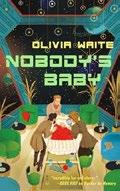
A detective aboard an interstellar ship where all childbearing is on indefinite hold gets drawn into a case involving an infant mysteriously left at her nephew’s door. The last thing Dorothy Gentleman expected is
involvement in a child abandonment case. Before departing Earth, all 10,000 passengers aboard the spaceship Fairweather underwent a procedure to pause their reproductive abilities. Now, centuries later, Dorothy’s gay nephew, Ruthie, and his husband, John, inexplicably find a baby outside their cabin. They all want answers, but Dorothy in particular wants to protect the child from her starchy rules-and-regulations colleague, Leloup, who sees the infant as “a disaster for civil disorder and general calm.” If Leloup has his way, the baby will be unable to download memories into a memorybook before death and then upload them into a new body. This second installment of Waite’s Dorothy Gentleman cozy mystery-in-space series will delight readers with quirky characters, wry dialogue, and a puzzle-like plot reminiscent of Agatha Christie’s Miss Marple books. Dorothy eventually locates the mother, who’s been newly incarnated and who, oddly enough, has no memory of giving birth. It quickly becomes clear that the child’s right to preserve his memories for future incarnations isn’t the only issue at stake. Someone with motives Dorothy is determined to discover wanted the old incarnation of the baby’s mother dead. Waite’s imaginative merging of futuristic settings and technologies with elements of the classic whodunit is only part of what makes this novel so successful. Her handling of themes like memory, love, and the bonds that create a family add a level of quiet poignancy that makes Waite’s book both entertaining and meaningful. A gentle charmer of an SF mystery that surprises as it satisfies.

AND NOW, BACK TO YOU
Borison, B.K. | Berkley (464 pp.) | $19 paper February 24, 2026 | 9780593953143
Opposites attract when meteorologists are forced to work together during a massive snowstorm.
Local television news reporter Delilah Stewart is beloved in Baltimore for her sunny personality whether she’s delivering the forecast or doing a feature at the aquarium while wearing a turtle costume. Radio weather and traffic reporter Jackson Clark is not so keen on her; she’s silly and chaotic (and always does a terrible parking job in their shared lot), whereas he likes to have plans and structure for everything in his life. When a major snowstorm is predicted, their bosses decide the pair should report together from the mountains several hours outside the city where the storm will hit first. They soon realize they have more in common than expected, and Delilah even helps calm Jackson’s anxiety and bring out his fun side. Attraction grows, and the cozy, snowy lodge is the perfect place for secret kisses. But when they return home to family drama and busy work schedules, it becomes more complicated to find their way back to each other. Bubbly, good-natured Delilah is an absolute gem of a character; she’s unapologetically full of warmth and kindness, but there’s more to her beneath her smile. Parts of her life are messy, sad, and difficult, yet she chooses to put her best foot forward even when self-doubt creeps in. Lovable Jackson has his own share of hardships in life, and when the couple become vulnerable and open up to each other, their mutual support and care
is tender and beautiful. Conflict comes more from outside factors (some that feel underdeveloped) than from their relationship, but their personal growth feels well-earned, while humor and spice are deftly woven into this charming tale. A wonderfully cozy and warm romance in a cold, snowy setting.
Enoch, Suzanne | Bramble Books (352 pp.) $18.99 paper | March 3, 2026 | 9781250331205

Two roguish children trap their parents within the happy ending the couple secretly wants.
Beckett Raines, Marquis of Hentrose, doesn’t want to get married again. He chose his first wife impulsively, and since she died in childbirth, he’s focused on raising their daughter, Rebecca. But his meddling mother continues to put women in his path, and she’s finally hit on an argument for remarriage that resonates: 9-year-old Rebecca is growing up and she’ll need a trusted woman to help. For once, Beckett’s not appalled by the woman his mother’s offering: Lady Pauline. However, moving back to London for the Season means he’s now living next door to Iris Silbern, a vivacious, opinionated, and penniless widow who’s also been thrust back onto the marriage market against her will. Rebecca and Iris’ 10-year-old son, Edmund, become fast friends, and though Iris and Beckett feel some sparks, they’re more focused on the realistic matches they’ve been roped into.
After Rebecca learns that Lady Pauline is secretly awful and plans to send her to boarding school, she begs Edmund (and most of the household staff) to help her bring their parents together instead. But though Beckett and Iris grow increasingly close, it may be too late to extract themselves from their impending marriages. Enoch’s latest meets all the expectations of a classic Regency romance and then elevates the story by featuring the mischievous antics of Rebecca and Edmund. Though the story is primarily told from a standard, dual point of view, occasional extra perspectives add depth and whimsy. Don’t be mistaken; this is a story for grown-ups, containing several steamy scenes in addition to a serious consideration of the matrimonial trade-offs even privileged adults had to make in the era. But it’s an adult story that keeps one-upping its own hijinks as it goes along, culminating in an ending that would be ridiculously over-the-top if it wasn’t so satisfying.
A lively Regency romance that brings two lovable families together.
Harris, Michelle C. | Berkley (512 pp.) $18.99 paper | March 17, 2026 9798217188673
A barista falls in love with one of her regular customers, a mysterious and heavily scarred man.
Audrey Adams is a barista in a Brooklyn coffee shop. She can’t help but be attracted to Theo Sullivan, a painfully shy customer who doesn’t remove his KN95 mask, even to drink his coffee. One day Theo tries to help Audrey with an aggressive customer, but the woman retaliates by ripping the mask off his face, revealing a large, disfiguring facial scar. Theo flees the shop and doesn’t return, leaving only his sketchbook behind. A few weeks later, Audrey spies him on the street and encourages him to come back. The two begin dating and quickly fall in love.
Audrey had moved to New York for college after being raised by a foster mother in Tampa, Florida. Now 24, she is just one semester shy of finishing her degree in electrical engineering at NYU. Theo grew up in New York. His parents divorced, and while his late father was a mechanic, his mother is a lawyer from a wealthy, powerful family. Theo never fit in with his mother’s clan, preferring to work in his father’s garage. He eventually pursued art and design instead of law school, making him even more of a black sheep. Even though there are interesting opportunities for friction and conflict in Audrey and Theo’s relationship—for example, class differences or their eight-year age gap—the novel’s only source of tension is Theo’s refusal to tell the story of his life-threatening accident. Harris makes several disjointed narrative decisions. The body of the novel is told exclusively from Audrey’s point of view, except for a 35-page flashback of Theo’s accident. Even more unusual is a 74-page epilogue that retells most of the major plot points from Theo’s perspective, which has the unfortunate effect of making this lonely, broken man seem sidelined in his own story.
Sad and unsatisfying.
Holguin, Ana | Forever (384 pp.) | $18.99 paper | March 10, 2026 | 9781538756904
Former college rivals must team up for the professional opportunity of a lifetime.
More than a decade ago, New Yorker Celia García graduated from Juilliard determined to pursue her dream of composing scores for movies and television. Those years of struggle might finally bear fruit—if she can stomach working with her college nemesis, the rich, talented, well-connected, and rude Oliver Barlowe. With her finances fraying and no other opportunities in sight, Celia agrees to a
collaboration with Oliver to score the music for a new television show with a big-name director. The catch? The deadline is only a few months away and they must essentially live together in his Maine summer house to complete the project. Written in dual timelines, the novel flips back and forth from Celia and Oliver’s occasionally awkward and sometimes fractious Juilliard encounters to their present-day creative partnership, which inevitably morphs into sexual awareness and leads to Oliver’s confession of an old crush. Celia has finally realized he wasn’t the ogre she’d made him out to be; add his current behavior (and yoga body) to his musical genius and she finds herself falling hard for her one-time competitor. But even as their professional and personal energies harmonize, Celia frets that any hint of a romantic entanglement might damage her future prospects in the industry. The third-act breakup that results from her attempts to hide their relationship feels a bit forced, but that plot weakness is countered by the thoughtfully sketched characters and Celia’s strong ties to her Puerto Rican–Cuban family. Celia and Oliver’s bond also develops organically, assisted by the cabin-in-the-woods setting, and results in a couple we root for. Their eventual reconciliation is therefore welcome and the epilogue, set a few years later, paints a reassuring picture of their personal and professional happily-ever-after. An enjoyable second-chance romance with a heroine who has more at stake than her heart.
Jessen, Lauren Kung | Forever (352 pp.) | $18.99 paper | March 17, 2026 | 9781538772348
Two strangers reckon with what it means to be truly lucky in this heartwarming romance. Hazel Yen doesn’t want to believe there’s such a thing as good luck or bad luck, but it’s hard to deny that her life hasn’t been smooth sailing. Freshly
divorced, newly jobless, grieving the death of her mother, and handling a father with a gambling addiction and a brother who always seems to make the worst decisions, Hazel decides on a whim to have her fortune told while wandering aimlessly through Chinatown. As she’s sitting in the fortuneteller’s booth, her reading is interrupted by the devastatingly handsome—and perpetually lucky—Logan Wells, when he and the chaotic cat he’s keeping an eye on literally crash in. Chaos ensues, cards are read, a joint—winning!—lottery ticket is purchased, and a mind-blowing kiss is shared before the two part ways at the end of the evening. As time passes and the two reconnect, Hazel’s luck turns from disastrous to miraculous and Logan, once inexplicably lucky, can’t seem to get anything right, leading them to wonder how accurate the fortuneteller was and whether their results could have been accidentally swapped. Jessen’s fans will be charmed by Hazel, Logan, and the chemistry they share; this is a refreshing, witty romance that once again highlights Chinese tradition and the real-life struggles her characters work together to overcome.
Jessen’s strongest and most emotionally poignant rom-com to date.
Macomber, Debbie | Ballantine (320 pp.) $30 | April 28, 2026 | 9798217091676
A Seattle woman meets a Chicago businessman as she flies home from a visit to a friend, and her small act of kindness blossoms into more.
Maisy Gallagher is barely making ends meet. With her father’s unexpected death a few years earlier, she dropped out of nursing school to help out in the family’s jewelry store, working with her uncle. Her older brother, Sean, also moved back home so he and Maisy could help their mother and their 10-year-old brother, Patrick. When Maisy offers a ride to a rude businessman who sat next to her on the plane, she’s just operating on
the kindness her grandmother instilled in her. That businessman, Chase Furst, turns out to be an incredibly wealthy banker; he’s flown into Seattle to make funeral arrangements for his mother, to whom he hasn’t spoken in years. Sparks fly in this gentle and predictable romance that leans heavily on long-distance and class-divide tropes. As with many of the author’s books, Christianity and the characters’ reliance on God’s will—as they wait and see what happens next— play a large part, as do traditional gender roles where women cook, clean, and only work in paying jobs until they have children at home to take care of. The author does offer a lighter touch when it comes to the painful ways alcoholism can destroy family relationships, with an understanding of the regret that can weigh on every family member. Light on plot and heavy on bolstering traditional gender norms as the ultimate goal for both men and women.
Meadows, Jillian | Avon/HarperCollins (368 pp.) | $18.99 paper | March 10, 2026 9780063416208
Childhood friends who grew apart reunite in a fake-dating scheme that brings up all-too-real feelings.
Fable Oaks feels adrift. She’s back home in Fern River, a small town in the Pacific Northwest, living in her beloved, departed grandfather’s falling-apart A-frame. She dropped out of college and hasn’t been able to find a job or a relationship that really sparks a fire inside her. Her former best friend turned school rival, Theo Nikolaou, has also returned to their hometown. Family trauma led him to leave years ago, but now he’s ready to put down roots—especially if he gets a chance to buy the veterinary clinic where he works. He just has to prove to his boss that he truly means to stay put. When a rumor circulates that he’s dating Fable, Theo decides to lean into it to show his
A
mom winds up fake dating an incredibly wealthy man in her hometown.
DOLLY ALL THE TIME
commitment to sticking around. At first, Fable doesn’t want to play along, but when Theo offers to help fix her house, she gives in. Theo knows just how to nettle Fable, but as their mutual teasing becomes increasingly flirtatious and they rediscover their friendship, they each wonder what this relationship could look like if it were real. Populated with lovable side characters and oozing small-town charm, this spicy-sweet, low-stakes romance is the epitome of cozy. Heavier subjects like Fable’s grief and Theo’s history with an abusive father are approached with care but not examined much beyond the surface level. Fable and Theo’s closest friends and family know about the fake-dating plan, so there’s no big tension or drama. Instead, the focus is on these characters, who everyone knows should be together, finally figuring that out for themselves and finding the confidence and vulnerability to open themselves up to love. Super cute and comfy.
Kirkus Star
Monaghan, Annabel | Putnam (368 pp.) $20 paper | May 26, 2026 | 9780593853979
A single mom winds up fake dating an incredibly wealthy man in her hometown. Dolly Brick is back in her hometown of Whitfield, Rhode Island, for the summer to help her dad and disabled brother manage their house and family business. As a 39-year-old single mother with multiple jobs—which now include
working at the Brick Fish House— Dolly is always busy. When her mom left their family years ago, Dolly took over caring for her siblings and father and never really stopped. When she runs into Stewart Whitfield after making a shrimp delivery to his family’s mansion, she doesn’t think they could be more different. She’s had to figure out how to do everything by herself, and he can’t even change a tire. That’s why Stewart’s proposal that she pretend to be his girlfriend feels so unbelievable—but it comes with a hefty check that she desperately needs for home repairs. So she becomes the fake girlfriend of Stewart Whitfield (as in, the Whitfields her town is named after; his real fiancée just dumped him and it’s a bad time for him to be single) and experiences what it’s like to walk into fancy buildings through the front door instead of the service entrance. More than the boats and helicopter and expensive dinners, though, Dolly is impressed by what a kind man Stewart is—and how it feels to let someone else take care of her for a change. Soon, their relationship starts to feel more real than fake. Monaghan creates an impossibly winning story with a charming, lovable heroine. Dolly is capable, hardworking, and will do anything for the people she loves. She and Stewart both possess real flaws, and while their relationship begins with one of the most beloved rom-com tropes, their challenges feel like realistic adult obstacles rather than easily solved miscommunications. It’s also refreshing that, even though Dolly must learn to allow other people to help her, she never views her caretaking responsibilities as burdens. She deeply loves her family, and that love carries through the entire story.
A charming love story that absolutely radiates warmth.
Nordqvist, Sabina | Grand Central Publishing (384 pp.) | $18.99 paper February 10, 2026 | 9781538771570
Skylar King is a college recruitment officer with a rare chronic illness. Brandon Pike is a former pro snowboarder whose career ended in a very public accident. With pain setting the pace of their relationship, will they have the patience to learn one another’s rhythms?
The most important parts of Skylar’s life happen online, in the support group for people with chronic pain she started with her friends. It’s where she can be herself without having to worry about being professional or polite. Pike is an Olympic athlete whose entanglements with women are almost as legendary as his skill on the slopes. He finds much-needed anonymity in Skylar’s group until his mother pops up, responding to one of his posts on New Year’s Eve. Misinterpreting Pike’s raw grief for suicidal ideation, she threatens to call the police for a wellness check if he doesn’t call her. When Pike doesn’t respond, Skylar, trying to help, writes that she knows he’s fine because he’s asleep in her bed. Which is, to say the least, not true. And Pike is not happy, having always promised to tell his mother if he ever started dating someone. To make his mom stop hovering, Pike lightly blackmails Skylar by
threatening to tell the other group admins what she did; thus, they enter a two-month fake-dating situation. Unlike the protagonists of many romance novels, Pike and Skylar get gritty—honest about their physical obstacles and very real about things like medical misogyny and toxic positivity. This book is also an extremely slow burn that pays off exponentially. The sex is super hot. Because Skylar and Pike learn early to communicate about pain and limitations, they’re great communicators by the time they do eventually hook up, which makes for some steamy dirty talk. Together they learn that while chronic illness comes with restrictions, their desire for one another does not.
A strong debut about characters who meet in the pause between pain and hope.
Rai, Alisha | Avon/HarperCollins (384 pp.) | $18.99 paper | April 7, 2026 9780063119505
A career con woman teams up with a man who’s hiding the truth about himself to save his missing brother. Sejal Chaudhary knows her family doesn’t look like anyone else’s. With her mother, the former head of the infamous Cobra crime organization, now behind bars, Sejal’s made every effort to keep her head down—even if she can’t resist fleecing one or two creeps. After ending up on the
A strong debut about characters who meet in the pause between pain and hope. IT’S ALL IN YOUR HEAD
wrong side of a small con job, she grabs the first handsome stranger she sees as cover. But while Krish Anand is happy to pretend to be Sejal’s boyfriend to scare off her angry mark, their meet-cute is no coincidence. The truth is, Krish needs Sejal more than she needs him; his FBI-agent brother, Avi, has gone missing, and he’s convinced Cobra had something to do with it. Given Sejal’s connection to the organization, she’s Krish’s only hope of finding Avi. After convincing her that he’s the FBI agent, Krish still has to talk Sejal into driving across the country with him. When she realizes that her dangerous exboyfriend is hot on her tail, it doesn’t take long for Sejal to agree to Krish’s terms. The road trip that ensues is a whirlwind of rundown motel rooms, junk-food dinners, and shots fired, but every hour that passes is a chance for Sejal and Krish to learn more about each other—and realize that their mutual attraction is giving way to something more. The clock is ticking, though, and Krish is going to have to come clean about who he really is, even if it means losing Sejal forever. Rai’s latest is a delightful blend of romance and suspense that doesn’t sacrifice humor in spooling out its thrills. But as the story races toward its finish, it does become slightly overwhelmed by side characters and the need to resolve multiple narrative threads; the faster pace affords less opportunity to wrap up the main couple’s arc. Overall, though, it’s a fun adventure that delivers an irresistible slowburn romance.
This action-packed romance is a road trip worth taking.



The adaptation of Jasmine Guillory’s novel will be produced by Prince Harry and Meghan Markle.
Jasmine Guillory’s The Wedding Date is getting a film adaptation, Deadline reports.
Guillory’s debut novel, published in 2018 by
Berkley, follows Alexa, a woman who agrees to act as fake girlfriend to Drew, a man she meets when they’re stuck in an elevator together. Afterwards, they find themselves unable to stop thinking about each other. A critic for Kirkus wrote of the novel, “Guillory’s debut is a mix of romance and raunch that will charm rom-com fans.”
Netflix is adapting the novel as a film with Tracy Oliver writing the screenplay. Oliver, who acted in the YouTube series The MisAdventures of Awkward Black Girl, previously wrote the films Barbershop: The
Next Cut, Girls Trip, and The Sun Is Also a Star
The Wedding Date will be produced by Prince Harry and Meghan, Duchess of Sussex, under their Archewell Productions company. The couple is also producing an upcoming film adaptation of Carley Fortune’s Meet Me at the Lake
Guillory’s 2022 novel, Drunk on Love, is currently being adapted into a Peacock drama series
with Attica Locke and Tembi Locke writing and executive producing.
Guillory shared news of the Wedding Date adaptation on Instagram, writing, “Fun news to share today! Super excited for this! Thrilled to be working with Netflix, Tracy Oliver, and the Duke and Duchess of Sussex!!!”—M.S.


AROUND THE WORLD, single households are on the rise. People are moving to cities, they’re living longer, and, not unlike Greta Garbo, they want to be left alone. Hana Kim and Sunwoo Hwang thought they’d buck the trend. Rather than be by themselves—or find partners and get married, caving in to “sociocultural influence”— the two South Korean friends decided to move in together, buying an apartment in Seoul. “I think of singleperson households as atoms,” Kim writes in the delightful memoir she co-authored with Hwang: Two Women Living Together (Ecco/HarperCollins, Jan. 20). Instead, the friends created their own “molecule”: W₂C₄. For those who forget their high school chemistry, that’s two women and four cats. “As of now,” Kim writes, “I’d venture we’re a very stable configuration.”
Two Women Living Together was a bestseller when it was published in Korea in 2019, and now English-language readers can enjoy it as well, thanks to Gene Png’s sprightly translation.
Foreign books get short shrift in the U.S., a large and inward-looking country, but many books in translation are available if one seeks

them out. Another recent title with Asian roots is Long Take (Univ. of Minnesota, Feb. 3), by the celebrated Japanese filmmaker Akira Kurosawa (1910-1998). Translated by Anne McKnight, the book collects essays by and interviews with the director of The Seven Samurai, Rashomon , and Ran . “Film doesn’t really care about national borders,” Kurosawa writes. “It plays an important role by enabling people to understand each other, actually.” The sentiment holds true for books, too.
Two new important books take stock of what’s going on in a nation that sits across the Sea of Japan from Kurosawa’s homeland. One is Volga Blues: A Journey Into the Heart of Russia (Norton, Jan. 20), by Italian journalist Marzio G. Mian. Translated by Elettra Pauletto, the book offers a shocking view of the former empire, a land, in the words of our reviewer, “where drugs, alcohol, despair, and roving Clockwork Orange –ish youth gangs rule, and where death is everywhere: not just the incalculable deaths in battle in Ukraine, but also death by vodka, car crashes (with death rates a

JOHN McMURTRIE




staggering 60 times higher than in Britain), suicide, and industrial pollution.”
In his short but powerful If Russia Wins (Atlantic Monthly, Jan. 6), translated by Olena Ebel and Ruth Ahmedzai Kemp, German scholar Carlo Masala examines Vladimir Putin’s strategy of trying to make Russia, as it were, great again. Our critic called the book “a worrisome thought experiment that projects disaster if current geopolitical trends— notably U.S. isolationism—prevail.”
That bleak prospect might have you craving solace from Albert Camus, an eloquent anti-totalitarian and humanist.

Translated by Ryan Bloom, The Complete Notebooks (Univ. of Chicago, Dec. 5) is full of pithy observations. One reads: “The stars twinkle in tune with the cicadas’ chirp. The world’s music.”
Can’t get enough Camus? You’ll be rewarded this spring with the publication of Mon Cher Amour: The Love Letters of Albert Camus and Maria Casarès , 19441959 (Knopf, April 21).
Translated by Sandra Smith and Cory Stockwell, it’s a mammoth volume totaling 1,200 pages. That’s a whole lotta love.
John McMurtrie is the nonfiction editor.
The Bard in many tongues. Shakespeare is a litmus test for translators. Make him too literal, sacrifice the sound for the sense, and you wind up with basic prose. Overdo it, reproduce the flow of meter and the crack of consonants, and you get an affectation burning like acid. Hahn is a brilliant literary translator, and his book offers a grand and very enjoyable tour of Shakespeare in the worlds of other words. He writes about a Pericles in Brazilian Portuguese, a Hamlet in Danish, a King Lear (famously) in Yiddish, and a Julius Caesar in Latin (which has the author wondering, “How do you translate ‘Et tu, Brute’ into Latin?”). Hahn provides a
tour de force analysis of Twelfth Night , looking at the play of pun and prosody through multiple linguistic lenses. He prints a passage, then presents a string of versions. How does Georgian say the pangs of love? How do the flowers bloom in Chinese or Hungarian? How do Shakespeare’s distinctions between “thou” and “you” (informal and formal) render out in Swahili? Every page brims with discoveries, yet Hahn’s tone remains modest—and refreshingly droll. “Translators are hilarious and weird people,” he writes in the book’s acknowledgments. “(If you’ve read this book, you’ll have figured that out for yourself, obviously.)”
Hahn, Daniel | Knopf | 416 pp.
$30 | April 21, 2026 | 9780593801666
Readers thinking they know Shakespeare will find something new here. Readers new to the plays and poems will marvel at what they have been missing. You finish the book and realize that it is not just about an author and his readers but about the mysteries of
language itself. As Hahn writes, “How do you present a piece of writing that people know so well already, that rings in their memories whether you like it or not? That is the question.”
A uniquely ebullient account of world translators seeking to make Shakespeare their own.
Abu Sarah, Aziz & Maoz Inon | Crown (240 pp.) $30 | April 14, 2026 | 9798217086511

Hope amid trauma.
In this bighearted travelogue, friends and peace activists Abu Sarah, a Palestinian whose brother died from injuries suffered in Israeli custody, and Inon, an Israeli whose parents were killed by Hamas, explore the region’s militarized landscape and learn about the experiences of others impacted by decades of violence. Their eight-day journey through Israeli and Palestinian communities is an effort to topple “walls of ignorance and hatred,” writes Inon. In Jerusalem, the West Bank, and elsewhere, they recount fraught local history and share their experiences as socially conscious entrepreneurs whose work in the tourism and hospitality industries aims to foster “connection and peacebuilding.” Though their prose occasionally reads like ad copy for their respective businesses, their generosity sets a remarkable example. Forgiving his parents’ murderers “has set me free,” Inon writes. Their leaders have failed them, and cross-cultural “co-resistance” is the most promising way forward, Abu Sarah writes. They don’t break new ground with their accounts of the onerous laws and border security zones that dominate Palestinian life, but as a vessel for the devastating stories told by those they speak to along the way, their book is invaluable. An Israeli tells them that during Hamas’ Oct. 7, 2023, attack, his two youngest grandsons survived by playing dead alongside their murdered siblings and parents. A Palestinian doctor recalls that during an Israeli strike on Gaza, he saw a woman sitting with her dead child’s body, “just waiting for more family members to come so they could go bury him.” Others recount atrocities at holy sites and military checkpoints,
and the security clampdowns that followed. Not even the authors’ many mentions of their business ventures diminish the potency of the important stories they share.
Powerfully demonstrates that fellowship can bridge seemingly intractable divides.
Banks, Miranda & Kate Fortmueller Univ. of California (304 pp.) | $22.95 paper April 14, 2026 | 9780520412880
It’s the pictures that got small. Most consumers and industry insiders would agree that the film and TV industry is in a severe economic slump. To explain how it got there, academic media experts Banks and Fortmueller go back to 2013, when streaming services began producing their own programming. Before then, Hollywood was a monolithic industry, able to attract cash-rich investors with the promise of a share of the gross profits and proximity to the glamorous world of show business while restricting access to creative control. But when streaming services morphed into studios, the financial model changed. Suddenly Wall Street bankers and private equity firms became involved. They demanded higher profit margins and started leveraging intellectual property, licensing deals, and additional revenue streams. Tech companies from Silicon Valley joined in, bringing with them sophisticated data-driven methodologies for monitoring and measuring success, which was used to shape the creative process. “Amazon, Apple, and Netflix are all tech companies at their core, but they also adopt the logic of consulting firms and use data to optimize their business practices, create efficiencies, and reimagine
workflows that privilege their models of innovation and cost saving,” the authors write. One example they cite is the algorithm used in the Netflix Recommendation System, which makes content suggestions to viewers “within a narrow range of choices and often obscure the range of available options, thus eliminating viewer agency.” But that’s just the first of many woes inflicted on the industry in the past 12 years. Banks and Fortmueller detail a series of events that occurred between then and now that created a perfect storm for destabilizing the industry, including the unsustainable rise of Peak TV, the Covid-19 pandemic, the #MeToo movement, and the 2023 back-toback labor strikes by Hollywood writers and actors.
A dry but deeply researched, clearly delineated primer on how the film and TV industry dug itself into a financial hole.
Barnes, Rhae Lynn | Liveright/Norton (528 pp.) | $39.99 | March 24, 2026 9781631496349
A comprehensive history of an ugly, long-running chapter of American history.
As Barnes, a historian at Princeton, describes it in this essential but painful-to-read work, the grotesque practice of blackface minstrelsy in America extends from “Jim Crow’s toothy grin in fraternal halls and civic centers” to its globalization through publishing empires, to the U.S. government casting it as “an emblem of uplift and American culture to be preserved and proselytized” during the Great Depression and beyond. Her immensely readable work covers more
frighteningly long.
than a hundred years of white America’s embrace of this sordid form of entertainment. Among the organizations and prominent figures are Edwin P. Christy, who in 1846, in Buffalo, N.Y., formed the Christy Minstrels—“the world’s first enduring minstrel company”—and the Jolly Corks, a group founded in 1868 that became the Benevolent and Protective Order of the Elks (BPOE), which transformed minstrel shows into a “fundraising juggernaut,” became “a sanctuary for white male supremacy,” and maintained an enormous political influence well into the 20th century. Popular entertainers from Bing Crosby, Fred Astaire, and Mickey Rooney to Shirley Temple and Doris Day donned blackface. Schools and churches staged productions. The ignominious history is frighteningly long, including Japanese Americans’ forced participation in minstrel shows—when President Franklin D. Roosevelt ordered them into camps after Pearl Harbor—and the University of Vermont’s annual Kake Walk, in which, from 1893 to 1969, participants emulated the “Cakewalk”— “competitive dancing that enslaved men and women were forced to perform with fake joviality for white enslavers’ amusement.” Barnes also highlights heroic figures who fought to end the practice, from the NAACP to activist Betty Reid Soskin to musicians who created “the soundtrack to a revolution” by replacing minstrelsy and blackface “with authentic portrayals of Black life, Black beauty, and Black dignity,” with artists such as Aretha Franklin and Nina Simone leading the way. An important and necessarily uncomfortable work on a disturbing legacy.
The People Can Fly: American Promise, Black Prodigies, and the Greatest Miracle of All Time
Bennett, Joshua | Little, Brown (272 pp.) $30 | February 3, 2026 | 9780316576024
A scholar, poet, and writer examines the not-so-hidden assumptions of race and class that constrain Black genius. When he was 11, writes MIT humanities professor Bennett, he and some fellow sixth-graders were introduced, courtesy of a math teacher, to a summer program in New York where “we received instruction in math and science, music, foreign languages, while also learning to swim, playing chess and tennis, and otherwise expanding our horizons.” That encouragement was essential, as well as its underlying thesis that Black children were not, as widely thought, “generally incapable of extraordinary intellection, of genius.” In several case studies, Bennett delivers sharply contrary evidence. One is Thomas “Blind Tom” Wiggins, who, enslaved, earned his owner thousands of dollars as a composer and virtuoso pianist, a musical genius on a par with Thelonious Monk, Nina Simone, and Stevie Wonder. Of the last, Bennett delivers a telling anecdote: As a child, Wonder astonished house guests by identifying coins based on the sound each made when dropped on the floor. Another case is that of 6-year-old Oscar Moore, with a prodigious memory that allowed him to repeat long poems and other texts after having heard them
only once. In a time when the mainstream view “denied the presence or possibility of black interiority,” such gifted, sometimes neurodivergent figures—James Baldwin, Malcolm X, and Nikki Giovanni among them— may have seemed distant outliers. But what, Bennett asks, might happen if the assumptions were turned around to suppose instead that each person contained the potential for “unchained expressiveness” and indeed genius?
Bennett closes with a resounding defense of ethnic, literary, and historical studies in a time when all are under attack, using them to craft a future world “that is more loving, more free,” and certainly more ecumenical in its outlook.
An inspiring invitation to welcome creativity and intelligence wherever they may be found.
Bicks, Caroline | Hogarth (304 pp.)
$29 | April 21, 2026 | 9780593736722
A spooky stroll through the haunted hallways of Stephen King’s mind. Trained as a Shakespearean scholar, Bicks was hired, a decade ago, to hold a chair at the University of Maine endowed in Stephen King’s name. It happened that she was a huge fan of King’s work, a teenager when “a whole posse of King’s creatures danced their way into my imagination and made themselves at home.” A request for a classroom visit led to friendship, and along with it, Bicks’ layering of King’s work onto a template dominated by the likes of Macbeth and Hamlet. The great Kingly lesson, to which the Bard would surely assent: “The world is never going to be 100 percent safe: The Boogeyman never goes away— although your mother will.” Bicks is a smart and inventive reader of King, to
MONSTERS IN THE ARCHIVES
be sure, and it’s an interesting exercise to think of the bloody conclusion of Carrie as something that wouldn’t be out of place in Birnam Wood, as well as to ponder the connection of Jack Torrance of The Shining to poor mind-beset Prince Hamlet. But of greater interest, to die-hard King fans, is Bicks’ tour through the archives of the title, as she works her way through draft after draft of King’s novels and stories to discover how the master of horror shaped his work. One way, she finds, is through clusters of words that appear and reappear in various forms in any given text—in Pet Sematary, for instance, the words “dirt/grit/gritting/ grating/grave/gravel.” There’s good gossip along with the scholarly insights (and the scholarship is lightly worn and not for a moment pedantic), one highlight being the real reason why King didn’t like Stanley Kubrick’s version of The Shining. And rest assured, after reading this book you’ll know the good and true reasons to keep your closet door closed tight. An enlightening, reader-friendly exercise in literary scholarship. Boo!
Bigsby, Christopher | Cambridge Univ. (384 pp.) | $29.95 | May 7, 2026 9781009636926
Interviews with the distinguished American playwright (1915-2005), recorded over several decades. Bigsby met the playwright in the 1960s, founded the Arthur Miller Centre for American Studies at the University of East
Anglia in 1989, and has written extensively about his life and work, so his questions throughout the book are knowledgeable, though there’s little new here. The devastating impact of the Great Depression is a constant refrain, and its influence on Miller’s work is evident: “It meant that nothing man-made existed which could not be sharply changed, overthrown and turned into rubble at a moment’s notice.” This sense of existential uncertainty characterizes his plays, from All My Sons and Death of a Salesman through After the Fall and The Price, to such later works (better received in Britain than in America) as The American Clock and The Ride Down Mt. Morgan . Miller’s progressive politics are also evident in sharp comments about the House Un-American Activities Committee trying “to force people to renounce the whole era of the thirties and forties in which certain social ideals were dominant.” Miller remained true to those ideals throughout his career, though his commitment to equality and social justice was tempered by an unsparing view of human frailties and cruelties that often makes him sound like a crochety old man. Bigsby isn’t afraid to press Miller on touchy subjects like his support of the Soviet Union well into the 1940s or his marriage to Marilyn Monroe. Responding to a comment about “how baffling” many people found that marriage, Miller replies, “There is something baffling about all my relationships. I cannot say I understand more than a fraction of them, quite frankly.” It’s both an honest statement and a means of shutting off further discussion, and Bigby generally lets Miller point the conversation where he wishes. A solid introduction to a storied life and career.
Blankfein, Lloyd | Penguin Press (400 pp.) $35 | March 3, 2026 | 9798217058921

A noted banker on his career in global finance. Blankfein’s memoir focuses on his 36 years at Goldman Sachs, the powerful financial services firm he headed until his 2018 retirement. The early pages are lively, but as he climbs the corporate ladder, cant creeps in. Raised in Brooklyn public housing, the self-described “urban hick” clipped coupons and marveled at the gizmos at the 1964 World’s Fair in Queens. As a teenage Yankee Stadium vendor, he lugged trays of hot dogs to the upper deck. These winning anecdotes are followed by interesting stories from his days as a young lawyer working for 1970s music industry clients. Blankfein’s chapters on Goldman concern subjects like innovations in foreign exchange markets, the pros and cons of being a publicly traded company, and complaints about “excessive” financial regulations. This material is guardedly informative but often dry. One section covers “the formation of a committee on strategy, a subcommittee of the operating committee.” His account of Goldman’s actions during the 2008 financial crisis will surely rankle some readers. The firm, he writes, survived because of its robust “culture around risk control,” and it took a $10 billion loan under the federal government’s Troubled Asset Relief Program because Washington insisted: “Goldman didn’t need or want the capital.” It was during this period that the company paid controversial bonuses to some staffers, a move he defends as “practical.” Blankfein uses lazy stereotypes when describing his critics in the Occupy movement and euphemisms when discussing Goldman’s annual firings, terming them “an exercise of moving the bottom 5 percent of performers out.” After a promising start, C-suite
jargon emerges as one of this book’s major features.
This account of a working-class kid’s rise to the top of American banking has some heart—and plenty of corporate jargon.
Bousquet, Olivier, Arnaud Devillard & Nicolas Schaller | Black Dog & Leventhal (504 pp.)
$60 | March 3, 2026 | 9798894140698
Marty supreme.
It’s been almost 60 years since Martin Scorsese directed his first feature film, Who’s That Knocking at My Door, and the filmmaker hasn’t slowed down since. In their impressive coffee-table book, Bousquet, Devillard, and Schaller—who previously collaborated on a book about movies based on Stephen King’s fiction—closely examine Scorsese’s extensive body of work, starting with his 1963 short film What’s a Nice Girl Like You Doing in a Place Like This? and continuing through Killers of the Flower Moon, his Oscar-nominated 2023 epic. Each chapter focuses on a different film, and the authors offer behind-the-scenes looks at some of Scorsese’s most beloved movies, including Taxi Driver, Raging Bull, Goodfellas, and The Wolf of Wall Street, as well as some of the pictures that divided critics, namely the largely forgotten Boxcar Bertha and the bewildering New York, New York. Reacting to negative reviews of Kundun (1997), about the Dalai Lama, the filmmaker said, “It’s a disgrace. Because some people have a heart big enough to want to help out, the press makes fun of them. An absolute disgrace.” The sections that dig into Scorsese’s recurring themes—among them violence and masculinity and redemption—are the strongest, offering analyses that are insightful without being pedantic. Even Scorsese aficionados will make new discoveries: For
example, Robert De Niro’s classic line in Taxi Driver —“You talkin’ to me?”—was improvised by the actor, inspired by something he and Scorsese had heard Bruce Springsteen tell a concert audience in New York. Rich in interview excerpts, and stills, posters, and other images, the book will speak to any film fanatic. An irresistible celebration of a maverick auteur.
Brooks, Charlotte | Univ. of California (392 pp.) | $29.95 | March 10, 2026 9780520409552

Chinese and U.S. relations viewed through the lens of a single family.
Historian Brooks (Between Mao and McCarthy, 2015) follows the members of a little-known but fascinating Chinese American family from the late-19th century through the years following World War II. In 1883, patriarch Moy Sing emigrated first to San Francisco, then to Chicago, where he set up a gambling parlor. In 1892, he was able to bring his wife to America, and the two finally settled in New York. They eventually had 12 children, six of whom survived to adulthood, and it’s around the lives of these six that Brooks builds her story. The author structures the history in snappy chapters, most only a few pages long, each focusing on a year or two in the life of one family member or another. The result is a soap opera in the best sense of the term. These lives contain more than their share of drama, with divorce, suicide, betrayal, illegal activities, political divisions, business successes, and failures all playing a role. Any one of the siblings would be worthy of their own book, and together they reveal the intriguing complexity of family and second-generation immigrant life. All six attended public school, with most graduating from college, took
American names, and preceded to move up, down and sideways economically. Two stayed in the New York area, while the others moved back and forth between New York and Shanghai, hoping to better themselves in China but brought home by political changes there. Brooks thoroughly examines the impact of war and the Great Depression, the growth of Communism, and the American prejudice against the Chinese, without neglecting the effects of personality and family dynamics on persistent Kay, idealistic Ernest, flighty Alice, and all the rest.
A perceptive peek at an upwardly mobile immigrant family.
Korean
the Christian Roots of North Korea’s
Cheng, Jonathan | Knopf (768 pp.)
$36 | April 14, 2026 | 9781524733490
An eye-opening view of North Korea’s apocalyptic, messianic, weird—and Christian-based— cult of personality. Call it
Kimilsungism, as Wall Street Journal China bureau chief Cheng does, which, if classified as a religious rather than political movement, “would be one of the world’s largest, claiming roughly as many adherents as Judaism.” What paved the way for that multigenerational cult was the arrival of Protestant missionaries in Korea. One, a Scottish Presbyterian, landed in Manchuria and, though denied entry into Korea proper, converted enough expatriates that when they returned home, they smoothed a path for later generations of proselytes. That infrastructure proved a bulwark of resistance against the conquering Japanese and their demand that Koreans worship at Shinto shrines. Surprisingly, too, that infrastructure was strongest in the northern half of the peninsula, so that
after partition northerners fleeing from Communist rule launched “90 percent of the roughly two thousand new churches that opened in the South in 1950 alone.” Meanwhile, Cheng notes, Kim Il Sung assumed the mantle of the messiah, with required rituals of devotion that included cleaning the mandatory portrait of the Great Leader “using state-supplied dusters,” as well as bowing at statues, singing hymns of praise, and learning a language remade so that “the sun” was reserved to describe not the star above but the ruler below. A small army of writers was put to work creating texts that “portrayed Kim Il Sung as a savior in the Christian mode, bearing the sufferings of his people,” part of an effort to create a quasi-religion “that could, like Christianity, outlive its charismatic founder.” The beneficiary, on Kim’s death, was his son, and following his death, the current dictator, Kim Jong Un—though today the original founder is still commemorated in thousands of “Towers of Immortalization” that dot the North Korean landscape like so many cathedrals. Fascinating insight into the birth of the moral equivalent of a totalitarian theocracy.
Chigudu, Simukai | Crown (352 pp.) | $28 March 24, 2026 | 9780593443699
Political scientist Chigudu recounts his early years in newly independent Zimbabwe.
“I belong to the first generation in the modern history of my native land that never lived under direct colonial rule,” writes Chigudu, now a professor of politics at Oxford. That generation lived under the rule of Robert Mugabe, who retained power for 37 years, and who transformed in that time from a revolutionary democrat, held up as an example by the likes of President Ronald Reagan, to the most corrupt of dictators. His successor, Emmerson
Mnangagwa, was no better. Still, Chigudu suggests, homegrown despotism was to be preferred to the antecedent proto-apartheid rule of white Rhodesia, with white Zimbabweans nursing their attitudes long after independence: “Rhodie parents passed on their racism to their Rhodie children with near-genetic efficiency, like a dominant allele on an X chromosome.” As a gifted student, Chigudu was placed in elite schools, where he was bullied by those white settlers. That experience, though scarring, was nothing compared to the travails of his father a generation earlier, savagely beaten by police and, on becoming a guerrilla fighter, hunted by the Rhodesian army; for her part, Chigudu’s Uganda-born mother survived the worst excesses of the Idi Amin regime: “She did not anticipate that the hope and optimism she held for her future would soon be engulfed by the chaotic rule of one of Africa’s most notorious tyrants.” With detours into fundamentalist Christianity and medical school, driven by the self-imposed demands of perfectionism and “devastating self-loathing,” Chigudu finally finds his path as an “anticolonial and anti-neocolonial” scholar committed to “investigating…how political liberation from oppressive rule is not the same as freedom of the self from the burdens of the past.”
A well-crafted blend of personal and political history.
Cockburn, Andrew | Verso (304 pp.)
$29.95 | March 17, 2026 | 9781836741770
A greatest-hits package from the noted political correspondent. Cockburn’s title is well taken: It was an ancestor of his, George Cockburn, who led a British force backed by runaway enslaved people
into Washington and burned down the White House during the War of 1812. Now, he writes, Donald Trump is busily putting the torch to the place a second time, and with less opposition than Admiral Cockburn faced. “Empires are at their most interesting when they start tumbling into final decline,” he writes, and that point is well taken, too, as Trump continues to defy norms. Gathering pieces from Harper’s, London Review of Books, and other outlets, Cockburn examines various aspects of the decline and fall. A repeated observation is that while Trump has claimed extraordinary powers for himself and may well exercise powers including “imposing martial law, suspending habeas corpus, seizing control of the internet, imposing censorship, and incarcerating so-called subversives, among other repressive measures,” the path to the imperial presidency has been cleared for decades now, bit by bit. On that score, Cockburn seems as scornful of Democratic orthodoxies as he is of MAGA: He decries the Democratic National Committee leadership’s having “made it abundantly clear that eliminating the leftist insurgency is perhaps its highest priority,” and he also flays numerous Democratic luminaries, from Joe Biden to Andrew Cuomo and beyond. Sometimes Cockburn’s arguments are themselves plenty arguable, as when he attributes Trump’s second term to disgust over Biden’s support for Israel. But just as often, Cockburn ably dons the mantle of I.F. Stone and Seymour Hersh as dogged critics of the power structure, and he turns a memorable phrase, too, as when he writes of the “essential truth about our military machine: it is not interested in war.”
A smart, strongly leftist take on contemporary American politics.

Corey, MJ | Pantheon (304 pp.)
$30 | May 5, 2026 | 9780593701348
A media-driven appreciation of one of pop culture’s mostwatched families.
Corey, a psychotherapist, was spontaneously introduced to a Season 6 episode of the TV reality series Keeping Up With the Kardashians in 2018, and in that viewing’s wake, admitted to feeling an “uncanny sensation” that drew her in as a casual fan, then, almost hypnotically, into an obsession that has endured for nearly a decade. The author skillfully condenses her years of observation and evaluation as a Kardashian analyst into this obvious labor of love, one that has garnered her a successful personal Substack, a recap magazine column, and a legion of Kardashian-crazed TikTok and Instagram followers. Paired with a personal fascination with the Kardashian family’s collective talent for narrative mastery, a postmodern sense of reality, and catchy episodic arcs, Corey cleverly and effectively fuses celebrity scrutiny and deft analysis with the famous family’s personalities and creates a whirlwind of themes, abstract ideas, and some very solid truths about their roles in modern society and their impact on feminism. Interwoven into the analysis are more easily digested details, including Kim Kardashian’s iconic Halloween costumes and her video games, the family’s sartorial and corporeal trends, their entrepreneurial ventures, eccentric behaviors, and rise to influential fame, along with a parade of narrative divergences featuring Kanye West, O.J. Simpson, and Paris Hilton. The first of the book’s two sections incorporates referential material in addressing how and why public attention spans and tastes have evolved over the past several decades and uses the Kardashians as a prime example of a responsible change agent. The second section features a biographical chronology
that proceeds through major milestones in the Kardashians’ lives as collective influencers. In examining the show’s catalog of highly produced episodes—“edited to achieve a near-perfect narrative structure”—Corey digs deeper into the meaning and the message of the “pixel-perfect” family’s popularity, intelligently assessing how their tabloid-worthy, sensational fireworks keep the fires of celebrity culture and viewers’ addiction to reality television consistently stoked.
An exhaustive and entertaining look into the Kardashian media machine.
Cracknell, Linda | Saraband (278 pp.) | $17.95 paper | May 12, 2026 | 9781916812505
Tides and time. British writer Cracknell brings her interest in “memory, place and movement” to an investigation of her family’s connection to the sea.
Although she lived mostly inland in Britain, she always felt “a tidal drag of longing” when she visited her mother’s home near the coast. Partly to rescue her “collective seafaring past from amnesia,” partly to forge a closer connection to her mother, she found herself wishing “to be more than a spectator, to ‘belong’ to a place circumscribed by tides.” In 2016, she began her project, which led her to archives, museums, and graveyards; to photographs and log books; and to a wealth of family memorabilia in what she calls the Box. She walks along the shore, joins a rowing club, helps to build a skiff; and she takes two voyages on the Bessie Ellen, a small ship that was built in 1907, in use
through the 1970s, and in 2000 was rescued and refitted for sailing holidays. In September 2018, Cracknell joined a crew to deliver the ship from Scotland to Cornwall, powered by wind in its eight sails. Responding to myriad needs on board, she knows the trip will be challenging: “I will earn the arrival just as past seafarers did,” she writes. Although she found more documentation about seafaring men than the women who kept their homes and had their children, she comes to feel closer to women’s lives and their families, “people minutely attuned to tidal rhythms, with multiple skills and an inherited allegiance to both land and sea, wet and dry.” Cracknell vividly conveys “the chop and the bite of salt air,” the power of the ocean’s tow, and the “sea-determined lives” of her ancestors. A richly textured melding of memoir and social history.
Crane, Kate | Hanover Square Press (304 pp.)
$30 | April 7, 2026 | 9781335449399
A daughter searches for answers. First-time author Crane left childhood behind at age 12, when her father, Eddy, failed to come home from his job at a machinery company he co-owned in a seedy section of Baltimore on toxic Curtis Bay. Though his body was never found, his beloved Mercedes was later discovered parked at Baltimore/ Washington International Airport, with his equally beloved rottweiler wandering nearby. Though suspicion immediately fell on Eddy’s business partner (the two
Pulling back the curtain on a famous family.
had had an ugly fight over bookkeeping), the case quickly went cold. It remained notorious among Baltimore cops and reporters as the sole missing-person case filed with homicide cold cases decades later. Eddy’s ostensible widow, the author’s mother, was frustratingly tight-lipped about the details surrounding her husband’s mysterious disappearance, and Crane felt like she was alone in her debilitating post-traumatic dysfunctionality. Though she managed to finish college, move to New York, and begin a career in journalism, her father’s case haunted her, and so she resolved to exorcise it using her skills as a journalist to find out the truth. “This book is a work of journalism, and this book is a memoir,” she writes, describing her hybrid approach. “The two forms have separate standards and conventions that intertwine in this book, with the dominance of memoir versus journalism shifting throughout.” A gifted writer with deep reserves of feeling and talent for describing it, she might be said to have succeeded better as a memoirist, but only because the details she uncovers lead to uncertain justice. Ultimately, the forms blend seamlessly. A story with jaw-dropping twists told by a writer to watch.
Crosland, Margaret | Pushkin Press Classics (176 pp.) | $17.95 paper April 28, 2026 | 9781805330622

Mystery marriage. As part of its Classics series, Pushkin Press has reissued a 1995 biography of Renée-Pélagie de Montreuil (1741-1810), wife of the notorious Marquis de Sade, by British scholar and translator Crosland (1920-2017). Born into wealth, Montreuil knew that her future would be dictated by her domineering mother. Intent on marrying her off to an aristocrat, Madame Montreuil considered the Marquis de
Sade a suitable catch. The Comte de Sade, for his part, faced with mounting debts and wanting to be rid of an incorrigible, dissolute son, was lured by the Montreuil fortunes. In May 1763, the two young people wed. The couple’s early tranquility was fleeting: The man who craved violent sex soon departed for Paris, where he shocked a prostitute by his “disgusting display of sacrilege and impiety.” She went to the police, and he was arrested. There ensued events that recurred for decades: Sade’s behavior led to arrests; his wife bribed, lied, and manipulated to gain his release. “The worse her husband’s behaviour,” Crosland observes, “the more responsible she seemed to become, the more insistent on supporting him, forgiving him, accepting what the police called horreurs.” She showed a shocking lack of empathy for the young women her husband exploited, devising devious, often cruel, plans to punish or silence them. Her unwavering love also is shocking: “My attachment to you has no limits,” she wrote to him when he was in prison. Although he berated and denigrated her, she sacrificed her own welfare to shower him with all manner of luxuries—until, finally, she had had enough and obtained a legal separation. Although Crosland makes a case for her independence and strength, Montreuil’s submissive devotion to a pathological man makes her an enigma. A sympathetic portrait of a puzzling woman.
David, Cazzie | St. Martin’s (320 pp.)
$29 | March 3, 2026 | 9781250357632
Sardonic essays on the agony of turning 30. David, a comic memoirist (No One Asked for This) and indie filmmaker (I Love You Forever), structures her latest collection of essays around the final year of her 20s, beginning with a pretend 30th birthday party she throws herself when she turns
29, just so she can get used to the idea of turning 30, and ending with the awkward birthday party she throws herself when she actually turns 30. David, a self-avowed nepo baby—her father is comedian Larry David—has a gift for one-liners. “What if we both started trying to lucid dream?” she suggests to a boyfriend who is insistent that they pursue a shared hobby. She also can string out the flimsiest of premises—a gym specifically designed for influencers to take selfies, for example—into a much longer and more entertaining essay than one would expect. A couple of the essays exhibit a surprising maturity: “Romantic Advice to Ruin Your Life By,” for example, savagely deconstructs statements like “Don’t settle” and “When you know, you know,” in favor of the down-to-earth “Find one person who has, let’s say, 75 percent of what you want in a partner.” Many more of them, however, focus on preoccupation with social media and an attendant urge to look closely in the mirror, with predictably unsatisfying results. One or two of these go a long way; half a volume of them is a lot. Some of them, even taking into consideration David’s exaggeratedly self-deprecating stance, are actively uncomfortable to read, including one about a summer spent on Martha’s Vineyard radically attempting to improve her appearance for the sake of a guy who shows only the most casual and occasional interest in her. Uncomfortably amusing.
Ehrman, Bart D. | Simon & Schuster (304 pp.) $30 | March 24, 2026 | 9781668025031

Examining Jesus’ moral influence on Western culture. Famed biblical scholar Ehrman proposes as his thesis: “The impulse to help strangers in need is embedded in our Western moral conscience because
of the teachings of Jesus.” He presents the moral teachings of Jesus as a universalization of his inherited Jewish ethics, and as a revolutionary change from previous Western practice. Ehrman begins by focusing on the concept of altruism, which he defines generally as “actions that benefit someone other than oneself.” Altruism, he notes, is an elusive concept, yet also a defining idea in Christian morality that has shaped Western culture, leading to everything from hospitals to philanthropy to the modern welfare state. Altruism, however, was not always considered an important virtue. Looking back to a variety of ancient philosophers, Ehrman uses concrete examples to show that ancient morality favored the powerful, favored family and community, and favored the individual’s quest for eudaimonia, the good life. Jewish morality, the author notes, stood apart from Greek and Roman morality in important ways, namely through its focus on God as a loving being who desires his believers to also love one another and perform acts of kindness and charity. Jesus, Ehrman argues, took this moral basis and expanded it. “Love,” he notes, “stands at the very center of Jesus’s ethical instruction.” Jesus taught a radical altruism, including love for strangers and outsiders. This focus, Ehrman stresses, shaped Christian thought (albeit imperfectly) and went on to change Western civilization. Ehrman’s explanation provides the lay reader with meaningful background about the ethics of the ancient world. However, his argument does not seem particularly groundbreaking. The reader is also left wanting further historical examination as to how Jesus’ teachings spread into culture in the first few centuries of Christianity. An interesting read overall, but falls short of its potential.

Evans, Siân | The Experiment (384 pp.)
$18.95 paper | April 7, 2026 | 9798893031133
Partying with the royals.
Evans, a cultural historian, draws largely on memoirs and biographies for her vivid group biography of six wealthy women at the center of British high society from Edwardian England to the end of World War II: the American-born Nancy Astor, Emerald Cunard, and Laura Mae Corrigan, and their British counterparts Sibyl Colefax, Margaret Greville, and Edith Londonderry. Financially advantageous marriages, and the “increasingly permeable” upper classes, gave even those from humble origins ample opportunities to hobnob with aristocrats. In their sprawling country mansions and London residences, they threw great parties: by “creating convivial and welcoming homes, and providing lavish and enjoyable hospitality, they consciously attracted the most stimulating and dynamic people of the day.” Nancy and Waldorf Astor, for example, gave several balls a year for 500 guests at a time, dinner parties for 60, and in 1936, a ball for 1,000. Not surprisingly, they often saw one another as rivals in attracting the same celebrated guests. Their social involvements veered into meddling: Lady Astor blamed Emerald Cunard for encouraging both the romance between Edward and Wallis Simpson and his pro-Nazi leanings. Evans asserts that the women “saw their social role as a vocation, a career or a calling,” but not all of them effected significant change. The Astors seem the exception: During the war, they supported soldiers by offering their homes as hospitals; Waldorf served as a Member of Parliament, and in 1919, when he was forced to move to the House of Lords because of his father’s elevation, Nancy was elected for the seat that he vacated—remaining in it until 1945. A few of the women, hoping to
avoid war with Germany, were Nazi sympathizers. A few contributed to the arts or public welfare. All seemed to revel in their role as hostesses.
A glittery, gossipy, entertaining read.
Ferrer, Ada | Scribner (384 pp.) | $30 May 19, 2026 | 9781668025659
A historian explores the toll of immigration on her Cuban American family.
“With countless variations, versions of our story belong also to the million or so Cubans who have left the island over the last few years. It belongs to people from countless other places who trek across borders, climb onto perilous rafts, or simply board a plane to leave places they call home.”
Ferrer, winner of the 2022 Pulitzer Prize in History for Cuba: An American History, focuses on her own family story, tracing the long-range impact of migration and separation on those who leave and those who stay. The story begins in April 1963, when Ferrer, 10 months old, departed Cuba in her mother’s arms to join her father in New York. Because the father of her 9-year-old half brother, Poly, refused to give his permission, the boy was left behind. So terrified was Adela of her son’s reaction to this that she left without saying goodbye, and it was almost a week before her sister, Niña, who would raise him to adulthood, told him the truth. Almost immediately the letters began, a near-daily correspondence that kept mother and son in close touch as he came haltingly of age, moving from one school to another, never progressing beyond fifth grade, yearning constantly for his mother. “I began reading the letters for the first time in 2023, exactly sixty years after Poly began writing them,” Ferrer writes. “They are excruciating.” The narrative documents the difficult course of Poly’s life, lived in parallel to the author’s own
path through elite academic institutions, grants, beneficent employers, and friends. Eventually she comes to learn she has another half brother, and finds another trove of letters, this one between her father and his long-lost son, who in her words “fell in love” with each other when they met at 67 and 42. Love is everywhere in this book: the deep romantic bond between her parents, the author’s intense attachment to both of them and to other relatives, and to the troubled island country she lived in for only 10 months, yet became the center of her scholarship, her thinking, and her identity.
As heartbreaking as this story often is, it is equally heartwarming, filled with love of all kinds.
Gibbs, Melvin | Basic Books (304 pp.) $30 | April 14, 2026 | 9781541603240
A veteran bass player considers the wide-ranging history of rhythm, alongside his own story. An eclectic musician, Gibbs has performed with jazz legend Sonny Sharrock, the pioneering alt-funk act Defunkt, the punk-metal ensemble Rollins Band, Brazilian-inflected experimental groups led by Arto Lindsay, and more. Each genre has made its own demands on his skills, and while the book’s title is a bit of a misnomer—it’s not a history as such—he thoughtfully explores how most popular music styles are rooted in African and African American approaches to rhythm. Each chapter is a kind of clinic on each style, featuring an anecdote from his own history as a musician—discovering Afro-Cuban music growing up in New York City, weathering an intimidating audition with experimental-jazz legend Ornette Coleman, touring the world with the demanding and hyperphysical punk veteran Henry Rollins—before exploring the fine points of a genre’s
history and structure. To do so, he uses a “frame,” a clock-like image to visualize how each genre approaches multilayered beats. One point he stresses is that the concept of syncopation, in its Western definition of being “off-beat,” is a fundamentally Western concept that treats many Black-rooted genres as “wrong.” Many of the examples he shares of that are engrossing, particularly the “ring shout” and Pattin’ Juba, a cappella styles developed by enslaved people who had their instruments stripped of them. (Another theme Gibbs returns to is that Black musicians have often had to do more with less, prompting innovative approaches.) Sometimes this gets messy—his discussion of various rhythmic frames can get convoluted, and his use of scientific (especially genetic) metaphors feels like overreaching. But his passion comes through consistently, and his discussion of his own versatility is winning and never boastful. A smart if sometimes overheated journey into high-level music-making.
Gold, Mara | Running Press (240 pp.) $22 | May 26, 2026 | 9798894142739
Lives of goddesses.
Classical scholar Gold makes a lively, informative book debut with a look at seven archetypes of mythological women: homemakers, virgins, warriors, femmes fatales, witches, madwomen, and monsters. Most are from ancient Greece, but Gold also includes references to Hindu, Slavic, Egyptian, Maori, and Norse myths. As she considers figures such as Gaia and Medea, Penelope and Demeter, Circe and the Maenads, Gold reveals the reality of women’s lives in the ancient world, the assumptions made about women’s roles
in a patriarchal society, and the ways these archetypes have evolved over time. Penelope, for example, who represented a paragon of virtue as she waited for 30 years for her husband, Odysseus, to return, has been given voice by Margaret Atwood in The Penelopiad, in which she and the maids who were accused of betraying her “tell their stories in hindsight and attempt to correct the misconceptions about them.” Greek femmes fatales, depicted as vengeful and scornful, were meant to warn men against women’s wiles, but by the late 19th century, Gold asserts, the femme fatale figure became increasingly alluring, and in the 1940s, she was a staple in film noir. Some of the figures, such as Pandora, proved controversial among scholars; although Pandora unleashed ills upon the world, because she held back hope, she has been seen as both giver and destroyer. Others—notably, Athena and Aphrodite—were powerful, yet had no particular empathy for women, “mortal or otherwise,” and were often in competition with other women over a man. Gold celebrates the transformation of archetypes by women and queer people, unafraid of “untamed femininity,” who have reclaimed some myths and legends of women without men, creating works “with a distinctly feminist edge and often a camp sensibility.”
An entertaining take on ancient tales.
Kirkus Star
Gopal, Anand | Simon & Schuster (592 pp.) $33 | March 3, 2026 | 9781668062173
Fighting dictatorship and terrorism. This authoritative work of journalism focuses on working- and middle-class people who helped rewrite their nation’s history. Not unlike No Good Men Among the Living (2014), his look at the human
toll of America’s war in Afghanistan, Gopal’s latest foregrounds the ideas, threats, and challenges driving Syrians caught up in a civil war that killed more 600,000. The backdrop is Manbij, a city where “bricklayers and gym teachers and electricians and doctors and neighbors and friends” defied both Bashar al-Assad’s despotic government and Islamic State fanatics. Gopal’s street-level reporting takes us into homes, businesses, and boltholes, where freedom-seeking Syrians debate protest tactics, form what amount to “mini-parliaments of the people,” edit independent newspapers, and hide when regime planes begin bombing the city in the early 2010s. Later, many locals continue to resist when ISIS fighters arrive from abroad and establish a Repentance Office, organize lectures and a “religious trivia” contest, and execute the allegedly impious, throwing their bodies into a well. Gopal crafts indelible portraits of Manbij’s citizens, among them an erstwhile political prisoner who thinks “like a military general,” friends pulled apart by one’s embrace of ISIS, and a couple whose bond is endangered by differing views of the revolution. This is the product of a remarkable 2,000 interviews, some conducted by local researchers Gopal employed: “People did not always trust me, but they trusted their fellow Syrians.” This approach, which Gopal calls “collective journalism,” grants us access to memorable moments, as when Syrians living under tyranny elect a committee to organize anti-Assad protests. “It was the first vote of their lives,” Gopal writes. The above seamlessly meshes with enlightening passages on Syria’s history, politics, and economy, giving this powerful book a firm foundation.
Brave, inventive reporting yields an important account of an uprising that shook the Middle East.
Green, Steven K. | Oxford Univ. (272 pp.) $29.99 | April 15, 2026 | 9780197822265
The culture war is nothing new.
In the post–Civil War era, writes law professor Green, a “freethought” movement swept across the United States. It was never quite coherent, with many strains of dissent advocating such causes as sexual liberation and militant atheism. Green’s account opens in 1887 with a New Jersey activist being hauled to court for blasphemy, “one skirmish in a larger battle pitting the dominant evangelical Protestant establishment against emerging forms of religious heterodoxy.” Leading the establishment’s war was Anthony Comstock, a special agent for the U.S. Post Office Department who prosecuted thousands of Americans for alleged obscenity after mailing what he considered subversive material. Comstock, writes Green, was “a religious fanatic, a delusional, self-appointed agent of God, and a misogynist to boot,” but much of his campaign and a law named for him remains in place today. Green capably traces the origins of the freethought movement and its principal exponents to the New England transcendentalists and the “tradition of eighteenth-century deism,” though by the late-19th century, they were far less genteel. At points, freethought merged with violent anarchism, at other points with feminist rejection of the “Christian ‘ideal’ of marriage and family,” and at every turn it
Indelible portraits of Syrian citizens caught up in a bloody civil war.
was met with severe opposition from the religious orthodoxy. This conservative front strongly supported Comstock while resisting efforts to weaken the powers of the major denominations. The freethought movement essentially disappeared in the early 20th century, and for various reasons: The Red Scare of the 1920s cowed many leftists into silence, while movement leaders such as Robert Ingersoll found no heirs after their death. But more, Green writes, “many of the causes that freethinkers embraced and believed were inhibited by organized religion—scientific inquiry, evolution, greater artistic and intellectual freedom, and social reform— were gaining ground on their own.”
A readable synthesis of social and political history with direct relevance to the present.
Gutierrez, Jess H. | Tiny Reparations (304 pp.) | $30 | April 21, 2026 | 9780593854891
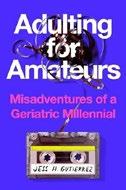
Personal essays humorously document the woes and wonders of life at 43.
“In anticipation of the impending shit show in the pages to follow, I have but one thing left to say, straight from the ciggie-puffing lips of my bestie Samuel L. Jackson as he switched off the Jurassic Park mainframe power: ‘Hold on to your butts.’” In her second essay collection, Gutierrez delves into her experience as a queer, middle-aged mother who strongly identifies with her generational demographic—elder millennial—and comes back with comic gold. The opening essays riff with a mixture of nostalgia and rue on her youth, including titles such as “Ill-Fated Fellatio,” “Plasma Pauper,” and “’Til Death Metal Do Us Part.” Her early days in journalism, her love of the Twilight movies, her career switch to health care—all are
>>>
In his bestselling book, now available in English, a Chinese writer captures the anxiety of life in the gig economy.
BY MARY ANN GWINN
HU ANYAN WAS just one of millions of gig workers sweating it out in China’s vast economy. Then he began to keep a journal. He wrote about the exhaustion of round-the-clock work schedules, and the brain fog that settled in after months on the night shift. He wrote about trying to deliver packages to a crane operator who never came down from the sky. He wrote about bringing a kitchen knife to work at a women’s clothing store to defend against an enraged competitor.
Years passed, and Hu kept writing. He wrote during work breaks. He wrote on his phone. He recorded the gritty details of the jobs that dominated his life, from bike shop clerk to bakery worker to gas station attendant. He wrote about a world where there was zero job security, worker protections were nonexistent, and wages barely covered the basics. Hu kept writing about his jobs, 19 in all, trying to make sense of his own struggles and those of millions of fellow workers who labor at the entry-level jobs that keep China running.
For most people, this might have been good therapy and little else, but Hu brought some gifts to the task—the ability to observe, the need to analyze, the compulsion to tell the truth. He sought out other work by other writers for inspiration: Anton Chekhov, Franz Kafka, J.D. Salinger, David Foster Wallace, Lydia Davis. In 2009, at age 30, he began to move his writing online, and his work diaries went viral in China during the pandemic. As China’s red-hot economy cooled, his stories fueled a debate over the wisdom of working nonstop but never getting ahead. His diaries were published in China, and the book became a bestseller.
Now Hu’s writings have been published in English by Astra House under the understated title I Deliver Parcels in Beijing. Translated by Jack Hargreaves, it’s a compulsively readable book, and its stories of grueling shifts in a Darwinian work environment will feel all too familiar to many Western readers. Hu’s honesty, self-scrutiny, deadpan delivery, and quiet humor lift his memoir into a story with universal appeal.
Now a full-time writer in China, Hu answered questions about the book via email. Translation was provided by Astra House editor Patrizia van Daalen.


Describe the place you grew up in China. Was it in the country or the city? Were you a writer and reader growing up? I was born in Guangzhou in 1979. It’s a commercially bustling coastal city in southern China. When I was going to school, I mostly loved reading Japanese manga, though I also read some fairy tales and martial arts novels. Before turning 30, I wasn’t particularly fond of reading. At age 24, I joined a manga studio, hoping to pursue a career in comics creation, but eventually abandoned that path. By 2009, at 30, I began seriously trying my hand at writing. Among the writers I know, I count as a relatively late starter.
You worked very long hours in difficult conditions in many of your jobs—12 hours a day, six days a
week, in stifling heat, working night shifts, covering long distances to deliver packages. Workers seem to be left to fend for themselves. Are there any regulations that govern worker welfare and safety in China? Does anyone enforce them? China has regulations to safeguard workers’ welfare and safety, but they are not comprehensive enough. There are also companies and employers who implement these rules, but not thoroughly enough. Perhaps from the perspective of Western countries, Chinese people seem particularly adept at enduring hardship. But I believe that a person’s capacity for endurance and tolerance is, to some extent, shaped by comparison. Chinese people contrast their relatively improved lives today with the poverty
and scarcity of the past, and thus find their current circumstances tolerable. However, if living standards were to decline, Chinese people would also voice dissatisfaction and anger.
You worked an amazing variety of jobs. Which one was the worst? Which one was the best?
I don’t view this issue in terms of “worst” or “best.” There are certain jobs I found particularly difficult to adapt to, or even found I have an aversion to, such as sales representative or salesperson. On the other hand, there are jobs I genuinely enjoyed, like being an apprentice at a bakery or working as a clerk at a bicycle shop.
You gradually realized that you were ill-suited for the work world and withdrew
from it for a couple of years. Then reading and writing finally helped you to reengage with the world. What impelled you to begin writing? How did writing help?
I believe it was precisely the setbacks in my career and business ventures that drove me to writing. Had I been a positive, optimistic, outgoing, and proactive person, I might have sought joy and fulfillment elsewhere in life and likely would not have chosen writing. Writing became my spiritual sanctuary. By continually delving into my inner self—reflecting on and processing my life experiences—I found a fulcrum for my existence through creative writing, a process that also took on an aesthetic form. Or, rather, I used it to counteract life’s setbacks and pain.
While writing this book, my only aim was to speak truthfully and record facts.
Your stories about your work life went viral during the pandemic. Why do you think that they become so popular? It was indeed during the pandemic, in April 2020, that what I posted online garnered significant attention, ultimately leading to the opportunity for publication. However, when I Deliver Parcels in Beijing was published in China in March 2023, the pandemic had receded. I don’t believe the book’s popularity is intrinsically linked to the pandemic. I feel that regardless of Covid-19, Chinese society had already reached a tipping point—shifting from earlier optimism and fervor toward broader societal anxiety about the future and reflection on the past. I happen to write about traumatic experiences,

I Deliver Parcels in Beijing
Hu Anyan | Trans. by
Astra House | 336 pp. | $27 Oct. 28, 2025 | 9781662603044
even if not everyone might agree, and the book resonated widely with readers precisely because of this.
What do you tell other writers about trying to balance the need to make a living with the desire to write?
I’m not familiar with the situation in the United States, so I can’t offer any kind of advice. Even for Chinese writers, everyone’s financial circumstances, themes of choice, and resonances vary. I don’t know the resources and opportunities available to them, so there’s no one-size-fits-all advice. However, if this writer were my friend, I’d hope they’d prioritize making a living. Honestly, I’m not the right person to give advice—most Chinese writers are far more resourceful than I am.
What do you hope readers will take away from your stories?
I never harbored any expectations and even resisted this notion. While writing this book, my only aim was to speak truthfully and record facts—not to impart enlightenment to readers. I realized long ago that literature does not provide ready-made answers. It is not a tool for disseminating ideas, viewpoints, or values, but rather a catalyst for readers to rediscover and reexamine their own experiences and views. This is my literary philosophy.
Mary Ann Gwinn is a Pulitzer Prize–winning journalist in Seattle.
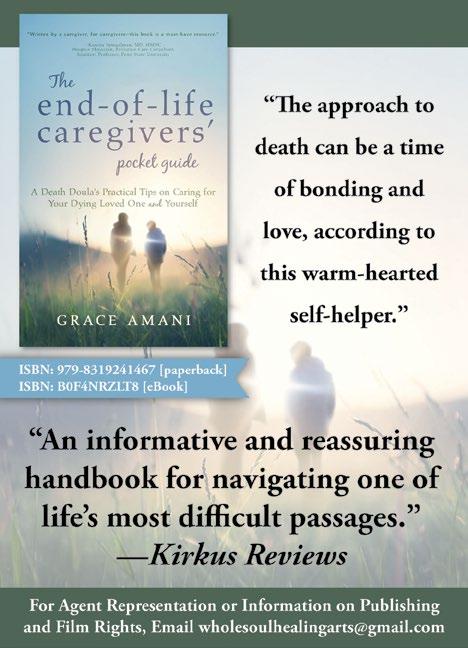



The author returns to nonfiction with an essay collection.
Jesmyn Ward, winner of two National Book Awards for her fiction, has a new work of nonfiction coming later this year.
This spring Scribner will publish the acclaimed novelist’s On Witness and Respair: Essays, the press announced in a news release. Scribner says the book is “the collected creative nonfiction of a singular American writer.”
Ward won the National Book Award in 2011 for her second novel, Salvage the Bones. Her next book, Sing, Unburied, Sing, also won the National Book Award and was a finalist for the Kirkus Prize in 2017. Ward was shortlisted for the Kirkus Prize for her 2023 novel, Let Us Descend. She’s the also author of a memoir, Men We Reaped, a finalist for the National Book Critics Circle Award and the Dayton Literary Peace Prize.
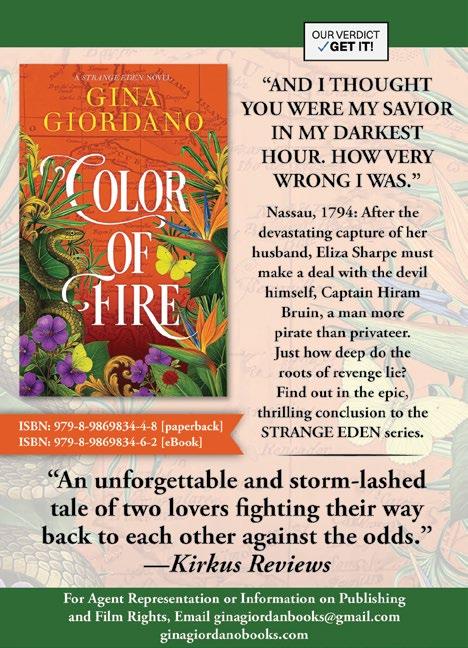
Scribner says the title of the collection “comes from the obsolete word ‘respair,’ which means ‘fresh hope after despair.’” In the book, Ward “ruminates on her approach to both fiction and life, reflecting on the power of the novel, how to raise a Black son in an era of rising divisiveness and cruelty, as well as her own personal tragedies—including the titular essay of the collection, which tells the story of her partner’s sudden death on the eve of the Covid-19 epidemic.”
On Witness and Respair is scheduled for publication on May 19.—M.S.

For reviews of Jesmyn Ward’s books, visit Kirkus online.

“I went from a leader of the pack to the man in the middle.”
ARSENIO
fodder for her signature blend of self-deprecatory storytelling, with more jokes per square inch than your average stand-up routine and similar rapid-fire pacing and cuss word punctuation. The latter half of the book gets into her parenting experience, anchored by “Tiny Dictators,” in which she opens with the assertion that “all babies are absolute ass-wipes,” and goes on to wrestle with the dilemma that “you love this person who is essentially holding your very existence hostage more than anything in the world.” After having two biological children, she and her wife went on to foster babies born of mothers addicted to methamphetamine, an impressive challenge whose complexities are skated past a little too quickly, ultimately going on to adopt a third child. As a parent, she has developed a new understanding of what she put her own mother through, dreading that “poetic fucking justice” will soon be served to her on a “piping hot leather lace-up platter,” by which she means a disgusted, toe-tapping teenager in Doc Martens. The high-octane ranting not infrequently gives way to homegrown wisdom: “When I stopped asking myself to be the best mom in the world, I actually became the mom I wanted to be in the first place.” Though we find out two sentences later, “That bitch is messy.” The Erma Bombeck of her generation, most of whom will love every minute (despite never having heard of Erma Bombeck).

Hall, Arsenio with Alan Eisenstock
Black Privilege Publishing/Atria (336 pp.)
$28.99 | April 7, 2026 | 9781982191368
The former talk show host gives readers a look into the Dog Pound. “Woof, woof, woof!” Readers who watched television in the late 1980s and early ’90s are bound to recognize the cries of the Dog Pound, a section of the studio audience for the Arsenio Hall Show, which became a pop-culture phenomenon despite lasting just over five years. In his memoir, Hall shares his rags-to-riches story, beginning with his childhood in Cleveland—a mostly happy one, in which he discovered his first two obsessions, magic and talk shows, to the chagrin of his Hollywood-hating preacher father. Hall sensed early that he knew how to entertain just about anybody, and after college, he moved to Chicago, hoping to make it big in the city’s comedy scene, which he did, scoring opening gigs for the likes of Blood, Sweat & Tears and the Temptations. He then moved to Los Angeles, where his career exploded, and earned a job playing four characters in the Eddie Murphy comedy Coming to America (including the really-hasn’t-aged-well “Extremely Ugly Girl”). Hall’s account of creating his own talk show, with just five months to prepare, is a highlight of the book, and while he has no lack of confidence, he consistently credits the friends and associates who helped him along the way. Hall doesn’t write much about his life after the talk show ended, briefly mentioning a few projects, but he seems content to have largely left the limelight—mostly: “The show lost its
heat, the ratings fizzled, and we came down to earth. Meanwhile, I went from a leader of the pack to the man in the middle,” he writes with a fatalism that doesn’t turn into bitterness. This book will remind readers why Hall was so popular in his day: He’s funny, but also relatable and genuine. This is a truly fun account.
A likable throwback to the comedy scene of the ’80s and ’90s.
Hall, Michael | Bloomsbury Caravel (432 pp.) $35 | April 28, 2026 | 9781781301142
Drawn to the land. Hall, the author of several books on architecture and country houses, delivers an eye-opening account of how queer lives have both shaped and been shaped by the English landscape. Rather than treating Britain’s National Trust properties as static memorials to aristocratic lineage, Hall uncovers a deeper story: These houses, gardens, ruins, and woodlands often became empty spaces onto which queer people projected desire, identity, and reinvention. The Trust’s original vagueness—its mandate to protect “natural beauty” and “historic interest” without specifying why—becomes, in Hall’s telling, a liberating canvas onto which generations inscribed personal meanings, including queer ones. Drawing on his background as architectural editor of Country Life, the author moves with assurance through the Trust’s holdings, from the decayed grandeur of Knole, where Vita Sackville-West first learned the pain of exclusion, to the ruin she later refashioned at Sissinghurst, a masterpiece of queer self-invention. From the coded eroticism of William John Bankes’ correspondence with Lord Byron to
Bankes’ transformation of Kingston Lacy while in exile for sodomy, Hall shows how queer desire shaped not just private lives but entire estates. Lamb House in Rye, East Sussex, becomes another touchstone in this emotional geography, absorbing the sensibilities of gay writers such as Henry James and E.F. Benson, each layering new meanings onto its rooms and gardens. The book reaches its philosophical heart with E.M. Forster, whose bequest of Piney Copse embodies his belief in landscape as a place where erotic, ecological, and political freedoms converge. Like Willa Cather wandering Wenlock Edge in search of A.E. Housman’s England, Hall invites us to see the Trust’s holdings as queer topographies—sites of reinvention as vital as any official history. A groundbreaking work of cultural restoration.
Helvarg, David | Island Press (264 pp.) $30 | May 5, 2026 | 9781642833829
A noted writer of things maritime guides a world tour of a threatened, essential ecosystem. One could go a lifetime without thinking about kelp, save perhaps as a Japanese-themed snack. But, writes journalist and environmental activist Helvarg, the world’s kelp beds and forests “provide half a trillion dollars of goods and services a year.” Those seaweed cakes are one such good, but kelp—an alga, not a plant—is also used as an emulsifier in ice cream and as a fiber in clothing and in concrete; more vitally, it provides much of our oxygen supply as well. One of the Indigenous kelp farmers with whom Helvarg speaks points out that kelp forests also provide a natural breakwater that “knock the waves down,” waves that would otherwise be erosive. Helvarg looks closely at the elaborate ecosystem of kelp,
with key players numbering creatures such as the sea otter, which feed on the invasive sea urchins that have only recently attracted the attention of scientists. Crabs enjoy snacking on those sea urchins, too, and as the ocean warms, crabs and kelp alike are expanding into formerly cold places such as the waters off Norway. It’s that warming, though, that may threaten what remains of the world’s once vast kelp beds and forests. To forestall that, Helvarg allows, would require “a rapid transition off fossil fuels,” something that doesn’t seem in the immediate offing. “Kelp may be the fastest-growing algae in the world,” he notes, “but even it can’t outpace our failure to slow the warming of our ocean planet.” Even so, Helvarg finds hope in the activism of “seaweed rebels” around the world, a number of whom appear in these agile pages.
A welcome argument for paying more attention to “the most basic building blocks of life,” seaweed among them.
Henig, Adam | Bloomsbury Academic (320 pp.) $34 | April 2, 2026 | 9781538194959
An athlete’s highly unusual ascension.
Henig, an industrious author of books on Black history, chronicles the remarkable life of Ron LeFlore, who was in prison before starring with the Detroit Tigers. Drawing on his interviews with LeFlore, the player’s 1978 memoir, and other sources, Henig evokes his subject’s tough boyhood in Detroit, a city hindered by discriminatory housing and job markets, industrial decline, and decreasing tax revenue. The six people in LeFlore’s family shared a one-bedroom apartment, where the children witnessed their father, a heavy drinker, beat their mother. At 10, LeFlore was drinking and smoking pot. He stole from local stores and eventually was convicted of armed robbery. Serving three-plus years in a Michigan prison,
LeFlore distinguished himself on multiple fronts. Henig’s research reveals that, in addition to excelling in team sports, LeFlore notched a “genius caliber” score on an intelligence test. LeFlore “had never played catch with his father” or suited up for a high school baseball team, but foot speed, hard work, and the backing of a fellow prisoner with influential friends earned the Tigers’ attention. LeFlore’s story is inspiring, but Henig avoids hagiography, especially in his overview of LeFlore’s big-league career, which was the subject of a made-for-TV movie starring LeVar Burton. LeFlore had notable success as a hitter and base-stealer—and a knack for “sabotaging his own success” by partying, showing up late for games, and failing to stay in shape. Henig’s prose usually does the job, but he can be imprecise. He calls paid minor leaguers “future professionals” and credits LeFlore with 30 “consecutive hits” when he means that the player had base hits in 30 consecutive games. Baseball pedants will wince, but this book is otherwise sturdy. A solid biography of a man who became a top baseball player after a prison term.
Oracle’s
The Rise and Fall of an American Cult Hill, Harrison | Scribner (368 pp.) $30 | April 7, 2026 | 9781668018873
Searching history of an American cult. Hill’s account opens with the adoptive daughter of cult leader Deborah (née Lila) Green slipping out of the group’s compound in rural New Mexico and making her way to the Pacific Northwest. She meant to return to reclaim the three children she left behind, but Sarah Green stayed away for decades, which would be much mooted in court years later. At issue were the many crimes committed by Deborah, her husband, Jim, and other members of the so-called Aggressive
A man who contributed immeasurably to our understanding of animal societies.
HOMESICK FOR A WORLD UNKNOWN
Christianity Missions Training Corps, including the physical and sexual abuse of children. Sarah was not the only member to escape the group, but others were expelled for being insufficiently obedient to the two “generals” of the paramilitary cult, Deborah intoning, “I say that I the living God will vindicate myself upon those who plot against my beloved.” The Branch Davidian siege at Waco added paranoia to an already fraught scene, and the children suffered even more, one dying of fever with no medical attention. In the end, “an alphabet soup of state agencies and departments got involved,” backed by the FBI, and Deborah, now “a little old lady in white military drag” was sentenced to 72 years in prison—a sentence vacated by one court but then reinstated by the New Mexico Supreme Court in 2025, though Deborah had by then disappeared. The story is ugly, and Hill is unsparing in his reportage. But more, he offers thoughtful notes on how cults work: “Whatever religion promises, cults promise in excess. If devotion is good, more devotion must be better. If discipline is good, more discipline must be better, too.” Pointedly, he notes that ACMTC, which began as one of countless “Jesus freak” cults in the 1970s, was once an outlier, but now, with MAGA and QAnon, “swaths of the culture had caught up to them.” A compelling study of the meeting of religious zealotry with the cult of personality.

For more about cults, visit Kirkus online.
Horn, Miriam | Penguin Press (640 pp.) $35 | April 21, 2026 | 9781984881342
Comprehensive biography of the renowned scientist and adventurer. A conservationist, Horn accompanied George Schaller on expeditions to India, where “locals still sought his guidance on how to resolve life-or-death conflicts between humans and wildlife—pressed into closer proximity there than anywhere on Earth,” and to the Arizona-Mexico border, where President Donald Trump’s border wall threatens the region’s jaguars. Horn was not the first to watch Schaller at work: He taught Jane Goodall how to study primates, mentored big-cat biologist and writer Alan Rabinowitz, and guided Peter Matthiessen across the Himalayas in search of the elusive snow leopard. Yet, by Horn’s fluent account, Schaller prefers the company of animals to people, a preference perhaps born of a fraught early life, his father a German diplomat during the years of the Third Reich, his mother an American, bullied for his mixed parentage throughout his childhood. Horn has a biological explanation: Zoologists recount that play is essential to socialization, and Schaller grew up a loner with a deep connection to animals and not people. “Trying to safely navigate a world that fears you…is almost like dropping into another species,” she writes. His alienation was
science’s gain. Studying animal populations in nearly three dozen countries, he contributed immeasurably to our understanding of animal societies and minds (“Lions possessed theory of mind: the ability to inhabit the perspectives and intentions of others and anticipate their responses”). On top of that, he was an alpinist of distinction who, wrote photographer and mountain climber Galen Rowell, “has spent more time in remote Asian mountains than any mountaineer I know.” Now 92, Schaller is of a kind who will not come again, Horn argues—for instance, in his knowledge of animal signs, which has been made obsolete by both technology and the disappearance of so many species. A fine account of a life well lived, to the benefit of all who love animals.
Kornberg, Maya L. | Johns Hopkins Univ. (280 pp.) | $32.95 | March 10, 2026 9781421454580
On the origins of Congressional gridlock. Generations pass, old people depart, young people arrive. So why, given this logical order of time, do party leaders in Congress seem to be unable or unwilling to let their young colleagues have a share of the power? Public policy researcher Kornberg examines three Congressional classes—1974, 1994, and 2018— when a great number of incoming representatives were “younger, less experienced, and came from diverse backgrounds,” all campaigning on the promise of change. When the 1974 class arrived, it was in response to Watergate, a Democratic wave focused on campaign reform. Democratic leadership responded by putting these first-term legislators on important committees, sometimes
even at the head, with the result, Kornberg writes, that “votes were allowed on legislation that otherwise might have been blocked by previous, all-powerful chairs.” When Newt Gingrich’s Contract with America class arrived in 1994, GOP leadership took much tighter control of the reins, with most reforms “led by Gingrich rather than the freshmen” and with Gingrich relying on GOP freshmen to support him uncritically rather than share out power. This marks a progression to the present, in which legislators increasingly cling to the party line; as Kornberg notes, when Medicare passed in 1965, it was with the support of 237 Democrats and 70 Republicans, “while Obamacare passed in 2010 with no Republican votes.” First-termers now have little sway and hold few influential committee assignments, thanks to ossified, big-donor-beholden party hierarchies—a lack of power that many try to get around by building their presence on social media “as a way to change public opinion on issues and raise money online.” Given the rise in political violence, though, many prefer to duck and cover just at a time, Kornberg urges, when “Trump’s threats to weaken Congress could galvanize the new class.” A useful explanation for political stalemate—and a cry for reform to let younger voices have their say.
Lee, Alexander | Basic Books (432 pp.) $32 | May 19, 2026 | 9781541608771
Forced behind walls.
As University of Warwick historian Lee writes, the world’s first Jewish ghetto emerged in Venice out of social, economic, and political upheaval. Venice had always been a trade and shipping
center. But plague, wars, encroaching Ottoman forces, and new Atlantic colonial powers shaved away some of the city’s prestige. Economic insecurity bred social fear. “Like many other European states,” writes Lee, “Venice had long regarded Jews as a threat to its Christian identity. Preachers and patricians constantly warned that, if allowed to live unchecked in the city, Jews would ‘infect’ the Christian faithful, poisoning the minds of the pious and stealing souls away from salvation.” Thus shunned, 16th-century Venetian Jews came to be confined to a separate section of the island city-state. While Jewish parts of towns had always existed, what was new about this ghetto—named for a copper foundry (geto)—was “a clear, generalizable conception of segregation,” writes Lee. “Ghetto” came to stand for any urban space defined by economic stratification and racial difference. “At every level, and in every place, it intersected with concepts of power and place, faith and finance, exclusion and admission; was shaped by notions of gender and disease; and served as a mirror to the societies from which it sprang.” More than a history of a city, the book is a chronicle of a condition, an elegy for Jewish life lived in the paradox of family flourishing and civic exclusion. Even today, writes the author, “the scars of the Ghetto’s past are still plainly visible.” Italian Jewry suffered. Few returned. But the memory of the place matters. “The Ghetto is a testament of hope,” Lee writes. “For every prayer that is said, every meal that is shared, every day that is spent in this most woe-begotten corner of Venice is an affirmation of survival, against all odds, and a
silent, deafening cry of defiance, echoing down the centuries— for centuries to come.”
A richly researched history of Italian Jewry and its will to live on.
Lee, Marisa Renee | Legacy Lit/ Hachette (192 pp.) | $28 | April 7, 2026 9781538770191
Surviving hard times. By the time former Obama adviser Lee contracted long Covid, she had already suffered multiple losses. Her mother died of breast cancer after suffering for years from initially undiagnosed multiple sclerosis. Four of her cousins died from disease, gun violence, and domestic violence. Lee herself experienced infertility and pregnancy loss before adopting her son. Still, when she was diagnosed with long Covid, she found herself coping with a new kind of loss she calls “Gray Grief.” She writes, “At its core, Gray Grief is a sustained period of pain—whether mental, physical, or both—and uncertainty about how to find your way out of it.” According to Lee, Gray Grief is a “murky” time when “things you previously took for granted suddenly become overwhelming or virtually impossible.” The author says that her journey through chronic illness has taught her lessons: “If I am honest, I did not want to have a physical disability. My resistance was rooted in deep-seated ableism.
“Venice is an affirmation of survival, against all odds, and a silent, deafening cry of defiance.”
THE FIRST GHETTO
A BIRD’S IQ
Anything that weakened me or made me vulnerable didn’t match the identity I built.” She contextualizes these lessons within her own identity as a lifelong caretaker whose condition forces her to admit that “Not everything can be fixed, some things simply have to be endured.” From giving oneself permission to “flake” from responsibilities and practice imperfection, to creating healthy boundaries and getting into the habit of asking for help, Lee’s advice is rooted in the idea that putting yourself first is the ultimate act of care. Her intimate, compassionate, and optimistic voice makes the book a fast-paced, satisfying read, even if some of her suggestions are fairly standard. Useful advice on coping with loss.
Lefebvre, Louis | Trans. by Pablo Strauss Greystone Books (304 pp.) | $28 May 12, 2026 | 9781778402647
Are you smarter than a bird?
“Human intelligence is unique in the history of the Earth,” writes Lefebvre, a professor of biology and an expert in animal behavior. “But if, as we’ve seen, its precursors in birds and other primates—innovation, planning, toolmaking, and episodic memory— have evolved independently on multiple occasions, it means that the faculty of intelligence may be less scarce than we believe.” In chapters roughly organized
by species’ brain size, Lefebvre uses research and observations to demonstrate avian intelligence, from innovation and problem-solving with tools to social learning and cultural transmission. A chapter on city birds focuses on how urban environments shape the behaviors and innovations of species like rock pigeons and barn swallows. In a later chapter on corvids, Lefebvre demonstrates how crows and ravens are the complete picture of animal intelligence: “brain size, culture, neurotransmitters, colonization, urbanization, resistance to extinction.” Lefebvre has a talent for distilling complicated research into digestible prose, even when discussing complex topics, such as how the level of NMDA 2B receptor expression relates to a species’ rate of innovation, making this book suitable for both casual birders and scientists alike. At times, Lefebvre spends too much time on digressions, such as an explanation of how he and his team scan journals for keywords or a “quick personal aside” about a biologist’s name change. Additionally, not all of the author’s claims are equally convincing—Lefebvre’s claims about learning through cultural transmission rest on thousands of anecdotes rather than rigorous studies (Lefebvre, to his credit, acknowledges this criticism). Still, this wealth of information about bird intelligence is hard to find in other books.
A complete and informative book on bird intelligence.

Lutz, Deborah | Norton (384 pp.)
$39.99 | May 5, 2026 | 9781324037118
For more about birds, visit Kirkus online.
A meditative reimagining of Emily Brontë’s (1818–1848) brief, mysterious life. Literary scholar and author Lutz (The Brontë Cabinet: Three Lives in Nine Objects, 2015) approaches her famously private subject within the familiar story of the Brontë family, less as a figure to decode than as a consciousness to inhabit. Drawing on notebooks and manuscripts newly made public through an acquisition now part of the Blavatnik Honresfield Library, including one of Brontë’s poetry books and fragments of her juvenilia, she reconstructs not the outer drama but the inner weather of its most elusive member. The research yields no startling discoveries, but it offers focused insight into Brontë’s writing practice: the way she drafted, recopied, and sometimes destroyed her work as part of a disciplined, almost devotional act. Lutz’s Emily emerges as a material mystic, an artist whose imagination was grounded in the physical; paper, peat, moonlight, animal breath; and whose solitude was less withdrawal than apprenticeship. She situates Emily’s genius within a household alive with artistic energy, “a home in which girls created, performed, and wrote fiction with confidence…never curtailed or censored as being too masculine or unfit for girls.” Later, she writes, the sisters “threw themselves into a wild inventiveness that seemed more real, sometimes, than actual existence,” their creativity rising from loss and solitude, “a kind of empty space or wound that required filling with near-endless lands, people, and tall tales.” With Emerald Fennell’s much-anticipated and already debated film adaptation of Wuthering Heights out this season, Brontë’s work and life are poised for renewed attention. Atmospheric and empathetic rather than revelatory, Lutz goes beyond recording
events and facts to immerse readers in Brontë’s way of seeing the world, where imagination and the moorland landscape merge into one continuous vision. A thoughtful, imaginative portrait that brings fresh interpretation to familiar ground.
MacCormick, John | Princeton Univ. (272 pp.)
$29.95 | April 21, 2026 | 9780691191737
Grappling with a deceptively simple question: How can computer programs appear to think like humans?
MacCormick, a professor of computer science at Dickinson College, tackles theories of cognition in this clear-eyed guide to modern artificial intelligence and the philosophical debates surrounding it. Structured like a well-designed undergraduate course, the book moves briskly through core ideas in AI and philosophy of mind, without oversimplifying. Some chapters demand sustained attention, and MacCormick warns readers that “intellectual gymnastics” are required. Technical concepts are carefully unpacked, aided by analogies, diagrams, and concrete examples. Motivated general readers will find the challenge rewarding rather than forbidding. The discussion is firmly grounded in real-world AI advances and structures that parallel human thought processes. The author spotlights groundbreaking AI advances, including object recognition systems AlexNet and VGG16, DeepMind’s AlphaGo—which quickly mastered the complex game— and the compelling natural language abilities of OpenAI’s ChatGPT. His case studies neatly illustrate the two engines driving modern AI: deep neural networks and reinforcement learning. The book considers famous debates—among them strong vs. weak AI—and questions on our place in the universe. “Is it possible for intelligent computer programs to rival
or surpass humans, usurping the special zone we intuitively feel is occupied by our species?” MacCormick prefers to ask, not whether machines truly think, but in what ways they can convincingly seem to do so. He argues for computationalism, with humans, animals, and machines all sharing the same fundamental kind of cognition, thus all capable of thought. Whether or not you are persuaded that a disembodied AI is as capable of genuine cognition as biological beings, this lucid book offers a smart introduction to AI’s revolutionary promise and a thoughtful challenge to our assumptions about intelligence itself.
A provocative dive into AI and the nature of intelligence.
Marchant, Jo | Liveright/Norton (352 pp.) $32.99 | March 17, 2026 | 9781324097488
How is it that the most familiar thing in the world—the present moment, this one, right now—is also the most mysterious to science? According to Marchant, a science journalist and author (Decoding the Heavens, 2009), it’s because science needs a new “Now-centered” perspective. The old one goes back to ancient Greece, when Parmenides argued for an unchanging cosmos even as Heraclitus insisted that we can’t step into the same moment twice. Things swung in Parmenides’ favor when Einstein showed that past, present, and future exist all at once. If the universe can’t single out a Now, perhaps we construct it in our minds. “A gap was opening,” Marchant writes, “between what we perceive in each moment, and how the world beyond us unfolds.” The book explores both sides of that gap—the physics of time and the neuroscience of time perception. Sufferers of “akinetopsia,” a neurological condition, perceive reality as if
someone’s hit pause; “marooned in a world of frozen moments,” a woman tries to pour her tea but it forms “a static, suspended column, stretching from spout to cup.” For schizophrenics, time fragments, as does the self.
“Perhaps that’s what our sense of self is,” Marchant writes: our ability to draw from the past and think toward the future. In epileptic seizures, “flow” states, and meditation, we more fully occupy the Now, loosening the distinction between self and world. The gap narrows. By the end of the book, Marchant hopes to close it, drawing from radical ideas in cognitive science and quantum physics. Here things get a bit confused. While explaining the enactive approach to cognition, Marchant speaks of the brain’s need to make inferences, missing the point that, for enactivists, the mind isn’t locked in the head. Her attempt to link the mutually contradictory theories of enactivism, integrated information theory, and predictive coding into a “unifying framework” is ultimately incoherent. Still, this ambitious and beautifully written book gestures at something truly profound: a new view of science in which “nothing is set in stone: we have a say in what the universe is and where it goes.”
An enlightening if stumbling attempt to grasp the slippery instant where mind and universe collide.
Marshall, Ru | OR Books (670 pp.) | $29.95 paper | May 5, 2026 | 9781682194614
Remember Carlos Casteneda? An icon of late-20th century counterculture—and one of the greatest literary hoaxers of all time—receives his due.
In a smart and seductive prologue, debut biographer Marshall introduces his subject: a little man from Peru who “lied all the
time,” about literally everything including his name and native country. Casteneda’s famous series of books, detailing his spiritual lessons and psychedelic experiences under the tutelage of a Yaqui shaman named Don Juan, published at the time as works of anthropology, “were novels. Phenomenological ghost stories.” To those familiar with the books, this won’t be much of a shock, but what’s surprising is what Marshall is able to do with the backstory, told in spectacular detail from Casteneda’s ancestral origins in South America all the way through the experiences of his followers and associates after his death in 1998—a group of which the author became an honorary member during his decades of research. Marshall’s voice and presence is strong all the way through the book, particularly in the myriad David Foster Wallace-style footnotes. In an early example concerning what kind of vehicle Casteneda drove while in grad school at the University of California, he tells us, “I spent a rather enormous amount of time early in the writing of this book—still believing that, out there somewhere, I’d find a fact tree— attempting to figure out what kind of cars Margaret bought.” Unable to ever definitively answer this question or the many that followed, he realizes that he just has to choose what he thinks most likely, and that this “is how history is constructed, little-tiny bit by little-tiny bit.” It’s quite interesting to read about the academics who originally legitimized Casteneda’s work, less so to follow the machinations of the cult-like group that grew up around him, though the details are exceptionally bizarre. Some of the truth we now have access to came from a couple of marginalized followers who made a project of collecting and going through the trash outside the digs of the inner circle. Unfortunately, there are too many characters to keep track of and not enough reason to care, though Marshall’s insightful explanations of how “high control groups,” aka cults, operate are useful and important. A project of epic proportions, pulled off with remarkable élan.
Mauch, Peter | Belknap/Harvard Univ. (512 pp.)
$32.95 | March 3, 2026 | 9780674495197
A meticulous biography of a figure who has largely fallen into obscurity.
Mauch, lecturer in Asian history at Western
Sydney University in Australia, emphasizes that Hitler was an outsider but that Hideki Tojo (1884–1948) was born into his Japan’s ruling class, took full advantage of his privileges, and was as certain as zealots in other great powers that his people were the master race. Son of a high-ranking general, he followed his father’s footsteps, climbing steadily through the ranks, becoming a general himself in 1933. Readers will struggle through 200 pages recounting the minutiae of infighting during which Tojo made his mark in the dysfunctional Japanese military, riven by factions that proclaimed their devotion to the emperor, hatred of politicians, differences over how aggressively to pursue imperial expansion, and whose members regularly murdered civilian leaders and each other. Two months before the attack on Pearl Harbor, Tojo, long among the most hawkish leaders and the minister of the Army since July 1940, was appointed prime minister in October 1941, making him a virtual dictator. While the battles may be familiar, they remain in the background as Mauch concentrates on Tojo’s leadership—six months of triumph followed by three years of defeat. Aware of how matters turned out, readers may lose patience as Tojo’s strategy steadily loses touch with reality. After the loss of Saipan in July 1944, the emperor and ruling elite forced him to resign. His suicide attempt after Japan’s
surrender failed, and during his trial he (along with Supreme Commander Douglas MacArthur) gave priority to protecting the emperor, so Tojo freely accepted responsibility for his actions and was hanged. Intensely detailed, but a solid history.
McClanahan, Annie | Princeton Univ. (368 pp.) $29.95 | April 7, 2026 | 9781945861093
Seeing service work as “labor exploitation.” Eighty percent of Americans today are employed in service jobs, notes McClanahan, a scholar at the University of California, Irvine. Those jobs are in turn divided into professionalized, high-paying occupations and nonprofessional, low-waged ones. McClanahan suggests that the nonprofessional jobs, specifically those in the gig economy where “workers…toil for nonhourly methods of wage payment,” are especially insidious. Gig work remains unprotected by wage laws and keeps workers, who likely identify as immigrant, non-white and/or female, in poverty. The author explores three subgroups within the gig economy—tip workers, clerical micro-task workers, and informalized gig-workers—through a historical lens, using reality TV shows, contemporary literature, and lived experiences as evidence. Modern ideas about tip work, humorously depicted in shows like Cheers and Alice, have been shaped by centuries-old attitudes toward domestic servitude and the idea that servants “accept [the master’s] pleasure” as their own. McClanahan situates tipwork’s “cousin,” clerical microwork, in the non-domestic work context of farm labor, which also faced increasing mechanization in
the late-19th century. Those who produce (sometimes subversive) online poetry for pennies are just one example she offers of the “heirs” to industrial piece work and the deskilling it implies. In discussing the modern gig-work economy, McClanahan focuses on Uber drivers, especially those who have transformed their experiences into novels that deal with having “every movement monitored and logged” on the road while circulating in the world and navigating complex relationships with other service workers. Intelligent and timely, the book illuminates the often-hostile economic and cultural landscape of modern capitalism.
An eye-opening look at today’s service work and the forms of solidarity that have emerged to meet it.
Mulder, Tara | Univ. of California (376 pp.)
$29.95 | May 5, 2026 | 9780520398740
Birth stories from antiquity. Making an enlightening and engaging book debut, Mulder, a scholar of classical and Near Eastern studies— and a midwife’s daughter— offers a feminist history of birth in the Roman Empire during the centuries that straddle the year 0. Drawing on letters, medical case histories, legal documents, poems, myths, funerary inscriptions, and archaeological findings, Mulder has
pieced together the lives of particular women, whose experiences with conception, pregnancy, abortion, miscarriage, delivery, and postpartum care anchor her chapters. Their stories reveal a patriarchal and misogynist society, in which male doctors increasingly encroached on an area in which midwives had dominated, melding practical, anatomical, and botanical expertise with superstition and magic. A woman who wanted to get pregnant might carry a uterine amulet, a small gemstone inscribed with religious formulas and figures. Spells or potions were believed to work as aphrodisiacs and to promote conception; one fertility remedy prescribed eating a hyena’s eye with licorice root and anise. At a time when women were pressured to marry young and bear children immediately and often, doctors contributed wildly inventive theories about women’s bodies (wandering, suffocating uteruses, for example) and the process of reproduction. The 2nd-century physician Soranus was especially influential in changing attitudes from seeing pregnancy as “healthful” to seeing it as “pathological.” Privileging men’s needs, he advised husbands to monitor and control their wives to make them ideal vessels to grow a fetus. Not surprisingly, since abortion deprived men of the heirs they desired, by the 3rd century it was prohibited by law. Mulder argues convincingly that when male medical practitioners engaged in “writing down and systematizing” gynecological knowledge, “the status of the fetus was raised, while that of the pregnant woman was lowered.” Illustrated with drawings by Hayley Monroe. A fresh, edifying contribution to women’s history.
Ancient Roman fertility remedy: eating a hyena’s eye with licorice root and anise.
The Emerson Circle: The Concord Radicals Who
Nichols, Bruce | Avid Reader Press (368 pp.) $32 | April 28, 2026 | 9781668094877

Vivid portrait of the writers who launched American literature. In 1834, writes retired publisher Nichols, Ralph Waldo Emerson moved to Concord, Massachusetts, just at the time that he was “on his way to national celebrity for his lectures and essays.” He and his new neighbor and friend, Bronson Alcott, father of Louisa May, firmly rejected the divinity of Christ, a stance that might have gotten them drawn and quartered in Puritan New England but had plenty of sympathizers in the swelter of “abolitionists, freethinkers, feminists, vegetarians, animal-rights activists, teetotalers, and literary lights” who dominated the discourse. Entering the scene were the painfully shy Nathaniel Hawthorne, the forthright Herman Melville, and the spirited Henry David Thoreau (whom Hawthorne described as “ugly as sin, long-nosed, queer-mouthed, and with uncouth and somewhat rustic, although courteous manners”). Most of the writers shared a genteel poverty, Thoreau being so desperate that he briefly took a job in New York City before deciding that he couldn’t stand urban life and retreated to build his famous cabin at Walden Pond—on property owned by Emerson, as it happens, the best off financially of the lot, who allowed the construction even though he had tired of “Thoreau’s obstreperousness.” For his part, writes Nichols in an elegant turn of phrase, “Thoreau transcended Transcendentalism,” a pioneer of the “American Renaissance” of the 1850s, which saw the publication of Walt Whitman’s Leaves of Grass , Hawthorne’s Scarlet Letter, Melville’s Moby-Dick , and of course Thoreau’s
Walden . Each book revolutionized literature—though, as Hawthorne noted with green envy, Louisa May Alcott outsold them all with Little Women . Nichols is a thoughtful reader of these texts, and he turns up interesting details that are not widely known, from Emerson’s certainty that “the white ‘race’ was destined to dominate the earth” to Thoreau’s making his cabin available as a stop on the Underground Railroad. An invigorating work of social and literary history, its learning lightly worn.
Nussbaum, Martha C. | Oxford Univ. (312 pp.) $29.99 | April 16, 2026 | 9780197812556
The music of freedom. Prize-winning scholar Nussbaum argues that opera engages in political thought, conveying moral and philosophical ideas about rights and freedoms, gender, rank, and class. Beyond the libretti, these ideas are expressed in the music itself and in the act of singing. Nussbaum devotes half the book to Mozart, whom she sees as “the deepest philosopher of the Enlightenment,” cognizant of other major thinkers, such as Jean-Jacques Rousseau, Immanuel Kant, and Johann Gottfried von Herder. Mozart was a Freemason, a member of a “quasi-religion, a fraternity based upon ethical commitments,” especially to fostering human dignity. As a Freemason, he was committed to the ideals of freedom, equality, mercy, and fraternal love, as well as to the rejection of religious superstition, class privilege, honor, and revenge. These ideals inform Mozart’s The Marriage of Figaro, The Magic Flute, Idomeneo, Don Giovanni , Così fan tutte, and the lesser-known La clemenza di Tito, operas in which characters commit bad acts motivated by a desire for
revenge, but in which mercy and reason prevail. Mozart, Nussbaum asserts, conceived of his operas as political, contributing to the reshaping of human attitudes needed to forge a new public culture. The second half of the book considers operas that further Mozartean themes, including Beethoven’s only opera, Fidelio, “opera’s greatest musical depiction” of hope; Heggie’s Dead Man Walking ; Verdi’s Don Carlos , infused with its creator’s “zeal for liberty”; Benjamin Britten’s Peter Grimes and his Albert Herring, dealing with the plight of the outcast; Janacek’s Jenufa ; John Adams’ Nixon in China ; and Verdi’s Falstaff. These works capture the spirit of optimism and joy that pervades what the author calls “a republicanism of the heart.” In contrast, Nussbaum sees Wagner as the composer whose despair, xenophobic paranoia, and fantasies of cultural purity place him in opposition to Mozartean ideals.
A persuasive cultural analysis.
Kirkus Star
The Art of the Book: 75 Years of Thames & Hudson
Nyburg, Anna | Thames & Hudson (400 pp.) | $90 | March 12, 2026 | 9780500028063
A visionary publishing house. To commemorate 75 years of the publishing house Thames & Hudson, historian Nyburg contributes three essays chronicling its evolution from its founding in 1949 to the present. From the start, Austrian émigré Walter Neurath and his partner, Eva Feuchtwang, aimed to produce a “museum without walls”: beautiful and affordable illustrated books on arts and culture. They chose to name their company after two important rivers, in London and New York, nodding to their international aspirations. Their inaugural volume, published in 1950, was English Cathedrals. Early partnerships with the
American publisher Abrams and the French publisher Fernand Hazan expanded their list, and more international alliances followed; the company eventually had offices around the world. Titles often were suggested by the many cultural figures who served as T&H’s eyes and ears. As their publication of art books grew—100 titles about Picasso alone—so did their reputation for the high quality of their reproductions. Nyburg discusses the many series they developed over the years: Man and Myth, edited by Joseph Campbell; The Past in the Present, edited by archaeologist Jacquetta Hawkes; World of Art, edited by noted art historian Herbert Read; Art and Imagination; and the Library of European Civilization, among scores more on architecture, photography, biography, design, music, and fashion. After Neurath’s death in 1967, T&H was led by his son, Thomas, along with his daughter, Constance, and Feuchtwang; Thomas stepped down in 2005, leaving two daughters in key positions in a company that had expanded both in England and abroad. Alert to cultural and technological changes, T&H titles came to include topics as diverse as countercultural movements and chocolate. The visually stunning volume contains 2,000 illustrations, 1,800 in color.
A grand tribute and informative contribution to publishing history.
Owens, Josh | Grand Central Publishing (288 pp.) | $30 April 14, 2026 | 9781538757321
Behind the scenes of a notorious farright media outfit. Owens spent four years as a camera operator and editor for Alex Jones’ Infowars, part of a ragtag team that, he says, endangered Muslims,
immigrants, and others by broadcasting “lies” and “racist, xenophobic fear porn.” A nonfiction author with well-deserved credibility issues, he earns points by owning his past: “I was to blame for my actions, unequivocally.” His depiction of his former boss as a shameless fabulist—Jones infamously claimed that a school shooting was faked and was ordered by a court to pay $1.5 billion to the victims’ families—will surprise no one. But as an apparently candid account of falling under a demagogue’s sway, this is substantive stuff. Owens recounts how, per Jones’ orders, he and other Infowars staffers produced reports on terrorism, elections, and human trafficking that powered Jones’ “realm of untruth.” When not shooting footage of staged border crossings or trying to find a purported stateside “caliphate,” Owens says he witnessed Jones assault protesters, punch employees, and “insist” that top Democrats smell like sulfur because “they’re literal freaking demons from hell.” But it’s Owens’ willingness to examine his shifting mindset that makes the book worthwhile. He was initially “passionate about the message I believed Jones was spreading—encouraging people to think outside the box and challenge the status quo.” Covering a standoff between ranchers and Washington, Owens produced a video that garnered a million views and welcomed “unfamiliar feelings of pride, achievement, and self-esteem.” In time, and with encouragement from a perceptive partner who emerges as the book’s conscience, Owens realized that his “moral compass was off,” and that he had to quit. It’s a character arc that feels authentic, a personal story that enhances our understanding of extremism.
A searching memoir by a writer who regrets peddling toxic falsehoods for a living.

Kirkus Star
Pessoa, Fernando | Ed. by Jerónimo Pizarro and Jorge Uribe; trans. by Margaret Jull Costa and Patricio Ferrari | New Directions (272 pp.) | $19.95 paper | April 21, 2026
9780811237895
A rhapsodic collection of poems attributed to one of the Portuguese author’s many alter egos. Wildly prolific in both poetry and prose, Pessoa (1888-1935) (The Complete Works of Álvaro de Campos, 2023, etc.) wrote pseudonymously as a network of fictional writers, and the translation and collation of this multifaceted oeuvre is the subject of a new publishing project by New Directions. In 1928, Pessoa explained that his “heteronymic work is done by the author outside his personality,” and compared his varied bibliography to the “sayings of characters in any of his dramas.” This bilingual collection compiles all the work of “Ricardo Reis,” a neoclassical, Whitman-esque odist in search of transcendental epiphanies. The poems trace a philosophical quest toward recognizing the power of the present, and a belief that those who look toward the future (or the afterlife) are doomed to unfulfillment. “Be fully yourself today,” he urges in one poem, “don’t wait. / You are your life.” Let us be what we are,” he writes in another. Despite each poem striving to reach this same sense of enlightenment, they rarely feel redundant and instead recapitulate like a recurring motif. Classical imagery courses through, imbuing the poems with Dionysian
The
ecstasy. “Happy the man to whom life kindly / Granted a knowledge of the gods,” he writes in one poem, “So that, like them, he could see / In the earthly things among which he lives / A mortal reflection of immortal life.” An illuminating section of prose concludes the volume, including curious prefaces written by Reis for Alberto Caeiro, another of Pessoa’s heteronyms. Here, Reis writes of his intentions to usher in a “lucid re-visioning of the gods, the rebirth of ancient beliefs, which the whole troop of false Christian gods and saints had buried.” In this marvelous introduction to Pessoa’s multitudes, readers will find a wealth of material to explore among the subversive paganism of Reis’ odes. A gem of literary history that will spark further exploration through the author’s canon.
Riddell, Fern | Pegasus (432 pp.) $35 | May 5, 2026 | 9798897100972
Unraveling a royal mystery. Mining privileged archival sources, British historian Riddell delves into the relationship between Queen Victoria and John Brown (1826-1883), the man who became her cherished personal servant and de facto royal consort. Determined to upend the “royal manipulation” that has succeeded in quashing the reality of their story as embarrassing to the monarchy, Riddell reveals evidence, notably in the John Brown Family Archive, that points to a long, intimate connection. Widowed at 42,
and the man who became her servant (and more).
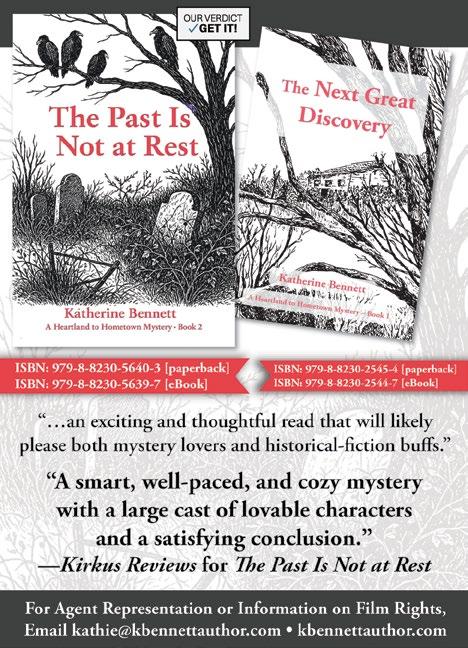
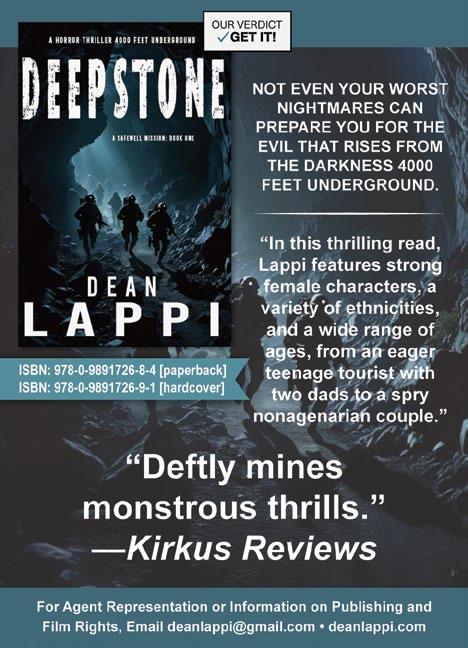


Marcus Aurelius;
Aaron Poochigian
By John Davie
By Inger N.I. Kuin
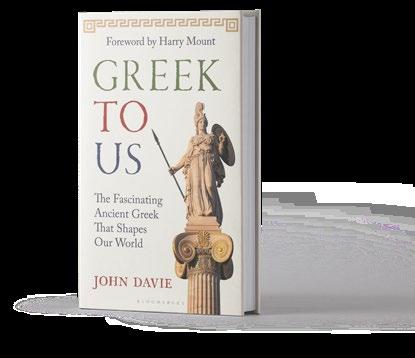


By Curtis Dozier
By Peter Meineck
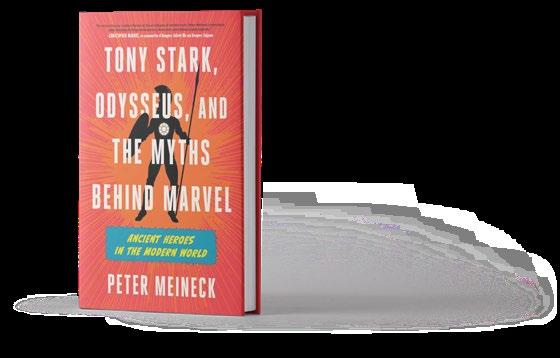
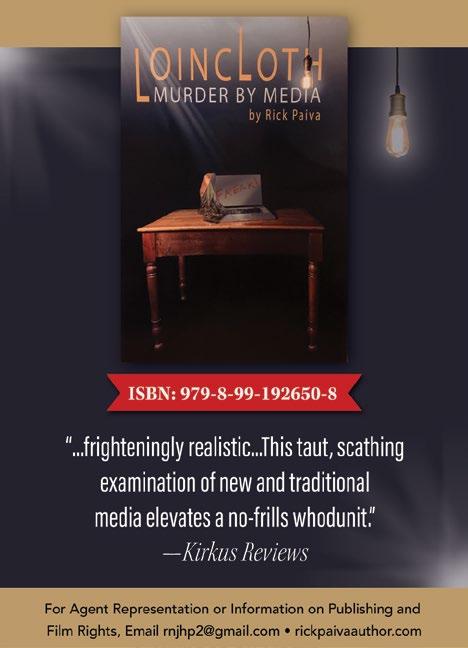

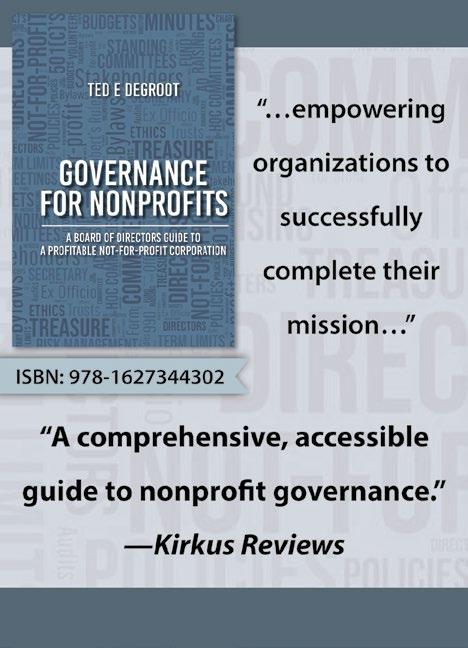

This year’s recipients include Vivian Gornick and Adam Shatz.
The Robert B. Silvers Foundation announced the winners of the 2026 Silvers-Dudley Prizes, which recognize “outstanding achievement in literary criticism, arts writing, and journalism.”
Winning the Robert B. Silvers Prizes for Literary Criticism were Vivian Gornick, the critic whose books include The End of the
Novel of Love , The Situation and the Story, and The Odd Woman and the City, and Tobi Haslett, the journalist whose work has appeared in Harper’s and the New York Review of Books
The Grace Dudley Prizes for Arts Writing went to Amy Taubin, who for 14 years was a television and film critic at the Village Voice, and Adam Shatz, the U.S. editor of the London Review of Books and author of Writers and Missionaries: Essays on

For more literary awards news, visit Kirkus online.
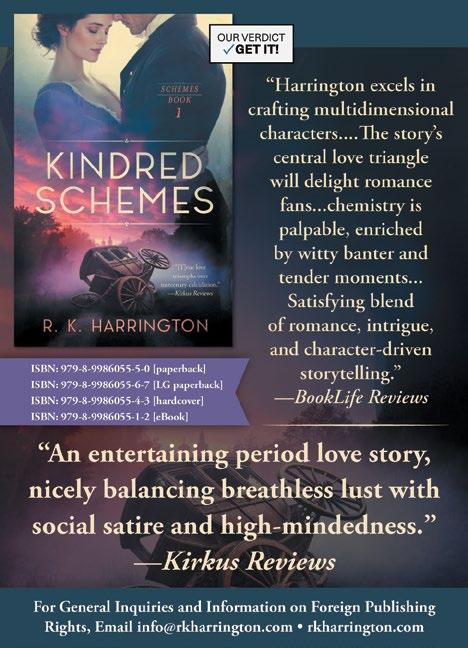
the Radical Imagination and The Rebel’s Clinic: The Revolutionary Lives of Frantz Fanon, which was longlisted for the National Book Critics Circle Award.
The winners of the Robert B. Silvers Prizes for Journalism were Garry Wills, the prolific author of books including Lincoln at Gettysburg: The Words That Remade America and Papal Sin: Structures of Deceit, and Rozina Ali, a contributing writer at New York Times Magazine
The Silvers-Dudley Prizes, named after Silvers, the longtime editor of the New York Review of Books , and his partner, Grace,
Robert Silvers in 2013 Countess of Dudley, were established in 2021. —M.S.


Victoria, as Riddell portrays her, was a “lustful, sexual” woman who enjoyed “both the physical and emotional sides of love.” The handsome, strapping Scotsman had come to her attention even before Albert’s death in 1861; for 15 years, he served the royal family in Scotland, including coming to Victoria’s aid when her carriage was upended near Balmoral, rescuing her and her daughters from certain death. In 1864, convinced of his strength and dependability, Victoria arranged for him to come south to join the royal household. Immediately, they grew close: They took “secluded rides in Windsor Great Park”; he kept “constant attendance in her private rooms.” As she elevated his position, giving him increased power and showering him with gifts, both her government and her family grew alarmed. Rumors swirled: Brown was distracting her from governing, Brown was making her submissive to his own views. To her older children, he seemed “an existential threat to the crown.” Riddell makes a convincing case that they were deeply in love, and that rumors that Victoria was “Mrs. Brown” were likely to be true. Although variably painted “as tyrannical and despotic” or “weak and besotted,” Victoria, Riddell believes, was a woman with passionate desires, who “loved and cared deeply for those who loved and cared for her in return.”
A model of tenacious research.
Riskin, Jessica | Riverhead (496 pp.) $32 | March 24, 2026 | 9780593852576
The “exhilarating unrest” of evolutionary biology. Charles Darwin’s theory of natural selection still dominates biology, bolstered by advanced technologies showing
their children—an example of epigenetic traits.
THE POWER OF LIFE
that heritable traits are largely driven by our genes. This well-written book by Riskin, a Stanford University historian, does not contest that. But it builds on it in an exciting way. It argues that a contemporary of Darwin’s (Jean-Baptiste Lamarck), with supposedly opposing views, was also right—to a degree. For Lamarck, too, believed that life evolves. Yet he believed living beings can cause evolution to occur faster, over one generation, simply by using a trait a lot. The famous example: Giraffes grow their own necks longer to reach taller trees, then pass on that trait. Lamarck was ridiculed for decades; giraffes cannot do this in one lifetime. But even more advanced technologies show that another monumental process drives evolution: “epigenetics.” And that process has Lamarckian elements. Experiments find that an odor that mice smell in a state of fear—caused by electric shock—can generate fear of that odor in children and grandchildren who never received shocks . That initial fear did not change the structure of any genes. But it did cause the “demethylation” of a smell gene via the attachment of an external chemical methyl group to a region near the gene. This caused a smell gene to be turned on the way that flicking a light switch turns on (but does not alter) a nearby light bulb. That trait was then passed to later generations via sperm. Veterans can pass on PTSD to their children in a similar way. Of course, training can reverse many such inherited epigenetic traits. But all told, epigenetics is profoundly important, the author notes. It affects everything from human health to climate change. “Organisms aren’t just in the
environment; they make the environment and they are the environment,” the author concludes. “Science, like living beings, is always changing.”
An intriguing look at the life of a scientist who changed the way we look at life.
Romm, James | Norton (208 pp.) | $24.99 May 5, 2026 | 9781324086086
One-liners from Athens. Our knowledge of Greek drama encompasses only a fraction of the scores of plays that must have been produced in Athens’ Golden Age. The tragedies of Aeschylus, Sophocles, and Euripides, as well as the comic work of Aristophanes and the later Greek writer, Menander, offered moral advice to their audiences while moving, entertaining, and provoking them through some of the greatest literary characters ever imagined. This anthology by classics scholar Romm draws on the work of the 5th-century C.E. Greek-speaking Balkan writer known today as Stobaeus (literally, the man from the city of Stobi). Stobaeus collected maxims from the ancient dramatists to offer guidance to his own son, and his work survived the eddies of medieval manuscript transmission to come down to us today, not only as a collection of quotations but as a wonderful advisory manual. Stobaeus and his contemporaries preserved the meaty teachings of the ancients, while
the bodies of their plays decayed to skeletons, lost by later copyists. Romm’s book, therefore, offers many firsts: the first translation into English of Stobaeus’ collection; the first anthology of fragments from the lost plays; and the first book of its kind for the general reader. We encounter many memorable lessons here: “Oaths sworn in lust are not enforceable”; “Humanity: an adequate cause of disaster”; “The truly happy man should never leave home”; “No wedding cake is baked among the dead”; “Blessed is the one who has both wealth and sense.” This book should be in the pocket of anyone who wants a riposte for an argument, a pick-me-up on a bad day, or an email signoff from a father to a child.
A hard-to-resist collection of ancient advice, bristling with lessons for the modern reader tossed on life’s seas.
Rosier, Paul C. | Norton (384 pp.) | $33.99 March 10, 2026 | 9781324105879

Documenting the political relationships between and among hundreds of Native nations and the U.S. and state governments.
This ambitious history by Rosier, a Villanova University scholar, joins other recent sweeping surveys of Native history, including Pekka Hämäläinen’s Indigenous Continent (2022), Ned Blackhawk’s The Rediscovery of America (2023), and Kathleen DuVal’s Native Nations (2025). Rosier focuses on Native political history, namely Native peoples’ complicated relationship with citizenship within tribal nations, states, and the United States as a whole. From its origins, the U.S. has grappled with how Native people would fit into the nation, with varying “assimilation” programs deployed as early as 1778. Assimilation was more
often than not a euphemism for coercive civilization programs rooted in Americans’ white supremacy and insatiable desire for land. In response, Native people developed ingenious methods of “political syncretism and pragmatism,” navigating generations of “broken promises, robbery, and violence.” American citizenship was not something Native people “won” with the Indian Citizenship Act of 1924 as much as it was something imposed on them without their consent. In response, Native people crafted a conception of “dual citizenship,” where they retained both Indigenous identity, land, and political sovereignty and maintained active participation in the U.S. citizenry: casting votes, engaging in civil disobedience, and serving in the military. Rosier balances specific policy analysis with the larger story of Native peoples’ navigation of persistent racial stigma, ignorance of Native history, and backlash against enforcement of treaty rights. Notably, conflict within Native nations—relating to removal, incorporating formerly enslaved people and their descendants into tribes, and the recognition of same-sex marriage—demonstrate that citizens of Native nations, like the U.S., are not monolithic. Native sovereignty is alive and well in this engaging introduction to the politics of Indigenous dual citizenship.
Rupert, Maya | Dutton (256 pp.) | $30 February 10, 2026 | 9780593475973
A political strategist examines how acting in ways deemed “authentic” by racist American culture negatively affects people of color.
Rupert argues that while “authenticity is supposed
to [be freeing], for some…it stands in the way of freedom.” Drawing on her background as a presidential campaign manager and adviser and her lived experience as a Black woman, Rupert reveals how authenticity actually operates as a barrier to both equality and inclusion. While running former San Antonio Mayor Julián Castro’s 2020 presidential campaign, she observed firsthand the way “unconscious biases and double standards” affected candidates of color like Castro and others. What she saw tallied with her own experiences and the way she often had to “contort” herself into social acceptability by performing a version of blackness approved by the dominant (white) culture. This involved such tactics as the “code-switching” or speech pattern adjustments such as those made by presidential candidate Kamala Harris, depending on whether she was speaking to white or Black audiences. In the world of popular music and culture, the author sees similar biases that work against people of color. While Taylor Swift is allowed to appear as the imperfect, vulnerable—and therefore authentic—“girl next door,” Beyoncé must be the flawless Queen Bey, because “[f]or people of color, the appeal has to be indisputable to be recognized at all.” To begin leveling an unequal cultural playing field, Rupert suggests that authenticity needs to be rethought. Rather than continuing to treat it as an entrapping “ideology,” it must be seen as “methodology” that allows people of color to survive a white supremacist society. A timely and provocative study about the hidden gatekeeping power of authenticity.

For more about racism, visit Kirkus online.
In an age of streaming, “truly memorable films are in increasingly short supply.”
POWER SURGE
Power Surge: Conglomerate Hollywood and the Studio System’s Last Hurrah
Schatz, Thomas | Univ. of California (544 pp.)
$32.95 | May 12, 2026 | 9780520415805
A timely and provocative study about the hidden gatekeeping power of authenticity. This book by communications professor Schatz (The Genius of the System: Hollywood Filmmaking in the Studio Era , 1988) covers 15 years—from 1989 to 2004—that set the table for the complex, franchise-heavy film era we’re now in. Focusing more on business moves than aesthetics, the book is mostly concerned with ever-merging studios and the big, high-risk bets they made: Batman (1989), Jurassic Park (1993), Toy Story (1995), Independence Day (1996), Titanic (1997), and other exemplars of ever-bloating budgets and revenue. Though such projects seem like inevitable successes now, Schatz shows how they were built out of complex production funding, licensing, and marketing deals, and (quite often) panic. Disney, for instance, was flailing on its animation side until Beauty and the Beast (1991) and computer animation got it back on track. The explosion in event films occurred in tandem with the rise of what Schatz calls “Indiewood”—independent companies like Miramax (led by Harvey Weinstein) or arthouse-minded subsidiaries looking to reinvent the surprise successes of hits like Sex, Lies and Videotape (1989), Do the Right Thing (1989), and The Blair Witch Project (1999). U.S. media
deregulation opened the floodgates for a host of mergers and international partnerships, but the shifts only seemed to serve the interests of big-budget plays on familiar intellectual property—hence the rise of the Marvel Cinematic Universe. Schatz covers all this thoroughly, if a bit bloodlessly, more concerned with the financial consequences of various projects that left everyone not named Steven Spielberg artistically compromised. The book’s scope means he can only briefly mention the rise of streaming players like Netflix and Amazon, but his outlook is pessimistic: “truly memorable films are in increasingly short supply.”
A thick, sometimes plodding chronicle of commerce asphyxiating art.
Scheiber, Noam | Farrar, Straus and Giroux (384 pp.) | $30 | April 7, 2026 9780374610814
Of predatory capitalism and its youthful discontents.
Teddy Hoffman, one of the principals in New York Times reporter Scheiber’s morality play, worked at Starbucks for seven years after having graduated from Grinnell and won a prestigious research fellowship. As Scheiber notes, plenty of young people take such once-stopgap jobs on graduating until they find something better.
“The difference for Teddy and his
cohort,” he writes, is that they happened to land in these jobs at the precise moment in history when it was likely to be a radicalizing experience.” Another principal and academic standout, Chaya Barrett, worked in an Apple Store, another locus of employee dissent, the author writes, given the generational “suspicion of power merged with anger over their paychecks.”
Throughout the service sector, in places like Amazon, Whole Foods, and Trader Joe’s, this dissent found voice in a strong movement to unionize. Sometimes the dissidents won, as with Hollywood screenwriters and graduate students at a few universities, and, as Scheiber writes, even pharmacists and doctors moved to unionize, “fed up with two decades of mergers and acquisitions that had made them feel like cogs in the medical-industrial complex.”
Hoffman and Barrett faced tougher opposition: Hoffman found himself slated to work fewer hours than before he began his union organizing, and continued resistance eventually led to his dismissal, and with a police escort to boot. Barrett and her Apple cohort had a somewhat better experience, but not without a bruising fight. Against this labor activism, driven by workers who were “college-educated and radicalized by tectonic economic and political upheavals,” stands the odd fact that working-class people without college degrees have tended to support the right wing, perhaps themselves radicalized in opposition to liberalism—a problem, Scheiber observes, that progressives urgently need to address by finding commonalities of class interest, of which there are plenty. If you’re wondering why so many young people lean toward socialism, this revealing book is for you.

Shortland, Anja | PublicAffairs (288 pp.)
$30 | April 28, 2026 | 9781541705753
Delving into the terrifying economy of ransomware.
Shortland, professor of political economy at King’s College London, makes a persuasive case for the dangerous fragility of our interconnected digital world. Shortland traces the origins of hacking and loose, experimental communities in 1963, when enthusiasts used audio tones to access commercial telephone networks as early online social spaces. These self-styled explorers, largely harmless, gave way as the internet expanded to far more predatory actors. By 1989, new extortionist ransomware hackers emerged, evolving into a lucrative criminal enterprise with the power to disrupt modern life at scale. The book’s central conflict—between IT professionals and criminal hackers— is a struggle between adversaries “cut from the same cloth.” Both sides deploy similar skills across contested digital terrain, though many ransomware groups remain operationally sloppy, prone to unforced errors that limit their effectiveness. The author’s broader analysis is incisive: “Cybercrime can be viewed as the shadow twin of the vast wealth of the tech elites and the (savvy, lucky or well-connected) shareholders who invested in their ventures.” A parallel service economy has flourished alongside this shadow world. Private resolution firms arose to help victims “keep quiet, pay fast, help clients with the decryption.” By 2021, ransomware was acknowledged as a national security threat. Anne Neuberger, one of the Biden Administration’s cyber czars, called it “the most disruptive set of adversaries today in cyberspace.” Still, criminals remain confident. A mastermind
declares, “This business works—and will always work.” The danger, Shortland suggests, is normalization, when “most citizens have become accustomed to the idea that their addresses and social security numbers are sloshing around the darknet alongside those of hundreds of millions of others.”
A sharp, fast-moving examination of ransomware and the criminal ecosystems that sustain it.
Sidebottom, Harry | Knopf (416 pp.)
$28 | April 14, 2026 | 9780593801765
Into the fray. The Roman Empire will likely never go out of style. For the sword-andsandal set, this book charts the daily life of a Roman gladiator, from morning bread to evening dreams. A lecturer in ancient history at Lincoln College in Britain, Sidebottom writes that gladiators were “at the heart of Roman culture,” discussed by philosophers, cheered by throngs, and admired as “sex symbols”—even though they were overweight and often had “bad teeth, bad breath, and bodies marked and altered, sometimes to the point of deformity, by combat.” The gladiator’s day involved sleeping, eating, preparing for the fight and, of course, demonstrating prowess. Among those shows were clashes with beasts as well as other men. Staged scenes of hunting and of battle offered up symbolic, controlled representations of the two key formative activities of the Roman man. And if the animals let loose inside this diorama of death were exotic—elephants, rhinos, tigers, bears—so, too, were the men. The gladiators often were recruited from the enslaved population, and a
spectator might see men from Greece, Iberia, North Africa, and Asia Minor. Readers get a lot of detail, but what they really get is a double history of theatricality and privacy. The gladiator was the object of spectatorship, and his fights and feints contributed a larger, performative quality to Roman life. But the gladiator was looked upon in private, too. No one was ever alone, even when going to the bathroom. (Sidebottom offers an extended tour of the sights, sounds, and smells of the public latrines.) Read this book, then, not just to slake your cinematic thirst for Rome, but for the rich details that show us how these men who were about to die sought to preserve their inner lives behind the public show.
An earthy, vivid tour of daily life among ancient warriors.
Stark, Peter | Mariner Books (432 pp.)
$35 | April 14, 2026 | 9780063383883
Vivid history of the famed Spanish quest for fabled cities of gold. The two principal expeditions that make up historian Stark’s narrative, the one more or less accidental by Álvar Núñez Cabeza de Vaca, and the other, more deliberate, by Francisco Vázquez de Coronado, have been well documented in the historical literature ever since they took place. The first drove the second: Cabeza de Vaca’s surviving comrades let slip tales they had heard of cities of gold, and Coronado’s ears perked up. So, too, did those of the first-generation conquistador Hernán Cortés, who figures in Stark’s pages more than in most other histories, and to very
good effect: We don’t need a lot more evidence that Cortés, “drunk with sudden power and riches, and still not fully brought to heel,” was a bad hombre, but he stands in sharp contrast to the more humane Coronado. Or was he? One of the many interesting points that Stark lands concerns the Spanish policy that forbade mistreatment of Indigenous peoples, with the Spanish viceroy of New Spain directly ordering Coronado “not to inflict injury on or exercise force against the Indians [nor] take anything they may possess from them against their will.” As Stark shows, Coronado and his lieutenants frequently disregarded those orders and committed outright war crimes, among them the murder of a Plains Indian interpreter called the Turk, “quietly strangled by Coronado’s officers in the middle of the night and secretly buried.” Native resistance, Stark notes, soon pushed the Spanish back into Mexico. If it had not, he adds provocatively, the Spanish Empire might well have extended all the way to the Mississippi, containing the United States on the opposite shore and creating a culture “of Indigenous and European, something like today’s Brazil.” It makes for a fine thought experiment to close a highly readable historical yarn.
A welcome addition to the literature of Hispanic America and the American West.
Churn: The Tension That Divides Us and How To Overcome It
Steele, Claude M. | Liveright/Norton (224 pp.) $29.99 | March 3, 2026 | 9781324093442 How building trust can alleviate social problems.
Social psychologist Steele (Whistling Vivaldi , 2010) draws on a wide range of experiments he and other scientists have
conducted—as well as his own experience growing up in Chicago in the ’40s and ’50s in a biracial family—to analyze with care and compassion the pressures of living in a diverse society and to propose solutions that both individuals and institutions can implement. Living with others of different “racial, ethnic, gender and sexual orientation identities” can, Steele writes, create a condition he labels “churn”: an “anxious, ruminative” state that is the result of “the threat of being judged and treated badly based on negative feelings or stereotypes about our identities.” It’s a state of mind that has been proven to make students function less successfully and adults push back against engaging with those with different identities. Broadly, he suggests that even the smallest gestures toward increasing trust pay off in reducing churn, and offers evidence that this trust is most effective when it starts from the individual with the most power. It’s easier to build trust, he says, “than it is to rid people of lifelong prejudices.” More specifically, he suggests a strategy of three goals: seeing, welcoming, and supporting. Many of the examples Steele gives come from the world of education, but he also includes some from industry, including the success of 3M in building diversity. From a practical point of view, Steele’s recommendations show the benefits of lending a helping hand to all students who need one, not just those who fall into certain categories, since “targeting programs at certain groups could stigmatize those groups and alienate other students.”
A pragmatically hopeful remedy for interpersonal tensions.
Steven, Kenneth | Saraband (144 pp.) | $14.95 paper | April 7, 2026 | 9781916812628
Gems and the stories that make them true treasures.
Like many kids, Steven grew up with a passion for gems of all shapes, textures, and colors. Unlike many kids, he wasn’t bringing home a pile of pebbles he found in the driveway; living in Scotland, he was hunting for glittering treasures such as serpentine, garnet, amber, aquamarine, agate, and more. With chapters highlighting each different stone, Steven—a poet, novelist and children’s author—guides readers through the wilds of Scotland, sharing his experiences of each of the stones and the impact they still hold on him today. Steven’s depictions of the various gems and his journeys never fail to spark a craving for adventure in the reader. His poetic voice comes through in his description of each gem. Describing aquamarine, he writes, “I remember holding it there in the attic, turning it round in my hand against the light as it sent out its deep green…for all the world like some dragon’s eye.” Although the author relates certain details about each of the stones, he doesn’t go too deep on the scientific or geological ins and outs of his subject. This mix of memoir, history, and nature writing will be most enjoyable for the gem-curious and perhaps not for scientists-in-training—a fact that the author points out, stressing that he is not a geologist. This only strengthens
A poet and novelist discovers treasures in Scotland.
The woman from Russia who played a significant role in the development of jazz.
MURA DEHN
Steven’s message behind his passion for gem hunting: “I feel that with this treasure map, I’m somehow given my country to possess anew. And the emphasis is always on the going there, the being there, the experiencing there.” As the reader, you feel the thrill of finding a rare—or not quite rare—stone hiding beneath your feet. You also see the family, friends, and home that makes these moments so special to the author.
This nugget of nature writing feels like a warm hug and a gentle nudge to go outside and explore.
Traina, Giusto | Trans. by Malcolm DeBevoise | Princeton Univ. (248 pp.) $35 | April 7, 2026 | 9780691257877
Innovative reading of the last years of the Roman Republic.
Traina, an emeritus professor at the Sorbonne, allows that the term “world war” may seem anachronistic, given its 20th-century context. But, he adds, the struggles that marked that last half century of republican rule in Rome were more than “a concatenation of civil wars”: The conflicts between Marc Antony, Julius Caesar, Pompey, and lesserknown antagonists had reverberations across the vast, far-flung territories that would, in time, become part of the new Roman Empire, from Parthia in what is now Iran to Mauritania, Spain,
and Britain. Traina’s world war was not fought with arms alone; as he notes, whereas Pompey was fond of building monuments to himself, his rival Caesar spent his time draining malarial swamps and planting colonies of military veterans across the map while crushing enemies from North Africa to Gaul. In Traina’s telling, one reason for Caesar’s demise was not only that he assumed the mantle of dictatura perpetua, or dictator in perpetuity, but also that “he envisaged an empire whose center would no longer be the city of Rome.” That vision entailed the conquest of the East, with rival generals bent on subjugating what would become the “eastern provinces”—Syria, Mesopotamia, Armenia—and even going so far as to ally with the hated Persians to make it happen. On that note, Traina does a quick reckoning of the rival forces: Cassius’ army included thousands of Persians, Medians, and Arabs, while Brutus’ cavalry was made up of “Gauls, Lusitanians, Thracians, Illyrians, and Thessalians,” and Octavian’s army included a Spartan contingent, “two thousand soldiers who subsequently died in combat.” Rome got its empire, with Octavian becoming Augustus Caesar, and the Mediterranean becoming a “Roman lake,” launching power struggles and local wars across the known world that would flare for centuries.
A novel interpretation of the wars that made Rome a world power.

Champion
Vaccaro, Kim Chandler | Bloomsbury Academic (264 pp.) | $32.95 paper February 19, 2026 | 9781350428072
The little-known story of an unlikely champion of jazz dance in America.
Most jazz aficionados may not have heard of Mura Dehn (1902-87), but she played a significant role in the genre’s development. A white woman, Dehn discovered jazz as a young girl studying classical dance in her native Russia. Her appreciation deepened when she moved to Paris in the 1920s to further her studies, hanging out with progressive artists such as Josephine Baker. Dehn eventually came to New York, where she was a regular at Harlem’s Savoy Ballroom, and “immersed herself in Black social dance.” As Vaccaro, professor emerita of dance at Rider University, puts it, Dehn “boldly wrote about it, beginning in the 1930s, when few others were paying attention.”
For more on ancient Rome, visit Kirkus online.
Vaccaro has written this revelatory biography “to uncover what led a white, Russian, Jewish woman to an act of cultural preservation, and serves to credit, name and bring to the fore some of the artists who were the creators and originators of Black social dance during her lifetime.” She focuses on three main areas of Dehn’s career: the Academy of Swing, which Dehn co-founded in “an attempt to define the form and rhythm of jazz dance”; a film, The Spirit Moves , four volumes of footage shot between 1950 and 1984 that Vaccaro calls “one of the most important films made of the chronology of jazz dance in her time”; and Dehn’s Traditional Jazz Dance Company, the achievements of which included the show Rag to Rock and worldwide tours under the auspices of the State
Department, including an eight-country tour of Africa. Vaccaro interviews figures who worked with Dehn, including Allen Blitz, who served as the dance company’s manager. And she does a good job of showcasing Dehn’s achievements, as well as the resistance she encountered from those who distrusted her because she was an outsider, a woman, and white. A well-researched account of a passionate jazz dance promoter.
Ward, Libby | Crown (288 pp.) | $30 April 14, 2026 | 9780593735213
A Christian TikTok influencer grapples with motherhood while exploring complex childhood trauma. Ward spent much of her early adulthood striving to be “normal.” After a tumultuous childhood involving housing instability, familial estrangement, and abusive father figures, she wanted a life that achieved the kind of easy perfection she thought she saw in other mothers at her church. Ward writes, “The church moms seemed wholly fulfilled by their children and the four walls of their homes. When I wasn’t, I couldn’t help but wonder what was wrong with me.” Ward’s attempts to be an exceptional mother to her two children spiraled her into burnout and depression. When she started seeing a therapist, Ward not only connected her adult behavior to her troubled childhood but also received a diagnosis of ADHD. Through her therapeutic journey, the author learns how to embrace anger, prioritize her needs, end her investment in perfectionism, and set boundaries with her mother, all while managing her husband’s new schedule as a
“A brave little island girl who loved to cook” carves a unique path in the food world.
SALT, SWEAT & STEAM
police officer, her son’s “motor speech condition,” her hearing loss, and her transformation into a TikTok influencer who finds unexpected community online. Early on, Ward had thought TikTok was a dance. When she found out it was an app where one could see dances, she writes, “‘You shouldn’t go on there. It’s not safe,’ I said, hearing myself sound like a lecturing grandma.” At its core, the book is a vulnerable, insightful, and refreshing exploration of what it takes to become a good parent when you grow up with dysfunction. Perhaps most importantly, it’s an excellent resource for parents who are survivors of childhood abuse, providing vivid, relatable examples of both traumatic experiences and therapeutic struggles. The book spends a few chapters attempting to find its tone and pace, but, overall, this is a promising debut.
A frank memoir about becoming a good parent when yours fell short.
Washington, Brigid | St. Martin’s (304 pp.)
$30 | April 28, 2026 | 9781250333377
A chef’s sentimental education— or, a seasoning in hell.
Washington, a Trinidadian who found herself in the strange climes of North Carolina, fell into a restaurant job after enduring “a soul-slaughtering office job at a construction journal in Raleigh.”
The chef, recognizing that “there’s clearly something there,” encouraged her to go to culinary school, and more than that, the flagship Culinary Institute of America. She applied, was admitted, and headed to the Hudson Valley for a two-yearlong boot camp that would daunt a Navy SEAL. Initially thrilled at rediscovering in herself “a brave little island girl who loved to cook,” she recounts that she felt out of place, even as she carved a unique path— for instance, she was the only first-year student ever to win the post of editor-in-chief of the student publication, “a rote, almost mechanical cook by day and a creative, free-thinking writer/editor at night.” Time passes, and with it comes the disconcerting discovery that the CIA was run like a boot camp—“we really weren’t so different from West Point, our across-the river US Military Academy neighbor.” Moreover, writes Washington, the expectation of chefs that student performance must be flawless every time out was unrealistic: “The CIA is a vocational school that prepares its students for excellence— and food snobbery— but in a lot of the non-starred, cantankerous, cornercutting kitchens of the real world, excellence isn’t the norm, nor is it expected.” Add to that the harsh truth that there aren’t many top-tier jobs, and it’s little wonder that Washington, after living through one episode after another of the abuse “that impoverishes the profession,” long ago chose to write about food instead of becoming a working chef.
A pensive narrative full of fear and loathing, but also lots of tips for foodies who enjoy cooking as well as eating.
Weibel, Deana L. | Univ. of California (240 pp.)
$24.95 | May 12, 2026 | 9780520409521
Deep space meets spiritual wonder. The “overview effect” describes what happens when astronauts rocket into space, turn around, and look back at Earth. They see at once how unlikely it is, how alive, how petty the politics, how fragile the atmosphere—the whole world, as Carl Sagan put it, as “a mote of dust, suspended in a sunbeam.”
Weibel, a cultural anthropologist, is more interested in what happens when they look the other way—out toward the depths of the Milky Way and the inhuman expanse beyond. If the overview effect is about how small the Earth is, the “ultraview effect,” as Weibel coins it, is about how big the universe is. She interviews astronauts who’ve experienced it, giving them pseudonyms. For “Zack,” “the star patterns out there became something that I was not ready for. So many stars I couldn’t see one. It was just a sheet of light.”
“Theo” described it as “a hard white wall. It’s unbelievably solid up there.” Weibel, who previously studied religious pilgrimages, heard the ring of something familiar: a profound sense of awe—the unsettling kind, tinged with fear and overwhelm—followed by deep humility and an openness to new ways of thinking. The connections between religion and space travel run deep. Russian cosmism, a philosophical movement at the turn of the 20th century, cast human space travelers as destined to bring order to the universe and, in the process, resurrect the dead. In the 1920s, with the advent of human flight, many Americans apparently
believed airplanes could fly people to heaven. Now, as NASA gears up to send astronauts back to the Moon and private industry ramps up space tourism, Weibel wonders: Will space travel become the new spiritual pilgrimage? The history is fascinating and the awe is contagious. But the thing about awe is that it doesn’t require explanation. Dry analysis only drains it of the very thing you want to capture. In its void, Weibel’s text grows repetitive and searches rather aimlessly for content. The universe may be awe-inspiringly vast—but the material in this book is stretched thin.
An intriguing but strained analysis of what happens when spacefarers confront the unfathomable cosmos.
Jan Morris: A Life Wheeler, Sara | Harper/HarperCollins (400 pp.) $35 | April 14, 2026 | 9780063304116
The troubled life of a celebrated writer. Wheeler draws on interviews and abundant archival sources to offer a balanced portrait of historian, memoirist, and intrepid travel writer Jan Morris (1926-2020)—an authorized biography that Morris’ eldest son asked Wheeler to write. Morris’ works include a three-volume history of Britain, an account of Edmund Hillary’s ascent of Everest, and a memoir, Conundrum , about transitioning from male to female in 1972. James Morris had been virile, handsome,
and “something of an action man,” writes Wheeler, a fellow travel writer. Morris reveled in the camaraderie and structure of army life but left to pursue journalism, to which he brought an uncommon talent for analysis and observation. Writing, Wheeler asserts, became an addiction, a way to quell inner turmoil. As a writer for the Guardian and a freelance reporter, Morris became—as James and later as Jan—“the most famous journalist in the world.” Even though he knew he was essentially female, he married in 1949, and he and his wife, Elizabeth, had five children. (Morris continued to use he /him pronouns when referring to her pre-transition self.) “There were three people in the marriage,” Wheeler notes, “and two of them were Elizabeth’s husband.” Meanwhile, Morris, for five years on either side of turning 40, “effectively led a double life,” with two residences and two public identities. Wheeler recounts the psychiatric and medical attitudes toward transgender people that led Morris to take experimental drugs, with sometimes harsh side effects. Finally, James had surgery in Morocco and emerged as Jan. Family life was fraught, not solely because of sexual issues. “An unapologetic egotist,” Morris was, in Wheeler’s words, a mix of “contradictions and anomalies.” For one, “She preached the virtues of kindness but after she died her daughter revealed unspeakable parental cruelty.” A trailblazing transgender figure, Morris also had Wheeler wondering this: “Why did she dress like a Walmart version of the Queen?”
A sensitive, empathetic, and measured biography.
An intrepid travel writer who lived a double life.
JAN MORRIS
Windolf, Jim | Scribner (320 pp.) $30 | April 14, 2026 | 9781668075562
A meeting of great musical minds.
It’s no news that Bob Dylan and the Fab Four influenced each other, both competitively and cooperatively. They discovered each other at roughly the same time, Paul McCartney having somehow found Dylan’s first two albums in London and Dylan having heard “I Want To Hold Your Hand” over the radio while driving across Colorado, recalling in 1970, “Their chords were outrageous, just outrageous, and their harmonies made it all valid.” The Beatles would soon issue their outrageous chords on acoustic guitars, with John Lennon in particular writing Dylanesque songs like “I’ll Cry Instead,” “I’m a Loser,” and “You’ve Got to Hide Your Love Away.” Windolf, an editor at the New York Times , is quick to note that Dylan wasn’t shy of following the Fabs’ lead at several points, from obviously borrowing from “Norwegian Wood” for “Fourth Time Around” to wearing the same Greek sailor’s cap that Lennon sported and, indeed, writing a book of surrealist prose and poetry just after Lennon’s A Spaniard in the Works appeared (albeit not publishing it for another six years). As Windolf observes, for all the cultural back and forth
between McCartney and Lennon and Dylan, it was George Harrison who formed an actual friendship, teaming up with Dylan to write songs both for his 1970 All Things Must Pass album—its title song being an answer of sorts to Dylan’s “I Shall Be Released”—and for their later venture as two-fifths of the Traveling Wilburys. There’s enough Beatlemaniacal and Dylanocentric trivia to please fans of either or both, from Windolf’s note that Dylan’s “Knockin’ on Heaven’s Door” was the result of a dream he’d had about the Beatles to the odd notion that Lennon had of producing Dylan’s next album after Blood on the Tracks And no, Dylan didn’t introduce the lads to marijuana…
Not exactly groundbreaking, but a pleasing enough exercise for the classic rock set.
Woolfson, Adrian | MIT Press (464 pp.)
$32.99 | March 31, 2026 | 9780262054898
A look into a future in which AI helps design new life.
Many doomsday sciencefiction scenarios spring to mind in reading this fact-based plunge into history and advances on the horizon. Woolfson is a cofounder of Genyro, a biotechnology company, and his measured tone blends possibilities that range from scary to
Will humans program life and create artificial species that live alongside us?
intriguing, alongside anecdotes about the modern-day scientists who are propelling this unprecedented era. It’s no longer a matter of if, but when, and importantly, whether we should redesign and rewrite life. Soon, he argues, artificial intelligence “promises to reveal the rules of the generative grammar of life.” That would mean Darwinian evolution is no longer king. Humans could program life and create artificial species that live on Earth alongside us. The possibilities of this “artificial biological intelligence,” or ABI, include designing new species from scratch, eradicating disease, and creating novel food sources that are desperately needed due to climate change. The downsides are steep, too. Some of the most compelling reading comes near the end, in a detailed manifesto on the ethical quandaries of this era and what must be off limits. These include a global moratorium on creating parentless humans, and an insistence on preventing any synthetic species from upsetting ecosystems or killing off existing species. One of the greatest challenges ahead may be determining collectively, as a species, “the extent to which we are prepared to modify our nature.” Writing in a conversational style, the author largely achieves his goal of outlining for lay readers the background needed to engage with these issues and form their own opinions. Much like our ancestors in Africa, Woolfson says, humankind is embarking on a new migration, this time into the realms of engineered life. We all need to be prepared. A lucid, thoughtful, at times troubling review of a new era in biology.

DEI: The acronym has been tarnished, but what about the ideas underlying it?
HOW EQUALITY WINS
Kirkus Star
Yeazell, Ruth Bernard | Princeton Univ. (320 pp.) $39.95 | June 9, 2026 | 9780691277820

An artist’s enduring allure.
Marking the 350th anniversary of the death of Dutch master Johannes Vermeer (16321675), literary scholar Yeazell examines the response to his art since his rediscovery—or rescue from oblivion, as one critic put it—by Théophile Thoré, a French journalist and art critic, in the mid-19th century. Praised as precursor of modern art, since then, Vermeer has been the subject of much criticism and scholarship; his works have influenced painters, photographers, and filmmakers; and they have inspired writers of fiction and poetry. They also have inspired controversy, with art critics and historians arguing over interpretations of themes. With the growing popularity of photography, the “cameralike effects” of his paintings gave rise to the idea that he used a camera obscura to produce his meticulously detailed interiors. A debate ensued about the meaning of art if an artist relied on a mechanical instrument for effects that would have been attributed to an artist’s eye and hand. Because his output was small, much excitement erupted whenever a new Vermeer appeared in the market—but he inspired a healthy business in forgeries, most prolifically by Han Van Meegeren, whose copies fooled
many critics and collectors in the 1930s and ’40s. Yeazell looks at artists such as Edgar Degas, James McNeill Whistler, and Thomas Dewing, who were influenced by Vermeer’s handling of light and color; and she considers later artists—George Deem, Joseph Cornell, and Salvador Dalí—whose homage to Vermeer takes the form of quotation or appropriation. Carl Theodor Dreyer, Terence Davies, and Wim Wenders are among filmmakers whose static, tableau-like compositions evoke Vermeer. The artist’s rich afterlife in literature portends no diminishment of his “exalted place” in Western culture. Beautifully illustrated with color plates.
An authoritative, insightful work of art history.
Yoshino, Kenji & David Glasgow Simon Element (208 pp.) | $29 February 17, 2026 | 9781668216750
A vigorous defense of DEI by two of its leading legal exponents. To hear the Trump administration tell it, DEI is a new plague on the land, one that has wrought untold damage on the nation. Yet, New York University legal scholars Yoshino and Glasgow counter, “What our society has come to call DEI is just the latest embodiment of a project of
advancing equality that goes back centuries,” falling under the rubrics of equality and human rights. Although the acronym itself has been tarnished, the ideas underlying it are not: Half of Americans, the authors report, oppose “DEI,” yet three-quarters agree that “more needs to be done to guarantee everyone is advancing.” In any event, the authors argue, the horse is out of the barn: In the rising generation of adults, fully a quarter identify as LGBTQ+, more than half of college-educated workers are women, more than half of Americans under 18 are people of color—a picture, in short, of increasing diversity, whether opponents like it or not. Part of the problem, Yoshino and Glasgow write, is that lawyers don’t quite fully understand what DEI is, and DEI practitioners often don’t understand the laws around it—and, they observe, most DEI practices are supported by law, and some are “even legally required.” To remedy this, apart from increased professional education, they urge that DEI supporters turn the script around. If DEI stands for “diversity, equality, and inclusion,” then, as Pete Buttigieg has said, the thing to do is to loudly brand its opponents as supporting “discrimination, exclusion, and intolerance.” The authors also advance a program that advocates universalism as an aid to building alliances and allies, and that truly levels the playing field through using “an identity-neutral approach,” such as evaluating resumes without reference to names that might identify gender or ethnicity. An eminently practical approach to the premise that equality benefits all.





EDITORS’ PICKS:
This Is Where the Serpent Lives by Daniyal Mueenuddin (Knopf)
The Typewriter and the Guillotine: An American Journalist, a German Serial Killer, and Paris on the Eve of WWII by Mark Braude (Grand Central Publishing)
Basket Ball: The All-American Game by Kadir Nelson (Little, Brown)
Better the Devil by Erik J. Brown (Storytide/HarperCollins)
THANKS TO OUR SPONSORS:
That Kind of Girl by Jacey Bici
Use Your Palabras, Jovita! by Keishia Lee Louis, illus. by Diego Alejandro Escobar Triana
Midnight at Sea by Hoyt Rogers with Artemisia Vento and Frank Báez
Bone of Contention by Jan S. Gephardt
Digital Odyssey by SE Quinn
Editor at large Megan Labrise hosts the Fully Booked podcast.

Everything you always wanted to know about publishing nonfiction (but were afraid to ask).
BY MEGAN LABRISE
EPISODE

On this special episode of Fully Booked , we talk with Alia Hanna Habib, author of Take It From Me: An Agent’s Guide to Building a Nonfiction Writing Career From Scratch (Pantheon, Jan. 20), a spirited, rigorous, and relatable guide to publishing nonfiction in today’s marketplace. Kirkus calls it “an invaluable resource for aspiring and professional writers alike.”
Habib is a leading literary agent who specializes in nonfiction. She is a vice president at The Gernert Company, where she represents MacArthur Fellows, Pulitzer Prize–winning journalists, National Book Award finalists, and numerous New York Times bestselling authors. She lives in Brooklyn.

Take
It From Me: An Agent’s Guide
a
To listen to the episode, visit Kirkus online.
Here’s a bit more from our review of Take It From Me : “In a fascinating braid of personal guidance and practitioner interviews, leading literary agent Habib decrypts the opaque world of nonfiction book publishing. Her counsel, presented with the clear-eyed pragmatism of an industry veteran, stands out in a congested market of books on writing....From how to place articles early in one’s career and choosing between an MFA, journalism school, or an academic route to finding an agent, landing a book deal, or wayfinding through the emotional crests and troughs of the publication process, Habib realizes her ambition of being her reader’s ‘friend in publishing.’…Perhaps the most generous parts of the book are the pitches and book proposal excerpts that Habib curates from her clients and friends.…For [the] novices, Habib presents the best sort of insider ball: a clear, actionable pathway to publication encased in a necessary layer of empathy and realism. Yet the
Habib, Alia Hanna Pantheon | 320 pp. | $28.00 Jan. 20, 2025 | 9780593700877
more established writer, even the published author, will also find value in these pages.”
Habib explains how she envisions Take It From Me as a “soup-to-nuts” guide to publishing nonfiction and discusses the different ways readers might use the book. She shares her nontraditional path to “getting paid to think about books,” and we discuss the importance of generosity, integrity, creativity, and transparency in networking and career-building. We talk about how agents spend their days, the questions writers should ask potential agents, and much more.
And in our lead editors’ segment, Laurie Muchnick, John McMurtrie, Mahnaz Dar, and Laura Simeon share their most anticipated titles of the month.
Editor at large Megan Labrise hosts the Fully Booked podcast.
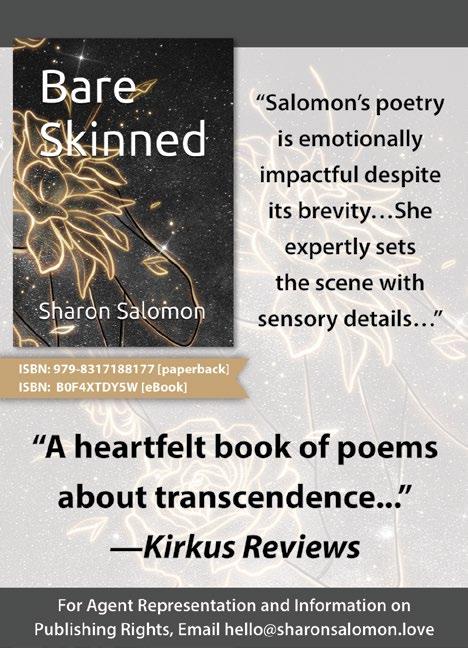

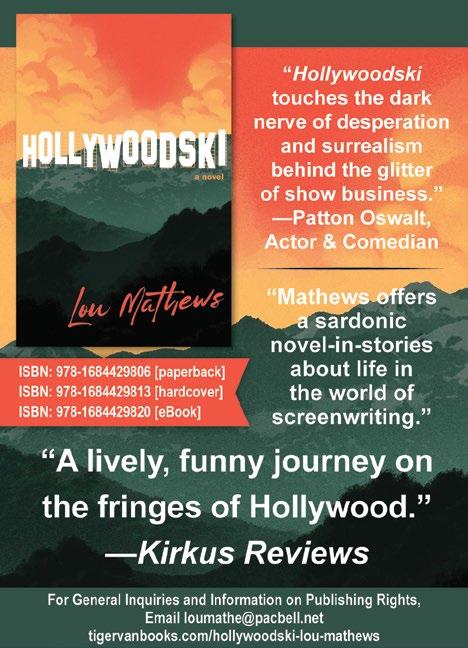

The rapper will write about reigniting his creative spark.
Rapper and entrepreneur Rick Ross has a new book on the way.
Hanover Square announced that it will publish the hip-hop icon’s Renaissance of a
Boss: Notes From a Creative Awakening, co-written with Neil Martinez-Belkin, in the spring. It calls the book “a grand, inspiring road trip adventure in which Ross sets out to investigate life’s big questions and shares his reflections on creativity.”
Ross first rose to fame with the 2006 release of the single “Hustlin’,” a track from his debut album, Port of Miami. He went on to release hit albums including Trilla, Deeper Than Rap, Teflon Don, Rather You Than Me, and Richer Than I Ever Been

For reviews of
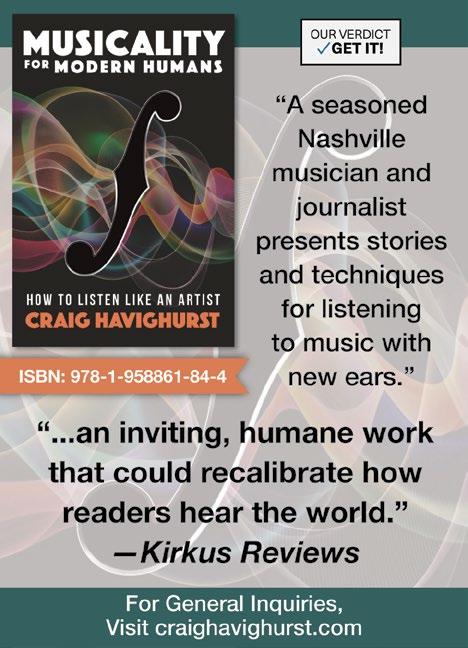
He is the author of two previous books co-written with Martinez-Belkin: Hurricanes and The Perfect Day To Boss Up.
His new book, Hanover Square says, “is the story of Rick Ross rediscovering his creative spark. After several false starts—including a failed attempt at climbing Mount Kilimanjaro—Ross hits the open road in search of answers to life’s big questions.”
Ross shared news of the book on Instagram, writing, “For twenty years, we’ve been hustlin’. Now, I’m taking you on a different kind of journey. I hit the road to find a new spark, asking the big questions and finding answers in unexpected places.”


I’VE RARELY MET characters as remarkable as those in Yorick Goldewijk’s The Tree That Was a World , illustrated by Jeska Verstegen and translated from Dutch by Laura Watkinson (Eerdmans, 2025). Aimed at middle graders, these interconnected tales concern the wildlife that resides in or near an ancient tree— including a sweet-natured aphid battling the urge to devour her own siblings, a dimwitted owl undergoing an existential crisis, and a soulful ant who, while attempting to realize her dreams of wild adventure, is eaten by a hungry swallow.
That description might elicit an “Are you sure that’s for children?” from adults. After all, most American kid lit about animals features cherubic creatures forging
loving if improbable cross-species friendships. But that’s why I adore international stories. European authors like Goldewijk enter what may seem like uncharted territory to U.S. readers; The Tree That Was a World is philosophical, melancholy, and achingly tender—in short, unlike almost anything originating in the States.
Reading books in translation offers young people much-needed glimpses into different worlds. First published in 1975, Sachiko Kashiwaba’s The Village Beyond the Mist, illustrated by Miho Satake, has long been beloved in Japan (it inspired Hayao Miyazaki’s Spirited Away). Both bewitching and utterly cozy, the novel follows a young girl who visits a magical town where she finds meaning in helping the
local shopkeepers with conflicts ranging from a cantankerous pet parrot to sadness over a parent’s absence. Newly translated by Avery Fischer Udagawa and published by Yonder last year, it’s now available to an English-speaking audience, who will be entranced.
Thousands of miles away, another small community is plagued by problems of a different sort. People are disappearing on Runmarö Island, located in the Stockholm archipelago, and 12-year-old Tuva is one of the few bold enough to seek the truth. In Camilla and Viveca Sten’s The Secrets Below, translated from Swedish by A.A. Prime (Amazon Crossing Kids, Feb. 1), fantasy and mystery artfully blend for an eerie and atmospheric coming-of-age tale.
Plenty of international gems await picture-book

readers, too. In Karthika Naïr’s Electric Birds of Pothakudi, illustrated by Joëlle Jolivet (Tate Publishing, 2025), the residents of a South Indian village wonder what to do when two magpie-robins begin nesting in the streetlight switchboard box. Do they oust the birds so the villagers, many lacking electricity at home, can light their way? Or make sacrifices for this fragile little family? First published in French (Naïr, a French author of Indian heritage, rewrote her story in English) and inspired by actual events in Tamil Nadu, this thought-provoking tale is a rich meditation on communal living.
For an entirely different take on the bedtime book, try Rafael Sica’s No One Slept, originally published in Brazil and translated from Portuguese by Bruna Dantas Lobato (Tapioca Stories, 2025). Fears of a ghost prevent an entire household from sleeping—until a young girl picks up a book and reads to each of her family members in turn. Rife with slyly funny details, Sica’s black-and-white images evoke the artwork of Edward Gorey or Charles Addams; this ode to the power of reading sets a slightly unnerving tone even as it soothes.
Mahnaz Dar is a young readers’ editor.
Celestial children establish the first city and nurture a civilization.
In a world born new, the wild, unclothed humans— always at the mercy of the tempestuous Sun god— don’t comb their hair, learn to cook potatoes, or even think about dancing. One day, the Sun creates a rather dapper pair of siblings from the spark of his flame: Manco Cápac and Mama Ocllo. Appraising his beautiful children, the Sun chooses to “entrust them with a task: to found the very first city.” And so goes Chirif’s wide-eyed adaptation of a
quietly marvelous Inca folktale, originally published in Spain and shared here in a hushed, knowing tone. Manco Cápac and Mama Ocllo journey from lake to river to valley, followed by curious humans who observe them from afar. The brother and sister walk as their hunger grows and their shoes fall apart, until they at last arrive at the Wanakawri mountain, where Cusco, the capital of the Inca civilization, comes into being. There, the Sun’s children build houses and teach humans all they can. Accompanied by
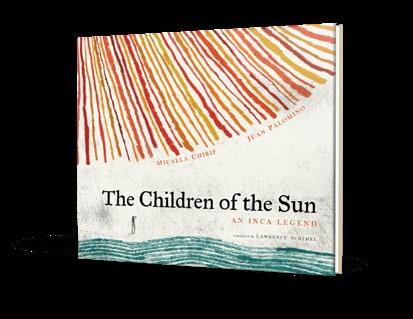
Chirif, Micaela | Illus. by Juan Palomino | Trans. by Lawrence Schimel | Eerdmans | 44 pp. March 31, 2026 | $18.99 | 9780802856548
Series: Stories From Latin America
Palomino’s stark, dramatic artwork—breathtaking in scope and full of life— this story is utterly spellbinding, as soothing in tone as a lullaby. A brief addendum defines potentially unfamiliar terms and provides a just-right splash of context on the Inca and the legend. An origin epic brilliantly retold. (Picture book. 5-9)
By Catharina Valckx; trans. by Antony Shugaar
Rex Ogle; illus. by Dale Valeza; colors by Ash Szymanik 126 Suuban’s First
Shugri Salh; illus. by Àlàbá Ònájìn 130
Targosz
CHILDREN'S
that offers an ideal mix of humor and heart.
MIXED FEELINGS
Kirkus Star
Monkeypig
Aaron, Huw | Viking (32 pp.) | $18.99 June 30, 2026 | 9798217039159
A pig masquerading as a monkey risks banishment from the troop when a literalminded simian smells an imposter. Molly, who is rotund and bubble-gum pink, lives in the jungle with “all the other monkeys, dancing and playing and being silly among the treetops.” But she has a secret: She is a pig. (The joke here is that readers hardly have to be told— they can see for themselves.) No one seems to notice that Molly is different until the day that Norman, the head monkey, convenes a meeting and makes an announcement: A “strange non-monkey scent had been smelled among the treetops,” and the faker must be exiled from their community. How to ID the interloper? Norman introduces “three tests of monkey ability”: “eating a banana in the correct manner,” “monkey communication,” and “monkey transportation.” Naturally, Molly fails all three tests spectacularly. But when it’s time to identify the imposter, monkey fingers don’t point in the expected direction. In this hearty salute to inclusiveness and the democratic process, the deadpan narration contrasts hilariously with Welsh cartoonist Aaron’s loose and ebullient art, which showcases his mastery of pictorial slapstick. As Molly and the monkeys cavort and contort and otherwise behave ridiculously, their unselfconscious facial expressions distill the book’s worthy takeaway:
What’s weird to some is perfectly normal to others.
The be-yourself story reaches new heights with this winner. (Picture book. 3-7)
Aguirre, Jorge | Illus. by Andrés Vera Martínez | First Second (224 pp.)
$22.99 | $14.99 paper | April 21, 2026 9781250749765 | 9781250749772 paper Series: Monster Locker, 2
A sly nine-tailed fox poses a threat in Aguirre and Martínez’s sequel. Monsters of all kinds continue to prowl around Ohio, and Glenfield Middle School’s resident monster banishers, Pablo, Maggie, and Takashi, have never been more popular. Whether they’re dealing with a demon leprechaun or an internet troll who espouses conspiracy theories (“they used to only live under bridges, but they’ve adapted”), the dynamic trio is on the case, equipped with The Book of Summoning, a powerful guide to banishing monsters through the magical portal residing in Pablo’s locker. Increasingly tired of the monster-fighting life, Takashi reveals his aspirations of becoming a J-pop sensation—even if he can’t really sing—but he’ll have to convince his strict father, former Air Force Col. Rosenberg, first. In a doomed plan, the heroes summon a wish-fulfilling, shape-shifting, nine-tailed fox spirit. The kitsune propels Takashi into viral J-pop
stardom and offers his services to other students, bringing them under his control and even dividing the three friends. To banish the trickster and regain Takashi, Pablo and Maggie request help from an unlikely ally. Pablo and friends’ latest super-cool, madcap adventure continues the frenetic, fourth wall–breaking fun, incorporating intriguing snippets of folklore and a compelling cast of cheeky characters, bolstered by the bustling, spirited artwork. Takashi’s efforts to navigate his Jewish and Japanese identities take center stage and are sure to resonate deeply with many readers.
Monster-banishing at its finest. (monster information) (Graphic adventure. 10-14)
Allen, Zoey | Illus. by Frenci Sanna Candlewick (32 pp.) | $18.99
May 19, 2026 | 9781536247657
Sometimes Pete is a prince. Sometimes Pete is a princess. Pete enjoys playing with boys and with girls but doesn’t yet have a best friend. Pete likes to play alone, too. Some days Pete wears “pink shorts, yellow tops, and blue rain boots”; other days, Pete sports “green sweaters, flowery pants, and butterfly sandals.” Pete loves playing beauty salon with Mom, too. Sometimes Pete dreams about a magical world full of friends flying around on winged, horned horses while hedgehogs sing. Without using specific terms, Allen explores gender identity in a developmentally appropriate way—young children might not have the words to call themselves nonbinary or genderfluid, but, like Pete, they could very well say, “I may have been born a boy, but I don’t always feel like the boys. Sometimes I feel more like the girls. Sometimes I feel somewhere in between.” Allen’s narration is authentically childlike, pairing well with Sanna’s illustrations, which heavily incorporate geometric shapes and trans flag colors.
On one spread, people who are confused by Pete’s gender point fingers at the youngster; Pete is depicted as literally being boxed in by a rectangle and triangle, then attempting to burst out of an oval. Mom has brown skin and curly black hair, while Dad has pale skin and brown hair. Pete has light brown skin, round pink glasses, and short brown hair often in pigtails.
Affirming and fun. (Picture book. 3-7)
Allepuz, Anuska | Candlewick (32 pp.) $18.99 | May 19, 2026 | 9781536252781
In this U.K. import, four “rumbly-andtumbly” young bears scamper away from a daunting foe. Deep in the woods, a family of cubs (all different shades of brown) hears a “shuffle-shuffling,” a “scritch-scratching,” and a “stampstomping.” Oh no! It can only mean one thing. “BIG BEAR IS COMING!” They clamber down to the river to hide. But wait. Now they smell an unmistakable odor: “fishy breath, a very stinky bottom, and the strong stench of wet, soggy fur.” It must mean that “BIG BEAR IS COMING!” The irrepressible cubs scurry out of reach, up a tree, so they’ll be able to spot Big Bear lumbering closer. Alas, they’re so distracted that they don’t see the scary monster hidden in the branches (“WHOO WHOO” could it be?). Luckily, they have a big, soft friend to help save the day. At first Big Bear is a shadowy figure, but he slowly comes into view as the story progresses. Sharp-eyed readers just might guess who Big Bear really is. Allepuz’s forest bursts at the seams with greens, purples, and blues, and the repeated refrain is so frantic that it’s impossible to not shout along. The tale also offers a clever reminder to use all of our senses when making sense of one’s surroundings. Sneaky, suspenseful, and super fun. (Picture book. 3-6)
Alonso, Nathalie | Illus. by John Parra Calkins Creek/Astra Books for Young Readers (40 pp.) | $19.99 | March 24, 2026 9781662680274

In a tiny town in northern Mexico, a young pitcher winds up and sparks a cultural phenomenon. The youngest of 12 children in Etchohuaquila, Mexico, Fernando Valenzuela loves playing baseball. Later, pitching in the Mexican League, he catches the attention of a Los Angeles Dodgers scout; he’s signed to the team in 1979. At 18, Fernando heads to California to chase his dream. On opening day, the nervous rookie fills in for an injured teammate and begins an unprecedented streak of complete games due to his famous screwball pitch, giving rise to “Fernandomania.” Latine baseball fans who face discrimination in Southern California rejoice in seeing an immigrant on the pitcher’s mound. Far from home, navigating a new language, and even left without work during a players’ strike, Fernando nevertheless keeps his composure on the field. A tense, pitch-by-pitch finale captures Fernando leading the Dodgers from behind to defeat the Yankees and clinch the World Series in his rookie season. Despite uneven pacing that skims Fernando’s early life in favor of a suspenseful final game, this book is a grand slam for young baseball fans. Parra’s acrylic illustrations have a retro Americana feel, using muted, dusty pastels balanced with a few bold, primary-adjacent accents, giving them a sun-faded warmth that complements Fernando’s inspirational journey.
A well-pitched celebration of talent, perseverance, and the power of representation. (author’s and illustrator’s notes, more information, bibliography, photo) (Picture-book biography. 6-9)
Amini, Sara | Illus. by Shadia Amin Colors by George Williams | Graphix/ Scholastic (240 pp.) | $14.99 paper | April 7, 2026 | 9781338797398 Series: Mixed Feelings, 1
In this semiautobiographical graphic novel debut by actor Amini, a mixed-race girl grapples with identity, friendship, and puberty. It’s 1999, and middle school isn’t going according to plan for Sara: Her best friend, Monica, seems to have replaced her over the summer, and she’s greeted on the first day of sixth grade by leg hair that definitely wasn’t there the night before. Sara also struggles to navigate complex feelings around her mixed identity— her mom is Colombian and her dad is Iranian—and she doesn’t always feel like she belongs. Awkward or uncomfortable interactions often leave her questioning whether she’s Latina enough or Persian enough. Sara finds comfort in her love of television, which eventually leads her to the school drama club. As her complicated feelings around her identity and relationship with Monica intensify, Sara seeks solace in new friendships and expressing herself on stage, though she soon learns that expressing herself offstage is just as important. Sara’s brightly illustrated journey is nuanced and will resonate with readers who live at the intersection of multiple identities; the serious topics are balanced with a dose of comedy and Amin’s playful art, leaving readers eager for the next installment. Sara’s passion for television introduces pop-culture references to evoke the time period without feeling heavy-handed. Spanish and Farsi words are naturally incorporated and distinguished by different colored text.
A delightful series opener that offers an ideal mix of humor and heart. (Spanish and Farsi glossary, references) (Graphic fiction. 9-13)
Appert, Anne | Kids Can (64 pp.)
$14.99 | May 5, 2026 | 9781525312533
Everyone’s favorite undersea cryptid learns a valuable lesson in telling fact from fiction.
The Loch Ness Monster (“Call me Ness”), a chevron-patterned indigo blob, proudly hypes her book about birds: “It’s got drama, excitement, adventure! And most important of all, scientific truths.” Her “expert” credentials? She has written a book (“And I’m pretty sure I’ve seen a bird before”). The fanciful stories she tells about puffins’ colorful beaks (the result of sunburn) and boobies’ blue feet (a dyeing mishap) are riveting. Until Ness claims that her book is rooted in science. The puffin’s and the booby’s objections upset her, and Ness sensibly demands their basis, providing an opening for the birds to present some actual facts about their species, like Latin name, habitat, height, and habits. Everyone agrees that though facts are “so fun,” made-up stories are also OK, as long as we know the difference. After penning an error-free tale of flamingos, Ness comically starts writing her “most factual book yet”: her own origin story. The graphic novel format keeps things moving briskly, with touches of humor. The spare cartoon art is accurate enough (though the booby bears a resemblance to a gull character). Offering both a bit of ornithology and helping readers make a solid distinction between science and fiction (though the latter

word never appears), this one’s a useful addition to STEM basics. Will inspire kids to resist disinformation—and perhaps create their own “just-so stories.” (resources, glossary) (Graphic fiction. 6-9)
Bailey, Jenn & Sherry Bushue | Illus. by Pamela Zagarenski | Levine Querido (48 pp.)
$19.99 | April 7, 2026 | 9781646146604
A glimpse into the challenging childhood and adolescence of the famous French mime. Marcel Marceau was born Marcel Mangel in Strasbourg, France, in 1923; his parents were Jewish immigrants from Eastern Europe, and his father worked as a kosher butcher. The boy was especially fond of Charlie Chaplin’s silent movies and took to imitating his idol, as well as “birds, people, plants, and even the wind.” As antisemitism spread throughout Europe and a second world war seemed likely to break out, the Mangels fled their home on the German border for Limoges; Marcel briefly studied art and then joined his older brother in the French Resistance, applying his skills to forge identity cards and save lives—including his own. Bailey and Bushue’s succinct, wellcrafted text presents just enough context without overwhelming the intended audience, while Zagarenski’s spellbinding art offers layered scenes to linger over. Her Chagall-like paintings on wood portray details referenced in the narrative, as well as numerous symbolic images (the star of David, lions,
butterflies). The scene where Marcel transforms into “Marceau” is accompanied by a Cubist portrait depicting the subject as half youth, half sad clown. Through her palette, Zagarenski balances scenes of warmth and courage with moments of darkness. Readers will be fascinated at how Marcel employed pantomime to shepherd Parisian orphans 350 miles to safety and charmed the guards who stood in their way— seemingly foreshadowing his future. An engrossing window into a lesser-known side of a gifted performer—and wartime hero. (author’s note, bibliography) (Picture-book biography. 5-8)
Barillaro, Alan | Rocky Pond Books/Penguin (48 pp.) | $19.99 June 30, 2026 | 9798217004362
Mother Nature throws a pair of insects for a loop. Dragonfly and Ladybug are trying to get home when a storm hits; they end up overturned in a stream from which they can’t extract themselves. “My wings are stuck!” laments Dragonfly. “Today we’ll surely be eaten!” frets Ladybug. But, forced to look up at the sky (both are on their backs), they find tranquility. After the current pulls them downstream, they’re spotted by a frog and a fish, who suggests that they devour the bugs, but curiosity about what Dragonfly and Ladybug are doing wins out. Frog and Fish try lying on their backs in the stream; before long, other animals want in, and “together they all basked in the glow of the sunset.” The plot of this picture-book debut from Barillaro, who won an Oscar for his
For more by Anne Appert, visit Kirkus online.
Queer, Jewish, and theaterthemed: What’s not to like?
WHEN YOU’RE BRAVE ENOUGH
animated short Piper, feels less like a story than like stop-and-smell-theroses advocacy, which isn’t a knock; the idea that unexpected setbacks can yield rewards for those paying attention is a worthy one. Washy, digitally tweaked pencil-and-watercolor art splendidly captures the book’s outdoor settings and weather conditions. This offering should speak to readers who don’t demand dramatic turns of event and aren’t scared off by the book’s not-so-kid-friendly title. An agreeably mellow case for slowing down and appreciating one’s surroundings. (Picture book. 4-8)
Barish, Chris | Illus. by Nate Sweitzer Abrams Fanfare (136 pp.) | $24.99 March 17, 2026 | 9781419779398
Series: History’s Greatest Games, 1

A breathless account of the spectacular 2022 FIFA World Cup final, in which storied veteran Lionel Messi led Argentina to victory over France’s hot young superstar Kylian Mbappé.
“It will be the ultimate test,” gushes Barish’s fictive commentator. “A battle of wills, playing styles, and mental fortitude.” The author starts with a colorful history of soccer highlighted by the World War I “Christmas Truce” and the first World Cup competition in 1930, plus a quick recap of Messi’s long career. Next, a play-by-play summary chronicles a fierce match featuring heroic feats and comebacks, goals blasted into the net, and finally a pulse-pounding shootout to decide the winner. With full-throttle drama, Sweitzer depicts huge stadiums, broad pitches, players flying gracefully through the air or gathering themselves at crucial moments before taking their shots, and riotous masses of madly cheering spectators. Along with occasional breaks in the action for
brief history lessons and trivia questions (with answers included in the backmatter), a closing “Fan Showdown” pits talking heads in a lively debate over whether Messi or Diego Maradona merits the title of Argentina’s greatest player. A generous source list will help undecided readers make up their own minds. The sport’s distinctively international character is reflected in the diversity of faces and figures in the art.
High drama and nonstop action.
(Graphic nonfiction. 10-13)
Bendheim, Rebecca | Viking (304 pp.)
$18.99 | April 7, 2026 | 9780593695135
At eighth grader Lacey’s new school, a couple in the fall play kiss during the final performance—it’s a student-led tradition that goes back decades.
When 13-year-
old Lacey Lowenstein is cast as Kim in Bye Bye Birdie, she realizes she has duets with three potential kissing partners. Her new friends, Isa and Nell, make it their mission to help her pick who to kiss: bro-ey Andre or shy Jaden. But the co-star she really wants to kiss is fellow new kid Violet. Still, Lacey can’t stop thinking about the last day of seventh grade, when something happened with her lifelong best friend, Grace, who’s pansexual. Meanwhile, Lacey’s bat mitzvah fell through the cracks as her family planned their cross-country move. She connects with the supportive Rabbi Herrera and plans to celebrate her bat mitzvah the day after the play’s final performance. Lacey is a relatably flawed protagonist, choosing to impress mean girl Nell even when it means hurting people she cares for. She learns her lesson and connects it to her d’var Torah, or bat mitzvah speech. Lacey grew up with supportive queer role models—Grace’s moms. Still, when she comes out, her own father is
dismissive and expresses concern that she’ll be socially excluded. While he later apologizes, this plotline could have been further fleshed out to make his change of heart feel more earned. Many central characters present white. Rabbi Herrera and Isa are cued Latine, and Jaden has dark skin.
Queer, Jewish, and theater-themed: What’s not to like? (Fiction. 10-14)
Benton, Summer | Harper/HarperCollins (32 pp.) | $19.99 | March 3, 2026 9780063373570
The comical rise and fall of a commercial craze. Ferny O’Violet raises and sells “the most flowery flowers.” Confronting an imperious and influential buyer who rejects all conventional posies, Ferny borrows the central trick in “The Emperor’s New Clothes,” touting an ordinary fork as the “fanciest flower in the whole entire world.” It’s unaccompanied even by minimal greenery, nor wrapped in florist’s paper, but it’s immediately a hit. A consumer mania ensues. While selling out all her forks (and additional cutlery), Ferny neglects her living plants, which die. When one little boy begs for a final flower, Ferny finds a sole survivor and sells it to him. Unprompted, she admits her scam to her shocked clients, including a talking, bloom-loving beagle. They all miss real flowers, so she quickly restores her original business, now removing forks from her life entirely. A final frame features a forkless fail: Ferny attempts to twine spaghetti, with sauce, on a flower stem. Benton’s illustrations are as absurd as the story, with forks galore poking from pots and even serving as the centerpiece at an elegant dinner party. Ferny and friends stare with extra-large, round, cartoony eyes, their rubbery bodies frolicking in neonbright spaces. Benton has crafted an effective parable about how marketing hype can create its own dead end, dressed in delightful nonsense to appeal
Sweet and heartfelt, sure to bolster anyone confronting a sad goodbye.
IGUANA MISS YOU!
to lovers of the ridiculous. Ferny’s pale-skinned and red-haired; the supporting cast is diverse. A frivolous, fun account of a fashionable fad’s undoing. (Picture book. 4-8)
Benton-Walker, Terry J. | Labyrinth Road (352 pp.) | $17.99 | April 28, 2026 | 9780593564370 | Series: Alex Wise, 3
A young superhero with a god inside his head must save not one but all the worlds in this sequel to Alex Wise vs. the Cosmic Shift (2024). Last seen plunging through a tunnel between worlds, Alex has to rescue the shattered planet of Volcrum Tannarvis from the “hairless, ashenskinned, white-horned, fang-toothed, multidimensional space pirates” known as Daemon Revenants before he can return to his home planet to take on War, Famine, and Ezra—a megalomaniac archfiend who’s bent on subjugating the entire multiverse. In the course of battling—or sometimes befriending— monsters ranging from giant skeletal Creepazoids to vegan crocodiles, he not only triumphs repeatedly with help from multiple allies who pick up cool superpowers of their own along the way but also amply and empathetically demonstrates the virtues of leadership, teamwork, and getting inside the minds of friends and foes to see what they’re feeling. Benton-Walker’s young Black heroes engage in a series of battles whose choreography includes breathers for extended planning sessions as well as
exchanges of threats in the midst of attacks and struggles. Still, he keeps both the pacing and banter smart and leads his thoroughly inclusive cast to a triumphant close that’s highlighted by a reconciliation—even a touch of sweet romance—between Alex and alienated heartthrob Liam.
A satisfying trilogy closer filled with boss battles galore. (Fantasy. 9-13)
Bernstrom, Daniel | Illus. by Marcelo Verdad Harper/HarperCollins (40 pp.) | $19.99 May 19, 2026 | 9780063373624
So much dirt everywhere!
A filthy yellow dump truck named (naturally) Dump adores “dirty work,” as well as “fixing things and cleaning up dirt.” Unfortunately for the citizens of Toyville, Dump’s dirty work has led to some unpleasant—and smelly—situations. He dumps a heap of dust on Giggly, a teddy bear with brawny tattooed arms who wears a frilly pink tutu, and he gets garbage all over Bark, a gray mechanical dog. Fed up, the toys create some new rules: “no working with dirt or grime or muck, and no—NOT AT ALL—no dirty dump trucks!” With Dump forbidden from doing his job, the trash in Toyville piles up, and soon the residents are at their wits’ end. Eventually, everyone declares the rules to be more harmful than good, and Dump resumes his work, much to everyone’s appreciation. Bernstrom and Pura Belpré Illustrator
Award winner Verdad have created a vibrant, humorous world where everyone has a place. Bernstrom’s propulsive, rhyming text scans well, making this a clever and natural choice for a read-aloud. Verdad’s charmingly childlike acrylic, paper, and digital collage art, with its pastel palette peeking through the dingy greens and browns of Dump’s path, features modern toys with expressive faces and body language, making for a lively tale that will draw young readers in. Delightful, community-minded, and, above all, great fun. (Picture book. 4-8)
Boynton, Sandra | Little, Brown (40 pp.)
$18.99 | March 17, 2026 | 9780316574679
T he bard of board books recognizes the pain of separation. Gripping a paintbrush in its downturned mouth, a green lizard looks unhappy right from the start. “You’re going away. It’s sad, but it’s true. I don’t know what to say. I don’t know what to do.” The reptile considers putting on a brave face or making flip comments: “Later, Alligator! Mañana, Iguana!” But our hero’s sadness is too profound and persistent for pretense. Riding the natural ups and downs of emotion, the lizard will “think of your sweet smile,” hope you’re doing very well, and “sit and sigh a while.” Memories of long walks and talks bring pleasure, but inevitably, “Iguana miss… EVERYTHING!” The narrator generously tries to be happy for its friend’s new adventures—opportunities to learn and even make new pals—knowing that, “clever and steady,” you will land on “your own two (or four!) feet.” But the protagonist, joined by four more lizards and a moose, can’t deny, “Iguana miss you” (or “Moose you”). The art has all the Boynton brio, with cameos by familiar friends like a pig, a duck, a hamster, and guitar-playing chickens. Boynton never downplays the feeling of loss but balances it with
the pastel lizards, a warm palette, gentle humor and rhymes, and recognition of the departing friend’s own potential uncertainties. It’s not just the smallest who will find wry consolation in the sentiments here. Sweet and truly heartfelt, sure to bolster anyone confronting a sad goodbye. (Picture book. 3-6)
Brockenbrough, Martha | Scholastic (240 pp.) | $18.99 | October 21, 2025 9781546125020
The love between a boy and his dog transcends danger and storms. When seventh grader Caleb’s grandfather falls ill as a variant H5N1 virus begins to infect humans, Caleb and his elderly Irish wolfhound, Ronan, find themselves separated by the Puget Sound. Caleb’s State Department parents are in Vietnam with his younger brother, and Caleb has been living with Poppy in Leisure World, a Seattle retirement community. But a deathly ill Poppy has to go to the hospital, his house is put under quarantine, and Caleb is taken to live with Poppy’s estranged sister, Great-Aunt Pat, on nearby Bainbridge Island. She says she doesn’t have room for Ronan, who’s left in Poppy’s house while Mom and Dad make a plan for his care. Ronan escapes to find Caleb, but he’s hit by a car and injured. The chapters alternate between narrators Caleb and Ronan. Brockenbrough’s voice for the wolfhound is amusingly formal and dignified, while Caleb comes across as bright and full of snarky middle school bravado. Caleb’s loyal best friends, Gen and Liv, provide comic relief, bickering with each other and making wry observations. Caleb’s impulsive nighttime journey across a stormy Puget Sound in a dinghy to find
Ronan is thrilling. Brockenbrough combines page-turning suspense with moving philosophical and contemplative moments and plenty of admiration for the breadth and depth of science and the universe. The main characters read white.
A triumphant tale of survival and connection. (Adventure. 9-13)
Calonita, Jen | Sourcebooks Young Readers (320 pp.) | $16.99 | March 10, 2026 | 9781728277066 | Series: Isle of Ever, 2
In this follow-up to Isle of Ever (2025), 12-yearold Everly “Benny” Benedict plunges deeper into a world of mystery, hidden clues, and pirate lore.
Benny continues to unravel the puzzle-filled legacy of her ancestor, Evelyn Terry. Although she believes she’s cracked Evelyn’s will, her triumph is short-lived. Upon arriving at the elusive island linked to the Blood Orange Moon, Benny and her friends must break a centuries-old curse by tracking down missing pirate treasure—the only thing that can save both her friends and the inheritance. The novel’s standout feature is its deft use of dual timelines, which take place in 1825 and 2025 and are interwoven with journal entries, notes, and newspaper clippings that add clues and visual texture. The narrative shifts between the enigmatic island and present-day Greenport, where Benny races against time. If she fails, the Isle of Ever will vanish for 200 years and possibly fall into someone else’s hands, making for high stakes that heighten the tension. Benny remains a compelling protagonist, facing betrayal, forming new alliances, and uncovering long-buried family secrets. The mysterious pirate Grace adds a dynamic layer of conflict as she pursues the treasure, becoming both a threat and a catalyst for intense
confrontations. Fast-paced and full of peril, this sequel offers answers while opening the door to new mysteries. Thrilling and filled with twists; will leave readers eager for the next adventure. (map) (Fantasy adventure. 8-12)
Camlot, Heather | Illus. by Drew Shannon Groundwood (36 pp.) | $19.99 April 7, 2026 | 9781779460097
L earn what soccer fans, organizations, and players are doing to combat climate change. Soccer is played in almost every corner of our fragile planet. A soccer club in Spain manufactures stadium seats from recycled fishing nets. In Nigeria, a college team installs Pavegen tiles under the pitch that generate electricity from the kinetic energy of the players’ feet. And in South Korea, Buddhist temples opened their doors to traveling fans during the 2002 World Cup—which allowed the country to host tourists without constructing hotels (which generate greenhouse gas emissions). Camlot highlights innovation and dedication, though FIFA’s many controversies go unmentioned. The book ends with a climate-focused practical call to action for young sports fans. Modern, flat digital illustrations feature bold, simplified shapes and playful, cartoonish proportions. Soft textures and added grain prevent the flat forms from feeling sterile, and simplified faces are approachable and nondescript, though diverse in skin tone. Dense, well-sourced blocks of text provide solid information and make this a nice choice for research projects, but the heavy use of statistics and potentially confusing metaphors may limit its appeal for pleasure reading. A hopeful playbook that demonstrates how the beautiful game can help protect our beautiful planet. (glossary, sources) (Nonfiction. 9-12)
out of all who pick it up.
THIS WAS NOT THE PLAN
Cantin, Yoann | Illus. by Maria Marega
Trans. by Jeffrey K. Butt | Helvetiq (64 pp.)
$22.95 | May 12, 2026 | 9783039641116
A pediatric dentist drills into the growth and structure of teeth and how to keep them healthy. Even readers with no interest in brushing up on the topic will be won over as Cantin energetically compares our teeth to those of sharks, elephants, venomous snakes, and other creatures while digging into topics ranging from types and colors of teeth to the purposes of retainers and nighttime mouthguards and the ins and outs of wisdom teeth. With help from Marega’s anatomical cutaway views and images of racially diverse, cheerfully grimacing children sporting both baby and adult teeth, the author demonstrates how plaque accumulates and cavities develop. Peering into a dentist’s office, he also points out some of the different sorts of experts at work there and identifies many of the tools of the trade. Following a nonjudgmental nod to performers and others who have decked out their “grillz” with gems and other bling games, this cheery Swiss import, translated from French, is capped by a pop quiz and recipes for foods low in sugar. Root canals, implants, and other surgical procedures go unmentioned, but there’s still plenty of specific information to chew over—along with the essential overall message about the importance of regular brushing, flossing, and checkups. Breezy and informative preparation for prospective patients. (Informational picture book. 7-9)
Castrovilla, Selene | Illus. by Erin K. Robinson | Calkins Creek/Astra Books for Young Readers (80 pp.) | $19.99 February 3, 2026 | 9781662680748
The true story of a woman who escaped slavery twice—and won reparations. Born in 1820 into chattel slavery “on the wrong side / of the Ohio River,” Henrietta Wood was separated from her family as a teen. (Castrovilla explains that the river separated “Kentucky’s slavery” from “Indiana’s freedom.”) As a young adult, she was given her freedom, but after five years, the daughter of the woman who freed her orchestrated a plot to trick her back into slavery. Kidnapped and put on the slave market, she endured brutal conditions throughout the South until news of emancipation came to Texas. With no means to start a new life other than her own hands, she agreed to work for her former enslaver for pay that never came. So she found other jobs and made her way north with her son; ultimately, she decided to sue the man who had kidnapped her. She won a fraction of the amount she sued for, but it was the largest amount paid in reparations for enslavement. Castrovilla’s efficient lines of verse make for a digestible, fast-paced account, while Robinson’s full color art spreads between chapters add emotion and depth to this layered rendering of a woman who endured injustice after injustice. Though readers will easily read this tale in a single sitting, its lessons will linger.
A testament to the resilience of the human spirit. (historical notes, bibliography) (Verse biography. 8-12)
Chapman, Jane | Tiger Tales (32 pp.) $18.99 | April 7, 2026 | 9781664300781
Two friends head out on a camping trip that, despite their efforts, goes awry. Roscoe the rabbit and Spike the bear are excited for their woodland adventure. Spike has a list, a map, and well-laid plans. But no sooner do they head out than they discover Spike’s been holding the map upside down; the two end up right where they started. Things go south from there: They can’t get a fire going, the hammock is a flop, and they miss the sunset and must pitch their tent in the dark. Still, despite setback after setback, Roscoe maintains a positive attitude, and they both realize that they’ve truly had a fun-filled adventure all along. Chapman’s artwork has a sweetness reminiscent of classic storybooks; Spike and Roscoe are adorable, with expressive faces that convey everything from bewilderment to joy. Throughout, the illustrator makes thoughtful use of different layouts, from paneled views to full-page spreads. A stunning final image shows the sunrise over the ocean, as powerful for readers as it is for the animal friends. Best of all, the pals’ sunny optimism in the face of disappointment serves as a worthwhile example for children learning the value of flexibility and finding silver linings. A good-natured tale, bound to make happy campers out of all who pick it up. (Picture book. 4-8)

Kirkus Star
José Sarria
Chu, Kyle Casey & Andrew W. Shaffer
Illus. by Cindy Lozito | Abrams (40 pp.)
$19.99 | April 28, 2026 | 9781419780806
Renowned Colombian
American drag queen and political activist
José Sarria (1922-2013) takes center stage in this inspirational portrait.
A fairy-tale flourish opens this whimsical biographical tribute. “Once upon a time, in a land called San Francisco, there lived a boy named José who dreamed of royalty.” Though his supportive family dotes on him, dressing him in finery and tending to his every desire, his mother warns him that not everyone believes boys should be queens. Chu and Shaffer then guide readers through periods of José’s life: his heroic stint in the army during World War II; his return to a changed San Francisco, where queer people were terrorized by an increasingly anti-LGBTQ+ police force; and his run for public office in 1961 as the first known openly gay candidate. These utterly exuberant snapshots consistently underscore the Queen of San Francisco’s indomitable, altruistic spirit. Throughout each chosen highlight, the authors vividly portray José as a fierce, righteous voice for queens (and friends!) everywhere, from his celebrated performances at the Black Cat Café to his activism within the LGBTQ+ community. The fantastical tone never wavers, an intentionally age-appropriate approach favored by the authors. Lozito’s soft, rich artwork, meanwhile, practically leaps off the page, heightening the magical sensibility. An informative authors’ note and timeline help to ground the Absolute Empress of San Francisco’s story with just the right amount of context.
Royally fabulous. (photos) (Picture-book biography. 4-8)
Classey, Paige | Random House (400 pp.) $17.99 | April 28, 2026 | 9780593905647
Anna-Jane Thompson is heading back to Camp Chester in New Hampshire, where she feels like she can be “the me I like the most.”
She’s not quite ready to say goodbye to her mom—but she is ready to leave behind the “kind of strange” Anna-Jane she’s perceived to be at home, reunite with best friend Amaya, and attend the camp’s first-ever dance. Through first-person verse, 13-year-old, white-presenting Anna-Jane chronicles her days at camp, something her teacher back home called “grow work”—not homework—to nourish her “artistic soul.” At first, her poems are filled with the normal adolescent problems—is rich, popular Pooja nice or will she judge Anna-Jane for being poor? Will Bryce from school tell everyone how others see her? But normal quickly turns into uncertainty and fear when the internet and phone communications shut down. Something is happening; people on the outside are getting sick. Anna-Jane and her fellow campers must work together to survive when eight weeks of summer camp stretch into quarantining through a New England fall and winter. The concise verse keeps the story moving at a good pace, and the journal style creates a sense of immediacy, making the work feel like a primary source survival narrative. Classey effectively captures how the world feels like it’s ending during adolescence against a backdrop of a world that may actually be ending.
Fans of Megan Freeman’s Alone (2021) will find much to enjoy.
An intense and riveting read. (Verse apocalyptic adventure. 9-13)
Claybourne, Anna | Illus. by Rikus Ferreira Kids Can (64 pp.) | $19.99 | May 5, 2026 9781525315039 | Series: Comic Book History, 1
The story of our universe in cartoons, from theorized beginnings to the disappearance of the dinosaurs.
Focused mainly on “Our Humble Home”—“hard and rocky on the outside…and hot and gooey inside”— the tour begins with a (big) Bang and nods to competing Big Bounce and Multiverse origin theories. Claybourne then sweeps in turn past the formations of stars, our solar system, and the fiery Hadean Eon to the appearance of life and its subsequent proliferation along various evolutionary branches. The author recounts a big story at breakneck speed, packing loads of specifics into infodumps, particularly about prehistoric life—“How did pterosaurs (p)take off?”—and wedging in enough zingers to keep things lively. “Thank goodness that’s over!” comments a ratlike early mammal after surviving the climactic, catastrophic aftermath of the asteroid collision that did away with the dinosaurs and set the stage for the Cenozoic (modern) Era. “But that’s another story!” the author concludes. Between a hunky Homo erectus rocking leopard-skin shorts and a modern dude in blue jeans, Ferreira’s
The true story of a woman who escaped slavery twice—and won reparations.
TWICE ENSLAVED
illustrations feature a racially diverse cast of human bystanders and scientists. A broad, breezy overview. (glossary, index) (Graphic nonfiction. 8-10)
The Unbelievable True Story of a Teenager’s Survival in the Amazon
Cochrane, Ellen | Illus. by Caroline Church Little, Brown (192 pp.) | $17.99 March 17, 2026 | 9781523528639
contact. Fascinating sidebars provide finer focus on rainforest animals, the dangers that Juliane faced, and Peruvian culture. Concluding chapters explore the trauma Juliane confronted and her own career as a zoologist specializing in bats; tips for aspiring scientists are appended. Journalistically direct, occasionally graphically grisly, always compelling, this tale is more riveting than any work of fiction. Final art not seen.
Gripping and unforgettable. (rainforest guide, further reading, bibliography) (Nonfiction. 10-14)
The account of a plane crash survivor and her journey through the rainforest to safety. Turbulence rocked the plane; luggage fell from compartments.
Seventeen-year-old Juliane Koepcke drifted in and out of consciousness as the plane hurtled through the air; her fall was broken by the rainforest canopy. Thus began the teenager’s harrowing struggle. In 1971, the plane on which she and her mother, Maria, were traveling was struck by lightning while crossing the Andes Mountains. Utterly alone (she would later learn that Maria likely made it through the crash but died waiting for help) and wounded but mobile, she set out in search of help rather than await rescue. Cochrane chronicles Juliane’s 11-day trek, spotlighting the wilderness skills that the teen had developed growing up on the rainforest research station run by her parents, zoologists who had relocated from Germany to Peru before her birth. Moving through the Amazon, Juliane ate nothing but a scavenged stash of hard candy, weighed the risks of drinking river water, sterilized maggot-infested injuries with gasoline, and followed small streams toward a larger river in search of human

For more noteworthy nonfiction, visit Kirkus online.
The World’s Cathedral
Curlee, Lynn | Atheneum (48 pp.)
$19.99 | May 5, 2026 | 9781665971836
Series: Lynn Curlee Wonders of the World
A history of the renowned Gothic edifice from its foundation to its restoration in the wake of the devastating fire of 2019.
Billing his subject as the most ancient, famous, and important monument in Paris, Curlee retraces in fervent tones Notre-Dame’s history from its 12th-century beginnings on. He takes note of its many distinctive architectural features and its ups and downs as a religious and cultural center, including its use as “an immense storage shed for munitions and wine” during the French Revolution. Curlee goes into exacting detail about the causes, course, and aftermath of the 2019 fire, which destroyed the spire and roof while spreading tons of toxic lead through the wreckage; at last, he outlines the heroic cleanup efforts that led to a triumphant reopening in December 2024. “It is resplendent,” he writes. “The rebuilt and refreshed old church has a new lease on life.” In other books, Curlee’s ultra-formal style of painting can look stodgy, but here it’s a nice fit, whether he’s depicting a worried-looking gargoyle against a fiery sky, Napoleon posing in imperial robes opposite a melodramatically grimacing Quasimodo, cutaway
views of vaults and flying buttresses, or grand views of the original nave and huge stained-glass windows. In the backmatter, Curlee includes a roundup of descriptive measurements and historic anecdotes, along with a nod to David Macaulay’s classic Cathedral (2013). Afterword not seen. Soaring tributes to both the building and the workers who preserved it. (glossary, bibliography) (Informational picture book. 9-12)
Egan, Catherine | Scholastic (320 pp.) $8.99 paper | October 21, 2025 9781546111092 | Series: The Factory, 2
In this sequel to The Factory (2025), the future seems fabulous— as long as you don’t look too closely. Twenty years after Asher deployed the Time Bomb and froze himself and Director Mach on the Factory roof, he awakens to a transformed world. His childhood friend and former partner in rebellion, Vi, is now the 33-year-old director of TimeLabs, the rebranded name of the Factory. Climate change has devastated the planet, and enclosed environments now protect human life. The Factory also appears improved: Extractions are safer, participants are fully informed about the procedure, and the facility presents itself as fun and kid-friendly. Even as Asher is slowly “re-integrating into the timefield,” he’s encouraged to blend in under an assumed identity, make friends, and enjoy himself. As Asher explores TimeLabs, he begins to suspect that not everything is as it seems. Befriending Ruby, a girl with secrets of her own, and a boy named Hadi, Asher works to unravel the threads of what really happened over the last two decades and what’s going on inside TimeLabs now. Returning fans will be pleased by this action-packed entry. The fast-moving writing is smart
A light and breezy, around- the-world look at an array of unusual species.
AT THE EDGE
and filled with complex ideas, and the characters are interesting and sympathetic, though not as deeply developed as in the first book. Asher and Ruby present white, Hadi is of Arab descent, and Vi is cued Chinese American. A satisfying follow-up that will leave readers eager for the next entry.
(Dystopian. 10-14)
Elliott, David | Illus. by Clover Robin Candlewick (40 pp.) | $19.99 May 19, 2026 | 9781536235258
Series: Paws, Fins, Feathers, Claws
Poet Elliott’s latest volume centers 14 unique species in disparate global habitats. Rhymed verses combine sciencebased tidbits and funny wordplay, evoking the children’s poetry of Douglas Florian. Regarding the flamboyantly arrayed male peacock spider, Elliott writes, “When he romances, / this spider dances. / In jaw-dropping hues / this jitterbug woos…. / He hopes he will win her. / If not, he’s her dinner.” Another creature, the orchid mantis, mimics a flower to snag its prey: “Petal. / Pistil. / Stamen. / Stem. / You look like a flower, / but you don’t have them.” There’s occasional anthropomorphization, as in this two-word poem about the black rain frog: “Bumpy. / Grumpy.” Elliott imagines the axolotl, an amphibian found only in Mexico City’s Lake Xochimilco and named for an Aztec god, as both dreaming and smiling. The creatures in several poems need the backmatter’s contextualizing species
notes to make sense. “Aye-Aye” begins, “No! No! / Never call it by its / name name. / If you / do do, / you will never be the / same same.” The note reveals that some believe that uttering this lemur’s name could bring bad luck. Robin’s collage compositions adeptly convey the species’ physical characteristics, from coloration to feathers, skin, and claws, set against generalized versions of habitats like desert and savanna.
A light and breezy, around-the-world look at an array of unusual species. (Picture book/poetry. 4-8)
Esbaum, Jill | Illus. by Bob Shea Putnam (32 pp.) | $18.99
May 12, 2026 | 9780593700020
A horned toad—“I’m actually a lizard”—struts its stuff for a set of burrowing owl nestlings in the harsh Texas desert.
The round-eyed owlets make an appreciative, chatty audience as the horned toad shows off its pointy horns, flicks up ants to eat with its quick tongue, and digs into the dust or fades into a “blend-y spot” when snakes, hawks, or other predators happen by. Impressive… but super? As it turns out, the horned toad can do something else in response to danger—something that will have audiences of young readers joining the owls in chorusing “DO IT AGAIN! DO IT AGAIN!” That would be shooting blood from its eyes, which Shea depicts with cartoony melodrama in a rousingly gory climactic scene. The horned toad doesn’t do it again, noting that “reloading
takes time.” But Esbaum keeps the stream of facts going, both with a closing set of true/false questions about the spiny squirter’s characteristics, behavior, and endangered status in Texas, where it is the state reptile, and some background tidbits about burrowing owls, whose ability to scare attackers away from the mouth of their underground nest by rattling like the local viper counts as a “superpower,” too. Splashy facts and fun in sand and saguaro country. (Informational picture book. 5-7)
Feldstein, Beanie | Illus. by Laura Watkins Philomel (32 pp.) | $19.99 | May 19, 2026 9798217039265 | Series: Teeny and Tilly
Actor Feldstein’s debut picture book tackles the anxiety of starting fresh with warmth and genuine understanding of how young people navigate difference. Teeny (short for Valentina) arrives at Lion Elementary with her stomach in knots, haunted by memories of her old school, where she was teased about her small stature. But meeting a new pal—tall, gentle Tilly (short for Matilda, “the only thing I’ve ever been short for”)—eases her transition. Watkins’ digitally painted illustrations employ soft, glowing washes that beautifully capture Teeny’s emotional journey—from coral-pink vignettes that depict her fretting to golden, open spreads that show her bonding with Tilly. The artwork uses vertical composition cleverly: Teeny, a small, brown-haired child with enormous expressive eyes, is often shown looking up as others tower over her, while lanky Tilly crouches down to meet her gaze. Watkins’ custom brushwork creates texture and movement, particularly in a whimsical lesson on onomatopoeia (“BOING!” “CLASH!” “SPLASH!”) that fizzes with energy. The classroom, filled with racially diverse students clad in jewel-toned clothing and buttery yellow walls, feels inclusive and inviting. Both girls have llama-themed
A journalist brings intense research—and heart—to the story of a migrant child.
BY MEGAN LABRISE
A LOAF OF BREAD. A stuffed giraffe. A mother’s love. A child’s concern.
Photographer Gregg Segal’s “Un-Daily Bread Project” with the United Nations Refugee Agency, launched in 2019, depicts Venezuelan refugees lying on the ground, surrounded by the totality of what they’re able to carry on long journeys of forced migration.
“Those images were powerful—they showed much more than could be seen at first glance,” says Argentine author and journalist Eugenia Perrella, who felt as though the people depicted were looking directly at her. “As I observed them, surrounded by water bottles, bread, cookies, photographs, and toys, I knew that the story I wanted to tell would be shaped by those images. They showed me that, in addition to everything visible, the intangible things that we cannot see or touch are the most powerful.”
Perella’s new children’s book, My Home Is in My Backpack (Floris, 2025) is narrated by a young girl whose family is forced to flee their home country, alongside many others, illuminating the importance of “the invisible things [we] carry in [our] hearts,” no matter where we go. In a starred review, Kirkus calls this powerful picture book, illustrated by Angela Salerno and translated by Sally Polson, “both poignant and buoyant: a touching tribute to love and the endurance of the human spirit.” Prior to the U.S. military operation in Venezuela, Perrella corresponded with Kirkus via email. Polson translated Perrella’s answers from Spanish, and the exchange has been edited for length and clarity.


My Home Is in My Backpack is inspired by real - life stories of people forced to migrate from Venezuela. What’s forcing their migration?
In most cases, stories we hear of migration are driven by people’s desperate wish to find a better place to live. Whether it’s because of war, a climate disaster, or an
economic or political crisis, migrants are always searching for a safe place to live with dignity. In the case of Venezuelans, I believe the political and economic crisis was, and continues to be, so severe that the number of migrants has reached record levels. The Venezuelan diaspora is among the largest in the world. According to estimates from 2025, almost 8 million Venezuelans are living outside their country as refugees, migrants, or people in need of protection.
The book is narrated by Clara, a girl whose family is forced to leave their home. Alongside other families, they walk in search of a safe place to live. What would you like readers to know about Clara?
Clara is a girl who, like any other child her age, has
the right to a safe and happy childhood. But Clara’s life, like that of millions of children around the world, is forced to change from one day to the next as migration runs through it. The need to find a better place to live compels her to leave her birthplace, her land, her home. She doesn’t want to leave, and she’s afraid, but she faces it with great courage, along with a sense of innocence and hope that often only children are capable of.
Clara understands that what she carries in her heart is the most precious treasure she can have. If she learns to recognize and value this, it will always stay with her, wherever she goes, even when the path ahead becomes more difficult.
Of the five members of
Clara’s family, one is canine. Why did you choose to include a nonhuman family member?
I believe the presence of Clara’s dog throughout the story is essential. Coco seems to understand Clara, or at least she believes he does. She tells him her feelings. In a way, she projects and puts her own emotions into words through Coco. Her dog is her confidant, and through him she finds a way to express feelings that she otherwise couldn’t.
How did you and illustrator Angela Salerno work together to bring Clara’s story to life?
While I was writing this story, I kept adding images and documents to my archive about Latin American migrants. Each image enriched the story more, giving me opportunities to get closer to the characters I was creating. I tried to put myself in the migrants’ shoes; I felt they were very brave.
When I finished the story and spoke with Angela, I shared all this material with her so she could also draw inspiration from it. She did her own research as well, and together all that journalistic and artistic research gave life to the very real and endearing characters you see in the book.
The illustrations don’t just show people, they also depict very real settings. When I look at Clara, her family, and each of the people in the book, they remind me so much of those photographs I had looked at so many times. I can recall their gestures, their shapes, and the way they group together to feel protected.
Diversity teaches, builds empathy, and helps bring our stories closer together.
Perrella, Eugenia | Illus. by Angela Salerno
Trans. by Sally Polson | Floris | 32 pp. $18.99 | Oct. 7, 2025 | 9781782509257
I have a Venezuelan migrant friend who lives in Buenos Aires, and when I showed her some images from the book before it was published, she became very emotional when she saw one of the characters. She looked at me and said, “This man is exactly like my father.” I feel that this book creates those special connections that can’t be explained with words.
my sister and brother; my nephew and nieces; all my family and friends. But beyond people, I build my home with my memories: the stories my grandmother told me, the strength of my grandparents, my childhood games, the scents that at every step bring memories back to me. And then there are the things I love: books, writing stories and imagining new ideas; my favorite music, flamenco; collecting pointless things; and so much more.
I’d love your response to a question we asked author Leila Boukarim in our 2025 International Issue: “Why is it important that young people be exposed to international literature?” I believe literature opens borders, blurs imposed boundaries, and transforms them into knowledge and imagination. It’s so necessary to immerse ourselves in new stories, to enter other worlds with the feeling that those worlds, which feel so distant, can be ours for a while.
Where is home for you?
What is home for you? Buenos Aires, Argentina, is without a doubt my home. I love this place, and if I had to identify my land, my roots, it would be here. But I know that if I were ever forced to leave this place, without a doubt, I could carry my home with me. Because my home is my children, Mia, Valentín, and Lucía; Gastón, my life partner; my mom and dad;
Diversity teaches, builds empathy, and helps bring our stories closer together, even unites them at times. When we bring stories together, we bring feelings closer, we learn about other cultures and customs, and our differences no longer feel so different. The idea of “the other” begins to fade, joining and blending into something better. That, at least, is my hope. I’m sure young people and new generations can make it happen.
Editor at large Megan Labrise hosts the Fully Booked podcast.
clothing or accessories—a detail that sparks their connection. The tale wraps up quickly, and the message is straightforward; Feldstein captures authentic childhood fears about visibility and acceptance, making for an affirming choice for discussions about kindness, nicknames, and celebrating differences. Teeny and Tilly are both pale-skinned. A feel-good friendship tale that sees children—big and small—exactly as they are. (Picture book. 4-8)
Ferry, Beth | Illus. by Dudolf | Harper/ HarperCollins (32 pp.) | $14.99
June 16, 2026 | 9780063293892

Make no mistake: This reptile means business. “Turtle has a toolbox for a shell. / It’s filled with tools that he knows well.” Ferry hooks the youngest readers from the get-go with her bite-size, rhythmically faultless rhymes charting Turtle’s progress as he toils away on a mystery project (spoiler: it’s a tree house) in a grassy open space. The text is filled with onomatopoeia as the smiling Turtle, who walks on his back legs, gets to work (“Here is his hammer. / Bang. Bang. Bang. / Here is his mallet. / Clang. Clang. Clang ”). In this salute to teamwork, various animals are happy to help Turtle with the job, among them a hummingbird who’s a constant presence as he works; a toothy beaver (“Here is the lumber. / Gnaw. Gnaw. Gnaw ”), whose tail makes a nifty brush (“Plaster walls up nice and tight”); and a hedgehog who holds a flashlight so Turtle can give the
completed tree house some pizzazz (“Hang a string / of lights so bright”). Dudolf’s gentle cartoons depict an utterly adorable all-animal cast; these characters aren’t hard to picture in plush-toy incarnations. He largely sticks with a suitably outdoorsy palette, though he relies on a broader color spectrum for the balloons and party hats seen at the tree house’s grand opening, when “Up, up, up climb all their friends, / and that’s the way this story ends.”
Just what the toddler ordered. (Picture book. 2-6)
Star
Finison, Carrie | Illus. by Daniel Wiseman Putnam (32 pp.) | $18.99 | April 14, 2026
9780593859001
Following Don’t Hug Doug (2021), Finison and Wiseman’s latest explores a familiar challenge through the eyes of a child. Steven loves to share, and he wants everything to be divided equally. Unfortunately, not all objects can be broken in two like a cookie or passed around like a jar of pickles. You certainly can’t split a nickel, sharing a lollipop among lickers really isn’t advised, and a book absolutely shouldn’t be destroyed so that everyone gets the same number of pages. Equal can mean taking turns, like on the playground slide. Equal can mean working in tandem, like a group of kids playing together with a shared set of blocks. But sometimes equal isn’t fair—everyone might get a turn at the
Superb conversation starters for youngsters who fret about fairness.
EVEN STEVEN
same bicycle, but it won’t fit every kid. Thankfully, flexibility leads to a fun solution when Steven and his friends jump on skateboards and tricycles and don roller skates to ride together. The final few pages present readers with a puzzle: how to share everything from a hula hoop to the planet. Finison and Wiseman present a surprisingly complex subject in a way that’s fresh, fun, and entirely creative. An excellent catalyst for classroom discussions, the book is sure to provoke giggles while getting kids to consider equity in an age-appropriate way—no mean feat. In Wiseman’s agreeably chaotic cartoon art, Steven is tan-skinned and red-haired; his friends are diverse. Superb conversation starters for youngsters who fret about fairness—in other words, all kids. (Picture book. 4-8)
Fisher, Nadia | Putnam (40 pp.) | $19.99 April 7, 2026 | 9780593860335
A youngster reconnects with a favorite cousin at a get-together. It’s summer break, and for Cici, that means making time for family cookouts at Grandma’s house. Cici has a bunch of cousins to play with—and we see them taking part in balloon water fights in the backyard, jumping double Dutch, and playing horseshoes—but there’s one cousin in particular whom the child is searching for, and he’s looking for Cici. At Cici’s lowest point (“Still no sign of Chase”), the little one is compelled to check under a table, where Chase has been hiding with a handful of Grandma’s chocolate chip cookies. Their reunion means the party can finally start in earnest as they join everyone else in cutting up the dance floor until the food is ready to be eaten. Plates full of chicken, burgers, mac and cheese, greens, and more feed the whole family, but Cici and Chase are nourished by each other and the love they share. The joy is palpable in Fisher’s bright, warm artwork and her jaunty, dialogueheavy text as this loving Black family
gathers, bonding over food and music, greeting each other with laughter, hugs, and elaborate handshakes. The author/ illustrator employs a variety of panel sizes and vibrant pastel backgrounds, making for an accessible picture book filled with smiling brown faces, as dynamic as the event itself.
Warm and inviting. (Picture book. 4-8)
Florence, Debbi Michiko | Aladdin (288 pp.)
$17.99 | March 17, 2026 | 9781665950503
Series: Last Chance Academy, 2
Megumi Mizuno and her friends are back at Leland Chase Academy with another trail of clues to follow—and even higher stakes. After solving the Mastermind’s mystery in A Study in Secrets (2025), Meg gets to enjoy her prize: a California vacation with her friends Tana Rabin, Ryan Hsieh, and Zane Yoshikawa. But what should have been the end of the now unraveled mystery turns out to be just the beginning of another series of clues to solve. Once the friends return to their boarding school in upstate New York, Meg scrambles to protect them from threatened ruin and figure out what the Mastermind really wants. This group of seventh years is bright and fiercely loyal to one another. Meg and her roommate, Tana, have a believably close friendship that serves as the unbreakable center of the foursome. The mystery thrills, and Florence weaves in serious coming-of-age themes and explores grief and family tension and dysfunction. One particularly tender and moving scene shows Meg
mourning the loss of her mother with Tana by her side. Meg celebrates Oshōgatsu (New Year’s Day) and visits the Japanese American National Museum, where she learns for the first time about the internment of Japanese Americans, including some of her own family members, during World War II. Some elements of the mystery are left unresolved, setting up for a sequel. Well-drawn characters strengthen their bonds as they tackle another page-turning mystery. (Mystery. 9-12)
Fong, Pam | Greenwillow Books (40 pp.) $19.99 | April 21, 2026 | 9780063360006
Claire’s day seems gloomy and dark until the child realizes that there are rainbows all around, waiting to be discovered.
It’s a dreary day in Paris, and Claire, accompanied by a parent, treks to Notre-Dame Cathedral. Once inside, Claire is unimpressed by the historic artwork. But when the sun illuminates the famed rose windows, Claire is bathed in rainbows. The child frolics—and sees the surroundings anew. Though the sun fades and the skies open up, Claire is finally aware of the beauty and color that was always there: glimmering candles, the prismatic glow wafting from a violin played by a musician outside the cathedral, the stained glass reflecting in a (perfectly jumpable) puddle. Damp and elated, Claire returns home, inspired to make music. Dashes of color juxtaposed against densely cross-hatched grayscale backgrounds help tell this wordless tale. While context clues within the rich
illustrations generally result in a clear storyline, readers may need to do some extrapolating and interpreting to make Claire’s narrative arc read cohesively. Simply lined and cartoon-styled, Claire looks especially winsome against the formal, architectural backdrops, which resemble David Macauley’s in their ornateness. The judicious use of color is particularly lovely. Warm, rich, and organically flowing about the page, the rainbows evoke the joyful spirit of art, music, and shared community. Claire is light-skinned and dark-haired; the cathedral visitors vary in skin tone.
Playful and radiant. (Picture book. 4-10)
Foster, Mariyka | Peachtree (40 pp.)
$18.99 | May 12, 2026 | 9781682638361
This inclusive, warm welcome to new babies invites readers to help make our world safer and greener. “Hello there. You must be new here,” reads opening text directly addressing an infant with dark-brown hair and eyes and light-brown skin. The following pages depict diverse parents to whom this child might belong, including a snuggly interracial straight couple, a brown-skinned single mother whose doctor shows her IVF images, and two men of color signing adoption paperwork. From here, words and pictures go back through generations and then into prehistoric times to depict all the hard work, learning, growth, and change that “had to happen just exactly right” for this baby to enter the world. People in varied family constellations appear throughout Foster’s soft-hued illustrations, with visual details providing additional layers of diversity and experience through time: a woman leaking breastmilk through her Victorian-era dress, another woman in a sari struggling to wrap her infant, a baby with a cochlear implant, and a man sporting a bracelet with trans pride
colors. It all comes together for a poignant and strikingly original work that doesn’t merely welcome babies—it truly embraces them. The culminating emphasis on environmental stewardship is conveyed through depictions of solar panels, windmills, a recycling truck, people bicycling, and endangered species in the wild, with the moving message, “And if we keep learning together…we’ll have a lot to look forward to.”
Something truly fresh for the new-baby shelf. (Picture book. 0-4)
Fraser, Tim | Illus. by Sarah Soh | Flying Eye Books (64 pp.) | $12.99 paper | April 7, 2026 9781838741716 | Series: Juniper Mae, 3
An intrepid inventor must rescue her father from malevolent forces. In her workshop, free of the problems plaguing the Core, which powers the rest of Tykotech City, Juniper Mae couldn’t be happier. She has her grandfather, her dad, and her friends Albie (a froglike creature) and BOT-L (an automaton) all in one place, and her own independent energy source to power her inventions. But when villainous President Onyx catches wind of Juniper’s energy solution, he orchestrates a kidnapping of her father, mistakenly assuming he must be the one with the knowledge to fix the power cuts that have been impacting the city. Whisked away to an underground lab, Mr. Mae pretends to re-create Juniper’s energy source to keep her from danger. Meanwhile, Juniper and Grandpa, along with Grandpa’s newly spiffed-up combination recliner/ motorized scooter, race to find Mr. Mae before President Onyx realizes what’s really going on. As in previous installments, the cute, bubbly art style, manga-flavored emotional expressions, and pleasant palette with many glowing elements continue are engaging and exciting. With no wasted words or
space, this short but action-packed series entry makes dynamic use of panels; readers of Luke Pearson’s Hilda books or Tim Probert’s Lightfall series will be delighted. Main characters have light tan skin; supporting characters vary in skin tone.
Another brief but winsome adventure. (Graphic science fiction. 7-9)
Guillory, Sarah | Roaring Brook Press (288 pp.)
$18.99 | May 19, 2026 | 9781250349392
Twelve-year-old Evan faces a moral dilemma: Reveal what she knows and hurt others or stay silent and hurt herself. Seventh grader Evelyn “Evan” Calais loves running wild, although Aunt Tildy tries to rein her in. When a sinkhole causes a cave-in at the salt mine where her mom does payroll, Evan’s worries ratchet up. Her miner father is in a medically induced coma, and one person is dead. Evan feels guilty: She had knowledge that might have prevented the collapse and knows her father informed his supervisor—her best friend Ford’s father—that something was amiss. But Ford’s father publicly denies prior awareness of a problem. The small, white-presenting community of Little John Island, Louisiana, depends on the mine. Weighing justice against her parents’ jobs and her friendship with Ford, Evan must decide whether and whom to tell. In a poignant subplot, Evan rescues a rare whooping crane egg
from an abandoned nest. She ties its fate to her father’s, confiding in the egg as she cares for it. The book’s beauty lies in first-person narrator Evan’s passionate belief in the miraculous: the gloriously untamed natural world, the power of storytelling, and the joy of family. Guillory’s explorations of love for animals and finding solace in imagination are on a par with Katherine Applegate’s work. A masterfully written and intensely absorbing story of a girl who discovers there are many ways to be brave. (author’s note) (Fiction. 9-13)
Hechter, Janice | Kar-Ben (32 pp.) | $19.99 March 3, 2026 | 9798765643273
Jewish painter Theresa Bernstein (1890-2002) fought to get a foothold in the male-dominated art world.
Gifted with a photographic memory, Bernstein began sketching and painting as a child. After attending the Philadelphia School of Art and Design for Women, she struggled to establish herself as an artist. When one of Bernstein’s paintings was defaced right before a contest, she worked through the night to re-create it and won first prize. That sense of determination comes through strongly throughout; though a female fellow artist told her she was better off pursuing secretarial work, Bernstein persisted, and when she discovered that male painters were given more opportunities for solo shows, she started signing her work “T. Bernstein.” She faced antisemitism as well; on a trip to
An inspiring account of an artist who fought misogyny—and triumphed.
Gloucester, Massachusetts, she had to stay in a friend’s attic, as no inns in the area would give her a room. Despite hardship, she became a highly regarded artist. Bernstein lived to the astonishing age of 111 and continued to paint, even when a broken arm at age 106 landed her in the hospital. Hechter’s text is well researched, detailed, easy to follow, and accessible to children. Her appropriately painterly illustrations burst with color and contain effective reproductions of Bernstein’s art. Bright freeform endpapers introduce the subject perfectly. An inspiring account of an artist who fought misogyny at each turn—and triumphed. (author’s note, photo) (Picture-book biogrpahy. 4-8)
Herz, Henry | Illus. by Mercè López Tilbury House (40 pp.) | $18.99 March 17, 2026 | 9780884489634
Following the creators’ I Am Smoke (2021) and I Am Gravity (2024), the visible spectrum illuminates some of its roles, both physical and metaphysical. Writing in first person from the point of view of light itself (“I spin the wheel of life”), Herz compares his subject to a rolling marble and an ocean wave. With nods to X-rays, radio waves, and other forms of “traveling energy,” he describes the topic first in simple terms and then in greater detail in a follow-up section. Light illuminates everything earthly and astronomical. Moreover, Herz goes on, light has been long cherished as a symbol of a “guiding presence,” glowing atop candles and in places of worship as a reminder “that there is something greater out there.” Using long-exposure photo shoots, López once more finds an inspired way to depict the physical phenomena that the author personifies in his two-tiered explanatory narratives. Her artwork has impressionistic elements, depicting a pair of tanskinned children and a sometimesanimate plush bunny as they celebrate
sunbeams and a rainbow, gaze into mirrors, swish in a pool to show how light bends in water, and point to the nighttime sky. Despite a bit of poetic license in the claim that all living things depend on light (since there are some dark-dwelling creatures that don’t), this eloquent, elegant testimonial offers much to engage heads as well as hearts. “Until the stars dim, I show the way. I AM LIGHT.”
A bright outing, rich in both fact and feeling. (illustrator’s note)
(Informational picture book. 7-11)
Hiller, Colette | Illus. by Nabila Adani
Sourcebooks eXplore (40 pp.) | $18.99 May 5, 2026 | 9781464266799
In this story based on actual events, a pianist discovers an extraordinary way to connect with a troubled elephant at a Thai sanctuary along the River Kwai. Bonti is isolated and angry; his fellow pachyderms and humans avoid him. But when Paul, a pale-skinned, white-haired Englishman, brings his piano to play Beethoven by the riverbank, something remarkable unfolds. Bonti listens, rapt. Adani’s illustrations, rendered in gouache, watercolor, oil pastel, and digital media, shimmer with emotion. The art glows with golden yellows and warm greens during daytime scenes, then shifts to deep blues punctuated by glowing orbs of light as more elephants gather to listen one night. Adani’s compositions skillfully convey Bonti’s transformation. Early spreads show him dwarfing the landscape in solitary vastness, while later scenes depict him surrounded by his herd, all swaying and “plink[ing]” and “plonk[ing]” on the piano that Paul has specially built for elephants. The mixed-media approach creates rich, textured layers that give depth to both the lush Thai landscape and the animals’ expressive faces. Hiller’s text strikes an ideal balance, providing
enough detail to ground the story while maintaining a gentle, accessible pace for young readers. The backmatter enriches the narrative with information about the real Paul Barton, whose ongoing work playing piano for rescue elephants continues today. This inspiring account demonstrates how one person’s compassion and creativity can profoundly impact even the most angst-ridden soul.
A heartwarming testament to music’s healing power and the difference one caring individual can make. (Picture book. 4-8)
Hirsch, Rebecca E. | Illus. by Sally Soweol Han | Abrams (40 pp.) | $19.99
June 16, 2026 | 9781419769269
Series: Nature Riddles and Rhymes
Rhymed clues challenge young readers to identify the owners of 12 sets of feet.
The guessing game isn’t a hard one, at least until the closer. The answer to each riddle, revealed with a page turn, not only completes a rhyme, but actually can be spotted immediately—in part, at least—in Han’s artfully composed nature scene. Hirsch provides enrichment by slipping nature facts into her verses, which she goes on to explain at greater length in a closing summation. The creature perched on a flower “testing out the food supply,” for instance, turns out to be a butterfly, who is literally tasting the petals with her feet before laying eggs, and thanks to versatile appendages that can “walk flat—or knuckle under,” chimpanzees are at home whether on the ground or climbing a “vine trapeze.” The author and illustrator throw a curveball at the end by suddenly switching away from the animal kingdom for a final set of “feet” that land “in a cold, red place” but “were built for just this spot.” The stated answer is the “Mars Robot” with hooked wheels. Readers might find it hard to pull any useful details about these Martian feet from the
accompanying blurry image of a very small vehicle in a rugged landscape; still, they will come away with new information about a variety of earthly ones. Children and other human figures in the illustrations are racially diverse. An easy nature walk. (sources) (Informational picture book. 6-8)
Howe, Simon | Candlewick (32 pp.)
$18.99 | May 5, 2026 | 9781536247503
Mice find joy in the simplicity of a stroll through nature in this cozy pick for contemplative explorers.
“‘We’re going out,’ says Dad” to a little mouse chalking doodles on the sidewalk. “‘Oh good,’ I say. ‘That’s just what I feel like doing.’” The pint-size, giant-eared pair set out in their bulky traveling coats, and, with bright flowers towering overhead, they traverse perfectly proportioned bridges and pathways, making periodic stops to observe nature (plus pausing to enjoy ice cream!). Spare, first-person narration by the young gray mouse evokes a sense of curiosity and awe alongside an anchored understanding of home. After the little one wonders where various traveling creatures and objects—a blue bug, hot-air balloons—might be heading, Dad philosophically opines, “It’s good to know where things are going…and where other things have gone.” Howe’s vertically oriented art gives readers a strong sense of perspective as to the mice’s size relative to their surroundings; to depict the busy woods, his loose, impressionistic digital illustrations rely on a warm palette set against creamy pages. Full-page artwork, sometimes presented in panels, captures the younger mouse’s movements as the creatures make their way through nature, moving ahead unhurriedly and, comfortingly, back home. This gentle adventure should be lovely for lap reads. A peaceful meander that’ll please quieter and curious preschoolers. (Picture book. 4-8)
Ifueko, Jordan | Amulet/Abrams (368 pp.) | $19.99 | April 21, 2026 9781419764370 | Series: The Genie Game, 1
Propelled by the arrival of an unexpected birthday gift, 13year-old Valentine Adesanya embarks on a quest to find her missing sister. Eighth grader Valentine dreams of a creative career—she’s a “Future Feared and Fabulous Film Director”—despite the more practical expectations of her Nigerian immigrant parents. The U.S. is run by the Trio Trust, three shady mega-corporations that Valentine suspects are connected to her outspoken 23-year-old sister Vanessa’s disappearance. Strangely, Vanessa isn’t only gone, but her existence seems to have been completely forgotten by everyone in the family except Valentine. While she’s investigating, Valentine unwittingly becomes entangled in the Trio Trust’s Genie Game: She becomes a genie, or one of the General Employee Network of Immortal Engineers. Trapped in a bottle, she can only gain freedom from her contract by granting wishes to mortals— wishes that feed the machine of endless consumption. Set in Gloss Angeles, a dystopian version of Los Angeles characterized by consumerism, pollution, and escalating natural disasters, the story illustrates how humanity suffers when solutions to problems are sold by companies rather than created by communities. An inspirational protagonist, Valentine is shaped by society’s and her loving parents’ expectations of her as a Black girl with big dreams—and she gently defies both. The
series opener is lighthearted but grapples age-appropriately with heavy themes, such as exploitation under capitalism, labor rights, and the epidemic of missing women of color. Positive, powerful, and action-packed; will hook adventurous readers. (author’s note) (Fantasy. 10-14)
Her
Ita, Sam | Tuttle (128 pp.) | $15.99 paper May 5, 2026 | 9784805319987
Origami is put to unique uses in this lighthearted story and instructional guide. Aya is bored on the interminably long flight home from visiting her grandmother in Japan. She hears a noise from her backpack, and when she bends down to examine it, a white cat appears, eager to teach her the basics of origami. Neko—the feline’s name (and the Japanese word for cat)—instructs Aya on the foundational techniques of mountain and valley folds, and together the pair create a magical neck pillow to help Aya doze off. Aya gives in to her curiosity about this strange stowaway, and the two concoct more creations together, each with a chapter devoted to its design. A yokai catcher helps her fall asleep, a folded-paper cockroach spooks the students in the cafeteria, and an unassuming bird origami comes to life and disrupts Aya’s school talent show. Tutorial diagrams explained by Neko are interspersed with a loose, silly story, but the book’s energy is driven by Aya’s snarky attitude and Neko’s encouraging
Positive, powerful, and action-packed; will hook adventurous readers.
THE GENIE GAME
responses. Ita’s pleasantly rough-edged illustrations depict origami as a playful art more than a precise craft, and Aya, who resembles nothing so much as a Japanese American Tina Belcher, is a sarcastic but relatable protagonist, even for the origami unenthused.
A quirky, fun introduction to the art of folding paper. (tear-out folding papers for making origami) (Graphic instructional fiction. 8-13)
Jameson, Karen | Illus. by Marie Hermansson | Chronicle Books (40 pp.)
$19.99 | April 21, 2026 | 9781797221977
Inspired by the Monterey Bay Aquarium’s beloved jellyfish exhibits, this read-aloudfriendly picture book skillfully blends poetry and marine biology.
Jameson’s buoyant text—structured as a guessing game—showcases a new fact every two pages. Well pitched to its young audience, the writing builds anticipation through simple rhyming stanzas that culminate in a one-word reveal: “Jellies round, / jellies square, / simply plain or full of flair. / A dazzling mix of shapes and types! / There’s even one with purple / STRIPES!” (Remarkably, the rhyme scheme remains flawless even when incorporating specific terminology such as “Jellies feel / jellies sense— / A nerve net is the evidence.”) Hermansson’s candy-hued digital illustrations complement the verse’s playful tone, offering visual interest that will appeal to varied attention spans. The jellyfish dance across each spread in oranges, yellows, purples, and blues, set against saturated teal and navy backdrops. Plentiful backmatter goes into more detail about concepts introduced in the main text. Keen-eyed readers can use the visual dictionary of species to spot their favorites on each page. The backmatter also points readers to a citizen scientist website
where they can get involved in tracking jellies. Meanwhile, illustrated endpapers showcase people of diverse ages, skin tones, hair styles, and abilities as they enjoy a visit to the aquarium. STEM storytelling done right. (Informational picture book. 4-8)
Inventor Dr. Robert B. Irwin and a New Way To Read
Lacika, Jenny | Illus. by Ashanti Fortson | Atheneum (32 pp.) | $19.99 February 24, 2026 | 9781665912679
A glimpse at the man who helped pioneer audiobooks. At age 5, Robert B. Irwin (18831951) became blind, indicated in Fortson’s illustrations by empty white irises. Sounds, especially the melody of chirping birds, had always entranced him, and though he learned to read braille, as a slow finger-reader, he dreamed of “talking books” that he could listen to without help. Eager to make books more accessible, he worked with the newly formed American Foundation for the Blind, which led to the creation of the National Library Service, a braille library that served readers across the U.S. After learning that not all blind people could read braille, Irwin set about making the “talking books” of his fantasy a reality, hiring engineers to create recordings of people reading books aloud. Lacika’s narrative highlights Irwin’s inquisitive nature and determination and speaks to the joys of reading, no matter the format. Near the end, the author reminds readers that audiobooks aren’t just for blind people—a small nod to the concept of universal design that she expands on in an appended note. Though her main text focuses on Irwin’s accomplishments, she emphasizes in her backmatter that he worked with a larger community to effect change. Fortson’s charming artwork includes embroidered elements; swirling ribbons and linework visually capture the sounds that so mesmerized Irwin. The most poignant page depicts
blind readers testifying to the pleasures of being able to read on their own. An engaging and empowering tribute to the power of books—and to a trailblazer who made them more accessible. (Picture-book biography. 4-9)
Laufey | Illus. by Lauren O’Hara | Penguin Workshop (32 pp.) | $18.99 | April 21, 2026 9798217051748
A young rabbit frets about her upcoming violin performance in Icelandic singersongwriter Laufey’s literary debut. Mei Mei’s dream—“to share her music with the world”—is about to come true. She’s having her very first recital, complete with an orchestra, at the H’Opera House. But the day before the concert, Mei Mei is racked with anxiety. What if she plays a bum note in front of everyone? Sure enough, the worst happens mid-performance: She hits a clinker. But by remembering her mom’s reassuring sentiments from the night before (“Feel the wind…find the notes to make it right”), Mei Mei summons the strength to soldier on, and “wrong notes become right. Dissonance becomes beautiful.” At times, it all feels more like a resilience parable than a story, and the writing can be precious (“The flutter of butterflies wakes Mei Mei from her slumber”). Still, the message is solid, bolstered by O’Hara’s pencil and watercolor illustrations, which are plush-toy soft—fitting, as even prior to this book’s publication, a stuffed Mei Mei has been for sale at Grammy winner Laufey’s website. The tale features an all-animal, all-adorable cast, and endearingly, the art betrays no hint of modern times. A standout image presents Mei Mei onstage, temporarily incapacitated by her mistake and imagining her fellow musicians and their instruments with the color-blasted menace of an expressionist painting.
A reassuring riff on embracing imperfections. (author’s note, glossary) (Picture book. 3-7)
AMI MOON AND THE GALACTIC PEACEKEEPERS
Lee, Frances | Levine Querido (216 pp.)
$22.99 | $15.99 paper | February 10, 2026
9781646145782 | 9781646145799 paper
In Lee’s debut, a trilogy opener, a human girl lost in space becomes a peacekeeper in an alien galaxy. Ami Moon is the only human in Andromeda, a galaxy with billions of planets and stars and an unknown number of moons. She doesn’t know what galaxy humans come from or how to get to Earth, so she joins the Galactic Peacekeepers Society. She and her alien teammates— Sumo, a large, puffy rabbit, and Rosa, a small shark—go on peacekeeping missions with their AI system, which they call M.O.M. Together, they attend a birthday party on a planet made of paraffin, escort Saturn to see shooting stars, and face a terrifying, spiderlike creature. Some of their missions aren’t action-packed, but they often lead to unexpected moments that evoke strong emotional reactions, such as crying and angry outbursts. The team traverses the galaxy, helping others and maintaining peace, while learning to work through big feelings and support each other. This full-color graphic novel is funny and entertaining but includes moments of seriousness that will resonate with readers. Ami’s “thought records,” journal entries depicted in a handwritten font, are overlaid onto scenes of missions and daily life, which can make the story a bit tricky to follow in places. Bright colors and a variety of illustration styles enhance the worldbuilding. Ami, who presents Asian, has black hair and eyes, light skin, and rosy cheeks.
A vibrant, quirky, out-of-this-world journey. (Graphic science fiction. 8-12)
Lee, Heather Brockman | Harper/ HarperCollins (40 pp.) | $19.99 May 12, 2026 | 9780063356467
Best friends can come in unusual shapes and sizes. Poppy, a girl with pale skin and black pigtails, loves her panda umbrella. Umbrella accompanies Poppy on her daily adventures, no matter the weather…almost. One blustery day, Poppy loses her grip on the handle, and off Umbrella goes, up into the sky. Distraught, Poppy feels the cold wind on her face; worse than that, Umbrella’s absence leaves her feeling empty. The two of them have been together throughout Poppy’s life, poignant moments depicted in vignettes. Determined to find her friend, Poppy braves gusty winds and pelting rain, but she doesn’t see Umbrella anywhere. Sharp-eyed readers will find Umbrella hanging from a tree branch on one spread and blowing in the breeze on another. Poppy lies down in the raingrown, bright red flower beds and ponders life without her best friend, wondering how her pal is doing, all alone. Soon a rainbow appears, and with it, a happy reunion for the two. Going forward, Poppy keeps a tight hold on Umbrella no matter what. Lee weaves themes of social-emotional growth and courage into this authentic portrayal of a child’s dark moment. Heartfelt prose goes hand in hand with vivid illustrations of Poppy’s odyssey. Full-page spreads evolve from steely grays to vibrant greens, and shifts in perspective, from up in the sky to deep underwater, enhance the sensory experience. Certain to inspire conversations about emotions, friendship, and bravery. (Picture book. 3-6)
Lerner, Jarrett | Simon Spotlight (112 pp.)
$18.99 | May 5, 2026 | 9781665982962
Series: The Super Roomies
Oh noes, evil Dr. Slimepeople is threatening to replace the water in the Big City’s lake with slime! Time to call on the Super Roomies! With the evident intent of keeping emergent readers giggling over the strippeddown art and narrative, Lerner sends cohabiting crimefighters Abby Astro, Blix Blaster, Captain Kooky Pants, and Wanda Weather—sporting an array of different ’dos, hues, and superpowers—flying from their high-rise apartment to save the lake for the swimmers of the Big City. Will they track down the sinister scientist in time to stop him from carrying out his slimy scheme? Will the Captain get a chance to demonstrate just what his unusual pants can do? Will the quarreling quartet’s ongoing argument about who put the empty milk carton back in the refrigerator turn out to be one distraction too many? Although, the author allows, “in stories like this, superheroes usually save the day,” they are all people, “just like you and me,” and sometimes bad things happen. Still, whether it requires an exhausting environmental cleanup or apologies and a hasty trip to the grocery store, taking responsibility for messing up is really the super thing to do. Reflective young audiences will catch that unstated message—once they catch their breaths.
Super silly. (Graphic fiction. 6-8)

Levine, Sara | Illus. by Ashley Barron
Sourcebooks eXplore (40 pp.) | $14.99
April 7, 2026 | 9781464222955
A morning at the park proves rich in avian activity. Levine’s latest nature book invites interaction from the start. An overall-clad child outdoors asks where the birds are. An adult companion, using a motorized mobility scooter, offers a suggestion: “Let’s be very quiet and listen.” Coos, caws, and chee-chee-chees follow. The adult asks the child (and readers), “Do you see any birds?” And there they are! To induce them to come closer, the adult suggests feeding them. And when they flock to the scattered seeds, the grown-up asks, “Can you count how many there are?...What colors do you see?... Which pigeon is your favorite?” A shy sparrow isn’t getting enough to eat, so the adult urges readers to scatter seeds just for her, and in a stunning close-up, indeed, the bright-eyed bird looks “so happy!” Can readers find the squirrel? How about other wildlife? And after growing tired of holding still, the child decides to be a (pretend) bird—and urges other little ones to flap their own arms and make noise. The birds take flight, and the humans must leave, too, but we can still “wonder what we’ll see on the way home!” Barron employs a range of splashy colors as she imbues her cut-paper collage and acrylic art with vivid three-dimensionality; her careful composition offers unusual
perspectives. Adult and child are brown-skinned.
An enthralling introduction to birds and encouragement to take in the world around us. (information on the birds depicted, further reading) (Picture book. 3-7)
Lewis, K.E. | Illus. by Maithili Joshi
Roaring Brook Press (40 pp.) | $18.99
April 28, 2026 | 9781250901538
These kids work hard, have fun, and build confidence— all with the support and understanding of their loving fathers. Collectively narrating, a diverse group of children sing the praises of their dads. Because of these fathers, “we wake to immediate giggles, to floor sliding, to bad karaoke, to tables full of bacon.” These dads encourage make-believe and wacky hijinks, but they’re also here for tender moments: “We break because of dads. We fix because of dads.” The text includes occasional internal rhymes and lots of repetition that should make for a satisfying read-aloud: “a really good, truly good, always-in-my-heart good, loved-me-from the start good, laughingwhen-I-fart good, sweet-and-never-tart good, sad-when-we’re-apart good, always blows-the-charts good dad.” Joshi’s richly hued illustrations are filled with realistic details that bring each of these households to vivid life—quirky magnets on a fridge, children’s drawings on the wall—and she creates visual interest by placing the characters in inviting scenarios: a car containing two dads and a child braking for a duck and four ducklings, youngsters staging a
Certain to inspire conversations about emotions, friendship, and bravery.
production of The Wonderful Wizard of Oz. At times, however, there’s a disconnect between text and images; an illustration portraying six windows of an apartment building, for instance, shows no evidence of the “preposterous hair” and “fantabulous clothes” that dads encourage. Still, overall, this uplifting acknowledgment of the many roles dads play is certain to be treasured. Warm depictions of dads doing what they do best—being there for their little ones. (Picture book. 4-8)
Martin, Emily B. | Candlewick (336 pp.)
$18.99 | April 7, 2026 | 9781536243314
It is a truth universally acknowledged that a girl who despises quests is destined to embark on one.
Nell O’Dell’s ex-quester parents founded an inn at the Golden Crossroads, where 12 roads meet, a perfect location in their quest-obsessed land. Though Nell enjoys working at the inn’s tavern and tending her chickens, she dismisses their questing customers as annoying and useless. Then a government letter arrives, threatening to seize the property, and only Nell has the time to ferry their deed to the Exchequer in Grand Dalian. To her annoyance, bog goblin Midge (who loves quests) and Ghost (the family’s immortal cat) join her. Inevitably, a girl with a dragon, determined to destroy the inn, steals the deed—and though they pursue her, Nell remains adamant that this is not a quest! Martin’s descriptive worldbuilding and extensive knowledge of fantasy quest tropes breathe life into Nell’s endearingly ridiculous world. The character development really shines. Half-elf and half-human Nell, who has pointy ears and chestnut hair with opalescent strands, has an understandable frustration with quests. But she’s so laser-focused on her own concerns that she at first mistreats and dismisses anyone with different interests—despite their offers of help,
A unique tale to be welcomed with excitement and awe—and cherished.
MAGICK
HOODOO
friendship, and kindness. Her expanding empathy and worldview form the heart of this fast-paced adventure, and her delightfully memorable companions enjoy satisfying character arcs as well. Final art not seen.
Humor and heart mix in this fantasy romp about learning to see different perspectives. (map) (Fantasy. 8-12)
Matsuda, Mai | Graphix/Scholastic (192 pp.) $11.99 paper | March 3, 2026 | 9781546141044
Series: Hikaru in the Light!, 3

A seasoned performer attempts to find her footing as a team leader.
The first installments of this manga series saw bright-eyed Hikaru and stoic Ran competing to join a new pop-star group, and things are getting increasingly challenging as eliminations begin. In this third volume, Hikaru, an amateur singer who cut her chops singing in her grandparents’ Tokyo bathhouse, and Ran, her older friend who has already spent years performing with a popular Japanese girl group, have been assigned to teams of five and are set to be judged on song and dance performances they’ve prepared themselves. This book focuses primarily on Ran’s internal struggle; her teammates choose her as group leader based on her professional experience. Though she’s an industry veteran, she’s always been in the background, and she struggles to speak up, take charge, and articulate what’s needed to bring out the best in her fellow contestants. Searching her heart to
CHILD
determine why she still seeks stardom, Ran, a talented but somewhat stymied performer, remembers that it makes her truly happy to bring her audience joy. Like the previous entries, this tale emphasizes intense self-reflection and the complex alchemy that creates a skillful musical performance. Ran’s highly focused mood gives the story a somewhat more sober tone and look than the earlier volumes and will bring readers closer to the series superstar cast. Sincere soul-searching set before a sparkling backdrop. (Graphic fiction. 9-15)
McBride, Amber | Illus. by Violeta Encarnación | Harper/HarperCollins (40 pp.) | $19.99 | January 20, 2026 9780063395404
A Black child spends the summer with Grandma learning the ways of their ancestors.
At Juniper’s school in the city, bullies—seen in the shadows but apparently white—taunt the young girl. On a day devoted to celebrating students’ heritage, they tell her she doesn’t know where she comes from. Juniper’s mojo bag, tucked in her pocket, doesn’t keep the bullies at bay. But soon enough, she packs up empty mason jars and travels to Grandma’s house down South. During “rootwork summer,” Grandma teaches Juniper about the wisdom their ancestors brought from Africa, when “white folks stole us and caged us on boats set for America.” Grandma explains that these
newly arrived Africans sought wisdom from their own ancestors, “[weaving] the magick of home deep into their bones” as they harvested tree sap and gathered mushrooms. As Juniper learns about these practices—known as hoodoo— and the powers of different plants, she adds bits of items to her mojo bag and fills her jars with herbs. And when she returns home in August, she feels ready to face the bullies, armed with the knowledge of who she is. McBride’s shimmering prose (Grandma’s home is “like a ship sailing in a sea of herbs”) immerses readers in Juniper’s experience, while Encarnación’s illustrations make powerful use of light and shadow to redefine what glows. Their perspective on the Black diaspora brings something truly new to children’s literature. A unique tale to be welcomed with excitement and awe—and cherished. (activities) (Picture book. 6-8)
McGrath, Raymond | Graphic Universe (48 pp.) | $12.99 paper | May 5, 2026 9798765648148 | Series: BIRD!, 2
Bird and Spider help an overheated worm. When we last left Bird and Spider, the pair were singing Bird’s springtime song of friendship, seeking a BFF for Bird, and building their own bond in the process. Summer finds them languishing on their cherry tree branch, bemoaning the sun’s oppressive glare. Spider weaves two parasols, and the sweet relief of their shade allows the duo to perform their friendship song once more. A worm sweltering on the ground nearby hears them and calls out for help. After an exchange echoing the first book’s skeptical confrontation (“Some birds like to EAT worms.” “Bird doesn’t eat worms.” “You aren’t going to BITE me, are you?” “Spider isn’t like other spiders”), Bird and Spider assuage Worm’s fears by offering their parasols
and explaining their friend-finding mission. They all head to Worm’s cool underground home, where Worm opens up about how difficult it is to find friends as a slimy subterranean creature. Bird and Spider sympathize and invite Worm to join their friendship song and dance by banging on a drum. Similar to the previous volume, this summertime story visually spotlights the season. Bird and Spider’s tree is heavy-laden with fruit and leaves, grass grows high, and the sky glows a deep-hued yellow. The dialogue balances sweetness with whimsy. One wonders what friend autumn might bring—could the cat lolling and listening nearby possibly turn the trio into a quartet?
Friendship flourishes beautifully in this enchanting seasonal snapshot. (Graphic early reader. 4-7)
Messier, Mireille | Illus. by Kelly Collier Owlkids Books (32 pp.) | $18.95 March 17, 2026 | 9781771476584
A playful dose of metafiction for the picture book set.
Cartoon-style illustrations use wordless opening scenes to show two children (one is brown-skinned; the other presents Asian) reading books with plain gray covers. Then an offstage speaker interrupts to judge these books by their covers, deeming them “BORING and HO-HUM” and “VERY SERIOUS BOOKS!” The tone becomes congratulatory and subtly conspiratorial as the narrator encourages the children to find ways “to let EVERYONE ELSE know you are reading a very serious book.” What follows is a humorous scene as the kids read the supposedly serious books in front of others while wearing mustaches, sporting glasses, sipping tea, and so on. When some rambunctious squirrels disrupt their picnic and send the books flying, illustrations reveal that these gray books have panels as in a
graphic novel—much like the layout of this story’s own spreads. The punchline seems to be that the children’s books weren’t so serious after all, though the sophistication of the interplay between text and art cleverly belies that message. A closing image positions the brownskinned adult who joins the children and reads with them as the offstage speaker and reinforces the pleasures of reading illustrated books. Serious fun. (Picture book. 4-8)
Whale’s
the
Messner, Kate | Illus. by Brian Biggs Clarion/HarperCollins (40 pp.) | $19.99 April 21, 2026 | 9780063372627
Can words on a page yield two entirely different reads? Challenging youngsters to “read from front to back and back to front,” a humpback whale and a southern sea otter each make the case for their own inherent superiority. The whale raises salient points about how cetaceans hunt in pods and communicate through song. Once readers reach the end, however, those same words take on an entirely different meaning. Now the otter argues in favor of its own kind. After all, otters cuddle their offspring and hold hands while they slumber. While the work isn’t entirely dissimilar from reverso poetry collections like Marilyn Singer and Josée Masse’s Mirror Mirror (2010), Messner couches her cleverness in a personal challenge with a higher purpose. “Could I use the exact same words, spoken by two different characters, to create two very different effects?” she asks in an author’s note. “How might [readers] evaluate each narrator’s biases?” She achieves her goal with panache, aided by Biggs’ art, which keeps the narrative coherent and pairs seamlessly with the cheekily
bombastic words, presented in large, colorful typefaces. A limited palette of pinks and blues highlights the uproarious facial expressions of both creatures as they plead their case. Backmatter offers more information on both species, including diet, communication, and predators. Serves up hilarity galore while leaving readers with real food for thought. (further reading) (Picture book. 4-8)
Michels, Nicole | Clarion/HarperCollins (40 pp.) $19.99 | April 14, 2026 | 9780063436688
A giant problem is solved with resilience and teamwork. Isn’t it the worst when “a giant orange WHATTHE-WHAT?! shows up out of the blue”? The swollen ball of tangled orange string is bigger than a house, tramples everything in its path, and ruins the view. It’s “a quandary, a pickle, an obstacle, a can of worms.” But a tan-skinned child, sporting two pigtail buns and a blue dress, hatches a plan and gives the ball a push. The WHAT-THEWHAT?! begins to roll and unravel. Blockades are passed, misunderstandings avoided, and steadfast friends help fix anything broken along the way—and all the while the orange ball shrinks. Michels champions the idea that no problem is unsolvable and that even on the journey home those tricky obstacles can be reflected on as instances of strength, flexibility, and optimism for what’s to come. Although the conflict in the story is abstract, its depiction as a string ball renders it more tangible to young readers, making this book an effective tool for conversations around problem-solving and positive growth. Michels relies on short, rhythmic text with sporadic rhymes and delightfully simple, textured illustrations; the sharp orange ball stands out boldly against the blue-hued spreads. Readers are sure to have a ball with this peppy tale of conflict resolution. (Picture book. 4-8)








1 A Flea for Justice: Marian Wright Edelman Stands Up for Change
By Valerie
Bolling;
illustrated by TeMika Grooms
A spirited account of a life devoted to service. 2 Troubled Waters: A River’s Journey Toward Justice
By Carole Boston Weatherford;
illus. by Bryan
Collier
A gorgeously illustrated, truthfully told history that no collection should be without.
Blues Boy: The B.B. King Story
By Alice Faye Duncan;
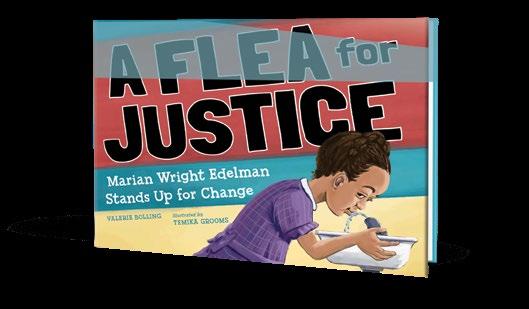
A moving melody of striking visuals and soulful words. 4 Abolition and the African American Story By
Patricia Williams Dockery
Fleshes out an often-oversimplified era with a nuanced web of historical information. 5 Hattie Mae Begins Again By Sharon
G. Flake
A compelling coming-of-age story enriched by its historical texture.
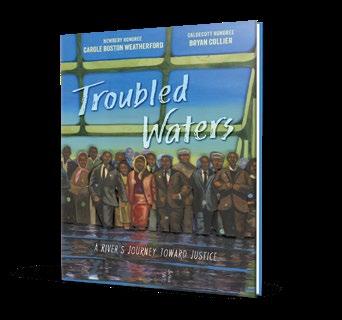

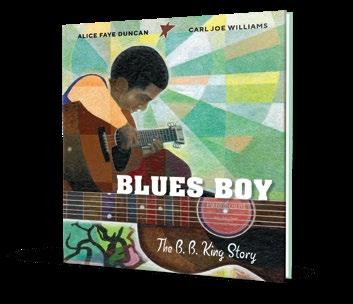
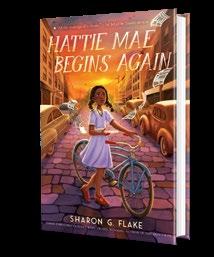

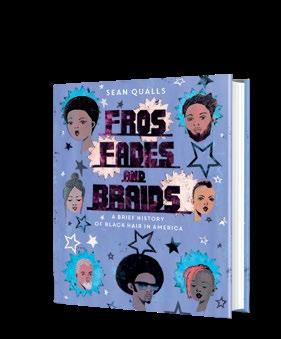
Milford, Kate | Clarion/HarperCollins (480 pp.)
$19.99 | April 14, 2026 | 9781328466914
On a family vacation to an abandoned theme park, two sisters join a quest to right an old wrong and bring Rialto Park back to life.
Fourteen-yearold Ivy Vicar, who loves family traditions, and her 12-yearold sister, Dahlia, an artist who gets help from a therapist to manage her anxiety, arrive with their parents in Missouri, where they’re staying with family friends the Forwanders. Ivy and Dahlia accompany 14-year-old Remy Forwander as he distributes bequests for his late honorary aunt, Jess, who included letters that express her feeling of guilt over the park’s demise when it was rapidly subsumed by a forest. But the kids realize that—as in Tales of the Marchen Wood, the book of folklore Rialto Park was based on—this isn’t the whole story. This mystery drives the book through its powerful final section, in which the quality of ferly, “a mix of the uncanny, the strange, the wondrous,” really takes flight. The book is divided into three parts, and character development and worldbuilding are initially foremost, while the mystery and fantasy elements gain in prominence in the middle section, setting up for a magical resolution. This stand-alone work includes many references to characters from Milford’s The Raconteur’s Commonplace Book, which reward loyal readers, along with nods to Narnia and Winniethe-Pooh. Ivy and Dahlia present white, and Remy is Black.
“Once upon a time, it was magical”: true of the book and its setting alike. (map) (Speculative mystery. 10-14)

Morrison, Laurie | Amulet/Abrams (304 pp.)
$18.99 | April 14, 2026 | 9781419784750
Presented in the form of a dossier, this mystery about a popular eighth grader who goes missing centers around friendship, family, and soccer.
When Ella Hart, captain of the soccer team and Birchfield Middle School’s student council president, goes missing before an important game, her teammates and classmates are mystified—and the note she leaves behind doesn’t help clarify things. The Ella everyone knew would never have missed the “game she’d literally spent eleven months preparing for.” As the evidence unfurls, the question arises: Did anyone really know Ella at all? Sadie Wheeler (a new arrival from Philadelphia whom Ella quickly befriended) and Alice “Pug” Fitzpatrick (Ella’s co-captain) work together to investigate what happened. While Pug doesn’t necessarily like Sadie, considering her a “(sort-of) nemesis,” she understands that they need to team up to solve the mystery of where Ella went and more importantly, why she’s gone. This story is told through pieces of evidence, including emails, text messages, audio transcripts, and journal entries. This format allows Morrison to tell her clever, moving story from multiple perspectives, increasing reader engagement through the appealing variety of voices; the collection of peripheral characters truly make this novel stand out. Ella,
Sadie, and Pug are cued white, and contextual clues signal some diversity in the supporting cast.
Filled with witty banter, this mystery is sure to appeal to soccer fans and aspiring sleuths alike. (character list) (Mystery. 10-14)
Moscardó, Júlia | Tiger Tales (32 pp.)
$18.99 | April 14, 2026 | 9781664300903
Five little goslings take their time getting ready to sleep as Mama Goose spins a bedtime story. White-feathered Mama Goose snuggles up with one of her offspring amid a lush bucolic landscape, “but not everyone is tired just yet.” One gosling gazes up at her; three others are still swimming in a nearby pond. A little one asks Mama to tell the story of Moon’s lullaby. Mama begins: “Moon comes out every night to sing. She sings her song to the rabbits, who scurry in the fields at dusk. She touches their ears and makes them twitch.” At this, one gosling chirps that she can scurry like a rabbit and wiggles her tail. Mama continues, calmly explaining how the moon affects honeybees, grasshoppers, nightingales, frogs, and other animals that live near English ponds. Moscardó’s expertly rendered artwork moves from sundown to dusk as the goslings sleepily imitate the wildlife Mama speaks of. “But soon the evening holds its hush.” Now, under a darkening, moonlit, star-studded sky, Mama describes silent behaviors
For more by Kate Milford, visit Kirkus online.
“Once upon a time, it was magical”: true of the book and its setting alike.
RIALTO
of nocturnal creatures; soothing text and illustrations keep even owls and bats amazingly benign. Finally, Mama says, “Moon comes to my favorite part of the song.” Four goslings have fallen asleep, but the last one awake asks, “What’s your favorite part, Mama?” The tale ends on an ambiguous note, which may temporarily discombobulate some readers, but on the whole, this one’s just right to usher little ones into slumberland. Sweet, poetic, and pretty. (Picture book. 3-6)
Mull, Brandon | Labyrinth Road (528 pp.)
$19.99 | April 14, 2026 | 9780593712047
Series: Guardians, 1
Two young teens with special powers face an ancient evil rising from the very heart of the Tinvali Empire in this doorstopping series opener. Pursued by ruthless agents eager to exploit her mysterious ability to read peoples’ true feelings, Arden—eventually, after many chapters alternating between dual narrators—links up with foundling Mako, a budding music mage who’s carefully hiding the fact that he’s invited an invisible smooth-talking trickster spirit named Narrix to be his lifelong guardian. It seems that some of Narrix’s fellow spirits may be even nastier—and there are ominous hints that they might be sneaking back into the world. Several of Arden’s adventures do more to bulk up the page count than advance the plot in any meaningful way, and though (like many of Mull’s protagonists) she’s a dab hand at snarky banter, she otherwise comes off as a rather wooden character. Readers may find Mako’s journey and conflicts more absorbing, as he struggles to balance the joy of blossoming into an outstanding
warrior under Narrix’s tutelage with the sneaking suspicion he’s made a bad choice of tutor. Whether his concerns are valid or not remains to be seen. The leads present white. Ponderous and protracted, with more work needed on both the world and the characters. (Fantasy. 10-13)
Adventure: 10 Mazes
and Seek-N-Find Games
Munro, Roxie | Schiffer (32 pp.) | $16.99 March 28, 2026 | 9780764370748
Take an interactive romp through the airport. Munro, who knows her way around a maze, here fits a series of them into a simple storyline about a child who’s taking a trip to visit Grandmother, accompanied by Mom and Dad. Written in second person addressed to readers, the book starts at Sunnyside Airport, and from there, we move—never in a straight line!—through departures, check-in, security, airport shops and the food court, and terminals into a wonderfully roomy plane interior. At last, it’s time to take off: “UP, UP, AND AWAY!”
Large, intricate, full-color spreads are rendered in Munro’s familiar style, not drawn with super-sharp outlines but nevertheless perfectly clear. In addition to the winding mazes, each double-page spread includes a challenging list of items to find, including (on each spread) “a copy of this book.” Direct instructions (“After Security, you enter the FOOD COURT and SHOPS. First get a cold drink”) guides readers through the mazes; an answer key keeps frustration at bay while providing useful and reassuring flying facts. The people depicted are diverse in terms of skin tone and ability; the protagonist never appears (the artwork is depicted from the youngster’s
perspective). Whether preparing for a trip or whiling away hours on a flight, readers will find this book absorbing and informative. Keep this one in your carry-on—an activity book sure to make time fly. (Picture book. 4-8)
Negley, Keith | Clarion/HarperCollins (40 pp.) $19.99 | May 5, 2026 | 9780063119833
Despite objections from a growing crowd, a little girl persists in hanging upside down in a tree. Whether they love it or hate it, readers are going to have opinions about this offbeat book. The titular child’s mysterious climb begins on the endpapers, and as she hangs from a branch, people swiftly gather, among them a young boy, the sheriff, and the mayor. They disapprovingly question why she’s in that tree. “It’s not productive!” proclaims a mail carrier. But the girl remains impassive, smiling inscrutably amid the rustling leaves. After the increasingly agitated onlookers insist that she reveal why she’s up there, she gives in, after warning that “nothing will ever be the same again.” Dramatically, their eyes widen, and the mob’s perspective changes. On the next page, they, too, are hanging from the tree. It’s a sly, twisty ending that some will revel in. But readers aren’t let in on the girl’s secret, and not everyone will appreciate that lingering ambiguity. Scribbly multimedia illustrations have an energy reminiscent of Eric Carle’s work, and plentiful white space creates a feeling of gravitas. Refreshing touches of lightness are woven in, too, such as a pup who also ends up nestled in greenery. The girl is pale-skinned and red-haired; her community is diverse.
Thought provoking and visually appealing—and just as enigmatic as the titular girl’s smile. (Picture book. 4-9)
Kirkus Star
Nickel, Sandra | Illus. by Calvin Nicholls
Levine Querido (32 pp.) | $18.99 March 3, 2026 | 9781646145768
Just the fairy-tale facts, ma’am. Taking cues from Hans Christian Andersen himself, Nickel writes in the style of a fairy tale as she chronicles the life of one of the world’s best-known storytellers. Happily, she sticks to the truth, rendering her subject’s early slights, hurts, and disappointments without fabulation or falsity—and with genuine empathy. We watch a young Andersen, misunderstood in his small town, go to glorious Copenhagen, only to find new rejection there as he auditions for the Royal Theater. Nickel deftly weaves in sly references to Andersen’s most celebrated tales (dancers are compared to swans, a choir to a nightingale). His success, when it arrives, feels deeply earned and deserved. Considering Andersen’s own propensity for cut-paper creations, it’s fitting that this book’s artist works in the same medium. Paper sculptor Nicholls is as adept at evoking the blurry reflections of buildings in the water as he is shadowed faces murmuring, and all out of multicolored pulp. This style brings to mind the best work of such artists as David Wisniewski. For most of the narrative, Andersen’s face is masked, shadowed, and hidden, his yellow scarf far more prominent, up until the ultimate moment of
success. This rags-to-riches tale brings the emotional heart of Andersen’s own story to glorious, wonderful life. A resplendently told account of an underdog who triumphs. (author’s note, bibliography, citations) (Picture-book biography. 5-7)
North, Jacob | Simon & Schuster (352 pp.)
$17.99 | February 17, 2026 | 9781665968751
Series: Ice Apprentices, 2
Oswin Fields returns to his school, Corridor, for his second year as an ice apprentice. On an errand in Central Tundra, 14-year-old transgender boy Oswin narrowly evades imprisonment when he’s caught snooping around the Stalagmite Cabin, a sacred structure that houses the ice lungs, which protect the land from monsters. It doesn’t matter that he was following a mysterious voice that uttered a dire warning—or that he saw a woman getting dragged inside the cabin— because no one believes the word of a stray. Pale-skinned Oswin’s trouble continues once he’s back at school. When Master Pin attacks Grandmaster Yarrow, High Watcher Greyheart takes charge, imposing a ruthless ranking system. If Oswin can’t conquer his fear of heights, climb the Wice, and claim his spellbook, he’ll get kicked out of school for good. To make matters worse, Tundra’s winter season, the Freeze, returns earlier than ever—and it’s harsher than usual. With food in short supply, the people of Tundra may be torn apart by brutal,
A suspenseful adventure with a delightfully silly sense of humor.
THE FROZEN CURSE
survivalist beliefs. Picking up with the insatiably curious Oswin already entangled in trouble, this sequel captures readers’ attention with its high stakes and fast pace. Despite Oswin’s age, his antics and the cartoonish villainy of the adults in the story will appeal to the humor of a younger audience. The resolution once again leaves readers bursting with questions about Oswin and the dangerous and quirky world of Tundra. A suspenseful adventure with a delightfully silly sense of humor. (map) (Fantasy. 8-12)
Kirkus Star
Ogle, Rex | Illus. by Dale Valeza | Colors by Ash Szymanik | Graphix/Scholastic (240 pp.)
$14.99 paper | April 7, 2026 | 9781338575071
Series: Four Eyes, 3
“Why fit in when you can stand out?”
This third outing in Ogle’s middle-grade graphic novel memoir series (following 2023’s Four Eyes and 2024’s Pizza Face) opens in the early 1990s with the start of eighth grade. While Rex’s acne is mostly under control, he’s struggling with his feelings—particularly for his friend and classmate Drew and seventh grader Charlotte. As the school year progresses, Rex becomes uncomfortable within his friend group, often feeling like the overlooked hanger-on. Aware of his peers’ homophobia and concerned that he might be gay, Rex begins dating Charlotte, but his complicated interactions with Drew lead to strife in both relationships—and adversely affect his mental health. Exploring new forms of self-expression with guidance from his supportive, cooler-than-cool goth artist friend, Nina, Rex slowly becomes more comfortable with himself and his identity. Returning fans of the series will easily relate to Rex as his nuanced
relationships with his diverse friend group evolve. Even those new to Ogle’s work will find this entry accessible and will likely seek out the first two volumes. Valeza’s artwork impressively captures the vibrant highs and lows of life in middle school through the characters’ expressive faces and body language. The conversations among Rex’s family members—his abuela, mom, and white-presenting stepfather—offer a realistic and complicated look at the emotional impact of life for those struggling with poverty. Funny, sad, goofy, and poignant; a winner. (author’s note, artist’s note, resources) (Graphic memoir. 9-13)
Oldfield, Matt & Seth Burkett | Illus. by Dan Leydon | Candlewick (160 pp.) | $18.99 May 5, 2026 | 9781536252941
Series: The Soccer GOAT
After years of facing off on the pitch, soccer legends Lionel Messi and Cristiano Ronaldo go head-to-head on the page. Oldfield and Burkett—friends and fans of the beautiful game—each argue in favor of their own favorite; Oldfield contends that Messi’s the greatest, while Burkett believes that title goes to Ronaldo. Breaking down the stars’ careers into four categories—character, skills, stats, and contributions—the authors argue their sides compellingly while also offering background information on each, such as the medical issues both faced in their youth. Well-developed portraits of both men emerge as Oldfield and Burkett compare the athletes’ personalities, mindsets, and leadership styles. Showboating Ronaldo (“Yes, Cristiano Ronaldo certainly loves Cristiano Ronaldo”) is nevertheless brave enough to ask for help when needed; though Messi was so shy that he used to change in the hallway rather than the locker
room, he’s always been bold on the field. The authors also break down the players’ technical and tactical skills and analyze key stats, including goals, assists, and trophies. Offering vivid accounts of key matches, the authors make their cases till the bitter end. With their thoughts fully on the table (and the opinions of some of the football world’s biggest stars brought in as food for thought), Oldfield and Burkett leave readers to decide for themselves.
Messi or Ronaldo? Readers of this compelling title match are the true winners. (Nonfiction. 10-14)
Orton, Katharine | Simon & Schuster (304 pp.) | $17.99 | April 7, 2026
9781665982085 | Series: Moon Realm, 1
A moth has a danger-filled vision of the future. Will anyone believe him? Catclaw has always felt alone. Orphaned and mocked by his peers for being dreamy and unreliable, the young mothling looks to his clan leader for comfort and support. Master Saturna’s stories about their history enthrall him: the way the Warmwind triggered creatures to evolve in mysterious ways; the origins of the five uniquely gifted moth clans; the terrifying emergence of predators like the Bluetails, mutated, murderous wasps; the rise of Queen Adeia, who banished the Bluetails; and the betrayal and exile of the Dreamkins, Catclaw’s clan, after their leader attempted to overthrow the Queen. The Dreamkins lost their name and community—and their ability to prophesy. Still, Catclaw holds onto the hope that their visions will return, the clan will be forgiven, and he’ll finally have a place to belong. When the first visions in a generation come to Catclaw, however, it isn’t the joyous occasion he imagined. They’re full of
darkness and loss—and the return of the Bluetails. Can Catclaw warn the other moths and convince the Queen to forgive the Dreamkins before it’s too late? Catclaw’s journey is full of vibrant, captivating worldbuilding, while his battles and the scenes of peril feature age-appropriate body horror, genuine scares, and inventive reveals. In magnifying the insect world and elevating the humble moth, this series opener takes young readers on a heroic epic that’s sure to thrill. An enchanting new adventure. (Fantasy. 8-12)
Ott, Alexandra | Norton Young Readers (288 pp.) | $17.99 | February 3, 2026 9781324083559 | Series: Codebreakers, 1
An autistic girl solves mysterious codes as she and her friends try to retrieve magical artifacts. Emma Avery anxiously enters seventh grade at a new school, Afton Academy. Her stepmom, Jennifer, expects that there she’ll receive “speech therapy and counseling and a bunch of other stuff,” and Emma finds Jennifer’s relentless positivity annoying. Popular classmate Nate Lin notices Emma’s code-breaking talents and invites her to join his group of friends, who call themselves the Codebreakers. At first, white-presenting Emma’s social anxiety takes over, but as she proves her abilities, her new friends reveal the secrets of Sablewood, a mysterious local 19thcentury village. The racially diverse Codebreakers hope to find magical objects hidden in Sablewood by decoding carvings in the ruined village’s stones. Emma’s friendship instincts have been wrong before, and she’s unsure whether to trust them now. She sometimes imagines how easy life would be for “Other Emma,” one without autism, but as the storyline progresses, her interactions and internal monologues show her many strengths and contributions. Diagrams
demonstrate how some ciphers work, which may encourage further exploration, and a bonus cipher for readers to solve adds to the fun. One subplot introduced at the beginning of the story disappears without resolution, but the main storyline progresses cohesively, leaving just enough suspenseful loose ends to pique readers’ interest for the next series entry. A suspenseful mystery novel with a carefully and convincingly drawn protagonist. (Mystery. 8-12)
Owens, Jaylene Clark | Illus. by Brittney Bond | Penguin Workshop (32 pp.) | $18.99
January 6, 2026 | 9780593889732
Hairstyles need to be protected like the Black girls who wear them proudly.
“Ain’t nothin’ in this world like a Black girl and her braids!” proclaims our young, brown-skinned narrator, who champions the undeniable value of her hair and herself. Bond’s bright and detailed digital illustrations showcase the versatility of braids, whether long, short, or tied up in buns. Knotless boho braids, cornrows, goddess braids, box braids with purple ends, and more are depicted, sported by Black girls and women diverse in complexion and ability. Owens writes in verse, often rhyming couplets—“But sometimes we’re told / that braids are not cool. / That they don’t fit in, / that they shouldn’t be worn at school”—that shed light on some of the inequity faced by Black women and girls. Holding a sign reading “Support the Crown Act” (a reference to legislation that prohibits discrimination on the basis of hair texture or style in California), our protagonist advocates for herself and her community, her special hairstyles, and their connection to her culture, her neighborhood, and her family. While this isn’t the first picture book that uplifts Black hair, the thoughtfulness and care shown by the young
activist make for an undoubtedly rich addition to any library that prioritizes equity.
Charming and celebratory. (Picture book. 4-8)
Pasek, Benj, Justin Paul & John Paul Brammer | Illus. by Vanessa Morales Flamingo Books (32 pp.) | $18.99
April 14, 2026 | 9780593693223
An uncertain axolotl searches for his place in the world.
Axl is confused. It’s the first day of school, and he doesn’t know what kind of animal he is or where he belongs. The fish greet each other and head to fish school, the frogs hop to frog school, and the lizards scurry to lizard school, but Axl shares traits with all three groups. Where should he go to school? In his attempts to fit in, things go awry: His gills turn “an alarming shade of purple” when he tries to emulate the lizards by breathing air, for instance. But all the lake creatures gather in concern, ultimately celebrating his uniqueness. Spanish phrases appear naturally throughout (“¡Pobrecito!” “¡Estoy bien!”), adding cultural texture without explanation. Morales’ digital illustrations depict Axl as an endearing pink creature with feathery gills, a long tail, and wide, expressive eyes that effectively convey his worry and eventual relief. The artwork employs varied compositions: Some spreads feature Axl alone against spacious backgrounds emphasizing his isolation, while others use vignettes to show his predicament from multiple perspectives. The underwater scenes are colorfully rendered with deep greens and blues, creating an inviting aquatic world. The backmatter includes more axolotl facts for curious readers.
An affirming story about self-acceptance that will reassure young readers struggling to carve out their niche. (Picture book. 4-8)
Paul, Ruth | Candlewick (32 pp.) | $18.99
May 26, 2026 | 9781536250282
A farmer’s lack of sleep results in barnyard mayhem. Every night, the tan-skinned, dark-haired farmer follows a set order as she readies the animals for bed. “She milks the cow, counts the sheep, sings the piglets off to sleep.” She scurries around, tending to the chickens, the horse, the llamas, the cat, and the dog. But one night, her routine is broken. She can’t find her favorite pajamas anywhere! Without them, the farmer doesn’t get a good night’s rest. The next day, she starts to mix things up—milking the sheep instead of the cow, for instance. The following evening is just as chaotic; she puts the piglets into the chicken coop and accidentally “feeds the chicken a scooper of poop” (a surefire giggle-worthy storytime moment). The animals have had enough. It’s time for them to find a solution. A lively rhythm snaps the tale forward (“And without her pajamas that feel so right / the farmer stays awake ALL night”), in stark contrast to the bedraggled farmer’s big yawns and drooping lids. The vignettes’ bubblelike frames add to the bounce and whimsy. Jumbled hijinks that will inspire chuckles galore. (Picture book. 3-6)
Perrott, Audrey | Illus. by Charlene Chua Abrams Fanfare (72 pp.) | $14.99
April 21, 2026 | 9781419770722
Series: Once Upon a Tail, 1
Living in the fantastical land of La-Dee-Dah, Wallace the horse and Poppy the dragon learn to be comfortable with their preferences while still trying new things.
In the first tale, Poppy pushes back on Wallace’s assumptions about dragons (nope, they don’t all burn down forests and destroy villages) and instead soars while embracing the role of (pretend) superhero. Next, the pair compare the expected diets of dragons and horses; Poppy much prefers banana pudding over the typical dragon meal of “meat and fish and stuff,” while Wallace actually enjoys hay, apples, and carrots. They swap favorites in earnest, a taste experiment that may encourage young readers to expand their own palates. Finally, after Poppy claims to have gotten a haircut (mystifying Wallace, who can’t remember the dragon ever having had hair), both pals compliment something new about the other. The exuberant Poppy’s pink and purple design contrasts with mild-mannered Wallace’s brown fur and spots, but their friendship consistently bridges any differences. Their large, round figures, combined with a low panel count per page, makes navigation a breeze. Fourthwall-breaking humor and concluding gags from a third character, Goat, add a touch of savvy to the odd-couple formula. Readers will come away from this story ready to tally their own superpowers, favorite foods, and fashion changes. Bright artwork brings life to a jovial friendship of gentle contrasts and mutual appreciation. (Graphic fantasy. 6-9)
Petzold, Dave | Beach Lane/ Simon & Schuster (40 pp.) | $19.99 April 7, 2026 | 9781665980715
A child chronicles a family’s adventures over the course of a year as they journey in their converted bus. The bus, named Gracie Joy Rufus Bean, is treated as a character, with her features and routines described in loving detail. Each morning, Mom,
Dad, little Suzy, and the young nameless narrator prepare for a day on the road, rolling up Gracie Joy Rufus Bean’s awning and cleaning her solar panels. As they drive, they notice lizards and birds and stop to explore small towns and swimming holes. The book exudes a strong sense of community as the family learns, plays, and gets help from friendly people along the way. Petzold’s writing is lyrical and sensory, sprinkled with the sounds of calling birds, crackling campfires, and honking horns. In this quiet, slice-oflife story, it’s the art that propels the page turns, thoughtfully shifting perspective by zooming in on crawling caterpillars, pulling back to create a sense of awe under tree canopies and starry nights, guiding the eye down into gorges and up to red-tailed hawks. The rustic illustrations complement the family’s laid-back, nature-forward lifestyle. The experience of bus living is heavily romanticized, with the only difficulty (a flat tire) quickly resolved while the children frolic in a sunflower field. Safety-conscious parents and teachers may note that the narrator sometimes rides in front and both children ride without car seats. The family members are depicted in varying shades of tan or brown. An idyllic slice of traveling life. (Picture book. 4-8)
Thai New Year Celebration
Phumiruk, Dow | Viking (32 pp.) | $18.99 February 17, 2026 | 9781984836014
A child enthusiastically observes Thai New Year festivities. Tida bounds out of bed on April 13, Songkran Day. Tida’s family begins the day by cleansing their hands with fragrant water to “wash away the sins of the old year.” “Water is a big part of the Songkran celebration,” Tida notes, and, later, “a giant water party will fill the streets.” Tida clearly relishes this holiday; the youngster is thrilled
“because I’m finally old enough to help in the kitchen,” but concedes that “it’s hard to slow down when I’m so excited!” Family members gently admonish Tida when the youngster’s exuberance leads to mishaps, like when Tida inadvertently spills peanut sauce all over big sister Lek’s sabai sash—which she had planned to wear to a dance performance that night. But the incident provides Tida a learning opportunity connected to the day’s message of “washing away…mistakes.” Problem solved, the siblings enjoy the town festival and end the day with a feast. Phumiruk’s flat digital and colored-pencil art in muted tones portray the light brown–skinned family’s doings through a mix of vignettes and full-page spreads; her illustrations showcase the Songkran activities referenced. Narrated by Tida, plainspoken text features Thai phrases defined in a glossary. Instructive in nature, this tale isn’t flashy but nevertheless offers critical culturally specific content about the festivities, a welcome broadening of Asian New Year experiences for young readers. Authentic, informative, and jubilant. (author’s note, resources) (Picture book. 4-8)
Pinson, Pauline | Illus. by Magali Le Huche Kids Can (32 pp.) | $18.99 | May 5, 2026 9781525314124
In this French import, a puffer fish—once the butt of every joke—learns to love himself. A huge dimple indents the puffer fish’s face, creating an unmistakable resemblance to a derrière—much to the glee of his fellow undersea residents. In response, he clowns it up, making farting noises so that the other fish laugh with him, not at him. Finally, tired of amusing others while feeling different, he decides to relocate. The undersea depths are “dark and eerie” and populated by some unusual species. Steven, a fish resembling a chunk of Jarlsberg, invites him to a
game of “cheeseball,” and Buttfish happily joins in while privately musing that his opponent is “quite strange— maybe even a bit ugly?” When Steven turns out to be a fun friend with hidden talents, our hero adjusts his opinion: “Steven is unique—and maybe even a bit handsome?” The pair become both popular and useful to other fish, and one day a spiny sea urchin’s positive comment (“Your head looks like a heart!”) upends Buttfish’s assumptions about himself. Matching their neon environment, the fish are wildly colorful; many are unusual shapes. Some are creative riffs on actual species, like lantern fish, sawfish, and catfish, but the wedgeshaped Steven (dubbed a “cheesefish”), while resembling a cow fish, is definitely made up. Buttfish’s journey of burgeoning self-acceptance may be goofy but it’s rife with truths; Pinson’s well aware that even outsiders aren’t immune from judging others. A whimsical and diverting tale of self-love. (Picture book. 4-8)
Quay, Emma | Little, Brown (40 pp.) $15.99 | May 5, 2026 | 9780316590860
This cheery Australian import invites readers to appreciate the small moments that make up a day. As Quay speaks to the importance of everyday pleasures, droplets splash throughout her artwork; they spurt from a water fountain in a colorful arc (“little things, / all day, / filling us up. / Happy on tap— / a half-full cup”) and hang from the ceiling as a light bulb during a snuggly story time (“happy in a stream. / Happy in a trickle. / A lap. / A gap. / A flap. / A tickle”). A diverse group of children blow bubbles, go swimming, and gather for storytime; the droplets cluster like leaves among the tree branches and can be glimpsed in the
flicker of a flame on a birthday candle or a dollop of ice cream on a sugar cone. Quay’s loose-lined watercolor strokes quiver with whimsy, accompanied by bouncy, staccato rhymes; even readers too young to fully understand the intended message will delight in these sounds. Details that reflect the book’s Australian origins—a seed is referred to as a “pip,” and children play the board game Chutes and Ladders—are effortlessly folded into the playful narrative.
A needed reminder that simple pleasures bring the most joy.
(Picture book. 3-6)
Rand, Doug | Illus. by Paweł Gierliński Kar-Ben (32 pp.) | $19.99 | March 3, 2026 9798765668481
The lesser-known holiday of Shavuot waxes despondent over its lack of recognition.
In a quest to find its purpose, Shavuot leads readers through a year of Jewish holidays. Common ground between the holidays is discovered (“We both honor fruit—so come on, let’s be cheerful!” points out Tu B’Shevat) as Shavuot struggles to find what sets it apart from the rest. Shavuot admires holidays such as Passover for its deep traditions and Hanukkah for its popularity (“You started out small-time, but look at you now!”) and wishes to be more like them. The others explain that Shavuot is an important holiday because it commemorates the Jewish people receiving the vital gift of Torah from God. Rescued from despair, Shavuot empathizes with Shemini Atzeret, a holiday that receives even less publicity. Anchored by the titular refrain, Rand’s bouncy rhyming text offers a solid explanation of Shavuot with a creative twist. In Gierliński’s bright and playful illustrations, the Jewish holidays are personified by their symbol. Passover is a piece of
matzah, Rosh Hashanah is a round challah, and Shavuot is a pitcher of milk. Backmatter explains that dairy foods are eaten on Shavuot; it also offers more information about Shavuot but not about the myriad other holidays mentioned in the book, which may be confusing to some. Humorous and sweet—made especially relevant by the relatively small number of picture books on the topic. (Picture book. 3-6)
Rao-Robinson, Anitha | Illus. by Chaaya Prabhat | Viking (40 pp.) | $18.99
March 17, 2026 | 9780593624371
A young girl reconnects with her Indian heritage while dancing Kathak. While preparing for ballet class, Neela spies her Indian dance clothes. She loves ballet and the new friends she’s made since moving from India, but she misses the jingle of her ankle bells. They remind her of the raga her grandmother sang and the bansuri flute her uncle played—and of Kathak, an Indian classical dance. At her dance studio’s annual showcase, she chooses to perform a Kathak dance. It’s been a long time since she danced Kathak, and she fumbles while practicing, but slowly the tinkling of her ankle bells centers her. On the day of the showcase, the rhythm of the bells fills her with music, and she’s flooded with memories of picking fresh mangoes, making garlands with aunties, and drawing rangolis with loved ones in India. Neela then incorporates ballet moves into her performance as she creates a dance fusion that celebrates both her homes. Rao-Robinson’s affirming, sensory-rich text flows evocatively, while Prabhat’s vibrant illustrations make vivid use of shadow and gesture to capture the energy of the dance and create joyous movement. A thoughtful take on bridging cultures and expressing emotions through art. (author’s note) (Picture book. 4-8)
A slice of Jewish life, passed down from one generation to the next.
DELI DAYS
Riordan, Rick & Mark Oshiro
Disney-Hyperion (448 pp.) | $21.99
September 23, 2025 | 9781368109116
Series: The Nico di Angelo Adventures, 2
T he roles of heroes and monsters get even more complicated in this spinoff sequel from the Percy Jackson universe. When Nico di Angelo, the son of Hades, and Will Solace, the son of Apollo, accept the call to help Nico’s half sister, Hazel Levesque, they don’t know what awaits them at Camp Jupiter, a Roman demigod camp in California’s East Bay. Inspired by Nico and Will’s rescue of Bob the Titan in Tartarus, mythics have chosen to forgo their former monstrous roles in favor of a peaceful life, seeking refuge at Camp Jupiter—to the outrage of some campers. To smooth over tensions between the demigods and the former monsters, Nico and Will support Hazel’s efforts to promote harmonious coexistence. But then, one by one, the reformed mythics start to go missing. Determined to save their new friends, Nico, Will, and Hazel expose the rogue efforts of the culprit that’s seeking to punish mythics who have eschewed their evil roles. When Hazel becomes a target, Nico and Will must confront the truth behind these events. Set a few months after their journey through Tartarus, Nico and Will’s well-developed adventure overflows with good-natured humor, thanks to the co-authors’ continued focus on the characters’ interpersonal relationships. The
affection between Nico and Will, who present white, is at its sweetest. Although the first half of the book meanders, the mythical scales tip into the sublime as the tale progresses. Satisfyingly epic. (glossary) (Fantasy. 10-14)
Rothberg, Jenna | Illus. by Marta Pantaleo Scribble (40 pp.) | $19.95 | April 7, 2026 9781964992273
A child delights in preparing and sharing Jewish foods while helping Zeyde (Yiddish for Grandfather) in his deli.
Every Sunday, the young narrator spends the day with Zeyde, assisting customers and learning recipes that have been in their family for years. This Sunday begins “like clockwork”—literally, as each page initially represents a single hour highlighted in bold, and figuratively, as the regulars arrive for their comfortingly familiar favorites. The deli brings the neighborhood together, serving customers who range in age, skin tone, and family composition. All goes well until 2 p.m., when the protagonist drops an entire platter of cookies. Time seems to slow down, as the next five spreads take place over 20 minutes. Zeyde reminds the child that mistakes and misfortunes happen; what matters is how we respond. As they assemble a replacement plate, Zeyde explains how delis themselves are a way Jewish people have overcome struggles and displacement through community. The following day, the narrator is proud to go to school smelling like pickles and
with treats to share. Bright colors and bold, simple brush strokes bring the deli to cheerful life. The pages are full of loving depictions of traditional Ashkenazi foods like borscht, knishes, pastrami, and rugelach. An illustrated glossary describes each dish. Zeyde and the child are pale-skinned. A delicious slice of Jewish life, passed down from one generation to the next. (author’s note) (Picture book. 4-8)
Rowley, Steven | Illus. by Eda Kaban | Putnam (32 pp.) | $18.99 | May 19, 2026 | 9798217001873
Rowley adapts his adult novel
The Guncle (2021)— a warm and witty tale of loss and family— into picturebook format. Siblings Maisie, 9, and Grant, 6, are spending the summer with their caftan-wearing GUP (Gay Uncle Patrick) under the warm, sunny blue skies of Palm Springs. The kids are still reeling from the death of their mother, while GUP is confronting a loss of his own (in the original book, his partner died; here, a framed picture hints at the source of his grief). But GUP is determined to cheer everyone up with some perfectly fabulous activities: taking a dip in the pool (filled with oversize floats shaped like Popsicles, doughnuts, and fruit), visiting a dinosaur-themed roadside attraction, and adopting a rambunctious puppy. Nothing works—until an impromptu Christmas in July celebration in the balmy heat elicits smiles. And on the children’s last night, GUP reassures them that while in the future, festivities may feel different, “There’s nothing wrong with that. It’s okay to make up new rules to help you heal.” Young readers with LGBTQ+ family members who live unapologetically out loud will see themselves in this earnestly told story, though others may be put off by the slow pacing and lengthy, at times
didactic text. Though Rowley emphasizes the characters’ collective loss, Kaban’s pencil and gouache art features wide-eyed, expressive faces that typically read as disappointed or bored. The main characters are tan-skinned.
Gently soothing but may struggle to hold readers’ attention. (Picture book. 4-8)
Salh, Shugri | Illus. by Àlàbá Ònájìn
Roaring Brook Press (40 pp.) | $18.99 January 27, 2026 | 9781250340207
A young nomad living in the desert of Somalia reaches a significant milestone. Every morning, Suuban helps feed the goats, the camels, and the sheep. But she longs for the day when she can herd the goats all by herself. Her ayeeyo (grandmother) says she’ll be ready when her two front teeth fall out. Meanwhile, she practices herding the baby goats around the huts. Time passes. The rains fall, the frogs sing, and finally Suuban’s front teeth are gone! And on her first day herding the goats by herself, she follows Ayeeyo’s instructions carefully to protect the animals from the sneaky fox and other dangers of the desert. Suuban is a darling protagonist whose eagerness is tangible and contagious. Readers will cheer her on and will be impressed by her courage. Depicting both sunny sweet daytime scenes and lush nighttime moments, Ònájìn’s illustrations endearingly portray both human and animal characters and evoke the vastness of the desert. Thoughtfully grounded in the child’s perspective, Salh’s third-person narration blends with the art for a moving glimpse at a deep, respectful relationship between grandparent and grandchild and the desert that they call home. Readers will crave more of Suuban’s
adventures. In an author’s note, Salh describes growing up in Somalia with her own grandmother. An utterly enticing tale of independence, growth, and familial bonds. (Picture book. 4-8)
Sánchez, Kiko | Trans. by Marc Correa
Helvetiq (48 pp.) | $24.95 | May 5, 2026
9783039641246
Cutaway views reveal a dazzling worldwide gallery of vaults, tunnels, shelters, and excavations in this work translated from Spanish. From ancient wonders like a 60-mile-long subterranean aqueduct in modern-day Jordan to Boston’s Big Dig—“a world-famous example of badly managed urban engineering”—and Tijuana drug traffickers’ air-conditioned “narco-tunnels” into the U.S., each of these 21 projects pairs frank (and mostly appreciative) remarks about needs, challenges, and building techniques with precisely laid-out drawings and close-ups. Most of the selections are massive technological feats, such as the Large Hadron Collider and the eight-mile-deep borehole on Russia’s Kola peninsula, but even the short tunnel cut through a fallen sequoia trunk in California stands (so to speak) as a notable achievement. How accurate some depictions are may be questionable, particularly for the unmapped medieval tunnels under Dover Castle, but tiny figures of busy workers, residents, archeologists, and commuters bring them all to life and invite viewers to look more closely. Explanatory captions and well-chosen inset details illuminate finer details of construction and design. Except for 3-D printed “Marsha” habitats proposed for giant caves on Mars bringing up the end, nearly all of these
fascinating facilities are accessible and at least theoretically still in use or currently under construction. Enthralling fare for fans of engineering marvels. (glossary) (Informational picture book. 8-10)
Sanders, Rob | Illus. by Izzy Evans Beaming Books (40 pp.) | $19.99 May 5, 2026 | 9798889834915
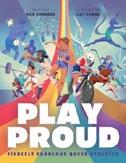
Sanders blends poetry and profile as he spotlights 60 queer athletes. Bouncy rhyming verse covers individuals across history, from household names like tennis player Billie Jean King to potentially less familiar ones, like track star Dr. Tom Waddell, who founded the Gay Games in 1982. Sanders introduces each boundary-busting athlete by first name only and devotes a single sentence to each, punctuated by occasional generalized inspirational stanzas. While the main text is light on concrete information, the backmatter provides full names and brief factual bullet points for each athlete. And because Sanders often doesn’t mention what sports these players excelled in, readers must rely on Evans’ brightly colored illustrations for context clues. The bold, kinetic images depict athletes in peak action, layered over swaths of color or shared backgrounds that sometimes visually link disparate sports within the same spread, such as horseracing, BMX, and NASCAR. A glossary of queer terms is also included, though many of the terms are never used in the text. Appealing visuals and satisfying rhymes make for an entertaining sports read. Featured athletes are diverse in race and body shape.
A fun and lively read-aloud, featuring an all-star lineup. (author’s note) (Informational picture book. 4-8)
Sarason, Rhea | Illus. by Barroux Harper/HarperCollins (112 pp.) | $16.99 March 31, 2026 | 9780063446199
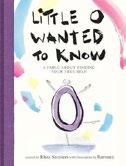
Lowercase letter o embarks on a physical and emotional journey.
“Once upon a line, / o sat before p, and n was behind.” But o doesn’t care for the rigidity of alphabetical order, and don’t get her started on the Alphabet Song: “Must we sing the song this way? / What if we sung it from z to a?” In frustration, o rolls off and ends up in a land of shapes, but still she doesn’t fit in, which undermines her self-esteem. This letters-as-characters story won’t be mistaken for Chicka Chicka Boom Boom —it’s self-help intended for kids, and though it’s well meaning, it’s too long and meandering and on the didactic side. The narrative, which has its roots in a viral TikTok video, culminates with o realizing that she’s actually Zero, after which there’s some straining for Seussian uplift, and by this point, Sarason seems to have given up on trying to make her rhymes scan (“Finding a place within herself, / O made her dream come true.… // And if you look close enough, / you’ll find O within yOu.” Barroux does what he can with a cast restricted to letters, shapes, and, eventually, numbers, rendering each with a single color (o is purple), skinny limbs, and pingpong-ball–like eyes with dot pupils. The characters go about their business on flower-speckled green grass,
without which this story, which is largely set against open space, might look rather dystopian.
Uplifting but rambling. (author’s note) (Picture book. 4-8)
$18.99 | April 28, 2026 | 9780593752395
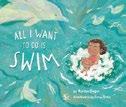
What would it be like to swim among water creatures?
The brownskinned young narrator of this story has taken swimming lessons, “but they just aren’t any fun. / We swim back and forth the whole time— / I’m always glad when we are done.” As the child sits on the edge of a lakeside dock, tentatively dipping toes into the water, watching turtles and fish, the little one wonders: “Could I swim like them?” The answer is a triumphant yes as the child leaps in, following the turtle, then a duck, mimicking their motions. The youngster imagines—and imitates— other animals, depicted as translucent white figures: a hippo, a penguin, a dolphin, and a frog. With arms outstretched, the youngster moves among them, flying to the surface, flipping and jumping, feet kicking. By story’s end, the child has learned to love swimming: “In a pond / or in the ocean, / in a pool that’s in the gym. // In the winter, in the summer, // all I want to do is swim!” Singer relates this simple tale in verse, generally relying on a gentle ABCB rhyme and centering the child’s thoughts and fantasies. In Uribe’s
artwork, the water is the center of the action—a lovely blue-green lake, sparkling, and glowing with sunlight, and apparently part of a family property. The young protagonist’s every movement is imbued with emotion; readers will be charmed. Tender and uplifting. (Picture book. 3-6)
Skrypuch, Marsha Forchuk
Scholastic (288 pp.) | $25.99
October 7, 2025 | 9781546104568
Series: Kidnapped From Ukraine, 2
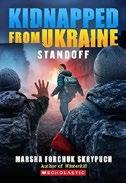
Continuing the story begun in Under Attack (2025), this novel centers on 12-year-old Rada, Dariia’s twin sister. The first book, which was told from Dariia’s point of view, detailed her and her mother’s struggle to survive when their apartment building in Mariupol, Ukraine, was bombed by the Russians while they were out shopping for food. This sequel, which opens on February 24, 2022, tells the story from the perspective of Rada after she and her father are trapped in their apartment following the same missile strike. Rada and her father make a perilous escape from their damaged building and head to Azovstal, a steel plant with underground bunkers. There Rada’s father installs her with neighbors and leaves to join Territorial Defence, the Ukrainian resistance. The story unfolds primarily in bunkers, and Skrypuch effectively relays the inhabitants’ physical suffering: There isn’t enough food, it’s cold, and the bathroom facilities are primitive. But with little to do and nowhere to go, the characters’ emotions and conversations must carry the story, and they don’t succeed. There are obvious infodumps, and the dialogue is wooden and stilted. Those weaknesses aside, the story’s central theme— namely the disastrous and inhumane
effect of war on civilians, in particular children—is an important one, and the story holds true to the facts of the sieges of Mariupol and Azovstal. Lacks the gripping action of the series opener but conveys a valuable message. (author’s note) (Fiction. 10-14)
Slater, Dashka | Illus. by Sydney Hanson
Farrar, Straus and Giroux (40 pp.)
$18.99 | April 14, 2026 | 9780374392291
Series: Escargot
Methinks the gastropod doth protest too much. Grab your pjs, toothbrush, and sleeping bag, because everyone’s favorite snail is inviting you to “a soirée pyjama”! Now starring in a fifth adventure, Escargot is quite the self-described expert on everything sleepover. There are movies to watch and snacks to eat. There’s also one activity that is forbidden: falling asleep! Luckily, Escargot has a foolproof plan to postpone sleep. Anytime readers see the snail starting to drift off, they are to yell, “WAKE UP, ESCARGOT!” As time passes, Escargot begins to fade, but our tiny hero initially refuses to admit defeat: “Probably you were sleeping and you dreamed that Escargot was asleep.” But finally, Escargot capitulates to exhaustion—and perhaps readers will, too, lulled by the sleepy snail’s soothing words: “Let us close our eyes and maybe also our mouths….But first, I must give you a kiss good night. Mwah! ” With oversize, Disneyesque eyes and ineffable charm, Escargot is cuteness incarnate, while Slater’s peppy narration is a delight. Consider reading this book at storytime in a French accent. The book includes both familiar French terms and those likely to be new (like doudou for “stuffie”).
Magnifique! An ideal choice to share before a child’s first sleepover. (Picture book. 3-6)
Smith, Brady | Penguin Workshop (208 pp.)
$23.99 | $13.99 paper | April 7, 2026
9780593751152 | 9780593751169 paper
Series: Maxwell Dark, 2
A mysterious boy finds his family in the nightmare world.
In the first book in the series, Maxwell—an emo-goth kid with a dramatic black fringe obscuring his face and a special talent for entering dreams— tried to save a troubled girl from nightmares, only to learn that her subconscious monsters were specifically seeking him out. In the same story, Maxwell reflected on his past: while living in an orphanage, his sister, Gwen, mysteriously disappeared into the nightmare world. This latest installment sees Maxwell experiencing his own harrowing dreams, which tie the plot’s threads together. In one vision, Gwen reveals herself as a reptilian horror with a forked tongue and razor-sharp fangs. She leads him to a man who tells him he’s their father, then transforms from a milquetoast polo-shirted professional into a cross between a swamp monster and Dracula: the Bogeyman! He explains that the time has arrived to crown a new Bogeyman, ordering the siblings to compete in a series of challenges for the title. But Maxwell’s a good kid—he tries to stop people’s bad dreams, not cause them. This entry adopts a more linear structure than the previous volume, but visual riffs on the trippiest stuff of subconscious
horror remain playful, plentiful, and colorful. Maxwell is tan-skinned; his father and sister are lighter-skinned (when not monsterfied). Monstrous family matters drive this exuberantly eerie tale. (Graphic paranormal. 8-12)
Smith, Heather | Illus. by Kass Reich Tundra Books (40 pp.) | $18.99
June 16, 2026 | 9781774886632
Alex forms a fierce attachment to a butternut squash that once grew in Grandpa’s garden. This versatile buddy morphs into an assortment of imaginative playmates. “When my butternut squash is not a baby, he’s my twin.” Reich’s gentle but lively gouache and colored-pencil art depicts Alex interacting with the squash as he transforms into a pirate, a fairy, and a doctor—he’s an all-round companion. Alex’s tolerant parents play along; tucking Alex and the squash in at night, Dad remarks, “Night night, little buddies.” Smith’s perceptive text subtly hints at Alex’s insecurity about joining playground activities, with the squash acting as a shield to protect the child from perceived bullies. Then sympathetic classmate Trudy approaches and immediately accepts the squash as a friend, commenting that her best friend was an alarm clock until it broke. Smith conveys both tender humor and an acceptance that Alex may not need the squash forever as the protagonist exclaims, “Someday my butternut
Magnifique! An ideal choice to share before a child’s first sleepover.
GOOD NIGHT, ESCARGOT
squash will be compost,” to which Trudy cheerfully replies, “At least he’ll go naturally.” But until that day, in a sweet and sensitive conclusion, the squash remains a friend to both, and sometimes they pretend he is an alarm clock. Alex is tan-skinned; Trudy is brown-skinned.
An engaging tribute to the value of best friends no matter what shape they take. (Picture book. 4-8)
Smith Jr., Charles R. | Candlewick (48 pp.)
$16.99 | March 24, 2026 | 9781536234879
Series: Sports Royalty
The king of sports poetry returns to tackle the world’s most popular game. Hot on the heels of his Soccer Queens (2023), Smith pays tribute to the best male soccer players from around the world. Some subjects get their own poems, while others (like a quartet of goalkeepers) are placed together. Meanwhile, vibrant photography shows athletes leaping, kicking, diving, running, and generally in the thick of the sport they play so well. While always reflecting the energy of their subjects, some poetic prompts work better than others, as when a Harry Kane chant fails to scan properly. More successful are the acrostics and call-and-response poems, as well as the less familiar ghazal, sijo, and Sapphic stanzas (each meriting its own description in the backmatter). In “Player Notes,” Smith offers additional information about the subjects and explains why each form was chosen, though he eschews other details, like the team each person plays for. Fans will also certainly have their own opinions; Lionel Messi is “arguably the greatest footballer of all time,” while Cristiano Ronaldo is merely a player most people know “by one name.”
Gives poetry a kick in the pants and definitely reaches its end GOOOOOOOOAL! (photo credits) (Poetry. 6-9)
Sosa, Daniela | Beach Lane/ Simon & Schuster (40 pp.) | $19.99 May 12, 2026 | 9781665961981
A rich recognition of the things that make ordinary days special. Familiar daily activities—cooking, playing, going to school—occupy adults and children, diverse in skin tone and hair color. Hours spent sick in bed drag, while a day at the amusement park “go[es] by in a wink.” On some days, strenuous effort (like that required to master riding a bike) seems futile, until “it all finally clicks.” Surprises, disappointments, change, rain, sadness at the loss of a pet: Sosa explores the events—and non-events— that make up life. Tears come and go, and sometimes we even exult, “This is the best day ever!” Finally, a grown-up and child snuggled up for a bedtime book consider a most kind and attentive question: “How was your day?” Sosa’s conversational text is rhythmically right, and her bright illustrations are warm and realistic, with just enough detail and reassuring continuity; the adult depicted in the first illustration returns as the reader in the last. Books, bowls of cereal, a snowman, an ever-present cat: Readers will smile in recognition at these familiar trappings. And Sosa sensitively acknowledges that “the same day can feel very different to different people”—a raucous birthday party might be overwhelming to quieter children. Bad days will pass, and so will good days. This book helpfully reminds readers to be both hopeful and grateful—to anticipate better things, but never to take those good things for granted.
Offers readers young and old the invaluable gift of perspective. (Picture book. 4-8)
Soundar, Chitra | Illus. by Sophie Bass Candlewick (32 pp.) | $18.99 | May 5, 2026 9781536246599
A celebration of individuality. Written in rhymes with a fluid, musical cadence, this read-aloud-friendly book has a clear
message: Be yourself. Soundar encourages readers to embrace a variety of roles, some specific (“You might be the early bird / who gets it all done / or the noisy night owl / having tons of fun”), others more opaque (“You might be the seed planted in a row / Or the acorn from which a great oak will grow”). Around halfway through, the voice changes from second to first person, moving to an almost defiant, self-advocating positivity: “Don’t put me in a box / or color me with / your brush. / Don’t silence my voice / or ask me to hush. / Don’t call me names or give me labels. / If you won’t make space, I’ll make my own table.”
This shift elevates the book from didactic affirmation and leads to a conclusion that validates young readers’ emotions alongside their identities. Bass’ art—relying on bright, bold colors and swooshy shapes that evoke motion—features children who vary in skin tone, cultural markers, and ability; one youngster uses a wheelchair, another relies on a cane, and a third uses hearing aids. Rich in detail, the illustrations maintain a celebratory air throughout.
An uplifting message, bolstered by playful art and energetic text. (Picture book. 4-8)

Suddendorf, April | Flying Eye Books (32 pp.)
$17.99 | April 7, 2026 | 9781838740795
In this U.K. import, a curious alligator explores a home while its human inhabitants are away. Gary loves his soggy pond, but he’s got bigger aspirations. Certain that the humans in the big pink house up the hill must be hiding the murkiest swamp and most delectable fish, he sneaks inside through the cat door to find out. Like a reptilian Goldilocks, Gary slithers uninvited from room to room tasting the snacks (“WAY oversalted!”), flopping into a bubble bath (“tiny, boiling hot and pungently scented with lavender”), and quickly realizing these humans do not live the good gator life. His alligator tears (“which are very different from crocodile tears”) are interrupted by the sudden return of two big humans and a smaller one. How will Gary escape the miserable pink house and return to the comfort of his squelchy swamp? Suddendorf’s text hilariously reflects Gary’s naïve perspective on human life; even more delightful are the vintage-feeling illustrations. Gary’s twisted body positions and dramatic expressions are endearing and full of movement. Every spread is packed with charming details that readers will want to pore over and giggle about. With a perfectly timed final punchline and recognizable parallels with “Goldilocks and the Three Bears,” this one will guarantee laughs at storytime. Two humans are brown-skinned; one is pale-skinned.
The spirited tale of the most adorable interloping gator you’ll ever meet. (Picture book. 3-8)
Swanson, Matthew | Illus. by Robbi Behr
Knopf (320 pp.) | $17.99 | April 14, 2026
9780593704721
A lonely 12-yearold grieving his parents’ breakup finds his purpose on the Moon. Leo Brightstar, his dad, and his dad’s friend Sally are the vanguard of a new lunar colony. As soon as they arrive, the adults are dispatched on a mission, leaving a confused, hurting Leo alone. He rapidly learns that the Moon has its own rules, both those enforced by the Constable, and those followed by the Moon’s indigenous life forms—who, by existing, break the Constable’s first rule: “There is no life on the Moon.” Swanson’s Constable could be the direct descendant of Lewis Carroll’s Queen of Hearts, and the Moon is as seemingly nonsensical as Wonderland. Leo befriends a Valrooten, an impossibly cute, tentacled creature whose destiny is to be eaten on its birthday by a Hortle, “an extremely large mouth with three stumpy legs.” This is the fate of all 354 Valrootens: One is eaten each day, resulting in an endless cycle since a new Valrooten is also born every day. Leo decides that saving the Valrootens from the Hortles will be his mission; mystifyingly, the Valrootens want none of it. Employing a light touch, Swanson tackles colonialism and ecological balance, but the story’s
The spirited tale of the most adorable interloping gator you’ll ever meet.
heart is Leo’s painful acceptance of what he cannot change. Behr’s plentiful, amiable cartoons depict most human characters with pale skin, and a key secondary character presents Black.
A heartfelt human story on a not-solifeless Moon. (discussion questions) (Science fiction. 8-12)
Targosz, Shana | Aladdin (464 pp.) | $18.99 March 24, 2026 | 9781665957663
Series: The Underwild, 2
After using an ancient Greek relic without permission, a Living girl finds herself stuck in the realm of the Dead trying to save her best friend, in this second book in the Underwild series. Anya didn’t mean to land both herself and bestie Lizzie inside a Greek myth. After eavesdropping on a conversation between Hecate, the goddess of ghosts, and Senka, a girl from school who’s Charon’s ward (and the protagonist of 2025’s River of Spirits), Anya learns that the Keys to the Realm can open doors everywhere. Desperate to see her dearest friend, Korean American Lizzie, who recently moved to a different state, Anya steals the keys, not realizing she’s breaking a Law of the gods, putting both her life and Lizzie’s in jeopardy. When the Furies take Lizzie, Anya teams up with Senka for a rescue mission. They must accomplish their goal before Lizzie and Anya lose their memories, which is a side effect for Living mortals of being in the realm of the Dead. Along the way, Anya and Senka, who present white, meet a cast of famous and obscure Greek gods, goddesses, and creatures as they brave the perils of the Underworld to save Lizzie. Brilliantly
flipping the narrative of the myth of Hades and Persephone, Targosz’s narrative masterfully weaves Anya’s pain and healing from familial wounds into the story. The book gracefully and age-appropriately handles challenging topics. A captivating exploration of found family and healing through Greek mythology. (The Laws of the Relics) (Fantasy. 9-13)
Taylor, Sarah Todd | Nosy Crow (224 pp.) | $9.99 paper | February 17, 2026 | 9798887772318
Series: Alice Éclair, Spy Extraordinaire, 3
Young pastry chef and spy Alice Éclair’s latest mission takes her to a film set at the Palace of Versailles, where she must discover who’s passing maps to the enemy— before the culprit discovers her identity. In this third series entry set in interwar France, Alice’s spy mentor, Claude, is sure that American movie director Glen Carmine is the one smuggling information to the Germans and getting French agents caught, but Alice isn’t so sure. New spy recruit Pierre isn’t a team player, so Alice is on her own—at least until journalist and fellow spy Stella Blyth joins her. With her natural cleverness, pastry skills, and a few pieces of neat tech—spy camera, radio, flare—Alice surveils the set, but someone is making attempts on her life, so she has to work quickly to determine who’s guilty: the director, glamourous star Catrine Bell, the cameraman, or someone else? The stakes are high in this fast-paced addition to the series; the plot is complicated enough to be interesting but not too hard to follow, and the snowbound Versailles setting is enticing, as are Alice’s sugar creations. Alice faces sexism and ageism in 1930s Europe but proves she’s more than up to any task. Fans will enjoy this strong entry in the series, and new
readers can easily jump right in. Characters read white.
A sparkling mystery. (Historical mystery. 9-13)
Teague, Mark | Beach Lane/ Simon & Schuster (40 pp.) | $19.99 March 24, 2026 | 9781665990769
There are strange doings at Old MacDonald’s farm, so animal control comes to investigate. Brown-skinned Officer Busby starts with an inquiry about a rabbit. “Little fellow in a blue coat?” Knowledgeable readers will recognize that suspect as Peter Rabbit, but that’s the wrong farm, as pale-skinned Old MacDonald, clad in overalls and a straw hat, points out. No, the criminal activity here is far worse. The cabbages have painted faces, corn’s been dumped in the pond, and “pizzas keep getting delivered to my goats” (“They love the boxes”). Someone’s drawn mustaches on the cows, the chickens are wearing funny hats, and the horses have zebra stripes. Bits of the usual refrain (“a moo-moo here, a moo-moo there”) show up in the dialogue, but Busby is all business. She knows a gang of “silly” creatures, which include a skunk, an armadillo, a porcupine, and a toad, frequenters of novelty shops where they buy their practical jokes. The officer also gives Old MacDonald bad news. Not only will the gang attack annually on April Fools’ Day, the day of the story’s events, but they’ll be back with more surprises on the nation’s birthday. Cleverly riffing on the popular children’s song and also giving the story wryly humorous Law & Order vibes, Teague’s text will work well as a read-aloud for group and one-on-one sharing alike. Colorful acrylic illustrations are amusingly exaggerated, especially the expressions on the human characters. Here a ha ha, there a ha ha— this one’s bound to elicit chuckles. (Picture book. 4-8)
Todd, Brandon | Dial Books (48 pp.) $19.99 | May 12, 2026 | 9798217114672
No, flamingos do not dress in pink and stand on one leg to practice being ballerinas.
Todd invites younger readers savvy enough to join would-be know-it-all Frank E. Armadillo, a positive font of misinformation (“What is sand? Old SANDwich crumbs. Obviously”), in getting the straight poop on these underappreciated birds from a friendly feathered representative. Rising up from a clump of bushes in simply drawn, humorous cartoons, the perky pink narrator begins by explaining that, no, a nearby group of flamingos is officially not a “flock” but a “FLAMBOYANCE!” Notwithstanding their graceful appearance, the stilt-legged waders sound and look anything but dainty while eating and nesting in the mud, too. Moreover, they live in a wide range of wetlands from frozen to tropical, and their hue comes not (as Frank guesses) from eating pink cotton candy, but from shrimp and algae that they scoop up with beaks that “work best upside down.” Why flamingos stand on one leg must remain a “flamingo secret,” since no one knows. Still, by the end of the story, Frank has learned a lot about flamingos—and Frank won’t be the only one. Before the avian explainer carries the enchanted armadillo off on a closing flight, the larger message that continuing to ask good questions is the mark of a “true expert” comes through clearly, too. Facts replace fancies in this droll Q&A. (Informational picture book. 6-8)

Tran, Phuc | Illus. by Pete Oswald & Saba Joshaghani | Harper/HarperCollins (32 pp.)
$18.99 | April 28, 2026 | 9780063469099
Series: I Can Read!

How can one naughty kitty upend an entire construction site?
Cranky the crane truck—last seen in the picture book Cranky Makes a Friend (2025)— and the other vehicles are hard at work building a new playground when they notice that things seem seriously awry. Paint cans have been knocked over, and tiny footprints are everywhere. All too soon the perpetrator, a small gray cat, makes herself known. The kitty quickly attaches herself to Cranky and causes more chaos: scratching the new beams, climbing the ladder on a newly installed slide, napping on the boxes containing the monkey bars, and, worst of all, making off with Cranky’s lunch. But when it’s clear that she enjoys Cranky’s company, our grumpy protagonist softens toward the animal (“It’s hard for me to stay cranky when there’s a purring cat on my head”) and officially dubs her “Bad Cat.” Though labeled an easy reader, this tale relies on potentially complex words such as mystery, whistle, and pickles . Nevertheless, the storyline reaps maximum fun from its adorable trickster, who believably turns Cranky’s mood around. The art remains simple and uncomplicated, reveling in Cranky’s general gloom and annoyance and Bad Cat’s playful exuberance.
Mischief and mayhem abound where sly cats are involved. Holy chisels, this is fun! (Early reader. 5-7)
Vaisberg, Diego | duopress/Sourcebooks (40 pp.) | $18.99 | April 7, 2026 | 9781464233630
A tough Viking faces an even tougher choice: combat or the culinary arts. Pale-skinned Gunnar is a burly bearded battlefield star whose life is spent “fighting one war after another.” But there’s something missing. Living in the northern mountains, he’s tired of his diet of “raw fish with stir-fried stones.” While journeying in the south (on an apparently peaceful mission), he encounters an unfamiliar smell from an abandoned cabin: pizza grilling. The taste is so sumptuous that Gunnar is determined to re-create it back home. Pizza gives him purpose. Repeated attempts to produce the dish, however, all end in failure. Vikings don’t like defeat, so Gunnar calls on “effort and patience” and is finally rewarded with “a delicious masterpiece.” Friends and enemies alike are enchanted by this innovation. Gunnar’s supposed agony over whether to choose a future as warrior or as chef never really leaves us in suspense: His persistence is a big clue that pizza will win. The ebullient art is the true star of the show. Vaisberg makes the most of red, violet, and green. Nonnaturalistic but convincing Viking figures sport Norse accessories in a very stylized but recognizably Scandinavian
setting. Munnin, Gunnar’s trusty raven, adds another authentic touch, while scenes of Gunnar knitting are especially humorous. And a pizza recipe (with advice to seek help from adults) provides a delicious extra. Hearty lessons in perseverance. (Picture book. 4-8)
Kirkus Star
Valckx, Catharina | Trans. by Antony Shugaar | Gecko Press (124 pp.) $18.99 | May 5, 2026 | 9798348024192
Who knew immortality wasn’t all it was cracked up to be? And it seemed like such a good idea at the time. When paleskinned, dark-haired Edith is born, her parents have her blessed by not one, but two fairies. The first gives her the ability to bring objects to life; the second provides her with the “gift” of eternal childhood. But staying a 10-year-old forever turns out to be a bore. When Edith, still to all appearances a kid, reaches 100 years of age, she decides that things must change. After she brings to life a lemon whom she names Squirt—and who proves supremely helpful—the two head out with Edith’s talking dog, Bolster, to find a fairy to reverse the cursed blessing. Though the story features succinct chapters and spare text, translated from French, its philosophical underpinnings have a surprising heft. To grow old and die truly is an awfully big adventure in Edith’s case, and one worth fighting for. Valckx’s gentle full-color illustrations subtly show Edith growing up, initially in the 1920s and then pursuing her destiny in the present day. These simply rendered images adeptly highlight the poor girl’s misery (including never having a friend who won’t outgrow her) and
eventual (much deserved) triumph. Few books have felt happier than when a character offers a gleeful, “I’m going to have lots of new problems.”
A sparkling celebration of life rooted in change, aging, and the necessity of death itself. (Fantasy. 6-9)
Comics Collection Vol. 1
Various | Fantagraphics Books (352 pp.)
$59.99 | January 27, 2026 | 9798875001796
Series: Disney Originals
Over a dozen reprinted comics episodes pit Scrooge McDuck against a rogues’ gallery ranging from the burglarizing Beagle Boys to the conniving Magica De Spell.
The illustrated sections in this compilation are prefaced by densely detailed publication histories and analytical essays, making this work feel aimed at older fans and collectors of vintage comics. Still, kids will enjoy following the miserly megatycoon into and out of pickles with crooks or unscrupulous rivals— particularly as his feckless feathered nephew, Donald, and canny grandnephews, Huey, Dewey, and Louie, often trail along to save the day. Species-wise, the cast of villains make up a varied, if duck- centric, lot. They’re led by green- skinned “galactic gulag” escapee Tachyon Farflung and devious Italian spellcaster Magica De Spell, whose efforts to snatch Scrooge’s treasured “first dime” (which of course he still has,
on a pedestal in his office) run through several entries. The colors look bright and fresh both in the panels and in the accompanying full-page cover and poster art. An early content warning advises readers that the stories—first published between 1951 and 2013—may contain “cartoon violence, historically dated material, or gags that depict smoking and gunplay” as well as “stereotypes or negative depictions.” Adults can help young readers unpack this content—for example, a reference to “a settlers’ refuge during the Indian Wars !”, about which Uncle Scrooge remarks, “Those pioneers had it soft! Only Indians to fight!” Belongs on the shelves of older collectors and will appeal to some young Disney fans. (Comics. 8-adult)
May 12, 2026 | 9781250341198
An uncle and child search the beach for clams. Clad in a coat and boots, the young narrator sets out on a nighttime family excursion with Uncle Darius while Mama and a younger sibling wait by the bonfire. “Tonight we hunt for doughnuts. But they ain’t sugary treats. They’re holes in the sand where clams meet.” Uncle Darius and the little one know just where to look; still, though they dig and dig for clams, the mollusks are too fast tonight. Wells’ lyrical prose has a delightful cadence, ideal for reading aloud, pairing well with Rahman’s atmospheric artwork, made up of full-page illustrations with the
Who knew immortality wasn’t all it was cracked up to be?
EDITH
occasional double-page spread. A palette of blues and purples creates a soothing nighttime ambience, while strategic highlights pop: luminescent moonlight, glassy ripples in the water, and the child’s long curly hair, always in artful, fluid motion. At last, the youngster triumphantly digs out a huge clam, and the simple tale ends on a surprising note of humor, with Uncle Darius playing a good-natured prank on the protagonist. The family is depicted with varying shades of brown skin. The backmatter includes a guide to clams found in the Pacific Northwest, a note in which Wells discusses her own experiences clamming as a child growing up near Seattle, and tips on clamming. A dreamy ode to family and a soft, nocturnal, natural world. (Picture book. 3-8)
Wheeler, Eliza | Nancy Paulsen Books (40 pp.) $18.99 | May 26, 2026 | 9780593617236
T he animals of Acorn Village enjoy a busy summer day full of quintessential warm weather activities. In A Cozy Winter Day (2024), the villagers modeled the hygge life, but summer brings with it plenty of opportunities for coziness, too. A pair of rabbits help a family of beavers garden; two youngsters build castles in their sandbox. To escape the scorching afternoon sun, the animals take refuge under a “sun-brella,” splash in a kiddie pool, and sip lemonade. The highlight of the day comes with a lazy trip down the babbling brook to the Otters’ swimming hole—brought to life in an especially captivating image that sees the animals in floaties, on paddle boards, and swinging off ropes into the water. As the sun sets, the animals gather round a campfire for stories and marshmallows before drifting off to sleep with plans for another cozy summer day tomorrow. Wheeler’s text
FOUND SOUND
is soothingly matter-of-fact, but the book’s real appeal lies in her detailed illustrations, which offer plenty for readers to linger over. The visuals have a retro vibe; no devices are to be found, and one DIYer even churns her own ice cream. The wonderfully lazy feeling of summer comes through on each page, particularly those tired and sun-soaked moments that manifest only after a day of heat and fun. The characters are all animals; the rabbit family is headed by two fathers, and one of the bunnies uses a wheelchair. As cheery as a sunny afternoon. (Picture book. 3-6)
Wolitzer, Meg & Charlie Panek
Illus. by Ceej Rowland | Dutton (192 pp.)
$17.99 | April 21, 2026 | 9781101994627
A summer of boredom becomes an unexpected adventure of discovery and reconciliation.
After a septic explosion shuts camp down early, 11-year-old Felix Frank faces a tedious July in Blissfield, Massachusetts, where his family spends each summer. Overshadowed by genius younger brother Miles and feeling alienated from absent older brother Dylan, Felix discovers a mysterious wooden box in the closet. Inside: a field recorder with a cryptic audio message launching him and his 11-year-old neighbor Marigold Tanizaki-Weathers—a fearless girl with hair dyed
multiple colors who wears combat boots year-round—on an elaborate scavenger hunt. The clues immerse them in sound science: anechoic chambers, frequencies only animals can hear, and images hidden within recordings. What begins as a puzzle slowly reveals a deeper purpose as Felix uncovers connections between the hunt’s locations and his own forgotten memories. Wolitzer and Panek construct a genuinely original premise, weaving acoustic phenomena into both plot mechanics and emotional architecture. The sound-science elements enlighten rather than overwhelm, while the mystery’s resolution delivers resonant meditations on family and disconnection. Felix’s journey from tuned-out middle child to engaged participant feels earned, and the conclusion may border on implausible, but it’s deeply touching. Felix is described as pale-skinned, but characters’ racial identities aren’t explicitly noted. Final art not seen. A harmonious blend of STEM intrigue and heartfelt emotion that emphasizes listening closely to what really matters. (Mystery. 7-11)
Kirkus Star
The Outermost Mouse
Wolk, Lauren | Illus. by Kristen Adam
Dutton (40 pp.) | $18.99 | May 19, 2026 9780593407776
sand, and, best of all, the Outermost House, which sits alongside the ocean. Alas, the sea is encroaching on her home, and no one seems to care. Attempts to barricade the home with sand and shells are for naught, and even the old man who owns the home finally abandons it. Yet when the waves sweep the house into the ocean, the Outermost Mouse remains, commanding the dwelling like a ship, “the sea itself singing her name as she joined the ranks of captains everywhere.” The lesson here, if indeed there is one, is subject to the reader’s interpretation. Perhaps it’s about accepting what you cannot change, not letting it defeat you. Certainly, there’s no escaping the feeling of hope and vitality in the face of chaos and change. Newbery Medalist Wolk’s carefully selected words conjure up classic children’s tales: “The fox just grinned his sly grin and trotted away in his smart black boots, as foxes are apt to do.”
Meanwhile, Adam’s dreamlike watercolors will make readers feel as though they, too, inhabit this enchanting world; they’ll feel the same warmth and love as the mouse does for her home.
A “song worth singing, and a world worth saving” best describes this triumphant tale of defending what you love. (author’s note) (Picture book. 3-6)
Wong, Kristina, Theodore Chao, Anna Michelle Wang & Jenessa Joffe | Illus. by Shehzil Malik | Beaming Books (236 pp.) $19.99 | April 14, 2026 | 9781506496412
Rodent versus nature.
The Outermost Mouse loves everything about her life: the wind, the water, the sky, the
A vibrant, interactive, and inclusive handbook exploring Asian American identity, history, and activism. Framed as both a manual and a manifesto, this title introduces
the tools, language, and legacies of Asian American activism. Created by performance artist and activist Wong and the co-founders of the “Radical Cram School” web series, this guidebook encourages participation, inviting readers to learn by doing. The modular chapters address core concepts, including history, intersectionality, and allyship. Subsections unpack and add dimension to the subject matter: “Auntie Hero” profiles shine a spotlight on Asian American activists from across generations, both well-known and unsung. Introductions to young people who embody activism appear in “Meet a Young Rebel” segments, and the “Young Rebel Text Chat” exchanges feature fictional conversations that ground systemic issues in everyday experiences. “Reverse Engineer a Revolution” applies STEM-style thinking to social justice through data analysis, problem-solving activities, and experiments. “Call to Action” and “Smarts and Crafts” activities and “Diary-ah!” journal prompts invite active engagement. The “Closing Dis-Patch” at the end of each chapter offers readers a scout-style merit badge. The authors speak to their audience with warmth and urgency, inviting readers to see themselves as part of a larger continuum of resistance and civic engagement. The visuals are dense and energetic: Pages brim with color, patterns, and stylized portraits, occasionally supplemented by historical photographs. The culturally and geographically expansive approach, which includes Pacific Islanders, offers relatable and informative content to a broad range of readers.
Artful, ambitious, and unapologetically participatory. (Nonfiction. 10-14)
Xiao, Forest | Boxer Books (32 pp.)
$16.99 | May 5, 2026 | 9781454713456
A father and infant enjoy the little moments together. Having a baby can provide the freshly minted parent a gaggle of unfamiliar experiences—and new perspectives on life. This tale finds a spiky-haired papa and his comically circle-headed charge (both with skin the white of the page) playing, visiting the doctor, looking at leaves, and gazing in the mirror. The repeated refrain of “You made me…” takes readers in many directions. Sometimes it’s paradoxical; “you made me productive” appears beside an image of Dad lying with the baby on his belly, exclaiming, “Let’s do nothing together!” Sometimes it’s humorous; “You made me forgiving” sees the father calmly observing a urine puddle forming on his lap as the damp little one chirps, “Oops, sorry!” But it’s always filled with deep affection: “You made me whole” is a poignant sentiment easily understood by loving caregivers. Xiao’s characteristically adorable infant—similar to those in her earlier picture book Seven Babies (2024)—is reliably gleeful and barely mobile. Dad’s experiences are depicted through simply rendered black-and-white artwork, highlighted only by the baby’s yellow sleeper (and, of course, that tell-tale pee). This offering could serve as a solid Father’s Day gift for a new dad—with a message meant as much for the adult as for the child they might share it with. Brief but utterly sweet words encouragement for parents of infants. (Picture book. 0-3)
Yu, Mei | Union Square Kids (144 pp.)
$24.99 | April 7, 2026 | 9781454959939
Series: Lost & Found, 2
YouTube artist and content creator Yu follows up her graphic memoir Lost & Found (2024) with a tale of friendship angst. Since leaving her native China for Canada last year, Mei has acclimated to her new school, improved her English, and, most importantly, made a best friend, Maggie. She’s excited to start a new school year—until she learns that Maggie is moving. She commiserates with Maggie’s other BFF, Sophie, who agrees that they should be each other’s new best friends. Sophie initially seems like the perfect pal; she’s supportive and fun, and she defends Mei against the cool but mean girls in their class. When those girls offer to let Sophie hang out with them if she rejects Mei, however, Sophie accepts and begins using Mei’s vulnerabilities as fodder; Mei’s artwork, her appearance, and even her mother’s accent all come under attack. As the bullying escalates, Mei draws on her inclusive spirit and her passion for art to uncover what true friendship should look like and to demand the changes she needs. Yu captures her childhood heartache and joy with distinctive manga-style art, using varied panel shapes and occasional full-page artwork to infuse the story with action and drama. Sparkles, saturated colors, and a sweet cat sidekick all add visual appeal, though the uplifting message at the center of this friendship story will be the true draw for any young reader.
The ups and downs of friendship, depicted with real flair. (Graphic memoir. 7-10)


THE U.S. HAS a robust publishing ecosystem, and while there’s still room for improvement, a significant number of the thousands of annual releases reflect the country’s broad ethnic diversity. So why is it imperative that American readers intentionally seek out the still relatively scarce works by international authors? For starters, it’s easy to generalize about entire groups of people—an undifferentiated mass may seem frightening or alien. It’s much harder to objectify people (even fictional ones) you get to know as individuals. Structural obstacles prevent many Americans from traveling internationally; the next best thing can be taking a journey of the imagination through books. In our ever more interconnected world, ignorance of those beyond our borders is a serious liability. Teens deserve better.
Secondly, books by immigrants to the U.S. and books by Americans of non-European descent filter their stories through American social and political milieux; their authors’ understanding and exploration of identity and belonging is qualitatively different from

that of people writing from their homelands for an implied audience of their fellow citizens. Unless we consciously note these nuances, we may overlook the need to deliberately seek out harder-to-locate international titles.
The following books take readers around the globe, introducing them to intriguing worlds both real and imagined and presenting them with new perspectives and relatably familiar ones. They also offer YA audiences exposure to different narrative structures, storytelling styles, cultural references, and more, enriching their lives considerably.

Xiaofeng, the unhappily married princess consort of a fictional historical dynasty, and the mysterious new man in her life, Gu Jian.
Award-winning Syrian author Maria Dadouch’s I Want Golden Eyes (Center for Middle Eastern Studies, 2025), translated from Arabic by M. Lynx Qualey and Sawad Hussain, transports readers to a late-21st-century Comoros Islands where opportunities are dictated by IQ. In this provocative, well-fleshed-out story, 16-year-old Diyala, who’s forced to serve the elite Goldens, uses her wits to challenge an oppressive system.
incorporates Filipino folk beliefs and will resonate widely.
Crying Wolf by James Butler (Little Island, March 10) is an Irish import set in Dublin that will appeal to fans of gritty urban stories that explore complex family dynamics. This fast-paced thriller told in a colloquial style introduces Joey, a teen who’s trying to find his way and is drawn back into the orbit of his criminal stepfather.
A tearjerker from China that became a popular TV drama, Goodbye, My Princess by Fei Wo Si Cun and translated by Tianshu (Simon & Schuster, 2025) will keep readers riveted as they follow the travails of
Manila-based Mae Coyiuto once again draws upon her Chinese Filipino background for her sophomore novel, Goodbye and Everything After (Feiwel & Friends, Feb. 17). This raw, heartfelt, and uplifting story of a teen struggling with familial changes in the wake of the death of her beloved father
Author and artist Vicky Lyfoung, who was born near Paris to Hmong refugees, shares her family’s story, interwoven with a concise cultural and political survey, in Hmong: A Graphic History (Graphic Universe, April 7). This informative, often-heartbreaking work, which was translated from French by Kao-Ly Yang, spotlights a narrative that will be new to many readers.
Laura Simeon is a young readers’ editor.
Friendships don’t require magical abilities, but for Celeste and her close-knit crew of superpowered Celestial Children, they don’t hurt.
The night Celeste was born, a comet skimmed the atmosphere above Perth, Australia, imbuing all the newborns who were brought outside by their parents to gaze at the sky with powers that would later manifest. When the stars are out, Celeste, who presents Black, becomes “super-strong and fast,” and she eventually finds best friends with their own powers. This hyper-stylized work’s premise and illustration style have overt magical girl manga influences, but it
becomes something wholly distinct as it takes on art, politics, and capitalism with gusto. Each chapter features pieces of an elaborate plot to displace the citizenry of Perth via arson, mindcontrolling mushrooms, and other nefarious tactics devised by a cabal of demonic colonialist stooges. Along with Celeste, the mildly boy-crazy Lucy (who can jump through shadows); Lorelai, Celeste’s ex-girlfriend (who can conjure alien tech); and newcomer Alex (who can bring his art to life) are sometimes unknowingly enmeshed in these plots. Celeste is the timely, unabashedly political leader of their ragtag resistance.
Whyte, Campbell | Colors by Bre Manning
Top Shelf Productions | 280 pp. | $19.99 paper
Feb. 10, 2026 | 9781603095808
Even Whyte’s art feels radical in its melding of action manga and Western punk rock aesthetics as the story thoughtfully reconciles Australia’s long history of plunder, conquest, and exploitation. Social critiques and explosive combat
abound, but sweetness underlies it all as our racially diverse heroes get hard-fought—but nonetheless messy— happy endings. Smart, impressively crafted, refreshingly cool—and sheer fun. (Graphic adventure. 14-18)
Dungo
Allen, John | ReferencePoint Press (64 pp.)
$33.95 | February 1, 2026 | 9781678212544
Concise, informative chapters and ample statistics explore teens’ use of AI tools, primarily chatbots and generative AI.
“AI promises to transform the lives of teenagers in many ways, inside and outside the classroom,” notes Allen. The book opens with diagrams that show how young people use generative AI and how they feel about it. (Confusingly, statistics presented just four pages apart differ dramatically and are presented without clarifying context: An opening uncited pie chart indicates that 41% of teens and young adults have never used generative AI, while a 2024 Common Sense Media survey in Chapter 1 gives a figure of 30%.) The introduction describes positive and negative examples of uses of AI, such as monitoring for warning signs of worsening mental health and the distressing discovery that early ChatGPT models “discussed suicide plans with young users and helped them write suicide notes.” Later chapters cover education (cheating concerns, personalized tutoring), deepfakes and cyberbullying (sextortion, the Take It Down Act), chatbots (app-based companions, unhealthy obsessions), leisure (personalized entertainment recommendations, more immersive gaming) and job market applications (developing “skills that AI cannot match,” career coaching). The clear sentences, text boxes, infographics, and stock photos with descriptive captions keep the flow of information organized. The chapters begin with real-life examples and quotations, followed by evenhanded explanations of the power, limitations, unintended consequences, and outright misuse of AI tools.
Informative, balanced, and well organized for research. (source notes, for further research, index, picture credits) (Nonfiction. 12-18)
A sharp mix of action-packed and cerebral.
THE AFTERLANDS
Andrew, Kelly | Scholastic (384 pp.)
$19.99 | April 7, 2026 | 9781546176589
In this duology opener set in the aftermath of a global apocalypse, a disease called the Rot has overtaken the world.
Shea Parker’s father is dead, and her mother has been debilitated by the Rot. Shea, who’s Deaf, has struck a deal with vampire Oliver “Lys” Lysander: He drinks her blood in exchange for hard-to-obtain hearing aid batteries. Eighteen-year-old Lys rules over his gang, the Mercy Boys, in the mysterious Gravewood forest. When Shea’s childhood sweetheart, Asher Thorley, returns to town—he’s been granted special leave from basic training to search for his missing sister—the trio becomes entangled in a quest to find Camellia, defeat Lys’ nemesis, and cure Shea’s mother. They’re joined by Poppy Zahar, Shea’s friend and Camellia’s girlfriend, and along the way, they discover secrets from Lys’ past. Shea is largely comfortable with her deafness; her predicaments arise from her messy personal entanglements and the business of getting by. She needs the societal accessibility and safety her hearing aids provide to cope in a world that shuns disability, but her preference is for silence. The third-person, present-tense narration alternates between Shea’s and Lys’ perspectives, which sound similar and blend together; the postapocalyptic New Hampshire setting is atmospheric, but the worldbuilding feels undercooked and difficult to follow. The love triangle among Shea, Lys, and Asher is realistically fraught. Most of the cast reads white, and Poppy has brown skin. Supernatural intrigue with a protagonist who provides much-needed representation. (Paranormal romance. 14-18)
Archer, Brooke | Putnam (336 pp.) $19.99 | April 14, 2026 | 9780593698358
Seventeen-yearold Joanna Griffin arrives in a small town that’s full of ghosts. For most residents, the spirits are reminders of the young people who have gone missing every summer for the past two decades— and three teens have materialized in Jo’s new home. Months after the tragic car accident that seriously injured Jo and killed her best friend, Harper, Jo and her family have moved to Blackridge, her mother’s hometown, where they’re living with her Aunt Paige. Both Jo’s uncle and her father have left their marriages. Despite striving for normality by working at her aunt’s bookstore, Jo can’t seem to shake her survivor’s guilt. She’s haunted by memories of the crash and struggles with people’s expectations that she move on. As summer progresses, the locals are on edge, anticipating another disappearance, and Jo gets to know the missing—Finn, Aisha and Sloane—and becomes invested in discovering what happened to them. But she worries about losing Finn, whose presence awakens strong feelings. A robust sense of place and an appealing cast of complex and realistic characters make readers care about finding answers to the mystery. Some of the characters’ reactions feel contradictory and underdeveloped, however, and the novel is weakened by some repetition and elements that stretch credulity. Still, the story’s emotional impact makes for a worthwhile journey. Aisha is cued Black in an otherwise white-presenting cast. An atmospheric and moving, if somewhat uneven, story exploring the complexity of grief. (Paranormal. 14-18)
Baguchinsky, Jill | Illus. by Jana Heidersdorf
Little, Brown (352 pp.) | $19.99
April 21, 2026 | 9780316586276
Deep among the redwoods in Northern California, a historic house holds secrets and pain.
Rising senior Catie East loves living in the Heights, a unique home built by a famous, reclusive architect back in the 1950s. The surrounding forest can be treacherous, but nevertheless she’s always felt safe in nature. When scientist Dr. Solis and his son, Hunter, move into the Heights’ guest cottage, Catie is leery, yet she finds herself drawn to the fellow teen—a former childhood friend she doesn’t remember. As their relationship develops into something romantic, the dark history of the estate and the family who once lived there resurfaces, exerting a dangerous influence over everyone within its walls. When her brother, Leigh, acts weirdly protective toward her, Hunter turns possessive, and unexplainable phenomena keep occurring, Catie becomes increasingly reclusive, even distancing herself from best friend Ivy Lin, whom she briefly dated. Drawing inspiration from Wuthering Heights, this gothic-tinged, contemporary horror tackles themes of abuse and trauma as Catie fights to stop unhealthy cycles. Baguchinsky’s pulse-pounding page turns are expertly crafted, and Catie’s gripping narrative is punctuated by interspersed ephemera intriguingly exploring the history of the house. The eerie supernatural happenings and visceral body horror make for an engrossing read, while the emotional core adds depth and realism to this tragic yet healing tale. Catie and family are cued white, and Hunter and Ivy are implied Latine and East Asian, respectively. Final art not seen. Gut-wrenching and utterly captivating. (Horror. 14-18)
Bennett, Doraine | Bandersnatch Books (160 pp.) | $16.99 paper | March 10, 2026 9781958863367
A teenage stowaway records the disastrous course of Sir Ernest Shackleton’s 1914-1917 Antarctic expedition. Bennett adds minor fictional details, but the aborted expedition’s records are good enough that she can stick to actual events and people—even when it comes to her protagonist, 19-year-old Welsh stowaway Perce Blackborow— and still lay out a remarkable tale of courage and suffering in the face of fantastically brutal conditions. Unusually, this narrative unfolds in free verse poems, which makes for a faster and more accessible read. The format also adds an epic flavor to the voyage and ensuing trek to land after the ship Endurance is trapped in and crushed by pack ice. As a narrator, Perce is observant rather than self-absorbed. The plain language of his first-person observations leaves room for some rumination as he vividly records extremes of privation and effort—“My feet are slowly recovering, / all but the toes on my left foot. / … / I know they will have to come off. / But when?” The sled dogs he affectionately tallies by name early on are later killed and eaten. Improbably, all the men survived. The author has Shackleton himself chime in occasionally, and for additional insight into the expedition’s indomitable leader, she closes with some of his favorite verses from
Rudyard Kipling, Robert Service, and other heroic poets. An unusual and inviting approach to an archetypal survival tale. (bibliography) (Verse historical fiction. 12-18)
Bowman, Akemi Dawn | Simon & Schuster (416 pp.) | $21.99 | April 14, 2026 9781665907736 | Series: The Infinity Courts, 3
War between the humans and the Residents has become even more complicated. After being out of the fight for a century, Nami Miyamoto has returned to find the landscape of the afterlife changed. The powerful, AI-powered Residents have congregated in the Capital, and the humans, with their own factions and tense alliances, have turned the tide of the war, in part thanks to an army led by Nami’s own sister, Mei. Nami, on the other hand, wants to convince Mei that peace is the answer, but to do this, she needs to find Caelan, who has disappeared. This trilogy closer picks up the momentum, deepening the worldbuilding while still allowing room for the development of returning characters and the resolution of unfinished arcs. While the afterlife is expansive, the dilemmas Nami faces with respect to both technology and human interactions are just as applicable in real life. Bowman leaves some of the conclusions involving secondary antagonists underexplored in favor of a more in-depth treatment of Ophelia, the AI who started it all, and her past (and future) with humans. This is a satisfying conclusion that carries the tensions and themes of the previous volumes through
The emotional core adds depth to this tragic yet healing tale.
to the end. The first entry established Nami as Japanese and white. A sharp mix of action-packed and cerebral, all wrapped up in one powerful and imaginative conclusion. (Science fiction. 13-18)
Cerilli, Matteo L. | Bloomsbury (304 pp.) $19.99 | March 3, 2026 | 9781547616527
In a near-future Toronto where clean water is tightly controlled, survival depends on who controls the tap.
Drinking water is managed by Hydrexo, whose head engineers are 14-year-old Wyatt Docherty’s parents. While Wyatt never worries about going thirsty, he’s bullied for being a Water Baby. So he climbs the leaderboard of Fathom Fall, a virtual reality game that involves hunting down Bluddites—slimy, bloodthirsty monsters with gills. Armed with VR goggles and a controller, Wyatt is an elite Bluddite-killer—until a real one appears in his apartment, changing everything. Wyatt’s notoriety earns him a spot in a live, nationally televised Fathom Fall competition with nine other teens under 16, but he soon begins to suspect that there’s more to the contest than video game glory. Using cutting-edge augmented reality, the players enter a brutally gory, hyper-realistic version of the game, where rivalries, alliances, and bloodshed determine who survives. As Wyatt fights to prove he’s more than a Water Baby, he realizes that the game—and the organizer’s motives— aren’t as clean as they seem. Attentive readers may regard some elements of the story as illogical, but the breakneck pace, eerie future setting of environmental devastation, and surprise twist at the end make this a compulsive read with room for a sequel. Wyatt is cued white, and his competitors (only one of whom is a girl) are racially diverse.
A fast, ferocious thriller in which water wars, virtual violence, and murky morals collide. (Dystopian. 12-17)
Clancey, Emma | Amulet/Abrams (384 pp.) $19.99 | April 28, 2026 | 9781419783289
If Nora Blake and her brother, Hayden, had better luck, they’d have been able to purchase magical help to save their father’s life.
Now they’re barely scraping by, working towards Nora’s goal of getting into the Dream Engineer program. Even though 18-year-old Nora didn’t buy a lottery ticket to attend the ultra-wealthy Lamour brothers’ Dream Gala, she’s awarded a coveted spot. Then Hayden falls into a coma, and she’s sucked into a world of greed and magic. She tries to use the Lamours’ fame and fortune—they hold the patent for levic, a drug that allows people to wield magic—to help Hayden and secure her future. She’s thrust into the limelight with the brooding 18-year-old Remy Lamour, the effervescent Angela Cui, and the mysterious Dominic de Silva. As Nora is drawn into the seemingly blessed lives of the elite, she begins to suspect that Remy’s brother, Henri, and the Lamour empire are even more sinister than she originally thought. Debut author Clancey’s unusual, perfectly paced, queer-centered narrative will leave readers struggling to find a good place to put the book down and stop reading. While some plot points and the motivations for some of Nora’s decisions could have used more development, the romance, intrigue, and adventure more than carry the narrative. Nora, Remy, and Henri are cued white. Brown-skinned Dominic has curly black hair, and Angela is Chinese.
A page-turner that shows what our reality would be if magic were a drug in our capitalist society. (Fantasy. 14-18)
Coffindaffer, Becca | Roaring Brook Press (400 pp.) | $20.99 | April 7, 2026 9781250344670
In the year 2120, a killer-for-hire cares for their sisters in Covenant, the ultrapoor duster area of Trinity where resources are scarce.
To survive, Valene Bruinn, who’s nonbinary, secretly works as an assassin—the Butcher—swiftly killing whoever the all-powerful Gang tells them to, helped by their right-hand woman, Dani Morales. They haven’t told anyone that they can phase, or teleport, a skill that marks citizens of the theocratic Trinity as saints. In Trinity, all saints are to be taken away by the godlike Heralds to serve their higher purpose, although no one really knows what happens to them, and orphaned Val, who reads white, doesn’t want to be separated from their remaining family. When a job goes awry, and Val’s sisters are kidnapped, they team up with their childhood love, Orion Booker— who’s now an activist, wanted for his activities against the rich skyliners—to find their sisters and take down the oppressive Heralds. This quest brings Val, Orion, and Dani—on whom Val has long harbored a crush—to the Gate of Heaven at edge of their world. The robustly described world includes explorations of social justice themes—socioeconomic disparity, religious control, and climate change—that echo contemporary real-world concerns. The conclusion of this well-paced, queer-friendly narrative satisfyingly wraps up both the dense storyline and the romantic intrigue. Dani is cued Latine, and Orion presents Black.
A violent, strongly paced dystopian fantasy with inclusive representation and socially relevant themes. (content warning) (Dystopian. 14-18)
Crawford, Ange | Walker Books Australia (336 pp.) | $19.99 | April 7, 2026 9781761602566
In this awardwinning Australian import, a 17-year-old from a repressive family enters high school and starts to see that her father might be more than just “strict.”
Astrid desperately longs for “a normal life.” But her father, claiming that capitalism undermines the family unit, bans processed foods and doesn’t allow Astrid and her mother to have mobile phones. Astrid was home-schooled by her mom in their pristine, supposedly idyllic home, but when her father’s unemployment leads to her mom’s going out to work, Astrid enters high school and gets a thrilling taste of teenage life. Her new friend Cathy encourages her to share her musical talents, and her crush, Leila, helps Astrid recognize her own queerness. But Astrid’s escalating integration into the outside world can’t remain secret from her dad, whom she comes to see is abusive. Now Astrid must decide how to escape. In her debut, Crawford handles sensitive issues deftly, capturing Astrid’s delicate balance between self-awareness and naïveté, although her nonbinary brother, Nick, provides some clunky explanations of LGBTQ+ issues. Astrid’s constant anxiety and self-scrutiny often make for a palpably distressing read, leavened by the moments of teen giddiness that shine through. Up-to-the-minute social media and cultural references paired with witty, believable teen dialogue make the setting feel current and lived in. Astrid’s family presents white, and the supporting cast is ethnically diverse.
A harrowing and ultimately uplifting tale of self-discovery, surviving emotional abuse, and coming of age in a complex world. (resources) (Fiction. 14-18)
Dumais, Brandon | Illus. by AJ Dungo Flying Eye Books (264 pp.) | $21.99 paper March 3, 2026 | 9781913123208
A journey through time as viewed from atop a skateboard by childhood friends from Los Angeles. This dualtoned graphic overview opens in the orange-tinted past, with a young Dumais witnessing a stream of passing skateboarders who blow his young mind with gravity-defying tricks. The impact of this flashback immediately sells the appeal of skateboarding. Later, in purpletinted pages, the adult Dumais clears out his old bedroom, leading to a book-length exploration of the evolution of skateboarding along with his personal reflections on the subject. In 1959, the first massproduced skateboard appeared against a backdrop of “the American surfsploitation craze,” appealing to “sidewalk surfers.” Later, “the Dogtown kids projected waves onto the urban wasteland around them.” In the 1980s, stars like Christian Hosoi and Tony Hawk rose to prominence, ushering skateboarding into the critical mass pop culture appeal of the ’90s and beyond. Reminiscences by Dumais and his friend Dungo, the work’s illustrator, include “Trick History” sequences rendered in a black-and-white zine style befitting skateboarding’s DIY ethic. Poetic language describes how skateboarders “summoned the ocean” from dried-out swimming pools and “left the Earth” with their prowess. The graceful skating sequences often resemble frames of an animation and include diverse skaters and crowds of enthusiastic onlookers. The limited palette, which uses different colors to distinguish past and present, will hit readers in the feels when the effect is
poignantly combined to convey memories.
Made with care for historical detail that matches its nostalgic passion. (photos, glossary, skateboarding who’s who) (Graphic nonfiction. 14-18)
Dunn, Debbie Loren & Janet Fox Zest Books (240 pp.) | $39.99
$19.99 paper | April 7, 2026
9798765627693 | 9798765627709 paper
A concise account of Rosalind Franklin’s discoveries in physical chemistry. London-born Franklin (19201958) grew up in a well-off, socially progressive family. At 13, she discovered that she could mentally visualize and manipulate 3-D objects, a talent she put to good use at the University of Cambridge, where she studied X-ray crystallography. When X-ray beams hit crystals, the diffraction patterns, caught on film, yielded clues to the molecules’ physical structure. Franklin did meticulous, groundbreaking work, but often clashed with male scientists who disliked being shown up by her brilliance. She described them to friends as “little schoolboys.” In 1951, at King’s College in London, she began to study DNA. Soon after, she and graduate student Raymond Gosling set up a 100-hour experiment that resulted in Photograph 51, which would eventually be used by James Watson and Francis Crick, her rivals at Cambridge, to prove DNA’s famous double helix structure. Maurice Wilkins, the King’s College lab’s assistant director who resented Franklin, stole and clandestinely passed them the image. Franklin went on to further studies but died of cancer at only 37. The authors rely heavily on primary sources compiled by Franklin’s friend Anne Sayre immediately following her death. Their account of Franklin’s scientific
procedures and analysis are so detailed as to sometimes be overwhelming; however, it also illuminates Franklin’s brilliance and the labor and uncertainty of her groundbreaking research. Blunt, accurate, and no-nonsense— just like the subject herself. (notable figures, author’s note, glossary, source notes, selected bibliography, index) (Nonfiction. 12-18)
Edwards, Erin | Little, Brown (336 pp.) $19.99 | April 7, 2026 | 9780316591003
A queer follow-up to Jane Austen’s Pride and Prejudice, this Regency-era novel follows Georgiana Darcy as her romantic entanglements defy both expectations and decorum.
Georgiana’s absence from the last two Pemberley balls hasn’t gone unnoticed, sparking whispers: Is she with child, disfigured, or dead? The reality is that Georgiana prefers books and playing piano to crowded ballrooms and has no desire to marry. Even more dangerously, her attraction to women places her entirely outside the bounds of polite society. Darcy, her brother and guardian, is now happily married to Elizabeth. Though the couple encourage Georgiana to socialize, she remains reticent, unable to be her true self. Deeply constrained by coming of age during a time when marriage is the only sanctioned ambition, she’s forced to repel suitors who are motivated by her fortune and family ties. When blond, bright-eyed Kitty Bennet, Elizabeth’s sister, arrives at Pemberley, Georgiana is undone at first sight. Over breakfast conversations and ballroom dances, their love blooms. This breezy novel reunites readers with familiar characters and settings, from Meryton to Rosings Park, while also exploring underrecognized queer history through a transformative escape to Llangollen in Wales. In her elegant debut, Edwards deftly captures Austen’s grace and
cadence with an affable touch as Kitty and Georgiana defy societal norms to protect their relationship in this historically resonant, Sapphic continuation of a beloved classic. Heartfelt and headstrong. (Historical romance. 13-18)
Grabo, Markelle | Page Street (400 pp.) $19.99 | April 28, 2026 | 9798890033925
A 17-year-old kitchen maid agrees to swap places with a lady to fulfill a magical bargain. When Lord Barras gets lost in the woods, he promises the eldritch Redwood Man his stepdaughter in exchange for finding his way home safely. Instead of sending Lady Zaviera Caballeros as a sacrifice, however, her elder stepsisters send other young women in her place, hoping to deceive the creature. After the first three imposters are found dead, the sisters approach Katrien Dalgas, who agrees to go in exchange for clemency for her cousin Helsa, who has started drinking heavily after being punished for helping Zaviera’s mother run away from the abusive Lord Barras. Zaviera and Katrien meet during lessons to help Katrien pass as a well-bred lady and quickly develop a mutual attraction. Once Katrien enters the woods as a sacrifice, Helsa, Zaviera, and stable hand Henrik set out to free her. The setting of East Kernshire shares affinities with early-20th-century Europe; most characters present white, and Henrik’s brown skin marks him as different. The alternating first-person narrative voices of Katrien and Helsa are distinct, and the cousins’ relationship is compelling amid a large cast of characters that sometimes feels unfocused. The supernatural forces at work are suitably frightening given the story’s roots in the Brothers Grimm. Unfortunately, the uneven pacing and excess of showing over telling weaken the story, and the romance at times gets lost in the shuffle.
A dark and unevenly developed fairy tale that’s grounded in familial love. (Fantasy. 13-18)
Gray, R.M. | Little, Brown (448 pp.) | $19.99 | November 4, 2025 | 9780316594073 | Series: Nightweaver, 2
A young pirate c ontinues battling evil to save humanity from destruction in this follow-up to Nightweaver (2025). Aster Oberon was a pirate, a maid, and now, hiding her recently discovered Nightweaver heritage, she’s a double agent. She swears loyalty to the king she secretly plans to kill with the help of his son, Prince Titus, the very pirate who saved her life years ago. With them is Will Castor, best friend of Prince Titus and the noble who captured Aster at sea and forced her onto land. Will is also the boy Aster is falling for, despite the curse that makes him a monster who craves human blood for the Manan—“a glittering gold substance known as ‘the dust of creation’”—it contains. Along with the Order of Hildegarde, Aster, Titus, and Will work to determine who Morana has possessed and force her to reveal her corporeal form so they can destroy her and cure those afflicted with Underling curses. Encountering lies at every turn, Aster no longer knows whom she can trust. This second series installment—as bloated as the first and requiring a fresh memory of the series opener—is bursting with adventure, political intrigue, a love triangle, and numerous subplots readers must unravel. Yet it remains exciting, with plenty of action and drama balanced against self-discovery and the constant push and pull of young love. Most central characters present white. An exciting, fully realized sequel that will leave readers craving more. (Fantasy. 13-18)
Hur, June | Feiwel & Friends (336 pp.)
$20.99 | May 19, 2026 | 9781250348081
During a time of censorship, two young people who are flouting the law find one another.
Joseon Dynasty Korea, 1792: King Jeongjo just reinforced a ban on fiction, but not everyone follows the rules. Eighteenyear-old Shin Haewon, a cunning young commoner, transcribes novels under the pseudonym “Magpie” for Five Willows, a secret bookshop that lends out forbidden texts for “a small fortune.” Nineteen-year-old Yu Seojun is torn between pleasing his traditional father, an important government official, and doing what he loves most: writing fiction. After the reinstatement of the Munchebanjeong edict, Seojun, or “Black Lotus,” stopped writing his novel—or responding to letters from his transcriber and pen pal, Magpie. When their paths finally cross in person, they meet as strangers. Seojun dismisses Haewon because of her social status, while Haewon sees Seojun as arrogant “Lord Perfect.” But over time, Seojun develops a fondness for Haewon and realizes her identity; Haewon takes longer to recognize who Seojun is, let alone her feelings for him. In this heartwarmingly beautiful yet frustratingly slow romance that riffs on Jane Austen’s Pride and Prejudice, layers of secrecy, mystery, and sociopolitical risk weave tension into a charming love story. A slow-burn, book-themed romance with appeal for patient readers of character-driven stories. (historical note, character list, author’s note) (Historical romance. 14-adult)

In her elegant debut, Edwards deftly captures Austen’s grace and cadence.
THE UNRULY HEART OF MISS DARCY
Jackson, Emma | Delacorte (400 pp.)
$19.99 | April 28, 2026 | 9798217026982
At an elite boarding school, a group of teens find themselves in the midst of a decadesold mystery. Nestled in the mountains of Colorado lies the prestigious Meddlehart Academy, a prep school with a storied past. Sutter Heyward is returning for his junior year, but this time things are different: His beloved older brother, Lawson, a fellow Meddlehart student, went missing the previous year. Sutter and his friends— Margot, Carter, Fallon, and Grayson—learn about a secret society, the Order of the Vipers, that’s seeking a rumored treasure buried somewhere on campus. The teens are recruited, and they hope that joining the order will help them learn the truth about what happened to Lawson. But before long, they discover that the school’s secrets are more sinister than they ever could have imagined. Jackson’s debut is ambitious in scope but falters under the weight of a bloated narrative that mixes a secret society, treasure hunting, a romance, and a missing-persons case without fully integrating the strands into a coherent whole. A central love triangle feels overly melodramatic and stiff, often eclipsing the thriller aspects. The chapters rotate among Sutter’s, Fallon’s, and Grayson’s third-person perspectives, but their voices sound irritatingly similar. The teens encounter few red herrings and decipher clues with breezy ease, lessening the suspense. As the case concludes, there’s a hint of more adventures to come. Carter
has dark brown skin, and other main characters are cued white.
Dark academia rendered toothless. (map) (Thriller. 12-17)
Johnson, Abigail | Storytide/HarperCollins (384 pp.) | $19.99 | April 28, 2026 9781335014108
Two teens find themselves caught up in a fraught summer romance against a backdrop of family stress. Six years after her parents’ divorce and six months after her father’s death, 17-year-old Lili Gardner returns to Nantucket with her mother and younger sister to fix up Dad’s house. Over the summer, Lili hopes to finish his obsessive quest to clear the name of his ancestor Kezia Gardner, a smuggler during the Revolutionary War. Rebuffed by local history museums, Lili finds an unexpected source in 19-year-old Wren, whose family owns McCleave’s Mermaid Museum. To his father’s disappointment, Wren, who uses a wheelchair after breaking his back four years ago, prefers giving factual boating tours over spinning tales of fantasy. Wren disdains tourists ever since his mom—who originally arrived as a tourist—got tired of island life and left the family when he was 3. If Lili wants his help, she’ll have to volunteer at McCleave’s all summer, her seasickness notwithstanding. As Wren and Lili work together, their prickly relationship deepens into something warmer—even though Wren is dating Eryn, who faithfully stuck by him after his accident. The more Lili
focuses on research, the more she alienates her family—just as Dad did. While some readers may find the resolution a bit tidy, Lili’s and Wren’s alternating first-person perspectives grapple thoughtfully with grief and romantic dilemmas. Most characters read white. An author’s note explains that Kezia is based on several historical figures with that name. Sweet and insightful. (Romance. 13-18)
Latimer, Ashlee | Scholastic (336 pp.) $18.99 | October 7, 2025 | 9781546137689
A 17-year-old witch-killer discovers that her story didn’t end with the cottage in the woods. In this reimagining of “Hansel and Gretel,” Gretel Henoth finds the witch’s death still haunts her in nightmares. Her father’s castle is a suffocating prison where her thoughts feel “muddied and distorted.” Hansel emerges not as Gretel’s ally but as an increasingly sinister figure who embraces their father’s violence. When Prince Wilfried proposes a fake engagement to appease their respective parents, what begins as a pragmatic arrangement deepens into something far more complicated. Latimer excels at crafting the delicate dance between Gretel’s careful guardedness and Wilfried’s patient pursuit; moments of genuine connection are undercut by her fear of vulnerability. The romance feels earned because both characters have so much at stake. Equally compelling is Gretel’s discovery of the witch community in the woods, where red-haired Katharina teaches her that magic can create rather than destroy. The fantasy worldbuilding enchants—a secret key unlocks a forbidden castle wing, a thicket conceals magic, and Gretel’s newfound craft offers her both power and peace. These scenes of magical discovery provide an atmospheric contrast to the courtly intrigue, while darker revelations about her family’s activities add necessary
tension. The Henoths’ activities propel the narrative toward brutal reckonings; the story, which features a white-presenting cast, eschews sentimentality. A late plot twist may strain credibility for some readers, even as it offers wish fulfillment for others.
An atmospheric tale in which magic and hard truths create high stakes.
(Fantasy. 14-18)
Kirkus Star
Levithan, David & Gabriel Duckels
Knopf (512 pp.) | $24.99 | April 21, 2026
9780593710920
AIDS in America: a story of injustice and resistance. Written for readers who are growing up in an era where AIDS is treatable, this book reconstructs the terror of the 1980s and 1990s, when it was a deadly epidemic whose victims faced fear, stigma, and prejudice. The authors also examine how the crisis forged heroes, sparked movements fighting for justice and dignity, and evoked compassion from unexpected places. Rooted in science, history, and statistics—but also channeling the emotional power of firsthand testimonies—this work is a must-read for its broad coverage of individuals and collectives who stepped up to combat neglect with activism and apathy with care. This account chronicles the work of ACT UP, the Hetrick-Martin Institute, Project Lazarus, and the San Diego Blood Sisters, among others. Its strength lies in the diverse voices—male, female, nonbinary, gay, lesbian, bisexual, straight, transgender, cisgender, white, people of color, urban, and rural—represented through narrative nonfiction, interviews, poetry, speeches, news reports, obituaries, and artwork. While the story sets out to tell the story of AIDS in America, it displays an awareness of the global nature of the epidemic. Balancing rigorous
research with accessibility for teen readers is no small feat, but the co-authors achieve it by drawing on their complementary expertise: Levithan is a Lambda Literary Award–winning YA writer, and Duckels is a scholar of young readers’ literature focusing on the cultural politics of HIV/AIDS.
Honors the dead and inspires the living. (notes and sources, bibliography, resources) (Nonfiction. 14-18)
Lobb, M.K. | Little, Brown (320 pp.) | $19.99 March 24, 2026 | 9780316575515
Series: Thieves & Kings, 2
Following the heist at the Great Exhibition in To Steal From Thieves (2025), alchemologist Zaria Mendoza finds herself at the mercy of another powerful figure from the London underworld. Previously, Zaria failed an alchemological commission for Vaughan, the self-proclaimed kingpin of the Seven Dials slum. Now he offers her a chance at redemption: She must supply Vaughan with information that, in the wake of Ward’s death and the destabilization of his territory, will allow him to gain control of the dark market. If she refuses, Vaughan will reveal that she and Jules Zhao were involved in the Waterhouse necklace theft. Kane Durante, the new kingpin of Devil’s Acre, faces a similar dilemma. An alchemological device has been planted at the Great Exhibition in open defiance of the crown’s banning of alchemology. The Metropolitan Police inspector, who suspects Kane’s role in the Crystal Palace heist, threatens to arrest him and Fletcher Collins unless Kane uncovers the culprit behind the device. Once again, a desire to protect their friends draws Zaria and Kane into each other’s orbit. Their poorly suppressed longing for each other adds another layer of suspense to their fruitful investigation, which unfolds in an ethnically diverse alternate historical London. A dramatic
revelation and tense showdown in the third act resolve the narrative and its emotional buildup, but the tidy conclusion may leave readers wanting more. A duology closer that will satisfy returning fans who are invested in the characters. (Historical fantasy. 13-18)
Lyfoung, Vicky | Trans. by Kao-Ly Yang Graphic Universe (160 pp.)
$38.65 | $18.99 paper | April 7, 2026 9798765659816 | 9798765659823 paper
A Hmong woman explores her family’s history in this graphic memoir translated from the original French. Lyfoung calls upon her experiences growing up in France as part of a Hmong refugee family from Laos to tell a larger story about history, culture, and survival. She frames this information through the eyes of her younger self: Encountering racism and ignorance led her to ask questions and do research in order to better understand her origins. She shares a condensed account of the nomadic Hmong people’s often tragic experiences of persecution, displacement, colonization, and conflict (much of it perpetuated by Western powers, including France and the United States). Lyfoung’s concise narrative spans centuries but nevertheless shows the impact of prominent Hmong figures, primarily from the 20th century; by connecting them to her own family’s struggles, she makes the narrative grounded and immediate. The black-andwhite art, which is both simple and appealing, conveys a wide array of emotions (particularly when relaying intimate family moments) and serves to humanize the complicated history of the Hmong people, who proudly held onto their identity while crossing vast regions. Yang’s translation is deft and smooth. The book presents a great deal of information with clarity and enough detail to make the events feel real, making this an important contribution
to our understanding of the Hmong people and how they contribute to and are a part of our societies.
An accessible and illuminating history, deepened by personal connections. (maps) (Graphic nonfiction. 12-18)
Mele, Dana | Sourcebooks Fire (272 pp.)
$12.99 paper | April 7, 2026 | 9781464237010
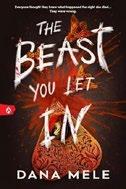
Everyone in Ashling knows the story of Veronica Green, who was found murdered in the woods— but no one knows the truth.
Social outcast Hazel and her popular twin, Beth, were inseparable until lies tore them apart. On Halloween Eve, after Beth abandons her at a party, Hazel decides to let loose for once. The next morning, she barely remembers kissing her crush or using a Ouija board to summon the ghost of Veronica, a girl about their age who died 26 years ago. But those seem like small problems when she realizes Beth never made it home—despite their fraught relationship, Hazel is determined to find her sibling and mend their relationship. Beth’s reappearance doesn’t bring reassurance, however; Hazel is alarmed by the announcement, “I’m not Beth….My name is Veronica Green.” It seems that Veronica is back, and she’s ready to seek revenge on those responsible for her murder. This supernatural thriller explores the impact of truth and lies as a group of teens unearths a dark secret that their town attempted to bury. Although consistently suspenseful, the plot twists rely on delayed explanations, and the supernatural elements of the story inelegantly mash together spiritualism and Greek mythology. Both Hazel and Beth (who’s nonbinary and uses they /them pronouns) are complex, dynamic characters. Apart from Beth’s friend Phoebe, who has “deep brown skin,” significant characters are cued white.
A fast-paced and strongly characterized but disorienting mystery. (resources) (Supernatural thriller. 14-18)
Montblanc, CL | Wednesday Books (320 pp.) $20 | April 28, 2026 | 9781250340535
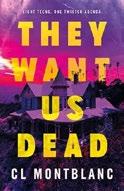
Sam wanted a weekend of content creation— not corpses. Sam is a nonbinary YouTuber whose 5,000 followers don’t quite make them a true-crime influencer. But ever since solving a real John Doe cold case, they’ve used their platform to spotlight missing queer kids. Sam lands a spot with other young creators at an exclusive—and mysterious—weekend retreat called Teens of True Crime, held in a creepy Victorian mansion. They’re thrilled to finally meet their parasocial bestie, Arya Shankar, in real life, but the excitement fades when they come face-to-face with their longtime internet nemesis, Dylan. The atmosphere worsens when the teens awaken after their first night to find one of their group dead on the stairwell—and Sam realizes that Dylan may be the only person they can trust. From there, the weekend spirals into deadly mishaps: a locked basement, hidden compartments in the walls, a bloody booby trap, and a rising body count as the group becomes entangled in the mansion’s dark family history. Though the twisty plot requires some suspension of disbelief and most of the characters feel two-dimensional, the brisk pacing and dark humor keep the story engaging. Sam and Dylan’s initial animosity feels slightly forced, but it sets up a satisfying slow-burn, enemiesto-lovers arc that helps buoy the whodunit. Sam presents white, and the cohort includes some racial diversity. The presence of several queer members sparks refreshing discussions of gender. Wry and wickedly entertaining. (Mystery. 14-18)
A Dutch artist’s YA debut follows a young person’s journey of self-realization.
BY LAURA SIMEON
In his exquisitely illustrated epistolary novel, Self Portrait, Ludwig Volbeda, a fine artist and award-winning illustrator of many children’s books, introduces readers to Jip, a teen who’s grappling with social isolation and gender identity—the latter accentuated by a school assignment to draw a self-portrait. In this work translated by Lucy Scott, Jip’s letters to a crush, written over the course of spring break, draw readers into a fully realized world populated by vivid characters. Volbeda, who is based in the Netherlands, answered our questions by email; our exchange has been edited for length and clarity.
What inspired you to start writing for young people?
I stumbled into it through illustration and quickly discovered that it offered far more freedom than I’d expected. The connection between text and image fascinated me. Draw a cave, write underneath it “Nils never came back,” and suddenly there’s a story.
Although youth literature feels like home, I don’t think I write for teenagers as a group. For me, the age on a book cover is more a gentle suggestion. If you write from the lived experience of a character, the story hopefully may resonate with a particular group of readers.
Did anything specific inspire Jip’s story?
I’d saved some money so I could work quietly in my
studio, without knowing what the result would be: a picture book, comic, or something else. I made drawings and wrote short texts about things that interested me, such as vacant lots and playgrounds. At some point I drew someone lying in the grass, reading a book. The grass was so tall that you could only see two little arms sticking out, and an open book. I wondered, Who is that ?
Whoever it was, they were stubborn, appearing again in short scenes, taking detours from school to home, drawing insects, visiting a grandmother who slipped a $10 bill into their coat pocket like a reverse pickpocket. And then I remembered sitting on a boat at a children’s birthday party, looking at a boy and not


knowing if I wanted to get to know him or if I wanted to be him. When I wrote that down, the earlier loose scenes and sketches moved toward that scene, like ants swarming a breadcrumb covered with jam. The person lying in the field became the “I,” Jip.
A story emerged, not because I wanted to write a youth novel but because I wanted to work on this story. That was also true for the theme. I hadn’t planned to write about gender—it felt too private—but once I did, I wanted to do it from the inside out, showing how someone can feel hesitant and certain at the same time.
The epistolary format is so effective but seems more challenging than writing a traditional novel. For me, letters felt more approachable! I wasn’t sure whether I could write a novel, but writing [letters]
felt like assembling a stained-glass window piece by piece. At Jip’s age, I wrote many unsent letters that I hid in an atlas. I explained myself to someone, assuming I would be unlovable without instructions. The letters in Self Portrait allowed me to shift tone—boredom, curiosity, openness, or avoidance—while slowly building structure and story.
What responses have you had from readers?
Shortly after the book was published, I received a message from a 10-yearold, passed on by a parent. That letter has stayed with me. Such a young reader understood the story so precisely from the inside. I found that deeply moving. Children are so often underestimated.
What I notice now is that international readers write
more about the neurodivergent traits they recognize in Jip. I find that interesting. Sometimes people ask whether their interpretation of something is correct. In a way, it always is. Meaning doesn’t exist only in the text but also in our reception of it. People also send me photographs of insects, sometimes without any accompanying message. Just an image of a beetle they saw somewhere.
What’s the climate like for publishing for young readers in the Netherlands?
[These days] there’s less attention to youth literature. Newspapers and magazines publish fewer reviews and often no longer have children’s pages, where short stories and poems for children or letters written by children themselves appear. Many discussions focus on declining reading habits. What is going well is the youth literature itself! The quality of youth literature here is extraordinarily high.
In the U.S., we have some superb Dutch authors for young people available in translation—Edward van de Vendel, Bibi Dumon Tak, and Yorick Goldewijk, for example. But that’s only a tiny glimpse of the whole picture. You’ve named some of my favorites! What I love about youth literature is how naturally it moves beyond the human perspective. What does the world look like if you’re an ant? Anthropomorphism is often dismissed, but I see it as a way of forming stronger bonds with the world. Bibi Dumon Tak does this beautifully.
Two of my favorites are Wim Hofman and Joke van
Leeuwen, who combine language and images in such an interesting way. And there are also extraordinary illustrators, such as Annemarie van Haeringen and Philip Hopman, who seem to draw as naturally as some people dance.
When you were young, did you enjoy art and reading?
Yes, I had a strong imagination, but imagination has a darker side, too. During the day, I could happily invent stories and draw for hours. At night, I lay awake,
[thinking of] all the possible ways an upcoming school day could go wrong. Reading helped guide my imagination, and I would read until I fell asleep. Because I spent so much time indoors, my parents suggested I take drawing lessons. When I struggled with drawing hands, I discovered Egon Schiele. His work was equally beautiful and disturbing— and therefore fascinating. It was also a way to look at the male body without raising questions.
What I love about youth literature is how naturally it moves beyond the human perspective.
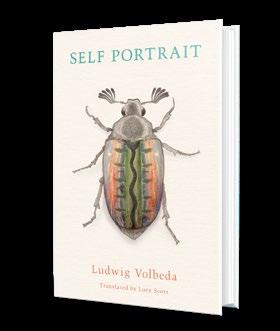
Self Portrait
Volbeda,
Ludwig; trans. by Lucy Scott
What attracts you to observing and drawing very small things?
My eye is drawn to the small. Even while drawing, I keep disappearing into a pebble, an elbow. I love small things and collections. In the books I’ve illustrated, I’ve hidden bits of code, and my handwriting is also quite small, almost encrypted. I don’t know whether I notice small things because I’m interested in them, or whether I’m interested in them because I notice them. It’s probably circular. It’s no coincidence that the book starts with the word “Look!” It’s an invitation to look closer. Or, in the case of the cover, look sideways.
Are you working on another book?
Yes! It will likely be youth literature again. I’m working on a story about a fictional village. The houses are already there, and now I’m waiting for one of the houses to catch fire. I’m again in that wonderful phase where you can write all kinds of fragments and see where chain reactions start to occur.
Is there anything else you’d like to share?
It was nice to have the opportunity to think about children’s literature. I think it appeals to human qualities that we all have to some degree, but that are at their strongest in children: curiosity, wonder, imagination. That’s why I don’t see children’s literature strictly as literature for children but rather as literature in which a childlike way of seeing the world is central. That’s why I think it’s good for everyone to read children’s books.
Kirkus Star
Park, Patricia | Crown (304 pp.) | $19.99 April 28, 2026 | 9798217029761
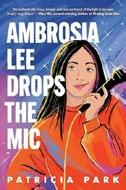
A former child star pivots to pursue stand-up comedy.
Ambrosia “Brosh” Lee was once a successful child actor—a “perky Wednesday Addams.” But at 16, she struggles to get roles; playing Dead Asian Girl #3 on Law & Order doesn’t feel like much. She’s up for a role on an Emmy-winning television series, but her agent isn’t hopeful. Instead, he’s booked a commercial audition: Korean American Brosh is trying out for Unidentified Asian Female. Meanwhile, Sri Lankan British Liam Sweet, her ex, is thriving. They met while auditioning for Sherlock Jr.—he got the lead, but she wasn’t cast as Watson. After they bump into each other at a party, Liam invites Brosh to go see her favorite comedian, Josie Kang, and then flakes. Left outside the venue alone, Brosh meets Korean American stand-up comic Teddy Yoon and gives him her extra ticket. They click. Teddy encourages her to try stand-up, helping Brosh, who’s used to following a script, learn how to write a joke. By carefully observing other comics, going on stage herself, and even taking a class, Brosh finds her voice. Park delves into serious issues, including fat-shaming, cultural dislocation, and how we measure success—all presented with nuance through the lenses of identity and the entertainment industry. This accessible, humorous, and empowering narrative is sweet and threaded with
hope, as Brosh recovers from the disappointment of her acting career and attempts something new. An inspirational, funny, and charming story infused with agency and moxie. (author’s note) (Fiction. 14-18)
Phenix, Akana | Blackstone (380 pp.)
$19.99 paper | March 24, 2026
9798874899165 | Series: The Empire Wars, 2
In this follow-up to The Empire Wars (2024), three young people are spurred by different goals: survival, repentance, and revenge. Coa Rangecroft is focused on protecting herself and her family as survivors of the Great Hunt. Hazen Creed, plagued by guilt over his country’s actions, killed his own soldiers to save foreigners and has been labeled a traitor. They both have a lot more fighting ahead of them. Following tradition, they’re to be auctioned off and sold to the highest bidders. Their rescue from the Allied Forces by North Transatlantic Empire forces, who offer them citizenship as war refugees, leads to mayhem and threatens to spark an all-out war. At the same time, Chief Princess Ife Størmbane bides her time even as she seeks to get revenge on her abusive husband on behalf of her family of origin. The connections among the three once again help each of them as they work to achieve their goals. This novel, which is set in a racially diverse world, suffers due to inconsistent pacing and excessive exposition. Many of the descriptions of gore and violence feel gratuitous; rather than furthering the plot, they distance
An inspirational, funny, and charming story infused with agency and moxie.
AMBROSIA LEE DROPS THE MIC
readers from the characters. Even returning fans are likely to come away disappointed in this offering. A poorly executed baton pass for the trilogy closer. (author’s note with content warnings) (Fantasy. 14-18)
Purwin, Candice | Fantagraphics Books (272 pp.) | $18.99 paper | March 17, 2026
9798875001765
A story of good vs. evil centering on a girl who’s grieving her murdered parents and searching for her stolen name. After a little girl and her parents move to a new location, her mother finds their beloved collection of stories in a box. At bedtime, the girl reads a scary entry from the book, and suddenly the Shenk appears—a monster made of tentacle-like arms covered in eyes. He beheads her parents and steals the girl’s name. As she sets out on a quest to reclaim it, she travels through fantastical locations, like The Glassmoor and The Fault, and even visits The Wandering Haar, a “drifting dimension.” The child attempts to find and channel The Undertow, “a river of power and knowledge and chaos.” She’s aided (and at times thwarted) by magical characters, including talking spiders, witches, a whispering hat, giants, winged librarians, and a moving map. The busy, vividly colored illustrations add to the mystical, danger-filled mood, with interspersed chapters of black-and-white flashbacks providing background to the central narrative. The transformation of this work from webcomic to serialized monthly comic book to graphic novel is bumpy; as a singular story, the work feels convoluted due to the abundance of threads and characters that impede the narrative flow and comprehension, leading to a choppy reading experience. Human characters present white. This story of the power of names to create a sense of identity and belonging suffers from a lack of narrative focus. (Graphic fantasy. 14-18)
Qian, Lily Kim | First Second (224 pp.)
$25.99 | $17.99 paper | April 21, 2026 9781250884237 | 9781250884220 paper
A debut graphic memoir exploring a problematic, peripatetic coming-of-age.
Qian’s life began in Toronto; depictions of family photos record moments from her early childhood that she retains no memories of. What she does recall are snowy adventures with her father; meals made by her nurturing maternal grandmother, PoPo; and the shadowy figure of her disengaged mother. Her parents fought constantly and eventually divorced, splitting custody equally. Qian’s time with her mom, a hoarder, grew unpredictable, even dangerous, and she eagerly anticipated days with her dad. Beyond her fear, shame, and even “a sort of hatred,” a young Qian understood little of her mother’s struggles. For some time, her mom vanished from her life, and she began moving constantly around British Columbia and Ontario with her father. The dislocation took an emotional toll, as did her mother’s occasional reappearances. Eventually, Qian and her dad moved to Shanghai to be near her mom and maternal grandparents. Five years later, Qian entered college in New York. She achieved her dream of studying illustration and the distance ultimately helped her better understand her family and herself, but along the way she struggled with disordered eating and the pressure to be financially independent. The saturated, limited color palette of this visually stunning work underscores the heavy emotions. Particularly affecting is Qian’s pronounced use of black, which replicates the recurring absences that marked her young life. Notably resonant pages vividly convey the splintered family dynamics of an artist’s childhood. (Graphic memoir. 14-18)
Girl Reflected in Knife
Rissi, Anica Mrose | Dutton (240 pp.) $19.99 | April 7, 2026 | 9780593859827
For a traumatized, lonely girl, fantasy and reality become difficult to distinguish. Eight years ago, Destiny found the lines blurred between her real life and Arantha, the fairy-tale world she created as an escape from her mother’s substance abuse. Now her mother is newly sober, but 17-yearold Destiny has little faith that it will last; she already carries much emotional damage. Things seemed to be heading in the right direction with a summer job and whirlwind romance with college football hopeful Ryan, until Ryan called off the relationship Destiny thought was fated. Heartbroken and miserable, Destiny finds that her art is pulling her back into Arantha. The reappearance of her long-lost imaginary friend, Tosh, precedes the shocking discovery that she’s pregnant. A split-second lie meant to buy her a moment to process this shock snowballs as Destiny tries to outrun inevitabilities in Arantha and the real world. Destiny’s fantasy world is grand and magical while her daily life is gritty and often unpleasant; Rissi draws both with care and precision. The complexity of the subject matter is matched by the delicacy of the language, and the raw authenticity of the characters’ feelings makes for a breathless, mesmerizing tale that’s presented with care and awareness of its sensitive topics. Destiny and Ryan are cued white, and there’s some racial diversity among the wellcrafted secondary cast.
An emotionally immediate yet ethereal and darkly fantastical tale woven through with threads that ring all too true. (Fiction. 14-18)
Ritany, Alex | Norton Young Readers (384 pp.)
$18.99 | April 7, 2026 | 9781324083634
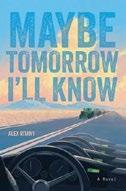
A teen finds himself trapped in a time loop— and someone else’s body. When the boy wakes up behind the wheel of a speeding car, he’s in a girl’s body with no memory of who he is. After crashing, he’s helped by a kind, attractive boy named Gideon, who’s driving a tractor. He quickly chooses the name Laurie. The following day, he wakes up driving the same car down the same road. Stuck living the same day on repeat, Laurie tries to piece together his own life, as well as that of the girl whose body he’s trapped in. As a number on the car’s dashboard counts down, Laurie realizes he has a limited amount of time to break the time loop and return to his own body. He also finds himself falling for Gideon as their paths cross repeatedly, though he doesn’t know if they’ll ever have a tomorrow—or if Gideon will like his real self. The mystery surrounding Laurie’s predicament unravels slowly, though perceptive readers may predict some of the reveals. This conceptually complex novel thoughtfully explores identity and the relationship between self and body. Wry humor adds levity to Laurie’s emotional journey, though the large supporting cast at times distracts from the otherwise compelling narrative. Laurie is cued white. Gideon’s mother is implied white; he has “high cheekbones” and is “part Indigenous” on his absent father’s side. Complex and original; a story of queer love and identity with a science-fiction twist. (author’s note) (Science fiction. 14-18)

Roland, James | ReferencePoint Press (64 pp.)
$33.95 | February 1, 2026 | 9781678212421
A brisk, fact-filled survey of video games, their technological evolution, and their cultural footprint. Roland opens in the post–World War II era, tracing the innovations that led to what many consider the first true video game—Tennis for Two—before charting the rise of Atari’s Pong in the 1970s and the ensuing golden age of arcades, an era defined by Space Invaders and the advent of battles for high scores. As home consoles boomed in the 1980s, arcades declined; early systems from Magnavox and Atari ceded ground to Nintendo and Sega. In the late 1990s, Sony’s PlayStation and Microsoft’s Xbox ignited console wars, with each new generation marked by leaps in graphics, storage, controller design, and online connectivity. Roland also surveys the evolution of handheld gaming, from the Game Boy to today’s smartphones and hybrid systems. Throughout, he considers gaming’s deep cultural influences on language, fashion, popular culture, and social interactions. Roland’s view of the contemporary gaming industry is largely optimistic; he frames it as a professionalizing, diversifying field with increasing opportunities for women, although one that’s still hampered by gender inequity. Notably absent, however, is any discussion of widespread racism in gaming communities and coordinated misogynistic harassment campaigns such as Gamergate, significant omissions in a work seeking to present gaming’s social dynamics. While text boxes touch on controversies involving violence, bullying, and addiction, they skirt these major issues.
An informative survey of gaming’s past and present. (timeline, source notes, for further research, index, picture credits) (Nonfiction. 12-18)
Roscoe, P.C. | Little, Brown (352 pp.) | $12.99 paper | April 7, 2026 | 9780316601788
An annual vacation turns into something more sinister for a group of college kids. Avery Finch has brought her college roommate, Nora Miller, to the privately owned Caribbean island of Mokani for the annual two-week holiday Avery’s been taking with her parents’ college friends and their respective families since childhood. The party includes Hugo Vandenburg, Avery’s ex, whose dads own Mokani; twins Archie and Sydney Devereux, whose parents are billionaires; and Leo Walker, whose dad is the island’s private chef. The group dynamics are complicated: Sydney was Avery’s best friend until a year ago, when Sydney ghosted her. Leo is now working as a waiter instead of just hanging with his friends. Hugo is pining over Avery, and he blames Nora for coming between them. The story rotates among multiple third-person perspectives, but half of the chapters present Avery’s point of view, making this feel like her story. Along with the rest, she’s got secrets— the group members are juggling romantic attraction, resentment, and volatile feelings—and everything shifts among them forever when a body is found and the race is on to discover who the murderer is. Although some of the characters are underdeveloped, playing into tropes,
Roscoe’s narrative highlights issues around the haves and have-nots. Once the murder occurs, the twists are surprising and disturbing. Major characters are cued white.
Wealth and betrayal make this a lethal combo of a read. (content warning, cast list) (Thriller. 14-18)
Scott, Emma | Bloom Books (413 pp.) | $14.99 paper | April 7, 2026
9781464243387 | Series: Lost Boys, 3
Ronan’s troubled past follows him to Santa Cruz, where he meets artistic and complicated Shiloh, the two finding comfort, confidence, and a growing romance. In this third entry in the Lost Boys trilogy, Ronan Wentz leaves small-town Wisconsin—and a trail of darkness— behind him. At just 18, he’s spent 10 years in foster care; his mother, a victim of domestic abuse, and his violent father are dead. Summoned by his long-lost uncle, Ronan vows to finish high school in California. Seventeen-year-old Shiloh Barrera, who was raised by Bibi, her maternal great-grandmother, avoids her mother, with whom she has a strained relationship. Ronan works hard to escape his nightmarish past, but violence dogs him. Shiloh throws herself into her work and her passion, jewelry making, to prove her worth to the mother who didn’t want her. Through high school and beyond, the pair face setbacks that test their relationship. Tattooed Ronan is a bad boy with a pure heart, a compelling romantic lead. Shiloh is independent and motivated, yet believably—and relatably—vulnerable and insecure. Their romance is deep and emotional, and readers will connect with their growing love. Bibi is a delightful, endearing character whose presence is a highlight and anchor of the narrative. The satisfying ending is sure to please series fans. Shiloh’s “unknown father’s DNA” makes her
lighter-skinned than her Black mother. Ronan presents white. An engrossing romance with fully imagined characters. (playlist, content warning, author’s note with resources) (Romance. 16-adult)
Sellet, Amanda | Wednesday Books (320 pp.) | $14 paper | April 21, 2026 9781250360199
A pair of teens who love murder mystery games band together to solve an actual crime. Sixteen-year-old Virginia, who reads white, is in Florida for the funeral of the legendary Claude, owner of the roseate spoonbill–pink condo that’s known as Castle Claude. Virginia’s Shalimar-scented Grandma Lainey lives in this oasis, along with other retirees. Most of them are die-hard theater-loving folk who, like Virginia, enjoy acting out and solving murder mystery games, particularly one called Killing Me Softly. The reading of Claude’s will is a scripted affair, with a final prompt for a mystery to solve—“A little razzle-dazzle, but make it deadly,” as Grandma Lainey comments. Claude’s passing draws greedy would-be heirs: Claude’s disapproving sister and her nephew. Also in attendance is condo resident Mr. Gutierrez’s grandson, Felix, who presents Latine. Claude was “fairy godfather” to Felix and Virginia, but the two never met until now. Virginia’s easy, flowing badinage with Felix piques her interest: “Is he flirting or killing time?” When an actual dead body appears at Castle Claude, the pair try to solve the case and secure the condo’s future. There’s a whimsical lyricism to the story’s twists. Sellet makes supporting characters part of the fabric of this chosen family, adding a welcome dollop of agency and silliness to this truly enjoyable story at whose center lies the adorable bond between two awkward, lonely teenagers who find connection in
each other and the extended Castle Claude community.
A sweet delight. (Mystery. 13-18)
Sethi, Gayatri | First Person Press (264 pp.) | $15.99 paper | February 3, 2026 9781949528053
An eclectic series of inquiries questioning what it means to belong to a diaspora. Sethi was born in Tanzania to immigrants from the Punjab, raised in Botswana, and later emigrated to America. With her Hindu name, adopted Bahá’í faith, and Black Muslim spouse, she declares that “every human in every hue who policed my identity taught me to doubt myself.”
Sections entitled “Desi-ish,” “African-ish,” and “American-ish” explore her inner tussle, discussing topics such as colonialism and far-flung desi diasporas who labored for European empires. Sethi examines apartheid and oppression alongside “caste and racial hierarchies.” The work also cements her cultural learning of “distinctly African values” such as ubuntu and umoja. Sethi’s sharp gaze pierces America’s model minority myth and whiteadjacent behaviors. She sees and names the immigrant’s invisibility and othering and describes universities as places of “compliance, not liberation.”
The “Solidarities” and “Revolutions” sections gather steam, moving beyond personal reflection to express kinship with others on the margins. Sethi’s fractured thoughts and half-sentences mirror her unbound identities. Despite some platitudes and generalizations that feel naïve (“in beforetimes, muslims and hindus and sikhs were bound in oneness”), the unconventional combination of free verse, journal entries, and workbook activities supports active engagement. Sethi tackles thorny issues of anti-Blackness,
Islamophobia, and white allyship that are often swept under the carpet. This learning resource is best read and reflected on in small doses. A timely interrogation of individual identities paving the way for collective action. (works cited, index, affirmations) (Nonfiction. 16-adult)
Smith, Nikki Shannon | Scholastic (288 pp.)
$25.99 | April 21, 2026 | 9781546165088
A family’s history intertwines with the aftermath of the sinking of the Titanic Nineteen-yearold Colette is tired of staying home while her mother, brother Antoine, and sister Genevieve go to work in 1929 New York City. Her mother says she doesn’t want Colette to get sick, which happened often when she was young, but Colette has been healthy for years. She wonders if Papa would have let her work if he were around. But she has no memory of the father who died when she was a toddler—only curiosity about his identity. During one of her few permitted outings, Colette secretly gets a job with Walter, the grocery store owner, to lower her family’s unpaid debt. There, Colette spends time with her crush, Claude, who also has a mother from France, and learns about Walter’s experiences on the Titanic. In fascinating journal-style entries, Walter describes the tragedy and its aftermath. Smith intertwines elements of the social and economic landscape: Colette’s learning about racism, the stock market crash that affects her family’s factory jobs, and the vivid Greenwich Village social scene. Readers will identify with Colette’s journey as she questions her origins and negotiates her place in the world. Honest and gripping; a new take on a familiar historical event. (author’s note) (Historical fiction. 12-14)
Steffens, Bradley | ReferencePoint Press (64 pp.) | $33.95 | February 1, 2026
9781678212582

An overview of the life and career of the man born Robert Francis Prevost in Chicago in 1955, who became Leo XIV, the first American to lead the Roman Catholic Church.
Unfolding across five chapters, the text first explores Prevost’s early life as a child who “wanted to play priest” and chose to attend junior seminary after eighth grade. This dedication to rigorous study marked the beginning of his path to priesthood. What followed was a meteoric rise within the global Catholic community and as a result of these successes, including many years serving the church in Peru, his nomination to the papacy in 2025. The text strikes a balance between attempting to humanize Prevost and presenting the Vatican’s pontiff; anecdotes injected with humor contrast, sometimes jarringly, with stories of his virtuous achievements and his great intelligence. Steffens addresses criticisms of Leo’s ideological approach; however, some complex scenarios surrounding Prevost’s handling of sexual assault accusations toward clergy are condensed, to the detriment of nuanced treatment of the subject, and the resolution of these sections feels lukewarm. Discussions of Leo’s stance on contemporary issues, such as AI and environmental concerns, ground the text. Quotes from Prevost’s classmates and peers appear throughout, adding fresh perspectives. Religious terminology is sometimes defined in the text, and frequent photographs complement or expand upon the information provided in the text.
A fair and comprehensive biography of a world religious leader. (timeline, source notes, for further research, index, picture credits) (Nonfiction. 12-18)
Kirkus Star
Armaveni
Takvorian, Nadine | Levine Querido (344 pp.) $24.99 | $18.99 paper | March 10, 2026 9781646146369 | 9781646146536 paper
First-generation Armenian American Takvorian debuts with a searing graphic memoir that refuses to let genocide fade into silence.
As a high schooler, Nadine’s quest to understand her family’s heritage was initially fragmented, her parents’ reticence covering wounds still too raw to expose. Set in 2001, the narrative weaves contemporary American events (including the 9/11 attacks) with haunting flashbacks to the Armenian genocide, creating a palimpsest of trauma that spans generations. What starts as hazy family mythology crystallizes into horrific clarity as Nadine’s journey of discovery progresses, each revelation more devastating than the last. The faded monochromatic illustrations employ masterful visual storytelling: Delicate linework gives way to viscerally affecting panels as historical horrors emerge, full-page splashes convey the overwhelming weight of inherited memory, and varied panel layouts mirror Nadine’s psychological progression from confusion to understanding. Takvorian doesn’t sugarcoat the abhorrent atrocities. She also frankly depicts the suffocating intergenerational silence and the intracommunity conflicts that surface, revealing the complex tensions within Armenian identity itself. This unflinching honesty extends to contemporary contexts, making clear that anti-Armenian violence remains relevant today. The art brilliantly captures emotions through expressive body language, strategic use of negative space, and page turns that will leave readers breathless. Takvorian transforms personal family history into urgent testimony, proving graphic narrative’s unique power to bear witness to atrocity. Devastating and necessary; demands recognition for one of history’s most persistently denied genocides. (author’s note with photos, glossary, sources) (Graphic memoir. 12-18)
Tan, June CL | Storytide/HarperCollins (400 pp.) | $19.99 | March 10, 2026
9780063283893 | Series: Darker by Four, 2
Rui, Zizi, and Yiran explore their past lives and entwined fates and the unraveling motives of their friends and families in the conclusion to this Asian folklore–inspired duology.
A strong recollection of the events of Darker by Four (2024) will ease readers into this fast-paced sequel. The carefully interwoven plot toggles among multiple viewpoints: Rui dreams of the underworld’s Fourth King and his lover, a woman named Lei Ying; Zizi is left imprisoned in the Obsidian Cavern in the underworld while Kings and Gods hope he remembers his identity in order to stabilize the mortal and celestial realms; and Yiran, who has isolated himself from loved ones, is desperate to recover his magic (he even contemplates working with Hybrid Revenants, humanoid monsters that feed off humans’ life force). While the three struggle, conflict escalates between Hybrids and Exorcists. The murders the Hybrids carry out are getting stranger, and there seems to be a mole within the Guild. As Yiran’s involvement with Hybrids deepens, unsavory truths around his father’s death and his grandfather’s tampering with Yiran’s spiritual powers emerge. The trio’s complex situations converge in a compelling showdown with plenty of twists. A few lingering questions remain, but the story is entertaining enough to keep readers turning pages. Tan has woven an intricate, deftly layered dark fantasy, skillfully balancing plot twists, character arcs, and themes and allowing readers to fully immerse themselves in an alluring world.
Thrilling, unpredictable, and brimming with action. (content note, author’s note) (Fantasy. 14-18)
Thorley, Addie | Sourcebooks Fire (448 pp.)
$19.99 | April 7, 2026 | 9781728283036
Following her sister’s suspicious death, a girl vows to uncover the truth and avenge her.
Indira Harrak is shocked to learn that her older sister, Rowenna, the crown princess, has died under mysterious circumstances while serving as a captive bride in the kingdom of Vanzador. Plagued by Marauders, the kingdom of Tashir was forced into a harsh treaty with Vanzador that included tributes of bagrava, the sacred plant that keeps Tashir fertile and can only be cultivated by master gardeners like Indira. The treaty also required a Tashiri princess as a bride. In return, the Vanzadorian king created a mountain range to keep invaders out of Tashir. To protect her people, Indira must now marry her sister’s widower—and possible murderer—Prince Alaric. When she arrives at Vanzador’s mountain Fortress, nothing matches the terrible descriptions in Ro’s letters. Indira is convinced that the differences are a clue to something her sister wanted her to know. She also uncovers the reason for the Vanzadorians’ endless demand for bagrava. As Indira navigates the Fortress, intriguing characters lead her toward the truth— and attraction sparks between her and Alaric. The deeper she ventures into Vanzador’s mysteries, the more Indira questions how well she knew Ro and what secrets her new home may be hiding. Thorley skillfully blends political intrigue, romance, magic, and mystery into a story filled with betrayals and shocking reveals that build toward a thrilling conclusion. All main characters are light-skinned.
A page-turner that’s filled with twists and turns. (Fantasy. 14-18)
Weatherspoon, Rebekah | Putnam (288 pp.) $12.99 paper | April 14, 2026 | 9780593465356
Two Los Angeles teen girls discover their growing attraction could be the start of something more.
Seventeen-yearold Saylor Ford is a pretty athlete who has confidence in spades. But her life has its challenges—her mother, Cristine, is an influencer with a massive following. While Saylor attends basketball camp, Cristine uploads a video for Pride Month in which she discusses Saylor’s coming out to the family. The video causes Saylor to lose focus on the court and break her arm. Horrified by the thought of spending the rest of the summer feeding her mom’s content machine, Saylor spots an opportunity to escape the house and be with her crush. She promises to teach introverted, plus-size skateboarder and aspiring tattoo artist Heaven Goo-Campbell—an “angry emo-goth storm cloud”—how to boost her social media presence. Saylor will also help Heaven complete the annual bingo scavenger hunt that’s a new family tradition. As the weeks pass, the girls realize their romance doesn’t have to be just a summer fling. In Weatherspoon’s second YA novel, Saylor and Heaven’s relationship is shaped by their unparalleled emotional connection: the recognition not only that they’re seen but also that they’re known. Both girls are queer, and their friends and family are supportive allies. They’re also both biracial with Black dads; Saylor’s mom is white, and Heaven’s mom is Korean. A cute opposites-attract romance featuring a couple who help each other grow and stand firm in their truths. (Romance. 13-18)
ARMAVENI
Kirkus Star
Zimmer, Marc | Twenty-First Century/Lerner (120 pp.) | $37.32 | April 7, 2026 | 9798765648070

A biological and historical primer on plagues. Lucid definitions and explanations distinguish this work that’s deeply respectful of readers’ intelligence. The information-rich text includes ample historical context alongside scientific content—for example, a chapter about the Black Death includes a clear breakdown of the difference between the three types of plague caused by Yersinia pestis and describes how the Little Ice Age—resulting from a volcanic eruption— pushed infected rats into the Silk Road trade routes. Zimmer covers the impact of human behavior on diseases in a chapter on influenza that highlights how modern travel enables faster spread, while also concisely explaining what the “H” and “N” in flu strains mean and how viral reassortment in pigs can help an avian flu mutate to infect humans. The description of dengue fever shows how urbanization and social inequity increase contagion. The chapter “Malaria and Climate Change” includes excellent descriptions of how the Plasmodia parasite operates, the expanding habitats of pathogens and disease vectors, and predictions of future disease spread. Coronaviruses are covered in a chapter on MERS, SARS, and Covid-19 that explains animal disease spillover and how scientists track mutations. A final chapter tackles the metaphorical disease of misinformation. The book concludes with a call for “a more resilient global health system” that promotes equity and “prioritizes truth over fear.” Sidebars, charts, and graphics enhance understanding.
An exceptionally clear and inspiring resource combining a human-centered narrative with compelling science. (timeline, glossary, source notes, selected bibliography, further information, index) (Nonfiction. 12-18)
AMERICAN AUTHORS Sofie
Wells and Ali Barclay kicked off their picturebook series about a globetrotting dog in early 2025 with The Tales of Charlie Wags: New York City, in which the titular pup travels from his “ordinary house” in a suburban setting to the big city in a surprising way: teleportation. “He’s got a trick, it’s true! He gives his tail a little wag and ends up someplace new.” In rhyming text, Charlie sees the sights at the Central Park Zoo, the Empire State Building, and the Statue of Liberty, among other places, and an accompanying map and appendix (“Paws and Learn: LANDMARKS UNLEASHED!”) offer more info for curious young minds. “The lovely images” by Swedish artist Sanna Sjöström, our reviewer notes, “are primed to…encourage a desire for pursuing new experiences.” And, indeed, the series offers such experiences in later entries, which take the cute canine to an array of European locales.
Charlie’s next journey, in The Tales of Charlie Wags: London , takes him first to Buckingham
Palace, where he mischievously tries to make the “serious and tall” guards laugh—but, unfortunately, “nothing works at all.” By the end of the tale, youngsters will have learned about such familiar attractions as Big Ben and the London Eye, as well as local customs and cuisine, from afternoon tea to fish and chips—and again, a map helpfully puts it all into geographical context. Sjöström’s “vibrant artwork offers young readers a way to experience a new land without leaving the couch,” notes Kirkus’ reviewer, “but the adorable little dog’s journey is sure to spark interest in travel abroad.”
The Tales of Charlie Wags: Paris repeats the format in “a very gentle and sweet story” of a trip to the French capital, according to our reviewer. Its tour of such landmarks as Versailles and the Arc de Triomphe provides phonetic pronunciations of terms for non-French speakers (“Eye-Fuhl”). The next book, however, is even more ambitious: In The Tales of Charlie Wags: European Christmas


Adventure, the teleporting pooch makes a wintertime trek to Amsterdam, the Netherlands, where he skates on frozen canals; Brussels, Belgium, where Charlie enjoys lovely architecture—and waffles; the “enchanting streets” of Munich, Germany; and finally Vienna, Austria, where “the palace overflows with merry tunes inside its halls.” A “FESTIVE WONDERS
UNWRAPPED!” section provides more in-depth detail, but this time, the map encompasses all of Europe.


The latest series installment, The Tales of Charlie Wags: Irish Adventure, is an Emerald Isle idyll that involves stops in multiple cities and some less-familiar places. Charlie visits the Blarney Stone in Cork, as adults might expect, but he also heads to Trinity College in Dublin to see the Book of Kells (“His nose goes boop against the glass to take in every scene”) and to the Cliffs of Moher (pronounced “More”). Our reviewer notes how “this travelogue balances realism with warmth, offering young readers a sense of both Ireland’s vast history and its charming everyday bustle.”
Overall, this low-key but charming series effectively highlights many delights of travel abroad—and youngsters will wonder where in the world Charlie will go next.
David Rapp is the senior Indie editor.
In Scozzari’s deliciously gruesome debut, a young professional learns the dangers of trusting friends. Diana is a quirky young professional with a promising future. Her career as a business consultant is taking off, and she’s amassed a collection of close friends, including Ann (whom she’s known since high school) and her boyfriend, Arnold, a philandering former frat bro and current high school gym teacher. Diana’s somewhat-charmed life takes a turn when she starts having mysterious fainting spells. Ann (who’s convinced she’s Diana’s best friend) and Tim (her actual best friend) jump into protective mode; Arnold can’t be bothered. To make matters worse, Diana suspects that she’s the victim of frequent home
invasions, unheard of in her ostensibly safe Long Island community. (“She waited in deafening silence for some midnight terror to burst through her door.”)
A wild Fourth of July party becomes a catalyst for revelations regarding Diana’s friends that she hasn’t been able to confront. As her world begins to unravel, questions arise about Diana’s health, sanity, and who she can and can’t trust. Scozzari is a master storyteller, weaving tension throughout the entire novel. The pacing is slow at first, but the narrative never feels like it lacks purpose. Details are revealed as Diana uncovers them, and readers will question her reality right along with her. This sense of the unknown—represented by the dark figure Diana
Jason Z. Morris

Scozzari, Elizabeth | EASEverything 392 pp. | $18.98 paper | Oct. 1, 2025 9798998781698
thinks she sees breaking into her house, her unaddressed fainting spells, and the sense that she may be getting gaslit by multiple people—evokes an atmosphere of dread and menace that rivals the classic thriller and mystery stories Scozzari’s novel is paying homage to, like Daphne du Maurier’s Rebecca (1938). The characters are complex and fascinating, each
possessing the means and motive to victimize the rest of the group, adding a Clue-like whodunit quality to an already engrossing domestic thriller. The author tells this labyrinthine story using clear prose with brutally violent descriptions that will delight fans of gothic literature, thrillers, and horror.
A thrilling mind-freak of a mystery.
Alesso, H. Peter | Self (224 pp.) | $19.98 paper | October 31, 2025 | 9798272219855

Alesso’s novel charts Russia’s invasion of Ukraine from the perspective of a submariner sent to observe and advise.
Arriving in Kyiv, Ukraine, U.S. Navy lieutenant commander James Fairbanks, a submarine officer, feels far removed from his usual element, telling his wife, Lucy, “I’m a long way from the ocean.” Acting as a naval attaché, he’ll stay land-based, focusing on a possible conflict with Russia. As Vladimir Putin issues threats and amasses troops along the border, nervous Ukrainian citizens whom James and Lucy encounter remember Russia’s 2014 seizure of Crimea. After observing a training facility and meeting Ukrainian president Volodymyr Zelensky, James makes an assessment: Although underfunded and outmatched in numbers and weaponry, Ukrainians are determined, and their difficult circumstances have bred ingenuity. Especially impressive is Ukraine’s use of drones, which are not military-grade but “the kind hobbyists [fly] in parks.” Small and silent, the drones can track the positions of Russian vessels and even launch stinging attacks. Embedding with Ukrainian soldiers in an advisory capacity, James begins losing his objectivity. As he gets closer to the soldiers fighting the war, he recedes from his wife, ultimately making a decision that may strain their marriage to the breaking point. Alesso’s prose, which is mostly straightforward, spare, and fact-based, still contains surprises. Though the tactics and weapons of war are examined technically, at times their descriptions can read as lyrical (“the drones emerge from the darkness like vengeful ghosts”). Alesso also effectively shows the impact of war on a human level—though she’s a supportive wife, Lucy finds that this is not always a satisfying role to play. The author
convincingly places readers in the setting—in Kyiv, “Soviet-era” buildings flank newer ones with “European-style facades,” and James and Lucy eat borscht and varenyky with potato and cheese in a restaurant. At Christmas, snow falls, leaving “golden domes frosted white.” An examination of warfare that doesn’t lose sight of the people involved.
Burns III, B. John | Self (336 pp.) | $29.95
November 6, 2025 | 9798273403987
A tech mogul vows to take everyone to heaven in spaceships if he’s elected president in Burns’ sardonic political sci-fi novel. The author depicts a future America where rising seas have shrunk the U.S. to 41 states and necessitated the relocation of the White House to Denver. Politics, however, haven’t changed much, with the right-wing Federalist Party dominating the left-leaning Progressive Party and blaming climate change on immigrants and minorities while servicing the rich with tax cuts. Enter Swede Reid, holding a fortune of $852 billion from sales of his Consultant device—a small computer equipped with AI that knows everything and can impersonate anyone. (Swede’s device impersonates his dead father, Stanford.) Swede runs for the Federalist presidential nomination on a single promise: He will discover where heaven is (in deep space, he suspects) and take all of humankind there while delegating other duties to his vice president and cabinet officials. Party bosses are skeptical, but primary voters love Swede’s platform, artlessness, and refusal to demonize opponents, and he handily wins primaries and cruises to the nomination. The novel then changes focus to Swede’s Mauritanian research compound, where he and “Stanford,” along with 100 androids with Consultant brains impersonating religious and scientific thinkers from St. Augustine onward, try to figure out where heaven is
and how to get there. They’re joined by Josh, an ordinary teenager whom Swede has taken on as a protégé; he has questions about the Last Testament Project and insistently points out that the superhuman Consultant robots could take over and dispense with actual humans. Swede’s hopes seem to pan out, however, when his experts pinpoint heaven’s location—a planet circling Polaris B, aka the North Star—and perfect a spaceship that can travel faster than the speed of light. But with ecological disasters looming, it’s still an urgent question whether humans can be ferried there before Earth becomes uninhabitable.
Burns’ yarn wraps an electoral satire in an Isaac Asimov story with a Capra-esque hero and an O. Henry ending, all with the mordant, absurdist sensibility of Kurt Vonnegut. His slightly exaggerated send-up of American politics is shrewd and on-target in its skewering of the conservative mindset. (“This guy wants to use our resources to shuttle citizens of other countries to Heaven side by side with Americans,” fumes one Federalist operative. “How do you run for president in this day and age, especially as a Federalist, without hate?”) The novel also has a heavy philosophical element as Swede confers with his animatronic theologians on the nature of the soul and the possibility of an afterlife, conversations that come to no conclusive answers. Burns cuts the abstruse ruminations with plenty of sharply observed, evocative scenes of squalid social reality (Josh’s mom frets about his listless lifestyle: “Is there a clearer symptom of an addictive personality than the around-the-clock streaming?”). The result is a raucous and provocative diagnosis of our spiritual and ideological blight.
An imaginative, whip-smart take on the way America pursues God through technology and electioneering.

For more Indie content, visit Kirkus online.
Clemson, Andrew | Illus. by Mau Mora Mad Cave Studios / Maverick (122 pp.)
$16.99 paper | February 3, 2026
9781545823385
Action and intrigue abound in Clemson’s YA graphic novel as a young agent attempts to rescue a princess.
Bec, an agent of D.I.S.T.R.E.S.S. (her medieval-like fantasy realm’s premier espionage agency), has much to prove. Abandoned by her adventuring father (who happens to be a former agent himself) at a young age, she must live up to the expectations put upon her by her family’s epic legacy. She’s done fine so far—however, when she’s tasked with rescuing Estrid, a kidnapped Dwarven princess, she must come to terms with her family’s history and fight to stop an evil sorcerer’s plans for ultimate power. She’s joined by a ragtag team including Dave, a not-quite-a-knight, and Brunhilde, Estrid’s shield-maiden with a love of mead, ale, and calling Bec “Merciless One.” This first volume of Clemson’s series subverts gender roles and moves as far away from the damsel-in-distress trope as possible. Bec is part secret agent (think James Bond) and part superhero with a chip on her shoulder. Her witty comebacks serve as a welcome respite from the book’s heavy subject matter (death, abandonment, and generational trauma). Dave’s status as a hapless would-be knight is also entertaining and offers an unexpected take on standard adventure fair. Brunhilde is a refreshing female fantasy character—she occupies the roles of the rough-and-tumble warrior and excitable fangirl at the same time. But despite all the well-paced action, the story leaves out some important details on peripheral characters. Readers don’t learn the name of Bec’s father (Rickard Flashjoy) until the final portion of the narrative, for example, and the villain’s motivation isn’t very clear beyond the unquenchable-thirst-for-power trope. Mora’s full-color illustrations are exemplary, deftly shifting styles to
communicate changes in atmosphere and time period where necessary and creating a world readers can get sucked into. Fans of the Venture Brothers animated series will delight in seeing visual references to the show throughout the comic, including the appearance of a notorious supervillain. The damsel runs toward danger in this action-packed, witty fantasy series-starter.
Coleman, Kev | Morgan James Fiction (320 pp.) | $23.25 paper | December 2, 2025 9781636987866
In Coleman’s novel, political unrest in Eastern Europe tests various characters’ faith, love, and loyalties. In a small, unnamed Eastern European country, Romanian immigrant Revekah Cojocaru is arrested during a protest for allegedly inciting violence after a truck drives through the crowd and gangs attack protestors in the streets. Revekah is held prisoner while police search for her collaborators, and many people find their lives upended in the fallout: Revekah’s parents, Alex and Lia, are back in Romania, desperate to get their daughter out of prison, while her younger sister, Daciana, decides to go through underground channels on a quest to find government corruption. Aside from the Cojocarus, Revekah’s pastor, Aaron Iddrisu, is also in danger as a collaborator and recruiter. His lawyer, Karl, is conscripted by the government to spy on Aaron and report his activities while dealing with the impending death of his sick wife. Meanwhile, across the globe, all eyes are on The Cynic, an anonymous newspaper that has unique insight into the government’s shadier dealings. As Revekah’s freedom looks increasingly unlikely, people in her adopted country rally their support. Coleman presents an intriguing and personal political novel. The violence is never sensationalized beyond belief, and its spies, rebels, and
hackers receive unvarnished portrayals. The heart of the novel is Alex, a father and farmer who feels powerless to help his daughter but emboldened by her courage in the face of torture and imprisonment. Although the novel doesn’t specify the country where the protests take place, it’s clear why this story feels timely as war rages between Russia and Ukraine. It’s a political thriller without an action hero or superspy archetype; instead, it’s populated by everyday people seeking justice. Although coverups, assassinations, and conspiracies seem like fodder for fiction, Coleman’s work reminds readers that such things are very, very real: “Hope is not a plan,” as Lia emphatically states, but its impact brings these characters together against all odds.
A powerful story of a country in turmoil as one woman’s life hangs in the balance.
Cox, Tom | WashU Libraries (182 pp.) January 30, 2025
A medical doctor and educator reflects on his career and offers advice in this guidebook for physicians. Medical schools have long prioritized technical skills and knowledge; not until recent years, per Cox, did they begin to focus on “the foundations of professionalism.” A pediatric anesthesiologist and professor emeritus at Washington University, the author offers up-and-coming doctors a handbook to building intentionally crafted careers—entire chapters are dedicated to discussions of ethics, professional identity, innovation, and compassion. Each chapter blends Cox’s personal story with broad commentary on the profession. The book’s memoir portions establish the author’s family’s historical connections to medicine (his grandfather and great-uncle, both general practitioners, performed surgery in their Arkansas farmhouse) and relate his own
experiences as a student and resident at Johns Hopkins University and the University of Virginia. Targeting neophyte physicians, Cox particularly stresses career development, celebrating the growth of his former students and residents who have gone on to become successful educators and clinicians. The author repeatedly affirms the responsibility of established physicians to support their younger colleagues; a chapter on leadership highlights the duty of chief residents and department leaders to provide a collaborative, supportive work environment for the “future leaders in their organization.” Cox points out that while aspiring physicians are well aware of the commitment required to earn their degrees, their career advancement requires a similar commitment once they become practicing members of a specialty. The “socialization process” takes years to hone, per the author: “Long training continuums that include residencies and fellowships as well as postdoctoral studies provide you opportunities to observe role models and receive counsel from accomplished mentors.” The book’s approachable, often personal text is accompanied by photographs, charts, diagrams, and other visual elements. An introductory foreword by Washington University professor Tim Bono sets the tone by prioritizing the role of happiness in one’s professional trajectory. Well-crafted career advice for doctors.
Durrant, Jennifer | Illus. by Magdalena Żołnierowicz | JJD Books (56 pp.) | $20 June 1, 2025 | 9798218635022
Durrant and Żołnierowicz offer an illustrated children’s book based on the true story of a sightless girl who aided the French Resistance. Born on the French island of Corsica in 1923, Josée is able to see “tiny white dots of light in
what was otherwise a sea of blackness” until the age of 3, after which she’s fully blind. A few years later, the local village school refuses to accept her as a student, so her father and brother “read her every book they could find in their village, and all the surrounding villages, too.” Eventually, the family moves to Marseille, where Josée, now 12, is enrolled in a school for the blind and learns to read braille. During the Nazi occupation of France, Josée’s parents join the French Resistance. After the girl overhears a discussion about bringing supplies and false passports to Jewish families in hiding, Josée volunteers for the mission despite her father’s objections, as she knows that “a blind person would be the last suspect for the crime.” But although she’s rehearsed the planned train trip with her father in advance, Josée accidentally gets off at the wrong stop on the day of the mission. The terrified girl, clutching her suitcase filled with illicit goods, calmly accepts a ride from German soldiers to the next station and completes her mission—the first of a dozen trips she makes for the Resistance without ever being caught. It’s a thrilling and uplifting tale, even though it seems to end just as it’s getting started; young readers who want to know more will have to settle for the author’s note, which recaps the rest of the real-life Josée Andrei’s life. (It also includes helpful context on the events and places in the book, as well as information about visual disability.)
Żołnierowicz’s watercolor illustrations truly bring the story to life: When Josée is shown on the train or playing in a field, other people around her are shadowy, effectively showing what it might be like to sense someone nearby without seeing them.
A beautifully illustrated, if perhaps too brief, story of courage.
Forbes, Edith | Rootstock Publishing (290 pp.) | $19.99 paper | March 10, 2026 9781578692163
Life, death, religion, and the best and worst of humanity clash in Forbes’ darkly comic novel. In November 1999, immediately after feeding her pigs, self-professed “grouch” Fay Kirkwood is graciously “spared one last unnecessary winter” and a disastrous new millennium when she drops dead, due to a sudden stroke. Unfortunately for Fay, her soul doesn’t slip away quietly and peacefully into a serene afterlife; instead, her consciousness lingers, “aware but useless for all eternity,” watching life go on through the eyes of others. This means that Fay has a front-row seat when her niece Dryden finds her body and makes a decision that upends the lives of friends, family members, and strangers alike. Ever the realist, and with a twisted sense of wit, Fay used to joke that when she died, she wanted to be fed to wildlife rather than be filled with toxins and take up any more space in the world. Dryden grants her wish, opting to feed Fay’s body to coyotes, rather than notify the police. When word gets out of this alternative burial, Fay’s small New England town erupts in curiosity and rumors of conspiracy: Did Dryden get rid of Fay so that she could get her inheritance? Did Dryden dispose of her aunt in exchange for money and land? Is there something more sinister to these private and peculiar women than the townspeople originally thought? Forbes has crafted
An irreverent, funny, heartwarming, and heartbreaking novel.
THE LAWNMOWER LADY
an insightful, witty, and grimly humorous tale of life, death, and the great beyond. The narrative is well plotted and evenly paced, and the characters, from rigidly religious folk to hopeless romantics and jilted lovers, are thoughtfully complex, no matter how often or how rarely they grace the pages. Irreverent Fay is an oddly lovable protagonist, thanks to her delightful bravado and ceaseless cynicism; through her skeptical eyes, readers see a vision of humanity in all its brutality and beauty. An irreverent, funny, heartwarming, and heartbreaking novel.
Frieden, Tom | MIT Press (288 pp.) | $29.95 September 30, 2025 | 9780262050968

A medical expert provides insights into improving public and individual health.
“There’s a deadly gap between knowledge about how to live a healthier, longer life and what actually happens,” writes Frieden. In this book, the author draws on his career in public health to offer a sobering, yet ultimately optimistic, commentary on public health in America. While adamant that the book “isn’t a memoir,” Frieden includes many compelling anecdotes from his time as an Epidemic Intelligence Service Officer for the Centers for Disease Control and Prevention in the 1990s and, later, as director of the CDC from 2009-2017. A self-described “disease detective,” the author relates such engrossing stories as his work with the New York City Health Department to trace the rise of tuberculosis in the city in the early 1990s. “With epidemiology,” he asserts, “it’s possible to predict how many deaths will occur, and from what causes.” While headlinedrawing diseases like tuberculosis certainly receive attention, Frieden pays
particular attention to what he describes as “the pandemic of heart attacks and strokes” and their leading risk factors, like high blood pressure and cholesterol. Sweeping in its scope, the book provides historical context for the role of public health initiatives in eliminating typhoid, tetanus, and trachoma, and it makes the case that a similar campaign targeting hypertension and heart attacks could make today’s leading causes of death just “as rare as forgotten killers” of the past. The book includes chapters devoted to the importance of good communication in public health initiatives (drawing on the lessons of Covid-19 messaging) and to strategies for overcoming political and commercial resistance. Offering practical advice for public health officials, the author also provides counsel to general readers to help them, for instance, detect false narratives about the tobacco, alcohol, junk food, gun, and fossil fuel industries (described as “the deadliest vectors of disease”) and “overcome the presumption of failure” that dooms cycles of diets and exercise regimens. While generally nonpartisan in his approach, the author does not avoid politics (given the intertwined nature of policy and public health) and doesn’t hold back in his critique of corporate lobbyists and specific politicians. He criticizes Donald Trump, for example, for his initial downplaying of Covid-19’s severity and for his gutting of domestic and global public health programs and institutions. The text’s appendices include two “Ready-Reference” guides that sum up Frieden’s points in a condensed format—one is for public health officials (in a guide sheet “for Community-Wide Action”), and one is for individuals seeking “Proven Steps to a Long, Healthy Life” that eschew fad diets for scientifically proven strategies. (Frieden encourages, for instance, replacing table salt with potassiumenriched low-sodium salt and replacing unhealthy fats with healthier fats from nuts, olive oil, and fish.) The text extensively references scientific data and is backed by more than 600 endnotes from a plethora of scholarly sources; the author balances the book’s academic underpinnings with an engaging writing style that will be accessible to readers
outside of the medical profession. The book includes numerous graphs, charts, tables, and other visual aids.
A well-researched argument for the central role of public health in saving lives.
Greengaard, Alexander | Open TXT (189 pp.) | $9 paper | June 12, 2025 9798218837839
Greengaard offers a caper novel that trades gravitas for gleeful mischief on an Ivy League campus. Alison Ashe isn’t your typical Bauer College student—she’s a member of an underground organization engaged in elaborate campus intrigue. When her faction faces off against rival students in a high-stakes game involving drops, surveillance, and theatrical subterfuge, Alison must navigate betrayals, compromised communications, and the emotional toll of deception. The stakes escalate when she stages an elaborate three-week friend breakup with her closest ally, Paige Hall, to lure their enemies into a trap during a student production of Hamlet. Amid ice cream runs, Alison discovers that espionage requires the same skills she’s honed as an actor: adaptability, trust, and the ability to think on her feet—and all the while, she relies on an Elvis Costello–lyric mantra (“My aim is true”). Greengaard balances lighthearted campus hijinks with genuine emotional stakes in this novel. The prose moves briskly, favoring snappy dialogue and quick scene changes that mirror the frenetic pace of student life. Although the spy-game mechanics require some suspension of disbelief—with ketchup packets used for fake blood and the trapdoors used on theater stages—the author leans into the absurdity with evident affection for campus novels and espionage thrillers alike. Alison emerges as an appealing protagonist whose anxiety and
determination feel authentic, despite the heightened circumstances. The supporting cast, and particularly the irrepressible Paige, provide warmth and humor. References to indie rock and theatrical traditions add texture, and the resolution satisfies while leaving room for character growth. An entertaining romp that celebrates friendship, performance, and the controlled chaos of university life.
Griffith, Jennifer | Regalo Press (272 pp.) $19.99 paper | November 5, 2024 9798888455142
Griffith offers a dual-narrative memoir tracing the generational wounds, secrets, and small acts of resilience that shape the lives of a mother and daughter.
In 1987, when the author was 13 and living in Tacoma, Washington, she learned that her mother, Anna, once relinquished a baby for adoption and that her father was leaving the family. Her world fractured overnight, and a turbulent adolescence followed, marked by self-destruction, longing, and a desperate search for stability. As she grew older, she attempted to make sense of the chaos by piecing together the scattered stories her mother had shared throughout her childhood. Her mother was raised in a Baptist orphanage in 1950s Philadelphia and came of age with little preparation for life from her conservative housemothers; later, as a young woman, she became pregnant out of wedlock. Anna decided to put her newborn son up for adoption, and although her path eventually led to marriage and motherhood, the unresolved grief of her early years cast a shadow over her later life. In alternating chapters, the book follows the author through the early unraveling of her family, the painful fallout of her mother’s secrets and her father’s departure, and her own journey through therapy, love, loss, marriage,
OPERATION REBOOT
and motherhood. As she revisits her mother’s past, the author writes of how she began to better understand the forces that shaped her and worked through them: “These were the legacies gifted to me, and as I began to accept myself, the fear of owning them dissipated.” The narrative effectively charts the lives of two women, each fighting fiercely to claim her own agency. It encompasses a wide range of experiences, including life at an orphanage, adoption, eating disorders, divorce, and the complicated terrain of step-parenting. The women’s stories insightfully converge in moments of reckoning and reconciliation, loud arguments and quiet apologies; the arrival of a new generation offers each woman a chance at healing. Overall, this book will provide a sense of validation to those who carry their own generational traumas, and powerful revelations for those who do not.
A candid intergenerational story of survival, motherhood, and the fragile ties that bind families together.
Hallenbeck, James | Cold Mountain Publishing (288 pp.) | $9.98 paper September 12, 2025 | 9798998614033
Time travelers help Indigenous Americans fight European invaders using advanced tech, martial arts, and feminism in Hallenbeck’s sci-fi adventure. Facing ecological catastrophe and extinction, people in the year 2101 send a cube-shaped time machine back to upstate New York in 1607 to redirect humanity toward a sustainable future. Calling themselves the Visitors, the crew includes
commander Julius, anthropologist Margaret, physician Watson, and an acerbic AI called Minerva. (“Relax, Julius, everything is fine. Enjoy the moment, for Christ’s sake.”) The Visitors greet the Kanienkehaka tribe with an apocalyptic warning: The encroaching European civilization constitutes a Great Evil that will destroy them and, eventually, the whole world. The Visitors teach the Kanienkehaka about contemporary European technology and spread a nonlethal smallpox strain to inoculate the people against deadly European variants. They groom tribal leaders like Little Feather, a young shaman gifted with prophetic visions from the crow spirit, to whom they give a computer tablet containing all of their knowledge. (What really wows the Kanienkehaka is the Visitors’ female security officer, Tomoe.) Under the Visitors’ tutelage, the Kanienkehaka defeat attacking tribes and enjoy bumper harvests and booming trade. Little Feather duly proposes a Purple Feather League of all the Native American tribes against the European threat—but then wonders if this body will reject the invaders’ ethos of greed and environmental despoliation or simply reenact it. Hallenbeck’s yarn takes a vivid, intricate look at technological progress in a primitive society where iron pots seem miraculous. His writing is vigorous and evocative in punchy action scenes, but there’s also a lyrical wisdom in his prose when the Indigenous characters ponder the changes engulfing them. (“New life is always bound to death,” reflects Little Feather’s grandfather, Medicine Bowl. “He looked upon the festivities as a father might a newborn child, wrinkled, slick, and streaked with blood. The baby cries. Still, parents rejoice.”) The result is a fascinating culture clash with philosophical bite. An engrossing saga of New World first contact from the Indigenous perspective, richly detailed and thoughtful.
Hebert, J. J. | Mindstir Media (314 pp.) | $29.99
November 25, 2025 | 9781970844009
Series: Chronicles of the Arvynth, 1
In Hebert’s fantasy novel, a suburban sorcerer tries to reckon with his past and protect his family.
Daniel Ward is an accountant with a house in the suburbs, a wife, and two kids, but his perfectly crafted, white-picket-fence existence is a lie, concealing something much stranger and much more dangerous. Daniel is a magic-user who’s lived for several centuries as part of a mystical order known as the Arvynth. They’re dedicated to preserving the Silence—a force that’s opposed to any and all disorder. Daniel possesses the rare ability to affect time itself, which those in his circle see as taboo; however, he abandoned the Arvynth quite a while ago and chose to live in hiding as a mortal after growing disillusioned with the order’s beliefs. When his 10-year-old son is nearly hit by a truck, Daniel’s panic overtakes his caution and he does something he hasn’t done in decades—use his magic: “The years I’d spent pretending to be ordinary—gone, shattered like ice on pavement.” This moment of desperation leads to further danger and intrigue for Daniel and his family, which leads the sorcerer to use every tool at his disposal. This work will grab readers’ attention early as Hebert combines a diverse array of genres—fantasy, thriller, family road novel, and others—into a fast-paced, character-driven adventure. These eclectic influences lead to an exciting read that ultimately centers on a clear, simple, and familiar storyline. The book’s intense pacing, driving narrative, and occult worldbuilding work so well, in large part, because they remain so tightly anchored by the strong characterization and compelling relationships of David and his loved ones. The novel is helped along by the author’s tight, clear prose and strong instincts with action scenes.
An exciting, tightly written tale of magic.
Hoque, Faisal, Erik Nelson & Thomas H. Davenport | Post Hill Press (280 pp.)
$21.99 paper | January 6, 2026
9798895654354
Hoque, Nelson, and Davenport advocate for the mindful implementation of AI technology for government agencies in this nonfiction guide. As government agencies confront the AI revolution, the question is not whether they will embrace it, but how: “the pay-off is potentially revolutionary: enhanced public services, improved operational efficiency, and a complete revisioning of the relationship between agencies and the public they serve.” Per the authors, AI is an inevitable tool that will be implemented across a broad spectrum of organizations and lifestyles, making systematic implementation necessary for government services. Acknowledging this technological imperative, the authors advocate a balanced, mindful approach to AI implementation grounded in three major frameworks, called OPEN, CARE, and the portfolio approach. These structures address the need for mindful implementation, agency missions and values, inherent risks and strategies to mitigate them, and the importance of diversifying AI investments for a sustainable program. The authors argue that these frameworks will not work for agencies that fail to recognize the cultural shifts necessary to accommodate AI and don’t prioritize change management, sustainability, and employee input. While many books in this genre take a “moonshot” approach to AI implementation, praising its potential and advocating technological advancement for its own sake, this work offers a welcome centrist perspective. The authors’ emphasis on mindful and balanced implementation is refreshing, and the various theories drawn from
business, technology, and organizational management provide a solid foundation for their case. They describe the frameworks in detail to ensure reader understanding, making this a practical introductory guide. The authors use examples from government agencies worldwide both to highlight success stories and to analyze failed initiatives to effectively drive the points home. The prose is clean and clear, oriented toward the technologically uninitiated, and the text includes helpful charts and matrices, but while the book is accessible, the general audience may wish to skip this one, as it’s clearly intended for organizational leadership in the public sector.
A welcome, centrist guide to implementing AI in government.
James, Seth W. | Self (308 pp.) | $14.99 paper | November 1, 2025 | 9798296243324
Security chief Cain and politician Francesca Pieralisi investigate seawall sabotage in the fourth book in James’ thriller series. In a futuristic version of Europe where rising sea levels have caused mass food scarcity, the European Seawall Project is finally underway. Once the wall is constructed, lands reclaimed from the ocean will be rehabilitated into farmland to provide more food for the European people. However, workers have seemingly been sabotaging the drones working on the wall, increasing tensions between the drone company, the workers’ union, and police-for-hire, as well as delaying the project. Trust is low, and no one’s talking to one another. As a prominent politician involved in the project, Francesca is sent to Worker Village 1—a floating city on which wall workers reside—to investigate the situation. Unfortunately, as seen in the previous installment, An Uncalculated Risk (2025), Francesca violated the law and caused the death of an agent, so she’s on
thin ice with project head Paul Devouard. Her security clearance has been reduced, and she’s been given explicit instructions to run everything past Paul before taking any actions. This means that she must decide what matters more: the system itself or making a lasting impact for the people residing within it. She works in tandem with Cain, her security chief and boyfriend, who is as happy to steer Francesca toward restaurants and bars he prefers as he is to threaten someone who refuses to help her. Over the course of the novel, James does an excellent job of showing what life is like when power players choose not to play by the rules. Francesca’s investigation turns up little to no evidence, and workers refuse to talk to her, but nonstop action—including tense encounters with the cops stationed on the Worker Village and a foot chase that ends with Cain dangling a worker off the roof of a building—keeps the action moving. Furthermore, a shocking twist late in the book is certain to generate excitement for the next book in the series.
An action-packed continuation of a series that blends noir and cyberpunk elements.
Joshi, Anirudh | Self (136 pp.) | $19.99 October 16, 2025 | 9798993291826
While looking for a missing teenager in Mumbai, a military veteran turned bookshop owner uncovers a human trafficking ring in Joshi’s mystery novella. During a Mumbai monsoon, Vishwas “Vishy” Mondkar warms up with a cup of chai in a tea stall in the red-light district of Kamathipura. There, Rukhsana Shaikh, a sex worker in her early 40s, approaches him and tells him that her 17-year-old niece, Meher, a young college student, has been missing for three days. The police aren’t helpful because, as Rukhsana puts it, they can’t see past Rukhsana’s occupation. She’d heard that Vishy “find[s] things. Things the
world doesn’t want found.” He has a shadowy past in military intelligence that he’d prefer to leave behind him, but he agrees to find Meher nonetheless. Mr. Sharma, the dean of student affairs at St. Christopher’s College, claims that security footage of the school’s front gate, where Meher was last seen three days before, was wiped out because of the storm. Vishy is sure that Sharma is lying, and that he cares more about the school’s reputation than the safety of a young girl. A chance encounter with Meher’s friend Priya reveals that Meher had been volunteering at a shelter and nongovernmental organization for migrant women called Ujjwal Bhavishya. Priya tells Vishy that the shelter made her uneasy, due to the unctuous man in charge and the fact that the women living there seemed frightened. From there, Vishy ends up uncovering a human trafficking ring—but how deep does this crime syndicate go? Joshi’s novella, while brief, is an action-packed, fast-paced noir thriller. The compelling story effectively addresses themes of poverty and exploitation, and Vishy proves to be an intelligent and competent protagonist. Although the plot will draws readers in, the author’s rich, evocative prose will keep them engaged: “He watched the performance, the calculated tremor in the voice, the single, glistening tear that rolled down the politician’s cheek at the perfect moment…. This man wasn’t a shield; he was the wolf, cloaked not in a sheep’s skin, but in the sanctimonious robes of a savior.”
A brisk and vivid noir thriller featuring a clever protagonist.
Kennedy, Mickie | Black Lawrence Press (98 pp.) | $17.95 paper | February 24, 2026 9781625571816
being alone, so we forged a compromise” (“The Pact”). The speaker fulfills his role of heterosexual husband to Cindy quasi-dutifully, killing “dozens, then hundreds” of beetles to maintain his “aggressively healthy” roses and grilling brats in the backyard (“Beetle Graveyard”). But the actual orientation of his desire is clear—he covertly meets up with his gardener at an airport hotel (“Sheraton by the Airport”) and grows erect as he watches a man in a public restroom “piss[ing] loud, full throttle, a mist / of drops against his legs” (“Oasis”). Kennedy moves deftly from Cindy’s salt-craving pregnancy (“Having It”) to the speaker’s own childhood, a time of profound confusion and disorientation. His father is killed by a drunk driver (“Accident, 1982”), leaving him with a brother and a violent, alcoholic mother who sexually abuses him (“Small Bother”). Cruelty and discipline characterize the speaker’s turbulent childhood; he overhears his friend being beaten after the two watch MTV (“Turning the Key”) and receives a black eye from his classmates, which his mother ignores (“Open Secret”). Returning to his adult life, the speaker finds a lover, Randy, and comes out to his mother, who responds with skepticism and denial (“Out | comes”). Kennedy’s clear, novelistic narration is broken up by two poems titled “Mouth of Many Endings”; these are fragmented, abstracted interjections in which “a mother marks the water’s anger / the child failures into length.”
A gay man looks back on his complex, abusive Southern childhood in this poetry collection.
“I feared AIDS,” Kennedy’s speaker declares bluntly in the opening poem, “and Cindy feared /
Kennedy is at his strongest in passages of acute, glistening physical description. Images jut out at the reader, hyper-saturated with the intensity of childhood memory— a father’s amputated little toe, a “dangling comma” that is “purple // in a frosty jar”; a mother’s backyard “burn barrel” in which a “donut caramelizes / into a small fist.” These objects, defamiliarized yet recognizable in Kennedy’s quasi-prosaic language, stand in for everything that is unsaid and unsayable in the speaker’s life, the sublimated strangeness that cannot be named: “Every
house a house / of sin,” the speaker and his mother observe, “besides our own” (“Until We Saw Our Faces”). The speaker’s tenderness for his mother is profoundly expressed in poems like “Snapshot of a Girl Refusing to Smile, 1956,” where he pities her hardscrabble North Carolina childhood and her loneliness, even as he points out that he “never wanted to be her son.” One or two poems hit duller, more expected beats, particularly in the framing poems that provide an entry point for the denser, weirder childhood material. The scenario of the rendezvous with the gardener feels well worn, for instance, and “No Leaks,” a poem about a suicide attempt, is glancing and vague. (“At the hospital, I learned to paint butterflies. / I watched the anorexics pick at their meals.”) The collection is at its most piercing when it operates as a dreamlike scatterplot of childhood omens.
A stark, startlingly beautiful collection.
Homer B. Hulbert: Champion of Korean Independence, Justice, and Humanity
Kim, DongJin | Hollym International (463 pp.) $51.81 | April 15, 2025 | 9781565915282

Kim offers an exploration of American educator Homer B. Hulbert’s lifelong dedication to the welfare of the Korean people. The author, the chairman of the Hulbert Memorial Society, examines the contributions of American educator and missionary Hulbert to Korean education and culture, as well as to the Korean independence movement. The Vermont-born Hulbert, an 1884 graduate of Dartmouth College, was 23 when he arrived in Korea in 1886, appointed as a teacher to the newly created Royal College in Seoul and charged with bringing modern, Western-style education to the nation. Kim discusses
how Hulbert’s appointment coincided with the beginning of an enlightenment period in Korea; the focus on education was one part of the efforts of King Gojong of the Joseon dynasty to encourage progress and fortify Korea against the threats of aggressive neighbors, including Japan and China. Kim argues that Hulbert’s diverse scholarly pursuits and interests—particularly a facility with language that allowed him to become fluent in the Korean language within a year of his appointment—made him uniquely suited to recognize and foster the latent talents of the country’s people. A central tenet of Hulbert’s educational reforms was his advocacy for the official adoption of Hangeul, the Korean alphabet. He was committed to promoting the education of all Koreans, regardless of gender or class, and believed that the use of Hangeul would facilitate widespread literacy, unlike the complex Chinese characters favored by the country’s elite. To that end, Hulbert authored and published Saminpilji , the first textbook written in Hangeul, in 1891, and contributed to the establishment of the first Korean-language newspaper.
Kim’s meticulous research into Hulbert’s life and accomplishments is an obvious labor of love, and the book is rich with excerpts from his subject’s correspondence and published works, balancing Kim’s impassioned but justifiable arguments for the significance of Hulbert’s legacy. The result is a work that’s worthy of the man Kim calls “the father of Korea’s modern education system.” For example, Kim ably chronicles how Hulbert’s prolific writings, published in both Korea and the United States, brought Korean poetry, music, folklore, and history to worldwide attention. When Japanese forces assassinated the Korean queen in October 1895, Hulbert actively stood in opposition to Japanese aggression and pro-Japanese elements in the Korean court. Kim effectively describes how Hulbert’s relationship with King Gojong led the monarch to entrust Hulbert with diplomatic missions to raise support for Korea’s resistance to Japan. As the king’s special envoy to the
United States in 1905, Hulbert challenged President Theodore Roosevelt’s administration over its support for Japan’s enforced protectorate over Korea, and his appointment as Korea’s envoy to the 1907 International Peace Conference at The Hague resulted in him having to leave Korea for his own safety. Kim effectively details at length how Hulbert continued his advocacy for Korea for the remainder of his life, touring the United States on the lecture circuit to push for Korean independence after Japan’s 1910 annexation of the nation. His famed 1919 address to the U.S. Senate on the matter is included in full and gives the book its title.
A persuasive and comprehensive tribute to Hulbert’s advocacy for Korean sovereignty and culture.
Kogon, Stephen | WOH Press (334 pp.)
$9.99 paper | July 9, 2025 | 9798998975011
In Kogon’s novel, a photographer’s carefree life is upended by unexpected responsibility and a second chance at love. Matthew Russell has made a name for himself as a successful sports photographer for the NFL. When Matthew unexpectedly runs into his ex-girlfriend, Monica, a brilliant, globe-trotting documentarian, he realizes he may want more than casual flings. But just as the two begin to explore rekindling their relationship, Matthew receives a life-altering phone call from a New Mexico police officer: His estranged older brother, Paul, and Paul’s wife have died by suicide, leaving behind a premature newborn daughter and a note asking Matthew to take care of her. Grappling with grief, guilt, and a terrifying lack of experience with babies, Matthew travels to New Mexico to meet his niece, Allie, and prepare for a completely new life. As Matthew navigates single fatherhood and
Allie grows into a curious, sensitive child, Monica remains a constant presence in his mind. Matthew shifts careers to become a nature photographer, and a European assignment finally gives him the perfect chance to reconnect with Monica. He brings Allie along for her first international adventure, but she suddenly becomes gravely ill, and the reunion becomes another missed connection. Throughout the years, the core tension of their relationship remains: Monica can’t give up her restless, nomadic lifestyle, and Matthew can’t uproot the stable home he’s built for Allie. Ultimately, Matthew receives another piece of life-changing news that forces all three characters to confront what, and who, is most important to them. In this compelling blend of family drama and slow-burn romance, Kogon deftly explores the ever-present tensions between responsibility and desire, vividly rendering the “yo-yo existence” of two people who can’t stay apart. Each of the characters navigates sacrifices as they try to remain true to their most central beliefs, making the novel an absorbing read about the emotional ties that hold us to one another, and to ourselves.
A moving portrait of love, loss, and chosen family.
Kusow, Fartumo | SparkPress (296 pp.) $17.99 paper | March 31, 2026 9781684633500
In Somalia, a religious extremist kidnaps a young girl and her friends. In the village of Marka, 13-year-old Rada and her best friends, Mika and Sara, are leaving school when a group of men abduct them. Rada, certain her father will rescue her, is immediately defiant. The men take the girls to a remote compound run by Shaban, a radical cult leader who perverts the teachings of Islam to justify his kidnapping girls and bombing villages. At the compound, Shaban terrorizes the girls, kills the men who kidnapped them, and
shows them propaganda of villages decimated by those he calls the “enemies of Allah.” Shaban marries the girls off, choosing Rada for himself. Though even Rada recognizes Shaban’s power (“Knowledge of things beyond my understanding seemed to seep out of him”), she loathes him, and she and Mika continue to resist him as much as possible. Sara, however, the most docile of the group, quickly succumbs to Shaban’s brainwashing. Wanting to fight alongside Shaban, Sara—only 12 years old—enlists in a violent mission that has devastating consequences. Later, though physical escape seems possible, the girls must face the reality that, within their culture, they’re seen as tainted and left with few, if any, options to lead independent lives. As Nora, one of Shaban’s wives, tells them early on in their abduction, “Once you come here, no one wants you…once you’re taken, you belong only to Shaban.” Kusow, a Somali-born author and teacher, authentically portrays a real-world issue in this powerful novel. The prose, however, could use more polish (“A thought occurred to me at that very second”). Still, Kusow is a born storyteller who movingly conveys the danger and hopelessness of the girls’ situation.
An involving, profound tale that could use additional editing.
Langston-George, Rebecca | Historium Press (142 pp.) | $19.99 | January 6, 2026 9781964700601
Langston-George offers a YA historical novel about a talented 11-year-old singer who discovers the cost of courage in her small town. The story, set in Grayson, Indiana, in 1923, follows Esther Hopkins, who’s long been praised for her singing talent by her fellow churchgoers. When her new best friend Anne-Marie Lombardi’s safety is threatened and her father’s ties to the Ku Klux Klan come to light, she must decide how and whether to use her voice to stand up for what’s right. The book
opens with the town abuzz over the upcoming Independence Day picnic, where Esther has been promised the coveted solo. Her father, the newly ordained Baptist minister, dismisses any concerns over the event’s mysterious new sponsor with assurances that the group is merely a club that “promotes high moral standards in the community”: “That’s a good thing,” he says. “Can’t protest a group doing good things.” His eagerness about the group, which is revealed to be a branch of the KKK, soon grows into full participation. He becomes the branch’s chaplain and continues defending them, insisting that the bigotry of “old branches down south” is a relic of the past, and that such ugliness could never happen in Indiana. When the group targets Anne-Marie’s immigrant family, Esther must weigh her loyalty to her family against the demands of her conscience; in doing so, she risks her father’s anger, the Klan’s retaliation, and the safety of her home. Overall, Langston-George delivers a compelling and unsettling look at community complicity and an inspiring tale of moral awakening. The book offers an intimate perspective on an aspect of American history through the eyes of a child—someone who may not grasp every political nuance of her situation, but who understands, instinctively, the difference between right and wrong. A swift, compelling story about standing strong against hate.
Litch, Fran | Self (141 pp.) | $19.99 October 16, 2025 | 9780971686960
L itch offers a middle-grade novel about a young boy confronting a bully, dealing with grief, and surviving a neardeath experience. Eleven-year-old Michael Morton is small for his age, and he endures the frequent cruelty of school bully Brad. At the same time, Michael is mourning the loss of his mother and grandfather. He finds solace beneath an ancient willow, which he calls

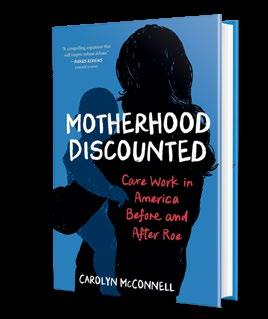
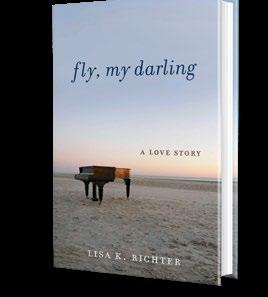
“Weeper”; he sees the tree as his friend and a peaceful place to practice drawing superheroes. One day, he ventures too far out on one of Weeper’s branches, which snaps, sending him crashing to the ground. As Michael hovers between life and death, he experiences profound spiritual visions and feelings of love, peace and serenity. He sees his late mother, who imparts life-changing wisdom—“Pain doesn’t always wear the same face.... Sometimes the ones who hurt us are hurting too”— and knowledge about the troubled home life of someone he knows. Michael recovers with support from his neighbor Dr. Tanaka, his Aunt Diane, his father, and his friends Monica Thompson and Danny Rogers. Guided by his mom’s words, Michael resolves to “[look] for the good in everyone,” which reshapes his perspective on life. When Michael faces the difficulty of choosing a dog at the shelter, he turns to an unlikely figure for advice, sowing the seeds of friendship. By sixth grade, Michael understands that compassion can heal even the deepest wounds. Over the course of this novel, Litch’s writing is sincere and thoughtful, confronting painful subjects head-on. The story has a spiritual tone without being overtly religious and feels uplifting while maintaining a sense of realism. This beautifully crafted book is about recognizing each person’s “superpower” and appreciating their uniqueness. It also ably explores the concept of coming to terms with loss while preserving the departed’s spiritual presence, which may comfort many readers.
An emotional tale of a young person’s journey from heartbreak to hope.
Michalski, Jen | Keylight Books (288 pp.)
$17.99 paper | June 3, 2025 | 9781684426096
In Michalski’s novel, two women who’ve had relationships with the same man fall in love with each other.
Two very different women, Lacie and Quinn, are, unbeknownst to them, connected to
A lovely novel about love, grief, and connection.
each other by the same man. Lacie has been married to Derek for many years, and his serial infidelity has caused many problems in their marriage. (She doesn’t know all the details of his affairs, or the names of all the women he’s slept with.) After therapy and many rounds of conversation, Lacie has tried to convince herself that she’s happy, or at least happy enough. But now that her two daughters are out of the house, she’s starting to have thoughts about leaving Derek. Quinn is a guitarist who used to perform with a Riot Grrrl band called The Clit Girls (“I don’t really play those songs anymore”). She spent much of that time embroiled in fights with her manipulative girlfriend, who led the band. Quinn met Derek at a music festival, and the two of them had a one-night stand. Quinn got pregnant and gave birth to her beloved daughter, Liv. She never told Derek about Liv, not even when Liv got sick with Batten disease. Quinn finally breaks down and contacts Derek after Liv dies at the age of 9. Derek suffers a stroke and is put into a coma; Lacie and Quinn meet for the first time at the hospital. Lacie has no idea who Quinn is, but Quinn knows exactly who Lacie is. They’re immediately attracted to each other, but can Lacie admit what she’s feeling to herself? And what will happen when Quinn finally reveals what happened between her and Derek? This is a tenderhearted LGBTQ+ narrative that deals with many difficult topics with sensitivity and openness. It also contains a lot of lovely observations about the Riot Grrrl scene, and about what it means to be a queer woman in today’s America. The plot can sometimes veer toward the melodramatic, and the language is a bit stilted in places, but readers will get a lot out of this touching story.
A lovely novel about love, grief, and connection.
Miska, Steve | Onward Press (306 pp.)
$31.94 | December 1, 2025 | 9781954988217
In this military memoir, Miska recounts the campaign to help local interpreters escape Iraq. During the U.S. occupation of Iraq, any Iraqi who worked with the American military was viewed by their government as a traitor; the mere rumor that someone was collaborating with the Americans could mean execution by one of numerous insurgent groups. Even so, working for the Americans was one of the surest ways for Iraqis to feed their families, even if they had to keep their work secret from their own family members. As an infantry officer serving in Baghdad in 2006 and 2007, the author knew as well as anyone how important Iraqi partners were to the war effort—and understood the obligation the United States had to keep those partners safe. Occasionally, this meant smuggling these partners out of Iraq via an “underground railroad” that led from Baghdad across the closed Jordanian border to the American embassy in Amman. In this memoir, Miska describes the efforts of himself and his colleagues to help Iraqi interpreters like “George,” “Ronnie,” and “Dave” escape retaliatory violence, obtain visas, and settle into new lives in America. “His normal demeanor was subdued and professional, but the occasion awakened something deep and vibrant in him,” writes the author of one Iraqi granted a visa to the U.S. “I wondered how many threats he had survived and how his outlook might have become jaded as the security situation degenerated.”
Miska’s narrative highlights the
tremendous sacrifices made by Iraqi interpreters and by the Americans at home—many of them the wives and mothers of American soldiers—who helped welcome and settle them as refugees once they reached the United States. Using the stories of a small number of (mostly pseudonymous) figures, Miska provides an affecting perspective on one of the lesserknown, if no less harrowing, facets of the Iraq War, confronting readers with the ethical and logistical complexities that so often arise in war zones.
A fascinating, underreported story from the American occupation of Iraq.
Kirkus Star
Morris, Jason Z. | Chami and Shim Publications (286 pp.) | $12.99 paper January 5, 2026 | 9781934639313
A graduate student struggles to overcome generations of inherited trauma and an existential crisis in Morris’ novel. Jake Luria is pursuing a doctorate degree at Harvard and struggling under a significant amount of pressure. His research is not going well, adding to the animosity already expressed by his boss and colleagues. At home, Jake takes responsibility for keeping an eye on his twin sister, Sara, a brilliant physicist and lecturer at MIT who struggles with depression. After mental health episodes threaten Sara’s life, their “great uncle,” Sol, insists that Jake must serve as her eternal protector. However, his recent struggles with his research and the possibility that his thesis might face rejection mean that Jake must put in longer hours than usual. One night, Sara visits Jake in the lab and, after muttering the words “The flesh burns, but the letters fly free,” ingests a flask of phenol, a potentially fatal chemical. Jake is quick to rush her to the emergency room, where she narrowly survives the night. As Sara
recovers in the hospital, Jake looks for answers as to why his sister would suddenly want to harm herself. With these answers come revelations of generational trauma and family secrets, and Jake must grapple with his own dwindling sense of self. From the first page of this stunning, melancholic story, readers will understand the amount of pressure Jake is under and will likely feel it themselves. Morris’ prose is honest and hauntingly poetic, evincing a deep, breathtaking emotionality. All of the characters are wonderfully complex, especially Jake, who, unlike some of his more clichéd counterparts in contemporary literature and film, is empathetic and thoughtful. While readers may initially blanch at the weight of the emotional subject matter, Morris treats the sensitive topics with care, delivering an enthralling read from cover to cover.
A haunting, slow-burning story about the hunger for connection and the pressures of family.
Nguyen, Thanh | Loving Heart Publishing (181 pp.) | $19.99 paper | December 8, 2025 9798990893030
Nguyen offers a road map for readers ready to start becoming who they want to be. The author, a speaker and leadership coach, opens with a disclosure of her own vulnerability; she describes standing terrified before an audience of hundreds at her first company-wide presentation two decades ago. That moment of choosing courage over comfort became the foundation of her approach, which she calls “mini-shifts”: “small, intentional changes that may seem minor in the moment but that accumulate into
something life-changing.” The concept echoes James Clear’s Atomic Habits (2018), but Nguyen grounds her framework specifically in confidence-building rather than general behavior changes. The book’s strength lies in its cleareyed realism about what confidence actually is: “real confidence is quieter” (it’s about knowing who you are rather than shouting about how great you are). The author dismantles the myth that self-assurance requires charisma or fearlessness, positing that confidence isn’t about never doubting yourself, but rather progressing despite those doubts. This distinction— between eliminating fear and acting alongside it—permeates the work and gives readers permission to be human while still moving forward. Each chapter combines personal narrative, psychological research, and actionable exercises. “Own Your Light” teaches readers to accept compliments rather than deflect them—a deceptively simple practice that reinforces selfworth. “Let Your Why Lead You” connects purpose to resilience, citing studies showing that people with clear purpose experience 15% lower mortality risk. The final chapter, “You Don’t Have To Grow Alone,” acknowledges that confidence develops in community, not isolation, which is particularly resonant for introverts who may feel overwhelmed by networking advice. Nguyen backs her insights with credible research—citing Bandura’s self-efficacy theory, Dweck’s growth mindset, and studies on imposter syndrome—while maintaining an accessible, conversational tone. Her personal story of surviving abuse as a teenage immigrant demonstrates the transformative power of purpose-driven action. The prescriptive action steps conclude each chapter without overburdening readers; the author explicitly encourages tackling just one step at a time. This clear, attainable approach makes the book equally valuable for veteran self-help readers and newcomers exploring inner work for the first time.
A practical guide to building authentic confidence through incremental change.
Kirkus Star
Pelletier, Stacia | Mercer Univ. (320 pp.) $26.04 | September 2, 2025 | 9780881469721
In 19th-century gold rush Georgia, young Barker McRae finds herself in possession of a land deed that stokes family greed in this historical novel by Pelletier.
It’s the early 1830s, and gold has been discovered in Georgia. The state holds a lottery—40 acres of prime prospecting land for lucky winners. (The fact that most of that land is owned by the Cherokee is a cloudy quibble.) Barker McRae is awarded one of those deeds, but her evil uncle, Wiley Wood, demands to have it. So she takes off with the deed, throwing her lot in with Matthew Higgenbotham, the deed deliverer who set all this in motion. But we soon find out what Barker is really after: her father, Lorenzo McRae, a God-maddened circuit rider who abandoned her when she was 12. Wiley happens to be a captain of the county militia, so he and an impromptu posse are in hot pursuit of Barker and Higgenbotham—not to mention that valuable deed. Our daring duo endure one crisis after another, all culminating in a final, heart-stopping climax—involving Barker, Higgenbotham, Lorenzo, and Wiley and his men—at the spectacular Tallulah Gorge. Pelletier is an experienced writer, and it shows in every line. (“And the wolfdog bears within himself the same agonized dissent as this assaulted land, the same throttled bewilderment.”) That “wolfdog” is a stray who decides that guarding Barker is his life’s mission. This novel has a lot to say about the historical situation of pre–Civil War Georgia. There really was a Georgia gold rush, long before the more famous ones in California and Montana, and there really was an illegal lottery. Two characters bear special mention. One is the truly diabolical but complex and
conflicted Wiley Wood, a sexual abuser who convinces himself in a twisted way that he loves his niece. The other is reluctant hero Matthew Higgenbotham. All he wanted to do was shake the red Georgia clay off his boots for good and go home to Vermont. Instead, he becomes Barker’s surrogate father, whether either of them likes it or not. A barnburner of a novel featuring some truly unforgettable characters.
Pope, Allegra | Self (316 pp.) | $14.80 paper October 16, 2025 | 9798270064631
A famous Hollywood actor faces the consequences of his lies in Pope’s mystery novel. Paul Max has it all—money, fame, a dream acting job, and a beautiful girlfriend. One day, he receives a note under his door that threatens to expose secrets that would unravel his perfect life. The note reads: “I know what you did ten years ago. I know you’re a murderer…they weren’t lying.” Paul tries to save himself by meeting the mysterious note writer at an abandoned gas station, only to be shot and killed. Grace Fletcher, the head investigator of the case, arrives at the scene to find “murderer” written on Paul’s chest with his own blood. Grace is determined to solve the high-profile crime; as she uncovers evidence piece by piece, she learns that the killing is just one strand in a web of murders and coverups. As Grace delves further into the mystery, her sister, Becky, an investigative journalist, becomes entangled in danger while working to put together an article about Paul. Together, the two combine their findings to expose a hit man, a disgruntled former FBI agent, and Paul’s involvement with a murder trial, along with his secret history with an acting group called the Red Stage. This is a fast-paced novel that keeps readers guessing until the end. Pope writes clearly and succinctly, sprinkling his prose with piquant turns of phrase such
as “in Hollywood illusions don’t last” and “the dream was a mask.” The character development is strong—Becky’s obsession with finding her next sensational story feels real and passionate and is delightful to follow. Pope’s true brilliance lies in her ability to create an intricate plot using a deep bench of suspects and the other murder cases linked to Paul. This intricacy brings complexity and nuance that will have readers eagerly turning the pages. A fast-paced murder mystery about the false security of a life built on illusions.
Pope Francis & Peter H. Reynolds with Paul A. Reynolds | Loyola Press (40 pp.) | $19.99 January 20, 2026 | 9780829461589
Paul A. Reynolds and Peter H. Reynolds draw inspiration from the teachings of Pope Francis in a picture book that encourages young people to share their creative gifts.
“We are ALL gifted. / Each one of us has treasures within.” So begins the authors’ paraphrasing of a message from Pope Francis, printed in full on the previous page. An accompanying illustration depicts a large, diverse group of children of different ages, including one wheelchair user, all gathered as if onstage, ready to share their talents. A detailing of different types of gifts follows, distinguishing between common creative outlets (music, art, literature) and less heralded talents with social benefits (listening to others, being kind, offering love). Finally, the text urges kids not to keep their “light” to themselves, but to give it freely to foster happiness: “So…what are your gifts and how will you share them? / The world is waiting.” This is a heartfelt work, and Peter H. Reynolds presents single-page and occasionally double-page illustrations of children discovering their gifts, which are often in magic-filled boxes. These scenes are vividly enacted against cloudy backdrops in all the vibrant
shades of the rainbow. Although the linework is simple, the characters spring to life with a joy and vivacity reminiscent of Quentin Blake’s work.
An earnest and well-illustrated primer that will set imaginations soaring.
Robinson, Kimberly | Illus. by Liuba Sir Inner Child Publishing (36 pp.)
| March 12, 2026
Robinson’s picture book follows the adventures of a trepidatious, newly-transformed butterfly.
BeBe enjoys her comfortable life as a caterpillar, munching leaves and crawling wherever she pleases. But after she wakes up with wings and long legs, her world suddenly feels “strange.” She can no longer “crunch on her favorite milkweed or clover” and feels uncomfortable when “her big wings [follow] her everywhere.” The story uses BeBe’s transformation as a way to open a conversation for young readers about the difficulty of change—whether it comes in the form of growing up, sudden illness, or familial shifts. Inspired by the author’s real-life recovery after a seizure and brain surgery, Bebe’s metamorphosis shows how frightening change can be, but also how rewarding new experiences can follow. The prose flows easily, and lines like “From above, the world looked wider—and a little brighter” capture moments of hope as the adorable caterpillar grows to accept the unknown. Sir’s illustrations are warm and charming, especially those of BeBe in her two forms—they recall the style of The Very Hungry Caterpillar (1969), with grainy textures and bright colors. The sudden shift from white daytime backdrops to a dark nighttime scene interrupts the visual rhythm, but the overall atmosphere remains coherent and uplifting, and should prove a delight for young readers. A kind and colorful reminder that change, no matter how strange, is necessary for growth and new adventures.
Ryan, L.T. & C.R. Gray | Podium Publishing (280 pp.) | $19.99 paper | April 21, 2026
9798347035571
Thelma & Louise meets Death Wish in this morally slippery thriller.
Gwen Kane is a domestic abuse survivor who has taken refuge at Rhiannon’s Ranch, where residents are encouraged to break the cycles that brought them there. Her chosen name “gave me power and a sense of self when I’d had nothing but a garbage bag full of things I’d managed to throw together as I ran in the night.” She has started her life anew, cultivating a close friendship with fellow resident Simone and a budding romance with Sebastian, an amateur artist who tends to the ranch’s animals and who has custody of his preteen niece, Lizzie. One night, Gwen comes upon Simone being attacked by her ex-husband, who’s tracked her to the ranch. When he turns on an intervening Gwen, she stabs him to death in defending herself. For the sake of the ranch, Gwen and Simone conspire to keep the incident a secret. But just when they think they’ll get away with murder, Gwen receives a cryptic message: “What did you do with the car? Left the wallet and phone in his pocket. If you’re gonna do it, do it right.” Is the unknown sender trying to blackmail her, or help her? The book’s problematic title sets up the dilemma at the heart of this series starter. At one point, Rhiannon tells Gwen, “All these bastards get away with it.” “That’s why I’m angry,” Gwen responds, and with a nod to the infamous Death Wish franchise, the ending sets up Gwen as an avenger of abused women. Reader mileage will vary on whether vigilante justice, dramatically satisfying though it may be (“The world was a much better place without David…in it”), trumps law and order. Readers will no doubt be interested to see how all this plays out in future volumes.
By turns bracingly propulsive and psychologically astute.
Schrader, Steven | Hanging Loose Press (138 pp.) | $18 paper | December 1, 2025 9798991337731
A varied collection of new and selected memoir-ish pieces drawn from an undeniably interesting life. Arranged in several sections of linked vignettes, Schrader’s work looks back on his formative experiences. Rather than offering a traditional linear memoir, the author depicts concise, standout scenes from different periods of his life—his university years, first job, and entry into the Army at 23, where he was quickly appointed company clerk. Later chapters follow his work with the Welfare Department and the New York City Youth Board before he eventually became a junior high school English teacher. About a third of the collection focuses on his childhood, and these chapters contain many of the collection’s highlights. Schrader writes with particular warmth about Frieda, the “problem child” of his elementary school class, and his own attempt to toughen up when, as a “chubby” 11-year-old, he learned to box under the guidance of a former professional fighter. He memorably recounts his brother’s friendship with Paul, the son of famed gangster Meyer Lansky, who tried to stretch his legs long enough to meet the height requirement for West Point Military Academy. Schrader’s recollections about movie houses will resonate with older readers, especially his visits to Manhattan’s RKO theater. He and his friends yelled comments at the screen—until he suddenly noticed the doorman from his building sitting in the audience. The account of his first writing class at Cornell in 1954 shows Schrader’s talent for capturing someone in a sentence or two: “My professor was Baxter Hathaway, the founder of Epoch, a respected literary magazine. He was a thin, craggy-faced man, a cigarette constantly in his mouth. He wore a sports jacket
with leather patches on each sleeve and drove an old car with a rope tied around one door to keep it closed.”
Anecdotes that touch on cultural history maintain a Forrest Gump quality. For instance, the author attended early Greenwich Village folk concerts to see Ramblin’ Jack Elliott and spotted a young Bob Dylan in the audience. Not every tale achieves liftoff, but the stronger pieces far outnumber the duds. In the later entries, flashes of melancholy and loss replace the wild-eyed wonder of Schrader’s youth. For example, a friend, who once shared mail-order peyote with Schrader, fell ill: “About a month later Mendy…found out that he had cancer. He started going for chemotherapy and I talked with him about moving in to help him manage. Before we could make arrangements, though, he went into the hospital, and died a few weeks later.” The final sections about his aging parents are among the most moving. He was grateful he could care for them, but he’s cleareyed about the ambivalent feelings the experience elicited. He’s also candid about his feelings after his father’s death: “Since my father died I feel liberated, more myself. I know he liked my company and I used to have a good time with him, but when we were out together I felt as if I was always having to flatter his vanity.” Schrader closes with reflections on his own aging and, despite the difficulty of the subject matter, exudes a hard-won pleasure in being alive.
A thoughtful, nostalgic collection filled with sharply observed moments.
Shepherd, Deborah K. | Heliotrope Books (294 pp.) | $22 paper | May 12, 2026 9781956474831
Shepherd offers a memoir of an affair between an older man and a younger woman that led to marriage. In 1968, after dropping out of the University of Arizona, the single, 21-year-old author moved from Tucson to Queens, New
York, looking for a fresh start. She took a job as a library assistant at a consulting firm, where she met Bill Shepherd, a 55-year-old human resources consultant and ordained Episcopal priest. Bill was unhappy in his marriage, and he and the author soon began a secret affair. To Shepherd’s surprise, she quickly developed deep feelings for Bill, and the two declared their love for each other and their desire to start a life together. Through flashbacks spurred by a discovery of their old love letters, the author relates their story’s ups and downs, including Bill’s struggle to divorce his wife, their navigation of societal and familial disapproval, their brief longdistance relationship upon Shepherd’s return to the University of Arizona, the birth of their two children, and their eventual marriage. The author incorporates the found missives and new messages, addressed directly to Bill, as she grapples with his motivations and those of her younger self. Throughout, the prose is unflinchingly honest, effectively exploring the roles of body image and self-esteem, religion, and generational differences, among other themes: “looking back, it all swirls together: objectification/sexual attraction/passion/obsession/possession/ desire/intimacy/love—like the tendrils of sweet peas. If you try to separate them, you are in danger of killing the flower.” Overall, it’s a thoughtful and multidimensional examination of love, power, and self that doesn’t shy away from asking difficult questions. A nuanced and open account of an unconventional relationship.
Slater, Alexandra | Self (302 pp.) | $25 November 4, 2025 | 9798999792228
Three friends tackle issues of grief, work, and romance in Slater’s novel. Set largely along Massachusetts’ South Shore and Cape Cod, the story follows three longtime friends, Maeve, Lizzie,
and Hadley, over the course of a single summer marked by matrimony, professional upheaval, and unresolved romantic histories. Maeve, a widowed publicist still quietly grieving her husband’s death (“Their wedding seems like yesterday, even though he’s been dead for four years”), is the novel’s most grounded presence. Her sense of control begins to unravel when she’s passed over for a longanticipated promotion in favor of Pope Morris, a charming outsider who eventually proves to be more than just a co-worker to Maeve. Lizzie, recently divorced and fiercely competitive, measures her self-worth through her achievements and desirability, and she wrestles with her on-again, off-again relationship with Wade (a former lover, not her ex-husband) throughout the novel. Hadley appears to have achieved the life she’s always wanted, complete with a lavish wedding and a devoted husband, but even her happiness begins to fray during her honeymoon, revealing anxieties about control, intimacy, and the future. Slater writes in a brisk, conversational style that captures both the humor and quiet ache of her characters’ inner lives. The dialogue is sharp, the social observations are astute, and the coastal setting effectively reinforces the novel’s themes of nostalgia and transition. While the romantic entanglements occasionally veer toward the familiar, the emotional stakes remain grounded, particularly in the depiction of female friendship as a sustaining force. Ultimately, the novel succeeds less as a conventional romance than as a thoughtful exploration of women navigating grief, ambition, and reinvention. The author resists easy resolutions—the future of one of the friends remains unresolved even at the end of the book—allowing her characters to remain flawed, uncertain, and human. The result is an engaging, emotionally intelligent novel well suited for readers drawn to relationship-driven fiction that might mirror their own lives from time to time. An observant and often witty portrait of adulthood in transition.
Smith, D.K. | Self (484 pp.) | $34.99
April 2, 2024 | 9798985194135
Smith’s novel explores the costs and rewards of artistic myth-making.
The story centers around Harold, a former clergyman shattered by personal loss. He’s pulled back into the orbit of a once-celebrated artistic circle responsible for a cultural phenomenon built on erotic fascination and carefully curated myth—years after its peak, the machinery that transformed private experience into public obsession sputters back to life. This scenario is driven by Weland Tilyard, a painter of relentless ambition. Weland’s subject and muse, Beatrice Holliman, was once immortalized as an icon and is now living with the long aftershocks of having been turned into one. Moving fluidly between past and present, the narrative traces how a secluded artists’ retreat becomes the birthplace of aesthetic triumph—and moral compromise. (What initially appears as devotion to beauty and discipline gradually reveals itself as a system of control.) The book’s emotional weight lies less in revelation than in accumulation, with sorrow, guilt, and longing recurring with quiet insistence: “No matter where he walked through the familiar rooms he carried the sound of weeping with him.” Observational rather than judgmental, the prose dissects artistic ego, gendered power, and the romanticization of suffering with remarkable restraint. (Harold’s grief—rooted in the loss of his child and the collapse of faith—casts a long shadow over every interaction.) Smith characterizes fame as a distortion field rather than a reward; success freezes people in poses they can never comfortably inhabit again—bodies age, reputations erode, and the language once used to justify creation begins to sound hollow. Yet Smith resists cynicism; he renders even his most morally compromised characters with complexity, capable of care as well as harm.
Measured, unsentimental, and quietly devastating, the novel interrogates the idea that suffering is a prerequisite for beauty—and asks who gets to decide when the price has been paid. A bracing, morally serious work that dismantles artistic myth without denying its allure.
A scholar explores the connections between childhood trauma and youth crime in this nonfiction work.
In 2015, Smith joined a small team of advocates and lawyers who traveled to California prisons to provide workshops related to a new state parole process for incarcerated people whose crimes had been committed before they turned 18. The author’s role with the group took her to Pelican Bay State Prison, where she would facilitate small group discussions that taught prisoners how to “develop insight into their crimes and the factors that might have played a part in their criminal behavior.” Careful to emphasize that the purpose of these sessions was not to make excuses but rather to find explanations for criminality, Smith hoped the meetings would lead to the important but difficult self-examination needed to help offenders change their behaviors and seek rehabilitation. Those initial visits to Pelican Bay were the genesis of this book, which draws on interviews with 29 inmates who had been convicted as youths. The author does not obfuscate the appalling crimes, including murder, committed by those she interviewed, yet, to a person, she asserts that her subjects were “both perpetrators and victims” of adverse childhood experiences (ACEs) that defined their formative years.
Shawn, for example, was born to a mentally ill woman who had been raped by an orderly in her treatment institution. After being separated from his physically abusive mother as a 13month-old, Shawn would spend years enduring bullying, malnutrition, and sexual abuse in foster care, and he would eventually stab a man who had preyed upon him to death. Each of the interviewees have stories as harrowing as Shawn’s, which makes the book an often-difficult read—but what stands out amid the work’s gory, trauma-filled details is Smith’s insistence on the “shared humanity” of each interviewee. The book’s narratives are compelling and are balanced by the author’s expert analysis. A retired clinical professor and associate dean of the University of Southern California’s Suzanne Dworak-Peck School of Social Work, Smith is also the former chair of the L.A. County Commission for Children and Families. Her professional bona fides give the work authority, as does a multipage scholarly references section. Smith follows best practices in social and behavioral sciences by providing detailed explanations of her interview protocols and data tables of evidence collected in her interviews. She also offers poignant reflections on methodological issues rarely discussed in detached academic studies; she highlights the contrast between her own background as a middle-class white Jewish woman with the Black and Hispanic backgrounds of her hypermasculine interviewees, and she’s candid about how differences in race and gender affected her meetings (she also shares her personal history as an activist whose parents narrowly escaped Nazi Germany). The book concludes with a chapter-length exploration of the ways in which the author’s findings can provide a “Path to Healing.” Early intervention for children with ACEs is highlighted, but for those who have already committed crimes, Smith offers a path toward “accountability, freedom, and reparative acts” that reveal “the resilience and transcendent power of the human spirit.”
A well-researched, insightful case for the redemptive power of healing.
CROATOAN
Spurlock, Sean | Self (501 pp.) | $24.99 December 21, 2025 | 9798279329632
A young British soldier navigates the horrors of the Nazi blitzkrieg in Belgium and France in Spurlock’s dramatic historical novel
It’s May 10, 1940, and Hitler has launched his deadly attack on Belgium. British troops are already in France when the king of Belgium asks for British help in combating the Nazi invasion. Pvt. Bill Brooks awakens next to his new French wife, Augusta Dumont, in the small town of Orchies, where Bill’s unit of the Royal Norfolk Regiment, part of the British Expeditionary Force, has been stationed. His older brother, Lt. Jameson Brooks, is the commanding officer of the unit. The Force has been ordered to march immediately into Belgium. Meanwhile, in London, Winston Churchill, a compromise selection, has just been appointed British prime minister. He’s now heading toward Admiralty House to address his War Cabinet. Seated among the ministers are Lord Halifax and previous prime minister Neville Chamberlain. Churchill begins:
“Gentlemen…we face the greatest peril our nation has encountered for many centuries. The ruthless Nazi thug war machine strikes.” He knows that Halifax and Chamberlain want to debate the British response to Hitler’s invasions. He continues:
“There can be no parlay. Any agreement reached will be violated in short
order….There will be no peace talks. Let me repeat myself. There will be no peace talks.” The U.K. must aid its allies and prepare for Hitler to attack the British Isles. Back on the border, the BEF heads into Belgium and hears the first sounds of battle in the far distance. As they reach the first Belgian town, they’re greeted as heroes by the villagers. But it won’t be long before the BEF find themselves being relentlessly bombed by the German air force. In front of them, the Germans are rolling through Belgium, and behind them, the French army is collapsing. Cut off from supply lines, they’re ordered to retreat to Dunkirk for evacuation. Hundreds of thousands of Allied forces are surrounded on three sides. Spurlock’s tribute to the bravery and determination of the soldiers of the BEF and their rescuers abounds with high-action scenes that bring readers directly into the sounds, smells, fears, and losses on the front lines and includes descriptions of various armaments and strategic maneuvers. The narrative, which takes place over the three-week period leading up to the perilous evacuation at Dunkirk, alternates between the front lines and London, where Churchill must contend with a War Cabinet more comfortable with debate than decision. We experience the war through the eyes of Spurlock’s two main protagonists, Bill, a foot soldier, and Churchill, the statesman, creating a compelling combination of personal drama and governmental strategy. One of the most spellbinding moments occurs when, during the British retreat, Jameson sends Bill back to Orchies to rescue Augusta before the Germans take the town. Spurlock viscerally
details the three days and nights the couple struggles through enemy lines on their way to Dunkirk, the only English Channel port still precariously held by the British. Riveting, emotional, and packed with historical factoids.
Taylor, Rowan | Latchkey Publishing (202 pp.)
$12.99 paper | November 25, 2025
9798993350745 | Series: The Oblivion Cycle, 2
In this novel, an irrational captain turns a 19thcentury sea expedition into a nightmarish ordeal. Nearly 18 years old, Kit Cabot is heir to a family fortune. But filling out ledgers for his father’s Boston-based Cabot Shipping Company leaves him perpetually stuck in a warehouse. Uncle John, who regales him with sea stories, remains Kit’s one source of excitement. The two also secretly smuggle rum, giving Kit extra income and the chance to buy his own ship and sail off one day. Unfortunately, there seems to be something wrong with John, who’s just returned from collecting goods. Quartermaster Mr. Whyte claims a red pearl John found in a cave has “changed” him. So Kit stows away on the Apollyon , only to discover his uncle’s deteriorating physical condition (“The man looked less like a sailor and more like something dredged up from the bottom of the sea”). More alarmingly, John’s also become a cruel captain. Is something possessing him? Kit and Mr. Whyte believe the answer lies in getting rid of that pearl, if they can just grab it without alerting John. This book, the second in a series of thematically linked horror novels, thrives on suspense. John’s increasingly erratic behavior means that it’s just a matter of time before the crew mutinies. As in Taylor’s preceding volume, The
Memory Keeper (2025), the author’s concise descriptions keep the narrative moving while rarely straying from the spookiest parts. For example, there’s the question of whether something otherworldly has truly possessed John, putting all the men aboard the Apollyon in indisputable danger. The cast is engaging, starting with Kit, whose habitually painful leg (from a childhood injury) remains a constant reminder that he’s struggling to run away from his life in Boston. Other standouts are Kit’s cold, overbearing father, Edmund, as well as Mr. Whyte, a deceptively unassertive man whom the young protagonist comes to rely on. Everything surrounding John and the red pearl becomes much more apparent in the smashing final act, which takes a slight—but exhilarating—genre detour.
Keen characterization fuels a taut horror tale that simmers with tension.
Valero, Holly | Boilerplate Books (73 pp.)
$17.99 paper | September 14, 2025
9798991386067
In this picture book, a curious bear who has just emerged from hibernation explores the vast wilderness and makes some friends along the way. An unnamed bear emerges from its cave to see a sunny spring day and wanders around the forest. Next comes summer, when the bear befriends a turtle and embarks on various adventures such as swimming and hiding from lightning. Eventually, birds warn the bear about winter. As winter descends, the bear realizes it’s finally time to return to its cave and hibernate once again. While the book provides no words, each page contains one or more glyphs that reveal the storyline. The glyphs are explained in a
glossary, with some being more obvious (a rain cloud meaning “rain”) than others (a small circle within a larger circle meaning “curious”). Valero’s captivating illustrations feature deep, saturated colors and an adorably rotund bear with a magnificently expressive face. They also include some unusual angles, such as a bee’s aerial view and a caterpillar’s glimpse of a gaping bear mouth as it’s about to be eaten. The lack of words does nothing to limit the bear’s escapades, with the actions and expressions made so clear that the glyphs are not always needed (although they certainly provide a lot of fun). Valero has created a book that is utterly unique—a wonderful romp through the woods that ultimately proves words are not always necessary to tell a rich, rewarding story.
This delightful, wordless story encapsulates adventure and natural beauty through its charming illustrations and glyphs.
Wilson, Carolynne | Self (91 pp.) | $11.99 paper | April 23, 2025 | 9780994278678
A collection of stories and recipes from a French cooking school. Wilson gathers dishes and reminiscences from Gastronomicom, a culinary school in the town of Agde in the south of France that offers months-long courses in French cuisine and pastries to professional and amateur cooks, along with French language classes and internship placements in Michelin-starred restaurants. The anecdotes recount the hectic pace and camaraderie of the kitchen boot camp and the acerbic criticisms of chefs Fabrice, Pol, and other demanding instructors (“after our For more Indie content, visit Kirkus online.
first test, I asked the chef how I could improve,” recalls British student Harriet. “His feedback? ‘Everything. Especially your focus’”). Despite the rigors, students extoll the training as a transcendent experience that convinced many to switch from careers in psychology, software engineering, and other fields, imparted timeless kitchen wisdom— “butter fixes everything”—and altered their views of cooking and food. (“It changed me—most surprisingly, my relationship with vegetables,” notes Texan Cyle J. Kenney. “Before, they were just sad side dishes. Now, they’re the stars of the show, thanks to the techniques I learned.”) Much of the text consists of a few dozen recipes, which range from basic veal and chicken stocks, sauces, and soups to lavish entrées and desserts. Dishes include squid pie; baked cottage cheese eggs, an ovo-lacto feast comprising six large eggs, cottage cheese, cheddar, and milk; a rack of lamb with a fancy checkerboard crust; a fiendishly complex green bean mousse with tarragon, beetroot-marinated salmon, “perfect” egg, pickled radishes, and lemon-yuzu gel; pristine croissants; and a tiramisu with coffee syrup and mascarpone. Despite their many moving parts, the recipes are easy to follow (ingredients are measured strictly in grams and there are AI-generated illustrations), written in skillful prose that describes food in evocative language. Cooks with ambitions to try a slightly more haute level of French cuisine will find a reassuring guide here. A beguiling cookbook with tasty recipes, clear directions, and captivating celebrations of the joy of cooking.

ONE OF THE joys of listening to audiobooks is what the narrator can bring to the experience. Listening to an audiobook at all is, in a way, a translation—yes, the narrator is starting with what’s written on the page, but those words are filtered through the narrator’s voice and performance choices. When it’s a work that has been translated from another language into English, that adds yet another layer, incorporating the translator’s interpretation as well. Through the use of authentic accents, a narrator can take us to far-flung locales and cultures that may be unfamiliar to us, and they can ground us in a specific place with the flawless pronunciation of non-English words. But a skilled narrator also sets the mood, no matter where a story is set.

Macmillan Audio has begun releasing Belgian author Georges Simenon’s entire Inspector Maigret series on audio, read by British actor James Faulkner. Faulkner delivers the narrative sections in a British accent, and when performing dialogue, he tinges the characters’ voices with a French accent. Our review of Book 14, The Flemish House (Macmillan Audio, 2025), originally published in 1932 and translated by Shaun Whiteside, notes that “Faulkner captures both the French detective’s quiet authority and the suspicion with which the residents of a small border town regard him. A compelling, atmospheric portrayal of the much-loved Maigret and his world.” You could catch up with the recent PBS streaming series and then
settle in with the Maigret audiobooks for an extended trip to the Continent.
Performing Turkish author Yiğit Karaahmet’s Summerhouse (Recorded Books, 2025), translated by Nicholas Glastonbury, veteran narrator George Guidall also evokes a very specific mood—one of resentment and obsession. The action is set on the isolated Turkish island Büyükada, where Fehmi and Şener have spent 40 years in love. Despite having an intimate group of friends, the men have hidden their marriage, living as “retired companions” with bitterness bubbling under the surface. Our reviewer makes an excellent case for listening: “This thriller is a bomb just waiting to go off, and Guidall deftly delivers the spark.”
Narrator Greta Jung creates a compelling listening experience with Bora Chung’s Midnight Timetable: A Novel in Ghost Stories (Hachette Audio, 2025), translated by Anton Hur. Jung also narrated Chung’s story collections Cursed Bunny and Your Utopia , so she’s well acquainted with the South Korean author’s work and knows how to draw listeners in. Jung can pronounce a Korean name perfectly, but she’s also attuned to Chung’s particularly wry and unsettling style. In one story here, a night-shift worker at a research institute catalogs the supernatural histories of various objects and people. Objects and events overlap across stories, forming a richly interconnected narrative. As our review notes, Jung’s narration “lends a deliciously eerie quality to these quirky tales.”
A unique creativity emerges when you combine text, translator, and narrator. Choose a locale—maybe a place you’ve been and loved, maybe somewhere you’ve only dreamed of visiting or learning more about—and choose a mood; you can travel the world in the company of a winning audiobook performance.
Jennifer Dowell is the audiobooks editor.
Peter Noble coolly performs this twisty crime novel. Using a narrative tone that is distant and objective, he still manages to inhabit each character, providing credible male and female voices while instilling each with appropriate emotion. In this story filled with betrayals, secrets, and stunning surprises, he handles the Scandinavian pronunciations with ease. The investigation of the
murders of two young people in December 1999 reveals the darkness and bitterness hidden behind the facade of a Swedish town. Despite police efforts, the murders go unsolved. Twenty years later, another murder with connections to the earlier case lures one of the original detectives out of retirement to investigate the cold case.
Noble offers an especially effective performance of this deftly written mystery.
Carlsson, Christoffer | Trans. by Rachel Wilson-Broyles | Read by Peter Noble Random House Audio | 12.75 hrs. | $24.99
$95 library ed. | December 2, 2025 9798217159284 | 9798217160181 library ed.
Series: Halland Suite, 3
Kirkus awards Earphones to truly exceptional presentations that excel in the following criteria: narrative voice and style, vocal characterizations, appropriateness for the audio format, and enhancement of the text.
176 Feast on Your Life By Tamar Adler, read by Tamar Adler
176
Hologram Boyfriends By Mike Albo, read by Mike Albo
176
Venetian Vespers By John Banville, read by Luke Thompson
177
Expert Witness By Ann Wolbert Burgess, Steven Matthew Constantine, read by Gabra Zackman
175
The Living and the Dead By Christoffer Carlsson, trans. by Rachel WilsonBroyles, read by Peter Noble
177
George Falls Through Time By Ryan Collett, read by Samuel Barnett
178
Bird City By Ryan Goldberg, read by Evan Sibley
178 Helm By Sarah Hall, read by Louise Brealey
179
The Mirror of Great Britain By Clare Jackson, read by Emma Gregory
179
Best Offer Wins By Marisa Kashino, read by Cia Court
180 Persephone’s Curse By Katrina Leno, read by Phoebe Strole
182 Shadow Ticket By Thomas Pynchon, read by Edoardo Ballerini
182 Tailored Realities By Brandon Sanderson, read by an ensemble cast
183
The Dream Factory By Daniel Swift, read by Matthew Lloyd Davies
183 Kill the Beast By Serra Swift, read by Moira Quirk
Adler, Tamar | Read by Tamar Adler | Simon & Schuster Audio | 6.5 hrs. | $19.99 December 2, 2025 | 9781668155684

Cookbook author and Vogue contributor Adler narrates with controlled emotion in a lovely voice, with just the right tone and tempo. These meditations on life and food, spanning a calendar year, began as a project to write her way out of depression. Adler’s style is intimate yet informed. She includes quotes from poets (Louise Glück, May Swenson, and Mary Oliver among them) and snippets of experience, traveling to Italy and Spain as well as her neighborhood grocery store. Apples, eggs, and artichokes merit attention, as do funeral sandwiches, banana bread, and her favorite potato chips. These memories, appreciations, and preparations leave the listener calm. Adler’s audiobook possesses charm, food savvy, and lots of culinary ideas.
Albo, Mike | Read by Mike Albo Macmillan Audio | 6.25 hrs. | $19.99 October 28, 2025 | 9781250393821

Writer, actor, and comedian Mike Albo provides a unique listening experience that is both hilarious and moving. Here he reflects on his life in New York City at the turn of the millennium, when print magazines still ruled and dating hadn’t yet become driven by phone apps. Albo is unflinching about his sexuality, his desire to seek meaning in life, and the need for human connection in a world in which technology isolates us. His experiences as a struggling writer are
funny but also fascinating and relatable, as are his experiences with relationships. The audiobook is a mixture of Albo’s dry narration interspersed with intimate live performances. Studio moments are punctuated with sound effects that enhance Albo’s storytelling. Albo’s voice is consistently engaging.
Åstot, Moa Backe | Trans. by Agnes Broomé Read by Laura Knight Keating | Recorded
Books | 5 hrs. | $19.99 | October 28, 2025 9798899735158
Laura Knight Keating performs this young adult novel about the importance of ensuring that Indigenous identity is passed from one generation to the next. It’s summer break in Sweden, and Vilda has big plans. She’s going to ask Áddjá, her grandfather, to teach her the Sámi language. But when Áddjá dies unexpectedly, Vilda feels more disconnected from her Sámi roots than ever. While Keating captures Vilda’s emotional turmoil as she grapples with her grief, she struggles with the characters’ dialogue. But as Vilda learns new Sámi words, Keating’s pronunciation of the language becomes a vital part of the listening experience. Keating shines in her performance of an Indigenous teen’s inner life and depth of emotion. (Fiction. 12-18)
Atkins, Ace | Read by MacLeod Andrews Harper Audio | 10.75 hrs. | $27.99 December 2, 2025 | 9780063293489
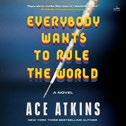
Listeners are drawn into the Cold War, when tensions between the U.S. and the Soviet Union were at an all-time high. A complex tale of spies, double agents, and defectors unfolds through multiple
points of view in alternating chapters. Narrator MacLeod Andrews masterfully brings to life the wide-ranging cast of characters, including a curious teenage boy, male and female Russian spies, FBI agents from varied backgrounds, and a former NFL player who is now a drag queen. Andrews excels at differentiating voices, helping listeners track the shifting perspectives as the narratives gradually converge. The result is a challenging but highly engaging listen that rewards close attention.
Listeners will find the characters engaging, the storylines compelling, and the narration engrossing.
Banville, John | Read by Luke Thompson Random House Audio | 10.75 hrs. | $22 $76 library ed. | October 7, 2025 9798217165544 | 9798217166190 library ed.
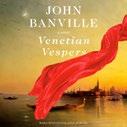
Bridgerton heartthrob Luke Thompson performs this novel with restraint, ensuring that the self-deluded first-person narrator is fully believable. The setting, Venice in 1899, has a gloss of wrongdoing. The protagonist, an unsuccessful English writer named Evelyn Dohlman, is a morally ambiguous soul. He speaks no Italian, and his recent bride, an American heiress, has cooled to him. He’s perfectly set up to be had. Two rascals, a twin brother and sister, are quite colorful and adept. Their perfidy fortifies Banville’s outstanding concoction. Soon Dohlman’s life unravels like a plot from a Henry James novel set in the crumbling City of Canals.
Thompson makes this historical fiction an addictive listen.

For a review of Venetian Vespers in print, visit Kirkus online.
Braithwaite, Oyinkan | Read by Diana Yekinni, Nnei Opia Clark, Weruche Opia
Random House Audio | 9.5 hrs. | $22
$66.50 library ed. | November 4, 2025 9798217165322 | 9798217165971 library ed.
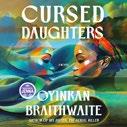
Three narrators smoothly differentiate three women who live in Lagos in three different time frames. In the late 1980s, Monife, portrayed by Weruche Opia, wrestles with falling in love despite the curse on her family that ruins her romantic relationships. During the early 2000s, Ebun, portrayed by Diana Yekinni, gives birth to a daughter on the same day that Monife dies. Ebun must keep many family secrets in order to protect her child. In the present, Eniiyi, portrayed by Nnei Opia Clark, is the spitting image of Monife. As she finds love, she fears she might be doomed to the same fate as Monife.
The Nigerian accents of the narrators make the women in this immersive novel seem even more real.
Burgess, Ann Wolbert, Steven Matthew Constantine | Read by Gabra Zackman Hachette Audio | 5.75 hrs. | $18.99 September 2, 2025 | 9781668647141
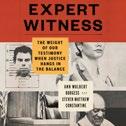
R esearcher and psychiatric clinical nurse Ann Wolbert Burgess has written a fascinating overview of her work as an expert witness. Gabra Zackman’s narration is instructive , professional, and easy to follow. She adds no flourishes as Dr. Burgess describes working with victims, perpetrators, and law enforcement. Her writing is straightforward and interesting for a layperson. Specific cases are presented, notably the
Zackman’s narration is instructive, professional, and easy to follow.
EXPERT WITNESS
victims and perpetrators in the cases of the Menendez brothers, Larry Nassar, and Bill Cosby. Burgess also discusses the potential uses of artificial intelligence in profiling criminals, analyzing cases, and drafting documents in the legal system, as well as predicting the impact of trauma on a victim.
Commentary on determining a perpetrator’s likelihood of reoffending is of particular interest.
Collett, Ryan | Read by Samuel Barnett
Harper Audio | 8.75 hrs. | $27.99 January 20, 2026 | 9780063424715
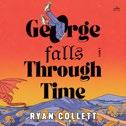
Samuel Barnett delivers a fresh interpretation of the St. George and the Dragon legend. George, whom Barnett portrays in a snide, harried tone that makes him bitingly funny, becomes increasingly hysterical as his contemporary London life falls apart. After he inexplicably time travels to the medieval era, his neuroses are subsumed into the immediacy of survival and the sweetness of romance. But things change when he’s saddled with a dangerous quest. Barnett’s voice for George’s firstperson narration, while consistent, subtly transforms to reflect the character’s growth. Well-rendered secondary characters range from a laddish 21st-century city worker to a spoiled medieval prince.
Barnett expertly renders a story that is part sci-fi, part gay romance, and part historical fiction.
El Mehdati, Meryem | Read by Sarah Agha Harlequin Audio | 8.5 hrs. | $27.99 November 25, 2025 | 9781488235979
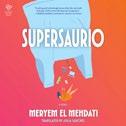
Sarah Agha captures Meryem’s restless inner life as the 25-year-old supermarket intern navigates long shifts, open hostility with her boss, and uncomfortable dates. As Meryem retreats into writing fan fiction about her coworkers, Agha distinguishes neatly between the monotony of Meryem’s work life and the heightened tone of her imagined romances and rivalries. Agha lets the humor shine, playing up awkward pauses and dry inflections throughout the story. As Meryem’s fantasies collide with the pressures of early adulthood, Agha’s brisk pace mirrors her reliance on imagination to survive the workday. Agha’s performance underscores the discomforts of a young woman who is entering adulthood without clear direction.
Traitors Circle: The True Story of a Secret Resistance Network in Nazi Germany and the Spy Who Betrayed Them
Freedland, Jonathan | Read by Jonathan Freedland | Harper Audio | 12.75 hrs. $26.99 | October 28, 2025 | 9780063373235
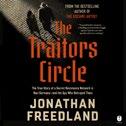
In 1943, a select group from the upper echelons of German society gathered at a tea party. They hated what Germany
HELM
had become under Hitler, and they resolved to stop him. Author and narrator Jonathan Freedland engages listeners in this little-known story of Nazi resistance. His narration is both articulate and steady. His voice drives the narrative with energy, infusing excitement during the group’s success in rescuing Jews and evoking dread at their failure to kill Hitler. This account offers dramatic and detailed descriptions of their eventual capture and incarceration, including the torture and other suffering they endured. Listeners will be transfixed by Freedland’s skillful account of these courageous anti-Nazis.
Bird City: Adventures in New York’s Urban Wilds
Goldberg, Ryan | Read by Evan Sibley Hachette Audio | 10.5 hrs. | $27.99
November 4, 2025 | 9781668651360
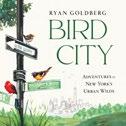
Narrator Evan Sibley easily convinces listeners he is author Goldberg, watching in wonder as thousands of broad-winged hawks migrate over New York City. Goldberg is a birder as well as a reporter, and along with his own birding adventures, he accompanies notable figures in the local birding world as they explore their environs across New York’s five boroughs, from Prospect Park to Jamaica Bay. Sibley’s engaged narration makes it all the more fascinating and compelling. Among the most affecting moments are when Goldberg assists in monitoring for injured and dead birds that have collided with New York’s
glass-faced skyscrapers. With a serious, melancholy tone, Sibley captures the horror. This is an excellent addition to the literature about wildlife in New York City, given an expert narration.
Grytten, Frode | Trans. by Alison McCullough | Read by Colin Mace Hachette Audio | 4.5 hrs. | $18.99 November 18, 2025 | 9781668651698
Throughout this audiobook, translated from a Norwegian novel, an aged ferryman who is navigating familiar fjords picks up passengers— all of them spirits of those he once knew. Accompanied by his faithful departed dog, he waits for his late wife to join him for his final journey out of earthly life. Despite the surreal plot, the audiobook is grounded by evocative physical descriptions, along with the dignity and determination of Nils’s inner monologue. Narrator Colin Mace’s Nils doesn’t sound afraid to die or sad; instead his gruff voice subtly expresses skepticism, anger, humor, bemusement, and love as he re-treads his life.
Mace’s gravelly voice suggests Nils’s years of cigarettes, coffee, and cold morning air.

Hall, Sarah | Read by Louise Brealey Harper Audio | 13 hrs. | $27.99 November 4, 2025 | 9780063439917
Louise Brealey’s remarkable performance of the new novel by award-winning author Sarah Hall makes for thoroughly addictive listening. Like the mistral of France and the sirocco of North Africa, helm is a named wind that blows through England’s Pennine Hills. Fierce, playful, and unpredictable, it’s long been the stuff of folklore. Now it is the central figure in this astonishing novel told by itself and those whose lives it affects: a Neolithic tribe, a Middle Ages monk, a Victorian steam engineer, and a contemporary eco scientist. Brealey’s vivid characterizations of the personalities through the ages and her mood-setting skill with pacing—from mannered Victorian to tense modern day—are extraordinary. One wants to buttonhole every passerby and say, “Listen to this!”
Ishida, Syou | Trans. by E. Madison Shimoda Read by Naruto Komatsu, Natsumi Kuroda Penguin Audio | 6.5 hrs. | $22
$66.50 library ed. | September 2, 2025 9798217163106 | 9798217164301 library ed.

For more books translated by Alison McCullough, visit Kirkus online.
Narrators Naruto Komatsu and Natsumi Kuroda capture the magic of cats and their influence on our lives. In an alley in Kyoto, a unique mental health clinic materializes when people who are struggling with problems need help. There, a playful doctor and his impossibly difficult nurse prescribe cats as a form of medication. Lighthearted bonds are presented between humans
and the cats they’ve been prescribed based on their individual needs. Most memorable is Komatsu’s cheerfully rendered Rayona, whose relationship with her overly critical mother improves through a cat’s presence in their home. Kuroda’s doctor touchingly provides lessons on cat care, including moving guidance for any pet’s final days. Even those new to cats will be enchanted by this tale rich with humor and meows.
Jackson, Clare | Read by Emma Gregory Tantor Media | 18.5 hrs. | $29.99
November 11, 2025 | 9798318527753

Brisk, fluent, pleasing to the ear, Emma Gregory’s narration does justice to a fine historian and her landmark biography of one of Britain’s most misunderstood rulers. On the death of Elizabeth I in 1603, Scotland’s James VI became England’s James I, first in the Stuart line. James was one of Britain’s most intelligent and energetic rulers, and one the most complex. Today he is accepted for the inclinations that have marginalized him for centuries and in this fine narrative is properly assessed for the singular place he holds in Britain’s history. The narrative is organized topically, rather than strictly chronologically, and requires a high level of vocal skill to deliver clearly and effectively.
This finely nuanced biography has the gifted, insightful narrator it deserves.
Kaplan, Carla | Read by Christina Delaine | Harper Audio | 17 hrs. | $27.99
November 25, 2025 | 9780063458071
Christina Delaine narrates this carefullyresearched and sympathetic biography of Jessica “Decca” Mitford, the most radical of the famous British sisters, with great authority. Delaine works hard to reproduce the uncomfortably-strangulated accent of the English aristocracy, enhancing the frequent quotations from letters and from Mitford’s prolific journalism. Widowed as a young bride in WWII and mourning the loss of two children, Decca’s lifelong graduation from naive, overprivileged, undereducated debutante to hard-hitting investigative journalist and fierce campaigner for the underprivileged and underrepresented in America makes for fascinating listening. Delaine brings both sympathy and clarity to her task. A remarkable insight into the history of the American Left through one woman’s eyes, narrated with care and affection.
Kashino, Marisa | Read by Cia Court Macmillan Audio | 8.5 hrs. | $19.99 November 25, 2025 | 9781250432322
Cia Court captures all the profound and devastating flaws in an engaging yet reprehensible
Delaine brings both sympathy and clarity to her task.
TROUBLEMAKER
protagonist. Margo and Ian have been stymied in their efforts to find a forever home outside Washington, D.C. Intense and simmering with rage issues, Margo takes matters into her own morally questionable hands when her dream home is listed for sale. Court shines in her delivery of Margo’s extensive inner monologues, projecting both her humor and desperation. As she becomes increasingly singleminded, Court’s voice builds on that sinister transformation. Secondary characters are equally true to life, making dialogue realistic and crisp.
Desperate times call for desperate measures, and Court’s performance is an excellent match for the drama that ensues.
Kawakami, Hiromi | Trans. by Asa Yoneda Read by Arthur Keng, Sarah Skaer Brilliance Audio | 8 hrs. | $35.99 November 4, 2025 | 9781511377638
The tag team of Sarah Skaer and Arthur Keng narrates the interconnected episodes in this novel featuring different characters spread throughout thousands of years. Some of the protagonists are children, others are adults; some are humans, others are mutants or clones. They live in isolated communities, each with a different culture and history. AI mothers raise the children, who are made in factories by combining animal and human DNA or by photosynthesis. Skaer deals particularly with children and mothers, conveying the moods of the children and the patience of the mothers. Keng uses tone, pitch, and pace to distinguish the adult storytellers in the works he presents.
This audiobook is a meditation on what it might mean to be human in the far distant future.
Kirino, Natsuo | Trans. by Lisa HofmannKuroda | Read by Allison Hiroto | Recorded Books | 10 hrs. | $29.99 | September 9, 2025 9798897566211
Allison Hiroto portrays a contemporary 29-year-old woman who is trying to make ends meet in Tokyo. Although it’s illegal to donate her eggs for remuneration, that seems to be the only way Riki can climb out of her financial rut. But what was intended to be a simple transaction becomes complicated when she’s asked to be a surrogate, the biological father is in question, and the couple who hired her experience relationship problems. Hiroto delivers the narrative and dialogue matter-of-factly, making the characters seem reserved, even cold. Riki’s friend, boisterous Teru, with her unique voice and energetic personality, is a highlight of Hiroto’s performance.
Latronico, Vincenzo | Trans. by Sophie Hughes Read by Sophie Roberts | Tantor Media | 3.25 hrs. | $10.99 | $25.95 library ed. | July 29, 2025 9798331966867 | 9798331966874 library ed.
Latronico’s novel is more social commentary than a work of fiction.
Narrator Sophie Roberts describes the vacuous existence of a millennial couple who spend most of their lives online as graphic designers for websites. The narration is crisp, and the tone, pitch, and pacing are adapted to the documentary style of this exposé on the habits, interests, and values of an international community of technocrats. This short audiobook features an omniscient narrator, no dialogue, and endless depictions of the couple’s lifestyle. What listeners hear is a scathing critique of the empty lives of people who value image over substance and appearance over relevance.
While listeners may disparage the couple’s life choices, they may also see aspects of their own lives reflected.
Leno, Katrina | Read by Phoebe Strole Listening Library | 8.5 hrs. | $22.50 December 2, 2025 | 9798217290291
Narrator Phoebe Strole’s expert approach to this contemporary fantasy shines. Winnie is one of the four Farthing sisters who’ve been told they’re descendants of Persephone, the Greek goddess of the dead. While talking to the dead had always been the norm for the sisters, it wasn’t until Winnie accidentally banished a resident ghost that she came to believe that she and her sisters could be special. When the underworld attempts to converge with their world, the Farthing girls must rise to the challenge of stopping them. Strole delivers the story with poise and an occasional sprinkle of humor. The dialogue between these four sisters— simple and airy as delivered by Strole—makes the story flow. (Fantasy. 14-18)
Holder, Lovell | Read by Charlie Thurston Hachette Audio | 11.5 hrs. | $27.99
December 2, 2025 | 9781668651858
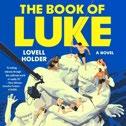
Narrator Charlie Thurston infuses vivid drama into this debut novel about a gay man whose life is shaped by two stints on a reality TV show. In 2003, after a car accident ends his football career, 22-year-old Luke Griffin joins the cast of Endeavor, a cutthroat reality competition show. A decade later, now a stay-at-home father married to a Republican senator, Luke finds his life unraveling after a public scandal.
Returning to Endeavor for its 20th season, he finds the competition fiercer than ever. While identifying characters can be tricky, Thurston’s conversational narration captures both the chaos of the show and the emotional depth of Luke’s journey. Thurston’s emotive performance brings humor and heart to this story of a man’s self-discovery.
Mitchard, Jacquelyn | Read by Gail Shalan Harlequin Audio | 11.5 hrs. | $27.99
December 9, 2025 | 9781488234972
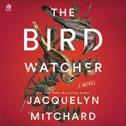
Gail Shalan gives an energetic and appealing narration of Mitchard’s latest novel. Fashion writer Reenie’s old friend, Felicity, has been charged with the murder of two of her clients. Felicity, a birdwatcher and biologist, was also a professional escort. Reenie hasn’t seen Felicity in years but knows in her heart that she’s innocent of the charges. Reenie is determined to find out the truth and write the story. But Felicity doesn’t want Reenie to dig into her life. Shalan smoothly handles Reenie’s interviewees, her magazine’s editor, and others, doing a creditable job creating character voices amid a somewhat sluggish plot. As long-hidden secrets are revealed, Shalan’s performance heightens the drama, making audio a great choice for this novel.
Molina, Antonio Munoz | Trans. by Curtis Bauer | Read by Robert Fass Tantor Media | 7.75 hrs. | $17.19 August 19, 2025 | 9798318525414
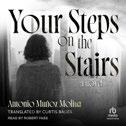
Robert Fass’ talents as a narrator shine as he inhabits a New Yorker named Bruno, who is newly arrived in Lisbon. While awaiting the arrival of his wife, Cecilia, a
Fenney’s narration captures the slow buildup of tension.
THE COLONY
neuroscientist, he organizes their apartment. It soon becomes apparent that he’s preparing for the end of the world. Fass carefully portrays Bruno’s psychological breakdown. The fact that his only companion is his dog, Luria, highlights his complete dissociation from the present. Fass injects the perfect amount of paranoia into Bruno as his world shrinks around him.
Fass’ well-paced narration captures this intense and insular character’s unsettling story.
Mushtaq, Banu | Trans. by Deepa Bhasthi
Read by Deepti Gupta, Vikas Adam Blackstone Audio | 8 hrs. | $22.95 August 23, 2025 | 9798228579484
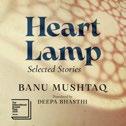
Deepti Gupta and Vikas Adam beautifully narrate the frustrations, joys, disappointments, and hopes of Muslim women and their families in 1990s India. In a dozen short stories, the characters deal with the pain of childbirth and the sweetness of motherhood, with romantic love and patriarchal oppression. Gupta effusively voices a variety of distinct and nuanced characters, female and male. Adam’s lively performances deliver emotions ranging from irritation to tenderness and shame. Both narrators are clear and understandable throughout the stories, translated by Deepa Bhasthi into English with terms in Arabic, Urdu, and the original Kannada. Despite the profound themes, the performances and narratives include humor that makes them even more accessible.
Myers, Paul, Dan Aykroyd [Fore.] | Read by David Bendena | Tantor Media | 9.5 hrs. $19.99 | $49.95 library ed. | November 4, 2025 9798318536786 | 9798318536793 library ed.
From the 1980s to the early 1990s, there was no bigger, more bankable, more likable, and funnier Hollywood star than John Candy. David Bendena uses an upbeat journalistic style to narrate this celebration of Candy’s remarkable rise from small-town Canada to Toronto’s groundbreaking Second City Television (SCTV). With his innate comic talents and easy charm, Candy quickly went on to star in film classics such as Splash, Planes, Trains and Automobiles, and Uncle Buck. Bendena’s delivery takes a dramatic turn as Candy often struggled with anxiety, weight gain, and alcoholism. Still, he was a devoted family man, a consummate professional, and a ridiculously generous person.
John Candy proved that sometimes nice guys do finish first.
NoiseCat, Julian Brave | Read by Julian Brave NoiseCat | Random House Audio | 15 hrs. | $23 | $76 library ed. October 14, 2025 | 9798217165506 9798217166152 library ed.
NoiseCat’s knowledge of Northwest Salish languages and folkways informs this finely written and thoughtfully delivered audiobook. NoiseCat’s witty
and erudite pieces on the mythology of Coyote, his unflinching accounts of the horrors of Canadian boarding schools, and his descriptions of the features of contemporary tribes in North America do the listener a real service. He also tells his own family’s story: His father, a noted wood carver, was found in an incinerator; his grandfather was the progenitor of dozens of offspring, and his own remarkable career as co-director of a Sundance Award-winning film and an accomplished powwow dancer adds to the wide-angle story.
NoiseCat delivers a tribute, a social history, and an insightful series of reports from Indian Country.
Norlin, Annika | Trans. by Alice E. Olsson | Read by Emma Fenney Dreamscape Media | 11.5 hrs. | $27.92 November 18, 2025 | 9798349115684
Emma Fenney performs this character-driven Swedish novel about a small group of people who are living apart from society. Burned-out Emelie leaves her big-city job to explore the countryside. In the hills she meets a colony of seven people living on their own, rarely interacting with anyone in the town nearby. As Emilie learns more about each member of the group, the characters’ backstories unfold, and her presence causes turmoil in the community. Fenney’s narration captures the slow buildup of tension among the members. Her performance shines in both the dialogue and the narrative. Fenney demonstrates her range as she changes her tone and rhythm to match each character’s perspective.

Pynchon, Thomas | Read by Edoardo Ballerini | Penguin Audio | 10 hrs. $27 | $95 library ed. | October 7, 2025 9798217172542 | 9798217172559 library ed.
Edoardo Ballerini convincingly portrays thugs, a torch singer, all manner of gumshoes; he does Hungarians, Germans, English elites. His vocals are spot-on. The wildly imagined plot begins in Milwaukee and then shifts to Eastern Europe. Hicks McTaggart, a former strike breaker, now a private eye, likes to dance and to romance— until he runs afoul of the Milwaukee mob. Much of the circuitous story revolves around his locating a cheese heiress, daughter of “the Al Capone of Cheese.” Misadventures abound: An Eastern European fascist motorcycle gang, British spies, and a Klezmer-playing saxophonist add to the mayhem. Now 88, Pynchon has crafted a glorious romp, and the language sparkles.
The extravagantly gifted Ballerini brings this intricate 1930s noir vividly to life.
Qudan, Rie | Trans. by Jesse Kirkwood
Read by Hanako Footman | Simon & Schuster Audio | 4 hrs. | $17.99 September 2, 2025 | 9781668132326
Hanako Footman’s light tone perfectly contrasts with this chilling speculative fiction, which examines artificial intelligence, technology, and concepts of justice. Thirty-seven-year-old Sara Machina is the architect of the controversial Sympathy Tower Tokyo, a luxury residence for criminals whom society
now sees as having been victims of their circumstances. Footman exercises restraint in her portrayal of Sara, who is conflicted about her role in the project because the sexual assault she endured as a teen was never acknowledged by authorities. Footman’s authentic-sounding Japanese accent and intonation deepen her performance as Sara tries to understand the language of AI. This listening experience introduces a futuristic landscape full of conversation starters.
Sanderson, Brandon | Read by André Santana, Avi Roque, Dion Graham, Dylan Reilly Fitzpatrick, Imani Jade Powers, January LaVoy, MacLeod Andrews, Michael Kramer, Ray Porter, Shahjehan Khan, Stephanie Németh-Parker | Macmillan Audio | 17.5 hrs. | $44.99 | December 9, 2025 | 9781250414847
A dynamic ensemble of all-star narrators brings to life these stories assembled— and in one case, published—for the first time. Representing Sanderson’s writing experimentation and growth over the course of 25 years, they feature worlds in which reality is unstable and characters move freely through simulations, universes, and bodies. The narrators are impressively well matched to their roles. They offer a thoughtfulness not always taken in story collection productions. Dion Graham is a standout in the hightech murder mystery “Snapshot,” while January LaVoy and Ray Porter depict opposite sides of a traumatic event in “Moment Zero.” Michael Kramer brings both introspection and playful humor to Sanderson’s postscripts for each story. All illustrations are accessibly described. Sanderson’s stories and their narrators explore a universe of possibilities.
Cheon, Seon-Ran | Trans. by Gene Png
Read by Rosa Escoda | Bloomsbury
7.5 hrs. | $17.38 | August 12, 2025 9781639735983
A detective story set primarily in Incheon, South Korea, finds a vampire preying upon a rehab hospital as an angel of death. Originally written in Korean, this novel, superbly narrated by Rosa Escoda, reflects themes of loneliness relating to old age, addiction, and solitude. A string of apparent suicides at the hospital catches the attention of Suyeon, a young detective. She soon focuses on Nanju, a night nurse, as a person of interest. A third woman, Violette, encourages Suyeon to think about possible vampire involvement. The story’s point of view alternates among the three women. Escoda uses subtle differences in pitch, pace, and tone to distinguish them.
Three Korean women have very different stories, and Escoda elicits empathy for each one.
Shea, Neil | Read by Neil Shea Harper Audio | 6 hrs. | $27.99 December 2, 2025 | 9780063138605
Science writer Shea explores the complexities and interconnectedness of Arctic ecosystems and cultures with a calm, respectful narration. His keen examination of Arctic climate change includes impacts to narwhals, caribou populations, and wolf packs, as well as the Indigenous residents of Alaska, Nunavut, and the Northwest Territories, whose own cultural traditions and lives on the land have
narration of this fantasy is outstanding.
KILL THE BEAST
been disrupted. The author’s conversations with hunters during his travels throughout these regions further illuminate the deep cost of changes to their homes. Shea guides listeners from the “lost Norse colony” of Grøenland to modern-day tensions along European borders, showing how myriad factors have always played into humanity’s complex relationship with Arctic regions.
Shea’s grounded, gently paced observations are laced with poetic descriptions that invite quiet, engaged reflection.
Stonex, Emma | Read by Edward Rowe, Meg Salter | Penguin Audio | 10 hrs. $22 | $76 library ed. | November 11, 2025 9798217163816 | 9798217165018 library ed.
Edward Rowe and Meg Salter narrate this immersive psychological thriller. Birdie, portrayed by Salter, is preparing to avenge her sister’s death after 18 long years. Jimmy Maguire, portrayed by Rowe, has been released from prison, and Birdie is determined to make him pay for killing her. As she pursues him, armed with a pistol, years of betrayal and family secrets catch up to them both. Salter’s crisp English accent for Birdie works in contrast to Rowe’s West Country speech for Jimmy. Both narrators use a variety of pitches and additional accents for other characters of varying ages. Rowe and Salter expertly navigate the quickening pace of this story of loss and revenge.
Swift, Daniel | Read by Matthew Lloyd
Davies | Brilliance Audio | 10.5 hrs. | $42.99 November 11, 2025 | 9781511377973
Carpenters and landlords stand alongside playwrights and actors in this lively audiobook history of London’s first commercial theaters. The very first, The Theatre, opened in 1576, and its history chronicles the birth of British theater. Renaissance scholar Swift works from scraps— leases, lawsuits, lumber prices, apprenticeship figures, plague deaths, and the names of actor Richard Burbage’s children. Matthew Lloyd Davies, whose dramatic narrations have animated dozens of genre novels and melodramas, captures all the flair and bustle of that fertile time. Most scholars and filmmakers track Shakespeare backward from his plays. This narrative evokes not only a single unique author but also the conditions and circumstances in which a working genius could flourish.
A rich audiobook about London’s first theater is fueled by Davies’ word-perfect delivery.

Swift, Serra | Read by Moira Quirk Macmillan Audio | 10.75 hrs. | $26.99 October 14, 2025 | 9781250417916
Moira Quirk’s narration of this fantasy is outstanding. To avenge her brother’s death 13 years ago, Lyssa has been hunting and killing as many fairies as she can find. But the beast that actually killed her brother has been elusive. Then she meets Alderic, who might have what she needs to track it down. Quirk captures Lyssa’s persona—all rough edges and traces of vulnerability. Likewise, she nails Alderic—a bit foppish but not easily dismissed. The interplay between the two is delightful as they learn to respect each other, and Quick conveys their growing friendship. Quirk is a master of accents, which she employs to great advantage.
Tak, Bibi Dumon | Trans. by Nancy ForestFlier | Read by Laura Knight Keating Recorded Books | 2.75 hrs. | $9.99 April 8, 2025 | 9798896793403
For a review of The Sunshine Man in print, visit Kirkus online.
Laura Knight Keating opens this audiobook in a sarcastic tone that continues throughout. She describes its content: presentations given by animals about animals instead of the typical boring reports given by humans who “only look at things through their own human eyes.” With well-chosen accents and expressive vocal posturing, Keating smoothly portrays 18 unique animal presenters, revealing their attitudes, as well as the information they offer about themselves. Both the writing and the narration are humorous and engaging. Keating’s depictions range from the
sassy personality of the cleaner fish to the nervous report of the shy hermit crab and a mole who diminishes daddy longlegs but heaps praise on their “tasty” larvae. Irreverent questions from the multiple species in the audience further illuminate and amuse. (Nonfiction. 8-12)
Vincent, Caitlin | Read by Jennifer Jill Araya Simon & Schuster Audio | 8.25 hrs. | $23.99 January 13, 2026 | 9781668125038
Jennifer Jill Araya’s bright tone and dynamic pacing pair well with Vincent’s accessible prose to engage listeners. The audiobook is not quite as dramatic as its title implies, serving instead as an introduction to the art form that highlights occasional industry controversies. However, Vincent does make a strong case for opera as a living genre, arguing that newcomers should join the audience and that afficionados should make room for newer works. Vincent champions operas beyond the European canon, whose famous Italian and German titles Araya pronounces with musicality and accuracy. Araya catches the humor in Vincent’s perspective on the supposedly-serious opera world. A light, fun, and informative listening experience.
Volbeda, Ludwig | Trans. by Lucy Scott Read by Avi Roque | Recorded Books
3.75 hrs. | $24.99 | November 4, 2025 9798899735189
Dutch author Volbeda’s 2024 Rainbow Book of the Year is translated by Lucy Scott. Avi Roque’s neutral narration fits the unsent letters of Jip, who is
A unique love story, brought to life in an animated retelling.
FIRST COMES LOVE
struggling during a school break to draw a self-portrait and to determine their place in the world. Roque creates a verbal portrait of the solitary, artistic, bug-curious teen whose observations are sometimes painful in social settings but fanciful in the natural world.
Addressing an unnamed classmate, Jip questions life, family, and identity. Meandering fragments suggest their grandmother’s failing mind, their parents’ troubled marriage, and their own search for identity.
A struggling transgender youth makes a decision that culminates in an affirming self-portrait. (Fiction. 12-18)
Winik, Marion | Read by Marion Winik
Random House Audio | 7.5 hrs. | $20
$57 library ed. | December 9, 2025
9798217290604 | 9798217290673 library ed.
Marion Winik met Tony Heubach in New Orleans during the debauched celebrations of Mardi Gras
1982. She was a self-described “crazy romantic poetess” and he a “gay ice-skater,” but their chemistry was instantaneous and explosive, if complicated. In 1986, they were married—despite the skepticism of friends and family—and made a home in Austin, Texas, raising two sons. By 1994, Tony was dead of AIDS, a heartbreaking ordeal that closes this memoir, originally published in 1996. For the book’s 30th anniversary, the author has recorded its first audiobook edition. Winik (The Big Book of the Dead ,
2019) brings immediacy to the tale, modulating her voice as she moves from antic descriptions of the couple’s drug-fueled escapades to the lyricism of a hushed, candlelit deathbed scene. A unique love story, brought to life in an animated retelling.
Yun, Jung | Read by Jason Culp, Greta Jung, Erin Ruth Walker | Simon & Schuster Audio | 11 hrs. $25.99 | March 10, 2026 | 9781668138694
Narrators Jason Culp, Greta Jung, and Erin Ruth Walker present three distinct portraits in this literary story set on a cruise ship in the week after 9/11. Culp channels regret and loneliness through Doug Clayton, an aging actor who has spent a lifetime behind a mask. Jung infuses resentment and tension into Korean American Franny as she navigates a celebration for her mother’s 70th birthday. Walker brings out frustration in Lucy, a Black MIT graduate student confronting barriers to acceptance. Against the tragic backdrop of 9/11, the novel sensitively explores issues around gender, race, and sexuality as well as questions of identity, family, and friendship.
A slow-burning, character-driven story elevated by three compelling performances.