FEATURING 347 Industry-First Reviews of Fiction, Nonfiction, Children’s, Young Adult, and Audiobooks

Our seventh annual special issue dedicated to the very best of indie publishing CELEBRATING THE INDEPENDENT SPIRIT THAT MAKES GREAT BOOKS

FEATURING 347 Industry-First Reviews of Fiction, Nonfiction, Children’s, Young Adult, and Audiobooks
Our seventh annual special issue dedicated to the very best of indie publishing CELEBRATING THE INDEPENDENT SPIRIT THAT MAKES GREAT BOOKS
with the new paperback and audiobook release of...
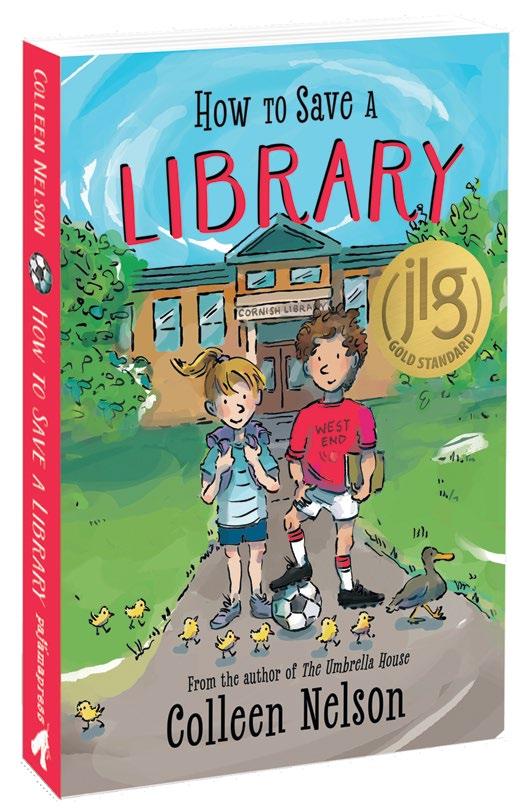

“Highly recommended for all library shelves...”—School Library Journal
“[A] feel-good option for reluctant readers, library lovers, and kids who need a primer on the value of true friendship.”—Booklist
“[A] spirited story of friendship and forgiveness that serves as a love letter to the communities that libraries foster.” —Publishers Weekly
“An ode to public libraries and youth empowerment...”—Kirkus Reviews


Was there ever a time when independently published books were more crucial than they are right now? What we in the industry call the Big 5—large conglomerates that dominate the publishing landscape— appear to be more and more corporatized, eliminating entire houses or imprints at whim (probably because the bottom line is deemed unsatisfactory). Of course, this is the world we all live in now—you can’t escape Meta, Amazon, or Google—but it’s an especially challenging environment in which to take a chance on a promising writer trying new things. Who suffers, ultimately, in this situation? Readers, of course.
Thank God for independent publishing. We first conceived the annual Indie Issue in 2020, and in the years since, self-publishing has
exploded (we were all writing novels during the pandemic, right?) and more indie presses have set up shop, freed from the shackles of the corporate world and finding new ways to get great books into readers’ hands. For that matter, more readers are buying those books in independent bookstores, where author events, book club meetings, and passionate booksellers offer a sense of community you won’t find by sitting at your computer and pressing the “add to cart” button.
Flip to our Indie section starting on p. 136 to see just what’s going on. In her column, president of Kirkus Indie Chaya Schechner shines a light on some of the outstanding books that are bravely telling truths, even as the Trump administration and its cronies erase
Subscriptions: www.kirkusreviews.com/magazine/subscription


historical and scientific information wherever they can. On p. 144, we talk with author Mike Carey about Ghostbox: Volume 1, a graphic novel illustrated by Pablo Raimondi; it began life online before finding a home in print from the indie comics press Mad Cave Studio. And on p. 152, you can sample some excerpts from recent Kirkus favorites by Carol Williams Kisch (Entangled Tongues) and Stacia Pelletier (The Deliverance of Barker McRae).
school mentor, and, quite possibly, by a real ghost. “Highbrow horror that’s still a page-turner,” says our reviewer.
The Bush Tea Murder by Ashley-Ruth M. Bernier (Crooked Lane, April 21): A cooking-show celebrity sets out to solve the murder of her aunt on the Caribbean island of St. Thomas while simultaneously developing the pilot for a new food-themed crime series. Our reviewer calls this debut mystery “fun-filled and fulfilling.”
Struck Speechless by Tati Richardson (Generous Press, April 28): After she loses her voice, a happily single sports agent must collaborate with her rival, a decade after the pair had a blissful (but never-to-be-repeated) one-night stand. Our reviewer calls this novel, the second in a series, a “terrific romance, both poignant and funny.”
Whatever your reading tastes, there’s an indie book for you. Read on.
Advertising Opportunities: www.kirkusreviews.com/book-marketing
www.kirkusreviews.com/book-marketing
Submission Guidelines: www.kirkusreviews.com/about/publisher-submission-guidelines
Frequently Asked Questions: www.kirkusreviews.com/about/faq
For customer service or subscription questions, please email customercare@kirkus.com or call 800-316-9361.
And lest you think indie books are all wild literary experiments for niche audiences, think again. Some of the best genre fiction these days is coming out of small presses. The following titles, all independently published, received Kirkus stars this year: The Valley of Vengeful Ghosts by Kim Fu (Tin House, March 23): When her mother dies, a therapist buys a home in an isolated housing development with her inheritance money. She’s haunted by her mother’s death, by the memory of an assault by her graduate

Co-Founders, Kirkus Media LLC
HERBERT SIMON
MARC WINKELMAN
Publisher, CEO & Partner
MEG LABORDE KUEHN mkuehn@kirkus.com
Chief Marketing Officer
SARAH KALINA skalina@kirkus.com
Enterprise Advertising Director
MICHELE COBB mcobb@kirkus.com
Indie Advertising & Promotions
AMY BAIRD abaird@kirkus.com
Author Consultant
KEELIN FERDINANDSEN kferdinandsen@kirkus.com
Lead Designer KY NOVAK knovak@kirkus.com
Magazine Compositor
NIKKI RICHARDSON nrichardson@kirkus.com
Director of Kirkus Editorial ROBIN O’DELL rodell@kirkus.com
Kirkus Editorial Senior Production Editor
MARINNA CASTILLEJA mcastilleja@kirkus.com
Kirkus Editorial Production Editor ASHLEY LITTLE alittle@kirkus.com
Indie Editorial Assistant
KATARINA YERGER kyerger@kirkus.com
Contributing Writers
GREGORY McNAMEE
MICHAEL SCHAUB
Mysteries Editor THOMAS LEITCH
Editor-in-Chief
TOM BEER tbeer@kirkus.com
President of Kirkus Indie
CHAYA SCHECHNER cschechner@kirkus.com
Fiction Editor
LAURIE MUCHNICK lmuchnick@kirkus.com
Nonfiction Editor JOHN McMURTRIE jmcmurtrie@kirkus.com
Young Readers’ Editor LAURA SIMEON lsimeon@kirkus.com
Young Readers’ Editor MAHNAZ DAR mdar@kirkus.com
Audiobooks Editor
JENNIFER DOWELL jdowell@kirkus.com
Editor at Large MEGAN LABRISE mlabrise@kirkus.com
Senior Indie Editor
DAVID RAPP drapp@kirkus.com
Indie Editor
ARTHUR SMITH asmith@kirkus.com
Senior Editorial Assistant NINA PALATTELLA npalattella@kirkus.com
Senior Indie Editorial Assistant DAN NOLAN dnolan@kirkus.com
Copy Editors
JONATHAN BOWERS
NATALIA HOLTZMAN
NANCY MANDEL BILL SIEVER
Founder, Kirkus Reviews VIRGINIA KIRKUS (1893-1980)
Contributors
Colleen Abel, Jeffrey Alford, Jenny Arch, Kent Armstrong, Mark Athitakis, Susan Baird, Kit Ballenger, Audrey Barbakoff, Nell Beram, Victoria Biggs, Elizabeth Bird, Ariel Birdoff, Kimberly Brubaker Bradley, Sally Brander, Agnes Broome, Anna Broome, Jessica Hoptay Brown, Nancy Campbell, Kevin Canfield, Bluebelle Carroll, Tobias Carroll, Charles Cassady, Ann Childs, Alec B. Chunn, Amanda Chuong, Shanetia Clark, Jeannie Coutant, Stephen Cummings, Michael Deagler, Lisa De Bode, Cathy DeCampli, Dave DeChristopher, Kathleen Deedy, Elise DeGuiseppi, Steve Donoghue, Anna Drake, Eamon Drumm, Gina Elbert, Lisa Elliott, Ilana Bensussen Epstein, Kristen Evans, Joshua Farrington, Michael Fein, Margherita Ferrante, Katie Flanagan, Renee Fountain, Cynthia Fox, Mia Franz, Ayn Reyes Frazee, Harvey Freedenberg, Jenna Friebel, Robbin Friedman, Laurel Gardner, Amanda Gefter, William Giwertz, Annette Goldsmith, Danielle Galván Gomez, Diana Granger, Sara Grimm, Vicky Gudelot, Tobi Haberstroh, Ellie Halleron, Sean Hammer, Silvia Lin Hanick, Alec Harvey, Courtney Heidorn, S.J. Henschel, Rebecca Herwatic Leonhard, Loren Hinton, Emma Hodgson, Katrina Niidas Holm, Terry Hong, Julie Hubble, Mary Grahame Hunter, Darlene Ivy, Kevin Jagernauth, Danielle Jones, Deborah Kaplan, Marcelle Karp, Colleen King, Maggie Knapp, Jennie Knuppel, Andrea Kreidler, Carly Lane, Joanne Langerman, Chelsea Langford, Laurel Larrew, Christopher Lassen, Tom Lavoie, Seth Lerer, Elsbeth Lindner, Coeur de Lion, Barbara London, Patricia Lothrop, Sawyer Lovett, Katie Lowe, Kaia MacLeod, Michael Magras, Mitu Malhotra, Mandy Malone, Thomas Maluck, Natalie Marshall, Jodi Martin, J. Alejandro Mazariegos, Coco McCracken, Katherine McDonald, Dale McGarrigle, Van McGary, Don McLeese, Cari Meister, Kathie Meizner, Alan Minskoff, Jennifer Miskec, Chintan Modi, Andrea Moran, Molly Muldoon, Jennifer Nabers, Randall Nichols, Therese Purcell Nielsen, Ari Nussbaum, Katrina Nye, Randy O’Brien, Milo Ono, Mike Oppenheim, Nick Owchar, Emilia Packard, Hal Patnott, Bethanne Patrick, Tara Peace, Rebecca Perry, John Edward Peters, Jim Piechota, Christofer Pierson, Vicki Pietrus, Remy Poore, Kate Pullen, Margaret Quamme, Carolyn Quimby, Ellen Quint, Kristy Raffensberger, Mohana Rajakumar, Kristen Bonardi Rapp, Kristen Rasmussen, Evelyn Renold, Peter Richardson, Jasmine Riel, Michelle Ritholz, Amy Robinson, Soumi Roy, Gia Ruiz, Lloyd Sachs, Laura Sackton, Bob Sanchez, Meredith Schorr, Aurelia C. Scott, Jerome Shea, Kerry Sheridan, Sadaf Siddique, Linda Simon, Julia Sirmons, Clay Smith, Victoria Smith, Wendy Smith, Margot E. Spangenberg, Allison Staley, Allie Stevens, Mathangi Subramanian, Elaine Sumner, Jennifer Sweeney, Deborah Taylor, Lisa Taylor, Eva Thaler-Sroussi, Desiree Thomas, Renee Ting, Lenora Todaro, Amanda Toth, Gnesis Villar, Christina Vortia, Tom Walken, David Walton, Katie Weeks, Erica Weidner, Morgan Weston, Vanessa Willoughby, Kerry Winfrey, Marion Winik, Flannery Wise, Jean-Louise Zancanella

EVERY YEAR WHEN Tax Day comes around, I check to see if there are enough novels centered around work to fill out a column. Frequently, there aren’t. Of course, there are plenty of detectives and private eyes doing their fictional jobs—not to mention all the bakers and bookstore owners populating cozy mysteries and romances— but there aren’t many novels set in places of work, showing people coordinating with their colleagues, grumbling about their bosses, getting things done. Considering how much time people spend on the job, it always surprises me how little fictional attention is paid to the mechanics of the workplace. Adelle Waldman’s Help Wanted (2024), which
digs into the operations of a big-box store, is one notable exception to the rule; here are some more recent ones.
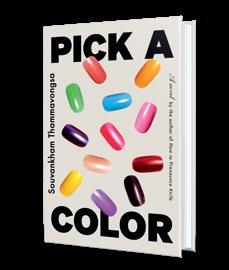
Pick a Color by Souvankham Thammavongsa (Little, Brown, 2025): Ning manages a nail salon in an unnamed North American city, and her sharply detailed narrative brings us deep into the minutiae of her day there: why the nail techs’ badges all read “Susan,” why they shouldn’t wear nail polish themselves, how they set up their stations, how they get along with one another and their clients.
“Ning’s keen observations [are]…her way of ensuring she doesn’t succumb to the numb hypnosis of her repetitive
and undercompensated work,” according to our starred review. “This exceptional novel… contains great wit and quick turns, up to the last sentence.”
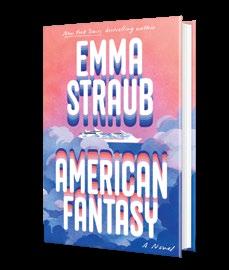
American Fantasy by Emma Straub (Riverhead, April 7): A recently divorced woman takes a cruise headlined by the members of a 1990s boy band. That doesn’t sound like a novel about work, but interspersed with the bonding and healing of the vacationers is the story of Sarah, the cruise director, and Keith, one of the band members, who have jobs to do, and it’s fascinating to watch them work while everyone around them is having the time of their lives.
Work To Do by Jules Wernersbach (Univ. of Iowa, April 7): Wernersbach is the founder of Hive Mind Books in Brooklyn and a veteran of many other independent
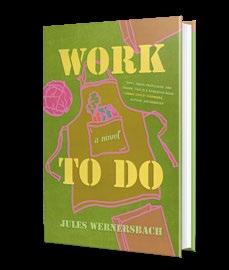
bookstores. They bring that experience to this debut novel, set in a grocery co-op in Austin, Texas, on the eve of a hurricane. The power goes off, the staff wants to unionize, the founder hasn’t told anyone about her cancer diagnosis, and the manager tries to keep everything together—while readers learn all the details of keeping the food on the shelves. Our review says this is “a workplace novel crossed with a soap opera, offering plenty of food for thought. (Organic and locally sourced, of course.)”
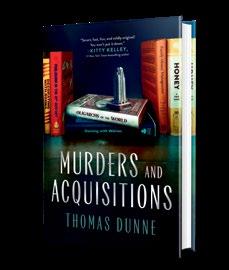
Murders and Acquisitions by Thomas Dunne (Blackstone, April 28): The author had a long career in publishing, notably running his namesake imprint at St. Martin’s Press/Macmillan, and the family-held business at the center of his new novel has a publishing arm alongside banking and financial concerns. As the book opens, 95-year-old Werther Maybach Meyer, Omnium’s most powerful American stakeholder, has died, setting off a global chain of events with a rising body count, giving us peeks into offices around the world. Our review calls it “a blackly humorous feast.”
Laurie Muchnick is the fiction editor.
Two Brooklyn women forge identities and careers in their rapidly gentrifying borough.
Narrator Alicia Canales Forten, an aspiring writer/ director currently writing ad copy, is the offspring of a fleeting romance between her working-class Puerto Rican mother and a father from the Black elite who sees his daughter two weeks a year at his parents’ house on Martha’s Vineyard. La Garza is a Fort Greene legend for her fabulous parties and the impending initial public offering of her eponymous fashion label. At first Alicia can’t figure out why glamorous La Garza goes out of her way to befriend her, even if they’re neighbors in the funky area between the Brooklyn Navy Yard and the Brooklyn-Queens Expressway that houses many young people of color striving to get ahead.
She soon learns that La Garza wants to reconnect with Alicia’s cousin Devon, a married Wall Streeter who was her first love. As in her previous two novels, Gonzalez trains a razor-sharp eye on class and racial distinctions, particularly in Alicia’s conflict over whether she really wants to marry her medical student fiancé and settle into the Black bourgeoisie, and in La Garza’s reckless affair with Devon. Longtime Brooklynites will enjoy recognizing the local businesses and landmarks Gonzalez name-checks, from Cake Man Raven to the Jehovah’s Witnesses’ Watchtower sign, but any reader can appreciate the authenticity of her salty voice and the changing cityscape it describes, as neighborhood landmarks are torn down to make way for condos and boutiques. Her
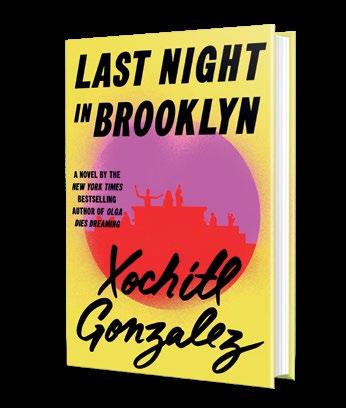
bracing point of view animates a propulsive storyline strung with memorable characters, among them Devon’s buttoned-up wife, Marla (tougher than she seems), and shady, mobbed-up “stockbroker” Augusts Jankovskis, who has ulterior motives for financially backing La Garza. Devon’s sexy colleague, Matteo Jones, who tempts Alicia to forget she’s engaged, isn’t quite as interesting, but he
supports the novel’s main mission: chronicling Alicia’s struggle to sort out who she is and what she wants, with her new friend La Garza as both role model and cautionary tale. Brilliant party scenes, tart dialogue, and dramatic plot developments further enrich this gripping work, another step forward for the talented Gonzalez. Smart, tough-minded, and passionate: a pleasure from start to finish.
THE FIRE AGENT
Acampora, Lauren | Grove (384 pp.) $27 | June 9, 2026 | 9780802167897
L inked short stories define a web of connections among neighbors, family members, and animals in suburban Connecticut. Acampora explores humankind’s impact on the natural world in this collection of linked short stories. The cast is wide: There’s a belligerent hunter and former cop, a rescue-dog owner struggling with her mental health, an oil baron with a penchant for exotic animals, and a medical researcher considering the ethics of animal testing, just to name a few. The lesbian animal activists in “Proxy” debate the power dynamics of their marriage as they settle into middle age. In “Tank,” a young mother finds solace in building a basement aquarium while her troubled 6-year-old son exhibits unusual incidents of red-pilled violence. And in “Pack,” the collection’s recurring avatar of toxic masculinity loses control of his trained German shepherd during a security incident at an outdoor concert. Throughout each of the 13 stories, characters disregard or misinterpret the facts of their lives in favor of the stories they believe to be true—one of the most human qualities there is. While stories like “Proxy” and “Tank” are unsettling, strange, and provocative, Acampora is not working at her best here. Perhaps the collection never reaches an incisive level of satire because it’s difficult to write from political and social positions one disdains. The point of view tends to flatten characters rather than illuminate
inner lives that are rich and threedimensional. Then again, at a time when major media outlets regularly publish stylish profiles of “alt-right” figureheads, one of Acampora’s points may be that it’s dangerous to imbue shallow or even hateful politics with too much credibility. Either way, the social commentary of this collection doesn’t land as successfully as in her older work, which navigates the political and the uncanny with more nuance and depth. An uneven collection with the occasional gem.
Albert, Melissa | Morrow/HarperCollins (416 pp.) | $30 | June 2, 2026 | 9780063487437
Estranged adult siblings unearth secrets buried decades earlier in YA author Albert’s ambitious adult debut.
The Sharpe siblings are infamous on and off the page, thanks to their enigmatic mother, Edith, who wrote them into her beloved and enduring Ninth City series of fantasy novels. Now an adult, Guinevere is promoting a ghostwritten memoir about her childhood at the family’s secluded Vermont farmhouse. As the anointed keeper of the Sharpe legacy, Guin will do anything to protect her mother’s reputation and, in turn, her own. When her older brother, Ennis, an artist—whom she hasn’t seen since she was 11—undercuts her release by announcing an upcoming new show called Mother, her carefully curated life begins to crumble. She’s scared about what he might want, but even more
terrified of what his art might reveal. Once inseparable, Guin and Ennis braved their complicated, upsetting, and confusing childhood together: “She was underfed and isolated; she was envied and dreamed about. Her whole life was limned in shadow and gold.” They were two halves of a whole until a tragedy left them orphaned and forever in the shadow of their mother’s unfinished series. As Ennis’ opening approaches, Guin finds herself unable to continue ignoring the darkness bubbling to the surface. The story alternates between present-day New York and 1990s Vermont, with dashes of the early 2000s. Albert balances traditional storytelling, fairy-tale elements, and inventive narrative structures like museum labels to create a novel way of looking at the places where the past and the present—both real and imagined—meet. Once it’s revealed, the truth—of the farmhouse, their mother, and Ennis’ reason for leaving—is darker and stranger than Guin could have imagined. Though the novel effectively maintains a sense of suspense and dread, it sometimes struggles under the weight of multiple nonlinear timelines. Regardless, Albert’s prose is undeniably beautiful as she contemplates memory, family lore, and the ways that art can both save and destroy people.
A chilling and twisted fairy tale.
Baerwald, David | Spiegel & Grau (624 pp.) $32 | June 2, 2026 | 9781966302001
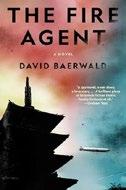
Inspired by his Jewish German grandfather’s amazing story, Baerwald’s first novel devours the 20th century in all its horrors, international conspiracies, and dark secrets.
Raised in an aristocratic family in Frankfurt, where antisemitism is rampant long before the rise of Nazism, Ernst Baerwald is a gifted young
man—a violinist, linguist, and allaround intellect. His skills lead his powerful, connected father to push him into a life of “friendly” industrial espionage, following language training in Japan, as a fieldworker for the German chemical company IG Farben. Its top chemist, Fritz Haber, has devised a way to mass-produce ammonium nitrate, which, as fertilizer, holds the potential to ease world hunger. But of greater interest to Germany and other world powers and corporate interests is its capability in manufacturing gunpowder, bombs, and chemical weapons. Haber is a “dupe” for believing otherwise, thinks Ernst, who bears witness to the unthinkable violence and destruction that follow. Ernst spends many years in Japan, where he is held in a POW camp following Japan’s declaration of war against Germany in 1914. Subsequently, he leads a double life, continuing to work for Farben while collecting intel on Japanese industry and politics for U.S. intelligence director Allen Dulles and enjoying simultaneous romances with a Japanese costume designer he met in Italy and an intelligence agent in Japan, with whom he has an arranged marriage. At more than 600 pages, the novel boasts so many conflicts, characters, and locations that the reader may sympathize with a half-Japanese character with a family of mixed nationalities who says, “None of us quite knows who of us is at war with whom at breakfast.” It is likewise not always easy to distinguish between the factual and the fictional. But with its moral power, cinematic qualities, and deeply felt storytelling—one highlight is Ernst’s participation in a momentous performance of Beethoven’s Ninth Symphony at the POW camp—this is still quite an achievement. Baerwald, half of the 1980s pop-rock duo David & David, is off to a great start as a novelist. A boldly ambitious, richly populated saga.

Balasingamchow, Yu-Mei
Tiny Reparations (272 pp.)
$29 | June 23, 2026 | 9798217176595
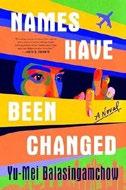
T he biggest mystery in this remarkable tale isn’t what the protagonist did, but why she remains on the run.
A fuchsia designer handbag functions as a totem, symbol, and clue to a wayward, waylaid Singaporean’s identity as she morphs from daughter to wanted criminal to longtime fugitive as capable of caregiving as she is of deception. The narrator, calling herself Ophir, unspools her story via podcast with just enough of a breadcrumb trail for her most beloved family member to follow. The cheeky title refers to many characters, but none as much as our narrator, whose chosen moniker—the name of a Biblical land full of gold— hints at her ambitions. The aforementioned pricey handbag she schleps from country to country was a gift from a beloved friend, Nirmala, who introduced Ophir—to reveal her other names would be unfair—to a shadowy world of money laundering and luxury. Although her success in that world didn’t last, Ophir understands that her existence—“I have a steely, white-hot drive to keep running at all costs in order to stay free”—rests on how easily she evades confession and capture. Part of Ophir’s urge to flee has to do with her identity as a lesbian; although she occasionally has sex with men, she’s under no illusion that she’s straight. “Attraction and lust, I understand,” she says. Ophir knows that going home to Singapore wouldn’t just mean going to brick-and-mortar prison, but the psychological kind of imprisonment that might set her back years. Her unusual trajectory has as much to do with her search for peace as it does with eluding the authorities, making this book
completely different from many on-the-run trajectories. Readers will contend with storylines that include the colonial, the homophobic, and the racist, while falling under the spell of a person who believes she is hiding in plain sight. It’s an utterly original thieves’ confession you won’t be able to put down. An unusual, compelling picaresque about a queer Asian woman evading arrest over many years and on several continents.
Barber, Kathleen with Amayah Shaienne Saturday Books (336 pp.) | $29 July 14, 2026 | 9781250400055
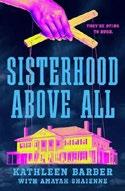
It’s rush week at Southern State University, and some girls would do anything to get their bid. Freshman Ava Nichols has just one wish: to join Gamma Gamma Alpha, the sorority her mother, who died nearly two years ago, belonged to and idolized. To Ava, Gamma has everything she’s been hoping for: “I want the status, the friendship, the social calendar, the connection to my mother, all of it.” Head of Gamma is Madison Archer, a calculating and intensely ambitious president who may not be a legacy, but has clawed her way to the top and will do anything to keep that spot. Next door, rival house Theta Kappa Xi is led by Shay Wright, a prelaw student who’s proud of the house and sisterhood she’s managed to cultivate, but who’s increasingly unsettled by blackouts and stretches of lost time. Madison, who’s hated Shay since they knew each other as kids, covertly assigns Ava a task meant to shake Shay’s confidence during an important recruitment party. But when the plan spirals out of control and someone falls from a balcony, things get even more dangerous. As rumors and suspicions spread, buried secrets are unearthed, forcing each girl to decide how far she’s willing to go to protect herself—and her sisters. Co-written by author Barber and
TikTok content creator Shaienne, a University of Alabama student who rose to prominence during the 2022 Bama Rush, the novel feels strikingly authentic. The particulars and social tensions of Greek life are vivid and convincing, and the shifting perspectives heighten the suspense as readers uncover the rising stakes alongside the characters. Fans of the TV series Scream Queens will appreciate this deadly take on toxic sisterhoods. As Shay muses, “Recruitment is…not not like the Hunger Games.” Pledging may have deadly consequences in this twisty campus thriller.
Besson, Philippe | Trans. by Sam Taylor Scribner (208 pp.) | $26 | May 26, 2026 9781668204047
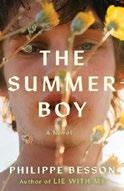
Philippe, an intelligent but confused 18-yearold, grows up quickly during what should have been a carefree summer vacation. How could he not be confused? He’s spending the summer on the French island of Sablanceaux, and Nicolas, a melancholy, languorous friend he made just 10 days ago, has disappeared. Philippe—also the name of this slim novel’s author—is a prep school student whose family vacations each summer on Sablanceaux. This year, while he’s getting to know Marc, his summer fling, Philippe hangs out at the beach and considers how life will be different for his working-class island friends François, who’s an apprentice to his family’s butcher business, and Christophe, who works with his own father as a fisherman. Nicolas moved with his mother to the island a year ago, fleeing his violent father. Nicolas is a blond wisp of a boy, and Philippe falls for him not so much out of love but interest, an empathetic chemistry. François, the alpha of the group of friends, falls quickly for Alice, a wealthy girl also visiting for the
summer—she’s Marc’s younger sister— but Alice has her heart set on the mysterious Nicolas. The disappearance of Nicolas, the most fragile of this group of teenagers, induces sudden eruptions into friendship and summer love. Written in the first person, the novel has an autofictional feel, with all the prismatic, layered filtering of lived experience we expect from the genre. Philippe is telling the story in retrospect, and he’s profoundly alert and wise as a narrator of his own past. He’s sensitive to how little he understood at the time and tender toward his friends and himself. He is still confused, though now cleareyed, about what happened that strange summer.
A moving, loving reflection of innocence lost too early.
Bond, Joe | Hub City Press (312 pp.) $26 | May 5, 2026 | 9798885740685
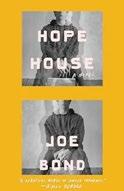
Bond’s debut novel subtly tells the stories of several staff members and residents of a group home for troubled teenage boys in 1980s Kentucky.
As the book opens, its primary narrator, AWOL—named for his penchant for escape attempts—is 14, and the story follows him over the next few years. The structure is relatively episodic, with the two main threads being AWOL’s own coming-of-age and the efforts of Watts, an insightful staff member, to improve the lives of his charges. “Watts had prided himself on knowing when there was still a kid on the inside,” AWOL says—but Bond also includes allusions to Watts’ own struggles and flaws. Bond’s close attention to detail, including his use of the word “peer” to describe the home’s residents, gives a precise sense of the language and routines of the place, such as residents being assigned chores in the
kitchen and finding stories by Dickens in old issues of Reader’s Digest in the library. AWOL uses the word “peer” from the first page without explaining its context, a device that helps the reader see life through the eyes of these young men. And every once in a while, AWOL makes an observation that breaks your heart: “I’d see teenagers and wonder if I could still be one.” AWOL’s own skill at helping his fellow teens write letters suggests one path forward for him, but his reckoning with what adult life might entail—including the realities of class and public hostility toward “juvenile delinquents”—helps explain his tendency to flee whenever he has the chance. And as the narration makes clear, the realities of the teens’ lives feed their desire for escape: “We ran when our cousins were killed and Watts wouldn’t let us go to the funeral. We ran when peers made fun of our teeth.” This is a slow-burning but moving account of adolescence under duress.
A haunting story of the search for a better life.
Branch-McTiernan, Meryl | Akashic (304 pp.)
$26.95 | June 2, 2026 | 9781636143088
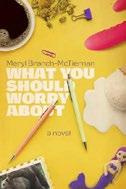
An LA woman on the brink of her 40s confronts familial, professional, and romantic upheavals when she winds up alone in New York during the pandemic. Lured to New York from California by the prospect of having her TV treatment picked up, Layla Moody— originally from Queens, now marooned by herself in her mother’s Forest Hills apartment—learns in early 2020 that Covid-19 has shut down the city that never sleeps, along with any chance of video production. Fresh from facing industry slings and arrows at Sundance, where her hopes were fed by meeting an acclaimed feminist
director, Layla is also smarting because her boyfriend, Nathan, has ghosted her and started seeing another woman. She hasn’t been back to the East Coast in the seven years since her father’s death; her mother, always distant, lives in Florida and rarely offers sound advice beyond telling her to get out of New York and reminding her to make brisket using a bottle of ketchup. The writing is fast and funny while Layla faces dilemmas like being frozen out by her best friend from college, who’s quarantining with her husband and daughter, and fast and furious when a chance encounter with an old boyfriend brings back memories of a momentous decision. All this feels like a pale setup for the book’s last third, in which Layla chooses, against the advice of friends and family, to spend her summer on Fire Island in a share house she once frequented, Mermaid LeGoon, run by a man known as Tequila Ted. Although Layla’s life “Before Corona” and “Alone in the Time of Corona” (as the first two sections are called) is vivid and relevant, the characters on Fire Island are more so. The book reads well but might have been stronger with a single setting and more backstory. Smart and vivid, this novel will appeal to readers who understand nothing works for everyone, but everyone still wants love.
Charlton, Meg | Harper/HarperCollins (320 pp.) $28 | June 16, 2026 | 9780063441217
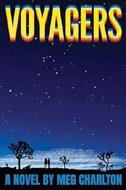
A mysterious extraterrestrial “Signal” sets off a global panic and brings two friends, who’d been abducted by aliens as children, back into each other’s orbit.
On vacation with his family in Palm Springs, California, Alex Whitman—a shy and lonely 6-year-old—is excited for his first sleepover with Ana Pincer, a girl his age staying in the vacation
An astute addition to a decade of discussions about consent and predation.
GOOD COMPANY
rental up the hill. Instead of having a normal sleepover, Alex and Ana go missing, only to reappear in the desert two days later claiming they’d seen a bright light and were attended by beings that communicated with them telepathically. Now it’s 30 years later, and after a childhood spent making appearances on network television and at UFO conferences, Alex and Ana are estranged. Alex is a lawyer in New York trying to hide from his history under a new last name; Ana is a Los Angeles–based “experiencer advocate” for those who believe they’ve made contact with aliens. When a Signal (which “quickly acquired the totemic Capitalization”) picked up from space causes fears to rise worldwide, Alex realizes he no longer wants to run from the mystery of what he experienced with Ana; he must return to her, to California, and to his past to find the truth. Aliens are having a zeitgeist moment in both pop culture and real-world politics, but they make for tricky subject matter. In lesser hands, this book might have been a schlocky story about chosen family or a hard-edged dystopian look at the way facing the unknown can bring out the worst in humans. But Charlton strikes just the right notes of smarts and warmth, and the result is an uncommonly confident debut novel. Readers who miss Mulder and Scully’s lighthearted side should dig in—but there’s satisfaction here for anyone.

Christensen, Kate | Harper/HarperCollins (256 pp.) | $28.99 | June 16, 2026
9780063464315
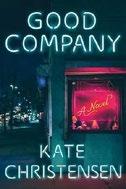
A middle-aged novelist revisits complicated relationships with men in her past and present. Christensen’s late-breaking #MeToo novel revolves around a character named Julia Heimdahl, who shares many details of the author’s biography and career, as recounted in a previous memoir, Blue Plate Special (2013), and in a personal history on her website. Julia is appearing at a book festival at her alma mater in the Pacific Northwest to promote her latest, a memoir titled Don’t Let It Bring You Down: A Compendium of Complicated Relationships; excerpts from the memoir are interspersed throughout the novel. Julia is on a panel with memoirist and literary biographer Ellis Blackwell— picture real-life author Blake Bailey, whom he resembles. Over the course of the festival weekend, Blackwell attempts to bond with and even seduce Julia, hoping to get her on his side in advance of a troubling accusation he knows is about to break in the media. Julia does have some sympathy for social outlaws: While she’s now happily partnered with a musician 20 years her junior, she’s still smarting from the punitive reaction of her community in Brooklyn when she had an extramarital affair at the tail end of her crumbling marriage. The title of the novel refers to a compliment Julia had previously been proud to receive from men, but she becomes less enthralled with it as she begins to
examine her own complicity in abusive relationships and the roots of her own internalized misogyny. Christensen’s adeptness at character development and psychological analysis shines as she depicts the complexities of Julia’s interactions with the frenemies and colleagues she runs into at the conference. She also candidly addresses the question posed at the panel, “What’s it like having a boyfriend who’s twenty years younger than you?” Many readers will find this topic as interesting as the riveted conference audience does—and we get more juicy details than they do. An astute addition to a decade of discussions about consent and predation.
Crellin, Brodie | Riverhead (368 pp.) $29 | June 9, 2026 | 9798217177394
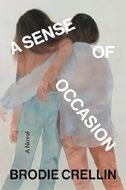
Three relatives and a funeral. The novel opens with 28-year-old Jude—an ostentatiously supercilious British playwright who’s living in Naples, subsidized by her mother—returning to England for her aunt Mary’s funeral in the Midlands. Jude isn’t expected at the funeral: “This way,” she figures, “her arrival would be an event. Any lingering acrimony would be forgotten, and past behavior would be forgiven.” Well, that’s one way her appearance could play out. Jude and her cousin, Aunt Mary’s daughter, Patch—whom Jude considers “socially low-functioning”—spent five years as roommates in London but aren’t currently on speaking terms. What caused the falling-out? And can the cousins mend their relationship?
Trying to act the part of the stabilizing older presence is Patch’s father, Robin, a self-described “English teacher slash actor” who has long since squandered his inheritance, and who, at the time of her death, had long since separated from Mary. (His being gay had something, but not everything, to do with their incompatibility.) Crellin’s debut is a comedy of bad manners, enacted cruelty, and zero-filter living: Patch remorselessly informs Jude that she slept with Jude’s ex-girlfriend. Jude tells Robin that Patch “has daddy issues and it manifests in a condescension kink. Don’t blame yourself, though…” There’s lots more like this. The book’s wandering point of view favors Jude, Patch, and Robin as they spend their energy analyzing one another and their own psychosexual quirks (“Jude liked to play around with denial”; Robin wanted “to be safely degraded”). For some readers, the book’s unlimited supply of acid-blast humor and taloned sentences, which are quite delicious, won’t be worth the novel’s sexual taboo-breaking, which seems less narratively justified than present for the reason that Jude apparently does anything: to get a rise out of people.
A funny-lewd taboo-buster.
Danvers, Holly | Severn House (240 pp.)
$29.99 | June 2, 2026 | 9781448315994
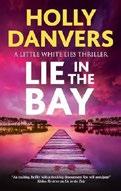
A group of neighbors in beautiful Green Bay, Wisconsin, are harboring dangerous secrets that will upend their world.
Jenna and Colton Abrams may seem to lead a charmed life, but
A final novel by noted Danish writer Tove Ditlevsen.
they’re barely holding their household together. Since Colton lost his job and Jenna’s hair salon can’t replace his earnings, she decides to make erotic videos and sell them online as Madame Butterfly. Sexy fishing guide Lincoln Jones lives with his girlfriend, Blakely Miller, but he can’t forget his former love, Tori Tomkin, whose body was never found after the sailing accident that killed her husband. Meanwhile, Lincoln is obsessed with Madame Butterfly, whose videos he pays to watch; when he glimpses Jenna’s butterfly tattoo, he puts two and two together and decides he wants the real thing. Gabrielle Stevenson doesn’t want to go to the neighborhood booyah party—a Wisconsin tradition—at the Abramses’ house with her realtor husband, Alec, but her accidental discovery of Jenna’s secret sex room and the dog tags Tori always wore sets off a series of dangerous events. Alec’s preoccupation with real estate, particularly the house and lot recently inherited by Dublin Peters, whom he’s trying to force out, turns neighbor against neighbor still further. And a memorial get-together for the Tomkins brings out more disagreements among the neighbors. When will the truth come out? Will its revelation leave anyone unscathed? Nothing is what it seems in this thriller with a shocking ending.
Ditlevsen, Tove | Trans. by Sophia Hersi Smith & Jennifer Russell | Farrar, Straus and Giroux (160 pp.) | $25 | May 12, 2026 9780374613495
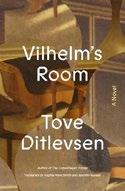
A final novel by the noted Danish writer. Vilhelm and Lise, a newspaper editor and well-published writer, respectively, are “two people who leave each other for good every day for twenty years,” endlessly dissatisfied with each other. Finally Vilhelm does leave,
moving in with a lover, Mille, who “force-fed him like a goose, stuffed and basted him and buried all his exquisite, dark thoughts under mountains of liver paté.” Fifty-one-year-old Lise—who we know at the very beginning of the novel is dead, though not yet how—takes out a lonely hearts ad and, urged on by their mutual landlady (a nasty piece of work), a young man named Kurt replies, hoping to take advantage of Lise’s vulnerability. Kurt moves in, discovers a checkbook Vilhelm left behind, and goes to town, while Lise drifts deeper and deeper into a numbing melancholy. She has good reason: As Ditlevsen’s story unfolds, we learn that Vilhelm is quite the creep, fond of drunken binges and cutting remarks (as when he sneers, “Had I enriched world literature with my trivial prattling?”), criticizes Lise’s appearance, and eggs her on to “just get on with it”—the “it” being the suicide she has long contemplated (“One does not forfeit the right to die because one is a mother”). As followers of Ditlevsen’s life and work will know—she killed herself in 1976, shortly after the book’s publication—this is a roman à clef. None of the characters are particularly likable, with Lise scolding herself for passivity and Mille and Vilhelm plotting ways to dump each other, having long lost the spark that brought them together.
Memorable, if mostly for its elegantly despairing view of the human condition.
Doiron, Paul | Minotaur (352 pp.) $29 | June 30, 2026 | 9781250864451
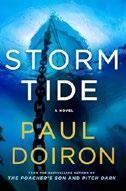
Maine game warden Mike Bowditch’s 34th year proves to be his most eventful ever. It begins when Mike, newly demoted from investigator, sees flames half a mile away and rushes into a burning house, where he’s too late to rescue Jenna Malloy or her husband,
gym owner Brian. The only survivor is a baby girl Mike finds in the arms of a neighbor, Karen Kershaw. Waldo County Sheriff’s Deputy Chet Bessel’s reaction to the tragedy tells Mike the deaths won’t be widely mourned. They’re not the only ones that won’t. Soon afterward, the discovery of Axl Deming’s body on the railroad tracks suggests that whoever killed the presumed rapist and murderer of teenager Emily Crockett is bent on vigilante justice. Since the victims are “two of the most hated people in Maine—three if you count Jenna Malloy,” suspects would seem to be everywhere. Mike, repeatedly warned off the case because he’s no longer an investigator, can’t resist focusing on Karen Kershaw, who fled the scene while he was questioning her, and Edward Gudgeon, a scallop diver who frequented the same bar as Axl and his ex-con brother, Shayn. Mike’s on the right track, but his quest will take a twisty route through many more ambushes, confrontations, brushes with fellow law officers who end up suspending him, and threats to his wife, EMT Stacey Stevens, and their newborn son, Charles. Doiron tightens this web with an insistent mastery that will keep most readers from noticing just how far-reaching it is until they’ve gained the end and can take some deep, cleansing breaths.
The best news: The year goes on long enough for the hero to be reinstated. Whew!
Ellroy, James | Knopf (544 pp.) | $35 June 9, 2026 | 9780525656814
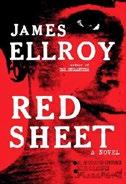
In which Richard Nixon meets a soon-tobe-dead woman in a “commie safe house,” and a strange game is afoot. Ellroy always packs a tremendous amount of detail and a large dramatis personae into his potboilers,
and this one is no exception. In his third novel to star Freddy Otash— criminal turned police officer, unredeemed dope addict and boozer, and all-around bull in a china shop— Ellroy turns in a loopy narrative full of real-life criminals, cops, and other figures from LA history, including Daryl Gates, Dalton Trumbo, H.R. Haldeman, and Nixon himself. The setup: the Cuban Missile Crisis has just passed, and an ambitious Robert Kennedy—“Ratfuck Bob Kennedy,” Otash calls him—has ordered up a Red Scare to divert attention from the news that Marilyn Monroe has died in a scenario with unpleasant hints of connection to both himself and his brother, the president. Enter “SHIT— the Sheriff’s Handpicked Intelligence Team” and Ellroy’s players are soon pulling dossiers on half the city, including Nixon, who, it soon develops, “is embroiled in a horrific sex snuff.” Said snuff involves two Communist Party stalwarts who ratted out Alger Hiss to Nixon and were dispatched following a failed shakedown, killed, perhaps, by four very bad brothers who “were big priest-killers and nun-rapers during the Spanish Civil War.” That war isn’t the only conflict to be evoked; one attorney on the make hopes to revive Mexico’s little-known Cristero Rebellion to wreak vengeance on the anti-clerical Reds. As if all that weren’t enough, Ellroy populates his yarn with the likes of a strung out Hugh Hefner, the Lindbergh baby kidnapping (and an appearance by Charles Lindbergh himself), commies turned into John Birchers, and musical cameos by Quincy Jones and folk singer Judy Henske. The upshot? Kvetches Otash, “Richard Nixon still owes me thirty grand.”
A head-spinning carom of a book, and a lot of fun amid all the blood and mayhem.

Faison, Elisa | Cardinal (304 pp.)
$29.99 | June 23, 2026 | 9781538776018
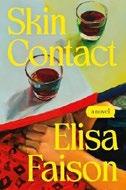
A kaleidoscopic exploration of polyamory with the experiences of a young intellectual couple at its center.
Frances is a ghostwriter entering her 30s. It’s early 2020, and she’s happily married to Ben, a philosophy professor, while also living in the shadow of grief, her mother having recently died unexpectedly. At a restaurant one night, Frances and Ben decide to invite their female server, Lily, home with them for a threesome. When the pandemic hits, they lose touch with Lily; when lockdown lifts, they try to recapture the magic by opening their marriage as a kind of last hurrah before trying for a baby. Chaos ensues. Faison enlivens the proceedings by constructing the narrative like a daisy chain: Though Ben and Frances’ grapplings (both emotional and physical) take center stage, Faison shows how other characters’ struggles with desire impact not only their lives, but their reactions to Ben and Frances’ open marriage. A gay colleague reacts badly to Ben’s confessions due to his own insecurities and the previous traumatic loss of an early lover. Frances’ best friend, Izzy, is struggling in her marriage against the backdrop of a college infatuation with a professor. We even see through the eyes of Frances’ grandmother, who suffered through a terrible marriage out of a sense of duty and low selfworth. These shifting perspectives
show the enormous baggage people bring to the subject of sex and monogamy and how that baggage affects their ability to show up for others. The novel is at its best when examining the intersection of Frances’ grief and her romantic life—and how that creates shrapnel through her marriage—and its understanding of all the different versions of ourselves that make up our experiences as lovers. A clever and zippy first novel.
Finlay, Susan | ZerO Books (220 pp.) | $17.95 paper | June 15, 2026 | 9781806950720
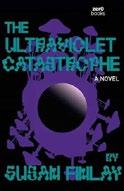
A satirical novel takes on tech bros, interstellar travel, and general malaise. Finlay chronicles the life of a man working for an ambitious (and possibly delusional) chief executive. A third of the way through the book, the narrator describes protagonist Hugh Snell as “god-like, ant-like, altogether paranoid.” It’s a good summary of his contradictory nature; Hugh is at once talented enough to be entrusted with a high-level corporate job and incompetent enough to cause frequent disasters in his personal life. Hugh works at AstroLabs™ for a tech CEO with the auspicious name of Lex Ramesses, who has his sights set on interplanetary colonization and a predilection for residing in a “carbon free emission cube.” A series of countdowns provide a signpost to just how far from a groundbreaking event the company is—though there’s also a lingering question of whether Ramesses’ reach has
An exploration of polyamory with a young intellectual couple at its center.
SKIN CONTACT
exceeded his grasp. Hugh’s corporate anxieties coincide with familial drama involving his twin brother, Ernst—who’s more skeptical of Ramesses’ project— and their cousin Martin. Finlay takes some formal risks here, including an array of fonts to differentiate between online and in person interactions. But the highlights include the use of highly specific descriptions: One location is described as “a former factory with an atmosphere midway between illegal rave and corporate trade show,” while a particular aesthetic Hugh observes is compared to “an English idea of a French techno DJ circa Y2K.” The targets of this novel’s satire are ripe for mockery, from self-serious pseudointellectuals to egomaniacal executives. Satire is a subjective thing, though, and Hugh’s haplessness doesn’t make him the most engaging of protagonists. This deconstruction of the tech world’s foibles never quite reaches ideal velocity.
Gervais, Simon | Thomas & Mercer (351 pp.) $16.99 paper | July 7, 2026 | 9781662533778
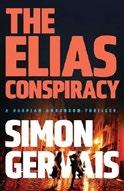
A former government killer engages in an extended international duel with a rising female mercenary. Caspian Anderson has gone from being an efficient contract assassin, code name Elias, for the top-secret U.S. government agency Onyx to accepting a less homicidal gig with the Defense Intelligence Agency’s Strategic Support Unit under the direction of Samantha Ranger—and from suspecting his inamorata, German agent Liesel Bergmann, of planning to murder him to adoring her. By the time the reader is reintroduced to Caspian and Liesel on their sleek boat off the coast of Mallorca, several sketchy characters have already appeared, likewise at sea near Venezuela and Aruba. Caspian’s third adventure, following The Elias Enigma (2025),
features an enormous number of lowlifes mostly distinguishable by their colorful names, and maintains tension and pace by ricocheting among locations in short, punchy chapters, many of which end in cliffhangers. Caspian is again the target of assassins. The situation is complicated by the surprising arrival of Liesel’s sister, Sofie, who’s been presumed dead. Sofie warns the duo of imminent danger and tells a tangled story about the global humanitarian organization Hearts United. She’s clearly not to be trusted. The cast teems with vamps: Most threatening are Mia Hernandez and Verena Kaine, a pair of literal femmes fatales. What Gervais lacks in character development he makes up for in action and twists. The rhythm of his prose is nearly metronomic. The finale clearly heralds more Caspian capers to come. A high-speed thriller chockablock with face-offs, duplicity, and villains.
Ghosh, Amitav | Farrar, Straus and Giroux (336 pp.) | $29 | June 16, 2026 9780374298395
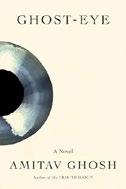
A sprawling novel that blends magical realism with all-too-real climate change. It’s 1969, a time of turmoil in India and the world. Threeyear-old Varsha Gupta, “a pretty, cherubic girl with nut-brown eyes, short black braids and a sparkling smile that lights up her whole face,” shocks her wealthy family when she announces, “I want to eat rice and fish. Don’t you understand? I want fish!” Given that the Hindi-speaking Guptas are strict vegetarians, the demand comes out of the blue, as does Varsha’s insistence, in Bengali, that she is a fisherman’s daughter who was killed by a snakebite in an earlier life. The alarmed family calls in a psychologist, Shoma Bose, who recognizes it as “a case of the reincarnation type” and discovers that Varsha has an
encyclopedic knowledge of the differences in both behavior and flavor among various kinds of fish. That knowledge, which implies “a prodigious understanding of…native flora and fauna,” will be key in saving the Sundarbans, a mangrove forest on the Bay of Bengal. There, in the Covid-19 era, environmentalists find notes on Varsha’s medical history left behind by Shoma. One, Tipu, has heterochromia, the “ghost-eye” of the title, thought to indicate powers of clairvoyance, while Shoma’s nephew Dinu, now living in Brooklyn, has exhibited “certain behaviours related to his previous self,” which Shoma suspects was aquatic. Ghosh’s fluent novel is rich in its detailed knowledge of reincarnation, metempsychosis, and ichthyology, while also sounding an alarm about the deleterious effects of predatory capitalism and climate change. There’s a deus ex machina moment at the end that seems a touch hurried, though with an explanation of Dinu’s former self, aquatic indeed. Yet the story hangs together well, and Ghosh’s vision of environmental action taken by ordinary people against corporations is inspiring. A story that is both dense and complex but irresistibly readable.
Iggulden, Conn | Pegasus (432 pp.) $27.95 | May 22, 2026 | 9798897100767
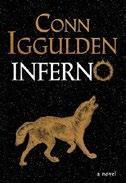
The tumultuous capstone of the Nero trilogy, following Nero (2024) and Tyrant (2025).
In 60 C.E., Nero Claudius Caesar still wants to be a noble Roman. But as emperor, his absolute power will be his ruin. At first, the senate does his bidding and tolerates his licentious spending on monuments to himself. He’s already had his mother, Agrippina, murdered. Now
he divorces his first wife, Octavia, then has her killed, too. Then he “accidentally” kills his next wife, Poppaea, when she’s nearly ready to give birth. After his friend and mentor Seneca causes mild offense, he instructs the older man to go home, write his last will and testament, and then slit his own wrists while soldiers witness the deed. This is a more merciful death than the crucifixions meted out to Christ’s followers. Christian gatherings are punishable by death perhaps because Nero intuits the deep threat to Roman authority posed by the nascent faith. Meanwhile, Nero fancies himself a man of the arts whose poetry, acting, and music touch the souls of his audiences. They must applaud, of course. He recalls Seneca’s admonition that “it would be vulgar for an emperor to declaim on the stage, or play my lyre, or act out scenes in mime,” but says, “I have a gift, Seneca.” It’s unclear from the story how much talent Nero really had, but in one dramatic scene he plays his lyre onstage even as Rome is devoured by flames. Meanwhile, he depletes the treasury on projects of self-adulation while ordinary Romans can’t buy bread. He corrupts silver coins with lead, but the trick doesn’t work for long. Then, bored by Rome, he takes an extended trip to the Greek province to indulge his artistic side. He’s so happy with his reception there that he does something his senators will not forgive. To the west, an army gathers to overthrow him. His world closes in ever more tightly—and he’s only 30 years old. “What a loss I shall be to the arts,” he says. This series is rich in gritty details of daily life and in vivid portrayals of Nero and more sympathetic characters such as Seneca and Poppaea.
An epic tragedy by a master storyteller.


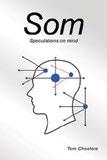
Speculations on mind
Tom Chesters
The exhilarating journey through Som is a psychedelic adventure which appears to reveal the fundamental physiological structure and operational nature of your own mind.
$35.99 paperback
978-1-6632-6381-0
also available in hardcover & ebook www.iuniverse.com
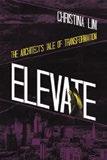
The Architect’s Tale of Transformation
Christina Lim
In Westvale’s cutthroat design world, Celeste Sharma battles betrayal, rivalry, and loss to create a groundbreaking eco-village-discovering resilience, love, and the power of architecture to shape a lasting future.
$17.99 paperback 978-1-5437-8379-7 also available in hardcover & ebook www.partridgepublishing.com/Singapore
C. M.
Join one mother as she navigates the challenges of a crumbling marriage while raising four children. Through the highs and lows of life, she discovers the true meaning of strength and family.
$13.99 paperback
978-1-6657-7545-8
also available in hardcover & ebook www.archwaypublishing.com

A Soldier’s Experience in the Iraq War
Martin F. Swirko
A military narrative relays the experiences of a citizen soldier who ultimately volunteered for active duty in Iraq to contribute to the global effort to stop radical Islam.
$35.99 paperback
978-1-6632-7468-7 also available in ebook www.iuniverse.com



R. Brooks
In just ten seconds, one atheist’s worldview shatters. This is a provocative, soul-searching journey for the spiritually curious, seekers on life’s edge, and those questioning the unseen dimensions of existence.
$16.99 paperback 978-1-6657-7067-5 also available in hardcover & ebook www.archwaypublishing.com
Traveling alone for ten years around the world
Jil Delanis
Discover the path to meta-awareness-where philosophy, neuroscience, and lived experience converge.
Jil Delanis reveals timeless practices to quiet the mind, expand consciousness, and awaken enduring peace, happiness, and success.
$21.58 paperback 978-1-9822-8975-1
also available in hardcover & ebook www.balboapress.co.uk
Marlo Holly
On the edge of thirteen, Marnie receives cryptic clues from her late grandfather that lead to an adventure of espionage that could change her, her family, and the country forever.
$20.99 paperback 979-8-7652-6441-6
also available in hardcover & ebook www.balboapress.com
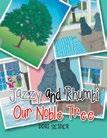
Dori Seider
Struggling to grow, a little oak tree’s journey offers children comfort, courage, and hope through life’s toughest challenges - building confidence, overcoming bullying, and discovering strength in unexpected ways.
$14.99 paperback 979-8-3694-4530-3 also available in ebook www.xlibris.com



HOYT ROGERS
Author of Midnight at Sea
What sparked your idea for your novel?
I’ve spent 45 years as a foreigner based in the Caribbean, and it seemed to me that this was a subject that had not been treated up till now. There are many fine novels by Caribbeans about the islands, but novels by foreigners tend to feature tourists with the Caribbean as a backdrop, not the long-range involvement of an expatriate in the lives of islanders. Though it stands fully on its own, Midnight at Sea is the second volume in The Caribbean Trilogy, which Kirkus called “an endlessly immersive and at times awe-inspiring middle volume of a postmodern epic.”
What made you interested in storytelling?
This came naturally to me, since I grew up in a family where novel reading was pervasive. From boyhood on, I read so many novels that eventually I wanted to try my hand at the art. Written over a span of 27 years, The Caribbean Trilogy depicts an eccentric cast of characters in a lush tropical setting. Each novel carries [the characters’] stories forward with a different emphasis. Sailing to Noon develops the parallels between a passionate love affair and primal nature, Midnight at Sea focuses on painting and music, and Return to Dawn presents social and political violence on a three-tiered stage.
What was your editing process?
Previous to writing novels, I translated and edited books. In order to avoid writing a thinly veiled autobiography, I

invented a metafictional character named Artemisia Vento, a female Sicilian travel writer who has lived in the Caribbean for decades. In the prefaces and epilogues to each book, I explain how she requested me to edit a trove of notes she’d compiled over the years. Editing my notes as though they were somebody else’s enabled me to look at them more objectively, and to concentrate each novel around certain themes.
How did you develop your characters?
Unsurprisingly, the main character of Artemisia’s notes is a Sicilian travel journalist named Chiara. Despite her globe-trotting, Chiara marvels at Canuba, where “magic realism is everyday life.” Her friends borrow traits from many Caribbeans I’ve known directly, but none portrays a single model or is exempt from fictional additives. The predominant characters include the hypererotic cellist Lamia, the devious politician Ángel María, the streetwise weightlifter Amado, the sardonic housekeeper Luz Divina, the three avant-garde Miranda brothers, the mysterious mambo Diana, and the “failed saint” Gustavo.
How did you develop your subject?
A Kirkus reviewer has remarked that in these books, “Canuba becomes a character in and of itself.” The island is an amalgam of the Hispanic Caribbean. The storytelling in The Caribbean Trilogy is divided among

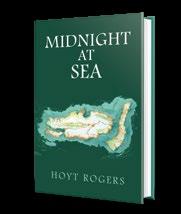
Rogers, Hoyt Spuyten Duyvil Publishing | 492 pp. | $22 paper | Aug. 25, 2025 | 9781963908794
10 highly different narrators. They’re all evoking the same places and, sometimes, the same events, but their perspectives convey radically distinct visions. Setting a record, each of the three books has won the Independent Press Award for Hispanic/Latin Fiction. I warmly invite readers to join us in exploring this self-contained world.
Portions of this Q&A were edited for clarity.

For a review of the book, visit Kirkus online.

JORAM PIATIGORSKY
Author of Uncertain Lives
Please tell us a little about yourself and Uncertain Lives . Although raised in a family devoted to the arts, I became a scientist, yet one who loves art and collects Inuit sculptures. Now an emeritus scientist at the National Institutes of Health, I write novels, essays, and memoir. My fiction mixes fantasy with reality, and my essays focus on personal experiences and philosophical questions. I have published novels, short stories, essays, and memoir mixing truth and imagination, and I blog on my website (https://joramp.com).
What sparked your interest in storytelling?
My journey in storytelling started, paradoxically, with science, when I linked objectively obtained data into narratives comprising conclusions from verifiable facts, a form of storytelling that blends facts with speculations. I find writing fiction analogous to science narratives by linking ideas and imagination into internally consistent stories. My interest in storytelling, then, evolved by first creating science narratives, which morphed into factual memoir, subjective essays, and finally imaginative fiction.
How did you develop your subject?
While a rule of thumb is write what you know, I blend what I know with new thoughts and even far-fetched imagination, which takes me into

foreign territory and fantasy. Thus, I live simultaneously in the reality universe and the imagination universe, as do the protagonists in my novels and some short stories. My science career has shaped my reality universe—that is, I am aware of when I cross borders of what’s known—while my writing has led to my interest in exploring the role of imagination in our concept of reality and of identity. Thus, my fiction overlaps reality with fantasy, and my essays probe the nature of reality.
Was your storyline something that you envisioned from the beginning, or did you build/change it as you wrote your novel?
I start writing with a fuzzy image of some sort in my imagination. How a story or novel will develop from that image is muddled in my mind. For example, my short story “The Open Door” started with an image of a man whose favorite activity is standing in line and ended with his passive attraction to his secretary. My present novel, Uncertain Lives , started with an image of two friends looking at each other as strangers and developed into a story of uncertainties about what’s true and the power of imagination. In brief, my writing starts with a vague notion and is followed by trial and error in numerous drafts, which becomes an exploration of ideas as they occur. The end always surprises me.

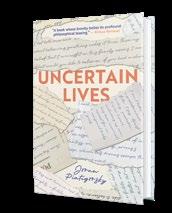
Piatigorsky, Joram
Truth & Fantasy Media | 197 pp. | $0.99 e-book | April 1, 2026 | 9781964428093
Is there anything you would do differently in your next book?
I’m never sure about what I’ll write next, however I believe I’ll continue to explore imagination and the tricks it plays on our memory and perception of reality. I’m considering either memoir or fiction as possibilities. Stay tuned.
Portions of this Q&A were edited for clarity.

For a review of the book, visit Kirkus online.
A beginning author gets in over her head, personally and professionally.
THE SHAMPOO EFFECT
Jackson, Jenny | Pamela Dorman/ Viking (352 pp.) | $30 | June 30, 2026 9798217059959
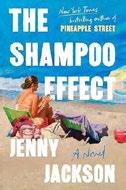
A beginning author gets in over her head, personally and professionally. Knopf editor Jackson’s sophomore novel—after the bestselling Pineapple Street (2023)—begins with a high-flying, multiphase meet-cute. Caroline Lash, 28, is traveling to the fictional town of Greenhead, Massachusetts, where she’s been awarded an 18-month-long writer’s residency in a beach cottage, hopefully recognizing her own merits and not just the fact that she’s the daughter of Gwendolyn Lash, one of the country’s top-selling authors. Making her way to her seat on the train, she steps on a jelly doughnut, which squirts red goo straight into her crotch. Offered a napkin by a cute guy with “the vibe of someone who knew his way around a kayak,” she’s embarrassed that he disappears before she can clarify the non-menstrual origins of her sanguine blotch. When she runs into him a few weeks later at the bank and has a chance to explain, she feels she’s only made things worse, until she goes out and finds a jelly doughnut on the roof of her car. Then he turns up again in her group on a historic home tour. After some flirty banter, they take matters into their own hands. Soon Caroline is quite madly in love with Van Whittaker, who comes with a close-knit lifelong friend group, a set of 30-somethings with small children. Not long after they move in together, Van’s on-again, off-again girlfriend from this
group turns up pregnant, the result of a pre-Caroline encounter. She wants to keep the baby, and Van is welcome to be involved or not. Jackson rotates the point of view around the set of friends, deftly depicting the practices and pressures of modern parents, where some have schedules to decide who can take shrooms and who must remain sober enough to drive, where some have fraying connections, money troubles, and/or long kept secrets, where the best advice may come from the gay teenage babysitter. Updike fans will scent an update of that writer’s fraught suburban scandals even before the author’s note acknowledging the inspiration. This easy read combines a literary rom-com with an acute portrait of midlife among millennials.
Katzenbach, John | Blackstone (506 pp.) $29.99 | May 26, 2026 | 9798200894116
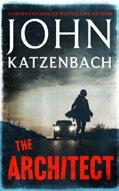
Two weeks before her final exams to become an architect, a Boston woman is offered an amazing professional opportunity that comes at a shockingly steep price.
The good news for Sloane Connolly is that an anonymous client of suavely insinuating attorney Patrick Tempter is willing to pay through the nose for her to design a memorial to six people. His staggering offer includes a brand-new office for Sloane and an all-expenses-paid cross-country trip for her to unearth information about the six honored souls. The so-so news is that the client refuses to identify the
six honorees until Sloane has signed a contract and won’t reveal his own identity even then. The terrible news is that shortly after Sloane’s single mother, prickly Maeve O’Connor, vanishes and police find her car and a pair of her shoes abandoned in Northfield, Massachusetts, Sloane’s ex-boyfriend Roger, not one to take his dismissal lightly, begins carpetbombing her with demands that she meet and talk with him and escalating threats of what will happen if she doesn’t. That makes it a perfect time for Sloane to elude Roger by flying all over the place to dig up details about academic Lawrence Miner, model Wendy Wilson, nurse Elizabeth Anderson, tech entrepreneur Martin Barrett, counselor Michael Smithson, and insurance broker Ted Hillary, all of whom turn out to have met suspicious deaths. Sloane’s fastmoving investigation in the first half of this overextended thriller sets a high bar that the second half, which unsurprisingly links the commission to Sloane’s troubled family history, can’t meet. Readers who don’t share Katzenbach’s appetite for philosophizing about murder can safely skip the last 50 pages.
Fans are guaranteed to enjoy the ride as long they don’t ask awkward questions like “Huh?” afterward.
Knoll, Jessica | Scribner (320 pp.) $28 | July 7, 2026 | 9781668062302
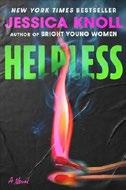
A Hollywood writer returns to her college town for a funeral only to get pulled back into the complicated relationships she left behind. Faye Heron knows she never would have launched her successful career without the support of Professor Toner, or PT, her former professor. So when he dies unexpectedly, she returns to the small town in upstate New York that’s so full of memories, and that
she’s avoided for most of the last decade. She’s anxious to see PT’s nephews, Campbell and Henry, the former a good friend and the latter an ex-boyfriend who inspired one of her first writing credits for television. In sharing some of the intimate details of their relationship, she feels both vindicated in having spoken her truth and afraid that Henry might be angry. Because their relationship, in which Henry dominated a submissive Faye, was also an obsessive one: sexual, raw, and often violent. As she struggles to control and to understand her reawakened feelings for Henry, Faye discovers that PT’s death may not have been natural. When Henry blackmails Faye into accompanying him to a remote family cabin for a week, she finds herself drawn back into their dangerous dynamic: Even as he threatens her, she desires him. The ending offers an interesting retrospective frame for the rest of the novel as Faye makes a pitch to sell her story after the fact. With a tongue-in-cheek reference to Fifty Shades of Grey, Knoll tackles the elephant in the room, and then goes on: “But how do you do an elevated version of that in today’s climate? It’s a delicate line to walk and no one is even trying.” Well, Knoll is, and true to form, she absolutely goes there in this novel, offering a nuanced and unapologetic portrait of an unconventional relationship without judgment. Puts the “erotic” back in “erotic thriller.”
Kirkus Star
McKenna’s Guy
Lawson, Mike | Blackstone (270 pp.) $29.99 | July 7, 2026 | 9798228358188
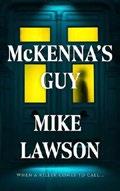
An inoffensive printer’s troubles only begin when he’s targeted for death. Roger Smith works for the Government Publishing Office in Washington, D.C. He has a side gig designing
greeting cards. He’s a longtime widower a year from retirement whose work has always been exemplary. So why does an assassin break into his house in the middle of the night and pepper his bed with bullets? It’s too late to ask Anton LeBlanc, the hit man, since Roger managed to kill him. But Det. Grace Lillinthal, of the D.C. Metro Police, would sure like to know, and the suspicious behavior of Roger, who’s very much an amateur at this, convinces her that the killer’s motive has something to do with Roger’s connection to his neighbor John McKenna, an ex-con bar owner with many criminal connections of his own. She’s right, of course: Roger’s been crafting false passports for select McKenna clients for years. Roger has his standards. His set price of $50,000 discourages minor leaguers. He won’t make more than one phony passport a year. And he won’t help supply murderers or others who pose a danger to society. So his target clientele, scammers who’ve defrauded the wealthy, are pretty rich themselves, and one of them clearly sent LeBlanc after him. But how did the client get Roger’s name, what does he have against him, and what are the chances that the next killer he hires, or the one after that, will get to Roger before Lillinthal cracks him open? Forgoing the occasional humor of Congressional fixer Joe DeMarco’s adventures, Lawson’s stand-alone strips plot, characters, and prose down to exceptional efficiency, producing maximum thrills without a wasted word.
The perfect in-flight read, starring a surprisingly resourceful antihero who spends much of his own time in flight.
Kirkus Star
Levy, Deborah | Farrar, Straus and Giroux (240 pp.) | $27 | June 2, 2026
9780374602079
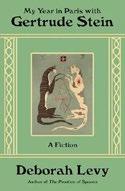
Who was Gertrude Stein and what was her meaning? Those are the questions asked by a 21st-century writer visiting Paris and forging new friendships there.
Levy’s latest is an inventive meld of biography and novel that interleaves a consideration of Stein’s development and uniqueness with an account of three female friends in the French capital in 2024. The unnamed narrator, a published writer, is researching and composing an essay on Stein while spending time with Eva, a graphic novelist whose cat is missing, and finance worker Fanny, who’s blessed with three female lovers. A loose chronology is applied to the Stein material, beginning with her American origins and medical training in the 1890s. Arriving in Paris at 29 in 1903, Stein initially lived with her brother, Leo, with whom she hosted salons and collected “outlaw” art— Picasso, Matisse, Cézanne. Stein met Alice B. Toklas in 1907, became her wife, and together endured Europe’s upheavals, surviving the Nazis—both were Jewish—by moving to the countryside. Stein wrote constantly in many forms, achieving fame at 60 with her bestselling The Autobiography of Alice B. Toklas, but it’s her reputation as a modernist that endures. The narrator’s thoughts on her subject loop through Stein’s iconoclastic role, her starry friends
A beguiling genre-splicer, strewn with questions and some answers.
MY YEAR IN PARIS WITH GERTRUDE STEIN
and admirers, and her often gnomic writing, which is quoted frequently. What emerges is a persuasive portrait of Stein—unfettered by corsets, curiously magnetic to men despite her queerness, a self-proclaimed genius who wanted to “excavate the future.” “Stein and Picasso had made a new language,” Levy writes. “The door was no long ajar between the nineteenth and twentieth centuries. They had broken the chain and opened the door.” One character tells the narrator: “You will write about the avant-garde in the language of realism,” which is partly true in this short, witty, intriguing work. A beguiling genre-splicer, strewn with questions and some answers.
Mackay, Asia | Bantam (368 pp.)
$30 | June 16, 2026 | 9798217301058
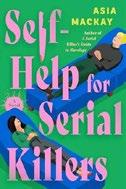
Hazel and Fox are back in this sequel to A Serial Killer’s Guide to Marriage (2025), juggling a new baby and the stress of having a hit taken out on them by an international criminal organization.
Hazel Matthews and Nathaniel “Fox” Cabot strive to have it all: two adorable kids, a healthy relationship, a fancy suburban house, and the opportunity to kill bad men together. With the help of cop Jenny Needham, Hazel’s best friend, they’re just getting back into the swing of their passion project a few months after Reggie’s birth. But their marriage has issues, which show up in the murder: Fox, who’s been struggling with anxiety and low self-esteem since his kidnapping by the Corporation, can’t “perform,” and
Hazel, forced to wield the knife for him, feels it’s just one more thing she has to take charge of—in addition to night feedings, grocery shopping, and laundry. When they start getting threatening postcards from an assassin known only as “the Chameleon,” they must team up, with Jenny’s help, to determine his endgame and defeat him and the Corporation once and for all. Mackay continues to have fun satirizing not only the experience but the very language of modern, affluent success and the struggles of parenthood and partnership. There’s no place in this world for therapy, though, and Hazel’s final determination that “the self-help we needed…didn’t come from books, affirmations, meditation or dodgy therapists…it came from within” seems a little off-key. But Hazel, Fox, Jenny, and the children are all charming characters. This novel doesn’t offer much new after the first installment, but for readers who enjoyed the voices and vices of these attractive serial killers, this will be another fun read.
Tongue-in-cheek commentary on contemporary marriage and parenthood.
Merrill, Judson | Under the BQE (300 pp.) | $25 paper | June 23, 2026 9798991122047
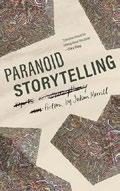
A journalist’s study of paranoia sends him headlong into a thriller. It takes some time to see what Merrill is doing in this novel, which opens with its narrator covering a political rally on a small island off the coast of Maine and winds up many
miles away, both literally and figuratively. The narrator, who shares a name with the author, observes firsthand the effects of paranoia on the populace: When he interviews people at the rally, they use buzzwords familiar from QAnon. He soon becomes interested in a neurobiologist named Dr. Rala Veruza, who’s engaged in the “study of cultural immunology,” which involves the idea that “humans form superorganisms, living entities comprised of many individuals.” Just as people can be vaccinated against disease, the thinking goes, it might be possible to inoculate an entire community or society against disinformation. Dr. Veruza goes missing early in the novel, prompting the narrator to contact several of her acquaintances and colleagues in order to find her, including a Hungarian academic, a performance artist in Prague, and an insurance investigator whose own work experience helps inform the narrator’s search. Gradually, the narrator begins to wonder if Dr. Veruza’s disappearance is the work of malicious actors, including an allpowerful tech company known as the Conglomerate. This is a heady book, with big ideas about society, politics, academia, and art in the mix, but Merrill finds a good balance between the high concept and the visceral thrills. The result is a literary work that recalls the writings of both Tom McCarthy and David Grann. It’s an unlikely combination, but also an effective one. Merrill pulls off a stylistic balancing act, making for a compelling read.
Mills, Rachel | Atria (288 pp.) | $29 May 19, 2026 | 9781668218006
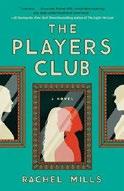
During a turbulent period in her life, a 30something London woman joins a group of others who share a unique hobby in this debut novel. Beth Greenwood is just going through the
motions. She works remotely as a graphic designer for a big food delivery business and sometimes meets a man from an app for a date—mainly for stories to entertain her sister, Elspeth, over their weekly dinner. But one particularly bad afternoon, she catches a glimpse of a rich woman stepping out of a taxi wearing a pair of beautiful suede boots, and she has a sudden longing to be that woman. Beth begins what she soon discovers is called “Life-Playing,” slipping into a different life for just one day, fully becoming the invented person. After a day spent as Nikki Love, a fitness instructor for a Peloton-like company, she meets a woman who recognizes what she’s doing and invites her to join a group of four women who help each other achieve whatever Life-Play they desire. Between her new friends and her beloved sister, Beth finally feels content. But when her real life suddenly takes a terrible turn, the line between fantasy and reality becomes worryingly blurred and Beth has to take stock of who she truly wants to be. Mills has crafted a tale that starts as a whimsical adventure and morphs into a memorable portrait of friendship, identity, and grief. The second section in particular, when Beth loses herself in a particular Life-Play, stands out for its observations on the appeal of true crime as juxtaposed with Beth’s shaky mental state. Beth’s emotions propel the back half of the novel and it’s hard not to feel everything along with her, the novel itself almost a Beth Greenwood Life-Play for the reader. Mills takes big risks here but always manages to nail the landing.
An original, surprisingly moving tale.

Powers, Kevin | Harper/HarperCollins (320 pp.) $30 | June 9, 2026 | 9780063488571
Two Virginians form a profound friendship that must survive the Great War. In 1917, Roy Young is a cocky Vanderbilt student who takes for granted his future marriage to childhood friend Samantha Hatton. Although she cares for him, she says, “I don’t belong to you, Roy.” Walking up into the highlands, she seeks out a reported “wild boy” who doesn’t know his own name but wears a blue greatcoat with the name “Ennis Duke” stitched inside. He doesn’t remember his family but guesses they may have been lost in a flood; now he lives alone on the mountain. Their mutual attraction is immediate, physical, and powerful, and Sam brings Ennis down to the valley to meet her welcoming family. Home from Vanderbilt, Roy has a fistfight with his new rival, because they were “the kind of boys for whom violence was a native tongue.” But soon they become great friends, and when the U.S. enters the war in Europe, “Master Roy is off to fight the Hun,” and Ennis enlists to fight alongside him. Roy tells his furious father that he’s fighting for honor, but Father says Roy will die for nothing. Roy becomes an officer and Ennis a private, and they fight the enemy in France in gut-wrenching scenes of battle and bloodshed. The two men will risk anything to protect each other, and they are fearsome killers. Meanwhile, the flu comes calling in America and scourges Sam’s Virginia valley. If Roy and Ennis survive, their home will never be the same, and neither will they. The author, himself a Virginian and a combat veteran, skillfully weaves threads of love, friendship, and senseless death into a compelling and often emotional tale where the price of love is paid with sorrow. “Tell somebody that you’ll love them until you die then make it true,” a
character says. “Tell them that after you die you will love them still.”
A deeply affecting novel.
Pugsley, Alex | Biblioasis (208 pp.) | $18.95 paper | May 19, 2026 | 9781771967105
A young Canadian writer’s adventures in the movie business. The third of Pugsley’s projected five autobiographical novels about Aubrey McKee finds the Nova Scotia native departing Canada in the early 2000s for the “fascinating, inspiring, bizarre” place that is Hollywood. This entry comprises four loosely connected sections that follow Aubrey’s humble but steady rise in the entertainment industry with insight and humor. The opening section, “Twinkle Pictures,” details his decision to turn down an offer to work as assistant to Twinkle Zitner, a brash, savvy Canadian producer of low-budget films. “Weeknights With Peter Peters” provides an often hilarious glimpse inside the writers room of a late-night talk show hosted by a former NHL player. In “Silver Lake,” Aubrey lands a job with an Oscar-winning producer who offers him the opportunity to turn a stage play he’d written into a feature film. This section also traces the path of his tempestuous affair with former Toronto waitress and rising movie star Poppy Price—“a compelling mix of intuition and nervousness”—and offers a sympathetic portrait of what happens to an ordinary mortal when he flies too close to the celebrity sun. In “Cinema,” Aubrey recalls the experience of directing his first feature film under Twinkle’s tutelage as he fights self-doubt and struggles against a minimal budget, impossibly tight shooting schedule, and temperamental female lead to realize his artistic vision. Pugsley’s tone throughout is wry and self-aware, the ideal combination for capturing Aubrey’s mix of ambition and angst. Pugsley’s nearly three decades of experience in film and
A writer travels to Dublin, where he finds all hell breaking loose.
DOONEEN
television lend the novel a healthy dose of realism. For anyone who’s followed Aubrey’s story in Aubrey McKee (2020) and The Education of Aubrey McKee (2024), this is an entertaining step forward, and for those new to his journey, it will almost certainly provide encouragement to hop on for the rest of the ride.
A smart, witty Hollywood tale.
Ridgway, Keith | New Directions (304 pp.) | $20.95 paper | June 2, 2026 9780811240451
A writer travels from his London home to a literary festival in his native Dublin, where he finds all hell breaking loose. Both the title and the framing of this audaciously inventive novel evoke “The Cliffs of Dooneen,” a traditional, pastoral Irish song about saying farewell to the seaside cliffs. Yet this is mainly a tale of two cities and two men, a pair of lovers, “their names being Mahmoud Habib, and Bartholomew Port. Known to each other as Mootie, and Mew.” Mew is the ostensible writer of the pages that follow and Mootie his intended reader. But Mootie might be dead, or maybe Mew is. Anyway, they are separated and cannot reconnect. The plot commences when Mew follows a stranger into a London park and somehow emerges into the heart of Dublin. This is where he came of age and where his family still lives, but much has changed. There is no traffic, no private vehicles. Trams and “the
clickers,” which are apparently some sort of moving sidewalks, now transport the populace. It’s a populace that finds itself ill-served by the government and powers that be, exploited economically, treated brutally. Mew gets hints early on that the city is poised for political revolt, which strikes a chord of familiarity with him. He sympathizes with the protestors, but mainly he misses Mootie. Amid his plans to attend the festival, he becomes enmeshed in the protest, in league with those plotting revolt, entrapped in various loops of time and ghosts and history. If this is a dream, it extends beyond Mew, encompassing the thoughts, conversations, and actions of others who might be dead. He has trouble distinguishing friend from foe, reality from imagination, military vehicles from monsters. Given all that is up for grabs, the novel does a masterful job of sustaining narrative momentum and suspense.
Ross, LJ | Poisoned Pen (320 pp.) | $18.99 paper | June 2, 2026 | 9781464273902
Clinical psychologist Dr. Alexander Gregory, in Paris to deliver a lecture on forensic profiling, is pulled into a case that will test him and the members of the Brigade Criminelle in unexpected ways.
In the middle of one night during Fashion Week, guests in the Hôtel Violette, awakened by the crashes of an assault, enter model Camille Duquette’s room to find her brutally
slashed. Camille hasn’t been killed, but her career has been scuttled by a facial wound that’s bound to leave a lasting scar. In the meantime, she won’t, or can’t, say a word to Captain Mathis Durand or the rest of his squad. Urged to give his opinion, Gregory offers a diagnosis of selective mutism and suggests that Camille’s regimen of painkillers be cut back. Before he knows it, Gregory’s replaced Dr. Ernesto Gonzalez as Camille’s primary caregiver, a position that forces him to walk a tightrope between overseeing her recovery and extracting testimony from her once her voice returns. Gregory’s dicey position is complicated even further by his fling with Margot, a jazz club chanteuse more commonly known in fashion house Maison Leroux, where she and Camille both worked, as Madeleine Paquet, a model who was among the first on the scene of Camille’s assault. As Gregory, still haunted by the line he crossed in caring for his terminally ill mother, struggles to treat Camille as both a witness and a patient, the news arrives that a second model has been attacked—and this time her assailant has made sure to finish the job. The cascade of revelations that follows is so rich and varied that readers, whatever their pleasure, are likely to find at least some of them compelling.
All these felonies, and Fashion Week too.
Rudnick, Paul | Atria (288 pp.) | $28 May 26, 2026 | 9781668212615
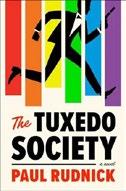
A struggling young actor is recruited to help an all-gay special ops team save the world. At 25, Andrew Birnbaum is nice-looking and talented at both acting and singing. He loves comedy and improv and can do a one-man
version of Wicked , playing everybody, in under 10 minutes, though only close friends have seen it. He’s barely paying the rent on his basement apartment in the far reaches of the East Village selling scented candles at a store called Smells of the Season when his best friend, Brock, invites him to a meeting of a dinner club called the Tuxedo Society. There he meets a delightful and diverse group of gentlemen and ladies whose professions involve everything from luxury real estate to selling replacement china on the internet; there’s a Navy SEAL, an OnlyFans star, and a former Olympic swimmer. While visiting the men’s room, he witnesses a wild encounter involving several of the tuxedoed diners that leaves two dead, no-goodniks who were part of a group intending to assassinate the first lady. Turns out, Andrew is being recruited to join a group of LGBTQ+ superheroes for his ability at improv—and the next thing he knows, he’s at the White House impersonating a cater waiter, helping to foil the next attempt on the life of Reata Pershing, an absolute goddess of a Black first lady whose fabulousness and wardrobe selections were certainly inspired by Michelle Obama. Andrew proves to be a lot better at this work than he would have thought, and his action-packed escapades with the Tuxedo Society take him to Paris, the Vatican, and beyond. Rudnick jams more comic energy into a single sentence than seems physically possible, his agile metaphors flying like gymnasts across the page: “My erection wasn’t my fault, because he was deliberately done up as British librarian/Nobel finalist clickbait, like Eddie Redmayne in any British biopic where he crosses an Oxford quad in October, hunched from calculating a theorem or composing a sonnet.” His descriptions of the attire at the papal residence alone are worth the price of admission.
If wild queer comedy can somehow be used to thwart evil and bring about world peace, this is the book that will save us.
Seethaler, Robert | Trans. by Charlotte Collins | Europa Editions (144 pp.) | $22 April 28, 2026 | 9798889661801
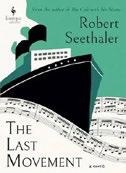
On a transatlantic voyage, Gustav Mahler looks back on his turbulent life.
Frail and sickly, wrapped in blankets, the celebrated conductor-composer tries to warm himself on the deck of the ocean liner Amerika , bound for Europe. An attentive cabin boy brings him hot tea and tries to raise his spirits. It’s the spring of 1910, and Mahler—not yet 50, but nearing the end of his days—is brooding about the past. Physical infirmities have dogged him from the start; born in Bohemia, he was one of 14 children, six dying in infancy. Yet he worked tirelessly and achieved great acclaim, initially as director of the Vienna Opera, though politics and antisemitism clouded his tenure. Further success would come in the U.S., at the Metropolitan Opera and the New York Philharmonic. All along, he was composing, often in feverish outbursts. Many of Mahler’s remembrances revolve around his obsessive love for his wife Alma, “the most beautiful woman in Vienna.” They had two daughters, but lost the older to diphtheria. Alma, eventually bristling in her role as Mahler’s caretaker, begins an affair with the young architect Walter Gropius— and Mahler concludes she’s stayed with her husband only because his death is imminent. Numerous biographers have scrutinized Mahler, but in this slender, fictionalized account, Austrian author Seethaler seems mostly interested in the composer’s emotional path and creative impulses: In one passage, he vividly describes Mahler patterning a composition on a bird call. The composer isn’t idealized here, his tyrannical side apparent in the mildly amusing scene where he
reluctantly poses for the sculptor Rodin. The book does neglect Alma’s professional achievements (she was a well-regarded composer in her own right); and the ending, focused on the cabin boy, seems forced. But the lyrical prose throughout more than makes up for any narrative flaws. A luminous imagining of a great musician’s inner struggles.
Slimani, Leila | Trans. by Sam Taylor Penguin (368 pp.) | $19 paper June 9, 2026 | 9780143139157
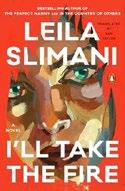
A decades-spanning family saga comes full circle in the final book of a trilogy that began with In the Country of Others (2021) and Watch Us Dance (2023). Slimani picks up the saga, inspired by her FrancoMoroccan family, in 1980s Casablanca. Mehdi Daoud, the former Marxist activist who’s the new president of the Crédit Commercial du Maroc, aims to foster the emergence of a Moroccan middle class by financing social housing programs and tourism-boosting resorts. However, the more hours Mehdi puts in at the office, the less time he has for daughters Mia and Inès—a source of contention between him and his selfless wife, gynecologist Aïcha.
Aïcha believes that her eldest child, Mia, wears her hair short and dresses like a boy so she can “escape the curse of girls and mothers, who always end up acting like martyrs.” In truth, Mia is secretly queer, disdains stereotypically female preoccupations, and nurtures the “unspeakable hope that she might eventually become her father’s son.” Inès, for her part, desperately wants to be like her mother—or better yet, her sensual, independent great-aunt Selma, who calls to mind “Lauren Bacall, with a cane and a cigarette holder.” Both sisters would be
imprisoned for “loose morals” by their homeland’s government, so each begins plotting her personal exodus. Advance to 2021 Paris, where the tale’s modern-day frame finds novelist Mia suffering from postCovid writer’s block. After consulting with a neurologist, Mia hops a plane to her grandparents’ farm in Fes, determined to find a way forward by reconnecting with her past. Moving back and forth in time while employing myriad narrative styles and points of view, Slimani explores issues of identity, alienation, disillusionment, and generational trauma. All Slimani’s characters shine, but her women are especially radiant, evincing a complexity and depth that elevate both this book and the series as a whole.
At once an elegy and a joyful celebration of family and home.
Kirkus Star
The Left and the Lucky Vlautin, Willy | Harper/HarperCollins (256 pp.) | $25.99 | April 14, 2026 9780063346635
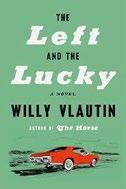
Vlautin’s latest reminds us you can build a family anywhere, even among people who are barely hanging on. In his previous books, including The Horse (2024) and The Night Always Comes (2021), Vlautin gives us portraits of people just getting by, defined by their simple ability to take a beating and endure. His latest novel follows that same path with Eddie Wilkens, a 40-something house painter in

A towering achievement from one of contemporary fiction’s most original minds.
AS IF
Portland, Oregon, whose affection for a battered Pontiac LeMans reflects his outlook on people. “No, I like it the way it is,” he says when he buys it. “I’m going to keep the dents, too. I like dents.” Eddie’s neighbor, Russell, an 8-year-old boy whose family is unraveling, has dents of his own: a bullying older brother, a distracted mother, and a beloved grandmother slipping into dementia. Drawn to Eddie’s kindness, Russell forms an unlikely friendship with him, one that deepens despite the pressures surrounding them. Vlautin is very good at revealing the despair that lurks behind ordinary routines, and the way small acts of generosity can briefly hold it at bay. His depiction of Portland’s working class is unsparing. A shadow looms in Russell’s older brother, Curtis, whose anger over an absent father, a pregnant girlfriend who rejects him, a collapsing home life, and his own fear of the future turns to violence. The story builds toward a moment of profound sadness, but isn’t without hope. At the heart of it all is Eddie himself. Why does he tolerate so much? Why does he forgive those who disappoint him—his unreliable employee, Houston; his estranged addict wife, Marlene; even Russell, whose mistakes nearly cost Eddie everything? The answer, revealed late, lies in a private sorrow that has shaped Eddie’s capacity for patience. His aunt Frances captures the truth of Eddie’s life best: “Having someone need you so you don’t give up. That’s the luck.” Eddie may be the one others rely on, but it’s clear he needs them just as much.
A bleak yet compassionate and life-affirming tale about how human connection is critical to survival.
Kirkus Star
Waidner, Isabel | Farrar, Straus and Giroux (192 pp.) | $18 paper | June 16, 2026 9780374620332
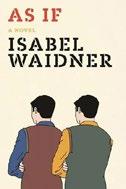
A grieving man is confronted with a mysterious counterpart. Aubrey Lewis has seen better days. The former actor used to star in a popular British television series, People Live, People Die, People Live As If They Were Already Dead , but now lives in a London sublet, still grieving the death of his wife from cancer and subsisting on his dwindling savings. He gets the offer of a lifeline from Fran Howe, a director he’s worked with before, who wants him to audition for a role in a literary adaptation; he declines the chance. Enter Lindsey Korine, a former schoolmate of Lewis’ who happens to bear a striking resemblance to him and who shows up at his door one day with no explanation. Lewis, who grows tired of Korine’s company, leaves his flat, leaving Korine alone; Korine decides to audition for the role himself: “I might have registered Lewis’s vulnerability and decided to exploit it,” Korine admits. “Or else, I registered his vulnerability and decided that this person, this walking SOS, needed my help.” Meanwhile, Lewis moves in with Korine’s estranged wife and child—the two seem to know he’s not Korine, but choose to keep the charade going. Lewis and Korine begin to encounter each other around London but keep living each other’s lives. This
is a novel that can be read in one of two ways: Either Lewis and Korine are indeed different people, doppelgängers, or they’re one person undergoing an existential crisis. Waidner never tips their hand, which is a brilliant decision that throws the reader off balance as they are drawn into Lewis and/or Korine’s unsettling world. The novel is not as gleefully absurd as Waidner’s previous two, but their restraint turns out to be welcome. This is a stunning book with much to say about how grief can alter our life (or lives). A towering achievement from one of contemporary literature’s most original minds.
Ward, Amanda Eyre | Ballantine (288 pp.) $30 | June 16, 2026 | 9780593500323
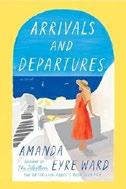
A family struggles to save itself in this follow-up to Ward’s bestselling The Jetsetters (2020). The three Perkins siblings aren’t doing great. Regan, fresh off a divorce, has moved her teenage daughters to Greece in pursuit of an internet boyfriend named François, who is almost certainly a scammer. Her brother, Cord, is struggling with alcoholism, and Cord’s partner wants him to attend a romantic digital detox retreat. And their sister Lee, a reality TV star, just had a very public breakdown and is now living with their mother, Charlotte, in Savannah, Georgia. When Regan disappears, Lee flies to Greece to comfort her nieces and hunt down her sister. Charlotte soon follows, intent not only on finding her missing daughter but also on trying to reconnect with a long-lost Greek lover. But finding Regan proves difficult because the Perkins family isn’t good at honesty—with each other or themselves. They’d much rather numb out or distract themselves with alcohol, work, or, in
Regan’s case, a sexy and validating French boyfriend who may or may not even be real. Lee, meanwhile, is struggling to manage her bipolar disorder and dealing with a depression stronger than she admits to her family. She carries the heavy weight of caring for her family whenever something goes wrong—so what happens when she needs someone to help her, too? Despite the heavy subject matter, Ward has a breezy writing style that zips along, ping-ponging among points of view. Although Regan’s and Lee’s plot lines are the strongest, each character’s voice adds intrigue. Ultimately, this is a story about a family supporting each other despite hurt, miscommunication, and distance. A propulsive novel about the complex bonds of family.
Weil, Josh | Doubleday (512 pp.) $32 | June 2, 2026 | 9780385550994
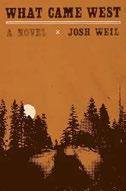
In this stream- ofconsciousness wilderness saga set in the 1840s, on the eve of the California Gold Rush, a reclusive trapper rejected by society fights for survival on a westward trek filled with treacherous encounters.
As a child, Silas Hall is the bane of his Pennsylvania family’s existence. He is prone to tantrums, acts of destruction, and prolonged escapes into the woods—behavior
that gets him dosed with laudanum. As a young adult, he fathers a baby with his mother’s nonverbal housekeeper. But overwhelmed by the demands of intimacy, he abandons them, making the wild his permanent home, as he says, “so I might live in a world that could hold me.” Heading across muddy and jagged terrain with a mule and a musket, he comes across dead bodies and avoids becoming one of them by committing his own killings. Setting foot on Sierra Nevada soil, where few white men have dared go before, he periodically visits a Nisenan chief, No Rope, whose friendship he has earned by helping in the fight against white antagonists who, in due course, will eradicate entire Native populations in pursuit of gold. Another tribe isn’t so friendly to Silas, wounding and taking him captive and, in a super-tense scene, threatening to deal him the gruesome fate visited upon the men he had hooked up with. Alternating between third-person narration and remorseful letters from Silas to his son, the novel boasts powerful natural images, such as a massive flock of passenger pigeons that blackens the sky at a dark moment in young Silas’ life. An exhaustive and sometimes exhausting book written under the influence of Cormac McCarthy and perhaps James Joyce, Weil’s follow-up to The Age of Perpetual Light (2017) is as much about sounds and smells and distant visions as it is about human action. The great tragedy of Silas’ life remains his father’s cutting-down of the elm tree that once called out to him through his bedroom window. A powerful novel, rich in language and dark intensity.
A reclusive trapper rejected by society fights for survival on a westward trek.
WHAT CAME WEST

Mighty Oak A Good Life of Mental Well-Being: Thriving with Authentic Happiness
Weining C. Chang
This transformative guide presents a blueprint to authentic happiness, resilience, and connection. Learn how to thrive through challenges, unlock your potential, and embrace a meaningful, fulfilling life.
$14.99 paperback 978-1-5437-8281-3
also available in hardcover & ebook www.partridgepublishing.com/Singapore
Wicked Storm
David Sinclair Arnold
Dr. Elias Thorne haunted by ancestral trauma weaponizes genetic science. As Detective Maya Cortez painstakingly uncovers his dark pursuit of vengeance, morality unravels - where does justice end and obsession begin?
$16.99 paperback
979-8-8230-5703-5
also available in hardcover & ebook www.authorhouse.com
The Pathway to Heaven Here and Now Dragisa Doug Jovanovic
Discover the path to Holistic Life Awareness— where universal principles guide thought, healing, and business, and where spirituality means embracing Oneness, kinship, and love beyond religion. One Life, infinite possibilities.
$14.99 paperback 978-1-9822-9378-9 also available in ebook www.balboapress.com.au
The Vanishing ‘Shining City On A Hill’ A Window Into America’s Decline
Patrick R. Romain
America’s promise dims amid polarization, inequality, and lost trust. This compelling call to action urges citizens to restore democracy’s integrity, revive the middle class, and reclaim the nation’s moral and global leadership.
$35.99 paperback
978-1-6657-8163-3
also available in hardcover & ebook www.archwaypublishing.com

Featuring the Earth Gods (Egs), the One True God (OTG), and the Individual (IN) Richard Cimbalo, PhD
This study uses simple, irrefutable truths to debunk the nonsense individuals and leaders create. The real world isn’t about one truth, one nation, or one God but about diversity and change.
$16.99 paperback 978-1-6657-7810-7 also available in hardcover & ebook www.archwaypublishing.com
L. Scott Cisney
Earth is dying. A starship carries humanity’s last hope—3,000 souls bound for Terra Nova. Guided by alien prophecy, one girl may shape the future of a new intelligent species.
$25.99 paperback 979-8-3694-4874-8 also available in hardcover & ebook www.xlibris.com
Cotton Bain
Unlock your full potential through purpose, preparation, and powerful choices. Embrace authenticity, master challenges, and perform at your best every day. Excellence isn’t accidental; it’s a decision. Choose it deliberately.
$26.99 paperback 978-1-6657-7683-7
also available in hardcover & ebook www.archwaypublishing.com
A Judeo-Christian Legal Guide to Human Resource Management
Legal, Practical, and Inspirational Tips for Managers
David and Esther Robinson
Discover how timeless biblical wisdom helps employers manage fairly, boost productivity, and protect profits-while navigating discrimination laws with confidence. A practical guide merging faith, law, and human resource strategy.
$16.99 paperback 979-8-3850-5288-2
also available in ebook www.westbowpress.com




JEAN ENDE
Author of Houses of Detention
Please tell us a little about yourself and Houses of Detention. I’m a former reporter for daily newspapers in Westchester [County], New York, and Jersey City, New Jersey. After several years playing Lois Lane, I realized Superman wasn’t going to arrive and moved on. I became press secretary for the City of New York, several political candidates, and [various] nonprofit organizations. I subsequently got tired of working on the side of the angels; it was time to earn some money. I got an MBA, became a VP at Citibank, wrote for business magazines, and taught marketing at Temple University in Philadelphia and St. Francis College in New York.
What made you interested in storytelling?
I always knew I’d be a writer. Writing was my path to peer acceptance. I wrote the fourth grade play, thereby guaranteeing myself the lead role. When summer camp peers neglected to choose a pudgy, uncoordinated kid for their teams, I wrote humorous poetry about camp characters to create a niche for myself. In college, other members of the newspaper became my close friends and helped define my undergraduate identity.
What was your editing process like? My publisher made it clear from the start that they didn’t provide editing services, but by the time I submitted
the book, it had been through years of revisions at the suggestion of peers and writing group leaders. I was a member of a master class run by Kaylie Jones, writer and Akashic Books editor, and two weeks before the final draft was due, Kaylie convinced me to make a substantial change, which I now realize improved the tone of the entire book.
How did you research Houses of Detention?
My book is primarily about a Jewish immigrant family in the Bronx, and since I was raised in a Jewish immigrant family in the Bronx, initially I didn’t need any supplementary material. However, the second half of the book introduces a fictional character, a woman from an Orthodox Jewish sect, a group with whom I don’t have any personal contact. To make sure I was portraying her accurately, I hired an Israeli sensitivity editor. In addition, several of my characters quote biblical passages, and I don’t have a formal Jewish education. Fortunately, my publisher, at a Jesuit university, offered several courses in the Old Testament, and one of the professors agreed to review my material.
What are you working on now?
Prior to writing my novel, I published 20 short stories in two dozen print and online magazines and anthologies in the U.S. and England. Most of these stories concerned people


Ende, Jean Apprentice House | 368 pp. | $30.30 $24.48 paper | April 1, 2025 9781627205573 | 9781627205580 paper
similar to those in my book. I’d like to put these stories into a single book and sell it as a collection that provides a new perspective on the characters in my book and others with whom they interact.
Portions of this Q&A were edited for clarity.

For a review of the book, visit Kirkus online.
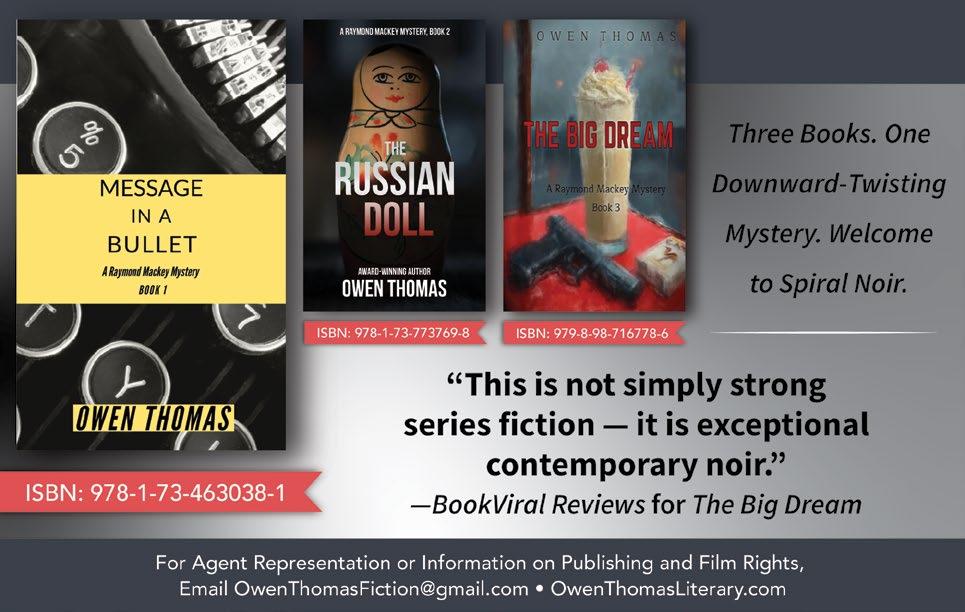

RONENN ROUBENOFF
Author of The Biotech Murders
Please tell us a little about yourself and The Biotech Murders . I’m a physician and researcher. I’ve been on the faculty at Tufts University since 1992 and worked in biotech and pharmaceuticals since 2002. I was always an avid fiction reader, and I knew I wanted to try my hand at writing someday.
What made you interested in storytelling?
In high school I felt I had to choose between a career in literature and one in medicine. My father was a family doctor in Baltimore for many years. Sometimes he got paid in tomatoes and homemade jams. So I knew I wanted to be a doctor from an early age, but I also loved literature and fiction. In the end, I got into medical school, which was a great opportunity to not be a starving author! And I loved medicine—first in taking care of patients, and later in doing research. When I got to retirement age, I had a chance to go back down the road less traveled. Both my parents were big mystery fans, and I caught that bug early on. So that was my natural genre when I finally got a chance to try, and I wanted to combine it with my medical and industry experiences.
How did you develop your subject? I lived it for 25 years! Although I never experienced any murders in
biotech, I definitely saw the data manipulation that underlies the plot of The Biotech Murders. The characters in the book are all based on people I met over the years, but each one is an amalgam of several people. There’s hardly any one-to-one correspondence.
How did you research The Biotech Murders ?
I knew the medicine part. As I said in the Acknowledgments section of the book, I researched the locations and learned about police procedure online and from some lovely people at the Massachusetts State Police Museum in Northbridge, Massachusetts. For the part about Vietnam, it was more online reading and Nguy ễ n Phan Qu ễ Mai’s wonderful [2023] book, Dust Child. I’m also very grateful for all my friends and family who read the early drafts and helped improve the work so much.
Was your storyline something that you envisioned from the beginning, or did you build/change it as you wrote your novel?
It definitely evolved. I started with a one-page outline and a list of characters, but the story took on a life of its own. The actual “bad guy” caught me by surprise at the end.
Portions of this Q&A were edited for clarity.


The Biotech Murders Roubenoff, Ronenn Roubenoff Writing | 268 pp.
$26.58 | $12.95 paper | Sept. 15, 2025 9798999661920 | 9798999661906 paper
I never experienced any murders in biotech.

For a review of the book, visit Kirkus online.
A time traveler finds herself entangled in a case with a ghostly client.
Armstrong, Kelley | Minotaur (320 pp.)
$29 | May 19, 2026 | 9781250394354
Time traveler
Mallory Mitchell finds herself entangled in a case with a ghostly client in Victorian Scotland.
When Lady Adler sends an urgent message to Duncan Gray, a doctor forced to take over his family’s mortuary business after he was prohibited from practicing medicine, Gray leaps at the opportunity to engage in his real love: scientific detection. But when Gray discovers that Lady Adler summoned him at the insistence of the spirit of her missing maid, Nellie, who appeared during a séance pleading to have Gray investigate her murder, his eagerness dims. Unlike the many Victorians who believe in the spirit world, Gray is a skeptic. Even more skeptical is his assistant, Mallory, who in the 21st century had a successful career as a Vancouver police detective, only to find herself transported back to 1869 while on a trip to Edinburgh. When Nellie’s corpse is found in a local bog, Gray and Mallory concede the news of her murder, at least, was accurate. Then the incompetent local coroner enters a verdict of suicide, forcing Gray and Mallory to cast aside their skepticism over Nellie’s apparently posthumous appearance in order to prove Dr. Addington wrong. Their investigation is long and complicated, with scenic detours into their growing romantic attachment. Armstrong offers a colorful cast of characters and a healthy dose of Victorian color. But the most intriguing aspect of her tale is the tension between Mallory’s acceptance of her relocation in
time and place and her struggle to take Nellie’s summons from beyond seriously. A healthy mix of mystery, romance, and a little something otherworldly.
Edwards, Martin | Poisoned Pen (384 pp.) | $18.99 paper | June 16, 2026 9781464254826
Heiress/collector/ amateur sleuth Rachel Savernake’s fifth retro whodunit begins with two predictions of murder and ends with a denouement that goes on forever for the best of all possible reasons.
Though he knows nothing about his target but the man’s name, chartered accountant Basil Palmer has made a New Year’s resolution for 1931, and it’s to track down Louis Carson, whom he blames for the death of his beloved wife, and kill him. No sooner has the detective Basil hires, Joseph McAtee, traced Carson to Lancashire’s isolated Hemlock Bay, where pioneering developer Sir Harold Jackson has established an exclusive resort, than crime reporter Jacob Flint hears from fortuneteller The Great Hallemby, né Gareth Bellamy, that a murder’s been plotted in Hemlock Bay. Of course, the police don’t believe The Great Hallemby; nobody does except golden age fans, whose main question will be whether these two murders are one and the same. Spoiler: They’re not—and that multiplication of threats is only the first of the inventive leads Edwards sprinkles over Hemlock Bay, whose attractions range
from Mermaid’s Grave, where a beguiled sailor’s widow allegedly killed the mermaid who enticed him, to the Hemlock Sun and Air Garden, a defiantly nudist beach. Attracted to the mystery by her recent purchase of the painting “Hemlock Bay” by rising artist Virginia Penrhos, Rachel runs rings around the limited abilities Inspector Young brings to the case. And after the final curtain has apparently fallen, she produces a series of further surprises that even Scotland Yard’s Inspector Philip Oakes has never suspected, making this her most dazzling performance to date. The appended Cluefinder will remind fans of all the telling clues they duly noted but never considered clues.
Gates, Eva | Crooked Lane (304 pp.)
$29.99 | June 9, 2026 | 9798892424370
A librarian’s exciting new job turns deadly. Nichelle Gilcrest is exchanging her life in Rochester, New York, for a new job as assistant director of the Bodie Island Lighthouse Library on the Outer Banks of North Carolina. In her 50s, Nichelle is divorced, her twin girls are out on their own, and she quit a job she dislikes to earn a master’s degree in Library and Information Science. Veteran librarian Lucy McNeil, now the library director, welcomes Nichelle, whose perks include an apartment in the lighthouse. As far as Lucy knows, Nichelle has no connection to the Outer Banks—until Nichelle opens her front door and discovers a dead man on the steps. Lucy has had enough experience with murders to know what to do, although Det. Sam Watson, her longtime friend on the police force, has retired, and new detective Rhonda Thomas is a lot less eager to work with amateur sleuths. Nichelle suspects that the dead man might be her father, who never returned from a fishing trip to the Outer Banks when she was 16 and her brother, Brad, was a year older. The
library staff and patrons welcome Nichelle, but she can’t help thinking about her father’s disappearance and the mystery of his life over the last 38 years. With help from her new friends and her brother, who secretly visited the Outer Banks over many years, she starts digging into that life. Aside from a part-time job, Gilcrest seemed to have kept himself afloat by conning older women out of money with help from someone posing as his daughter, giving quite a few disgruntled people a motive for murder. The appealing new sleuth added to this long-running series opens up many possibilities for future investigations.
Gillmor, Don | Biblioasis (272 pp.) | $18.95 paper | May 5, 2026 | 9781771966900

T he murder of two teenage girls in Toronto becomes an obsession for both a troubled city and a hard-boiled (but gourmet) detective.
Following an award-winning memoir, fiction for adults and children, a two-volume history of Canada, and 12 Canadian National Magazine Awards, Gillmor shows he has yet another trick up his sleeve. His first crime novel is narrated by police detective Jamieson Abel, a white law school dropout who gets along with exactly nobody on the corrupt Toronto force and is constantly in danger of getting canned before he can make it to retirement. He’s recently been partnered with Davis, a smart, well-spoken Black woman who’s the department’s only claim to diversity and its frequent media representative. As the novel opens, two high school track stars have been brutally murdered in St. James Town, a decaying high-rise community at the heart of multicultural Toronto: “The languages spoken in St. James Town in descending order of percentage are: English, Tagalog, Tamil, Unspecified Chinese, Mandarin, Korean, Spanish, Russian, Serbian, Bengali, Urdu,
French, and Other.” Under tremendous pressure from the mayor and media to solve this crime, Abel and Davis embark on a wild goose chase to locate the single, rather shaky suspect, a boyfriend of one of the girls. Meanwhile, mayhem in the area is on the rise: a sex worker is killed, one of the towers is burned to the ground, a local thug is the target of a jailhouse hit, large-scale new graffiti is going up nightly. Abel’s instincts tell him that somehow, everything is connected—and real estate values have something to do with it. As he obsessively tracks down leads, he sustains himself with martinis, espresso, and delicious meals for one. Food-loving readers may find themselves trying to replicate his sheet-pan salmon and a salad for which he “tossed together black beans, Kalamata olives, a sharp cheddar that had been aged for eight years, red pepper, and arugula, then made a dressing with olive oil, lime, jalapeños, and cumin.” Gillmor really knows his stuff—in a dazzling range of areas. A layered portrait of a changing city in the guise of a gripping crime novel, for fans of Tana French and Dennis Lehane.
Gray, Claudia | Vintage (336 pp.) | $19 paper | June 16, 2026 | 9798217008070
Yet another murder confronts Jane Austen’s beloved characters and their extended families. It seems a shame to visit an act of violence upon such an agreeable couple as Charles and Jane Bingley. But for fans, the fatal poisoning of Mr. Hurst, Mr. Bingley’s unpleasant brother-in-law, in the breakfast room of the Bingley estate at Netherfield Park, has a distinct upside: the opportunity to see Jane’s socially awkward young nephew, Jonathan Darcy, reunited with Juliet Tilney, the one person capable of igniting a spark of affection in the young man. The two have been apart since Juliet was publicly disgraced by a painter who incorporated
her image into a scandalous work of art in The Rushworth Family Plot (2025).
Now that same painter is offering Juliet the chance to repair her reputation by marrying him, a proposal that revolts her, but that her family pressures her to take seriously. Realizing that the local constabulary will never exert enough energy to solve Hurst’s murder, Jane wants Jonathan and Juliet, who’ve cracked crimes before, to come to Netherfield and catch the killer. Although propriety dictates that she summon each party to the investigation separately, perceptive Jane recognizes that the pair are successful at solving crimes only when they work together. And only together can Jonathan and Juliet tackle the complicated family dynamics that keep them from formalizing their romance through marriage. The puzzle of the murder and the conundrum of how the young lovers will overcome the many obstacles to their union sometimes vie with each other for space here. But Gray peoples her tale with so many lively, complex, and vividly drawn characters, and involves them in such a variety of intrigues, that the reader’s attention will never flag.
A new generation of heroes and heroines is bound to delight a new generation of Austen fans.
Hechtman, Betty | Severn House (224 pp.) $29.99 | June 2, 2026 | 9781448318629
Murder is just one of the challenges a California girl faces when she inherits property in the rural Midwest. Annie Sara Hart had one mission when her boss let her take a leave of absence from her job in a Malibu children’s boutique to inspect the old schoolhouse her uncle left her in Franklin, Indiana: Get the property sold. But she and her boss’ daughter, Gray Hanover, soon realize they’ll have to spruce up the old building, home to a defunct yarn shop, quite a bit to make it
THE DOGWALKERS’ DETECTIVE AGENCY
sellable. The two coastal transplants also realize that they kinda sorta like life in Franklin, whose many warmhearted residents help ease their path: kindly baker Jenny Swanson and her teenage son, Toby, who has Down syndrome; quirky herbalist Liv Stein; and would-be farmer Matt Astin, who’s too much of a softy to slaughter any of his livestock. Gray’s movie-star mother, who clamors for them to sell the damn place and return home, is especially concerned with Gray’s growing attachment to a local cop, and Annie Sara and Gray find themselves running out of excuses to delay. The murder of a local au pair provides them with some leeway. So does Toby’s chance to become a contestant on a TV baking show. The murder actually draws little of Annie Sara’s attention—her main concerns are giving Toby a shot at showcasing his scones, helping Gray navigate her rocky relationship with her overbearing mom, and figuring out how she feels about farmer Matt. Hechtman’s latest is filled with warmth and light, but is very short on detection. A gift for readers who like the cozy more than the mystery.
Hogan, Michael | Pegasus Crime (480 pp.)
$28.95 | June 2, 2026 | 9798897101337
Leaving London for his seaside hometown of Framstone to help his aging mother turns a peaceful dog lover into a reluctant sleuth. While waiting for the graphic design business he’s building to take off, Charlie Boardman is making ends meet by walking dogs. During a stroll with
his own Staffordshire bull terrier, Ruby, and two other rambunctious terriers in Framstone’s woodlands, the group discovers a dead body. First Charlie calls Tess Cheong, the owner of both the terriers and Coastal Coffee, and only then dials 999—the British version of 911. The police recognize the dead man as former police officer Frank Courtney, owner of the Neptune pub. The lead detective, Charlie’s old schoolmate DI Anjali Thompson, introduces him to her partner, DS Craig Murdoch, as a former star athlete at Framstone High. Meantime, the dog-walking community, growing obsessed with the crime, begins to meet with their dogs at Coastal Coffee to discuss the case. Their facetious meetings grow more serious as the sleuths snoop around and uncover interesting clues. Anjali, who’s willing to share a bit with Charlie, also has her hands full with her husband, Rob, a cop with a major drinking problem who’s found badly beaten in the same woods as Courtney’s body. Then Charlie starts getting weird threats, beginning with a stuffed dog left at his door that looks a bit like Ruby—with its nose violently torn off. And the police’s main suspect, a low-level drug dealer, becomes the next victim Charlie and Tess find dead. There’s more drug dealing and police corruption in Framstone than the group imagined, but despite the danger, Charlie and his friends keep their noses to the ground.
Hogan’s debut is a dog lover’s delight, with engaging characters—human and canine—and surprising revelations.

Housewright, David | Minotaur (320 pp.)
$29 | June 23, 2026 | 9781250360489
A sudden attack at a northern Wisconsin wine bar poses a novel question for millionaire ex-cop Rushmore McKenzie: which of the guests was the intended victim?
Terrible Timmy’s Terrific Wine Club attracts people from all over who appreciate small-batch wines enough to make the trek to the middle of nowhere. It also attracts Tucker Landau, whom McKenzie and his friend Bobby Dunston, head of Homicide and Robbery at the St. Paul Police Department, spot with an AR-15 rifle and wrestle to the ground just as he’s about to open fire. Since he refuses to answer any questions and there’s no hard evidence that he targeted anyone in particular, he’s convicted of a single misdemeanor and goes free. Burnett County Sheriff Jillian Caine, unhappy with that result, talks McKenzie into interviewing 17 of his fellow guests at Terrible Timmy’s, including vintner Tim Knutson; his wife and partner, Dorothy; and country singer Dave Umland, but not including members of McKenzie’s own party: his wife, Nina Truhler; Bobby Dunston’s wife, Shelby; or his parents, Gene and Patty, who invited them in the first place. The quest to discover who Landau wanted to kill is refreshingly different from the usual whodunit, especially since no one admits to knowing him. But there’s still room for plenty of recrimination among the survivors, several of whom aren’t so grateful to McKenzie for having saved their lives that they’re actually willing to talk to him. Nor is the mystery resolved by Landau’s own murder, whose main effect is to bring the rage of his sister Carly, who already has grievances of her own, to the boiling point.
A cheerfully unrelenting anatomy of “rural America’s so-called old-fashioned family values.”
Jackson, Lisa | Kensington (416 pp.)
$30 | June 30, 2026 | 9781496753748
A quiet Georgia neighborhood is disrupted by the depredations of the Savannah Slasher.
Not that there aren’t already tidal conflicts eddying around the place. When Billy Huber falls off a ladder and dies, nobody really mourns: Ever since he walked away from the one-car accident that killed his wife, Linda-Sue, eight years ago, the only people he’s been at all close to are the ones he’s fighting with. Even so, most of these conflicts are so minor that the news Billy was murdered turns up very few credible suspects for homicide detective Pierce Reed and his much more active wife, bestselling true-crime writer Nikki Gillette, to investigate. Forbidden by her husband from entering the crime scene or accessing any confidential information, Nikki happens to be on hand for a key revelation: A polished stone engraved with Hebrew and Arabic numbers was discovered under Billy’s body. That bit of information becomes way more valuable with the discovery of a similar stone under the corpse of society maven Mavis Greenlee. The two have clearly been killed by the same person, but what on earth could be the motive for targeting citizens from both the very top and the very bottom of the neighborhood’s social hierarchy? Nikki, still mourning the loss of Pierce’s late partner, Sylvie Morrisette, who died trying to save Nikki from drowning, can only hope that a third murder will clear the air. And as it turns out, the Slasher isn’t done. Whodunit fans can relax: The culprit is such a minor character that there’s no point in trying to deduce, or even guess, who it is.
A procedural? A closed-circle mystery?
A reckoning with the past? Whatever it is, this is not what it seems.
Jalaluddin, Uzma | Harper Perennial/ HarperCollins (336 pp.) | $18.99 paper May 5, 2026 | 9780063434967
Detective Aunty is back to handle unfinished business.
After helping investigate a murder in which her daughter, Sana, was a suspect in Detective Aunty (2025), Kausar Khan is settling into her own place in the Golden Crescent neighborhood of Toronto. Moving back after years away has its benefits, but despite the comfort of returning to the community in which she raised her children, Kausar is now constantly reminded of the tragedy that occurred here 18 years ago, when her son, Ali, was killed by a hit-andrun driver. Kausar believes she’s finally ready to open the boxes that fill her otherwise empty condo—the remnants of Ali’s life—and find justice for her son. Reopening old wounds is never easy, so Kausar welcomes the distraction when her 16-year-old granddaughter Maleeha confides in her one day, even though it’s with the bad news that her friend Qasim Jaffry is missing. When the boy is later found dead—a suspected overdose and drowning—Maleeha insists he would never harm himself. When Mr. Walters, Qasim’s poetry club teacher, also asks Kausar to do some digging, she can’t help but see some similarities between Qasim’s death and Ali’s, “two parallel stories, separated by decades and circumstance, linked by place and community.” Jalaluddin deftly weaves two mysteries together, using the investigation into Qasim’s death to breathe life back into Ali’s cold case—so much so that Ali’s story is what really keeps the pages turning. The personal nature of Kausar’s inquiries brings a unique perspective to her lines of questioning, as she balances her often conflicting roles as investigator, grieving mother, and community member. Kausar’s
determination is inspiring and while the truths she uncovers are tragic, they open the door for healing. This second installment is deeply layered, rich in culture, and paves the way for this detective to become a favorite.
Johnson, Craig | Viking (368 pp.)
$30 | May 26, 2026 | 9780593830734
Solving the murder of the most hated man in Absaroka County, Wyoming, is no easy case for Sheriff Walt Longmire. Wealthy landowner Pepper McKay is found dead in a trout stream on his O-Kay Ranch. Did he slip and hit his head on a rock, or was he murdered?
Pepper was an indifferent parent, an alcoholic, a womanizer, and a rapist. He had three sons from his marriage—David, Ian, and Alan, who were all at the ranch for a family meeting the night before Pepper’s body was found—and another, Manx Henenoka, the product of an affair with a Shoshone cook who worked at the ranch. They all hated Pepper to varying degrees. Manx’s story is the best example of Johnson’s deep dives into characterization. Different in every way from his half brothers, he lives at the ranch, where he was raised by foreman Gary Lyman and his wife, Lynn, after his mother died, and expects nothing of Pepper. Manx wins Walt’s admiration for his blunt answers to questions and his skill training a mule named Borax. Two sets of boot prints at the scene hint at murder, delighting Walt’s undersheriff and fiancée, Victoria Moretti. Even Walt has a motive for the crime: Years ago, Pepper tried to rape his now late-wife. In addition to the murder case, there are several dangers: Wildfires threaten the ranch, and Walt is stuck acting as parole officer for Maxim Sidorov, an erudite Russian spy who once tried to kill him. Both Pepper and David were once involved
with a woman named Paetra Agirra, whose hot-tempered uncle has already killed three men. Unlike the average lawman, Walt has a philosophical bent, lives by his own code, and reads voraciously. But it’s Maxim who points out the similarities between Pepper’s family and The Brothers Karamazov that could crack the case.
A complex, cerebral mystery with a plethora of suspects that demands out-of-the-box thinking and help from a heroic mule.
Mark, David | Severn House (208 pp.) $29.99 | June 2, 2026 | 9781448319381
An ethical English cop with a hardscrabble past unravels a complex crime while fighting enemies from within. Murder lies at the center of Northumberland police officer Salome Delaney’s third case, following Don’t Say a Word (2025), but the novel is less a police procedural than another shadowy episode in the righteous heroine’s ongoing quest for justice and her family’s safety. In the opening scene, a carload of Sal’s relatives makes a late-night visit to Bael Hill Farm and a ramshackle edifice known locally as the Murder House. When they find a corpse inside, they make a harried, hasty retreat and take a vow of silence. Despite their covenant, the corpse is eventually discovered and identified as that of itinerant Rollo Savage. The story rolls slowly to Sal’s conjecture that Rollo’s death involved foul play and her subsequent investigation. It also provides a MacGuffin in the larger story of Sal’s persecution by DCI Magdalene Quinn, a slick villain in Manolo Blahniks. Quinn sets her sights on arresting Jarod Delaney, Sal’s twin brother. Just as the roots of Quinn’s vendetta have been depicted in Sal’s first two cases, several supporting characters in her circle have larger backstories that underlie the dynamics of current developments. The procedural elements are informed by author Mark’s experience as a crime
reporter. Dark, powerfully written, and propulsively paced, Sal’s latest outing will likely delight fans of the fledgling series while rewarding new readers who persevere, delving into Sal’s dark world. A gripping installment in a larger story of corruption, justice, and the minutiae of detection.
Oldham, Nick | Severn House (272 pp.)
$29.99 | June 2, 2026 | 9781448319947
Police sergeant Jess Raker returns from Death on Wolf Fell (2025) to face multiple challenges, professional and personal, in the northwest English county of Lancashire.
Separated from Josh, her cheating husband, Jess enjoys solid support from her mum and two teenage children. But at work, her beloved detective constable, Dougie Doolan, is fading fast from end stage cancer. Up-and-coming Police Community Support Officer Samira Patel is bright, but still a rookie. New transfer PC Ashley Grimshaw seems more focused on her cigarette breaks than on police work. And PC Vinnie McKinty’s about to go on paternity leave. With the help of this ill-assorted crew, Raker needs to locate Donny and Rory Walton, two of the Ribble Valley’s leading drug dealers, head off a turf war between the Waltons and rival Bruce London, and track down her old nemesis Mags Horsefield, arguably the most powerful figure in the Valley’s crimescape, whose sudden disappearance has thrown the local drug trade into chaos. She also agrees to help Doug confront a convicted serial killer named De’Ath, hoping to persuade him to reveal the location of his final victim’s body. These earthly woes are compounded by a series of apparitions, visible only to Jess, of children in deadly peril outside the gates of the local castle. Closer to home, Jess’ daughter, Lily, gets entangled in a complicated friendship with Mags’ daughter, Caitlin, who’s in hiding abroad with her mother. Oldham handles these
multiple threads deftly, although the grisly details of the serial killings and Jess’ encounters with the otherworldly may prove a lot for some readers.
Vintage Oldham, featuring a gritty heroine, solid police work, and lots and lots of crime.
Rosenfelt, David | Minotaur (288 pp.)
$28 | July 7, 2026 | 9781250427625
Andy Carpenter, the most reluctant lawyer in Paterson, New Jersey, gets backed into yet another case.
Soon after Jason Maddox notifies the police that he’s found the body of Paul Vincent in an alley behind the rehab center A Day at a Time, they return the favor by arresting him for murder. Plenty of people might well have had reason to stab the billionaire inventor, who’s best described as a highly litigious philanthropist, but none of the others described him as a close friend who’d promised to put him in charge of a chain of animal rescue facilities. More to the point, none of them had his blood on their clothes or left their fingerprints on the murder weapon or had his wallet, containing $2,000, in a jacket pocket. Fortunately, Jason has a Lab mix, Hope, whom Andy is eager to rescue from animal control, so it doesn’t take much more to push him into the counselor’s seat. He quickly links Vincent to Matthew Bender, who was his partner in the startup BioCore Dynamics before Vincent left over an argument, and links Vincent’s stepson, Ethan Davenport, to a crew of lowlifes who supplied him with drugs when they weren’t busy laundering money or forcing their debtors into line. Since there’s not enough evidence to mount an affirmative defense against the state’s case, Andy sticks to offering three alternative suspects: Edward Diablo, the enforcer for Ethan’s imprisoned dealer; Frank Bianchi, a member of the Russo crime family who’s gone independent; and Steven Weston, whose fender bender with Vincent sent him to prison, thirsting for revenge upon
his release. So Andy’s courtroom shenanigans are considerably more muted than usual.
The same mixture as before, but maybe a little less so.
Ross, LJ | Poisoned Pen (416 pp.) | $18.99 paper | July 7, 2026 | 9781464273278
A sequel to Holy Island (2026) that forces DCI Maxwell Charles Finley-Ryan (known as Ryan) to resurrect the horrors he thought he’d safely buried.
Hiker Colin Hart finds a dead body in the most unexpected place imaginable: stuffed inside Hadrian’s Wall in northern England. Since the remains could be as historic as the wall itself, Prof. Jane Freeman, an archaeologist with National Heritage, joins the investigating team as a consultant. No worries: The victim, identified as medical student Amy Llewellyn, went missing a mere 10 years ago. Nude photos of her found among the possessions of Dr. Keir Edwards vault him to the head of the suspect list. Even though Edwards has been imprisoned for a string of murders climaxing in the killing of Ryan’s sister, Natalie, Amy died before any of the other young women he murdered, and he could have been responsible. On the other hand, the circumstantial and forensic evidence surrounding the brand-new murder of waitress Claire Burns points to another suspect: Colin Hart himself, who turns out to be corresponding with Edwards, who clearly fascinates him. Ryan, still tormented by nightmares about the sister who was killed before his eyes, and galvanized by his new prison interview with the taunting Edwards, struggles to weigh the cases against each of the two men. All the while, surviving members of the Circle, the cult Ryan first encountered in Holy Island, are plotting new acts of violence and terror. And the Circle’s tentacles reach deep into the Northumbria Police Constabulary. There are so
many nefarious suspects, in fact, that eliminating any of them, even by death, only deepens the mystery.
Newcomers are well-advised to read Ryan’s debut before deciding whether they want more of the same, as many of them will.
Waxman, Abbi | Berkley (384 pp.) | $18.99 paper | July 21, 2026 | 9780593816691
A movie star turned lawyer and her bellicose assistant use their hard-won sobriety to keep the bad guys from hurting the good guys. It’s not clear whether Julia Mann and Natasha Mason, both dedicated members of Alcoholics Anonymous, first encountered each other at a meeting. However they met, though, it’s clear the elegant, sophisticated Julia has a soft spot for scrappy Mason (as she prefers to be called). Why else would she offer to keep the mouthy 20-something employed as her assistant, much less offer to pay for Mason to finish her bachelor’s degree and then earn her private eye’s license? Why would she put up with Mason’s chronic acts of defiance, like allowing her forbidden cat to infest Julia’s pristine Los Angeles home with fleas? And why would she agree to investigate the threatening letters received by Mason’s AA sponsor, Alexa, even when the investigation turns deadly? Julia resolves to pursue justice at the risk of disrupting her carefully managed household, which includes not only Mason, but Will Maier, Julia’s legal assistant; Archie Jacobson, her agent; Claudia, her housekeeper; and private eye Teddy Kettleman, Claudia’s boyfriend. Mason and Teddy must go back into Alexa’s sad, drug-infused past in gritty, powerfully evoked detail to figure out who hates her enough to pursue her so relentlessly. Yes, the investigation’s a little overlong, and the solution to the puzzle a little too broadly foreshadowed. But the banter among Julia, Mason, Will, Archie,
Claudia, and Teddy is pure gold, worthy of Shakespeare’s mechanicals. When justice is finally served, you’ll want to cheer.
Yokomizo, Seishi | Trans. by Jesse Kirkwood Pushkin Vertigo (256 pp.) | $18.95 paper June 2, 2026 | 9781805335573
Spooky mansion, crazy clan, multiple murders: The perfect case for a legendary Japanese detective. Yokomizo’s labyrinthine, delightfully creepy whodunit, originally published in 1973 and now translated into English for the first time, begins when the slightly sloshed Naoki Sengoku, heir to the fortune of the infamous Furugami family, buttonholes his friend Torata Yashiro, a “writer of middling detective novels,” to commiserate and ask for advice. Naoki’s concerns include his young half sister. Yachiyo’s engagement to the much older Koichi Hachiya, whom he describes as a “hunchbacked artist.” Not long after the duo’s arrival at the Furugami family mansion, there’s a grisly murder, complete with a beheading. Since the presumed murder weapon—a bloody sword—is found locked away, this is a locked safe mystery. The complexity and grisliness of the tale, narrated by Torata in a bubbly first person, are leavened by his delightful and often discursive banter with Naoki. The police arrive but gain little traction in their investigation. The plot unfolds like a Rubik’s Cube, each new revelation shifting the overall complexion of the case. The Cube shifts again with the arrival, midway through, of modest Kosuke Kindaichi, the detective Yokomizo featured in scores of works. More twists and murders keep the plot pulsing as Kindaichi unravels the tangled solution. A character list, including a Furugami family tree, should be an immense help to armchair investigators. A merrily macabre whodunit starring a classic sleuth who’s likely new to many American readers.
An
sports agent must work with the man who broke her heart.
STRUCK SPEECHLESS
Ammon Parthun, Alexandra
Alcove Press (320 pp.) | $29.99
May 26, 2026 | 9798892425490
Two very different women go on a quest that changes them forever.
Lady Edith Darling, a 27-year-old spinster from a wealthy family, secretly plans to fulfill her grandmother’s dream of finding Excalibur and proving the truth of the Arthurian legend. Her adventures begin when she’s robbed at gunpoint by a tough, attractive highwaywoman who’s just the person to help in her search. Continuing to London, Edith arrives at the home of the Sunless Syndicate and demands to see the boss. Taken to Thomasin Shaw, the woman who accosted her, she pitches her idea for a quest that will make them both rich. Thomasin, who finds Edith adorable, agrees to accompany her but has a secret plan to ransom her to her father against the advice of Worthing, the second-incommand who’s eager to replace Thomasin. With Worthing and newcomer Jay, the women set off for Slaughterbridge, where Thomasin expects to find treasure, though Edith knows will only be the first stop on a long road. On the way, Edith schools Thomasin in history, and the highwaywoman, admiring her bravery, becomes even more attracted to her. When they reach the delivery point for the ransom, Thomasin follows along in pursuit of clues they find in a cave after Edith tells the truth, solves puzzles, and is wounded by a booby trap meant for Thomasin. Their adventures become increasingly dangerous, especially as Worthing plots
against them. The naïve and innocent Edith is sexually awakened and begins to fall in love, while Thomasin finds herself changing to protect the woman she’s come to love.
An exciting historical tale of adventure and a love story that defies social mores.
Cast, Kristin | Bloom Books (352 pp.) | $18.99 paper | May 26, 2026 | 9781464235092
After matching on a dating app, two unsuspecting people are magically dropped into a mysterious fantasy world.
Amanda Ward wants to believe she’s manifested success, but in truth, she’s struggling. A sexy text thread with her dating-app match, Manhattan venture capitalist Declan Thorne, is one of the few things that makes her feel like the most confident version of herself. When they finally meet, Declan turns out to be devastatingly handsome, but his intense personality sends Amanda scrambling for her tarot deck as a way to make their date feel more magical. Unfortunately, pulling the Wheel of Fortune card opens a portal that sends Amanda and Declan tumbling into a different world—the Kingdom of Wands. Forced to think on her feet, Amanda declares herself the Story Witch and Declan her loyal bodyguard—and to convince Wands’ sister-queens that she isn’t a spy, she agrees to put on nightly performances. While Amanda and Declan are forced to work together, they’re also looking for a way to get back to their own
world. The mysterious force responsible for bringing the two of them to Wands is clearly connected to Amanda’s tarot deck, but the longer they remain in this magical realm, the more evident it becomes that Amanda possesses a secret power that’s just waiting for the opportunity to be unleashed. The latest book in Cast’s Towerfall series kicks off with a smoldering opening, but Amanda and Declan’s dynamic is cooled by the surprise teleportation that forces them into a dangerous setting and forces them to rely on each other in ways that have more to do with survival than romance. The tarot-based magic system is a unique element that helps the book stand apart in the romantasy genre, and there are moments of stunning prose, but Cast only skims the surface of the premise’s potential. This tarot-rooted romantasy is full of spice, but ultimately fails to intrigue.
Richardson, Tati | Generous Press (400 pp.) | $18.99 paper | April 28, 2026 9798998759635
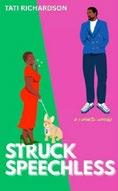
A successful Atlanta sports agent must work with the man who broke her heart a decade ago. Jackie Miles doesn’t want or need a relationship. She has great friends, a full client roster, and the best dog in the world. She also has a nemesis: rival agent Antonio Steele. Ten years ago, they spent one perfect night together in Las Vegas as he was shifting his career from NFL player to agent. The next morning, she overheard him making a suspicious phone call and left without asking him to explain—but all these years later, Antonio still considers Jackie his perfect match. The sports world is small, so if their paths cross, Jackie treats Antonio with icy professionalism. When a merger between their companies is announced, Antonio hopes that closer proximity will create
new opportunities for courting Jackie. This is the second book, after Losing Sight (2025), in Richardson’s series exploring the relationship between a woman’s personality and her senses, and after an interaction with a stranger in the vet’s office, Jackie mysteriously loses her voice. The woman, a mystical figure calling herself Mother Mary, tells Jackie, “You need to quiet your tongue and speak with your heart.” Jackie is sure she’s been hexed, but readers will understand the malady is meant to teach her to listen rather than jump to conclusions. A voiceless Jackie needs help signing a boxer hiding out at a lush Mexican resort, and their agencies send Antonio along, hoping that together they’ll be able to land the new client. Antonio and Jackie reconnect and finally resolve the long-ago events in Las Vegas, but Jackie is too prickly and independent to let her guard down for long. Richardson adeptly creates sympathetic characters in a richly layered world while maintaining a light, humorous tone. Jackie and Antonio are each fully realized adults on their own journeys, which makes their romance and happily-ever-after all the more rewarding. A terrific romance, both poignant and funny.
Ryan, Kennedy | Forever (448 pp.) | $18.99 paper | May 19, 2026 | 9781538769652
Reunited more than 10 years after their college romance ended in devastation, a couple realizes their connection is as strong as ever even as their wounds remain unhealed.
Before Verity Hill became an award-winning screenwriter and musical prodigy Wright “Monk” Bellamy became a household name, they met at a Georgia HBCU and fell in a deeper love than they ever thought possible, considering what they had each witnessed from their parents. Their
relationship only lasted a few months, but it left a lasting impact. Now they find themselves in Los Angeles working on the same film, a Harlem Renaissance biopic that was also featured in Ryan’s Reel (2024), a romance following the movie’s director and star. This story begins in the present day but flashes back to when Verity and Monk first met and follows their college relationship through its apex to its crushing end, the result of a manic episode Verity experienced before she was diagnosed with bipolar disorder—something she never explained to Monk. Now working together and with intense attraction again firing up, Verity has to decide whether she can trust Monk with her whole truth and whether a relationship would be worth the risk. Ryan knows how to put her readers’ emotions through the wringer while staying true to her characters, so the story feels realistic and never manipulative. Every moment of heartbreak rings true. Deliciously sexy scenes are deftly integrated and vital to the characters’ development, and poetic descriptions of yearning are worthy of highlighting. Verity lives at the intersection of Black, bisexual, and bipolar, and Ryan never underplays resulting hardships while also celebrating and affirming these identities. She shows that Verity deserves, and is capable of having, a serious, passionate, committed love. Incredibly romantic and deeply human.
Vejdani, Ayla | Generous Press (224 pp.) | $18.99 paper | May 26, 2026 9798998759673
Six braided Sapphic love stories find women of color looking for romance across borders, years, and the internet, among other obstacles.
After her husband’s early death, Zoya stayed
too busy to move on—until she meets Mako at a friend’s work party and there’s instant, undeniable chemistry between them. Although they share an incredible night together, they aren’t compatible long-term. After divorcing an “impotent workaholic,” Noura meets her soulmate, Luna, on a dating app, encouraged by the Greek chorus of her group chat. Ale and Paz casually dance in and out of one another’s lives for years to the beat of the New York club scene, until circumstances find them finally in the same place at the same time, settled enough to compromise. Birdie and Hava meet on a blind date and their slow burn ultimately combusts into a supernova when they discover a shared love of shibari and brat play. Maryam and Nilou’s copy shop meet-cute evolves into a love story that spans playlists, cuisine, and diasporic differences. Goli and Takaya are polar opposites, but when they get stuck in an out-oforder elevator, they’re drawn together like magnetic poles. This book is unlike any other romance. The trigger warning and land acknowledgement encourage reflection on the ways colonialism can be a barrier to vulnerable connection, and the birth chart provided for each character will resonate with astrologically minded readers. With 13 characters spanning seven entanglements of various intensities and spice levels, it’s nearly impossible not to fall in love with at least one pairing. Ideal for fans of The L Word: Generation Q and the latest iteration of Queer as Folk , this book delights in hopeful endings, even where they’re not the most traditional happily-ever-afters. The poetic language and thoughtful representation offer a smart, sexy panorama of what love can look like.

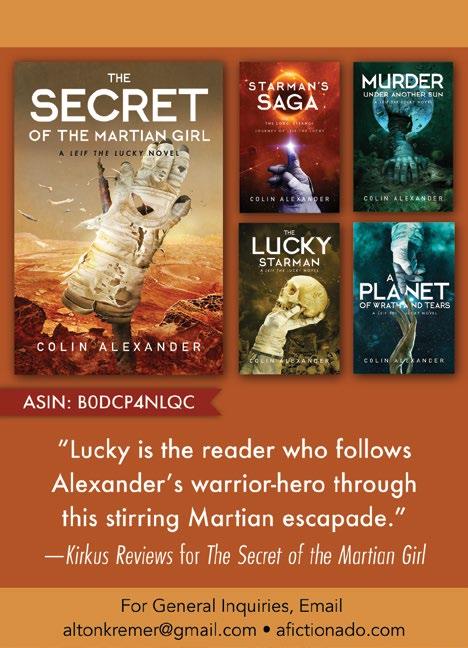

David G. Barnes
SARAH V. BARNES
Author of She Who Rides Horses
Tell us about yourself and your work. I’m both a former professional historian and former professional horsewoman, so writing historical fiction about the first person to ride a horse might not seem much of a stretch. I did not intend to write a novel, however, let alone a trilogy set 6,000 years ago on the Eurasian steppe. Instead, the idea for She Who Rides Horses arrived as a gift, much in the manner Elizabeth Gilbert describes in her book Big Magic [from 2015]. Nearly a decade ago, having abandoned my academic career in favor of working as a riding instructor, I attended a workshop given by Linda Kohanov, author of The Tao of Equus [from 2001]. The workshop explored how horses can encourage creativity and open intuitive pathways. I went simply to experience Linda’s work, not because of any ambition to become a writer. Yet when the themes, characters, and setting for She Who Rides Horses appeared as though out of the ether, I could neither resist nor refuse the offering. I felt chosen by [my characters] Naya and the red filly to be their storyteller.
The timing seemed equally providential. I was at a stage in life when I had the leisure to contemplate combining my interests in history and horses with this newly sparked passion for storytelling. At the same time, researchers were making astounding progress in understanding when and where
horses and humans embarked on the mutual project of domestication, while modern equestrians, drawing on the findings of neuroscience, could no longer ignore horses’ fundamental nature as highly intelligent sentient beings, leading to the re-evaluation of many traditional training and management practices. Meanwhile, horses involved in the burgeoning field of equine-assisted therapy and coaching were stepping forward to offer their wisdom and compassion, along with lessons in how to be better humans. What better time to be gifted with a compelling story, grounded in contemporary scientific knowledge, about the ancient and somehow sacred connection between humans and horses?
Any advice for others starting the process of independent publishing? Because She Who Rides Horses presented itself to me as a gift, I’ve mostly approached the storytelling process with joyful curiosity. Yet I also feel a sense of responsibility to render Naya’s story to the very best of my ability—hence the painstaking work of detailed research and careful crafting. My most important decision as an indie author was to seek out an experienced and sympathetic editor. My advice to others contemplating independent publishing is to trust your gift. Whatever story you’re telling, remember that the story chose you… believe in yourself as the storyteller.


Barnes, Sarah V. Lilith House Press | 278 pp. | $18.54 paper March 28, 2022 | 9781736967331
What are you working on now?
I’ve spent the past several months narrating and producing the audiobook for Book 1—definitely a labor of love. Book 3 of the trilogy is in progress. I’d be thrilled someday to see She Who Rides Horses as a limited series.
Portions of this Q&A were edited for clarity.

For a review of the book, visit Kirkus online.
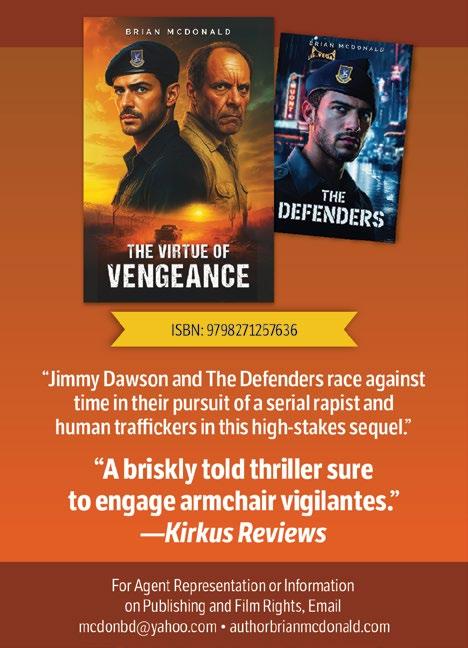
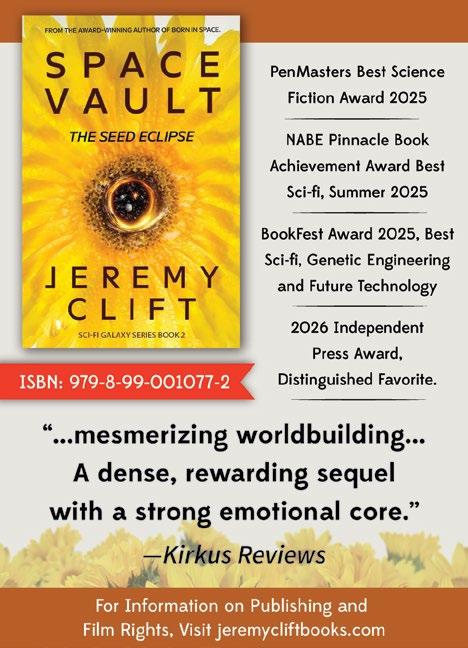
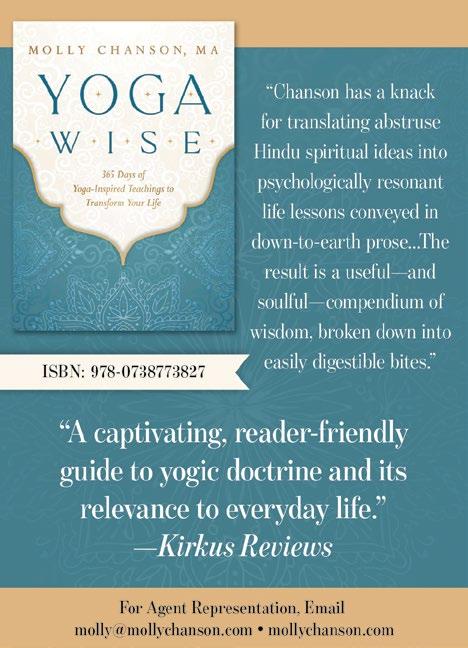
Author of What We Hold No Longer
Please tell us a little about yourself and What We Hold No Longer. Looking back, I’ve had an interest in writing since adolescence. In my early 20s, I wrote my first poem (mercifully lost) when I became infatuated with a young woman in college. Unsurprisingly, it coincided with my discovery of D.H. Lawrence and the operas of Giacomo Puccini.
I’ve always been an introvert with a deep current of spirituality—an inexplicable passion and gravitas disproportionate to my age. In my early 20s, I became an avid reader of psychoanalyst and philosopher Erich Fromm. I’ve attributed these traits to a dysfunctional family life and summers isolated on a beautiful island in the Adirondack Mountains, where anxiety and loneliness melded with the sanctuary of nature.
What made you want to write about your life?
I took up poetry when I was about 35 years old, as an adjunct to my psychotherapy and dream interpretation. However, I only dabbled in poetry for decades afterward. I entered graduate school at 36 and [started] a new career in research at 40, where I professionalized my writing skills in medical literature. It wasn’t until an existential crisis at 66 that I became a poet. On Memorial Day 2023, after months of brewing turmoil, I was drawn once again into that deep current where poems emerged spontaneously over
several months. During that period I also revised many older poems [I’d] sporadically written since the 1990s. That led to my first book, The False God’s Lullaby [from 2023].
To answer you more directly, my inner life has been an enigma. Trying to understand and reconcile conflictions is modern poetry’s fertile ground. I write primarily to understand and soothe myself. There’s a saying: “The more truthful and personal you can be as a writer, the more universal your appeal.” That has always been my guide.
What was your editing process like?
Unless a poem comes from an inexplicable deep urge, [like] when suddenly, I’m merely taking dictation, I don’t submit poems for around six months. I love editing and refining my thoughts and words. It’s a creative game of balancing lyricism, rhythm, imagery, clarity, and withholding (i.e., trusting the reader to fill the void). Very important to me is the “So what?” factor for the reader. There has to be at least a memorable phrase or stanza that “carries the weight” of the poem. That makes the poem worth reading.
What are you working on after What We Hold No Longer ?


Gedaliah, Aaron BookBaby | 100 pp. | $17.50 paper Oct. 24, 2025 | 9798317812409
I’m writing a collection of new poems under the title Ceylon Moon (https://aarongedaliah.com/). My friend, the acclaimed artist Martha Diaz, is developing the cover art. The projected publication date is autumn 2026.
Portions of this Q&A were edited for clarity.

For a review of the book, visit Kirkus online.

JOHN McMURTRIE
TWO HUNDRED AND fifty years ago, as America’s Founding Fathers were working to establish a new country, they looked to the distant past, to ancient Persia. “They were particularly impressed by the legendary emperors Cyrus, Darius, and Xerxes, whose exemplary leadership abilities they saw as a potential model for the new republic,” writes John Ghazvinian in America and Iran: A History, 1720 to the Present (Knopf, 2021). “It would be a huge exaggeration to say that Americans somehow ‘modeled’ their new republic on Persian ideals. But…this first generation of Americans— citizens of an independent United States—was prepared to cast its net far and wide in search of lessons and examples. And that even, occasionally, meant looking to Iran.”
What a difference a quarter of a millennium makes. Today, few American politicians would dare speak reverentially about the nation of Iran or its history. The same goes, of course, for the authoritarian leadership of Iran, which has long encouraged its citizens to embrace the
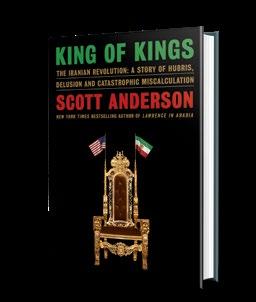

ritual chant of “Death to America.”
How did we get to this impasse? And how is it that the two countries are now at the heart of a war that has expanded into a greater regional conflict? Several recent books shed crucial light on the subject. I’d encourage anyone who wants to understand the context of the crisis to read Scott Anderson’s King of Kings: The Iranian Revolution: A Story of Hubris, Delusion and Catastrophic Miscalculation (Doubleday, 2025). Anderson is a former war correspondent, and he does a masterful job of chronicling the complex set of circumstances that led to the disastrous collapse of U.S.-Iran relations in 1979. The book is also riveting, full of characters who wouldn’t be out of

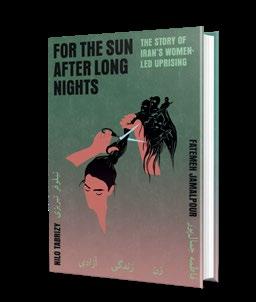
place in a thrilling novel. It won last year’s Kirkus Prize for Nonfiction.
President Trump is only the latest American leader to get caught up in Mideast crises, aptly captured in the title of Daniel E. Zoughbie’s book Kicking the Hornet’s Nest: U.S. Foreign Policy in the Middle East From Truman to Trump (Simon & Schuster, 2025). As Zoughbie reminds readers, “Donald J. Trump claimed in 2012 that Barack Obama was going to start a war with Iran in order to get reelected.” That prediction has not aged especially well.
In America’s Middle East: The Ruination of a Region (Oxford Univ., 2025), Marc Lynch writes of the dangers of Trump being “utterly uninterested in the views of ordinary Arabs” and of not seeing them “as real human beings.” He also warns of “the
costs of Trump’s relative ignorance of regional affairs, his highly distorted flow of information and his impulsive decisionmaking style.”
For decades, everyday Iranians have been simply trying to survive in a repressive, murderous regime. Iranian journalists Fatemeh Jamalpour and Nilo Tabrizy capture the struggles of feminist activists in For the Sun After Long Nights: The Story of Iran’s Women-Led Uprising (Pantheon, 2025). “The authors,” wrote our critic, “bear witness to atrocities that have been pitifully underreported, oversimplified, and misunderstood by international media.” One wonders what will become of these brave women in wartime.
John McMurtrie is the nonfiction editor.
A vicious attack on civilians. This is essential reporting about a defining atrocity of the Russo-Ukrainian War. Verini’s focus is Mariupol, Ukraine, where in March 2022, Russia bombed a theater sheltering refugees, killing as many as 200, according to credible estimates. Much like They Will Have To Die Now (2019), his book on an Iraqi city taken by ISIS, Verini’s informative interviews and no-nonsense prose bring us as close as possible to his subjects’ experiences. As ceilings and walls collapse, some survivors are knocked unconscious. Others dig through rubble in search of loved ones. A boy learns his mother has died when he spots her pink nail polish on a severed arm. After, there are mass graves and
maddening claims by zombis —the local term for those brainwashed by Vladimir Putin’s propaganda—that the bombing was a hoax. Verini’s description of the carnage is especially powerful because it’s preceded by sharp profiles of the refugees. We come to know them as students, actors, and laborers before they’re victims. In the days prior to the bombing, a refugee-physician establishes a “makeshift infirmary,” treating a pneumoniastricken baby in the theater’s spotlight booth. Working with a soldering iron and the bulbs of Christmas tree lights, a handy teen builds “crude flashlights” for refugees. A scrappy girl arrives at the theater with little more than the boxing medals she’s won. Verini

Verini, James | Simon & Schuster | 208 pp. $28 | May 19, 2026 | 9781668062203
lets us hear his subjects— Putin is “Botoks Oblychchia , ‘Botox Face,’ or simply svolota , ‘bastard’”—but doesn’t sentimentalize their bravery. Some emerged as heroes, but others “wouldn’t spare a piece of firewood for a freezing grandmother.” Summoning an almost unbearably plaintive image, he describes how before the
attack, refugees painted “children” in huge Russian letters in front and back of the building, which a Russian pilot “must have seen” as he “depressed the bomb-release button on his stick grip.”
An authoritative account of Russia’s bombing of a shelter for displaced Ukrainians.
Applegate, Christina | Little, Brown (304 pp.)
$32 | March 3, 2026 | 9780316594929
Actress Applegate doesn’t hold back in her description of a less-than-joyful life. Applegate, who starred in Married…With Children and Dead to Me, among other television shows and movies, is now in her 50s and largely confined to her bed by multiple sclerosis. Applegate grew up, she says, in a Laurel Canyon home, in Los Angeles, that was “abusive and scary and awful.” Her father left the family when she was young, her mother became addicted to heroin and involved with men who were abusive to both her and her daughter, and Applegate became the family’s main breadwinner, working on radio commercials and television shows from the time she was 5. Acting, she says, saved her, providing structure for a life that could easily have gone thoroughly off the rails and left her “dead for sure.” But readers looking for anecdotes and insights into the projects the actress worked on won’t find them here. She regards the actors with whom she shared years of work, especially those from Married…With Children , with respect and gratitude, yet she doesn’t reveal much about them, instead concentrating on the details of a long series of excruciatingly bad romantic relationships with controlling men. Much of the memoir is backed up by long, emotionally raw passages from the diaries that Applegate kept for decades, where in her adolescence she castigates herself for being “a fat blob.” Later on, she tries to convince herself that whatever man she is with at a given time is the right one for her: “The jealousy. The rage. It all stems from love, passion, fear I suppose.” This is an admirably cathartic project, with a few tiny glimmers of hope, if not one that the casual reader is likely to pick up for fun. A fierce account of pain and survival.
Apter, Jeff | Citadel/Kensington (240 pp.)
$29 | April 28, 2026 | 9780806544632
A ppreciative biography of the star-crossed, multi-octave singer. Australian music journalist and biographer Apter, no stranger to big, open landscapes, hits just the right note by casting the weather as an inspiration for Orbison’s jaw-dropping music. As Apter writes, drawing on an observation by one of Orbison’s songwriting partners, the sandy, dusty confines of small-town West Texas lie under a vast sky in which you can see a thunderstorm coming from hours away—“and that’s how he learned his composition.” Certainly, Orbison hits like “In Dreams,” “Only the Lonely,” and “Pretty Woman” build themselves up to heartbreaking crescendos, so the metaphor seems apt. Alas, Apter is also capable of groaners, as when he writes of Orbison’s less-than-distinguished career in Western films: “Roy’s acting was as wooden as the stagecoach he rode in on.” Such lapses aside, Apter does a good job of charting Orbison’s career, which, like so many, was slow to develop but then took off, thanks in at least some measure to his early friendship with the Beatles—some of whose songs, such as “All My Loving” and “Please Please Me,” have some of the qualities of an Orbison ballad. That friendship, as well as Orbison’s mutual respect for Bob Dylan, would culminate, late in the singer’s too-short life, in the formation of the superstar Traveling Wilburys. Orbison lived through many tragedies, among them the deaths of two sons in a house fire. But he also had many triumphs born of his musical admirers, perhaps especially Linda Ronstadt, whose cover of Orbison’s “Blue Bayou” is now a standard. (Other admirers, such as the Sex Pistols’ Steve Jones, seem less likely.) There’s plenty of enjoyable trivia here, including why
Orbison wore dark glasses indoors and was moved to sneak in a Beatles reference or two into his own songs. A worthy life of a musician well worth knowing more about.
Archuleta, David | Gallery Books/Simon & Schuster (304 pp.) | $29 | February 17, 2026 9781668222485
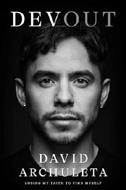
A pop sensation’s rise to fame and self-acceptance.
Archuleta was just 17 when he became the first runner-up on American Idol , Season Seven, and his struggles contending with sudden popularity, religious teachings, and his burgeoning sexuality form the nexus of this candid, inspirational memoir. Born to a Honduran salsa singer-dancer mother and a jazz musician father, Archuleta began singing after the music-loving family moved from Florida to a Salt Lake City suburb where was raised with Mormon love and instilled with the Latter-day Saint Church’s “pro-hetero, family-centric messaging.” As Archuleta struggled with body-consciousness, simmering same-sex attraction, and a bombshell accusation against his father by a family friend, singing became his passion and his escape. His demanding father took him under his wing and coached him to excel on the Star Search stage in 2003, but the notoriety and intensive parental pressure threatened to capsize his competitive edge once he began his ascent on American Idol years later. Though he failed to win, his talent and calm, collected demeanor carried him into future decades of success. Behind that celebrity, though, was dark denial of his truest self (he broke off engagements to three women; he scouted places to commit suicide). Archuleta writes with earnestness and grace, and there is evidence
throughout the book that he was torturously at odds with his religious upbringing prior to eventually coming out in 2021. Though the author came to terms with his sexuality, he still braced himself for an onslaught of negative imagery and ostracization from his church, as well as a segment of the fan base that made him a household name. Liberating himself from the strictures of the church, Archuleta pivoted in a different direction, one that would fulfill his truest desires and free his mind of confusion and misdirection. It’s been an eventful journey for him, and he celebrates it with free will and a search for true love.
A spirited self-portrait celebrating identity, found family, and unconditional acceptance.
Paul Celan: A Life
Arno, Anna | Trans. by Soren Gauger Belknap/Harvard Univ. (416 pp.) | $35 June 9, 2026 | 9780674298637
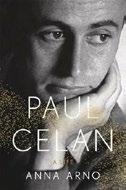
Sensitive portrayal of the magisterial poet and Holocaust survivor. Paul Celan— his pseudonym an anagram of Ancel, a “Romanized version of Antschel,” his family name—was born in a place that, writes biographer Arno, no longer exists, “and not only because any place changes after decades.” Chernivtsi’s buildings still stand in the Ukrainian town, “stunted by decades of Soviet rule,” but its people are different. Gone are the Jews, gone
are the German-speaking burghers. Celan’s family died at Nazi hands, but he himself managed to survive as an enslaved laborer, miraculously escaping deportation and death. Though the town was Romanian-speaking and though he knew many languages (including English, translating Shakespeare), he was foremost a speaker of and writer in German. That would not change even after the war, when his mature poetry began to appear while he lived in self-imposed exile in Paris. Although an immigration official “doubted if publishing poems in German was a suitable pastime for an assimilated French writer,” Celan attempted to reclaim the language from the years of totalitarianism, even though the “tongue of his mother ( Muttersprache) was also that of her murderers ( Mördersprache).” He also worked to strip the language to the bone, striving to communicate with absolute clarity while lamenting that German readers “preferred to see the poems as…difficult, encrypted, surreal, and so forth.” As Arno chronicles, Celan was well-known and praised, and he engaged with the likes of Jacques Derrida, Martin Heidegger, and René Char. Yet, he was psychically shattered. And one particularly malicious literary feud, as well as a growing paranoia and a very real awareness of the persistence of antisemitism, helped push him over the edge: In 1970, at age 49, he drowned himself in the Seine after underlining a passage in a biography of Friedrich Hölderlin: “Sometimes this genius goes dark and sinks down into the bitter well of his heart.”
A thoughtful, well-crafted life of a man once hailed as the “greatest living poet in the German language.”
Ausubel, Ramona | Tin House (288 pp.) $20 | April 14, 2026 | 9781963108712
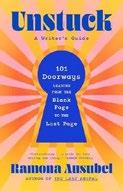
How to write with joy. Drawing on her experiences as a writer (three novels and two collections of short stories), a writing teacher, and an MFA student, Ausubel offers an upbeat guide to navigating the writing process, from inspiration to finished product. Structured in four sections (beginning, continuing, gaining perspective, and moving on), the book contains 101 mini essays that she calls doorways, each followed by an exercise she calls a key. Filled with anecdotes, memories, and musings, her doorways open onto problems common to any writer, from how to get started to how to ward off envy; keys are prompts that invite the writer to do something specific (make a list of potential draft buddies, take a walk) or think (about stories within everyday objects, for example). Often, a key invites self-reflection: “Ask yourself, Am I present? Am I trying to be someone else? What about this idea is genuinely interesting to me? Put your best self at the center of the piece,” Ausubel advises. “Write toward the questions and curiosities in your own voice.” Although she aims to include writers of essays and poetry, most of the advice seems most applicable to fiction. In developing a character, she suggests writing a portrait of that character in objects or writing a letter to you, from a character. She disabuses writers of the idea that a narrative needs to be developed linearly: “Writing a novel is inside out and upside down and it’s dark all the time and what you put on the page first is almost definitely not the beginning.” She’s a cheerleader for risk-taking: “Risk sentimentality. Risk pornography. Risk excess.” Warmhearted and practical, Ausubel emerges as trustworthy companion
for a writer who’s stuck anywhere on the challenging road of creativity. Generous, empathetic, and unfailingly encouraging.
The Plunge: Maverick Swimmers, an Unlikely Quest, and the Transformative Power of Cold Water
Ballard, Chris | Simon & Schuster (320 pp.)
$30 | June 9, 2026 | 9781668055861
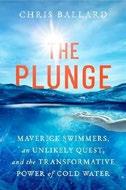
A sports writer encounters the warm community of ice swimmers.
A mediocre swimmer and no fan of frigid temperatures, Sports Illustrated writer Ballard nevertheless accepted the challenge of an editor to explore the increasingly popular phenomenon among health enthusiasts of the cold-water plunge. Celebrities and athletes like Dwayne Johnson, Joe Rogan, Lady Gaga, and LeBron James have popularized the idea that sitting in ice water is a boon to health, calming inflamed muscles, joints, and nerves as well as, not incidentally, improving mental health. Ballard quickly found plenty of scientific research backing these claims and offering explanations for the physiological benefits that result from the body’s autonomic response to the shock of extreme cold, as well as for the psychological boost from endorphins released under “positive stress.” The author did not expect to find, let alone join, a tight community of men and women who enjoy the challenge of not only sitting in freezing water, but also swimming in it, in open water, in winter, all over the world, from Coney Island to the Arctic Circle. “[C]ombine swimming and cold, and do it with others, out in nature?” Ballard muses. “Therein lies the sweet spot. There, you get it all: endorphins, adrenaline, camaraderie, and awe, creating what renowned open-water swimmer Lynne Cox has called, ‘an acute awareness of
your life in the moment.’” As Ballard readies himself to attempt a long-distance swim in frigid Boston Harbor, he also follows the progress of an Israeli-born South African businessman to bring ice swimming to the Olympics as potentially the first sport to be offered in both the summer and winter games. The swimmers include Olympians, Paralympians, and, mostly, just plain folks, and being a talented sports writer, Ballard has us cheering for them all. Loads of vicarious chills and thrills.
Beard, Mary | Univ. of Chicago (184 pp.) $22.50 | May 20, 2026 | 9780226834245
“What is the point of the ancient classics?” asks the noted scholar and popularizer. Someone who taught ancient Greek and Roman culture at Cambridge for 50 years isn’t going to say there is no point, but Beard is quick to assure readers, in the breezy tone familiar from her television work, that she will make her case “without resorting to the tired clichés often used.” She doesn’t necessarily think the classics are “good for you” or impart “timeless truths.” What first sparked her interest was a 4,000-year-old piece of Egyptian bread at the British Museum that a kind curator took out of its case and held at eye level, so that 5-year-old Mary could see it up close; she still recalls the thrill of “an ordinary fragment of everyday life made by, and for, people who were unimaginably distant from me.” That sense of both nearness and distance is a through line in Beard’s short text, based on lectures she gave at the universities of Chicago and Edinburgh. Yes, classical literature still speaks to us of common, human emotions, but the world limned in, for example, the Iliad and the Aeneid is one in which slavery is a given, women have minimal rights,
and violence is glorified, she reminds us; those pristine, marble statues praised by 19th-century classicists were originally painted in bright colors, and ancient Greeks and Romans weren’t monolithically white either. The ancients lived in a multicultural world and grappled with issues of free speech, good government, and many others still debated today. As is often the case in academic texts, there’s a lot of “on the one hand, on the other hand” here, but that’s Beard’s point. “Classics teaches you to discuss constructively questions to which there are no right answers,” she argues. “Part of the unashamed mission of humanities education is to celebrate and face up to complexity.”
A passionate defense particularly notable for its bracing lack of old fogeyism.
Beckerman, Gal | Crown (208 pp.) | $19 paper | April 21, 2026 | 9798217089215
A Rules for Radicals for our time. Atlantic staff writer Beckerman opens with one of the best known of Josef Stalin’s literary victims: the poet Osip Mandelstam, who composed a poem so dangerous that he did not write it down. Yet, once he had recited the poem to a few people, the authorities descended, asking what his purpose was in his composition: “He wrote it, he said, because he hated fascism, hated it more than anything else; it was as simple as that.” Well, it’s clear that fascism hasn’t gone away, and contesting it requires Mandelstam’s clarity—arrived at, Beckerman suggests, by addressing the question, “Can I live with myself?” That question, he adds, “is what makes a dissident a dissident,” someone whose beliefs accord with their actions. It’s not an easy thing to do or be: Having
to make one’s own choices, to elect to be free, is harder work than having someone decide for you. Beckerman then offers a series of mantras, some of which might seem contradictory on the face: “Be Pessimistic” doesn’t immediately square with “Be Funny.” Yet, as he notes, pessimism doesn’t equate to fatalism (the resigned certainty that things not only can but will get worse), and the aim of being funny is to lampoon those in power (fascists being notoriously without a sense of humor). Beckerman also writes, pointedly, that fascists gain authority not simply by violence or the threat of it, but also by coopting culture—by, let’s just say, cowing comedians and placing fellow travelers at the helm of news programs. More, Beckerman makes an important distinction that’s worth remembering: The point of dissent is to insist on a society worth living in and a government worth living under, one that obeys its own laws—and to believe, if such things have been damaged beyond repair, “that you can always begin again.”
A well-reasoned set of prescriptions for building a better future.
Bertinelli , Valerie | Harper Wave (240 pp.)
$29.99 | March 10, 2026 | 9780063429086
A book that urges selfacceptance in the face of adversity.
Actor Bertinelli (One Day at a Time, Touched by an Angel ) previously shared her life story in a memoir, Enough Already (2022). Her latest book is less autobiography and more self-help, a collection of her thoughts on aging and everything— good and bad—that comes with it. She begins by reflecting on a downturn in her life: “My second marriage was over and proceeding through the
“Every day was a boxing lesson in which I felt like I was the punching bag.”
GETTING NAKED
cesspool of legalese that results in divorce. Every day was a boxing lesson in which I felt like I was the punching bag. My Emmy-winning cooking series was canceled.” The following chapters detail her journey to self-acceptance, with recollections including her first hot flash (She “felt like a slab of meat on the grill at El Pollo Loco”) and having her breast implants removed, which led to scary infection. One lovely chapter describes an impromptu skinny-dipping session at her home: “Tonight, I flippered through the water and felt…good…. What a revelation. To be comfortable in my own skin.” She writes about her former obsession with her weight—she was a spokesperson for Jenny Craig, a decision she now seems to regret, writing, “I look back now and cringe when I think about being part of the obsessed diet culture and industry. I probably did more harm than good.” Bertinelli is refreshingly open in this book: She owns up to her past vanity and writes candidly about topics, including menopause, divorce, and her experience as a survivor of child sexual abuse. She is delightfully self- deprecating, at one point acknowledging straying from her point: “Why did I get on this tangent? It’s just me. I go on tangents. I could open a store, Tangents-R-Me.” But there’s no self-hatred here: It’s all love, acceptance, and internal beauty. Hopeful, sweet, and very charming.

For more memoirs and biographies,
Ed. by Bhanot, Kavita & Jeremy Tiang HarperVia (336 pp.) | $18.99 paper May 19, 2026 | 9780063321229
Translation and transgression.
“It’s hard to explain what it’s like to live in the shadow of English, looking up from south of the equator.” So writes author and translator Bruna Dantas Lobato in the foreword of this remarkably diverse collection of essays on the challenges of reading and writing outside the Anglophone world. Contributors from South America, Africa, and Asia reflect on how, as Kaiama L. Glover writes, we can “present non-Western culture to the West…without betraying that culture in the process.” One answer is to foster knowledge shorn of condescension of exoticism. Another answer is to challenge old, colonial commands of power and control. And yet another answer is simply to say that some things are just untranslatable, that English should not be the marker of literary success. This is less a volume about how to translate or about the practicalities of language crossing than it is a cry of dispossession. Some readers may welcome learning about Arabic, or Ethiopian, or Haitian, or Welsh literature and may seek out books for global journeys. Other readers may bristle at the sentiment behind claims to “dismantle the patriarchal canon” or the assertion that “Western poets kidnap your poems and call them translations.” Why
cling, one writer asks, “to the narrative of the white-saviour literary scholar who does all of us a favour and reads us, translates us, interprets us?” This is a book more for university scholars than for casual readers. And yet, if such browsers open its cover, they will find an international collection of writers and thinkers who may shake them from complacency and confidence.
A bold collection of essays on the power politics of translating global literature into English.
Kirkus Star
Patriarch: The
Brands, H.W. | Doubleday (640 pp.) $40 | May 12, 2026 | 9780385551557

The prolific historian takes on the first among equals of the Founding Fathers. One might think that there’s not much more one can say about George Washington than has already been said in a mountain of books. Well-known historian Brands adds materially to the literature by starting on an anthropological note, painting a portrait not just of Washington, but also of the world he was born into. Washington’s ancestors, perhaps ironically, wound up in Virginia for siding with the crown in the English Civil War, and though going abroad constituted a kind of exile, they became wealthy, landed gentry, a class that “had far more land than they could work themselves. Anyway, they considered physical labor demeaning.” The solution was the purchase of enslaved people to work those lands—a matter that would gnaw at Washington for the rest of his life. “I can only say that there is not a man living who wishes more sincerely than I do to see a plan adopted for the abolition of it,” he wrote soon after retiring from command during the Revolutionary War.
But all the same, he continued to be an enslaver and, indeed, took pains that those in his servitude could not escape while he was in residence in abolitionist-inclined Philadelphia, then the capital. “The president preferred that the public see him as an enlightened slaveholder,” Brand writes, though that supposed enlightenment required subterfuge. Brands is also strong on the tangled relations of the new republic with Indigenous peoples and with the European powers, with Washington’s famous utterance that “It is our true policy to steer clear of permanent alliances with any portion of the foreign world.” For all his contradictions, Brand writes, Washington was a born soldier who came along at exactly the right moment, a timeliness by virtue of which, the author concludes, “he gained a timeless reputation.”
The one biography of Washington to read in this semiquicentennial year.
Bydlowska, Jowita | Steerforth (288 pp.) $19.95 paper | March 31, 2026 9781586424244
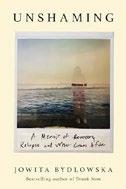
A n author documents the depth of her addiction and relapses. Bydlowska became a selfproclaimed “mid-list author” with her book Drunk Mom (2013), which chronicled her journey to sobriety as a young mother. Her latest memoir opens with a vivid description of a biking accident that occurred while she was secretly drunk. The accident was a result of a relapse during the Covid-19 pandemic, one of at least 20 relapses she’s had throughout her life. To help pay for the dental surgery she needed after crashing into a wall, she started a GoFundMe campaign for which she lied and claimed that her injuries were the results of a series of bad decisions rather than an end to her sobriety. As the
author of a memoir about sobriety, she felt deep shame about the “optics” of relapsing. “Most addicts, unlike me, haven’t told the entire world of their sobriety, and then published a book about it,” she writes. Recounting the GoFundMe campaign led her to examine the many other sources of shame that continued to affect her, including her feelings about dating a man who cheated on her and her shame about failing her son. These feelings, she says, were the root cause of her frequent relapses. Eventually, it was her ability to confess her shame in an online Alcoholics Anonymous meeting that put her back on the path to sobriety. Bydlowska’s confessional tone and trenchant self-reflection make the memoir an excellent read. The author’s use of footnotes and meandering style can sometimes make the plot difficult to follow, but, overall, this is a page-turner that’s full of vulnerability and heart. A poignant memoir about addiction, shame, and recovery.
Carlson-Hijuelos, Lori with Oscar Hijuelos Regalo Press (184 pp.) | $30 | May 12, 2026 9798888451786
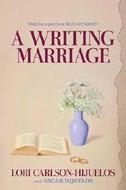
After Oscar. Novelist, editor, and translator Carlson-Hijuelos reflects on life with her late husband, Oscar Hijuelos, who died of a heart attack at age 62 in 2013. The son of Cuban immigrants, Hijuelos catapulted to fame after the publication of his first novel, The Mambo Kings Play Songs of Love (1989). The first Latino to win a Pulitzer Prize for Fiction, he was hailed as a major novelist. Dating since 1989, just as he became a literary star, and married in 1998, the couple shared a commitment both to writing and to Spanish language and culture. With a graduate degree in Latin American literature, Carlson-Hijuelos brought to their relationship a deep cognizance of
“the Latino element of our society,” which was “reflected in our private life, our friendships, our cuisine at home, and our appreciation of Spanish art and literature and the motherland herself, Spain.” When faced with stress, their creative work “always put us back on track any time we were a little shaky.” Both found consolation in religion: She grew up Lutheran, with a mother who taught Sunday school and a father who served on the church council; he grew up Catholic, with an attraction to Buddhism deepened after treks in Tibet and Nepal. Threaded throughout her memoir, the author includes excerpts from Hijuelos’ last unpublished novel, Blue Antiquity, whose fictional protagonist, Victor Mercado, reveals much about Hijuelos’ philosophical and spiritual development: “The cultural upbringing, hobbies, avocations, passions, and beliefs of Mercado and Oscar are virtually the same.” Drawing on the novel and her memories, the author paints a portrait of a generous, playful, ebullient man and a kind and loving husband. Carlson-Hijuelos’ memoir is a tribute to this man and a valediction to their marriage. A tender celebration of a shared literary life.
The Impossible Factory: The Remarkable True Story of Kelly Johnson and the Lockheed Skunk Works, America’s Innovation Machine
Dean, Josh | Dutton (496 pp.) | $35 May 19, 2026 | 9781524745516
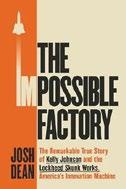
A n engaging life of an inventor and aviation pioneer with an astonishing, if littleknown, roster of accomplishments.
Kelly Johnson rarely sought publicity for himself, and, though not shy of accepting awards—his favorite being a Daniel Guggenheim medal “because it was for art and design”— he
wasn’t a self-promoter. Yet, writes journalist Dean, no fewer than 40 aircraft had their origins on Johnson’s drawing board. Born at the dawn of aviation, Johnson was an ardent reader of books about science and engineering, bent, as he later put it, on being “like Tom Swift.” Later, he took on the works of Albert Einstein, intending to be one of the first people to understand them. Those around him recognized both Johnson’s genius and drivenness, including a flight instructor refusing to take money for instruction and instead telling Johnson to spend the fee on college. Johnson then went to California to take a job with the firm the brothers Loughead, later simplified to Lockheed, founded before going bankrupt. He started in the reborn company as “an eighty-threedollar-per-month tool designer,” though, as Dean notes, Johnson and his colleagues were “Swiss Army knives” who could do anything. In time, Johnson led the “Skunk Works,” becoming an adept at new technologies—such as the wind tunnel and, in his spare time, streamlining a car that would win the Indy 500. He also came into the orbit of the aviation heroes of the time, among them Amelia Earhart and Wiley Post. Johnson’s Lockheed came into its own in World War II, with him designing a range of warplanes. After the war ended, the company was bound up with the defense industry, although Johnson tried constantly to defeat the bureaucracy while coming up with things, like the U-2 spy plane and the stealth bomber.
A key figure in the annals of aviation technology, Johnson well merits this detail-packed life.
Jefferson’s Wolf: A
Dierksheide, Christa and Nicholas Guyatt Belknap/Harvard Univ. (272 pp.) | $29.95 May 5, 2026 | 9780674278325
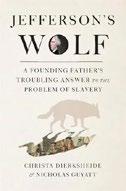
A closely argued study of Thomas Jefferson’s complex relationship to the institution of slavery. Even at the time of the Declaration of Independence, write historians Dierksheide and Guyatt, “many Americans had a more expansive sense of ‘all men are created equal’ than the phrase’s author.” By their account, Jefferson was neither for or against slavery as such but instead an advocate of “antislavery exclusion,” the view that Blacks and whites could not coexist, especially after the injuries wrought by enslavement, and that manumitted people had to be deported—perhaps to a Black Caribbean cordoned off from the U.S., perhaps to Africa. Jefferson, like many slaveholders in the colonies and early Republic, had an understandable fear of slave revolts, among them those abetted by the British crown. His view that emancipating enslaved people would pose a danger to white Americans is less understandable, though it gave rise to the wolf metaphor of the title: “We have the wolf by the ear, and we can neither hold him, nor safely let him go.” Toward the end of his life, the authors note, Jefferson even rationalized “diffusion” of enslaved people throughout the new territories to the west, limiting concentrated populations of Blacks in the hope of averting uprisings. (Congress settled instead on a
Jefferson had a fear of slave revolts, among them those abetted by the British crown.
JEFFERSON’S WOLF
division of new territories into free and slaveholding entities.) Ironically, while he advocated liberty for all in theory and argued against new importations from Africa, he also worked hard to preserve his own ownership of enslaved people while still advancing his program of “emancipation paired with racial removal.” Of course, there was no end to the hypocrisy of the situation: As the authors also observe, Jefferson petitioned the Virginia legislature for the right of his mixed-race sons to remain in their home state following his death rather than suffering deportment.
A nuanced history of the giant mote in the eye of the great thinker and revolutionary.
How the Trump Administration Shredded
Enrich, Nicholas | Summit (240 pp.) $29 | April 14, 2026 | 9781668226957

A righteously aggrieved account of the destruction of one of America’s best ideas. The United States Agency for International Development (USAID) was the brainchild of foreign-policy experts in the Kennedy administration, a teachsomeone-to-fish extension of humanitarian aid that was a friendly, soft projection of American power. U.S. Secretary of State Marco Rubio, as a former U.S. senator, was a “stalwart supporter of USAID,” writes former employee Enrich. Even the authors of the right-wing Project 2025 operating manual “recognized the critical value of the agency.” Yet Elon Musk and his Department of Government Efficiency (DOGE) cohort put USAID in their sights, with Musk tweeting that it was “a viper’s nest of radical-left Marxists who hate America,” as did “influential crusader” Mike Benz, who deemed the agency “a manipulative tool of the ‘deep
state’ to spread a system of international censorship.” One might hazard a guess that the agency was put on the chopping block because it aided the developing world, but, as Enrich notes, in doing so, it also benefited Americans: A people delivered from famine might think well of their benefactor, and helping control the outbreak of diseases such as Ebola “makes us safer here at home”—and all at the per-capita annual cost to Americans of just $24. No matter— when DOGE landed, an early demand was to cease shipping medicine and food, even if it was already in transit. That happened, and when a judge ordered continued funding, the Trump administration ignored it. After Enrich leaked documentation of these cuts— “to expose the administration’s lies, cruelty, and recklessness”—he was terminated. “The story of USAID’s destruction is important because saving lives matters, but also as a symbol of where this administration was heading,” he argues. In a foreword to the book, Atul Gawande, the former assistant administrator for global health at USAID, writes that the shutdown of the agency “has already killed at least three-quarters of a million people, most of them children.”
Strong testimony to Trump White House cuts that have exacted a “heartbreaking human toll.”
Erdozain, Dominic | Crown (256 pp.) $30 | June 2, 2026 | 9798217087174
The dangerous appeal of falsehoods cloaked in the flag. Erdozain (author of the acclaimed One Nation Under Guns, 2024) pens a concise, intelligent analysis of overweening patriotism’s ill effects. Of the Founding Fathers, John Adams alone grasped the peril of believing in a “special
providence for Americans.” Not coincidentally, he and his son, John Quincy Adams, were the only opponents of slavery elected president before 1860. Erdozain is particularly sharp on Abraham Lincoln, showing how his interpretation of patriotism fortified the American “myth of redemptive violence.” Contrary to abolitionists, Northern journalists, and advisers arguing that Southern states should be allowed to secede without a war, Lincoln prioritized preserving the Union. When the Confederacy captured South Carolina’s Fort Sumter, he opted against measures that might have cooled tensions, Erdozain writes. The escalating standoff “provided a lightning rod for patriotic rage and the larger goal of reunion.” Opponents of the war “had been played” by the president. Erdozain’s Progressive Era heroine is Jane Addams, who sought to imbue patriotism with internationalism and establish the U.S. as “a peace nation.” During the Cold War, this mantle was taken up by Martin Luther King Jr., whose landmark anti-Vietnam War speech—called “facile” by The New York Times —showed that “he loved his country and saw criticism as an expression of that love.” It would presumably pain Addams and King to learn that today, per Erdozain, America’s yearly contribution to the United Nations equals “a mere seven hours of Pentagon spending.” The book’s epigraph, which cites Molly Ivins’ paean to “apple-cart upsetters and plain old mumpish eccentrics who just didn’t want to be like everybody else,” raises hopes that Erdozain intends to introduce readers to unjustly obscure figures. If that seldom happens, it doesn’t make his conclusions any less righteous.
A knowledgeable history of what’s lost when willful blindness dominates our politics.

Kirkus Star
Feiler, Bruce | Penguin Press (368 pp.) $30 | May 19, 2026 | 9780593656433
How rituals old and new can ease life’s transitions.
The peppy, hopeful latest by journalist Feiler (The Search, 2023) finds the journalist hopscotching around the globe in search of both ancient rituals and newly created ones designed to help people weather changes, including birth, coming of age, marriage, and death. Among the ancient ones are the complicated, two-decade-long negotiation of how much a groom’s family should pay the bride’s in South Africa, a tooth-grinding ceremony in Bali, and a placental burial ceremony on Easter Island. Among the more recently created ones are Taylor Swift-themed divorce parties, gatherings to honor pregnancy loss, and ceremonies connecting parents with the children they have given up for adoption. Ever game and ever entertaining, Feiler throws himself into experiences, including a sauna/cold plunge in Denmark that left him “blue and rueful”; an encounter with a shaman in Chile; and a ritual bath (mikveh) in Newton, Massachusetts. His accounts are detailed and respectful, though occasionally laced with humor: His evocation of a day spent running from one Las Vegas wedding to the next and another where he attended three Irish wakes are surprisingly giddy. But that humor, never mean-spirited, is more often directed to himself than his subjects.
Feiler convincingly makes the case that “rituals are the single most effective tool in holding any community together” and that “every life ritual is invented, reinvented, improvised, plagiarized, forged in crisis, modified in real time.” Finally coming out in favor of “DIY, micro, third-space rituals,” rather than more formal, institutional ones, he gently encourages readers to join with others in creating rituals that will serve to get them through hard times.
An inspiring and thought-provoking look at how ceremony helps us thrive.
Ferrer, Sean Hepburn & Wendy Holden Grand Central Publishing (304 pp.) $30 April 7, 2026 | 9781538775073
One of Audrey Hepburn’s sons pays tribute to his mother. Hepburn’s image was once so ubiquitous that film producer Ferrer, now in his 60s, says that “while I was traveling with my children, we used to play a game titled ‘three minutes to find Granny.’” Despite that ubiquity, Ferrer’s agent told him that, while many books had been written about her, “There is yet to be the authorized biography.” With the help of British author Holden, Ferrer has written this work, a linear biography that covers the major events of Hepburn’s life. He mentions her father abandoning the family in the 1930s when she was a little girl in Belgium; her jettisoned dreams of becoming a ballet dancer; her family’s years in Holland under Nazi occupation;
In search of ancient and new rituals designed to help people weather changes. A TIME TO GATHER
her lifelong identification with Anne Frank, who, like Hepburn, was born in 1929; and her legendary film career. Ferrer’s hagiographic portrait of his mother celebrates her kindnesses and charitable actions, a doting mom who not only hated being away from her children, but was also praised for her work as a UNICEF ambassador, with late-life visits to Sudan, Somalia, Ethiopia, and elsewhere. The men in her life, however, had plenty of flaws. Ferrer’s father, Mel Ferrer, whom Hepburn divorced after 13 years, was a “neurotic perfectionist” and “painfully aware that his career was never as successful as hers.” Her second husband, Italian psychologist Andrea Dotti, liked to drink, “and when he did, he lost all resistance to other women.”
Her partner in her final years, Rob Wolders, “was adorable but a doormat.” All of this may be true, but the one-sidedness of the narrative might make some readers question its veracity. The book is pleasant enough, though, and Ferrer shares details that only a son would know, such as that Hepburn’s Best Actress Oscar for Roman Holiday “propped up books on our shelf like any other ornament.”
A genial if lopsided portrait of a cinema icon.
Frattino, Andre | Illus. by Yasmin FloresMontañez | Top Shelf Productions (184 pp.) $19.99 paper | June 2, 2026 | 9781603095921
Children escape Fidel Castro’s Cuba. A young girl eagerly accepts a copy of Vogue from her doting father; a bespectacled boy forms a romantic friendship with a male classmate while dreaming of attending art school abroad; teenage sweethearts navigate their families’ class divide; a nightclub musician cares for his young son. Castro is about to come to power, and a year and half passes as his regime takes hold. Material goods are scarce, education is restricted, neighbors turn against neighbors, and families are
pressured to send their teenagers into the military or rural education service. Meanwhile, in Florida, one heroic priest is planning an exodus, Operation Pedro Pan, to help children and teenagers escape Castro’s Cuba and find refuge in the United States. Frattino’s story is comfortably methodical—establishing characters in crisis, building to conflict, and resolving things fairly neatly with moving sacrifices made along the way. This straightforward narrative melds well with Montanez’s classic comic-book cartooning: charmingly retro in color and character appearance. But while the comic-book tone produces a satisfying story, it also puts the reader at a remove from the societal crisis at its core.
Historical context exists primarily as a force pushing on the story’s plotlines, and Castro looms as a boogeyman rather than a painful reality. Perhaps the most effective and chilling scene is when the nightclub guitarist dreams of his young son in military uniform, sporting an eerily comedic Castro beard—but these visceral moments of existential terror are often superseded by procedural drama and character simplification. Aiming to be both an engaging reading experience and a synopsis of historical events, the book stumbles somewhat on both counts. A dramatized consideration of a complex, thorny history.
Frisby, Dominic | Pegasus (288 pp.)
$29.95 | May 5, 2026 | 9798897100996
A grab-bag of facts and figures on humankind’s favorite metal.
Gold, writes Frisby, is the definitive currency: “I hand you a gold coin; its value is immediately transferred from me to you.” This differs from the standard currencies of the world—the euro, dollar, yuan, and so forth—in being a tangible item, as opposed to an abstraction of fiat, backed
by law and governmental decrees. Gold is universal, recognized for its value just about everywhere, whereas those fiat currencies can be created at no cost to the issuer, allowing for uncontrolled growth, deficit, and debt. Frisby, writing from Britain, backs up this observation with data from that economy: If wages matched house prices in London, he argues, “well, there isn’t enough space on the page to print the zeros,” and while house prices have risen by 71 times over the last half-century, fiat wages have risen only threefold. Were gold backing the currency, by his account, then prices and wages would be in closer step. In a libertarian mode, he concludes, “The money’s worth has been eroded not by time, but by government.” His book is full of useful material, though it’s a bit of a data dump: On one page, he recounts that gold is older than Earth, on another the fact that gold futures are the “second-most heavily traded asset in the world”—here he explains the workings of cryptocurrency (he’s in favor of it), there the intricacies of the postwar Bretton Woods international monetary agreement and the eventual drift away from the gold standard. The reader may suffer a bit of whiplash, and, all in all, the title notwithstanding, there aren’t many secrets revealed, but that and the sometimes careening organization doesn’t diminish the overall value of the book. A bit scattered, but with a lode of good information.
Glaude Jr., Eddie S. | Crown (288 pp.)
$30 | May 26, 2026 | 9780593239803
A meditation on race and racism in America and its 250th year. Should Black people celebrate the semiquicentennial? Let’s look, as Princeton historian Glaude does, at the bicentennial and a contemporary panel discussion with Joseph H. Jackson,
president of the National Baptist Convention; National Urban League leader Vernon Jordan; and historian Lerone Bennett Jr. “Black people had to lay claim to the country and to the cause of freedom that it represents,” argued Jackson, while Jordan counseled participation only to remind white people that Blacks are and have been central to American history. Only Bennett opposed the celebration outright, holding that “the country had failed Black people.” The question endures, and there’s no question but that Glaude agrees with the last view, opening, memorably: “I do not love America, and never have, especially now.”
The “especially now” part is central, for, by his account, in Donald Trump’s America, whites have “declared that the country belongs to them,” as manifested by the war against DEI, racial considerations in college admissions, and social services. The “America, U.S.A.” of Glaude’s title, echoing John Dos Passos, is a place of fear and hatred, of violence, of racism as policy, ruled by madness and a Praetorian Guard—the United States Immigration and Customs Enforcement (ICE)—that “is charged to help make America white again.” But so, Glaude suggests, it has always been, as he invokes images of huge Klan marches in America’s capital and decries John F. Kennedy for rejecting Martin Luther King Jr.’s proposed “Second Emancipation Proclamation outlawing segregation, one hundred years after Lincoln’s.” As Glaude writes, Kennedy did not do so for fear of offending white Southern voters, who in any event revealed their true colors by turning to the Republican Party and, now, to MAGA. So, celebrate? No, writes Glaude. Instead, “we must all be freedom-seekers, haunting the past for resources to live unshackled from the lies that bind our feet.”
A charged renunciation of American unfreedom that could not be timelier.

Godwin, Gail | Bloomsbury (224 pp.)
$25.99 | June 9, 2026 | 9781639738748
A prolific writer puts her formative years in conversation with the current political climate.
Just before marrying her first husband, Godwin and a crowd of colleagues covered the choreographed, post-election meeting between President-elect John F. Kennedy and his defeated opponent, Richard Nixon. By the time Kennedy was shot in 1963, the author had left her marriage and moved to London to work for the U.S. Embassy’s Travel Service. In this memoir, she reminisces about those years living abroad—her work, friendships, another engagement, and a second marriage—and fuses them with the mortification and angst she felt leading up to the 2024 presidential election. Trained in Godwin’s crosshairs are not the particulars of policies, but rather the loss of decorum and the weight of the law—so alien from the handshakes and performed civility that she had witnessed after Kennedy won an election fraught with its own fraud theories. The author’s chapters on her recent years show her engaged in her lifelong practice of building a story—committing to it and finding its intention and urgency. Relatively unadorned, they generate a blunt portrait that prompts almost existential hand-wringing. Yet, these sections feel unmoored from their counterpoint in Godwin’s escape to and return from London in the 1960s, obscuring the “understory to [her] history” that she teases in the preface. The synthesis that she discerns is thinned by details of workers and caretakers visiting her home in Woodstock, New York; cataloguings of outrageous news headlines of Donald Trump’s criminal prosecution and indictment; and extensive quotes from blogs, debate transcripts, and Washington Post comment sections. Instead, the reader
finds anchor in the arc of Godwin’s inching herself back from London, toward the Iowa Writers’ Workshop, the mentorship of Kurt Vonnegut, and what turned out to be an illustrative career. A slightly scattered but still noteworthy and perceptive retrospective.
Harig, Bob | St. Martin’s (304 pp.)
$30 | May 5, 2026 | 9781250378712

Who’s the best?
Harig’s third book on Tiger Woods brings Jack Nicklaus into the picture as he explores whom he thinks is the best. He begins by covering Woods’ early years and his meeting Nicklaus at a golf event. Not surprisingly, the older golfer was impressed with the young man’s game. Harig then recounts Nicklaus’ famous Masters Tournament win in 1986, his 18th major. When Woods played in his second Masters as an amateur, comparisons to Nicklaus started growing, yet everyone thought it was “foolish” to think he could match Nicklaus’ record of major wins. Both had success at the amateur and college level, but Woods performed better and quicker after turning pro, winning in his fifth start. He was the youngest player to win the Masters— by 12 shots. At the end of his first year, he had six wins to Nicklaus’ three. Both won a major in their first year. After Woods won three more times, “Tiger Mania” was born. The young golfer had eight majors in his first six years as a pro. Harig also discusses the careers and major wins of Walter Hagen, Bobby Jones, and Ben Hogan, of being in awe of the number of times they had multiple wins in a season and of how often they won by multiple shots. He delves into, too, how each of them intimidated other players with their impressive skills. Woods accomplished his amazing “Tiger Slam,” holding all four majors at the
Himmel, Eric | Abrams (400 pp.)
$35 | April 14, 2026 | 9781419777257
Capturing nature’s bounty. In this dazzling coffee-table book, sculptor and publisher Himmel, co-author of The Beautiful Brain: The Drawings of Santiago Ramon y Cajal (2017), has assembled more than 300 illustrations from a “golden age” of illustrated, natural history books. Readers who prefer to browse the beautiful reproductions will not regret the experience, but they should pay attention to the extensive, opinionated, often amusing captions that can extend to a page or more. Illustrations and text depict the natural world with a modest emphasis on birds and bugs. Himmel reminds readers that artists had to make a living. The wealthy had long been patrons, but by the 18th century, international commerce, imperialism, and the scientific revolution had expanded the market to Europe’s growing middle and educated classes. Formerly confined to medical and herbal references, illustrated books of natural history poured off the presses. In the absence of photography, naturalists relied on drawing, and the more entrepreneurial hired artists to document their discoveries, often neglecting to give them credit. Himmel introduces readers to Maria Merian (1647-1717), a German who spent her life growing, observing, and drawing insects; she received credit for proving that they are not born of mud and discovering that caterpillars undergo metamorphosis to
>>> same time, but for Harig, Nicklaus wins the longevity race. Is that enough to make him the greatest player of all time? You’ll have to read the book to find out what Harig thinks. Insightful side-by-side assessments of two champions.
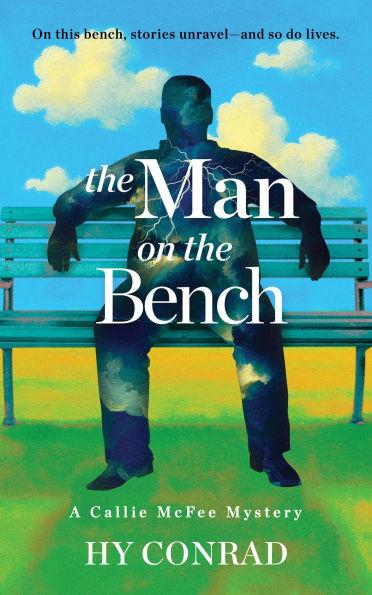


ISBN: 979-8-9951254-0-2 [paperback]
ISBN: 979-8-9951254-1-9 [eBook]

“...The Man on the Bench stands out as one of the year’s most compelling and rewarding reads.” — IndieReader
“I was fully invested in the characters, mesmerized by the crisp writing, and engaged by the twisty plot.”
—The Book Commentary
“A keen, charming amateur detective headlines a snappy murder mystery.” —Kirkus Reviews
Author of widow— widower— widowest—
Please tell us a little about yourself and widow— widower— widowest— . After my wife Polly died, we wrote a book together. It interleaves my writing (about grief, being a solo dad) with Polly’s journals (about being an artist, our kids, marriage) to form a kind of mosaic of her life.
I’m originally from Louisiana, though I’ve been living in Colorado now for almost 20 years. I met Polly in the Peace Corps (she was a fellow volunteer). After we finished, we moved to her home state, got married, started a family, and had three kids.
I write software for a living, not words, so despite having a book published (and reviewed by Kirkus!) I still have a strong case of impostor syndrome about being “a writer.”
What made you want to write about your life?
My wife’s sudden death in our 40s was so outside my frame of reference that it was nearly incomprehensible. No one we knew had ever experienced anything like this. Most widow(er) resources are directed at the elderly, or possibly those left behind by cancer, so I didn’t have any language for how to think about it: Is this really something that can happen—your spouse can be taken away, just like that? I wanted to convey the interiority of grief, what it feels like.
What sparked your idea for widow—
widower— widowest—?
In the months after Polly died, I would go on these long, long hikes while the kids were in school. My thoughts [while I was] on those hikes turned into writing. At the same time, I was reading through Polly’s journals, finding drafts of her letters, stumbling across her old emails. I don’t know when the idea came to me, but at some point the concept was just there like it had always existed: Our writing needed to get together in a final posthumous collaboration.
How did you research your book? I read piles and piles of grief books and widower memoirs. The widower genre follows a pattern: before (when everything’s great), death (when things get bad), and after (suffering, getting over it). They would often end with the widower getting married, which would make me want to throw the book across the room. My (our) memoir doesn’t follow this pattern at all. It’s scattered and broken apart in time, in the way that grief feels. It has an emotional arc, not a plot arc. I don’t get married in the end.
How did you create/acquire the cover art?
All the art in the book is Polly’s, including the cover, which is a close-up of a four-foot-square tile mosaic she made for my mom. It was in storage for a while after my mom moved, so when she brought it out, I hadn’t seen it in a few years and had


widow— widower— widowest—
Simmons, Aaron M. & Polly G. Simmons
Motina Books | 193 pp. | $30.99 $21.99 paper | Jan. 20, 2026 9798887840659 | 9798887840635 paper
nearly forgotten about it. I already had the book title figured out, so when I saw Polly’s mosaic, I thought, Oh wow, there’s the cover.
Portions of this Q&A were edited for clarity.

For a review of the book, visit Kirkus online.
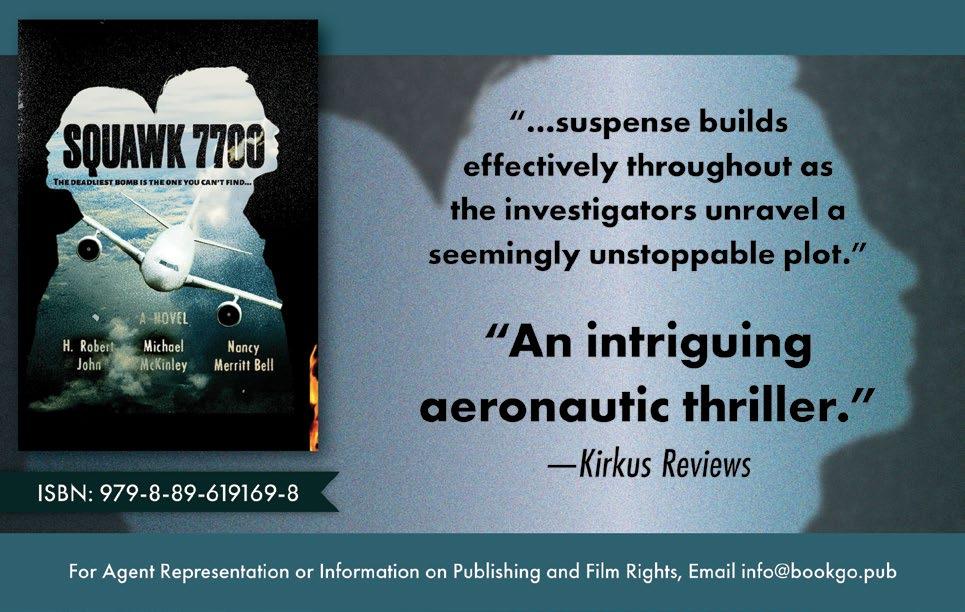
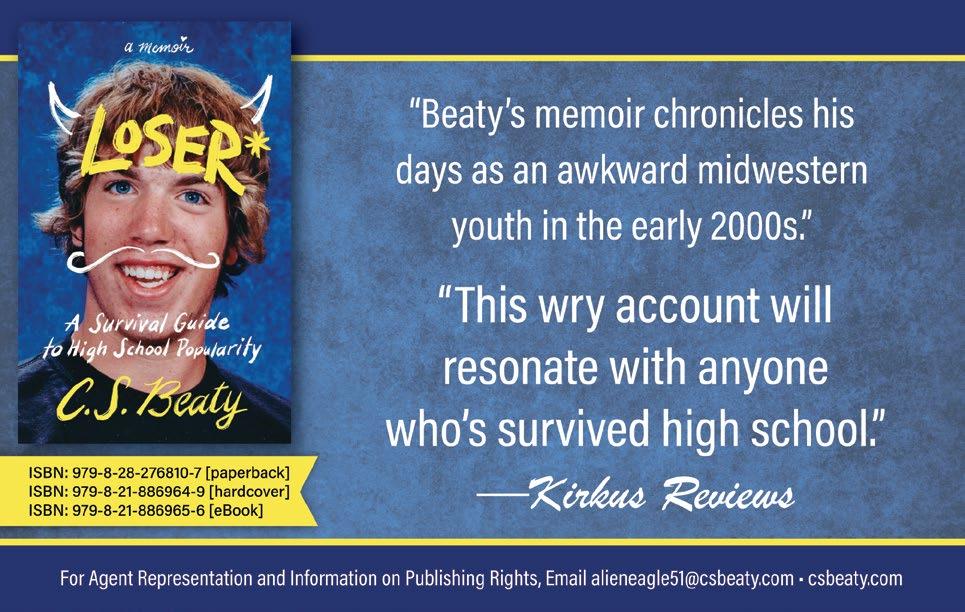
Author of Employment Ethics
Please tell us a little about yourself and your work.
When I started teaching at my college, I came from a very technical industry. One thing I really wanted to make sure of at the time was that I was a good advocate for my graduates when speaking with my program’s industry partners. I needed something simple to assess what I considered basic employer practices so that I could tell [the industry partners] what graduates were looking for. When I realized that this really didn’t exist, it became part of an obsession that eventually led to my doctoral dissertation and then my book.
What was your editing process like?
The editing process is a vital and humbling experience. One piece of advice I was given was to make sure you and your editor are on the same page from the start of the process. One of the unique aspects of Employment Ethics that was important to me was that it was meant to be shared and to start a conversation. Each chapter can be a stand-alone discussion without prior in-depth reading. Discussing that with my editor helped minimize repetition when reading it cover to cover while keeping it easy to share with peers.
Any advice for others starting the process of independent publishing?
First, have a marketing plan and be willing to adjust it as needed. This is
especially true when doing nonfiction, where your books are usually for a very niche audience. People tend to be less willing to take risks on the nonfiction they read in comparison to fiction. Second, prepare for interviews. I go through my material at least 30 minutes before the interview, so I stay focused on what’s in front of me and don’t get distracted by other things going on outside the interview. Finally, when doing a podcast, understand that it’s a balancing act of keeping each other on task. Because of that, I use a reference sheet to make sure I hit my points.
How has critical and/or reader response influenced the way you think about your work? When you release your book, you’re throwing a bottle into choppy seas. As an independent author, you are solely responsible for making sure the spotlight stays on the bottle, and you’re hoping people will pick it up. When they do, any response is good, but a positive response is amazing. The response to my book has blown me away. Thinking that [my] work could help someone and being told it has are two vastly different worlds. At least for me, this has been hard to get used to.
What are you working on now?
I’ve started my process of writing the next two books; both build on the Maslowian principles estab -


Schachtner, Travis FTS Leaders | 184 pp. | $10.87 paper July 7, 2025 | 9798992830910
lished in Employment Ethics [based on the psychologist Abraham Maslow’s work]. One is about how Maslowian principles can be used in the leadership development process; the other is how their abuse can lead to the creation of tyrants.
Portions of this Q&A were edited for clarity.

For a review of the book, visit Kirkus online. Employment Ethics: Redefining the EmployerEmployee Relationship
become moths and butterflies. Familiar names (Audubon, Linnaeus, Humboldt, Darwin) make an appearance, but this is a niche subject, so plenty of talented unknowns fill the pages. Their paintings and sketches illustrate critical scientific issues (evolution, genetics, diversity, extinction, reproduction), and every picture is a pleasure—even if many are works of imagination as artists often worked from memory, long-dead corpses, or from a tattered skin dropped off by a returning traveler. A natural history page-turner.
The Visionaries: Bretton Woods, the Marshall Plan, and the Making of the Post-World War II Order
Holland, James | Atlantic Monthly (240 pp.) $28 | May 26, 2026 | 9780802168078

Having written many books on World War II, including Victory ’45 (2025), veteran historian Holland steps back to look at the consequences of war.
Holland begins with the 1919 Treaty of Versailles, which struck the defeated Germans and a few of the victors as far too harsh. A tiny splinter party during the prosperous late 1920s, Hitler’s Nazis exploded into the nation’s largest party and took power legally in 1933. That Hitler always intended to go to war is no secret, but Holland maintains that there was never any chance of victory: Wars are won by resources and persistence, not battlefield brilliance. Despite superior technology, German industry never adopted American-style mass production, so its armed forces were simply worn away. Holland devotes only five of 24 chapters to the postwar period, but these are his best, if only because most readers know more about war than economics. The Bretton Woods Conference of 1944 pegged all currencies to the dollar to ensure exchange rate stability and promote trade. It ruled for decades until other nations and currencies grew strong,
and several of the conference’s institutions—the World Bank and International Monetary Fund—still operate. Although it owes its existence to the Soviet threat, the Marshall Plan gave titanic economic assistance to restore infrastructure and support democracy in postwar Europe. Holland’s conclusion was a no-brainer— until the 1990s: “Autocracies always result in greater poverty of the masses. While successful democracy leads to…growing wealth.” But this has been refuted by China’s spectacular growth. Democracies also peaked late in the century; since then, many voters around the world have preferred autocrats, electing hyper-patriotic leaders.
A lively history of a bygone era.
Hruska, Maïa | Trans. by Sam Taylor
Ecco/HarperCollins (144 pp.) | $27.99 May 12, 2026 | 9780063486249
An exploration of Kafka through the lens of early translators like Borges, Celan, and Levi.
In this debut, Hruska investigates the impact of 10 translators, all while aiming to recontextualize the “much-misused” titular adjective. She understands that Kafka’s ineffable essence is rooted in his liminality: He was a German-speaking Jew living in Prague in the early-20th century, and a broad sense of displacement permeates his oeuvre. But Hruska repeatedly attempts to present Kafka’s translators in a way that has their efforts echo the themes of their subject. “What Kafka’s translators have in common with his characters,” she broadly suggests, “is that they were all, one day, torn from the place that had nurtured their relationship with their language and with the world.” These arbitrary connections
come at the expense of more in-depth investigations. Snappy lines attempt to overlay these translators directly onto Kafka’s fiction: She claims they worked like “K, the land surveyor, advancing towards the Castle, wide-eyed with surprise, wondering by which staircase, through which window or door, they might gain entry.” “Language is at once judge and jury; it’s a rigged trial,” she writes elsewhere to fold in another Kafka classic. A discussion of Kafka and Borges is weakened by a cursory search for parallels: Hruska claims “literature was their only source of tranquility. Their only habitable space; the only space in which they could find their way.” A chapter on French translator Alexandre Vialatte is more developed and one of the book’s highlights: Hruska illuminates an underappreciated facet of Kafka, noting that while writers like Camus “disguised him as some professor of despair,” Vialatte “saw the funny side of the Kafkaesque.” Alternatively, a chapter on Bruno Schulz spirals into a discussion of Schulz’s visual art and Nazism in Ukraine until Hruska awkwardly redirects: “So what does all this have to do with Kafka?” she asks. Readers will often find themselves asking the same thing.
An ambitious but meandering effort.
Keynes, Soumaya & Chad P. Bown Simon & Schuster (304 pp.) | $30 May 26, 2026 | 9781668221310

Two economists examine the minuses—and perhaps even a couple of pluses— of battling over pluses and minuses. Financial journalist Keynes (an indirect descendant of the better-known one) and think-tank denizen Bown take a cue from the old movie War Games, in which a computer concludes of thermonuclear war that “the only winning move is not to
“If we manage to avoid World War III, we all deserve a pat on the back.”
play.” So it is with trade wars, but people play them anyway, despite “what’s at stake—prosperity and peace.” The stakes are high: Leaving the European Union has cost the British economy 6 to 8%, “around the effect of an average war,” and past trade wars have indeed led to real ones. As recent events have borne out, global economies are so intertwined that a small disturbance can have big multiplier effects, and some of the old rules for keeping nations in line aren’t working. As the authors note, economic sanctions have done nothing to get Russia out of Ukraine. They write, “If great powers are going to fight and the cost of people dying in droves isn’t enough to stop them, it is hard to see why disrupted supply chains would.” President Trump’s tariffs aren’t doing much good, either; and in all events, the purported reason for them—reducing trade deficits—would have almost no effect on bringing jobs back to America even if they did. Yet the authors hold that there are good and true reasons why nations might indeed wage war on an economic front. China’s command economy is so different from the economies of the U.S. and European Union that “there isn’t space for a common rules-based system.” In any event, fair trade relies on a trust that no longer exists, if it ever did. Still, Keynes and Bown brightly note, “If we manage to avoid World War III, we all deserve a pat on the back.”
Easily digestible grist for the geopolitical mill of the numerate wonk.

Kieffer, Kira Ganga | Princeton Univ. (304 pp.) $29.95 | May 19, 2026 | 9780691224664

The origins of vaccine skepticism. Kieffer, a scholar of religious studies at Fairfield University, explores the reasons why a growing number of people refuse vaccines. Although critics often dismiss dissenters as scientifically illiterate, she argues that vaccine hesitancy isn’t a lack of education—it’s a religious matter rooted in existential concerns about justice and morality. No major world religion prohibits vaccines, but claiming a religious exemption became nearly the only legal pathway for refusal. This trend was fueled by a deep-seated distrust of a racist and sexist medical establishment, consumer emancipation, and political polarization. Winning back trust requires listening, which Kieffer excels at. She introduces us to the mothers of children with brain damage after taking the DPT vaccine. These mothers adopted a new identity—not just as parents of disabled children but as people who had been wronged. Their stories draw on 1980s evangelical conversion narratives—effecting transformation to a new way of life and an explanation for why the worst had happened. These grievances return in stories about parents who link autism to vaccines contaminated with “soul-altering toxins,” adopting the individualistic moralities of spirituality culture of the 1990s. These mothers acted as prophets who had gone
“through hell and back” to save their child. Their concerns about purity resurface in a chapter about the HPV vaccine, seen as “encourag[ing] promiscuity”: “Virgins don’t get viruses” became a rallying cry of the right. Enter measles outbreaks, Donald Trump, and the Covid-19 pandemic. Discussions about what was “sacred and profane, pure and polluted” were ignored in favor of “medical freedom.” Instead, Kieffer argues, concepts such as embodied intuition, the sacrality of motherhood and children’s bodies, and sacrifice should help illuminate a phenomenon that is growing in popularity. Lobbing insults at nonbelievers doesn’t work, she writes. Increasing public health officials’ religious literacy should help us see each other more clearly and completely. A deeply sensitive and nuanced probe into anti-vaxxing culture.
Klee, Isabel | Morrow/HarperCollins (288 pp.) $28 | April 28, 2026 | 9780063451070
A dog foster and rescuer experiences love, loss, love, loss…
On the whole, it’s widely agreed, dogs are better than people.
Certainly much of Klee’s memoir is testimonial. Arriving in New York City convinced of her unlovability, “a huge billboard across my forehead,” she finds solace in “a room full of puppies” at the animal shelter where she volunteers, alternating that solace with other aspects of daily life that were less wholesome and life-affirming. A boyfriend comes along and is found wanting: He loves her, she doesn’t love him, power trips ensue. The names and physiognomies change, but it goes much the same for page on page, with the occasional sharp observation (“We spent the next two years burning each other to the ground”) interrupting an alternately bland and bleak romantic procession. The dogs, as ever, are better,
from the epileptic puppy she takes in, to the surrendered, wheelchair-bound French bulldog that brings and receives so much pleasure once a “happily ever after” home is found. Klee’s memoir is at its best when she writes of the most profound moments of the human-dog bond: the love that can blossom between a dog in need and a broken human with “a freshly stomped on heart,” the inevitable excruciating loss that awaits every day with a beloved dog, a loss tempered by the knowledge that the “in-between is pure magic.” As for the human-on-human stuff, it’s mostly meh: Klee’s boyfriends seem to live in and for themselves, and she doesn’t come off so well herself, though she closes on a happily-ever-after note. Clearly, she has a big heart for dogs, but the boys and other things she’s cried about mostly just get in the way. A modest contribution to the canine bookshelf.
Lawson, Jenny | Penguin Life (288 pp.) $29 | March 31, 2026 | 9780593833216
Self-help with a twist of humor.
Blogger and memoirist Lawson (Furiously Happy, 2015) assembles dozens of brief chapters, often less than a page long, of recommendations that have worked for her as she has dealt with depression, anxiety, and ADHD, based on “a lifetime learning to operate a brain that vacillates between overthinking and total shutdown.”
Addressing the reader directly, affectionately (“You have to take care of yourself, little bunny”), and often mildly profanely, she suggests that “this book is equally designed to be read through in a single sitting or opened as needed.” She divides it into sections designed to be used at various crisis points—for example, “Read this when you need to attract and grow
A celebration of protests, with essays by Jane Fonda, Dolores Huerta, and other activists.
kindness in your life so you can snuggle deep into it like the soft, fragile creature that you are.” Lawson generally comes across as gently self-deprecating and eager to share in sisterly fashion what she has learned to be helpful over the years. Often, what she has learned will strike readers as familiar: “Make sleep a priority” or “Whatever makes you happy…do more of that.” But parts of it will strike any reader as new: Who knew that besides white-noise machines, there are those that produce pink, green, gray, brown, blue, and violet noise, each of which she defines with gusto. The book includes line-drawn illustrations by the author and quotes she has found useful—from Cheryl Strayed, Rainer Maria Rilke, and many more authors. At her best, Lawson’s quirky sense of humor will make you laugh out loud, which might be the best possible form of self-help, as when she advises her readers to consider that “we’re doing way better than moles. They’re just rearranging dirt underground their whole lives. What a bunch of weirdos.”
Comforting and amusing, if not wildly original.
It Defend It Use It
Leonard, Annie & André Carothers Patagonia (276 pp.) | $40 | April 28, 2026 9781952338335

A look at how activism has changed the world. Activists Leonard and Carothers’ book, published by the politically engaged retailer Patagonia, is, they write, an invitation “to defend the right to protest
as a foundation of civil society” and “to step forward and experience for yourself the formidable power of protest.” The book chronicles more than 40 protests throughout history, beginning in 1738 with Quaker abolitionist Benjamin Lay’s pioneering and theatrical tactics to demonstrate against slavery. The authors write about some of history’s most recognizable protests: the Boston Tea Party, Mahatma Gandhi’s Salt March, and Colin Kaepernick taking a knee during the playing of the national anthem. But more interesting are the demonstrations that readers might not have heard about, including San Francisco’s 504 Sit-In—a 1977 watershed moment for the disability rights movement—and the 1991 installation of a giant condom on U.S. Sen. Jesse Helms’ house to protest the North Carolina Republican’s virulently homophobic positions. Interspersed are essays from activists, including Jane Fonda, Dolores Huerta, and Rebecca Solnit; particularly moving is one by Indigenous activist Nemonte Nenquimo, who writes, “The dominant civilization today values the oil and gold underneath our forest more than our knowledge, our stories and songs, more than our connection to the land and community, more than us as a people.” An afterword by former U.S. Secretary of Labor Robert Reich brings the message home to the modern day: “Resistance is more important now than ever….Tyrants cannot succeed where people refuse to submit to them.” The book is beautifully illustrated with photographs from protests around the world, and Leonard and Carothers do a great job explaining why each action they write about deserves to be remembered and replicated. This would be a perfect introduction to protesting for budding activists, but those who have been
involved with social justice movements will find much to love, as well. An excellent introduction to the power of public dissent.
Maharawal, Manissa | Univ. of California (304 pp.) | $24.95 paper | April 14, 2026 9780520423367

Residents of San Francisco fight being uprooted by the deep pockets of Silicon Valley. The City by the Bay was long affordable enough to sustain a thriving community of artists, students, and counterculturalists, to say nothing of immigrant populations from all over the world. That began to change markedly in the early 2000s, when the city, as anthropologist Maharawal writes, “was rapidly being transformed by ‘Tech Boom 2.0.’” Fleets of luxury buses materialized, carting knowledge workers to campuses in Silicon Valley; housing prices skyrocketed; and “tens of thousands of people lost their homes to tech-led gentrification and its accompanying evictions and displacement.” Those who kept their rentals were likely “rentburdened,” meaning that more than a third of their income went to pay for a roof over their heads. As Marahawal observes, housing is not considered a right in the U.S. but instead is seen as a commodity, and much housing stock has been “financialized,” bought up for speculative purposes. She describes the strands of resistance that formed to protect people in danger of eviction, ranging from direct action such as bus blockades and doxing of landlords to efforts to shore up regulations that prevent real-estate speculators from breaking rent-control contracts by “going out of business,” with the buildings then sold at great profit. One activist whom Maharawal highlights
had been in a rent-controlled apartment for four decades before being evicted, winning a one-year reprieve only because he was a senior citizen. However, as she writes, he and other evictees have managed to remain in their homes because of the actions of “a vibrant anti-eviction movement they were a part of.” Maharawal identifies successful strategies that include “counter-mapping,” which is to say, “creating maps that show how people in struggle understand the places and processes around them,” and storytelling to convey the injustice of displacement. A book of much interest and use to housing-rights activists.
Mezrich, Ben | Grand Central Publishing (304 pp.) | $30 | June 2, 2026 | 9781538773031
Inside a cheating allegation that rocked the high-stress, big-money world of competitive chess. Mezrich’s niche is stories about the intersection of technology, money, and bad behavior, including the founding of Facebook (The Accidental Billionaires, 2009), the GameStop short-selling affair (The Antisocial Network, 2021), and Elon Musk’s Twitter takeover (Breaking Twitter, 2023). Here, Mezrich untangles the contretemps between Magnus Carlsen, the world’s best chess player, and Hans Niemann, an upstart climbing the ranks. At a high-profile 2022 match in St. Louis, Niemann bested Carlsen in ways that raised Carlsen’s suspicions. Niemann had been caught cheating before—years earlier, as a teenager, he was briefly suspended from the site Chess.com for using AI to feed him optimal moves. But Niemann denied cheating in “over-the-board” games, and the debate ultimately spilled over into social media and the courts. (Niemann sued Carlsen, Chess.com, and others for defamation, seeking $100 million in damages; the matter was settled in 2023.)
Mezrich’s treatment of the story is thorough, with entertaining digressions into the nature of chess cheating. But he overhypes the drama; taking his cues from the game’s black-and-white conflict, he depicts Carlsen as the sober, honorable grandmaster and Niemann as the belligerent loose cannon. (Chess.com plays the referee; though given the site’s financial arrangements with Carlsen, its impartiality was also questioned.) Mezrich also deploys a few cartoonish gimmicks (larding one chapter about an internet troll with Beatles lyrics simply because said troll was from Liverpool, England); dramatic cascading sentence fragments; and weaving himself as a character in the story. Chess and cheating is life-and-death stuff—in October 2025, grandmaster Daniel Naroditsky died at age 29 after cheating allegations—but Mezrich’s style is to treat it more like a sideshow. A gaming story with lots of drama but needing more gravitas.
Minnelli, Liza; as told to Michael Feinstein; with Josh Getlin & Heidi Evans Grand Central Publishing (448 pp.) | $36 March 10, 2026 | 9781538773666
A great American character claims her double legacy of genius and addiction. Calling herself “the original nepo-baby,” the daughter of Judy Garland and Vincente Minnelli offers a raw and revealing look at a life shaped by fame and personal struggle. At the heart of Minnelli’s story is her fraught relationship with her volatile mother. While stressing that “our love was what mattered,” life with Judy was no picnic. The night before her fifth birthday, she accidentally kicked her mother in the head while watching TV, permanently scarred by lesson that “if Mama got angry, she was the most terrifying person in my life.” Garland’s
addictions made her unstable and unreliable, forcing her daughter to take on adult responsibilities at a very young age. A veteran performer by the time she was in double digits, she won the first star in her EGOT crown (Emmy, Grammy, Oscar, and Tony awards) at age 19 for her role in the musical Flora the Red Menace. This was also her first work with John Kander and Fred Ebb, musical collaborators in her most iconic successes: Cabaret, Liza With a “Z,” and New York, New York. Minnelli describes taking her first Valium in 1969 at the time of her mother’s death from an overdose, unwittingly assuming the mantle of addictions that would mar her public and private life for decades. In and out of the Betty Ford Center, she finally achieved sobriety in 2015, on the eve of her 70th birthday. As the title suggests, she has great stories, and, with the help of her dear friend Feinstein and co-writers Getlin and Evans, she leaves out none of the juice. From her torrid, cocaine-fueled romance with Martin Scorsese (both were married at the time, and she cheated on both husband and lover with Mikhail Baryshnikov) to her falling-out with Lady Gaga at the Oscars in 2022, she spares neither herself nor anyone else and, in the process, reclaims her once very tattered dignity in a moving and remarkable way. An old-school Hollywood tell-all with all the trimmings, traumas, and bold-face names.
Kirkus Star
The Beasts of the East: The Fall and Rise of America’s Eastern Wilderness
Moore, Andrew | Mariner Books (432 pp.)
$35 | June 2, 2026 | 9780063001220
A searching exploration of the survival and reintroduction of long-lost animal species east of the Mississippi. Nature bats last, it’s said—but not when there’s nothing but parking lot around the
activities—walking, reading, and journaling—can become sacraments.
THE
diamond. So seemed much of the East Coast and Midwest in the go-go postwar years, when every turn revealed a new smokestack or suburb. But things have changed, as environmental writer Moore documents, opening on a hopeful note from an Indiana wetland and announcing, “it’s believed that there are more sandhill cranes today than at any point in history.” That would certainly make Peter Matthiessen happy, he who chronicled the cranes’ sad decline in his 1959 book Wildlife in America. Amazingly, and wondrously, other species that have long been absent from the eastern half of the country are flourishing, and Moore reports on their fortunes in welcome detail. At another Indiana venue, practically within walking distance of metropolitan Chicago, buffalo have been restored to a prairie along the Kankakee River. This restoration, he notes, is not an event unto itself; it has involved curing the ills of the land, too, by replacing invasive plants with native species and making habitat fit to support the ecosystems of old, of which bison, elk, red wolves, and other megafauna are but a part. Moore travels widely to look at reintroduction programs that leverage this habitat rehabilitation, taking in near-ideal refuges such as western Kentucky’s remote Land Between the Lakes but also less congenial sites that are the leftovers of mountaintop removal during coal-mining operations. Moore’s optimism and bringing of good news are refreshing but tinged with a cautionary note, as in the case of one of his highlighted species: “The red wolf is the charismatic mammal that often captures our attention, but it is the entire system that is in peril.”
An exemplary work of environmental journalism and advocacy that makes clear that there’s much more to be done.
Moore, Thomas | Pegasus (288 pp.)
$28.95 | July 7, 2026 | 9798897101290
Henry David Thoreau and the modern art of soul-making. Moore, the author of the bestselling Care of the Soul (1992), considers the life and work of Henry David Thoreau, the 19th-century essayist who favored simple living in natural surroundings. In 50 short meditations on passages from Thoreau’s essays, letters, and journals, Moore blends his subject’s insights with his own experiences as a psychotherapist, monk, writer, and reader. Thoreau famously retreated to Walden Pond to live deliberately and to confront “only the essential facts of life.” Moore claims that his subject’s “vernacular lifestyle” holds many lessons for us today. He writes, “A slight move from your standard life, especially into the primeval wild of nature, can reset your life and give it the elusive purpose you may have been looking for.” Like Thoreau, he believes that encounters with nature can heal, civilize, enchant, and elevate. He suggests that everyday activities—walking, reading, and keeping a journal—can become sacraments. He also praises the virtues of listening to music—unlike Thoreau, who, as Moore writes, “picked on classical music performed in polite society, saying he would rather hear the music of crickets than attend an opera in the city.” Along the way, the author commends Thoreau’s spirit of disobedience, especially his rejection of materialism and spiritual
emptiness. By abandoning greed and narrowness, we can rediscover “a refuge of myth and profound meaning.” Finally, Moore emphasizes authenticity and the importance of speaking in one’s own voice. Although he quotes a wide range of prominent writers and thinkers, his style is clear and accessible, and his short chapters can be read and savored in almost any order.
An eloquent call for deliberate living.
Nakadate, Riverhorse | Illus. by Sarah Stephens | Patagonia (224 pp.) | $30 June 16, 2026 | 9781952338359
Bite-sized essays celebrating life, love, and water.
Gathered largely from The Flyfish Journal and Patagonia’s The Cleanest Line blog, most of these 32 essays center on fly-fishing excursions. Nakadate lives in Houston, and many of his tales are set in the rivers, lakes, and salt marshes of his home state. He also travels around the American Southwest, the Midwest, and the Pacific Northwest, as well as Mexico, South Africa, and Swedish Lapland. We gradually learn his story: His single mother, of Cherokee and Irish heritage, gave him his first name and a love of water; his Japanese American dad gave him his last name and a love of literature. Reading these essays is a bit like sitting around a campfire by a lake at night, listening to Nakadate muse about his numerous adventures, large and small: his falls and scrapes on his way to isolated fishing spots; his encounters with orphaned baby squirrels in Texas, a crocodile on the Yucatán Peninsula, and a potato grouper off the coast of Mozambique. On the Texas-Oklahoma border, he lies on his back in a canoe to take in a total eclipse: “The whole lake and woods turn a dark, indigo silvery-blue, and Jupiter, Venus, and other stars awaken and brightly shimmer in the skies,” he
writes. “None of this seems believable.”
A natural-born storyteller, Nakadate can turn on a dime from amusing and wry to pithy and aphoristic, then wind up charming and sweet. “Sometimes in life you just have to get on the path and see what happens,” he writes.
“That’s never been a problem for me; I’ve got escapism issues. I think it happened when I was born.” A bonus: This handsome book is graced by Stephens’ serene watercolor illustrations.
A delicious collection to be savored individually or as a whole.
Nathan, Jesse. | McSweeney’s (100 pp.) | $20 paper | April 14, 2026 | 9781963270693
A wide-ranging series of interviews on the art and craft of poetry.
To prepare for these interviews, Nathan writes by way of introduction, he “would read everything by the poet I could get my hands on, and then talk with them on the phone, off the record, sometimes for many hours.”
Only then would he send a single question to the interlocutor, sometimes just “a bouquet of question marks” to prime the pump. This comprehensive approach gives him plenty of material to forge thoughtful introductions to poets whom casual readers may not know, and there are many. While well-known writers such as Jorie Graham, Brenda Hillman, Robert Pinsky, and Forrest Gander figure in Nathan’s pages, so do less-established writers such as Ishion Hutchinson and Megan Fernandes. All have something to say, and while there are rather vaporous moments (“writing poems for me has always been about my ability to be open to serendipity and haunting,” says Diane Seuss), there are plenty of solidly grounded observations, especially on a poem’s architecture or form. Getting to that form is a matter to which many of Nathan’s interviewees speak, as when Gander asks, “Don’t you
think details help you focus?” And Graham, who wrote her way through terrible illness, speaks of the independence of the poem as something that best reveals its form to the poet as its own creation: “A poem is alive; it uses you to get itself written, spoken, to get its wisdom to cross from the unknown into the known.” A little mystical that, too, but if poetry is not incantation and sorcery, then—well, read on. A valuable set of inspirations and instigations for budding poets.
O’Malley, Charles & Scott W. Stern Norton (320 pp.) | $31.99 | June 2, 2026 9781324076551
Step aside, m’lords.
Think of Shakespeare, and you think of Lear, Hamlet, Othello, Juliet, or Cleopatra. But the single figure who appears in more plays than any other is Margaret of Anjou, queen to King Henry VI and one of the most complex of late-medieval English women. So say O’Malley, a writer and dramaturg, and Stern, a scholar and critic, in their enlightening book. Shakespeare wrote four plays in which Margaret appears— among his earliest forays into historical drama. She is the first of his great female characters, a woman torn between duty and desire. While the historical Margaret lived for little more than 50 years (1430-1482), the dramatic character takes on an immortality no less compelling than Lady Macbeth or Hamlet’s mother. “She commands armies, acts as regent without her husband’s explicit permission, seeks revenge, strikes a rival, stabs a foe, and revels in the murders of the children of her enemies,” the authors write. She raised questions about gender and power not only for her own historical century but for Shakespeare’s as well. In the 1590s, to have a Queen Elizabeth was to have a woman in a man’s role. Elizabeth
herself announced that she had “the stomach of a king.” So, too, Margaret would reach out from the stage to limn herself a “tiger’s heart wrapped in a woman’s hide.” She became a focal point for understanding how Elizabethan theater could interrogate the nature of female rule; how crafting a woman’s part (that would have been played by a boy, given the times) shaped the young playwright’s sense of domestic drama; and how, throughout the history of Shakespearean performance, actresses tested their own mettle on the mantle of this ferocious queen. An insightful study of Shakespeare’s first great female character.
Omara, Atima | Harper/HarperCollins (272 pp.)
$30 | May 5, 2026 | 9780063424876
A distinguished activist and political strategist examines how Black women hold the key to rebuilding a more inclusive multiracial democracy. Omara argues that American democracy was largely built by an overlooked demographic: young, Black women aged 18 to 45 whom she calls “the Instigators.” What distinguishes these people from other groups and connects them across time is a “shared ancestral belief…in the importance of the collective over the individual.” Drawing from history, politics, and her own experience, Omara suggests that these women have been responsible for pushing democracy forward during major American historical “inflection points.” She suggests that because Black women have faced racial and gender discrimination, they have a more nuanced and inclusive understanding of injustice than either their white female- or Black male-activist counterparts. Antebellum
activist Mary Ann Shadd Cary, the country’s first Black female newspaper publisher, was among the earliest challengers of the “nation’s stated ideals of justice and liberty for all.” Two generations later, journalist Ida B. Wells would call out the lynching of Black men and white male violence against Black women in the Jim Crow South as racial terrorism. During the 1960s, Shirley Chisolm would begin her storied career as a grassroots organizer and member of Congress by co-founding the multiracial Unity Democratic Club, a political group meant to counter an all-white male group in her native Brooklyn. The author cites U.S. Rep. Ayanna Pressley of Massachusetts as a modern-day instigator: She was the first Black woman elected to Congress from the state “because she had been elected to and served on Boston’s City Council years before. She had also worked behind the scenes in city and state Democratic politics for years.” Impassioned and necessary, Omara’s book not only celebrates the courage and vision of Black female leaders but issues a call to all Americans to “take up the mantle” of community building alongside other instigators “and fight to save our country.”
A timely book about the essential role of Black women in shaping—and preserving—American democracy.
Ossei-Owusu, Shaun | Norton (400 pp.)
$31.99 | April 14, 2026 | 9781324091264
A damning account of the racism baked into the American legal system.
“Ultimately, the cool, clinical language of the law cannot hide the fact that our legal system is often an orderly way to manage inequality rather than eliminate it— and this might be because it is unwilling or incapable.”
So writes Ossei-Owusu, who notes that while he “look[s] like a rapper,” he holds a PhD and a law degree and has taught at schools throughout the Ivy League. All that makes him an outlier: Only 5% of lawyers in America are Black, he notes, and other minorities are similarly underrepresented in the profession. (Women, he adds, have made up just 5% of the Supreme Court over its history.) Most professors in his top tier graduated from the top 10 law schools, and most firms court graduates from the same institutions. There are plenty of ensuing effects. One, by Ossei-Owusu’s account, is that legal training privileges technical knowledge over any ethical considerations or human exigencies: “Thinking like a lawyer can strip away the sociopolitical, economic, psychological, and moral factors that shape lawmaking and legal inequality.” Moreover, few lawyers receive adequate training in housing law and other elements of what is called “poverty law”; disability law does not figure into the bar exam, nor does immigration law. Even the best-intentioned of lawyers in the public-interest sector—read publicly appointed defense attorneys—are too given to harmful stereotypes. These and other deficiencies, Ossei-Owusu charges, yield the “slow erosion of already-compromised democratic ideals: equal treatment, fair pay for work, and the ability to organize.” To boot, they preserve various inequalities that are already built into the system, with minorities bearing disproportionate punishment for crime and diminished opportunities to defend themselves.
A provocative work of legal advocacy that merits wide attention.

Pethes, Nicolas | Bloomsbury Academic (160 pp.) | $24.95 paper | May 28, 2026 9798765141007
A valentine to Bruce Springsteen in the guise of a deep dive into a question: What makes the Boss beloved?
With regard to his four decades as a Springsteen fan, Pethes knows he’s not special. But the magic of Springsteen is that he makes his fans feel that they are and, often, that he has altered their lives. How does Springsteen do this? Pethes, a literature professor at the University of Cologne, thinks he has the answer: “The impression of communication between Springsteen and his audience arises because both sides attribute to the other a desire for such an exchange and act accordingly.” OK, that isn’t something the reader can dance to. Here’s Springsteen’s answer, from 2012: “I’m in the midst of a lifetime conversation with my audience.” Pethes has identified and dedicated a chapter to each of six “communicative aspects” of Springsteen’s artistry; some include his musical influences, his rapport with his audience, and his storytelling gifts. Although Pethes doesn’t put it this way, his book suggests that, while many artists can claim one or more of those aspects—the Grateful Dead’s audience was likewise devoted; Taylor Swift’s acolytes, too, hear their stories in her lyrics—Springsteen uniquely embodies all these qualities at once. While this book will, of course, hold special interest for Springsteen fans, it may also speak to anyone who is
anthropologically curious about the enduring allure of a public figure. Since the author is an academic, the reader can expect references to things like “parasocial relationships,” “constructivist communication theories,” and “paradoxical simultaneity,” but Pethes also includes, tone-shiftingly, snippets from his own “fan biography,” which finds him carrying out research by attending scads of Springsteen concerts. (Nice work if you can get it.)
Explaining Springsteen’s mystique as well as anyone probably ever will.
Pryor, Elizabeth Stordeur | 37 Ink/Simon & Schuster (304 pp.) | $29 | June 2, 2026 9781982154509
A famous parent and an incendiary racial slur. Pryor, a Smith College history professor, builds this perceptive memoir around a very tough question: “Why is it so hard to talk about the n-word?” In 2010, a student of Pryor’s used the word when quoting from Blazing Saddles, a comedy co-written by her father, comedian Richard Pryor. “Instead of guiding the students and taking charge, I froze,” the author, who is biracial, recalls with admirable candor. Pryor became “obsessed” with the word’s history. Studying the evolution of the n-word’s “two separate meanings”—the slur ending in a “hard ‘er’” and “the one with the soft ‘ga’” that “Black people used with each other”—became a deeply
Richard Pryor’s daughter finds a “connection” with him in researching the n-word.
personal project. The word appears in more than one of Richard Pryor’s album titles. His daughter notes that “reclaiming” the word enabled him to “distill the ugliest aspects of American culture.” Though she “never felt funny enough, or creative enough, or Black enough to be his daughter,” researching the word provided a “connection” with her late father. Her expert account of his career is complemented by memories of her own painful encounters with the n-word and page-and-a-half “interludes” on the word’s role in politics, culture, and the law; the latter are informative, though some readers will wish them longer. Recalling her father, she’s warm yet allows that “he struggled to show up as a parent.” But when she told him she was called the n-word at school, his reply—a tender, resolute “You are Black”—“tied us to each other and to other Black people.” She’s sharp on her father’s eventual disavowal of the word. In one recorded performance, his word choices suggest he might’ve read Frantz Fanon’s landmark The Wretched of the Earth
A moving reflection on family, belonging, and language’s power to wound and heal.
Rasenberger, Jim | Scribner (496 pp.) $31 | May 12, 2026 | 9781668003428
Historical account of the bitter rivalry and longtime friendship of two presidents. Thomas Jefferson and John Adams died on the same day: July 4, 1826—exactly half a century after the signing of the Declaration of Independence. (James Monroe also died on July 4, five years later.) That Declaration, chiefly written by Jefferson, expressed theories based on natural law and human rights,
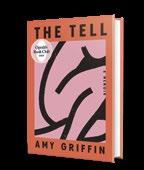
A former classmate has sued the author over a passage in The Tell.
Bestselling author Amy Griffin is being sued by a former classmate, The New York Times reports. The lawsuit claims that Griffin took the classmate’s story of being
sexually assaulted by a teacher and passed it off as her own in her memoir, The Tell
The memoir, published last year by Dial Press, recounts Griffin’s experience of MDMA-assisted therapy to uncover memories of sexual abuse at the hands of a teacher in an Amarillo, Texas, middle school in the late 1980s. The memoir was a pick for Oprah Winfrey’s book club, drawing praise from admirers such as Today co-host Jenna Bush Hager, who called it “important and courageous.”
Last September, the Times published a bombshell story that questioned the accuracy of Griffin’s book.
The lawsuit was filed in California by a plaintiff
identified as Jane Doe. Named alongside Griffin in the suit are ghostwriter Sam Lansky and Dial Press. The lawsuit maintains that the sexual assault described by Griffin in fact happened to Doe and charges the defendants with invasion of privacy and infliction of emotional distress.
Thomas A. Clare, an attorney for Griffin, told the newsletter Publishers Lunch, “Just like the New York Times

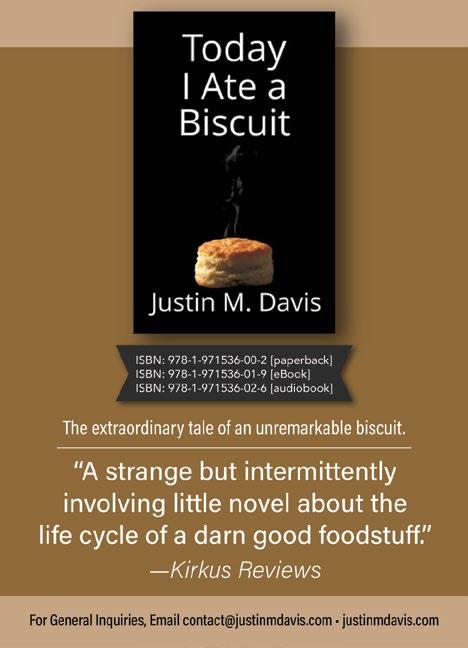
Griffin
manufactured a false narrative about Amy Griffin and The Tell, it also engineered the premise for this absurd lawsuit.…We look forward to exposing these meritless claims in court, as well as the deeply flawed New York Times reporting that is at the center of it.”
—MICHAEL SCHAUB
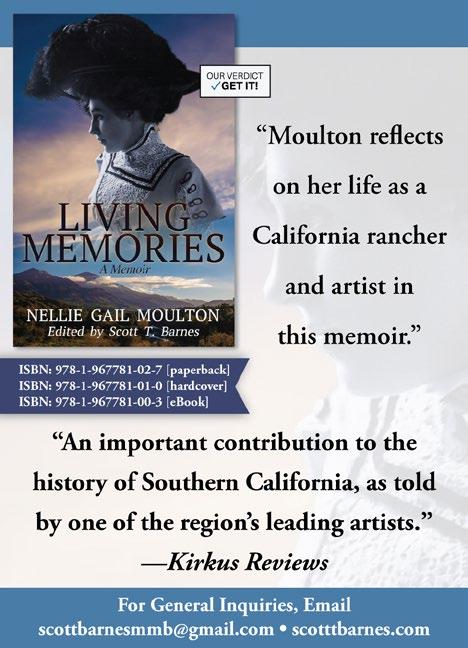
LAURA FROST
Author of Seeking Sasha
Tell us a little about yourself and your work.
While I am a wildlife biologist by trade, I hung up my field notebook years ago to raise a family and dive into the world of writing. Although many of my short stories are inspired by my biology days, my latest novel, Seeking Sasha , was influenced by years of moving from town to town for my husband’s work. Like Sasha, I had to adapt to each new community, often reinventing pieces of myself and discarding parts that no longer served me. When not wringing tension from my characters, I love to bake, bird-watch, travel, and create maple syrup from my backyard trees in northern Ontario, Canada.
What sparked your idea for your novel?
I was on a solo writing trip working on another novel. One evening, while I was writing at the hotel bar, a guest from Chicago started chatting me up. He asked my name, profession, and what I was working on, and it dawned on me—I could tell him anything, and he would be none the wiser. I told him only truths, but this moment was the inspiration for a character who uses false names and fake backstories.
How did you develop your characters?
I revised and edited Seeking Sasha many times, and with every pass, my characters became more layered and real. Sasha’s character is born
from pieces of myself, only hugely exaggerated. I borrowed from my experiences moving from place to place, and much of my struggles with anxiety are reflected in Sasha’s character. When creating Cole, I wanted him to be a protector, yet blind to the help Sasha actually needs. Whether Sasha, Cole, or someone else, I try to put myself in a character’s shoes before writing their scene or their perspective.
Was your storyline something that you envisioned from the beginning, or did you build/change it as you wrote your novel?
Although I had a loose idea of where my novel was heading when I started out, characters walked onto my page unexpectedly or made decisions I never saw coming. I’ve learned to lean into these kinds of surprises while drafting, as some of my favorite scenes stem from these unplanned moments. My storyline also morphed during revisions, with chapters added, deleted, or turned inside out.
How have you built your audience?
I started from nothing and reached for the stars. When I decided to get serious about publishing my work, I created several social media accounts, and I’ve uploaded and interacted with posts across my socials at least once per day without fail since 2019. Consistency


has been my ally, as is reflected in the over 50,000 followers across all my platforms. I’ve also learned the value of networking, and I’ve made amazing connections at conferences, book clubs, retailers, and online.
Portions of this Q&A were edited for clarity.
For a review of the book, visit Kirkus online. Seeking Sasha Frost, Laura Willow River Press | 358 pp. | $19.99 paper Feb. 10, 2026 | 9781965059616
What sparked your idea for your novel?
To sum it up, it’s my family, my faith, and animal rescue. My children are my world, and this story involves a mom, like me, and her two children. Felt through the mom’s character is a strong emotional pull to protect her children at all costs, and that [pull] is deeply personal.
I’m obsessed with [animal] rescue videos, and we foster. I wanted to subtly move readers to think about how the world treats animals. That’s where the inversion idea emerged, with humans becoming the aliens’ “pets.” Some of the hardships and indignities I put the characters through draw from both the kindness and cruelty [that happen] to animals. That same sense of responsibility carries into the environmental themes of the book. The notion that an alien invasion is needed to restore the planet is a deliberate exaggeration to highlight the disparity in how the world views these issues. Another inversion is the alien invasion itself. Eco Reign is less spectacle and destruction and more indoctrination and oppression after the aliens easily conquer [the Earth].
Author of Eco Reign: Warning: The Barriers Burn For a review of the book, visit Kirkus online.
Threaded quietly throughout the story are elements of my faith. My intention is not to lecture others about environmental responsibility, animal kindness, or spirituality. But these influences impact me and, in turn, shape the world and characters I create.
What was your editing process like?
Eco Reign has been years in the making. Some of the early ideas were developed in the Notes app on my phone while I waited for my two kids to finish their after-school activities. Other times, I wrote draft passages in emails to myself and later dropped them into what was a very rough manuscript.
At a time when I was unsure about the story, I met an editor through a networking group I joined to develop my law firm. His encouragement convinced me to continue writing it. On a whim, I submitted [the manuscript] to Greenleaf Book Group and followed their editorial process to completion. Their team was supportive, encouraging, and professional throughout.
Now that I know how I intend to end this series, I find that I write backward. I’m building the story to reach that final destination while filling in the emotional and plot details to get the reader there.
What are you working on now?
I’m finishing Book 2 of the series and developing the remaining storyline for Book 3. Book 1 was not originally meant to end where it did, but the word count became too long for YA. I love the content and the twists of Book 2 even more than what I created in Book 1. Book 1 lays the foundation, but Books 2 and 3 really bring the world to life. I cannot wait to share what’s coming


Eco Reign: Warning: The Barriers Burn Galuppo, L. River Grove Books | 328 pp. | $19.95
next and wish it were all ready to be revealed. But I balance writing with being a mom and a full-time attorney. Even so, the story remains on my mind, and I fully intend to see it through.
Portions of this Q&A were edited for clarity.

which, Rasenberger writes, were belied by the slavery that “dangerously undermined America’s foundations.” Jefferson, though given to high ideals, was never able to reconcile his words with his ownership of some 600 enslaved people; Adams, conversely, “never met a high sentiment he did not question.” One expression of Adams’ skepticism was his doubt that Americans could truly govern themselves without sliding into tyranny, which required, by way of safeguard, clearly articulated and practical rules of governance. As Rasenberger notes, both Jefferson and Adams, though not religious, believed in the workings of Divine Providence, which both explained irrationalities and provided the basis for American exceptionalism. The two argued over many points over the years, including how best to piece 13 sometimes contending states into a union; and although each faced difficulties in office, not least Aaron Burr’s killing of Alexander Hamilton during Jefferson’s second term, they are remembered as successful leaders. Infamously, Jefferson also commissioned a hack journalist to craft libelous tales against Adams so nasty that it’s a wonder that the two ever reconciled. But they did, in part, Rasenberger suggests, because they were intellectual equals who enjoyed conversing with each other, if mostly by letter: “There were few people in America with whom either could engage in such a dialogue.” Moreover, he adds, they offer a lesson for a conflicted America today, arriving at friendship “by observing civility, by opting for reason over passion, by finding middle ground where they could, and by expressing compassion and even love for each other.”
A well-crafted book that sounds useful themes for this semiquincentennial year.
Reese, Ashanté M. | Norton (192 pp.)
$24 | April 14, 2026 | 9781324076469
An intimate look at the role food plays in Black get-togethers.
Anthropologist
Reese (Black Food Geographies, 2019) immerses herself in the subject of how present-day Black families and churches, mostly in the South, use the sharing of food to build and preserve communities and family structures. Reese grew up in rural East Texas, watching a beloved grandmother “stooped over tomatoes and her uncooperative collard greens, while talking to the plants or humming a hymn.” Now based in Austin, Texas, she reached out to find people who were growing food to share, planning family reunions, and holding memorial services and visited and reported with affection and gratitude on as many as she could. Even though the book is short, it still occasionally feels padded. It’s not clear, for example, what a chapter on “Mutual Aid”— which features a breakdown of an essay by 19th-century Russian anarchist Peter Kropotkin and an analysis of how students and professors engaging in a pro-Palestinian protest at the University of Texas took care of each other—has to do with her theme. But when she anchors herself in her central subject, she moves with fluid grace between close observation of and emotional bonding with her subjects as well as a more detached but never cold discussion of the cultural and social implications of seemingly simple and personal gatherings. While pointing out that the food served at the events she attended may not be the most
Profiling the two presidents who died on the same day.
heart-healthy and nutritious, she also celebrates its importance in bringing people together. The book is full of warmly memorable vignettes of impromptu tug-of-wars, afternoons of joyful dancing (Reese includes an extensive playlist in case you want to join in), and touching descriptions of post-funeral meals that “allow[ed] grief to make room for other feelings.”
Warmly satisfying insights into food and community.
Rinna, Lisa | Dey Street/HarperCollins (224 pp.) | $29.99 | February 24, 2026 9780063425330
The former reality TV star tells all—and then some. In this revealing and dishy memoir, Rinna leads with intense family trauma, describing the tragic losses of her beloved mother, Lois, from a stroke in 2021, as well as intimately detailing her father’s assisted suicide and her half-sister’s accidental overdose at age 21. Rinna attributes her Season 12 departure from Bravo’s Real Housewives of Beverly Hills to the immense grief and repressed anger she was processing while trying to film episodes for the series and keep her composure intact. Her on-camera appearances became rage-filled and volatile; she posted about them on social media, and they collectively drove home the fact that her relationship with the Real Housewives franchise has always been complicated. Rinna’s juicy ordeals with Bravo form the simmering centerpieces of the book, giving fans what they want most, despite the author’s attempts to dispense early-career highlights or perspectives on how she lost her mojo in her 30s but regained her power in her 40s and beyond. She never skimps on the scandalous when describing the “enemy territory” toxic atmosphere of a Housewives reunion, her resignation from Bravo at age 60, or warning then-newcomer
Erika Jayne that “Bravo is the casino, we’re the players, and the house always wins.” Incorporating plenty of sass, hype, personality, and unflinching honesty, Rinna presents a smoothly written, satisfying combination of intimate anecdotes and family stories, commentaries about aging and cosmetic preservation in Hollywood, female friendship dynamics, motherhood, marriage to Harry Hamlin, fashion, and “the ongoing evolution of being a woman.” Then she gleefully circles back to the melodramatic “blood sport” dustups on the series, a subject she reliably depicts with brio. Whirlwind Bravo buzz delivered with brazen attitude.
Professor had also walked away from it all to spend the rest of his days rebuilding his castle and amassing a huge library of books that, he says in a lovely moment, rebuilt him “as though they were stones and rocks making of me their monument.” The stones of the title figure in many ways, from Romani’s slow education in the art of stonemasonry to the headstones that will come to mark the passage of the Professor—and in time the author—to the next realm: “My ashes will find a resting place at the foot of my stone wall, patiently waiting.” While portions of the book are given over to meditations on death, Romani also writes of the delightful rebirth of his small town with the arrival of expats—“Dutch, Russian, French, Belgian”—who, with Romani, are “forming a new community” with lessons for the world.
The Patient Wait of the Stones: Time and Memory in Lunigiana Romani, Antonio | Trans. by Martha Cooley Galpón Press (272 pp.) | $19.95 paper June 2, 2026 | 9798992468748
Charming memoir of life in a tiny Italian town that hasn’t been overrun by tourists—yet.
One-time teacher and bookseller Romani’s memoir isn’t overly long, but he packs a great deal into it. One storyline concerns his arrival with his wife and partner in translating Italian poetry in a forgotten corner of Tuscany and making a home in a decrepit, all but abandoned house. “When we learned that the price of the house was compatible with our meager finances, we let enthusiasm prevail,” Romani writes, an enthusiasm that soon found him rebuilding collapsed stone walls and making the home habitable. That building stood in the shadow of an old borgo, or castle, that itself had been partially rehabilitated by an eccentric man known as the Professor, who tells the newcomers, “I was a doctor, pharmacologist, university professor, industrial manager—did you know this?” The
A life-affirming account of reinvention, learning, books, love, death—and, of course, plenty of stones.
Ross, Rick with Neil Martinez-Belkin Hanover Square Press (256 pp.) | $29.99 May 12, 2026 | 9781335007599
One of the world’s bestknown rappers takes on creativity (sort of).
Every day, Ross is hustlin’, as he reminded us repeatedly in his 2006 debut single, and this book is no exception. It starts with the hip-hop star and entrepreneur bragging about the success of his two previous books and his signing a new two-book deal with his publisher (“My shit was about to be a whole damn series. Fuck Harry Potter. Rozay was coming for his spot”). He decides that his next book— this one—would be about creativity, and he spends much of the rest of it trying to figure out what to write, taking readers inside his thought process. He writes about collaborating with Bill Murray, a disastrous psilocybin trip that ended up
with him waking up in his bathtub surrounded by EMTs, and his affection for cannabis. Most entertaining are his anecdotes about his plan to climb Mount Kilimanjaro, which he eventually abandoned at the behest of his doctors and sister, and a road trip he took with stops at the Barber Vintage Motorsports Museum, Graceland, and the Big Texan Steak Ranch in Amarillo. (Sadly, he did not attempt the restaurant’s famous 72-ounce steak challenge, the Kilimanjaro of beef.) What does any of this have to do with creativity? It’s unclear to the reader, and maybe Ross, too, but he does toss in some well-worn advice about changing up one’s routine, not waiting for inspirational lightning to strike, and ignoring “all the naysayers and doubters.” There isn’t much cohesion here; it’s more a series of rambling anecdotes, good-natured boasting, and odd meta moments about writing the book itself. It’s undeniable that Ross is smart, curious, and charismatic, and that buoys the book somewhat, but readers looking for a work that truly explores creativity should look elsewhere. Fun at times, but mostly digressive and inessential.
Ruiz, José Carlos | Trans. by Ezra E. Fitz Diversion Books (272 pp.) | $19.99 paper May 26, 2026 | 9798895150986
Don’t worry, be happy. Philosophy developed as a discipline to reason out the pathways to a good life: What is the nature of pleasure, are there decisions that are right regardless of the contexts, how can we balance individual desire with communal needs? Ruiz, who teaches philosophy at the University of Córdoba in Spain, offers a world tour of philosophers who asked such questions and whose answers can inform our own modern lives. We attain these goals, Ruiz
says, through critical thinking: a rational process of balancing doubt and belief, and a way of living with good judgment and acceptance. Much of this book’s advice will seem unchallenging to a readership reared on decades of self-help manuals. “To be happy, we must live calmly and serenely, at peace with our fellow human beings, but most of all, with ourselves,” the author writes. “To feel is to become aware, to be able to do what, according to Socrates and the Oracle of Delphi, was the most difficult act of wisdom there is: to know oneself.” And: “Just remember that the habit of comparing yourself with others can be harmful and rarely if ever brings joy into your life.” Everyone from Plato and Bertrand Russell to Steve Jobs makes an appearance here, and, while there’s little new to add to our attempts to be and to do good, there is a comforting familiarity to the book’s moral chestnuts. “True happiness,” Ruiz writes, “is something that’s learned, and if we learn it well, it will eventually become a way of being.” If we learn anything from this book, it will be to return to the philosophers who taught their readers to find solace in the simple.
A welcome compendium of selfhelp guidance, drawn from centuries of sages.
Sherman, Casey | Sourcebooks (288 pp.)
$27.99 | May 26, 2026 | 9781464241895
A shockingly violent moment in a master architect’s life. Most Americans have heard of Frank Lloyd Wright, a name once synonymous with American architecture. Wright’s buildings, including the Guggenheim Museum in New York City and Fallingwater in Pennsylvania, are rightfully considered masterpieces. But few these days know that he had been an irresistible magnet for the tabloids of his day, making him one
of the first celebrities of modern times; he was targeted by media moguls looking for salacious stories to separate a rubbernecking public from their hard-earned nickels. Even so, modern readers may be surprised by the comparative innocence of the era’s mass media, which clutched its pearls over the architect abandoning his wife and children at the peak of his career to be with Martha “Mamah” Borthwick, the wife and mother of two children of a neighbor and client. Sherman, the author of several histories and true-crime tales of the rich and infamous, was charmed by the potency of the love story at the heart of the book; and thanks to copious quotes from his highly literate subjects and his own masterly tale-spinning, most readers will succumb right along with him. We learn what Borthwick saw in Wright, and we become enchanted by what we learn of her: She was a talented author and translator in her own right, as well as a pioneering feminist. “We do not want to be censored by the community,” she told a journalist, “respond[ing] to the news reports that the couple’s…neighbors wanted to drive them out of town.” All the more devastating, then, when the horrific story implied in the title takes center stage. Spellbinding and gratifyingly substantive history.
Kirkus Star
Sikelianos, Eleni | City Lights (280 pp.)
$24.95 paper | May 19, 2026
9780872869448
A poet’s immersion in Greek classicism forges a stronger bond with her bloodline. This is the concluding and most ambitious volume of an unclassifiable trilogy—one that mixes poetry with poetically charged prose, memoir with flights of creative fancy, and archival photos and drawings that document a past obscured to the author when she had embarked on this
quest. “I was traveling backwards toward her in the dark,” Sikelianos writes. “And she was hurtling forwards toward me in the dark, in time’s dark travel, like two concentrated figures who’d lost their human outlines.” As chronology collapses, this book illuminates that darkness and gives flesh to those outlines. The focus is on the unlikely marriage of the author’s great-grandparents. Eva Palmer was a New York socialite transplanted to Greece, where she encountered and married the poet Angelos Sikelianos. She was a seductress who preferred women; he was a cultural visionary who claimed to eat only honey. Their collaboration sparked a revival of interest in Greek ritual and pageantry through a series of Delphic festivals. Eventually and inevitably, they split. He remained renowned in his homeland; she returned to America, destitute, and faded into obscurity. In the author’s attempts to retrieve and reclaim that legacy, benefiting from a scholarly resurgence of interest in Palmer, she embarked on a quest similar to Eva’s, bonding the present with the past, renewing herself with what had been all but forgotten. While piecing together Eva’s life and legacy, Sikelianos picks up the pieces of her own past: from a destitute child within a broken family through a life shaped by poetry, passion, wanderlust, and serendipity—as if she were following the lead of a woman she had never known.
A moving family memoir and a triumph of cultural archaeology.
Slutkin, Gary | Little, Brown (352 pp.) $30 | April 21, 2026 | 9780316520119

An epidemiologist considers how violence can be curbed by treating it as one would any other pandemic.
“When we misdiagnose an epidemic disease,” writes Slutkin, “millions of lives can be lost.” That’s just
what has happened with violence, a systemic problem to which few systemic solutions have been put in place, with most people at a loss to know what to do about it while many others, thinking themselves unaffected by violence, “responded to my questions mostly with shrugs.” There are, he notes, plenty of anecdotes out in the world about the use of programs, such as night basketball to curb violence, but anecdotes aren’t data, and hard numbers are wanted. Slutkin, having launched or participated in like programs, provides them. One set of data involves the transformation of San Pedro Sula, Honduras, once one of the world’s most violent cities—it suffered 10 times the murder rate of Chicago—into a relatively safe place in which killings went down by 90%. There’s not much mystery in how Slutkin and colleagues approached the problem through techniques of “interruption,” convincing residents of particularly volatile neighborhoods that it’s in their self-interest to eschew violence and to “reframe letting it go as an act of magnanimity: ‘You’re letting them off easy because you’re bigger than them.’” The problem of violence may be more intractable in the U.S., though, since we are inured to violence and live in a culture marked by near-pathological individualism and “aggressive posturing in government, in business, and on the streets,” to say nothing of inaction on the part of governments and communities in the face of mayhem. Yet the behaviors surrounding violence, Slutkin insists, can be modified and mitigated just as airborne viruses can be thwarted by masking, starting with lowering the temperature and remaking the “malignant normality” of a violent society that gets worse daily. An argument that, while idealistic, is also eminently practical in treating a rampant sickness in American life.
Stern, Joanna | Harper/HarperCollins (320 pp.) $32 | May 12, 2026 | 9780063446618
A field report from the front lines of everyday AI reveals a revolution already unfolding in our hospitals, classrooms, kitchens, cars, and inboxes.
In this slyly tongue-in-cheek, often unsettling account, technology journalist Stern chronicles her AI-enhanced life. She tried out self-driving cars, chatbot companions, digital fitness coaches, AI-written emails, robot masseuses, mechanical pets—even AI-generated music, literature, and life advice. The result is a highly personal portrait of what it feels like to stand on the edge of technological transformation. Her concise timeline maps the territory, starting with the 1955 Dartmouth College conference at which John McCarthy, an assistant professor of mathematics, coined the term “artificial intelligence.” Stern describes an “AI Zoo” of machine learning, neural networks, deep learning, and generative AI, as Artificial General Intelligence and Artificial Super Intelligence loom on the horizon. The book centers on Stern’s experiences, and the reader learns of AI’s impacts on her mammogram and dental imaging. The first incorporates AI as a superhuman pattern recognizer, augmenting human expertise, while in dentistry, upselling is an unfortunate byproduct. Stern interviews influential thinkers, including Microsoft co-founder Bill Gates, who foresees therapeutic AI-enabled mobile devices extending
A tech journalist chronicles her year of using AI for (almost) everything.
medical care to underserved populations. He notes, “Most people in Africa never meet—ever during their life, when they’re born, when they die—what the US would call a doctor.” AI is also reconfiguring education and employment.
Daniela Amodei, the president of Anthropic, argues that Generative AI has already entered our classrooms. Amodei says, “Learning should be different because a lot of their life is going to be different because of AI.” Self-driving cars terrify and amaze Stern’s family, while robots in her home provoke laughter. Of her trial intimacy with chatbots, the author concludes, “A connection with a machine isn’t a substitute for messy, inconvenient, irreplaceable human intimacy. AI is a mirror. Don’t mistake it for more. And please do not have sex with your smartphone. Or laptop. Or desktop. Or expensive monitor.”
A tech journalist tries life shaped by AI in an amusing, semi-scientific, thought-provoking experiment.
Sun, Lixing | Basic Books (368 pp.) $30 | June 30, 2026 | 9781541609174
How—and why—sex evolved. Ever since the first single-celled protist merged with another, producing not a clone, but something new, a plethora of sexes and/or genders have taken a central role in evolution, driven by the insatiable need to pass on genes.
Unlike stereotypical 1950s humans, nature is almost never about girl birds waiting for boy birds to fetch worm dinners for the kids, says the scientist-author of this book. Nature is about mom songbirds relying on dad songbirds to raise the kids sometimes—and at other times, sneaking out of the nest to have “flings” in case dad is “shooting blanks.” When food is scarce, the Seychelles warbler mom produces more sons; when food is plentiful, she produces more
daughters. (The reason: Daughters are useful, staying home, helping mom raise siblings. Male warblers are trouble, fighting, eating too much food.) Humans reshuffle their genes when generating eggs or sperm to ensure diversity in offspring, to increase odds that bad genetic mutations are not amplified. But other animals also control the pace at which their genes are reshuffled, speeding it up when attacked by parasites to boost their offsprings’ odds of inheriting good gene mutations, rendering them immune to those sameparasites. Then there is the female mole, which possesses both testes and ovaries; the shrimp with three sexes; the “unsexed” worm; the “intersex” worm; and the California condor, which, like 80 other vertebrate species, can give birth without mating. “Evolution is a game with one rule: you win by passing on more of your genes…than your rivals,” the author concludes. Even before sex, “the ways this game unfolds, shaped by an evershifting landscape of social and ecological pressures, make chess look like tic-tac-toe. And then came sex—a game-changer of cosmic proportions. It didn’t just add complexity; it unleashed chaos, spinning out wild, unpredictable strategies and dazzling emergent properties that no one, perhaps not even Darwin himself, could have seen coming.”
An entertaining and enlightening look at the ever-changing “juicy mysteries” of sex.
Kirkus Star
Temelkuran, Ece | Scribner (256 pp.) $27.99 | May 19, 2026 | 9781668094570
Forecasting a global trend toward existential homelessness, a journalist confronts the more personal impacts of losing a home. After years spent warning of the spread of fascism, both in her native
How sex “unleashed chaos” in the natural world.
ON THE ORIGIN OF SEX
Turkey and worldwide, Temelkuran found herself in a hospital in Germany, diagnosed with homesickness. Facing the physical manifestations of emotions buried after leaving Turkey six years before, when threats to her life made staying untenable, she resolves to face the full reality of her departure—and her search for somewhere new—in a deeply personal series of letters. With journalist sensibility and an appreciation for linguistic precision and gravitas, she dons the label of “stranger” and extends it with compassion and curiosity to various individuals and groups whom she encounters in Berlin, London, Bergen, and beyond. While rooted in her personal journey back to herself, the relevance of Temelkuran’s message is sweeping: Countless humans have become or will soon become unhomed—morally, physically, or politically—as a result of the accelerating spread of oppressive political regimes, climate disasters, and economic inequality. Across creative, activist, and intellectual spaces, the author mines the uncertainty, grief, and distinct brand of shame and self-doubt with which these strangers live. Always with a foot in the material, from financial stress and wary glances, to unfamiliar seasons and residency permits, she connects ideas of home to those of maintaining a sense of self and dignity, even when facing inhumane treatments and others’ expectations of stoicism. The author dances delicately between urgent warnings and the humming undercurrent of hope and visionary resistance. For Temelkuran, the construction of a new home requires a radical honesty, faith in humanity, and, most importantly, the recognition, respect, and togetherness of strangers. With style, compassion, and even occasional humor, she draws readers into the company of strangers whose company just might salvage the moral fortitude of us all. Tenderly cautionary, and bittersweetly encouraging.
Tillman, Lynne | David Zwirner Books (480 pp.) | $45 paper | April 21, 2026 9781644231746
A clear eye on contemporary arts. Selected and introduced by Schambelan, this collection gathers nearly 70 essays by award-winning novelist and cultural critic Tillman, embracing her wide-ranging interests in the arts from 1973 to 2025. Visual art, film, literature, and pop culture all come within her purview; her subjects include artists Etel Adnan, Cindy Sherman, Laurie Anderson, Hilary Harkness, and Andy Warhol; writers Jane Bowles, Dennis Cooper, Craig Owens, and Gertrude Stein; and filmmakers Clint Eastwood and Chantal Akerman. Tillman’s “Homage to Homage” reflects some recurring themes: “modernism, abstraction, appropriation, and freedom,” and how “nationality, race, ethnicity, sexuality, and gender influence and shape behavior, rights, and possibilities—the futures for bodies.” While keeping her focus on art and artists, she reveals autobiographical details: her childhood obsession with Marilyn Monroe, growing up the youngest of three sisters with a “not quite a good-enough mother,” her father’s death, and a teaching stint in England. Her voice throughout is cool and limpid; Schambelan describes that detachment as a “stylistic signature of critical distance,” consistent whether she’s writing about natural disasters, drone strikes, or mass shootings. Although the volume is appended with a bibliography of essays, providing the years and outlets where the pieces were published, it would
have been helpful if the provenance had been indicated throughout. Schambelan notes that Tillman called her essays “occasional pieces”—that is, “works of criticism undertaken in and for an occasion, a moment. They’re compositions in time—this time, now. But they bespeak awareness that now becomes then at every instant, and that history is ephemeral and fungible.”
Thoughtful, incisive perspectives.
Tougias, Michael J. | St. Martin’s (304 pp.) $29 | June 23, 2026 | 9781250406224
Three men fight for their lives after their boat sinks during a fishing trip. Three middleaged buddies go out for a fishing trip in Louisiana, never imagining the crisis about to unfold when their new boat suddenly sinks. Best-selling adventure writer Tougias (Fatal Forecast, The Finest Hours, etc.) expertly weaves a gripping narrative of their perilous brush with death. The day starts with a litany of common mistakes, from failing to tell family where they are headed and when they’ll return, to not checking if the life vests on board will fit. Indeed, one man is left wrangling a child-sized life vest that become unexpectedly crucial to his survival when a shark leaps at his face and takes a bite out the foam preserver instead. “The ill-fitting vest likely saved his life,” Tougias writes. “Foam is now spilling out of it and into the sea.” Interspersing historical details about other people who’ve been lost at sea adds depth to the narrative, and readers are bound to come away with tips for making their own future outings safer as a result. At times, the author’s descriptions of characters tend toward vague, broad-brush depictions, even the occasional cliche. But elsewhere, Tougias delivers action-driven detail at a speedy clip: the relentless jellyfish stings to the
men’s legs and testicles, the thirst and delirium, the dark shadows of sharks circling beneath as blood spurts from a man’s wound, the long hours adrift in the gray-green water, the 10-foot “snarling breakers.” Through the eyes of three regular men who experience an extraordinary test of their will to live, the reader gets an up-close view of the realm “where the pain of living becomes greater than the fear of dying.”
An adrenaline-pumping, thoroughly readable tale.
Trisko Darden, Jessica | Yale Univ. (264 pp.) $38 | March 24, 2026 | 9780300278439
Women’s complicity. Adoring Hitler as much as men in the Third Reich did, Nazi women showed no less reluctance to commit unspeakable acts. Despite their absence from the Nuremberg trials, women appeared in courts throughout Europe for the rest of the century and received sentences that did not exclude execution. Trisko Darden, associate professor of political science at Virginia Commonwealth University and coauthor of Women as War Criminals (2020), reminds readers that with so many men absent at war, even wives and mothers went to work. Most occupied traditional female jobs as clerks, secretaries, and nurses, but uniquely Nazi institutions, such as the S.S., which managed concentration camps, needed women. In fiction, Nazi women were obedient secretaries, sadistic guards, or silent nurses carrying out orders from above, yet the reality was more complex. By far their most common crime was denunciation. Informers who identified Jews were paid, but they often took the opportunity to settle scores with neighbors or errant lovers. “Roughly 20 percent of the women prosecuted in Germany were charged with participation in the Nazi euthanasia
program,” writes the author. “Women’s euthanasia crimes included operating gas chambers, administering lethal injections, and participating in the murder of individuals in medical facilities.” As the “weaker sex,” women were not expected to have “moral courage,” so pleas that they were just following orders were often effective. Much of the book consists of case reports, most from West Germany, the USSR, France, and Israel. They make for painful reading; no scholar denies that only a minority of Nazi-era crimes were punished. Convictions were more common in East Germany, but prosecutions everywhere petered out by the end of the century. Trisko Darden concludes with deplorable, extralegal actions in formerly occupied countries. “Tens of thousands of vigilante killings took place across Europe in the war’s aftermath,” she writes. Many of those killed were women, including roughly 2,000 in France alone. Shocking and little-known history of wartime women.
Tyrangiel, Josh | Simon & Schuster (272 pp.) $29 | May 12, 2026 | 9781668082508
An exploration of AI’s realworld impacts presents companies, institutions, and researchers striving to wring benefits from a powerful and elusive technology. In the tussle between AI accelerationists and doomers, journalist Tyrangiel takes a deliberate step sideways, noting that much debate about artificial intelligence is conducted by people who struggle to articulate concrete benefits. This book is his answer, an investigation of practitioners who believe in embracing AI, “to make it a collaborator in the effort to preserve and improve the things you love.” AI case studies across education, health care, and government are linked by Tyrangiel’s key insight that
technology does not transform institutions—people do, but only with enormous effort against entrenched cultures, rival stakeholders, and broken incentives. His examples include the Cleveland Clinic’s successful 40% reduction in sepsis mortality and Khan Academy’s painstaking embedding of ChatGPT into public school curricula— both illustrating that progress is grinding, incremental, and fragile. Tyrangiel’s case from the Department of Government Efficiency is particularly damning: “Few of the people DOGE sent to optimize the nation’s tax system turned out to be warriors for AI-driven efficiency. Most were dilettantes or vandals.” AI’s political ecosystem— shaped by who owns, who profits, and who is harmed by its biases—could be more fully developed. Still, the author is refreshingly candid about failure. For instance, government AI adoption is structurally constrained in ways that good intentions alone cannot solve. Tyrangiel’s intellectual honesty balances the book’s overall techno optimism. His concluding line is his thesis and readers’ call-to-action: “AI is still waiting for direction, and it will take its cues from whoever shows up with intent.”
A lively, irreverent, and sharply observed critique of AI hype.
Take Me to Your Leader: Perspectives on Your First Alien Encounter
Tyson, Neil deGrasse | Simon Six/Simon & Schuster (240 pp.) | $26 | May 12, 2026 9781668249970
Close encounters of the hilarious kind.
Tyson—an astrophysicist and popular science communicator (Astrophysics for People in a Hurry, 2017), director of the Hayden Planetarium at the American Museum of Natural History, and host of StarTalk —thinks that when it comes to aliens, we suffer from a lack of imagination. We share 25% of our genes with bananas—our last
common ancestor having lived one and a half billion years ago (“a time in Earth’s tree of life that we could justifiably call ‘the banana split’”)—yet aliens, with whom we share no genes (who may not even have genes) are typically shown as looking far more similar to us than bananas do. Who’s to say they don’t look like octopuses or gaseous clouds? What if they’re the size of fleas? (Could a flea-sized intelligence build and operate an intergalactic spacecraft?) Probably they don’t have the classic ginormous eyes—if they have eyes at all—since big eyes leave less room for big brains, which, presumably, they have if they’ve made it to our corner of the Milky Way. They might not even be made of ordinary matter. If you meet an alien, Tyson suggests tossing a coin or other small object in their direction before shaking tentacles. “If, upon catching it, the Alien spontaneously explodes with the power of two hundred million sticks of dynamite, then it was made of antimatter. Otherwise, you’re good to go.” And that’s not even the most exotic possibility. “The coolest thing ever,” Tyson insists, “would be if Aliens occupied more spatial dimensions than we do.” They’d seem to appear as if from nowhere and would be able to see the inner contents of our bodies, no probes required. Writing in his usual breezy style, the author draws endless examples from science fiction and pop culture, his physics punctuated with all the trademarks his readers have come to expect: an unwavering belief in rationality, a disdain for belief in general, well-timed humor, the obligatory Pluto diss. His imaginings of the strangeness of alien life have the dizzying effect of making us look back at life on Earth through a kind of alien lens, through which our own bodies, customs, and concerns seem strange in their own right, right down to our obsession with aliens, conspiracy theories, and UFOs, all of which say more about us than them— about our yearning for something bigger, our curiosity about the cosmos, our questionable understanding of physics, and our front-facing eyes that so easily, and so wondrously, look up.
A fun romp through the possibilities of alien lifeforms and the physics that might allow them to land in our backyards.
Wilensky-Lanford, Brook | Atlantic Monthly (672 pp.) | $39.99 | June 9, 2026 9780802167347
C omprehensive history of religion and its indelible role in American society.
“Religion is a permanent and important part of our lives—all our lives—whether we want it to be or not,” writes independent scholar Wilensky-Lanford, author of Paradise Lust: Searching for the Garden of Eden (2011). In the modern U.S., the religion that is most evident in the public sphere is evangelical Protestantism, “the water that Americans swim in.” This influence, she observes, has its pernicious aspects: its demand, surrounded by an entire political movement, that life begins at conception, and its refusal to render unto Caesar and not get entangled in secular politics. Yet, as it has always been, America is also a land of tremendous religious diversity, albeit diversity that evangelicals have regularly tried to quash. Wilensky-Lanford takes a leisurely tour of the currents of American religious history, from the efforts by the first Spanish conquistadors to impose Catholicism on Indigenous peoples to the establishment of Pilgrim communities in New England (its principals, she writes, rejected the label “Puritan” as pejorative). She also explores the extraordinary splintering of established churches in the “Second Great Awakening” of the early-19th century (“If there was no national religion, that meant there was room for many religions to flourish side by side”), and she chronicles, in more recent times, the importation or creation of outliers, like Krishna Consciousness and Scientology. Interestingly, women, with a few exceptions, were sidelined from all this until the early 1970s, when, for the first time in its history, Harvard “invited a woman to say the Sunday service” and
female rabbis were ordained for the first time. The narrative flows smoothly, often returning to the interaction of religion and politics (with those evangelicals, she notes, replacing the cause of segregation with that of abortion—“a stunningly successful move”). What remains, WilenskyLanford concludes, is to preserve religious freedom: “Variety, not conformity, is what religion is made of.”
A fluent, always engaging study of America’s religious traditions.
Kirkus Star
From the
Wulf, Andrea | Knopf (512 pp.) | $35 June 9, 2026 | 9780593803400
The adventures of an enlightened man. Award-winning historian Wulf draws on abundant archival sources to create a meticulously researched life of George Forster (1754-94)—Polish-born naturalist, ethnographer, explorer, and German revolutionary. She focuses in detail on Forster’s participation in Captain James Cook’s 1772 voyage, for which Forster and his cantankerous father, Reinhold, were engaged as naturalists. During the three years he spent traversing the world, Forster examined, recorded, and drew plants and wildlife, as well as observed societies and cultures that opened his eyes to the astonishing variety of human experience. His curiosity, tolerance, and humaneness contrasted sharply with the perspective of his Eurocentric contemporaries. Soon after they returned, Reinhold, eager to profit financially from their expedition—profligate, he was always in debt—directed Forster to write a narrative of their travels; A Voyage Round the World was published in 1777. With that publication, he became roundly
A director whose “psychopaths were typically dandies.”
FASHIONING HITCHCOCK
celebrated by scientific and scholarly circles throughout Europe. As a public intellectual, he professed distinctly liberal ideas: He refused to ascribe certain traits to racial or ethnic groups; he attacked slavery; and he vigorously supported the French revolutionaries. Married—unhappily to a selfish and unfaithful wife—and a father, still, he yearned for another sea adventure. A more modest opportunity came when he traveled for four months, through the Netherlands and England, with Alexander von Humboldt, to whom he became a mentor. After the French Revolution, Forster took France’s side in its war against Prussia and Austria. He was president of the Society of the Friends of Liberty and Equality and a member of Parliament in the Mainz Republic— Germany’s first independent republic. After he died at the age of 39, seen as a traitor in Germany, his reputation waned. Wulf amply restores his stature as a brilliant mind.
A stirring, empathetic portrait.
Young, Caroline | Bloomsbury Academic (296 pp.) | $36 | June 11, 2026 9798881807313
A sartorial tour of Hitchcock’s filmography. Alfred Hitchcock (1899–1980) wasn’t the world’s most recognizable film director for his dashing good looks. In Young’s deep dive into the Master of Suspense’s approach to costuming his actors, she hypothesizes that there was “a wish fulfillment to Hitchcock’s filmmaking as
he fantasized about being as suave and debonair as Cary Grant in impeccable tailoring, instead of being trapped in his own bulky, awkward frame.” As a director more invested than most in the clothes that went on his actors’ backs—he would occasionally take them shopping for their costumes—Hitchcock worked closely with the designers spotlighted herein, especially the multiple Oscarwinning Edith Head, who worked on nearly all of his movies, from 1954’s Rear Window onward. Young, a Scottish writer behind a previous Hitchcock book, Hitchcock’s Heroines, is like one of the director’s better on-screen gumshoes, sleuthing out and spotting patterns in Hitch’s costume and style preferences. She notes that “his psychopaths were typically dandies—Uncle Charlie in Shadow of a Doubt, Bruno in Strangers on a Train, and Bob Rusk in Frenzy, had a flair for fashion and a desire to kill.” In a Hitchcock film, a purse isn’t just a purse: The title character in Marnie “keeps her proceeds from her crimes, and her neurosis, within a yellow pouch; in Dial M for Murder, Tony invades Margot’s maroon bag to frame her for murder; and Lisa in Rear Window proves her resourcefulness by squeezing her nightgown and slippers into a tiny overnight case.” As Young proceeds chronologically from film to film, skipping over precious few, she reliably supplies casting backstories and plot synopses—although this offering probably isn’t geared for Hitchcock newbies. Fashionistas should, of course, ignore that advice.
A shrewd, psychologically clued-in, near-comprehensive investigation.

Author of Street Brotherhood: Rise of the Underground
Please tell us a little about yourself and Street Brotherhood: Rise of the Underground. I was born in New York City, growing up in the 1970s as the city was sliding into economic decline. It was dirty and dangerous but at the same time, exciting and sexy, with opportunities galore, both licit and illicit. It was an iconic time, socially, artistically, and politically. Street Brotherhood: Rise of the Underground is the second book in a three-part series set in the same era. It follows Johnny Álvarez, a teenage runaway who’s fled his abusive home to take his chances on the New York City streets. To help him survive, he assembles a gang of disparate youth, and together they fight to stake a claim in the city’s seedy underground.
What sparked your idea for your novel?
I’ve been prone to escapism since I was a small child, creating stories in my head to keep me entertained, complete with full casts and plot arcs. When I was a teenager, the city forced me to grow up quickly. There was no room for innocence, but the stories helped me deal with my fears. I could throw my problems at my characters, who were so much cooler and braver than I was, and see how they handled them. They became my allies and stayed with me through some dark times. It wasn’t until decades later that I decided to put their stories on paper, which became my crime thriller Street series.
How did you develop your characters?
Some of the characters are loosely based on people I’ve known, or fusions thereof. Others just presented themselves to me. However, during the writing process, they’ll often take on a life of their own and start telling me how the book should go. Street Brotherhood centers around a gang of teenage boys, but I didn’t want to portray them as the same old inaccurate stereotypes. They’re smart, artistic, creative, and resourceful, just like the NYC street kids I remember. They’re bold survivors, banding together against a system that’s failed them.
How did you research your book?
Most of the locations are places where I’ve lived or hung out and are indelibly etched in my memory. The scenarios are also pulled from my own experiences, even if by the thinnest of threads. That allows me to be personally invested in every emotion the characters are feeling, making it that much more visceral for the reader.
What are you working on now?
I’m currently working on the third (and maybe final?) book in the Street series. When that’s done, I have the beginnings of a memoir, plus an outline for a literary novel, in addition to a few fun ideas for kids’ books.
Portions of this Q&A were edited for clarity.
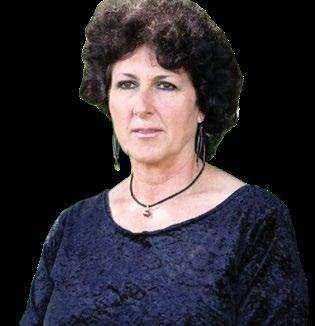
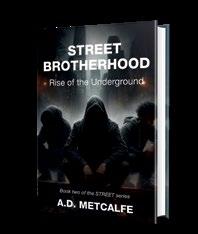
Street Brotherhood: Rise of the Underground Metcalfe, A.D. Calumet Editions | 320 pp. | $18.99 paper July 30, 2025 | 9781962834483
The city forced me to grow up quickly.

For a review of the book, visit Kirkus online.


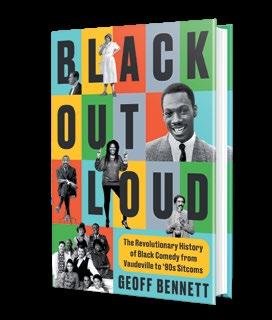
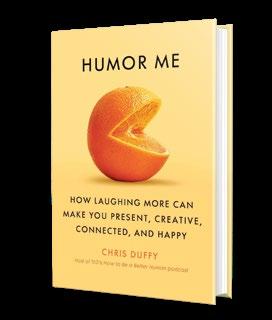
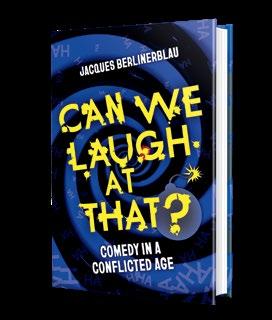
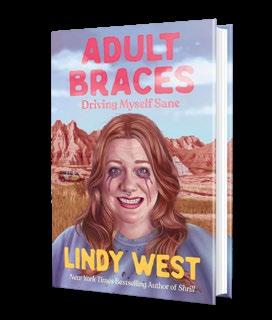
AS A BOOKISH (and decidedly uncoordinated) child, I loved the library. The sports field, though? Not my scene. There was no drama, no story—nothing to compete with what I found between the pages of a book. Or so I thought. I’m now realizing how captivating the world of sports can be, and I owe it all to kid lit.
I was recently blown away by Kadir Nelson’s Basket Ball: The Story of the All-American Game (Little, Brown; Jan. 13). Here were superheroes to rival the characters conjured up by Rick Riordan, from the lightning-fast Wilt Chamberlain to the gravitydefying Michael Jordan. These ballers brought real artistry to their work; Nelson describes Kareem Abdul-Jabbar’s skyhook as “ballet on the hardwood,” while Julius Erving’s power dunks on and fashion sense off the court gave the game pizzazz. In Nelson’s capable hands, basketball feels like a living thing, evolving from a slow, more ponderous game to the adrenalineinfused phenomenon we know today.
I was officially bitten by the sports bug, and young
readers will be, too. True, not every kid has to be the next LeBron James or Simone Biles, but these middle-grade titles might entice sports-averse readers to step out of their comfort zones and discover an unexpected passion.
Next up to bat: Baseball’s Shining Season: America’s Pastime on the Brink of War by fatherand-son team Martin W. Sandler and Craig Sandler (Bloomsbury, April 7). I’d long considered baseball dull, dominated by endless statistics, but while there are plenty of the latter in the Sandlers’ work, the emotional impact of the sport comes through most strongly. Baseball served as joyful diversion for Americans afraid of the prospect of U.S. entry into
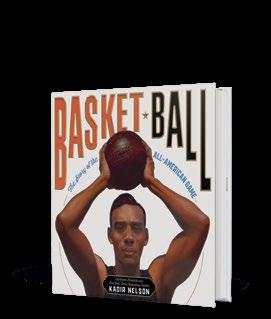
World War II; this vivid chronicle will make baseball fans—and history buffs—out of all who pick it up.
Readers who feel the need for speed will find a kindred spirit in Evelyn Rae (who competes in motocross, or off-road motorcycle racing, as Eva Knievel), the protagonist of Rebecca Caprara’s Eva to the Max (Dial Books, May 19). Eva’s a natural, much to her father’s pride and her mother’s frustration (a motocross accident left Eva’s father in a wheelchair). Caprara’s snappy free verse brings to life a fiercely competitive young athlete learning to control a hot temper while participating in a sport that’s historically been unwelcoming to girls and

women. The author offers a thrilling but forthright portrait of a lesser-known sport, balancing both the dangers and the thrills of motocross.
A gifted artist, Alyssa Bermudez reluctantly signed up to run cross-country at the behest of her parents, but she drew strength from her teammates as she watched her father suffer from liver disease—events recounted in her graphic memoir Run Home (Roaring Brook Press, Jan. 27).
Bermudez emphasizes that we all contain multitudes; contrary to the messaging of countless teen movies, artists can be jocks, too. And while she may not have been a track GOAT, she nevertheless found joy in pushing herself. Readers would do well to follow her example both on and off the field.
Mahnaz Dar is a young readers’ editor.
A recently diagnosed autistic girl has something to prove during her first time attending summer camp.
Thirteen-year-old Selah had a terrible time before her diagnosis, but now, armed with knowledge and adaptive tools (like earplugs, communication bracelets, and fidgets), she’s determined to succeed at Writer’s Camp. She’s attending with her two dragon-obsessed friends: Reyah, a Black girl who creates manga, and Brooklyn, a Korean American filmmaker. Camp will be great—she’s got her poetry workshop and a class called Magic and Monsters. There’s even Noa, a delightful, nerdy, autistic
counselor, who lives with long Covid and uses a walking aid. She explains problems with the label high-functioning and teaches Selah about spoon theory, a concept that helps disabled people talk about ability and energy limitations. Still, succeeding at camp is difficult. Selah, who must “cosplay as a normal person,” disagrees with the well-meaning adult who once told her autism was her superpower. Brownskinned former bully Ezra is at camp too; her discovery that he has ADHD doesn’t make his chaotic behavior and rejection sensitivity dysphoria easier to cope with. Deceptively simple,
Kuyatt, Meg Eden | Scholastic | 352 pp. June 2, 2026 | $18.99 | 9781546199748
evocative free verse vignettes show Selah learning to redefine success, even as she confronts conflicting access needs. Her love of dragons gives her useful metaphors for her strengths and limitations. This follow-up to Good
Different (2023), which established Selah as white, works as a stand-alone read. A kind, believable, and gently edifying portrait of a determined poet. (author’s note, poetry prompts, manga list, ADHD resources) (Verse fiction. 10-13)
A witty charmer, rife with both heart and puns.
BETTER PETS
Anta, Julio | Illus. by Gabi Mendez
Colors by Juan Murillo | Random House
Graphic (224 pp.) | $14.99 paper
June 9, 2026 | 9780593651674
Series: Hillside Valley, 2
Sol has a goal, but will her crush get in the way?
In this second series entry, a supporting character from the first book takes center field. Twelveyear-old Sol is determined to make the soccer team. Her older sister labels her “Little Miss Perfect,” and a neighbor calls her “the most mature kid in the building.” Sol, who takes the expectation that she’ll always be perfect very seriously, even helps her teachers with organizing classroom supplies. But lately her normally tireless focus has been diverted by a “stupid crush,” and she’s even having trouble keeping up with her old friends. Will she be able to accomplish her goals by making some goals? This is a solid standalone sequel in a series that explores various early adolescent struggles. Anta skillfully depicts the pain of perfectionism when it comes up against that most human of distractions: a first crush. Sol is taken with Lily, the captain of Hillside Valley Middle’s girls’ soccer team, and the story frames her feelings in a natural, matter-of-fact way. The illustrations showcase dynamic soccer action, and the exploration of sporting bonds will appeal to middle-grade soccer fans. The clean artwork accentuates the facial expressions of the diverse cast surrounding Sol, who’s Nicaragüense, and the warm colors
convey a cheerful tone and evoke the autumnal setting.
Sweet and well-rounded: reminds high achievers that it’s okay to shoot and miss. (process notes, Q&A with creators) (Graphic fiction. 8-12)
Asterplume, Z.B. | Illus. by Heather Brockman Lee | Random House (40 pp.)
$18.99 | July 21, 2026 | 9798217025671
Asterplume and Lee give a whole new meaning to the idea of “casting” a spell.
“Knitting a ghost is easy,” this story’s unseen narrator claims. “Easy” turns out to be relative. A pale-skinned, white-haired, youthful witch has needles and a book called Knitting for Little Witches to guide every stitch. Trouble is, there’s so much to prepare beforehand. One needs tea, a cat, and some mood lighting. Then comes a bath and perhaps pie and ice cream. With vibes akin to If You Give a Mouse a Cookie (1985), the book makes it clear that this witch is avoiding the inevitable. Meanwhile, ghosts are conjured up out of everything from melted ice cream and steam to the very tears from the witch’s eyes. When at last our protagonist casts on, even then there are dropped stitches and a need to unravel and knit again. The narrator notes that trying can mean difficult—but it also means “not stopping.” By the end, we have a fantastic knitted ghost at hand and, even better, backmatter showing how to cast on and knit, with a pattern for knitting a ghost of one’s own. Frustration oft proves knitting’s
greatest foe; let this book provide instructions for combating it head-on. Lee adroitly mixes gouache and crayon with images of actual three- dimensional yarn.
Sweet and playful, imbued with a heady message about perseverance in the face of vexation. (Picture book. 3-6)
Bailey, Annie | Illus. by Bonnie Wong
Feiwel & Friends (40 pp.) | $18.99
June 16, 2026 | 9781250393005
At the annual panda reunion, all attempts at a family photo end in chaos and giggles. The pandas start out dressing their best for the group picture. Chairs are assembled, the camera is in position, and all the pandas have their places. Then, right at the click of the camera, someone sneezes. The second effort sees several pandas fidgeting, poking, and pointing. Other failed shots include nose-picking and an accidental close-up on a “panda bum?!” The kids have lost it, the adults are frustrated, and that’s when full-on “PANDAMONIUM!” sets in. Just when picture time seems over, the littlest panda snaps the perfect group shot. Bailey’s rhyming text makes the book an easy read-aloud choice for preschoolers, who will enjoy the silly antics that prevent the family from taking a quality group shot. The illustrations are full of fun details, each panda truly caught mid-action: straightening a bow tie, pulling on a toy, checking a watch. The anthropomorphized pandas wear clothes and glasses and read books, among other human traits. According to the “Panda Family Trivia” game at the books end, three types of pandas are featured: giant pandas, red pandas, and brown pandas. The accompanying answers provide thorough context and related information. Readers will easily relate to the joy and delight of family mayhem. Picture-perfect family dynamics. (Picture book. 3-5)
Bardugo, Leigh | Illus. by Liz Climo Roaring Brook Press (40 pp.) | $19.99
June 2, 2026 | 9781250899125
A pair of best friends go in search of the perfect animal companion. When Yvette and Evan visit a pet fair run by a mustachioed, flamboyant vendor, they discover that the creatures on offer are anything but ordinary. Bardugo’s wordplay is the engine driving the fun: Yvette and Evan meet a “Springer Spaniel” whose coiled, spring-loaded legs launch it toward the highest shelf; the “Refrigegator,” a grinning reptile with a fully stocked refrigerator for a torso (“Save your snacks for later!”); and the “Hoarse Horse,” who, with an ice pack on its head, obligingly hacks “COUGH COUGH” into a telephone to help a child play hooky. Each animal’s name is a pun on its absurd superpower, highlighted in bold color as if the book itself is in on the joke. Climo’s cartoon illustrations, rendered in clean linework with a mostly softer palette of greens, pinks, browns, blues, grays, and yellows, reward repeat readings—spreads are packed with background mischief that sharp-eyed children will delight in finding. The compositions alternate between crowd-filled neighborhood and fair scenes and quieter two-character exchanges, giving readers room to breathe before diving back into cheerful chaos. The message—that the right pet is the one that fits your life—lands with grace. Yvette presents Black; Evan and the vendor are pale-skinned.
A witty charmer, rife with both heart and puns. (Picture book. 3-6)

Bernstein, Ariel | Illus. by Marc Rosenthal Simon Spotlight (32 pp.) | $18.99
January 13, 2026 | 9781665975094
Series: Olive and Oscar
Cherished headgear spurs adventure for a pair of elephants. Olive gifts Oscar a hat. A tan number with a black band, it immediately earns the titular description. As the two friends take a trip to the beach (cut short by rain), head to the grocery store, and bake a cake, the hat reveals surprising new functions. It serves as beachwear, but it’s also an impromptu shovel, umbrella, and grocery sack. Then it falls into the cake batter! Olive, whose confident suggestions haven’t faltered all day, now announces calmly that the hat can be washed. It can’t, and Oscar sadly sports the warped-looking cap. But Oscar recognizes that a day with Olive is better even than a favorite hat. And the pals share the splendid cake. Rosenthal’s depictions of the pachyderms and their surroundings are simple and firmly outlined. Olive is stylish in a pink polka-dot dress and a two-piece bathing suit; Oscar wears bright shorts and T-shirts. Olive’s large-type, serif-text dialogue is foregrounded in peach, Oscar’s in orange. Bernstein wrings maximum meaning out of a strict economy of text, resulting in a tale simple enough for youngsters to read independently but still satisfying. In few words, each friend is deftly characterized: Oscar is a bit slow on the uptake (asking where the hat is while wearing it) but at the end turns out to be perceptive and sweet. Olive is supportive and managerial. A friendship tale that deserves to leap immediately to the beginning-reader classics shelf. (Early reader. 5-7)
Kirkus Star
Bonsoir Lune | Trans. by Frances Cha Dial Books (60 pp.) | $19.99 | June 2, 2026 9798217111787
A village gathers to celebrate the sweetness of summer.
“Under the blazing summer, the watermelon ripens.” Once this enormous melon cracks in half, its size becomes an invitation to dive in—literally: Welcome to “opening day at the watermelon pool.” An elder arrives first with a ladder, climbing up and in. He picks out a few large seeds before sinking down with a satisfying, “Mmm, nice and cool.” “The little rascals are so excited,” comment the villagers, who present East Asian. Indeed, children adorably garbed in bathing gear, prepared with colorful floats, shout out “YIPEE!” and “Wow!” When it becomes unbearably hot, the cloud seller appears with “cloud parasols and rain-cloud showers.” The elder makes a slide “THIS big” to connect the two halves of the watermelon. As the sun sets, the “colors of the world begin to fade,” and the last child heads home…but rest assured, the pool “will open again next year.” Working with colored pencil and drawing paper, pseudonymous Korean author/ illustrator Bonsoir Lune presents irresistibly immersive spreads rife with whimsical details—widebrimmed hats, a ready towel around the neck, fresh laundry being hung to dry for the energetic children to run under. Bonsoir Lune’s simple narrative, translated by bestselling Korean American author Cha, is energetically punctuated with onomatopoeic pit pats, AAAAs, PLOPs, THUNKs, oomphs, and even musical notes. Vivacious delight exudes from every page as young and old savor the refreshing rewards of summer. (Picture book. 4-8)
Brandt, Juliana | Aladdin (320 pp.) | $18.99 June 30, 2026 | 9781665981897
Rising eighth grader Sydney Volke had a strange evening— and now it’s on repeat.
Sydney’s invitation to attend classmate Ari’s birthday sleepover at the Wildlife Science Center was engineered by her mother, who hopes Sydney will make friends. Sydney is skeptical. Her apprehension increases when, arriving under a darkening sky, she spots something with claws, a long snout, and wiry hair lurking in the woods. Originally from Minneapolis, Sydney was the new kid at her smalltown Minnesota school in seventh grade; she feels awkward, self-conscious, and out of place at the party. Aspiring filmmaker Ari, twins Uvie and Gus, and keen naturalist Remy are longtime friends who’ve called themselves “the Frankfurters” since second grade. Ari wanted to have her party at the center so they can film a documentary about a rumored cryptid. When a creature charges them while they sit around the campfire, Sydney blacks out temporarily—and awakens back in the car on the way to the sleepover. This cycle repeats itself. Brandt’s neatly constructed time-loop story hinges on a mystery surrounding the cryptid. For Sydney, it’s a chance to find some courage in herself and explore authenticity as she learns to draw on the strengths and abilities of those around her to solve the puzzle. Sydney and the twins are cued white, Ari is Korean American, and Remy is Black. Compellingly spooky and encouragingly empathetic. (Science fantasy. 9-12)
Cáceres, Alfredo | Atheneum (272 pp.)
$24.99 | June 30, 2026 | 9781665941839
A fantastical quest finds two children dealing with loss in this graphic novel debut by Chilean artist Cáceres.
Irene’s parents died in a fire, and she’s left the rubble of her home in Valdivia, Chile, to stay at the mistshrouded hostel of family friend Ruth. She brings with her A Comprehensive Guide to the Graylands, a red book recovered from the ashes of Dad’s study that her cat, Moses, who seemingly came back to life after dying in the fire, led her to. It’s a book about “what happens to the living after dying.” Francis, Ruth’s guitar-playing nephew who’s fascinated by ghosts, is also grieving. When Francis accidentally lets Moses escape, the pair set off in pursuit. Ruth is convinced that her dad is trapped in Moses’ body. The cat leads them through a portal into the Graylands, the liminal space where souls wait to pass on, where fanciful oddities abound. Francis’ recently deceased musical mentor, elderly classical guitarist Sam, appears and guides them to a climactic confrontation with the monstrous Ferryman, who guards the Black Gate to the unknowable afterlife. Cáceres elegantly folds an exploration of death’s impenetrable finality into this quirky fantasy, showing how different ways of coping with grief can comfort or destroy. The illustrations highlight whimsical details of the Graylands— jewel-toned skies, an Escheresque fortress—which echo the destabilizing nature of grief. Fluffy gray-and-white
Moses is an expressive and appealing companion on the surreal journey. Poignant, insightful, and otherworldly. (concept art) (Graphic fantasy. 8-13)
Cain, Susan, Barbara Cain, Albert Cain, Kenneth Cain, Samson Cain & Elijah Cain Illus. by Stella Lim | Rocky Pond Books/ Penguin (40 pp.) | $19.99 | June 2, 2026
9780593695685
Two rescue donkeys, two determined children, and one farm vacation converge in this tender story from bestselling author Cain and three generations of her family.
The family arrives at Mr. Santiago’s countryside farm to find a pair of donkeys named Lucky and Norman. The young narrator and brother Eli try everything to win them over— carrots, apples, ice cream, pizza, cartwheels, kites—but the donkeys keep their distance. It’s only when the youngsters stop trying so hard that the magic happens and the donkeys start to trust them. What follows is pure joy, until departure day looms and the tears begin. The emotional core of the book is handled with grace as Mama gently teaches the kids that goodbye and remembering are two sides of the same coin. Lim’s watercolor, pencil, and digital illustrations couldn’t be lovelier. Soft greens and golden fields are bathed in changing light, from bright blue days to dusky blue-violet evenings. Her donkeys are the stars of the book: Their enormous, soulful eyes and reactive bodies register wariness, delight, and heartbreak with astonishing expressiveness. Lim varies her spreads and includes intimate vignettes and sweeping pastoral panoramas that give the book visual rhythm. Rooted in real experiences, the story carries the warmth of something genuinely lived. The Cain family appears white; Mr. Santiago has brown eyes and brown skin.
A bighearted tribute to trust, goodbyes, and the special bonds between humans and animals. (Picture book 4-8)
Champion, Lindsay | Pixel+Ink (202 pp.)
$18.99 | June 30, 2026 | 9781645953319
Series: Cast vs. Crew
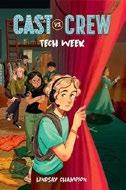
Champion’s sequel hits the ground running as backstage chaos threatens to swallow Curie: The Musical whole. With less than one week until opening night, the set has already collapsed, headsets are dead, and stage manager Ella has quit in a fury. Champion rotates among a diverse cast comprised of theater techies with considerably more confidence this time, and the characters who felt interchangeable in Setting the Stage (2025) step fully into the light. Tech lead and foster kid Levi, who’s navigating a “showmance” with Rosa (starring as Marie Curie), earns genuine sympathy; props master Sebastian’s tender growth, along with his tentative connection with mohawked Vincent (who has a drag alter ego), offers the book a warm emotional throughline. The magnificent rainbowhaired chaos agent (and soundboard operator) Willow’s escalating prank war with the cast propels the plot with delicious momentum. Champion captures the particular madness of tech week with pitch-perfect authenticity: the fraying nerves, petty feuds, and the way a shared impossible deadline can result in the formation of unlikely alliances. The novel’s central lessons—that “a team is only as strong as its weakest member” and that strength requires honoring what makes each person different—lands without feeling preachy. A cliffhanger ending will leave theater kids absolutely frantic for the trilogy’s conclusion. Readers will tear through this one and immediately start counting down to book three. (Fiction. 10-14)
Slightly scary, entertaining interactive Halloween fun.
HERE
A CREAK, THERE A SHRIEK!
Conroy, Kelly | Illus. by Nikolas Ilic Tiger Tales (32 pp.) | $18.99
July 7, 2026 | 9781664300965
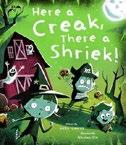
“Let’s explore a haunted farm.” Three paleskinned trick- ortreaters set off. Conroy’s verse is inspired by “Old MacDonald,” making this one a bouncy readaloud, but this farm’s a bit more unsettling than the one from the beloved nursery rhyme. Supernatural sounds (“With a growl-growl here / and a howl-howl there”) and the refrain, “Eeek-I! Eeek-I! Oh!” anchor the text. In Ilic’s jaggedly stylized illustrations, the kids pass wolves, a scarecrow (and three spiky, smugly undeterred crows) guarding a maze filled with toothy mummies, a witch with rat and cat familiars, and stark, ghost-inhabited trees. Finally, skeletons panic the trio, who abandon their candy-filled buckets. Seeking refuge, they find a derelict barn filled with darting bats. But wait—what’s going on inside? It’s a Halloween party, with cobwebs and light-string decorations and all the creepy critters they encountered earlier grinning and dancing to more festive sounds (“With a boogie here / and a box step there”). Neon-green backgrounds melt into iridescent blue, then shocking fuchsia and fierce crimson, elevating the appropriately eerie, expressionist art. A black cat lurks on virtually every page—yet another element to invite enthusiastic reader participation. Slightly scary, entirely entertaining interactive Halloween fun.
(Picture book. 4-8)
Davey, Owen | Flying Eye Books (40 pp.)
$19.99 | July 7, 2026 | 9781838742300
Series: About Animals
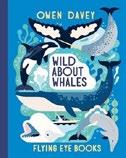
A swim with the cetacean clan adds another chapter to Davey’s long-running series of salutes to wild creatures. The author/ illustrator fills the spaces between narrative blocks with an abundance of sea life, providing full-body and close-up views of over two dozen types of whales as well as images of their prey, from tiny krill to eels, seals, squid, and sharks. In one to-scale scene, a diminutive scuba diver leads a parade of whales, from a massive blue on down, to demonstrate their great range of sizes and shapes; in another (not to scale), six very different-looking whales from a narwhal to a pink river dolphin go nose-to-nose in a literal face off. Elsewhere, sleek specimens twist, breach, hunt, or show off special features as the author lucidly lays out their shapes, behaviors, and unique qualities with a sure sense of what will catch the attention of his young audience. Readers wondering which animals are the loudest in the world, for instance, will find their answer here—and may be further gobsmacked to learn that not only do humpback whales sing an evolving chorus of moans, cries, and clicks, but orcas actually have regional accents. Following a few glimpses of whales in mythology, including an introduction to a ghostly Japanese “bone whale,” Davey closes with a plea to join international efforts to protect these rare and intelligent creatures.
A crowd-pleaser, both verbally and visually. (index) (Informational picture book. 7-9)
This pipsqueak loves everything about her papa… except his red mustache.
MY PAPA HAS A RED MUSTACHE
DiPucchio, Kelly | Illus. by Janie Bynum
Feiwel & Friends (32 pp.) | $18.99
June 23, 2026 | 9781250369963
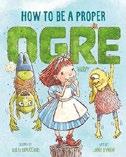
A human baby is welcomed (really!) by a family of ogres. Mama and Papa, who could pass for Shrek’s cousins, are overjoyed when their “new batch of baby ogres” start emerging from the swamp. The first two are green and fugly (Mama and Papa couldn’t be more delighted), but the third baby is pink and human-looking. Mama and Papa love her anyway and name her Mary Beth, and the family accepts her even as she becomes a little girl who is (blech) “as delicate and graceful as a water lily.” Mary Beth doesn’t mind being different, but she doesn’t want to be treated as though she is, and she longs to give scaring someone a whirl. “Honeysuckle, you can’t startle a rabbit,” says Papa. But when the dastardly Prince Royally Greedy entraps Mary Beth’s family in hopes of making off with their magic goose, she finally gets a chance to prove her mettle. The message here: Don’t underestimate little girls, and, more generally, don’t judge people (or ogres) by their appearances. The one-of-thesefamily-members-is-not-like-the-others story has certainly made the picturebook rounds, but DiPucchio and Bynum infuse the premise with inspired ickiness and extra oomph (Mary Beth’s dim brothers’ non sequiturs are hilarious). Bynum’s medieval-times-set mixed-media illustrations are light-handed and play out in a verdant outdoors—a bucolic
landscape against which the sight of a vomiting ogre may come as a surprise. Good, righteous, slightly disgusting fun. (Picture book. 3-7)
Ellis, Deborah | Groundwood (224 pp.)
$15.99 | June 2, 2026 | 9781779460219
Series: Onward, 3

Following Sit (2017) and Step (2022), this story collection continues to center on children navigating a cold and uncaring world. Each entry follows a young teen who’s neglected, abandoned, or exploited. Canadian Brodie, who presents white, is pushed by his family to take the rap for his favored 18-year-old brother; he ends up in juvenile detention for crimes he didn’t commit. Libyan orphan Liberi takes a dangerous journey across the Mediterranean to Rome, where he reluctantly falls into a life of petty crime. In Canada, Janine, who reads white, discovers that her father has a secret daughter in the Philippines, where he went on business, and this half sister is living on the streets; the two become pen pals. Nadira, a Uyghur girl, lives in a Chinese government boarding school. Her mother was sent to a reeducation camp, and she doesn’t know what’s become of her father. Each child faces a choice: let their situations doom them or take a chance on themselves. Ellis conveys the belief that there’s a way out of the darkness, if you choose to reach for it. These young people make what they can of the unacceptable, often heartbreaking,
hands they’ve been dealt in life. The lack of resolution is part of the beauty of these stories: There are no magical happy endings, just young people deciding to seize the reins of their own lives. Explores the darkness some children grow up in, as well as their ability to take charge—and go. (sources) (Short stories. 10-14)
Espinosa, Leo | Random House Studio (40 pp.) $18.99 | June 2, 2026 | 9780593811603
This pipsqueak loves everything about her papa… except for his red mustache. Sure, Papa can flap and flip pancakes like a ninja, hold his own during pillow fights, and serve as a pigtail artist extraordinaire. But his red mustache embarrasses his daughter; it makes him stand out too much, especially when literally “every other man in the whole wide world has a BLACK mustache.” Hanging out with her papa also brings the fun, whether they’re picnicking in the park, swinging on the monkey bars, or playing soccer. (He lets her win, after all.) But as soon as other papas with their black mustaches arrive at the park, the young protagonist cringes. When Papa invites her to her first real soccer match, the opinionated youngster is much too excited to worry about his glowing red mustache among the sea of black facial hair on game day. In the packed stadium, however, father and daughter are separated. Will the red mustache save the day? In his first picture book as both author and illustrator, Espinosa mines a refreshingly sweet tale from a childhood rite of passage—feeling embarrassed by one’s parents—that’s sure to resonate with parents and children alike. With its cool rhythm, the playful text makes for a fun read-aloud, bolstered by chuckleworthy moments and vibrant,
delightful artwork. Both father and daughter are pale-skinned. Stache-tacularly cheerful. (Picture book. 4-8)
Feagan, Alice | Viking (32 pp.) | $18.99 June 9, 2026 | 9798217040827
A fourthgeneration surfer girl loses a family heirloom, but the board carries onward to further watery adventures.
In Lana’s mother’s surf shop hangs “a surfboard, aged by weather, use, and love.” Lana’s great-grandmother first found the board, cleaned it up, and taught herself to surf. “Then she taught her daughter, who taught her daughter, who taught Lana.” Tempted by “a big swell,” Lana can’t resist grabbing the board to catch the perfect wave. A crash returns her to shore but sends the board out to sea. When she anxiously confesses to her grandmother, Lana expects anger but receives loving understanding about letting go. The board, meanwhile, floats through the sea, having new experiences, until it lands on shore. It’s discovered by a young girl, who uses it to teach herself to surf. Years later, Lana recognizes the familiar board, 5,000 miles away. Feagan creates a poignantly interconnected, multigenerational narrative. She uses faded blues, greens, and golds to denote memories and brightly saturated colors to highlight the present. Details of the board’s journey follow the show-don’ttell motto, with illustrations capturing entertaining encounters with a whale, a giant squid, nesting seagulls, and more. In its newest incarnation, the board finally sprouts an ankle tether to prevent it from moving on—again. Landscapes suggest an island setting, populated by characters depicted in various shades of brown.
A vivid, loving homage to family, embodied in an activity beloved by all. (Picture book. 4-8)
Fergus, Maureen | Illus. by
Paul G.
Hammond | Kids Can (36 pp.) | $19.99 May 5, 2026 | 9781525313165
An ambitious invertebrate uses his unique talents to prove himself at his new job. Reclining in an open book, Worm lets out a sigh—he is bored. Having served as the head librarian for a long time, Worm has read everything in the library, and he is ready for an exciting new career. After trying a handful of jobs that end up being too dangerous for a worm, he comes across a posting for a security guard at the convention center, where inventions have been going missing. The human manager who interviews him is skeptical: “You’re three inches long,” he points out. “Also, you’re a worm.” But Worm makes his case (he’s capable of disguising himself as a hair tie or a pretzel, he can transform “kitchen scraps into valuable fertilizer,” and he’s “extremely stretchy”). Worm is hired! And when he encounters the thief, he’s underestimated yet again, but his creative abilities (and stretchiness) turn out to be useful. Fergus’ tonguein-cheek dialogue and narration are an ideal match for Hammond’s exaggerated, energetic cartoon artwork; the illustrator wrings maximum humor and pathos from big-eyed, bushy-browed Worm as he persists in the face of failure (time spent in the sun during his turn as a lifeguard leaves him a dried-out mess) and ultimately triumphs. The manager and the thief are pale-skinned; other human characters vary in skin tone.
A winsome underdog story, starring a protagonist certain to worm his way into readers’ hearts. (Picture book. 3-7)

Frost, Maddie | Aladdin (240 pp.) | $14.99
June 2, 2026 | 9798347103997
Series: Really Rubie, 1
Stuck at sleepaway camp without her best friend, a young tween finds herself.
Eleven-yearold Rubie Fox and her best friend, Riley Swisher, are ready to have the best summer ever at Camp Pineview, an all-girls sleepaway camp in Vermont. Together, they create the TUCE (“The Ultimate Camp Experience”) TRUCE: a list of five things they’ll do together. But when Riley breaks her ankle, Rubie must go to camp alone. Riley makes her promise not to do anything on their list—which includes common camp activities like “make friendship bracelets” and “eat s’mores by a fire.” At camp, everyone seems to already know each other, and Rubie’s struggles to find common interests only emphasize Riley’s absence. A bedtime pep talk from Jim the Duck, her beloved stuffed chicken, inspires Rubie to set a goal: Make one friend and turn this experience into something positive. Enter Eliza Sparrow, a talented comic artist who shares not only Rubie’s loves of art and grilled cheese but also has divorced parents and feels completely lost at camp. They become fast friends, but soon Rubie’s TUCE TRUCE promise rears its ugly head, and she feels stuck in the middle. Hijinks ensue, and Rubie learns how to navigate jealousy, embarrassment, honesty, and being true to yourself. Rubie’s funny and relatable musings, formatted as a diary with animated black-and-white doodles, will appeal to fans of series like Liz Montague’s Camp Frenemies and Marissa Moss’ Amelia’s Notebook. Main characters present white.
Humorous, frank, and guaranteed to reassure. (Fiction. 8-12)
A tale as unique as it is heartbreaking and as winsome as it is moving.
LILIBET MAKES A FRIEND
Galvin, Christopher | Candlewick (320 pp.)
$18.99 | June 9, 2026 | 9781536251333
In the forest outside the majestic city of Fathach, a giant and a giant hunter must reconsider everything they thought they knew. Twelve-year-old human Jacq has been selected to join the exclusive ranks of giant hunters, following in the illustrious footsteps of her parents. For a town built with giants’ bones—“Skulls were used for large domed buildings; ribs made for strong durable bridges”— killing giants is necessary to maintain their way of life. Eleven-year-old Corman, a groundling giant, has emerged into the world above, seeking medicine for his ailing sister. All his life, he’s been taught that humans are “the most terrifying creatures in all of existence.” When an accident brings them together in the forest, Jacq and Corman are equally wary, but the unlikely pair quickly discover truths about each other that help them survive and effect change in the dangerously divided worlds they inhabit. The human/giant tensions and lush, magical landscapes are steeped in folklore, but the clash between outsiders and insiders is symbolic of any number of real-world rivalries. This debut by Irish author Galvin features an omniscient narrator who alternates between Jacq’s and Corman’s points of view. Readers understand how each must unlearn the half-truths and misconceptions they’ve been taught, especially when it comes to the diversity and complexity of identity and culture, to end the
corruption and cruelty that threaten both their communities.
An imaginative, heartfelt reminder that we’re fearsome, beautiful creatures living in the world together. (author’s note, map) (Fantasy. 9-12)
Ganguly, Ahana | Illus. by Arthur Geisert
Enchanted Lion Books (52 pp.) | $18.99
April 28, 2026 | 9781592704187
Series: The Clayton County Trilogy, 3
Veteran illustrator Geisert’s third in the Clayton County trilogy is grounded in his longtime patch of northeastern Iowa.
On the Turkey River’s bank, two clans reside uneasily cheek-by-jowl. The trolls dwell happily in hollows under the river, working, cooking, and making music. They “share a great big happiness, each one feeling what the others feel.” They make mischief, too, delighting in swapping out the town’s manhole covers with ones forged and imprinted with troll faces and names. The human residents, equally content working and playing, inside and outside their riverside homes, bristle at the trolls’, erm, trolling. They tire of corn growing through the sidewalks, of the trolls’ flag-pilfering and sidewalk-flooding ways. Bu when the river rises and threatens the homes of both clans alike, they begin to consult and cooperate. Working efficiently, they bag sand and build a huge temporary levee that successfully keeps the river at bay. Together, the neighbors—one set white-appearing, the other with pea soup–green skin tones—celebrate with
a feast, games, and music. The trolls enthusiastically transition into new above-ground homes—giant repurposed culvert pipes. Disaster averted, the two groups knit into one community that can cook, work, play, and even laugh at mischief together. Above Ganguly’s on-point text, Geisert’s hand-colored ink drawings brim with informed, perspectival details of a river town’s bridges, coal industry, and family farms.
A troll-spiced slice of Midwestern community, delivered with a wink from a venerable artist. (Picture book. 4-8)
Geron, Eric | Illus. by Jannie Ho | Andrews McMeel Publishing (80 pp.) | $11.99
July 14, 2026 | 9781524894320
Series: Fry Guys, 3
“Spud-tacular” discoveries and mishaps at the new dino ranch leave a trio of anthropomorphic french fries fit to be fried. Set free on a class trip to gather dino facts from encounters with miraculously preserved, recently thawed Fry-assic Era nuggets cut into dino shapes, Sweets, Waffle, and Curly (otherwise known as the Fry Guys) are at first a-sizzle with excitement. But signs of rot set in as the young visitors see nothing but unhappy, unhealthy critters confined in cramped and unsafe pens or roped up for rides. Then the fat really hits the fire when a rampaging T. Rex leads a stampede of breaded beasts out of the poorly planned, poorly run park. Geron ruthlessly leaves no pun unturned while plopping his tater tots into one yam after another on the way to a delectable denouement. Readers in the know will recognize plenty of nods to the film Jurassic Park, including the park’s half-baked proprietor (who bears a striking resemblance to the movie’s John Hammond). Ho enhances the salty banter with action-packed cartoon scenes
of fast-food morsels in a diverse array of cuts and colors, featuring lots of extremely cute nugs and one french fry in a wheelchair.
Dishes up potato-themed pandemonium, with a message about the ethical treatment of captive wildlife on the side. (Graphic fantasy. 7-9)
Ghani, A.D. | Illus. by Nadia Alam Abrams (40 pp.) | $18.99 | April 7, 2026 9781419777158
A yellow car zips through busy city streets carrying a precious load of parental love. Aizah’s Baba works long hours driving his taxicab, but on Saturday mornings, Aizah dons star-shaped glasses and a tiara for their weekly ritual—a father-daughter ride that makes Aizah feel like a movie star. Baba rarely has time to see Aizah perform in school plays, and she’s on her own while walking home after school. She’s stoic, though, meeting challenges with grace and humor (“I have to figure out by myself that the crossing guard is really an alien from Planet Froofawitz”). When a Daddy-Daughter dance appears on the school calendar, Aizah turns her initial disappointment at Baba being unable to attend into triumph with a creative solution: a party honoring her father (the titular “Baba Palooza”). Eloquent yet child-friendly similes likening the yellow taxi to a tropical mango (from the “Pakistani grocery store”), a bumblebee, and even a worn-out yellow No. 2 pencil underscore the characters’ South Asian heritage and speak to the family’s conflicted feelings about Baba’s job—Baba’s shame as he compares himself to friends employed as doctors or engineers; Aizah’s pride in her hardworking father. Alam’s fluid, bustling, cartoonish artwork carefully zeroes in on small details (like a hearing aid for Baba, who’s Deaf and speaks in Pakistani sign language) and builds
creative compositions for a vivid tale that addresses socioeconomic realities. Sensitive, uplifting, and honest—a pitch-perfect portrait of a loving working-class family. (author’s note) (Picture book. 4-8)
Gibney, Shannon | Illus. by Huy Voun Lee Univ. of Minnesota (32 pp.) | $18.95 May 19, 2026 | 9781517911454
A girl tries to process her baby sibling’s stillbirth. Salome, a brown-skinned child with hair in Afro puffs, knows she has a sister; “she just [doesn’t] know where she [is].” She thinks back to Mama’s growing tummy, Daddy’s smiles, and brother Gerald’s declaration that while Salome would be a big sister following the baby’s arrival, he would be the “biggest brother.” Now, however, the family’s anticipatory joy has dissipated into quiet heartbreak, expressively captured in soft, blurred illustrations: Mama often cries, Daddy and Gerald seem angry, and the baby is missing. Her family, all presenting Black, seem reluctant to talk. As Salome’s confusion persists, though, they help her understand what happened. Toni, her sister, was stillborn. After the funeral, Toni was buried in a cemetery. Still, questions remain. Gerald explains that while Toni’s body is in the ground, “she’s not really there,” and Salome asks: “Where is she?” The family explores religious answers (“the spirit world,” heaven), as well as secular ones (photographs, stories, and the empty space between Salome and Gerald at the dinner table). While the responses are not always met with family consensus, the conversation seems healing. As they talk, cool-toned scenes of isolation and unease transition into warm full-bleed spreads depicting togetherness and comfort. Youngsters experiencing a similar situation will connect with Salome’s age-appropriate questions about death, while their caregivers will
find ample space in the text to invite additional reflection.
A valuable resource for families navigating infant loss. (Picture book. 3-8)
Kirkus Star
Hamilton, Kersten | Illus. by Shanda McCloskey | Disney-Hyperion (40 pp.)
$18.99 | April 7, 2026 | 9781368104197
A girl who has only pretend friends opens her life to a real one. Lilibet has “tons of friends.” There’s a catch, though: Her pals are imaginary. Still, they give Lilibet the confidence she needs to manage at school and make awesome things in her lab. One day when she’s outside gathering supplies, her classmate Peanut asks Lilibet about a drawing in her notebook; when she tells him it’s her plan for “making a friend,” Peanut offers to assist. He proves to be a great helper, which, it turns out, is an excellent quality in a non-imaginary friend—someone who, Lilibet comes to realize, can’t be expected to satisfy a list of conditions she has written in her notebook. What’s lovely and clever here is the way that Hamilton, without spelling it out, and McCloskey, who captures facial expressions with a few strokes, give young readers all they require to recognize what’s really going on: Lilibet’s imaginary friends aren’t meeting all her needs. Hamilton and McCloskey, who reliably delivers dynamic Procreate-colored scenes, bring a marvelous specificity to each aspect of this story. For Peanut, things aren’t just cool, they’re “cool-cool,” and readers are unlikely to find a picture book that makes more entertaining use of a pink Marie Antoinette wig. Lilibet has pinkish skin and a brown bob; Peanut has brown skin and a wavy reddishbrown undercut.
A friendship tale as unique as it is heartbreaking and as winsome as it is moving. (Picture book. 3-7)
CAPY CAPY CAPYBARA
Harlow, Winnie | Illus. by Sawyer Cloud Penguin Workshop (48 pp.) | $19.99 June 2, 2026 | 9780593753606
Actor and model Harlow draws from childhood experiences for a picture book about an aspiring fashionista struggling to be herself. On the first day of school, Winnie, a Black child who, like the author, has vitiligo, is “ready to shine.” Winnie’s been concocting back-to-school outfits all summer long. Whether she’s sporting a “swirl of spunk” or “glimmer of glam,” her look is “simply… Winnie!” Her style intrigues classmate Ella, whose clothes are picked out by her mom. Winnie presents her new friend with a custom-designed hair ornament, but after recess, Ella isn’t wearing it. And when Winnie reinterprets the class picture dress code (because she looks “simply…nothing like Winnie” when she dons the same tiger shirt and khakis as her classmates), the others exclude her from their “tiger club.” When Winnie laments that she “just [doesn’t] fit in,” Grandma, a talented gardener, points out a purple iris among her roses: “It was born to stand out, just the way it is.” Inspired, Winnie creates eclectic accessories for her classmates. Ella dons the bow she’d hidden because it didn’t match her dress, finally realizing that “there’s no wrong way to express your style—or yourself.” An ending spread depicts Winnie and her diverse classmates in a fashion show, all unique and beautiful—“simply as they are.” Though some dialogue feels stilted, Cloud’s energetic cartoon illustrations readily convey Winnie’s emotions, and Winnie’s self-confidence will encourage readers to rock their own unique traits.
A sunny celebration of self-expression. (author’s note) (Picture book. 5-8)
Harper, Charise Mericle | Union Square
Kids (40 pp.) | $18.99 | April 14, 2026
9781454958383
A buoyant, bouncy readaloud featuring the world’s largest rodent and its avian friend.
A capybara and a big-eyed bird set out together, and from the beginning, the comedic tension is established: The capybara is essentially a water-loving tank; the bird is decidedly not. As the day progresses, the two take part in a series of activities—a leafy lunch, a comfortable wallow, a sunbaked rest—until the capybara’s exuberant splashing drenches its companion. The bird’s irritation is palpable, and the capybara promises not to splash its pal for a week. But when a gator zeroes in on the unsuspecting bird, all promises are cheerfully abandoned. Enter: one very large rodent, one dramatic leap, and a splash heard round the river. Harper’s text is a master class in minimalism, single words and punchy phrases ricocheting across the page like the action itself.
“COMFY Capybara” gives way to “TOO HOT, Capybara!” which gives way to “SUPER SPLASH”—the rhythm builds with the inevitability of a drumroll.
Onomatopoeia abounds: Pages practically drip and crash and whoosh as the capybara plunges in and out of the river. The art reinforces every beat: flat, minimal shapes in bright blue, tan, and green, with spare compositions that work adeptly with the text to balance the emotional weight: “WORMY STRUGGLE,” “DOUBLE BUBBLE,” “SCARY TROUBLE.” The final “ME AND YOU” lands with quiet, earned sweetness.
Funny, tender, and endlessly rereadable; storytime gold. (Picture book. 3-6)
Herrera, Olga | Charlesbridge (40 pp.)
$18.99 | June 9, 2026 | 9781623547592
A young girl shelters in place with her family during the Cuban Revolution (1953-1959).
Lucinda lives in Santa Clara, where escalating military activity fills her neighborhood with fear. As tanks rumble past and gunfire echoes in the distance, her family and neighbors remain indoors with the shutters closed tight. Inside, her tía offers quiet reassurance, echoed by the steady pressure cooker shushing on the stove. Lucinda’s mamá responds to the tension by preparing a meal for family and neighbors seeking refuge. The familiar aromas gradually replace the scent of smoke drifting in from outside. When Lucinda wonders how Mamá can cook at a time like this, her mother explains that although they cannot control what is happening beyond their walls, they can each work to create safety and comfort within them. Later, when the lights go out, Abuela gently reminds the family that they can make their own light through care for one another. Soft pastel illustrations and expressive faces emphasize the tenderness shared among neighbors. The story closes with the community stepping outside to tidy their street, carrying forward a sense of hope. Lucinda’s journey affirms that fear is natural in uncertain times and that even small acts of care can steady a community.
A poignant tale in which love and shared purpose become a family’s brightest light. (author’s note, recipe) (Picture book. 4-8)

For more compelling tales of community, visit Kirkus online.
Higuera, Donna Barba | Levine Querido (400 pp.) | $19.99 | June 9, 2026
9781646145713 | Series: The Last Cuentista, 3
In this trilogy closer, 13-yearold Itzel Tui Olmstead embarks on a centurieslong voyage to her family’s ancestral planet, carrying more than just her grandmother’s stories with her.
Ninety years after the Cuentista Petra Peña landed on the planet Sagan, people struggle to rebuild their lives in the face of critically limited resources and frequent, punishing windstorms. Itzel, who’s Petra’s granddaughter, and her father barely survive on their meager rations, which they supplement with risky, clandestine foraging. They’re still mourning the loss of Itzel’s mother, who was killed when a heat vent erupted two years ago while she was doing scientific research. A message reaches Sagan, confirming that humanity survived the comet that Petra and others fled and inviting them back to Earth: “todos son bienvenidos a La Cuna.” Dad, considering their ongoing battle for survival, decides they’ll join those making a return journey to Earth, but Itzel is distraught at leaving behind the only home she knows. With careful, deliberate pacing, this volume expertly connects the first two books, continuing the impeccable worldbuilding and exploring similarly profound themes, including the difficult choices people are forced to make when established systems fail them. Higuera raises questions about the possibility of enduring human happiness and whether cycles of turmoil are destined to repeat themselves even when there are chances for improvement. The series ends on a hopeful and satisfying note of new beginnings.
A testament to humanity, celebrating the legacies we leave behind in our stories and sacrifices. (Science fiction. 10-14)
Holub, Joan | Illus. by Rafael Rosado
Random House (144 pp.) | $14.99
June 30, 2026 | 9780593434345
Series: Fart Boy and Reeky Dog
Farts reanimate extinct species in this free-for-all of a sequel. When a book gets this wild, readers should consider an opening recap a mercy. The story still focuses on Phartolomew Normal (who saves the world as his alter ego Fart Boy, accompanied by his pooch, Reeky), and the villainous Professor Groovypants (nicknamed Gravypants) is still scheming to exploit Earth’s flatulence. Those foundations serve as a launchpad for the chaos to come, trading superhero tropes for more of a sci-fi adventure. Chapters are lettered instead of numbered, pungent farts reawaken dinosaurs during Phartolomew’s school trip to the Stinksonian Museum, paintings of historical paleontologists speak to the students, and time travel leads to a lesson about Earth’s development. To anyone seeking logical explanations, the book implores, “Fart power. Just roll with it.” The unpredictability is an entertaining feature, not a bug, especially when Rosado’s art so seamlessly transitions across different formats. For instance, a diorama of the museum and a quiz about “Which dinosaur are you” keep readers anticipating what unpredictable turn awaits them. Counting on an explanation, as Phartolomew’s plucky but overlooked friend Liz does, is a moot point on a ride that swerves so dramatically. The finale may tease a third book, but readers would need their own time machine to guess at the plot, and that’s to its credit. Most characters are pale-skinned.
A colorful and chuckle-worthy exploration of the past—but beware of passed gas. (Graphic fiction. 7-10)
Iceberg, Karina | Illus. by Steph Littlebird Heartdrum (32 pp.) | $19.99 | June 16, 2026
9780063254909
Hope is the thing with feathers in this soaring tale of indefatigable Indigenous identity.
Qal finds Aapa (Grandfather) painting in his treehouse by the sea, where the elder reminisces about time in “a crying place” (one of the residential schools where hundreds of thousands of Native children faced abuse) and shares tender insights. Now, dreaming and creativity “reminds me that I’m free,” but Aapa once drew hope from imagining his future family: “I built a nest, wisp by feather, for my dreams.” Iceberg’s (Aleut/ Alutiiq) succinct text is tucked neatly into quieter corners of Littlebird’s (Oregon’s Confederated Tribes of Grand Ronde) immersive digital illustrations, which feature copious feathers and images of the brown-skinned pair sporting full wings in moments of particular strength. Cool, soothing blues in the swooping art are accented with strategic pops of Aapa’s orange clothing, a nod to Canada’s Orange Shirt tradition marking the National Day of Truth and Reconciliation. Like the strongest picture books about American Indian residential schools, such as Kay Dupuis, Kathy Kacer, and Gillian Newland’s I Am Not a Number (2016) and David A. Robertson and Julie Flett’s When We Were Alone (2016), this powerful work touches on the immeasurable loss of life, language, and cultural identity while modeling resilience for processing these institutions’ lasting individual impact. Backmatter lends additional color and context and includes a hopeful author’s note offering a brief history of cultural erasure.
A moving multigenerational story that urges us to look forward with optimism even as we acknowledge the pain of the past. (Alutiiq glossary, note from publisher) (Picture book. 5-8)
Please tell us a little about yourself and Ziva the Great. I’m a Texas-based children’s author, and I care a lot about stories. Maybe too much sometimes. I believe children deserve books that feel thoughtful. Not rushed. Not loud for the sake of being loud. Stories you can sit with for a minute.
I tend to write quieter, charactercentered stories. I’m interested in belonging, courage, memory, and the ways people and animals heal without always announcing that they’re healing. Whether it’s a guarded Maine coon cat, a very determined little dog, or a gentle ghost who gathers dreams at night, I’m drawn to the small moments that actually matter.
I grew up loving children’s books that felt timeless, the kind you read more than once and notice something new each time. I think that still guides me. I care about rhythm, about page turns, and about how words and illustrations hold hands. More than anything, I hope the books I write are ones a child might keep nearby.
What made you interested in storytelling?
Even as a child, I imagined stories behind everything. A tree wasn’t just a tree; it had history. An old house wasn’t empty; it was waiting. Writing is how I hold on to that way of seeing the world. It helps me make sense of courage, belonging, grief, and hope, all the things that shape us. Writing for children feels like coming back to
the beginning, and I’m grateful I get to do it.
What are you working on after Ziva the Great ?
Right now, I’m working on a few stories that feel close to me. One is about a lonely ghost who collects children’s dreams at night. It’s tender and a little wistful. I didn’t set out to write about loneliness, but that’s where [the story] led me.
I’m also working on a story inspired by my father, who was born with a heart condition and decided he was going to live boldly anyway. That one is personal and carries some weight with it.
Another is about a flower growing just outside a garden and the unseen kindness that saves her. That story came from thinking about how often the ones on the edge are the ones who need us most.
And the Belle and Asher stories are still growing, too. They have humor and heart, but they’re still about belonging. I don’t think I can escape that theme. It keeps finding me.
What can readers expect that might be different from your previous body of work?
I think readers can expect growth. Maybe more depth in some places. Maybe even new angles I haven’t explored before. The heart will still be there. Belonging will probably always find its way in. But I’m allowing the work to evolve with me


Ziva the Great Vanous, Cindy; illus. by Rebeckah Gerstner
Self | 32 pp. | $24.99 | $19.99 paper Oct. 21, 2025 | 9798993516400 9798993516417 paper
instead of trying to repeat what I’ve already done. I don’t see that as inconsistency. I see it as paying attention.
Portions of this Q&A were edited for clarity.

For a review of the book, visit Kirkus online.



Firebird Waltz will be the first entry in a series by the celebrated dancer.
Misty Copeland is launching a new series of middle-grade novels, People magazine reports.
Aladdin will publish the ballerina’s Firebird Waltz in the summer. The press says it’s “the first book in a middle-grade series about a girl who must balance her ballet aspirations with her magical destiny.”
Copeland began her ballet career in 1996 at the age of 13, joining American Ballet Theatre

For a review of Black Ballerinas, visit Kirkus online.
in 2000. In 2015, she became the first Black woman to become a principal dancer at the company. She retired last year.
Copeland is also a prolific author who made her literary debut in 2014 with the memoir Life in Motion: An Unlikely Ballerina. Her children’s books include Firebird, illustrated by Christopher Myers; Bunheads, illustrated by Setor Fiadzigbey; and Black Ballerinas, illustrated by Salena Barnes.
Firebird Waltz tells the story of Josie, a 12-yearold girl who attends a ballet school and learns that she is destined to embody “a beautiful dance spirit full of goodness” who’s at odds with an evil sorcerer.
Copeland shared news of her novel on Instagram, writing, “A young dancer discovering her voice, her power, and a little bit of magic along the way. I can’t wait for the next generation of dreamers and dancers to meet…Josie.”
Firebird Waltz is scheduled for publication on Aug. 25.—M.S.

For general inquiries: www.niniandconnor.com
Nini & Connor:
The Tale of the Hawk
A richly told children’s story set in a peaceful garden inspired by Old Town Fredericksburg. Two devoted siblings care for the lively scurry of squirrels in their backyard—until the sudden arrival of a Red-tailed Hawk throws the garden into chaos.
To protect the creatures they love, Nini and Connor must find courage together.
Written in a gentle, classic voice and designed to be read aloud, the book is available on Amazon, Barnes & Noble, and through Ingram.
ISBN: Paperback 9798994344903; Hardcover 9798994344910
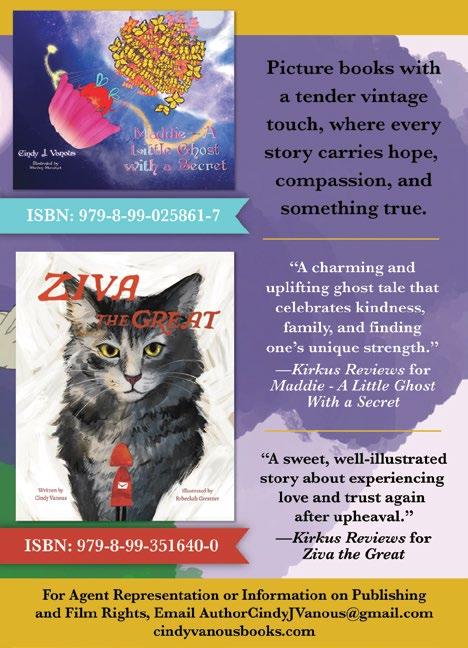

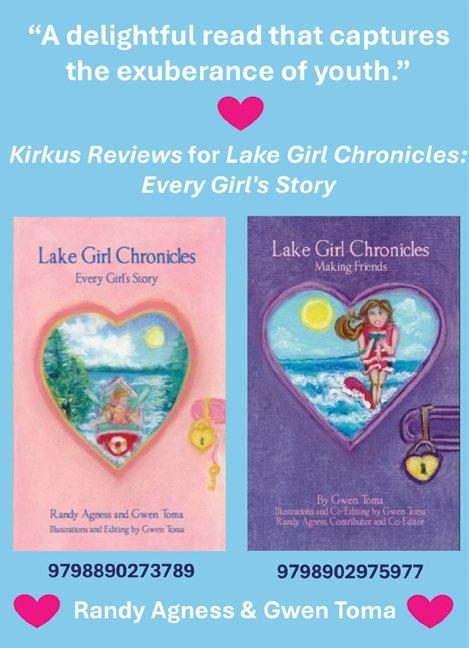
The comedian’s Cat and Lola: School Picture Day is coming this fall.
Melissa Villaseñor is launching a new series of graphic novels for children.
Gloo Books will publish the first installment in the series, Cat and Lola: School Picture Day, illustrated by Jimena Sánchez Sarquiz, in the fall, the press announced in a news release. It calls the book “a laugh-outloud early-reader graphic novel about friendship and being yourself.”
Villaseñor was a stand-up comedian and voice actor before joining the cast of Saturday Night Live in 2016. She left the show in 2022 and has since done voice acting in films including Ralph Breaks the Internet and Dog Man
For more kid lit by celebrities, visit Kirkus online.

Her new book will follow two best friends, Cat, a stylish “former social media petfluencer” who helps Lola, a free-spirited girl, find the perfect outfit for school picture day. “This standout early reader graphic novel is perfect for kids who love funny stories and characters who don’t always agree but always care,” Gloo Books says.
Villaseñor said in a statement, “It’s been a constant journey to keep being true to who I am and not get tangled with comparing myself to others. With Cat and Lola, I hopefully get to make kiddos laugh and embrace their quirks. It’s about finding the friends in life that rejoice in who you are [and] love you for you, and discovering how to love yourself.”
Cat and Lola: School Picture Day is scheduled for publication on Sept. 22.
—M.S.

Melissa Villaseñor
Iker, Beatrice Winifred | Illus. by Miguelina Milien | Kokila (40 pp.) | $18.99
June 9, 2026 | 9798217003693

A biography of Black country artist Charley Pride (1934-2020), who crossed the color line.
Fittingly, Iker’s first book for kids employs text that could pass for lyrics to a country song (albeit one that doesn’t pay much attention to meter). As a child in Mississippi, Charley loved to sing, and he taught himself to play the guitar. It upset him that people were polarized by race and religion; he wanted to “ride the clouds outta Sledge, Mississippi, / with his rich, ringin’ rhymes / and change the world one ditty, one ditty, / one ditty at a time.” As an adult, Charley performed in clubs at night and played baseball by day until an injury forced him to focus on his music. He eventually became country music’s first major Black star, though he met with resistance from those averse to change (“Not everyone was happy to see / different kinds of people in Charley’s crowds”). Although the text skimps on biographical details that might have interested young readers (e.g., that Pride played baseball in the Negro Leagues goes unmentioned), Iker’s style is well suited to capturing their subject’s emotional life, which included periods of despair. (An author’s note touches on Pride’s struggles with bipolar disorder, which he was open about before doing so was commonplace.) Milien’s cartoonish digital art brims with enthusiasm. A poetic, worthy ode to a trailblazer. (sources, photo references) (Picture-book biography. 4-8)

James, LeBron | Illus. by Ariel Landy
Harper/HarperCollins (32 pp.) | $12.99
July 21, 2026 | 9780063306653
In this offering from the NBA legend, the author of two selfesteem-building picture books, some kids find
Halloween frights too frightening.
Zara is excited: “This year, Halloween was extra special. The fifth graders at Hickory Elementary always throw a party for the kindergarten class, and Zara and her classmates were finally on the invitation list.” But when the big day arrives, Zara and the other kindergartners are freaked out by what the fifth graders have cooked up: The school gym has been decked out with life-size witches and wolves—and none of the funny ghosts and high-fiving skeletons that Zara had hoped for. It’s up to Zara to tell the fifth graders (in language that sounds suspiciously like that of an adult) that they’ve missed the mark: “Halloween is about more than scaring others, it’s about having fun and being together. It’s about community.” Their eyes now opened, the fifth graders work with the kindergartners to create “the best Halloween yet!” This one is too much of a scold and too formulaically written to be much fun. With cushiony art rich in secondary colors, Landy capably captures the emotional extremes experienced by Zara and the other kindergarten cutie-pies. Zara is brownskinned with curly dark hair in space buns; the supporting cast is diverse. Endearing characters, but the message feels too heavy-handed to entice young trick-or-treaters. (Picture book. 4-8)
Star
Kim Hyo-eun | Trans. by Aerin Park Scribble (18 pp.) | $12.95 | May 5, 2026 9781964992419
Follow two beguiling parallel stories through this accordion-fold board book. Bracingly blue skies and a beaming sun welcome readers as they open the book. Using brief prepositional phrases, the story, translated from Korean, progresses downward as the book unfolds. A jubilant pink balloon soars “under the rainbow,” a wind-swept hat glides “under a bird,” until finally we reach a grounded “Mama” and “under Mama / me,” an inquisitive infant snug within a carrier. Another journey awaits on the book’s opposite side, this one designed to be read horizontally. Now toddling, the child’s preoccupied not with what’s above, but with what’s down low. Intriguing natural objects—including “rock / beside a leaf / beside acorns”—loom large and distinctive against color-drenched backgrounds. At one end of the unfurled pages, Grandpa waits eagerly. Meaningful and developmentally aware, these plotlines elevate the narrative, making the book more substantive than the usual picture dictionary. This is especially apparent in the poignant “me” and “I am here” statements that eloquently reflect the child’s beginning glimmers of self-awareness. Nuanced watercolor washes are artfully rendered. Buoyantly airy on one side, grounded and solid on the other, the high-contrast
A good pick to stir up interest in programming—and pasta-making.
SPAGHETTI
objects are appropriately eye-catching. Hardy paper will admirably withstand tactile exploration, and well-defined folds allow the book to lie flat or stand upright for tummy time. The family appears to be East Asian.
Pint-size perfection. (Board book. 0-3)
Kinzinger, Adam with Whitney Bak | Illus. by Katie Melrose | Tommy Nelson (32 pp.)
$19.99 | May 5, 2026 | 9781400252725

In this picture book from former congressman and U.S. Air Force and Air National Guard officer Kinzinger, a father shows his child that heroes are found everywhere. Christian is excited to learn that his class will be presenting about heroes in their lives. He knows exactly who he’s going to talk about: his father, an Air Force pilot. When Christian’s friend Ella declares that she will present on their teacher, Ms. Betty Jo, Christian is confused. Heroes protect people, like his father does, but Ms. Betty Jo “didn’t protect anyone.” When Christian tells his father that no one else in his class knows a real hero, Dad takes the boy on a trip in his single- engine plane. Christian observes different workers as his father explains their heroism in verse. The text switches back to prose as they land at a military cemetery, where Dad places a flag at the tombstone of a friend. Vibrant, episodic illustrations give the story momentum, while the detailed vignettes provide a good opportunity for young readers to discuss what’s happening in situations that call for doctors, police, 911 dispatch, the National Guard, and lifeguards, among others. Brief backmatter presents facts about some of the institutions and people who inspired the illustrations. Christian and Dad are pale-skinned; other characters are diverse. A colorful conversation starter
about what heroism can mean. (Picture book. 4-8)
Kloss, Karlie with Vicky Fang | Illus. by Remi Jose | Roaring Brook Press (40 pp.) $19.99 | July 28, 2026 | 9781250852885
Supermodel
Kloss and co-author Fang cook up a STEM adventure that supports creative coders when their commands get dicey. Kelly Kent and her pup, Gadget, love “to tinker, code, and build.” When business explodes at her neighbor Mr. Amato’s new restaurant, Kelly offers to “build a spaghetti machine” to help him keep pace with orders. With a determined set of her brow, the young scientist methodically attacks the problem. Observing, experimenting, constructing, and giving her machine commands, Kelly knows “coding is like cooking—she just has to figure out the right steps to get the outcome she wants.” Initial attempts get more twisted than Mr. Amato’s delicious spaghetti, but “line by line, Kelly cleans up her code” and achieves pasta perfection. Jose’s energetic digital illustrations feature classic pasta shapes swirling across pages and artfully incorporate computer commands in a distinctive font, emphasizing foundational logic. Backgrounds in cool blues have an airbrushed look that adds visual texture, while splats of tomato-red sauce throughout suit the food-centric, alliterative storyline. Though the story has a few small bugs (Gadget is an unnecessary though innocuous sidekick), this tale of a focused and determined problem-solver sits well alongside other STEM picture books, including the Questioneers series. Brief backmatter explains the title, a nickname for messy code. Kelly is
pale-skinned; Mr. Amato is slightly darker and of Italian descent. A good pick to stir up interest in programming—and pasta-making. (Picture book. 4-8)
Kirkus Star
Kramer, J. Kasper | Atheneum (320 pp.) $17.99 | June 16, 2026 | 9781665944175
Faith, serpents, and healing intertwine as a young mountain girl comes of age in Tennessee in 1975. Living as she does in Blackberry Holler, 11-year-old Delilah Fowler, who’s cued white, knows to be cautious around rattlesnakes. But she’s also a powerful believer in hill magic and has grown up hearing about how a rattlesnake curled up with her in her bassinet. When she nearly steps on a rattlesnake in the grass, and a stranger saves her from being bitten by grabbing it, she longs to learn about his powers. Turns out he’s Jasper Jones, a traveling preacher who’s leading a tent revival nearby. Mama longs for the comfort of the faith community she grew up in, older sister Eve is entranced by the preacher’s son, and wild younger sister Jezzie loves the ruckus. But when Mr. Jones speaks in tongues and handles a rattlesnake—the one she nearly stepped on, no less—a shaken, “bespelled” Delilah starts questioning her feelings, her family, and her faith. Kramer’s Appalachia feels sweet and true, with plenty of nuance and also a pet raccoon. Delilah’s relationships with her parents and sisters, her first crush, and her first period are drawn with detailed grace. A fascinating author’s note offers cultural and historical context for the story as well as insights into Kramer’s personal experiences and research. An intricate, emotional story unfolding in a beautifully rendered setting. (Historical fiction. 8-12)
Löfgren, Maria | Trans. by Polly Lawson
Floris (32 pp.) | $18.99 | April 14, 2026
9781782509547
Where’s Grandma?
Let’s search and find out!
Ari goes over to Grandma’s house, only to find that she isn’t there...or is she? Ari goes from room to room looking for Grandma, who’s “great at hiding,” like the Mega-Chameleons she’s spent her life searching for—in vain. In each room, Ari finds evidence of Grandma’s having been here recently, which propels the youngster forward, helped by Feather and Poseidon, Grandma’s trusted pet waterfowl. After a dramatic tumble into a dark, foreboding basement, Ari decides to imitate the elusive Mega-Chameleon’s hissing roar to lure Grandma, and the two happily reunite. This playful tale proves that age is just a number (the endpapers and the items in Grandma’s house hint at an active, rich life full of travel, family, and one-of-a-kind experiences).
Löfgren’s first-person text, translated from Swedish, is composed of Ari’s stream of consciousness, dialogue between Ari and Grandma, and well-utilized onomatopoeia, immersing young readers in Ari’s perspective. Kids will pore over each bustling, digitally illustrated spread as they seek evidence of Grandma’s presence and look for a chameleon featured throughout (an answer key is provided at the end). Ari is tan-skinned; Grandma is pale-skinned. For hours of diversion, seek out this tale of intergenerational bonding through play. (author’s note) (Picture book. 3-7)
Lu, Wendy | Knopf (288 pp.) | $17.99 June 16, 2026 | 9798217030286
Twelve-year-old April Xue has a passion for acting, so she’s crushed when she auditions for her middle school play but doesn’t land a part due to her disability.
April, who has bilateral vocal cord paralysis, wears a tracheostomy tube that allows her to breathe. One day, she overhears director Ms. Rooney discussing her in the teachers’ lounge. Ms. Rooney says April shouldn’t be on stage—the tube is too loud, and it might fall out. April becomes determined to get what’s rightfully hers. She lies to her family, saying she’s gotten the lead role; in reality, she’s a stage assistant, but she plots to prove she’s a better actor than the actual lead, Zahra Khan. Zahra and April grow close even as April’s new theater community pulls her away from her best friend, Ruby Zhang. The novel details how a play goes from rehearsal to opening night. April is a well-drawn character who’s ambitious and talented. She deals with periodic ableism, but she rejects the label brave: “Simply breathing the same way she had always breathed—that wasn’t brave. That was just the way she lived.” She later discovers that Ms. Rooney’s reasons for underestimating her may have been more complicated than they at first seemed. April’s close-knit Chinese American family and community are well-observed, and she is, refreshingly, allowed to be cutthroat and a realistically bad friend who experiences growth over the course of the story. An appealing celebration of theater kid passion. (Fiction. 8-12)
Richer and more moving than a story narrated by a pencil has a right to be.
STUBBY
Ludwig, Trudy | Illus. by Maribel Lechuga Knopf (32 pp.) | $18.99 | June 16, 2026
9798217028672 | Series: Caring Classroom, 1
A young girl approaches the first day of school with big feelings. If Thea’s carefully curated checklist is any indication, then her “big day” should “be absolutely perfect.” She’s ready with her notebook, lucky pencil, and tissues, but her emotions require a bit more effort to manage: excitement over meeting her new teacher, hope that she’ll be liked, but “a lot of worry” at the prospect of making a mistake. Luckily, Ms. Howard gently welcomes Thea to her “caring classroom” and offers reassurance: “I get nervous when I’m in a new place and meet new people, too. So let’s just take it one day at a time.” Thea’s first day, alas, “is far from perfect,” but her second is better. The third day begins “nearly perfect,” but she’s later overwhelmed by frustration and anger when her drawings don’t turn out as she intended. Ms. Howard thoughtfully diverts Thea, suggesting that she assist her classmates. Their combined efforts bloom into messy but “perfectly wonderful” creations. Ludwig’s encouraging narrative provides plenty of reminders that art—and life—need not be flawless to be beautiful. Lechuga’s adds her own bright spark throughout her warm and invitingly busy classroom scenes. Thea has brown skin and curly hair; her classmates are diverse. A checklist of “Helpful Tips for Perfectly Imperfect YOU” is appended. A convincing argument that perfection may be overrated but kindness never is. (Picture book. 3-7)

For more by Trudy Ludwig, visit Kirkus online.
Lyall, Casey | Illus. by Sara Faber Greenwillow Books (128 pp.) | $24.99
June 23, 2026 | 9780063285293
Series: The League of Littles
A babysitting gig offers opportunities for major mischief. Lyall returns to this ongoing series centered on a most amusing premise: Various squads, among them the League of Littles and the Band of Bigs, exist to help older, younger, and middle siblings (as well as only children) through conflicts. The Band of Bigs has been summoned to assist Kent, whose sneaky younger brothers tricked him into going outside, bolted the door behind him, and called in the League of Littles to keep him out. This front-porch standoff provides a perfect setup for a showdown. The smaller set skillfully booby-trap all possible points of entry—slime on the windowsills, a pillow catapult, a cascade of marbles. The Bigs plan an infiltration from above, deploying their cutest asset, Chester the hamster, who sneaks down the chimney—but he’s quickly met by a feline foe and trapped under a laundry basket. The confrontation reaches an impasse; soon, the Middles and Onlys Guild intervenes. Much as in the series’ first book, antagonistic antics overwhelm opportunities for character development. But curiosity will likely keep readers intrigued. Why were the Middles and Onlys so quick to help, anyway? A subsequent entry in the series will almost certainly shed some light. Faber’s lovely, bright, and expressive cartooning carries the story breezily along, with chubby Chester occasionally stealing the show. The kids vary in skin tone. A lighthearted caper with a dash of familial intrigue. (Graphic fiction. 7-10)
A lighthearted caper with a dash of familial intrigue.
THE BAND OF BIGS
Magaziner, Lauren | Aladdin (448 pp.)
$18.99 | June 16, 2026 | 9781665968690
Series: The Incorruptibles, 2
Fiora and her team of sprouts from Inc Academy have gone rogue, seeking a way to save humanity from powerful sorcerers. This actionpacked second book picks up three weeks after the end of The Incorruptibles (2025). Fiora and her crew are now “outlaws” from Inc Academy, and their goal is to figure out how to reverse the Dark Deals that make humans into sorcerers— but they face many obstacles, including a revelation about Mel’s family history that turns her against Captain Quinn. And before they learn how to cure sorcerers, they need to face two of the most powerful: Lightmare and the Radiance. Fiora, with her “annoyingly strong moral compass” and strength in highpressure situations, is still terrified of losing loved ones and anguished over Mel’s focus on vengeance, but she learns to trust her teammates and share the risks as they face one high-stakes situation after another. Themes of justice vs. vengeance, doing the right thing, and the problems inherent in wielding power run through the story, setting up for an exciting third book. As Quinn says, “Sometimes you have to break a few rules to change the world.” Fiora, who’s cued Jewish, is attracted to girls, and there’s additional diversity in ability and gender identity in the supporting cast. Complicated and compelling. (Fantasy. 10-14)
Mallery, Sydra | Illus. by John Hare
Greenwillow Books (40 pp.) | $19.99
June 30, 2026 | 9780062364319
A pencil’s origin story, as told by itself.
“You aren’t going to believe this, but when I was little, I was actually very big.” So begins the autobiography of Stubby, a cedar tree–turned–short yellow pencil who has googly eyes, a couple of teeth, and a good feel for storytelling (“It all started in a forest”). Mallery’s offering is more than an educational book that plays like an adventure story (one machine “cut me from my roots”; another “skimmed off my branches”). After Stubby winds up in a classroom, having been purchased from a store as part of a boxed-pencil 10-pack, the book becomes one writing implement’s improbably affecting search for a permanent user. Stubby weathers much classroom drama (“I rolled under Felix Johnson’s desk”; “Cherry snatched me and sharpened me”) until the pencil finally finds a child who is loyal. Hare’s digitally futzed-with art—originally created with, yes, a pencil—features tidy lines and a cheery palette dominated by blues, greens, and yellows. The illustrator effectively relies on panels to instill order in a book that covers a lot of ground. Young readers will likely pore over a two-page spread that shows Stubby going through a transformation at a pencil factory (“Look out! More glue!”), and the final page contains a twist unlikely to be foreseen by readers of any age. Human characters vary in skin tone.
Richer and more moving than a story narrated by a pencil has a right to be.
(Picture book. 4-8)
Mao Yang | Clavis (32 pp.) | $20.95 March 24, 2026 | 9798890631121
A youngster is pals with a lion. Lulu, a paleskinned child with straight dark hair, speaks directly to a rotund yellow lion about their relationship. “I knew we’d be best friends from the first moment I first saw you.” As the young protagonist describes their bond, readers join them on their adventures—romping on the playground, pretending with cardboard boxes, and even getting into trouble (sometimes). When Lulu is bullied by some mean kids, the lion comes to the rescue. And when they play hide-and-seek, it’s always a pleasure to find each other. But their relationship isn’t perfect. Sometimes Lulu and the lion get angry at each other, like when they “fight over who gets to wear the pretty scarf” or when the lion eats all the cookies. But when you’re best friends, a hug can make everything all better— something both of them well know. Mao’s bright, lighthearted vignettes use wiggly, loose strokes to convey ease and vivaciousness. Though this tale, originally published in Belgium and the Netherlands and translated from Dutch, treads familiar ground, Lulu and the lion are nonetheless adorable characters who deftly convey the ups and downs of friendship. An encouraging and downright cute friendship primer. (Picture book. 3-7)
Ed. by McCartney, Kelly & Rissi Palmer Illus. by Rhiannon Giddens | Candlewick Studio (56 pp.) | $19.99 | May 5, 2026 | 9781536230246
Glimpses of country music’s African American female trailblazers. This book was named for a 1970 album by Linda Martell, the first Black woman to
perform at the cathedral of American country music, the Grand Ole Opry. Martell is one of 18 Black female solo artists and groups who get their due in individual chapters authored by a variety of contributors. The profiles were written with awareness that the book’s subjects needed extra gumption to navigate the historically (and still predominantly) white country music world. These well-crafted minibiographies begin with pianist and composer Lil Hardin Armstrong, who got her surname and not much else from her two-timing husband, trumpeter Louis. Several of these female pioneers were uncredited, undercompensated, or held back by romantic partners as well as by racism. Among the book’s best-known 20thcentury subjects are Odetta, the Pointer Sisters, and Tina Turner. (The editors use an elastic definition of what it means to be a “country artist.”) Among the contemporary country music marvels who earned their own chapters are Valerie June, Mickey Guyton, and Giddens, who conceived of this book and illustrated it to boot. Her cartoonish digital art, in which the featured women have round, wide-set eyes and outsize heads, gives everyone a Funko figure–like look, and why not? These performers are having fun. Readers will be, too. An uplifting salute—and profiles in persistence. (more to discover, recommended listening, project background, source notes, index) (Nonfiction. 9-12)
The Great Gathering Place
McIlwraith, Naomi | Illus. by Onedove Kids Can (32 pp.) | $19.99 | June 2, 2026
9781525310102
Readers join a poetic journey honoring Indigenous community and heritage. As a canoe passes downstream, a paddler extends a strong hand. “Let’s go to the Great Gathering Place. / kihci-mâmawiayâwinihk itohtêtân. /...Come, I’ll take you in my big red canoe.” After traveling along the river and arriving “on the other
shore,” we join in a reflective celebration that stretches days and pays homage to the spiritual and human connections that bring strength to the community. Tawny-skinned generations share moments of belonging and revelry and emphasize the importance of gratitude, generosity, and interrelation throughout varied activities. McIlwraith’s (Métis) welcoming first-person text is succinct, with certain phrases featured in Cree (with transliterations). Onedove’s (Cree/ Métis) detailed and exuberant, jeweltoned digital illustrations show us the people gathered in nature, surrounded by land, water, sky, animals, and their revered ancestors. Backmatter includes a pronunciation guide and glossary of Cree words and phrases, one of which identifies the Great Gathering Place as the North Saskatchewan River. This gracious portrait of a significant event suits anyone gathering for a family reunion, but its true power lies in its specificity and authenticity. Readers feel the particular joy of being welcomed into an extended Indigenous communal gathering.
A vibrant and vicarious honor. (Picture book. 4-8)
McLaughlin, Rhett & Link Neal | Illus. by Erica Salcedo | HarperPop/HarperCollins (32 pp.) | $21.99 | June 16, 2026 9780063474154
A picture book from the comedy duo known as Rhett & Link, creators of the online juggernaut Good Mythical Morning Lumo is obsessed with chicken fingers; Saffy, who is new to town and anxious about starting school, finds comfort in the only food she likes: buttered spaghetti. The night before the first day of school, a thunderstorm rages, and each kid makes a wish—“to have chicken fingers at school,” in Lumo’s case; Saffy wishes for “the first thing off the top of her head: buttered spaghetti.” File under
“Be careful what you wish for.” Lumo’s and Saffy’s respective physical changes (chicken fingers for fingers, spaghetti for hair) make navigating school a challenge but bring them together in the cafeteria, where they enjoy some new foods—and their new friendship. The plotting could have been sharper: Why do the kids’ bodies suddenly return to normal? And couldn’t the authors have thought up a less old-hat story-ending punch line? Nevertheless, McLaughlin and Neal get by on their charm, and the plot sets up some funny visuals. Salcedo’s cartoony Photoshop art features well-chosen artifacts from a typical kid’s life and captures the mortification of not fitting in, which will be familiar even to readers who have never experienced breaded fingers or noodle hair. Lumo is brownskinned and dark-haired; Saffy is pale-skinned with disheveled reddishbrown hair.
Wild and wacky. (Picture book. 4-8)
Medina, Belen | Illus. by Magdalena Mora Random House Studio (40 pp.) | $18.99 June 9, 2026 | 9780593905227
A young girl waits for the things that she wants. Emilia dreams of material pleasures. She wishes for sugary cereal instead of toasted tortillas for breakfast, and she longs for a big house, a new car, and her own bed (she and Mom share one). Her mother takes her shopping at the “bargain-basement store”; Emilia wishes she could buy stylish new clothes, but Mom carefully selects a few things for layaway. Emilia is discouraged—there’s always “too much want and not enough money to fill it up.” The layaway waits while Emilia’s mother toils away; images suggest that she works in a housekeeping role. The girl admires Mom’s commitment and does her part by tucking her sleeping mother in on the couch. When her mom can pick up the clothes, her relief and happiness are palpable, as Emilia watches her mother twirl in a
breezy blue sundress, “beautiful [and] beaming.” Medina celebrates the dignity of work and the strength of parental devotion while also considering poverty’s discomforts—Mama’s “bare and blistered hands,” “apartments…with no room to breathe” and the “smell of plastic” in the store. When Emilia’s mama dances, “glittering like the warm sun,” the moment provides a powerful contrast that does not downplay those truths. Mora’s illustrations blur the boundaries between reality and Emilia’s interior imaginings—an effective depiction of a child’s experience of the world. Emilia and her mother are brown-skinned and Latine.
An immersive, sharp-eyed appreciation of family bonds. (Picture book. 4-8)
Messner, Kate | Illus. by Lian Cho Ten Speed Press (40 pp.) | $18.99 June 2, 2026 | 9780593837993
A retelling of “Cinderella” centered on an animal unlikely to get the Disney treatment.
“Once upon a warm and murky lake, there lived a quick and clever salamander named Axolotl-Ella.” Axolotl-Ella has plans— “ huge plans,” stresses the book’s peppy omniscient narrator: She wants to meet the Prince. (As it turns out, it’s not for the reason that readers of fairy tales might expect.) Axolotl-Ella attends all three nights of the King’s Festival, and each night, she dazzles the Prince, but he’s such a self-absorbed gasbag that before she can get a word in edgewise, it’s midnight, when she must leave. On the festival’s last night, Axolotl-Ella makes a dramatic exit: Her arm comes off because the Prince was holding her hand when she fled. (The narrator explains that axolotls can regrow missing body parts—”Cool, right?”—although the Prince, an axolotl himself, somehow doesn’t know this.) The Prince sets out to find his “poor beautiful princess” with
the missing arm, inspiring Axolotl-Ella’s jealous stepsisters to yank off one another’s arms and claim to be the missing princess. OK, that sounds gruesome, but it’s played for laughs that are helped along by Cho’s loose, cartoonish art in juicy, rambunctious colors. A funny running gag involves Axolotl-Ella’s unwillingness to bother with high-heeled party slippers: “Shoes made of glass?...Worst idea ever.”
A cheeky inverted fairy tale with a scientific bent and a feminist heart. (author’s note) (Picture book. 5-8)
Miller, T.J. | HarperAlley (32 pp.) | $18.99 June 2, 2026 | 9780063472877
Series: I Can Read! Comics
A fish and an octopus take a dive deep into the world of fancy footwear. Fish approaches Octopus with an enthusiastic “Guess what?” “Do I have to?” Octopus replies. Fish reveals a surprise twist: “I have fish feet.” (Accompanying illustrations depict Fish with a pair of yellow feet.) Octopus is skeptical: “That is impossible.” Even when Fish thrusts its toes directly in front of Octopus’ face, Octopus pretends not to see them. More hijinks ensue as Fish puts on colorful socks (“Nonsense”) and stylish disco shoes (“Rubbish”). At every turn, Octopus explains that fish cannot do these things because fish do not have feet. Fish remains innocently (and hilariously) unfazed. Tension builds as Octopus gets more and more irritated and eventually tells Fish off. Fish finally agrees to cool it but first gives Octopus an unexpected gift: colorful socks and stylish shoes (for Octopus’ tentacles). Now they can dance together! This expertly paced graphic novel proves disco is far from dead under the sea. Miller puts a refreshing spin on the odd couple pairing, with Octopus undergoing a quick change of heart and joining the
fun. The simple backgrounds allow readers to really focus on the small details that change from each singlepage panel, especially the facial expressions. The question of how Fish even got feet goes unresolved— a brilliantly bizarre touch. Funny from start to fin-ish.
(Graphic early reader. 4-8)
Naghdi, Yasmine with Chitra Soundar Illus. by Paula Franco | Candlewick (224 pp.) | $7.99 paper | May 26, 2026 9781536250268 | Series: Ballet Besties, 3
Dante doesn’t need to choose between cleats and choreography; he loves splitting time between soccer and ballet. Dante knows how each activity strengthens the other with balance, discipline, and teamwork, so he’s caught off guard when his soccer teammates tease him for taking ballet. Fortunately, his quick wit and easy humor help him navigate both worlds. When his dance company enters a national dance competition that no ballet group has ever won, Dante has the idea to infuse their routine with hip-hop. Their teacher is hesitant, but Dante messages his favorite hip-hop artist, Nitty Smitty, for guidance. A few days later, the celebrity unexpectedly shows up at the studio doors. Together, they choreograph a hip-hop–infused Beauty and the Beast, with Dante starring as the Beast. With support from his ballet friends and his new mentor, Dante embraces every part of himself: soccer, hip-hop, and ballet. This installment in the series comes to a tidy, feel-good ending that asks readers to suspend disbelief; the swift turnaround also smooths over the team’s earlier bullying without requiring much reflection or accountability. Still, Dante’s creativity and moxie will endear him to readers, especially fans of dance. Franco’s friendly grayscale line illustrations are peppered
throughout the story. Dante is Black, the supporting characters are racially diverse, and one of the competitive dance teams uses wheelchairs.
A welcome, rosy-hued reminder to dance to your own beat. (glossary, more information on dance, recipe) (Fiction. 7-9)
O’Hara, Mo | Illus. by Loretta Schauer Happy Yak (32 pp.) | $18.99 | May 5, 2026 9781836007326
What does the baby platypus do?
As the sun rises, little critters do their thing. “Hen’s chicks / did magic tricks.” “Horse’s foal / scored a goal.” “Goat’s kid / tried out a skid.” But Platypus’ youngster (known as a puggle) remains curled up asleep in a clump of grass. Puppies play soccer, and a giraffe calf balances an ice cream cone on its long, prehensile tongue, to the amusement of onlookers. Cat’s kitten knits, and Bear’s cub, Alpaca’s cria, and Sheep’s lamb are all active, but the puggle snoozes. Suddenly the day comes to a close, and under a full moon, the puggle joins other nighttime critters: Aardvark’s pup, Nightingale’s chicks, Chinchilla’s kits, Hedgehog’s hoglet, Wolf’s whelp, Owl’s owlet, Porcupine’s porcupettes, Koala’s joey, and Leopard’s cub. The animals dance, sing, and make merry until the moon sinks, the sun rises, and the puggle again calmly cuddles. The rhyming text is cute, if sometimes strained, and filled with energy sure to induce youngsters to join the nighttime fun crew. Adults may wonder why the mother platypus remains awake, given that these creatures
are nocturnal, but it’s a small point. The cartoon-style illustrations heavily anthropomorphize the animals; all are adorable, especially the puggle, with its broad bill, dense fur, and claws. Bound to provoke giggles—just don’t read it right before bed!
(Picture book. 3-6)
Ojari, Dan & Finn Ojari | Random House (44 pp.) $17.99 | May 5, 2026 | 9798217223138
Cheeky surprises await inside this witty, rhyming die-cut book. Mmmmm. A tasty purple plum beckons from the front cover. Or does it? Because under that die-cut image, well, there’s a violet hippo bum! Each zany rhyming pair presents a mind-blowing bit of visual trickery sure to elicit gasps. A round head and eight long lines makes the answer to “Is this a SPIDER?” feel obvious. But a grandly theatrical page turn reveals the bigger picture. Arachnid legs reorient into whiskers. That spider? “It’s a TIGER.” Feathery goose? “No—it’s a MOOSE!” Sprinkle-laden cake? “It’s a SNAKE!” A final page revisits the titular fruit, but with a full-circle twist: “Yes—it’s a PLUM!” A fanciful, double-page summation shows the pairs mingling, including the hippo munching the plum. Pencil crayoned illustrations are drawn incredibly precisely in order to create the marvelous die-cut magic, yet they feel casual, like something a very talented parent might doodle for a child. It’s a fitting style,
considering the book is the work of a father-and-son author/illustrator team. Rich, highly variegated colored lines pop against minimal backgrounds, as do the many creatures’ wide, round eyes that stare sassily back at readers. Though undeniably enjoyable, the book has surprisingly serious underpinnings. It’s “dedicated to the truth,” and an author’s note from Finn (8 years old when the story was created) petitions readers to “think about what things really are,” an exceptionally timely reminder. Idiosyncratic and thoughtprovoking in the very best ways. (Picture book. 3-10)
Oso, Maisha | Illus.
by
Courtney Lovett
Atheneum (96 pp.) | $17.99 | June 23, 2026 9781665969499 | Series: Venus Washington
Venus Washington returns for another round of literal-minded misadventures. The Washingtons are getting ready for Venus’ younger brother Zion’s 1st birthday. Venus throws herself into preparations, extending the guest list to her classmates and seeking strategic opportunity to expand her own toy collection (she instructs invitees to each bring a Barbie doll). As in previous entries, the narrative’s driving force is Venus’ tendency to interpret figures of speech at face value. When her father remarks that hiring a clown would cost “an arm and a leg,” Venus grapples with the alarming implications of bodily sacrifice. Her grandmother’s insistence on baking a cake “from scratch” to avoid store-bought desserts filled with “junk” and “trash” sparks further comic confusion. Venus’ meticulous planning even includes a “VIP” area—reserved not for people, but for “very important presents,” a detail that neatly captures her earnest materialism and imaginative sense of logic. Lively and packed with wordplay, the prose
will especially appeal to early readers who are beginning to explore idioms and abstract language. Episodic in nature, this peppy, character-driven comedy validates children’s perspectives without condescension. Venus and her family present Black. Final art not seen. Breezy and light, featuring playful explorations of language. (Chapter book. 5-9)
Parr, Todd | Little, Brown (32 pp.) | $18.99 July 14, 2026 | 9780316596329
O verstimulated kids (and overtaxed parents)—look no further!
A bright-eyed, bespectacled yellow bird greets us chirpily with the title question before suggesting a few options. “Pizza? A bad dream? A party?” Are your thoughts making you happy? Sad? Angry? Afraid? Distracted? Frustrated? Or are you just wishing for someone to confide in? If your head is too full of thoughts and feelings, this bird has some calming suggestions, all easy to practice: “Close your eyes and count to five,” then name three items you observe around you. Or imagine a taste, smell, sound, or touch. The bird proposes a few physical movements: deep breathing, stretching, wiggling, laughing, and giving yourself a big hug. Finally, sleep can be restorative for the brain as well as for the body. Images rendered in Parr’s typical style, heavy black outlines around ultra-simplified forms in bright saturated Day-Glo colors, might not seem very serene, but they grab attention and communicate the author’s thoughtful text, well pitched to his young audience. The illustrations are also amusingly droll: Our avian guide is joined by other two-toed birds, sometimes with puffs of piled-up hair or covered in polka dots. These unthreatening critters just might allow kids to admit their wish for a quiet mind. Bibliotherapy for the tot in a tizzy. (Picture book. 3-6)
Partridge, Billy | Flying Eye Books (64 pp.)
$12.99 paper | May 5, 2026
9781838742706 | Series: Hupo
T he drives to discover and to become a legend lead to great adventure.
Hupo the dog-rabbit meets with the old adventurer
Humdingo aboard his airship. A juicy setup follows as Humdingo relays the tale of the Doom Lagoon and a witch’s magical gem housed there that keeps terror-eating beasts called Fears at bay. Zimmy, a newcomer who bears a strong resemblance to Hupo, joins the crew. How will each of them react to the dangerous beasts, and what are Zimmy’s real motives? The Fears, which look like billowing, grinning clouds of glowing, pale green mischief, burst off the page. Their antics, while threatening, land on the mischievous side of spooky. Patridge depicts plenty of spectacle—dramatic scenes include the airship parked among sand dunes, sailing across the sky, and evading the Fears in a chase that resembles a balloon parade. Empowering messages about standing firm in the face of insecurities and learning to manage (not eliminate) one’s fear see this story to a winning conclusion. New readers may feel a bit unfamiliar with returning characters—Hupo’s gained a heroic reputation across the land of Yip—but the adventure itself is straightforward enough to easily enjoy the ride.
A real humdinger, full of heart and pluck. (Graphic fiction. 7-9)

Pathirathna, Mahesh | Illus. by Evi Shelvia Creston (32 pp.) | $19.99 | May 12, 2026 9781954354456
A young Indonesian boy is torn between protecting the local butterflies or feeding his family. Before moving far away for a job, Batu’s Bapak (Father) shows the youngster a secluded part of the forest teeming with stunning butterflies. Bapak urges Batu to keep the place a secret. The young narrator adheres to Bapak’s request, avoiding the area while playing with friends but returning on his own. The butterflies’ bold colors pop, and when Batu notices butterflies that have died, he takes them home and decorates the walls with them—a practice that continues when he lets his sister in on the family secret. A stranger offers to pay for one of his fallen butterflies, and Batu reluctantly agrees; with a new baby, his family needs the money. The demand for butterflies increases worldwide, word spreads quickly in the village, the secret location is leaked, and people show up with nets. “When my promise felt stronger than my hunger, I put my net down,” Batu notes. Quickly, his family realizes the environmental damage. Pathirathna and Shelvia provide a gentle example of environmental advocacy as Batu and his family build connections within their community to find a way to protect the butterflies. Shelvia relies on soft outlines and textures to create whimsical landscapes. An author’s note
offers more context on the practice of butterfly collecting in Indonesia. A tender example of environmental stewardship. (Picture book. 5-8)
Piphus, Megan | Illus. by Niña Mata
Dial Books (40 pp.) | $18.99
May 5, 2026 | 9780593857595
Piphus, Sesame Street ’s first Black and female full-time puppeteer, draws from personal experience to tell the story of a child who confronts her fears of public speaking. May, a young girl who loves playing with puppets, feels anxious about starting her new school: “Without her puppets, May was afraid of using her voice in new places, with new faces.” Sure enough, she clams up at school. Worrisomely, her teacher gives the students an assignment that will force May to speak up: As May explains to one of her puppets, “We have to tell the whole class what our favorite animal is, and why it’s our favorite.” The assignment ultimately enables May to conquer her fear by employing her puppetry talents. The narrative offers a good message about finding strength within oneself, but the text is stilted and clichéd (“‘Wow!’ May’s classmates gasped in wonder”; “Nervous butterflies fluttered in May’s stomach”). There’s less story here than internal struggle, which is captured in Mata’s emotionally attuned art, rendered in theatrical colors. The book’s lesson is hammered home in
May’s closing statement, which sounds as though it’s coming from the mouth of not a child or a puppet, but an adult: “When you are brave, when you use your imagination and practice—you can bring any dream to life!” Like Piphus, May is Black; other characters are diverse.
Good-hearted but message-heavy. (author’s note, puppet craft) (Picture book. 3-7)
Powell-Tuck, Maudie | Illus. by Mini Grey Tiger Tales (32 pp.) | $18.99 | July 7, 2026 9781664300972
Is a cute kitty built in a castle’s laboratory responsible for the bad things that start happening?
“Here is a tale to chill the blood and thrill the soul—a tale of spooky paws and eerie claws.” The disembodied talking skull who narrates this story is alluding to Frankenkitty, who was engineered out of multiple cats, with visible stitches to show for it. As the house ghouls look on, Frankenkitty’s inventor laments, “I’ve created a monster!” Sure enough, bad things start happening: The mummy begins to unravel. Kitchen mice terrorize the cook. Certainly, Frankenkitty must be to blame. But after the butler, who resembles Frankenstein’s Monster, tosses Frankenkitty outside into the snow, where he looks forlorn and adorable, the skull has second thoughts: “Wait! Did we get it wrong?” It’s up to readers to make the call. Powell-Tuck goes all in with her spoof of old-time horror tropes, although kids needn’t know who Boris Karloff is to be tickled. For the book’s every scare (a severed foot and hand, their bones visible), there’s a wink (in a bit of metafictive fun, the skull urges readers to opt for a story about “unicorns, beasts, or bears”). Grey, a glutton for detail, leans on menacing reds and sickly greens to capture the frights, which include, in a line for the spooky-story ages, “walls as
gray as old underpants.” Human characters vary in skin tone. A top-grade creepy/funny addition to the spooky-picture-book canon. (Picture book. 4-8)
Quan, Betty | Illus. by Akin Duzakin Groundwood (40 pp.) | $19.99 April 7, 2026 | 9781773069623
Animals and people make a long and arduous trek. An unseen narrator repeatedly urges a small white bird to “fly away home”; the journey taken by this creature parallels that of humans fleeing, their destination unknown, but certainly not home. In the foreground a backpack-carrying adult holds the hand of a child, while silhouettes of similarly burdened figures edge the distant background. They encounter a series of local antagonists, flocks labeled “a troubling of hummingbirds,” “a mischief of magpies,” a “deceit of lapwings,” “a mob of crows,” and “a chain of bobolinks.” The people travel “under cover of night,” past blackened ruins, beneath threatening skies, and find support from “an asylum of cuckoos,” a “pitying of doves,” and “a gift of robins.” Finally, the human child and the dove meet on a balcony overlooking a green city park. At times the awkward rhymes and half rhymes make the text a challenge to read aloud, and youngsters unfamiliar with the concept of collective animal nouns will need context from educators or caregivers. Still, Quan’s imagery is inspired, and Duzakin’s edgeless, soft pastel illustrations fill in the gaps; the visuals are alternatively joyful and somber, bright colors alternating with bleak. Migration is a complex concept, and this tale opens the door for dialogue. The protagonists are pale-skinned.
A conversation starter that draws intriguing parallels between human and avian migration. (Picture book. 4-7)
Spend a day on a farm where everyone moves to a catchy, rhythmic beat.
TRACTORS ON THE GO!
Reno, Ginger | Illus. by Mary Lupton
Holiday House (32 pp.) | $18.99
March 17, 2026 | 9780823453108
Reno and Lupton draw from their Cherokee heritage to tell the story of a young girl learning about her own Indigenous ancestry. From the time that Willa was first born, her Spirit Shadow has been with her. This Spirit, illustrated as a brown-skinned adult with long, flowing dark hair, follows Willa everywhere as she grows, a presence that she feels but doesn’t see. One day, Willa visits Diligwa, a re-created ancient village and example of “living Cherokee history.” There, with Spirit, she learns about her ancestors, the Trail of Tears, and the story of her people’s resilience. Back at school, Willa shares what she learned with her classmates and realizes that all of them have their own Spirit Shadows standing with them, too. The story offers a powerful message about embracing one’s heritage, as well as a heartwarming takeaway about our interconnectedness and shared histories woven together through time. Lupton’s illustrations, deeply rich and full of warm browns and burgundies paired with lush greens, include swirls of movement. Intricate embroideries and patterns that sweep across the page are emblematic of Cherokee art and textiles and skillfully represent a connection between past and present. This memorable and visually dynamic narrative will also serve as a strong starting place for those eager to discover more about Cherokee history.
Willa and her mother are drawn with light brown skin and dark brown hair; Willa’s classmates range in skin tone. Strikingly illustrated and imbued with a relevant message. (Picture book. 4-8)
Robinson, Michelle | Illus. by Jez Tuya Henry Holt (32 pp.) | $17.99 | June 16, 2026 9781250427342
Spend a day on a farm where everyone moves to a catchy, rhythmic beat. Two tractors— one blue, one red—pull out of the shed in the morning with a “Chugga-chugga! VROOM! VROOM!” and a “Chugga-chugga! BEEP! BEEP!” Their canine drivers wave to each other as they start the day. They both have important chores to do. They plow, sow seeds, harvest wheat, and haul hay bales, all while contending with obstacles like mud and runaway sheep. But as the title reminds us, these two tractors are “on the go!” and both drivers make sure to get their jobs done. Switching between panels and full-page spreads, Tuya’s sunny art shows a farm day’s structured routine but always leaves room for a few unexpected twists and turns (keep an eye on the sneaky sheep who wears a bell on a red collar). Robinson’s steady, rhyming couplets mirror the mechanical pulse of a tractor’s roar. The repeated refrain is infectious: “Chugga-chugga! VROOM! VROOM! Tug! Pull! Tow! / Chugga-chugga! BEEP! BEEP! Tractors on the go.” Budding motor vehicle enthusiasts will also enjoy spotting the other farmyard machinery. A storytime treat for those who long to work the land. (Picture book. 2-5)
Román, José Carlos | Illus. by Monica Carretero | Trans. by Jon Brokenbrow Cuento de Luz (32 pp.) | $19.95 June 2, 2026 | 9788410438279
Meet seven grandmothers, all imbued with superpowers.
The Supergrannies live together in a big house where, on weekends, they tell tales of their past to their grandkids. This Spanish import begins with excerpts from a “top secret” file listing details on each granny. Supergranny Ethel (aka Agent Croquethel) makes magical croquettes. (Fun fact: “She can make more than 100 croquettes in a minute…with just one hand!”) Supergranny Stella has, over the course of her life, taught many children to read—though not everyone knows that she’s also a writer. Supergranny Cornelia has sewn clothes for “some of the most important people in history. It’s her best-kept secret!” Poignantly, even “forgetting everything” is a confirmed superpower: “Supergranny Dorothy always hugs her grandson like it’s for the first time.” After the rather wordy introductions—which include colorful, comical art with a dizzying layout—a storyline emerges. The Supergrannies and their loving grandkids (who are a bit skeptical about these claims to fame) are together in the house when intruders break in to “steal the Supergrannies’ superpowers!” A madcap adventure ensues, with the Supergrannies’ talents on full and hilarious display. By book’s end, “the baddies were baddies no more, and they’d never scare another grandmother again.” Best of all, youngsters may come away with an appreciation of their own grandparents—and the rich lives they lived. Characters are racially diverse.
A loving tale that recognizes that all grandmothers are truly super. (Picture book. 4-8)
Rudnick, Elizabeth | Illus. by Yaara Cellier Workman (36 pp.) | $9.99 paper
April 28, 2026 | 9781523529216
A young child spends his first night in a parent’s new house after a divorce.
As Henry packs, he feels excited to hang out with Dad, who doesn’t live with him and Mom anymore. But Henry’s also a little worried about what to expect. Mom tells him that even though change is hard, it will be an adventure. Most importantly, one thing will remain the same: how much Mom and Dad love Henry. Dad arrives and drives the two out to the country, where Dad plays tour guide at the new house, showing Henry the big yard, shelves for his books, and a dragon blanket on his bed—just like at home! They make dinner together (Henry is the taste tester, like always), but when Henry is reminded of Mom, everything suddenly becomes too much, and he hides under his new bed. Dad tells Henry that love and memories are what make a home, and they will make some here. Later, after the same bedtime routine, there’s another surprise along with a final reminder of Dad’s love. Rudnick’s story speaks to an experience common to children of divorce, gracefully presented here with calming reassurance yet also acknowledging the emotional difficulties. Cellier’s art, likewise, is peaceful and depicts emotional truths. Henry has light-tan skin and curly brown hair, like Dad; Mom is a touch paler.
Simple and sweet. (author’s note) (Picture book. 3-7)
Saks, Dan | Illus. by João Fazenda Rise x Penguin Workshop (32 pp.)
$18.99 | June 16, 2026 | 9798217142798
With helmets buckled and wheels whirring, this rhyming picture book speeds into the joy of a shared bike ride.
A diverse group of kids and their grown-ups gear up to ride bikes throughout the town. Classic two-wheelers, adaptive bikes, bikes with toddler seats and cargo trailers, tricycles, and balance bikes make up the fleet. The group rides along green-painted, protected bike lanes, through parks, from the zoo to the dentist, and in every sort of weather imaginable. Ink and digital illustrations with brightly saturated colors and clean linework give the scenes a sense of movement as the bikes zip by. Slightly stylized figures and dramatic shifts in visual perspective create energy, matching the celebratory tone of the text. The playful, alternating rhyme scheme has a strong rhythmic punch that is primed for a read-aloud, though occasional breaks in the meter interrupt the flow. The text’s point of view shifts from one rider to the next, which is at times confusing but serves to give everyone a voice and underscore the community-centered mindset. The characters are depicted with a range of skin tones and body types. One rider is pictured with a prosthetic leg, and, in one nice moment, a malepresenting child proudly rides a pink bike with streamers, gently challenging gender stereotypes.
Feel-good, two-wheeled fun.
(Picture book. 2-4)
A lovely, lilting bildungsroman duet in verse.
MIRIAM AND HER DANCING SHOES
Salazar, Aida | Scholastic (336 pp.)
$18.99 | June 2, 2026 | 9781338775679
O ver a summer in Mexico between middle and high school, two California teens are forced to disconnect their devices and plug into the real world.
Elio, who’s been “trying to hide / behind gaming,” and Celi, whose social media addiction is damaging her mental health and physical safety (she’s “gone viral for twerking”), can’t imagine life without screens. When Mima and Papi tell Celi she’s leaving Oakland for rural Atoyac, she feels her world crash “against itself / like a lost bird into a wall.” Moms and Pops tell Mexican American Elio that he’ll be working to restore a damaged habitat in Atoyac, along with his friend Paco. Celi, who’s Mexican American and Puerto Rican, goes to live with her tías, learning to practice traditional medicine. When the two young teens’ paths finally cross, what seemed like a punishment transforms into an opportunity for romance, healing, and cultural exploration. Slowly learning to care for themselves and others, they unearth their true selves and reconnect to homeland, community, and nature. This stand-alone work follows characters readers met in The Moon Within (2019) and Ultraviolet (2024). Their distinct, realistic voices harmonize to form a powerful contemporary coming-of-age story of navigating digital detox, puberty, emotional growth, and gender and adulthood. Their relatable experiences are
rendered in bright poems that shimmer with interwoven Spanish. A lovely, lilting bildungsroman duet in verse. (author’s note) (Verse fiction. 11-15)
Sánchez Vegara, Maria Isabel | Illus. by Ben Javens | Frances Lincoln (32 pp.) | $15.99 May 5, 2026 | 9781805702863
Series: Little People, BIG DREAMS
Introducing the Hungarian inventor of the small handheld toy that has enthralled millions. Beginning with her subject’s early interest as a solitary child in stacking things, folding paper, and solving puzzles, Sánchez Vegara traces young Ernő’s wandering career through art studies and on to teaching architecture. It was an interest in showing his students “how objects move and change shape” that prompted experiments in constructing the “strange and clever object” that made his name a household word. Readers curious about how Rubik’s Cubes are constructed will have to look elsewhere (or perhaps take one apart themselves), but after holding the inventor up as someone worthy of note (by “following his curiosity,” he found a way to share “the joy of solving, creating, and thinking in new ways” with the world), the author does supply some more specific biographical information at the end, with photos. The groups of big-headed cartoon figures in Javens’ illustrations are racially diverse, and later galleries of enthusiasts and young STEM-winders include one cuber in a wheelchair.
A salute as much to the spirit of curiosity as to one of its most surprising success stories. (Picture-book biography. 6-9)
Sasso, Sandy Eisenberg | Illus. by Joani Keller Rothenberg | Apples & Honey Press (32 pp.) | $19.95 | March 3, 2026 9781681157276
Sasso and Rothenberg’s creative interpretation of the Exodus story focuses on Miriam, Moses’ spirited sister. Preparing to lead the Israelites out of slavery in Egypt, Moses tells them to bring only what is necessary. To his annoyance, Miriam puts on her bejeweled dancing shoes and brings her timbrel, an instrument similar to a tambourine. Adding a refreshing layer of humor to the familiar story, the Israelites immediately start complaining: “The journey will be long!” “We’re lost.” “This mud is smelly!” But each time the people seem ready to give up, Miriam begins to dance. Those who are lost follow her shining shoes and the jingle of her music. As they dance, they lift their feet out of the slippery mud. Everyone stops complaining and joins in, singing and dancing their way to freedom. When Moses wonders why he never heard this beautiful song in Egypt, Miriam tells him it is the sound of hope. Illustrations imply that the song is the Mi Chamocha (“Who Is Like You?”) prayer. Saturated jewel tones echoing the colors of Miriam’s sandals cover the pages; the text itself is one of the few uses of white. Fluid, abstract backgrounds impart emotion, movement, and musicality. Extensive backmatter includes an author’s note, a song (sheet music, lyrics, and a link to listen), a tambourine-making craft, a scene for dramatic play, a summary of the Exodus story, and more information about Miriam’s story and symbols. A joyfully imaginative take on a key biblical tale. (Picture book. 4-8)
Sauer, Tammi | Illus. by Pauline Gregory
Disney-Hyperion (40 pp.) | $18.99
May 12, 2026 | 9781368094641
Series: Amazing Augustus
A boastful squirrel holds court. As a woodland audience looks on, the Amazing Augustus makes a series of proclamations. “My ears capture every single sound. My nose twitches with each pleasing scent! My eyes miss nothing.” But is that true? Augustus’ audience knows it isn’t, and young readers will be in on the joke. Suddenly a lion shows up; the other animals dash off, but the oblivious Augustus mistakes the creature’s furry body for a mountain, grasslands, and dense forest. Uh-oh. Augustus quickly tries to wow the lion, but the beast pops the squirrel into his mouth, sending Augustus on a slippery ride into the lion’s stomach. There, our hero meets a new audience and introduces them to another one of his amazing talents—the ability to create indigestion. In the end, the inhabitants of the lion’s stomach are safe, and the woodland creatures are genuinely wowed. Even the lion is buying Amazing Augustus merch. Gregory’s digitally edited multimedia illustrations burst with color and humor in the details—Augustus being blown away in shock by a trumpeting elephant and recoiling in disgust from a skunk’s stench. Our protagonist’s misadventures become more vivid when readers are asked to rotate the book 90 degrees to climb the lion’s mountain and slide into the big cat’s stomach. The depictions of the lion’s
discomfort and oversize burp are especially impressive. A giggly exploration of the senses, with a dash of bodily humor. (Picture book. 3-6)
Schaefer, Lola M. | Illus. by Frenci Sanna Chronicle Books (36 pp.) | $18.99 May 19, 2026 | 9781797230931
A graphically striking, deceptively simple hymn to pollinators.
“Because of a bee,” begins Schaefer, “a strawberry.” The first phrase appears on the verso of a double-page spread depicting stylized bees flitting among strawberry blossoms; they trail little puffs of pollen in their wakes. As each page is turned, listeners will notice that many of the bees’ beige, teardropshaped wings are actually cutouts through which the next spread’s beige-colored background peeks. Once the page turn is complete, those wings become the seeds of a huge, pagedominating ripe strawberry bearing the label “a strawberry.” Opposite this is printed the beginning of the next causal sentence: “Because of a strawberry”; with the turn of the page, listeners learn that the next link in the chain is “a butterfly.” Thus, Schaefer and Sanna escort their audience through a panoply of pollinators and the plants they both rely on and benefit. Among the former: aphids, hummingbirds, flies; among the latter: celery, avocados, radishes. The peekaboo effect of the die cuts reinforces the interdependence of all the players in the creation of “a feast.” Four pages of backmatter cover the concept
Buoyant encounters with nature at its most appealing—and dangerous.
of keystone species and the diversity among pollinators, with additional information on each animal or plant highlighted in the primary text. Ideal for introducing young preschoolers to the web of life around them. (Informational picture book. 3-5)
Schusterman, Michelle | Scholastic (208 pp.) | $8.99 paper | April 7, 2026 9781546182245
A dolphin and a young animal lover rescue one another in turn from deadly perils in this suspenseful tale. Schusterman’s latest is rich in personal connections and dramatic twists. Knocked off a boat by a sudden squall while out fishing with her dad, 12-year-old Dany nearly drowns but is guided to shore by a friendly dolphin she dubs Blue. She then gets a chance to return the favor when a hurricane that slams into Galveston leaves Blue in a bayou, cut off from the open ocean. The author offers both a general view of how Dany and her big, close family expertly prepare for a hurricane and also, in more detail, how she helps a wildlife rescue team safely treat the injured dolphin. Schusterman conveys compelling senses of both her young protagonist’s emotional ups and downs and of what it must be like to hunker down in a darkened house while a wildly destructive storm rages outside. In turning herself from a follower to a leader by organizing part of the dolphin rescue after the hurricane passes and also befriending a lonely new arrival in town while learning how to stay in touch with a friend who has moved away, Dany exhibits plenty of character development, too. Physical descriptors are minimal. Buoyant encounters with nature at its most appealing—and dangerous. (Fiction. 10-12)
Sekaninová, Štěpánka | Illus. by Linh Dao
Trans. by
Andrew Oakland | Albatros Media
(32 pp.) | $16.95 | April 14, 2026
9788000078380 | Series: Little Heroes
Everything readers ever wanted to know about ladybugs, told by one who knows better than anyone. Ladybugs play an important role in our world as eco-friendly pest controllers and plant pollinators— and they bring us good luck, according to lore. This Czech import opens as spring rolls in and a “loveliness” of seven-spot ladybugs wake from their winter slumber and stretch. One of them, Mariella, launches into an account of one year in the life of the species; our peppy guide points out their main body parts (elytra are the outer wings), notes where they like to live (everywhere except the polar regions), and covers the variety of ladybugs in the world, how they help humans’ gardens (by eating aphids), and the ways they defend themselves (by emitting a bad smell).
Sekaninová folds in facts through Mariella’s cheery narration, discussing courtship, egg laying, hatching, and young ladybugs’ subsequent pupation and metamorphosis, all of which spans roughly a year. In Dao’s whimsical, heavily anthropomorphic illustrations, ladybugs roast aphids over a fire, push baby carriages, tussle over food, and settle into leaf hammocks for the night; with their dark faces, bright-red lips, and large eyes with prominent whites, some of these depictions inadvertently suggest racial stereotypes common throughout U.S. history. One spread called “Miracle of Nature” lays out the ladybug life cycle, each phase surrounded by a frame featuring joyous and quizzical insect faces, ideal for budding entomologists and garden aficionados.
Quirky and illuminating.
(Informational picture book. 6-9)
Smith, Sam | Illus. by César Lador
Random House Graphic (128 pp.) | $6.99 paper | June 16, 2026 | 9798217119738
Series: Miles & Jones, 1
An improbable evil overtakes a neighborhood park. Best friends Shackleton Jones and Amelia Miles are eagerly anticipating their first sleepover. While headed to Amelia’s place to pick her up, Shackleton and his dad encounter a neighbor in the park bemoaning their (absolutely average) noise level. In a stroke of silly foreshadowing, Shackleton notes that she’ll return in Chapter 12. Arriving at the Mileses’ abode, they discover that Amelia’s mom has overloaded her daughter’s backpack with an “inhaler, a book on how to survive in the wild, an air mattress, a night-light,” and more. The bag is so heavy that Amelia’s mom opts to carry it back to the Joneses’—but a massive rainstorm leaves the crew stranded mid-park, where they employ Amelia’s air mattress as a boat. If this weren’t fiasco enough, an enormous anaconda (and, eventually, its parents!) emerges from the deluge, and the kids must use their fledgling shoe-tying abilities to tie the snakes in knots. Shortly thereafter, the cranky neighbor, now transformed into villainous “GlamEvil,” arrives to announce she’s placed a magical curse upon the park. Smith and Lador have crafted a playful, unpretentious adventure, quick to break the fourth wall for a laugh. The illustrations aptly capture characters’ personalities with quirky body shapes and funny facial expressions, but the initially well-established setting seems to get washed away as the floodwaters rise. Shackleton is pale-skinned and bespectacled; Amelia is brown-skinned.
A lighthearted and accessible bit of metafiction. (Graphic adventure. 7-10)
Somper, Justin | Illus. by Teo Skaffa Penguin Workshop (304 pp.) | $9.99 paper June 9, 2026 | 9798217050499
Series: Pirate Academy, 3
Young piratesin-training work on their sword skills, friendships, and the defeat of a dastardly plot in this third series entry. Ten days have passed since Pirate Academy’s Oceans Bound weekend concluded, and close friends Jasmine, Jacoby, and Neo are off on separate adventures. Neo set sail with legendary pirate captain December Wilde to investigate the coordinates his deceased mother left hidden inside a bracelet. Jas, Jacoby, and the other Barracudas contend with the defection of Captain Molina, the sword skills instructor who left abruptly to train recruits for the school’s nemesis, the League of True Pirates. At the Pirate Academy in Okinawa Province, Neo’s quest uncovers a falcata, or special falcon-shaped sword, that possesses hidden powers—if he can learn to use them. Meanwhile, Jacoby and his diverse Barracuda classmates search Molina’s quarters. With Jas’ help, they try to find answers to puzzles including what’s in the mysterious indigo cardboard file hidden under Molina’s carpet, where Jas’ parents are, and what the League is planning with Operation Kraken. The Barracudas use rich vocabulary, engage in friendly banter, and enjoy supportive friendships between their (non-gory) sword fights and infiltration of the League’s compound for reconnaissance and rescue missions. A recap brings new readers up to speed and the story arcs come together satisfyingly by the end while leaving the door open for further adventures. Skaffa’s occasional illustrations enhance the storytelling. Ahoy, mateys! Come aboard for further exciting adventures! (Adventure. 8-12)
Spencer, Kim | Illus. by Karlene Harvey Orca (32 pp.) | $21.95 | March 17, 2026 9781459840102
An Indigenous child spends cherished time with family.
It’s spring, and Wałaas is excited about a trip with Dzi’i (Sm’algyax for Grandmother) to Kitkatla, the reserve to which the family belongs (located on Dolphin Island, British Columbia). The pair travel five hours by fishing boat, and Wałaas’ mother flies there to meet them. Once they arrive, they stay with Dzi’i’s sister-inlaw. Wałaas savors traditional Indigenous foods like ts’ak’we’ats (sea urchin), ’yaanst (chiton), and homemade anaay (bread). The youngster explores the shoreline, looks for rocks and treasures, and enjoys the feeling of time standing still. Spencer, who’s from the Gitxaala Nation, creates a strong sense of atmosphere with rich descriptions of the smells and sounds on the fishing boat, the feeling of water lapping the shore, and the warm and cozy sensations of family snuggled up as a well-fed fire roars. Emphasizing characters’ beaming faces, Harvey’s (Tŝilhqot’in Syilx) illustrations capture brown-skinned, dark-haired Wałaas full of joy, helping out with chores (like chopping kindling) and bonding with family members. Grown-up readers of various backgrounds will warm at their own connections to childhood memories, while youngsters will relate to Wałaas’ excitement and observations of the adult world. Spencer and Harvey expertly showcase a place and experience that is in many
ways unique to Wałaas and Kitkatla but that will be universally appreciated. Warmly evocative. (glossary) (Picture book. 4-8)
Spinelli, Jerry | Illus. by David Miles Scholastic (192 pp.) | $15.99 June 2, 2026 | 9798225028237
Top Dogs learn to heel in this new chapter in a longstanding series. At last! It’s taken years upon years, but finally Suds is top of the heap. Newbery Medal–winning author Spinelli continues the trials of his put-upon hero—last seen in Fourth Grade Rats (1991)—with another tale that takes its title from the old schoolyard rhyme “First grade babies! / Second grade cats! / Third grade angels! / Fourth grade rats.” Fifth grade is clearly Top Dogs, and Suds and his best friend, Joey, are keen to establish their newfound roles. But it’s hard to be dominant when no one takes you seriously. Suds is still crushing on schoolmate Judy, still bugged by little sister Zippernose, and still beset with doubts about what it takes to be cool in school. He’s aided by his delightfully goofy mom and Joey’s near-calamitous advice. The boys go in for some mild juvenile delinquency, getting caught with amusing alacrity. The heart of the book, however, lies in Suds’ relationship with his sister, which has always been fraught but now takes a turn toward friendship. The levels of
Youthful shenanigans, smartly conveyed with humor, heart, and candor.
FIFTH GRADE TOP DOGS
sibling meanness may shock some adult readers unused to such honesty on the page, but all works out in the end. Characters present white. Final art unseen.
Youthful shenanigans, smartly conveyed with humor, heart, and candor. (Fiction. 7-10)
Steinkellner, Emma | Labyrinth Road (176 pp.)
$21.99 | $14.99 paper | April 7, 2026 9798217031429 | 9798217031412 paper
Relationships evolve as a school year ends. Junior high graduation is over, and summer vacation is about to begin. Dustin’s pool party marks the boundary between the two. Everyone is invited. Juhi and Liv are fighting because Juhi neglected to inform Liv she’s moving to London. Maya arrives unwillingly—she’d rather hang out with her “cool” crew and is loath to apologize for an embarrassing video of Dustin they posted online. After languishing in middle school obscurity, Rose wants to make her mark. The stage is efficiently set for adolescent drama writ large. And so personal stories unfold and interweave. Liv interviews potential new besties to replace Juhi. Maya and Dustin, once inseparable, have a long-overdue heart-to-heart. Rose executes a cake-destroying cartwheel into the pool. There’s an enjoyably sitcomlike rhythm at play here; readers may guess where the story’s headed, but they’ll be excited for the ride. Steinkellner excels at crafting characters with meaningful backstories and relatable motives. Dustin’s commitment to the party’s success—painstakingly baking a cake and just as dutifully scooping pastry globs out of the pool—speaks volumes. Summery-hued illustrations focus primarily on facial expressions and
dialogue, with movement employed primarily to comedic effect. Readers will appreciate the story’s empathy for a broad range of characters, diverse in skin tone, body type, and personality, and be won over by its big, unapologetic dose of heart.
Sunny and sweet yet relatable and intimate—in short, the perfect summer read. (Graphic fiction. 8-12)
Tandon, Nancy | Aladdin (368 pp.) $17.99 | June 2, 2026 | 9781665985970
Campers work to appease an angry ghost and save their beloved summer camp in this stand-alone companion to The Ghost of Spruce Point (2022).
Thirteen-yearold Frankie fought hard to join the leader-in-training program at Camp Asticou with her best friend, Parker, even though her stepmom is trying to convince Frankie’s dad to spend their summers on Long Island, where she’s from, instead of Maine. Maine is where Frankie feels closest to her mom, who died when she was two. Unexplained occurrences abound at the camp, especially on Walker Pond, including “sudden currents. Rogue winds. Ocean-like wave swells.” Frankie experiences a “maybe first ghost sighting,” which she comes to believe was the legendary Bride of Rippowam, an early 17th-century woman named Eugenie DeVray who met a tragic end. Frankie becomes even surer when she finds an old diary and letters. Parker believes her, but the other LITs take more convincing. However, camp is important to each of them for their own reasons, so they work together—sometimes in risky ways—to appease the ghost and put things right. This is a well-paced, classic summer camp ghost story, with real stakes for Frankie as well as secondary characters. There’s some slight romance (a crush, a first kiss)
among the largely white-presenting LITs, adding to the summer camp vibe. Grab a s’more and settle in for a fun read. (Mystery. 9-12)
Tattersfield, Claire | Illus. by Rob Sayegh Jr. Flamingo Books (40 pp.) | $15.99
July 14, 2026 | 9798217039012
This trucker has a hankering to help. Miles Bacon, a portly swine who drives a big rig, has a lot of friends on the road. He waves to his fellow drivers and chats with them on the “ham radio.” Whenever someone needs a helping hand (or cloven hoof), Miles is the first to volunteer. A plea comes in: A rig has broken down. Can anyone help haul its load? Miles speeds to the rescue, attaching the new load behind his truck. The chirpy refrain shows his eagerness: “Miles Bacon’s the one to call! / There’s not a thing that he can’t haul! / VROOM! VROOM! VROOM! / He sets out once more, / hauling more than he was before.” But when Miles says yes to every request, his rig turns into a comical train. Soon he’s hauling boxes, logs, circus performers, tons of apples, and much more. Will he be able to make it up the steep hill? A horizontal gatefold heightens the dramatic moment. Lively rhymes and lots of fun details to spot in the art make this a story to pore over. Readers will relate to Miles’ lesson: Sometimes, accepting help is just as important as giving it. Clever and fun, with a much-needed reminder that friendship goes both ways. (Picture book. 3-6)

Taylor, S.J. | Illus. by Alla Khatkevich
Atheneum (368 pp.) | $18.99
June 16, 2026 | 9781665974493
A Viking Age teen surmounts daunting odds to redefine family and find belonging in this adventure.
Orphaned Helga has felt the valley dwellers’ coldness for most of her 13 years. She’s tried to change the villagers’ perceptions of GoatThigh, who took her in and is the only father she’s ever known. But people say he’s a “bear-man,” subject to the violent inherited tempers of a berserker. Helga has never seen this side of him, and for her latest effort to earn acceptance and protection, she convinces Goat-Thigh to transport a beautiful tapestry she wove to honor the chieftain at his cousin Fox-Brow’s funeral. But when they arrive, her tapestry reveals unexpected magic, and Goat-Thigh’s bear-fury overcomes him. Helga, accompanied by best friend Scratcher, attempts to make a calming offering at the mountain known as Troll Teeth but instead releases a host of violent draugar, or undead spirits, who lurch off toward the chieftain’s longhouse. Helga, Scratcher, and the chieftain’s daughter, Margrét Thistle-Heart, become uneasy allies as they vanquish the draugar, unravel family secrets, and find their places within their community. Helga’s first-person narration effectively captures a universal longing for acceptance, combining elements from Icelandic sagas and Norse mythology with themes of difference and acceptance. Khatkevich’s illustrations give shape to the draugar’s tortured expressions and depict aspects of the clothing, hairstyles, and homes of the primarily light-skinned characters. An adventurous tale with a heartwarming message of acceptance. (author’s note) (Historical fantasy. 8-12)
Teckentrup, Britta | Trans. by Nicola Stuart Prestel Junior (32 pp.) | $14.99 March 3, 2026 | 9783791376431
A special occasion ramps up big feelings. It’s Little Hedgehog’s birthday. Big Hedgehog gives the youngster a splendid red balloon, and the pair set off through the forest, hoping to share their happiness with their friends. No one is home. Anxiety and disappointment replace the thrill of Little Hedgehog’s birthday. Even Little Hedgehog’s beloved pal Ladybird is “nowhere to be seen.” Attentive readers will have spotted clues all along: The owl family fly high overhead carrying bunting; Mouse wears a red party hat and pulls a string of lights; a small frog totes a beribboned box—all unnoticed by the hedgehogs. Upset that the others have seemingly forgotten about the big day, Little Hedgehog sobs; Big Hedgehog attempts to comfort the little one. The return home is sad—until they meet Ladybird, who has been waiting for them for a long time. It’s a surprise party! No one had overlooked the day: “Everyone was there.” Songs, cake, games, and gifts help make “the best birthday party ever,” the celebration ending only when the friends are asleep in a heap. Teckentrup’s familiar stylistic elements— textured surfaces, intense color highlights, and beautiful nature details—are set against a subtle
change of background from dawn to night. Stuart’s translation from German is deft and unobtrusive. A reassuring story, with richly immersive illustrations. (Picture book. 3-7)
Thomas, Kiah | Chronicle Books (296 pp.)
$17.99 | June 16, 2026 | 9781797222608
Series: The Callers, 3
Crisis looms in this trilogy conclusion, as the powerhungry leader of ecologically overexploited Orbis seeks relief by planning an invasion of verdant Evantra. Signs of desperation in the increasingly autocratic behavior of her mother, Adriana Octavius, Orbis’s Chief Councilor, prompt Davinia and her supporter, Allie, to step up their clandestine campaign to expose Adriana’s lies about traitors within and enemies without. Meanwhile, having helped to heal the subterranean Vine that nurtures Evantra’s eco-conscious populace (and embodies the story’s environmentalist themes), Quintus sets off across the ocean for Orbis in hopes that it’s not too late to revive his homeland’s own withered portion of the worldwide Vine. Replete with chases, narrow escapes, secret meetings, and dramatic rescues, the lively plot leads to a tense but relatively nonviolent climax that includes a joyful whirl of reunions and revelations. Though Davinia does show a winning streak of edginess (“‘Relax,’ Davinia said. ‘It
A lively, culturally grounded adventure likely to hook fantasy fans. THE HEALER AND THE PHOENIX
can’t be worse than all those times you tried and failed to Call a banana.’”), the racially undifferentiated human cast generally comes off as flat; still, there are timely elements in the setting and story, plus several heavy-duty flying unicorns (dubbed “rhinodrites”) to delight readers who are fond of scene-stealing magical animals in their fantasies.
A tidy wrap-up for a tale with topical roots. (Fantasy. 8-12)
Trinh, Linda | Illus. by Quynh Anh Nguyen Annick Press (172 pp.) | $19.99 | $9.99 paper | April 14, 2026 | 9781834020693 9781834020709 paper | Series: Legendary Allies, 1
A young girl becomes an unlikely hero. In the kingdom of Van Lang (modeled after Vietnam), every child’s 10th birthday brings a life-shaping ritual: a visit to the Choosing Place, where an animal ally bonds with them for life. Once each generation, four creatures choose children destined to become the Legendary Allies Team. These protectors are tasked with confronting the lingering harms of the long-past Dark Times, including climate issues, war, and cultural erasure. Mai, an anxious girl preoccupied with her mother’s fragile health, hardly expects to be chosen. Yet she bonds with Ruby, a baby phoenix, one of the rare Legendary animals. In training to become a Healer, Mai joins two other newly chosen children and their powerful allies (the identity of the fourth youngster has yet to be revealed). Doubts plague Mai, personalities clash, and tempers flare as the fledgling heroes prepare for their first quest—all broadcast on the Legendary Allies Team channel. The brisk pacing and clearly defined stakes often outstrip deeper character development, but the momentum will keep the pages turning. Manga-style
A resourceful girl forms an unlikely alliance with an orc.
AURORA AND THE ORC
illustrations rich with Vietnamese motifs add warmth and visual clarity, especially in depicting imaginative ailments, like the “heart sickness” that comes from forgetting one’s cultural roots. Inclusive touches (Mai’s family has two mothers; some characters use they /them pronouns) are seamlessly woven into the narrative.
A lively, culturally grounded adventure likely to hook fantasy fans. (author’s note) (Fantasy. 7-10)
Aurora and the Orc Trondheim, Lewis | Trans. by Montana Kane First Second (192 pp.) | $22.99 | $14.99 paper | June 23, 2026 | 9781250379702 9781250379696 paper
A resourceful girl forms an unlikely alliance with an orc. Aurora is quick-witted and not easily rattled—which is fortunate, since she’s been tasked with showing the new kid around school. The new student is a club-carrying orc who has devoted his life to slaying 1,000 elves. Doors become portals between Aurora’s human world and the orc-and-elf realm beyond—a device that feels both low-tech and oddly effective. Humor runs throughout, ranging from physical comedy to jokes that skew more adult. The sections set in the secondary world, populated by wizards, elves, and orcs, are where the book truly comes alive. The battles in the book are surprisingly bloody (think Lord of the Rings with cartoon slapstick). Readers may wonder why Aurora’s mother seems so unbothered by the arrows that Aurora keeps bringing home—a small
mystery that pays off in ways that reframe the whole story. Trondheim’s linework suits both characterizations: Aurora rendered as loose and expressive, the Orc hulking and hapless in equal measure. The muted palette gives the whole thing a pleasantly scruffy texture. The storyline holds together cohesively, though the mostly consistent panel size and layout give this French import more the sensibility of a comic strip compilation than a traditional graphic novel. Most humanoid characters are pale-skinned.
Odd yet charming; young fantasy fans with a taste for the absurd will find plenty to enjoy. (Graphic fantasy. 7-10)
Valdez, Kiara | Illus. by Richy Sánchez Ayala Viking (40 pp.) | $18.99 | April 28, 2026 9780593691106
T here’s something special about the way Mami uses language. At school, Ms. Hernandez asks the class to complete a worksheet with their favorite Spanish words—the ones that remind them of things they love. The young narrator quickly thinks of vocabulary that family members use at home, like poloché. Borrowed from English and reshaped through Dominican Spanish, these playful words have become part of the family’s everyday language. But when the child writes it down, Ms. Hernandez says it isn’t a real Spanish word. The youngster feels confused. At home, Mami explains that words are gifts passed down by loved ones and that they carry family history and care. Encouraged, the child holds onto that sense of
magic. The next day, the protagonist bravely writes “poloché” on the board. That choice inspires classmates to share their own special family words and even encourages Ms. Hernandez to remember a magic word from her own mamá. Valdez has crafted an earnest story about the ways language connects us to family, culture, and memory. The protagonist’s resolve is inspiring, and Sánchez Ayala’s color-soaked illustrations emphasize the joys of heritage. Mami and the protagonist are Latine and brown-skinned. A heartfelt celebration of the words families create and the sense of belonging they engender. (author’s note) (Picture book. 4-8)
Valle, Gama | Illus. by Mrinali Álvarez Astacio | Barefoot Books (32 pp.)
$17.99 | June 2, 2026 | 9798888599150
A young girl betrays her schoolmate’s secret but learns how kindness can repair precious friendship. Someone is stealing from Nube’s garden. She’s shocked to realize the thief is Kamil. “It can’t be”—Kamil is the one who helped her up when she fell, who shares with everyone, who insists they set the glowing cucubano bugs free. But now that he’s been caught, he begs Nube, “Please, don’t tell anyone.” Despite her promise, Nube informs best friend Serafina, who also doesn’t stay silent: “By noon, all the kids in the community know what Kamil did.” When Kamil is ostracized, Nube can’t apologize enough. When she follows him to try again, she sees his small, ramshackle house and realizes why he “never asks us to come over.” Nube won’t give up, delivering an apology card and singing outside Kamil’s window.
A proffered jar of luminous cucubanos finally evokes a response—a request to set them free, but also a poignant explanation about the
hungry desperation that drove Kamil’s theft. Puerto Rican Valle ends his tenderly wrought tale with a resonant author’s note revealing his own “humble childhood home” and memories of a supportive community when money and food were scarce; additional backmatter includes information about Puerto Rico, food insecurity, and how cucubanos are not fireflies. Fellow Puerto Rican Álvarez Astacio creates resplendent spreads exploding with kaleidoscopic colors, inviting buildings, dazzling landscapes. Nube and Kamil have light-brown skin; their friends are of diverse backgrounds. Captures a memorable friendship while gently tackling difficult subjects. (Picture book. 6-8)
VanSickle, Vikki | Illus. by Jennica Lounsbury | Tundra Books (48 pp.)
$18.99 | July 28, 2026 | 9781774886182
A lightly spooky collection of verse.
As we learn from the start, “when the fields are winter-white / or grass is summer-green, / just remember / in this book / it’s always Halloween.”
Welcome to Spookytown! While this village may resemble a low-key version of Halloweentown from The Nightmare Before Christmas , it’s far less creepy and lot sweeter. VanSickle’s poems explore a range of Halloween-adjacent aspects of the season within rhyming verse. Mother Boo, a benevolent ghost figure, overseas all the folks in Halloweentown, soothing and saving them by turns. These verses are original; some are gentle, like the paean to the moons of every month, from January’s Wolf Moon to December’s Cold Moon. Others are a bit creepier, but even when a perceived threat arises (as in the poem “Werewolves Dance”), the ending comes with
comfort and hugs. While admittedly some of the rhymes are distinctly soft (cast and cat , for example), the variety of poetic styles, including everything from limericks to a classic ABCB style, is admirable. Colored pencil art relies primarily on oranges, blacks, greens, and whites, limiting the palette to the season.
Sports a distinctly classic Halloween feel, both old-fashioned and timeless. (Picture book/poetry. 4-8)
Vere, Ed | Balzer + Bray (32 pp.)
$18.99 | June 2, 2026 | 9781250439673
Waffles the dog wants to make friends; Julius the cat does not. Julius, a blue- gray tabby with a grumpy mien, unsurprisingly says no to a hug from Waffles, an excitable yellow pooch with ears as floppy as his tongue. Waffles tries to wait Julius out, but patience isn’t this pooch’s strong suit. His next tactic? Bargaining. Waffles tempts Julius with the kinds of things he (and dogs like him) find irresistible, bringing Julius sticks and serenading the cat with a series of howls. These strategies fail, so Waffles decides to chase Julius. (Feline owners won’t be surprised at how poorly this idea goes.) But once a tired Waffles lies down for a nap— a favored pastime for Julius, too— the cat finally joins the dog on his terms. Vere effectively plays the differences between dogs and cats
for laughs; he also smoothly underscores the importance of respecting boundaries and demonstrates that even the best-intentioned among us can fail to truly empathize with our friends. His text is short and accessible for beginning readers, while the art focuses closely on the characters; they’re drawn as expressive cartoon shapes, large and set against mostly plain backgrounds, allowing readers to fill in the gaps and imagine the setting for themselves.
A clever and funny friendship primer.
(Picture book. 3-7)
Kirkus Star
Wanless, Kathryn | Red Comet Press (40 pp.) $18.99 | June 9, 2026 | 9781636551630
What to expect from that first day of school. “We wash our hands. We say hello, we sing, we snack.”
Wanless responds to the titular query with a variety of activities, delivered in minimal rhyming text, before ending with a reassuring “And all too soon…it’s time to go!”
The following two sections start again with the same question, showcasing all the ways that children play, create, and explore. Wanless concludes each with the same refrain, which serves as a reminder: Caregivers always come back. The text is the perfect length for little readers, and its repeated structure offers a comforting predictability. The rhymes keep the
Has a distinctly classic Halloween feel, both old-fashioned and timeless.
MOTHER BOO
book bouncing along and give it a singsong feel ideal for children listening on a caregiver’s lap. Rendered in a pastel palette, snapshot images offer specific details yet are general enough to apply to a range of preschool environments. The common thread running through it all? School is safe, fun, and play-filled. Wanless depicts attentive caregivers, young children of varying ages, and welcoming classmates, who vary in skin tone and ability; different family structures are portrayed, too. One standout image shows a butterfly release as the insects swirl from below up and away, the children gazing up full of wonder—lovely reassurance that preschool will indeed be joyous. Whether kids are anticipating school with anxiety or excitement, this one’s a must-have. (Picture book. 2-5)
Xiong, Liang | Trans. by Chloe Garcia Roberts | Elsewhere Editions (186 pp.) $24 | May 12, 2026 | 9781962770491
Series: Little Yu and the Treelings, 1
Embark on a magical adventure in a hidden forest in this tale translated from Chinese.
Reluctant to return home to the city after an idyllic summer with her grandparents, 10-year-old Little Yu follows a trail of peach blossoms in the river. She ignores an ancient tablet carved with barely legible words and a stern warning (“ENTRANCE HERE IS FORBIDDEN!”) and travels into an ancient forest where everyday norms fall away. Little Yu shows spunk and spirit as she takes part in a quest made up of seven trials, put into place to guard the mysterious and legendary Peach Blossom Paradise
Reveals a hidden paradise that readers won’t be eager to leave.
LOST IN PEACH BLOSSOM PARADISE
and its Hidden Master. With compassion and determination, she faces an Ancient Beast, an overpowering mist, strange illusions, and more. The narrative nods to Lewis Carroll and Hayao Miyazaki yet remains rooted in Chinese mythology. Each folkloric trial quietly tests Little Yu’s courage and empathy. The pacing is quick and the story meaty, building a layered otherworld that rewards attentive readers. The real enchantment lies in Xiong’s illustrations: moody, meticulous spreads of cave dwellings, soaring trees, and a graceful hound. Images of trees, rivers, and rocks provide visual familiarity, making the magic seem possible. Traditional ink-wash technique is given a contemporary tilt that feels both ancient and immediate. Haunting and immersive, this first installment reveals a hidden paradise that readers, both children and adults, won’t be eager to leave.
A promising new fantasy classic in the making. (Fantasy. 8-12)
Xu, Jen & Kate Rhodes | Colors by Maria B. Lawrence & Michael Sexton | Viking (256 pp.)
$24.99 | $13.99 paper | June 16, 2026
9781984836427 | 9781984836434 paper Series: Haven and the Titans, 1
A young outcast unwittingly awakens an ancient power. Haven is a young girl living in a small desert village outside the heavily guarded walls of the city of Raqmu with Yassu, her
kind, ailing guardian. Survival is a struggle for those who live outside the city; a scarcity of resources has taught Haven to be a resourceful problem-solver, scavenging what she can to invent and repair gadgets. Unfortunately, even among her marginalized community, Yassu and Haven are targets of prejudice and cruelty. One night each year, Raqmu is open to all for the Ringnir Festival. Haven utilizes the distraction of the festivities to search for the city’s junkyard, seeking precious mechanical parts. Instead, she finds herself in a vast underground vault, where she discovers a mysterious object. Lan is a wealthy city girl who’s sympathetic toward outsiders. When Haven is spotted by guards and must flee, she crosses paths with Lan, who saves her from capture. The object Haven took ends up sparking a thrilling saga. In their graphic novel debut, Xu and Rhodes create a setting that’s a dazzling blend of technology, magic, and divine antiquity, with architectural elements that evoke the Islamic world. The energetic illustrations deliver rich storytelling in full color. Haven has light brown skin and brown hair and eyes, and Lan has light brown skin, dark hair, and green eyes.
A thrilling duology opener set in a compelling world. (Graphic fantasy. 9-12)


EARTH DAY, OBSERVED on April 22 each year, was established in 1970— which surely feels like ancient history to today’s teens. Yet concern for the environment, the catalyst for its founding, feels timelier than ever. Even as pollution and climate change–induced disasters affect ever more people and habitats, the U.S. government is actively hindering progress toward a cleaner, healthier, more sustainable future. When we choose books about the environment for young people, we need to include titles that validate the urgency of their legitimate concerns as well as ones that offer a genuine sense of hope and celebrate a love for nature. Dismissing well-founded worries is infantilizing, but too much terror can contribute to overwhelming eco-anxiety. The books below, taken together, offer a balanced variety of voices and approaches.
Two intriguing works introduce readers to women who had an impact on our understanding of the natural world, but whose names are likely unfamiliar:
Historian of photography Corey Keller presents a
concise, visually arresting biography of an Englishwoman who defied gender norms to pursue botany. Anna Atkins: Photographer, Naturalist, Innovator (Getty Publications, 2025) thoughtfully presents its subject’s impact within the wider context of 19thcentury science and society.
In her accessible, welcoming historical novel in verse, Footeprint: Eunice Newton Foote at the Dawn of Climate Science and Women’s Rights (Charlesbridge Teen, Feb. 10), Lindsay H. Metcalf introduces a New York farm girl who grew up to do remarkable research on greenhouse gases but who was long denied credit for her pivotal 1856 study, due to entrenched sexism.
The following volumes offer inspiration in the form of short stories and poems that act as creative prompts, discussion starters, and more:
A rich variety of voices, including Rin Chupeco, Kim Johnson, and Jeff Zentner, appears in Onward: 16 Climate Fiction Short Stories To Inspire Hope, edited by Nora Shalaway Carpenter (Charlesbridge Teen, Feb. 24). Spanning multiple genres and subjects, the diverse entries share a focus on maintaining “psychological resilience and emotional well-being.”
Nature Poems To See By: A Comic Artist Interprets More Great Poems by Julian Peters (Plough, March 24) takes a highly original approach that will appeal to a wide range of readers, including lovers of traditional poetry and graphic novel aficionados alike. Peters’ visual renditions add fresh emotion and life to his selected verses. These novels—both of them engaging but dramatically different in tone—center on teenagers navigating worlds in which adults’
actions have a negative impact on their communities:
In The Danger of Small Things (Atheneum, March 24), Caryl Lewis draws a powerful connection between patriarchal oppression and a dystopian society’s misogyny, environmental devastation, and repressive control over artistic expression. In a terrifying world where honeybees are extinct, girls are forced to pollinate crops using the paintbrushes no longer permitted for artmaking.
In his light and funny sophomore novel, Lying, Stealing, and Other Ways To Save the Planet (Annick Press, May 5), Curtis Campbell introduces a rural gay teen who resorts to questionable means to try to block construction that would destroy the habitat of an endangered woodpecker species.
Laura Simeon is a young readers’ editor.
A gender-subversive verse novel that puts self-love first. This coming-of-age story centering on Surya, a genderqueer teenager from London, offers a thoughtful and nuanced take on relationships within and outside family. Surya’s immigrant grandparents left Sri Lanka to escape the oppression of its Tamil population. The novel explores with compassion the conflict between their dream—to provide Surya with opportunities they never had—and their expectation that Surya conform to their binary framework of gender and sexuality. Debut author Kamalakanthan deserves kudos for unraveling the
nature of intergenerational trauma and the aftermath of colonization that lives on through laws criminalizing queerness and transness in former British colonies. The book’s greatest strength is that Surya isn’t consigned to victimhood but instead is given space and time to find their own voice through theater and a queer network that includes their parents; ardent cheerleader and drama teacher Mr. Ali; and caring (if imperfect) Ghanaian British boyfriend Blessing. Also noteworthy are the book’s celebration of Tamil language, culture, and food; clear exposition on how sex education in schools excludes queer and trans students; the
S.C. Bandreddi
Kamalakanthan, Gayathiri | Illus. by Chi Nwosu Faber & Faber | 432 pp. | $14.95 paper June 2, 2026 | 9780571390663
questioning of norms surrounding menstruation in Tamil society; and clever references to books that affirm queer and trans identities. The verse format heightens the story’s emotional impact, and Nwosu’s delicate line
drawings, scattered throughout, extend the meaning of some poems. A deeply resonant story that celebrates the power of apology and making amends. (author’s note with content warning, reading list) (Verse fiction. 14-18)
Abdou, Katie | Atheneum (416 pp.) $19.99 | June 16, 2026 | 9781665984775
An entitled heir to a viscountcy runs away to the high seas in this debut set in 18th-century England. Stifled by the expectations of his emotionally withholding father, 17-year-old Christopher-Henry Mortimer Davenport, aka Kit, runs away the night before his wedding and talks his way aboard the ship Deliverance, which is about to leave Falmouth, not realizing that its merchant activities are less than legal. Luckily, Captain Reggie Sharpe, who’s from the Caribbean and has brown skin and locs, needs a new bookkeeper since the last one mysteriously disappeared, and he takes Kit on despite his snobbish attitude and lack of sailing experience. Kit spends several months working to win over the crew before discovering that he’s fallen in with pirates. Just as he’s found his footing in his new life at sea, a betrayal sends him back to England, where he must navigate shocking revelations without support from the sailors he’s come to rely on. Unfortunately, the portrayals and discussions of ethnic identity, sexual orientation, and social class differences lack depth and nuance. Sharpe has little personality outside of bossing Kit around, causing their romance to fall flat. While the book’s tongue-in-cheek foreword states that the author has “tweaked history” but “only as far as it will be entertaining,” the line between deliberate choices and inadvertent anachronisms is sometimes unclear.
A promising premise let down by execution that leaves readers adrift. (content note) (Historical adventure. 14-18)
Ardern, Jacinda | Adapt. by Ruby Shamir
Philomel (288 pp.) | $19.99 | June 2, 2026
9780593692219
A former New Zealand prime minister’s memoir, skillfully repackaged for teens by Shamir. Growing up, Jacinda Ardern never expected to become a politician. Despite her passion for politics, she believed that she was too thin-skinned to succeed in that field. But she discovered that her “flaws”— anxiety, sensitivity, over-preparation, and a tendency toward imposter syndrome—could also be her strengths. She shares this encouraging message with readers, along with her signature leadership principle of kindness. Ardern tells her story in vivid vignettes, beginning with her childhood in the Church of Jesus Christ of Latter-day Saints, living in small communities where her father was a policeman. Ardern excelled on the high school debate team while dealing with debilitating worrying. She volunteered and then started working for the Labour Party and was eventually elected to parliament herself. A progressive, she had already left the church over their opposition to LGBTQ+ rights. In September 2017, a month before becoming prime minister, she learned that she was pregnant. Ardern pushed herself to prove that she could run the country while pregnant and then as a new mother, but burnout was inevitable; she concludes with her decision to resign in January 2023. A timeline
would have been handy for tracking events, but this is an engaging read for teens that offers a peek behind the scenes of the life of a remarkable and influential woman.
Candid insights from a role model for kindness in government. (Memoir. 12-18)
Attaallah, Najlaa | Trans. by Sawad Hussain Levine Querido (160 pp.) | $17.99
June 16, 2026 | 9781646146291
Seventeen-yearold Asad feels trapped by a life of poverty and disillusionment in Gaza. As he walks from the two-room home with its tin roof that he shares in the refugee camp with his mother and seven siblings, past the prison where his father is being held, Asad feels the weight of the world on his shoulders. When he’s not in school, he helps support his family by working at a printing press, but his future seems clouded by despair. At Um Fawzi’s neighborhood store, Asad finds comfort in her frank speech and wise words. The older lady in turn trusts him with her deepest secrets. He also shares an unspoken bond with a beautiful girl named Houriya, which grows through the books they exchange. Um Fawzi steers Asad toward channeling his simmering resentments into securing a scholarship abroad. Later, as he leaves Gaza, he reflects on Um Fawzi’s eerily prescient words: “the specters of those who lived in Gaza…remain in Gaza.”
Set in 2011–2012, and recently translated from Arabic, this compelling novel by Attaallah, a Palestinian author from Gaza, provides glimpses into daily life. Asad’s frustrations and crushing, claustrophobic environment are balanced by Um Fawzi’s and Houriya’s hope and love. Gaza itself is a living, breathing character. Its quiet libraries, music concerts, eager students, tall residential towers, and parks full of laughing children, cheek by jowl with refugee
camps, feel like haunting echoes of a once vibrant and resilient city. A quietly devastating book about clashing hopes and realities. (Fiction. 12-18)
Bailey, Ivy | Avon A/HarperCollins (320 pp.) | $12.99 paper | June 2, 2026 9780063514911
Eighteen-year-old
Billie finds an unexpected tennis mixed doubles partner and love interest during her run at the Wimbledon juniors tournament. Twins Tom and Billie Dawson are training for the first-ever Wimbledon junior mixed doubles event when Tom collapses and is out of contention for the tournament. After searching for a replacement partner, Billie reluctantly pairs with her coach’s nephew, Harley Pierce. Despite her frustrations with the handsome Harley, which stem from a conflict when they were paired for a charity tournament at age 15, Billie can’t deny that his style of play is a good match with hers. And once they start training together, Billie’s feelings for Harley grow into something more than just on-court appreciation. Tennis is the perfect backdrop for this romance, which includes great shot-by-shot descriptions and palpable tension between Billie and Harley and their competitors. Bailey includes plenty of tennis details for fans of the sport to enjoy without veering into too much specialized terminology that would confuse those less familiar with the game. Though the romance forms a compelling thread that ties the story together, there’s more to the novel: Billie struggles with feeling inferior to her brother in their father’s eyes and Harley wrestles with a difficult family life, rounding out their characterization. Text exchanges
among Billie and her friends feel authentic and add to the story’s strong pacing and readability. Both Billie and Harley present white. A romantic smash. (Romance. 14-18)
Baker, Sharon Reiss | Apples & Honey Press (320 pp.) | $19.95 | May 19, 2026 9781681157061
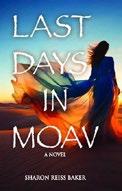
Drama unfolds in the Israelite Encampment in the Moav desert after the biblical exodus from enslavement in Egypt. Sixteen-yearold twins Milcah and Gidon grapple with their precarious status in the Encampment, both distrusted yet needed for their mystical healing capabilities. Add in Gidon’s clubfoot and Milcah’s headstrong personality, and the siblings expect to remain unmarried—until the bully Enan and his menacing father attempt to blackmail Milcah into a union. Would the Council regard the siblings’ gifts as “healing or magic or trickery”? Milcah, meanwhile, has met Misha’el, a teen from a reviled tribe, who offers the possibility of a marriage based on mutual affection, while Gidon pines after childhood friend Rahel. A healing mission through the desert draws the twins, their love interests, and their younger brother, Avidan, into an overnight quest that will shape their futures. Baker’s plucky twins are flawed and sympathetic protagonists. The Encampment is an intriguing setting, imbued with restlessness as the tribes prepare to cross the River Jordan into “the place El had promised us.” The biblical trappings comfortably encompass the mystical elements, such as Gidon’s religious healing practices and the voice of Netanel, the twins’ deceased older brother, who witnesses their life events as a
spirit. Netanel declares that the Israelites must “build a new society in the Land” that insists “on justice for victims and accused.”
A well-characterized coming-of-age story in an epically unusual setting. (map, author’s note, glossary) (Historical fantasy. 12-16)
Baldwin, Erin | Viking (336 pp.) | $12.99 paper | June 23, 2026 | 9780593622735
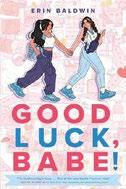
Two ex-best friends fake a romantic relationship for a reality show. Noelle Breland and Yumi Panganiban have been best friends since fourth grade—or at least, they were best friends until an awkward kiss ended everything. In the year since, the two haven’t spoken and Noelle, who reads white and has ADHD, has been busy grappling with her father’s liver failure. Then the two recent high school graduates are offered a last-minute spot on their favorite reality show, The Adventureverse, in which contestants race around the world (think The Amazing Race). Noelle sees the prize money as an opportunity to help pay off her dad’s medical expenses. With some groveling, she convinces Yumi, who’s Filipino American, to join her on the show despite their estrangement—Yumi agrees, but only “for Papa Breland.” The catch? It’s an all-couples season, and they’ll have to pretend to be girlfriends. As the two travel from country to country, completing challenges along the way while pretending to be a couple, they can’t deny their growing feelings for each other. With the finish line getting closer, Noelle begins to wonder what will happen when the camera stops rolling. The quick pace and the palpable chemistry between Noelle and Yumi will keep readers turning the pages.
A fascinating, subtle critique of the reality television industry adds a layer of nuance to the banter-filled rom-com.
A delightful, swoony, Sapphic romp that will have readers racing to
the finish line. (author’s note, pronunciation guide) (Romance. 14-18)
Bandreddi, S.C. | Candlewick (432 pp.) $19.99 | June 2, 2026 | 9781536252637
In belle epoque Paris, the elite are entertained by a deadly underground tournament coated with magic. As night falls, the dazzling Cirque des Ombres comes to life beneath the luxury hotel le Palais Blanchet, led by ringmaster and Enchanteur Jean-Pierre. He preys on the young and vulnerable, making them his performers and binding them to himself with magical contracts. He also hosts the annual Game of Oaths, a battle royal starring 12 performers, for the Parisian upper class to gamble on. Teen trapeze artist Falan Sunkara, who’s from India, is selected to participate this year, providing her with the opportunity to avenge her sister, Lavanya, who was one of the 11 who died last year. A string of deals boosts Falan’s minuscule chances of winning: Casino dealer Bellamy Durand will help her cheat in exchange for a cut of her winnings; hotelier’s son Jules Devereux Blanchet will provide information about the Game’s rounds to keep his half-Enchanteur identity a secret; and Lucien Trichet, the previous winner, will share insider knowledge if Bellamy uses his connections to help him locate someone. Jean-Pierre’s bloodthirsty competition favors his white performers, highlighting the brutal classism and racism. Bandreddi’s debut, which features
a diverse cast, is an impressive addition to its genre, enlivened with miraculous thrills and savagely unpredictable twists that will keep readers guessing. The author explores themes of allyship, survival, and colonization in this work that will appeal to fans of Squid Game and The Hunger Games. Utterly captivating. (map) (Historical fantasy. 14-18)
Barrow, Rebecca | Nancy Paulsen Books (368 pp.) | $20.99 | June 23, 2026 9798217006335
A high school cheerleading captain seeks to regain her throne—no matter the cost—after an addition to the squad threatens her influence. Maris Larsen knows she’s going to die in her podunk hometown of West Eaton. College isn’t an option. Her mother’s depression has made her a ghost, and her situationship hookup, Nell, will be leaving after graduation without a second glance. The only thing that gets Maris out of bed is cheerleading—the physical catharsis of pushing her body to the limit. Students and adults alike treat Maris, who’s cued Black, as a troubled pariah, but cheerleading offers a refuge where she can feel free as her team’s idolized captain. When Genevieve Ray, who presents Black, moves to West Eaton and joins the squad, Maris’ standing is challenged. How can she reclaim her authority? Opportunity arrives one night while Maris is sleepwalking, in the form of Doe, an ancient creature resembling a
Enlivened with miraculous thrills and savagely unpredictable twists.
THE GAME OF OATHS
deer. Unaware of the being’s origins and true intentions, Maris confides in it, sealing her path and Genevieve’s fate. Barrow’s novel in verse intriguingly blends supernatural lore with the cutthroat social politics of teenage girlhood. Evocative sections depict the hive mind of the team, and Doe’s perspective poetically captures the creature’s decades of loneliness and isolation. Maris’s strong characterization showcases a commonality with Doe: the ache for autonomy and control in a world eager to deliver pain and punishment. An emotionally rich, immersive narrative that unflinchingly explores power and the weight of wanting to be seen. (Verse horror. 13-18)
Beiko, S.M. | ECW Press (340 pp.) | $17.95 paper | June 30, 2026 | 9781770416970
Series: The Brindlewatch Quintet, 3
A cry for help draws a hurting, antisocial monster out of her den to investigate an ugly conspiracy in this third episode in the Brindlewatch Quintet. Much of the fun comes from trying to figure out what Sable, Beiko’s mute, non-hearing protagonist, looks like. Slyly supplying only glimpses of both hair and scales, arms (but no legs), a powerful tail, an unruly second mouth, a cracked magic gem in her forehead, and other tantalizing descriptive details, the author pries Sable out of her bookish seclusion to search for Kepler, a beloved but alienated amphibicreature who has gone missing after moving to Ferren City, where friction between multiform monstros and human Brindles is rising. Burgeoning tensions and threats of cultural theft aren’t all that roil beneath the surface of ensuing events, but they do ultimately play a significant role in explaining where Kepler and other suddenly absent monstros have gone. Part toothy predator, part emotionally vulnerable loner, the eminently relatable sleuth finds
allies both loyal and treacherous while getting handles on both her own story and an unruly, ingeniously unconventional magical power as she signs, lip-reads, and slithers her way to a thoroughly satisfying denouement. As in previous episodes, the cast members are racially diverse, and gender identity is a matter of accepted choice.
The game’s afoot, if not the sleuth, and tongue-in-cheek elements lighten a weighty thematic load. (Fantasy. 13-18)
Boone, Georgia K. | Feiwel & Friends (288 pp.)
$20.99 | June 9, 2026 | 9781250834874
In 2020, a high school senior in Irvine, California, attempts to escape the realities of the Covid-19 pandemic, her sister’s health crisis, and a shifting relationship with her best friend.
Even though she had “zero intention of going to prom” and “wasn’t in any club or student council,” Tia is over her quarantined existence and numb to the pandemic and the numerous protests over the killing of George Floyd. She doesn’t understand how some people still have the energy to protest. Her relationship with her best friend, Drew, who’s bisexual, has become complicated by their unexpected kiss and his increased interest in activism; they had a fight during which he called her “apathetic” and she labeled him “a budget Malcolm X.” Her sister Mel, who struggles with mental health, is in an induced coma, worrying the whole family. Tia is granted a reprieve when her sister Alexis offers a weekend at her place in San Diego. There she meets Colby, a teen dog trainer, while walking Alexis’ dog, Poirot. The girls bond over their interest in each other and in training Poirot. This debut centers on a majority Black cast of characters who are lightly fleshed out. Readers will wish for deeper explorations
of each relationship—particularly Tia and Colby’s romance, which feels rushed. Tia comes across as emotionally avoidant, which makes her feel remote and hard to connect with.
An interesting story examining the impact of trauma that doesn’t fully gel. (content warning) (Fiction. 14-18)
Burks, Miles Toriko | HarperAlley (256 pp.)
$26.99 | $18.99 paper | June 2, 2026
9780063282469 | 9780063282452 paper
Senior year should feel like a victory lap—but for Clay, it’s about to get complicated. Clay Noguchi has great friends and confidence in his gender identity, and he’s even ready to try using the boys’ bathroom. But his hopes for a smooth school year unravel when his former best friend, Aron Santos—now a swaggering jock—lands in his theater class. Worse, they’re paired for an improv project. Aron slips easily back into their old dynamic, acting as if the years (and the ghosting) never happened, but Clay still feels stung by the betrayal. As rehearsals blur into real life, complicated feelings resurface. Clay starts choosing Aron over his friends, alienating those who care about him most. Meanwhile, Aron wrestles with questions about his own sexuality. Together, the two must decide whether they can rebuild what was broken, and whether they’re brave enough to be seen for who they truly are. Based on a WEBTOON, Burks’ debut is a slow-burn graphic rom-com that features inviting digital linework and expressive, characterfocused cartooning. The warm, muted palette and clean backgrounds keep the focus on gestures and facial expressions, which carry most of the narrative weight. The story radiates warmth and theater-kid friendship, with Clay’s trans identity presented in a refreshingly matter-of-fact way. Most major characters read queer and Asian; Aron is cued Filipino American, and Clay presents Japanese American. Heartfelt, hopeful, and full of
queer coming-of-age charm. (yearbook page, sketches) (Graphic romance. 14-18)
Caletti, Deb | Labyrinth Road (352 pp.)
$20.99 | $12.99 paper | June 9, 2026
9780593708651 | 9780593708651 paper
An anxious teen experiences love, loss, and healing. Margaret Vittorio is finishing up her junior year in Seattle’s Green Lake neighborhood, delivering pizzas for her family’s popular restaurant, Papa Angelo’s, which was named after her domineering and occasionally rage-filled father. She experiences a charming, memorable meet-cute with Mars Zevon Rivers in the waiting room of their therapists’ office—“It wasn’t exactly love at first sight; it was more future at first sight”—only to coincidentally deliver a pizza to his family’s houseboat a few weeks later. Then, purely by happenstance, she joins Mars’ stargazing group with her brother Maurice on the night of her prom. Mars’ passion for astronomy, and especially the first interstellar spacecraft, Voyager 1, is endearing, and they fall deeply in love. They have sex for the first time, attend regular concert gigs, and stargaze atop Tiger Mountain. It all comes to an abrupt end when tragedy strikes. The dense, poetic, second-person prose in the form of an extended letter to Mars describes in depth every aspect of Margaret’s feelings throughout a year of mourning as she tries to make sense of his impact on her life through a project inspired by his space obsession. Nuanced descriptions of Margaret’s

For another book about young love and grief, visit Kirkus online.
MEDICINE WHEELS
complicated family life with three older brothers, her battle with anxiety, and her mother’s disordered eating further intensify her grief journey, a relentlessly sad and visceral experience patient readers will appreciate. Main characters present white.
Drenched in emotion and profound grief for a lost first love. (Fiction. 14-18)
Chen, Jennifer | Wednesday Books (320 pp.) $25 paper | June 23, 2026 | 9781250396129
Two Los Angeles high school seniors find a connection through books. Lizzie is content to hang out with a lychee boba tea, her three Book Besties, and a pile of books. While she’s rereading Feline Forest: Zephyr’s Quest, her favorite book since sixth grade, a library checkout receipt from the previous borrower falls out—it turns out they’d borrowed volumes from Lizzie’s top three fantasy series. At her friends’ insistence, Lizzie leaves a note for her reading soul mate in another book she wants to read, with instructions to leave a response “in the fantasy novel you’d take with you to a desert island,” and so sparks a summerlong scavenger hunt. Lizzie doesn’t suspect that her mystery correspondent might be “fun jock” Dylan, the cute boy who volunteers with her in the Best Friends Animal Society’s kitten nursery. Although she can’t deny she’s attracted to him, Dylan’s admission that he has “zero opinions on books” is a dealbreaker. In truth, Dylan is a huge fantasy reader—but bullying has led him to hide this fact. He’s lying low until he leaves for New York University in the fall. Will the duo ever learn who their Fellow
Fantasy Reader is? Told in the Taiwanese American teens’ alternating points of view interspersed with text messages, this light rom-com champions reading—and being true to yourself. Both leads’ voices feel younger than their ages. Dylan’s growth is satisfying, but Lizzie’s arc is less well developed.
A breezy bookish love story.
(Romance. 13-18)
Kirkus Star
Ennis, Ruth | Little Island (304 pp.) | $12.99 paper | June 9, 2026 | 9781915071989
This Irish import, a dark retelling of “The Little Mermaid,” follows Muireann as she mourns her sister, Mairéad, who was captured in a fishing net.
The merfolk face starvation from overfishing, and Muireann hopes the Prince will help once he learns of the crisis. She seeks out her Aunt Réaltín, the Sea Witch, requesting a potion that would allow her to walk on land and speak with humans. After coming ashore, Muireann meets the green-eyed Prince and is shocked when he boasts about his kingdom’s fishing prowess. Refreshingly, Muireann isn’t a conventional svelte mermaid; she has “lovely rolls” that keep her warm and “strong and wide arms.” The mermaids have “thick tails” that mostly are “a deep blue, / or murky black, // shimmering scales / that capture an / imaginary light / in this beautifully dark place.” The callous Prince finds her body repulsive and cruelly displays her at his nightly parties, forcing her to eat and dance, and imprisoning her in the
dungeon by day. Ennis portrays Muireann’s tragic story through concise poems and longer free verse, using the size and physical layout of the text to illuminate her movements and emotional state. When describing the bars of her cage, the words form a grid pattern on the page. In another poem, two columns of echoing lines compare Mairéad and Muireann. The themes of body shaming and environmental harm will resonate with readers, and the masterful writing truly stands out. Grim yet powerfully and lovingly rendered. (Verse fiction. 13-18)
Evans, Elle | Flare Books/Catalyst Press (157 pp.) | $19.95 paper | March 3, 2026 9781963511239 | Series: Earthlight
A boy and his dog scrape by in an apocalyptic wasteland. Eighteen-yearold Jack’s mundane rural life is suddenly uprooted when he survives a mysterious calamity that leaves the world wrecked to oblivion. The ground has been split open by quakes, massive floods cause devastation, and the sky rumbles with bizarre storms. Jack quickly learns that nearly everyone he knows has died in the chaos—the sole exception being his loyal dog, Bud. Horrified but unwilling to give up, Jack sets out with Bud on a journey to the coast, hoping to find a place that hasn’t been destroyed. Jack finds an ally in scrappy 16-year-old Eve, and the white-presenting pair help each other get by in the now-hostile environment. All the while, Sky Station, a large airborne vessel meant to help with “this kind of crap,” has gone strangely silent. The descriptions of the landscape are minimalist yet evocative, made up of fragmented sentences that reflect Jack’s desolation. The inherent dread of the rural setting, which evokes the American
South, seeps into every page, creating a building sense of horror. Biblical allusions make the relatively grounded world feel almost supernatural. Despite the story’s grittiness, budding moments of human compassion prevent things from seeming hopeless. There are plenty of lingering mysteries about the nature of the calamity and the truth behind Sky Station that are sure to have readers coming back for the sequel. A haunting survival story with impeccable atmosphere. (Postapocalyptic. 14-18)
Everett, Sarah | Putnam (304 pp.) | $12.99 paper | June 23, 2026 | 9798217002986
Zadie is sure that she and Jason are meant to be together forever. When Jason, “the king of Sterlingwood High,” abruptly ends the relationship on their one-year anniversary, Zadie is stunned. But before she can come to terms with her situation, they get into a car crash. Zadie might have a concussion, but Jason is in a coma. Not willing to admit to being dumped, Zadie pretends that the breakup never happened. Not only that, she tells everyone that Jason gave her a promise ring. No one must discover the truth. Unfortunately for Zadie, Marcus, Jason’s cousin, overheard her revealing everything to her friend Monique in a voice note. As Zadie figures out how to escape her lies, she suddenly finds herself magically transported into one of her favorite memories of Jason. Much to her displeasure, Marcus is also there. Over the course of the story, the unlikely pair travel through the previous year’s memories. Zadie is determined to figure out where her seemingly perfect partnership with Jason went sour so she can fix things. But as Zadie and Marcus spend more time together in the dreams, they
grow close. This bittersweet and fantastical story would have benefited from more character development, but this is, ultimately, a satisfying, well-written romance. A shocking major twist works well, and Everett absolutely nails the landing. Zadie and Monique are Black, and Jason and Marcus are white.
A delightful slow-burn romance with a touch of sentimental magic. (Romance. 14-18)
Graves, Byron | Heartdrum (352 pp.) | $19.99 | June 2, 2026 | 9780063160422
This sophomore novel from award winner Graves (Ojibwe and Lakota) explores a search for identity within the world of skateboarding. After the latest violent fight between 15-yearold Bryce Fairbanks’ mom and her boyfriend, Mom drops Bryce off on the Wolf Creek Reservation. When Mom later ends up in jail for possession of prescription drugs that didn’t belong to her, he stays with his grandparents in his late father’s childhood room for the summer. It might not be the greatest reason to return, but there are upsides: stability and being surrounded by family and childhood friends. Bryce is a realistically drawn teenager with complicated feelings, living in an anxiety-inducing world—Grandpa has cancer, and an oil company wants to build a pipeline next to the reservation. Bryce’s best friend, Robbie, a talented skateboarder, wants to show him the ropes, and since Dad was legendarily good, maybe this will help Bryce feel closer to him. He crosses paths with Mikayla Mountain, a girl he met in an Ojibwe language immersion camp, and they start dating, but Mikayla’s driven, ambitious dad regards Bryce as “a loose cannon” who might hold her back. Meanwhile, Bryce’s friend
Caroline and her partner, Aaliyah, draw him into their activism against the North Woods Passage Pipeline. Bryce shows real emotional growth as he falls in love with skateboarding, improves his mental health, and engages with his community. A textured, heartwarming story of growth and connection. (author’s note, Ojibwe glossary, note from Cynthia Leitich Smith) (Fiction. 13-18)
Greenwald, Carlyn | Sourcebooks Fire (336 pp.) | $12.99 paper | June 30, 2026 9781464226571
When the daughter of an ’80s celebrity and two of her friends are found dead after a camping trip, her sister and friend are determined to uncover the truth.
California high school junior Emma Tedesco was supposed to be on a trip with her best friends, Paisley Horne, Harlow Spielman, and Opal Bushida, but they secretly went without her. Queen bee Paisley, with her “perfect teeth, shiny blond hair, and bright blue eyes,” was like “a genuine fairy-tale princess.” A ranger discovers the girls’ bodies at the bottom of a cliff, and despite the ruling, their deaths don’t seem accidental. Emma teams up with Paisley’s sister, Beck, who’s gay, and they head to Kingston National Park—the location of a trip Emma had originally planned— in search of evidence. The nearby town is full of rumors about a witch who haunts the area and the secrets swallowed up by the trees. Despite these ominous signs, Emma and Beck head into the wilderness and unravel a terrifying, life-threatening plot. The story is at its most hair-raising and suspenseful in the dark woods, where even the crack of a branch induces
terror. Just when a resolution feels near, Greenwald introduces another plot twist. Savvy readers, particularly true-crime fans, will notice some aspects of the investigation that raise questions, but these elements aren’t overly distracting. Bisexual autistic Emma describes herself as a “barely-Jewish atheist,” and her neurodivergence is believably and thoughtfully woven into her experiences and friendships. A scary success. (Thriller. 14-18)
Heard, Wendy | Christy Ottaviano Books (384 pp.) | $19.99 | June 16, 2026 9780316482950
Two former friends living in sun-dappled Southern California unwittingly release a demon.
Seventeen-yearold Kerry can’t stand her former best friend, Bella, who dropped her as soon as her own social status started to rise. Bella, who’s “white, skinny, and pretty,” posts uplifting content to the 3 million followers on her Instagram account, @imsuchaluckygirl, instructing viewers how to manifest the life they want (which, of course, resembles the one she purportedly lives). Driven by envy and betrayal, Kerry, who presents white, tries her own hand at manifestation after she finds an enigmatic book from the 1960s at the home of Ruby, the 85-year-old woman whose house she cleans. When bad things start happening to Bella, Kerry wonders if maybe her spell worked a bit too well. Unbeknownst to Kerry, Ruby grew up as part of a cult whose members met a tragic end. When people in the girls’ orbit begin dying, they must figure out how to stop the evil they’ve unwittingly unleashed. Heard’s deliciously dark thriller unfolds in multiple points of view that span the
1950s to the present day. With nimble pacing and plotting, this meaty but accessible read tackles heavy topics such as personal authenticity, fatphobia, influencer culture, and toxic masculinity through a sharply focused lens, leaving readers with much to think about long after the final page. Going viral has never been so creepy. Thoughtful and timely—puts the “cult” back in influencer culture. (Paranormal thriller. 12-18)
Hill, Kaitlyn | Delacorte Romance (368 pp.) | $12.99 paper | June 23, 2026 9780593650974
A college student spends the summer trying to discover herself—and a love she thought was long gone. Camilla Lovett was born on an archaeological dig site in Italy. Twenty years later, she returns to Villa di Bronzo to meet up with her mother and take part in a documentary about its discovery. But Cammie has an ulterior motive for going: She doesn’t know who her father is, only that he was part of the same dig, had a fling with her mom, and “opted out of the very long-term commitment of raising the tiny human they accidentally created.” Armed with her mother’s journal, Cammie plans to retrace the events from two decades ago. But she didn’t plan on facing her own past in the form of Weston Jacobs, former best friend and first love. West and Cammie spent the first 16 years of their lives together, traveling from one dig to another with their archaeologist parents, until the day the white-presenting teens shared their first kiss, and everything blew up. Now, for the first time in three years, they’re in the same place. Initially, Cammie is snarky toward
West, and he’s dealing with spiraling anxiety, but they find themselves drawn together. The pacing is consistent, unfolding in a gentle, unhurried way. Hill’s latest weaves adventurous moments into a sweet love story that explores identity, love, and family.
A charming and accessible romance set against an appealing backdrop. (Romance. 14-18)
Ichaso, Chelsea | Sourcebooks Fire (320 pp.) | $12.99 paper | June 30, 2026 9781728299730
A teen’s connection to triplets becomes complicated in this double murder mystery. Hayden has been friends with the Abbott triplets—Bram, Henry, and Adam—her entire life, having grown up near their mansion on a hill. The family’s auto shop is also located on the property, and the boys work there part-time. Last year, Bram’s girlfriend, Mariana Sanchez, died when her car caught on fire right after the brothers had worked on it. Although her death was ruled an accident, everyone in Silver Creek, Vermont, was suspicious that the Abbotts were to blame. So when Kennedy Russo, another local girl, is found dead, all eyes turn to the triplets. But Hayden feels conflicted—she’s best friends with gentle Henry, attracted to brooding Bram, and concerned about volatile Adam. Surely none of them has anything to do with the death of her popular classmate Kennedy? The boys have already been convicted in locals’ minds, and the police have leads that implicate one of the brothers; Hayden believes it’s up to her to get to the truth. Told in alternating timelines and voices, Ichaso’s latest is filled with abundant twists and turns. However, the
undeniably engaging story includes a few too many red herrings and far-fetched motives that detract from an otherwise propulsive reading experience. Hayden and the Abbott brothers present white. A gripping, if slightly overstuffed, mystery. (Thriller. 14-18)
James, Cassandra | Quill Tree Books/ HarperCollins (352 pp.) | $19.99
June 16, 2026 | 9780063345669
A year on from the events of Capitana (2025), Ximena Reale is determined to prove her mettle as a pirate. Much has occurred since readers last met her: She’s sailed the high seas with her sister, Marquesa, pursued—in more ways than one—by one Dante de León. La República de los Piratas has given her this year to prove herself reformed, no longer a cazadora, an instrument of the empire, but a pirate through and through who’s ready to fight for her people. No one, however, is as hard on Ximena as she is on herself; she agonizes over her past mistakes and worries over the fate of her beloved archipelago. Her worry isn’t unfounded: The Empire of Luza is tireless in its pursuit of control, and the secrets discovered in the duology opener were only the tip of this iceberg of deceit. With her second novel, James falls effortlessly back into the 18thcentury Latin American– inspired world she created, expanding both the magic and the political intrigue in service of a moving and nail-biting plot. The seeds of romance planted in the earlier book are allowed to bloom deliciously into an earned connection that’s as swoony as it is believable. The author uses time skips to good advantage, sustaining the story’s momentum and providing ample space for imagined interludes.
Thoughtful and timely—puts the “cult” back in influencer culture.
SUCH A LUCKY GIRL
More swashbuckling sisterly fun, with a healthy dose of hope for a brighter tomorrow: siempre juntas. (maps) (Fantasy. 14-18)
Koenig, Kate | Wednesday Books (384 pp.) $21 | June 9, 2026 | 9781250321244
Series: The Nightshades, 1
Magical girls seek to avenge the death of one of their own in Koenig’s debut. Noa Toussaint, who has chestnut hair and light brown skin, gave up a life of luxurious privilege to become one of the famed Nightshades, a ferocious gang of beautiful yet dangerous girls. Their varied charisms, or magical abilities, determine their roles. Noa’s talents as an alchemist who’s skilled at working with a powerful substance known as oleum make her vital to the group. When a mysterious attack leaves a Nightshade named Jolie Hearn dead and the gang robbed of their oleum, already a scarce commodity, the obvious culprits are the Cauchemar, a rival group led by a monstrous man. To make matters worse, the Nightshades are the target of Inquisitors—and Noa’s baron father’s relationship to the Grand Inquisitor Isabel de Tavera puts Noa in a difficult position. Noa assists her beloved girlfriend, Nightshades leader Lennon Boudreaux, who has “creamy white skin” and “fiery hair,” in a mission through the seedy underbelly of New Orleans–coded New Soleil. While trying desperately to maintain their relationship, they face deep questions about loyalty, family, and love. Shifting points of view, similarsounding voices, murky motivations, and a plot with more dramatic ambition than
clear action cause difficulty for readers as they try to follow the interwoven timelines and over-stuffed worldbuilding. The Sapphic yearning is intense, and there are many enjoyable romantic interludes, however.
A frustratingly messy duology opener. (Fantasy. 14-18)
Lacelle, Pascale | McElderry (592 pp.) $24.99 | April 7, 2026 | 9781665970389 Series: The Drowned Gods Trilogy, 3
This trilogy closer scatters its characters across magical worlds as they try to save themselves from a terrible fate. Cornelius Clover plans to sacrifice the magical people known as the keys from each of the four worlds in order to absorb the power of the deity Atheia and become a godlike figure himself. Atheia has other ideas, instead taking Romie Brysden as a vessel and embarking on a mission to destroy those who use the magic of her shadowy counterpart, the deity Sidraeus. Emory Ainsleif and Basil “Baz” Brysden, Romie’s best friend and brother, respectively, refuse to let all this happen—even if it’s said that “fate is already written.” Emory partners with Sidraeus, and Baz works under a mysterious god of balance to try to save Kai Salonga. The four worlds— and all magic users—face a dire fate unless Romie, Emory, Baz, and Kai can change the story. The clear worldbuilding established in the previous two books seems to slip from Lacelle’s grasp in this entry; the distinctions among the vessels, gods, and deities (the latter two are distinct) blur in confusing ways. The abundance of whimsically named
GINA L o PRESTO
Author of The Castoffs
Please tell us a little about yourself and The Castoffs.
My name is Gina LoPresto. I have a bachelor’s degree in English with a minor in creative writing from the University of Minnesota, and I work in a member services position for a local credit union. My [2025] book
The Castoffs is a young adult survival novel about two girls—13year-old Grace Cruz and 18-year-old Sam White—who are stranded on a raft in the middle of the ocean. Prior to this, Grace has struggled with her friends leaving her out of their activities and forming their own groups. She’s worried that she won’t have any friends once she starts middle school. Meanwhile, Sam, who’s recently graduated from high school, doesn’t know what her career path is. Her friends have their lives figured out, but Sam can’t see herself doing any job long term. Together the two girls must learn not only how to survive, but also figure out how to face their problems in their lives at home.
What sparked your idea for your novel?
I got the idea for my book after reading S.A. Bodeen’s novel The Raft [from 2012]. It’s a young adult survival novel about a girl who gets stranded on a raft after a plane crash. I felt that the book was very riveting, which made me want to write my own young adult survival book.
What made you interested in storytelling?
I got interested in storytelling when I was in my senior year of high school and took my first creative writing class. Up until then, while I’d read a lot as a teenager, I’d never considered writing as an option for a career path. But when I took the class, I quickly fell in love with writing, and I decided that I wanted to make storytelling my chosen career.
How did you develop your characters? It was very important to me that both Sam and Grace have an equal share of growth in my book, in order to show that both of their stories matter. I was particularly concerned that Grace not simply be someone Sam has to take care of, but grow into her own person as well. I also wanted Sam to not only see herself as the adult of the situation who has to handle everything, but as a person who sometimes needs help, too.
Is there anything you would do differently in your next book?
I would definitely make my next book longer so that I could develop my plot and my characters more fully. I would also add more personality traits/ interests to my characters so that my audience could get a better grasp of who they are.
Portions of this Q&A were edited for clarity.


Castoffs LoPresto, Gina Self | 63 pp. | $9.99 paper March 15, 2025 | 9798310853386


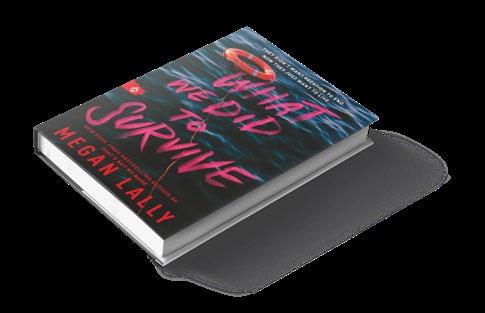
By Meriam Metoui
Jenna Voris
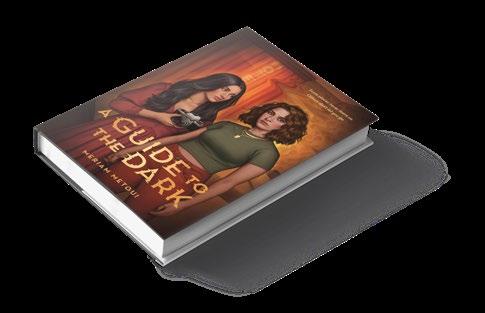
characters wielding different types of magic slows the story, and the overarching message of love and forgiveness triumphing over evil suffers from a lack of subtlety. Strong queer representation undergirds the narrative, and readers will enjoy following Baz and Kai’s budding romance. Central characters present white. A disappointing final installment. (maps, Sacred Lunar Houses & their tidal alignments) (Fantasy. 14-18)
Mafi, Tahereh | Storytide/HarperCollins (384 pp.) | $21.99 | April 7, 2026
9780063419056 | Series: Shatter Me Series: The New Republic, 2
Romantic complications between a trained killer and one of her captors drive this sequel to Watch Me (2025).
Appealing to readers who prefer their romantic dramas to be light on action and heavy on long passages of banter, bitter sibling arguments, and tortured reflections, Mafi continues the tale of Rosabelle Wolff, the flaxen-haired assassin from the dystopic Reestablishment, and magnetic, “impossibly stunning” James Anderson, her nemesis-turned-lover who’s still trying to take down the regime. Now desperate to accomplish several secret missions, Rosa easily escapes from one of The New Republic’s prisons, where she was left in the series opener, and, dressed in “a little kid’s cat onesie,” eludes all pursuers except for James, who can seemingly find her at will. Enigmatic Rosa responds unpredictably to many human contacts—including with violence, temporary death (one of her abilities), or a sudden panic attack. Along with the central pair of rivals and lovers, James’ older brother, Aaron, shares the narration. Bestseller Mafi tucks in several subplots, including, notably, a cameo from Juliette Ferrars, the protagonist of the original Shatter Me series, who’s undergoing a scarily difficult pregnancy. Amid the slowly simmering
rising action, the author delivers a revelation and a twist that set up a potential series climax. Some ethnic diversity is present in the supporting cast. A character-focused entry that will satisfy fans. (Dystopian. 14-adult)
Morgenstein, J.A. | Stonefruit Studio/ Sourcebooks (368 pp.) | $19.99
June 2, 2026 | 9781464238543
A brilliant teenage detective and her friends race against time to save their genius teacher. Rose Moriarty, the mystery-solving 16-year-old daughter of Professor James Moriarty and Irene Adler, encounters Clara Frankenstein and Count Christoph of the Carpathian Mountains, also known as Count Dracula. He wishes to employ Rose’s father to obtain a legendary orb that bestows destructive powers upon its wielder. On behalf of her father, who’s in hiding, Rose agrees to find the orb before it can fall into the hands of the evil Scarabeus and his legion of human/bug hybrids. In exchange, she demands a sample of Count Christoph’s blood, a key ingredient in a possible cure for Nikki Tesla, one of Rose’s teachers, who suffers from a terminal illness. Accompanying Rose is Sefina “Seffy” Moreau, daughter of eugenicist Dr. Moreau, who uses serums to create human-animal hybrids possessing characteristics that are useful in battle. Seffy and Rose need to face their traumatic pasts and partake in actionpacked fights to uncover the location of the orb. Debut author Morgenstein
provides brief hints of a rich backstory that’s never fully explained, making the novel often feel like a sequel to a book that hasn’t yet been written. Although the book is full of witty humor and inventive characters, as well as many references to Victorian literary figures, Rose’s circuitous path makes the plot feel disjointed and episodic rather than cohesive. Rose presents white, and Seffy is cued biracial. An ambitious and entertaining if unfocused adventure. (Fantasy. 12-17)
Parsons, Karyn | Little, Brown (304 pp.)
$19.99 | June 9, 2026 | 9780316575751
The mysterious death of a teen girl threatens the tenuous relationship between Black and white communities in a California beach town in 1929. Fifteen-year-old Blue Collins and her friend Ben Clark avoid the partying crowd the evening after the annual Poseidon’s Trident Parade, instead taking a sunset stroll along Blue’s family’s property, a refuge for Black beachgoers in Santa Monica. There they discover the body of white teen Dottie Whitehouse. Knowing the trouble a dead white girl would cause for Blue’s family as well as Black boys and men in the area, they take Dottie’s body out into the ocean. When Dottie washes up on a neighboring white beach, the investigation focuses on Ben’s earlier interactions with the dead girl, making him a suspect. And when he disappears, both Black and white folks become convinced of his guilt.
A page-turning narrative bolstered by a strong sense of time and place.
BLUE BEACH
Racial tensions mount, threatening Blue’s family and highlighting local resentment over the existence of an African American–owned beach. A loyal Blue is frantic to find a way to prove Ben’s innocence. This taut mystery successfully blends history, the complexities of life in a close-knit community, and issues within Black society (such as colorism, which affects Ben, who has a darker complexion). Blue is a fully realized protagonist who’s surrounded by an intriguing, richly drawn supporting cast. Parsons’ latest is a page-turning narrative bolstered by a strong sense of time and place. A riveting story of secrets, betrayal, racial struggle, and loyal bonds. (Historical mystery. 12-18)
Ed. by Pennant, Shari B. | Sweet July/Zando (416 pp.) | $19.99 | June 30, 2026 9781638933304
Romance meets magic in this engaging collection of stories written by a variety of new and veteran YA authors. In an introductory letter to readers, editor Pennant describes her goal with this anthology: “to further highlight the voices and backgrounds that are so often overlooked in the genre of ‘romantasy.’” The 17 stories collected here, the spiciest of which offer closed door romance, span the gamut from a splash of fabulism to full-blown high fantasy. In Sophie Li’s beautifully written, Studio Ghibli-esque “Chloe’s Cat,” a girl confronts her low self-esteem and feelings for her best friend after her cat eats him. Jill Tew builds an enchanting world that will leave readers wanting more in the epistolary “Atrium,” which follows two young people who fall in love while attempting to solve a challenge for their Incantations class. Many of the stories shine for their fantasy elements, for example, Jennifer Helen’s “A Feathered Omen” and Alexene Farol Follmuth’s
“Prophecy.” Some feature swoonworthy romances, like Brent Lambert’s “Silent Death,” Nia Davenport’s “A Fate Written in Stars,” and Kwame Mbalia’s “The Heartfire Mask.” Other entries present romances set against slightly fantastical backdrops, as in Cheryl Isaacs’ “Sinkholes.” The anthology includes an appealing range of representation among the leads and love interests, including characters with different cultural origins and sexualities, whose identities are authentically rendered, contributing to a fun and colorful reading experience. A well-written collection that shines in its creative magic systems and worldbuilding. (contributor bios) (Fantasy romance anthology. 14-18)
Riesen, Lila | Knopf (336 pp.) | $19.99 June 23, 2026 | 9780593810286
Mendocino, California, conceals many secrets—and maybe magic too. High school junior Zayn Pereira, whose dad is from Afghanistan and late mum was from Australia, arrives in Mendocino in a daze. She’s haunted by her uncle’s fatal bike accident and is struggling to care for her 7-year-old sister, Mania, while feeling resigned to her father’s distant affect. The story drops readers right into Zayn’s life, hinting only slightly at the secrets both she and her new Northern California town are hiding. The community is reeling from a teenage girl’s unsolved disappearance, and Tiago Rodriguez, a Mexican and Chilean American boy who’s the first person Zayn connects with, is a prime suspect. The story’s tone shifts dramatically when Zayn employs her supernatural gift to save Tiago following a hit-and-run: Pressing their palms together, Zayn uses her hand, which glows with healing orange lines, to absorb his pain into her body and heal his broken leg. For years, she’d “kept away from the scraped, the bleeding, the broken. Until now.” Things
go sideways between Zayn and dark forces controlling the town as she discovers that generations of locals have been locked in a violent conflict. The premise is compelling, and many scenes, especially those set on Rainsong, a purportedly haunted nearby island, are deliciously terrifying. But the dialogue-heavy first-person narration struggles to match the story’s ambitious aims, distracting from the cinematic, high-stakes thriller elements. An intriguing supernatural concept with distracting narrative execution. (Speculative thriller. 14-18)
Ruvane, Eileen M. | Amulet/Abrams (336 pp.) | $19.99 | June 16, 2026 9781419785580
A teenage girl is confronted with secrets from her mother’s past. Sixteen-year-old Kessen Turner and her mother have never stayed anywhere long. Their latest move brings them to the small town of Delphine, Pennsylvania. They’re living in Madame Amalia’s Psychic Shoppe, which belongs to one of her mother’s old friends, but Amalia is lying unconscious in the hospital after a car accident. Surrounded by tarot cards and crystal balls, Kess senses that this move is different—and that Delphine holds pieces of her mother’s past that she’s never shared. As Kess adjusts to another new school, she cautiously opens herself up to friendship, forming a close bond with classmate Poppy and developing a tentative crush on a boy named Miles. Everything changes when a blow to the head during field hockey practice leaves her experiencing vivid, terrifying visions of catastrophic events. At first, Kess tries to dismiss them as symptoms of her injury, but as they start coming true, she’s forced to face them. As the visions intensify, she becomes convinced they’re connected to her mother’s secrets. Determined to uncover the truth, Kess digs deeper into her mother’s mysterious history while racing to
understand the source of her frightening new ability and discover whether the future she’s seeing can be changed. Though the story initially unfolds slowly, the tension steadily builds, culminating in an explosive and satisfying conclusion. Main characters are cued white.
A well-executed and atmospheric debut. (Supernatural thriller. 14-18)
Kirkus Star
Sanchez, Jasper | Harper/HarperCollins (432 pp.) | $19.99 | May 26, 2026
9780063025820
Teenagers unionize their summer job. Elisha Goldstein, an autistic trans boy, has the summer job of his dreams: guest services associate at the Nuclear Seasons Experience, a local museum dedicated to Nuclear Seasons, his absolute favorite cult classic science-fiction TV show from the 1980s. Unfortunately, his experience isn’t everything he dreamed it would be. Eli, who’s a model employee, is shocked to find that his simple, black-andwhite pronoun button is banned as “political speech.” He’s not the only employee with grievances, though, and his not-exactly-friend Efraín Juarez Reyna, who has ADHD and is “a rebel with a thousand causes,” soon starts to talk about unionizing. As Eli, who is white and Jewish, and Efraín, whose engaged, activist father was an undocumented agricultural worker, navigate collective action and union-busting in their small California wine country town, they discover that there might be something more between them than solidarity. The racially diverse supporting characters, including Eli’s and Efraín’s families and co-workers, are memorable, and the story is compelling. The text contains a refreshingly nuanced exploration of intersectionality and allyship, exploring when it’s right to speak up on someone’s behalf and how much we can ask others to risk for a cause. Sanchez effectively weaves the concept of the
importance of caring for your fellow humans, both collectively and individually, throughout the narrative. An entertaining and engaging read that also builds faith in the power of the collective. (author’s note) (Fiction. 14-18)
Siegert, Mia | Scholastic (336 pp.) | $14.99 paper | June 2, 2026 | 9798225014551
A transgender teen in New Jersey uncovers a shocking truth about his family that turns his life upside down. On Jaden’s 17th birthday, his dad and “campy White gay guy” influencer boyfriend, Drew, surprise him with a trip to the courthouse to file for a legal name and gender marker change. What should have been a moment of celebration turns into a waking nightmare when Jaden learns that his birth certificate is fake. Even though Dad was in jail when Jaden was born, the cops arrest him for “possession of falsified government documents with the intent to defraud.”
Jaden’s mom, who stored his birth certificate in the family safe, died two years ago. Desperate to help his dad—and get official documents—Jaden sends off DNA samples that reveal an even more unbelievable truth: He has a 0% match with his dad and 99.9% matches with strangers called Aaron and Alena Harper, who are Russian Jewish. And a Google search reveals that the Harpers’ baby was abducted from the NICU 17 years ago. This contemporary thriller captures readers’ attention with its intense twists and turns. The plot moves at a fast pace, but so does the resolution, lessening the emotional impact and believability of the conclusion, and at times the characterization suffers from inconsistency. Unfortunately, Jaden’s best friend Terri, who’s Black and autistic, seems to serve to teach Jaden lessons about the realities of systemic racism and privilege.
An absorbing premise with an underwhelming payoff. (Thriller. 14-18)
Smith, Juliana | Bloom Books (400 pp.) | $14.99 paper | May 19, 2026 9781464289774 | Series: Willow Creek, 1
A young woman struggles to forge a new path after a lifechanging diagnosis. Lottie Turner plans on making the most of the summer before senior year. Ever since a terrible head injury nearly two years ago resulted in post-traumatic epilepsy, she’s struggled to find an identity outside of bull riding, which was her passion. Now Lottie just wants to let loose away from the overprotective eyes of the people who love her. But when Walker Lane, her first boyfriend, reappears after two years away, everything shifts. Walker is back at Willow Creek, the Turners’ Alabama ranch. He just graduated from high school and has taken a job as a seasonal ranch hand, seeking to escape the pressures of an upcoming NASA internship that comes with strings attached to his father. Hoping to rekindle their relationship, Walker helps Lottie with her “Eighteen Before Eighteen” bucket list. As Lottie works her way through it, she learns to love her new self—and maybe even Walker too. In this series opener, the leads’ alternating perspectives immerse readers in the world of Willow Creek, with intentionally layered moments that propel the narrative. Lottie and Walker, who are cued white, are well characterized, and this sweet romance includes heart-pounding yearning, witty banter, and a thoughtful exploration of navigating disability. As Lottie struggles with accepting her new reality, including frustration with being treated as fragile, Walker responds in supportive ways that highlight his emotional intelligence. A summer romance distinguished by complex characters, emotional depth, and poetic storytelling. (Romance. 14-18)
Smyth, Lauren | Enclave Escape (352 pp.)
$24.99 | May 12, 2026 | 9798886052619
The residents of an isolated town in the Mojave Desert survive a deadly virus. Kyrie was 6 when a fine green dust rained down from the clouds. Those outside Peakin, California, died from a mysterious illness, but supplements have kept locals alive. Mayor Heathe is at the top of the community’s hierarchical structure, while Pastor Basil watches over people’s souls. Eighteen-year-old Kyrie spends much of her time journaling and working at the local mercantile, which helps her family afford the supplements they need to remain healthy. She resents her harsh, angry father, who often stumbles home drunk. After Kyrie’s friends, 21-year-old orphan Maple and Morgan, the son of town Council members, decide to marry, a violent event shatters the facade of their small-town life, introducing a more sinister storyline. The fallout prompts Kyrie to explore beyond Peakin’s borders, joining Thatch, a mysterious newcomer who shares uncomfortable truths. This action-packed dystopian novel offers attention-grabbing reveals and escapes along with a bit of romance amid the ensuing tensions. Unfortunately, the treatment of Kyrie’s father’s alcohol abuse, while empathetic, hinges upon a scientifically inaccurate plot point and is framed in a way that feels problematic. Snippets from Kyrie’s journal open each chapter, showing inner turmoil that supports the book’s themes, including criticism of power structures and their deceptive control over the public. The Christian faithbased messaging naturally interweaves an interrogation of the problem of evil.
An enjoyable, imaginative read with complex characters. (Dystopian. 14-18)
Swift, Dana | Wednesday Books (336 pp.) $21 | June 30, 2026 | 9781250402431
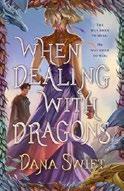
Teenage rivals fall in love while trying to save an endangered species of dragon.
Dragon rider James Murphy has had a crush on dragon veterinarian-intraining Farren Walsh since they were 12. But James is a silver-crafter and Farren is a copper-crafter, and their strictly hierarchical society makes relationships between people of different classes nearly impossible. Not to mention that they’re rivals for a prestigious scholarship to Revers Academy. Farren and James each have their own secret reasons for needing this funding, which come to light when James is hired as the new intern at the Walsh family’s dragon sanctuary. Forced to live and work together, the two uncover hidden knowledge that could change their society forever—and sparks fly. With its themes of found family, animal rights, parental abuse, and class divisions, there’s never a dull moment in this novel, which reads like How To Train Your Dragon meets a high school enemies-tolovers romance. The charming relationship between Farren and James, who share the narrative duties, propels the story, and the short chapters offer humorous moments as the 17-year-olds bumble through their first romance. The romantic elements are supported by an engaging plot and fascinating world. The subplots are well balanced and add to the worldbuilding without feeling overly complicated, and the plot elements and characters’ motivations
How To Train Your Dragon meets a high school romance.
WHEN DEALING WITH DRAGONS
are fully developed and converge in a surprisingly twisty and action-packed finale. Main characters are cued white. A sweet, exciting, and well-executed romantasy. (Romantasy. 13-18)
Thomas, Emily | Kids Can (312 pp.) | $18.99 paper | June 2, 2026 | 9781525311451
A boy with face blindness navigates the trials and tribulations of love and university life. Rhys Moore, a queer, white-presenting Welsh boy, is nervous about starting his first year at Thames Peak University in London. Not only is he anxious about making friends and passing his courses, he also struggles with prosopagnosia, a disability that means he can’t remember or recognize people’s faces. Luckily for Rhys, his flatmates are warm and welcoming—especially brown-skinned Londoner Malcolm Green. Rhys is immediately infatuated with Malcolm, but things get complicated when he learns that Malcolm has a long-distance girlfriend. As Rhys faces the classic struggles of a new university student, the romantic tension between him and Malcolm grows until it can no longer be ignored. Rhys’ experiences are exceedingly relatable, between his stress about exams, his anxiety in social settings, and his aching homesickness. The central queer romance is pleasantly sweet and fluffy. Malcolm’s arc of coming to terms with his biromantic asexuality is a compelling highlight, along with the representation of Rhys’ prosopagnosia. This graphic novel debut features charming illustrations, predominantly in muted shades of purple, that are filled with unique and engaging panel compositions. Thomas uses colors in a remarkably creative way to portray Rhys’ prosopagnosia, with characters going from monochrome to full color when he’s able to recognize them by using his identifiers, which include height, hair, skin tone, and voice.
A charming queer comfort read. (note on prosopagnosia, author’s note) (Graphic romance. 14-18)
TOGETHER WE SEE
Tison, Ari | Farrar, Straus and Giroux (320 pp.) | $20.99 | June 16, 2026 9780374389512
Following the unexpected death of her father, a Bribri American teen must confront family truths and secrets in award winner Tison’s haunting sophomore work. When her estranged father, Andres Dominguez, unceremoniously arrives at the family farm in Wisconsin right before Christmas, Ulá expects another round of broken promises—a pattern that’s part of their fraught relationship. Their attempt at reconciliation proves fleeting, and Andres soon returns home to Costa Rica. Two days later, he’s found dead, and Ulá travels with her older brother, Kabék, to the Bribri territory for the funeral. Worrisome questions around Andres’ death and his activism on behalf of Bribri liberation and land rights attract the attention of Ian Solera, an independent investigative journalist from Limón. Then Ulá finds a cryptic note from Andres that decidedly points to murder. As sister and brother investigate their father’s death, and new and longtime friends alike come together to lend a hand, a fearsome network of people involved in illegal activities and corruption emerges. Though the work is structured like a murder mystery, Tison’s first prose novel excels when it focuses upon the complex, bittersweet father-daughter relationship at its core, which resonates beyond the somewhat perfunctory whodunit that unfolds. Writing in the first-person for Ulá and ingeniously using omnipresent narration for other characters, Tison weaves in Bribri folklore, reflections on the fight for Indigenous Costa Rican rights, and the weight of familial ties to great impact.
Rich, complex, and powerful in matters of the heart. (author’s note) (Fiction. 12-18)
Tubb, Kristin O’Donnell | Simon & Schuster (416 pp.) | $19.99 | June 2, 2026 9781665985734
Mystics band together to pull off the ultimate heist in Tubb’s YA debut.
Life in New York City in 1912 is bustling. To the outside world, 18-year-old Stella Bohdan is Lady Rose, a conduit to the dead, armed with a Ouija board. But her clients don’t know the full extent of her capabilities—Spirit, Stella’s “Team of Light on the Other Side,” constantly guides her. White-presenting Stella needs to keep a low profile; reading fortunes is illegal, and she wants to avoid jail or an asylum. She feels the presence of the Dark Trio, ominous spirits who emerge when she taps into her dark side, unleashing a terrifying power. A lonely, grieving Stella is surviving on her own: Maman “waltzed into death like she was dancing on rose petals,” but her sister Daisy’s death haunts her. Green-eyed, olive-skinned Pax Princip is recruiting psychics for his venture, Julia’s Bureau. Despite Spirit’s strong warnings, Stella is attracted to Pax; they seem to be bound by “something dark and mysterious.” Pax is planning to pull off a heist using the power of his powerful cohort. Borrowing from history—the Hope Diamond, the Triangle Shirtwaist Fire, and the sinking of the Titanic add historical texture—the Julia’s Bureau team members have an authenticity rooted in their shared trauma. This story acknowledges the darkness of its characters, who
will lure readers in as they root for them to make better choices.
A high-stakes page-turner of a thriller. (author’s note) (Supernatural thriller. 14-18)
Varga, Emily | Wednesday Books (416 pp.) $21 | June 30, 2026 | 9781250878694
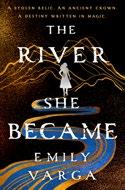
Two rebels. One crown. A world the Angrezian Empire is bleeding dry. In occupied Astola, darkskinned Yaseema works for the Citadel—the colonial power that excavates fae relics and drains her homeland’s life magic while outlawing traditional burial rites in favor of cremation. By night, she uses her rare magical abilities to find stolen artifacts and rebury them, returning vitality to the land. When a former colleague dies and she discovers a golden key hanging from his wrist, Yaseema races to unlock the ancient fae queen Azari’s Golden Vault, seeking a relic that offers a way across the River to the fae lands, so she can retrieve the crown that can save her people. Across the River, Kiyan—dark-skinned, silver-haired fae Prince of the River Court—hunts rebels for the ruling Court of Salt while secretly leading the Red Jasmine Rebellion. Hoping to free his family, he’s seeking the same crown. As their quests converge, an impossible attraction ignites. The novel draws from Pakistani culture, and the colonial structure maps onto the British Raj. The parallel oppressions—Yaseema’s colonial subjugation and Kiyan’s courtly enslavement—are the novel’s strongest elements. Yaseema’s early chapters repeat narrative beats before gaining momentum, while Kiyan’s arc, which is often confined to introspection, stalls the urgency his position promises. The magic system proves elastic, occasionally bending to plot convenience with rules asserted as needed. A sweeping duology opener that’s hindered by structural inconsistencies. (map) (Fantasy. 14-18)
Velez, Angela | Harper/HarperCollins (320 pp.)
$19.99 | June 16, 2026 | 9780063071889
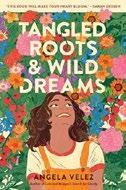
A 17-year-old in Pittsburgh becomes entangled in thorny vines of secrecy and uncertainty.
Esperanza “Ezzie” Ramos attends the prestigious “all girls and enbies” Western Catholic. During her summer honors class, she needs to pick the focus for her senior thesis project, but she’s riddled with uncertainty over what topic she should choose, especially because she’s the daughter of “a glass-ceilingsmashing geology professor (Mami) and an innovative plant biologist (Papi).” Everyone assumes Ezzie will do great things too. Papi died tragically eight years ago, and this summer Mami is doing research in Colombia, so Ezzie’s oldfashioned Peruvian Abuelita is in charge. Ezzie unearths a secret of her father’s that takes her to Sprout Pittsburgh, an urban garden, where she runs into Gabe McCallister, a Mexican American boy she’s predisposed to loathe because he broke her Korean American best friend Dora’s heart. Ezzie has the summer to dig up the truth about who her father was and who she wants to be. But what can she say to Dora about her changing feelings for Gabe when she can’t even understand them herself? Ezzie’s evenly paced journey is a highly relatable story of grief and first romance. Her interior monologue feels authentic, and her character growth will resonate with teens dealing with transitions and the decisions expected of them in their later high school years. A well-balanced story about personal growth that leaves room for a sweet romance to blossom. (Fiction. 12-18)

Walker, Meredith | Illus. by Nina
Cosford
Workman (176 pp.) | $12.99 paper May 12, 2026 | 9781523525034
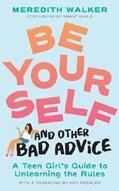
Friendly, down-toearth coaching that addresses teen girls.
Actor Amy Poehler, Walker’s colleague from her days running the talent department at Saturday Night Live, acknowledges in a foreword that developing self-knowledge “is a lifelong process.” In her introduction, Walker emphasizes the importance, in our fast-paced, content-filled world, of remembering the “one thing nobody’s talking about enough: how to think for yourself.” She addresses social, commercial, and media pressures, like “fitting in vs being real.” Prompts ask readers to think about their interests, personal qualities, and achievements that are worth celebrating. The second chapter covers feelings: their range and intensity, expressing and dealing with them, cultivating emotional awareness, and taking mindful action. Other chapters explore purpose, failure, the definition of success, smarter social media use, and engaging in activism. Throughout, the book contains practical, step-by-step advice and helpful tips, like self-affirmation phrases, while direct questions elicit reader engagement. Values like equity, compassion, fairness, and integrity underpin Walker’s approach. Her supportive, uncondescending tone includes mild touches of humor but avoids flippancy, helping the advice land without veering into lecturing or minimizing readers’ feelings. The clean, colorful layout and generously sized typeface support browsing. Occasional soft-edged, color-washed illustrations primarily center a light-skinned girl with dark curly hair; other girls are varied in skin tone and include a wheelchair user and one who wears glasses. The advice may not be
novel, but it’s effective and delivered in a conversational first-person voice accompanied by personal anecdotes. A reader-friendly guide to knowing yourself. (Nonfiction. 12-18)
Wind, Lee | Duet (302 pp.) | $12.99 paper May 19, 2026 | 9780897336444 Series: Different Kind, 2
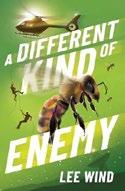
Queer teens reprise their James Bond–inspired hijinks. Only 19 days after their wedding, 17-year-old newlyweds Nico Hall and Sam Solomon are already keeping secrets. Since their breakout mission in A Different Kind of Brave (2024), both white-presenting boys have been recruited as spies, but they can’t reveal this fact to each other. Their mission focuses on an anomaly that’s on a collision path with Earth—and the six-day countdown to the expected impact is on. Field agent Nico—code name “Parkour”—ends up in Hawai‘i, verifying the danger with an optical telescope. Meanwhile, Sam—aka “the Knitter”—is tasked with thinking up contingencies as an analyst for a “sensitive and compartmented information facility.” Dangers surrounding the pair escalate while things also heat up between them, as Sam worries that Nico still hasn’t said “I love you” back. Luckily, their missions eventually bring them closer to finding out the truth—in more ways than one. But can they “pull the wig off this whole thing,” save the world, and save their marriage? Amid the heavy flirting and passion, the lovelorn spies have a meaningful conversation about monogamy. The alternating third-person narration effectively builds tension, but for such high stakes as mass destruction, the resolution’s payoff falls a little short. Still, the Bond references and cool gadgetry abound in this fast-paced sequel—this time, notably including some AI. Slightly less rizz than its predecessor, but still worth the ride. (author’s note) (Thriller. 14-18)
ERIKA LYNN ADAMS
Author of Allie’s Adventure on the Wonder
What sparked your idea for your novel?
Allie’s Adventure on the Wonder started as a final project for a college course I took at the University of Minnesota Duluth called “Childhood in Literature and Culture.” One option was to write an original story and short essay based on a studied piece. I chose Lewis Carroll’s Alice’s Adventures in Wonderland. Not only is it a childhood favorite of mine, but I realized how much Alice’s faulty logic mirrored my own symptoms of auditory processing disorder, which affects how my brain processes information.
What made you interested in storytelling?
Diagnosed with APD at 16 months, I later learned how my interpretation of the world often differed greatly from those around me. This had a negative impact on my social and academic life, resulting in me often retreating to stories to escape and learn without judgment. As I came to better understand people’s multiple viewpoints in general as an adult, I also came to appreciate the strengths of different storytelling media and the unique ways in which they present their narrative information: a book’s words, a video game’s interactivity, a movie’s props and effects, et cetera.
Was your storyline something that you envisioned from the beginning, or did you build/change it as you wrote your novel?
Because Allie began as a school assignment, I originally had to follow rules for things like page/ word count. I had no such restrictions later when I decided to expand the story. I wanted not only complete chapters, additional scenes, and more fleshed-out characters, but greater freedom to develop my nonfiction elements and have fun with Carroll’s poetry and wordplay.
How did you create/acquire the cover art?
A friend and fellow author from a local writers’ group in St. Croix, Wisconsin, recommended Hanna Linder. Linder is an author and freelance cover designer from West Virginia who specializes in using public domain images to create original cover art according to an author’s specifications. Among other reference images, I gave her some of Sir John Tenniel’s original Alice illustrations for a more authentic connection to my novel.
What are you working on now?
On the side, I’m still producing and hosting my bimonthly nonprofit storytelling radio series, The Tale Collector, on KTWH 99.5 in Two Harbors, Minnesota. As far as book writing, I’m currently considering a small collection of the poetry featured in Allie as a companion piece. I’m also developing a speculative science fiction


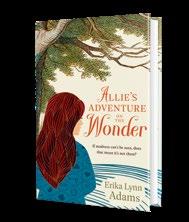
Allie’s Adventure on the Wonder
Adams, Erika Lynn Beaver’s Pond Press | 204 pp. | $15.92 paper | June 17, 2025 | 9781643435268
novel for adults, for which I’m conducting extensive research on older SF media, particularly 1950s and ’60s films and TV shows, such as Star Trek and The Twilight Zon e, and the writings of such SF masters as Richard Matheson, Arthur C. Clarke, and Isaac Asimov.
Portions of this Q&A were edited for clarity.

For a review of the book, visit Kirkus online.
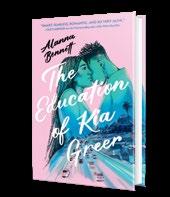
Gabrielle Union and Dwyane Wade will produce the series based on Alanna Bennett’s novel.
Alanna Bennett’s The Education of Kia Greer is
headed to the small screen, Deadline reports.
Bennett’s young adult novel, published last May by Knopf, follows the titular character, a high school girl whose family is the subject of a popular reality television series. She falls for teen idol Cassius Campbell and their relationship becomes the subject of social media rumors and gossip. A critic for Kirkus called the book “a lovely coming-of-age story that explores family, fame, and self with a sweet and spicy romance as the cherry on top.”
Fox Entertainment Studios is developing the
adaptation with Bennett, who has worked as a writer on the series Roswell, New Mexico and XO, Kitty Producers of the series include actor Gabrielle Union (She’s All That, Cradle 2 the Grave) and her husband, former basketball star Dwyane Wade. Bennett shared news of the adaptation on Instagram,

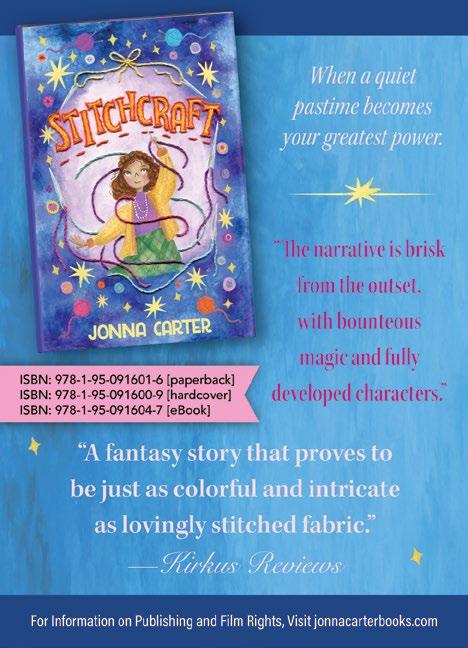
writing, “I am so thrilled with this team we’ve set up, and I’m especially over the moon because I know Gabrielle and Dwyane can infuse this series with an invaluable authenticity we’d be hard-pressed to find from anyone else. I have hope, just like Kia does when she speeds through Pennsylvania, singing Whitney Houston’s ‘I Wanna Dance With Somebody’ at the top of her lungs. Let’s dance.”
—M.S.

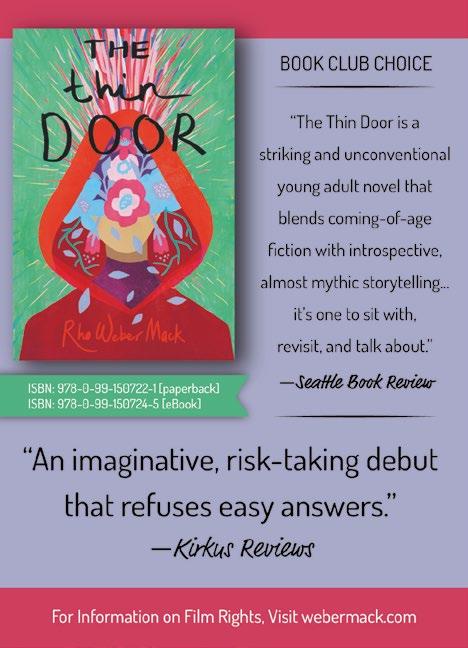
IN RESPONSE TO the Trump administration’s efforts to erase historical and scientific information from our national parks—and just about everywhere else—we’re spotlighting books that accurately reflect and protect our past in our annual Indie issue. We’ve included excerpts from The Deliverance of Barker McRae, a historical novel starring hardheaded adventurers, and Entangled Tongues, a short study of the English language’s influences. Below are a few editors’ picks that set the record straight: an anthology of artists’ responses to the Holocaust, an insider’s take on Guantanamo, and a work about the proper maintenance of Black archives.
Two dozen scholars, artists, playwrights, poets, and writers expound on the ways the Shoah informs Jewish writing, music, and art in Stories of the Holocaust: Art for Healing and Renewal— Volume 1. “Remembrance is a sacred responsibility in Judaism,” note editors Karen Berman and Gail Humphries, whose series addresses the question, “Can art heal trauma?” The entries center on the idea that the Holocaust should serve as a continual
reminder to fight against the “current political hate messages, antisemitism, and violence.” The book covers a staged production of The Diary of Anne Frank, children’s tales from a concentration camp, and LGBTQ+ persecution in Nazi Germany. Our reviewer calls it a “well-crafted work that highlights the value of the arts in remembering the past.”
From the title, readers may correctly guess that You Can’t Make This Shit Up!: Leading the Fight for the Rule of Law in the Guantanamo Bay Military Commissions is a snarky insider’s portrayal of the colossally fucked-up Guantanamo Bay detention camp. Mike Berrigan, a former judge advocate general (JAG), became a lawyer for the Military Commissions
Defense Organization. The book describes how he and his associates attempted to navigate the legal gray area of Gitmo, where torture and the denial of human rights were the norm. “The author approaches this material with a thoroughly appealing, darkly comedic tone, relating incident after incident in which ‘the Prosecution was trying to peddle a lot of bullshit,’” says our reviewer. “Berrigan is refreshingly even-handed in his political criticisms: Nothing could equal the evil of an administration green-lighting torture, but, he notes, President Obama’s promise to end the military commissions upon taking office didn’t amount to much, either.… A gripping behind-the-scenes story of the embattled lawyers trying to defend Gitmo prisoners.”
Dorothy Berry, a preeminent archivist, notes that African Americans are “conspicuously absent” from managerial roles involved with
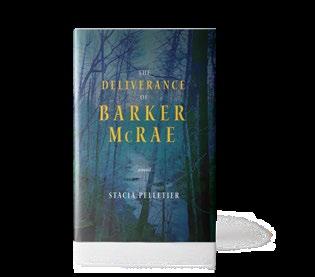


Black archives. “Archives are an unfulfilled promise,” she says in The House Archives Built & Other Thoughts on Black Archival Possibilities, and are filled with holes and inaccuracies. Berry, born to a Black father and a Jewish mother, grew up in the Ozarks, where historians have often erased or overlooked the rich Black history of the region. But Berry’s father, who ran a museum, kept many African American artifacts safe. “This history is retold in the book through a powerful visual archive of photographs and scans of documents that defy standard archival categorization (such as a poem scrawled on an envelope),” notes our reviewer. Berry blends her own story with larger conversations about archival theory and African American history to create “a powerful, poignant reflection on the past and future of Black archives.”
Chaya Schechner is the president of Kirkus Indie.



A Holocaust survivor reflects on the roots of violence and the moral courage required to resist.
As a young Jewish child in Hungary, Staub survived the Holocaust alongside his family due to what he later termed “active bystandership,” or the choice to intervene on behalf of those in danger. He credits several people with saving the lives of himself and others— most notably his family’s Christian caregiver, Macs, who hid them at enormous personal risk, and the Swedish diplomat Raoul Wallenberg, whose letters of protection saved thousands, including Staub’s father. Liberation did not bring immediate peace, with the subsequent communist occupation of Hungary introducing new forms of repression and fear, reinforcing the author’s understanding
that cycles of violence can persist even after one regime falls. This realization followed him as he fled to Austria and eventually immigrated to the United States. Though he didn’t initially set out to become a psychologist, his academic interests led him to explore the psychological and social conditions that give rise to mass violence and genocide (“I was about to embark on a lifelong study of good and evil”). Staub moved beyond theory when he became deeply involved in applied peacebuilding efforts, traveling to Rwanda and working with leaders in Amsterdam to promote interethnic relations. Part memoir, part psychological treatise, this work blends personal testimony with decades’ worth of scholarship to offer
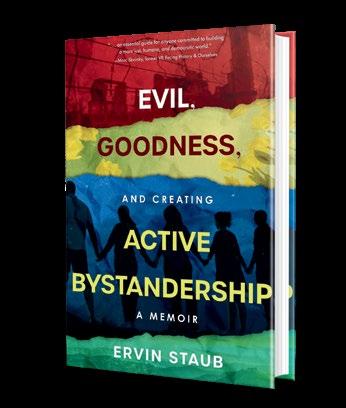
a heartfelt meditation on moral courage while calling for individual people to resist indifference in the face of injustice. Though the division of chapters into numerous subsections can at times feel disjointed, the larger arc of Staub’s narrative remains compelling. This structural choice, in addition to the work’s detailed
descriptions of research findings and experiments, give the book a slightly academic tone that might distance readers seeking a more traditional memoir, yet these elements also emphasize the depth and rigor of Staub’s project. A measured blend of memoir and scholarship with urgent contemporary relevance.
Abdurazakov, Oraz | Self (378 pp.) January 30, 2026
Abdurazakov’s slow-burn political thriller presents a chillingly plausible vision of the near future in which the geopolitical map has been violently redrawn. After a cascade of crises that began with a televised presidential assassination in 2027, the United States has absorbed Canada and Greenland and the United Nations has relocated its permanent headquarters to Samarkand, Uzbekistan. One trigger for these events was the journalist Lyndon Averell, who unveiled the identity of the president’s shooter—a Canadian citizen of Ukrainian origin— and who’s consumed by guilt over the aftermath of this revelation. Jumping ahead to 2035, the novel tells the story of how Averell and Meran Ayhan, the High Commissioner of the Turan Region, derail a plot to assassinate key U.N. leaders and destroy its headquarters— just days after a nuclear blast leveled Islamabad, Pakistan. The events are all tied to the date of March 15, revealing a similar clustering of ruptures throughout history, all the way back to the death of Julius Caesar. The U.N. begins to outsource its responsibilities to NOOS, a self-learning artificial intelligence, by having it assume the organization’s veto power—but NOOS’ eventual self-awareness reveals humanity’s foibles. Abdurazakov’s narrative is riddled with meticulous listings of obscure dates that serve as catalysts for world-altering events. The novel slowly builds toward a denouement that raises the question of whether sentient technology or living beings are in control of human destiny. The work, which features some thinly veiled satirical references, employs thoughtful and smart prose, which perfectly suits the weighty themes: “When great powers redraw the map, there is always someone who concludes he may do the same—if not by right, then by analogy. We say ‘annexation.’ The world hears ‘precedent.’”
A dense and sophisticated fictional warning about the fragility of global order.
Auerbach, Elana | Illus. by Gina Sawaya Flower of Life Press (252 pp.) | $22 paper February 3, 2026 | 9798998787072
Auerbach provides a candid road map to intimacy and pleasure in this nonfiction guide. Part memoir, part spiritual reflection, and part practical guide, this book is all about intimacy and pleasure—how to find them, how to maintain them, and how to make them parts of everyday life. The book opens with vivid scenes from the author’s marriage and earlier romantic life, recounting the experiences that helped form the foundation of her Sure Thing practice, which is designed to restore intimacy through consistency and ritual. Auerbach asserts that people need to take full responsibility for their own pleasure instead of placing that burden on a partner or waiting for the right circumstance or mood. Each chapter includes the author’s reflections, guided practices, journaling prompts, visualization exercises, and “Love Ripples,” which are small challenges for the reader: doing something that nourishes you, sharing a joyful moment from your week with a friend, and telling three people in your life what you love about them. Other topics covered in the book include dismantling sexual shame, redefining orgasm, learning to articulate desire, and developing solo pleasure practices; it’s all part of what Auerbach calls her “interactive playbook.” Learning to take responsibility for your own pleasure, she posits, will in turn transform relationships by reducing blame and increasing communication. This book is much more than just a guide to better sex—it explores sexual pleasure, but also the
pleasures of music, meditation, shared meals, and more. The author writes with warmth, humor, and honesty, exposing her own vulnerabilities to benefit her readers. The text is accessible and relatable, even as Auerbach explores headier topics such as somatic psychology and mindfulness. Ultimately, the author reframes intimacy as a skill that can be learned and sustained, offering readers a realistic blueprint for cultivating lasting fulfillment. Her guidance will appeal to both individuals and couples, teaching them to reclaim intimacy and pleasure as essential parts of their lives. An inviting, exercise-rich manual that’s warm, personal, and reflective.
Carpenter, Edward H. | Potomac Books (408 pp.) | $7.20 | March 1, 2025 9781640125995
A U.N. peacekeeper recounts his adventures in East Africa. Carpenter, a retired U.S. Marines officer and founder of the nonprofit World Without War, recounts his time serving with the United Nations Mission in South Sudan (UNMISS), helping other aid workers deal with famine, disease, and poverty. He first shipped out to South Sudan in 2019, and he sets his book’s tone immediately by relating the moment when he and his colleagues hit an explosive device and came under enemy fire: “Bullets continued to hum through the air above us and smack into the side of our vehicle as we crouched behind it in a slick mixture of blood and sweat.” The author settled into his peacekeeping mission, although he quickly felt insulated from the real nature of the country and its people. Carpenter volunteered to accompany a general on a visit to an unruly sector
west of the capital city of Juba, penetrating deep into a region of tropical forests, swamps, and grasslands, which gave him a chance to see the poverty of the country up close. The people, he recalls, “lived in huts made of woven reeds covered with white and blue tarps that gave them an average living area of forty-three square feet per person—a space more confined than the smallest US prison cells.” The author details the environmental factors of his mission (including, in the chapter titled “Africa Wants To Kill You,” the constant threat of malaria) in passing; his focus is on the difficulties he and his colleagues encountered in trying to help a fractured and violent country.
Carpenter writes vividly and passionately about that country, which clearly touched his heart in the months he served there. He describes South Sudan as “a country of red dirt, brown rivers, green trees, and blue skies as far as the eye could see…a country of sad donkeys pulling dilapidated water carts, weary militiamen riding battle-scarred technicals, and corrupt politicians in gleaming new Escalades.” During his time there, Carpenter dealt with a wide variety of crises, including military eruptions that prompted him to craft tactical memos (“We need to push up the Bor-Pibor axis,” reads one such detailed paper, “clear Manyabol and re-establish our ground ‘Lines of Communication’ to reinforce Pibor”), and he conveys these and other duties in colorful and forceful prose. The author left the country in 2020, and his memoir brims with the frustration he and his colleagues felt about the one-step-forward-two-steps-back nature of their work in an environment where the agendas of rival organizations and petty military potentates often clashed. As one general put it when he and his fellow peacekeepers were suddenly withdrawn from a scene, “Yesterday we were on the ground, and all it took was a phone call to get us out.” The final chapters of the book are poignant, with the author reflecting on the country’s ongoing turmoil. The result is a singular, personal account of being on the cutting edge of U.N. peacekeeping efforts. An edifying and powerful memoir of a U.N. peacekeeper’s year in a troubled land.
A lively tale of faraway kingdoms.
RUTHLESS KINGDOM
Clarke, Timothy | Alephraez Publishing and Trading (216 pp.) | $14.99 paper
January 1, 2026 | 9781998861774
In Clarke’s espionage thriller, an operative must rely on his inner resources after he’s framed. The titular unnamed protagonist grows up poor but multitalented in 1960s-era Manhattan. He’s raised by his Armenian grandmother after his mother overdoses when he’s a baby and his father flees. He develops a liking for martial arts and a flair for languages. Later, when he’s struggling financially while in college, his chess-playing friend Artem suggests he join a network that his family belongs to. He trains as a specialized secure courier for The Company, a clandestine logistics network, where his immediate supervisor, Viktor Tashkin, takes an immediate disliking to him—something that will haunt him for the rest of his time there. He spends nearly a decade running missions for The Company, getting rich in the process, and goes home regularly to visit his grandmother and New York City. The closest near-miss comes when his gun jams during an ambush in Somalia—he later suspects that Tashkin switched his ammo (“the work had its risks”). A setup by Tashkin causes another mission to go horribly wrong, and the hero and his grandmother are forced to disappear, resettling in Nepal. He must find some way to clear his name so he and his aging grandmother can return home. Clarke takes readers on a fascinating journey into logistics, an area of espionage few consider. He has wisely built his narrative around an admirable lead character who remains conscientious and
well meaning despite operating in a doubtlessly dirty business. A larger cast of supporting characters might have enlivened the story a bit, but perhaps the narrator’s relative isolation is the point—he largely operates alone and must be able to rely solely on his own ingenuity. The author deftly illuminates the mind of someone capable of handling such intricate, high-stakes work.
A compact spy thriller that explores the ways in which a good man can survive in a shady milieu.
Constantine, Cathrina | Self (450 pp.) $16.55 paper | January 6, 2026 9798272157430
In Constantine’s YA fantasy novel, a teen struggles to survive in a land of unrest and duplicity after learning she’s a long-lost princess. Ever since their parents’ mysterious disappearance, Avianna Carrington and her little brother have been secluded on an island with a family friend. One day, a stranger named Harp appears and takes an unwilling Avianna to another realm: the fantastical kingdom of Verdae. That’s not a terrible shock, as her parents told her that she was born in Verdae (and taught her some magic as well). But she is surprised to learn that her actual birth father is King Leonidas, who sent Harp to retrieve Avianna. Others don’t want the teenager there, namely the queen (who’s definitely not Avianna’s mother) and the princes. The situation is already tense in this realm between Verdae and the Inkwood kingdom, whose king is Avianna’s grandfather. With so many people harboring secrets, Avianna has trouble deciding whom she can trust; even
as she gravitates toward the notably handsome Harp, and toward Pru, Avianna’s former nursemaid, the two aren’t exactly forthcoming with details about her complicated past. Constantine’s protagonist, who narrates, is immensely likable—cheeky but wisely cautious, she worries about others as much as she does herself. It’s a treat to watch Avianna adapt to Verdae as she gradually picks up weapons skills and more magical abilities to battle such menaces as the enigmatic Shades. Much of the supporting cast is, like Avianna’s murky history, hard to read; those who appear to be villains may not be as sinister as they initially seem. The romance between Avianna and Harp, while predictable, is endearing—the many witty references to Harp’s impeccable looks (“Oh, that wink. It nearly threw me over the edge, my cartwheeling heart gaining velocity”) help alleviate the narrative tension. Lingering questions at the end suggest that a sequel will follow. An irresistible young hero easily carries this lively tale of faraway kingdoms.
Cunningham, Scott Walker Atmosphere Press (229 pp.) May 21, 2026 | 9798901741306
Cunningham offers a novel centered on the experiences of elite high school wrestlers.
Connor Castaway and Drummer
Washington are two talented wrestlers and friends who are seniors at First Landing High School in Virginia Beach. They struggle with various challenges off the mat, as well as the stress of wrestling for a highly competitive coach, known to all as “Coach Wild,” who also happens to be Drummer’s father. Both boys live in one-parent homes: Connor’s father died the previous summer, and Drummer’s mother left the family home some time ago. As they train, the teens must also negotiate the social pressures of high school life. The toll of injuries on their bodies is significant,
and they use opiates for pain management; they also have troubled relationships with girls, adding to their problems. One of the story’s most intriguing secondary players is the loathsome and privileged Jorby, who threatens Isla, Connor’s love interest. Cunningham effectively assembles a cast of flawed characters doing their best (or their worst) in an engaging story of people striving for different kinds of success. The adults in the boys’ lives are dealing with problems of their own, including addiction, career difficulties, loneliness, and infidelity. Assistant Coach Scarr is shown to be reeling from a demotion from his head coach position, while his wife is frustrated by his obsession with the sport and his inability to appreciate her own goals. “Coach Wild” is driven by a frenetic need to win at all costs, while Connor’s mother is lonely and just trying to cope. The work also stresses how the boys’ dads had both enjoyed success as young wrestlers, and how the weight of expectation rests heavily on their sons. A gritty and honest look at the painful truths that teens and adults must face.
DiDesidero, G. M. | Illus. by Jackson Davis Leaning Pole Press (296 pp.) | $24.95 paper April 2, 2026 | 9781952397264
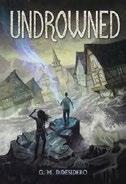
In DiDesidero’s YA fantasy novel, two teenagers living in the mysterious land of Terra grapple with their destinies and discover special abilities as their lives are threatened by powerful forces. The world of Terra is populated by five human clans, known as the Tigers, Birds, Raccoons, Shadows, and Foxes. Long ago, the godlike Patrons gave each clan different magical powers, called “cannys.” Over time, the cannys disappeared—at least for most people. After Jasper, a 15-year-old Fox boy, secretly sets a dangerous shape-shifter free, it takes Jasper’s form and kills its original captors. The Tigers accuse Jasper of murder and take him into custody. DeBarco, the sinister head of the Tigers, persuades
Harissa, a Tiger teenager and the only female trainee in the Chame-lion program, to bear false witness against Jasper. Harissa’s testimony is especially convincing because she has a canny that allows her to add thoughts and images to other people’s memories. After Jasper is found guilty, he’s taken to the coliseum to be hanged, but he escapes with the help of his father, Argus, and the shape-shifter, Gallium. In the process, he discovers his own canny—the rare ability to generate and cast a flaming substance called “chasma.” As Jasper journeys onward, he makes even more shocking discoveries about his world, his ancestry, and his fate. Meanwhile, Harissa uncovers troubling information about DeBarco and sets out on her own journey to reclaim her path. DiDesidero’s book is split between Jasper’s and Harissa’s close third-person perspectives, and both are equally engaging. Although some readers, particularly younger ones, may have some trouble keeping the lore and accompanying terms and concepts straight, the ideas themselves are compelling and unusual. DiDesidero supports the fine characterization and intriguing settings with expressive prose: “Harissa lay in a well of gravity so deep that time oozed by. Her limbs had no muscle. The dizzy world had her glued in place like a taxidermy person stuffed with cottony drugs.” It all results in an immersive, fast-paced reading experience.
A fun fantasy adventure that’s full of creative concepts.
Ed. by Doti, Jim | Fern Press (292 pp.) | $29.95 paper | April 1, 2026 | 9798218762179
A stirring collection of far-flung adventure stories.
“The authors of these articles all have day jobs,” writes Doti in his preface. “Somehow, some way, they carved out enough time to experience and
then record their adventures, pushing against the boundaries that often constrain the range of life’s offerings.” The contributors—Scott Chapman, Ryan Dahlem, Adam Doti, Lynne Doti, Daniele Struppa, and Dan Temianka—recount the broadly varied expeditions they’ve undertaken, from climbing famous mountains like Rainier, Kilimanjaro, and Everest to running famous meets including Tanzania’s Mount Meru International Marathon and the Boston Marathon. These events range from high-profile and well-organized endeavors, like summiting Mount Denali, which requires long and careful preparation, to the far more ramshackle and informal, such as the Mount Meru run, in which Jim Doti and the other runners found themselves navigating roads filled with people, donkeys, and cows (“Evidently, there was no traffic control for the marathon”). Each chapter features plenty of color photos of the smiling participants camping out in exotic locales. Most of the entries highlight the most human moments: “after the Boston medal was placed around my neck,” Jim Doti writes, “I turned right at Clarendon Street and walked a half block to Hancock Tower, where it wasn’t long before I was showering under a steaming spray of hot, soothing, and redemptive water.” This element of relatability is the book’s strongest and most winning throughline; Doti starts off the collection by asserting that the friends, songs, and meals were the point of it all, not the peaks reached or the miles logged. He recites Mark Twain’s dictum to “Explore. Dream. Discover” as he looks back on “all the laughs, the cold winds, the relentless climb up the mountain, the lessons [he] learned, the beautiful sights [he] saw, the new friends [he] met.” Charmingly, this sense of appreciation extends even to the discovery of a new book.
A vivid and thoroughly inviting anthology of happy escapades.

Flanigan, Dan | Arjuna Books (360 pp.) $14.99 paper | December 30, 2025 9798991232531
A timely thriller set in the world of far-right religious fanaticism. In this installment of the Peter O’Keefe series, the private detective finds himself on a perilous mission to infiltrate an extremist group called The New Ark. (“They call the period we’re in now the ‘Tribulation,’ prelude to the Apocalypse and the Final Armageddon Battle, which are imminent—if not tomorrow then the day after tomorrow.”) It all starts when media mogul Richard Maxwell and his family become threatened by the group. The New Ark, bound by an ideology that upholds the “few real and true Christians” as the chosen people for the inevitable End Times, target Richard for being part of a vast conspiracy that they believe controls the media. Initially hired to provide personal protection for Richard, Peter quickly finds his assignment expanded to a full-blown undercover mission in which the detective and his partner, Sara Slade, pose as a married couple who humbly want to join The New Ark movement. Once accepted into the fold, Peter endeavors to find out all he can about the group’s broader plans, while Sara’s computer skills bring her into regular contact with David, aka The Prophet, The New Ark’s enigmatic and magnetic leader. The two uncover a plot to foment a violent revolution and must race against the clock to stop it without being discovered as traitors. Though the story takes place in 1989, it wouldn’t take much to place this smartly assembled procedural believably in the present. The narrative moves along at a steadily increasing pace, capturing in equal measure the deluded ravings of a self-appointed savior, the rising tensions inside the compound, and the web of law enforcement operatives navigating a complex matrix to prevent a
deadly outcome. Out of his element, Peter shows uncertainty that contrasts with Sara’s confidence, creating a compelling dynamic between the capable allies as they become more deeply bonded by a situation that could cost them their lives.
A fascinating, fast-moving crime story that explores the dangerous power of hate.
Fuller, Bruce with Rebecca Cheung & Shanyilin Jin | Oxford Univ. (304 pp.)
$29.99 paper | March 20, 2026
9780197808542

A sociological examination of the competing philosophies, evidence, and policy debates shaping early childhood education.
Fuller’s book, written with colleagues Rebecca Cheung and Shanyilin Jin, is a rich, carefully structured field guide to one of the most politically charged and emotionally freighted domains in education. Organized around five central questions—how childhood is defined, who shapes early education, where learning should occur, what constitutes quality, and whether preschool can reduce inequality—the book moves methodically from philosophical foundations to contemporary policy debates. It begins by examining four enduring visions of the child, from the disciplined future worker to the culturally situated learner, showing how these frameworks continue to drive today’s arguments about play, school readiness, and academic rigor.
Subsequent chapters map the mixed-delivery system that now characterizes American early education, tracing the roles of unions, advocates, public schools, and private providers. Drawing on decades of empirical research, the authors examine what actually improves preschool quality, including warm
teacher-child relationships, rich language exposure, and cognitively engaging activities, while also acknowledging the stubborn fade-out of early gains and the uneven evidence on long-term effects. Throughout, Fuller and his co-authors situate classrooms within broader cultural and economic contexts, emphasizing the persistent tension between standardization and pluralism. The book succeeds as a dense but accessible synthesis. The prose is calm, measured, and scrupulously evidence-based but not bloodless; the authors’ willingness to question sacred cows (“learning through play” among them) gives the analysis intellectual bite without polemical heat. Scholars will appreciate the breadth of research and conceptual framing, while practitioners and policy-curious parents will find the arguments legible and often bracing. Even when breaking down technical debates about program effects or institutional design, the authors keep the stakes human and recognizable. The result is a rigorous, evenhanded work that invites disagreement and rewards careful reading. It is a rare academic treatise that speaks persuasively beyond the academy. A cleareyed, research-rich guide that cuts through dogma.
Graceffo, Robert A. | Routledge (242 pp.)
$66.99 paper | September 9, 2022
9781032259925
Graceffo, a clinical psychologist and Harvard Medical School lecturer, offers an actionable approach to psychotherapy and an analysis of the human mind. In the first volume of this two-part series, the author takes aim at the field’s foundations,
examining how our minds are developed through experiences. The book focuses on the very concept of knowledge and its entanglement with belief—how what we “know” influences our behavior—and presents the idea that one’s own “current of experience” (the “idiosyncratic properties of a particular individual’s routine, ordinary subjective life”) exists within an “ocean” of all collective experiences. Because individual people are limited by their own subjective worldviews, writes Graceffo, they’re often unable to recognize the broader ocean, leading them down distinctly different “behavioral paths”; therefore, two people can conceptualize and react to the exact same situation in vastly different ways, informed by things that happened in their individual pasts. People must invest in new experiences of themselves to fundamentally change, asserts Graceffo; therapists can help patients achieve this goal, he says, not only by focusing on a list of symptoms, but also by viewing clients with empathy and understanding. Graceffo likens the relationship between psychotherapist and patient to a dance between two minds in which both parties must participate. He lays these ideas out persuasively, supported by prose that’s often poignant—almost poetic—and prompts readers to examine their own experiences of life: “every moment represents, without exception, the unfolding of prior moments. This means that a person’s history is encounterable, purely, perfectly, and without dilution of any kind, in every passing moment—if we only look for it.” The book is intended to inform professionals working in (or adjacent to) the mental health field, and, as such, the work may not appeal to all general readers. Still, Graceffo’s arguments will be thought-provoking for anyone who’s curious about the vagaries of the human mind.
A vividly written academic resource that describes technical concepts in an intuitive way.
Hebert, J.J. | Mindstir Media (134 pp.)
$12.99 paper | February 3, 2026
9781970844696
In Hebert’s middlegrade book, a young dragon must save his home without allowing himself to become a weapon. Weepy is a dragon, but he doesn’t have a sense of who he truly is. Stories paint him as the stuff of legend because he once saved his castle by dousing flames with his tears. Only he and his best friend, Elin, know just how terrified he was the entire time, and how much the stories feel like “something that had happened to someone else”; they’re the only ones who know just how little faith Weepy has in his ability to save his home once again. When enemies lay siege to the castle, the king and his people expect Weepy to rise to the occasion. The invading army knows this, too, and has devised a strategy to test his strength and provoke his anger. The castle’s commander is a voice of reason amid the panic of war and tells Weepy that “there’s a difference between standing your ground and trying to win,” and that “strength isn’t about doing everything you can…it’s about knowing what not to do.” Weepy does his best to prove that he can protect those he cares about without resorting to violence; he does this, in part, by convincing the king that sending him out too soon would reveal the limits of Weepy’s strength to the enemy. His fortitude is tested when scouts invade the castle and Elin rushes to act, plunging herself into the heart of the danger. Just a glimpse of her terrified face reminds Weepy of the importance of self-control. This lesson convinces him that he needn’t kill in order to protect, and it prepares him for the final battle he must face.
Hebert’s story is one of firm morals and rapid action. Weepy is, from the start, a compelling protagonist whose fears of the encroaching war are immediately provocative: War “was marching toward them, real and solid and terrifying.” The commander’s frequent words of wisdom are also insightful—particularly his description of war being “just noise and regret.” Although the tale’s conclusion is predictable, it affords readers a satisfying narrative arc, and Weepy’s concern about how his tale will be remembered offers some intriguing metatextual commentary. Where Hebert’s writing risks losing younger readers is in its more extreme moments of repetition. Although his message about bullies is undoubtedly intended to be inspiring, it can feel heavy-handed, and some of Weepy’s doubts—such as his need to “tell the difference between being needed and being used”—fall away in the face of the book’s larger themes of self-control and strength through pacifism. Such lessons are important and concisely delivered, but they would have been more compelling if paired with deeper characterization. This is especially true of Elin, about whom readers learn very little, beyond her mild impulsivity and her friendship with Weepy. Nonetheless, Hebert delivers some engaging lines that stand out like gems, such as “it began quietly, the way dangerous things often do,” and “enemy fires glowed like fallen stars.”
An entertaining moral tale for young readers about determining one’s character.
Hogue, Dawn | Waters Edge Press (382 pp.) $22 paper | March 17, 2026 | 9781952526329
A gangster gets a chance at redemption in Hogue’s supernatural novel. Eddie Reed grows up in a working-class Chicago family, struggling with undiagnosed dyslexia and chafing under
the reins of a father whose rigid expectations mask genuine love. After his brother’s sudden death, Eddie falls in with a local gangster. When the 1918 influenza pandemic claims both his parents, he descends deeper into a life of crime. In 1927, he dies while fleeing a rival gang. In the afterlife, he’s assigned a spiritual mentor named Adi Fattoré, a medieval Italian nobleman atoning for his own sins. Eddie learns that he must remain on Earth as an invisible presence, performing good deeds and learning the lessons he failed to absorb in life. Over nearly 70 years, he watches over the families who move into and out of his childhood home, including a compassionate doctor and his wife, an estranged married couple, and a young family whose daughter becomes, in Eddie’s heart, the child he never had. He also watches over his childhood friend Joe, whose quiet decency serves as a constant contrast to Eddie’s own failures. Through these relationships, Eddie slowly comes to understand what eluded him in life: “A good life is made of little moments of love.” The novel’s central conceit is genuinely inventive, and the author maps Eddie’s spiritual evolution with real skill. References to Dante’s Inferno add literary texture without becoming heavy-handed. But Eddie’s actions as an invisible guardian angel—nudging people away from danger, whispering comfort to the grieving, calming a fractious puppy— grow repetitive, and the interventions begin to feel formulaic rather than surprising. Still, the story’s inventive structure and emotional intelligence outweigh its episodic lulls. The novel is strongest when Eddie functions as a witness, not a savior, taking in the messy complexity of human life rather than tidily resolving its crises. An ambitious and often deeply moving work.
Joshi, Robby | Metro Publishing (435 pp.)
$24.95 paper | January 20, 2026
9798993308500
Time-traveling agents from the 26th century materialize in 21st-century Florida on a mission to ensure the survival of a manifesto that will save the Earth.
For more Indie content, visit Kirkus online.
In Joshi’s SF debut, a time-traveling squad from the year 2532 voyages back five centuries to central Florida on an urgent task. But their rematerialization goes awry, leaving some agents gruesomely disintegrated. The hasty mop-up alerts local authorities that something uncanny is afoot. Veteran time-travel mission commander Maxilon Renner suffers partial amnesia, only belatedly recalling their quarry: Joshua DeWine, aka Jaiswal Diwanji, an Indian American architect who’s also a biological prodigy/mystic/ messiah. (He’s “like the human system booting into its most optimal version.”) His unpublished The Manifesto of Eleven Elements is destined to convert greedy humankind into responsible planetary stewards, but a spreading zone of darkness across the years ahead indicates that this crucial manuscript doesn’t survive. The team must ensure that DeWine’s sustainability blueprint circulates despite a possible traitor among Renner’s ranks, the interference of rival time travelers, and the likely involvement of rogue sentient AIs called “uBots.” The narrative includes much sermonizing about the violations of Mother Earth (the 2532 folk, hailing from a utopian culture, can barely tolerate 2025). As the plot unfolds, themes from the DeWine manuscript begin to dominate; characters are transformed by the manifesto and become conduits for the message. Appendices outline new forms of government, economy, and so on; the clever author has anticipated that critics will complain that a crackerjack SF thriller has been lost in the shuffle. Variant spellings and disguised versions of real people (including a Donald
A slow inception and a long wait for publication made a graphic novel the best it could be.
BY MICHAEL SCHAUB

COMIC BOOKS HAVE been in Mike Carey’s bloodstream for a long time.
The author, known for his work in both comic books and prose novels, first got turned on to graphic literature as a 3-year-old, leafing through the British comics magazine Wham! A few years later, his older brother gave him a Lee Kirby Fantastic Four annual that, he says, “blew the roof of my head off.”
As a teenager, he turned to other interests, but it didn’t take long for him to return to the world of comic books.
“I thought I’d outgrow comics,” he recalls. “And then one day I was walking past the news agent’s and saw an issue of the Chris Claremont X-Men. It was a giant fist smashing down and the X-Men being scattered in all directions, and I didn’t recognize any of them except Cyclops. I had no idea who the other characters were. So I picked it up out of idle curiosity, and that sucked me back in again.”
This time, he was hooked for good. Carey went on to work for DC Comics, where he wrote for the Lucifer and Hellblazer series, as well as for Marvel Comics, where he got the chance to write for the Fantastic Four and his beloved X-Men. He’s also written several prose novels under the name M.R. Carey, including the 2014 novel The Girl With All the Gifts, which was adapted into a 2016 film written by Carey, directed by Colm McCarthy, and starring Gemma Arterton, Paddy Considine, and Glenn Close.
His latest comic book, Ghostbox: Volume 1, illustrated by Pablo Raimondi, was published online by ComiXology and in print by the independent publisher Mad Cave Studios. The book follows British twins Chloe and Jan Peace, who inherit their hoarder uncle’s crumbling cottage and find among his possessions what appears to be a music box.
They list it for sale online, which draws the interest of a mysterious man who will stop at nothing to get it. In a confrontation, Jan ends up dead and confined to the box, which contains the spirits of those who die around it, while Chloe is forced to go on the run from the police and the Estival, a group of evil creatures who are desperate to get their hands on the box.
Carey discussed Ghostbox: Volume 1 via Zoom from his home north of London. Our conversation has been edited for length and clarity.
What was the origin of this book?
It was something that Pablo and I have been trying to get published for years. It goes back to when we were still both working at Marvel. We got on well, we met a few times at conventions, and we’d long wanted to do something together. [The book] was a very different animal back then. The main characters were not Jan and Chloe, but a brother and sister. The vibe was different—it was a lighter book. It was still horror-inflected, but with a bit more humor to it. Possibly the stakes were lower, and some of the reveals played out differently. We were initially disappointed that we couldn’t place it, but I think living with it for a few years actually refined it into something better. The
more we thought about it and worked on it, the better it became. Finally, we were able to place it at ComiXology and then at Mad Cave for the printed edition. So it had a long, slow inception and was possibly the better for that.
What made you and Pablo decide to switch from brother and sister to twin sisters?
We wanted them to be chalk and cheese, to be like and unlike, and to be really close despite the very wide disparity in their natures. In a way, it came to just make more sense to us if they were sisters. Some of the conflicts, the tensions between them, play better if they’re the same sex. We start with that quite edgy argument between them, but we can see that behind that there’s real love and trust.
What was the worldbuilding process like for the ghostbox?
It went through a number of iterations. Some of the earlier versions had much more of an emphasis on the ghosts coming out into the real world and taking turns to possess Chloe and give her their unique skills. We have a little bit of that in the finished product, but it’s become a much less prominent strand in the story. But the idea of how the ghostbox would work—and the idea that one sibling would be in the ghostbox and one out of it—was there pretty much from the start. In terms of how the world is [visually] rendered, I left an awful lot of that up to Pablo. I just said it would be cool if each of the ghosts has built a dwelling for themselves,
and if their imagination has shaped a little bit of the box so that each of them has a unique space within it, and somehow I want you to make it all fit together. And he said, “Yeah, no trouble. I’ll do that.”
That really comes through with Sabine’s house, which is this opulent kind of mansion. That must have been a fun character to write. It’s always nice to write a traitor. There are clues early on that there’s more to Sabine than meets the eye. I quite like the moment later on when some of the other characters go into the house and comment on what the house tells them about Sabine—the fact that she’s built this French chateau for herself with crystal chandeliers and
I think living with it for a few years actually refined it into something better.
marble floors and so on. It’s kind of like an extension of her ego.
Were any of the characters particularly fun to write? It was really fun writing the cop, Pauline Warren. Not so much when she’s persecuting poor Chloe, but once she’s inside the box and decides that she’s going to do police work and you get her interrogating the angel and taking notes in her little book…. That was a lot of fun, having her be the one that puzzles out the mystery. And Sabine was quite a fun villain to write. I enjoyed the final confrontation between her and the Estival, the way those strands come together.
How many volumes have you planned for the series?
We’ve got the sequel—a second arc fully plotted out. We haven’t managed to get it greenlit anywhere yet, but we’re ready to go on that. And we have a Plan B if there isn’t an appetite for more Ghostbox . We have some other ideas that we’re [developing] because the whole thing worked extremely well: the collaboration with ComiXology, then having the physical product come out through Mad Cave. Pamela Mullin Horvath, who was the publicist on the whole project, was amazing throughout. Having José [Villarrubia] do the colors was great. So we want to go again, and if we can’t go again with one package, we’ll find another package.
Michael Schaub is a contributing writer.

Trump whose crazy policies might actually be a brilliant bulwark against a sinister Chinese conspiracy) suggest that all of this happens in a parallel reality—one in which fictional news outlets blurb this book. Fans of similar what-ifs (Salman Rushdie’s 1999 novel The Ground Beneath Her Feet comes to mind) will most likely be transfixed, but with several more books promised in the series, it’s an open question as to whether the indoctri-tainment will hold up as well as it does here.
Plans for a better Earth packaged as a time-travel SF thriller (or maybe the other way around).
Juvenal, Petronius | Spudders Crest (70 pp.) | $11.95 paper | February 3, 2026 9780934388016
This wicked satire details one way in which the remainder of the second Trump administration could play out. The upshot of this short, pithy book is poetic justice. Its narrator is a nameless MAGA enthusiast who, along with many other Trump supporters, is now imprisoned in a border detention center originally meant for immigrants that’s now run by Mexicans. His fellow prisoners include thinly disguised versions of Stephen Miller, J.D. Vance, and Marco Rubio. The novella presents this outcome as inevitable, considering the way Trump has run roughshod over the Constitution to implement his policies: “There was that little click in the back of the brain; we would pay dearly for this.” It’s the way in which things fall apart for Trump and MAGA that’s truly inspired: First, people start challenging Trump’s insane proposals with the question, “What the fuck are you talking about?” Then, farmers and “Gov. Newsance of California” organize a cross-country tractor convoy to protest tariffs. Next, Mexico is emboldened to invade and retake Texas while that state’s National Guard personnel are busy putting down an uprising in Idaho; things further
spiral for MAGA from there. Author Juvenal (whose pen name is a nod to Gaius Petronius Arbiter, the Roman satirist who wrote the original Satyricon) has crafted fantastic but entirely believable scenarios leading to MAGA’s downfall that will likely appeal to many readers. Although the author could hardly be accused of being too subtle, a handful of characters aren’t so easy to pin down. But that’s part of this work’s fun—puzzling out the references. The author crams a lot of events into these pages; the conclusion bestows a sense of fairness, with the hammer coming down hardest on those who went too far in trying to punish othered communities. If only real life could work that way. Plausible plot mechanics help this colorful political satire shine.
Kaufman, Kristina | Notable Kids Publishing (32 pp.) | $18.95 | March 3, 2026 9798989590421
A girl falls in love with the night sky in this book by author/illustrator Kaufman. While looking up at the stars, an unnamed girl thinks about “how satellites might wave to each other as they pass along their orbits,” but she has no one with whom she can share her enthusiasm. One day, she decides to go on a trip to see the sky from a different place and observe stars she’s never seen before. She travels to New Zealand, where she meets a number of other stargazers: “when she finally looked up from the land where stars end and forest lanterns begin, the girl was no longer alone.” She and the others use some astrological instruments and charts together—and, after returning home, she feels like she’s part of a larger group. The book ends with a helpful guide to astronomy tools, and a bit about New Zealand. Kaufman’s text is somewhat overlong, and a few of the instruments she uses aren’t common enough to be easily described poetically. For instance, “flashing a camera capturing all they see
around them” doesn’t clarify whether it’s an actual camera or a tool called a blink comparator. That said, the art is lovely, with sweet, chalklike drawings on rich blue backgrounds.
A kids’ book about stars that’s beautiful to look at, but a bit overcomplicated.
Kent, Christopher | Self (410 pp.) | $13.99 paper December 16, 2025 | 9798261712183
In Kent’s novel, a college student with a traumatic past finds a renewed sense of purpose at a Florida resort. Glory Dawson, a student at the University of Tennessee, is desperate to escape her boyfriend Nick’s escalating abuse. A sympathetic academic counselor named Cora gives her a brochure for a scuba diving resort in the Florida Keys called Dave’s Outdoor Water Sports, telling her, “I have a feeling it may be perfect for you.” Despite her lack of scuba diving experience, Glory leaves Tennessee for the resort and is immediately hired by Dave, a gregarious man who reminds Glory of her father’s friends. Glory is a natural at the job and shares an instant rapport with her colleagues—Noah, Clinton, JJ, Red, and Blair—but her presence disturbs Ellis, a young man haunted by the death of his girlfriend and fellow co-worker, Jane, in a car accident that occurred on her way to his college graduation. After a difficult start, an attraction develops between Glory and Ellis, and she believes the job is the new beginning she needs. However, when Nick discovers Glory’s location, she’s forced to confront the danger he represents and the incredible twist of fate that led her to the resort. Kent’s novel is a nuanced and emotionally complex romantic suspense thriller replete with engaging characters and a propulsive, page-turning plot. Glory Dawson is a compelling hero who finds the strength and resilience to escape an abusive relationship; she’s complemented by the inscrutable Ellis, an attractive dive
instructor whose grief causes him to spiral into reckless behaviors. Kent develops their relationship slowly and methodically as Glory discovers that Ellis is someone she can trust with the truth about her relationship with Nick. The fast-paced narrative deftly balances Glory’s adjustment to life at the resort and her growing attraction to Ellis with the continued danger posed by Nick; it all builds to a suspenseful climax. An affecting tale of second chances in life and love.
Kluwe, Chris | Podium Publishing (320 pp.)
$19.99 paper | June 30, 2026
9798347018321
In Kluwe’s SF novel, the mysterious appearance of an AI bot that challenges reality itself forces one of the last survivors in a post-apocalyptic world to question everything.
In the distant future, Sky Memoriam lives alongside fellow survivors of Earth’s long-ago collapse. While much history has been forgotten (“The world ended on April 1st, in a year lost to us”), Sky is prepared to share the ancient stories they do know once he takes over as memory keeper from Great-Grandpa Axe Memoriam. But before that can happen, Sky and fellow villager Wires are attacked by armed, humanoid figures that emerge from a strange-looking box in the forest. When Sky awakens from his brutal assault, he discovers the unsettling presence of Box, an AI “reality integrator” who explains that Sky’s reality is not the “true” reality. As Sky struggles to come to terms with the idea that everything he thought he knew is wrong, violent threats abound, threatening not only his loved ones, but the world itself. Box is there to help, though, giving him boosts (“You can now attack with 100% more Attack Speed while dashing, and dashing resets your non-causal weapon cooldowns”) to aid Sky in preventing another
“reality breach” that will end life as he knows it. Kluwe has crafted a joyfully lawless exemplar of the literary role-playing game genre, in which the fundamental rules of traditional role-playing games are adapted into SF or fantasy literary settings (as in Matt Dinniman’s hugely popular Dungeon Crawler Carl series). Box’s obsession with making Sky’s “numbers go up,” for example, is an ongoing joke that will be familiar to any RPG fan. With an engaging narrative tone and over-the-top action, the author successfully evokes some really big ideas (the multiverse theory, the meaning of life) before swooping in with a humorous jab (some more highbrow than others) or a bloody battle before things get too serious. Sky’s journey toward “truth” turns out to be a chaotic, fun, and surprisingly optimistic one.
A violent, trippy post-apocalyptic romp that playfully leavens its philosophical quandaries with sarcasm and wit.
Laser, Michael | Dana Books (319 pp.) | $16.99 paper | January 1, 2026 | 9798218896010
A group of high school students face burgeoning authoritarianism in Laser’s futureset novel.
The story takes place in 2045, which looks much like our present, aside from updated technology and a political climate that resembles that of the 2020s United States but extrapolates what effect an additional two decades of ideological division might have. In the shadow of encroaching neo-fascism, the students at Ocean Park High in coastal New Jersey still live through familiar adolescent dramas. Bob is the new kid, more conservative than his classmates but with an open, inquisitive mind; Kristi, soon to be a full-fledged activist, rails against the indignities being done to the Constitution. Oliver and Fuzzy are the class clowns and resident videographers who work at a store with Elora Shalom, a Chinese American girl whose
physician mother is in the throes of a mental health crisis. Then there’s lonely Danai, a somewhat recent arrival from Africa who’s ashamed to tell her classmates that she makes ends meet by cleaning houses with her mother and contends daily with the realities of being an undocumented immigrant. Finally, there’s Cardo, the school’s resident heartthrob, who’s doing some not-sosecret business of his own dealing underground apps to classmates while pining for Elora, the one girl he can’t get to notice him. If these characters, who feel comfortingly familiar, remind readers of high school archetypes, that’s because they are; but while Laser hasn’t reinvented the wheel here, all of these teenagers’ personalities are drawn with enough individuation to allow them to rise above mere type. (“Danai laughed, until she saw that her mother was crying. She worried that her mother would never forgive her for laughing so soon after her father had died.”) Political dystopia is a common element in today’s literary landscape, but Laser takes time to bring real pathos to his characters rather than treating them as pawns deployed for satirical or political aims. The result is a narrative that is both engaging and memorable. A deeply felt novel whose characters will feel familiar and fresh all at once.
Layne, Samuel | Maijai Press (730 pp.)
$25.95 paper | November 30, 2025
9781733755542
Layne reevaluates the benefits of humanity’s societal underpinnings in this nonfiction work. While the preagricultural era often invokes images of a primitive humanity in sharp contrast to the progress of civilization, the author suggests that we have much to learn from our primordial ancestors.
The experiences of these early societies, per Layne’s intriguing interpretation, illustrate the viability of a hunter-gatherer lifestyle that was able to sustain humanity through 97% of our existence. While subsequent civilizations adopted various economic models, they each inevitably faltered. The lynchpin of early humanity’s success, according to the author, was the adoption of a “waterhole economy” that was “survival-driven by design.” This structure, in which humans made daily pilgrimages to a waterhole, prioritized sharing, environmental stewardship, and group survival. The book’s first few chapters emphasize the evolutionary need for waterhole economies and place humanity within a larger context of Earth’s other living creatures. The book’s middle section transitions to discuss the development of civilizations, which fundamentally changed the trajectory of humanity and our relationship to the environment; while waterhole economies emphasized “living inside Earth’s habitats and ecosystems,” subsequent civilizations have been defined by their attempts to live “outside ” of such ecosystems through endless quests to conquer nature and maximize human domination. Building on this thesis, the book’s back half makes the argument that our current model (accelerating environmental decay and climate change, reliance on nonrenewable energy, and the embrace of technology that runs counter to our evolutionary drive to survive) threatens the future of our species by defying the lessons handed down from our ancestors. Skeptics may be wary of the book’s glamorization of the era (anthropological evidence points to the existence of endemic warfare among early humans), but Layne nevertheless makes a compelling argument about the wisdom of our distant relations. A well-researched volume backed by more than 500 interdisciplinary endnotes, the book is written in an accessible style, and the text is supplemented by dozens of full-color photographs, tables, and diagrams.
Fascinating lessons from early humanity.
Litton, Melvin | Gothus Press (377 pp.) $14.99 paper | September 29, 2025 9798218773281
L itton’s novel introduces readers to Sadie Briar, whose life begins with Native American raids and ends with orbiting astronauts.
Protagonist Sadie Briar was born in north-central Kansas in 1869 and dies there in 1968, never having traveled outside the county. It’s a hard existence (“In God we trusted, in Kansas we busted”), but the Briars are hard workers and prosper despite what the fates and Kansas weather throw at them. She falls in love with the ardent (and handsome) Populist newspaper editor Hagan Corbett, and they have a son, Danny. Hagan dies and Sadie marries his best friend, the larger-than-life Maxie Ross. They have a daughter, Hannah. We’ll stop the plot summary there so as not to risk more spoilers, but the framing device should be noted: The bulk of the story consists of Sadie’s recollections as she and her grandson Paul, a “gentle giant” with an intellectual disability, are celebrating Christmas in 1968. People are born and people die in the march of time, to the tune of Reconstruction, the Populist era, World War I, the Depression, and World War II. Litton is a published writer, both in fiction and poetry. Here his prose toys with a sophisticated poetic style that could easily become stiff and mannered, a quirk—but he keeps things in bounds. Generally the prose is good, and readers get a hefty dose of the elegiac, with Sadie ruminating on her life and her mortality. (Sadie’s “old body [had] shrunk to a skin sack, nearly emptied out.”) The opening of the book, a brutal Native American attack that leaves Sadie’s aunt, uncle, and three cousins dead, is an attention grabber. That same raiding party also attacks the Briars’ place, but Sadie’s mother offers a litter of kittens in exchange for her daughter, and the offer is accepted. Life, we sense, can be extremely capricious. A movingly written historical novel with an unforgettable hero in Sadie Briar.
MacKay, Cynthia Johnson | Self (332 pp.) $29.35 paper | July 11, 2024
9798332863844
A retired eye surgeon looks back on her remarkable life and career.
MacKay, who was born in 1942, begins her autobiography with an extensive overview of her girlhood and young adulthood in the ’40s and early ’50s, when there were scarcely any examples of people living the life she’d go on to lead: “The only female doctor I knew was my aunt, who had a part-time psychiatry practice.” She graduated from Harvard University in 1964, married her attorney husband Malcolm, had two children, and eventually entered medical school in 1973. She went on to become resident and to specialize in eye care—specifically, retinal surgery—and she includes plenty of reflections on the profession: “Good surgeons never rush. They have no sense of urgency,” she notes. “They keep up a steady, leisurely pace. They appear to be doing very little.” This part of her recollection also features accounts of frequent clashes with the institutional sexism of the medical world; in one such incident, an anesthesiologist loudly and condescendingly asked her, “How soon are you going to be finished?”—a question, she rightly notes, that would never have been asked of a male surgeon. The strongest element in her book’s final section is her account of her 30-year fight against the popular laser-assisted eye surgery called LASIK, which makes for the most passionate reading in an otherwise genial book. She writes that complications resulting from this type of surgery are “multiple, disastrous, untreatable, and permanent,” including lifelong pain, disability, and even blindness. The main weakness of the book, though, is the lack of balance between the personal and professional. She writes energetically and engagingly about both parts of her life, but the minute details of the author’s childhood (such as the fact that her grandmother
served stewed prunes) are nowhere near as interesting as her experiences as a woman forging a career in a male-dominated profession or her critiques of the most popular form of eye surgery. Whether she’s discussing her time as a medical resident, as a surgeon, or as a professor at Columbia University, her working life is unfailingly compelling.
An engaging, if slightly uneven, doctor’s memoir.
Marlowe, Marianna | She Writes Press (272 pp.) | $17.99 paper | May 26, 2026 9798896361008
Marlowe’s memoirin-essays examines issues of identity, belonging, and the corrosive effects of racism across three continents.
The author opens with a striking Halloween memory as an 11-year-old in Ecuador in 1978, when she divided her face in half with eyeliner and costumed herself as “una mestiza”—half Indigenous, half Spanish. For her Peruvian mother, “mestiza” was “a dirty word,” the author says, but this bicultural split would define Marlowe’s life. Raised in both her South American mother’s world and her Anglo American father’s, between Manila and Quito and Northern California, Marlowe inhabited what she calls “la frontera”—the borderlands where cultures clash. She traces how notions of racial hierarchy calcify within families, often under the guise of “tradition.” The essays circle around moments of exclusion and recognition: a friend flinching at a baby-tooth charm on her bracelet; someone calling her a “white bitch” during the 1992 Los Angeles riots, despite her “black hair curling down my back, my olive skin, my red lipstick and hoop earrings”; watching her mother cry after being labeled an “outsider” by Marlowe’s paternal grandfather. The collection’s power lies in the author’s ability to
transform intimate family moments into sharp cultural critiques. “Death Tax” moves between her father’s physicianassisted suicide and her mother’s final days, with a fragmented structure that mirrors how grief “press[ed] on my shoulders,” but without offering false comfort. “The Window” turns a dinner party into a study of sustained exclusion. Marlowe excels at revealing how microaggressions accumulate within families over decades. The essays falter when self-consciousness overtakes the storytelling, however; in “Based on a True Story,” for instance, meta-commentary about narrative perspective obscures rather than illuminates the author’s incisive observations about performative allyship. When Marlowe’s voice finds its rhythm, however, it cuts clean; she’s unflinching about what she sees as her own complicity in the problems she diagnoses, refusing easy absolution. The collection’s achievement lies in Marlowe’s willingness to dwell in contradictions, and the uncomfortable space of feeling perpetually in between. A bracingly honest portrait of a woman reckoning with inherited shame while searching for “a third space, a new way of thinking.”
McPherson, S.E. | Metaltail Press (398 pp.) March 31, 2026 | 9798992254341
Series: The Heart-Mage Trilogy, 2
In McPherson’s fantasy sequel, a new king, his queen, and their guard confront the threat of mages who seek to make magic a “part of everyday life.”
This second
book in the Heart-Mage Trilogy begins after King Beauregard’s elimination of the Watchers, an anti-magic organization of spies, fighters, and other operatives. Elias Batesian, the king’s guard and lover, survived the process of turning into a revenant to kill the group, but he lost
part of his soul to a vicious god and his free will to Beauregard’s magical bonds. Beauregard is abducted by the Destiny Riders, who seek to return the Twelve gods to the world and make magic available to everyone. The narrative follows Queen Victoire and Elias’ search for the king, and King Beauregard’s unflagging attempts at escape. But Victoire is in danger, too; she’s pregnant with a mage-child who’s draining her lifeforce. Also, friends from Elias’ Watcher days destroy his enchantment, and his distinct personality, as a result; he reverts to his former identity as a spy named Aleixos Habiza and must forge a new life from the pieces of his old one. When the truth about the gods, the Watchers’ mission, and the Destiny Riders’ threat is uncovered, the king, queen, and guard must find a way to protect the kingdom—and come to terms with Elias’ erasure—before it’s too late. McPherson’s vivid and emotionally devastating tale addresses themes of self-sacrifice and true-believer righteousness. The well-developed characters, from the main trio to a minor page named Theo, provide the narrative with a strong backbone, and there’s engaging action throughout. What sets the novel apart from many of its contemporaries, though, is its representation of diverse sexualities and relationship types. The excellent pacing and delicious tension make the central polyamorous, LGBTQ+ relationship especially satisfying. An absorbing novel with deftly drawn characters, heart-stopping action, and genuinely felt romance.
Merrill, Kim | JEF Books (321 pp.) | $18 paper | January 27, 2026 | 9781969885013
Merrill offers an experimental and dreamlike memoir of childhood abuse. As the book begins, the author is an adult who’s in Taos, New Mexico, for a writing retreat, where she’s forced to confront her
fragmented, dissociative recollections. Her memory, which she calls Red Girl, acts as a narrator, and the author’s life from childhood to middle age is chronicled via Red Girl and other shards of memory, called Little One, Wisp, and Lola. Red Girl’s mission is to protect the author from painful recollections of her father’s sexual abuse, but after sending her into a mental breakdown in her late 30s, Red Girl attempts to commune with the author to regain her love. The author must face her buried trauma with the help of the inhabitants of her “dungeon mind,” including antihero Laughing Corpse, who threatens to silence the truth of her past. Merrill’s memoir is most compelling in its offbeat use of form and diction, reflecting the maturity of each of the narrators as they remember the author’s past. For example, a book-report motif recurs when Red Girl needs to process a particularly significant memory, with various elements categorized as “Title of Book,” “Author,” “Story,” “Favorite Part,” “Least Favorite Part,” and so on. Invented words such as un-forgot and un-fear appear throughout, strengthening a sense of detachment and innocence. When younger versions of the author’s memory narrate events, the syntax effectively matches their respective ages. Little One, recounting her father’s abuse, frames the trauma with magic: “Magic makes a round bed. Magic makes a man come in.” Lola uses distinctive word choices: “Dad wants to go too. I have no say at all in this as I’m never a goddamn verb.”
Although the memoir has a satisfying resolution, readers will find that some events have fewer stakes than expected, especially when compared to a final act involving the Laughing Corpse, who represents the author’s father. A heartbreaking work about a quest to heal a fractured memory.
Kirkus Star
Mitchell, Roger | Hamilton Stone Editions (738 pp.) | $34.95 paper | February 16, 2026 9781736500170
Mitchell explores the life and art of 20th-century American poet Jean Garrigue. The author opens his biography by praising his subject as one of the best poets of her generation. Garrigue—born Gertrude Louise Garrigus in Indiana in 1912—was, from the start, an energetic and “venturesome” girl, Mitchell writes, as well as an ambitious idealist. Growing up amid the emergence of Modernism, she quickly aspired to live in Manhattan’s Greenwich Village. Her older sister, Marjorie, encouraged her artistic potential, and, after moving to New York with her own husband, she immediately made plans to take her sister in. From there, Garrigue was set on the path of a creative writer and poet; “Freedom, Feminism, Ecstasy, and Travel” became aspects of her emerging aesthetic. A Romantic style persisted in her writing, notes Mitchell, even as she embraced the “vision of life” that the Modernist movement offered. She changed her name in 1940, and three years later, she completed a master of fine arts degree at the then-emerging Iowa Writers’ Workshop. From there, she split her time between teaching college students and traveling extensively throughout Europe. A
Mitchell writes with an immense degree of detail and care.
Guggenheim Fellowship in 1960 cemented her reputation as a poet and offered her the validation she needed after a period of mixed reviews. Mitchell takes care to examine her complex friendships with other writers and artists, particularly with Josie Herbst. Their relationship was often tempered by periods of uneasiness, and by the mid-1960s, their relationship dynamic had soured— specifically due to what Herbst considered to be Garrigue’s selfcenteredness. It’s unclear whether the poet ever fully recovered from Herbst’s death at the beginning of 1969, and three years later, Garrigue herself fell ill, and her friends rallied around her; in her final days, it was reported that “Jean had shown great fortitude, never complaining and facing up to her doom.”
Throughout this biography, Mitchell writes with an immense degree of detail and care. Via a careful curation of Garrigue’s letters, he brings the poet to life as a woman “pulsing with the passion of creation,” for whom art always came first. Adept and insightful analysis of her poetry is woven through the text (“‘Continuation’ opened a chance for her to inhabit the childlike innocence she often sought in her work”), and details of her friendships and sexuality always touch on how the people around her affected the “center of herself as [an] artist.” The author seems hesitant to delve too far into speculation about Garrigue’s motives and intentions, but his insights are often astute and authoritative. He invites readers to consider how her life affected her poetry, even when details are scarce, as when he comments that a piece of her writing is “certainly written in gratitude and love for things it would be worth knowing more about.” The historical context he provides is consistently relevant, as are his explanations of the artistic scenes and schools of which Garrigue was a part. His concluding note is one of respect, bordering on reverence. An authoritative and compelling remembrance of an underappreciated poet.
Nesbitt, Misty | Palmetto Publishing (242 pp.) | $16.99 paper | December 16, 2025 9798318817960
A survivor traces the origins—and the consequences— of a childhood shaped by survival.
In this memoir, Nesbitt recounts growing up as the middle child in a volatile home riven by financial instability, emotional manipulation, and the constant threat of harm. Early chapters focus on the author’s elementary school years, when her mother’s unpredictability and her stepfather’s penchant for answering every infraction with violence taught her to read moods before anything else. Affection was infrequent and conditional, and discipline often frightening; Nesbitt learned quickly that displaying pain invited punishment rather than comfort, and that her fears were seen not as genuine but as cries for attention. Her elder sister, Lacy, was at times her only protector; their younger brother, DJ, was her constant competition. “We were taught to be tough…to throw punches before words,” the author recalls of the environment that normalized aggression and silence. These lessons bled into her sense of identity: She became alternately withdrawn and explosive, seeking thrills to feel alive and unable to distinguish danger from attention as she reached adolescence. Searching for affection, Nesbitt gravitated toward older peers and had trouble with authority figures who preyed on her neediness. The author portrays these encounters not as isolated events but as the logical extension of a child trained to equate control with care and anger with love. Shame became a constant companion: “No matter the season, shame was always the loudest thing I felt.” Legal trouble followed, and the narrative shifts to a juvenile detention facility, where Nesbitt encountered structure for the first time and an unexpected sense of community and understanding among her peers. The writing is clear and often cutting, with each word carrying the weight of the lived
experience behind it. The complexities of abusive relationships—the need to both evade and impress one’s abuser— are acknowledged and handled with sensitivity and nuance. Survivors of trauma may find the depictions of violence challenging to navigate, but for those interested in stories of cycle-breaking and human resilience, this will be a powerful and memorable read.
An unflinching chronicle of endurance.
Okumoto, Richard Y. | Digital LifeStory Press (282 pp.) | $14.99 paper May 5, 2026 | 9781971076010
Okumoto offers a creative biography of his Japanese American mother, told through her first-person point of view and drawing on her journals.
In 1925, 3-year-old Tome, the fifth of nine children, was sent away by her parents from Pomona, California, to a farm in Gardena, where she was adopted by her aunt and uncle. After her adoptive father died, her adoptive mother married Kawakita, a man who was raised to become a samurai and embody the corresponding principles of Bushido. It was these principles—self-worth, discipline, and integrity chief among them—that Kawakita emphasized while raising her. In the midst of the Great Depression, as Tome was in bed, stricken by polio, Kawakita told her: “You must look beyond what you cannot see. ...These times are difficult, but you must go beyond what at first appears impossible.” As the years passed, Tome’s resilience was repeatedly tested. In 1942, the 19-year-old was imprisoned in the Gila River internment camp in Arizona, where she would marry and have her first two children. (The white soldiers and administrators called her “Jap girl,” a slur that recurs throughout the text.) After World War II, she raised her children amid poverty and racism. Still, she cultivated a
hope for a future of “balanced humanity,” inspired by the civil rights leaders of the 1960s, and she instilled this hope in her son, this book’s author. Although she was tested by continuous trials, Tome carried the lessons of her adoptive father, and her ikigai—her concept of her unique purpose in life—guided her. Tome died in 2004, but she bequeathed her life story to her son, who’s effectively used her journals, notes, and memories of many conversations to weave a profound story in these pages. His portrayal of her resilience—known as her gaman in Japanese—will inspire readers to reflect upon their own lives: “There are no coincidences in life,” Okumoto recounts; “Just unrecognized patterns.” Overall, this touching and heartwarming story will engage many readers.
An inspirational work that weaves many accounts into an earnest account of tenacity.
Overholt, Cuyler | Copper Bottom Press (236 pp.) | $14.99 paper | March 13, 2026 9780984841363 | Series: The Dr. Genevieve Summerford Mystery Series, 3
The third volume in Overholt’s mystery series, set in New York City at the turn of the 20th century, finds the hero hunting for a close family friend’s cause of death.
Genevieve (Genna) Summerford, a young psychotherapist from a socially prominent family, and her beau, Simon Shaw, a captain in the Tammany political machine and the proprietor of a fledgling horse farm in upstate New York, are at an auction in the City, where Simon’s first yearling is up for bid. While they’re celebrating Fair Corner Farm’s first successful sale, Genna’s longtime friend, Bartie Matheson, learns that his oyster business–owning father, Edgar, has just died in an accidental fall down the stairs. Within several days of the funeral, Bartie and his brother, Ned, have their griefstricken mother placed in a private sanitarium. When Genna, under
>>>
Excerpts from recent Indie favorites.
Entangled Tongues by Carol Williams Kisch
Now, the new King William knew that the English people did not want him to be their king. He also faced another problem: his own Norman army did not have the resources to conquer England. So, he had been obliged to get men, ships, and horses from other French nobles, by promising to give them land and positions in England if he won. Now he needed to keep his promise. What to do? An obvious answer was to eliminate the entire
landowning English upper class, which he did.…
William was crowned king both in French and in English. At first, he also continued the custom of writing official documents in English. However, when the surviving English nobles refused to accept him and began a series of rebellions (1067-1071, 1075-1076), William moved ruthlessly to eliminate all opposition, laying waste to vast areas of England. He also reversed his position on the official use of English. From then on, all official documents would be written in Latin.
“Wait! Wait! Where is Latin going to fit into this story?” you might ask. My focus is on the influence of French on English, but let’s take a little detour to discuss Latin. When William of Normandy decided to invade England, a second way for him

to persuade French nobles and their armies to support him, in addition to his promise to give them land and positions in England, was to get the approval of the Catholic pope. This would transform William’s personal cause into a holy war....Now, the pope was not happy with the English church for several reasons, including that fact that it wrote its documents in English, not in Latin.
Which meant that the pope and church officials in Rome could not understand, much less control, what happened within the English church. After William promised to end this practice, he got the Pope’s blessing. And so, after he
became king, Latin replaced English as the language of the English church, as well as (as I just mentioned), the language of record for the government....
The biggest movement of Latin words into English would take place much later, between 1550 and 1660 when the English Renaissance encouraged an explosion of scientific and artistic achievements in England. Since educated people would already be writing about academic and scientific ideas in Latin, it would be natural that, when they began to write about these ideas in English and couldn’t think of an appropriate English word, they would simply insert a familiar Latin word.
Barker has often thought men complain more than women when they suffer pain. Women have just come to expect it. And she has seen her share of suffering women.
Her mother on the day she died, for one. And the women on her father’s circuit, in cabins and huts along the Blue Ridge Mountains, whom she and her mother used to help with childbirth, women far
from a doctor, racked with labor pains. Barker’s mother had no formal midwifery training, but she had experience; she had seasoning. She used to make Barker fetch implements—a pan of boiled water, clean cloths, and, once, kitchen tongs for a breech she hadn’t been able to turn.
Watching that breech birth made Barker wonder why God had doomed half the human race to such agony, to such ripping pangs. If these travails were unavoidable, why didn’t God assign childbirth to men, the supposedly stronger sex? Why didn’t men bear the children if the duty was that hard and that important?
No one answered that question for her.
There was the time Aunt Elma managed to lacerate her
thigh in a barn mishap, opening a four-inch gash so deep, it gave way to a profusion of blood and exposed tissue. Barker never found out exactly how it happened—something to do with a dropped tool, a rake or scythe dislodged from its station on the wall. She only witnessed the aftermath, Elma washing herself at the well behind the barn, stanching the bleeding, skirts hitched as she propped her booted foot on the stone wall. Chickens bobbed by her, heedless of the emergency, pecking for ants in the dirt.
If such an injury had happened to Wiley, the entire town of Watkinsville would have heard about it within five minutes—that’s how loud he would have hollered—and the
next few days of Barker’s life would have been consumed by ministrations, by bandaging and compressing, coddling and checking. Not so for Elma. She tended her wound alone and without a sound, like any other wild animal, though in the moment itself, Barker did approach her, did try to offer help. The expression on her aunt’s face quickly stopped her. Elma had paused from cleaning the wound and was gazing down into the well, into that dark water which stays invisible. She looked as if she could see something or someone down in there, as if some unknown element beckoned.

BFFs! Black-Footed Ferrets
B y Elaine Miller Bond An ideal resource for those wanting to learn more about these intriguing creatures.
B
the guise of a family medical consultant, visits their mother, she realizes that not only has May been misdiagnosed as a hysteric, but also that Edgar’s fatal plunge involves some serious questions. As she delves more deeply into the oyster industry on Long Island Sound, she discovers that the business is rife with rivalries, thievery, and unsavory machinations that could point to murder. Threaded throughout Overholt’s intriguing cozy mystery (part of the Dr. Genevieve Summerford Mysteries series) are Genna’s and Simon’s painful backstories and the ongoing challenges of their socially unconventional relationship. She’s of high breeding, while he’s a Catholic Irish immigrant who once worked as her father’s stable boy: “pedigree isn’t everything,” he pointedly remarks to a blue-blooded horse fancier. While low on dramatic tension, the novel firmly confronts the endemic mistreatment of female patients by the medical community and misogynistic attitudes toward female physicians. The most fascinating element is the author’s intricate depiction of the surprising complexities of the oyster industry on Long Island Sound. The novel is breezily narrated by Genna, whose voice reveals a woman who knows her own mind and is determined to stand up to familial and societal constraints. A pleasant quick-read distraction, with a satisfying final revelation.
Owen, Amanda | The Justice Bell Foundation (240 pp.) | December 20, 2025 | 9780984820917
Owen celebrates the legacy of the Justice Bell in this history of the women’s suffrage movement. The idea to create a replica of the Liberty Bell to represent the hopes and frustrations of early-20thcentury women was first developed by Katharine Wentworth Ruschenberger, an active member in Pennsylvania’s suffrage movement. The one-ton bronze Justice
Bell has a symbolically chained and muted clapper “to symbolize the silencing of women’s voices” in denying them the right to vote. The bell traveled thousands of miles across the Keystone State and was seen by more than one million people between 1915 and 1920 and emerged as one of the most powerful symbols of the Progressive Era. Following the ratification of the 19th Amendment, the bell’s clapper was released for the first time, and it rang in Philadelphia’s Independence Square before a large crowd that included Susan B. Anthony’s nieces. This concise but comprehensive history of the Justice Bell chronicles its prominence within the suffrage movement as well as its eventual abandonment in the 1930s; not until the 1990s was the bell found in the woods on private land within Valley Forge National Historical Park. After a series of restorations (including one after the bell had suffered significant damage from falling off a truck in 2020 during a centennial celebration), the Justice Bell now rests inside the rotunda of Valley Forge’s Washington Memorial Chapel. Owen became fascinated by the bell while conducting research on the suffrage movement; her subsequent investigations led her to establish the Justice Bell Foundation and to direct the 2020 documentary Finding Justice: The Untold Story of Women’s Fight for the Vote, which premiered at the National Women’s History Museum and later aired on PBS affiliates. Offering additional details not included in the film, this book draws on the author’s impressive archival research and solid grasp of the history of women’s suffrage. Owen’s text is accessible and supplemented by visual elements that include newspaper clippings, maps, and photographs.
A well-researched, engagingly written story of a national treasure.
Russell, Mark | Illus. by Nuno Plati | Mad Cave Studios (88 pp.) | $17.99 paper | March 31, 2026 9781545823439 | Series: Racer X, 1
In Russell’s graphic novel, racing isn’t just about winning—it’s about surviving to reach the finish line.
For the past two years, Driver X has been the getaway driver for the Tiger Syndicate. When he was younger, all he could think about was being a racer and winning glory, but chasing his dreams and going against his father’s wishes led to X getting into a major accident. Now, his family thinks he’s dead, and it’s safer for them if they continue to believe that. But when X’s younger brother, Speed Racer, shows up on the racing circuit, X knows he can’t stay off the track any longer; someone needs to be there to watch his brother’s back. Using the skills his father forced him to master as a teen, X designs the “Shooting Star,” which is more than just a race car—it comes with everything X will need to knock other drivers out of the race and ensure Speed Racer’s win. Just one other minor hiccup: When X left the Tiger Syndicate, he took the money from their latest bank robbery and left them high and dry, and now they’re gunning for him. (“Formula X has the highest mortality rate of any sport,” and it’s even worse when the head of a gang puts a hit out on you.) In this action-packed graphic novel, Russell and artist Nuno Plati deliver an exciting tale that takes place in the world of the famous Speed Racer, featuring Speed’s mysterious sibling, the track phantom formerly known as Rex Racer. The kinetic artwork, depicting
Fast, fun, and feisty, this adventure is sure to please.
RACER X
chaotic racing scenes and flashy cars, is sure to delight any longtime fans of the series (and attract new ones). The narrative blends a redemption story, a battle between good and evil, and a good old-fashioned racing drama; there’s something here for everyone (even a little romance when X and the mischievous racer Hellkitten share a kiss). Fast, fun, and feisty, this adventure is sure to please. The volume includes a short story, “Episode 0,” at the end of the book. Steeped in speed and death-defying races, this yarn will thrill readers of the Speed Racer franchise.
Ryan, Amy Gallo | Unsolicited Press (224 pp.)
$22.95 paper | October 21, 2025 9781963115581
A woman recounts her struggle with infertility in this collection of themed essays. Ryan was a successful magazine editor and happy wife in her early 30s when she discovered, after long months of unsuccessfully trying to conceive, that she was rarely ovulating. Years would pass before a physician finally diagnosed the author with “true infertility,” by which time she and her husband, Tim, had already embarked on a long, arduous path of fertility treatments, from rounds of Clomid to attempts at frozen embryo transfer. This isn’t a book about accepting defeat or celebrating victory; this is a chronicle of disappointments, delusions, and determination. (Ryan includes a deliberate pause before providing information about how she and Tim proceeded: “I felt compelled to write an infertility story that was not defined by outcome.”) The author is unsparing and includes copious information about her menstrual cycles, hormone injections, lost pregnancies, and wild mood swings. (During the course of one such episode, she convinced herself that she and Tim should buy an isolated Montana estate and start an upscale B&B; the financing fell
through.) From the high point of a vacation in Turkey, when Ryan felt the world was her oyster, all the way through an ectopic pregnancy that resulted in the removal of one of her fallopian tubes and a second surgery to extract an ovarian cyst, she movingly emphasizes that “none of us knows how our infertility story may end.” Ryan’s observations about the solace that dedicated, compassionate support can provide in a journey like this one—after that aforementioned doctor callously tossed out the phrase “true infertility,” the Ryans sought out a new doctor whose kindness made a great deal of difference—register as strongly as her honesty about her own strengths and flaws.
A powerfully candid memoir.
Samson, Ella | River Grove Books (276 pp.) April 28, 2026 | 9798900520278
Samson’s memoir of midlife gender emergence is framed by appeals for empathy in the workplace. Raised in an immigrant household in the United States, the Dutch-born author recalls an early certainty that her assigned sex—the boy’s body she saw in the mirror—was wrong. Lacking the language to articulate her feelings, she suppressed the divide between her inner self and outward reality, struggling with depression, anger, and an ever-contentious relationship with her father. In college and early adulthood, she lived as a gay man and achieved professional stability, yet she only found further discomfort in her relationships with men; even her coming-out failed to resolve the persistent sense that her life was misaligned. While in her 40s, after considering various explanations for her lifelong discontent through extended therapy, she privately acknowledged her gender identity and began a deliberate, cautious transition. With careful preparation, she underwent
hormone therapy and related medical treatments while gradually disclosing her truth to supportive family members and trusted friends, then to wider social and professional circles. The author negotiated each change in mind and body with gratitude and caution as she began living publicly as Ella. (“Gratitude came over me—for this trio of pills, for the handful of people who had supported me to get to this point, and also for the privilege I enjoyed.”) Samson uses elements from her journey (like facial electrolysis and voice training) as springboards to launch broader, informative discussions of the practical and emotional dimensions of transition while never claiming to speak for the wider community. The narrative can feel rote in stretches and rarely sensationalizes Ella’s experience, but the author’s dry humor and flashes of genuine euphoria provide lift. As Ella moves into workplace leadership, the memoir addresses professional advocacy and institutional belonging, though this dimension is more briefly sketched than fully explored, leaving the narrative’s true focus on the interior realm. The memoir’s calm, matter-of-fact tone is a defining strength as Samson makes a quiet argument for dignity and belonging amid the present-day pressures that gendernonconforming people face.
A memoir that’s persuasive in its clarity, restraint, and steady sense of dignity.
Saunders Wilson, Robyn
Banana Pitch Press (206 pp.) | $16 paper March 24, 2026 | 9798991307147
Saunders Wilson’s memoir details growing up in her father’s wrecking yard.
“Four acres, steel fence, two warehouses, three forklifts, one-thousand cars, and a junkyard dog”; for the temperamental, uneducated Harry Saunders, his new wrecking yard in the desert was an empire to command. His 9-year-old daughter, Robyn, wrenched from suburban life in Laguna Beach,
California, warmed up to it more slowly. She began working the junkyard counter as a tween, operating phone lines and locating parts despite knowing little about cars. Robyn was befriended by a rough posse of men, and Harry even let her drive a forklift once. But her little brother, Ryan, failed to thrive—he was savaged by the resident pack of guard dogs as a small child and later bonded with the ever-present tweakers selling scrap metal for meth funds. When the teenage Robyn salvaged a battered but stylish 1983 Honda Civic, her world opened. She listened to cool music on the radio and visited the ocean instead of attending school; away from the junkyard’s chaotic orbit, she explored a more creative path. But as the business lost money, her father became increasingly aggrieved, Ryan veered off course, and Robyn discovered that she could never fully escape her past. Saunders Wilson’s “memoirella” is brief, but even when lightly touching on subjects like familial sexual abuse and drug addiction, her story has impact. The author’s examination of her family and community grants grace and understanding to all. At restaurants, Harry harassed waitstaff, and the wrong word could cause him to flip over the dinner table at home—but his savagery obscured the early wound of abandonment. Ryan is a nemesis but also a confidant, wilding out with Robyn through the night and eating biscuits and gravy with her at dawn. The setting plays a pivotal role: Robyn left a safe “walled fortress” for a land of “misshapen” houses where the sky loses its “coastal blue tint,” and nature—in the form of the Pacific Ocean and Cal State San Bernardino’s forests—helped enable Robyn’s eventual escape. A short but hard-hitting and empathetic chronicle of an unusual childhood.
Shaw, Henry | Self (237 pp.) | $9.99 paper September 30, 2025 | 9798265696045
For more Indie content, visit Kirkus online.
Shaw’s historical novel recounts legends from Burmese folklore through the translations of a British emissary. Deep in the ferocious jungles of late-19th-century Burma (present-day Myanmar), a band of British military men are hard at work rooting out the native insurgents still fighting an already-lost war against the European colonizers. When scouts from the British group keep going missing, the men set out in search of answers and soon discover a massive, ancient temple—in the middle of which lies a strange young Burmese man covered in intricate tattoos. The Brits detain the man in the hope of recovering their missing comrades, believing that their translator, Thadeus Masterson, may be able to wring some information from their captive. After failing in this endeavor, they attempt to return the young man to the temple where they found him, but when he leads them back to the location, the temple is nowhere to be found. The British soldiers return to England, bringing the Burmese man with them. Fascinated by the young man’s tattoos, Thadeus sets about interpreting them, soon discovering that each tells of a myth or legend from the very Burmese culture that the Brits have sought to wipe out for profit. A series of 72 poem-like narratives follow that come together to weave an intricate tapestry of folklore. Shaw’s debut novel is richly imagined, and while popular culture is rife with stories in which tattoos provide clues to people’s personal history, this narrative manages to feel fresh. Some readers may blanch at the work’s structure—it’s something like a mashup of a novel, a monograph, and a poetry collection—but those intimidated by the unusual format will miss out on a unique reading experience. The poems work best when they’re ominous (“Like a beast he takes the bait: / His footsteps are growing louder. // One after another, /
their sound increases, / And one before the other / They slow unto a halt”), evoking legends and histories lost to colonization. A one-of-a-kind novel that readers will remember long after the final page.
Strack, William | Self (388 pp.) | $15.99 paper December 4, 2025 | 9798275557428
In Strack’s novel, a grieving young man confronts danger, myth, and inner turmoil during a transformative summer on a remote island. Twenty-two-yearold Andy Wilson is spending his summer on St. Margaret’s Island—a relatively unknown landmass owned by the Haleborns, who loan it out to scientists and researchers––with a group of interns at an archaeology dig, working to earn the credits he needs to return to college. From the start, Andy connects with the wealthy and confident Bash, who dives into alligator-infested waters to save one of their colleagues, and he steals longing glances at the attractive Eva, despite the lack of attention she pays him. Although he’s still grieving his father’s death, he’s determined to make the most of this opportunity. However, the isolated nature of the island, the tensions brewing within the dig team, and the growing volatility of their supervisor, Peter, might just force Andy to confront the emotions he’s been trying to suppress. When a hurricane bears down on the island and threatens everything the team’s worked for, Andy is forced to confront both the literal storm and the turmoil within himself. Strack’s prose is serviceable when charting the young protagonist’s coming-of-age arc; it grows evocative when the author focuses on the island’s wildlife and layered history (“We staggered like tourists under a canopy of oaks draped with ghostly Spanish moss”). The setting feels vividly alive and at times overshadows the human drama in a way that strengthens the atmosphere but slows the pacing. The characters are believable and engaging, even when they fall into familiar archetypes. By the time
the storm reaches its height, the tension is gripping and the emotional stakes feel earned. This is a compelling portrait of growth, grief, and hard-won wisdom, despite the author’s occasional reliance on predictable story elements. The sincerity with which he handles the subject matter gives the work weight and will keep readers invested in Andy’s fate. This is an immersive experience that captures the imagination from its opening pages to its deeply satisfying conclusion. A rewarding novel that will appeal to those who value character-driven fiction.
Thomas, Laura Hulthen | Regal House Publishing (284 pp.) | $20.95 paper March 24, 2026 | 9781646036783
In Thomas’ novel, two people grapple with the aftereffects of their childhood abuse. Though he warns his mother to lock her doors and windows each night, police officer Paul Rilke knows that “the real danger, statistically speaking,” is inside the home. This observation held true for Lea Johnson, who was neglected by a checked-out alcoholic mother and sexually abused at 13 by her father’s friend, and for Paul himself, who grew up on a dairy farm in rural Michigan while being regularly whipped by his dad. (He witnessed this hard man shoot his entire herd of cows; Paul’s father also expected him to drown newborn kittens.) Living in trauma’s shadow, Paul and Lea now struggle in their respective marriages. Lea, a medical researcher and mother, experiences guilt while euthanizing lab mice, yet she’s felt detached from her husband, Jay, ever since he was beaten and disfigured in a random attack. Paul is sure that his wife, Jules, a fellow victim of abuse, is just taking a temporary break from him. Strangely, Paul met Lea once when they were children; upon seeing her accurately hit a can with her grandpa’s Mauser rifle, Paul admired the “mousy” yet “gutsy” girl. Their paths cross again when Lea calls the police after a
house break-in, and an attraction tentatively blooms, but there’s no easy path to happiness for either person. Thomas’ writing pummels readers as the novel’s harrowing events rapidly pile up. The narrative is harsh and uncomfortable, but the author’s prose is strangely beautiful. Lea’s rapist has a voice like “deep secret music”; a fawn with spots that “gleamed like a band of fallen stars” is shot dead. The environment often emerges in lyrical, stark images; a cornfield has “trampled matchsticks of dried cornstalks,” and the immaculately maintained yards in Lea’s suburb are “pocked with dejected patches of frost-bitten brown.” The author’s damaged characters are compelling but not necessarily likable. A protective guardian, Lea exhibits little warmth and can’t truly love anyone. Nurturing Jay participates in a questionable deer cull. Rescued from a violent father, Jules lays hands on Paul. While only the empathetic Paul has escaped his past relatively unscathed, readers will still root for the brave Lea, her innocence snuffed out far too early. Gripping, realistic prose often renders this tragic tale exquisite.
Ussi, Jennifer | Illus. by Lekshmi Bose Little Boola Books (84 pp.) | $14.99 paper March 15, 2026 | 9781923356269
In Ussi’s children’s chapter book, a lost city cat treks through Africa and meets a group of lost ostriches. Little black housecat Casper has spent many days (and five books in her eponymous series) walking across Africa in an effort to find her way home. In this outing, she is rudely awakened, first by a competitive dung beetle, then by a group of 20 baby ostriches who can’t find their parents. The chicks’ leader, the self-effacing Felicity, asks Casper for her help in getting all 19 of her brothers to a safe haven with their cousins. The cat agrees and the
group sets off, but not without turmoil: Poisonous red-headed centipedes almost sting Casper, and she is only spared by the timely intercession of the warthog Wigbert. Wigbert helps guide the group to the ostriches’ family, and Casper chooses to spend extra time with them. Casper isn’t the only interested feline—a cheetah emerges to stalk the flock. Alongside Mzee the tortoise, Casper and company must gather their courage and defend themselves against this common enemy. This early chapter book about self-confidence and cooperation will entice young readers interested in wildlife, whether they’ve read the previous titles in the series or not. The lesson about rejecting labels is cleverly and naturally woven together with animal facts, such as when Felicity worries that she isn’t intelligent because ostriches have small brains. (“‘You have to be pretty smart to know when to ask for help,’ Casper said. ‘It’s not the size of the brain, it’s how you use it.’”) Several pages of informative text and photos are included in the aftermatter, which covers every creature mentioned in the story, no matter how big or small their role. Bose’s bright, doe-eyed illustrations are cute without sacrificing too much realism. A solid new entry in a reliable, multilayered series for animal-loving youth.
Verma, Vivek | Tellwell Talent (424 pp.) $16.99 paper | January 3, 2026 9781834186085
Verma offers an in-depth look at India’s revolutionary decade of the 1920s. Although most popular narratives position Mahatma Gandhi as the singular leader of India’s mass movement toward independence, the author aims to remind readers of the many other revolutionary figures who took part in India’s anticolonial debates alongside Gandhi. Indeed, in this book’s telling of the country’s
imaginative, offbeat exploration of a coming-of-age identity crisis.
THE GOD POT
colonial history, Gandhi was an exception among revolutionaries, as a string of more violent figures, including Prafulla Chandra Chaki and Khudiram Bose, were active in the British Raj. Verma makes a compelling case that the 1920s, in particular, were defined by a two-pronged approach to revolution in which Gandhi’s growing pacifist movement was counterbalanced by others who embraced more violent tactics. These approaches, which ranged from robberies to assassinations, sought to intensify mass disorder in the hope of making British rule untenable. However, poor farmers and workers who bore the brunt of British repression increasingly turned to Gandhi’s approach, which blended nonviolence (ahimsa) with staunchly anticolonial rhetoric that drew heavily on Indian national pride. Gandhi’s adoption of modest clothing, an austere lifestyle, and his rejection of the English language in his public remarks similarly broadened his support throughout the decade. Ultimately, though, Verma convincingly argues that both nonviolent and violent revolutionaries “could claim that they’d had a hand” in India’s independence, since part of Britain’s response to the violent tactics was to give Gandhi a seat at the negotiating table. Although the book’s historical details will be familiar to most readers, the author more than succeeds in his mission to challenge popular narratives of Indian independence, which focus almost exclusively on Gandhi while minimizing other figures’ work. The book’s solidly cited research is accompanied by an accessible writing style that avoids academic jargon while embracing Hindi terminology (a lengthy glossary is included).
An impressively researched, nuanced, and engaging survey of a key era in India’s history.
Walton, William | Self (299 pp.) | $17 paper December 12, 2023 | 9783982823508
In Walton’s novel, a quiet island refuge becomes the stage for a searching meditation on love, aging, and the perilous hope of beginning again. Mario Monaci, newly retired at 60, arrives on Capraia, Italy, after leaving Germany, his adoptive country, with the intention “to begin a new life; start a diary to record future events.” From the Pensione del Gabbiano, he surveys sea and harbor, but also the debris of his past; orphaned young, Mario is professionally accomplished but emotionally stalled by a single, overwhelming love that set “the bar so high as to be practically unattainable.” The island’s stone houses, medieval fortifications, and salt-ravaged boats mirror his own weathered interiority. The narrative follows two parallel pursuits. The first is concrete: Mario’s attempt to buy a detached house overlooking the harbor. Negotiations with the genial Francesco expose missing certificates, sewage complications, and the maddening elasticity of Italian bureaucracy. These procedural details are not filler; they dramatize Mario’s longing for rootedness and for a structure—legal and emotional—that will not collapse. The second thread traces his tentative return to intimacy via online dating. Exchanges with Marlene, a divorced lawyer, begin politely and lead to shared meals, scooter rides, and cautious physical closeness. As they discuss partnership, subtle asymmetries emerge: Mario initiates; Marlene recedes. A tender afternoon might be followed by disconcerting distance. His engineering mind parses
these shifts like he’s puzzling out faulty circuitry, but emotional certainty remains elusive. Quotidian details—shoveling snow at dawn, practicing piano until muscle memory falters, tending to a bleeding foot after a careless slip on seaside rocks— ground the story in tactile realism. Loneliness is rendered not as melodrama but as attrition, a slow awareness of being out of step with modern expectations of youth, wealth, and constant performance. The prose is reflective, attentive to landscape and gesture, and deeply invested in psychological calibration rather than overt plot twists. This is a measured portrait of a man testing whether reinvention is possible when the heart still answers to an old, exacting call.
A contemplative, quietly affecting exploration of aging, desire, and the fragile architecture of hope.
Webber, Stephen Lloyd | TMMW (248 pp.) $12.99 paper | December 30, 2025 9798994140819
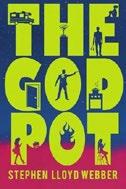
A directionless dilettante is drawn into the hidden lives of his neighbors in Webber’s literary novel. Despite being raised with immense wealth and privilege, recent college graduate Moony Adams finds himself living in a golf-themed budget apartment complex called Sod Hill in suburban Denver. He assumes he’ll eventually take a position in the family mineral business, but after the recent suicide of his older sister, Yvette, he figures some time at Sod Hill—playing Super Nintendo, sleeping with his neighbor Celia, and going to movie nights at the nearby bar—will allow him to “detox from the adversarial and elitist worldview of his upbringing.” To give himself a sense of purpose, Moony imagines himself as a sleeper agent with a trust-fund-slacker cover. It isn’t completely out of character, given that Moony’s teen years included martial arts classes, wilderness survival training, and tactical paintball. His skills
prove unexpectedly relevant as he becomes further ensconced in the schemes and passions of his fellow Sod Hill residents: There’s Gypsy, a mysterious Eastern European who wants Moony’s help setting up a money-laundering operation; Perry, the complex’s co-manager, who’s spying on Moony for an unidentified third party; and Heath, the Celia-obsessed meth-maker who lives across the hall, receives instructions from his spatula and sees the face of God in his cooking pot. Are all of them delusional, or is Moony—and his family’s fortune—somehow at the center of a grand conspiracy? Webber channels more than a bit of Pynchon in creating Moony’s absurdist suburban nightmare, from Sod Hill, with its artificial turf parking lot to the shopping mall turned call center staffed by one of Moony’s neighbors, a lonely satanist: “His cubicle sat in what used to be Men’s Activewear. The carpet still showed the ghost outlines of the old display islands.” As in Pynchon, the shaggy plot is secondary to the strange interactions of richly drawn oddballs, and Webber entertainingly keeps them coming. An imaginative, offbeat exploration of a coming-of-age identity crisis.
Wheeler, Stephanie | Illus. by Annika Chambers | Spinning Wheel Stories (42 pp.) $19.99 | October 21, 2025 | 9781967113002
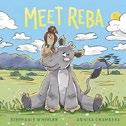
In Wheeler’s picture book, a fiercely independent rhino learns that true friends are there to help. Reba the rhinoceros is “clever, curious,” and “likes trying things she can do all by herself.” Some of these activities include swinging, tying her shoes, and reading. When Reba sees a giraffe ride by on a bicycle, she decides that she can do it, too. But no matter how hard Reba tries, she falls off the bike—not once, not twice, but three times. A friend of hers, Olive the bird, offers to help, but Reba refuses, and the discouraged rhino begins to think that she’ll never be able to learn to ride. Olive continues to encourage her, however, and eventually helps Reba build enough
momentum to stay upright and pedal. Reba finally discovers the joy of trying new things, “even when she can’t do [them] all by herself.” Chambers’ illustrations are composed of thick outlines and bright colors, with the adorable and cartoonish characters proving surprisingly expressive. Wheeler’s text is sparse, with only a couple of sentences (at most) per page, but it’s infused with warmth and a steady sense of encouragement as readers follow Reba’s dawning understanding that friends are there to help each other. The whimsical illustrations and charming, feel-good story combine to deliver inspiring lessons about independence, friendship, and the power of believing in yourself—and in each other.
An appealing story that gently encourages kids to try new things.
Zalewski, Edward | Self (267 pp.) | $14.99 paper | January 15, 2026 | 9798218889272 Series: The Confederation Chronicles, 1
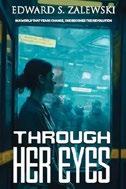
In Zalewski’s series starter, set on a totalitarian colony planet in the far future, an office drone finds himself in dire violation of his society’s rules when forbidden science changes his life.
Arkessa-9 is a faraway, isolated human colony operated along lines of absolute, rigid conformity. Men and women are strictly segregated; any mingling (including romance) must be scrutinized and authorized by artificial intelligence. Any deviation from the government’s notions of traditional
gender roles receives cruel punishment, ostensibly in the name of maximizing productivity and efficiency. In the Echelon City metropolis, Julian Hartman is a data-analysis clerk who’s weary of life’s ceaseless surveillance and compliance checks, as well as the fact that his fellow citizens keep being disappeared by the government. During his usual, dispirited commute to work, a stranger slips a pill into his pocket. Julian, who’s open to small acts of defiance, ingests it. Apparently, it’s all part of an operation by the Binary Liberation Front involving an unapproved drug called GenderFlux, which turns Julian overnight into a woman (whom the narration names Juliette). During one day of sick leave, Juliette experiences life in the harsh patriarchy, in which she’s treated like a secondclass citizen. At work, her anomalous ID result flags her as an outlaw, and she lands in a grim women’s prison that’s a hotbed of BLF activity; there, she begins a passionate relationship with fellow inmate Katarina Novak. Zalewski’s prose is feverishly vivid throughout: “Her hair was wild, bright as an arterial spray against the backdrop of stained, flaking walls.” Readers will find much of the narrative predictable, though—particularly the prison-set scenes in the second act (“Hey, fresh fish”). The Orwellian dictatorship also feels rather typical, at least until several clever reveals toward the end satisfactorily explain how such a fanatically conservative and spectacularly transphobic culture could arise. Longtime SF readers may wish to compare and contrast this work to Joanna Russ’ landmark novel The Female Man (1975).
A sci-fi action-romance novel that offers intriguing gender fluidity amid familiar dystopian fare.
An appealing story that gently encourages kids to try new things.
MEET REBA
Looking for a new read to recommend to friends and family?
We welcome you to Discover Indie Reads, a sponsored roundup of books from Kirkus’ Indie section. Be among the first to find out about these knotty whodunits, colorful kids’ books, steamy romances, complex fantasy tales, frank autobiographies, searching self-help guides, and eclectic poetry collections. Whatever your genre, your journey of discovery starts here.
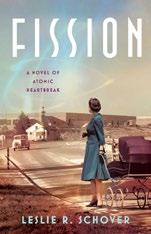
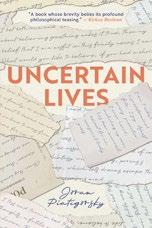
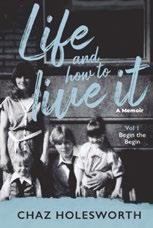
by
Leslie R. Schover
An engrossing, albeit quiet, World War II story about love, loyalty, and the atomic bomb.
Uncertain Lives by Joram Piatigorsky
A book whose brevity belies its profound philosophical teasing.
Life and How To Live It: Volume One by Chaz Holesworth
An absorbing and thoughtful, if often disturbing, debut remembrance.
The Outgoing by Thomas A. Buhr
A straightforward whodunit that gets a welcome boost from its multilayered characterization.
Kirkus Star
The Judgy Bunny by Gramma Sir
An excellent lesson in being gentler, featuring adorable visuals.
The Jaguar God Awakens by D.S. Canon
This delightful, fastpaced archaeological tale boasts a smart hero and a wondrous setting.
Kirkus Star
Pictures of My Desire by Caroline Goldberg Igra
An expressive, penetrating novel.
Dance With Me, Franny Nice Shirt by Elizabeth Kelly Stephenson
A deeply affecting novel that blends sharp humor with aching vulnerability.
A strong debut that feels timely despite looking back at a bygone era.
by Linda LeBlanc
A sharp main character gives this conventional mystery a hearty boost.
The Gatekeeper by Martha Cecilia Rivera
A raw, imaginative, and unsettling exploration of guilt, judgment, and the human longing for redemption.
Dying Art of Life by shoeless
A skillfully rendered literary return, anchored by a hero worth following.
by Stephen
Ford
A razor-edged vision of society.
What We Hold No Longer by Aaron
Gedaliah
A well-considered collection full of wistful imagery.
Please Wait to Cross by Elissa
Bass
A poignant love story with a satisfying mix of thoughtfulness and humor.
LoveVortex and the Drakor’s Curse by Pekka Harju-Autti
An often-engaging fictional exploration of the topic of mortality.
by
RJ Rafferty
A sweet and charming read.
by
R.K. Harrington
An entertaining period love story, nicely balancing breathless lust with social satire and high-mindedness.
by Wesley Moore III
A heartfelt, highly personal assortment of lived experiences and fictionalized accounts.
Into Dementialand by Sherry Hobbs
A sometimes-upsetting but poignant and informative remembrance.
by
Debra Payne
A poignant debut with beautiful writing.
McDaniel
A fun tale of shapeshifting adventurers.
by Steve Vesce
Vesce’s largerthan-life portrait of Hopkins reminds that there really is some truth to the whole “Greatest Generation” mythos.
Murder by Daryl Wood Gerber
Fast, furious, and funny.
Fleur’s Adventures by Emily Ann Pooler; illus. by Kyria McKie
A sunny, woodsy debut that highlights the importance of speaking up for oneself.

Moon and Stone by T.F. Long
A heady, intelligent, and heartfelt collection that rewards readers willing to venture off the beaten path.
The Alien Language by Florence Kembaren
Provocative, brainy concepts drive this semi-opaque SF thriller narrative.
Gates of Thiros by Lili K. Buckley
An engaging, characterdriven tale of romance and clashing swords.
Should Have Told You Sooner by Jane Ward
An artful and affecting novel of loss and reconnection.
widow— widower— widowest— by Aaron M. Simmons & Polly G. Simmons
A compelling and vivid portrait of a deceased spouse.
Course Over Ground by Bill C. Wilson
A dramatic tale that effectively blends maritime adventure with an exploration of justice and human resilience.
The Nature of Demons by J.D. Carmicle
A gruesome, compelling fusion of post-apocalyptic fiction and supernatural horror.

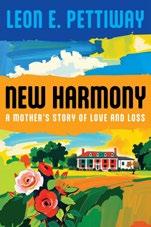
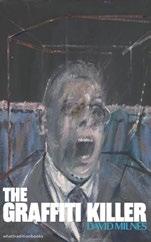
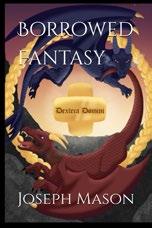
by John H. Thomas
A far-fetched but often fun SF thriller.
by
Leon E. Pettiway
A moving debut that honors the enduring power of love and reflection.

Graffiti Killer by
David Milnes
Readers won’t soon forget this dark little novel.
Borrowed Fantasy by
Joseph Mason
A thoughtful fantasy that pairs classic adventure beats with a shrewd concern for the moral price of miracles.
Kirkus Star
Beauregard’s Brave Leap by Rosie Baskett
An ideal tale for anxious youngsters.
Kirkus Star
Kazuko by Kazuko Blake with Sandra Vega
An involving memoir of ordinary life in WWII-era Hiroshima.
by
Leta Serafim
An engrossing mystery that illuminates contemporary immigration issues through traditional crime fiction.
by
Faye Bayko
A whodunit with a straightforward plot but engaging atmosphere.
THERE ARE AUDIOBOOK treasures to be discovered beyond the major publishers and the bestseller lists. Independent audiobook producers put time and care into these recordings, upping the production values with skilled narrators, full casts, or sound effects. They’re worth seeking out.
Speaking of treasures, Looted: Rescuing Italy’s Stolen Treasures by Frances Vieta, read by Lisa Flanagan (SueMedia Productions, 2025) is, according to our review, a “work of nonfiction that sounds more like a good detective story.” The author is a journalist, and this Earphones Award–winning audiobook chronicles her efforts, alongside an Italian investigator, to return stolen antiquities to Italy. Flanagan is an experienced and accomplished narrator with many audiobooks under her
belt, and our reviewer notes that through her performance, she “helps create an atmosphere worthy of a mystery novel…conveying surprise, outrage, or suspense.” It would be a perfect crossover listen for history buffs, true-crime fans, and mystery mavens.
Octavo by Marty Neumeier (Books Forward, 2025) is another listen that would appeal to a wide swath of history, art, historical fiction, and mystery fans. Also an Earphones Award winner, it’s performed by an ensemble of narrators that includes Scott Brick, well known and loved for his thrillers. Split between two different time frames, the story follows the writings of Francesco Melzi, a devoted pupil of Leonardo da Vinci, and two women hired in the present day to authenticate
his notebooks. Our reviewer raves, “Listeners will be riveted as they follow the two storylines and gain a deeper appreciation for da Vinci’s genius.”
Strongwood: An Audio Crime Dossier by Larry Millett, adapted and directed by narrator Steve Hendrickson (Audio-Visceral Productions, 2025), is another Earphones Award winner that makes use of multiple narrators—but in this case it’s a full-cast production that also includes sound effects. Our review praises the high quality of the audio production as well as the performances of the cast: “The narrators are perfectly attuned to their characters, making them come to life through tone, pace, and accent.” Using journals, newspaper articles, letters, and court proceedings, the narrators tell the story of a woman in early-20th-century Minneapolis accused of murdering her beau. The
novel, the seventh in Millett’s Minnesota Mysteries series, also features none other than Sherlock Homes investigating the crime. Fans of Holmes, audio drama, and documentaries will enjoy piecing together the puzzle of this riveting audio mystery. Narrator Amanda Stribling put together the audio anthology Ghost Stories From the Gilded Age (Spoken Realms, 2025), which includes 15 public domain “haunted tales” from classic women authors, including Charlotte Perkins Gilman, Edith Wharton, Virginia Woolf, Kate Chopin, E. Nesbit, and more. Listeners likely will have encountered some of the works before, as with Gilman’s “The Yellow Wallpaper,” while others, such as Wharton’s “The Lady’s Maid’s Bell” and Woolf’s “A Haunted House,” may be less familiar. The production makes good use of the audio format by having 10 narrators perform the stories, and our reviewer notes that they “lend a contemporary feel, intimate tones, and a nice sense of reverence.” This one’s for fans of classics, horror, and challenging the patriarchy.
Jennifer Dowell is the audiobooks editor.
Viola Davis illuminates a tale of small minds dealing with big issues. In a book co-written with Patterson, Davis portrays elected judge Mary Stone, a highly respected Black woman in Union Springs, Alabama. Fair-minded and self-assured, Judge Stone faces a case that divides the town. She is threatened by everyone from local crazies to the state’s governor. Vicious, violent actions accompany verbal threats, and it’s back to the
bad old days of the Klan. Davis is simply magnificent. She is both subtle and blatant, giving texture to each of her characterizations. With deftness and artistry, she creates a world of ordinary, flesh-and-blood people and handles preconceptions based on antiquated prejudices with controlled rage. This one really is unputdownable. Davis is a force of nature, and her performance is riveting.

Patterson, James & Viola Davis | Read by Viola Davis | Hachette Audio | 11 hrs, 20 mins
$27.99 | March 9, 2026 | 9781668653685
Kirkus awards Earphones to truly exceptional presentations that excel in the following criteria: narrative voice and style, vocal characterizations, appropriateness for the audio format, and enhancement of the text.
168
The Last of Earth By Deepa Anappara, read by Rea Malhotra Mukhtyar
169 Stay Alive By Ian Buruma, read by Ian Buruma
169 Like This, But Funnier By Hallie Cantor, read by Helen Laser
170 Cleopatra By Saara El-Arifi, read by Adjoa Andoh
171 Nadia Islam, On the Record By Adiba Jaigirdar, read by Nikhaar Kishnani
173 It’s All in Your Head By Sabina Nordqvist, read by Austin Rising & Mollie Stark
167 Judge Stone By James Patterson & Viola Davis, read by Viola Davis
174 The Girl Who Changed Little League By Maria Pepe & Jean L.S. Patrick, read by Daisy Guevara
174 Speak Now By Ash Perez, read by Jena Malone & a full cast
175 Trust No One By James Rollins, read by Simon Vance
175 Read Between the Lies By Jesse Q. Sutanto, read by Eunice Wong
176 Served Him Right By Lisa Unger, read by Kristen Sieh, Vivienne Leheny, Brittany Pressley, Soneela Nankani, Tim Paige & Petrea Burchard
176 Seven Heavens Away By Ashraf Zaghal, read by Neil Shah
TO KILL A COOK
Akers, W.M. | Read by Mozhan Navabi Penguin Audio | 12 hrs | $24 February 3, 2026 | 9798217285181

Set in the glitzy 1970s New York gourmet restaurant scene, this story of food critic Bernice Black’s mysterysolving escapades is well performed by Mozhan Navabi. The novel opens as Navabi affectionately recounts Bernice’s introduction to fine dining through the generosity of her mentor, an over-the-top French chef whom Navabi gives appropriate flair. When Bernice discovers her beloved chef’s severed head in a batch of perfectly prepared aspic, she has the food expertise to find the only other chef capable of making an aspic that divine—and hence, to identify the killer. A sultry writer for a competing magazine tries to beat Bernice to the story, and Navabi delivers the twisty narrative without missing a beat. This audiobook is evidence that a delightful whodunit is best consumed through the ears.
Anappara, Deepa | Read by Rea Malhotra Mukhtyar | Random House Audio | 10 hrs $22 | January 13, 2026 | 9798217159611
Rea Malhotra Mukhtyar, a London-based Indian actor, offers a captivating performance of Anappara’s memorable second novel. In it, the Edgar Award-
winning author takes us to 19th-century Tibet, where two travelers explore its dizzying peaks. Balram, an Indian schoolteacher, is spying for the British while covertly searching for a friend, and Katherine, a biracial British explorer, hopes to be the first European woman to reach Lhasa. Mukhtyar’s gracious, precise voice welcomes listeners into the beautifully wrought adventure. Her narrative pace matches the action, be it calm or intense. And her nuanced character voices—gruff Indian porters, an overbearing British captain, determined Balram, brave but unsure Katherine—color the emotional drama. Mukhtyar’s evocative delivery transports listeners far away to explore the heart’s great mysteries.
Benedict, Marie | Read by Bessie Carter & Suehyla El-Attar | Macmillan Audio 11 hrs, 47 mins | $26.99 | March 24, 2026 9781250330062
Bessie Carter and Suehyla El-Attar narrate this story of two remarkable women from different eras. Carter’s lively British voice perfectly captures the charm and high-spiritedness of Lady Evelyn Herbert in the early 1920s as she pursues a passion for archaeology in search of the female pharaoh Hatshepsut. Carter portrays Evelyn’s father, Egyptologist Lord Carnarvon, and archaeologist Howard Carter with gusto as they famously uncover the tomb of Tutankhamun. El-Attar’s measured, precise performance gives regal gravitas to Hatshepsut 3,000
years earlier. El-Attar evokes the intense fierceness of the pharaoh’s public life, softening her tone to reflect Hatshepsut’s personal relationships and desires. Supporting Egyptian characters are clearly defined. Two skilled narrators bring to life two women who both rebel against the rules of the cultures into which they were born.
Bennett, Joshua | Read by Joshua Bennett
Hachette Audio | 6 hrs | $18.99
February 3, 2026 | 9781668653494
Poet and scholar Bennett narrates his latest, combining memoir, biography, and criticism to celebrate how African American communities protect their children and nurture their excellence. He submits himself as Exhibit A: an early reader and able student whose family and (most) teachers devoted themselves to giving him the tools and opportunities to excel. He twines his own memories with explorations of the youthful experiences of such remarkable talents as Malcolm X, Stevie Wonder, and Gwendolyn Brooks. Both practiced in reciting Scripture from childhood and a slam poet, Bennett is no stranger to the spoken word. Here his delivery is smooth and mostly understated, occasionally rising in formality to greet the poems, both his own and others’, that occasionally punctuate his prose. A stirring recognition of communal uplift.

For more by Joshua Bennett, visit Kirkus online.
Buruma, Ian | Read by Ian Buruma Penguin Audio | 12 hrs, 15 mins | $24 March 17, 2026 | 9798217282210
Bard College historian Buruma has a personal link to WWII-era Berliners, his Dutch father having been a forced laborer in wartime Berlin. Buruma’s account highlights instances of the survival and rescue of Jews and of the Berlin residents who came forward to assist them. But of most Berliners, he says, “Their main aim was to stay out of trouble.” Buruma’s performance as both historian and narrator is a model of restraint and reliance on fact. He shapes a powerful narrative around Germany’s defeat at Stalingrad and year-by-year shifts in civilian morale. As deprivation and disillusion with the Nazi regime set in, the struggle for survival extended to all Berliners. Buruma’s subtle and effective narration style is essential to this chronicle.
Cantor, Hallie | Read by Helen Laser | Simon & Schuster Audio | 9 hrs, 8 mins | $27.29 April 7, 2026 | 9781668128732
Screenwriter
Caroline lives in Los Angeles with her psychotherapist husband, Harry. Her work in the industry has been tenuous of late, and she has been spending her days
working on projects alone with a critical voice in her head. Narrator Helen Laser does a great job of characterizing the funny yet insecure Caroline. Caroline’s neurotic inner voice can be deadpan, disdainful, and self-critical, and she maintains a sardonic sense of humor as she frets about work security, her ambivalent feelings about having children, and her fixation on one of her husband’s therapy patients, whom she secretly befriends. Laser’s male characters tend to sound similar.
Laser’s performance paints an evocative picture of a funny and flawed woman facing professional and personal crossroads.
Cather, Willa | Read by Laurel Lefkow & Dexter Galang | Naxos AudioBooks 6 hrs, 45 mins | $16 | October 30, 2025 9781781985922
Laurel Lefkow and Dexter Galang bring Cather’s 1925 novel to life with bold, stirring performances. Lefkow narrates the first half of the novel, expertly voicing the meandering interior monologue of Professor Godfrey St. Peter as his family prepares to move into a new house. Lefkow’s narration is forthright but melancholy, capturing the emotional state of a man reflecting on his life and mistakes. Galang narrates the second half, told from the point of view of St. Peter’s late student, Tom Outland, when he was a young rancher in New Mexico. Galang voices Outland with youthful energy and exuberant, if misguided, idealism.
Hardingham presents this literary mystery in a crisp, attentive style.
Lefkow and Galang give an energetic and compelling dual performance of this 100-year-old classic.
Clark, Christopher | Read by Vidish Athavale Penguin Audio | 4 hrs, 45 mins | $15
March 10, 2026 | 9798217282234
The obscure uproar so vividly portrayed in this brief audiobook couldn’t be farther from today’s media commotions—or nearer. This “small vortex of turbulence” sounds like a stage farce: It’s set in backwater Königsberg, capital of East Prussia, in the 1830s, during the lull between the Napoleonic wars and the 1848 Revolution. Take a preposterous but compelling religious cult and two guileless but strikingly handsome Lutheran clergymen, add only a hint of fornication, and gossip does the rest. Vidish Athavale’s measured, finely nuanced narration gives edge and authority to a narrative without a wasted word or useless detail. And he clearly relishes the polysyllabic 19th-century German names. A hint of hijinks in sleepy Königsberg sets ears ablaze.
Clarke, Evelyn | Read by Fiona Hardingham Harper Audio | 11 hrs, 45 mins | $28.99
April 7, 2026 | 9780063444652
Fiona Hardingham presents this literary mystery in a crisp, attentive style that matches its closed-circle premise. She brings listeners to the remote Scottish island where six writers gather following the death of famed novelist Arthur Fletch. Hardingham cycles us through the characters, who are vying to ghostwrite the ending of
Fletch’s final novel. She differentiates the competing authors through calibrated shifts in tone and rhythm, giving each ambition and insecurity a distinct presence. Hardingham handles scenes of negotiation, rivalry, and suspicion with steady pacing, maintaining clarity as tensions tighten over the 72-hour deadline. Hardingham supports the novel’s layered structure, keeping the metafictional stakes and mounting danger aligned.
Dubb, Sarah T. | Read by Mia HutchinsonShaw & Evan Sibley | Simon & Schuster
Audio | 10 hrs, 4 mins | $27.29
February 10, 2026 | 9781797196213
Narrators Mia Hutchinson-Shaw and Evan Sibley bring lots of warmth to this appealing romance. As a teenager, Zander Bouras resented the small town of Sullivan’s Glen, where his mother sent him every summer to live with his gruff grandfather. Now he’s back to sell his grandfather’s house, and the first person he encounters is next-door neighbor Penny Becker. While Zander confronts the ghosts of his past, beekeeper Penny struggles under the weight of a secret that might mean the end of her family’s farm. In alternating chapters, Sibley and Hutchinson-Shaw convincingly convey Penny’s pluck and self-sufficiency and Zander’s charm and devotion to his son. And they absolutely sell the red-hot chemistry between Penny and Zander. A winning narration ensures that listeners will be invested in their journey.

El-Arifi, Saara | Read by Adjoa Andoh Random House Audio | 10 hrs | $22 March 3, 2026 | 9798217158911
With a regal voice, Adjoa Andoh presents a scintillating rendering of the famed beauty, which focuses on Cleopatra’s life, not her death. Melding history and speculation, El-Arifi’s storytelling is detailed and believable. Andoh makes it all feel real. Chronicling Cleopatra’s earliest days as Princess of Egypt, Andoh highlights her bond with her father, brothers, and sisters. Andoh illuminates Cleopatra’s relationships with Julius Caesar and Marcus Antonius, her fierceness as a mother, and her statesmanship and loyalty to Egypt. Andoh gives the Romans credible Italian accents and strong personalities, and with a conclusion guaranteed to surprise, there is no doubt that Andoh is Cleopatra. A perfect pairing of a remarkable performer and an excellent text makes this intriguing audiobook powerful listening.
Feeney, Alice | Read by Bel Powley, Henry Rowley & Richard Armitage | Macmillan
Audio | 9 hrs | $26.99 | January 20, 2026 9781250429797
For more by Sarah T. Dubb, visit Kirkus online.
Three accomplished narrators skillfully present this thriller, which is replete with false leads and frequent changes in locale. Harrison and Eden live a life of privilege until their 8-yearold daughter Gabby is critically injured. The official investigation is stonewalled as everyone questioned seems to be lying and secretive. In Henry Rowley’s portrayal, Cornwall police officer Carter is dedicated but naïve. He is supervised by newly hired Chief Bird, who has a
checkered past and connections to both victims and suspects. Bel Powley delivers her with confidence and wit. Richard Armitage makes Harrison sound truly frightening. Majestic descriptions of the seaside and outstanding sound effects provide some relief from the tension. Listeners are kept in the dark until the last minute, when this thriller’s shocking truths finally emerge.
French, Nicci | Read by Sophie Roberts Harper Audio | 11 hrs | $28.99 February 24, 2026 | 9780063298446
Sophie Roberts narrates this dual-timeline thriller with a controlled tempo that builds tension from a past unsolved crime to bubbling tensions in the present. She gives space to the escalating accusations, the second murder that mirrors the first, and to Detective Inspector Maud O’Connor’s acumen. Tyler Green returns to London, and Roberts narrates the gathering of former university friends with a contained intensity that reflects decades of unresolved suspicion. Roberts maintains clarity as the storyline moves between 1993 and the present day, marking shifts in time through subtle changes in pacing. She delivers dialogue with crisp differentiation, keeping each character distinct during scenes of confrontation. The performance supports a plot driven by memory, rivalry, and the lingering question of guilt.
Goo, Maurene | Read by Jeena Yi | Penguin Audio | 9 hrs | $22 | February 3, 2026 9798217338115
This sunny rom-com comes alive against a vibrant Southern California backdrop, thanks to Jeena Yi’s bright
and relaxed narration. Cassia Park, nearing 40 and single, runs her family’s matchmaking service, One & Only. Like the other Park women, Cassia is gifted with the ability to glimpse her clients’ soulmates. Though Cassia has known of her own “fated” match, Daniel, he has eluded her. Destiny intervenes through a steamy detour with charming 28-year-old Ellis, who works for Daniel. Yi delivers a range of LA accents and subtle gender shifts, and demonstrates impeccable comedic and emotional timing. Her portrayals of Cassie’s grandmother Halmoni and great aunt Emori are especially memorable. While Daniel’s British accent sometimes wavers, and Cassia’s bestie Marcella can feel overdone, the narration toggles between comedy, romance, and introspection with enjoyable ease.
A glittering, golden-hour escape, deftly performed.
Grippando, James | Read by Jonathan Davis Harper Audio | 11 hrs, 15 mins | $26.99 January 6, 2026 | 9780063358140 Series: Jack Swytek, 20
Miami attorney Jack Swyteck finds the defense of his client, Elliot Stafford, becoming more challenging as the case unfolds, especially when Elliot chooses to remain silent. Narrator Jonathan Davis returns to the series to give a polished and professional performance, bringing life to Jack and the diverse range of key characters. Davis’ skills are evident as he carefully crafts the characterization of one of the protagonists so as not to spoil an important plot point too early in the tale. Davis injects the perfect amount of tension into his performance, allowing the suspense to build even during some of the more technical legal parts and keeping the listener engaged as the story twists to its conclusion.
Davis perfectly creates an enthralling and thrilling listen.
Gurwitch, Annabelle | Read by Annabelle Gurwitch & Andie MacDowell | Zibby Books 8 hrs, 3 mins | $19.95 | March 17, 2026 9798992377095
In this memoir, presented through a collection of essays, actress and author Gurwitch takes listeners on a humorous journey following a stage 4 lung cancer diagnosis. Refusing to become a “cancer warrior,” she instead embraces being a self-proclaimed “cancer slacker,” offering practical advice laced with levity rather than despair. Rejecting the idea that one should live each day as if it were one’s last, Gurwitch relishes in joy in the ordinary. She goes on tour with a metal band as their “Merch Girl” and shares her unfiltered thoughts on everything from bread to ketamine therapy to juicers. Her warm, conversational delivery evokes the feeling of listening to an honest, witty friend. A life-affirming, entertaining listen that finds comedy and meaning even in the darkest moments.
Nadia Islam, on the Record
Jaigirdar, Adiba | Read by Nikhaar Kishnani Harper Audio | 5 hrs, 15 mins | $27.99 January 13, 2026 | 9780063286016
Narrator Nikhaar Kishnani creates an effervescent personality for a small but mighty 8-year-old in this middle-grade audiobook. Nadia Islam has big plans for
Ramadan this year, especially since it will be her first chance to fast alongside her best friend, Yasmin. When Nadia’s parents decide to visit family in Bangladesh instead, she has to pivot toward this new experience. Kishnani perfectly pitches Nadia’s mix of disappointment at the change, nervousness at traveling abroad, and rising interest in her journalist aunt Khalamoni’s reporting on climate refugees near their home village. The thoughtful narration substitutes for the extensive illustrations of the print edition. Kishnani’s bright turn as the inquisitive Nadia brings this exploration of community and climate change to life. (Fiction. 8-12)
Jessen, Lauren Kung | Read by Katharine Chin, Austin Rising & Lauren Kung Jessen Hachette Audio | 10 hrs, 45 mins | $27.99 March 17, 2026 | 9781668654293
Narrators Katharine Chin and Austin Rising perform this heartfelt romance full of second chances in a duet-style narration. Hazel Yen has had a string of recent bad luck. While visiting a fortuneteller’s booth, she never expected fate, disguised as the handsome Logan Wells, to come crashing into her life and miraculously turn things around with a shared winning lottery ticket. Chin’s expressive, nuanced performance highlights Hazel’s vulnerabilities and strengths. Rising’s warm, soothing timbre is the perfect balance to showcase Logan’s conflicted past and hopeful future. Listeners will long for Hazel and Logan to get lucky together and place their trust and love in each other. Chin and Rising create a magnetic, steadfast, undeniable chemistry between Hazel and Logan.
Davis injects the perfect amount of tension into his performance.
Khorram, Adib | Read by Arya Shahi & Major Curda | Macmillan Audio | 5 hrs, 30 mins
$20.99 | March 17, 2026 | 9781250433350
The second-person perspective of this thoughtful audiobook makes the experiences of the two 14-year-old boys at its center feel immediate and relatable. Narrators
Major Curda and Arya Shahi deliver the points of view of Dayton and Farshid in alternating chapters. When Dayton yells a homophobic slur at an assembly, the repercussions follow him beyond suspension. The fallout also affects his classmate Farshid, who begins to question his own identity, working out obsessively and clashing with his mom. Curda and Shahi’s performances make it easy for listeners to empathize with both boys. Sound effects, while not strictly necessary, add texture to the production and evoke the soundscape of high school. A moving exploration of consequences, making amends, and figuring out who you are and what kind of person you want to be. (Fiction. 13-18)
Kovatcheva, Anna | Read by Helen Laser Harper Audio | 7 hrs, 45 mins | $28.99 February 10, 2026 | 9780063436343
Listeners, beware: This wildly entertaining, rowdy listen is not for those without a strong stomach. Narrator Helen Laser unflinchingly forges ahead through gruesome scenes with the creatures of traditional Slavic folklore: vampires, witches, and monsters. As the two women at the center of this plot encounter demons—both in the deep dark of a 19th-century Bulgarian night and systemically embedded in their patriarchal society—Laser sticks with them at every step. Kovatcheva’s propulsive writing weaves together
multiple perspectives somewhat smoothly, but the sexy, feminist twist on this classic witch-hunt tale is what will keep listeners glued to Anka and Yana’s gothic adventure. Kovatcheva’s revisionist folktale creates a gripping world both stark and memorable.
Lawson, Mike | Read by Joe Barrett
Simon & Schuster Audio | 8 hrs | $24.99 February 3, 2026 | 9781668160978
Series: Joe DeMarco, 19
Narrator Joe Barrett turns his many years of experience with this character into a finely honed performance in the latest Joe DeMarco thriller. DeMarco is a fixer for his employer, former Speaker of the House John Mahoney, and Barrett’s easy rhythm and slightly hoarse delivery give him the aura of a seasoned Mafia consigliere. Barrett enlivens all the key players in this intricate cat-and-mouse story. Standouts in his capable narration include Mahoney’s Irish lilt; the nasal twang of the wife of one of Mahoney’s rivals, who is suspected of delivering secrets to the Chinese; and the arrogance of the ex-CIA agent who tips off Mahoney to the intrigue. The plot is a solid gold thriller that will keep listeners engaged.
Madden, T Kira | Read by Eunice Wong, Christina Moore, Mia Hutchinson-Shaw & Rebecca Lowman | Harper Audio 13 hrs, 30 mins | $27.99 | March 10, 2026 9780063289710
Three narrators work together to deliver this sprawling murder mystery. Each anchors a different female character connected to Calvin Boyer’s murder.
Eunice Wong carries Birdie Chang’s sections with a contained urgency that
reflects her flight to Whidbey Island, off the Pacific Northwest coast. Mia Hutchinson-Shaw makes former reality TV star Linzie King sound composed. Mary-Beth is Calvin’s mother, and Christina Moore gives her a steady, maternal presence as she confronts her son’s death and its implications. The ensemble structure plays up the emotional stakes of these tangled storylines. The narrators guide listeners through a layered journey of discovery driven by testimony, confrontation, and the struggle to define justice. For fans of crime fiction, this is a compelling listening experience shaped by trauma, memory, and consequences.
Miyares, Daniel | Read by Giordan Diaz, Gary Tiedemann, Marisa Blake, Gustavo Rex, Veronica Thames, Demi Deaguiar, Robb Moreira, Emmanuel Chumaceiro, Annette Amelia Oliveira & Daniel Miyares Listening Library | 1 hr, 27 mins | $15 March 3, 2026 | 9798217346066
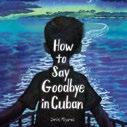
A talented ensemble cast brings this fictionalized graphic memoir to life in a vivid, fully immersive listening experience. Young Carlos, voiced by Cuban American narrator Giordan Diaz, anchors the story with a performance that captures innocence, fear, and curiosity as revolution begins to shadow his childhood in Cuba. Daniel Miyares narrates in a steady, serious tone, skillfully weaving the historical context of 1950s Cuba into the family’s perilous journey toward Key West, Florida. The contrast between his grounded narration and the emotionally charged family scenes adds depth and authenticity. Cuban music and layered sound design, like rolling waves, hushed conversations, and distant protesters, create a cinematic atmosphere. This production reflects both the sweep of history and the intimate resilience of one family. (Graphic memoir. 8-12)
IT’S ALL IN YOUR HEAD
Morillo, Maria J. | Read by Sofía Palmero Penguin Audio | 10 hrs | $22 February 17, 2026 | 9798217162994
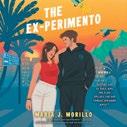
Sofía Palmero performs this Venezuelan romantic comedy with charm and humor.
Romance columnist Marianto Camacho has always had a plan for her life, but when her boyfriend’s proposal turns into a breakup, the resulting viral video leaves her both single and unemployed. Marianto takes a job with a Venezuelan singing competition as an assistant to her favorite indie musician, who teaches her how to win back her former boyfriend. Palermo’s bright performance makes Marianto feel believable, skillfully embracing her insecurity and sharp wit in equal measure.
Palermo’s effortless shifts between English and Spanish make this audiobook feel authentic.
Murphy, Kate | Read by Kate Murphy Macmillan Audio | 7 hrs, 30 mins | $19.99 January 27, 2026 | 9781250432346
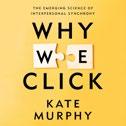
Kate Murphy delves into the reasons we connect with some people and don’t with others. She casts a wide net into the research of how and why we feel synchrony—why we click— with certain people, animals, and even plants and television characters. Murphy’s performance is approachable, even chatty, allowing
the listener to curl up and take in the flow of stories and accessible science. People who are all doing the same thing at the same time—think rowing, dancing, or marching— often forge a deeper connection with each other. But a bad apple in the workplace really can poison the whole barrel. Murphy also joins the chorus of those concerned about the epidemic of loneliness and the echo chamber of social media. Murphy’s words are well served by her genial tone and gentle enthusiasm.
Nash, Lenore | Read by Helen Laser & Jesse Vilinsky | Simon & Schuster Audio 10 hrs, 34 mins | $28.34 | March 10, 2026 9781668136881
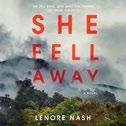
Narrators Helen Laser and Jesse Vilinsky instantly captivate listeners. In this mystery, shifting points of view propel listeners into the investigation of the disappearance of Bowie Bishop, an 18-year-old exchange student and gifted singer-songwriter. Laser’s measured, thoughtful tone perfectly suits Lake Harlowe, a diplomat with a traumatic past who is newly assigned to the U.S. Embassy in Wellington, New Zealand. Vilinsky fully inhabits Bowie and delivers the many song lyrics central to her storyline with emotional clarity. Both narrators skillfully render the New Zealand accents for characters who are male and female, young and old, adding authenticity to the story’s setting.
Add in the atmospheric landscapes and an attractive detective, and the result is a highly entertaining listening experience.
Nordqvist, Sabina | Read by Austin Rising & Mollie Stark | Hachette Audio | 12 hrs | $27.99 February 10, 2026 | 9781668654002
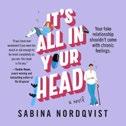
Listeners seeking disability representation in a romance audiobook will discover all they are searching for in this illuminating contemporary, gloriously narrated by Mollie Stark and Austin Rising. Former Olympic snowboarder Brandon Pike and college admissions recruiter Skylar King meet in an online chronic-pain support group. After Pike’s mother creates a tense situation on the site, Skylar and Pike agree to fake-date. While the chapters alternate between Skylar and Pike’s points of view, each chapter features the voices of both narrators, making the story sound like a real-life conversation. The magic of this audiobook lies in how the narrators splendidly depict this couple’s willingness to expose their vulnerabilities and make the necessary accommodations to sustain a lasting and committed relationship. A winning duet narration.
Oliver, MK | Read by Perdita Weeks Simon & Schuster Audio | 10 hrs, 35 mins $27.29 | February 17, 2026 | 9781668135020
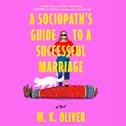
Perdita Weeks completely captures Lalla Rook’s inner snark in this satirical portrait of a sociopath. Gallows humor abounds as Lalla manipulates everyone and everything around her to achieve her goals—a partnership for her husband at his firm, an upscale house in a posh neighborhood, a place in a prestigious school for her daughter, and even
SPEAK NOW
murder, when necessary. Weeks makes Lalla sound perfectly reasonable and utterly without guilt as she crosses items off her to-do list, including framing her best friend for murder. With friends like Lalla, who needs enemies? Weeks uses an almost flat affect that conveys a woman convinced of her own sound reasoning.
Lalla is the embodiment of a sociopath—and Weeks’ insightful performance almost makes her likable.
Pelicot, Gisèle, with Judith Perrignon
Trans. by Natasha Lehrer, Ruth Diver
Read by Emma Thompson | Penguin Audio 7 hrs, 23 mins | $22 | February 17, 2026 9798217290109
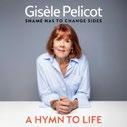
Emma Thompson’s voice is determined and controlled as she narrates Pelicot’s memoir, reflecting the resilience and resolve of the quietly defiant French grandmother who appeared in court to face down her rapists. The story of the horrendous, unprecedented sexual abuse Pelicot suffered made headlines around the world. For a decade, she was repeatedly drugged and violated by her husband and others. She knew she was experiencing mental blackouts and health problems but never guessed what was

happening to her. Listeners will come to admire a woman who confronted her accusers, maintained her inherent dignity, and stood up to a patriarchal, sexist society. A compelling memoir of immense personal strength.
Pepe, Maria, Jean L.S. Patrick | Read by Daisy Guevara | Hachette Audio | 25 mins
$4.99 | March 3, 2026 | 9781668654705
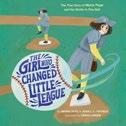
Attention to detail marks this nonfiction production narrated by Daisy Guevara. Listeners will hear music and many baseball-related sound effects, including the flipping of pages in the Little League rule book—no girls allowed! In 1972, Maria Pepe was playing Little League baseball with the backing of her coach and teammates. Opposing teams protested. Despite her proficiency, Maria was banned. The National Organization of Women, however, helped Maria sue and win the right for future girls to play Little League. Guevara is superb in creating character voices for the young, earnest Maria and for the supportive adults. She employs darker voices for the comments of the men who resented and intimidated Maria. Guevara hits a homer with her upbeat delivery of one girl’s quest to “play ball!” (Picture-book biography. 5-7)
Perez, Ash | Read by Jena Malone, Arienne Mandi, Benjamin Norris, Inés del Castillo, Charles Linshaw, Ali Andre Ali, J.S. Arquin, Jason Culp, Kevin R. Free, Kelly Krauter, Jane Oppenheimer, Bahni Turpin & Jesse Vilinsky
Simon & Schuster Audio Originals | 5 hrs
$20.99 | March 31, 2026 | 9781668117927
Featuring a talented cast and full sound effects, this audio original is an immersive listening experience.
Primary narrator Arienne Mandi gives voice to Alex Perez, a culinary genius on the verge of becoming head chef at Sempervirens, a high-end restaurant in Big Sur, California. This goal has been Alex’s sole focus until Genevieve, her former best friend and secret love, re-enters her life. Their reintroduction comes when Genevieve’s boyfriend, a real estate professional, proposes at the restaurant and offers an opportunity to help expand it—if Alex will cater all their festivities. As the story is told through a mix of vulnerable voice notes, flashbacks, and comical interactions, Alex must decide what matters more: her dream job or her true love. Listeners will find themselves laughing out loud while contemplating second chances.
Quinn, Kate | Read by Saskia Maarleveld & Kate Quinn | Harper Audio | 9 hrs, 15 mins
$28.99 | February 17, 2026 | 9780063244825
Narrator Saskia Maarleveld takes the listener on a wild journey of magical realism with a woman who escapes her depressing life by losing herself within her favorite books. For the downtrodden Alix Watson, the Boston Public Library is a refuge from her troubles—until the day she discovers a secret portal into the fantastical Astral Library. Maarleveld
creates a sympathetic impression of Alix while capturing her increasing desperation in a fevered pitch. She vividly portrays the Astral Library’s librarian with grave, smokey indifference. Maarleveld also gives voice to various characters from different time periods and works, ranging from Jane Austen’s Regency England to Sherlock Holmes to The Great Gatsby with skill and humor. Listeners who long to disappear into a secret book world will enjoy the escape in this love letter to public libraries.
Rollins, James | Read by Simon Vance Harper Audio | 11 hrs, 15 mins | $28.99 February 24, 2026 | 9780063413252
Simon Vance is the ideal choice to deliver this action-packed stand-alone thriller. Vance deftly portrays a wide cast of international characters, drawing listeners into a frantic race to decode the location of treasures hidden in a centuriesold book attributed to the Comte de Saint-Germain. Sharyn Karr, an American graduate student at England’s University of Exeter, is entrusted with the mysterious volume and warned to “trust no one.” Enlisting the help of a small circle of friends, running from law enforcement as well as a mysterious, powerful organization determined to seize the book, Sharyn and friends dash from England to France to Italy, propelled by clues steeped in history and science. Vance’s precise pacing and distinct voices heighten the suspense and will keep listeners glued to their earphones.
Shaiman, Marc | Read by Marc Shaiman Recorded Books | 4 hrs, 48 mins | $24.99 January 27, 2026 | 9798899745652
With a deeply wry and dry sense of humor, Grammy–winning composer and lyricist Shaiman offers a memoir highlighting his significant talent, hijinks, and achievements—while also finding things to complain about. Shaiman is well-known for his work on Hairspray, Mary Poppins Returns, and Sister Act, and he delivers a professional, clear, and enthusiastic narration flavored with a New York City accent. Audiobook listeners get the bonus of guest appearances from Martin Short and others. Shaiman examines the initial impact of the 1980s AIDS crisis on the theater community and its enduring effects today. Candid and honest, Shaiman will entertain listeners as he tells (nearly) all.
Sutanto, Jesse Q. | Read by Eunice Wong Brilliance Audio | 9 hrs, 45 mins | $42.99 February 1, 2026 | 9781511379793
Eunice Wong’s performance elicits empathy, shock, and repulsion. In other words, it’s a perfect fit for this dark thriller. Fern is a lifelong
Vance deftly portrays a wide cast of international characters.
introvert with a history of poor choices. Her safest place is her writing. Maven, her school bully, is ten years in the past and thousands of miles away, yet the memories—and a deep sense of betrayal—still sting. Now, on the cusp of fulfilling her dream of becoming a published author, Fern’s life is upended when Maven re-enters her life. Wong’s voice establishes Fern’s unreliability so vividly, it’s riveting, even when Fern can’t stop herself from life-altering moves that could spell disaster. Wong’s voice doesn’t miss a single note in this dark psychological thriller.
Thompson, Heather Ann | Read by Erin Bennett | Random House Audio | 14 hrs $26 | February 10, 2026 | 9798217295678
Starting with the NYC subway shooting of four unarmed Black teenagers by Bernie Goetz in 1984, the author shows how the court system’s failure to serve justice to the white perpetrator is one of many examples of racial injustice caused by white anger about rapid societal changes. Thompson discusses how, with the failed trickle-down economic policies of the Reagan years, simmering rage about these and other stressors for white people were brought to a boil by sensationalized media coverage and divisive, opportunistic politicians. Though narrator Erin Bennett’s pacing will sound unusually slow to some listeners, her connection with this story of crime and justice and its broader context is exceptional. Her tone and her interpretive skill promote effortless engagement with the author’s nuanced examination of how economic and societal stress have led to so much untethered anger. A gripping account.
Tokarczuk, Olga | Trans. by Antonia Lloyd-Jones | Read by Priyanga Burford Penguin Audio | 11 hrs, 45 mins | $24 December 2, 2025 | 9798217163489
Nobel laureate Tokarczuk’s novel concerns life in Krajanów, a village in the formerly German region of Silesia, now Poland, which borders Czechia (Bohemia). The novel is made up of loosely connected stories that deal not only with the present but also the past of this region, which has been under the control of several different countries over the centuries. Priyanga Burford’s British-accented voice is clear and confident in delivery, steady in pacing, and seems to be spot-on in pronouncing Polish names and words. She trills her “Rs” magnificently. Tokarczuk’s stories are often rather fantastical and may remind some of Bulgakov’s The Master and Margarita or perhaps Kafka’s work—but without being dark. Burford gives a splendid narration.
Unger, Lisa | Read by Kristen Sieh, Vivienne Leheny, Brittany Pressley, Soneela Nankani, Tim Paige & Petrea Burchard | Harper Audio 12 hrs, 8 mins | $29.39 | March 10, 2026 9781488237164
Strong performances bring truth to this twisty, compelling audiobook. When Paul, a serial sexual abuser, is murdered, the prime suspect is his ex-girlfriend, Ana. Ana has a dark side, but she also has a dedicated support group of friends and family. Flashbacks between the present and her childhood with older sister Vera add to the puzzle. Performed by a superb ensemble cast, each fully developed character has a
surprising connection to Paul and a credible motive for his murder, heightening the tension. Unger also weaves in fascinating plant lore, stories of wise women herbalists and healers accused of witchcraft, and a mysterious group known as “The Cove.” This highly original, cleverly plotted mystery will keep listeners glued to their earbuds.
Williams, Denise | Read by Teddy Hamilton & January LaVoy | Penguin Audio | 11 hrs $23 | January 27, 2026 | 9798217282630

After a humiliating breakup turns her into a viral spectacle, Willow Lewis retreats to her deployed brother’s home. January LaVoy movingly captures Willow’s vulnerability, bruised pride, and bravery. Willow is determined to reclaim parts of herself through a personal “re - do list.” The plan brings her closer to Deacon Rakes, her brother’s best friend, an Air Force veteran who is navigating physical recovery and life beyond the military. Deacon decides to help Willow complete her list. LaVoy’s nimble narration allows Willow’s journey to feel intimate and deeply personal. Teddy Hamilton matches her with equal depth, and his steady warmth grounds Deacon while also revealing his internal conflicts and growing affection. A beautiful blend of healing, humor, and heartfelt chemistry.
Winslow, Don | Read by Peter Giles Harper Audio | 8 hrs, 44 mins | $27.99 January 27, 2026 | 9780063450400
Wise guys, smart guys, dumb guys, made guys. This collection of six new novellas by crimewriting master Winslow offers a glimpse into a brutal
underworld. Narrator Peter Giles adopts a gruff, gritty tone as he portrays all the guys. The dialogue-driven “True Story” features two tough guys debating a job and facing life-or-death stakes over breakfast at a diner. Giles establishes a natural rhythm in the scene, filled with malapropisms and humor, until someone else has to settle the bill. In contrast, the most emotional story, “Collision,” centers on Brad McAllister, a dedicated father whose life spirals into tragedy after a violent mistake. Giles convincingly portrays McAllister’s time in prison and his being pushed into another crime. Giles’ narration enhances these compelling stories.
Zaghal, Ashraf | Read by Neil Shah
Tantor Media | 7 hrs, 30 mins | $19.99 February 3, 2026 | 9798318549069

Neil Shah is superb in his delivery of this enthralling debut novel by Palestinian poet Zaghal. Shah voices teenage protagonist Aziz with a plaintive tone. A religious and studious young Palestinian, Aziz is clearly angsty. This coming-ofage story set in Jerusalem feels authentic. Shah ably creates different intonations and cadences for all the characters, making sure that men and women, young and old, all sound unique. Aziz’s family struggles; there’s a stratified social and religious order, and Aziz’s infatuation with an Israeli girl adds to his stress. Aziz’s life is marked by the loss of his two closest friends, who are killed by Israeli authorities.
An emblematic novel of the travails of growing up Palestinian in Jerusalem.

For more audiobooks read by Neil Shah, visit Kirkus online.
Author of Blood Eternal
Please tell us a little about yourself and your work.
I’m an old-school goth and a big history geek, as well as a bookworm from the moment I could hold a book open. I write The Blood & Ancient Scrolls Series, a vampire series that goes cross-genre to include elements of horror, historical, and urban romantasy—basically, something for every reader and a fresh, unique exploration of the vampire myth.
How did you develop your characters?
The first main character of this series is Anushka “Noosh” Rossetti. While my other characters have generally taken more initial development, Noosh just started speaking with her voice right away, so her development as a character has been purely organic as she progresses on her growth journey through the world of the vampires.
When I was trying to find a narrator for the audiobooks, the most vital thing was to find someone who truly “got” Noosh, which I was so very lucky to do with Amber Benson. Amber completely brings Noosh alive: all the snark as emotional self-defense, and especially in the more vulnerable moments for the character.
The fascinating thing is that after the process of recording the first two books, as I got started working on the next and was writing Noosh’s dialogue, I heard Amber’s voice in my head! I know that the character
will be all the stronger for now having taken on her own existence.
How did you research The Blood & Ancient Scrolls Series?
The real joy of writing vampires for me is that I get to go cross-genre into historical fiction as part of writing the story. From the reviews, the readers who love my series are here for this aspect of it.
My library of historical nonfiction is expanding rapidly, because I need to be able to leave page markers in the works as I research.
Yet again, doing the audiobooks with Amber has added an unexpected depth. Since I have so many characters from different parts of the world and born at different points in history, I worked closely with Amber to help her get the accent of each character just right. This meant gathering up my original research and discussing it with her, as well as paying native speakers of the various languages to record pronunciation guides for each character. It’s been a deeply geeky process, but it’s paid off with Amber being able to do incredible performances.
What are you working on now?
The third novel in the series, Blood Eternal, was just recorded by Amber— and I even went into the studio to read the title and acknowledgments myself! Also in progress is an audiobook of my most recent novelette in the series, That Lesbian Vampire Pirate Story, which was a surprise hit with a whole


Blood Eternal Belasco, Raven Immoral Influence Publications 307 pp. | $17.99 paper | Jan. 26, 2025 9781960942159
new readership this past summer. And while all those projects move through their publication stages, I’m halfway through with the next novel in the series, Blood Depths, which will have even more vampire pirates, as apparently everyone craves vampire pirates these days.
Portions of this Q&A were edited for clarity.

For a review of the book, visit Kirkus online.