STUDENT ENRICHMENT & EXTENSION AT KINGSWOOD (SEEK)
STUDENT ENRICHMENT & EXTENSION AT KINGSWOOD (SEEK)
At Kingswood College we embolden hearts and inspire minds. Students are seen as individuals allowing us to identify and develop each student’s abilities.
While extension and enrichment are embedded across the general curriculum through differentiation, further opportunities have been designed for gifted and highly able students to interact and work with others of high ability and like minds.
As part of the College’s approach to Individual Differences, the SEEK (Student Extension and Enrichment at Kingswood) programme caters for gifted and highly able students. SEEK Program participation is based on individual needs and incorporates excursions, competitions, incursions, specialist classes as well as short programs.
OPPORTUNITIES FOR EXTENSION
At all levels, wherever appropriate, students are offered a quality differentiated curriculum, which aims to cater for a range of learning styles and educational needs by allowing for content compaction and acceleration where appropriate. A concerted effort has been made to ensure that extension for highly able students is built-in to the regular curriculum, in terms of differentiated content, process and product.
In addition to classroom-based differentiation and extension, highly able students are given the opportunity to participate in a variety of extension programs. Regardless of the content covered in these programs, students with similar abilities meet together to ensure an opportunity for interaction and growth. They are encouraged to think critically; to consider complex problems using the higher thought processes of analysis, synthesis and evaluation; to create new and original ideas; to produce divergent responses; and to develop the confidence necessary for risk-taking.
The development of independent learning, organisational and communication skills are also an important aspect of the withdrawal extension programs.
A range of academic competitions in all Knowledge Learning Areas are offered, along with the opportunity to join clubs and special interest groups, which allow for lateral extension in areas directly or indirectly associated with the curriculum.
PROGRAM GOALS
• To provide learning opportunities for gifted and highly able students, years P–12, that consist of differentiated curricular options, varied instructional approaches and the use of a variety of resource materials.
• To encourage students to embrace new and challenging situations and to understand that learning is rarely comfortable.
• To celebrate and harness their unique gifts and talents
• To ensure interaction with peers with similar abilities.
• To encourage students to accept the responsibility to develop their gifts and talents.
RATIONALE
Students capable of achieving at a very high standard, in a number of areas, one or more years ahead of their chronological age, may benefit from additional input beyond the normal classroom.
Such students will be able to maintain a high standard within their other core classes even if they miss a number of periods of a particular subject.
Ideally, students should have the tools to ensure they can direct and organize their own learning and see avenues for extension. Developing these capacities should be a consideration of the program, since ability does not guarantee good time management.
It is extremely beneficial for very capable students to spend time mixing and working with others of high ability.
SELECTION CRITERIA
Selection for the SEEK program is based on individual needs and will satisfy a range of the following criteria:
Academic:
• Student psychometric
• General reasoning assessments.
- Stanine 8 or 9, 125 and above
• Scholarship based on relevant competencies.
Visual Art:
• Displaying skills and techniques well above the expected level of the Victorian Achievement Standards
• Teacher nomination based on completion of an observation checklist
• Scholarship based on relevant competencies.
THE COLLEGE PROGRAM
REGULAR PROGRAMS & COMPETITIONS
PROGRAM ORGANISATION
• Students are given the opportunity to identify programs that they are interested in and based on that selection. Students are then invited to participate in programs appropriate to their needs.
• Students are expected to make a commitment for the whole program they have selected to participate in, to allow for adequate planning. Attendance and progress in subjects missed is monitored.
• Participation in the program is entirely voluntary and nonparticipation does not preclude involvement in other similar activities.
• Students are encouraged to develop organisational and communication skills and are expected to take responsibility for their own learning and catching up on missed class work when and if required.
• The programs are vertical across year levels, wherever this is possible, to allow for the development of a cross-age peer group.
• There is no additional charge to parents for participation.
The SEEK program is broken down into four parts:
Short Programs
Short programs include school-based programs that are either stand alone programs or programs that relate to an extended competition. These programs can run for 4-12 period program over a 6–10-week period. These programs are by invitation only.
Year Long Program
Specialised Year Long Programs include classes in Visual Art, ICT, Languages and are designed to challenge and extend students beyond the core curriculum. They may occur weekly, fortnightly, or monthly intervals.
Competitions
Competitions cover activities organized by groups outside of the College community or within the community and may include single or multiple day events. They may take place at the College or at an outside venue. Competitions are offered directly to students to sign up for. Competitions run based on student interest.
Excursions & Incursions
Excursions and incursions, may be stand-alone activities or part of a SEEK Program to further enhance a student’s learning. They may also include excursions as part of the local gifted network.
This list is subject to change depending on availability and individual’s needs.
3D Modeling
Art
Bebras
Book In A Day
Chess
Coding
Creative Writing
Da Vinci Decathlon
Ethics Olympiad
Forensics
LOTE French / Chinese
Kids Lit Quiz
Maths Enrichment
Maths Olympiad
Melbourne University Mathematics & Statistics Research Challenge
Maths Explorer
REGULAR PROGRAMS & COMPETITIONS
OPPORTUNITIES FOR ACCELERATION
Opportunities for acceleration are available for students who meet the academic requirements through thorough testing and discussions with all parties involved including staff, students and parents.
PARTIAL ACCELERATION
Students in years 1-9 may meet the requirements to undertake one or more subjects at an appropriate level ahead of them while staying with their age determined year level. This may allow them to continue to develop bonds and friendships with their peers while still challenging their intellectual ability.
Students in Years 10 and 11 are able to take selected VCE subjects ahead of their year level cohort, if they are deemed to be highly able academically in a particular subject or subjects, where appropriate at the school’s discretion. The VCE subject or subjects are taken in conjunction with the normal program for the student’s year level and attend classes with other VCE students studying the same subject.
FULL ACCELERATION
Under special circumstances, where a student is found to be academically precocious of his or her peers by several years across all curriculum areas, academic acceleration may be considered after careful consideration and counseling.
TWICE EXCEPTIONAL STUDENTS
Twice exceptional refers to students who are both gifted and present with an additional learning diagnosis. To identify these students, we work with the Individual Differences Team.
SUPPORT FOR SEEK STUDENTS APPENDIX 1: SHORT PROGRAM SUMMARIES
WELLBEING
Students involved in the SEEK program are encouraged to interact vertically across year levels both during extension sessions and at other times. The formation of a supportive peer group network is encouraged, and many special interest clubs have evolved from shared interests and passions. Each student is monitored in terms of academic progress, organisational and coping skills, through a cooperative network including the coordinator of extension programs, carefully selected facilitators, wellbeing mentors and cross-age peer support as required. The school counselor also has an important role in monitoring the well-being of students at Kingswood College and works closely with the SEEK Coordinators.
Each student will also meet with the SEEK Co-ordinators atleast twice a year to discuss their studies, connections and future plans and update their learning plan.
SECONDARY LEARNING JOURNEY PLANS
Students will have the opportunity to meet twice annually with the SEEK Co-ordinator to review their Learning
Journey Plan and reflect on their studies both within the normal differentiated curriculum and their involvement with SEEK activities. The SEEK Co-ordinator is available for students to chat to about their plans and any issues they have at any stage.
EVALUATION
The progress and well-being of students involved in extension programs is monitored by the coordinators. Testing results and records of parental contact are maintained in the interest of providing appropriate extension and enrichment opportunities for highly able students. Student evaluations and Facilitator evaluation forms are collected at the end of each semester. These responses are collated and used to improve and enhance the extension opportunities provided for students.
Regular meetings are conducted with extension program staff to assist in monitoring students and further developing programs to suit the needs of the students involved. A report is produced by the coordinators at the end of the academic year, to highlight the main issues to arise during the year, and to plan for the following academic year.
CONTACTS
Head of Individual Differences - Junior School (including SEEK): Cathy McLean mclean.c@kingswoodcollege.vic.edu.au
Secondary School SEEK Coordinator: Elli Lightbody lightbody.e@kingswoodcollege.vic.edu.au
Head of Individual Differences - Secondary School: Linda Abbott abbott.l@kingswoodcollege.vic.edu.au
FORENSICS
Through hands-on activities, experiments, and case studies, students enhance their abilities in scientific inquiry, critical thinking, problem solving, technical proficiency, and communication. They learn to understand forensic principles, analyse evidence, apply scientific techniques, critically evaluate findings, and consider ethical implications, culminating in students solving a simulated crime.
MISSION TO MARS
In Mission to Mars, students exploring our nearest celestial neighbour, Mars. They research the similarities and differences between Mars and Earth focusing on the geology and geomorphology of the two planets and the historical data that can be determined. They explore the problems of travelling the massive distances to another planet and how this might be achieved with current or potential technologies looking at the problems of propulsion, maintaining the health of the astronauts and ways to colonise and create basic habitation on Mars. This research culminates with an excursion to the Mission to Mars site at the Victorian Space Centre where students participate in simulated
experiments and discussed astronomical discoveries with scientists.
MOOTING
Students will step into a mock courtroom and put their argument skills to the test. A great opportunity to learn about the law, research and form a legal argument and build confidence in public speaking. This is a great opportunity for students to develop critical thinking, teamwork, and advocacy skills. They will learn how to construct persuasive arguments, analyse legal cases, and present like a real barrister in mock trials. Students can compete or support their classmates with legal argument in friendly challenges against other schools.
RESEARCH
Together, students will explore a variety of research topics and deliberate on what constitutes a wellformulated inquiry. Engaging in collaborative brainstorming sessions, they will generate a plethora of questions spanning diverse fields of study. Extensive discussions regarding primary and secondary sources, as well as the disparities between quantitative and qualitative
data will assist students in researching, drafting and refining their chosen topic report.
CREATIVE WRITING
Through guided activities, Creative writing will allow students to analyse exemplar texts to examine language features, structure, and authorial choices, and apply these techniques in their own written compositions. The program emphasises the development of expressive control, stylistic awareness, creativity and reflective practice, supporting students to craft purposeful and engaging creative texts across a range of modes and audiences.
APPENDIX 1: SHORT PROGRAM SUMMARIES APPENDIX 2: YEAR LONG PROGRAM SUMMARIES
SOLAR VEHICLE CHALLENGE
The Victorian Model Solar Vehicle Challenge is an engineering competition undertaken by hundreds of students across Victoria. Students design and construct their own vehicles, be it a car or boat, powered only by the sun! They learn real skills in design, engineering, troubleshooting, sustainability and teamwork. The final vehicles are highly optimised machines with surprising power. Students then compete against vehicles from other schools at a daylong Sunday Competition.
STEM FOR WILDLIFE
The Stem for Wildlife program allows students to address real-world animal welfare challenges through innovative design thinking. Students conduct secondary research on their chosen animal species and collect primary behavioural data through zoo video observations to understand natural behaviours and enrichment needs.
Using this evidence-based foundation, they design creative enrichment solutions from found materials that promote natural behaviours while safeguarding animal welfare.
This programs encourages students to develop their research skills, critical thinking abilities, while contributing meaningfully to animal wellbeing.
TOURNAMENT OF MINDS
Tournament of Minds is a problemsolving program for teams of students from both primary and secondary years. Tournament’s aim is to enhance the potential of our youth by developing diverse skills, enterprise, time management, and the discipline to work collaboratively within a challenging and competitive environment. The program runs over 5 weeks, with a range of workshops cumulating in a competition off site on a Sunday morning.
BEBRAS - YEARS 3 TO 6
Bebras is a fun and engaging computational thinking challenge for students in Years 3 to 12. It is an international challenge that involves over 2.9 million students from 60 countries. Coding skills are not required to complete the Bebras Challenge. The challenge is open twice a year for three weeks and each round has different questions. Students can participate individually or in teams of up to four.
3D DIGITAL MODELING
The students immerse themselves in the world of 3D design. Students began by crafting low-poly objects, focusing on mastering the techniques of creation, UV mapping, and texturing. They embarked on recreating an environment of their choice in 3D, bringing their unique visions to life. Students examine various aspects of 3D modelling, including the challenges of rendering realistic textures and environments, and building objects to scale. SEEK 3D Modelling fosters creativity, problem-solving, and technical proficiency, equipping students with valuable skills for future endeavours in digital arts, game design, and animation.
ART
Over the course of the year, SEEK Art students will undertake advanced practical investigations into a range of artistic styles and approaches. These studies will result in the production of a resolved body of work spanning portraiture, still life, abstract art and landscape. Through a combination of structured instruction and independent experimentation, students will develop a high level of technical control in a variety of media,
including graphite, markers and paint. Short and extended projects will support the deliberate and informed use of visual elements such as form, shape, light and colour. The program also provides opportunities for specialist incursions and, where appropriate, exhibition of student work in Term 4.
ART DEVELOPMENT
SEEK Art Development students will develop and refine practical art making skills through a combination of structured and exploratory learning experiences. Working across a range of themes, students will build technical proficiency and confidence in the use of varied media. Guided instruction and purposeful experimentation will support the progressive development of skills through both short and extended tasks. The program emphasises sustained skill growth, informed creative risk-taking and the development of a confident, independent art practice.
CODING - YEARS 5 & 6
Students explore various aspects of game development, including sprite and character design, animation, and logic. SEEK Coding fosters creativity,
problem-solving, and technical proficiency, equipping students with valuable skills for future endeavors in computer science, game development, and software engineering.
LOTE CHINESE - YEARS 7
Students delve into the rich tapestry of early Chinese history, exploring the intricacies of Chinese culture and society. Their linguistic horizons expand as they hone their vocabulary and craft more sophisticated sentence structures, particularly in discussions revolving around evolution, Chinese myths and legends.
APPENDIX 2: YEAR LONG PROGRAM SUMMARIES
APPENDIX 3: COMPETITION SUMMARIES
MATHS ENRICHMENT -
YEARS 5 & 6
In Junior Maths Enrichment classes students are provided with the opportunity to expand their Maths knowledge and skills through studying algebra at a Year 9 level, informed by the Victorian Curriculum. Students take these classes three times a week where they are introduced to new concepts in algebra weekly, followed by practice of what they had learnt through textbook exercise activities, skill sheets and games.
WRITERS WORKSHOPYEARS 3 - 6
In Writer’s Workshop students can explore the power of language to capture emotions, experiences, and ideas, discovering how to convey their perspectives creatively and expressively. Through engaging lessons, they examine various poetic forms, experiment with imagery, rhythm, and metaphor, and gain confidence in their ability to communicate through verse. Students can share and celebrate their work in a supportive and challenging environment, encouraging one another to take risks and find their unique poetic voices. This collaborative journey
enables each student to compile a personal anthology, showcasing the range and depth of their expression and growth as young poets.
AUSTRALIAN HISTORY CHALLENGE
The National History Challenge is a research-based competition that encourages students to become historians, exploring the past through inquiry and critical analysis.
Participants can investigate their community, family history, or key historical events using primary and secondary sources to develop a deeper understanding of the past With a variety of presentation formats available, students can showcase their findings in creative and engaging ways. Whether uncovering untold stories or analysing historical themes, this challenge empowers students to think critically and make meaningful connections with the past.
BOOK IN A DAY
The annual Write a Book in a Day competition gives participants the chance to collaborate and flex their creativity, as well as compete for tons of prizes, and help make a difference to the lives of kids with cancer. Teams of between 5 and 10 participants during Term 3 to write and illustrate an entire book.
Each team will be given unique parameters for their story for their
chosen writing day, ensuring that no one gets a head start! Learn more by clicking here.
KIDS LIT QUIZ
The Kids’ Lit Quiz is an annual literature quiz for students aged 10 - 13 years. Teams of four students are asked to answer 100 questions on children’s literature divided into ten categories, which vary each year. Learn more by clicking here.
DA VINCI DECATHLON
Students compete in teams of eight against other schools, across 10 disciplines: engineering, mathematics and chess, code breaking, art and poetry, science, English, ideation, creative producers, cartography and legacy. The Decathlon competition places a particular emphasis on higher order thinking skills, problem solving and creativity Learn more by clicking here.
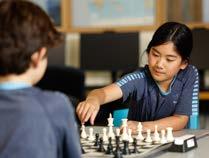
INTERSCHOOL CHESS COMPETITION
Northern Star Chess are experts that conduct chess activities that are fun, challenging and inclusive. Our events are highly flexible to accommodate
the needs of the program. The main focus is to provide a safe learning environment for students to experience the challenge and excitement of a chess tournament. Students who compete in this competition may qualify for the state finals. Learn more by clicking here.
APPENDIX 3: COMPETITION SUMMARIES
ISV POETRY COMPETITION
The Student Poetry Competition is presented by Independent Schools Victoria, as part of its Arts Learning program. Students are given a different theme each year to explore in whatever poetry format they wish before submitting them to the competition.
MATHS OLYMPIAD
Maths Olympiad provides an opportunity for high achieving secondary students to test their maths problem solving skills and compete against teams from other schools. The program runs over 4 dates and lasts approximately 40mins.
MELBOURNE UNIVERSITY MATHS RESEARCH CHALLENGE
Students will be given a set of open-ended research problems from which they choose one. They can then employ methods used by mathematical researchers to investigate their problem; they can gather data, simplify, visualise, hypothesise, conjecture and prove.
The aim of the challenge is to allow students to use their creativity and problem-solving skills to make choices about how best to ask and answer questions about their chosen project. As teamwork is a valuable and essential skill for research, students are encouraged to participate as part of a team which will provide opportunities to reason and work collaboratively with others. Students may participate individually if they wish.
MY VOTE MY VOICE
The National Council of Women Victoria’s (NCWV) annual ‘My Vote My Voice’ student event is held in the Legislative Council Chamber, Parliament of Victoria.
Each year a theme is developed, drawing on NCWV’s partnership with the Australian Local Government Women’s Association, the Victorian Electoral Commission, and the League of Women Voters’ Bessie Rischbieth Trust. Students were invited to make group presentations on the current year’s theme to an audience of students, community members, parliamentarians, and a panel of eminent people in the Chamber.
NATIONAL SCIENCE QUIZ
The National Science Quiz covers all areas of science with approximately 40 thought-provoking questions to test your knowledge and skills. Watch celebrity teams go head to head, while student work to solve challenging and fun scientific problems using reasoning and knowledge.
AMC & ICAS SUMMARIES COMPETITION
Students working in teams will write, develop, edit, rehearse and polish an original spoken word poetry performance over several sessions and then present their pieces to professional judges who score each poem out of 10 at the Wheeler Centre for Books, Writing and Ideas.