MEM Insider



Dear Readers,
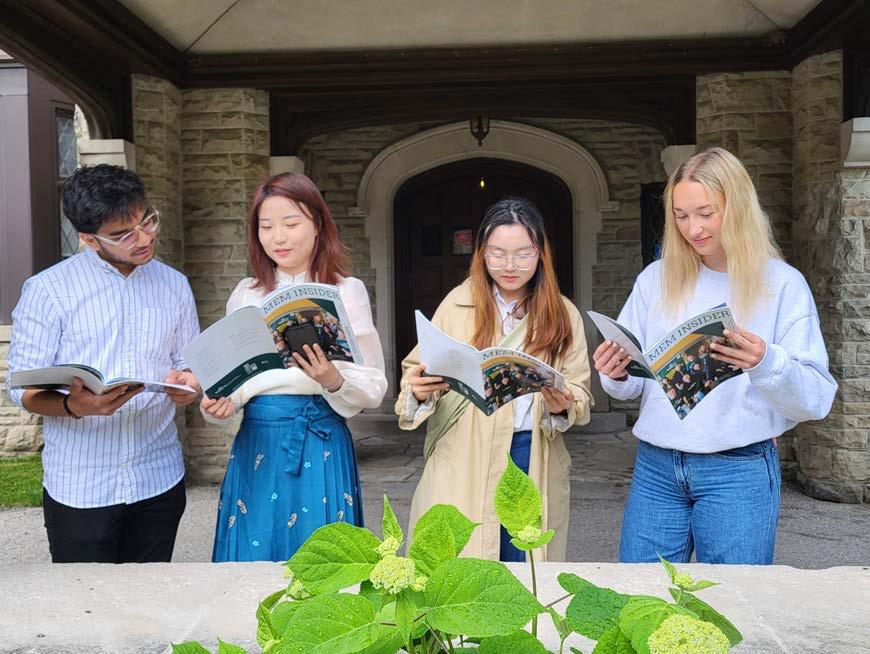
With a rapidly changing world and increased pressure from university, the stress and uncertainty that students face today is intense. This is why this year's edition is focused on providing students with the motivation, support and information that will help them progress in their journey.
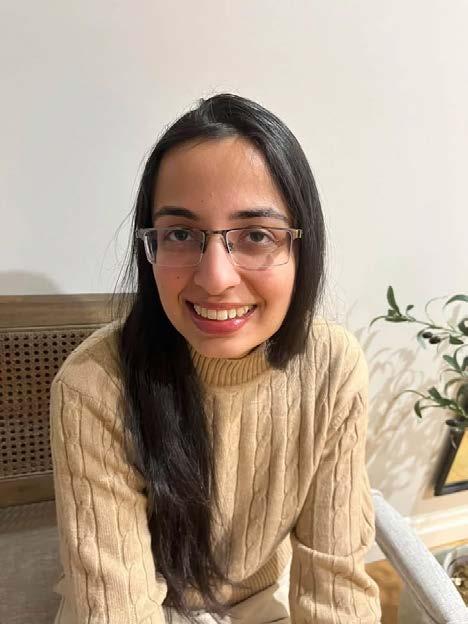
As someone who is graduating this year, it has been a rewarding experience to act outside my comfort zone as an editor before I leave university. My experience at king's while I pursue my major in accounting has been amazing and I am happy to be able to contribute to helping students at Kings.
All the writers have been amazing, and I would like to thank everyone for their contributions. Join us today to explore the experiences of alumni and students, gain an understanding of the current significant changes happening and learn more about the various resources, clubs and entertainment available to students.
-Falak Gajebasia Fourth-Year Student with HSP in Accounting
Hui Feng, PhD Associate Professor and Director of the School of

2025–2026 Academic Year
This academic year marks my first year serving as Director of the School of Management, Economics, and Mathematics (MEM). It has been both an honour and a privilege to work alongside such dedicated colleagues, talented students, and supportive staff members. I am deeply grateful for the warm support and encouragement I have received throughout this transition year.
I would first like to extend my sincere appreciation to our former Director, Dr. Jeffery, and former Associate Director, Dr. Eberhard, for their leadership and service to the School of MEM. Their hard work and commitment helped build the strong and collegial community we continue to benefit from today.
I would also like to express my heartfelt thanks to Dr. Joseph Turnbull for continuing his service as Associate Director for Mathematics, and to Estelle Van Winckle and Lydia Li for their outstanding support in administrative operations and program development. Their professionalism, care, and unwavering
commitment to our students, colleagues, and the MEM community are deeply appreciated.
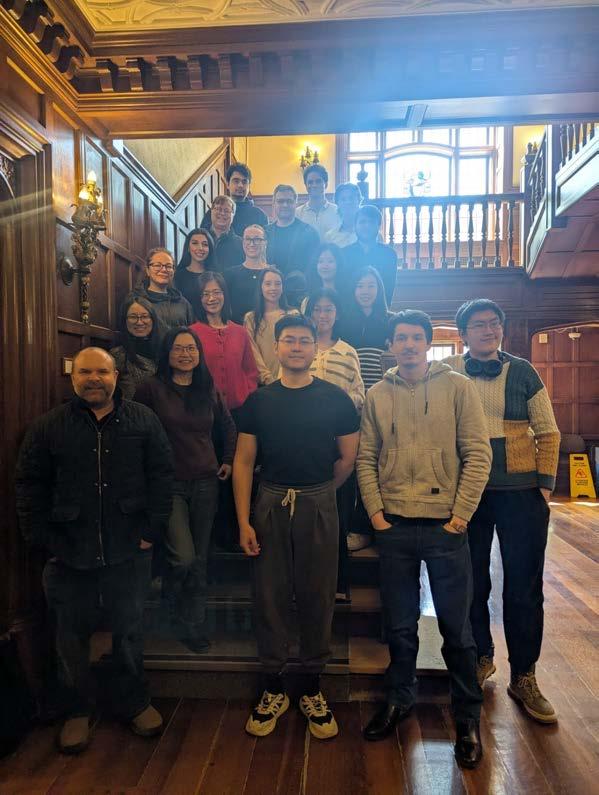
At the same time, it is my pleasure to welcome two new Associate Directors to our administrative team: Dr. Renfang Tian as Associate Director for Economics and Dr. Rodrigues as Associate Director for MOS. I am grateful for their willingness to serve and excited about the energy, ideas, and leadership they bring to MEM.
This year has been an especially meaningful one for MEM as we celebrated several important faculty milestones and professional achievements. Dr. Natalia Bezmaternykh successfully renewed her three-year tenure-track contract. In addition, Dr. Renfang Tian, Dr. Jason Dean, Dr. Lori Murphy, and Dr. Luisa Liboni achieved tenure and promotion to the rank of Associate Professor. We are also proud to celebrate Dr. Trevor Hunter’s promotion to Full Professor. These accomplishments reflect the strength of scholarship, teaching, and leadership within our school community.
This year also marked an important moment of transition for MEM. Our school bid farewell to MEM’s first Full Professor, Dr. Sergio Janczak, whose long-standing contributions helped shape the identity and growth of the school. We also recognize the retirement of Ms. Lydia Li, who has served MEM for more than twenty years with exceptional care and professionalism — first as secretary and later as Program Manager. Lydia has played an invaluable role in supporting students, faculty, and especially our international partnerships and international student community.
On behalf of the entire MEM community, I extend our sincere appreciation to both Lydia and Sergio for their many years of service, mentorship, and commitment to the school. Their contributions will continue to have a lasting impact on MEM for years to come.
The School of MEM continues to strengthen its growing research profile and scholarly impact. This year, faculty members produced numerous journal publications and scholarly contributions across a wide range of disciplines.
MEM faculty also achieved significant success in external research funding. Five members of the school were awarded prestigious national research grants totaling approximately $1,170,000. These grants not only recognize the quality and impact of research conducted within MEM, but also create valuable opportunities for student research training, collaboration, and community engagement. We are proud of the accomplishments of Dr. Renfang Tian, Dr. Josephine Gemson, Dr. Natalia Bezmaternykh, Dr. Trevor Hunter, and Dr. Hui Fang, whose achievements continue to enhance MEM’s national reputation for research excellence.
Another major milestone this year was the successful launch of the new ADS Major. Special thanks go to Dr. Joseph Turnbull and the Mathematics and ADS group for their tremendous effort and leadership in developing this exciting program.
At MEM, we are proud of the strong quantitative and analytical training our students receive. The ADS Major significantly expands opportunities for graduate studies and careers in analytics, data science, and related fields.
We are also pleased to celebrate the success of the new Double Major in MOS and Criminology, which reflects our commitment to interdisciplinary learning and innovative programming that responds to student interests and labour market demands.
Close interaction between students and faculty has always been one of King’s greatest strengths, and MEM is especially proud of the supportive and student-focused culture within our school.
We are deeply committed to helping every student succeed academically and professionally. Over 85% of our students in the Honours Specialization in Economics continue their academic journey in top-ranked graduate programs around the world, including the University of Chicago, the London School of Economics and Political Science, the University of Toronto, Queen’s University, Western University, and the Ivey Business School.
We are particularly proud that each year more than five seats in the Ivey MSc in Data Analytics program are filled by MEM students from Economics and MOS. These achievements reflect the exceptional talent, preparation, and ambition of our students, as well as the mentorship and support provided by our faculty members.
Our students have also achieved strong career outcomes across the finance, accounting, and consulting sectors, with many graduating with job offers in hand. Recent graduates have secured roles such as public accountant, personal financial advisor, staff accountant, auditor, and wealth associate at organizations including MNP, CIBC, Desjardins, KPMG, and National Bank of Canada.
Over the past four years, MEM has continued offering a wide range of summer courses to help students graduate on time, explore emerging areas of study, and strengthen professional skills.
Because of these efforts, MEM has received special funding dedicated to student success and summer program development. We are currently building a professional teaching studio to further improve the quality of our online and hybrid teaching.
In addition, more than half of these funds are being invested directly into student opportunities through summer internships and research assistantships. This investment reflects both King’s and MEM’s strong commitment to experiential learning and student success.
None of this year’s accomplishments would have been possible without the hard work, collegiality, and support of our faculty, staff, and students. MEM is more than a collection of programs — it is a vibrant and supportive academic community where people genuinely care about one another’s success. We celebrate achievements together, support one another through challenges, and remain committed to providing an outstanding experience for our students.
As MEM continues to grow, we remain committed to preserving the close-knit and student-focused environment that defines the King’s experience while expanding opportunities for innovation, experiential learning, interdisciplinary collaboration, and research excellence. I am excited about the future of our school and confident that, together, we will continue building a welcoming and dynamic community where both students and colleagues can thrive.
Thank you all for contributing to such a successful and memorable year.
Renfang Tian, PhD
Associate Director, Economics Program
It is my pleasure to share some highlights of the program and course development, as well as contributions and achievements from our faculty and students.
Course development:
Starting in the 2025–2026 academic year, we are offering a new course in Political Economics. Special thanks to Dr. Radomir Todorov for developing and teaching the first offering of the course, and to Dr. Jingjing Huo for contributing to the course development.
Starting in the 2025–2026 academic year, we are offering a new course in Economics of Education. Special thanks to Mr. Sunghoon Cho for developing the course and teaching the first offering of the course.
Starting in the 2025–2026 academic year, we are offering the course in Industrial Organization. Special thanks to Dr. Tyler Pattenden for developing and tailoring the course for King’s, and for teaching the first offering.
Starting in the 2025–2026 academic year, we are offering a set of Capital Market Fundamentals courses, including topic courses in Foreign Exchange, Commodities, and Central Banks, which will be offered on a rotating basis. Special thanks to Mr. Jordan Kotick for developing the course set and teaching the first offerings.

Starting in the 2025–2026 academic year, we will add Managerial Economics to our course offerings. Thanks to Dr. Jafar El Armali, Dr. Jingjing Xu, and Dr. Peter Ibbott for introducing the course to King’s and contributing to its development.
Our 2+2 partnership between the Bachelor of Arts Major in Finance at King’s and the Bachelor of Arts in International Finance at Yeditepe University has revised its course-mapping protocol to facilitate a smoother transfer process for Yeditepe students entering the 2+2 program. Thanks to Dr. Natalia Bezmaternykh, Dr. Adrian McFarlane, Dr. Hui Feng, and Dr. Renfang Tian for their valuable input and contributions in promoting this partnership.
Dr. Jason Dean contributed to the planning of the Cross-Cultural College (CCC) project at the Global Career Seminar in Canada (GCSC) in collaboration with Kwansei Gakuin University and will serve as a Visiting Professor of Canadian Studies at Kwansei Gakuin University. Thanks to Dr. Jason Dean for participating in these initiatives and visiting opportunities, which help strengthen international partnerships.
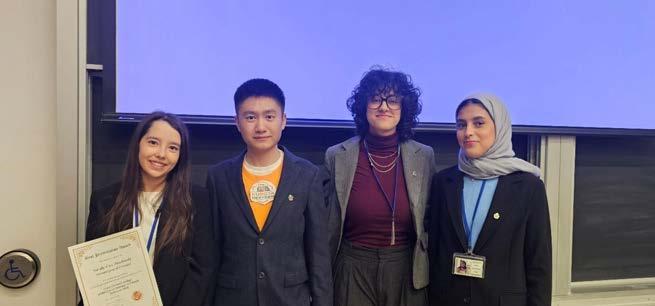
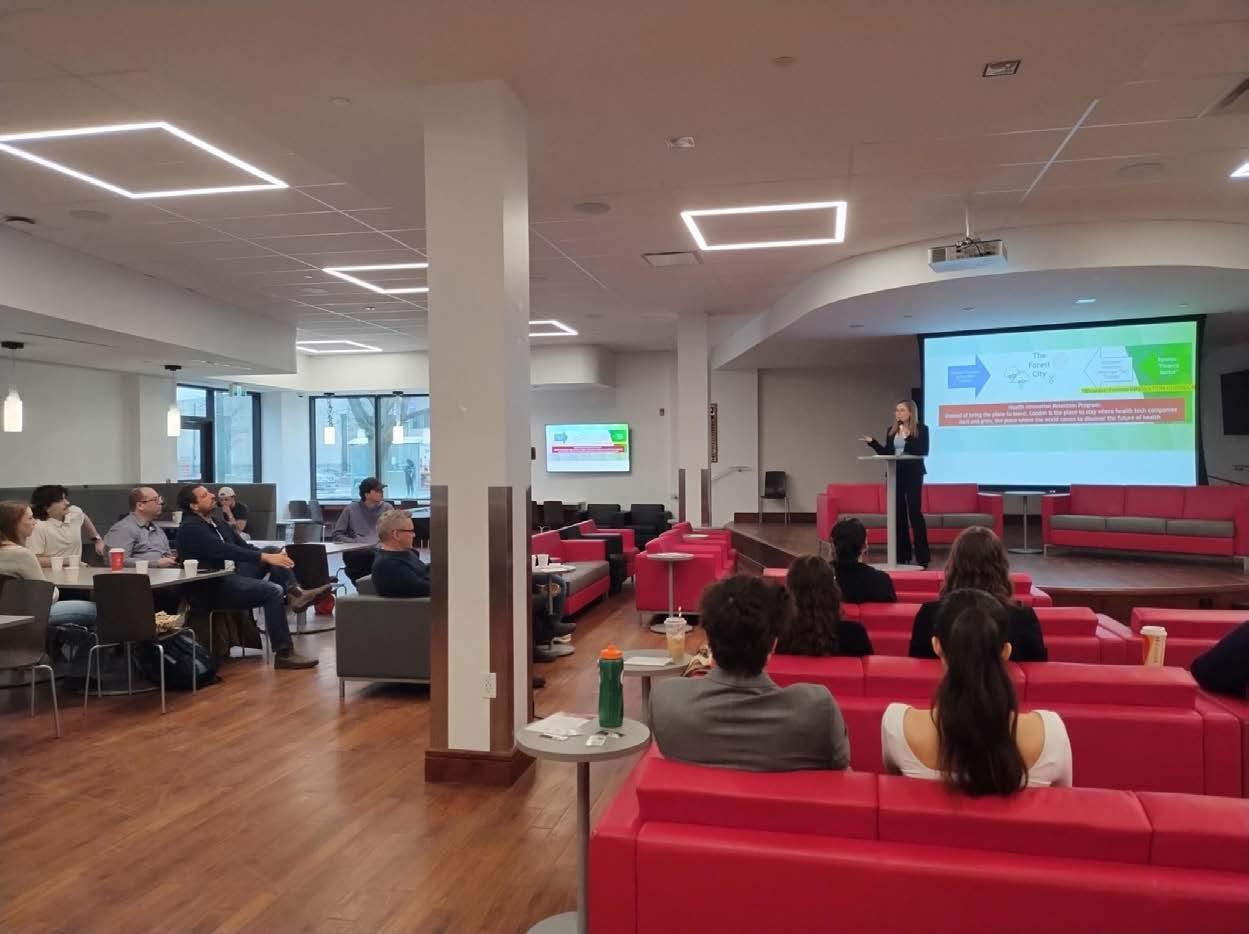
Students participated projects, presenting at the CURL Conference at Huron. Participants included Qi Zhao, Tyler Tiffin (with Aimerie Chartree Donyon), and Kameelah Koop (with Ava Barich, Davis Harper, James Kilfoil, and Yuval Yampolsky). (Faculty leads/supervisors: Dr. Jason Dean and Dr. Renfang Tian.)
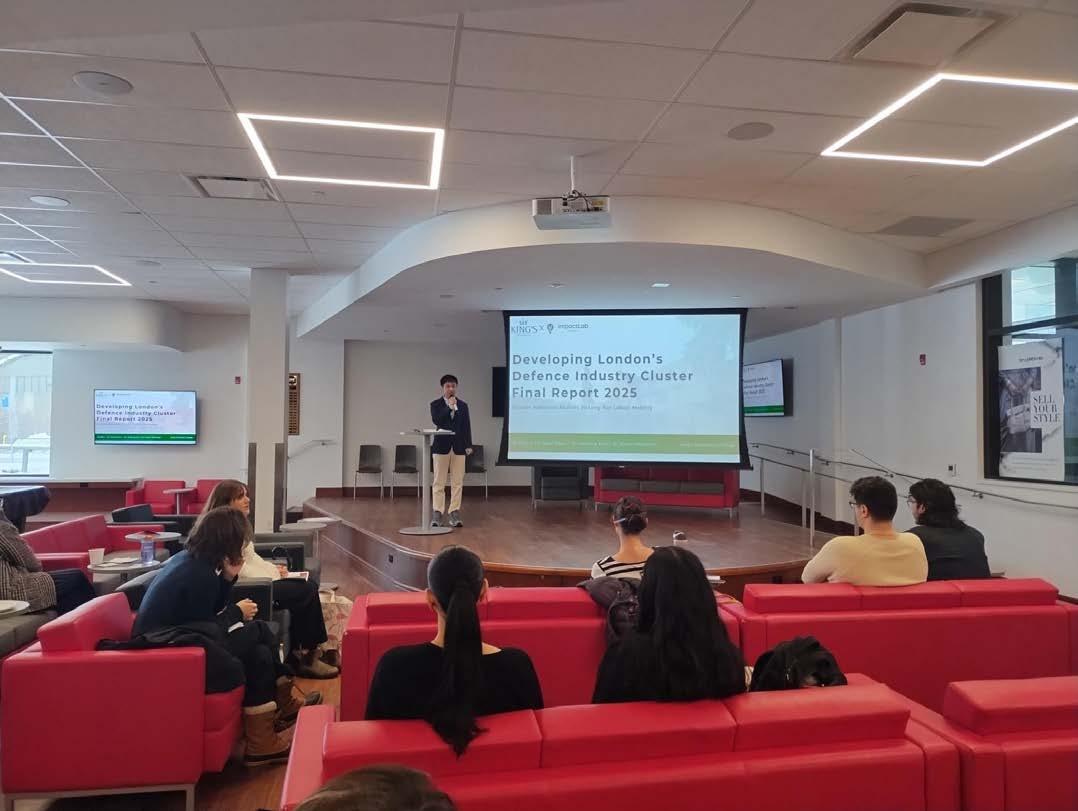
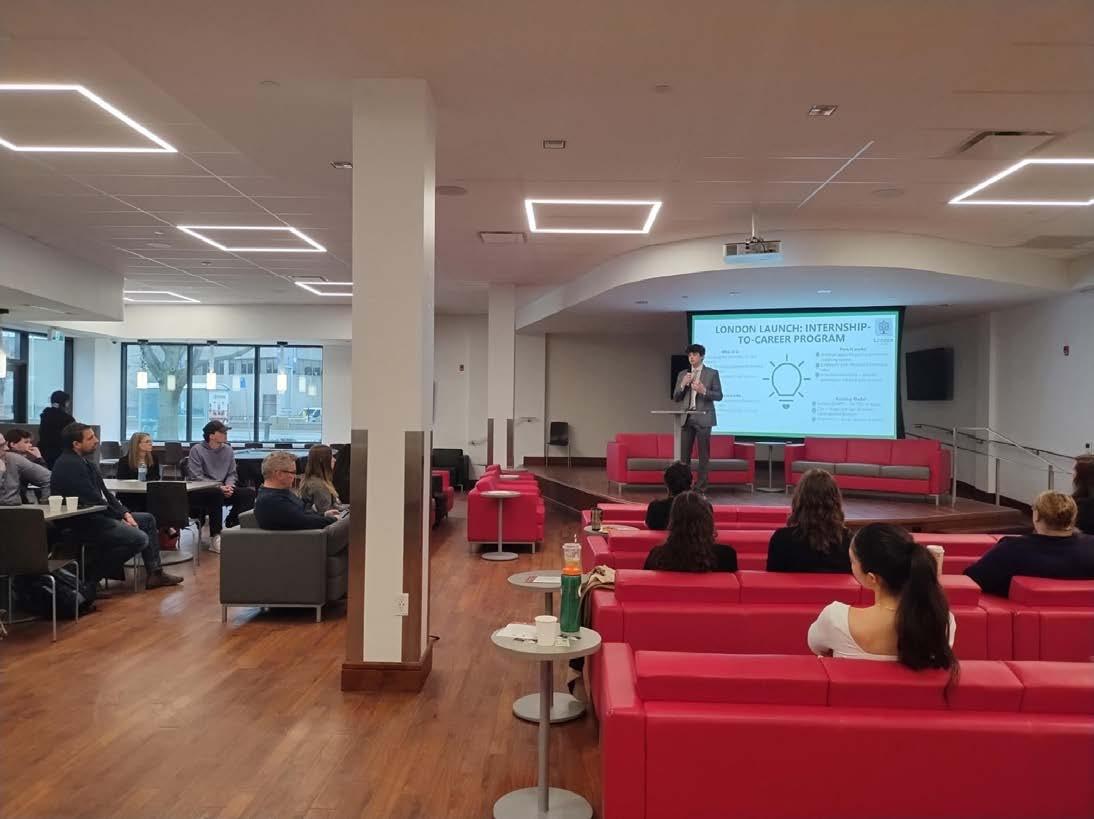
Jaden Davis developed math tutorials, quizzes, and a review manual for first- and second year students and led review sessions. Jaden Davis and Kaden Norcross organized and delivered final review sessions for core economics courses, creating learning resources for the current and future cohorts.
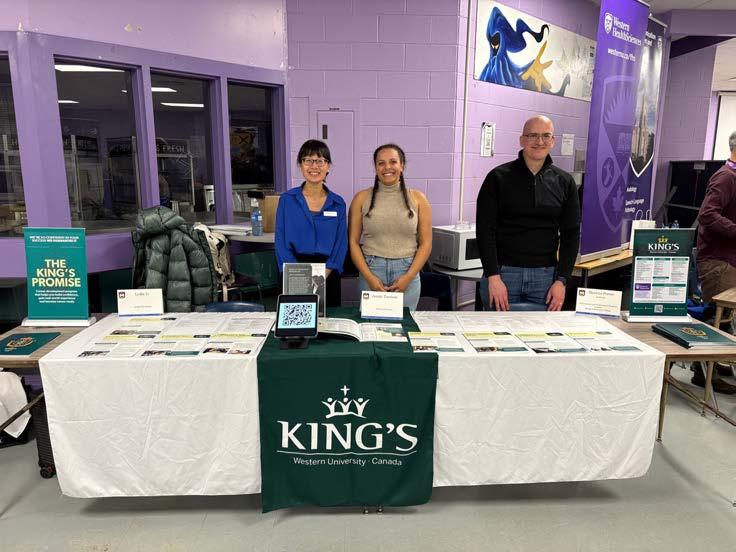
Patricia Kellie, Leyli Shabanova, Rachel Sidebotham, and Kate Pedisic supported the MEM recruitment through the MEM applicant webinar as student panelists.
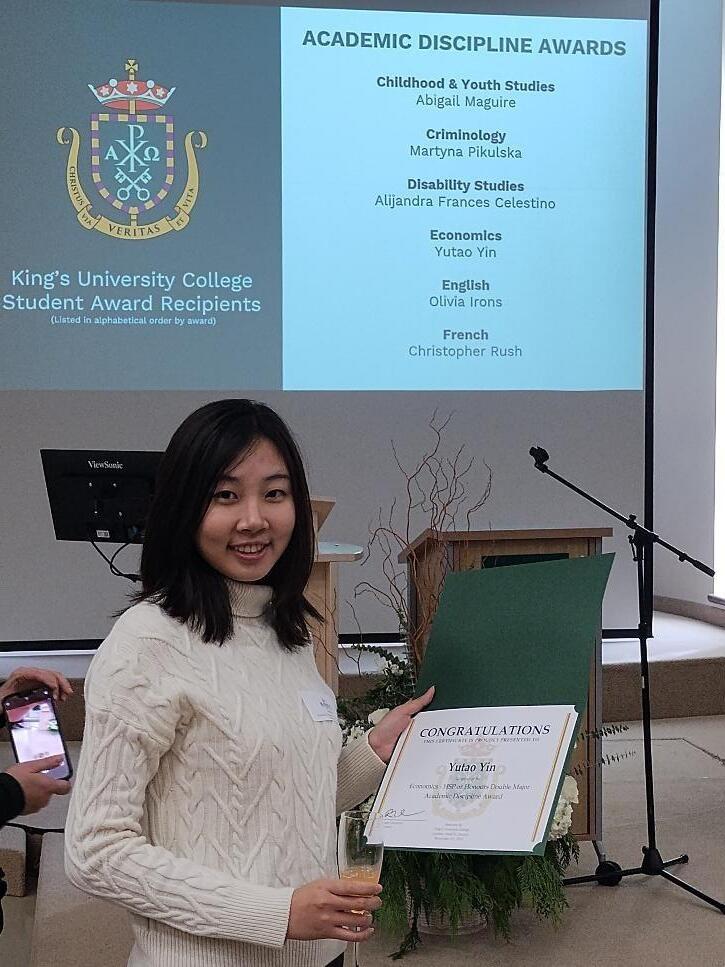
Congratulations to Yutao Yin for receiving the Academic Discipline Award in Economics.
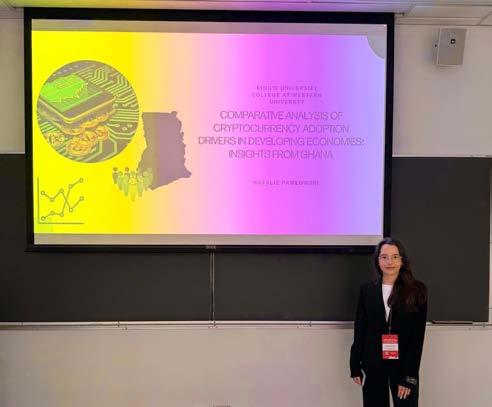
Senior thesis student Natalie Pawlowski’s research, “Comparative Analysis of Cryptocurrency Adoption Drivers in Developing Economies: Insights from Ghana,” was accepted for presentation at the CFEN FinTech and Financial Market Infrastructures session at the 60th Annual Meetings of the Canadian Economics Association.
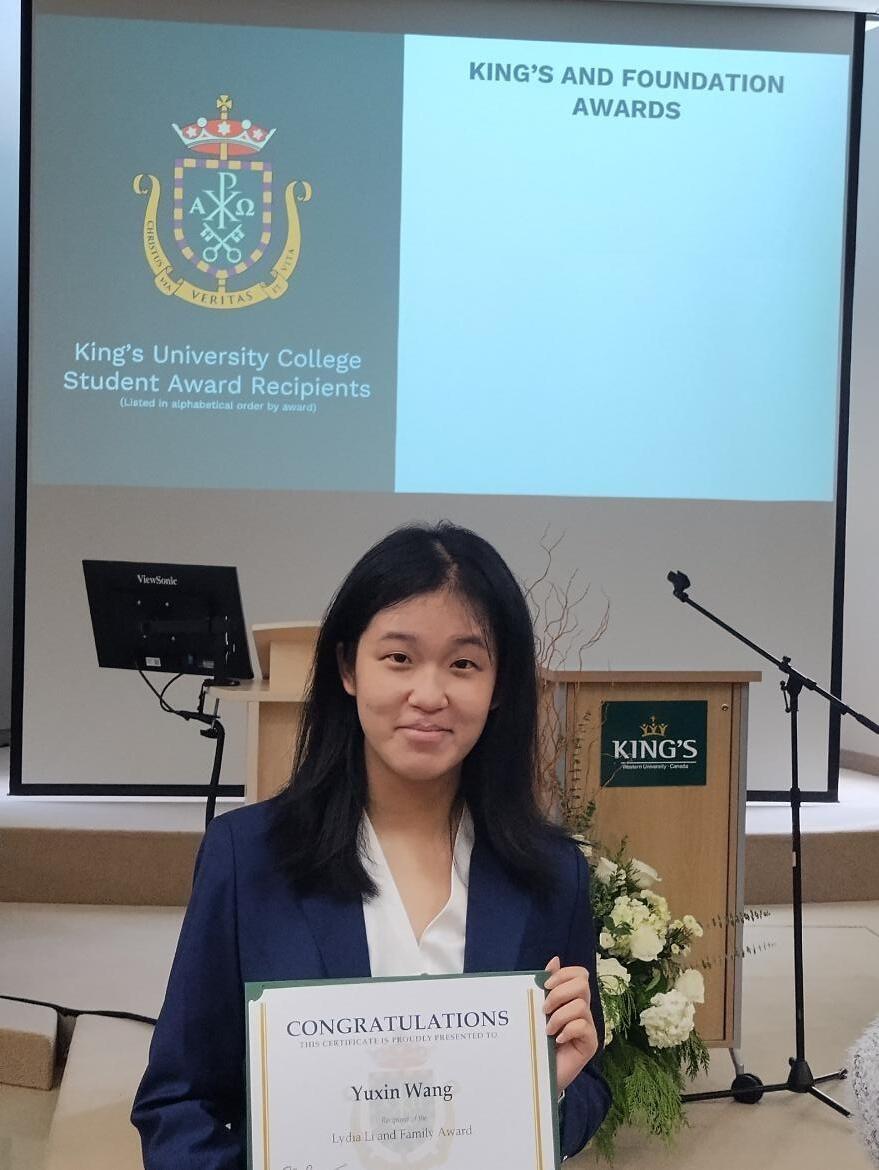
Congratulations to Yuxin Wang for receiving the Lydia Li and Family Award.
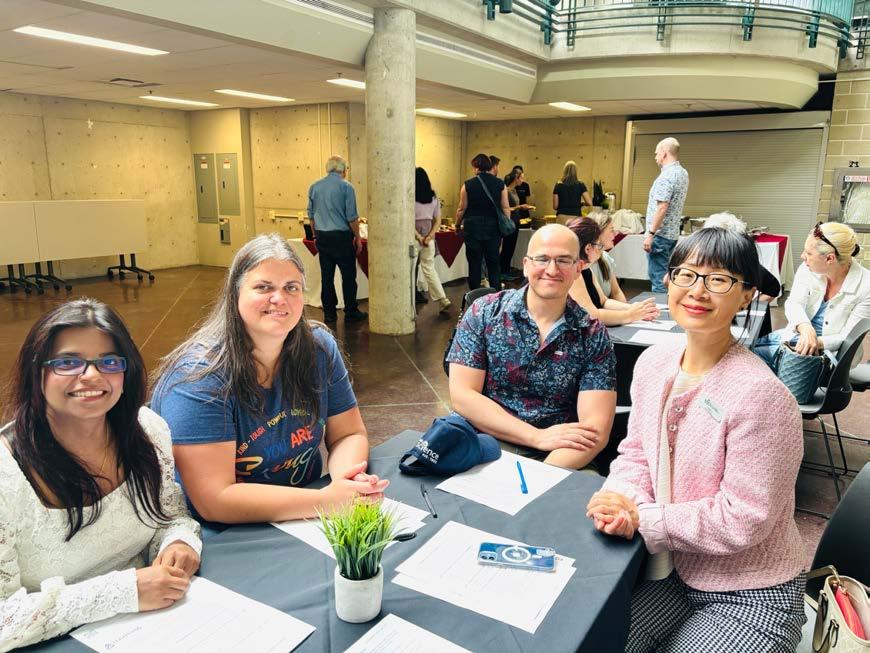
The 2026 MEM Student Award & Experience Sharing Event was held on April 8.
Congratulations to our students on their successful graduate school applications, as well as job and internship placements! Refer to the corresponding section(s) in the MEM Insider for a partial list of our students’ accomplishments.
Congratulations to our 15 Honours Specialization students for successfully defence their undergraduate thesis! Refer to the corresponding section(s) in the MEM Insider for more detailed examples of our students’ research.
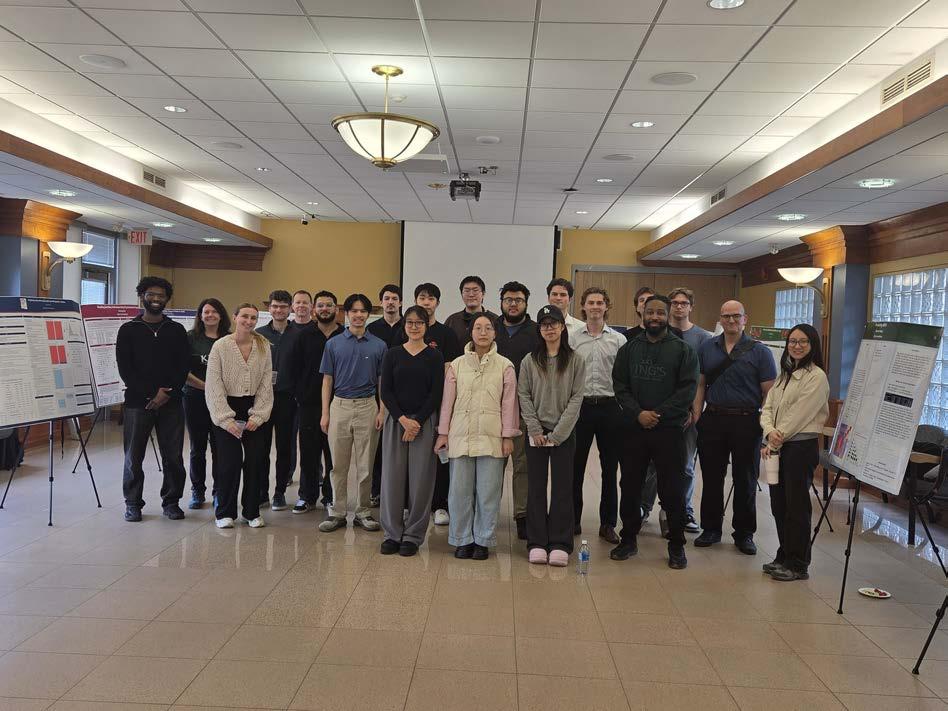
Senior thesis students, Matthew Farrow, Yue Lin, Kaden Norcross, Natalie Pawlowski, Kate Pedisic, Yutao Yin, and Haolin Wang & Yuxin Wang, presented at the MEM Research Showcase during King’s Research Week.
Special thanks to Jack Pemberton, Kate Pedisic, Natalie Pawlowski, Yue Lin, and Yutao Yin, for sharing their insights and experiences with fellow students and guest parents at the event.
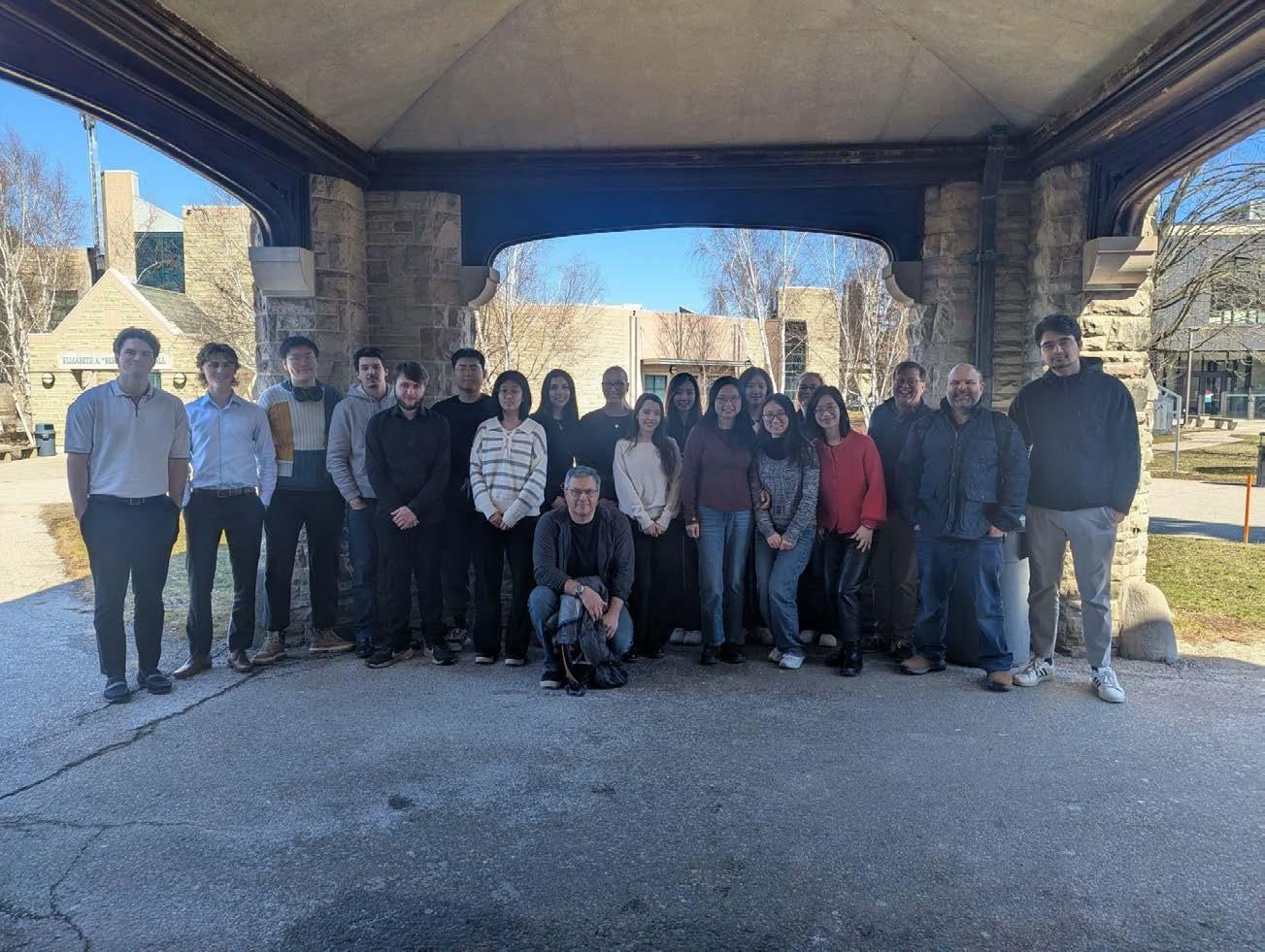
To our dear students: See learning as a lifelong journey that goes beyond the classroom. Developing skills in critical thinking, independent learning, and problemsolving is key to long-term success. Keep embracing new experiences and challenges, and you will be able to fully realize the value of your academic training.
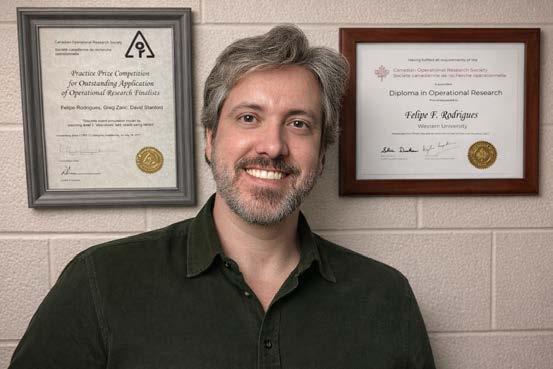
Felipe Rodrigues, PhD Associate Director, MOS Program
When I took the role of Associate Director for Business, Management, and Organizational Studies (BMOS) almost one year ago, I knew I was filling big shoes. My dear colleague, friend, and former boss, Dr. Jeannette Eberhard, had shaped BMOS with care, experience, innovation, and a deep understanding of our students. I also knew that BMOS at King’s was more than modules, course lists, courses, and degree requirements. It is a community of bright students trying to figure out who they want to become and what role they will play in a changing world. I quickly found out my favourite part of the job: to listen to students and be there for them! Sometimes we talk about courses, careers, or graduate schools, but, most of the time, we talk about how the students feel, job and family expectations, who they are, or simply the question, “What’s next?”

That question, in many ways, is at the heart of a program like BMOS at King’s. Sure, our program gives students a strong foundation in management, accounting, finance, human resources, organizational behaviour, operations, strategy, and decision-making. But the real work is way larger than that. We are here with the students on a journey to become stellar managers and innovative entrepreneurs, but also good people:People who can analyze problems, communicate clearly, work with others, make ethical decisions, and keep learning after they leave King’s! This emphasis on ethics and lifelong learning is why BMOS fits so naturally within the School of Management, Economics and Mathematics. Our school is increasingly quantitative, analytical, and applied, but it is also deeply human. We want students to use numbers well, but also to understand people, organizations, communities, and the consequences of their actions.
This past year captures that momentum. We celebrated faculty promotions, publications, grants, teaching cases, student achievements, research showcases, and career development events. (Phew, that is a lot!)

However, for BMOS, the story is not simply that many things happened. The story is that these activities are connected. They show a program moving in a clear direction: more applied learning, stronger professional preparation, deeper analytical skills, and more opportunities for students to see themselves as emerging managers, analysts, accountants, entrepreneurs, and leaders. The career series alone, including Grad School, Career Day, the Excel Workshop, the March Career Fair, and Chartered Professional Accountant (CPA) Networking, speaks directly to what our students need: practical guidance, professional exposure, and repeated chances to step into the world beyond the classroom.
Student development also happened in less obvious but equally important ways. The MEM Research Showcase, Analytics and Decisions Sciences (ADS) Posters, Economics 4405, ImpactLab London, and the Data Analytics Event: Sports & Entertainment Edition gave students opportunities to present, explain, defend, and refine their ideas. These experiences matter, and they matter a lot! Students who engage in these activities become people who can contribute decisively in meetings, interview with confidence, explain evidence to clients, or lead teams or communities through complicated decisions. That is the kind of growth I hope BMOS students recognize in themselves.
We also saw strong examples of experiential learning and student initiative. One of my favourite ones is the “OGG industrial” and the “Practice Operations” simulation games. Students who participated in these simulations reflect something we value deeply in BMOS:curiosity becoming analysis, analysis becoming a learning tool, and student engagement becoming part of a larger academic and professional conversation. These opportunities also remind us that problem-based learning is not only about switching from lectures to cases and corporate simulation games. At their best, these activities can help create the real-life experiences that future students will face and learn from.
Career readiness was another major theme this year. For example, Marie Umugwaneza, BMOS ’25 in Finance and Administration, turned a one-day RBC job shadow experience during Reading Week into a Client Advisor role one year later. Her story is a beautiful example of what we often tell students: visibility matters, relationships matter, and small professional steps can open large doors. Career readiness is about curiosity, follow-up, confidence, and the courage to put yourself in the room.
One of the most exciting future directions for BMOS is our Honours Double major with ADS, which has been described as “STEM at King’s” and as a “degree in problem-solving,” focused on optimization, machine learning, AI, modelling, forecasting, and simulation. Even more importantly for our students, ADS can be combined with any BMOS module, Specialization (SP) and Honors Specialization (HSP). In a world where business decisions are increasingly shaped by data, automation, and analytical tools, this combination gives BMOS students a distinctive advantage not offered anywhere else at Western. They can graduate with management judgment and analytical depth, which is exactly the blend employers and graduate programs are seeking.
At the same time, BMOS at King’s has another distinctive pathway in Global Commerce. For students interested in international business, cross-cultural management, global markets, and the broader movement of people, goods, services, capital, and ideas, Global Commerce gives our school a unique flavour. Together with the possible opportunity to spend one term abroad and the double majors (think ADS or, Economics!), Global Commerce helps students build degrees that are international, strategic, and aligned with the diversified future that our new global order requires.
Our alumni remind us of where these paths can lead. Sandra Cobeña, BMOS ’10, now serves as Member of Parliament for Newmarket, Aurora. She noted that King’s gave her “the intellectual and personal foundation for public leadership”. That reminder is a powerful one that BMOS prepares students not only for first jobs, but for lives of contribution to their communities.
As we look to the challenges and opportunities of the next years, I feel grateful and optimistic. BMOS is growing in identity, confidence, and direction. We will continue to support our domestic and international students as they prepare for careers, graduate school, and meaningful, fulfilling lives,. whether that means the Ivey MSc in Business Analytics or International Business, the Rotman MMA, the Lazaridis MMA, professional designations (CPA, CFE, PMP, CHRP, SCMP and others!), entrepreneurial paths, or careers they have not yet imagined. My hope is that students feel we are by their side in that process from day one! That is where good education happens. That is where BMOS at King’s can make a real difference. Count on me and our amazing faculty all the way!
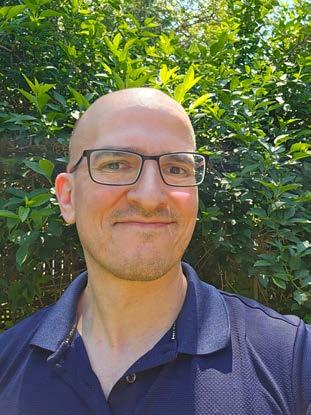
JOSEPH TURNBULL,PHD ASSOCIATE DIRECTOR OF MATH & ADS
New courses, program updates, and events: here is a sampling of what we are celebrating from the Fall 2025-2026 academic year.
We are proud to report being approved to make the following integrative changes that will strengthen the connections between academic areas and improve program quality.
Starting in Fall 2026, we are offering Statistics 1023 as a new math/stats option for students interested in psychology programs.
In Winter 2027, Management and Organizational Studies (MOS) 3335 (Data Science for MOS) is going to be offered as a new part of the Analytics and Decision Sciences (ADS) program as well as a MOS elective. The course builds off our required econometrics foundation and will focus on databases (e.g. SQL) and data governance.
The MOS group is also offering MOS 2198, a special topics course in Management & AI, to be taught by Dr. Luisa Liboni. Special thanks to Dr. Felipe Rodrigues and Dr. Sergio Janczak for pushing for this new course.
Multiple academic units are continuing plans to create new courses aligned with ADS.
After the ADS major launched in September 2025, several students switched from the minor to the major, and we will have our first ADS major cohort graduating next year. From Intent to Register data, at least 17 students in first year will pursue the ADS major next year (combining ADS with a wide variety of majors!), while 23 students will pursue the ADS minor.
In our annual student survey, we asked about double majors. ADS was the 2nd highest option after accounting. We are in the process of creating double majors pathways with multiple program combinations, so that students will more easily be able to tell how specific program combinations will look in terms of course checklists and prerequisite chains.
This is our first year recruiting directly for ADS, and we saw substantial interest from high school applicants.
We are extremely proud of our students and graduates for their accomplishments. A partial listing of internship placements, graduate school placements, and career starts can be found elsewhere in the MEM Insider.
We continue to have a strong graduate program acceptance, including Ivey’s MSc program in Business Analytics and Laurier’s MSc in Management Analytics. We also see continued hiring strength for ADS + Accounting graduates at major accounting firms, reflecting the drive toward analytics within modern accounting.
Student clubs and the School of MEM put on a huge number of events this year. In this space, I want to highlight two of these events.
The MEM Student Awards event was held on April 8, when we celebrated many academic achievements, including recognition for high grades, graduate school offers/job offers, and selection as MEM Teaching Assistant Fellows. It was a packed event, and a rare opportunity for us to meet with the parents and families of our students.
The King’s EconoMath Society put on an amazing event on December 3, when speakers from Electronic Arts, Digital Extremes, SiriusXM, Western Mustangs, and Ivey Business School shared insights about data analytics in the entertainment and sports industries.
Starting in Fall 2026, we anticipate launching a new format for the MEM Help Center. Students will be able to book appointments with MEM TA Fellows using an online booking system. We are also working to incorporate professional learning activities into the help center.
The School of MEM is working with King’s Information Technology Services (ITS) to create a recording studio on campus. The Studio will be available for all academic programs as well as for student leaders, and we hope to have it running for recording in Summer 2026.
There is much more mentioned elsewhere in the MEM Insider, including an acknowledgement of the amazing research being done by our students and our faculty, faculty promotion and tenure, as well as recognition of the many successful career readiness, research, and professional learning events that were held over the year.

When I first arrived at King’s, I never imagined I would one day see myself as a student leader. Like many first-year students, I was focused on adjusting to university and keeping up with my coursework.
Outside the classroom, I balanced multiple parttime jobs throughout the academic year to support my education. When I was not studying, I was working. While many of my peers became involved in clubs or student organizations, my focus during those early years was stability and academic progress. Nearly every spare hour went toward preparation, with the belief that if I could establish myself academically, the rest would fall into place.
At the time, I did not see myself as particularly exceptional. I simply believed in working hard. I showed up consistently, stayed organized, and reviewed material until I fully understood it. That quiet persistence became the foundation of my growth.
Over time, those efforts began to take shape in ways I did not expect.
In first year, I began organizing informal study groups to help classmates navigate challenging course material. I discovered that I genuinely enjoyed explaining concepts and watching others gain confidence in subjects that once felt overwhelming. Helping my peers succeed gave my academic efforts a purpose beyond my own grades.
In second year, I was selected as a Teaching Assistant at the MEM Help Centre through a faculty-nominated process. That opportunity marked a turning point, shifting my focus beyond my own success. I was trusted to guide others through their academic challenges. Working with students across programs helped me build stronger communication skills and feel more connected to the King’s community.
As my confidence grew, so did my willingness to become more involved on campus. During much of my early university experience, I was operating in survival mode while balancing work and academic responsibilities. By third and fourth year, however, I felt more secure academically and ready to contribute beyond the classroom.
One of the first ways that I extended that growth was my service as a BMOS Open House Ambassador. As I spoke with prospective students and their families, I remembered my own first campus visit. To answer the same questions that I once had about coursework, balancing employment, and life at King’s felt incredibly meaningful.
Soon after, I applied to become a Soph Orientation Leader. Earlier in university, I would have hesitated to take on a leadership role like this. I had been very shy throughout high school and even during my first years at university. But as I became more involved at King’s, those experiences gradually helped me build the confidence to take on leadership roles.
When I stood in front of my Soph group during Orientation Week to welcome first-year students, I realized how much had changed. I was now helping lead and support students as they began their own university journeys.
Experiences like these ones helped me see how much I had grown during my time at King’s. That growth was reflected not only in the opportunities I was given to support other students, but also in the academic recognition I received along the way.
Academic recognition throughout my time at King’s has been both affirming and humbling. Awards and scholarships certainly represent achievement, but they also reflect perseverance. Behind every recognition are late nights, shifts after class, study sessions, and the decision that I keep moving forward even when the workload felt overwhelming.
For someone who once believed she was simply an average student, those moments reshaped my understanding of the power of consistent effort.
My journey was not without challenges. My balance of work, academics, and leadership responsibilities required careful prioritization and resilience. Through those experiences, I learned that leadership often begins with responsibility: to show up, support others, and continue forward even when things feel difficult.
By Patricia Kellie, 4thyear HSP Organizational and Human Resources, Minor in Economics

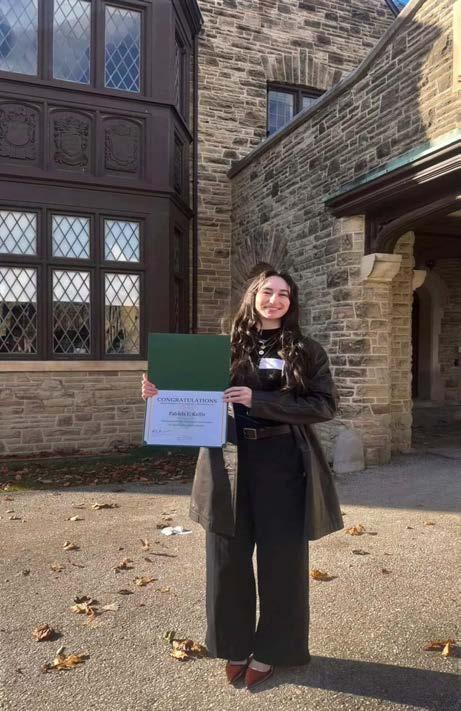
As graduation approaches, I feel grateful for the experiences and relationships that have shaped my time at King’s. When I think back to the quiet first-year student who was simply trying to keep up, I realize how much growth can come from persistence and a willingness to try.
In many ways, my time at King’s has come full circle. The same community that helped me find my footing is the one I have had the privilege to support along the way.
King’s has become far more than a place to study. It is a community where every student has the opportunity to find their place. As I prepare to leave campus, that sense of connection and gratitude is what I will carry with me.
“Growth doesn’t happen all at once—it’s built through small steps, courage, and consistency.”
By Leslie Daley, Fourth year Honours specialization student in Finance and Administration and Major in ADS
London, Ontario might seem quiet at first, especially when you’re a student just going to and from school. But after spending four years here, I’ve had the chance to look a little closer and realize that the city is full of fun activities that are perfect for students and easy on the bank account. From festivals to winter adventures, there’s always something happening. Here are some of my favorite things to do in London throughout the year.
Other than O-Week and Homecoming, you might be wondering what else there is to do in London as you start the school year and have a little extra time before exams and assignments begin.
One of the most popular activities at the end of September is the Western Fair, which is one of London’s biggest annual traditions. The fair comes to London once a year for about a week and offers rides, games, concerts, exhibitions and, of course, plenty of food vendors. You can choose whether you want to ride the tallest roller coasters or play games to win a giant teddy bear. Either way, it’s a great way to spend a day with both new and old university friends.
Don’t forget to also go apple picking! With locations both in London and just outside the city, orchards are the perfect place to enjoy the cool fall weather with friends. Spend the day taking pictures in beautiful landscapes filled with ripe apples and colorful fall scenery. Some locations even have flower fields where you can take photos surrounded by blooming flowers, perfect for capturing those fall memories right before winter.
When you decide to take a break from staring at your laptop, London has many activities during the winter season, especially leading up to Christmas.
The Winter Market is a popular place to visit during the holidays. Held at Covent Garden Market, local vendors set up booths shaped as igloos and sell handmade crafts, baked goods, and warm apple cider. It’s a great place to visit after walking around to see Christmas lights or skating in the park. Not only can you support local businesses, but you can also enjoy live performances, participate in crafts, or even take a ride in a horse-drawn carriage. Just make sure to get there early so you don’t make the same mistake I did and miss the horses!
If you prefer indoor activities, then The Factory is the place for you. Not only is it one of the largest indoor adventure parks in Canada, but it also has a market attached that becomes especially lively during the Christmas season. The Factory includes activities such as trampolines, obstacle courses, arcade games, and virtual reality headsets. Fair warning though, jumping on the trampolines might make you realize how out of shape you are, and the VR headsets will definitely remind you how cool modern technology can be. For winter sports lovers, Boler Mountain is a great place to ski, snowboard, or simply go tubing. Located just outside downtown London, it’s a convenient spot to enjoy the snow and race down the hills with friends. Afterward, you can warm up in the cozy lodgestyle restaurants nearby.
As the weather starts to warm up and the sun finally convinces you to leave your house again, make sure to add these spots to your list. When spring arrives, a visit to Covent Garden Market is always a good idea. You can pick up fresh fruits and vegetables, try food from a variety of different cultures, or find small souvenirs to bring back to friends and family at home. Afterward, take a walk through downtown London, explore some local shops, and enjoy a relaxing stroll through Victoria Park. If you’re competitive like me, then you’ll love Tilt Arcade Bar and Saga Board Game Café. Tilt is a retro arcade filled with classic games like PacMan, pinball, Guitar Hero, and Dance Dance Revolution. Just two doors down is Saga, which has more board games than you could possibly count. Whether you go for the cozy café atmosphere while studying or to completely annihilate your friends at Uno, it’s a great place with tasty food and drinks.
If you’re in London during the summer for classes or internship, or if you’re a local, the city hosts festivals and events almost every week. One of the city’s biggest events is Sunfest, a multicultural music festival held in Victoria Park every summer. The festival draws visitors from across the region and features dozens of international and Canadian performers, global food vendors, and artisan markets. The vendors sell some of the most unique jewelry and clothing in the city, while the food stalls offer everything from classic festival snacks to authentic dishes from cultures around the world. Sunfest is definitely an event you’ll want to keep on your summer list. Beyond Sunfest, many other festivals take place throughout the season. Rock the Park brings popular artists such as Hozier and The Lumineers to London, Pride London Festival celebrates diversity and inclusivity with parades and performances, and the OPA! Greek Festival introduces visitors to Greek culture through traditional food, music, and dance.
If you’re looking for something a little more low-key, you can attend one of the outdoor movie nights hosted by the City of London throughout the summer. Another option is a visit to Westminster Ponds, one of Ontario’s largest and most beautiful natural areas. It’s the perfect place to have a picnic, read a book, or simply take a peaceful walk in the sun.
As you can see, London is far from a boring city. Whether you’re here for school or you call London home, there are plenty of activities to explore throughout the year. So, take a break from studying, grab some friends, and get out to experience everything the Forest City has to offer.

keaatkings
kea@kucsc.com

“Everything around us was created by people no smarter than us.”
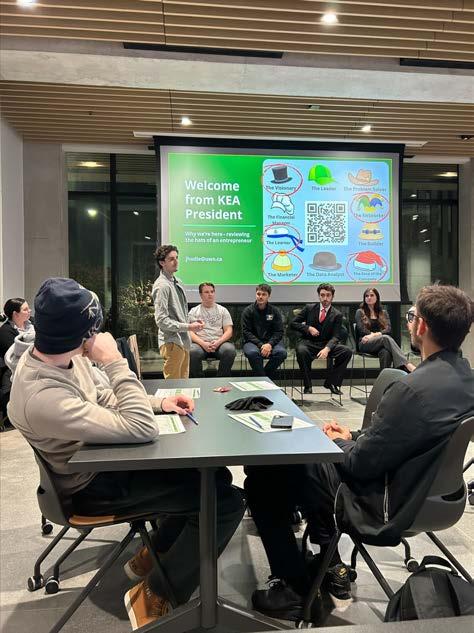
One line from Steve Jobs has always stuck with me: he said that That idea is what pulled me toward entrepreneurship in the first place. I’m Jaxon Hudie, President of the King’s Entrepreneurship Association and a second‑year Management and Analytics student, and I see entrepreneurship as the moment you stop seeing that quote as abstract and start treating it as permission to build something of your own.
I first got involved with KEA last year, when I started showing up to events and realized how far simply being in the room and thinking like an entrepreneur could take you. It shifted entrepreneurship from this big, abstract concept into something practical: noticing problems that matter and actually doing something about them.
When I came into the President role this year, I had three main goals: demystify entrepreneurship for people who don’t know where to start, create chances for like minded
By Jaxon Hudie, President, King’s Entrepreneurship Association
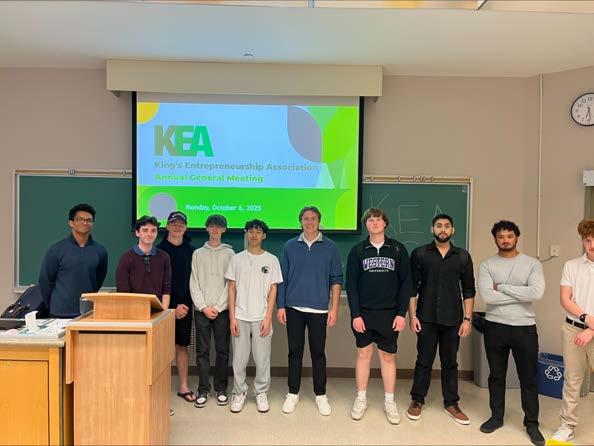
students to meet, and build an environment where students with ideas feel supported to act on them. My leadership style is pretty collaborative. I’d rather build with people than tell them what to do, whether those people are our exec team, our marketing committee, or partners across King’s, Western, and London.
KEA is the only entrepreneurship club at King’s,
and I take that seriously. With strong support from the School of MEM, we try to bring management, economics, and math lenses to entrepreneurship through workshops, networking, and hands‑on experiences. Our job is to make entrepreneurship feel accessible, not exclusive - supporting anyone with a dream, whether they want to launch a venture, make a difference at work, or just learn to think more creatively.





This year we focused on variety and paid attention to what students actually showed up for. We ran personal branding sessions, business brainstorms, coffee chats, a financial tracking workshop, a case competition, and a funding information session. One thing I’m especially proud of is our new marketing committee. Their goal was to “demystify entrepreneurship,” and they delivered through posts highlighting entrepreneurial organizations and short video interviews with local entrepreneurs. That work didn’t just boost our online presence; it helped position KEA as the first place people think of when they hear “entrepreneurship at King’s.”
We also leaned into experiential learning with a case competition built around a real King’s project: the RID Tuck Shop. Students dug into decisions about equipment, inventory, staff training, and day‑to‑day operations - seeing what entrepreneurial thinking looks like when you’re dealing with a real campus initiative, not just a hypothetical startup. Looking ahead, that’s the direction I’m excited about: intentional training, hands on engagement, and portfolio building opportunities that prepare students to work on, in, or with a business.
A lot of our members are in their first or second year, so for many, KEA is their first exposure to both entrepreneurial thinking and university clubs. I’ve watched students gain confidence, learn how to communicate their ideas, and start building networks that will matter later. We
keep our events low‑stress and fairly intimate: bring an open mind and your ideas, join the conversation, and leave with at least one thing you can apply - to a venture, a class project, or your life.
On a personal level, leading KEA has been a challenge in the best way. Balancing an “open inbox,” school, and a part time job hasn’t always been easy, especially while trying to build a meaningful name for the club. But it’s pushed me to get better at managing my time, making decisions, and leading a team toward a shared vision of more creativity and innovation at King’s.
What still surprises me is how easy it is for students to overlook entrepreneurship, even though the mindset is useful almost anywhere you end up. That’s why I want KEA to keep bringing entrepreneurship into the spotlight and show just how far a creative, problem‑solving approach can take you.
If any of this sounds interesting, keep an eye on what we build next. You can find us on Instagram at @keaatkings or reach out by email at kea@kucsc.com.

Women’s participation in the Canadian labour force has increased substantially over the past several decades as access to education expanded and more professional opportunities became available. Despite this progress, wage differences between men and women remain a persistent issue in Canada. Statistics Canada reports that women earn roughly 88 cents for every dollar earned by men on average. This gap results in women earning about $19,000 less per year than men. Canada’s gender wage gap is estimated to be about 16.1 percent, which is higher than the Organization for Economic Co-operation and Development (OECD) average of around 11 percent. These patterns raise questions about how gender inequality appears within specific industries. One sector where this issue is particularly relevant is finance, which is among the highest-paying industries in Canada. The research question examined here is whether a gender wage gap exists within the Canadian finance industry.
Research on gender inequality in labour markets consistently finds that wage differences between men and women are influenced by several structural factors. Studies examining the Canadian labour market, including work summarized by Statistics Canada, show that the gender wage gap has narrowed over time but has not disappeared. Labour market research often points to occupational segregation as one explanation.Women and men tend to work in different types of jobs, and occupations dominated by women often offer lower pay or fewer opportunities for advancement than occupations dominated by men. Another factor discussed in the literature is leadership representation. Men are more likely than women to hold senior management roles that provide higher salaries and stronger career progression. Industry-level research on finance also highlights promotion barriers that affect women’s advancement into management positions. Researchers often refer to the presence of promotion barriers as the “broken rung,” meaning that women are promoted to management at lower rates than men early in their careers. Other explanations include compensation
Casey Akase, Fourth-Year student with a Specialization in Financial Economics
Evana Muchiri , Fourth-Year student with a Specialization in Economics
Vian Shea , Fourth-Year student with a Specialization in Financial Economics
Yousuf Khan , Fourth-Year student with a Specialization in Financial Economics, Minor in Analytics and Decision Sciences

differences. In many finance roles, bonuses, stock options, and other forms of performance-based pay make up a large share of earnings, yet research suggests that women receive these forms of compensation less frequently than men. Career interruptions related to childcare and caregiving responsibilities are also frequently discussed as factors affecting long-term income growth.
Evidence from Canadian labour market data suggests that wage differences are also visible within the finance industry. According to Labour Force Survey research, women working in finance earn lower hourly wages than men on average. In this sector, women earn about $34.40 per hour compared with approximately $46.20 per hour for men, a gap of roughly 22 to 23 percent. Women also make up about 66 percent of workers in finance and insurance, meaning that the wage gap cannot be explained by low participation. Instead, the gap appears to be related to the types of positions women hold. Many women in finance work in administrative or support roles that offer lower wages, while men are more likely to occupy higher-paying management and leadership positions. Promotion patterns may also contribute to the gap. If fewer women are promoted into management roles early in their careers, fewer women will later reach senior positions that offer the highest compensation. Compensation structures in finance can also widen income differences because bonuses and performance-based incentives make up a significant portion of earnings. If women are less likely to receive these incentives, total income differences can become larger over time.
Canadian Centre for Policy Alternatives. (2024). There’s a long way to go to closing the gender pay gap in Canada. https://www.policyalternatives.ca/news-research/theres-a-long-way-togo-to-closing-the-gender-pay-gap-in-canada/
Diversity and women in finance (2021) https://www.sciencedirect.com/science/article/pii/S0929119921000274 Human Resources Professionals Association. (2016). Closing the gender wage gap: A background paper. https://www.hrpa.ca/wpcontent/uploads/2020/10/HRPA-Closing-The-Gender-Wage-Gap-2016.pdf
Impact of women in finance and accounting (2025)
https://www.researchgate.net/publication/391481300_THE_IMPACT_OF_ WOMEN_IN_FINANCE_AND_ACCOUNTING_LEADERSHIP_ON_ORGANIZA TIONAL_FINANCIAL_PERFORMANCE_AND_REVENUE_GROWTH
McKinsey & Company. (2023). Closing the gender and race gaps in North American financial services.
https://www.mckinsey.com/industries/financial-services/ourinsights/closing-the-gender-and-race-gaps-in-north-american-financialservices
Statistics Canada. (2019). Earnings Inequality and the Gender Pay Gap in Canada: The Role of Women’s Under-representation Among Top Earners. https://www150.statcan.gc.ca/n1/en/pub/11-626-x/11-626-x2019002eng.pdf?st=UR0-Ukak
Statistics Canada. (2019). Gender differences in financial compensation and earnings in Canada. https://www150.statcan.gc.ca/n1/pub/45-200002/452000022019001-eng.pdf
Overall, the available evidence indicates that a gender wage gap does exist in the Canadian finance industry. Although women represent a large share of workers in the sector, they continue to earn less on average than men. Wage differences appear to be influenced by occupational distribution, leadership representation, and differences in compensation structures. These findings suggest that the gender wage gap in finance reflects patterns in promotion opportunities and career progression within the industry. Addressing these disparities could improve income equality and increase overall earnings within the labour market.
Statistics Canada. (2024). Gender wage gap by industry and occupation in Canada. https://www150.statcan.gc.ca/n1/pub/36-280001/2024010/article/00005-eng.htm
Tempicorsica Research Archive. (2020). Gender wage gap by industry and by occupation in Canada. https://tempicorsica.com/wpcontent/uploads/2020/01/Gender-wage-gap-by-industry-and-byoccupation-in-Canada.pdf
Women's Career Success (2025)
https://onlinelibrary.wiley.com/doi/10.1111/gwao.13253


Evana Muchiri, Fourth-Year student with a Specialization in Economics
Maha Hamou, Fourth-year student with a specialization in Financial Economics
This research paper was originally written for Econ2170: Environmental Economics taught by Natalia Bezmaternykh, PHD
Artificial intelligence (AI) has become increasingly integrated into daily life. We rely on AI for learning, problem- solving, decision- making, brainstorming ideas, and more. Businesses have become increasingly dependent on AI, such as ChatGPT, to increase productivity. However, the machines and processors that power ChatGPT
require high volumes of water and electricity, which leads to an increase in carbon dioxide emissions into the environment. This article explores the environmental costs and economic benefits of AI technologies to determine whether AI can boost economic growth without harm to the environment.
Economic benefits of artificial intelligence include increases in labour productivity due to innovative technologies that enable more efficient workforce time management and automation of routine tasks. Case studies in the pharmaceutical industry show that utilization of generative AI has led to annual increases in value added by 2.6 to 4.5 percent (OECD, 2024) mainly due to help with research and development of new drugs. Use of AI in the pharmaceutical industry has shortened the time from laboratory to market, which typically takes up to six years. Surveys show that 80% of pharmaceutical and life sciences professionals are currently using AI for drug discovery. Use of AI helps save costs of inputs in the identification of drug candidates and optimization of molecular design. In service sectors such as finance, a fourth of hedge- fund managers have reported that 80% of their decision making relies on AI.
AI plays a role in enhancing aggregate productivity, (Aghion, 2017) to an extent. Though AI technologies bring delayed aggregate productivity responses due to the high levels of capital investment required to see returns in increased output, productive sectors and firms relying on AI could attract more resources ( labour and capital). As demand for their AIpowered products and services increases, there is higher quality output added by AI. AI can generate an increase in consumer demand with the availability of higher quality products and services. AI is predicted to contribute up to USD 15.7 trillion to the global economy in 2030 ( Gonzales, 2023). AI’s benefits can be seen clearly in sectors where it is Applied, such as in health, energy, and transport. For example, AI supports healthcare services through early detection and diagnosis of illnesses, identification of potential pandemics, and imaging diagnostics in radiology and pathology ( Gonzales, 2023). AI leads to increased
global competitiveness and trade (Garmendia, 2025). AI presents new opportunities to reduce the trade costs and expand participation in global markets for small companies. AI tools aid trade efficiency because they automate customs clearance, reduce language barriers, strengthen market intelligence, and help micro, small, and medium-sized enterprises to navigate complex regulations. Research conducted by the World Trade Organization, based on a survey conducted in 2025, finds that firms currently using AI reported a 90% tangible benefit in trade- related activities, and 56% of firms report that AI has enhanced their ability to manage trade risks ( WTO, 2025). Though data regarding the economic benefit of AI is limited, AI aids in boosting efficiency. Likewise, the longterm effect of AI may be limited as more companies integrate AI into their business, and this increased integration could lead to saturation in the market.
Artificial intelligence, driving innovation, efficiency, and economic growth across nearly every sector, has become one of the most transformative technologies of our time. However, this rapid expansion comes with significant environmental consequences that raise concerns about whether AI can truly promote growth without harm to the planet. AI’s environmental footprint extends beyond its digital appearance and includes the large amounts of energy required to train and operate models, the freshwater used to cool data centres, and the greenhouse gas emissions generated throughout these processes. If left unmanaged, these impacts risk offsets to the productivity gains AI delivers and acceleration of climate change. To train AI systems such as ChatGPT requires extraordinary computing power. Large language models are developed by thousands of processors continuously running for weeks, the consumption of massive amounts of electricity, and the production of significant carbon emissions. De Vries ( 2023) estimates that training GPT- 3 required
approximately 1,287 megawatt hours of electricity, an amount comparable to the annual energy consumption of 120 U.S. households. This process also generated an estimated 550 tons of carbon dioxide emissions, highlighting the hidden environmental burden behind what often appears to be non- physical digital technology.
The environmental impact of AI does not end after training. The largest energy demand occurs during the inference stage, when millions of users interact with AI systems in real time. Krishnan et al. ( 2025) estimate that operating systems like ChatGPT require approximately 564 megawatt hours of electricity per day. As a result, ongoing use consumes more energy than initial training. Since many data centres still rely on fossil-fuel- based electricity, this constant demand contributes to sustained emissions and increased pressure on power grids. As AI adoption grows, data centres could account for over 30 percent of global electricity consumption by 2030 ( Bolón- Canedo et al., 2024).
AI systems also place growing strain on freshwater resources. Data centres rely on water- intensive cooling systems to prevent overheating. Li et al. ( 2023) estimate that training GPT- 3 required approximately 700,000 litres of freshwater, while each ChatGPT interaction indirectly consumes about 500 millilitres of water. This demand is particularly concerning because many data centres are in regions facing water scarcity, such as Arizona and parts of Asia, where AI- related water use competes with local communities, agriculture, and ecosystems.
In addition, AI relies on physical infrastructure and resource extraction. The servers, processors, and batteries used to operate AI systems depend on minerals such as lithium, cobalt, and nickel, which are often mined through environmentally harmful processes. As Krishnan et al. ( 2025) also notes, AI may appear digital, but it depends on a resourceintensive physical infrastructure that contributes to pollution and emissions.
Despite these challenges, AI also has the potential to reduce its own environmental impact through Green AI. Bolón- Canedo et al. ( 2024) describes Green in AI as efforts to design smaller, more efficient models and optimize hardware to reduce energy use. Green by AI refers to use of AI to address environmental challenges, such as optimization of renewable energy systems, improvement of agricultural efficiency, and reduction of waste. AI developed responsibly can help mitigate the environmental costs it creates.
Artificial intelligence has demonstrated its ability to drive economic growth through innovation, efficiency, and productivity. However, these benefits come with clear environmental costs, including high energy use, water consumption, and resource extraction. Economic growth and environmental protection do not have to be in conflict. The shift toward Green AI, combined with renewable energy and sustainable infrastructure, offers a path forward. Societies can develop more efficient models and apply AI to sustainability efforts, to utilize AI’s economic potential but limit its environmental impact. Ultimately, AI can support both growth an environmental responsibility if sustainability is embedded into its development.
Aghion,P.(2017).(rep.).ARTIFICIALINTELLIGENCEANDECONOMICGROWTH. Retrieved2025,fromhttps://www.nber.org/system/files/working_papers/w23928/w23928.pdf .
AmayaGarmendia,ToddLegere,andNoahLubendo.AISovereigntyandEconomicGrowth:StrengtheningTransatlantic LeadershipBetweentheEUandCanada.AI,DataandRoboticsAssociation(Adra)/InformationandCommunications TechnologyCouncil(ICTC),2025.https://ictc-ctic.ca/reports/ai-sovereignty-and-economic-growth
Bolón-Canedo,V.,Morán-Fernández,L.,Cancela,B.,&Alonso-Betanzos,A.(2024).Areviewof greenartificialintelligence: Towardsamoresustainablefuture.Neurocomputing,612,128096.https://www.sciencedirect.com/science/article/p ii/S0925231224008671
DeVries,A.(2023).Thegrowingenergyfootprintof artificialintelligence.Joule.https://asociace.ai/wp-content/uploads/ 2023/10/ai-spotreba.pdf
Gonzales,J.T.(2023).Implicationsof AIinnovationoneconomicgrowth:Apaneldatastudy.Journalof EconomicStructures, 12(1).https://doi.org/10.1186/s40008-023-00307-w
Krishnan,R.,Jhaveri,M.,&Palat,J.(2025,July16).MeasuringAI’senergyandenvironmentalfootprint.CarnegieMellon University.https://live-cmu-flagship-main.pantheonsite.io/sites/default/files/2025-08/Measuring%20AI%E2%80%99s% 20Energy%20and%20Environmental%20Footprint_02.pdf
Li,P.,Yang,J.,Islam,M.A.,&Ren,S.(2023).MakingAIless“thirsty”:Uncoveringandaddressingthesecretwaterfootprintof AImodels.arXivpreprint.https://arxiv.org/pdf/2304.03271OrganizationforEconomicCooperationandDevelopment(OECD). (2024).Theimpactof artificialintelligenceonproductivity,distributionandgrowth.https://www.oecd.org/content/dam/oecd/ en/publications/reports/2024/04/the-impact-of-artificial-intelligence-on-productivity-distribution-and-growth_d54e2842/ 8d900037-en.pdf
PennWhartonBudgetModel.(2025,September10).Theprojectedimpactof generativeAIonfutureproductivitygrowth. https://budgetmodel.wharton.upenn.edu/issues/2025/9/8/projected-impact-of-generative-ai-on-future-productivitygrowth
Stryker,C.,&Kavlakoglu,E.(2025,October31).WhatisArtificialIntelligence(AI)?.IBM.https://www.ibm.com/think/topics/ artificial-intelligence
W.T.O(2025).(rep.).MakingtradeandAIworktogethertothebenefitof all(pp.1–144). WorldTradeOrganization.https://www.wto.org/english/res_e/booksp_e/wtr25_e.pdf
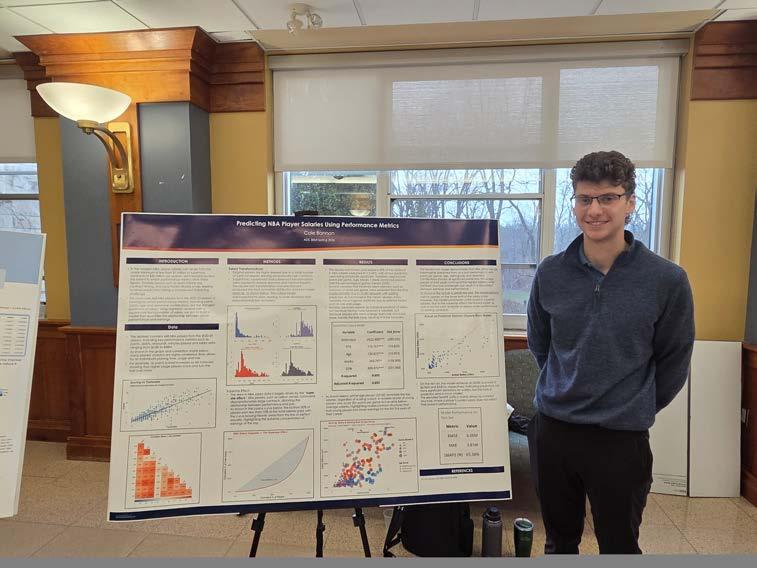
For my Data Visualization class in the Analytics and Decisions Sciences (ADS) program, I had the opportunity to prepare and give a poster presentation, where I shared insights on National Basketball Association (NBA) salaries. I was fortunate enough to be voted the best poster by my peers. NBA player salaries range from minimum contracts worth a few hundred thousand dollars to supermax deals worth over fifty million dollars per season. My project explored what factors influence these record-breaking salaries and how much can truly be explained by on-court performance. The analysis looked at a player's scoring ability, their defensive contributions, their role on the team, and their experience in the league. As expected, high scorers, key starters, and top defenders tend to earn more, but many players’ salaries could not be explained by performance alone. This finding illustrates the effects of team strategy, contract timing, and a player's reputation on compensation. Altogether, this project offers a glimpse into how performance and other factors that can't be captured on a stat sheet combine to shape the complex, multi-million-dollar world of modern NBA salaries.
My presentation at the poster day was a great experience. I was excited to share my project with classmates and faculty, and to answer questions in a very friendly and inviting environment. I especially enjoyed the chance to walk around and hear from my peers about their projects, learn about a wide range of interesting topics, and see the hard work everyone put in throughout the semester. Now, as a graduating student with a major in Finance and Administration and a minor in Analytics and Decision Sciences, this experience has highlighted how much I have enjoyed the ADS program and the courses I have taken through it. It has provided me with practical skills in data analytics and problem-solving that I believe will be invaluable as I start my career. Overall, I'm grateful for the skills I've learned, the amazing faculty, and the opportunities I've gained from being at King’s, which has made this journey so rewarding.
This collection showcases research conducted by students in the honors economics program, highlighting their ability to apply theoretical and empirical tools to real-world economic questions. Guided by faculty supervision, students developed original research projects, presented their findings in academic settings, and produced rigorous work that contributes to ongoing conversations in economics and finance.
Kaden Robert Norcross,Fourth-Year student with an Honours Specialization in Economics
This paper challenges the common economic assumption of Homo Economicus by exploring the seemingly suboptimal tendencies of fantasy football users. This paper is an empirical analysis of the presence of common draft patterns that signal behavioural biases, primarily the herd bias. Using Sleeper Fantasy’s API, a dataset of standardized draft results was obtained and filtered.This paper examines the herd bias by using logistic regression to estimate the probability that a user will draft a defense based on the defense picks of other users. The analysis finds that users are more likely to draft a defense when other users have recently drafted defenses, indicating a tendency for users to mimic the drafting decisions of the herd. Although this tendency was not definitively diagnosed as irrational,it certainly shows a bias to mimic behavior in a competitive and scarce environment.
https://kings.uwo.libguides.com/ld.php?content_id=37906055
Kate Pedisic,Fourth-Year student with an Honours Specialization in Economics
This paper examines differences in job satisfaction between immigrants and native-born workers and how labour market outcomes such as wages, job quality, and job- education mismatch are associated with these differences. Using microdata from the 2023 National Survey of College Graduates (NSCG), the analysis focuses on employed, college-educated individuals residing in the United States. The empirical strategy proceeds in three stages: documenting descriptive differences,estimating job satisfaction regressions,and decomposing the contribution of labour market characteristics to satisfaction differences. Regression results indicate that immigrants earn wages similar to or higher than those of native-born workers once observable characteristics are controlled for.However, individuals holding foreign-earned degrees are associated with less favourable labour market outcomes. Immigrants report slightly lower job satisfaction on average, and although wages and job quality characteristics partially account for this gap, a statistically significant difference remains after accounting for these factors. Jobeducation mismatch also shows negative associations with both wages and job satisfaction. While immigrants are not more likely to be mismatched once controls are included, foreign-earned credentials remain associated with a higher likelihood of mismatch. Taken together, the results suggest that differences in job satisfaction between immigrants and native-born workers are more closely associated with differences in labour market outcomes than with immigrant status alone.These results highlight the importance of job quality,skill utilization,and credential recognition as factors associated with both economic and subjective labour market outcomes among highly educated immigrants.
https://kings.uwo.libguides.com/ld.php?content_id=37906063
Impact of Germany’s Economic Conditions on University Enrollment in STEM
Andrej Kiselev,Fourth-Year student with an Honours Specialization in Financial Economics
This paper explores how the Economic Performance of German regions impact the number of first-year university enrollments for Stem and Business Programs. Both programs have a big share of university enrollments due to much employment highly related. Most of these employment opportunities require their employees to receive a bachelor's degree. This correlation makes for a necessary paper investigating the relationship between the labor market and rate of enrollment. Educational programs are a factor in the growth of a country's economy due to supplying an important source of labor. Understanding how the labor supply reacts to the current economic performance will help the market prepare efficiently and show the direction of the future.
https://kings.uwo.libguides.com/ld.php?content_id=37906050
Natalie Pawlowski,Fourth-Year student with an Honours Specialization in Economics
This paper studies the determinants of cryptocurrency adoption in Ghana and asks whether respondents primarily view cryptocurrency as an investment asset, a payment instrument, or both. Using the Ghana Cryptocurrency Awareness and Adoption Survey (April–May 2022; N = 989), I construct standardized indices for perceived value, perceived risk, social influence, facilitating conditions, and three adoption outcomes (adoption intention, investment preference,and payment preference).Ordinary least squares (OLS) results show that perceived value is a strong positive predictor of all outcomes, while perceived risk discourages investment more than payment use. Facilitating conditions (access to infrastructure, knowledge, and resources) are especially important for paymentoriented adoption. A balanced-sample robustness check (ages 18–25 vs. 26–33) confirms that results are not driven by age imbalance. Structural equation modeling (SEM) corroborates the salience of capability-related constructs (e.g., self-efficacy) and highlights additional latent pathways through security/privacy and price volatility. Overall, the evidence suggests that Ghanaian cryptocurrency adoption is largely utility-driven, with distinct barriers for investment versus transactional use.
https://kings.uwo.libguides.com/ld.php?content_id=37906049
Yutao Yin,Fourth-Year student with an Honours Specialization in Economics
This study examines the impact of geopolitical risk (GPR) on stock market returns across countries, focusing on the interaction effects between geopolitical risk and energy structure (ENS) as well as energy dependence (END). Using a feasible generalized least squares (FGLS) approach, the findings reveal that GPR tends to have a negative influence on stock performance. Energy structure exhibits clear heterogeneity across countries, amplifying the influence of geopolitical risk through cost-related channels. In contrast, energy dependence is mostly associated with stronger negative effects in most countries, reflecting greater exposure to external energy markets. The findings highlight that differences in energy characteristics play an important role in shaping how stock markets respond to geopolitical risk and offer insights for countries in designing energy and economic strategies to enhance resilience to geopolitical shocks.
https://kings.uwo.libguides.com/ld.php?content_id=37906054
Aiqingqing (QingQing) Li, Third-Year with Honours Specialization in Actuarial Science and a Minor in Analytics and Decision Sciences
I’m a third-year student in Actuarial Science, with a minor in Analytics & Decisions Sciences (ADS). The ADS program has broadened my understanding of data analytics, programming, and decision-making, both technically and psychologically.
ADS 4293 is one of the most unique courses I’ve ever taken. It offered a rare chance to apply theories and models from statistics, business, and psychology all at once. Originally, this course was planned around case studies. This year, however, a new option was introduced after an in-class anonymous poll: the OGG business simulation game. This format was used in ADS 4293 for the first time, and no one knew for sure whether the format would work. We decided to take the risk, and it turned out to be one of the most exciting parts of the course.
I joked that the workload from this course felt like a part-time job, but what I really meant was that it felt like a school-based internship. We worked through real-world-style problems: we analyzed information and data, conducted research, and designed solutions under time pressure.
If you’ve completed other course projects, some of this work may sound familiar. What made ADS 4293 different was the feedback loop. In the case study portion, we revised our models and solutions after the first presentation. In the simulation, we received new information every round and continuously updated our analysis and decisions. This continuous feedback meant that we weren’t only practicing critical thinking; we were also practicing action and accountability. Our decisions had consequences, and we had to respond quickly and thoughtfully.
The simulation was set in a single market with multiple regions. Teams selling the same category of product competed, each team choosing its own strategy (such as cost leadership or differentiation). Every round (quarter), we had to make decisions across operations, marketing, finance, and human resources. This cross-functional collaboration was especially rewarding because our classmates had diverse backgrounds: finance, human resources, accounting, etc. No one was “good at everything,” but everyone could become an expert in something. Our work across operations also pushed us to revisit the knowledge we had learned the previous year. Personally, I revisited concepts from Business 1220, like break-even analysis and income statements.

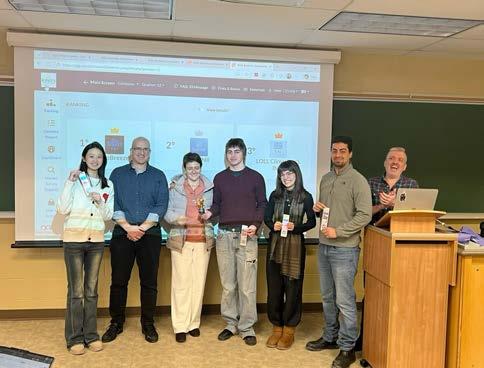
With many interconnected decisions in each round, we used influence diagrams to map decision points and understand how one factor affected another. We built an Excel-based decisionsupport tool with descriptive, predictive, and prescriptive components that could be updated every round.
The most exciting part was seeing the market feedback. Our performance results were immediate, and we could also spend ingame resources to purchase competitor information, which helped us adjust our strategy based on real signals rather than guesswork. Team discussion was crucial and not always easy. We debated a lot, and sometimes we finalized decisions right before the deadline. Through that process, I experienced the real dynamics of decisionmaking: limited information, uncertainty, time pressure, and unpredictable human behavior, both within the team and in the market.
More importantly, I learned how to work better as a team member, regardless of results. We tried to base our decisions on evidence— what the data proved, or at least strongly suggested—while we were still bold enough to take risks. We accepted losses, celebrated successes, and kept moving forward. Over time, theories that once felt abstract became more logical and intuitive because I could see them working (or failing) in practice. That kind of application made the learning deeper and more lasting.
ADS 4293 is a demanding course, but in a way that reflects real life and future careers. We made decisions, took risks, learned from outcomes, and moved on to the next challenge. Each round built on the last, turning past results into experience. By the end, I didn’t just feel more knowledgeable: I felt more capable.
Ruohuan Ding, Second-Year with a Specialization in Accounting
Ithadjustrainedthatafternoon.Thesmellofwetpavement mixedwiththescentofbloomingtreesinearlysummer. Everythingfeltquiet,exceptforthesoftsplashesmyshoesmade asIsteppedthroughsmallpuddles.Iwaitedjustoutsidethe schoolgate,lookedtowardthemainbuilding,andhopedtosee herappearlikeshealwaysdid—smiling,alittleoutofbreath, carryingwaytoomanybooksinherarms.
HernameisMiaLin.Wehavebeenbestfriendssincefourthgrade. Weknewalleachother'slittlesecrets,ourfavouritesnacks,and eventhenamesofourcrushes.Wepromisedwe’dgotothesame highschool,liveinthesamedorm,maybeevengotothesame university.Atthatage,wethoughtforeverwasreal.
Whenshefinallywalkedoutofthebuildingthatday,sheran towardmelikealways.
“Youwon’tbelieveit.ItotallyfailedthatEnglishquiz,”she groaned,rollinghereyesdramatically.
Ismiledalittle,likeIalwaysdid,buttodayfeltdifferent.Today,I wascarryingnews.
Webeganwalkinghometogether,ourbackpacksbouncingslightly witheverystep.
That’swhenshesaidit.“Let'sgettogethertomorrowandprintout thevolunteerforms.Mymomalreadypreparedeverythingforthe artschool.”
Istoppedwalking.Thestreetsuddenlyfelttooquiet.Ilooked downatthepuddlesandwatchedourreflectionsrippleandbreak apart.
Shedidn’tnoticeatfirst.Shekepttalkingforafewmoresteps beforesheturnedback.“What’swrong?”
“I’mnotapplyingthere,”Isaidsoftly.
Sheturnedtome,confused.“Youmeannottotheartschool?”
“Imean…nothere.I’mgoingabroad.Igotacceptedtoahigh schoolinCanada.”
Shewassilent.Justthesoundofraindropsstilldrippingfromthe trees.
“Yousaidyouweregoingtoapplywithme?”shesaid,notangryor crying.Justsurprisedandmaybealittlehurt.
“Iknow.I’msorry.”ThatwasallIcouldsay.
Shestoodthere,still.Thesoundsaroundus—thecarsonthewet street,theleavesdripping—suddenlyfeltlouder.Sheopenedher mouth,thencloseditagain.
“Youdidn’ttellme.”
“Ididn’tknowhow,”Isaid.
“Butweweregoingtoapplytogether.”
“Iknow.”
Thesilencebetweenusstretched,notheavylikeanger,just unfamiliar.Shelookedattheground,thenbackupatme.
“Whenareyouleaving?”
“Endofthesummer.”
Shedidn’tsayanythingelse.Shejuststartedwalkingagain, slowerthanbefore.Ifollowed.Thesidewalkwasthesame,but somethingbetweenushadshifted.
Wedidn’tsaymuchafterthat.Wejustwalked.Thestreetwaswet andempty.Theskywasstillgray.Forthefirsttime,thesilence betweenusdidn’tfeelcomfortable.
Thatwasthelasttimewewalkedhometogether.
Afewmonthslater,IleftandwenttoCanada.Shestayedinthe homecountryandgotintothesameschoolweusedtotalkabout everyday.
InCanada,everythingwasnew,newschoolandnewclassmates.A newversionofmyselfIdidn’tfullyrecognize.Imadefriends,but itwasn’tthesame.ImissedMia—notjusther,buttheversionof methatexistedwhenwewerestill“us”.
Wemessagedafewtimes,butthetonehadchanged.“HappyMidAutumnFestival!”“How’sschool?”“Look,Isawadogthatlooks likeyours.”Ourconversationswerelikeoldphotos—familiarbut faded.Afterawhile,themessagesstoppedaltogether.
SometimesIwonderwhatwouldhavehappenedifIhadchosento stay.Wouldwestillbewalkinghometogether,aswemadeplans aboutthefuture?Butmostofthetime,Iunderstand.Toleavewas hard,butalsonecessary.Thatmomentofsilenceonthewayhome wasthebeginningofmygrowth.
Istillrememberthatwalk,thesmellofrain,thequiet,thewords wedidnotsay.Thatmemorystayswithme—notassadness,but asasoftreminder:togrowupmeanstomakehardchoices,evenif itmeanstowalkalonesometimes.
Frequently,friendshipsconcludewithoutthenecessityofafight. Theendofsuchrelationshipsappearsnaturallywhenoneperson retreatsslightlywhiletakinganalternativepath. Evenifweneverwalktogetheragain,Icarrythatmemorywithme —likeagentleechoofhome.
By Jack Pemberton, Fourth Year with Honours Specialization in Accounting
If you’re reading this in 2026, you’ve likely heard lots of talk about “tariffs.” This article discusses what tariffs are, their objectives, how they affect Canadian consumers, and the challenges and opportunities they create for Canada.
Almost all countries engage in international trade of goods and services beyond their borders. A tariff – literally a tax on imports – is one of the tools governments use to influence trade flows. The most common form is an ad valorem tariff (a tax according to value), which is a percentage of the value of the imported good. For example, if the sale price of a good is $100, and the tariff rate is 20%, then the importer will pay $120.
Historically, governments used tariffs, like any other tax, as a form of revenue. Today, however, with increased globalization, there are other situations where governments use tariffs strategically rather than to raise revenue. For example, a government could use tariffs to protect domestic industry. In a small, open economy, domestic producers must compete with international suppliers to sell to domestic consumers. (In Canada, that means Canadian producers must compete with the rest of the world to sell to Canadians.) While this competition keeps prices low, it may drive Canadian producers out of business.Tariffs are a mechanism through which governments
Economists distinguish between statutory incidence – who is legally obligated to pay the tariff at the border – and economic incidence –who ultimately bears the cost. In a relatively small, open economy like Canada’s, the economic incidence of a tariff typically falls on consumers and end users, because importers often pass at least part of the cost on through higher prices or reduced choice.
can “level the playing field” for their own businesses. Furthermore, tariffs can be used as a bargaining chip in international trade negotiations; they can also be used to exert pressure on foreign powers. A recent “tariff battle” that you may have heard about is China’s tariffs on Canadian canola. This tariff was enacted to pressure Canada to lower its own tariffs on Chinese-made electric vehicles. At the time of writing, the two nations recently agreed to lower their respective tariffs in favour of more open trade.
“For Canada, tariffs are not just policy choices, but strategic responses in a global economy.”
The answer to this question depends on the direction of the tariff. If the Canadian government places a tariff on imports, Canadian suppliers (the importers) will have to remit the accompanying tariff to the government. In effect, this remission will raise the ultimate price of the good or service to the domestic consumer – an indirect tax – as the Canadian supplier needs to maintain a profit margin to stay in business. In contrast, if a country imposes a tariff on Canadian exports, then demand for that export decreases. The excess supply in this case may drive prices down, but it is the Canadian producers who suffer the burden, as they will have decreased profits.
With this knowledge of the objectives and outcomes of tariffs, we can see how mounting external pressure creates challenges for Canada’s economy: think of the size of Canada’s economy compared to other major trading partners. Another way we can think about tariffs is that, in a world with more free trade than less, foreign countries – particularly larger economies – have increased power over domestic producers. This power imbalance, essentially, is the challenge that Canada has increasingly had to face in recent times, as an export-dependent country (Canada relies on exporting natural resources). An over-reliance on traditional trade routes has exposed a vulnerability to trade disruptions.
Not all is gloom, however. We can think of the tariff talk as a “wake-up call,” a reason to change focus and create new opportunities for Canada. There are plenty of them. First, we can increase value-added production domestically. In the agri-food sector, for example, Canada has historically exported raw agricultural products. However, local opportunities exist for further process and manufacture of agri-food products, backed by Canada’s reputation as a safe, quality supplier. Second, it is time to diversify our exports. A good investor understands that diversification is key to a successful portfolio: don’t keep all your eggs in the same basket. Canada can take advantage of this concept and expand our relationships and presence abroad. Finally, we can take advantage of emerging sectors and other areas with foreign demand, such as artificial intelligence. There are plenty of opportunities for Canada to add value both domestically and abroad, and there is no time like the present.
As global trade continues to evolve, tariffs are a good example of how firms (and nations) must manage trade-offs. For Canada, the long-term implications will depend less on any single tariff and more on how firms and industries adapt to a more fragmented trade environment.
ByJingyiChen,Third YearwithMOShonoursSpecializationAccounting
1) During your time leading the club, what has given you the strongest sense of accomplishment?
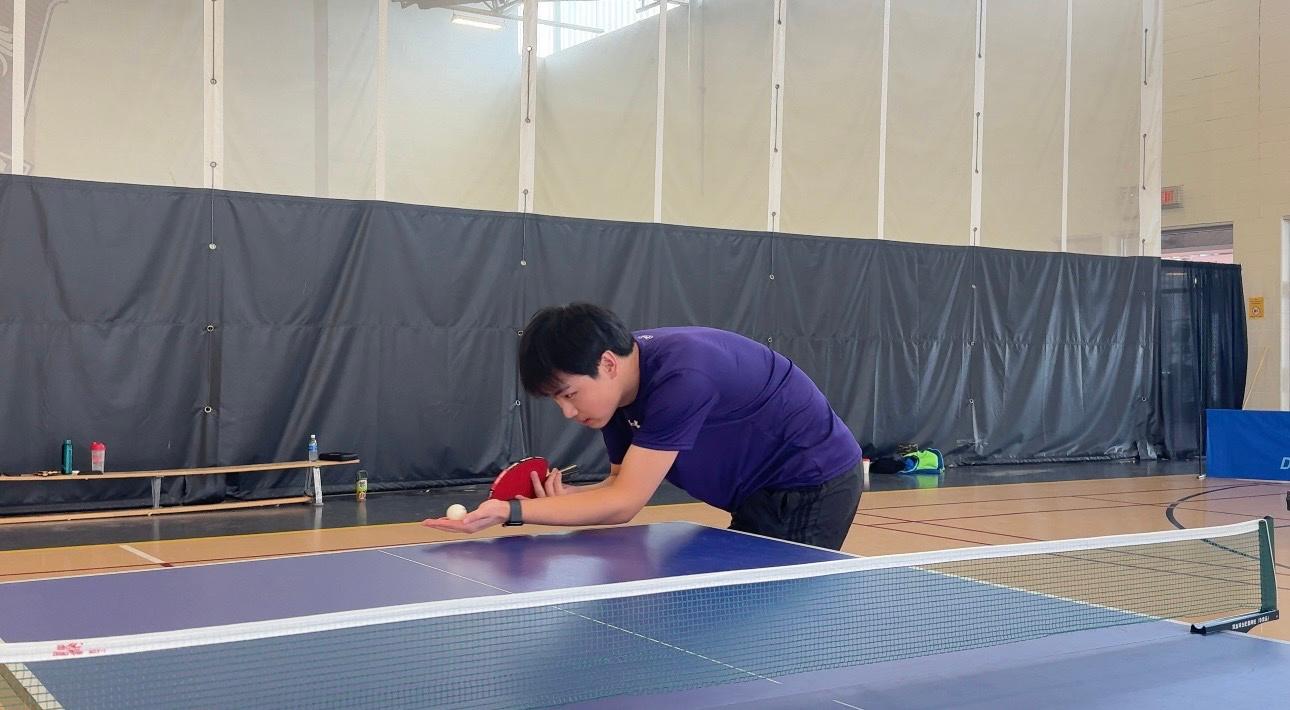
One of the things I’m most proud of is seeing the club slowly grow into a welcoming community. When we first started organizing regular sessions, attendance was small and we weren’t sure whether people would keep coming back. But over time, more students began joining, and now we have around 50 registered members who come from different programs across campus.
One moment that really stayed with me happened earlier this semester. A first-year student came to the club for the first time and told me he had never played table tennis before. At the beginning he looked very nervous and mostly stood on the side watching others play. But after a few sessions, people started inviting him into games, giving him tips, and encouraging him. Slowly he became more confident, and now he’s one of the regular players who shows up almost every week.
2) How do you encourage members to stay involved and keep the club active?
For me, the key lies in “consistency and variety.”
Consistency means having a reliable rhythm: we hold three events every week on Tuesdays, Wednesdays, and Saturdays. On average, about 8 to 9 people attend each session—enough to keep things lively without being so crowded that everyone spends most of their time waiting.
Diversity means staying flexible. Some members just want to play casually and get some exercise, while others prefer more competitive matches. So we organize mini-round robins, friendly matches, doubles games, and technical drills. Clear schedules and regular reminders also make it easier for members to plan ahead, which naturally encourages long-term participation.
3) Compared to other sports clubs, what makes the table tennis club unique?
Table tennis is one of the most accessible sports on campus. You don't need much experience, equipment, or specific physical attributes to get started—you can quickly join in and enjoy the game.
It's also a highly social sport: the pace is fast, players rotate frequently, and it's easy to chat and connect with students from different majors and grades. What makes our club unique is that it welcomes everyone while maintaining a competitive edge. Beginners can learn in a supportive and encouraging environment, while experienced players find opportunities for higherintensity matches and genuine skill advancement.
4) What challenges does the club face, and what would you improve with more resources?
Our biggest challenge right now is space and equipment, especially as more students start showing interest in the club. On some of our busier
nights, several people might be waiting for a table, and as an organizer you always want everyone to have enough time to play rather than just standing around.
If we had more resources, the first thing I’d hope for is additional tables and better equipment so we could run more games at the same time and keep the sessions flowing. It would also be great to invite a coach occasionally, both to help beginners build their confidence and to give more experienced players new techniques to work on.
Another thing I’d love to see is more tournaments and club events on campus. Friendly competitions or small leagues could make the sessions even more exciting and give members a chance to challenge themselves. With a little more support, I think the club could grow into an even stronger community where more students can enjoy the sport and feel connected on campus.
5) What do you think table tennis can teach students beyond just the game itself?
I think table tennis teaches students many lessons that go beyond the sport itself. One of the most important ones is patience. When people first start playing, it can be frustrating because the ball moves quickly and mistakes happen all the time. But with practice, players gradually improve, and that process teaches them to stay calm and keep trying.
Another lesson is respect for others. In table tennis, players are facing each other across the table, so there is a strong sense of interaction. Even during competitive matches, players usually shake hands, laugh about mistakes, and encourage each other.
For many students, university life can be stressful and competitive. Sports like table tennis remind us that improvement takes time and that enjoying the process is just as important as the result. In that way, sport reflects the true spirit of sportsmanship.
Deyi Li graduated from King’s University College at Western University in 2022 and double minored in Economics and Finance before he took a turn toward fiction writing. While his academic training was grounded in analytical thinking, he discovered storytelling and creative expression in the last term of his undergraduate studies at King’s.
After graduation, he began writing his first English novel, Guardian AI: Zombie Outbreak, published in 2025.
Currently, Li works as a graphic designer at an HR recruiting company, a role he deliberately chose for its stability and minimal travel requirements, allowing him to devote more time and effort to writing.

ByYiweiLi,Fourth-YearwithHonours SpecializationinAccounting
Deyi’s Experience at King’s
Li’s academic journey at King’s played a subtle yet lasting role in writing. Although he did not major in creative writing, he completed several writingintensive courses during his studies here. These courses sharpened his critical reading skills and taught him to engage beyond the text.
As he reflected on his undergraduate study, Li shared that he once considered switching into Western’s Creative Writing program, but he was nearly graduated at that time. While this choice not to switch remains a regret, he credits his time at King’s for cultivating the analytical mindset that now underpins his narrative approach.
For Li, economics trained him in identifying correlation causation, the skills that later translated automatically into the setting and plot of his fiction.
One of the greatest concerns that Li faced while writing Guardian AI: Zombie Outbreak was not language, but culture.
He said that writing to suit North Americans’ reading habits, the writing structure and styles they prefer, was challenging. Another challenge was to write accurately about the idioms North Americans use in daily communication, the clothes they wear, the atmosphere in which they live, and the buzzwords that are in fashion. To overcome this challenge, he chose to read more online novels and to use AI as an assistant. However to write stories attractive to the target audience, he believed he should gain a better understanding of each tiny step in their lives, which goes a level deeper than mastery of a foreign language.
For Li, writing is not a side project: it is a lifelong commitment. His short-term goal is to become fully professional in fiction writing, while, in the long-term, he would like to pursue a PhD in writing, to train himself in an advanced academic program.

By Anessa Patel,
Fourth year BMOS specializing in Finance and Administration
My name is Anessa, and I am a fourth year BMOS student specializing in Finance and Administration. Over the past four years at King's University College, I have had the opportunity to take several elective courses that have broadened my academic interests. In particular, my psychology electives sparked a strong interest in the field and deepened my curiosity about human behavior and mental processes.What began as a general interest quickly
developed into a passion as I learned more about topics such as well-being, stress management, and the factors that influence how people think and act. These experiences have inspired me to continue exploring psychology and applying what I have learned to both my personal growth and future professional development. Building on this interest, I will discuss practical strategies for taking care of your mental health.

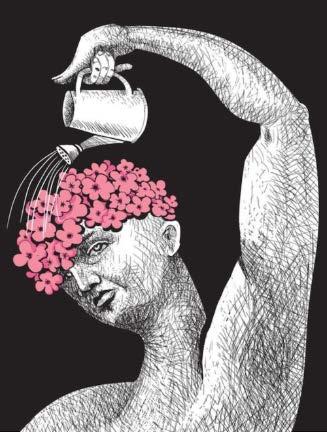
“Every life Matters”
How can I take care of my mental health?
elf-care looks different for everyone, which is why it is crucial to discover what you need and enjoy. The process may take trial and error; however, it is important that you remain patient with yourself as you learn what habits and activities best support your well-being. Even small acts of self-care in your daily life can have a meaningful impact because they help you manage stress, reduce the risk of illness, and improve your overall energy levels.
Here are some strategies for practicing self-care:
1 Make sleep a priority. Try to follow a consistent sleep schedule and ensure you are getting enough rest.Limiting screen time before bed can also help, as blue light from phones and computers may make it harder to fall asleep.
2 Maintain a healthy diet and stay hydrated. Eating balanced meals and drinking enough water can help improve your energy and concentration throughout the day.It can also be helpful to monitor how caffeine or alcohol affects your mood and overall well-being.
3 Stay physically active. Regular exercise supports both physical and mental health.Even something simple like a 30-minute walk can improve your mood. If you cannot exercise for that long at once, remember that smaller amounts of activity throughout the day can still add up.
4 Try relaxing activities. Activities such as meditation, breathing exercises, or muscle relaxation can help reduce stress.You can also schedule time for enjoyable activities like listening to music, reading, spending time outdoors, or participating in hobbies you enjoy.
5 Set goals and priorities. Focus on what needs to be completed right away and what can wait.Set boundaries and avoid too many tasks at once.At the end of the day, take a moment to recognize what you have accomplished.
6 Practice gratitude. Take time each day to think about or write down things you are grateful for.Being specific can help strengthen this habit.
7 Focus on positive thinking.Pay attention to negative or unhelpful thoughts and try to challenge them with more balanced perspectives.
8 Stay connected with others. Keeping in touch with friends, family, or supportive people in your life can provide emotional support and help when you need it.
Consider seeking professional support if you have been experiencing significant or distressing symptoms for two weeks or longer, including:
Trouble falling or staying asleep
Changes in appetite or unexpected weight gain or loss
Struggling to get out of bed due to low mood
Difficulty focusing or concentrating
Loss of interest in activities you normally enjoy
Challenges completing everyday tasks or responsibilities
Feeling irritable, frustrated, or restless
If you are concerned about your mental health, consider reaching out to a primary care provider.They can connect you with a qualified mental health professional, such as a psychologist, psychiatrist, or clinical social worker, who can guide you on the appropriate next steps. King’s University College also has resources available right on campus through Accessibility, Counselling, and Student Development (ACSD) to help you maintain both your personal and academic well-being. Their counsellors are experienced in addressing a wide range of concerns, including stress and anxiety, relationships, trauma, and grief.You will receive compassionate, knowledgeable guidance to help achieve your personal and academic goals while you develop skills to manage and overcome challenges you may be facing.
Stigma around mental health can prevent individuals from seeking support due to concerns about judgment, discrimination, or perception of mental health challenges as weakness.This social stigma often creates barriers to access of support, even when someone is experiencing significant distress, and reduce the likelihood that they will reach out to a healthcare professional or utilize available resources.
You can think about your own beliefs. Do you have stereotypes and prejudices about mental illnesses? Do you judge people with mental illnesses?
If we understand the impact of stigma, we can work toward creating more supportive environments that encourage people to seek the help they need.
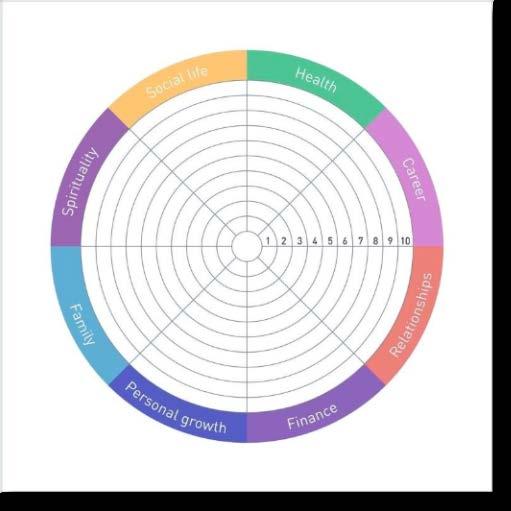
Mark each of these aspects of your life out of 10 and draw an arc on each score.This will produce a visual representation of the areas you can work on to generate the smoothest and biggest circle.
1 = Very poor / lowest level of satisfaction
10 = Excellent / highest level of satisfaction



By Rachel Victoria Sidebotham, Second-Year Honours Specialization in Financial Economics

I’m a second-year student, and my first case competition happened completely by accident.
One night my friend and I were doing what every responsible university student does… scrolling LinkedIn instead of studying. Suddenly we came across a post about theBMO Private Wealth Case Competition in Toronto.
The way it worked was simple:
You submit your team and your idea, and BMO selects the teams they want to invite to Toronto.
So naturally we thought,“Why not?”
There was only one small problem…
We found the competitionafter the deadline had already passed. We clicked the link anyway — mostly out of curiosity — just to see what the application looked like.
Somehow… the application portal wasstill open.
So, we thought,Okay… let’s see how far we can get.
Next thing we know, we hit submit.
Now, we hadvery little hopebecause technically we applied late… but our fingers were still crossed.
About a week later we got an email.
We had beeninvited to Toronto.
That’s when it suddenly got very real.
The whole day was incredible.
We participated in workshops led by BMO professionals including: Senior Investment Advisors
Heads of Operational Excellence and Growth Vice Presidents and Regional Directors for High-Net-Worth Wealth Planning
We got to: Network with professionals
Take professional LinkedIn photos
Meet hiring managers
Attend workshops on resumes,cover letters,and interview success
Then came the presentation.
Each team had10 minutes to present and 5 minutes of question and answer (Q&A) with the judges.
That’s where we learned one of the most important lessons of case competitions:
You have to really know your solution.
Judges will ask questions quickly,and you need to respond clearly, confidently,and concisely.
You never really know how good a public speaker you are until you’re in a moment that matters.
I’ve done public speaking most of my life.
I played competitive soccer in the Ontario Player Development League (OPDL), spoke to teams before games,and led meetings.
I’ve been a Team Leader and Head Guard at pools where I had to coordinate staff and communicate clearly.
To stand in front of people and speak? Normally,no problem.
But to stand in front of professional judges from BMO…
That’s a very different feeling.
Suddenly,how prepared I was didn’t matter.
How many times I’d spoken in front of people before didn’t matter.
I still forgot my lines.
Completely blank.
But that’s the beauty of being on a team.
My teammates stepped in,kept the presentation moving,and gave me a second to breathe.
A few deep breaths later,the content came back to me.
We finished strong.
EThebiggestthingIlearnedis:
Casecompetitionsaren’talwaysforpeoplewhoalreadyhaveexperience.
Ifyouneverdoacompetition,you’llnevergaintheexperience.
Youjusthavetoapplyandtry.
Everycompetitionteachesyousomethingdifferent: howtothinkunderpressure howtopresentclearly howtoworkbetterwithateam whereyourweaknessesaresoyoucanimprove andSOmuchmore!
Anotherthingmanypeopledon’trealizeisthatcompaniesoftenusecase competitionstomeetpotentialinternsandfutureemployees.
Companyrepresentativeswanttomeetyou.
Theywanttoseehowyouthink.
So,whenyougo: dressprofessionally bringresumes connectwithpeopleonLinkedIn askquestions
Startbuildingrelationshipswithrecruitersearly.
If you’re going to do a case competition,commit to it.
Don’t try to wing it.
Build a team you trust.
Find a mentor,or someone who has done a competition before,and ask questions.
Put real effort into your solution.
That’s where the real learning happens.
After my competition,we asked our judges for feedback.
We asked: What did we do well? What could we improve? What should we focus on before our next competition?
That feedback alone was worth the experience.
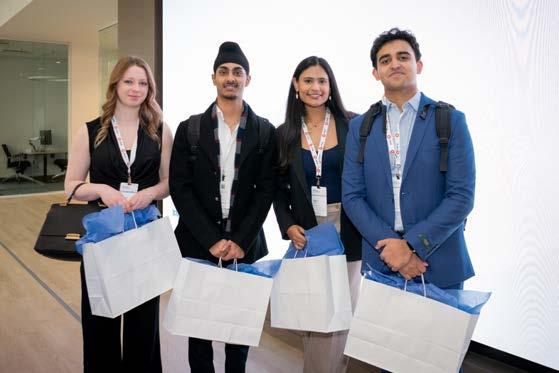
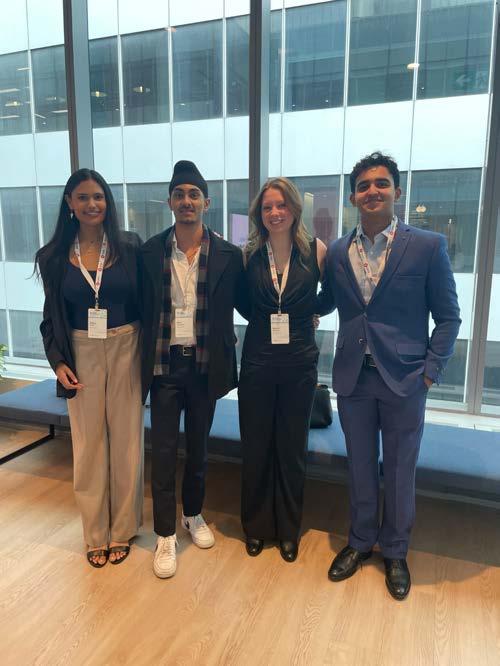
Confidence isn’t something you’re born with.
It’s something you build.
Just like any skill,you’re probably not great at it the first time,but every time you try, you get a little better.
So,if you’re thinking about doing a case competition
My advice is simple:
Put yourself out there because sometimes the best opportunities start with something as small as clicking on a link you weren’t even supposed to see.
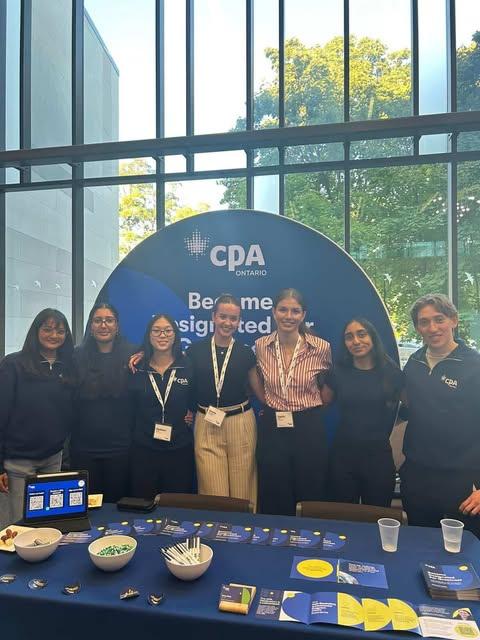
ByGarnetBhan,Fourth-YearHonoursspecializationinaccountingandMinorinEconomics
ByGarnetBhan,Fourth-YearHonoursspecializationinaccountingandMinorinEconomics
My service as a Board of Ambassador (BOA) Representative for CPA Ontario has been one of the most meaningful and professionally rewarding experiences of my university journey so far. This role has allowed me to represent the accounting profession and my passion for it on campus while I was developing skills that have directly contributed to my academic, professional, and personal growth.
As a BOA Rep, I acted as a key connection between CPA Ontario and postsecondary students, to promote CPA pathways, professional events, and development opportunities. The position required strong communication, leadership, and initiative, as I engaged with students, answered questions about the profession, and represented CPA Ontario’s values of professionalism, integrity, and excellence.
One of the most significant benefits of being a BOA Rep was the opportunity to build transferable skills that are essential in the accounting profession. Through this role, I strengthened my public speaking, networking, and leadership abilities when I actively engaged with students, faculty, and CPA professionals.
I also gained experience in event promotion, professional communication, and representation of an organization at a high standard. Beyond technical knowledge, the role helped me build confidence in professional settings and develop a clearer understanding of what it means to be a future CPA. These skills have not only supported my academic success but have also added meaningful value to my resume and professional profile.
A central part of my experience was to participate in and promote CPA Ontario’s Post Secondary Ambassador Program (PSAP). This program is designed to support students through access to professional development resources, skill-building opportunities, and career-focused learning that complements academic studies.
Through PSAP, students gain exposure to resources that help them develop communication, leadership, and professional competencies that employers value highly. The program also encourages students to actively build their professional brands, with skills and experiences that they can showcase on resumes and LinkedIn profiles. This focus on early professional development helps students stand out and better prepare for future careers in accounting or any business-related field.
My participation in PSAP allowed me to take ownership of my professional growth while I helped other students recognize the importance of skill development beyond the classroom. PSAP reinforced the idea that success in accounting is not only about technical knowledge but also about adaptability, professionalism, and continuous learning.
Overall, my experience as a BOA Representative for CPA Ontario has had a lasting impact on my career development. This role expanded my professional network, strengthened my leadership abilities, and reinforced my commitment to the accounting profession. Most importantly, my role allowed me to support and guide fellow students as they explored career pathways and professional opportunities.
This role was more than an extracurricular to me: it almost felt like I owed it to myself to step out of my comfort zone, a choice has obviously led to the person I am today, both professionally and personally. This experience has been a formative one that shaped my confidence, my skills, and my identity, personally as well as professionally. I am grateful for the opportunity and the continuous support from my family, friends, professors, faculty, and the CPA Ontario team. I look forward to where this experience will take me and to continue to apply these experiences as I pursue my future career as a CPA.

During the first semester of my third year, I took a course called Introduction to Fraud Examination. Before I took this class, I had never been particularly drawn to accounting. My academic interests were mainly focused on finance and analytics, and I hadn’t considered how accounting would intersect with my life. However, this course introduced me to forensic accounting, to which my curiosity shifted. During that semester, I began meeting with my professor to learn more about this specialized area of accounting. Since these conversations only increased my interest in this field, I began to research companies in this space and look into industry events where I could learn about potential career paths.
While I was exploring opportunities, I discovered that a firm specializing in forensics, MDD Forensic Accountants, was hosting an information session at Western early in the semester. My intention was simply to attend, to gain insight into the profession. Members of the firm discussed the nature of their work, types of cases they handle, and

how they collaborate with lawyers and other professionals. As I listened to their experiences, the field felt tangible and exciting. I attended the session, connected with their team, and expressed interest in an internship with them.
Following this event, I made a conscious effort to stay connected with these professionals. During my third year, I was serving as an executive member of the King’s Econo-Math Society (KEMS), which provided me with the opportunity to organize networking events and invite guest speakers. In recognition of the value of the relationship I had built with MDD, I invited the firm’s professional to speak at one of our final events of the year. She shared great insight about her career path and discussed how she became involved in a forensic accounting firm. This event strengthened my connection with the firm and demonstrated my interest in their work. These connections allowed me to join their team and ultimately led to an internship offer! What began as curiosity sparked in a classroom had developed into a real professional opportunity, through networking and genuine interest in the field.
From a Finance background, I initially felt unprepared entering my internship. My academic experience provided exposure to financial analysis, but I had limited experience with accounting practices. I was aware that I would walk in with less knowledge than others might have and expected a steep learning curve.
Each file varied and presented a different situation, requiring different approaches. The work often involved examination of large amounts of information and identification of relevant documents. Each structure of calculations reflects the circumstances of the specific claim, making the work more engaging and challenging. At MDD, I got to work with a wide range of files within different fields, from Farm files to Cannabis files. I was allowed to explore and assist in fraud files and help investigate suspected fraudulent activities. Accident Benefit files dealt with matters that were often headed to court or required collaboration with legal teams. Finally, Business Interruption files analyzed losses related to business issues. Exposure to these different types of files gave me a deeper understanding of forensic accounting.
You may easily feel discouraged after you send countless emails to firms, attend networking events, and reach out to professionals on LinkedIn. I’ve met many students who landed internships at prestigious firms through connections (cough cough…nepotism…), but that outcome isn’t always the case. My best advice is to broaden your perspective and be open-minded to different companies and areas within your field. I made a deliberate effort to expand my network and learn from people in Data Analytics, Economics, Finance, Consulting, Accounting, and so much more. Before I secured my internship, I attended countless networking events, built my network on LinkedIn until I made over 300 connections by the end of April, sent hundreds of messages (many of which went unanswered), and even had the opportunity to host a networking event myself.
If you truly want to be part of something and show genuine interest, managers will notice! Put in consistent effort, continue to build connections, and maintain those relationships over time.
“Visibility and engagement are key strategies to open doors”

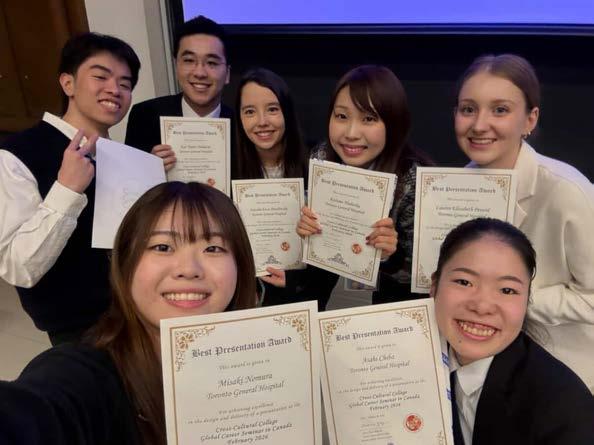
My participation in the Kwansei Gakuin University cross-cultural course in Toronto was one of the most meaningful experiences of my university life, not only because of the academic work, but because of the connections I built in such a short amount of time. The course brought together Canadian and Japanese students and placed us into mixed teams, which meant that, from the beginning, we were learning how to collaborate across different communication styles, habits, and perspectives. A group of strangers quickly became a team whom I genuinely looked forward to seeing every day.
One unexpected outcome of the program was how much it expanded my understanding of different industries, and not only the one we were assigned. Our main case focused on a hospital setting, which taught me that healthcare is shaped by strict expectations around privacy, safety, and trust. The case made me realize that even when a technology sounds helpful on paper, adoption depends on careful decision- making. At the same time, I learned from my teammates’ perspectives,as well as from examples in their universities and communities, and I started to see how differently industries operate, depending on their goals and constraints.



By: Natalie Pawlowski, Fourth Year Honor’sSpecialization in EconomicsStudent
For example, compared to healthcare, private- sector industries like retail or app- based services can often move faster, test new ideas more quickly,and market more aggressively. In contrast, public- sector services like education, government services, and transportation need to be more cautious because decisions affect large groups of people and are often tied to policy, budgets, and public accountability. Recognition of these differences helped me understand that “good solutions” look different across industries, because each industry has its own priorities and limits.
Even though the in- person portion of the course was only one week in Toronto, our group worked surprisingly well together. We managed our time efficiently, divided tasks fairly, and stayed focused during class and project work time. That time management mattered because it gave us space to enjoy the experience beyond the classroom. After we finished our work for the day, our group would explore Toronto together, walk around the city, try different places to eat, and have time to talk in a more relaxed setting. Those moments made the experience feel personal, not just academic.
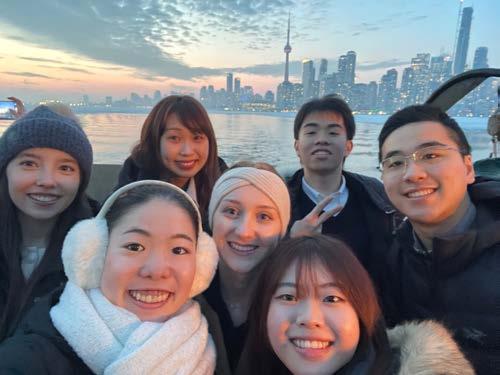
The friendships that formed were the most unexpected part for me. Close working relationships with people from different universities and cultural backgrounds not only pushed me to communicate more thoughtfully and be more open- minded, but also made bonding easy because we were all sharing the same intense schedule, the same goals, and the same excitement together in a new environment.
By the end of the course, our group had built trust and a sense of connection that felt much deeper than what you would expect from a short program. Overall, the KGU course gave me more than a project and a presentation. The course gave me a reminder of how powerful shared experiences can be and left me with memories and friendships that I will always cherish. In one week, we learned how to work well together, manage pressure, and still make time to explore the city and enjoy each other’s company. By the end, we didn’t just complete the course; we formed strong friendships that I know I’ll carry with me long after the program.

JalenSolomonisaKing’sfourth-yearwithadegreeinhand and will soon head on to the workforce. While today’s volatileeconomymakesunemploymentaloomingthreatfor many graduates, Jalen broke through and secured a fulltimeoffermonthsbeforegraduating.Hereishowhedidit.
Jalen’s resume spans across various positions and branchesinthebusinessworld,givinghimasharpedgewith diversityandchancestoexplorewhatfitshim.
During the summer of his third year, Jalen interned Canada Revenue Agency, this is his first time experiencing proper “adult” life. Here, he learned the technical art of flaggingnon-deductibleexpenses,learningskillsonthejob beforetheywereevencoveredinhisuniversitylectures.He also had the chance to work in a professional setting, preparinghimselfforpostgraduate.
During his internship year with King’s, Jalen shifts to a smallpublicaccountingfirm,DavisMartindaleLLP,focusing more on people than policy. Jalen learned the nuances of clientserviceandprojectmanagement,discoveringhowto be time-efficient while managing the books for local businesses.
Jalenstartedhisthirdinternshipinthesummerof2025 atOntarioTeacher’sPensionPlan.SteppingintotheToronto Financial District, Jalen was met with the sheer scale of a fundmanaginghundredsofbillions.Taskedwithcompleting financialreportsfor350,000teachers,headaptedtoheavy responsibility, high-level corporate training and had the opportunitytoexperienceworkingwithinternalAItoolsto streamlineoperations.
"Internshipsareyourchancestotrysomethingout,"Jalen notes.Hisbiggesttakeaway?Noamountofacademicmarks cansurpassthevalueofreal-worldexperience.Eachrole
By Uyen Nha Dinh, Second-Year
with Honours Specialization in Finance and Administration and a Minor in Analytics and Decision Sciences
didn'tjustaddalinetohisresume;itprovided"brandpower" and lateral mobility. For instance, a stint at a mid-market firm like BDO in a smaller town like Strathroy can be the stepping stonetotheirTorontoheadquarters.
OneofJalen’smostsignificantachievementswaslandinga positionattheOntarioTeachers’PensionPlan—aroletypically recruitedfromschoolslikeIvey.Hebrokethroughthatbarrier throughsheerperseverance.
Forstudentslookingtofollowhislead,Jalenoffersafew "goldenrules":
TargettheBigFish:Ifyouwanttoworkforamajorfirm, startnetworkingwithinthosecirclesearly.
StartLow,AimHigh:Whencoffeechatting,reachoutto juniors,HR,andanalystsfirst.Theyareoftenmore accessibleandcanprovidetheessentials.
NetworkwithAction:Don'tjusttalk,takeactionand apply.Demonstrateagenuineinterestinthemarketand useyourconnectionstosecurereferralstohiringmanagers.
If you are unsure about taking a break from studies for an internship, Jalen’s stance is clear: Experiences will make you different. Typically, it is recommended after second year. Use that time to explore different branches of finance. By the time recruiting season hits in May, leading into a whirlwind of coffee chats and three-round interviews by August, you’ll have the "resume diversity" needed to stand out.
“JALEN’SJOURNEYPROVESTHATWHILE THEMARKETISCOMPETITIVE,A RELENTLESSNETWORKINGSTRATEGYAND
AWILLINGNESSTOLEARNONTHEFLYISA WINNINGFORMULA.“
AConversationwithSandyKostrubiec,CFAbyRobertGillespie, Third-YearwithspecializationinFinancialEconomics
Before I spoke with Sandy Kostrubiec, CFA, I assumed that a portfolio manager’s day mainly revolved around spreadsheets, market analysis, and investment strategy.While those things are certainly important parts of the role, Sandy made it clear that what truly drives her work is something much more human.
“As a manager, you initially think, okay, it must be a lot of analysis… and it absolutely is that,” she said.“But at the end of the day, it's a people business really – it's all about relationships.”
Sandy works in private wealth management, where she oversees investments and financial plans for high-net-worth families.What stood out most in our conversation wasn’t the technical side, but how strongly she emphasized trusting, listening, and building relationships over time.
Sandy’s path into finance was not what most people would expect. She didn’t grow up around investment or financial markets, so a career in accounting was not something she had always envisioned for herself. After she graduated, she began applying for jobs and ultimately took the first opportunity.
That opportunity was with TD Bank, in a call centre selling insurance. While the role gave her valuable experience, she quickly realized that she wanted to move closer to the investment side of the business. That curiosity led her to TD Ameritrade, where she became a licensed stockbroker at just twenty-two.This achievement marked her first real exposure to capital markets and sparked a deeper interest in investing.
At the same time, something still felt missing. She described how work in a call centre meant that she was constantly speaking with new clients, but she could never build lasting relationships. “I hated the fact that I would start to develop a relationship with a client and then I'd be like, okay, bye, and never talk to them again.”
That moment stood out to me. It wasn’t that the technical work was wrong for her –it was that the human connection was missing.That realization pushed her toward private wealth management, where she could combine investing with long-term client relationships. Her career also reflects a theme she returned to throughout our conversation: the need to take initiative and ask questions.
“You just don't know if you don't ask.”
One of the most interesting parts of our conversation was Sandy’s perspective on what truly matters when she’s working with clients. When I asked what skills were most important, her answer was immediate:“The most underrated skill in an advisor… is listening.” She explained that many advisors feel pressure to prove themselves by talking about markets or strategies. In reality, however, that talk is not always what clients need.
“They just want to talk to you about their kids… and they just want to know how you're gonna help them.”

That insight really stayed with me. It reframes the role from just management of money to a genuine understanding of people. For Sandy, being present and paying attention is what builds trust over time.
“Be present. It is so simple, yet it is so profound.”
In an industry where clients are trusting someone with major financial decisions, that level of care and attention makes a real difference.
Conclusion
As a third-year student at King’s, I spend a lot of time focused on internships, technical skills, and résumé development.Those things are important, but this conversation encouraged me to think more broadly.
Sandy’s career shows that technical ability alone isn’t enough.The ability to build relationships, listen, and earn trust plays an equally important role.
This conversation also reminded me that careers are rarely linear. Her path was shaped by curiosity, and by her willingness to take chances and ask questions when opportunities came up.
One piece of advice she shared stood out to me the most.
“Don't take yourself too seriously… and just bet on yourself.” That mindset is something I can actually apply. In networking, interviews, or a new role, there will always be uncertainty. Willingness to take risks and trust yourself seems to be crucial in moving forward.
By Stacey Hann, CPA, CA Director, Graduate Diploma in Accounting at Western University
A brand- new professional program is on the horizon, modern, bold, forward- looking, and aligned with today’s rapidly-changing professional landscape. The new program blends essential technical expertise in accounting and a firm grounding in ethics with real- world experience and future- focused skills.
Students who complete an Honours Specialization in Accounting or a Specialization in Accounting degree from Kings University College will satisfy the undergraduate course requirements for entry into the new program. CPA Ontario is expected to release Details regarding the minimum GPA required for admission in 2026.
Students currently in Year 2 and Year 3 of an accounting degree should watch for new degree checklists coming soon, designed to align their studies with the changes in the new CPA Professional Program (CPP).
The new CPA Professional Program will consist of four modules and four examinations. Future CPAs will work through the program one module at a time. They will complete each module and pass the associated exam before they move on to the next module.
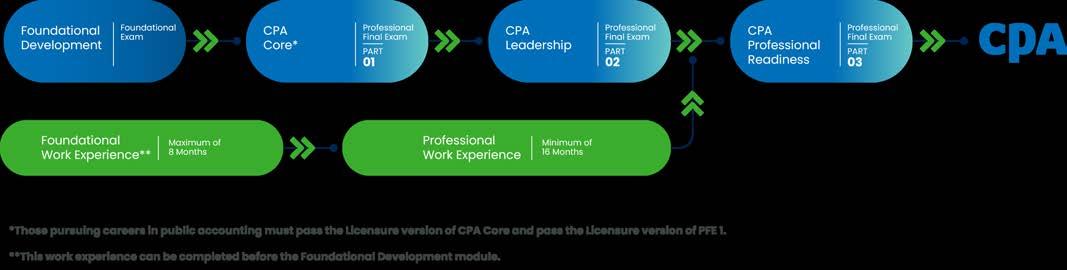
Future CPAs can choose to complete the first 3 modules online, part- time. Alternatively, for those students who prefer in- person learning and want to fast track their studies, Western University will continue to offer a full- time Graduate Diploma in Accounting.
In addition to academic requirements, the new CPA Professional Program will include a 24month practical experience requirement, net of leave. This requirement will consist of eight months of foundational experience and 16 months of professional- level experience, with expectations for proficiency increasing in line with the CPA competency map.
The new CPA Professional Program will launch in January 2027, with further details on specific admission requirements and how to register shared by CPA Ontario in 2026. With these exciting changes, students have the opportunity to gain the knowledge, skills, and practical experience needed to lead our economy. The new CPA program is a launchpad to a dynamic and exciting career!
For more information and questions contact Betsy Exley, Manager Student Recruitment at CPA Ontario: BExley@cpaontario.ca or attend the CPA Ontario Virtual Bi-Weekly Information Sessions https://www.cpaontario.ca/become-a-cpa/post-secondary student/events
BY JACK PEMBERTON, FOURTH-YEAR WITH HONOURS SPECIALIZATION IN ACCOUNTING
To job hunt in fourth year can be a stressful endeavour. In your first couple years, you are still figuring out what you like, what you don’t like, and what exactly you want to do after university. Trust me, you won’t have it all figured out after four years! However, for those of you who have narrowed down your options, or who are considering a role with one of the world’s “Big Four” accounting firms, I wanted to share some advice that helped me land a position with KPMG and will hopefully provide you some value as you think about your next chapter.
make sure to take advantage of your time at university while you can. University is going to be your biggest resource when it comes to preparation and guidance. When I applied to KPMG, I first consulted two King’s alumni whom I had met throughout my time at university, both of whom had since gone on to work for other Big Four firms. The alumni told me about the types of questions they were asked during their interviews, and how they responded. One of the biggest takeaways from our conversations was the emphasis on organizational values. I know that the values of potential employers may not always be top of mind for students looking for their first job, but an understanding about your future organization is worth it. Talk to recent grads or other connections you may have and see what they have to say.
Last year, the King’s Accounting Club (KAC) hosted a mock interview tutorial in partnership with accounting firm Ford Keast LLP. Students could meet with one of the firm’s recruiters (hint: a good connection to make when you apply for jobs!) and practise interviewing specifically for an accounting role. So, look out for similar events throughout the year. On top of that, professors at King’s are quite literally there to support your future career and are often happy to help advise. Sometimes they can refer you to recruiters, too.
it’s important to be intentional with your applications. It’s common nowadays for students to aim for quantity over quality with respect to online job applications, but showing that you’ve done your research can go a long way. You should also understand the differences between Big Four firms and other local, regional, and national firms, to make sure that Big Four is right for you. Personally, I don’t mind the busy season hours, but maybe you would, or maybe you are more interested in business operations and management and would prefer to start your career in industry or as an auditor for the Canada Revenue Agency (CRA). The point is, don’t just chase the Big Four title: do some more digging and make sure it’s what you really want.
when it comes to the interview, my biggest piece of advice is to be honest, both with yourself and your future employer. Of course, you want to make yourself an attractive candidate but understand that the people interviewing you are more interested to see if your personality would be a good fit. Grades are important, yes, but you are more important. During my interview, I was upfront about my intentions: I stated that I was looking for a challenge, as staying stagnant won’t allow me to progress in my career and in my life, and that I wanted to work for an organization with both global opportunity and impact.
So, there you have it: my tips and tricks for your next Big (Four) interview. Remember, you are far from the first person to go through a Big Four hiring cycle, and there are plenty of people around you who are there to help. Take advantage of the resources available at King’s, do your research, and, most importantly, be honest!

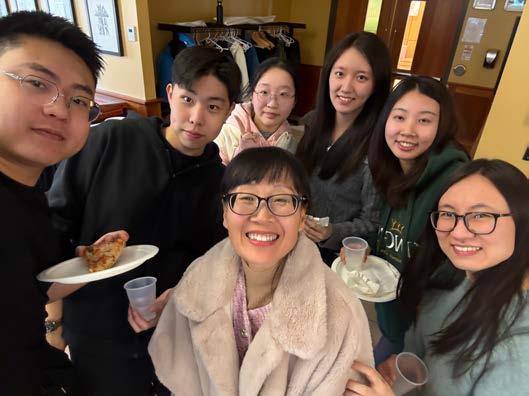

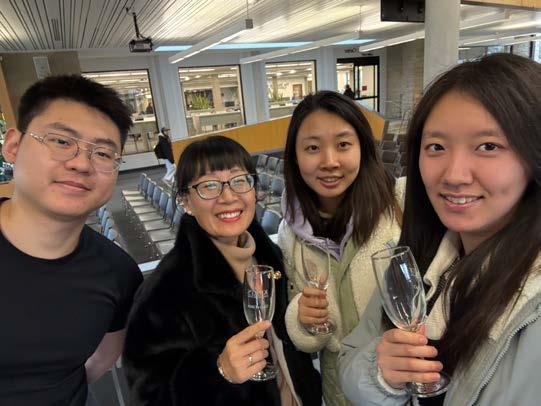


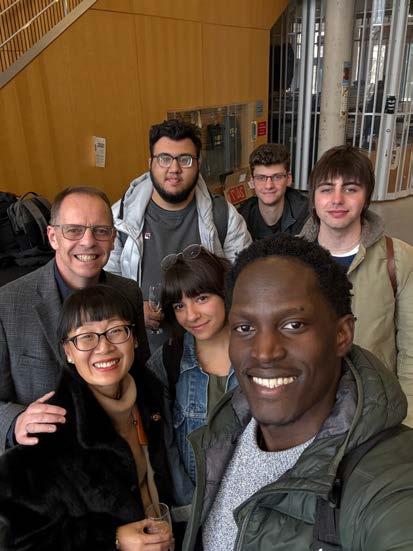
LydiaLi ProgramManager
After twenty years of service as a Receptionist in the Faculty Secretary's office, as Faculty Secretary, as an Academic Advisor, as an Academic Program Advisor, as an Academic Counselor, as a Program Manager, and as an Internship Coordinator in the School of Management, Economics and Mathematics, I find myself preparing to retire at the age of 55. How exciting!
Meanwhile, the moment feels both surreal and deeply meaningful because this institution has been not only my workplace, but also the place where my own journey began as a student.
I first walked onto campus as an adult student, unsure of what the future held. Like many of you, I was focused on deadlines, exams, and how to figure out my future. What I did not realize back then was that this place would become a constant in my life and shape not only my career, but also who I would become.
My return, three years later, as a staff member, felt like I was coming home. Since then, I have had the privilege and honour of working with a few professors who taught me when I was a student: Professor Ken Bowlby, Professor Ayoub Yousefi, Professor Sergio Janczak, Professor Peter Ibbott, and Professor John Siambanopoulos (Yes, I spelled your last name correctly in the test paper in the Management Accounting course). Over time, my role evolved, but one thing remained unchanged: my connection
to students and faculty. As an Internship Coordinator, I had the privilege to witness students take their first steps into the professional world. I saw confidence grow where there was once uncertainty, and potential turn into real achievement. Those moments—small conversations, last-minute advice before interviews, emails of excitement after job offers— are the sweet memories I will carry with me.
There were also many changes along the way. The world of work transformed. Education evolved, and so did I. I updated my education with the completion of a Master in Public Administration degree while I worked full time. I learned to adapt and to appreciate that success is not always linear. Personally and professionally, this journey taught me resilience, patience, and the importance of community.
If there is one lesson I would share with students, it is this one: your path does not need to be perfect to be meaningful. Take opportunities, even when they feel uncertain. Growth often happens in those moments when you are unsure but willing.
Another piece of advice: be true to yourself and have integrity. Never pretend to be someone you are not.
As I walk away from this chapter, I do so with gratitude for professors who became colleagues, for colleagues who became friends, for students who inspired me, and for an institution that gave me more than I ever expected.
Thank you for being part of my journey and story.
P.S. Sorry, Dr. Peter Ibbott. I now retire one year ahead of you, although both of us reached an agreement 10 years ago that we would retire in the same year. I broke the promise.
MEM graduates have been accepted to postgraduate programs around the world, while others plan to begin their careers; some students shared with us their success stories here.


Mai Amjad Al Hourani (honours specialization in finance and administration) will be working at CIBC Wood Gundy with the Khaled Sultan Team starting in July as a Client Associate
Matthew Vincent Farrow (honours specialization in economics) accepted an offer from the Waterloo for the Masters of Economics Co-op
Xuruo Gu (specialization in finance and administration) has accepted an offer of admission to the International Business stream of the Ivey MSc in Management, starting in January 2027
Zakaria Hindi (honours specialization in accounting) will be completing Western Graduate Diploma in Accounting this summer before starting a full time position at MNP, as a Public accountant in Accounting and assurance.
Lyutai Hu (specialization in economics) has been accepted to Columbia University MS in Enterprise Risk Management program
Robert Kaviranga (specialization in finance and administration) interviewed and has accepted a position as a personal finance advisor with DESJARDINS.
Logan William Lawrence (honours specialization in finance and administration) has accepted a job offer with National Bank Financial as a wealth associate
Yue Lin (honours specialization in economics) will begin her master's degree in applied economics at City University of Hong Kong
Qixuan (Kate) Liu (honours specialization in accounting) received admission and scholarship from Ivey Business School to the Msc in management: business analytics
Kaden Robert Norcross (honours specialization in economics) is heading for a Msc in Business Analytics at Ivey school of business, starting in September of 2026
Natalie Ewa Pawlowski (honours specialization in economics) has been accepted into the University of Guelph's Masters in Financial Economics program. Is also presenting at this year's Annual Meetings of the Canadian Economics Association (at SFU)
Kate Marie Pedisic (honours specialization in economics) accepted an offer to Western’s Master of Financial Economics (MFE) program
Jack Pemberton (honours specialization in accounting) accepted a full-time position at KPMG Canada in Audit
Jack Sander (honours specialization in finance and administration) will be attending University ofAlberta Faculty of Law this fall.
Spencer Robert Sloan (honours specialization in accounting) will be completing Western Graduate Diploma in Accounting this summer and has accepted a full-time position at Wilkinson Rogers in London, as a staff accountant
Jack Smith (honours specialization in economics) will be attending Queen's University next year for their MA in Economics program. He was able to get a $23,000 compensation package.
Haolin Wang (honours specialization in economics) has received an offer of admission to the Master ofArts in Economics program at the University of Chicago with a $15,000 scholarship.
Yuxin Wang (honours specialization in economics) accepted an offer from the University of Ottawa for the MA in Economics program
Yutao Yin (honours specialization in economics) is pursuing an MSc in Economics at the London School of Economics and Political Science after graduation.
Jihun Yoon (specialization in global commerce) will be attending the MBA program at UBC
Xingyuan Yu (honours specialization in finance and administration) accepted into the MSc in Digital Management program at the Ivey Business School, Western University, starting in September 2026.
Juefei Zhou (specialization in global commerce) is starting with Ivey for the Master of International Business this fall.
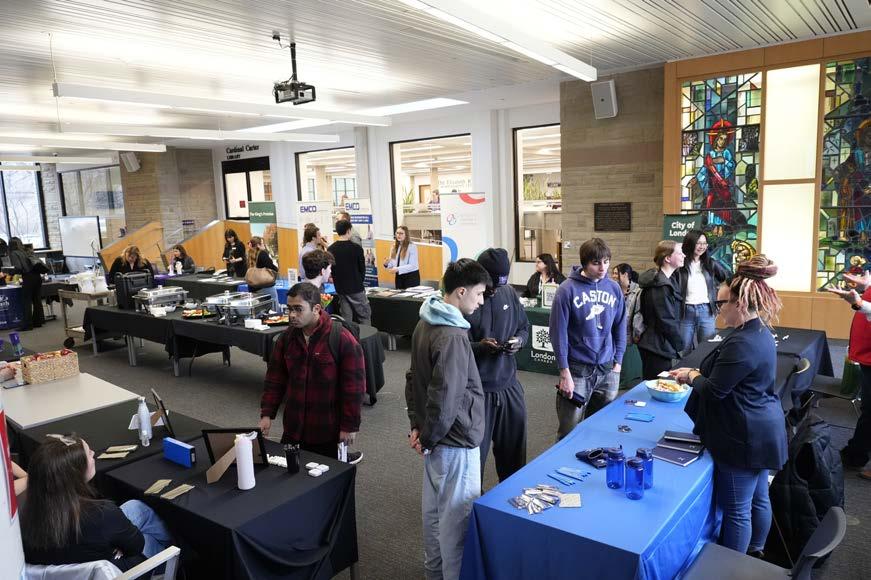
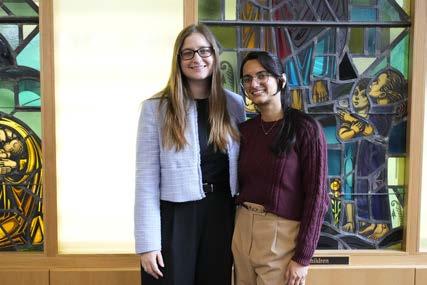
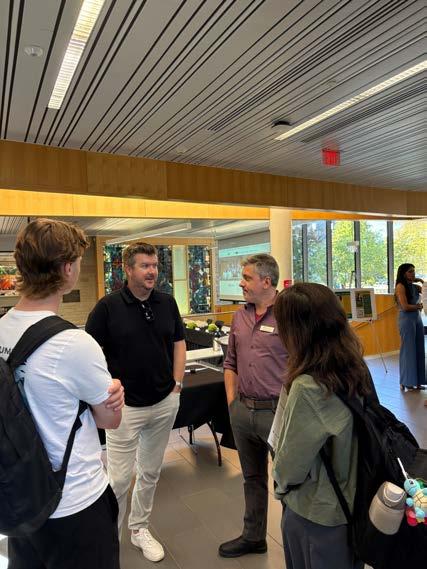
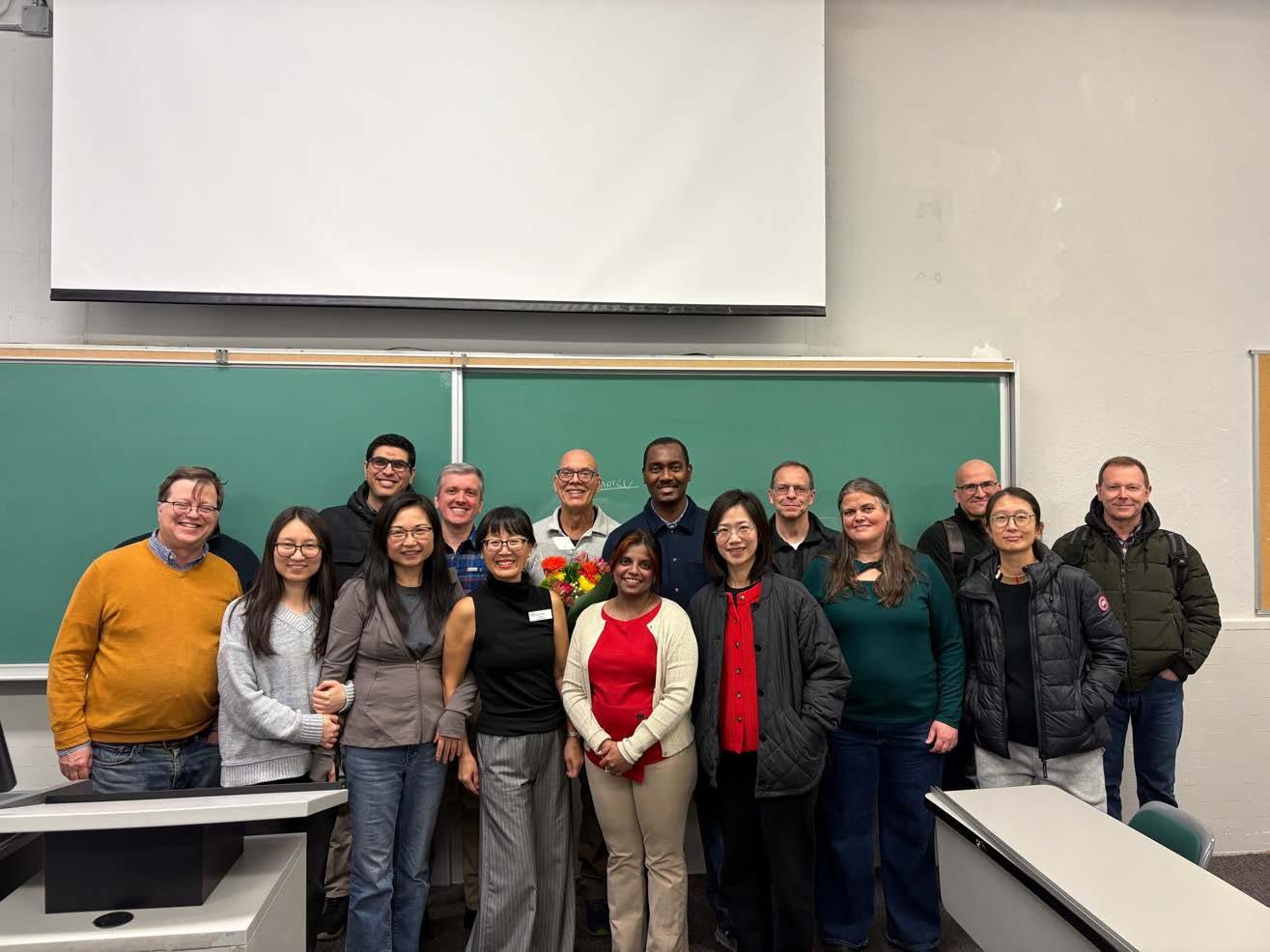
If you have any career or personal announcements please contact us at MEMInsider@kings.uwo.ca
BMOS Association
Instagram: kingsbmosclub
Email: Kings.bmos@kucsc.com
King’s Accounting Club (KAC)
Instagram: kingsacctclub
Email: kac@kucsc.com
King’s Capital Management (KCM)
Instagram: kingscapitalmanagement
Email: kcm@kucsc.com
King’s EconoMath Society (KEMS)
Instagram: kemsclub
Email: kems@kucsc.com
King’s Entrepreneurship Association (KEA)
Instagram: keaatkings
Email: KEA@kucsc.com
Credits
Project management: Estelle Van Winckle, School of MEM
Layout and design: Jingyi Chen, Year-three student in MOS honours Specialization in Accounting
Photography: MEM students, King’s Communications
Editor: Lisa Kovac Student Editor: Falak Gajebasia