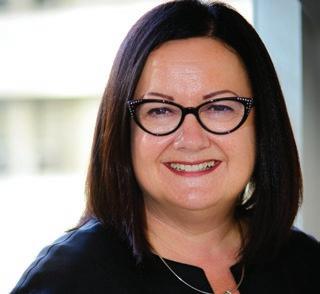
I’m proud to share our 25th anniversary edition of Kids Candidly with you.
Founded 25 years ago as the Kids Cancer Camps Society of Alberta, we became the Kids Cancer Care Foundation of Alberta in 1999, when we expanded our vision and began funding research and hospital programs.
I was scared and overwhelmed. I realize now that ignorance truly was bliss. Thankfully, you believed in our vision of creating a better world for children with cancer.
With your support, we have been able to add essential programs such as our PEER exercise program, Education Support and the Derek Wandzura Memorial Scholarship Fund.
You have also enabled us to donate over $13 million to children’s cancer research here in Alberta. And, as we announce our third research chair in this issue of Kids Candidly, I am struck by how far we have come together.
Thank you for making our first 25 years possible. Imagine what we can do over the next 25.
With gratitude,
Christine McIver, M.S.M., LLD (Hon), CFRE Founder and Chief Executive Officer
powered by you research
Your support is helping to create cancer vaccines for kids
Imagine if there was a vaccine for cancer. While the idea of a cancer vaccine may seem like the stuff of sci-fi and fantasy, it’s actually not that new and it may not be that far off.
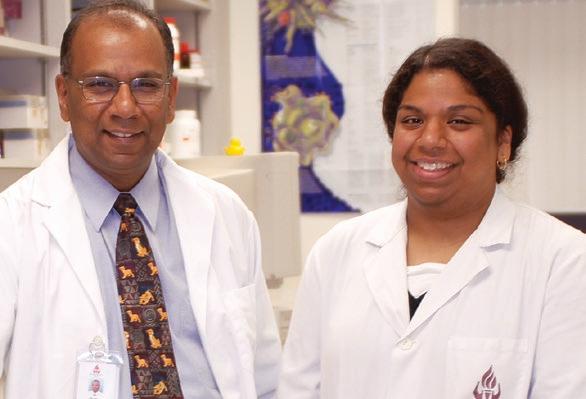
Thanks to you, University of Calgary researcher Dr. Aru Narendran and his research group are working to create pediatric cancer vaccines that will wake up the child’s immune system to fight cancer. While there are currently about 150 adult cancer vaccines in clinical trials, there are very few clinical trials and very little research for pediatric cancer vaccines. As the newly appointed Kids Cancer Care Chair in Clinical and Translational Research at the University of Calgary and Alberta Children’s Hospital Research Institute, Dr. Narendran means to change this.
Cancer vaccine research is part of a relatively new field known as immunotherapy, which is trying to harness the body’s own immune system to fight cancer. With recent advances in immunotherapy for adult cancers, it is becoming increasingly clear that immunotherapy may also hold promise for treating children’s cancers.
You are helping researchers wake up the child’s immune system to fight cancer
Scientists in Dr. Narendran’s lab are exploring the potential of a type of immunotherapy known as neoantigen vaccines.
Scientists now know that cancer cells have a unique signature or tag that appears on the surface of the cell. These molecules are known as neoantigens and they usually identify the cell as cancerous and foreign to the immune system.
Initial results on the use of neoantigen vaccines in adult cancers are encouraging. Recent studies report higher survival rates, fewer side effects and better quality of life for adult patients. This is particularly true when the neoantigen vaccine is combined with other immunotherapies.
So how does it work?
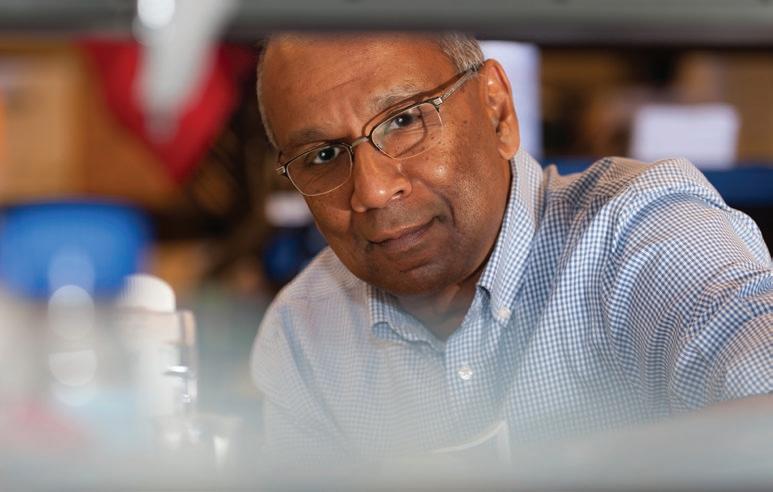
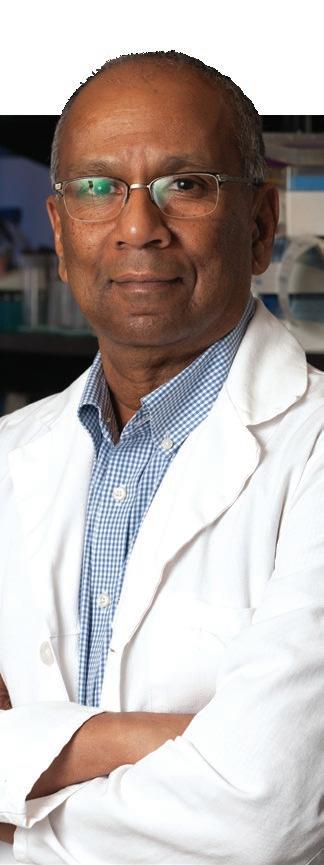
Dr. Aru Narendran is the first Kids Cancer Care Chair in Clinical and Translational Research. His singular mission is to move promising new therapies from the lab to the hospital for clinical trials in children with cancer. His hope is that one day, standard treatment for children with cancer will one day include cancer vaccines.
Dr. Aru Narendran
photos by Don Molyneaux Photography
A vaccine mimics your body’s immune system by creating a memory of a particular germ, bacteria or virus. If you’re ever exposed to that virus again, your immune system will remember how to fight it off. As with any vaccine, a neoantigen vaccine would be precisely formulated to jumpstart your body’s immune memory, so it can begin fighting.
Our bodies are constantly producing and eliminating cancer cells. Fortunately, our immune system normally fights them off, but when things go awry and our body’s T-cells (immune fighter cells) are fooled by the cancer cells, cancer can grow unchecked. That’s why Dr. Narendran is looking for ways to stimulate the child’s immune system as one way to treat cancer.
“We know that T-cells in children with cancer are present and capable,” says Dr. Narendran. “But the cancer cells use a variety of tricks to avoid being recognized and eliminated. We think that the attentiveness of the immune system, which normally recognizes and eliminates abnormal cells very early, may be key here. Similarly, immune surveillance likely plays a key role in
preventing cancer from returning, so our goal with the vaccine is to boost the child’s immune system, so it can remember to do its job — fight cancer.”
Your support is helping identify the best targets for children’s cancer vaccines
Researchers in Dr. Narendran’s lab are working hard to identify and create the most effective neoantigens, which when presented as a vaccine, could stimulate the immune system, so it doesn’t miss cancer.
Comparing the DNA of cancer cells and normal cells side by side, these researchers are searching for potential differences between the two cell types. By identifying their DNA differences, they hope to pinpoint the cancer’s unique signature (neoantigen). This will provide them with a target for the immune system to attack and the information they need to create the antigen (vaccine).
After identifying the most effective neoantigens, Dr. Narendran’s team will attach a specific code to the neoantigens to help the child’s immune system recognize the neoantigen-carrying cells as foreign and dangerous. Further enriched with an immune-boosting modification to help the T-cells recognize them, the neoantigens will then be synthesized for treatment. They will become a vaccine.
Continue on page 4
Photo by Unique Perspectives Photography
how to help
SHAVE
Show moral support for kids who lose their hair to chemo by shaving your lid or colouring your hair, while raising funds
CELEBRATE
Bring meaning to your celebrations by asking for donations in lieu of gifts on your birthday, graduation, wedding or other milestone celebration.
CYCLE
Ride somewhere meaningful July 12 to 14 in Tour for Kids Alberta, a premier allinclusive three-day cycling adventure through the Canadian Rockies.
GEAR UP
Test your limits on September 7 at Kindle Pursuit. Put a team together for an unforgettable day of challenges, games, bonding and more at Camp Kindle.
DONATE
Make a one-time gift or join our League of Super Heroes Monthly Giving Program.
continued from page 3
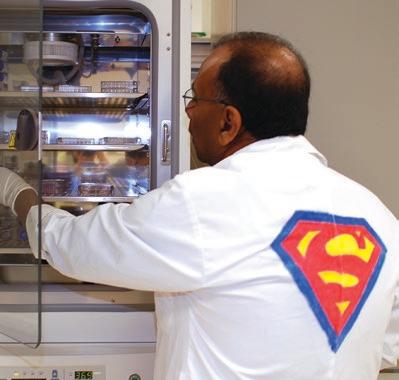
“We’re in the beginning stages, but so far, our laboratory studies on cells taken from pediatric patients have shown that this concept is feasible,” says Dr. Narendran. “We’re testing to find out if they can do their job in the petri dish and in other cancer models.”
The ultimate test will be whether the principle works in children with cancer. There are few more steps before that can happen.
Sophisticated computer systems are accelerating the rate of research
The neoantigens and antigens studied in Dr. Narendran’s lab at the University of Calgary will go to a research laboratory in California, where researchers with sophisticated computer systems will analyze and sequence their DNA. The vaccines will be manufactured in a facility that is licensed to produce products for human clinical trials.
“Advances in bio-technologies and sophisticated computer systems are enabling us to analyze and sequence cancers and potential vaccines, more quickly and more inexpensively,” says Dr. Narendran. “After we complete our wet lab studies, we will be a few years away from having the vaccines prepared and ready for use in a phase one clinical trial.”
Once formulated, the vaccine will be tested for safety and efficacy in children at pediatric hospitals across North America.
While a lot of work lies ahead, we may be one step closer to a new cancer vaccine for children.