22.2.25 - BE SEEN @ Kiama Showground, Bong Bong St KIAMA 8.00am Kickoff Finals from 3pm


22.2.25 - BE SEEN @ Kiama Showground, Bong Bong St KIAMA 8.00am Kickoff Finals from 3pm
Kiama Surf Beach saw a season high of 21 rescues in one day and the end of January, a sobering reminder of the ocean’s unpredictable nature. Between 12 and 2 pm, when the tide was changing, flash rips caught swimmers off guard, leading to repeated incidents despite the surf appearing calm.
With over 150 swimmers in the water and more than 400 people on the beach, Kiama Surf Life Saving Club’s patrolling members worked tirelessly to ensure everyone made it home safely. Thanks to their vigilance, all rescues had positive outcomes, with each swimmer guided safely back to shore. Club Captain Natasha Osmond-Dreyer explained that these kinds
of days are a reminder of the critical role of preparation and teamwork.
Patrolling the beach involves more than reacting to emergencies. Osmond-Dreyer shared how every patrol begins by assessing the strengths of each team member, assigning the strongest swimmer to water rescues, while others take on roles such as first aid and resuscitation. This preparation allows the team to act swiftly and effectively. On the day of the rescues, the team carefully monitored swimmers in groups, continuously counting heads after waves and scanning for subtle signs of distress, such as someone drifting further out or struggling against a current.
While swimming between the flags is the safest option, Osmond-Dreyer stressed that swimmers must still be aware
of their own competency.
“Even if you are in the flagged area, you need to be honest about your ability. If you are not confident in the surf, do not go out too far. Stay close to shore where you can stand,” she said. Most of the rescues on the day occurred within the flags but involved swimmers who lacked the skills to handle deeper water.
Lifesavers did not wait for a raised hand before taking action. OsmondDreyer explained that patrol members could see people struggling before they had a chance to call for help. “We were proactive. We rescued them before they even had time to signal for assistance. By the time we reached them, they were already in trouble. If we had waited for them to raise their hands, the outcome could have been very different,” she said.
Photographs and footage from beach cameras also play a vital role in monitoring conditions. These cameras, part of a national coastal monitoring system, allow lifesavers to assess beach and surf conditions throughout the day. The images provide critical information on rip currents, wave patterns, and how weather conditions impact the safety of swimmers. OsmondDreyer explained that these visuals are essential for understanding the dynamics of the ocean and for planning patrols effectively.
She added that the photographs are also valuable for public education and training. “We share these images on our Facebook page to show how deceptively calm the water can look when dangerous rips are present. They’re also useful for training
purposes, helping us review how we responded to rescues and what we could do better in the future,” she said.
While the lifesavers were able to guide all swimmers to safety, some individuals needed to be rescued multiple times, highlighting the importance of understanding what to do in a rip. OsmondDreyer emphasised that the most important thing is to avoid panicking. Floating on your back to conserve energy is critical, and raising one arm straight in the air is a clear signal to lifesavers that you need help. She explained that rips are not going to carry you all the way to New Zealand, but fighting against them will only exhaust you.
“Floating is your best friend,” she said, adding that waiting for assistance or swimming at an angle to the rip’s direction will improve your chances of
staying safe.
She also stressed the importance of swimming between the red and yellow flags, where patrols monitor the conditions most closely.
“We position our team to cover this zone because it is the safest place to swim,” OsmondDreyer said. “If you are unsure about the conditions, always talk to the lifesavers on duty.
We are here to share local knowledge about hazards and rip conditions, and we would much rather give you advice upfront than have to rescue you later.”
The 21 rescues at Surf Beach are a reminder of the vital role of both patrol teams and personal responsibility. Osmond-Dreyer’s advice is simple but life-saving: respect the ocean, swim at patrolled beaches, stay calm if caught in a rip, and always speak to the lifesavers.


Published by:
The Bugle Newspaper hello@thebuglenewspaper.com.au
Office 2, Edessa Arcade
88-90 Terralong St, Kiama
EDITORIAL TEAM news@thebuglenewspaper.com.au
NEWS TEAM 0412 415 101
ADVERTISING 0428 662 499 advertising@thebuglenewspaper.com.au
MANAGING EDITOR belle@thebuglenewspaper.com.au
The Bugle is a free independent newspaper, available fortnightly throughout the Kiama LGA - brought to you courtesy of our advertisers. Get a copy from your local supermarket, your nearest drop off point, or our office.
Disclaimer: Every effort has been made to ensure the accuracy of the information in this publication, but we are only human. Content does not necessarily represent The Bugle's view.
SCAN QR CODE TO DOWNLOAD THE BUGLE APP from the Apple and Android stores on your SMARTPHONE

INSTRUCTIONS:
1. Open your phone’s camera app
2. Point it at the QR Code
3. Tap the notification to view our menu
4. Choose your app store (Apple or Google)
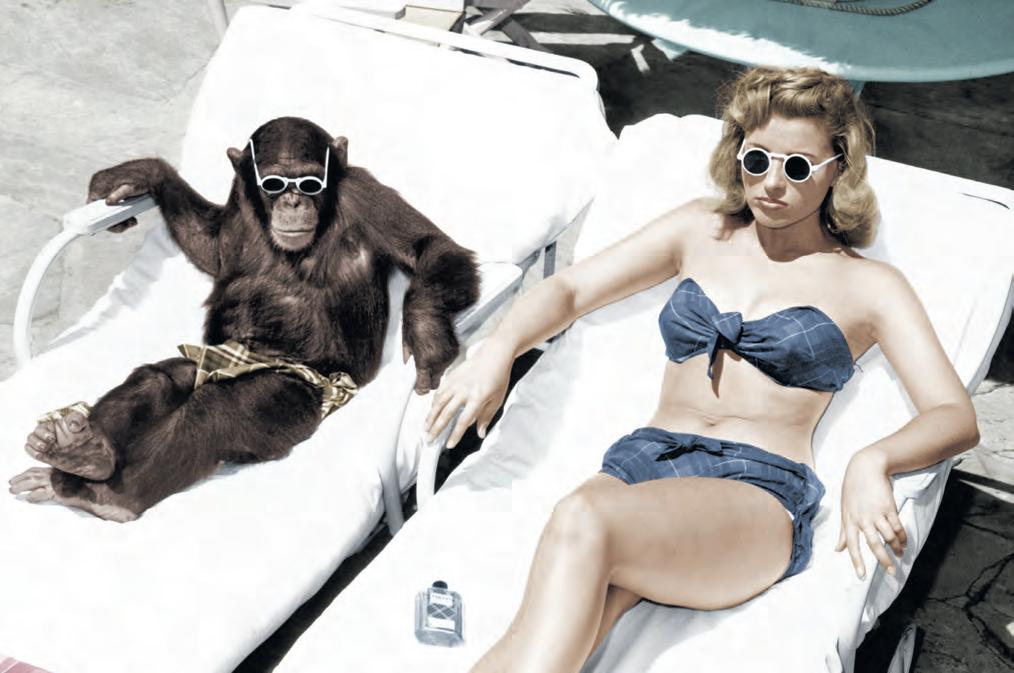
Kiama says, “Bring your bikinis, your G-strings, your sarongs!”
Lynne Strong
In response to the recent swimwear ban in the Blue Mountains, Kiama is throwing open its metaphorical, and literal, beach towels to everyone, no matter what they choose to wear. The message?
Whether you’re rocking a full body wetsuit or a daring G-string, you’ll be welcomed here with open arms and sand between your toes.
The only thing we’re banning is bad vibes.”
distress, I suggest looking the other way.”
The move to openly welcome visitors comes after backlash to the Blue Mountains City Council’s decision to ban G-strings in public pools.
While the Blue Mountains wrestle with their modesty standards, Kiama is opting to embrace its reputation as a relaxed, inclusive destination where everyone is free to be themselves.
what you’re wearing, just bring sunscreen and swim between the flags.”
Kiama’s approach has already struck a chord on social media, with many praising the area for celebrating diversity and body confidence.
The playful campaign slogan circulating online? “Leave the mountains, find the waves!”
Download to see bonus articles in digital print versionclick on latest issue.
5. Download The Bugle app for extended articles see the Bugle App
“We’re not here to police your wardrobe,” said one cheeky spokesperson. “We’re here to make sure everyone enjoys Kiama’s stunning coastline, friendly locals, and vibrant culture.
Cr Matt Brown, Chair of Destination Kiama, was clear about his stance. “I do not support telling women, or anyone else, what is now acceptable swimwear. I would like all visitors and locals to feel comfortable in their choice of swimwear, whether that be fully enclosed or hardly enclosed. Hijab or G string, or even a man bikini. As long as it is not offensive, then why should anyone have an issue?”
Cr Brown went on to say, “Society needs to be open and welcoming, especially at our beaches. If someone’s clothing, or lack of it, causes
“Whether you’re strutting down Blowhole Point or lounging on Seven Mile Beach, we want everyone to feel comfortable and confident,” a local café owner chimed in. “Frankly, we don’t care
So pack your swimsuit of choice and head south, because Kiama promises something better than just breathtaking views, it promises a good time, no matter how much (or how little) you’re wearing.
Lynne Strong
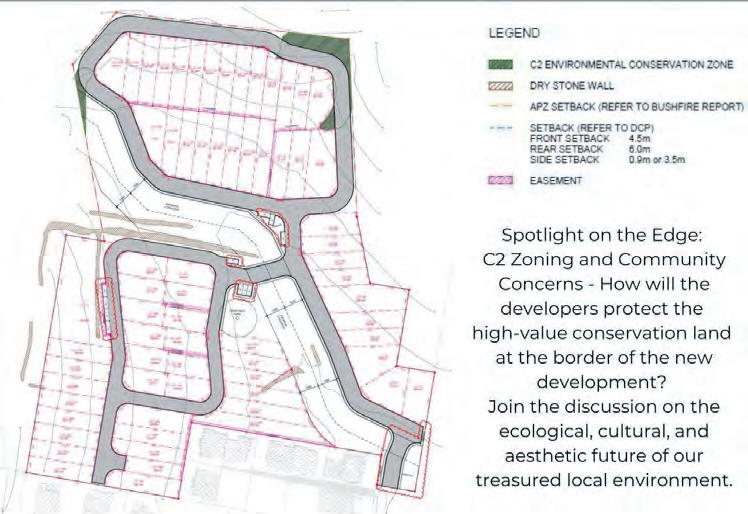
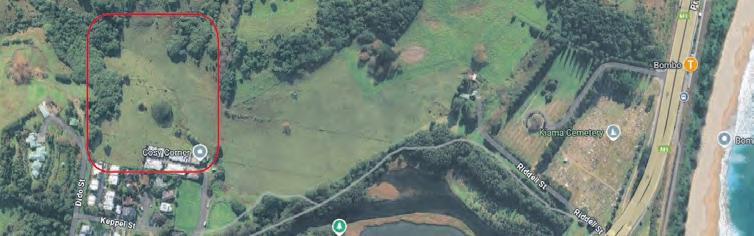
In the evolving story of the Dido Street development, recent events have brought significant updates that the community should be aware of. The project, initially proposed to create 67 residential lots and homes as an integrated development, has encountered hurdles that reflect broader themes in regional planning and community involvement.
The Dido Street project began with a rezoning of a small portion of the site in 2020, setting the stage for the subsequent development application. This application was lodged but ultimately refused by the Southern Regional Planning Panel due to concerns not specified in the public releases. Following this refusal, the developers appealed to the Land & Environment Court (LEC).
A Section 34 conciliation conference was held last Tuesday, attended by residents and representatives from Gareth Ward’s office and council, which aimed to
mediate and potentially resolve the issues raised by the panel’s refusal. However, this conference did not proceed as planned. The Commissioner terminated the session citing insufficient information, highlighting a significant gap in the preparedness of the parties involved.
The termination of the conciliation conference due to insufficient information is more than a procedural hiccup; it signifies a critical need for thorough documentation and preparation in advancing any development project. It suggests that the next steps would include a more detailed collection and presentation of data, which could potentially lead to another conciliation attempt before the matter is fully taken to a hearing.
The case is now poised to go to a full hearing, the date of which has not yet been set. This upcoming hearing represents a pivotal moment for the development, as it will determine the project's future and, by extension, the landscape of Dido Street. It's a moment charged with potential impacts
on local infrastructure, housing availability, and community dynamics.
This development serves as a reminder of the importance of community engagement and transparency in urban planning processes. It underscores the need for clear communication between developers, planning authorities, and local residents to ensure that all voices are heard and that developments align with community needs and expectations.
As the Dido Street project progresses, further updates will be crucial in keeping the community informed and involved. The dialogue between the council, developers, and the community must continue to evolve, reflecting the shared goal of beneficial and sustainable development.
Residents are encouraged to stay engaged, attend upcoming public meetings, and express their views on this significant community issue. Your voice matters in shaping the future of Dido Street and ensuring that development decisions reflect the broader community’s best interests.
The Gerringong sporting community is celebrating a major milestone with the official opening of the upgraded clubhouse at Gerry Emery Reserve, a project made possible through a $466,000 grant from the NSW Stronger Country Communities program. And an additional $75,000 from Kiama Council.
Member for Kiama Gareth Ward and President
of Gerringong District All Sports John Trevenar marked the occasion, praising the collective effort that brought the project to fruition.
Mr Ward, who secured the funding in 2023, described the upgrade as an investment in the future of local sport.
“This is more than just an infrastructure improvement -it’s about creating opportunities and enhancing accessibility for athletes of all
ages and abilities,” Mr Ward said.
“The hard work of John Trevenar, committee members, and the broader community has been truly inspiring. Their dedication has ensured that this vision became a reality.”
The upgrade focuses on improved female and accessible facilities, a crucial step in making the venue more inclusive. The enhanced

clubhouse will support a variety of sports, including cricket, touch football, soccer, and Women’s Oztag. It will also serve as a venue for Gerringong Public School’s sports carnivals and cross country events, as well as combined high school sports days.
John Trevenar highlighted the three years of planning, fundraising, and hard work that went into the project.
“These new facilities will make a real difference, ensuring that female athletes and individuals with disabilities feel welcomed and supported,” Mr Trevenar said.
He also acknowledged the vital role of local businesses, sponsors, and community members in achieving the project’s funding goals.
“This is proof of what can be accomplished when a community works together.
A huge thank you to everyone who contributed to making this a reality.”
Mr Ward echoed these sentiments, commending the leadership of Mr Trevenar and the dedication of local sporting clubs.
“This project showcases the strength of community spirit in Gerringong. I look forward to seeing these facilities enjoyed by generations of athletes to come,” he said.

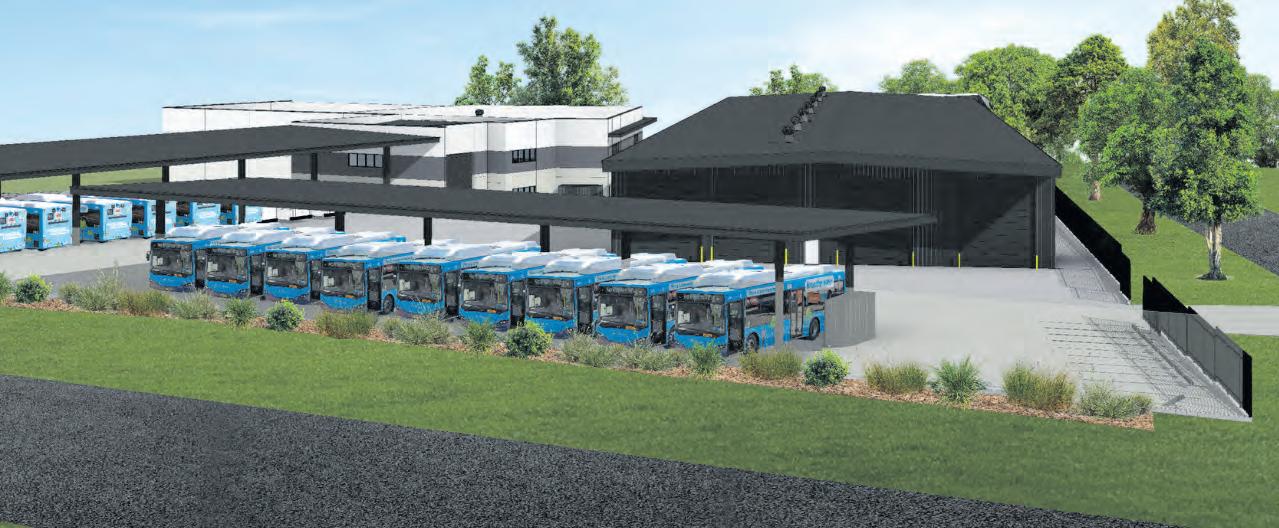
The South Coast is leading the charge in renewable energy technology, with an electric bus manufacturing hub set to be built in Nowra.
Australian-owned bus manufacturer Foton Mobility Distribution has been contracted to build 126 battery-electric buses at a manufacturing facility in South Nowra, with construction scheduled to begin in late 2025.
The project, subject to council approval, comes after the NSW Government committed to delivering the buses for service across Greater Sydney’s bus routes.
The facility will also produce battery electric trucks, as well as hydrogen fuel cell engines, creating around 100 ongoing quality, skilled manufacturing jobs for local workers.
Member for the South Coast, Liza Butler, says creating employment opportunities across the region while also meeting the NSW government’s Zero Emission Buses program was a win for everyone.
“The proposed new bus
factory here in Nowra will provide fantastic employment opportunities for up to 100 people once fully operational and enable the re-skilling and upskilling of many workers who wish to be a part of the transition to zero emissions transport,” she says.
Federal Member for Gilmore Fiona Phillips said the investment in local manufacturing was “fantastic news for the region”.
“In Gilmore we also have innovative local businesses building boats, making construction materials, producing chemicals, and manufacturing food and pharmaceuticals,” she says.
“Now we will be making electric buses here too, which will open more doors for our young people, and local people wanting to retrain and work in the manufacturing industry.”
Foton’s bus contract also includes converting 11 existing bus depots in Greater Sydney to battery-electric technology, building a new electric bus depot at Macquarie Park, and procuring around 1200 electric buses by 2028.
Premier Chris Minns said the Nowra facility is the first
step towards building things in NSW again, after the Liberal government moved public transport manufacturing offshore.
“The offshoring of public transport by the former government was a complete disaster, which is why we’re building these buses here in NSW, creating local jobs and public transport that works,” Mr Minns says.
Domestic Manufacturing and Government Procurement Minister Courtney Houssos says offshore contracts cost the state “thousands of jobs and billions of dollars”.
“We are choosing to support local jobs and local businesses,” she says. “By leveraging the power of government contracts like this, we can rebuild local industries, support local workers and grow the NSW economy, particularly in regional communities.”
However, Kiama MP Gareth Ward has questioned the Labor Government's claims of job creation, arguing that the project does not live up to the promises made during the election.
“Whilst I will always
welcome job opportunities in our region, today’s announcement is a far cry from what Labor promised at the election,” Mr Ward says.
“For example, not one ounce of BlueScope Steel will be used in any of these buses. Contrast this with my Princes Highway upgrade projects which comprised 90 per cent Australian steel.
“This isn’t Labor’s promised manufacturing jobs. This is a hard Labor con-job in every sense of the word!”
Mr Ward also raised concerns about the exclusion of local electric bus manufacturer Custom Denning from the manufacturing process, noting that the company has only been hired to export buses from NSW.
“Why didn’t NSW Labor engage Custom Denning, a local electric bus manufacturer that would have seen more local jobs throughout construction and the development of local supply chains and associated employment?” Mr Ward asks. “Custom Denning is exporting buses from NSW but won’t be manufacturing buses for NSW.”
A concerned pet owner visited The Bugle to share a troubling discovery outside his home on Thomson Street.
After taking his finding to two veterinarians, it was identified as Just One Bite - a highly toxic rat poison. Disturbingly, similar bars have also been found in Terralong Street and Hindmarsh Park.
Just One Bite is an agricultural-grade bait containing bromadiolone, a fast-acting poison lethal to rodents. However, it is also extremely dangerous to humans and non-target animals, as it has no antidote. Due to its potency, its use is restricted to agricultural settings. The product is available in chunks, pellet packs, and bars.
The pet owner, and others who have come across these bars, are concerned that someone may be deliberately targeting dogs in the area. The matter has been reported to the police.
On behalf of the Kiama Show Society Committee
We would like to acknowledge and thank the team for their efforts to ensure the 2025 Kiama Show was extensively covered in the Bugle.
It was fantastic to have wonderful photos and complementary stories which showcase the talents and also the history of the show. This definitely assists in building awareness and engagement
If You.. (A Prayer for Kiama)


We urge the community to stay vigilant. If you come across these baits, please ensure they are safely removed and report any findings to the police online or by phone.
You can also contact us at The Bugle via email: hello@ thebuglenewspaper.com.au.
Let’s work together to keep our pets, children, and community safe.
How to dispose of hazardous chemicals
KMC offers residents a safe and environmentally-friendly way to dispose of hazardous household chemicals, including rat poison, through their Household Chemical Clean Out events. These events are held periodically, to dispose of unwanted chemicals responsibly. Visit kiama.nsw.gov.au You can also contact us at The Bugle via email: hello@ thebuglenewspaper.com.au. Let’s work together to keep our pets, children, and community safe.
within the local community. This year in 2025 we have received a lot of positive feedback and also seen record numbers of entries in our Pavilion competitions this year from the local community which I am sure would not have happened without your support. We look forward to working with the team in the lead up to and for the 2026 Show.
Em Howard Secretary, Kiama Show Society
an immature hedonist.
If you ride your ebike or scooter at crazy speeds on the footpath or road, you are not an eco-warrior, you are a lifeendangering fool.
If you use a supermarket trolley then dump it hundreds of metres away, you are not a clever innovator, you are a thief.
If you walk two abreast with your strollers so others can’t pass or share the pathway, you are not yummy mummies, you are bad examples.
If you park your vehicle in a way that makes two spaces into one, you are not an efficient time-saver, you are a selfish pariah.
If you are headed home after drinking and you scream and swear at all hours, you are not a carefree reveller, you are
The Collective and future plans for the site
I was wondering as The Collective is closing, does that mean the plans have been finalised and that work will be starting soon..or do you have an update when demolishment will start.
Ed note: A spokesperson for Level 33 stated that the
If you overfill public bins with your personal domestic rubbish, you are not a user of common goods, you are a putrefying health risk.
If you allow your kids or grandkids to run riot and disturb others, you are not a modern, ‘Cool Dad’ you are a lazy, selfish incompetent.
If your vehicle makes excessive noise by design, you are not a high-tech car guy, you are a pathetic wannabe.
If you tag public buildings or private property, you are not a self-expressing artist, you are an attention seeking, cowardly vandal.
If you are doing this type of thing, you are not a welcome tourist or valued resident, you are a vexation to our beautiful town.
Name supplied
plans are under review by Kiama Council, and while the approval process has taken longer than anticipated, they remain optimistic about gaining clarity on timelines soon, which will be shared with the Kiama community. They also confirmed that The Collective will be the site of their new Display Centre in Kiama
Lynne Strong
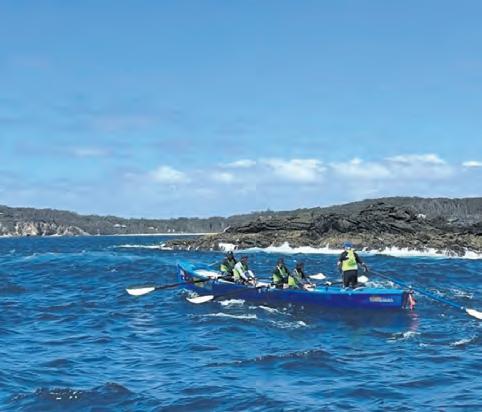
Alan Swan’s participation in the George Bass Marathon wasn’t just a physical challenge; it deepened his connection to the coastal environment and reaffirmed his passion for protecting it. With a background in environmental science and professional experience at Sydney Water, Alan brings a unique perspective to the importance of maintaining pristine waterways.
“The clarity of the water, the abundance of seafood – it’s a treasure,” Alan says, reflecting on the South Coast’s untouched beauty.
The marathon took Alan through some of the most stunning and undeveloped coastlines in the region, which he describes as a privilege to experience.
“Seeing that made me more passionate about protecting these environments.”
Alan’s environmental consciousness is rooted in his studies and his time
working for Sydney Water during a critical period of improvement in wastewater management. “I worked there just prior to the commissioning of the Deep Water Outfalls in Sydney,” he recalls. “At that time, untreated sewage was being discharged through cliff outfalls at the headlands, creating appalling beach conditions.”
The Deep Water Outfalls were a game-changer, significantly improving the water quality of Sydney’s beaches. Alan’s firsthand knowledge of what happens when coastal environments are neglected drives his commitment to raising awareness about the need for sustainable practices. “The technology exists to handle waste responsibly; it’s about having the will to use it.”
During the George Bass Marathon, Alan marvelled at the pristine conditions of the South Coast waters, contrasting them with his earlier experiences. “No one wants to be rowing in
polluted waters,” he states firmly. For Alan, preserving these environments isn’t just about aesthetics but about ensuring future generations can continue to enjoy and benefit from them.
He also emphasises the broader role participants in events like the George Bass Marathon can play in environmental advocacy.
“If you want to take part in these kinds of activities, it’s beholden on you to respect
and protect the environment you’re using,” he says.
Alan’s passion for the coastlines extends beyond personal enjoyment. He believes in leveraging his experiences to educate others, particularly on issues such as water pollution and responsible development. His call to action is clear: “We’ve seen what happens when we overdevelop or mismanage our resources. It’s up to all of us to do better.
Good intentions can lead to bad outcomes which is why Crooked River needs expert management.
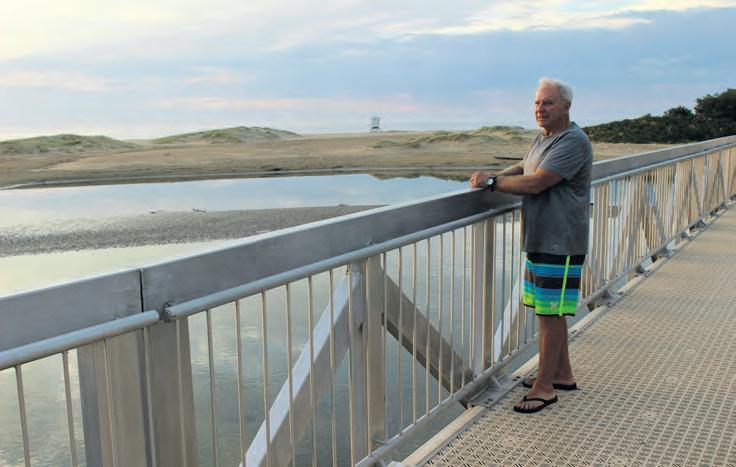
Good intentions could lead to bad outcomes for Crooked River
Crooked River, like many other tidal lagoons, operates within natural cycles of opening and closing. When the river is closed, heavy rainfall causes water levels to rise until the river naturally breaks through the sand barrier at the entrance.
Recent unauthorised attempts to manually open the river at Gerroa have raised concerns among locals about the long-term environmental impacts.
While these actions may have been well-intentioned, illegal interference can cause significant harm to the ecosystem, according to local resident Warren Holder, who has observed the river’s cycles for over three decades.
“Understanding the complexity of these systems is key,” says Mr Holder. “What looks like a simple fix -
grabbing a shovel and digging a trench - can actually make things worse. Protecting the river and ensuring it functions properly is something we can achieve by relying on expert management rather than individual intervention.”
Mr Holder believes that recent attempts to force the river open were flawed.
“The first attempt with shovels was ineffective because the channel was too shallow, so very little sand was moved,” he explains. “The second attempt was more successful in releasing water, but because the channel was too wide, there still wasn’t enough force to shift the sand properly.”
The result, he says, is that the sand that should have been taken out to sea, gradually replenishing the beach, is now sitting in the river instead.
“This makes the entrance even more prone to closing every time big seas arrive, pushing even more sand back
into the river,” he says.
Kiama Council policy allows the river to open naturally unless extreme circumstances require intervention. While this aligns with state guidelines, there is growing discussion about whether these should be updated to reflect new climate realities.
The key question now is whether Crooked River should have a formal trigger point for intervention.
A trigger point would establish clear conditionssuch as a specific water level or predicted extreme rainfall event - that automatically signals when action should be taken.
Rather than relying on last-minute decisions or unauthorised interference, this approach would ensure openings are managed consistently and based on scientific criteria. A similar system is already in place at Werri Lagoon, where a set water level allows for
The Bugle’s View: A-listers or Affordability?
We’re already a month into the year, and with school officially back, The Bugle has hit the ground running - covering the Lunar New Year, the Kiama Show, and local sporting feats. But would it really feel like the start of the year without another report on skyrocketing house prices?
Last week, The Domain House Price Report revealed a surprising statistic: Kiama’s median house price has now surpassed those of Byron Bay and Noosa. At $1.51 million, Kiama has edged ahead of Byron ($1.5m) and Noosa ($1.33m), making it the most expensive place to buy a home in regional NSW.
controlled intervention when necessary, preventing unnecessary flooding and minimising environmental disruption.
“We’re getting heavier downpours than ever before, and what worked in the past might not work anymore,” says Mr Holder. “I understand why people are concerned about flooding risks, particularly for properties and the caravan park, before all the necessary approvals are obtained. With that in mind, it may be time for all stakeholders - the council, state authorities, environmental experts, and the community - to come together and reassess the best way forward.
“But this is bigger than just one river. Many waterways are facing the same problems. If we don’t plan ahead, we’ll be stuck reacting to disasters instead of preventing them.”
This might come as a shock, given that Byron and Noosa are renowned for attracting Hollywood A-listers - think Zac Efron, Chris Hemsworth, and Matt Damon - who have famously snapped up properties in those areas.
So, does this mean Kiama is the next celebrity hotspot? According to local Ray White Kiama real estate agent Michele Lay, it’s already happening.
A-listers Hamish and Zoe Blake bought in Jamberoo during COVID in 2022, and other high-profile buyers - whose identities remain under wrapsare reportedly showing interest.
One can’t help but wonder what an equivalent "Hemsworth effect" - the property boom that followed Chris Hemsworth’s move to Byron - might do to Kiama’s housing market,
especially given where prices already stand. Could the only way be up?
We have to ask ourselves what do we want for Kiama? We’re incredibly lucky to live in Australia’s best small town and NSW’s Top Tourism Town, but this raises an important question: Is this the future we want?
Of course, we can’t stop people from moving to Kiama, nor would we want to. But we can ensure that young families and essential workers can still afford to live here.
The Bugle has previously highlighted concerns about the rise of short-term rentals and their impact on housing availability. While these rentals support tourism and local businesses, they also contribute to rising prices and reduced housing stock for locals.
That’s why it was refreshing to hear Mayor Cameron McDonald state outright:“We’d like to think we’re an area that’s affordable for, and welcoming to, everyone.” It’s a noble aspiration - and one that every Australian town should strive for. But achieving it will require real action. Council has already warned that difficult decisions lie ahead and that the community needs to rethink its expectations around growth and housing.
So, when it comes to A-listers or affordability, perhaps we should take a page from that old El Paso ad and ask:
Why not both?

Dr John Salmon is pleased to announce that he is practicing full time in Kiama.
Offering quality gentle dental care in a calm and relaxing environment.
Call 4233 1313 for appointments 3/5 Railway Parade
Berry Lane Reserve artist impression
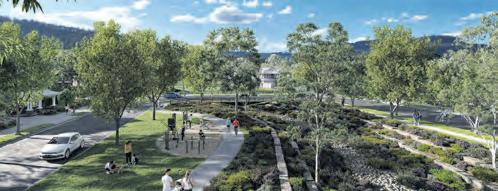
Berry Lane, the highlyanticipated residential development in the historic township of Berry, has officially received development approval.
The approval comes after more than a decade of meticulous planning, extensive community consultation, and close collaboration with Shoalhaven City Council.
Berry Lane is set to become a residential retreat, offering 117 prime home sites across 11 hectares of picturesque land.
Buyers are sure to snap up the opportunity to secure a piece of land that perfectly combines rural charm with modern convenience.
Development Director for New Horizon Properties, Oliver Finch, expressed his excitement at securing the long-awaited approval.
“This project has been over ten years in the making. Throughout this period, we’ve taken the time to listen to the community, address Shoalhaven City Council’s feedback and worked hard to create an estate that is an inspiring place to live, which reflects the best of Berry,” says
Finch.
According to Finch, the demand for residential land in Berry has been high, with 18 lots already sold at an average price of $880,000. Seven of these were purchased by long-term locals at prices exceeding $900,000, with one lot selling for $1.1 million.
“Over the last 18 months, we’ve been approached by many locals who simply couldn’t wait and bought, knowing how challenging it is to secure land here,” Finch says.
“We now have enough sales to turn the first sod in 2025. Builders are also offering fixed-price quotes, providing certainty for buyers looking to build their dream homes.”
Director at Woodhill Property, Daniel Watt, emphasised the unique appeal of Berry, as a popular location for families, retirees, and tree-changers.
“Berry is a blue-chip location with a well-earned reputation as a fantastic place to raise a family and a highly desirable leisure destination, surrounded by natural beauty,” says Watt.
The town’s charm has
been recognised with first place in the 2024 NSW Top Tourism Awards (Small Town Category) for the third consecutive year, earning it ‘Hall of Fame’ status.
Daniel explains that many buyers at Berry Lane are already familiar with the area, often having spent years holidaying in the area.
“They see Berry Lane as an opportunity to build their dream home in a rural-coastal setting, with easy access to the city but no wait for the lifestyle,”
“The well-established nature of this community means buyers can step right into a relaxed, familyfriendly environment that’s well-serviced by schools, restaurants, boutique stores, cafes and farmers markets.”
Berry Lane represents the first major residential development in Berry in over a decade, with lots ranging from 360 square metres to over 1000 square metres, and prices starting in the high $600,000s.
Construction is expected to commence in 2025, with land registration expected in 2026.
So if you are looking forward to going to the Berry Show this weekend check out Berry Lane.
For further information, visit www.berrylaneland.com.au or call Woodhill Property on 1300 93 44 55. Private inspections are now available at the Display Gallery in Berry.
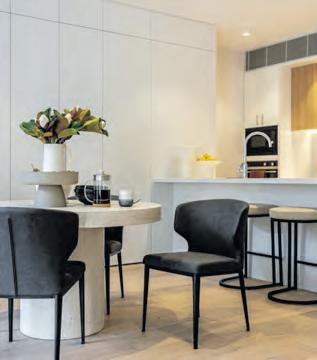
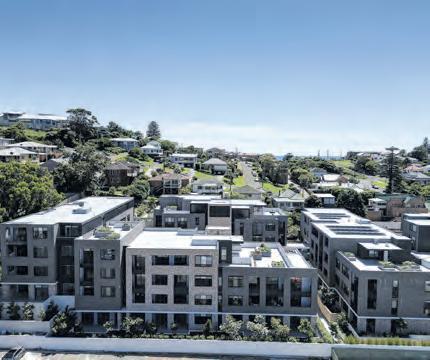
Cedar on Collins, a retirement community in Kiama, has won a prestigious gong at the Australian Institute of Architects NSW Regional Awards.
The retirement complex, one of 36 regional architectural projects shortlisted by a jury of industry experts, was chosen as the winner of the Residential Architecture –Multiple Housing award.
The complex, owned and operated by Fresh Hope Communities, was recognised for its emphasis on sustainability, heritage preservation and adaptive reuse, with the jury noting the development’s thoughtful architecture which blended modernity with community values.
“Cedar on Collins creates
a residential experience that fosters interaction and connectivity,” the jury citation reads. “The units are meticulously planned to maximise sunlight, views, and interaction with the thoughtfully designed communal spaces, which include courtyards and terraces where residents can meet, relax, and enjoy their surroundings.”
The jury noted that the 56-unit complex, built on a battleaxe site in Kiama’s town centre, gave residents access to essential services and cafes while the buildings and spaces balanced the need for privacy with a vibrant sense of community.
“This achievement is a testament to the dedicated efforts of all those involved in the development, from planning to construction and completion,” says Belinda Edwards, General Manager of Retirement Living at Fresh Hope Communities.
“Special recognition is due to Kennedy Associates Architects, whose meticulous design and attention to detail have truly elevated the project to this remarkable level of success.”
Congratulations to all who contributed to the vision and execution of Cedar on Collins, an exceptional addition to Kiama’s architectural landscape.
The development was also recognised for its careful material selection, which focused on durability and scale to ensure the architecture blended harmoniously with the surrounding landscape.
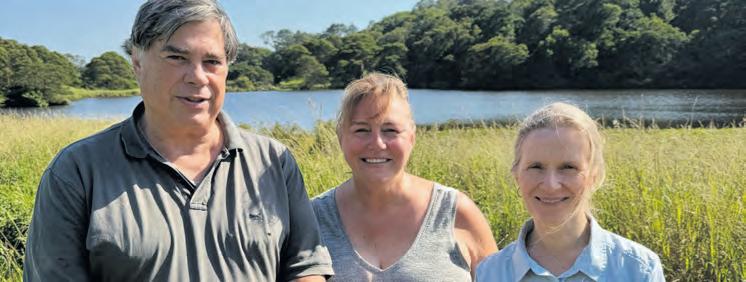
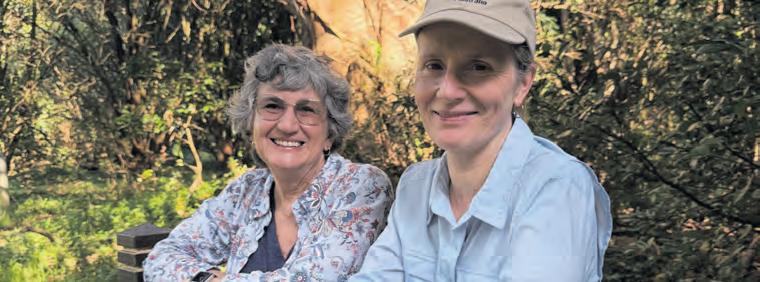
The Bugle attended the Jamberoo Valley Ratepayers and Residents Association (JVRRA) meeting on Tuesday, 4 February 2025, where the primary topic of discussion was the partnership between JVRRA, Kiama Municipal Council, and Landcare Illawarra in shaping the future of Jerrara Wetlands.
Once a decommissioned dam, Jerrara Wetlands has evolved into a thriving natural habitat for native wildlife and a valued space for community groups. Kiama Council owns and manages the reserve as community land and has been proactive in its conservation, committing bush regeneration resources
to restore and protect the area. Council’s dedicated bush regeneration team has already been working on targeted planting and maintenance in key areas, ensuring the wetlands remain a vital environmental and recreational asset.
In collaboration with Landcare Illawarra, efforts are now underway to establish a Jerrara Wetlands Landcare Group, which will provide local volunteers with expert guidance on weed control, native seed collection, and habitat restoration. JVRRA is playing a key role in community engagement, ensuring that residents have a say in how the wetlands are managed and maintained.
A community meeting will be held on 14 February, giving residents the opportunity
to contribute ideas, discuss conservation efforts, and establish a volunteer group. The day will begin with an optional on-site walk-around at 1:00 pm, followed by a formal discussion at 2:00 pm at the Jamberoo Youth Hall in Reid Park.
At a recent planning meeting, local stakeholders and environmental advocates outlined key objectives, including ensuring the wetlands remain protected for conservation rather than commercial development, integrating the area into Kiama Council’s long-term planning, and fostering community involvement through Landcare efforts.
The importance of documenting current users was also highlighted, as this data will help strengthen the
case for continued support and funding. Regular users include WIRES, which plans to establish a wombat rehabilitation enclosure, the Rural Fire Service (RFS), which conducts training sessions in the area, and birdwatchers, bushwalkers, and conservationists who appreciate the site as an ecological haven.
While attendees acknowledged the good work already being done by Kiama Council’s bush regeneration team, it was noted that efforts could be more structured under an updated Plan of Management. With no formalised strategy currently in place, most conservation work is carried out by onthe-ground expertise and community volunteers.
There was broad agreement
on the need for better coordination with Landcare, clearer funding streams, and ongoing monitoring of environmental indicators, such as an updated species list.
Community concerns also extended to safety and accessibility, particularly antisocial behaviour near the arboretum and Mount Brandon Road, where reports of hooning and burnouts have been made. Residents suggested installing security cameras, improving accessibility with bettermaintained walkways, and exploring Indigenous-led initiatives that could provide cultural and environmental education programs.
Rather than developing a large-scale master plan, attendees agreed that small,
achievable steps would be the most effective approach. Immediate priorities include revitalising the arboretum, enhancing walkways, and launching community-led conservation events.
A Nature Conservation Council Picnic for Nature is already being planned for October 2025, offering an opportunity to showcase the wetlands and encourage broader community involvement.
With strong community backing and ongoing council support, Jerrara Wetlands is poised to become a leading example of community-led conservation. The 14 February meeting is a chance for all residents to share their vision and contribute to shaping the future of this important environmental site.

Gilbert
The Poetry Pharmacy heals the heart, Each word a tonic, each line a spark, No pills or potions, just words to mend, Verses to soothe, restore and transcend, A remedy woven in rhythm and rhyme, A dose of art, a touch of the sublime.
In a world that often feels a bit too busy, sometimes we need a few kind words to heal the heart. That’s where the Poetry Pharmacy comes in, a new place that prescribes poetry instead of pills as medicine for the soul.
Coming to Kiama Farmer’s Markets on Wednesday 12 February, the Poetry Pharmacy will be offering personalised poems to ‘inspire the heart’, and just in time for Valentines Day.
Local poet, writer, and filmmaker Butch Schwarzkopf will prescribe a personalised poem just for you or someone special in your life. Whether you’re
feeling the joy of love, the pain of heartbreak, or a little homesick, Butch can make a poem to meet anyone’s needs.
"Poetry has always been a way to make sense of the world,” says Cultural Development Officer, Carmelina Nunnari
"We believe words have the power to mend, to uplift, and to connect us to one another."
Kiama Library will also have a pop-up market stall alongside the Poetry Pharmacy, offering bookish gifts with a Valentines Day twist - library bags, mystery books, gift packs, bookmarks, and more - and a fun free craft activity for kids, too.
Rotary marks 120 years on 23 February, with 1.2 million members worldwide embracing diversity, equity, and inclusion. Despite lingering myths, Rotary is not just for men - globally, a quarter of members are women, and in our local district, that number reaches 30%.
Two Kiama Rotary Club members, Marilyn and Carol, share their experiences: Marilyn joined Rotary in the UK over 20 years
ago and calls it "one of my better life choices." She values the friendships, sense of belonging, and the opportunity to improve lives while having fun. She encourages anyone seeking connection and purpose to give Rotary a try.
Carol began her Rotary journey in 1972 through the Rotary Youth Leadership Award (RYLA), which instilled in her a lifelong "Positive Mental Attitude."
Moving to Kiama in 2013, she found instant community in Rotary. Even with full-time work, she integrates Rotary activities into her life, taking pride in supporting local and international projects.
Kiama Rotary Club welcomes new members - learn more at rotarykiama.org.au.
Contact: John Kenny - 0434 989 253
The Poetry Pharmacy is a free service by Kiama Library, and it offers a chance to experience the power of poetry, with no side effects, just the joy of having a personalised verse to treasure.
And while you’re there, Kiama Library will be holding a pop-up market stall, filled with bookish gifts with a Valentine's Day twist. Think library bags, mystery books, gift packs, and bookmarks, plus a fun free craft activity for kids.
The Poetry Pharmacy has something for everyone, so don’t miss out on this special event.


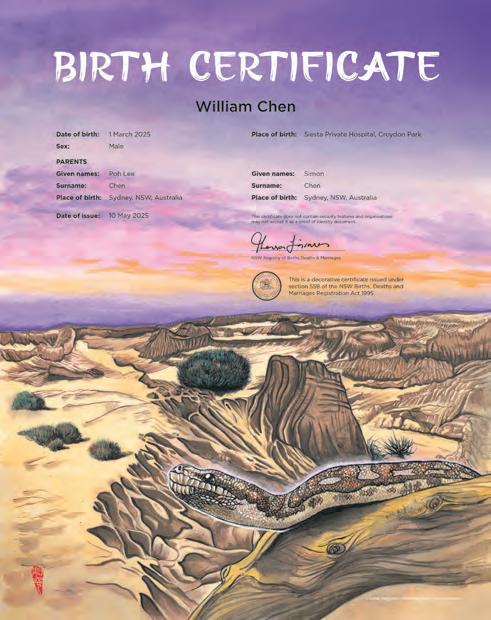
The NSW Government is celebrating the Year of the Snake with a new addition to its Chinese Zodiac Birth Certificate series.
Featuring artwork by Lucy Wang, the 2025 certificate showcases a Carpet Python resting on a tree log against Mungo National Park’s iconic Wall of China rock formations.
The python, a significant figure in First Nations storytelling, reflects the intelligence and mystique of the Snake.
Since the series launched in 2022, nearly 10,000 certificates have been purchased, with the Year of the Dragon the most popular so far. NSW residents born in Snake years may find special meaning in this release. The commemorative certificates are available to anyone born or adopted in NSW, offering a unique way to celebrate personal milestones and cultural heritage.
Lynne Strong
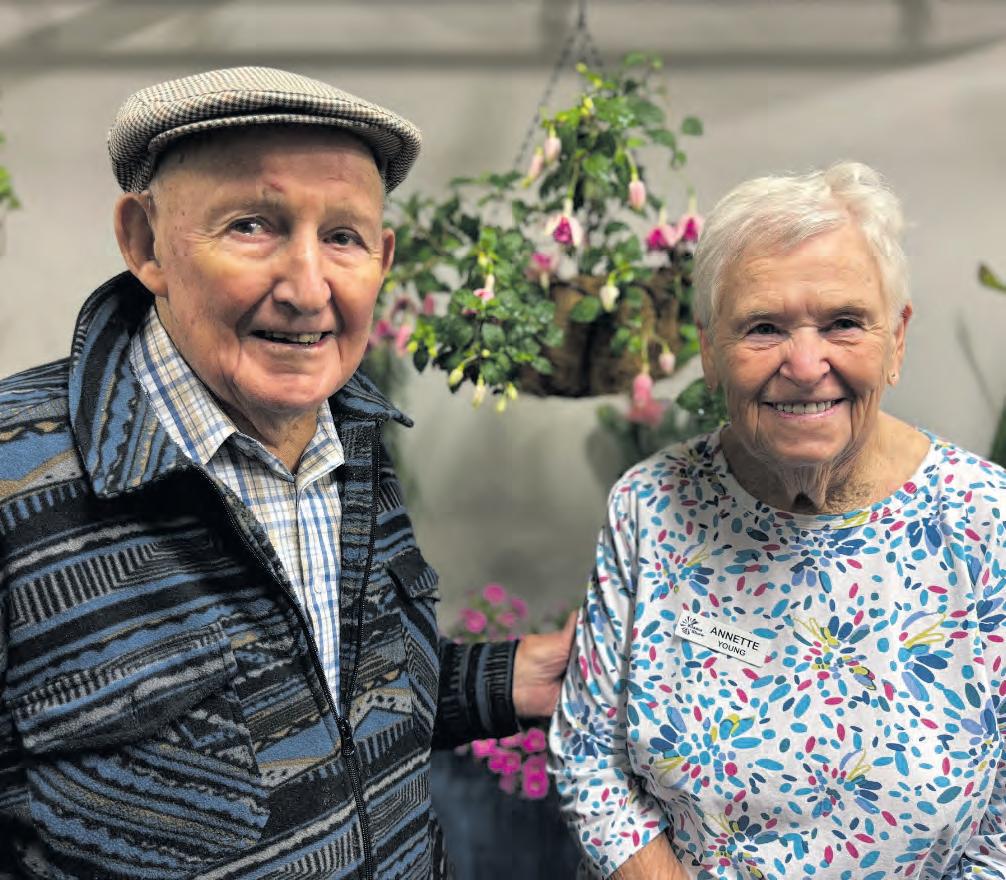
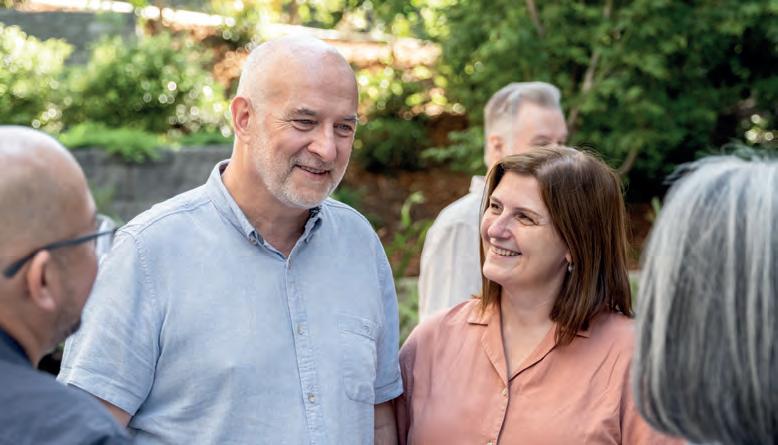
In the heart of Kiama’s vibrant community, Bob and Annette Young shine as a testament to commitment, community, and love.
Bob, who will be 90 later this year , and Annette, in her 80s, have dedicated decades of service to Kiama Show, creating a family legacy that stretches across generations.
“It’s been at least 55 years, probably longer,”
Annette shared, with Bob nodding in agreement. Their involvement began with small roles, but their contributions have grown immensely over the years. Annette started as a stewardess in the pavilion and now runs the Pet Show, as well as being assistant secretary, ensuring everything runs smoothly behind the scenes.
Bob’s enduring legacy includes years spent managing the plant section in the pavilion, where his
knowledge and care left an indelible mark. His kindness also shone through as he lent a helping hand to fellow exhibitors, even transporting flowers for those struggling with allergies. “He was always there to make life a little easier for exhibitors ” one admirer recalled warmly.
For many years, Bob also ran the pet show, taking over from previous organisers before eventually passing the reins to Annette and their son, David, when his eyesight began to decline.
The tradition has since extended to their grandchildren, making it a truly intergenerational affair. “It’s a real family thing now,” Annette said, her pride evident.
Annette’s roots may not have been in farming, her father was a surveyor in the mines, but her childhood spent on her uncles’ dairy farms instilled a deep appreciation for rural life.
Bob and Annette first met at
and Annette
a dance at Marshall Mount, a hub for young farmers and community events, thanks to a little matchmaking from Annette’s cousin. That chance meeting blossomed into a lifelong partnership, strengthened by shared values and a love for their community.
The Youngs have seen the agricultural show evolve, yet its heart remains the same, a celebration of community spirit and shared passions. They’ve also witnessed the seamless continuation of traditions, with figures like Melanie Hart, daughter of former pet show organiser Brenda Watters, stepping in to help.
“Seeing the younger generation get involved is wonderful,” Annette said.
The couple’s enduring dedication exemplifies the best of what community can be, rooted in shared purpose, love, and a commitment to fostering connections that span generations.
Lynne Strong
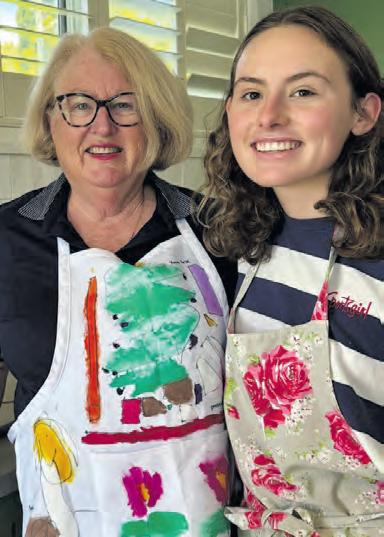
For the Baines family, the Kiama Show is more than just an event, it is an ongoing tradition, a marker of seasons, and a celebration of creativity passed down through generations.
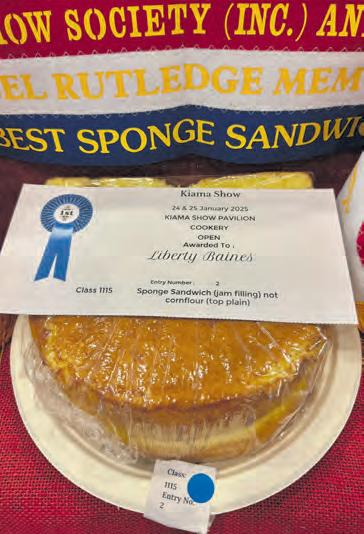
Belinda Baines beams with pride as she recounts the journey of her daughter, Liberty, whose talent in baking has earned her top honours in the sponge cake competition. What started as a summer pastime has blossomed into a passion, carefully nurtured throughout the year.
“Libby loves to bake, but it’s not a last-minute thing. She practices all year round, always with the show in mind,” Belinda says. “She’s also into flower arranging, and we’re lucky to have neighbours with stunning gardens. We trade cakes that don’t make the cut for their beautiful flowers.”
Liberty’s success is no surprise given her family’s deep connection to agricultural shows. Belinda herself grew up on a dairy farm in Nowra, where showing cattle at the local show was an annual
highlight. “We were always involved in the Nowra Show, washing cattle, preparing them for judging, and soaking up the atmosphere. It was just what we did,” she recalls.
“Now, our family tradition continues in a different way, but the heart of it remains the same, participation, community, and a little healthy competition.”
Henry, Liberty’s younger brother, also made his mark at the show, winning first prize in the scarecrow competition last year. “This year, he thought he was too cool for it, but we’ll get him back into it next year,” Belinda laughs.
But the preparation for the show is no solitary effort. It’s a family affair, with everyone playing their part. Belinda’s father, now retired from dairy farming, takes his role as chief taste tester very seriously. “My dad always says, ‘Is this show quality? You can’t put it on the table unless it is.’ Of course, he’d eat it whether it’s showworthy or not, but it has to be top-notch to enter.”
As a primary school teacher, Belinda is passionate about encouraging children to enter the show, not just for the competition, but for
the invaluable skills they develop. “At school, I try to get kids to think about what they could enter, whether it’s woodworking, art, or cooking. It’s about having a go, learning patience, and seeing their work displayed with pride.”
The Kiama Show isn’t just about showcasing skills, it’s about community. Belinda is quick to acknowledge the dedication of volunteers who make the event happen year after year. “It’s incredible how the show just comes together. Everyone knows their job and gets it done, and that’s what makes it special. If we want these traditions to continue, we have to be involved and pass them on.”
For the Baines family, the show is a reminder of where they come from and the values they hold dear. Whether it’s Liberty’s sponge cakes, Henry’s scarecrow designs, or the countless conversations and exchanges along the way, the spirit of the Kiama Show runs deep in their family. And with each passing year, new memories are made, ensuring that this time-honoured tradition continues for generations to come.

Lynne Strong
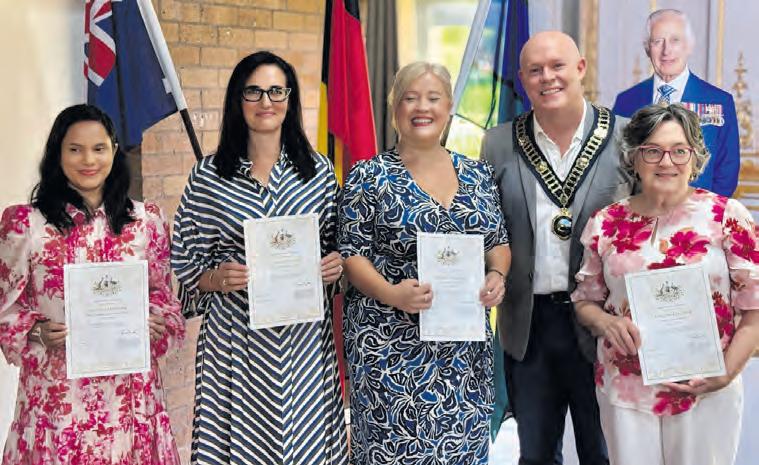
Reid Park in Jamberoo was alive with community spirit on Australia Day, as Kiama welcomed its newest citizens in a ceremony that was as heartfelt as it was inclusive.
Backed by the Jamberoo Red Cross and Jamberoo Rural Fire Service, the event captured what makes this region special – a commitment to connection and a sense of belonging.
Mayor Cameron McDonald led the Citizenship Ceremony, speaking directly to the significance of the occasion.
“Becoming a citizen is about more than just words,” he said. “It’s about joining a community that values kindness, respect, and connection. Today, you’re part of our shared story.” His
Lynne Strong
When Wolfgang Reinhard arrived in Australia in 1982, he was a fresh-faced German backpacker with no plans to stay. But fate had other ideas.
Just three weeks after his arrival, he met Josephine, the woman who would become his wife. That meeting changed everything.
Now, 43 years later, Wolfgang has finally become an Australian citizen. But not in the way anyone expected.
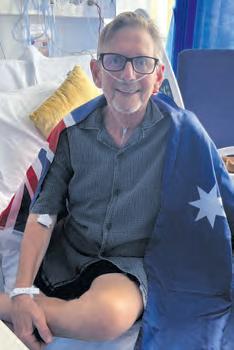
Wolfgang was supposed to attend his citizenship ceremony at Jamberoo on Australia Day but found himself in ICU at St Vincent’s Hospital with a severe blood infection. Determined that Wolfgang would not miss this milestone, Josephine campaigned to move the ceremony to the hospital.
With support from their doctor, Gilmour MP Fiona Phillips’ office, Kiama Council and hospital staff, the impossible became possible.
On 23 January, Wolfgang
became an Australian citizen via a Zoom call from his hospital bed. The room was decorated with an Australian flag, and nurses celebrated with lamingtons.
Wolfgang’s journey to citizenship began with adventure. Born in Munich, he grew up skiing and travelling and in the early 1980s, he backpacked through Asia, with Australia his final stop.
A job in a Sydney ski warehouse changed everything.
Josephine, his boss, cleverly placed him on her lunch roster, and a romance blossomed. They
message reflected the warm and inclusive tone of the day.
Aunty Jodie Stewart’s Welcome to Country added depth and perspective to the event. Her thoughtful and unifying message grounded the ceremony in respect for Indigenous heritage while embracing the diversity of stories that shape modern Australia. She urged all Australians to reflect on the challenges we’ve faced, the resilience that unites us, and the shared responsibility to continue building a better nation.
Her words clearly resonated with the audience, celebrating the contributions of all Australians, from the ancient custodians of the land to those who have come more recently to call this country home. The ceremony brought these themes together,
highlighting the strength of Kiama’s community and its commitment to inclusiveness and connection.
This wasn’t just about formalities. It was a meaningful celebration of citizenship and community, reminding us all of what makes Kiama, and Australia, such a unique place to belong.
The ceremony acknowledged our new Australian citizens:
● Louise Anna Hallington
● Ellen Catherine Iseman
● Tonia Christ Nikopoulos
● Bhagya Anuradha Manike Ekanayake
● Wolfgang Johann Reinhard
As the Mayor noted, “This is what Australia Day is about – recognising our shared history, embracing our present, and looking to the future together.”
built a life together filled with travel and career success.
With German qualifications not recognised in Australia, Wolfgang cold-called German companies until he landed a role at engineering firm Krupp. By the late 1990s, he had built his own business, Ground Tec Equipment, manufacturing rockcutting machines. His diverse team thrived, and three years ago, a French company bought the business which proved perfect timing for retirement.
Several years ago Wolfgang and
Josephine moved from Sydney to Berry and then Kiama, where they worked on bush regeneration projects and supported the Royal Flying Doctor Service. The pair continued to travel, which only deepened their love for Australia.
A change in German laws allowing dual citizenship was the push Wolfgang needed to become an Australian citizen. It was a decision from the heart; home is not just where you were born, it’s where you choose to belong.

Lleyton Hughes
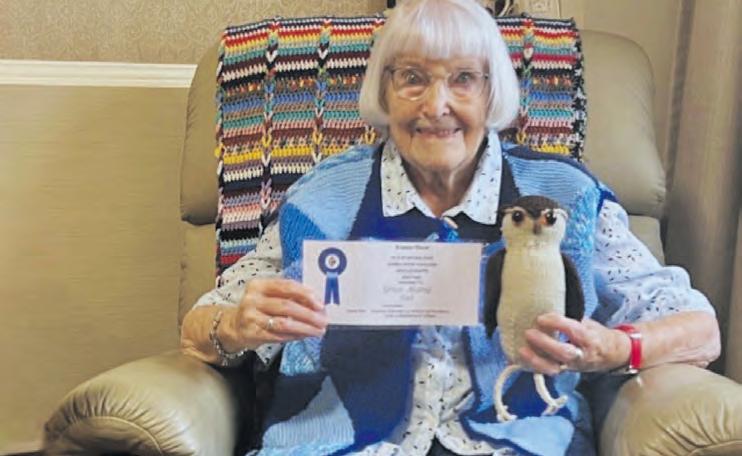
Grace Anstey was shocked when she found out she won first prize at the Kiama Show for knitting, especially since she didn’t even know she had entered.
The 94-year-old, who has been knitting since 1935 when her bedridden grandmother first taught her, stopped entering the Kiama Show after her husband died more than a decade ago.
This year a volunteer from Grace’s retirement home, Blue Haven Bonaira, was determined to help the knitting nana make a showstopping comeback.
“After my husband passed away, I felt a bit disheartened and didn’t bother entering the show,” says Grace. “This is the first year back, and it was only because one of the volunteers asked if I wanted to enter anything. I said no, I didn’t have anything good enough because I can’t see very well.”
But when Grace’s great granddaughter attended the Kiama Show and saw Grace listed as a winner, she couldn’t wait to tell her.
“I’d forgotten the show
was even on,” says Grace. “My great granddaughter said, ‘you never told me you entered anything in the show. You got a first prize!’
One of the volunteers had entered it for me. I couldn’t believe it.”
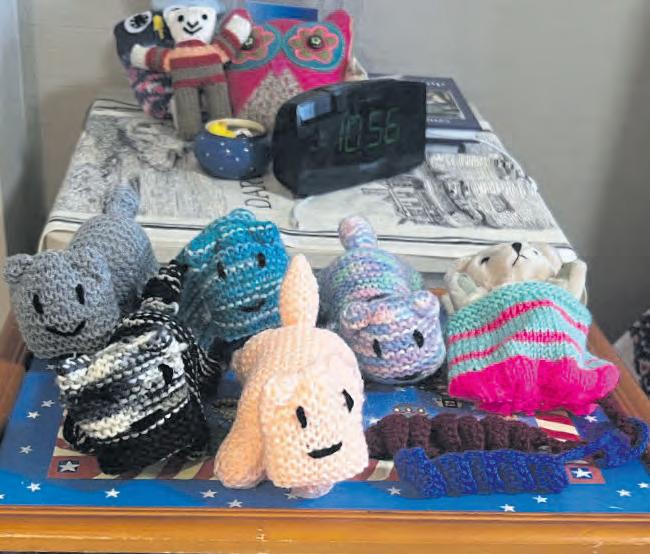
Grace’s prize-winning creation, a beautifully crafted knitted owl, won the ‘residents from a retirement home’ category. Having lived in Kiama since 1982, this wasn’t Grace’s first show win.
“I’ve won quite a few prizes,” she says. “My husband also won a few for making model ships out of wood.”
One of the most memorable moments for Grace was when she and her husband competed in the same knitting category.
“I used to spin a lot of wool and won several prizes for that,” she recalls. “When my husband retired, he said he wanted to learn how to spin, so I taught him. That year, we both entered wool in the show and he won first prize.
“I told him, ‘that’s the last time I’ll teach you anything’,” she laughs. “He was very particular and very good at things. He liked things done
properly.”
These days, Grace knits with the Blue Haven Bonaira Knit and Knatter group, where she says members ‘do more knattering than knitting’. Despite the chatter, she has managed to knit 50 woollen poppies for ANZAC Day, 120 Christmas stockings, and make blanket squares for the “Knit with Love” charity.
Grace’s room at Blue Haven Bonaira is filled with her creations, from patchwork blankets and rugs to knitted animals. It’s clear she has a deep passion for the craft.
“It’s creative and it passes the time,” Grace explains. “During the war, my mum, my two sisters, and I had to knit socks for the army. The government would provide the wool, and we’d knit them. I like knitting little things that give people pleasure.”
Although Grace suffers from arthritis, she continues to find ways to be creative.
“I knit for a while, then crochet, then do a jigsaw,” she says. “I have to keep going and do something every day.”
Lynne Strong
Kiama will host the Zone 2 final of The Sydney Royal AgShows NSW Young Woman competition - an event that highlights the dedication and spirit of community volunteers.
Bringing the event to Kiama has been a collective effort, with local businesses, organisations, and individuals stepping up to support and sponsor the competition on February 15.
Michelle Young has been one of the driving forces behind the Kiama event, getting involved after supporting her daughter Sarah as she progressed from the local competition to the Zone final and then to the Sydney Royal Show.
Inspired by the experience, Michelle recognised the need to provide better resources and guidance for future local participants. Over the years, she has developed a wealth of materials to support young women through the process, ensuring they are wellprepared and confident in their journey.
Hosting a Zone Final is no small feat, requiring a rigorous application and approval process through peak body Agricultural
Shows Australia. Once a host has been given the green light there’s the logistics to organise.
“It’s akin to planning and hosting a wedding,” says Michelle. “There are so many moving parts, from venues and catering to sponsorships and accommodation, all while ensuring the finalists feel supported and ready for the experience.”
This event would not be possible without the generous support of local businesses and community groups. The Kiama Leagues Club has stepped in to sponsor a luncheon for the judges and finalists. Kiama Council and Destination Kiama have provided invaluable assistance, along with smaller sponsorships from businesses and individuals to ensure the event’s success.
Volunteers are a crucial cog in the wheel of community events like this, says Michelle.
“Whether it’s managing paperwork, coordinating spaces, sourcing decorations, or ensuring finalists feel welcome, their contributions make an incredible difference,” she says.
Community support also extends to fundraising efforts, with a raffle helping to bridge financial gaps, and
a team of locals stepping in to run the bar on the night. On competition day judging begins in the morning, with finalists moving on to the next round and the winner receiving a bouquet of flowers, voucher from Birdsnest, and a string of Pearls from PSC Insurance. Two Zone representatives will be chosen to go to the Royal Show and all finalists take home gift bags - a reflection of the generosity of local sponsors.
Michelle says this event is yet another example of how community members, businesses, and volunteers come together to make something special happen. Their time, effort, and generosity ensure that young women across the region have the opportunity to participate in a meaningful experience that fosters confidence, leadership, and connection.
With such an immense amount of work behind the scenes, the Zone 2 final is a true reflection of the power of community. It is a reminder that local events thrive when people step up to contributeand Kiama has certainly risen to the occasion.

Lleyton Hughes
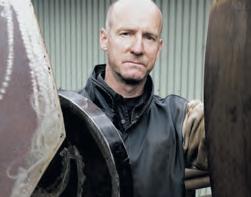
One of Australia’s leading abstract sculptors, Philip Spelman, will present an exhibition at SEVENMARKS Gallery from February 8 to March 15.
Spelman, whose work has featured at the Australian National University, Canberra Museum and Art Gallery as well as many other spaces across Australia, New Zealand and the USA, will present his exhibition titled Framing Space.
The exhibition explores the concept that sculpture frames the space around it.
“There’s internal spacenegative spaces captured within the work - and then there are the positive elements within those spaces,” says Spelman, explaining his creative process.
“I’ve taken this framing space idea and created works from it. Some sculptures have a geometric framework, and I’ve worked inside those
frameworks. They’re not literal picture frames, but they represent spaces that are contained.”
Spelman’s work often incorporates geometric shapes, which he combines to transform familiar objects - such as tables, chairs, and vases - into something uniquely abstract.
“I look at still life paintings and recreate the objects from those works in my style,” says Spelman. “I take vases and tables and, rather than replicate them directly, I translate them into threedimensional sculptures.”
One way Spelman does this is to blend different geometric shapes which combine to create new forms. Relying on intuition, he arranges these shapes until the composition feels right.
“I fabricate elements and laser-cut or water-jet cut them to suit the sculptures. I might make hundreds of elements, then experiment with them, placing them in various ways to see if the composition works,” he explains.
This abstract approach encourages viewers to use their imagination, prompting different interpretations of the sculptures.
“I’ve placed abstract works in regional and rural
communities before, and in public spaces, which can be challenging for some people,” he says. “But it’s always interesting to hear the different comments and interpretations. People bring their own ideas to the work, and it’s fascinating to see how they respond.”
He is particularly excited about this exhibition at SEVENMARKS Gallery due to its location and the space itself.
“I’m really excited about this regional exhibition,” says Spelman. “It’s important to me, especially since many galleries are closing or moving to online platforms.
To see a new gallery opening is fantastic. The space is beautiful and large, which makes it ideal for my work.”
SEVENMARKS Gallery says of the exhibition: “Phil’s vibrant sculptures engage with both natural and defined spaces, reshaping the gallery landscape through their luminosity, depth, and bold silhouettes. These abstract constructions balance, tumble, and float, creating dynamic compositions of positive and negative space.”
Don’t miss Philip Spelman’s Framing Space exhibition at SEVENMARKS Gallery, opening on February 8.
Lleyton Hughes
Kevin Sullivan and the Sulli-Vans had an unforgettable few days in Tamworth during the Tamworth Country Music Festival. They performed the National Anthem to a packed stadium crowd and took home the award for Best Independent Country Band at the Independent Country Music Association Awards.
The family band, made up of Kevin, his wife Belinda (their road manager), and their children KJ, Jet, and ChaCha, were thrilled to receive the award. “It was amazing. It was the first time we’d won an award as a band. They even gave each of us a trophy with the Sulli-Vans and our individual names engraved on it. Our son Jett, who’s 9, was so excited,” says Kevin.
“Recognition like this is really rewarding. We put in so many miles and so much hard work, so to be acknowledged in the industry means a lot.”
During their nearly two week stay in Tamworth, the band performed at a variety of events, including a sold out show called Music for McGrath at Tamworth Town Hall, which supported the McGrath Foundation.
However, the most memorable performance came at the Australian
Bushmen’s Campdraft and Rodeo Association (ABCRA) National Rodeo Finals. “We got to sing a few songs, and the National Anthem, on the back of a truck, right in the middle of this massive stadium. It was a first for us, and it was awesome!” Kevin says.
Kevin also released his new album, Threeways, on June 28, 2024. The album spent 10 weeks in the top 10 of the ARIA Country Albums chart and ended up in 9th place overall for 2024.
“When we got to Tamworth, I did a radio interview, and someone in the industry told me my album was in the top 10 bestselling country albums for 2024. It was the first time I’d heard that, because they only publicised the top 5. My album was ranked 8th,” Kevin explains. He continues, “I asked if there was anyone ahead of us I’d know, and he said, Probably not - have you heard of a guy named Keith Urban? Keith Urban was in front of us, and I thought, to be in the top 10 as a small independent artist from Gerringong is just amazing.”
Adding to the excitement, Kevin won a Brumby Award at Tamworth for High Country Snows, a song from Threeways that he co-
wrote with Bill Chambers, the father of country music legend Kasey Chambers. The song earned the award for Best Collaboration of the Year.
Although their schedule was packed with performances, Kevin says their road manager makes sure they carve out time for fun. “No matter where we are, she always makes sure we have at least one day to see the sights or participate in something fun in the town. We make sure to have a little downtime,” he says.
And the fun doesn’t stop there. The Sullivan family’s next stops include Queensland for another show, followed by Tasmania for more performances and some recording sessions


Comedy For A Cause
8th February
Kiama Surf Life Saving Club
Gerringong Lions Club Motorfest
15th February
37 Stafford Street, Gerroa
Kiama Seaside Markets Picnic Train
16 February, 2025
Kiama Masonic Hall
Ulster American
An Oscar-winning actor, an ambitious director and a talented playwright are about to begin rehearsals for a new play — one that could transform each of their careers. But when it turns out that they’re not on the same page, the night threatens to spiral out of control. Power dynamics, cultural identity and the perils of being a woman in the entertainment industry; nothing is off limits in this pitch-black comedy from the award-winning playwright David Ireland.
The Wollongong Workshop Theatre, Gwynneville 21st February to 8th March, 2025
Adults $30/ Concession $25
Kiama Sevens
Saturday 22 Feb
Kiama Showground
Jamberoo Croquet Club -
Come & Try Twilight Croquet
26 Feb, 5pm
Keith Irvine Oval
UPCOMING COUNTRY SHOWS
Nowra Show 7-8 feb
Kangaroo Valley Show February 14- 15
Goulburn Show March 1-2, Milton Show March 7-9, Robertson Show March 14-15 with Dapto Show September 25.


The Freemasons Lodge Kiama No. 35 isn’t just about tradition - it’s about action. Since 2021, they’ve raised and donated over $68,000 to Peterborough Special Needs School, ensuring students have access to essential services like wheelchair-accessible transport and sensory gifts.

Lleyton Hughes
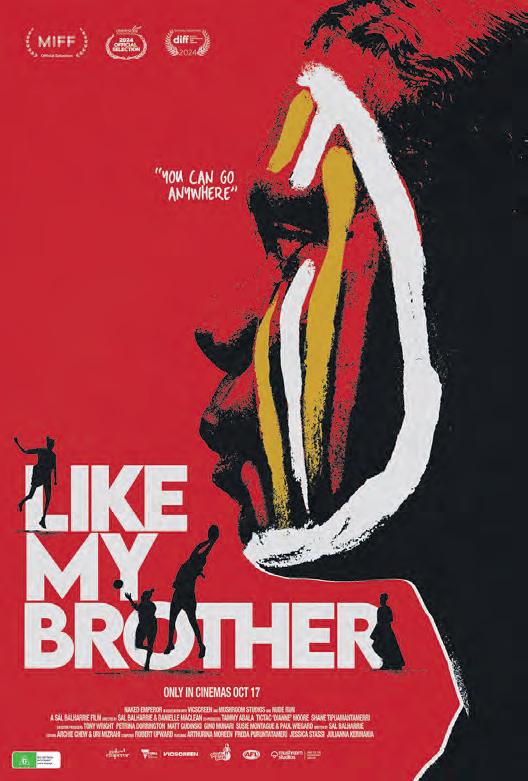
Like My Brother, the new film from Sal Balharrie and Danielle MacLean, is a sports documentary that doesn’t neatly fit the typical mold of its genre.
While many sports documentaries follow a familiar trajectory - following a young athlete chasing a dream, showing their rise to success, and ending with a triumphant moment - Like My Brother takes a different, more nuanced approach. It’s a film about sport, yes, but also about women in sport, cultural identity, defining success on your own terms, and much more.
The documentary follows
four women from the Tiwi Islands - Rina, Freda, Julianna, and Jess - as they journey to Melbourne, hoping to make a name for themselves in the Australian Football League Women’s (AFLW).
The idea for the film sparked for co-director Sal Balharrie when her son asked her to take him to an AFLW game.
“On February 6, 2017, my son came home and asked me to drive him across town to the very first AFLW game. It was a stinking hot day, and we lived about an hour away, so I said no. He responded, Oh, that’s so disappointing. You raised me to be a feminist,” Sal says. “And he pressed the perfect button, so off we went.”
At the game, Sal saw the excitement and skill on the field, with her son and his friends appreciating the athletes' talents without focusing on their gender. But as she sat there, she was struck by the overwhelming "whiteness" of the game.
“I knew about the Tiwi Islands and their strong football heritage, with players like Michael Long and the Rioli brothers. But I wondered: What would it take for a young woman from the Tiwi to make it here? And that’s when the idea for the film came to me.”
The film, which took seven years to make, evolved in ways Sal never anticipated.
“At the start, I thought I’d be finished in 18 months with a girl holding a trophy at the end. I honestly thought it would be that simple. In hindsight, I’m embarrassed to say that, because it was naive,” Sal admits.
“I think the film is richer for having followed the girls over such a long period. As you see, the obstacles unfold over time, and while I never expected to feel grateful for COVID, it did force us all to slow down and reassess. It gave the film a gentler, more reflective pace.”
While Like My Brother begins as a sports documentary, it quickly becomes something far more complex. The film explores how these women define success. Is it worth pursuing a career in AFL if it means constant separation from family and community?
significance.
The women from the Tiwi Islands have their own set of values - values that make them question whether fame and glory are worth leaving behind the bonds of their tight-knit community. And the film explores this tension between different cultural definitions of success, as the women are forced to decide what truly matters to them.
Sal discusses one of the women in the film, Reena, saying: “She is one of the greatest footballers you’ll ever see. But did she want it badly enough? Not if it meant turning her back on her community. It’s such a big question - how do we define success for ourselves? What does failure mean? How many dollars do we need in the bank to be happy?”
This shift in focus - from the sport itself to the broader cultural and personal dilemmas facing these women - sets Like My Brother apart. It not only highlights a lesser-known football culture in the Tiwi Islands but also delves into the importance of community, ceremony, and cultural connection. The film suggests that the emotional and spiritual fulfillment these women gain from their culture might be more rewarding than the accolades of an AFL career.
In the end, Like My Brother is a layered, complex sports documentary. It’s not just about sport. It’s about the lives of these women, the challenges they face, and how they navigate competing ideas of success, limited opportunities in sport, the weight of cultural identity, and the personal choices that define us.
Beyond Peterborough School, Lodge Kiama is expanding its community support in 2025, backing Homestead of Hope, a local charity providing meals and assistance to those in need.
Guided by values of charity, friendship, and support, Lodge Kiama continues to make a real difference where it matters most.
With the help of Masonicare’s matching grants, Lodge Kiama’s fundraising efforts, including Bunnings Sausage Sizzles, have doubled in impact. Their latest contribution, a $20,000 donation and $1,200 in sensory gifts,was presented at the school’s Celebration Assembly in December 2024.
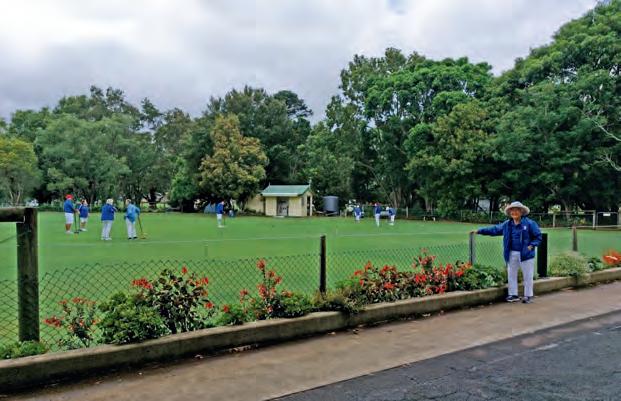
Jamberoo croquet Club
COME & TRY TWILIGHT CROQUET
Contact Jim Cook : 0424007075 jimcook721@gmail.com
Compassionate Communities Illawarra-Shoalhaven, in collaboration with the Kiama Municipal Library, is set to host four Death Café events in 2025. These gatherings provide a welcoming space for open, relaxed discussions about death and dying, accompanied by cake and coffee.
Local resident Carolyn Vaughan says, “Many times, we might have thoughts on the subject swirling around in our minds but don’t give ourselves the space to talk about it. What we offer is that space, and we’re grateful for our partnership with the Kiama Municipal Library. I highly recommend everyone attend when they can.”
The Death Café events will be held on the following dates: Friday, 14 March, at Gerringong Library. Thursday, 19 June, at Kiama Library. Thursday, 18 September, at
Gerringong Library. Thursday, 20 November, at Kiama Library. All events will run from 2 – 4 pm.
There is no agenda at these gatherings. Participants can share a story, listen, or simply observe, depending on their comfort level. With diverse experiences and expectations surrounding death, the Death Café offers a chance to discuss this inevitable life phase in a supportive, sacred space.
The initiative encourages community members to take a more active role in supporting one another through life’s challenging moments.
Please note: The Death Café is not a grief support or counselling session and may not be suitable for those grieving a recent loss.
To book your spot, visit www.library.kiama.nsw.gov.au/events or call 4233 1133. For more details, contact Carolyn Vaughan at 0418 480 690.
In Western culture, chasing the big stage is often seen as the ultimate achievement, but for these women - family, culture, and community hold equal, if not greater,
The
The film will have its first screening at Huskisson Pictures on February 9, at 2 p.m., as part of the Shoalhaven First Nations Film Festival.
Werri Beach/Gerringong
Garden Club will be enjoying the beauty of succulents when Rachel Gardner of Succulents by Rachel speaks at our next meeting at 10am on Wednesday 12 February. Members and visitors are welcome to come join us as we admire and learn about succulents in a relaxed friendly environment. We’ll have the opportunity to buy plants and pots from Rachel’s extensive selection. EFTPOS available.
Succulents by Rachel specialises in creating succulent arrangements, cacti planters and air plant displays, as well as selling a wide range of succulents, cactus, air-plants and funky pots. Rachel is quite the expert! As well as collecting and selling beautiful plants, plant arrangements and pots, she recently won 6
potted plant awards at the Albion Park Show. Her terrarium exhibit was particularly exquisite! Werri Beach/Gerringong Garden Club meet at the Uniting Church Hall, 28 Fern St Gerringong, at 10am on the second Wednesday each month. Our next meeting is Wednesday 12 February.
$5 attendance fee helps us cover hall hire, etc. Members and visitors are welcome.
Morning tea is served from 9.30am before the meeting, and the meeting itself starts promptly at 10am.
For further details please contact Barb Khalifa on 0419 498 072 or email wbggcgerringong@gmail. com. Or just come along on 12 February and see for yourself!







Passed










Mark Emery
The returning boomerang is one of the most famous objects from the Indigenous Australian culture.
‘Marvellous’ George John Noble, whose Aboriginal name was Ooloogan, was a brilliant exponent of the art of the returning boomerang.
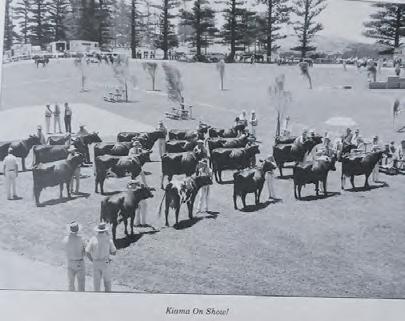
For a time he lived at Minnamurra and toured the countryside performing at various venues. Here are Clive Emery’s memories of meeting the famous man at the Nowra Show in 1925.
In 1925 Dad took Mother and I to see the Nowra Show. Dad enjoyed the local shows, and would meander among the exhibitors. He seemed to know most of them and greeted men dressed in suits and hats with waistcoats adorned with silver chains. A lot smoked pipes, or had the bowl of one protruding from
pocket.
There was music and colour everywhere, and Dad wanted to watch the ring events, where some sixty horses performed before the judges and men in the ring wore dustcoats with ribbons hanging from their arms. After the judging they handed the ribbons to the judge and he fastened them round the neck of the winning horses. There was movement everywhere, with the ladies raising their ornamental parasols to shield the sun.
It was by accident that I noticed an Aboriginal fellow sitting cross-legged on an old blanket just inside the Arrisrailed fence circumnavigating the show-ring.
Beside him lay an old sugarbag tied with a frayed hempen rope, and at his feet lay an assortment of boomerangs, shaped and ornamented in a range of colours, mostly ochre and charcoal. The timber was a reddish colour and likely sourced locally. He was probably 50, it was hard to tell. His dark eyes twinkled beneath heavy brows and a bushy beard, now greying,
Stephanie Little
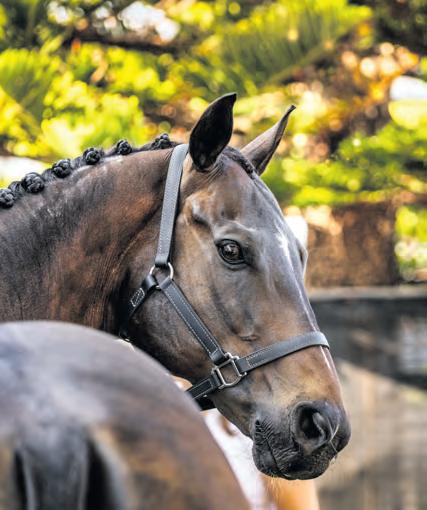
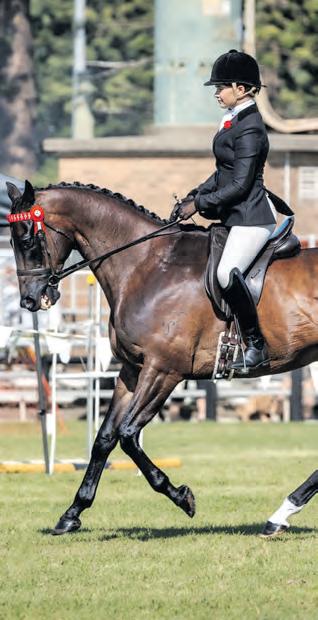
The Kiama Show once again demonstrated its strong local connections and commitment to showcasing the versatility of ex-racehorses, with a special event dedicated to Off The Track Thoroughbreds. A highlight of the weekend was the remarkable performance of Scallopini, proving there is indeed life after racing for these beautiful animals.
Scallopini’s journey is nothing short of inspiring. After an illustrious racing career spanning seven years, from age two to nine, he amassed over one million dollars in prize money and secured thirteen wins, including at Group and Listed level. Bred from the legendary sire Snitzel, his name is a nod to his racing pedigree and his quality as a competitor.
Sold for $200,000 as a yearling and managed by
covered the greater part of his face, but not the lines spreading from his eyes. His nose was broad and flat and the veins stood out on the hand that held a clay pipe, brought to his lips from time to time to draw contentedly upon the weed. When he smiled, as he did to the children, his teeth were stained from the tobacco smoke.
We were fascinated and he seemed to enjoy our interest and speaking to us kindly. He held out his hand for us to take, but no one was game enough to take hold of it. Our attention turned to a dozen boomerangs lying at his feet. Noting this, he picked one up and offered it to us to hold. It was heavy, crescent-shaped, and bore many strange markings which we didn't understand. One horn of the crescent was longer than the other. We handed it back, not knowing what to say to the old man, but not before one game fellow aimed it at the sky, as if to throw it in the air but did not do so and cheerfully laid it on the pile. This caused the old fellow to smile once more, and murmur a song quite incomprehensible to any of us.
Our curiosity satisfied we returned to our respective parents. The Show was in progress on the hot, but pleasant day, and once the

leading syndicators Proven Thoroughbreds, Scallopini was a force on the track.
When the time came for retirement, his owners took every precaution to ensure he found the perfect home. After thorough vetting, the reins were handed over to Isabella Tyson, a veterinary student with a passion for retraining and rehoming ex-racehorses.
Just twelve months later, Scallopini entered the showring at the Kiama Show and performed like a seasoned professional, winning his class and impressing judges and spectators alike.
Local professional photographer Stephanie Little, who works with Racing Australia, was on hand to capture the moment. She praised the Kiama Show Society for their efforts in promoting second careers for Off The Track Thoroughbreds.
“It’s incredible to see the work
mornings judging of livestock was completed exhibitors and spectators alike all enjoyed a picnic lunch. The ring events were still in progress, the horses paraded before the judges while officials with their coloured ribbons moved among the throng. Finally, there was a lull. As it was approaching 1pm it was probably time for Member for Wollondilly Mark Morton to open the Show, Dad said.
At that moment I observed the old fellow entering the ring and pointed excitedly to draw my father's attention.
'Oh, that's old Marvellous,' he said, 'I believe he's going to give us an exhibition of boomerang throwing later. Keep an eye on him for me, I'd like to see it too. They say he is terrific!'
My eyes were glued to the old fellow once more, and I noticed people were leaving their seats and gathering in a rough circle around him. I encouraged Dad to come closer with me to see what was going to happen. He agreed and took my hand and we joined perhaps more than a hundred fellows and kids around the old fellow standing on his blanket amid the pile of boomerangs.
I had not realised how tattered the clothing was until I saw Marvellous standing up and I felt sorry for him, saying to my father ‘it is a pity he did

that goes into ensuring these horses have bright futures beyond racing,” Stephanie said. “Scallopini’s success is a testament to the dedication of his former owners, Isabella’s care, and the wonderful opportunities provided by our local show.”
The Kiama Show’s support for Off The Track Thoroughbreds not only highlights the adaptability of these animals but also the deep connection between the equestrian and racing communities. Events like these reinforce the message that retired racehorses can go on to achieve greatness in new disciplines, ensuring they enjoy long, fulfilling lives beyond the racetrack.
With such a promising start to his second career, there’s no doubt that Scallopini’s future in the show-ring will be just as impressive as his time on the track.
not have some nice clothes to wear’. He reminded me that the blackfellows were mostly dressed like that, and that they did not have any clothing at all when the first white men came to Australia. But he felt sure he would be able to buy some after his boomerangthrowing.
For my benefit we moved in quite close to the old chap, who had commenced singing a song, and the only word I could understand was 'Marvellous'. He seemed to repeat it so often I thought he must have been singing about himself.
Suddenly he bent down to select a boomerang from the collection while he was applauded for the song. He took up a stance on his blanket and cast the boomerang into the air toward the farthest point of the arena. The gyrations of the object were fascinating - it whirled, rose up, came down within inches of the ground, rose up once more and floated like a bird hovering above the crowd to drop on the blanket at his feet! The applause was tumultuous, and coins of all denominations were showered onto his blanket by the crowd. Dad gave me two shillings to put on the blanket, and I was proud to do so.
There was another song about Marvellous before two boomerangs were selected
from the collection. Standing there Marvellous hurled each of them into the air. For the next fifteen seconds the crowd stood transfixed as the two objects took different trajectories after their propulsion and seemed to vie with each other in the number of circles and convolutions before returning to the blanket within seconds of each other! There was a roar of approval and the crowd around the ringside joined in. Another shower of coins fell with the others on the blanket, more coins than I had ever seen in my whole life, and I was pleased for him, for he would now be able to buy some nice clothes!
His exhibition was now over, for the stewards were recalling the entrants into the arena to continue with the judging, and Marvellous would have to move out. I was sad, I would have liked to have seen him throw his boomerangs once more. He probably did the following day, but we would not be there.
He packed his boomerangs into his bag and rolled up his blanket and melted into the crowd. My heart went with him, and hoped I would see him another day. It was never to be!
Nowra Show 2025 will be held from February 7-8. Nowra Show









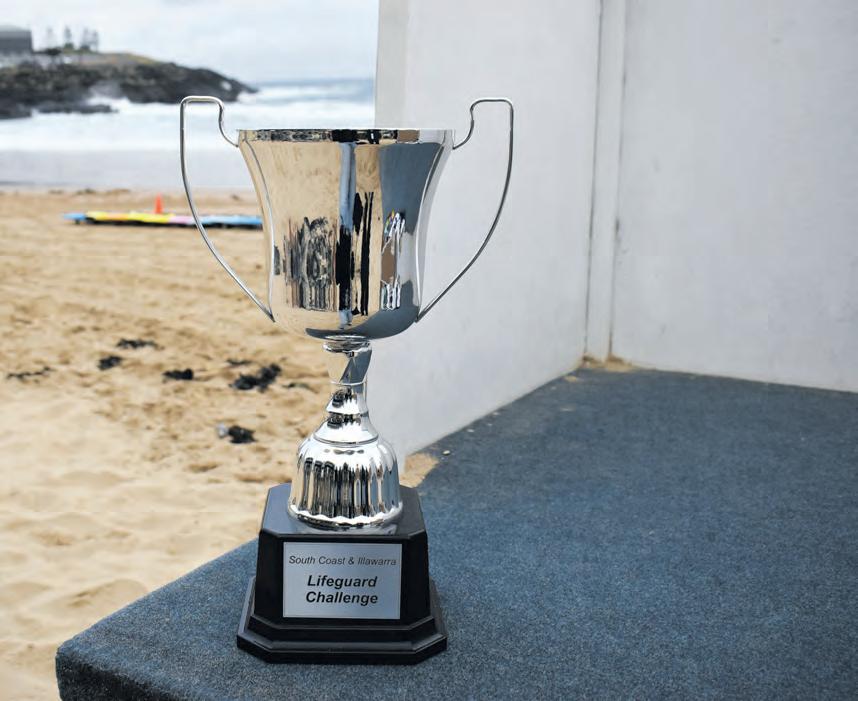
dwindling daylight, the lifeguards, aged between 17 and 70, demonstrated incredible resilience as they navigated a 600-meter course around a buoy and
Each team consisted of six competitors, with the race structured like a relay. Race organiser Blair Day explained the different legs of the race:
“We start with nipper boards - the foam boardsand then move to longboards, which are the rescue boards lifeguards use to save people. After that, we have a swimmer, followed by two swimmers with rescue tubesanother tool we use to rescue people. The race ends with a
Shellharbour’s A team took first place, completing
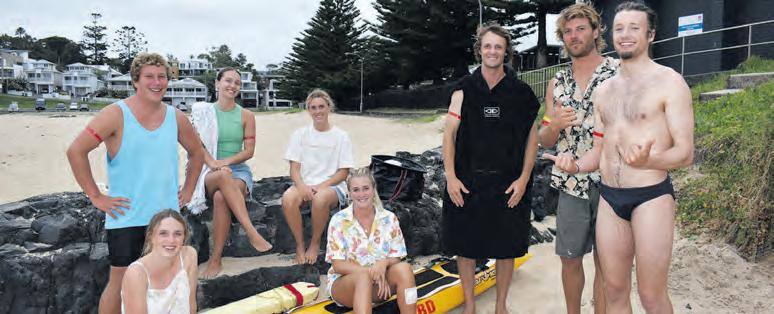
Lleyton Hughes
The Kiama Sevens is back Saturday, 22 February, kicking off at 8am with a recordbreaking 44 teams confirmed and 15 more on standby. Now in its 53rd year, the tournament has grown into one of the biggest and most prestigious events on the Australian rugby calendar.
Tournament director Mark Bryant says Kiama Sevens’ success stands in stark contrast to the fate of other sevens competitions, many of which have folded.
“We’re in our 53rd year, and it’s great to see, especially with so many tournaments going under,” he says. “For example, the Southern Highlands
By Brian Scott
Sevens in Bowral won’t be held for the second year in a row. The Byron Bay Sevens, which was taken over by New South Wales Rugby, was cut from 32 teams to 16. Terrigal Sevens doesn’t go ahead anymore, nor does Mudgee, and the Blue Mountains tournament has ended. There was once a real sevens circuit, but now Kiama Sevens is one of the biggest still going.”
With over $30,000 in prize money split evenly between the men’s and women’s divisions, Bryant says equal payouts have never been an issue.
“They all play the same amount of time. It’s not an equality statement at all, just fairness,” he says. “Plus, I’ve often found that the women
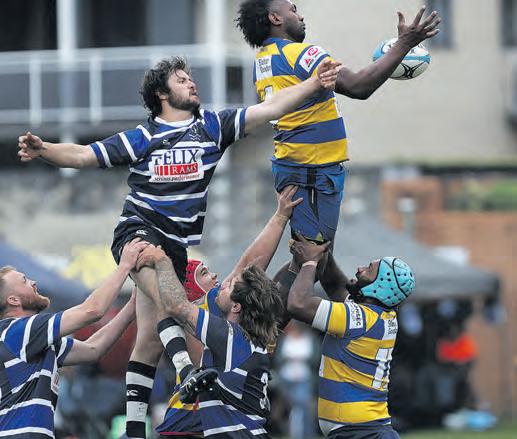
the course in around 19 minutes. Shellharbour’s C team secured second, while Wollongong’s C team claimed third. Day says there were a couple of upsets due to the rough conditions.
This year's event marks three consecutive years since Day revived the competition, which originally began in 2006.
“It started in 2006 but stopped in 2012. I moved away from Kiama for a while, but after returning a few years ago, I decided to bring it back in 2023,” says Day. “So, this is the third year of the revived challenge.”
Day created the event as a way for lifeguards to come together at the end of the busy summer season to celebrate their hard work. Given the challenging summer Kiama had experienced, including three drownings, the event held even greater significance.
“The idea was to bring everyone together after a hectic summer. It was a pretty sad summer for some of the people that work in Kiamaso it felt especially important to gather everyone from different councils because we don’t get many opportunities to do that,” says Day. Day also emphasised the
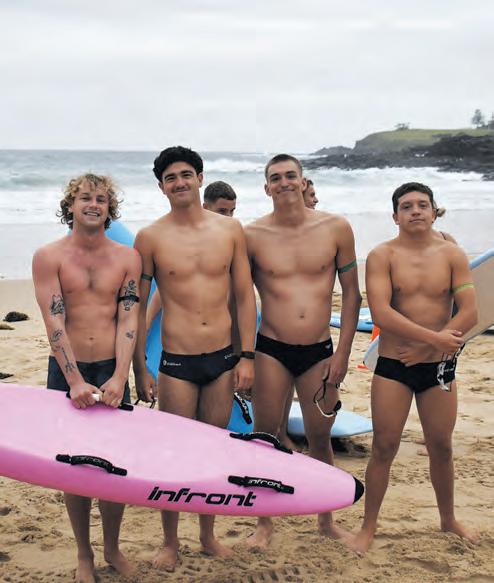
importance of encouraging young people to become lifeguards. “It’s vital for the future of our community, and it’s an incredibly rewarding and fun job,” he says. “I’ve been doing it for 20 years now. I’ve traveled the world with it, and it’s one of the few jobs where you get paid to stay fit and train.”
He added, “Every day is different. You’ll have busy days, quiet days, but you’re always surrounded by like-
minded people who are passionate about their health and fitness. That was clear at the challenge, with competitors ranging from 17 to almost 70 years old.”
Looking ahead, Day hopes to expand the event in the future, with plans to include more councils and build on the fun, competitive spirit that makes the Lifeguard Challenge such a unique and meaningful tradition.
play harder than the men. They’re all very talented and athletic.”
Now officially the longestrunning sevens competition in Australia, the Kiama Sevens is also the largest senior sevens tournament in the country. Bryant credits its ongoing success to its ability to evolve, strong sponsorship support, and an ideal location.
“We’re only an hour and a half from Sydney, two hours from Canberra, and have one of the top 50 rugby fields in the world. We’re wellorganised, and people know what to expect. Plus, we’re in beautiful Kiama – people can have a swim after a game, and everyone loves it,” he says.
The tournament features seven competitions. Last year, Warringah won the top men’s division, while the Burra Rays claimed the women’s title. Bryant expects around 5,000 spectators throughout the day, with the crowd peaking for the finals in the afternoon.
This year, Kiama Sevens is supporting Hearts in Rugby Union, a charity aiding players who have suffered life-changing injuries. All clubs will be raising funds, and donations can be made online.
For those keen to get involved, volunteers are still needed. To help out, email: kiamasevens@kiamarugby. com.

Kiama Swimming Club will make a splash at the upcoming NSW Country Swimming Championships, with 12 swimmers qualifying for the prestigious event at Sydney Olympic Park Aquatic Centre from February 1416. This marks the largest local contingent in a decade, reflecting the club’s growing strength in competitive swimming.
Head Swim Coach Greg Miller highlighted the dedication and hard work of the young athletes, stating: “To achieve qualifying times for the Country Championships demonstrates achievement at the top levels of our sport.”
The squad includes swimmers aged nine to 15, made up of nine girls and three boys, including one multi-class swimmer. Their rigorous training schedule sees them in the pool at Kiama Leisure Centre most mornings at 5:15 am and again in the afternoons, covering between 3km and 5km per sessiontotaling up to 1,000km a year.
Miller emphasised the team's rapid improvement over the past 12 months, noting that momentum continues to build. He encourages other young swimmers to take on the challenge and see what they can achieve in the sport.
With strong representation

and a dedicated training program, Kiama Swim Club is making waves at the NSW Country Swimming Championships, showcasing local talent at the highest levels of regional competition.
Kiama’s Country Championship Swimmers: Ella C-S
Kye C-S
Tiharna C-S
Charlotte Griffin
Milla Haythorpe
Charlie Miller
Eloise Miller
Emily Nichols
Ivy Osmond-Dreyer
Alannah Pottage
Trae Spencer
Olivia Talbot
Lleyton Hughes
MP Gareth Ward presented Kiama Electorate Bravery Awards to six members of the Kiama Surf Life Saving Club (SLSC) in recognition of their life-saving actions on Christmas Day.
Mr. Ward presented Bravery Awards to Harry Britton and Ed Birchall at the Kiama SLSC clubhouse. The other four members - Charlie, Brad, Dave, and Brian - were absent due to prior commitments, but their awards were accepted on their behalf by the Kiama SLSC.
“Heroes don’t necessarily wear capes. Whether they’re just people in the water at the time or lifesavers on patrol, these individuals have saved lives,” says Mr. Ward.
“The people who perform heroic acts like this are often so humble that they shy away from the attention and
awards, as you can see today.
But it’s important to recognise them for what they’ve done in saving lives.”
On Christmas Day, four people became trapped in a rip current, and the six lifesavers who received awards today sprang into action to save them.
“It was a challenging daywaves were about 4 to 5 feet, and the rip currents were pulling in both directions. Some girls got out of their depth and began to panic. They looked distressed. These young men were the first to respond,” says Ed Birchall.
“At first, the girls thought they had it under control, but the boys stayed close by, monitoring the situation. A little later, the girls were pulled into the rip on the southern end. I went out with the rescue tube to help, but by the time I got there, these boys had already done most of the work.”
One of the first responders, Harry Britton, said the rescue came naturally to him. “I don’t really think about it too much; it comes naturally.” Reflecting on the lesson people should take from the experience, he added, “Swim between the flags, and if the surf is heavy, make sure you can touch the bottom.”
Mr. Ward also took the opportunity to acknowledge the ongoing efforts of surf
lifesaving clubs across the state, particularly during the busy summer months.
“I want to thank Kiama Surf Life Saving Club, and all our lifesaving clubs, for their incredible work. They volunteer their time not only when someone is in trouble but also in the extensive training that prepares them for these rescues. It’s a huge commitment,” Mr. Ward concluded.
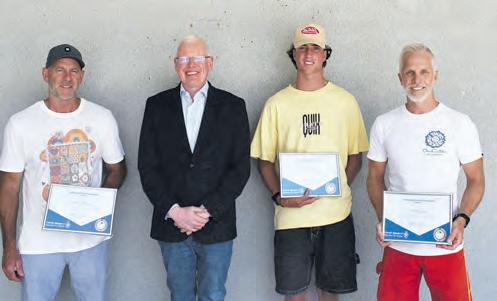
Kiama Cavaliers Cricket Club is stepping up to the crease for a cause, hosting a Pink Stumps Day to support the McGrath Foundation.
Local cricket lovers are invited to don their best pink attire and join the Cavaliers on Saturday, February 15, at Kiama Sports Complex for a fun filled day of cricket and fundraising. The event kicks off with a Kiama Cavettes Women’s T20 match against the Kookas at 8:30 AM, followed by Kiama 1st Grade vs Berry Shoalhaven Heads in a 50over clash at 12:00 PM.
Organiser Naomi Poole is rallying support, highlighting the McGrath Foundation’s incredible work funding breast cancer nurses, with plans to expand its reach to support
other cancer patients. “We’re running a raffle with amazing prizes from generous sponsors, and we’d love the community to get involved,” she said.
Fans can support the cause by entering the raffle online via Kiama Cricket Club’s website. The raffle will be drawn at 3 PM on the day.
The canteen will be open, serving bacon & egg rolls for breakfast, sausage sandwiches for lunch, and beverages throughout the day. Whether you pop in for a match or set up a picnic for the whole day, it’s a great way to enjoy local cricket while backing an important cause.
- Save the date: February 15 - Kiama Sports Complex - Wear pink & support the McGrath Foundation!
Lynne Strong
Get ready for a weekend of fast-paced, high-energy football as the Jamberoo Sevens returns, promising non-stop action under the lights and in the early morning sun. This year’s tournament is bigger than ever, with 39 different countries represented from six continents, making it a truly global football showdown.
President Alan Smith sums it up best: “Just remember we start on Friday night at 8:15pm. And then again at 8am on Saturday. The two are very different experiences. Playing under lights has much excitement and atmosphere. You’ll know what I mean when you come and experience it
for yourself.”
If you’ve ever watched oldschool football matches, you’ll notice one thing—speed has changed everything. The modern game is faster, more precise and demands quick thinking under pressure. Research shows that passing rates and ball speed have consistently increased in World Cup matches, and at Jamberoo Sevens, you’ll see that in action.
Faster play means sharper footwork, lightning passes, and thrilling counterattacks, making Sevens football a perfect showcase for the modern game. The reduced team size increases the intensity, testing players’ endurance, agility and game sense. Whether you’re on the


pitch or on the sidelines, the energy is electric.
With teams from six continents, the Jamberoo Sevens is set to be a spectacular festival of football, bringing together diverse playing styles and strategies from around the world. So, whether you thrive under Friday night lights or prefer the crispness of an early morning challenge, don’t miss out on Jamberoo’s biggest football event.
Come for the competition, stay for the atmosphere— this is football at its most exhilarating.
Friday 8:15pm | Saturday 8am | Jamberoo Sevens | Reid Park, Jamberoo
Visit the Jamberoo Sevens website for all you need to know.



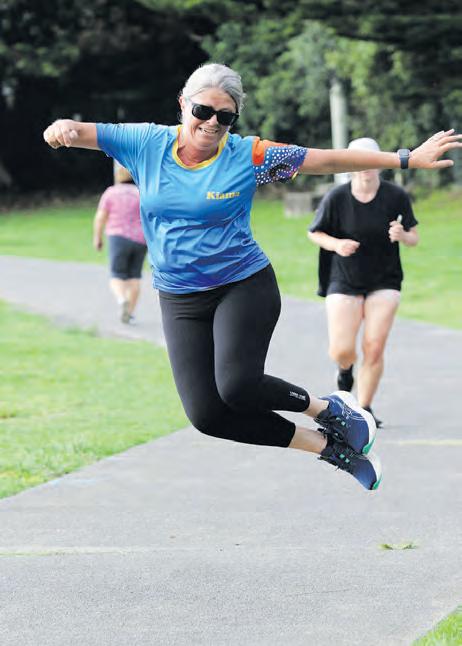
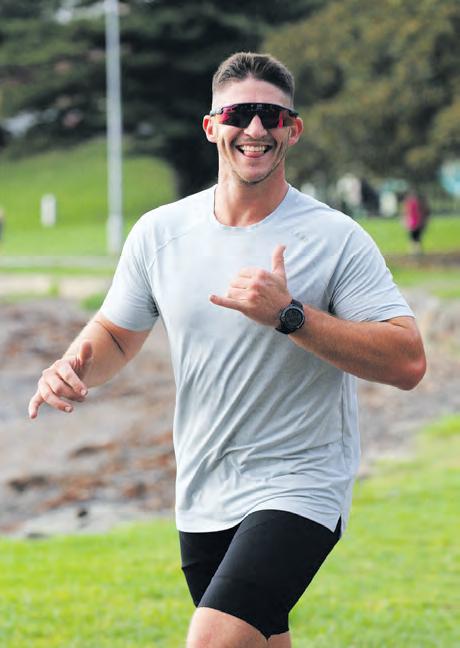
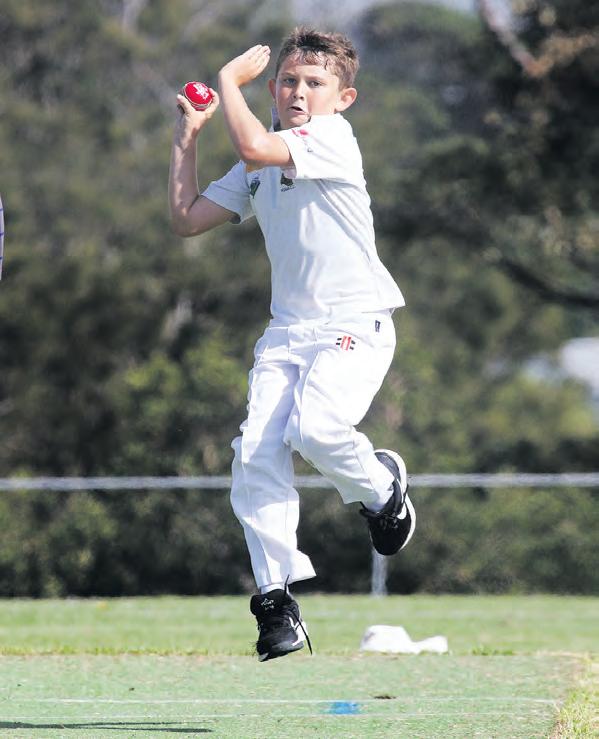
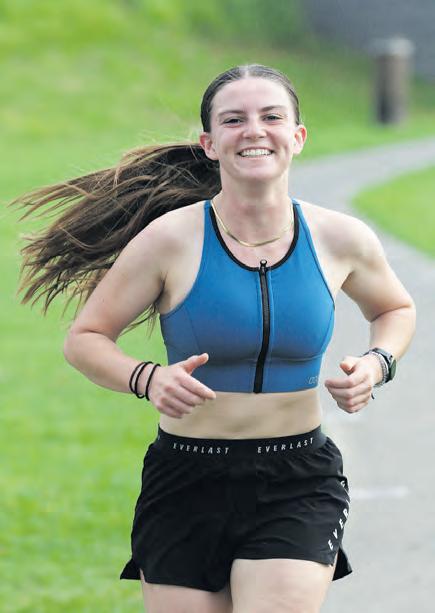
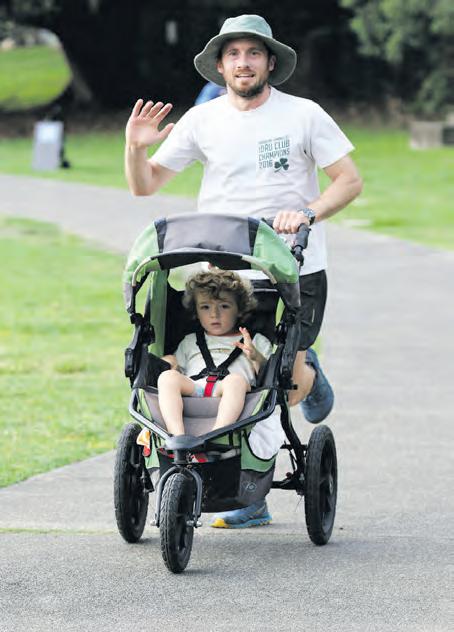
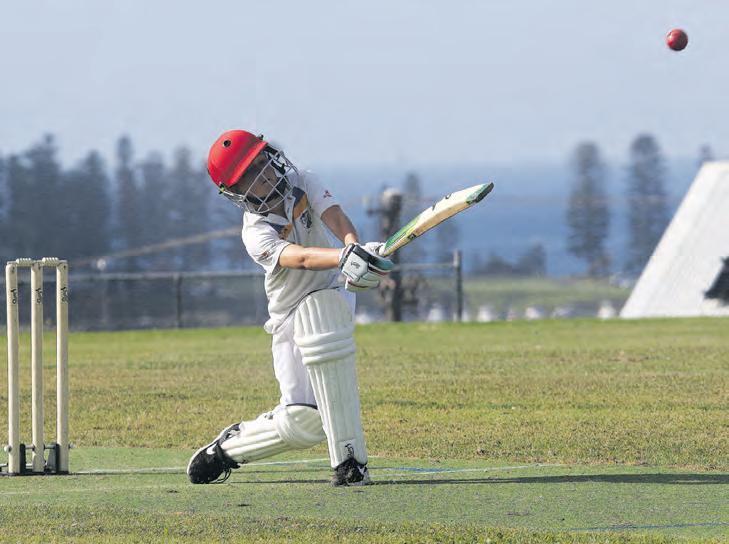

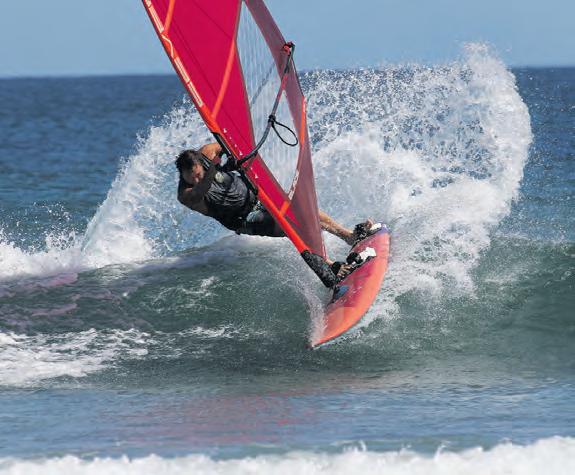
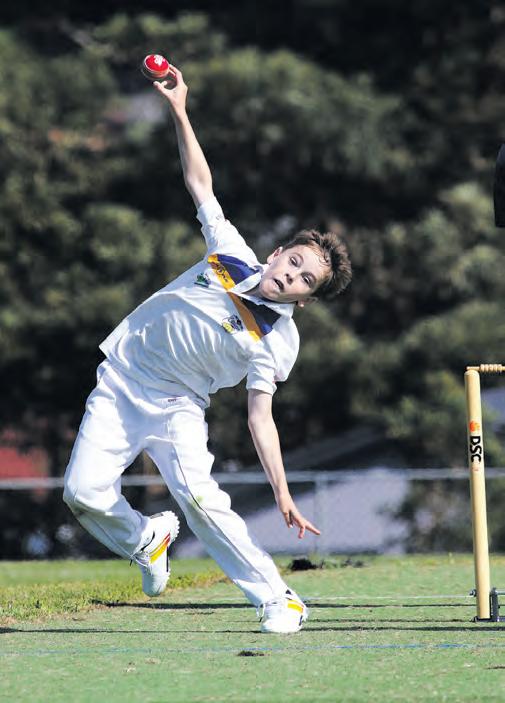
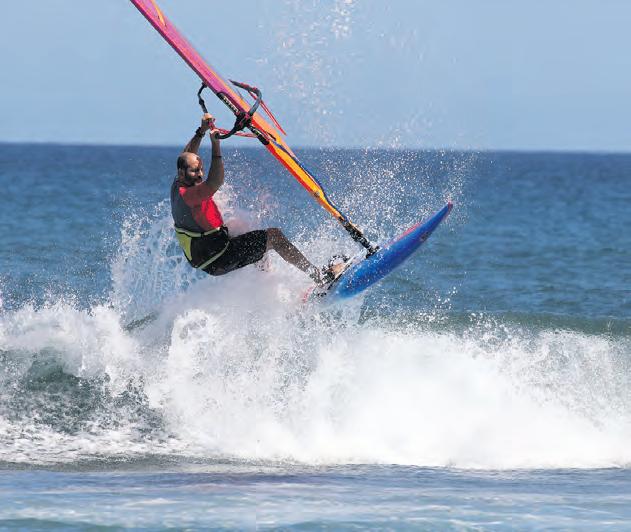
River
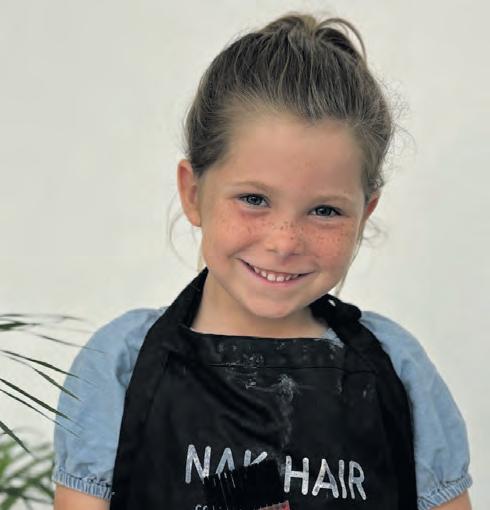
Shelby Gilbert
Just like many other kids, River is starting school this week. But unlike some who may feel a little nervous, she is more than ready for her first day and can’t wait to make new friends.
She’s already made a friend at kindergarten orientation, a boy who, coincidentally, is also named River.
“I already have a friend at this school…I just met him and his name is River too,” she says.
On the other hand, River’s mum, Sheona, is feeling nervous for her eldest child to head off to
school for the first time. She’s certain she’ll be the one shedding tears as River goes to school.
“We had orientation and I was fighting back tears when she had to walk away to her classroom,” says Sheona.
River is bright and enthusiastic and she's made it clear that she has a very specific birthday present that she wants, a “real-life unicorn”.
One of River’s favourite things to do is go fishing with her grandad, who she calls ‘Popcorn’. She proudly explains that just this morning she caught seven fish, but then whispers “Guess what? A pelican ate one of the fish”.
As an extroverted and chatty young girl, River is particularly looking forward to singing at school, as well as playing sports. When asked if she was nervous at all for her first day of school, River quickly responded, “no.” While she has been waiting with anticipation, she is helping mum at her salon - The Hairy Tortoise in Edessa Arcade!
With her confidence, River will have a great start to her school journey.
The Bugle hopes all the young ones get off to a great start embarking on the 2025 school year.
Trish Griffin
For centuries pilgrims have walked the Kumano Kodo, in the steep lush and remote mountains of Japan’s Kii Peninsula.
The Kumano Kodo pilgrimage is an opportunity to immerse oneself in the abundant cultural and natural heritage of the mountain trails along the nation’s largest peninsula.
Tanabe was the starting point for two weeks of the most challenging walking/ climbing I have ever done in
my life. The volcanic terrain has carved out very steep slopes, sometimes almost vertical. You know you’re in trouble when the path ahead is only inches from your face!
The grandeur of our terrain was breathtaking. Ancient giant bamboo forests, cedars, cypresses and camphor. We often walked in silence, enjoying the serenity and admiring the time worn shrines in the pristine surroundings.
The locals and other trekkers were amazed to see two elderly women from
Australia embracing this arduous journey. We often found ourselves the objects of curiosity, and were asked by lots of groups to join their photos. To make light of our celebrity status I decided to call ourselves ‘The Antique Road Show’.
Each night, after hours of walking, we looked forward to our accommodation in traditional Onsens, run by local families. The food was fresh, if not raw, and at the end of every day we spent quality time soaking our sore feet in the hot mineral baths.

A highlight was the hidden monasteries and temples found along the mountain tops. Shinto shrines worship the natural environment, like trees or waterfalls. Buddhist temples dating back to the 7th century are spectacular centres of excellence for those pursuing spiritual enlightenment or academic attainment.
We had bathed in the serenity of ancient times, ironically in the most technologically advanced place in the world!