






Kiama
Minnamurra
Kiama Downs
Jamberoo
Gerringong
Gerroa
Shellharbour
Shoalhaven


Kiama
Minnamurra
Kiama Downs
Jamberoo
Gerringong
Gerroa
Shellharbour
Shoalhaven
Amy Molloy
Two months after Australia’s social media age ban came into force, “GenTech” teens are already finding ways around it.
“A lot of kids who kept their accounts logged in on their laptops never actually lost access — as long as they don’t log out,” says a Kiama mum of three who works in the education department.
“They’ve also created multiple fake profiles with different ages, from 16 to 18. They wanted it to look realistic, not obvious.”
The ban, which took effect on 10 December 2025, prevents children under 16 from holding accounts on major platforms including Facebook, Instagram, TikTok, Snapchat and YouTube.
But the results have been mixed.
“Before the ban even started, they set up new Gmail accounts with fake birthdays so they could verify their new profiles,” she says.
“We’ve raised a generation we call ‘GenTech’. We shouldn’t underestimate their savviness, resilience and stubbornness. They survived puberty and social disconnection during a global pandemic.”
The app charts tell a similar story.
According to data from the Queensland University of Technology Digital Media Centre, the top 10 app downloads in Australia on 10 December — the day the ban hit — included Lemon8 and Yope.
Yope, a photo-sharing app, is gaining traction with 2.2 million monthly active users. Similarly, Lemon8, an app developed by the creators of TikTok, has been described as an “Instagram clone”.
Both apps are exempt from the ban but they are under investigation.
Meanwhile, in a surprising twist, local teens report regaining access to Snapchat in late December.
“Overnight, kids were saying, ‘check your accounts, they’re open again’,” said a mum. “They were locked out for two weeks after the ban, and then suddenly able to get back in.”
Before the ban, Snapchat said it reached 75 per cent of 13–34-year-olds across more than 20 countries.
By the end of January 2026, the company had locked or disabled more than 415,000 Australian accounts it says belong to under-16s — either self-declared or flagged by its age-detection tools.
Yet in a February media
release, Snapchat conceded there are “real technical limitations” to reliable age checks, even as it says it is “locking more accounts daily”.
The social media ban has had a unique impact on teens in regional areas such as the South Coast, where social connection is already limited by geography, transport and fewer after-school options.
Milly Rose Bannister is a youth mental and social health expert and the founder of ALLKND, a youth-led charity working nationally with Australians aged 15–25.
She has spent the past six months analysing the realworld impact of the social media age ban on young people across metro and regional Australia.
Her research highlights three trends: high levels of circumvention, particularly outside cities; a disproportionate impact on regional teens; and the “absence of parallel support”.
“Policy has removed access without replacing support,” she says. “Young people consistently report the absence of parallel investment in digital literacy education, safer platform design, or offline alternatives that are genuinely accessible in regional areas.”
She supports the advice of other digital experts who say an all-out ban is an
overcorrection.
“Young people are not asking for unrestricted access to social media,” says Bannister. The compromise? Age-appropriate platform settings, co-designed with young people.
“In consultation, young people are repeatedly calling for school-based digital literacy education that goes beyond just tracking screen time,” she says.
“They also need adults who are equipped to have informed, non-alarmist conversations about online life.”
Holly Pastor is the careers and transition advisor at Bomaderry High School and agrees regional teens can feel isolated.
“Being a teen in a regional area comes with its own challenges,” she says. “There are fewer opportunities for social activities compared to the city, so social media is often their main way of connecting with friends.
“The age ban might feel more limiting here because it takes away one of the few ways they can stay connected with their wider peer group.”
She says this is only the start of a lower-tech transition — and offering alternative ways to connect with peers is vital.
“Some students are coping well, others are struggling a bit with anxiety or feeling left out,” she says.
Continued - Page 2


From Page 1
“It’s early days, so we’re keeping an eye on things and making sure students have support when they need it.”
For adults and young people alike, it is clear more still needs to be done to ease the impact of tech addiction — and the answer isn’t to go cold turkey.
A hopeful example is the banning of mobile phones in schools.
Beginning with Victoria in 2020, mobiles have been banned in Australian schools.
According to government data, 81 per cent of students say learning has improved since the ban, 87 per cent say they are less distracted in class, and 86 per cent say socialising has improved.
“The effect was immediate,” says a local high school educator.
“I used to walk through the playground and every student would be looking at a phone. The week after the ban, they were playing basketball and chatting to each other. It was incredible.”
The strategy offers students age-appropriate autonomy.
In NSW, high school students can leave their phones in lockable ‘pouches’, in lockers, or hand them to school staff at the beginning of the day.
In a policy change, which came into effect 12 months ago, principals may allow students to use mobile phones in “specific circumstances” such as to achieve health and wellbeing outcomes.
As a local 15-year-old told The Bugle, “I hate all the technology in schools. I wish I didn’t even have a phone, but I’d be totally cut off from everyone.”
Young people are finding opportunities to unplug and rebel against the social media giants.
A group of students in Kiama are boycotting WhatsApp, which has been
repeatedly criticised for being a hotbed of bullying and harassing behaviour.
WhatsApp is not part of the social media age ban because it is technically a “private messaging” platform. However, experts are warning that group chats are part of a hidden bullying epidemic.
“Last year, my daughter and her friends all decided to uninstall WhatsApp — and they’re not resorting to reinstalling it,” said a local mum.
“It’s a dangerous place and even the kids know it. They didn’t get banned, but they’re boycotting it. I love that for them.”
Boxout: Supporting young scrollers
Family therapist Rachel Schofield says leading by example is key.
Be the anchor: Your teen needs to feel your confidence. If they hit a wave of upset at the loss of their social media account, try not to rush in to “fix” the feeling. Their upset is a natural and healthy response to a loss. If we feel anxious at our child’s upset, we can enter a vicious cycle.
Check in on the ‘how’: Help them navigate alternative ways to stay in touch with friends, whether that’s safer platforms or more face-to-face time. We want to ensure their social world stays rich, even while their online world is being protected.
Cultivate the long game: Think of this time as a vital digital pause. Their brains are still building the filters they need to handle the complexities and pressures of the social media world. By age 16, they will be better equipped to cope with it.
Model healthy tech use: Check in with your own social media use and prioritise faceto-face connection at home. The habits they develop now will stay with them; let’s help make them healthy ones.

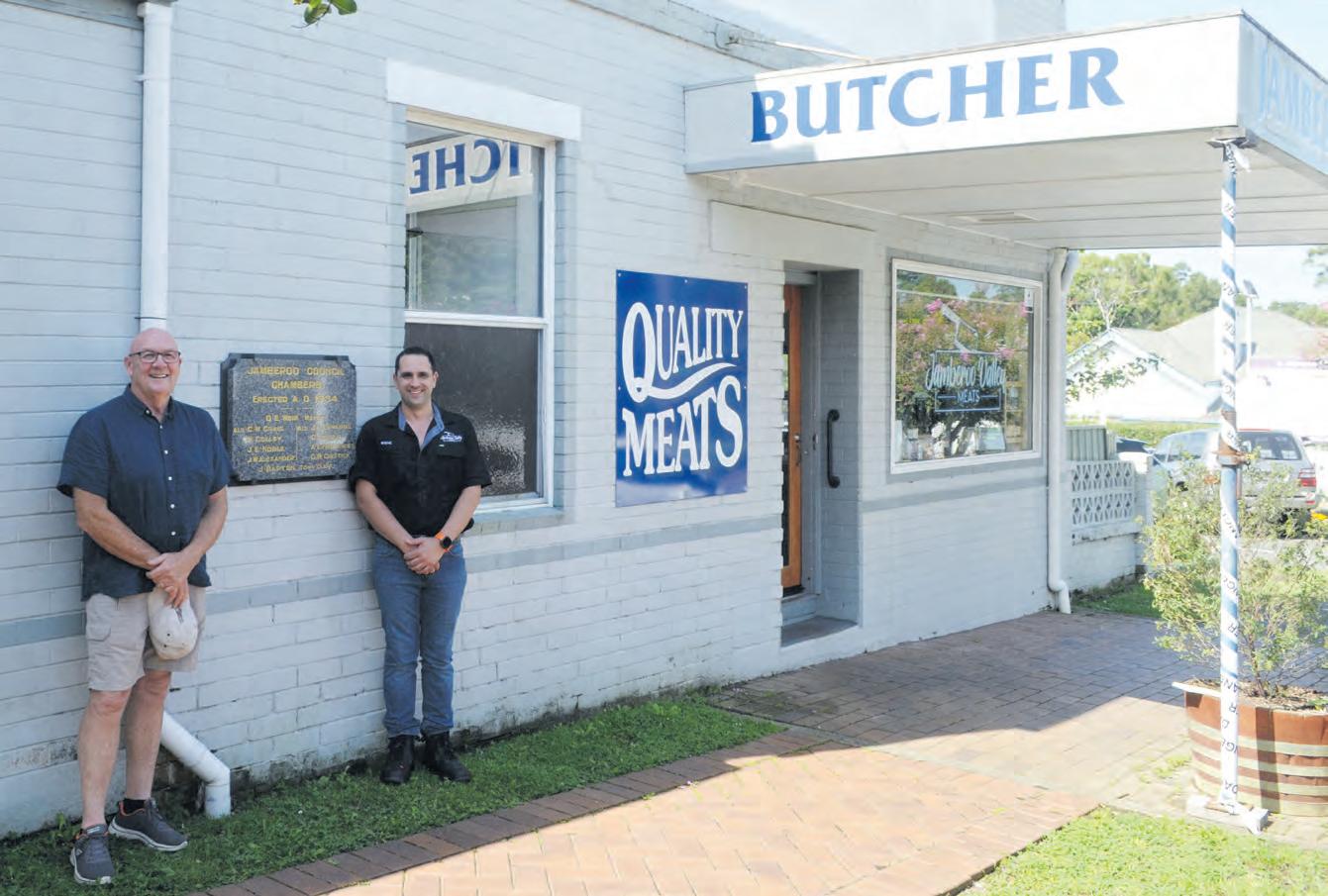
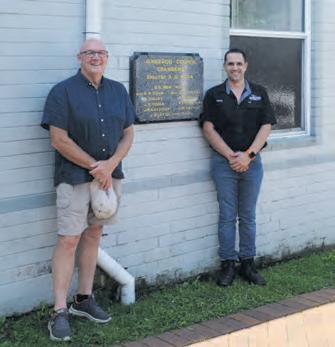
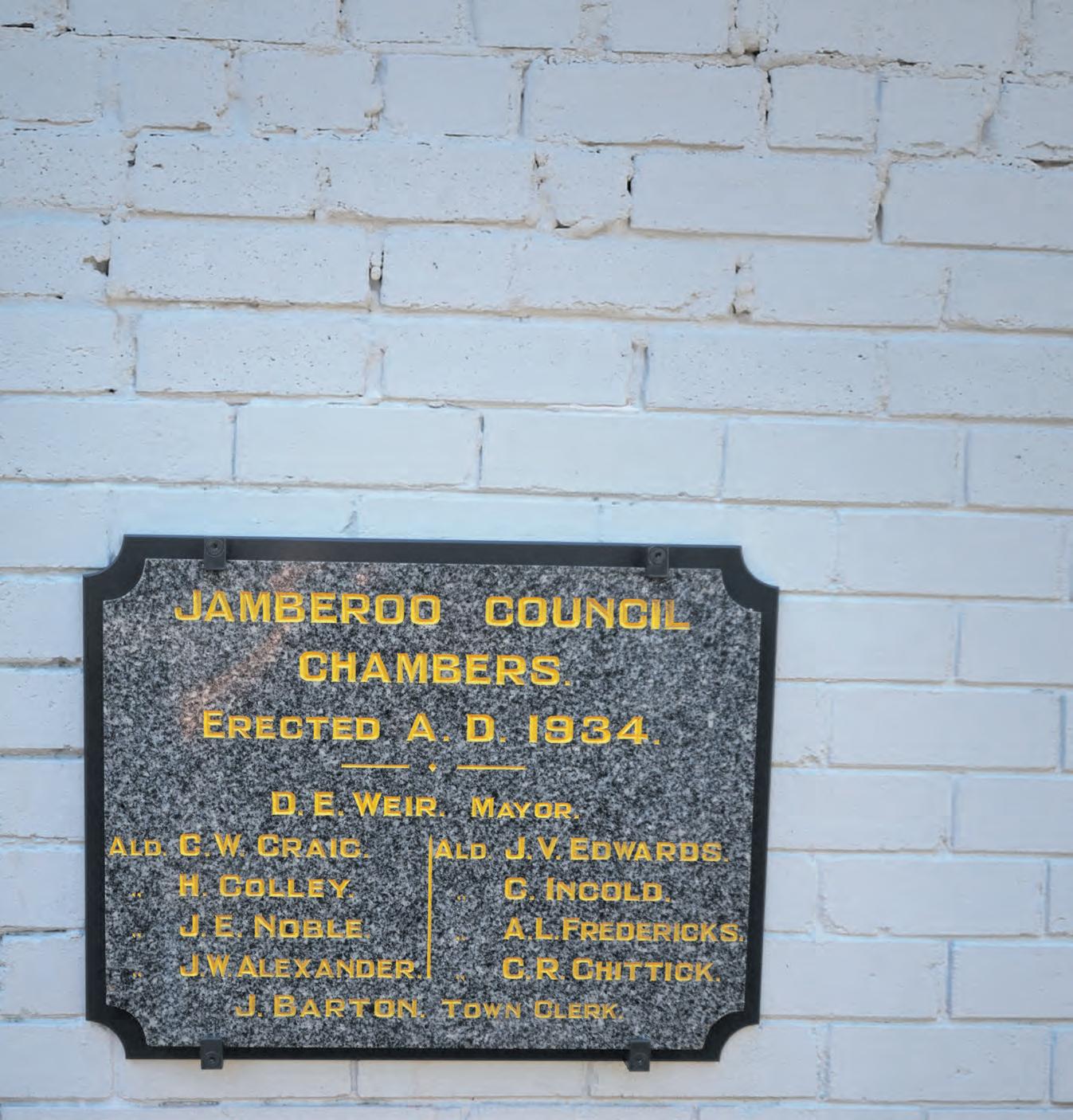
Achance discovery by a Kiama resident during a spring cleanout of their house has led to the original plaque being brought back to life on the old Council Chambers building in Jamberoo.
The plaque has been placed back on the facade of the original building which is now home to Jamberoo Valley Meats, adding an extra dash of yesteryear to the picturesque township.
Stuart Richards from the Jamberoo Valley Ratepayers and Residents Association and local welding and fabrication business owner Paul O’Keefe were integral in getting the plaque looking shiny and new again so that it could return to its original location.
The plaque was probably removed from the Jamberoo Council Chambers building after the 1954 amalgamation with Kiama and has been lost since then. When the Kiama resident stumbled upon the piece of Jamberoo history four years ago among a pile of rubbish, it was given to Jamberoo publican Ross
Warren, who mentioned the discovery to Stuart when they were catching up at a function.
“I went and had a look at it and thought we need to get this back up on the building,” Stuart recalled.
“It was engraved but it didn’t have any gold lettering on it. It was very plainyou could only just see the engraving.”
Stuart re-embossed the gold lettering and Paul had a plate made up, which was powder-coated, to hold the plaque.
No ceremony was required - in typical Jamberoo style, they just put it up and if anyone asked, they told them the story of the long lost plaque’s circuitous journey.
Butchery owner Steve McCure said it was great to have the plaque in pride of place at the front of his shop and it was a nice talking point for his customers to chew on.
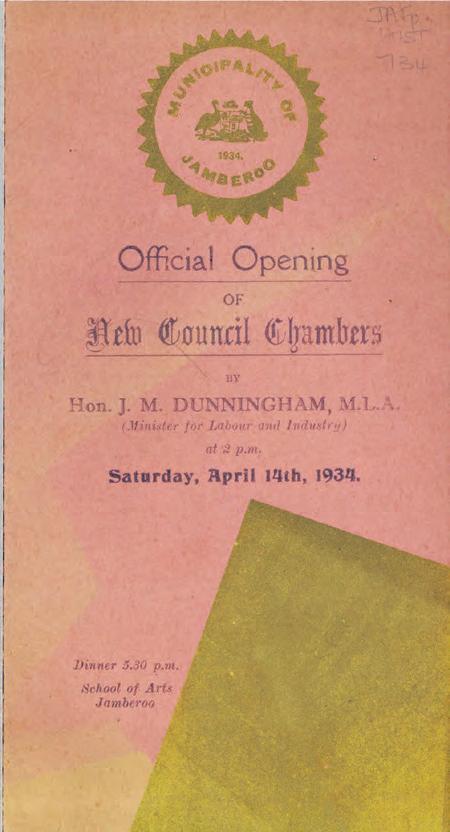
The Council Chambers building was built in 1934 and the wife of the Minister for Labour and Industry (the Hon. J.M. Dunningham) was given the honour of unveiling the plaque. Jamberoo Mayor David Weir as well as the
mayors of Gerringong and Shellharbour and the deputy mayor also attended the opening in what the Kiama Independent at the time described as “a red-letter day for Jamberoo”.
The opening of the Council Chambers was described as one of the biggest works undertaken recently, along with the construction of a new road to Kiama.
“The tablet has the inscriptions of all the aldermen at the time,”
Stuart explained.
“They had a big do at the Jamberoo School of Arts and a dinner to celebrate the opening.”
The Municipality of Kiama was proclaimed on 11 August 1859 and has undergone a number of name and boundary changes. On 24 April 1871, the Municipal Districts of Gerringong and Broughton’s Vale were created out
of the former Gerringong Ward of the Municipality. Initially there was a borough of Kiama and East Kiama. But on 31 March 1892, Kiama became known as the Municipality of Jamberoo and East Kiama became the Municipality of Kiama. The municipalities of Kiama, Jamberoo and Gerringong amalgamated on 11 June 1954 to form the Municipality of Kiama.
On Christmas Day, while most families were unwrapping presents, Kevin Sullivan and the SulliVans were packing up their caravan and heading for the highway.
The Gerringong-based family band’s summer tour took them from Phillip Island to Port Macquarie and Tamworth, where they performed more than a dozen shows at the Country Music Festival.
“We got back at the end of January and our kids are back in school – we’re just juggling school and music,” Sullivan said.
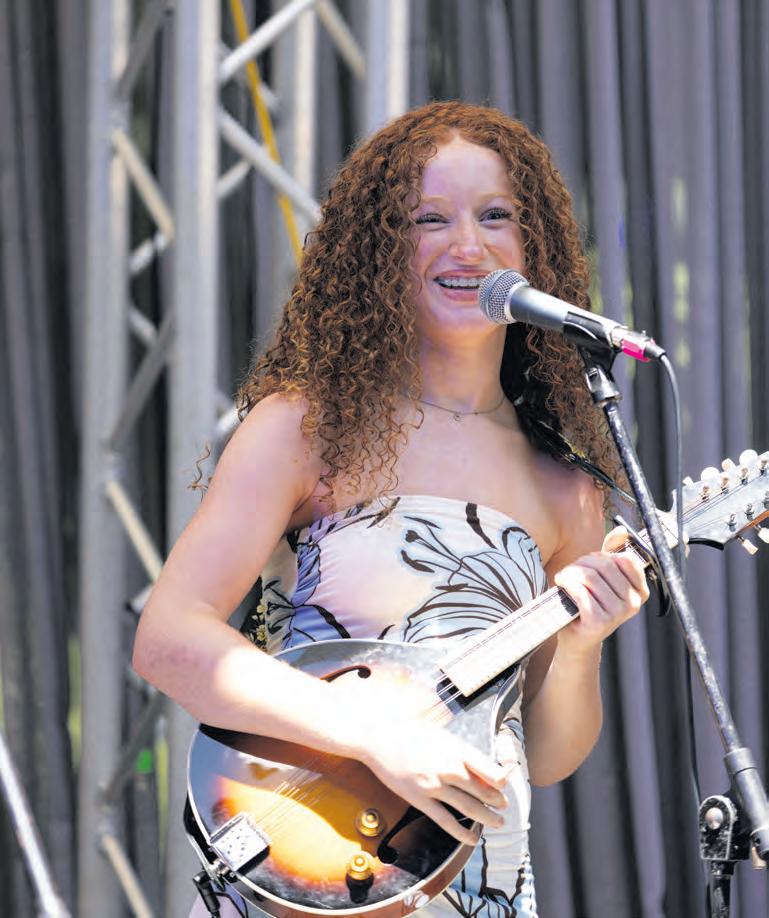
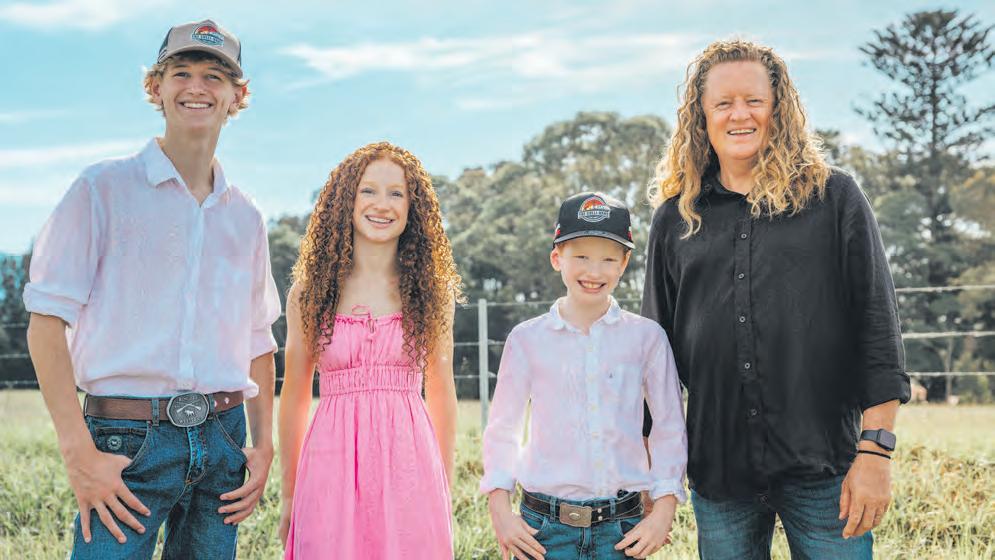
Sullivan performs alongside his children – KJ (16), Cha Cha (14) and Jet (10) – while his wife Belinda, a former detective and Telstra Businesswoman of the Year, manages life on the road.
“Now she’s the road manager of Kevin Sullivan and the Sully-Vans,” Kevin laughed. “Probably her best job … probably not her bestpaying job.”
Between gigs, Belinda ensures the family fully experiences wherever they land – from penguins on Phillip Island to museums, and national parks.
“No matter where we are, we
today that my song is number one again … I’m just trying to enjoy the journey.” His journey to the top hasn’t been easy. Last May, his sister Anne Sullivan was diagnosed with motor neurone disease and moved into the family’s Gerringong home, where she sadly passed away in September.
“We didn’t work for about six months,” Sullivan said. “We couldn’t tour. We couldn’t do music. It was just a very sad
time musician eight years ago, Sullivan spent nearly three decades in the NSW Police Force, working as a forensic crime scene officer, bomb technician and inspector.
He ran the bomb squad for the Sydney Olympics and was stationed across regional NSW and Sydney.
“As a forensic crime scene policeman, you need something else,” he said. “Music helped me deal with things.”
Sullivan later developed PTSD from his policing work and now speaks openly about mental health during his shows.
“I talk about it because it matters,” he said. “People
centre of his work.
“I tell stories about places, people and things that resonate with me,” he said.
Much of that storytelling has been shaped by time spent touring the Northern Territory, where the family has lived, recorded, and performed in remote communities.
Their collaboration with Stuart Joel Nuggett grew into a close creative partnership after meeting through Indigenous leaders.
"I've played overseas and recorded in Nashville, but I love being Australian," Sullivan said. "I love telling our stories. Stuart taught us about Indigenous language and culture, but also how we’ve all come from different places around the world to be here. We’re all Australian – that’s his message and mine, too."

make sure we go and see it,” Kevin said. The family uses time on the road to balance the “fun” with the firmer realities of life. They have swum with whale sharks and explored ancient Indigenous rock art, but they also pull the caravan into nursing homes to perform for the elderly or play on struggling farms.
These impromptu sessions are about a philosophy of service.
“My wife’s favorite movie is Pay It Forward,” he explained. “It’s about giving back just because you have something good to share.
“We aren't here for a long time, and Belinda – who is the love of my life – really drives that mission to help people for no other reason than it’s the right thing to do.”
While speaking with The Bugle, Sullivan learned his song I’m Barred Again – cowritten with Indigenous singer-songwriter Stuart Noel Nuggett and his son KJ – had returned to No.1 on the country charts for the fifth time.
“I’m just chasing my dream,” he said. “I don’t know how far it will get, but to hear
time for us.”
Anne, who had lived in Kiama and worked in digital television, was one of Sullivan’s strongest supporters – and it was her encouragement that eventually sent him back on the road.
“She always said, ‘Kev, just let it go. The bad energy – let it go’,” he said.
The family has embraced a daily ritual Anne loved.
“We live here in Gerringong and can see the ocean, but we never fully appreciated it until Anne passed. She used to get in the ocean every single day, so now we do too – no matter how cold.”
Sullivan is now an ambassador for Motor Neurone Disease NSW, ACT and the Northern Territory, with the cause displayed on the family’s touring vehicle.
Before becoming a full-
come up afterwards and say thank you for saying it out loud.”
Music has always been part of his life. His father, who still lives in Kiama and turns 96 this year, was a Dixieland jazz pianist.
Sullivan describes himself as an Australian singersongwriter, blending country with jazz and brass, while placing storytelling at the
The success of I’m
Barred Again comes as Sullivan prepares to release a new album in
July, along with music videos –including what he describes as a unifying song.
“I’m a living, breathing example that it’s never too late to chase your dream,” he said. It is a dream that has become a shared family legacy.
For Sullivan, the true reward isn't found on a music chart, but in the rearview mirror of the caravan.
"Just being on the road with my family, standing on stage and seeing the next generation of singers coming through in my own children – it’s special," he said.
In an era dominated by the digital glow of social media, the Sulli-Vans are choosing a different frequency: one of cold morning ocean swims in Gerringong, dusty highway miles, and the raw connection of a song shared with a stranger.
It is a long way from the bomb squad, but for Kevin Sullivan, the journey is exactly where he’s supposed to be.


Danielle Woolage
The money raised from a Kiama Golf Club charity event will be used to set up two scholarships to honour Wollongong paramedic Steven Tougher, who was killed while on duty.
Steven’s father Jeff, who has campaigned relentlessly to have laws changed after his son was fatally stabbed while doing paperwork in a McDonald’s car park in 2023, says the Charles Sturt University scholarships will help keep his memory alive.
The inaugural Kiama Golf Club Emergency Services Day, dedicated to honouring Steven, not only raised more than $5000 but also awareness for Jeff and his wife Jill in their campaign for Steven’s Law.
The law change proposes a minimum 12-month jail term,
suspended if the offender completes a rehabilitation program, and calls for all paramedics to be issued body worn cameras and stab vests.
The golf day’s organiser
Stuart Miller, an assistant course superintendent at the club and Jeff’s lifelong friend, says the four-person ambrose event will continue to be held annually to recognise the work being carried out by emergency services personnel, in what is often a thankless job.
Last year alone 562 paramedics were assaulted while at work.
“We want to make sure nothing like this ever happens again to a frontline worker,” says Stuart.
“What these people do for their communities, day in and day out, is nothing short of amazing.
“We want to do everything
in our power to keep them safe.”
Third-year paramedics students studying online at Bathurst’s Charles Sturt University - Steven’s alma mater - will be eligible to apply for the two $5000 scholarships.
Jeff says the financial burden of university costs were “tough on Steven and we helped out where we could”.
“Steven had to overcome so many obstacles along the way to first become a nurse and then a paramedic, but he
got over all the hurdles and he was so very happy to achieve his dream, but it came at a cost financially,” he says.
“The scholarships will not only honour Steven’s memory but make sure others like him have some extra financial support to get through university so they can get out there and help their community.
“These students are all cut from the same cloth as Steven, compassionate people who just want to help others.
“The scholarships are a
fantastic way to keep Steven’s name alive so that he’s never forgotten and we will hold an Emergency Service Golf Day annually at Kiama to continue to raise funds to support these scholarships.
“They will help to honour his name in the future and let his daughter know what her dad has achieved and maybe (Lili-Mae) can continue his legacy.”
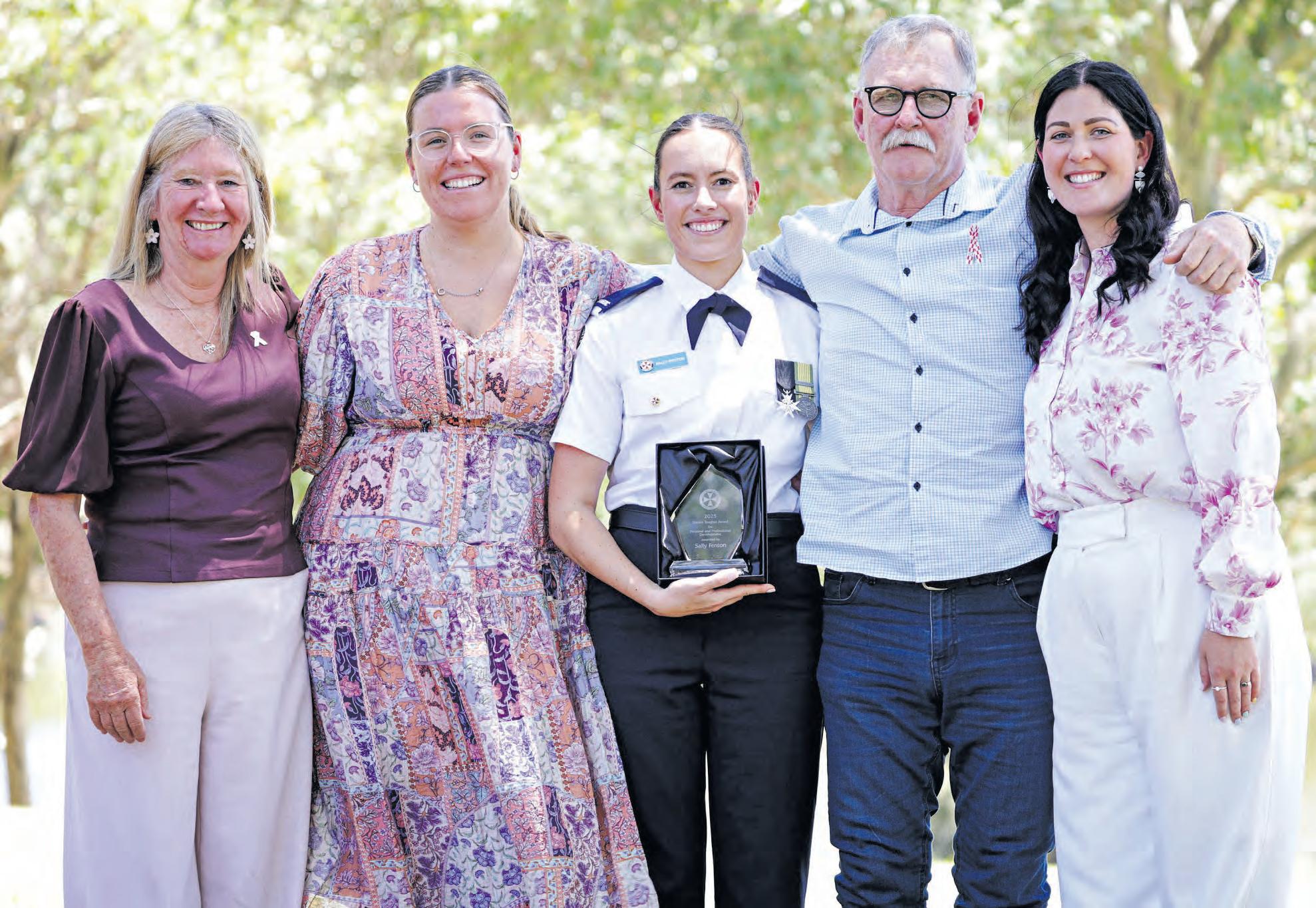
Last year the NSW Ambulance Service also introduced the inaugural Steven Tougher Award for Personal and Professional Development to honour the life and legacy of the slain paramedic.
“It will be presented annually to a paramedic in their graduating year who demonstrates the same kind, caring qualities as Steven as they start out in the profession he loved,”
says a NSW Ambulance spokesperson.
The 2024-25 winner, Sally Fenton, was recognised for her exceptional growth, commitment to learning and willingness to help others.
Steven’s wife Madison Tougher, who presented the award named in her husband’s honour for the state’s most dedicated, compassionate and highly capable paramedic, said it was a touching tribute.
“Steve would be absolutely delighted with himself, knowing an award is named after him,” says Madison.
“Having an award in Steve’s honour is a nice reminder that Steve’s legacy still lives on and he hasn’t been forgotten, and I think it is important for paramedics to receive this award as it reinforces the values Steve had as a paramedic.”


Every day 2.5 billion prompts are sent to AI — what does it say about our relationships?
Amy Molloy
One minute, you’re asking AI to spellcheck your Word document — the next minute, you’re asking a faceless robot to soothe your soul, validate your feelings, and talk you through a 2am spiral.
According to data from Open AI, the company behind ChatGPT, over 2.5 billion prompts are posted on the platform - per day.
For many people, using AI is a slippery slope, from a first crush to codependency. Now experts are warning that, although AI has its place, as with all relationships, it’s important to have boundaries.
A recent study from MIT Media Lab reported “excessive reliance on AIdriven solutions” may
contribute to “cognitive atrophy” and the shrinking of critical thinking abilities — essentially, the more we outsource our thinking, the less we practise it ourselves.
A new study published in the Harvard Business Review warned AIgenerated “workslop” is destroying productivity.
The phrase is being used to describe AI-generated content that “masquerades as good work but lacks substance”.
And then there’s the downsides of “AI companions” — the rise of people using artificial intelligence as their confidante, therapist and pseudo-partner.
Research by Common Sense Media, a US-based non-profit, has found approximately three in four US teens have used AI

companion apps, such as Character.ai or Replika.ai.
Their data is striking: one in three teens have used AI companions for social interaction and relationships, including role-playing, romantic interactions, emotional support, friendship or conversation practice.
“AI companions are emerging at a time when kids and teens have never felt more alone,” said Common Sense Media founder and CEO James P Steyer.
“This isn’t just about a new technology — it’s about a generation that’s replacing human connection with machines, outsourcing empathy to algorithms, and sharing intimate details with companies that don’t have kids’ best interests at heart.”
However, it’s not all bad.
For every warning, you’ll hear an anecdote of an AI user who feels it has genuinely supported their life: offering words of comfort in the midst of a mental health spiral, advice for eating healthier, or a non-judgemental space to process big emotions. For most people, it comes down to balance.
As a writer, I use AI as an editorial assistant — an intern who writes my social media captions and tells me what’s trending but isn’t trusted with content I care about.
After a brief stint using AI as a therapist, I’ve returned to humangenerated empathy.
I’m happy for AI to continue to spellcheck my articles but not hold my heart.

On a Saturday night in Kiama, the sound of crashing waves is finally competing with a more vibrant local nightlife.
For years, Kiama’s identity was wrapped almost entirely in daylight - cafes, beaches, blowholes, brunch.
Night was for going home or heading up or down the highway.
The opening of Uncle Fuku’s, the town’s new karaoke bar, is another example of Kiama finding its voice after the sun sets.
Kiama Leagues Club, the Bowling Club, Little Betty’s, the Golf Club to the north and Cin Cin’s to the south are great places to spend a night out without having to go out of town.
The kebab shop across the road from the leagues club is doing a decent trade into the wee small hours, always a good sign that a town’s nightlife is healthy.
Many people actually like hanging out with each other past 9pm.
This is what a nighttime economy looks like at the grassroots: many venues taking a risk, giving people a reason to linger in town rather than leave it.
The same energy will pulse, probably at a more energetic scale, on 21 February when THAT takes over the Kiama Skate Park and will transport it into a dancefloor like nonother.
These events, and the Sounds of Jazz & Blues set to take place in March show that “nightlife” doesn’t have
to mean nightclub. It can be all-ages, family-friendly, and rooted in the creativity that already exists here.
A lit-up skate bowl and a packed crowd under the stars say something powerful: our public spaces don’t shut down when the sun does.
As Kiama grows, so does our understanding of what liveability actually mean.
It’s no longer just quiet streets and ocean views - it’s also having somewhere to go after dinner, somewhere for teenagers to be seen and heard rather than having to make the trek to Wollongong, somewhere for musicians and hospo staff to work locally instead of commuting.
A thoughtful nighttime economy supports safety, diversity and social connection.
It creates jobs, nurtures culture and makes it possible for more people to build a whole life here, not just a daytime one. Change can feel uncomfortable, especially in a town that treasures its calm.
But the choice isn’t between “peaceful village” and “rowdy and overdeveloped party strip.”
It’s between a town that slowly empties out and one that carefully curates its evenings to reflect its values.
The hum of activation and excitement within town are Kiama’s way of choosing the latter –embracing growth, and with it, a richer, more vibrant life after dark.


John Stapleton
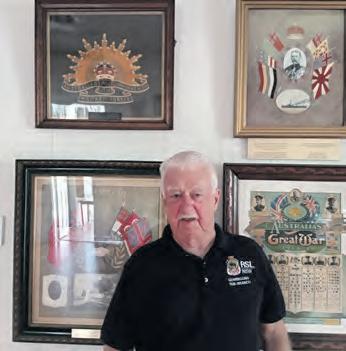
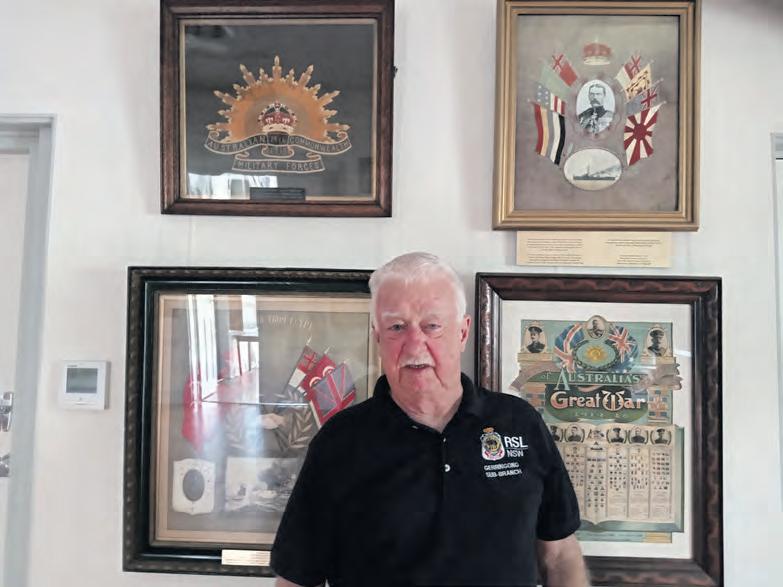
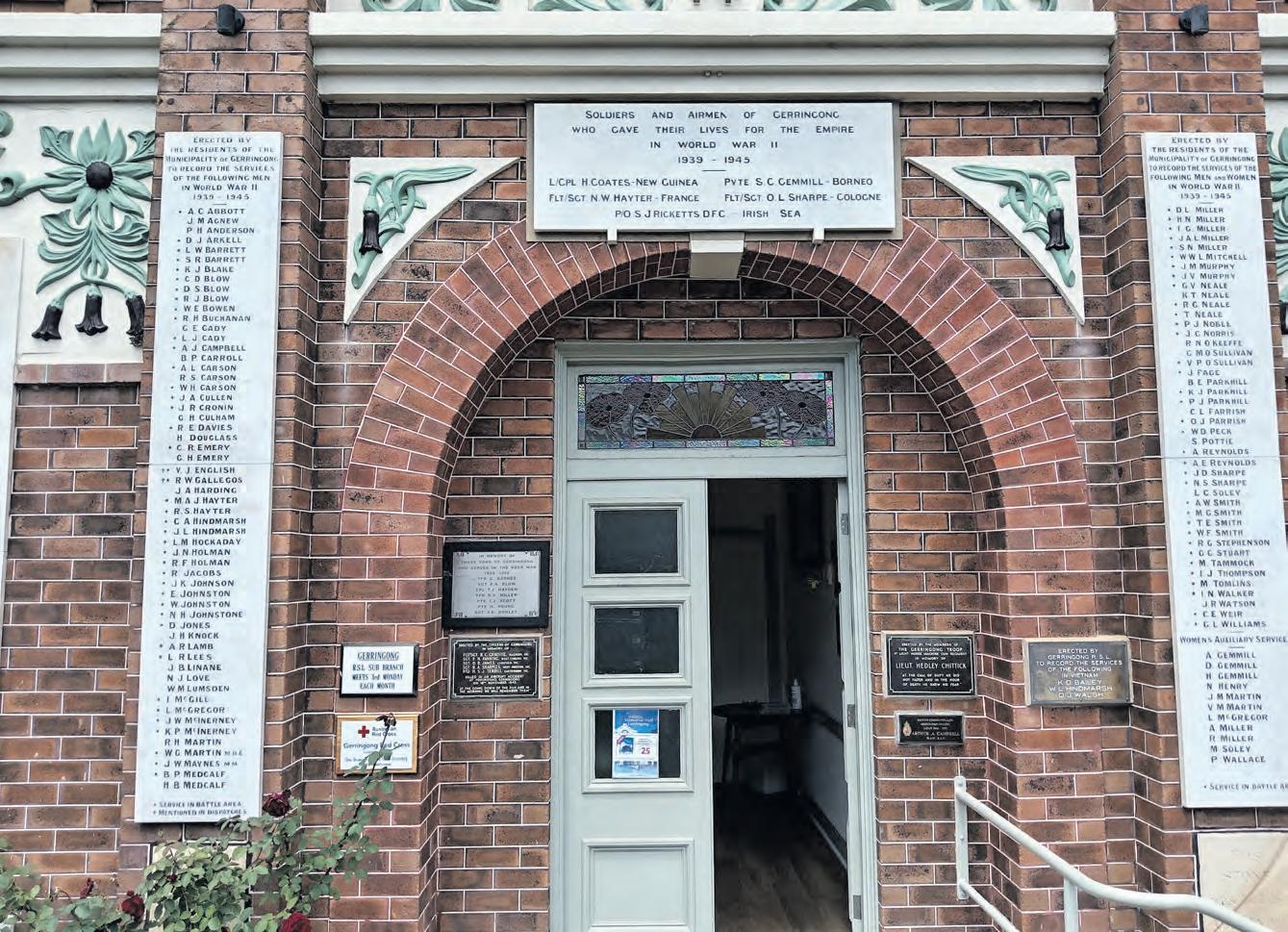
The Roll of Honour plaque at the Gerringong RSL Sub-branch for World War II, labelled “The Great War”, reads: “Men Who Answered their Country’s Call. 1914–1918.”
Kiama residents are leading the charge when it comes to clean energy adoption, with solar rooftop panel installation in the LGA higher than the national average.
Steve Heinecke is one of thousands of residents who invested in rooftop solar several years ago to lower his household electricity costs.
Now the Kiama resident has supercharged his energysaving measures by installing a solar battery, allowing him to store the energy produced by his rooftop panels.
Last July, the federal government introduced the Cheaper Home Battery scheme, reducing the upfront installation cost of home solar batteries by up to 30 per cent.
The incentive cemented Heinecke’s decision to invest in the technology and the timing allowed him to take advantage of the peak summer sun, with Kiamabased business All Australian Energy installing the battery in December.
Heinecke is not alone in taking advantage of the
solar subsidy. A recent report by the Clean Energy Council found 183,000 solar batteries were sold in the six months to December 31, 2025. This figure is more than the previous four years combined.
“I decided to invest in the battery as I thought it was a good thing to do for the environment,” says Heinecke.
“But the cost reduction helped my decision to purchase a battery.
“While we had low power bills with two people in the household, the battery will allow us to start storing solar energy and over a 12-month period we should have enough so that we don’t get a power bill at all.”
He also likes the fact that the battery will provide backup power during a blackout “and make us self sufficient”.
Figures from the Australian Photovoltaic Institute show more than 40 per cent of households in the Kiama LGA now have rooftop solar, higher than the national average.
Australia is a world leader in renewable technology, with more than 4.2 million rooftop solar systems installed across

the nation.
Until recently only one in 40 households used batteries to store their solar production.
The Clean Energy Council report - which tracks national trends in renewable energy uptake from 2020 to 2025found the “high cost made solar batteries out of reach for many households”.
But the Cheaper Home Batteries Program “has reduced barriers to these high upfront costs,” says the report, with the number of battery installations more than doubling year-onyear to 454,753. Now one in 24 households has a solar battery.
With rooftop solar producing almost 15 per cent of the nation’s electricityfive years ago it produced just 7.2 per cent of electricity - Heinecke believes the long-term benefit of panel and battery installation outweighs the upfront cost.
Heinecke has urged consumers who want to save money and the environment to do their homework and look into how a solar battery could help households turn sunlight into savings.
Behind every name on that plaque lies a heartbroken family and a deep tragedy that rocked the then tiny community of Gerringong. The official 1921 census recorded a population of just 792.
None of those young men who died in the service of their country would recognise Gerringong as it is today, with its high-end properties, smart cars and affluent population.
We will never know much about the men behind the plaque adorning the front of the historic Memorial Hall at the heart of Gerringong’s shopping strip: “J.E. Alexander, Died on Service; G.H. Cooke, Palestine; E.A. Cook, France; or Private J.W. Donovan, Gallipoli.” And so many others.
“They put their whole life on the line,” says Gerringong RSL treasurer Leanne Mitchell.
“I’m a mother, and I can’t imagine sending my children off to die. They put their whole life on the line. It is about serving for the betterment of all of us, our way of life.”
Fast forward through another world war, and the conflicts in Korea, Vietnam, Iraq and Afghanistan, and the Memorial Hall is no longer the bustling community hub it once was.
Membership of the Gerringong RSL Sub-branch never exceeded 50 or so after World War I or World War II, yet the branch served as a vital gathering place for military personnel and
their families – a place of solace for returned soldiers to remember fallen mates, and for the bereaved.
It hosted dances, afternoon teas, weddings and engagement parties, supported by the local Ladies Auxiliary.
Now, membership is dwindling due to age and illness, and the Memorial Hall has lost much of its former vibrancy.
In an unprecedented step, the group is publicly advertising its Annual General Meeting on Monday, 16 February, declaring: “We would like to invite anyone with an interest in the RSL, or any ex or serving personnel, to attend to meet with us and see what we are about. We welcome any ideas to encourage veterans and their families to join us.”
Gerringong RSL President Mike O’Leary, 78, says they are keen to see the building once more become a community hub for returned service men and women, and for their families.
Conscripted for National Service at age 21 in 1967, he wasn’t political and never campaigned against the Vietnam War – or the American War, as the Vietnamese still call it.
Nor did he ponder deeply the morality of being sent to a foreign conflict. He simply figured he was unlucky that his number had come up.
“I didn’t see it as an adventure, didn’t know anything about war, none of us did,” Mike recalls. “Vietnam was a complete unknown. I thought it would be like Wollongong.”
Many who fought in Vietnam returned severely damaged and never fully recovered from what they experienced. Like many veterans of that terrible war, he doesn’t want to talk much about his service.
“When I joined in the early 2000s there were still WWII and Korean veterans involved,” Mike says. “They have all gone. Now we are all in our 70s and 80s.
“The main thing we are after is to attract more members. You need to have a defence service history, but we also have affiliate memberships.
“The Anzac Day Dawn Service, which we organise, attracts large numbers. We had 100 kids this past year. It is the only community event that pulls that many people.
“We want to see this place once again become a centre for social events. We are not living in the past. We are

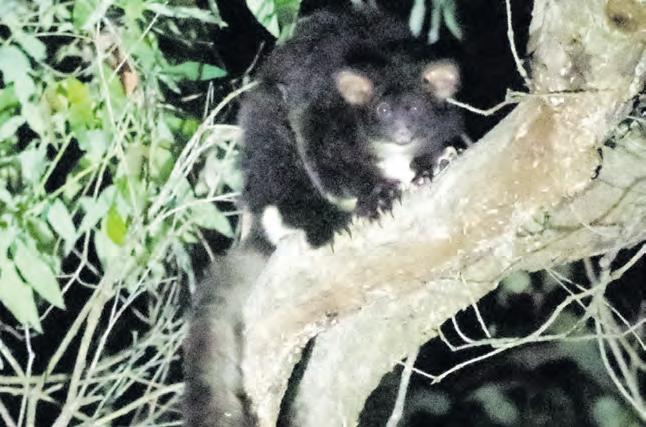
Awidespread decline of the endangered Southern Greater Glider species across the South Coast has prompted Gerroa Environmental Protection Society to call for the expansion of Seven Mile Beach National Park.
The Society has spoken with Kiama MP Katelin McInerney about supporting an investigation into the expansion of the national park to protect the complex vegetation and to assist the survival of the Greater Glider population at Seven Mile Beach.
A recent study by Garry Daly in the Journal Australia Zoologist provides evidence that the beach may be one of the last strongholds of the Greater Glider on the South Coast.
The Southern Greater
Glider has suffered severe declines in abundance and distribution across several National Parks, except for Seven Mile Beach, where populations have remained unchanged.
Daly warns a minimum habitat of 1000 hectares is needed to sustain a Greater Glider population and while Seven Mile Beach National Park is less than that, there is adjoining freehold and council managed lands that exceeds the minimum size to support a viable population.
GEPS secretary Howard H Jones said the study should be a wake-up call for action to be taken before it’s too late.
He said koalas used to inhabit the area around the beach in the 1950s but the ongoing loss of habitat led to their demise.
“This Glider population is particularly vulnerable. The problem is the disconnection
from other populations in the hinterland and the small area of habitat within the Park available to support the local population,” he said.
“We are very concerned that development and sand mining pressure on land adjoining the Park could lead to further vegetation loss and fragmentation, and over time, to the loss of this Glider Population.”
Jones said the area is “unusually rich and diverse” and provides a habitat for 13 endangered and threatened species as well as eight Endangered Ecological Communities, including Coomonderry Swamp, the largest Coastal Freshwater wetland in NSW,.
“Yet much of this biologically important vegetation, including this great wetland, is not protected within the National Park.
“There’s a lot of really good
reasons to bring this habitat into the park.
“Much of the habitat is threatened by sand mining and development. There has been an ongoing reduction of the bushland and we don’t want to see that continue.”
Jones said McInerney seemed to be supportive of the Society’s call for an investigation into the issue but that it would likely take time to come to fruition.
GEPS conducts nighttime walks through the national park to spot the gliders when they are active.
“It’s a thrill to see them,” Jones added.
“The best thing is to actually see them glide but that’s a rare occurrence.
“Most people never see the glider because they’re very secretive and they only come out at night so it can be hard to generate community awareness.”
Kiama Council will vote next Tuesday on a development application for a four-storey development on the southern side of Akuna Street.
The developer is planning to build a mixed use development of three commercial units, 38 “shop top housing” residences and spaces for 93 cars at 14 Akuna Street, which is currently a split level car park.
The estimated cost of the project is $21 million.
Kiama Council’s director strategies and communities Ed Paterson has tabled a report for the meeting which recommends approving the plan which has been recently declared a State Significant Development by the NSW Government.
A previous development application for the project was previously lodged but withdrawn at the recommendation of Council staff due to “deficiencies” in the proposal relating to issues such as potential groundwater contamination and pollution, sustainability measures, aesthetics, non-compliances with the Apartment Design Guide relating to common open space, visual privacy, solar and daylight access, acoustic impacts between land uses and unacceptable car parking design and waste collection arrangements.
The staff recommendations have been incorporated into the amended design for the current application.
Council will also vote on a proposal to extend the lease for Gerringong Surf Life Saving Club until October.
Council received 93 submissions in relation to the proposed lease when it was placed on public exhibition from 26 October to 23 November with 82 in support.
Director corporate and commercial Joe Gaudiosi has advised Council that due to the seven objections from the public, NSW Local Government Minister Ron Hoenig will be required to give his consent before it can agree to a proposed 20-year lease with the Surf Club.
Council staff to meet with the executive of the GSLSC to negotiate the specific lease conditions taking into account the feedback from the submissions At Tuesday’s meeting, Council is also set to vote on the public’s preferred option for the long-awaited Jamberoo Dog Park. Five designs for a fenced off-leash area were presented to the public with the final option getting the most votes - separated dog parks of a 30m x 30m small dog area in the east and a 45m x 22.5m large dog area in the west of the reserve.

You must have been hiding under a rock if you did not hear the Reserve Bank’s announcement last Tuesday about interest rates.
RBA governor Michele Bullock announced an increase in the cash rate from 3.60% up to 3.85% - an increase of .25% and the first rate hike in over two years, following a series of cuts in 2025.
Happy New Year from the RBA to every mortgage holder in Australia!
This decision was primarily driven by a "material" pickup in inflation during the second half of 2025, which indicated that the economy was running "hotter" than
previously estimated. The real debate was around the main driver behind the inflationary numbers - was it the private or government sector that contributed to the increase?
While the debate raged in the media, there is unfortunately nothing we can do to reverse last Tuesday’s announcement.
All is not lost, however.
You do have a few things in your control that might help manage the increase and reduce either your repayments or the term of your mortgage.
If you don’t ask, you don’t get. Contact your bank or your mortgage broker and ask them for a home loan health check or an interest rate review. You
might be surprised by the outcome.
If your bank doesn’t come to the party, contact a mortgage broker to test your current interest rate or home loan product against what is available from other lenders in the market.
You could also consider making additional repayments or leveraging your redraw or offset account to reduce the term of your mortgage.
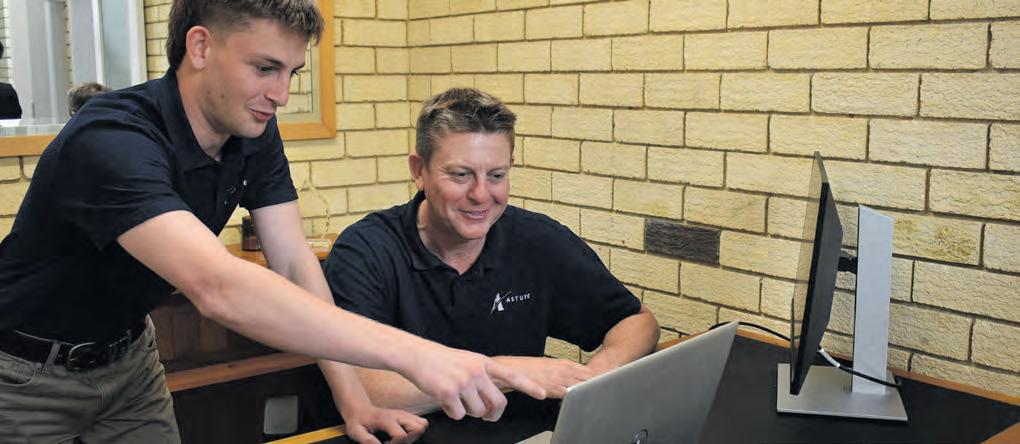
The team at Astute Brent Rollings is always here to help. Feel free to reach out to us if you need help to talk through your options to make sure you are getting the best outcome in the market. Please note - this is paid content

Paul Suttor
Berry will Extend the Weekend in an innovative campaign to encourage visitors to stay longer outside the village’s peak holiday periods.
Targeting Thursdays and Sundays as a way of bookending the traditional Friday and Saturday night busy period for Berry’s hospitality venues, the campaign will be delivered through A Day Well Spent, a four-part, multi-venue live music series running from February to June.
High-calibre touring acts and standout regional talent across genres including country, jazz and blues, indie, funk and soul will light up venues across Berry.
Berry secured $200,000 in grant funding through the NSW Government’s Uptown grant program to fund the initiative, joining Nowra, Huskisson and Sussex Inlet among the first regional communities selected.
Precinct coordinator
Kate Dezarnaulds said the campaign was the result of a grassroots effort by people who care deeply about the historic village.
“Two years ago a bunch of passionate business owners in town, still struggling to put back together the successful business models that they had before Covid, came together under the auspices of the Berry Chamber of Commerce and Tourism when I was the president and we went through the NSW Uptown accelerator program.
“It's been a project which has been two years in the works. We spent about six months together as a group going to all these amazing workshops and trying to put our finger on exactly what it is that were the barriers to vibrancy and sustainability for hospitality businesses in Berry and what might be the things that we could work together to be able to shift the dial on.
“We managed to get
together a pretty compelling case and we were very lucky to be one of the first regional towns to be recipients of $200,000 worth of funding, which is unheard of levels of funding support for place-based initiatives that are not directed to councils.”
Berry Showground hosted two Red Hot Summer Tour concerts, headlined by iconic acts like Crowded House, Paul Kelly, Missy Higgins and The Waifs, in recent months but the Extend the Weekend campaign is aimed at small-scale events to help local business so that the tourism spend stays locally.

“One of the challenges of big festivals is that they bring fly in, fly out money so this is designed to be a regular, low pulse Injection of funding and support for existing businesses in town so that the benefits of events are not something that sits with city-based businesses and and food trucks that don't even come from the region,” Dezarnaulds added.
“The economic benefits flow directly to the bricks and mortar businesses that really make up the regular character of a town.”
The Thursday night and Sunday concept is designed to create new windows for local business operators to cash in on Berry’s widespread appeal.
“The reason we did Thursday and Sunday is that Berry’s already sold out on the weekend and what we really need for our operators is for them to be able to have people getting back in the habit of catching up with mates or going out on a date night on Thursday night, rebuilding that muscle memory of having fun.
“We need our visitors that come on the weekend to have a real reason to stay one more night so extend their weekend with a Sunday night stay, have a chance
local and make the most of a long weekend in Berry.
“Thursday nights will tend to be focused on restaurants and bars and Sundays will be on the Southern Hotel and the Berry Hotel.
“It's up for the participating hospitality venues to decide what is supportive of their operations and what will give them a bit of courage and motivation to extend their hours or to try something new and to do that with with both the logistical funding and marketing and promotional support that the current campaign brings
“My job as the district coordinator is to make sure that we spend the money in accordance with the grant conditions, really build the spirit of collaboration and possibility between all of the different venues and put a bit of optimism and energy back into a hospitality and events scene that's really struggled since Covid to re-find its mojo.”
The series will launch next Thursday (February 19) and the following Sunday with a Country-themed weekend, celebrating Berry’s agricultural roots with a contemporary edge.
There will be Thursday night performances by Alex Clark, Loki Hines, Solo West and Amber Kenny and a major daytime Sunday session across multiple venues, headlined by awardwinning New Zealand artist Jenny Mitchell and Jacob Fitzgerald & The Electric City. Sunday’s line-up also features local favourites The Freewheelers, Tropical Strength and South Coast singer Grace Mae, who has kicked on at the Tamworth Academy of Country Music.
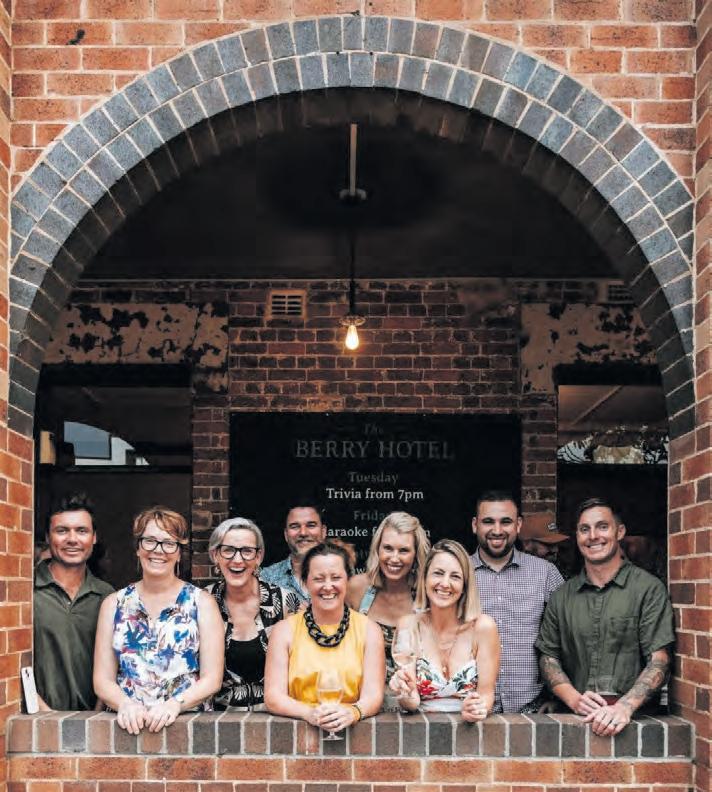
Berry’s second event will be Jazz and Blues on 19 and 22 March, followed by an Indie theme on 21 and 24 May, then a Funk and Soul extended weekend on 18 and 21 June.
More information can be found at extendtheweekend. berry.org.au

for 399 new and amended listings on the PBS.
The Albanese Labor Government’s record investment in Medicare is proving to be a game-changer for families in Kiama, Jamberoo and Gerringong, and right across the Gilmore electorate.
Since our GP bulk billing incentive program came into effect on November 1, the number of fully bulkbilling medical practices in our region has almost tripled.
I’m really proud that 32 medical practices want to make a difference in their community, and they want to help their patients - many who are older with multiple health conditions and, of course, young families who are feeling the cost-of-living pinch.
This is an absolute gamechanger for local patients, who now have improved access to the health care they need, with just their Medicare card, not their credit card.
From January 1, we’ve introduced a whole gamut of health services that are saving the hip pocket and, importantly, saving lives.
We’re ensuring Australians can access the medicines they need at an affordable price, with PBS scripts now capped at $25, or just $7.70 for those who hold a concession card.
We’re adding more lifesaving and disease preventing medicines to the PBS every month, to help men, women and children.
Just this month, Andriga-10 was added to the PBS to provide life-changing help for men with an aggressive form of prostate cancer.
Without the PBS, patients might pay $930 per script.
Since July 2022, we’ve approved extra funding
We’re helping women and their families by subsiding the cost of contraceptive pills, hormone therapies for menopause and medicines for endometriosis.
In just one year, more than 610,000 Australian women have saved money since essential women’s health medications were listed on the PBS as part of our landmark $792.9 million women’s health package.
And, from January 1, Australians have had even better access to free health advice with the 1800MEDICARE telehealth service, website and mobile app.
The new Medicare Mental Health Check In also went live on new year’s day, giving easy and free access to early support for Australians experiencing mild mental health challenges.
Of course, we’re opening more Medicare Urgent Care Clinics and I know people in Kiama and surrounds cannot wait for the doors to open on the new Medicare Urgent Care Clinics in Nowra and Shellharbour very soon, which will take pressure off the local hospital emergency departments.
The investment in Medicare is already having a massive impact in our electorate, which is home to one of the highest populations of seniors in the country.
We also have many young families and low-income earners who are reaping the benefits of a better, fairer and stronger health system that the Albanese Labor Government promisedand that we are delivering. Please note - this is paid content


Bec Sandridge is a queerpop shapeshifter who has been performing for more than a decade and is known for her striking black-andwhite hair.
Wiradjuri artist Zeppelin
Hamilton is a member of Velvet Trip, a psychedelic-pop band which blends psychrock, soul, and indie-pop into a rich, genre-defying sound.
Local musicians are getting a rare chance to learn the songwriting craft when The Regional Sessions comes to Kiama for the first time on Monday.
Run by music rights management organisation APRA AMCOS, with support from Sound NSW, the one-day event brings keynote speakers, workshops, panel discussions, live performances and networking opportunities to songwriters, producers and composers of all abilities.
There are five being held in regional NSW, kicking off with Bega and Broken Hill
MBec Sandridge
earlier this week with Kiama followed by Port Macquarie next Wednesday and Lennox Head on 21 February.
An eclectic mix of musicians will be workshop mentors at the Kiama event at The Pavilion which will culminate with an evening performance at The Grand Hotel. Elana Stone is a double ARIA Award-winning singer, songwriter and instrumentalist celebrated for her inventive blend of folk, electronica, indie pop, and balladry who has produced four acclaimed solo albums and performed widely with Missy Higgins and the John Butler Trio.
ore than 25 community organisations will assemble at Gerringong Library and Museum to showcase the wide range of groups and service providers in the region.
If you are looking to meet new people, discover a hobby, or get more involved in your local community, the Gerringong Community Expo next Saturday is the perfect place to see what is on offer.
The free event will feature gardening, craft and music groups, as well as U3A, CWA,
Probus, Lions and the Rural Fire Service, aned many other organisations offering something for all ages and interests.
Families and community members are invited to enjoy a free pancake breakfast and sausage sizzle. Kiama Mayor Cameron McDonald said the event was a great chance to strengthen local connections.
“Our community is full of talented, passionate people who give their time to make Gerringong and the wider Kiama area such a welcoming and vibrant place,” he said.
Zeadala is a singersongwriter of Thai/Iraqi heritage who has performed locally and internationally since 2015, exploring themes of social justice and healing through knowledge of self.
The Regional Sessions have been held in NSW, Victoria and Western Australia over the past five years and previous mentors have included Ben Lee, Powderfinger guitarist Darren Middleton and Jem Cassar-Daley.
Chris O’Neill, director of creative programs at APRA AMCOS, said the Regional Sessions provided multiple benefits to local musicians.
“The purpose of the day is to allow local songwriters an opportunity to firstly meet each other in the local region,” he said. “What we've seen is
that many times we've hosted these events and people have lived in a local town for a long time and not yet met all of their songwriting counterparts.
“We're bringing in some really incredible songwriters for them to share their approach to songwriting and give local songwriters a better understanding of how they write, how they collaborate with other people.
“So the idea is for local songwriters to really walk out of that room connected with each other but also armed with new songwriting skills.
”There's a real appetite for local songwriters to learn from other people from outside of their area and what we’ve found is that it just has such a great community building element to it.
“That's often something that can lack in regional areas - community is really important in regional areas.”
At the end of the day, the workshop participants and mentors will kick on to The Grand to put together a free live performance for members of the public from 5.30pm onwards.
More than a dozen local venues have already signed on for the Sounds of Jazz & Blues weekend which will be held early next month.
The live music weekend from 6-8 March will feature local businesses hosting jazz, blues and a mix of other musical styles, with music-lovers encouraged to wander between venues and enjoy live music across Kiama and surrounding villages.
To make it easier and safer for people to move between
venues, a free Blues Bus shuttle loop service will operate across the weekend, thanks to sponsorship from the Kiama Business Network.
KBN president Cathryn Lyall said the shuttle was a practical way to support local businesses.
“This weekend is all about collaboration,” she said. “Local venues are hosting and funding their own live music, and the Blues Bus helps people enjoy more of what’s on offer while supporting our hospitality community.”

Myah Garza
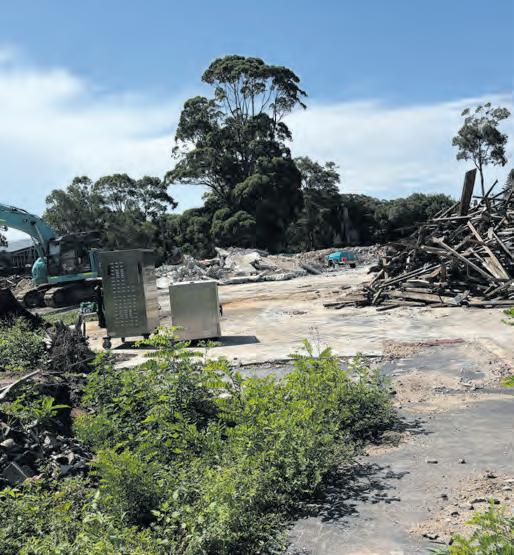
As the dust settles over the historic grounds of Havilah Place, Kiama Council has confirmed the demolition of the old Blue Haven nursing home is on track for completion next month.
The site has been undergoing an $850,000 transformationfunded via Council’s Capital Works program - into level, vacant land that is safe to use but for what purpose?
While the site has been officially designated as a "catalyst site" under the Strategic Finance & Governance Improvement Plan, a Council spokesperson clarified
that no formal masterplans have been developed yet.
Any future use will be subject to the usual community consultation.
Once the derelict buildings are cleared, the area will be fenced off to allow for grass regrowth and to protect the site from vandalism, leaving an area that Kiama Mayor Cameron McDonald has previously described as “an open book”.
This transition marks the end of a storied chapter that began in the 1870s when the land served as a State Rail Quarry, providing the blue metal that paved the streets of Sydney.
By the 1970s, the site took on a
more humanitarian purpose.
At a time when the local hospital was overflowing and elderly residents were being forced into nursing homes as far away as Sydney, the community rallied to build a local solution.
After years of political turbulence and funding delays during the Gough Whitlam and Malcolm Fraser eras, the facility finally opened in 1979, serving as a cornerstone of local aged care for four decades.
As the demolition crews complete their work, Council’s Finance and Major Projects Committee will begin the complex task of fitting the site into a larger
"jigsaw puzzle" of community assets. The future of Havilah Place is expected to influence the redevelopment of the nearby Kiama Sporting Complex, with residents already floating ideas ranging from affordable housing and retail space to expanded parkland.
While the original 1979 structures are being removed, Council has assured the public that Blue Haven Terralong and the Kiama Community Garden will remain untouched, ensuring that even as the landscape changes, the legacy of community service that defined the site for 50 years continues in a new form.

Community radio thrives on people power and at KCR, volunteers are at the very heart of everything we do.
From presenting shows and producing content to supporting events and working behind the scenes, volunteering with KCR is an opportunity to connect, create and contribute to a strong local voice.
If you are interested, we would love to hear from you!
About KCR
KCR is a 24/7 streaming community radio service sharing stories, music, conversations and local content that reflect the diversity, creativity and lived experience of our region.
We champion local artists, highlight community initiatives, promote local events and provide an inclusive platform for voices from across the Kiama LGA and beyond.
Why volunteer with KCR?
- Make a real impact by helping shape local media that informs, inspires and connects the community.
- Enjoy creative freedom to explore music, storytelling, interviews, technology and original ideas.
- Learn new skills through hands-on experience in broadcasting, audio production, marketing, social media and events.
- Be part of an inclusive and supportive culture welcoming all ages and experience levels.
- Join people-powered, independent, grassroots media created by the community, for the community.
Volunteer roles available
- Presenters and Co-hosts
- Audio Producers and Editors
- IT and Technical Support
- Social Media and Marketing
- Administration and Membership Support
- Event Helpers
- Youth and Diversity Advocates
- Fundraising and Grant Writers
What our volunteers say
“I never imagined I’d have my own radio shownow I’m sharing music and stories I love every week.” Felicity, presenter
“KCR gave me a chance to reconnect with my community in retirement. It’s been a joy.” Mark, volunteer

“I always dreamed of being in radio — and now I’ve done it.” Glenn, presenter
Get involved
Whether you can spare an hour a week or dream of launching a show of your own, KCR welcomes new volunteers. Be heard. Be connected. Be part of KCR.

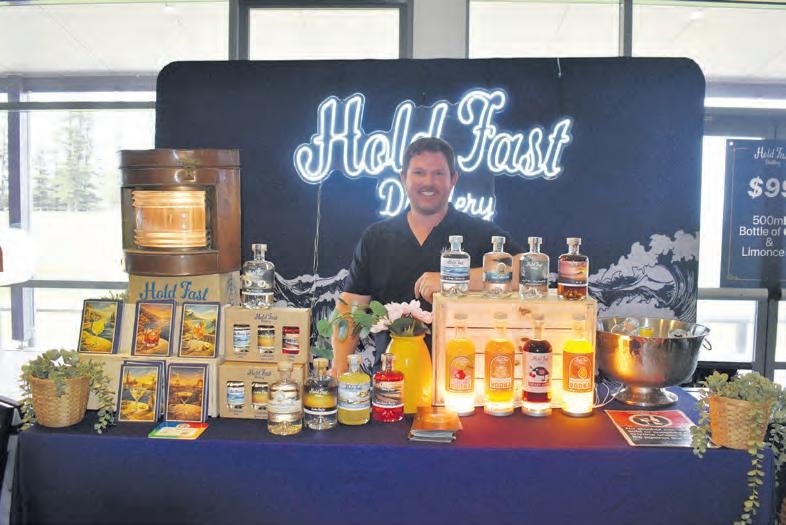
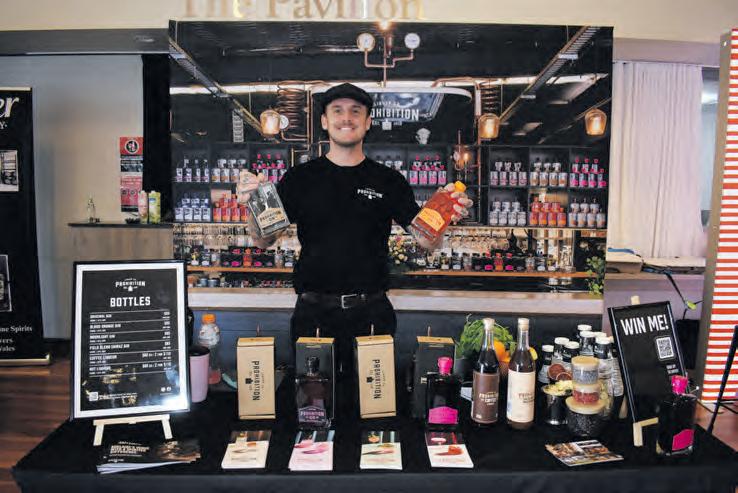
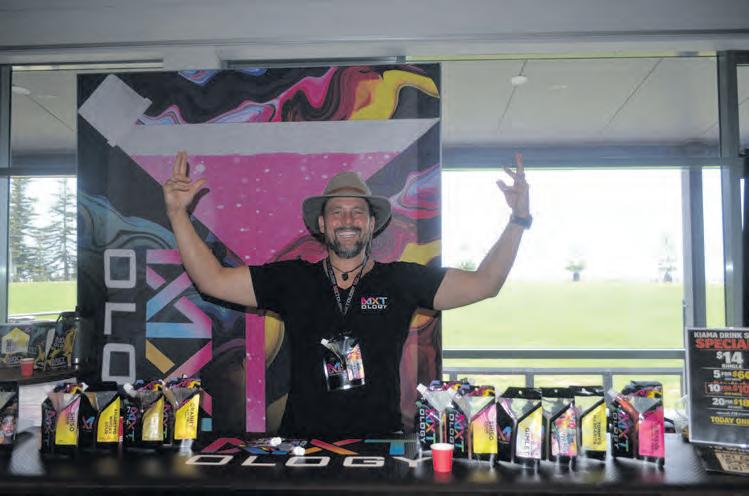
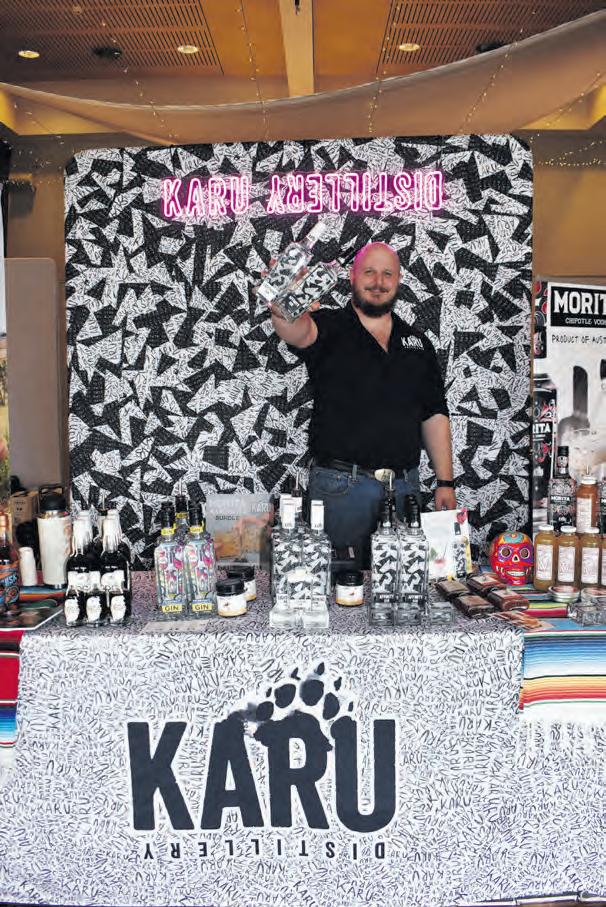
The South Coast’s independent spirits scene received a significant boost last Saturday when the highly anticipated arrival of The Drink Show took over The Pavilion Kiama for its boutique regional debut.
The event, which focused on quality over scale, attracted an engaged crowd of spirits enthusiasts to sample rare, small-batch offerings from some of Australia’s most acclaimed artisanal producers.
From the botanical complexities of North of Eden Gin and Karu Distillery to the agave-inspired Florcita Tequila, the Pavilion floor was a showcase of craft innovation not typically found on local bottleshop shelves.
The day was punctuated by three tasting sessions
and a series of intimate masterclasses that allowed for deep-dives into the distilling process.
Amber Lane Distillery cellar master Rod Berry led a highlight session, “The Secret Blend Behind Australia’s Best Whisky 2025,” where attendees stepped into the role of blender.
Using barrel samples and syringes, participants recreated elements of awardwinning blends, gaining firsthand insight into the premium techniques that have put the distillery on the national map.
Meanwhile, Felix Clarke of Ester Spirits brought a summer vibe to the Pavilion with his “Summer Drinks” workshop, demonstrating how to elevate the awardwinning Old Tom Gin for home entertaining.
While many major city festivals rely on sheer volume, event coordinator Mick Turner says that Kiama’s success was measured by the depth of interaction.
“For a debut event in Kiama, we were pleased with the atmosphere and level of engagement,” Turner said.
“The crowd was compact
but genuinely curious and interested in the producers, reinforcing the appetite for curated drinks events in the region.”
Exhibitors including Banks & Solander, Phoenix Distilling Co., Noble Bootleggers, and SoHi Spirits reported high levels of engagement, with many attendees opting to
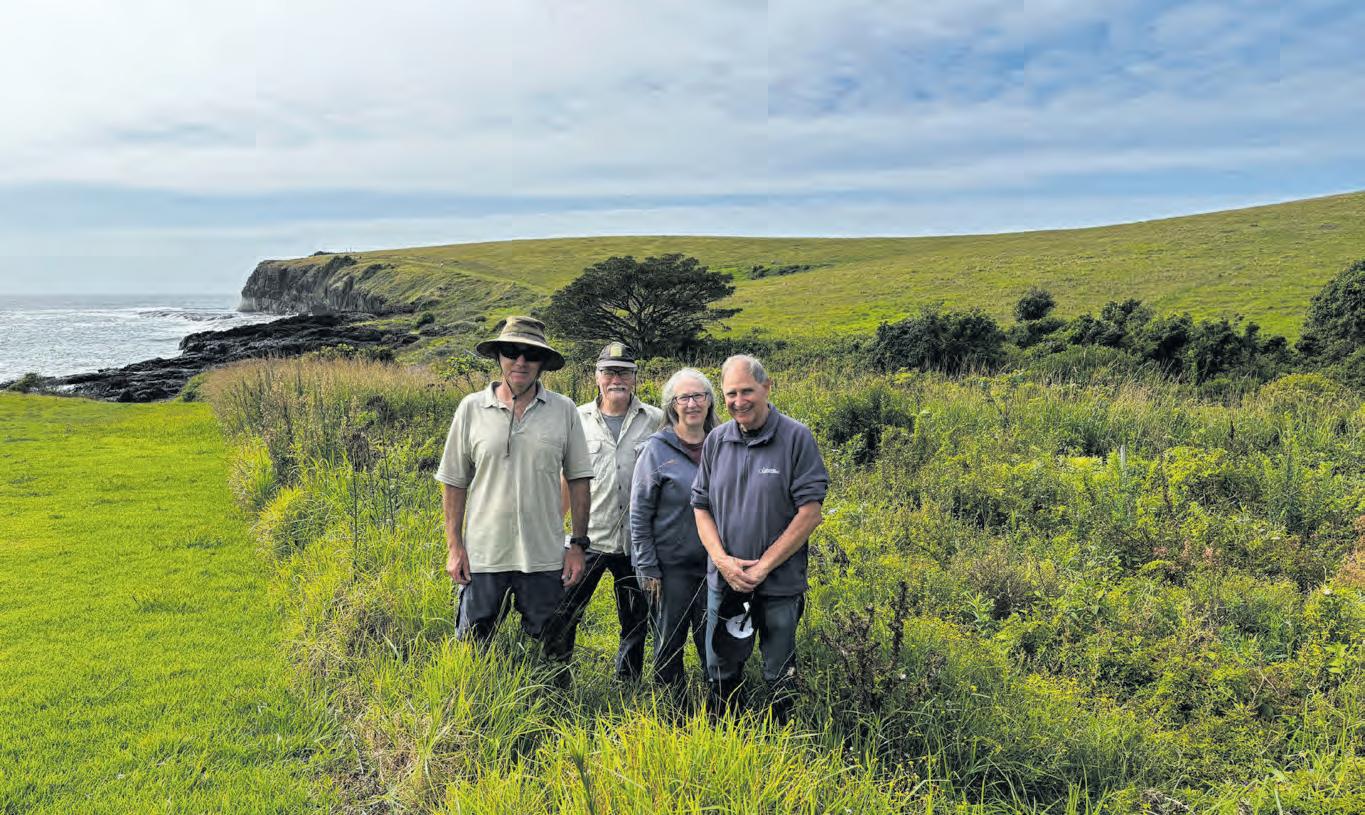
Landcare Illawarra is pleased to announce the formation of two new community-led groups, launching at Loves Bay on the coast in Kiama’s south and inland at Jerrara Dam Reserve. The community-based, volunteer-led Landcare movement features local residents working together to care for their environment. Projects may take place on private land or public reserves and are driven by local priorities and local knowledge.
Within the Kiama local government area there are already four Landcare groups working on private land and seven on Council reserves. These groups are formed by people who want to improve their immediate surroundings and make a positive contribution to their community.
The new Loves Bay Landcare group was initiated by Alan Woodward, a Kiama Heights local who lives near the popular starting point of the final stage of the Kiama
Coast Walk. Alan approached Landcare Illawarra in late 2025 after recognising the opportunity to improve the ecological health of the area for the benefit of both nature and the community.
“Loves Bay is a beautiful place, but it could be better with the regeneration of vegetation and the environment around the creek that flows into the bay,” he said.
“Already there are remnants of the rainforest that once covered the local area, with plants, seeds and water-life
purchase bottles directly from the makers – a clear sign that the "meet-the-maker" format resonated with the local community.
The success of the Kiama event serves as a proof-ofconcept for bringing highend, independent drink tours to regional hubs.
The intimate nature of the sessions ensured the "story behind the bottle" remained
the focal point.
“Kiama confirmed the value of bringing independent Australian drinks producers into regional communities in a curated, considered way,” Turner added.
“The learnings will shape future tours, with Maitland in May set as our next stop.”
As the sun set over Surf Beach, it was clear Kiama’s palate for independent spirits is only just beginning to wake up.
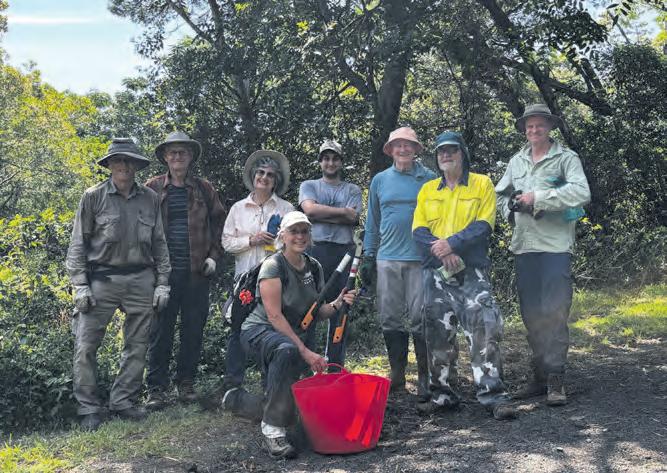
Ros Neilson, who lives in Jamberoo, is passionate about the reserve’s value as an important parcel of community land.
She hopes the formation of a Landcare group will support continued public engagement with the area, which is already well used by birdwatchers, wildlife carers and walkers.
that could thrive through the removal of weeds and native plantings.
“This Landcare project will restore a truly unique coastal place for the future.”
The first meeting of Loves Bay Landcare will be held on Saturday, 28 February.
Jerrara Dam Reserve is a 54-hectare site surrounded by farmland between Kiama and Jamberoo.
“This new group will focus on small, practical actions to support the regeneration of rainforest and wetlands in the face of ongoing weed pressure,” she said.
“The site contains valuable and endangered remnant rainforest species, and what was once Jerrara Dam has naturally evolved into a wetland that provides important habitat for migratory birds and other native fauna.”
The group’s first working bee was held earlier this month and a follow-up session
has been planned for Sunday, 22 February.
All community members are welcome to attend working bees at both sites, and no previous experience is required.
Landcare Illawarra vice chair Michael Andrews said the organisation was proud to support new communitydriven initiatives.
“At Landcare Illawarra, we’re always excited to support new grassroots groups who are taking action to care for the places they love,” he said.
“Community-led projects like these don’t just improve the environment on the ground, they also show decision-makers at all levels how much our natural places matter.
“We’re proud to support volunteers with the training, knowledge and technical support they need to make a real, lasting difference.”
Myah Garza
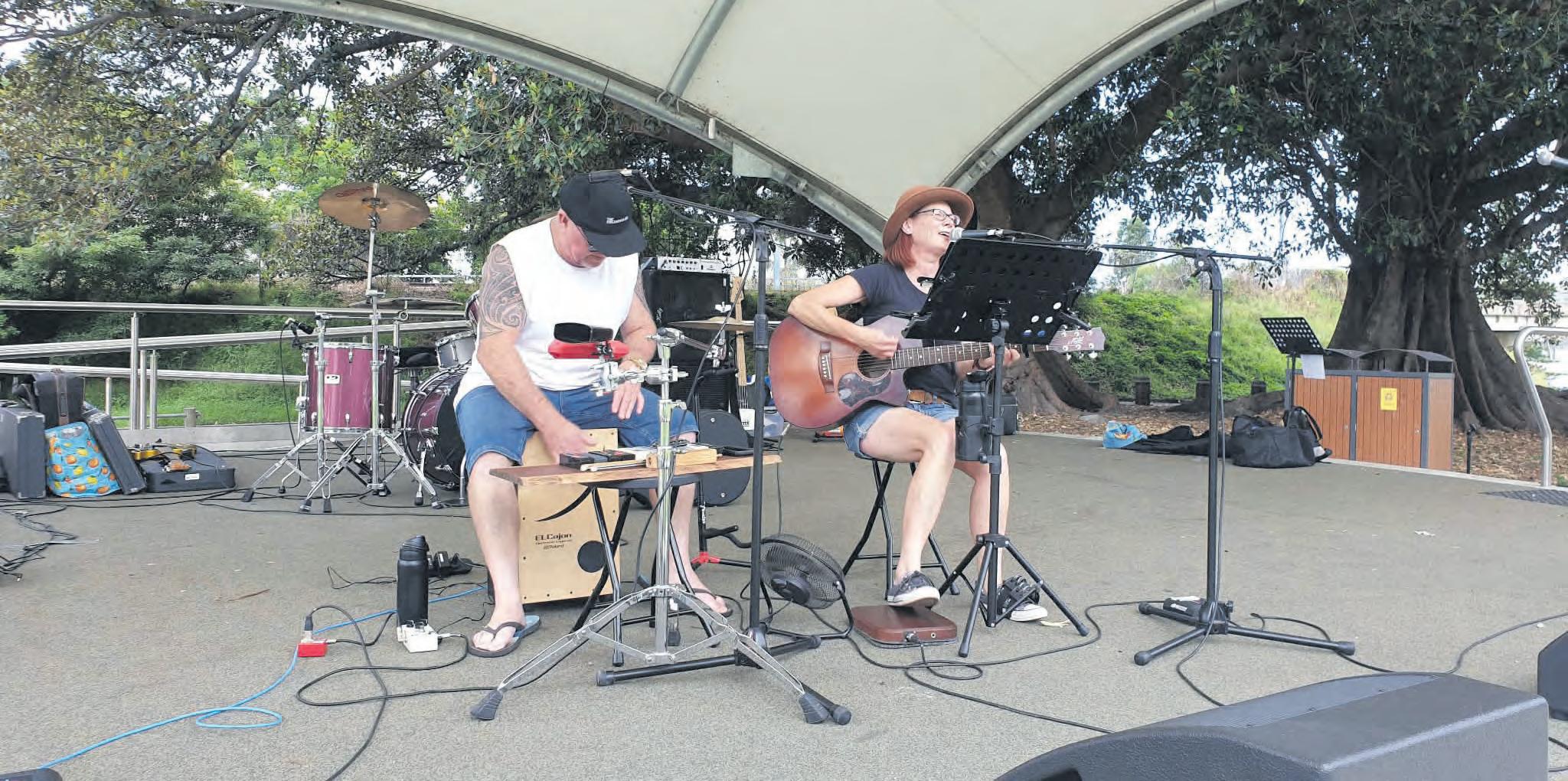
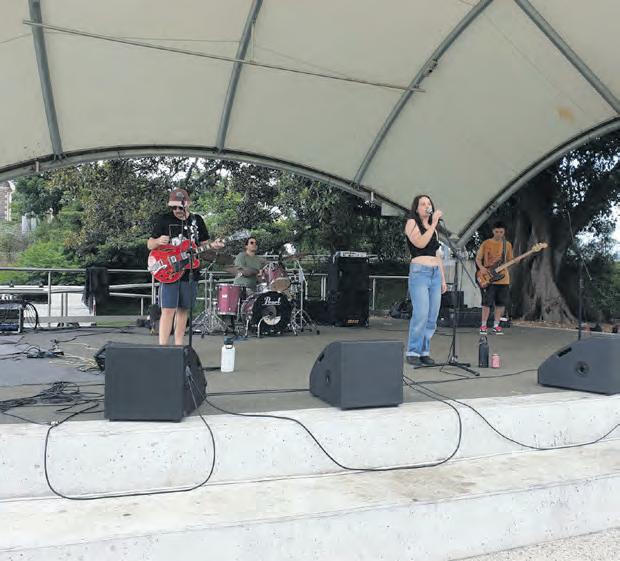
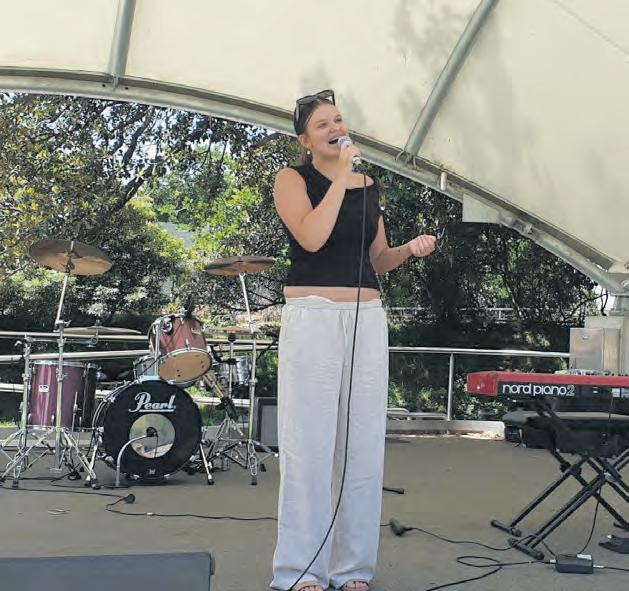
The sun was out and the vibes were high as Hindmarsh Park came alive with sound for the latest installment of Music in the Park recently.
Despite another day of sweltering heat, the event proved to be a resounding success, drawing a crowd that organiser Charlie D’Amico described as having an awesome buzz.
From the soulful melodies of 15-year-old local prodigy
Florence Johnson to the high-octane energy of the Ramoans tribute showband, the afternoon bridged the gap between grassroots talent and seasoned professionals.
While the event enjoys the support of a Kiama Council cultural grant, D’Amico is looking toward a more ambitious future.
With the live music scene struggling and artists swamped with the desire to find a stage, he has his sights set on expansion.
D’Amico envisions holding
the event four times a year on fixed dates, providing the community with a regular schedule and giving more performers the opportunity to be involved.
To transition from an occasional highlight to a quarterly staple, D’Amico is looking beyond local borders for support.
He is beginning the process of seeking further funding from state and federal government sources and intends to contact representatives Katelin
McInerney and Fiona Phillips to discuss the future of the initiative.
He believes increased frequency is essential to supporting musicians who are finding it harder and harder to secure gigs in the current climate.
Despite the success of the day, D'Amico noted a missed opportunity for the town regarding the Hindmarsh Park stage itself.
He said that the facility remains significantly underused and encouraged

other community members and event organisers to reach out to Kiama Council to make better use of the space for future events.
As the echoes of the last performance fade, the focus now shifts to whether higher levels of government will favourite into a permanent fixture of the Kiama’s events calendar.
Myah Garza
When a submarine becomes a spaceship, chaos is guaranteed.
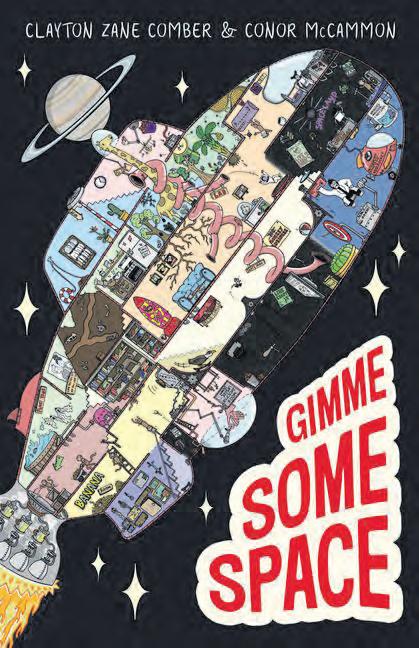
Kiama-grown author Clayton Comber and illustrator Conor McCammon are heading into outer space with their latest children’s book, Gimme Some Space, launching at The
Pavilion early next month. Published by HarperCollins, the illustrated chapter book is the sequel to The Marvellous Submarine, sending twins Poppy and Billy – along with their animal crew – beyond the sea and into space.
When mysterious moon rocks start crashlanding on Monkey Island, the pair suspect old foes The Fugitives are back at
it, prompting one bold solution: modifying Mum’s greatest invention, the Marvellous Submarine, to fly as a rocket ship.
What follows is a fastpaced, laugh-out-loud adventure that sees the crew tangled in an intergalactic heist, caught in a wild space storm, climbing the biggest volcano in the universe and encountering a space cowboy armed with a

‘Super-Duper Lasso Blaster’.
Described as a junior fiction duology that blends the anarchic humour of The Bad Guys with the imagination of The Treehouse series, Gimme Some Space is designed to be ridiculous in the best possible way.
While it’s a sequel, Comber says the story works as a standalone adventure.
“Kids don’t need to have read the first one – it’s its own story,” he said. “It’s silly, zany and all about letting your imagination run wild.”
Aimed at – but not limited to – primary school readers aged around seven to 12, the book combines short chapters with illustrations, comic strips and visual jokes, making it accessible for a wide range of reading levels.
“It’s the kind of thing where parents can read it with their kids,” McCammon said.
“We always try to sneak in jokes for the adults too – a bit like a Pixar film or a Simpsons episode.” The collaboration began many moons ago while the pair were working together at the Bookstore Café in Kiama – their early ideas were scribbled down
between coffee shifts. McCammon’s illustrations, first drawn on receipt paper, soon brought the heroes and villains to life.
“I think people pick up on the fact that we’re mates first and creators second,” Comber said. “It never really felt like work.” The duo launched their first book at The Pavilion last year and will return to the venue for the South Coast launch on March 2.
“Kiama is still very much home base for us,” Comber said. “It’s always special launching a book here.” The free, family-friendly event will include book signings, storytelling and plenty of cheeky banter between the longtime collaborators.
While Gimme Some Space includes light environmental themes, Comber says the focus remains firmly on fun and creativity.
“We want kids to feel like there are no limits,” he said. “You can do whatever you want in a story.”
The Gimme Some Space launch will be held at The Pavilion on Monday, March 2, from 6pm. Entry is free.
The Bugle is pleased to present a fortnightly feature with Kiama High School, bringing you the latest news and events from the school.
Kiama High School’s theme for 2026 is "Your choice matters - Make it count."
Principal Catherine Glover wants everyone at the school to adopt the theme to get the most out of the year.
“This is a reminder that the decisions we make each day, big or small really matter and for our students this can positively shape their learning, wellbeing, and future pathways.
“It has been wonderful to see students return ready for learning, catching up with friends and filling the school with an energy that only they can bring.”
Kiama High has welcomed Philip Reuter in Visual Arts, Sharon White-McFadden as School Counsellor (Monday and Friday) and careers adviser Jason Invernon.
The School is also reminding students that e-bikes are not permitted to be stored near buildings or structures so they are not allowed on school premises.
Glover said the school does not have a suitable facility available but “this may change and it will be communicated once it does”.
Kiama High is also making the transition to the Compass platform for student data.
Compass entered a joint venture with School Bytes, which Kiama High already uses.
Glover said the this new platform offered improved communication between home and school, and streamlines processes for students for excursions.
Upcoming events
Kiama High’s swimming carnival will be held next Tuesday (17
February), the Year 12 UOW Discovery Day is next Wednesday and the Year 7 Vaccination Clinic will be held on Friday.
There will be an opportunity for students to take part in Start Your Future short courses later this term.
These are four-week programs, running one day per week.
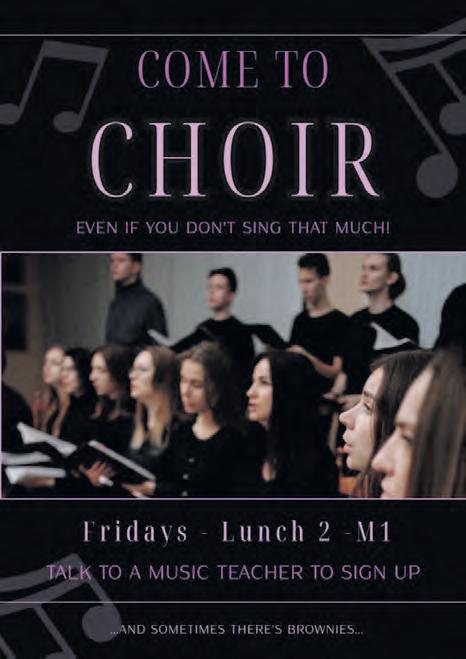
Choir is back up and running in 2026 with practice sessions each Friday at lunchtime.
If choir is not your thing but you still love to sing, the Casual Karaoke Club kicked off this term with Friday lunchtime sessions.
Students can also sign up for Kiama High’s Ensemble Band for 2026 with Friday morning rehearsals getting underway at 8am.
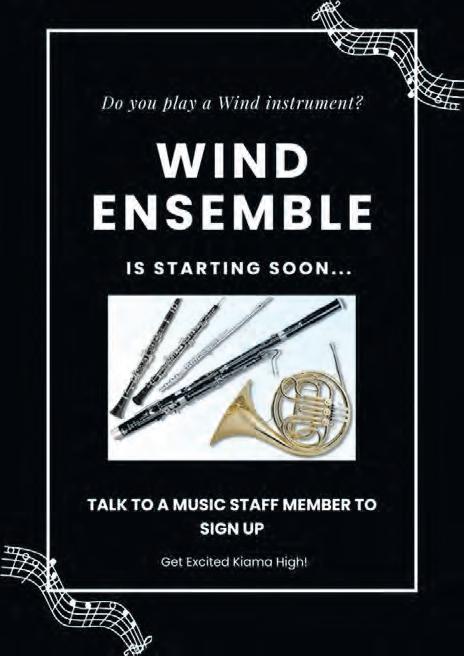
A Wind Ensemble is also starting soon and Kiama High’s music teachers are on the lookout for students who play a wind instrument.
Local artist digs deep
Kiama High School would like to thank local artist, Machteld Hali, who has generously donated a number of art magazines as well as paper and equipment for use in the art department.
These supplies will be of enormous benefit to teachers and students, who are very grateful for this donation.
Year 7-12 students are invited to register for Nintendo Switch E-Sports sessions at Kiama headspace.
Fun, friendly gaming tournaments are held, featuring popular games like Mario Kart and Super Smash Bros. Round-robin style matches are held with eight players at a time and there are prizes for the tournaments held on the second Tuesday of each month from 3.30pm-5.30pm. This is a relaxed, inclusive space to game, connect, and have fun with others in the community.



Carol Goddard
Exhilarating, humbling, spiritual: these words describe an unforgettable life experience I was so fortunate to have, and by sheer accident.
It was 2015 and for four months, 52 campsites and 22,000km, I travelled around Australia with hubby, towing a caravan.
The sights, the sounds, the smells, the vastness, the colour, the magnificence of our sunburnt country is renowned worldwide.
But it still leaves you breathless when you're in the moment yourself, actually living the dream by exploring this ancient and incredible land at your own pace.
special.
Which we had decided was going to be casual and unhurried.
There is so much to see and do and experience in Australia, and we made it a rule to take our time.
Except that, sometimes, you need to be in a certain place at a certain time, or you may just miss out on something
Which is exactly what happened to us when we arrived in Coral Bay on the Coral Coast of Western Australia one very warm afternoon in late July.
Coral Bay and nearby Exmouth are the gateway to the glorious turquoise waters of Ningaloo Reef, a UNESCO World Heritage area and the feeding destination each year of whale sharks.
These gentle creatures, the largest fish in the world, can grow to 18m in length, and are
You think that women may have tough lives today and in many ways they do.
Well, here is a story that will give you an idea of what women were up against 80 years ago.
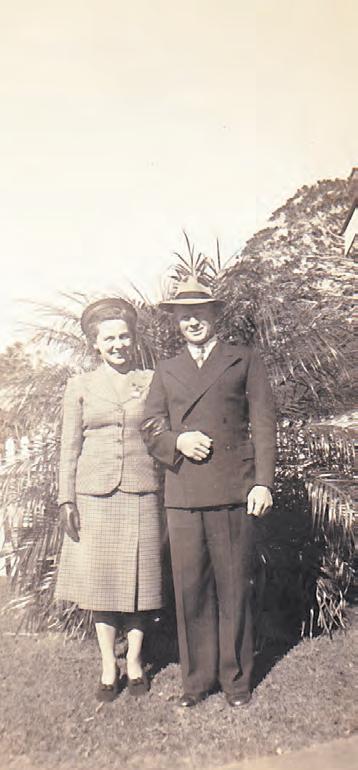
My mother, Elva Walker, as she was in 1945, had received a good education.
My grandparents could afford this as Elva was an only child.
At the outbreak of the Second World War most of the men in the Kiama local government area joined up for some sort of military service.
That meant jobs that had been traditionally done by men had to be taken up by women.
This was common around the world.
Elva went to work in the
Gerringong bank which was in the building on the western side of the road where the pedestrian crossing is now.
It was one of the highest buildings in the town.
As well as working in the bank, she also had to devote an hour a day to climbing onto the roof with her friend Helen, who was a teacher at the school.
Donning a steel helmet like the one the soldiers used, they used binoculars for the hour, trying to spot Japanese planes as a prelude to an invasion.
I know this might sound like a “Dad’s Army” story but it was deadly serious for a time during the war. When the war finished, the men returned.
In 1946 Elva received a “pleasantly worded” letter from the bank that
basically stated that, even though her work had been first class, she was now out of a job.
It wished her the very best in any career she might undertake in the future.
What career that may be is not speculated.
I was invited to a pleasant afternoon tea at The Bugle office recently and a number of professional workers from various neighbouring businesses were in attendance.
There were more women than men.
The opportunities for women these days to have a full and satisfying career in and field are so much better than the olden days. Very often women were forced to “retire” from their occupation when they got married in professions such as teaching.
harmless filter feeders, living on plankton and krill.
They are very comfortable allowing humans to be in their space, to swim alongside them.
This practice is thankfully strictly controlled by marine authorities, with only a few eco tours operating on the Reef to ensure the creatures’ safety, and that they will keep returning to Ningaloo year after year.
I'm so excited. I can't wait, I've wanted to do this forever.
Off we go to book our swim.
But taking our time in this instance had been a big mistake.
We had missed the opportunity.
The whale sharks had left Ningaloo, and would not be back for another year.
My disappointment, let alone annoyance at myself, is palpable.
But not for long.
"Would you consider", asks the tour operator who'd just broken to me his devastating news re the whale sharks, "seeking out the giant manta rays?".
Disappointment immediately evaporated like morning dew in the sun, replaced with a real sense of eagerness and anticipation.
A very quick "yes" was our response.
So the very next day, donned in wetsuits, flippers, snorkels and masks, we jumped into the cool, crystal clear waters of the Reef from our tour boat.
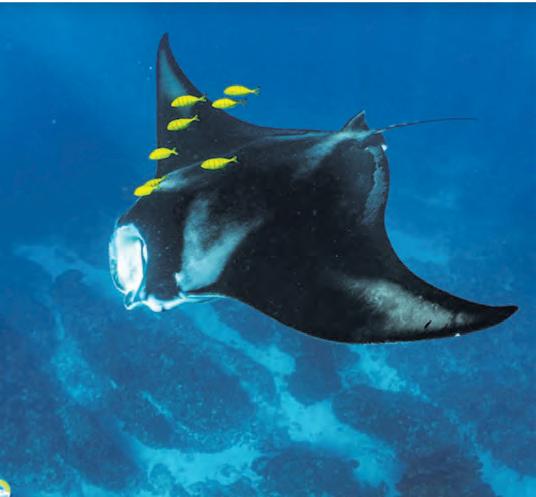
Within seconds, eight elegant black and white beauties appear, gracefully gliding through the water straight towards us.
They sweep past us, their wing spans, which can reach up to seven metres across, enormous.
Then they're drifting back towards us again, seemingly to check us out.
They float, they twirl, some appear to break the surface in majestic leaps, it's as if they're
dancing to music our human ears can't hear.
Indeed, it is a performance very like an underwater ballet. With twinkling shafts of sunlight breaking through the water, the scene is magical.
The mantas are very close to us now, very calm, their floating and cruising so poised, so effortless.
A few more turns, and then, too soon, they disappear as gracefully as they had come to us.
We stay in the water.
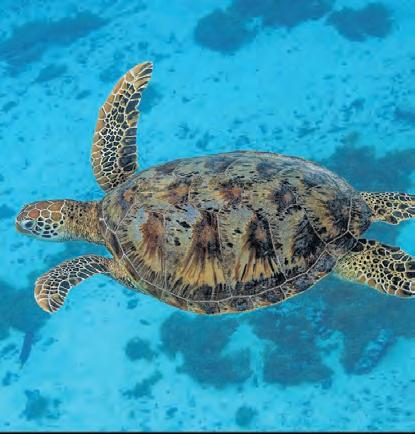
And within a short while we are joined by some very inquisitive sea turtles, who just paddle by us nonchalantly.
They play, dip and dive around us with no fear, and we are close enough to see their freckly markings, their nostrils, and beaks.
These living prehistoric creatures seem to be enjoying our company as much as we are marvelling in theirs.
Turtles haven't evolved all that much over the last 200 million years, but they're living relics, remarkable survivors.
And we have been lucky enough to interact with some of them in their natural environment, if only briefly.
Hauling ourselves back into the boat, with pruney fingers, salty skin and chattering teeth, we're revived by hot drinks and cakes, before the time comes to head back to shore.
Excited conversations revolve around each swimmer's personal experience, how amazing the whole adventure was, how cold the water was, but above all, how elated everyone was feeling.
For those of us who love the natural world, and more especially, the sea and its creatures, what we'd done today was for all of us a life highlight.
And swimming with those whale sharks?
Watch this space - 2026 may be the year I have another crack.
Passed away peacefully on Tuesday 10th February 2026.
Beloved husband of Diana. Dearly loved father and father-in-law of Gillian, Gavin and Clare. Loving Grandpa of Daniel, Nicholas, Alison, and Rachael. Roy will be sadly missed by his loving family and many dear friends here and in the UK.
Aged 92 Years
Sailing
Relatives and friends are invited to attend Roy’s funeral service to be held at H.Parsons Funeral Home, 125 Manning Street Kiama on Friday

Amy Molloy
For the thousands of people who visit Kiss Arts Festival every year, Tamara Campbell is best known as her alter ego, “Kiki Bittovabitsch the Hilarious Humanitarian”, with her quirky style, penchant for pink and love of double entendres.
Off stage, Campbell is an entrepreneur and the cofounder of Kiss Arts Festival — and she is not immune to the stress and strain of the events industry.
The Kiss Arts Festival, which has taken place in Kiama every year since 2013, was postponed last year.
“We moved it back to April 2026 because of the busyness of the October period,” says Campbell.
And then there’s the small matter of money.
“There are two elements,” she says. “It’s not just [government] funding - it’s also about ticket purchasing. Post-COVID, people do everything last minute and it’s very nervewracking and unsettling. That’s reason one why events get cancelled.”
For Kiss Arts Festival 2026, which runs from 2426 April, Campbell and cofounder Dave Evans are planning a “compressed but definitely vibrant” comeback.
This year, it will still run over three days, but with reduced hours and locations.
Campbell describes it as a “best of” program.
“You’ll see a really great mixture of old faves and new and different,” she says.
Highlights include laugh-out-loud street entertainment, a lanternmaking workshop and the iconic raft race, setting off from Black Beach at midday on Sunday. (Registrations are now open.)
In addition to the adultsonly cabaret, there’s a bonus event - an “interactive trivia night” on 27 February from 7 to 11pm.
“I’d like to thank Kiama Surf Club for donating the building and letting us run the bar there,” says Campbell. “We encourage you to put a team together, book your tickets and make a night of it.”
At the time of our interview, funding from Kiama Council had not yet been confirmed, but Campbell was hopeful.
If any local businesses wish to sponsor events, she says, their donations would be welcomed.
“Please do support this iconic, free community event, because they’re dying off,” says Campbell.
“Personally, you can be a sponsor just by buying a ticket and coming to these events.”
Since the festival began over a decade ago, the demographic of Kiama has changed significantly.
“The original Kiss crowd - their kids have grown up,” she says.
“There will be a whole lot of new people in this town who don’t know what Kiss is.
“If you’ve never been, you don’t know what you’re missing.
“Human connection, community spirit and shared joy is what the world needs right now.”
To book tickets or to get further information about the festival, visit kissartsfest.com.au



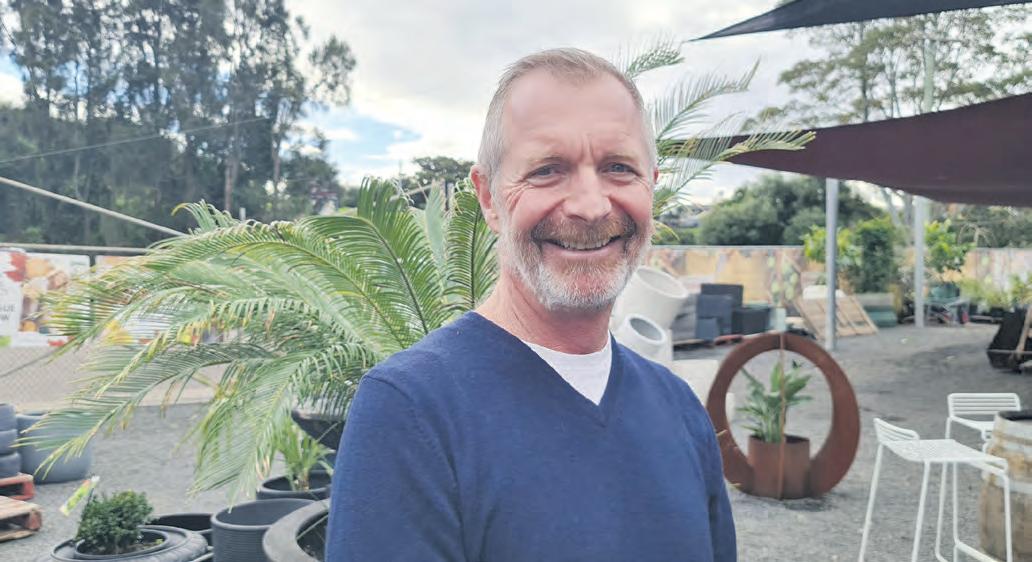
As we come towards the end of summer, I always notice the same thing in gardens.
A lot of perennial plants start to get a little bit tired, and it’s the same with a lot of our annual displays. They’ve given us a great show, but by now they can look a bit worn out.
The good news is there’s one way that you can actually resurrect your plants so that you can get another burst of color out of them as we move into autumn.
A gorgeous little Marguerite Daisy, for example, can start looking a little bit worse for wear at this time of year.
But all we need to do is come in and really just give the plant a decent haircut. Yes, we’re going to sacrifice some flowers on there.
But that doesn’t matter, because in a matter of weeks, the plant is going to bounce back.
You’ll have all this lovely new growth, and you’ll end up with a second flush of flowers
coming through, probably around about March, April.
It’s very easy to do. Don’t be afraid of cutting these ones back.
The Marguerite Daisy is one of my favorites in landscaping. It grows to about a metre tall.
Sometimes they’re referred to as one-year wonders, because they often only last a year.
But they’re great because they grow so fast and they fill holes within the garden. If you find you’ve got a spot where there’s something that won’t grow, or you’ve lost a plant, why not look at putting in a Marguerite Daisy?
And again, don’t be afraid to prune it back hard. Once it’s finished flowering, it’s going to regenerate for you.
The same thing applies to a lot of these perennials. Your salvias might be looking a little bit worse for wear after coming through the heat of summer.
A simple process – just get in there and cut them back by at least a third, up to a half – and they will regenerate again.
The same goes for lavender, which is a stunning little plant. It does respond very, very well to pruning, but most people forget to prune it.
When do they stop flowering? It can be hard to tell. You’re going to have to sacrifice a few flowers, but we can come down and take off roughly a third, maybe a little bit more. The one thing we don’t want to do is go back into the older wood on our lavender, because it does take some time to regenerate.
Regular pruning, immediately after flowering, means you’re going to get another flush of flowers. So don’t be afraid to get out there this weekend and tidy up your perennials and your annual plants. Prune them back. You’ll get another flush coming through. As we move into autumn, they’ll come good.
And remember – plants are very forgiving. Don’t be afraid to cut them.
Rising Tide Exhibition Fri 13 Feb
Seven Marks Gallery
Works by Alexander Boynes featuring a major drawing, painting, and moving-image collaboration.
Create & Sip:
Valentine’s Love & Connection Workshop Fri 13 Feb, 7pm-9pm Gadhu Meeting Room, Shellharbour Civic Centre
Guided by Michelle Springett, you’ll work side by side to create an artwork together.
Valentine’s Day at Bella Char Sat 14 Feb, 5:30pm-8:30pm Bella Char Restaurant and Wine Bar
Celebrate Valentine’s Day with a memorable dining experience and set menu.
Valentines DayYves Social Sat 14 Feb, 2pm-4pm Yves Social, Kiama
Afternoon of bottomless margaritas, food and a DJ
Kiama Textiles Group Meeting
Sat 14 Feb, 10am-12:30pm Kiama Library
Every second Saturday of the month, creating art with the group
Music workshop: Regional Sessions Kiama
Mon 16 Feb, 9:30am-7pm Kiama Pavillion
Offering keynote speakers, workshops, panel discussions, live performances and networking opportunities.
Generation Women
Australia: On The Road Tue 17 Feb, 7pm-9pm Filmore’s Kiama
Stories that Celebrate the Elder Women in our Lives Berry Comedy Gala
Thu 19 Feb, from 7pm Berry Hotel
Three of Australia’s most entertaining comedians hit the stage for an evening of stand-up.
A Day Well Spent Music Event
Thu 19 Feb- Sun 22 Feb
Multiple venues
A four-part, multi-venue live music series
Paint n SipMargaritas & Masterpieces
Fri 20 Feb, 6pm-8:30pm Georgia Rose Shell Cove
Kick off the night with a margarita, then dive into a painting inspired by Mexican Culture.
THAT. Skate Park with STÜM Sat 21 Feb, 2pm-7pm Kiama Skatepark
Transforming the park into a dance floor with live music
The Simple Gift of a Bag
Thu 26 Feb, 9:30am-1pm North Kiama
Neighbourhood Centre Sewing workshop and morning tea
KISS Arts Festival Fundraiser
Fri 27 Feb, 7pm-11pm Kiama Surf Club
Fundraiser night of trivia, musical bingo, performance and surprises to support the KISS Arts Festival Kiama Sevens
Sat 28 Feb, 7am-6pm Kiama Showground
44 teams competing, come for a great day of footy, fun, and frivolity Clash of Steel
Sat 28 Feb, from 6pm Unihall, University of Wollongong
Featuring trained fighters competing with real steel weapons inside a steel cage
Kiama Sounds of Jazz and Blues Weekend
Fri 6 Mar-Sun 8 Mar
Multiple venues
Local venues come alive with smooth jazz, soulful blues, and great vibes Open Day – Cedar On Collins
Thu 12 Mar, 9:30am12:30pm Cedar On Collins, Kiama Explore the living experience on offer to residents.
Gerringong Anglican Church Explorers to Lucas Heights
Thu 19 Mar, 8:30am3:30pm Lucas Heights Nuclear Facility
Excursion with guest speakers from Australia’s Nuclear Science and Technology Organisation
Expressive Art Retreat Fri 20 Mar- Sun 22 Mar Golden Ridge, Yellow Rock A weekend of Art & Bliss! Unlock your inner artist YOHKA™ KIAMA 28-29 March
Kiama Showground
Whether you’re racing for a podium, tackling the course for fun or soaking it in from the sidelines - this is fitness entertainment that you don’t want to miss.
Berry Quilt Show Fri 1 May-Sun 3 May Berry School of Arts Bi-annual Quilt Show with raffles and challenges

Myah Garza
Tucked away in the corner of Kiama, just one kilometre from the train station, sits a skate park many locals know well – a concrete maze of ramps, rails and colourful graffiti that once hosted skateboarding competitions and now serves as a popular hangout for young people.
For one night only, it will become something else entirely, transforming into a venue Kiama has never seen before.
On 21 February, Kiama Skate Park will be converted into a full-scale electronic music venue as local events brand THAT. takes over the space, turning concrete bowls into dance floors and grind rails into viewing platforms.
The event will feature a massive scaffold stage, two towering scaffold structures running through the centre of the park, and an immersive sound and lighting setup designed to complement the skate park’s industrial aesthetic.
A three-level viewing



platform along the western edge will offer partygoers a bird’s-eye view of the action.
Founder of THAT., Dylan Morris, said the skate park had been part of his vision since the very beginning of the brand.
“Before I even threw my first event, this skate park was the end goal,” Morris said.
“I wanted to create that night – something people talk about and remember.”
Morris, who grew up in Kiama and started DJing at 18, said the idea grew from his frustration with the town’s limited nightlife.
“We’ve always had to go to Wollongong for a night out,” he said.
“It’s a 40-minute train ride every weekend. I wanted to bring something here, especially for the new generation, so they don’t have to leave town just to have a good night.”
Since launching THAT. two years ago, Morris has staged multiple pop-up events across Kiama, Wollongong and surrounding areas, filling surf clubs, bowling clubs, town halls and even a warehouse in Berry.
His first event sold out with 150 people, followed by another one just days later that doubled in size.
The skate park event is by far his biggest undertaking.
The line-up – which Morris said cost around $50,000 – is backed by Red Bull sponsorship, with a dedicated Red Bull DJ car, shaded chillout zone and a second stage planned for the park.
Food vans Amigos and Olachola will be on site, alongside the Henry Clive Bar. Facilities include disabled access, public toilets and parking.
The event will feature highenergy electronic and techno music, aimed primarily at an 18–30-year-old audience, though Morris said it is open to attendees outside that age range. Performers include STÜM ft. Bella Claxton, Little Fritter and Ned Bennett.
“It’s kind of the new rock and roll,” Morris said. “If you look at festivals now, electronic music is what’s selling out. That’s the crowd we’re bringing.”
Tickets are priced at $90, with organisers saying only around 10 per cent remain.
While many are excited to see Kiama host a large-scale nightlife event, many young people in the area say they felt frustrated and disappointed, after initially being thrilled by the announcement.
“My son and his friends were excited at first, until they saw the age limit and the price,” one local mother told The Bugle. “The skate park is where they meet up with their friends – a place that gives them a sense of belonging –and now they feel shut out.”
She said many young people would like to see a similar event without the age restriction and high ticket cost.
Despite this, Morris hopes the event marks a turning point for Kiama’s nightlife.
“I want to show there’s another side to this town,” he said. “If we can build trust with the community, maybe this opens the door to more regular events – even a nightclub one day.”
The skate park will return to normal the following morning, but the conversation about Kiama’s nightlife is likely to linger.

Join us for a morning of socialisation and crafts
Every Monday Every Monday it’s more than just an artistic hobby
9am-11:30am at kiama uniting church


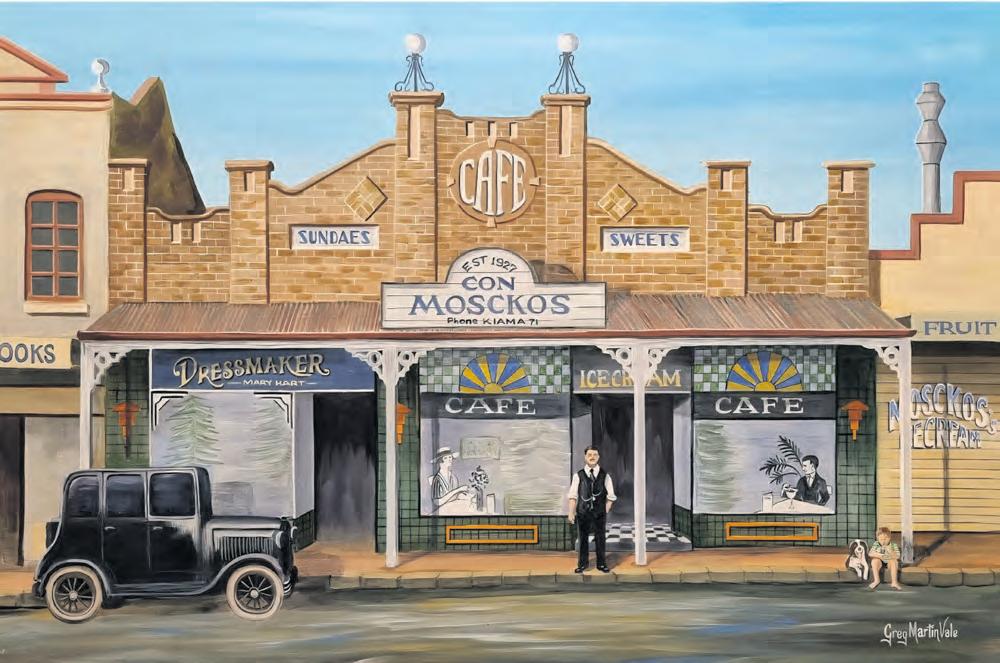
About time we ended the Population Ponzi scheme
As the stars are realigning I write to make a few observations on the Australian political scene.
As the author of the Adventures in Climate Change series, readers will know my interest in population.
I place the failure of governments to have a formal sustainable population policy at the centre of the changing political galaxy.
To be clear, this policy should be non-racist.
For well over a decade robust credible public opinion polls have consistently shown a majority of our multicultural society say we have excessive population growth.
That same multicultural society makes fertility choices that are well below replacement levels, a trend in many developed countries.
Yet federal governments of both persuasions have pursued high population growth through immigration with a zeal.
Australia has one of the highest population growth rates for developed countries.
This strategy is increasingly described as a Ponzi scheme.
We are now seeing major disruptions.
The federal Government was elected with a low 34.6% primary vote.
The trend of major party decline continues with independents and minor parties achieving 33.6%, out-polling the Coalition on 31.8%.
A situation not seen for seven decades.
Subsequently the Coalition vote has collapsed and now there are tantrums that may lead to a long term separation.
Some commentators are
predicting new political parties. Immigration is a key battleground.
The Government continually ignores the demand side. It’s all about increasing supply.
For example, the housing crisis. For many with low incomes or large mortgages this leads to a cost of living crisis.
How much more difficult and expensive is the transition to renewable energy due to the rising population? We never hear a word about that. It’s Economics 101.
Citizens’ frustrations have over-flowed into public demonstrations.
Groups with policies that have racist themes have been quick to leverage these frustrations.
Laws have been changed reducing freedoms.
The opinion polls show One Nation in the ascendancy, although still well below the level where it might form government.
National government is a complex beast.
But the Population Ponzi, out of step with the national sentiment, is a common theme in many short and longer term significant issues.
The nationally derived, state-mandated housing targets, relying on an industry that doesn’t have the capability or capacity to deliver, are but one expression of the impact.
As seen in Kiama. You don’t have to go far to hear vested interests calling out for more.
The failure of leadership to acknowledge the sentiment risks national division. Winding up the Population Ponzi scheme will take decades.
Like with climate change, the sooner you start the better.
Ray Johnson, Kiama
Greg Martin Vale
Having had no car for a week, l enjoyed a stroll around Kiama’s award-winning little town centre, seeing many facets of what makes life here so special.
Kiama has quite a few heritage listed buildings. However, there are many examples of neglect.
The old police residence in Terralong st is now a sad example of such a structure.
The gutter is just about to fall off.
The grass is way overgrown and the building, in the main street of town, offers a real
“don’t care” look.
This old, mid 1800s residence is far too special to end up this way.
Its current condition would not suit the proud Council of nearby Berry and it’s not good enough for Kiama.
Further up Terralong Street stands the once wonderful 100-year-old Greek milk bar, "The Mosckos Cafe", which is now a newsagency.
The facade of this 1920s building still offers a wonderful chance for a visionary owner to bring real charisma to the town with a faithful reinvention and celebration of the original architecture.
This is a reimagined
painting of the original cafe in its heyday that l did recently as a reminder for the Mosckos family history.
Sadly, one of the 100-yearold glass pedestal ball lights above the facade, is about to be blown away in the next big Kiama gale.
Once gone, it will possibly never be replaced. Wouldn't it be wonderful for the town and the building's owners to respect our history and let these very special old mid-town components breathe again with new vision?
The old building still has the original brick facade. What a revelation it would be to see it like this again.

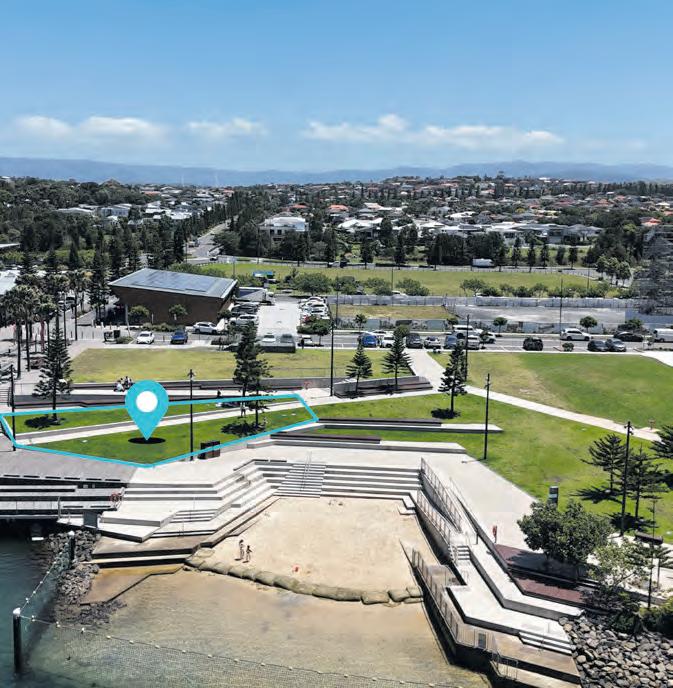
Myah Garza
Shellharbour City Council is calling on residents to have their say on a new playground planned for the Shell Cove foreshore, with feedback now open on two proposed concept designs.
The playground will be delivered by Frasers Property Australia as part of the Shell Cove partnership, with Council leading community engagement to ensure the final design reflects local needs and priorities.
Following community feedback on green space in October 2024, Council has prioritised retaining open, grassy areas while delivering a family-friendly play space close to the kids’ beach.
The proposed playground will include a mix of active, imaginative and inclusive play elements for children of all ages, along with seating, shade and picnic areas for families.
Residents are invited to review two design themes: Concept 1, inspired by the
nearby ocean environment, and Concept 2, drawing on the natural features of the Bushrangers Bay Aquatic Reserve.
Shellharbour City Mayor Chris Homer said playgrounds play an important role in bringing the community together.
“Playgrounds aren’t just for kids – they’re the heart of our community, where families relax, neighbours meet and everyone gets to enjoy our open spaces,” Cr Homer said.
“We’re excited to hear what the community thinks and look forward to creating a space where imagination and fun can thrive.”
Community members can view the concept designs and provide feedback through Council’s Let’s Chat platform, with QR codes also available on on-site signage at the foreshore.
Feedback is open throughout February as Shellharbour City Council will use community input to help guide the final playground design.
Minnamurra Lions have entered an exciting new era, celebrating their inaugural official dinner meeting at the Kiama Golf Club.
This special evening featured a keynote presentation from Jenny Barclay, District N2 instructor for the Lions Eye Health Program (LEHP).
Jenny’s talk emphasised the critical importance of early detection vision screening and described the increasing momentum behind the LEHP initiative throughout the Kiama–Shoalhaven region.
During the event, Minnamurra Lions confirmed their commitment to community health by announcing their upcoming participation in the next LEHP children’s vision screening.
This screening is scheduled for 1 March at
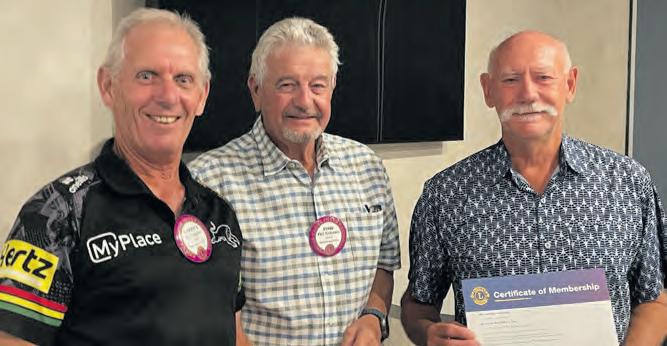
Kiama Surf Life Saving Club.
The club’s involvement in this initiative underscores their ongoing dedication to supporting local families and strengthening healthfocused community projects.
John brings wealth of knowledge
The evening was marked by the induction of John Dawson as the newest member of the Minnamurra Lions.
John is a long-standing resident of the Kiama Downs and Gainsborough area and
brings a wealth of experience from his distinguished career in education, including many years teaching at Kiama High School.
He is also renowned for his extensive community service record.
John’s volunteer contributions span numerous local sporting groups, such as the Kiama Cavaliers and the Kiama District Sports Association.
His commitment to the community has been recognised with a Kiama
Council Local Government Award and the honour of being named Kiama Municipal Council Senior Citizen of the Year for 2025–2026.
In his address, John said he and his wife are “deeply entrenched in the area” and have a strong passion for “giving back to the community”.
Future looks bright
Minnamurra Lions president Dennis Beyon reflected on the significance of the evening, stating that it established a solid foundation for the club’s future.
“With new members, new partnerships, and new opportunities to serve, Minnamurra Lions is building real momentum.”
For more information about the Minnamurra Lions, visit their website at https:// minnamurralions.org.au/
A short story by Jenny England
Sara wasn’t sure what woke her; maybe the eerie flash of light outside her window or the fierce rapping on her front door.
It was earlier than she normally rose, but she jumped up, grabbed her dressing gown and went to find out what was going on.
Through the peephole in her front door she spied a man dressed in a strange black uniform.
She didn’t recognise him, so cautiously opened the door leaving the security chain attached.
“Sara Smith,” he asked.
“Yes,” I slowly replied.
“I need to speak with you urgently! The future of mankind depends on it.”
Sara was at first bemused but having a somewhat curious and audacious nature, she warily let him in.
“It’s an authorised visit,” he began, flashing an identification badge with a photo and an official
signature.
“I’m from the future. 2288 to be exact. I’m here to avert a major catastrophe that is destined to wipe out human civilisation. It all depends on you. My team has traced a chain of events that once began will be irreversible.”
“Me?” Sara queried. She was baffled, somewhat confused, a little overawed but curious about the notion.
He nodded and began to explain. “Yes. It begins after you are involved in a bicycle accident wearing a yellow dress.”
“I don’t ride a bicycle.”
“But do you have a yellow dress?”
“Yes, it’s my favourite,” she sighed,
“Then you must never wear it again. If you don’t comply with this official directive I am authorised to take drastic action,” he continued, tapping a bulging gun strapped to his hip.
“I am a very patient man but this is not something that calls for inaction.

Sara, still startled and a little sceptical, simply nodded and showed him hastily out the door.
She hurried back to her bedroom, retrieved the yellow dress from her closet and placed it on her bed. How could she never wear it again? Her favourite yellow dress! The future of mankind?
Suddenly her phone rang. Sara knew straight away it was Alice, her bestie.
“Hi, have I got something weird to tell you. Yes, we are still meeting for coffee. At that new café, Bean Roasted next to the bicycle shop. No worries. See you there at 9.”
She immediately hung up looking forward to sharing the strange events of the morning.
She stood for a few minutes to ponder her predicament. He had not actually explained the timing of this disastrous event and since she rarely had anything to do with bicycles; she decided to wear it just one more time and simply take precautions around bicycles. She jumped into the shower sure she could get away with one more day wearing her beloved yellow dress.
She slipped out, dried herself then began pulling the dress over her head.
But before she had time to button it up she saw that eerie flash of light out the bedroom window again.
Within seconds she then heard the thud of her front door crashing to the ground. “Shit!”




1 BELINDA STREET, GERRINGONG NEW SOUTH WALES 2534 0405636316 | FURBABIESFARM@GMAIL.COM We







Lleyton Hughes
Gerroa will take centre stage in Australian windsurfing when the 2026 Severne East Coast Titles arrive at Seven Mile Beach on February 21-22, marking the grand finale of the NSW Wave Sailing Association season.
Initially scheduled for 14-15 February but postponed due to weather conditions - the event comes amid renewed momentum for the sport locally and nationally.
Last week, Gerroa hosted a NSWWSA Youth Wave Sailing Camp, drawing more than 20 young sailors from across the state, while internationally the profile of windsurfing has surged following 17-yearold West Australian Sarah Kenyon being crowned Junior Girls’ Wave World Champion.
For local sailor James Hayward, who will line up in the amateur division, the event represents a personal milestone and a celebration of the sport’s unique culture.
“I’ve been windsurfing since I was 13, and I’m part of a generation that saw this sport explode in the ’80s,” Hayward said. “What keeps me coming back is the camaraderie - and
Shellharbour put a dent in Bomaderry’s South Coast cricket finals hopes with a 41-run victory at Artie Smith Oval on Saturday. With four rounds left before the finals, the Tigers are now nine points adrift of fourth spot in sixth position while the Harbour have retained a share of second alongside Bay and Basin.
Six Harbour batters made 20 but no one kicked onto a half-century in their total of 8-206 with Tigers seamer Daniel Troy (3-43) the pick of the bowlers.
Bomaderry were travelling nicely at 1-88 but the loss of Jarrod Mitchell (33) and Luke Jones (37) in quick succession triggered a collapse and they were all out for 165 under the onslaught of Beau Chamberlain, who bagged 5-57. Kiama celebrated their 170th anniversary weekend with a low-scoring home win over Oak Flats.
They were bowled out for 147 after teenage seamer Sam Huetter (4-28) and allrounder Zaied Bin Khalid (3-27) did the damage for the visitors.
But the Cavaliers attack combined brilliantly with Brad Ison, Glenn Cleary, Adam Ison and Joe Burgess taking two wickets apiece to win by 49 runs.
Lake Illawarra reinforced top spot by cruising past lastplaced Ex Servos. Allrounder Jake O’Connell picked up 5-6 as Ex Servos made 135 on the back of Chris Buckley’s 58.
O’Connell completed a fine performance with 86 not out off just 37 deliveries, with six fours and eight sixes, as the visitors reached their target in the 18th over.
Dolphins captain Tom Dolby top-scored with 53 as Bay and Basin posted 173 before bowling Albion Park out for 116.
New-ball pair Cooper Bramley and Jason Moschioni bagged three wickets each as North Nowra Cambewarra rolled the Kookas for 108 and then chased the target down with six wickets and 32 overs to spare.
This Saturday, Lake head south to play Bomaderry, North Nowra host Ex Servos, Albion Park are away to
Kiama, Shellharbour and thew Kookas play out their local derby at Scout Willoughby Oval while Bay
The Lakers got off to a strong start but after Dovern was out for 29, they fell away to finish on 9-85.
now the real thrill is seeing the new blood coming through.”
Hayward said the mix of generations on the water is what gives the amateur division of the East Coast Titles their distinctive feel.
“You’ve got guys like Stuart Rennie, who only started five years ago and is already ripping world-class waves in Hawaii. That progression, and the way everyone supports each other, is what makes this event special.”
Gerroa is widely regarded as the spiritual home of wave sailing in NSW, with its reliable north-easterly sea breezes providing ideal crossshore conditions for highperformance sailing.
“The summer NE winds here are what everyone hopes for - cross-shore power, proper ramps for jumps and great down-the-line wave riding,” Hayward said.
“It’s also just a postcard location. When conditions line up, there’s nowhere better.”
Hayward said the competition field is stacked with elite talent across multiple divisions.
“The Open Men’s fleet includes Logan Haggerstrom,
Peter Puhl, Tom Squires and Duncan Osborne, all known for pushing the limits with radical wave riding and aerial moves,” he said.
“In the Women’s division, Laurie Menviel is again expected to shine, while the Masters division features world-class experience, including Pacasmayo Classic World Cup holder Adrian Levy, NSWWSA president Jason Juretic and veteran Oliver Barta.”
While the event carries International Windsurfing Tour (IWT) 2-Star status and world ranking points, organisers say the heart of the weekend remains firmly rooted in community.
“For locals, it’s a moment of pride to see our home beach transformed into a worldclass stage,” Hayward said. “There’s a real sense of tribe here - you’re competing hard, but you’re also sharing waves, stories and time with mates.”
Spectators are encouraged to take in the action from the Black Head Reserve headland for a bird’s-eye view, or from the beachfront near the Seven Mile Beach Holiday Park, where the event hub will be set up.

Kiama first grade moved a win clear of fifth place with a strong partnerships then steadied the innings. Captain Jaya Hartgerink (21), Ryan Butta (30) and Nathan Barr (33) guided the hosts into a promising position at 6-139. Kiama were dismissed for 147 after 45.4 overs. Tight bowling and regular wickets saw the Rats slump to 98 all out from 38.1 overs. Wickets were shared evenly, with Brad Ison, Adam Ison, Glenn Cleary and Joe Burgess each claiming two.
Despite a century from third grade captain Sheldon Hall, who scored 100 off just 83 balls after a dropped catch midway through his knock, Kiama’s total of 190 from 40 overs proved insufficient as Jaye Jackman’s remarkable 100 from 49 balls powered the Rats home in 26.3 overs. In fourth grade, a “youthful side” lost to Gerringong at home. The young Cavaliers struggled with the bat, managing just 67 from their 35 overs, with Riley McCrone (25) the only player to pass 20. Gerringong reached the target in just 11 overs.


The Illawarra Hawks will be playing for pride in their final three matches of the NBL season after their title defence ended in Auckland on the weekend.
After keeping their playoff hopes alive with a thrilling 10099 home win over Adelaide on Thursday night, they suffered an 11-point loss to the Breakers on Saturday.
New Zealand leapfrogged the Hawks into seventh spot and with an 11-19 record, the champions can no longer qualify for the playoffs even if they win their remaining three fixtures.
After breaking the franchise’s 25-year wait for a second championship last season, the hot-and-cold campaign never got out of first gear.
Hawks coach Justin Tatum
was disappointed with the way they struggled from the outset against the Breakers despite knowing their playoff dreams were on the line.
"It wasn't what I expected from my team," he said.
"Felt like we should have played with a sense of urgency.
“The inconsistency of this group has been a little frustrating here and there, but we have a great group of guys in that locker room."
The Hawks trailed 7-2 after an early Breakers blitz and the home side’s three-point shooting put the visitors on the back foot with NZ taking a 61-50 lead into the half-time interval.
Tatum rolled the dice on a smaller line-up, benching star centre JaVale McGee for the entire second half despite his tally of 15 points and seven
Approximately 2,000 people packed into Jamberoo over the weekend for the 26th annual Jamberoo Sevens football tournament - and not even the rain could put a damper on the fun.
Beginning on Friday evening and wrapping up on Saturday night, 90 teams competed in more than 150 matches across seven divisions.
“Games flowed, results were updated live, and the finals program wrapped up on Saturday evening without delays,” said Jamberoo Football Club president Alan Smith.
“We were also extremely fortunate with the weather. Storms rolled through early Friday afternoon and returned again on Saturday night, but the competition itself slotted neatly in between.”
Once again, the weekend proved a highlight for teams travelling long distancesparticularly a Brazilian team that has made it a tradition to return each year.
“The word we heard again and again was ‘stunning.’ Teams arrived, set up camp, looked around the valley and simply said, ‘How good is this place?’” said Smith.
“One long-standing Brazilian team, who have travelled to Jamberoo for

many years, described the drive down through the valleys - the moment the fields open up, the air, the colour, and the sense of arrival.
“For them, Jamberoo isn’t just a venue; it’s a place of inspiration and emotional connection - somewhere they feel drawn back to year after year. That sentiment was echoed right across the weekend.”
While the tournament isn’t solely about winners, friendly rivalries and the chance to etch names into Jamberoo Sevens history are always part of the appeal - and this year just one side managed to successfully defend their title.
“The football was outstanding,” said Smith.

This year’s champions were:
Men’s Open: Young Guns Canarinhos
Men’s O35: Jamberoo Pub
Men’s O45: Legends Canarinhos
Men’s O55: Leroys Rejects
Women’s Open: Navy FFA
Women’s O30: Undecided
FC
Women’s O40: Loftus Rovers
“Only one team went backto-back this year - Jamberoo Pub in the Men’s O35swhich really underlines how competitive and unpredictable the sevens format is.
"There were also genuine underdog stories, particularly
in the women’s and masters divisions.”
After another successful year, Smith is already looking ahead.
“We’re already planning for 5 and 6 February next year. With so many teams keen to return, the event could grow again, and we’re exploring additional pitch options to allow more games to run concurrently,” he said.
“At the same time, we’re very conscious of protecting what makes Jamberoo Sevens special - the setting, the community feel, and the balance between serious football and genuine enjoyment.
"Growth is welcome, but only if it strengthens that identity.”
rebounds in the opening two terms.
Todd Blanchfield and Tyler Harvey (who finished with 19 points apiece) started heating up in the third quarter and after they had trailed by as much as 16, they trimmed the gap to 84-80 by the start of the fourth term.
QJ Peterson made it a twopoint game soon after the start of the final quarter but then fouled out, taking a bloodied eyebrow up the tunnel.
Davo Hickey fell one assist shy of a triple-double, recording 14 points, 10 rebounds and nine assists but the Hawks faded down the stretch to go down by 11 with the Breakers keeping their faint playoff hopes alive.
The Hawks return home to WIN Entertainment Centre on Friday night for their final home game of the season
against Sydney, looking to make up for the disappointment of missing the playoffs by beating their fiercest rivals.
In better news for the Hawks, the federal government has granted Harvey permanent residency and the club will continue to support their cocaptain and his family as they work through the process of becoming Australian citizens. Harvey’s permanent residency places him on track to be eligible to play as a local player in the NBL from the 2027–28 season, subject to league confirmation.
Since arriving in the Illawarra ahead of the 2020–21 season, Harvey has become one of the most influential figures in club history, a two-time All-NBL First Team selection (2021 and 2025) and one of the league’s most reliable guards.
The Kiama and Shellharbour District Tennis Association men's night competition got underway last week with 46 teams representing six local tennis clubs.
The bulk of the teams are from Kiama (16) and Jamberoo (12).
Five apiece are from Gerringong and Minnamurra with three from McDonald Park in Albion Park Rail.
There are six divisions with Division Five broken into two groups.
Kiama and Jamberoo are frontrunners for the number of winning divisions but the overall strength and standard is quite high.
Bob Morgan, Bill Summerside and Mick Puglisi (Kiama) alongside Paul Berry, Dave O'Connor and Peter Quine share favouritism in Division 3.
In Division 1 all teams are in the mix and it will be a very closely contested competition.
The Kiama 2 team of Jason Clark, Richard Welsh, Jeff
Brown and Darren Johnston are marginal favourites ahead of the Kiama 4 team of Dave Lehman, Frank Wallner and "young gun" James Cain. It will be very interesting to see how the McDonald Park Division 1 team performs with Harrison O'Keefe, Tom Howle and youngster Hayden Sleigh. Hayden is aged 14 and is a KSDTA top junior who recently won the Champion of Champions singles event at Ulladulla and followed that up with a strong performance in the recent state finals at Penrith.
Kiama and Shellharbour district is one district that is "bucking the trend' in relationship to tennis competitions.
Canterbury-Bankstown, one of the larger Sydney metropolitan districts, has no night competitions.
Many tennis players are opting now to try the current craze of pickleball.
The current men's night comp has two full rounds, with the semi-finals scheduled for early June.
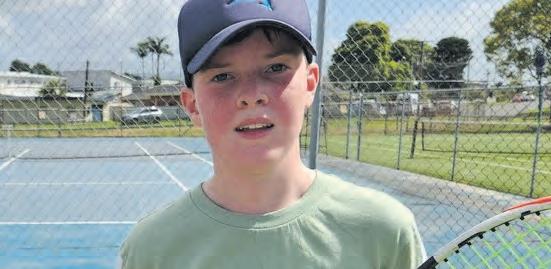

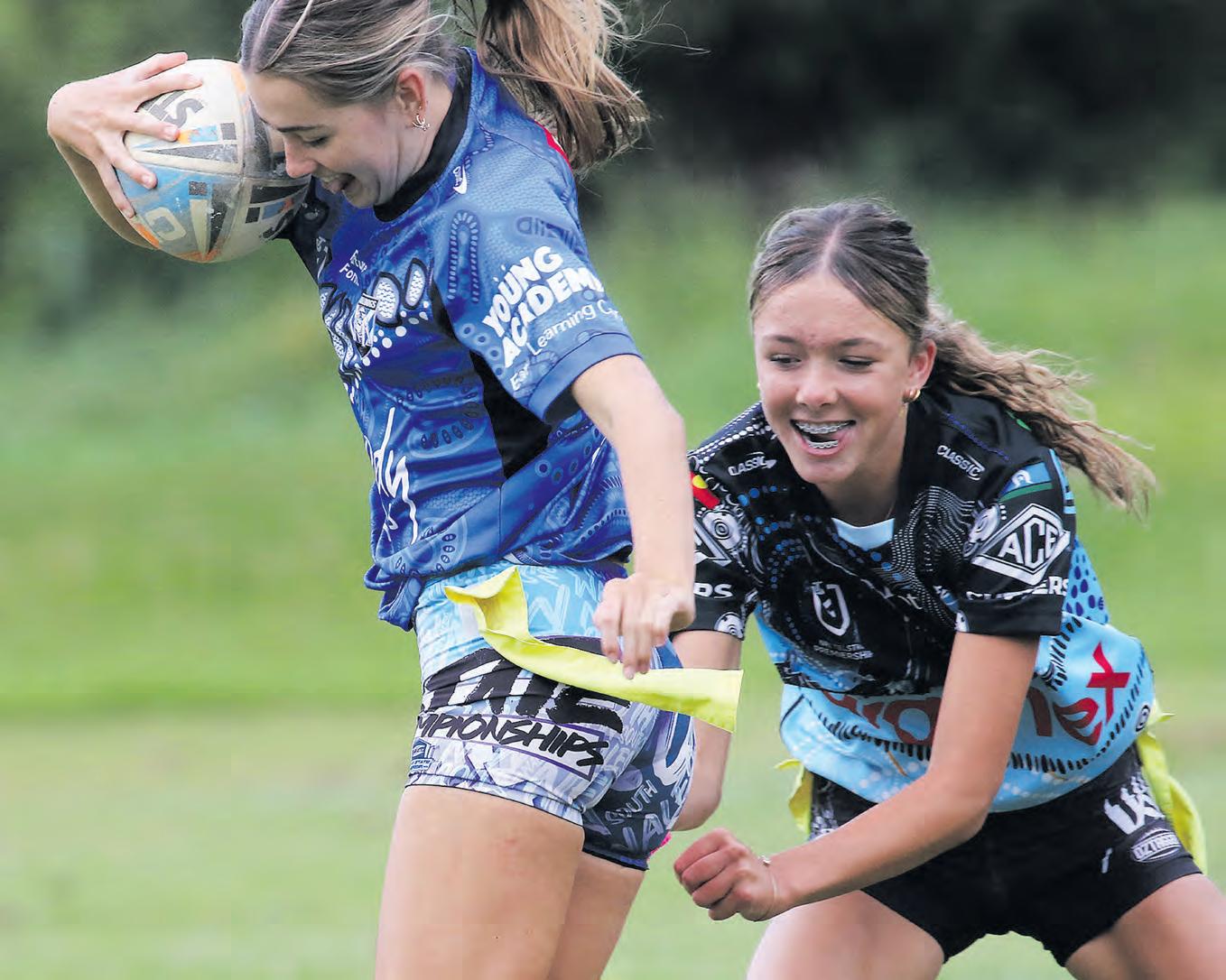
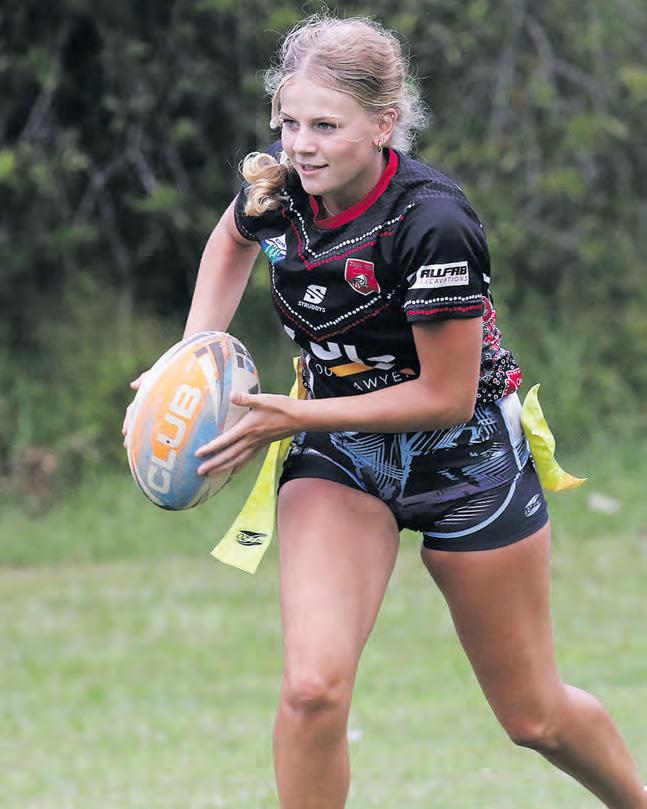



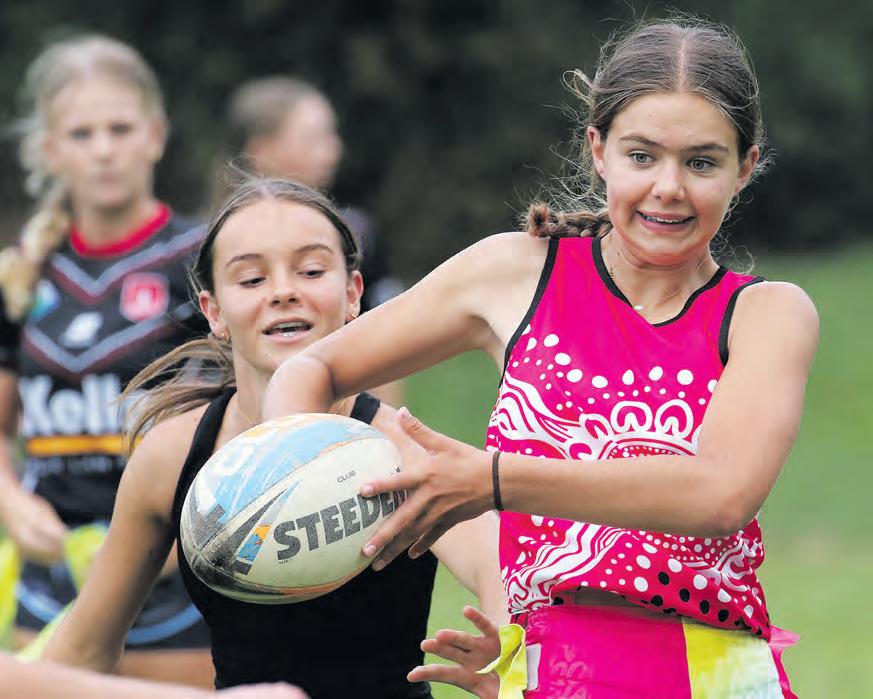

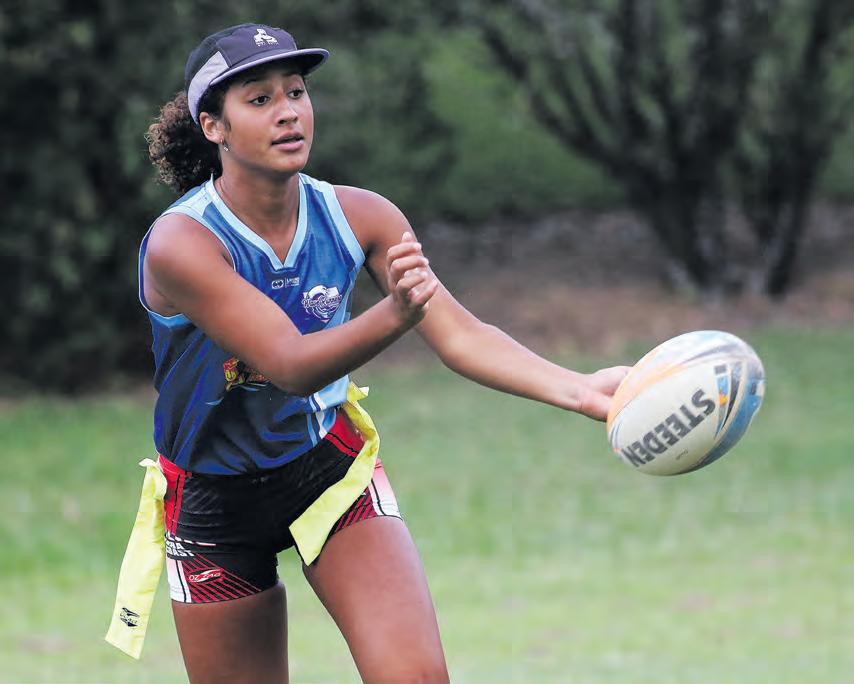









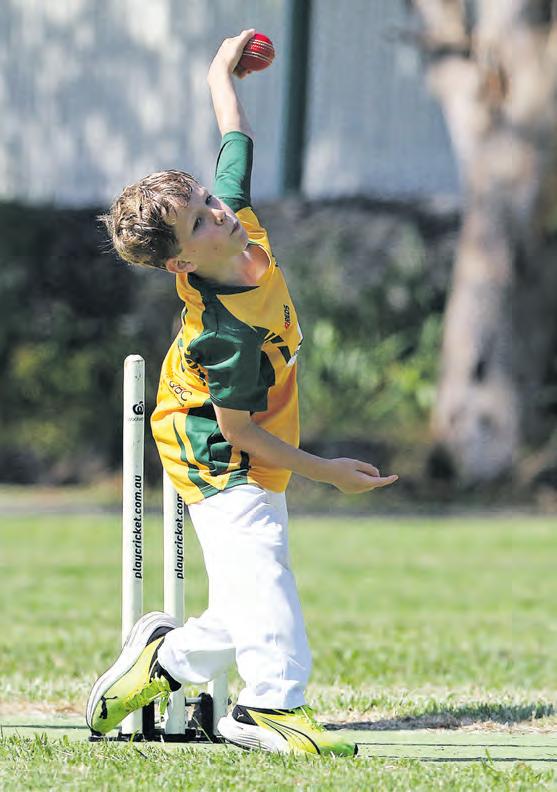






Lleyton Hughes
Kiama Cricket Club celebrated a monumental 170 years of history over the weekend, with around 100 Cavaliers legends, family members and supporters gathering at Kiama Leagues Club for a special anniversary celebration.
Guests included 92-year-old Noel Creighton, as well as Allan Snelling, whose 1953–54 premiership blazer hung proudly on the lectern as emcee Glenn Cleary addressed the room.
“The room was buzzing with tales from past games, magic moments and classic catches,” said Cavaliers president Bernie Brown.
“Past and present players were also joined by Kiama Mayor Cameron McDonald, who himself proudly represented the Cavs on 20 occasions.”
The guest speaker for the evening was retired Australian cricketer Mike Whitney, who shared stories from his international career and commended the club on reaching its remarkable milestone. “Mike repeatedly highlighted just how significant 170 years is and reinforced the importance of grassroots cricket clubs and the pathways they provide for players determined to succeed,” Brown said.
“He shared memorable stories from his Test debut - including the longest recorded over on debut, which stretched beyond an hour due to rain delays - and what it was like facing the fearsome West Indies fast bowlers as a tail-ender during an era of world dominance.”
Brown also addressed the gathering, highlighting the importance of family within the club, pointing to the many father-and-son combinations in fourth grade as a shining example.
Club historian Bill Peters then treated the audience to 170 years of Kiama cricket in just 30 minutes. “I was able to find records of cricket in-
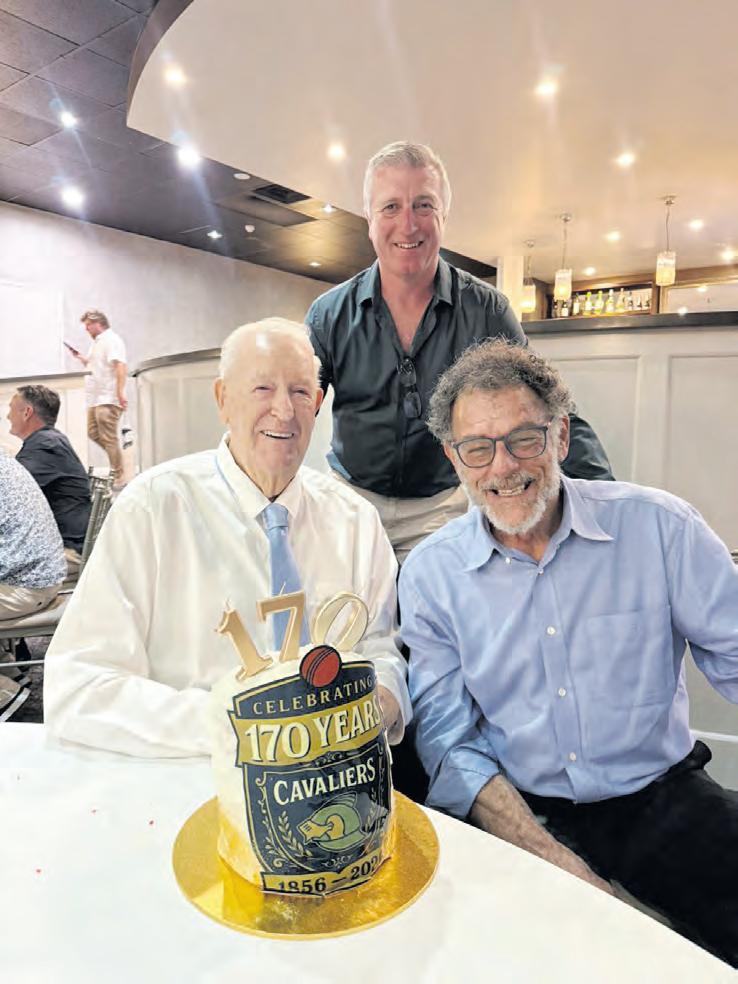

volving Kiama dating back to 1854, when a Kiama team played Wollongong on April 30 at the Wollongong racecourse - a match won by Wollongong by 14 runs,” Peters said.
“At the time, underarm bowling was still the norm, sidearm bowling was only just being introduced and overarm bowling was only beginning to take hold. There were no competitions - not even in Sydney. Matches were organised by telegram, and players travelled by horse.”
The evening also featured a video presentation from local businesses, elite cricketers and community members congratulating the club on its milestone.
A highlight of the night was a video interview with club record holder and 1953-54 premiership player Allan Snelling, who boasts remarkable statistics: 201 matches, 684 wickets at an average of 10.01, and a highest batting score of 205 not out.
“His candid reflections on life, cricket and service were unforgettable,” Brown said. “To have Allan in the room with his wife Margaret and family was spine-tingling. As the interview concluded, the room rose for an extended standing ovation - a truly moving moment.”
The night was a celebration not only of the Kiama Cavaliers, but of the broader community, the game of cricket and the rich history of an important local institution.
“The club would like to thank major sponsor Kiama Leagues Club for hosting the event and providing excellent food and service,” Brown said.
“A huge shout-out also goes to our raffle sponsors and those who sourced the unique, one-of-a-kind auction items. The club now looks ahead to its 200th celebrations - which Mike Whitney has already, very graciously, promised to attend.”