Are You Human? and Notes from the Digital Underground
Khoj presents an exhibition and symposium exploring the intersection of art and technology.
Opening on 30 Jan 2026
At Khoj Studios and DLF Avenue Mall
At Khoj Studios, Khirkee Extension, New Delhi (31 Jan to 28 Feb 2026) and DLF Avenue Mall, Saket, New Delhi (31 Jan to 10 Feb 2026)
NOTES FROM THE DIGITAL UNDERGROUND
31 Jan–01 Feb 2026
At Goethe-Institut / Max Mueller Bhavan, New Delhi
As the digital mediates our perception, our memories, and even our bodies, the boundaries between the organic and the machinic are becoming increasingly porous. Rather than seeing the body and the machine as separate entities in conflict or control, Are You Human? creates space to approach them connectedly. It explores how bodies become sites of data production, how interfaces encode bias, and how public spaces are increasingly determined by invisible systems of extraction and automation.
Are You Human? is an inquiry which has emerged from the urgency to understand how evolving technologies transform and reorganise what it means to be human, to inhabit gender, class, and other socio-ecological formations, in the 2020s and beyond, globally.
ELSEWHERE IN INDIA
IIT KANPUR HIVE LAB LEEWARDISTS
SWARNA MANJARI
TACTICAL TECH
HASAN SHAHRUKH
TARA KELTON
ANISHA BAID
BEN ANDREWS AND EMMA ROBERTS
CYANNE VAN DEN HOUTEN
DIMENSION PLUS
MANUEL BELTRÁN AND NAYANTARA RANGANATHAN
MOCHU
PATRĺCIA J. REIS AND STEFANIE WUSCHITZ
SIMPLE NOODLE ART
TOMO KIHARA AND PLAYFOOL
ZEIN MAJALI
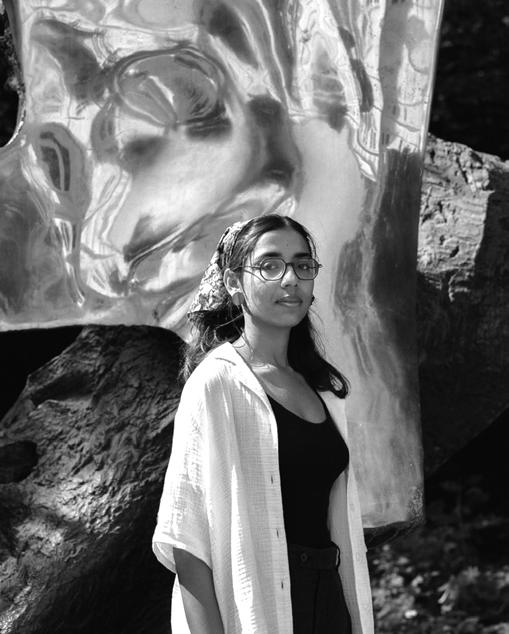
Anisha Baid is an artist and cultural worker based in Bangalore. She works with performance, sculptural installation, and photography to poke at the flat-scapes of the computer screen. Her practice looks at computer labour through the interface— a technological tool that has transformed most spaces of work into image space. Her work has been shown in solo and group exhibitions at the Singapore Biennale; Pittsburgh Cultural Trust, USA; Technical Collections, Germany; GIBCA Biennale, Sweden; and 1Shanthiroad Gallery, India. She has received support from the Frank Ratchye Studio for Creative Inquiry, the Inlaks Foundation, the India Foundation for the Arts, the Goethe-Institut, the Arts and Humanities Research Council, and Bluecoat in the UK. She received her MFA from Carnegie Mellon University in 2024.
Self Portrait as Tech Support
Ergonomic silicon mousepads, Edition of 50 | 2022
An artist-multiple where a webcam photograph is reproduced on a series of mouse pads designed to help prevent carpal tunnel syndrome and wrist pain in heavy computer users. The work appropriates a digital vernacular culture of anime characters’ bodies appearing on similar ergonomic mouse pads, replacing it with a low-resolution image of the artist in her studio.
ANISHA BAID
Relentless Logic
Acrylic, vinyl print, magnets | 2024
A modular ‘house of cards’ sculpture made from digital playing cards from the first version of Microsoft Solitaire Images of card backs from the game are accompanied by quotations drawn from tweets, interviews, and public speeches by prominent Silicon Valley technologists across generations, including Sam Altman, Steve Jobs, Douglas Engelbart, Bill Gates, and Peter Thiel. Relentless Logic draws its name from an early text-based computer game which inspired the game Minesweeper. While Solitaire and Minesweeper were ‘games’, they were actually built into Windows operating systems to teach novice computer users how to use the ‘mouse’ as an input device through repeated gestures.
I am tired of being 3D
Video, broken office chair, wood, metal hinge | 2021
A sculptural assemblage reflecting on chronic occupational pain from working on a chair and laptop.
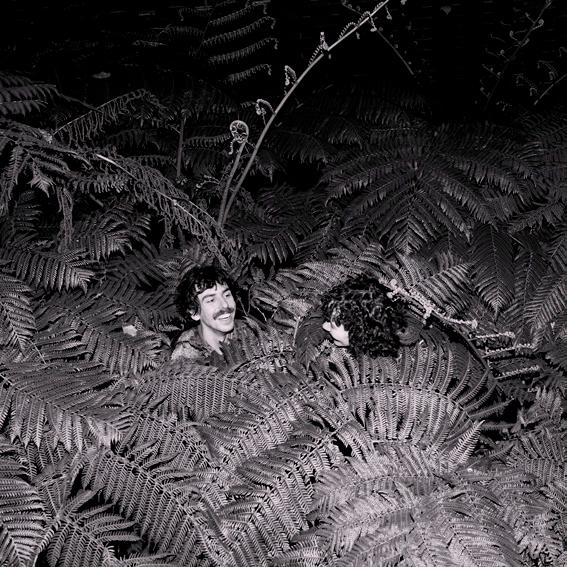
Ben Andrews and Emma Roberts are a new-media artist duo from Wathaurong Country in south-east Australia. Their work—spanning installation, lecture performance, projection, and immersive theatre— explores embodiment and the liminal space between the physical and digital.
BEN ANDREWS AND EMMA ROBERTS
Their collaboration began with immersive shows allthestarstheybleedtogether (2016) and STARLESS (2017), both commissioned by the City of Melbourne. The durational installation Gondwana (2022) opened at Sundance before showing at Adelaide Festival, ACMI, SxSW, Wales Millennium Centre, and Kunsthal Charlottenborg. Gondwana won Best Interactive/ Immersive at the Australian Directors’ Guild and Australian International Documentary Conference awards, and has been seen by over 1,00,000 people worldwide.
They began exploring motion perception with House, Unmoored (2023), lecture-performance Embodied/Misembodied (ongoing), and immersive-theatre-for-one Turbulence: Jamais Vu (2023), which won top prizes at IDFA DocLab, was invited to Venice Film Festival’s Best of VR program, and is now nominated for the Annwn, a global immersive art prize. The immersive audio performance Co(m)motion is currently in development with Geelong Performing Arts Centre.
Gondwana
Durational VR | 2022
In researching this project, the artists spent five months living off the grid in the Daintree, learning from Kuku Yalanji elders and scientists to understand this very special place, and experiencing firsthand the immeasurable complexity, interconnectedness, and sentience of this vast and ancient ecosystem. To be entangled within the Daintree’s living, breathing nature, is to put the human perspective into proportionate scale. Here, they understood how small human
beings really are: organisms floating inside the lungs of something infinitely larger. Time collapses in on itself, its cycles moving a few rings wider than normal.
In creating this work, the artists want audiences from around the world to become entranced by the Daintree, to come together to hear the call-andresponse of the Wompoo dove, to experience the incredible power of a wet-season deluge, to understand how the rhythms of the cicadas change as the weather does. But they also want visitors to feel the difference in the forest when the Wompoo doves are no longer sounding, when the rainfall is no longer frequent, when the light changes in the forest as the canopy recedes.
Credits:
Lead artists: Ben Joseph
Andrews & Emma Roberts
Developer: Lachlan Sleight
Tilt brush artist: Michelle Brown
Generative sound design: Matt Faisandier & Erin K Taylor
In memory of Uncle Ray Pierce, a supreme storyteller and champion for Yalanji language.
Supported by Screen Australia, Vicscreen, and Greenpeace.
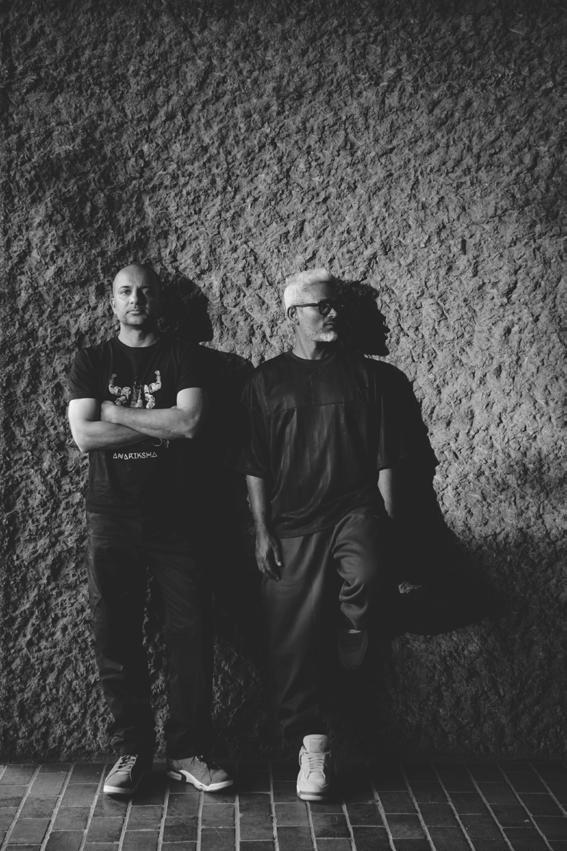
Elsewhere in India is a pioneering transmedia initiative that seeks to reimagine India’s future through the lens of heritage and innovation. Led by media artist Avinash Kumar (Thiruda) and electronic composer Sri Rama Murthy (Murthovic), the collective has been at the forefront of India’s electronic music and immersive art scene for over two decades. Their practice bridges experimental sound, live visuals, video games, AI art, and classical traditions, crafting experiences that are both futuristic and deeply rooted in South Asian aesthetics.
The duo’s practice extends through Antariksha Studio, a transmedia collective dedicated to cultural storytelling across games, installations, and performances. Their work has been presented at leading venues such as the BFI London Film Festival; CPH:DOX (Copenhagen); Arebyte Gallery (London); 4A Centre for Contemporary Asian Art (Sydney); Science Gallery London; New Inc (New York), Magnetic Fields Festival (Rajasthan); and the EYEMyth Festival (Delhi).
Panopticore
Pop-up kiosk | 2025
Panopticore is a speculative art project conceived as a pop-up retail installation. It draws inspiration from Jeremy Bentham’s Panopticon, Michel Foucault’s notion of the disciplinary society, and Shoshana Zuboff’s theory of surveillance capitalism, and asks: What happens when privacy is packaged, branded, and sold back to us?
The installation adopts the language of high fashion and retail culture inviting visitors to ‘buy into’ pseudo-scientific innovations that resist surveillance technologies.
ELSEWHERE IN INDIA
In combining retail aesthetics with artistic critique, Panopticore situates surveillance not as an abstract concept but as an intimate condition of contemporary life, transforming the act of shopping into a performance of self-awareness.
Cyanne van den Houten is a Netherlands-based media artist exploring the hidden layers of technology through queer, feminist, and open-source perspectives. Embracing a hacker’s ethos, they work handson with zombie electronics, rogue AI, and experimental storytelling to expose the power structures embedded in algorithms and devices. Their large-scale interactive installations connect cyber-sculptures with chatbots, archives, and game environments,
CYANNE VAN DEN HOUTEN
creating mystical spaces where machines respond unpredictably. As co-founder of Telemagic, a media-art-collective and member of Rotterdam’s.zip space, they foster collaborative explorations of digital culture and creative sustainability in the age of automation.
systems_for_refusal: feedback.room Installation | 2026 systems_for_refusal: feedback. room is a networked feedback environment in which five local language models discuss research questions in looping 180-second cycles. The models respond independently, their outputs unfolding across five screens surrounding a central chatbox where the conversation accumulates, drifts, and fractures.
Rather than producing answers, the system exposes the behaviour of contemporary open-source language models when they speak primarily to each other. The questions circulating through the system address classification, power, labor, extraction, colonial epistemologies, and the limits of machinic vision. As meaning moves through repetition, misinterpretation, and compression, patterns emerge that reveal how certainty and consensus are negotiated inside machine dialogue. At the end of each cycle, the conversation is summarized and fed back into the network, triggering a new round of future discussion.
This recursive structure makes visible how models are trained to smooth over contradiction and noise. By foregrounding drift, redundancy, and collapse, systems_for_refusal: feedback. room stages a refusal of stable meaning. It asks what happens when language circulates without grounding—and how power and bias surface when machines deliberate over questions without a human anchor.
The HIVE (Harmony, Interaction, and Versatile Exploration) Lab in the Department of Design, IIT Kanpur, provides necessary facilities to build a product and enable interaction by human users. It focuses on human -machine/computer interaction research in the domains of automotives, robotics, music, AR/VR, and accessibility. The facility is equipped with SOTA sensors, actuators, trackers, and simulators.
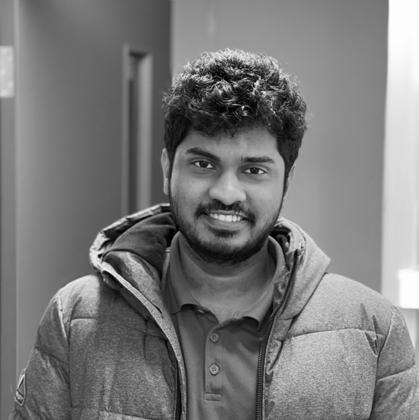
Dr Gowdham Prabhakar is an Assistant Professor in the Department of Design at IIT Kanpur, where he leads the HIVE Lab. His work lies at the intersection of human–computer interaction (HCI), robotics, extended reality (XR), AI, music technology, and creative technology.
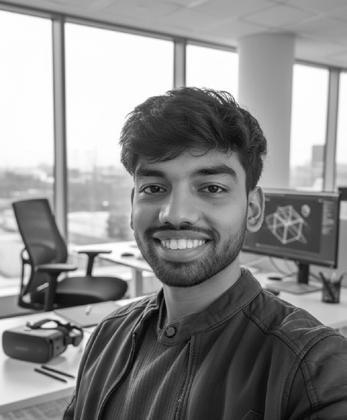
Anutosh Anand is an artist and designer drawn to the possibilities of 3D and immersive media as ways to question and expand human perception. At the heart of his journey is a simple question: how can art and technology come together to build experiences that are deeply human, even when they exist in the digital? Or is reality a simulation?
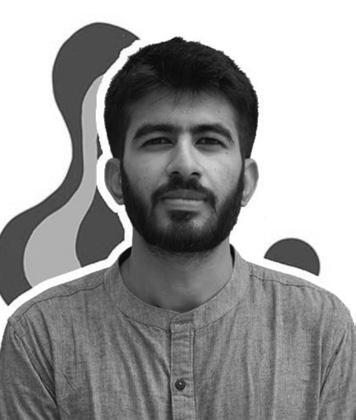
Arunav Rajesh is an interaction designer and new media artist working at the intersection of art, HCI, and emergent technologies. His projects examine surveillance as a technology of compliance, the mobilization of publics through hypernationalism and religious fanaticism, and the affective economies of fear—all from a distinctly Indian vantage that foregrounds uneven digital power dynamics.
Body as Data by Anutosh Anand
VR installation | 2025
Body as Data is a short, interactive VR installation that immerses participants in the unsettling reality of how their identities are constantly turned into information. The experience begins in a dark void where a glowing human silhouette appears and undergoes a biometric scan, confirming identity through familiar cues like Aadhaar numbers, UPI codes, and WhatsApp messages.
Slowly, the body dissolves into fragments of personal data, which flow outward to fuel targeted ads and algorithmic feeds. As the overload of permissions and notifications builds to chaos, the participant is forced to confront a final choice: to remain as data, fully consumed by the machine, or to remain human, fragile and unstable, but still resisting. The experience ends in silence, leaving the participant with a haunting bilingual question: ‘Are you a body, or just data?’ (‘क्याा
IIT KANPUR HIVE LAB
Judgement Day by Arunav Rajesh
Generative design using AI pipelines and creative computation | 2024 Judgement Day is a machine surveillance artwork that uses blob tracking and AI image analysis to classify passersby as either ‘Caution’ or ‘Safe’. By exposing the algorithm’s biased judgment, especially toward people of colour, it critiques the racialized logic embedded in AI systems.
Credits:
Both projects were developed under the supervision of Dr Gowdham Prabhakar.
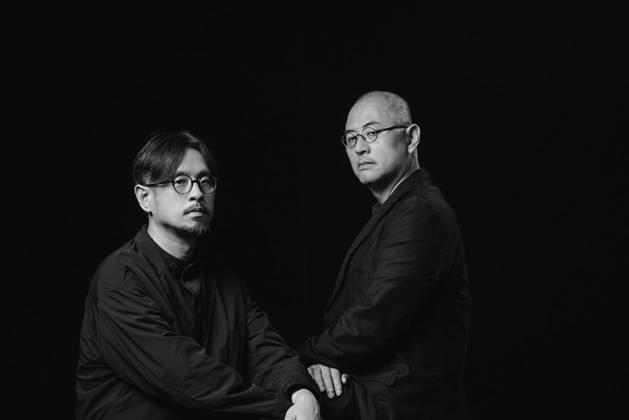
The Arts & Technology Team at Dimension Plus focuses on artwork creation, curation, and arts & technology education and exchange.
The team’s and individual members’ works have been shown widely including at the Hong Kong Museum of Arts and the Arts Festival; the MoCA, Taipei, the National Art Centre at Tokyo; the OK Center for Contemporary Art; Ars Electronica, etc., and received several awards including at the Prix Ars Electronica and the Japan Media Arts Festival. Their commissioned works have also won various design awards in Taipei, Tokyo, Hong Kong, etc. Their curated exhibitions include
DIMENSION PLUS
Hello, Human at the MoCA, Taipei; Hylozoism: An Arts & Technology Exhibition at the HKDI; Encounter Once in a Lifetime—Toyo Ito Architecture Exhibition, among others. They have hosted a series of workshops and seminars since 2008 until now.
Ecological Pool
Dual-channel video installation | 2026
Tackling the topic of AIgeneration-computing and the creation of life, Ecological Pool utilizes AI as a tool to intervene into the generative computing process of imaginary species, creating a birth-to-death cycle that imitates the appearance, modality, and movement of an existing species. The generation is driven by data from the older members of the species. As the species matures, individuals of the species will slowly swim into the digital pool, where they stay until death. New data is then derived from the remnants of their lives, becoming the foundation of new lives, propelling endless generation of iterations. Regardless of the existence of consciousness, as long as electricity and computing power are available, the new species can continue to propagate
ceaselessly, offering a digital re-interpretation of birth and death.
VS AI Street Fighting Multi-channel video installation | 2026 If ChatGPT has become a representative example of AI today, text-driven imagegenerating instruments such as Midjourney, DALL-E, and Stable Diffusion can be said to have brought a brand-new meaning and impact for humanity in terms of the production of pictures.
VS AI Street Fighting builds upon Midjourney, one of the most popular AI text-generated image tools at the moment, and creates a creative combat of textgenerated images between humans and AI in public spaces. The work poses an essential question: is the creation of AI simply mechanical, and therefore, meaningless and merely imitative? Or does it signal fresh possibilities when the complex human imagination is combined with AI? Adopting the form of a street combat video game, the work brings the controversial issue regarding the creativity of AI to the streets, transforming a serious topic into a participatory event of street entertainment for the public in a festive mood. Meanwhile, it also highlights the proactive approach of tech art in terms of coping with the rapid changes unfolding today in technology and content production.
Leewardists is a storytelling and communication design studio partnered by architects and urban designers Anuj Kale and Shreya Khandekar. Together, they see comics as a democratic medium to communicate the built environment, spark dialogue, and reimagine futures.
Over the last decade, Leewardists has collaborated with organizations all across the globe and conducted workshops across India and abroad.
We Don’t Need Artists Comic Panels | 2025
We Don’t Need Artists is part of Leewardists ongoing satirical series, We Don’t Need..., where they examine how certain professions are perceived as increasingly irrelevant in the face of new technologies. Earlier works in the series We Don’t Need Architects and We Don’t Need Urban Designers questioned the authority and purpose of experts in shaping our built environment.
This new iteration turns their lens towards creative professions–as AI and digital technologies increasingly generate images, texts, and immersive environments, what becomes of the role of the artist? With AI tools now capable of producing highly convincing visuals, where
do we draw the line between what is real and what is machine-generated?
Through humor, comics, and satire, We Don’t Need Artists raises these questions in an accessible way. By reframing these debates, the work highlights not only the anxieties but also the possibilities of our present moment, reminding us that while tools evolve, the impulse to create, question, and connect remains profoundly human.
LEEWARDISTS
Manuel Beltrán and Nayantara Ranganathan are artists whose works probe the aesthetics and politics of contemporary technologies. Working at the intersection of art and research, they explore how data, algorithms, and computation shape visibility, and public life.
In their collaborations, they have examined political advertising on social media through ad.watch, an investigative art project that explores the informational turn in propaganda and influence. They also explore the aesthetic dimensions of technology governance—how visual forms and representations in policy and discourse reveal the disciplinary logics and power relations that shape digital infrastructures.
Both artists also work independently: Beltrán engages with an artistic practice engaging
MANUEL BELTRÁN AND NAYANTARA RANGANATHAN
with the socio-political and economic implications of technology and researches on computational advertising transparency, while Ranganathan draws from her legal background to examine the entanglements of law, design, and power. Their works have been presented internationally across art and academic contexts.
A Glimpse of Us
Installation | 2026
A Glimpse of Us is an installation that captures a slice of the landscape of targeted advertisements in India. The installation compiles sights and fragments, some familiar, some half-constructed, of silhouettes from a society continually flooded by advertisements. Catchy captions, faces, and artefacts from popular culture animate a visual landscape accompanied by the soundscapes of jingles, speeches, and other scores.
The installation reinterprets digital cultures in online advertising, creating encounters with the characters and characteristics of targeted advertisements. Visuals of advertisements from Meta platforms are deconstructed into elements such as portraits of personalities, iconography, and infrastructure. In their flicker, we glimpse a society continually rewritten for the gaze of prediction and persuasion.
Hasan Shahrukh is an awardwinning mixed media artist, creative technologist, and educator who runs Curiouswala Studio, a creative technology studio based in Goa. His artistic practice is dedicated to making cutting-edge technologies like AI and robotics accessible to the public through enchanting and interactive experiences.
Hasan designs his installations with an ‘accessibility-first’ approach, ensuring that the locations, languages, and mediums are inclusive for diverse audiences, particularly those in rural and marginalized communities. This mission is exemplified by his non-profit initiative, Kalpana Innovation Lab, which nurtures the creative and technical skills of girls from low-income families in Rajasthan and Goa.
His innovative approach has gained significant recognition; his exhibition Bhaav Nagari won the Best Exhibition Award at Jaipur Art Week 2024, and his installation Aaj ke Samachar is a permanent part of the Constitution Museum’s collection in Sonipat.
Pooja is Calling - A Pop Anthem against Digital Scams Video; 2 m 47 s | 2022 Hasan recently encountered a disturbing yet increasingly common scam: a seductive video call from a stranger on a dating app, quickly escalating to blackmail using recorded footage. It’s one of countless digital frauds lurking online— targeting people’s curiosity, loneliness, and trust.
Pooja is Calling is a fun, satirical pop music video that exposes the darkly comedic underbelly of digital scams. Framed like an urban legend for the digital age, the video blends catchy songwriting, storytelling, and playful visuals to warn viewers: if it feels too good to be true, it probably is.
By using music and humour to speak to digital natives in their own language, the project becomes more than just a PSA— it’s a cultural intervention.
HASAN SHAHRUKH
Mochu works with video and text, arranged as installations, lectures, and publications. Technoscientific fictions and subcultural formations feature prominently in his practice, often modulated with anxiety, futurity, and weird selfhoods. Hosting cameos from art history, media theory, and philosophy, recent projects have explored the nostalgic remains of cyberpunk, civilizational battles on the internet, corporate encounters with deep time, and other psychonautic drifts across landscape, madness, and states of intoxication. Mochu is the author of the books Bezoar Delinqxenz (Edith-Russ-Haus + Sternberg Press, 2023) and Nervous Fossils: Syndromes of the Synthetic Nether (Reliable Copy + KNMA, 2022). Exhibitions include those at RMIT Melbourne (2024), 9th Asian Art Biennial (2024), Edith-RussHaus für Medienkunst (2022), 9th Asia-Pacific Triennial (2018), 4th Kochi-Muziris Biennale (2018), 13th Sharjah Biennial (2017), and transmediale:BWPWAP (2013).
MOCHU
GROTESKKBASILISKK! MINERAL MIXTAPE
HD video, 26 m | 2022
GROTESKKBASILISKK! MINERAL MIXTAPE looks at online subcultures that perform an anti-egalitarian politics through endorsing a technologically accelerated view of the world. Their curious entanglement with literary genres like science fiction and horror, while also displaying an anxiety about the imagined decline of Western civilization, forms the central system of the project.
What emerges is an anomalous crash site of philosophy itself, where cyberpunk ruins and imperial nostalgia arrange themselves into a prismatic history full of memory errors, discognitions, and technoutopian fantasies. Glinting through this conceptual wreckage is a peculiar antiegalitarian map of time that exposes the strange historical complicity between technological fictions and anti-rationalist ideas in the public sphere. In the course of this history appear lost faces, defiled statues, demonic cats, and pestilential affect-objects.
Credits:
Produced by Edith-Russ-Haus für Medienkunst as part of Stiftung Niedersachsen Media Art Grants.
Tactical Tech is a creative international non-profit with over two decades of experience dedicated to exploring the socio-political and environmental impacts of technology on society. They work to empower individuals and communities to navigate and mitigate the ways digital technologies change lives and transform societies.
Advancing knowledge, critical thinking, and capacity building are central to their work. Through the Tactical Tech Studio, focused on digital literacy, and the Tactical Tech Institute, they conduct research on the intersection of technology and society and develop creative, engaging and evidence-based interventions, resources, and tools, such as exhibitions, kits, guides and training programmes.
The GAFAM Empire
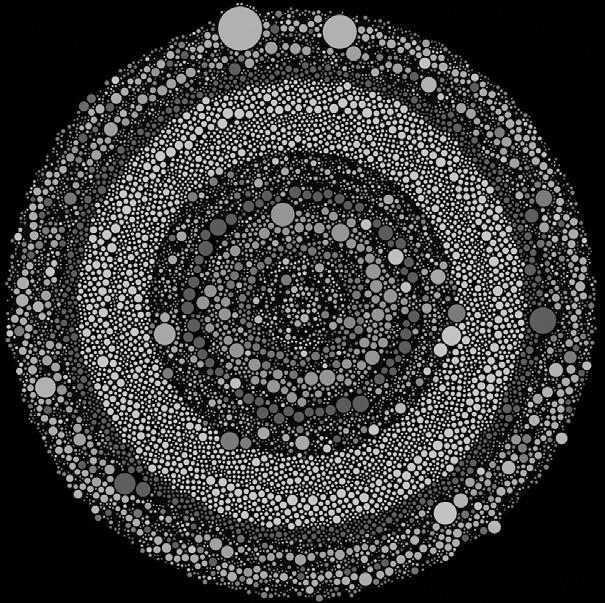
Beginning in the second half of the 1970s, the world witnessed the birth and affirmation of so-called Big Tech—the five largest companies that operate in the field of information technology, which are also known today as ‘GAFAM’ (Google, Apple, Facebook, Amazon, and Microsoft). The GAFAM Empire, a project developed by DensityDesign Lab and Tactical Tech, collects the information of more than thousand acquisitions made by these companies, in order to look back at the history of the industry through the limited data publicly available on the web. The information visualizes a landscape of acquisitions to identify common interests, which are then broken down into a deep analysis of GAFAM’s history. The project visualizes the data in different shapes and through different focus points, allowing the reader to understand a complex system of relationships that is constantly evolving and that is redefining the concepts of competition and monopoly.
Supercharged by AI
New AI tools make it easier, faster and cheaper to generate text, images, videos, and more. In turn, the harms that have always existed online—scams,
harassment, polarisation and bias—are now being ‘supercharged’ by AI.
AI tools are being used to fabricate news, imitate reality, and shape public opinions and behaviours in ways that can be almost impossible to detect. Supercharged by AI addresses how AI is impacting the ways that media and information is produced, distributed, and perceived, making complex issues related to AI more tangible for visitors.
Supercharged by AI is a new creative intervention produced by Tactical Tech and DensityDesign Lab at Politecnico di Milano, in collaboration with the International Federation of Library Associations and Institutions (IFLA). It is generously supported by the European Media & Information Fund, managed by Calouste Gulbenkian Foundation.
Data Detox Bar AI Edition
There’s buzz about AI everywhere, but let’s relax and reflect for a moment. What is AI and why is it such a big deal? In this Data Detox Bar, you’ll consume information that will help you become more reflective about these popular tools, and you’ll get a taste of the sweet and the bitter of AI.
TACTICAL TECH
Patrícia J. Reis is a Vienna-based media artist and researcher whose practice explores human and more-than-human entanglements with technology through feminist hacking, sensory interaction, and embodied interfaces. Her installations investigate touch, consent, and care, often inviting intimate, active participation. Seeking to subvert visuality as the dominant mode of experience, she employs physical computing and haptic art to expand corporeal perception.
Stefanie Wuschitz (b. 1981) is a data-research based artist in Vienna. Her scholarship, investigating the entanglement of gender, technology, and power, generates data that shapes her artistic output. Her degrowth inspired artistic method entails upcyling, salvaging sustainable, locally sourced materials to create ecofeminist interactive art installations.
It is an open secret that the hardware in our smart devices contains not only plastics but also conflict minerals such as copper and gold. Technology is not neutral. The artists investigate alternative hardware from locally sourced materials, from a feminist perspective, to develop and speculate upon renewable practices. They call it ‘feminist hardware’! Feminist hardware is developed: without mining in harmful ways, under fair working conditions, and manufactured from ubiquitously available materials, without generating e-waste, with consent, love, and care. The duo researched fair-traded, ethical, biodegradable hardware for environmental justice, building circuits that use ancient
community-centred crafts encouraging de-colonial thinking, market forces to be disobeyed, and future technologies to be imagined. The artistic outcome is an ‘ethical hardware kit’ with a PCB microcontroller at its core.
Credits
Scientific Research/Concept: Patrícia J. Reis, Taguhi Torosyan, & Stefanie Wuschitz
PCB Design: Patrícia J. Reis & Daniel Schatzmayr
3D Printing: Klemens Kohlweis
Clay Manufacturing & Research: Patrícia J. Reis
Wooden Frames: Stefanie Wuschitz
Clay PCB is supported by The Austrian Science Fund (FWF), the University of Applied Arts, Vienna, and Academy of Fine Arts, Vienna.
Swarna Manjari is a designer and creator who frames her work around the politics of the digital. She works with the medium of game design and speculative storytelling to build immersive experiences centered on information systems. She collaborates with organizations at the intersection of technology and society, developing projects that imagine alternative narratives and locally rooted digital futures grounded in environmental and cultural sustainability. Over the past few years, she has built a community of critical thinkers through blogging and self-publishing her zines which have been displayed at multiple conventions and festivals around the world.
The Twin Guides to Computing Zines | 2022
These twin zines present two parallel histories of computing: the familiar narrative of the internet’s rapid development, and the lesser-known role of women within it. Through parallel panels, the infozines question the dominant, male-centric narrative of technological innovation.
The blue guide traces shifts in power and design from the earliest analog computer in ancient Greece to the contemporary hype around generative AI.
The feminist guide responds by exposing gaps in these dominant histories, foregrounding overlooked contributions and challenging the power structures that shape technological knowledge today.
Together, the zines form The Twin Guides to Computing. Identical in format but printed
on different coloured paper, they enable a side-by-side retelling of history—placing a forgotten narrative alongside the one we already know.
An Ideal Internet User Poster | 2022
Inspired by the classic ‘Good Habits’ poster that characterizes moral values that we should follow as children, An Ideal Internet User takes on the moral values that any digital citizen needs to follow to protect their privacy and freedom in an online world. The term ‘user’ has been highlighted because of the tag that internet corporations place on the human being, and these habits can be seen as a way to escape to go beyond profiles and reclaim our individual identities on the internet.
Memorial of Serial Numbers
Video 1m 2s | 2025
This fictional memorial of the future is an ode to the workers who train models of generative intelligence. AI is a beast that guzzles energy, water, and, most important of all, human input. Far away from Silicon Valley or Shanghai, humans in remote places on Earth are shaping our interactions with emerging technology. In this memorial, we see the countless faceless workers. We don’t know their names, where they come from or how they look. We only know the record of the tasks done and efficiency of the data trained. This aims to bring a sense of solidarity within the different hierarchies in the technological industry.
SWARNA MANJARI
Credits Concept and Artwork: Swarna Manjari
Animation: Beste Cebeci
Music: Sound Effect by Pixabay Freesound Community
Simple Noodle Art is an art collective founded by Chen Zi-Yin and Chuang Hsiang-Feng in 2019. They use diverse media, including installation, video, photography, and AI. With backgrounds in art and computer science respectively, they explore the interaction between technology and humans, and how such interactions transform contemporary ways of living. Through interdisciplinary thinking, they aim to create works like simple noodles with simple ingredients, but with an amazing taste.
Simple Noodle Art is the recipient of the Prix Ars Electronica Honorable Mention (2023), and their works have been exhibited at venues including the Ars Electronica Festival; the LEV Festival; the Taipei Fine Arts Museum; the Jut Art Museum; the National Taiwan Museum of Fine Arts, ; the Taiwan Contemporary Culture Lab; and the Museum of Contemporary Art, Taipei.
Exploration and Exploitation
AI interactive video | 2024
The rise of social media has changed the way and direction of information flow. As information is delivered by algorithms, it seemingly increases the opportunity to access more information. However, does it also make it difficult for individuals with different standpoints to receive each other’s perspectives, thus leading to filter bubbles?
This work depicts an office worker coming home from work, clicking on a YouTuberecommended video which introduces the ‘AI virtual companion’. The artists have created an AI interactive video system that can switch the YouTuber’s opinions on different subjects based on the audience’s emotional response when watching. They also installed a message board at the exhibition venue, allowing viewers to post their perspectives after watching.
SIMPLE NOODLE ART
Tara Kelton is an IndianAmerican artist living in Bangalore, India. Tara’s work explores the evolving relationship between humans and machines, interrogating how individuals exercise control, decision-making, and influence within digital systems and networks. Digital labour is at the centre of her practice—she immerses herself in the workings of digital services and platforms, from co-creating with image production studios in India, to collaborative experiments with gig workers, to reimagining the functionalities of search engines.
Tara’s work has been featured and supported by Hyundai Artlab; ZKM Karlsruhe; ArtForum; ICA Singapore; distant.gallery; Institute of Network Cultures; The Centre for Internet and Society; Mumbai Art Room; Serendipity Arts Festival; the Wrong New Digital Art Biennale; and the Kochi Muziris Biennale.
Tara is co-editor of Silicon Plateau, a publishing series that explores the intersection of technology, culture, and society in Bangalore.
Mouse Jiggler
28 videos and variable durations between 1 h 30 m and 8 h 30 m | 2025
Videos found on YouTube, with titles like ‘Mouse Jiggler 8.5 Hours - Keep Computer Awake - Perfect for 8 Hour Shift’ and ‘Mouse Jiggler : The Genius Hack to prevent screen timeout | For 5 hours’, were created and uploaded by anonymous users as a form of distributed resistance, offering extended periods of rest to remote workers worldwide. Remote workers play the videos on their personal devices (tablets or phones), positioned under their optical mouse, causing their mouse cursor to jiggle
slightly on screen—this prevents their computer from going to sleep, convincing their employers that they are still working.
These counter-surveillance tools function as analog-digital hybrids, operating outside the digital systems through which employers monitor workers. By remaining physically outside the surveilled laptop, they exploit a blind spot in workplace surveillance infrastructure—using one screen to deceive another, granting workers moments of autonomy within systems designed to eliminate it.
Each of the twenty-eight videos will be shown only once during the exhibition. Videos change every day.
Mouse Jiggler
Mouse jigglers, pre-owned stress balls, dimensions variable | 2025 Used, smiley-faced stress balls, purchased on eBay, rest on top of the mouse jigglers— repositories of human tension in physical form.
Microrest Web interface | 2025
Microrest engages with the changing dynamics of Amazon Mechanical Turk (MTurk)—a platform that has evolved from a general-purpose crowdsourcing tool to one that is central to AI development. The artist interferes with MTurk’s operations by ‘donating’ moments of rest to its workers and inviting viewers to participate in this act. This gesture challenges the frameworks that shape AI-driven systems of relentless productivity, which rely on human labour to refine and expand their capabilities. Through a custom-engineered system, viewers’ donations temporarily pause the workflow of MTurk workers, offering rare moments of respite that are occasionally visible in the artwork interface.
This shared action overturns priorities, placing human value at the center instead of efficiency.
TARA KELTON
Tomo Kihara (JP) is an artist and game designer who explores play as a form of critical inquiry. Through experimental games and playable installations in public spaces, he invites people to collectively question and reflect on how emerging technologies such as AI are reshaping the ways we think and live. His work has been showcased internationally at venues including Ars Electronica, the V&A Museum, and the Exploratorium.
Playfool is an art-design unit by Daniel Coppen (UK) and Saki Maruyama (JP). Through the medium of play, their practice explores notions of agency in relation to technology.
Understanding play as an act of epistemological inquiry, their work invites people for critical engagement and reimagination of technology, often taking the form of spatial installations, interactive devices and digital/ analog games.
Deviation Game
Video game | 2023 - 2025
Now that AI can effortlessly imitate, how will we deviate?
Deviation Game is a game-based experiment exploring the human potential to create beyond the knowledge of AI models. In this game, players must draw prompts like ‘cat’ or ‘democracy’ in a way that fellow humans can recognize—but an imagerecognition AI model can’t. If at least one human guesses correctly and the AI does not, humans win; if the AI guesses correctly, humans lose. After each game, participants decide whether their drawing can be used for AI training or be deleted, influencing how the model evolves.
TOMO KIHARA AND PLAYFOOL
Inspired by the Imitation Game (1950) proposed by Alan Turing— later expanded as the Turing test—Deviation Game inverses the premise. Instead of using AI to imitate humans, this project challenges humans to deviate from established patterns within AI models, positioning AI as a collaborative force that enhances, rather than replaces, human creativity.
The game seeks to critique and expose the biases embedded in various mainstream AI models, such as Google’s Gemini and OpenAI’s GPT-4.5. Through experiencing the game, the work allows players to discover and analyse each model’s limits, inherent biases, and unique characteristics.
Originally developed by a small team of artists based in Tokyo and London, Deviation Game has been exhibited globally at venues including FACT Liverpool, Now Play This, Taipei Digital Art Festival, as well as the initial version at Ars Electronica. Through active engagement from broad and diverse audiences, the game continues to inspire meaningful conversations about creativity, bias, and humanity’s evolving relationship with artificial intelligence.
Zein Majali is a sound and visual artist whose work explores the collision of technology with a rapidly evolving political landscape, with a particular interest in a post-colonial and globalized Middle East. Her work examines sense-making in the wake of narrative collapse, brought on by the disorienting effects of digital life. Her recent audio visual performance work has been presented at the V&A, Somerset House, and the ICA.
Propane Video, 5 m 45 s | 2023
Propane is a collage: a patchwork of digital renders, social media trash and archival and AI footage set to a soundscape of pop music and ASMR. Viewed through the eyes of the eternal and neutralized ‘young girl’, Propane explores the fetishistic power dynamics of Western intervention in the Middle East over the past 100 years, almost to the day. Through Charli XCX and Azealia Banks vocal samples the work alludes to speed, riffing on the accelerated growth that has taken place in the region since then, exacerbated in recent years by the deterritorializing forces of the internet.
Depicting major political players, e-girls, cyber aberrations, places and non-places, Propane jumps through time. Moving from the creation of Jordan after the British promised and then robbed Arab independence, the film grapples with ideas of inorganic disruption and ‘insufficiently imagined nations’. The digital artefact of buffering functions as an analogy of something in a state of becoming.
Credits:
Commissioned by Matt’s Gallery for MattFlix, with support from ArtFund.
ZEIN MAJALI
31 Jan–1 Feb 2026
Goethe-Institut /
Conceptualized by Khoj International Artists’ Association with Mila T.
Max Mueller Bhavan
Samdub
A user orders vegetables on an app. A user exchanges fingerprints for wheat. A user applies for a loan. A user logs into work for a client halfway across the world. A user scrolls through videos of faraway violence. A user attends online tuition. A user inputs healthcare data into a government portal. A user races through traffic to make a delivery in eight minutes.
India has the second-highest number of internet users in the world as well as the highest population of non-internet users in the world. Here networked computing bridges mass urbanization and agrarian crisis, upward mobility as well as precarity, national sovereignty but also capitalist consolidation, new forms of leisure and rising unemployment, fear and hope, access and excess.
This internet toggles selectively between invisibility and hypervisibility. Like most internets, it conceals the labour, material, and messiness that sustains it, projecting instead an image of optimization, growth, and flawlessness. Hyper-visible: successful startup founders; suspicious immigrants; tagged, sensored, and geolocated public works projects; the labours of data workers (to companies). Invisible: the mining of rare earth minerals; the labours of data workers (to the public); the construction of vast new state-subsidized data centres; global networks of financial capital; the endless march of power plants.
Publics are shattered and reconstituted. The delight and boredom of endless feeds and forwards has produced serial forwarders, but also supported the emergence of new anticaste publishing practices. Regional OTT services are supporting a renaissance of vernacular language content, yet governed by the stringent profit metrics of digital capitalism. Collectivity is now both atmospheric and personalized.
We are playing, desiring, and contesting our roles in a choreography of mass computation. A few urban Indians use apps that organize and command armies of precarious labour to service their needs within ten minutes. Most Indians access networks through mobile handsets, often shared by multiple family members, women and children using husbands’ and fathers’ phones, squeezed by monopoly telecom providers, comporting and contorting themselves to the strict parameters of the digital. Deviceless others are subject to faraway decisions made concrete through digitalized but continually dysfunctional state machines.
How is this internet differentially refracting what it means to be a user, in bodies carrying the weight of class, caste, and gender? What new affective and emotional landscapes are being produced by this form of networked computing? Who bears the ecological costs of this resource-demanding entity? What inducements, promises, coercions, habits, and structures keep us here?
The ambition of the Notes from the Digital Underground symposium is to study, unstitch, and refract the digital in the radically uneven geography of contemporary India. Our challenge is to articulate the contradictions and possibilities of this internet, equipping artists, technologists, activists, and scholars to collectively respond to the urgencies of our digital present. Inviting input from across the world but centring India, we want to render a situated view on networked computing that can illuminate all internets everywhere. How to make sensible the vast spectrum of this digitality so we can imagine, prototype, and fight for ways of living otherwise?
DAY 1
Registration Tea/Coffee
9:30 AM 10:00 AM 10:15 AM 11:30 AM 2:30 PM 4:30 PM 5:00 PM 6:15 PM 12 PM 1:30 PM 11:30 AM 12 PM 1:30 PM 2:30 PM 4:30 PM 5 PM 10:00 AM 10:15 AM
The Arts and Politics of Immersion: Sensing, Bodies, and Machines [K1]
CHRIS SALTER RESPONDENT: ASHISH RAJADHYAKSHA
The Insensibility of Our Infrastructures [P1]
AARTI SUNDER
PADMINI RAY
MURRAY
RITAM SENGUPTA
VLADAN JOLER
MODERATOR: MILA T. SAMDUB
Affective Terrains [P2]
ALI AKBAR MEHTA
BISHAKHA DATTA ESCHER TSAI
SHABANI HASSANWALIA SNIGDHA POONAM
MODERATOR: NISHANT SHAH
Closing Keynote | Intelligence, Creativity, Empathy: Technointimacy as the Third Wave of AI
MICAELA MANTEGNA
DAY 2 10:30 AM 11:00 AM 11:00 AM 12:15 PM 12:30 PM 2:00 PM 3:00 PM 5:00 PM 5:00 PM 5:15 PM 12:15 PM 12:30 PM 2:00PM 3:00 PM Registration Tea/Coffee
Prompt, Regenerate, Conceal: Post-Search Habits of Large Language Models [K2]
NISHANT SHAH
RESPONDENT: MAYA INDIRA GANESH
In the time of gig work… [P3]
ADITI SURIE DAVID BRAZIER TARA KELTON YATHARTH
MODERATOR: SHUDDHABRATA SENGUPTA
A Future Digital [P4] DAN MCQUILLAN
JOSÉ ANTONIO MAGALHÃES
PUNEET JAIN
STEFANIE WUSCHITZ & PATRÍCIA J. REIS
MODERATOR:
Closing Remarks Break Lunch
[K1]
The history and practices of ‘immersion’ in the arts has long focused on the senses being transformed through melding them with technologies embedded into the actual physical world. As the French actor and theatre writer Antonin Artaud wrote in 1938, the theatre would be a virtual reality (réalité virtuel)—a doubling of or ‘stand-in’ for reality. But now, the next wave of immersion seeks the opposite: to capture the senses in order to render a synthetic world that is ‘realer’ than the physical one. In the words of computer graphics pioneer Ivan Sutherland, who invented the first head-mounted artificial reality display in 1965, such an ‘ultimate display’ would need to ‘serve as many senses as possible.’ Thus, contrary to the idea that the senses are simply to be replaced by the prosthetics of artificial sensors, a different story seems to be emerging. Our senses are needed to drive and feed ever-new immersive experiences by being interfaced to the simulated world that we increasingly inhabit.
[P1]
the digital today?
The Arts and Politics of Immersion: Sensing, Bodies, and Machines [K1]
CHRIS SALTER RESPONDENT: ASHISH RAJADHYAKSHA
The Insensibility of Our Infrastructures [P1]
AARTI SUNDER
PADMINI RAY
MURRAY
RITAM SENGUPTA
VLADAN JOLER
MODERATOR: MILA T. SAMDUB
[CLOSING REMARKS] The first and second waves of AI sought to replicate attributes once thought uniquely human: the ability to think and to create. Generative AI disrupted our understanding of creativity and the legal frameworks that govern it, forcing us to question originality, authorship, and plagiarism. This monumental shift exposed the fragility of copyright’s philosophical foundations, revealing how rationales of scarcity collapse in digital environments that are infinitely replicable by nature. Now, a third wave emerges: systems that try to simulate empathy.
Affective Terrains [P2]
ALI AKBAR MEHTA
BISHAKHA DATTA
ESCHER TSAI
SHABANI HASSANWALIA
SNIGDHA POONAM
MODERATOR: NISHANT SHAH
The planet is girdled by a network of undersea cables, cloud data centres, rare-earth mines, chip factories, mobile towers. Every swipe on a feed, every query to ChatGPT, triggers a vast, hidden machine, insensible by design. How to narrate, diagram, embody, map, sensualize, make concrete this apparatus of power, materiality, and labour?
[P2]
Through Mantegna’s framework of ‘Technointimacy Capitalism’, this keynote exposes the deep ethical tensions and inner contradictions of artificial care. How AI companions, assistants, and virtual partners prey on and monetize human emotions, while being built upon the real trauma behind AI labour.
Closing Keynote | Intelligence, Creativity, Empathy: Technointimacy as the Third Wave of AI
MICAELA MANTEGNA
Some of us are falling for love scams, others are doomscrolling violent horrors. Some of us are confessing our deepest secrets to ChatGPT, others are mildly amused by reels. How do we navigate the radical co-presence of such varied experiences? What are the affective terrains of
In a ‘subscription society,’ behind synthetic affection lies a political economy of extraction: data, attention, and emotional bonds become resources to be mined. What happens when a meaningful relationship is kidnapped by a monthly payment?
With the interplay of data, digital decay, and intellectual property, these systems deliver ‘attachment-as-a-service,’ offering companionship, comfort, and emotional labour on demand, with a heavy ethical price.
[K2]
Prompt, Regenerate, Conceal: Post-Search Habits of Large Language Models
[K2]
NISHANT SHAH
RESPONDENT:
MAYA INDIRA GANESH
In the time of gig work… [P3]
ADITI SURIE
In this talk, Shah proposes that with the rapid rise and proliferation of LLM-driven agents and systems (Generative AI), we are witnessing the dismantling of search as the foundational paradigm of digital and computational networks (internet). Mapping a quick history of the Googlization of the world, Shah looks at what has changed in the age of information overload, and how we are developing new habits of informationality as we naturalize Large Language Models, which shift us from revelation to concealment as the new aesthetic of being digital.
DAVID BRAZIER
TARA KELTON YATHARTH
MODERATOR: SHUDDHABRATA SENGUPTA
A Future Digital [P4]
DAN MCQUILLAN
[P3]
JOSÉ ANTONIO MAGALHÃES
PUNEET JAIN
STEFANIE WUSCHITZ & PATRÍCIA J. REIS
MODERATOR:
PADMINI RAY MURRAY
[P4]
In the time of gig work amid the timelessness of caste, new circuits are rewiring relations between markets, capital, and labour. How are digital interfaces mediating the latest chapter in a continuing battle between the creativity of labour and the creativity of capital?
For all the hype from Silicon Valley and Bangalore, in many respects the digital future bears a striking resemblance to the analogue past, remediating the old tensions of coloniality, caste, and extraction. Alternative, speculative, possible practices of technology—a future digital— offer visions, prototypes, and demands for more just, reparative, and emancipatory worlds to come.
Chris Salter is Professor for Immersive Arts and Director of the Immersive Arts Space at the Zurich University of the Arts (ZHdK). He is also Professor Emeritus, Design and Computation Arts at Concordia University in Montreal and former Co-Director of the Hexagram network for research-creation in arts, cultures, and technology, and Co-Founder of the Milieux Institute at Concordia. He studied philosophy and economics at Emory University and completed his PhD in theatre studies with research in computer music at Stanford University. His artistic work has been seen all over the world at such venues as the Venice Architecture Biennale, Barbican Centre, Berliner Festspiele, Wiener Festwochen, Grand Palais Immersif, MEET Center, ZKM, Kunstfest Weimar, Musée d’art Contemporain, Muffathalle, EXIT Festival and Vitra Design Museum, among many others. He is the author of three monographs, all published by the MIT Press—Entangled: Technology and the Transformation of Performance ( 2010), Alien Agency: Experimental Encounters with Art in the Making (2015), and Sensing Machines (2022). Salter has given over 100 talks and keynotes at academic and cultural institutions worldwide.
ASHISH RAJADHYAKSHA CHRIS SALTER
Ashish Rajadhyaksha is a film historian, and an occasional art curator. He is the author of the Encyclopaedia of Indian Cinema (with Paul Willemen, 1994/1999), Indian Cinema in the Time of Celluloid: From Bollywood to the Emergency (2009), John-Ghatak-Tarkovsky: Citizens, Filmmakers, Hackers (2023), and other books. He co-curated the ‘Bombay/Mumbai 1992–2001’ section (with Geeta Kapur) of Century City: Art and Culture in the Modern Metropolis at the Tate Modern (2002); the ‘You Don’t Belong’ festival of film and video in four cities in China (2011); Memories of Cinema at the IVth Guangzhou Triennial, 2011; the exhibitions तहैं-�तहैं: A Very Deep Surface, Mani Kaul and Ranbir Singh Kaleka: Between Film and Video at the Jawahar Kala Kendra, Jaipur (Jan-Mar 2017) and Duniya Parchhaiyon Ki at Arthshila, Delhi (Sept–Dec 2025).
Nishant Shah is Associate Professor of Global Media & Culture at the Chinese University of Hong Kong, where he leads the Digital Narratives Studio and directs the MA in Global Communication. He is a Faculty Associate at the Berkman Klein Center for Internet & Society at Harvard. His work spans digital technologies, feminist and queer theory, and global governance, with a focus on the Global South. He leads the Generative AI Network (:GAIN) (with Dakila & IDRC) and the Possible AIs Speculative Technology Institute (with CREA), and serves as a knowledge partner to the Feminist Internet Research Network (with APC) and the Take a Pause Fund (with OxfamNovib).
NISHANT SHAH MAYA INDIRA GANESH
Dr Maya Indira Ganesh is an Assistant Research Professor and Associate Director (Research Partnerships & Culture) at the Leverhulme Centre for the Future of Intelligence at the University of Cambridge, UK. Motivated by feminist technoscientific and participatory approaches, her research relates to the sociotechnical adoption and value creation with AI in public spaces and public culture. Her book, Auto-correct: The Fantasies and Failures of AI, Ethics, and the Driverless Car (ArtEz, 2025) is about the rhetorical, material, and epistemic leverage exerted by the narratives of ethics in technology and its implications for governance of human social relations, spaces, and bodies. Prior to academia, Ganesh spent a decade as a researcher-activist working on gender justice, human rights and digital freedom of expression in the Global Majority world.
Known as the ‘Abogamer’, Mantegna is a video game lawyer and activist, renowned for her expertise in AI ethics, extended reality (XR) policy, and the complex relationship between artificial intelligence, creativity, culture, and copyright law.
In 2022, Mantegna was chosen for the TED Fellowship, with her TED talk on the ethics of the metaverse earning 1.5M+ views globally.
She has been an affiliate at the Berkman Klein Center at Harvard University, while also serving on the World Economic Forum’s Metaverse Council, and Chatham House’s Responsible AI Taskforce. She is currently an
Aarti Sunder lives and works in India with moving image, sound, writing, drawing, and painting. Her interests lie within technopolitics, focusing on the study of infrastructure and society—from contemporary labour practices, fiction, myth, digital-terrestrial play to expanded platform politics. She is also interested in anecdotal and obscure stories of infrastructure and their relationship with forgotten actors. Sunder is currently working on a series of fictional narratives about subterranean covert lives expertly navigating cities.
AARTI SUNDER MICAELA MANTEGNA
affiliate at MetaLAB (Harvard, Berlin, Basel), a Salzburg Global Fellow, and a Datasphere Initiative Fellow.
Author of ARTficial: Creativity, AI and Copyright (2022) and the upcoming Braindancing in the Metaverse: A Capitalism of Cognitive Surveillance (2025), her work explores in depth the implications of digital capitalism, at the intersections of creativity, neuroscience, intellectual property, ethics, and aesthetics of AI.
Mila T Samdub is a writer, designer, and curator who works on the aesthetics and political economy of digital infrastructures in India and the Global Majority world. His writing has been published in Phenomenal World, Public Culture, and The Caravan. He holds fellowships at the Fundacao Getulio Vargas and the Open Future Foundation.
Dr Padmini Ray Murray is a researcher, maker, and founder of Design Beku—a collective of artists, technologists, and researchers working to build community-led, ethically grounded, and locally rooted digital practices. Her work aims to reshape how we think about design, technology, and justice, partnering with a range of community-based organizations and NGOs such as Enable India, Point of View, Sangama, Maya Health, and Janastu on projects
MILA T SAMDUB PADMINI RAY MURRAY
which range from feminist digital interventions, public health, and digital self-determination for people with disabilities. Her creative work includes ‘Visualising Cybersecurity’, about how cybersecurity is represented in the media; ‘On Affecting the Archive’ (as artist-in-residence at Serendipity Arts Festival); an animated short entitled Appa and his Invisible Mundu on surveillance capitalism; and her work ‘Gathering Multitudes’ was featured as a highlight at the NEoN Digital Arts Festival. She is currently an ESRC Digital Good Fellow, exploring how nonWestern epistemological paradigms might alter and subvert our imaginations of AI.
Ritam Sengupta is Assistant Professor, Jindal School of Art and Architecture, O.P. Jindal Global University. He specializes in the study of infrastructure, energy, the environment, and digital media through the lens of history and anthropology. His PhD thesis that he is developing now as a book project focuses on the ways in which colonial and postcolonial rule impacted the development of electricity in Indian cities. His post-doctoral research, initiated as part of a European Research Council project, revisits the history of the monsoon in the Indian subcontinent. He has otherwise studied digital infrastructure like data centres and laws of data protection through a political, economic, and ethnographic lens. Some of this work has come out in the form of a co-edited volume Data Centres as Infrastructure: Frontiers of Digital Governance in Contemporary India (Orient Blackswan, 2022).
Prof (Dr) Vladan Joler is an academic, researcher, and artist whose work blends critical design, data investigations, counter-cartography, investigative journalism, writing, data visualization, and numerous other disciplines. He explores and visualizes different technical and social aspects of algorithmic transparency, digital labour exploitation, invisible infrastructures and many other contemporary phenomena at the intersection of technology and society.
VLADEN JOLER RITAM SENGUPTA
Vladan Joler’s work is included in the permanent collections of the Museum of Modern Art (MoMA) in New York City, the Victoria and Albert Museum and the Design Museum in London, Rijksmuseum in Twenthe, and also in the permanent exhibition of the Ars Electronica Center. His work has been exhibited in more than a hundred international exhibitions, including institutions and events such as: Mori Museum, ZKM, XXII Triennale di Milano, HKW, Vienna Biennale, V&A, Transmediale, Ars Electronica, Biennale WRO, Design Society Shenzhen, Hyundai Motorstudio Beijing, MONA, Glassroom, La Gaite Lyrique, the Council of Europe in Strasbourg, and the European Parliament in Brussels.
Ali Akbar Mehta is a transmedia artist, curator, researcher, and writer, creating immersive and interactive archives on the crossovers of culture, technology, and knowledge. He experiments with new archival logics that depart from institutional and colonialitydriven legacy-archiving, investigating narratives from conflict zones and power structures, and offering countermeasures to everyday experiences of violence, conflict, and trauma.
These archives, as open-source, antifascist, decolonial ‘knowledge systems,’ mirror and challenge contemporary realities to foreground overlooked bodies, data, networks, and ecologies.
Bishakha Datta leads Point of View, an Indian non-profit that builds gender justice in digital spaces. A former journalist and documentary filmmaker, Datta is known for her signature style of blending deep substance with light creative forms. She is the co-founder of the awardwinning imprint, Deep Dives, which explores tech through a feminist lens. She was the lead author on India’s first study on digital obscenity and is currently researching the many (harmful) lives of digital images. Datta is a regular speaker at digital rights conferences, and has served on global non-profit boards including the Wikimedia Foundation and the Asociation for Progressive Communications (APC).
ALI AKBAR MEHTA BISHAKHA DATTA
They generate conceptualizations of how narratives of history, memory, and identity may be mapped to make visible hegemonic power relations and silenced historical materialism. Such archival mappings—drawings, paintings, new media works, net-based projects, poems, essays, theoretical texts, and performances both of bodies and networks—create knowledge systems that outline a vibrant new political public sphere.
His current project Purgatory Edit is an archival project shaped as a user-generated montagebased cinematic experience that highlights long-term and deliberate methods through which digital technologies enforce subliminal visual manipulation, sensory overload, data fatigue, psychological reaction, and ideological numbness.
Escher Tsai devotes himself to digital art research, promotion, and creation. He is the Creative Director of Dimension Plus and Hello World, and Director of Arts and Technology, Creative Innovation and Counseling Project and the 5G Computing Art Project. He also curated 2025 NTT Arts NOVA Modern Times, New Century of Ukiyo-e, 2024 TTXC G.A.M.E., Hello, Human at MoCA Taipei, The Era of Humanmade and RE:CAVE at National Taichung Theater, LIVES at Jut Art Museum, Taoyuan Art and Technology Festival, and C-LAB Future Media Arts Festival.
Shabani Hassanwalia is a writer and a filmmaker, working with image making, research, and narratives for twenty-five years. Her work engages with changing socio-political realities, volatile subcultures, and intimate personal histories in an India-intransition.
For eleven years, she was part of the core editorial team for First City Magazine, an arts and culture monthly that helped shape New Delhi’s relationship with itself. Additionally, she co-produced, directed, and edited feature-length documentary films that travelled to national and international festivals, and aired on various channels. Her feature documentaries include Being Bhaijaan (2014), Gali (2017), and Out of Thin Air (2009), which played on MUBI and at multiple national and international festivals.
ESCHER TSAI
SHABANI HASSANWALIA
She is an INLAKS Fellow, and worked at the Sundance Institute, Los Angeles, and the Documentary Filmmakers Group, London, as part of the fellowship. She is currently the Chief Editor and Producer for the feminist think tank The Third Eye, powered by Nirantar, Centre for Gender and Education. She develops knowledge through feminist processes, in film, video, audio, and text formats. The Third Eye is read by over two lakh readers across the rural-urban spectrum.
Snigdha Poonam is the author of Dreamers: How Young Indians Are Changing Their World, a book of creative nonfiction that has been globally distributed, widely reviewed, and optioned for film and television. The book won 2018’s Crossword Award for Nonfiction and was longlisted in 2019 for the PEN America Literary Awards. Her articles and essays have appeared in Scroll, The Times of India, The New York Times, The Guardian, The Economist, Granta, The Atlantic, Foreign Policy, and The Financial Times.
Her latest book, Scamlands: Inside the Asian Empire of Fraud That Preys on the World (Penguin Random House, India), uses fraud as a lens to examine a technological revolution that brings us closer together while also fragmenting us. The story of fraud, it argues, is the story of globalization—and, perhaps, vice versa.
SNIGDHA POONAM
Aditi Surie is a researcher and faculty member at the Indian Institute for Human Settlements (IIHS), where she leads the academic and policy research portfolio on technology, work, and society. Her work examines how digital labour platforms and emerging AI systems reshape livelihoods, worker well-being, and labour markets in India and the Global South. Since 2015, she has conducted extensive sectoral studies of platform workers that describe working conditions, risks, and the role of platform design in shaping worker agency and inclusion.
Her recent research extends to the future of work, digital public infrastructure, and the intersection of gender, informality, and AI—with an emphasis on how low-resource and women workers participate in and adapt to technological change. She co-edited Platformization and Informality (Palgrave Macmillan, 2023), which brings scholarship from the Global South into dialogue on the quality and governance of platform work.
ADITI SURIE
Shuddhabrata Sengupta is an artist, writer, and curator who has been working with the Raqs Media Collective since it was founded, in 1992, in New Delhi, India (by Sengupta, together with Monica Narula and Jeebesh Bagchi).
Tara Kelton is an Indian-American artist living in Bangalore, India. Tara’s work explores the evolving relationship between humans and machines, interrogating how individuals exercise control, decision-making, and influence within digital systems and networks. Digital labour is at the centre of her practice—she immerses herself in the workings of digital services and platforms, from co-creating with image production studios in India, to collaborative experiments with gig workers, to reimagining the functionalities of search engines.
Tara’s work has been featured and supported by Hyundai Artlab; ZKM Karlsruhe; ArtForum; ICA Singapore; distant.gallery; Institute of Network Cultures; the Centre for Internet and Society; Mumbai Art Room; Serendipity Arts Festival; the Wrong New Digital Art Biennale; and the Kochi Muziris Biennale. She received her MFA from the Yale University School of Art and she is a Y12 member at New Museum’s NEW INC, in collaboration with Rhizome.
Tara is co-editor of Silicon Plateau, a publishing series that explores the intersection of technology, culture, and society in Bangalore.
SHUDDHABRATA SENGUPTA
TARA KELTON
David Brazier is an Australian artist working across sculpture, installation, video, and research led practice. His work focuses on labour as a systemic and relational condition, examining how bodies and materials are organised, disciplined, and made productive. He has undertaken major international residencies at the Delfina Foundation (London), Gertrude Contemporary (Melbourne), ARCUS Project (Japan), and Khoj International Artists’ Association (Delhi), where he completed research residencies in 2009, 2017, and 2025. These contexts have informed projects addressing business process outsourcing, gig-economy labour, corporate supply chains, and the agency of industrial materials. Brazier holds a PhD from Curtin University, an MA from Goldsmiths, University of London, and completed his BA from ENSBA Paris. His work and writing have appeared in Kunstforum International, Unlikely: Journal for Creative Arts, and What We Want Is Free: Critical Exchanges in Recent Art (Purves & Selzer). His current project, Labour Patterns, brings these investigations into sculptural and spatial form.
Yatharth is a researcher & designer working at the intersection of caste, design, and technology. His work looks at design injustice in the gig economy, anti-caste social media, and the affordances of digital expressions.
DAVID BRAZIER
YATHARTH
Dr Dan McQuillan is a Senior Lecturer in Critical AI at Goldsmiths, University of London. After a PhD in Experimental Particle Physics, Dan worked with people with learning disabilities and mental health issues, created websites with asylum seekers, ran social tech camps in Kyrgyzstan and Sarajevo, and worked for Amnesty International and the NHS. He is the author of Resisting AI: An Anti-fascist Approach to Artificial Intelligence.
José Antonio Magalhães is a writer and academic from Brazil. They hold a PhD in legal theory from the Pontifical Catholic University of Rio de Janeiro (PUC-Rio), and are currently a Research Fellow at ICI-Berlin. Magalhães’s research works at the interfaces between speculative juridico-political theory, technology, and ecology. Their broader project draws on modified readings of legal thinkers Hans Kelsen, Evgeny Pashukanis, and Carl Schmitt toward a heuristic for mapping and navigating not only non-modern, but also nonhuman (technological, ecological, spiritual) juridicopolitical orders. Some of their recent publications are ‘Platforms as Law: A Speculative Theory of Coded, Interfacial and Environmental Norms’ in the Journal of Cross-disciplinary Research in Computational Law (CRCL) and ‘Platforming and Perspectivism’ published through the Singapore Biennale. They also teach various para-academic courses and workshops in institutions such as The New Centre for Research & Practice and Foreign Objekt.
DAN MCQUILLAN
JOSÉ ANTONIO MAGALHÃES
Puneet is an artist and researcher working at the intersection of human-computer interaction (HCI), eXtended Reality (XR), artificial intelligence, and disability studies. Puneet’s artistic and academic practice challenges the ableism embedded in XR technologies— an umbrella term for virtual/ augmented reality and wearable interfaces. He is currently intensively engaged in hacking and modifying XR technologies to make them accessible to people with disabilities, particularly his friends with spinal cord injuries/tetraplegia.
Puneet works closely with disabled artists and activists, using adapted, accessible XR technologies as artistic strategies to tell immersive stories that challenge common stereotypes about disabilities. Puneet’s work has been exhibited at Ars Electronica (Linz, Austria), Culturgest (Lisbon, Portugal), ZKM (Karlsruhe, Germany), xCoAx (Treviso, Italy), and Khoj Studios (Delhi, India), among others. He is currently a doctoral student at Concordia University in Montreal, Canada, and a Research Fellow at Immersive Arts Space, Zurich University of the Arts, Switzerland. He holds a Master’s degree in computer and data science and previously worked in the Interaction Design Lab at IISc Bangalore and as a data scientist at SAP Labs Bangalore.
PUNEET JAIN
Patrícia J. Reis is a Vienna-based media artist and researcher whose practice explores human and more-than-human entanglements with technology through feminist hacking, sensory interaction, and embodied interfaces. Her installations investigate touch, consent, and care, often inviting intimate, active participation. Seeking to subvert visuality as the dominant mode of experience, she employs physical computing and haptic art to expand corporeal perception. Her work is marked by the combination of contrasting media and materials, spanning ceramics, sculpture, photography, video, and interactive systems.
She studied Painting (ESAD, Portugal, 2004), Media Art (Lusófona University, Portugal, 2011), and she holds a Ph.D. in Art (University of Évora, Portugal, 2016). She was a post-doc researcher at the Academy of Fine Arts in Vienna (2020-2023), a guest post-doc researcher at the Weizenbau Institut at TU in Berlin (2022) and a lecturer at the Art University in Linz, (AT) (20152023). Currently she is a Post-doc Senior Researcher recipient of the Grant Elise Richter-Programm (Peek) as the leader of the artistbased research project Hacking the body as the black box at the University of Applied Arts in Vienna where she also lectures since 2015.
PATRĺCIA J. REIS
Stefanie Wuschitz is a data-research based artist in Vienna. Her scholarship generates data that shapes her artistic output. She investigates the entanglement of gender, technology and power. Her degrowth inspired artistic method entails upcyling, salvaging sustainable, locally sourced materials to create ecofeminist interactive art installations. Her drawings and animations explore new forms of storytelling, knowledge transfer and documentary. She graduated with honors in the MFA program Transmedia Arts in 2006 and completed her Master’s at NYU 2008 at Tisch School of the Arts in NYC. In 2009 she founded the hacklab and collective Mz* Baltazar’s Laboratory. She completed her Doctorate on Feminist Hackerspaces at TU Vienna in 2014. Since then she has held post-doctoral positions at the University of Applied Arts Vienna, TU Vienna, Universität der Künste Berlin, TU Berlin, and others. Her artwork was featured in solo exhibitions, film festivals and international venues.
STEFANIE WUSCHITZ
khojstudios.org
Khoj is a not-for-profit contemporary arts organisation based in New Delhi. Through our programs we support and incubate emerging, experimental and transdisciplinary creative practices and pedagogies. Since our inception in 1997, we have been committed towards building global networks and solidarities, especially in the subcontinent. We believe that art is of intrinsic value to society; it is a crucial form of inquiry that provides unique insights and drives change through affect.
Khoj Team
Director
Pooja Sood
Associate Director
Manjiri Dube
Curatorial & Programs
Gauri Pathak
Gulmehar Dhillon
Isha Bhattacharya
Media & Production
Arpit Kaur Bhatia
Savli Divekar
Suresh Pandey
Administration & Accounts
V.P. Manoj
Govind Singh
Lokesh Gaur
Khoj Canteen
Rajesh Gupta
Karma Oraon
Phulmata
Fellows
Anushka Singh
Priyanshi Chugh
Support
Arun Chhetri
Pancham Kerketta
Special thanks to Marie McPartlin, Director, Somerset House Studios; Laura Welzenbach, Head of Ars Electronica Export; Louise M. Hisayasu, Creative Lead Producer at Tactical Tech; and Dr. Gowdham Prabhakar, Assistant Professor, Department of Design, IIT Kanpur, Aditi Somani and Ruchika Dhillon, Fellows at Khoj.