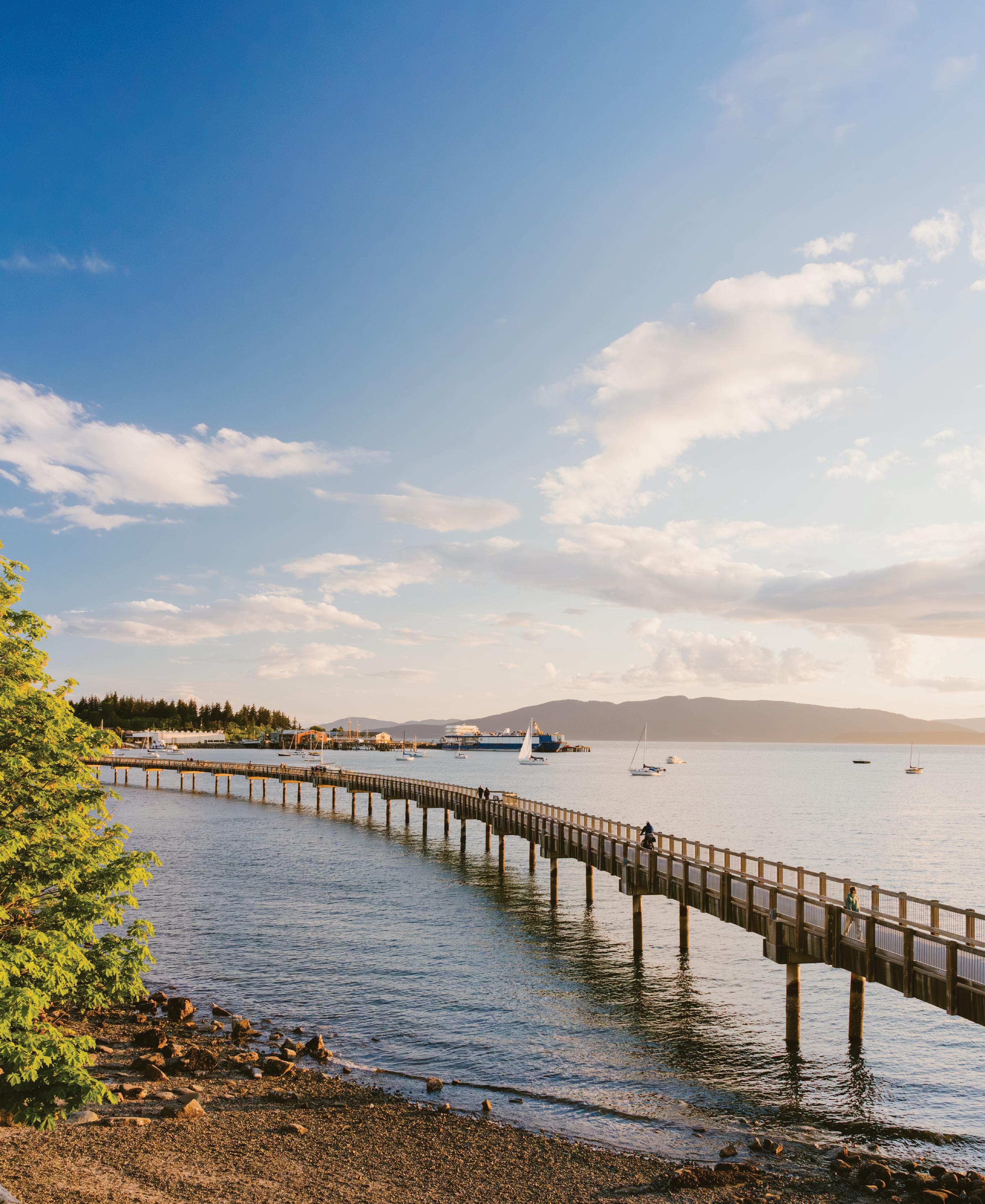
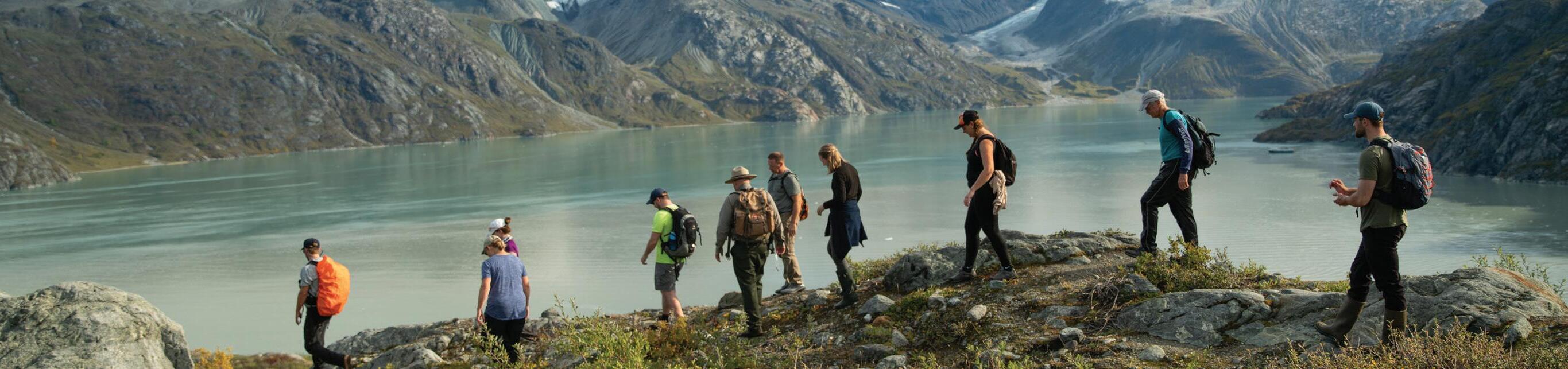


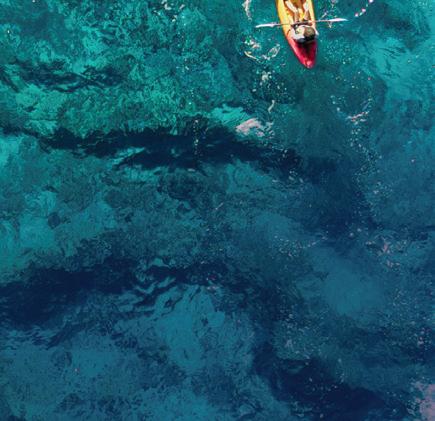


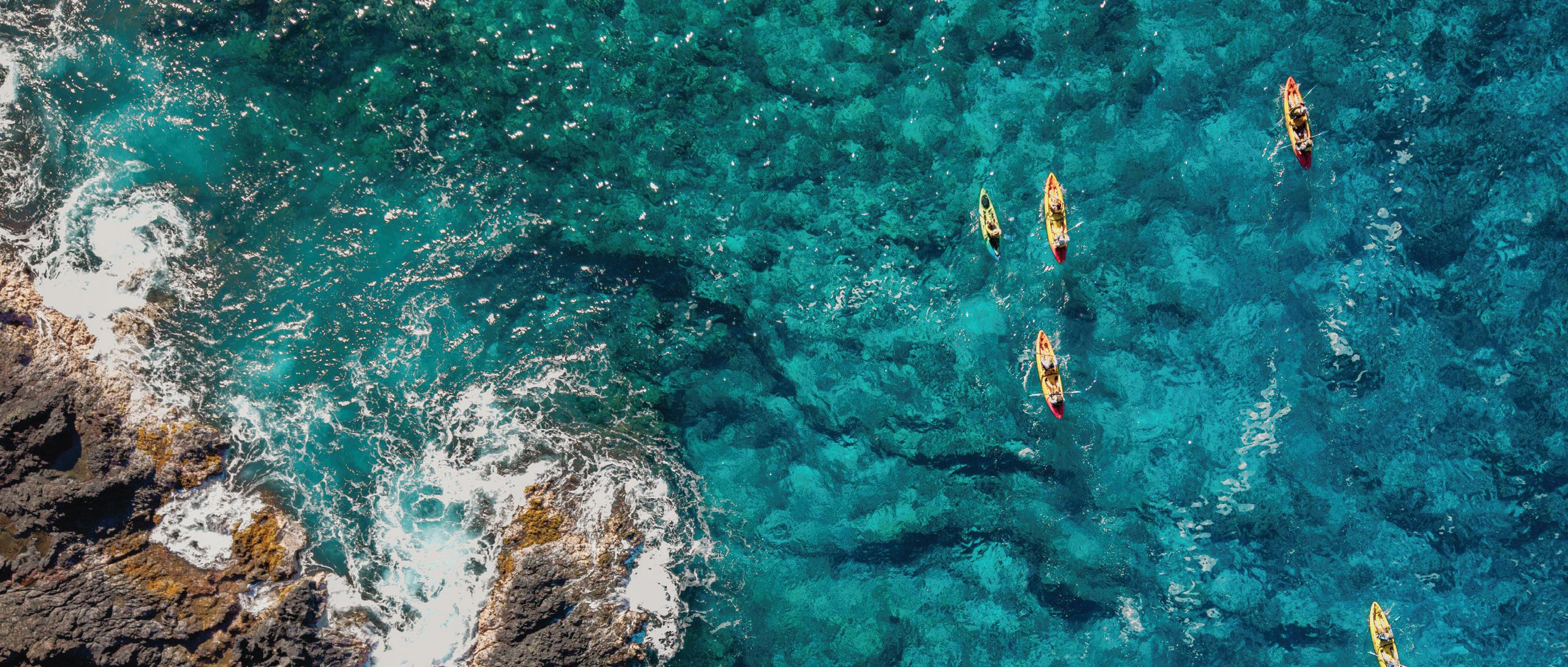
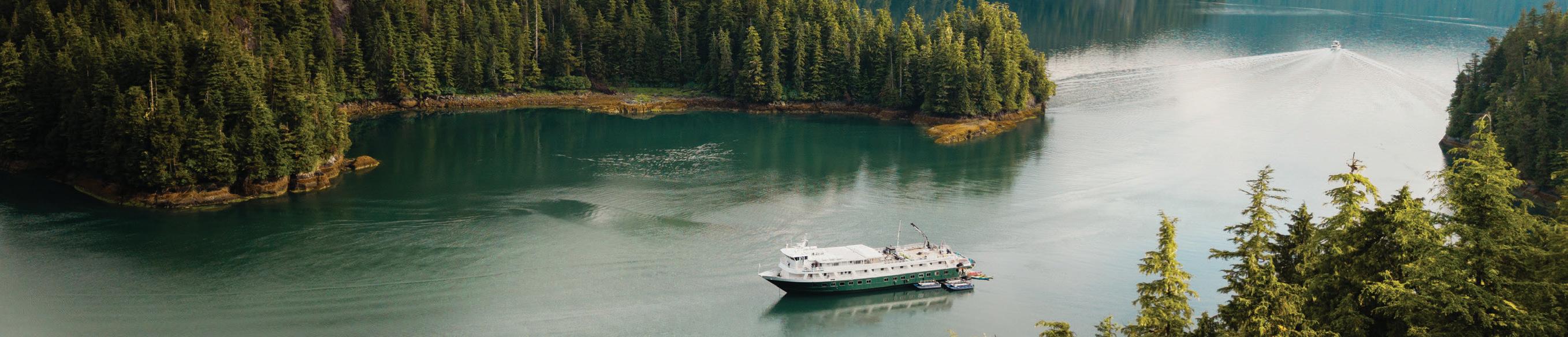






UnCruise Adventures gets you off the beaten path and into the wild on small ships built for exploration. With just 22–86 guests onboard, small-group adventures get you up close to the action by kayak, skiff, or on foot. Every voyage is allinclusive, with expert guides leading excursions, adventure gear, farm-to-table meals, and craft beverages. This is travel for people who want to do more, see more, and get closer. Ready to do what big ships can’t? Don’t cruise. UnCruise.
Alaska • Mexico • Hawaii • Galápagos • Costa Rica

Scan, go to UnCruise.com , or call 888-862-8881 for more details.


















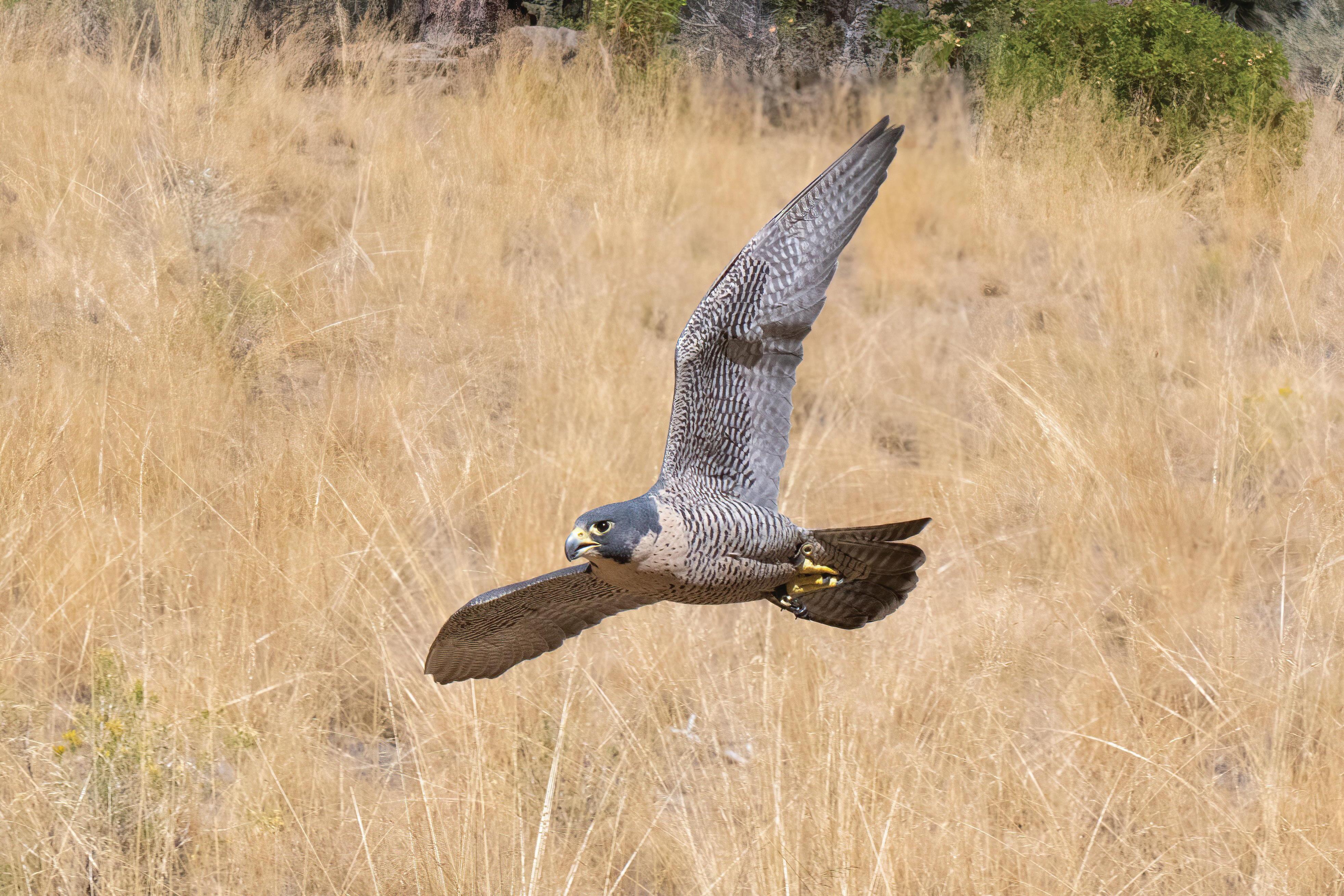
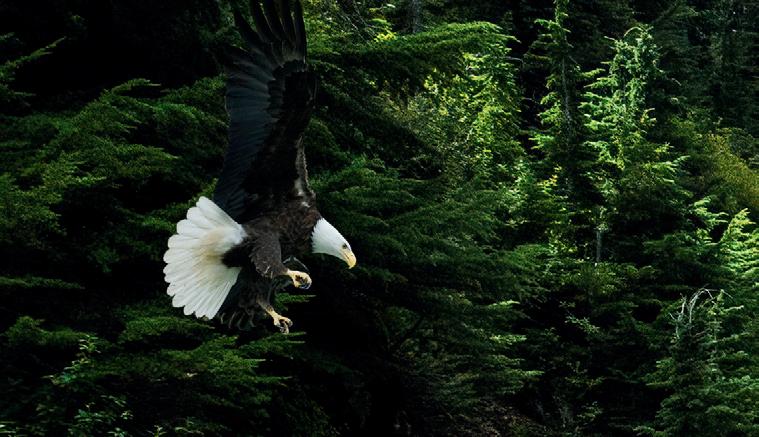
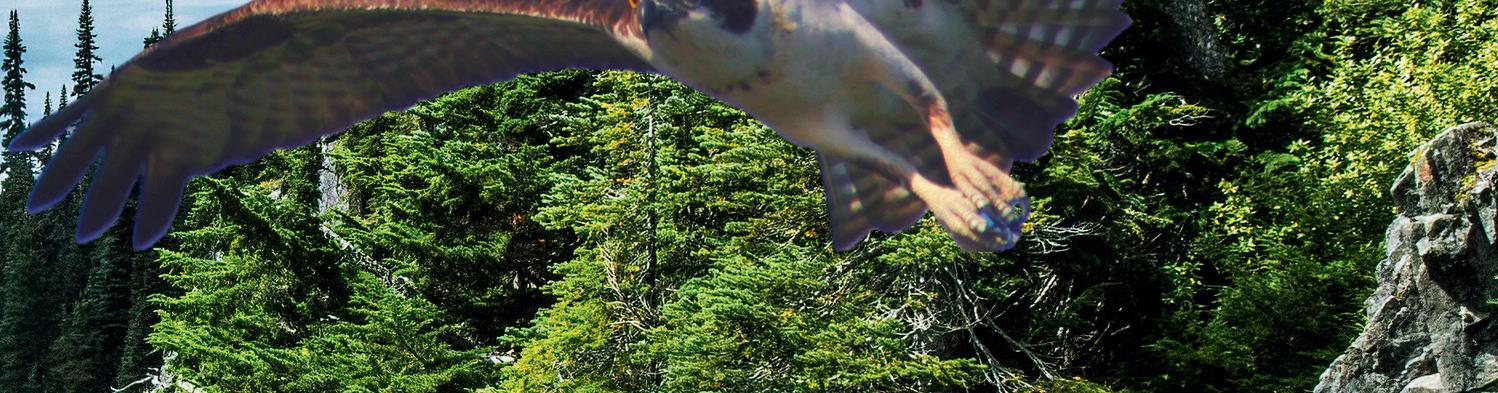
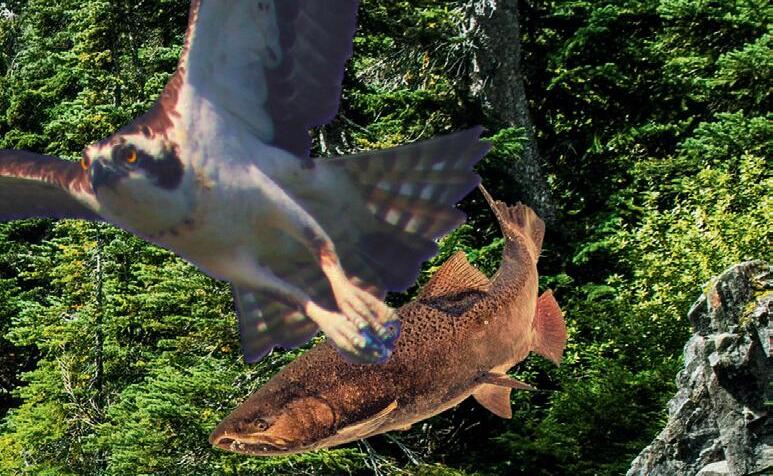
SEE BIRDS OF PREY IN FLIGHT!
THROUGH LABOR DAY






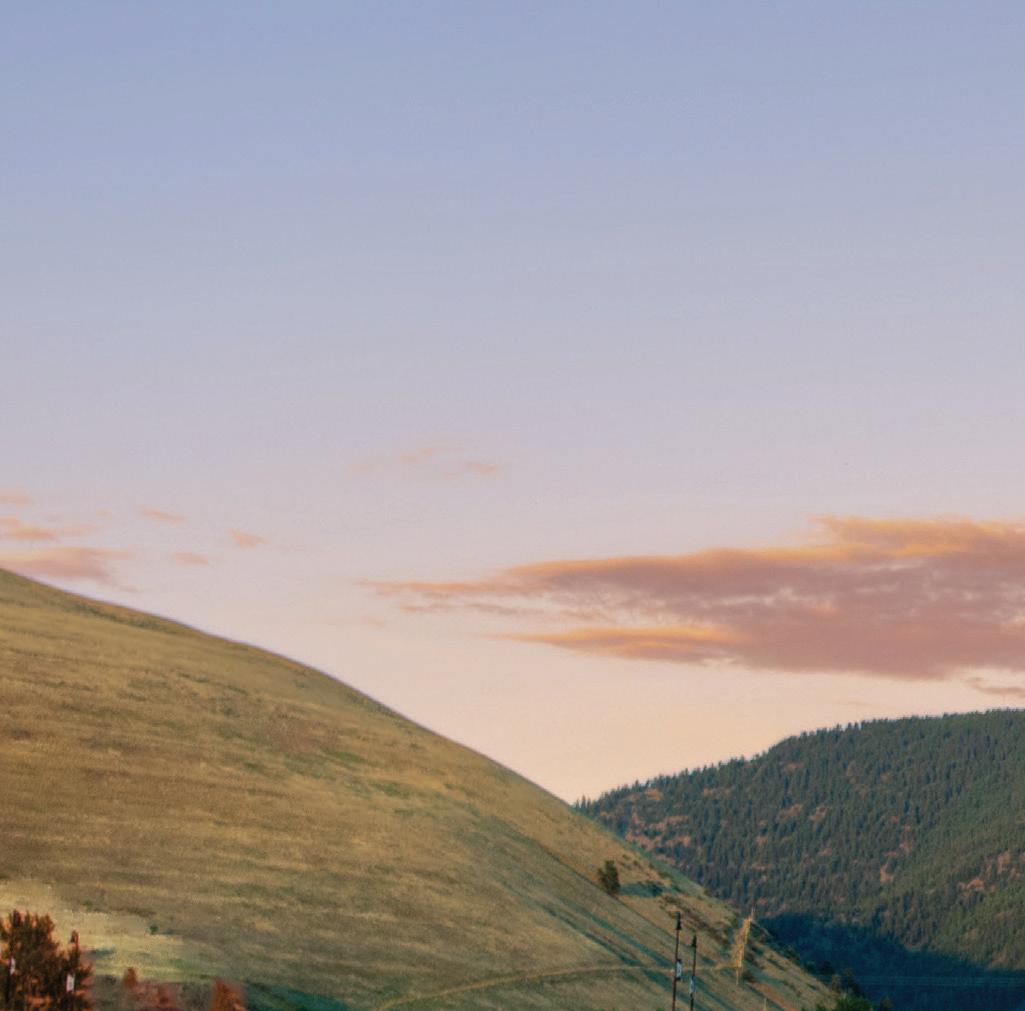

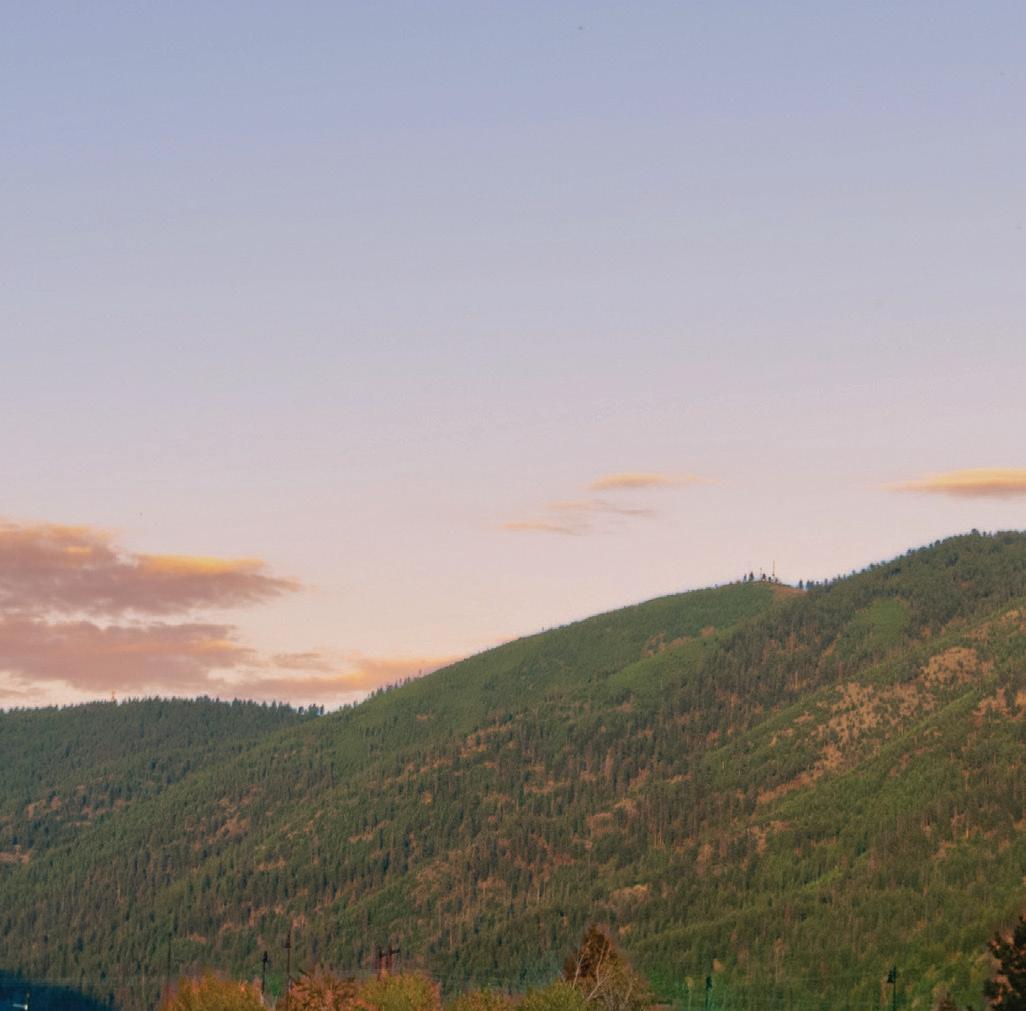
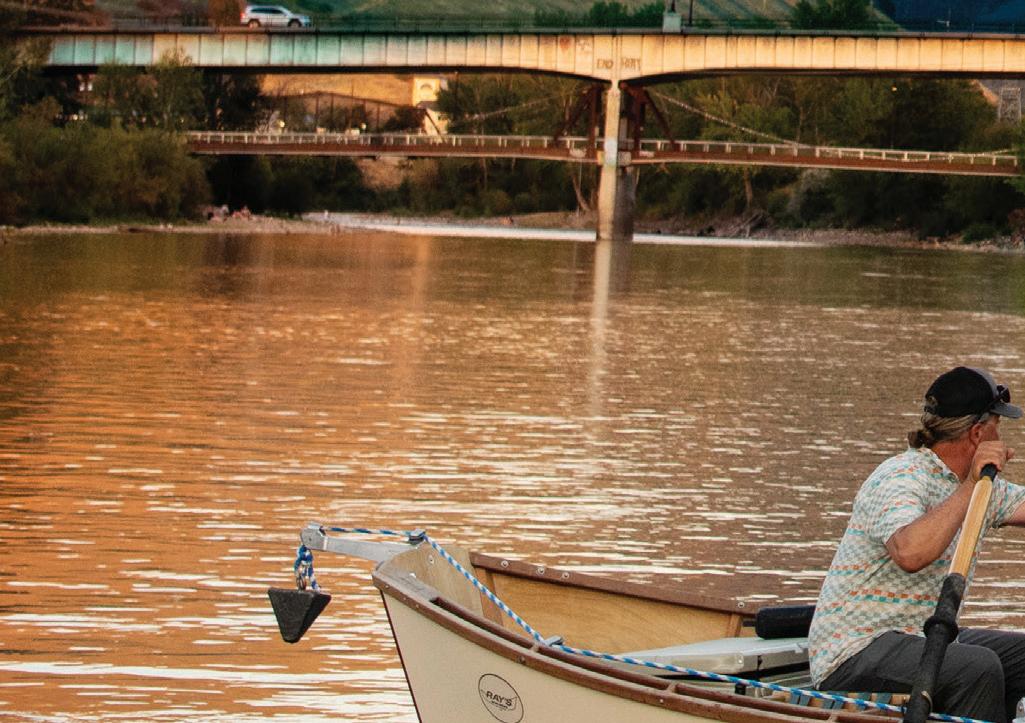
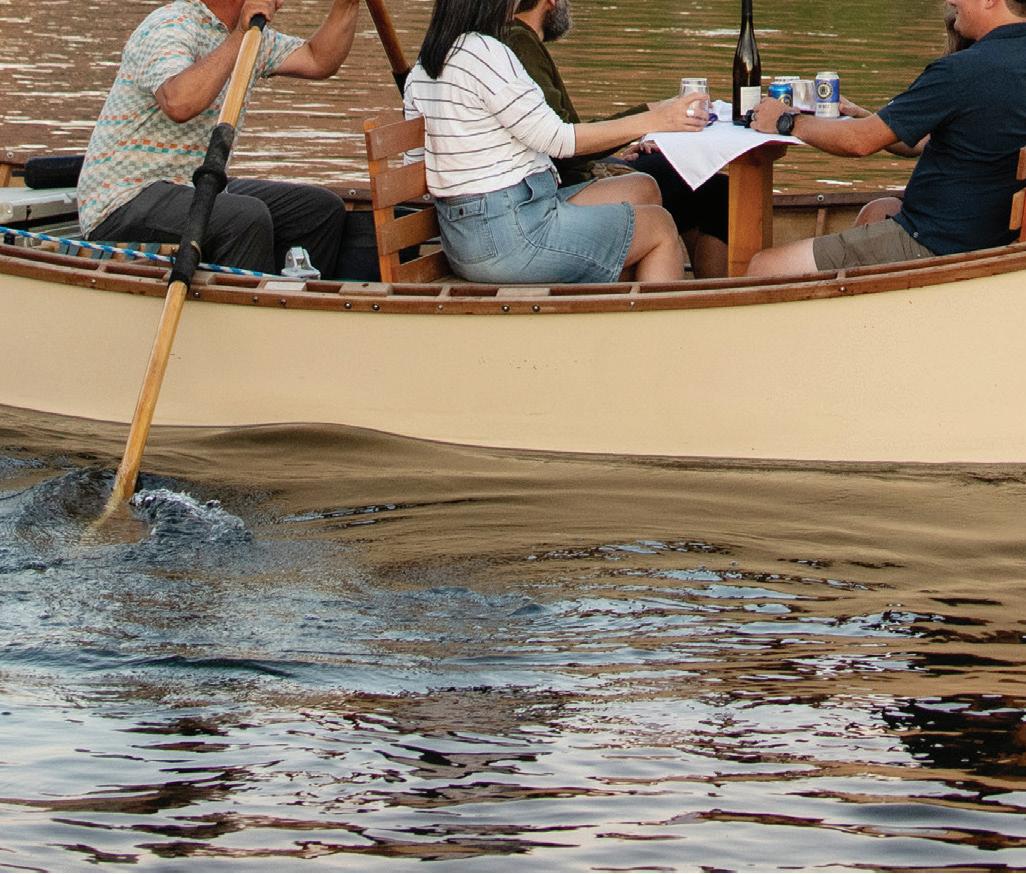
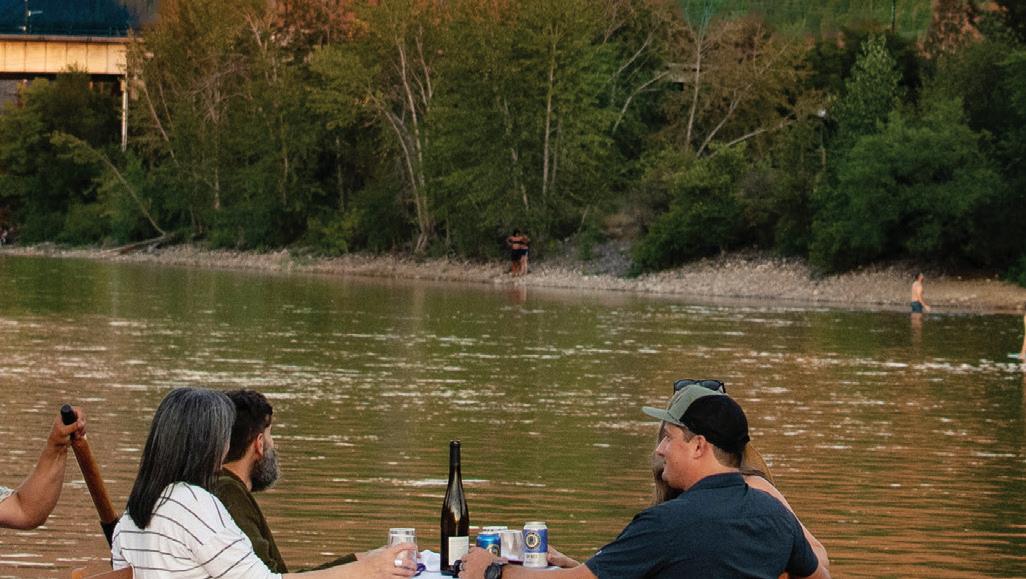
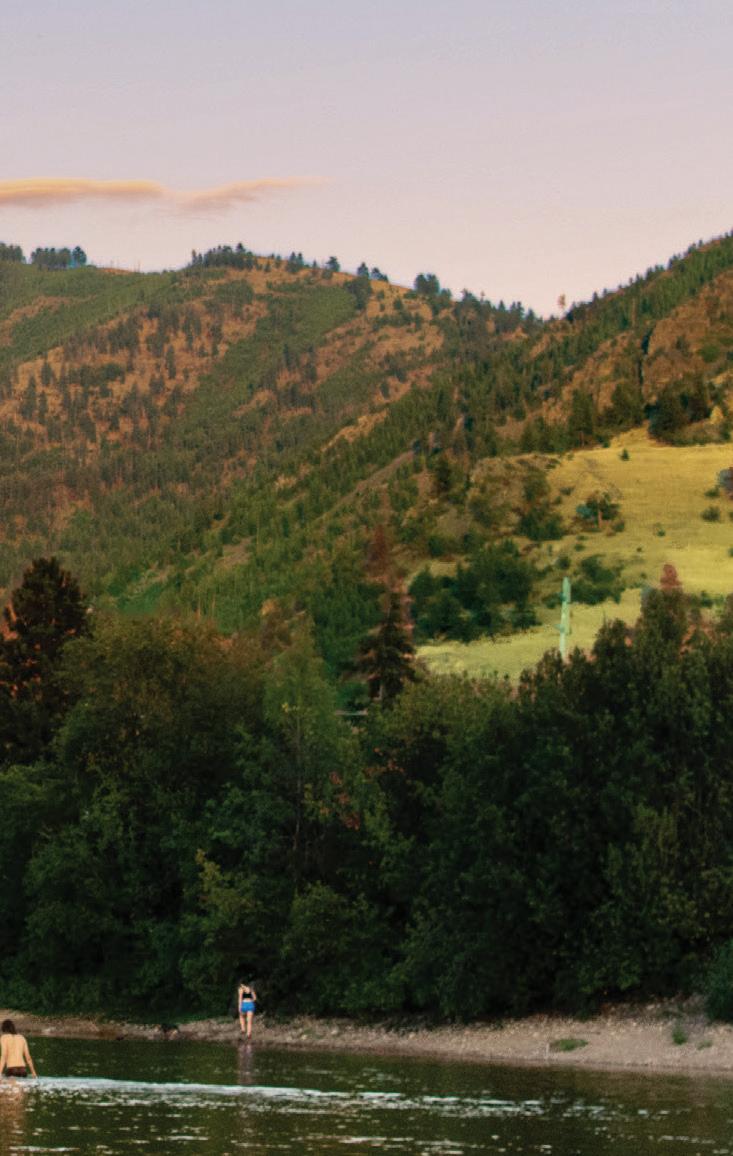
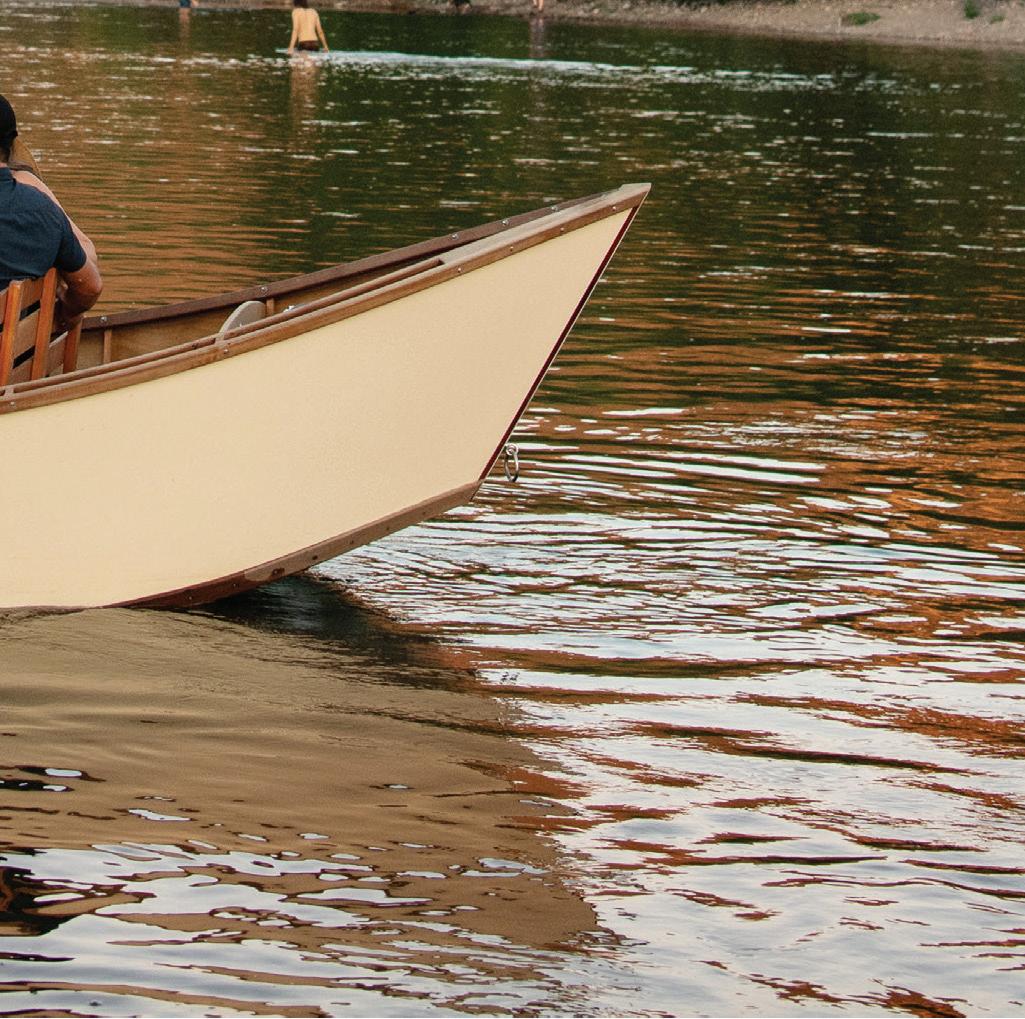

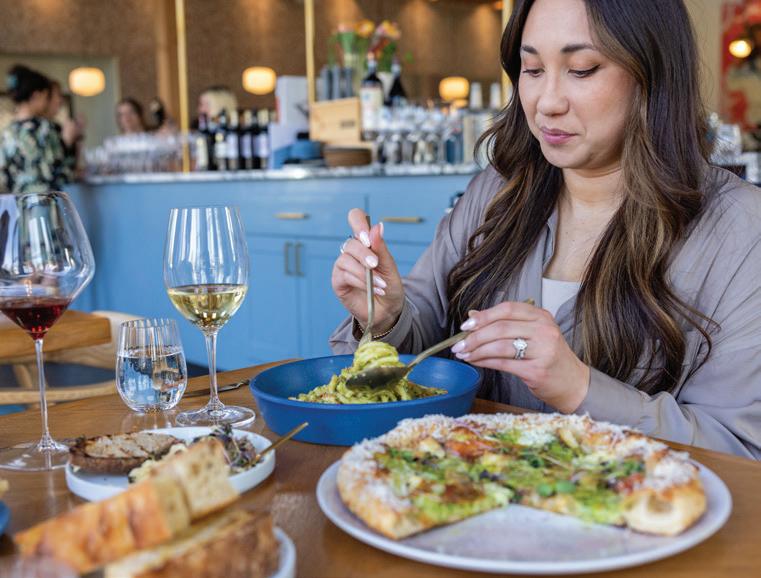
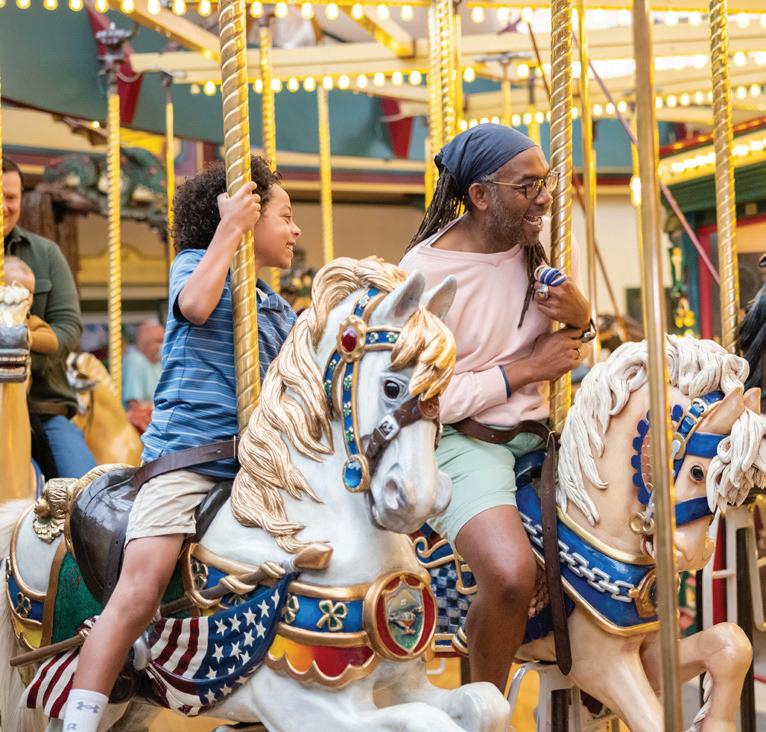
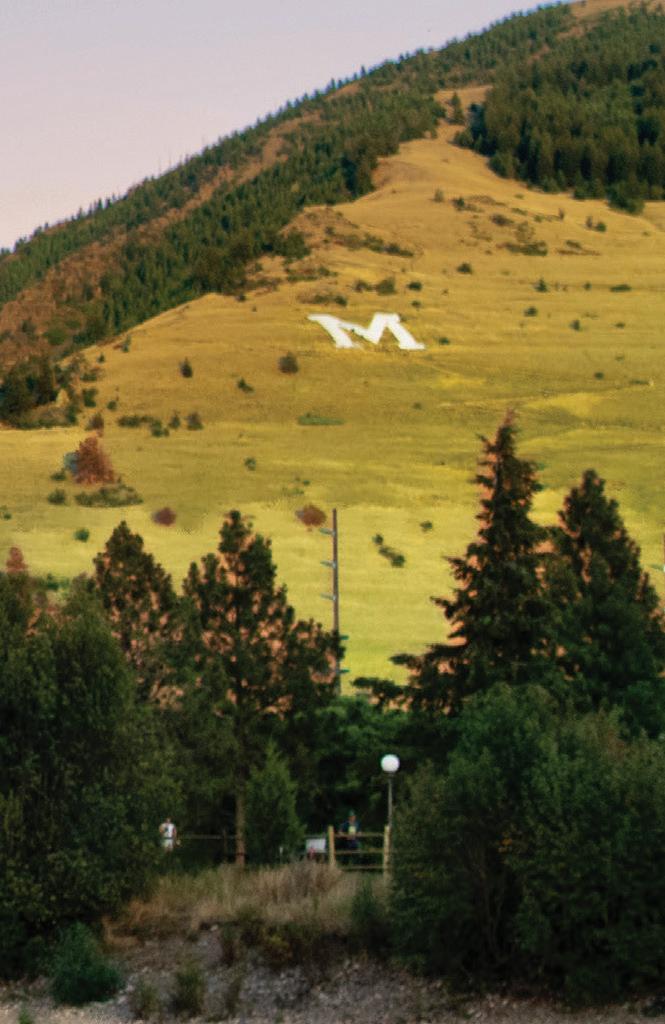
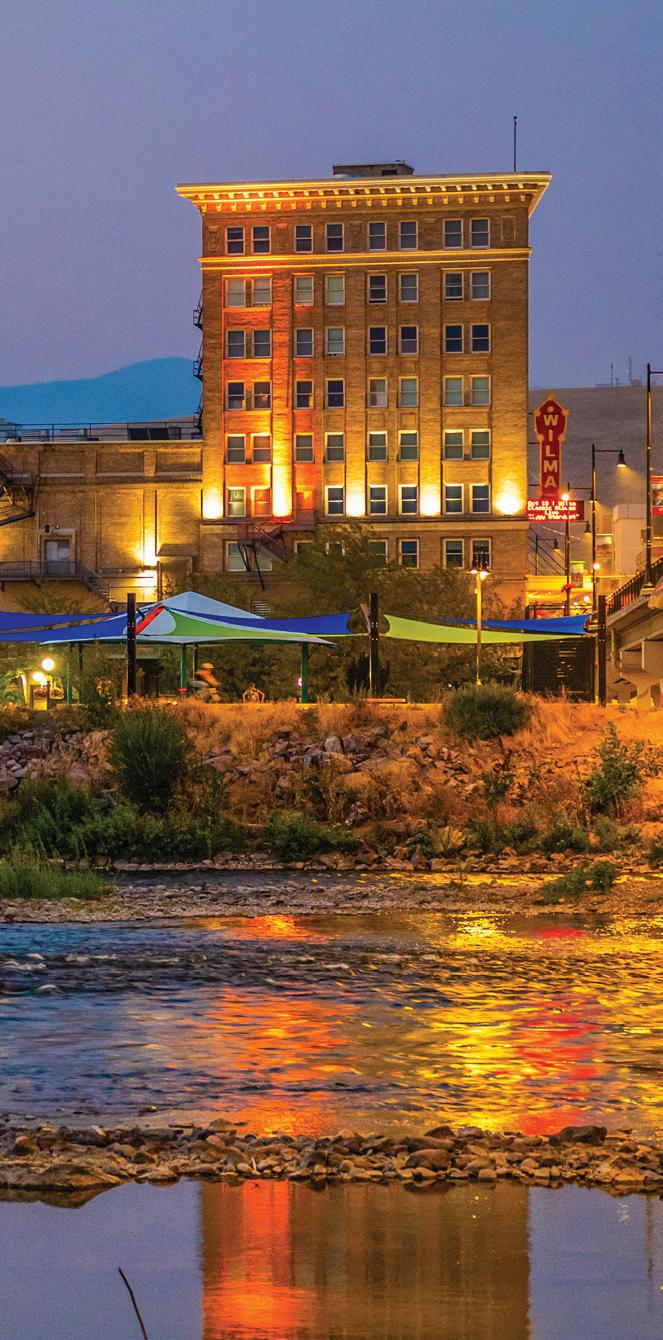

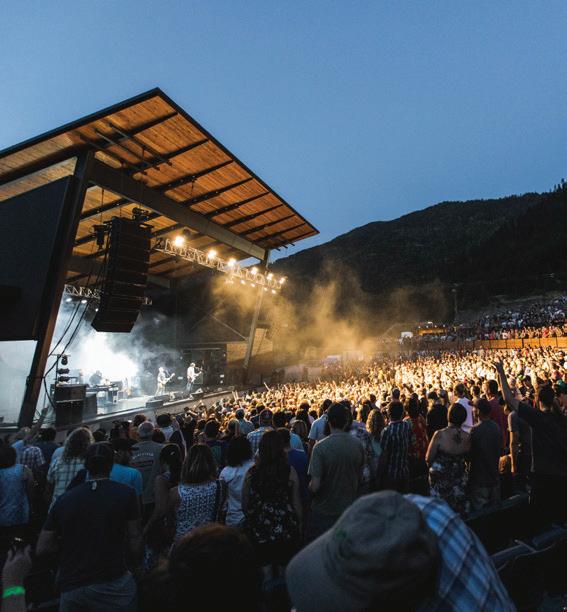
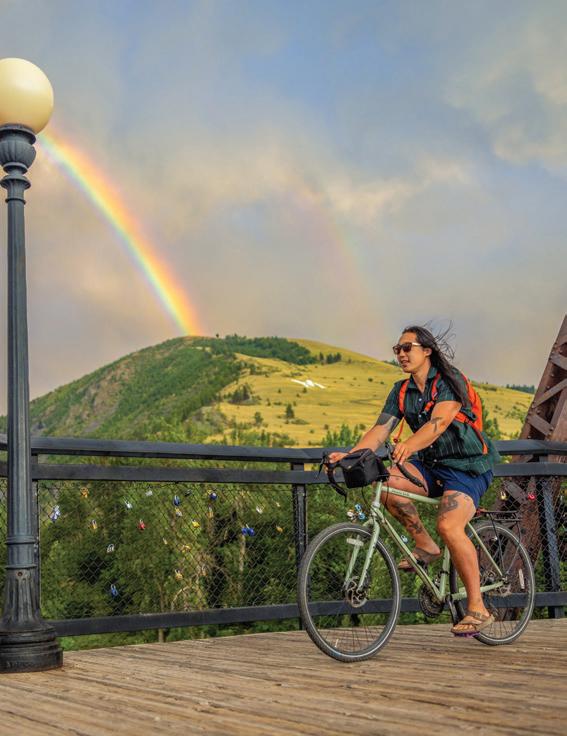
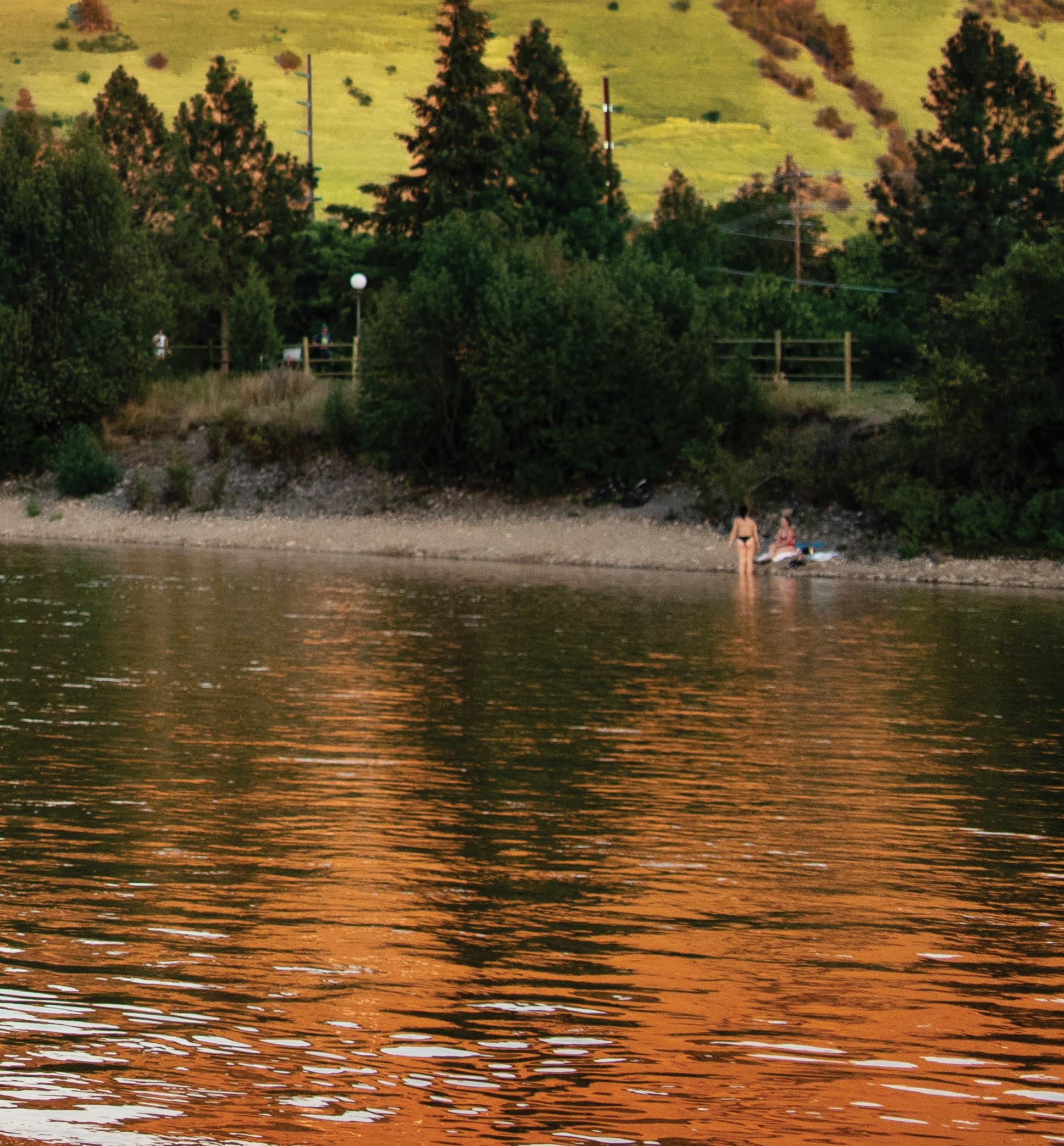
Nestled in the heart of western Montana’s vast wilderness lies a place where outdoor adventure meets cultural vibrancy and every moment is a memory waiting to be made. Whether you are strolling the sidewalks of our charming downtown or exploring our expansive trail systems, Missoula, Montana was made for discovery.
With a population just under 80,000, Missoula perfectly blends small-town charm with big-city amenities, and accommodations ranging from familiar hotel chains to boutique lodging experiences. Culturally, Missoula shines. Art is a way of life and music flows as naturally as the river that runs through the heart of the city. Our music scene is seriously impressive—headliners sell out outdoor amphitheaters, and the sound of talented up-and-coming acts grooves from every dive, brewery and cafe in town.
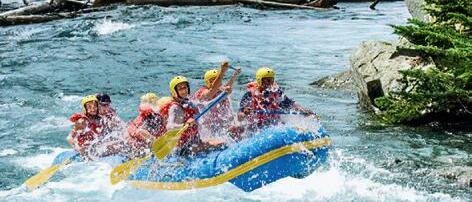
When it comes to recreating under Montana’s big sky, Missoula is paradise—seemingly endless trail systems beckon, breathtaking vistas await around every bend, and every day presents a new way to take to the water.


Let Missoula’s food scene surprise you–talented chefs with diverse influences serve up some seriously delicious grub using fresh, seasonal flavors. Missoula takes “local” seriously and “farm-to-table” is more than a catchphrase, as evidenced by our nationally recognized farmers market scene, where you can find everything from Montana-made goods to homegrown, local produce.
Missoula is a place you have to experience to believe, and with daily direct flights from Seattle, your perfect adventure is closer than you think. Book your stay. Pack your bags. It’s time to make memories, and Missoula is waiting.
Call 1.800.526.3465 or visit destinationmissoula.org/1889 for more information.






THE CULTURE of Legends Casino Hotel began from honest tradition. In 1998, Legends opened with an iconic logo featuring Mount Adams—a source of history and lore for the Yakama Nation and a powerful presence in the region. Fourteen years later, fishermen on scaffolds at Celilo Falls became central to the Yakama brand, as well as the bounty of the Columbia River.
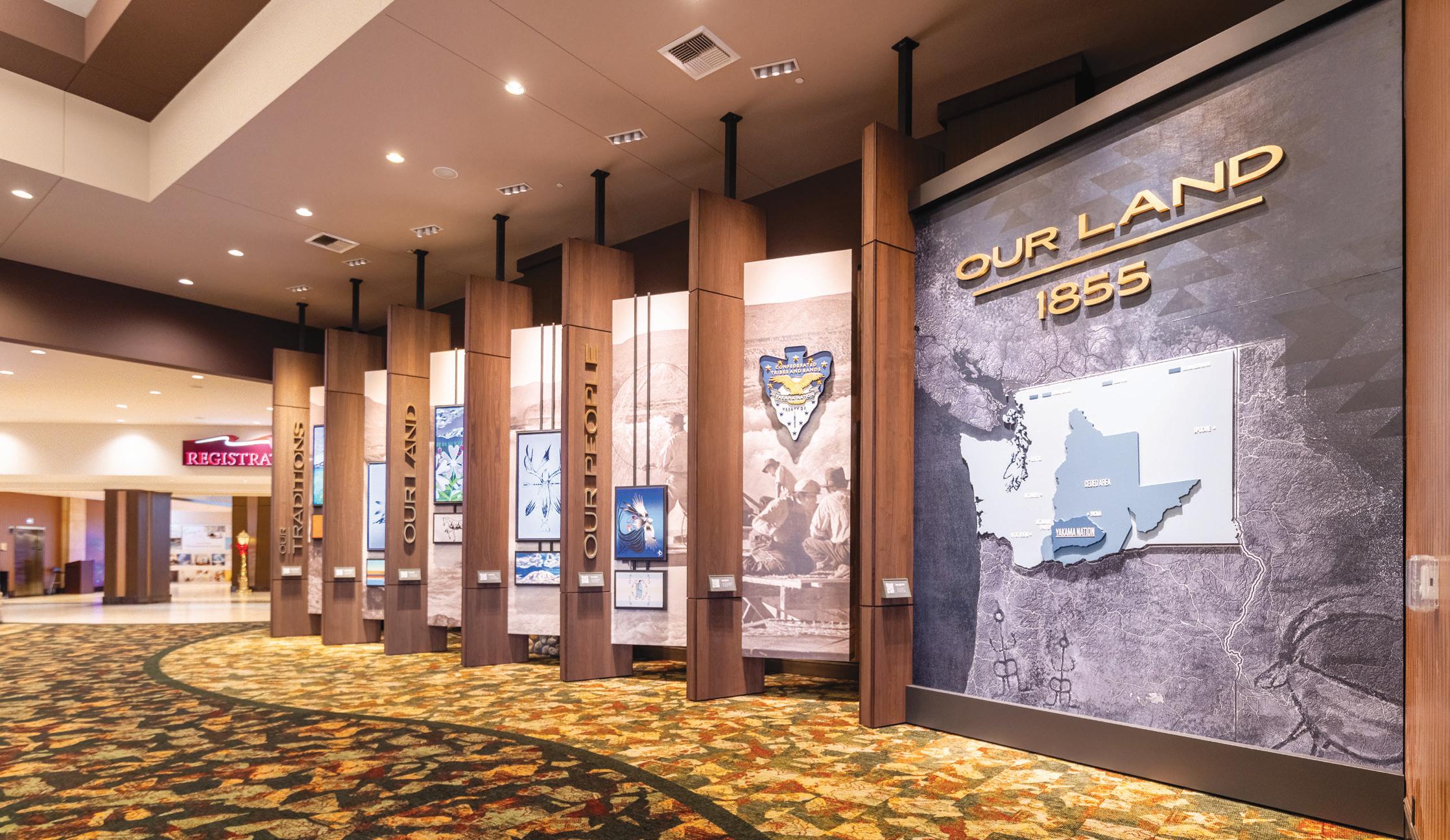
Set in the heart of Central Washington, Legends welcomes travelers with experiences that reflect the traditions, creativity and spirit of the region. In the Grand Lobby, a new cultural display invites guests into a visual story inspired by Yakama heritage, while artwork by Yakama artists throughout the property adds beauty, depth and cultural richness to the guest experience.
Immerse yourself in the Yakama culture with an excursion to the Yakama Museum. Here you can take a guided tour to learn the history of the Yakama People through its artifacts. Learn about the consequential Treaty of 1855 that brought together fourteen regional tribes and bands in an agreement with the United States government, and gave the Yakama Nation federal recognition.
Gaming thrills. With more than 1,300 slot machines, blackjack, roulette, craps and more, Legends Casino Hotel offers endless ways to play. Whether you love the fastpaced buzz of table games, the spin of the reels or the chance to chase jackpots, the casino floor is always alive with energy, excitement and nonstop entertainment.







The excitement doesn’t stop on the casino floor. Legends Casino Hotel hosts live entertainment and seasonal events that keep the good times rolling year-round. From music to special celebrations, every visit can offer something new to experience, discover and enjoy. See our full list of events at legendscasino.com/ entertainment
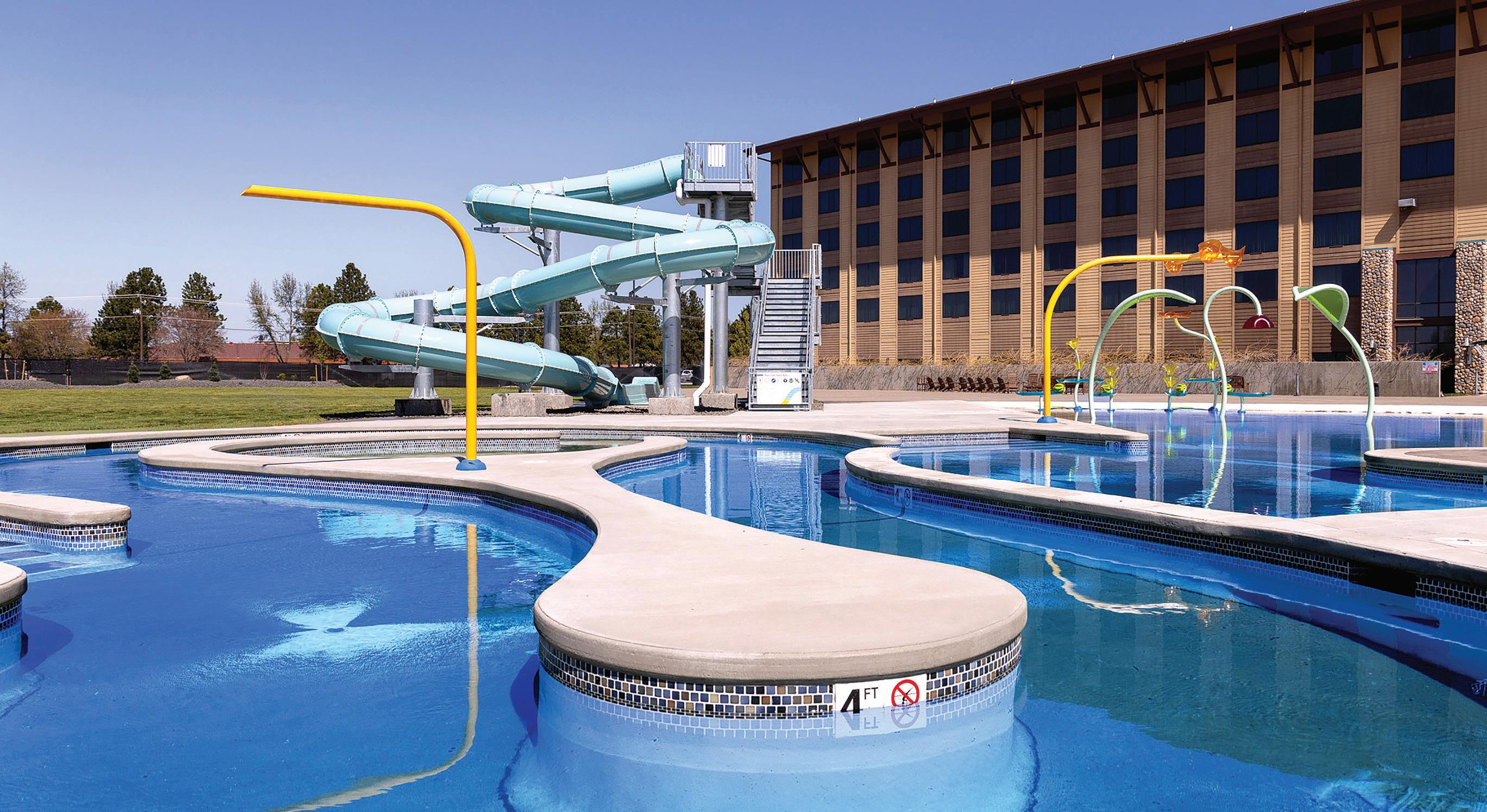
Summer is an especially vibrant time to visit. In June 2026, Legends will debut its new outdoor pool, welcoming hotel guests to experience the Pacific Northwest’s newest destination for family-friendly water fun. Legends’ new outdoor pool offers a meandering lazy river, a water slide and splash pads for kids.
With Legends’ multi-year guest enhancements in full swing, this summer guests will have the opportunity to unwind and extend their stay with the all-new designated RV bays. Twelve new RV Parking bays will provide comfort and privacy for Legends RV traveling guests.
Pamper yourself in one of the 200 nicely appointed rooms with eighteen suites to choose from, including the 800-squarefoot Celilo suite, with two massive flatscreen TVs, a soaking tub, a catering kitchen and dining area. Plush bedding, sleek style and welcoming touches create a stay that feels as indulgent as it is comfortable. Many rooms offer striking views of Mount Adams, a powerful
presence on the horizon and an enduring part of the Pacific Northwest landscape.
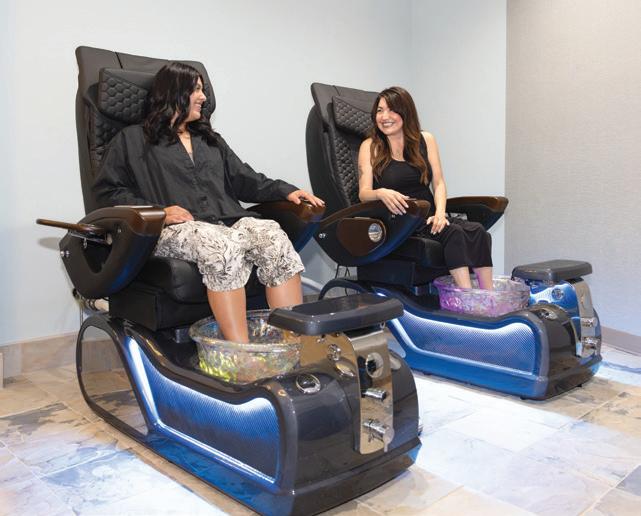
Sage Spa invites you to slow down, breathe deeply and indulge in treatments designed to refresh both body and spirit. Experience soothing massages and revitalizing facials or relax in the exclusive wellness pod—a signature feature designed to rejuvenate like no other. Relax. Recharge. Repeat. It’s the perfect balance of indulgence, renewal and total well-being.

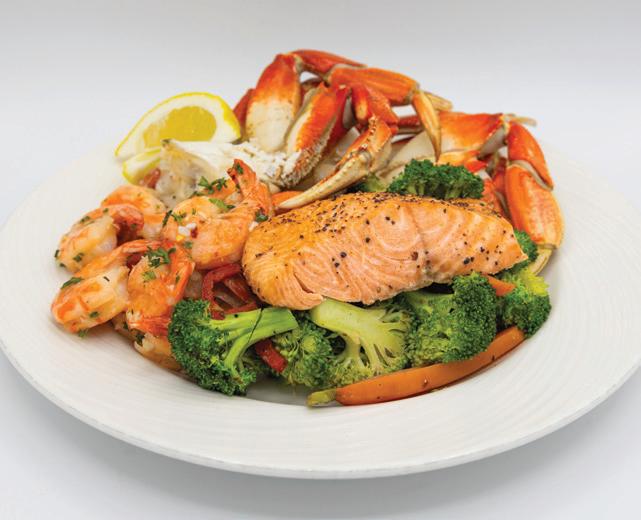
Great food isn’t just for the evening at Legends—it’s a reason to return all day long. Be prepared to eat well and find a menu that suits your palate. Dine with us at Legendary Burgers, pizza and pasta at Creations, surf and turf at Fortunes, Madres Mexican favorites or Lucky Shots Coffee Bar for a caffeine bump to keep your day kicking. Or enjoy an all-you-caneat Seafood Buffet every Thursday. At Legends, we continue to meet higher standards of our guests while keeping our community at the heart of our organization. More than just a casino, Legends Casino Hotel is your one-stop escape for gaming, entertainment, a welcoming hotel stay, spa indulgence and all-day dining. So, pack your sense of adventure—and maybe an overnight bag—and discover how close the perfect getaway can be.

photography
by
Ben Lindbloom
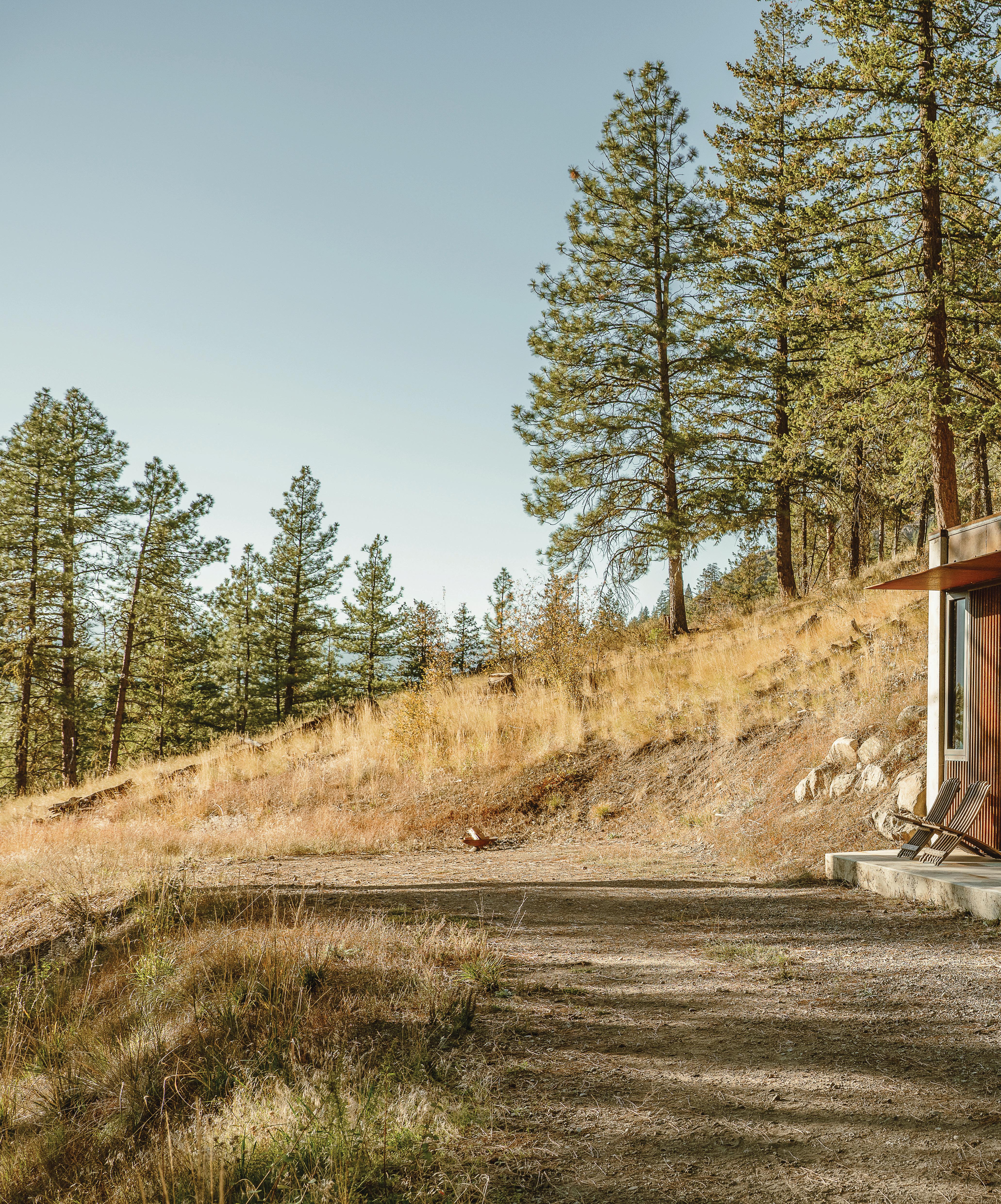
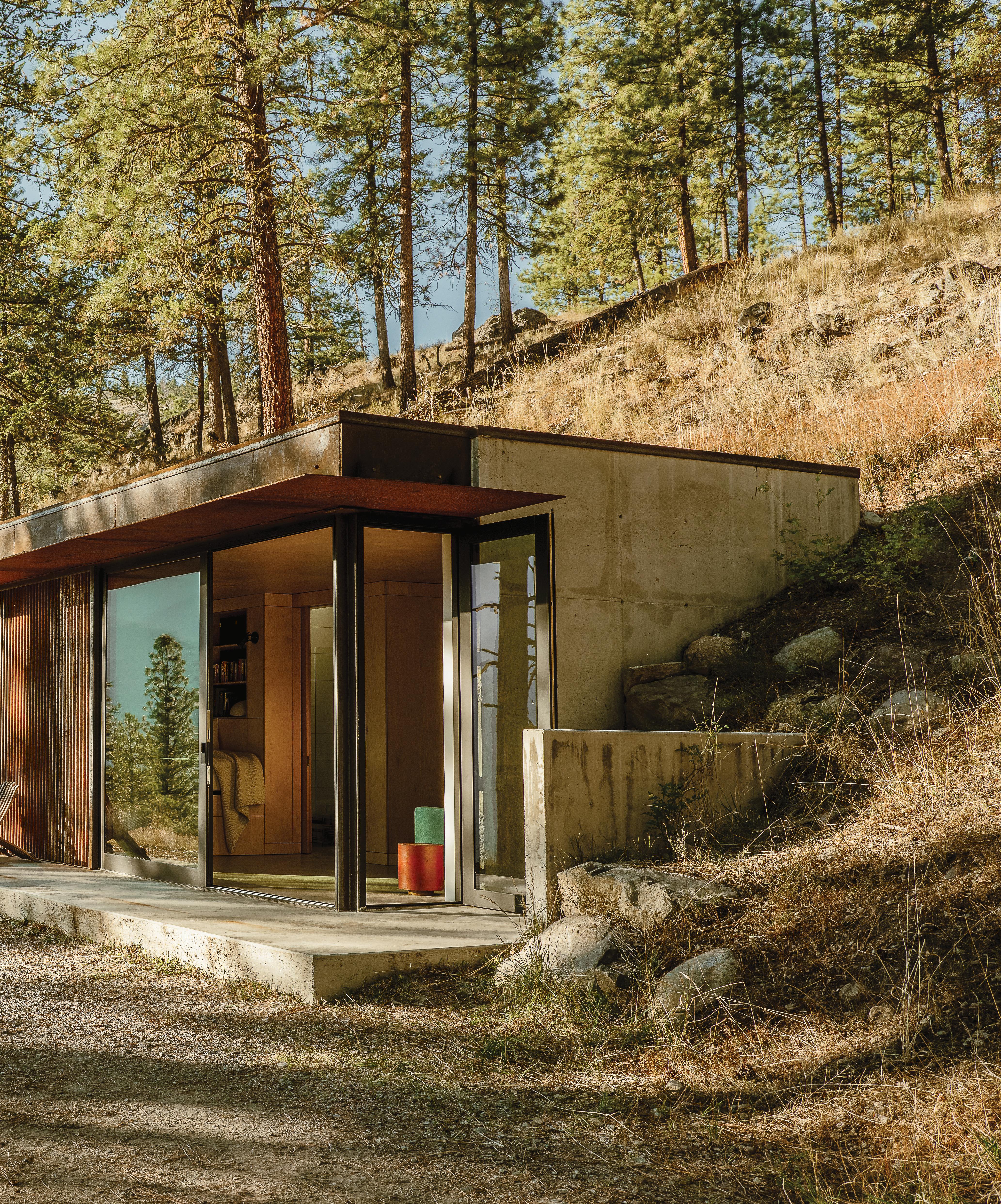
Tucked into the hillside near Mazama, this ultra-efficient, 330-square-foot cabin serves as the perfect base camp for its outdoor enthusiast and endurance athlete owner. (pg. 40)
66
Demand is down, alternative drinks are up and fruit is on the ground. Winemakers take stock of what tomorrow looks like for making and drinking good wine in the Evergreen State.
wri en by Lauren Kramer
Experience the lovely surprise of the Patricia Rovzar Gallery in downtown Sea le. Exciting work from contemporary artists will not disappoint even the most entrenched traditionalist at this gallery.
wri en by Kerry Newberry
56

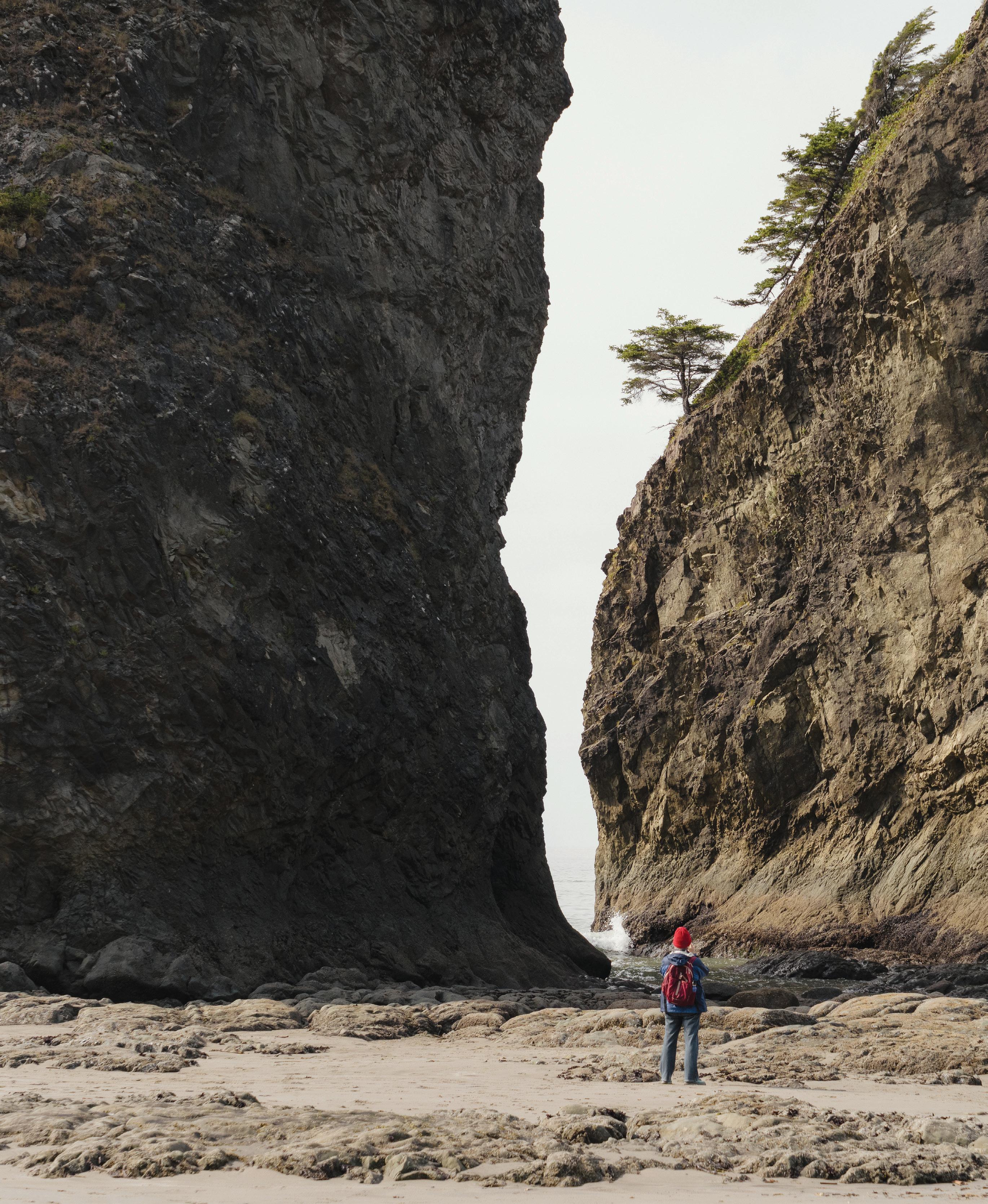

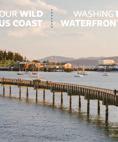
From the Olympic Peninsula to Long Beach, soak in the dramatic beauty of Washington’s coastline. Make a summer trip of it, but know that summer looks and feels di erent along our shorelines. wri en by Ryn Pfeu er



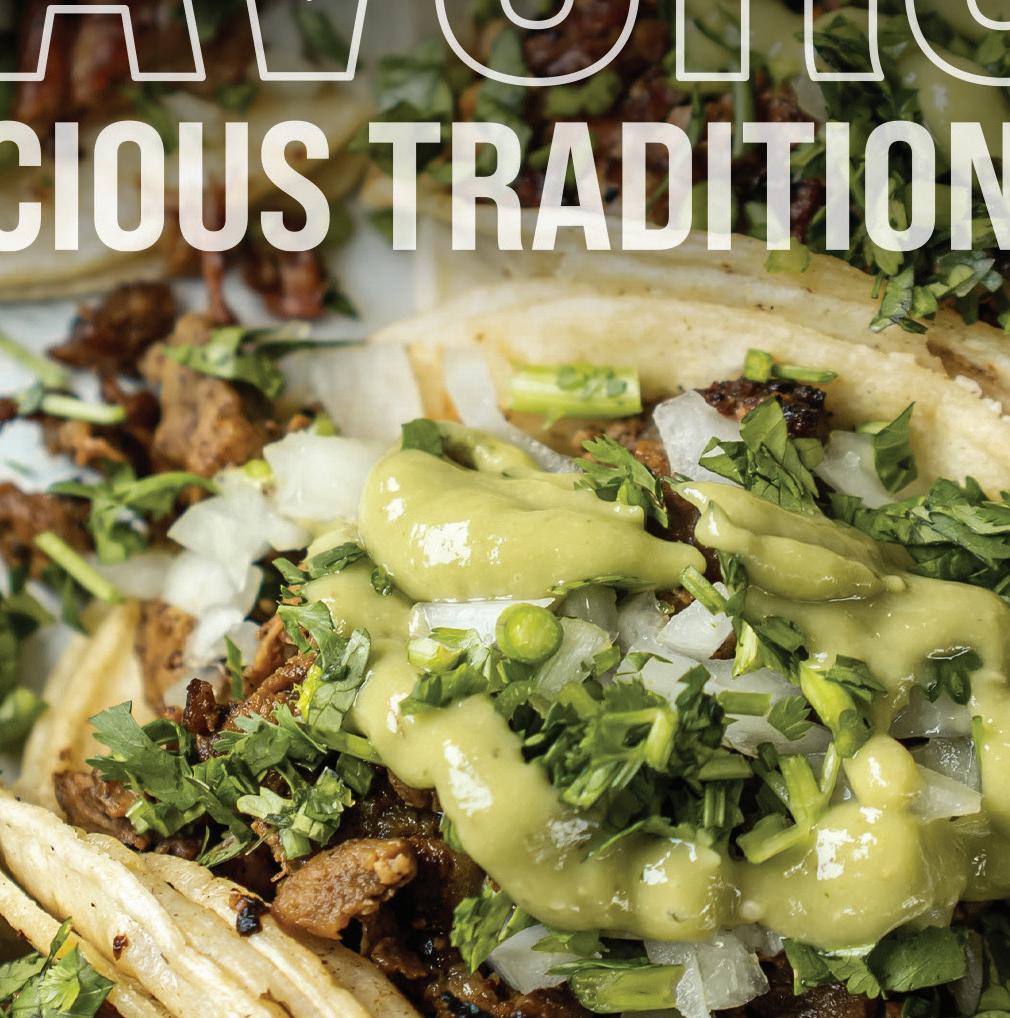
30+ STOPS ON THE YAKIMA VALLEY TACO & TAMALE TRAIL
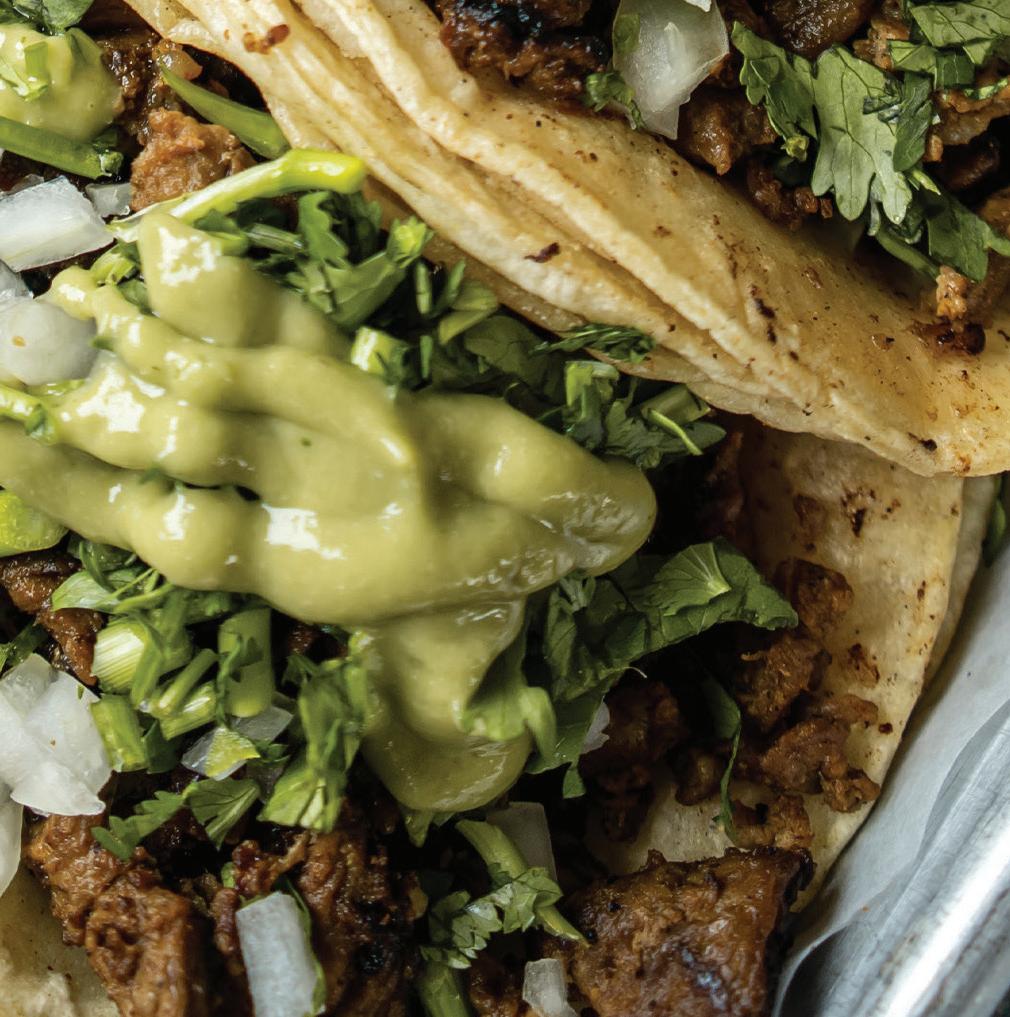












Trip Planner, pg. 86)
Editor’s Le er 1889 Online Map of Washington Until Next Time 14 15 94 96
18 SAY WA?
Aviation history, flying darts and the summer’s top ten music festivals.
26 FOOD + DRINK
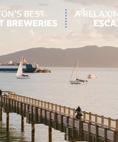
Best waterfront breweries, Max Dale’s Steak & Chop House.
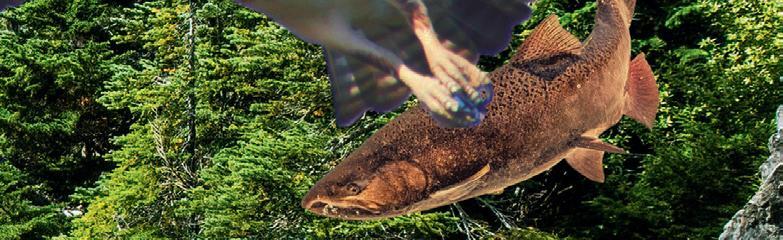
34 FARM TO TABLE Chinook salmon.
40 HOME + DESIGN
A tiny adventure cabin in Mazama.
48 MIND + BODY Sammamish gymnast Simone Rose.
52 MY WORKSPACE Wandering Woodlands’ cool campground.
54 GAME CHANGER South Pacific County Technical Rescue.
78 TRAVEL SPOTLIGHT
Hat ’n’ Boots in Sea le’s Georgetown neighborhood.
80 ADVENTURE
Sea le Ballooning.
84 LODGING Populus Sea le.
86 TRIP PLANNER Bellingham in summer.
92 NW DESTINATION Osoyoos in BC’s Okanagan Valley.
REVA KELLER Photographer
Farm to Table
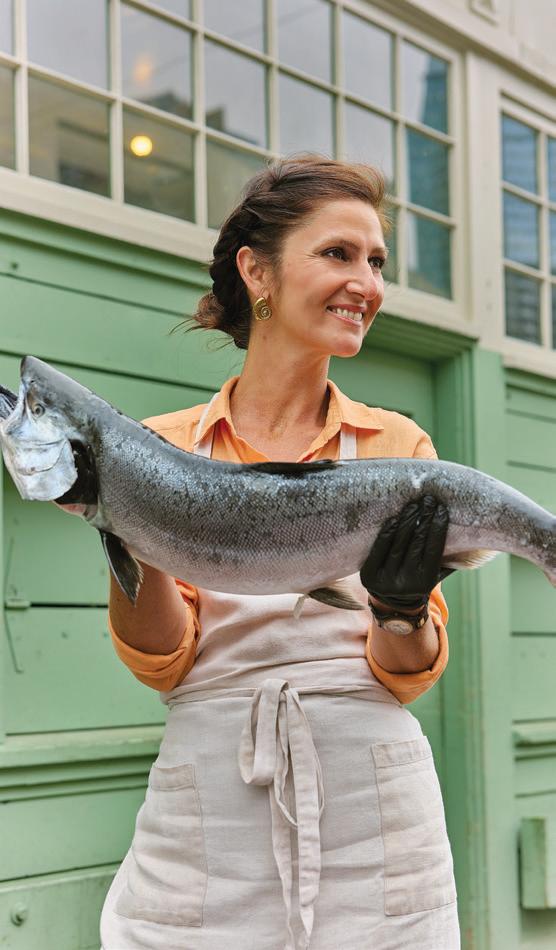
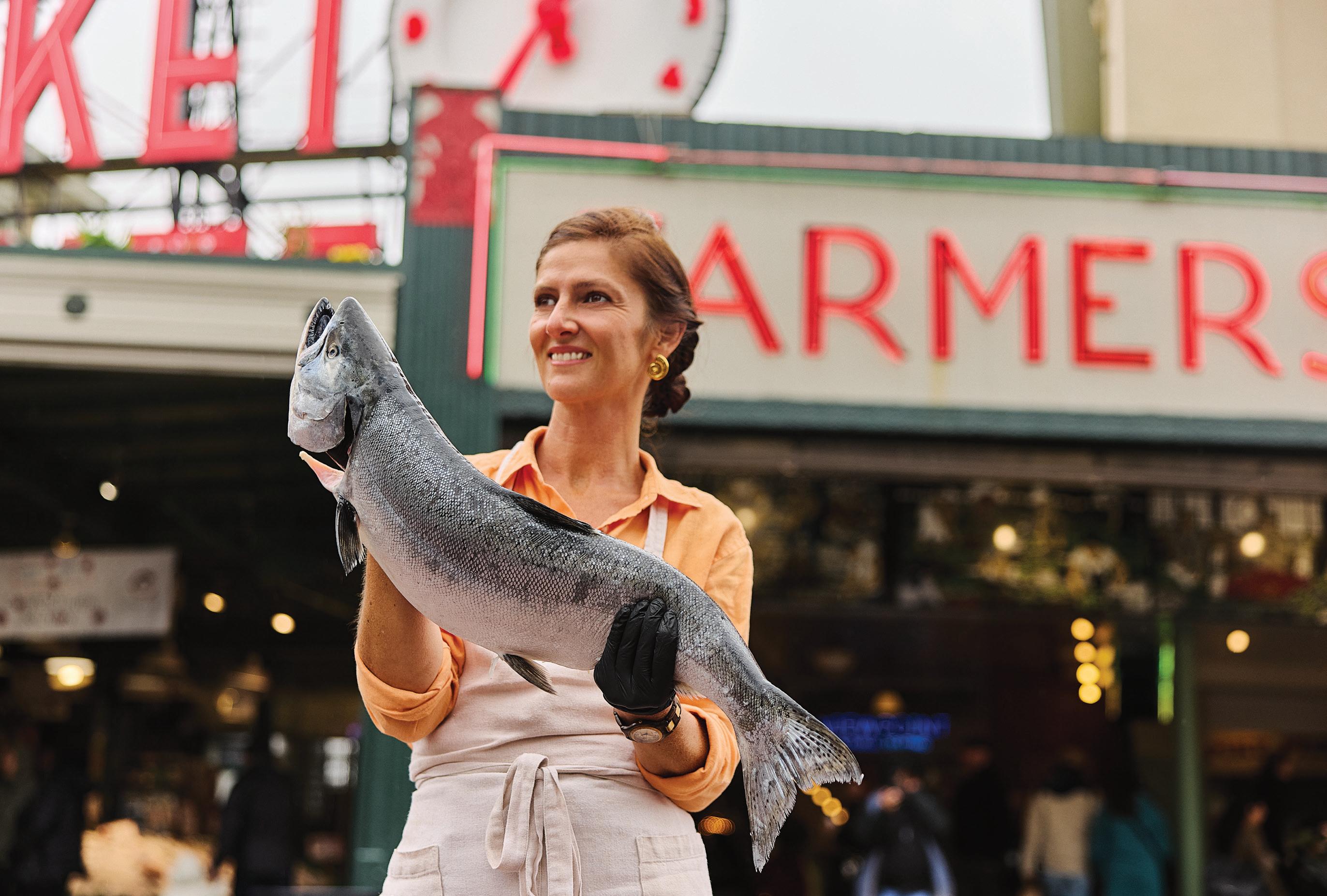
“Carrying a whole Chinook salmon through Pike Place Market to photograph with Michela at her restaurant made for a pretty memorable assignment! The whole experience felt tied to the people, ingredients and daily rituals that make the market such a special (and uniquely Seattle) location.” (pg. 34)
Reva Keller is a James Beard Award-winning food photographer based in Seattle. Besides photography, she enjoys ceramics, travel and going canoe camping with her partner and their dog.
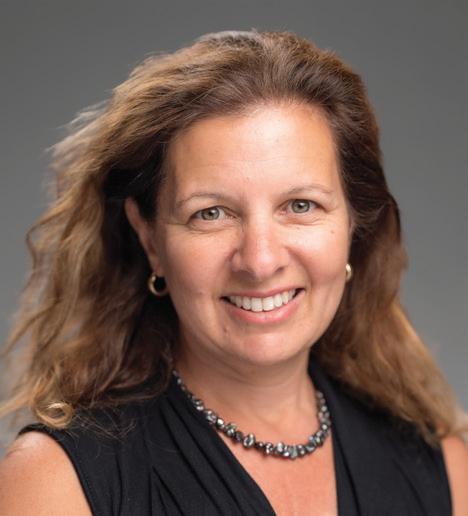
LAUREN KRAMER Writer
What’s Next for Washington Wine?
“As I researched this feature on Washington’s wine industry, I realized we’re all still looking for meaningful, genuine social connections in warm, welcoming environments. But as spending power and consumer habits change, how do you reach the next generation of wine consumers? If the industry can meet this challenge, the downhill trend it’s experiencing may stabilize.” (pg. 66)
Lauren Kramer is a Bellinghambased freelance writer who was born in Cape Town, South Africa. She relishes raising a family in the Pacific Northwest and writes about social issues, food, travel and fascinating people.
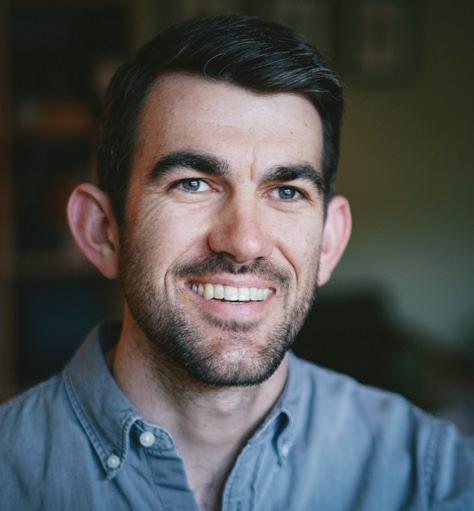
BRIAN LACKEY
Photographer
The Call of the Wild
“My first visit to the Washington Coast was so impactful that I ended up going back home to Denver, canceling my lease and moving out to Washington a few months later. Since then, I’ve taken many, many more trips out to the coast, photographing all the way from Cape Disappointment to Cape Flattery, primarily as part of a long-term photo book project about the Olympic Peninsula that’ll be released next year.” (pg. 56)
Brian Lackey is a freelance travel photographer based in Seattle, specializing in exploring the wild places of the Pacific Northwest.
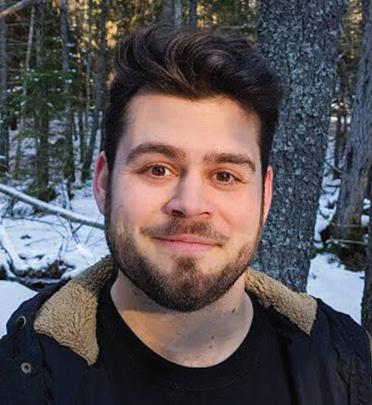
CODY MUIR
Illustrator
What’s Next for Washington Wine?
“I have so many great memories of summer trips out west for winery tours in Walla Walla, of the sun hanging low over gold-drenched hills, casting long shadows along rows of vineyards. I set out to capture some of those very memories while illustrating for this story on some of the challenges facing such a paramount fixture of the region.” (pg. 66)
Cody Muir is a Washington-born illustrator and motion designer currently living in coastal Maine with his wife, Taylor. His work often explores mood and setting as storytelling avenues with an emphasis on capturing atmospheric scenes.
EDITOR Kevin Max
CREATIVE DIRECTOR Allison Bye
WEB MANAGER Aaron Opsahl
SOCIAL MEDIA MANAGER Joni Kabana
OFFICE MANAGER Cindy Miskowiec
DIRECTOR OF SALES Jenny Kamprath
ACCOUNT EXECUTIVE Terresa Clark
BEERVANA COLUMNIST Jackie Dodd
C ONTRIBUTING WRITERS Cathy Carroll, Melissa Dalton, Joni Kabana, Lauren Kramer, Kerry Newberry, Daniel O’Neil, Ryn Pfeuffer, Ben Salmon, Corinne Whiting
CONTRIBUTING PHOTOGRAPHERS Will Austin, Jackie Dodd, James Harnois, Reva Keller, Brian Lackey, Ben Lindbloom
CONTRIBUTING ARTISTS Cody Muir, Charla Pettingill, Ellen Surrey
Mail Headquarters
70 SW Century Dr. Suite 100-218 Bend, Oregon 97702
www.1889mag.com /subscribe @1889washington
592 N. Sisters Park Ct. Suite B Sisters, OR 97759
All rights reserved. No part of this publiCation may be reproduCed or transmitted in any form or by any means, eleCtroniCally or meChaniCally, inCluding photoCopy, reCording or any information storage and retrieval system, without the express written permission of Statehood Media. ArtiCles and photographs appearing in 1889 Washington’s Magazine may not be reproduCed in whole or in part without the express written Consent of the publisher. 1889 Washington’s Magazine and Statehood Media are not responsible for the return of unsoliCited materials. The views and opinions expressed in these artiCles are not neCessarily those of 1889 Washington’s Magazine, Statehood Media or its employees, staff or management.
SECOND ONLY to California in production, the Washington wine industry isn’t going away anytime soon. But the number of wineries (~400) and the harvest tonnage (~150,000 tons, 2024) may be contracting as consumer sentiment shifts here and elsewhere. The next generation of wine consumers are finding alternatives such as abstaining from alcohol or trying new lines of THC-laden drinks. Perhaps the cost of a decent bottle of wine is also a factor.
As an aficionado of Washington wines, I’m vested in the outcomes of this near-term challenge. On page 66, we go behind the scenes with the winery owners who are learning to problem solve and find new paths to consumers to keep their fruit in production.
Washington craft beer has lived nicely next door to the wine industry for decades. In this issue, as summer also rises, we look at the state’s best waterfront breweries. These combine the pleasure of overlooking the Pacific or an inland river or lake while relaxing with the fruit of one of the state’s best agricultural products—hops. Beginning on page 26, our very own “Beeroness”
Jackie Dodd does the hard work so that you can do the easy part: showing up.
Likewise, this issue’s Trip Planner (pg. 86) touches down in Bellingham and on grass at Kulshan Brewing Co.’s Trackside Beer Garden on the banks of Bellingham Bay. The culture of Bellingham centers on the outdoors and, often, good beer.
To make this summer one for the ages, we need to add a memorable music experience that leaves a lasting smile and growth in your musical tastes. To that end, turn to page 20 where our music writer, Ben Salmon, nails the top ten summer music festivals across the state and musical genres, including a one-day blowout in Spokane featuring Macklemore, AJR and Big Head Todd & the Monsters, among others.
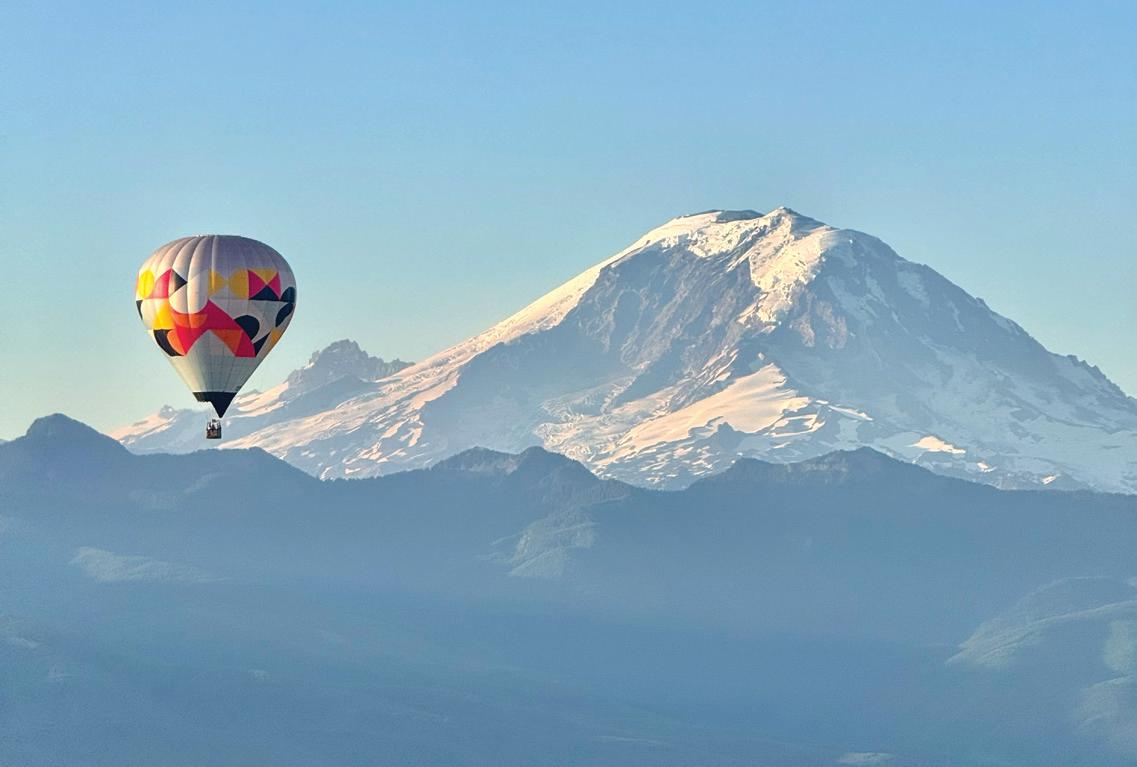
To put it all in perspective and catch the wind, rise above it in a joyous ride in a hot-air balloon. Cathy Carroll takes to the air with Seattle Ballooning’s Eliav Cohen for magical views of Mount Rainier, the White River, the Green River and Lake Tapps. Turn to Adventure on page 80 and find your next 4,000-foot adventure.
More ways to connect with your favorite Washington content
www.1889mag.com | #1889washington | @1889washington

Stop by Local, our curated online shop of goods made by businesses in the Pacific Northwest. Find outdoor gear, specialty foods and more. Or show your state pride with 1889 T-shirts, hats and other apparel. Buy local. Feel good.
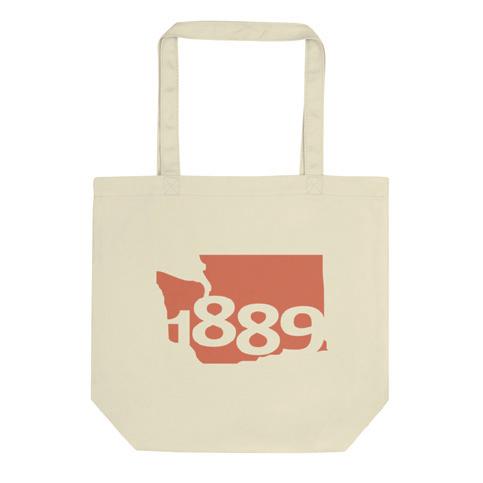
www.1889mag.com/shop
More Pacific Northwest, delivered to your inbox! Sign up for our Adventure Mail newsletter and get access to the latest getaways, giveaways and more.
www.1889mag.com/ 1889-newsle er
WASHINGTON: IN FOCUS
Have a photo that captures your Washington experience? Share it with us by filling out the Washington: In Focus form on our website. If chosen, you’ll be published here!
www.1889mag.com/ in-focus




Read 1889 Washington’s Magazine and 1859 Oregon’s Magazine anywhere, on any device, with our digital edition. Follow us today on Issuu.com.
www.bit.ly/ statehoodmediadigital
SAY WA? 18
FOOD + DRINK 26

FARM TO TABLE 34

HOME + DESIGN 40
MIND + BODY 48



written by Lauren Kramer
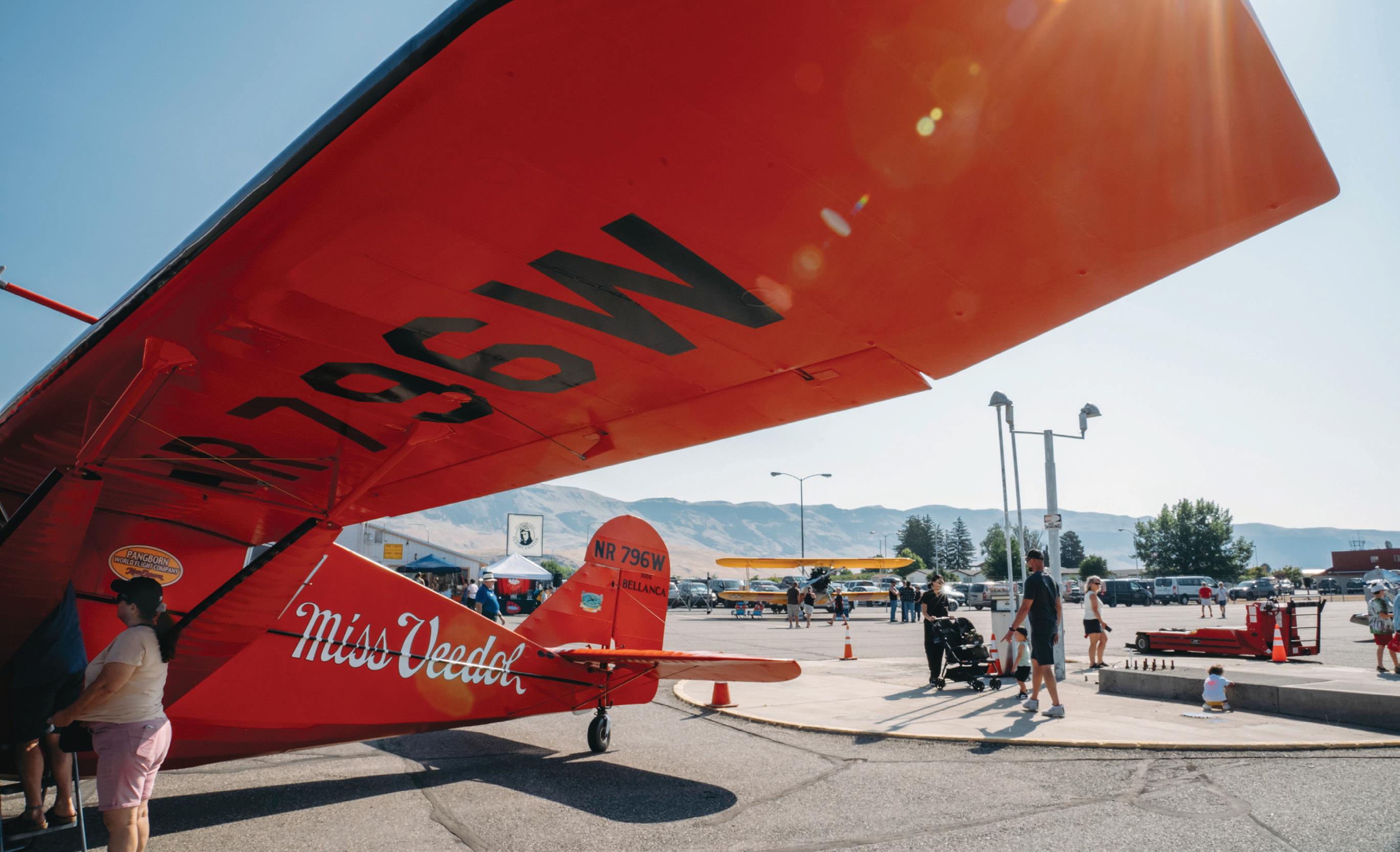



Pangborn’s Festival of Flight, on June 20, is a great opportunity to learn about East Wenatchee’s aviation history and get up close to some amazing airplanes. The festival celebrates an event that occurred on October 3, 1931, when Clyde Pangborn and Hugh Herndon left Sabishiro Beach in Misawa, Japan, to fly Miss Veedol across the ocean in the first nonstop, trans-Pacific flight. After forty-one hours in the air, Miss Veedol crash-landed on the bluffs above East Wenatchee, and the Wenatchee Valley has been connected to Misawa and the aviation world ever since.

This free event includes food vendors, exhibitors and Japanese activities.












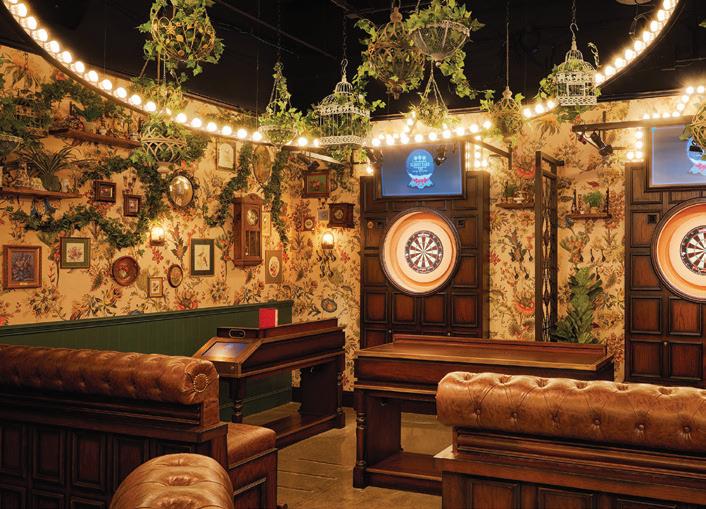
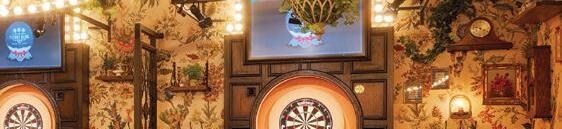
Flight Club opened in South Lake Union in late March, with proprietary Social Darts technology that transforms traditional darts into a digitally powered multiplayer experience. The system uses automated scoring, real-time tracking and dynamic on-screen gameplay, enabling groups of up to twelve players to compete simultaneously with no manual math, no score disputes and no waiting between turns.













www.flightclubdartsusa.com/seattle












www.eventeny.com/events/pangbornsfestival-of-flight-2026-26760 mentors.
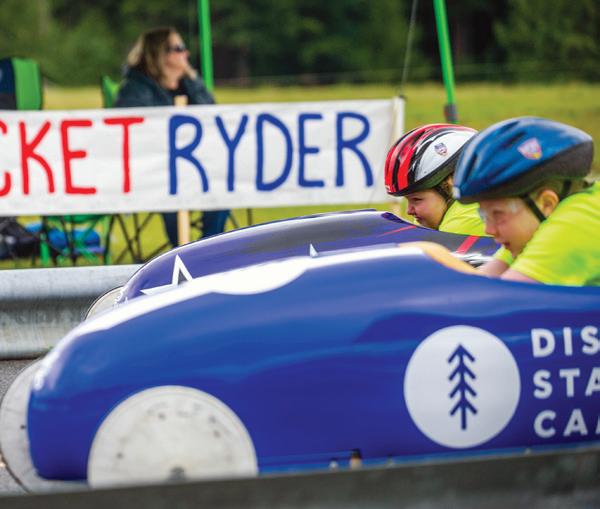
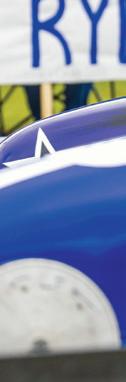
This Father’s Day weekend tradition, held June 20 at Arrowhead Ranch on Camano Island, brings together young racers ages 7 to 17 who spend weeks building gravity-powered cars alongside dedicated mentors. Last year’s event was recognized as the largest Soap Box Derby race in the world, and this year’s promises to be a high-energy, family-friendly day that celebrates creativity, craftsmanship and community spirit as racers speed down the hill in pursuit of derby glory.
www.arrowheadranchcamano.com/soap-box-derby
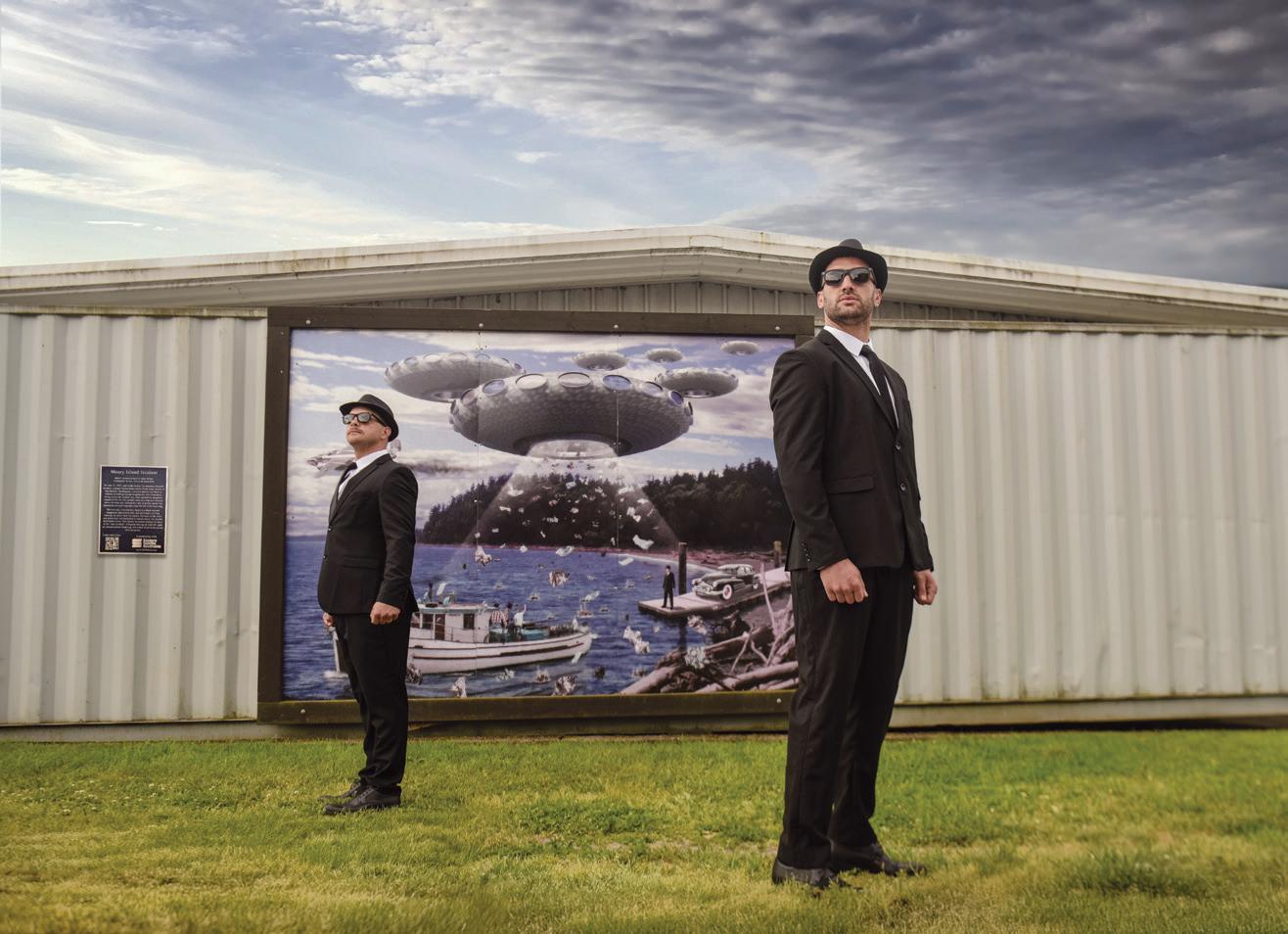
Created by Explore Seattle Southside, the family-friendly UFO Mysteries Trail is a mobile adventure that guides visitors through the key locations of the infamous Maury Island Incident, one of the earliest reported UFO sightings investigated by the United States government. In 1947, Harold Dahl reported seeing flying discs over Puget Sound, encountering falling debris that killed his dog Sparky and experiencing eerie follow-up visits from shadowy figures later known as the “Men in Black.” Participants follow an eleven-stop trail throughout Seattle Southside, Maury Island and Vashon Island. Celebrate World UFO Day on July 2 on the trail! www.seattlesouthside.com/ufo-mysteries-trail
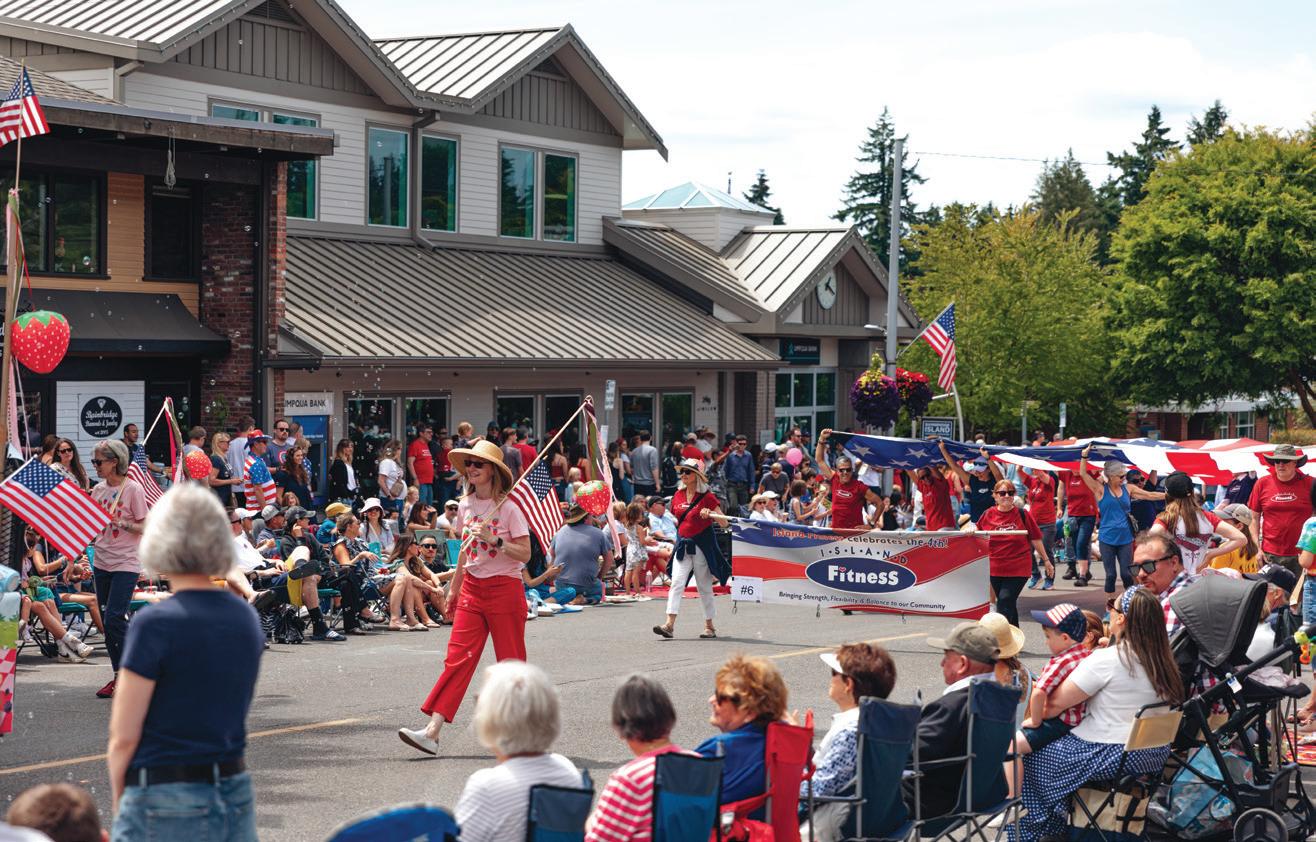
On July 4, head to Bainbridge Island for its Grand Old Fourth, a great way to celebrate America’s independence with an event just steps from the ferry terminal. The festivities include a street fair, a parade, a pie-eating contest, a beer, wine and cider garden and a family “fun zone” with face painting, carnival games and a musical instrument petting zoo.
www.grandold4th.com
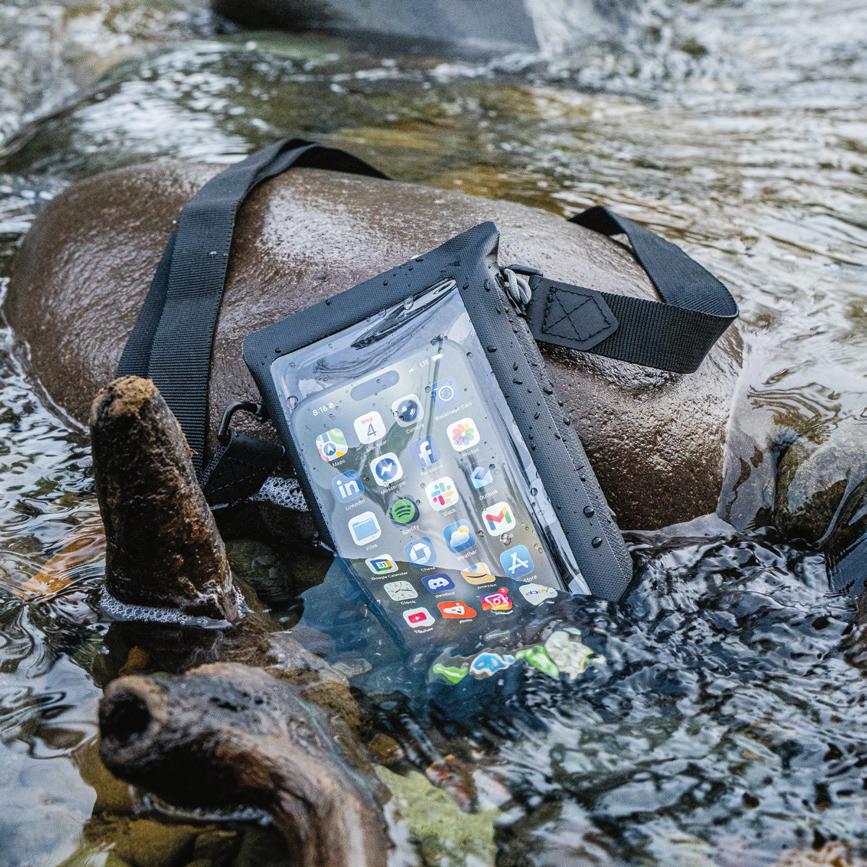

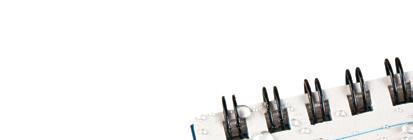
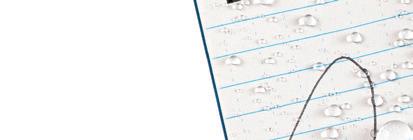
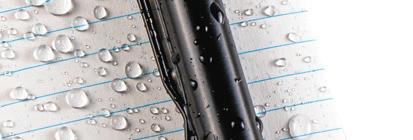
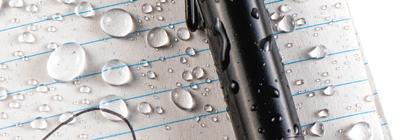
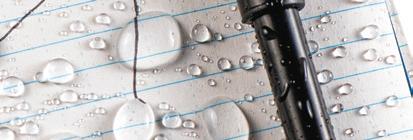
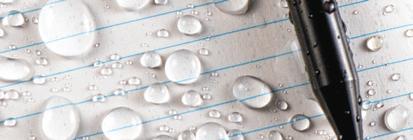
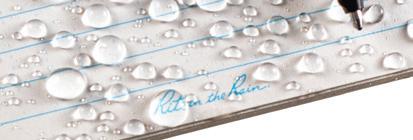
Don’t think about writing in the rain unless you’re using the specially coated, wood-based paper from Rite in the Rain. The Tacoma-based company had its start in 1912, with waterproof paper for the logging industry. Today, its spiral, waterproof notebooks are a sought-after product that can be written on in the dampest conditions with any non-water-based writing utensil. Rite in the Rain’s newest release is a durable, waterresistant zippered pouch designed for phone storage while doing any wet outdoor sports, from fishing to kayaking and hiking. Shop for these products at Home Depot, Lowe’s, REI and on the Rite in the Rain website.
www.riteintherain.com





















written by Ben Salmon
TEN GREAT PLACES TO CATCH LIVE MUSIC THIS SEASON

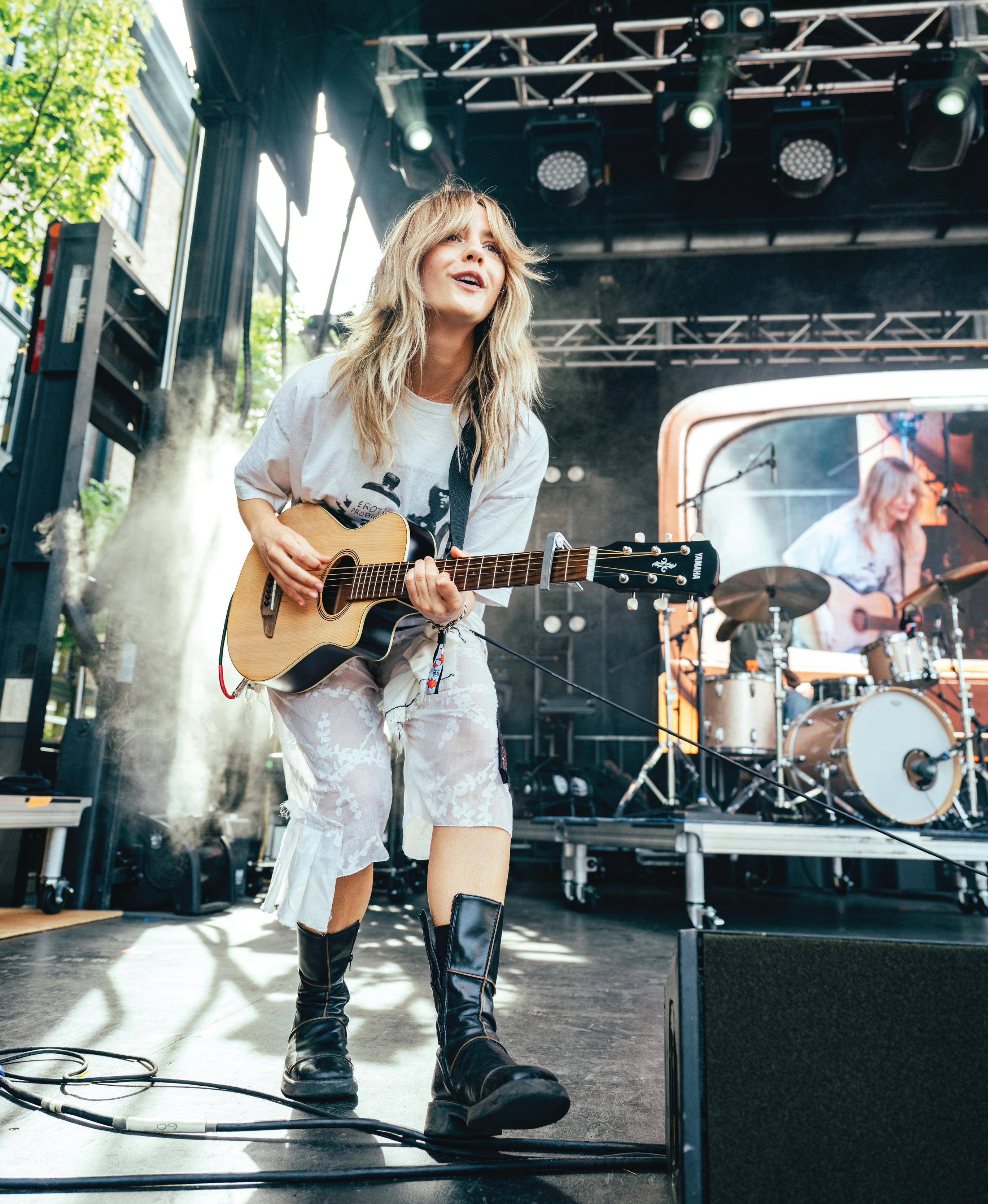
FOR LOVERS OF LIVE MUSIC, summer in Washington is an embarrassment of riches. The state’s landscape of music festivals stretches from Sea le to Spokane and points in between, with events held in the middle of cities, on forested land, in world-famous amphitheaters—just about anywhere you can fit a stage, some musicians and an audience. Here are ten fests happening across Washington that deserve a spot on your calendar of fun things to do this summer.



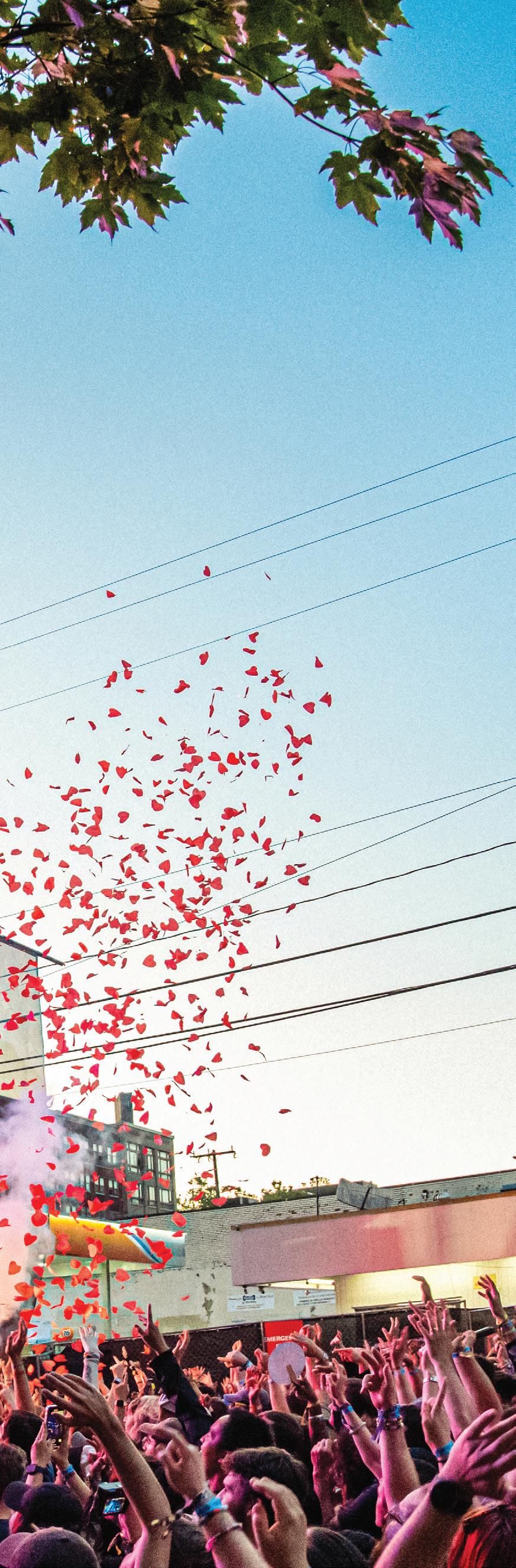
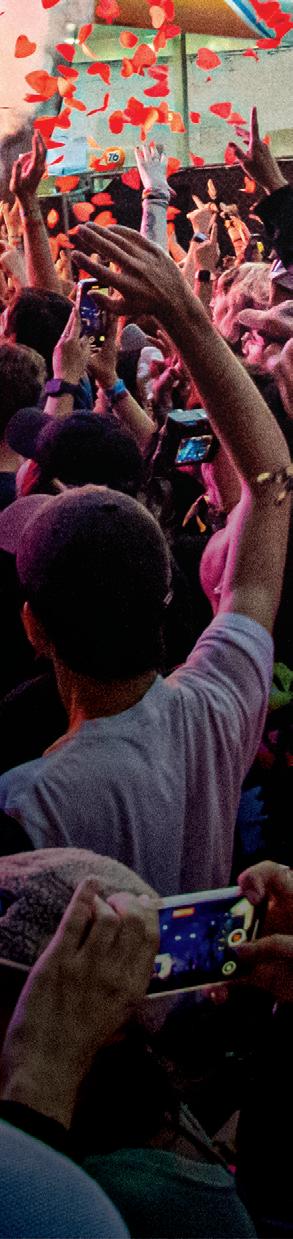

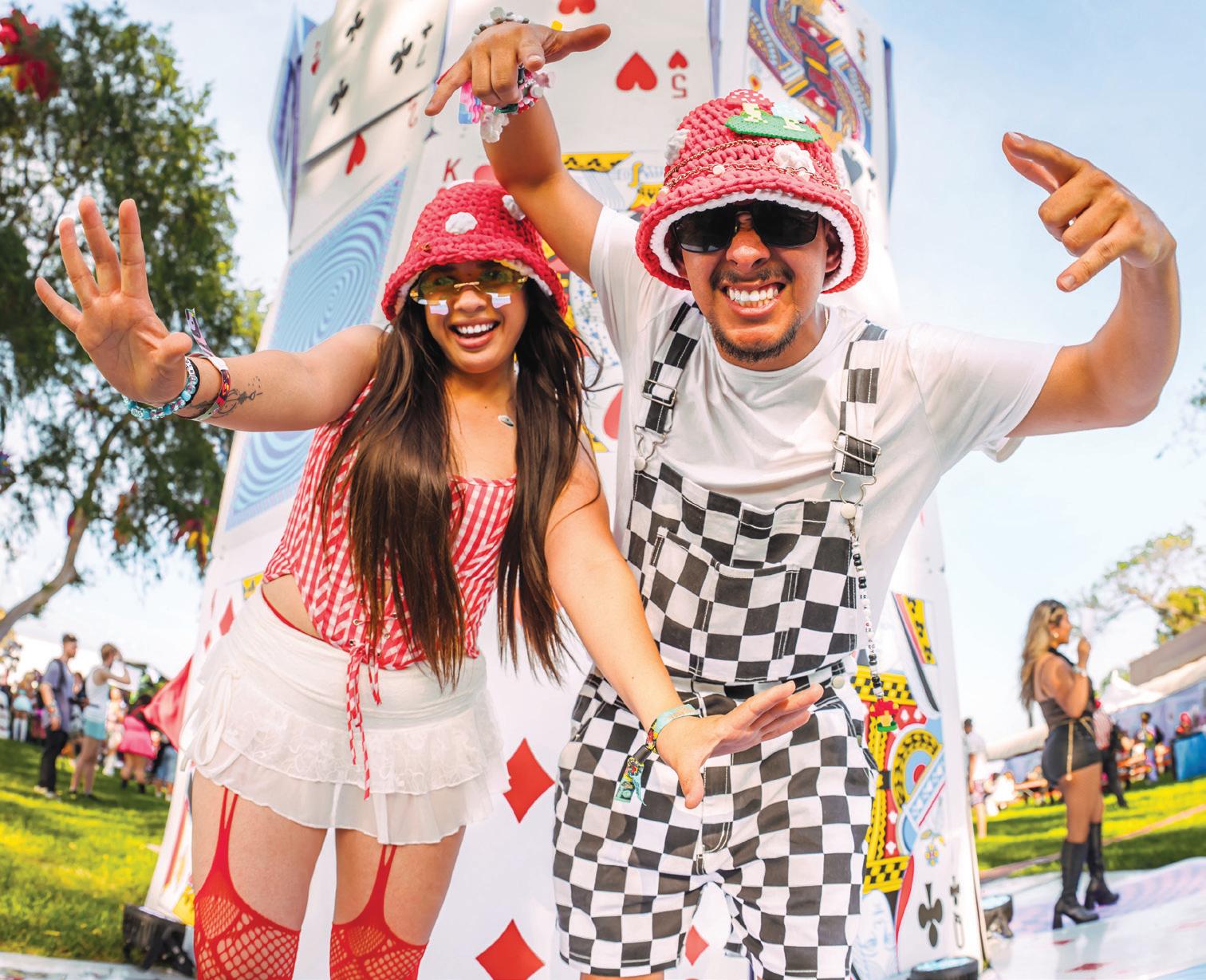
The Gorge Amphitheatre is a “can’tmiss” venue for any Washington-based concertgoer. Perched high above the Columbia River, it’s stunningly beautiful, and its summer lineup is dotted with destination events like Beyond Wonderland, a three-day celebration of electronic music that’s heavy on booming bass and also fantastical distractions for when you need a break from the booming bass. The lineup features big names and up-and-comers from the worlds of techno, trance, dubstep, house music and beyond,
Dates: June 26-28
Location: The Gorge Amphitheatre, George
Lineup highlights: Kaskade, Getter, Seven Lions, REZZ, Green Velvet, Wooli, Liquid Stranger, Grabbitz
More info: www.pnw.beyondwonderland.org
ANOTHER OPTION: New this year in the eastern part of the state is Blessing in Disguise, a one-day blowout featuring mega-headliners Macklemore and AJR, plus Awolnation, Allen Stone, Mother Mother, Everclear, Big Head Todd & the Monsters and more. (July 11; www.bidmusicfest.com)
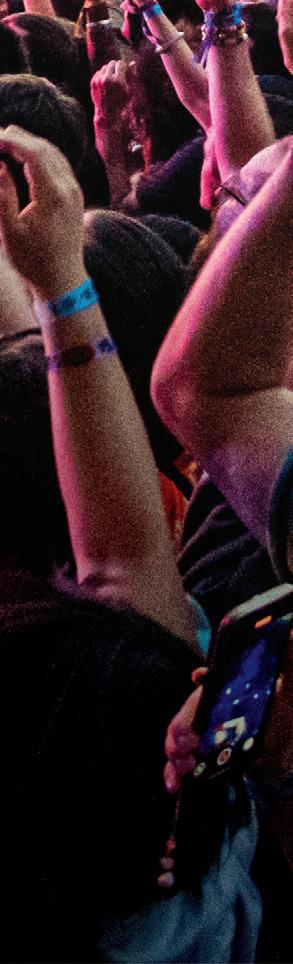



First produced way back in 1971, Bumbershoot is a pillar of Seattle’s arts and cultural scene. One reason for that is the festival’s music lineup, which year in and year out features leading-edge bands and artists from across the stylistic spectrum: punk, indie rock, soul, pop, electronica, hip-hop and beyond. Another is its non-music programming, which in 2026 includes comedy, fashion shows, wrestling, culinary arts, dance, sculpture, film and a cat circus. Where else can you mosh to Turnstile and then check out the cat circus? Nowhere. Just Bumbershoot.


Dates: September 5-6
Location: Seattle Center, Seattle
Lineup highlights: Death Cab for Cutie, Turnstile, Japanese Breakfast, Orville Peck, De La Soul, Bikini Kill
More info: www.bumbershoot.com
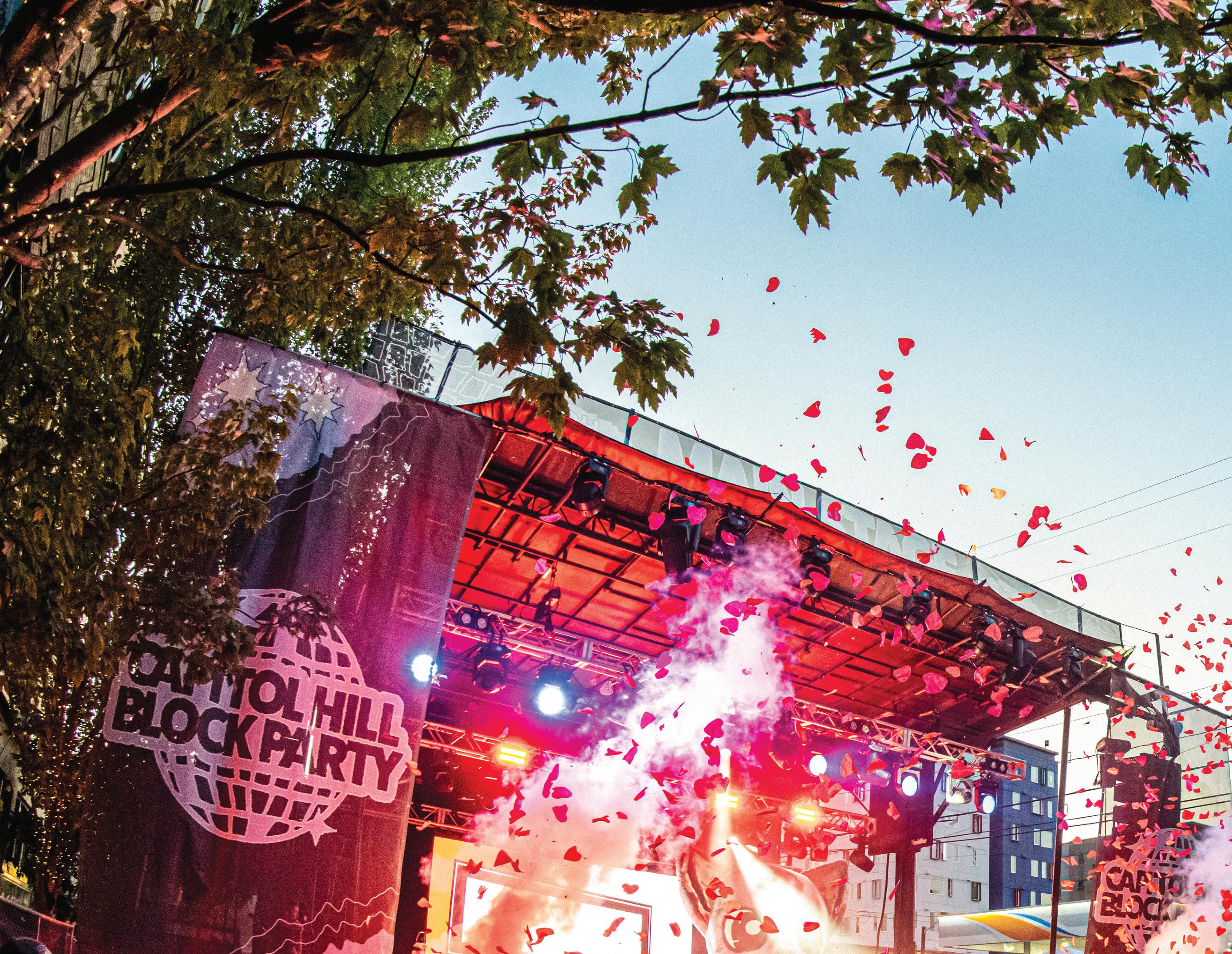
ANOTHER OPTION: It doesn’t get much hipper than Capitol Hill Block Party, a three-day gathering of buzzy acts like Muna, Magdalena Bay, Disco Lines and Wet Leg in Seattle’s trendiest neighborhood. And in a world of kid-friendly fests, this one’s only for folks 21 and over. (August 7-9; www.capitolhillblockparty.com)
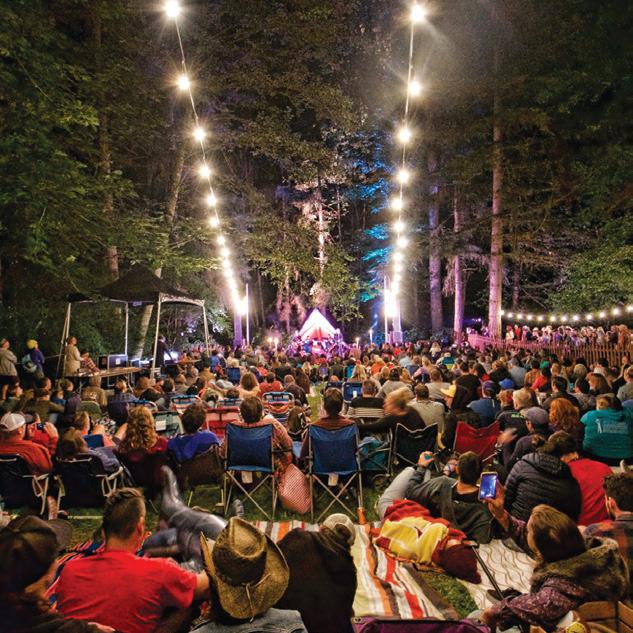
Set on densely forested land at the confluence of two rivers, Timber! is a three-day, Indigenous-owned event that thoughtfully programs its lineup to accompany the natural beauty nearby. The festival’s 2026 music lineup includes artists from the worlds of indie rock, neo-soul, garage rock, jazz, Americana and more, and its website includes an “Adventures”
section, wherein you can sign up for activities like tree climbing, nature painting, hiking, bat watching, drag bingo, swimming, stargazing and yoga. Well-rounded and outdoorsy? Timber! is for you.
Dates: July 23-25
Location: Tolt-MacDonald Park, Carnation
Lineup highlights: Reyna Tropical, Lady Wray, Frankie and the Witch Fingers, Kassa Overall, Samantha Crain
More info: www.timbermusicfest.com
ANOTHER OPTION: Held along the Naches River about halfway between Yakima and Mount Rainier, Chinook Fest focuses on alt-country and Americana music in a gorgeous setting. This year’s headliners include Them Dirty Roses and The Brudi Brothers. (June 18-21; www.chinookfest.com)
For more than three decades, the Winthrop Rhythm & Blues Festival has been bringing renowned blues acts from across the country to tiny Winthrop, a charming town that sits at the confluence of the Methow and Chewuch rivers in the north-central part of the state. The three-day event is put on by the Winthrop Music Association, which has built it into Washington’s largest and longest-running blues festival thanks to plentiful on-site camping, incredible scenery in addition to the scintillating performances by worldclass musicians.
Dates: July 17-19
Location: The Blues Ranch, Winthrop Lineup highlights: The California Honeydrops, Southern Avenue, Shinyribs, Sue Foley, The Rumble
More info: www.winthropblues festival.com
ANOTHER OPTION: The Gorge’s huge country festival, Watershed, is canceled for 2026. Fortunately, lovers of twangy music can travel just a few hours to the northwest for FarmJam held on a real farm—to catch Lauren Alaina, Tyler Braden, George Birge and more. (September 4-6; www.farmjam festival.com)
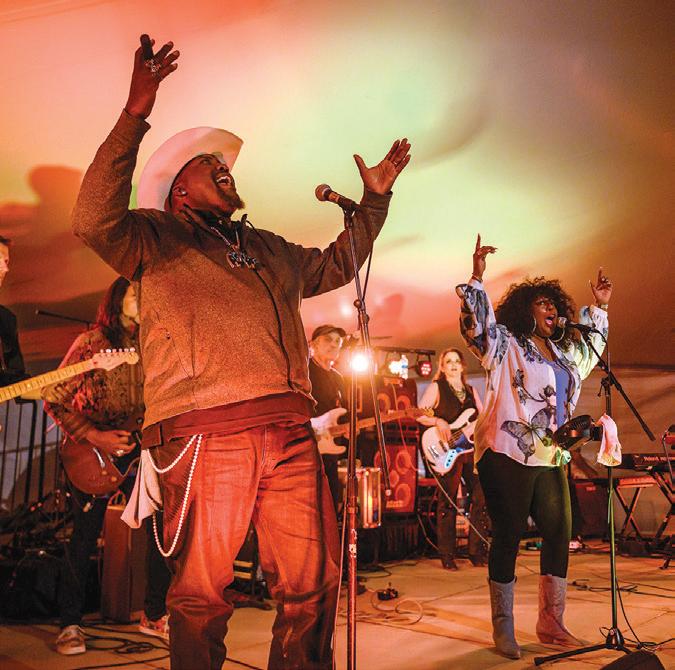
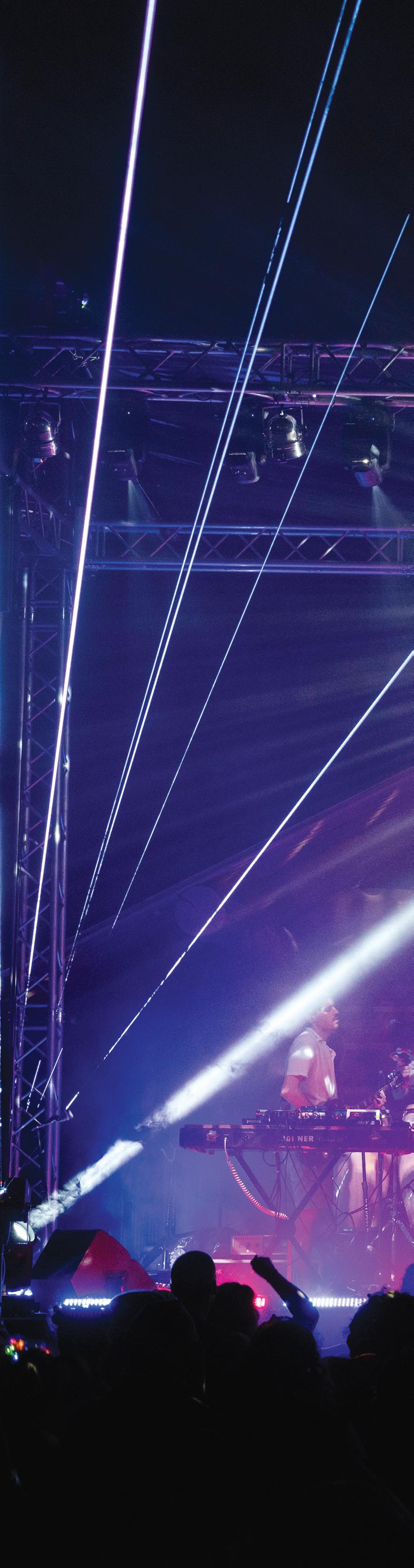
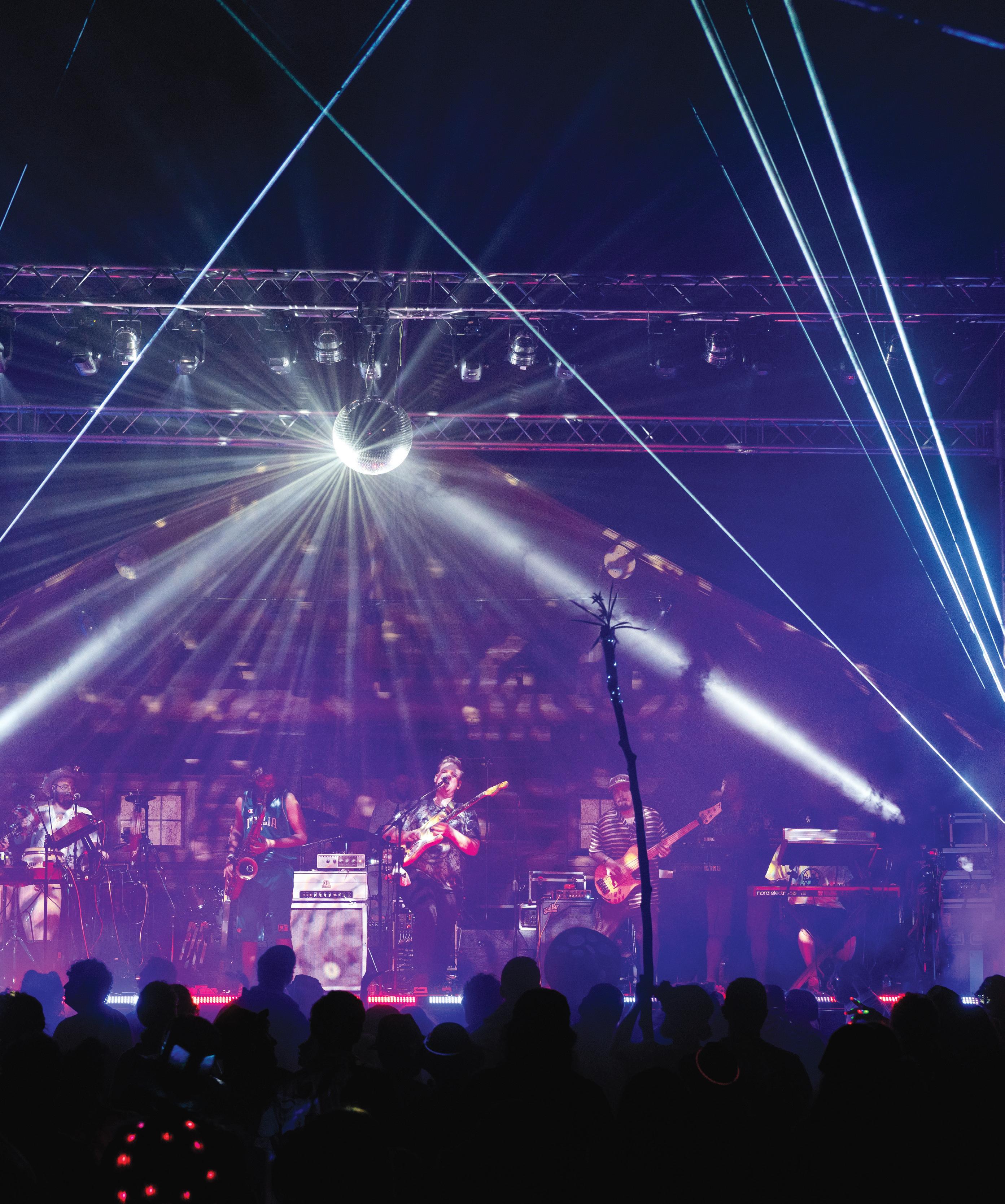
There’s no shortage of music festivals that require you to stand out in a hot, dusty field all day if you want to enjoy the music. On the other hand, there’s also Re/Evolution: Summerjam in Darrington, which offers not only great music, but also access to the nearby Stillaguamish River for when you need to cool off. And you will likely need to cool off at some point during these four days, because the lineup is stacked with the kind of funk, rock, jam and bluegrass bands that have been making people dance up and down the west coast over the past decade.
Dates: August 5-9
Location: Darrington Music Park, Darrington
Lineup highlights: Yak Attack, Cytrus, Railroad Earth, Magoo, High Step Society, Holly Bowling
More info: www.reevolutionfestival.com
ANOTHER OPTION: The Northwest Tune-Up Bike & Music Festival in Bellingham is exactly what it sounds like: A place where cycle enthusiasts can ride all day, then enjoy live performances by Souls of Mischief, Hippie Sabotage, Dirtwire and Delhi 2 Dublin. (July 10-12; www.nwtuneup.com)
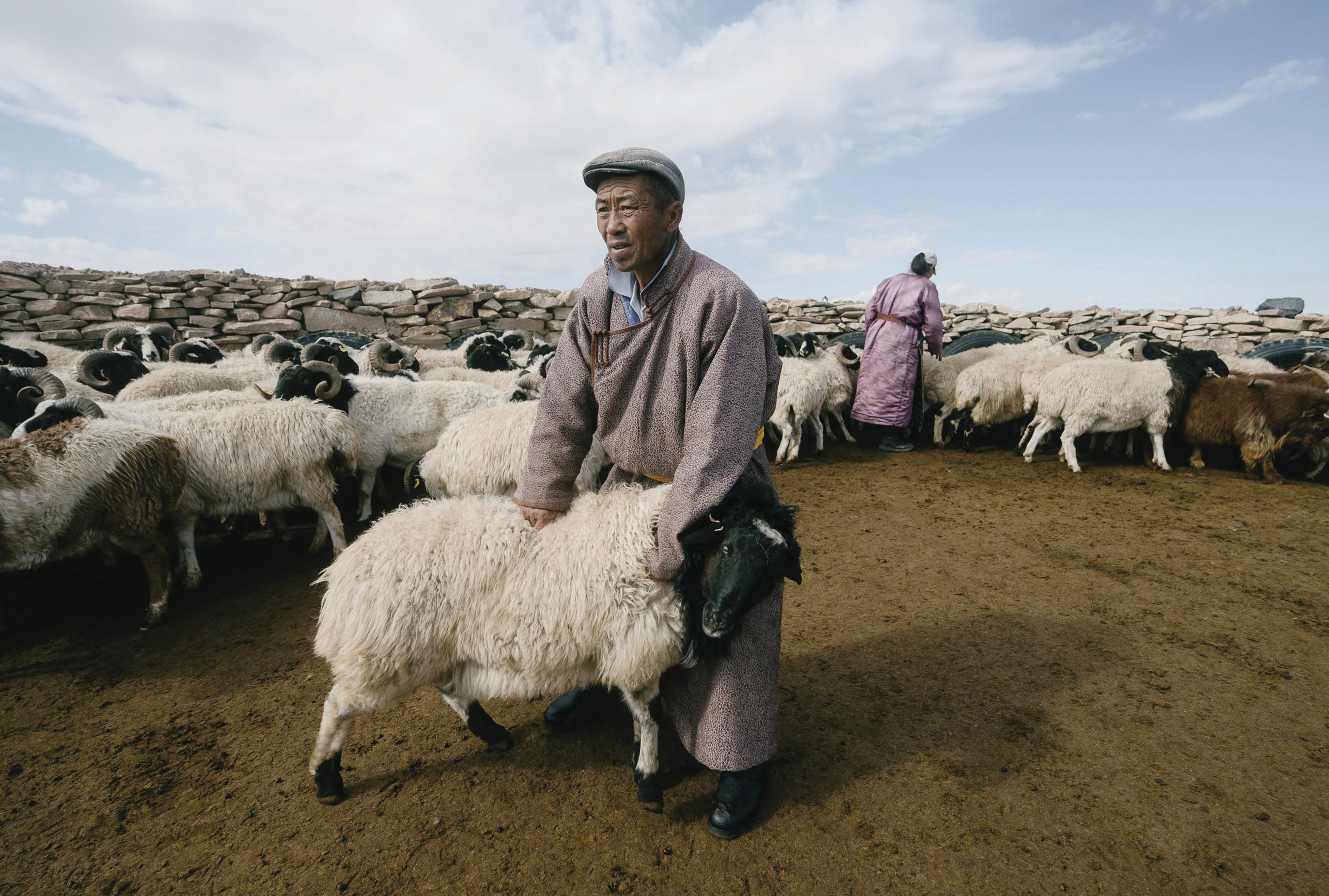
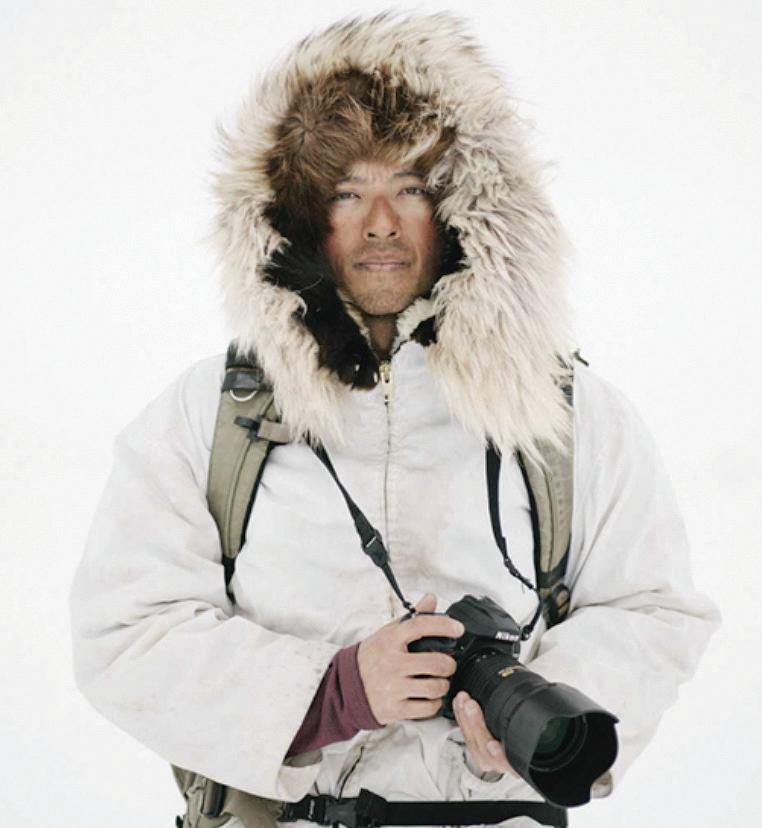
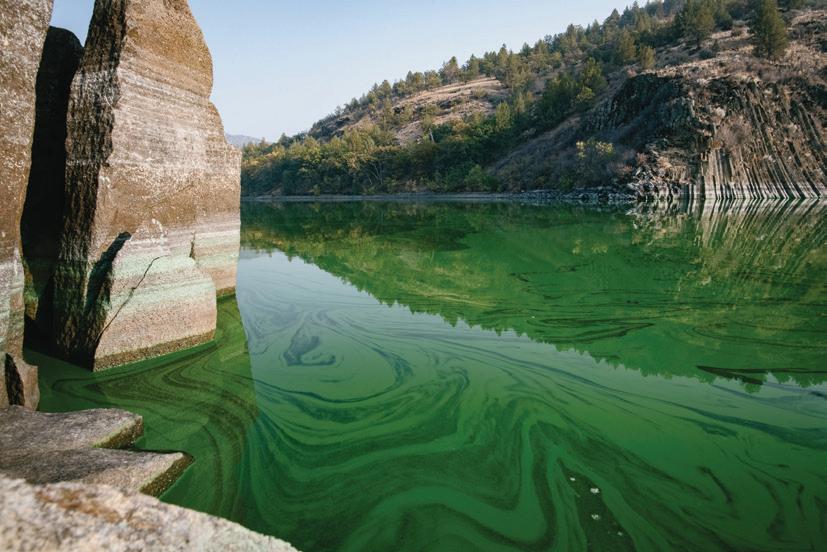
Amid climate and biodiversity crises, photographer Kiliii Yüyan’s stunning imagery captures Indigenous knowledge that is already sustaining the planet
interview
by Cathy Carroll | photography by Kiliii
Yüyan
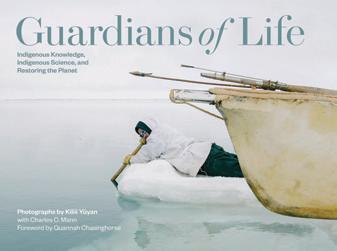

IN GUARDIANS OF LIFE, Sea le-based, award-winning National Geographic photographer Kiliii Yüyan captures the critical yet underrecognized role that Indigenous peoples around the world continue to play in sustaining biological and cultural diversity. Large-scale images throughout the 9-by-12-inch hardcover range from narwhals swimming along sea ice in Greenland to spearfishing divers in the remote islands of Palau. It is powered by the wisdom of more than two dozen Indigenous voices as the biodiversity and climate crises converge, with a call to support Indigenous leadership.
How did an encounter with orcas influence your decision to tell the stories of Indigenous communities around the world?
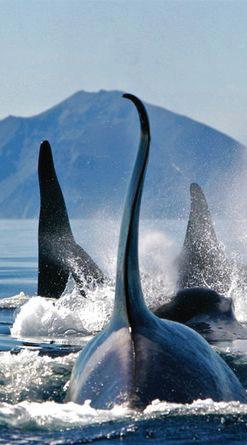
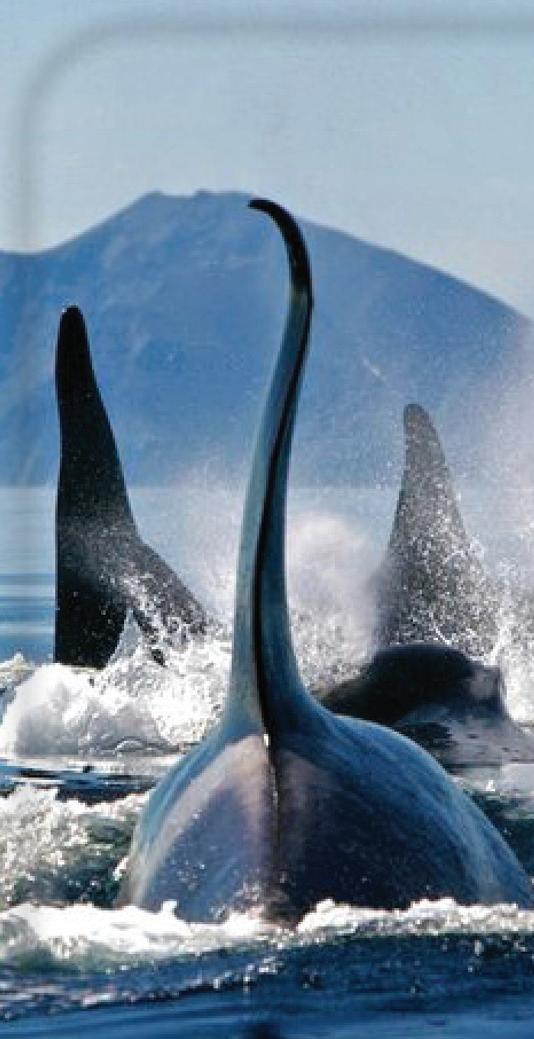
Once, in the San Juan Islands, from my kayak I watched a dozen black fins drift motionless in the distance while my friend Erin (a great lover of orcas) hummed with barely contained excitement. When the waiting became too much, she leaned out over the water and started singing Bob Dylan. My rational side resisted, but when she shifted into “Hey Jude,” my love for The Beatles won out and I joined in, my voice traveling through the skin of the kayak and out into the sea.
Almost instantly, the fins stirred and turned toward us. In that moment I heard my grandmother’s voice: “If you want the whales to
come close, sing to them.” She was Nanai/Hezhe, Indigenous to Manchuria, and what I’d once taken for folktales I later began to see as thousands of years of ecological wisdom.
An orca calf surfaced, nudged Erin’s stern, then slipped beneath my boat, its pressure wave rising up through the hull and into my legs. I had sung to the whales, and they had remembered.
How can the Indigenous perspectives in your book help guide efforts to restore and protect the planet?
The cutting edge of the environmental community understands that Indigenous peoples are by far the most successful conservationists. Nearly 40 percent of all remaining natural land is Indigenous territory, and 80 percent of all the species on earth live in Indigenous lands.
We need to move beyond land acknowledgments and into a deeper understanding of how, exactly, Indigenous stewardship works. It seems almost magical, but is actually grounded in specific Indigenous knowledge. Indigenous peoples have evolved amazing systems to manage their places for thousands of years, but almost no outsiders know these stories, from restoring the bowhead whale population in Alaska to managing landscapes with fire in Australia.
Understanding how the nine communities in the book work, almost invisibly, is the first step to helping the rest of the world understand why it is important to support the land title of Indigenous peoples and how to start seeing the land as First Peoples do.
Describe a favorite example of traditional ecological knowledge and its importance today.
One is the system of fishery management, in Palau, an Indigenousmajority island nation in the Pacific. The bul is a traditional reef closure system. One day, the chief of the
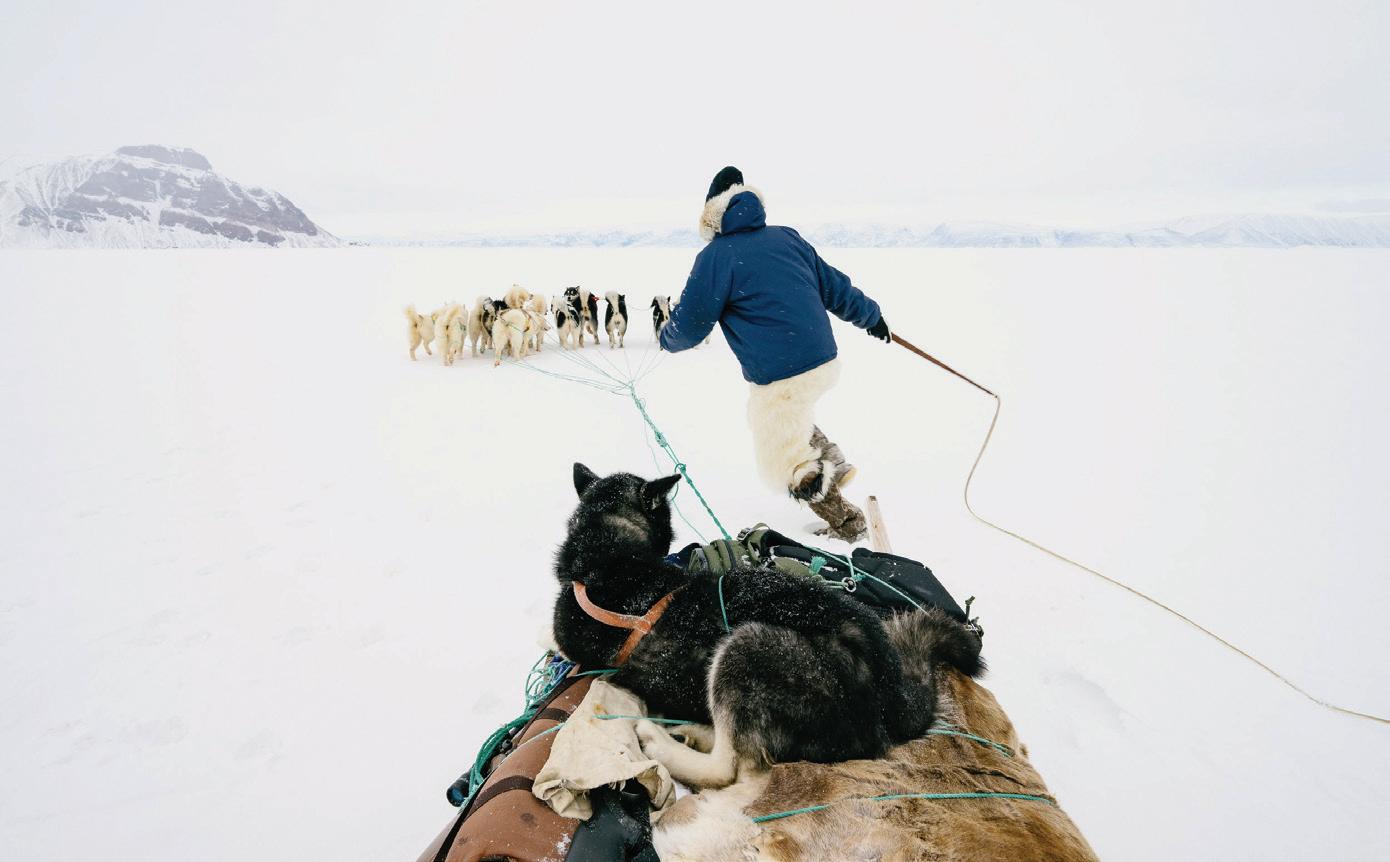
Indigenous peoples have evolved amazing systems to manage their places for thousands of years, but almost no outsiders know these stories, from restoring the bowhead whale population in Alaska to managing landscapes with fire in Australia.”
— Kiliii Yüyan
region hears from a fisherman that a particular reef has few parrotfish remaining. So he swims it and sees that’s true, declaring a change in the bul, closing that reef for fishing and a previous closure is re-opened.
One night, some teenagers sneak over to the closed reef and catch many big parrotfish that have repopulated there and sell them. But a community member sees the teenagers’ fishing. Soon, those teens are getting harangued by their auntie and their family for the next month, and they wish they’d gotten put in jail instead.
This is extremely effective, leveraging social intelligence, community enforcement, real-time ecosystem observation. The traditional values of Palauans are encoded into law because it is an Indigenous-majority nation, and this is why Palau has one of the largest marine protected areas on earth and some of the healthiest fisheries and coral reefs in the world.
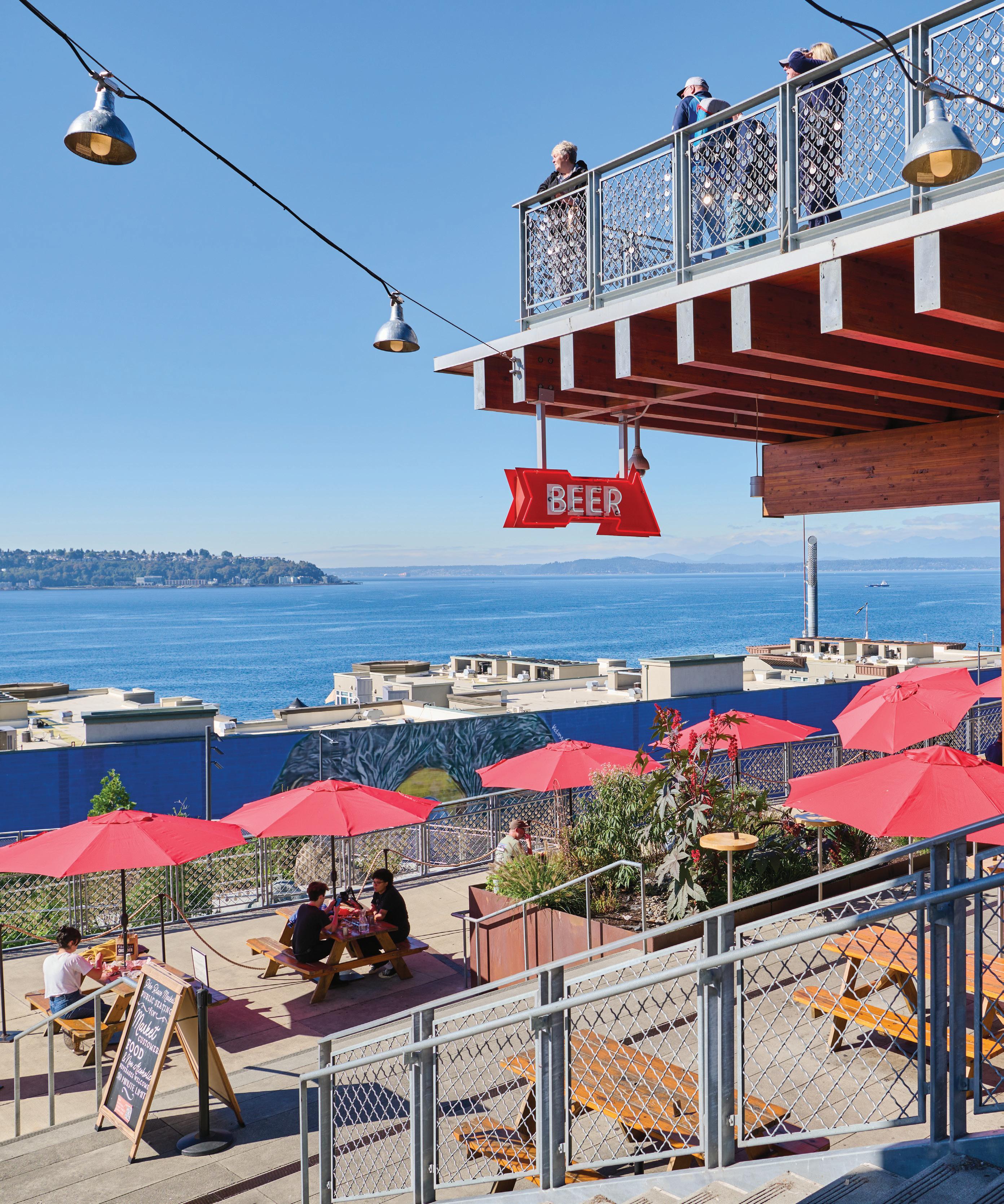
A cold pint, a body of water and a prayer for the sun to shine
written by Jackie Dodd Beervana
THERE IS AN ELEVATED FEELING to beer sipped near a body of water on a warm day, almost transcendent after months of dark lagers inside taprooms on rainy days. After half a year of soggy boots and vitamin D deficiencies, beer with salt air, boat traffic, gulls screaming overhead and the low hum of a marina somewhere nearby is akin to a religious experience. Or at least a touch of liquid therapy.
Washington might quietly be one of the best states in America for drinking beer by the water. Not because of million-dollar patios, or because someone installed string lights next to a decorative canoe, but because water means more than one thing in Washington. It’s beaches, it’s marinas, it’s lakes, it’s rivers—we have it all. The water is part of the identity of Washington, as well as the main ingredient in that beer you’re sipping. This list of breweries to seek out when you are in need of a waterfront pint isn’t comprehensive, but it is a great jumping-off point to begin exploration.
At Gasworks Brewing, the water is almost the entire point. Sitting on Lake Union with a pint in hand feels like peak Seattle. Seaplanes skim the surface. Paddleboarders drift by pretending they aren’t freezing. Sailboats cut through the marina while tech workers attempt to “disconnect” by checking Slack outdoors instead of at their desks. It’s picnic tables and Adirondack chairs and thinking anyone who chooses to live elsewhere is crazy.
The brewery has already started collecting recognition, too. Their Super Bueno Mexican Lager was voted Best Mexican Lager in Washington in 2025, which honestly tracks because that beer was practically engineered for drinking on or near boats. It also pairs well with their world-class smashburger.
2441 N. NORTHLAKE WAY
SEATTLE www.gasworksbrewing.com
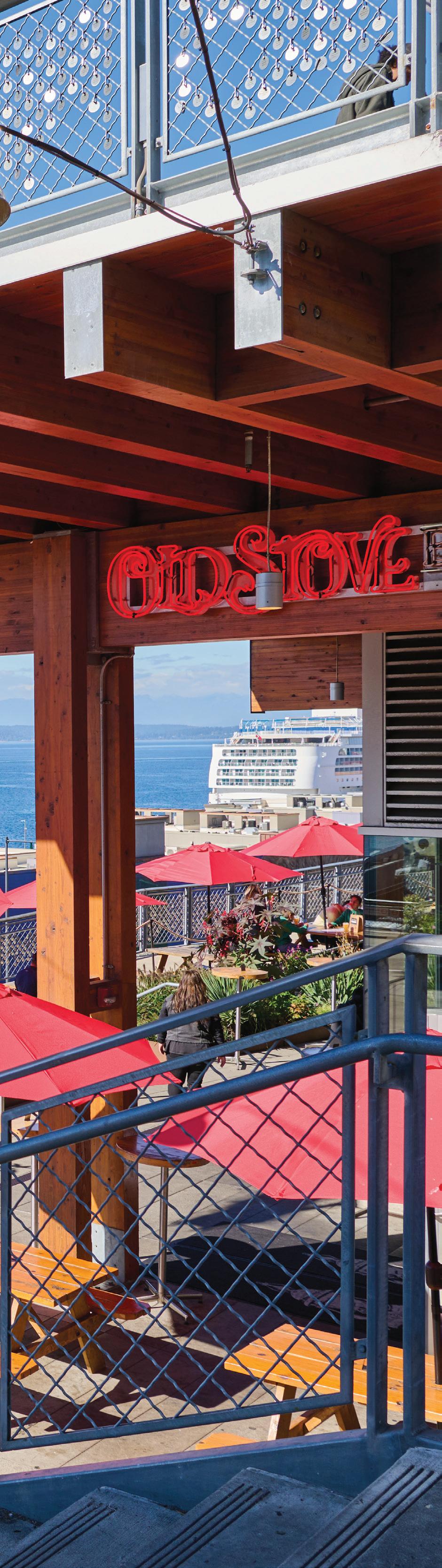
Old Stove Brewing Co. at Pike Place is a spot locals can take their visiting friends to that gives the good parts of localsonly, and also incredibly tourist. Elliott Bay stretches out behind the patio while ferries crawl across the water like moving apartment buildings. On a clear day, the Olympics rise in the distance reminding everyone they’re lucky to be in that spot,
with that beer, and that view. You can sit with a crisp pilsner and watch Seattle perform itself in real time. Fishmongers yelling, street musicians covering Pearl Jam and someone getting talked out of visiting the gum wall.
Old Stove also quietly racks up serious awards while pretending to just be a scenic brewery for people eating pretzels by the market. In the last two years alone, the brewery has earned medals at the Washington Beer Awards, Sip Magazine’s Best of the Northwest, the U.S. Open Beer Championship and Best of Craft Beer Awards. Their Two-Pronged Crown IPA earned Double Gold at Sip’s 2025 Best of the Northwest Awards, while Quiet Eon 2023 picked up a Washington Beer Awards bronze medal. Beer worthy of the view that comes with it.
1901 WESTERN AVE. SEATTLE www.oldstove.com
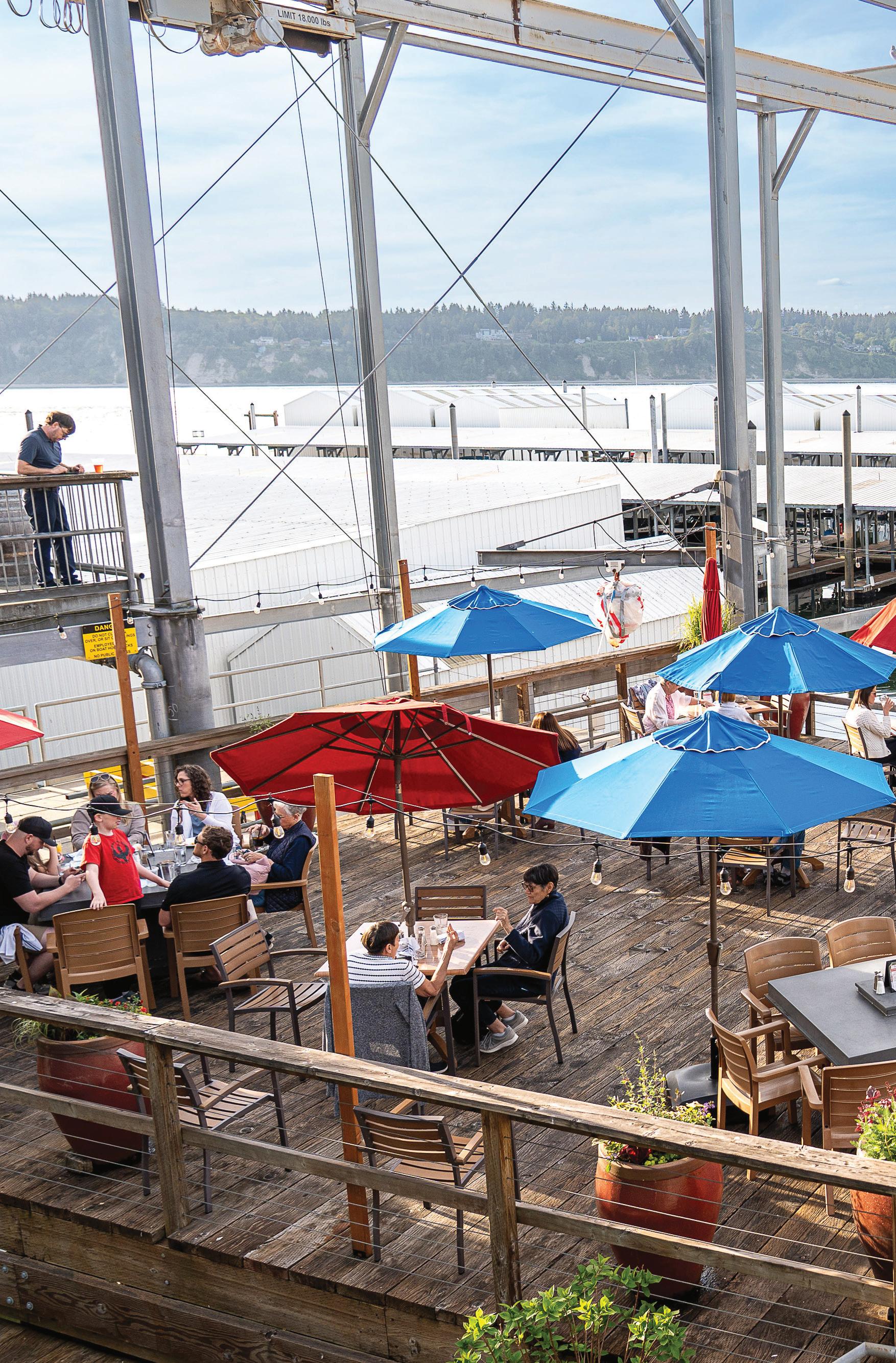
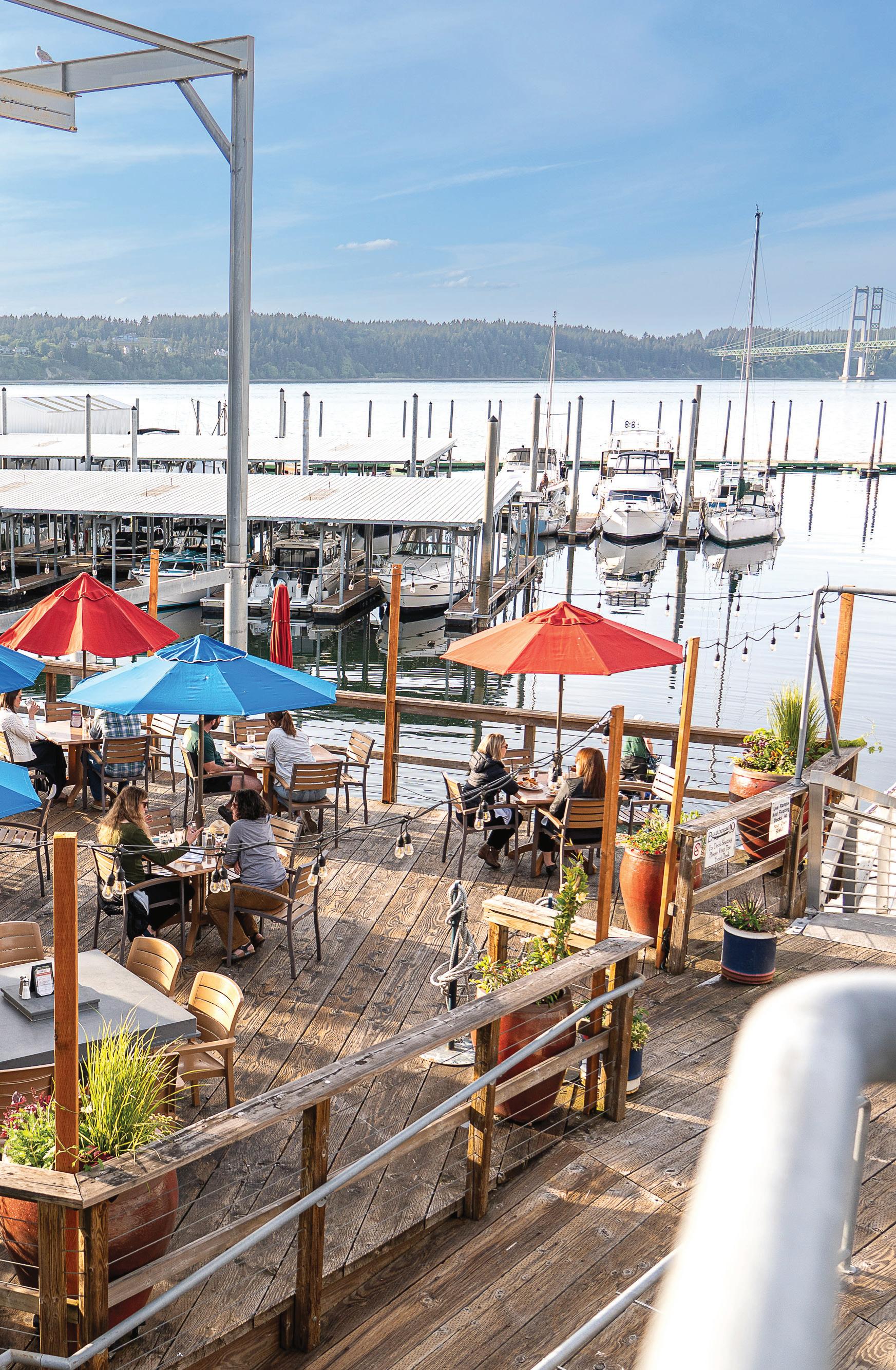
Narrows Brewing might have one of the best brewery views in the state. The Tacoma Narrows Bridge looms overhead like industrial artwork while the water churns below. The patio feels like a place you can stay all day; it’s comfortable and spacious, and the atmosphere can’t be beat. It’s lowkey and charming in the way you want a portdwelling beer location to be. Tacoma waterfront drinking
food + drink
has a little casual grit to it—you don’t come here for yacht culture. You come here because drinking a lager while staring dramatically at gray water feels emotionally correct.
Narrows has also picked up recent hardware, including Washington Beer Awards medals for Peachy Voyage and Good 2 Gose, plus Sip Magazine’s 2025 Double Gold for Octo IPA.
9007 S. 19TH ST. TACOMA www.narrowsbrewing.com
Ice Harbor Brewery proves waterfront beer culture is not just a western Washington thing. Sitting near the Columbia River marina feels completely different from Puget Sound drinking. Bigger skies. Warmer air. More sun than Seattle residents are emotionally prepared for. The river moves slower, wider, calmer. The whole experience feels less coastal and more expansive, like Eastern Washington decided beer deserved a view, too, and far more days worthy of patio drinking.
Ice Harbor’s Tangerine Hefeweizen also picked up Gold at the Washington Beer Awards in 2024, which feels like exactly the kind of beer you want near a marina in August.
350 CLOVER ISLAND DRIVE KENNEWICK www.iceharbor.com
River Mile 38 Brewing Company feels like the kind of place people desperately try to keep from becoming popular. Tucked along the Columbia in Cathlamet, it captures small-town river culture perfectly. This is not performative waterfront drinking or an influencer’s patio beer. No curated maritime aesthetic. Just real rivertown energy, cold beer and the kind of quiet that makes you want to stay longer than you planned.
5 RIVER ST. CATHLAMET www.rivermile38.com
No-Li Brewhouse makes a strong case that waterfront beer in Washington is not just a Puget Sound thing. Set directly along the
food + drink
Jackie Dodd
Spokane River, No-Li pairs riverfront drinking with one of the more award-heavy brewing programs in Eastern Washington. Over the years the brewery has picked up medals from the World Beer Awards, Brussels Beer Challenge, Sip Magazine’s Best of the Northwest Awards and even a silver medal at the World Beer Cup for Born & Raised IPA. The setting feels distinctly Spokane: sunny, fast-moving, a little rugged and deeply tied to the river running past the patio.
1003 E. TRENT AVE., #170 SPOKANE www.nolibrewhouse.com
Beach Cat Brewing delivers a completely different kind of waterfront beer experience. This is not polished marina drinking or skyline-and-yacht energy. It’s beachtown Washington in the best possible way. The brewery sits just steps from Birch Bay, where people wander in sandy, sunburned and holding flip-flops they gave up on halfway through the day. On clear evenings, the bay lights up gold while families linger on the shoreline and someone inevitably tries to convince their friends the water is “actually not that cold.” Beach Cat has also quietly earned a growing stack of recognition, picking up multiple Washington Beer Awards medals in 2024 for beers like Raspberry Purrée and Christmas in July. But honestly, the real draw here is having that beer in that space: relaxed, salty, slightly sleepy and exactly the kind of place where one pint turns into staying until sunset.
Narrows Brewing might have one of the best brewery views in the state. The Tacoma Narrows Bridge looms overhead like industrial artwork while the water churns below.
7876 BIRCH BAY DRIVE, #101 BIRCH BAY www.beachcatbrewing.com
7 Seas Brewing captures the postcard version of Washington waterfront drinking in the best possible way. Sitting directly on Gig Harbor’s shoreline, the brewery feels built for long afternoons that accidentally become evenings. Boats drift through the harbor, the deck fills with people pretending they only stopped in for one beer, and the whole place carries that polished-but-still-
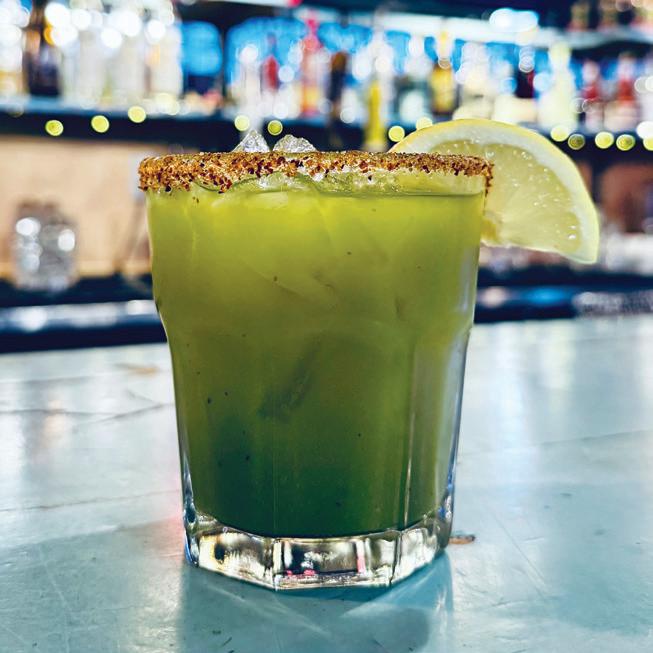
recipe courtesy of SOUTH / Wenatchee
SERVES 8
• 1 ounce basil leaves
• 6 ounces lemon juice (approximately 4 lemons)
• 6 ounces lime juice (approximately 6 limes)
• 10 ounces simple syrup (1:1)
• 10 ounces 100 percent agave tequila
• Tajín Clásico, for rims
• Lemon wheels, for garnish
Blend the basil, lemon and lime juice, simple syrup and tequila until the basil is well blended and no large pieces of basil remain.
Prepare the rims of 8 glasses with Tajín Clásico, and fill with ice. Pour approximately 4 ounces of blended drink into each glass. Garnish each with a half lemon wheel.
laid-back marina energy that Gig Harbor does so well. The waterfront taproom has earned recognition beyond the beer world, too, including a 2024 Hospitality Development of the Year award for its striking waterfront design. But honestly, the real achievement is creating a place where a cold lager and a harbor view feel like a complete personality for a few hours.
2905 HARBORVIEW DRIVE
GIG HARBOR
www.7seasbrewing.com
Magnuson Cafe & Brewery brings a different kind of waterfront energy than most Seattle breweries. Sitting directly on the shores of Lake Washington inside Magnuson Park, the brewery trades ferries and marina traffic for sailboats, cyclists and the kind of relaxed lakefront atmosphere that makes you forget you’re still in the city. The huge patio feels built for sunny afternoons that stretch longer than intended, especially when Mount Rainier decides to make an appearance in the distance. It’s less gritty maritime beer culture and more Pacific Northwest lake life at its absolute peak: dogs under picnic tables, cold lagers in hand and everyone collectively pretending the day will last forever.
7801 62ND AVE. NE
SEATTLE
www.magnusonbrewery.com
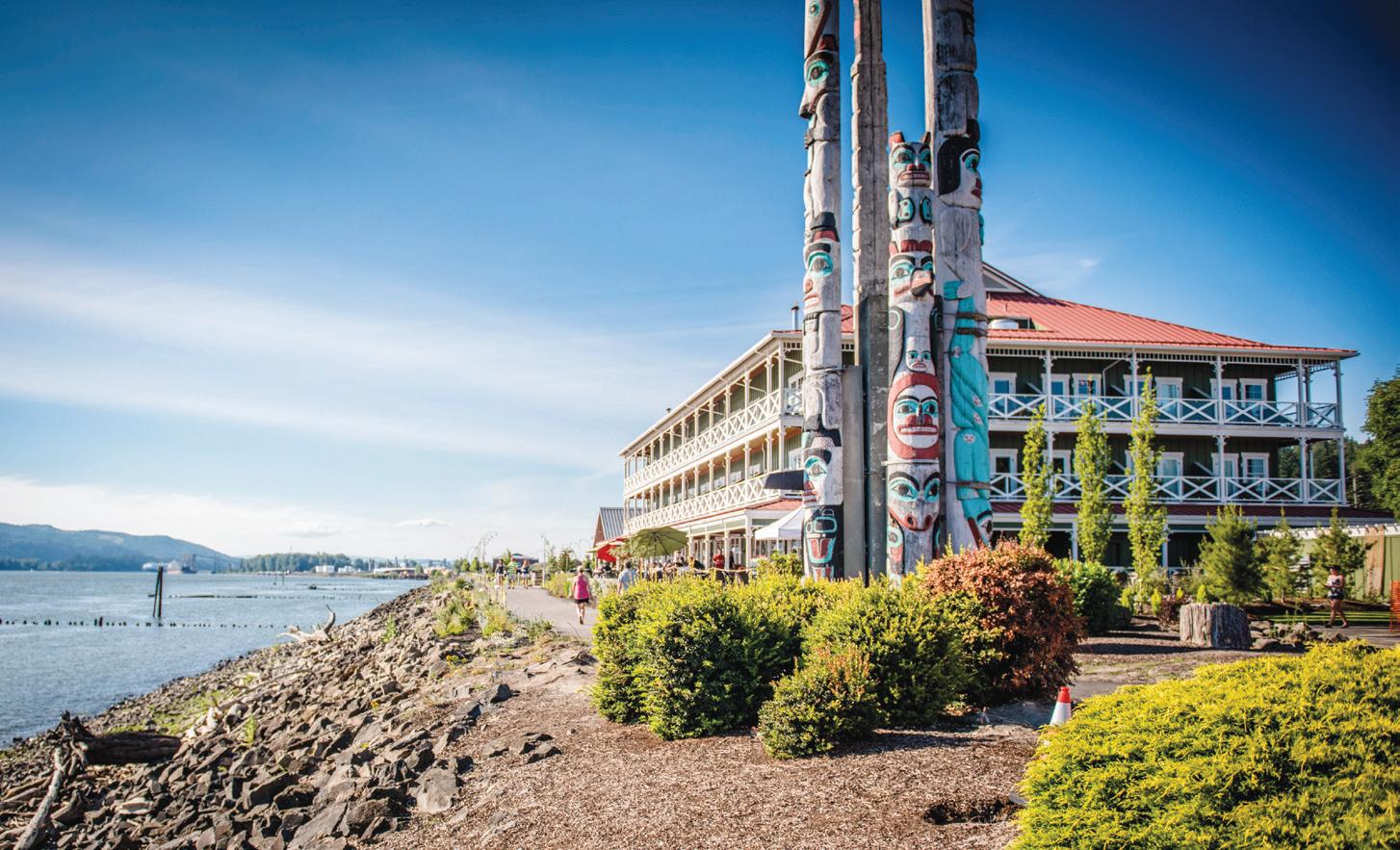
McMenamins Pub at Kalama Harbor Lodge is a hidden gem in waterfront beer stops in Washington. Sitting directly along the Columbia River in Kalama, the property feels somewhere between a Pacific Northwest fishing lodge and an old-school summer camp. Massive ships move quietly downriver while people drift between the waterfront patio and rooftop Cloud Bar carrying pints of Hammerhead Ale like they have nowhere important to be. Unlike some waterfront spots that feel designed primarily for Instagram, Kalama Harbor Lodge actually encourages lingering. Maybe it’s the marina, maybe it’s the river traffic, maybe it’s the fact that the Columbia somehow makes everyone feel temporarily retired. Either way, it works.
215 N. HENDRICKSON DRIVE KALAMA
www.mcmenamins.com/kalama-harbor-lodge
The reason beer tastes better on the way may be the way it forces people to slow down long enough to notice things. The tide moving. Ferry horns in the distance. Wind off the marina. Condensation sliding down a pint glass while the sky turns that specific shade of Pacific Northwest bluegray that somehow looks both depressing and beautiful at the same time.
Some places pair wine with fine dining. Washington pairs beer with waterfronts. Honestly, it may be the better tradition.









































































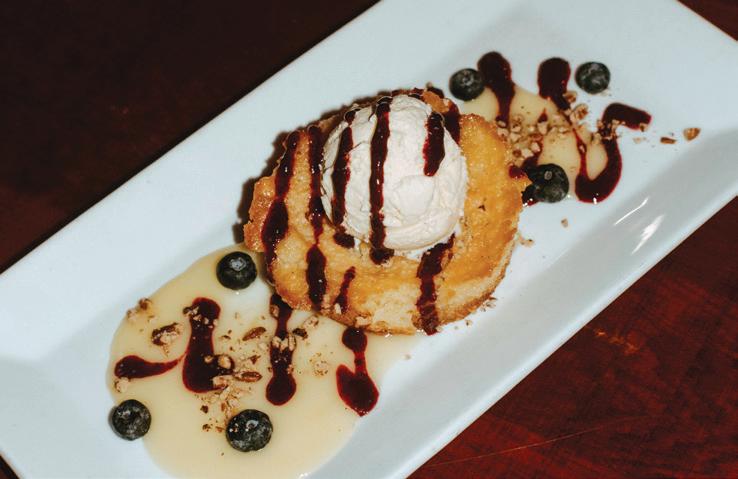
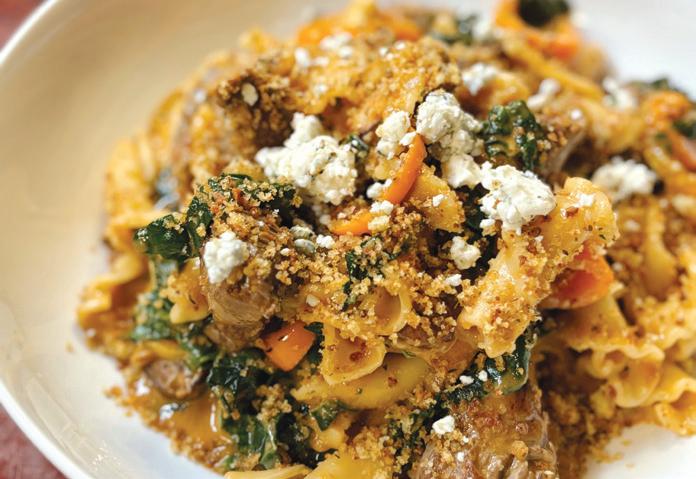
written by Lauren Kramer
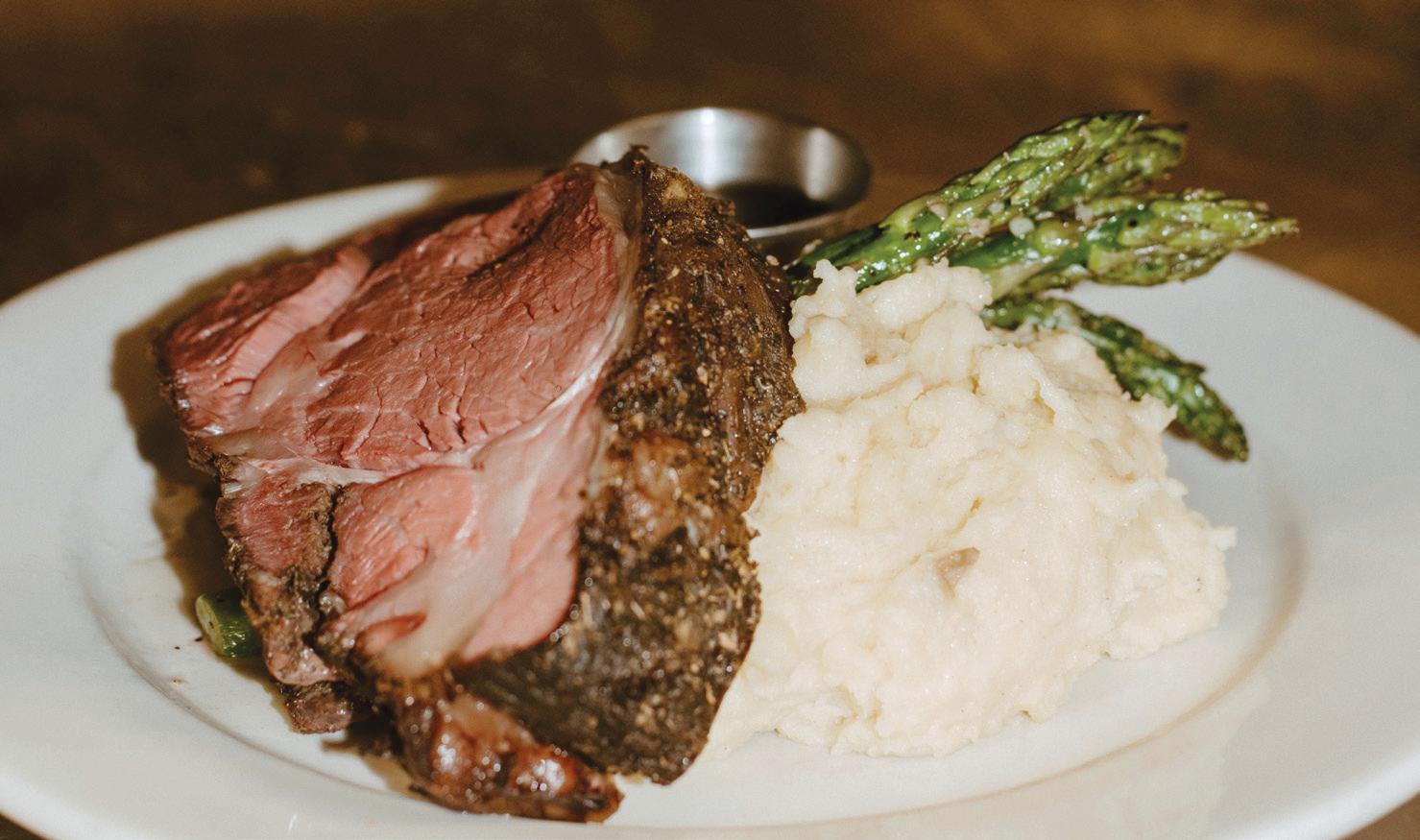
WHEN YOU’VE BEEN in business for seventy-five years like Max Dale’s Steak & Chop House, you’re not just a restaurant—you’re a local institution. The Mount Vernon steakhouse with a capacity of 425 diners has a fascinating history.
Max and Pauline Dale first opened the restaurant in 1951. Twenty-five years later, it burned beyond repair, and newspaper articles with images of the massive blaze are framed on the wall at Max Dale’s to this day.
A Safeco insurance claim followed, and Tony Pickering, the adjuster who helped process the paperwork to rebuild the restaurant in 1978, got so excited about Max Dale’s potential that he left insurance and joined the team. By 1982, he’d bought Max Dale’s, adding a vibrant night club with live music six nights a week. Later, he added a sister restaurant, the Stanwood Grill, and in 2006 the restaurant moved to the next generation with his son, Danny Pickering, and his nephew, Paul Pickering.
Max Dale’s is best known for its prime rib, and that’s what we tucked into on a Saturday night visit. Our appetizers, a caesar salad and a dish of grilled Brussels sprouts sprinkled with chopped butternut and dried blueberries, set the tone for a great meal. And our entrée, the 12-ounce prime rib, was grilled to perfection, juicy, tender, flavorful and a portion easily shared. The restaurant has a large menu with many options for those seeking seafood, chicken, salads and lighter entrées. And thanks to its size, you’re always likely to find a table at a restaurant serving dinner every night of the week.
2030 RIVERSIDE DRIVE
MOUNT VERNON
www.maxdales.com
written by Lauren Kramer
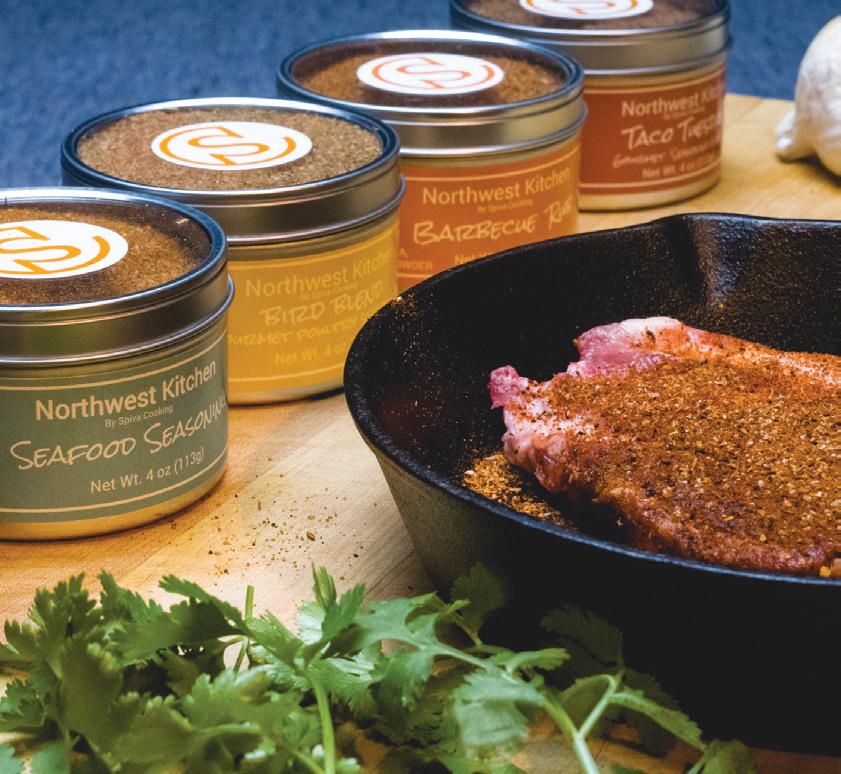
IT’S HARD to get excited about cooking in the spice aisle of a grocery store. But take a look at Spiva Cooking spice blends, and your appetite goes into high gear. Spiva’s large range of blends are designed to elevate homemade cooking. There’s blackberry rub, buttery buffalo, pineapple chipotle, PNW mocha meat rub, applewood smoked ranch, spitfire shawarma and cranberry orange, to name just a few.
When COVID forced Sam and Heather Spiva to redefine their career paths, the Bremerton couple, both graduates of the Culinary Institute of America, began importing fresh spices from all over the world, handgrinding them and creating interesting, richly flavorful blends. In the years since, they have rapidly expanded their collection to thirty-six spices, as well as teas and baking mixes.
“COVID was the kick we needed to start our own business, something we’d been dreaming of doing for a long time,” Sam said. “We’ve received amazing feedback from our customers, and it’s really gratifying to know that in some small way, we’re a catalyst for people coming together around their own kitchen tables.”
Spiva releases a new, limited spice created each month, and its top-selling blends are trufflicious, pineapple chipotle and smoky maple blueberry. There’s nothing ordinary about its teas either, whose flavors include golden milk, nettle mint, spiced English breakfast, blood orange and strawberry rhubarb. Look for Spiva products at Ace Hardware, specialty grocery and butchery shops, at the Spiva store in Bremerton and online.
702 LEBO BLVD. BREMERTON www.spivacooking.com




written by Lauren Kramer WOODINVILLE WHISKEY CO.’S
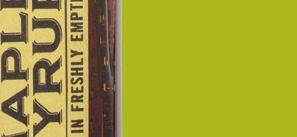
BARREL-AGED MAPLE SYRUP
Back in 2012, Orlin Sorensen, co-founder of Woodinville Whiskey Co., started an experiment barrel-aging maple syrup in one of the whiskey barrels. “We thought it might taste like bourbon, and draw out the rich notes of vanilla, oak and warm spice, and we were right— it turned out spectacularly,” she recalled. The Grade A pure syrup, tapped from a family farm, is aged for a full year in freshly emptied bourbon barrels. The final product has a bold, complex flavor that is a great ingredient in cocktails, savory dishes, barbeque sauce and more. Woodinville Whiskey has a passion for experimenting and innovating, and in addition to its maple syrup, bourbon and rye whiskeys, it also offers barrel-aged coffee beans.

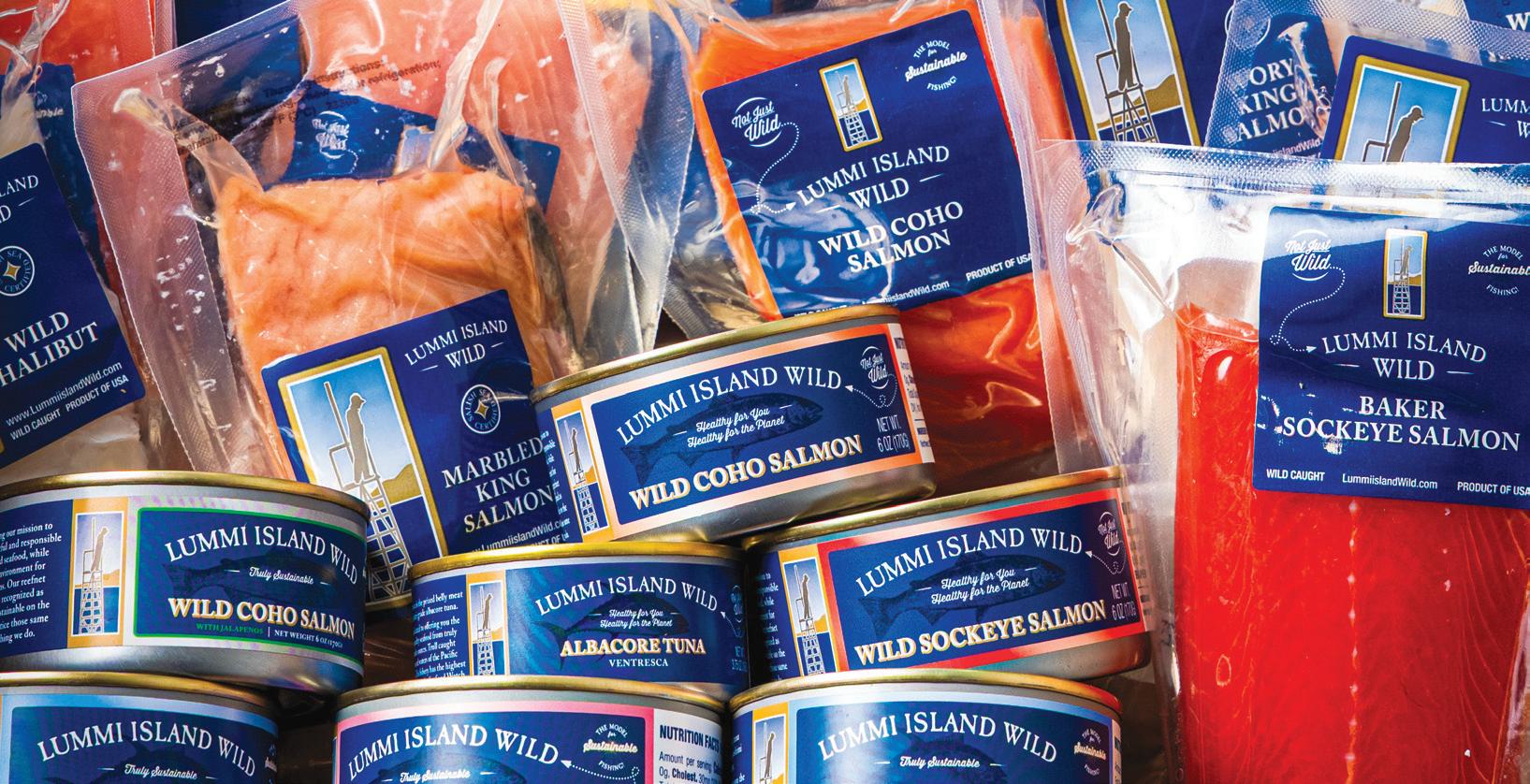
If you care about sustainably harvested salmon, you’ll want to try salmon caught by Lummi Island Wild, a co-op where the fishermen practice a centuries-old, solar-powered Coast Salish fishing method called reefnetting. “Lummi Island’s Legoe Bay is the only place in the world where reefnet fishing occurs,” said Lauren Doll, marketing director. Fish are gently handsorted, and bycatch is returned to the ocean. That gentle harvesting method means the fish experience no stress, which makes a big difference to the taste, she says. “When fish are unstressed, there’s no lactic acid building up in the salmon muscle, and the result is salmon with higher fat, a richer flavor and a better texture.”
Lummi Island Wild partners with tribal fishing partners to expand its seafood to halibut, shellfish, whitefish, canned salmon and canned tuna. All its fishermen are local and practice sustainable fishing. Its seafood is available on its website and at PCC Markets and Haggen the Food Co-op. www.lummiislandwild.com












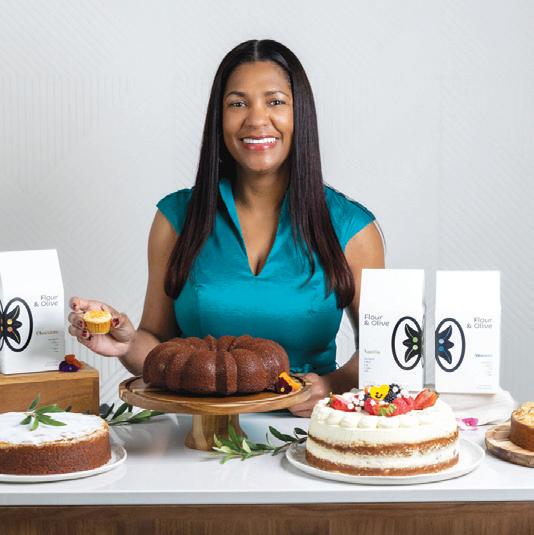





Estelle Sohne left a career in law to raise a family in Kirkland, but discovered a love of baking along the way. In 2023, she launched Flour & Olive with a selection of four luxury cake mixes, each of them containing a custom blend of unbleached and whole-wheat flour, non-aluminum baking powder and natural flavors, and all suggesting olive oil for the finished product. Her new company immediately garnered attention from the Specialty Food Association, which handed her a gold award for the almond mix in 2024 and a gold finalist distinction in 2025.











14509 WOODINVILLE REDMOND ROAD NE WOODINVILLE www.woodinville whiskeyco.com

“My mixes allow average or non-experienced bakers to enter the world of baking in a really easy way,” she said. “They can use the recipe at the back of the box and make something really simple, or scan a QR code to find other recipes with which to use the mix, representing international and ethnic favorites.” Flour & Olive’s ginger cake mix has twelve recipes to choose from, including Ethiopian coffee spice cake with espresso cream, while the vanilla cake mix has more than thirty. The use of olive oil instead of butter creates a lighter, healthier cake, she added, but without sacrificing its deliciousness.


The cake mixes, available in almond, ginger, chocolate and vanilla, are available for purchase on their website, at select grocery stores and on Amazon.
www.flourandolive.com
written by Corinne Whiting | photography by Reva Keller
IF SALMON IS YOUR THING, Washington is your place. Few destinations rival this state when it comes to salmon fishing, and dishes featuring this delicacy shine throughout the year, thanks to the bounty that can be found. Chinook (or king) salmon are the largest of the Pacific salmon, with some weighing more than 100 pounds. (Their peak season spans from July through September.)
NOAA Fisheries declare U.S. wild-caught Chinook salmon a smart seafood choice, since it’s sustainably managed and responsibly harvested under U.S. regulations.
A recent, culinary-focused trip to San Juan Island reminded us just how it can be done in this corner of the country. On that sparkling isle, a day might begin by devouring a salmon lox egg Benedict at Friday Harbor House, watching the ferries shuttle to and from the port below. Lunchtime on the bustling terrace of San Juan Island Brewing is best enjoyed alongside their Wild Salmon Sandwich (topped with housemade lemon aioli, cucumbers, Mama Lil’s peppers and arugula), while evening meals at Downriggers, Coho Restaurant or Duck Soup might star the nutritious fish as well, depending on the season. Some may argue there’s no such thing as too much salmon in one’s Northwest explorations.
Several chefs weighed in on their reverence for the fish. Michela Tartaglia, chef and owner of Pasta Casalinga in Pike Place Market, was born and raised in Italy. When she moved to Seattle in her late twenties, she remembers being so enchanted by the seafood scene of the Pacific Northwest, and salmon played a big role. “In the south of Europe we occasionally eat Atlantic salmon, but it’s not part of our diet,” she said. “Living here and being able to have access to the amazing and diverse universe of seafood has been a privilege.

Salmon is without any doubt the quintessential symbol of the Pacific Northwest.”
At Pasta Casalinga, a casual and rustic lunch spot, they exclusively serve pasta that combines the Italian cooking tradition with Northwest ingredients. Tartaglia’s motto in the kitchen with salmon (especially Chinook) is the following: Touch it as little as you can, don’t alter it with other ingredients and preserve its natural, incredibly rich-yet-delicate taste.
She thinks “king” salmon’s nickname says it all: rich, robust and full-bodied with elegant and natural sweetness. “If I think of Chinook salmon, I think about its buttery flavor and its meat that was born to melt in our mouths,” she said. “It’s a gift from Mother Nature. We all should have it at least once in our life.”
Pasta Casalinga sources locally, either directly from fishermen they know and have established relationships with, or they purchase from small and sustainable companies that represent fishermen. Tartaglia says acknowledging where the product comes from is a non-negotiable for her.
When selecting salmon, Tartaglia recommends always purchasing sustainable wild salmon. “Second,” she said, “frozen salmon is not inferior to fresh. It’s a big stereotype we need to address. When fishermen catch their fish, it will take time to arrive at the destination. Freezing properly guarantees the freshness and quality, preserving the nutrients, the flavor and the velvety nature of our Chinook salmon.”
Simplicity is key when cooking salmon. “With pasta, the other ingredients have to be complementary,” she advised. “Never cover or dominate our ‘king.’” She thinks “solo” Chinook is perfect when seared or placed on the grill for four to five minutes, depending on its thickness, and without overpowering its natural, rich flavors. In fact, some squeezed lemon and white pepper (freshly ground) can bring out the best of the dish.
For feasts like Tartaglia’s spaghetti with Chinook wild salmon, Washington asparagus, anchovy butter, Gaeta olive dust and fresh dill, she suggests pairing a pleasant, dry and mineral white wine. “My mind goes to Italy and thinks of Vermentino or a Verdicchio,” she said.
“Living here and being able to have access to the amazing and diverse universe of seafood has been a privilege. Salmon is without any doubt the quintessential symbol of the Pacific Northwest.”
— Michela Tartaglia, Pasta Casalinga owner and chef
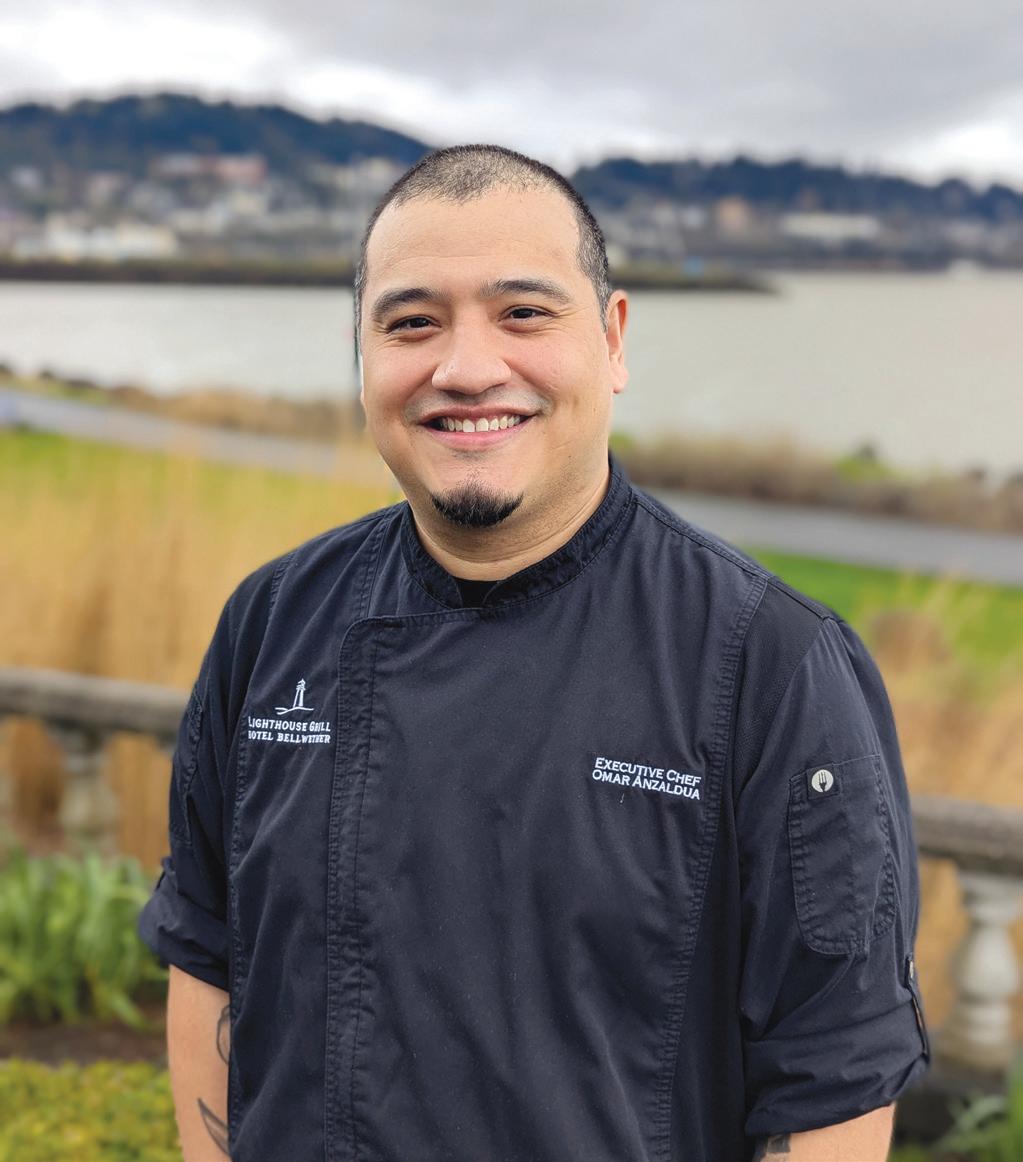
Omar Anzaldua, executive chef at Lighthouse Grill at Bellingham’s Hotel Bellwether, also has been working with Chinook salmon throughout his twenty-five-year culinary career. He describes the fish as having “rich and natural fatty oils with a tender texture.” “Chinook, and especially our local spring Chinook, stay in the ocean longer than other species as well as spending more time in the rivers before spawning, up to six months in some cases,” he explained. “Because they do not eat in the rivers, these fish build huge fat reserves to make their spawning run, leaving a flesh that is richer and more succulent than other species.” He added: “For the same reasons, however, don’t sleep on sockeye!”
At Lighthouse Grill, a popular waterfront seafood and steak restaurant that specializes in sourcing locally, they get their Chinook through Lummi Seafood Market. “We strive to support Indigenous and terminal fisheries,” he said. “Many of our fish are caught within view of the restaurant at the Whatcom Creek Fishery.” They also purchase the Nooksack/Skagit spring Chinook runs, Baker Lake sockeye and Fraser summer Chinook.
Anzaldua’s preferred Chinook preparation comes grilled with salt, pepper and smoked paprika and served over creamy wild mushroom risotto. He finds Chinook to be a very versatile species; for seasoning, salt and pepper reign supreme (due to its fatty and rich flavor). “But it balances well with citrus, herbs and smoky notes,” he added.
He finds that Chinook is best grilled over a medium heat or baked at around 300 degrees; this allows the fish to retain its natural oils and tenderness. The ideal internal temperature is 120 degrees, and then let it rest for at least seven to ten minutes. Most enjoy Chinook served medium-rare, which is an internal temperature of 125 degrees (145 degrees for well-done salmon). He advises taking the temperature from the thickest part.
Fresh salmon is best stored at 41 degrees, tightly wrapped with plastic film. Other recommendations: Put ice on wrapped salmon for the best freshness, and keep salmon for one to three days; frozen salmon needs to be tightly wrapped and then placed in a freezer bag for up to four months. Buon appetito!
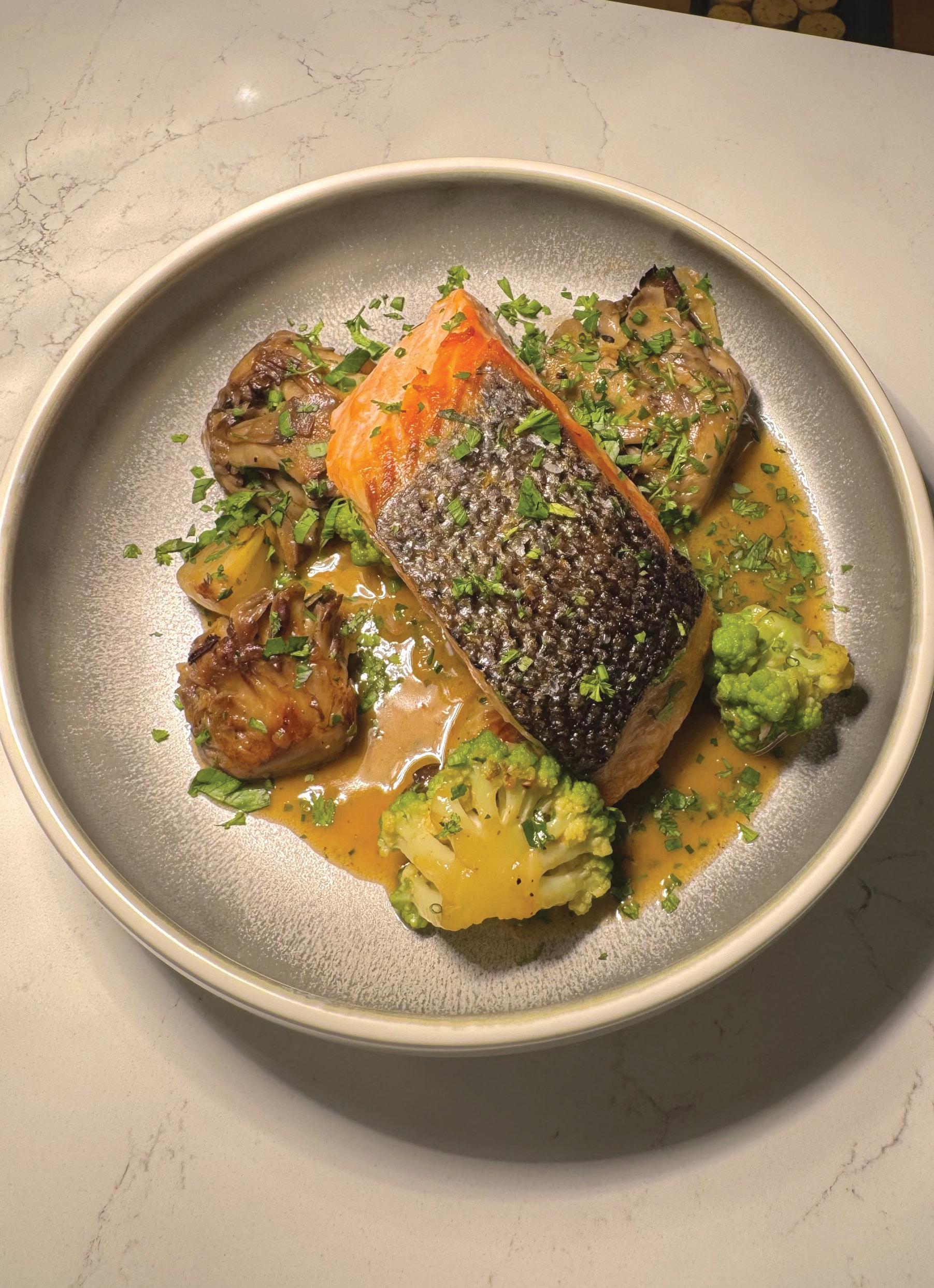
Pan-Seared Salmon with SmokedShallot Butter, Romanesco, Maitake Mushrooms and Fine Herbs
Cinder + Salt, The Charter Hotel Seattle, Curio Collection by Hilton / SEATTLE
Amber Lancaster, VP of Culinary, TableOne Hospitality
SERVES 2
FOR THE SMOKED-SHALLOT BUTTER
• 1 pound whole butter
• 17 ounces shallots, smoked (we suggest 50 percent applewood chips, 50 percent cherrywood chips)
• 10 ounces tomatoes, diced
• 3 ounces chives, finely sliced
• 3 ounces parsley, finely chopped
• 11/2 ounces BBQ seasoning
• 1 tablespoon Espelette pepper
• 11/2 ounces kosher salt
• 11/2 ounces cayenne
• 1 tablespoon pimenton
FOR THE FINE HERBS
• 9 ounces parsley, finely sliced
• 9 ounces chives, finely sliced
• 9 ounces tarragon, finely sliced
• 9 ounces chervil, finely sliced
FOR THE PAN-SEARED SALMON
• 2 ounces, neutral oil (such as grapeseed)
• 1 each 6-ounce portion of salmon (skin on)
FOR THE VEGETABLES
• 1 large piece of maitake mushrooms, with bottom cut off to separate
• 10 each cipollini onions, peeled and quartered
• 1 head romanesco, cleaned and portioned similar to broccoli florets
• Smoked-shallot butter (see recipe)
FOR THE SMOKED-SHALLOT BUTTER
Gather, prepare and scale all ingredients.
In a stand mixer with the paddle attachment, add in your whole butter, and whip until light in color and soft. Add in remaining ingredients, and mix thoroughly.
Once combined, store in the appropriate container, and place into refrigerator.
FOR THE FINE HERBS
Finely slice all four herbs, and mix together for an aromatic medley.
FOR THE PAN-SEARED SALMON
Heat a small sauté pan. Add in your neutral oil. Place your salmon skin-side down in your pan, and sear until the skin is crispy and browned. Rotate, and sear the bottom side as well.
If cooking to medium rare, cook to an internal temperature of 125 degrees. If you’d like it cooked well done, place on a sheet pan in the oven at 375 degrees for 5 minutes, and let rest.
FOR THE VEGETABLES
In a medium sauté pan, add grapeseed oil, and sear the maitake mushrooms. Next, add the cipollini onions, and start to caramelize.
Finally, when both maitake mushrooms and onions have nice sear and caramelization, add in the romanesco to lightly sear as well.
Add in a large tablespoon of the smoked-shallot butter to glaze your vegetables.
TO SERVE
Place mixed vegetables and glaze into a medium bowl with a lip.
Place salmon on top of vegetables, and garnish with fine herbs.
Spaghetti with Chinook Wild Salmon, Washington Asparagus, Anchovy Butter, Gaeta Olive Dust and Fresh Dill Pasta Casalinga at Pike Place Market / SEATTLE
Michela Tartaglia, owner and chef
SERVES 4
FOR THE ANCHOVY BUTTER
• 4 anchovy fillets, preserved in oil and salt
• 4 tablespoons unsalted butter
FOR THE PASTA
• 3 tablespoons extra-virgin olive oil
• ½ shallot, finely minced
• 12 ounces asparagus stems, cut into 1-inch pieces
• ¼ teaspoon dried oregano
• Salt and pepper, to taste
• 10 ounces wild Chinook salmon fillet, cut into 1-inch strips
• 12 ounces spaghetti
• Anchovy butter (see recipe)
• 2 dill fronds, just the leaves gently removed from the stem
• ½ teaspoon Gaeta olive dust
FOR THE ANCHOVY BUTTER
Heat the anchovies at low temperature in a saucepan until they melt. Combine with softened butter. Set aside.
FOR THE PASTA
In a large skillet, over medium heat, warm the extra-virgin olive oil. Add the shallot, and sauté for 2 to 3 minutes. Add the
asparagus, oregano, salt and pepper to taste, and cook covered for 5 minutes over medium-low heat.
In the meantime, in a large pot of salted boiling water, cook the spaghetti al dente (look for time instructions on the box).
Add the Chinook salmon to the pan, increase the heat and stir a few times for a couple of minutes. You don’t want to overcook your salmon.
Once the pasta is cooked, drain and add it to the skillet, making sure to keep a couple of tablespoons of pasta water.
Quickly add the anchovy butter, and sauté for a minute or two over medium heat, constantly mixing the ingredients to guarantee a creamy result.
Taste and add salt and pepper if needed. Plate right away. Finish with dill fronds, and sprinkle some Gaeta olive dust on top.
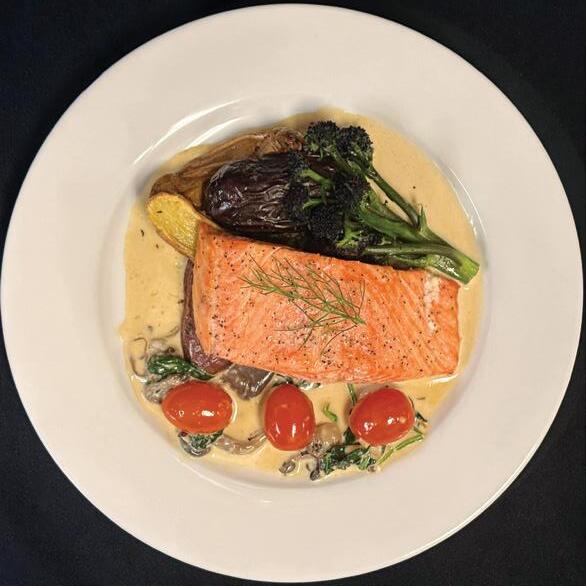
Oven-Baked Chinook Salmon with Spinach and Wild Mushroom Cream Sauce
Lighthouse Grill at Hotel Bellwether / BELLINGHAM
Omar Anzaldua, executive chef
SERVES 2
FOR THE SALMON
• 2 6-7-ounce pieces of Chinook salmon
• Salt and pepper
FOR THE CREAM SAUCE
• 2 tablespoons olive oil
• ½ teaspoon shallot, chopped
• ½ teaspoon garlic, chopped
• 3 ounces wild mushrooms
• 6 cherry tomatoes
• Salt and pepper
• ¼ cup white wine
• Pinch of chili flakes
• ½ cup heavy cream
• 1 cup spinach
FOR THE ROASTED POTATOES
• 1 pound fingerling potatoes
• 3 tablespoons olive oil
• 1 teaspoon each of fresh thyme and rosemary, coarsely chopped
• Salt and pepper
FOR THE BROCCOLINI
• 4 ounces broccolini
• 2 cubes of unsalted butter, about 2 ounces
• Salt and pepper
FOR THE SALMON
Preheat oven to 300 degrees. Pat salmon with a paper towel, and season with salt and pepper to your liking.
Place salmon on baking dish, and bake for 10 to 12 minutes or until the salmon’s internal temperature reaches 125 to 145 degrees, depending on your preference. Pull salmon out of the oven at least 5 degrees below your desired temperature, and let sit for 5 to 10 minutes.
FOR THE CREAM SAUCE
In a saucepan, add oil, shallot and garlic over medium heat. Sweat garlic and shallot for 1 to 2 minutes. Add wild mushrooms, cherry tomatoes, salt and pepper, and cook for 2 minutes.
Deglaze pan with white wine, and add chili flakes. Let reduce by half. After
reducing, add heavy cream and spinach. Let cream reduce and thicken. Sauce should be thick enough to cover the back of a spoon.
FOR THE ROASTED POTATOES
Preheat oven to 350 degrees. Wash fingerling potatoes, and cut potatoes lengthwise in half. In a bowl, mix oil, thyme, rosemary, salt and pepper. Add potatoes, coating evenly. Evenly spread potatoes on a baking pan, and bake for 20 minutes or until fork tender.
FOR THE BROCCOLINI
Blanch broccolini in boiling water for 2 minutes. Strain, and immediately submerge in ice water to stop the cooking process. Strain and dry broccolini. In a sauté pan over medium-high heat, add butter. Once melted, add broccolini and season with salt and pepper. Sauté broccolini for about 4 minutes, ensuring not to overcook and lose its color.
TO ASSEMBLE AND SERVE
Place potatoes at 11 o’clock on plate. Place broccolini at 1 o’clock on plate. Pool cream sauce at 6 o’clock (for 2 servings), and evenly place spinach and mushrooms, leaving the cherry tomatoes off. Gently lean salmon against the potatoes and broccolini, placing most of the salmon on the sauce. Place cherry tomatoes in front of salmon. Finish with your favorite local micro greens.
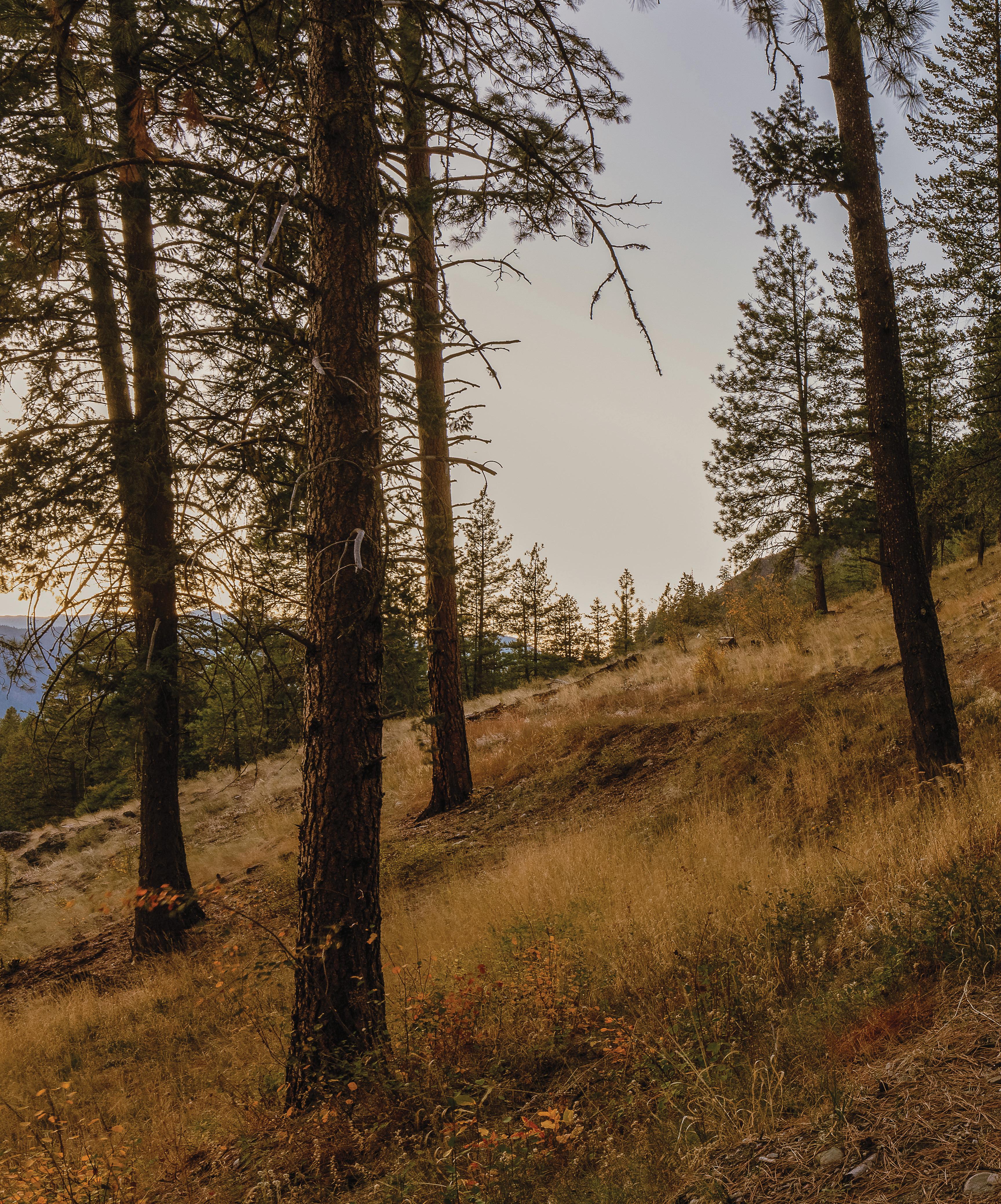
Sometimes a 330-square-foot cabin is all you need, such as this
A Sea leite builds the ultimate 330-square-foot outpost for her Eastern Washington adventures
written
by Melissa Dalton | photography by Ben Lindbloom
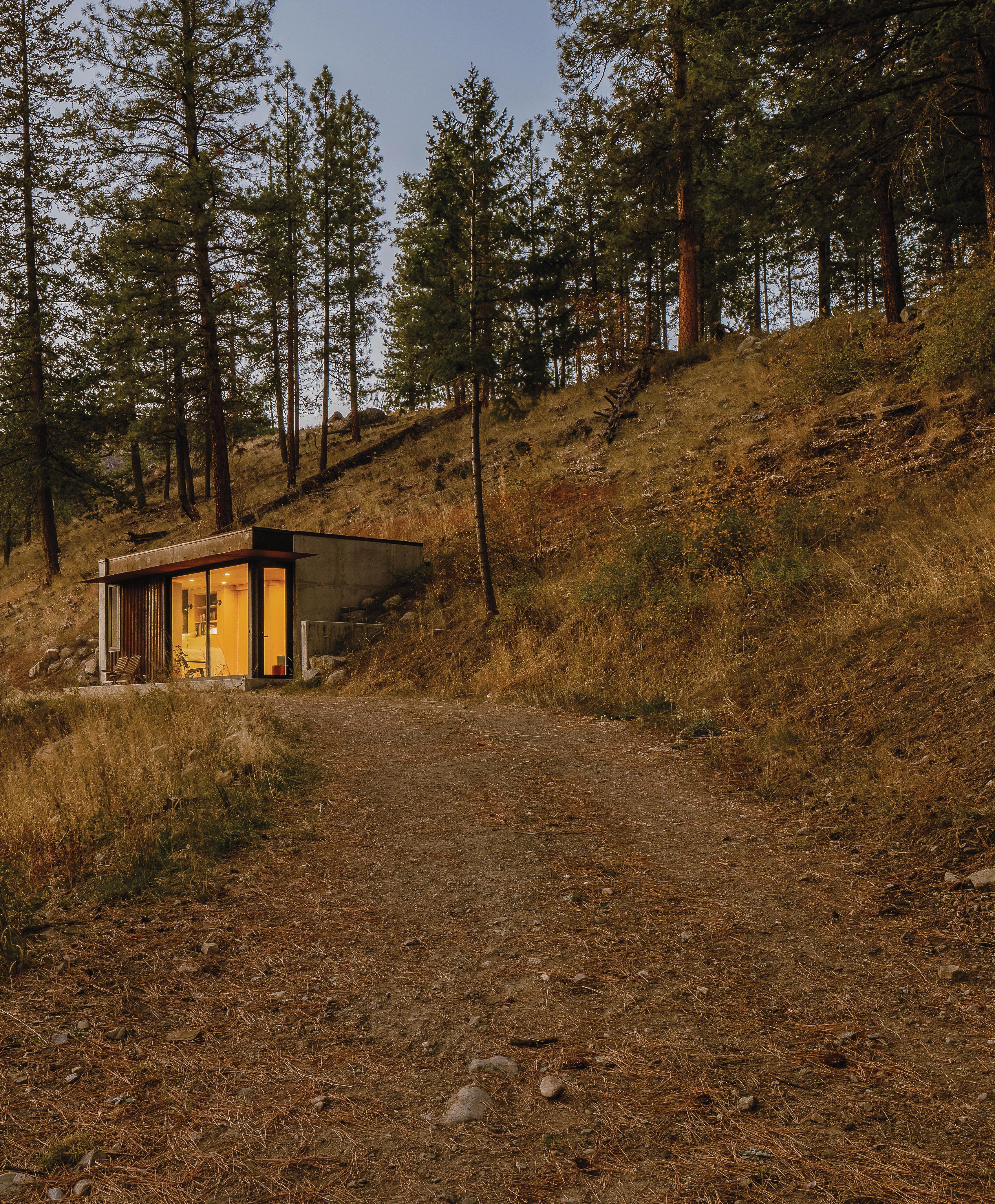



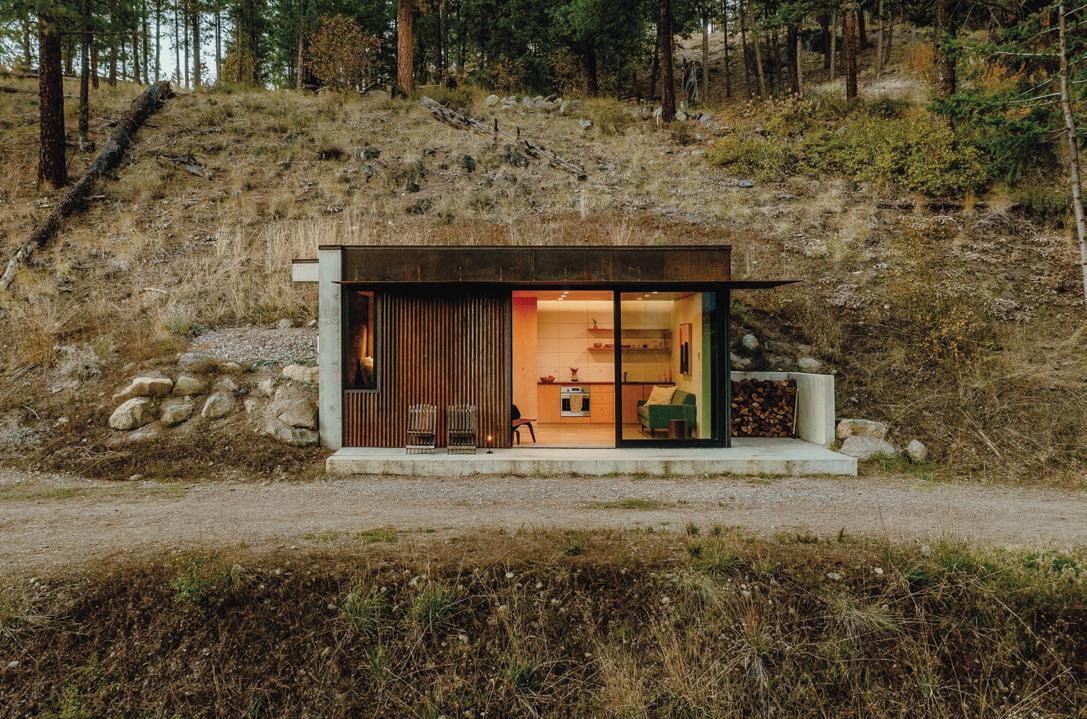
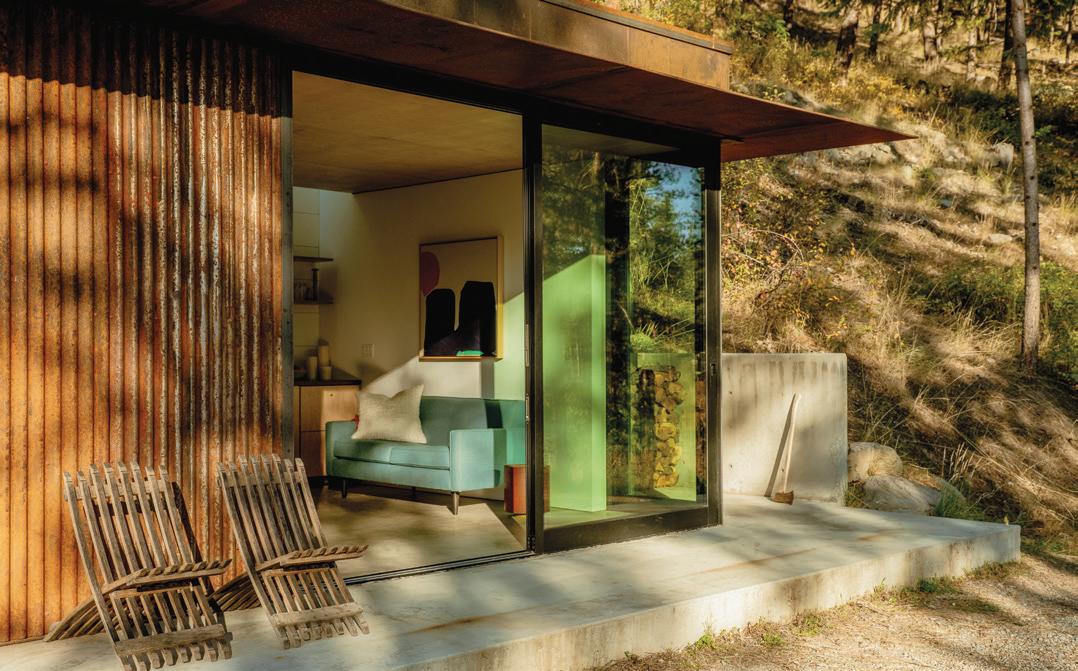
CRUNCHING DOWN a gravel driveway in Mazama, this tiny cabin is easy to overlook. That’s because it’s nestled into the berm o the side of the road, as though its concrete and patinaed metal have emerged from the dirt and yellow sagebrush. According to the architecture firm, GO’C, who were hired by their Sea le client in 2016 to design the property, this was the point. “Before we went out there, she brought us some samples of rocks and lichens from the property as inspiration,” said architect Aimée O’Carroll, who worked with firm partner Jon Gentry on the project. “It became pre y clear that we wanted to camouflage the cabin in the hillside.”
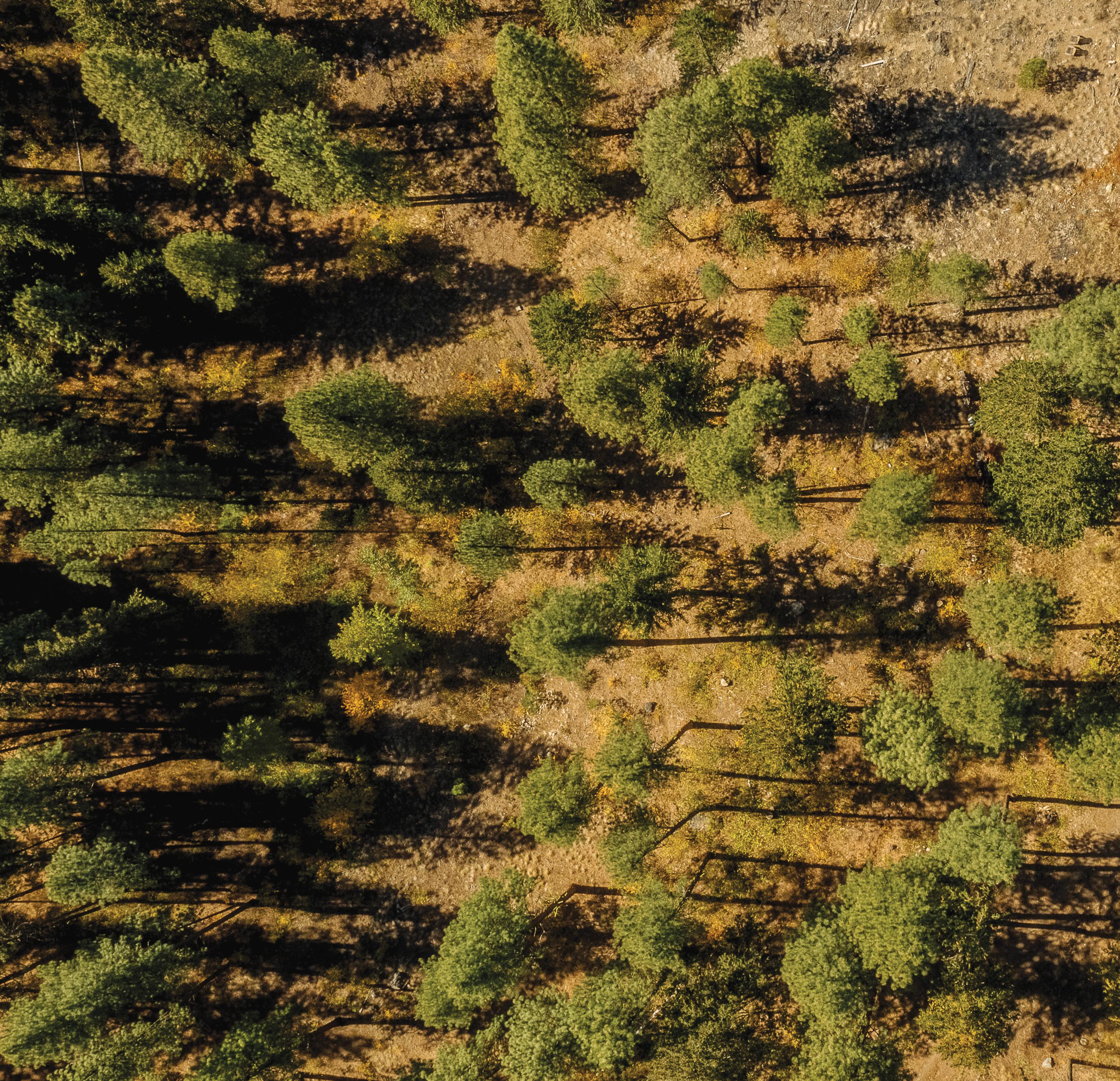
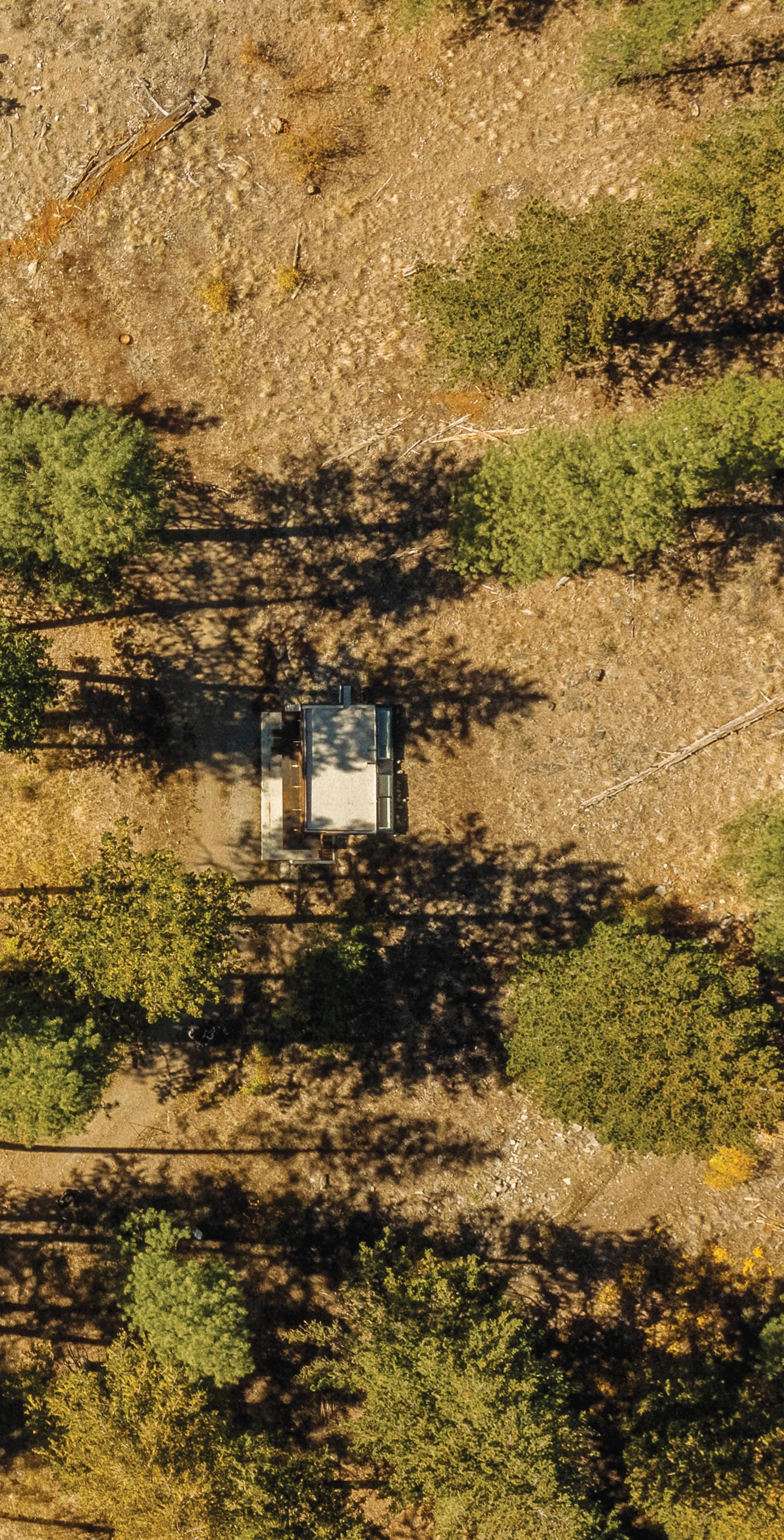
No matter the season, the owner, an outdoor enthusiast and endurance athlete, loves to hit the trails, whether going on long runs, mountain biking or skiing the nearby network of trails. She’d been doing all of the above in the Methow Valley for ten years, when she stumbled on this property for sale: 3.3 acres with sweeping views of the valley, just up the road from Mazama General Store. She first reached out to GO'C to design a twobedroom house. But at some point during the planning process, realized she wanted to start construction with a small cabin instead. There was no road, power or septic on the site when she purchased the property, and with utilities taking up a big chunk of the budget, the cabin would give her something that could be built in the short term, and used much faster.
After multiple times camping on the property, the owner also knew where she wanted to put it. “She’d built this relationship with the area over time,” said O’Carroll. “She knew where the views were, where she liked to sit and have her morning coffee.” Burrowing the building into the hillside not only syncs it to its surrounding environment, but helps with thermal regulation in a climate that gets both intense sun in the warmer months, and an average of 119 inches of snow a year.
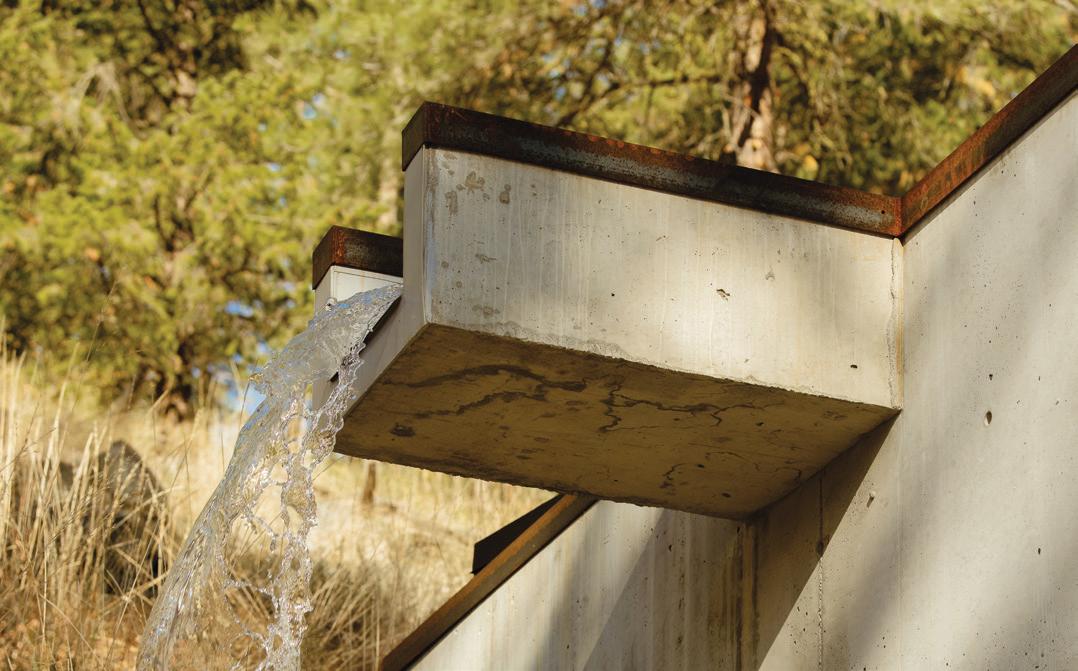
The cabin stays cool in the summer, thanks to a steel awning that keeps the hot sun out, paired with passive cooling strategies. An operable skylight at the back of the building brings in natural light there, and cool breezes, which travel through the interior and out the large sliding glass doors at the front. The concrete exterior walls store heat in the winter, with additional insulative properties drawn from the hillside and the flat roof, which is designed to carry heavy loads of snow. (Water drains off via an artfully integrated gutter spout.)
Plus, the metal and concrete look good with patina, and are more resistant to wildfires. “The idea was that the materials would change in response to the climate and the weather, but still provide a very robust exterior, which is important when there’s a lot of snow, and heat,” said O’Carroll.
The cabin’s small size was also intentional. “This is a little adventure spot for her,” said O’Carroll, and
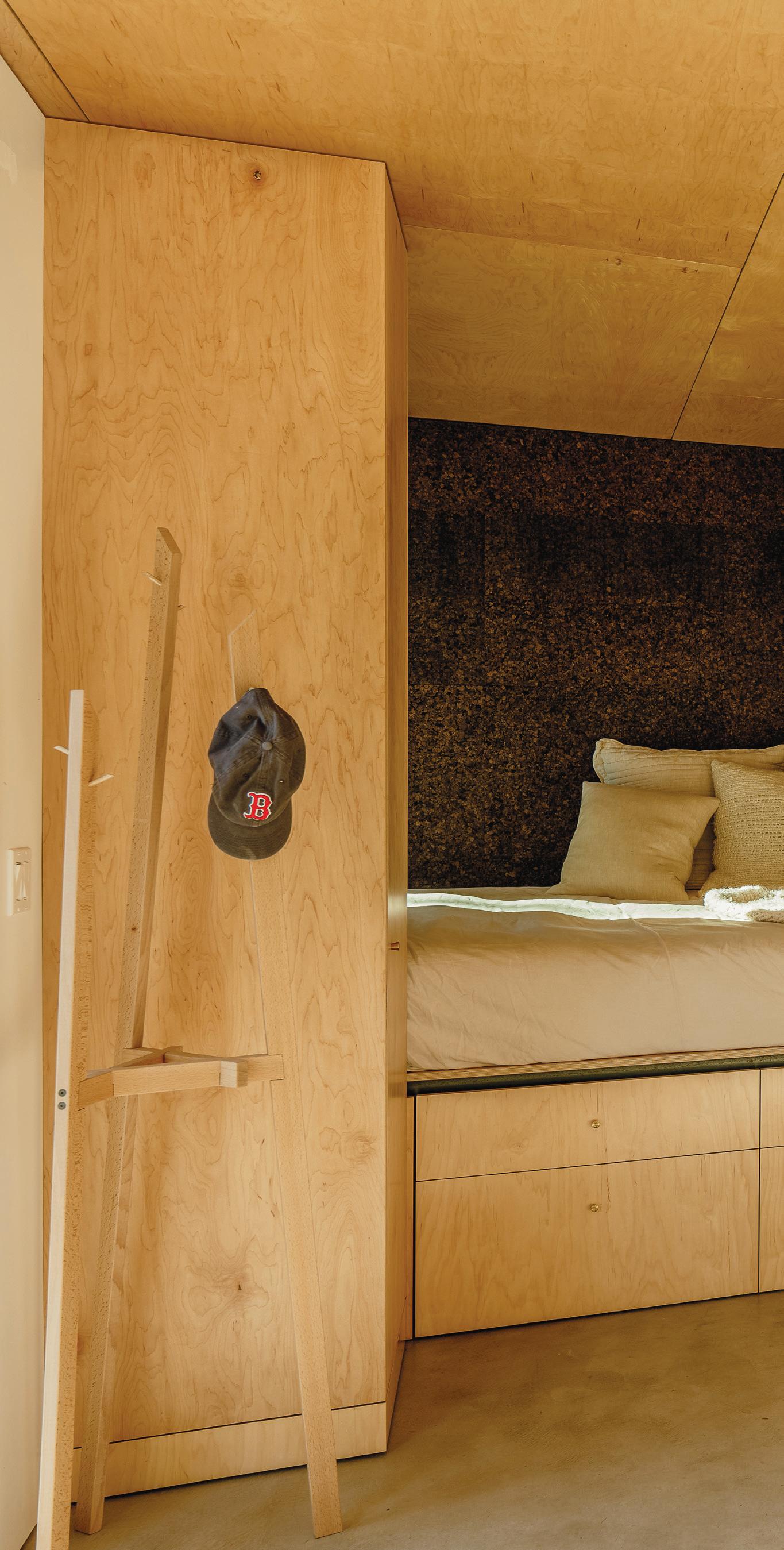
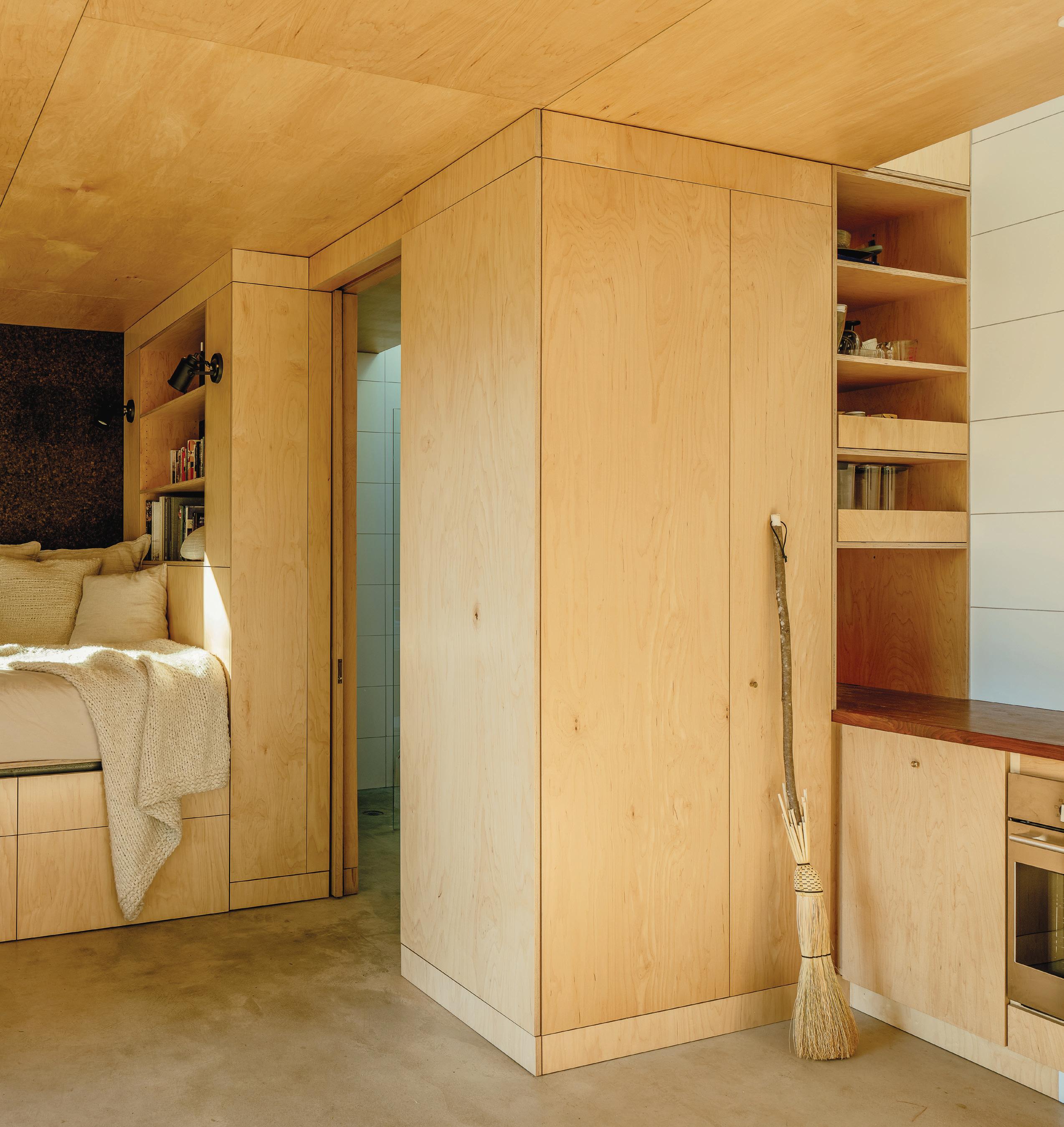
most of the owner’s time is spent outside, so she only needed to cover the basics. The group settled on 330 square feet, with a bathroom, kitchen, bed nook and living room. To save space in the tiny footprint, the architects used cabinetry to separate the zones and create much needed storage. No one wants to go out into the woods, after all, only to be surrounded by visible clutter.
Now, there’s clever concealment for everything, from tall cabinets for the ski gear, to the large drawers under the raised bed to accommodate thick winter fleeces, to a pull-out pantry cupboard. The owner can even access the deep recess under the bed for off-season gear storage, so no space goes to waste. “Even though it’s small, it’s built a little bit like a ship’s cabin in that everything has its spot to live and it’s all carefully tucked away into the interiors,” said O’Carroll. For the interiors, the architects specified all of the cabinetry and the ceiling out of maple plywood, which gives visual continuity, while a cork covered accent wall at the bed nook offers cozy variation.
And should the owner need some downtime, before or after adventuring, not only is there a petite covered front porch for drinking coffee and lounging, but the flat roof doubles as a deck. Still, what’s most important is that “she can just go straight out and ski down her driveway and be in the mountains,” said O’Carroll. “It’s all she needs.’”
written by Melissa Dalton | illustration by Charla Pettingill
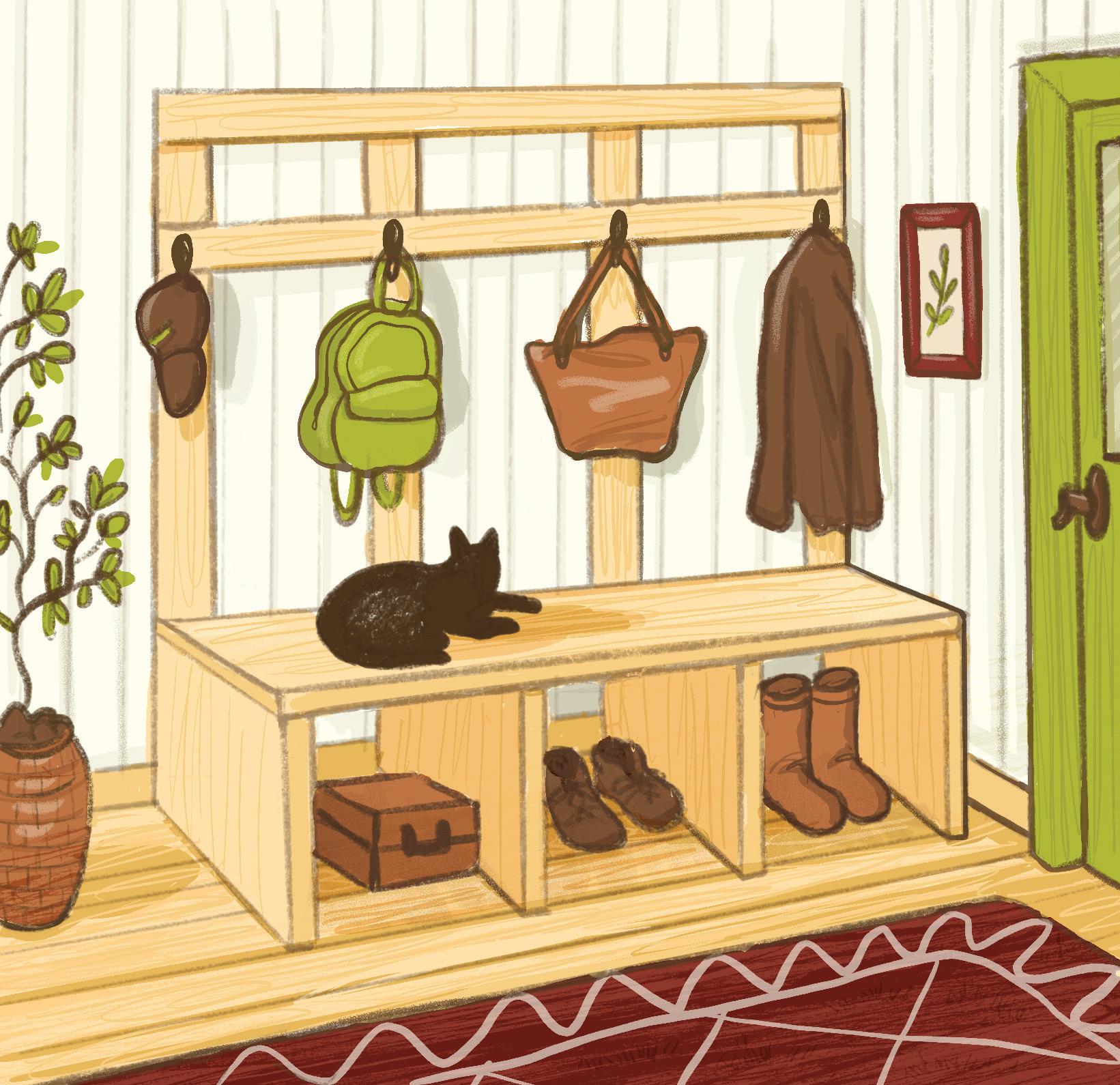
THIS WEEKEND PROJECT has a triple purpose: as shoe cubbies, a bench and coat storage. It assumes the expanse of wall covered is 6 feet wide by 8 feet tall, but you can massage those dimensions as needed.
Using a 1x12, cut four boards at 18 inches tall each. These will be the walls for the shoe cubbies and the supports for the bench. At the rear of each board, cut an L-shaped notch at the top and bo om. This is so the supports will be flush against the rails, which are against the wall. The bo om stile at the floor will be a 1x6, at 6 feet long, and the next one will be a 1x4, also 6 feet long, running horizontal on the wall.
Once the support boards are notched, do a dry fit with the 1x6
and 1x4 rails to make sure everything fits together flush. Use sandpaper to smooth down the edges and get a tight fit.
Pre-drill holes for 1½-inch screws at each notched section, and where it lines up with the rail. This predrilled hole will prevent the wood from cracking. Add wood glue to each hole, before sinking the screws and a aching the rails and supports. Wipe away excess glue. Now you have the framework for the cubbies and the bench seat.
Use a 1x12 for the benchtop, cut at 6 feet long. Run a bead of glue along the top of the supports. Line up the benchtop so it fits the framework, and use an air nailer to a ach the bench to the supports. Plug any impressions from the nails with wood filler.
Lightly sand the entire framework, and then paint or stain with your preferred finish.
This project can be done with a ¼-inch plywood backer board, or by a aching the stiles (vertical boards) and rails directly to the wall. If starting with a plywood back, cut the boards to size to cover the 6-by-8-foot expanse, making sure any seams will be covered by the vertical stiles. Attach the plywood to the wall with the air nailer, securing nails in studs where possible.
Place the cubbies and bench against the wall, with the bo om rail flush. A ach with the air nailer every foot. For the rail underneath the bench, a ach using screws and sink them into studs. Next, a ach the horizontal coat rail about 18 inches or 2 feet from the top rail. Use screws and sink them into studs, so when coats are hanging from it, there will be enough support for their weight. A ach the top rail using the air nailer.
Next, cut the vertical stiles to the correct lengths, so they fit between the benchtop and the coat rail, and again between the coat rail and top rail. Line them up with the vertical supports of the cubbies below, and a ach with the air nailer. Finish the entire wall with the desired paint and stain, and add coat hooks to the coat rail.
written by Melissa Dalton
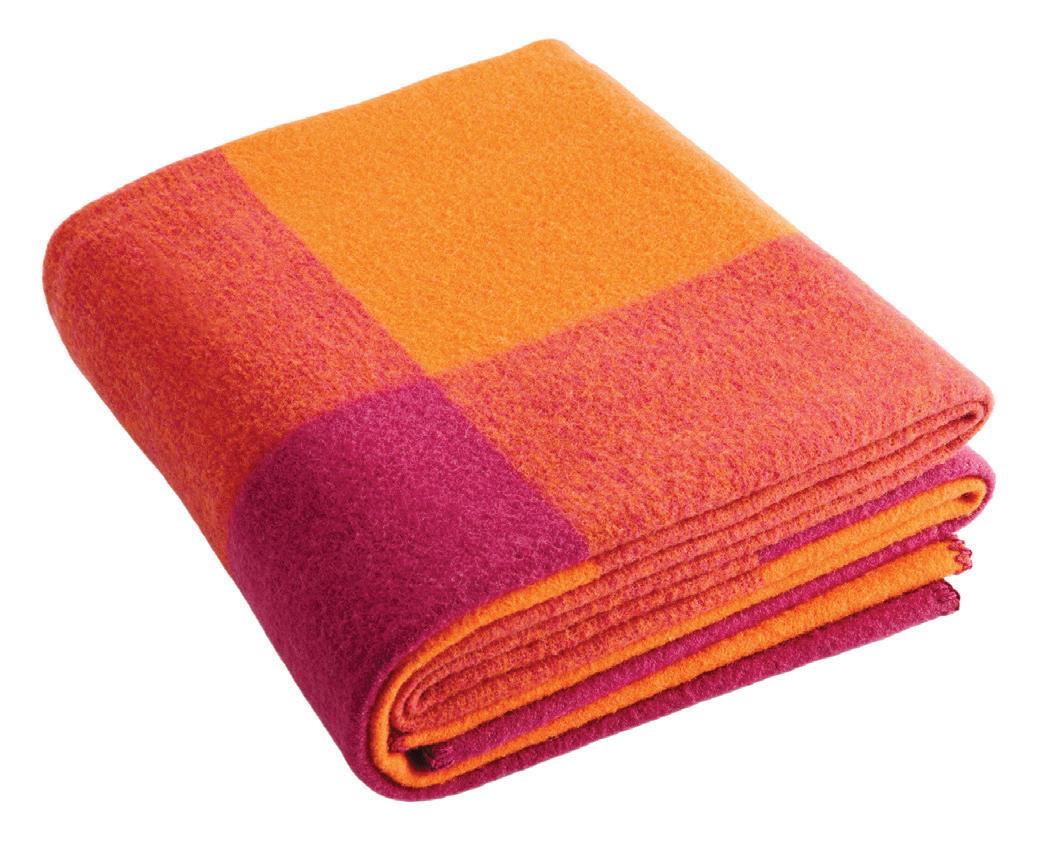
In 1965, the architect and interior designer Alexander Girard was commissioned to overhaul the branding for the Braniff International Airways, including redesigning everything from playing cards to baggage tags, airport lounges and planes. Girard crafted fifty-six textiles for plain interiors, including this print still in production today, on a wool and cotton throw blanket from Herman Miller and Pendleton, available at Hive.
www.hivemodern.com
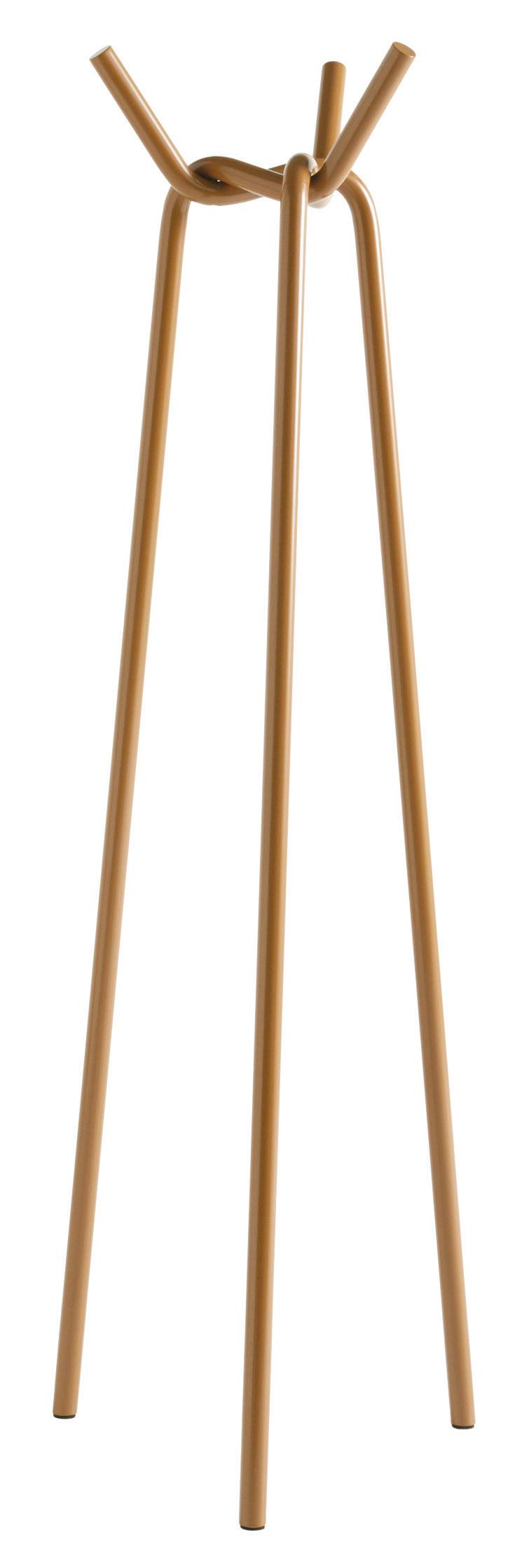
The HAY Knit Coat Rack, available at Design Within Reach, is designed to look like its three steel pipes have been knotted together. It’s powder-coated to a high-gloss finish in four colors—we like the toffee—meaning it looks good whether wet gear is hanging off it or not.
www.dwr.com
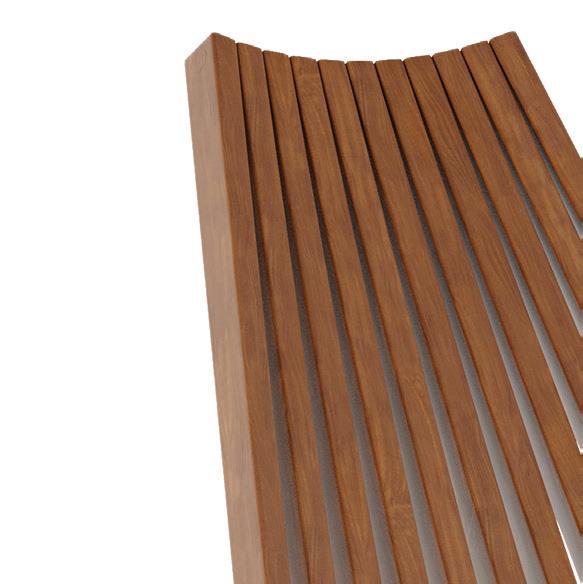
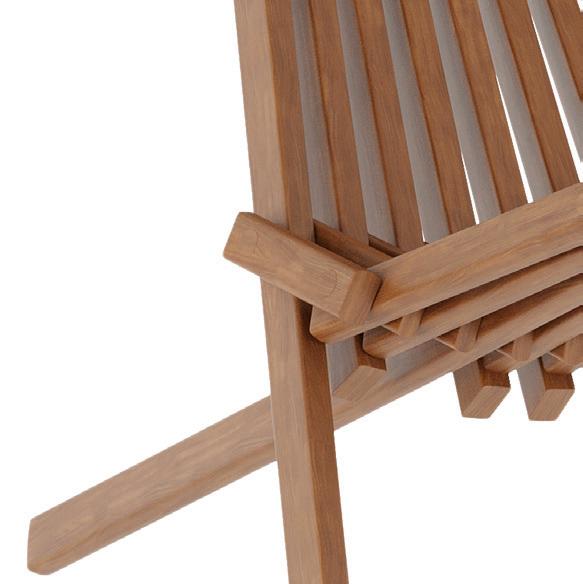
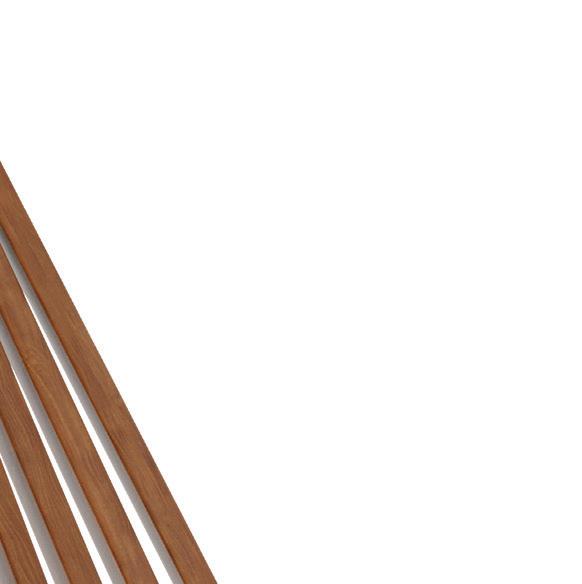
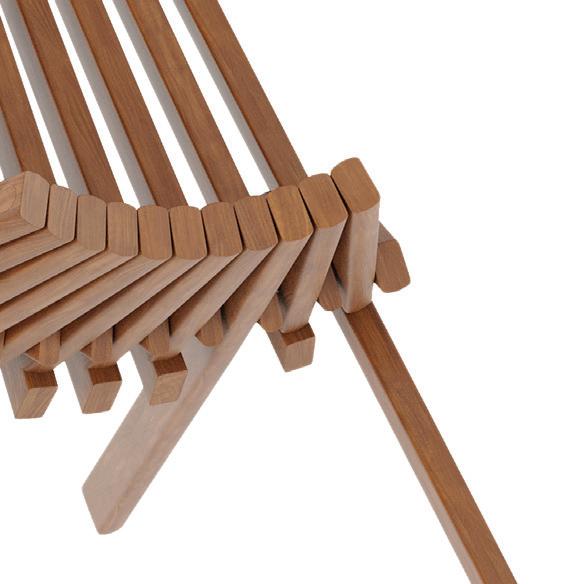
A folding slat outdoor chair like this saves space in a petite footprint, yet doesn’t compromise comfort, thanks to the high backrest and ergonomic angles. The acacia wood slats are weather resistant, so there’s no need to worry about leaving it out in rain or sun. Although, the folding design makes it equally easy to store away.
www.lowes.com

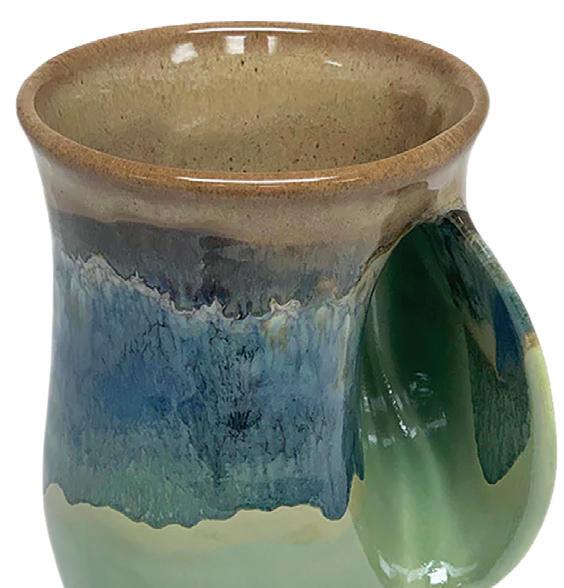
Clay in Motion is familyowned and -operated from Milton-Freewater, Oregon, just south of Walla Walla, and their Handwarmer Mug, as one online review puts it, is a “game changer.” Designed to be comfortably ensconced in hand, with either left- or right-hand contours, who needs a handle? They come in an array of colors and are microwave and dishwasher safe.
www.clayinmotion.com
written by Lauren Kramer
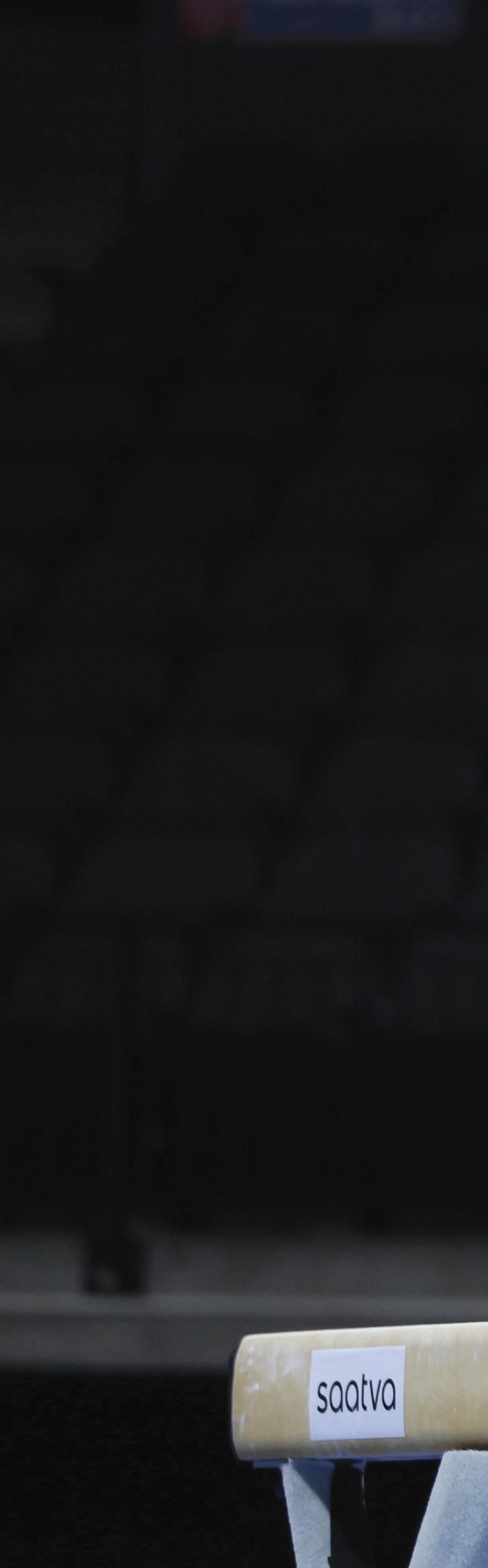
SIMONE ROSE has her sights firmly set on competing in gymnastics at the Los Angeles 2028 Olympics. At 15, she was one of sixteen gymnasts in the country at the U.S. Olympic trials vying for a spot on the 2024 U.S. Olympic gymnastics team. Surrounded by more experienced American gymnasts that were three to five years older than herself, Rose was undaunted.
“It felt amazing to be in that crowd, with those girls,” she said. “Even though we were competing against each other, each of us knew how much hard work it took to reach that point, and that at the end of the day, we are doing this for fun. We were all supportive of each other and just happy to be there.”
Rose was walking at nine months and started somersaulting and cartwheeling around the house at an early age. Her parents enrolled her in gymnastics at the age of 2, and she was hooked from the start.
“Inside and outside of the gym, I just wanted to flip, bounce and tumble,” she admitted. “When I leveled up quickly in my classes, the coaches noticed my potential, and we figured out I was good at it.”
schedule and frequent competitions out of state.
Born: Bellevue
Lives: Sammamish
Age: 18
WORKOUT
By eighth grade, she was traveling internationally, and as a newly graduated senior she has passport stamps from competitions in France, Colombia, Germany and Italy. She won gold medals for Team USA in all of those countries, and in 2024 finished tenth in the U.S. Olympic trials at the age of 16.
“I’m at the gym twenty-eight hours a week, practicing gymnastics, conditioning and stretching.”
NUTRITION
“I try to focus my diet on carbohydrates and proteins, but other than that, I eat like a regular teenager.”
INSPIRATION
“My mom has always been there for me and put her own life on hold to support me. She reminds me that just because I’m a gymnast doesn’t mean I’m just a gymnast! The sport doesn’t define me. She is at every meet and is always there, cheering me on.”
They suggested she enroll in the USA Elite Gymnastics program through which she’d get to compete at national and international competitions. In fifth grade, Rose enrolled in partial homeschooling to accommodate a more rigorous practice
Rose competes in vault, bars, beam and floor, also known as All-Around, but her favorite is bars. Gymnastics is a challenging sport, she said, but that’s what makes it exciting. “It’s taught me a bunch of life skills, like continuing to believe in myself even when I’m really frustrated or annoyed, and knowing deep down that I can do hard things and push myself further. It makes me feel confident in myself and want to strive for something more,” she said.
She heads to the University of Florida in the fall, where she accepted a full athletics scholarship in gymnastics. As a Florida Gator, she will compete as part of a team, an opportunity she’s excited about. But she also just wants to be a regular freshman, attending classes and football and basketball games and soaking it all in. “I still feel like a normal teenager, and though the gym keeps me pretty busy, I try to keep my life balanced,” she said.


[Gymnastics has] taught me a bunch of life skills, like continuing to believe in myself even when I’m really frustrated or annoyed, and knowing deep down that I can do hard things and push myself further. It makes me feel confident in myself and want to strive for something more.”
— Simone Rose






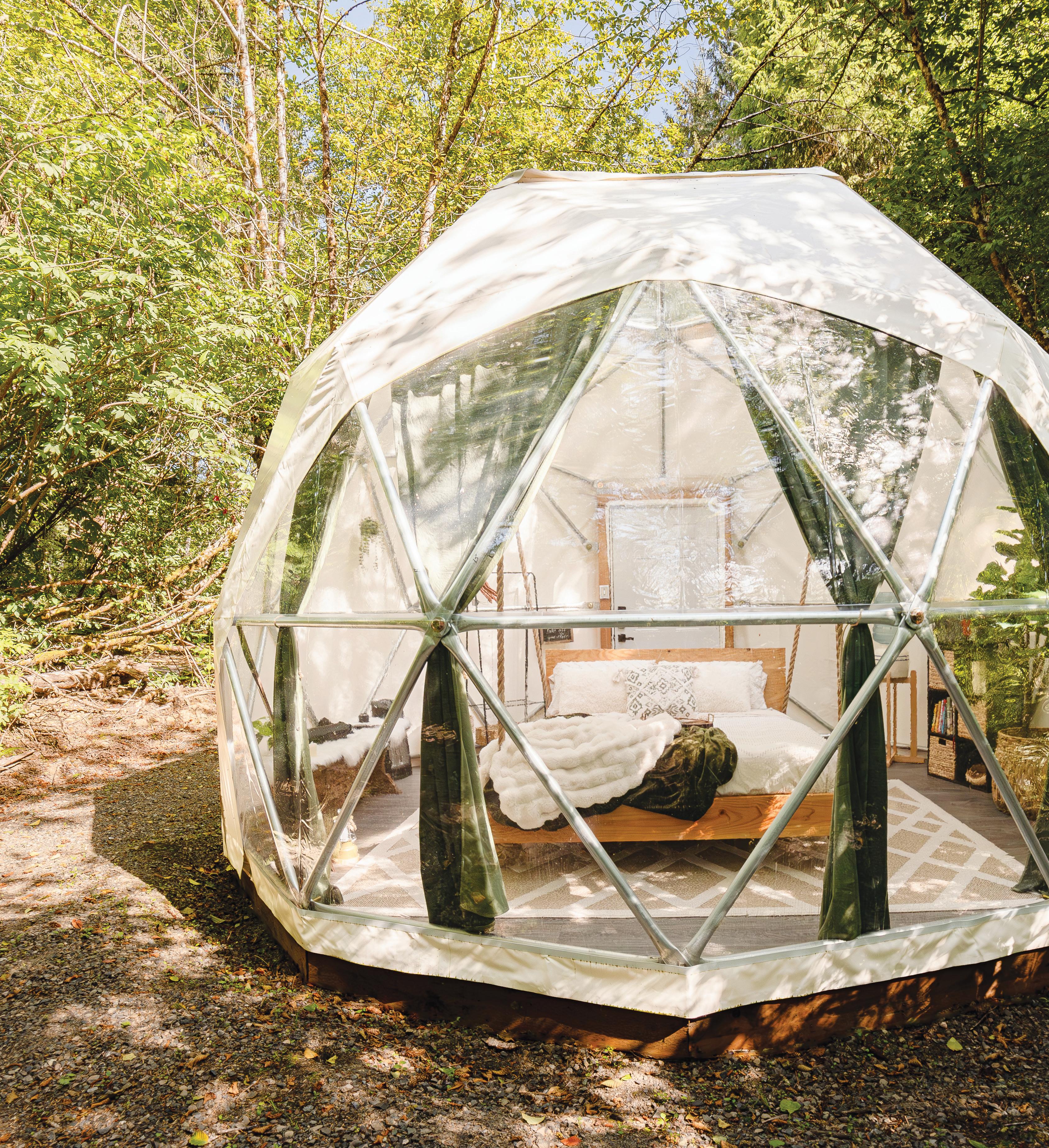
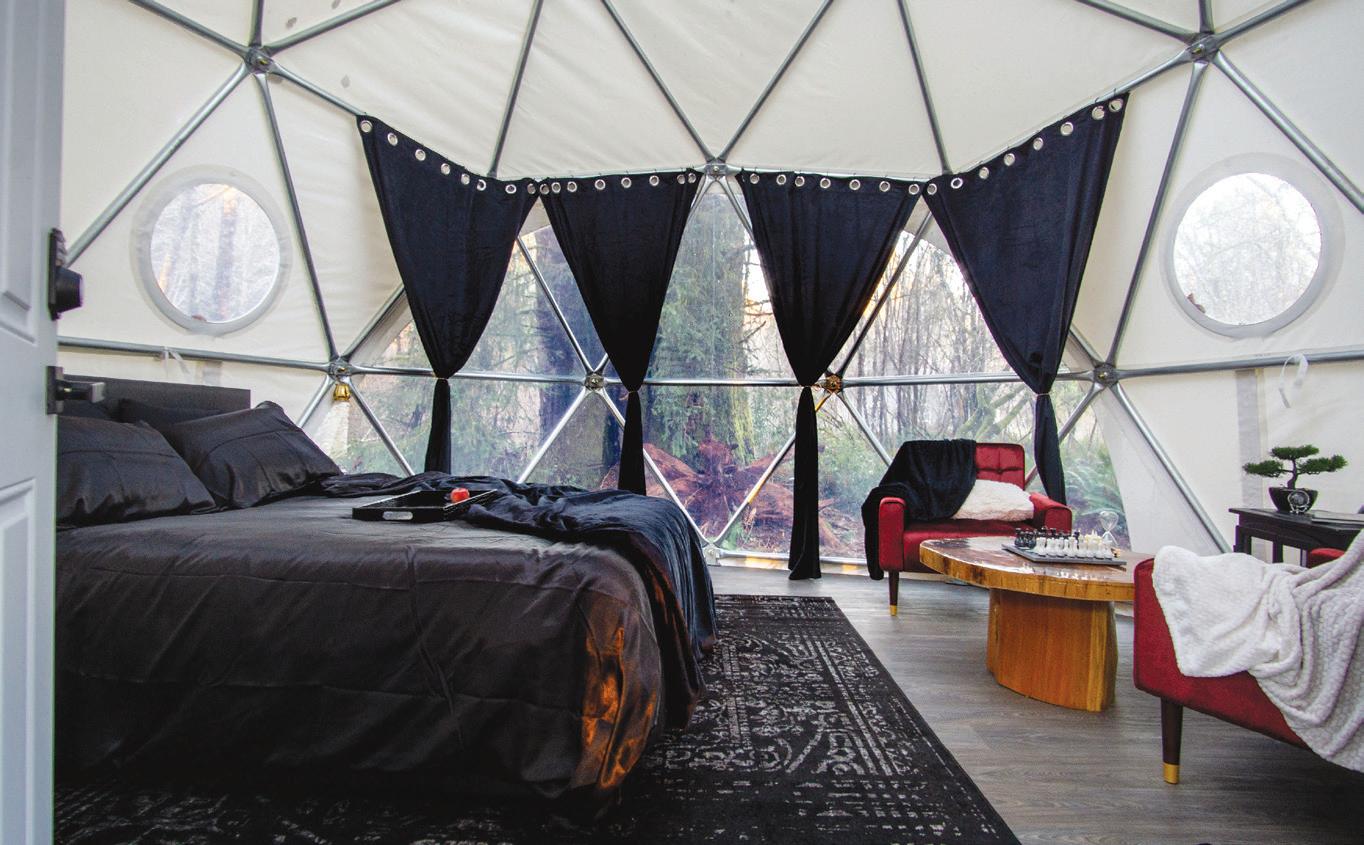
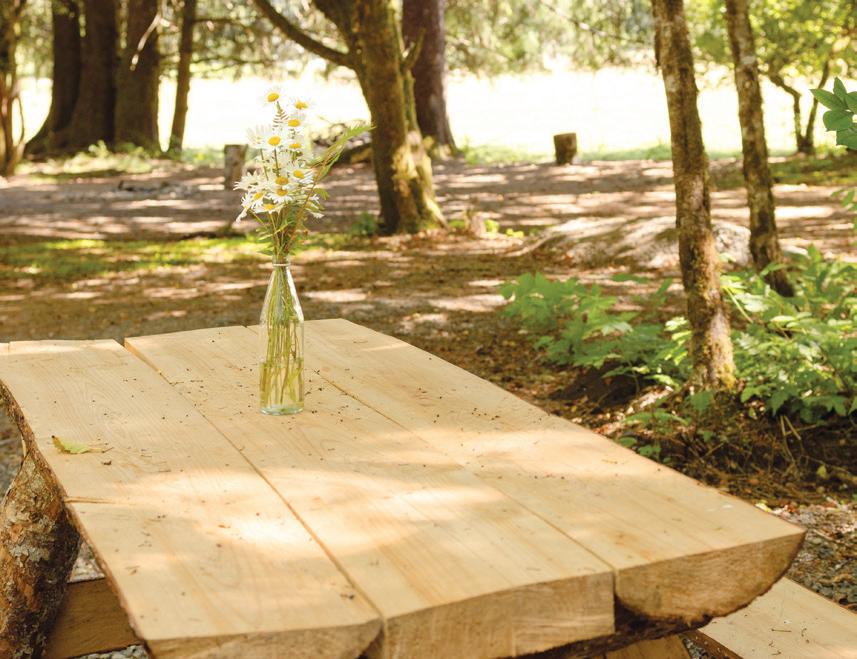
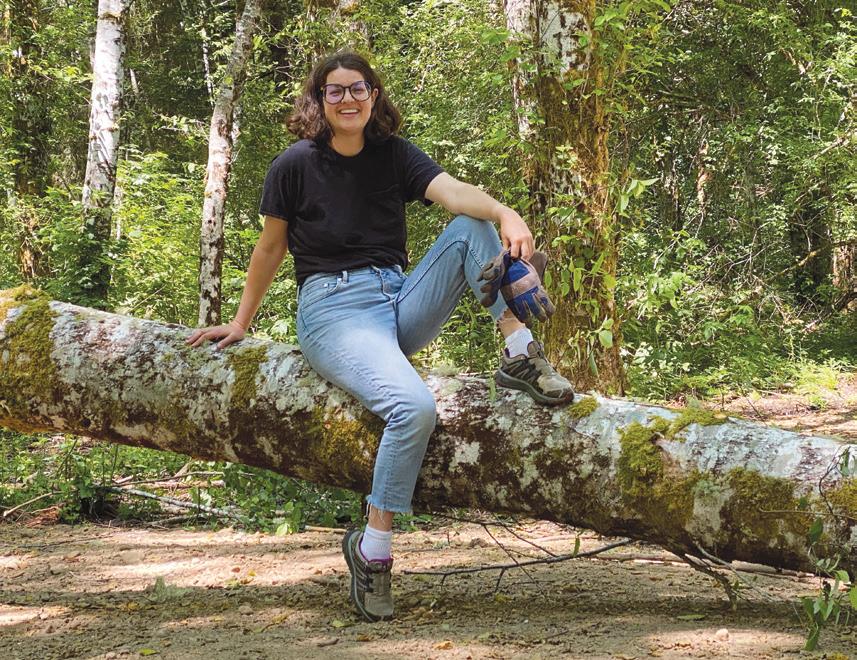
Deep in the emerald rainforest of Forks sits a hidden retreat where moss-draped trees, wandering creeks and the occasional frolicking calf set the pace of life. Tucked into 12 quiet acres, Wandering Woodlands campground feels less like a business and more like a storybook escape. Owned and operated by former elementary school teacher Roxanne Sepehri, the campground offers eight rustic campsites and two glamping domes, each with its own personality. One dome nods to Forks’ most famous cultural export, the Twilight saga, delighting fans with playful Easter eggs such as a tiny figurine recreation of Bella and Edward’s iconic “spider monkey” moment tucked into a bonsai tree. The other dome is pure bohemian luxury, featuring a dramatic swinging bed that has quickly become a guest favorite.



My Workspace
How one teacher built a dream campground
written by Joni Kabana








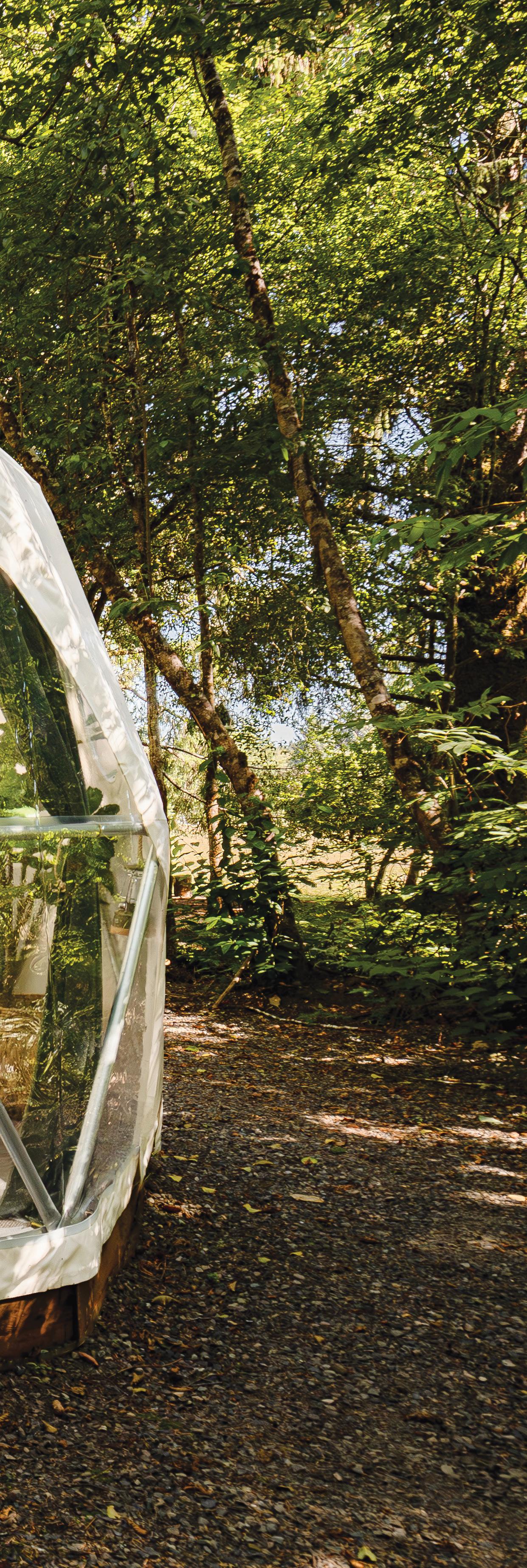
Between the domes and campsites, guests gather at a communal picnic and games area where evenings unfold around a glowing fire pit. Volleyball nets sway in the breeze, badminton rackets wait for pickup and adventurous campers can even try their hand at axe throwing. Just beyond the campground fence, cows graze peacefully in a wide-open field while baby calves sometimes dash and play like they’re putting on a show for visitors.
Sepehri didn’t always imagine running a retreat in the rainforest. After burning out from the demands of teaching, she began searching for a life that allowed more freedom, creativity and time with loved ones. A YouTube video about starting a campground sparked an idea that felt both terrifying and exciting to her. For a full year, she researched permits, designed the space and planned the business while still teaching full time. When summer arrived, she took the leap and opened Wandering Woodlands.

Today, Sepehri’s days are refreshingly flexible. Guest messages, coordinating with a cleaner and occasional maintenance tasks fill her to-do list, but the real joy lies in shaping the experience. From designing themed domes to sharing glimpses of campground life on Instagram, creativity runs through everything she does. And she is willing to help others who have similar quests by relaying, “I really love being an inspiration to other women trying to do the same thing and would like to help. Reach out to me!” In the quiet corners of the rainforest, Sepehri’s creativity has built something magical. For more information, visit www. wanderingwoodlands.com





written by Daniel O’Neil
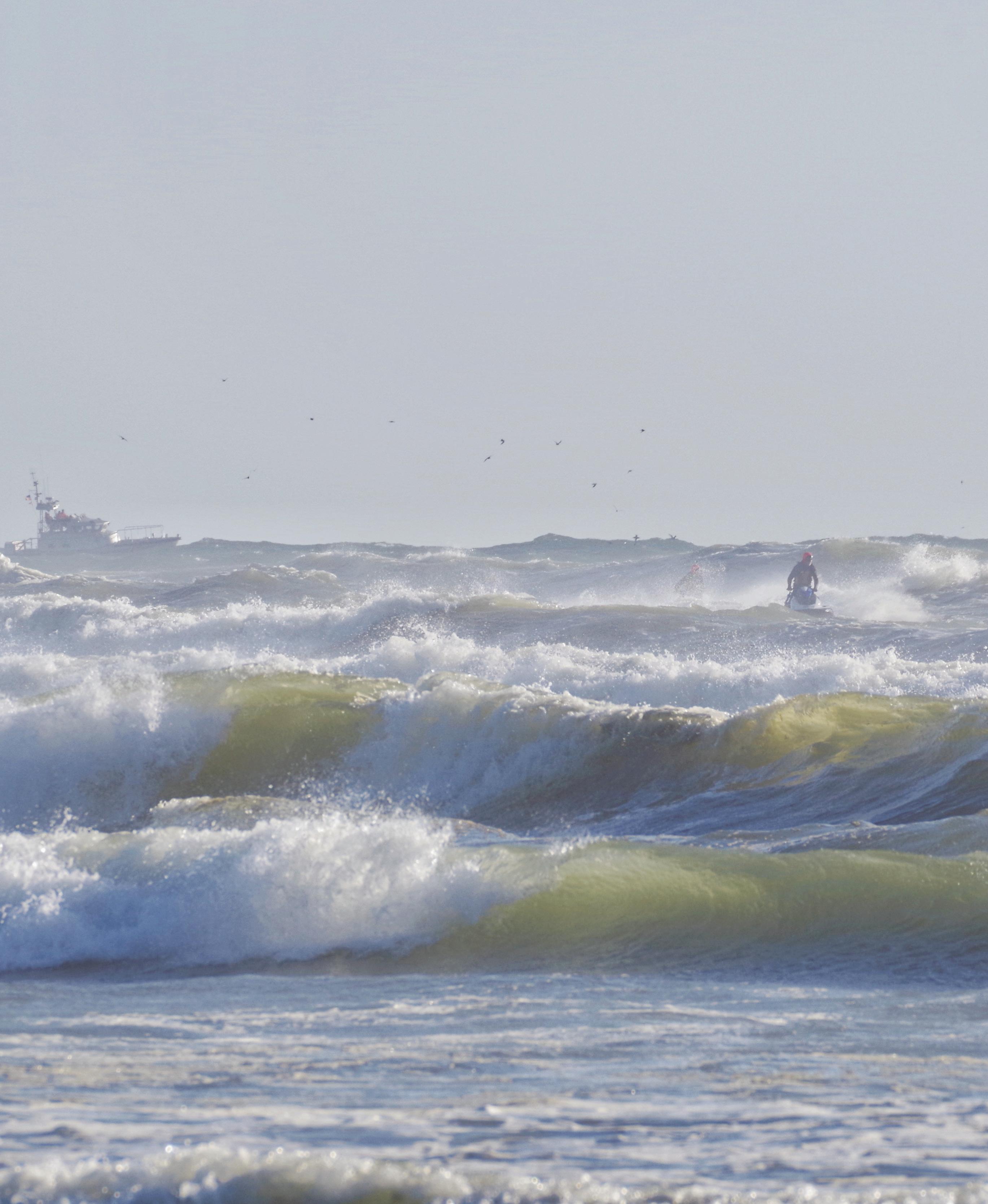
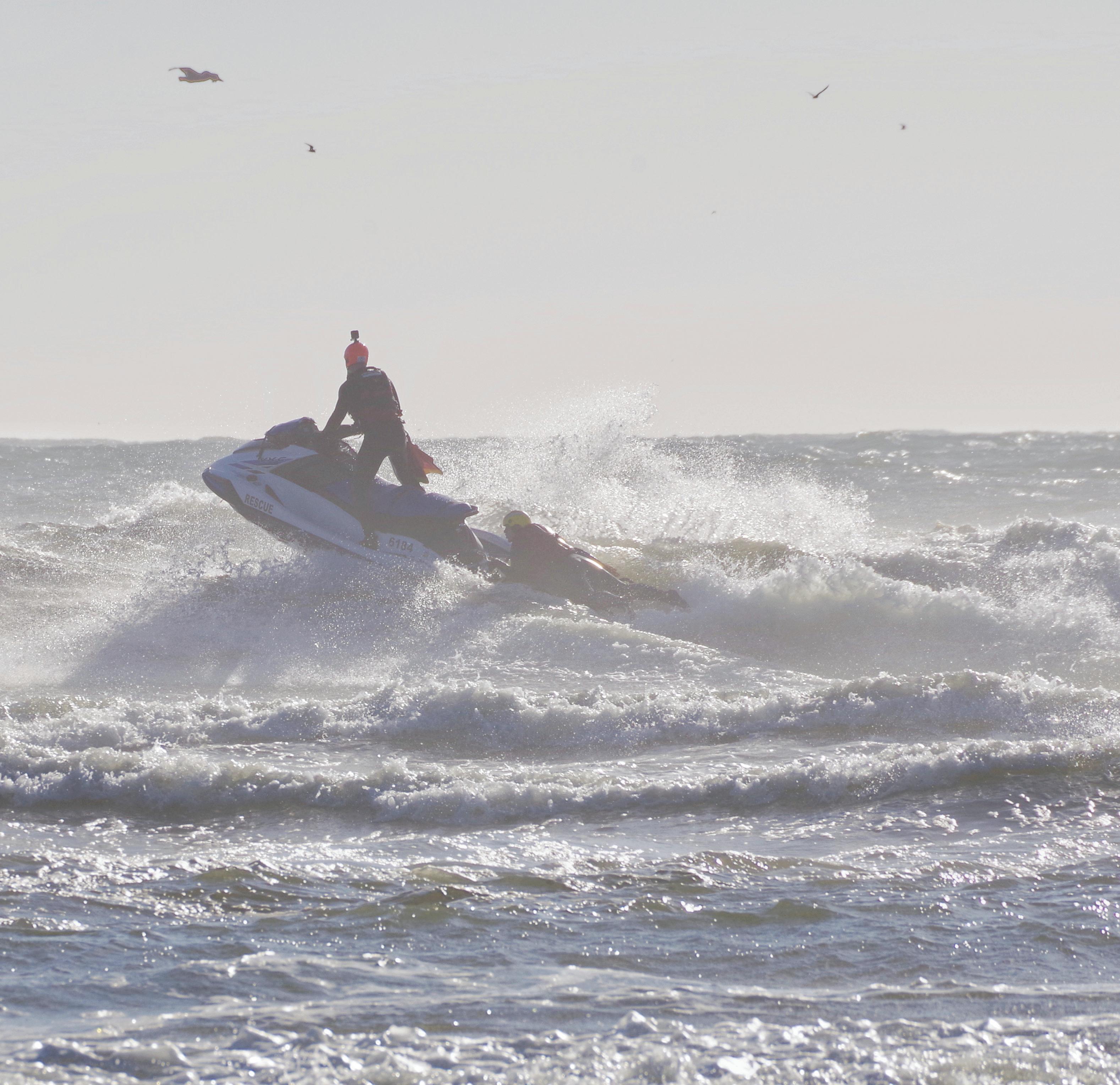
THE OCEAN WATERS off the Long Beach Peninsula often look inviting in summer, especially for those who rarely see such a body of water. But the infinitely beautiful Pacific Ocean can be deceiving. Its currents, frigid temperatures and enormity prove deadly for those who do not understand or respect these waters. Fortunately, a group of trained volunteers in south Pacific County provides a rapid response to beachgoers in distress while also promoting a safer understanding of the risks here at land’s end.
South Pacific County Technical Rescue formed in 1978 as a volunteer cliff rescue team, operating in and around Cape Disappointment State Park. Then, in 1985, after a tragic incident that swept several Girl Scouts out to sea, the group added surf rescue to its mission. Today, the Coast Guard handles most of the cliff rescue with helicopters, but SPCTR serves as a crucial first-response team that can hit the water within minutes of a call.
When the Coast Guard is alerted of an emergency situation, SPCTR also receives that call. SPCTR members, some of whom are active or retired Coast Guard, immediately mobilize to locate, stabilize and rescue victims before the Coast Guard’s boats can arrive from the nearby base at Ilwaco, sometimes a twentyminute delay. With rescue equipment staged in Seaview, and about twenty-five volunteers living and working all along the Peninsula, SPCTR responders save precious time. And when dealing with the Pacific, that means saving lives.
“The Long Beach Peninsula has always had people who are willing to go out and help shipwrecked sailors,” said former Coast Guardsman Doug Knutzen, SPCTR president and a
member since 1985. “It has always had its own response to mariners in distress.”
These days, people less familiar with the ocean require the rescuing. SPCTR responds to fifteen to twenty-five calls a year, and most of these involve tourists in summer: people swimming in the ocean, people climbing on rocks. Young men, from age 18 to 28, account for many of the calls, especially when alcohol is involved.
“As soon as you say, ‘Don’t swim,’ they’re going to jump in the ocean and prove how they could do it,” Knutzen said. “Or we see people that have their kids, 12- or 13-year-olds, playing in the surf, and they’re up a hundred yards away around a campfire drinking beer, not paying any attention to them. And we educate them on the danger of them maybe losing their kids, because believe it or not, that happens real consistently.”
The City of Long Beach is well aware of the many benefits its beach provides, but also understands the dangers. Recently, the city increased its annual financial support for SPCTR from $12,000 to $20,000, and it donated a surplus vehicle.
As a nonprofit, SPCTR, which is still entirely staffed by volunteers, receives funding through grants, donations and community support. Rather than provide lifeguards, the City of Long Beach helps keep SPCTR equipped and ready to intervene before the Coast Guard or Pacific County Sheriff’s Office can arrive.
“If we didn’t have surf rescue-trained people, we would have many more drownings from people trying to rescue that person,” said Sue Svendsen, mayor of Long Beach. “It’s a big mistake to go in there without knowing what you’re doing. And, really, only our crew that is trained should be in the water after a drowning or potential drowning situation.”
Funding also supports SPCTR’s public awareness outreach, a new pillar for saving lives. This includes beach patrols, which allow SPCTR members to interact with beachgoers and explain a dangerous situation before it becomes one, as well as ocean safety messaging for residents and tourists: signage, brochures, public education, safety fairs, radio announcements.
“It’s been fifty years of evolution,” Knutzen said. “And we’ve found it’s easier to educate someone than it is to rescue someone.”
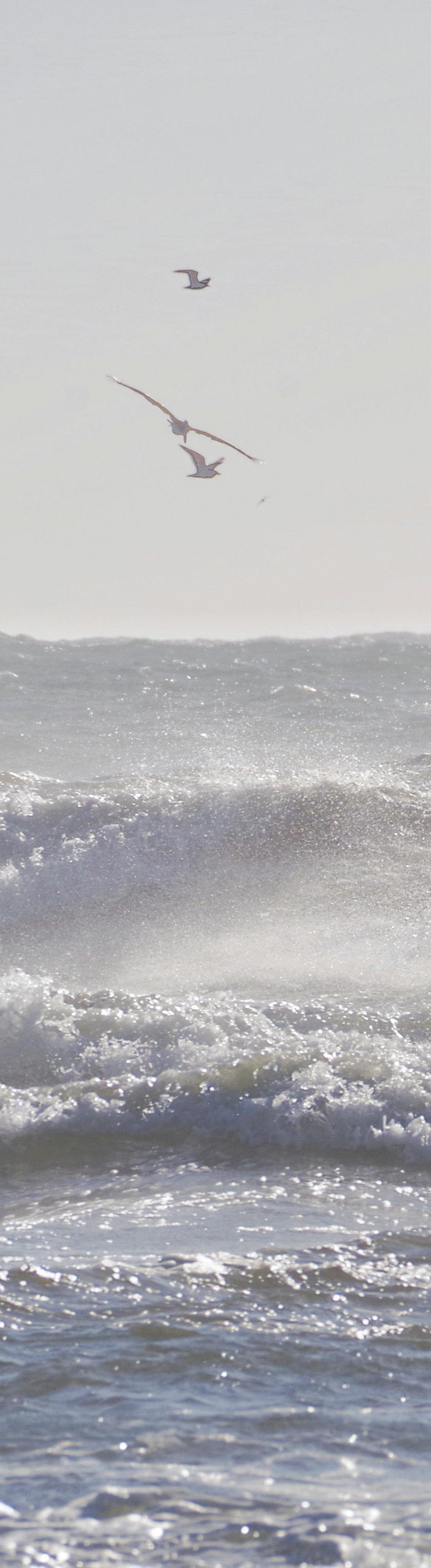
“The Long Beach Peninsula has always had people who are willing to go out and help shipwrecked sailors. It has always had its own response to mariners in distress.”

— Doug Knutzen, SPCTR president and former Coast Guardsman


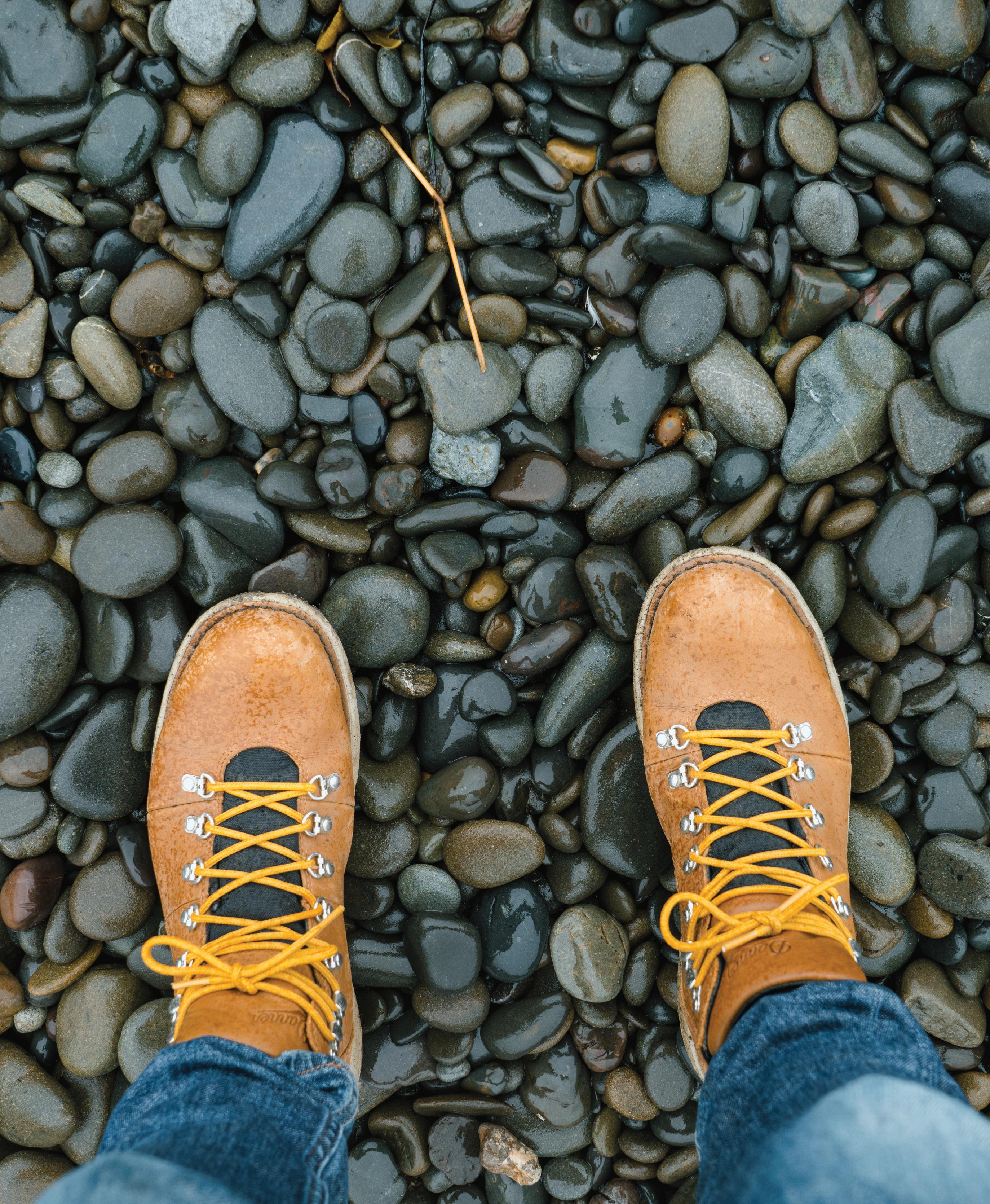
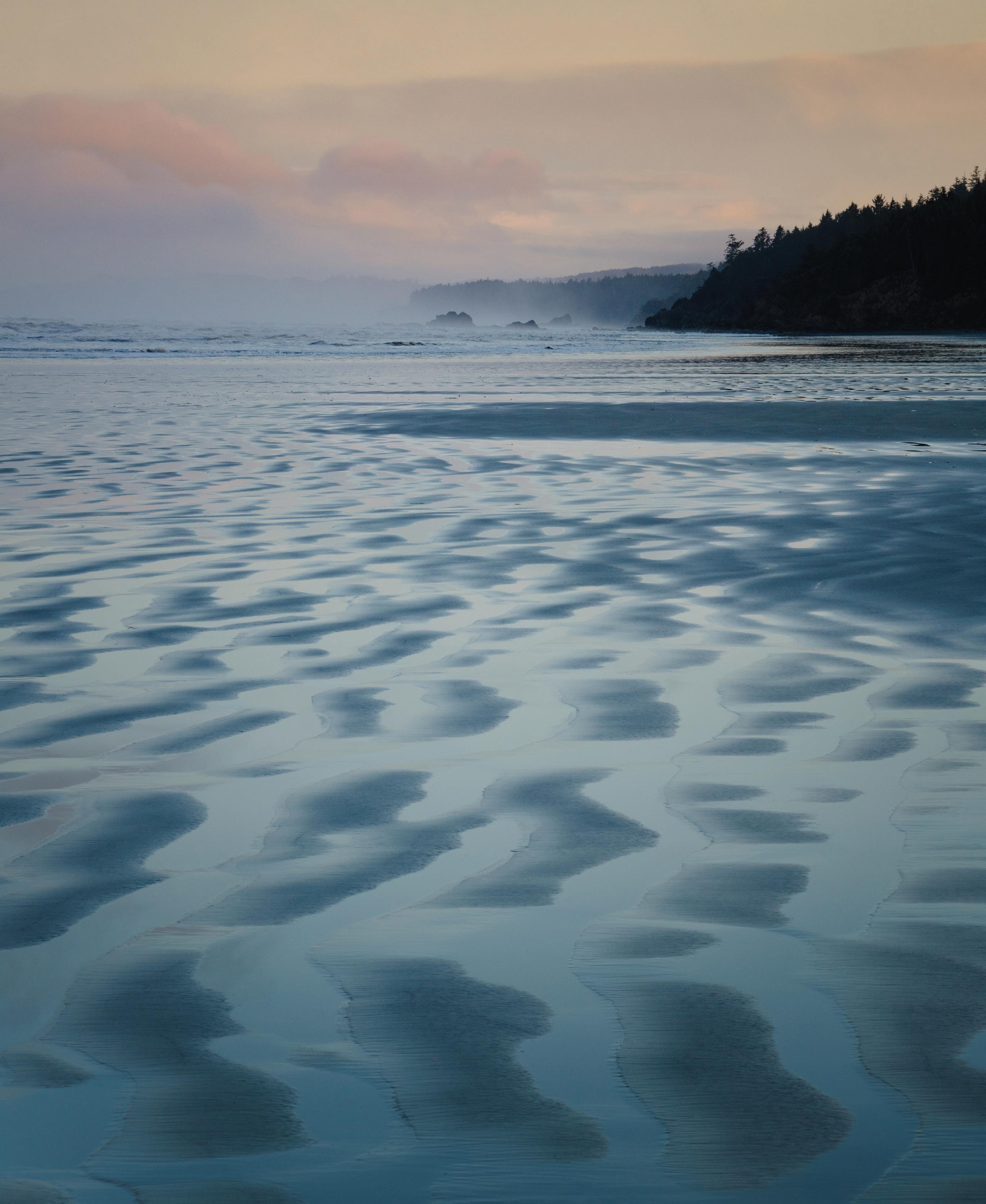
Cold water, tempestuous weather and why Washingtonians love the coast anyway
written
Ryn Pfeuffer
THERE’S
No one books a Washington coast trip expecting glassy water or umbrella cocktails. Instead, it’s all about layers, a beanie and a thermos of something hot (boozy, optional).
From the second boots hit the sand, it’s clear that this isn’t your typical summer beach day. The tide, wind and light take over, and everything is, well, kinda extra. Along the Olympic coast, sea stacks sit offshore, a hallmark of Washington’s more rugged shorelines—think Ruby Beach and Rialto. In person, it’s hard to wrap your brain around how these wave-worn columns came to be.
Olympic National Park manages 73 miles of coastline, running from the Hoh River mouth to Shi Shi Beach and Point of Arches. It’s one of the wildest runs of coastline in the Lower 48. Some of it’s drivable, some of it’s hikein only, and some parts require paying close attention to tide charts and a willingness to scramble. All of which explains why even the most popular spots still feel remote, even during the summer months.
The Washington coast’s no-BS rawness is a big part of the appeal. Beaches run for miles, scattered with
impossibly large logs—some the size of telephone poles—the result of Sitka spruce and western hemlock traveling down the Hoh and Quillayute rivers, then getting tossed ashore by rugged surf. Driftwood multitasks as a windbreak, a place to sit, something to climb and, eventually, firewood. Kids love to play on it, dogs zigzag through it and adults post up against the tree trunks to soak it all in.
Each section of the Washington shoreline has its own character, and locals tend to stick to their favorites.
Rialto, near La Push, gets straight to the point: a broad, rugged shore and loud waves hitting with real force. The sand is dark and packed, with sea stacks offshore and piles of driftwood bleached pale by salt and wind.
Most visitors head straight to Holein-the-Wall—a clean arch carved through a massive rock stack about a mile and a half north along Rialto Beach—then turn around. They miss the subtler arches beyond, along with the tide pools at the base of the stacks, visible at low tide (typically around 11/2 feet or lower) and filled with sea stars, anemones and mussels.
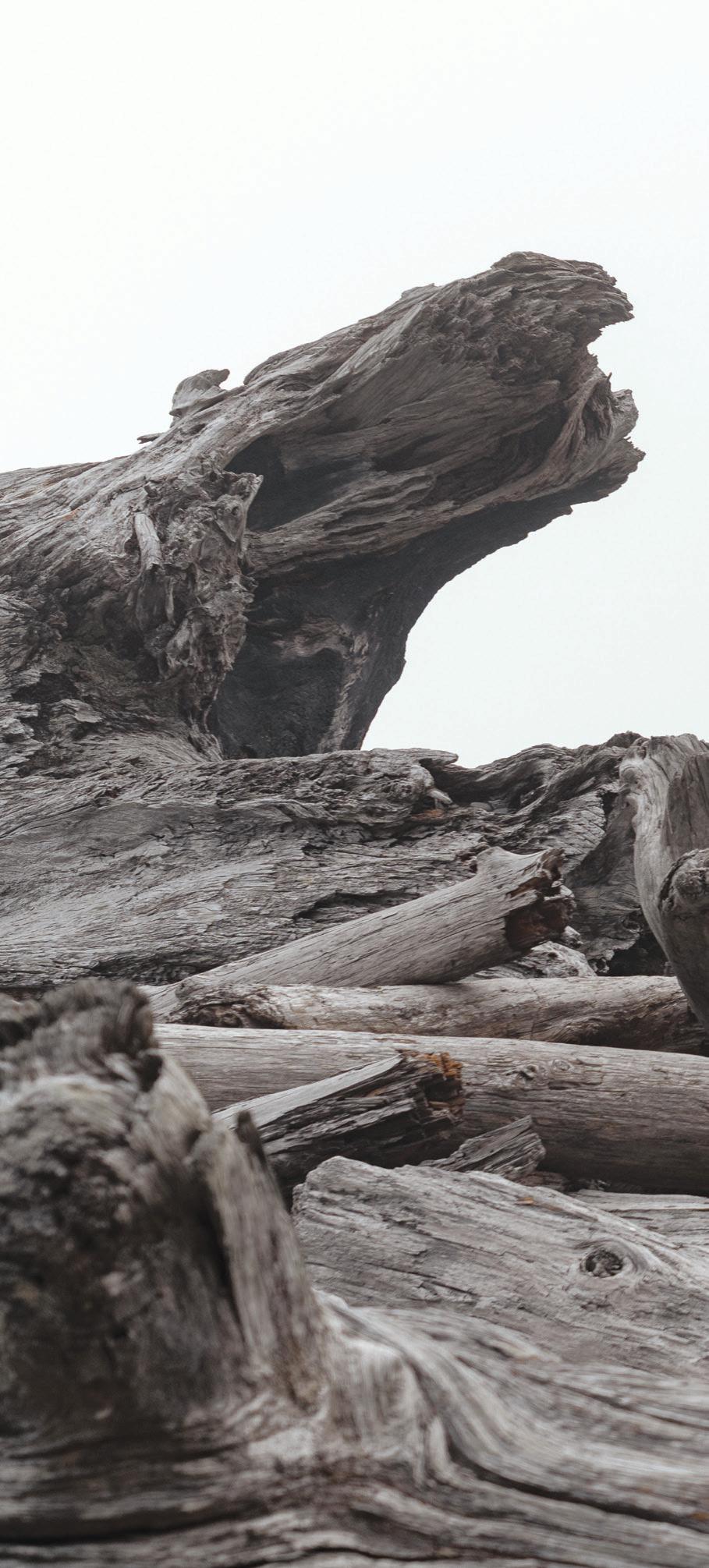
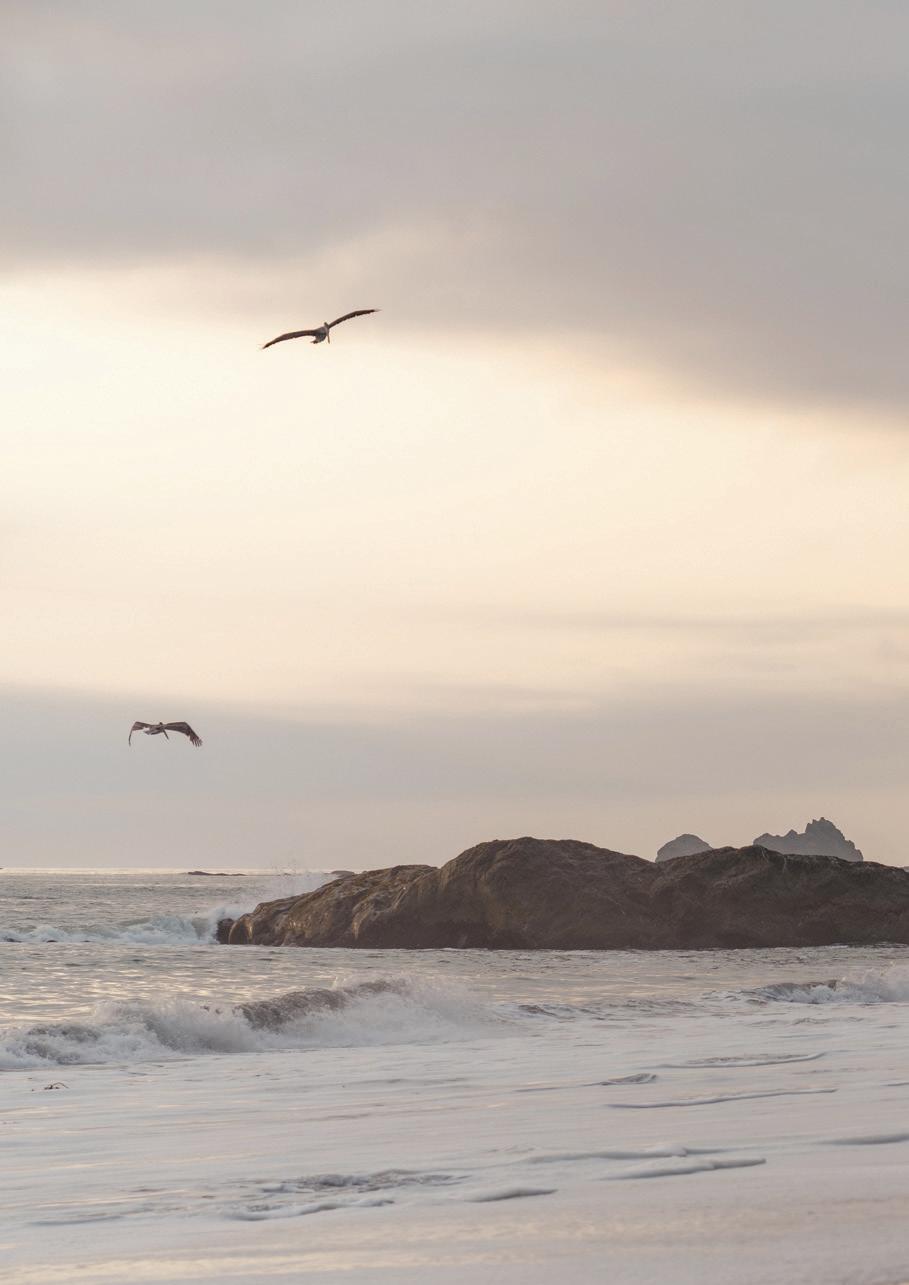
FROM
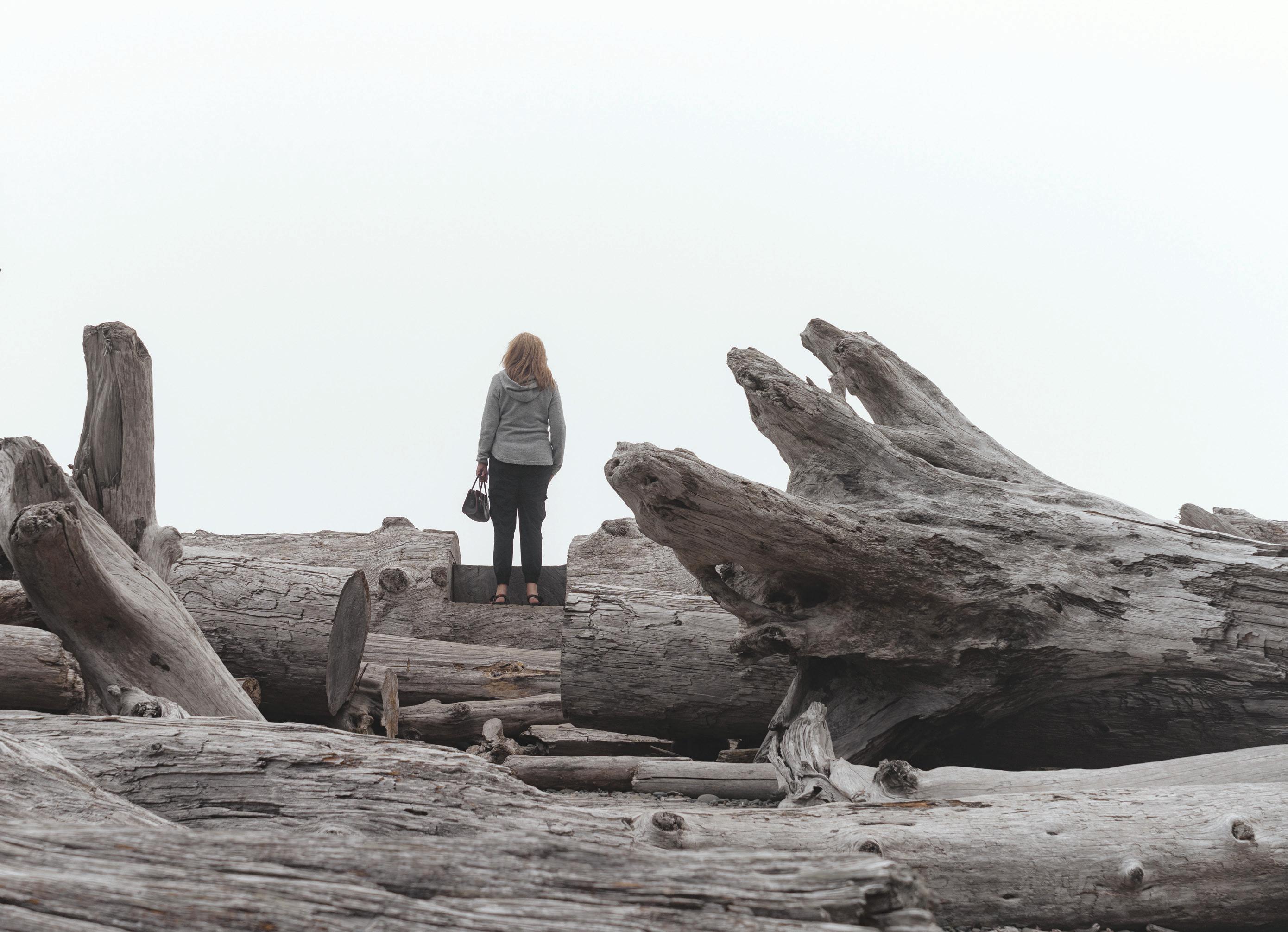
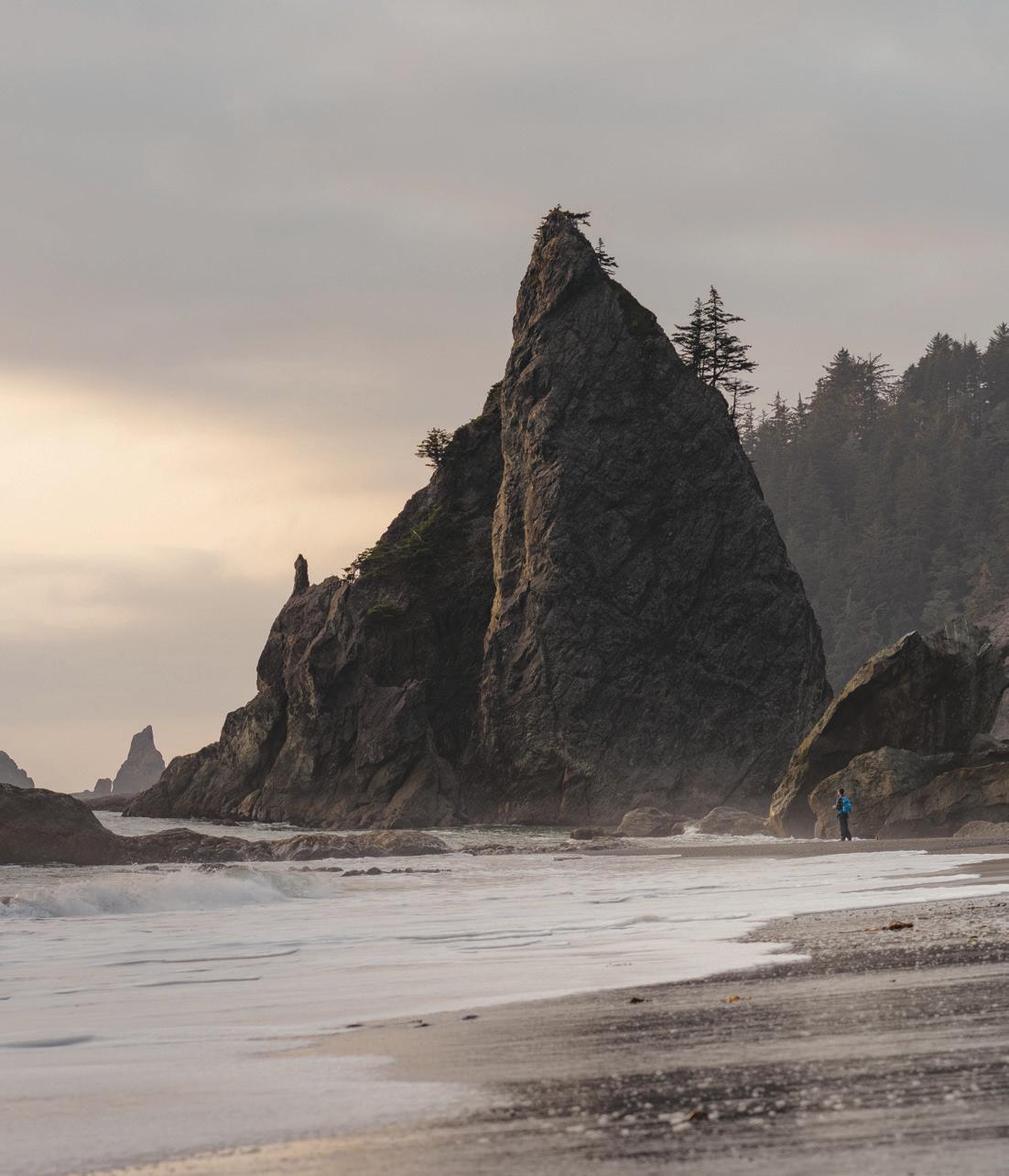
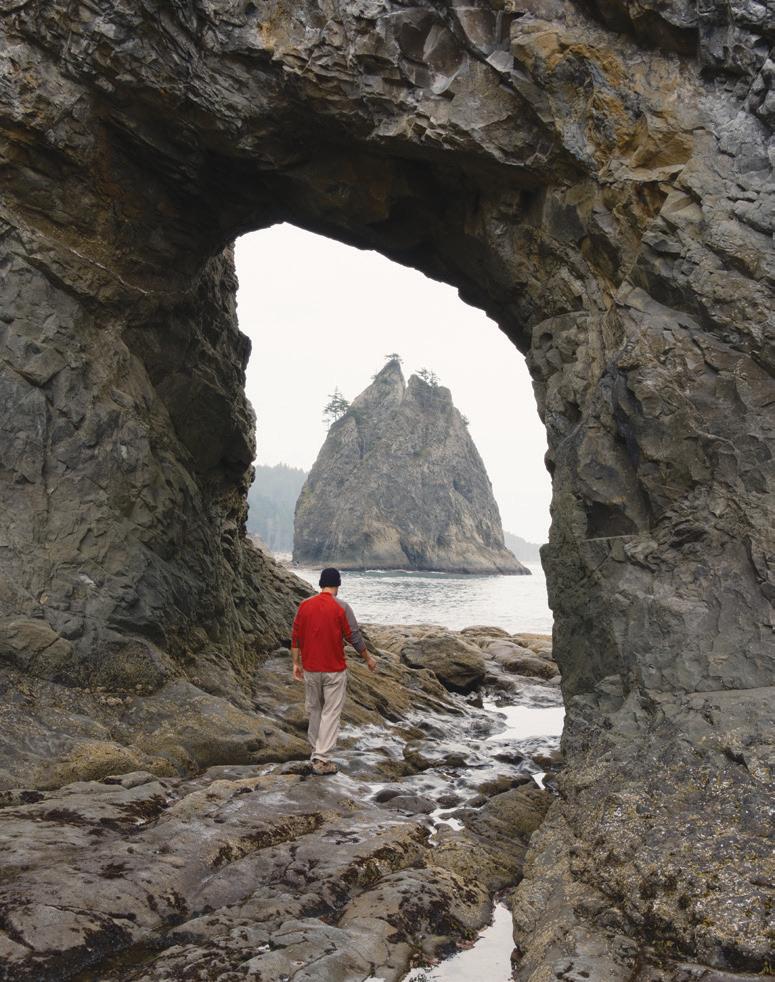
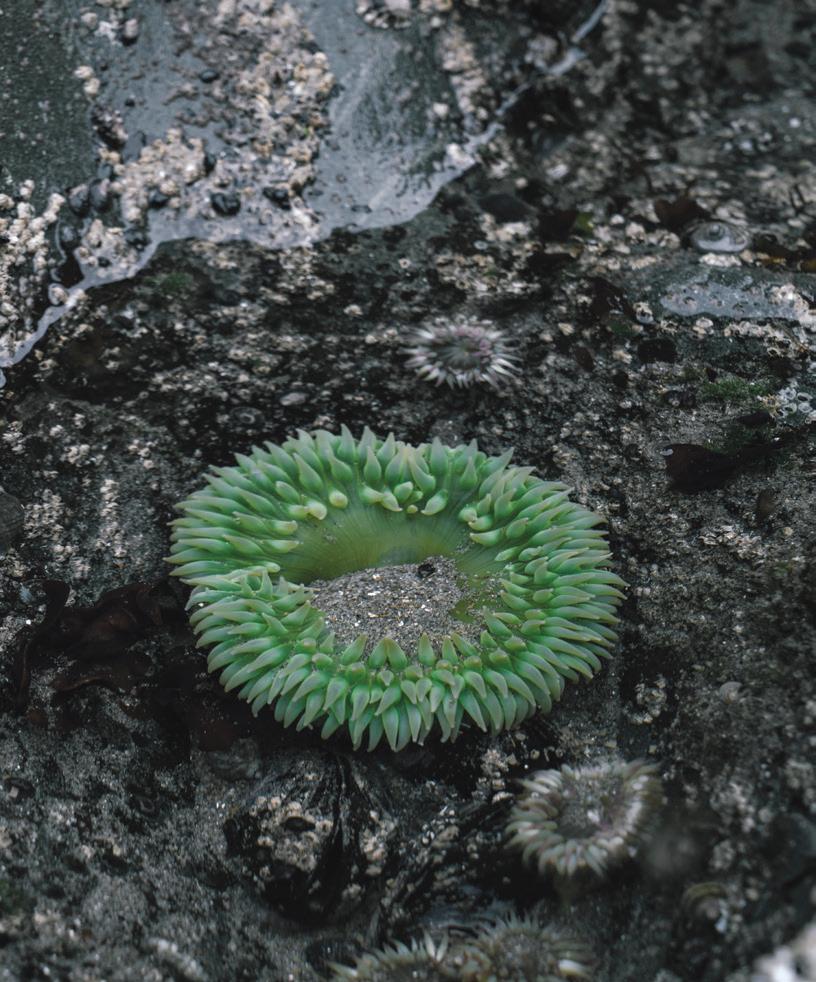
Kalaloch swaps drama for space: a wide, flat beach with steady surf and fewer sea stacks, backed by cabins set right above the bluff. Kalaloch isn’t one small beach; it’s a stretch (Beaches 1 to 6). From the main lodge area, you can walk miles in either direction with minimal, if any, interruptions. For a front-row seat, Cabin 5 sits right on the bluff with nothing in front of it—only sand, driftwood and open water. Just north, the so-called Tree of Life, a Sitka spruce, hangs over the sand, roots fully exposed. It’s a wonder that it’s somehow still holding on.
To the south, Beach 4 stays quiet thanks to a short but rooty, sometimes muddy trail and a tiny, easy-tomiss pullout off Highway 101. If you make it down, the payoff is worth it— at a minus tide, this is where locals go to poke around tide pools.
Ruby Beach is one of the easiest ways to see what this place does best. The walk in is short, and then it’s all there, like a greatest hits reel of the Washington coast: sea stacks, driftwood, slate-blue water. At low tide, it opens up to the north.
Beachcombing is all about timing. After a storm, gravelheavy sections like Damon Point near Ocean Shores turn up agates; while sand dollars, for whatever reason, arrive in clusters after rough surf. By late afternoon, driftwood fires begin to define the coast at dusk. Someone hauls over a log, someone else digs out dry kindling from the pile and, before long, a tight circle forms around the heat. Food shows up—hot dogs, foil-wrapped potatoes, marshmallows—and no one seems hurried to leave. As the light fades, the fire takes over, the brightest thing on the beach.
Razor clamming isn’t something you stumble into—you must plan for it. Winter tides, approved dates
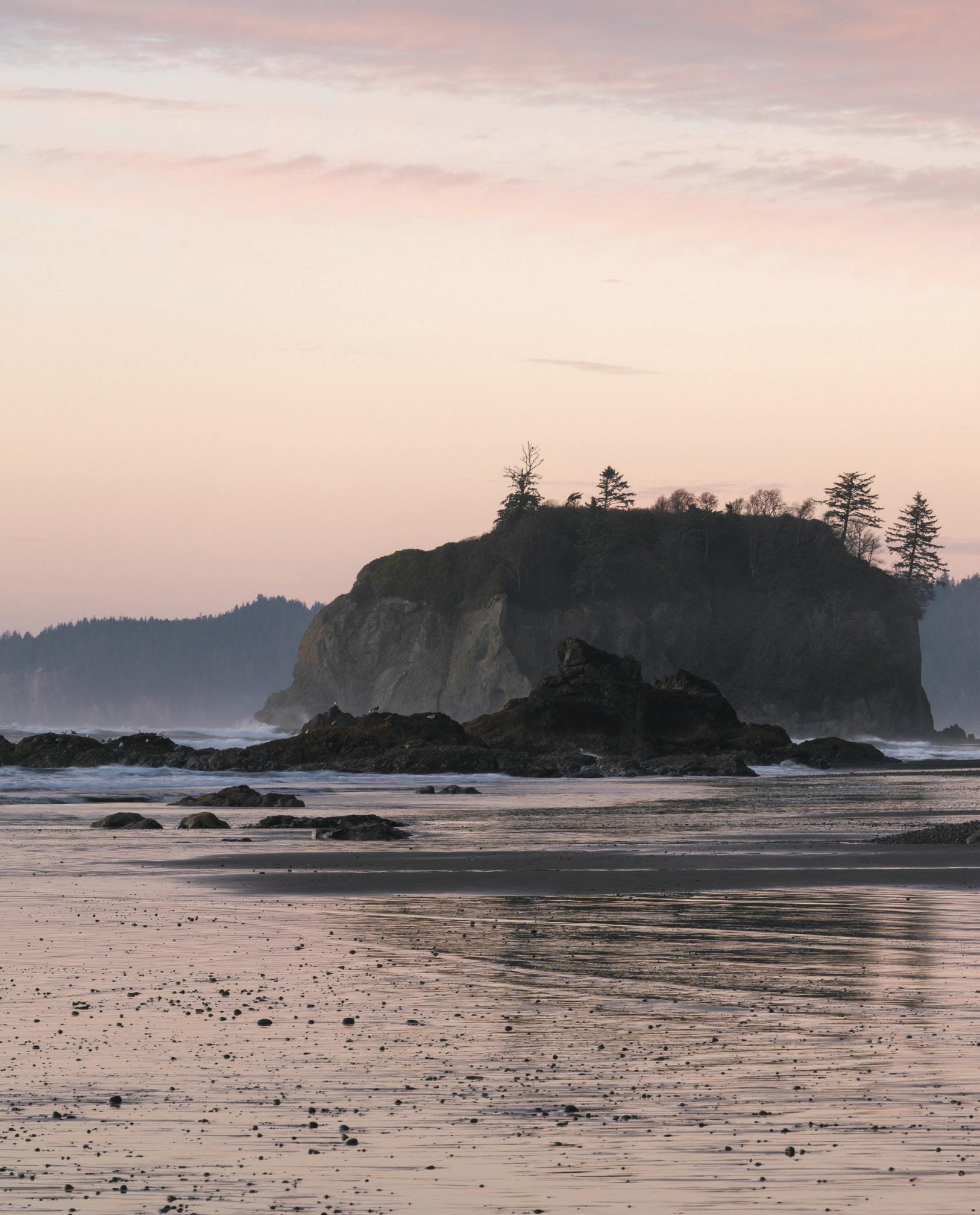
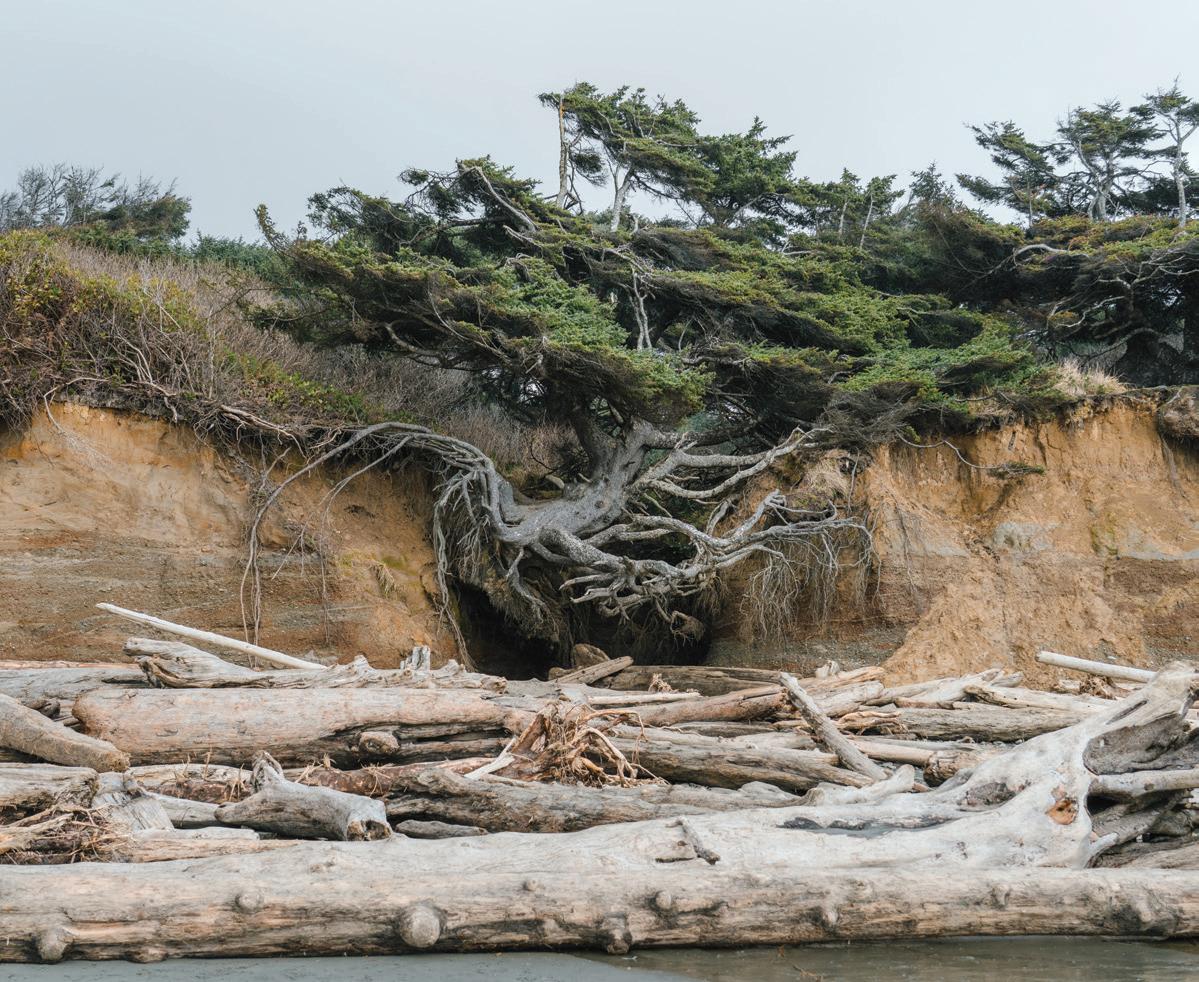
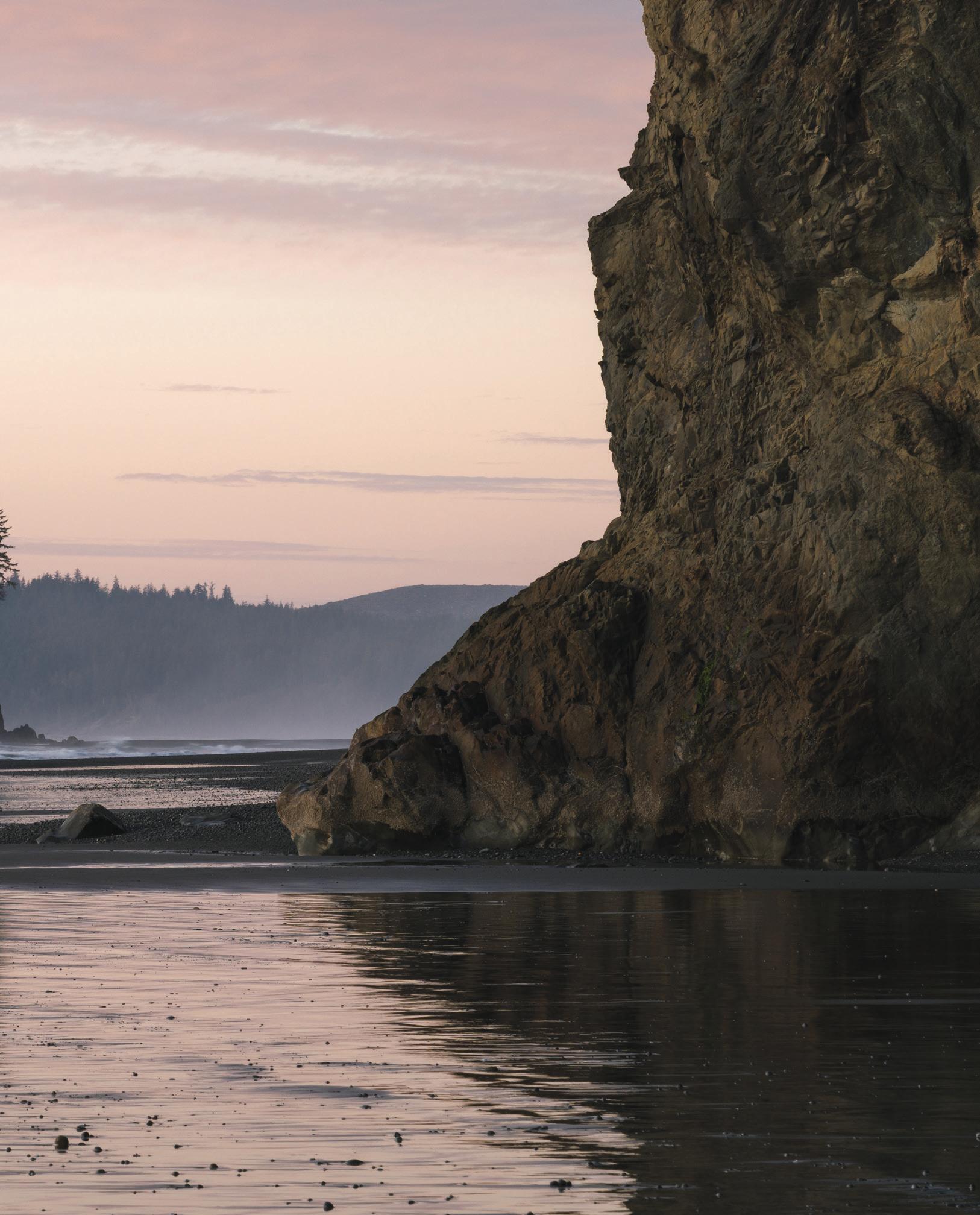
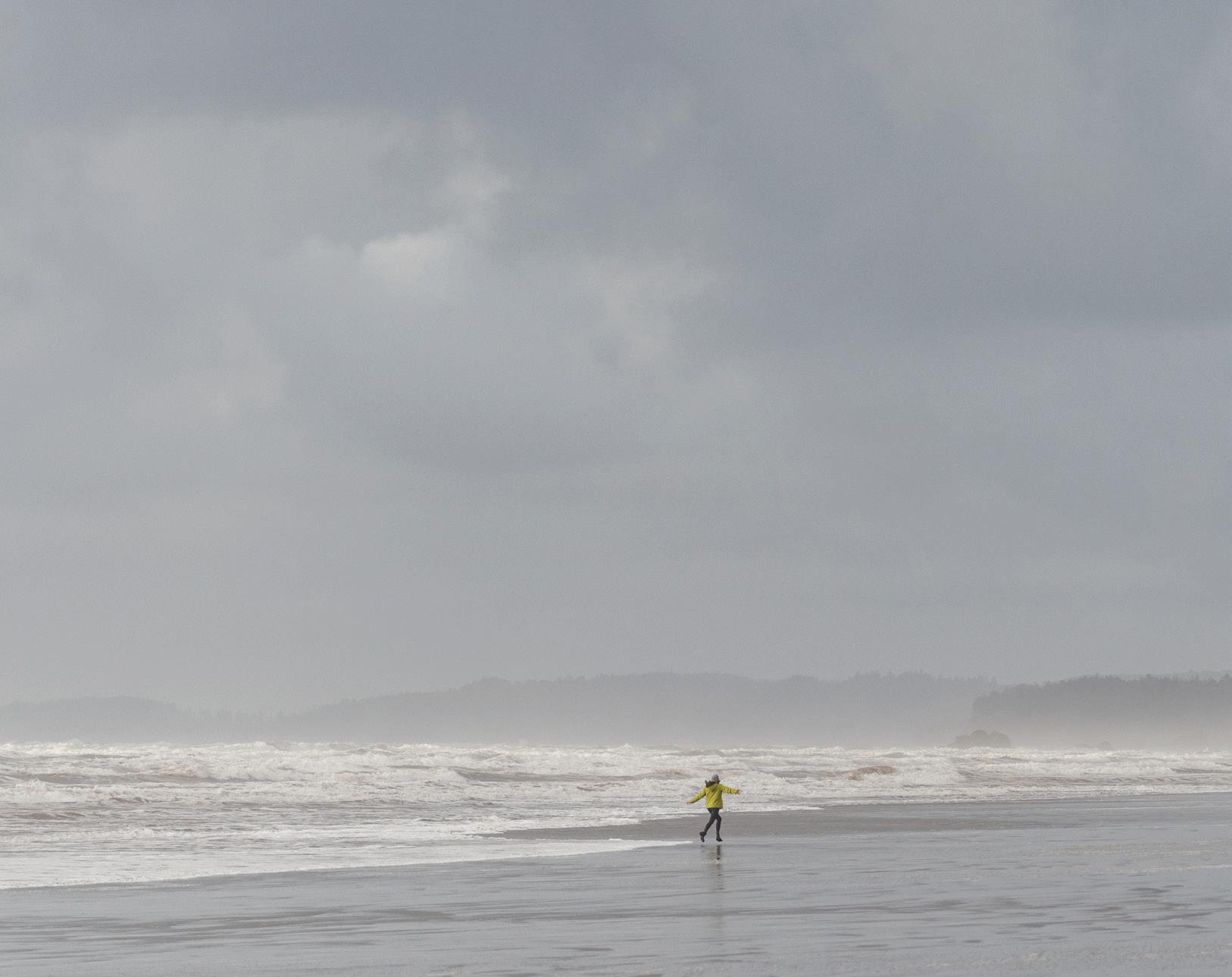
and then all of a sudden, beaches like Copalis and Twin Harbors fill with people spread across the flats, all determined to find the same tiny dimples in the sand.
Then it’s swift: clam gun down, straight in, twist, pull. It sounds simple, in theory, but miss that precise moment, and you’ll hear someone nearby swearing as the clam gets away.
Evening digs bring a whole different kind of energy. Lanterns and headlamps glow as the beach settles into a hushed, shared focus, everyone moving along the same length of sand with the surf rolling in behind them.
Packing for the Washington coast looks a little different than your average beach trip. Assume the weather will change— probably more than once. It’s always a good idea to come prepared rather than get caught off guard.
• A thermos of coffee (or something stronger, if you prefer)
• Layers, plus a waterproof windbreaker and quick-dry pants
• A blanket or camp chair
• Waterproof shoes or boots
• SPF (yes, even on gray days)
• A tide chart (download or screenshot— cell service can be spotty)
• A pocket for shells, agates and other beach finds
• A dog (optional, but strongly encouraged)
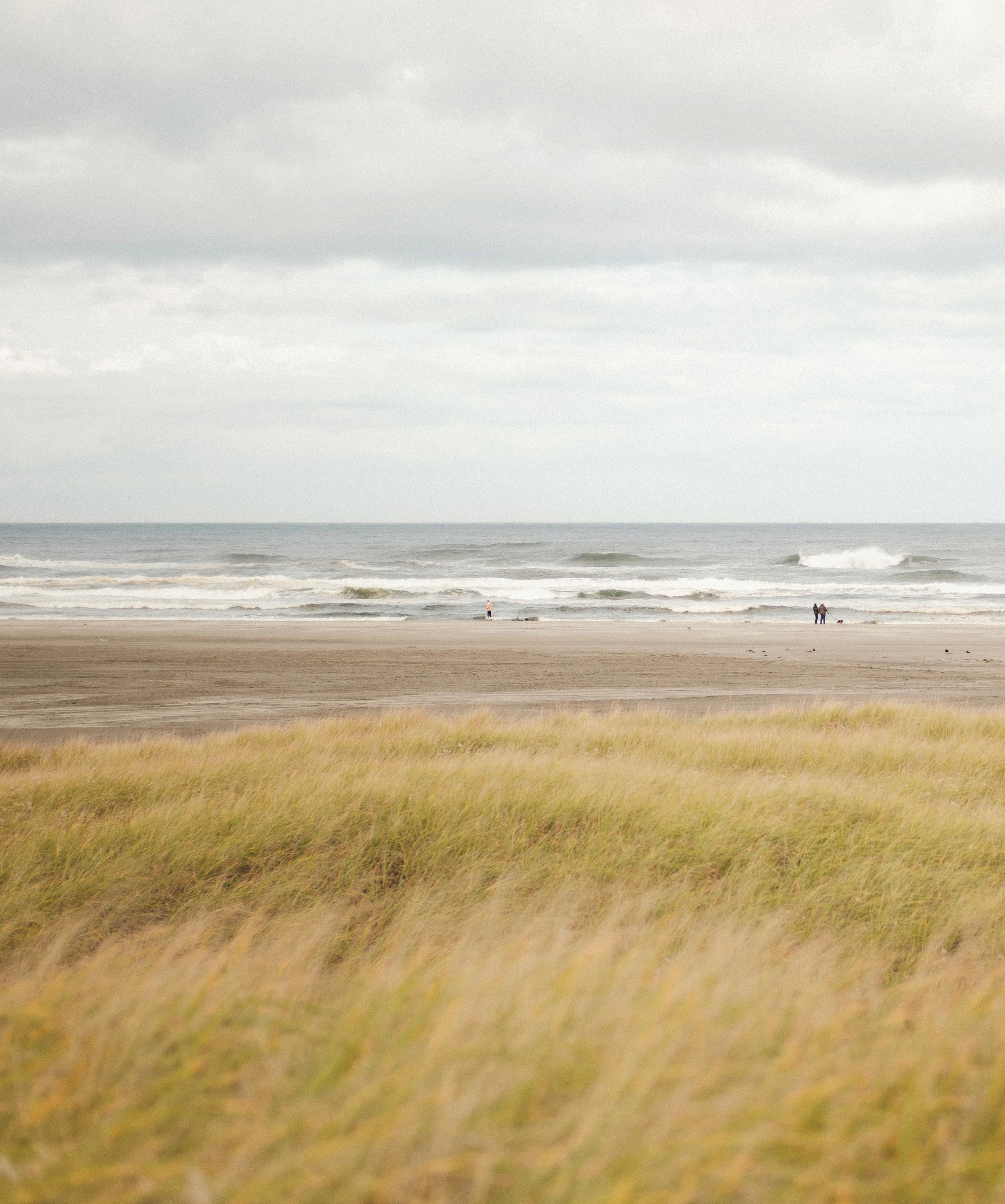
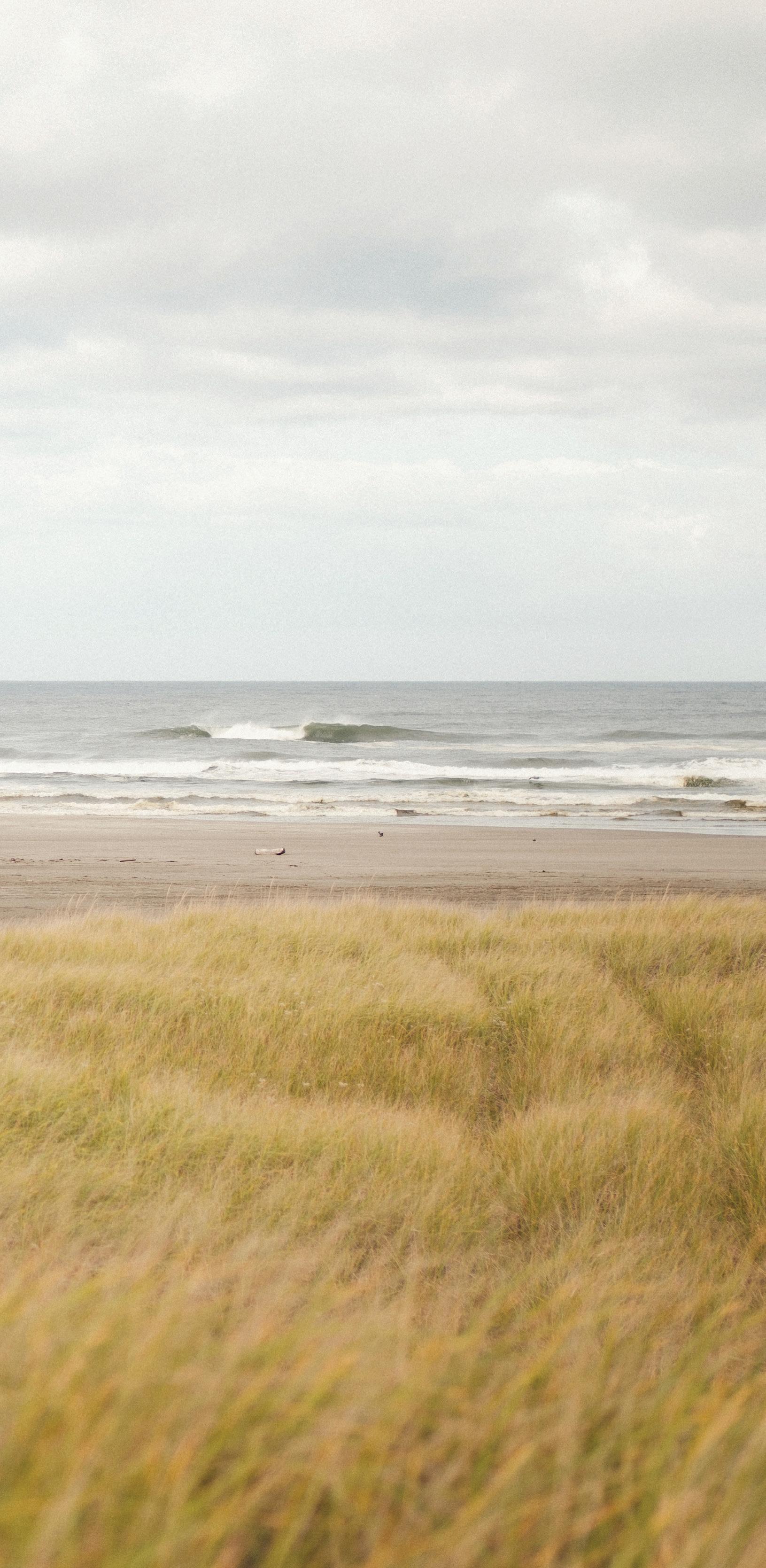

Like much of the coastal experience, the ritual of razor clamming all runs on the tides. The state opens dates when it’s safe, and when that lines up, beaches like Long Beach and Ocean Shores fill with people carrying buckets and long clam guns, all staring at the sand, waiting for those small dimples to appear.
That’s the moment. Clam gun down (if you’ve got one). Otherwise, a shovel works, too. Straight in, twist, pull. It sounds simple until you try it. Get the angle wrong, and you come up empty— or crack the shell. Spend a few minutes watching, and you start to get the rhythm. You’ll need a Washington shellfish license, and the limit is fifteen clams per person, though most people don’t bother hitting it. A handful is enough for chowder or a quick pan fry later that night.
Out here, it’s less about the number and more about the timing—the tide dropping, the light fading and the satisfaction of bringing dinner home from the sand.
Farther south, Long Beach leans into its role as more of a yearround destination. Twentyeight miles of sand run along the peninsula, and on certain sections, vehicles still roll directly onto the beach (when tides allow, of course). At the north end, Benson Beach near Cape Disappointment feels wilder, with stronger winds and fewer footprints. Westport proudly carries a workingcoast identity, with charter boats heading out early and a marina that smells like equal parts fish, salt and diesel. The Grays Harbor Lighthouse now sits well inland, nearly a mile from the waterline, a reminder of how much the shoreline has shifted.
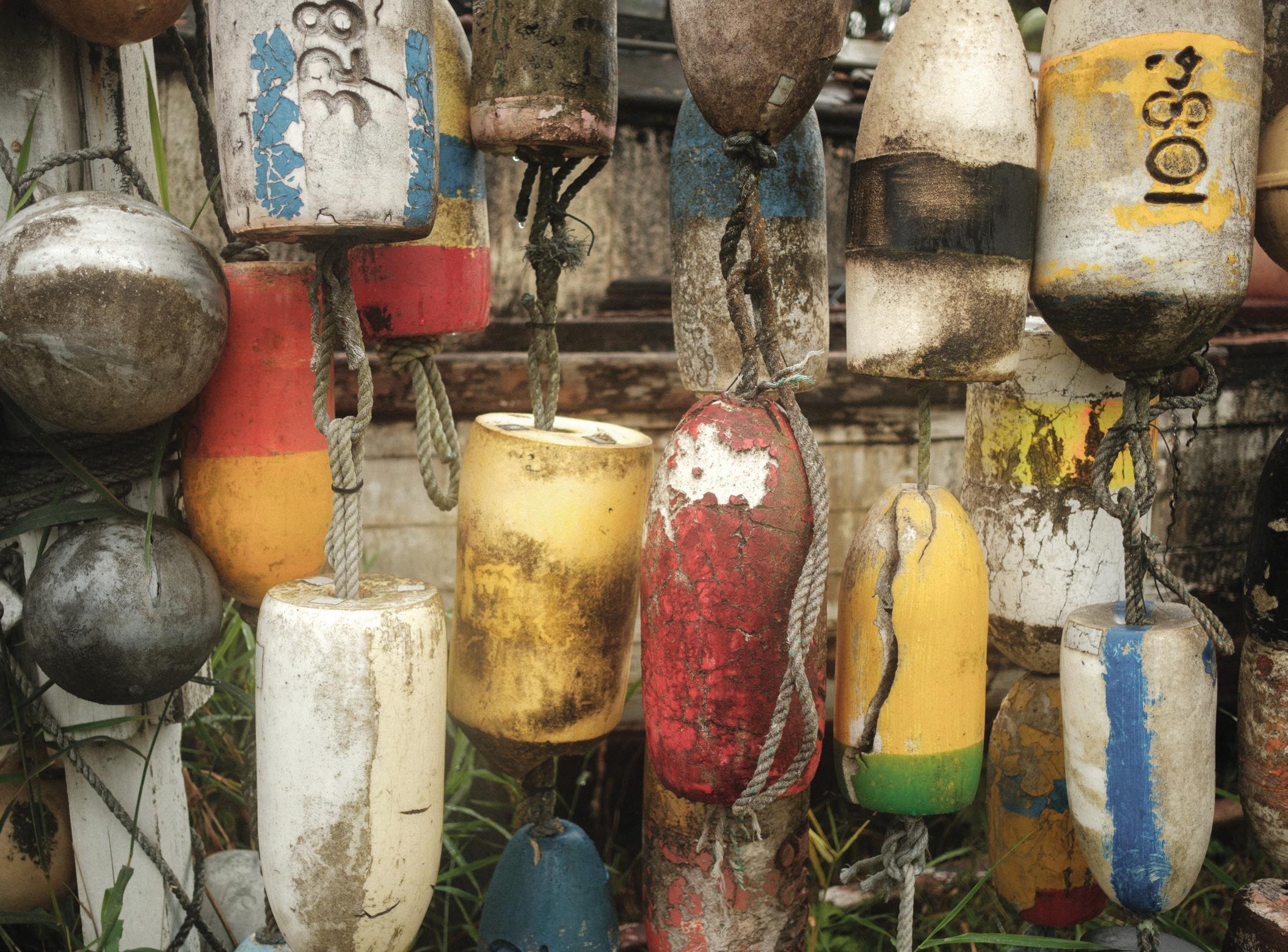
This is where things get dramatic— the Columbia River pushing out, the Pacific pushing back. Cape Disappointment State Park sits right in the middle of it. A short walk leads to North Head Lighthouse, and on stormy days, the wind hits hard, often gusting past 40 mph, enough to make anyone brace. Looking south, the churning water and shifting currents make it clear why this run of coastline is called the Graveyard of the Pacific. Come here when you want to feel it in your bones.
That edge runs the whole coastline. It’s not polished or predictable, and after a while, expectations fall by the wayside. Attention shifts to the tides, the wind, the way the light changes, less by choice than by necessity. At some point, the forecast fades and the tide chart takes over. Low tide matters more than blue sky. Small tweaks happen almost automatically— coffee saved for later, for the walk
THIS IS WHERE THINGS GET DRAMATIC—THE COLUMBIA RIVER PUSHING OUT, THE PACIFIC PUSHING BACK. CAPE DISAPPOINTMENT STATE PARK SITS RIGHT IN THE MIDDLE OF IT.
back, when the wind shifts and the distance starts to register.
It’s easy to go a little farther than planned, past the easy turnaround at Rialto, into a wide sweep where it’s rock, water and whatever weather shows up. It doesn’t feel dramatic in the moment, just still and a little exposed, until the distance becomes clear.
Eventually, you turn back, and the water is already moving in behind. By the time the beach is behind you, the stop feels earned. At Kalaloch, a window seat does the work, watching the light change, not needing to go anywhere else.
There are fewer people this time of year, and the coast reflects it. Parking stays open, trails stay quiet and even Ruby Beach has stretches of morning where it’s just the sound of the surf carrying across the sand.
The water’s cold; the weather does what it wants. But none of that seems to matter once you’re out there. If anything, it’s part of why people keep coming back.
FROM FAR LEFT A salty display of buoys at
At
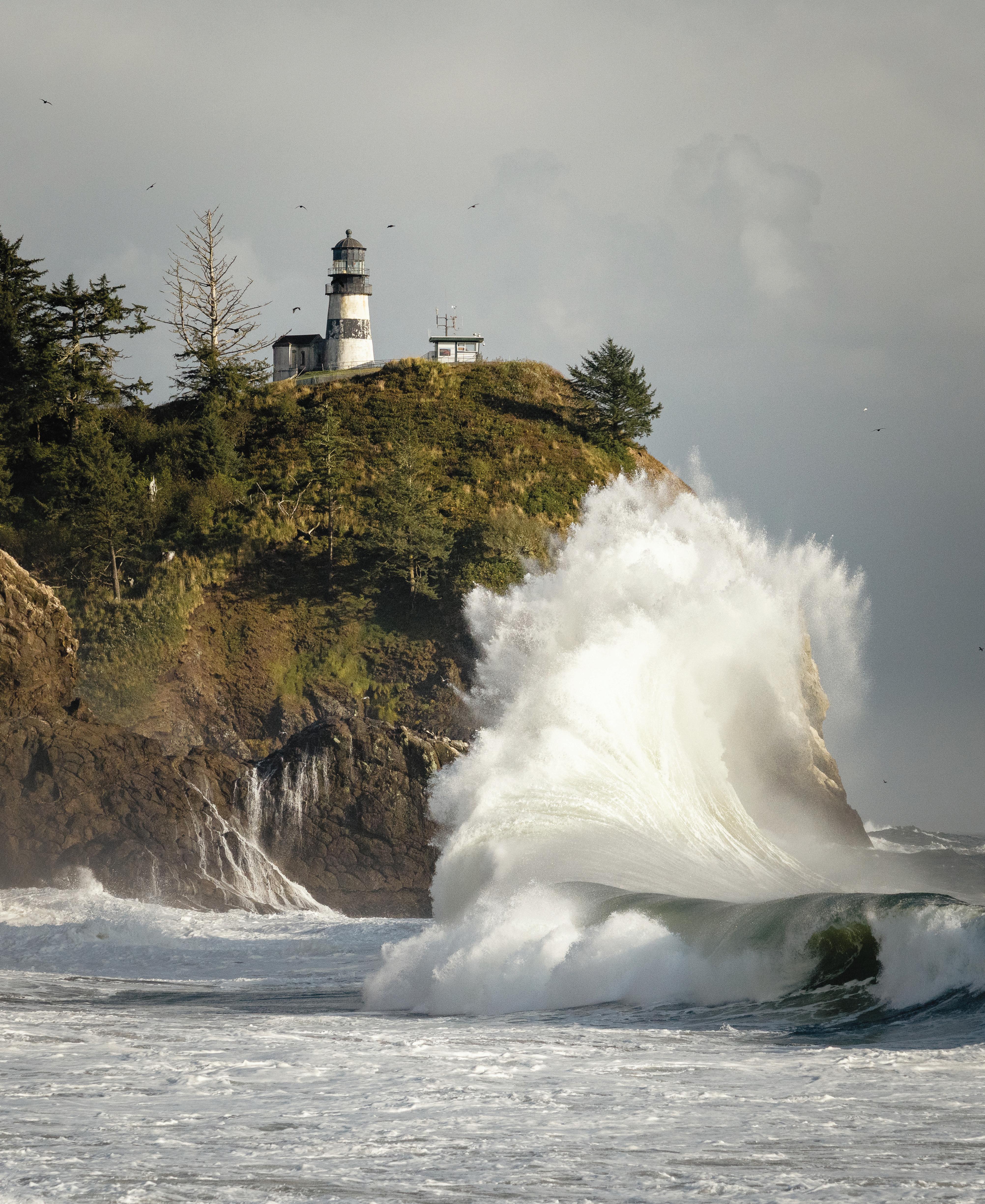
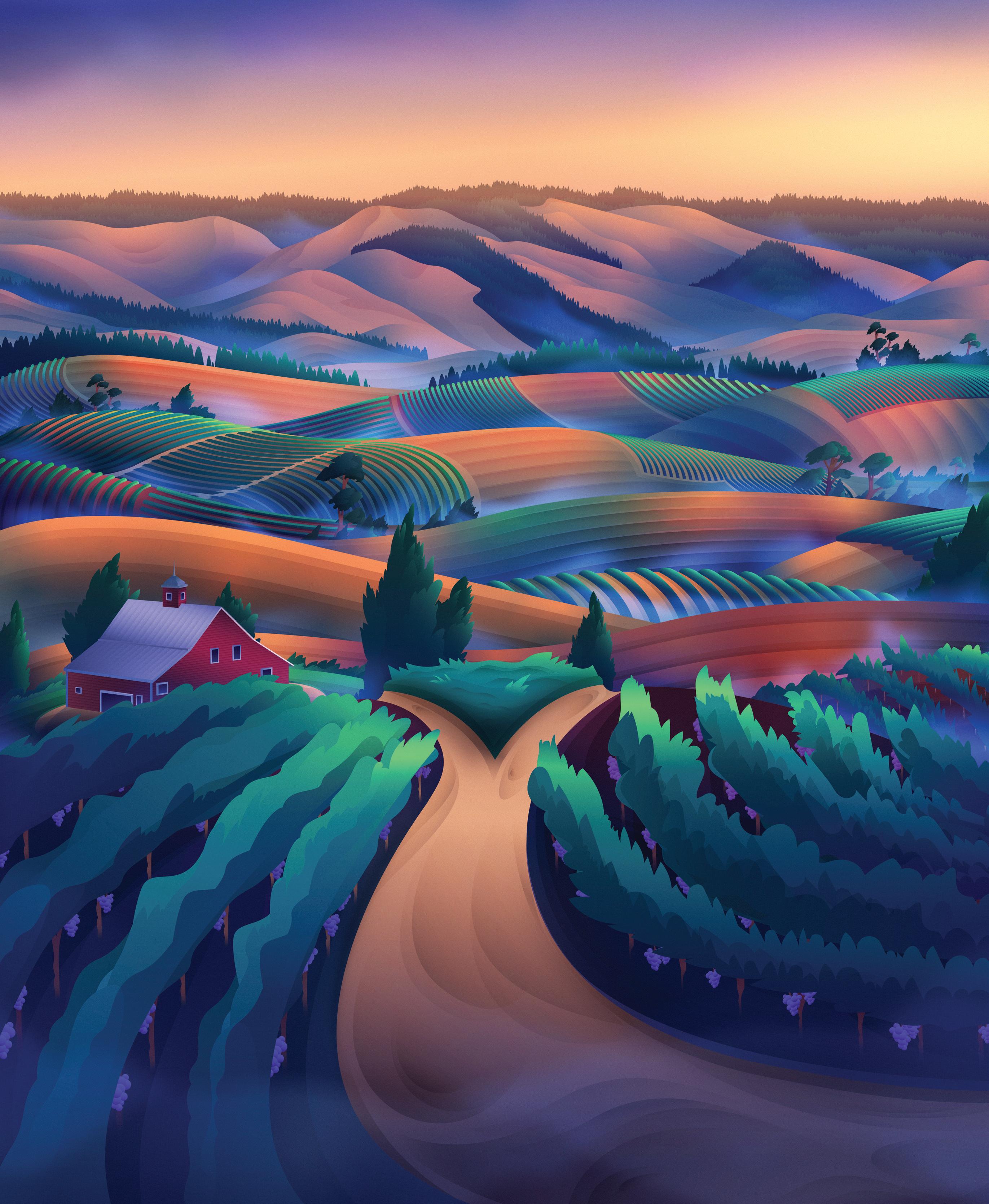
As it looks to the future, Washington’s wine industry hopes to combat a shifting consumer landscape
written by Lauren Kramer | illustrations by Cody Muir
ast August, Sarah Goedhart looked on as premium grapes were shaken from their vines and dropped on the ground to rot. It was a painful spectacle for the winemaker at Hedges Family Estate in Benton City, who has close to twenty-four harvests under her belt. And it was the first time Hedges had to dump grapes to spare itself from over production.
“There’s a lot of work that goes into growing grapes every year, and to not be able to take that work all the way to the end is pretty sad,” she reflected. “But at the same time, it’s even worse to be in a situation where you’re making too much wine. We were able to harvest most of our crops, but we had to leave about 20 percent on the ground.”
Washington’s wine industry is in flux, with total wine liters sold dropping 13 percent from 2023 to 2025, on par with national and global trends. There are a variety of reasons at play, including a market flooded with alternative beverages like craft beer, seltzers, ready-to-drink cocktails and cannabis products.
But there are also marked generational shifts in alcohol consumption. Millennials drink less frequently than Gen Xers and Boomers, and Generation Z drinks the least of all. A 2023 World Finance Report showed Gen Z drinks 20 percent less per capita than Millennials. In a Gallup survey that year, only 62 percent of adults under age 35 said they consume alcohol, down from 72 percent two decades previously.



In Washington, the net result has been an oversupply of grapes. It’s forcing some wineries to close and others to sell their grapes to British Columbia, which purchased 4,000 tons in 2024. Most wineries have had to shrink their production and change their strategies in an effort to survive this downturn.
Ranked as the second-largest wine producer in the country, Washington had a record harvest of 272,000 tons in 2016. In 2024, the harvest had dropped to 150,000 tons. That year there were 1,050 winery licenses, but today it’s down to 990. Ninety percent of them are small, familyowned wineries that make fewer than 5,000 cases of wine a year, and this downward shift in consumption is hitting them hard.
“We know the industry is going through a rebalancing act, and that there’s been oversupply for too long,” Goedhart said. “We don’t have the consumption to keep up with that growth anymore.”
Last year Hedges picked strategically, keeping its cabernet, a better-selling varietal, and leaving some of its merlot and syrah on the ground. Still, its sales were down 13 percent in 2025 compared to 2024. This year the winery


is planning to prune back harder to ensure a lower crop size. “A lot of vineyards are idling, trying to keep their farms alive without putting a lot of money in. I think we’ll head toward the bottom of this curve soon, and that by 2027 we’ll see a rebalancing of the industry and hopefully some growth again,” she said.

Tim Armstrong, owner of Armstrong Family Winery, which produces 3,000 cases of bordeaux and syrah annually, said Walla Walla is feeling a decline in tourism. “Fewer people are visiting Walla Walla tasting rooms, and tasting room sales, which are important to small wineries like ours, are down across the valley,” he noted.
“But I don’t think it has much to do with cannabis or even generational shifts, because we see plenty of Millennials and Gen Z in our tasting rooms. The reason our sales are down is because the buying power isn’t quite there.”


Armstrong worries about the spending power of the middle class, especially when tech companies announce layoffs. “When that happens we see it in cancellations to our wine club membership. It impacts the economic health of the middle class, it impacts us and it’s completely out of our control,” he said.


Armstrong Family Winery is making less wine and being more strategic about where that wine is sold. Specifically, it’s increasing the wines made for Costco and decreasing those for its wine club and tasting room. Its individual bottlings have dropped from twelve to ten as it rebalances. “We’re working really hard in wholesale, with restaurants, Costco and all the retailers we can,” he said. “That extra hustle is paying off because last year we had our best year ever.”
Wine is all about building connection and togetherness, says Tom Dugan, CEO of DeLille Cellars, which began producing wine in 1985. When the company saw the consumer landscape was shifting, it opened its second restaurant, En Ville, in Seattle’s University Village in September 2025. “People are looking for experiences and connection, not the old model of belly up to the bar, have a glass and sign up to the wine club,” Dugan said. “They want more immersive kinds of experiences, and we’ve been able to provide that.”
En Ville offers wine flights, a black glass tasting where DeLille’s wines can be compared to those from other regions, and food and wine pairings. By opening in Seattle, the winery is trying to meet the younger generation where they are, instead of expecting them to come out to Woodinville.
licensed wineries (as per the WSLCB Winery License list; this is down from about 1,000 a year ago and 1,050 in 2024)
Washington’s national rank in wine production
50,000 acres of wine grapes
400 wine grape growers
RECORD HARVEST (2016)
272,000 tons
RECENT HARVEST (2024)
150,000 tons
$10.56 billion
TOTAL ANNUAL IN-STATE ECONOMIC IMPACT
Source: Washington State Wine Commission varieties produced 80+
10,0 00,0 00
Annual wine production: CASES
21 AVAs
It’s easy to say the younger generations aren’t drinking as much wine, but they’re also not going out to restaurants as much, and they’re spending more time behind their phones and on social media. Consumer habits have changed, which requires the wine industry to approach them differently.”
TOM DUGAN, CEO OF DELILLE CELLARS
“It’s easy to say the younger generations aren’t drinking as much wine, but they’re also not going out to restaurants as much, and they’re spending more time behind their phones and on social media. Consumer habits have changed, which requires the wine industry to approach them differently,” he said.
Dugan is feeling optimistic, though. “The wine industry has some self-inflicted wounds, because we’ve made wine complicated and, in some cases, pretentious. But I have faith that we’ll get there. Wine has been around 8,000 years and it’s about bringing people together, which is needed more than ever now.”
At Woodward Canyon Winery in Walla Walla, coowner Jordan Small decided to invest more in his tasting room and wine club. “We have beautiful gardens and outdoor spaces, where folks can picnic and enjoy that wine country vibe,” he said. “Tasting room sales have stayed flat over the past two years, but we’re still very busy. We’re trying to host more events that bring people out to the tasting room, and we have great conversion-to-purchase rates, even in these down times.”
Small said he’s feeling neutral about the future. “There’s not a lot of indication that things will change quickly, and I don’t know if we’re at the bottom of this
curve yet,” he reflected. “Things may never get back to where they were because habits have changed and people are looking at health and alcohol differently. As an industry we may have to adjust our expectations. Maybe this is the new baseline, and it’s going to be different going forward.”
How different, exactly, depends in part on how successfully the wine industry connects with the next generation of wine consumers, says Kristina Kelley, executive director of the Washington State Wine Commission.
The commission’s past advertising images depicted scenic vineyards, but those pictures didn’t resonate with younger consumers. More recently, it’s been posting images to social media of wine being consumed after a hike, after fishing, snowboarding or hiking in the backcountry—in places that appeal to a younger demographic.
Kelley and her team are also trying to erase stereotypes around wine, specifically, “the idea that it’s ‘stuffy,’ ‘not me,’ ‘something that my parents and their friends do,’ and that you need a certain kind of glass,” she said. “Instead, we’re promoting wine as something that’s fun, friendly and brings people together in so many different ways.”







The goal of the commission’s annual event, Taste Washington, is to attract a younger demographic and create an enjoyable, social, informal environment where Washington-made wines are highlighted. Event organizers have focused on experiential programming and creating moments that feel interactive, social and memorable—beyond traditional tastings. Last year, more than 50 percent of attendees were between 25 and 44.
“We’re in this for the long term,” said Kelley, adding that she’s encouraged by an ambitious younger generation of winemakers in Washington. Tirriddis, a sparkling wine producer in Eastern Washington, is one of them. It was founded in 2021 by Andrew Gerow, Gabriel Crowell and Matthew Doutney, three graduates of Washington State University’s viticulture and enology program. The trio, all in their late 20s, set a goal of producing an original style of sparkling wine for the state, and now produce 8,000 to 10,000 cases annually.
“A lot of people are hunkering down to ride out this storm, but we’re doing the opposite,” Gerow said. “As relatively new players, we’re doing wine walks, pourings for wine shop customers, hosting pop-ups with restaurants
and doing everything we can to make sure we’re in the public eye.”
As a Gen Zer himself, Gerow disagrees that his generation is abstaining from alcohol. “The winemakers that say that offer wines that cost $50 to $75, which is not an accessible price point for the younger generation,” he noted. “Those wines also come with an intimidation factor that pushes young people away when they want to relax and enjoy something nice.”
While they might not be buying wine at the grocery store, Gen Zs still enjoy wine tasting with friends, he argued. “Young people will spend more for a strong experience, such as a really well put together tasting room, a comfortable, interactive environment that they can share with their friends on social media.”
Tirriddis’ tasting room overlooks 3 acres of the Yakima Valley, with two patios and comfortable furniture. “Aesthetically people feel they’re getting an experience just by walking in,” he said. “We welcome them, and they’re seated and interacted with. We gauge their interest and knowledge in a tasting or a bottle, and this tells us how to approach the tasting. Do they want to know about vineyard soils or tasting notes? It’s a conversation that’s about building relationships.”
As first-generation winemakers, Gerow said he and his friends are grateful to be in Washington. “It’s one of the most successful wine industries in the world. Where else could you achieve such a high level with sheer ambition and hard work, not family money or connections? There’s respect and support for entrepreneurship here, and that means a lot to us.”
From the time Tirriddis opened, wine consumption was shrinking, he added. “We knew coming in that this would be the hardest time ever for us, but that’s also what made it so appealing. If we can produce and release our wine in the hardest time in the world, then things will only get easier.”
Ryan Hill, director of education and programming at Evergreen Family Wines in Prosser, says Washington has some of the best value wines in the world, and the industry just needs to “meet today’s younger consumers where they’re at, because they’re still consuming alcohol.”
“It’s hard to see the positives when you’re surrounded by negatives,” he added. “You look around and see wineries closing, your books are down. But the people who can ride out this wave are the ones who will succeed. This is a fun business. We just need to take away the pretentiousness and not make the younger generation feel condescended to.”
written by Kerry Newberry
FOR MORE than three decades, Patricia Rovzar Gallery has been a vital presence in downtown Seattle’s cultural landscape, cultivating a space where artists, collectors and creatives converge. Since opening its doors in 1992, the gallery has garnered a reputation for showcasing a thoughtful mix of contemporary talent with an emphasis on distinctive voices from the Pacific Northwest and beyond.
Alongside rotating monthly solo exhibitions, the gallery’s West Salon offers an ever-evolving presentation of works by represented artists, ensuring that no two visits feel quite the same. Nearly thirty Pacific Northwest artists are featured throughout the space, among them Karen Hackenberg, whose striking seascapes transform discarded beach debris into provocative environmental narratives; Susan Bennerstrom, celebrated for luminous, atmospheric paintings; and Evan Gray Gregory, whose figurative sculptures pair delicacy with quiet introspection.
The gallery is at its liveliest during its monthly First Saturday receptions and artist talks, held from 3 to 5 p.m., when visitors can meet artists, mingle with fellow art lovers and engage more deeply with the work on view. “Art is a conduit for connection,” said Patricia Rovzar. “It affords humanity the opportunity to explore relationships with ourselves, with one another and with our world through the lens of creative makers.”
Upcoming exhibitions include new work by Tyson Grumm, whose dreamlike compositions weave fantastical creatures into surreal landscapes, followed by Anne Siems, whose latest series explores tattoos as expressions of inner wildness, mythology and deep connection. For more information, visit www.rovzargallery.com
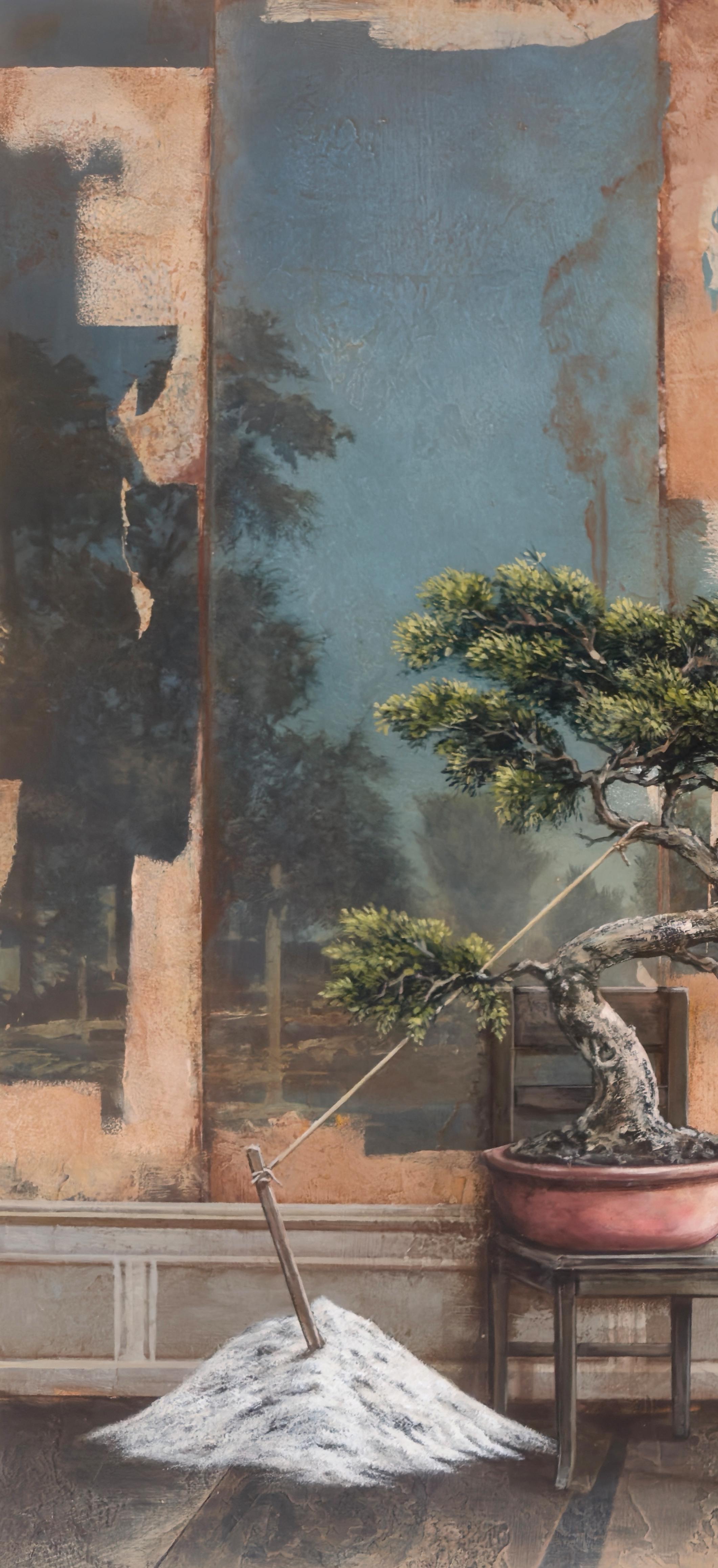
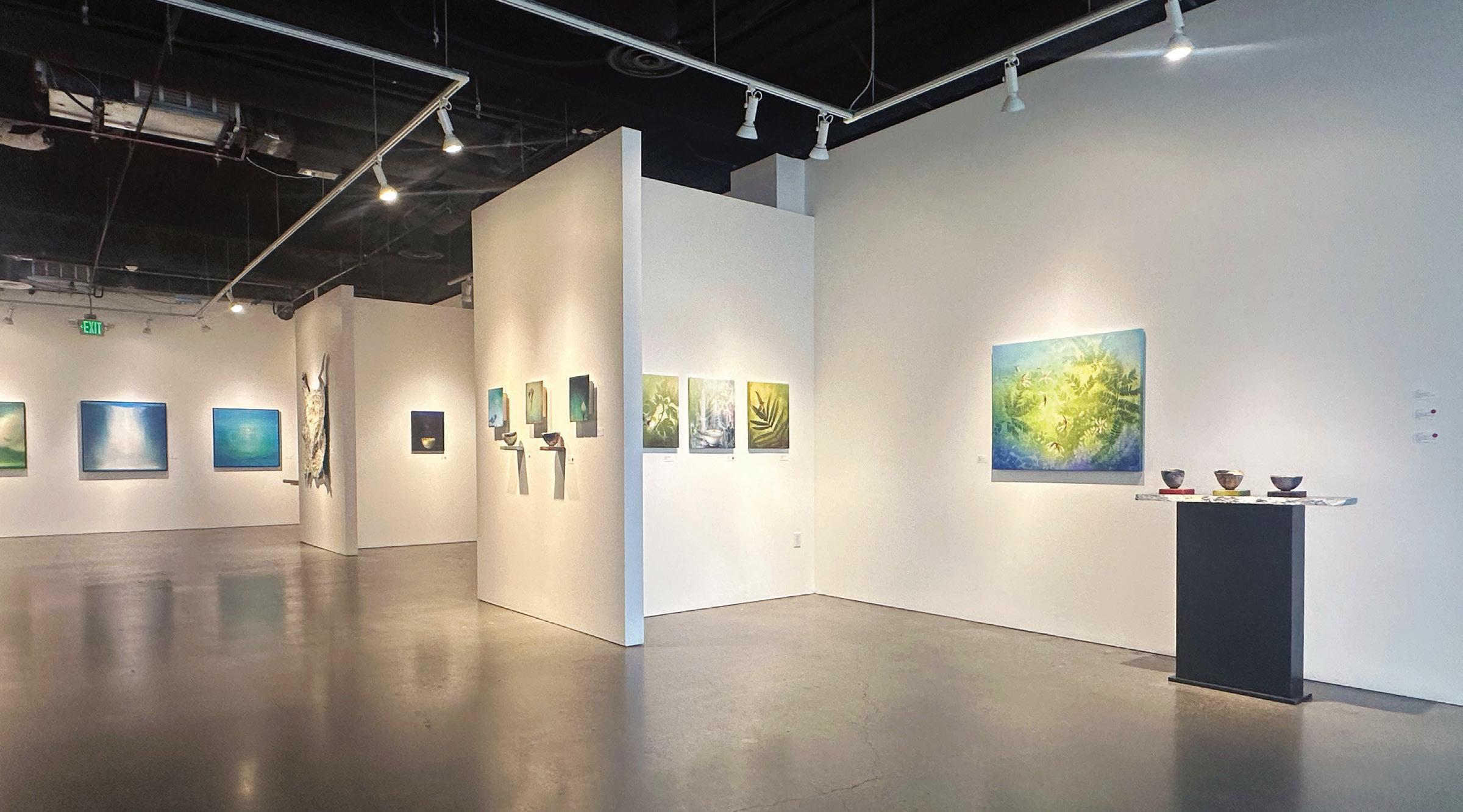

TRAVEL SPOTLIGHT 78
ADVENTURE 80
LODGING 84
TRIP PLANNER 86
NORTHWEST DESTINATION 92


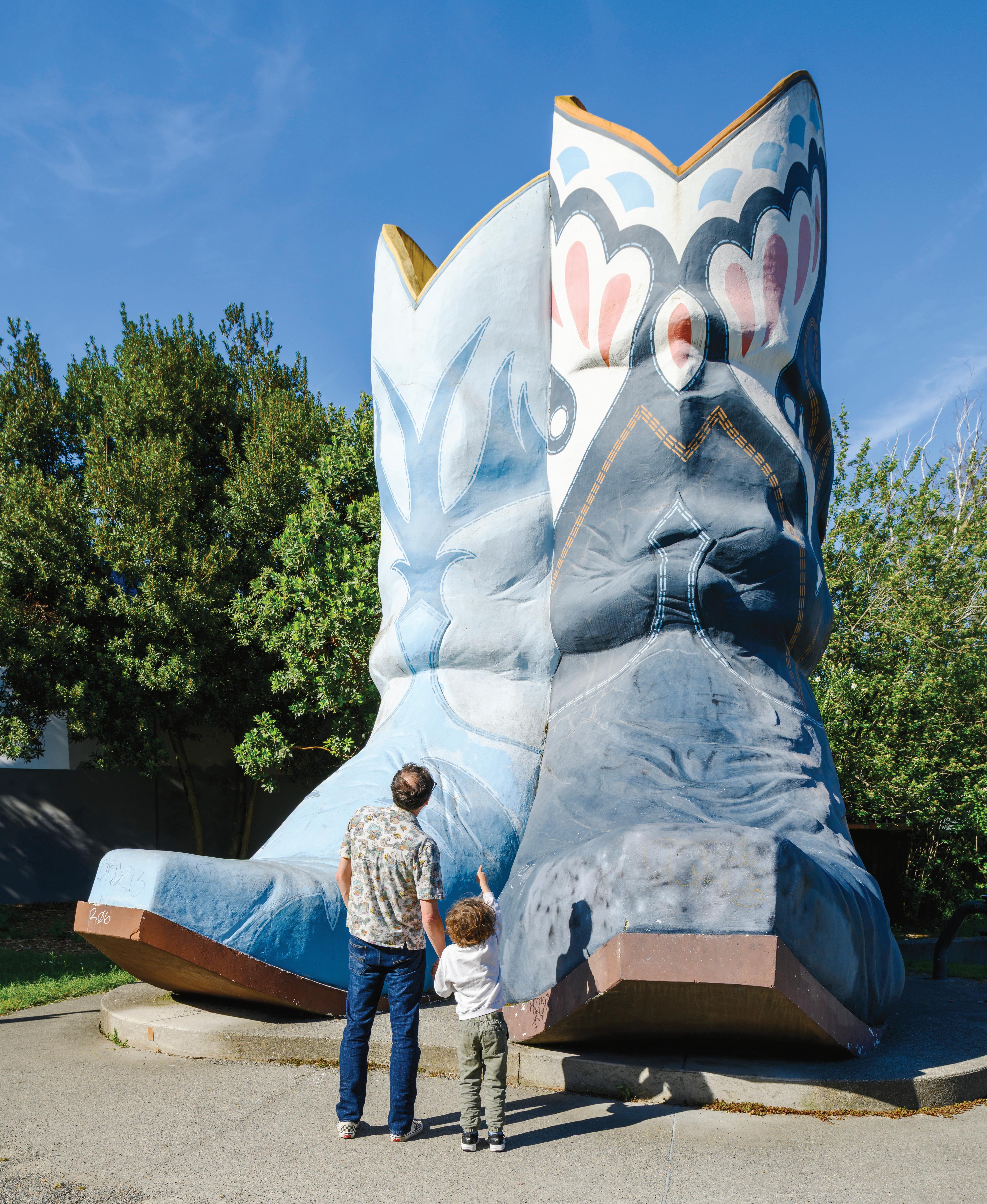

Saving roadside-a raction Americana for visitors to Sea le’s Georgetown neighborhood
written by Joni Kabana | photography by Will Austin
TUCKED INTO the quirky neighborhood of Georgetown in Seattle stands one of Washington’s mostbeloved roadside icons: Hat ’n’ Boots. Bright, bold and unmistakably Western, this oversized cowboy hat and pair of boots have become a symbol of local nostalgia, artistic preservation and the region’s playful personality.
The structures were originally built in 1954 as part of a Western-themed gas station along Highway 99. At the time, roadside attractions were a popular way to catch the attention of passing motorists. The giant hat served as the station’s office, while the two enormous cowboy boots functioned as restrooms. Their whimsical design quickly made the stop memorable, especially for travelers making the long drive between Seattle and destinations to the south.
As decades passed and highways changed, the gas station eventually closed, and the iconic structures fell into disrepair. For years they stood weathered and fading, yet locals still felt a deep affection for the unusual landmark. In the early 2000s, a community effort helped rescue the pieces from demolition. The hat and boots were carefully restored and relocated to Oxbow Park in Georgetown where they remain today.
Now freshly painted in vibrant red, white and blue, the landmark feels both vintage and joyful. Visitors often stop for photos beneath the towering brim of the hat or beside the extra-large-size boots that stand nearly 22 feet tall. Families picnic nearby, artists sketch the structures and travelers stumble upon one of Seattle’s most unexpected sights.
In a city known for modern tech campuses and sleek skyline views, Hat ’n’ Boots offers something different: a reminder of Mid-century Americana and the power of community pride. It’s kitschy, colorful and a little bit strange, which might be exactly why people love it. For more information, see www.seattle.gov/parks/parks/oxbow-park
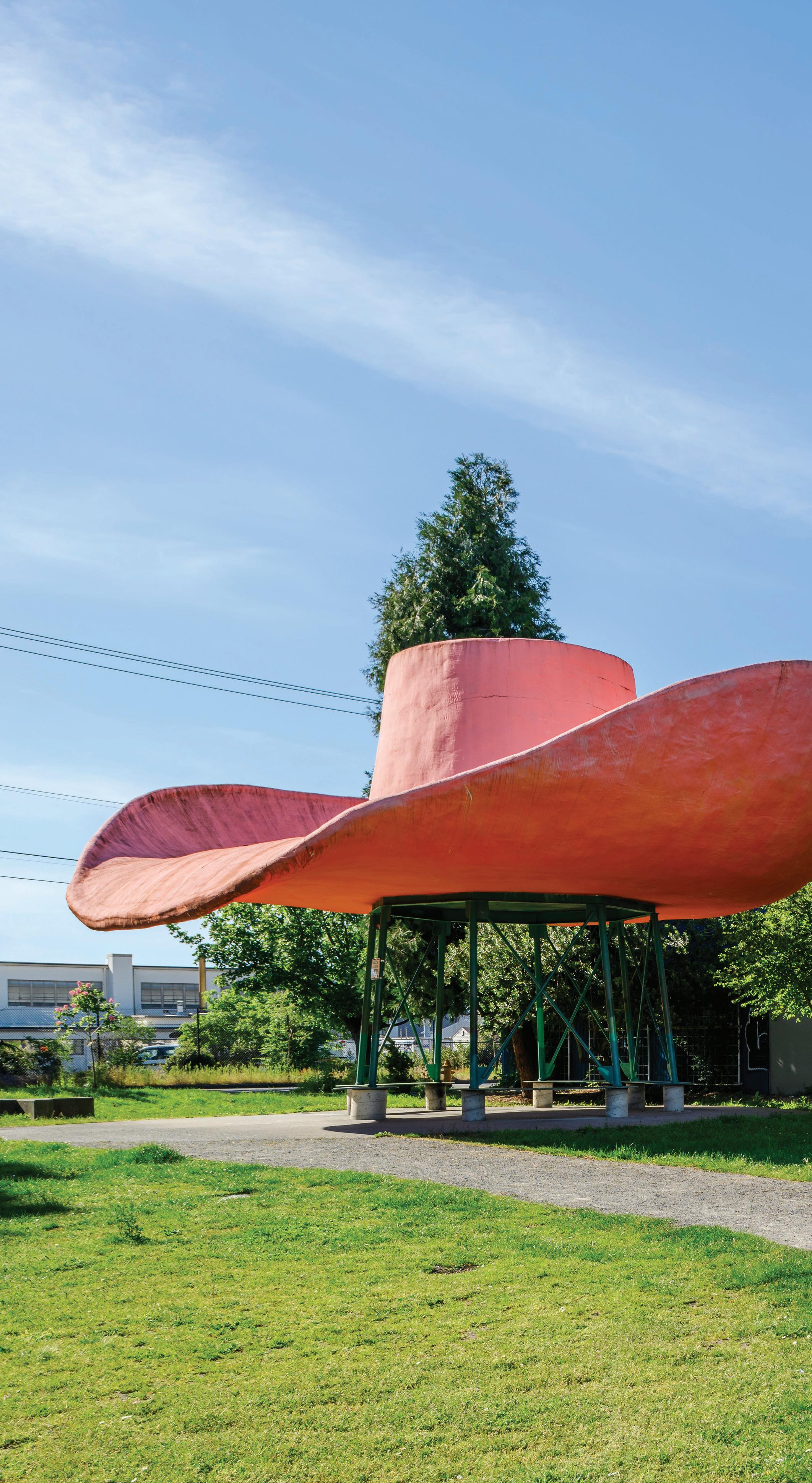
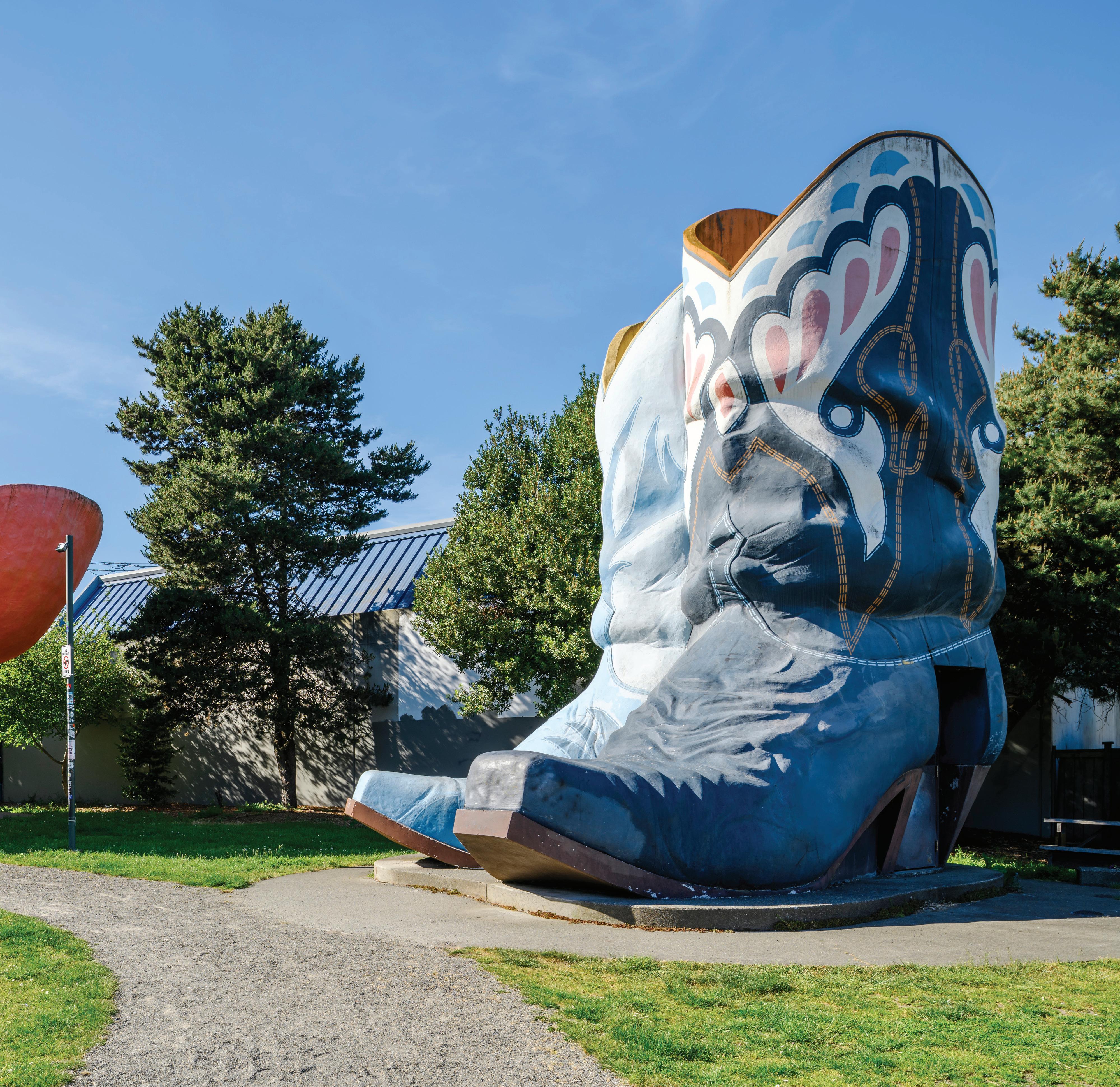
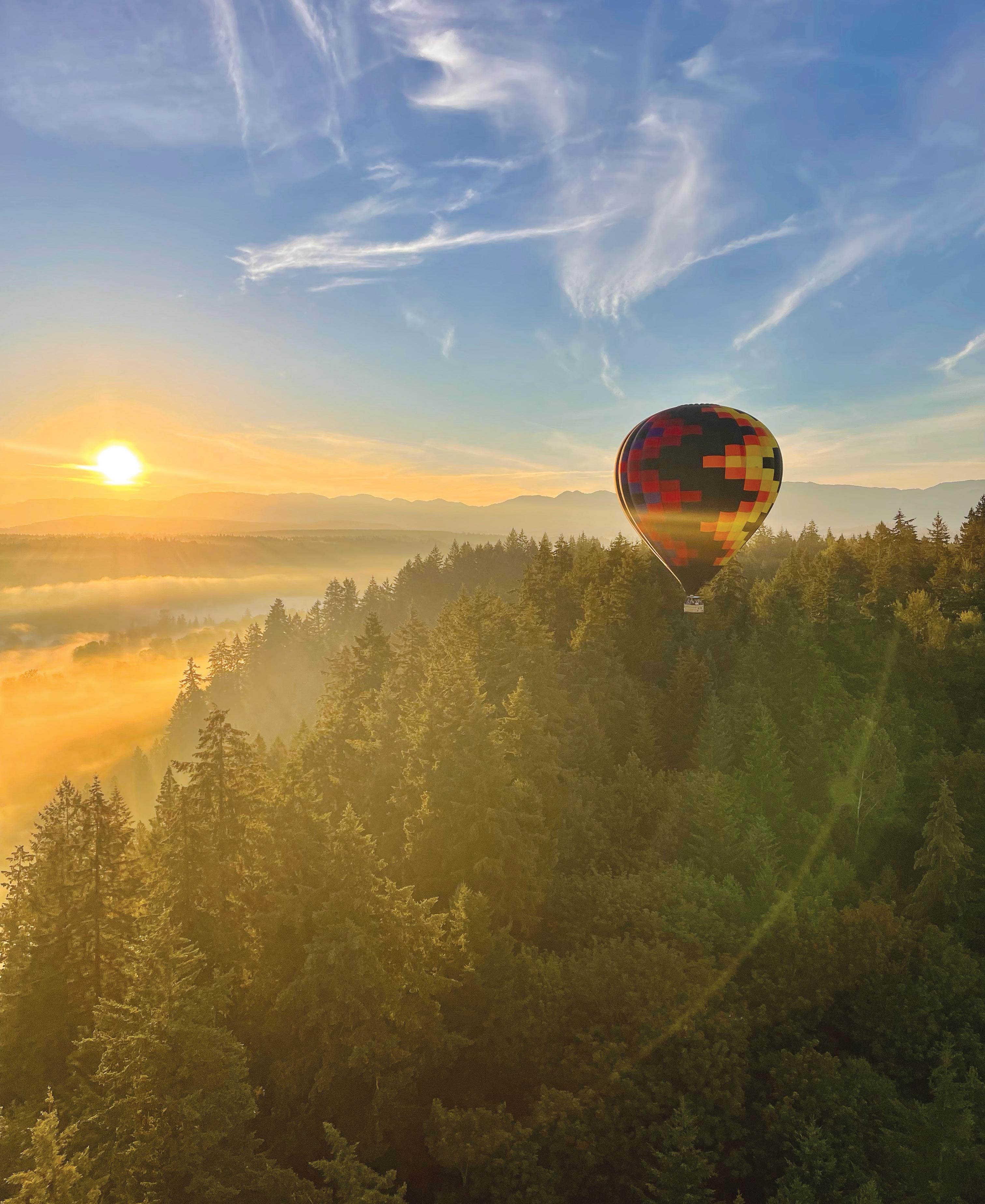
From a wicker basket at sunrise, ballooning o ers stillness and awe
written by Cathy Carroll Adventure
EVEN FOR SOMEONE who’s been skydiving, paragliding and rappelling, I was surprised by the nervousness that set in the night before my hot-air balloon ride. The next day, at dawn, a bright blue, red and yellow bulb-shaped cra li ed me in a wicker basket above the treetops. As the last few shreds of dread dri ed away along with terra firma, a lighter-than-air state of solitude and freedom took over. I was hooked.

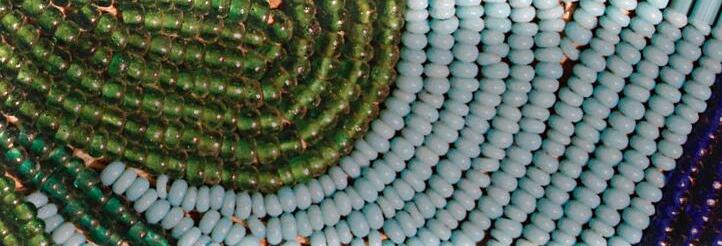
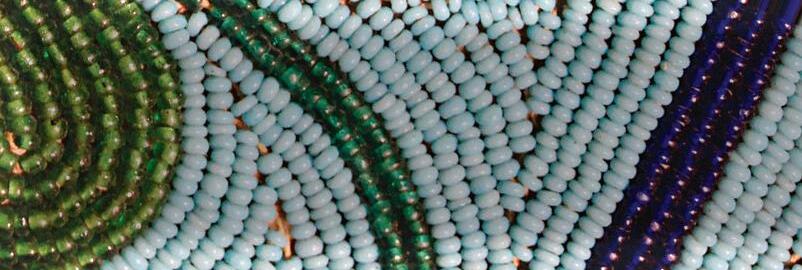
14379 Highway 17, Brewster, WA
509.631.2130, or msg 509.634.2635 fortokanogan@communitynet.org

Open 9 a.m. to 4:30 p.m.



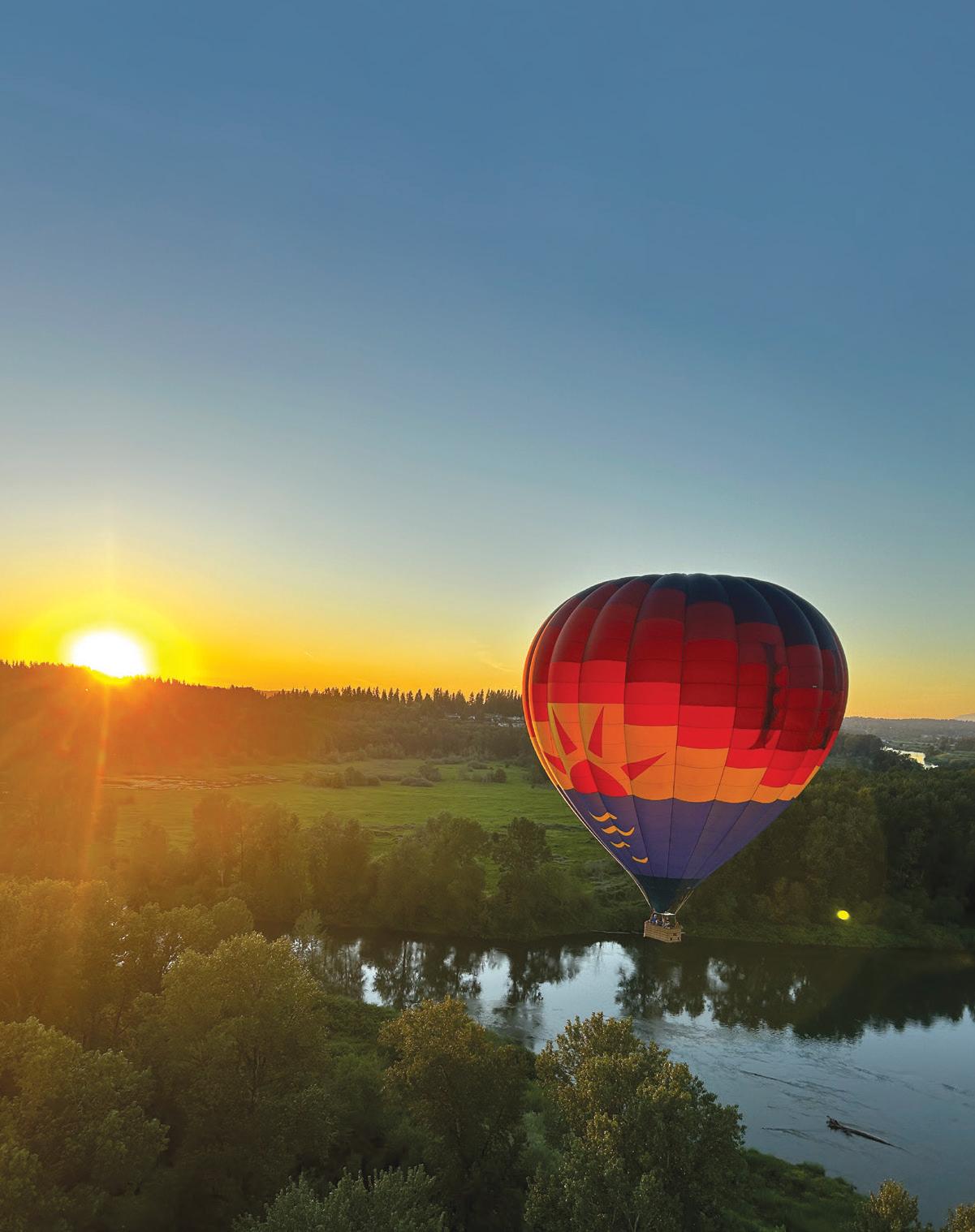




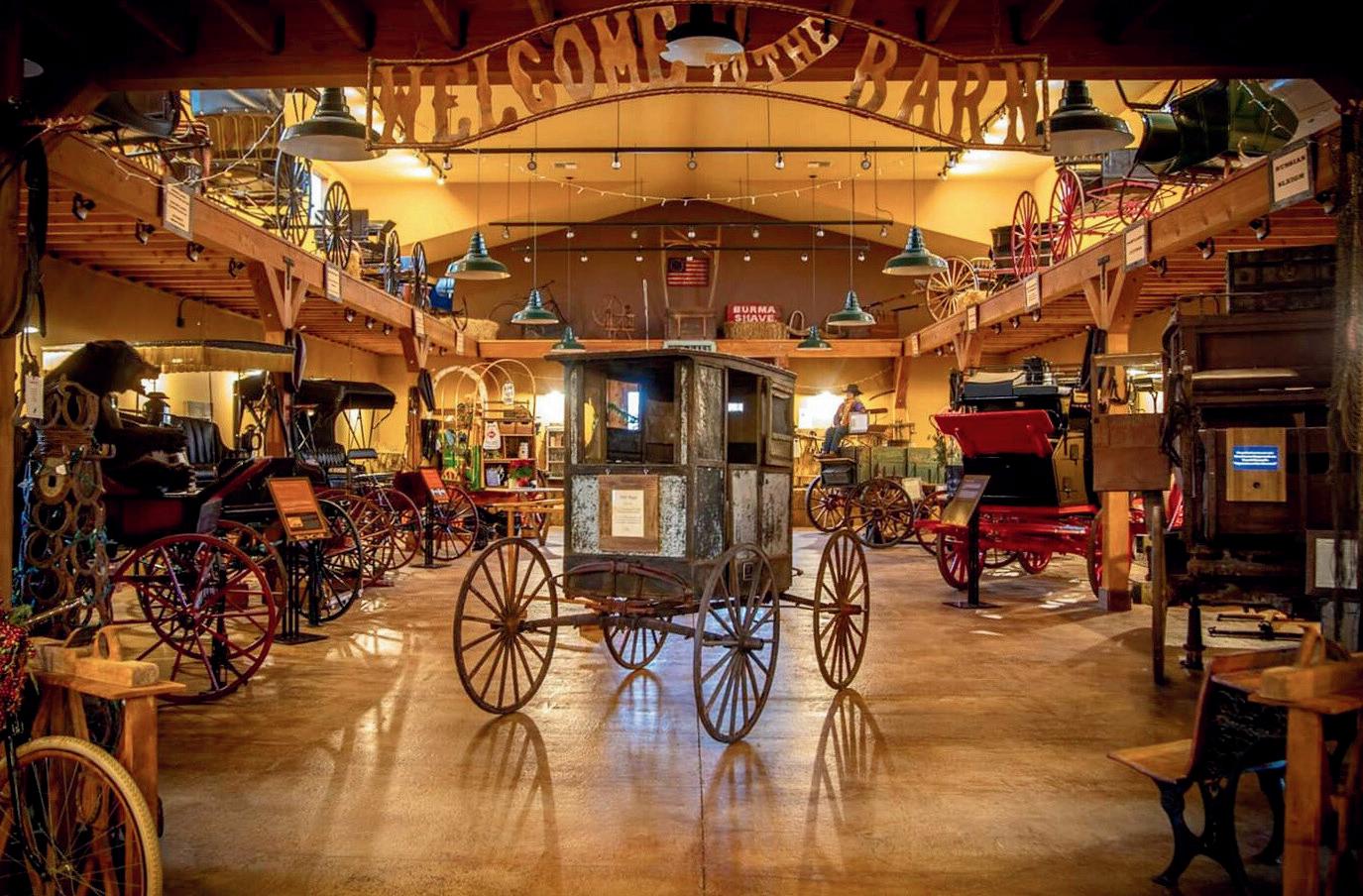
to Saturday June 4 through Sept. 27 When it comes to hot-air ballooning, you can count on Balloon Depot’s 40+ years of experience to bring you the best in aerial adventure. Experience Washington as you’ve never seen it before, with spectacular views of Mount Baker, Mount Rainier and the Olympic range on an exhilarating flight above the Snohomish Valley. Join us for a


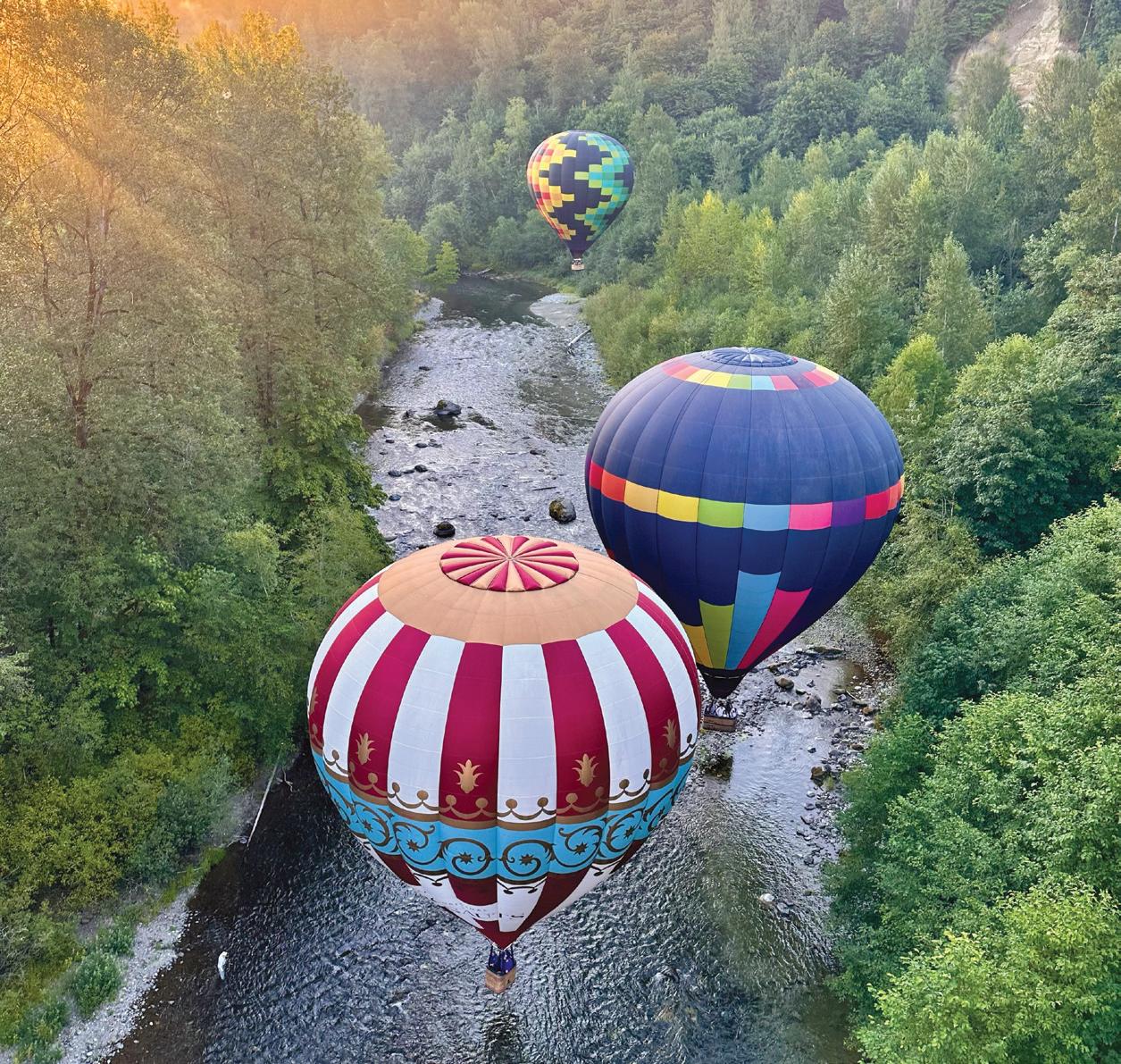
Eliav Cohen of Seattle Ballooning sees this transformation happen regularly with his passengers, and Cohen, a world championship ballooning competitor, admits he’s terrified of heights— except when wafting thousands of feet above land in his chosen mode of flying. “I know it’s weird, but even if my kids throw something and it lands on the roof, I make my wife climb the ladder to get it. I’m that nervous about heights. But in a balloon, for some reason, I’m totally fine—and everyone is.”
Some of the reasons include how calm and quiet it is. Unlike a high-powered jet, lifting off into silence at 5 to 15 miles an hour lets the breeze take you. “Flying over the treetops, you just feel like a bird. It’s the most amazing chill, laid-back experience—every time,” said Cohen.
Launching near Auburn, he leverages daily wind conditions for optimal views of Mount Rainier, flying his basket of passengers down the White River, the Green River and over Lake Tapps—at some points gliding at 4,000 feet or just a few feet above the water. In the morning, just above the tree canopy along the Green River, a touch of fog adds an ethereal quality.
A raptor’s view of salmon running upriver in August is a perspective most humans never witness. When conditions are right, Cohen will vent just enough hot air from the balloon to gently descend, momentarily skimming the water with the basket like a heron catching breakfast.
Typically, it’s a zen moment, but during a sunset ride in June of 2021, Cohen was hovering his ten-story-tall balloon carrying passengers about 5 feet above the water when he heard calls for help. A young couple’s small blowup raft had deflated. After three hours on the river, with their cellphones dead, the shoeless, swimsuitclad pair were 4 miles from any road with darkness approaching. Quickly assessing the situation, Cohen lowered the balloon to the surface of the shallows and called to the couple to wade over from the bank. “Go, go, go!” he said, hitting short bursts on the burner to increase the balloon’s lift. An inch or two of water had
seeped onto the floor of the basket, which was starting to move with the current. The rafters climbed in, and Cohen hit both 20 million-Btu burners for a 400-foot-per-minute climb. Quickly clearing the bank’s 100-foot-tall trees, he flew them and his passengers to safety.
Aside from a once-in-a-lifetime rescue, the apex of the flights are the views of Mount Rainier, all 14,410 feet of its snow-capped beauty looming in the early-morning light. On a clear day, at about 4,000 feet, the full, horseshoe-shaped crater atop Mount St. Helens comes into view, where in 1980, blasting magma emitted a 15-mile-high mushroom cloud of ash that circled Earth in fifteen days.
Gazing west, the Puget Sound ripples in the sun, and to the north, Seattle’s skyline and Space Needle rise to only a fraction of your height above them.
Throughout the flight, Cohen shares fun facts about ballooning history. For example, celebrated aviator Alberto Santos-Dumont helped popularize the wristwatch—easier to use while flying than a pocket watch—after Louis Cartier designed one for him in Paris around 1904. Five decades later in America, Ed Yost, a former aerospace engineer at Boeing in Seattle, developed high-altitude balloons for the U.S. Navy for Cold War espionage.
The stories and journey end as you give yourself back to gravity, and Cohen gently lands the balloon in one of 1,100 properties that welcome it, from farms to front yards.
“When I come home from flying, I tell my wife, ‘God, that was the most amazing flight I’ve ever had,’” said Cohen, who left a C-suite career in tech for ballooning a decade ago. “She says, ‘How can every day be the most amazing?’ But each day is like that— it just never gets old, ever.”
Seattle Ballooning
www.seattle ballooning.com
More Ballooning
Over the Rainbow Hot Air Balloon Rides Fly over Woodinville wine country at sunrise or sunset.
www.overtherainbow hotairballoonrides.com
Snohomish Balloon Rides
Float above the Snohomish Valley rivers and farmland with
views of Mount Baker, Mount Rainier and the Olympic range. www.snohomish balloonride.com
Balloon Depot
Flying from Snohomish since 1978. www.balloondepot.com
Walla Walla Balloon Flights
Sunrise flights over vineyards, farmland and the Walla Walla Valley. www.wallawalla balloonflights.com

written by Lauren Kramer


IF YOU WORRY ABOUT your carbon footprint, you’ll want to spend a night at Populus Seattle, the Pacific Northwest’s first carbonpositive hotel. Opened in Pioneer Square in May 2025, the building was designed to sequester more carbon in biomass and soil than it will emit over its life cycle—no mean feat for a 119-year-old structure! 100 S. King St. began its life as a warehouse and later served as office space. In 2020, a five-year-long renovation began, transforming it into a forestinspired, environmentally forward, 120-room hotel that looks and feels brand new.
100 S. KING ST. SEATTLE www.populusseattle.com



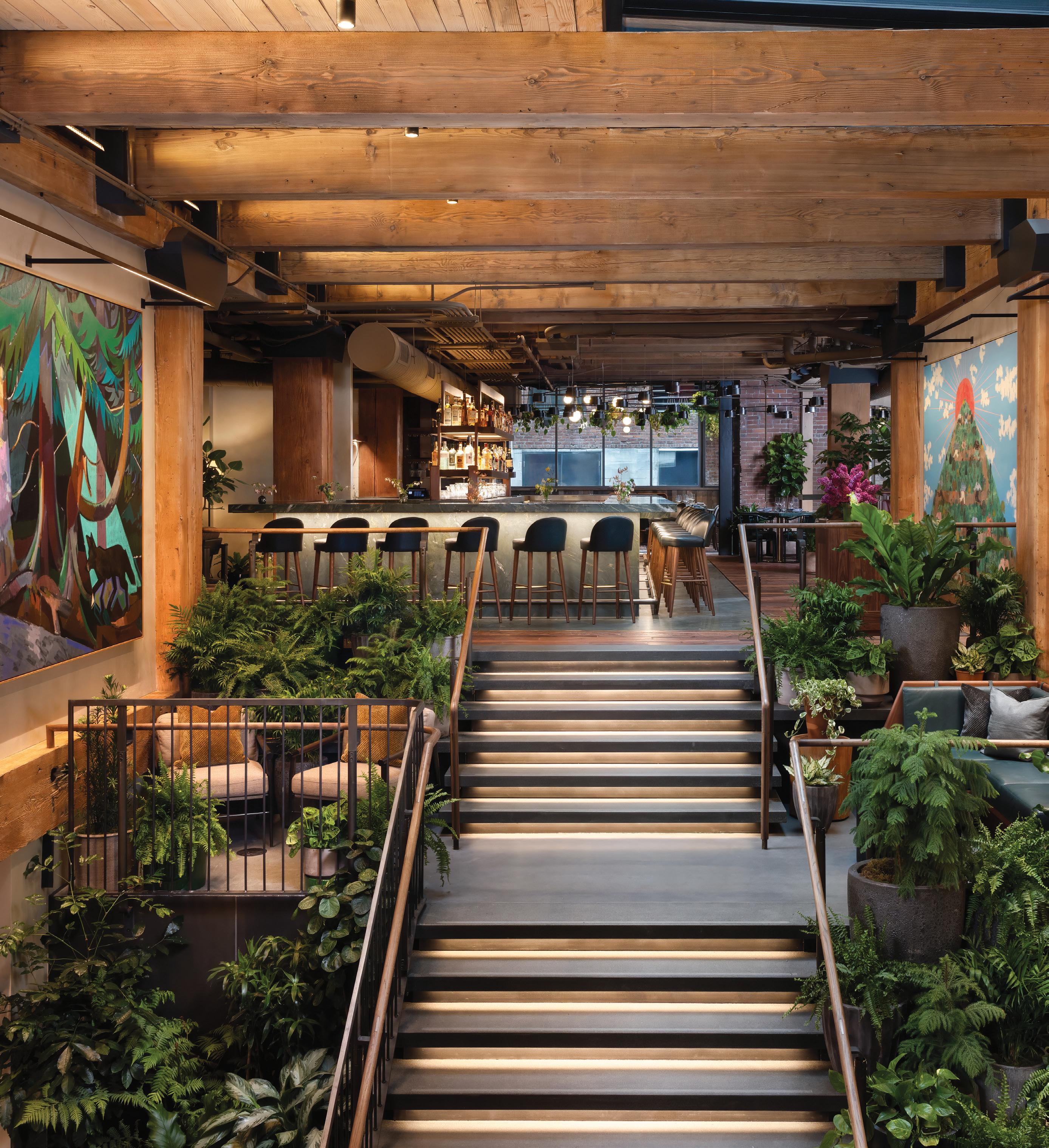



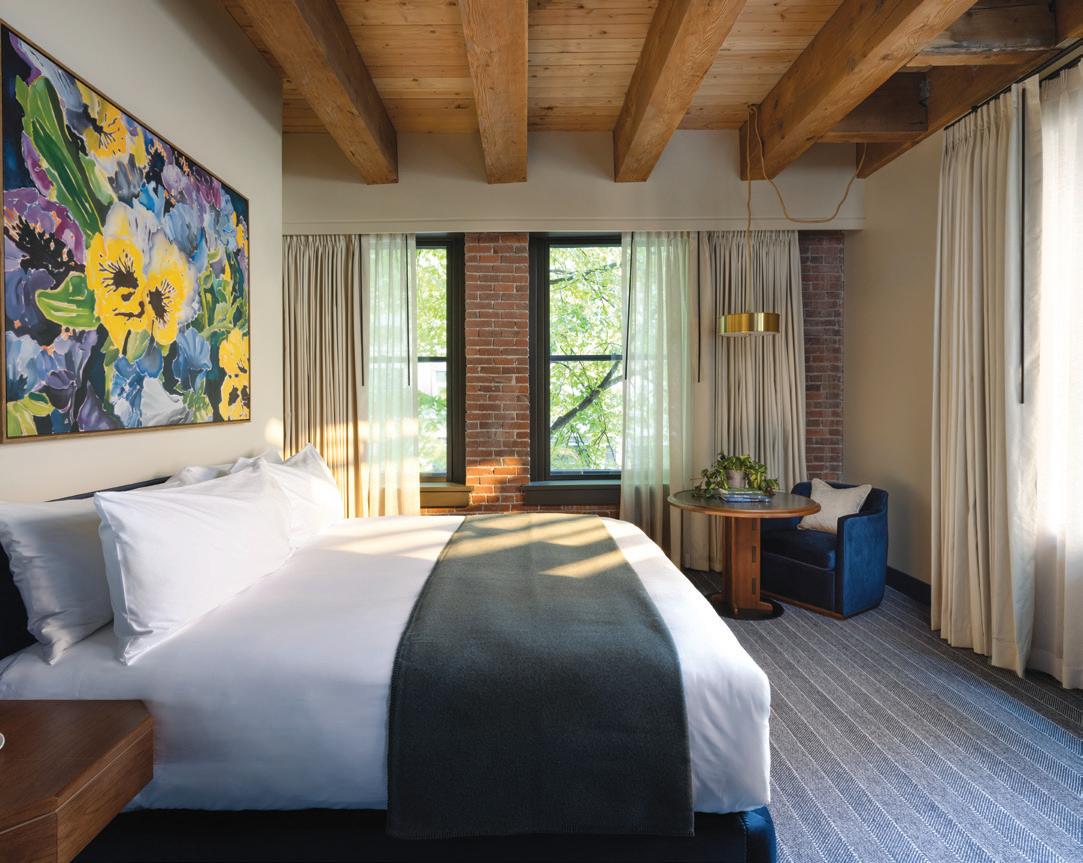
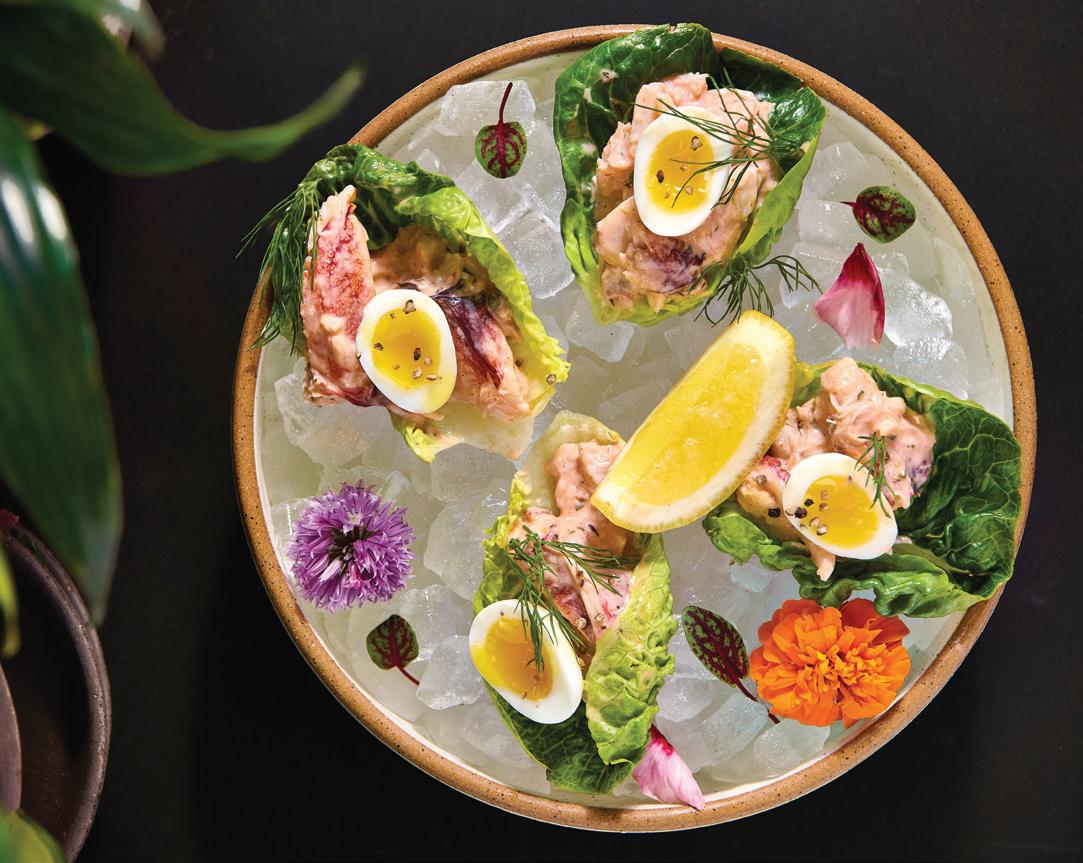
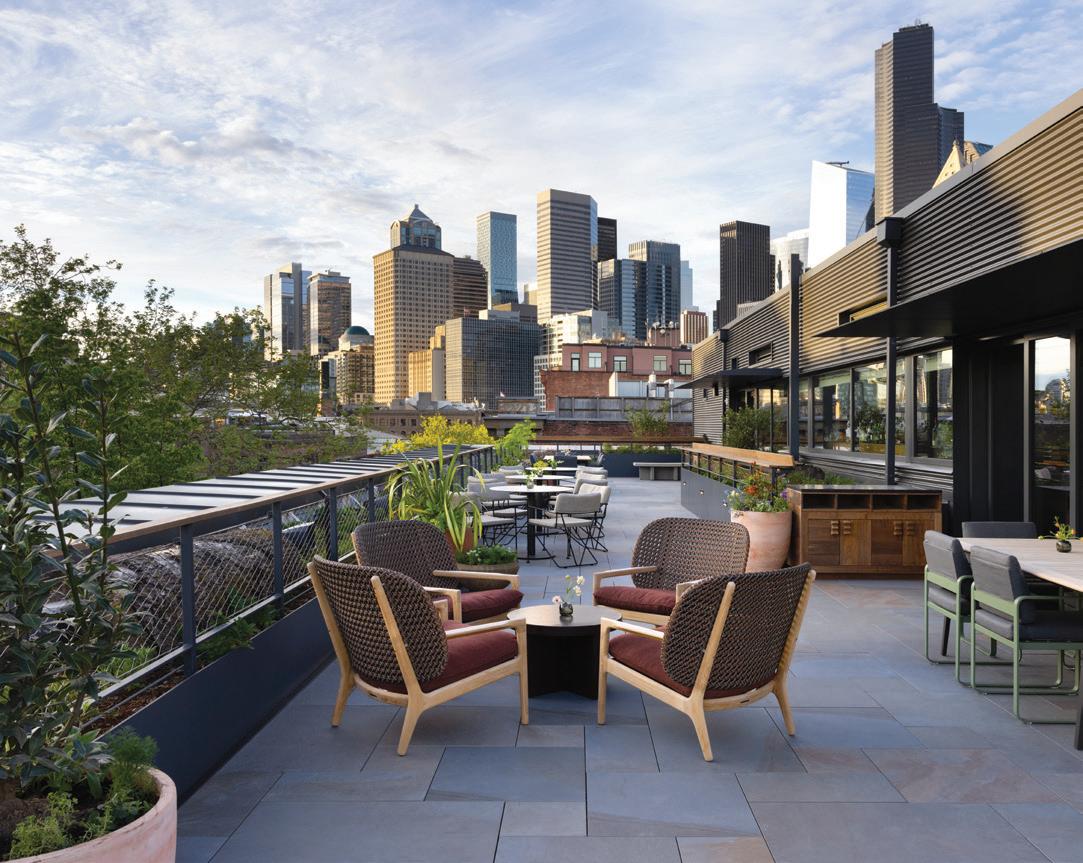
With exposed brick, handsome Douglas fir beams and large windows, the rooms at Populus are small but well designed for comfort. They come with king-size beds, beautiful linens and decorative touches including rice paper flowers, reclaimed driftwood and handmade ceramics. There are tea and coffee options in-room, bamboo paper products in the bathrooms and aromatic soaps, shampoos and lotions by Aesop for a decadent bathing experience.
Populus invited thirty-five local, regional and international artists to a two-week, on-site workshop where they created more than 300 pieces of art for the hotel. These striking, unique canvases, on display in each bedroom and the hotel’s common areas, reflect Pacific Northwest landscapes and culture.
Snags from the Olympic Peninsula set the tone for a nature-inspired experience at Populus, where greenery is just about everywhere. The lobby’s staircase is defined by a plethora of carefully arranged indoor plants. Stacked in layers, they add a sense of calm and tranquility, bringing the outdoors inside. That feeling continues in Salt Harvest, the restaurant at Populus, where a glass-wrapped solarium filled with hanging indoor plants creates a welcoming, bright environment for dining.
Populus has three dining options: a café serving hot beverages and artisan pastries; Salt Harvest, a full-service restaurant serving three meals daily; and Firn, its trendy rooftop bar, where small bites and cocktails are offered with views of the Seattle skyline. Salt Harvest has an innovative, carefully composed menu featuring organic and locally sourced dishes. It also offers a nine-person “chefside dining” experience where participants can watch a chef whip together a custom menu while discussing its ingredients, sourcing and preparation.
Populus has a gym outfitted with Peloton bikes, weights and treadmills; a well-stocked library where guests can read, work quietly and enjoy complimentary hot beverages in the morning; and a music and art room that will host artists in residence in the future. Plans for a range of boutique, complimentary experiences for guests include a workshop on crafting rice paper flowers.
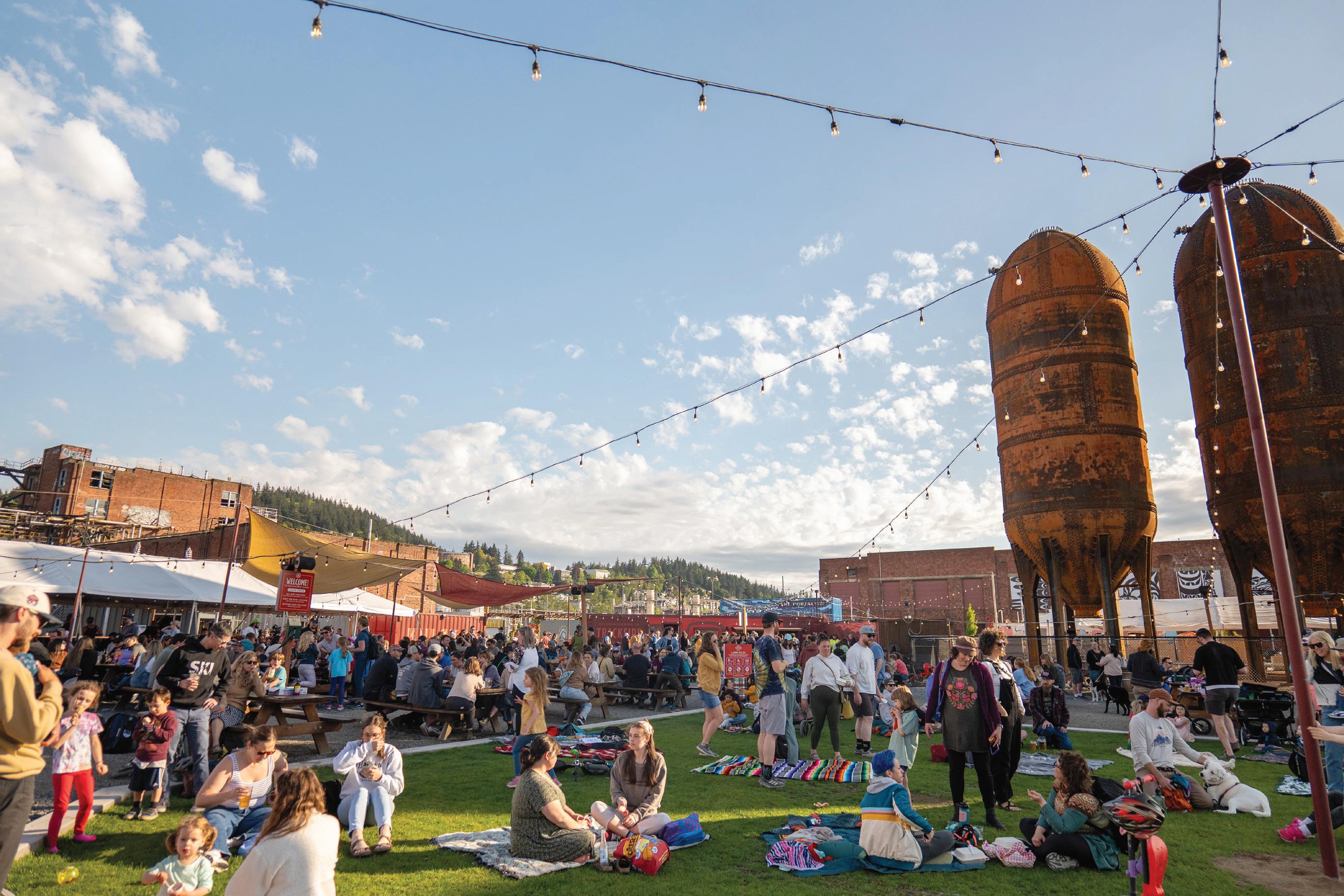
A pearl of cosmopolitan experience from a small oceanside oyster written by
Ryn Pfeuffer
BELLINGHAM SITS 20 MILES south of the Canadian border, but its global feel comes from more than geography. Western Washington University draws students from around the world, and Vancouver, 45 miles north, keeps cross-border exchange in steady motion. Add one of Washington’s most visible LGBTQ+ communities, a fiercely independent arts scene and a dining culture shaped by immigrant-owned restaurants, and the city lands somewhere between cosmopolitan and close-knit. For a place of fewer than 100,000 people, there’s far more substance than you’d expect.
Sunnyland makes an easy place to base yourself. Heliotrope Hotel, a refreshed motor lodge just north of downtown, gets the details right without overdoing them. The check-in area’s vibe is more like a lounge than a lobby, with a fireplace, coffee and magazines that encourage people to take a beat instead of passing through. The Mount Baker Room (Room 18) adds plenty of breathing room with a separate sitting area, plus a fridge and microwave that make a longer stay more practical. Downtown is five minutes away, tops.
At Cof&, Oscar Quintero keeps the focus on Colombian coffee, sourcing beans from home and serving a menu rooted in culture. The empanadas are the move: beef and potato, fried until crisp. A tinto, Colombia’s everyday black coffee, comes strong and simple; the panela-sweetened latte is another regular order. Around the room, students settle in with laptops, cyclists stop after waterfront
ABOVE One of the best places to be outside with beer in Bellingham is Kulshan Brewing Co.’s Trackside Beer Garden.
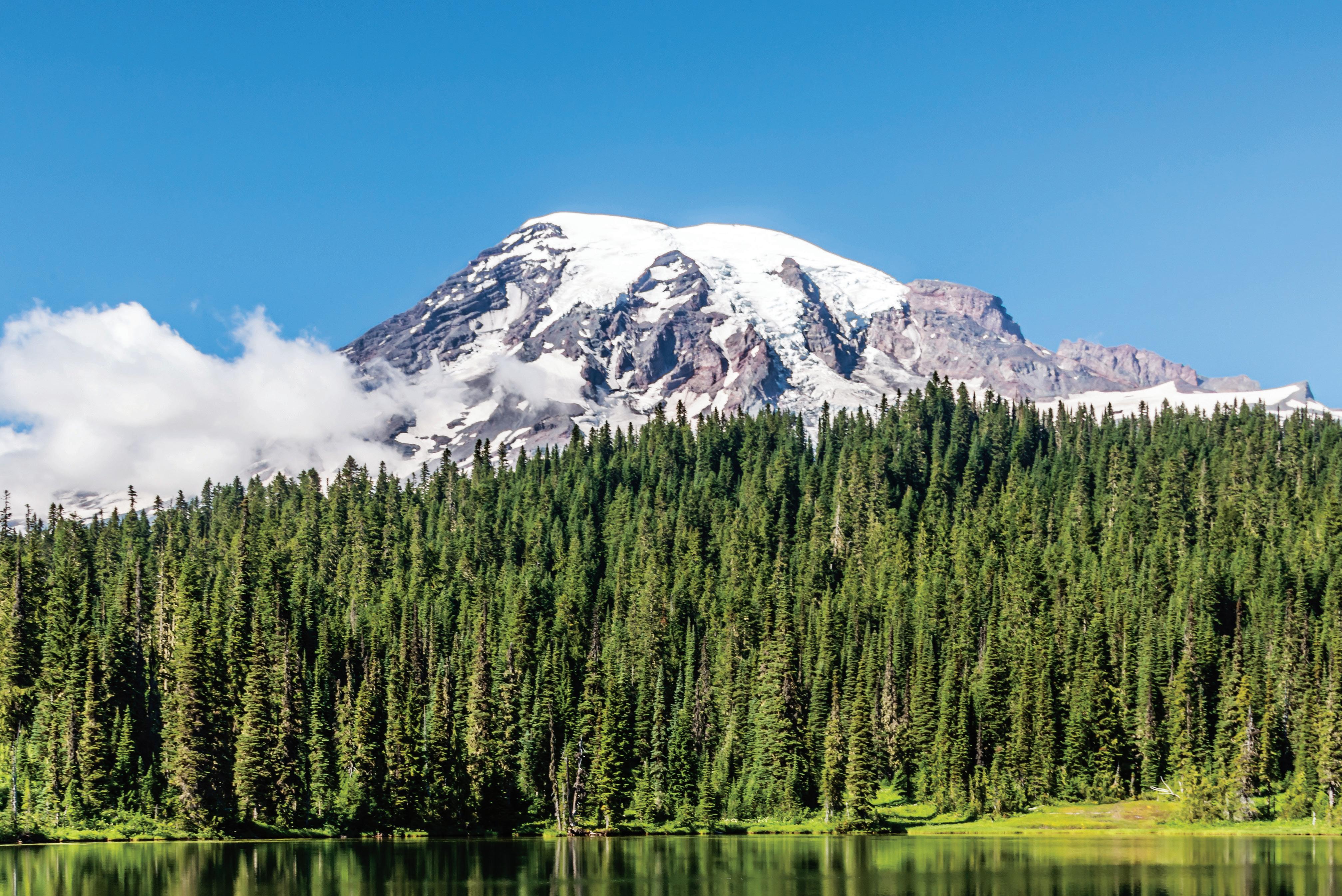
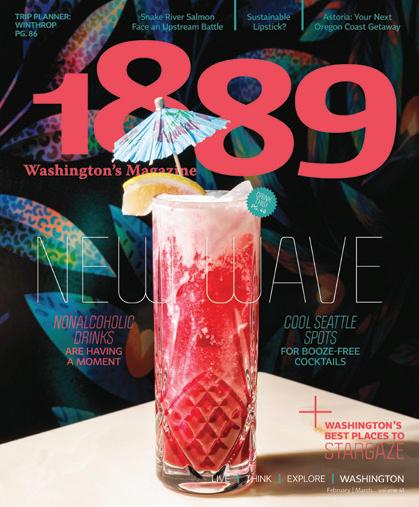

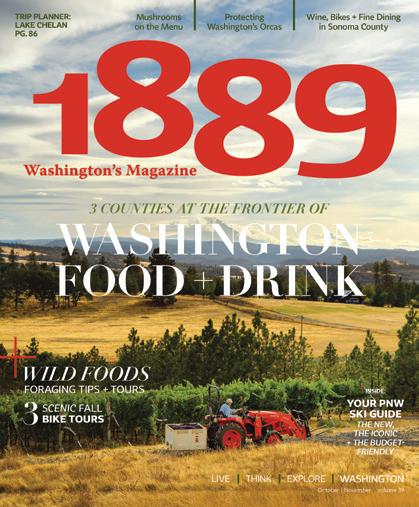

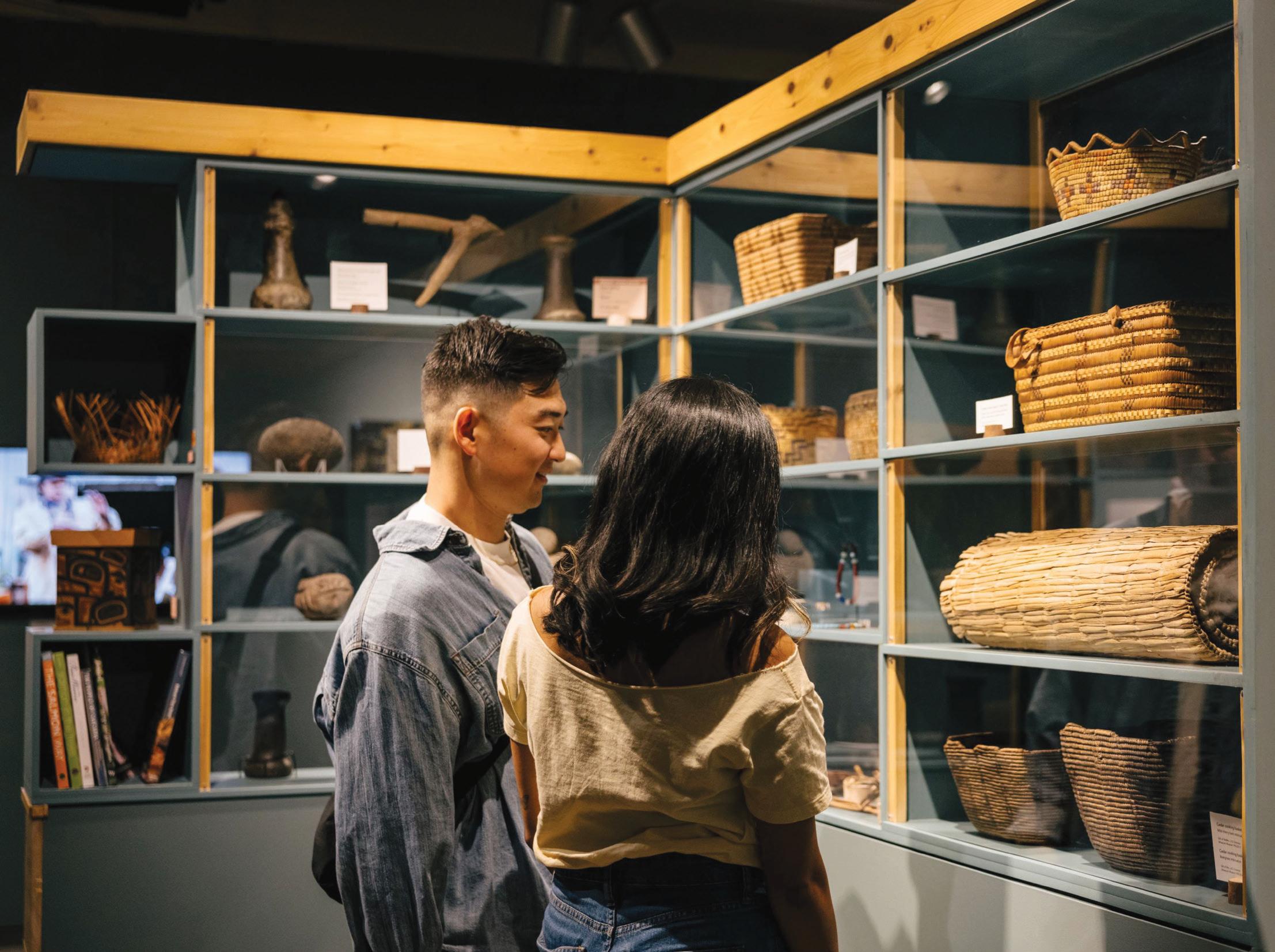
rides and regulars step up to the counter without glancing at the menu. Low-key evening events and the occasional live set push the place beyond café status into something closer to a neighborhood living room.
A few blocks over, Big Bad Bookstore reflects the city’s activist streak. Founder Amy Salinas Westmoreland built the Blackand Latine-owned shop to spotlight voices often pushed to the margins: writers of color, queer authors and books that push against conventional narratives. Readings, workshops and community conversations keep the store busy beyond retail hours.
At Ragfinery, one of the city’s best-loved vintage shops, the racks of worn-in denim, broken-in leather jackets and one-off finds feel tightly edited rather than overwhelming. It’s part thrift store, part reuse hub, concentrated on extending the life of clothing through repair and resale.
For a deeper sense of place, the Whatcom Museum’s Lightcatcher Building earns a stretch of the afternoon. Its permanent exhibition on Northwest Coast Salish tribes gives context that sharpens everything else you’ll see in town.
Dinner belongs to Roe—a reservation worth making ahead. Menus shift, but the cooking tends toward careful contrasts: chicken nuggets topped with Kaluga hybrid caviar, crème fraîche and chives; lamb osso buco with apricot Bordelaise and charred snap peas. The cocktail program is just as considered; the Roe Martini—parm-thyme-infused gin and vodka with cherry tomato-infused dry vermouth—is a must.
Morning begins at Saltadena Bakery & Cake Shop, where the line forms early and, thankfully, moves fast. Cream puffs appear only Friday through Sunday and disappear accordingly. French macarons have their devotees. But for something more substantial, three-layer cake slices deliver. The Salt & Pepper layers chocolate cake with salt-and-pepper buttercream and ganache; the Passionfruit Black Sesame balances nutty depth with bright curd and a restrained sweetness. An ube latte completes the picture.
A short walk through the neighborhood leads to Otherlands Beer, about ten minutes away. The café-brewery hybrid draws on Central and Eastern European influences, so pierogi, sausages and beet-forward plates share space with farmhouse ales and lagers brewed on-site. Bon Appétit put it on its Best New Restaurants list not long after opening, and the praise holds up. The beer program leans toward dry, slightly funky and food-friendly styles. A saison or farmhouse ale is usually the right move. At Stemma Brewing’s original location, the mood stays casual, with a steady stream of regulars and a beer list built around approachable styles: hazy IPAs, clean lagers, balanced pale ales. A few blocks away, Kulshan’s Trackside Beer Garden opens things up with food trucks,
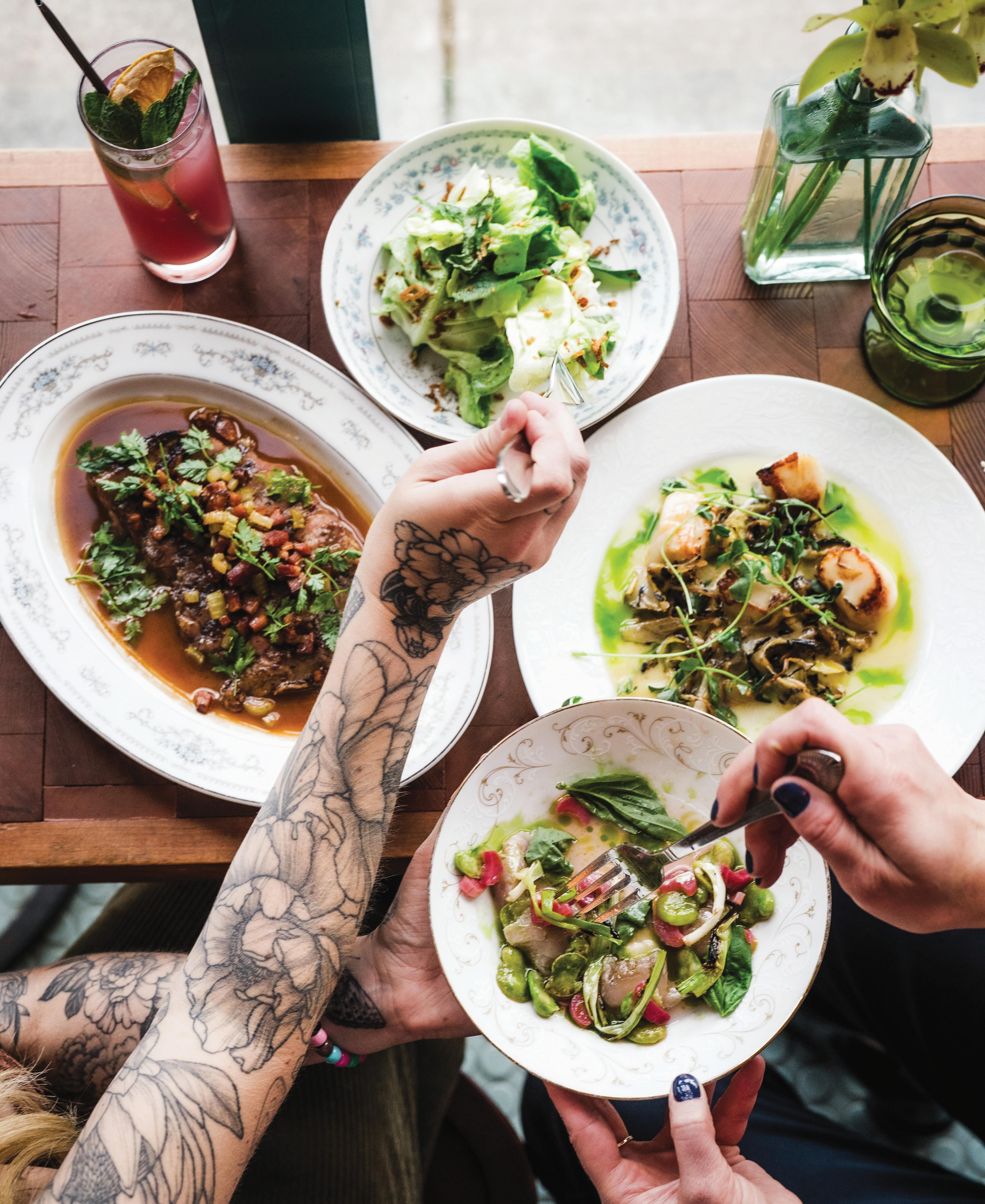
big communal tables and plenty of room to spread out. Together, they make the neighborhood feel less like a cluster of businesses than a destination running on shared momentum.
By afternoon, the focus shifts toward Bellingham’s arts and culture scene. The SPARK Museum of Electrical Invention has a way of surprising first-time visitors. Radios, telegraphs and early experimental devices trace centuries of scientific curiosity. But the real draw is the MegaZapper Electrical Show, where one of the country’s largest Tesla coils sends arcs across the room in a thrilling live demonstration.
In summer, Bellingham really hits its stride. The Bellingham Circus Guild, a nonprofit with year-round programming, really hits its stride when the weather turns. Outdoor performances, camps, student showcases and seasonal productions bring aerial silks, trapeze and acrobatics into wider view. The skill level is high, the tone remains playful and the performances work for kids and adults alike without pandering to either. Tickets tend to go quickly, so plan ahead.
Back downtown, the city’s international range reveals itself within a few blocks. Ambo Ethiopian Cuisine turns out generous injera platters layered with lentils and slow-cooked meats. Naan & Brew handles curries and fresh naan, while Namaste serves a slightly more polished Indian dinner. Café Akroteri remains a longtime standby for moussaka, souvlaki and generous Greek plates. All sit within easy walking distance of the Pickford Film Center.
The Pickford Film Center is where locals go for independent and international films, with art-house releases, documentaries, festivals, and filmmaker Q&As shaping the calendar. Nearby, Mount Baker Theatre adds another kind of drama. The 1927 Moorish Revival venue draws a mix of indie and legacy talent— artists like Modest Mouse, Tori Amos and Joan Baez—along with comedians, touring musicians and orchestras.
Wind down the evening at The Temple Bar, tucked near the Pickford. The room is low-lit and small, with a handful of seats and a short menu. The Negroni is the go-to.
After checking out, make a quick stop at Mercato delle Bontà. The sandwich to order is The Star of the Show: thin-shaved mortadella, fresh mozzarella and arugula on olive oil-slick housemade focaccia, sliced to order and built for the drive.
Fairhaven, a 5- to 10-minute drive south of downtown, shifts the pace. Once its own nineteenth-century port town, it still reads that way, with late-1800s red-brick buildings, preserved façades and a compact core clustered around Village Green. The storefronts now hold cafés, bookstores and small shops, but the rhythm seems slower and definitely more settled than downtown.
Nearby, Babygreens Plant Shop is compact and plant-filled, with low-key-care pothos and snake plants sharing space with fiddle
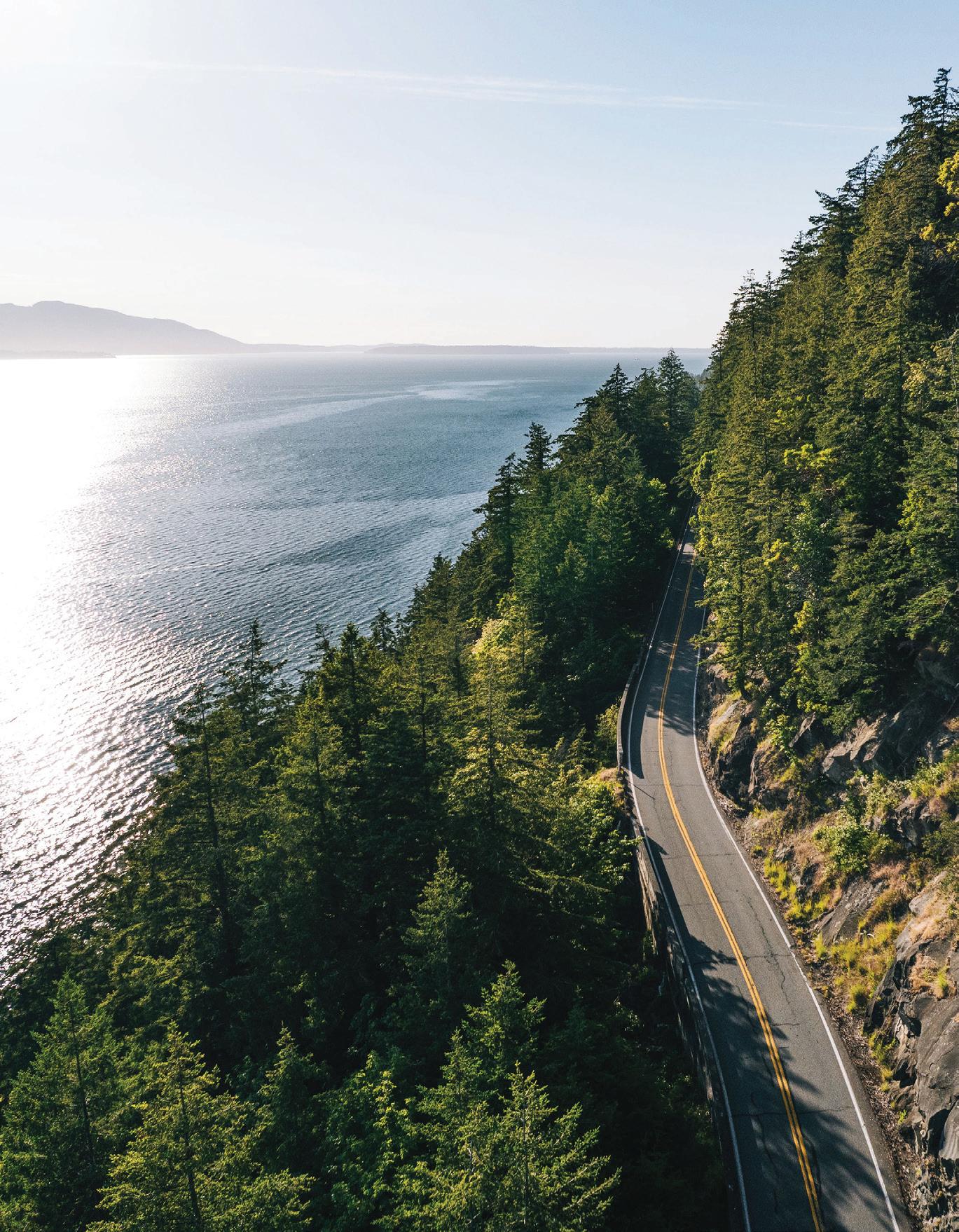
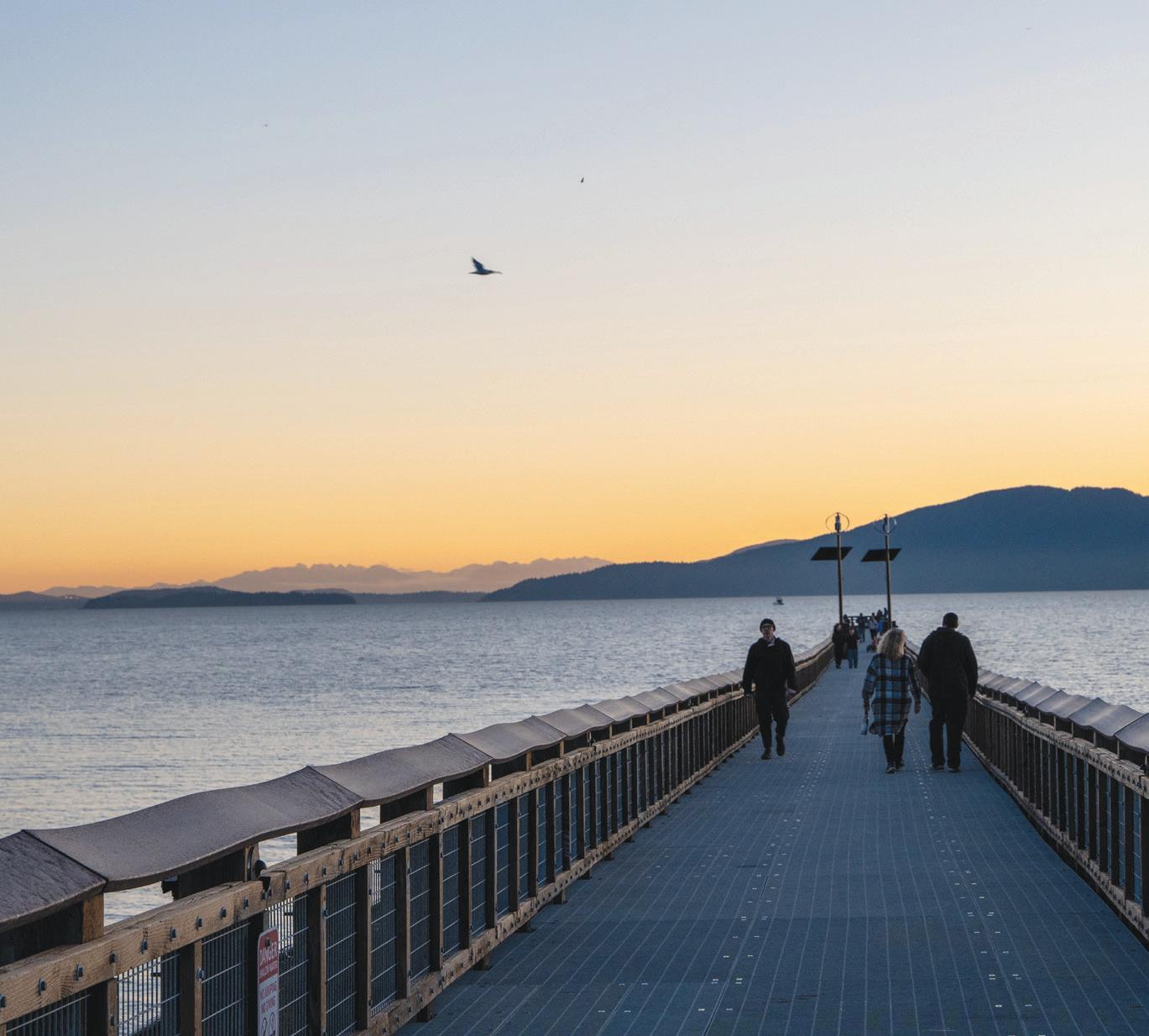
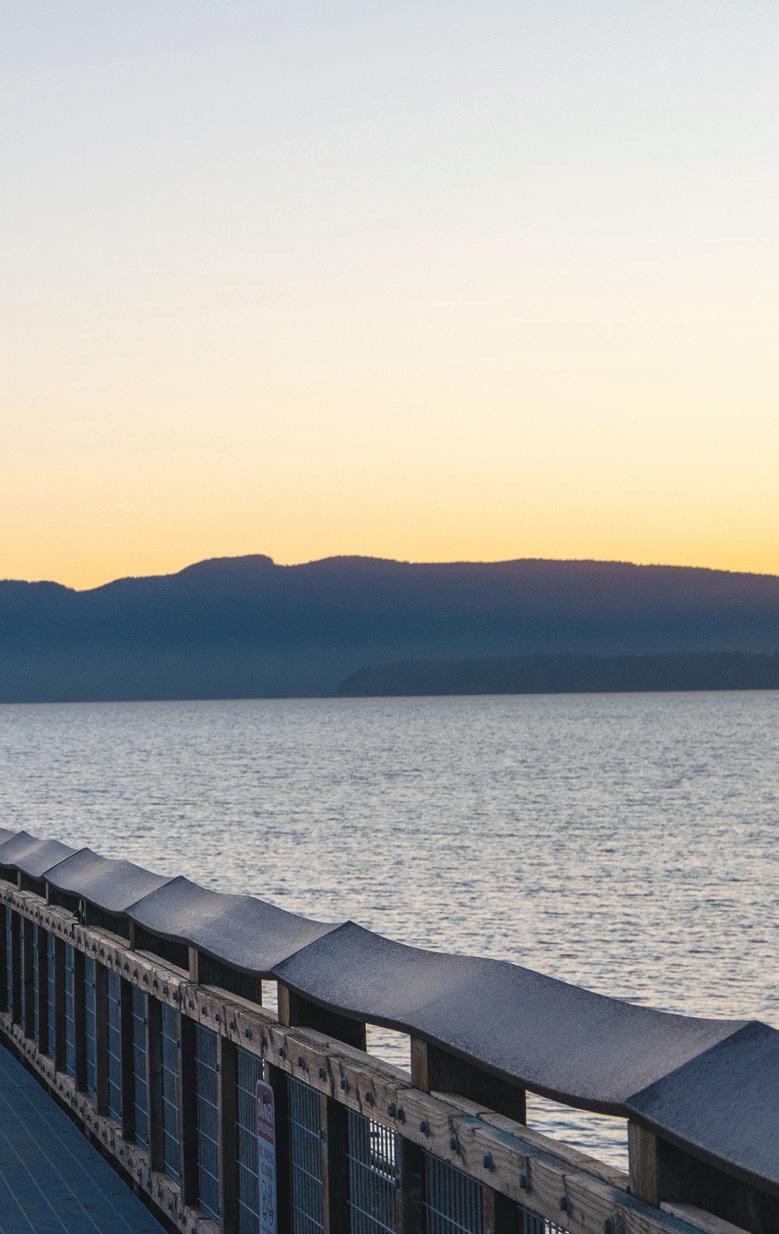
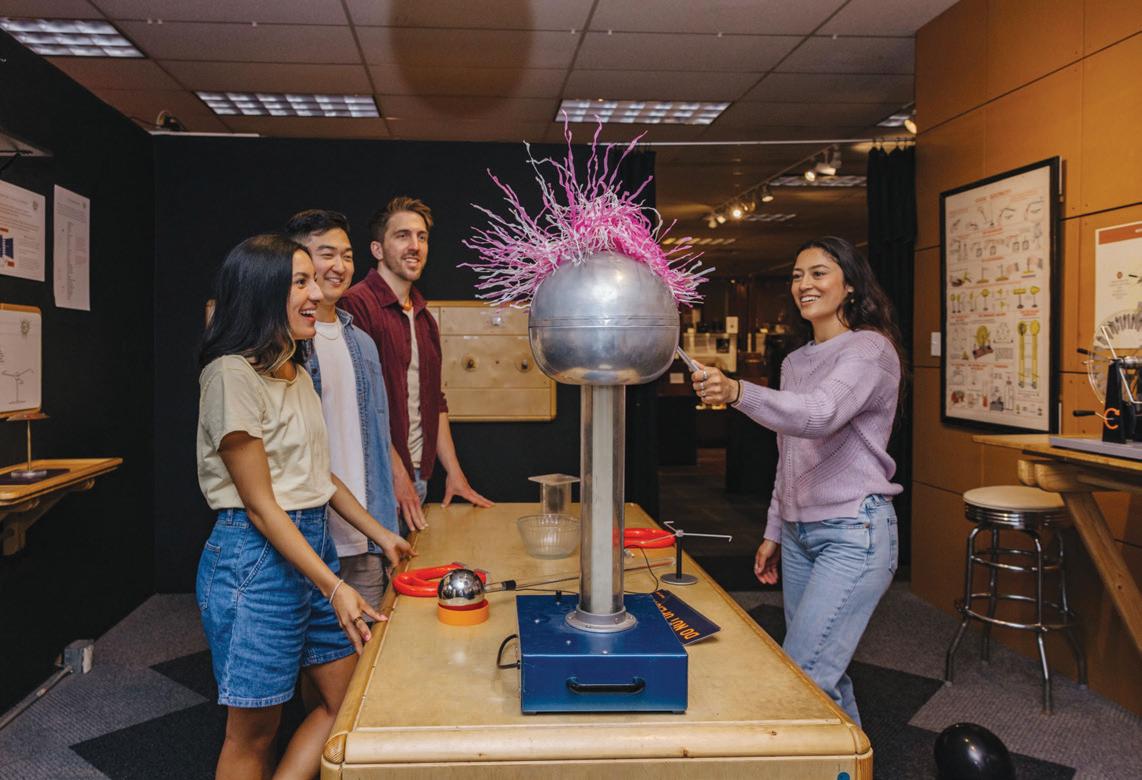
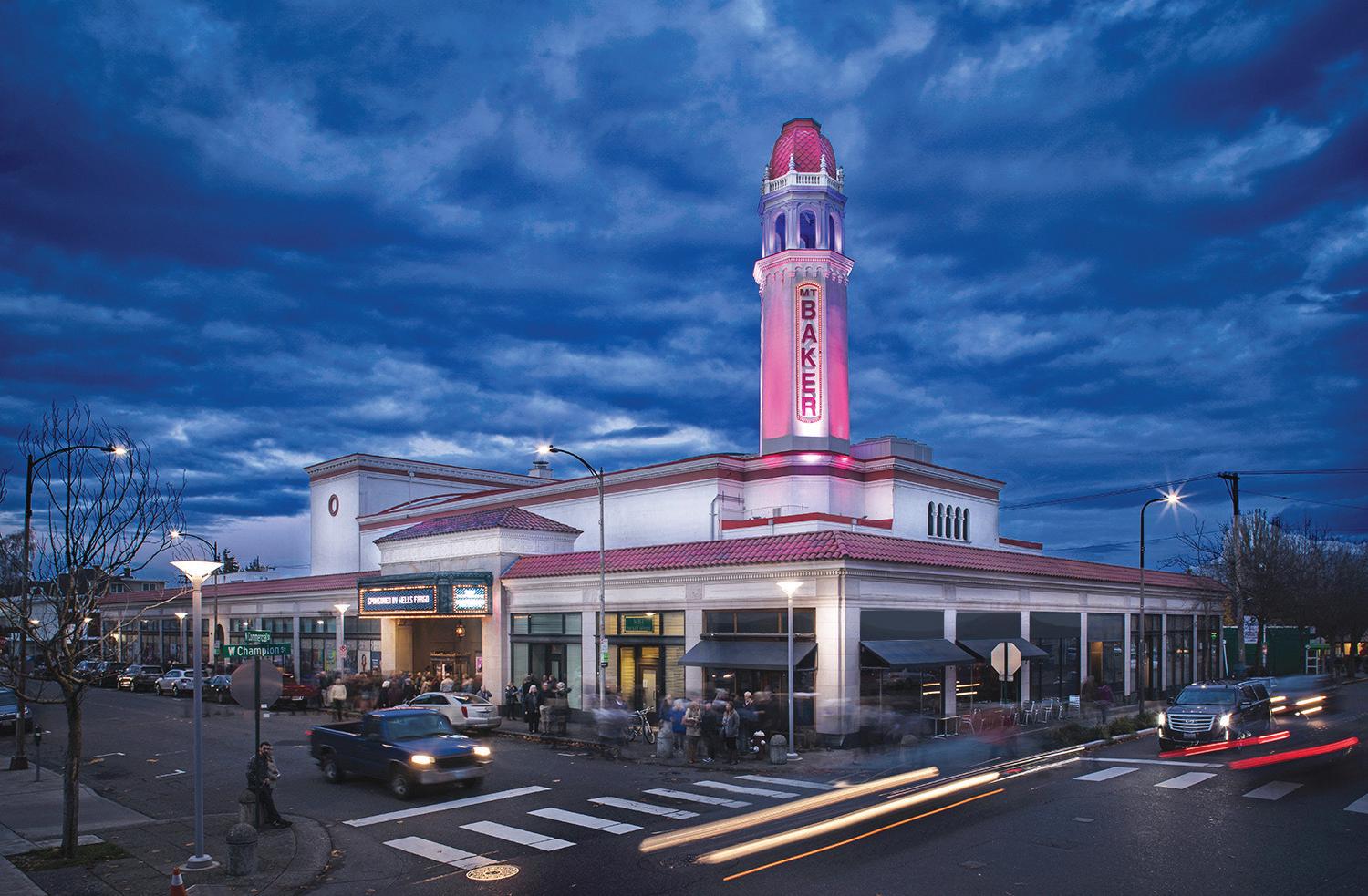
leaf figs, monstera, pots and a few small home goods. Bloomhaven Bottle Shop keeps things entirely nonalcoholic (think wine, beer and spirits), but reads like a neighborhood wine bar.
A few doors down, J’s Kitchen brings Caribbean flavors to the mix with mofongo, arroz con gandules and slow-braised meats, served simply with a whole lot of care.
From Village Green, the route naturally pulls toward the water. Taylor Dock extends over Bellingham Bay toward Boulevard Park, with ferries in the distance and the San Juan Islands on the horizon. Before leaving town, Little Squalicum Pier offers a quieter way out. Extending more than 1,200 feet into Bellingham Bay (one of the longest public piers in Washington), it was opened to the public for the first time after its original 1912 construction. Today, it draws anglers, walkers and seabirds, with open water on all sides and a different perspective on the coastline.
South of town, Chuckanut Drive makes a fitting final stretch. Forest presses close to the road, then gives way to water views.
At milepost 14, Larrabee State Park delivers one last shift in scenery: trails through the trees, rocky beach access, views over Samish Bay and tide pools that reward a slower look.
Pro tip: For those who like a little structure, Visit Bellingham’s free Arts & Culture Crawl Quest Pass (available at www. bellingham.org/quest) offers a low-effort way to connect these stops. Downloadable and simple to use, it highlights key cultural sites without dictating the experience.
EAT
Ambo Ethiopian Cuisine www.amboethiopian.com
Bloomhaven Bottle Shop www.bloomhavenna.com
Café Akroteri www.cafeakroteri.com
Cof& www.instagram.com/cofy.wa
J’s Kitchen www.jskitchenfairhaven.com
Kulshan’s Trackside Beer Garden www.kulshanbrewing.com/ trackside
Mercato delle Bontà www.mercatobellingham.com
Naan & Brew www.naanbrew.com
Namaste www.namastetasteofindia.com
Otherlands Beer www.otherlandsbeer.com
Roe www.eatroe.com
Saltadena Bakery & Cake Shop www.saltadena.com
Stemma Brewing www.stemmabrewing.com
The Temple Bar www.templebarbellingham.com
STAY
Heliotrope Hotel www.heliotropehotel.com
PLAY
Babygreens Plant Shop www.babygreens.co
Bellingham Circus Guild www.bellinghamcircusguild.com
Big Bad Bookstore www.bigbadbookstore.com
Larrabee State Park www.parks.wa.gov/find-parks/ state-parks/larrabee-state-park
Mount Baker Theatre www.mountbakertheatre.com
Pickford Film Center www.pickfordfilmcenter.org
Ragfinery www.ragfinery.com
SPARK Museum of Electrical Invention www.sparkmuseum.org
Whatcom Museum www.whatcommuseum.org
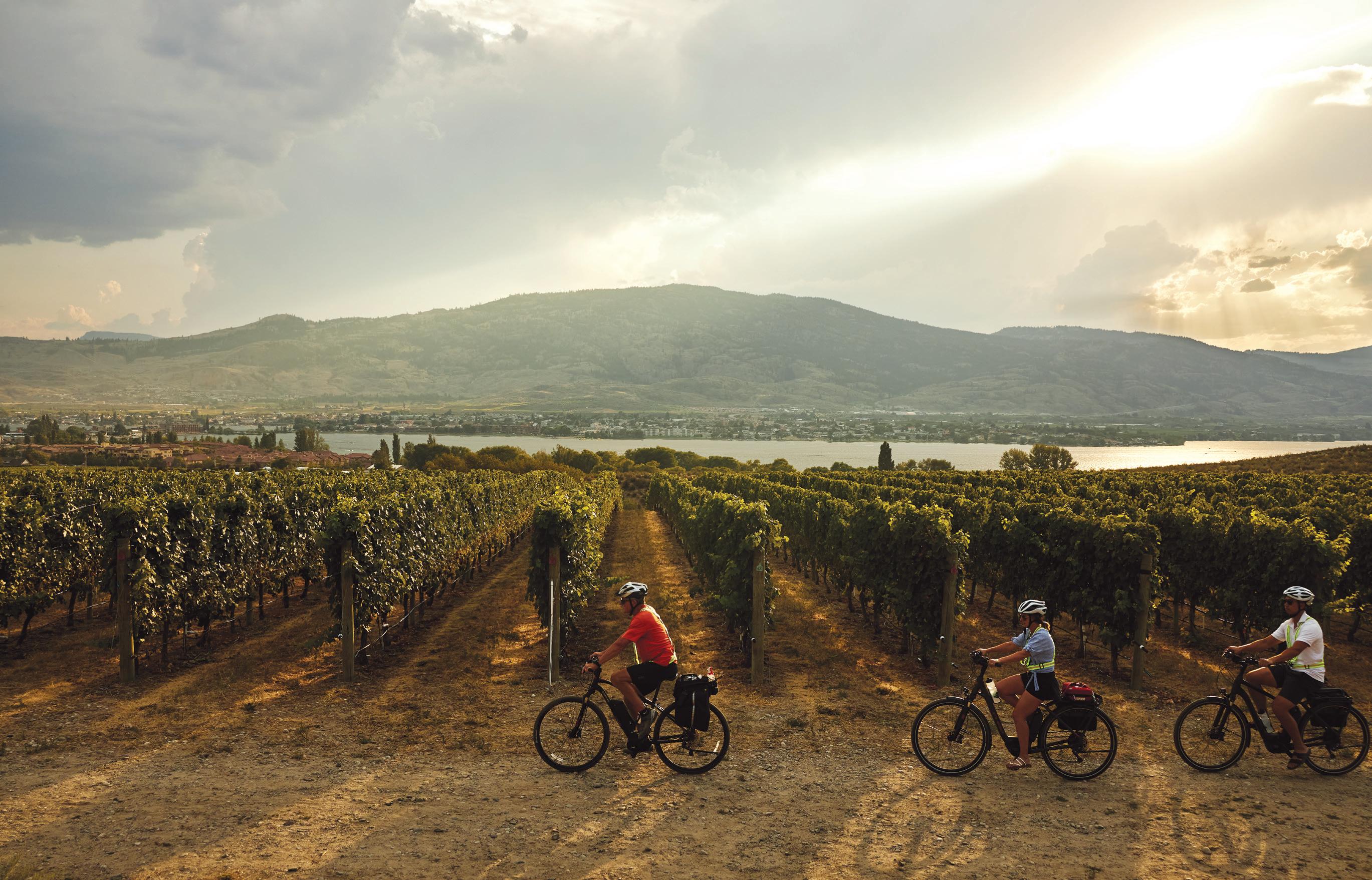
In the southern Okanagan Valley, desert hills, warm lake water and Syilx culinary traditions shape one of the Northwest’s most surprising summer escapes
written by Ryn Pfeuffer
AT THE SOUTHERN TIP of British Columbia’s Okanagan Valley—minutes north of the Washington border—Osoyoos feels almost out of place. The landscape shifts quickly—pale sand, sagebrush instead of fir, rolling vineyards and a dry heat that feels more Napa than Pacific Northwest. At the center of it all sits Osoyoos Lake, tepid enough in summer that nobody thinks twice before jumping in.
Arriving from Washington is surprisingly easy. Highway 97 crosses the Oroville border, and within minutes, orchards and vineyards line the road. This pocket of the South Okanagan ranks among Canada’s hottest, driest regions, conditions perfect for grapes and lake days.
For a weekend visit, start with the water.
Osoyoos Lake averages about 75 degrees Fahrenheit in summer. Paddleboards drift across glassy morning water. By midafternoon, inflatable flamingos and floating coolers appear.
Families often head straight to Gyro Beach, a sandy stretch near the marina where kids splash inside a roped swim zone while boats idle nearby. Early morning offers calm water and easy parking. Stay late, and the lake slips into sunset, hills turning pink and gold while sailboat masts trace silhouettes against the sky.
If Gyro gets packed, locals go elsewhere: Cottonwood Beach beneath tall shade trees, Legion Beach for sunset views or sẁiẁs Provincial Park at Haynes Point, where a narrow sand spit reaches into the lake.
Wine, though, is the real story here.
Just outside town, Nk’Mip Cellars holds an important place in North American wine history as the first Indigenous-owned winery on the continent. Tastings focus on reds shaped by arid soils—cabernet sauvignon, merlot, syrah. If available, order the Qwam Qwmt riesling ice wine poured into a Bernard Callebaut chocolate cup … drink and dessert in one.
Next door, the Nk’Mip Desert Cultural Centre introduces the desert landscape surrounding the town. Trails wind through antelope brush and prickly-pear cactus while metal sculptures by
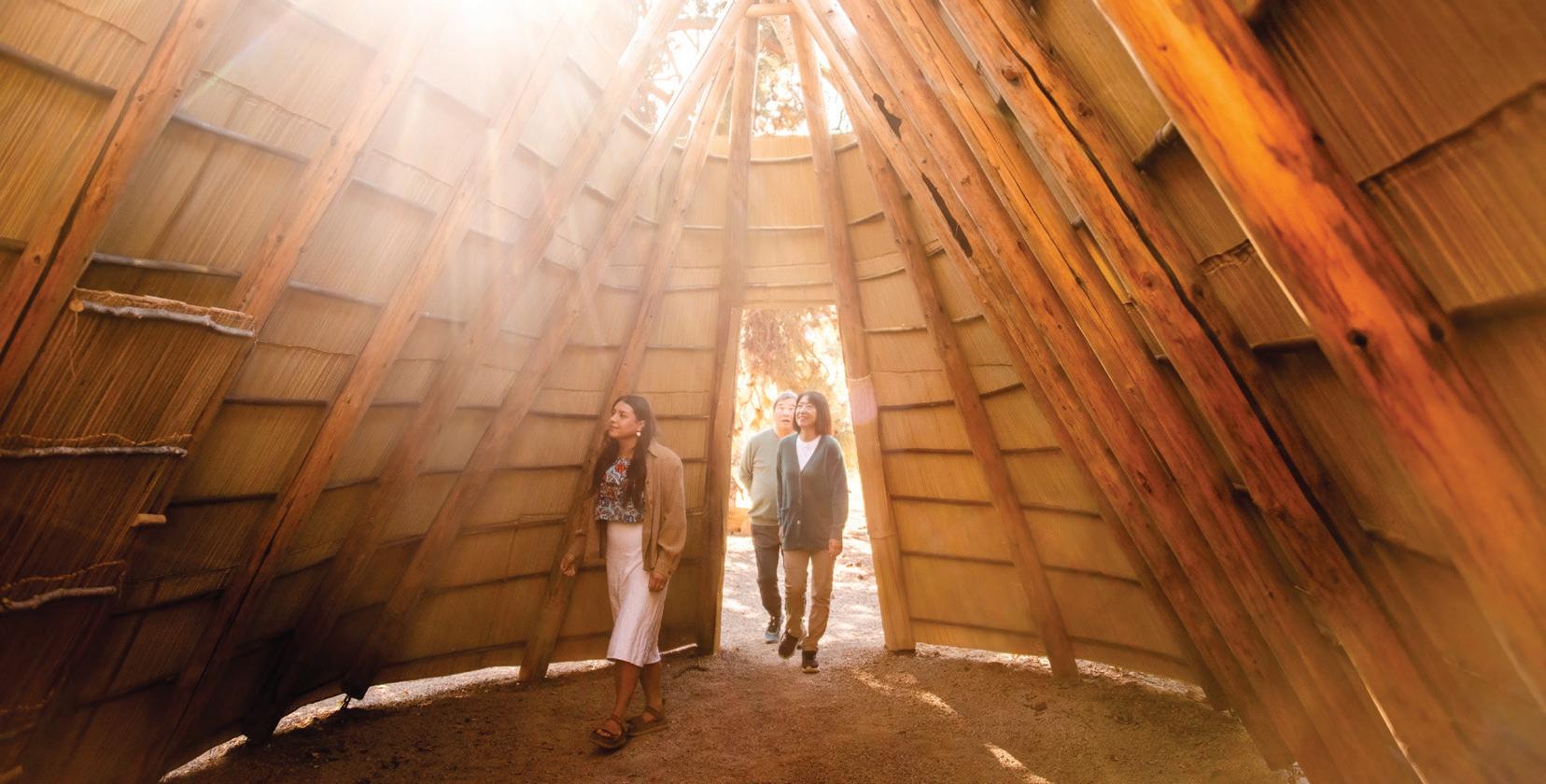
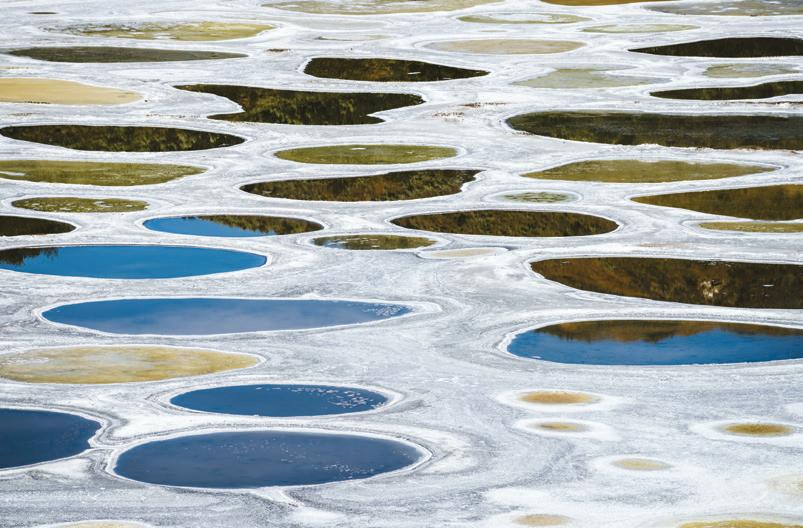
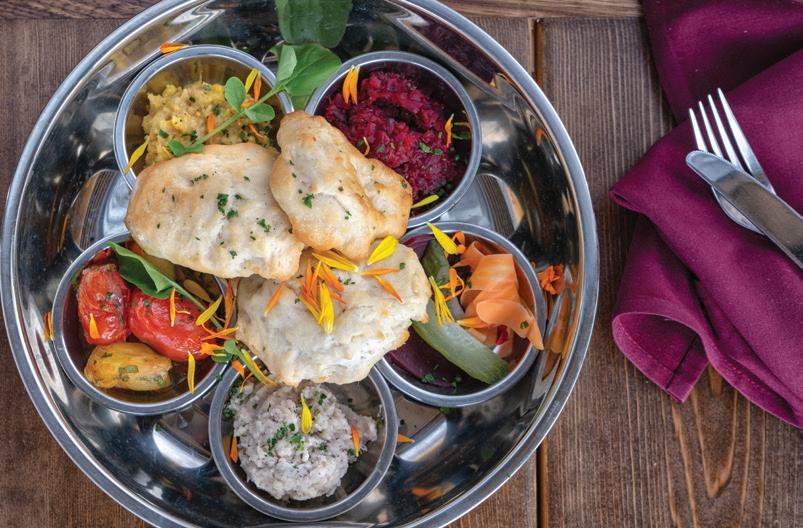
Indigenous artist Smoker Marchand rise from the sage and rattlesnakes, coyotes and mule deer move through the ecosystem. Inside, a short film shares stories of Sen’klip the Coyote while galleries display artwork from the historic Inkameep Day School.
Fifteen minutes north sits Tinhorn Creek Vineyards, one of the wineries that helped shape the modern Okanagan wine scene. Most visitors stop at the tasting bar, but it’s worth wandering into the demonstration vineyard behind the patio, where rows of grapes sweep across the hillside. Late-summer visitors can taste fruit directly from the vines and compare it with the finished wine in their glass. For a short walk before or after tasting, the Golden Mile Stamp Mill Trail begins nearby and climbs into the hills toward old mining ruins and wide views across the sage-covered benchlands.
Driving between wineries, it’s worth pulling over at the roadside viewpoint for Spotted Lake, known to the Syilx people as kłlilx’w. In summer, evaporation divides the lake into hundreds of mineral pools in shades of yellow, green and blue. The lake holds deep cultural significance and is viewed respectfully from the overlook along Highway 3. Consider it more of a quiet moment with the landscape rather than a tourist stop.
Back in town, Main Street moves with the slow pace of summer. Coffee, beach, dinner, repeat. Ease into the morning at Junction 3 Coffee House for espresso and a pastry before wandering
15 Park Bistro
www.15parkbistro.com
The Bear, The Fish, The Root & The Berry www.bearfishrootberry.com
Junction 3 Coffee House @junction3coffeehouse on Instagram
La Marqueza Mexican Tacos & Market www.lamarqueza.ca
Nk’Mip Cellars www.nkmipcellars.com
Roberto’s Gelato www.robertosgelato.com
Tinhorn Creek Vineyards www.tinhorn.com STAY
Walnut Beach Resort www.walnutbeachresort.com
PLAY
Nk’Mip Desert Cultural Centre www.nkmipdesert.com
nearby shops. Lunch might mean tacos and a cold margarita at La Marqueza Mexican Tacos & Market, a lively little spot where al pastor arrives smoky with grilled pineapple and churros close the meal on a sweet note.
Later, cool off with a scoop at Roberto’s Gelato. Thirty rotating flavors fill the case in high season, with unique flavors like root beer, honey lavender and carrot cake alongside a solid espresso.
Dinner might unfold lakeside at 15 Park Bistro. A patio table overlooks the water while plates arrive from valley farms—beet and goat cheese salad, Pacific halibut, the Sunday prime rib locals swear by. The Peach Blossom cocktail, bourbon with ripe peach, pairs well with balmy desert evenings.
Or head to The Bear, The Fish, The Root & The Berry at Spirit Ridge Resort, where the menu reflects the Syilx Nation’s Four Food Chiefs story. Bannock arrives steaming hot with spreads, somewhere between biscuit and fry bread. The salmon platter presents several preparations—smoked, candied and cured— each echoing the lake and land around it.
Evenings stretch naturally here, one more glass of wine, one more conversation as the lake darkens beyond the patio. Desert hills meet warm water. Indigenous food traditions meet modern wine culture. A weekend in Osoyoos feels like the Northwest’s quiet little secret.
































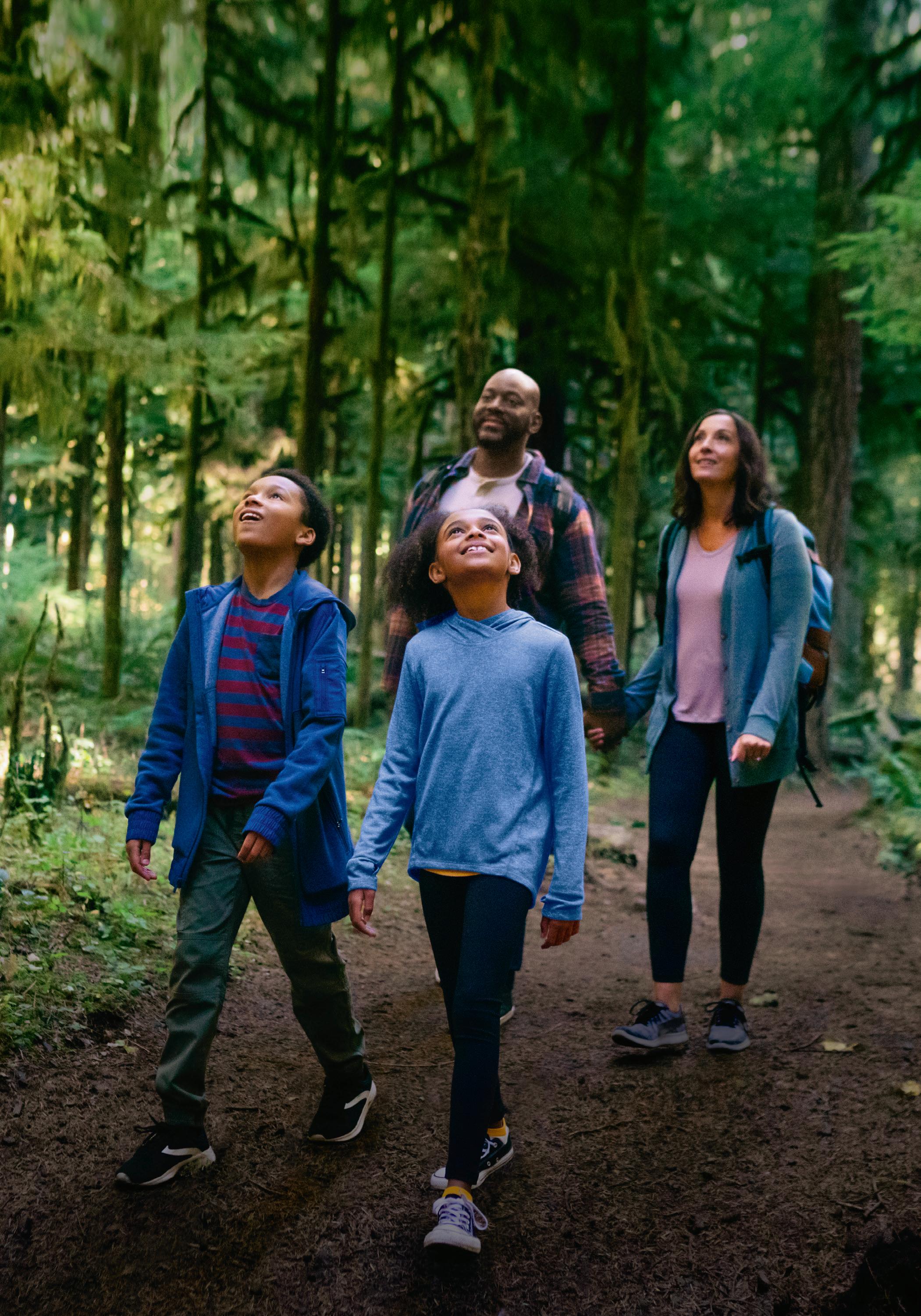
Remember the last time your family visited the forest? It’s a place of wonder and imagination for the whole family—where stories come to life. And it’s closer than you think. Sounds like it’s time to plan your next visit. Make the forest part of your story today at a local park near you or find one at DiscoverTheForest.org.



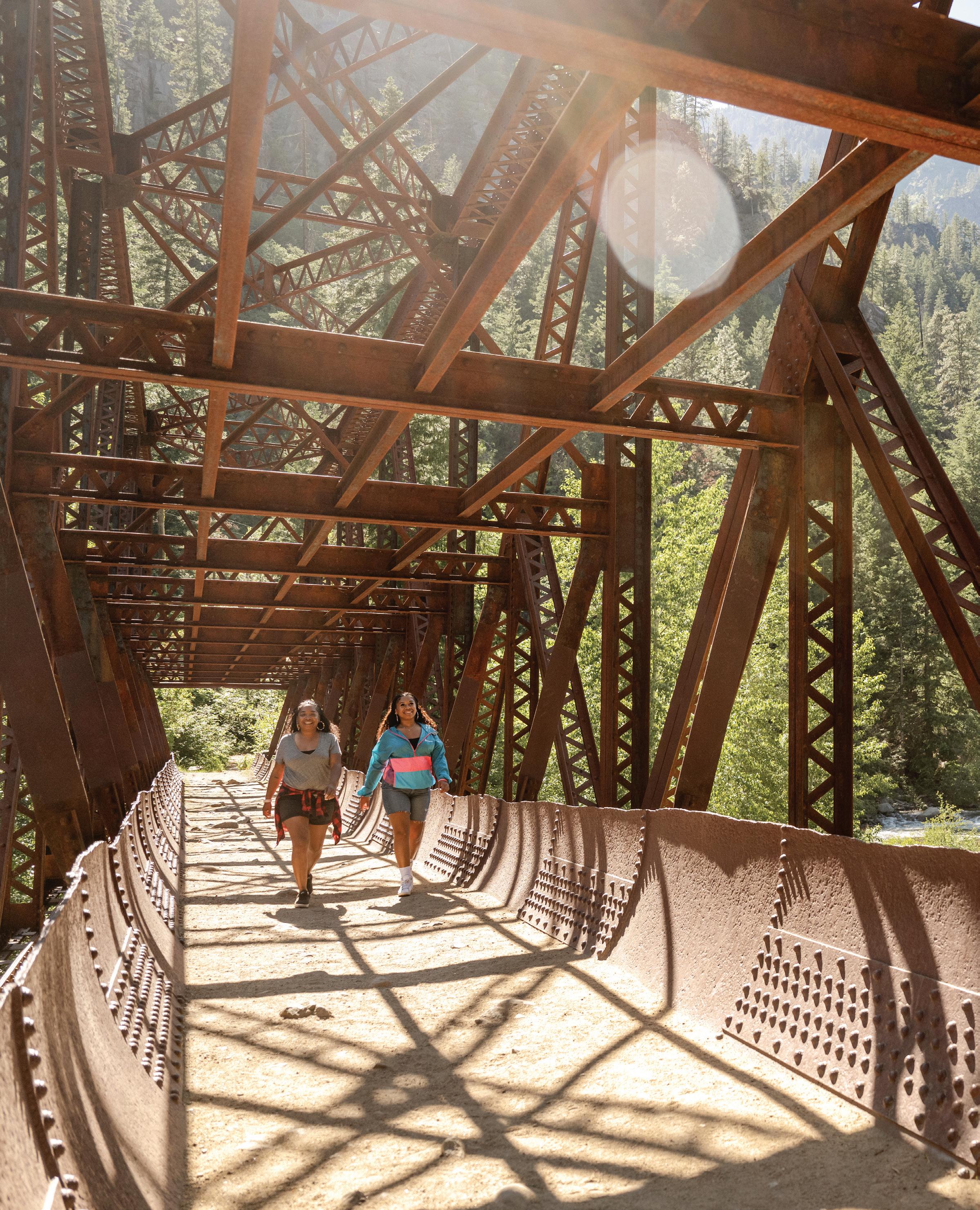

Hiking the Tumwater Pipeline Trail near Leavenworth.
The Ritz-Carlton Residences, Portland are not owned, sold or developed by The Ritz-Carlton Hotel Company, L.L.C. or its affiliates (“The Ritz-Carlton”). Ready Capital uses The Ritz-Carlton marks under a license from The Ritz-Carlton, which has not confirmed the accuracy of any of the statements or representations made herein. The Ritz-Carlton Residences, Portland return with renewed vision, refined offerings, and a commitment to an unparalleled lifestyle. Discover a home found nowhere else in the city. Welcome to the next evolution of elevated living.