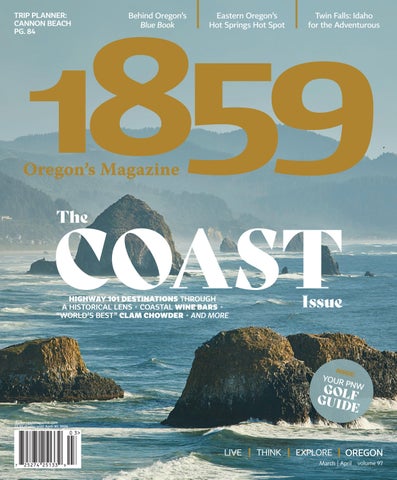
Twin Falls: Idaho for the Adventurous Eastern Oregon’s Hot Springs Hot Spot


![]()
Twin Falls: Idaho for the Adventurous Eastern Oregon’s Hot Springs Hot Spot


Nestled in the heart of western Montana’s vast wilderness lies a place where outdoor adventure meets cultural vibrancy and every moment is a memory waiting to be made. Whether you are strolling the sidewalks of our charming downtown or exploring our expansive trails systems, Missoula, Montana, was made for discovery.
With a population just under 80,000, Missoula perfectly blends small-town charm with big-city amenities, with accommodations ranging from big-name hotels to boutique lodging. Culturally, Missoula shines. Art is a way of life and music flows as naturally as the river that runs through the heart of the city. Our music scene is seriously impressive—headliners sell out outdoor amphitheaters, and the sound of talented up-and-coming acts groove from every dive, brewery and cafe in town.
When it comes to recreating under Montana’s big sky, Missoula is paradise—seemingly endless trail systems beckon, breathtaking vistas await around every bend, and every day presents a new way to take to the water.
Let Missoula’s food scene surprise you—talented chefs with diverse influences serve up some seriously delicious grub using fresh, seasonal flavors. Missoula takes “local” seriously and “farm-to-table” is more than a catch phrase, as evidenced by our nationally-recognized farmers market scene, where you can find everything from Montana-made crafted items to homegrown, local produce.
Missoula is a place you have to experience to believe, and with daily direct flights from Portland, your perfect adventure is closer than you think. Pack your bags. It’s time to make memories, and Missoula is waiting.
Call 1.800.526.3465 or visit destinationmissoula.org/1859 for more information.


photography by Daniel O’Neil
Dri wood artist Josh Blewe finds hidden meaning in washed-up wood along the Oregon Coast. (pg. 44)

What if the rain-soaked Oregon Coast was facing drought conditions? It turns out that the timing of precipitation ma ers for a functioning coastal ecology. What will 2026 bring?
wri en by Daniel O’Neil
68
Photographer Justin Bailie sees the Oregon Coast in black and white, stunningly. wri en by Kerry Newberry


Six spots along the Oregon Coast with fascinating connections to history. wri en by Jean Chen Smith


Help sustain Oregon’s crabbing legacy by pre-ordering your Oregon Dungeness Crab License Plate here!


16 NOTEBOOK
Cascade Head Biosphere turns 50; Mt. Bachelor snowshoe tours; the Indigenous Sasquatch reconsidered.
20 FOOD + DRINK
Ziggy’s in Gearhart; coastal wine bars; the horseradish martini?
24 FARM TO TABLE
Six generations of sheep breeders.
32 HOME + DESIGN
Generational winemaker Adam Campbell’s family retreat.
42 MIND + BODY
Oregon prioritizes outdoor access for all.
44 ARTIST IN RESIDENCE
Josh Blewe ’s dri wood sculptures.
50 MY WORKSPACE
Carla Axtman and Oregon’s Blue Book
52 GAME CHANGER
Curry County’s creative water consortium.
78 TRAVEL SPOTLIGHT
Eastern Oregon’s Hot Lake Springs.
80 ADVENTURE
Rolling out the Salmonberry Trail.
82 LODGING
Lightwell Hotel & Spa in Hood River.
84 TRIP PLANNER
Cannon Beach, the jewel of the Oregon Coast.
91 NW DESTINATION
Idaho Falls and the Snake River Canyon.


Illustrator
Redefining Rainy
“It’s a delight to learn something new from each drawing. When sharing the feelings of being surrounded by a glittering ocean, a dreamy sunset, or swept up in the susurration of wind through foliage, illustration is my most accessible tool. How simultaneously difficult and straightforward sensation and impression can be alchemized from ephemeral to tangible— and what a delight it is to share those deeply personal feelings.” (pg. 62)
Cate Andrews spends as much time as possible outside in Seattle. You can see more of her work at www. cateandrewsmakes.com.

KARL MAASDAM Photographer
My Workspace
“When 1859 asked me to photograph the Oregon Blue Book’s editor, I remembered buying my first copy in college for a class at Oregon State. I’ve loved the Blue Book ever since. Editor Carla Axtman was wonderful—we talked about growing up in Oregon and photography. Carla takes landscape photos. I encourage every Oregonian to pick up a Blue Book to learn about our state and see some of Carla’s beautiful photos.” (pg. 50)
After twelve years as a newspaper photographer in Astoria and Corvallis, Karl Maasdam, a native Oregonian, has been a freelance editorial and commercial photographer based out of Corvallis for the last twenty-one years.

Writer
Farm to Table
“Spring for me conjures a picture of newly born lambs and chicks frolicking on farms throughout Oregon. As we celebrate the International Year of the Woman Farmer in 2026, I am honored to interview a woman at the helm of all things agriculture in our state, Oregon Department of Agriculture’s Director Lisa Charpilloz Hanson, who, along with her appointed position helping our state’s farmers and ranchers be successful in an often-challenging industry, is also a sixth-generation sheep rancher, raising award-winning Hampshires and Southdown sheep with her daughters.” (pg. 24)
Julie Lee has been writing for 1859 Oregon’s Magazine since 2008 and is director of PR for Little Bird Media. She has recently taken up golf on weekends to torture herself as a perfectionist.

JEREMY STORTON Writer + Photographer Beerlandia
“I grew up around the ocean the same way people describe their heritage. I’m Oceanic, especially on my father’s side. My favorite places and my favorite memories revolve around the sea, and these experiences are inextricably intertwined with flavor. I reminisce with every taste, and every good pairing is a homecoming.” (pg. 20)
Jeremy Storton is an Advanced Cicerone, beer educator, awardwinning podcaster and freediving instructor.


EDITOR Kevin Max
CREATIVE DIRECTOR Allison Bye
WEB MANAGER Aaron Opsahl
SOCIAL MEDIA MANAGER Joni Kabana
OFFICE MANAGER Cindy Miskowiec
DIRECTOR OF SALES Jenny Kamprath
ACCOUNT EXECUTIVE Terresa Clark
HOMEGROWN C HEF Thor Erickson
BEERLANDIA COLUMNIST Jeremy Storton
C ONTRIBUTING WRITERS Cathy Carroll, Jean Chen Smith, Melissa Dalton, Joni Kabana, Julie Lee, Isabel Max, Kerry Newberry, Daniel O’Neil, Ben Salmon, James Sinks
C ONTRIBUTING PHOTOGRAPHERS Justin Bailie, Dan Hawk, Tambi Lane, Karl Maasdam, NASHCO, Daniel O’Neil, Jeremy Storton, Evan Sung, Mike Wilson
CONTRIBUTING ARTISTS Cate Andrews
70 SW Century Dr. Suite 100-218 Bend, Oregon 97702
Headquarters
592 N. Sisters Park Ct. Suite B Sisters, OR 97759
www.1859magazine.com /subscribe @1859oregon
All rights reserved. No part of this publiCation may be reproduCed or transmitted in any form or by any means, eleCtroniCally or meChaniCally, inCluding photoCopy, reCording or any information storage and retrieval system, without the express written permission of Statehood Media. ArtiCles and photographs appearing in 1859 Oregon’s Magazine may not be reproduCed in whole or in part without the express written Consent of the publisher. 1859 Oregon’s Magazine and Statehood Media are not responsible for the return of unsoliCited materials. The views and opinions expressed in these artiCles are not neCessarily those of 1859 Oregon’s Magazine, Statehood Media or its employees, staff or management.


IN THIS ISSUE, the Oregon Coast plays the leading role. Many Oregonians don’t know how good we have it when it comes to public access and the coast. Unlike most other states with an ocean shoreline atomized by countless parcels of private property, Oregon’s beaches are public, in fact a public highway. It was in 1913 that Oregon Governor Oswald West declared our beaches a public highway to prevent their privatization. In today’s parlance, that was a total baller move.
Later, in the 1960s, public access came under threat when a hotel in Cannon Beach claimed a good swath of the beach to be for the private use of their guests. Governor Tom McCall then swooped in with helicopters and media for a spectacle that would grease the passage of his Beach Bill, claiming state ownership all the way back to the line of vegetation.
There have been other attempts by private interests to commandeer bits and pieces of the coast for private profit, but none, so far, has succeeded because we believe that the Oregon Coast is a common treasure, not private equity. May it always remain the people’s coast!
Both of our features center on the Oregon Coast, but with different lenses. In “Redefining Rainy” on page 62, we look at the seemingly ab-
surd notion that the perma-damp coast could be affected by drought. The coast sees plenty of annual precipitation, but because the coastal ecology doesn’t have natural ways to preserve rainfall, precipitation has to come at the right time to avert drought. Last year was one such year of textbook drought on areas of the coast. What will happen in 2026?
Our other feature, “Time Travelers” on page 54, looks at the various history lessons that you can learn from Oregon’s coast simply by traveling it from top to bottom, cover to cover. There are fascinating tales from Native American tribes to Lewis and Clark, as well as oddities from WWII.
The Coastal Issue’s Trip Planner lands us in Cannon Beach, no longer the scene of shore privatization, now the venue for arts, culture and history. Writer James Sinks describes it as “a place where nothing is in a hurry.” Turn to page 84.
Perhaps no menu item represents the Oregon Coast better than clam chowder. Like all foods, there has to be a “best” or at least the boast of “best.” Homegrown Chef Thor Erickson frames appropriately (best?) with the moniker “cla(i)m chowder.” Turn to page 30 to hear his story and to find his recipe for the world’s best clam chowder, using the world’s best clams from the world’s best beaches on the Oregon Coast.
More ways to connect with your favorite Oregon
www.1859oregonmagazine.com | #1859oregon | @1859oregon

HAVE A PHOTO THAT SHOWS OFF YOUR OREGON EXPERIENCE?
Share it with us by filling out the Oregon Postcard form on our website. If chosen, you’ll be published here! www.1859oregonmagazine.com/postcard
photo by Tom Gossen
My wife and I have been visiting the Oregon Coast every few years over the past thirty years. This night, the new moon provided a dark sky, and there was an absence of the frequently present marine layer of clouds. And, the a ernoon high tide had le a reflection pool south of Haystack Rock. You might say the stars aligned for a perfect night of Milky Way photography.


Read 1859 Oregon’s Magazine and 1889 Washington’s Magazine anywhere, on any device, with our digital edition. Follow us today on Issuu.com.
www.bit.ly/statehood mediadigital
More Pacific Northwest, delivered to your inbox! Sign up for our Adventure Mail newsletter and get access to the latest getaways, giveaways and more. www.1859oregonmagazine.com/live/ subscribe-to-oregon-adventure-mail


Stop by Local, our curated online shop of goods made by businesses in the Pacific Northwest. Find jewelry, specialty foods and more. Or show your state pride with 1859 T-shirts, hats and other apparel. Buy local. Feel good. www.1859oregonmagazine.com/shop

NOTEBOOK 16
FOOD + DRINK 20
FARM TO TABLE 24
HOME + DESIGN 32
MIND + BODY 42
ARTIST IN RESIDENCE 44


written by Cathy Carroll

As the Cascade Head Biosphere celebrates a half-century as Oregon’s sole UNESCO Biosphere Region, events over several months include a Natural Arts and Science speaker series and art workshops. The 102,110-acre reserve is open year-round for hiking, paddling, observing and geocaching near Neskowin and Lincoln City. Volunteering with 4CAST supports research and projects that study how climate change is reshaping the coastline and surrounding communities.
www.4castproject.org/ volunteer

Discover trendy vintage treasures and embark on a nostalgic journey across a score of shops in Lincoln City with the Vintage Voyage, a free, self-guided digital passport. Participating stops range from longtime favorite Robert’s Bookshop—home to more than 200,000 used and antique titles— to newer finds such as Blue Heron Antiques and Staghorn Vintage. Expect thrifting adventures, special sales, eclectic finds, antique-style glass float drops, guitars and classic ’80s, ’90s and Y2K-era ephemera.
www.explorelincolncity.com/ vintage-voyage


The award-winning, womenowned and -operated distillery Freeland Spirits in Portland is launching Pink Gin for Women’s History Month in March to raise funds for Xcelerate, a local nonprofit that helps women business owners in Oregon overcome systemic inequities to build their businesses and economic power. The naturally pink gin offers a subtle sweetness and notes of marshmallow root, huckleberry, lemon verbena and turmeric.
www.freelandspirits.com www.xceleratewomen.org
www.xceleratewomen.org

After restoring a friend’s Adirondack chair, Eugene-based craftsman Zach White discovered his calling. In 2022, he left a decadelong credit union career to launch Oregon Handcraft, a custom woodshop specializing in heirloom-quality furniture and housewares. Using joinery techniques and premium hardwoods such as walnut and cherry, he creates pieces ranging from butcher block kitchen islands with dovetailed drawers to Eastern cedar Adirondack chairs and rockers. Each piece, including custom work, balances durability with aesthetic detail.
www.oregonhandcraft.com

Embark on a guided snowshoe tour through old-growth forests on Mount Bachelor in Bend on March 28. Local author and historian Glenn Voelz leads the ninety-minute tour, discussing the mountain’s natural and cultural history along the 2-mile route. Gently climb to a high point for sunset, traverse for sweeping views of the Three Sisters Wilderness, pause for a trailside hot chocolate and return to the Nordic Lodge for snacks and conversation by the wood stove.
www.mtbachelor.com/nordic/events/ sunset-snowshoe-tour-6

Rhythm + Revolution, a seasonlong celebration of the legacy of hip-hop culture, unfolds at the Patricia Reser Center for the Arts in Beaverton. It includes the Versa-Style Street Dance Company (pictured) of Los Angeles performing its newest hip-hop in partnership with White Bird Dance of Portland on March 19 through 21. On April 4, “independent nerdcore rapper” Mega Ran performs Grammy-nominated songs from his children’s album inspired by foster-parenting and adopting his baby boy.
www.thereser.org/shows-and-events

Following Her Star
A lifetime of piano and a move to Oregon helped inspire Paula Dreyer’s first album
written by Ben Salmon
ORIGINALLY FROM Michigan, Paula Dreyer grew up with a father who worked for General Motors and a mother who worked hard to keep her daughter connected to the instrument she was learning to play.
“Every one to four years, we’d get transferred somewhere else because my dad would get put on a different project,” she said.
“I started playing piano when I was 7, and every time we moved, my mom was really good about immediately finding a local piano teacher (so there was) never a lapse in lessons,” she continued. “As a mom now, I’m realizing what an accomplishment that was.”
Moms know best, of course, and Dreyer’s was no exception. Her diligence not only eventually led her daughter to a career as a
classically trained musician, it also provided her with some consistency during a childhood marked by change.
“I always had that steady companion of the piano throughout all of those moves,” Dreyer said.
The same has been true ever since. Dreyer—who lives in Bend—knew from junior high that she wanted to be a concert pianist. She attended the prestigious Interlochen Arts Academy in Michigan before earning degrees in piano performance and music education from McGill University in Montreal.


Later, she spent two decades in the Bay Area, where she established herself as a versatile pianist, playing with symphonies and school choirs, in a long-running musical revue and alongside musicians in jazz, Latin and flamenco bands. She taught dozens of students, too, and wrote an instructional book, Little Gems for Piano, which is now a series that has been published all over the world.
In 2018, though, she pulled up her roots and moved to Central Oregon with her family. Without a busy calendar of gigs, she turned her focus to a new experience: writing and recording an album. Released in 2020, Central Star is a set of fifteen solo piano pieces that showcase Dreyer’s considerable skill on the keys as well as her compositional ingenuity. On songs like “Rainbow Ridge” and “Sunset on Lake Michigan”—many tracks are inspired by natural beauty—her classical background blends seamlessly with her pop sensibility and her ear for globally flavored melodies.
After years of playing works by other people and improvising, Dreyer started writing music almost by accident—for a student who didn’t like their proposed recital pieces, and for instructional purposes. But the time and space afforded by her move to Bend prompted her.
“I had more wide-open space, so I just asked myself, ‘What would happen if I didn’t just write for students and I wrote for me?’” she said. “So the title, Central Star, represents Central Oregon, as well as the piano always being my guiding light, and how that fits in with this new environment that I’m in.”
Since releasing the album, Dreyer has started a new concert series, Piano Flow Live, where she performs for an audience alongside natural features such as sparkling rivers, lavender fields and resonant caves. Five seasons in, the response and support has been overwhelmingly positive, she said, not only to the restorative power of the experience, but also to the musical accompaniment she provides.
“It’s really memorable. We always have a live visual artist and we often have charcuterie or wine, so there are so many different senses being activated at the same time,” Dreyer said.
“And I take care in choosing pieces that feel like they fit with the surroundings each time,” she continued. “Every place and every experience is different, and every one deserves its own thoughtful soundtrack.”


A new documentary from OPB shares Indigenous stories revealing Sasquatch as sacred protector
interview by Cathy Carroll
LONG BEFORE Bigfoot, also known as Sasquatch, became a pop-culture icon, Indigenous peoples have viewed the mythical creature as a revered relative. They see Bigfoot not as a monster but as a protector—a spiritual being who teaches humans to respect and care for the earth. In Guardian of the Land, Emmy-nominated director LaRonn Katchia (Warm Springs, Wasco and Paiute) weaves oral histories about Bigfoot sightings and stories through the work of four leading contemporary Indigenous artists and thought leaders.
The twenty-four-minute film from Oregon Public Broadcasting (OPB) takes viewers on a sensory journey through the Nch’i-Wána, or Columbia River lands, where Indigenous cultures believe Bigfoot has long cast a watchful eye over them.
How did it feel to reclaim that narrative of Sasquatch cinematically, and how did Indigenous oral histories shape your visual and storytelling choices?
Growing up on the Warm Springs reservation, every Native person has a story about Sasquatch. We don’t see Sasquatch as a terrifying creature, but as a relative. The idea of the film came from wanting to share some of those oral histories. I knew I wanted to portray voices from throughout the Pacific Northwest, so I reached out to artists from many different tribes. The film includes perspectives from world-champion jingle dancer Acosia Red Elk (Umatilla People), artist Toma Villa (Yakama Nation), tribal council
member Carlos Calica (Confederated Tribes of Warm Springs) and anthropologist Phillip Cash Cash, Ph.D. (Nez Perce, Cayuse). It felt powerful and healing to finally portray Sasquatch in an honorable, respectful way. These perspectives guided every visual and storytelling choice, reminding us that Sasquatch is both a protector and a relative. Including the feminine essence was especially important—honoring balance, care and the often-overlooked matriarchal presence within our teachings.
What were the biggest creative or practical challenges in the film, especially when working with ideas that resist easy explanation?
One of the biggest challenges was translating ideas that live comfortably in oral tradition but resist easy explanation on screen. Sasquatch isn’t meant to be proven or defined, so the goal was to honor that mystery without over-explaining or sensationalizing it. Creatively, we had to trust our instincts, especially in designing a one-of-a-kind Sasquatch presence inspired by tribes of the Pacific Northwest. That included a beautiful buckskin dress created by Acosia Red Elk and a carved mask shaped by renowned Yakama artist Toma Villa. Every element was made with intention, ensuring the design honored not only our stories of Sasquatch, but our tribal customs as well. Ultimately, we wanted the film to reflect Native ways of knowing, where not everything is meant to be explained, but felt, respected and carried forward.
For viewers with a pop-culture idea of Bigfoot, what do you think will be most surprising—or even disorienting—about the film, and how do you hope it reshapes the way they think about being on the land? Viewers might be surprised by the absence of fear, spectacle or the need for proof. In many Native and Indigenous communities of the Pacific Northwest, Bigfoot is not something to be hunted, captured or explained away. It is a living presence, a relative and a teacher that exists alongside the land itself. The film asks viewers to slow down and listen to our stories, the landscapes and the silences in between. My hope is that audiences begin to rethink what it means to be on the land—not as something to conquer or extract from, but as a place of relationship and responsibility. If the film reshapes anything, I hope it encourages respect for the land, for Native knowledge and for the understanding that not everything sacred needs to be seen to be real.
To learn more or watch the film, visit www.opb.org/guardian


recipe courtesy of Jamie Bones, Kachka Fabrika Distillery & Zakuski Bar / PORTLAND
Sip this iconic martini at Kachka’s new, seafood-driven cocktail bar inside their Portland distillery. en take home a bottle of the Kachka horseradish vodka, and invite friends over for a seafood bash—it pairs perfectly with shellfish, tinned fish and briny oysters.
• 2 ounces Kachka horseradish vodka
• ½ ounce Lustau
fino sherry
• ¼ ounce Noilly Prat extra-dry vermouth
• Cocktail onion, for garnish
Chill a martini glass. In a shaker filled with ice, combine the vodka, sherry and vermouth. Quick stir until chilled, and then strain into the martini glass. Garnish with a cocktail onion.

written and photographed by Jeremy Storton
I’VE SPENT the last few days walking the beach with my wife, but right now, I smell of neoprene with a hint of surf wax. I’m sipping an easy-drinking blonde while lazily watching the waves. The coastal wind is cool, but the sun is out, keeping us just warm enough. Coastal days like this are easy, like stepping into a photograph grand enough to hang above the fireplace. It elicits more than a memory, more than an experience. Surfers have a word to describe this feeling: stoke.
We head back to camp to work on dinner for the group. The affair begins with a light Oregon pilsner along with cheese, crackers and olives. The bitterness is playful, and the assertive carbonation awakens my palate for dinner. It’s the perfect apéritif.
We lay out butcher paper and then dump dinner onto the table: potatoes, corn, andouille sausage and fresh crab.
It’s a combination of sweet, savory and spicy protein, which calls for an Irish red. A heavily hopped or higher-alcohol beer would potentiate the spicy sausage. Like having the drunk uncle sit at the kids’ table at a family feast, some things just don’t go together. An Irish red, when done right, has a dry body that cleanses the palate, and an underlying minerality that enhances the flavors of the food.
After dinner, we walk back to the beach to watch the sunset. A double IPA makes for a good sipper that I normally like to pair with heavy pastas, grilled chicken or steaky fish. However, it also works well with briny air and nature’s light show. I grow increasingly aware of my exhaustion and my soreness. Turns out, I’m not the surfer I was thirty years ago. Nonetheless, I take another sip and grin. I can’t help it.
I’m stoked.
Coastal days like this are easy, like stepping into a photograph grand enough to hang above the fireplace. It elicits more than a memory, more than an experience. Surfers have a word to describe this feeling: stoke.


CAFE ROWAN
Chef and owner Spencer Ivankoe’s celebrated visiting-chef series, Cafe Rowan Presents: A Culinary Harmony, continues through summer 2026 with an expanded roster of Michelinstarred and nationally acclaimed talent. Each two-night collaboration features a one-of-akind tasting menu cooked alongside Ivankoe. Spring highlights include Justin Fulton (Margot, Denver), Brandon Rice (Ernest, San Francisco) and Chris Barnum-Dann (Localis, Sacramento), with optional wine pairings curated by standout sommelier Ron Acierto.
4437 SE CESAR ESTRADA CHAVEZ BLVD. PORTLAND www.caferowan.com

HIYAKU
With just eight seats, this intimate omakase pop-up feels more like a private dinner than a night out. The sixteen-course progression might include hay-smoked Oregon albacore poke with red dulse, oyster sashimi set in ponzu jelly and buttery uni sourced from Newport’s OoNee Sea Urchin Ranch. Reservations are released for one weekend each month and vanish quickly. One of the city’s more enchanting dining experiences, chef Sam Saltos pairs local ingredients with Japanese tradition exquisitely.
133 SE SALMON ST. PORTLAND www.hiyakusushi.com
LUSCIOUS
Chef Rose Archer, who honed her craft under Massimo Bottura and Nancy Silverton, presents a sought-after supper series three times a month. Her menus are as imaginative as they are beautiful, featuring dishes like black truffle and parmesan agnolotti, and hamachi and Hokkaido scallop sashimi, flecked with chili-pickled cucumber and radish. Last year, she launched the Luscious Bend Food + Wine Experience at Mt. Bachelor—a one-day celebration showcasing ten local chefs, ten farms and ten wineries.
www.eatluscious.com


written by Kerry Newberry
NO SWEET INDULGENCE is spared at Gearhart’s newest family-run storefront. Owned by husband-and-wife team Tom and Megan Atkins, Ziggy’s Sweets & Treats is a classic candy shop fueled by nostalgia and wanderlust. The couple first met in the late 1990s while living in the Turks and Caicos. “I’ve always had the travel bug,” said Megan.
That curiosity sparked a globe-trotting career in corporate sales, taking her from South Africa to Scandinavia—and introducing her to confections around the world. Years later, after falling in love with Gearhart during college visits with their daughter (now a University of Oregon alum), the family traded California for the Oregon Coast.
Set in Gearhart’s former post office, Ziggy’s evokes small-town charm. A collage of 1920s town photos lines the walls. “We wanted to honor the history of Gearhart,” Megan said. A sense of discovery fills the space, where international sweets from the UK, Finland, Norway, Germany, France and Australia mingle with local favorites like Missionary Chocolates, Holm Made Toffee Co. and Wildflower Chocolates.
In a sunlit corner, a wall of thirty-two licorice varieties steals the spotlight, alongside vegan gummies and creamy fudge from Seaside’s century-old Phillips Candies. You’ll also find an ice cream bar scooping Tillamook and Cascade Glacier and locally made pies, cakes and pastries.
At its heart, Ziggy’s is both a love letter to bygone sweet shops and a true family affair. Tom or Megan are always behind the counter, their kids pitch in during the busy summer months and the shop’s namesake—rescue dog Ziggy— is a local celebrity. “He loves the beach,” Megan said, “and everyone in town knows him.”
95 S. COTTAGE AVE.
GEARHART
www.ziggyssweetsandtreats.com

Pickleball meets pinot—game on. Willamette Valley Wine & Pickle serves up vineyard views, standout wines and prolevel play for a day that’s as competitive as it is convivial. Dreamed up by hospitality icon Jessica Bagley (The Painted Lady Restaurant) and pro pickleball champ Wes Gabrielsen, the experience pairs high-energy matches with a luxe winery lunch. Bring your crew or rally with fellow enthusiasts. Dates: March 14, April 11, May 23, June 20, July 18, August 22. www.wvwineandpickle.com
Brooks Wine uncorks a fresh way to gather with Sip & Savor, a year-round tasting series celebrating nonalcoholic craft beverages, wellness and community. Throughout 2026, four curated weekends feature expert panels, guided tastings, mocktail demos and seasonal menus paired with NA wines. Each theme—Makers, Taste and Influence, Energy and Motion, and Ritual and Rest—explores a more intentional approach to modern beverage culture.
21101 SE CHERRY BLOSSOM LANE AMITY www.brookswine.com
Reading is linked to a host of health benefits, and once a month, Argyle’s tasting room offers a quiet haven for bookworms. For three serene hours, the space transforms into a weekday retreat. Sip a flute of bubbles, sink into your book and savor the stillness. There’s no assigned reading, no formal discussion, and conversation is entirely optional—just the soft swoosh of turning pages and steady progress toward your 2026 Goodreads goals.
691 OR-99W DUNDEE www.argylewinery.com
written by Kerry Newberry


IN GEARHART, Daughter’s Coastal Bistro and Bottle Shop (567 Pacific Way; www.daughterswineshop.com) channels that Nancy Meyers aesthetic—timeless, elevated and effortlessly chic. Think moody lighting, vintage vases and mismatched china, with owner Megan Masterson welcoming guests like old friends. A curated wall of small-batch wines celebrates Pacific Northwest producers and women-led projects, perfectly paired with shareable bites: crisp radishes with butter and local sourdough, or house-made whipped ricotta topped with seasonal produce. Fresh and dried florals from Nehalem’s River City Flower Farm add a whimsical touch.
Down the coast in Cannon Beach, The Wine Shack (124 N. Hemlock St.; www.thewineshack.wine) has been a local favorite since 1977—and now under Tammy Taylor, it’s stepping into a bright new chapter. A refreshed tasting room, expanded retail selection and light snacks invite guests to linger. Pacific Northwest wines remain central, joined by local beers and nonalcoholic options. “We’re really just a place for conversation … that happens to serve delicious wine,” Taylor said, keeping the shop a true community anchor.
A few hours south, Sea Horsey Bottle Shop (5111 SE Highway 101, Unit 2; www.seahorseybottleshop.com) in Lincoln City blends cozy comfort with laid-back coastal vibes. Surfing brought Michelle and Shawn Horsey to town, and their space reflects that lifestyle—fireplace aglow, shelves stocked with under-the-radar Pacific Northwest ciders and wines like Shiba Wichern and Satyr Fire. The seasonal menu shifts with the tides, but the smoked black cod dip—zesty, herby, creamy, made with fish from Barnacle Bill’s—is a crowd favorite. “Collaborations are the glue for our concept,” Michelle said, and she’s already planning for winemaker takeovers and seafood pop-ups that highlight the local catch.

written by Julie Lee
WITH MORE THAN 1,800 sheep producers across our state, Oregon boasts a robust sheep population, ranks in the top ten in the nation for meat, dairy and wool production, and is renowned for eco-friendly integrated farming practices that utilize sheep to fertilize soil and control weeds in valley vineyards.
Sheep thrive in Oregon’s climate, and while large operations account for 80 percent of the industry, small producers of fewer than 100 sheep make up most of the state’s operations. Industry growth depends on these smaller farms to tap local markets and introduce more people to the industry.
There are more than 1,200 breeds of domestic sheep, and commercial lambing in Oregon typically spans about two months in
the early months of each year. Diligent management is required, including consistent health checks and oversight on maternal bonding, to ensure successful breeding seasons. Sheep are highly social, clever animals, communicating in herds through scent glands, with an ability to recognize fellow sheep and human faces. Each is born with a unique personality.
Sheep rancher and director of the Oregon Department of Agriculture (ODA) Lisa Charpilloz Hanson knows all about the joys and challenges of breeding sheep.
Appointed director of ODA in 2023 by Governor Tina Kotek, Charpilloz Hanson has decades of experience in the food industry, having previously served


as a commodity commission program manager, deputy director of ODA and director of the Oregon Watershed Enhancement Board.
Her work at ODA, she said, is about helping people in rural communities, farmers, fishers and ranchers be successful. It’s an interlinked balance for Charpilloz Hanson: family, farm, work. Her experiences on the farm and the grounding in the agricultural community “really help me relate to the issues (at ODA) and think about how to lift it up.”
“I have so much foundational respect and admiration for the people working on the land and their devotion to their local communities,” she said.
Charpilloz Hanson grew up on a small farm in Monitor before earning her bachelor’s degree in agriculture and resource economics from Oregon State University. As a teen attending Silverton High School, she raised and showed purebred livestock, something her daughters, Ellie and Katie, now do throughout the country.
Charpilloz Hanson and her daughters are sixth-generation women ranchers and breeders of award-winning Hampshire and Southdown sheep.


“Sheep are my passion,” she said.
Charpilloz Hanson’s great-great-grandfather arrived in Oregon from Germany, a trained doctor and lawyer with a passion for farming, who helped settle the area.
A generational family farm was founded, and it’s ultimately a legacy story of women farmers. Oregon ranks fourth in the nation for women farmers.
Great-grandma Josie toiled on the farm when Charpilloz Hanson was growing up, and grandma Schneider, or “Nan,” worked off the farm to help keep it going after nearly losing it when Charpilloz Hanson’s grandfather passed. Her mom still lives on the farm where she grew up, and her parents are still involved, assisting during lambing.
“I feel incredibly blessed to have the opportunity to be part of a legacy of really strong women,” she said.
Farming wasn’t always rosy for Charpilloz Hanson, and there was a time when she envisioned a different path for herself. “I remember times growing up, in the yard, trimming roses and thinking ‘I want no part of this,’” she said.
Charpilloz Hanson recalls edifying peers and mentors whose path seemed to be working out in agricultural economics, and it was “the people that I was exposed to along the way” that really drew her to a career in agriculture.
Early on in her career, Charpilloz Hanson recalls a lot of firsts—being the first or only woman in the room or in meetings, and she finds that isn’t the case anymore. Her greatest joy
now is seeing her daughters blossom in the business of raising, showing and breeding sheep.
With just two breeds—Southdown sheep, which Charpilloz Hanson says mirror “little teddy bears,” and purebred Hampshire lambs that are larger and more elegant—their operation is small but mighty, with thirty “mama” ewes birthing forty to sixty lambs annually.
Though purebred Hampshires were the original breed on the farm, when it became clear that daughter Ellie would benefit from having her own project, she got her first Southdown, Lilly. This gave Ellie “something of her own to build her identity with” while sister Katie and friends all showed Hampshires.
Lilly was more like family than anything, with an incredible bond immediately formed. Charpilloz Hanson recalls a night when she couldn’t find Ellie in the house at bedtime, discovering her instead in the barn, petting Lilly through the panel.
Breeding and competitions have been a major part of her daughters’ experiences. “I like to call it ‘chasing dreams and making memories’ through their childhoods,” she said. Competitions take families coast to coast, bringing communities of ranching families and friends together on a consistent basis. There is loss, too, and for Charpilloz Hanson, that means a good experience for her daughters, dealing with “all aspects of life,” which she finds incredibly beneficial.
One particular “old lady” favorite is “Gate Finder,” coined for her ability to hatch an escape anytime a gate is left open. Another favorite lamb, Izzy, would play chase with the family dog around the house before heading to the bathroom to lie on a heat vent.
“Every newborn is like a Christmas surprise,” said Charpilloz Hanson. “Did the plan work? You get your favorites and watch them grow—each are special in a different way.”
Charpilloz Hanson nods to the strong role women have always played in agriculture and farming, acknowledging that women have traditionally been in supporting roles throughout the centuries.


Ranching takes dedication and long hours; any farmer, fisher or rancher will tell you that the work never ends. “Normal people sleep in on Saturdays, but Saturdays are workdays at the farm, catching up on anything not able to get done during the week,” she explained.
The family sells breeding stock around the U.S., raising and breeding sheep for meat production. Livestock auctions move them into the commercial market.
Every year there are favorites, and they’ll hold back the best five to seven females, naming them and spending hours grooming them for national competition.
What has happened over time is women are taking more leadership roles and being recognized for it,” she said.
“I’m excited to have us celebrate the role of women in farming, in all aspects, both in agriculture and the food system, this year, the International Year of the Woman Farmer.”
Lamb is a nutrient-dense meat full of heart-healthy fats like omega-3s, essential vitamins and easily absorbed minerals such as iron and zinc that support muscle, brain and joint health while balancing inflammation.
For those looking for a more balanced, leaner diet, lamb fits in well as a meal option. Whether grilled, roasted or braised, there are numerous delicious ways to enjoy lamb.
Ox Restaurant in Portland is heralded by foodies for serving delicious lamb, and Greg Denton shares with us his bone-in grilled lamb shoulder chops recipe from Around the Fire: Recipes for Inspired Grilling and Seasonal Feasting from Ox Restaurant, a cookbook by Denton, Gabrielle Quiñónez Denton and Stacy Adimando.
Amy Fuertes Mulé of LaChona Empanadas y Vinos Argentinos, a cozy restaurant in Northwest Portland offering esteemed, elevated Argentinian dishes from generational family recipes, shares her delicious lamb empanada filling recipe with citrus, dates and mint.
And Charpilloz Hanson’s husband, Alan, highlights his favorite way to enjoy lamb, his “braising at its best” fork-tender lamb shanks. Be sure to ask your butcher for lamb foreshanks, smaller than hind shanks.
“Normal people sleep in on Saturdays, but Saturdays are workdays at the farm, catching up on anything not able to get done during the week.”
— Lisa Charpilloz Hanson, Oregon Department of Agriculture director and sheep rancher


Grilled Lamb Shoulder Chops with Rosemary Marinade
Ox Restaurant / PORTLAND
Greg Denton, chef/owner (2017 James Beard Award, Best Chef, Pacific Northwest)
Recipe from Around the Fire: Recipes for Inspired Grilling and Seasonal Feasting from Ox Restaurant
SERVES 4
• ½ cup extra-virgin olive oil
• ½ yellow onion, chopped
• 1 clove garlic
• Leaves from 2 sprigs rosemary, plus more sprigs for garnishing (optional)
• 1 teaspoon kosher salt, plus more to taste
• 1 teaspoon freshly ground black pepper, plus more to taste

• 4 (12-ounce) bone-in lamb shoulder chops, about 1 inch thick
• Thinly sliced radishes for garnish (optional)
• Edible flowers, for garnish (optional)

In a blender, combine the oil, onion, garlic, rosemary, salt and pepper. Purée until smooth.
Generously coat the lamb chops with the marinade, and chill, covered or wrapped tightly, for at least 4 hours and up to 24 hours. Before grilling, let the meat come up to room temperature, about 30 minutes. Meanwhile, prepare a grill to medium heat.

Season the lamb chops with more salt and pepper, and transfer to the grill. Cook, turning once, until both sides are goldenbrown and the meat is cooked to medium or medium-well, about 12 minutes total.

Remove and rest for 5 minutes before cu ing or serving. Serve on a bed of rosemary sprigs, and garnish with radish and flowers, if desired.

Lamb Empanadas with Citrus, Dates and Mint
LaChona Empanadas y Vinos Argentinos / PORTLAND
Amy Fuertes Mulé, owner and chef
MAKES APPROXIMATELY 14 EMPANADAS
• 3/4 cup shredded russet potato, shredded and squeezed dry
• 1/4 cup sweet potato, shredded and squeezed dry
• 1 tablespoon olive oil
• 1/2 cup shallots, finely chopped
• 3 1/2 cups raw lamb, finely chopped
• 1/3 cup dates, very thinly sliced (6 dates, depending on size)
• 1/4 cup orange or guava juice
• 1/4 cup vegetable broth
• 1 teaspoon garlic (minced or paste)
• 1 teaspoon cumin
• 1 teaspoon fresh thyme, finely chopped
• 1 teaspoon fresh rosemary, finely chopped
• 2 tablespoons red sweet pepper, finely diced (can substitute orange or yellow)
• 1/4 cup green onion, finely sliced
• 1/2 to 1 teaspoon salt (to taste)
• 2 tablespoons fresh mint, finely chopped
• 5-inch empanada shells
• 2 egg yolks (for egg wash)
Shred russet and sweet potatoes, squeezing out excess moisture. Set aside. Heat olive oil in a wide pan over medium heat. Add shallot, and cook 2-3 minutes until soft and fragrant (no color).

Lightly season lamb with salt, and add to pan, stirring until lamb releases its juices and begins to brown slightly. Add thinly sliced dates. Pour in orange (or guava) juice, and simmer for 2-3 minutes, scraping the pan, until liquid reduces and coats the lamb (not wet).
Add vegetable broth, garlic, cumin, thyme and rosemary. Cook for 30-60 seconds until it is aromatic. Stir in sweet pepper and green onion. Add shredded russet and sweet potato. Mix thoroughly.
Cook for 10-12 minutes, stirring occasionally. Allow the mixture to sit briefly
between stirs to develop light caramelization. Mixture should be moist but not wet. Season with salt to taste. Remove from heat, and fold in fresh mint. Cool completely before filling empanadas.
Fill empanada shells with mixture, careful not to overfill (this filling is rich). Seal tightly, pressing the edges. Chill assembled empanadas at least 20 minutes before cooking.
Preheat oven to 375 degrees. Brush each empanada lightly with egg wash or olive oil. Bake for 18-22 minutes, rotating once, until golden, crisp and fully heated inside.
Fork-Tender Lamb Shanks
Alan Hanson
SERVES 4-6
• 1 tablespoon olive oil
• 4 meaty lamb foreshanks (about 4 pounds)
• 1 cup chicken broth
• 1 pound boiling onions, peeled if desired
• 4 cloves garlic, minced
• 2 teaspoons dried rosemary, crushed
• 1/4 teaspoon pepper
• 1/2 cup pitted kalamata olives
• 1 1/4 cups quick-cooking polenta
• Fresh Italian parsley (optional)
Heat oil in a 6- to 8-quart Dutch oven. Brown lamb on all sides in hot oil until tender. Drain. Carefully stir in chicken broth, onions, garlic, rosemary and pepper. Bring to boiling, and then reduce heat. Cover and simmer for 1½ to 2 hours, or until meat is tender. Remove shanks from pan. Skim fat from the top of onion-broth mixture. Stir kalamata olives into mixture in Dutch oven. Bring to boiling, and then reduce heat. Cover and simmer for 5 to 10 minutes or until heated through.
Meanwhile, prepare the quick-cooking polenta according to the package directions. Set the polenta aside.
Remove onions and olives from broth mixture with a slotted spoon. Serve meat, onions and olives with polenta. Pass the broth mixture alongside. Garnish the meat with fresh Italian parsley, if desired.
Chef’s note: If desired, when the meat is cool enough to handle, cut it off the bones and coarsely chop. Discard the fat and bones. Stir meat into the onion-broth mixture along with the Kalamata olives. Serve as directed above.

written by Thor Erickson | photography by Tambi Lane
“RUN FASTER!” our 8-year-old son, Jahn, yelled. “It’s not working!”
“You can do it!” my wife, Cathy, cheered as the waves crashed behind us.
I ran down the beach as fast as I could. Rain was coming in sideways. The wind gusted so hard it lifted sand into the air, stinging my face and filling my mouth with salt. It was spring break on the Oregon Coast, and we were trying—against all better judgment—to fly a kite.
After a few more attempts, our cheerfully colored kite took a beating, pelted from the gray sky by wind, rain and sand. It never stood a chance. Eventually, we let it go, laughing as it collapsed onto the beach like a bright idea humbled by weather.
We had planned this trip for weeks. We’d recently purchased a vintage Volkswagen EuroVan and were excited to camp close to the ocean. The forecast looked clear and sunny when we left Bend and wound our way through the valley. But anyone who lives in Oregon knows forecasts are more suggestions than promises.
As we drove through the coastal towns, we noticed the signs—handpainted, neon, weathered, proud.
World’s Best Clam Chowder. AwardWinning Chowder. The Greatest Chowder on Earth.
“How can that be?” Jahn asked from the back seat. “There can only be one best.”
As we neared our campsite, our farfegnügen was put to the test when the rain began again—light at first, then steady and persistent. The firewood was wet. Our clothes were damp. The kite was trashed. And yet, somehow, spirits remained high.
Cold and hungry, we ducked into a small coastal restaurant—nothing fancy, just fogged windows, a bell on the door and the unmistakable smell of fresh Oregon clams simmering. We ordered three bowls of clam chowder.
Jahn looked up from his bowl. “This might be the best,” he said.
Not the best—just the best right then. And that felt honest.
Flying a kite on the Oregon Coast is a lot like making great clam chowder. You don’t force it. You pay attention. You respect the elements. And when everything comes together—wind, weather, warmth and timing—it feels like a small miracle.
Back home, I tried to capture that moment in a pot.
Flying a kite on the Oregon Coast is a lot like making great clam chowder. You don’t force it. You pay attention. You respect the elements. And when everything comes together— wind, weather, warmth and timing— it feels like a small miracle.
SERVES 6
• 21/2 pounds live Oregon littleneck clams, rinsed of any sand
• 1/2 pound good-quality bacon, cut into 1/2-inch cubes
• 2 tablespoons butter
• 1 medium onion, finely diced
• 2 stalks celery, finely diced
• ¼ cup flour
• 1 cup water
• 1 quart whole milk
• 11/2 pounds Oregon russet potatoes, peeled and cut into 1/2-inch cubes
• 2 bay leaves
• Kosher salt and freshly ground black pepper
• 1 cup heavy cream
• Minced parsley, for garnish
• Fresh crusty bread, for serving
Carefully pick through your clams, tossing out any clams that are opened. Rinse clams under cold water.
Place the cubed bacon in a heavy-bottomed stockpot or Dutch oven, over medium heat. Cook, stirring occasionally, until the bacon begins to brown and barely crisp, about 8 minutes. Add the butter, onion and celery. Cook, stirring often, until the onions are softened but not browned, about 4 minutes. Add the flour to the pot, stirring it in to form a paste. Let this cook for about a minute, and then remove from heat. Meanwhile, in a separate medium pot, add the water and rinsed clams. Set the pot over high heat. Cover and cook, lifting the lid occasionally to stir, until the clams begin to open, about 3 minutes. As they open, remove the clams with tongs and transfer them to a large bowl, keeping as much liquid in the pot as possible. After 6-7 minutes, discard any clams that have not opened.
Back in the stock pot, add the milk, potatoes, bay leaves and a pinch of salt and pepper to the pot. Bring to a boil, then reduce to a bare simmer and cook until the potatoes are tender, about 15 minutes.
While the potatoes cook, remove the clam meat from the shells and roughly chop it, checking carefully for (and removing) sand or shell fragments. Strain the clam juices through a fine-mesh sieve, and reserve.
Once the potatoes are tender, stir in the heavy cream, and reheat gently. Add the chopped clams and reserved juices. Season well with salt and pepper.
Serve immediately with a sprinkle of minced parsley and a loaf of crusty bread.
After twenty years in their beloved home, these Willamette Valley winemakers crafted a remodel to befit their next steps
written by Melissa Dalton
photography by George Barberis/Green Hammer
ADAM CAMPBELL grew up among the vines. His parents, Pat and Joe Campbell, are the founders of Elk Cove Vineyards, planting their first grapes in 1974 on a property in Gaston. “Growing up there with my parents, it was an all-hands-on-deck family business,” said Adam, and he has the old family photos to prove it. They show him, along with his four siblings, doing things like watering the plants, crushing grapes and helping out every summer well into their adolescence.
It’s no wonder then, that by 1995, Adam was hooked on the winemaking business, and officially joined the company. Ten years later, when it came time to buy a house with his wife, Caroline, they picked a historic vineyard ten minutes down the road from where he grew up. Caroline hails from a much farther distance, but was equally enamored of the property. “I grew up in the suburbs of Sydney, but I also love the country and the outdoors,” said Caroline. “So, I pretty quickly thought, this would be an amazing place to raise our kids.”
It was. Named Five Mountain, the property has 50 acres, 30 of which are vines originally planted by the Ponzi family, and still used today for Elk Cove’s production. Then there’s 20 acres of forest, complete with a stream, gardens, chickens and pigs. Their three kids had plenty of room to roam. “I think we fully embraced the entire 50 acres,” said Adam.
As for the house that came with, it worked. Built in 1992, it had enough bedrooms for everyone, an open plan and a kitchen that (kinda) fit everyone during meal prep. “We often had lots of people in there, but it was always crowded and cramped,” said Caroline. “It didn’t really make sense considering it was a big kitchen.” After almost two decades of “family living, wear and tear, and dogs and cats” in the house, she added, the couple were ready to remodel.
In their search for a design-build team, the Campbells quickly synced with Green Hammer. For starters, the couple were already in the process of converting their property Net Zero—“We’ve got a big solar array up in the vineyard,” said Adam—and are in the process of certifying Elk Cove as a B Corps, which Green Hammer has already obtained. (Certified B Corps demonstrates a business’s accountability for positive social and environmental impact.) “We’re constantly looking to work with companies that have that same set of values as us,” said Adam. Plus, from their architect, Jonathan Lundstrom, to the various subcontractors: “They were all such respectful, lovely people to have in our home,” said Adam.


In talking to Lundstrom about their house’s pain points, the couple knew they wanted to overhaul the kitchen, update the two bathrooms and do something about the living room fireplace. With its fussy wood surround, the latter was “really not our style,” said Caroline. “It didn’t work very well for us, and we didn’t end up using it very much, even though we loved the idea of it.” Lundstrom saw a problem with the too-large pantry as well: “One of the first things that we noticed was that the pantry was cutting off a lot of the beautiful daylight from getting further into the depths of the home,” said the architect. Not to mention that there was no functioning “triangle,” that holy grail of kitchen design that stipulates the stove, refrigerator and sink should be within a certain distance of each other.
The architect’s guidance spanned from the exterior, where he suggested they add a metal roof for looks and longevity, to much of the interior, starting with refinishing the existing oak floors “to take some of the orange out,” said Lundstrom, and specifying organic, zero-VOC lime wash for the walls. “What’s great about that is the way the light hits it, it has some dynamic movement,” said Lundstrom.
The primary bathroom was reworked to have more amenities, given a cosmetic refresh, as well as a tub for relaxing soaks, a double vanity, a water closet for privacy and radiant heat floors. With the kids moved out, the hall bathroom was refreshed to become a luxe guest experience that’s a touch moody, with its inky tile and botanical wallpaper. In the living room, the fireplace facade was


carried up to the vaulted ceiling and covered in microcement by Zahara Finishes, with a hearth that extends to create seating before the fire, and an adjacent window seat. “Now we find ourselves using it almost every day,” said Adam.
The centerpiece is the new kitchen. The space-hogging pantry that blocked light and flow was removed, and the room expanded. Now the layout is much more functional, with the main fixtures closer together, and a large island for prep, and guests to perch. “We can have three different people cooking at the same time,” said Caroline. The Portland-based Big Branch Woodworking crafted custom cabinets, as well as a better room divider between the kitchen and nearby dining room. On one side is a coffee bar and, naturally, a full-sized wine fridge, while the other acts as a beautiful serving counter and display for their Australian art and travel collectibles.
While the project may have kicked off with the couple’s youngest child leaving the nest, its next evolution is all about their future. “We wanted to create a space that they can continue to grow into,” said Lundstrom.


This should be about 20 pieces total, but double-check measurements to ensure even coverage. To attach the first slat, start at one outer edge of the backing board. Apply a thin bead of wood glue to the back of the slat. Line it up to be flush with the edge of the backing board, and press into place. Secure by punching in three brad nails at equidistant lengths.
To space out the slats evenly, turn one on its narrow edge, and line it up with the first. This will be the guide. Line up the next slat so it is flush with the guide, and attach with glue and brad nails as before. Lift out the guide, and repeat this process until all of the slats are installed.
DIY written by Melissa Dalton | illustration by Allison Bye
THIS PROJECT is an attractive way to display your wine bottles. It uses a basic floating shelf design and adds a decorative backing board for stabilization, as well as gallery rails. The rails ensure the bottles don’t roll off the shelves.
The best part of this project is that it’s a template for your own personal style. For instance, if the slat application described here is too modern, the backing decoration could be wallpaper or a nice stained wood. Depending on the hardware purchased, the gallery rails could be brass or a colored metal.
Instead of attaching the shelves directly to the wall, they will be attached to a backing board for support, using 3/4” plywood. Cut the plywood to size, about 20 inches wide by 30 inches tall. These dimensions can be tweaked to your preference. (If doing something other
than slats for the back, finish the backing board here.)
For a modern look, apply thin slats to the plywood for texture and dimension. Using 3/4” wood trim, cut the pieces to size, to be placed vertically on the backing board.
There will be five shelves, spaced about 51/4 inches apart in height. Cut a 1x5 board to the correct width to span the backing board. Leave unfinished, or finish them with stain or paint to the desired look. With a pencil, mark the spots for the gallery posts. These will line the front of the shelf, and leave the ends open to slide wine bottles in. (Gallery posts and rods can be bought online or at specialty hardware stores.) Install according to product instructions, first drilling pilot holes, then attaching posts, then rods.
Mark placement of shelves on the backing board with pencil, and then drill in three pilot holes for each, with one hole at each end and one in the center. Align shelves with pilot holes, and glue into place. Let glue dry. Flip over the unit, and redrill pilot holes, so the depth reaches into the shelves. Sink screws into each pilot hole, so the shelf is securely attached.


written by Melissa Dalton


The Bola Disc Pendant, designed by Pablo and available at Design Within Reach, cuts a fine profile, thanks to the thin aluminum disc mounted with an opal glass globe. It’s available in a range of sizes and colors, and fully dimmable, making it perfect for a dining table that needs to go from bright breakfast to moody dinner party.
www.dwr.com
In 2010, artist Avery Thatcher started Thatcher studio (previously Juju Papers), which has since been lauded for its idiosyncratic designs on wallpaper, tile, pillows and fabric. This particular wallpaper pattern, created in collaboration with artist and author Carson Ellis, combines a natural motif of owls, hollyhocks and fern leaves, with the whimsy Thatcher is known for. www.thatcherstudio.com

The Joinery has been crafting furniture in Portland since 1982, combining traditional styles with a handmade approach. The Whitman Extension Dining Table is available with two leaves or a solid top, and in five solid woods, which feels good underhand. www.thejoinery.com


written by Jean Chen Smith


TRAVELING WITH a disability often carries an added, invisible weight: the unknown. Will a hotel doorway be wide enough? Will a viewpoint be reachable without assistance? Will a restaurant’s layout quietly exclude participation? These questions can turn even the most beautiful destination into a calculation rather than an invitation. By placing verified accessibility information at the forefront of trip planning, Oregon removes a layer of guesswork that many travelers without disabilities do not have to consider.


Oregon’s designation feels especially resonant in a state known for its public lands and fiercely protected access to them. From the Oregon Beach Bill guaranteeing public shoreline access to a culture that prizes trail systems, waterways and shared spaces, inclusion has long shaped how Oregonians interact with a destination. Applying that same philosophy to accessibility feels like a natural evolution, one that aligns outdoor ethics with social responsibility.


This statewide effort brings accessibility into the same conversation as sustainability and conservation, reinforcing the idea that caring for landscapes also means caring for the people who move through them.


For families, multigenerational groups and travelers managing temporary injuries or age-related mobility changes, this clarity transforms travel from complicated to truly possible. It reframes accessibility not as a special request, but as part of thoughtful hospitality.


To learn more and explore resources, visit www.traveloregon. com/accessible-travel or www.wheelthe world.com/oregon


Oregon has long been defined by access to the outdoors: its coastlines, forests, deserts and volcanic peaks inviting travelers to roam freely. Now, through a partnership with Wheel the World, Oregon has become the first state in the United States to earn an “Accessibility Verified” designation. Wheel the World’s evaluations measure mobility, visual, hearing and cognitive accessibility, signaling a shift toward transparency and inclusivity in travel.


That transparency was missing until recently. As Allie Gardner, the industry communications manager at Travel Oregon, noted, “Destinations offered varying degrees of accessibility before, but that information wasn’t compiled in one place. That lack of visibility made trip-planning difficult for visitors with disabilities.”


The milestone reflects a coordinated effort led by Travel Oregon to reimagine how accessibility is addressed across an entire state. Rather than leaving travelers to navigate uncertainty, the accessibility information is clearly measured, verified and available before a trip begins, which is a crucial element for travelers with disabilities. “The process has been multiyear,” Gardner said. “The Oregon Coast, Portland and Central Oregon tourism regions began working with Wheel the World in 2022. In 2024, Travel Oregon expanded the effort to support the remaining regions in achieving Accessibility Verified status.”


These verified listings are now integrated into Travel Oregon’s digital platforms, making trip planning more transparent and empowering. The website is easy to navigate and highly informative, featuring more than 750 verified hotels, restaurants, businesses and experiences across the state. For communities, accessibility verification also carries long-term benefits. Travelers with disabilities represent a significant—and growing—segment of the travel economy. More importantly, accessibility improvements often enhance experiences for everyone: smoother pathways, clearer signage, better design. In this sense, inclusion helps to strengthen the fabric of both tourism and daily life for residents. In opening access more intentionally, Oregon is not narrowing the definition of adventure, it is expanding it.


written and photographed by Daniel O’Neil
AT FIRST glance, Josh Blewett’s high-ceilinged studio looks more like a tidy art gallery than a wood sculptor’s workplace—a life-size octopus unfolding in three dimensions, an eagle’s head in sharp profile, a sea turtle floating—until he yanks a chainsaw into action and begins gouging a supple, weathered cedar root wad into the expanding wings and watchful head of a great blue heron, 6 inches of sawdust at its base, the air now scented with chainsaw exhaust and freshly cut cedar.
Since his teens, Blewett has made art from washed-up old-growth using chainsaws, grinders and chisels. His respect—for the wood and its dense rings of story, for the maritime animals he carefully recreates, and for the refined art of chainsaw sculpture—emanates from five decades lived along or very near the coast of Oregon and Washington, and it radiates in the lifelike expressions and forms of his work.
Blewett was introduced to chainsaw sculpture in his youth through his stepfather. Before that, though, Blewett had been drawing pirate ships and wildlife as an elementary school student in Portland. Aspiring to be a cartoonist, he created a character named Surf Dog. But the craft and lifestyle of chainsaw art held sway and allowed Blewett to incorporate his artistic talents, which include painting, into an iconic art form.
Driftwood remains Blewett’s preferred material due to its inherent character—natural forms shaped by centuries of growth and an unknown amount of time floating in fresh and salt water—and to the process of scavenging it. “It’s like treasure hunting,” Blewett said. “You just never know what’s in the piece of wood when you get it. I have a decent idea, but even I get fooled every once in a while.”
Centuries-old driftwood seems to inspire in Blewett not just awe but also perseverance when he’s along the ocean or a river dragging and turning a hefty, awkwardly shaped

Josh Blewett has devoted himself to chainsaw sculpture since his teens, and driftwood has remained his material of choice. AT LEFT Blewett has long held an appreciation for the sea: “I could be in Montana and still want to carve an octopus,” he said.


mass of wood from water or sand. Later, he’ll store it beside his studio for future use, for the whim of creation.
“Driftwood is a good randomizer,” he said. “I’m not doing the exact same thing over and over again. Even when, say, carving spheres and building spheres out of driftwood, I’m always trying to get a pattern that makes sense. But it’s always different. I cut pieces across the sphere, and there’s really cool grain that I didn’t know was going to be there.”
Marine subjects fit naturally into driftwood and into Blewett’s art. He has long admired Winslow Homer and Jacques Cousteau. His mother worked on Bering Sea crab boats, his father was in the Coast Guard and both his grandfather and great-grandfather operated boats out of the mouth of the Columbia River. But Blewett appreciates ocean and shore lifeforms for reasons of his own.
“There’s a lot of mystery in sea life—it’s kind of endless, really,” he said. “I tend to like S-curves, things that have a lot of flow. I’m not trying to make things that are static. And sea creatures really lend themselves to motion. I feel like almost everything in the sea is already in motion.”
Frost sells Blewett’s work at her Shearwater Gallery in Cannon Beach. She and her clients are drawn to his driftwood art because of its deep connection to the landscape.
“There is something grounding about knowing the wood had a life before it became artwork shaped by wind, salt and the tides,” Frost said. “The way Josh lets the natural grain, curves and weather texture remain part of the piece strikes a balance between the will of the artist and the voice of nature. It feels collaborative, respectful and patient. It seems as if the wood is telling him what it wants to become. His work reminds me to slow down and notice beauty in natural forms that we might otherwise overlook.”
“There’s a lot of mystery in sea life—it’s kind of endless, really. I tend to like S-curves, things that have a lot of flow. I’m not trying to make things that are static. And sea creatures really lend themselves to motion. I feel like almost everything in the sea is already in motion.”
The Oregon Coast has long provided Blewett with serendipitous chunks of wood, but today his work can be found on display across northwest Oregon in places like Seaside, Forest Grove and Portland. He also created a variety of animals for a roundabout in Happy Valley and is now developing another roundabout project for Banks. Commissioned pieces and others for galleries decorate private spaces across the country. Drea Rose
— Josh Blewett
Blewett also has a piece in a sculpture park on Japan’s northernmost island, Hokkaido. In 2018, he participated in the EzoCup Chainsaw Art Masters Competition there, and he has since returned to Japan—and has visited countries including South Korea, Cambodia, Peru, Egypt, Jordan, Turkey, Greece and Italy—to view art. He has also long appreciated Native Northwest Coast traditional formline art. “Seeing old art, I guess that’s kind of why I like driftwood,” he said. “I like stuff that’s old and gray. Old art’s cool because it’s weathered, and that adds something to it.”
Back in his studio, Blewett will need another few months of on-and-off work for that heron to emerge from the curving roots and smooth, split trunk of silvery cedar. It will be a new work of art, yet it will have issued from an ancient, time-hewed piece of wood with a past of its own.
Josh Blewett relies on chainsaws to cut the base shapes that will guide the creation of, in this case, a great blue heron. AT FAR LEFT, FROM LEFT Blewett’s piece Sentinel
Not

careful details.


Come to Pendleton, where culture lives. It breathes in the landscape and through the hands of makers at work. This is a place of legendary hospitality and unparalleled craftsmanship, where tradition is honored and new stories are just waking up. Discover your legend in Pendleton, and what keeps you coming back. @travelpendleton

Carla Axtman helps cra Oregon’s narrative, one page at a time
written by Joni Kabana photography by Karl Maasdam


Some people are born knowing exactly what they are meant to do. Others discover it slowly, through experiences, loss and the quiet accumulation of stories. For Carla Axtman, storytelling has always been the throughline, a personal instinct that has come naturally to her. “Being a storyteller means hearing others and learning their stories,” she said. “It takes a desire to understand and a willingness to simply listen.”


Axtman was raised in John Day, where her childhood stretched from kindergarten to graduation alongside the same small constellation of friends. It was a place that taught her both belonging and endurance, wonder and limitation. Living in this small town shaped not just her personality, but also how she sees the world around her. Five generations of her family have lived in this region, and she carries that inheritance forward now from her current home in east Marion County.


As managing editor of the Oregon Blue Book, she curates the state’s collective memory: history and data, and also image, voice and feeling. Released every two years, the book is both reference and reverence, a record of governance and a quiet love letter to Oregon itself. The latest edition’s color section featuring Hells Canyon lends proof that even official documents can project a sense of awe.

Axtman verifies facts with agencies and tribes, coordinates statewide distribution, collaborates with independent bookstores and works closely with the secretary of state. Yet beneath all of those logistics is a deeper calling: to connect people to place and to one another, through truth and imagery.


Art plays an important part in Axtman’s life. She shapes clay using Mishima techniques, inlaying patterns into form. She also is learning watercolor painting, letting pigment slide across paper the way stories sometimes do when given time and space. Travel feeds her curiosity, and films feed her sense of character. If there is one word that binds her life’s work, Axtman says it is justice. A belief that stories matter. That land matters. That people matter. And that doing what she feels is right, especially when faced with difficulty, is its own expression of art.


In Curry County, a unique partnership combines an educational nonprofit with water-protector offices
written by James Sinks


AN UNCONVENTIONAL collaboration is helping save fish, farmland and money on the South Coast.
In each Oregon county, you’ll find at least one soil and water conservation district. Overseen by locally elected boards, the nonregulatory entities oversee projects to protect irrigation water and the farms that help feed you.

In addition, every Oregon county is home to at least one watershed council. Those councils convene scientists, industries, recreationists and others to preserve water quality and revive stream-dependent species, primarily salmon.
Yet only in one county will you find a mash-up that corrals together those somewhat obscure but similar e orts, along with a nine-year-old educational charity.


Based in Gold Beach, the Curry Watersheds Partnership combines the staff and missions of four sustainability organizations under a single roof.
By bootstrapping, they are stretching resources at a time when conservation dollars are dwindling—yet the many needs connected to coastal farmland and rivers of Southwest Oregon are not.
In addition to the Curry Soil and Water Conservation District, the partnership also includes the South Coast Watershed Council, Lower Rogue Watershed Council and the Curry Watersheds Nonprofit.

The charity is the newest of the bunch and an unconventional wrinkle that’s helping pay dividends, and bills.
Founded in 2017, the educational nonprofit helps to financially augment the other member organizations in the partnership, because it can seek money from sources the others cannot, such as tax-deductible donations from foundations, said Kelly Timchak, a wildlife biologist and the Lower Rogue Watershed Council coordinator.


The nonprofit arm also has helped ramp up community education programs, some of them unexpected. For instance, in

Curry County you can attend watershed-focused trivia nights at local brew pubs.
One of the persistent challenges for conservation groups in rural places is that sustainability is oftentimes a dirty word. But years of working collaboratively with landowners—coupled with the recent boost in community education—have reduced local friction, she said.
“The biggest thing we are proud of is the relationships we have built with the communities we serve, and it’s taken a lot of trust- and reputation-building over time,” she said.
Another example of the Curry nonprofit’s educational focus can be found outside the county’s three public elementaries, where school-based gardens help students explore the interconnectivity of water, agriculture and business, she said. The crops are picked and prepped for family-focused harvest fairs, like a fresh strawberry shortcake party.
Older students venture to streams while salmon are spawning, and the nonprofit hopes to soon launch career-focused mentorship programs for high schoolers, she said.
Andrea Kreiner, executive director of the Oregon Association of Conservation Districts, said the Curry County partnership approach is unique in Oregon to help tackle funding challenges. “It seems to really be working for them,” she said. “I am not sure how many districts have created nonprofits. I would venture to say very few.”
The Soil and Water Conservation District in Yamhill County recently created a nonprofit to manage its properties, but it’s not a fundraising and education-bolstering organization, she said.
So what do Soil and Water Conservation Districts do, exactly?
The government-created special districts have their origins in the Dust Bowl era of almost a century ago, when devastating erosion underscored the importance of protecting long-term topsoil and water health. There are forty-five of the districts statewide and more than 3,000 of them across the country.
Today, the districts provide voluntary, technical and financial help to landowners to help improve water quality, cut weeds, protect habitats, manage urban runoff and promote sustainable agriculture.
Watershed councils, meanwhile, are an Oregon creation, and there are ninety of them across the state. They originated in the 1990s, when then-Governor John Kitzhaber championed the Oregon Salmon Plan to help induce stream habitat efforts via local collaboration.
The Curry Watershed Partnership lists a combined staff of twelve, which is an important source of paychecks in a sparsely populated county. The collective also works alongside other government agencies, including the Forest Service and National Marine Fisheries Service.
Recent partnership projects include working with timber companies to expand culverts under roads, helping farmers to cull invasive weeds and “re-meandering” streams that were previously straightened into irrigation ditches. The partnership also organizes community tree-planting events.


Timchak said she’s increasingly worried about what the future may hold insofar as funding, as conservation dollars are declining.
The partnership recently saw three federal grant applications flagged for rejection because they included the word “diversity,” when talking about plants and biodiversity. While those were ultimately approved, the amount of federal funding that’s being projected for Soil and Water Conservation District work is falling.
That may put even more pressure on the nonprofit to help fill the gaps, and on landowners to pay for projects that now are covered with grants. The charity now raises less than $1 million a year, while the other entities in the Curry partnership today receive about $2.5 million in state and federal grants, she said.
The watershed and foodshed needs will persist, even if the money doesn’t.
“We are watching funding streams dry up, and unless something changes, we are going to be in dire straits in two to three years,” she said.
To learn more, visit www.currywatersheds.org
Exploring Oregon’s living history along the coast


written by Jean Chen Smith

The Oregon Coast is often described in terms of its scenery—think rugged headlands, windcarved dunes and tide pools teeming with life— but beneath the drama of land and sea lies a timeline of human history. From Indigenous villages and maritime landmarks to frontier settlements and World War II-era remnants, this coastline invites us to experience history in the present tense.
Driving Highway 101 from north to south, each coastal community preserves a distinct chapter of Oregon’s past, shaped by fishing, logging, shipping, art, migration and resilience against the elements. For travelers who are curious about how history still informs the culture, architecture and rhythm of the coast today, this route offers a chance to slow down and step into stories that continue to evolve.

Art, Community & Coastal Roots
Cannon Beach may be known globally for Haystack Rock, but the town’s cultural identity extends far beyond its spectacular sea stack. Long before it became a creative enclave, the area was inhabited by Indigenous tribes who relied on coastal resources for food, shelter and trade. Later, European settlers arrived, establishing small communities shaped by fishing, dairy farming and maritime traffic.
The Cannon Beach History Center & Museum offers a meaningful introduction to the town’s layered past. Exhibits highlight early settlement life, regional shipwrecks, Indigenous history and the evolution of Cannon Beach into an arts-focused destination. The museum is curated with care and community memory, showcasing preserved archives of images and documents that trace everyday life, pivotal moments and the people who shaped the town’s evolving identity.
Nearby, Ecola State Park provides another window into the past. The Lewis and Clark Expedition passed through this region in 1806 while seeking supplies and safe passage south. Walking the park’s forested trails today, with the coastline opening dramatically below, offers perspective on the physical challenges and uncertainty early explorers faced, and just how unchanged much of this land remains.


South of Cannon Beach, the landscape flattens into fertile valleys where agriculture and industry shaped coastal life. Tillamook’s history is inseparable from dairy farming, timber and cooperative community models that helped small producers survive in hard times.
The Tillamook County Pioneer Museum documents this transition with a deep respect for everyday life. Housed in a former courthouse, the museum captures stories of early settlers, Native tribes and immigrants who built livelihoods along the coast. Exhibits trace a wide arc of Oregon history, from shipbuilding and women’s suffrage to the lasting
consequences of the Great Tillamook Burn, a series of catastrophic fires that transformed forestry practices statewide.
Tillamook’s identity remains grounded in working history. From farmland to fishing docks, the rhythms of production continue much as they have for generations, offering visitors a chance to understand how labor and land intersected to shape coastal communities. After exploring the docks and historic sites, guests can savor fresh local flavors at the Blue Heron French Cheese Company or unwind at the cozy Sheltered Nook, a collection of tiny homes in this charming coastal town.
Tillamook’s identity remains grounded in working history. From farmland to fishing docks, the rhythms of production continue much as they have for generations, offering visitors a chance to understand how labor and land intersected to shape coastal communities.
Few places along the Oregon Coast feel as timeless as the stretch around Heceta Head. The Heceta Head Lighthouse, completed in 1894, rises dramatically above the coastline, its beam once serving as a critical guide for ships navigating dangerous waters. Today, it remains one of the most photographed lighthouses in the country and one of the best preserved.
Staying overnight at the Heceta Lighthouse Bed & Breakfast,

located in the original lightkeeper’s home, offers a truly immersive experience. Guests wake to ocean mist and seabirds, steps from the tower itself. The restoration retains historic character while offering modern comfort, allowing visitors to inhabit the space rather than simply observe it.
Nearby Florence adds another layer to the region’s story. The Oregon Dunes National Recreation Area, shaped by wind over more
than 100,000 years, has influenced settlement patterns and transportation routes. At the Siuslaw Pioneer Museum, visitors can explore artifacts and exhibits that reveal the lives of early settlers adapting to this unique terrain. Meanwhile, the Oregon Dunes Visitor Center offers interactive displays and expert insights into the natural forces that continue to shape the dunes, as well as the human stories intertwined with this ever-evolving landscape.
Newport is a nexus for history and science, with generational fishing fleets based here as well as the


Further south, Newport rises where Yaquina Bay meets the Pacific, a strategic location that made it one of Oregon’s most important ports. Maritime history defines this stretch of coast, where lighthouses and fishing fleets coexist with scientific research stations focused on the ocean itself.
The Yaquina Bay Lighthouse, built in 1871, remains one of the most tangible links to nineteenth-century coastal navigation. Climbing its narrow staircase on a guided tour reveals sweeping views of the bay and coastline, offering insight into the isolation and responsibility lighthouse keepers once faced. A short distance up North, the Yaquina Head Lighthouse is still active today and anchors a headland shaped by volcanic forces and human ingenuity alike.
Newport also bridges past and future through its role in marine science. While historic fishing docks define the bayfront, institutions like the Oregon Coast Aquarium and Hatfield Marine Science Center reflect a modern commitment to ocean research, a strong example of the same deep relationship with the sea that sustained earlier generations.
Along the Oregon Coast, food is more than sustenance; it’s a reflection of place, history and the communities that have long depended on the Pacific’s abundance. Today’s coastal dining scene may spotlight just-caught seafood and sweeping ocean views, but its roots run far deeper. At Local Ocean Seafoods on Newport’s historic bayfront,
menus celebrate locally caught fish and shellfish, while Georgie’s Beachside Grill pairs classic coastal fare with panoramic views of the Pacific. For chef Jack Strong, executive chef of JORY at The Allison Inn & Spa and a member of the Confederated Tribes of Siletz Indians, these ingredients carry cultural weight. As he explains, tribal communities along the Northwest coast “have lived, foraged, fished, hunted and been a part of the coastline for millennia,” relying on salmon, shellfish, eels and huckleberries as foundational foods. Growing up in the area, Strong recalls seasonal Dungeness crab marking celebrations and smoked salmon being shared or traded as a prized gift—traditions that continue to shape Oregon’s coastal foodways and anchor today’s dining experiences in generations of living history.


As Highway 101 continues south, the coastline shifts again, becoming more remote, industrial and deeply shaped by timber and shipping. Coos Bay, once one of the busiest ports on the West Coast, grew rapidly during the late nineteenth and early twentieth centuries as lumber exports fueled regional growth.
The Coos History Museum documents this industrial past with nuance, exploring not only economic success but also labor struggles, environmental change and cultural diversity. Exhibits highlight shipbuilding, railroads
and the lives of workers whose efforts powered the region. This area also speaks to reinvention. As industries shifted, communities adapted by turning toward tourism and preserving historic sites, restoring parks and waterfront areas.
For accommodations, the Ko-Kwel Casino Resort (formerly the Mill Casino Hotel) provides a full-service experience with river views. When it comes to dining, visit the Blue Heron Bistro for authentic German fare with a strong emphasis on fresh seafood.


Port Orford holds a rare distinction as one of the oldest towns on the Oregon Coast, yet it remains one of its most understated. Perched along an especially exposed stretch of the southern coastline, the town lacks a naturally protected deep-water harbor, leaving its shoreline exposed to strong Pacific swells and headwinds. As a result, Port Orford developed one of the most unusual harbors in the country: distinctive dolly docks where fishing boats are lifted in and out of the water by crane rather than tied to conventional piers. The system isn’t a novelty, but a practical response to the rugged geography, reflecting how daily life and industry here are still guided by the realities of the landscape.
The town’s rich history weaves through Indigenous trade routes, nineteenth-century military outposts
and early settlers who embraced isolation as a way of life. Visitors can explore this heritage through small roadside plaques, interpretive panels along the scenic Humbug Mountain Trail and exhibits at the Port Orford Lifeboat Station Museum. For a relaxing stay, Redfish offers comfortable accommodations, many with stunning views, along with a warm and inviting on-site restaurant to enhance your visit.
Port Orford holds a rare distinction as one of the oldest towns on the Oregon Coast, yet it remains one of its most understated.
written by Daniel O’Neil | illustrations by Cate Andrews
The Oregon Coast is getting to know drought all spring and summer, and when it does, local inhabitants like fish, forests and farmers struggle. Water is a precious resource even on the “rainy” coast, it turns out, despite popular belief.
It seems impossible to separate the Oregon Coast from rain. With the Coast Range serving as a moisture-trapping barrier to the east, the coastal communities feel amphibian, half-belonging to the Pacific source of all that precipitation. Countless streams and rivers, endless moss and lichen, and every shade of green—that’s the Oregon Coast, for most of the year, at least.
Despite receiving 6 or more feet of rain each year, Oregon’s coast has also begun to suffer from drought. The dry season tends to start earlier these days, sometimes lasting

“When you’re dealing with levels of rain like in our community, it makes that messaging very challenging,” said Adam Denlinger, general manager of the Seal Rock Water District. “But in reality, we get the lion’s share of rain every year at a time when we don’t need it. And when we need it the most, that’s when we don’t get it.”
For the last decade, and especially over the past few years, water providers and consumers, local and state agencies, communities and nonprofits have worked collectively to find ways to conserve and respect water on the Oregon Coast. But their work is really just beginning.

For reasons related to profound influences like the Pacific Ocean and climate change, Oregon has been prone to drought over the last ten to fifteen years. Along the Oregon Coast, this new phenomenon has been most obvious when April showers fail to materialize. It might pour through fall and winter, but when spring is dry, and, naturally, so is summer, drought ensues.
In 2025, after a winter of normal rainfall, Oregon experienced one of the driest April-through-September periods on record, including along the coast. That summer provided a hint of the future as coastal rivers hit record lows and coastal water providers issued alerts.
“If you have a really wet winter, like November through March, normally we would expect that the following summer there will be no drought conditions, water supply will be ample, and the ecosystems will be good,” said Oregon state climatologist, and Oregon State University professor, Larry O’Neill. “But what we’re seeing is when we get these really dry springs, it sort of decouples the summer drought conditions from what happened during the previous winter.”
The trouble is that Oregon’s coastal landscape, from the crest of the Coast Range west to the shoreline, is not naturally equipped to buffer such conditions. The Coast Range itself, void of snowpack or deep aquifers, offers little in terms of water storage. Instead, the coast’s water supply—its river systems, which respond quickly to rain yet run low after only several weeks without it—depends on persistent and consistent precipitation throughout the wet season. Saturated soils play an important role in keeping Coast Range streams
flowing, acting as sponges that recharge aquifers and contribute to stream flows when dry weather prevails.
So when drought sets in, and the ground dries up, streams shrink fast, which is exactly what happened in 2025. Following a month of little precipitation, stream gauges in the Coast Range showed a serious decline in flow by May, and by June record lows were being set.
“We’re starting to get more of this whiplash where the dry periods will be drier and the wet periods will be wetter, so it’s just more extremes on either end,” O’Neill said. “And what the climate models are really consistently showing now is that into the future we will get more precipitation during the winter and less during the spring and summer. Ideally we’d like the precipitation to be more spread out during the year, but the seasonality of the precipitation is going to increase.”
Drought concerns Oregon’s entire coastal region, albeit in distinct ways. It affects the south coast, where warmer temperatures and less precipitation are a preexisting condition, differently than the north coast. Other factors, including snowpack-driven systems like the Rogue and Umpqua rivers, or agriculture, or sizable communities and water use in places like Newport, also contribute to how drought is altering ecosystems and ways of life along the coast.
One section of Oregon’s coast stands out in terms of drought—not just for its effects but largely due to the MidCoast response to water shortages and other water-related challenges. Lincoln County and environs have had drought on the radar for over a decade now. Water providers, water
“We’re starting to get more of this whiplash where the dry periods will be drier and the wet periods will be wetter, so it’s just more extremes on either end. And what the climate models are really consistently showing now is that into the future we will get more precipitation during the winter and less during the spring and summer. Ideally we’d like the precipitation to be more spread out during the year, but the seasonality of the precipitation is going to increase.”
— Larry O’Neill, Oregon state climatologist and Oregon State University professor
users, biologists and others here have all experienced or recorded the consequences of a changing coastal climate, and they have been part of the coast’s most unified response to the new, drier times.
Last summer, along with several counties in the very northeast corner of the state, the U.S. Drought Monitor showed northern Lincoln County and all of Tillamook County under “severe drought,” the worst in Oregon. Stream flows reached such worryingly low levels that Lincoln County petitioned the governor to declare a drought emergency, which was granted. (Coos County also had a drought declaration that year.) It allowed for loopholes in watermanagement rules and funding to help meet the needs of the county and its water users.
This wasn’t Lincoln County’s first declared drought—others were acknowledged by the governor in 2018 and 2023—but it did confirm the county’s fears that prolonged dry spells and low stream flows were a new feature on the landscape.

By July, as the Siletz River reported 20 percent of its average flow for that time of year, a new historic low, the City of Siletz declared emergency water restrictions, and the City of Newport issued a curtailment notice, asking its 4,600 customers to voluntarily conserve water. Both municipalities draw from the Siletz River.
Junior water rights were curtailed, affecting some farmers just when their crops needed water the most. The Lincoln Soil and Water Conservation District, a central figure in the county’s collaborative response to drought, had to relocate its Conservation Kayak events to estuaries because there wasn’t enough water in any of the river systems. “One of our floats, we actually rode the tide upriver because there was so little water that we could kayak up the Yaquina River for 4 miles,” said LSWCD Executive Director Tyler Clouse. “I think it was pretty shocking, but eye-opening, for people who came.”
Meanwhile, up and down the coast, populations swelled with the annual influx of summer tourists. Water demand responded as usual, doubling for the City of Newport from April to

August. A recent study of Oregon Coast water use, led by David Rupp of OSU, showed how “local temperature was not a significant driver of variability in monthly water demand but that temperature in the Willamette Valley—the source of most tourists to the Oregon Coast—was.”
Still, coastal residents watered lawns, hotels did countless loads of laundry, vacation rentals filled hot tubs and industries like seafood processors drew all they needed from local river systems. Drought on the coast has certainly begun to affect people, including the agricultural community, which loses crops or is forced to pay exorbitant prices to have hay or water trucked over from the Willamette Valley.
“From what I’m hearing from farmers and seeing here, I’m not aware of any of them that aren’t being challenged by the drought conditions that we’re experiencing,” said Evie Smith, OSU’s Small Farms and Community Horticulture extension agent for Lincoln County. But, so far, the real casualties of coastal drought occur in the streams that salmon and steelhead call home. In Oregon, senior water rights (held by entities like municipal water providers and industry) have priority, leaving systems like the Siletz low and dry when drought settles in.
In low-flow, drought-driven summers, adult and juvenile salmonids struggle to survive in the warmer, less-oxygenated water, while some of their habitat simply vanishes into rock or mud. According to biologists with the Oregon Department of Fish and Wildlife, abnormally low spring precipitation is creating the greatest impact on stream flow and therefore on fish. Such conditions don’t appear every year—2024 saw a wet spring, healthy streams and abundant salmon and steelhead returns, for example—but they’ve become more frequent in the last ten years or so as climate change has made itself apparent.
For Bob Rees, fishing guide and Northwest Guides and Anglers Association executive director, the many consequences of climate and human actions on the Chinook salmon fishery made his Tillamook-area business unsustainable. But drought, he said, was the nail in the coffin. “We had robust fisheries up until about ten years ago, and I think the effects of drought have been exacerbated in the last decade,” Rees said. “And it’s all related, as far as drought and water temperatures and what these fish can endure during a large portion of

their life cycle. So there’s no doubt that drought is having an impact.”
For ODFW, drought along the coast, and elsewhere, represents just another manifestation of a changing climate. “[When talking about] some of the focus shift into habitat restoration and how we can start to look at the status of our habitats along the coast and in our coastal rivers—drought isn’t the direct cause of that focus necessarily, but it is intertwined in a lot of the work that we do,” said Dylan O’Keefe, an ODFW Mid-Coast District assistant fish biologist.
Partnerships with sovereign nations like the Confederated Tribes of Siletz Indians, and working relationships with senior water rights holders like the City of Newport and Georgia-Pacific, help keep water instream when the situation gets dire for fish in summer. New stream gauges assist, too, by providing everyone with real-time data. But a number of other factors influence the outcome of salmonids in coastal rivers, including conditions at sea and in Coast Range forestlands.
Christine Buhl is the state forest entomologist, but rather than talk about insects, she said she spends 90 percent of her time talking about climate change and drought. “I talk about drought because that’s what’s predisposing the insects,” she said.

dump of rain and a lot of that moisture washes off,” Buhl said. “It doesn’t even have time to percolate down to the roots of the tree.”
Dry spells especially affect trees in spring, when they are most actively growing. But hot, dry summers are also stressing trees beyond their limits, and die-offs of less drought-tolerant species such as Western red cedar, grand fir and even Douglas fir are occurring in coastal forests. Nefarious insects like spruce aphid are profiting from the warmth and the weakened trees, as are diseases like Swiss needle cast.
Even Oregon’s coastal forests are suffering the consequences of a changed precipitation regime. According to Buhl, the frequency of drought seen along the coast is very apparent, partly because of trees’ susceptibility to rapid changes in climate. “Trees are a long-life species, so you can have a tree that’s growing along a stream and there’s still water, but it’s effectively in a drought because it’s not as much water as that tree was exposed to before.
“Additionally, trees need a long, slow drink of water, and if you get a major storm coming through in the Coast Range, which is happening more and more frequently, that’s just a huge

Forestry practices must adapt to these new threats, and they can do so with salmon in mind. For instance, by letting forests grow for longer, thirsty teenage trees will suck up less soil water over time. Older forests also contribute late-summer fog drip, which helps maintain soil moisture, and base stream flow, before the rains return in fall.
Water districts large and small all along the Oregon Coast are working to acquire their watersheds in order to maintain dense, mature forest canopies. Often, industrial forest companies have understood these needs and sold parcels for watershed conservation. Such collaboration between public utilities, private landowners, government agencies and other groups forms part of the place-based response to coastal drought that has most thoroughly coalesced in Lincoln County.

Solutions to drought are really just adaptations, because the changing climate isn’t going back to “normal.” And while drought is nothing new to much of the West, Oregon remains the only Western state without a state water planning process. To fill some of that void, in 2015 the Oregon Water Resources Department created a pilot program for place-based water planning. The agency selected
four basins across the state and provided initial funding and technical support for them to identify key water resource issues and mitigation strategies.
The chosen basins are all in Eastern Oregon, except for Lincoln County. “The other pilots are more agricultural, with perhaps drier, more arid conditions, and they deal with water scarcity and conservation differently than what we do,” Denlinger said. “But that doesn’t mean that we don’t struggle with the same kind of conditions here.”
Collaboration between water providers, agencies, landowners, nonprofit groups and others forms the backbone of the initiative, which itself suffers from a drought of state funding. Money was granted for the planning process, but not for implementation.
Despite its challenges, the Mid-Coast Water Planning Partnership, formally recognized in 2022, now has thirty-seven active members and thirty-two charter signatories looking at how to plan for water supply in the future in order to meet the needs of people, ecosystems and the economy.
Clouse, of Lincoln Soil and Water Conservation District, is also a convener of the MCWPP. He said place-based planning has already helped to gather people who are working directly in water resources that otherwise might not cross paths often, like cities, private consultants and multiple county and state agencies. “We’ve got to work together,” he said. “If we don’t, it’s not going to work.”
As a senior water advisor at OWRD, Alyssa Mucken works with the MCWPP as they implement their action plan. She more than agrees with Clouse. “What we recognized as a state is that if we continue to try and solve our own individual problems, whether it be habitat, source water protection, in-stream flows, water for agriculture, we’re never going to get there,” she said. “The problem is just too big, and water is just too important of a resource.”
Besides contributing at a bureaucratic level, the MCWPP is also already functioning on the ground and in MidCoast watersheds. Respect for water, and for one another, has grown as communities and municipalities have become more aware of their water-management conservation plans. “They’re looking at their stream flows, and they’re reaching out to me to come do random measurements just to make sure that their data is correct, that they’re following the instream water rights and the conditions on their permits,” said Nikki Hendricks, OWRD watermaster for District 1, which includes Lincoln County.
The Mid-Coast’s unified response to drought doesn’t end with the MCWPP. Other collaborative efforts, including the Mid-Coast Water Conservation Consortium and the Water Systems Alliance, have formed from the connections made over the last decade. Founded in 2021, the MCWCC, a collective of water providers, is focused on promoting water conservation and improving resiliency to watersupply challenges.
“This is less about drought and more about the importance of protecting a precious resource.”
— Adam Denlinger, Seal Rock Water District general manager
Self-funded through contributions by the participating water providers, the MCWCC creates a variety of outreach materials that local water providers can use to reach businesses, residents and tourists with a unified message: Value and save water.
“A lot of these water providers, they provide water for businesses and residents, and then they also are concerned about the streams and the ecosystems,” said Suzanne de Szoeke, a water resources consultant with GSI Water Solutions, which works with the MCWPP and the MCWCC. “So it’s a holistic mission when they think about the value of conserving water. It helps benefit everyone by helping water go farther.”
The Seal Rock Water District serves a population of about 8,000 between Newport and Waldport. As a participant in the planning partnership and the conservation consortium, SRWD has installed a smart water grid system to monitor, and help consumers monitor, water usage at the tap. Today, SRWD uses less water than it did a decade ago, despite population growth.
SRWD general manager Denlinger recognizes the challenges of a changing climate and stresses the importance of valuing water all year long. “This is less about drought and more about the importance of protecting a precious resource,” he said.
The message of valuing, and therefore conserving, water needs to reach Salem as well, Denlinger added. “We also need to be educating our legislators, our state officials, on the value of water because we are behind in how we fund water improvements and fund major capital water infrastructure improvements in Oregon.”
Like a cold shower, or a lack of one, coastal drought serves as a wake-up call not just for Oregon’s coastal communities but for the state as a whole. If the rainy coast now needs to conserve water, where in Oregon doesn’t?
“Many times we make the mistake of placing the value of water on how much we spend for that water,” Denlinger said. “But that’s not really the value of water when you consider you can’t survive more than three days without it.”

written by Kerry Newberry | photography by Justin Bailie
RAISED IN SEASIDE, Justin Bailie grew up in a family rooted in surfing and commercial fishing. By age 6, he was cruising aboard a 1929 salmon trawler—sometimes tethered to the boom to avoid being swept overboard. At 8, he began working as a deckhand, absorbing the grit and beauty of working at sea. “I still have a thing for old fishing vessels and boat yards,” he said. “I’m always looking for a glimpse into the past—those old-world boats slowly fading away.”
Years later, while living in Lake Tahoe, Bailie enrolled in a beginning photography class and immediately found his calling. He studied under renowned adventure photographer Corey Rich before launching his own career, producing work for clients including Patagonia, National Geographic, The New York Times and The Nature Conservancy.

More than two decades ago, Bailie returned to the Oregon Coast, turning his lens to the landscapes and working life he knew best. His photographs often depict quiet scenes shaped by fog, stormy shorelines and the passage of time. “I love to capture moody weather because that feels like home to me,” he said. Though he shoots digitally, much of his work is conceived in black and white, focusing on light and form.
Now based in Nehalem, Bailie runs Wild Coast Goods (35870 7th St., Nehalem) alongside his wife, jewelry artist Ashley Mersereau. Set along a sleepy stretch of Highway 101, the gallery features their own work alongside handmade pieces from other local artisans, blending high-end craft with coastal culture. The couple’s goal, Bailie said, is simple: to bring more art and beauty into the world.


TRAVEL SPOTLIGHT 78
ADVENTURE 80
LODGING 82
TRIP PLANNER 84
NORTHWEST DESTINATION 91


written by Joni Kabana
ON A WINDING stretch of Highway 203 near La Grande, there’s a place where the earth whispers its secret warmth: Hot Lake Springs Resort (formerly The Lodge at Hot Lake Springs), a historic haven carved from geothermal mineral waters.
Pull into the gravel drive as the late-afternoon sun gilds the surrounding bluff, and you’ll feel it first: a hint of sulfur in the air, an ancient promise of rest and renewal. Once a famed earlytwentieth-century spa resort known as the “Mayo Clinic of the West,” Hot Lake drew weary travelers and health seekers from around the globe to its bubbling springs and grand brick hotel.
Step inside today, and the echoes of that illustrious past are palpable in every beam and brick. Though the lodge has seen fire, abandonment and decades of quiet decay, recent restoration has artfully blended history with comfort. Original architecture stands beside modern touches, and guests can choose from cozy rooms with courtyard or mountain views, some featuring clawfoot soaking tubs that feel like a nod to the past.
But it’s the springs themselves that soothe the soul of any visitor. Each day, two million gallons of 186-degree, mineral-rich water surge from the ground, filling nine lakeside pools where you can soak beneath open skies, letting warm water ease tension and invite reflection. Whether you slip in at sunrise with only the birds as company, or at dusk as a soft wind stirs the reeds, the experience feels timeless and a rare pause in an otherwise hurried world.
When evening calls you back to dry land, stroll to the Thermal Pub & Eatery for local beer and hearty fare, or catch a film in the lodge’s intimate sixty-seat movie theater, a quirky, delightful coda to a day of relaxation.
At Hot Lake Springs, every moment is an invitation: to slow your pace, soak in warmth and become part of a story that’s been unfolding for generations. For more information, visit www. hotlakelodge.com.


An 82-mile multiuse trail that will be a generational treasure for Oregonians
written by Isabel Max
THROUGH FOREST draped in thick fog, rust-orange rails guide me forward, narrowing to a point 20 meters ahead. I hike on an abandoned railroad, first laid in 1911 by Japanese, Irish, Swede, Austrian, Greek, Russian, Bulgarian and Norwegian immigrants, now a ghost in a filigree frame of overgrowth. Between the ties, diverse mushroom species grow. Cu ing through time comes the cheerful voice of Caroline Fitche . She draws my a ention to a newt flipped on its back, its orange belly wriggling in the leaves. “Nothing is the same on the Salmonberry Trail,” she said. “That’s what makes it so fascinating and adventuresome.”
Fitchett is the executive director of the Salmonberry Trail Foundation, the nonprofit leading a legacy project to build an 82-mile pedestrian trail on top of the historic tracks of the Pacific Railway and Navigation Company Railroad (PR&N). When complete, the Salmonberry Trail will span biomes and effectively link Portland to the Oregon Coast. It will reconnect the twelve communities once tied together by the PR&N railroad—such as Manning, Mohler and Rockaway—before the Great Coastal Storm of 2007 tore up sections of track. It will also become the backbone of a larger statewide dream.
The Salmonberry promises an unprecedented opportunity for exploration in the Coast Range. Beginning outside Banks, the route snakes along the Salmonberry and Nehalem rivers through old-growth forest and canyons, cuts west to Wheeler and ends in Tillamook. The route offers a time capsule that mixes adventure with natural and human history. It weaves through ten mossy railroad tunnels and more than seventy-two trestles standing up to 170 feet high, among trees and above treetops.
As a runner and gravel biker, I warm at the thought of people gaining safe access to such an extensive path. Like the Rockaway cross-country team, who will trade highway miles for a softer, safer surface. Or the children who will take to the “Learning Mile,” a geographically diverse section between Manning and Williams Creek perfect for arts and science field trips. The artist and curator Steph Littlebird, a member of the Confederated Tribes of Grand Ronde and descendant of the Clatsop Chinook and Atfalati Kalapuyan people, will work with students in
Washington County to create a mural on the Washington County railroad overpass over Highway 26.
The Salmonberry is no small feat: The trail’s full construction will take twenty years, led by just a staff of two. The foundation has not yet received government funding. Nevertheless, miles of trail blaze on. Retired biologists, trail-working hobbyists and even classes of kindergartners lend their time and hands. When you build a trail, you build a public health system, a launchpad for adventure, a place for retreat, an educational ecosystem, a gathering place and a story for the next century of Oregonians.
I met Fitchett at Catlin Gabel School in Portland. At her feet—old leather hiking boots with bright red laces—sat attentive kindergartners. “Who are the decisionmakers we learned about today?” she asked. A tiny arm shot up. “Senators and people.”
Ready for a test run (or hike)?
Open now: The Wheeler Demonstration Trail
Stroll from downtown Wheeler into the delicate tidal estuary of Botts Marsh. A beautiful three-quartermile stretch. Celebrate the work of the many people who lent their hard effort to the completion of the Salmonberry Trail’s first open section.
Itching for an adventure?
Try: Guided Hikes
Discover the Tillamook and Washington county wilderness you’ve never (legally) seen before. With trained hike leaders, venture out into sections of the Salmonberry Trail closed to the public. Hikes range from a ninety-minute trot to a halfday trek. Multiple outings are led each week and weekend, beginning in March.
The phrase echoed in my head all day as I learned what a legacy project requires. Collaboration between civilians and government is a balancing act, like straddling a rail across an old trestle. The project has had a foot in both worlds since the first “rail to trail” proposal in 2007. Doug Decker, Tillamook native and the State Forester at the Oregon Department of Forestry, created momentum for the idea within state government agencies. Meanwhile in Rockaway, children walking to school needed a safer route—one distant from the increasingly busy highway. Cathy Bates and Michelle Janck lobbied alongside other Rockaway parents, and the 2007 rail-to-trail proposal narrowly passed in a contentious vote.
“Trust is the only thing that moves anything forward. Before we build the trail, we do our research,” Fitchett said. Research is

vital, not only discerning whether old trestles will support pedestrians, but whether bordering communities support the project. Fitchett looked out the windshield at the houses in Timber, the border town where opposition to the trail has historically run high—even drawing gunshots at an early-days town hall. “They’ve been without the rail for twenty years,” said Fitchett. “So the goal isn’t to win them over, but to listen and to understand them. We hear their concerns and work with them to address their concerns, together.”
The phrase “senators and people” could describe Fitchett’s personal path, too. A former Get Out the Vote director in New Mexico and political strategist turned, at one point, cowgirl, she has found in the Salmonberry a synergy between governmental experience and her passion for being outdoors.
Back at the Catlin Gabel classroom, I pictured the children twenty years from now. Some will hike the PCT. Some will research solutions to protect our land. Others will find fifteen minutes between work meetings to take a walk. The Salmonberry is for them and for their children, who will put down their phones to hike the trail and learn about the environment and, perhaps, themselves.
With a cue from Fitchett, the 10-year-olds raised their arms and curled their biceps. “Feel your strength.
This is your power.”
Support the Salmonberry Trail Foundation with a donation. Donations help this legacy project build its future. To learn more or donate, head to www.salmonberrytrail.org


written by Kerry Newberry
WALK THROUGH the doors of the Lightwell, and you know instantly: This place has stories—and serious style. Housed in the former 1904 Waucoma Building, this centuryold Hood River landmark has been meticulously reimagined as the city’s first full-service hotel in more than a century, following a three-year restoration rebuilt from the studs up.
Inside, the design strikes a balance between heritage and modern polish. Rich oak finishes, classic wainscoting and a statement fireplace nod to early twentieth-century elegance, while the original elevator cab—now reinstalled as a glowing sculptural light above the front desk—adds a striking, can’t-miss-it twist.
Art plays a central role in shaping the mood, from Blaine Franger’s evocative photographs to Michelle Yamamoto’s vibrant paintings. Historic details further anchor the space, including a baby grand piano once owned by Hood River trailblazer Ola Bell and a wall of archival images from the History Museum of Hood River County—keeping the past vividly present.
Most days, the lobby hums like the city’s unofficial living room. Locals and guests linger over coffee and cocktails, dogs trot through happily and conversations drift toward golden-hour views at the hotel’s swanky rooftop bar. It’s not unusual to see one of the three founders nearby, fine-tuning details and sharing a story or two.
Downstairs, a subterranean spa offers a deeply satisfying reset, complete with a basaltbacked soaking pool, sauna and tranquil treatment rooms. After just one night, it’s clear the Lightwell doesn’t merely reflect Hood River—it pulls you right into its rhythm, perfectly attuned to the town’s creative, outdoorsy soul.
201 CASCADE AVE.
HOOD RIVER www.lightwellhotel.com
Thoughtfully designed guest rooms—sixty-nine in total— range from expansive suites to snug corner queens, each with river or city views. Sink into plush bedding, refresh in steam-filled showers and stash your gear with ease. Want the wow factor? The Sandbar Suite delivers sweeping Columbia River views, an adventure book collection and a reading nook.
Head to the subterranean spa for a quietly restorative retreat. Guests can unwind in a warm soaking pool or sauna—both complimentary for overnight stays—before indulging in immersive massage treatments. Each service begins with a fiveminute ritual of breath work, sound bowls and essential oils, setting a deeply meditative tone.
Inside Basecamp Café, the Adventure Lounge by First Nature helps guests design seasonal excursions that showcase the beautiful Columbia River Gorge. Choose from waterfall hikes, evergreen cycling routes, paddling the Columbia or rafting its rapids. Backed by twenty years of adventure expertise, this top-tier guide service has deep roots in regenerative travel.
Rise and shine with Proud Mary coffee from Basecamp Café. Adventure out—then return for lunch at the lively Lobby Bar, lingering over crispy cauliflower and za’atar fries. Adventure again. Settle in for dinner at Alia, where highlights include rib eye panzanella and Oregon black cod skewers. Cap the night at the Rooftop bar—sunset spilling over the river, pinot in hand.


Celebrate art, serenity and Oregon’s open coast at timeless Cannon Beach
written by James Sinks

THE USS SHARK was in trouble.
The year was 1846, and the military schooner was listing near the treacherous Columbia River bar. Desperate to stay afloat, the captain ordered the crew to throw nonessential weight over the side. Among the items chucked overboard: cannons.
While the boat ultimately sank, the crew survived. So did the cannons.
One of them was later rediscovered near a towering sea stack called Haystack Rock on the north coast. More than a century after the shipwreck, the metal memento became the formal namesake of one of Oregon’s most popular beach destinations, when the artsy hamlet of Cannon Beach incorporated in 1957.
An hour west of Portland at the junction of U.S. Highway 101, drivers destined for the nearest Pacific beach face a more-than-directional decision.
Want a party? Bumper cars, boisterous bars and the busy promenade of Seaside beckon to the north. But if you’re keen to slow down, then steer southward.
Mostly hidden from the highway, timeless Cannon Beach is a narrow ribbon stretching along the shoreline for about 4 miles, with the iconic Haystack Rock in the middle. It’s home to 1,400 residents, spas, galleries, several wandering elk and serenity.
Near the retail district, a carved welcome pole watches over NeCus’ Park, the site of a former indigenous village in the onetime range of Clatsop, Nehalem and Tillamook peoples. During Lewis and Clark’s Voyage of Discovery in early 1806, the crew trekked here from near present-day Astoria and traded for blubber and oil from a beached whale.
Inside town and out, it’s a place where nothing is in a hurry. Venture into mossy old-growth rainforests, along driftwood-cluttered beaches and to dizzying lookouts on Neahkahnie Mountain. The scenery has made the place a frequent movie backdrop, from Twilight to The Goonies to the finale of Point Break, filmed at Ecola State Park just north of the city limits.
A mile offshore to the northwest is the no-longer-functioning Tillamook Rock Lighthouse, which helped ward ships from hazards from 1881 until 1957. (Not soon enough for the USS Shark.)
Also known as “Terrible Tilly” and frequented only by sea lions, the aging maritime landmark offers a visual reminder that when life gets choppy, Cannon Beach is a fine place to lighten your load and—at least for a few days—to toss your troubles over the side.

It may be tempting to immediately start browsing the tidy arts district clustered on Hemlock Street. Understandable, but first, foray to the inspiration that’s attracted artists and makers for generations: the outdoors.
Anywhere in town, the sand is steps away.
Every mile of Oregon’s beaches are open to the public, and you can thank two governors for the unfettered access. Governor Oswald West in 1913 declared them a state highway to the high tide line.
In 1967, Cannon Beach played a starring role when Governor Tom McCall successfully expanded that access to the rest of the sand, up to the vegetation line. McCall famously invited reporters to see where a local hotel owner blocked the beach with logs and no trespassing signs. The governor glowered and said some unprintable things, drew a line in the sand, and the Beach Bill passed soon after.
While appreciating those decisions of yesteryear, also check tide tables for the day. When the ocean retreats, a rocky expanse fronting 235-foot-high Haystack Rock turns into explorable tide pools where you can go (sea) stargazing. You can’t actually venture onto the towering basalt rock itself, however, which is protected and home to nesting puffins in spring and summer. Questions? Look for red jacket- and knowledge-sporting volunteers from the Haystack Rock Awareness Program.
Once you’ve worked up an appetite, the barbecue magicians at Cannon Beach Smokehouse make hunger disappear in a hole-inthe-wall shop on Second Street. Check the sausages of the day, and order one corndog style. There’s also spinach salad for herbivores.
Waddle off lunch and do some learning among exhibits, a replica native longhouse and a USS Shark cannon at the local


history center and museum, open Wednesdays through Saturdays. Admission is by donation.
Named one of the 100 best art towns in America, Cannon Beach features more than a dozen eclectic galleries. At the Cannon Beach Arts Association’s home base, some 200 local artists are part of rotating displays, and you also can register for classes. They’re popular, so do it in advance if possible, advised director Summer Peterson.
Tourists often wonder where to start, she said. There are no wrong answers. “We’re keeping the vibe alive of a ’50s and ’60s art colony.”
Happy hour will be happier at the truffle-filled Chocolate Cafe, where milkshakes and dreamy hot chocolate are 25 percent off weekday afternoons.
If your idea of happiness involves a little more octane, step into Alchemy Lounge, attached to the lobby at the Cannon Beach Hotel. There’s an old-style tin ceiling overhead, and Old Fashioneds concocted from an impressive whiskey list. Dusted with dried flowers, the effervescent, gin-infused Japanese 75 makes the place even prettier.
Much like in other coastal hot spots, you can choose among ample high-end dinner spots. But for an unusual and satisfying turn, there’s drinks, seafood and burgers, plus paint and garden supplies at Cannon Beach Hardware and Public House, the state’s first combination hardware store and pub. Out front, the sign invites you to “screw and brew.”
Check to see if there’s a live show at roller rinkturned-Coaster Theatre Playhouse. If not, just keep the window cracked. Pretty much any place in town, the whisper of the surf is a fine finale for a day well spent.


Enjoy breathtaking ocean views in the heart of downtown Cannon Beach. Just steps from the beach and local restaurants, shops and galleries, Schooner’s Cove Inn is the perfect setting for your next Oregon Coast vacation.


SURFING • TRAILS + VIEWS • BREWS
The beach may be postcard pretty, but you can’t see the water temperature, and oh my. Think 50 degrees in March and only the low 60s in summer. Yet with wet suits and a sense of adventure, the waves can be a playground.
At Cannon Beach Surf Lessons and Rentals, co-owner Julie Adams and her crew offer two- hour lessons for beginners and up. If you want to be a downward dog before a salty one, add a beach yoga session.
Also a singer in a band with her partner, Adams says she hasn’t performed while giving lessons. She also didn’t say she won’t.
Warm up with caffeine at Sea Level Bakery + Coffee, a bright cottage on South Hemlock where there’s a nutty light roast, croissants many ways and toy dinosaurs hiding in the houseplants.
South and through a tunnel on Highway 101 is lush Oswald West State Park, named after the former governor. The road also climbs a cliff face on the flank of Neahkahnie Mountain to some of the best views on the Oregon Coast, 600 feet above the waves. The mountain is also rumored to have buried Spanish treasure, but nobody has found it. Well, except the fictional Goonies.
At the base of the hill, it’s a half-mile forested walk—with optional detours into old-growth groves—to Short Sand Beach in Smugglers’ Cove, where you can reliably find driftwood, surfers, tide pools and seasonal waterfalls, but no smugglers.
Another nearby waterfall splashes onto the sand at Hug Point State Recreation Site, named such because early wagons needed to stay close to the rock to avoid the surf. The park is scheduled to reopen at spring break, after erosion cut access this winter.
Public Coast Brewing Co. is an homage to the state’s open shorelines, with an IPA named after Governor West. They try to source all of their ingredients from within 400 miles, including from their own farm, and anything on the menu can be made gluten free. The creamy grilled cheese is even better with bacon.
From there, it’s an easy stroll through the boutiques and galleries that fill downtown, but less easy to keep all your money. On the art association’s walking tour, meander from outdoor sculptures to a glassblowing studio and crafted colorful starfish at Icefire Glassworks. If it’s damp out, get lost upstairs at interior boutique Sesame + Lilies, which feels like a sprawling, stylish mansion.
A chef since 1991, Jack Stevenson led kitchens at top-end resorts in California and Florida before a motorcycle trip brought him to Cannon Beach. Luckily for us, he bought the Bistro restaurant where he creates what he calls “food without confusion.” Unquestionably, it’s delicious. (Save room for chocolate torte with house-made coffee ice cream. You’ll thank me later.)
For a lazy nightcap, there’s friendly locals, billiards, darts and a stone fireplace at the laid-back Warren House Pub, named for a homesteading family who once owned 160 acres on the south side of town and had an inn nearby. Their first registered guest, in 1911? Governor Oswald West.
FROM LEFT Waterfalls at Hug Point State Recreation Site. Short Sand Beach, or “Shorty’s,” at Oswald West State Park is a great place to learn to surf. Public Coast Brewing Co. with its uber-local sourcing. Sea Level Bakery + Coffee is the place to get your day started off right.


Alchemy Lounge www.alchemyloungecb.com
Bistro www.thebistrocannonbeach.com
Cannon Beach Hardware and Public House www.cannonbeachhardware.com
Cannon Beach Smokehouse www.smokehousecannonbeach.com
Chocolate Cafe www.cannonbeachchocolatecafe.com
Ecola Fish Market www.ecolaseafoods.com
Public Coast Brewing Co. www.publiccoastbrewing.com
Sea Level Bakery + Coffee www.sealevelbakery.com
Warren House Pub www.facebook.com/warrenhousepub
Wayfarer Restaurant & Lounge www.wayfarer-restaurant.com
Hallmark Resort and Spa www.hallmarkresort cannonbeach.com
Ocean Lodge www.theoceanlodge.com
Schooner’s Cove Inn www.schoonerscove.com
Stephanie Inn www.stephanieinn.com
Surfsand Resort www.surfsand.com
PLAY
Cannon Beach Arts Association www.canonbeacharts.org
Cannon Beach History Center & Museum www.cbhistory.org
Cannon Beach Surf Lessons and Rentals www.cannonbeachsurflessons andrentals.com
Coaster Theatre Playhouse www.coastertheatre.com
Elements by the Sea www.elementsbythesea.com
Haystack Rock www.haystackrockawareness.com
Icefire Glassworks www.icefireglassworks.com
Ocean Spa www.oceanspacb.com
Oswald West State park www.stateparks.oregon.gov
Sesame + Lilies www.sesameandlilies.com

Ready to stretch out? The shoreline offers miles of wet sand for a wave-dodging morning walk or jog. Along with any huffing and puffing, you also can see puffins.
The best time to view the tufted seabirds is early in the day from April to July, near burrows dug into the northeast side of Haystack Rock. In breeding season, they get all fancy when their beaks take on their signature orange hues and their eyebrows blush yellow.
The showy birds aren’t the only resident morning wildlife. Bunnies bounce around, and keep your eyes peeled for surprisingly big elk both on the beach and hanging about in yards. Pro tip: Watch your step everywhere for elk poops.
For some very good breakfast with an even better view, order crab or smoked salmon Benedicts at beachfront Wayfarer Restaurant & Lounge. There’s also chicken and waffles and Bloody Marys.
If you haven’t unwound sufficiently during your stay, hands-on help is available. The beachfront Hallmark Resort and Spa
is home to Elements by the Sea, with massages, facials and a sauna. Ocean Spa in the downtown district has massages, feet treatments and sunless tanning.
Just north of town, Ecola State Park follows 9 miles of coastline and includes 8 miles of the Oregon Coast Trail. There’s also a 2.5-mile Clatsop Loop Trail that partly follows the route of the 1806 Lewis and Clark hunt for a beached whale. It’s a good vantage for photos and to spy migrating gray whales offshore.
For your last stop, choose your lunch and seafood to-go from the glass cases at Ecola Fish Market, where chances are the catch up the day is really caught that day. The owners have three fishing boats docked at Garibaldi in Tillamook Bay. The fish and chips and fish tacos are winners, and so is the pet-friendly patio if the wind cooperates.
Relaxed and headed homeward, when you reach the junction of Highway 101, be sure to congratulate yourself on making the correct turn.
Ready to stretch out? The shoreline offers miles of wet sand for a wave-dodging morning walk or jog. Along with any huffing and puffing, you also can see puffins.

Southern Idaho’s Twin Falls a racts risk-takers and thrill-seekers
written by James Sinks
ADRENALINE COMES from two primary places: your adrenal glands and Twin Falls, Idaho.
Built at the edge of a 500-foot-deep canyon carved by the Snake River, the community of some 55,000 people is a scenic stepping-o point—and for daredevils, a jumping-o spot—for a plethora of pulse-quickening and sense-satisfying adventures.
The most renowned of local risk-takers was legendary stuntman and frequent bonebreaker Evel Knievel, who gained worldwide attention just over a half century ago when he planned to soar across the canyon on a rocket motorcycle.
In September 1974, with a rowdy crowd watching and television cameras rolling, the stuntman—wearing his signature white leather jumpsuit—hit the throttle in his steam-powered “X-2 Skycycle” and flew up a ramp. But the attempt fizzled when his parachute prematurely ejected on takeoff.
The rocket spun downward into the canyon, and Knievel suffered a broken nose, adding to the long list of fractures that put him in the Guinness Book of World Records.
Today, without breaking your nose (hopefully), you can navigate the picturesque trail at the canyon’s edge and visit the earthen ramp at the jump site, now a monument to the 1974 spectacle that almost was.
And from there, it’s 2 miles to an natural spectacle: Shoshone Falls, which at 212 feet high and 900 feet across has been dubbed the Niagara Falls of the West. The thundering falls are most dramatic in the spring, thanks to snowmelt and prior to irrigation diversions upstream. In addition, palettes of wildflowers color the canyon rim.
The falls were once an important fishing and trading spot for the Shoshone and Bannock tribes that long roamed the volcanic Snake River plain. Excavations in a cave at nearby Wilson Butte, a U.S. Bureau of Land Management site that looks like a giant bubble in a lava field, found evidence of human settlement going back 10,000 years.
Twin Falls and the surrounding Magic Valley owe their contemporary prominence to risk takers of the financial sort, who built a dam to feed canals across the then-barren landscape. The mastermind was an early 1900s rancher and entrepreneur named Ira B. Perrine, and the towering highway bridge spanning the canyon on the north side of the city is named for him.
Today, the 488-foot-high Perrine Bridge is where you’ll find risk takers of the aerial sort.
When weather accommodates, people hurl themselves off the side and then open parachutes on the way down. It’s one of the few bridges in the United States where BASE jumping is legal. An extreme sport, BASE means jumps from a fixed spot, such as


Buildings, Antennas, Spans (such as a bridge) or the Earth (cliffs).
Interested? Chances are, you won’t be going solo because abundant skydiving experience— as in, more than 200 jumps—is a prerequisite. However, outfitters in Twin Falls allow thrillseekers—including people with disabilities—to take the plunge in tandem with a local expert.
“If you wonder what it’s like to feel like a superhero, you’ll be interested,” said Sean Chuma, who has been jumping for seventeen years and started the world’s first tandem BASE jumping business, Tandem BASE, in Twin Falls. He has about 100 takers each season, which runs from mid-March through November.
The flight only takes about thirty seconds to a landing field next to the river. About a second of it is a free fall.
“Your instincts tell you not to do it, because we are programmed to not jump off bridges, and it’s a great feeling when you land,” he said. “Falling for most people is a terrifying thing, but in a controlled environment like this you can embrace and overcome that feeling.”
If parachuting isn’t your jam, there are other, slower options to reach the canyon floor. You
can even rent bicycles in advance for your visit from Bike Twin Falls.
On the way down, hike the trail that goes behind the year-round Perrine Coulee Falls. At Centennial Waterfront Park, fly down ziplines at a course where the final segment is a third of a mile long. And from the park, it’s breathtaking-in-an-exercise-way to kayak upstream to the base of Shoshone Falls. It’s an 8-mileroundtrip trek, with a portage midway past the smaller Pillar Falls. If you book a kayak tour from outfitter AWOL Adventure Sports, you can ride their pontoon boat partway.
At city-owned Dierkes Lake, rock climbers can ply some of Idaho’s best vertical routes, with both roped and bouldering options up basalt cliffs. There’s a $5 vehicle fee.
Forty minutes from town and starting in late spring, ride rollicking Snake River rapids through what’s known as the Hagerman stretch. If you’d rather bounce on land—much like the onetime pioneers on the Oregon Trail that crossed through before the city was born—the Sawtooth National Forest to the south boasts miles of offroad ATV trails. Rather explore underground? The chilly Shoshone Ice Caves are open from May through September.
Of course, Twin Falls also offers tamer options, like smashing golf balls at the base of the canyon, and tuber options, like exploring downtown and celebrating the appeal of local potatoes—including in vodka form.
From the Oregon-connected history department, it’s 20 miles from town to the Minidoka National Historic Site, now a somber educational monument at the place where some 13,000 Japanese-American citizens—many of them from Portland and Hood River—were banished during World War II.
If your idea of thrills involves plants, check out the Orton Botanical Garden, which features an array of flowering native species and is open late spring through fall—and in the offseason by appointment. Part of the program involves propagating Idaho high desert cacti. “Yes, it can be a prickly adventure,” laughed board president LaMar Orton.
Wind down from your adrenalizing adventures with dinner and stories on the patio— weather permitting—at Elevation 486. Situated 486 feet above the canyon floor, the restaurant’s views are reliably as awesome as your company, your beverages and your Twin Falls memories. And hopefully, with no broken noses.
Elevation 486
www.elevation486.com
Magic Valley Brewing www.magicvalleybrewing.com
Saffron www.saffronidaho.com
2nd South Market www.2ndsouthmarket.com
Turf Club www.turfclubtwinfalls.com
Yoimi Sushi & Hibachi www.yoimitwinfalls.com
Best Western www.bestwestern.com
Fairfield by Marriott www.marriott.com
La Quinta Inn www.wyndhamhotels.com
Adventure Idaho Rafting www.adventureidahorafting.com
AWOL Adventure Sports kayaks and ziplines www.awoladventuresports.com
Bike Twin Falls www.biketwinfalls.org
Canyon Springs Gold Course www.canyonspringsgolf.com
Magic Valley ATV Riders www.mvatvr.org
Minidoka National Historic Site www.nps.gov/miin
Orton Botanical Garden www.ortonbotanicalgarden.com
Shoshone Falls www.tfid.org/309/Shoshone-Falls
Shoshone Ice Caves www.shoshoneicecaves.com
Tandem BASE www.tandembase.com
The points of interest below are culled from stories and events in this edition of 1859


Continue for Special Inserts


In Oregon’s Mt. Hood Territory, the view isn’t just a backdrop, it’s part of the vacation itself.
Waking up to snowcapped mountain peaks, watching a river wind past your window or taking in wide-open farm landscapes can shape the entire rhythm of your stay. These lodging experiences are designed to slow you down and pull you into the scenery, whether you’re sipping coffee with Mt. Hood on the horizon, listening to flowing water from a riverside deck or enjoying the sunset glowing across working farmland.
From forest canopies to peaceful rural vistas, these unique views create moments you’ll remember long after the trip ends, proving that where you stay truly matters.


Your landing place for vibrant blooms, vintage spirits and friendly alpacas
No matter the time of year, Oregon’s Mt. Hood Territory offers lifetime experiences throughout four seasons. In the spring, however, the landscape transforms as the Wooden Shoe Tulip Festival paints 40 acres in a vibrant tapestry. Rows of blooms lead the eye toward the snow-capped peak of Mt. Hood. The charm of the surrounding agricultural communities blends heritage with a personal touch. From the rolling vineyards of Wilsonville to the morning dew of an alpaca farm in Molalla, this region is a playground for flower-seekers and families. Three days will only skim the surface, but let’s get after it.


STechnicolor tulips, history and hands-o winemaking heritage START YOUR JOURNEY IN THE HEART OF THE BLOOM. ARRIVE EARLY AT THE WOODEN SHOE TULIP FARM TO CATCH THE MORNING LIGHT HITTING MORE THAN 100 VARIETIES OF TULIPS.
tart your journey in the heart of the bloom. Arrive early at the Wooden Shoe Tulip Farm to catch the morning light hitting more than 100 varieties of tulips. Wander the 4-acre rhododendron garden, watch a wooden shoe-making demonstration or take the shuttle for an easy tour of the fields. To experience it all like a bird, you can even book a tethered hot air balloon ride to see the colors from above. Just minutes away, stop into the Whiskey Hill Store, a
historic building rescued by a couple who revered the shop as kids. This charming, historic spot serves as a perfect stop for local goods or a quiet lunch in the café. If you’re looking to stay in the heart of it all, they even offer guest suites right on the property.
Spend your afternoon at the End of the Oregon Trail Visitor & Interpretive Center in Oregon City. This interactive museum brings history to life with candle dipping, rag-doll making and the chance to
pack your own pioneer wagon. Don’t miss a bit of untold history behind the moving film Oregon’s First People, produced with the Confederated Tribes of Grand Ronde.
Wrap up the day with a taste of the valley. Wooden Shoe Vineyards offers varietals such as Albariño and Maréchal Foch, while nearby Whiskey Hill Winery provides an intimate tasting experience where you can chat directly with the winemaker about their signature pinot noirs.

Oregon’s Mt. Hood Territory is an unforgettable place, and accessible travel options ensure that everyone can enjoy its breathtaking scenery, outdoor adventures and charming communities. Travel with guides who offer accessible excursions or visit lower-mobility-friendly trails throughout the area. There are also many ways to experience inclusive events and destinations for those with invisible disabilities. Walk quietly through forest trails or book a private tour of a historic home and explore at your own pace. Whether you’re strolling one of the boardwalks or enjoying a quiet farm visit, Mt. Hood Territory offers a variety of welcoming experiences.
Looking for great trip ideas? View articles at the link below to help inspire your next adventure.


Step back in time at the Prairie House Inn, a classically renovated historic 1900 Prairie-style manor with its handsome Cowboy Coffee café, where you can start your day with a breakfast sandwich and a latte. After, take a stroll along the Molalla Art Walk and into Leonard Long Park. Keep an eye out for the “Coyote and Grizzly’s swallowing match” sculpture—a fascinating mythology from the Molalla people—and see if you can spot the hidden salmon, basket and canoe.
Next, head to Alpacas at Marquam Hill Ranch for what might be the most memorable part of your (and your kids’) trip. Be sure to book your tour in advance. Co-owner Jennifer Cameron loves sharing her enthusiasm for these gentle creatures with visitors of all abilities. You can tour the barn, learn about the luxury of alpaca fiber and even take turns feeding and walking the alpacas. Before you leave, browse the gift shop for incredibly soft socks and scarves made from the ranch’s own herd.
For lunch, grab a craft beer and a bite from the food trucks at Molalla River Brewing Company. They even have mini-golf on-site to make it a sporting afternoon.
If you have a bit of energy left, spend the afternoon at Out in the Garden Nursery to admire unique flora and the popular friendly goats or to explore the Molalla


CLOCKWISE FROM TOP The 250-acre Graham Oaks Nature Park in Wilsonville is an idyllic setting for an afternoon bike ride. Embrace your inner chef with classes at The Kitchen at Middleground Farms. Enjoy pints and putts at Molalla River Brewing Company.


River Recreation Corridor for a quick scenic hike under the Douglas firs and along the Molalla River Corridor Recreation Area. Finish the evening at St. Josef’s Winery, a pioneer in the Oregon wine scene with vines planted in 1978. Here, you can often find live music on Sundays to toast to a day well spent.
On your final day, trade the cultivated rows of tulips for Oregon’s wilder side. Head toward West Linn to the Camassia Nature Preserve, where fields of electric blue and purple camassia lilies create a natural work of art. If you prefer a wetland setting, Graham Oaks Nature Park in Wilsonville with the accessible paved Tonquin Ice Age Trail, offers views of Pacific bleeding hearts and trilliums, accompanied by a chorus of local birds.
For a change of pace, head indoors to Bullwinkle’s Wilsonville. With go-karts, laser tag and bowling, it’s the perfect spot to burn off some energy before heading home. If you’re looking for a more refined send-off, book a class at The Kitchen at Middleground Farms, a recreational cooking school located on a hobby farm that offers sessions for all ages. Before you hit the road, stop into the Wooden Shoe Vineyards rustic tasting room. Take a bottle of its pinot noir rosé or tempranillo as a sumptuous reminder of the terroir from your visit to Mt. Hood Territory.
» Cowboy Coffee at Prairie House Inn {www.theprairiehouseinn.com}
» Molalla River Brewing Company {www.molallariverbrewingcompany.com}
» St. Josef’s Winery {www.stjosefswinery.com}
» Whiskey Hill Store {www.whiskeyhillstore.com}
» Whiskey Hill Winery {www.whiskeyhillwinery.com}
» Wooden Shoe Vineyards {www.woodenshoe.com/vineyards}
» Prairie House Inn {www.theprairiehouseinn.com}
» Vacation rentals {www.mthoodterritory.com/ vacation-rentals}
» Alpacas at Marquam Hill Ranch {www.mhralpacas.com}
» Bullwinkle’s Wilsonville {www.bullwinkles.com}
» Camassia Nature Preserve {www.westlinnoregon.gov/parksrec/ camassia-nature-preserve}
» End of the Oregon Trail Visitor & Interpretive Center {www.historicoregoncity.org}
» Graham Oaks Nature Park {www.wilsonvilleparksandrec.com/ parksrec/page/graham-oaks-nature-park}
» The Kitchen at Middleground Farms {www.middlegroundfarms.com}
» Out in the Garden Nursery {www.outinthegardennursery.com}
» Molalla Art Walk {www.mthoodterritory.com/ articles/art-walks}
» Molalla River Recreation Corridor {www.mthoodterritory.com/ molalla-recreation-map}
» Wooden Shoe Tulip Farm {www.woodenshoe.com}

Inside this free guide, you’ll discover:
• The Wooden Shoe Tulip Festival, running tentatively from March 20–April 26, features 40 acres of blooms, hot air balloons at sunrise and other events.
• Insider tips on whitewater rafting the Clackamas River, spring wildflower hikes, wine tasting in the Willamette Valley and baby animal encounters at local Oregon farms.
• The best spring lodging in Oregon, from the Mt. Hood Oregon Resort with its heated outdoor pool to cozy riverside cabins and places to stay with a farm view.
• Oregon Trail activities for kids and seasonal event recommendations.
YOUR FREE, MOBILE GUIDE TO PLAN A MT. HOOD SPRING TRIP omht.us/springguide26


Discover our award-winning golf courses, where stunning settings meet exciting challenges for golfers of every skill level. With our resort golf package, you can enjoy unlimited play on the Meadows and Woodlands courses, and up to 30% off lodging. Whether you choose to play Meadows and Woodlands or tackle all 63 holes with our new Crosswater and Caldera Links add-ons, an unforgettable golfing adventure awaits you!


NOW IS A TIME of healing, of getting out and touching grass, of being close to friends and being able to detach. Golf is one way you can do all of these at once. Whether that means heading to the coast and playing rounds and then nding clam chowder and a good pint, settling into the Cascades for eighteen and a spa treatment, or teeing o in the high desert and following with a crisp IPA, there are an embarrassment of greens to do just this in the Paci c Northwest. If the resort doesn’t require you to take a cart, walk the course and get your steps in for a better day and a healthier tomorrow. On average, you’ll get in 12,000 to 13,000 steps in a round, more than the recommended 10,000 daily steps. Here are a few of our favorite places to get outside and recharge with a round or two of golf.

Long the gold standard of golf in Oregon, Sunriver Resort’s four courses include Caldera Links, Woodlands, Meadows and the famed Crosswater, one of Golf Digest’s top American courses. Though golf may be at its heart, Sunriver is a year-round resort with dozens of restaurants, hiking and biking trails into the Deschutes National Forest and a village center with shops and sports gear rentals. Recreation abounds with pools, hot tubs and private cabanas in the summer. Take the kids to the Sunriver Nature Center & Observatory to teach them the wonders of the natural and celestial worlds.
When your golf day is done, head to the Village Bar & Grill or Marcello’s Cucina Italiana for dinner and a cocktail.
Learn more: www.sunriverresort.com/play/golf

Oregon golf legend Peter Jacobsen had his hands on the 2004 makeover of the Salishan course on the Oregon Coast, but not the menu at The Attic bar and lounge. Recount the best and worst of your play with signature cocktails such as the Western Meadows, a citrus vodka-based drink, or a Salishan Sour, a shaken bourbon, lemon, pinot noir and orange bitters concoction. Stay close to the ocean with coastal scallops, Oregon Dungeness crab cakes or Pacific Northwest clam chowder. Thai green curry and rib eyes are popular, as well as the roasted tomato caprese salad.
Book time at the spa, and you will be transported. From private wellness sessions, to massage and sound bath healing, The Spa at Salishan Coastal Lodge will help you realign for the week ahead or your next round of golf.
Learn more: www.salishan.com/golf
Black Butte has long been a generational retreat for Pacific Northwesterners and never needed to do too much to maintain its allure. Recently the 53-year-old resort unveiled a new elegant modern lodge with blonde wood finishes, three fireplaces, a restaurant, bar and gasping views of the Three Sisters peaks.
The dark beauty that is Black Butte overlooks the iconic Black Butte Ranch Glaze Meadow course, in a placid setting in the Deschutes National Forest. Designed by architect John Fought, Glaze Meadow has elevated greens and views of Mount Washington and North Sister in the Cascade Range. This resort is perfect for a family adventure, with horse stables, hiking, tennis courts, restaurants and a full spa for pampering. In between golf days, hike the steep trail to the top of Black Butte and celebrate your fitness and the gorgeous national forest all around. Learn more: www.blackbutteranch.com/golf
The course at Wildhorse Resort & Casino opens your mind and eyes to the Blue Mountains. This 7,000-yard course has five lakes, dozens of sand traps and is rated as one of America’s top casino resort courses.
The Wildhorse Clubhouse Bar & Grill is that reward for a long day on a long course. Unwind with an Oregon huckleberry jalapeño margarita or the Mother of Pearl, the official cocktail of the Masters. Start with a Wildhorse Cobb, adorned in slow-roasted pork, crispy fried avocado, egg, shredded cheddar, more veggies and ranch dressing. Because this is Pendleton, someone in the group should cowboy up with the Cowboy Burger, a stack of beef, bacon, an onion ring, cheese and a smothering barbeque sauce.
Of course, there’s always the casino itself for trying your next shots down the roulette fairway!
Learn more: www.wildhorseresort.com/resort/golf


ALPINE MEADOWS
www.golfalpinemeadows.com
Enterprise, Oregon
Length from back tees: 6,072
$20-$47
CHEHALEM GLENN
www.chehalemglenn.com
Newberg, Oregon
Length from back tees: 7,062
$29-$40
EAGLE CREST RESORT
www.eagle-crest.com
Redmond, Oregon
Length from back tees: varies by course
GLAZE MEADOW AT BLACK BUTTE RANCH
www.blackbutteranch.com/golf
Sisters, Oregon
Length from back tees: 7,007
$47-$82
INDIAN CREEK
GOLF COURSE
www.indiancreekgolf.com
Hood River, Oregon
Length from back tees: 6,261
$35-$59
OAK KNOLL GOLF COURSE
www.oakknollgolf.org
Ashland, Oregon
Length from back tees: 6,047
$20-$24
OLD MACDONALD
www.bandondunesgolf.com
Bandon, Oregon
Length from back tees: 6,944
$50-$335
RUNNING Y RESORT
www.runningy.com
Klamath Falls, Oregon
Length from back tees: 7,138
$55-$95
SALISHAN GOLF LINKS
www.salishan.com
Gleneden Beach, Oregon
Length from back tees: 6,470
$39-$99


SILVIES VALLEY RANCH
www.silvies.us
Seneca, Oregon
Length from back tees: 7,170
$75-$175
SUNRIVER RESORT
www.sunriverresort.com
Sunriver, Oregon
Length from back tees: varies by course
TETHEROW
www.tetherow.com
Bend, Oregon
Length from back tees: 7,293
$50-$190


KALISPEL GOLF AND COUNTRY CLUB
NORTHERN QUEST RESORT & CASINO www.kalispelgolf.com
Spokane, Washington
Length from back tees: 6,663
Packages start at $149 (overnight plus one round of golf for two)
SALISH CLIFFS GOLF CLUB
LITTLE CREEK CASINO RESORT
www.little-creek.com
Shelton, Washington
Length from back tees: 7,269
Stay & Play prices vary; golf only $75-$139
SWINOMISH GOLF LINKS
SWINOMISH CASINO & LODGE www.swinomishcasinoandlodge.com
Anacortes, Washington
Length from back tees: 6,177
Stay & Play prices vary; golf only $21-$38
WILDHORSE RESORT GOLF COURSE
WILDHORSE RESORT & CASINO www.wildhorseresort.com/ resort/golf
Pendleton, Oregon
Length from back tees: 7,112
Stay & Play prices vary; golf only $45-$55
APPLE TREE RESORT
www.appletreeresort.com
Yakima, Washington
Length from back tees: 6,961
$52-$79
BEAR MOUNTAIN RANCH
www.bearmtgolf.com
Chelan, Washington
Length from back tees: 7,231
$50-$100
GAMBLE SANDS
www.gamblesands.com
Brewster, Washington
Length from back tees: 7,169
$60-$95
THE GOLF CLUB AT NEWCASTLE
www.newcastlegolf.com
Newcastle, Washington (Bellevue)
Length from back tees: 7,024
$80-$165
THE HOME COURSE
www.thehomecourse.com
DuPont, Washington
Length from back tees: 7,424
$24-$49
INDIAN CANYON
GOLF COURSE
www.my.spokanecity.org/ golf/indian-canyon
Spokane, Washington
Length from back tees: 6,255
$20-$49

PALOUSE RIDGE GOLF CLUB
www.palouseridge.com
Pullman, Washington
Length from back tees: 7,308
$61-$109
PROSPECTOR GOLF COURSE AT SUNCADIA
www.destinationhotels.com/ suncadia-resort
Cle Elum, Washington
Length from back tees: 7,100
$64-$139
THE COEUR D’ALENE RESORT GOLF COURSE
www.cdaresort.com/play/golf
Coeur d’Alene, Idaho
Length from back tees: 7,189
$79-$99
PRIEST LAKE GOLF COURSE
www.plgolfcourse.com
Priest Lake, Idaho
Length from back tees: 6,200
$22-$56
THE RESORT AT PORT LUDLOW
www.portludlowresort.com
Port Ludlow, Washington
Length from back tees: 6,861
$30-$55
WINE VALLEY
GOLF CLUB
www.winevalleygolfclub.com
Walla Walla, Washington
Length from back tees: 7,600
$80-$155
TRAIL CREEK GOLF COURSE
www.sunvalley.com
Sun Valley, Idaho
Length from back tees: 6,968
$85-$179
*Note: Course lengths are given in yards


