
How Your Neighborhood Can Affect Life After Spinal Cord Injury
Your surroundings shape your health, participation, and daily life after SCI
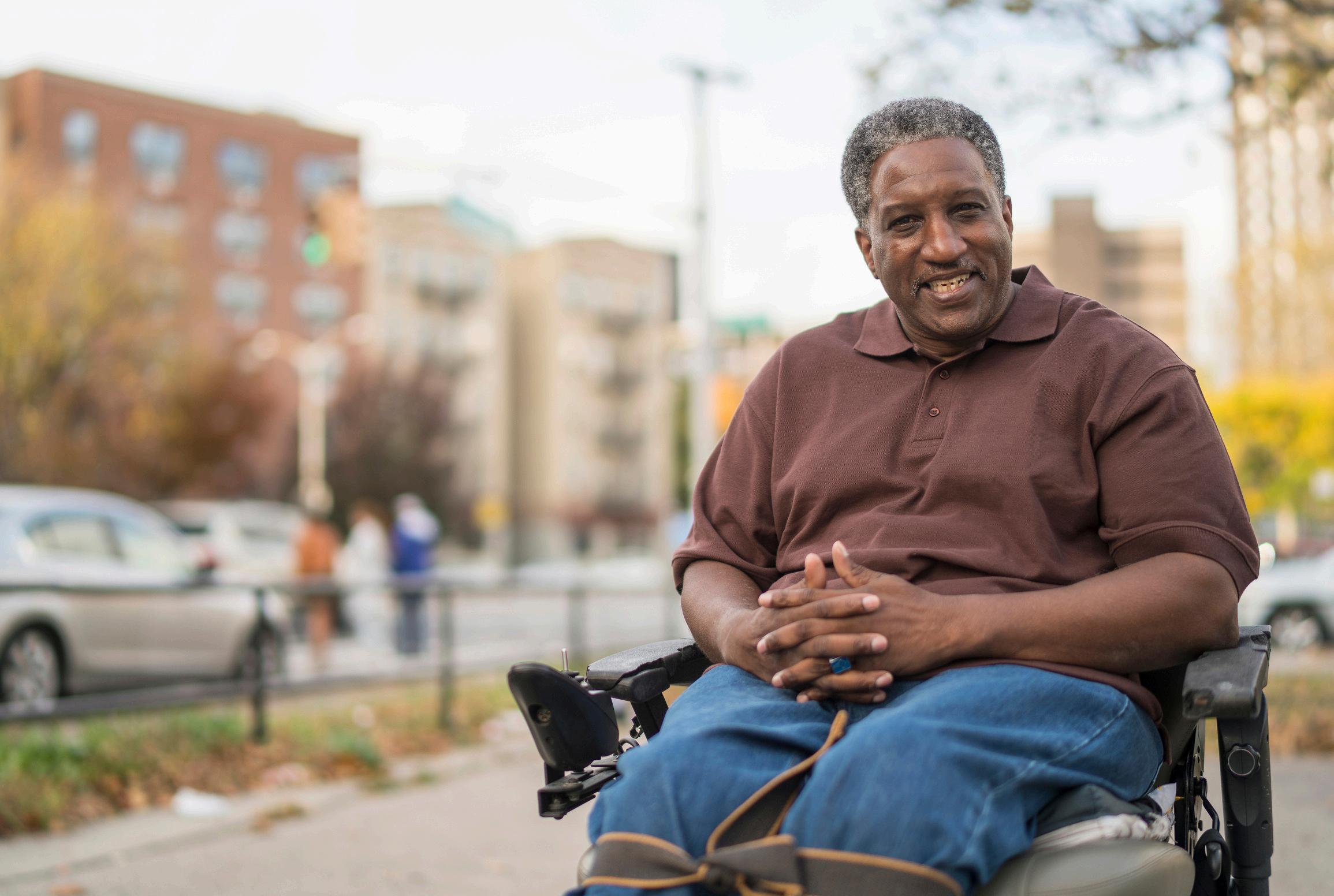
Findings show that life after spinal cord injury depends on more than medical care. Where you live matters. Research shows that the conditions in your neighborhood, including economic opportunities, the physical features of the places you go, and the availability of healthcare providers, can all affect long-term outcomes. Creating healthy neighborhoods and communities is key to improving the health and well-being of everyone. Scientists at Kessler Foundation want to bring awareness to the special impact that environmental factors have on health, independence, and quality of life for people with disabilities.
What did researchers want to learn?
To understand how economic, built, and healthcare environments affect outcomes for people living with SCI,
(Continued, next page)
The Key Takeaway:
Health and independence after SCI depend on more than medical care alone.
Neighborhood conditions strongly influence health, mobility, employment, and complications for people living with SCI.
Terms to Know:
Social Determinants of Health:
These are conditions in your community that influence health, like income, education, housing, and access to healthcare.
Built Environment: The physical layout of your surroundings, including roads, buildings, sidewalks, and green spaces
Secondary Complications: Health problems that can occur after SCI, such as urinary tract infections or pressure injuries.


(Continued from first page)
our scientists are collaborating with researchers from the national SCI Model System program. They are combining data resources that will facilitate studies of the effects of environmental factors on community living outcomes.
What did they find?
Researchers extracted indicators from administrative data such as employment, income, education, land use, and physician density in each person’s neighborhood and developed the following data points:
Economic environment: People living in economically disadvantaged neighborhoods were more likely to report poor health. People living in economically advantaged neighborhoods were more likely to be employed than those in lower socioeconomic status areas
Built environment: Using satellite mapping, neighborhoods were classified as densely built, open low-rise (moderately developed), or sparsely built. People living in moderately developed neighborhoods were more likely to report full mobility independence, with better opportunities to engage in community activities
Healthcare environment: People living in counties with more primary care doctors and specialists reported lower rates of recent urinary tract infection Provider availability did not predict other complications such as pressure ulcers or rehospitalization
Why does this research matter?
Findings show that life after SCI depends on more than medical care. Living in neighborhoods with fewer economic or healthcare resources may create barriers to adjustment and participation. Understanding these factors helps clinicians, researchers, and policymakers:
Identify people at greater risk for poor outcomes after rehabilitation
Improve access to community resources for people living in underserved areas
Design environments that support mobility, employment, and overall well-being
Our researchers are continuing to develop tools that help identify and improve environmental conditions for people with SCI
Learn more:
This summary is based on the presentation “Developing resources to understand the role of the environment in adjustment to spinal cord injury,” presented at the 2025 Academy of Spinal Cord Injury Professionals Annual Conference by Amanda Botticello, PhD, MPH, associate director, Center for Outcomes and Assessment Research.
Real-Life Science is an educational series from Kessler Foundation that helps readers understand the science behind rehabilitation research.
To read a complementary published article by lead investigator Dr. Botticello in Archives of Physical Medicine and Rehabilitation (2024) scan the QR code below or visit doi:10 1016/j apmr 2024 06 018